Today's Strength Snapshot is Woo
The Woo talent theme is fueled by connection, charisma, and social energy. People with this strength are naturally outgoing, engaging, socially proactive, and influential.
At its core, Woo is about winning others over. These individuals instinctively reach out, start conversations, and build rapport with people they've just met. Meeting new people isn't draining for them. It's energizing.
People who lead with Woo often describe themselves as gregarious, interactive, and welcoming.
What motivates them most is connecting with others. They love discovering common interests, helping people feel comfortable, and expanding their network of relationships. Static social environments tend to drain their energy.
When This Strength Is Thriving
When Woo is operating at its best, it brings warmth, momentum, and connection to any environment. This strength energizes social situations, helps people connect with one another, and creates welcoming atmospheres.
Woo talent often shows up through influencing roles like socializer, networker, conversationalist, engager, or greeter.
These individuals shine when new relationships are getting started. While others may hesitate in unfamiliar social spaces, Woo steps forward and creates connection quickly and naturally.
To close, here's a simple 5-minute experiment to try in the next 24 hours…
Start a conversation with someone you don't usually talk to. Ask one genuine question and look for one shared interest.
Then build on it.
Notice how quickly connection can grow from a simple interaction.
Well, that's a wrap for today's episode.
What small action can you take to show up at your best, given where you're starting today?
]]>
Today's Strength Snapshot is Strategic
The Strategic talent theme is powered by possibility, pattern recognition, and pathway thinking. People with this strength are naturally insightful, intuitive, future-oriented, and aware of options.
At its core, Strategic is about finding the best route forward. These individuals instinctively scan situations, consider alternatives, and identify paths others may not see. They naturally sort through complexity to locate the clearest direction.
People who lead with Strategic often describe themselves as thoughtful, anticipating, selective, and clear-thinking, and decisive.
What motivates them most is discovering possibility. They love playing out scenarios, exploring alternatives, and seeing a way forward even when others assume none exists. Being forced into rigid methods or old patterns tends to drain their energy.
When This Strength Is Thriving
When Strategic is operating at its best, it brings clarity, foresight, and direction to any environment. This strength can see patterns, anticipate outcomes, and identify the best route through complexity.
Strategic talent often shows up through critical-thinking roles like pathfinder, strategist, planner, or evaluator.
These individuals shine when decisions require perspective. While others may feel overwhelmed by options, Strategic quickly filters possibilities and points toward the most effective path forward.
To close, here's a simple 5-minute experiment to try in the next 24 hours…
Think of a challenge you're facing. Write down three possible ways forward, even if one seems unlikely.
Then choose the option that creates the clearest path with the fewest obstacles.
Notice how clarity increases when options are explored intentionally.
Well, that's a wrap for today's episode.
What small action can you take to show up at your best, given where you're starting today?
]]>
Today's Strength Snapshot is Significance
The Significance talent theme is driven by impact, excellence, and the desire to accomplish meaningful things. People with this strength are naturally influential, visible, credible, and motivated to make a difference.
At its core, Significance is about contribution that counts. These individuals instinctively aim high, not just for personal achievement, but because they want their work and efforts to have meaning and influence. They want what they do to stand out and matter.
People who lead with Significance often describe themselves as professional, independent, and audience-oriented.
What motivates them most is the opportunity to create impact and be recognized for meaningful contributions. They love excellence, credibility, and the chance to build something important. Being ignored or asked to lower their aspirations tends to drain their energy.
When This Strength Is Thriving
When Significance is operating at its best, it brings ambition, influence, and elevated standards to any environment. This strength inspires others through determination, professionalism, and a strong drive to achieve something meaningful.
Significance talent often shows up through influential roles like performer, trail-blazer, or high achiever.
These individuals shine when impact matters. While others may be satisfied with maintaining the status quo, Significance is motivated to aim higher, do more, and create results that leave a lasting impression.
To close, here's a simple 5-minute experiment to try in the next 24 hours…
Think of one thing you're working on. Ask yourself: How could I elevate this so it truly stands out?
Then take one small action that raises its quality, visibility, or impact.
Notice how motivation increases when your work aligns with your desire to make a difference.
Well, that's a wrap for today's episode.
What small action can you take to show up at your best, given where you're starting today?
]]>
Today's Strength Snapshot is Self-Assurance
The Self-Assurance talent theme is powered by confidence, independence, and inner certainty. People with this strength are naturally self-aware, instinctive, persistent, and confident in their judgment.
At its core, Self-Assurance is about trust in oneself. These individuals instinctively rely on their own instincts and decision-making. They don't need constant validation from others because their internal compass already points them forward.
People who lead with Self-Assurance often describe themselves as independent, certain, stable, and self-sufficient.
What motivates them most is the opportunity to act, decide, and lead. They love determining direction and moving forward with confidence. Being second-guessed or controlled tends to drain their energy.
When This Strength Is Thriving
When Self-Assurance is operating at its best, it brings decisiveness, courage, and leadership to any environment. This strength supports bold action, confident judgment, and a willingness to take necessary risks.
Self-Assurance talent often shows up through influencing roles like leader, director, risk-taker, or decision-maker.
These individuals shine when direction is needed. While others may hesitate or look for approval, Self-Assurance moves forward with clarity and conviction, helping others feel more confident about the path ahead.
To close, here's a simple 5-minute experiment to try in the next 24 hours…
Think of one decision you've been delaying. Ask yourself: If I trusted my judgment completely, what would I choose?
Then take one small action in that direction.
Notice how confidence grows when you act on your own inner knowing.
Well, that's a wrap for today's episode.
What small action can you take to show up at your best, given where you're starting today?
]]>
Today's Strength Snapshot is Restorative
The Restorative talent theme is driven by problem-solving, diagnosis, and resolution. People with this strength are naturally investigative, insightful, responsive, and energized by fixing what isn't working.
At its core, Restorative is about solutions. These individuals instinctively look for what's wrong, not to criticize, but to repair, improve, and restore. They're comfortable examining challenges and often feel most alive when tackling problems others avoid.
People who lead with Restorative often describe themselves as problem-oriented, driven, and unintimidated by difficulty.
What motivates them most is solving issues and bringing things back to life. They love analyzing symptoms, identifying root causes, and finding answers. Ignored problems or unresolved obstacles tend to drain their energy.
When This Strength Is Thriving
When Restorative is operating at its best, it brings courage, clarity, and practical solutions to any environment. This strength identifies obstacles, diagnoses what's wrong, and helps move situations from stuck to solved.
Restorative talent often shows up through high-execution team roles like fixer, troubleshooter, diagnoser, or rehabilitator.
These individuals shine in turnaround situations. While others may avoid difficult problems, Restorative steps in with curiosity and determination, confident that solutions can be found.
To close, here's a simple 5-minute experiment to try in the next 24 hours…
Think of one problem you've been avoiding. Spend five minutes identifying the real root cause instead of the surface symptom.
Write down what you discover.
Notice how clarity often appears the moment you define the real issue.
Well, that's a wrap for today's episode.
What small action can you take to show up at your best, given where you're starting today?
]]>
Today's Strength Snapshot is Responsibility
The Responsibility talent theme is driven by commitment, ownership, and integrity. People with this strength are naturally dependable, conscientious, loyal, and diligent.
At its core, Responsibility is about accountability. These individuals instinctively take ownership of what they promise and feel personally accountable for outcomes. When they commit, they mean it.
People who lead with Responsibility often describe themselves as committed, responsive, independent, and serious about their obligations.
What motivates them most is fulfilling commitments and doing things right. They love being trusted, respected, and relied upon. A lack of follow-through or environments that don't value quality tend to drain their energy.
When This Strength Is Thriving
When Responsibility is operating at its best, it brings trustworthiness, integrity, and reliability to any environment. This strength ensures that tasks are completed thoroughly and that commitments are honored.
Responsibility talent often shows up through productive roles like owner, committer, responder, volunteer, or steward.
These individuals shine when accountability matters. While others may treat commitments casually, Responsibility treats them as promises, creating a reputation for dependability that others can rely on.
To close, here's a simple 5-minute experiment to try in the next 24 hours…
Think of one commitment you've made recently. Ask yourself: What's one small step I can take right now to move it forward?
Take that step immediately.
Notice how action strengthens both confidence and trust.
Well, that's a wrap for today's episode.
What small action can you take to show up at your best, given where you're starting today?
]]>
Today's Strength Snapshot is Relator
The Relator talent theme is centered on authenticity, depth, and meaningful relationships. People with this strength are naturally genuine, caring, transparent, and relationship-focused.
At its core, Relator is about connection with substance. These individuals instinctively seek real relationships built on trust, honesty, and shared understanding. They're less interested in surface-level interactions and more drawn to bonds that grow stronger over time.
People who lead with Relator often describe themselves as friendly, truthful, and intimate.
What motivates them most is deepening relationships. They love spending time building close, caring, and mutually rewarding connections. Superficial interactions or forced small talk tend to drain their energy.
When This Strength Is Thriving
When Relator is operating at its best, it brings trust, loyalty, and emotional safety to any environment. This strength creates solid relationships and encourages people to work hard together toward shared goals.
Relator talent often shows up through relationship-centered roles like friend, loyalist, caretaker, or trusted partner.
These individuals shine in environments where trust matters. While others may focus on networking broadly, Relator focuses on connecting deeply, building bonds that last and strengthen over time.
To close, here's a simple 5-minute experiment to try in the next 24 hours…
Reach out to someone you already know and care about. Instead of a quick check-in, ask one meaningful question about their goals, hopes, or experiences.
Then really listen.
Notice how connection deepens when conversations move beyond the surface.
Well, that's a wrap for today's episode.
What small action can you take to show up at your best, given where you're starting today?
]]>
Today's Strength Snapshot is Positivity
The Positivity talent theme is powered by enthusiasm, optimism, and uplifting energy. People with this strength are naturally joyful, hopeful, energetic, and lighthearted.
At its core, Positivity is about emotional lift. These individuals instinctively look for what's going right and bring a spirit of encouragement into the spaces they enter. Their presence often changes the tone of a room.
People who lead with Positivity often describe themselves as enthusiastic, fun-loving, generous, and positive-minded.
What motivates them most is sharing joy and optimism with others. They love celebrating successes, encouraging people, and helping others feel energized and hopeful. Pessimism and negativity tend to drain their energy.
When This Strength Is Thriving
When Positivity is operating at its best, it brings contagious enthusiasm, hope, and encouragement to any environment. This strength helps people feel energized, motivated, and excited about what's possible.
Positivity talent often shows up through people-focused roles like energizer, encourager, celebrator, or optimist.
These individuals shine when morale needs a lift. While others may focus on obstacles, Positivity highlights possibility and helps people move forward with renewed energy.
To close, here's a simple 5-minute experiment to try in the next 24 hours…
Think of someone who's been working hard. Send them a quick message celebrating something they've done well.
Be specific. Be genuine. Be encouraging.
Notice how their energy shifts and how yours rises too.
Well, that's a wrap for today's episode.
What small action can you take to show up at your best, given where you're starting today?
]]>
Today's Strength Snapshot is Maximizer
The Maximizer talent theme is driven by excellence, strengths, and continuous improvement. People with this strength are naturally quality-oriented, results-focused, selective, and committed to high standards.
At its core, Maximizer is about elevating what already works. These individuals instinctively notice potential, strengths, and opportunities for refinement. They don't just want things done. They want them done exceptionally well.
People who lead with Maximizer often describe themselves as strengths-obsessed, efficient, and excellence-aware.
What motivates them most is the pursuit of excellence. They love transforming something from good to great and achieving the highest possible return on effort and investment. Average performance tends to drain their energy.
When This Strength Is Thriving
When Maximizer is operating at its best, it brings refinement, focus, and elevated performance. This strength emphasizes quality, highlights strengths in others, and raises standards for what's possible.
Maximizer talent often shows up through influencing roles like leader, challenger, driver, or clarifier.
These individuals shine when improvement is needed. While others may try to fix weaknesses, Maximizer focuses on developing strengths, often unlocking excellence faster and more effectively.
To close, here's a simple 5-minute experiment to try in the next 24 hours…
Think of one thing you already do well. Instead of fixing something that isn't working, spend five minutes asking: How could I make this even better?
Then make one small improvement.
Notice how energy shifts when effort is aimed at excellence instead of correction.
Well, that's a wrap for today's episode.
What small action can you take to show up at your best, given where you're starting today?
]]>
Today's Strength Snapshot is Learner
The Learner talent theme is fueled by curiosity, growth, and discovery. People with this strength are naturally inquisitive, studious, open-minded, and passionate about learning.
At its core, Learner is about the process. These individuals instinctively enjoy gaining knowledge, exploring new ideas, and improving their understanding. They aren't just motivated by outcomes. They're energized by learning itself. They want to learn about all the things!
People who lead with Learner often describe themselves as curious, interested, and growth-oriented.
What motivates them most is the opportunity to learn something new. They love exposure to fresh information, new experiences, and chances to immediately apply what they've discovered. Repetition or stagnation tends to drain their energy.
When This Strength Is Thriving
When Learner is operating at its best, it brings curiosity, progress, and continuous improvement to any environment. This strength creates excitement for growth and encourages others to keep developing their skills and understanding.
Learner talent often shows up through team roles like interviewer, expert, trail-blazer, or continuous improver.
These individuals shine when growth is possible. While others may feel satisfied with what they already know, Learner keeps asking what else can be discovered, understood, or mastered.
Here's a simple experiment to try in the next 24 hours…
Pick a topic you know little about but find interesting. Spend five minutes learning one new thing about it.
Then share what you learned with someone else.
Notice how energy increases when curiosity is fed.
Well, that's a wrap for today's episode.
What small action can you take to show up at your best, given where you're starting today?
]]>
Today's Strength Snapshot is Intellection
The Intellection talent theme is powered by thought, reflection, and depth. People with this strength are naturally introspective, philosophical, reflective, and intellectually driven.
At its core, Intellection is about thinking. These individuals instinctively enjoy exploring ideas, pondering concepts, and analyzing information. Their mind is often their favorite place to be.
People who lead with Intellection often describe themselves as musing, in-depth, intense, and solitary thinkers. They can also be intensely creative.
What motivates them most is the opportunity to reflect and understand. They love pondering ideas and theoretical concepts, especially because they see theory as the foundation for practical insight. Acting before thinking things through tends to drain their energy.
When This Strength Is Thriving
When Intellection is operating at its best, it brings depth, insight, and wisdom to any environment. This strength generates valuable ideas, thoughtful analysis, and meaningful understanding.
Intellection talent often shows up through deep-thinking team roles like philosopher, writer, or a deep subject matter expert.
These individuals shine when reflection is needed. While others may rush toward quick answers, Intellection pauses to think deeply, often uncovering perspectives that might otherwise be missed.
To close, here's a simple 5-minute experiment to try in the next 24 hours…
Take five quiet minutes with no distractions. Choose one idea or question and simply think about it.
No researching. No solving. Just reflecting.
Notice what insights surface when your mind is given space to wander and explore.
Well, that's a wrap for today's episode.
What small action can you take to show up at your best, given where you're starting today?
]]>
Today's Strength Snapshot is Input
The Input talent theme is driven by curiosity, learning, and gathering useful information. People with this strength are naturally inquisitive, knowledgeable, investigative, and resourceful.
At its core, Input is about collecting. These individuals instinctively gather ideas, facts, tools, and insights because they believe knowledge is valuable and useful. They enjoy building a reservoir of information they can draw from when it's needed.
People who lead through Input often describe themselves as well-read, utility-aware, and collecting-minded.
What motivates them most is learning and sharing. They love collecting information about topics of interest and feel energized when they can provide relevant, tangible help to others. Making decisions without enough information tends to drain their energy.
When This Strength Is Thriving
When Input is operating at its best, it brings knowledge, preparedness, and valuable resources to any environment. This strength naturally accumulates information and tools that can support growth, learning, and performance.
Input talent often shows up through team roles like archivist, curator, librarian, or resourcer - these collections can be either digital, physical, or both.
These individuals shine when knowledge is needed. While others may scramble to find information, Input often already has it or knows where to get it. Their resourcefulness makes them an invaluable source of support for teams and organizations.
To close, here's a simple 5-minute experiment to try in the next 24 hours…
Think of a question you've been curious about. Spend five minutes researching it or collecting one useful resource related to it.
Then save it somewhere you can easily find later.
Notice how satisfying it feels to add something valuable to your knowledge collection.
Well, that's a wrap for today's episode.
What small action can you take to show up at your best, given where you're starting today?
]]>
Today's Strength Snapshot is Individualization
The Individualization talent theme is centered on uniqueness, insight, and seeing what makes each person distinct. People with this strength are naturally perceptive, strengths-oriented, insightful, and people-focused.
At its core, Individualization is about noticing differences. These individuals instinctively see the unique qualities in others and understand how those traits can be used effectively. They don't see people as categories. They see them as individuals.
People who lead with Individualization often describe themselves as aware, curious, and uniqueness-spotters.
What motivates them most is helping people use their strengths. They love adjusting their approach to fit each person and feel energized when they can match individuals to roles where they can thrive. A one-size-fits-all approach tends to drain their energy.
When This Strength Is Thriving
When Individualization is operating at its best, it brings personalization, understanding, and customization to any environment. This strength can identify each person's talents and figure out how different people can work together productively.
Individualization talent often shows up through people-focused team roles like customizer, observer, or simply being the noticer of another person's preferred way of communicating.
These individuals shine when teams need alignment. While others may treat everyone the same, Individualization recognizes that people thrive when they're understood and supported according to their unique strengths.
To close, here's a simple 5-minute experiment to try in the next 24 hours…
Think of someone you interact with regularly. Ask yourself: What do they naturally do better than most people?
Then acknowledge that strength out loud to them.
Notice how recognition changes connection and confidence.
Well, that's a wrap for today's episode.
What small action can you take to show up at your best, given where you're starting today?
]]>
Today's Strength Snapshot is Ideation
The Ideation talent theme is fueled by creativity, curiosity, and originality. People with this strength are naturally innovative, spontaneous, insightful, and imaginative.
At its core, Ideation is about ideas. These individuals instinctively generate possibilities, explore concepts, and see connections between things that others might view as unrelated.
People who lead with Ideation often describe themselves as artistic, collaborative, and creative thinkers.
What motivates them most is the opportunity to imagine something new. They love fresh perspectives, original thinking, and discovering connections that spark innovation. Repetition and constraints that limit creativity tend to drain their energy.
When This Strength Is Thriving
When Ideation is operating at its best, it brings originality, invention, and possibility to any environment. This strength offers new perspectives, generates fresh solutions, and helps others see beyond conventional thinking.
Ideation talent often shows up through creative-thinking roles like inventor, creator, designer, brainstormer, or innovator.
These individuals shine when creativity is needed. While others may see limitations, Ideation sees options. Their ability to connect seemingly unrelated ideas can unlock breakthroughs that change how problems are understood.
To close, here's a simple 5-minute experiment to try in the next 24 hours…
Take a problem or challenge you're facing. Set a timer for five minutes and write down as many possible solutions as you can, without judging any of them.
Then circle the most unexpected idea on your list and explore it further.
Notice what happens when imagination is given room to run.
Well, that's a wrap for today's episode.
What small action can you take to show up at your best, given where you're starting today?
]]>
Today's Strength Snapshot is Futuristic
The Futuristic talent theme is fueled by vision, imagination, and possibility. People with this strength are naturally creative, expressive, perceptive, and future-oriented.
At its core, Futuristic is about seeing what could be. These individuals instinctively picture detailed possibilities for tomorrow and feel energized by imagining what the future might hold.
People who lead with Futuristic often describe themselves as vivid, inspiring, imaginative, and anticipating.
What motivates them most is the opportunity to dream, forecast, and share visions. They love thinking about what's ahead and inspiring others with possibilities. Being told to stay focused only on the present or accept the status quo tends to drain their energy.
When This Strength Is Thriving
When Futuristic is operating at its best, it brings inspiration, direction, and hope to any environment. This strength can see in detail what the future might hold, offering predictions, previews, and possibilities that energize others.
Futuristic talent often shows up in strategic thinking roles like visionary, dreamer, forecaster, imaginer, or predictor.
These individuals shine when possibilities need to be seen before they exist. While others focus on what is, Futuristic focuses on what could be, helping people stretch beyond current limitations and imagine new realities.
To close, here's a simple 5-minute experiment to try in the next 24 hours…
Take five minutes to imagine one area of your life or work one year from now if everything went right.
Write down what you see in as much detail as possible.
Then identify one small step you can take today that moves you toward that future.
Well, that's a wrap for today's episode.
What small action can you take to show up at your best, given where you're starting today?
]]>
Today's Strength Snapshot
The Focus talent theme is powered by direction, priorities, and forward progress. People with this strength are naturally goal-oriented, persevering, selective, and driven.
At its core, Focus is about clarity of destination. These individuals instinctively begin with the end in mind. Once they know where they're going, they align their actions, time, and energy to move straight toward it.
People who lead with Focus often describe themselves as single-minded, efficient, progress-aware, and distraction-averse.
What motivates them most is measurable progress. They love setting goals, tracking advancement, and seeing steady movement forward. Delays, tangents, or lack of direction tend to drain their energy.
When This Strength Is Thriving
When Focus is operating at its best, it brings clarity, momentum, and prioritization to any environment. This strength helps people concentrate, act intentionally, and persist until goals are achieved.
Focus talent often shows up in team roles like prioritizer, director, concentrator, or goal setter.
These individuals shine when direction matters. While others may get pulled in multiple directions, Focus keeps attention anchored to what matters most and helps teams stay on point.
To close, here's a simple 5-minute experiment to try in the next 24 hours…
Choose one goal you're working toward. Write down the single most important action that would move it forward today.
Then do only that action first.
Notice how momentum builds when priorities become clear.
Well, that's a wrap for today's episode. What small action can you take to show up at your best, given where you're starting today?
]]>
Today's Strength Snapshot is Empathy
The Empathy talent theme is rooted in emotional awareness, intuition, and deep understanding of others. People with this strength are naturally sensitive, expressive, intuitive, and aware.
At its core, Empathy is about feeling with others. These individuals instinctively sense emotions, pick up on unspoken questions, and see the world through someone else's perspective.
People who lead with Empathy often describe themselves as listeners, confidants, helpers, and resonators…like a tuning fork.
What motivates them most is meaningful connection. They love helping people express their feelings and giving voice to emotional experiences. Environments that limit emotional expression tend to drain them.
When This Strength Is Thriving
When Empathy is operating at its best, it brings understanding, compassion, and emotional insight to any environment. This strength helps others feel heard, understood, and supported.
Empathy talent often shows up in relationship-centered roles like listener and confidant.
These individuals shine in moments when emotions are present. While others may overlook subtle feelings, Empathy recognizes them and responds with care. Their ability to tune into emotional undercurrents can create trust, connection, and healing.
To close, here's a simple 5-minute experiment to try in the next 24 hours…
In your next conversation, focus only on understanding the other person's feelings before sharing your own.
Listen for tone, pauses, and emotion. Then reflect back what you heard.
Notice how connection deepens when someone feels fully understood.
Well, that's a wrap for today's episode.
What small action can you take to show up at your best, given where you're starting today?
]]>
Today's Strength Snapshot is Discipline
The Discipline talent theme is driven by structure, precision, and order. People with this strength are naturally organized, meticulous, detail-oriented, and efficient.
At its core, Discipline is about intentional systems. These individuals instinctively create plans, establish routines, and structure their environment so things run smoothly and on time.
People who lead through Discipline often describe themselves as orderly, exact, timely, and planned.
What motivates them most is clarity and predictability. They feel energized when expectations are clear, plans are in place, and they can prepare in advance to deliver results efficiently.
When This Strength Is Thriving
When Discipline is operating at its best, it brings stability, efficiency, and reliability to any environment. This strength creates order, develops systems, and ensures that work is completed accurately and on schedule.
Discipline talent often shows up through executing roles like organizer, planner, architect, or structurer-of-things.
These individuals shine when structure is needed. While others may feel overwhelmed by complexity or chaos, Discipline brings clarity through organization and thoughtful planning.
To close, here's a simple 5-minute experiment to try in the next 24 hours…
Pick one part of your day that feels messy or unstructured. Spend five minutes organizing it. Create a mini-plan, checklist, or order of steps.
Then notice how your focus and momentum change once structure is in place.
Well, that's a wrap for today's episode. What small action can you take to show up at your best, given where you're starting today?
]]>
Today's Strength Snapshot is Developer
The Developer talent theme is fueled by growth, encouragement, and the belief in human potential. People with this strength are naturally perceptive, patient, helpful, and oriented toward helping others improve.
At its core, Developer is about investment in people. These individuals instinctively notice signs of progress in others and feel energized when they can nurture growth and development over time.
People who lead through Developer often describe themselves as encouraging, observant, and growth-oriented.
What motivates them most is seeing potential become reality. They love witnessing progress, recognizing improvement, and investing their time and energy into helping others succeed.
When This Strength Is Thriving
When Developer is operating at its best, it brings patience, belief, and steady support to any environment. This strength helps people feel seen for who they can become, not just who they are today.
Developer talent often shows up through relationship-focused roles like coach, mentor, teacher, encourager, or investor.
These individuals shine in environments where growth is possible. While others may overlook small improvements, Developer notices them and celebrates them. That encouragement often becomes the fuel that helps others keep going.
To close, here's a simple 5-minute experiment to try in the next 24 hours…
Think of one person in your life who is learning or growing. Tell them one specific improvement you've noticed.
Name the progress. Celebrate the step. Watch what happens next.
Well, that's a wrap for today's episode. What small action can you take to show up at your best, given where you're starting today?
If you lead through the CliftonStrengths talent theme of Developer, (or you know someone who does), this is the episode for you!
Today's Strength Snapshot is Developer
The Developer talent theme is fueled by growth, encouragement, and the belief in human potential. People with this strength are naturally perceptive, patient, helpful, and oriented toward helping others improve.
At its core, Developer is about investment in people. These individuals instinctively notice signs of progress in others and feel energized when they can nurture growth and development over time.
People who lead through Developer often describe themselves as encouraging, observant, and growth-oriented.
What motivates them most is seeing potential become reality. They love witnessing progress, recognizing improvement, and investing their time and energy into helping others succeed.
When This Strength Is Thriving
When Developer is operating at its best, it brings patience, belief, and steady support to any environment. This strength helps people feel seen for who they can become, not just who they are today.
Developer talent often shows up through relationship-focused roles like coach, mentor, teacher, encourager, or investor.
These individuals shine in environments where growth is possible. While others may overlook small improvements, Developer notices them and celebrates them. That encouragement often becomes the fuel that helps others keep going.
To close, here's a simple 5-minute experiment to try in the next 24 hours…
Think of one person in your life who is learning or growing. Tell them one specific improvement you've noticed.
Name the progress. Celebrate the step. Watch what happens next.
Well, that's a wrap for today's episode. What small action can you take to show up at your best, given where you're starting today?
]]>
Today's Strength Snapshot is Deliberative
The Deliberative talent theme is grounded in careful thinking, risk awareness, and thoughtful decision-making. People with this strength are naturally observant, vigilant, cautious, and sensible.
At its core, Deliberative is about protecting what matters. These individuals instinctively scan for risks, anticipate obstacles, and prefer to move forward only after they've considered the potential consequences. They don't rush. They assess.
People who lead through Deliberative often describe themselves as private, guarded, serious, and risk-mitigators.
What motivates them most is having time and space to think before acting. They love restraint and caution in the face of risk and feel energized when they can plan ahead rather than make snap decisions.
When This Strength Is Thriving
When Deliberative is operating at its best, it brings stability, accuracy, and wise restraint to any environment. This strength reduces risk, anticipates obstacles, and supports sound decisions by listening carefully and gathering information.
Deliberative talent often shows up through team roles like risk-assessor, guardian, preventer, or planner.
These individuals shine when caution is needed. While others may push for speed or spontaneity, Deliberative ensures that decisions are thoughtful, grounded, and responsibly made.
To close, here's a simple 5-minute experiment to try in the next 24 hours…
Choose one decision you're facing and take five minutes to identify two possible risks and one obstacle that could show up.
Then write down one simple step you can take to reduce that risk before moving forward.
Notice how preparation creates confidence.
Well, that's a wrap for today's episode. What small action can you take to show up at your best, given where you're starting today?
]]>
Today's Strength Snapshot is Context
The Context talent theme is grounded in history, understanding, and perspective. People with this strength are naturally perceptive, studious, historical, and oriented toward learning from what has come before.
At its core, Context is about meaning through memory. These individuals instinctively look backward in order to move forward wisely. They want to understand the origins of situations, the sequence of events, and the lessons embedded in experience.
People who lead through Context often describe themselves as collectors, highlighters, and orienting thinkers.
What motivates them most is exploring the past and understanding how it connects to the future. They feel energized when they can gather relevant background information and use it to guide decisions.
When This Strength Is Thriving
When Context is operating at its best, it brings perspective, insight, and grounded decision-making to any situation. This strength helps others understand how past events shape present realities and future possibilities.
Context talent often shows up through team roles like historian, recorder, archeologist, framer, or genealogist.
These individuals shine when clarity is needed. While others may rush toward decisions, Context pauses to ask what came before, ensuring that choices are informed rather than impulsive.
To close, here's a simple 5-minute experiment to try in the next 24 hours…
Think about a decision you need to make. Before acting, ask: What has happened before that might inform this?
Write down one past experience, pattern, or lesson that could guide your next step.
Notice how your confidence shifts when history informs action.
Well, that's a wrap for today's episode. What small action can you take to show up at your best, given where you're starting today?
]]>
Today's Strength Snapshot is Consistency
The Consistency talent theme is grounded in fairness, structure, and reliability. People with this strength are naturally practical, predictable, and efficient.
At its core, Consistency is about creating environments where everyone is treated equally and expectations are clear. These individuals instinctively look for ways to reduce variance, establish standards, and ensure that processes are applied evenly.
People who lead through Consistency often describe themselves as leveling, compliant, steady, and fair-minded. In fact, way back in the early days of StrengthsFinder, this talent was known as Fairness - then it later changed to Consistency.
What motivates them most is a system that works the same way for everyone. They value predictability, clear rules, and procedures that make environments dependable and equitable.
When This Strength Is Thriving
When Consistency is operating at its best, it brings stability, reliability, and fairness to any setting. This strength promotes cultural predictability, supports uniformity, and helps people trust that decisions will be made objectively.
Consistency talent often shows up through productive team-contribution-roles like standardizer, systematizer, referee, or even as a rule-enforcer.
These individuals shine when processes need structure and people need assurance that expectations are applied evenly. While others may focus on exceptions, Consistency focuses on fairness for all.
To close, here's a simple 5-minute experiment to try in the next 24 hours…
Choose one routine or process in your day and intentionally repeat it the exact same way.
Then notice how consistency affects your efficiency, clarity, or peace of mind.
Well, that's a wrap for today's episode. What small action can you take to show up at your best, given where you're starting today?
]]>
Today's Strength Snapshot is Connectedness
The Connectedness talent theme is rooted in meaning, unity, and awareness of how everything fits together. People with this strength are naturally perceptive, listening-oriented, philosophic, and integrating.
At its core, Connectedness is about seeing the bigger picture. These individuals instinctively sense relationships between people, events, and ideas. They often feel drawn toward something larger than themselves, whether that's a cause, a community, or a shared purpose.
People who lead through Connectedness frequently describe themselves as comforting, seeking, and often…spiritual. We also see a lot of nature-lovers who lead through Connectedness.
What motivates them most is the chance to help people see connections. They love recognizing patterns of continuity and helping others understand how separate parts can form a meaningful whole.
When This Strength Is Thriving
When Connectedness is operating at its best, it brings unity, empathy, and perspective to any environment. This strength naturally integrates parts into wholes and approaches people with acceptance, care, and consideration.
Connectedness talent often shows up through relationship-roles like bridge-builder, unifier, integrator, or seeker.
These individuals shine when divisions appear. While others may see separation, Connectedness sees relationships. Their ability to build bridges helps groups move from fragmentation toward shared understanding.
To close, here's a simple 5-minute experiment to try in the next 24 hours…
Think about a situation where people seem disconnected or divided. Ask yourself: What common thread might already exist here that no one is noticing?
Then name that connection out loud to someone involved.
Well, that's a wrap for today's episode. What small action can you take to show up at your best, given where you're starting today?
]]>
Today's Strength Snapshot is Competition
The Competition talent theme is fueled by comparison, performance, and the pursuit of excellence. People with this strength are naturally driven, intense, measuring, and motivated by winning.
At its core, Competition is about results. These individuals instinctively track progress, measure outcomes, and evaluate performance. They are energized when there's a scoreboard, a benchmark, or a clear standard to beat.
People who lead through Competition often describe themselves as discerning, aspiring, metrics-focused, and selective.
What motivates them most is the opportunity to compete against strong performers. They love outperforming others and testing themselves against the best. Coming in second or working without measurement tends to drain their drive.
When This Strength Is Thriving
When Competition is operating at its strongest, it raises the bar for everyone. This strength brings aspiration, focus, and the determination to excel. It naturally pushes standards higher and encourages others to perform at their best.
Competition talent often shows up through roles like winner, comparer, scorekeeper, or measurer.
These individuals thrive in environments where performance can be evaluated and progress can be tracked. While others may avoid comparison, Competition leans into it and uses it as fuel for growth and achievement.
To close, here's a simple 5-minute experiment to try in the next 24 hours…
Choose one area of your work or life and create a simple metric to track your performance. It could be time, output, consistency, or improvement.
Then set a personal benchmark and aim to beat it tomorrow.
Notice how motivation changes when progress becomes measurable.
Well, that's a wrap for today's episode. What small action can you take to show up at your best, given where you're starting today?
]]>
Today's Strength Snapshot is Communication
The Communication talent theme thrives on expression, connection, and the power of words. People with this strength are naturally verbal, expressive, conversational, and captivating.
At its core, Communication is about sharing ideas in ways that others can feel, understand, and remember. These individuals instinctively turn thoughts into stories and moments into messages.
People who lead through Communication often describe themselves as interactive, entertaining, presenting, and transparent.
What motivates them most is the opportunity to be heard and understood. They love storytelling, engaging an audience, and helping others express their own ideas clearly and meaningfully.
When This Strength Is Thriving
When Communication is operating at its best, it brings clarity, engagement, and connection to any environment. This strength helps important messages stand out, helps people feel included, and turns information into something people actually want to listen to.
Communication talent often shows up through roles like storyteller, presenter, explainer, writer, or conversationalist.
These individuals shine when ideas need to be shared, stories need to be told, or understanding needs to be built. Their words can create bridges between people, perspectives, and possibilities.
To close, here's a simple 5-minute experiment to try in the next 24 hours…
Take one idea you've been thinking about and share it out loud with someone. Instead of explaining it logically, tell it as a short story.
Notice how your message lands differently when it's expressed rather than just thought.
Well, that's a wrap for today's episode. What small action can you take to show up at your best, given where you're starting today?
]]>
Today's Strength Snapshot is Command
The Command talent theme is driven by decisiveness, clarity, and influence. People with this strength are naturally assertive, strong-willed, candid, and persuasive.
At its core, Command is about presence. These individuals instinctively step forward when direction is needed. They don't shy away from tough conversations or difficult truths. Instead, they bring them into the open so progress can happen.
People who lead through Command often describe themselves as driven, challenging, opinionated, and clarifying.
What motivates them most is the opportunity to set direction, resolve uncertainty, and move situations out of chaos into clarity. They feel energized when they can express ideas openly and influence outcomes.
When This Strength Is Thriving
When Command is operating at its strongest, it brings emotional clarity, decisive action, and conflict resolution to any environment. This strength helps people understand one another, resolve misunderstandings, and move forward with confidence.
Command talent often shows up through roles like leader, challenger, persuader, driver, or clarifier.
These individuals shine when situations feel uncertain or tense. While others may hesitate, Command steps in, names what's happening, and helps create direction. Their willingness to state truth, even when it's uncomfortable, can unlock momentum for everyone involved.
To close, here's a simple 5-minute experiment to try in the next 24 hours…
Think of one situation where something feels unclear or unresolved. Initiate a direct conversation to clarify it.
State one truth, ask one honest question, and listen for one clear answer.
Notice how quickly clarity changes the energy of the situation.
Well, that's a wrap for today's episode. What small action can you take to show up at your best, given where you're starting today?
]]>
Today's Strength Snapshot is Belief
The Belief talent theme is grounded in conviction, purpose, and deeply held values. People with this strength are naturally principled, committed, stable, and passionate.
At its core, Belief is about meaning. These individuals are guided by a strong internal compass that shapes their decisions, priorities, and direction in life. Their values are not surface-level preferences. They're foundational truths.
People who lead through Belief often describe themselves as certain, unchanging, and service-minded.
What motivates them most is staying in alignment with their most deeply held values. They love contributing to causes that improve people's lives and feel energized when their efforts serve something bigger than themselves.
When This Strength Is Thriving:
When Belief is operating at full strength, it brings stability, clarity, and conviction to any environment. This strength often creates trust because others experience these individuals as dependable, ethical, and consistent.
Belief talent frequently shows up through roles like contributor, believer, or simply being the person in the room who keeps the intention true.
These individuals provide grounding when situations feel uncertain. While others may shift direction easily, Belief offers a steady center rooted in purpose and principle.
To close, here's a simple 5-minute experiment to try in the next 24 hours…
Think about one task or commitment on your schedule. Ask yourself: How does this connect to what matters most to me?
If you see the connection, lean into it with renewed intention. If you don't, consider one small way to realign it with your values.
Well, that's a wrap for today's episode. What small action can you take to show up at your best, given where you're starting today?
]]>
Today's Strength Snapshot is Arranger
The Arranger talent theme thrives in complexity, coordination, and real-time problem solving. People with this strength are naturally flexible, resourceful, collaborative, and able to think about multiple variables at once.
At its core, Arranger is about orchestration. These individuals instinctively sense how different people, resources, and moving parts can work together in the most effective way. They don't just see pieces. They see systems.
Arrangers often describe themselves as interactive, multi-thinking, configuring, and real-time thinkers.
What motivates them most is the chance to manage complexity. They love multifaceted projects, necessary change, and opportunities to adjust plans dynamically. Rigid structure and resistance to change tend to drain their energy.
When This Strength Is Thriving
When Arranger is operating at its best, it brings coordination, adaptability, and strategic resourcefulness to any situation. This strength allows someone to work effectively through others, stay comfortable with many moving parts, and rearrange variables to create better outcomes.
Arranger talent often shows up through roles like orchestrator, conductor, coordinator, juggler, or rearranger.
These individuals shine in dynamic environments where plans need adjusting and systems need optimizing. While others may feel overwhelmed by complexity, Arrangers see opportunity to refine, realign, and improve.
To close, here's a simple 5-minute experiment to try in the next 24 hours…
Look at one project or responsibility you're managing. Rearrange just one variable. Shift a task order, reassign a role, or change a process step.
Then observe whether that adjustment creates smoother flow or better results.
Well, that's a wrap for today's episode.
What small action can you take to show up at your best, given where you're starting today?
]]>
Today's Strength Snapshot is Analytical
The Analytical talent theme is driven by logic, evidence, and clarity. People with this strength are naturally objective, questioning, data-driven, and numbers-oriented.
At its core, Analytical is about understanding how things actually work. These individuals instinctively look for patterns, causes, and proof. They don't accept ideas at face value. They test them.
Analytical thinkers often describe themselves as scientific, skeptical, and dispassionate.
What motivates them most is reliable information. They love facts, evidence, and discovering patterns in data. They feel energized when ideas can be supported, measured, and verified.
When This Strength Is Thriving
When Analytical is operating at its best, it brings grounded reasoning and thoughtful precision to any situation. This strength helps simplify complexity, think through multiple variables, and approach decisions logically and objectively.
Analytical talent often shows up through roles like scientist, observer, measurer, fact finder, or logician.
These individuals provide clarity when situations feel confusing. They slow things down just enough to ensure decisions are based on reality, not assumptions. Their thinking builds trust because others know conclusions are backed by evidence.
To close, here's a simple 5-minute experiment to try in the next 24 hours…
Choose one decision you're facing. Write down the facts you know, the facts you need, and one assumption you might be making.
Then gather just one missing piece of information before deciding.
Notice how clarity increases as evidence replaces uncertainty.
Well, that's a wrap for today's episode.
What small action can you take to show up at your best, given where you're starting today?
]]>
Today's Strength Snapshot is Adaptability
The Adaptability talent theme thrives in the present moment. People with this strength are naturally flexible, responsive, spontaneous, and grounded in what's happening right now.
At their core, Adaptability is about flow. These individuals are wired to adjust, shift, and respond as circumstances change. Instead of resisting unpredictability, they lean into it and find opportunity inside it.
They often describe themselves as easygoing, agreeable, present, and in the moment.
What motivates them most is the chance to respond to real-time needs. They enjoy new challenges, spontaneity, and environments that allow them to pivot quickly. Predictability and rigid plans tend to drain their energy.
When This Strength Is Thriving
When Adaptability is operating at full strength, it brings calm responsiveness and real-time problem solving to any situation. This talent allows someone to follow the lead of change, adjust quickly, and stay productive even when the unexpected happens.
Adaptability often shows up through roles like first responder, early adopter, accommodator, or follower.
These individuals shine when circumstances shift. While others may freeze or resist, Adaptability steps forward, grounded and ready, meeting the moment exactly as it is.
To close, here's a simple 5-minute experiment to try in the next 24 hours…
The next time something unexpected changes your plans, pause and ask: What opportunity just appeared that wasn't here before?
Then act on one small adjustment that uses the change to your advantage.
Well, that's a wrap for today's episode. What small action can you take to show up at your best, given where you're starting today?
]]>
Today's Strength Snapshot is Activator
The Activator talent theme is fueled by motion, urgency, and decisive energy. People with this strength are naturally action-oriented, dynamic, influential, and initiating.
At their core, Activators are wired to start. They don't wait for perfect conditions. They create momentum by taking the first step. Their instinct is simple and powerful: act now, adjust later.
Activators often describe themselves as fast, catalytic, propulsive, and impatient.
What drives them most is the opportunity to turn ideas into reality. They thrive when they can initiate, instigate, and get things moving. Waiting drains them. Starting energizes them.
When This Strength Is Thriving
When Activator is in its strongest state, it brings a surge of energy to people and projects. This strength delivers urgency, instant momentum, and the courage to take risks.
Activators naturally step into roles like catalyst, starter, originator, and influencer.
They are often the spark that turns discussion into action. While others are still evaluating options, Activators are already testing the path forward. Their willingness to move first often unlocks progress for everyone else.
To close, here's a simple 5-minute experiment to try in the next 24 hours…
Choose one idea you've been thinking about but haven't started. Take a single visible action toward it today. Send the email. Draft the outline. Make the call.
Notice how quickly your energy rises once movement begins. Activators often discover that action itself is their greatest source of clarity.
Well, that's a wrap for today's episode. What small action can you take to show up at your best, given where you're starting today?
]]>
Today's Strength Snapshot is Achiever
The Achiever talent theme is all about drive, productivity, and forward motion. People with this strength are naturally diligent, ambitious, and self-motivated.
At their core, Achievers are wired to accomplish. They're energized by doing, finishing, and progressing. Their internal engine runs on goals, tasks, and measurable movement. They don't wait for motivation. They generate it from within.
Achievers often describe themselves as driven, intense, productive, independent, and diligent.
What fuels them most is the opportunity to work toward something meaningful. Completion is satisfying. Progress is energizing. And the next goal is always calling their name.
When This Strength Is Thriving
When Achiever is operating at full power, it brings remarkable value to any environment. This strength delivers stamina, pace, follow-through, and energy.
Achievers often become the pacesetters on a team. Their natural rhythm pulls projects forward. Their diligence keeps things moving. And their consistent output builds trust because others know they'll finish what they start.
They often step into roles like producer, doer, completer, or finisher.
You can count on them when momentum matters. When there's work to be done, Achievers don't hesitate. They lean in.
To close, here's a simple 5-minute experiment to try in the next 24 hours…
Pick one task you've been postponing. Set a five-minute timer. Work on it with full focus until the timer ends.
Notice what happens internally. Does your energy rise once you begin? Do you feel momentum kick in? Achievers often unlock motivation through action, not before it.
Well, that's a wrap for today's episode. What small action can you take to show up at your best, given where you're starting today?
---
PS: where are Lisa and Brea? Well, Lisa wrote this and Andy did the voiceover. Lisa is on break with her rock band, Spiral Mischief. So Andy will be hosting your CliftonStrengths 34 series.
]]>In this special season finale, we're closing out Season 10 with a fun, reflective conversation inspired by a few of our favorite things. As we take a short pause from the podcast, we share some of our favorite strengths-based questions, hands-on tools, and learning approaches that actually stick. This episode is full of ideas you can use right away, whether you're a coach, leader, or strengths enthusiast.
🌟
Work With Us!
BREA Roper
Communication | Woo | Activator | Futuristic | Connectedness
If you need a Strengths Hype Girl for yourself or your team, connect with Brea at brearoper.com. She's ready to deliver an inspirational keynote, empowering training, or transformational workshop. If you're looking for an expert guide to support your internal Strengths efforts, reach out today!
LISA Cummings
Strategic | Maximizer | Positivity | Individualization | Woo
To work with Lisa, check out her resources for independent coaches, trainers, and speakers. Get business tools and strategy support with her Tools for Coaches membership.
Takeaways
● Turn existing team themes into Strengths conversations
You don't need a brand-new initiative to apply strengths. Take whatever theme your organization is already focused on—innovation, change readiness, bravery—and ask how each person's strengths help them show up in that area. This simple shift creates deeper, more engaging conversations.
● Start with the individual, not the Team Grid
Team grids can be interesting, but they're not the magic. The real power comes from individuals knowing, owning, and intentionally using their strengths. A well-balanced grid doesn't matter if people aren't actually applying their talents.
● Less can be more when learning Strengths
Focusing on just one strength at a time helps people learn faster and apply more confidently. Exploring domains, execution, and collaboration through a single theme makes strengths development feel accessible instead of overwhelming.
● Engagement increases when learning is tactile
Using tools like strengths card decks adds a physical, interactive element that draws people into the conversation. When participants can touch, move, and discuss strengths together, learning goes deeper and lasts longer.
Take Action
● Try a Strengths Lens Question
Take a theme your team is already talking about and ask: How do my strengths help me with this? Start with a short reflection or discussion and notice how the conversation shifts.
● Choose One Strength to Focus On
Pick one theme from your Top 5 and pay attention to how it shows up at work and in life. Name it, notice it, and practice using it with intention.
● Experiment with a New Strengths Tool
If you facilitate strengths conversations, try incorporating a card deck or prompt-based activity to create more engagement and deeper dialogue.
○ The CS Strengths Deck from StrengthsPlayground is a versatile, hands-on tool for strengths conversations, prompts, and exploration.
🎧 As we wrap Season 10, the podcast is taking a short pause—but we're still here and would love to stay connected. Reach out, explore the resources we shared, and keep strengths flowing while we're away!
Let's Connect!
● LISA: Website | LinkedIn | Facebook
● BREA: Website | LinkedIn | Instagram
AI-Generated Transcript
Lisa:
I'm Lisa.
Brea:
I'm Brea.
Lisa:
and we are here in our moment to close out season 10. Brea, it's a wrap.
Brea:
It's a wrap, and not a delicious spinach wrap or a tomato basil wrap, but wrap like we're just gonna take a pause, take a break. Yeah.
Lisa:
So as a listener, you're going to hear a pause for a minute, and we thought we could wrap up the season and do a little bit of a favorite thing style.
Brea:
These are a few of my favorite things.
Lisa:
Oh, that is such a perfect cue up for just the things that I adore, the best things. So we can talk about the best things in the strengths world. Oh, good setup. Good melody. Brea, yay.
Let's talk. Let's do just a best question, a favorite question, a question you love in that and when I say question, it can be a prompt question, a reflection, something that gets a great conversation going on the topic of strengths. Do you want to start? Or do you want me to start?
Brea:
Go for it.
Lisa:
Oh, okay. I love working with a team and getting a theme, because teams always have a thing, you know, they always have an initiative or a word or something that they're trying to get everyone to think about often. It could be something simple, like, oh, everyone is talking innovation. We want to be more innovative. It's our theme for the year. Or maybe they have a big change, and it's about being, change, ready. Change ready. Change ready. And it's the thing they're hearing all over the place, or something like, you know, the team has been talking about how to be brave during some difficult situation. So it's taking any theme and then using it with a lens of strengths to have a conversation. So if you took innovation, it would be like, how do your strengths help you be innovative? How do your strengths help you feel change ready? Or, how do your strengths allow you to feel brave, like you could take any of those examples and just turn it into a Strengths question, and it is amazing how well it goes over. And it's just really simple. It's taking something that the organization or the team is already trying to do, that bang, that drum, over and over and over again, and trying to get people to think. But because the strengths lens is so different from what, where they're usually thinking, it brings it into a whole different conversation. So I love that approach.
Brea:
Yes, I love it. I mean, it's really the core of strength application, right? I mean, that's what it's all about, is looking at things through your particular unique lens of strengths, and that's where your superpower lies. You know? Why don't we do it more? I know we just don't. We don't. So what a practice to to engage in?
Lisa:
Yeah, nice when it's simple and easy, also, like it's really easy to come up with questions like that based on what's already relevant. So a lot of times what's simple can be a lot of mental effort, but that doesn't take much to come up with this question, these kind of questions,
Brea
I love it. I love it. Anyone can do it. And the beauty is, each individual person knows their own strengths the best if they don't have all of the knowledge that an expert would have, they still can, can ask those questions of themselves, and that exploration is really where the learning and the discovery happens. And that's the most important thing, not that you have all the right textbook answers, but that you're using your strengths and applying them with intention. So that's perfect.
Lisa
You're so right. That's so well said. That's perfect. That's what this is all about, is getting somebody to explore their own and remember that they have the superpower that they could aim at this thing, and they just hadn't been thinking about it like that. Yeah.
Brea
You know, it reminds me of a lot of times when I'm invited to do a workshop or an activity with a team. They want to do all the things, you know, they ask for the moon, and I'm like, Okay, well, maybe we start with this grain of sand. You know, it's always, always difficult to try to manage expectations, but one of the things that people want is Team grids. They want to look at the team grid. They want to see where the talents lie, where the gaps are, where they should hire to fill gaps. You know, all these well intentioned thoughts about how to apply strengths, but what people forget is that it's not the talents that show up on the team grid. It's. The squares that are filled and not filled, that gives us the most incredible data, because the talent that's shown is actually a person, and if the person that's represented on the grid is not aware of their talents, if they don't know what their talents are, and use them with intention, then it doesn't matter what the grid shows, right? Yeah, people get so hung up on what, what does our grid look like, and what do we need to do to get a well represented grid when actually the data shows and common sense tells us, start with your people. Make sure that the talent that shows up on the grid is actually being well used, that people know what their strengths are and how to use them, and that's what makes a strong team. So that's where you start. You start with the individual
Lisa
that would be an interesting activity there, looking at your grit, looking at your own and saying, if these represent my instincts and preferences in, what areas Am I not allowing those to come out in a productive way?
Brea
Yeah, I just was having a conversation with a leader yesterday. He's in a regional management position and and I asked him to focus on empathy, so he had one talent to focus on in between our meetings. That was his homework, was to just kind of pay attention. Name it, claim it, aim it when you can, but just tell me where, where did it show up for you? Where did you notice it? Where was it helpful? Where was it not helpful? And he started off immediately saying, well, it doesn't really come up at work. I think it only works in my personal relationships. And then he gave me, like, a million examples of how he saw it at home. And so, of course, you know, the coach and me circles back around and like, okay, let's talk about work. Like you said, it doesn't really show up. This is what I heard. I heard that it actually was showing up a lot. He just didn't recognize it, and there weren't opportunities for him to use it, to lead with it, to be intentional about it. So how it was showing up at work, he was either subconsciously blocking because it wasn't valued at work. So he had to kind of shut it down, you know, or there just weren't a lot of opportunities for it to really take the lead and be valuable. It was just more responsive. Like empathy is, you know, it's very receptive in nature. So that's that was kind of coming up, but he didn't really see it as useful at work. So how many times are our talents wanting to show up, wanting to be used with intention, but either we or someone else is shutting it down or blocking it out and not allowing it to contribute in the way that it can, which hopefully will add value, not only to the team or the outcome, but also just to our lives.
Lisa
Yes, I love that. I think you've also mentioned this little snippet right there about one thing. You had them focus on one thing. And I think you've told me before about an exercise where you really have done a lot of things in your work where you get people to focus on one talent theme. Can you say a little bit more about an exercise you like in a team environment
Brea
Yes. Okay, so this is something that I do. It's a little different than most people. Actually. I've never heard of someone else doing this when I'm doing workshops, when I'm doing intro workshops, especially instead of starting with the full 34 or even the top five, it's just a lot. It's a lot of information in short amount of time. It's a lot of bowling balls for people to hold, right? So I just say, look, let's pick one theme. Pick your number one. Pick you know, any of your top five that you want to focus on, and focus on that theme today and as we go through the whole workshop, or as we are in our coaching session or whatever, it's just so much easier to learn the concepts of let's take domains. For example, just because you don't have any executing themes Brea doesn't mean that you can't get things done, right? You just use your other themes to do it, like we can talk in concept, but so much easier to be like, okay, look, communication. You're number one. It's an influencing theme. How do you use your communication to execute? Boom, right? That's so much easier to understand when you're thinking through one theme throughout the day, and you get to explore it in all the different concepts of strengths learning and strengths development. So I think less is more 100% when we're learning new things, and the positive feedback that I get from clients is we loved just having one thing to focus on. Learning and doing different exercises and activities around that one theme,
Lisa
Bold move. I love also how it's clear, it's simple. And also, if they say, okay, and I have these other ones now, how do we incorporate the other? Incorporate the other ones? You have the opportunity for reinforcement and keep the relationship going, and to help them not make it the flavor of the year, the flavor of the month, thing that happened, and then they go home and forget about it.
Brea
Yeah, well, and that's the beauty, is that when you know, when we're in a workshop, everybody's choosing their own theme, but we're covering a lot of ground. We're still talking about all the things that we would talk about in an intro workshop. We're learning all the things that we would learn. We're just thinking about it through one lens, so at the end of the workshop, they can go back to their other top four and do all of the same exercises that we did at the workshop, just through their other themes, like I've given them everything they need, and they understand it because they've actually done the work through the lens of one theme. So they've put it into practice. Now they can go and apply it on their own with the other themes. No problem. You know, right?
Lisa
Yeah, you're equipping them with the tools to now have, yes, much richer conversations.
Brea
I love it. What about you? What? What's a secret sauce or a favorite thing or something that goes over really well when you're working with groups.
Lisa
So a favorite thing I have lately is using the CS strengths decks. So the for those of you who've never seen this or heard of it, Nick and call over at strengths playground.com they have these strengths decks. I buy multiples of these, and there are prompt cards, and there are talent cards. And I love these for many reasons, because you can use them in 100 ways. I mean, it is so easy to be creative with them, because you can go down blind spots. You can go down bright spots. You can do the great side of a talent. You can do the shadow side of a talent. The way that people get to have this tactile element while they're having conversation, it's just so incredible to watch what happens in the room, the way that people process them. They're pretty simple, the definitions on the cards, but because the prompts become central, and then the conversations that riff off of it, and then how they use their talents to describe I feel like it creates an environment where you have to break it up. It's one of those exercises that it almost always feels like you're stopping it early on people, because they're just so into touching the cards, having the conversation, hearing someone else, moving it around, flipping them over. And they're so into it because of the way it's engaging them. It's it's just such a great tool. Because of that, I've been loving it because I just, I love exercises where you're like, I'm going to have to break in and be the person who transitions it, versus half the group's done and half the group's not, and you're trying to play out when to move on and when to not. And this is one where they could just talk infinitely, and the cards must make it so easy for them to be in that mode, because it happens every time, no matter how I use the cards.
Brea
That's amazing, awesome. Love that. Shout out. Shout out to the guys over at strengths playground. Go check it out. We'll put the link in the show notes so you can have an easy access to go buy your own decks.
Lisa
Yeah, definitely. Yeah. Well, hey, as we're wrapping up the wrap up, and we want to make sure that we're on pause, but we're not paused in terms of interacting with listeners. Let's keep the conversations and or strengths learning flowing for people while we're paused.
Brea
Yes, okay, so we're wrapping season 10. We're taking a pause from the podcast, but we're not pausing our businesses. So you can find me at Brea roper.com you can find me on email Hello at Brea roper.com or the strengths hub.com you can come and join me and other coaches there. How about you, Lisa,
Lisa
I definitely say connect with me on LinkedIn, if you're not already lead through strengths.com, and then come to if you're a coach, come to tools for coaches. It's definitely a Strengths community hangout. Focus on your business kind of place. If you are a coach leading things, if you're a team leading things, then definitely stay connected on LinkedIn or go over in the top navigation of my site. I also have a link called 34 strengths, and there's so much it leads to so many pages and resources. It would be a great start to use to dig in with your team to take things further while you're. Are waiting for more free resources to come your way. Awesome.
Brea
And if you want to do business together, I would love to come to you. So I'm definitely still in the travel phase of my business. So if you need need someone to come on site do a Keynote or workshop, I would love not only to stay in touch, but to come your way. Feel free to reach out, and we can make that happen.
Lisa
I bet you could even get Brea to sing that in her version of a few of my favorite things.
Brea
These are a few of my favorite things. Like gosh, I love it so much. Maybe we might even do a little dance, you know, like sound of music. I just kind of love it. I kind of love it.
Lisa
I can tell it'd be easy to go do into that. Is that the same one with an umbrella? Okay, I'm imagining her being in Switzerland with an umbrella, is that the same musical, or is this a different one?
Brea
I'm literally going through like, every scene in my head right now, like a view finder, like, click, click, click. I don't see any umbrellas. No, that's Mary Poppins, maybe that you're thinking of, also played by Julie Andrews, the iconic Julie Andrews,
Lisa
I don't know what I'm missing. Last one I saw was the teen or Tina Turner musical and a beautiful noise with Neil Diamond
Brea
Icon, icon, yeah. Okay. Sound of Music. If you love sound of music, sound of music as much as I do, please. Let's be friends. Come find me. Let's be friends.
Lisa
All right, everyone, well, we'll see you around. We adore you. Keep strengths flowing, and we'll see you until next time,
Brea
Until next time. Adios.
Let's Connect!
● LISA: Website | LinkedIn | Facebook
● BREA: Website | LinkedIn | Instagram
The Fine Print: This podcast is not sanctioned or endorsed by Gallup in any way. Opinions, views and interpretations of CliftonStrengths© are solely the beliefs of Lisa Cummings and Brea Roper.
]]>
🌟
Work With Us!
BREA Roper Communication | Woo | Activator | Futuristic | Connectedness
If you need a Strengths Hype Girl for yourself or your team, connect with Brea at brearoper.com. She's ready to deliver an inspirational keynote, empowering training, or transformational workshop. If you're looking for an expert guide to support your internal Strengths efforts, reach out today!
LISA Cummings Strategic | Maximizer | Positivity | Individualization | Woo
To work with Lisa, check out her resources for independent coaches, trainers, and speakers. Get business tools and strategy support with her Tools for Coaches membership.
Takeaways
● Turn existing team themes into Strengths conversations You don't need a brand-new initiative to apply strengths. Take whatever theme your organization is already focused on—innovation, change readiness, bravery—and ask how each person's strengths help them show up in that area. This simple shift creates deeper, more engaging conversations.
● Start with the individual, not the Team Grid Team grids can be interesting, but they're not the magic. The real power comes from individuals knowing, owning, and intentionally using their strengths. A well-balanced grid doesn't matter if people aren't actually applying their talents.
● Less can be more when learning Strengths Focusing on just one strength at a time helps people learn faster and apply more confidently. Exploring domains, execution, and collaboration through a single theme makes strengths development feel accessible instead of overwhelming.
● Engagement increases when learning is tactileUsing tools like strengths card decks adds a physical, interactive element that draws people into the conversation. When participants can touch, move, and discuss strengths together, learning goes deeper and lasts longer.
Take Action
● Try a Strengths Lens QuestionTake a theme your team is already talking about and ask: How do my strengths help me with this? Start with a short reflection or discussion and notice how the conversation shifts.
● Choose One Strength to Focus OnPick one theme from your Top 5 and pay attention to how it shows up at work and in life. Name it, notice it, and practice using it with intention.
● Experiment with a New Strengths ToolIf you facilitate strengths conversations, try incorporating a card deck or prompt-based activity to create more engagement and deeper dialogue.
○ The CS Strengths Deck from StrengthsPlayground is a versatile, hands-on tool for strengths conversations, prompts, and exploration.
🎧 As we wrap Season 10, the podcast is taking a short pause—but we're still here and would love to stay connected. Reach out, explore the resources we shared, and keep strengths flowing while we're away!
Let's Connect!
● LISA: Website | LinkedIn | Facebook
● BREA: Website | LinkedIn | Instagram
AI-Generated Transcript
Lisa:
I'm Lisa.
Brea:
I'm Brea.
Lisa:
and we are here in our moment to close out season 10. Brea, it's a wrap.
Brea:
It's a wrap, and not a delicious spinach wrap or a tomato basil wrap, but wrap like we're just gonna take a pause, take a break. Yeah.
Lisa:
So as a listener, you're going to hear a pause for a minute, and we thought we could wrap up the season and do a little bit of a favorite thing style.
Brea:
These are a few of my favorite things.
Lisa:
Oh, that is such a perfect cue up for just the things that I adore, the best things. So we can talk about the best things in the strengths world. Oh, good setup. Good melody. Brea, yay.
Let's talk. Let's do just a best question, a favorite question, a question you love in that and when I say question, it can be a prompt question, a reflection, something that gets a great conversation going on the topic of strengths. Do you want to start? Or do you want me to start?
Brea:
Go for it.
Lisa:
Oh, okay. I love working with a team and getting a theme, because teams always have a thing, you know, they always have an initiative or a word or something that they're trying to get everyone to think about often. It could be something simple, like, oh, everyone is talking innovation. We want to be more innovative. It's our theme for the year. Or maybe they have a big change, and it's about being, change, ready. Change ready. Change ready. And it's the thing they're hearing all over the place, or something like, you know, the team has been talking about how to be brave during some difficult situation. So it's taking any theme and then using it with a lens of strengths to have a conversation. So if you took innovation, it would be like, how do your strengths help you be innovative? How do your strengths help you feel change ready? Or, how do your strengths allow you to feel brave, like you could take any of those examples and just turn it into a Strengths question, and it is amazing how well it goes over. And it's just really simple. It's taking something that the organization or the team is already trying to do, that bang, that drum, over and over and over again, and trying to get people to think. But because the strengths lens is so different from what, where they're usually thinking, it brings it into a whole different conversation. So I love that approach.
Brea:
Yes, I love it. I mean, it's really the core of strength application, right? I mean, that's what it's all about, is looking at things through your particular unique lens of strengths, and that's where your superpower lies. You know? Why don't we do it more? I know we just don't. We don't. So what a practice to to engage in?
Lisa:
Yeah, nice when it's simple and easy, also, like it's really easy to come up with questions like that based on what's already relevant. So a lot of times what's simple can be a lot of mental effort, but that doesn't take much to come up with this question, these kind of questions,
Brea
I love it. I love it. Anyone can do it. And the beauty is, each individual person knows their own strengths the best if they don't have all of the knowledge that an expert would have, they still can, can ask those questions of themselves, and that exploration is really where the learning and the discovery happens. And that's the most important thing, not that you have all the right textbook answers, but that you're using your strengths and applying them with intention. So that's perfect.
Lisa
You're so right. That's so well said. That's perfect. That's what this is all about, is getting somebody to explore their own and remember that they have the superpower that they could aim at this thing, and they just hadn't been thinking about it like that. Yeah.
Brea
You know, it reminds me of a lot of times when I'm invited to do a workshop or an activity with a team. They want to do all the things, you know, they ask for the moon, and I'm like, Okay, well, maybe we start with this grain of sand. You know, it's always, always difficult to try to manage expectations, but one of the things that people want is Team grids. They want to look at the team grid. They want to see where the talents lie, where the gaps are, where they should hire to fill gaps. You know, all these well intentioned thoughts about how to apply strengths, but what people forget is that it's not the talents that show up on the team grid. It's. The squares that are filled and not filled, that gives us the most incredible data, because the talent that's shown is actually a person, and if the person that's represented on the grid is not aware of their talents, if they don't know what their talents are, and use them with intention, then it doesn't matter what the grid shows, right? Yeah, people get so hung up on what, what does our grid look like, and what do we need to do to get a well represented grid when actually the data shows and common sense tells us, start with your people. Make sure that the talent that shows up on the grid is actually being well used, that people know what their strengths are and how to use them, and that's what makes a strong team. So that's where you start. You start with the individual
Lisa
that would be an interesting activity there, looking at your grit, looking at your own and saying, if these represent my instincts and preferences in, what areas Am I not allowing those to come out in a productive way?
Brea
Yeah, I just was having a conversation with a leader yesterday. He's in a regional management position and and I asked him to focus on empathy, so he had one talent to focus on in between our meetings. That was his homework, was to just kind of pay attention. Name it, claim it, aim it when you can, but just tell me where, where did it show up for you? Where did you notice it? Where was it helpful? Where was it not helpful? And he started off immediately saying, well, it doesn't really come up at work. I think it only works in my personal relationships. And then he gave me, like, a million examples of how he saw it at home. And so, of course, you know, the coach and me circles back around and like, okay, let's talk about work. Like you said, it doesn't really show up. This is what I heard. I heard that it actually was showing up a lot. He just didn't recognize it, and there weren't opportunities for him to use it, to lead with it, to be intentional about it. So how it was showing up at work, he was either subconsciously blocking because it wasn't valued at work. So he had to kind of shut it down, you know, or there just weren't a lot of opportunities for it to really take the lead and be valuable. It was just more responsive. Like empathy is, you know, it's very receptive in nature. So that's that was kind of coming up, but he didn't really see it as useful at work. So how many times are our talents wanting to show up, wanting to be used with intention, but either we or someone else is shutting it down or blocking it out and not allowing it to contribute in the way that it can, which hopefully will add value, not only to the team or the outcome, but also just to our lives.
Lisa
Yes, I love that. I think you've also mentioned this little snippet right there about one thing. You had them focus on one thing. And I think you've told me before about an exercise where you really have done a lot of things in your work where you get people to focus on one talent theme. Can you say a little bit more about an exercise you like in a team environment
Brea
Yes. Okay, so this is something that I do. It's a little different than most people. Actually. I've never heard of someone else doing this when I'm doing workshops, when I'm doing intro workshops, especially instead of starting with the full 34 or even the top five, it's just a lot. It's a lot of information in short amount of time. It's a lot of bowling balls for people to hold, right? So I just say, look, let's pick one theme. Pick your number one. Pick you know, any of your top five that you want to focus on, and focus on that theme today and as we go through the whole workshop, or as we are in our coaching session or whatever, it's just so much easier to learn the concepts of let's take domains. For example, just because you don't have any executing themes Brea doesn't mean that you can't get things done, right? You just use your other themes to do it, like we can talk in concept, but so much easier to be like, okay, look, communication. You're number one. It's an influencing theme. How do you use your communication to execute? Boom, right? That's so much easier to understand when you're thinking through one theme throughout the day, and you get to explore it in all the different concepts of strengths learning and strengths development. So I think less is more 100% when we're learning new things, and the positive feedback that I get from clients is we loved just having one thing to focus on. Learning and doing different exercises and activities around that one theme,
Lisa
Bold move. I love also how it's clear, it's simple. And also, if they say, okay, and I have these other ones now, how do we incorporate the other? Incorporate the other ones? You have the opportunity for reinforcement and keep the relationship going, and to help them not make it the flavor of the year, the flavor of the month, thing that happened, and then they go home and forget about it.
Brea
Yeah, well, and that's the beauty, is that when you know, when we're in a workshop, everybody's choosing their own theme, but we're covering a lot of ground. We're still talking about all the things that we would talk about in an intro workshop. We're learning all the things that we would learn. We're just thinking about it through one lens, so at the end of the workshop, they can go back to their other top four and do all of the same exercises that we did at the workshop, just through their other themes, like I've given them everything they need, and they understand it because they've actually done the work through the lens of one theme. So they've put it into practice. Now they can go and apply it on their own with the other themes. No problem. You know, right?
Lisa
Yeah, you're equipping them with the tools to now have, yes, much richer conversations.
Brea
I love it. What about you? What? What's a secret sauce or a favorite thing or something that goes over really well when you're working with groups.
Lisa
So a favorite thing I have lately is using the CS strengths decks. So the for those of you who've never seen this or heard of it, Nick and call over at strengths playground.com they have these strengths decks. I buy multiples of these, and there are prompt cards, and there are talent cards. And I love these for many reasons, because you can use them in 100 ways. I mean, it is so easy to be creative with them, because you can go down blind spots. You can go down bright spots. You can do the great side of a talent. You can do the shadow side of a talent. The way that people get to have this tactile element while they're having conversation, it's just so incredible to watch what happens in the room, the way that people process them. They're pretty simple, the definitions on the cards, but because the prompts become central, and then the conversations that riff off of it, and then how they use their talents to describe I feel like it creates an environment where you have to break it up. It's one of those exercises that it almost always feels like you're stopping it early on people, because they're just so into touching the cards, having the conversation, hearing someone else, moving it around, flipping them over. And they're so into it because of the way it's engaging them. It's it's just such a great tool. Because of that, I've been loving it because I just, I love exercises where you're like, I'm going to have to break in and be the person who transitions it, versus half the group's done and half the group's not, and you're trying to play out when to move on and when to not. And this is one where they could just talk infinitely, and the cards must make it so easy for them to be in that mode, because it happens every time, no matter how I use the cards.
Brea
That's amazing, awesome. Love that. Shout out. Shout out to the guys over at strengths playground. Go check it out. We'll put the link in the show notes so you can have an easy access to go buy your own decks.
Lisa
Yeah, definitely. Yeah. Well, hey, as we're wrapping up the wrap up, and we want to make sure that we're on pause, but we're not paused in terms of interacting with listeners. Let's keep the conversations and or strengths learning flowing for people while we're paused.
Brea
Yes, okay, so we're wrapping season 10. We're taking a pause from the podcast, but we're not pausing our businesses. So you can find me at Brea roper.com you can find me on email Hello at Brea roper.com or the strengths hub.com you can come and join me and other coaches there. How about you, Lisa,
Lisa
I definitely say connect with me on LinkedIn, if you're not already lead through strengths.com, and then come to if you're a coach, come to tools for coaches. It's definitely a Strengths community hangout. Focus on your business kind of place. If you are a coach leading things, if you're a team leading things, then definitely stay connected on LinkedIn or go over in the top navigation of my site. I also have a link called 34 strengths, and there's so much it leads to so many pages and resources. It would be a great start to use to dig in with your team to take things further while you're. Are waiting for more free resources to come your way. Awesome.
Brea
And if you want to do business together, I would love to come to you. So I'm definitely still in the travel phase of my business. So if you need need someone to come on site do a Keynote or workshop, I would love not only to stay in touch, but to come your way. Feel free to reach out, and we can make that happen.
Lisa
I bet you could even get Brea to sing that in her version of a few of my favorite things.
Brea
These are a few of my favorite things. Like gosh, I love it so much. Maybe we might even do a little dance, you know, like sound of music. I just kind of love it. I kind of love it.
Lisa
I can tell it'd be easy to go do into that. Is that the same one with an umbrella? Okay, I'm imagining her being in Switzerland with an umbrella, is that the same musical, or is this a different one?
Brea
I'm literally going through like, every scene in my head right now, like a view finder, like, click, click, click. I don't see any umbrellas. No, that's Mary Poppins, maybe that you're thinking of, also played by Julie Andrews, the iconic Julie Andrews,
Lisa
I don't know what I'm missing. Last one I saw was the teen or Tina Turner musical and a beautiful noise with Neil Diamond
Brea
Icon, icon, yeah. Okay. Sound of Music. If you love sound of music, sound of music as much as I do, please. Let's be friends. Come find me. Let's be friends.
Lisa
All right, everyone, well, we'll see you around. We adore you. Keep strengths flowing, and we'll see you until next time,
Brea
Until next time. Adios.
Let's Connect!
● LISA: Website | LinkedIn | Facebook
● BREA: Website | LinkedIn | Instagram
The Fine Print: This podcast is not sanctioned or endorsed by Gallup in any way. Opinions, views and interpretations of CliftonStrengths© are solely the beliefs of Lisa Cummings and Brea Roper.
]]>
In this episode, we dive into the often-overwhelming world of building a tech stack for your coaching business! We know the thought of sorting through all the technology options can make your eyes glaze over, but fear not! We break it down into manageable pieces, discussing everything from accounting software to payment processors, calendaring systems, and even email marketing tools. Adding tech to your process should save you time and money, not cause you headaches and cost you cash. Our goal is to help you streamline your processes so you can focus on what you do best – coaching!
Are you ready to take your coaching business to the next level? Listen in as we share our personal experiences with different tools and provide recommendations that can help you build a solid tech foundation for a thriving coaching practice.
🌟
Work With Us!
BREA Roper
Communication | Woo | Activator | Futuristic | Connectedness
If you need a Strengths Hype Girl for yourself or your team, connect with Brea at brearoper.com. She's ready to deliver an inspirational keynote, empowering training, or transformational workshop. If you're looking for an expert guide to support your internal Strengths efforts, reach out today!
LISA Cummings
Strategic | Maximizer | Positivity | Individualization | Woo
To work with Lisa, check out her resources for independent coaches, trainers, and speakers. Get business tools and strategy support with her Tools for Coaches membership.
Takeaways
● Define the Role of Your Tech Stack: Before diving into the myriad of tools available, it's crucial to understand the specific roles each piece of technology will play in your business. By treating your tech stack like a team of employees, you can make informed decisions that align with your business goals. This approach helps to reduce overwhelm and ensures that each tool serves a clear purpose.
● Streamline Your Processes: Adding tech to your process should save you time and money, not cause you headaches and cost you cash. That's why integrating tech can have a great impact! For example, choosing a calendaring system that connects to your payment processor allows clients to pay at the time of booking. This not only eliminates the hassle of chasing payments later, but also enhances the customer experience by making it easy for them to do business with you.
● Choose the Right Tools for Your Needs: Select tools that fit your current business stage. If you're just starting out, a simple spreadsheet might suffice for managing client relationships instead of investing in a complex CRM system. Remember, the goal is to make the tools work for you, and only pay for what you need. Choose tools that will genuinely save you time and effort.
Take Action
● Evaluate Your Tech Needs: Reflect on the specific jobs your tech stack needs to accomplish in your coaching business, such as marketing, sales, or delivery of services. This will help you make informed decisions about which tools to invest in.
● Choose a Payment Processor: Set up a payment processor (we recommend Stripe) to streamline your payment collection process. Ensure it integrates with your scheduling system to allow clients to pay when they book appointments.
● Implement an Online Scheduling System: Tools like Calendly, TidyCal can manage your appointment setting, communications, and follow-ups efficiently. Book Like A Boss is a powerful all-in-one that also allows you to build landing pages, sell digital products, and more!
● Explore Email Marketing Options: If your current tools (like your website or scheduling app) can handle your email needs, keep it simple. But if you need a dedicated email marketing platform, consider options like Flodesk, Emma, or Kit (formerly known as ConvertKit, affiliate link).
● Our other shoutouts:
○ Accounting: Quickbooks Online
○ Website: WordPress, Squarespace, Showit, Book Like A Boss
○ Web/Email Domain: Domain.com, Google Workspace
○ CRM: Hubspot
○ Marketing: BombBomb
○ Graphic Design: Canva
🎧 Listen now and let me know your thoughts! What tools are you using in your tech stack?
Let's Connect!
● LISA: Website | LinkedIn | Facebook
● BREA: Website | LinkedIn | Instagram
AI-Generated Transcript
Lisa: I'm Lisa.
Brea: I'm Brea.
Lisa: And today we are talking about the tech stack in your coaching business.
Brea: Yes. Okay, so before people's eyes glaze over when we talk about all the tech and all the details, this is such a good topic because we need it. You need to get these systems and these processes in place in order to be more free to do what you do best, you know? So I'm so excited to talk about this. I've learned so many things the hard way.
Lisa: Now you are making me think of a song because Tech Stack makes me think of nerdy. So I'm thinking of like the band Devo wearing those nerdy hats and the song Whip It. Like you got to whip yourself into shape. Shape it up. Like, yeah. Whip it good. Yeah, that's totally it. And you said freedom and that I think that album was called Freedom of Choice. So it is all coming up with the nerdery right there.
Brea: That is so funny. I don't think I've ever heard that song in its entirety, but I recognize it from a movie with Kate Hudson. I don't remember which one, some rom-com, probably with her and Matthew McConaughey, but there's a scene where they're dancing to it. So I understand the reference. I get it. Okay. Okay.
Lisa: Well, it'll make it a little more fun. Let's do it. Let's do it. Now we move into the exciting topic of things like accounting software.
Brea: Yes. So we don't need to define this, okay? But I do want to just like set a little foundation. I think when we talk tech, when we talk systems, processes, things like this, it's important, at least for me, it's important to remember what is the job of the tech stack, the thing in the stack, right? What is the job that I'm trying to accomplish? Is it marketing? Is it sales? Is it delivery of your product or your service? Is it scaling? Is it, you know, what is the job that you're trying to give it. So I like to think of them almost as, you know, an employee or a contractor. Like, what's the role? And then that helps me to make the decisions instead of just being totally overwhelmed with all the details of the specificity of things. You know, hopefully that might help.
Lisa: I agree. I think it's good decision criteria too because a lot of people talk about getting subscription fatigue because most of these are recurring subscriptions. Then if you look at it as a contractor and you say, if I paid a person to do this manually, what would that look like in the business? How would the cost compare? How would the service compare? How would the results compare? And sometimes you could have a human doing these things. examples, like if we start with accounting, you can, if you have five customers for the year when you're starting off and it's a side hustle and you don't really have much business, unless you just want to learn the software, you could use a spreadsheet and just give it to your accountant. So you could use something you're already paying for, like your Google Workspace or whatever you're using where you would have a spreadsheet available to you. So there are times when you could do the on the cheap version or use a human version until you get into the recurring software.
Brea: Yeah, I love it.
Lisa: What do you use for accounting?
Brea: Oh gosh, do we have to start with accounting? We'll just get it over with, you know. Well, in the tenure of my business, is that the right word? I've used spreadsheets, okay, so been there, done that, and if that's you, no judgment. I use QuickBooks, QuickBooks Online, yeah, because that's what my accountant uses, so. Okay, me too. I don't do accounting. I pay someone to do that for me.
Lisa: Okay. Me too. I use QuickBooks online. Some people use Xero. Some people use FreshBooks. There are other things out there, but QuickBooks, at least in the US, that seems to be what accountants prefer. You could just give them access. They get access to the back end of it. It makes life pretty clean and clear and simple.
Brea: Yeah, I actually really love using Stripe for my payment processor, which is not the accounting software, but adjacent.
Lisa: Yeah, let's get into payment processing. So, okay, you use Stripe. I also use Stripe. I think Most small business owners starting up training, coaching, speaking businesses, you'll probably want to go over and have a Stripe account because it integrates with just about every software. So if you're like, what in the world is a payment processor? What are you guys talking about? It's essentially somebody takes a few percentage points and it allows you to accept credit cards and have that money electronically delivered to your business bank account. Kind of easy way to say it. And Stripe connects to, like, if you find any software out there that allows you to sell through it, like a very good example is your calendaring system. If you're a coach, especially a one-on-one coach, you really want a calendar system that allows you to accept payment as they book. Because then you don't have to spend a lot of your delivery hours chasing payments. They just pay when they book. So those will often be, we can talk about the calendaring systems next, but payment processor, if you have Stripe, for example, connected to your calendaring system, now you're done.
Brea: Yeah, that's right. You know, I think Stripe is quickly becoming kind of a gold standard. It integrates with anything that I've tried to integrate it with. It allows me to take Apple Pay and Google Pay and credit cards and debit cards and ACH. And there are so many international currencies that it processes. I mean, there's so much you can do. The thing that I love most about Stripe and probably the feature that I use most is the ability to create payment links. So when I don't want to do a full invoice, I just want to take a credit card really fast, I can do that. I can create a custom link for a custom amount and send it to someone and then boom, it's done. You can also use the payment links on your website or other places where you want to have a button for people to click. You know, they click the button and then boom, it goes straight to the payment page and you know, it's done. Yeah. Right on. But other payment processors would be like PayPal or Square or Venmo or Zelle or that's what we're talking about. Yes.
Lisa: Yes, yes. Okay. Let's talk about calendaring because if you are a one-on-one coach, really, you've got to be able to accept payments as you book. It's just, it just makes financial sense to have someone pay when you book. Yes, yes, yes. Just do it. And if you don't believe me now, when you're fully booked, you'll believe me and you're like, oh my gosh, I'm chasing payments. I did not want to be a collector. Okay, so that's one element of calendaring. If you're a speaker or a trainer, you want your calendaring or a one-on-one coach for things like discovery calls, prospect calls. Pre-event calls, things like that. You really want an online calendaring system. Some people use a VA or a personal assistant to do their calendaring, and some people do prefer that. But they are so sophisticated now. I mean, you can tell it, I take these kind of calls on this day of the week. And only from this hour to this hour, but on this kind of call, I take them on this day of the week. It's really cool what they do. So any thoughts on calendaring before we talk about which technologies we use?
Brea: Yeah, I mean, I agree. If you are not Not that you have to always sync up your payment with scheduling, but if you haven't done that at all, you know, if you're not taking advantage of that, it's such a great way to make it easy for the customer and easy for you. So when I think of tech stack, any tech stacks, it's always how can I improve this process for the customer? How can I make it easy for them to do business with me and easy for them to pay me? It's just the worst when you've done all the work to get the sale and then they can't find the cash register anywhere. It happens so many times on your website or whatever. Go here to schedule, and then go here to pay, and then go here to do this, and go here to do that. And it's just make it easy. Just do it all, all together. I think that's so, so good.
Lisa: I mean, have you ever gone to a store? This is what you're making me think of. You Can't Find the Cash Register made me think of when you have an item in your hand, and then you see, oh my gosh, the line is so long at the register. That's going to take 45 minutes. That barrier is too high. And that is the same thing as when They have to go back and forth with you or your human, even if you have a personal assistant, that might seem cool. But what if they have to go back and forth 6 times to find a time that works versus being able to click? So I feel like that's sending them into that line with 45-minute wait to check out.
Brea: I love it. Yep, I love it.
Lisa: All right, what do you use today?
Brea: So I still use Calendly. I've used Calendly almost the entire time that I've been in business. Every now and then, go check something else out to see, you know, can I get rid of this, whatever it is, $12, $13 a month? Like, can I get rid of that? Because TidyCal is $20 one time or, you know, for a lifetime or something like that. But I always come back to Calendly. It just has improved so much and has a lot of those opportunities to customize like what you were saying. It does everything, even like group events now. It's not just the one on one. They have grown into being able to schedule a workshop. If I wanted to do a public workshop, people can go in and buy one seat. So, really, there's nothing that I need that it doesn't do. So, I'm a Calendly girl. How about you?
Lisa: Awesome. They keep stepping their game up. I was a Calendly girl for most of the years of my business. I currently use TidyCal. And I've used Acuity. Acuity was my first one and it's very solid. And I think as far as integrations, Calendly integrates with the most other software, so it can make your life much simpler that way. But I've been really happy with TidyCal as well. So I would say any of the three of those are great. And there are several more that are absolutely solid as well. Just get one. Get one that integrates with the software that you use. get one that accepts payments, but you're right. I love to experiment with one-time fee software, and if you're not familiar with AppSumo, A-P-P-S-U-M-O. Come on, guess. They have a lot, like TidyCal and BreezeDoc and a bunch of these pieces of software. BreezeDoc is for signatures. Instead of buying DocuSign, if you don't have a high volume in things, they have a lot of software that has one-time fees or a lifetime fee or a low fee and they just basically have these deals out on AppSumo. You could waste a lot of time just buying cool software, so there's of course that to look out for.
Brea: Guilty. I know so many years ago, my introduction to AppSumo was through Book Like a Boss, obviously a scheduling app. And at the time, it just wasn't where I needed it to be. But now it's actually really great, you know. But my Calendly is just it's set up. It's so sophisticated. I've got everything I need. I just can't imagine. switching, you know? But yeah, that's another one you could check out is Book Like a Boss. Especially if you don't want to get into the whole website game, Book Like a Boss allows you to create landing pages for different products. And it's super, super affordable. So it does more than what a normal scheduling app would do for a fraction of the price.
Lisa: Cool. Yeah. Well, let's take that mention to just go into websites, because there are people in two camps. I'm of a camp, you need a website. And it's fine, like anything that you could use what you just described, Book Like a Boss, and you could go get coachjohn.com and redirect it to your Book Like a Boss page. And I would still consider that having a web presence. But you need a domain name that you can give a person on the street that you meet, go to this web page, and it can redirect them to something scrappy that you've made through that, or Coach Accountable, or even Canva. I have a template for people to make a website on Canva to have something that you can get up within a couple of hours. So it doesn't have to be that hard. Get something. But it does look so much more professional to have a real domain name with a real email address. And by real, you can hear my quotes and my voice. Have that domain name. Because especially to corporate clients, this matters. It makes it look like you're a professional versus a rookie. And I think that is important. So personally, that's my vote. I use WordPress. That is not the simple way. That is hiring a designer and doing the thing. Today, if I started over, I would probably pick Squarespace today, but you can do Squarespace, Weebly, Wix. but I do use WordPress and if you want to do fancy things on your site then the amount of plugins that are available is really incredible and it does give you some mega power to be using a WordPress site. What do you use, Brea?
Brea: I found a home in Squarespace. Squarespace has really evolved a lot where they have You can do email campaigns now. I actually purchase my Google Workspace. Through Squarespace, I'm able to purchase that Google email, hello at briaroper.com. And I think that's what you're talking about, right? When you say like you need a real email, like an email that matches your domain. Like not a Gmail. Yeah, totally. I mean, I think, yeah, we all get that. I, especially when I see Yahoo or AOL, you know, it's just like, like, that's just not a real, it's not a real business, you know? So get your domain name and you can do all of that through Squarespace. You probably pay a little bit more of a premium because they're handling it all, but it's just easier to not have to buy your domain over here from, you know, GoDaddy or domain.com or whatever. And your Google workspace and you know have all these small bills. I just do it all through Squarespace. So it's easy
Lisa: I bet you inspired a lot of people who don't want to handle all the invoices, but also they don't have their email address because it seems intimidating. Like I have to buy a domain. What's a host? What's a registrar? How do I go? How do I set up my website? And then how do I do all these connections? And I'm going to have to spend a half a day trying to get my email to work and be able to receive it. And can I get it on my phone? And how is it going to go down? The execution of it all is so intimidating. I think for people to hear what you just said is possible will make people feel like, oh, okay, good. Somebody's making it easy. Yeah.
Brea: You know, another platform that I love is ShowIt. Are you familiar with ShowIt? just mildly. Okay. It's so easy. It's drag and drop like Canva or like Wix. It's easy for beginners like that, but it pairs with WordPress for blogging, which WordPress, I mean, it just is too sophisticated for me, you know, but like you said, it has so much power. It does so many things and their blogs are excellent through WordPress. So ShowIt pairs with WordPress for blogging. And it's just so pretty. It's so like the templates are just, in my opinion, so far and above any of the other platforms, including Squarespace. So big shout out to ShowIt. ShowIt.
Lisa: Nice. OK, so since you're bringing up the platforms that are easy to work with and also have beautiful templates. You made me think of people's comments on Flowdesk as their email marketing software. I love Flowdesk, yeah. And I am a Kit user, formerly called ConvertKit, and I love it. I'm an affiliate for Kit. I think it is great software. I use it. I have funnels. I make landing pages. I have a light e-commerce. You can sell digital products on there. It's just really easy to use. The automations are beautiful. I'm really into automations. As you know, if you've heard Brea call me the evergreen queen, I have years worth of emails that come out and that's all set through these really easy visual automations that Kit allow. So I'm into Kit for email marketing. I know you are not an email marketing gal. Do you have an email marketing software outside of what you described in Squarespace?
Brea: Yeah, I mean, let's not forget that I have a background in marketing, so I've used plenty of things over the years. I just don't love it. So yeah, I think Flowdesk, love. There's also a smaller company out of Nashville called Emma, and I love it. It's super, super yummy and beautiful, like Flowdesk. And it's a smaller company that I love, you know, just love supporting. Supporting the small guys. Okay. HubSpot also comes to mind. It's not, you know, that might transition us into the CRM discussion, but HubSpot also does email marketing. Squarespace, you know, I use that too, so.
Lisa: MailerLite, Constant Contact, Active Campaign, Aweber. I mean, there are so many. I had, I'm not going to name it because I think it's terrible, but one that I used that was terrible And I guess this is what I'll throw out before we move topics is, yes, I love Kit. I have a lot of reasons to love Kit. I love that it lets you do all those extras, but in a very simple, streamlined way. And mostly it's just great at sending email and it makes it easy in the user face to figure it out so that it doesn't feel intimidating. But think about long-term. So some of these offer really good free trial or free levels. Kit has a free level that allows you to have up to 10,000 subscribers, but of course these free ones are de-featured. So for example, you can have one automation, one sequence, if you get on the free version of Kit, they give you a lot of subscribers. But for me, I have like 40 different automations running. So that's not, that obviously wouldn't work even if I had 10,000, you know, under 10,000. So look at them. They, they tend to all have tiers. So look how they do their pricing tiers and see if that feels like it will work for you.
Brea: Yeah. I want to stay on email just for a minute because, you know, everybody, everybody needs email marketing of some kind. Some things to consider might be using it to nurture your leads. dripping content that might be part of the different automations that you might do. Also reminding people about their events, which Calendly or your scheduler might do that as well. So you might not need a separate email marketing platform to email about the coaching package, you know, or the coaching events. So it's good to think, do I actually need a dedicated email marketing something, something, or can my website do it, right? Can my scheduling app do it? I don't know, that's where I've found I bought too many things and kind of spread myself too thin and I was able to streamline my process by utilizing things that I already had, you know?
Lisa: Yes, yes, yes. Love all of that. And if you can get what you need out of an all-in-one, there are very powerful all-in-ones, but a lot of times what I think will happen is what you're describing. Somebody's in Squarespace and they're like, hey, they don't bill themselves as an email marketing software. No one would go to them thinking, I'm doing my research on email marketing, but they find them because they're like, oh, I already have a a website here and they cover me for the basics. I think it's a great way to get started. And then also just in the back of your mind, have a plan. When I get to X number of subscribers or this level of sophistication with how I want to roll out a product, then I'm going to switch over and there will be switching costs because it's a pain in the rear. And you have to usually pay someone to do a bunch of migrations. And any time you switch, it'll be a pain. But it's OK. That's just that's the cost of growth. And it should be an exciting milestone, even though it's a frustrating project.
Brea: Yeah. Can I throw out one more email marketing adjacent? I love video. I love being on video. I love sending videos. And so I use something called BombBomb. which is video in your email and integrates with my Gmail. So I can, if I'm in my Gmail inbox, there's a little, a little bum bum button where I can just quickly add a video to the email. It can be either live, like it'll just turn on my camera and I talk into the email and then boom, I send it. So there's no uploading. There's no downloading. There's no, you know, any of that exporting and all the things. It's just there's a little button that's in my Gmail. So if I want to use my strengths of communication and and talk to them, I can do that. And then also I can set up email marketing sequences and do all the things, you know, but just. With video. So I'm a huge huge fan.
Lisa: I love that for Walking someone through a proposal feels totally custom like here. I'm gonna send you this document, but I'm going to talk you through it and There's a technique out there where they have a whiteboard or something and it has your name I'm gonna say that's my favorite thing to do So that and the thumbnail they know this video is specific to me this video doesn't go out in every email this bit I made this video for you So, that one definitely gets me. When I see a video, even if I think the product has nothing to do with me, if it says Lisa somewhere on it, I know they did it for me, then I'll give them that time of day and I'll watch it for a couple minutes.
Brea: Right. Why wouldn't you? Absolutely. I really do think that especially if your strengths are good on video, I mean, you can't sleep on it. It's such a tool for you. And there are so many ways for you to use it in your business that you're not using it right now. So this is appealing to those of you who love video and are strong on video. There are so many more ways that you can you can apply it. And email is one of those ways that we just don't think about. I would much rather receive a 20 second video from someone saying, it was so great to get coffee with you. Thank you so much. Seeing that person that you just networked with and had a great interaction with, right? getting an email from them that said, hey, it was great meeting you. Have a nice day. Or re-experiencing in just a quick 20-second video, you're brought back to that conversation that you had or that exchange that you had. You see their face, you feel their energy, and it's so much stronger, you know? It's so much stronger. Sold. And it's faster.
Lisa: Yeah, sold. Yeah. OK, I'm done. You're selling me on this. I don't use BonBon currently, but now I'm sold. It's so good. Well, let's talk about one. This feels like the final foundational, most kind of critical path is talking, and no, I'm not even going to say CRM. I'm going to say platforms for memberships, courses, communities, because I know you're excited about that, Brea, and it is, more likely critical than CRM systems, even though people will obsess over those from day one. So let's make sure we talk memberships, courses, communities. What do you like for hosting?
Brea: Oh, well, I'm a Mighty Networks girl. I mean, from almost the beginning, when Gina launched it, I just, I love it. And they continue to upgrade, continue to add features. Every week I'm getting emails with, hey, we just added this, and now you can do this. So I love Mighty Networks.
Lisa: Cool, cool. And stay tuned, everyone, because you'll hear about Brea's Strengths Hub, which is hosted on Mighty Networks.
Brea: Yeah, that's right. In another episode though, yeah?
Lisa: Yeah, oh yeah, we totally, that needs its own episode. Of course you can use Circle, of course some people use Facebook groups. I host my courses on ThriveLearn, so you might have heard Brea say the word ThriveCart, and ThriveCart is a software that allows you to have a cart system and a full-on e-commerce, so if you're selling If you're selling a digital product that's more than like, here's your one page PDF, I think having a more robust cart system and delivery system is useful. They also have a module called Thrive Learn, which is their learning management portal. So you can build a course in Thrive Learn and host it there. And then you can have your checkout process through Thrive Cart, the cart system, your checkout page, a sales page, however you want to do it. It includes those things Brio was talking about, upsells if you want to do those. I've been Definitely satisfied with ThriveCart and ThriveLearn, but I also would say it's quirky. If you're listening to this and you know me and you're like, oh, I want to get into that, reach out to me and I'll think through some of the pros and cons to give you. It's not quite as intensive as WordPress, but it's more like that. It's effortful software compared to some where it's like, I click this button and what I see is what the user sees and it's super easy. it's not that.
Brea: I love those kinds of things. That's my, that's my jam. Yeah. So we, we kind of threw out there CRM. If you don't know what that means, it stands for customer relationship management system, right? A CRM system or a CRM program or platform or whatever. But this is where, um, you do need a place to, To keep all of your people, you know, so you want a place where you see your pipeline? Visually, right what what is out there? What are you working on who are you talking to when was the last time you talked to a Previous customer, right? When when will you follow up with them next? I mean that's Having a system that helps you manage those relationships. That's what a CRM does I have used HubSpot, I've used other things like that, but I use Mighty Networks to do all of these things. Mighty Networks really is my all-in-one. It does my email marketing, it does my community building, it's where I store resources. I don't have a vault per se, but that would be my vault. There are things in there that people in the community can access, right? So it does all those things and it integrates with Zoom. It's just like, that's my all-in-one that I really, really love. So I'm excited to share more about that in another episode. But again, I think you don't have to, you might need to, or you might want to have unique tech for all of the different things, I've found that I enjoy having all those things in one place.
Lisa: Yeah, and you may or may not need this. The reason why I get on my rants about, hey look, don't obsess about your CRM before you have five clients because just stick it in a spreadsheet, you know? Like, or if you don't do one on one clients, so you don't have a giant list, like, for example, there were years when I had 15 active clients, it didn't sound like that many, but I would have 50 events for some of them each per year. But then it was more about event management, not so much about managing the individual customers. So it was very easy to use customer information and QuickBooks or tagging them in Kit, and I could get all the info I needed. And then the rest of it was just in Asana, where we did our project management. So you could have a very thriving business and depending on Whether you have high volume with a few number of customers or a lot of customers to keep up with, a lot of prospects to keep up with, then you sure, you know, you probably do need a CRM to prompt you. You can use Pipedrive, Keap, K-E-A-P, Zoho, HubSpot, GoHighLevel, Kajabi. So there are a lot of them to choose from.
Brea: Yeah. And again, remember, what's the job of the tech? So if a CRM is, is a system to manage your customer relationships, but you don't have any customers yet, you don't need a CRM, right? Or you only have five or 10, like you can manage those relationships without a very complicated and robust, but complex Salesforce, um, program. And expensive, by the way. So pay for what you need. Pay for what helps you. Pay for the things that save time, that save money for you in other places. But you don't need a CRM if you don't have a lot of relationships to manage. And you might be managing those relationships through email, right? So your email marketing might kind of serve as customer relationship management if the managing that you're doing is nurturing those relationships by dripping them content or by keeping them up to date in your email. but you're not planning on reaching out to them or making sales calls or things like that, you know, you don't need a CRM. You can just manage those relationships through email or, like I do, through the Mighty Network, you know. So just
Lisa: Let it become a need before the spend. Yeah, yeah. They all have helpful bits. I was making hundreds of thousands of dollars a year not using a CRM. I didn't need to have it ping me to say to reach out to a prospect. I was getting more prospects than I could possibly handle. So it was great. I didn't need it to do that. So I just used email marketing exactly as you described. I use it to keep up with and nurture the relationships and that all happened through my email marketing platform.
Brea: Yeah. So I love having a CRM because it helps me visualize the different. I mean, I've used pipeline, I've used pipe drive because I need that. I need a place where I can go and see these are the people that I reached out to. These are the prospects. These are the things that are in the pipeline, you know, and I can see where they are. You know, am I at the very beginning? Are we close to the end? That makes sense for my brain and I want a visual representation where I can see all the different deals that I'm working on at once, you know, and where they are in the progress. And I also love their relationship management aspect of, you know, when's your birthday? Or I love doing a little reach out when it's their CliftonStrengths anniversary, because on their, on the reports, it tells you when they took the assessment. So I love like following up, you know, those little reach outs. That's where a CRM is helpful because you can put all that data in there and a spreadsheet gets really full really fast.
Brea: So, again, just remember, like, what's the job that you want it to do for you? And then figure out what tech do I need or what tech best supports that job, you know, that I'm looking to fill. There might be aspects of the CRM that you want to use, but could be done by a different type of tech or vice versa.
Lisa: I love it. That is a beautiful way to describe when things that CRMs are great for that the other pieces of software wouldn't do. I want to give an honorable mention to Canva because even though I don't consider it to be the most critical when you're starting your business. It has been one of the most important pieces of software. I use it every, probably every day, definitely every week. It has such incredible power. And when I left and found that I had an alternative to using PowerPoint for design, for my delivery, everything from creating images to videos to editing, editing a photo, like just having a photo editor and not having to buy Photoshop, all kinds of things. I love, love, love Canva. So there's my 20 second Canva commercial.
Brea: Do you have one? I also am a Canva girl. I do have a graphic designer that I hire out marketing assets and my logo, my brand, things like that, especially any printed things. I usually have her design. But for digital stuff, for quick things, I mean, Canva does so much. So I use it. you know, I use it to create the images for the podcast. I use it to create so many things. So Canva Pro, I am a subscriber and it's worth it to me for sure. Yeah. Same. I use it for presentations and slide decks a hundred percent. It's so much prettier and so much easier than Google Slides or PowerPoint or anything. And you can, again, talk about something that has like really grown over time. I mean, Canva continues to really innovate. And now not only can you design your slide decks in Canva, but you can present from Canva. And now you can present offline too, which is great. So there's, it just continues to get better and better and better.
Lisa: Yeah, they have added so many AI features in the recent months and even I mentioned website. If you don't have a website, you can literally build a website as a type of when you click create, it's like you want to create a document, a social media image, whatever. Website is one of the choices and then you click publish and all you have to do is redirect your domain name to that link they give you. It's wild what you can do.
Brea: So easy, yeah. I actually love teaching coaches how to use Canva, so if you're interested in learning more about all the things that you can do in Canva, come find me and I'll add you to the list to be invited to the next, you know, Next thing, one thing that I love creating in Canva that I used to pay my graphic designer to do for me and now I don't have to anymore is customized top five cards for like a lanyard or just a postcard for a workshop or whatever. She designed the card itself, but now Canva actually has a mail merge feature that not a lot of people know about. What? There you go. See?
Lisa: I wouldn't have even thought to ask it to do that. It's amazing. So incredible and there's so much I know if you're a listener and you're like this episode alone Was a ton to think about write down Map out and I have all these other questions. What if I want to make a quiz on my website? What about a PDF editor? What about those documents signing? I mean, there's so much software that you'll find crops up the need or the desire for it will crop up as you go through your business. So if you want a mega list, I have one, you go to leadthroughstrengths.com/techstack. And I have this list with every category I could think of the day that I made the list. It's pretty big. It's six pages of technology, where it's like, I need X category. What can I look at? It'll give you that. And then I also put asterisks by the basically the foundational tech stack stuff that we talked about today. So, you know, if you're getting started, you don't want to kill yourself with the six pages worth of things to go figure out. And then I put my specific tech stack in there. If you're like, well, what do you use? What do you buy? I have that in here as well.
Brea: I love it. And of course you can come and talk to me and other listeners at our biweekly meetups. So if all of this sounds a little bit overwhelming, you want some clarity around some of the things we've talked about, or you want to learn from other listeners what they're, what they're using, um, come join us on zoom. So we meet every other week. Come to my website, BreaRoper.com to get the invite.
Lisa: We'll see you in there.
Let's Connect!
● LISA: Website | LinkedIn | Facebook
● BREA: Website | LinkedIn | Instagram
The Fine Print: This podcast is not sanctioned or endorsed by Gallup in any way. Opinions, views and interpretations of CliftonStrengths© are solely the beliefs of Lisa Cummings and Brea Roper.
]]>
Are you ready to take your coaching business to the next level? Listen in as we share our personal experiences with different tools and provide recommendations that can help you build a solid tech foundation for a thriving coaching practice.
🌟
Work With Us!
BREA Roper Communication | Woo | Activator | Futuristic | Connectedness
If you need a Strengths Hype Girl for yourself or your team, connect with Brea at brearoper.com. She's ready to deliver an inspirational keynote, empowering training, or transformational workshop. If you're looking for an expert guide to support your internal Strengths efforts, reach out today!
LISA Cummings Strategic | Maximizer | Positivity | Individualization | Woo
To work with Lisa, check out her resources for independent coaches, trainers, and speakers. Get business tools and strategy support with her Tools for Coaches membership.
Takeaways
● Define the Role of Your Tech Stack: Before diving into the myriad of tools available, it's crucial to understand the specific roles each piece of technology will play in your business. By treating your tech stack like a team of employees, you can make informed decisions that align with your business goals. This approach helps to reduce overwhelm and ensures that each tool serves a clear purpose.
● Streamline Your Processes: Adding tech to your process should save you time and money, not cause you headaches and cost you cash. That's why integrating tech can have a great impact! For example, choosing a calendaring system that connects to your payment processor allows clients to pay at the time of booking. This not only eliminates the hassle of chasing payments later, but also enhances the customer experience by making it easy for them to do business with you.
● Choose the Right Tools for Your Needs: Select tools that fit your current business stage. If you're just starting out, a simple spreadsheet might suffice for managing client relationships instead of investing in a complex CRM system. Remember, the goal is to make the tools work for you, and only pay for what you need. Choose tools that will genuinely save you time and effort.
Take Action
● Evaluate Your Tech Needs: Reflect on the specific jobs your tech stack needs to accomplish in your coaching business, such as marketing, sales, or delivery of services. This will help you make informed decisions about which tools to invest in.
● Choose a Payment Processor: Set up a payment processor (we recommend Stripe) to streamline your payment collection process. Ensure it integrates with your scheduling system to allow clients to pay when they book appointments.
● Implement an Online Scheduling System: Tools like Calendly, TidyCal can manage your appointment setting, communications, and follow-ups efficiently. Book Like A Boss is a powerful all-in-one that also allows you to build landing pages, sell digital products, and more!
● Explore Email Marketing Options: If your current tools (like your website or scheduling app) can handle your email needs, keep it simple. But if you need a dedicated email marketing platform, consider options like Flodesk, Emma, or Kit (formerly known as ConvertKit, affiliate link).
● Our other shoutouts:
○ Accounting: Quickbooks Online
○ Website: WordPress, Squarespace, Showit, Book Like A Boss
○ Web/Email Domain: Domain.com, Google Workspace
○ CRM: Hubspot
○ Marketing: BombBomb
○ Graphic Design: Canva
🎧 Listen now and let me know your thoughts! What tools are you using in your tech stack?
Let's Connect!
● LISA: Website | LinkedIn | Facebook
● BREA: Website | LinkedIn | Instagram
AI-Generated Transcript
Lisa: I'm Lisa.
Brea: I'm Brea.
Lisa: And today we are talking about the tech stack in your coaching business.
Brea: Yes. Okay, so before people's eyes glaze over when we talk about all the tech and all the details, this is such a good topic because we need it. You need to get these systems and these processes in place in order to be more free to do what you do best, you know? So I'm so excited to talk about this. I've learned so many things the hard way.
Lisa: Now you are making me think of a song because Tech Stack makes me think of nerdy. So I'm thinking of like the band Devo wearing those nerdy hats and the song Whip It. Like you got to whip yourself into shape. Shape it up. Like, yeah. Whip it good. Yeah, that's totally it. And you said freedom and that I think that album was called Freedom of Choice. So it is all coming up with the nerdery right there.
Brea: That is so funny. I don't think I've ever heard that song in its entirety, but I recognize it from a movie with Kate Hudson. I don't remember which one, some rom-com, probably with her and Matthew McConaughey, but there's a scene where they're dancing to it. So I understand the reference. I get it. Okay. Okay.
Lisa: Well, it'll make it a little more fun. Let's do it. Let's do it. Now we move into the exciting topic of things like accounting software.
Brea: Yes. So we don't need to define this, okay? But I do want to just like set a little foundation. I think when we talk tech, when we talk systems, processes, things like this, it's important, at least for me, it's important to remember what is the job of the tech stack, the thing in the stack, right? What is the job that I'm trying to accomplish? Is it marketing? Is it sales? Is it delivery of your product or your service? Is it scaling? Is it, you know, what is the job that you're trying to give it. So I like to think of them almost as, you know, an employee or a contractor. Like, what's the role? And then that helps me to make the decisions instead of just being totally overwhelmed with all the details of the specificity of things. You know, hopefully that might help.
Lisa: I agree. I think it's good decision criteria too because a lot of people talk about getting subscription fatigue because most of these are recurring subscriptions. Then if you look at it as a contractor and you say, if I paid a person to do this manually, what would that look like in the business? How would the cost compare? How would the service compare? How would the results compare? And sometimes you could have a human doing these things. examples, like if we start with accounting, you can, if you have five customers for the year when you're starting off and it's a side hustle and you don't really have much business, unless you just want to learn the software, you could use a spreadsheet and just give it to your accountant. So you could use something you're already paying for, like your Google Workspace or whatever you're using where you would have a spreadsheet available to you. So there are times when you could do the on the cheap version or use a human version until you get into the recurring software.
Brea: Yeah, I love it.
Lisa: What do you use for accounting?
Brea: Oh gosh, do we have to start with accounting? We'll just get it over with, you know. Well, in the tenure of my business, is that the right word? I've used spreadsheets, okay, so been there, done that, and if that's you, no judgment. I use QuickBooks, QuickBooks Online, yeah, because that's what my accountant uses, so. Okay, me too. I don't do accounting. I pay someone to do that for me.
Lisa: Okay. Me too. I use QuickBooks online. Some people use Xero. Some people use FreshBooks. There are other things out there, but QuickBooks, at least in the US, that seems to be what accountants prefer. You could just give them access. They get access to the back end of it. It makes life pretty clean and clear and simple.
Brea: Yeah, I actually really love using Stripe for my payment processor, which is not the accounting software, but adjacent.
Lisa: Yeah, let's get into payment processing. So, okay, you use Stripe. I also use Stripe. I think Most small business owners starting up training, coaching, speaking businesses, you'll probably want to go over and have a Stripe account because it integrates with just about every software. So if you're like, what in the world is a payment processor? What are you guys talking about? It's essentially somebody takes a few percentage points and it allows you to accept credit cards and have that money electronically delivered to your business bank account. Kind of easy way to say it. And Stripe connects to, like, if you find any software out there that allows you to sell through it, like a very good example is your calendaring system. If you're a coach, especially a one-on-one coach, you really want a calendar system that allows you to accept payment as they book. Because then you don't have to spend a lot of your delivery hours chasing payments. They just pay when they book. So those will often be, we can talk about the calendaring systems next, but payment processor, if you have Stripe, for example, connected to your calendaring system, now you're done.
Brea: Yeah, that's right. You know, I think Stripe is quickly becoming kind of a gold standard. It integrates with anything that I've tried to integrate it with. It allows me to take Apple Pay and Google Pay and credit cards and debit cards and ACH. And there are so many international currencies that it processes. I mean, there's so much you can do. The thing that I love most about Stripe and probably the feature that I use most is the ability to create payment links. So when I don't want to do a full invoice, I just want to take a credit card really fast, I can do that. I can create a custom link for a custom amount and send it to someone and then boom, it's done. You can also use the payment links on your website or other places where you want to have a button for people to click. You know, they click the button and then boom, it goes straight to the payment page and you know, it's done. Yeah. Right on. But other payment processors would be like PayPal or Square or Venmo or Zelle or that's what we're talking about. Yes.
Lisa: Yes, yes. Okay. Let's talk about calendaring because if you are a one-on-one coach, really, you've got to be able to accept payments as you book. It's just, it just makes financial sense to have someone pay when you book. Yes, yes, yes. Just do it. And if you don't believe me now, when you're fully booked, you'll believe me and you're like, oh my gosh, I'm chasing payments. I did not want to be a collector. Okay, so that's one element of calendaring. If you're a speaker or a trainer, you want your calendaring or a one-on-one coach for things like discovery calls, prospect calls. Pre-event calls, things like that. You really want an online calendaring system. Some people use a VA or a personal assistant to do their calendaring, and some people do prefer that. But they are so sophisticated now. I mean, you can tell it, I take these kind of calls on this day of the week. And only from this hour to this hour, but on this kind of call, I take them on this day of the week. It's really cool what they do. So any thoughts on calendaring before we talk about which technologies we use?
Brea: Yeah, I mean, I agree. If you are not Not that you have to always sync up your payment with scheduling, but if you haven't done that at all, you know, if you're not taking advantage of that, it's such a great way to make it easy for the customer and easy for you. So when I think of tech stack, any tech stacks, it's always how can I improve this process for the customer? How can I make it easy for them to do business with me and easy for them to pay me? It's just the worst when you've done all the work to get the sale and then they can't find the cash register anywhere. It happens so many times on your website or whatever. Go here to schedule, and then go here to pay, and then go here to do this, and go here to do that. And it's just make it easy. Just do it all, all together. I think that's so, so good.
Lisa: I mean, have you ever gone to a store? This is what you're making me think of. You Can't Find the Cash Register made me think of when you have an item in your hand, and then you see, oh my gosh, the line is so long at the register. That's going to take 45 minutes. That barrier is too high. And that is the same thing as when They have to go back and forth with you or your human, even if you have a personal assistant, that might seem cool. But what if they have to go back and forth 6 times to find a time that works versus being able to click? So I feel like that's sending them into that line with 45-minute wait to check out.
Brea: I love it. Yep, I love it.
Lisa: All right, what do you use today?
Brea: So I still use Calendly. I've used Calendly almost the entire time that I've been in business. Every now and then, go check something else out to see, you know, can I get rid of this, whatever it is, $12, $13 a month? Like, can I get rid of that? Because TidyCal is $20 one time or, you know, for a lifetime or something like that. But I always come back to Calendly. It just has improved so much and has a lot of those opportunities to customize like what you were saying. It does everything, even like group events now. It's not just the one on one. They have grown into being able to schedule a workshop. If I wanted to do a public workshop, people can go in and buy one seat. So, really, there's nothing that I need that it doesn't do. So, I'm a Calendly girl. How about you?
Lisa: Awesome. They keep stepping their game up. I was a Calendly girl for most of the years of my business. I currently use TidyCal. And I've used Acuity. Acuity was my first one and it's very solid. And I think as far as integrations, Calendly integrates with the most other software, so it can make your life much simpler that way. But I've been really happy with TidyCal as well. So I would say any of the three of those are great. And there are several more that are absolutely solid as well. Just get one. Get one that integrates with the software that you use. get one that accepts payments, but you're right. I love to experiment with one-time fee software, and if you're not familiar with AppSumo, A-P-P-S-U-M-O. Come on, guess. They have a lot, like TidyCal and BreezeDoc and a bunch of these pieces of software. BreezeDoc is for signatures. Instead of buying DocuSign, if you don't have a high volume in things, they have a lot of software that has one-time fees or a lifetime fee or a low fee and they just basically have these deals out on AppSumo. You could waste a lot of time just buying cool software, so there's of course that to look out for.
Brea: Guilty. I know so many years ago, my introduction to AppSumo was through Book Like a Boss, obviously a scheduling app. And at the time, it just wasn't where I needed it to be. But now it's actually really great, you know. But my Calendly is just it's set up. It's so sophisticated. I've got everything I need. I just can't imagine. switching, you know? But yeah, that's another one you could check out is Book Like a Boss. Especially if you don't want to get into the whole website game, Book Like a Boss allows you to create landing pages for different products. And it's super, super affordable. So it does more than what a normal scheduling app would do for a fraction of the price.
Lisa: Cool. Yeah. Well, let's take that mention to just go into websites, because there are people in two camps. I'm of a camp, you need a website. And it's fine, like anything that you could use what you just described, Book Like a Boss, and you could go get coachjohn.com and redirect it to your Book Like a Boss page. And I would still consider that having a web presence. But you need a domain name that you can give a person on the street that you meet, go to this web page, and it can redirect them to something scrappy that you've made through that, or Coach Accountable, or even Canva. I have a template for people to make a website on Canva to have something that you can get up within a couple of hours. So it doesn't have to be that hard. Get something. But it does look so much more professional to have a real domain name with a real email address. And by real, you can hear my quotes and my voice. Have that domain name. Because especially to corporate clients, this matters. It makes it look like you're a professional versus a rookie. And I think that is important. So personally, that's my vote. I use WordPress. That is not the simple way. That is hiring a designer and doing the thing. Today, if I started over, I would probably pick Squarespace today, but you can do Squarespace, Weebly, Wix. but I do use WordPress and if you want to do fancy things on your site then the amount of plugins that are available is really incredible and it does give you some mega power to be using a WordPress site. What do you use, Brea?
Brea: I found a home in Squarespace. Squarespace has really evolved a lot where they have You can do email campaigns now. I actually purchase my Google Workspace. Through Squarespace, I'm able to purchase that Google email, hello at briaroper.com. And I think that's what you're talking about, right? When you say like you need a real email, like an email that matches your domain. Like not a Gmail. Yeah, totally. I mean, I think, yeah, we all get that. I, especially when I see Yahoo or AOL, you know, it's just like, like, that's just not a real, it's not a real business, you know? So get your domain name and you can do all of that through Squarespace. You probably pay a little bit more of a premium because they're handling it all, but it's just easier to not have to buy your domain over here from, you know, GoDaddy or domain.com or whatever. And your Google workspace and you know have all these small bills. I just do it all through Squarespace. So it's easy
Lisa: I bet you inspired a lot of people who don't want to handle all the invoices, but also they don't have their email address because it seems intimidating. Like I have to buy a domain. What's a host? What's a registrar? How do I go? How do I set up my website? And then how do I do all these connections? And I'm going to have to spend a half a day trying to get my email to work and be able to receive it. And can I get it on my phone? And how is it going to go down? The execution of it all is so intimidating. I think for people to hear what you just said is possible will make people feel like, oh, okay, good. Somebody's making it easy. Yeah.
Brea: You know, another platform that I love is ShowIt. Are you familiar with ShowIt? just mildly. Okay. It's so easy. It's drag and drop like Canva or like Wix. It's easy for beginners like that, but it pairs with WordPress for blogging, which WordPress, I mean, it just is too sophisticated for me, you know, but like you said, it has so much power. It does so many things and their blogs are excellent through WordPress. So ShowIt pairs with WordPress for blogging. And it's just so pretty. It's so like the templates are just, in my opinion, so far and above any of the other platforms, including Squarespace. So big shout out to ShowIt. ShowIt.
Lisa: Nice. OK, so since you're bringing up the platforms that are easy to work with and also have beautiful templates. You made me think of people's comments on Flowdesk as their email marketing software. I love Flowdesk, yeah. And I am a Kit user, formerly called ConvertKit, and I love it. I'm an affiliate for Kit. I think it is great software. I use it. I have funnels. I make landing pages. I have a light e-commerce. You can sell digital products on there. It's just really easy to use. The automations are beautiful. I'm really into automations. As you know, if you've heard Brea call me the evergreen queen, I have years worth of emails that come out and that's all set through these really easy visual automations that Kit allow. So I'm into Kit for email marketing. I know you are not an email marketing gal. Do you have an email marketing software outside of what you described in Squarespace?
Brea: Yeah, I mean, let's not forget that I have a background in marketing, so I've used plenty of things over the years. I just don't love it. So yeah, I think Flowdesk, love. There's also a smaller company out of Nashville called Emma, and I love it. It's super, super yummy and beautiful, like Flowdesk. And it's a smaller company that I love, you know, just love supporting. Supporting the small guys. Okay. HubSpot also comes to mind. It's not, you know, that might transition us into the CRM discussion, but HubSpot also does email marketing. Squarespace, you know, I use that too, so.
Lisa: MailerLite, Constant Contact, Active Campaign, Aweber. I mean, there are so many. I had, I'm not going to name it because I think it's terrible, but one that I used that was terrible And I guess this is what I'll throw out before we move topics is, yes, I love Kit. I have a lot of reasons to love Kit. I love that it lets you do all those extras, but in a very simple, streamlined way. And mostly it's just great at sending email and it makes it easy in the user face to figure it out so that it doesn't feel intimidating. But think about long-term. So some of these offer really good free trial or free levels. Kit has a free level that allows you to have up to 10,000 subscribers, but of course these free ones are de-featured. So for example, you can have one automation, one sequence, if you get on the free version of Kit, they give you a lot of subscribers. But for me, I have like 40 different automations running. So that's not, that obviously wouldn't work even if I had 10,000, you know, under 10,000. So look at them. They, they tend to all have tiers. So look how they do their pricing tiers and see if that feels like it will work for you.
Brea: Yeah. I want to stay on email just for a minute because, you know, everybody, everybody needs email marketing of some kind. Some things to consider might be using it to nurture your leads. dripping content that might be part of the different automations that you might do. Also reminding people about their events, which Calendly or your scheduler might do that as well. So you might not need a separate email marketing platform to email about the coaching package, you know, or the coaching events. So it's good to think, do I actually need a dedicated email marketing something, something, or can my website do it, right? Can my scheduling app do it? I don't know, that's where I've found I bought too many things and kind of spread myself too thin and I was able to streamline my process by utilizing things that I already had, you know?
Lisa: Yes, yes, yes. Love all of that. And if you can get what you need out of an all-in-one, there are very powerful all-in-ones, but a lot of times what I think will happen is what you're describing. Somebody's in Squarespace and they're like, hey, they don't bill themselves as an email marketing software. No one would go to them thinking, I'm doing my research on email marketing, but they find them because they're like, oh, I already have a a website here and they cover me for the basics. I think it's a great way to get started. And then also just in the back of your mind, have a plan. When I get to X number of subscribers or this level of sophistication with how I want to roll out a product, then I'm going to switch over and there will be switching costs because it's a pain in the rear. And you have to usually pay someone to do a bunch of migrations. And any time you switch, it'll be a pain. But it's OK. That's just that's the cost of growth. And it should be an exciting milestone, even though it's a frustrating project.
Brea: Yeah. Can I throw out one more email marketing adjacent? I love video. I love being on video. I love sending videos. And so I use something called BombBomb. which is video in your email and integrates with my Gmail. So I can, if I'm in my Gmail inbox, there's a little, a little bum bum button where I can just quickly add a video to the email. It can be either live, like it'll just turn on my camera and I talk into the email and then boom, I send it. So there's no uploading. There's no downloading. There's no, you know, any of that exporting and all the things. It's just there's a little button that's in my Gmail. So if I want to use my strengths of communication and and talk to them, I can do that. And then also I can set up email marketing sequences and do all the things, you know, but just. With video. So I'm a huge huge fan.
Lisa: I love that for Walking someone through a proposal feels totally custom like here. I'm gonna send you this document, but I'm going to talk you through it and There's a technique out there where they have a whiteboard or something and it has your name I'm gonna say that's my favorite thing to do So that and the thumbnail they know this video is specific to me this video doesn't go out in every email this bit I made this video for you So, that one definitely gets me. When I see a video, even if I think the product has nothing to do with me, if it says Lisa somewhere on it, I know they did it for me, then I'll give them that time of day and I'll watch it for a couple minutes.
Brea: Right. Why wouldn't you? Absolutely. I really do think that especially if your strengths are good on video, I mean, you can't sleep on it. It's such a tool for you. And there are so many ways for you to use it in your business that you're not using it right now. So this is appealing to those of you who love video and are strong on video. There are so many more ways that you can you can apply it. And email is one of those ways that we just don't think about. I would much rather receive a 20 second video from someone saying, it was so great to get coffee with you. Thank you so much. Seeing that person that you just networked with and had a great interaction with, right? getting an email from them that said, hey, it was great meeting you. Have a nice day. Or re-experiencing in just a quick 20-second video, you're brought back to that conversation that you had or that exchange that you had. You see their face, you feel their energy, and it's so much stronger, you know? It's so much stronger. Sold. And it's faster.
Lisa: Yeah, sold. Yeah. OK, I'm done. You're selling me on this. I don't use BonBon currently, but now I'm sold. It's so good. Well, let's talk about one. This feels like the final foundational, most kind of critical path is talking, and no, I'm not even going to say CRM. I'm going to say platforms for memberships, courses, communities, because I know you're excited about that, Brea, and it is, more likely critical than CRM systems, even though people will obsess over those from day one. So let's make sure we talk memberships, courses, communities. What do you like for hosting?
Brea: Oh, well, I'm a Mighty Networks girl. I mean, from almost the beginning, when Gina launched it, I just, I love it. And they continue to upgrade, continue to add features. Every week I'm getting emails with, hey, we just added this, and now you can do this. So I love Mighty Networks.
Lisa: Cool, cool. And stay tuned, everyone, because you'll hear about Brea's Strengths Hub, which is hosted on Mighty Networks.
Brea: Yeah, that's right. In another episode though, yeah?
Lisa: Yeah, oh yeah, we totally, that needs its own episode. Of course you can use Circle, of course some people use Facebook groups. I host my courses on ThriveLearn, so you might have heard Brea say the word ThriveCart, and ThriveCart is a software that allows you to have a cart system and a full-on e-commerce, so if you're selling If you're selling a digital product that's more than like, here's your one page PDF, I think having a more robust cart system and delivery system is useful. They also have a module called Thrive Learn, which is their learning management portal. So you can build a course in Thrive Learn and host it there. And then you can have your checkout process through Thrive Cart, the cart system, your checkout page, a sales page, however you want to do it. It includes those things Brio was talking about, upsells if you want to do those. I've been Definitely satisfied with ThriveCart and ThriveLearn, but I also would say it's quirky. If you're listening to this and you know me and you're like, oh, I want to get into that, reach out to me and I'll think through some of the pros and cons to give you. It's not quite as intensive as WordPress, but it's more like that. It's effortful software compared to some where it's like, I click this button and what I see is what the user sees and it's super easy. it's not that.
Brea: I love those kinds of things. That's my, that's my jam. Yeah. So we, we kind of threw out there CRM. If you don't know what that means, it stands for customer relationship management system, right? A CRM system or a CRM program or platform or whatever. But this is where, um, you do need a place to, To keep all of your people, you know, so you want a place where you see your pipeline? Visually, right what what is out there? What are you working on who are you talking to when was the last time you talked to a Previous customer, right? When when will you follow up with them next? I mean that's Having a system that helps you manage those relationships. That's what a CRM does I have used HubSpot, I've used other things like that, but I use Mighty Networks to do all of these things. Mighty Networks really is my all-in-one. It does my email marketing, it does my community building, it's where I store resources. I don't have a vault per se, but that would be my vault. There are things in there that people in the community can access, right? So it does all those things and it integrates with Zoom. It's just like, that's my all-in-one that I really, really love. So I'm excited to share more about that in another episode. But again, I think you don't have to, you might need to, or you might want to have unique tech for all of the different things, I've found that I enjoy having all those things in one place.
Lisa: Yeah, and you may or may not need this. The reason why I get on my rants about, hey look, don't obsess about your CRM before you have five clients because just stick it in a spreadsheet, you know? Like, or if you don't do one on one clients, so you don't have a giant list, like, for example, there were years when I had 15 active clients, it didn't sound like that many, but I would have 50 events for some of them each per year. But then it was more about event management, not so much about managing the individual customers. So it was very easy to use customer information and QuickBooks or tagging them in Kit, and I could get all the info I needed. And then the rest of it was just in Asana, where we did our project management. So you could have a very thriving business and depending on Whether you have high volume with a few number of customers or a lot of customers to keep up with, a lot of prospects to keep up with, then you sure, you know, you probably do need a CRM to prompt you. You can use Pipedrive, Keap, K-E-A-P, Zoho, HubSpot, GoHighLevel, Kajabi. So there are a lot of them to choose from.
Brea: Yeah. And again, remember, what's the job of the tech? So if a CRM is, is a system to manage your customer relationships, but you don't have any customers yet, you don't need a CRM, right? Or you only have five or 10, like you can manage those relationships without a very complicated and robust, but complex Salesforce, um, program. And expensive, by the way. So pay for what you need. Pay for what helps you. Pay for the things that save time, that save money for you in other places. But you don't need a CRM if you don't have a lot of relationships to manage. And you might be managing those relationships through email, right? So your email marketing might kind of serve as customer relationship management if the managing that you're doing is nurturing those relationships by dripping them content or by keeping them up to date in your email. but you're not planning on reaching out to them or making sales calls or things like that, you know, you don't need a CRM. You can just manage those relationships through email or, like I do, through the Mighty Network, you know. So just
Lisa: Let it become a need before the spend. Yeah, yeah. They all have helpful bits. I was making hundreds of thousands of dollars a year not using a CRM. I didn't need to have it ping me to say to reach out to a prospect. I was getting more prospects than I could possibly handle. So it was great. I didn't need it to do that. So I just used email marketing exactly as you described. I use it to keep up with and nurture the relationships and that all happened through my email marketing platform.
Brea: Yeah. So I love having a CRM because it helps me visualize the different. I mean, I've used pipeline, I've used pipe drive because I need that. I need a place where I can go and see these are the people that I reached out to. These are the prospects. These are the things that are in the pipeline, you know, and I can see where they are. You know, am I at the very beginning? Are we close to the end? That makes sense for my brain and I want a visual representation where I can see all the different deals that I'm working on at once, you know, and where they are in the progress. And I also love their relationship management aspect of, you know, when's your birthday? Or I love doing a little reach out when it's their CliftonStrengths anniversary, because on their, on the reports, it tells you when they took the assessment. So I love like following up, you know, those little reach outs. That's where a CRM is helpful because you can put all that data in there and a spreadsheet gets really full really fast.
Brea: So, again, just remember, like, what's the job that you want it to do for you? And then figure out what tech do I need or what tech best supports that job, you know, that I'm looking to fill. There might be aspects of the CRM that you want to use, but could be done by a different type of tech or vice versa.
Lisa: I love it. That is a beautiful way to describe when things that CRMs are great for that the other pieces of software wouldn't do. I want to give an honorable mention to Canva because even though I don't consider it to be the most critical when you're starting your business. It has been one of the most important pieces of software. I use it every, probably every day, definitely every week. It has such incredible power. And when I left and found that I had an alternative to using PowerPoint for design, for my delivery, everything from creating images to videos to editing, editing a photo, like just having a photo editor and not having to buy Photoshop, all kinds of things. I love, love, love Canva. So there's my 20 second Canva commercial.
Brea: Do you have one? I also am a Canva girl. I do have a graphic designer that I hire out marketing assets and my logo, my brand, things like that, especially any printed things. I usually have her design. But for digital stuff, for quick things, I mean, Canva does so much. So I use it. you know, I use it to create the images for the podcast. I use it to create so many things. So Canva Pro, I am a subscriber and it's worth it to me for sure. Yeah. Same. I use it for presentations and slide decks a hundred percent. It's so much prettier and so much easier than Google Slides or PowerPoint or anything. And you can, again, talk about something that has like really grown over time. I mean, Canva continues to really innovate. And now not only can you design your slide decks in Canva, but you can present from Canva. And now you can present offline too, which is great. So there's, it just continues to get better and better and better.
Lisa: Yeah, they have added so many AI features in the recent months and even I mentioned website. If you don't have a website, you can literally build a website as a type of when you click create, it's like you want to create a document, a social media image, whatever. Website is one of the choices and then you click publish and all you have to do is redirect your domain name to that link they give you. It's wild what you can do.
Brea: So easy, yeah. I actually love teaching coaches how to use Canva, so if you're interested in learning more about all the things that you can do in Canva, come find me and I'll add you to the list to be invited to the next, you know, Next thing, one thing that I love creating in Canva that I used to pay my graphic designer to do for me and now I don't have to anymore is customized top five cards for like a lanyard or just a postcard for a workshop or whatever. She designed the card itself, but now Canva actually has a mail merge feature that not a lot of people know about. What? There you go. See?
Lisa: I wouldn't have even thought to ask it to do that. It's amazing. So incredible and there's so much I know if you're a listener and you're like this episode alone Was a ton to think about write down Map out and I have all these other questions. What if I want to make a quiz on my website? What about a PDF editor? What about those documents signing? I mean, there's so much software that you'll find crops up the need or the desire for it will crop up as you go through your business. So if you want a mega list, I have one, you go to leadthroughstrengths.com/techstack. And I have this list with every category I could think of the day that I made the list. It's pretty big. It's six pages of technology, where it's like, I need X category. What can I look at? It'll give you that. And then I also put asterisks by the basically the foundational tech stack stuff that we talked about today. So, you know, if you're getting started, you don't want to kill yourself with the six pages worth of things to go figure out. And then I put my specific tech stack in there. If you're like, well, what do you use? What do you buy? I have that in here as well.
Brea: I love it. And of course you can come and talk to me and other listeners at our biweekly meetups. So if all of this sounds a little bit overwhelming, you want some clarity around some of the things we've talked about, or you want to learn from other listeners what they're, what they're using, um, come join us on zoom. So we meet every other week. Come to my website, BreaRoper.com to get the invite.
Lisa: We'll see you in there.
Let's Connect!
● LISA: Website | LinkedIn | Facebook
● BREA: Website | LinkedIn | Instagram
The Fine Print: This podcast is not sanctioned or endorsed by Gallup in any way. Opinions, views and interpretations of CliftonStrengths© are solely the beliefs of Lisa Cummings and Brea Roper.
]]>
In this episode, we dive into a lively showdown between two powerful strategies for nurturing relationships: email marketing vs. online communities.
You'll hear us engage in a playful showdown, where we throw down our best arguments for why our preferred method is the ultimate way to nurture relationships. As we explore the virtues of each approach, you'll learn about the power of automation and the certainty of email marketing, and the real-time engagement and community-building magic that comes from private online spaces.
So, whether you're team email or team community, or just curious about how to nurture your connections, this episode is packed with fun banter and valuable takeaways!
🌟
Work With Us!
BREA Roper
Communication | Woo | Activator | Futuristic | Connectedness
If you need a Strengths Hype Girl for yourself or your team, connect with Brea at brearoper.com. She's ready to deliver an inspirational keynote, empowering training, or transformational workshop. If you're looking for an expert guide to support your internal Strengths efforts, reach out today!
LISA Cummings
Strategic | Maximizer | Positivity | Individualization | Woo
To work with Lisa, check out her resources for independent coaches, trainers, and speakers. Get business tools and strategy support with her Tools for Coaches membership.
Takeaways
● Automation in Email Marketing: One of the standout points from our discussion is the incredible efficiency that email marketing offers through automation. With just a little upfront effort, you can create content that continues to nurture your audience for years to come. Imagine spending an hour crafting a message that can be reused and repurposed over a decade! This longevity allows you to stay top-of-mind with your audience, even if they don't open every email. Email marketing shines with its ability to automate and reuse content over time. You can create a nurturing sequence that continues to engage your audience for years, maximizing the value of your efforts.
● Real-Time Engagement in Online Communities: On the flip side, we explored the dynamic nature of online communities. Unlike email, where messages can get lost in crowded inboxes, a private online community allows for real-time interaction and engagement. Members can set their preferences to see exactly what they want, fostering a more personalized experience. This two-way communication not only builds stronger relationships but also empowers members to support each other, creating a vibrant ecosystem of collaboration.
● Choose What Fits Your Style: Ultimately, the episode emphasizes that the best approach depends on your personal strengths and preferences. Whether you lean towards email marketing or online communities, aligning your strategy with your unique style will yield the best results.
Take Action
● Explore Email Marketing Tools: Check out Lisa's Tools for Coaches membership group and consider using Kit to access pre-built email sequences and automations that can simplify your email marketing efforts.
● Engage in Online Communities: Consider creating or joining a private online community to facilitate real-time interactions and connections. Start with the Lead Through Strengths Podcast Meetup, hosted by Brea.
● Experiment with Content: Test different types of content in both email and community settings. For email, consider sending personalized messages that feel genuine, while in a community, encourage members to share their insights and support each other.
Let's Connect!
● LISA: Website | LinkedIn | Facebook
● BREA: Website | LinkedIn | Instagram
AI-Generated Transcript
Lisa: I'm Lisa. or Mrs. T
Brea: I'm Brea. Iced T
Lisa: And, uh, we have our alter egos with us today because we're doing a showdown, like a rap battle about nurturing with email marketing or with a community. And it's the battle. I, Mrs. T, I'm there for the email marketing camp.
Brea: and Ice-T checking in, yo, yo, yo. I'm here for the online community. We gotta have a rap battle before we start. All right, okay. Yo, yo, yo, iced tea in the ring. I ain't here just to flex. I'm here to build something. Ooh, iced tea chases clout.
Lisa: Try to burn real quick, but I'm laying foundations brick by brick.
Brea: Oh, I feel burned, incinerated. You win. That was great.
Lisa: Gosh. And my positivity wants to stop immediately with the rap battle because I just want us to have mutual respect and not burn each other.
Brea: I mean, I do respect email marketing, but let's be honest, it's the worst.
Lisa: Online community all the way. I know. I'm in a tough camp, but as Mrs. T, I pity the fool that does not have email marketing on your side because it has so many virtues and people love to hate on it. It's not right.
Brea: I know. The irony is not lost on me that for probably six to seven years of my life, people paid me to write email campaigns for them, you know, and, and create funnels and all the things and I just am so over it. So yeah, I'm excited for the battle. Let's go.
Lisa: Okay, okay. Well, let's just start with the virtues of each and we get to give our debates about like, hey, this is why my thing is such a great thing. And of course, in the end, okay, spoiler alert for everyone. I know that communities are great. Bria knows that email marketing can be great. We believe that having both could be amazing, but we're totally gonna go with our characters and stay true to the one we're fighting for today.
Brea: Fight! Fight! Fight! Fight! Yeah.
Lisa: Right?
Brea: Oh my gosh.
Lisa: We're so tough. Can't you just feel the chains on me?
Brea: I know. I can see the like gold grill. Wait. Oh, that's Flava Flav with the big clock. Yeah. Anyways. Okay. Let's do it. I'm ready.
Lisa: Okay.
Brea: You want to go first?
Lisa: Sure. Okay. Let me give a major virtue of email marketing. I'm going to call it automation and systems, but the way this comes out is you can spend an hour building some content and you put it in your email system as an email and you added it to some nurture sequence or sequences, even better. You can spend that one hour and reuse it for A decade. And this is where email marketing shines because you can write that thing, put it in your systems, which takes a little bit more effort to create sequences and possibly tagging people by interest so it can be really individualized to them. And then you can reuse it eternally. I love that. You just get so much use out of your time.
Brea: Yeah. I mean, hello, Maximizer. I hear that for sure, for sure. So tell me, tell me how you're seeing this sustainability and the longevity from your email sequences. Like, are you actually reusing them year over year or quarterly? Or tell me, tell me more about that.
Lisa: Okay. So it can be, Yes, it can be reused. You're not going to remember something you saw two years ago that you may or may not have opened two years ago, right? So yes, you can reuse. If you make timeless content, it hits people different at different moments, different phases in their lives. So that's really cool. And then I think really. One of my other major, major loves for, and cases for email marketing is certainty. It's certainty that you can keep in touch every single one. lands in their box. And even if you don't open it, it keeps coming by. And after a handful of times, I know that person's name. So if they see Lisa Cummings lead through strengths and then they've been deleting it for six weeks and then they're like, oh yeah, I really need to focus on my strengths right now. And then they start reading them again. Or the best scenario that happens to me, people hit reply a year or more later and book me for events. It's happened over the 11 years I've been in business. It's happened many, many, many times. It's so cool. They've just been passively and lightly reading messages. I don't even know it, but they've been receiving them. Like, I've been on their mind in some small way, or Strengths has been on their mind in some small way, and then it's time to book their team retreat, and they're like, hey, we're doing a team retreat. Are you available on these days? That is so cool. So cool. Yeah. Yeah. It's such a cool value of email marketing that I've experienced over the years.
Brea: Yeah. Yeah. So this is interesting because I'm thinking of so many objections to what you're saying. I mean, I could tell you 10 ways that I'm certain that I have not read the emails that are in my email inbox. I actually have several what I call throwaway email addresses that I give to people specifically for promotions, right? And I don't ever check that email inbox, right? So I think what you're saying is the certainty is in relation to the algorithm. And so I think that's where I'm going to put online communities in the ring up against email marketing. That is something that I love about the online community. And I'm not talking about Facebook. I'm talking about private online community. So this is not a Facebook group or a LinkedIn group. This is a mighty network or a circle. This is a place where algorithms don't live. So here's where I think we agree. I am certain that every time I post something to my community, it will show up in their feed, you know, and they can set settings inside of your community to say, I want to see everything in my feed, or I only want to see posts about this strength, or I only want to see posts about live events or, you know, whatever. So they can really be in control of how much, how little, what type of content or they want to see everything, you know. And I think that that is so much better than social media and something similar, you know, with email marketing in that way.
Lisa: Yeah, if we had a battle rap with social media, we would both be dissing battle.
Brea: No, I appreciate social media, but social to me feels very similar to what you're talking about with emails, where even if people don't read it, they're seeing your name pop up, you know. But I think what I love about online communities is it allows me to really get my arms around people and really move from the nurturing to the building of the relationships. and engage even in real time. You can live stream from your community at any time. And if someone's just like doom scrolling on their phone or checking their emails on their phone, they'll get a pop-up notification that says, Bria went live and they can click and just talk to you live. That doesn't really happen in the same way with email. So there's pros and cons to it all, I guess. How do we even fight about it? Because it's like so many things to win about all of them.
Lisa: As the episode goes on, we're like, oh, yeah, that's a great idea. Yeah. Yeah.
Brea: That's right.
Lisa: I heard you to get back to one more debate point. This was probably a couple of months ago. You and I were talking and you were like, oh, the concept of email marketing hurts my individualization. And meanwhile, I was like, oh, my individualization and my top five loves email marketing. Can we have a little bit of that conversation? Tell us where, obviously, it's going to shine in a community for you, but let's just talk about the personal touch, the individualizing to the person you're interacting with, and how that plays into your vote and your view on email marketing and community.
Brea: I almost hate to talk about this on a podcast because I know that I'm especially sensitive to email marketing because I have spent so much time, I mean years with it, that I really just feel kind of burnt out by it. This is just me, this is my opinion, my experience, so take it with a grain of salt. But I think the automated fields that allow you to customize, like adding a variable, like a first name, or even their CliftonStrengths, or the company that they work at, or the place that you met them, or whatever variables you might put into an email template to make it feel more custom, it just doesn't get me anymore. I get that that's what's happening, so the magic is gone. As a consumer, there's nothing magical or personal about receiving a mass email. Because I don't love it as a customer, I just don't love it as a business owner. And I think that is my whole approach to this conversation is as a customer, I don't love it. I literally have email inboxes that I don't check ever. So I just, I assume that other people are that way too. I just don't like spending time in emails. I would much prefer to talk to people in my community versus just sending out a blast email to everyone.
Lisa: Right. Yeah. It's fun hearing how the ones that we're voting for, like me voting for email and you voting for community, of course, they're reflecting our strengths and our personalities. I agree with Bria. I do not use those personalization features. Number one, we all know it. It feels like a trick where it's like, hey, Lisa. And you're like, you didn't send that to me with my name. But also what's worse, if I have a list of 30,000 people, it's not clean enough. And so if you put Bria Roper in the first name field, and I say, Hi, Bria Roper, comma, and that's joltingly annoying, because now I'm trying to make a personal connection that is so falling on my head.
Brea: That's right.
Lisa: It's a horrible feeling. So whether your fields get mixed up or if there's missing data, we've all received those emails where it says, hi, first name, and you're like, oh, it just grates on me.
Brea: I would rather not send an email than send an email that, you know, comes up that way.
Lisa: Yeah, me too.
Brea: I think, oh, I just have so many thoughts. It's interesting to me that when I take the time to actually send one-off emails, like this is not an email campaign, you know, I'm emailing you manually. You know, just you. This is me typing. A lot of times people think that it's a mass email because they have received marketing campaigns. And unfortunately, like I've had that feedback and I'm like, oh my gosh, that's just me talking, you know? And so instead of trying to fight it, it's just easier for me to be in a community. They know that it's me talking to them there. They don't have to question. When I reply to this, is it going to go to her? Is it going to go, you know, where is it going to go? Like, I don't know. I just. Right. Yeah.
Lisa: And I will say to get that nurture effect, because this is all in the context of nurturing relationships, right? For email marketing, I've said really specifically, it's like, hey, this is Lisa, and I'm behind this. And if you hit reply, it's going to be Lisa. And so I've mentioned that. Yeah, because then they really do reply. And some people really spill their guts in stories. about things that are so incredible and life-changing for them. It's amazing. So when people say email marketing, oh, it's so cold. It's so generic. I'm like, I have incredible conversations with people where they share their stuff. So it has to be in the design of what you send and whether they believe there's really a human behind there they could hit reply and talk to.
Brea: Yep, that's right. And as you build, they're receiving emails from you over time. They're going to realize like, oh, this really is Lisa. I think that's really important. The relationship that you have with them can be nurtured if there's that trust there. I feel like it's hard with email alone, right? Just email by itself to build trust solely through email.
Lisa: Well, okay, this is a really good reason to support email marketing or communities for the kind of work that we do. Because if our relationship is kicked off with a coaching call or our relationship is kicked off with a workshop, they already have a personal relationship with us. And now if they come to our list, they know us as a human and it has a different effect than if somebody just started randomly getting emails from a hundred percent.
Brea: And this, This is where I can get on board with email. But for me, it's different. It's not email marketing. It really is a true nurturing of a relationship that already exists, you know. Then bring on the automation. Make it easy. Make sure that that you're continuing to stay in contact with them. But when it comes to email marketing as generating leads, just being on your website, asking people to sign up for your email list, nobody wants to sign up for another email list. So maybe that's a big difference in my mind and in my heart even is what kind of email nurturing are we talking about? Where on the journey?
Lisa: Yeah, and we're supposed to be debating here. But really, we're so agreeing. And I think the word marketing has it flagged. And I call it email marketing, because it's really what all the software providers call it, and the industry calls it right. But the truth is what I've, what I've executed over the years is nurturing relationship building and education. And maybe I've earned the right being in their inbox occasionally to announce an offer, but It's not, I'm in your box trying to sell to you constantly because that wouldn't work.
Brea: Yeah, that's right. I mean, the numbers I'm sure have changed over the years, but it used to be recommended one in every seven emails would be a call to action for money. And the other six in the sequence were true nurture, you know, of some kind. So it's probably one in 10 now, you know, where you need more nurture now than you did back then. Yeah. So I have a question for you because we are very different people in a lot of ways, and we do have some similar strengths, okay? So I'm curious. For me, emails, it's not enough interaction. That's something that with my influencing themes especially, I need that feedback from people. I need to know that I am talking to someone, that it is showing up in their inbox. And I understand we can look at analytics to see are people clicking, are people not clicking, whatever. My question is always, why not? Why didn't they click through? Was it the subject line? Was it the whatever? There are a million reasons why it might have bounced or it might have gone unread. And so I want that communication. I want that feedback. And email doesn't give that to me in the way that a community does. Is that because my connectedness is so high and yours is is lower? Is that because like, I don't know, why? Why is that that it's easier for you to just put it out there? And if people reply like that's great, but you don't need that in the same way.
Lisa: Yeah, probably. I would say part of it is going to be a cutting off of how much time I spend just goofing and talking with people because that would be super fun for me. Like if I take a physical example of this early in my career, it was really difficult when people wanted a jibber jabber in the office when you're in the same space. I felt like, wow, I'm a highly distractible person. I'm going to be kind to the person who comes in to interrupt me, but my inside voice is going to be like, oh my gosh, quit interrupting me. I have four more hours of work to do. Now I'm going to stay here until 10 PM.
Brea: I don't have that inside voice. I need that inside voice.
Lisa: So I think that same inside voice happens where Like I banned myself from Instagram for years because it's so fun to do all those interactions that I can just lose myself in that stuff and not get back to revenue generating opportunities and the operations of the business and the core functions of the business. Although community does serve part of a core function, obviously, like the relationship building part, the nurture. But I think for me, it is a little bit more of that cutting off. Like if someone's replying, with me and we're having interactions on email marketing, one, I can get what I need to get done for the day and I can put that in my email block that I have allocated for myself. Like I have this many hours in a day to reply to email, whether that's one or three or whatever it's taking at that phase of my life. And if I finish up, then I can have fun and do like longer and more engaged interactions with people. Whereas, um, If I just allowed myself to kind of be around in a community and it's pinging me all the time, I would be so distracted that I wouldn't be a business person. I would just be like, oh, let's talk in the community. So I think that is part of a managing myself preference.
Brea: Yeah, that's interesting. Yeah, because one of the things that I love about the community is that it can be real time. Like I said, I can live stream from the community, or I can just chat with the community. And if people have the notification set up on their phone, they can get the push notification and just chat right back. And that's really cool. But also or and They have each other, you know, it's kind of the difference between a group coaching and a one-on-one coaching like I don't have to be responding to all the questions because they're responding to each other and My activator loves that right? when I see that especially when I see them giving good answers to each other. I'm like, oh my gosh, you've learned, you know, like, good job, you've got it, you know, and you're sharing it with someone else. Like, that's so satisfying for me to be able to just observe, you know, and then to just like, or, you know, positivity comes in and I'm like, yeah, good job, you know.
Lisa: Yeah, I love that. Yeah, that is incredible. And you could have clients from six different companies and the four people from each of those engagements who are the most excited about strengths. Now they're connecting with each other and sharing ideas with each other and you've curated that. So I could see that being really fulfilling.
Brea: Yeah. It's so fun. Yeah. What about, so when I think of email, I also think of tech headaches and I know you love tech and I do too. When it works, it can be amazing. There are probably listeners that are like you. There are definitely listeners that are like me and for sure there are listeners who are like, I don't even know where to begin. So any thoughts about that?
Lisa: I think, I mean, one, come over to Tools for Coaches, get sequences that I've already made. Make it easy on yourself. I've already built the automations. And if you use Kit, you can import it as a whole automation. So it already has all the email sequences strung together and can just, with a click of a button, get people into that couple-year sequence. So that's one. If you really want a shortcut, come over leadthroughstrengths.com, join at Tools for Coaches. in the main menu.
Brea: I just want to clarify for people, what you're saying is you've built the sequences. Not only are they written, but they're like plug and play, pre-programmed, ready to go. So if you, listeners, if you invest in the platform kit, then all of Lisa's content is literally just push a button and it's ready to go.
Lisa: Yeah, and they'll want to customize emails probably.
Brea: The easy part, right? Like they don't have to worry about finding the right platform and integrating and you know, do I have to zap with Zapier? Do I, you know, like it's just right here. It's already done for you. Yeah. Right.
Lisa: And we'll put the link to, I have an affiliate link for kick. It's the thing. It's like the only software that I am an affiliate for cause I, Love it. It makes all of that intimidation that you're talking about. It makes it just Dissolve it allows you to tag people with certain things. So let's just take an example of CliftonStrengths You could tag them as a corporate client so that an individual one-on-one coaching client might get different content from your corporate group training people. Or maybe you tag them with their CliftonStrengths. And if they click on something that if you say like, you could write an email that has all 34 CliftonStrengths, and you could say, click on the five that are yours, you'll get tagged for it. And I'm going to send out a just info that relates to your top five. That's all a possibility and that's all stuff that you can tell it to do based on the person's behavior. If they click X, then do Y. It's so cool what you can do with it. Mine, I don't use like a newsletter where that week everyone's getting the same message. I use mine like If you're on day one of the sequence, you're on day one of the sequence. And the person next to you can be on day 30 of the sequence. And then any of the real time stuff that I need to announce, like hey, there's a webinar next week, that would be in the PS, because I can put that in the footer of the message, so that I get the benefits of a newsletter and the benefits of the automations where they're running through and pulling people through a process. And that might sound complicated, but the system, it's literally dragging visually into They call them visual automations, and you literally do these visual things. If someone gets X-tagged, then kick off this sequence, and then boom, it just does the thing for you.
Brea: Yeah, and I love Mighty Networks. Same thing, you know, they use tags. We've got automations, and so you can really personalize it. Yeah, it's interesting to hear you talk about your love for email because I get all of that. And I think what it comes down to for me is the online community. It feels more two-way to me, even though email can be that. The way that I use email and maybe the way that a lot of people use email is more of just like, I'm receiving it, it's content that I'm receiving. And I feel like with my community, at least the way that I try to run it is, it's not that, it's conversation, it's exchange. And so I'm not using the tags and the automations and the data to customize content that I'm pushing out. I'm using it to figure out how to make connections with people, who needs to meet who, you know, and everyone in the community has that data. So it's not just me. Everyone can see, you know, you can go and click on, you know, whatever strength and automatically you see whoever else has that in their top five. Like that's, cool, you know, and it's available to everyone instead of just like the man behind the curtain. So I love that, the connection that it brings, how everyone can engage together and it's more of a conversation. So here's my communication coming out.
Lisa: Communication connectedness, so surprised.
Brea: Yeah. And less of a, like, this is just a way to give information. It's really a conversation. Community, you know, really, like, that's what it is.
Lisa: Yeah. And if you take my strengths with email marketing and say, OK, here's an offer of some education or a tidbit. And then if it happens to strike you and it strikes a chord with you and you're interested, then hit reply and we'll have a conversation. And then that honors my focus and being able to stay in my focus mode, but then build a relationship with the person who is like, oh yeah, that was really cool for me, so now I'm going to engage. And then when they initiate that engagement, now we have a DM going basically.
Brea: Yeah. I think I'm realizing more that, I actually was just talking about this with, we had our podcast meetup today, so if you're listening and you haven't come to one of those, zoom on over to briaroper.com and sign up for the invites to our Zoom meetups. But we were talking about how I love equipping and empowering and encouraging coaches or business owners or the client so much that email to me feels like a distraction from that. Yeah, and community is my distraction. Oh, it's so interesting. So interesting.
Lisa: So lesson, we might have our showdown, but for you, when you're deciding as the listener, which one do I choose? Choose the one that aligns with your strengths.
Brea: And you can't say both.
Lisa: Just kidding. Okay. We're going to have to have a vote out on the community. You have to pick one or the other. Yeah.
Brea: Oh, there's so many things on my list of things that I love about the community. It's honestly, it doesn't even feel fair to like pit them against each other because they're not even the same thing. It's really not even apples and oranges. It's like fruit and vegetables. You know, I mean, they're just like different.
Lisa: Yeah. Um, different things, but we've come together in a, in a hug at the end.
Brea: How do rap battles end with a, a winner and a mic drop and ooooooooh!
Let's Connect!
● LISA: Website | LinkedIn | Facebook
● BREA: Website | LinkedIn | Instagram
The Fine Print: This podcast is not sanctioned or endorsed by Gallup in any way. Opinions, views and interpretations of CliftonStrengths© are solely the beliefs of Lisa Cummings and Brea Roper.
]]>
You'll hear us engage in a playful showdown, where we throw down our best arguments for why our preferred method is the ultimate way to nurture relationships. As we explore the virtues of each approach, you'll learn about the power of automation and the certainty of email marketing, and the real-time engagement and community-building magic that comes from private online spaces.
So, whether you're team email or team community, or just curious about how to nurture your connections, this episode is packed with fun banter and valuable takeaways!
🌟
Work With Us!
BREA Roper Communication | Woo | Activator | Futuristic | Connectedness
If you need a Strengths Hype Girl for yourself or your team, connect with Brea at brearoper.com. She's ready to deliver an inspirational keynote, empowering training, or transformational workshop. If you're looking for an expert guide to support your internal Strengths efforts, reach out today!
LISA Cummings Strategic | Maximizer | Positivity | Individualization | Woo
To work with Lisa, check out her resources for independent coaches, trainers, and speakers. Get business tools and strategy support with her Tools for Coaches membership.
Takeaways
● Automation in Email Marketing: One of the standout points from our discussion is the incredible efficiency that email marketing offers through automation. With just a little upfront effort, you can create content that continues to nurture your audience for years to come. Imagine spending an hour crafting a message that can be reused and repurposed over a decade! This longevity allows you to stay top-of-mind with your audience, even if they don't open every email. Email marketing shines with its ability to automate and reuse content over time. You can create a nurturing sequence that continues to engage your audience for years, maximizing the value of your efforts.
● Real-Time Engagement in Online Communities: On the flip side, we explored the dynamic nature of online communities. Unlike email, where messages can get lost in crowded inboxes, a private online community allows for real-time interaction and engagement. Members can set their preferences to see exactly what they want, fostering a more personalized experience. This two-way communication not only builds stronger relationships but also empowers members to support each other, creating a vibrant ecosystem of collaboration.
● Choose What Fits Your Style: Ultimately, the episode emphasizes that the best approach depends on your personal strengths and preferences. Whether you lean towards email marketing or online communities, aligning your strategy with your unique style will yield the best results.
Take Action
● Explore Email Marketing Tools: Check out Lisa's Tools for Coaches membership group and consider using Kit to access pre-built email sequences and automations that can simplify your email marketing efforts.
● Engage in Online Communities: Consider creating or joining a private online community to facilitate real-time interactions and connections. Start with the Lead Through Strengths Podcast Meetup, hosted by Brea.
● Experiment with Content: Test different types of content in both email and community settings. For email, consider sending personalized messages that feel genuine, while in a community, encourage members to share their insights and support each other.
Let's Connect!
● LISA: Website | LinkedIn | Facebook
● BREA: Website | LinkedIn | Instagram
AI-Generated Transcript
Lisa: I'm Lisa. or Mrs. T
Brea: I'm Brea. Iced T
Lisa: And, uh, we have our alter egos with us today because we're doing a showdown, like a rap battle about nurturing with email marketing or with a community. And it's the battle. I, Mrs. T, I'm there for the email marketing camp.
Brea: and Ice-T checking in, yo, yo, yo. I'm here for the online community. We gotta have a rap battle before we start. All right, okay. Yo, yo, yo, iced tea in the ring. I ain't here just to flex. I'm here to build something. Ooh, iced tea chases clout.
Lisa: Try to burn real quick, but I'm laying foundations brick by brick.
Brea: Oh, I feel burned, incinerated. You win. That was great.
Lisa: Gosh. And my positivity wants to stop immediately with the rap battle because I just want us to have mutual respect and not burn each other.
Brea: I mean, I do respect email marketing, but let's be honest, it's the worst.
Lisa: Online community all the way. I know. I'm in a tough camp, but as Mrs. T, I pity the fool that does not have email marketing on your side because it has so many virtues and people love to hate on it. It's not right.
Brea: I know. The irony is not lost on me that for probably six to seven years of my life, people paid me to write email campaigns for them, you know, and, and create funnels and all the things and I just am so over it. So yeah, I'm excited for the battle. Let's go.
Lisa: Okay, okay. Well, let's just start with the virtues of each and we get to give our debates about like, hey, this is why my thing is such a great thing. And of course, in the end, okay, spoiler alert for everyone. I know that communities are great. Bria knows that email marketing can be great. We believe that having both could be amazing, but we're totally gonna go with our characters and stay true to the one we're fighting for today.
Brea: Fight! Fight! Fight! Fight! Yeah.
Lisa: Right?
Brea: Oh my gosh.
Lisa: We're so tough. Can't you just feel the chains on me?
Brea: I know. I can see the like gold grill. Wait. Oh, that's Flava Flav with the big clock. Yeah. Anyways. Okay. Let's do it. I'm ready.
Lisa: Okay.
Brea: You want to go first?
Lisa: Sure. Okay. Let me give a major virtue of email marketing. I'm going to call it automation and systems, but the way this comes out is you can spend an hour building some content and you put it in your email system as an email and you added it to some nurture sequence or sequences, even better. You can spend that one hour and reuse it for A decade. And this is where email marketing shines because you can write that thing, put it in your systems, which takes a little bit more effort to create sequences and possibly tagging people by interest so it can be really individualized to them. And then you can reuse it eternally. I love that. You just get so much use out of your time.
Brea: Yeah. I mean, hello, Maximizer. I hear that for sure, for sure. So tell me, tell me how you're seeing this sustainability and the longevity from your email sequences. Like, are you actually reusing them year over year or quarterly? Or tell me, tell me more about that.
Lisa: Okay. So it can be, Yes, it can be reused. You're not going to remember something you saw two years ago that you may or may not have opened two years ago, right? So yes, you can reuse. If you make timeless content, it hits people different at different moments, different phases in their lives. So that's really cool. And then I think really. One of my other major, major loves for, and cases for email marketing is certainty. It's certainty that you can keep in touch every single one. lands in their box. And even if you don't open it, it keeps coming by. And after a handful of times, I know that person's name. So if they see Lisa Cummings lead through strengths and then they've been deleting it for six weeks and then they're like, oh yeah, I really need to focus on my strengths right now. And then they start reading them again. Or the best scenario that happens to me, people hit reply a year or more later and book me for events. It's happened over the 11 years I've been in business. It's happened many, many, many times. It's so cool. They've just been passively and lightly reading messages. I don't even know it, but they've been receiving them. Like, I've been on their mind in some small way, or Strengths has been on their mind in some small way, and then it's time to book their team retreat, and they're like, hey, we're doing a team retreat. Are you available on these days? That is so cool. So cool. Yeah. Yeah. It's such a cool value of email marketing that I've experienced over the years.
Brea: Yeah. Yeah. So this is interesting because I'm thinking of so many objections to what you're saying. I mean, I could tell you 10 ways that I'm certain that I have not read the emails that are in my email inbox. I actually have several what I call throwaway email addresses that I give to people specifically for promotions, right? And I don't ever check that email inbox, right? So I think what you're saying is the certainty is in relation to the algorithm. And so I think that's where I'm going to put online communities in the ring up against email marketing. That is something that I love about the online community. And I'm not talking about Facebook. I'm talking about private online community. So this is not a Facebook group or a LinkedIn group. This is a mighty network or a circle. This is a place where algorithms don't live. So here's where I think we agree. I am certain that every time I post something to my community, it will show up in their feed, you know, and they can set settings inside of your community to say, I want to see everything in my feed, or I only want to see posts about this strength, or I only want to see posts about live events or, you know, whatever. So they can really be in control of how much, how little, what type of content or they want to see everything, you know. And I think that that is so much better than social media and something similar, you know, with email marketing in that way.
Lisa: Yeah, if we had a battle rap with social media, we would both be dissing battle.
Brea: No, I appreciate social media, but social to me feels very similar to what you're talking about with emails, where even if people don't read it, they're seeing your name pop up, you know. But I think what I love about online communities is it allows me to really get my arms around people and really move from the nurturing to the building of the relationships. and engage even in real time. You can live stream from your community at any time. And if someone's just like doom scrolling on their phone or checking their emails on their phone, they'll get a pop-up notification that says, Bria went live and they can click and just talk to you live. That doesn't really happen in the same way with email. So there's pros and cons to it all, I guess. How do we even fight about it? Because it's like so many things to win about all of them.
Lisa: As the episode goes on, we're like, oh, yeah, that's a great idea. Yeah. Yeah.
Brea: That's right.
Lisa: I heard you to get back to one more debate point. This was probably a couple of months ago. You and I were talking and you were like, oh, the concept of email marketing hurts my individualization. And meanwhile, I was like, oh, my individualization and my top five loves email marketing. Can we have a little bit of that conversation? Tell us where, obviously, it's going to shine in a community for you, but let's just talk about the personal touch, the individualizing to the person you're interacting with, and how that plays into your vote and your view on email marketing and community.
Brea: I almost hate to talk about this on a podcast because I know that I'm especially sensitive to email marketing because I have spent so much time, I mean years with it, that I really just feel kind of burnt out by it. This is just me, this is my opinion, my experience, so take it with a grain of salt. But I think the automated fields that allow you to customize, like adding a variable, like a first name, or even their CliftonStrengths, or the company that they work at, or the place that you met them, or whatever variables you might put into an email template to make it feel more custom, it just doesn't get me anymore. I get that that's what's happening, so the magic is gone. As a consumer, there's nothing magical or personal about receiving a mass email. Because I don't love it as a customer, I just don't love it as a business owner. And I think that is my whole approach to this conversation is as a customer, I don't love it. I literally have email inboxes that I don't check ever. So I just, I assume that other people are that way too. I just don't like spending time in emails. I would much prefer to talk to people in my community versus just sending out a blast email to everyone.
Lisa: Right. Yeah. It's fun hearing how the ones that we're voting for, like me voting for email and you voting for community, of course, they're reflecting our strengths and our personalities. I agree with Bria. I do not use those personalization features. Number one, we all know it. It feels like a trick where it's like, hey, Lisa. And you're like, you didn't send that to me with my name. But also what's worse, if I have a list of 30,000 people, it's not clean enough. And so if you put Bria Roper in the first name field, and I say, Hi, Bria Roper, comma, and that's joltingly annoying, because now I'm trying to make a personal connection that is so falling on my head.
Brea: That's right.
Lisa: It's a horrible feeling. So whether your fields get mixed up or if there's missing data, we've all received those emails where it says, hi, first name, and you're like, oh, it just grates on me.
Brea: I would rather not send an email than send an email that, you know, comes up that way.
Lisa: Yeah, me too.
Brea: I think, oh, I just have so many thoughts. It's interesting to me that when I take the time to actually send one-off emails, like this is not an email campaign, you know, I'm emailing you manually. You know, just you. This is me typing. A lot of times people think that it's a mass email because they have received marketing campaigns. And unfortunately, like I've had that feedback and I'm like, oh my gosh, that's just me talking, you know? And so instead of trying to fight it, it's just easier for me to be in a community. They know that it's me talking to them there. They don't have to question. When I reply to this, is it going to go to her? Is it going to go, you know, where is it going to go? Like, I don't know. I just. Right. Yeah.
Lisa: And I will say to get that nurture effect, because this is all in the context of nurturing relationships, right? For email marketing, I've said really specifically, it's like, hey, this is Lisa, and I'm behind this. And if you hit reply, it's going to be Lisa. And so I've mentioned that. Yeah, because then they really do reply. And some people really spill their guts in stories. about things that are so incredible and life-changing for them. It's amazing. So when people say email marketing, oh, it's so cold. It's so generic. I'm like, I have incredible conversations with people where they share their stuff. So it has to be in the design of what you send and whether they believe there's really a human behind there they could hit reply and talk to.
Brea: Yep, that's right. And as you build, they're receiving emails from you over time. They're going to realize like, oh, this really is Lisa. I think that's really important. The relationship that you have with them can be nurtured if there's that trust there. I feel like it's hard with email alone, right? Just email by itself to build trust solely through email.
Lisa: Well, okay, this is a really good reason to support email marketing or communities for the kind of work that we do. Because if our relationship is kicked off with a coaching call or our relationship is kicked off with a workshop, they already have a personal relationship with us. And now if they come to our list, they know us as a human and it has a different effect than if somebody just started randomly getting emails from a hundred percent.
Brea: And this, This is where I can get on board with email. But for me, it's different. It's not email marketing. It really is a true nurturing of a relationship that already exists, you know. Then bring on the automation. Make it easy. Make sure that that you're continuing to stay in contact with them. But when it comes to email marketing as generating leads, just being on your website, asking people to sign up for your email list, nobody wants to sign up for another email list. So maybe that's a big difference in my mind and in my heart even is what kind of email nurturing are we talking about? Where on the journey?
Lisa: Yeah, and we're supposed to be debating here. But really, we're so agreeing. And I think the word marketing has it flagged. And I call it email marketing, because it's really what all the software providers call it, and the industry calls it right. But the truth is what I've, what I've executed over the years is nurturing relationship building and education. And maybe I've earned the right being in their inbox occasionally to announce an offer, but It's not, I'm in your box trying to sell to you constantly because that wouldn't work.
Brea: Yeah, that's right. I mean, the numbers I'm sure have changed over the years, but it used to be recommended one in every seven emails would be a call to action for money. And the other six in the sequence were true nurture, you know, of some kind. So it's probably one in 10 now, you know, where you need more nurture now than you did back then. Yeah. So I have a question for you because we are very different people in a lot of ways, and we do have some similar strengths, okay? So I'm curious. For me, emails, it's not enough interaction. That's something that with my influencing themes especially, I need that feedback from people. I need to know that I am talking to someone, that it is showing up in their inbox. And I understand we can look at analytics to see are people clicking, are people not clicking, whatever. My question is always, why not? Why didn't they click through? Was it the subject line? Was it the whatever? There are a million reasons why it might have bounced or it might have gone unread. And so I want that communication. I want that feedback. And email doesn't give that to me in the way that a community does. Is that because my connectedness is so high and yours is is lower? Is that because like, I don't know, why? Why is that that it's easier for you to just put it out there? And if people reply like that's great, but you don't need that in the same way.
Lisa: Yeah, probably. I would say part of it is going to be a cutting off of how much time I spend just goofing and talking with people because that would be super fun for me. Like if I take a physical example of this early in my career, it was really difficult when people wanted a jibber jabber in the office when you're in the same space. I felt like, wow, I'm a highly distractible person. I'm going to be kind to the person who comes in to interrupt me, but my inside voice is going to be like, oh my gosh, quit interrupting me. I have four more hours of work to do. Now I'm going to stay here until 10 PM.
Brea: I don't have that inside voice. I need that inside voice.
Lisa: So I think that same inside voice happens where Like I banned myself from Instagram for years because it's so fun to do all those interactions that I can just lose myself in that stuff and not get back to revenue generating opportunities and the operations of the business and the core functions of the business. Although community does serve part of a core function, obviously, like the relationship building part, the nurture. But I think for me, it is a little bit more of that cutting off. Like if someone's replying, with me and we're having interactions on email marketing, one, I can get what I need to get done for the day and I can put that in my email block that I have allocated for myself. Like I have this many hours in a day to reply to email, whether that's one or three or whatever it's taking at that phase of my life. And if I finish up, then I can have fun and do like longer and more engaged interactions with people. Whereas, um, If I just allowed myself to kind of be around in a community and it's pinging me all the time, I would be so distracted that I wouldn't be a business person. I would just be like, oh, let's talk in the community. So I think that is part of a managing myself preference.
Brea: Yeah, that's interesting. Yeah, because one of the things that I love about the community is that it can be real time. Like I said, I can live stream from the community, or I can just chat with the community. And if people have the notification set up on their phone, they can get the push notification and just chat right back. And that's really cool. But also or and They have each other, you know, it's kind of the difference between a group coaching and a one-on-one coaching like I don't have to be responding to all the questions because they're responding to each other and My activator loves that right? when I see that especially when I see them giving good answers to each other. I'm like, oh my gosh, you've learned, you know, like, good job, you've got it, you know, and you're sharing it with someone else. Like, that's so satisfying for me to be able to just observe, you know, and then to just like, or, you know, positivity comes in and I'm like, yeah, good job, you know.
Lisa: Yeah, I love that. Yeah, that is incredible. And you could have clients from six different companies and the four people from each of those engagements who are the most excited about strengths. Now they're connecting with each other and sharing ideas with each other and you've curated that. So I could see that being really fulfilling.
Brea: Yeah. It's so fun. Yeah. What about, so when I think of email, I also think of tech headaches and I know you love tech and I do too. When it works, it can be amazing. There are probably listeners that are like you. There are definitely listeners that are like me and for sure there are listeners who are like, I don't even know where to begin. So any thoughts about that?
Lisa: I think, I mean, one, come over to Tools for Coaches, get sequences that I've already made. Make it easy on yourself. I've already built the automations. And if you use Kit, you can import it as a whole automation. So it already has all the email sequences strung together and can just, with a click of a button, get people into that couple-year sequence. So that's one. If you really want a shortcut, come over leadthroughstrengths.com, join at Tools for Coaches. in the main menu.
Brea: I just want to clarify for people, what you're saying is you've built the sequences. Not only are they written, but they're like plug and play, pre-programmed, ready to go. So if you, listeners, if you invest in the platform kit, then all of Lisa's content is literally just push a button and it's ready to go.
Lisa: Yeah, and they'll want to customize emails probably.
Brea: The easy part, right? Like they don't have to worry about finding the right platform and integrating and you know, do I have to zap with Zapier? Do I, you know, like it's just right here. It's already done for you. Yeah. Right.
Lisa: And we'll put the link to, I have an affiliate link for kick. It's the thing. It's like the only software that I am an affiliate for cause I, Love it. It makes all of that intimidation that you're talking about. It makes it just Dissolve it allows you to tag people with certain things. So let's just take an example of CliftonStrengths You could tag them as a corporate client so that an individual one-on-one coaching client might get different content from your corporate group training people. Or maybe you tag them with their CliftonStrengths. And if they click on something that if you say like, you could write an email that has all 34 CliftonStrengths, and you could say, click on the five that are yours, you'll get tagged for it. And I'm going to send out a just info that relates to your top five. That's all a possibility and that's all stuff that you can tell it to do based on the person's behavior. If they click X, then do Y. It's so cool what you can do with it. Mine, I don't use like a newsletter where that week everyone's getting the same message. I use mine like If you're on day one of the sequence, you're on day one of the sequence. And the person next to you can be on day 30 of the sequence. And then any of the real time stuff that I need to announce, like hey, there's a webinar next week, that would be in the PS, because I can put that in the footer of the message, so that I get the benefits of a newsletter and the benefits of the automations where they're running through and pulling people through a process. And that might sound complicated, but the system, it's literally dragging visually into They call them visual automations, and you literally do these visual things. If someone gets X-tagged, then kick off this sequence, and then boom, it just does the thing for you.
Brea: Yeah, and I love Mighty Networks. Same thing, you know, they use tags. We've got automations, and so you can really personalize it. Yeah, it's interesting to hear you talk about your love for email because I get all of that. And I think what it comes down to for me is the online community. It feels more two-way to me, even though email can be that. The way that I use email and maybe the way that a lot of people use email is more of just like, I'm receiving it, it's content that I'm receiving. And I feel like with my community, at least the way that I try to run it is, it's not that, it's conversation, it's exchange. And so I'm not using the tags and the automations and the data to customize content that I'm pushing out. I'm using it to figure out how to make connections with people, who needs to meet who, you know, and everyone in the community has that data. So it's not just me. Everyone can see, you know, you can go and click on, you know, whatever strength and automatically you see whoever else has that in their top five. Like that's, cool, you know, and it's available to everyone instead of just like the man behind the curtain. So I love that, the connection that it brings, how everyone can engage together and it's more of a conversation. So here's my communication coming out.
Lisa: Communication connectedness, so surprised.
Brea: Yeah. And less of a, like, this is just a way to give information. It's really a conversation. Community, you know, really, like, that's what it is.
Lisa: Yeah. And if you take my strengths with email marketing and say, OK, here's an offer of some education or a tidbit. And then if it happens to strike you and it strikes a chord with you and you're interested, then hit reply and we'll have a conversation. And then that honors my focus and being able to stay in my focus mode, but then build a relationship with the person who is like, oh yeah, that was really cool for me, so now I'm going to engage. And then when they initiate that engagement, now we have a DM going basically.
Brea: Yeah. I think I'm realizing more that, I actually was just talking about this with, we had our podcast meetup today, so if you're listening and you haven't come to one of those, zoom on over to briaroper.com and sign up for the invites to our Zoom meetups. But we were talking about how I love equipping and empowering and encouraging coaches or business owners or the client so much that email to me feels like a distraction from that. Yeah, and community is my distraction. Oh, it's so interesting. So interesting.
Lisa: So lesson, we might have our showdown, but for you, when you're deciding as the listener, which one do I choose? Choose the one that aligns with your strengths.
Brea: And you can't say both.
Lisa: Just kidding. Okay. We're going to have to have a vote out on the community. You have to pick one or the other. Yeah.
Brea: Oh, there's so many things on my list of things that I love about the community. It's honestly, it doesn't even feel fair to like pit them against each other because they're not even the same thing. It's really not even apples and oranges. It's like fruit and vegetables. You know, I mean, they're just like different.
Lisa: Yeah. Um, different things, but we've come together in a, in a hug at the end.
Brea: How do rap battles end with a, a winner and a mic drop and ooooooooh!
Let's Connect!
● LISA: Website | LinkedIn | Facebook
● BREA: Website | LinkedIn | Instagram
The Fine Print: This podcast is not sanctioned or endorsed by Gallup in any way. Opinions, views and interpretations of CliftonStrengths© are solely the beliefs of Lisa Cummings and Brea Roper.
]]>
In this episode, we dive into a hot topic that many speakers, trainers, and coaches grapple with: Should you put prices on your website?
Of course, there are many pros and cons of displaying prices, so we unpack various strategies that can help you make the best decision for your business.
Whether you're leaning towards transparency or prefer to keep things under wraps, the key is to make a decision that aligns with your business model and audience expectations. So grab your favorite beverage, tune in, and let's figure out together if listing prices is the right move for you!
💬 I'd love to hear your thoughts! Do you list your prices on your website? Why or why not? Join the conversation in the comments below!
🌟
Work With Us!
BREA Roper
Communication | Woo | Activator | Futuristic | Connectedness
If you need a Strengths Hype Girl for yourself or your team, connect with Brea at brearoper.com. She's ready to deliver an inspirational keynote, empowering training, or transformational workshop. If you're looking for an expert guide to support your internal Strengths efforts, reach out today!
LISA Cummings
Strategic | Maximizer | Positivity | Individualization | Woo
To work with Lisa, check out her resources for independent coaches, trainers, and speakers. Get business tools and strategy support with her Tools for Coaches membership.
Takeaways on Whether You Should Put Prices on Your Website
● Quality Over Quantity: One of the most compelling arguments for listing prices is that it can significantly improve the quality of your leads. By providing clear pricing information, you allow potential clients to self-select based on their budget and needs. This means fewer inquiries from individuals who may not be able to afford your services, ultimately saving you time and energy.
● Understanding Your Audience: The decision to list prices isn't just about your preferences; it's also about understanding your audience. Different demographics have varying expectations. Tailoring your pricing strategy to fit the needs and preferences of your target audience can enhance trust and engagement.
● Flexibility is Key: There's no one-size-fits-all answer when it comes to pricing. Offering different prices for corporate clients versus individuals or nonprofits can help you attract a wider range of clients. Also, depending on the nature of your offerings, you might choose to list prices for some services while keeping others more flexible. For example, if you offer a straightforward product, like a $10 guide, it makes sense to list that price. However, for more complex services that require a conversation, you might opt for a range or an "inquire for pricing" approach. This flexibility allows you to cater to different client needs while still providing essential information.
● Use Forms and Automation: Instead of relying solely on discovery calls, consider using forms or chatbots to gather information from potential clients. This can help you provide tailored pricing information without the need for a direct conversation.
● Transparency Builds Trust: Being upfront about your prices can foster trust with potential clients. If you provide context and value alongside your pricing, it can enhance their willingness to engage with you.
Take Action If You Decide To List Prices on Your Coaching Website
● Evaluate Your Offerings: Determine if your services are clear and transactional enough to warrant listing prices on your website. If you have standard packages, consider displaying their prices.
● Utilize Forms and Automation: Implement application forms or chatbots on your website to gather information from potential clients before scheduling a call. This can help qualify leads and provide them with a price range based on their responses.
● Create Informative Content: Create videos or educational content that explains your services and pricing structure, especially if you decide to list prices. This can help build trust and prime potential clients for the sale.
🎧
Let's Connect!
● LISA: Website | LinkedIn | Facebook
● BREA: Website | LinkedIn | Instagram
AI-Generated Transcript on Podcast Episode About Listing Prices On Your Website
Lisa: I'm Lisa.
Brea: I'm Brea.
Lisa: Today's conversation is about, should you list prices on your website as a speaker, trainer, or coach, Bria? What say you?
Brea: This is a question that people ask all the time, isn't it? And honestly, I see pros and cons for both. Normally, I'm pretty opinionated, but this is one where I feel like it could go either way. What about you?
Lisa: I say yes, which is a controversial take, but I can be convinced otherwise possibly, but certainly I understand why there are opinions on both sides and there are definitely strategies on both sides. So you want to break them down?
Brea: Yeah. I mean, honestly, I'm surprised that you think that it's controversial to post prices. Is that what I heard you say?
Lisa: Yes. Oh, especially in the professional speaker world. Really? It feels like religion that you
do not post your prices, that you get people on a call because you reveal it on the call. Interesting. Yeah.
Brea: Yeah. Okay. I mean, I don't have prices on my website, but I have had prices on my website before and I will have prices on my website in the future. Like it's not a, it's just kind of, you know, my website right now is not great. Let's be honest. Um, the cobbler whose kids don't have shoes, you know, it's like the market, whose website hasn't been updated in years. Um, Let's talk about why.
Lisa: There are legitimate reasons why people do not list prices on their website. I do have prices listed on mine and I do like that idea, but let's go from the other side first. Why do people decide or opt to not list them for services?
Brea: Scarcity mindset comes to mind immediately. I think people are afraid that they'll lose the deal or they'll lose the opportunity, right, if they don't have the opportunity to sell or they can't, you know, communicate value or whatever. I think that might be one.
Lisa: Absolutely. I'll say that absolutely happened. I would get a lot of leads where people would be like, Oh, tell me about your workshops. Tell me about your speech. And then when I did, they would be like, Oh, I had $300 to budget. Oh, I had $700.
They were never going to be able to afford that service they were asking me about in the first place. So it created a lot of work. Yeah, a lot. So, and not like those people were great. They just didn't work at a company. Our market wasn't aligned. The day I started listing prices, now this was probably eight years ago, but when I started listing prices, I got way fewer lead forms. So many less than I received before. my lead quality went up a ton.
Yeah, you might get fewer leads. But we've all done this before. You can shop online for a blazer. And if I see a blazer and it says that the blazer jacket, I'm not talking about a Chevy, but the jacket says it costs $5,500, I might be like, I don't wear those very often. I'm not in that market. It doesn't mean that's not worth that to somebody. It's just not my market. We're not a great fit for each other. And you just kind of scroll on by and move on so that you're not spending hours considering each other.
Brea: Yeah, so that sounds like a pro for why you would list your prices on your website is to help your website visitor to decide, is this in my budget? Is this aligned with what I'm looking for before you have that conversation and invest that time?
Lisa: Well, it could be a con in that person who wasn't a good fit for that. They might be a good fit for something else. So if your website isn't clear enough to give them a different path, like, Hey, if this is too high for your budget, here are other options. You could lose that person entirely where maybe you could be of service to them.
So that would be a con. If you don't have the conversation laid out in a way that's consumable for them. Cause you could just say, boom, that leads gone forever. And maybe you could have had a relationship just in a different capacity.
Brea: Yeah, I think if you're someone who has very clear offerings, you've got two or three signature offers, those are the things that you just do over and over and over again, then it's easy. Put those on your website, put the prices, and let people say yes or no.
If you're someone who is like me and I like to customize things, I like to create things from scratch, really yummy experience. I want to talk to you. I want to figure out what are your challenges, what are your goals, and I have to have that conversation. And I love the conversation, so most of the time I'm willing to invest that time because if we're not a good fit, I probably know someone who is, and I would love to refer you to them…or maybe connect you with a different type of resource.
That is fun for me too. So if I have the time, I'd love to have that conversation just to hear more about what you're looking for and go from there. So do you have something that's out of the box that people can just pull off the shelf, look at the price tag and say, yes, no. Then if you do, then do that. And if you don't have that, then get on a call.
Lisa: Right. Right. I do think that is a valid conversation. If you have very different kinds of buyers, some more experienced than others, you could send them to an education piece. But yeah, there's some of that. And then also there are upsells that sometimes they do on the calls like Hey, if you want to buy a book for every participant, it could look like this or where the budget categories are.
Like if they're spending money on books versus speaker, they may need to move around what it looks like on the invoice and how it gets priced. So some of those things do warrant a live call together. So I do understand from that perspective why they may not want to list.
Brea: Yeah, and a lot of those reasons are also reasons why prices are not on my website right now. So I fully support all of that. And you could get a lot of that information or have that conversation in air quotes. Can you hear my air quotes? The conversation. via an application, a form of some kind. You can ask those types of questions without actually spending your time on a call. So I think that's a step that a lot of coaches may not consider, you know, because like you said, we hear it all the time.
You have to get on a call, you know, do a free discovery call or whatever, you know. But you can use an application or a form to gather a lot of information before you decide whether or not you want to invest your time in a call. And those forms can even be automated. I mean, Lisa, you're the automation queen.
You know, depending on how they answer it, you could set it up to where they receive an automated proposal or a sales sheet or something that says, hey, based on your answers, this is what we recommend and this is how much it costs and are you interested? There's so many ways that you could go beyond the typical list your prices or have a discovery call. It's not black or white. There are more options.
Lisa: Yes. I used to have that set up. I had it quite sophisticated because I would ask them things like, for if it's a, is this a CliftonStrengths event? If yes, if they answered yes, then another question comes in. Top five, full 34, or you already have your own. And based on their answer, and one of the ones is like, tell me the difference between top five and full 34. I don't know which one I'm open to hearing.
If they clicked that, I would send them some education on what those are. So that's just an example. But now, JotForm and others. Now there are so many chatbots that you can program with answers. I think people are becoming more open to typing things like that instead of a contact form. And you can program it to know quite a lot.
So you could go in an in-between instead of just a, do you list or do you not list prices on your website? You could say, well, should you list your prices on your website? Maybe you decide no, but then you put a chatbot and Have it return a range, depending, and as they answer questions about, it depends, full 34, top five, et cetera, is coaching included? Then it could give them back even things like a price range. Hey, a typical client pays X for what you've described, and then go from there.
Brea: Yeah. Yeah. I love that. I also have done this. I've heard of other coaches kind of living in that middle ground that you're describing and actually putting those prices on your website. So maybe it's not a sticker price for a specific item, but you can say something like, this package starts at X number of dollars.
It at least gives people an idea of, okay, I'm looking at $, $$, $$$, or $$$$. like where Where are we, you know, in the expense range? Because if a package starts at five grand and they were looking for 500, we're way off, right? Like, I'm not going to buy a blazer for $5,000 if I'm looking for something that's $500.
Lisa: Yes, but also let's get to what I think is another reality that is just more nuanced. No one's going to like nuance, right? Because you just want the quick internet answer. Um, people, if they've been able to get to know you over time in whatever way, they've already seen you speak, they've met you at an event before, they've watched your YouTube channel, whatever thing that makes them feel really comfortable with you.
That is really different from just going to someone's website cold because the relationship with you and the trust or lack of trust that hasn't been built yet, those can, I think, really affect whether prices would make sense or not. Both, whether you should list them or whether someone would be open to a bigger price. after a conversation.
There's all kinds of stuff they could be anchored in when they show up and they're looking for a price. They used to call them tire kickers in sales. They're just running around looking for 20 prices just to get an idea of what a thing should cost. There are definitely people who might be doing that, but it's probably more nuanced now. They're probably following somebody around on social for a while or some other channels. And then when it's time, they're like, oh, I know who to go to.
Brea: Yep. And you know, as a consumer, I've kicked a lot of tires, okay? I love finding a good deal and making sure that I'm shopping around to get the best price, to get the best value, to get the best deal. As a business owner, I most of the time don't want to work with people who are just looking for the lowest price, right?
Like, I don't want to just show up and do a one-off workshop for a team that's not really excited to be learning about CliftonStrengths, you know, or to be discovering their own strengths or the strengths of their colleagues. I don't enjoy that. And so, part of the strategy of not including my prices on my website is to let the people who are just looking for the lowest price for a one-off workshop that they just have to do because their manager said, hey, go out there and find somebody to do this for us.
That's not my ideal customer. So I'm just letting them self-select away, you know? Yeah.
Lisa: Yeah, that's a good one. I think it would definitely be a vote for listing prices on your website. If you have some products or services that are a little more transactional and clear, and the packages are really clear, like even if you're a career coach and you always sell a five session package, this is what it looks like. You might have a video descriptor breaking it down for people, but you could totally put those prices out there if it's just very clear and packaged up.
Brea: Yep. And you know, the way that I when I have had prices on my website, Lisa, it's been for for those reasons. It's been here's my full 34 debrief. It includes the code and it includes this and it includes that. And like, that's a very easy. out of the box, put a price tag on that, you know, people can pick it off of the shelf. That makes sense to me. Like if I'm doing a public workshop where one person can buy a seat, then a hundred percent be like, Hey, one seat costs this much and click here to buy, you know? Yeah.
Lisa: Yeah. That would be silly to not list prices in that case. Right. Yeah. And I think the higher ticket and the bigger, and more complex the engagement could be, the more it would lean you toward not listing prices because there could be all kinds of things. And without the conversation, it would be difficult to scope that out.
Brea: Yeah, definitely.
Lisa: Yeah. I mean, we have reasons to do it and reasons not to do it. And actually, I think our decisions have reflected our business model. My favorite kind of customer over the years was the retreat or the team summit kickoff, one giant meeting that they have once a year. And it is more of a one-off. So they only need to know factors.
It would be like, here's how much it costs for the facilitation fee. Here's how much it costs for travel. Here's how much the assessments cost. And that is something that I can make formulaic that they could figure out on their own from coming to the website. And it is more transactional. And what you're describing is more relational, long term, and a little more complex and does warrant a call.
Brea: Yeah. I think there's an element of trust as well. I think if someone doesn't know you and they just come to your website, that's the first time that they are seeing you. You're going to put a price tag out there. Make sure you have a video of you. Give them a reason to fall in love with you. You know, show them some of your work. Show them your personality.
Make sure that your website is communicating things that help them understand why that price tag is what it is. If you're not going to do that in a call, you can do that on your website, but you don't want to just put a price tag out there and let it hang by itself. You want to make sure your website is communicating the things that you would communicate on a call, just in a different way.
Lisa: Yeah, I think that's a good litmus test. If you find yourself on calls saying the same thing over and over and over and over, then make a video saying the thing so that when they come to your call, they're way more prepared. And you've said, be sure to watch this video before coming to the call. And there, there's a process there. So I think that is a good one that can save a lot of time and make the actual conversation much, much richer.
Then you have the price tag kind of conversation as well. So for example, I have a handful of $10 activity guides. I'm not going to make a video for $10. It's $10. It's a thoughtless $10, right? But then I also have sold $300,000 proposals, and those warrant a conversation, obviously, and a relationship. So those are going to have more.
That makes total sense. And if somebody's asking me about a $10 guide, I mean, look, you've got to be able to just spend $10, that's not going to be a high touch item. On the higher ones, then if somebody wants a range, and because some people do, they come in and they say, just give me some idea before we spend a lot of time together. Because that is if it's a cold prospect, and it's inbound, sometimes that is people's perspective.
Brea: Yep. And I think that $10 whatever you're selling on your website, that's a great example of a way to build trust, right? Before they're ready to get on a call, they're investing that time with you. Maybe they aren't ready. It feels too far down the road. You don't get married on the first date, you know? Like that's a way for them to get to know you too.
It doesn't have to be a video. It doesn't have to be free. It could be something that's paid and we have other episodes that talk about that too. Also keeping in mind who your ideal client is, you know, the Gen Z's, Millennials, we want prices. We want clear expectations. We want lots of information. Especially Gen Zs, like it's uncomfortable for them to pick up a phone and call someone and have a conversation.
You know, like they didn't grow up with that the same way that we did. And so starting with a Zoom call or a call feels very, very far from where they are and the way that they shop. So remembering, you know, who is it that you're reaching out to and creating a process that fits them is just as important as making sure that you're comfortable with your process as well.
Lisa: I think that's hugely important. And I'll end with a slice of audience. So you're talking who your audience is in terms of generation. If I talk about who the audience is in terms of role, If I say, for example, you're a meeting planner and you come to my site and I listed prices on my website. Let's say you listed a speech of $4,000.
Meeting planners who see $10,000 and $50,000 speakers all the time, they might actually get concerned that that's too low. And meanwhile, we have speakers, trainers, coaches who are like, I don't want to put it out there. It's going to be too high. It'll scare people away. It can also scare people away if it's too low. So know who your audience is and what kind of buyer they are and what kind of prices they've been exposed to.
Of course, you get to know it more over time. And you learn who your audience is more over time as well. And if you just don't know, like, I don't know, it could be corporate, it could be a meeting planner, maybe a bureau is looking for some other people to take on and they walk by your website and you have your price listed at $4,000 and they say, eh, too low.
They scoot right on by. So I just think I'll end with that part because people are usually concerned about listing prices because they don't want to scare people away being too high, but the opposite can also be true and is often true. So that would be a vote to be cautious of listing prices and potentially doing a range. if you don't know your audiences.
Brea: Yeah, I love that. Maybe you charge different prices depending on the audience. Maybe you have a nonprofit price and a corporate price or if someone's paying out of pocket for themselves as an individual versus they're paying with a corporate expense account.
There are lots of reasons why you might want to have some flexibility in your prices so you don't want to list them because you want to have a call to figure out kind of where they're coming from and how to best price to them.
Lisa: Okay, I have one more. I said it was my last thought. But I have one final thought. Oh, no. I have one more final thought, which is this is for back to my original vote of putting prices on your website. And this is a primary reason I list prices on my website. People do not have an attention span. And they don't want to work hard for the relationship.
I think that willingness to work hard early on is lower before you've built a relationship with each other. So if you won't tell them any information about you, they might just move on and look for somebody who will give them more information upfront and not try to hide it or put them into a sales funnel because they feel it as a technique. So I'm just going to throw that out there as a final reason you might consider actually listing your prices or at minimum a range.
Brea: Yeah, that transparency builds trust quickly, right? The fact that you can be upfront about what your prices are and what you offer feels authentic and good to people. Did we actually come to any kind of conclusion or did we just say, here's a bunch of thoughts?
Lisa: I think it's here's a bunch of thoughts but we did give them a lot of thoughts to consider and I think they'll find themselves somewhere on the continuum and at least we're giving them some of the decision criteria so that they can feel good about the choice they make.
Brea: Yeah, I would love to hear from the listeners in the next Lead Through Strengths podcast meetup. Come on, join me and other listeners to discuss, do you list your prices on your website? If so, why? If not, why not? I'd love to talk about that. So head to briaroper.com and you can get the invite for our next meetup.
Lisa: That sounds great. And for tools for coaches, that's my membership where I give people access to all of my tools behind the scenes, anything they've ever seen on my website, structures, et cetera. So if you want to take any of the, um, wording and, uh, maybe the forms that lead people through the pricing decisions, the logistics and the conversations that happen that lead people through pricing, et cetera.
If you are a member and you're listening, then holler at me and I'll make sure you have access to those as templates. So you're not starting from scratch. Awesome. All right. Well, I guess our call to action is, should you list your prices? Maybe, maybe not, but make sure you've had that consideration and you're deciding to do it or not do it based on some of the factors that we threw out in this episode.
Brea: I love it. Use your agency, you know, make a good decision. And also remember, you can always change your mind. Just try it, see what happens and then adjust accordingly.
Lisa: It's words on a website. All you do is go into a text editor and change it. It's such an easy thing that we overlook. We make a big deal about it, but you can just turn it on, turn it off.
Brea: And the answer can be both. I think that's also what we're saying is for some things, list your price. Absolutely. No question. If it's $10, put the price on there, let people buy it. Like you don't need to have a conversation.
And on the same website, you can have other offerings where it says, inquire for more information, or call for a custom quote, or packages start at this, or typically people invest this dollar amount to this dollar amount. I mean, it doesn't have to be a yes or no for your entire website. You can decide per offering or per page or whatever you want to do. You've got the power. It's getting kind of hectic.
Lisa: Is that the same song?
Brea: I have no idea.
Lisa: I think that's a little thing in the background. It's getting kind of hectic, but I don't know. We'll have to look it up and see. Is it one song or two songs?
Let's Connect!
● LISA: Website | LinkedIn | Facebook
● BREA: Website | LinkedIn | Instagram
The Fine Print: This podcast is not sanctioned or endorsed by Gallup in any way. Opinions, views and interpretations of CliftonStrengths© are solely the beliefs of Lisa Cummings and Brea Roper.
]]>
Of course, there are many pros and cons of displaying prices, so we unpack various strategies that can help you make the best decision for your business.
Whether you're leaning towards transparency or prefer to keep things under wraps, the key is to make a decision that aligns with your business model and audience expectations. So grab your favorite beverage, tune in, and let's figure out together if listing prices is the right move for you!
💬 I'd love to hear your thoughts! Do you list your prices on your website? Why or why not? Join the conversation in the comments below!
🌟
Work With Us!
BREA Roper Communication | Woo | Activator | Futuristic | Connectedness
If you need a Strengths Hype Girl for yourself or your team, connect with Brea at brearoper.com. She's ready to deliver an inspirational keynote, empowering training, or transformational workshop. If you're looking for an expert guide to support your internal Strengths efforts, reach out today!
LISA Cummings Strategic | Maximizer | Positivity | Individualization | Woo
To work with Lisa, check out her resources for independent coaches, trainers, and speakers. Get business tools and strategy support with her Tools for Coaches membership.
Takeaways on Whether You Should Put Prices on Your Website
● Quality Over Quantity: One of the most compelling arguments for listing prices is that it can significantly improve the quality of your leads. By providing clear pricing information, you allow potential clients to self-select based on their budget and needs. This means fewer inquiries from individuals who may not be able to afford your services, ultimately saving you time and energy.
● Understanding Your Audience: The decision to list prices isn't just about your preferences; it's also about understanding your audience. Different demographics have varying expectations. Tailoring your pricing strategy to fit the needs and preferences of your target audience can enhance trust and engagement.
● Flexibility is Key: There's no one-size-fits-all answer when it comes to pricing. Offering different prices for corporate clients versus individuals or nonprofits can help you attract a wider range of clients. Also, depending on the nature of your offerings, you might choose to list prices for some services while keeping others more flexible. For example, if you offer a straightforward product, like a $10 guide, it makes sense to list that price. However, for more complex services that require a conversation, you might opt for a range or an "inquire for pricing" approach. This flexibility allows you to cater to different client needs while still providing essential information.
● Use Forms and Automation: Instead of relying solely on discovery calls, consider using forms or chatbots to gather information from potential clients. This can help you provide tailored pricing information without the need for a direct conversation.
● Transparency Builds Trust: Being upfront about your prices can foster trust with potential clients. If you provide context and value alongside your pricing, it can enhance their willingness to engage with you.
Take Action If You Decide To List Prices on Your Coaching Website
● Evaluate Your Offerings: Determine if your services are clear and transactional enough to warrant listing prices on your website. If you have standard packages, consider displaying their prices.
● Utilize Forms and Automation: Implement application forms or chatbots on your website to gather information from potential clients before scheduling a call. This can help qualify leads and provide them with a price range based on their responses.
● Create Informative Content: Create videos or educational content that explains your services and pricing structure, especially if you decide to list prices. This can help build trust and prime potential clients for the sale.
🎧
Let's Connect!
● LISA: Website | LinkedIn | Facebook
● BREA: Website | LinkedIn | Instagram
AI-Generated Transcript on Podcast Episode About Listing Prices On Your Website
Lisa: I'm Lisa.
Brea: I'm Brea.
Lisa: Today's conversation is about, should you list prices on your website as a speaker, trainer, or coach, Bria? What say you?
Brea: This is a question that people ask all the time, isn't it? And honestly, I see pros and cons for both. Normally, I'm pretty opinionated, but this is one where I feel like it could go either way. What about you?
Lisa: I say yes, which is a controversial take, but I can be convinced otherwise possibly, but certainly I understand why there are opinions on both sides and there are definitely strategies on both sides. So you want to break them down?
Brea: Yeah. I mean, honestly, I'm surprised that you think that it's controversial to post prices. Is that what I heard you say?
Lisa: Yes. Oh, especially in the professional speaker world. Really? It feels like religion that you
do not post your prices, that you get people on a call because you reveal it on the call. Interesting. Yeah.
Brea: Yeah. Okay. I mean, I don't have prices on my website, but I have had prices on my website before and I will have prices on my website in the future. Like it's not a, it's just kind of, you know, my website right now is not great. Let's be honest. Um, the cobbler whose kids don't have shoes, you know, it's like the market, whose website hasn't been updated in years. Um, Let's talk about why.
Lisa: There are legitimate reasons why people do not list prices on their website. I do have prices listed on mine and I do like that idea, but let's go from the other side first. Why do people decide or opt to not list them for services?
Brea: Scarcity mindset comes to mind immediately. I think people are afraid that they'll lose the deal or they'll lose the opportunity, right, if they don't have the opportunity to sell or they can't, you know, communicate value or whatever. I think that might be one.
Lisa: Absolutely. I'll say that absolutely happened. I would get a lot of leads where people would be like, Oh, tell me about your workshops. Tell me about your speech. And then when I did, they would be like, Oh, I had $300 to budget. Oh, I had $700.
They were never going to be able to afford that service they were asking me about in the first place. So it created a lot of work. Yeah, a lot. So, and not like those people were great. They just didn't work at a company. Our market wasn't aligned. The day I started listing prices, now this was probably eight years ago, but when I started listing prices, I got way fewer lead forms. So many less than I received before. my lead quality went up a ton.
Yeah, you might get fewer leads. But we've all done this before. You can shop online for a blazer. And if I see a blazer and it says that the blazer jacket, I'm not talking about a Chevy, but the jacket says it costs $5,500, I might be like, I don't wear those very often. I'm not in that market. It doesn't mean that's not worth that to somebody. It's just not my market. We're not a great fit for each other. And you just kind of scroll on by and move on so that you're not spending hours considering each other.
Brea: Yeah, so that sounds like a pro for why you would list your prices on your website is to help your website visitor to decide, is this in my budget? Is this aligned with what I'm looking for before you have that conversation and invest that time?
Lisa: Well, it could be a con in that person who wasn't a good fit for that. They might be a good fit for something else. So if your website isn't clear enough to give them a different path, like, Hey, if this is too high for your budget, here are other options. You could lose that person entirely where maybe you could be of service to them.
So that would be a con. If you don't have the conversation laid out in a way that's consumable for them. Cause you could just say, boom, that leads gone forever. And maybe you could have had a relationship just in a different capacity.
Brea: Yeah, I think if you're someone who has very clear offerings, you've got two or three signature offers, those are the things that you just do over and over and over again, then it's easy. Put those on your website, put the prices, and let people say yes or no.
If you're someone who is like me and I like to customize things, I like to create things from scratch, really yummy experience. I want to talk to you. I want to figure out what are your challenges, what are your goals, and I have to have that conversation. And I love the conversation, so most of the time I'm willing to invest that time because if we're not a good fit, I probably know someone who is, and I would love to refer you to them…or maybe connect you with a different type of resource.
That is fun for me too. So if I have the time, I'd love to have that conversation just to hear more about what you're looking for and go from there. So do you have something that's out of the box that people can just pull off the shelf, look at the price tag and say, yes, no. Then if you do, then do that. And if you don't have that, then get on a call.
Lisa: Right. Right. I do think that is a valid conversation. If you have very different kinds of buyers, some more experienced than others, you could send them to an education piece. But yeah, there's some of that. And then also there are upsells that sometimes they do on the calls like Hey, if you want to buy a book for every participant, it could look like this or where the budget categories are.
Like if they're spending money on books versus speaker, they may need to move around what it looks like on the invoice and how it gets priced. So some of those things do warrant a live call together. So I do understand from that perspective why they may not want to list.
Brea: Yeah, and a lot of those reasons are also reasons why prices are not on my website right now. So I fully support all of that. And you could get a lot of that information or have that conversation in air quotes. Can you hear my air quotes? The conversation. via an application, a form of some kind. You can ask those types of questions without actually spending your time on a call. So I think that's a step that a lot of coaches may not consider, you know, because like you said, we hear it all the time.
You have to get on a call, you know, do a free discovery call or whatever, you know. But you can use an application or a form to gather a lot of information before you decide whether or not you want to invest your time in a call. And those forms can even be automated. I mean, Lisa, you're the automation queen.
You know, depending on how they answer it, you could set it up to where they receive an automated proposal or a sales sheet or something that says, hey, based on your answers, this is what we recommend and this is how much it costs and are you interested? There's so many ways that you could go beyond the typical list your prices or have a discovery call. It's not black or white. There are more options.
Lisa: Yes. I used to have that set up. I had it quite sophisticated because I would ask them things like, for if it's a, is this a CliftonStrengths event? If yes, if they answered yes, then another question comes in. Top five, full 34, or you already have your own. And based on their answer, and one of the ones is like, tell me the difference between top five and full 34. I don't know which one I'm open to hearing.
If they clicked that, I would send them some education on what those are. So that's just an example. But now, JotForm and others. Now there are so many chatbots that you can program with answers. I think people are becoming more open to typing things like that instead of a contact form. And you can program it to know quite a lot.
So you could go in an in-between instead of just a, do you list or do you not list prices on your website? You could say, well, should you list your prices on your website? Maybe you decide no, but then you put a chatbot and Have it return a range, depending, and as they answer questions about, it depends, full 34, top five, et cetera, is coaching included? Then it could give them back even things like a price range. Hey, a typical client pays X for what you've described, and then go from there.
Brea: Yeah. Yeah. I love that. I also have done this. I've heard of other coaches kind of living in that middle ground that you're describing and actually putting those prices on your website. So maybe it's not a sticker price for a specific item, but you can say something like, this package starts at X number of dollars.
It at least gives people an idea of, okay, I'm looking at $, $$, $$$, or $$$$. like where Where are we, you know, in the expense range? Because if a package starts at five grand and they were looking for 500, we're way off, right? Like, I'm not going to buy a blazer for $5,000 if I'm looking for something that's $500.
Lisa: Yes, but also let's get to what I think is another reality that is just more nuanced. No one's going to like nuance, right? Because you just want the quick internet answer. Um, people, if they've been able to get to know you over time in whatever way, they've already seen you speak, they've met you at an event before, they've watched your YouTube channel, whatever thing that makes them feel really comfortable with you.
That is really different from just going to someone's website cold because the relationship with you and the trust or lack of trust that hasn't been built yet, those can, I think, really affect whether prices would make sense or not. Both, whether you should list them or whether someone would be open to a bigger price. after a conversation.
There's all kinds of stuff they could be anchored in when they show up and they're looking for a price. They used to call them tire kickers in sales. They're just running around looking for 20 prices just to get an idea of what a thing should cost. There are definitely people who might be doing that, but it's probably more nuanced now. They're probably following somebody around on social for a while or some other channels. And then when it's time, they're like, oh, I know who to go to.
Brea: Yep. And you know, as a consumer, I've kicked a lot of tires, okay? I love finding a good deal and making sure that I'm shopping around to get the best price, to get the best value, to get the best deal. As a business owner, I most of the time don't want to work with people who are just looking for the lowest price, right?
Like, I don't want to just show up and do a one-off workshop for a team that's not really excited to be learning about CliftonStrengths, you know, or to be discovering their own strengths or the strengths of their colleagues. I don't enjoy that. And so, part of the strategy of not including my prices on my website is to let the people who are just looking for the lowest price for a one-off workshop that they just have to do because their manager said, hey, go out there and find somebody to do this for us.
That's not my ideal customer. So I'm just letting them self-select away, you know? Yeah.
Lisa: Yeah, that's a good one. I think it would definitely be a vote for listing prices on your website. If you have some products or services that are a little more transactional and clear, and the packages are really clear, like even if you're a career coach and you always sell a five session package, this is what it looks like. You might have a video descriptor breaking it down for people, but you could totally put those prices out there if it's just very clear and packaged up.
Brea: Yep. And you know, the way that I when I have had prices on my website, Lisa, it's been for for those reasons. It's been here's my full 34 debrief. It includes the code and it includes this and it includes that. And like, that's a very easy. out of the box, put a price tag on that, you know, people can pick it off of the shelf. That makes sense to me. Like if I'm doing a public workshop where one person can buy a seat, then a hundred percent be like, Hey, one seat costs this much and click here to buy, you know? Yeah.
Lisa: Yeah. That would be silly to not list prices in that case. Right. Yeah. And I think the higher ticket and the bigger, and more complex the engagement could be, the more it would lean you toward not listing prices because there could be all kinds of things. And without the conversation, it would be difficult to scope that out.
Brea: Yeah, definitely.
Lisa: Yeah. I mean, we have reasons to do it and reasons not to do it. And actually, I think our decisions have reflected our business model. My favorite kind of customer over the years was the retreat or the team summit kickoff, one giant meeting that they have once a year. And it is more of a one-off. So they only need to know factors.
It would be like, here's how much it costs for the facilitation fee. Here's how much it costs for travel. Here's how much the assessments cost. And that is something that I can make formulaic that they could figure out on their own from coming to the website. And it is more transactional. And what you're describing is more relational, long term, and a little more complex and does warrant a call.
Brea: Yeah. I think there's an element of trust as well. I think if someone doesn't know you and they just come to your website, that's the first time that they are seeing you. You're going to put a price tag out there. Make sure you have a video of you. Give them a reason to fall in love with you. You know, show them some of your work. Show them your personality.
Make sure that your website is communicating things that help them understand why that price tag is what it is. If you're not going to do that in a call, you can do that on your website, but you don't want to just put a price tag out there and let it hang by itself. You want to make sure your website is communicating the things that you would communicate on a call, just in a different way.
Lisa: Yeah, I think that's a good litmus test. If you find yourself on calls saying the same thing over and over and over and over, then make a video saying the thing so that when they come to your call, they're way more prepared. And you've said, be sure to watch this video before coming to the call. And there, there's a process there. So I think that is a good one that can save a lot of time and make the actual conversation much, much richer.
Then you have the price tag kind of conversation as well. So for example, I have a handful of $10 activity guides. I'm not going to make a video for $10. It's $10. It's a thoughtless $10, right? But then I also have sold $300,000 proposals, and those warrant a conversation, obviously, and a relationship. So those are going to have more.
That makes total sense. And if somebody's asking me about a $10 guide, I mean, look, you've got to be able to just spend $10, that's not going to be a high touch item. On the higher ones, then if somebody wants a range, and because some people do, they come in and they say, just give me some idea before we spend a lot of time together. Because that is if it's a cold prospect, and it's inbound, sometimes that is people's perspective.
Brea: Yep. And I think that $10 whatever you're selling on your website, that's a great example of a way to build trust, right? Before they're ready to get on a call, they're investing that time with you. Maybe they aren't ready. It feels too far down the road. You don't get married on the first date, you know? Like that's a way for them to get to know you too.
It doesn't have to be a video. It doesn't have to be free. It could be something that's paid and we have other episodes that talk about that too. Also keeping in mind who your ideal client is, you know, the Gen Z's, Millennials, we want prices. We want clear expectations. We want lots of information. Especially Gen Zs, like it's uncomfortable for them to pick up a phone and call someone and have a conversation.
You know, like they didn't grow up with that the same way that we did. And so starting with a Zoom call or a call feels very, very far from where they are and the way that they shop. So remembering, you know, who is it that you're reaching out to and creating a process that fits them is just as important as making sure that you're comfortable with your process as well.
Lisa: I think that's hugely important. And I'll end with a slice of audience. So you're talking who your audience is in terms of generation. If I talk about who the audience is in terms of role, If I say, for example, you're a meeting planner and you come to my site and I listed prices on my website. Let's say you listed a speech of $4,000.
Meeting planners who see $10,000 and $50,000 speakers all the time, they might actually get concerned that that's too low. And meanwhile, we have speakers, trainers, coaches who are like, I don't want to put it out there. It's going to be too high. It'll scare people away. It can also scare people away if it's too low. So know who your audience is and what kind of buyer they are and what kind of prices they've been exposed to.
Of course, you get to know it more over time. And you learn who your audience is more over time as well. And if you just don't know, like, I don't know, it could be corporate, it could be a meeting planner, maybe a bureau is looking for some other people to take on and they walk by your website and you have your price listed at $4,000 and they say, eh, too low.
They scoot right on by. So I just think I'll end with that part because people are usually concerned about listing prices because they don't want to scare people away being too high, but the opposite can also be true and is often true. So that would be a vote to be cautious of listing prices and potentially doing a range. if you don't know your audiences.
Brea: Yeah, I love that. Maybe you charge different prices depending on the audience. Maybe you have a nonprofit price and a corporate price or if someone's paying out of pocket for themselves as an individual versus they're paying with a corporate expense account.
There are lots of reasons why you might want to have some flexibility in your prices so you don't want to list them because you want to have a call to figure out kind of where they're coming from and how to best price to them.
Lisa: Okay, I have one more. I said it was my last thought. But I have one final thought. Oh, no. I have one more final thought, which is this is for back to my original vote of putting prices on your website. And this is a primary reason I list prices on my website. People do not have an attention span. And they don't want to work hard for the relationship.
I think that willingness to work hard early on is lower before you've built a relationship with each other. So if you won't tell them any information about you, they might just move on and look for somebody who will give them more information upfront and not try to hide it or put them into a sales funnel because they feel it as a technique. So I'm just going to throw that out there as a final reason you might consider actually listing your prices or at minimum a range.
Brea: Yeah, that transparency builds trust quickly, right? The fact that you can be upfront about what your prices are and what you offer feels authentic and good to people. Did we actually come to any kind of conclusion or did we just say, here's a bunch of thoughts?
Lisa: I think it's here's a bunch of thoughts but we did give them a lot of thoughts to consider and I think they'll find themselves somewhere on the continuum and at least we're giving them some of the decision criteria so that they can feel good about the choice they make.
Brea: Yeah, I would love to hear from the listeners in the next Lead Through Strengths podcast meetup. Come on, join me and other listeners to discuss, do you list your prices on your website? If so, why? If not, why not? I'd love to talk about that. So head to briaroper.com and you can get the invite for our next meetup.
Lisa: That sounds great. And for tools for coaches, that's my membership where I give people access to all of my tools behind the scenes, anything they've ever seen on my website, structures, et cetera. So if you want to take any of the, um, wording and, uh, maybe the forms that lead people through the pricing decisions, the logistics and the conversations that happen that lead people through pricing, et cetera.
If you are a member and you're listening, then holler at me and I'll make sure you have access to those as templates. So you're not starting from scratch. Awesome. All right. Well, I guess our call to action is, should you list your prices? Maybe, maybe not, but make sure you've had that consideration and you're deciding to do it or not do it based on some of the factors that we threw out in this episode.
Brea: I love it. Use your agency, you know, make a good decision. And also remember, you can always change your mind. Just try it, see what happens and then adjust accordingly.
Lisa: It's words on a website. All you do is go into a text editor and change it. It's such an easy thing that we overlook. We make a big deal about it, but you can just turn it on, turn it off.
Brea: And the answer can be both. I think that's also what we're saying is for some things, list your price. Absolutely. No question. If it's $10, put the price on there, let people buy it. Like you don't need to have a conversation.
And on the same website, you can have other offerings where it says, inquire for more information, or call for a custom quote, or packages start at this, or typically people invest this dollar amount to this dollar amount. I mean, it doesn't have to be a yes or no for your entire website. You can decide per offering or per page or whatever you want to do. You've got the power. It's getting kind of hectic.
Lisa: Is that the same song?
Brea: I have no idea.
Lisa: I think that's a little thing in the background. It's getting kind of hectic, but I don't know. We'll have to look it up and see. Is it one song or two songs?
Let's Connect!
● LISA: Website | LinkedIn | Facebook
● BREA: Website | LinkedIn | Instagram
The Fine Print: This podcast is not sanctioned or endorsed by Gallup in any way. Opinions, views and interpretations of CliftonStrengths© are solely the beliefs of Lisa Cummings and Brea Roper.
]]>
If there's one question I get from almost every coach I coach, it's this: how do I know what to charge? That's why we've dedicated this episode to a topic that resonates with so many of us in the coaching, training, and speaking industries: Pricing Your Services.
In this episode, we explore various pricing strategies and how they can impact your business. Of course, we also discuss the importance of aligning your pricing with your personal values and strengths. We also talk about the value of adding more to your offers instead of slashing prices, and how to scope down services to meet client budgets. Plus, we sprinkle in some fun anecdotes and practical tips to help you navigate your pricing journey.
So, whether you're just starting out or looking to adjust your rates, this episode is packed with valuable nuggets to help you price with confidence!
🌟
Work With Us!
BREA Roper
Communication | Woo | Activator | Futuristic | Connectedness
If you need a Strengths Hype Girl for yourself or your team, connect with Brea at brearoper.com. She's ready to deliver an inspirational keynote, empowering training, or transformational workshop. If you're looking for an expert guide to support your internal Strengths efforts, reach out today!
LISA Cummings
Strategic | Maximizer | Positivity | Individualization | Woo
To work with Lisa, check out her resources for independent coaches, trainers, and speakers. Get business tools and strategy support with her Tools for Coaches membership.
Takeaways on How to Price Your Services as A Coach or Trainer
● Understand Your Pricing Strategy: There are things to consider basing your pricing strategy on, including cost, the market, client value, and more. Each has its pros and cons, so it's essential to find the one that aligns with your business goals and personal values.
● Add Value Instead of Discounting: Instead of offering discounts, consider adding more value to your services. This could be in the form of additional sessions, resources, or exclusive content that enhances the client's experience and justifies your pricing.
● Experiment and Adapt: Pricing isn't set in stone. It's okay to experiment with your rates and adjust them based on market feedback and your evolving business needs. Remember, you can always change the numbers on your website or pricing documents as you learn what works best.
● Align Pricing with Your Strengths: Your unique talents and strengths should inform your pricing strategy. Whether you prioritize accessibility, customization, or maximizing impact, ensure your pricing reflects what you can sustainably deliver while keeping you fulfilled.
● Offer Multiple Options: Presenting clients with different pricing tiers or packages can help them see the value in your services and choose what fits their budget. This approach not only anticipates budget constraints but also opens the door for future collaborations.
Take Action On Your Pricing Strategy
● Market-Based Pricing: Conduct Market Research
Spend time researching what competitors in your niche/industry are charging for similar services. Create a list of at least three competitors and note their pricing strategies to help you position your own services effectively.
● Values-Based Pricing: Define Your Value Proposition
Write down the unique value you bring to your clients. Consider how your services can lead to specific results for them. Use this information to inform your values-based pricing strategy.
● Create a Pricing Experiment: Set a timeline (ex. 3 months) to test a new pricing strategy. Track client responses and sales. Be prepared to adjust your prices based on the feedback and results you gather.
● Develop Value-Added Offers: Identify at least two ways to add value to your services without discounting. For example, consider offering a free follow-up session for clients who book a package, or providing additional resources like e-books or webinars when the client pays for the package in full up front.
● Draft Three Different Pricing Packages: Create three different versions of your Signature Service (essentially the same service, but scoped up or down to hit different price points). For instance, if your Signature Offer is a Half-Day Workshop, maybe your lowest price point could include a basic virtual package, your "mid" price point includes the standard in-person package, and your top-tier price includes the in-person workshop, plus a few extras. Present these options to potential clients to give them choices that fit their budget and needs.
Let's Connect!
● LISA: Website | LinkedIn | Facebook
● BREA: Website | LinkedIn | Instagram
AI-Generated Transcript
Lisa: I'm Lisa.
Brea: I'm Brea.
Lisa: And today's topic, I'm going to introduce by asking you a question, Brea.
Brea: Okay, hang on. Oh, I'm stretching. Okay.
Lisa: Okay, I'm ready. Ready. Ready. Get ready. You're at the supermarket. Okay. You're in the meat section and you find some chicken and it has a big red tag on it and it says 70% off. Hell no. Okay, so today's topic is pricing. Pricing your services. Okay, what's the difference? Sorry. Run the other way. And I am bringing this up because some people's pricing strategy when they get into a coaching, training, speaking business is just, I don't know what else to do, so I'm going to come in low so that it's comfortable for everyone. But sometimes they come in and they feel like the 70% off chicken package.
But they don't realize that's how they're coming off to clients, so I'm just bringing this up to frame the idea of pricing your services. There are a lot of ways to go about pricing your services. It is a number one question that comes up, especially at the beginning of a coaching, training, speaking business, but also along the way. Should I raise my prices? Where's the right price? getting enough business because I'm at the wrong place in my price for my market. So we're going to explore all kinds of things around pricing, some related to mindset, some related to strengths, and some just basic pricing strategy kind of thoughts to get you grounded in different ways you could go about pricing.
Brea: This is gold. Chef's kiss, like, I don't know if I've ever talked to another coach or another business owner who hasn't had this question. How do I price my services? What do I charge, right? I mean, everyone is asking this question. I see it in the Facebook groups, online, all the time. I mean, yes. Okay, let's go.
Lisa: So I remember when I was working on my MBA, we were talking about all kinds of businesses, not just service businesses and not just small businesses. What are some pricing strategies? And the ones I remember having really good discussions around, let me just kind of rattle off the things I can remember. One is, you could position yourself as a low-cost leader. Think about this, this is the coach who probably is like, I want my prices to be accessible for all, I want to never lose a deal because I'm charging too much, those kind of things.
Brea: Yep.
Lisa: We have market based price. This is the one that I've chosen. And that is you find the market based on what customers expect and are used to what your competitors charge. There's a finding of the market that can be a challenge, but I would say that market based pricing, just trying to kind of fit in somewhere in the middle of the market. Yep. There's premium pricing. hey, I'm going to be viewed as luxury, top tier, only the best can afford this, and only the best service is going to get delivered. There's a cost plus kind of version, and yeah. No. Like, OK, let's think about all the input costs it takes to run a business. If you had a physical product, this would be a lot more obvious because people would be like, oh, I see. If I'm going to build a house and I find a cost plus builder, they're going to take all the materials, all the labor, and then they're going to put their builder fee on top, right? That's really simple when it's a product, even though that's a service. But there are tangible parts to that product. So for coaches and trainers and speakers, that's really interesting because you're like, what are my input costs? Well, it's my labor when I'm solo, but what if I know I want to grow my business into the future with a robust team behind me? Now I have to project what are my costs. I have software costs. I have office costs. I have hardware costs. And then we typically have a higher margin business, so the plus part of cost plus is usually higher for a service business. But another element I would like to layer on to this cost plus is, are you pricing thinking for the future? Because if you price yourself today as an absolute solo practitioner, like freelance style, and then three years from now or two years from now, you decide you're going to bring on three team members and you're going to go move into an office, your costs are going to skyrocket and your margins are going to tank if you don't raise your prices. So can you think of your pricing from the future building out how you project your team to be? Because those are the kind of clients you're going to need to attract who can afford the service you offer as a bigger team.
Brea: Yep. Yeah, and I would add values based pricing. What value do you bring? Not what is the cost of goods or what is the cost of your time or whatever, but what what value does your customer see in that? This is something that I think a lot of people struggle to do if they see a big divide between, you know, like the value is a lot higher than what than what the service provider feels it actually costs them to deliver. So yeah, but I love Values Based Pricing.
Lisa: I was just talking to a sales speaker the other day. He's so good at all of this. And he was saying, he's like in the $50,000 range for a speech. And the customer was like, oh my gosh, for an hour of your time. And he's like, would you like it to take a lot longer for me to help you get the results? So there's always that. And then when you said values, I wasn't actually, my brain didn't go to results. It went to values like our personal values. And I think that's another layer that would be worth adding on because I think you could separate that out from low cost leader. Like some people are, have a loss leader product or service.
I definitely do this with low ticket offers and have specific products or services offered that get people in the door. And some people have that low cost leader just as a, what they do. And that's a strategy. But other people from a personal values level will say, I want to be accessible because I want every person to have access to this thing. And it, it comes from their personal values and That is a whole pricing strategy as well.
If you're going to use that pricing strategy, it's fine, especially if those are your personal values. Great if your pricing strategy aligns with your personal values. And be sure you do the math. You're going to have to serve more customers if you offer the super low price and you're accessible to no one if you go out of business. So just do the math to make sure you can make that viable. I love it.
Brea: Yeah, I think all of these are really good for people to consider. And they're really, I don't know, I think maybe in some situations there might be a right answer, but most of the time the right answer is with the one that's right for you, right? So how many times can I say right in the same sentence? Okay.
Lisa: But the point hits home. Yes. Because it is true. There isn't a right pricing strategy. So I'm just going to double down on it and say it more. There isn't a right way. And I think that's what makes it hard. People say, I'm in this. I have no idea what the price is. How would I even find the market? Where do I find the right price? You're going to probably have to have an experiment and or a lot of research to try to find your spot. And it's fine if you don't land it on day one. I mean, if you're making a price list on your website or a PDF, all you have to do is go change some digits with your keyboard and you can change the price to update it. It's an experiment. Yeah.
Brea: Yeah, that's good. That's a good reminder. Other things to consider. Consider your talents. Consider your strengths. If you are a person who needs consistency, who needs to know that you've got some mailbox money coming in, OK, then price accordingly. If your talents need some kind of recurring revenue, whether that's a membership fee or some kind of recurring revenue is what I'm talking about, then do that. Follow your talents and price accordingly.
Lisa: Well, do tell us about your talents. How have you followed your talents and how have they shown up in your pricing strategy?
Brea: So I resonate with the, I want something that's accessible to everyone. It's something that I feel really passionate about. Personal and professional development should be available to all. It's not something that should be a luxury for some. And yeah, so there's some of those relational talent themes that really leads that for me. And at the same time, I want maximum impact, right? So I have a lot of influencing talent. So I'm not satisfied filling my calendar with like one-on-one coaching conversations because I'm not able to reach as many people and I'm not able to make as big of an impact. So for me, that means having different offers and pricing in a way that the majority of my revenue comes in from bigger ticket items. And I build in some pro bono work. I have a certain amount of sessions, you know, or maybe, maybe one offer is priced as a BOGO where I've done this successfully before. And it feels so good to me to go to a corporate client and say, Hey, When you purchase a workshop for your team, also you get to choose from this list of nonprofits in your area or charities in your area, and I'll go do a workshop for them at no cost or at low cost or whatever. So it's like a pay it forward type of thing. I've done applications where people who are in a job search or a life transition or just find themselves in a place where money is tight, but they really want the coaching and they want the tools, great. So they can fill out an application to put some skin into the game. And there's a certain number of those sessions, those hours that I've budgeted for that month, and that's available. So I think we can price in a way that that makes it possible to make me feel fulfilled, you know, and also still put food on the table, you know, and money in the bank.
Lisa: Mm-hmm. Oh, I'm totally feeling your includer and connectedness there, that ripple effect. Yeah. Beautiful. Yeah, what about you? Okay, let's pick Strategic certainly shows up. It's my number one and it is always looking ahead, trying to make clean, clear decisions. And so it definitely guided my process of being in the squarely in the market pricing type of strategy. I would say on the pricing side, one that gets in my way is individualization. because I love customizing.
Brea: Yeah, we both are in the doghouse for this like all the time.
Lisa: Kind of forget at times to charge tailoring fees, which people totally expect if you're like, oh, it's a premium bespoke version. It's customized, it's tailored. they totally expect to pay for that. But sometimes I get just ahead of myself with the excitement about customizing. So if that happens, the way I make up for it and the way my strengths come in to say, all right, now, how do I redeem myself to myself? Because to the client, it's amazing to myself. Then I pull out Maximizer and I'm like, OK, if I'm creating this alternate version or the specialty down this one path or rabbit hole that they wanted to go down, I will now create a digital product in that area or a whole thing that now I can offer on the menu of services, so to speak, so that other people can get the benefit out of it and I can resell the work that I did for that one client to someone else and make something out of that tailoring time because I could lose myself. for eight hours tailoring and not charged for that. So I think that those would be a tours of how my strengths show up in pricing, maximizer, individualization, and strategic showing up the most.
Brea: I hear that. I still hear that. And something that you're really great at is scaling. I think your brain just naturally thinks that way. We've talked several times on the podcast about adding a zero or taking away a zero. So that's what I'm talking about is thinking strategically, thinking about how to scale. And I wonder if sometimes for me, if I'm thinking that way, I can make things too complex. The individualization or the strategic, the ideation will come in and say, we could do this. Or if you prefer, we could do this. Or we could set it up like this. And we could start here and then we could get here and then we could do this. And then in five years, we'll be here. And all the client hears is like, wait, what? Do you ever find that or is that just me?
Lisa: Well, okay. Focus comes right in, number six. futuristic right behind it. And so the way those two come together, because you dream into the future. And if you add an ideation, the way you just described it can sound like all the ideas and mine comes in like, okay, here's where we're going into the future. what are we going to choose? And it, it's this constraint thing that comes through. And luckily, I have that one Executing talent in my Top 14. And I would say Strategic very much is a prioritizer as well. So between Strategic and Focus, it's like, I have a million ideas, and I would like to create a dozen products that would be really fun and that is not the most productive use of my time because i could easily go out of business just creating stuff that i never get up on the website never sell never create messaging or marketing for And I do think I'm not the only one like that. I think there are so many coaches and trainers and speakers who are, we're into the craft, we're into the thing that we came here to deliver. And it's really fun to create resources and create products and create things and have these new ideas. And The easy thing to forget is if it doesn't have a price tag attached, if it isn't getting sold, it's just getting created, it's not keeping us in the state of a viable business. So I'm really fortunate for the strength of focus and strategic to be my prioritizers and say, no matter how fun that is, can it be priced? Can it be marketed? Can it be sold? Can it be put into an efficient system? And if not, I'm just going to table it until a client's ready to pay for it.
Brea: I love it. So this is reminding me at the top of our conversation, I was thinking, we started talking about discounts. Okay. Can we just go there? I just want to talk about this.
Lisa: I think we probably should. I mean, we started off talking about 70% off chicken and everybody likes to talk about discounts when pricing comes up.
Brea: So here's the thing. I learned this in high school when I started selling Mary Kay. That's a whole nother podcast episode. But instead of offering it a discount, if you feel like you need to or you want to, you're insecure that you don't think the market's going to bear the price, whatever your reason is. consider, instead of offering a discount, consider adding more value. So instead of saying, I'll take this percent off or I'll take this amount off, say, look, this is the price, but if you buy four sessions, right, or my favorite is if you pay in full upfront, figure out what your ask is, right?
Then, if you do this for me, then I will give you this extra thing, an extra session, or maybe you offer a discount then, but only offer a discount if they have given you something that's valuable. It's so easy for me to offer a small percentage discount if they pay in full up front for their workshop. You know, that means I don't have to chase them down. That means I have all of the money that I need to go buy all the supplies. I mean, it's just so much easier. It's worth a little bit of a discount for me. But my favorite thing is instead of discounting, add more value.
Lisa: I love this topic so much. Okay. You can add more, add more value. Here's another example of add more value. I work with associations sometimes to deliver a speech and they're usually a little more formulaic. They know what they pay for speakers. Yeah. And if you don't fit the market rate, they'll be like, Oh, you're over market on this thing. And so there's a whole deal there. And the way that I've overcome that almost every time is offering webinar to the audience.
For example, I'm going to do an in-person speech somewhere and my rate is higher than the market rate they were hoping for. Now I'm offering a one-hour webinar. It could be a pre-event. It can be a post-event. And look what's so beautiful about this is that so many times they'll be like, oh, can we offer this to our greater audience, all of our association members, instead of that one state?
Brea: Can you give me free marketing? Sure.
Lisa: Yeah. Yes. You just nailed it, Brea. And that's what I'm doing to add more value because they need to justify to somebody else internally that this person is worth more worth. I'm putting in quotes more financially than this other person because they're offering this other stuff. So be thinking of what are these add ons you could bring. And sometimes it's also the line item. Like if we pay for A book, or a souvenir-y thing, or an e-book, or you have a video, or you do a pre-something or other. Just think of all the things you could do to add value. It's a huge category. The opposite, I have a whole other category to bring up. Tell me if you've done this. Nope. No matter what, I've been given this budget. It can't go over this amount. I only have this to work with. It doesn't matter how much you sweeten it up. Now, of course, they wouldn't say it like that to you.
Brea: I mean, you know, yeah, okay.
Lisa: We work with so many good clients, but they would just be like, sorry, Charlie, this is what I got. Then can you scope it down? So if they're saying, let's do an in-person and you priced it at $7,500 and they don't have that, they say, I'm sorry, I love you so much. You are my favorite of the three people we're talking to, but I only have $3,500. to work with? What if you then scope it down? What if it becomes virtual training? What if you have a version, if let's say you are a CliftonStrengths trainer, and now you do a version without assessments instead of with assessments, and you kick off the concept of a strengths-based focus? There are so many small things you can do to scale down, to scope down, And then you're getting the price that you like your price instead of the other. So there's another option as well. How can you scope down to meet their budget?
Brea: I love it. And I've done both. And yes, yes, yes. I think also what's coming to mind is in the proposal offering multiple options at the same time. So I'm curious, Lisa, if you do this or not. I always offer three different price points so that It kind of is anticipating this conversation, right? And it's literally a side-by-side comparison so they can see, look, here's the outcome that you're looking for. Here's three different ways that we can deliver it. One is virtual. One is in person, right? Let's just do two for the ease of conversation today. they can see side-by-side the price difference for that and they understand why they're going to pay more for me to come in person or, you know, the scope down is, like, they can understand why that's less, right? And maybe one is the top tier includes all the yummy swag, just different things that someone may or may not want to include in their bottom line. I think having different options from the beginning allows them to see what is possible and decide where they want to spend their money. That's what I do. Do you do something similar or do you always start with one thing and then go up or down depending on what they say?
Lisa: I love the approach. I absolutely do it. I love having options. I love having options that paint a future vision so that they can see ways you can work together in the future. They can see where you go from here. And even if it's aspirational to start, often they do come back a year later and say, okay, now we see that grander thing and we're ready for it. So I love it strategically and also just to give them choices because a lot of times they don't realize they have the choices.
Brea: Yeah, and I think I agree. And this is something that I need to work on because we've already talked about this. I see way far into the future. I want to have an impact. And so it's hard for me to just be like, sure, I'll come do a little one-off event for you. I try to sell them the big, full, major impact. But I'm talking about something different. I'm thinking about like, the same thing, not different offers, not like a five-year contract versus a one-off event. I'm talking about a one-off event at three different price points.
Lisa: Mm-hmm.
Brea: Yeah.
Lisa: Okay. Sure. Yeah. And I don't do that as much as I do, though, for sure, having one grand division included in there. And I wouldn't want to get too crazy and give them five versions so I could accomplish it all. So it would depend on the needs assessment call and what comes up. Yeah, totally. If it feels like, hey, we are going to move forward. We're doing this kickoff event. And it's like, is this virtual? Is this in-person? And does it include coaching? Or is it only group? Like something really simple, just those versions.
Brea: Yeah. Yeah, that's good. Yeah, I love this. So I keep thinking about how the different talent themes, the different domains of talent even affects how we price. I wonder if the relationship builders out there, relater, developer, maybe includer, are these themes looking for longer term clients that they can grow with over time? Are you looking for pricing structures that that are maybe lower client volume, less people, and higher retention, right? So that you can kind of stay with them. What pricing structure makes sense to honor your desire to work with a client in that way?
Lisa: I bet your theory is really strong for people with relationship themes. It's not necessarily how I think about the original contract, but I do think it brings the people back for referrals. It brings them back for repeat business later. So I do think it proves the theory in a little different way for me.
Brea: Something else that comes to mind for me, I really, really like having flexible pricing, flexible offers. You know, there's that individualization, maybe that includer, maybe that empathy. You know, if I can tell that someone really doesn't have the money, there are lots of ways to pull on my heartstrings, you know? So I like customizing and like having flexibility, knowing that I can charge one thing today and And I can change my mind and charge more or less later. Right. And I think that that comes from a lot of my flexible talent themes, whereas the talents that I don't have might want some more structured, stable, you know, pricing structures.
Lisa: Yeah, I love that you're bringing up the domains and that you raise the idea of each of our individual strengths and where they would come in, tendencies and how we think about pricing, tendencies and how we lean toward one of these pricing strategies or another and just being free to honor what feels great to us, what feels really aligned with us in our natural talents. And I don't think that's a conversation that would usually come up with pricing. And if I gave closing thoughts, I just feel like the beauty is what feels right to you. You have to start somewhere. And sometimes it is the swag. And excuse my French, but sometimes it is strategic, wild-ass guess. And that is where you start, because you don't know where the market is. And then you layer in that. where do my strengths, where do they want to be, what feels aligned with me, what feels an integrity with me as a person and the business I want to build. And then, you know, if it's something that you're talking to me about, Lisa, I'm going to be saying, do the math. Now, check it against the math. Does this work to create a viable business? Because it is easy to overlook that part and then get way into it and realize, oh my gosh, I'm working like mad and I work so many hours and now I'm in an 80 hour a week job and I'm not making ends meet and that's just because you didn't do the math of the strategy. So math it out at the beginning, make sure it'll work and all those pieces come together beautifully and the experiments turn into what is a beautiful aligned business.
Brea: I love it and also I don't work like that. You know, when I hear you and I'm like, yes, that sounds so smart. And I also hear, but how will I know? The numbers change all the time. What the market can bear changes. So I don't do market based pricing because I expect it to change and I don't think I can count on it. And for me, my priority is charging what my strengths can sustain. the market may or may not sustain that price. You know, they may or may not be able to bear that price, but what can I continue to deliver? What can I continue to sustain as far as what I'm offering and what prices, you know, what do I need to charge to sustain me, my energy, my happiness and my business, you know, my profit?
Lisa: Yeah. And that is the beauty of this show. Right? We don't agree. And it's so awesome. You don't run your business like I run my business. You don't have the same brain that I have. And we both have had long-term businesses. And we're giving people what, yeah, here's the reality. Here's what she's done. Here's what I've done. And we do it differently. And both of them work. And that is so inspiring because you have choices.
Brea: It's amazing. I mean, it brings us full circle to the beginning of the conversation, right? There's no right way to price except what's right for you. So really, it sounds cheesy, you know, but it really is true. So be honest with yourself and figure out what works for you. Go for it.
Lisa: Is there a tagline for that game show, The Price is Right? It feels like we should do something cheesy. What's the… That's hilarious. Okay. Now I remember that sound from my grandparents' house.
Brea: Yes.
Lisa: Always watched it.
Brea: I used to watch Prices Right as a kid. It was like my favorite thing when I was sick and had to stay at home. Prices Right, 10 o'clock a.m., boom, on the couch, I am there, you know? I auditioned for, I don't think I did the Prices Right, but I did audition for Wheel of Fortune once, and that was super fun.
Lisa: You did, ooh. I mean, communication, words, sounds right. Yeah, yeah. And did it happen? What was it like?
Brea: No, I didn't make it, but it was really fun. I would love to be a game show host. This is like my true dream life would be to host a game show.
Lisa: I could see it. I could absolutely see it. Yeah. Yeah.
Brea: Or talk show that has a game show portion. Oh my gosh, let's go.
Lisa: Well, then, I mean, you could get some practice. We have a podcast, which is kind of like a talk show, and if you added a game show element, which you'll have to noodle on, we could do it.
Brea: Oh, my gosh. Okay, people, come to the podcast meetup. We're having a game show. I'm doing it. I'm doing it. We're going to figure it out. Come on. BreaRoper.com to get the invite. Boom.
Let's Connect!
● LISA: Website | LinkedIn | Facebook | Tools for Coaches
● BREA: Website | LinkedIn | Instagram
The Fine Print: This podcast is not sanctioned or endorsed by Gallup in any way. Opinions, views and interpretations of CliftonStrengths© are solely the beliefs of Lisa Cummings and Brea Roper.
]]>
So, whether you're just starting out or looking to adjust your rates, this episode is packed with valuable nuggets to help you price with confidence!
🌟
Work With Us!
BREA Roper Communication | Woo | Activator | Futuristic | Connectedness
If you need a Strengths Hype Girl for yourself or your team, connect with Brea at brearoper.com. She's ready to deliver an inspirational keynote, empowering training, or transformational workshop. If you're looking for an expert guide to support your internal Strengths efforts, reach out today!
LISA Cummings Strategic | Maximizer | Positivity | Individualization | Woo
To work with Lisa, check out her resources for independent coaches, trainers, and speakers. Get business tools and strategy support with her Tools for Coaches membership.
Takeaways on How to Price Your Services as A Coach or Trainer
● Understand Your Pricing Strategy: There are things to consider basing your pricing strategy on, including cost, the market, client value, and more. Each has its pros and cons, so it's essential to find the one that aligns with your business goals and personal values.
● Add Value Instead of Discounting: Instead of offering discounts, consider adding more value to your services. This could be in the form of additional sessions, resources, or exclusive content that enhances the client's experience and justifies your pricing.
● Experiment and Adapt: Pricing isn't set in stone. It's okay to experiment with your rates and adjust them based on market feedback and your evolving business needs. Remember, you can always change the numbers on your website or pricing documents as you learn what works best.
● Align Pricing with Your Strengths: Your unique talents and strengths should inform your pricing strategy. Whether you prioritize accessibility, customization, or maximizing impact, ensure your pricing reflects what you can sustainably deliver while keeping you fulfilled.
● Offer Multiple Options: Presenting clients with different pricing tiers or packages can help them see the value in your services and choose what fits their budget. This approach not only anticipates budget constraints but also opens the door for future collaborations.
Take Action On Your Pricing Strategy
● Market-Based Pricing: Conduct Market ResearchSpend time researching what competitors in your niche/industry are charging for similar services. Create a list of at least three competitors and note their pricing strategies to help you position your own services effectively.
● Values-Based Pricing: Define Your Value PropositionWrite down the unique value you bring to your clients. Consider how your services can lead to specific results for them. Use this information to inform your values-based pricing strategy.
● Create a Pricing Experiment: Set a timeline (ex. 3 months) to test a new pricing strategy. Track client responses and sales. Be prepared to adjust your prices based on the feedback and results you gather.
● Develop Value-Added Offers: Identify at least two ways to add value to your services without discounting. For example, consider offering a free follow-up session for clients who book a package, or providing additional resources like e-books or webinars when the client pays for the package in full up front.
● Draft Three Different Pricing Packages: Create three different versions of your Signature Service (essentially the same service, but scoped up or down to hit different price points). For instance, if your Signature Offer is a Half-Day Workshop, maybe your lowest price point could include a basic virtual package, your "mid" price point includes the standard in-person package, and your top-tier price includes the in-person workshop, plus a few extras. Present these options to potential clients to give them choices that fit their budget and needs.
Let's Connect!
● LISA: Website | LinkedIn | Facebook
● BREA: Website | LinkedIn | Instagram
AI-Generated Transcript
Lisa: I'm Lisa.
Brea: I'm Brea.
Lisa: And today's topic, I'm going to introduce by asking you a question, Brea.
Brea: Okay, hang on. Oh, I'm stretching. Okay.
Lisa: Okay, I'm ready. Ready. Ready. Get ready. You're at the supermarket. Okay. You're in the meat section and you find some chicken and it has a big red tag on it and it says 70% off. Hell no. Okay, so today's topic is pricing. Pricing your services. Okay, what's the difference? Sorry. Run the other way. And I am bringing this up because some people's pricing strategy when they get into a coaching, training, speaking business is just, I don't know what else to do, so I'm going to come in low so that it's comfortable for everyone. But sometimes they come in and they feel like the 70% off chicken package.
But they don't realize that's how they're coming off to clients, so I'm just bringing this up to frame the idea of pricing your services. There are a lot of ways to go about pricing your services. It is a number one question that comes up, especially at the beginning of a coaching, training, speaking business, but also along the way. Should I raise my prices? Where's the right price? getting enough business because I'm at the wrong place in my price for my market. So we're going to explore all kinds of things around pricing, some related to mindset, some related to strengths, and some just basic pricing strategy kind of thoughts to get you grounded in different ways you could go about pricing.
Brea: This is gold. Chef's kiss, like, I don't know if I've ever talked to another coach or another business owner who hasn't had this question. How do I price my services? What do I charge, right? I mean, everyone is asking this question. I see it in the Facebook groups, online, all the time. I mean, yes. Okay, let's go.
Lisa: So I remember when I was working on my MBA, we were talking about all kinds of businesses, not just service businesses and not just small businesses. What are some pricing strategies? And the ones I remember having really good discussions around, let me just kind of rattle off the things I can remember. One is, you could position yourself as a low-cost leader. Think about this, this is the coach who probably is like, I want my prices to be accessible for all, I want to never lose a deal because I'm charging too much, those kind of things.
Brea: Yep.
Lisa: We have market based price. This is the one that I've chosen. And that is you find the market based on what customers expect and are used to what your competitors charge. There's a finding of the market that can be a challenge, but I would say that market based pricing, just trying to kind of fit in somewhere in the middle of the market. Yep. There's premium pricing. hey, I'm going to be viewed as luxury, top tier, only the best can afford this, and only the best service is going to get delivered. There's a cost plus kind of version, and yeah. No. Like, OK, let's think about all the input costs it takes to run a business. If you had a physical product, this would be a lot more obvious because people would be like, oh, I see. If I'm going to build a house and I find a cost plus builder, they're going to take all the materials, all the labor, and then they're going to put their builder fee on top, right? That's really simple when it's a product, even though that's a service. But there are tangible parts to that product. So for coaches and trainers and speakers, that's really interesting because you're like, what are my input costs? Well, it's my labor when I'm solo, but what if I know I want to grow my business into the future with a robust team behind me? Now I have to project what are my costs. I have software costs. I have office costs. I have hardware costs. And then we typically have a higher margin business, so the plus part of cost plus is usually higher for a service business. But another element I would like to layer on to this cost plus is, are you pricing thinking for the future? Because if you price yourself today as an absolute solo practitioner, like freelance style, and then three years from now or two years from now, you decide you're going to bring on three team members and you're going to go move into an office, your costs are going to skyrocket and your margins are going to tank if you don't raise your prices. So can you think of your pricing from the future building out how you project your team to be? Because those are the kind of clients you're going to need to attract who can afford the service you offer as a bigger team.
Brea: Yep. Yeah, and I would add values based pricing. What value do you bring? Not what is the cost of goods or what is the cost of your time or whatever, but what what value does your customer see in that? This is something that I think a lot of people struggle to do if they see a big divide between, you know, like the value is a lot higher than what than what the service provider feels it actually costs them to deliver. So yeah, but I love Values Based Pricing.
Lisa: I was just talking to a sales speaker the other day. He's so good at all of this. And he was saying, he's like in the $50,000 range for a speech. And the customer was like, oh my gosh, for an hour of your time. And he's like, would you like it to take a lot longer for me to help you get the results? So there's always that. And then when you said values, I wasn't actually, my brain didn't go to results. It went to values like our personal values. And I think that's another layer that would be worth adding on because I think you could separate that out from low cost leader. Like some people are, have a loss leader product or service.
I definitely do this with low ticket offers and have specific products or services offered that get people in the door. And some people have that low cost leader just as a, what they do. And that's a strategy. But other people from a personal values level will say, I want to be accessible because I want every person to have access to this thing. And it, it comes from their personal values and That is a whole pricing strategy as well.
If you're going to use that pricing strategy, it's fine, especially if those are your personal values. Great if your pricing strategy aligns with your personal values. And be sure you do the math. You're going to have to serve more customers if you offer the super low price and you're accessible to no one if you go out of business. So just do the math to make sure you can make that viable. I love it.
Brea: Yeah, I think all of these are really good for people to consider. And they're really, I don't know, I think maybe in some situations there might be a right answer, but most of the time the right answer is with the one that's right for you, right? So how many times can I say right in the same sentence? Okay.
Lisa: But the point hits home. Yes. Because it is true. There isn't a right pricing strategy. So I'm just going to double down on it and say it more. There isn't a right way. And I think that's what makes it hard. People say, I'm in this. I have no idea what the price is. How would I even find the market? Where do I find the right price? You're going to probably have to have an experiment and or a lot of research to try to find your spot. And it's fine if you don't land it on day one. I mean, if you're making a price list on your website or a PDF, all you have to do is go change some digits with your keyboard and you can change the price to update it. It's an experiment. Yeah.
Brea: Yeah, that's good. That's a good reminder. Other things to consider. Consider your talents. Consider your strengths. If you are a person who needs consistency, who needs to know that you've got some mailbox money coming in, OK, then price accordingly. If your talents need some kind of recurring revenue, whether that's a membership fee or some kind of recurring revenue is what I'm talking about, then do that. Follow your talents and price accordingly.
Lisa: Well, do tell us about your talents. How have you followed your talents and how have they shown up in your pricing strategy?
Brea: So I resonate with the, I want something that's accessible to everyone. It's something that I feel really passionate about. Personal and professional development should be available to all. It's not something that should be a luxury for some. And yeah, so there's some of those relational talent themes that really leads that for me. And at the same time, I want maximum impact, right? So I have a lot of influencing talent. So I'm not satisfied filling my calendar with like one-on-one coaching conversations because I'm not able to reach as many people and I'm not able to make as big of an impact. So for me, that means having different offers and pricing in a way that the majority of my revenue comes in from bigger ticket items. And I build in some pro bono work. I have a certain amount of sessions, you know, or maybe, maybe one offer is priced as a BOGO where I've done this successfully before. And it feels so good to me to go to a corporate client and say, Hey, When you purchase a workshop for your team, also you get to choose from this list of nonprofits in your area or charities in your area, and I'll go do a workshop for them at no cost or at low cost or whatever. So it's like a pay it forward type of thing. I've done applications where people who are in a job search or a life transition or just find themselves in a place where money is tight, but they really want the coaching and they want the tools, great. So they can fill out an application to put some skin into the game. And there's a certain number of those sessions, those hours that I've budgeted for that month, and that's available. So I think we can price in a way that that makes it possible to make me feel fulfilled, you know, and also still put food on the table, you know, and money in the bank.
Lisa: Mm-hmm. Oh, I'm totally feeling your includer and connectedness there, that ripple effect. Yeah. Beautiful. Yeah, what about you? Okay, let's pick Strategic certainly shows up. It's my number one and it is always looking ahead, trying to make clean, clear decisions. And so it definitely guided my process of being in the squarely in the market pricing type of strategy. I would say on the pricing side, one that gets in my way is individualization. because I love customizing.
Brea: Yeah, we both are in the doghouse for this like all the time.
Lisa: Kind of forget at times to charge tailoring fees, which people totally expect if you're like, oh, it's a premium bespoke version. It's customized, it's tailored. they totally expect to pay for that. But sometimes I get just ahead of myself with the excitement about customizing. So if that happens, the way I make up for it and the way my strengths come in to say, all right, now, how do I redeem myself to myself? Because to the client, it's amazing to myself. Then I pull out Maximizer and I'm like, OK, if I'm creating this alternate version or the specialty down this one path or rabbit hole that they wanted to go down, I will now create a digital product in that area or a whole thing that now I can offer on the menu of services, so to speak, so that other people can get the benefit out of it and I can resell the work that I did for that one client to someone else and make something out of that tailoring time because I could lose myself. for eight hours tailoring and not charged for that. So I think that those would be a tours of how my strengths show up in pricing, maximizer, individualization, and strategic showing up the most.
Brea: I hear that. I still hear that. And something that you're really great at is scaling. I think your brain just naturally thinks that way. We've talked several times on the podcast about adding a zero or taking away a zero. So that's what I'm talking about is thinking strategically, thinking about how to scale. And I wonder if sometimes for me, if I'm thinking that way, I can make things too complex. The individualization or the strategic, the ideation will come in and say, we could do this. Or if you prefer, we could do this. Or we could set it up like this. And we could start here and then we could get here and then we could do this. And then in five years, we'll be here. And all the client hears is like, wait, what? Do you ever find that or is that just me?
Lisa: Well, okay. Focus comes right in, number six. futuristic right behind it. And so the way those two come together, because you dream into the future. And if you add an ideation, the way you just described it can sound like all the ideas and mine comes in like, okay, here's where we're going into the future. what are we going to choose? And it, it's this constraint thing that comes through. And luckily, I have that one Executing talent in my Top 14. And I would say Strategic very much is a prioritizer as well. So between Strategic and Focus, it's like, I have a million ideas, and I would like to create a dozen products that would be really fun and that is not the most productive use of my time because i could easily go out of business just creating stuff that i never get up on the website never sell never create messaging or marketing for And I do think I'm not the only one like that. I think there are so many coaches and trainers and speakers who are, we're into the craft, we're into the thing that we came here to deliver. And it's really fun to create resources and create products and create things and have these new ideas. And The easy thing to forget is if it doesn't have a price tag attached, if it isn't getting sold, it's just getting created, it's not keeping us in the state of a viable business. So I'm really fortunate for the strength of focus and strategic to be my prioritizers and say, no matter how fun that is, can it be priced? Can it be marketed? Can it be sold? Can it be put into an efficient system? And if not, I'm just going to table it until a client's ready to pay for it.
Brea: I love it. So this is reminding me at the top of our conversation, I was thinking, we started talking about discounts. Okay. Can we just go there? I just want to talk about this.
Lisa: I think we probably should. I mean, we started off talking about 70% off chicken and everybody likes to talk about discounts when pricing comes up.
Brea: So here's the thing. I learned this in high school when I started selling Mary Kay. That's a whole nother podcast episode. But instead of offering it a discount, if you feel like you need to or you want to, you're insecure that you don't think the market's going to bear the price, whatever your reason is. consider, instead of offering a discount, consider adding more value. So instead of saying, I'll take this percent off or I'll take this amount off, say, look, this is the price, but if you buy four sessions, right, or my favorite is if you pay in full upfront, figure out what your ask is, right?
Then, if you do this for me, then I will give you this extra thing, an extra session, or maybe you offer a discount then, but only offer a discount if they have given you something that's valuable. It's so easy for me to offer a small percentage discount if they pay in full up front for their workshop. You know, that means I don't have to chase them down. That means I have all of the money that I need to go buy all the supplies. I mean, it's just so much easier. It's worth a little bit of a discount for me. But my favorite thing is instead of discounting, add more value.
Lisa: I love this topic so much. Okay. You can add more, add more value. Here's another example of add more value. I work with associations sometimes to deliver a speech and they're usually a little more formulaic. They know what they pay for speakers. Yeah. And if you don't fit the market rate, they'll be like, Oh, you're over market on this thing. And so there's a whole deal there. And the way that I've overcome that almost every time is offering webinar to the audience.
For example, I'm going to do an in-person speech somewhere and my rate is higher than the market rate they were hoping for. Now I'm offering a one-hour webinar. It could be a pre-event. It can be a post-event. And look what's so beautiful about this is that so many times they'll be like, oh, can we offer this to our greater audience, all of our association members, instead of that one state?
Brea: Can you give me free marketing? Sure.
Lisa: Yeah. Yes. You just nailed it, Brea. And that's what I'm doing to add more value because they need to justify to somebody else internally that this person is worth more worth. I'm putting in quotes more financially than this other person because they're offering this other stuff. So be thinking of what are these add ons you could bring. And sometimes it's also the line item. Like if we pay for A book, or a souvenir-y thing, or an e-book, or you have a video, or you do a pre-something or other. Just think of all the things you could do to add value. It's a huge category. The opposite, I have a whole other category to bring up. Tell me if you've done this. Nope. No matter what, I've been given this budget. It can't go over this amount. I only have this to work with. It doesn't matter how much you sweeten it up. Now, of course, they wouldn't say it like that to you.
Brea: I mean, you know, yeah, okay.
Lisa: We work with so many good clients, but they would just be like, sorry, Charlie, this is what I got. Then can you scope it down? So if they're saying, let's do an in-person and you priced it at $7,500 and they don't have that, they say, I'm sorry, I love you so much. You are my favorite of the three people we're talking to, but I only have $3,500. to work with? What if you then scope it down? What if it becomes virtual training? What if you have a version, if let's say you are a CliftonStrengths trainer, and now you do a version without assessments instead of with assessments, and you kick off the concept of a strengths-based focus? There are so many small things you can do to scale down, to scope down, And then you're getting the price that you like your price instead of the other. So there's another option as well. How can you scope down to meet their budget?
Brea: I love it. And I've done both. And yes, yes, yes. I think also what's coming to mind is in the proposal offering multiple options at the same time. So I'm curious, Lisa, if you do this or not. I always offer three different price points so that It kind of is anticipating this conversation, right? And it's literally a side-by-side comparison so they can see, look, here's the outcome that you're looking for. Here's three different ways that we can deliver it. One is virtual. One is in person, right? Let's just do two for the ease of conversation today. they can see side-by-side the price difference for that and they understand why they're going to pay more for me to come in person or, you know, the scope down is, like, they can understand why that's less, right? And maybe one is the top tier includes all the yummy swag, just different things that someone may or may not want to include in their bottom line. I think having different options from the beginning allows them to see what is possible and decide where they want to spend their money. That's what I do. Do you do something similar or do you always start with one thing and then go up or down depending on what they say?
Lisa: I love the approach. I absolutely do it. I love having options. I love having options that paint a future vision so that they can see ways you can work together in the future. They can see where you go from here. And even if it's aspirational to start, often they do come back a year later and say, okay, now we see that grander thing and we're ready for it. So I love it strategically and also just to give them choices because a lot of times they don't realize they have the choices.
Brea: Yeah, and I think I agree. And this is something that I need to work on because we've already talked about this. I see way far into the future. I want to have an impact. And so it's hard for me to just be like, sure, I'll come do a little one-off event for you. I try to sell them the big, full, major impact. But I'm talking about something different. I'm thinking about like, the same thing, not different offers, not like a five-year contract versus a one-off event. I'm talking about a one-off event at three different price points.
Lisa: Mm-hmm.
Brea: Yeah.
Lisa: Okay. Sure. Yeah. And I don't do that as much as I do, though, for sure, having one grand division included in there. And I wouldn't want to get too crazy and give them five versions so I could accomplish it all. So it would depend on the needs assessment call and what comes up. Yeah, totally. If it feels like, hey, we are going to move forward. We're doing this kickoff event. And it's like, is this virtual? Is this in-person? And does it include coaching? Or is it only group? Like something really simple, just those versions.
Brea: Yeah. Yeah, that's good. Yeah, I love this. So I keep thinking about how the different talent themes, the different domains of talent even affects how we price. I wonder if the relationship builders out there, relater, developer, maybe includer, are these themes looking for longer term clients that they can grow with over time? Are you looking for pricing structures that that are maybe lower client volume, less people, and higher retention, right? So that you can kind of stay with them. What pricing structure makes sense to honor your desire to work with a client in that way?
Lisa: I bet your theory is really strong for people with relationship themes. It's not necessarily how I think about the original contract, but I do think it brings the people back for referrals. It brings them back for repeat business later. So I do think it proves the theory in a little different way for me.
Brea: Something else that comes to mind for me, I really, really like having flexible pricing, flexible offers. You know, there's that individualization, maybe that includer, maybe that empathy. You know, if I can tell that someone really doesn't have the money, there are lots of ways to pull on my heartstrings, you know? So I like customizing and like having flexibility, knowing that I can charge one thing today and And I can change my mind and charge more or less later. Right. And I think that that comes from a lot of my flexible talent themes, whereas the talents that I don't have might want some more structured, stable, you know, pricing structures.
Lisa: Yeah, I love that you're bringing up the domains and that you raise the idea of each of our individual strengths and where they would come in, tendencies and how we think about pricing, tendencies and how we lean toward one of these pricing strategies or another and just being free to honor what feels great to us, what feels really aligned with us in our natural talents. And I don't think that's a conversation that would usually come up with pricing. And if I gave closing thoughts, I just feel like the beauty is what feels right to you. You have to start somewhere. And sometimes it is the swag. And excuse my French, but sometimes it is strategic, wild-ass guess. And that is where you start, because you don't know where the market is. And then you layer in that. where do my strengths, where do they want to be, what feels aligned with me, what feels an integrity with me as a person and the business I want to build. And then, you know, if it's something that you're talking to me about, Lisa, I'm going to be saying, do the math. Now, check it against the math. Does this work to create a viable business? Because it is easy to overlook that part and then get way into it and realize, oh my gosh, I'm working like mad and I work so many hours and now I'm in an 80 hour a week job and I'm not making ends meet and that's just because you didn't do the math of the strategy. So math it out at the beginning, make sure it'll work and all those pieces come together beautifully and the experiments turn into what is a beautiful aligned business.
Brea: I love it and also I don't work like that. You know, when I hear you and I'm like, yes, that sounds so smart. And I also hear, but how will I know? The numbers change all the time. What the market can bear changes. So I don't do market based pricing because I expect it to change and I don't think I can count on it. And for me, my priority is charging what my strengths can sustain. the market may or may not sustain that price. You know, they may or may not be able to bear that price, but what can I continue to deliver? What can I continue to sustain as far as what I'm offering and what prices, you know, what do I need to charge to sustain me, my energy, my happiness and my business, you know, my profit?
Lisa: Yeah. And that is the beauty of this show. Right? We don't agree. And it's so awesome. You don't run your business like I run my business. You don't have the same brain that I have. And we both have had long-term businesses. And we're giving people what, yeah, here's the reality. Here's what she's done. Here's what I've done. And we do it differently. And both of them work. And that is so inspiring because you have choices.
Brea: It's amazing. I mean, it brings us full circle to the beginning of the conversation, right? There's no right way to price except what's right for you. So really, it sounds cheesy, you know, but it really is true. So be honest with yourself and figure out what works for you. Go for it.
Lisa: Is there a tagline for that game show, The Price is Right? It feels like we should do something cheesy. What's the… That's hilarious. Okay. Now I remember that sound from my grandparents' house.
Brea: Yes.
Lisa: Always watched it.
Brea: I used to watch Prices Right as a kid. It was like my favorite thing when I was sick and had to stay at home. Prices Right, 10 o'clock a.m., boom, on the couch, I am there, you know? I auditioned for, I don't think I did the Prices Right, but I did audition for Wheel of Fortune once, and that was super fun.
Lisa: You did, ooh. I mean, communication, words, sounds right. Yeah, yeah. And did it happen? What was it like?
Brea: No, I didn't make it, but it was really fun. I would love to be a game show host. This is like my true dream life would be to host a game show.
Lisa: I could see it. I could absolutely see it. Yeah. Yeah.
Brea: Or talk show that has a game show portion. Oh my gosh, let's go.
Lisa: Well, then, I mean, you could get some practice. We have a podcast, which is kind of like a talk show, and if you added a game show element, which you'll have to noodle on, we could do it.
Brea: Oh, my gosh. Okay, people, come to the podcast meetup. We're having a game show. I'm doing it. I'm doing it. We're going to figure it out. Come on. BreaRoper.com to get the invite. Boom.
Let's Connect!
● LISA: Website | LinkedIn | Facebook | Tools for Coaches
● BREA: Website | LinkedIn | Instagram
The Fine Print: This podcast is not sanctioned or endorsed by Gallup in any way. Opinions, views and interpretations of CliftonStrengths© are solely the beliefs of Lisa Cummings and Brea Roper.
]]>
In this episode, we tackle the often-taboo topic of…money. Specifically, money blocks – those pesky limiting beliefs that can hold us back in business. We share our personal experiences with money narratives that shaped our views on wealth and success. From feeling guilty about charging for work we love, to the fear of being perceived as "slimy" when selling, we get real about how these beliefs can impact our businesses.
You'll hear us discuss the importance of recognizing these narratives and how they can affect your mindset and performance. If you've ever felt stuck in your relationship with money or unsure about how to confidently ask for what you deserve, this episode is for you! Join us as we unpack these themes and encourage you to check in on your own money mindset. Let's break those blocks together!
🌟
Work With Us!
BREA Roper
Communication | Woo | Activator | Futuristic | Connectedness
If you need a Strengths Hype Girl for yourself or your team, connect with Brea at brearoper.com. She's ready to deliver an inspirational keynote, empowering training, or transformational workshop. If you're looking for an expert guide to support your internal Strengths efforts, reach out today!
LISA Cummings
Strategic | Maximizer | Positivity | Individualization | Woo
To work with Lisa, check out her resources for independent coaches, trainers, and speakers. Get business tools and strategy support with her Tools for Coaches membership.
Takeaways
● Understanding Money Blocks: Money blocks are limiting beliefs and behaviors that can hinder your ability to earn and ask for money. Recognizing these blocks is the first step toward overcoming them.
● Personal Narratives Matter: Money narratives shaped by our upbringing can influence adult perceptions of wealth and success.
● Selling is Helping: Selling doesn't have to be a slimy or uncomfortable act. Instead, when you focus on providing solutions and helping others, you can shift your mindset around sales.
● The Importance of Mindset: Mindset plays a crucial role in your business success. Feeling confident and positive about what you offer can significantly impact how others perceive you and your services.
● Undercharging: Many people assume they need to charge lower rates until they gain more experience. However, it's essential to recognize your worth and not undervalue your skills, as there are always clients willing to pay for quality services.
Take Action
● Identify Your Money Blocks: Reflect on your personal beliefs and narratives around money. Consider how these beliefs may be affecting your business decisions and overall mindset. Write down any limiting beliefs you recognize.
● Challenge Undercharging: If you find yourself undercharging for your services, evaluate your qualifications and experience. Research market rates for your industry and consider adjusting your pricing to reflect your true value.
● Reframe Selling: Shift your perspective on selling from being a slimy or uncomfortable experience to viewing it as an opportunity to help others. Practice articulating how your services provide solutions and benefits to potential clients.
● Invest in Yourself: Assess your willingness to invest in your personal and professional development. Identify areas where you can seek coaching or training to enhance your skills and confidence in selling.
● Join a Supportive Community: Engage with others who are also working through their money narratives. Consider joining Lisa's "Tools for Coaches" or Brea's podcast listener meetups to share experiences and strategies for overcoming money blocks.
🎧
Let's Connect!
● LISA: Website | LinkedIn | Facebook
● BREA: Website | LinkedIn | Instagram
AI-Generated Transcript
Lisa: I'm Lisa.
Brea: I'm Brea.
Lisa: And today, oh, we're talking about money, money, money, money.
null: Money.
Brea: I was like, oh, this is so high.
Lisa: I got my silly voice on. I can hit the high notes with my silly voice. Money.
Brea: I love it.
Lisa: Money blocks.
Brea: Oh, money blocks. Okay, I am here for this. Yes. This is real, folks.
Lisa: This is real. It's getting real. What are money blocks? I mean, let's say I would define this as limiting beliefs around money. I would define it as behaviors you make in your business that are driven from a money narrative that may not be serving you or your business? Yeah, that's good. How would you define these?
Brea: I mean, maybe what blocks me from making money? Hey, yeah. Yeah. What blocks me from making money, from asking for money, from selling? Yeah. What are those blocks?
Lisa: Well, you said it's about to get real. So if we're going to talk business owner money blocks, why don't we just get open and share the ones we've dealt with personally so that people can see we're humans who deal with stuff too. And then we can happily share, since we've both worked with many coaches, some of the trends in the narratives that we hear from our clients.
Brea: Yeah. I mean, gosh, already I'm feeling it, you know? Like money touches everything. Money makes the world go round, right? I mean, love makes the world go round, but really money makes the world go round, you know? And if you have it, it affects your mindset. And if you don't have it, it affects your mindset. And if you need it, it affects your mindset, which mindset affects performance. Like there's just, so much where the money block, it's not the money. Money is not the thing. The selling, not the thing. It's something underneath that that blocks us from asking for it or from believing that we deserve it. That's what comes to my mind first, is that it's not about the money. There's something else underneath that is the block.
Lisa: Yeah. Oh, yeah. As you said that, I was thinking of acceptance, and I know that has been a thing in my career with the family that I grew up in. Now, my parents were luckily not wealth haters or anything like that, so I didn't get those money block narratives where I would think I'm an evil person if I made money. But I did grow up in a pretty poor area and it was not going to be celebrated if somebody was successful. And I do, I live a charmed life right now. I have a couple of houses. I live in Texas part-time. I live in Colorado part-time. I live in the RV when the weather isn't great in either of those. I mean, I live an amazing life. And I really, as I was coming into that and coming into success, I did a lot of things to minimize it and I would always be the one, like if I went back to visit my family in the Midwest, they would be like, did you fly or drive? And I knew the correct answer was drive because flying was something people did when they had money. And so if I flew, I would say, oh, I have points because work paid for so many trips. So, I would minimize to be accepted. I didn't really realize, of course, at the time I was trying to be accepted, but I was trying to give the acceptable answer. And what I realize now on the other side of it is that the narrative that was the money block for me is probably some version of toil is respectful, but eating bonbons by the pool is not. So, any version of like, oh, must be nice, you can just go hang out over there without the hard work. So, this thing of toil and hard work, it's been really difficult to shake because it's always felt good to work hard, work long. And there's been a resistance over the years to figure out like, what would the easy button be? What would it look like to not have to work so hard for money? I didn't really even want to explore that for a long time. And I think that's why, that acceptance. So that's been my money block, probably the biggest one over my lifetime.
Brea: Oh, there's so much there. There's so much there. I relate with that so much. Also from the Midwest. Hey, Kansas City. Hey. Also from a hardworking family. I'm the oldest of eight kids. Everybody that listens to the podcast knows that I have an enormous Catholic family. My dad worked and my mom stayed home. So one income for all of those mouths and five boys, four of them were teenagers at the same time. So, I mean, I'm painting the picture, right? Okay. I mean, I don't remember a time when we felt that we didn't have enough, right? But I knew that we didn't have a lot, you know, and I knew that we had to be careful. And my mom is amazing. at what she was able to do with so little. I've learned so many hacks from her as far as how to save and how to ration and how to just like get the most out of everything. And also that kind of messes with your psyche a little bit, you know, when now as an adult, I really want to have this abundance mindset. And I can tell sometimes that that scarcity mindset that I grew up with and just because money was scarce, you know, still like creeps in as an adult. So it's interesting. Yeah.
Lisa: How do you see it creep into things you say in your business, ways you act in your business? How do you see it really showing up? Things you say?
Brea: Well, you know, the thing that's coming to mind is actually before I started my business, when I was a missionary for four years, I fundraised my entire income. And that was so crazy, going to people and asking them to give me their paycheck, basically, right? A part of their paycheck to pay me to do my work. Such a, such a strange, thing. And I remember it bothered me so much, hello communication, where words really matter, when people would say, oh, we just can't, or we don't have it, we don't have the money. And I just remember thinking, yes, you do. Everyone does. You just are choosing to spend it somewhere else, you know, and not in a not in a judgment way. Like, sorry if it came out that way, because that's not the intention of like, you should give it to me. Just didn't like. Yeah. Like we all have money. So. I think hearing other people tell me that every day for four years really made me aware of when I used those words, where I found myself making excuses and not really taking agency in my own choices. So, in a lot of ways, but especially around money.
Lisa: Tell me about, in the clients you've worked with, what is, let's say, the number one money block you hear when they're experiencing their own narratives about money?
Brea: Well, the same thing. We don't have the budget. Yes, you do. You just chose to use it somewhere else.
Lisa: Yeah, exactly. I'd say my number one from the coach, trainer, speaker, business owner perspective is some version of the stereotypical slimy salesperson. where they're like, I'm totally comfortable with delivering the service that I sell. But offering the service in a sales capacity feels completely uncomfortable. And I worry about being judged. And that whole process feels totally off. That is a, in my opinion, it's a money block because it's when the money conversation comes up that everything changes in their mind and suddenly they're uncomfortable with the service they offer.
Brea: Yeah. Why do you think that is? Like what's the thing under the thing?
Lisa: There has to be something about being perceived and judged and maybe they have listened to sales stereotypes, like maybe they've experienced the, you know, I don't want to pick on the used car salesman, but everyone knows that metaphor where it's pushy and it's inauthentic and it's one-sided and selfish because they're just trying to line their pocket. I think there's something about that judgment, but I don't think I mean, the vast majority of coaches and trainers and speakers, we get into this work because we have some beautiful message or some beautiful mindset shift or some beautiful thing we have to offer the world and it comes from a genuine place. So then there has to be a narrative under that about how they fear being judged because I don't think they're icky. My clients aren't slimy. My clients aren't one-sided. My clients aren't all out for the money, but not out for the service. They're out to serve. Sometimes I'll ask people, they're like, I don't want to feel pushy and slimy. And I'll be like, are you a slimy person? And they're like, well, no.
Brea: It's such an interesting conversation because we know that's true. I mean, anyone listening is like, yeah, duh, of course. But we don't feel that. It's a battle in our brains to believe that. And I wonder if part of it comes from when you are the product, as a service provider, it's me that people are buying. Perception matters because it's not just how they perceive you as a salesperson. You want them to perceive you as someone they can trust, someone that they can partner with and work with for a long time, someone that they can refer to their friends. I mean, there's so much wrapped up in how they perceive you. And it's just too easy to wrap that up with our own identity.
Lisa: Yeah. Oh, I think the audience will really resonate with that. I just delivered a training yesterday where someone brought up exactly that point where you said, it's me. She raised that idea like, so when a no is a rejection of me, it feels like It feels that way. Right. Versus is it a fit or not? It's just a rejection that it's not a fit right now for whatever various reasons. And I think I would lead into another money block and it is this thing I hear from coaches and trainers and speakers when they're newer in the business. And it's, I'm not going to charge market rates until I'm more experienced. So there's this thing, there's this waiting, I'm not ready yet, I'm not good enough yet, some of that underlying stuff. And on one hand, I can totally appreciate it. Like, okay, if you feel like you're in the apprentice phase, charge apprentice rates, it's all great. But for a lot of people, like we're talking about someone who already spent 15 years being in talent development, they've been delivering and these amazing corporate audiences, they have a PhD in industrial organizational psychology, they're ready. They're ready. They're hedging and that thing feels comfortable to be like, I'm going to discount, I'm going to charge less, I'm going to get in. So it's always relative. Number one, if you think, oh my gosh, who am I to charge $300 for a coaching session? It's one hour of my time. When I was in corporate, if you translated my salary, it would come down to this, it would be less. You can come up with these rationalizations. And meanwhile, there's a person next door to you who is charging $3,000 for a one hour virtual training. And there's someone next door to them charging $30,000 for their program. And I bring up that relative thing. I'm always talking about adding zeros, dropping zeros. And if you really search around, I mean, there are plenty of speakers. I am not exaggerating. There are plenty of speakers who charge $30,000 for a speech. It's for 45 minutes or an hour. And people gladly exchange the money for that. So Then saying how could I charge $300 for an hour sounds absurd related to $30,000. So there's always someone relative who will be willing to charge less, who will be willing to charge more, who is presumably like more able to command those rates because of experience, exposure, whatever they've done to build their business, market their business, et cetera. So it's not a, logical thing that I'm not going to charge rates until I'm more experienced for most people. The beginner rate kind of thing. I think it's a fallacy. I think most people we work with are ready and they've been ready a long time and it's just a way to feel comfortable. And then of course you anchor your clients in those low rates forever and it's kind of brings its own things to, to, um, overcome later, which can be a pricing episode conversation.
Brea: Yeah, undercharging is such a, that's such a big money block. And there are so many reasons why people undercharge. You know, I don't feel good enough. That sounds to me like a shadow side of responsibility or learner or, you know, some of these themes that really value excellence. And they see that there's so much more that they can learn, so many more certifications that they could have. So to you, it might seem like you're not ready, right? My experience in nonprofit spaces There's a lot of money blocks that I see from coaches who just expect, they just assume that the nonprofit can't pay or the church can't pay. Let me tell you. I've worked with some nonprofits that have more expendable income than a lot of for-profit organizations, businesses, companies, because they have to spend it every year. There's a deadline, you know? Yeah, it's interesting the blocks that we put in, whether it's because of my upbringing thinking like, oh, because we were poor, everybody's poor, right? I never had money, so I don't know that other people have money, right? If $100 feels like a lot to me, because I never saw a $100 bill until, I don't know when, but I mean,
Lisa: But that's that relative thing. Yeah. That's right. For one person, a hundred dollar bill is a ton of money. For the next person, their parents had a hundred dollar bill dispenser. Anytime they needed it, it was just a little bit. So it depends.
Brea: I love how you're bringing this up. You can't expect or assume because you just don't know and you don't know until you ask. And what do you say, Lisa, about asking?
Lisa: What do I say? Do I have a saying about asking that I've forgotten? You don't ask, the answer is no. Yeah, the answer is no. Yes, I do have a saying, I forgot.
Brea: Yeah, if you don't ask, the answer is no.
Lisa: That's right. Oh, I love how you've twisted this into like a full continuum because I was thinking very much about that person who has that underlying I'm not worthy element, but you know, you don't realize that, but that's a lot of times that's what's underneath. this thing about not charging market rates. And you have this full continuum you've revealed all the way over to just simple assumptions. And funny enough, this came up in the same workshop I was talking about that I delivered yesterday. Somebody mentioned that very thing about nonprofits. If you've grown up in that world, you might assume no one has money. But I know personally from my business, although I didn't specialize in nonprofits, I have a lot of them on my client roster. And some of them came across as like really struggling for funds and others came across as absolutely flush with funds and would say as much and what I expressed to this person yesterday was the thing about nonprofits that's so cool is they're so used to fundraising. They're so open about saying, I don't have money for that, that if you offer your actual market rate and they don't have money for that, that's what they're going to say. They're not going to run away and say, oh, I'm going to ghost this person and never respond if you've built some rapport and they like you. They're going to say, Oh my gosh, we don't have that budget at all. We were expecting them to spend X. They tell you they're one of the most upfront markets I've ever been around. So why offer something tiny, making an assumption upfront.
Brea: Yes. And also what I'm, in my experience, they are very upfront. They'll say, we don't have the money and I can come back and say, okay, great. Where can you get it? Because they are very comfortable with fundraising. They, that's how they get all of their money. So if they don't have it now, they have a list of, you know, thousands of donors that It's got to be one person on that list that is passionate about you know, supporting whatever it is You know talent development for for the team so it's almost easier for them to add things into the budget that aren't already there because Because they can you know, it's very different that way then different than a corporate budget. That's like locked in, you know So far in advance and there's just no No to little wiggle room, you know Yes, yeah, I think this is a fun tour.
Lisa: I like the idea that we all Experience money we all exchange money We all have a narrative on money whether it's absolute abundance or absolute scarcity and all the things in between and they're not static. Sometimes they change depending on where we are in our lives and different phases. And it's a great one to check in on and just ask yourself, do you have any money narratives going on right now that you think are getting in the way of your life goals, your business goals, and what could it look like to work on that block?
Brea: Yeah. So I'll summarize by, Just kind of summarizing the blocks that I think we identified, undercharging for whatever reason, a fear of selling, maybe because of rejection or even I don't know how to do it. We didn't talk about that, but I think a lot of people, they've seen it done poorly and they don't know how to do it well. So there's a fear there of selling. I would call my early comments about having a resistance to investing in yourself, investing in your business, you know, that feels luxurious when we need to just kind of cover our survival first. And then I wish we could do, maybe we'll do a whole nother episode on this idea that work has to be hard. Right, and there's so much guilt that people carry. We're making money doing something that you love and this is the core of strengths is that you can and you you should if I may should on our listeners we We should be able to do what we love every day and sometimes we feel guilty getting paid for that.
Lisa: So Right a lot of money blocks that I heard Yeah, I would add I'm not ready. That one is kind of the undertone on the, I'm not going to charge market rate yet, but I will maybe someday in the future later.
Brea: Yes.
Lisa: And those who decided that selling is slimy and therefore they get a money block around it because they won't open their mind to the opposite that selling is helping.
Brea: Yeah. So find someone else to sell for you. If really you can't get around it, then don't try. Because here's the thing is that when you show up and you aren't confident in yourself or in your business, nobody is going to buy from you. Nobody wants that, right? You are the one person that should be most confident about what you're selling. And so if you're not feeling confident for whatever reason, there are other things in your personal life that are affecting how you're feeling that day. It's important to make sure that you've slept and that you've drank water and you've moved your body and you've gotten some sunshine, like all of those things affect your energy and and how you feel and how you're thinking about yourself and your business. And that all comes into your sales calls. So mindset is a huge part of it, but make sure that you're being a good boss to yourself and you are setting yourself up for success so that you are not the money block. Get yourself out of the way.
Lisa: Yes. And you know, I'll just, add on to your closing thought by affirming that and saying, I worked on sales teams, I worked in sales, and then later served sales teams internally in multiple ways. And look, this is a thing for sellers. It is known on all these teams. People get on a roll. They will be on fire, unstoppable. And then they'll get in a rut, and they cannot get out of the rut. And so much of it is the mindset, and it's the literal state. They're allowing themselves to stay in, whether it's a high or whether it's a low. And we can change our state in the moment. We can change the energy we bring to a room. And if you have one of these blocks about selling and you've decided it's a bad, icky thing, then every time you decide, oh, I'm flipping into sales mode. Oops, I guess I'm icky. Now your whole energy changes, your dynamic, the way you feel, the way you come across, the way they receive you, your confidence, all of that changes. Your speech patterns, they feel it. I can't hide it. Yes. This is why it's so important to get your mind right around it because if you bring that energy where it's like, you gotta buy this, it's so incredible, everyone needs this, it's amazing. That is a totally different place from like, okay, now we gotta pause and talk about the icky stuff. That totally changes the momentum and they pick up on that and their momentum changes as well. So I totally agree with that. 100%.
Brea: This is not the place to fake it until you make it here. People see right through it, just like you have seen right through the slimy salesperson. So just be confident in what you're bringing and who you are. And if you can see sales, like Lisa said, if you can see it as an opportunity to to help to fix a problem. You're giving them a solution. You're making their life better. You're giving them the tools that they need to improve their life or their business. I mean, come at it from a strengths lens and you'll win every time.
Lisa: You will win. Yes. Come on. Let's go. All right, if you need work on this, if you're like, I'm hearing you, but I am not there, leadthroughstrengths.com slash getcoached. I would be happy to coach you on the mindset side of it. Or tools for coaches is the other link from the main menu where you can be around other people who are constantly working on business acumen, mindset, et cetera. How about if they want to work with you, Brea?
Brea: Yeah. Well, we've got some listeners who have been coming to these little meetups to discuss the podcast episodes. So if you'd like to talk to me and other listeners about the money blocks that you're experiencing and how to get over it, just go to the website, brea roper.com and you can sign up for the invite to those zoom meetups. Zoom, zoom,
Lisa: zoom, zoom, zoom on over there.
Brea: All right. Money, money,
Lisa: money.
Let's Connect!
● LISA: Website | LinkedIn | Facebook
● BREA: Website | LinkedIn | Instagram
The Fine Print: This podcast is not sanctioned or endorsed by Gallup in any way. Opinions, views and interpretations of CliftonStrengths© are solely the beliefs of Lisa Cummings and Brea Roper.
]]>
You'll hear us discuss the importance of recognizing these narratives and how they can affect your mindset and performance. If you've ever felt stuck in your relationship with money or unsure about how to confidently ask for what you deserve, this episode is for you! Join us as we unpack these themes and encourage you to check in on your own money mindset. Let's break those blocks together!
🌟
Work With Us!
BREA Roper Communication | Woo | Activator | Futuristic | Connectedness
If you need a Strengths Hype Girl for yourself or your team, connect with Brea at brearoper.com. She's ready to deliver an inspirational keynote, empowering training, or transformational workshop. If you're looking for an expert guide to support your internal Strengths efforts, reach out today!
LISA Cummings Strategic | Maximizer | Positivity | Individualization | Woo
To work with Lisa, check out her resources for independent coaches, trainers, and speakers. Get business tools and strategy support with her Tools for Coaches membership.
Takeaways
● Understanding Money Blocks: Money blocks are limiting beliefs and behaviors that can hinder your ability to earn and ask for money. Recognizing these blocks is the first step toward overcoming them.
● Personal Narratives Matter: Money narratives shaped by our upbringing can influence adult perceptions of wealth and success.
● Selling is Helping: Selling doesn't have to be a slimy or uncomfortable act. Instead, when you focus on providing solutions and helping others, you can shift your mindset around sales.
● The Importance of Mindset: Mindset plays a crucial role in your business success. Feeling confident and positive about what you offer can significantly impact how others perceive you and your services.
● Undercharging: Many people assume they need to charge lower rates until they gain more experience. However, it's essential to recognize your worth and not undervalue your skills, as there are always clients willing to pay for quality services.
Take Action
● Identify Your Money Blocks: Reflect on your personal beliefs and narratives around money. Consider how these beliefs may be affecting your business decisions and overall mindset. Write down any limiting beliefs you recognize.
● Challenge Undercharging: If you find yourself undercharging for your services, evaluate your qualifications and experience. Research market rates for your industry and consider adjusting your pricing to reflect your true value.
● Reframe Selling: Shift your perspective on selling from being a slimy or uncomfortable experience to viewing it as an opportunity to help others. Practice articulating how your services provide solutions and benefits to potential clients.
● Invest in Yourself: Assess your willingness to invest in your personal and professional development. Identify areas where you can seek coaching or training to enhance your skills and confidence in selling.
● Join a Supportive Community: Engage with others who are also working through their money narratives. Consider joining Lisa's "Tools for Coaches" or Brea's podcast listener meetups to share experiences and strategies for overcoming money blocks.
🎧
Let's Connect!
● LISA: Website | LinkedIn | Facebook
● BREA: Website | LinkedIn | Instagram
AI-Generated Transcript
Lisa: I'm Lisa.
Brea: I'm Brea.
Lisa: And today, oh, we're talking about money, money, money, money.
null: Money.
Brea: I was like, oh, this is so high.
Lisa: I got my silly voice on. I can hit the high notes with my silly voice. Money.
Brea: I love it.
Lisa: Money blocks.
Brea: Oh, money blocks. Okay, I am here for this. Yes. This is real, folks.
Lisa: This is real. It's getting real. What are money blocks? I mean, let's say I would define this as limiting beliefs around money. I would define it as behaviors you make in your business that are driven from a money narrative that may not be serving you or your business? Yeah, that's good. How would you define these?
Brea: I mean, maybe what blocks me from making money? Hey, yeah. Yeah. What blocks me from making money, from asking for money, from selling? Yeah. What are those blocks?
Lisa: Well, you said it's about to get real. So if we're going to talk business owner money blocks, why don't we just get open and share the ones we've dealt with personally so that people can see we're humans who deal with stuff too. And then we can happily share, since we've both worked with many coaches, some of the trends in the narratives that we hear from our clients.
Brea: Yeah. I mean, gosh, already I'm feeling it, you know? Like money touches everything. Money makes the world go round, right? I mean, love makes the world go round, but really money makes the world go round, you know? And if you have it, it affects your mindset. And if you don't have it, it affects your mindset. And if you need it, it affects your mindset, which mindset affects performance. Like there's just, so much where the money block, it's not the money. Money is not the thing. The selling, not the thing. It's something underneath that that blocks us from asking for it or from believing that we deserve it. That's what comes to my mind first, is that it's not about the money. There's something else underneath that is the block.
Lisa: Yeah. Oh, yeah. As you said that, I was thinking of acceptance, and I know that has been a thing in my career with the family that I grew up in. Now, my parents were luckily not wealth haters or anything like that, so I didn't get those money block narratives where I would think I'm an evil person if I made money. But I did grow up in a pretty poor area and it was not going to be celebrated if somebody was successful. And I do, I live a charmed life right now. I have a couple of houses. I live in Texas part-time. I live in Colorado part-time. I live in the RV when the weather isn't great in either of those. I mean, I live an amazing life. And I really, as I was coming into that and coming into success, I did a lot of things to minimize it and I would always be the one, like if I went back to visit my family in the Midwest, they would be like, did you fly or drive? And I knew the correct answer was drive because flying was something people did when they had money. And so if I flew, I would say, oh, I have points because work paid for so many trips. So, I would minimize to be accepted. I didn't really realize, of course, at the time I was trying to be accepted, but I was trying to give the acceptable answer. And what I realize now on the other side of it is that the narrative that was the money block for me is probably some version of toil is respectful, but eating bonbons by the pool is not. So, any version of like, oh, must be nice, you can just go hang out over there without the hard work. So, this thing of toil and hard work, it's been really difficult to shake because it's always felt good to work hard, work long. And there's been a resistance over the years to figure out like, what would the easy button be? What would it look like to not have to work so hard for money? I didn't really even want to explore that for a long time. And I think that's why, that acceptance. So that's been my money block, probably the biggest one over my lifetime.
Brea: Oh, there's so much there. There's so much there. I relate with that so much. Also from the Midwest. Hey, Kansas City. Hey. Also from a hardworking family. I'm the oldest of eight kids. Everybody that listens to the podcast knows that I have an enormous Catholic family. My dad worked and my mom stayed home. So one income for all of those mouths and five boys, four of them were teenagers at the same time. So, I mean, I'm painting the picture, right? Okay. I mean, I don't remember a time when we felt that we didn't have enough, right? But I knew that we didn't have a lot, you know, and I knew that we had to be careful. And my mom is amazing. at what she was able to do with so little. I've learned so many hacks from her as far as how to save and how to ration and how to just like get the most out of everything. And also that kind of messes with your psyche a little bit, you know, when now as an adult, I really want to have this abundance mindset. And I can tell sometimes that that scarcity mindset that I grew up with and just because money was scarce, you know, still like creeps in as an adult. So it's interesting. Yeah.
Lisa: How do you see it creep into things you say in your business, ways you act in your business? How do you see it really showing up? Things you say?
Brea: Well, you know, the thing that's coming to mind is actually before I started my business, when I was a missionary for four years, I fundraised my entire income. And that was so crazy, going to people and asking them to give me their paycheck, basically, right? A part of their paycheck to pay me to do my work. Such a, such a strange, thing. And I remember it bothered me so much, hello communication, where words really matter, when people would say, oh, we just can't, or we don't have it, we don't have the money. And I just remember thinking, yes, you do. Everyone does. You just are choosing to spend it somewhere else, you know, and not in a not in a judgment way. Like, sorry if it came out that way, because that's not the intention of like, you should give it to me. Just didn't like. Yeah. Like we all have money. So. I think hearing other people tell me that every day for four years really made me aware of when I used those words, where I found myself making excuses and not really taking agency in my own choices. So, in a lot of ways, but especially around money.
Lisa: Tell me about, in the clients you've worked with, what is, let's say, the number one money block you hear when they're experiencing their own narratives about money?
Brea: Well, the same thing. We don't have the budget. Yes, you do. You just chose to use it somewhere else.
Lisa: Yeah, exactly. I'd say my number one from the coach, trainer, speaker, business owner perspective is some version of the stereotypical slimy salesperson. where they're like, I'm totally comfortable with delivering the service that I sell. But offering the service in a sales capacity feels completely uncomfortable. And I worry about being judged. And that whole process feels totally off. That is a, in my opinion, it's a money block because it's when the money conversation comes up that everything changes in their mind and suddenly they're uncomfortable with the service they offer.
Brea: Yeah. Why do you think that is? Like what's the thing under the thing?
Lisa: There has to be something about being perceived and judged and maybe they have listened to sales stereotypes, like maybe they've experienced the, you know, I don't want to pick on the used car salesman, but everyone knows that metaphor where it's pushy and it's inauthentic and it's one-sided and selfish because they're just trying to line their pocket. I think there's something about that judgment, but I don't think I mean, the vast majority of coaches and trainers and speakers, we get into this work because we have some beautiful message or some beautiful mindset shift or some beautiful thing we have to offer the world and it comes from a genuine place. So then there has to be a narrative under that about how they fear being judged because I don't think they're icky. My clients aren't slimy. My clients aren't one-sided. My clients aren't all out for the money, but not out for the service. They're out to serve. Sometimes I'll ask people, they're like, I don't want to feel pushy and slimy. And I'll be like, are you a slimy person? And they're like, well, no.
Brea: It's such an interesting conversation because we know that's true. I mean, anyone listening is like, yeah, duh, of course. But we don't feel that. It's a battle in our brains to believe that. And I wonder if part of it comes from when you are the product, as a service provider, it's me that people are buying. Perception matters because it's not just how they perceive you as a salesperson. You want them to perceive you as someone they can trust, someone that they can partner with and work with for a long time, someone that they can refer to their friends. I mean, there's so much wrapped up in how they perceive you. And it's just too easy to wrap that up with our own identity.
Lisa: Yeah. Oh, I think the audience will really resonate with that. I just delivered a training yesterday where someone brought up exactly that point where you said, it's me. She raised that idea like, so when a no is a rejection of me, it feels like It feels that way. Right. Versus is it a fit or not? It's just a rejection that it's not a fit right now for whatever various reasons. And I think I would lead into another money block and it is this thing I hear from coaches and trainers and speakers when they're newer in the business. And it's, I'm not going to charge market rates until I'm more experienced. So there's this thing, there's this waiting, I'm not ready yet, I'm not good enough yet, some of that underlying stuff. And on one hand, I can totally appreciate it. Like, okay, if you feel like you're in the apprentice phase, charge apprentice rates, it's all great. But for a lot of people, like we're talking about someone who already spent 15 years being in talent development, they've been delivering and these amazing corporate audiences, they have a PhD in industrial organizational psychology, they're ready. They're ready. They're hedging and that thing feels comfortable to be like, I'm going to discount, I'm going to charge less, I'm going to get in. So it's always relative. Number one, if you think, oh my gosh, who am I to charge $300 for a coaching session? It's one hour of my time. When I was in corporate, if you translated my salary, it would come down to this, it would be less. You can come up with these rationalizations. And meanwhile, there's a person next door to you who is charging $3,000 for a one hour virtual training. And there's someone next door to them charging $30,000 for their program. And I bring up that relative thing. I'm always talking about adding zeros, dropping zeros. And if you really search around, I mean, there are plenty of speakers. I am not exaggerating. There are plenty of speakers who charge $30,000 for a speech. It's for 45 minutes or an hour. And people gladly exchange the money for that. So Then saying how could I charge $300 for an hour sounds absurd related to $30,000. So there's always someone relative who will be willing to charge less, who will be willing to charge more, who is presumably like more able to command those rates because of experience, exposure, whatever they've done to build their business, market their business, et cetera. So it's not a, logical thing that I'm not going to charge rates until I'm more experienced for most people. The beginner rate kind of thing. I think it's a fallacy. I think most people we work with are ready and they've been ready a long time and it's just a way to feel comfortable. And then of course you anchor your clients in those low rates forever and it's kind of brings its own things to, to, um, overcome later, which can be a pricing episode conversation.
Brea: Yeah, undercharging is such a, that's such a big money block. And there are so many reasons why people undercharge. You know, I don't feel good enough. That sounds to me like a shadow side of responsibility or learner or, you know, some of these themes that really value excellence. And they see that there's so much more that they can learn, so many more certifications that they could have. So to you, it might seem like you're not ready, right? My experience in nonprofit spaces There's a lot of money blocks that I see from coaches who just expect, they just assume that the nonprofit can't pay or the church can't pay. Let me tell you. I've worked with some nonprofits that have more expendable income than a lot of for-profit organizations, businesses, companies, because they have to spend it every year. There's a deadline, you know? Yeah, it's interesting the blocks that we put in, whether it's because of my upbringing thinking like, oh, because we were poor, everybody's poor, right? I never had money, so I don't know that other people have money, right? If $100 feels like a lot to me, because I never saw a $100 bill until, I don't know when, but I mean,
Lisa: But that's that relative thing. Yeah. That's right. For one person, a hundred dollar bill is a ton of money. For the next person, their parents had a hundred dollar bill dispenser. Anytime they needed it, it was just a little bit. So it depends.
Brea: I love how you're bringing this up. You can't expect or assume because you just don't know and you don't know until you ask. And what do you say, Lisa, about asking?
Lisa: What do I say? Do I have a saying about asking that I've forgotten? You don't ask, the answer is no. Yeah, the answer is no. Yes, I do have a saying, I forgot.
Brea: Yeah, if you don't ask, the answer is no.
Lisa: That's right. Oh, I love how you've twisted this into like a full continuum because I was thinking very much about that person who has that underlying I'm not worthy element, but you know, you don't realize that, but that's a lot of times that's what's underneath. this thing about not charging market rates. And you have this full continuum you've revealed all the way over to just simple assumptions. And funny enough, this came up in the same workshop I was talking about that I delivered yesterday. Somebody mentioned that very thing about nonprofits. If you've grown up in that world, you might assume no one has money. But I know personally from my business, although I didn't specialize in nonprofits, I have a lot of them on my client roster. And some of them came across as like really struggling for funds and others came across as absolutely flush with funds and would say as much and what I expressed to this person yesterday was the thing about nonprofits that's so cool is they're so used to fundraising. They're so open about saying, I don't have money for that, that if you offer your actual market rate and they don't have money for that, that's what they're going to say. They're not going to run away and say, oh, I'm going to ghost this person and never respond if you've built some rapport and they like you. They're going to say, Oh my gosh, we don't have that budget at all. We were expecting them to spend X. They tell you they're one of the most upfront markets I've ever been around. So why offer something tiny, making an assumption upfront.
Brea: Yes. And also what I'm, in my experience, they are very upfront. They'll say, we don't have the money and I can come back and say, okay, great. Where can you get it? Because they are very comfortable with fundraising. They, that's how they get all of their money. So if they don't have it now, they have a list of, you know, thousands of donors that It's got to be one person on that list that is passionate about you know, supporting whatever it is You know talent development for for the team so it's almost easier for them to add things into the budget that aren't already there because Because they can you know, it's very different that way then different than a corporate budget. That's like locked in, you know So far in advance and there's just no No to little wiggle room, you know Yes, yeah, I think this is a fun tour.
Lisa: I like the idea that we all Experience money we all exchange money We all have a narrative on money whether it's absolute abundance or absolute scarcity and all the things in between and they're not static. Sometimes they change depending on where we are in our lives and different phases. And it's a great one to check in on and just ask yourself, do you have any money narratives going on right now that you think are getting in the way of your life goals, your business goals, and what could it look like to work on that block?
Brea: Yeah. So I'll summarize by, Just kind of summarizing the blocks that I think we identified, undercharging for whatever reason, a fear of selling, maybe because of rejection or even I don't know how to do it. We didn't talk about that, but I think a lot of people, they've seen it done poorly and they don't know how to do it well. So there's a fear there of selling. I would call my early comments about having a resistance to investing in yourself, investing in your business, you know, that feels luxurious when we need to just kind of cover our survival first. And then I wish we could do, maybe we'll do a whole nother episode on this idea that work has to be hard. Right, and there's so much guilt that people carry. We're making money doing something that you love and this is the core of strengths is that you can and you you should if I may should on our listeners we We should be able to do what we love every day and sometimes we feel guilty getting paid for that.
Lisa: So Right a lot of money blocks that I heard Yeah, I would add I'm not ready. That one is kind of the undertone on the, I'm not going to charge market rate yet, but I will maybe someday in the future later.
Brea: Yes.
Lisa: And those who decided that selling is slimy and therefore they get a money block around it because they won't open their mind to the opposite that selling is helping.
Brea: Yeah. So find someone else to sell for you. If really you can't get around it, then don't try. Because here's the thing is that when you show up and you aren't confident in yourself or in your business, nobody is going to buy from you. Nobody wants that, right? You are the one person that should be most confident about what you're selling. And so if you're not feeling confident for whatever reason, there are other things in your personal life that are affecting how you're feeling that day. It's important to make sure that you've slept and that you've drank water and you've moved your body and you've gotten some sunshine, like all of those things affect your energy and and how you feel and how you're thinking about yourself and your business. And that all comes into your sales calls. So mindset is a huge part of it, but make sure that you're being a good boss to yourself and you are setting yourself up for success so that you are not the money block. Get yourself out of the way.
Lisa: Yes. And you know, I'll just, add on to your closing thought by affirming that and saying, I worked on sales teams, I worked in sales, and then later served sales teams internally in multiple ways. And look, this is a thing for sellers. It is known on all these teams. People get on a roll. They will be on fire, unstoppable. And then they'll get in a rut, and they cannot get out of the rut. And so much of it is the mindset, and it's the literal state. They're allowing themselves to stay in, whether it's a high or whether it's a low. And we can change our state in the moment. We can change the energy we bring to a room. And if you have one of these blocks about selling and you've decided it's a bad, icky thing, then every time you decide, oh, I'm flipping into sales mode. Oops, I guess I'm icky. Now your whole energy changes, your dynamic, the way you feel, the way you come across, the way they receive you, your confidence, all of that changes. Your speech patterns, they feel it. I can't hide it. Yes. This is why it's so important to get your mind right around it because if you bring that energy where it's like, you gotta buy this, it's so incredible, everyone needs this, it's amazing. That is a totally different place from like, okay, now we gotta pause and talk about the icky stuff. That totally changes the momentum and they pick up on that and their momentum changes as well. So I totally agree with that. 100%.
Brea: This is not the place to fake it until you make it here. People see right through it, just like you have seen right through the slimy salesperson. So just be confident in what you're bringing and who you are. And if you can see sales, like Lisa said, if you can see it as an opportunity to to help to fix a problem. You're giving them a solution. You're making their life better. You're giving them the tools that they need to improve their life or their business. I mean, come at it from a strengths lens and you'll win every time.
Lisa: You will win. Yes. Come on. Let's go. All right, if you need work on this, if you're like, I'm hearing you, but I am not there, leadthroughstrengths.com slash getcoached. I would be happy to coach you on the mindset side of it. Or tools for coaches is the other link from the main menu where you can be around other people who are constantly working on business acumen, mindset, et cetera. How about if they want to work with you, Brea?
Brea: Yeah. Well, we've got some listeners who have been coming to these little meetups to discuss the podcast episodes. So if you'd like to talk to me and other listeners about the money blocks that you're experiencing and how to get over it, just go to the website, brea roper.com and you can sign up for the invite to those zoom meetups. Zoom, zoom,
Lisa: zoom, zoom, zoom on over there.
Brea: All right. Money, money,
Lisa: money.
Let's Connect!
● LISA: Website | LinkedIn | Facebook
● BREA: Website | LinkedIn | Instagram
The Fine Print: This podcast is not sanctioned or endorsed by Gallup in any way. Opinions, views and interpretations of CliftonStrengths© are solely the beliefs of Lisa Cummings and Brea Roper.
]]>
As entrepreneurs, we often find ourselves in tShohe dual role of both boss and employee, and it can be challenging to navigate that dynamic. In our last episode, Lisa & I talked about being a bad boss to ourselves, so this time we're flipping the script.
We start by remembering how, as our own boss, we have the unique opportunity to create our ideal work environment and set our own priorities. So, how do we use that to our advantage? How can we be a good boss to ourselves?
Whether you're just starting out or looking to refine your approach, this episode is packed with insights to help you set yourself up for success by becoming the best boss you can be!
🌟
Work With Us!
BREA Roper
Communication | Woo | Activator | Futuristic | Connectedness
If you need a Strengths Hype Girl for yourself or your team, connect with Brea at brearoper.com. She's ready to deliver an inspirational keynote, empowering training, or transformational workshop. If you're looking for an expert guide to support your internal Strengths efforts, reach out today!
LISA Cummings
Strategic | Maximizer | Positivity | Individualization | Woo
To work with Lisa, check out her resources for independent coaches, trainers, and speakers. Get business tools and strategy support with her Tools for Coaches membership.
Takeaways
- Prioritize Your Life Values: One of the most empowering aspects of being your own boss is the ability to set your own priorities and values. Unlike traditional employment, where your contributions and responsibilities are often dictated by someone else, as an entrepreneur, you have the freedom to define what success looks like for you. Make the time to reflect on your life priorities. Then, align your business goals accordingly. This clarity will not only guide your decisions, but also help you stay motivated and fulfilled.
- Honor Your Natural Rhythms: Recognize when you're at your best, and structure your work around those times. Whether that means scheduling meetings at times that suit your energy levels or allowing yourself breaks when needed (afternoon siesta, anyone?), being attuned to your own needs can lead to greater productivity and satisfaction. Remember, you have the flexibility to create a work environment that truly supports you!
- Celebrate Your Wins: It's easy to get caught up in the hustle and forget to acknowledge your achievements, big or small. But a good boss always recognizes effort, praises progress, and celebrates achievement. This boosts your morale and reinforces a positive mindset, making the entrepreneurial journey more enjoyable. So, give yourself a high five or a proverbial pat on the back. You deserve it!
- Set Clear Expectations: This is crucial. A good boss is kind, and clarity is kindness. Knowing what success looks like on a daily, weekly, and monthly basis helps you stay focused and motivated so you get the results you're after.
- Practice Kind Self-Talk: The way you communicate with yourself matters. Approach your self-talk with curiosity and kindness, just as you would with a team member, to foster a supportive and encouraging environment for your growth. Would you talk to a friend or teammate the way you talk to yourself? If not, it's time to make a change.
Take Action
● Define Your Life Priorities: Set aside some time to identify and prioritize what matters most to you in your life and business. Reflect on how these priorities can shape your entrepreneurial journey.
● Set Clear Expectations: Establish a ritual to clarify expectations for yourself on a daily basis. What does success look like for you? How will you get there? What do you need to be successful?
● Honor Your Natural Rhythms: Pay attention to your body's rhythms, including sleep cycles and energy levels. Track your rhythms to identify when you're most energized and productive. Schedule your work and meetings accordingly.
● Practice Positive Self-Talk: Be mindful of the conversations you have with yourself. Replace self-criticism with curiosity and kindness, treating yourself as you would a valued team member. Write affirmations for yourself. Speak them out, proud, loud, and often.
● Celebrate Your Wins: How will you make it a habit to acknowledge and celebrate your achievements, no matter how small? Daily, weekly, monthly, quarterly, yearly. Recognize the effort you put in and take time to appreciate your progress.
🎧 Listen to the full episode, then let us know your thoughts! How do you practice being a good boss to yourself? Share your experiences in the comments below!
#LeadThroughStrengths #Entrepreneurship #SelfLeadership #Podcast #CelebrateWins
Let's Connect!
● LISA: Website | LinkedIn | Facebook
● BREA: Website | LinkedIn | Instagram
AI-Generated Transcript
Lisa: I'm Lisa.
Brea: I'm Brea.
Lisa: And today we're talking about a thing that Brea was so born ready to do. Tell them, Brea.
Brea: I am born to be a good boss to myself.
Lisa: I think you are. You're way better.
Brea: I wish I was. It was just a big fat lie and it didn't feel good coming out.
Lisa: The lie detectors in the room can be like, nope, I could tell she was forcing that excitement.
Brea: Oh, I want to be a good boss to myself. I'm trying to be a good boss to myself. It's hard. It's hard, which is why we're talking about this today. It's hard.
Lisa: Yes. So in past episodes, we've covered being a bad boss to yourself. So today we'll cover being a good boss to yourself and what some things are we've experimented with in terms of strategy and just the successes. Like you look back over the time in business and you see, oh, well, here are some things that worked. So I'm happy to share a few things that have worked for me. There are a few ways I've been a good boss to myself. There are many ways I've been a bad boss to myself. But today's focus will be all about the good.
Brea: Yeah. You know, after our last episode on being a bad boss to yourself, I was just like, I can't leave this here. We have this amazing opportunity as entrepreneurs to do it the way that we want to do it. you know, let's dream a little bit about if we had the best boss ever, who would we love to work for? What would that life look like for us? And can we be that for ourselves?
Lisa: Yes. And you know, being the good boss to yourself, you just built one of the items in right in that statement. And this is an area where I think it's distinct from being an employee is you get to decide who are you going to be to yourself? What are you going to create for a company? What's your life going to be like? What are the roles going to be like? everything about it, you get to make it up. And it is a distinct difference in what life can be like as an entrepreneur. And you just have to grant yourself that permission. And I love how you said that, because you basically, you just gave item number one, how to be well, there you go.
Brea: You know, if I was born to do something, it's to get things rolling.
Lisa: Let's go. And to dream, you know, you're always the dreamer. So there you go. Dream up what you want your life to be like.
Brea: Yes, you know, I love helping people find clarity. And so that's something that I really try to do for myself is I need clear expectations. So to me, those are two separate things, like having a vision, knowing where we're going and having clear expectations. They both obviously can go together and clear expectations are like every day, every hour, every minute, you know, however minute you want to get. making sure that there's clarity so you know what does success look like and have you got there.
Lisa: Yeah, totally. I think that is one of the key items for me. If I were to say, what am I doing when I'm being a good boss to myself, it would be when I'm putting my life priorities first. And that is an area that's really different from when I was an employee, because there's really a value exchange going on when you're an employee, where they're paying you to add some value to the organization. And they're specifying what that value is much of the time. Whereas when you are being a good boss to yourself, you can say, what are my life priorities? Now, sometimes like early in the business, absolutely. My life priorities were getting this thing off the ground, building revenue. And it was like a real revenue priority. But some years it's creativity. Some years it's some dream I have. Some years it's a lifestyle thing, which is more like current state. And I think that's a really cool thing we can do. It's a way we can be a good boss to ourselves that is just really unlike any other opportunity. It's such a cool thing about owning your own business.
Brea: It really is. Yes. Prioritizing, having that choice, and not just priorities, but really setting your own values. Like you said, your life values. How does that affect your business values? How do you bring your life values, personal values to your business in a really intentional way. I think that's such a fun experiment, especially as you're just beginning to kind of create, what does this business look like? That's pretty fun. Yeah.
Lisa: Yeah. So as you were talking about honoring values, I was thinking of another one that's kind of like honoring your own body rhythms, honoring your sleep cycles, honoring some of these things that you can do. Now I feel like I'm just selling being an entrepreneur. This is you being a good boss to yourself. And it's also you being able to do things you might not be able to do when you're in the constraints of a company's working hours or teams and the time zones they might have around the world. But wow, to be able to say, hey, I'm a person who starts meetings at 11 o'clock in the afternoon. That would be something you can't usually walk into an employment situation and say, I begin meeting availability at 11, whereas we can totally do that.
Brea: We can totally do that. Yes. I have a couple of days on my schedule that I only have a few hours available for meetings. And I have a couple of days where I have no meeting availability. So being the boss and getting to choose and getting to decide, that's so good.
Lisa: Yeah. Feels amazing.
Brea: Yeah. I love the word honor. I think we've both said it several times, and I think that there's something to that. Some of us, if you're thinking about being a boss to yourself and being a good boss to yourself, that is probably coming from a place of wanting to honor your own natural rhythms, your strengths. There's something about maybe the place you are, the situation that you're in that feels like it's not honoring how you are at your best. you know, that's not to say that everyone should be or needs to be their own boss, because sometimes honoring what's best for us is, is realizing that we like it when someone else gives us the direction and that it's our job to just execute on that. So consider your own, your own rhythms, your own needs and your own talents, your own, you know, makeup in that way to decide is being a boss to myself, even something that really, honors me, or am I kind of just maybe attracted to some of the flashy things that look so great, you know? But on a day-to-day basis, is that actually best for me?
Lisa: Well, I want to grab one of the things you said because you mentioned strengths. Well, hello, we're the Lead Through Strengths podcast. And everyone knows we're totally into the strengths lens. Being a good boss to yourself is, to me, very different in the strengths world than it was as an employee. I want to hear your opinion, too. But when I was a manager using the book StrengthsFinder, I would buy the book for every team member and we would talk about, what makes us come alive, what our fuels are, what our drains are. We would do this whole thing through the lens of strengths. And I would consciously bring up strengths through coaching conversations. I would just bake it into how we worked and operated and talked to each other. Well, when you're going it alone as a solopreneur, when you're being a boss to yourself, I have found it different.
I actually have to really think...and I live in strengths world, and I have to very consciously say, "Hmm, if I apply my strengths to this situation, how would I do it?" And just in some of the silliest kind of ways, like I feel drained working on procurement processes at clients. So that's a thing that I have felt myself over the years getting drained by many times. I just wanted to be in the delivery or the marketing, but not the back end work of it. And it really took a while for me to say, Well, what would I do if I were in my strengths? And then it was obvious. Oh, I would use a team member to do this. I just had to consciously say, All right, if I were being a good boss to myself, what would I do here? How would I honor strengths? And I don't know why it suddenly became unnatural when it was me applying it to me. But when I was in leadership capacity, or I was in a corporate role, I really felt like it was more obvious that I needed to consciously apply strengths than when I went out on my own.
Brea: Oh, I have so many thoughts about that. Tell us. I think the first thing that comes to my mind is, well, of course it's harder to apply it to ourselves because don't we say that to our clients all the time? Like our strengths are so close to us that we can't even see them, right? They feel so natural to us that we miss them, right? And so when we're in an office environment or a team environment and we're using strengths, it's more of the like, let's put the right people in the right seats on the bus because we have that luxury because we have multiple people and When we just have ourselves and we're doing all the things that's a much different scenario. So, of course, it's hard
Lisa: Good point. Yeah. A lot of times this role has these responsibilities attached to it. And then you may not have certain capabilities as the business owner, but you need to cover those capabilities, whether you're doing those things yourselves or. yourself or hiring somebody else to do them. So it, you're right, it is a really different perspective there. And the way that I was wired when I started, I was like, I want to have at least a little bit of knowledge about everything that's going on. Because how could I be supportive in even decision making for someone if I have no clue what they're experiencing. So if I had outsourced procurement to someone in the first month of my business, I don't know if that would have been smart because I wouldn't have known what's going on. So I needed to go through some of the muck and then be able to outsource it. But I felt like early in the business, I wasn't proactively using my strengths. What would happen is I would be in whatever muck, something would be sucking the life out of me. And I would be like, Wait, this is supposed to be fun. I need to figure out how to work in my strengths. And then that would prompt me to ask myself questions about how to get in my strength zone. And that is a really different kind of, I wasn't doing that in corporate. I was just always using that as a filter. Whereas in my business, I would get down in the dregs of something and then say, Wait a minute, let's reframe this. How can we get into strength zone?
Brea: Yes, it's such a good point because especially if you're at the beginning of this journey, if you haven't even started your business yet, you're just kind of thinking about it or, you know, in the process of setting it up. Sometimes you don't have the resources, you don't have the money, you don't have the time, you don't have the people. Finding the right people to outsource to is a job in and of itself, which may or may not be part of your strength set. I mean, there's so much that goes into creating opportunities for you to exist in your strengths at work every day. And that may or may not be something that you do well, depending on your talents. So it's such a just a place to to realize that if it feels exceptionally difficult for you and give yourself the grace and then surround yourself with the people and the resources that you need to make sure that you can show up and do what you do best every day in your business.
Lisa: Yeah, that's right. I think the orientation to being a good boss to yourself in this way when it comes to outsourcing is really different. When I went out on my own and started bringing people into the company, I was thinking like a hiring manager. I need to find a person who can do all of these kind of things in the business. And so I was kind of looking for that one person to be a right hand. And that is what I did at this front end of the business. It was more like one or two contractors doing a huge amount of variety of things. And later what I learned is, oh, really being a good boss to myself would be outsourcing partners to do very small slices of tasks. And I think of the vendors or the contractors more like, hey, I'm just buying this small service from a person. That really helped me because then if a person ever turned over, it wasn't as much work to replace. They were really leaning into their strengths because they're really, really good already. I don't have to teach them. They already show up really good at that specific task. So that helped me a lot, but I really had to get into being an entrepreneur for a while before I started shifting my mindset like that. And it was really exciting then to use my strengths, but also someone else's strengths in these small slices. Whereas when you're employing people you have more of that corporate mentality. You don't think of it like that. You think of more like, I'm hiring one person who can figure out all these job duties.
Brea: Yes. Yes. It's so good. So this idea of playing to your strengths and leveraging your strengths is beyond just your own CliftonStrengths profile. How do you run your business from a place of strength? How do you bring that strengths mindset to your business? How can you lead from strength in your business in general? Yeah. I love it. So my communication wants to talk about the conversations that we have with ourself. One thing that I think of when I think of good bosses and working for a good boss is there's trust there, there's psychological safety there. Do you have that with yourself? Or are you constantly critical, constantly punishing, constantly focused on that self-criticism? Or are you approaching yourself and your business with curiosity, with the kinds of words that you would say to a team member if you were their manager? Are you using those same words and approaches with yourself?
Lisa: I have to know, since you lead through communication, are these conversations with yourself out loud? No. Yeah, I agree. It's a really important one. Are you at least being a good enough boss to yourself that you are having a conversation with yourself that is as kind as you would have with a stranger? I mean, that is a low bar.
Brea: A low bar.
Lisa: And how many people do we hear about or just really beating themselves up on all kinds of topics? I'm not good at marketing. I'm not good at selling. I'm not good at positioning. I don't know what my niche is. I cannot figure it out. I'm terrible at decisions. I don't know how to earn any revenue. I can't decide on my topics. I mean, we hear all kinds of things. You're not being a good boss to yourself.
Brea: Yeah. We know that when our strengths are stressed, the weakness comes out. And boy, is there a lot of stress in owning your own business and being a boss to yourself. So pay attention to that. Just look for, you know, if you feel like if you hear yourself saying those things, I'm not good enough. I don't know what to do. I can't. pay attention to where those insecurities are coming from or where those disappointments or discouragements or criticism is coming from, it's likely a clue to your talent. I really believe that it's the things that we really care about, the places where we see that potential in us that really get us down. So just reframe it, you know, untie the lie and realize that the truth is you can and you are good enough and get curious with yourself just like you would with one of your clients, someone that you're coaching and ask yourself what needs to be true. I love that rhyme. Oh, it's trademarked, so don't try.
Lisa: Yours or someone else's?
Brea: It's mine, yeah.
Lisa: Oh, look at you.
Brea: Part of my proprietary framework, you know, it's fine, it's fine.
Lisa: Amazing. Okay, so you were talking about your communication and some of the conversations with yourself. I would bring up some of the non-conversations with myself. Literally the downside of not talking to myself. What I mean by that is, okay, if I work myself into the ground and then I'm at a workplace with other people, I'm back at corporate in my past roles, you're going to have people in your life who look at you and go, hey, are you okay? You look really tired or you almost look sick today. Are you all right? You know, you have people who will check in, right? I would just not do that with myself. I would just be like, yeah, well, they're getting some bags under the eyes. Oh, keep pushing, you know, just completely keep ignoring because there are certain driving talents that I have, strategic, maximizer, focus, and those non conversations. I think those led to a real lesson about being a good boss to yourself because they were ways. I was a bad boss when I ignored them and really tuning into those signs and just stopping. So it's interesting to hear you with your communication talent. You're probably having a lot more proactive, ongoing conversations in your mind. And then for me, it was like the opposite. It was like the lack of that I had to recognize to be a good boss to myself.
Brea: It's a difference in perspective. It's a difference in if I am not surrounded with the people and the environment that I'm used to and all of a sudden now I just have me, how do you intentionally do those body check-ins? Or now you have to bring your spouse into the conversation or a best friend into the conversation. You still need a best friend at work even if you're not in the office. Yeah. So it's just, it's all the things that we know about what makes a good leader, what makes a good boss and redirecting it and reapplying it in a way that makes sense for you. Like you're the boss and the employee and the contractor.
Lisa: and the, you know, everything, you know, you are all of it and you can feel that as weighty, but you can also feel the amazing freedom of it. It's such a perfect full circle. Back to the beginning of this conversation where we were talking about honoring, honoring sleep, honoring body rhythms, honoring your soul, honoring your values to be a good boss to yourself. it is so important to remain tuned in. Because if you're not, you'll get those messages, but you won't get them in the nice, easy way. I had a mentor tell me, Lisa, you can get your messages with a feather or a hammer. And when you don't listen to the feathers, you're going to get the hammer over the head. And that is what my body was like. You're not listening, lady.
Brea: Yeah. So here comes the hammer. You got to listen to this. Yeah, absolutely. I think that's why it's so important to be proactive. That's the thread that I'm really picking up from this conversation is don't wait until it's too late, you know, until you're drowning to reach out for help or until your body is shutting down, you know, don't wait, invest in your own development and growth. Find a coach. Hire a coach. Find other support to surround you, other people who are paying attention to you and who want your good in a personal way and a professional way. We need to be investing in ourselves because you're running the business. it's important to be proactive and investing in that way. Yeah.
Lisa: That's a beautiful takeaway. I love that lesson for the whole episode that being a good boss to yourself is a practice. Being a good boss to yourself is a discipline.
Brea: It's a listening. Yeah.
Lisa: Yeah. Well, I just said what you said, so.
Brea: Yeah, yeah. The last thing that I think is a good send-off, celebrate your wins. It should go without saying, especially on a strengths podcast, but I'm going to say it because we forget to do it, and you have to. Celebrate your wins, big, small, doesn't matter, but this is what a good boss does. They see the effort that's put in. They acknowledge it. They see the progress. They celebrate it. Not just the outcomes and not just the big checks. It's everything that you do. Being a boss is hard. It's, there's a lot in this world, you know, especially if you're just starting. I mean, what do they say? The majority of people quit, you know, after one year or after two years. So it's challenging, right? So every little win, you got to celebrate it. And yeah, what a great strengths approach to do that. And if you're setting those milestones, right, being a good boss to yourself is setting those milestones, having that vision, and then celebrating once you hit the milestones.
Lisa: Yes, I second that. Everything you just said. And it can be structured, it can be milestones and goal achievement, but it can also just be like the moment of going, oh, that was really satisfying, that thing I just finished. And then you turn around and give yourself a high five.
Brea: Show me. Yes. I love it. Yeah. I love it. Just like that pop-up card that you got so many years ago with those animals high-fiving.
Lisa: Oh, I know. That's right. For people who have no idea what Brea's talking about, I love pop-up cards. It's ridiculous, but you open up a card and then, boom, it becomes 3D. I just think that is
Brea: party all of a sudden. Yeah.
Lisa: Yes. And then to make the party even greater, there was this thank you card series I gave them to clients. They probably thought I was such a dork, but I didn't. I just thought they were so much fun. They were different animals in each card. And when they popped up and became 3D, they gave each other high fives.
Brea: That is so freaking cool. I know. Thank you for including everyone in the story. I was just going to make them go listen to every single episode to figure out what the heck we were talking about, you know, just to boost the, boost the engagement, you know, the algorithm.
Lisa: You only have 11 years, 11 years worth to go listen to.
Brea: Oh my gosh. Yes. I love that. I love that.
Lisa: All right, well, everyone listening, let us know what you do to be a good boss to yourself. Come out, tell us on social, we'll post about this episode on LinkedIn, so find it there, or Lisa at Lead Through Strengths, and tell us where you want them to hit you at brearoper.com.
Brea: Yeah, we've got the, the podcast listener community is up and rolling. We're meeting every other week in between episode drops. So if you want to sign up for that list, so you don't miss your opportunity to gather and share with the rest of your listener buddies. Um, that's on my website, brayroper.com slash lead through strengths.
Lisa: Boom. All right. Well, Bree, go off and be a good boss to yourself today.
Brea: Hey, let's all go be good boss to ourselves. I love it. Thanks, Lisa. I'll see you guys later.
Lisa: See you next time.
Let's Connect!
● LISA: Website | LinkedIn | Facebook
● BREA: Website | LinkedIn | Instagram
The Fine Print: This podcast is not sanctioned or endorsed by Gallup in any way. Opinions, views and interpretations of CliftonStrengths© are solely the beliefs of Lisa Cummings and Brea Roper.
]]>
We start by remembering how, as our own boss, we have the unique opportunity to create our ideal work environment and set our own priorities. So, how do we use that to our advantage? How can we be a good boss to ourselves?
Whether you're just starting out or looking to refine your approach, this episode is packed with insights to help you set yourself up for success by becoming the best boss you can be!
🌟
Work With Us!
BREA Roper Communication | Woo | Activator | Futuristic | Connectedness
If you need a Strengths Hype Girl for yourself or your team, connect with Brea at brearoper.com. She's ready to deliver an inspirational keynote, empowering training, or transformational workshop. If you're looking for an expert guide to support your internal Strengths efforts, reach out today!
LISA Cummings Strategic | Maximizer | Positivity | Individualization | Woo
To work with Lisa, check out her resources for independent coaches, trainers, and speakers. Get business tools and strategy support with her Tools for Coaches membership.
Takeaways
- Prioritize Your Life Values: One of the most empowering aspects of being your own boss is the ability to set your own priorities and values. Unlike traditional employment, where your contributions and responsibilities are often dictated by someone else, as an entrepreneur, you have the freedom to define what success looks like for you. Make the time to reflect on your life priorities. Then, align your business goals accordingly. This clarity will not only guide your decisions, but also help you stay motivated and fulfilled.
- Honor Your Natural Rhythms: Recognize when you're at your best, and structure your work around those times. Whether that means scheduling meetings at times that suit your energy levels or allowing yourself breaks when needed (afternoon siesta, anyone?), being attuned to your own needs can lead to greater productivity and satisfaction. Remember, you have the flexibility to create a work environment that truly supports you!
- Celebrate Your Wins: It's easy to get caught up in the hustle and forget to acknowledge your achievements, big or small. But a good boss always recognizes effort, praises progress, and celebrates achievement. This boosts your morale and reinforces a positive mindset, making the entrepreneurial journey more enjoyable. So, give yourself a high five or a proverbial pat on the back. You deserve it!
- Set Clear Expectations: This is crucial. A good boss is kind, and clarity is kindness. Knowing what success looks like on a daily, weekly, and monthly basis helps you stay focused and motivated so you get the results you're after.
- Practice Kind Self-Talk: The way you communicate with yourself matters. Approach your self-talk with curiosity and kindness, just as you would with a team member, to foster a supportive and encouraging environment for your growth. Would you talk to a friend or teammate the way you talk to yourself? If not, it's time to make a change.
Take Action
● Define Your Life Priorities: Set aside some time to identify and prioritize what matters most to you in your life and business. Reflect on how these priorities can shape your entrepreneurial journey.
● Set Clear Expectations: Establish a ritual to clarify expectations for yourself on a daily basis. What does success look like for you? How will you get there? What do you need to be successful?
● Honor Your Natural Rhythms: Pay attention to your body's rhythms, including sleep cycles and energy levels. Track your rhythms to identify when you're most energized and productive. Schedule your work and meetings accordingly.
● Practice Positive Self-Talk: Be mindful of the conversations you have with yourself. Replace self-criticism with curiosity and kindness, treating yourself as you would a valued team member. Write affirmations for yourself. Speak them out, proud, loud, and often.
● Celebrate Your Wins: How will you make it a habit to acknowledge and celebrate your achievements, no matter how small? Daily, weekly, monthly, quarterly, yearly. Recognize the effort you put in and take time to appreciate your progress.
🎧 Listen to the full episode, then let us know your thoughts! How do you practice being a good boss to yourself? Share your experiences in the comments below!
#LeadThroughStrengths #Entrepreneurship #SelfLeadership #Podcast #CelebrateWins
Let's Connect!
● LISA: Website | LinkedIn | Facebook
● BREA: Website | LinkedIn | Instagram
AI-Generated Transcript
Lisa: I'm Lisa.
Brea: I'm Brea.
Lisa: And today we're talking about a thing that Brea was so born ready to do. Tell them, Brea.
Brea: I am born to be a good boss to myself.
Lisa: I think you are. You're way better.
Brea: I wish I was. It was just a big fat lie and it didn't feel good coming out.
Lisa: The lie detectors in the room can be like, nope, I could tell she was forcing that excitement.
Brea: Oh, I want to be a good boss to myself. I'm trying to be a good boss to myself. It's hard. It's hard, which is why we're talking about this today. It's hard.
Lisa: Yes. So in past episodes, we've covered being a bad boss to yourself. So today we'll cover being a good boss to yourself and what some things are we've experimented with in terms of strategy and just the successes. Like you look back over the time in business and you see, oh, well, here are some things that worked. So I'm happy to share a few things that have worked for me. There are a few ways I've been a good boss to myself. There are many ways I've been a bad boss to myself. But today's focus will be all about the good.
Brea: Yeah. You know, after our last episode on being a bad boss to yourself, I was just like, I can't leave this here. We have this amazing opportunity as entrepreneurs to do it the way that we want to do it. you know, let's dream a little bit about if we had the best boss ever, who would we love to work for? What would that life look like for us? And can we be that for ourselves?
Lisa: Yes. And you know, being the good boss to yourself, you just built one of the items in right in that statement. And this is an area where I think it's distinct from being an employee is you get to decide who are you going to be to yourself? What are you going to create for a company? What's your life going to be like? What are the roles going to be like? everything about it, you get to make it up. And it is a distinct difference in what life can be like as an entrepreneur. And you just have to grant yourself that permission. And I love how you said that, because you basically, you just gave item number one, how to be well, there you go.
Brea: You know, if I was born to do something, it's to get things rolling.
Lisa: Let's go. And to dream, you know, you're always the dreamer. So there you go. Dream up what you want your life to be like.
Brea: Yes, you know, I love helping people find clarity. And so that's something that I really try to do for myself is I need clear expectations. So to me, those are two separate things, like having a vision, knowing where we're going and having clear expectations. They both obviously can go together and clear expectations are like every day, every hour, every minute, you know, however minute you want to get. making sure that there's clarity so you know what does success look like and have you got there.
Lisa: Yeah, totally. I think that is one of the key items for me. If I were to say, what am I doing when I'm being a good boss to myself, it would be when I'm putting my life priorities first. And that is an area that's really different from when I was an employee, because there's really a value exchange going on when you're an employee, where they're paying you to add some value to the organization. And they're specifying what that value is much of the time. Whereas when you are being a good boss to yourself, you can say, what are my life priorities? Now, sometimes like early in the business, absolutely. My life priorities were getting this thing off the ground, building revenue. And it was like a real revenue priority. But some years it's creativity. Some years it's some dream I have. Some years it's a lifestyle thing, which is more like current state. And I think that's a really cool thing we can do. It's a way we can be a good boss to ourselves that is just really unlike any other opportunity. It's such a cool thing about owning your own business.
Brea: It really is. Yes. Prioritizing, having that choice, and not just priorities, but really setting your own values. Like you said, your life values. How does that affect your business values? How do you bring your life values, personal values to your business in a really intentional way. I think that's such a fun experiment, especially as you're just beginning to kind of create, what does this business look like? That's pretty fun. Yeah.
Lisa: Yeah. So as you were talking about honoring values, I was thinking of another one that's kind of like honoring your own body rhythms, honoring your sleep cycles, honoring some of these things that you can do. Now I feel like I'm just selling being an entrepreneur. This is you being a good boss to yourself. And it's also you being able to do things you might not be able to do when you're in the constraints of a company's working hours or teams and the time zones they might have around the world. But wow, to be able to say, hey, I'm a person who starts meetings at 11 o'clock in the afternoon. That would be something you can't usually walk into an employment situation and say, I begin meeting availability at 11, whereas we can totally do that.
Brea: We can totally do that. Yes. I have a couple of days on my schedule that I only have a few hours available for meetings. And I have a couple of days where I have no meeting availability. So being the boss and getting to choose and getting to decide, that's so good.
Lisa: Yeah. Feels amazing.
Brea: Yeah. I love the word honor. I think we've both said it several times, and I think that there's something to that. Some of us, if you're thinking about being a boss to yourself and being a good boss to yourself, that is probably coming from a place of wanting to honor your own natural rhythms, your strengths. There's something about maybe the place you are, the situation that you're in that feels like it's not honoring how you are at your best. you know, that's not to say that everyone should be or needs to be their own boss, because sometimes honoring what's best for us is, is realizing that we like it when someone else gives us the direction and that it's our job to just execute on that. So consider your own, your own rhythms, your own needs and your own talents, your own, you know, makeup in that way to decide is being a boss to myself, even something that really, honors me, or am I kind of just maybe attracted to some of the flashy things that look so great, you know? But on a day-to-day basis, is that actually best for me?
Lisa: Well, I want to grab one of the things you said because you mentioned strengths. Well, hello, we're the Lead Through Strengths podcast. And everyone knows we're totally into the strengths lens. Being a good boss to yourself is, to me, very different in the strengths world than it was as an employee. I want to hear your opinion, too. But when I was a manager using the book StrengthsFinder, I would buy the book for every team member and we would talk about, what makes us come alive, what our fuels are, what our drains are. We would do this whole thing through the lens of strengths. And I would consciously bring up strengths through coaching conversations. I would just bake it into how we worked and operated and talked to each other. Well, when you're going it alone as a solopreneur, when you're being a boss to yourself, I have found it different.
I actually have to really think...and I live in strengths world, and I have to very consciously say, "Hmm, if I apply my strengths to this situation, how would I do it?" And just in some of the silliest kind of ways, like I feel drained working on procurement processes at clients. So that's a thing that I have felt myself over the years getting drained by many times. I just wanted to be in the delivery or the marketing, but not the back end work of it. And it really took a while for me to say, Well, what would I do if I were in my strengths? And then it was obvious. Oh, I would use a team member to do this. I just had to consciously say, All right, if I were being a good boss to myself, what would I do here? How would I honor strengths? And I don't know why it suddenly became unnatural when it was me applying it to me. But when I was in leadership capacity, or I was in a corporate role, I really felt like it was more obvious that I needed to consciously apply strengths than when I went out on my own.
Brea: Oh, I have so many thoughts about that. Tell us. I think the first thing that comes to my mind is, well, of course it's harder to apply it to ourselves because don't we say that to our clients all the time? Like our strengths are so close to us that we can't even see them, right? They feel so natural to us that we miss them, right? And so when we're in an office environment or a team environment and we're using strengths, it's more of the like, let's put the right people in the right seats on the bus because we have that luxury because we have multiple people and When we just have ourselves and we're doing all the things that's a much different scenario. So, of course, it's hard
Lisa: Good point. Yeah. A lot of times this role has these responsibilities attached to it. And then you may not have certain capabilities as the business owner, but you need to cover those capabilities, whether you're doing those things yourselves or. yourself or hiring somebody else to do them. So it, you're right, it is a really different perspective there. And the way that I was wired when I started, I was like, I want to have at least a little bit of knowledge about everything that's going on. Because how could I be supportive in even decision making for someone if I have no clue what they're experiencing. So if I had outsourced procurement to someone in the first month of my business, I don't know if that would have been smart because I wouldn't have known what's going on. So I needed to go through some of the muck and then be able to outsource it. But I felt like early in the business, I wasn't proactively using my strengths. What would happen is I would be in whatever muck, something would be sucking the life out of me. And I would be like, Wait, this is supposed to be fun. I need to figure out how to work in my strengths. And then that would prompt me to ask myself questions about how to get in my strength zone. And that is a really different kind of, I wasn't doing that in corporate. I was just always using that as a filter. Whereas in my business, I would get down in the dregs of something and then say, Wait a minute, let's reframe this. How can we get into strength zone?
Brea: Yes, it's such a good point because especially if you're at the beginning of this journey, if you haven't even started your business yet, you're just kind of thinking about it or, you know, in the process of setting it up. Sometimes you don't have the resources, you don't have the money, you don't have the time, you don't have the people. Finding the right people to outsource to is a job in and of itself, which may or may not be part of your strength set. I mean, there's so much that goes into creating opportunities for you to exist in your strengths at work every day. And that may or may not be something that you do well, depending on your talents. So it's such a just a place to to realize that if it feels exceptionally difficult for you and give yourself the grace and then surround yourself with the people and the resources that you need to make sure that you can show up and do what you do best every day in your business.
Lisa: Yeah, that's right. I think the orientation to being a good boss to yourself in this way when it comes to outsourcing is really different. When I went out on my own and started bringing people into the company, I was thinking like a hiring manager. I need to find a person who can do all of these kind of things in the business. And so I was kind of looking for that one person to be a right hand. And that is what I did at this front end of the business. It was more like one or two contractors doing a huge amount of variety of things. And later what I learned is, oh, really being a good boss to myself would be outsourcing partners to do very small slices of tasks. And I think of the vendors or the contractors more like, hey, I'm just buying this small service from a person. That really helped me because then if a person ever turned over, it wasn't as much work to replace. They were really leaning into their strengths because they're really, really good already. I don't have to teach them. They already show up really good at that specific task. So that helped me a lot, but I really had to get into being an entrepreneur for a while before I started shifting my mindset like that. And it was really exciting then to use my strengths, but also someone else's strengths in these small slices. Whereas when you're employing people you have more of that corporate mentality. You don't think of it like that. You think of more like, I'm hiring one person who can figure out all these job duties.
Brea: Yes. Yes. It's so good. So this idea of playing to your strengths and leveraging your strengths is beyond just your own CliftonStrengths profile. How do you run your business from a place of strength? How do you bring that strengths mindset to your business? How can you lead from strength in your business in general? Yeah. I love it. So my communication wants to talk about the conversations that we have with ourself. One thing that I think of when I think of good bosses and working for a good boss is there's trust there, there's psychological safety there. Do you have that with yourself? Or are you constantly critical, constantly punishing, constantly focused on that self-criticism? Or are you approaching yourself and your business with curiosity, with the kinds of words that you would say to a team member if you were their manager? Are you using those same words and approaches with yourself?
Lisa: I have to know, since you lead through communication, are these conversations with yourself out loud? No. Yeah, I agree. It's a really important one. Are you at least being a good enough boss to yourself that you are having a conversation with yourself that is as kind as you would have with a stranger? I mean, that is a low bar.
Brea: A low bar.
Lisa: And how many people do we hear about or just really beating themselves up on all kinds of topics? I'm not good at marketing. I'm not good at selling. I'm not good at positioning. I don't know what my niche is. I cannot figure it out. I'm terrible at decisions. I don't know how to earn any revenue. I can't decide on my topics. I mean, we hear all kinds of things. You're not being a good boss to yourself.
Brea: Yeah. We know that when our strengths are stressed, the weakness comes out. And boy, is there a lot of stress in owning your own business and being a boss to yourself. So pay attention to that. Just look for, you know, if you feel like if you hear yourself saying those things, I'm not good enough. I don't know what to do. I can't. pay attention to where those insecurities are coming from or where those disappointments or discouragements or criticism is coming from, it's likely a clue to your talent. I really believe that it's the things that we really care about, the places where we see that potential in us that really get us down. So just reframe it, you know, untie the lie and realize that the truth is you can and you are good enough and get curious with yourself just like you would with one of your clients, someone that you're coaching and ask yourself what needs to be true. I love that rhyme. Oh, it's trademarked, so don't try.
Lisa: Yours or someone else's?
Brea: It's mine, yeah.
Lisa: Oh, look at you.
Brea: Part of my proprietary framework, you know, it's fine, it's fine.
Lisa: Amazing. Okay, so you were talking about your communication and some of the conversations with yourself. I would bring up some of the non-conversations with myself. Literally the downside of not talking to myself. What I mean by that is, okay, if I work myself into the ground and then I'm at a workplace with other people, I'm back at corporate in my past roles, you're going to have people in your life who look at you and go, hey, are you okay? You look really tired or you almost look sick today. Are you all right? You know, you have people who will check in, right? I would just not do that with myself. I would just be like, yeah, well, they're getting some bags under the eyes. Oh, keep pushing, you know, just completely keep ignoring because there are certain driving talents that I have, strategic, maximizer, focus, and those non conversations. I think those led to a real lesson about being a good boss to yourself because they were ways. I was a bad boss when I ignored them and really tuning into those signs and just stopping. So it's interesting to hear you with your communication talent. You're probably having a lot more proactive, ongoing conversations in your mind. And then for me, it was like the opposite. It was like the lack of that I had to recognize to be a good boss to myself.
Brea: It's a difference in perspective. It's a difference in if I am not surrounded with the people and the environment that I'm used to and all of a sudden now I just have me, how do you intentionally do those body check-ins? Or now you have to bring your spouse into the conversation or a best friend into the conversation. You still need a best friend at work even if you're not in the office. Yeah. So it's just, it's all the things that we know about what makes a good leader, what makes a good boss and redirecting it and reapplying it in a way that makes sense for you. Like you're the boss and the employee and the contractor.
Lisa: and the, you know, everything, you know, you are all of it and you can feel that as weighty, but you can also feel the amazing freedom of it. It's such a perfect full circle. Back to the beginning of this conversation where we were talking about honoring, honoring sleep, honoring body rhythms, honoring your soul, honoring your values to be a good boss to yourself. it is so important to remain tuned in. Because if you're not, you'll get those messages, but you won't get them in the nice, easy way. I had a mentor tell me, Lisa, you can get your messages with a feather or a hammer. And when you don't listen to the feathers, you're going to get the hammer over the head. And that is what my body was like. You're not listening, lady.
Brea: Yeah. So here comes the hammer. You got to listen to this. Yeah, absolutely. I think that's why it's so important to be proactive. That's the thread that I'm really picking up from this conversation is don't wait until it's too late, you know, until you're drowning to reach out for help or until your body is shutting down, you know, don't wait, invest in your own development and growth. Find a coach. Hire a coach. Find other support to surround you, other people who are paying attention to you and who want your good in a personal way and a professional way. We need to be investing in ourselves because you're running the business. it's important to be proactive and investing in that way. Yeah.
Lisa: That's a beautiful takeaway. I love that lesson for the whole episode that being a good boss to yourself is a practice. Being a good boss to yourself is a discipline.
Brea: It's a listening. Yeah.
Lisa: Yeah. Well, I just said what you said, so.
Brea: Yeah, yeah. The last thing that I think is a good send-off, celebrate your wins. It should go without saying, especially on a strengths podcast, but I'm going to say it because we forget to do it, and you have to. Celebrate your wins, big, small, doesn't matter, but this is what a good boss does. They see the effort that's put in. They acknowledge it. They see the progress. They celebrate it. Not just the outcomes and not just the big checks. It's everything that you do. Being a boss is hard. It's, there's a lot in this world, you know, especially if you're just starting. I mean, what do they say? The majority of people quit, you know, after one year or after two years. So it's challenging, right? So every little win, you got to celebrate it. And yeah, what a great strengths approach to do that. And if you're setting those milestones, right, being a good boss to yourself is setting those milestones, having that vision, and then celebrating once you hit the milestones.
Lisa: Yes, I second that. Everything you just said. And it can be structured, it can be milestones and goal achievement, but it can also just be like the moment of going, oh, that was really satisfying, that thing I just finished. And then you turn around and give yourself a high five.
Brea: Show me. Yes. I love it. Yeah. I love it. Just like that pop-up card that you got so many years ago with those animals high-fiving.
Lisa: Oh, I know. That's right. For people who have no idea what Brea's talking about, I love pop-up cards. It's ridiculous, but you open up a card and then, boom, it becomes 3D. I just think that is
Brea: party all of a sudden. Yeah.
Lisa: Yes. And then to make the party even greater, there was this thank you card series I gave them to clients. They probably thought I was such a dork, but I didn't. I just thought they were so much fun. They were different animals in each card. And when they popped up and became 3D, they gave each other high fives.
Brea: That is so freaking cool. I know. Thank you for including everyone in the story. I was just going to make them go listen to every single episode to figure out what the heck we were talking about, you know, just to boost the, boost the engagement, you know, the algorithm.
Lisa: You only have 11 years, 11 years worth to go listen to.
Brea: Oh my gosh. Yes. I love that. I love that.
Lisa: All right, well, everyone listening, let us know what you do to be a good boss to yourself. Come out, tell us on social, we'll post about this episode on LinkedIn, so find it there, or Lisa at Lead Through Strengths, and tell us where you want them to hit you at brearoper.com.
Brea: Yeah, we've got the, the podcast listener community is up and rolling. We're meeting every other week in between episode drops. So if you want to sign up for that list, so you don't miss your opportunity to gather and share with the rest of your listener buddies. Um, that's on my website, brayroper.com slash lead through strengths.
Lisa: Boom. All right. Well, Bree, go off and be a good boss to yourself today.
Brea: Hey, let's all go be good boss to ourselves. I love it. Thanks, Lisa. I'll see you guys later.
Lisa: See you next time.
Let's Connect!
● LISA: Website | LinkedIn | Facebook
● BREA: Website | LinkedIn | Instagram
The Fine Print: This podcast is not sanctioned or endorsed by Gallup in any way. Opinions, views and interpretations of CliftonStrengths© are solely the beliefs of Lisa Cummings and Brea Roper.
]]>
In today's episode, we dive into the juicy topic of being a "bad boss" to ourselves as entrepreneurs. Isn't it funny how some of the very behaviors that made us decide to stop working for a bad boss, are often some of the same behaviors we do to ourselves. Things like overworking, neglecting self-care, not setting boundaries, working unreasonable hours, and more. Together, we explore how these bad boss behaviors can lead to burnout and resentment,
So, if you're ready to stop being a bad boss to yourself and start thriving in your entrepreneurial journey, this episode is packed with insights and encouragement just for you!
🌟
Work With Us!
BREA Roper
Communication | Woo | Activator | Futuristic | Connectedness
If you need a Strengths Hype Girl for yourself or your team, connect with Brea at brearoper.com. She's ready to deliver an inspirational keynote, empowering training, or transformational workshop. If you're looking for an expert guide to support your internal Strengths efforts, reach out today!
LISA Cummings
Strategic | Maximizer | Positivity | Individualization | Woo
To work with Lisa, check out her resources for independent coaches, trainers, and speakers. Get business tools and strategy support with her Tools for Coaches membership.
Takeaways
Here are three key takeaways from our conversation:
- The Importance of Boundaries
One of the biggest traps we fall into as entrepreneurs is the lack of boundaries. Whether it's working unreasonable hours or failing to take time off, we often push ourselves to the limit. In the episode, we discuss how setting clear boundaries (like blocking off time for personal commitments or vacations) can actually enhance our productivity and well-being. Remember, it's not just about working hard, it's about working smart and honoring your own needs. - Understanding Your Value
Many of us struggle with pricing our services appropriately, often undercharging out of fear that clients won't pay for what we offer. We emphasize the importance of recognizing your worth and understanding the market value of your skills. By doing your research and setting fair prices, you not only protect your profits but also prevent burnout and resentment. Don't be afraid to charge what you're worth! - The Power of Community
Navigating the entrepreneurial landscape can be daunting, but you don't have to do it alone. We highlight the significance of surrounding yourself with a supportive community. Whether it's through mentorship, networking, or joining groups like Tools for Coaches, having a network can provide you with insights, accountability, and encouragement. Sharing experiences and learning from others can help you avoid common pitfalls and thrive in your business.
Take Action
- Set Boundaries for Work Hours: Establish clear boundaries around your work hours to prevent burnout. Consider blocking off specific times for work, personal activities, and rest to maintain a healthy work-life balance.
- Implement a PTO Policy: Schedule regular time off by blocking out vacation weeks in advance. Aim for at least one week per quarter to ensure you take breaks and recharge, even if you don't have immediate plans.
- Time Block for Tasks: Create a structured schedule by time blocking for different types of work (e.g., emails, client calls, instructional design). This will help you manage your time effectively and ensure you allocate enough time for all necessary tasks.
- Evaluate Pricing Strategies: Reflect on your pricing model to ensure it reflects the value of your services. Research market rates and consider charging more for customized offerings to avoid burnout and resentment.
- Seek Community and Mentorship: Surround yourself with a supportive community or mentors who can provide guidance and share their experiences. Engage in discussions about challenges and solutions to avoid common pitfalls in entrepreneurship.
🎧If you're ready to stop being a bad boss to yourself and start building a business that aligns with your values and goals, tune in to this episode! Let's embrace the journey together and create a fulfilling entrepreneurial experience.
💬We'd love to hear your thoughts! How do you ensure you're being a good boss to yourself? Share your experiences in the comments below!
#Entrepreneurship #Podcast #Leadership #Boundaries #Community #ValueYourself
Let's Connect!
● LISA: Website | LinkedIn | Facebook
● BREA: Website | LinkedIn | Instagram
AI-Generated Transcript
Lisa:
Hi, I'm Lisa.
Brea: I'm Brea
Lisa: And today, oh, this song is on my mind. Do you remember that song? Where it says buh buh buh buh buh buh buh buh buh buh buh buh buh buh buh. Yeah.
Brea: Yes, of course I do. And you did that so well. Do it again.
Lisa: Well, that was me for a lot of years of my coaching, training, speaking business being a bad to the bone, a bad boss to yourself. I am so guilty or was so guilty.
Brea: A bad boss to yourself. Yes. Okay. This is juicy. You know, I love a juicy topic. This is a juicy one.
Lisa: Yeah. Well, let's talk about what brings us into wanting to be entrepreneurs and then how, well, for me, I know I have the stories to tell and the lessons to tell about the things that were turning it into bad boss. So if I start off and say, I didn't have bad bosses in corporate. I had great bosses, great leaders. I had a really good experience. So I didn't have the reference point of saying, I don't want to be this terrible person. And so that's why I'm leaving. I wasn't running from that. I was running toward this dream. Oh, now I've got a Tom Petty song in my head. Running down a dream. OK, no, let's stop. I've got too many songs.
Brea: Chili's, baby, baby, baby back ribs. That's what I have in my head. Now you've got to turn it into bad, bad, bad boss.
Lisa: That's so fun. Anyway, yeah, I was totally running down that dream. It was like freedom. I would see other people doing it and I would think, this is so cool. I could take the work that I'm paying vendors to do. I just saw this vision, like if I could be that vendor, I could have this amazing life doing exactly the work that I love. It will be so inspirational and soul-filling because the work is really cool. I'll have total freedom and flexibility with my time. I can work fewer hours. I think it's going to just be so amazing. So I really set up this dream life vision and then quickly out of fear, now that I have a rear view mirror, I worked myself into not that dream because I was so unreasonable as a boss to myself. So I was a total bad boss to myself. What about you? What attracted you to do your own thing?
Brea: Yeah. A huge part of my story was, I'm not going to say I had bad bosses, but I am going to say There are a lot of people who are elevated into leadership positions because they were really great at their job. at the lower level, you know, for example, maybe they were just a killer salesman. And now all of a sudden, they're a manager of people. And that's not even the same job. And I think we've actually talked about that on the podcast before, and how just bogus that is that we're expecting, you know, great leaders to emerge from people who were showing excellence in something else. And so I have worked for and with people who were not given any training or any support to be a leader and didn't know how to handle me. And I'm a lot. And I think maybe those who are listening with a lot of strong, influencing themes like me, I'm not the cookie cutter, let's do it like it's always been done. Just close your mouth and do the work. I can't work like that. I bring new ideas and question everything. And leaders didn't know what to do with that. And so I really did get into this business, especially strengths to help be a solution, to help leaders learn how to lead the people they have. instead of just trying to put everybody into the same little mold. So a different starting place, but yeah, great conversation. I'm excited to dive in. Okay, nice.
Lisa: And you made me think that our thread is so tied together in that it's like when people get promoted into their incompetence. When I left and went out on my own and didn't know how to be an entrepreneur, I had business acumen. I was promoted into incompetence as far as being able to manage myself and my time and create, run, grow a business. I didn't really get all of it so I had some areas of high incompetence and that's why I was a bad boss to myself.
Brea: Yeah, and maybe this is where we start is, you know, there are very, very few people out there who can do all the things with excellence. We've talked about that a little bit in our BP10 episode, you know, how there are certain talents and certain skills that every business owner needs, and no one person has them all.
Lisa: Yeah, well, let me give a real-life tale of being a bad boss to myself under one category, which would be just unreasonable work hours. And one version of that is I had this business strategy. I worked to work with Fortune 500 talent development teams, leadership development teams. That was all great. Got that. So then, I have clients who have people all over the world, and they want to do sessions and workshops, usually virtual, because that was my specialty, and they would want to break up a session, and we would do them basically on the same day, and here's how it would work. I would have a 9 a.m. session, and that would be with Americas and EMEA, so if you're not from corporate or a place where they do these abbreviations, EMEA is Europe, Middle East, Africa, And then I would do a 9 p.m. session with India, APJ, APJ is Asia Pacific, Japan. So I would be up, prepared, showered, ready to go, sound check, so pretty early days, starting with the 9 a.m. Then I would deliver at 9 p.m., depending on time changes, sometimes it was 10 or 11, or depending on the client. could be a 10 or 11 p.m. start. So I would be finishing up as late as 1 a.m. after having gotten up at 5 a.m. and I would do these repeatedly. It wouldn't just be like an occasional thing. I would do them over and over and that would be these long, long days. And I just thought, I mean, it's the same workshop. We're trying to deliver it on the same day-ish. And I just did it unthinking about the consequence to my body and my sleep and the circadian rhythm and all these things that now later, I realized I really wrecked it, but I didn't know then. I just thought, yeah, I stay up late once in a while. Once a week I do these, big deal. And it was a big deal, but didn't realize I was being such a bad boss to myself with those decisions.
Brea: Yes, totally. It does add up over time, right? It's so funny because for me, it's exactly the opposite. I love a 9 a.m. and a 9 p.m. I often am working late at night. 9 p.m. to midnight is kind of a sweet spot for editing podcasts or emails or some creative things. So I don't mind the unreasonable work hours. But for me, where I fall into the trap is just working all the time, not having boundaries. So one of the things that attracted me to entrepreneurship is this concept of time freedom, you know, being able to just go to a kid's soccer game or a recital or something during the day that I wouldn't be able to if I was in an office 9 to 5 and I had to be there, right? So if I'm working at 9 a.m. and 9 p.m. I have to make sure that I'm taking advantage of the time freedom that I've given myself.
Lisa: It's like the good boss to yourself is taking that time and making them non-work hours. The bad boss to yourself would be go, go, go and just fill the middle with the emails and the mundane and fill it in and then it becomes a, well, more than 12 hour workday. Maybe it became a 16 hour workday, but the difference could be a nap in the middle of the day, the soccer game and all of those things. And you're still spending those same hours awake, but it's what you're doing with them consciously.
Brea: How do you know me so well? You know that I love to nap. I mean, come on, naps are a key part of a long day, you know, is taking a little break, a little siesta. Yes. And to be honest, I don't feel guilty about any of that at all. Unreasonable work hours doesn't resonate with me, but working more hours than ever totally resonates. Whatever your time hangup is, make sure that you're being a good boss to yourself by honoring your own needs, your own talents, and balancing the work with life.
Lisa: Right. Yeah, all of mine are some version of time. Like the next one that I thought of was PTO policy. So if you're an employee somewhere, you have PTO. And when you have PTO, you actually think about booking out vacation time. And I just allowed myself to forget about the concept of PTO. And in the early five years of my business, in the front end, I was so booked out. I would be booked out for nine months. So if anybody wanted to get on my calendar for anything, it would literally be like, well, I have a speech that week, or I have a training that week, I want to be in this city that week, I want to be in another city that week. And if we were going to take a vacation, we'd have to think of it nine months in advance. So that is another area of bad boss to yourself, where on one hand, you think you're being good because I was like, Yeah, I'm booking myself out and I was excited because I could generate enough business to be booked out that far But then the downside was what about my family? What about friends? What about my own breaks? I just didn't have them and one day I was talking to a friend about it Tammy if you're listening shout out she was like Lisa It's so easy. All you have to do is block of one week per quarter. And that's it. Just one week per quarter. Then you give yourself four weeks of time. Worst case, if you don't want the time off or you don't want the vacation, don't take it. But otherwise, take it. And if a client wants to book a speech and it's a really cool opportunity, then just move the week to another week. But if you don't block the time out, you'll never get the time. And it was really cool. I started doing it and it made everything work. Now, I am way on the other side of it now. I take lots of time off. I work three-day work weeks. I have a whole different thing because I've figured out how to be a super cool boss to myself nowadays. But it was terrible. So that was one that I thought, gosh, that would be a really good lesson for someone new who is building momentum to just do that in advance. Even if you don't have any bookings yet and you're new to building a business, just start doing it as a habit. Because what's the worst case of that? Just work during that time if you want to.
Brea: Yeah, I love that. And the other side of that is if it's on the calendar and you've got a trip to Europe planned and it's coming up and you aren't working like that's a little fire under your behind to find some work, get some revenue coming in. It's also interesting, this concept of boundaries, putting a PTO on the calendar, that's a boundary. You're saying, I'm prioritizing this. There's a literal boundary that you're drawing on the calendar to block off the time for that. So if you're listening, think about other boundaries that you need for yourself.
Lisa: I'm curious, how did you know some of the boundaries early on? I don't know how I would know until I made the mistakes. I would do three or four virtual sessions in a day because I was like, oh, this is so efficient. I love being efficient and I only have to do my hair and makeup one time. And then I can take the next day to do more admin stuff. So I would get like adrenaline dump after adrenaline dump. It was not good for my body to do it that way. But I didn't realize until I did it enough to go, Oh, I need some boundaries on how many a day I'll do. And then another one, is I would do about 100 events a year. And if you think about travel events, there's a fly day, there's the event day, and then there's a fly day. So if you do 100 events times three, because it's three days to do an event, that is 300 days. Then you want to add on some vacation days, and then add your 52 weekends in there. Basically, that's every day. So then, when do you do prospect calls? When do you do instructional design? When do you answer emails? Do you just cram it in even more? I did. I was a terrible boss to myself in that way. So I think, like, I'm curious about you and your boundaries. How did you know what your boundaries needed to be before you were ever fully booked?
Brea: I didn't know. I didn't know anything. I didn't even know anything. I mean, I think I've said this on this podcast before. I didn't even know that I wanted to own my own business. I literally just fell into it because I didn't have a job and I just started like, doing what I could to make money. And now here I am nine years later. So that's a bad boss, OK, is not even knowing that you're running a business. Yeah. So I learned as I went and I often learned the hard way, which I think is why I love these episodes on helping other coaches to not make the same mistakes. For me, the boundaries that I've learned I needed were around customization. So a trap that I would fall into and still do, if I'm totally honest, I need to continue to do better, is to not over customize everything. Because I love that. I love it so much. So I learned to set the boundary of charging more for those custom, bespoke, premium experiences, which is helpful. But also, I just have such a big heart for people, and my little individualization will over-customize literally everything if I'm not careful. So setting those boundaries is really important. I think you mentioned earlier working or operating out of fear. That's a general caution when we're looking at how are we a bad boss to ourselves. Oftentimes, being a bad boss comes from being afraid. So you're afraid that the customers won't come, you know, the work won't come. And so you take anything given to you, even if it's something you've never delivered before, you don't know anything about it. And You're like, sure, I can do that. And then you spend way too much time creating something that you only use once and not charging enough for it. So setting boundaries around where I want to spend my time. Not just the time on the calendar saying this is admin time, this is creative time, and this is delivery time, but boundaries around what do I want to offer? And that took time for me to figure out. I don't know that I would know that ahead of time, unless maybe someone else who was in L&D or are something, something adjacent and then became their own boss. Maybe they would have a better idea, but I had no idea.
Lisa: Yeah, I came from that background and I had no idea because I knew how to block out time for instructional design, for a needs assessment. I knew those parts of the work, but then how many minutes I would need to be in QuickBooks, or calling the accountant, or managing a procurement process, or talking to the insurance company. I mean, all of those kind of things that I had an experience before. I did not block time out. And that is how I figured it out eventually. I'm still figuring it out, let's be honest. But I did get a lot closer by time blocking. And I started doing things like, what amount of time a day do I spend on email? OK, about an hour. And sometimes emails create action items. So I've got to leave some space for that. So I started putting, OK, they create about this many action items. So I'm going to put hold customer work. And I'm going to block. a couple hour chunk twice a week, and then I'm going to put one hour a day for email, and then I'm going to put 30 minutes for lunch so I can actually eat. I just tried to look at what the average week had for me that I hadn't really thought of or didn't want to plan for, because planning for design time, that was easy. I would just be like, block one day, and I can get this deck developed. I really just had a good feel for that, whereas these other elements, I didn't have a feel for it. And I didn't want to be in those moments like I wanted to be in a needs assessment or instructional design or making a deck. So I started time blocking. And then I had this massive realization that was whoa, there aren't very many minutes left. If you actually put, you know, if you want to work a regular kind of, say you want to work a nine to five kind of time block, and then you fill all those things in, where, where do you even have time? And then you add in delivery and flying. if you're on the road and that gets really slim and that is where I realized I just had to say no. I was so good at saying yes to things and that's not as fun for me to say no. It still isn't as fun to say no but that is the the magic sauce. And I still struggle with it every day because the more you book and the more you get seen in an industry, the more people ask for things from you. And some of those are really great things. You want to be in a peer relationship. You want to have a media appearance. You want to talk with clients about ideas. You want to do a bunch of things, but you realize you have to say no to a lot or you'll never have time for you and the whole oxygen mask theory comes into play.
Brea: Yep, totally. So the thread, common theme that I'm hearing is this idea of structure. We need structure. Too much structure, maybe, is what I'm hearing from your early days. Or the wrong kind of structure, not knowing how much time to block for certain things. Too much structure might equal no freedom. which is bad boss, right? That's not why we went into business for ourselves. But also the other extreme is no structure. No structure is no freedom as well, because there's wasted time and decision fatigue. So finding that median that works for you. Maybe it's a nine to five workday. Maybe it's a nap in the afternoon and a 9 a.m. and a 9 p.m. But whatever works for you, making sure that there is some kind of structure, some kind of boundary, some kind of sandbox to play in to allow the freedom that you're looking for. It's such a trap to believe that structure constricts or restricts our freedoms. There's so much science that proves when we have at least some boundaries, when we have a sandbox of plan, we can get so much more creative than if we have all the things to do, then we end up doing nothing or we end up just spinning our wheels. going insane.
Lisa: Yeah, constraint can give you the freedom. And it's scary to honor the constraint. But you definitely have the theories that everyone has heard of, like the work expands to the time allowed. So you have simple things like if I give myself three hours to make this deck, will it be any better than the one hour? Well, maybe marginally, but if I said, I'm going to buckle down, I only have one hour to do this, boom, I'm still going to have a good product. And then I get two hours back in my day that I would have spent over maximizing. And then on a bigger picture, if you back into the dreams, when I decided a few years ago to have three-day work weeks, it sounded so impossible. But then I just blocked off Monday and Friday and said, well, what does it have to look like to make it possible? and being able to say things to a client that I was so afraid of. The words, oh, I'm already booked there. Let's look at next week. Those are so easy to say. I don't have to say, oh, I take off Fridays to get a massage. I don't have to say those words. I just have to say, I'm booked already on Friday. Let's look into next week. And it's fine. Everything's fine.
Brea: Yep. And people like to work with winners. So if you are available every minute of every day, what they might see is, wow, like she's not doing anything. She's desperate for work. And they're busy too. They are busy too. This actually just happened yesterday. I got an inquiry from someone that I didn't know. They found me online and went to my website and scheduled a call. So yay, process works, right? Yay, inbound. Yay, inbound. But it wasn't until my next available on my Calendly, which was a few days away. And when her inquiry came in, I happened to be available. And I just texted her and I said, Hey, super excited to meet with you, just wondering if you happen to be free now. And she called me and we talked and it's looking really good. So I think structure is good and it's okay to be flexible in the moment. You know, I gave her that option that said, Hey, if you want to talk now, we can. And she took it and now we're moving forward.
Lisa: And what a cool way, like I just think of that and go, ooh, that could be an example of being a good boss to yourself. And that what if you really had something else in mind for Thursday and you could find cracks in the week. You always talk about the cracks in your day. And then this could be a crack in the week where you're like, ooh, if I filled this one in, I'm going to free myself up to do this other thing on Thursday.
Brea: Totally. And it was it was better for me because my energy was at a high. I had just delivered something really great. I had just had a great coaching call in the morning. So I was like, I was feeling it. I was feeling strengths. I was feeling myself. And that came through in the sales call several times. She said, oh, my gosh, I can just tell how much you love your work. And isn't that what we want? Is that true authenticity? So knowing my own talents, knowing that my energy comes from those wins, I leaned in and I offered to meet with her then because I knew I would be better on the call. She didn't have to say yes, I wasn't forcing her to change the schedule, but she did and that worked out for both of us, you know? So knowing yourself is just really, really important. Yeah. Another thing is also with boundaries and with fear, the trap of charging too little because we're afraid that people won't pay for what we have to offer. Not only does it hurt our profits, but it also leads to so much burnout and maybe even resentment. And that's something that I found really early on. I didn't know what the market would handle as far as pricing went, and I didn't really know what I wanted to value my time for. And so that was something that I had to learn the hard way. But I think if I had put some thought into it, put some research into it, I could have figured that out without years of learning the hard way and struggling with the burnout and the resentment that that brought.
Lisa: Yeah. Oh, that's a really good one because you basically you're being a bad boss to yourself by not thinking of it as a business. If you're thinking of it as you as a freelancer doing hourly rate, you're going to make really different decisions versus how you would price it if you were like, oh, they want to do four pre-event calls, not just one. Oh, they're going to ask me to take my deck and put it into their brand template. oh, they're going to send me through a procurement process that requires 40 hours on the phone with their call center, and they only happen to be available in India time zone, and things that you wouldn't expect because you don't know at the beginning, or maybe you need to hire a team to deliver because the time zones are all over the place, and you have no margin for that if you're building it like an hourly freelancer, not like a business owner. And it's a way that people are often bad bosses to themselves just out of naivete. But like you said, if you have people around you, if you have mentors around you, if you ask the questions, you can really be a good boss to yourself by thinking ahead and surrounding yourself with a community of people who have been there and done that so that you don't walk the same mistakes.
Brea: Yes. Yes, I know you probably want to land the plane. So I'll give my closing thought first. My closing thought is scaling the wrong thing, growing something that you don't enjoy, continuing to offer something that has worked, that has brought in money, but not because you like it or not because you want to continue offering it. Gosh, Doesn't that happen when we're working for someone else? We're given tasks all the time and expectations, and we just kind of have to grumble our way through it. And we do that to ourselves in our own business as well. And you don't have to. You don't have to do that. I talk to so many coaches who ask me, what should I offer? What should my offering be? What should my business model be? What should I? And you are the only one that can answer those questions for yourself. You have to make sure that you're setting things up in a way that you want to go to work every day. You want to sell in casual conversations in the elevator and also informal networking opportunities and in a formal sales call. You have to be excited about what you're doing. Don't keep doing things just because they're bringing in profit. If it's not really lighting you up, then figure out something else. Scale your business another way. You don't have to scale it based on what other people are telling you to do or what's working for other people.
Lisa: Yes, and I'll jump on the theme of scaling and say where I know I went wrong and I was a total bad boss to myself, was not thinking about the scale of labor. And I ate into that with my personal hours as the only solution I really knew how to do at the beginning. And if I had mentors and a community and people who had been there before I went there, I think instead of me just celebrating, Oh, look how much I'm growing. Oh, look how many clients I'm getting, I would have realized, Oh, my gosh, I'm about to step in a big pile of life poo because of how much I'm wearing myself out. So it's actually why, one of the reasons I created Tools for Coaches. So if you're listening, and you've been hearing me talk about the tools and templates inside of Tools for Coaches, there's also a community out there and there's mentorship. And part of the beauty of that group is being able to ask, like, what do you all do to prevent this? Or what do you all do to get in front of that? And that's part of that membership that I run. So leadthroughstrengths.com slash Tools for Coaches, if you want to check that out. It's a great place to catch these problems, like being a bad boss to yourself before you commit them.
Brea: Love it. Yes. And same for me. I mean, having people around me, having community is just essential for my happiness and for my success. So I think that's why I've been really itching to get this podcast community together. I want to talk to you guys about these episodes. If anything is resonating with you, come talk with other podcast listeners. Let's talk about what's working for you, what questions you have, what's not working for you, share that community, and then put it to work. Let's build your business. You know, we had our first meeting this week and it was so awesome. So it's BreaRoper.com/leadthroughstrengths. Can't wait to see you.
Lisa: Boom. No more bad to the bone.
Brea: Now we can get our baby back, baby back, baby back ribs.
Lisa: See y'all next time.
Let's Connect!
● LISA: Website | LinkedIn | Facebook
● BREA: Website | LinkedIn | Instagram
The Fine Print: This podcast is not sanctioned or endorsed by Gallup in any way. Opinions, views and interpretations of CliftonStrengths© are solely the beliefs of Lisa Cummings and Brea Roper.
]]>
So, if you're ready to stop being a bad boss to yourself and start thriving in your entrepreneurial journey, this episode is packed with insights and encouragement just for you!
🌟
Work With Us!
BREA Roper Communication | Woo | Activator | Futuristic | Connectedness
If you need a Strengths Hype Girl for yourself or your team, connect with Brea at brearoper.com. She's ready to deliver an inspirational keynote, empowering training, or transformational workshop. If you're looking for an expert guide to support your internal Strengths efforts, reach out today!
LISA Cummings Strategic | Maximizer | Positivity | Individualization | Woo
To work with Lisa, check out her resources for independent coaches, trainers, and speakers. Get business tools and strategy support with her Tools for Coaches membership.
Takeaways
Here are three key takeaways from our conversation:
- The Importance of BoundariesOne of the biggest traps we fall into as entrepreneurs is the lack of boundaries. Whether it's working unreasonable hours or failing to take time off, we often push ourselves to the limit. In the episode, we discuss how setting clear boundaries (like blocking off time for personal commitments or vacations) can actually enhance our productivity and well-being. Remember, it's not just about working hard, it's about working smart and honoring your own needs.
- Understanding Your ValueMany of us struggle with pricing our services appropriately, often undercharging out of fear that clients won't pay for what we offer. We emphasize the importance of recognizing your worth and understanding the market value of your skills. By doing your research and setting fair prices, you not only protect your profits but also prevent burnout and resentment. Don't be afraid to charge what you're worth!
- The Power of CommunityNavigating the entrepreneurial landscape can be daunting, but you don't have to do it alone. We highlight the significance of surrounding yourself with a supportive community. Whether it's through mentorship, networking, or joining groups like Tools for Coaches, having a network can provide you with insights, accountability, and encouragement. Sharing experiences and learning from others can help you avoid common pitfalls and thrive in your business.
Take Action
- Set Boundaries for Work Hours: Establish clear boundaries around your work hours to prevent burnout. Consider blocking off specific times for work, personal activities, and rest to maintain a healthy work-life balance.
- Implement a PTO Policy: Schedule regular time off by blocking out vacation weeks in advance. Aim for at least one week per quarter to ensure you take breaks and recharge, even if you don't have immediate plans.
- Time Block for Tasks: Create a structured schedule by time blocking for different types of work (e.g., emails, client calls, instructional design). This will help you manage your time effectively and ensure you allocate enough time for all necessary tasks.
- Evaluate Pricing Strategies: Reflect on your pricing model to ensure it reflects the value of your services. Research market rates and consider charging more for customized offerings to avoid burnout and resentment.
- Seek Community and Mentorship: Surround yourself with a supportive community or mentors who can provide guidance and share their experiences. Engage in discussions about challenges and solutions to avoid common pitfalls in entrepreneurship.
🎧If you're ready to stop being a bad boss to yourself and start building a business that aligns with your values and goals, tune in to this episode! Let's embrace the journey together and create a fulfilling entrepreneurial experience.
💬We'd love to hear your thoughts! How do you ensure you're being a good boss to yourself? Share your experiences in the comments below!
#Entrepreneurship #Podcast #Leadership #Boundaries #Community #ValueYourself
Let's Connect!
● LISA: Website | LinkedIn | Facebook
● BREA: Website | LinkedIn | Instagram
AI-Generated Transcript
Lisa: Hi, I'm Lisa.
Brea: I'm Brea
Lisa: And today, oh, this song is on my mind. Do you remember that song? Where it says buh buh buh buh buh buh buh buh buh buh buh buh buh buh buh. Yeah.
Brea: Yes, of course I do. And you did that so well. Do it again.
Lisa: Well, that was me for a lot of years of my coaching, training, speaking business being a bad to the bone, a bad boss to yourself. I am so guilty or was so guilty.
Brea: A bad boss to yourself. Yes. Okay. This is juicy. You know, I love a juicy topic. This is a juicy one.
Lisa: Yeah. Well, let's talk about what brings us into wanting to be entrepreneurs and then how, well, for me, I know I have the stories to tell and the lessons to tell about the things that were turning it into bad boss. So if I start off and say, I didn't have bad bosses in corporate. I had great bosses, great leaders. I had a really good experience. So I didn't have the reference point of saying, I don't want to be this terrible person. And so that's why I'm leaving. I wasn't running from that. I was running toward this dream. Oh, now I've got a Tom Petty song in my head. Running down a dream. OK, no, let's stop. I've got too many songs.
Brea: Chili's, baby, baby, baby back ribs. That's what I have in my head. Now you've got to turn it into bad, bad, bad boss.
Lisa: That's so fun. Anyway, yeah, I was totally running down that dream. It was like freedom. I would see other people doing it and I would think, this is so cool. I could take the work that I'm paying vendors to do. I just saw this vision, like if I could be that vendor, I could have this amazing life doing exactly the work that I love. It will be so inspirational and soul-filling because the work is really cool. I'll have total freedom and flexibility with my time. I can work fewer hours. I think it's going to just be so amazing. So I really set up this dream life vision and then quickly out of fear, now that I have a rear view mirror, I worked myself into not that dream because I was so unreasonable as a boss to myself. So I was a total bad boss to myself. What about you? What attracted you to do your own thing?
Brea: Yeah. A huge part of my story was, I'm not going to say I had bad bosses, but I am going to say There are a lot of people who are elevated into leadership positions because they were really great at their job. at the lower level, you know, for example, maybe they were just a killer salesman. And now all of a sudden, they're a manager of people. And that's not even the same job. And I think we've actually talked about that on the podcast before, and how just bogus that is that we're expecting, you know, great leaders to emerge from people who were showing excellence in something else. And so I have worked for and with people who were not given any training or any support to be a leader and didn't know how to handle me. And I'm a lot. And I think maybe those who are listening with a lot of strong, influencing themes like me, I'm not the cookie cutter, let's do it like it's always been done. Just close your mouth and do the work. I can't work like that. I bring new ideas and question everything. And leaders didn't know what to do with that. And so I really did get into this business, especially strengths to help be a solution, to help leaders learn how to lead the people they have. instead of just trying to put everybody into the same little mold. So a different starting place, but yeah, great conversation. I'm excited to dive in. Okay, nice.
Lisa: And you made me think that our thread is so tied together in that it's like when people get promoted into their incompetence. When I left and went out on my own and didn't know how to be an entrepreneur, I had business acumen. I was promoted into incompetence as far as being able to manage myself and my time and create, run, grow a business. I didn't really get all of it so I had some areas of high incompetence and that's why I was a bad boss to myself.
Brea: Yeah, and maybe this is where we start is, you know, there are very, very few people out there who can do all the things with excellence. We've talked about that a little bit in our BP10 episode, you know, how there are certain talents and certain skills that every business owner needs, and no one person has them all.
Lisa: Yeah, well, let me give a real-life tale of being a bad boss to myself under one category, which would be just unreasonable work hours. And one version of that is I had this business strategy. I worked to work with Fortune 500 talent development teams, leadership development teams. That was all great. Got that. So then, I have clients who have people all over the world, and they want to do sessions and workshops, usually virtual, because that was my specialty, and they would want to break up a session, and we would do them basically on the same day, and here's how it would work. I would have a 9 a.m. session, and that would be with Americas and EMEA, so if you're not from corporate or a place where they do these abbreviations, EMEA is Europe, Middle East, Africa, And then I would do a 9 p.m. session with India, APJ, APJ is Asia Pacific, Japan. So I would be up, prepared, showered, ready to go, sound check, so pretty early days, starting with the 9 a.m. Then I would deliver at 9 p.m., depending on time changes, sometimes it was 10 or 11, or depending on the client. could be a 10 or 11 p.m. start. So I would be finishing up as late as 1 a.m. after having gotten up at 5 a.m. and I would do these repeatedly. It wouldn't just be like an occasional thing. I would do them over and over and that would be these long, long days. And I just thought, I mean, it's the same workshop. We're trying to deliver it on the same day-ish. And I just did it unthinking about the consequence to my body and my sleep and the circadian rhythm and all these things that now later, I realized I really wrecked it, but I didn't know then. I just thought, yeah, I stay up late once in a while. Once a week I do these, big deal. And it was a big deal, but didn't realize I was being such a bad boss to myself with those decisions.
Brea: Yes, totally. It does add up over time, right? It's so funny because for me, it's exactly the opposite. I love a 9 a.m. and a 9 p.m. I often am working late at night. 9 p.m. to midnight is kind of a sweet spot for editing podcasts or emails or some creative things. So I don't mind the unreasonable work hours. But for me, where I fall into the trap is just working all the time, not having boundaries. So one of the things that attracted me to entrepreneurship is this concept of time freedom, you know, being able to just go to a kid's soccer game or a recital or something during the day that I wouldn't be able to if I was in an office 9 to 5 and I had to be there, right? So if I'm working at 9 a.m. and 9 p.m. I have to make sure that I'm taking advantage of the time freedom that I've given myself.
Lisa: It's like the good boss to yourself is taking that time and making them non-work hours. The bad boss to yourself would be go, go, go and just fill the middle with the emails and the mundane and fill it in and then it becomes a, well, more than 12 hour workday. Maybe it became a 16 hour workday, but the difference could be a nap in the middle of the day, the soccer game and all of those things. And you're still spending those same hours awake, but it's what you're doing with them consciously.
Brea: How do you know me so well? You know that I love to nap. I mean, come on, naps are a key part of a long day, you know, is taking a little break, a little siesta. Yes. And to be honest, I don't feel guilty about any of that at all. Unreasonable work hours doesn't resonate with me, but working more hours than ever totally resonates. Whatever your time hangup is, make sure that you're being a good boss to yourself by honoring your own needs, your own talents, and balancing the work with life.
Lisa: Right. Yeah, all of mine are some version of time. Like the next one that I thought of was PTO policy. So if you're an employee somewhere, you have PTO. And when you have PTO, you actually think about booking out vacation time. And I just allowed myself to forget about the concept of PTO. And in the early five years of my business, in the front end, I was so booked out. I would be booked out for nine months. So if anybody wanted to get on my calendar for anything, it would literally be like, well, I have a speech that week, or I have a training that week, I want to be in this city that week, I want to be in another city that week. And if we were going to take a vacation, we'd have to think of it nine months in advance. So that is another area of bad boss to yourself, where on one hand, you think you're being good because I was like, Yeah, I'm booking myself out and I was excited because I could generate enough business to be booked out that far But then the downside was what about my family? What about friends? What about my own breaks? I just didn't have them and one day I was talking to a friend about it Tammy if you're listening shout out she was like Lisa It's so easy. All you have to do is block of one week per quarter. And that's it. Just one week per quarter. Then you give yourself four weeks of time. Worst case, if you don't want the time off or you don't want the vacation, don't take it. But otherwise, take it. And if a client wants to book a speech and it's a really cool opportunity, then just move the week to another week. But if you don't block the time out, you'll never get the time. And it was really cool. I started doing it and it made everything work. Now, I am way on the other side of it now. I take lots of time off. I work three-day work weeks. I have a whole different thing because I've figured out how to be a super cool boss to myself nowadays. But it was terrible. So that was one that I thought, gosh, that would be a really good lesson for someone new who is building momentum to just do that in advance. Even if you don't have any bookings yet and you're new to building a business, just start doing it as a habit. Because what's the worst case of that? Just work during that time if you want to.
Brea: Yeah, I love that. And the other side of that is if it's on the calendar and you've got a trip to Europe planned and it's coming up and you aren't working like that's a little fire under your behind to find some work, get some revenue coming in. It's also interesting, this concept of boundaries, putting a PTO on the calendar, that's a boundary. You're saying, I'm prioritizing this. There's a literal boundary that you're drawing on the calendar to block off the time for that. So if you're listening, think about other boundaries that you need for yourself.
Lisa: I'm curious, how did you know some of the boundaries early on? I don't know how I would know until I made the mistakes. I would do three or four virtual sessions in a day because I was like, oh, this is so efficient. I love being efficient and I only have to do my hair and makeup one time. And then I can take the next day to do more admin stuff. So I would get like adrenaline dump after adrenaline dump. It was not good for my body to do it that way. But I didn't realize until I did it enough to go, Oh, I need some boundaries on how many a day I'll do. And then another one, is I would do about 100 events a year. And if you think about travel events, there's a fly day, there's the event day, and then there's a fly day. So if you do 100 events times three, because it's three days to do an event, that is 300 days. Then you want to add on some vacation days, and then add your 52 weekends in there. Basically, that's every day. So then, when do you do prospect calls? When do you do instructional design? When do you answer emails? Do you just cram it in even more? I did. I was a terrible boss to myself in that way. So I think, like, I'm curious about you and your boundaries. How did you know what your boundaries needed to be before you were ever fully booked?
Brea: I didn't know. I didn't know anything. I didn't even know anything. I mean, I think I've said this on this podcast before. I didn't even know that I wanted to own my own business. I literally just fell into it because I didn't have a job and I just started like, doing what I could to make money. And now here I am nine years later. So that's a bad boss, OK, is not even knowing that you're running a business. Yeah. So I learned as I went and I often learned the hard way, which I think is why I love these episodes on helping other coaches to not make the same mistakes. For me, the boundaries that I've learned I needed were around customization. So a trap that I would fall into and still do, if I'm totally honest, I need to continue to do better, is to not over customize everything. Because I love that. I love it so much. So I learned to set the boundary of charging more for those custom, bespoke, premium experiences, which is helpful. But also, I just have such a big heart for people, and my little individualization will over-customize literally everything if I'm not careful. So setting those boundaries is really important. I think you mentioned earlier working or operating out of fear. That's a general caution when we're looking at how are we a bad boss to ourselves. Oftentimes, being a bad boss comes from being afraid. So you're afraid that the customers won't come, you know, the work won't come. And so you take anything given to you, even if it's something you've never delivered before, you don't know anything about it. And You're like, sure, I can do that. And then you spend way too much time creating something that you only use once and not charging enough for it. So setting boundaries around where I want to spend my time. Not just the time on the calendar saying this is admin time, this is creative time, and this is delivery time, but boundaries around what do I want to offer? And that took time for me to figure out. I don't know that I would know that ahead of time, unless maybe someone else who was in L&D or are something, something adjacent and then became their own boss. Maybe they would have a better idea, but I had no idea.
Lisa: Yeah, I came from that background and I had no idea because I knew how to block out time for instructional design, for a needs assessment. I knew those parts of the work, but then how many minutes I would need to be in QuickBooks, or calling the accountant, or managing a procurement process, or talking to the insurance company. I mean, all of those kind of things that I had an experience before. I did not block time out. And that is how I figured it out eventually. I'm still figuring it out, let's be honest. But I did get a lot closer by time blocking. And I started doing things like, what amount of time a day do I spend on email? OK, about an hour. And sometimes emails create action items. So I've got to leave some space for that. So I started putting, OK, they create about this many action items. So I'm going to put hold customer work. And I'm going to block. a couple hour chunk twice a week, and then I'm going to put one hour a day for email, and then I'm going to put 30 minutes for lunch so I can actually eat. I just tried to look at what the average week had for me that I hadn't really thought of or didn't want to plan for, because planning for design time, that was easy. I would just be like, block one day, and I can get this deck developed. I really just had a good feel for that, whereas these other elements, I didn't have a feel for it. And I didn't want to be in those moments like I wanted to be in a needs assessment or instructional design or making a deck. So I started time blocking. And then I had this massive realization that was whoa, there aren't very many minutes left. If you actually put, you know, if you want to work a regular kind of, say you want to work a nine to five kind of time block, and then you fill all those things in, where, where do you even have time? And then you add in delivery and flying. if you're on the road and that gets really slim and that is where I realized I just had to say no. I was so good at saying yes to things and that's not as fun for me to say no. It still isn't as fun to say no but that is the the magic sauce. And I still struggle with it every day because the more you book and the more you get seen in an industry, the more people ask for things from you. And some of those are really great things. You want to be in a peer relationship. You want to have a media appearance. You want to talk with clients about ideas. You want to do a bunch of things, but you realize you have to say no to a lot or you'll never have time for you and the whole oxygen mask theory comes into play.
Brea: Yep, totally. So the thread, common theme that I'm hearing is this idea of structure. We need structure. Too much structure, maybe, is what I'm hearing from your early days. Or the wrong kind of structure, not knowing how much time to block for certain things. Too much structure might equal no freedom. which is bad boss, right? That's not why we went into business for ourselves. But also the other extreme is no structure. No structure is no freedom as well, because there's wasted time and decision fatigue. So finding that median that works for you. Maybe it's a nine to five workday. Maybe it's a nap in the afternoon and a 9 a.m. and a 9 p.m. But whatever works for you, making sure that there is some kind of structure, some kind of boundary, some kind of sandbox to play in to allow the freedom that you're looking for. It's such a trap to believe that structure constricts or restricts our freedoms. There's so much science that proves when we have at least some boundaries, when we have a sandbox of plan, we can get so much more creative than if we have all the things to do, then we end up doing nothing or we end up just spinning our wheels. going insane.
Lisa: Yeah, constraint can give you the freedom. And it's scary to honor the constraint. But you definitely have the theories that everyone has heard of, like the work expands to the time allowed. So you have simple things like if I give myself three hours to make this deck, will it be any better than the one hour? Well, maybe marginally, but if I said, I'm going to buckle down, I only have one hour to do this, boom, I'm still going to have a good product. And then I get two hours back in my day that I would have spent over maximizing. And then on a bigger picture, if you back into the dreams, when I decided a few years ago to have three-day work weeks, it sounded so impossible. But then I just blocked off Monday and Friday and said, well, what does it have to look like to make it possible? and being able to say things to a client that I was so afraid of. The words, oh, I'm already booked there. Let's look at next week. Those are so easy to say. I don't have to say, oh, I take off Fridays to get a massage. I don't have to say those words. I just have to say, I'm booked already on Friday. Let's look into next week. And it's fine. Everything's fine.
Brea: Yep. And people like to work with winners. So if you are available every minute of every day, what they might see is, wow, like she's not doing anything. She's desperate for work. And they're busy too. They are busy too. This actually just happened yesterday. I got an inquiry from someone that I didn't know. They found me online and went to my website and scheduled a call. So yay, process works, right? Yay, inbound. Yay, inbound. But it wasn't until my next available on my Calendly, which was a few days away. And when her inquiry came in, I happened to be available. And I just texted her and I said, Hey, super excited to meet with you, just wondering if you happen to be free now. And she called me and we talked and it's looking really good. So I think structure is good and it's okay to be flexible in the moment. You know, I gave her that option that said, Hey, if you want to talk now, we can. And she took it and now we're moving forward.
Lisa: And what a cool way, like I just think of that and go, ooh, that could be an example of being a good boss to yourself. And that what if you really had something else in mind for Thursday and you could find cracks in the week. You always talk about the cracks in your day. And then this could be a crack in the week where you're like, ooh, if I filled this one in, I'm going to free myself up to do this other thing on Thursday.
Brea: Totally. And it was it was better for me because my energy was at a high. I had just delivered something really great. I had just had a great coaching call in the morning. So I was like, I was feeling it. I was feeling strengths. I was feeling myself. And that came through in the sales call several times. She said, oh, my gosh, I can just tell how much you love your work. And isn't that what we want? Is that true authenticity? So knowing my own talents, knowing that my energy comes from those wins, I leaned in and I offered to meet with her then because I knew I would be better on the call. She didn't have to say yes, I wasn't forcing her to change the schedule, but she did and that worked out for both of us, you know? So knowing yourself is just really, really important. Yeah. Another thing is also with boundaries and with fear, the trap of charging too little because we're afraid that people won't pay for what we have to offer. Not only does it hurt our profits, but it also leads to so much burnout and maybe even resentment. And that's something that I found really early on. I didn't know what the market would handle as far as pricing went, and I didn't really know what I wanted to value my time for. And so that was something that I had to learn the hard way. But I think if I had put some thought into it, put some research into it, I could have figured that out without years of learning the hard way and struggling with the burnout and the resentment that that brought.
Lisa: Yeah. Oh, that's a really good one because you basically you're being a bad boss to yourself by not thinking of it as a business. If you're thinking of it as you as a freelancer doing hourly rate, you're going to make really different decisions versus how you would price it if you were like, oh, they want to do four pre-event calls, not just one. Oh, they're going to ask me to take my deck and put it into their brand template. oh, they're going to send me through a procurement process that requires 40 hours on the phone with their call center, and they only happen to be available in India time zone, and things that you wouldn't expect because you don't know at the beginning, or maybe you need to hire a team to deliver because the time zones are all over the place, and you have no margin for that if you're building it like an hourly freelancer, not like a business owner. And it's a way that people are often bad bosses to themselves just out of naivete. But like you said, if you have people around you, if you have mentors around you, if you ask the questions, you can really be a good boss to yourself by thinking ahead and surrounding yourself with a community of people who have been there and done that so that you don't walk the same mistakes.
Brea: Yes. Yes, I know you probably want to land the plane. So I'll give my closing thought first. My closing thought is scaling the wrong thing, growing something that you don't enjoy, continuing to offer something that has worked, that has brought in money, but not because you like it or not because you want to continue offering it. Gosh, Doesn't that happen when we're working for someone else? We're given tasks all the time and expectations, and we just kind of have to grumble our way through it. And we do that to ourselves in our own business as well. And you don't have to. You don't have to do that. I talk to so many coaches who ask me, what should I offer? What should my offering be? What should my business model be? What should I? And you are the only one that can answer those questions for yourself. You have to make sure that you're setting things up in a way that you want to go to work every day. You want to sell in casual conversations in the elevator and also informal networking opportunities and in a formal sales call. You have to be excited about what you're doing. Don't keep doing things just because they're bringing in profit. If it's not really lighting you up, then figure out something else. Scale your business another way. You don't have to scale it based on what other people are telling you to do or what's working for other people.
Lisa: Yes, and I'll jump on the theme of scaling and say where I know I went wrong and I was a total bad boss to myself, was not thinking about the scale of labor. And I ate into that with my personal hours as the only solution I really knew how to do at the beginning. And if I had mentors and a community and people who had been there before I went there, I think instead of me just celebrating, Oh, look how much I'm growing. Oh, look how many clients I'm getting, I would have realized, Oh, my gosh, I'm about to step in a big pile of life poo because of how much I'm wearing myself out. So it's actually why, one of the reasons I created Tools for Coaches. So if you're listening, and you've been hearing me talk about the tools and templates inside of Tools for Coaches, there's also a community out there and there's mentorship. And part of the beauty of that group is being able to ask, like, what do you all do to prevent this? Or what do you all do to get in front of that? And that's part of that membership that I run. So leadthroughstrengths.com slash Tools for Coaches, if you want to check that out. It's a great place to catch these problems, like being a bad boss to yourself before you commit them.
Brea: Love it. Yes. And same for me. I mean, having people around me, having community is just essential for my happiness and for my success. So I think that's why I've been really itching to get this podcast community together. I want to talk to you guys about these episodes. If anything is resonating with you, come talk with other podcast listeners. Let's talk about what's working for you, what questions you have, what's not working for you, share that community, and then put it to work. Let's build your business. You know, we had our first meeting this week and it was so awesome. So it's BreaRoper.com/leadthroughstrengths. Can't wait to see you.
Lisa: Boom. No more bad to the bone.
Brea: Now we can get our baby back, baby back, baby back ribs.
Lisa: See y'all next time.
Let's Connect!
● LISA: Website | LinkedIn | Facebook
● BREA: Website | LinkedIn | Instagram
The Fine Print: This podcast is not sanctioned or endorsed by Gallup in any way. Opinions, views and interpretations of CliftonStrengths© are solely the beliefs of Lisa Cummings and Brea Roper.
]]>
In today's episode, we dive deep into a topic that many coaches struggle with: finding clients. If prospecting makes you want to run and hide…don't worry. We've got you!
Listen in as we share some strategies that have worked for us, so you can make them work for you. Plus, we sprinkle in some creative ideas on how to make yourself visible and approachable in everyday situations. You know, just because we're fun like that.
If you're ready to transform your prospecting game, and maybe even have a little fun along the way, this episode is just for you!
🌟
Work With Us!
BREA Roper
Communication | Woo | Activator | Futuristic | Connectedness
If you need a Strengths Hype Girl for yourself or your team, connect with Brea at brearoper.com. She's ready to deliver an inspirational keynote, empowering training, or transformational workshop. If you're looking for an expert guide to support your internal Strengths efforts, reach out today!
LISA Cummings
Strategic | Maximizer | Positivity | Individualization | Woo
To work with Lisa, check out her resources for independent coaches, trainers, and speakers. Get business tools and strategy support with her Tools for Coaches membership.
Takeaways
● Throw Away the Rule Book 📚
Contrary to what all the marketing gurus out there will tell you, there is no one-size-fits-all approach! Instead, focus on leveraging your unique strengths. Whether it's through storytelling, networking, or email marketing, find what resonates with you and use it to connect with potential clients. Remember, authenticity is key!
● Know how to answer the question, "What do you do?" When someone asks, they're standing at the front door of your business. If you don't have a compelling answer, they will turn around and leave. Tailor your response to spark their interest, and they'll likely ask to come inside.
● Referrals are the lifeblood of your business. Move beyond the awkward, "It was nice working with you. If you ever know anyone else who might be interested, please send them my way." Instead, request referrals with confidence, intention, and gratitude. Build intentional relationships to create a network of mutual referrals that benefits everyone involved.
● Visibility is Vital 👀 If going out to find clients feels intimidating, get them to come to you instead! Find creative ways to make yourself visible and approachable in everyday situations, like bringing a relevant book to a coffee shop or wearing a name tag while working at a co-working space. These small actions can invite conversations and opportunities.
● Follow Up with Existing Clients: Don't overlook your current and past clients. Regularly check in with them and ask for referrals or feedback, as they are often the best source for new business opportunities.
Take Action
● Identify and utilize your unique strengths in your prospecting efforts. Focus on what feels authentic to you rather than blindly following conventional methods. Authenticity wins every time!
● Craft Your One-Liner: Develop a compelling answer to the question, "What do you do?" that resonates with your target audience. Ask Brea to share her simple 3-sentence framework that works every time.
● Leverage Referral Partners 🤝Make a list of other professionals who serve your target audience in different ways. Invite them to be an intentional referral partner for you (and you for them!). By collaborating with these partners, you can create a network that mutually benefits everyone involved.
● Utilize Email Marketing: Start or enhance your email marketing strategy to gather and nurture leads. Create valuable content that keeps your audience engaged and positions you as a go-to resource in your field.
● Engage Current Clients for Referrals and Continuing Business: Regularly ask your existing clients for referrals by directly inquiring, "Who do you know that might benefit from my services?" Use feedback forms to gauge interest in additional services or coaching opportunities.
Here are 20 Things to Try, as a Numbered List
1. Be ready with a clear answer when someone asks, "What do you do?"
2. Create a network of referral partners in adjacent businesses.
3. Co-host an event to share audiences with another service provider.
4. Participate in adjacent groups, like trade associations (your audience), and be of service.
5. Be a toll booth in a customer's existing flow. This is a way to get inbound leads because you are contributing in spaces where they are hanging out.
6. Create a nurture sequence in your email system. Keep in touch over the long term, and they will likely hit reply to offer gigs.
7. Use your strengths to decide which prospecting channel will feel most natural to you.
8. Bring "the book" to your coffee shop or hangout space (one you wrote, or one that is easy for them to comment on). Leave it on the table and use it as a conversation generator.
9. Wear a fun name tag to be extra approachable.
10. Host a podcast and sponsor yourself.
11. Write about a single topic all over the place – blog, guest author, a book, social – get known for a specific thing so people come to you.
12. Use email marketing. Unlike social media, where a small % of your followers see your content, with email marketing, you reach 100% of your list with no gatekeepers.
13. Run ads. Nail your messaging first so that you're not bleeding out cash.
14. Expand business with an existing customer by building in a Yes/No checkbox on the feedback form to ask if they're interested in following up with coaching.
15. Expand business with an existing customer by booking a "Keep Momentum" call after your event. Give them DIY ideas, and also offer ongoing services.
16. Be findable when someone searches for answers to the problem you solve, which means having at least a few pieces of clear content. This could be working on Search Engine Optimization to be found in online searches. It could also be on podcasts or YouTube, which also get used like a search engine.
17. Pick one primary marketing channel and go all in.
18. Directly ask for referrals. Using questions like "who else might need work like this on their team?" is a great way to get intros right after a client engagement.
19. Plug into a community of your target market. Contribute genuinely, and the relationships will naturally create business and referrals.
20. Use video. Trust is more important than ever. Being visible on video can help people know more quickly that they want your service.
🎧 If you're a coach looking to grow your client base, this episode is packed with actionable insights and creative ideas. Tune in now and let us know your thoughts!
#Coaching #ClientAcquisition #Podcast #Networking #ReferralPartners #Visibility #StrengthsBasedApproach
Let's Connect!
● LISA: Website | LinkedIn | Facebook
● BREA: Website | LinkedIn | Instagram
AI-Generated Transcript
Lisa: I'm Lisa.
Brea: I'm Brea.
Lisa:
And today we are talking about, y'all, Brea is in love. Did you ever think we would have a show about Brea being in love? What are you in love with, Brea?
Brea: I love prospecting.
Lisa: They didn't see it coming.
Brea: I know. I was trying to think of something funny that was unexpected, but I wasn't expecting to do that. And then I just was like, I just love it. I love it so much. Helping people find clients, finding my own clients, reaching out and helping people, giving them a solution. Finding people, I just, I love it. I love it so much.
Lisa: You hear her excitement. She's in love with prospecting. How fun is that? So yeah, today we're going to talk about 10 ways to find clients as a coach. Hey, awesome. Let's go. Well, you're enamored. You're in love. So we're going to start with you. Give us a way to find clients as a coach.
Brea: Well, I think the first thing to do is to throw away the rule book. whatever the people have told you that you should be doing, or you have to do this if you're gonna find clients as a coach. No, there is no right way. We know from our strengths work that the only right way is to use your strengths. So do that. If you want to use social media and funnels and aggressive marketing campaigns and all the things that they say, whoever they are, say that you should do that, that's fine. And also use your strengths. So for me, communication, number one, telling the story, right? Sharing testimonials, telling the transformation, not in a salesy way, but just in a like, I love my job kind of way. You know, when you meet someone on the street, when you're sitting in the salon chair, when someone says, Hey, what do you do? Don't give them the wah, wah, wah. This is what I do. Tell them the story, right, if you lead with communication. So, woo, you know, look for opportunities to approach new people or sign up for networking events or figure out ways to use your strengths. to interact and engage with people.
Lisa: Yes. One of mine was pretty similar, so I'll just jump on to kind of piggyback that. And the way that I thought of it was, have an answer that you love to the question, what do you do? Because that question comes up in life so often. So I always think about the person I'm talking to. So if I'm in a room full of software engineers and my answer is, I help burned out software engineers love their work again, like I'm being really specific to that person where they're like, oh, I'm burned out. So whether in the story, I just love your perspective because you're pulling people in like, oh my gosh, I know someone who needs you.
Brea: So that's right. That's right. Yeah, and you're reminding me we have another episode, I don't remember what it's called off the top of my head, but where we talk about that one-liner. And so if that's something that you listeners want to do, go back and listen to that to maybe spark some creativity about how to create that one-liner.
Lisa: Yes, absolutely. We'll find it and put it in the show notes.
Brea: Okay.
Lisa: Yeah. So Brea, if we do, if we start with how we've actually gotten the bulk of our business, let's start the next couple with things that we actually used to get business. I mean, probably all of them are things that we've used, but I want to say like, what has had the biggest impact in getting us business?
Brea: Yeah, so I love this concept of referral partners. I mean, referrals are just, I mean, chef's kiss, you know, for building a business. But I don't know that a lot of people know what a referral partner is or have put some thought into having intentional referral partners. So that could look like a referral program where clients can refer you and maybe they get some kind of reward or maybe they do it out of the kindness of their heart. But when I think of a referral partner, I think of who else serves your customer, your client base, in a different way. Are you intentionally partnering with those people to refer each other? So think, what else does your client need? Find those service providers and link arms. Realtors are great at this. Their job is to sell the house, so their referral partners are the plumber, the electrician, the lawn maintenance, anything that a homeowner might need services for, then all of a sudden you've got this network of people that are referring their clients to each other. And we can do that too as coaches.
Lisa: Yes, so smart. I can see, like, if you do CliftonStrengths for teams in manufacturing and you have a referral partner who does HR for teams in manufacturing, you could be a great referral partner for each other. Absolutely. Yes. I have something similar I would add. It's going to be a separate thing. It's a separate technique, but it is along the lines of referrals. I would call it an expansion referral. And that would be, I've gotten a lot of business over the years where I get in a customer, and then I'm in with Executive A, and then Executive B tells Executive C, and they start spreading you around the organization, sharing what you do. And that can be something that just happens because the impact was big and they took it upon themselves to do it. But you could also do this really programmatically. If they don't have the budget to do the full thing they want to accomplish, I'll say, what other leaders could we involve so that you could team up together and get a year's worth of this instead of one? session, one one-off session. So things like that, where you get in and you grow the opportunity from the inside because you've already proven yourself and you have fans who are willing to share, plus you're already through the procurement system and all of those things that happen. So I would say, I would call that an expansion referral, a little different from an outside referral partner, but both amazing kinds of referrals, especially if you make it a system.
Brea: Yeah, I love that. You know, my missionary background is coming to mind where I had to fundraise all of my income for four years. And in that training, we learned a question that has been so helpful for me as a business owner. And that question is, who do you know that needs whatever it is that you provide, that needs your coaching services. But when you ask a current customer who already loves you, who's already paying you, who is already singing your praises, the question of who do you know is so much different than saying, oh, if you know anybody who could blah, blah, blah. That's not actually helpful, but when you say, who do you know? Then their brain turns on, right? And they're like, oh, maybe this leader. Oh, maybe this person. Oh, so be direct without being aggressive or, you know, like weird about it, but give them an opportunity to actually answer the question instead of just throwing the ball casually in their court and just watching it like drop and bounce. away, you know?
Lisa: Love it. Okay, how else have you got in business? That's amazing.
Brea: So I think asking people who you patronize to patronize you is like a great way to kind of start that referral partner process. And then can you co-host something together where they invite their people, you invite your people and and those relationships start to meld. One way that I've found to be incredibly helpful and lucrative is at a co-working space because a lot of my clients are smaller businesses or entrepreneurs or, you know, people in the local community and they office out of a co-working space and the co-working space already has clients, right? They've got people that are there who need my services. So I can offer the benefit to the coworking space of professional development. Here are a lot of small businesses who don't have a budget for that or just, you know, startups that need and desire professional development, but they don't have the big corporate budget or the corporate vendors, the systems. And so I can just come in and provide that for the coworking space. And the coworking space is providing me with the people. We do a little intro workshop and then Boom, we're off to the races.
Lisa: Okay, amazing. I mean, audience built in. My version of that, I have one that is similar but a different thread. I would call it adjacent groups. So for example, I think of my favorite match of an audience. So over the years when I would lead workshops, The ones that just always felt so aligned and like great fit were marketing teams. And so then, OK, what are the marketing associations? American Marketing Association, there's a national something, National Association for Advertisers. It's ANA, I think. But anyway, different groups like that, where you go to the trade associations, but not in what you deliver. So I didn't say, Go to the CliftonStrengths Association, because I do CliftonStrengths. I moved over to something adjacent. I thought of my audience, and then my audience's group, because that's not going to be filled up with people who do what you do. Just like I mentioned manufacturers earlier, if I went to a manufacturing association, and I delivered something as a CliftonStrengths person, it's going to look really unique, and the concept might be very unique to them. And it's not just flooded with people doing the same thing. So adjacent groups are a really cool place to provide development, just like you're talking about with that audience that is already sitting there, where they wouldn't have gotten that education otherwise, if you delivered a speech or a workshop for that group.
Brea: Yeah, that's awesome. Yeah. And if workshops are not your thing, if you're listening and you're thinking, oh, I'm a coach, you know, I don't want to go out there and do an intro workshop to get people. Try a book club. Partner with a local bookstore or a local library or a local group that's adjacent and do a book club. And when they get to know you and they hear what you have to offer, then that easily can transfer into a coaching engagement.
Lisa: Beautiful. Well, I'll share my favorite thing. And that is I love email marketing, as you know, probably as much as I love prospecting. I love email marketing. I love the automation of it. I love how I can educate and help people. And I can write a thing once and it can serve 100,000 people with that one writing. I think it's so cool. And so once someone is on my email list, I have a couple of years worth of those nurture sequences to keep educating them and keeping them up on whatever topic. So being of service. But what is so cool from a business building standpoint is, if they're of value, and people stay subscribed, then you become part of their daily flow. And I have had dozens, I would guess on the order of about 50 events, where people hit reply on one of those emails way into the sequence. They are 18 months in, they're two months in, and they're like, oh, hey, we're having a summit in three months and we're planning, we need a speaker, can you speak on X date? Those gigs are so great. They know you and love you. They've received content for months or years, and they're literally just saying, I have a gig in this city on this day. Are you available? Let's go. I mean. What can get better than that, where they're literally just like plopping it at your feet?
Brea: Yeah, I think that's so good. You have to be visible. And so your email sequence is making yourself visible on a regular basis, right? Weekly in your case. I don't do email marketing like that. My version of being visible is when I go to a coffee shop, I take my laptop and I'm just going to do some admin work to get my energy from the vibes. I'm going to bring a book. Maybe it's a StrengthsFinder book. Maybe it's, I don't know, it's The Manager or Strengths for Students. I've been working on some offerings for students, high school students and their parents. I'm going to bring the book and I'm going to set it on the table. so that anyone walking by or looking in my direction sees the book and if that connects with them in some way, there's an opening for a conversation and it's making my offerings visible. And then they come to me and they say, oh my gosh, StrengthsFinder. I love that. I did that at my job two companies ago and I really wish that my company that I'm at now would do it. And I'm like, oh, really? Tell me more. Let me help you with that, right? So clever.
Lisa: And they're coming to you. They're approaching you.
Brea: That's right. So make yourself visible and it doesn't have to be like you get a sign and you're standing out on the street corner and you're like, hey, mattress sale today. Come on in. You know, it doesn't have to be crazy.
Lisa: You have that sandwich board. You're swinging that sign around that goes in the twirlies that is like, strength coaching here.
Brea: Right, right. I mean, if that's you, do you. But I think most of us, it could be as simple as just putting a book out for people to react to. I love co-working spaces. I just joined a new place. I've been wearing a name tag. It just says, hi, I'm Brea. Or sometimes I'll say like, please say hi. You know, I, I love people, you know, or something, something that kind of catches people's eye. So again, it's an invitation. And if they want to engage, they can. So just be creative, but be visible.
Lisa: I love the creativity. Okay, let's see. I have one that I think is worth putting in here because it is the way I've gotten the most business over the years. Host a podcast and sponsor yourself. So by the way, you hear me talk about at the end of these episodes, you hear me mention Tools for Coaches, my membership that supports coaches. You hear Brea talk about going to brearoper.com for coaching. We have a podcast. We're sponsoring ourselves because that's who we're talking about, just like I did there. So that's part of the beauty is that you have some awareness of a service that we offer. And the way that I've systemized it to really make it work over the years is every time we do a podcast, we transcribe an episode. I turn it into a blog post. That blog post over the course of 11 years, having that many of them, even though we don't have a high frequency show, It's built really good search engine optimization. So people Google and find me based on the topic and just dropping in your contact form saying, I found you on Google, want to talk to you about an event. And that has been an incredible win. That's what everyone seems to wish for. And it really does happen.
Brea: I love that. I just am so inspired by you, Lisa. Slow and steady wins the race. Consistency, your focus, you just kind of have built such a wealth of resources on your website, and it's working. So that's inspiring to me. Yeah, I think along those lines, you can write, you can host your own blog, or you can be a guest blogger. You can be a featured writer in magazines, newspapers, other publications. It could be on LinkedIn, it could be on social media, but also go out there and be a guest author in a real publication. Again, obviously, target the publications that your people are reading. Use your strengths.
Lisa: And books. I mean, look, in the speaking world, the most classic way to sell to customers is to have a book, be an expert in a topic, and you have a book, which is basically like a business card. It's something tangible that people put in there. hand to know about you and then of course like if you make a dollar or two a book and you sell one to every crowd you can get some momentum from that but books are a classic way of writing and getting customers especially in the speaking world.
Brea: The last thing that I'll say is I think we've already touched on it but I just really want to call it out because it's so important is find your clients in the clients you already have. Don't sleep on your current or your past clients. The people who you've already sold to are most likely to buy from you again. So make sure you're always, always reaching out.
Lisa: Yeah, I want to add on that two specific ways. Because I think what you just said is so important. So one way of doing that is, let's say you're doing a workshop or a coaching program, and you have feedback forms at the end. You can literally build in a yes-no checkbox kind of question at the end to ask them if they're interested in exploring one-on-one coaching on the topic that you just did. So, for example, let's say the company provided the budget for the kickoff. I could go back as the coach and say, 85% of people check they'd really be interested in this. Would it be of interest for you to explore how we can make this happen for your team? And also, if there's someone who's interested in one-on-one coaching and they might want to pay for themselves, it might be something they want to do individually as well. Feedback forums can be a really good place to introduce something that you have, a solution to their problem, something of interest to go further, and they just don't know ways to go further if you don't tell them. So that is a way to open the conversation.
Brea: That has worked for me so many times. I actually do cards at the event, and I put them in a little bag or a box, and I draw for a little prize, because you don't want to force people, but you want to encourage people to fill it out. But I also put on those checkboxes like, are you interested in one-on-one coaching? Are you interested in bringing me to your school, to your church, to your, you know, fill in different places that you might go that are even outside of the workplace? Because people a hundred percent are not thinking that you might do that if they're experiencing you in their workplace, right? They're not thinking outside of that at all. So if that is something you offer, put that on the card as well. And then also have a place for them to put their testimonial. Just write something that they really loved about the day, and then boom, you've got a testimonial. And if you really, really want to just milk it for all it's worth, you can ask them if they have a referral. You know, so those those feedback forms or those, you know, those cards can really, really pack a lot of value.
Lisa: Packing in the value. Okay, let's see value. Another technique is when you're in the process, let's say you have a workshop or a speech planned, you have an event in the works, You set up with the person who's sponsoring it for the company, you set up this extra call while you're in process, and it's a debrief call. You set it up in advance. And in the debrief call, you chat about what's next. And in the what's next conversation, You might be just saying, you know, like, congratulations, you've graduated type of thing. And here are some things you can think about going forward. And I have these things available to help you if you want to go deeper, you want to go further and ask people if they're interested in carrying it forward. And if they say no, I don't have the budget or no, not right now. But I would love to think about that for next year. Then you have the follow up for next year. But a lot of times they're like, yeah, I didn't know there was a next. I didn't know there was another step in this progression. And you already have the call set up. So it's not awkward. You're debriefing and you're chatting about what's next, how to carry it forward.
Brea: Yes, how to really maximize their investment, right? How to set them up for success, continued success. Yes, that is, I'm just going to repeat what you said because it's so important, setting up the call ahead of time so that they're expecting it. Set up the workshop, set up the debrief all in the same call. It just flows so much better and feels better for both parties.
Lisa: Yeah. Love it. It's part of the process. It's just part of the system. And it is a conversation that sounds natural and is natural. You don't want your thing to come to a conclusion and be like, okay, bye, abrupt, like just cut off. And it doesn't mean that somebody always has the budget or inclination to keep going, but they usually do. They want to maximize their investment. They want to keep things happening. And if they don't have the money to do that right now, they might have the money in six months if they're looking for a corporate budget or they have to get in the cycle, it might be next year. But those are those long tail things that just keep the pipeline full over time so that you don't look up and say, oops, I don't have any bookings now. What do I do? I'm starting from scratch again. No, if you're always doing this with every customer and you hit, let's say only 25% of those turn into business, that's a lot after you add them up over the course of years.
Brea: Yep, yep.
Lisa: I'll give my closing thought. Closing item, I should say, because I want to do one more. We're always talking about strengths. You and I both love CliftonStrengths. And I think prospecting is tough for a lot of people. And instead of having Brea's reaction that is like, I love it." Instead, people are like, I didn't like the thought of it. Oh my gosh, I wish they would just magically appear in my inbox. This is a great opportunity to say, pick a primary marketing channel. and pick something that aligns with your strengths. Like if you're a speaker and a workshop leader, and you love being on stages, then maybe webinars and speeches are the kinds of things you should think about as your primary lead gen. If you like the one-on-one interaction and that is what you need and want and sounds more meaningful to you, maybe you're gonna reach out to every person who's in your professional network from way back in the day and you just like log them up in a spreadsheet and you do a couple a day where you reach out and you say, hey, I'm doing this new thing. This is what I do. If you know somebody who needs X, I hope you'll send them to me and just get the conversations going in a way that aligns with you and your strengths. Because if you don't, you're going to wear yourself out, burn yourself out, and you're going to hate prospecting. One of the reasons I think Brea likes it so much is like she's giving these creative ideas like wearing a name tag that makes it approachable. So people are just like, oh my gosh, I want to talk to you. Well, she leads through communication. She wants to get people talking to her and she thought of creative ways to get people talking to her. How perfect is that?
Brea: Yep. I mean, that's why I love it. Communication Woo Activator, top three. If there's a strength zone, this is it for me. I love it. I love it.
Lisa: Amazing. I would come talk to you. I would come talk to you with that book on the table at the coffee shop. I would come talk to you with the name tag. Yeah. There are all kinds of ways to be creative to allow approachability. I mean, of course, a smile always helps make you be approachable, but there are a lot of other tools you can use that naturally draw people in to start talking to you.
Brea: Totally. Yes. Use your strengths, baby. Come on. Come on. Use your strengths. Lead with your strengths.
Lisa: And prospecting, dare we say, might actually be fun.
Brea: Yes. It is. It is. I know, we already have gone so over time. So here's my closing thought. My closing thought is if you are interested in the idea of using your strengths to prospect, come to my website, no surprise there, brearoper.com. But this time I actually have a download for you. Send me your top five and I'll send you some ways to prospect based on your strengths.
Lisa: Oh, that sounds really cool. I want that. I'm headed there now. And then for mine, Tools for Coaches. It's our group. And if you are listening to some of these and you're on the, like, in the Lisa land where you're like, Oh, yeah, she's talking about long tail over time. She's talking about evergreen email, she's talking about building systems that a little bit at a time have a compounding effect. If that kind of stuff resonates with you, those are the kind of systems and tools and templates I provide in the Tools for Coaches membership. Right now, the price is only $100 a month. So come on over and join us. Leadthroughstrengths.com slash Tools for Coaches.
Brea: Sounds good to me.
Lisa: All right. Well, hey, Brea, we got to go. We need to go build some more business and start thinking about prospecting.
Brea: Oh, you're right. Yeah. OK, guys. Catch you on the flip side.
Lisa: Bye for now.
Let's Connect!
● LISA: Website | LinkedIn | Facebook
● BREA: Website | LinkedIn | Instagram
The Fine Print: This podcast is not sanctioned or endorsed by Gallup in any way. Opinions, views and interpretations of CliftonStrengths© are solely the beliefs of Lisa Cummings and Brea Roper.
]]>
Listen in as we share some strategies that have worked for us, so you can make them work for you. Plus, we sprinkle in some creative ideas on how to make yourself visible and approachable in everyday situations. You know, just because we're fun like that.
If you're ready to transform your prospecting game, and maybe even have a little fun along the way, this episode is just for you!
🌟
Work With Us!
BREA Roper Communication | Woo | Activator | Futuristic | Connectedness
If you need a Strengths Hype Girl for yourself or your team, connect with Brea at brearoper.com. She's ready to deliver an inspirational keynote, empowering training, or transformational workshop. If you're looking for an expert guide to support your internal Strengths efforts, reach out today!
LISA Cummings Strategic | Maximizer | Positivity | Individualization | Woo
To work with Lisa, check out her resources for independent coaches, trainers, and speakers. Get business tools and strategy support with her Tools for Coaches membership.
Takeaways
● Throw Away the Rule Book 📚 Contrary to what all the marketing gurus out there will tell you, there is no one-size-fits-all approach! Instead, focus on leveraging your unique strengths. Whether it's through storytelling, networking, or email marketing, find what resonates with you and use it to connect with potential clients. Remember, authenticity is key!
● Know how to answer the question, "What do you do?" When someone asks, they're standing at the front door of your business. If you don't have a compelling answer, they will turn around and leave. Tailor your response to spark their interest, and they'll likely ask to come inside.
● Referrals are the lifeblood of your business. Move beyond the awkward, "It was nice working with you. If you ever know anyone else who might be interested, please send them my way." Instead, request referrals with confidence, intention, and gratitude. Build intentional relationships to create a network of mutual referrals that benefits everyone involved.
● Visibility is Vital 👀 If going out to find clients feels intimidating, get them to come to you instead! Find creative ways to make yourself visible and approachable in everyday situations, like bringing a relevant book to a coffee shop or wearing a name tag while working at a co-working space. These small actions can invite conversations and opportunities.
● Follow Up with Existing Clients: Don't overlook your current and past clients. Regularly check in with them and ask for referrals or feedback, as they are often the best source for new business opportunities.
Take Action
● Identify and utilize your unique strengths in your prospecting efforts. Focus on what feels authentic to you rather than blindly following conventional methods. Authenticity wins every time!
● Craft Your One-Liner: Develop a compelling answer to the question, "What do you do?" that resonates with your target audience. Ask Brea to share her simple 3-sentence framework that works every time.
● Leverage Referral Partners 🤝Make a list of other professionals who serve your target audience in different ways. Invite them to be an intentional referral partner for you (and you for them!). By collaborating with these partners, you can create a network that mutually benefits everyone involved.
● Utilize Email Marketing: Start or enhance your email marketing strategy to gather and nurture leads. Create valuable content that keeps your audience engaged and positions you as a go-to resource in your field.
● Engage Current Clients for Referrals and Continuing Business: Regularly ask your existing clients for referrals by directly inquiring, "Who do you know that might benefit from my services?" Use feedback forms to gauge interest in additional services or coaching opportunities.
Here are 20 Things to Try, as a Numbered List
1. Be ready with a clear answer when someone asks, "What do you do?"
2. Create a network of referral partners in adjacent businesses.
3. Co-host an event to share audiences with another service provider.
4. Participate in adjacent groups, like trade associations (your audience), and be of service.
5. Be a toll booth in a customer's existing flow. This is a way to get inbound leads because you are contributing in spaces where they are hanging out.
6. Create a nurture sequence in your email system. Keep in touch over the long term, and they will likely hit reply to offer gigs.
7. Use your strengths to decide which prospecting channel will feel most natural to you.
8. Bring "the book" to your coffee shop or hangout space (one you wrote, or one that is easy for them to comment on). Leave it on the table and use it as a conversation generator.
9. Wear a fun name tag to be extra approachable.
10. Host a podcast and sponsor yourself.
11. Write about a single topic all over the place – blog, guest author, a book, social – get known for a specific thing so people come to you.
12. Use email marketing. Unlike social media, where a small % of your followers see your content, with email marketing, you reach 100% of your list with no gatekeepers.
13. Run ads. Nail your messaging first so that you're not bleeding out cash.
14. Expand business with an existing customer by building in a Yes/No checkbox on the feedback form to ask if they're interested in following up with coaching.
15. Expand business with an existing customer by booking a "Keep Momentum" call after your event. Give them DIY ideas, and also offer ongoing services.
16. Be findable when someone searches for answers to the problem you solve, which means having at least a few pieces of clear content. This could be working on Search Engine Optimization to be found in online searches. It could also be on podcasts or YouTube, which also get used like a search engine.
17. Pick one primary marketing channel and go all in.
18. Directly ask for referrals. Using questions like "who else might need work like this on their team?" is a great way to get intros right after a client engagement.
19. Plug into a community of your target market. Contribute genuinely, and the relationships will naturally create business and referrals.
20. Use video. Trust is more important than ever. Being visible on video can help people know more quickly that they want your service.
🎧 If you're a coach looking to grow your client base, this episode is packed with actionable insights and creative ideas. Tune in now and let us know your thoughts!
#Coaching #ClientAcquisition #Podcast #Networking #ReferralPartners #Visibility #StrengthsBasedApproach
Let's Connect!
● LISA: Website | LinkedIn | Facebook
● BREA: Website | LinkedIn | Instagram
AI-Generated Transcript
Lisa: I'm Lisa.
Brea: I'm Brea.
Lisa: And today we are talking about, y'all, Brea is in love. Did you ever think we would have a show about Brea being in love? What are you in love with, Brea?
Brea: I love prospecting.
Lisa: They didn't see it coming.
Brea: I know. I was trying to think of something funny that was unexpected, but I wasn't expecting to do that. And then I just was like, I just love it. I love it so much. Helping people find clients, finding my own clients, reaching out and helping people, giving them a solution. Finding people, I just, I love it. I love it so much.
Lisa: You hear her excitement. She's in love with prospecting. How fun is that? So yeah, today we're going to talk about 10 ways to find clients as a coach. Hey, awesome. Let's go. Well, you're enamored. You're in love. So we're going to start with you. Give us a way to find clients as a coach.
Brea: Well, I think the first thing to do is to throw away the rule book. whatever the people have told you that you should be doing, or you have to do this if you're gonna find clients as a coach. No, there is no right way. We know from our strengths work that the only right way is to use your strengths. So do that. If you want to use social media and funnels and aggressive marketing campaigns and all the things that they say, whoever they are, say that you should do that, that's fine. And also use your strengths. So for me, communication, number one, telling the story, right? Sharing testimonials, telling the transformation, not in a salesy way, but just in a like, I love my job kind of way. You know, when you meet someone on the street, when you're sitting in the salon chair, when someone says, Hey, what do you do? Don't give them the wah, wah, wah. This is what I do. Tell them the story, right, if you lead with communication. So, woo, you know, look for opportunities to approach new people or sign up for networking events or figure out ways to use your strengths. to interact and engage with people.
Lisa: Yes. One of mine was pretty similar, so I'll just jump on to kind of piggyback that. And the way that I thought of it was, have an answer that you love to the question, what do you do? Because that question comes up in life so often. So I always think about the person I'm talking to. So if I'm in a room full of software engineers and my answer is, I help burned out software engineers love their work again, like I'm being really specific to that person where they're like, oh, I'm burned out. So whether in the story, I just love your perspective because you're pulling people in like, oh my gosh, I know someone who needs you.
Brea: So that's right. That's right. Yeah, and you're reminding me we have another episode, I don't remember what it's called off the top of my head, but where we talk about that one-liner. And so if that's something that you listeners want to do, go back and listen to that to maybe spark some creativity about how to create that one-liner.
Lisa: Yes, absolutely. We'll find it and put it in the show notes.
Brea: Okay.
Lisa: Yeah. So Brea, if we do, if we start with how we've actually gotten the bulk of our business, let's start the next couple with things that we actually used to get business. I mean, probably all of them are things that we've used, but I want to say like, what has had the biggest impact in getting us business?
Brea: Yeah, so I love this concept of referral partners. I mean, referrals are just, I mean, chef's kiss, you know, for building a business. But I don't know that a lot of people know what a referral partner is or have put some thought into having intentional referral partners. So that could look like a referral program where clients can refer you and maybe they get some kind of reward or maybe they do it out of the kindness of their heart. But when I think of a referral partner, I think of who else serves your customer, your client base, in a different way. Are you intentionally partnering with those people to refer each other? So think, what else does your client need? Find those service providers and link arms. Realtors are great at this. Their job is to sell the house, so their referral partners are the plumber, the electrician, the lawn maintenance, anything that a homeowner might need services for, then all of a sudden you've got this network of people that are referring their clients to each other. And we can do that too as coaches.
Lisa: Yes, so smart. I can see, like, if you do CliftonStrengths for teams in manufacturing and you have a referral partner who does HR for teams in manufacturing, you could be a great referral partner for each other. Absolutely. Yes. I have something similar I would add. It's going to be a separate thing. It's a separate technique, but it is along the lines of referrals. I would call it an expansion referral. And that would be, I've gotten a lot of business over the years where I get in a customer, and then I'm in with Executive A, and then Executive B tells Executive C, and they start spreading you around the organization, sharing what you do. And that can be something that just happens because the impact was big and they took it upon themselves to do it. But you could also do this really programmatically. If they don't have the budget to do the full thing they want to accomplish, I'll say, what other leaders could we involve so that you could team up together and get a year's worth of this instead of one? session, one one-off session. So things like that, where you get in and you grow the opportunity from the inside because you've already proven yourself and you have fans who are willing to share, plus you're already through the procurement system and all of those things that happen. So I would say, I would call that an expansion referral, a little different from an outside referral partner, but both amazing kinds of referrals, especially if you make it a system.
Brea: Yeah, I love that. You know, my missionary background is coming to mind where I had to fundraise all of my income for four years. And in that training, we learned a question that has been so helpful for me as a business owner. And that question is, who do you know that needs whatever it is that you provide, that needs your coaching services. But when you ask a current customer who already loves you, who's already paying you, who is already singing your praises, the question of who do you know is so much different than saying, oh, if you know anybody who could blah, blah, blah. That's not actually helpful, but when you say, who do you know? Then their brain turns on, right? And they're like, oh, maybe this leader. Oh, maybe this person. Oh, so be direct without being aggressive or, you know, like weird about it, but give them an opportunity to actually answer the question instead of just throwing the ball casually in their court and just watching it like drop and bounce. away, you know?
Lisa: Love it. Okay, how else have you got in business? That's amazing.
Brea: So I think asking people who you patronize to patronize you is like a great way to kind of start that referral partner process. And then can you co-host something together where they invite their people, you invite your people and and those relationships start to meld. One way that I've found to be incredibly helpful and lucrative is at a co-working space because a lot of my clients are smaller businesses or entrepreneurs or, you know, people in the local community and they office out of a co-working space and the co-working space already has clients, right? They've got people that are there who need my services. So I can offer the benefit to the coworking space of professional development. Here are a lot of small businesses who don't have a budget for that or just, you know, startups that need and desire professional development, but they don't have the big corporate budget or the corporate vendors, the systems. And so I can just come in and provide that for the coworking space. And the coworking space is providing me with the people. We do a little intro workshop and then Boom, we're off to the races.
Lisa: Okay, amazing. I mean, audience built in. My version of that, I have one that is similar but a different thread. I would call it adjacent groups. So for example, I think of my favorite match of an audience. So over the years when I would lead workshops, The ones that just always felt so aligned and like great fit were marketing teams. And so then, OK, what are the marketing associations? American Marketing Association, there's a national something, National Association for Advertisers. It's ANA, I think. But anyway, different groups like that, where you go to the trade associations, but not in what you deliver. So I didn't say, Go to the CliftonStrengths Association, because I do CliftonStrengths. I moved over to something adjacent. I thought of my audience, and then my audience's group, because that's not going to be filled up with people who do what you do. Just like I mentioned manufacturers earlier, if I went to a manufacturing association, and I delivered something as a CliftonStrengths person, it's going to look really unique, and the concept might be very unique to them. And it's not just flooded with people doing the same thing. So adjacent groups are a really cool place to provide development, just like you're talking about with that audience that is already sitting there, where they wouldn't have gotten that education otherwise, if you delivered a speech or a workshop for that group.
Brea: Yeah, that's awesome. Yeah. And if workshops are not your thing, if you're listening and you're thinking, oh, I'm a coach, you know, I don't want to go out there and do an intro workshop to get people. Try a book club. Partner with a local bookstore or a local library or a local group that's adjacent and do a book club. And when they get to know you and they hear what you have to offer, then that easily can transfer into a coaching engagement.
Lisa: Beautiful. Well, I'll share my favorite thing. And that is I love email marketing, as you know, probably as much as I love prospecting. I love email marketing. I love the automation of it. I love how I can educate and help people. And I can write a thing once and it can serve 100,000 people with that one writing. I think it's so cool. And so once someone is on my email list, I have a couple of years worth of those nurture sequences to keep educating them and keeping them up on whatever topic. So being of service. But what is so cool from a business building standpoint is, if they're of value, and people stay subscribed, then you become part of their daily flow. And I have had dozens, I would guess on the order of about 50 events, where people hit reply on one of those emails way into the sequence. They are 18 months in, they're two months in, and they're like, oh, hey, we're having a summit in three months and we're planning, we need a speaker, can you speak on X date? Those gigs are so great. They know you and love you. They've received content for months or years, and they're literally just saying, I have a gig in this city on this day. Are you available? Let's go. I mean. What can get better than that, where they're literally just like plopping it at your feet?
Brea: Yeah, I think that's so good. You have to be visible. And so your email sequence is making yourself visible on a regular basis, right? Weekly in your case. I don't do email marketing like that. My version of being visible is when I go to a coffee shop, I take my laptop and I'm just going to do some admin work to get my energy from the vibes. I'm going to bring a book. Maybe it's a StrengthsFinder book. Maybe it's, I don't know, it's The Manager or Strengths for Students. I've been working on some offerings for students, high school students and their parents. I'm going to bring the book and I'm going to set it on the table. so that anyone walking by or looking in my direction sees the book and if that connects with them in some way, there's an opening for a conversation and it's making my offerings visible. And then they come to me and they say, oh my gosh, StrengthsFinder. I love that. I did that at my job two companies ago and I really wish that my company that I'm at now would do it. And I'm like, oh, really? Tell me more. Let me help you with that, right? So clever.
Lisa: And they're coming to you. They're approaching you.
Brea: That's right. So make yourself visible and it doesn't have to be like you get a sign and you're standing out on the street corner and you're like, hey, mattress sale today. Come on in. You know, it doesn't have to be crazy.
Lisa: You have that sandwich board. You're swinging that sign around that goes in the twirlies that is like, strength coaching here.
Brea: Right, right. I mean, if that's you, do you. But I think most of us, it could be as simple as just putting a book out for people to react to. I love co-working spaces. I just joined a new place. I've been wearing a name tag. It just says, hi, I'm Brea. Or sometimes I'll say like, please say hi. You know, I, I love people, you know, or something, something that kind of catches people's eye. So again, it's an invitation. And if they want to engage, they can. So just be creative, but be visible.
Lisa: I love the creativity. Okay, let's see. I have one that I think is worth putting in here because it is the way I've gotten the most business over the years. Host a podcast and sponsor yourself. So by the way, you hear me talk about at the end of these episodes, you hear me mention Tools for Coaches, my membership that supports coaches. You hear Brea talk about going to brearoper.com for coaching. We have a podcast. We're sponsoring ourselves because that's who we're talking about, just like I did there. So that's part of the beauty is that you have some awareness of a service that we offer. And the way that I've systemized it to really make it work over the years is every time we do a podcast, we transcribe an episode. I turn it into a blog post. That blog post over the course of 11 years, having that many of them, even though we don't have a high frequency show, It's built really good search engine optimization. So people Google and find me based on the topic and just dropping in your contact form saying, I found you on Google, want to talk to you about an event. And that has been an incredible win. That's what everyone seems to wish for. And it really does happen.
Brea: I love that. I just am so inspired by you, Lisa. Slow and steady wins the race. Consistency, your focus, you just kind of have built such a wealth of resources on your website, and it's working. So that's inspiring to me. Yeah, I think along those lines, you can write, you can host your own blog, or you can be a guest blogger. You can be a featured writer in magazines, newspapers, other publications. It could be on LinkedIn, it could be on social media, but also go out there and be a guest author in a real publication. Again, obviously, target the publications that your people are reading. Use your strengths.
Lisa: And books. I mean, look, in the speaking world, the most classic way to sell to customers is to have a book, be an expert in a topic, and you have a book, which is basically like a business card. It's something tangible that people put in there. hand to know about you and then of course like if you make a dollar or two a book and you sell one to every crowd you can get some momentum from that but books are a classic way of writing and getting customers especially in the speaking world.
Brea: The last thing that I'll say is I think we've already touched on it but I just really want to call it out because it's so important is find your clients in the clients you already have. Don't sleep on your current or your past clients. The people who you've already sold to are most likely to buy from you again. So make sure you're always, always reaching out.
Lisa: Yeah, I want to add on that two specific ways. Because I think what you just said is so important. So one way of doing that is, let's say you're doing a workshop or a coaching program, and you have feedback forms at the end. You can literally build in a yes-no checkbox kind of question at the end to ask them if they're interested in exploring one-on-one coaching on the topic that you just did. So, for example, let's say the company provided the budget for the kickoff. I could go back as the coach and say, 85% of people check they'd really be interested in this. Would it be of interest for you to explore how we can make this happen for your team? And also, if there's someone who's interested in one-on-one coaching and they might want to pay for themselves, it might be something they want to do individually as well. Feedback forums can be a really good place to introduce something that you have, a solution to their problem, something of interest to go further, and they just don't know ways to go further if you don't tell them. So that is a way to open the conversation.
Brea: That has worked for me so many times. I actually do cards at the event, and I put them in a little bag or a box, and I draw for a little prize, because you don't want to force people, but you want to encourage people to fill it out. But I also put on those checkboxes like, are you interested in one-on-one coaching? Are you interested in bringing me to your school, to your church, to your, you know, fill in different places that you might go that are even outside of the workplace? Because people a hundred percent are not thinking that you might do that if they're experiencing you in their workplace, right? They're not thinking outside of that at all. So if that is something you offer, put that on the card as well. And then also have a place for them to put their testimonial. Just write something that they really loved about the day, and then boom, you've got a testimonial. And if you really, really want to just milk it for all it's worth, you can ask them if they have a referral. You know, so those those feedback forms or those, you know, those cards can really, really pack a lot of value.
Lisa: Packing in the value. Okay, let's see value. Another technique is when you're in the process, let's say you have a workshop or a speech planned, you have an event in the works, You set up with the person who's sponsoring it for the company, you set up this extra call while you're in process, and it's a debrief call. You set it up in advance. And in the debrief call, you chat about what's next. And in the what's next conversation, You might be just saying, you know, like, congratulations, you've graduated type of thing. And here are some things you can think about going forward. And I have these things available to help you if you want to go deeper, you want to go further and ask people if they're interested in carrying it forward. And if they say no, I don't have the budget or no, not right now. But I would love to think about that for next year. Then you have the follow up for next year. But a lot of times they're like, yeah, I didn't know there was a next. I didn't know there was another step in this progression. And you already have the call set up. So it's not awkward. You're debriefing and you're chatting about what's next, how to carry it forward.
Brea: Yes, how to really maximize their investment, right? How to set them up for success, continued success. Yes, that is, I'm just going to repeat what you said because it's so important, setting up the call ahead of time so that they're expecting it. Set up the workshop, set up the debrief all in the same call. It just flows so much better and feels better for both parties.
Lisa: Yeah. Love it. It's part of the process. It's just part of the system. And it is a conversation that sounds natural and is natural. You don't want your thing to come to a conclusion and be like, okay, bye, abrupt, like just cut off. And it doesn't mean that somebody always has the budget or inclination to keep going, but they usually do. They want to maximize their investment. They want to keep things happening. And if they don't have the money to do that right now, they might have the money in six months if they're looking for a corporate budget or they have to get in the cycle, it might be next year. But those are those long tail things that just keep the pipeline full over time so that you don't look up and say, oops, I don't have any bookings now. What do I do? I'm starting from scratch again. No, if you're always doing this with every customer and you hit, let's say only 25% of those turn into business, that's a lot after you add them up over the course of years.
Brea: Yep, yep.
Lisa: I'll give my closing thought. Closing item, I should say, because I want to do one more. We're always talking about strengths. You and I both love CliftonStrengths. And I think prospecting is tough for a lot of people. And instead of having Brea's reaction that is like, I love it." Instead, people are like, I didn't like the thought of it. Oh my gosh, I wish they would just magically appear in my inbox. This is a great opportunity to say, pick a primary marketing channel. and pick something that aligns with your strengths. Like if you're a speaker and a workshop leader, and you love being on stages, then maybe webinars and speeches are the kinds of things you should think about as your primary lead gen. If you like the one-on-one interaction and that is what you need and want and sounds more meaningful to you, maybe you're gonna reach out to every person who's in your professional network from way back in the day and you just like log them up in a spreadsheet and you do a couple a day where you reach out and you say, hey, I'm doing this new thing. This is what I do. If you know somebody who needs X, I hope you'll send them to me and just get the conversations going in a way that aligns with you and your strengths. Because if you don't, you're going to wear yourself out, burn yourself out, and you're going to hate prospecting. One of the reasons I think Brea likes it so much is like she's giving these creative ideas like wearing a name tag that makes it approachable. So people are just like, oh my gosh, I want to talk to you. Well, she leads through communication. She wants to get people talking to her and she thought of creative ways to get people talking to her. How perfect is that?
Brea: Yep. I mean, that's why I love it. Communication Woo Activator, top three. If there's a strength zone, this is it for me. I love it. I love it.
Lisa: Amazing. I would come talk to you. I would come talk to you with that book on the table at the coffee shop. I would come talk to you with the name tag. Yeah. There are all kinds of ways to be creative to allow approachability. I mean, of course, a smile always helps make you be approachable, but there are a lot of other tools you can use that naturally draw people in to start talking to you.
Brea: Totally. Yes. Use your strengths, baby. Come on. Come on. Use your strengths. Lead with your strengths.
Lisa: And prospecting, dare we say, might actually be fun.
Brea: Yes. It is. It is. I know, we already have gone so over time. So here's my closing thought. My closing thought is if you are interested in the idea of using your strengths to prospect, come to my website, no surprise there, brearoper.com. But this time I actually have a download for you. Send me your top five and I'll send you some ways to prospect based on your strengths.
Lisa: Oh, that sounds really cool. I want that. I'm headed there now. And then for mine, Tools for Coaches. It's our group. And if you are listening to some of these and you're on the, like, in the Lisa land where you're like, Oh, yeah, she's talking about long tail over time. She's talking about evergreen email, she's talking about building systems that a little bit at a time have a compounding effect. If that kind of stuff resonates with you, those are the kind of systems and tools and templates I provide in the Tools for Coaches membership. Right now, the price is only $100 a month. So come on over and join us. Leadthroughstrengths.com slash Tools for Coaches.
Brea: Sounds good to me.
Lisa: All right. Well, hey, Brea, we got to go. We need to go build some more business and start thinking about prospecting.
Brea: Oh, you're right. Yeah. OK, guys. Catch you on the flip side.
Lisa: Bye for now.
Let's Connect!
● LISA: Website | LinkedIn | Facebook
● BREA: Website | LinkedIn | Instagram
The Fine Print: This podcast is not sanctioned or endorsed by Gallup in any way. Opinions, views and interpretations of CliftonStrengths© are solely the beliefs of Lisa Cummings and Brea Roper.
]]>
In this episode, Lisa and Brea explore the phenomenon of low ticket offers and how they can be a game-changer for your business. While high ticket items often steal the spotlight, we believe that low ticket offers have their own unique magic that can help you build relationships and grow your business.
Plus, we have a special invitation for you! Make sure to listen to the end for an exciting new opportunity to connect with other listeners, ask questions, and get support as you implement what you learn.
Let's unlock the potential of low ticket offers together!
Work With Us to Decide on Your Low Ticket Offer
BREA Roper
Communication | Woo | Activator | Futuristic | Connectedness
If you need a Strengths Hype Girl for yourself or your team, connect with Brea at brearoper.com. She's ready to deliver an inspirational keynote, empowering training, or transformational workshop. If you're looking for an expert guide to support your internal Strengths efforts, reach out today!
LISA Cummings
Strategic | Maximizer | Positivity | Individualization | Woo
To work with Lisa, check out her resources for independent coaches, trainers, and speakers. Get business tools and strategy support with her Tools for Coaches membership.
Takeaways on Using Low Ticket Offers In an Independent Coaching Practice
The power of the no-brainer factor. Low ticket is a strategy for creating offers that your audience can't resist, making it easy for them to say "yes!"
● Transform Browsers into Buyers: By offering low ticket items, you can convert freebie seekers into paying customers. This shift not only establishes a business relationship but also increases the likelihood of repeat purchases in the future.
● Creative low ticket ideas: Steal some of Lisa & Brea's favorite low ticket offerings that you can implement in your coaching practice.
● Leverage Existing Content: Coaches can create low ticket offers from existing materials, such as recorded webinars, activity guides, or coaching templates. This allows you to monetize content you've already developed, making it easier to generate income.
● Build Trust and Value: Low ticket offers can help establish trust with your audience. When clients see the value in your lower-priced products, they are more likely to invest in higher-ticket items down the line, creating a sustainable business model.
Take Action to Build a Low Ticket Offer Strategy
● Define Your Low Ticket Offer: Determine what your low ticket offer will be. Remember to make it a "no-brainer" for potential customers.
● Repackage an Existing Asset: Look through your existing materials (like recorded webinars, handouts, or coaching questions) and package them into a low ticket offer. Aim to create something that provides value and can be easily sold, such as a workbook or an activity guide.
● Ask For the Sale: After you create a clear offer, it's time to communicate it to your audience. Remember, people who have bought from you before are more likely to buy again.
● Automate Your Sales: Consider exploring ways to automate the sales of your low ticket offers, such as through email marketing or online sales platforms, to generate income while you focus on other aspects of your business.
🎧 Whether you're just starting out or looking to expand your existing offerings, this episode is packed with actionable insights that you can implement right away. Let's unlock the potential of low ticket offers together!
Let's Connect!
● LISA: Website | LinkedIn | Facebook
● BREA: Website | LinkedIn | Instagram
AI-Generated Transcript
Lisa: I'm Lisa.
Brea: I'm Brea.
Lisa: And today we're talking about a wallet phenomenon. It is all about low ticket offers and how they can help your coaching practice.
Brea: Ooh, I love a low ticket offer. Come on.
Lisa: Yes. Come on.
Brea: I'm here for this. Yeah. All this talk. I hear so many people like, oh, here's how you have the highest ticket.
Lisa: Most high end product. That's all cool. If you can sell $100,000 product. Cool. I love you for it. It is amazing. I have sold six figure product. things as well, or services rather, but low ticket is its own phenomenon. It has its own magic. I personally love having low ticket in the portfolio of a coaching business.
Brea: Amen. Yes. I mean, that's how I launched my business was a hundred people, a hundred dollars, a hundred people in 60 days that I was able to coach. And that was the foundation for an eight plus year business, you know, so.
Lisa: Yeah. OK, so let's just do dollar definitions and then we can do a little bit of a greater definition. But if you say low ticket, what is a dollar amount of a we're talking U.S. dollars if you want to do a conversion from another currency. But what is approximately a low ticket offer in your world?
Brea: In my mind, I think $100 or less is a no-brainer. When I think of low ticket, I think, what is something that you could put out there and almost every single person, nine out of 10 people, could say yes without having to think about it, without having to ask for permission from someone, without having to get special funds. Just $100, sure, I'll try it.
Lisa: I would say something very similar but in my mind it's all about the no-brainer factor like I like to get in a $25 or under zone because I want it to be true no-brainer like literally they just go oh I will, yeah, sign me up. I'm not even going to think about it.
Brea: I would be an idiot if I didn't say yes.
Lisa: Yes, yes. So personally, I like the person, not the value of the offer, because I do think it is cool in a low ticket offer. If you could say, here's a Lamborghini product, but you're going to pay a Camaro price. If they can get that vibe on the value difference, then of course, they're going to be like, oh yeah, I'll put my $100 in. But that idea of offering something that has way higher value is super cool. But I like that. Yeah, that very low ticket is for me and the strategy that I have behind low ticket. I like it to be very low.
Brea: Yeah. And you know, this, gosh, this conversation could go so many different ways. Like, you know, a $9.99 offer, a $10 offer could be an upsell, right? If they're buying something online and then it's like, oh, here's another $10 thing. Do you want to just add that on to the course you bought or, you know, the coaching package or whatever? That's one kind of low-ticket offer where it's coming at the end of the purchase. I think when I think of low-ticket offers, most often I think of something that's coming at the very beginning of that customer journey to bring them into your sphere and start working with them in a small way. Kind of like you dip your toe in the pool before you jump in just to get acquainted. That's not so much of a shock. That's, I think, a great use of low ticket offers as well.
Lisa: I am absolutely with you. I think the biggest magic you can get out of it is on the front end. So I have two favorite things. One, I have, as an example that is concrete, I have $10 activity guides someone can download and they don't have to be a trainer type. They don't have to have any special training. and it allows them to run a mini team building kind of conversation with their team. So those conversation guides slash activity guides, 10 bucks. I mean, it's one of those things like I love that for those who can't afford the bigger service right now. But you know, they'll stay in touch with you. And later, they might become your deeper clients in that way. But one of my favorite ways is totally a different strategy. It is when someone signs up for your list. It's like, Hey, you just downloaded this thing, this, this freebie on conflict. If you click here, you can also grab for $10 this more robust version where I can walk you through being able to lead a conversation like this with your team. I think that is such a cool way and I have so many reasons for it because it's easy to spend the money. You're converting a prospective customer into a legitimate customer. Now they're not just lurking around. Now they're not just looking at freebies. They are now a customer and people who have already purchased from you are so much more likely to stay in touch with you and purchase again. And I think probably the more important thing, you're establishing a business relationship with this person. And I hear people all the time say, well, I have all these people and they're just around for the free content. I have the tire kickers, I have the freebie seekers, but I don't have people who transact. Well, I think that if you put out so much free content everywhere all the time, it's great. And that is a good thing for being able to have brand awareness and establish relationships. But think of it, it's kind of like they view you like a charity. And you have a business and you have to make offers to not go out of business.
Brea: That's right.
Lisa: So this changes the relationship. So some things are free content, some things are for sale, and it normalizes a relationship that you have offers and you have a business, not that you are only a charity where they come to get only free. And I think that dynamic in the relationship, and listen, we're talking about the shift happening over $10, but it totally changes the mentality in the relationship, and I think in such a good way.
Brea: A huge way. You know, this is so key. As you're sharing, I was just thinking about all of the conversations that I've had. with other coaches or other business owners who say the exact same thing. I'm putting out all this content, I'm showing up on socials and no one is buying. And so I just ask, well, have you asked them? You know, have you asked them to buy? And they're like, wait, what do you mean? And I'm like, have you put out an offer? Have you actually said like, here's something and this is what it costs, you know, or are you only doing the free stuff to try to get them into your funnel? There's all this noise out there about getting people into your funnel and the purpose of the funnel is to get them to buy. It's not the end, it's the beginning. It's surprising to me how many people forget to ask for business and to your earlier point, to ask for repeat business. Right? People who have already purchased for you are the most likely prospects for future sales. So ask, ask, ask, ask. You have to, you have to ask. When I think of transforming browsers to buyers, the difference in my mind is the browsing, the free content, you know, the things you want to put out there that you might not be charging for. That's the why. Why should you do business with me? Why is it important? And what that sounds like to the customer is what is the problem that you're facing, right? The free stuff should connect with them in a way that says, ooh, this is my person, Lisa. Like she gets it. She gets me, she gets my problems, she gets the situation I'm in, however you want to say it. I understand why I should do business with her and that she can help me. She's the person. And then you charge for the how. you're not going to tell them how to fix their problem or you're not going to give them the solution for free. You're going to charge for that. So if your freebie is attracting them into your funnel, then what you're offering them in even a low ticket way is just maybe here's the first step to the solution and then they can pay more for a bigger offer that offers them more later.
Lisa: Yes, yes, yes. I actually attended one recently and I thought it was a clever idea. I did a boot camp that I paid $25 for and the boot camp, this was extremely inexpensive for what it was. And so as you might imagine, now that I've said that, this boot camp is the start of his funnel. And so you're in the boot camp, and then you're getting upsold into a more expensive product set. And it was great. It's totally fine with me. I only paid 25 bucks. It made it a no brainer for the bootcamp. And truth be told, I already had plans for that week that did not include working. And so I skipped every day except the first day and I'm planning to go back to replays and whether I do or not, I don't know, but I want to. That is another thing about like, it's so low ticket that if I lost $25 over it, I'm not going to lose any sleep. But I also didn't want to lose the opportunity to get this content for only $25. So it was more important for me to take the chance to buy it. And then I'm supposed to watch the replays within a year or they disappear. A year is plenty of time. So, I'm totally happy and if a year goes by and I didn't do it, then I still thought that was a risk worth it because it was such a no-brainer dollar amount.
Brea: I mean, we are in the age where most people would agree with you. I've spent money on things that I haven't used because it's like, oh, it's such a great offer. So, yeah, I get that. I think low-ticket offers are also an opportunity to to build trust with people. When we first started talking, it kind of triggered something inside of me of like, sometimes there is such a thing as too low of a price in my mind. If you're selling a Lamborghini for a Camaro price, You definitely don't want to sell a Lamborghini for, I don't know, whatever is less than the Camaro price. Because then people, they kind of lose a little bit of trust. They're like, wait, this sounds too good to be true. So you don't want to sell something that's $2,500 for $25, right? So there is, there is something I think to be said about low ticket might be under $100, it might also just be like, look, if you've got a $10,000 coaching program, maybe the low-ticket version or the low-ticket offer for that is $1,000, not $100, but $1,000.
Lisa: I'm with you there on value. So let's talk about, as the coach who's building a practice, many coaches have these portfolio businesses. You lead workshops, you do one-on-one coaching, you have group programs, you have all kinds of things. This can introduce the variety of topics, like low ticket can mean, Oh, look, I've delivered these 10 other workshops, but people tend to know me for this other thing. So you could have these low ticket offers in those areas that people don't yet know you for and you want to start to get them exposed to you in that new way. And it's totally low risk for them to do it. Think about things like You did a webinar and you recorded it on Zoom. Now you have a product you could go sell as a low-ticket offer. You have a really cool handout or workbook or something that you use in a framework. Like, let's say you have a workshop that you offer on delivering feedback, and then you have this really cool model for delivering feedback, and you have a handout and a guide on it. And it's sitting in your Dropbox folder and you could just package it up and have a low ticket thing. Like go dig around your files for two or three hours. I bet you could come up with 40 things that you could sell for $10.
Brea: I believe it. I believe it. I've done that. I do that, you know. I have to be intentional about that because I'll just create and create and create and it'll sit and sit and sit and it won't even be sold the first time, you know, because I learn as I do, right? So there's so much stuff that's sitting there just waiting to go out and I love it when coaches come to me and they say, you know, hey, what have you done for I don't know, someone came to me a couple weeks ago and she said she was looking for name cards that she could put into like lanyards for presentation and I was like, oh yeah, I have a template and I sold it to her and it saved her time. It was a win-win for both of us. I was able to customize it for her with her branding. It was a low ticket offer, you know, and it helped her and it helped me. So I think there's people have tons of stuff like that.
Lisa: Yes. And if you know that you're going to create things like this, you could do it with the thought in mind like, hey, I'm going to make this so it could be white labeled for later in your case. Or if it's an end product like a handout that you want to sell, you could just be thinking, oh, if I wanted to sell this as a standalone, what I need to add to my process right now. literally within 30 minutes, you could have your first one done. And then after that, each one might take five minutes.
Brea: Yes. It's always the first one, which is often why people don't do it. Right. Whether it's this or anything is just like, Oh, I have to go buy this software. I have to, you know, go put this thing together, you know, this web page or whatever. I have to add this to my, my Squarespace website. But once it's there, Boom. That's it. I love it. The other thing about low ticket offers, all this noise that's out there that's like, oh, you have to sell all the high ticket offers and you have to make a lot of money every time you sell. McDonald's does not sell high ticket offers. And they, you know what I mean? You can sell cheeseburgers for 99 cents or I don't know whatever it is now, but for very low ticket and be the number one hamburger chain, you know, I'm just making up statistics, but be something that everyone recognizes, right? I mean, McDonald's is, is huge. because they sell cheeseburgers, because they sell fries. So you can get rich on low ticket offers. I guess that's what I'm saying. You don't have to sell high ticket if you don't want to at all. It doesn't have to be- It's not the only way. Yeah, it doesn't have to just be like, oh, you should add a low ticket offer to be supportive. That could be the main meal.
Lisa: It could, it could. And I think that's an interesting model conversation because If it's a low ticket and someone comes back again and again and again, that relationship, it's easy to keep the relationship going. One thing that's difficult about high ticket, I know on this podcast I've told the story about having the $29,000 solution and then challenging myself to add a zero and I sold the $279,000 package and I thought I was so cool. But there's so many, I mean, okay, I'm doing a little high five to myself here for that. Also, how many of those have I sold? Right, right. Certainly not very many so If you want to go whale the rare, you know the rare Yeah, yeah, and some people have a really good time they chase those and they do all RFP business because they're out there doing those requests for proposals and they're looking for those massive multi-million dollar contracts and And that is totally a legit business model. And just as legit business model is selling $25 at a time, a bunch of times to someone who just loves swimming in your ocean. And over time, it'll be like, oh, they bought this activity guide. And then a week later, they bought this one. And then two months later, they bought this other one. And then, oh, look, they started coming to every webinar I deliver. And then, oh, look, they became a workshop customer. It's so fun.
Brea: It's very rare that you get someone to the altar on the first date, right? You know, it's very rare that you're going to just sell your high ticket item to someone out of the blue. And you can either chase them personally with phone calls, with meetings, with emails, however you do it, or you can sell them things. You know, I mean, it's amazing.
Lisa: Yeah. Yes. I like this metaphor. Like we're not trying to get married and do the $100,000 gig deal. We are on a coffee date.
Brea: Yep, that's right. And just getting to know me. And I mean, because like you said, a lot of these low ticket offers can be automated. That happens while you sleep. You're not even doing anything. It's easy. And you're putting yourself out there and keeping your business top of mind with your future customers or with past customers. And that's what's motivating them to buy in the future.
Lisa: Yes. Okay. I'm doing this off the cuff, so we'll see what we can come up with. Let's see if we can come up with a back and forth, like five different things that a person who's a coach, especially the portfolio business kind of coach who does workshops and coaching, what kind of thing could they sell for 10 bucks? Or let's just say low ticket.
Brea: Go. So something that a lot of people don't know about is private podcasts or even just audio. That's something that I love to offer as a low ticket item.
Lisa: Good one. I know you like to talk about Hello Audio as one of those.
Brea: Hello Audio, that's right. Shout out to Nora if you're listening.
Lisa: Okay, that's good. Okay, I'm going to say go back through Zoom recordings and see what you've delivered that you could sell the recording that already exists. If you just do a little trimmy trim and then you could sell that.
Brea: Boom. Love it. Love it. How about audio coaching? I mean, you're picking up on my communication. Number one, I love audio. But like pre-recorded coaching questions, reflection questions, mantras, you know, whatever you want to package it up as so people can hear your voice, experience your coaching questions every day without paying the big ticket price for one-on-one coaching.
Lisa: Oh, I'll tell you one. I hear everyone in the audience, somebody put this out before I do, because I've been thinking of it for years and have not executed yet. It's just basically a workbook of coaching questions, and they're tailored to whatever thing you want to guide them through. And you give them something $100 or less, and they take themselves on their own, their own personal retreat, and you just write up prompts, and you package it up in a beautiful workbook that they can print out and take with them.
Brea: Well, shoot, Lisa, I've got a few of those in my vault. I should just pull them out and sell them. That's a good reminder. Yeah, tomorrow. That's funny. I actually just made another one for a one-on-one client.
Lisa: Well, how many of those do we have as coaches? We do a coaching session, and we're like, oh, they're focused. Like, pick a thing. Oh, this person's really focused on their goals for the year. This person's really focused on weight loss. Like, pick the thing. And then you know you have 20 questions you could support. And if you did a one-on-one coaching, you might even send them follow-ups that you drip out, things like that. Those are all right there under our fingertips, right at the tip of our tongues. It would be so easy to create those from scratch. And we just don't. And it would be so easy to do it and sell it.
Brea: Yep. Yep. And I mean, I have to say it just because it's probably one of the most common things. It's common because it works is an ebook or a guide, 10 steps to something or 10 easy ways to, you know, just a, a real easy PDF download. People love that. They love that stuff, but go for like seven things or 10 things. There's a lot of psychology behind that, but those are numbers that people like.
Lisa: Mm-hmm. And then your deep dive extra private podcast that explains each of them and what to do to really take action Like you could just build from one thing to the next and take your lead magnets and build on them. That's right Okay, I want to build on my activity guides I think that idea of setting up one page guides that someone else can facilitate, it is so powerful. How cool to have, like, I just think about when I was a manager early on, like a frontline manager, and I didn't have a team building budget to go access, I would have spent $10 of my own money. And that is such an easy one to create and so powerful for what you're providing them. with. I think it's a really nice one for those of you who have a workshop business or a content business. Totally.
Brea: Yeah, and for those of you that are listening, you can probably hear the difference in Lisa's brain and my brain. I don't often think about the auto magic or the repeatable, but I love being live. I love being connected even in the low ticket offers. Um, so don't limit yourself to something that they have to download or something that works while you sleep. You can make low ticket offers that are inclusive of your time, you know? Yes. Yeah. Yes.
Lisa: Yeah, you're right. That is not my first go-to.
Brea: I mean, I've done so many webinars over the years that are $100 a seat or $97 is usually the price that I do because of psychology. But, you know, $97 a seat, that's a low ticket price. But if I sell several seats to the same webinar in that hour, then it's worth it for me.
Lisa: Yes. Yep. And now you have a customer, you have a different relationship with that person, and they're going to buy from you in the future, and you've established that relationship at a deeper level. Yes, yes. Because I'm going to come away from that $97 being like, I want more brand.
Brea: I want more, yes. And here's the thing. I find a lot of value in saying, look, spend $97, come to this webinar. It's not going to be recorded. There's value in that. There's attraction in that as well. And it gives a different message, you know? So yeah, just another way to look at it.
Lisa: And you know, I think you're bringing up a different angle on the money, but also you're bringing up a different psychology in terms of putting yourself out there. So if I go to your $97 webinar and I know that it's going to be recorded and resold as a participant, I'm going to be a little bit guarded about what I say because I know any person in the world could buy this and see exactly what I said. And if you say it's not going to be recorded, I'm going to show up in a different way. That's me personally. I don't know if everybody is like that, but I would show up differently if I knew it wasn't going to be recorded. And then, of course, you have the scarcity like, well, you know, buy it here because it's not just something you can download later for free.
Brea: That's right. And you have to sell them something else if they want to keep engaging with you because they don't have a recording from that to go back to and revisit. Right. So they're more engaged. They're more invested because they've shown up in a more vulnerable way, most likely. And they're primed and they're ready to purchase more to keep going down that journey.
Lisa: Yeah. Okay. This was a fun exploration of low ticket. I think for a lot of people, this is kind of a new phrase, even thinking low ticket, high ticket, what kind of ticket? They just think, here's what I do. How much should I charge for that? That's a whole question, a whole different show. What should I charge for that? But this idea of having low ticket in your stable of offerings is a valuable conversation to have and a valuable thought to make sure you run through. Brea, did you have a low ticket thing you wanted to share with the audience?
Brea: Oh my gosh, you know what? I think about all the people who are listening and I hope that you listen and you're like, wow, this is really exciting. I want to do a low ticket offer in my business or I want to add a group coaching program to my business or I want to take whatever the topic of this episode is and I want to do that in my business. And then life happens and you don't take action. If that's you, here's my invitation to you. Let's do a virtual little meetup on the off weeks. We release an episode every other week. So on the weeks that an episode doesn't release, we're going to meet up all the listeners who want to come and discuss whatever the topic of this episode is. I'll be there to answer questions and let's do it. Let's get the work done. Let, let me create a space for you to come together with other listeners of the podcast and actually get this stuff done. So if that sounds good to you, if you want to spend some time connecting with other listeners and connecting with me, go to my website, brearoper.com and come join us.
Lisa: Love it. Love it. Well, I'm not going to say any call to action this time because I'm just going to leave that at Brea's so that you can go hang with Brea.
Brea: Oh, well, thank you. I just, I really want to know who you guys are. I believe you're out there, but yeah, I would love to, love to connect with you. So just come on, you know, and let's get, let's get some work done. Let me activate you and, and let's connect with each other.
Lisa: Yes. Is there a thing like Strengths Twins Activate? Where did that come from?
Brea: Oh, I don't know. I mean, Richard Starey keeps a database of strengths for people to match them to twins.
Lisa: Yeah, it's not the Strengths. What is that? StrengthsTwins.com. That's really cool, but it's not what I'm thinking of. There's something that's like Power Twins Activate or something that I don't know because I'm so missing non-pop culture.
Brea: That's so funny.
Lisa: I keep thinking of Inspector Gadget, but that's not it.
Brea: I don't even know either.
Lisa: People tell us. Look how lost we are. We need you.
Brea: You need to come to the meetup to let us know. Cool. All right. Well, this was fun. I feel like hopefully there's a lot of value there for people. But don't just let it sit. Go and do something with it. Do it on your own or come do it with me and do it with other listeners. Let's do it.
Lisa: One thing, one little thing, because after you do the first one, the rest will seem easy. Talk to you later.
Brea: Bye, guys.
Let's Connect!
● LISA: Website | LinkedIn | Facebook
● BREA: Website | LinkedIn | Instagram
The Fine Print: This podcast is not sanctioned or endorsed by Gallup in any way. Opinions, views and interpretations of CliftonStrengths© are solely the beliefs of Lisa Cummings and Brea Roper.
]]>
Plus, we have a special invitation for you! Make sure to listen to the end for an exciting new opportunity to connect with other listeners, ask questions, and get support as you implement what you learn.
Let's unlock the potential of low ticket offers together!
Work With Us to Decide on Your Low Ticket Offer
BREA Roper Communication | Woo | Activator | Futuristic | Connectedness
If you need a Strengths Hype Girl for yourself or your team, connect with Brea at brearoper.com. She's ready to deliver an inspirational keynote, empowering training, or transformational workshop. If you're looking for an expert guide to support your internal Strengths efforts, reach out today!
LISA Cummings Strategic | Maximizer | Positivity | Individualization | Woo
To work with Lisa, check out her resources for independent coaches, trainers, and speakers. Get business tools and strategy support with her Tools for Coaches membership.
Takeaways on Using Low Ticket Offers In an Independent Coaching Practice
The power of the no-brainer factor. Low ticket is a strategy for creating offers that your audience can't resist, making it easy for them to say "yes!"
● Transform Browsers into Buyers: By offering low ticket items, you can convert freebie seekers into paying customers. This shift not only establishes a business relationship but also increases the likelihood of repeat purchases in the future.
● Creative low ticket ideas: Steal some of Lisa & Brea's favorite low ticket offerings that you can implement in your coaching practice.
● Leverage Existing Content: Coaches can create low ticket offers from existing materials, such as recorded webinars, activity guides, or coaching templates. This allows you to monetize content you've already developed, making it easier to generate income.
● Build Trust and Value: Low ticket offers can help establish trust with your audience. When clients see the value in your lower-priced products, they are more likely to invest in higher-ticket items down the line, creating a sustainable business model.
Take Action to Build a Low Ticket Offer Strategy
● Define Your Low Ticket Offer: Determine what your low ticket offer will be. Remember to make it a "no-brainer" for potential customers.
● Repackage an Existing Asset: Look through your existing materials (like recorded webinars, handouts, or coaching questions) and package them into a low ticket offer. Aim to create something that provides value and can be easily sold, such as a workbook or an activity guide.
● Ask For the Sale: After you create a clear offer, it's time to communicate it to your audience. Remember, people who have bought from you before are more likely to buy again.
● Automate Your Sales: Consider exploring ways to automate the sales of your low ticket offers, such as through email marketing or online sales platforms, to generate income while you focus on other aspects of your business.
🎧 Whether you're just starting out or looking to expand your existing offerings, this episode is packed with actionable insights that you can implement right away. Let's unlock the potential of low ticket offers together!
Let's Connect!
● LISA: Website | LinkedIn | Facebook
● BREA: Website | LinkedIn | Instagram
AI-Generated Transcript
Lisa: I'm Lisa.
Brea: I'm Brea.
Lisa: And today we're talking about a wallet phenomenon. It is all about low ticket offers and how they can help your coaching practice.
Brea: Ooh, I love a low ticket offer. Come on.
Lisa: Yes. Come on.
Brea: I'm here for this. Yeah. All this talk. I hear so many people like, oh, here's how you have the highest ticket.
Lisa: Most high end product. That's all cool. If you can sell $100,000 product. Cool. I love you for it. It is amazing. I have sold six figure product. things as well, or services rather, but low ticket is its own phenomenon. It has its own magic. I personally love having low ticket in the portfolio of a coaching business.
Brea: Amen. Yes. I mean, that's how I launched my business was a hundred people, a hundred dollars, a hundred people in 60 days that I was able to coach. And that was the foundation for an eight plus year business, you know, so.
Lisa: Yeah. OK, so let's just do dollar definitions and then we can do a little bit of a greater definition. But if you say low ticket, what is a dollar amount of a we're talking U.S. dollars if you want to do a conversion from another currency. But what is approximately a low ticket offer in your world?
Brea: In my mind, I think $100 or less is a no-brainer. When I think of low ticket, I think, what is something that you could put out there and almost every single person, nine out of 10 people, could say yes without having to think about it, without having to ask for permission from someone, without having to get special funds. Just $100, sure, I'll try it.
Lisa: I would say something very similar but in my mind it's all about the no-brainer factor like I like to get in a $25 or under zone because I want it to be true no-brainer like literally they just go oh I will, yeah, sign me up. I'm not even going to think about it.
Brea: I would be an idiot if I didn't say yes.
Lisa: Yes, yes. So personally, I like the person, not the value of the offer, because I do think it is cool in a low ticket offer. If you could say, here's a Lamborghini product, but you're going to pay a Camaro price. If they can get that vibe on the value difference, then of course, they're going to be like, oh yeah, I'll put my $100 in. But that idea of offering something that has way higher value is super cool. But I like that. Yeah, that very low ticket is for me and the strategy that I have behind low ticket. I like it to be very low.
Brea: Yeah. And you know, this, gosh, this conversation could go so many different ways. Like, you know, a $9.99 offer, a $10 offer could be an upsell, right? If they're buying something online and then it's like, oh, here's another $10 thing. Do you want to just add that on to the course you bought or, you know, the coaching package or whatever? That's one kind of low-ticket offer where it's coming at the end of the purchase. I think when I think of low-ticket offers, most often I think of something that's coming at the very beginning of that customer journey to bring them into your sphere and start working with them in a small way. Kind of like you dip your toe in the pool before you jump in just to get acquainted. That's not so much of a shock. That's, I think, a great use of low ticket offers as well.
Lisa: I am absolutely with you. I think the biggest magic you can get out of it is on the front end. So I have two favorite things. One, I have, as an example that is concrete, I have $10 activity guides someone can download and they don't have to be a trainer type. They don't have to have any special training. and it allows them to run a mini team building kind of conversation with their team. So those conversation guides slash activity guides, 10 bucks. I mean, it's one of those things like I love that for those who can't afford the bigger service right now. But you know, they'll stay in touch with you. And later, they might become your deeper clients in that way. But one of my favorite ways is totally a different strategy. It is when someone signs up for your list. It's like, Hey, you just downloaded this thing, this, this freebie on conflict. If you click here, you can also grab for $10 this more robust version where I can walk you through being able to lead a conversation like this with your team. I think that is such a cool way and I have so many reasons for it because it's easy to spend the money. You're converting a prospective customer into a legitimate customer. Now they're not just lurking around. Now they're not just looking at freebies. They are now a customer and people who have already purchased from you are so much more likely to stay in touch with you and purchase again. And I think probably the more important thing, you're establishing a business relationship with this person. And I hear people all the time say, well, I have all these people and they're just around for the free content. I have the tire kickers, I have the freebie seekers, but I don't have people who transact. Well, I think that if you put out so much free content everywhere all the time, it's great. And that is a good thing for being able to have brand awareness and establish relationships. But think of it, it's kind of like they view you like a charity. And you have a business and you have to make offers to not go out of business.
Brea: That's right.
Lisa: So this changes the relationship. So some things are free content, some things are for sale, and it normalizes a relationship that you have offers and you have a business, not that you are only a charity where they come to get only free. And I think that dynamic in the relationship, and listen, we're talking about the shift happening over $10, but it totally changes the mentality in the relationship, and I think in such a good way.
Brea: A huge way. You know, this is so key. As you're sharing, I was just thinking about all of the conversations that I've had. with other coaches or other business owners who say the exact same thing. I'm putting out all this content, I'm showing up on socials and no one is buying. And so I just ask, well, have you asked them? You know, have you asked them to buy? And they're like, wait, what do you mean? And I'm like, have you put out an offer? Have you actually said like, here's something and this is what it costs, you know, or are you only doing the free stuff to try to get them into your funnel? There's all this noise out there about getting people into your funnel and the purpose of the funnel is to get them to buy. It's not the end, it's the beginning. It's surprising to me how many people forget to ask for business and to your earlier point, to ask for repeat business. Right? People who have already purchased for you are the most likely prospects for future sales. So ask, ask, ask, ask. You have to, you have to ask. When I think of transforming browsers to buyers, the difference in my mind is the browsing, the free content, you know, the things you want to put out there that you might not be charging for. That's the why. Why should you do business with me? Why is it important? And what that sounds like to the customer is what is the problem that you're facing, right? The free stuff should connect with them in a way that says, ooh, this is my person, Lisa. Like she gets it. She gets me, she gets my problems, she gets the situation I'm in, however you want to say it. I understand why I should do business with her and that she can help me. She's the person. And then you charge for the how. you're not going to tell them how to fix their problem or you're not going to give them the solution for free. You're going to charge for that. So if your freebie is attracting them into your funnel, then what you're offering them in even a low ticket way is just maybe here's the first step to the solution and then they can pay more for a bigger offer that offers them more later.
Lisa: Yes, yes, yes. I actually attended one recently and I thought it was a clever idea. I did a boot camp that I paid $25 for and the boot camp, this was extremely inexpensive for what it was. And so as you might imagine, now that I've said that, this boot camp is the start of his funnel. And so you're in the boot camp, and then you're getting upsold into a more expensive product set. And it was great. It's totally fine with me. I only paid 25 bucks. It made it a no brainer for the bootcamp. And truth be told, I already had plans for that week that did not include working. And so I skipped every day except the first day and I'm planning to go back to replays and whether I do or not, I don't know, but I want to. That is another thing about like, it's so low ticket that if I lost $25 over it, I'm not going to lose any sleep. But I also didn't want to lose the opportunity to get this content for only $25. So it was more important for me to take the chance to buy it. And then I'm supposed to watch the replays within a year or they disappear. A year is plenty of time. So, I'm totally happy and if a year goes by and I didn't do it, then I still thought that was a risk worth it because it was such a no-brainer dollar amount.
Brea: I mean, we are in the age where most people would agree with you. I've spent money on things that I haven't used because it's like, oh, it's such a great offer. So, yeah, I get that. I think low-ticket offers are also an opportunity to to build trust with people. When we first started talking, it kind of triggered something inside of me of like, sometimes there is such a thing as too low of a price in my mind. If you're selling a Lamborghini for a Camaro price, You definitely don't want to sell a Lamborghini for, I don't know, whatever is less than the Camaro price. Because then people, they kind of lose a little bit of trust. They're like, wait, this sounds too good to be true. So you don't want to sell something that's $2,500 for $25, right? So there is, there is something I think to be said about low ticket might be under $100, it might also just be like, look, if you've got a $10,000 coaching program, maybe the low-ticket version or the low-ticket offer for that is $1,000, not $100, but $1,000.
Lisa: I'm with you there on value. So let's talk about, as the coach who's building a practice, many coaches have these portfolio businesses. You lead workshops, you do one-on-one coaching, you have group programs, you have all kinds of things. This can introduce the variety of topics, like low ticket can mean, Oh, look, I've delivered these 10 other workshops, but people tend to know me for this other thing. So you could have these low ticket offers in those areas that people don't yet know you for and you want to start to get them exposed to you in that new way. And it's totally low risk for them to do it. Think about things like You did a webinar and you recorded it on Zoom. Now you have a product you could go sell as a low-ticket offer. You have a really cool handout or workbook or something that you use in a framework. Like, let's say you have a workshop that you offer on delivering feedback, and then you have this really cool model for delivering feedback, and you have a handout and a guide on it. And it's sitting in your Dropbox folder and you could just package it up and have a low ticket thing. Like go dig around your files for two or three hours. I bet you could come up with 40 things that you could sell for $10.
Brea: I believe it. I believe it. I've done that. I do that, you know. I have to be intentional about that because I'll just create and create and create and it'll sit and sit and sit and it won't even be sold the first time, you know, because I learn as I do, right? So there's so much stuff that's sitting there just waiting to go out and I love it when coaches come to me and they say, you know, hey, what have you done for I don't know, someone came to me a couple weeks ago and she said she was looking for name cards that she could put into like lanyards for presentation and I was like, oh yeah, I have a template and I sold it to her and it saved her time. It was a win-win for both of us. I was able to customize it for her with her branding. It was a low ticket offer, you know, and it helped her and it helped me. So I think there's people have tons of stuff like that.
Lisa: Yes. And if you know that you're going to create things like this, you could do it with the thought in mind like, hey, I'm going to make this so it could be white labeled for later in your case. Or if it's an end product like a handout that you want to sell, you could just be thinking, oh, if I wanted to sell this as a standalone, what I need to add to my process right now. literally within 30 minutes, you could have your first one done. And then after that, each one might take five minutes.
Brea: Yes. It's always the first one, which is often why people don't do it. Right. Whether it's this or anything is just like, Oh, I have to go buy this software. I have to, you know, go put this thing together, you know, this web page or whatever. I have to add this to my, my Squarespace website. But once it's there, Boom. That's it. I love it. The other thing about low ticket offers, all this noise that's out there that's like, oh, you have to sell all the high ticket offers and you have to make a lot of money every time you sell. McDonald's does not sell high ticket offers. And they, you know what I mean? You can sell cheeseburgers for 99 cents or I don't know whatever it is now, but for very low ticket and be the number one hamburger chain, you know, I'm just making up statistics, but be something that everyone recognizes, right? I mean, McDonald's is, is huge. because they sell cheeseburgers, because they sell fries. So you can get rich on low ticket offers. I guess that's what I'm saying. You don't have to sell high ticket if you don't want to at all. It doesn't have to be- It's not the only way. Yeah, it doesn't have to just be like, oh, you should add a low ticket offer to be supportive. That could be the main meal.
Lisa: It could, it could. And I think that's an interesting model conversation because If it's a low ticket and someone comes back again and again and again, that relationship, it's easy to keep the relationship going. One thing that's difficult about high ticket, I know on this podcast I've told the story about having the $29,000 solution and then challenging myself to add a zero and I sold the $279,000 package and I thought I was so cool. But there's so many, I mean, okay, I'm doing a little high five to myself here for that. Also, how many of those have I sold? Right, right. Certainly not very many so If you want to go whale the rare, you know the rare Yeah, yeah, and some people have a really good time they chase those and they do all RFP business because they're out there doing those requests for proposals and they're looking for those massive multi-million dollar contracts and And that is totally a legit business model. And just as legit business model is selling $25 at a time, a bunch of times to someone who just loves swimming in your ocean. And over time, it'll be like, oh, they bought this activity guide. And then a week later, they bought this one. And then two months later, they bought this other one. And then, oh, look, they started coming to every webinar I deliver. And then, oh, look, they became a workshop customer. It's so fun.
Brea: It's very rare that you get someone to the altar on the first date, right? You know, it's very rare that you're going to just sell your high ticket item to someone out of the blue. And you can either chase them personally with phone calls, with meetings, with emails, however you do it, or you can sell them things. You know, I mean, it's amazing.
Lisa: Yeah. Yes. I like this metaphor. Like we're not trying to get married and do the $100,000 gig deal. We are on a coffee date.
Brea: Yep, that's right. And just getting to know me. And I mean, because like you said, a lot of these low ticket offers can be automated. That happens while you sleep. You're not even doing anything. It's easy. And you're putting yourself out there and keeping your business top of mind with your future customers or with past customers. And that's what's motivating them to buy in the future.
Lisa: Yes. Okay. I'm doing this off the cuff, so we'll see what we can come up with. Let's see if we can come up with a back and forth, like five different things that a person who's a coach, especially the portfolio business kind of coach who does workshops and coaching, what kind of thing could they sell for 10 bucks? Or let's just say low ticket.
Brea: Go. So something that a lot of people don't know about is private podcasts or even just audio. That's something that I love to offer as a low ticket item.
Lisa: Good one. I know you like to talk about Hello Audio as one of those.
Brea: Hello Audio, that's right. Shout out to Nora if you're listening.
Lisa: Okay, that's good. Okay, I'm going to say go back through Zoom recordings and see what you've delivered that you could sell the recording that already exists. If you just do a little trimmy trim and then you could sell that.
Brea: Boom. Love it. Love it. How about audio coaching? I mean, you're picking up on my communication. Number one, I love audio. But like pre-recorded coaching questions, reflection questions, mantras, you know, whatever you want to package it up as so people can hear your voice, experience your coaching questions every day without paying the big ticket price for one-on-one coaching.
Lisa: Oh, I'll tell you one. I hear everyone in the audience, somebody put this out before I do, because I've been thinking of it for years and have not executed yet. It's just basically a workbook of coaching questions, and they're tailored to whatever thing you want to guide them through. And you give them something $100 or less, and they take themselves on their own, their own personal retreat, and you just write up prompts, and you package it up in a beautiful workbook that they can print out and take with them.
Brea: Well, shoot, Lisa, I've got a few of those in my vault. I should just pull them out and sell them. That's a good reminder. Yeah, tomorrow. That's funny. I actually just made another one for a one-on-one client.
Lisa: Well, how many of those do we have as coaches? We do a coaching session, and we're like, oh, they're focused. Like, pick a thing. Oh, this person's really focused on their goals for the year. This person's really focused on weight loss. Like, pick the thing. And then you know you have 20 questions you could support. And if you did a one-on-one coaching, you might even send them follow-ups that you drip out, things like that. Those are all right there under our fingertips, right at the tip of our tongues. It would be so easy to create those from scratch. And we just don't. And it would be so easy to do it and sell it.
Brea: Yep. Yep. And I mean, I have to say it just because it's probably one of the most common things. It's common because it works is an ebook or a guide, 10 steps to something or 10 easy ways to, you know, just a, a real easy PDF download. People love that. They love that stuff, but go for like seven things or 10 things. There's a lot of psychology behind that, but those are numbers that people like.
Lisa: Mm-hmm. And then your deep dive extra private podcast that explains each of them and what to do to really take action Like you could just build from one thing to the next and take your lead magnets and build on them. That's right Okay, I want to build on my activity guides I think that idea of setting up one page guides that someone else can facilitate, it is so powerful. How cool to have, like, I just think about when I was a manager early on, like a frontline manager, and I didn't have a team building budget to go access, I would have spent $10 of my own money. And that is such an easy one to create and so powerful for what you're providing them. with. I think it's a really nice one for those of you who have a workshop business or a content business. Totally.
Brea: Yeah, and for those of you that are listening, you can probably hear the difference in Lisa's brain and my brain. I don't often think about the auto magic or the repeatable, but I love being live. I love being connected even in the low ticket offers. Um, so don't limit yourself to something that they have to download or something that works while you sleep. You can make low ticket offers that are inclusive of your time, you know? Yes. Yeah. Yes.
Lisa: Yeah, you're right. That is not my first go-to.
Brea: I mean, I've done so many webinars over the years that are $100 a seat or $97 is usually the price that I do because of psychology. But, you know, $97 a seat, that's a low ticket price. But if I sell several seats to the same webinar in that hour, then it's worth it for me.
Lisa: Yes. Yep. And now you have a customer, you have a different relationship with that person, and they're going to buy from you in the future, and you've established that relationship at a deeper level. Yes, yes. Because I'm going to come away from that $97 being like, I want more brand.
Brea: I want more, yes. And here's the thing. I find a lot of value in saying, look, spend $97, come to this webinar. It's not going to be recorded. There's value in that. There's attraction in that as well. And it gives a different message, you know? So yeah, just another way to look at it.
Lisa: And you know, I think you're bringing up a different angle on the money, but also you're bringing up a different psychology in terms of putting yourself out there. So if I go to your $97 webinar and I know that it's going to be recorded and resold as a participant, I'm going to be a little bit guarded about what I say because I know any person in the world could buy this and see exactly what I said. And if you say it's not going to be recorded, I'm going to show up in a different way. That's me personally. I don't know if everybody is like that, but I would show up differently if I knew it wasn't going to be recorded. And then, of course, you have the scarcity like, well, you know, buy it here because it's not just something you can download later for free.
Brea: That's right. And you have to sell them something else if they want to keep engaging with you because they don't have a recording from that to go back to and revisit. Right. So they're more engaged. They're more invested because they've shown up in a more vulnerable way, most likely. And they're primed and they're ready to purchase more to keep going down that journey.
Lisa: Yeah. Okay. This was a fun exploration of low ticket. I think for a lot of people, this is kind of a new phrase, even thinking low ticket, high ticket, what kind of ticket? They just think, here's what I do. How much should I charge for that? That's a whole question, a whole different show. What should I charge for that? But this idea of having low ticket in your stable of offerings is a valuable conversation to have and a valuable thought to make sure you run through. Brea, did you have a low ticket thing you wanted to share with the audience?
Brea: Oh my gosh, you know what? I think about all the people who are listening and I hope that you listen and you're like, wow, this is really exciting. I want to do a low ticket offer in my business or I want to add a group coaching program to my business or I want to take whatever the topic of this episode is and I want to do that in my business. And then life happens and you don't take action. If that's you, here's my invitation to you. Let's do a virtual little meetup on the off weeks. We release an episode every other week. So on the weeks that an episode doesn't release, we're going to meet up all the listeners who want to come and discuss whatever the topic of this episode is. I'll be there to answer questions and let's do it. Let's get the work done. Let, let me create a space for you to come together with other listeners of the podcast and actually get this stuff done. So if that sounds good to you, if you want to spend some time connecting with other listeners and connecting with me, go to my website, brearoper.com and come join us.
Lisa: Love it. Love it. Well, I'm not going to say any call to action this time because I'm just going to leave that at Brea's so that you can go hang with Brea.
Brea: Oh, well, thank you. I just, I really want to know who you guys are. I believe you're out there, but yeah, I would love to, love to connect with you. So just come on, you know, and let's get, let's get some work done. Let me activate you and, and let's connect with each other.
Lisa: Yes. Is there a thing like Strengths Twins Activate? Where did that come from?
Brea: Oh, I don't know. I mean, Richard Starey keeps a database of strengths for people to match them to twins.
Lisa: Yeah, it's not the Strengths. What is that? StrengthsTwins.com. That's really cool, but it's not what I'm thinking of. There's something that's like Power Twins Activate or something that I don't know because I'm so missing non-pop culture.
Brea: That's so funny.
Lisa: I keep thinking of Inspector Gadget, but that's not it.
Brea: I don't even know either.
Lisa: People tell us. Look how lost we are. We need you.
Brea: You need to come to the meetup to let us know. Cool. All right. Well, this was fun. I feel like hopefully there's a lot of value there for people. But don't just let it sit. Go and do something with it. Do it on your own or come do it with me and do it with other listeners. Let's do it.
Lisa: One thing, one little thing, because after you do the first one, the rest will seem easy. Talk to you later.
Brea: Bye, guys.
Let's Connect!
● LISA: Website | LinkedIn | Facebook
● BREA: Website | LinkedIn | Instagram
The Fine Print: This podcast is not sanctioned or endorsed by Gallup in any way. Opinions, views and interpretations of CliftonStrengths© are solely the beliefs of Lisa Cummings and Brea Roper.
]]>
Lumpy cash flow.
Unpredictable income.
Feast or famine.
If you own your own coaching business, you've probably ridden the revenue rollercoaster a time or two. Scary for some, and exciting for others. Either way, this episode is for you! Join us as we explore strategies to smooth out the lumps and create stability in your cash flow, OR learn how to lean into the dips and curves so you can, dare we say, enjoy the bumpy ride!
🌟
Work With Us!
BREA Roper
Communication | Woo | Activator | Futuristic | Connectedness
If you need a Strengths Hype Girl, for yourself or your team, connect with Brea at brearoper.com. She's ready to deliver an inspirational keynote, empowering training, or transformational workshop. If you're looking for an expert guide to support your internal Strengths efforts, reach out today!
LISA Cummings
Strategic | Maximizer | Positivity | Individualization | Woo
To work with Lisa, check out team workshops and retreats at the Lead Through Strengths site. For 1:1 strengths or life coaching, check out the Get Coached link. For independent coaches, trainers, and speakers, get business tools support with our Tools for Coaches membership.
Takeaways
● Embrace the Lumps: It's completely normal to experience fluctuations in your income. These ups and downs are part of the entrepreneurial journey, and don't reflect your worth as a business owner. Instead of feeling like something is wrong, let's recognize this is a natural part of running a business. By accepting the lumps, we can better prepare for them, and even leverage them to our advantage.
● Create Predictable Revenue Streams: Finding ways to smooth out the revenue can help alleviate the stress of unpredictable cash flow. Consider strategies like offering retainers, group coaching, or digital products to establish a more stable revenue base. This can help smooth out the highs and lows of your cash flow.
● Nurture Relationships: Stay in touch with past clients, even if you're not actively selling to them. Simple gestures like sending a handwritten note or a small gift can keep you top of mind for future opportunities.
● Align with Your Strengths: Build your business around what you enjoy and excel at. When your offerings align with your passions, it becomes easier to sell and maintain enthusiasm for your work.
Take Action
● Identify Revenue Patterns: Look for seasonal trends in your business. Recognize the months or periods that tend to be busier or slower, and plan your strategies accordingly.
● Create Consistent Income Streams: Explore options for establishing a steady base of income, such as offering retainer agreements, creating group coaching programs, or developing digital products that can be sold repeatedly.
● Nurture Past Client Relationships: Implement a system to stay in touch with past clients, whether through email marketing, or more personal outreach. This can help keep you top of mind for future opportunities.
● Leverage Your Strengths: Align your business strategies with your personal strengths and preferences. Focus on what energizes you to make selling easier and more enjoyable.
● Prepare for Lumpy Revenue: If you're considering transitioning from a corporate job to full-time entrepreneurship, assess your appetite for lumpy revenue. Create a financial plan that includes a savings runway or a solid customer base to mitigate the stress of unpredictable income.
🎧 If you're navigating the challenges of lumpy revenue or just looking for some inspiration, I encourage you to listen to this episode! Let's embrace the journey together and find ways to smooth out those lumps.
#Entrepreneurship #BusinessGrowth #Podcast #LumpyRevenue #Networking #Coaching #SmallBusiness
Let's Connect!
● LISA: Website | LinkedIn | Facebook
● BREA: Website | LinkedIn | Instagram
AI-Generated Transcript
Lisa: I'm Lisa.
Brea: I'm Brea.
Lisa: And today we're talking about my humps, my hump, my hump, my hump, my lovely income lumps. Check it out. Priya, do you know what I'm referencing there?
Brea: I do. Is it Black Eyed Peas or is it just a Fergie thing or am I totally off?
Lisa: It's one of the two. I mean, it is Fergie's voice, whether it was Black Eyed Peas or Fergie solo, I'm not sure. You nailed it. If it's music, you know I've got a little bit of it. If you talk movies, forget it. I've got songs floating in my head all day, every day. So there you go. Yes.
Brea: So our lovely revenue lumps.
Lisa: Revenue lumps. We're talking about lumpy revenue, lumpy income, lumpy cash flow, lumpy demand. Some people even call these lumpy businesses. We're talking about these solo practices that many of us have, or small practices that are coaching, training, workshops, and they don't have predictable, steady, stable income, and it is the bane of the existence of many coaches. It freaks people out. They talk feast or famine. They don't know if it's normal. And they also want strategies for it. So, yeah, let's talk. I know you're going to want to define what we're talking about, Brea. So take us down the definition trail and then let's jump in.
Brea: I mean, honestly, you did such a great job. You used feast or famine. I think that's a great, like, that clues us into what we're talking about. It's unpredictable. You know, this is unpredictable cash flow. Maybe another term would be seasonal. This is often seasonal business. And I think This is something that we can all relate to because a lot of the work that we do as entrepreneurs, as consultants, as you know, whatever it is that you're doing, a lot of it is project-based, right? So obviously that's not a consistent cash flow.
There's a beginning and an end to that. And because we're selling into other markets that have slower sales cycles. In a previous episode, we talked about selling to corporate. That's maybe a longer, slower sales cycle than some other cycles. But there are cycles, there are seasons, there are longer lead times and shorter lead times.
There's such a reliance on other people, on referrals, on things that are outside of our control that lead to this kind of lumpy, bumpy life. So today I would love to talk about what are the lumps and bumps that we're experiencing because, first of all, I don't think we talk about it enough. People just feel like there's something wrong with them, you know, if they're not perfectly consistent and that's not true. So let's just call it what it is and say it's actually normal to experience this rollercoaster of revenue.
Lisa: Oh, rollercoaster revenue, there's another good one.
Brea: Yeah, and maybe can we talk about how to create some predictable, consistent revenue streams that make the highs and the lows, the peaks and the valleys a little bit more tolerable, right? I'm just laughing.
Lisa: It used to be on the inside, but it came out. I was trying to think of the name of that shapewear that people wear under their pants to smooth out the lumps. What is that called? The Spanx. We are coming up with Spanx for revenue.
Brea: Hey, I love it. I love it.
Lisa: Yes. And then, okay, you also, I wanted to just call out that this topic came up because you and I were talking And you were like, I don't know what's going on, but are you seeing this trend? There's a mega activity right now. And you were talking about the good, you know, the lumps, the ups, the good part. And I was laughing because I had just been on a call where people were like, have you seen this trend? There's such a retraction.
Everyone is freaking out and, you know, killing their budgets. And that is such a truth. in the peer groups that I've been in over a decade of doing this work, you get one person who is on a high and they are on a roll.
Then the next person is thinking the world is ending and we tend to assign our personal truths like that's what's going on for everyone and in every time, every time this goes on, you can look around and you can find examples of someone who's on the upper hump and somebody's on the lower hump.
Brea: Yes, and we need each other so much. That's why these communities are so important. Hopefully this podcast is helping to fill that need to recognize that when I'm down, someone else can lift me up or I can be so excited that someone else is having a good day, even if I'm not.
Then I can offer that energy when I'm on a high to someone else who might be on a low. And if we're both on a high, then we're sharing in that. And if we're both at a low, then we're sharing in that. So true.
Lisa: Mm-hmm. OK. Well, should we get right into smoothing the lumps? Or is there more to talk about before ideas and business models and strategies for getting some predictability?
Brea: Yeah, I want to talk about smoothing the lumps. I think Spanx for revenue is a very cool topic. And also, I kind of want to normalize the lumps. As a business owner, I don't mind the lumps. And I think part of that might be looking back and seeing, are there some patterns? Do I see that there are some seasons that are really high, some seasons that are slower?
Can you find those patterns? And if you can, let's just, let's, let's just call it what it is, you know, and then lean into the highs and, and figure out some strategies to make sure you're, you're covered during the lows. It's okay to be lumpy and bumpy, is what I think I'm trying to say. And accepted. Yeah. I remember in 2023, I was expecting about three months of, I knew it was just going to be slower, where I'm not traveling as much, is what I mean by that.
The work that I was doing was pretty much all virtual at the time. And I was like, you know what, I'm gonna go home to Kansas City and I'm gonna be near my family. I've got five nieces who I just love to pieces and why not go be near them for little things like baking cookies, going to pumpkin patches and showing up for sports games and Christmas recitals and all the things that I don't normally get to do when I'm living states away. So that's what I mean is sometimes the lumps and bumps can be to our advantage if you can just accept it and then make it work for you, you know?
Lisa: Yes, I like that. And you were also making me think about how some lumps become predictable. So I would say over my 11 years in business, There are a couple of patterns that are pretty common, and that is October is super busy. People are using up their budgets, their corporate budgets, and they're trying to cram it in before the holidays.
Then, and it might be 4x a typical month. Then November, you get a little bit of that carryover, and then it drops off for US Thanksgiving. And then, forget it, December is just going to be low. So that has been something I accepted from the beginning because I knew that from being in talent development teams and learning teams in corporate. I just knew that was how it went as far as workshops and events. And that was fine. And so December was either restful family time or if you have a month to develop something, oh, I want to create an online course, that December would be a great time.
I know if I want to leave the business for three weeks and not reply to an email, that's the time of year to do it. Especially, yeah, that week between Christmas and New Year's and then January is going to explode. So that's a trend that even though it's lumpy, it feels very predictable to me at this point.
Brea: Yeah. Yeah. And also that week between Christmas and New Year's, that's a huge week for me because the individual customers that I'm working with are not working at their jobs. You know, they have free time that they don't normally have. They have downtime and they have mental space in a way that they don't normally have when they're in the hustle bustle of the nine to five workday schedule. So they're much more open. Like that week is like, huge for VIP days or retreats or whatever it is that I'm offering that year.
That's one of my biggest weeks every year because I lean into it, you know, and I create an offering for that. So it really is just kind of looking at the lumps and bumps of the market and looking at the lumps and bumps, you know, in your own business and just deciding, do I want to smooth this out? Do I want to lean into it? Do I want to make the peaks and valleys even greater? You know?
Lisa: Yes. Yeah, the deciding. Oh my gosh, you're hitting on it. It's so important because the same phenomenon that is going on the week between Christmas and New Year's, you're taking it and using it to make an uptick. And I'm using it to say, oh, if everyone's gone, this is amazing. No one will expect an email. This is a time I can really go dark and no one minds. So we're doing an opposite thing with it, with the lump. And that's good. And we both love what we're doing with it. That's such a cool one because it just proves that point out where one person is like, wow, are you seeing this mega bump? And the next person is like, whoa, I'm taking such a dip. Is everyone seeing this?
Brea: Yeah, that's right. That's right. If you're experiencing some lumps and bumps, just know that you're not alone and you're not without hope. There's always an opportunity.
Lisa: Yes. Well, let's talk about some of the things we've done to smooth lumps. So if you have ups and downs, but you have a bread and butter level that comes in, you don't mind the lumps because the bottoms become what used to be the top. That is a key to my strategy in I'm not caring as much about smoothing out lumps.
I'm caring about raise the bottom level so that there's no freak out about bare minimum. There's no freak out about the bottom. I want the bottom to be steady and then the spikes at the top, that's great. That can come in. That's okay with me. How about you? What's your perspective there?
Brea: Well, I agree, and this is something that I'm not naturally good at, and I think you are naturally good at and have just done such a great job of smoothing out that base. I mean, there were a couple years in my business when I didn't even know what that base was. So if you haven't started your business yet or if you are in the beginning stages, start there. Figure out what is your bare minimum and find some more consistent income, some passive revenue or some evergreen stuff or whatever to like give you that base so that the low doesn't feel as low.
Lisa: Right, right, right. OK, so let's talk what we really did. I'll also throw in some ideas of things that I didn't do, but I see other coaches do that I love. But personally, what I did, so again, this is like Lisa strengths aligned. So as a listener, think about your strengths and match it up. For me, I love workshops. Those were my bread and butter. Also, speeches are great. So think of me as an event based person.
I knew the downside to that is if I'm doing a bunch of one off events, That's not a consulting engagement that I have a contract signed for four years. If you could do that, that would be a version of consulting that would smooth the lumps. But I knew that isn't what I wanted. I didn't want to do that level of project management. I wanted to be in, be out, be done. And that feels enlivening to me. But I knew that would mean selling over and over and over again.
One of the things I did with that strength in mind and that desire in mind is I targeted corporate where I could find customers that have big talent academies or learning academies. And they could book many events at a time. So I would get people who would say, OK, let's book 20 for the year in January. And I had several of those customers. So I would have dozens of events just lined up ready to go from these academies because we would offer the same program over and over again to different audiences.
And that was a way for me to be a spark and not have projects to manage and not have deliverables hanging over my head, which didn't feel like they aligned with my strengths and desires. and also kind of have that base come in where I felt really comfortable that the base revenue was going to be great. So there's one strategy, talent academies.
Brea: Yeah. Anytime you can sell one thing and have it repeat over time. I mean, what a great strategy, right? I'm like you, Lisa, you know, I love events and I like getting in and getting out and not having those long commitments.
I love retainers when you can get them from a sense of, I love working with internal coaches who are, you know, they're championing the strengths effort at their company, but it's just one of the hats that you're wearing, you know? You've got so many other things going on. I love being that person in your pocket, that coach that you can rely on when you need a coach, when you need, some extra hands when you, you know, you're onboarding a lot of people and you just need a few extra coaching hours, but you're not looking to bring a coach on, you know, for long term.
You just need a little bit of extra juice for a little bit of time. I love being that person and I can create a retainer for that. and just kind of level out that bottom floor, like you're saying, and still honor my talents of being able to flex and adapt and respond as needed, gives me the variety and the consistency, you know, at the same time.
Lisa: Beautiful. Yeah. And Retainer, endless creativity there. You could do so many things on Retainer.
Brea: So fun. So fun.
Lisa: OK, that also made me think of filling a coaching book of business for one-on-one coaches. If you have packages and you're a one-on-one coach, you could fill your book of business and get to the point that you're filled and you have a waitlist. And that would be a way of smoothing the lumps. Of course, it would require selling and marketing and ongoing work. You can't sit back on your laurels when you're full or close to full. You have to kind of overdo it to keep people on wait lists, but that's a really good way to smooth it out if you're a one-on-one coach. Of course, you could do group coaching that has longer programs.
Like if you have a year-long program, maybe they're on a payment plan that charges them once a month for the year instead of a one time. And just think of the image of that revenue. If they paid you in January for 12 months worth of work, would you rather have that spike of having it up front or would you rather have it leveled out over a 12-month payment plan?
That's up to you to decide what you prefer there. Some would much prefer to have it up front. Some would much prefer to have the steadiness. So it doesn't mean lumpy is bad. I mean, a lump can be a super spike and that can be amazing and you might desire that.
Brea: Yeah, getting people to pay up front. I love that.
Lisa: Okay, another one that popped up for me is digital products. One of the things that I started doing years ago is if I created a cool workbook or some activity guides or some resources that would be follow-ups to a workshop, if I'm already going to create content that is new, which my individualization loves to do.
One of the things I decided to do with myself is kind of like rules for life is, hey, you're going to indulge this individualization that loves to create new stuff. You better make it worth it. And maybe Maximizer's kicking it. Make it worth it. So can you resell this as a standalone product? Then those things are living on and serving customers and they're smoothing for you.
Brea: Mm-hmm. You know, something else that I did not do very well for a while that when I started doing it made a huge difference is nurturing relationships with past clients. My talents are just, you know, high futuristic, high strategic, high activator, high a lot of things that are thinking forward, moving forward. So looking back is just not something that that I do naturally.
Once I was done, I was done. So again, learn from my mistakes and stay in touch with people, even if you're not selling to them. I love sending handwritten cards. I love just a a small like Starbucks e-gift card, you know, I can text that to someone and just say, hey, like coffee's on me today, or even just an email or, you know, it doesn't have to be a gift.
It could be anything to just kind of stay in touch because you never know when they might want to be sold to, you know, or they might, might need you again. And if you don't stay top of mind, then you're not on their mind. Whether that's an email list, you know, like Lisa's really great at or I have my own creative relational ways of staying top of mind, like put in the effort. It's worth it.
Lisa: Yes. Okay. I just have to build on that one. because I am the evergreen queen and I love email marketing software and how that can be used to deliver. You can use that software to deliver training. So I have the rest of the training, these activation courses that are delivered from my email marketing software. It's just a way of sending content out.
From there, I have these nurture sequences that stay in touch for more than two years. after that initial contact. And I can't tell you how many times someone is way into it. They might be over a year into receiving a thing and then they go, Oh, we're doing a team summit. Are you available on June 15, 2027? I mean, they just pick a date out of it. It feels like it comes out of nowhere, but it didn't come out of nowhere. It's systematically in there. And that has been incredible for me, smoothing out the lumps.
Brea: Oh gosh, there's just so much on my mind right now. I think I just want to say when we're talking about revenue, when we're talking about income, when we're talking about the highs and the lows and all of this conversation, it's so easy to attach our worth to the numbers that we're seeing on the screen or that we're not seeing on the screen.
I just want to encourage anyone that's listening to detach who you are, just to detach that from the data that you're seeing on the screen. Like you are not your business, you know? And if, if the market is changing, if the politics are changing, if, if you're seeing a down month, that doesn't mean you're a bad person or you're a bad business owner. It just means that this is happening and that's okay. So I guess I just am feeling inspired to speak that over people that are listening.
Lisa: Because you know it happens so often. When I'm listening, I hear what you're saying and I'm thinking of the words and I'm like, lumpy revenue happened. Lumpy income happens.
Brea: Yes.
Lisa: Lumpy. And that's a thing. Like, you can just look at it and go, OK, that is a picture. It's on a chart. And there are plenty of business strategies that can address it. So if you see a trend you don't like, cool. You can come up with a business strategy that can smooth it out. Work with a coach who can help you smooth it out. Great. We all have the ability to build these businesses that are incredible and serve us. It's just an experiment.
I feel like all of this is an experiment in aligning what makes the business go and what makes you go with your strengths and your values. It's just that constant messing with the dials and finding the experiments so that the business strategy, the revenue that comes in, your personal preferences, they can all find alignment. And sometimes it takes several years to play around and find all of that. And meanwhile, yeah, give yourself a break.
You're building your selling skills. You're figuring out all this software. You didn't know you were going to become a full-time marketer and salesperson and you're delivering on the work and you're trying to find a business strategy that there's a lot going on when you're in those first years of business. So have a play with it.
Brea: Yes. And yes, all of that, rewind, listen to it again. Yes. And realize that even when you think you finally got it, like things will change. What worked for me seven years ago doesn't work for me today. You know, like not all the time, not in all the ways. So when things happen that are different, like the whole impetus for this conversation was my Vox to Lisa that said, Why all of a sudden are these people that have been ghosting me for literally years?
I have a client that I can now call them a client because they have paid me to come and do some work for them. But it's been eight plus years that I have been pursuing them, nurturing them. And then all of a sudden it's like, boom, we're ready. Some of those people are coming out of the woodworks. And so you just never know why some things hit when they do and some things don't. So just expect the unexpected, know that lumps and bumps are part of it.
It doesn't mean that something is broken or wrong. It just means that this is happening. And how do we approach it? How do we respond? Those are the skills and talents to learn and to grow in yourself as a human and as a business owner because everything else is changing. Technology changes so fast. You know, what works with the algorithm today, in a few months it's going to be different.
Build your offerings around things that you enjoy delivering and want to sell because if you like it and you want to do it, then it's easier to sell, you know? So, um, that's it. I'll get off my pedestal, but I love this conversation so much. Yes.
Lisa: Yeah. The mind exploding emoji. Like if you love it, you're going to bring an amazing energy around it and it's going to make it so much easier to sell if it aligns with you. So yeah, I think that alignment part and the worthiness thing that you brought up is an important undercurrent in this thing.
Okay, I thought of a closing thought and it's a new idea, so I think it is important for those people who are side hustling or they are still in their corporate job but they have been dreaming of leaving and doing the coaching, workshopping, speaking kind of thing full time. This idea of lumpy revenue and whether you have an appetite for it is a consideration that's valuable to have before you decide to leave and put that in your plans, whether that means you have a longer savings runway.
If you can get that level one covered so that the things that are on top of it are good, get that level one customer base. Prove to yourself that you can sell something, that you know what your product is, that you have your basic website up, those kind of things. That can be very helpful in bolstering that fear part that comes when people launch and leave.
It feels like The lumps are smoothed out before it's all on the line. So that's not something everybody needs to do but for someone like me that that would have helped a lot if I had two years to Make my business idea get things sold get the strategies going get all the nurture going that would have been Incredible for me to get rid of a lot of stress and fear. I had just going straight out of the gate
Brea: Yeah, totally. My crowdfunding campaign did a little bit of that, you know, in the fact that I was able to launch with a hundred coaching sessions paid for, you know, but nothing else was done. I mean, it was just completely building the plane as we tried to get it off the ground.
A hundred percent, if I would have had the opportunity to give myself more runway, I mean, my goodness, I could have gone so much further faster. So two thumbs up, like I'm raising all my hands and all my feet, all my toes. I'm scared of two toes up.
Lisa: What did I even say? I don't even know. Two thumbs up. Two toes up. I mean, drop the mic with that. That is where you end - with that visual. We'll see you all later. I'm thinking of Brea's toes right now. Bye for now.
Brea: Bye.
Let's Connect!
● LISA: Website | LinkedIn | Facebook
● BREA: Website | LinkedIn | Instagram
The Fine Print: This podcast is not sanctioned or endorsed by Gallup in any way. Opinions, views and interpretations of CliftonStrengths© are solely the beliefs of Lisa Cummings and Brea Roper.
]]>
Unpredictable income.
Feast or famine.
If you own your own coaching business, you've probably ridden the revenue rollercoaster a time or two. Scary for some, and exciting for others. Either way, this episode is for you! Join us as we explore strategies to smooth out the lumps and create stability in your cash flow, OR learn how to lean into the dips and curves so you can, dare we say, enjoy the bumpy ride!
🌟
Work With Us!
BREA Roper Communication | Woo | Activator | Futuristic | Connectedness
If you need a Strengths Hype Girl, for yourself or your team, connect with Brea at brearoper.com. She's ready to deliver an inspirational keynote, empowering training, or transformational workshop. If you're looking for an expert guide to support your internal Strengths efforts, reach out today!
LISA Cummings
Strategic | Maximizer | Positivity | Individualization | Woo
To work with Lisa, check out team workshops and retreats at the Lead Through Strengths site. For 1:1 strengths or life coaching, check out the Get Coached link. For independent coaches, trainers, and speakers, get business tools support with our Tools for Coaches membership.
Takeaways
● Embrace the Lumps: It's completely normal to experience fluctuations in your income. These ups and downs are part of the entrepreneurial journey, and don't reflect your worth as a business owner. Instead of feeling like something is wrong, let's recognize this is a natural part of running a business. By accepting the lumps, we can better prepare for them, and even leverage them to our advantage.
● Create Predictable Revenue Streams: Finding ways to smooth out the revenue can help alleviate the stress of unpredictable cash flow. Consider strategies like offering retainers, group coaching, or digital products to establish a more stable revenue base. This can help smooth out the highs and lows of your cash flow.
● Nurture Relationships: Stay in touch with past clients, even if you're not actively selling to them. Simple gestures like sending a handwritten note or a small gift can keep you top of mind for future opportunities.
● Align with Your Strengths: Build your business around what you enjoy and excel at. When your offerings align with your passions, it becomes easier to sell and maintain enthusiasm for your work.
Take Action
● Identify Revenue Patterns: Look for seasonal trends in your business. Recognize the months or periods that tend to be busier or slower, and plan your strategies accordingly.
● Create Consistent Income Streams: Explore options for establishing a steady base of income, such as offering retainer agreements, creating group coaching programs, or developing digital products that can be sold repeatedly.
● Nurture Past Client Relationships: Implement a system to stay in touch with past clients, whether through email marketing, or more personal outreach. This can help keep you top of mind for future opportunities.
● Leverage Your Strengths: Align your business strategies with your personal strengths and preferences. Focus on what energizes you to make selling easier and more enjoyable.
● Prepare for Lumpy Revenue: If you're considering transitioning from a corporate job to full-time entrepreneurship, assess your appetite for lumpy revenue. Create a financial plan that includes a savings runway or a solid customer base to mitigate the stress of unpredictable income.
🎧 If you're navigating the challenges of lumpy revenue or just looking for some inspiration, I encourage you to listen to this episode! Let's embrace the journey together and find ways to smooth out those lumps.
#Entrepreneurship #BusinessGrowth #Podcast #LumpyRevenue #Networking #Coaching #SmallBusiness
Let's Connect!
● LISA: Website | LinkedIn | Facebook
● BREA: Website | LinkedIn | Instagram
AI-Generated Transcript
Lisa: I'm Lisa.
Brea: I'm Brea.
Lisa: And today we're talking about my humps, my hump, my hump, my hump, my lovely income lumps. Check it out. Priya, do you know what I'm referencing there?
Brea: I do. Is it Black Eyed Peas or is it just a Fergie thing or am I totally off?
Lisa: It's one of the two. I mean, it is Fergie's voice, whether it was Black Eyed Peas or Fergie solo, I'm not sure. You nailed it. If it's music, you know I've got a little bit of it. If you talk movies, forget it. I've got songs floating in my head all day, every day. So there you go. Yes.
Brea: So our lovely revenue lumps.
Lisa: Revenue lumps. We're talking about lumpy revenue, lumpy income, lumpy cash flow, lumpy demand. Some people even call these lumpy businesses. We're talking about these solo practices that many of us have, or small practices that are coaching, training, workshops, and they don't have predictable, steady, stable income, and it is the bane of the existence of many coaches. It freaks people out. They talk feast or famine. They don't know if it's normal. And they also want strategies for it. So, yeah, let's talk. I know you're going to want to define what we're talking about, Brea. So take us down the definition trail and then let's jump in.
Brea: I mean, honestly, you did such a great job. You used feast or famine. I think that's a great, like, that clues us into what we're talking about. It's unpredictable. You know, this is unpredictable cash flow. Maybe another term would be seasonal. This is often seasonal business. And I think This is something that we can all relate to because a lot of the work that we do as entrepreneurs, as consultants, as you know, whatever it is that you're doing, a lot of it is project-based, right? So obviously that's not a consistent cash flow.
There's a beginning and an end to that. And because we're selling into other markets that have slower sales cycles. In a previous episode, we talked about selling to corporate. That's maybe a longer, slower sales cycle than some other cycles. But there are cycles, there are seasons, there are longer lead times and shorter lead times.
There's such a reliance on other people, on referrals, on things that are outside of our control that lead to this kind of lumpy, bumpy life. So today I would love to talk about what are the lumps and bumps that we're experiencing because, first of all, I don't think we talk about it enough. People just feel like there's something wrong with them, you know, if they're not perfectly consistent and that's not true. So let's just call it what it is and say it's actually normal to experience this rollercoaster of revenue.
Lisa: Oh, rollercoaster revenue, there's another good one.
Brea: Yeah, and maybe can we talk about how to create some predictable, consistent revenue streams that make the highs and the lows, the peaks and the valleys a little bit more tolerable, right? I'm just laughing.
Lisa: It used to be on the inside, but it came out. I was trying to think of the name of that shapewear that people wear under their pants to smooth out the lumps. What is that called? The Spanx. We are coming up with Spanx for revenue.
Brea: Hey, I love it. I love it.
Lisa: Yes. And then, okay, you also, I wanted to just call out that this topic came up because you and I were talking And you were like, I don't know what's going on, but are you seeing this trend? There's a mega activity right now. And you were talking about the good, you know, the lumps, the ups, the good part. And I was laughing because I had just been on a call where people were like, have you seen this trend? There's such a retraction.
Everyone is freaking out and, you know, killing their budgets. And that is such a truth. in the peer groups that I've been in over a decade of doing this work, you get one person who is on a high and they are on a roll.
Then the next person is thinking the world is ending and we tend to assign our personal truths like that's what's going on for everyone and in every time, every time this goes on, you can look around and you can find examples of someone who's on the upper hump and somebody's on the lower hump.
Brea: Yes, and we need each other so much. That's why these communities are so important. Hopefully this podcast is helping to fill that need to recognize that when I'm down, someone else can lift me up or I can be so excited that someone else is having a good day, even if I'm not.
Then I can offer that energy when I'm on a high to someone else who might be on a low. And if we're both on a high, then we're sharing in that. And if we're both at a low, then we're sharing in that. So true.
Lisa: Mm-hmm. OK. Well, should we get right into smoothing the lumps? Or is there more to talk about before ideas and business models and strategies for getting some predictability?
Brea: Yeah, I want to talk about smoothing the lumps. I think Spanx for revenue is a very cool topic. And also, I kind of want to normalize the lumps. As a business owner, I don't mind the lumps. And I think part of that might be looking back and seeing, are there some patterns? Do I see that there are some seasons that are really high, some seasons that are slower?
Can you find those patterns? And if you can, let's just, let's, let's just call it what it is, you know, and then lean into the highs and, and figure out some strategies to make sure you're, you're covered during the lows. It's okay to be lumpy and bumpy, is what I think I'm trying to say. And accepted. Yeah. I remember in 2023, I was expecting about three months of, I knew it was just going to be slower, where I'm not traveling as much, is what I mean by that.
The work that I was doing was pretty much all virtual at the time. And I was like, you know what, I'm gonna go home to Kansas City and I'm gonna be near my family. I've got five nieces who I just love to pieces and why not go be near them for little things like baking cookies, going to pumpkin patches and showing up for sports games and Christmas recitals and all the things that I don't normally get to do when I'm living states away. So that's what I mean is sometimes the lumps and bumps can be to our advantage if you can just accept it and then make it work for you, you know?
Lisa: Yes, I like that. And you were also making me think about how some lumps become predictable. So I would say over my 11 years in business, There are a couple of patterns that are pretty common, and that is October is super busy. People are using up their budgets, their corporate budgets, and they're trying to cram it in before the holidays.
Then, and it might be 4x a typical month. Then November, you get a little bit of that carryover, and then it drops off for US Thanksgiving. And then, forget it, December is just going to be low. So that has been something I accepted from the beginning because I knew that from being in talent development teams and learning teams in corporate. I just knew that was how it went as far as workshops and events. And that was fine. And so December was either restful family time or if you have a month to develop something, oh, I want to create an online course, that December would be a great time.
I know if I want to leave the business for three weeks and not reply to an email, that's the time of year to do it. Especially, yeah, that week between Christmas and New Year's and then January is going to explode. So that's a trend that even though it's lumpy, it feels very predictable to me at this point.
Brea: Yeah. Yeah. And also that week between Christmas and New Year's, that's a huge week for me because the individual customers that I'm working with are not working at their jobs. You know, they have free time that they don't normally have. They have downtime and they have mental space in a way that they don't normally have when they're in the hustle bustle of the nine to five workday schedule. So they're much more open. Like that week is like, huge for VIP days or retreats or whatever it is that I'm offering that year.
That's one of my biggest weeks every year because I lean into it, you know, and I create an offering for that. So it really is just kind of looking at the lumps and bumps of the market and looking at the lumps and bumps, you know, in your own business and just deciding, do I want to smooth this out? Do I want to lean into it? Do I want to make the peaks and valleys even greater? You know?
Lisa: Yes. Yeah, the deciding. Oh my gosh, you're hitting on it. It's so important because the same phenomenon that is going on the week between Christmas and New Year's, you're taking it and using it to make an uptick. And I'm using it to say, oh, if everyone's gone, this is amazing. No one will expect an email. This is a time I can really go dark and no one minds. So we're doing an opposite thing with it, with the lump. And that's good. And we both love what we're doing with it. That's such a cool one because it just proves that point out where one person is like, wow, are you seeing this mega bump? And the next person is like, whoa, I'm taking such a dip. Is everyone seeing this?
Brea: Yeah, that's right. That's right. If you're experiencing some lumps and bumps, just know that you're not alone and you're not without hope. There's always an opportunity.
Lisa: Yes. Well, let's talk about some of the things we've done to smooth lumps. So if you have ups and downs, but you have a bread and butter level that comes in, you don't mind the lumps because the bottoms become what used to be the top. That is a key to my strategy in I'm not caring as much about smoothing out lumps.
I'm caring about raise the bottom level so that there's no freak out about bare minimum. There's no freak out about the bottom. I want the bottom to be steady and then the spikes at the top, that's great. That can come in. That's okay with me. How about you? What's your perspective there?
Brea: Well, I agree, and this is something that I'm not naturally good at, and I think you are naturally good at and have just done such a great job of smoothing out that base. I mean, there were a couple years in my business when I didn't even know what that base was. So if you haven't started your business yet or if you are in the beginning stages, start there. Figure out what is your bare minimum and find some more consistent income, some passive revenue or some evergreen stuff or whatever to like give you that base so that the low doesn't feel as low.
Lisa: Right, right, right. OK, so let's talk what we really did. I'll also throw in some ideas of things that I didn't do, but I see other coaches do that I love. But personally, what I did, so again, this is like Lisa strengths aligned. So as a listener, think about your strengths and match it up. For me, I love workshops. Those were my bread and butter. Also, speeches are great. So think of me as an event based person.
I knew the downside to that is if I'm doing a bunch of one off events, That's not a consulting engagement that I have a contract signed for four years. If you could do that, that would be a version of consulting that would smooth the lumps. But I knew that isn't what I wanted. I didn't want to do that level of project management. I wanted to be in, be out, be done. And that feels enlivening to me. But I knew that would mean selling over and over and over again.
One of the things I did with that strength in mind and that desire in mind is I targeted corporate where I could find customers that have big talent academies or learning academies. And they could book many events at a time. So I would get people who would say, OK, let's book 20 for the year in January. And I had several of those customers. So I would have dozens of events just lined up ready to go from these academies because we would offer the same program over and over again to different audiences.
And that was a way for me to be a spark and not have projects to manage and not have deliverables hanging over my head, which didn't feel like they aligned with my strengths and desires. and also kind of have that base come in where I felt really comfortable that the base revenue was going to be great. So there's one strategy, talent academies.
Brea: Yeah. Anytime you can sell one thing and have it repeat over time. I mean, what a great strategy, right? I'm like you, Lisa, you know, I love events and I like getting in and getting out and not having those long commitments.
I love retainers when you can get them from a sense of, I love working with internal coaches who are, you know, they're championing the strengths effort at their company, but it's just one of the hats that you're wearing, you know? You've got so many other things going on. I love being that person in your pocket, that coach that you can rely on when you need a coach, when you need, some extra hands when you, you know, you're onboarding a lot of people and you just need a few extra coaching hours, but you're not looking to bring a coach on, you know, for long term.
You just need a little bit of extra juice for a little bit of time. I love being that person and I can create a retainer for that. and just kind of level out that bottom floor, like you're saying, and still honor my talents of being able to flex and adapt and respond as needed, gives me the variety and the consistency, you know, at the same time.
Lisa: Beautiful. Yeah. And Retainer, endless creativity there. You could do so many things on Retainer.
Brea: So fun. So fun.
Lisa: OK, that also made me think of filling a coaching book of business for one-on-one coaches. If you have packages and you're a one-on-one coach, you could fill your book of business and get to the point that you're filled and you have a waitlist. And that would be a way of smoothing the lumps. Of course, it would require selling and marketing and ongoing work. You can't sit back on your laurels when you're full or close to full. You have to kind of overdo it to keep people on wait lists, but that's a really good way to smooth it out if you're a one-on-one coach. Of course, you could do group coaching that has longer programs.
Like if you have a year-long program, maybe they're on a payment plan that charges them once a month for the year instead of a one time. And just think of the image of that revenue. If they paid you in January for 12 months worth of work, would you rather have that spike of having it up front or would you rather have it leveled out over a 12-month payment plan?
That's up to you to decide what you prefer there. Some would much prefer to have it up front. Some would much prefer to have the steadiness. So it doesn't mean lumpy is bad. I mean, a lump can be a super spike and that can be amazing and you might desire that.
Brea: Yeah, getting people to pay up front. I love that.
Lisa: Okay, another one that popped up for me is digital products. One of the things that I started doing years ago is if I created a cool workbook or some activity guides or some resources that would be follow-ups to a workshop, if I'm already going to create content that is new, which my individualization loves to do.
One of the things I decided to do with myself is kind of like rules for life is, hey, you're going to indulge this individualization that loves to create new stuff. You better make it worth it. And maybe Maximizer's kicking it. Make it worth it. So can you resell this as a standalone product? Then those things are living on and serving customers and they're smoothing for you.
Brea: Mm-hmm. You know, something else that I did not do very well for a while that when I started doing it made a huge difference is nurturing relationships with past clients. My talents are just, you know, high futuristic, high strategic, high activator, high a lot of things that are thinking forward, moving forward. So looking back is just not something that that I do naturally.
Once I was done, I was done. So again, learn from my mistakes and stay in touch with people, even if you're not selling to them. I love sending handwritten cards. I love just a a small like Starbucks e-gift card, you know, I can text that to someone and just say, hey, like coffee's on me today, or even just an email or, you know, it doesn't have to be a gift.
It could be anything to just kind of stay in touch because you never know when they might want to be sold to, you know, or they might, might need you again. And if you don't stay top of mind, then you're not on their mind. Whether that's an email list, you know, like Lisa's really great at or I have my own creative relational ways of staying top of mind, like put in the effort. It's worth it.
Lisa: Yes. Okay. I just have to build on that one. because I am the evergreen queen and I love email marketing software and how that can be used to deliver. You can use that software to deliver training. So I have the rest of the training, these activation courses that are delivered from my email marketing software. It's just a way of sending content out.
From there, I have these nurture sequences that stay in touch for more than two years. after that initial contact. And I can't tell you how many times someone is way into it. They might be over a year into receiving a thing and then they go, Oh, we're doing a team summit. Are you available on June 15, 2027? I mean, they just pick a date out of it. It feels like it comes out of nowhere, but it didn't come out of nowhere. It's systematically in there. And that has been incredible for me, smoothing out the lumps.
Brea: Oh gosh, there's just so much on my mind right now. I think I just want to say when we're talking about revenue, when we're talking about income, when we're talking about the highs and the lows and all of this conversation, it's so easy to attach our worth to the numbers that we're seeing on the screen or that we're not seeing on the screen.
I just want to encourage anyone that's listening to detach who you are, just to detach that from the data that you're seeing on the screen. Like you are not your business, you know? And if, if the market is changing, if the politics are changing, if, if you're seeing a down month, that doesn't mean you're a bad person or you're a bad business owner. It just means that this is happening and that's okay. So I guess I just am feeling inspired to speak that over people that are listening.
Lisa: Because you know it happens so often. When I'm listening, I hear what you're saying and I'm thinking of the words and I'm like, lumpy revenue happened. Lumpy income happens.
Brea: Yes.
Lisa: Lumpy. And that's a thing. Like, you can just look at it and go, OK, that is a picture. It's on a chart. And there are plenty of business strategies that can address it. So if you see a trend you don't like, cool. You can come up with a business strategy that can smooth it out. Work with a coach who can help you smooth it out. Great. We all have the ability to build these businesses that are incredible and serve us. It's just an experiment.
I feel like all of this is an experiment in aligning what makes the business go and what makes you go with your strengths and your values. It's just that constant messing with the dials and finding the experiments so that the business strategy, the revenue that comes in, your personal preferences, they can all find alignment. And sometimes it takes several years to play around and find all of that. And meanwhile, yeah, give yourself a break.
You're building your selling skills. You're figuring out all this software. You didn't know you were going to become a full-time marketer and salesperson and you're delivering on the work and you're trying to find a business strategy that there's a lot going on when you're in those first years of business. So have a play with it.
Brea: Yes. And yes, all of that, rewind, listen to it again. Yes. And realize that even when you think you finally got it, like things will change. What worked for me seven years ago doesn't work for me today. You know, like not all the time, not in all the ways. So when things happen that are different, like the whole impetus for this conversation was my Vox to Lisa that said, Why all of a sudden are these people that have been ghosting me for literally years?
I have a client that I can now call them a client because they have paid me to come and do some work for them. But it's been eight plus years that I have been pursuing them, nurturing them. And then all of a sudden it's like, boom, we're ready. Some of those people are coming out of the woodworks. And so you just never know why some things hit when they do and some things don't. So just expect the unexpected, know that lumps and bumps are part of it.
It doesn't mean that something is broken or wrong. It just means that this is happening. And how do we approach it? How do we respond? Those are the skills and talents to learn and to grow in yourself as a human and as a business owner because everything else is changing. Technology changes so fast. You know, what works with the algorithm today, in a few months it's going to be different.
Build your offerings around things that you enjoy delivering and want to sell because if you like it and you want to do it, then it's easier to sell, you know? So, um, that's it. I'll get off my pedestal, but I love this conversation so much. Yes.
Lisa: Yeah. The mind exploding emoji. Like if you love it, you're going to bring an amazing energy around it and it's going to make it so much easier to sell if it aligns with you. So yeah, I think that alignment part and the worthiness thing that you brought up is an important undercurrent in this thing.
Okay, I thought of a closing thought and it's a new idea, so I think it is important for those people who are side hustling or they are still in their corporate job but they have been dreaming of leaving and doing the coaching, workshopping, speaking kind of thing full time. This idea of lumpy revenue and whether you have an appetite for it is a consideration that's valuable to have before you decide to leave and put that in your plans, whether that means you have a longer savings runway.
If you can get that level one covered so that the things that are on top of it are good, get that level one customer base. Prove to yourself that you can sell something, that you know what your product is, that you have your basic website up, those kind of things. That can be very helpful in bolstering that fear part that comes when people launch and leave.
It feels like The lumps are smoothed out before it's all on the line. So that's not something everybody needs to do but for someone like me that that would have helped a lot if I had two years to Make my business idea get things sold get the strategies going get all the nurture going that would have been Incredible for me to get rid of a lot of stress and fear. I had just going straight out of the gate
Brea: Yeah, totally. My crowdfunding campaign did a little bit of that, you know, in the fact that I was able to launch with a hundred coaching sessions paid for, you know, but nothing else was done. I mean, it was just completely building the plane as we tried to get it off the ground.
A hundred percent, if I would have had the opportunity to give myself more runway, I mean, my goodness, I could have gone so much further faster. So two thumbs up, like I'm raising all my hands and all my feet, all my toes. I'm scared of two toes up.
Lisa: What did I even say? I don't even know. Two thumbs up. Two toes up. I mean, drop the mic with that. That is where you end - with that visual. We'll see you all later. I'm thinking of Brea's toes right now. Bye for now.
Brea: Bye.
Let's Connect!
● LISA: Website | LinkedIn | Facebook
● BREA: Website | LinkedIn | Instagram
The Fine Print: This podcast is not sanctioned or endorsed by Gallup in any way. Opinions, views and interpretations of CliftonStrengths© are solely the beliefs of Lisa Cummings and Brea Roper.
]]>
What do math dreaming, crowdfunding, and Sunday night heart palpitations all have in common? You'll have to tune in to find out! 😀
Join us for some real talk about the common fears and hesitations many aspiring coaches face when starting their business, like feeling unprepared or overwhelmed by the need for a perfect plan. But fear not! You'll be encouraged to embrace the messiness of starting out, and reminded that it's okay to pivot and change your business model as you grow.
So, whether you're in the dreaming phase or already knee-deep in your entrepreneurial journey, this episode is packed with insights, encouragement, and a few laughs to help you navigate your own path. Join us as we explore the ups and downs of starting a coaching practice. Let's celebrate the beauty of building a business that aligns with who you are!
🌟
Work With Us!
BREA Roper
Communication | Woo | Activator | Futuristic | Connectedness
If you need a Strengths Hype Girl, for yourself or your team, connect with Brea at brearoper.com. She's ready to deliver an inspirational keynote, empowering training, or transformational workshop. If you're looking for an expert guide to support your internal Strengths efforts, reach out today!
LISA Cummings
Strategic | Maximizer | Positivity | Individualization | Woo
To work with Lisa, check out team workshops and retreats at the Lead Through Strengths site. For 1:1 strengths or life coaching, check out the Get Coached link. For independent coaches, trainers, and speakers, get business tools support with our Tools for Coaches membership.
Takeaways
● Embrace the journey: Every entrepreneur has their own unique path to success. And it doesn't happen overnight. Whether you stumble into it or plan meticulously, what matters is that you keep showing up.
● Use your strengths: Instead of following what others say you should do, focus on what feels authentic and enjoyable for you.
● Don't fear imperfection: It's okay to experiment, pivot, and change your business model as you learn what works best for you.
● Community is key: Finding a supportive community can help you build belief in your abilities and access resources to navigate challenges.
● Assess and Adapt: Regularly step out to evaluate your business. What's working? What's not? This reflection can help you make informed decisions about your business direction so you can grow with intention and maximize your impact.
● Do it scared: Sometimes, the best opportunities arise when we least expect them. If you're feeling stuck or hesitant, remember that action often leads to clarity.
🎧 Tune in to the full episode to hear more about our personal stories, the challenges we faced, and the lessons we've learned along the way. Whether you're a seasoned coach or just starting out, there's something in this episode for everyone!
I'd love to hear your thoughts on these takeaways and your own coaching origin stories. Share your experiences in the comments or connect with me on LinkedIn! Let's keep the conversation going!
#Coaching #Entrepreneurship #BusinessJourney #Strengths #Community #Podcast
Let's Connect!
● LISA: Website | LinkedIn | Facebook
● BREA: Website | LinkedIn | Instagram
AI-Generated Transcript
Lisa: I'm Lisa.
Brea: I'm Brea.
Lisa:
Hi, I'm Lisa. And I'm Brea. And in today's episode, we're going to talk about Sunday night heart palpitations. Oh my gosh.
Brea: Wait, what happened on Sunday?
Lisa: I mean, actually, we're talking about starting a coaching business. That is part of my origin story. Instead of it being from starting a coaching business, it led me to start a business. But I just thought that was Yeah. Just a little teaser.
Brea: Yes. Like you were not looking forward to Monday. So you were getting stressed out.
Lisa: Well, you would think. But I would literally have this every single week in the job that I was in. And I loved my team and the CFO that I reported to. Like, it was just super cool on so many levels. And the role was a bad fit for me. And I literally had severe palpitations every Sunday night. And I would just I would sit on the couch and I would do breathing exercises. And you would think that I would, being such a health nut, that I would care about my cardiovascular health or otherwise. But it took a moment where my husband was actually in the room with me and he said, what was that? Because I had this hitch in my breath where I was like, and just trying to kind of breathe through the, the, the janky body systems. What was that? And I was like, sending out heart palpitations and he was like, uh, you need to quit. And he was like, you need to quit now. That is severe. And, and I was like, wait, are you serious? And he said, yeah. And I'm like, oh, um, that sounds really exciting, but I haven't planned anything. I don't know what I would do after this. And I am mega planner. I would totally have written it up differently, but I thought that would actually be a good part of this story because I didn't do it at all the way I would do it if I planned and I worked my regular system. But it was a time where a little intervention was called for and it took someone else noticing how bad it was for me to do the wake up.
Brea: Wow. Okay. I like this. I mean, it's just so good to hear what other people have gone through. And I know that there are other people that are listening that have had a similar palpitation or a similar hesitation of just, I've thought about going for it, but I just, I don't have all my ducks in the row. I, I'm not quite there yet, you know, and very different experience on my end, but also similar in the way of, If I knew then what I know now, I probably definitely would not have done it the way that I did it. No preparation, you know, I mean, really, it was bootstrapped from ground zero. So similarities and differences in our story. Yeah, this is exciting. Okay.
Lisa: I think this is a fun conversation for listeners because just like you said, some people are in the midst of the heart palpitations. Some people have been wanting to leave for 10 years, but they can't figure out like what it actually means. How do you know when your ducks are in a row? And some people are busy kind of filling their minds with this. But hey, like I've met people who had a pension and then they retired and they had money coming in forever. And they could use that to fund the business and not be scared. Or you must have had a buku bucks saved up, ready to go. And that made you confident. And I don't have the advantages that other people have. And the truth is, for a lot of us, it just takes courage, I would totally be the person who had preferred a plan. I would have done it absolutely differently. I would have spent a year or two figuring all those things out up front, because that would feel great to me. But it's not how it turned out that night, the heart palpitation night. We actually stayed up really late, which is odd for me. I'm like a be in bed by 10 o'clock kind of person. And it was one of those, like, stay up until 1 a.m. talking about all the things, like, what if I don't sell anything? Am I going to make us lose the house? What is the repercussion if I'm terrible at this? What if it all goes wrong? When it came down to it, after fast forward through like four hours of what's the worst that could happen, my answer was, if I lose it all, we'll go live in an RV. We're going to be camp hosts at some beautiful state park and life's going to be fine. And that never came true. But it did give me it gave me the confidence to to be like, all right, I'm not going to suffer and starve literally.
Brea: Yeah, that's so interesting, because that conversation would have sent me running for the hills. I would have been scared out of my mind and never would have jumped. But for me, I didn't have the luxury of even asking myself those questions. I accidentally fell into being a business owner. And that's the honest to God truth, I never set out to like open my own business. I had an unfortunate series of just a lot of instability in different jobs. And at one point a contract was ending and I was just like, what am I going to do next? And strengths had always been something that I was very passionate about. I've used strengths in different jobs, different companies, different capacities on my own, but never really explored being a coach or doing that as a career, let alone owning my own business and doing that full time. That was never a part of my thought process until There was no next step. And it just so happened that the very next week after my contract ended was the certification course to become a strengths coach in Omaha. I was living in Omaha at the time. I walked out of one job and into the certification course and I was like, I know this is my next step. How was I gonna use that? I have no idea, but I'm gonna do it. How am I gonna pay for that? I have no idea. I've been a missionary for four years. I'm not making a lot of money. I don't have a lot in savings. So do you know what I did? I crowdfunded $10,000 to pay for my certification. And I went into my certification course with 100 paying clients, people who paid in exchange for coaching. So think of it like a pre-sell. They were on the books. I came out of that certification and I coached a hundred people in less than 60 days. And they were all different kinds of people. Stay at home moms, students, couples, professionals, people who were in job transition, people who were in the C-suite, people who were business owners, people who were individual contributors. I mean, I got so much experience right out of the gate and built the business just because I could, you know, one step at a time.
Lisa: Yeah, and in the what went well column, I am hearing this brilliant thing that happened out of your creativity. And desperation, okay. Which does create a lot of stamina and motivation, right? Yes. That thing that happens often with coaches setting up their business and they are like, I don't know what I want to specialize in. I don't know what my niche is. I don't know what I love the most. And you coming out having a hundred people in 60 days. You got exposed to that wide swath of types of people and types of coaching that you just described. What a brilliant way to get in there and actually experience it. Because you're only guessing and hypothesizing. Like, if I would have picked my niche, and I would have done my year or two planning, doing all the things, I would have been guessing, and I know I would have guessed wrong, and I would have remade a lot of it, because I did that anyhow after I created it. What a beautiful way to get a head start on clarity of what you like and what aligns with your strengths.
Brea: You know, it, it did bring a lot of clarity. Even more than that, it brought a lot of practice. You know, I just got a lot of reps really, really fast, which also brought a lot of confidence. And the thing that I love the most about crowdfunding was my life before strengths was a lot of marketing and sales and being a missionary. So by running this crowdfunding campaign, people seeing me every day posting different things about the campaign and strengths and all the things. Like, people knew Brea as the strengths girl, right? Instead of Brea the missionary or Brea, however we first, you know, connected and came to know each other, they knew about this change. So it was possible for me to make this. Not even a career pivot. I mean, this is a huge jump a huge change and I was able to bring people along because They were part of it. They were the bridge that got me there. So if you're listening and you were Part of that go for Brea campaign. Thank you so much because look at what we did It's amazing.
Lisa: Go Team Brea. That is so cool. I definitely would mark that in the What Went Well column on about four different tallies. That's great. And I did mine differently, but I think we were both using our strengths for this What Went Well category. So I started a podcast and I felt really comfortable. This was early days of podcast. It was actually called Pinch Yourself Careers. I thought I was going to do more career transition coaching. And that is what the original name of this podcast was. It was the name of the business entity. And I'm just bringing this up because people are like, oh my gosh, I got the name wrong. I got the thing wrong. Me too. Me too. This podcast was totally a different niche than I ended up choosing. Pinch Yourself Careers, very different from the CliftonStrengths focus of today. When they were in career transition, I asked people, hey, What questions do you have? If you are in a career transition or you know someone in a career transition, send it through and then I'm doing Q&A and they would send an audio question through or even just a one sentence question and I would answer it in the podcast. So, I thought it was a really cool way to get the word out that I was playing in that space and I didn't have to have my sales pitch refined yet. I didn't have to have all that sitting down yet. It was, I was self-sponsoring my own podcast. And I was adding value out in the world. And people were getting to know me for being a career coach, then later, people development coach, then later specifically, team development and big corporate with CliftonStrengths, with, with team dynamics through CliftonStrengths. So, It evolved, but it was very comfortable. And I think because I felt good going back to my existing network, and I had a big corporate network because I always kept in touch with people, that felt like a natural way to plug in, be of service, and also start to spread the word that I was out there on my own offering a service.
Brea: Yes, that's so great. That's a lot of ticks in your win column as well, using what has worked for you in the past in the pivot that you made. I think that's awesome. I definitely relate with the feeling of, oh my gosh, what am I going to name my business? What is my brand going to look like? And what is my website going to look like? And I have to get it all right because This is what people are going to see and this is how they're going to think of me. I don't know the answers. I'm just figuring it out. So how can I do all those things? But I need those things. So like, oh my gosh, it's so overwhelming. It's OK. You can change your mind. I just want everybody listening to hear you just get started. It's really not that big of a deal what you call your business. It's really not. It feels that way, especially if you have communication. Number one, hi. I get it, but like it's really not that big of a deal. Just so true. Get out there and go.
Lisa: And even literally, like if you're in the U.S., not every listener is of course, but in the U.S. there's literally a thing called a doing business as. So on top of whatever entity you already bought, you set up a doing business as and you can add, you could have four of them. You can keep changing your name until you figure out who you are and then it's going to be fine. It is not a huge deal. It's not.
Brea: It's really not. I love that. You know, I have a lot of things in the I wish I would have done it differently column as well. Okay, so the crowdfunding campaign was playing to a lot of my strengths. And I'm believing what the internet is telling me. I'm getting sucked into all the things that I hear and read from all the other business owners and the social media influencers that are telling me I have to do this. I have to do that. I have to do it like this. I have to do it like that. What were some of the whispers that were getting you? Oh my gosh, I was spending hours a day creating graphics to post and finding the right words to make the perfect post that would convince people, influence people to go for Brea, right? To pledge toward the campaign. hours a day. I mean, that's exhausting. When I realized it doesn't have to be perfect, it just has to get out there. And the easiest way for me to do that is talking. My talent is telling stories. My talent is on video. So I was just like, okay, Facebook Live, here we go. And I pushed a button and I would just talk and then it was done and it was out there and I couldn't edit it if I wanted to. So hours a day turned into minutes a day and the impact was so much greater. People were commenting and liking and sharing and pledging. The impact was there, the results were there when I started using my talents and stopped doing it like I thought that I should. So don't use my experience as a prescription of how you should move forward, but hear the underlying theme of use your talents to build your business and build your business around your talents. Create offerings that make sense for you because when you show up at your best, I mean, that's better for everyone else that you're serving.
Lisa: Yeah, that sounds so amazing. I could just feel the momentum shift, even though you're taking us back via story, but I could feel the difference like, oh, I'm spending hours worrying about it. It's the same today. We hear the same story from so many people who are like, oh, I just labor over trying to create the perfect social or get myself on video and I don't want to be on there, but I should do this. I should do that. This is the formula. And the great question, it's so obvious being a strengths coach, but even those of us going into strengths coaching, we forget to say, what would be fun? What would actually make us feel alive? And then, of course, you're going to attract people to you who want to be in your circle. That's the kind of customer you want to attract when you're at your best. So perfect. Yeah, that's right. I did very different things. So if we want to just give a contrast on not taking Breas as a prescription, and then what are some other ways people get started? I lead through Maximizer. And I lead through Strategic. And so I'm always thinking of things like, Every time I would ask myself the question, every time I would create something, I would say, How can I maximize this over and over again? Can I recycle content? Can I put things out there that are so timeless, someone could use it? four months later, and it's still just as relevant. If I'm going to go out on social media and post something, it's going to disappear out of an algorithm within 20 minutes. So why not use it over and over again? I had that thought from the beginning, and it felt so cool to use that as a filter from the beginning. And so if I'm going to make a podcast episode, then I'm going to turn that into a blog post as well. I'm going to turn that into email marketing. it's going to be content that someone could enter at any time five years into the future or today. And it's going to be just as useful for them. And I'm going to put together a series so that everything I do compounds on top of the next thing. And it's like baby steps, building one thing after the other thing after the other thing. And all you have to do is put one foot in front of the other. So from the beginning, I was really strategic about that. And it felt wise, even though it wasn't the fastest momentum, I knew it was wise. And I knew that it was exciting to be able to take something and reuse it. And it really, really worked. It got me out of a lot of pinches later when I needed to step away from the business. And then I was still showing up because I was showing up in automations. that I had created years before. But it also, I was like, this is going to add up, even if I'm really busy and I only have time to do something once a month or once every two weeks, everything matters. And years later, it looks like years worth of content. And it happened really slowly. If you want everything to be lined up and perfect, and that leads you to do nothing, it's better to do something regularly. And I think that's a great lesson for anybody who's starting up
Brea: That's right. I love so many things from what you shared. I want to dub you the evergreen queen. It's such like a, just a court to who you are. I don't know, hearing that, that was so natural for you, even from the very beginning. I think that that's a real superpower that you have. Yeah, that's cool.
Lisa: Thank you. Yeah, there was another one. I think that one really spoke to my maximizer. One that I would say I both did well and I would do differently is when I was picking what I would focus on and what the business model would be, I remember going through strengths and thinking, all right, I lead through activator. I lead through strategic. I lead through these fast moving talents. I do not like having open loops hang over my head. And so I just decided I love kickoffs. It's sales kickoff meeting. It's your team summit. It's your team retreat. I love doing them and people need them and have them. So that is a what went well column. What I would do differently, though, is I might think a little more deeply about What could I have done to serve those customers more actively without it being a consulting engagement? Because I kind of wrote it off, like, it's either going to be kickoff and I'm out, which felt good, or it's going to be kickoff leading into a giant engagement. And I didn't like the idea of a giant consulting engagement. So I think what I would do differently there is I would have come up with more strategies to go deep in service of that customer without it having to be a consulting model because I was acting like there are only two choices, this way or that way. But that meant every sale I have to start over. Every prospect is a new prospect. And sometimes you get, you get spinoff business, you get repeat business, you get things like that. But I could have been more strategic about leveraging the accounts that I already had trust with and already had a relationship with. So give me a win tally because it was aligned with my strengths, but also give me a ding that I allowed myself to have to start over with the selling process.
Brea: 100% that is my experience as well. And I am not surprised because we share some similar talents that I think are contributing to that pattern. But yes, I definitely wish that I would have put some more thought into how do I continue to nurture and maintain those relationships.
Lisa: So you've worked with a lot of coaches also, we both have. What do you see they wish they would do differently after they come in and they feel frustrated, they feel like an incompetent business person and they're about to leave and go back to their former work lives?
Brea: Wow, what a loaded question. You know, it might just be because I bring marketing experience, so these might be the kinds of coaches that I attract, but I hear a lot of, I need to be doing social media, I need to be doing email sequences, I need to be doing more of that, more marketing, more messaging. Which, yes, there is so much value in that. And also, I don't have an email list. I never have. Really? It sucked the life out of me. Yes.
Lisa: What? No email list?
Brea: Yes. I know. I know. It's a shocker, right? It's like a doctor whose kids never go to the doctor or whatever.
Lisa: I see an email marketing fan, Lisa, over here. I'm like, what? No way.
Brea: But here's the thing is I choose as a consumer don't love being on email lists. I don't like sitting behind my computer and doing it. And I also, because I have high communication and a lot of training around how to craft a message, I don't like paying people to do it because they're never going to nail my voice like I will. So, it's either I do it or nobody does it and I just choose to connect with people in other ways that feel better to me. So, that makes sense for me. It is possible to run a business without an email list. Yeah. There's a lot of value in having an email list and doing it well. But, you know, I also kind of stopped. I mean, I haven't done my Instagram in almost two years. I haven't posted anything. And that's a big like.
Lisa: No, no in the marketing world and still it's possible, you know to like grow a business media Yeah, social is not my level English It's funny because I love email marketing because I love the automation of it and all of the evergreen part being evergreen Queen But I the same reaction I had like, oh no, no email. I'm the same on social media where I'm on social media and There are so many ways. I mean, that's the thing. So many ways to do it. Yeah. It's just like we understand this about strengths. There are so many ways to get a thing done and it's the same. There are so many marketing channels. You can run ads. You could write a book. You can run challenges. You can do cold calling. You can go to in-person conferences. You could run it on an email list. You could have a great blog. You could have affiliate sales. sell for you. You could be an affiliate for somebody else as your full business model. You could be on older things that other people are off of like Telegram or Snapchat. I mean like. Carrier pigeon anybody?
Brea: You could.
Lisa: You totally could. You could be a podcast guest. You could be a podcast host. There are Dozens of ways you could build a business and they don't all have to be social media. I love that. Think of all the possible channels and especially for those of you who are listening who are like, yeah, I have three clients, but I need 30 to have a solid book of business. How did you get those three? What is your easiest channel? What is your most effective channel? And a lot of times that's your answer where to drill into because you probably like it and people have responded well to it. And meanwhile, you're over here thinking, oh my gosh, I have to be on social media or whatever you're putting yourself under pressure for. But your answer is over there and your three clients that you already attracted and why they came to you so naturally.
Brea: Right. Did they come to you from social media? No. Do they come from your email list that you don't have? No. Then why do you think you need those things? Where did they come from? What is working? Lean into that. Lean into that. That's something that I wish I would have done earlier in my business journey, but a lot of grace. I've learned as I've gone. It's fine. I wish I would have done more of that looking backward, even just once a year, but quarterly, kind of assessing where is my profit? Where's my revenue coming from? What is turning the biggest profit? Those are two questions I didn't ask myself until I was, I don't know, maybe three years into business. I had no idea where my clients were coming from. No idea, you know, and I was just, whatever was in front of me was what I was doing. And I, there was no strategy. It was all just reacting, which is in line with my talents. So it serves me in a way. And I have other talents that love to plan and could have, I mean, I have strategic number six. there was room to refine a little bit and build a little bit more intentionally. So look to your talents and look to what's in front of you.
Lisa: Yes, you have data right in front of you. Just start playing with numbers. What do I need? How do I need to do this to get people in and how many does it need to be? And if you already are attracting people into your funnel in some way, all you have to do is back into how you've already gotten customers and your answers will be right there.
Brea: That's right. Yep. And because you're the boss, like you can see the data in front of you and decide that you want to keep going in that direction. Or you can say, okay, that serves me to this point, but now I want to try something different. You know, you don't have to be scared about what you're going to find because the data is just information. It's just helping you make a decision. You know, I love one of your coaching questions is how can you add a zero? Yes. There's a great book out there called the 10x book. What's that called? How to how to 10x your business or something.
Lisa: Oh, it's the same thing. Adding a zero is 10xing. I didn't know. I don't know that book.
Brea: Oh, well, it's such a great question. How do you add a zero, right? It's also a good question for an upsell, downsell situation. You know, if you come in with, we'll just do a hundred bucks for easy math because my math does not math very well in my head. Let's say you're offering a coaching session for $100. You need an upsell and you need a downsell, right? So how can you add a zero or take away a zero to give them an easier step up or an easier step down if that signature offer or that standard is not working for them?
Lisa: So many things we've learned along the way. Math dreaming is a thing. Obviously, I've told Brea about my Add a Zero challenge before. This started off, at the time, the biggest contract I had ever sold was $29,000. And I was like, $29,700. So what I have to add to sell a package for $297,000. So I went off and sold a package for $297,000. One single transaction. Come on! Yes! Yes, but I had to dream it up first, you to say like, what value would have to be added? And how can I say it to us with a straight face? And who would I have to say it to? And what conditions would have to be present for them to want to buy it? But then I've also done the thing where I'm like, what's a $300 product that would just be super easy, that would be really attainable for somebody who doesn't have a budget, that would be a nice add-on. So going lower ticket, higher ticket, play with the math, play with the numbers. I swear it's fun. It can be fun.
Brea: It can be fun. Absolutely.
Lisa: You're like, yeah, yeah, that sounds great.
Brea: No, it can be. And I think this goes in the, I wish I would have done this sooner or known this sooner category. It's so easy for us to just get caught up in the moving forward. The momentum is here. We find ourselves working on this or saying yes to a project. And so then we just kind of keep moving in the direction that we're going. You'll never get to that $290,000 contract if you don't give yourself permission to shoot for it. If you don't give yourself the target, you're not going to get there. That's not going to fall in your lap. I mean, never say never, but that's never going to happen. So take some time every now and then to step out and allow yourself to see where you are in your business today and then dream about where you want to go, what could be. And if you're stuck in that place right now, you haven't started your business yet and you're just in the dreaming phase and you're thinking, gosh, wouldn't it be amazing if I could start this business and here are my aspirations. You got to take the first step. You know, you got to, you got to get into the business. So I think that's my biggest takeaway. If you're in the business, Try to take a step out every now and then. Or maybe you're outside of the business, you're thinking about a business, you need to take a step in. Wherever you are today, just give yourself some time to also step in or step out.
Lisa: Yes, yes. And I will piggyback on that and say, closing thoughts here. Along the lines of what Brea was talking about, if you're not taking the time to dream and you don't have anyone else to dream with, it makes it more difficult to believe it's possible. So if I were to start over, I would do something like my tools for coaches membership, where you can spend a hundred bucks a month and you're in the presence of these other amazing coaches who have incredible businesses. They're living the dream already. And you can build your belief because you're like, Oh my gosh, they're already doing all those things that I thought I just imagined, but people are actually buying that they're doing it. And And it is such great motivation to both get inspired by them, build your belief from them, learn together. It's, it's really an incredible process. So if you have trouble believing, because you're not going to live into it until you believe it, if you have trouble with some of that belief, come join a group like my Tools for Coaches group. Just go to LeadThroughStrengths.com, click on Tools for Coaches. And we will help you because we will show you how we're living it out in all different ways.
Brea: I love that. I was never short on the belief. I believed in things that I had no business believing. I had no business for reality. I was never short on belief, but I wish I would have asked for help if I had known then what I know now. This community of coaches is just incredibly generous, and we are so much better together than we are alone. I had every belief that I could do it, that I would do it, that it was going to work out, that the world needs what I can offer. I mean, that was never a question. But how to do it, I had no idea. I mean, I really just built the plane as I was flying and I could have asked for more help. I could have reached out and I didn't know that. So if you feel alone, you are not alone. And you have two people here who would love to Love to come alongside you and be your cheerleader, provide resources, connect you to other people, other resources. So please, if that's you, go ahead and reach out to Tools for Coaches with Lisa or just come to my website. We can get on a call and see how I might be able to help you or connect you with the resources that you're looking for. That would be awesome.
Lisa: Go to BreaRoper.com. What if you want to coach? who will dream with you, who won't tell you your dream is stupid, who will help you build on what you already have and align your strengths to it. Brio would be so perfect for that.
Brea: Thanks.
Lisa: Now for the listeners, it would be so fun to hear other people's coaching origin stories, coaching backstory. How did you get started? So come over to LinkedIn and share yours.
Brea: I love that. Well, as they say in the music business, that's a wrap.
Lisa: That's a wrap.
Brea: See ya.
Let's Connect!
● LISA: Website | LinkedIn | Facebook
● BREA: Website | LinkedIn | Instagram
The Fine Print: This podcast is not sanctioned or endorsed by Gallup in any way. Opinions, views and interpretations of CliftonStrengths© are solely the beliefs of Lisa Cummings and Brea Roper.
]]>
Join us for some real talk about the common fears and hesitations many aspiring coaches face when starting their business, like feeling unprepared or overwhelmed by the need for a perfect plan. But fear not! You'll be encouraged to embrace the messiness of starting out, and reminded that it's okay to pivot and change your business model as you grow.
So, whether you're in the dreaming phase or already knee-deep in your entrepreneurial journey, this episode is packed with insights, encouragement, and a few laughs to help you navigate your own path. Join us as we explore the ups and downs of starting a coaching practice. Let's celebrate the beauty of building a business that aligns with who you are!
🌟
Work With Us!
BREA Roper Communication | Woo | Activator | Futuristic | Connectedness
If you need a Strengths Hype Girl, for yourself or your team, connect with Brea at brearoper.com. She's ready to deliver an inspirational keynote, empowering training, or transformational workshop. If you're looking for an expert guide to support your internal Strengths efforts, reach out today!
LISA Cummings
Strategic | Maximizer | Positivity | Individualization | Woo
To work with Lisa, check out team workshops and retreats at the Lead Through Strengths site. For 1:1 strengths or life coaching, check out the Get Coached link. For independent coaches, trainers, and speakers, get business tools support with our Tools for Coaches membership.
Takeaways
● Embrace the journey: Every entrepreneur has their own unique path to success. And it doesn't happen overnight. Whether you stumble into it or plan meticulously, what matters is that you keep showing up.
● Use your strengths: Instead of following what others say you should do, focus on what feels authentic and enjoyable for you.
● Don't fear imperfection: It's okay to experiment, pivot, and change your business model as you learn what works best for you.
● Community is key: Finding a supportive community can help you build belief in your abilities and access resources to navigate challenges.
● Assess and Adapt: Regularly step out to evaluate your business. What's working? What's not? This reflection can help you make informed decisions about your business direction so you can grow with intention and maximize your impact.
● Do it scared: Sometimes, the best opportunities arise when we least expect them. If you're feeling stuck or hesitant, remember that action often leads to clarity.
🎧 Tune in to the full episode to hear more about our personal stories, the challenges we faced, and the lessons we've learned along the way. Whether you're a seasoned coach or just starting out, there's something in this episode for everyone!
I'd love to hear your thoughts on these takeaways and your own coaching origin stories. Share your experiences in the comments or connect with me on LinkedIn! Let's keep the conversation going!
#Coaching #Entrepreneurship #BusinessJourney #Strengths #Community #Podcast
Let's Connect!
● LISA: Website | LinkedIn | Facebook
● BREA: Website | LinkedIn | Instagram
AI-Generated Transcript
Lisa: I'm Lisa.
Brea: I'm Brea.
Lisa: Hi, I'm Lisa. And I'm Brea. And in today's episode, we're going to talk about Sunday night heart palpitations. Oh my gosh.
Brea: Wait, what happened on Sunday?
Lisa: I mean, actually, we're talking about starting a coaching business. That is part of my origin story. Instead of it being from starting a coaching business, it led me to start a business. But I just thought that was Yeah. Just a little teaser.
Brea: Yes. Like you were not looking forward to Monday. So you were getting stressed out.
Lisa: Well, you would think. But I would literally have this every single week in the job that I was in. And I loved my team and the CFO that I reported to. Like, it was just super cool on so many levels. And the role was a bad fit for me. And I literally had severe palpitations every Sunday night. And I would just I would sit on the couch and I would do breathing exercises. And you would think that I would, being such a health nut, that I would care about my cardiovascular health or otherwise. But it took a moment where my husband was actually in the room with me and he said, what was that? Because I had this hitch in my breath where I was like, and just trying to kind of breathe through the, the, the janky body systems. What was that? And I was like, sending out heart palpitations and he was like, uh, you need to quit. And he was like, you need to quit now. That is severe. And, and I was like, wait, are you serious? And he said, yeah. And I'm like, oh, um, that sounds really exciting, but I haven't planned anything. I don't know what I would do after this. And I am mega planner. I would totally have written it up differently, but I thought that would actually be a good part of this story because I didn't do it at all the way I would do it if I planned and I worked my regular system. But it was a time where a little intervention was called for and it took someone else noticing how bad it was for me to do the wake up.
Brea: Wow. Okay. I like this. I mean, it's just so good to hear what other people have gone through. And I know that there are other people that are listening that have had a similar palpitation or a similar hesitation of just, I've thought about going for it, but I just, I don't have all my ducks in the row. I, I'm not quite there yet, you know, and very different experience on my end, but also similar in the way of, If I knew then what I know now, I probably definitely would not have done it the way that I did it. No preparation, you know, I mean, really, it was bootstrapped from ground zero. So similarities and differences in our story. Yeah, this is exciting. Okay.
Lisa: I think this is a fun conversation for listeners because just like you said, some people are in the midst of the heart palpitations. Some people have been wanting to leave for 10 years, but they can't figure out like what it actually means. How do you know when your ducks are in a row? And some people are busy kind of filling their minds with this. But hey, like I've met people who had a pension and then they retired and they had money coming in forever. And they could use that to fund the business and not be scared. Or you must have had a buku bucks saved up, ready to go. And that made you confident. And I don't have the advantages that other people have. And the truth is, for a lot of us, it just takes courage, I would totally be the person who had preferred a plan. I would have done it absolutely differently. I would have spent a year or two figuring all those things out up front, because that would feel great to me. But it's not how it turned out that night, the heart palpitation night. We actually stayed up really late, which is odd for me. I'm like a be in bed by 10 o'clock kind of person. And it was one of those, like, stay up until 1 a.m. talking about all the things, like, what if I don't sell anything? Am I going to make us lose the house? What is the repercussion if I'm terrible at this? What if it all goes wrong? When it came down to it, after fast forward through like four hours of what's the worst that could happen, my answer was, if I lose it all, we'll go live in an RV. We're going to be camp hosts at some beautiful state park and life's going to be fine. And that never came true. But it did give me it gave me the confidence to to be like, all right, I'm not going to suffer and starve literally.
Brea: Yeah, that's so interesting, because that conversation would have sent me running for the hills. I would have been scared out of my mind and never would have jumped. But for me, I didn't have the luxury of even asking myself those questions. I accidentally fell into being a business owner. And that's the honest to God truth, I never set out to like open my own business. I had an unfortunate series of just a lot of instability in different jobs. And at one point a contract was ending and I was just like, what am I going to do next? And strengths had always been something that I was very passionate about. I've used strengths in different jobs, different companies, different capacities on my own, but never really explored being a coach or doing that as a career, let alone owning my own business and doing that full time. That was never a part of my thought process until There was no next step. And it just so happened that the very next week after my contract ended was the certification course to become a strengths coach in Omaha. I was living in Omaha at the time. I walked out of one job and into the certification course and I was like, I know this is my next step. How was I gonna use that? I have no idea, but I'm gonna do it. How am I gonna pay for that? I have no idea. I've been a missionary for four years. I'm not making a lot of money. I don't have a lot in savings. So do you know what I did? I crowdfunded $10,000 to pay for my certification. And I went into my certification course with 100 paying clients, people who paid in exchange for coaching. So think of it like a pre-sell. They were on the books. I came out of that certification and I coached a hundred people in less than 60 days. And they were all different kinds of people. Stay at home moms, students, couples, professionals, people who were in job transition, people who were in the C-suite, people who were business owners, people who were individual contributors. I mean, I got so much experience right out of the gate and built the business just because I could, you know, one step at a time.
Lisa: Yeah, and in the what went well column, I am hearing this brilliant thing that happened out of your creativity. And desperation, okay. Which does create a lot of stamina and motivation, right? Yes. That thing that happens often with coaches setting up their business and they are like, I don't know what I want to specialize in. I don't know what my niche is. I don't know what I love the most. And you coming out having a hundred people in 60 days. You got exposed to that wide swath of types of people and types of coaching that you just described. What a brilliant way to get in there and actually experience it. Because you're only guessing and hypothesizing. Like, if I would have picked my niche, and I would have done my year or two planning, doing all the things, I would have been guessing, and I know I would have guessed wrong, and I would have remade a lot of it, because I did that anyhow after I created it. What a beautiful way to get a head start on clarity of what you like and what aligns with your strengths.
Brea: You know, it, it did bring a lot of clarity. Even more than that, it brought a lot of practice. You know, I just got a lot of reps really, really fast, which also brought a lot of confidence. And the thing that I love the most about crowdfunding was my life before strengths was a lot of marketing and sales and being a missionary. So by running this crowdfunding campaign, people seeing me every day posting different things about the campaign and strengths and all the things. Like, people knew Brea as the strengths girl, right? Instead of Brea the missionary or Brea, however we first, you know, connected and came to know each other, they knew about this change. So it was possible for me to make this. Not even a career pivot. I mean, this is a huge jump a huge change and I was able to bring people along because They were part of it. They were the bridge that got me there. So if you're listening and you were Part of that go for Brea campaign. Thank you so much because look at what we did It's amazing.
Lisa: Go Team Brea. That is so cool. I definitely would mark that in the What Went Well column on about four different tallies. That's great. And I did mine differently, but I think we were both using our strengths for this What Went Well category. So I started a podcast and I felt really comfortable. This was early days of podcast. It was actually called Pinch Yourself Careers. I thought I was going to do more career transition coaching. And that is what the original name of this podcast was. It was the name of the business entity. And I'm just bringing this up because people are like, oh my gosh, I got the name wrong. I got the thing wrong. Me too. Me too. This podcast was totally a different niche than I ended up choosing. Pinch Yourself Careers, very different from the CliftonStrengths focus of today. When they were in career transition, I asked people, hey, What questions do you have? If you are in a career transition or you know someone in a career transition, send it through and then I'm doing Q&A and they would send an audio question through or even just a one sentence question and I would answer it in the podcast. So, I thought it was a really cool way to get the word out that I was playing in that space and I didn't have to have my sales pitch refined yet. I didn't have to have all that sitting down yet. It was, I was self-sponsoring my own podcast. And I was adding value out in the world. And people were getting to know me for being a career coach, then later, people development coach, then later specifically, team development and big corporate with CliftonStrengths, with, with team dynamics through CliftonStrengths. So, It evolved, but it was very comfortable. And I think because I felt good going back to my existing network, and I had a big corporate network because I always kept in touch with people, that felt like a natural way to plug in, be of service, and also start to spread the word that I was out there on my own offering a service.
Brea: Yes, that's so great. That's a lot of ticks in your win column as well, using what has worked for you in the past in the pivot that you made. I think that's awesome. I definitely relate with the feeling of, oh my gosh, what am I going to name my business? What is my brand going to look like? And what is my website going to look like? And I have to get it all right because This is what people are going to see and this is how they're going to think of me. I don't know the answers. I'm just figuring it out. So how can I do all those things? But I need those things. So like, oh my gosh, it's so overwhelming. It's OK. You can change your mind. I just want everybody listening to hear you just get started. It's really not that big of a deal what you call your business. It's really not. It feels that way, especially if you have communication. Number one, hi. I get it, but like it's really not that big of a deal. Just so true. Get out there and go.
Lisa: And even literally, like if you're in the U.S., not every listener is of course, but in the U.S. there's literally a thing called a doing business as. So on top of whatever entity you already bought, you set up a doing business as and you can add, you could have four of them. You can keep changing your name until you figure out who you are and then it's going to be fine. It is not a huge deal. It's not.
Brea: It's really not. I love that. You know, I have a lot of things in the I wish I would have done it differently column as well. Okay, so the crowdfunding campaign was playing to a lot of my strengths. And I'm believing what the internet is telling me. I'm getting sucked into all the things that I hear and read from all the other business owners and the social media influencers that are telling me I have to do this. I have to do that. I have to do it like this. I have to do it like that. What were some of the whispers that were getting you? Oh my gosh, I was spending hours a day creating graphics to post and finding the right words to make the perfect post that would convince people, influence people to go for Brea, right? To pledge toward the campaign. hours a day. I mean, that's exhausting. When I realized it doesn't have to be perfect, it just has to get out there. And the easiest way for me to do that is talking. My talent is telling stories. My talent is on video. So I was just like, okay, Facebook Live, here we go. And I pushed a button and I would just talk and then it was done and it was out there and I couldn't edit it if I wanted to. So hours a day turned into minutes a day and the impact was so much greater. People were commenting and liking and sharing and pledging. The impact was there, the results were there when I started using my talents and stopped doing it like I thought that I should. So don't use my experience as a prescription of how you should move forward, but hear the underlying theme of use your talents to build your business and build your business around your talents. Create offerings that make sense for you because when you show up at your best, I mean, that's better for everyone else that you're serving.
Lisa: Yeah, that sounds so amazing. I could just feel the momentum shift, even though you're taking us back via story, but I could feel the difference like, oh, I'm spending hours worrying about it. It's the same today. We hear the same story from so many people who are like, oh, I just labor over trying to create the perfect social or get myself on video and I don't want to be on there, but I should do this. I should do that. This is the formula. And the great question, it's so obvious being a strengths coach, but even those of us going into strengths coaching, we forget to say, what would be fun? What would actually make us feel alive? And then, of course, you're going to attract people to you who want to be in your circle. That's the kind of customer you want to attract when you're at your best. So perfect. Yeah, that's right. I did very different things. So if we want to just give a contrast on not taking Breas as a prescription, and then what are some other ways people get started? I lead through Maximizer. And I lead through Strategic. And so I'm always thinking of things like, Every time I would ask myself the question, every time I would create something, I would say, How can I maximize this over and over again? Can I recycle content? Can I put things out there that are so timeless, someone could use it? four months later, and it's still just as relevant. If I'm going to go out on social media and post something, it's going to disappear out of an algorithm within 20 minutes. So why not use it over and over again? I had that thought from the beginning, and it felt so cool to use that as a filter from the beginning. And so if I'm going to make a podcast episode, then I'm going to turn that into a blog post as well. I'm going to turn that into email marketing. it's going to be content that someone could enter at any time five years into the future or today. And it's going to be just as useful for them. And I'm going to put together a series so that everything I do compounds on top of the next thing. And it's like baby steps, building one thing after the other thing after the other thing. And all you have to do is put one foot in front of the other. So from the beginning, I was really strategic about that. And it felt wise, even though it wasn't the fastest momentum, I knew it was wise. And I knew that it was exciting to be able to take something and reuse it. And it really, really worked. It got me out of a lot of pinches later when I needed to step away from the business. And then I was still showing up because I was showing up in automations. that I had created years before. But it also, I was like, this is going to add up, even if I'm really busy and I only have time to do something once a month or once every two weeks, everything matters. And years later, it looks like years worth of content. And it happened really slowly. If you want everything to be lined up and perfect, and that leads you to do nothing, it's better to do something regularly. And I think that's a great lesson for anybody who's starting up
Brea: That's right. I love so many things from what you shared. I want to dub you the evergreen queen. It's such like a, just a court to who you are. I don't know, hearing that, that was so natural for you, even from the very beginning. I think that that's a real superpower that you have. Yeah, that's cool.
Lisa: Thank you. Yeah, there was another one. I think that one really spoke to my maximizer. One that I would say I both did well and I would do differently is when I was picking what I would focus on and what the business model would be, I remember going through strengths and thinking, all right, I lead through activator. I lead through strategic. I lead through these fast moving talents. I do not like having open loops hang over my head. And so I just decided I love kickoffs. It's sales kickoff meeting. It's your team summit. It's your team retreat. I love doing them and people need them and have them. So that is a what went well column. What I would do differently, though, is I might think a little more deeply about What could I have done to serve those customers more actively without it being a consulting engagement? Because I kind of wrote it off, like, it's either going to be kickoff and I'm out, which felt good, or it's going to be kickoff leading into a giant engagement. And I didn't like the idea of a giant consulting engagement. So I think what I would do differently there is I would have come up with more strategies to go deep in service of that customer without it having to be a consulting model because I was acting like there are only two choices, this way or that way. But that meant every sale I have to start over. Every prospect is a new prospect. And sometimes you get, you get spinoff business, you get repeat business, you get things like that. But I could have been more strategic about leveraging the accounts that I already had trust with and already had a relationship with. So give me a win tally because it was aligned with my strengths, but also give me a ding that I allowed myself to have to start over with the selling process.
Brea: 100% that is my experience as well. And I am not surprised because we share some similar talents that I think are contributing to that pattern. But yes, I definitely wish that I would have put some more thought into how do I continue to nurture and maintain those relationships.
Lisa: So you've worked with a lot of coaches also, we both have. What do you see they wish they would do differently after they come in and they feel frustrated, they feel like an incompetent business person and they're about to leave and go back to their former work lives?
Brea: Wow, what a loaded question. You know, it might just be because I bring marketing experience, so these might be the kinds of coaches that I attract, but I hear a lot of, I need to be doing social media, I need to be doing email sequences, I need to be doing more of that, more marketing, more messaging. Which, yes, there is so much value in that. And also, I don't have an email list. I never have. Really? It sucked the life out of me. Yes.
Lisa: What? No email list?
Brea: Yes. I know. I know. It's a shocker, right? It's like a doctor whose kids never go to the doctor or whatever.
Lisa: I see an email marketing fan, Lisa, over here. I'm like, what? No way.
Brea: But here's the thing is I choose as a consumer don't love being on email lists. I don't like sitting behind my computer and doing it. And I also, because I have high communication and a lot of training around how to craft a message, I don't like paying people to do it because they're never going to nail my voice like I will. So, it's either I do it or nobody does it and I just choose to connect with people in other ways that feel better to me. So, that makes sense for me. It is possible to run a business without an email list. Yeah. There's a lot of value in having an email list and doing it well. But, you know, I also kind of stopped. I mean, I haven't done my Instagram in almost two years. I haven't posted anything. And that's a big like.
Lisa: No, no in the marketing world and still it's possible, you know to like grow a business media Yeah, social is not my level English It's funny because I love email marketing because I love the automation of it and all of the evergreen part being evergreen Queen But I the same reaction I had like, oh no, no email. I'm the same on social media where I'm on social media and There are so many ways. I mean, that's the thing. So many ways to do it. Yeah. It's just like we understand this about strengths. There are so many ways to get a thing done and it's the same. There are so many marketing channels. You can run ads. You could write a book. You can run challenges. You can do cold calling. You can go to in-person conferences. You could run it on an email list. You could have a great blog. You could have affiliate sales. sell for you. You could be an affiliate for somebody else as your full business model. You could be on older things that other people are off of like Telegram or Snapchat. I mean like. Carrier pigeon anybody?
Brea: You could.
Lisa: You totally could. You could be a podcast guest. You could be a podcast host. There are Dozens of ways you could build a business and they don't all have to be social media. I love that. Think of all the possible channels and especially for those of you who are listening who are like, yeah, I have three clients, but I need 30 to have a solid book of business. How did you get those three? What is your easiest channel? What is your most effective channel? And a lot of times that's your answer where to drill into because you probably like it and people have responded well to it. And meanwhile, you're over here thinking, oh my gosh, I have to be on social media or whatever you're putting yourself under pressure for. But your answer is over there and your three clients that you already attracted and why they came to you so naturally.
Brea: Right. Did they come to you from social media? No. Do they come from your email list that you don't have? No. Then why do you think you need those things? Where did they come from? What is working? Lean into that. Lean into that. That's something that I wish I would have done earlier in my business journey, but a lot of grace. I've learned as I've gone. It's fine. I wish I would have done more of that looking backward, even just once a year, but quarterly, kind of assessing where is my profit? Where's my revenue coming from? What is turning the biggest profit? Those are two questions I didn't ask myself until I was, I don't know, maybe three years into business. I had no idea where my clients were coming from. No idea, you know, and I was just, whatever was in front of me was what I was doing. And I, there was no strategy. It was all just reacting, which is in line with my talents. So it serves me in a way. And I have other talents that love to plan and could have, I mean, I have strategic number six. there was room to refine a little bit and build a little bit more intentionally. So look to your talents and look to what's in front of you.
Lisa: Yes, you have data right in front of you. Just start playing with numbers. What do I need? How do I need to do this to get people in and how many does it need to be? And if you already are attracting people into your funnel in some way, all you have to do is back into how you've already gotten customers and your answers will be right there.
Brea: That's right. Yep. And because you're the boss, like you can see the data in front of you and decide that you want to keep going in that direction. Or you can say, okay, that serves me to this point, but now I want to try something different. You know, you don't have to be scared about what you're going to find because the data is just information. It's just helping you make a decision. You know, I love one of your coaching questions is how can you add a zero? Yes. There's a great book out there called the 10x book. What's that called? How to how to 10x your business or something.
Lisa: Oh, it's the same thing. Adding a zero is 10xing. I didn't know. I don't know that book.
Brea: Oh, well, it's such a great question. How do you add a zero, right? It's also a good question for an upsell, downsell situation. You know, if you come in with, we'll just do a hundred bucks for easy math because my math does not math very well in my head. Let's say you're offering a coaching session for $100. You need an upsell and you need a downsell, right? So how can you add a zero or take away a zero to give them an easier step up or an easier step down if that signature offer or that standard is not working for them?
Lisa: So many things we've learned along the way. Math dreaming is a thing. Obviously, I've told Brea about my Add a Zero challenge before. This started off, at the time, the biggest contract I had ever sold was $29,000. And I was like, $29,700. So what I have to add to sell a package for $297,000. So I went off and sold a package for $297,000. One single transaction. Come on! Yes! Yes, but I had to dream it up first, you to say like, what value would have to be added? And how can I say it to us with a straight face? And who would I have to say it to? And what conditions would have to be present for them to want to buy it? But then I've also done the thing where I'm like, what's a $300 product that would just be super easy, that would be really attainable for somebody who doesn't have a budget, that would be a nice add-on. So going lower ticket, higher ticket, play with the math, play with the numbers. I swear it's fun. It can be fun.
Brea: It can be fun. Absolutely.
Lisa: You're like, yeah, yeah, that sounds great.
Brea: No, it can be. And I think this goes in the, I wish I would have done this sooner or known this sooner category. It's so easy for us to just get caught up in the moving forward. The momentum is here. We find ourselves working on this or saying yes to a project. And so then we just kind of keep moving in the direction that we're going. You'll never get to that $290,000 contract if you don't give yourself permission to shoot for it. If you don't give yourself the target, you're not going to get there. That's not going to fall in your lap. I mean, never say never, but that's never going to happen. So take some time every now and then to step out and allow yourself to see where you are in your business today and then dream about where you want to go, what could be. And if you're stuck in that place right now, you haven't started your business yet and you're just in the dreaming phase and you're thinking, gosh, wouldn't it be amazing if I could start this business and here are my aspirations. You got to take the first step. You know, you got to, you got to get into the business. So I think that's my biggest takeaway. If you're in the business, Try to take a step out every now and then. Or maybe you're outside of the business, you're thinking about a business, you need to take a step in. Wherever you are today, just give yourself some time to also step in or step out.
Lisa: Yes, yes. And I will piggyback on that and say, closing thoughts here. Along the lines of what Brea was talking about, if you're not taking the time to dream and you don't have anyone else to dream with, it makes it more difficult to believe it's possible. So if I were to start over, I would do something like my tools for coaches membership, where you can spend a hundred bucks a month and you're in the presence of these other amazing coaches who have incredible businesses. They're living the dream already. And you can build your belief because you're like, Oh my gosh, they're already doing all those things that I thought I just imagined, but people are actually buying that they're doing it. And And it is such great motivation to both get inspired by them, build your belief from them, learn together. It's, it's really an incredible process. So if you have trouble believing, because you're not going to live into it until you believe it, if you have trouble with some of that belief, come join a group like my Tools for Coaches group. Just go to LeadThroughStrengths.com, click on Tools for Coaches. And we will help you because we will show you how we're living it out in all different ways.
Brea: I love that. I was never short on the belief. I believed in things that I had no business believing. I had no business for reality. I was never short on belief, but I wish I would have asked for help if I had known then what I know now. This community of coaches is just incredibly generous, and we are so much better together than we are alone. I had every belief that I could do it, that I would do it, that it was going to work out, that the world needs what I can offer. I mean, that was never a question. But how to do it, I had no idea. I mean, I really just built the plane as I was flying and I could have asked for more help. I could have reached out and I didn't know that. So if you feel alone, you are not alone. And you have two people here who would love to Love to come alongside you and be your cheerleader, provide resources, connect you to other people, other resources. So please, if that's you, go ahead and reach out to Tools for Coaches with Lisa or just come to my website. We can get on a call and see how I might be able to help you or connect you with the resources that you're looking for. That would be awesome.
Lisa: Go to BreaRoper.com. What if you want to coach? who will dream with you, who won't tell you your dream is stupid, who will help you build on what you already have and align your strengths to it. Brio would be so perfect for that.
Brea: Thanks.
Lisa: Now for the listeners, it would be so fun to hear other people's coaching origin stories, coaching backstory. How did you get started? So come over to LinkedIn and share yours.
Brea: I love that. Well, as they say in the music business, that's a wrap.
Lisa: That's a wrap.
Brea: See ya.
Let's Connect!
● LISA: Website | LinkedIn | Facebook
● BREA: Website | LinkedIn | Instagram
The Fine Print: This podcast is not sanctioned or endorsed by Gallup in any way. Opinions, views and interpretations of CliftonStrengths© are solely the beliefs of Lisa Cummings and Brea Roper.
]]>
Selling to corporate clients can be exciting, and sometimes daunting. And everyone wants to know…what's the secret sauce?
From the thrill of landing big contracts to the unexpected surprises that come with corporate red tape, we cover it all. You'll hear about the challenges of finding the right decision-makers, the complexities of procurement processes, and the importance of pricing your services appropriately to account for those hidden costs.
We also discuss the potential rewards of working with corporate clients, like the opportunity for repeat business and the chance to make a significant impact on a large scale. Plus, we share tips on how to leverage your unique strengths and experiences to connect with corporate teams effectively.
So, if you're considering selling to corporate clients or just want to learn more about what it takes, this episode is packed with valuable insights and a few laughs along the way!
🌟
Work With Us!
BREA Roper
Communication | Woo | Activator | Futuristic | Connectedness
If you need a Strengths Hype Girl, for yourself or your team, connect with Brea at brearoper.com. She's ready to deliver an inspirational keynote, empowering training, or transformational workshop. If you're looking for an expert guide to support your internal Strengths efforts, reach out today!
LISA Cummings
Strategic | Maximizer | Positivity | Individualization | Woo
To work with Lisa, check out team workshops and retreats at the Lead Through Strengths site. For 1:1 strengths or life coaching, check out the Get Coached link. For independent coaches, trainers, and speakers, get business tools support with our Tools for Coaches membership.
Takeaways
Here are three key takeaways that stood out during our conversation:
● The 5 "P"s of Selling to Corporate: Selling to corporate clients can be a different ballgame compared to smaller businesses. We discussed five specific challenges, including prospecting, people, processes, paperwork, and pricing.
From finding the right person to talk to, to the often lengthy procurement processes that can feel overwhelming…it's crucial to be prepared for the red tape and to understand the internal dynamics of the organizations you're targeting. Knowing who has the decision-making power and how to navigate the paperwork can make all the difference in your success.
● Financial Surprises: One of the biggest surprises for many new to the corporate world is the financial aspect. From insurance requirements to payment terms that can stretch out for 90 days or more, it's essential to factor these into your pricing strategy.
We emphasized the importance of pricing your services in a way that accounts for these unexpected costs and delays, ensuring that you remain profitable while building strong relationships with your clients.
● The Ripple Effect of Corporate Work: Despite the challenges, working with corporate clients offers incredible potential for impact. The ability to reach a large number of employees and make a difference in their work lives is a powerful motivator.
We shared personal experiences of how corporate engagements can lead to repeat business and even opportunities for global travel, enriching both your professional and personal life.
Take Action
● Research Corporate Client Needs: Take the time to understand the specific needs and expectations of corporate clients in your industry. This includes familiarizing yourself with common processes, procurement requirements, and potential red tape.
● Prepare for Financial Surprises: Account for unexpected costs such as insurance policies, software fees, and extended payment cycles when pricing your services. Ensure your pricing reflects these potential surprises to maintain profitability.
● Identify Key Decision-Makers: Develop a strategy for finding and connecting with the right people within corporate organizations. Understand the hierarchy and decision-making processes to streamline your sales efforts.
● Leverage Existing Networks: Utilize your current connections and past experiences to identify potential corporate clients. Attend networking events and engage with local businesses to expand your reach.
● Stay Adaptable and Open-Minded: Be prepared for changes in corporate structures, such as turnover in key positions, which can affect ongoing contracts. Maintain flexibility in your approach and be ready to pivot as needed.
If you're looking to expand your business into the corporate sector or simply want to learn more about the nuances of this market, this episode is a must-listen!
🎧 Tune in now and let us know your thoughts! What benefits and challenges have you faced in selling to corporate clients? Share your experiences in the comments below!
#Podcast #CorporateClients #Coaching #BusinessGrowth #Entrepreneurship #LeadThroughStrengths
Let's Connect!
● LISA: Website | LinkedIn | Facebook
● BREA: Website | LinkedIn | Instagram
AI-Generated Transcript
Lisa: I'm Lisa.
Brea: I'm Brea.
Lisa: And today's episode is all about selling to corporate clients. Whether we're talking about coaching, speaking, training, workshops, facilitation, all of those kind of services in a corporate marketplace. Brea, this one I'm like, oh, I'm totally comfortable. This is my jam. Corporate is my bag.
Brea: And I'm just here with my paper and my pen ready to take notes and learn from the master, you know? This is so juicy. This is so good.
Lisa: is like, that isn't the market I'm focused on. Okay. But I think you bring really great stuff because I know you do have corporate clients and I know we've talked about them over the years and it will do a lot for our listeners just to be able to hear from two perspectives, somebody who's absolutely focused on corporate and somebody who isn't.
And then what the experience is when we're in that process of talking to a prospective customer, what the surprises are, what the road bumps are. I think it's really important to have this conversation. For one point alone, if I could share some experiences where people can see the financial surprises.
Like you get the gig and then they're like, oh, we need to see your insurance policy with the $3 million limits. Oh, we need you to pay $13 a month for your software to get paid because that's what happens with our procurement software. Oh, it's going to take 14 hours to get through the procurement paperwork.
Those things aren't built into people's prices because they have no idea they're going to run into those on the other side. So that part of the surprise makes this whole conversation worth it.
Brea: Yeah. In case people don't know, my background is not in corporate. It never has been until I started my own coaching and consulting business and wanted to start selling to corporate clients. But I personally don't have any background there. And so at first I was like, oh my gosh, corporate, you know, big starry eyes emoji because you're looking for what I'm selling.
So it's just going to be so easy to sell. And then I was just like, I just don't love this process of trying to sell into corporate. And even I think delivering to corporate clients has been a very different experience versus delivering to a smaller business or a smaller nonprofit. So I'm excited to dive in.
Lisa: Not just selling, even the delivery. Oh my gosh. Can we start on the positive? What gives the starry eyed emoji? I can't say the word emoji today. That's funny. What's exciting about it? Like, why do we even try if there is going to be a lot of red tape? Why go through the red tape?
Brea: Yeah, well, for me, it seems like two things. Financial, right? They have budgets, their budgets are big, and they're looking for the services that we're offering. So it's not a heart of a cell, you know, theoretically, right.
There's a credibility to put a corporate logo on my website as a client that I've served looks really good to other potential buyers. So. I think those are the two things that first attracted me.
Lisa: Yeah, I'll agree with those. Those are amazing. And it's definitely proven true. You know, people go to leadthroughstrengths.com and they scroll to the bottom of the homepage and they're like, Ooh, look at all those logos. That is good for being able to sell people in the future.
The financial part of it could be really cool. There have been a lot of customers over the years where they have big corporate academies and they'll offer a program on repeat inside of a corporate training academy. And it is just business that comes back and comes back and comes back. So there may be a little more difficulty in getting in up front. And then once you're in, there can be some ease of repeat business that is really cool. There's an upside for me. I think this would be true for any of us.
If you learn that you're working with a customer who has 100,000 employees and you think, how powerful the work is that we do and that you could reach that many people through your work. It feels amazingly efficient and beautiful to be able to have that ripple effect in the world. So it just feels great, the upside in all the ways.
Brea: Yeah, so much potential, so much potential.
Lisa: Exactly. Personally, I've been able to travel to 15 different countries delivering our work. And that's very enriching personally as well. So getting to see the global experience, it makes you better at your craft because you're facilitating in all kinds of different environments and cultures.
And also, what a gift to be able to travel for work like that. So that's been a fun benefit as well.
Brea: Yes, I love all those things. I think also for those of us who are strengths coaches and use Gallup's CliftonStrengths assessment, I mean, it's designed for corporate teams. You know, like that's where it started. Obviously not the only place that it can be applied, but it's such a natural fit there.
Working in corporate training, even though you get all these fancy trips around the world or, you know, whatever, like it's hard. We need a little a little spark and we need to approach our work differently.
We deserve to enjoy our work, you know, and to show up and be able to do what we do best every day. People need what it is that we're offering. So it's a real opportunity for us to go in and, and make real impact, you know, and really help people live good, full lives.
Lisa: Yeah, yeah. If we're selling to corporate clients, we're in there thinking from the corporate client perspective, hey, we can help you have employees who are fully engaged, who are reaching their highest potential, who are working in their efficiency zone.
There are a lot of really good business reasons. So I think it's a great match. We know our services can be of value and how cool when you can touch the individual who also works there and make their human experience better.
Brea: Yeah, yeah, love it.
Lisa: So what are some of the surprises you've run into, Brea when you've been talking with a corporate client as a prospect, when you're in those early stages, what have you run into that's notable?
Brea: Well, so many things. I mean, I've learned the hard way, you know, let me, let me be honest, but everything was a surprise to me, because I literally had no experience going into it. I think It was so surprising to me how hard it was because in my mind, I was like, Oh, this is such an easy match.
And it, it wasn't, it's so hard to find the right person to talk to. It's hard to get them on the phone, you know, or on the zoom or on the calendar there, their time is very, very full, you know? And so to get to the right person and then to get their time was surprisingly harder than I thought. I was surprised by, again, all the red tape, just, oh my gosh, my little activator.
I was just like, this is taking too long. I can't. I love that about small businesses is I can talk to the owner. I can just walk in there a lot of times, you know, and talk to the owner and we can put something on the books for the next day, you know?
I was surprised by how long the process was. from the very first prospecting call to the finished product. Oh, there's so many things that surprised me, but another big one is how it felt like, I don't know, how do I say it?
From my perspective, it felt like they wanted a lot of my time and a lot of like free, like the interview process, you know, or as you kind of work through the chain, you, you end up talking to several different people, you know, as you're, continue to pursue the lead.
And they want you to, you know, meet with a small team and do a, you know, a 30 minute webinar or whatever. And I'm like, what? Like, no, I charge for this. Don't you know? So things like that.
Lisa: Yeah, you have to find out who else is involved in the decision and who has veto power on the budget and what budgets matter. One of the surprises I experienced, this is why I experienced it many times, is some corporate clients have these things called an accumulation period.
So let's say you set your billing to be Net 30. That means you send your invoice and it's due in 30 days. They will say, well, we do Net 90. So we only pay every 90 days and we have a 90 day accumulation period. Yeah, like double surprise. 90 days and the accumulation period over which we're collecting all of the paperwork.
So really, they're saying we pay you six months after the gig. And that for most individuals who are getting started in the early years is a long time to wait. And then people don't expect it. And they're like, oh, my gosh, are they Not paying me? Do I have to chase this? I've had some of the biggest names, Fortune 50 names in the world. One took over one year to pay.
It wasn't because they weren't trying to pay. It was because one person who worked on just a regular old operations team out there, she didn't know how to navigate the internal procurement, how to get a PO, how to get it paid. She didn't know she needed a PO. She didn't know the paperwork. Because that's not what they do on a daily basis.
This just started off as a team who wanted to do a team building. And by the time we figured it all out, it was a year into it. is so much. So I would put that out there. If you're early on and you think you want to serve and sell into corporate clients, make sure you are accounting for things like you're going to have to buy insurance policies and show them.
And then once you've purchased your insurance policies and you've paid a couple thousand dollars, oh, then they're going to say, you need to add us as additional insured. And if you don't have this in your policy, that might be a couple hundred dollars to add that. Oh, then you have to pay to be in our software, to be able to get paid.
You're going to fill out 14 hours worth of procurement paperwork. There might be a year long closing cycle or there might be a one day closing cycle. You don't know what you're going to get.
So a lot of surprises come up like you close the deal and then they say, oh, by the way, are you going to show up with a PowerPoint? Are you going to use a deck? And if you say yes, then they say, oh, well, every deck in our organization has to conform to these brand standards. And they send you a 100 page document and a template and you're like, I don't even use PowerPoint. My deck's designed somewhere else.
And why would you have a vendor put their stuff in your deck's format? And why wouldn't you just close it up front? Because that's going to take six hours. Those are the surprises you just have to be ready for and you have to have a price that you're satisfied enough with that when those surprises come up, you don't have to be like, well, if this, then I need to charge this much more.
Instead of feeling like you're in a nickel and dime or an adversarial back and forth, because you want to keep this, you want to keep it. Feeling like, really exciting and fun. And so after you get through the paperwork phase, you want to be in a great relationship with them. So price it for the unexpected because in big corporate, you're going to have the unexpected.
Brea: So here's what I'm hearing from you and what I'm feeling in my bones are the three P's. It's people finding the right person to talk to. It's paperwork. It's so much paperwork and processes, right? There are so many processes that you just have to kind of learn to navigate or just throw your hands up and just go with the ride, you know?
Lisa: Yeah, and hey, I mean, I'll just add in another P because when you're talking about prospecting as another P, I think in general, if the topic of this show is selling to corporate clients, when people start a coaching, speaking, training kind of business, we get into it because we love the work.
What percentage of coaches do you think are like, "oh my gosh, I didn't know I needed to spend at least half my time being a salesperson or a marketing person." So that prospecting element, I'm going to just add an extra P in there for you that I think that's another surprise. What it takes to find prospective customers. Where are they? How do I find them? What is my process going to be?
For some, it's social media. For some, it's tapping into an existing past network or people that you've known in your career. For some, it's going to chamber events or other types of networking events and meeting people. Sometimes it's a local effort and they're trying to build business in a specific city. And you can have successful paths through all of those. But it definitely is something you have to be conscious of that it's a thing with corporate clients.
Brea: Yeah. And maybe the fifth P is pricing. This is such a mystery still to me, even though I have worked successfully with corporate clients. It's how do you price it? Right. Especially if you've never done it before and it's your very first contract. So there we go. The five P's of selling to corporate.
Lisa: I know. And we're all over the place, aren't we? I mean, and that's fine. That is a beauty of it. I have heard plenty of our peers say when they're starting out, they've delivered a speech for $700 and I have friends. I know because they're thinking one hour. They're thinking, Oh, that sounds like a lot for an hour.
Sometimes you have to overcome that with a client because they also think of it as one hour. But we, I also have friends who are 20,000 plus for one speech.
Brea: Yeah.
Lisa: There's such a variety. And it's fine.
Brea: And, and I think the mystery for me when it comes to corporate clients is, um, is you don't know what their budget is. Like, you know, that they have a price in mind. Right. And every company is different.
So how do you come in not too high that you lose the, you know, the opportunity, but not too low that you look like a total idiot?! He's never done this before. Right. You gotta come in where they're expecting you to come in. But how do you know? Because what one corporation may do isn't necessarily what, you know, another one will.
I don't have any answers. I'm just here. I'm just here taking notes and saying, if you feel like it's hard, it is. And I'm with you.
Lisa: Well, and I also say you have to have some awareness of things like, okay, here are some things early on that I forgot would be important, but they weren't surprising, even though they surprised me. Do you know what I mean? Sometimes you're like, oh, of course, duh.
Brea: But when I started selling it, yes, you just recognize it when it shows up, you know?
Lisa: Yes. Like, for example, if you went to deliver a workshop to Apple, and you walked in with a Lenovo laptop, no. That's just a hard no. You would cannot do that. So there are times where I have, based on the operating system or even the chipset, let's say you're in big tech, Do they only have Intel?
Like when I'm working with Samsung, well luckily when I worked with Samsung, they don't let you bring in any electronics. You can't get past the front door because you're supposed to leave it all in your car and go through a metal detector. So maybe that's a bad example.
But you have to know those things and you have to know, can I buy Can I bring in a thing that has a component part that is representative of one of their customers and will that offend them in a way that it becomes a note? Another is if they're used to dealing with vendors in person, some companies will expect that you fly in for prospective conversations.
It's not as much of an expectation these days. That was something that the era of COVID brought to us where almost everybody is now willing to have calls over camera. But others, they expect, hey, if we're having conversations, you're flying in on your dime to go have a conversation about the services.
So if that's the case, you're likely going to want to be pitching a big program, not a one-time event, because if you didn't win it, your event can't be profitable with that kind of in-person conversation, unless they're local. So all these kind of things to navigate and know the expectations. In corporate, here's a fun surprise. Sometimes learning the departments that you really mesh with well, can help you get in faster because you're already a trusted vendor.
You get in with one team and it expands from there. One manager team at a time, one bid at a time. So for example, I really work great with marketing and sales teams. We close fast. They make decisions really quickly when we're together. They're just like, yes, this is it. Boom. Let's go. Where do I sign? Let's not have any more formalities.
That's been a thing. Is that the nature of those departments or is it that we matched so well? I don't know. But if I'm working with HR teams, usually the opportunities are bigger because it might be more like the centralized department that's covering development for 100,000 people.
So maybe they follow the rules more because they're in HR - might be the nature of the work. It might be because they are not as likely to pay on a credit card. They're going to go through their procurement process. And they also have the bigger upside because they might bring you on for 100 training classes in a year. So those are some of the things that I don't know how much you pre-plan for those.
You just experience it and start to learn it. And then you figure out when X happens, things happen really fast and really nicely for me. Maybe those tell you you're in great alignment. So those are the kind of companies and departments that you work really great with. So that could be where you focus your attention so that you're not spending as much time feeling like you're running your head against the wall.
Brea: Absolutely. Yes. It's also reminding me of another challenge that I've found and this is not just in corporate, but a lot of corporate turnover, you know, finally you start to make some inroads and then all of a sudden that person isn't there anymore because they got let go or because they restructured or because, you know, fill in the blank. So then you got to start all over again.
Lisa: It's wild. You know, the biggest contract I sold was $297,000. I was so excited about it. It went swimmingly. It was like, oh, this is amazing. If I could re-land this every year, it would be so perfect. I mean, everything was going. Yeah. The gig was great. The people were great. The relationship was great. And in the 11th month of the 12-month rollout, they had a rework, and there was a new VP, there was a new director, there was a new manager, the program got deleted, and all the people turned over and just poof, gone.
No opportunity for that to repeat. But if I had won that same contract five years before, that could have been part of my revenue for five years in a row. So you just you really don't know and you have to consider it. I think that's a great surprise to bring up is the eggs in the basket kind of concept.
You could sit back on your laurels and say, oh, look, I have two big contracts. I'm just going to hang. And if you stopped marketing and stopped trying and stopped reaching out, you might really shoot yourself in the foot two years later when you had to start over.
Brea: Oh, absolutely. Oh,
Lisa: That's important.
Brea: Yeah. So the starry eyed emoji is now I'm like, this is just hearing all of this and reliving, you know, my experiences that are resonating. It's like from starry eyed to just like full on streaming tears, you know, it's just like, I don't even know if corporate is worth my time or my energy. And, and I have found, you know, a nice home with, smaller businesses and even local small businesses. And when those corporate opportunities come along, it's awesome.
I just did a one-on-one coaching session with a high school senior. The mom bought a coaching session for her daughter and for herself. So they both did built-in trainings. We did a debrief individually for each, but kind of at the same time, they were present to share that experience together. really sweet. Well, it turns out that mother is in the C-suite for a very big hospital chain.
Boom, there you go. It's like, wow, I wasn't looking for this, right? But here's this person in front of me that I definitely need to talk to. And so when those things come up, I'll put in the work and the time to follow it and pursue it and be patient. But most often I'm not out there looking for those opportunities because it just doesn't doesn't fuel me. You know, I lose gas really fast.
Lisa: Well, those sound just perfect. And plus you lead through connectedness. So being able to just be open to the fact that those are going to drop in sometimes and it's not what you're leading with and they'll drop in. And you know, like those are the best scenarios when someone says, oh, well, oh, I'm in charge of these seven locations.
I want to bring it to each location. So let's do these seven different rollouts. And sometimes they'll just drop a giant project in front of you and you're like, And other times, here's one I think people run into when they're selling to corporate clients. They think, okay, I'm gonna sell to corporate clients.
I have the most aligned amazing experience. I'm in their industry. Let's take one like, okay, I'm in hospitality and that's where I've spent my whole career and now I'm an executive coach and I specialize in executives and hospitality and I'm gonna come in and coach leaders in that industry. It seems so niche, so perfect. And then a leader, you connect with a leader there and they're like, this is amazing. I'm going to bring you in with all of my other senior VP peers.
And they start bringing you in and they realize from corporate HR, oh wait, we have the International Coaching Alliance as an approved vendor. And they're the only people approved to deliver coaching. So if you want to be part of coaching, you have to go through them. So these things that get real convoluted sometimes come up where they're like, you have to get billed through there.
Then they reach out to this coaching alliance, and then you have to be a subcontractor to the coaching alliance, and it's this detached kind of thing, and oh, they're gonna take a cut, but you brought the business in, but the cut is there, and you have to price that in, but you have to go with their rates, because they already established their rates to become an approved vendor.
So those surprises are definitely worth being ready for and maybe even asking those questions. I find it's way more common with coaching than anything else, but it also comes up with speaking. We'll have approved vendor bureaus. I've had to get paid through a speaking bureau that I had never interacted with before, but it's the only person they can get paid through.
So you go through that bureau. The same happens with training services. Sometimes it's really interesting how their procurement departments have done this to be efficient and to lock in prices. Sometimes they've done reverse bidding. I call them reverse bidding wars, but they like send their specs out and they have all the vendors bid on it so that one they can only deal with one vendor and that one vendor wins the business and that one vendor likely came in with the lowest price.
Not always, but they came in with all of the factors that needed to be in place to win that business. And they've centralized on that one vendor. And you have to then be a sub of that vendor. That's something I never even knew existed until I got into the corporate world. And sometimes that pops up as something to navigate.
Brea: There's just so much. I mean, my brain is spinning from all the things that we could talk about. Yeah. Okay. So there are so many people who are listening and want to sell into corporate. So instead of being surprised by that, maybe do a little bit of research and go and try to be proactive and align yourself there. I know I've found certain certifications that corporate clients have partnered with.
And so you could go get certified from that company and then they're the ones that give you all the clients. So not dealing with corporate directly, but finding corporate clients in a coaching certification.
Lisa: Yes.
Brea: I think something else I was surprised about was how, because learning and development and assessments and these types of workshops and coaching and training are so commonly offered in corporate, I thought it would be so easy because that's what they're looking for. But sometimes I was surprised that they, oh, well, we've already done strengths.
Lisa: Right.
Brea: We did it once five years ago as a team. Right. So we're done. So thank you so much, but we don't, you know, we don't need you. Or there's a challenge. Even if you win the bid, you go in and you deliver, you're walking into a room of a lot of people who have their minds made up about what they're going to experience with you based on other trainers that have come in for other assessments, right.
Or other workshops that they've done in a similar vein. They just automatically lump you into. their past experiences, which might be good and might be bad. But that has surprised me and challenged me. I haven't seen that in smaller businesses that maybe don't have as many opportunities to offer these types of things to their people.
Lisa: That is a great point. It's a both a pro and a con in corporate because they might be like, hey, look, during my corporate career, I've done it all. I've done Myers-Briggs. I've done DISC. I've done Hogan. I've done Berkman. I've done VIA. I've done CliftonStrengths. I've done The Fascination. I've done this. I've done The Insights. They will rattle them all off and they're like, It could be, we love all of those.
It could be, Oh, gosh, here's another one. Which one are we going to do this quarter? And you don't know what the perspective of the team is going to be. But if they didn't have the greatest experience in the past, they might be in an eye roll view of it as a participant.
On the other hand, when people are like, Hey, we have a brand new team, we should do something for a team builder when we get together for our quarterly meeting that's in person. Oh, have you ever done StrengthsFinder? Oh, yeah, I did that years ago. We should do StrengthsFinder. And they remember these, like for us, it's a really old terminology, but I get lots of people coming to me still saying, I want StrengthsFinder because they remember it, it's part of corporate, they've done it in corporate.
So it brings a recognition to a product that we didn't even have to create. And it gives us a little bit of a leg up to be able to get in because they already know they want that thing.
Brea: Yes, yes. So for better or worse, you know, kind of lays the groundwork for you. So to be aware, you know, that those preconceived notions are there and to prepare for that.
Lisa: Yes, yes, yes. Well, I hope all of you listeners, I hope that you got something cool out of this that will help you mitigate some of those surprises and give you strategy to chew on. It's not like this was meant to be a roadmap, like here is how to sell to corporate clients, but More like, here are some pros and cons.
Brea: Because that roadmap doesn't exist, by the way.
Lisa: Yeah, if you made that roadmap exist, it could look six different ways. And yeah. All right, Brea well, if someone wants to work with you, whether it is one of those corporate clients listening in, or maybe one of the others who are like, oh, yes, she likes those medium businesses, and that is me. Tell them how to work with you.
Brea: Well, you can just come on over to my website, BreaRoper.com, B-R-E-A-R-O-P-E-R.com. And I'd love to chat and learn more about what it is that you're looking for, what problem you're trying to solve, what it is that you hope to gain from working together and we'll customize a solution that fits for you.
Lisa: Beautiful. And me, Lisa, at Lead Through Strengths, this has been our thing. Big corporate clients have been our focus, so it's totally our comfort zone. And also, I do a program called Tools for Coaches, and it's a $100 a month community where I give away all of my tools, templates, the documentation, and just give you a leg up so you save a lot of time on these kind of situations when you're in that community. And that's at LeadThroughStrengths.com over on the Tools for Coaches link.
Brea: So good. So good. All right. Go on out there and get your business. Go get those corporate clients.
Lisa: Yeah. If you want them. And if you do, go make a huge difference because they have a massive number of employees out there in the world who need what we do as coaches and speakers and trainers. And if this one lights you up and it's a customer set you want, let's get out there and have a big ripple effect.
Brea: See y'all later. Bye.
Let's Connect!
● LISA: Website | LinkedIn | Facebook
● BREA: Website | LinkedIn | Instagram
The Fine Print: This podcast is not sanctioned or endorsed by Gallup in any way. Opinions, views and interpretations of CliftonStrengths© are solely the beliefs of Lisa Cummings and Brea Roper.
]]>
From the thrill of landing big contracts to the unexpected surprises that come with corporate red tape, we cover it all. You'll hear about the challenges of finding the right decision-makers, the complexities of procurement processes, and the importance of pricing your services appropriately to account for those hidden costs.
We also discuss the potential rewards of working with corporate clients, like the opportunity for repeat business and the chance to make a significant impact on a large scale. Plus, we share tips on how to leverage your unique strengths and experiences to connect with corporate teams effectively.
So, if you're considering selling to corporate clients or just want to learn more about what it takes, this episode is packed with valuable insights and a few laughs along the way!
🌟
Work With Us!
BREA Roper Communication | Woo | Activator | Futuristic | Connectedness
If you need a Strengths Hype Girl, for yourself or your team, connect with Brea at brearoper.com. She's ready to deliver an inspirational keynote, empowering training, or transformational workshop. If you're looking for an expert guide to support your internal Strengths efforts, reach out today!
LISA Cummings
Strategic | Maximizer | Positivity | Individualization | Woo
To work with Lisa, check out team workshops and retreats at the Lead Through Strengths site. For 1:1 strengths or life coaching, check out the Get Coached link. For independent coaches, trainers, and speakers, get business tools support with our Tools for Coaches membership.
Takeaways
Here are three key takeaways that stood out during our conversation:
● The 5 "P"s of Selling to Corporate: Selling to corporate clients can be a different ballgame compared to smaller businesses. We discussed five specific challenges, including prospecting, people, processes, paperwork, and pricing. From finding the right person to talk to, to the often lengthy procurement processes that can feel overwhelming…it's crucial to be prepared for the red tape and to understand the internal dynamics of the organizations you're targeting. Knowing who has the decision-making power and how to navigate the paperwork can make all the difference in your success.
● Financial Surprises: One of the biggest surprises for many new to the corporate world is the financial aspect. From insurance requirements to payment terms that can stretch out for 90 days or more, it's essential to factor these into your pricing strategy. We emphasized the importance of pricing your services in a way that accounts for these unexpected costs and delays, ensuring that you remain profitable while building strong relationships with your clients.
● The Ripple Effect of Corporate Work: Despite the challenges, working with corporate clients offers incredible potential for impact. The ability to reach a large number of employees and make a difference in their work lives is a powerful motivator. We shared personal experiences of how corporate engagements can lead to repeat business and even opportunities for global travel, enriching both your professional and personal life.
Take Action
● Research Corporate Client Needs: Take the time to understand the specific needs and expectations of corporate clients in your industry. This includes familiarizing yourself with common processes, procurement requirements, and potential red tape.
● Prepare for Financial Surprises: Account for unexpected costs such as insurance policies, software fees, and extended payment cycles when pricing your services. Ensure your pricing reflects these potential surprises to maintain profitability.
● Identify Key Decision-Makers: Develop a strategy for finding and connecting with the right people within corporate organizations. Understand the hierarchy and decision-making processes to streamline your sales efforts.
● Leverage Existing Networks: Utilize your current connections and past experiences to identify potential corporate clients. Attend networking events and engage with local businesses to expand your reach.
● Stay Adaptable and Open-Minded: Be prepared for changes in corporate structures, such as turnover in key positions, which can affect ongoing contracts. Maintain flexibility in your approach and be ready to pivot as needed.
If you're looking to expand your business into the corporate sector or simply want to learn more about the nuances of this market, this episode is a must-listen!
🎧 Tune in now and let us know your thoughts! What benefits and challenges have you faced in selling to corporate clients? Share your experiences in the comments below!
#Podcast #CorporateClients #Coaching #BusinessGrowth #Entrepreneurship #LeadThroughStrengths
Let's Connect!
● LISA: Website | LinkedIn | Facebook
● BREA: Website | LinkedIn | Instagram
AI-Generated Transcript
Lisa: I'm Lisa.
Brea: I'm Brea.
Lisa: And today's episode is all about selling to corporate clients. Whether we're talking about coaching, speaking, training, workshops, facilitation, all of those kind of services in a corporate marketplace. Brea, this one I'm like, oh, I'm totally comfortable. This is my jam. Corporate is my bag.
Brea: And I'm just here with my paper and my pen ready to take notes and learn from the master, you know? This is so juicy. This is so good.
Lisa: is like, that isn't the market I'm focused on. Okay. But I think you bring really great stuff because I know you do have corporate clients and I know we've talked about them over the years and it will do a lot for our listeners just to be able to hear from two perspectives, somebody who's absolutely focused on corporate and somebody who isn't.
And then what the experience is when we're in that process of talking to a prospective customer, what the surprises are, what the road bumps are. I think it's really important to have this conversation. For one point alone, if I could share some experiences where people can see the financial surprises.
Like you get the gig and then they're like, oh, we need to see your insurance policy with the $3 million limits. Oh, we need you to pay $13 a month for your software to get paid because that's what happens with our procurement software. Oh, it's going to take 14 hours to get through the procurement paperwork.
Those things aren't built into people's prices because they have no idea they're going to run into those on the other side. So that part of the surprise makes this whole conversation worth it.
Brea: Yeah. In case people don't know, my background is not in corporate. It never has been until I started my own coaching and consulting business and wanted to start selling to corporate clients. But I personally don't have any background there. And so at first I was like, oh my gosh, corporate, you know, big starry eyes emoji because you're looking for what I'm selling.
So it's just going to be so easy to sell. And then I was just like, I just don't love this process of trying to sell into corporate. And even I think delivering to corporate clients has been a very different experience versus delivering to a smaller business or a smaller nonprofit. So I'm excited to dive in.
Lisa: Not just selling, even the delivery. Oh my gosh. Can we start on the positive? What gives the starry eyed emoji? I can't say the word emoji today. That's funny. What's exciting about it? Like, why do we even try if there is going to be a lot of red tape? Why go through the red tape?
Brea: Yeah, well, for me, it seems like two things. Financial, right? They have budgets, their budgets are big, and they're looking for the services that we're offering. So it's not a heart of a cell, you know, theoretically, right.
There's a credibility to put a corporate logo on my website as a client that I've served looks really good to other potential buyers. So. I think those are the two things that first attracted me.
Lisa: Yeah, I'll agree with those. Those are amazing. And it's definitely proven true. You know, people go to leadthroughstrengths.com and they scroll to the bottom of the homepage and they're like, Ooh, look at all those logos. That is good for being able to sell people in the future.
The financial part of it could be really cool. There have been a lot of customers over the years where they have big corporate academies and they'll offer a program on repeat inside of a corporate training academy. And it is just business that comes back and comes back and comes back. So there may be a little more difficulty in getting in up front. And then once you're in, there can be some ease of repeat business that is really cool. There's an upside for me. I think this would be true for any of us.
If you learn that you're working with a customer who has 100,000 employees and you think, how powerful the work is that we do and that you could reach that many people through your work. It feels amazingly efficient and beautiful to be able to have that ripple effect in the world. So it just feels great, the upside in all the ways.
Brea: Yeah, so much potential, so much potential.
Lisa: Exactly. Personally, I've been able to travel to 15 different countries delivering our work. And that's very enriching personally as well. So getting to see the global experience, it makes you better at your craft because you're facilitating in all kinds of different environments and cultures.
And also, what a gift to be able to travel for work like that. So that's been a fun benefit as well.
Brea: Yes, I love all those things. I think also for those of us who are strengths coaches and use Gallup's CliftonStrengths assessment, I mean, it's designed for corporate teams. You know, like that's where it started. Obviously not the only place that it can be applied, but it's such a natural fit there.
Working in corporate training, even though you get all these fancy trips around the world or, you know, whatever, like it's hard. We need a little a little spark and we need to approach our work differently.
We deserve to enjoy our work, you know, and to show up and be able to do what we do best every day. People need what it is that we're offering. So it's a real opportunity for us to go in and, and make real impact, you know, and really help people live good, full lives.
Lisa: Yeah, yeah. If we're selling to corporate clients, we're in there thinking from the corporate client perspective, hey, we can help you have employees who are fully engaged, who are reaching their highest potential, who are working in their efficiency zone.
There are a lot of really good business reasons. So I think it's a great match. We know our services can be of value and how cool when you can touch the individual who also works there and make their human experience better.
Brea: Yeah, yeah, love it.
Lisa: So what are some of the surprises you've run into, Brea when you've been talking with a corporate client as a prospect, when you're in those early stages, what have you run into that's notable?
Brea: Well, so many things. I mean, I've learned the hard way, you know, let me, let me be honest, but everything was a surprise to me, because I literally had no experience going into it. I think It was so surprising to me how hard it was because in my mind, I was like, Oh, this is such an easy match.
And it, it wasn't, it's so hard to find the right person to talk to. It's hard to get them on the phone, you know, or on the zoom or on the calendar there, their time is very, very full, you know? And so to get to the right person and then to get their time was surprisingly harder than I thought. I was surprised by, again, all the red tape, just, oh my gosh, my little activator.
I was just like, this is taking too long. I can't. I love that about small businesses is I can talk to the owner. I can just walk in there a lot of times, you know, and talk to the owner and we can put something on the books for the next day, you know?
I was surprised by how long the process was. from the very first prospecting call to the finished product. Oh, there's so many things that surprised me, but another big one is how it felt like, I don't know, how do I say it?
From my perspective, it felt like they wanted a lot of my time and a lot of like free, like the interview process, you know, or as you kind of work through the chain, you, you end up talking to several different people, you know, as you're, continue to pursue the lead.
And they want you to, you know, meet with a small team and do a, you know, a 30 minute webinar or whatever. And I'm like, what? Like, no, I charge for this. Don't you know? So things like that.
Lisa: Yeah, you have to find out who else is involved in the decision and who has veto power on the budget and what budgets matter. One of the surprises I experienced, this is why I experienced it many times, is some corporate clients have these things called an accumulation period.
So let's say you set your billing to be Net 30. That means you send your invoice and it's due in 30 days. They will say, well, we do Net 90. So we only pay every 90 days and we have a 90 day accumulation period. Yeah, like double surprise. 90 days and the accumulation period over which we're collecting all of the paperwork.
So really, they're saying we pay you six months after the gig. And that for most individuals who are getting started in the early years is a long time to wait. And then people don't expect it. And they're like, oh, my gosh, are they Not paying me? Do I have to chase this? I've had some of the biggest names, Fortune 50 names in the world. One took over one year to pay.
It wasn't because they weren't trying to pay. It was because one person who worked on just a regular old operations team out there, she didn't know how to navigate the internal procurement, how to get a PO, how to get it paid. She didn't know she needed a PO. She didn't know the paperwork. Because that's not what they do on a daily basis.
This just started off as a team who wanted to do a team building. And by the time we figured it all out, it was a year into it. is so much. So I would put that out there. If you're early on and you think you want to serve and sell into corporate clients, make sure you are accounting for things like you're going to have to buy insurance policies and show them.
And then once you've purchased your insurance policies and you've paid a couple thousand dollars, oh, then they're going to say, you need to add us as additional insured. And if you don't have this in your policy, that might be a couple hundred dollars to add that. Oh, then you have to pay to be in our software, to be able to get paid.
You're going to fill out 14 hours worth of procurement paperwork. There might be a year long closing cycle or there might be a one day closing cycle. You don't know what you're going to get.
So a lot of surprises come up like you close the deal and then they say, oh, by the way, are you going to show up with a PowerPoint? Are you going to use a deck? And if you say yes, then they say, oh, well, every deck in our organization has to conform to these brand standards. And they send you a 100 page document and a template and you're like, I don't even use PowerPoint. My deck's designed somewhere else.
And why would you have a vendor put their stuff in your deck's format? And why wouldn't you just close it up front? Because that's going to take six hours. Those are the surprises you just have to be ready for and you have to have a price that you're satisfied enough with that when those surprises come up, you don't have to be like, well, if this, then I need to charge this much more.
Instead of feeling like you're in a nickel and dime or an adversarial back and forth, because you want to keep this, you want to keep it. Feeling like, really exciting and fun. And so after you get through the paperwork phase, you want to be in a great relationship with them. So price it for the unexpected because in big corporate, you're going to have the unexpected.
Brea: So here's what I'm hearing from you and what I'm feeling in my bones are the three P's. It's people finding the right person to talk to. It's paperwork. It's so much paperwork and processes, right? There are so many processes that you just have to kind of learn to navigate or just throw your hands up and just go with the ride, you know?
Lisa: Yeah, and hey, I mean, I'll just add in another P because when you're talking about prospecting as another P, I think in general, if the topic of this show is selling to corporate clients, when people start a coaching, speaking, training kind of business, we get into it because we love the work.
What percentage of coaches do you think are like, "oh my gosh, I didn't know I needed to spend at least half my time being a salesperson or a marketing person." So that prospecting element, I'm going to just add an extra P in there for you that I think that's another surprise. What it takes to find prospective customers. Where are they? How do I find them? What is my process going to be?
For some, it's social media. For some, it's tapping into an existing past network or people that you've known in your career. For some, it's going to chamber events or other types of networking events and meeting people. Sometimes it's a local effort and they're trying to build business in a specific city. And you can have successful paths through all of those. But it definitely is something you have to be conscious of that it's a thing with corporate clients.
Brea: Yeah. And maybe the fifth P is pricing. This is such a mystery still to me, even though I have worked successfully with corporate clients. It's how do you price it? Right. Especially if you've never done it before and it's your very first contract. So there we go. The five P's of selling to corporate.
Lisa: I know. And we're all over the place, aren't we? I mean, and that's fine. That is a beauty of it. I have heard plenty of our peers say when they're starting out, they've delivered a speech for $700 and I have friends. I know because they're thinking one hour. They're thinking, Oh, that sounds like a lot for an hour.
Sometimes you have to overcome that with a client because they also think of it as one hour. But we, I also have friends who are 20,000 plus for one speech.
Brea: Yeah.
Lisa: There's such a variety. And it's fine.
Brea: And, and I think the mystery for me when it comes to corporate clients is, um, is you don't know what their budget is. Like, you know, that they have a price in mind. Right. And every company is different.
So how do you come in not too high that you lose the, you know, the opportunity, but not too low that you look like a total idiot?! He's never done this before. Right. You gotta come in where they're expecting you to come in. But how do you know? Because what one corporation may do isn't necessarily what, you know, another one will.
I don't have any answers. I'm just here. I'm just here taking notes and saying, if you feel like it's hard, it is. And I'm with you.
Lisa: Well, and I also say you have to have some awareness of things like, okay, here are some things early on that I forgot would be important, but they weren't surprising, even though they surprised me. Do you know what I mean? Sometimes you're like, oh, of course, duh.
Brea: But when I started selling it, yes, you just recognize it when it shows up, you know?
Lisa: Yes. Like, for example, if you went to deliver a workshop to Apple, and you walked in with a Lenovo laptop, no. That's just a hard no. You would cannot do that. So there are times where I have, based on the operating system or even the chipset, let's say you're in big tech, Do they only have Intel?
Like when I'm working with Samsung, well luckily when I worked with Samsung, they don't let you bring in any electronics. You can't get past the front door because you're supposed to leave it all in your car and go through a metal detector. So maybe that's a bad example.
But you have to know those things and you have to know, can I buy Can I bring in a thing that has a component part that is representative of one of their customers and will that offend them in a way that it becomes a note? Another is if they're used to dealing with vendors in person, some companies will expect that you fly in for prospective conversations.
It's not as much of an expectation these days. That was something that the era of COVID brought to us where almost everybody is now willing to have calls over camera. But others, they expect, hey, if we're having conversations, you're flying in on your dime to go have a conversation about the services.
So if that's the case, you're likely going to want to be pitching a big program, not a one-time event, because if you didn't win it, your event can't be profitable with that kind of in-person conversation, unless they're local. So all these kind of things to navigate and know the expectations. In corporate, here's a fun surprise. Sometimes learning the departments that you really mesh with well, can help you get in faster because you're already a trusted vendor.
You get in with one team and it expands from there. One manager team at a time, one bid at a time. So for example, I really work great with marketing and sales teams. We close fast. They make decisions really quickly when we're together. They're just like, yes, this is it. Boom. Let's go. Where do I sign? Let's not have any more formalities.
That's been a thing. Is that the nature of those departments or is it that we matched so well? I don't know. But if I'm working with HR teams, usually the opportunities are bigger because it might be more like the centralized department that's covering development for 100,000 people.
So maybe they follow the rules more because they're in HR - might be the nature of the work. It might be because they are not as likely to pay on a credit card. They're going to go through their procurement process. And they also have the bigger upside because they might bring you on for 100 training classes in a year. So those are some of the things that I don't know how much you pre-plan for those.
You just experience it and start to learn it. And then you figure out when X happens, things happen really fast and really nicely for me. Maybe those tell you you're in great alignment. So those are the kind of companies and departments that you work really great with. So that could be where you focus your attention so that you're not spending as much time feeling like you're running your head against the wall.
Brea: Absolutely. Yes. It's also reminding me of another challenge that I've found and this is not just in corporate, but a lot of corporate turnover, you know, finally you start to make some inroads and then all of a sudden that person isn't there anymore because they got let go or because they restructured or because, you know, fill in the blank. So then you got to start all over again.
Lisa: It's wild. You know, the biggest contract I sold was $297,000. I was so excited about it. It went swimmingly. It was like, oh, this is amazing. If I could re-land this every year, it would be so perfect. I mean, everything was going. Yeah. The gig was great. The people were great. The relationship was great. And in the 11th month of the 12-month rollout, they had a rework, and there was a new VP, there was a new director, there was a new manager, the program got deleted, and all the people turned over and just poof, gone.
No opportunity for that to repeat. But if I had won that same contract five years before, that could have been part of my revenue for five years in a row. So you just you really don't know and you have to consider it. I think that's a great surprise to bring up is the eggs in the basket kind of concept.
You could sit back on your laurels and say, oh, look, I have two big contracts. I'm just going to hang. And if you stopped marketing and stopped trying and stopped reaching out, you might really shoot yourself in the foot two years later when you had to start over.
Brea: Oh, absolutely. Oh,
Lisa: That's important.
Brea: Yeah. So the starry eyed emoji is now I'm like, this is just hearing all of this and reliving, you know, my experiences that are resonating. It's like from starry eyed to just like full on streaming tears, you know, it's just like, I don't even know if corporate is worth my time or my energy. And, and I have found, you know, a nice home with, smaller businesses and even local small businesses. And when those corporate opportunities come along, it's awesome.
I just did a one-on-one coaching session with a high school senior. The mom bought a coaching session for her daughter and for herself. So they both did built-in trainings. We did a debrief individually for each, but kind of at the same time, they were present to share that experience together. really sweet. Well, it turns out that mother is in the C-suite for a very big hospital chain.
Boom, there you go. It's like, wow, I wasn't looking for this, right? But here's this person in front of me that I definitely need to talk to. And so when those things come up, I'll put in the work and the time to follow it and pursue it and be patient. But most often I'm not out there looking for those opportunities because it just doesn't doesn't fuel me. You know, I lose gas really fast.
Lisa: Well, those sound just perfect. And plus you lead through connectedness. So being able to just be open to the fact that those are going to drop in sometimes and it's not what you're leading with and they'll drop in. And you know, like those are the best scenarios when someone says, oh, well, oh, I'm in charge of these seven locations.
I want to bring it to each location. So let's do these seven different rollouts. And sometimes they'll just drop a giant project in front of you and you're like, And other times, here's one I think people run into when they're selling to corporate clients. They think, okay, I'm gonna sell to corporate clients.
I have the most aligned amazing experience. I'm in their industry. Let's take one like, okay, I'm in hospitality and that's where I've spent my whole career and now I'm an executive coach and I specialize in executives and hospitality and I'm gonna come in and coach leaders in that industry. It seems so niche, so perfect. And then a leader, you connect with a leader there and they're like, this is amazing. I'm going to bring you in with all of my other senior VP peers.
And they start bringing you in and they realize from corporate HR, oh wait, we have the International Coaching Alliance as an approved vendor. And they're the only people approved to deliver coaching. So if you want to be part of coaching, you have to go through them. So these things that get real convoluted sometimes come up where they're like, you have to get billed through there.
Then they reach out to this coaching alliance, and then you have to be a subcontractor to the coaching alliance, and it's this detached kind of thing, and oh, they're gonna take a cut, but you brought the business in, but the cut is there, and you have to price that in, but you have to go with their rates, because they already established their rates to become an approved vendor.
So those surprises are definitely worth being ready for and maybe even asking those questions. I find it's way more common with coaching than anything else, but it also comes up with speaking. We'll have approved vendor bureaus. I've had to get paid through a speaking bureau that I had never interacted with before, but it's the only person they can get paid through.
So you go through that bureau. The same happens with training services. Sometimes it's really interesting how their procurement departments have done this to be efficient and to lock in prices. Sometimes they've done reverse bidding. I call them reverse bidding wars, but they like send their specs out and they have all the vendors bid on it so that one they can only deal with one vendor and that one vendor wins the business and that one vendor likely came in with the lowest price.
Not always, but they came in with all of the factors that needed to be in place to win that business. And they've centralized on that one vendor. And you have to then be a sub of that vendor. That's something I never even knew existed until I got into the corporate world. And sometimes that pops up as something to navigate.
Brea: There's just so much. I mean, my brain is spinning from all the things that we could talk about. Yeah. Okay. So there are so many people who are listening and want to sell into corporate. So instead of being surprised by that, maybe do a little bit of research and go and try to be proactive and align yourself there. I know I've found certain certifications that corporate clients have partnered with.
And so you could go get certified from that company and then they're the ones that give you all the clients. So not dealing with corporate directly, but finding corporate clients in a coaching certification.
Lisa: Yes.
Brea: I think something else I was surprised about was how, because learning and development and assessments and these types of workshops and coaching and training are so commonly offered in corporate, I thought it would be so easy because that's what they're looking for. But sometimes I was surprised that they, oh, well, we've already done strengths.
Lisa: Right.
Brea: We did it once five years ago as a team. Right. So we're done. So thank you so much, but we don't, you know, we don't need you. Or there's a challenge. Even if you win the bid, you go in and you deliver, you're walking into a room of a lot of people who have their minds made up about what they're going to experience with you based on other trainers that have come in for other assessments, right.
Or other workshops that they've done in a similar vein. They just automatically lump you into. their past experiences, which might be good and might be bad. But that has surprised me and challenged me. I haven't seen that in smaller businesses that maybe don't have as many opportunities to offer these types of things to their people.
Lisa: That is a great point. It's a both a pro and a con in corporate because they might be like, hey, look, during my corporate career, I've done it all. I've done Myers-Briggs. I've done DISC. I've done Hogan. I've done Berkman. I've done VIA. I've done CliftonStrengths. I've done The Fascination. I've done this. I've done The Insights. They will rattle them all off and they're like, It could be, we love all of those.
It could be, Oh, gosh, here's another one. Which one are we going to do this quarter? And you don't know what the perspective of the team is going to be. But if they didn't have the greatest experience in the past, they might be in an eye roll view of it as a participant.
On the other hand, when people are like, Hey, we have a brand new team, we should do something for a team builder when we get together for our quarterly meeting that's in person. Oh, have you ever done StrengthsFinder? Oh, yeah, I did that years ago. We should do StrengthsFinder. And they remember these, like for us, it's a really old terminology, but I get lots of people coming to me still saying, I want StrengthsFinder because they remember it, it's part of corporate, they've done it in corporate.
So it brings a recognition to a product that we didn't even have to create. And it gives us a little bit of a leg up to be able to get in because they already know they want that thing.
Brea: Yes, yes. So for better or worse, you know, kind of lays the groundwork for you. So to be aware, you know, that those preconceived notions are there and to prepare for that.
Lisa: Yes, yes, yes. Well, I hope all of you listeners, I hope that you got something cool out of this that will help you mitigate some of those surprises and give you strategy to chew on. It's not like this was meant to be a roadmap, like here is how to sell to corporate clients, but More like, here are some pros and cons.
Brea: Because that roadmap doesn't exist, by the way.
Lisa: Yeah, if you made that roadmap exist, it could look six different ways. And yeah. All right, Brea well, if someone wants to work with you, whether it is one of those corporate clients listening in, or maybe one of the others who are like, oh, yes, she likes those medium businesses, and that is me. Tell them how to work with you.
Brea: Well, you can just come on over to my website, BreaRoper.com, B-R-E-A-R-O-P-E-R.com. And I'd love to chat and learn more about what it is that you're looking for, what problem you're trying to solve, what it is that you hope to gain from working together and we'll customize a solution that fits for you.
Lisa: Beautiful. And me, Lisa, at Lead Through Strengths, this has been our thing. Big corporate clients have been our focus, so it's totally our comfort zone. And also, I do a program called Tools for Coaches, and it's a $100 a month community where I give away all of my tools, templates, the documentation, and just give you a leg up so you save a lot of time on these kind of situations when you're in that community. And that's at LeadThroughStrengths.com over on the Tools for Coaches link.
Brea: So good. So good. All right. Go on out there and get your business. Go get those corporate clients.
Lisa: Yeah. If you want them. And if you do, go make a huge difference because they have a massive number of employees out there in the world who need what we do as coaches and speakers and trainers. And if this one lights you up and it's a customer set you want, let's get out there and have a big ripple effect.
Brea: See y'all later. Bye.
Let's Connect!
● LISA: Website | LinkedIn | Facebook
● BREA: Website | LinkedIn | Instagram
The Fine Print: This podcast is not sanctioned or endorsed by Gallup in any way. Opinions, views and interpretations of CliftonStrengths© are solely the beliefs of Lisa Cummings and Brea Roper.
]]>
Thinking about offering group coaching programs? This episode is for you!
We explore the many benefits it offers – for those being coached and also for coaches themselves. Things like opportunities for support and feedback, profitability and scalability, and developing deep, lasting friendships.
We also share a few different program structures we've tried, and the impact we've seen. If you're curious about how group coaching can benefit your organization, or if you're a coach looking to expand your offerings, tune in to this episode!
🌟
Work With Us!
BREA Roper
Communication | Woo | Activator | Futuristic | Connectedness
If you need a Strengths Hype Girl, for yourself or your team, connect with Brea at brearoper.com. She's ready to deliver an inspirational keynote, empowering training, or transformational workshop. If you're looking for an expert guide to support your internal Strengths efforts, reach out today!
LISA Cummings
Strategic | Maximizer | Positivity | Individualization | Woo
To work with Lisa, check out team workshops and retreats at the Lead Through Strengths site. For 1:1 strengths or life coaching, check out the Get Coached link. For independent coaches, trainers, and speakers, get business tools support with our Tools for Coaches membership.
Takeaways
● Affordability and Accessibility: For many individuals, one-on-one coaching can be a financial stretch. Group coaching is often more budget-friendly than one-on-one sessions, making it an attractive option for those looking to access top-tier coaches without a hefty price tag.
● Networking and Peer Learning: Participants in group coaching can build meaningful connections with peers who share similar challenges, fostering a supportive community that extends beyond the coaching sessions. Offering group coaching allows individuals to learn, not only from the coach, but also from observing and engaging with others in the group, enhancing the overall learning experience.
● Scalability for Coaches: Instead of being limited to one-on-one sessions, coaches can reach and impact more people simultaneously. This not only increases profitability but also allows coaches to create a ripple effect of positive change. Plus, the energy and interaction in group settings can be incredibly motivating for both coaches and participants, making the experience more enjoyable and fulfilling.
● Flexibility in Structure: Group coaching offers can take many forms, from small cohorts to larger sessions, and can be tailored in duration, allowing coaches to experiment with different formats to find what works best for their audience. Experiment to find what works best for you!
🎧Listen now and let us know your thoughts! We'd love to hear how delivering has impacted your journey.
#GroupCoaching #Coaching #Networking #ProfessionalDevelopment #Podcast #Leadership #CoachingCommunity
Let's Connect!
● LISA: Website | LinkedIn | Facebook
● BREA: Website | LinkedIn | Instagram
AI-Generated Transcript
Lisa:
I'm Lisa.
Brea:
I'm Brea.
Lisa:
And today's topic is all about group coaching. So do you want to deliver or offer group coaching?
Brea:
Yes. You should. You know, not that I'm going to should on everybody, but really you should. There are so many benefits of delivering group coaching.
Brea:
But if you've ever asked yourself that question, group coaching, should I do that? This is the episode for you.
Lisa:
Yes, it is. Yes, it is. I was thinking we could talk about the two angles. Of course, anytime you have a product or a service, so we're even talking to you internal coaches who are coaching for an organization as an employee.
Lisa:
Well, you might have a lot of reasons you want to incorporate group coaching into your internal practice. Certainly, if you're an independent coach, you might want to introduce this into your product offerings. And as always, we want to think about the person we're being of service to, right? Some people call them coachee.
Lisa:
I will often call them the person being coached because people look at me weird if I say coachee. It is such a weird word. It's such a weird word. It is.
Lisa:
It is. So anyway, we want to think of that person Let's, let's take that angle first. Cause of course it can benefit. You can benefit your organization, but let's talk about the person receiving the coaching first and why group coaching could be great to consider from that person's point of view.
Lisa:
What say you, Brea?
Brea:
Oh my gosh. Well, one of the main reasons that I hear people are attracted to group coaching when they're considering one-on-one versus group coaching, it's price, you know, group coaching is usually cheaper, so it makes it just a little bit more affordable. And it's a great way for them to get to know the coach and receive some coaching, you know, receive the value of it for not a big spend. It's just kind of a smaller step before they're ready to commit to one-on-one coaching.
Lisa:
I had not even thought of price. And could you imagine like some people want access to a specific coach and they just cannot get that in their budget at this time, but they could get access to that person with a more intimate kind of relationship if they did group coaching. Smart.
Brea:
I've got a whole list, but I'm sure you do too. Lisa, what else do you think of? All right, we'll ping pong back and forth.
Lisa:
I think my favorite benefit to the coachee is the network. Because let's say you're doing a group program and you're like, I'm going into this program on how to get rid of my imposter syndrome as a new senior leader. Well, you are now in a room with 10 or 15 other senior leaders who are also currently experiencing imposter syndrome. I mean, the ability to network and really grow your relationships with people who are like you, who understand you.
Lisa:
It's so cool. And because you're learning from peers who you respect, when they're learning, and the coach, let's say the coach is doing like a focus on that person, whether it's a hot seat or whatever you call it, depending on what kind of program you have.
But If they're focusing in and doing a coaching spotlight with that one person, and that one person is not you, you still benefit so immensely because you're watching someone who has the same issue or challenge you have. You're watching the coach and you can't help it.
Lisa:
You're coaching them in your mind. You're like, Oh, this is what I would think of that. Oh, this is how I'd approach that. And you're learning about yourself while you're doing it.
Lisa:
It's an incredible way to learn and meet people. I just love that richness. I think that's amazing. That might've been like, two different things in one, both the networking and how you learn from peers.
Lisa:
But gosh, that is a really big deal.
Brea:
Yes, I agree. Peer feedback is, if not number one, it's, you know, it's tied with my number one, I think. So I'm glad that you brought that up. The other part of the networking piece is the network just really like commits to supporting each other, not just in the session, but also outside of.
Brea:
And what I mean is like on LinkedIn, whenever I post something, I'm going to tag the people that are in my group that were in that coaching session. We were just talking about, you know, being bold and putting something out on LinkedIn. So we tag those people and everybody likes and comments and boost the algorithm and just shows that support. So the network is, is more than just building friendships.
Brea:
It's actually committing to, to support each other in their business. Um, which I think is so cool. Oh yeah.
Lisa:
I mean, you made me think of two things there. One is, if you paid $1,000 to be in a group program, and that group program is six weeks long, but you made really tight relationships and friendships during that time, now that learning and peer network carries forward for years to come. So you pay for this quick thing, and then it lasts in a way that one-on-one coaching can't without continuing to pay.
Brea:
That is super cool. That's the power of of spending time with each other. You show up to a group coaching program and you're vulnerable, you're open, you're hungry, you're learning, and you're all in it together. So it really can form some great friendships.
Lisa:
I think that's why it's so cool that it goes beyond the person. Because you buy a group coaching program or you buy into a group coaching program or membership or course, however the structure, because it could be literal coaching, it could be a course, it could be a membership, lots of different structures to group coaching, but you buy it based on that person selling it and you're sold on that person.
And what is so cool to me is how often you get into this group coaching and you're satisfied with the purchase based on that person and how they run their program. And then all those extra people are like bonuses.
Lisa:
It's incredible what relationships form from group coaching.
Brea:
It's amazing. Yeah. You know, another great thing about being in a group coaching cohort is the added availability. I don't know about you, but my brain is always coming up with questions and it's usually not in the moment.
Brea:
You know, it's like after I've stepped out of it that I'm like, oh shoot, we should have talked about this or I should have talked about that. And it's like, you know, you can do that with a group coaching program. You've got all these other people in the cohort that you can reach out to outside of the sessions. You're not just limited to the one hour you've paid for with the one person.
Brea:
You have more time to practice what you're learning and just ask questions without that added burden of being limited to time Yeah. Oh, what a good one.
Lisa:
This makes me just want to go sign up for more group programs right now.
Brea:
I know. I love it. I mean, you and I both, Lisa, we're social beings, you know, very social. So the people part of it is super, super attractive.
Brea:
But these other practical elements, I think, are really great for you as a coach, for the listeners, to remember this is a great thing to consider. So maybe we should talk about that. Why might a coach want to consider it for themselves?
Lisa:
Before we go to coach, I just feel like, I think this is a thing. My sister is super introverted and loves to tell me that the whole world is not extroverted like me. I'm like, just to put a little closure on this, I want to say for those of you who are not mega social beings like Brea and like me, don't think this is just an extrovert's game. It is a really incredible what you can get just watching what happens in a mastermind hot seat coaching or in a demo where someone's in front of the room.
Lisa:
You don't have to be social to watch someone else. You could just sit there in your own solitary world and just watch and soak in and have your mind exploding with nuances that you learned that you never even signed up to learn. Little things that you change about how you move forward. It's incredible.
Lisa:
So it is beneficial for all.
Brea:
Yes, introverts, welcome!
Lisa:
OK, OK, now let's move. You said, let's go to the coach side. How are these programs of service to the coach who's offering the program? Yeah.
Brea:
Well, Price, I guess I'll just start with the same thing, right? It can be very lucrative for you as a coach to build a group coaching model. because you're able to serve more people and profit from more people at once, right? So you're getting more bang for your buck as far as the time goes.
Brea:
Does that make sense? Yes.
Lisa:
Oh yeah.
Brea:
Heck yeah.
Lisa:
Yeah. You know, I like profitability. I also think it's been really cool where you can serve so many more people, have such a big ripple effect by being out there in service of others, where one-on-ones, you'll just blow past your capacity eventually. We go through waves sometimes where we're in a really high demand time.
Lisa:
And we feel bad when we can't serve people who are like, please take my money. I love your service. Please come into my organization and do this thing, or please coach me. And you cannot, because you are just blowing way over your own capacity.
Lisa:
So a group program also keeps that from happening.
Brea:
Yep, that's right. I mean, the potential for impact is so much greater. When you've got more people in the room, you're doing more. You're doing more for the same amount of energy, the same amount of effort.
Brea:
So love a good group coaching program. Yeah. And if you're like me, I come out of group sessions and I am on fire, you know, I don't want them to end. And, um, all the interaction with everyone, the, the group versus the one-on-one is really where I'm at my best, you know?
Brea:
Um, and so it's, it's good for me because of my talents. So that's something to consider too. if a group sounds fun, then that's a reason to do it because it's fun. Yes.
Brea:
Yes.
Lisa:
Cause if it's fun, you're going to serve better. Yes. I'm going to say this is tagging onto your first one and specifically probably make it mean something a little different for me is this idea of building a more scalable practice, whether you're an independent coach or an internal coach.
I have had so many times during my coaching life where I get myself so busy that I have literal 12 hours blocked on my calendar where I know exactly what I am supposed to be doing for every minute.
Lisa:
Get in that 12 hour block. I'm running through my house like a tornado. It is a ridiculous sight to see. And then I think, as far as being scalable, think about how many times you get asked the same question over and over again.
Lisa:
And if you could offer that one time, you can create one video, send it out to the entire group, have a discussion around it, and it can live on forever. It gives you so much scale. So I would just say as a person who has always tended toward going back to overbooking myself and creating overwhelm, the beauty of a group program to give you space to really allow yourself to relax into it and show up as that best version of you instead of that frantic swirling around version.
Brea:
Oh my gosh. Nobody wants to live in the middle of a tornado. That is not, not the life that I'm looking for. Wow.
Brea:
Well, you kind of stole, it wasn't exactly what I was going to say, but along the same lines. So I don't want to, you know, like go over that again. Um, I feel like we've got, it's a good list. It's a good list.
Brea:
We covered a lot in a little bit of time.
Lisa:
Oh, you know, okay. I have one final one. Yeah. And you made me think of this while you were talking about the benefit to the person getting coached, the friendships, the vibes, the just like feeling amazing when you're of service to someone and you have that relationship and it's just giving in all the directions.
Lisa:
It does work in both ways. It serves the person getting coached, and it serves the person coaching, and it feels so enriching. It's an incredible way to live. I mean, being coaches, internal or independent coach, if we crafted a life where it feels like you're hanging out with your friends for a living, oh my gosh, it's so darn cool.
Lisa:
And I could not be more grateful for that. I think that is… It's the unexpected. It's not like I thought you would, you know, you don't think your people you serve are going to be enemies or something, but the level of friendships and love toward the people that you serve, it is an incredible thing that it does for your life. And I think it's been one of the bigger surprises in how deep those go.
Brea:
Yeah, I totally agree and have benefited in the exact same way. I know that if I was, ever in any of their towns, I could call them up and say, Hey, I'm in town and I haven't talked to you in five years. How you doing? You know, that's incredible.
Brea:
It's incredible. Yeah. You know, a couple other things are coming to mind as far as what group coaching could look like, right? Um, it could be a small group.
Brea:
Like I think many of us would think, you know, eight to 10 is usually like a really great size. 20 to 30 could be even bigger, right? Actually, the time that I spent serving SOAR, one cohort had almost a hundred people in it. And we showed up twice a week together live.
Brea:
And then I did a one-on-one session with everyone. So it was a lot. Okay. A lot.
Brea:
That is making me tired.
Lisa:
It was a lot. You're talking big group. I think what you just brought up is also so important, because a lot of people who are internal coaches, they're like, yeah, I'm responsible for all leadership development for my company. And that happens to be 12,000 people.
Lisa:
So how big can a group be without just being considered a big old webinar, a big old course? And there are plenty of programs that do 100 people level cohorts. I probably you're not going to have the stamina that Brea had to do that many one on ones. But even if you met up, even if you took out the one on ones and just said, it's a group program, it's for 100 people, it's two times a week live, that is a lot of touchpoint action for that group.
Brea:
You know, I also, I've hosted what's what I call weekly office hours, which is kind of a group coaching variation, where you know, it's advertised that I'm going to be on the zoom on this day, you know, for this hour or for this time and anybody can pop in. And sometimes that ends up being a one-on-one coaching session, you know, for the lucky winner who, you know, was there by themselves.
Sometimes it's a lot of people in a room, you know, or a small amount of people in a room, but there is that group coaching element. And I think that can be beneficial to you as a coach to just, again, um, provide an opportunity for people who want to work with you.
Brea:
You don't have time for a one-on-one contract, you know, for an extended amount of time, but you can say, Hey, come to this. I'm committed one hour a week, you know, to be here or one hour a month even, or whatever you want it to be. But to just leave that open ended for anyone who you meet networking or who reaches out to you on LinkedIn or anyone that, that wants to work with you, boom, there it is. You've got it already in your calendar.
Brea:
So. they can, they can come.
Lisa:
Amazing. Yeah. There are so many structures. I guess you have the kind of the numbers broken down.
Lisa:
You can do a structure that is more like the traditional mastermind where it is the hot seat where that one lucky person gets coached. It can be open Q and a, it can be, um, even in my tools for coaches, we have an open, We call it tea time. It's really just coach connection slash Q&A. It's the spot where all the people who do coaching, speaking, training, and our friends and families and outside of our lives at work, they're like, what do you do again?
Lisa:
And no one really understands what it is you do. Now you're in a room full of all the people who understand and you can ask one question and you'll get 20 ideas. I was just talking with a friend the other day and we were musing about how Isn't it cool that we can show up in that room and we're all what outsiders would think of as competitors, but we show up in the room together and we share the insides of our business, our resources, our ideas, our tools, and it just creates an environment that is so unique. So that's another version where it's a group program and you get so much more out of it than you would out of a one-on-one.
Lisa:
Yes. I think I would close out with a thought on time. The duration is a big question because how long should I make my group program? So from the coach perspective, should I make this a six week thing?
Lisa:
You talked about a 14 week bootcamp. I have corporate clients who do two year leadership accelerators. So the answer to that time thing is really, it can be as long or short as you want, but I love that for creativity and for a coach who's creating a program, Why not do a six-week, 10-week, 12-week, shorter kind of thing and see what you think of it? Because it's such a great place to experiment.
Lisa:
You get a lot of feedback. If you have 15 people who go through a six-week program, you can finish the program, and then you can tweak it for the next one. And by the time you're a few in, you have really made a huge difference in the way that you show up for your clients compared with what it would be like if you took all of those people through a one-on-one program.
Brea:
And that's another, you're, you're teasing another benefit for the coach. You, it's very easy to use a group coaching program, especially if it's a shorter time commitment as a lead generator for one-on-one coaching, right? So people get a taste of working with you. They get excited, they're invested, they're seeing results.
Brea:
You can easily see results after six weeks and they've had a great time. And it's a shorter runway to a more profitable sale, right? or a higher ticket item that you may have.
Lisa:
You could create multiple group programs. You can take your broad topic and now you funnel into group programs that people are eligible for that go into a different skill set or focus area.
Brea:
And I know I keep kind of setting it up where it sounds like it has to be group coaching or one-on-one, but the most successful group coaching programs that I've been a part of have a one-on-one element as well, right? We meet as a group and you have the opportunity or even the option to have one-on-one coaching, which is just so great because you get all the benefits of all the things, the personal attention and the peer feedback and the relationships and all of that. So it doesn't have to be either or.
Lisa:
Well, I'm leaving this episode feeling like I'm going to go join more and deliver more, it's just beneficial on both sides. And I get really hyped about them. And I just, if you're a Tools for Coaches member listening in, I adore you. You are so incredible, and thanks for being part of enriching my life.
Brea:
That's so wonderful. I'm sure they feel the same, Lisa. I'll speak for them. I'm sure they feel the same.
Brea:
I'm doing the heart thing with my hands, you know. Well, I agree. I think, I think the tornado has has gone and I'm just seeing clear blue skies, you know? Peace.
Brea:
That's right. That's right. Cool. Yeah.
Brea:
Good. All right, BreaRoper.com, LeadThroughStrengths.com. Anything else you want to remind people about?
Lisa:
No, I think we're all good. See you around.
Let's Connect!
● LISA: Website | LinkedIn | Facebook
● BREA: Website | LinkedIn | Instagram
The Fine Print: This podcast is not sanctioned or endorsed by Gallup in any way. Opinions, views and interpretations of CliftonStrengths© are solely the beliefs of Lisa Cummings and Brea Roper.
]]>
We explore the many benefits it offers – for those being coached and also for coaches themselves. Things like opportunities for support and feedback, profitability and scalability, and developing deep, lasting friendships.
We also share a few different program structures we've tried, and the impact we've seen. If you're curious about how group coaching can benefit your organization, or if you're a coach looking to expand your offerings, tune in to this episode!
🌟
Work With Us!
BREA Roper Communication | Woo | Activator | Futuristic | Connectedness
If you need a Strengths Hype Girl, for yourself or your team, connect with Brea at brearoper.com. She's ready to deliver an inspirational keynote, empowering training, or transformational workshop. If you're looking for an expert guide to support your internal Strengths efforts, reach out today!
LISA Cummings
Strategic | Maximizer | Positivity | Individualization | Woo
To work with Lisa, check out team workshops and retreats at the Lead Through Strengths site. For 1:1 strengths or life coaching, check out the Get Coached link. For independent coaches, trainers, and speakers, get business tools support with our Tools for Coaches membership.
Takeaways
● Affordability and Accessibility: For many individuals, one-on-one coaching can be a financial stretch. Group coaching is often more budget-friendly than one-on-one sessions, making it an attractive option for those looking to access top-tier coaches without a hefty price tag.
● Networking and Peer Learning: Participants in group coaching can build meaningful connections with peers who share similar challenges, fostering a supportive community that extends beyond the coaching sessions. Offering group coaching allows individuals to learn, not only from the coach, but also from observing and engaging with others in the group, enhancing the overall learning experience.
● Scalability for Coaches: Instead of being limited to one-on-one sessions, coaches can reach and impact more people simultaneously. This not only increases profitability but also allows coaches to create a ripple effect of positive change. Plus, the energy and interaction in group settings can be incredibly motivating for both coaches and participants, making the experience more enjoyable and fulfilling.
● Flexibility in Structure: Group coaching offers can take many forms, from small cohorts to larger sessions, and can be tailored in duration, allowing coaches to experiment with different formats to find what works best for their audience. Experiment to find what works best for you!
🎧Listen now and let us know your thoughts! We'd love to hear how delivering has impacted your journey.
#GroupCoaching #Coaching #Networking #ProfessionalDevelopment #Podcast #Leadership #CoachingCommunity
Let's Connect!
● LISA: Website | LinkedIn | Facebook
● BREA: Website | LinkedIn | Instagram
AI-Generated Transcript
Lisa:
I'm Lisa.
Brea:
I'm Brea.
Lisa:
And today's topic is all about group coaching. So do you want to deliver or offer group coaching?
Brea:
Yes. You should. You know, not that I'm going to should on everybody, but really you should. There are so many benefits of delivering group coaching.
Brea:
But if you've ever asked yourself that question, group coaching, should I do that? This is the episode for you.
Lisa:
Yes, it is. Yes, it is. I was thinking we could talk about the two angles. Of course, anytime you have a product or a service, so we're even talking to you internal coaches who are coaching for an organization as an employee.
Lisa:
Well, you might have a lot of reasons you want to incorporate group coaching into your internal practice. Certainly, if you're an independent coach, you might want to introduce this into your product offerings. And as always, we want to think about the person we're being of service to, right? Some people call them coachee.
Lisa:
I will often call them the person being coached because people look at me weird if I say coachee. It is such a weird word. It's such a weird word. It is.
Lisa:
It is. So anyway, we want to think of that person Let's, let's take that angle first. Cause of course it can benefit. You can benefit your organization, but let's talk about the person receiving the coaching first and why group coaching could be great to consider from that person's point of view.
Lisa:
What say you, Brea?
Brea:
Oh my gosh. Well, one of the main reasons that I hear people are attracted to group coaching when they're considering one-on-one versus group coaching, it's price, you know, group coaching is usually cheaper, so it makes it just a little bit more affordable. And it's a great way for them to get to know the coach and receive some coaching, you know, receive the value of it for not a big spend. It's just kind of a smaller step before they're ready to commit to one-on-one coaching.
Lisa:
I had not even thought of price. And could you imagine like some people want access to a specific coach and they just cannot get that in their budget at this time, but they could get access to that person with a more intimate kind of relationship if they did group coaching. Smart.
Brea:
I've got a whole list, but I'm sure you do too. Lisa, what else do you think of? All right, we'll ping pong back and forth.
Lisa:
I think my favorite benefit to the coachee is the network. Because let's say you're doing a group program and you're like, I'm going into this program on how to get rid of my imposter syndrome as a new senior leader. Well, you are now in a room with 10 or 15 other senior leaders who are also currently experiencing imposter syndrome. I mean, the ability to network and really grow your relationships with people who are like you, who understand you.
Lisa:
It's so cool. And because you're learning from peers who you respect, when they're learning, and the coach, let's say the coach is doing like a focus on that person, whether it's a hot seat or whatever you call it, depending on what kind of program you have.
But If they're focusing in and doing a coaching spotlight with that one person, and that one person is not you, you still benefit so immensely because you're watching someone who has the same issue or challenge you have. You're watching the coach and you can't help it.
Lisa:
You're coaching them in your mind. You're like, Oh, this is what I would think of that. Oh, this is how I'd approach that. And you're learning about yourself while you're doing it.
Lisa:
It's an incredible way to learn and meet people. I just love that richness. I think that's amazing. That might've been like, two different things in one, both the networking and how you learn from peers.
Lisa:
But gosh, that is a really big deal.
Brea:
Yes, I agree. Peer feedback is, if not number one, it's, you know, it's tied with my number one, I think. So I'm glad that you brought that up. The other part of the networking piece is the network just really like commits to supporting each other, not just in the session, but also outside of.
Brea:
And what I mean is like on LinkedIn, whenever I post something, I'm going to tag the people that are in my group that were in that coaching session. We were just talking about, you know, being bold and putting something out on LinkedIn. So we tag those people and everybody likes and comments and boost the algorithm and just shows that support. So the network is, is more than just building friendships.
Brea:
It's actually committing to, to support each other in their business. Um, which I think is so cool. Oh yeah.
Lisa:
I mean, you made me think of two things there. One is, if you paid $1,000 to be in a group program, and that group program is six weeks long, but you made really tight relationships and friendships during that time, now that learning and peer network carries forward for years to come. So you pay for this quick thing, and then it lasts in a way that one-on-one coaching can't without continuing to pay.
Brea:
That is super cool. That's the power of of spending time with each other. You show up to a group coaching program and you're vulnerable, you're open, you're hungry, you're learning, and you're all in it together. So it really can form some great friendships.
Lisa:
I think that's why it's so cool that it goes beyond the person. Because you buy a group coaching program or you buy into a group coaching program or membership or course, however the structure, because it could be literal coaching, it could be a course, it could be a membership, lots of different structures to group coaching, but you buy it based on that person selling it and you're sold on that person.
And what is so cool to me is how often you get into this group coaching and you're satisfied with the purchase based on that person and how they run their program. And then all those extra people are like bonuses.
Lisa:
It's incredible what relationships form from group coaching.
Brea:
It's amazing. Yeah. You know, another great thing about being in a group coaching cohort is the added availability. I don't know about you, but my brain is always coming up with questions and it's usually not in the moment.
Brea:
You know, it's like after I've stepped out of it that I'm like, oh shoot, we should have talked about this or I should have talked about that. And it's like, you know, you can do that with a group coaching program. You've got all these other people in the cohort that you can reach out to outside of the sessions. You're not just limited to the one hour you've paid for with the one person.
Brea:
You have more time to practice what you're learning and just ask questions without that added burden of being limited to time Yeah. Oh, what a good one.
Lisa:
This makes me just want to go sign up for more group programs right now.
Brea:
I know. I love it. I mean, you and I both, Lisa, we're social beings, you know, very social. So the people part of it is super, super attractive.
Brea:
But these other practical elements, I think, are really great for you as a coach, for the listeners, to remember this is a great thing to consider. So maybe we should talk about that. Why might a coach want to consider it for themselves?
Lisa:
Before we go to coach, I just feel like, I think this is a thing. My sister is super introverted and loves to tell me that the whole world is not extroverted like me. I'm like, just to put a little closure on this, I want to say for those of you who are not mega social beings like Brea and like me, don't think this is just an extrovert's game. It is a really incredible what you can get just watching what happens in a mastermind hot seat coaching or in a demo where someone's in front of the room.
Lisa:
You don't have to be social to watch someone else. You could just sit there in your own solitary world and just watch and soak in and have your mind exploding with nuances that you learned that you never even signed up to learn. Little things that you change about how you move forward. It's incredible.
Lisa:
So it is beneficial for all.
Brea:
Yes, introverts, welcome!
Lisa:
OK, OK, now let's move. You said, let's go to the coach side. How are these programs of service to the coach who's offering the program? Yeah.
Brea:
Well, Price, I guess I'll just start with the same thing, right? It can be very lucrative for you as a coach to build a group coaching model. because you're able to serve more people and profit from more people at once, right? So you're getting more bang for your buck as far as the time goes.
Brea:
Does that make sense? Yes.
Lisa:
Oh yeah.
Brea:
Heck yeah.
Lisa:
Yeah. You know, I like profitability. I also think it's been really cool where you can serve so many more people, have such a big ripple effect by being out there in service of others, where one-on-ones, you'll just blow past your capacity eventually. We go through waves sometimes where we're in a really high demand time.
Lisa:
And we feel bad when we can't serve people who are like, please take my money. I love your service. Please come into my organization and do this thing, or please coach me. And you cannot, because you are just blowing way over your own capacity.
Lisa:
So a group program also keeps that from happening.
Brea:
Yep, that's right. I mean, the potential for impact is so much greater. When you've got more people in the room, you're doing more. You're doing more for the same amount of energy, the same amount of effort.
Brea:
So love a good group coaching program. Yeah. And if you're like me, I come out of group sessions and I am on fire, you know, I don't want them to end. And, um, all the interaction with everyone, the, the group versus the one-on-one is really where I'm at my best, you know?
Brea:
Um, and so it's, it's good for me because of my talents. So that's something to consider too. if a group sounds fun, then that's a reason to do it because it's fun. Yes.
Brea:
Yes.
Lisa:
Cause if it's fun, you're going to serve better. Yes. I'm going to say this is tagging onto your first one and specifically probably make it mean something a little different for me is this idea of building a more scalable practice, whether you're an independent coach or an internal coach.
I have had so many times during my coaching life where I get myself so busy that I have literal 12 hours blocked on my calendar where I know exactly what I am supposed to be doing for every minute.
Lisa:
Get in that 12 hour block. I'm running through my house like a tornado. It is a ridiculous sight to see. And then I think, as far as being scalable, think about how many times you get asked the same question over and over again.
Lisa:
And if you could offer that one time, you can create one video, send it out to the entire group, have a discussion around it, and it can live on forever. It gives you so much scale. So I would just say as a person who has always tended toward going back to overbooking myself and creating overwhelm, the beauty of a group program to give you space to really allow yourself to relax into it and show up as that best version of you instead of that frantic swirling around version.
Brea:
Oh my gosh. Nobody wants to live in the middle of a tornado. That is not, not the life that I'm looking for. Wow.
Brea:
Well, you kind of stole, it wasn't exactly what I was going to say, but along the same lines. So I don't want to, you know, like go over that again. Um, I feel like we've got, it's a good list. It's a good list.
Brea:
We covered a lot in a little bit of time.
Lisa:
Oh, you know, okay. I have one final one. Yeah. And you made me think of this while you were talking about the benefit to the person getting coached, the friendships, the vibes, the just like feeling amazing when you're of service to someone and you have that relationship and it's just giving in all the directions.
Lisa:
It does work in both ways. It serves the person getting coached, and it serves the person coaching, and it feels so enriching. It's an incredible way to live. I mean, being coaches, internal or independent coach, if we crafted a life where it feels like you're hanging out with your friends for a living, oh my gosh, it's so darn cool.
Lisa:
And I could not be more grateful for that. I think that is… It's the unexpected. It's not like I thought you would, you know, you don't think your people you serve are going to be enemies or something, but the level of friendships and love toward the people that you serve, it is an incredible thing that it does for your life. And I think it's been one of the bigger surprises in how deep those go.
Brea:
Yeah, I totally agree and have benefited in the exact same way. I know that if I was, ever in any of their towns, I could call them up and say, Hey, I'm in town and I haven't talked to you in five years. How you doing? You know, that's incredible.
Brea:
It's incredible. Yeah. You know, a couple other things are coming to mind as far as what group coaching could look like, right? Um, it could be a small group.
Brea:
Like I think many of us would think, you know, eight to 10 is usually like a really great size. 20 to 30 could be even bigger, right? Actually, the time that I spent serving SOAR, one cohort had almost a hundred people in it. And we showed up twice a week together live.
Brea:
And then I did a one-on-one session with everyone. So it was a lot. Okay. A lot.
Brea:
That is making me tired.
Lisa:
It was a lot. You're talking big group. I think what you just brought up is also so important, because a lot of people who are internal coaches, they're like, yeah, I'm responsible for all leadership development for my company. And that happens to be 12,000 people.
Lisa:
So how big can a group be without just being considered a big old webinar, a big old course? And there are plenty of programs that do 100 people level cohorts. I probably you're not going to have the stamina that Brea had to do that many one on ones. But even if you met up, even if you took out the one on ones and just said, it's a group program, it's for 100 people, it's two times a week live, that is a lot of touchpoint action for that group.
Brea:
You know, I also, I've hosted what's what I call weekly office hours, which is kind of a group coaching variation, where you know, it's advertised that I'm going to be on the zoom on this day, you know, for this hour or for this time and anybody can pop in. And sometimes that ends up being a one-on-one coaching session, you know, for the lucky winner who, you know, was there by themselves.
Sometimes it's a lot of people in a room, you know, or a small amount of people in a room, but there is that group coaching element. And I think that can be beneficial to you as a coach to just, again, um, provide an opportunity for people who want to work with you.
Brea:
You don't have time for a one-on-one contract, you know, for an extended amount of time, but you can say, Hey, come to this. I'm committed one hour a week, you know, to be here or one hour a month even, or whatever you want it to be. But to just leave that open ended for anyone who you meet networking or who reaches out to you on LinkedIn or anyone that, that wants to work with you, boom, there it is. You've got it already in your calendar.
Brea:
So. they can, they can come.
Lisa:
Amazing. Yeah. There are so many structures. I guess you have the kind of the numbers broken down.
Lisa:
You can do a structure that is more like the traditional mastermind where it is the hot seat where that one lucky person gets coached. It can be open Q and a, it can be, um, even in my tools for coaches, we have an open, We call it tea time. It's really just coach connection slash Q&A. It's the spot where all the people who do coaching, speaking, training, and our friends and families and outside of our lives at work, they're like, what do you do again?
Lisa:
And no one really understands what it is you do. Now you're in a room full of all the people who understand and you can ask one question and you'll get 20 ideas. I was just talking with a friend the other day and we were musing about how Isn't it cool that we can show up in that room and we're all what outsiders would think of as competitors, but we show up in the room together and we share the insides of our business, our resources, our ideas, our tools, and it just creates an environment that is so unique. So that's another version where it's a group program and you get so much more out of it than you would out of a one-on-one.
Lisa:
Yes. I think I would close out with a thought on time. The duration is a big question because how long should I make my group program? So from the coach perspective, should I make this a six week thing?
Lisa:
You talked about a 14 week bootcamp. I have corporate clients who do two year leadership accelerators. So the answer to that time thing is really, it can be as long or short as you want, but I love that for creativity and for a coach who's creating a program, Why not do a six-week, 10-week, 12-week, shorter kind of thing and see what you think of it? Because it's such a great place to experiment.
Lisa:
You get a lot of feedback. If you have 15 people who go through a six-week program, you can finish the program, and then you can tweak it for the next one. And by the time you're a few in, you have really made a huge difference in the way that you show up for your clients compared with what it would be like if you took all of those people through a one-on-one program.
Brea:
And that's another, you're, you're teasing another benefit for the coach. You, it's very easy to use a group coaching program, especially if it's a shorter time commitment as a lead generator for one-on-one coaching, right? So people get a taste of working with you. They get excited, they're invested, they're seeing results.
Brea:
You can easily see results after six weeks and they've had a great time. And it's a shorter runway to a more profitable sale, right? or a higher ticket item that you may have.
Lisa:
You could create multiple group programs. You can take your broad topic and now you funnel into group programs that people are eligible for that go into a different skill set or focus area.
Brea:
And I know I keep kind of setting it up where it sounds like it has to be group coaching or one-on-one, but the most successful group coaching programs that I've been a part of have a one-on-one element as well, right? We meet as a group and you have the opportunity or even the option to have one-on-one coaching, which is just so great because you get all the benefits of all the things, the personal attention and the peer feedback and the relationships and all of that. So it doesn't have to be either or.
Lisa:
Well, I'm leaving this episode feeling like I'm going to go join more and deliver more, it's just beneficial on both sides. And I get really hyped about them. And I just, if you're a Tools for Coaches member listening in, I adore you. You are so incredible, and thanks for being part of enriching my life.
Brea:
That's so wonderful. I'm sure they feel the same, Lisa. I'll speak for them. I'm sure they feel the same.
Brea:
I'm doing the heart thing with my hands, you know. Well, I agree. I think, I think the tornado has has gone and I'm just seeing clear blue skies, you know? Peace.
Brea:
That's right. That's right. Cool. Yeah.
Brea:
Good. All right, BreaRoper.com, LeadThroughStrengths.com. Anything else you want to remind people about?
Lisa:
No, I think we're all good. See you around.
Let's Connect!
● LISA: Website | LinkedIn | Facebook
● BREA: Website | LinkedIn | Instagram
The Fine Print: This podcast is not sanctioned or endorsed by Gallup in any way. Opinions, views and interpretations of CliftonStrengths© are solely the beliefs of Lisa Cummings and Brea Roper.
]]>
Ever wish you knew what all the best business builders had in common? What talents contributed to their success? Well, that's exactly what the BP10 is all about! If you want to build a successful coaching business, you need to tune in!
We kick things off by explaining what BP10 stands for (Builder Profile 10) and how it identifies the top talents that successful business builders possess. We also share about our own top talents and how they influence our approaches to business, especially when it comes to building relationships and profitability. Spoiler alert: we have different strengths, but that's what makes our conversation so rich! We also discuss the importance of surrounding yourself with the right people—your personal "board of directors"—to fill in the gaps where you might not excel.
Whether you're contemplating starting your own business or looking to enhance your existing one, this episode is packed with tips and encouragement to help you leverage your unique strengths for success. So grab a cup of coffee, settle in, and let's get building!
🌟
Work With Us!
BREA Roper
Communication | Woo | Activator | Futuristic | Connectedness
If you need a Strengths Hype Girl, for yourself or your team, connect with Brea at brearoper.com. She's ready to deliver an inspirational keynote, empowering training, or transformational workshop. If you're looking for an expert guide to support your internal Strengths efforts, reach out today!
LISA Cummings
Strategic | Maximizer | Positivity | Individualization | Woo
To work with Lisa, check out team workshops and retreats at the Lead Through Strengths site. For 1:1 strengths or life coaching, check out the Get Coached link. For independent coaches, trainers, and speakers, get business tools support with our Tools for Coaches membership.
Takeaways on BP10
● Actionable Insights from the BP10 Framework: The various worksheets and tools provided in the "Born to Build" book, which accompany the BP10 assessment. These resources encourage self-reflection and help you articulate your purpose, dreams, and plans for the future. Brea mentioned the purpose journal as a particularly impactful tool for self-awareness. If you're considering starting your own business or transitioning from a corporate job, I highly recommend diving into these resources. They can provide clarity and direction as you embark on your entrepreneurial journey.
● There are talents specific to building a business: The BP10 assessment identifies the top talents necessary for building a successful business. It emphasizes that no one person possesses all ten talents, highlighting the importance of collaboration and filling gaps with the right people.
● The assessment is just the beginning: The assessment unlocks additional resources, including worksheets and activities, that promote self-reflection and strategic planning. Taking action with these tools can lead to greater insights and business success.
● The BP10 Talents and CliftonStrengths work well together: Both assessments can provide a deeper awareness of personal strengths and areas for growth in business.
Take Action
● Take the Assessment: If you purchase a physical copy of the book, Born To Build, it includes a code to take the assessment. If you prefer to go paperless, you can purchase an assessment code here.
● Read "Born to Build": Purchase and read the book "Born to Build" by Gallup.
● Complete the worksheets and activities included with the assessment to gain a deeper understanding of your business-building capabilities.
● Compare your BP10 with your CliftonStrengths: Take the time to reflect on how your BP10 talents align with your CliftonStrengths. This can help you understand how to leverage your unique combination of strengths for greater success in building your coaching practice.
● Join a Group Coaching program: If you don't want to go through the BP10 resources alone, consider joining a cohort of other coaches. This can provide support and accountability as you explore your talents.
○ BP10 Coaching Cohort with Brea Roper
○ Jeff Liscum's BP10 Training Course.
🎧If you're intrigued by the BP10 assessment and want to learn more about how it can help you build a successful coaching practice, be sure to check out the full episode!
#Podcast #BusinessBuilding #BP10 #Gallup #Entrepreneurship #Coaching #Networking #SelfAwareness
Let's Connect!
● LISA: Website | LinkedIn | Facebook
● BREA: Website | LinkedIn | Instagram
AI-Generated Transcript
Lisa:
Hi, I'm Lisa.
Brea:
I'm Brea.
Lisa:
And today's topic is the BP10 for building a coaching business or building any business for that matter. What in the world is a BP10, Brea?
Brea:
It's another assessment that Gallup puts out. I know everybody's like, what? Gallup does something other than CliftonStrengths? So it stands for Builder Profile and 10 is the number 10.
What Gallup has done is they looked at people who highly successful builders as far as entrepreneurial and building businesses. They've identified what talents have gotten them there and made a list of 10 that you need to build a successful business.
Lisa:
Tell us about your top. I mean, you could even just be your first, your number one, but it could be anywhere up there in your top talents. What resonated with you the most when you read your top?
Brea:
Yeah. So my number one is relationship, which is so true. For better or for worse, this is how I approach everything.
If I'm cold calling or I'm reaching out to a company that I've never reached out to before, my first instinct always is to go to LinkedIn and see, do I know anyone that works there now or that has worked there or that might have a connection there?
That's always my first instinct, which may or may not be helpful, you know, but that relationship is always always leading me.
Lisa:
Mm hmm. Mm hmm. I could totally see that. And that would be comfortable for you and fun for you. And it would feel like a way to build a business that doesn't feel like the slog.
Brea:
Yeah, totally. I would much, much, much rather build my business with people. Independent is my number 10, yeah.
I just, I don't love doing it alone. I love doing it with people. I love doing it for people. From creating my offerings, it comes back to that relationship.
What does the customer in front of me need? That's what I'll create an offer for. What are the relationships that I have? Who are the people in my network?
What do they need? Or where are they? Then I show up at those networking events. Relationship leads everything.
Lisa:
Mm-hmm. This is fun because my independence is also, it's my ninth out of 10 and relationships high. It's in the top four for me as well.
And mine has a little different angle and I totally can map it to my strengths. So my number one is profitability. I know you're so surprised.
Brea:
Okay, no surprise there. I love that. I love that. You know, I love that.
That's low for me. So having relationships, people in my circle who bring that is such a gift. And that one is… Oh, go ahead.
Lisa:
Well, I think that one was interesting to read. When you think of it like a talent, right? It's almost as if it doesn't get experienced much in the business.
It does, but it happens so fast. And I think this would reflect my strategic talent from
CliftonStrengths. It's such a vetting tool for me.
If we're talking in the context of business, not in my hobbies or my giving strategies or something like that, if it's literally in the context of my business, then if it's not profitable, then I just throw it out immediately.
Because if it's not profitable and doesn't seem to have the chance to be, I have 10 other things that I could do that I enjoy that would be profitable. So go for those. And it's just like you in, you out.
And then, and then I don't think about it a lot. So it's not one of those that I think lives in my head all day, every day is how I feel. It's just like an early filter and then out.
Brea:
Yes. And for me, because even though we both share a relationship in our top, profitability is so low for me that even if it is profitable, if it's not relational, I immediately throw it out, right?
Because the profitability is so low that it just doesn't motivate me.
So for instance, I understand from a business standpoint, I understand the value of having an evergreen something something. You know, something passive income, you know, something that generates income while you sleep.
You know, I, I get how cool that would be to just wake up and have mailbox money as they call it down in Nashville. Like, but there's no relationship. There's no, like, it really just doesn't, fuel me at all.
I would much rather create offerings that are profitable that allow me to connect with the client instead of just selling them a digital something and never talking to them.
Lisa:
Right. And mine, I will think of things like, okay, does this idea, before I know whether it's profitable or not, does this idea seem like it will be good for profitability?
Okay, if yes, you're in, you get the shot at it. And then because relationship is high in my list, then for me, it's like, okay, now, because I do love people and I like being around people, then, okay, do I already know someone who I could ask questions of?
Or do I already have customers who I know and love and the feeling is mutual and I could put in a phone call and we could have a chat about it and they could help me? That the idea I also see in the BP10 report is a watch out. It says ensure your networking activities don't detract from accomplishing other tasks.
And that has totally been true in my lifetime. I can get so deep into like having the fun social part of business because it's so fun. Then is the time suck so high that it's getting out of balance for me?
It is something I have to watch, especially living out in remote areas. If I'm going to do the in-person relationship thing, it's going to take a day of dedication. So is that day sometimes I'll have to say, this is a relationship day.
I'm doing it on purpose to feed my relationships. But if I'm doing it for business, I would throw it out because it wouldn't be worth the hours. So sometimes I even make those delineations.
Just to feel like, okay, no, I'm actually doing this because this is a real human friendship sort of thing that I want, but it is a business meeting. This wouldn't be worth eight hours of time of our friendship.
I'm going to go into town. I'm going to combine it with other trips. I'm going to do these other things. So it is interesting how it comes into how I spend my time, how often I do it, what it's about.
But I'll definitely think of relationship as a way to build business first, just because if you could build it 15 different ways and the relationship way is really fun, then why not go for one? If it can be profitable and fun and have a meaningful relationship all in one, I'm in.
Brea:
Yes. Why not? I'm in. That sounds great.
You know, I, this is gonna sound bold because it is. I really, really love BP10. I love CliftonStrengths more. Okay, let's be honest.
And I love how the two of them work together. It's very, very easy to see how your CliftonStrengths are really bringing the nuance to these builder talents. But I will say that BP10 is the single most valuable thing that I've done for my business, I think.
Like the $20 for the code and the time that I put into the worksheets, the activities that the book kind of takes you through, like those resources that Gallup provides, if I did not do that for my business the first year that I was in business, I'm pretty sure I wouldn't still be in business today.
Lisa:
Bold statement.
Brea:
It is bold, but here's why I say it is because my profitability is so low. If I had not had an assessment show me that in just plain black and white. You know, like here it is almost all the way down at the bottom, you know.
And independence being number 10. You cannot do this on your own. You don't want to do this on your own.
You will not do this on your own. And if you're going to really make a business, you've got to make money, you know. So you can't just live in la la land of like, oh, I'll just spend all my time building these relationships and going to these networking things like what you just said.
And hope that the dollars fall out of the sky. So even though, you laugh because you can't imagine a world, but believe me, I've lived in that world. So I think it's so powerful to see it on paper, just like it's so powerful for us to see our own CliftonStrengths, our own talents on paper and be like, okay, yeah, these are my talents, these aren't my talents.
But that's the thing about BP10 that's very different than CliftonStrengths is in order to be a successful builder, according to the research that Gallup has done, you have to have all 10 of these things present in your business. And what they've understood through research is no one person has all 10 of these talents.
So it's different than CliftonStrengths, right? Because we say you don't need all 34. You know, all 34 are good, but it's OK if you, you know, if you don't have all 34 as your top.
But this is saying you need all 10 of these. So for me to see what I needed to be successful, what I didn't have, that if I wanted to be successful, I needed to find these things or these people. I needed to fill these gaps.
It was just such a clear, simple way to figure out where do I start building this business.
Lisa:
Now you alluded to activities that the book takes you through or the tool would take you through. Tell the listeners about a couple of the things you remember doing and what insights you got from them.
Brea:
Yeah, so there are eight different worksheets, Gallup calls them tools, that you do as you kind of move through the book. So the book is called Born to Build. The tools, they're just very foundational.
There's a purpose journal where it's really a self-awareness exercise, helping you figure out what's your why, what's your purpose, what experiences have you had. You get to dream a little bit about your plans for the future.
I love the purpose journal because it was just reflection and dreaming and all the things that I do well, right? There's a self-schema tool that was really powerful for me that helped me kind of dig into the themes themselves. Honestly, all of them were helpful.
Overall, just having that framework and that structure for me was super, super helpful.
Lisa:
So if somebody is listening to this and they are in a corporate job, thinking about leaving, going out on their own, what would you tell them to do with Born to Build, the book?
Brea:
Yeah. So if you want to do it on your own, um, go buy the book. The book has a code, very typical Gallup, right?
They include the code in the back. So the book is like, I don't know, between 20 and 25 bucks, depending on the day on Amazon, read the book through and download the worksheets online and just go through, go through the book and do the worksheets as you, as you go through. And if you don't want to do it on your own, then come and do it with me in a small group that I lead.
Lisa:
Mm-hmm. Tell us more about that.
Brea:
Well, it's just doing it together. So 8 to 10 people, it's 8 to 10 weeks. And we kind of go through chapter by chapter and just slowly work our way through all the different resources.
Lisa:
Mm-hmm. Sounds like a great way to do, okay, one of the worksheets or one of the kind of concepts they have is the concept of a board of directors.
Brea:
Yes.
Lisa:
When I read it at first, I was like, come on. If you're talking about a solopreneur or somebody who has five contractors on their team, they're not going to have a board of directors in the typical sense.
Brea:
Yeah.
Lisa:
And at the same time, I was just poo-pooing the language, but it does give you a sense for what, you know, do you have a personal board of directors? What would this be like? And it covers what you were describing.
Like if you don't have these 10, all really high, then who else do you have in your life whose opinion you respect, but thinks totally different from you, who you could make part of this process, and it's, I thought that was pretty cool after I pooh-poohed it initially. That's so funny.
Brea:
Yes, yes, but point is, for you to find the people, you know, to fill in the gaps, so board of directors is huge. And they talk about like, yeah, do you have a coach? Do you have a mentor?
Do you have a role model? Do you have an expert? Accountability partner, I think, is one of them. So there are specific people that you need on your board to fill specific roles.
Which from my experience in nonprofit world, I have seen, unfortunately, a lot of nonprofits pull together a board of directors that are just like their friends. And so I loved Gallup's board of directors because it was very specific about the perspectives that you need to surround you to make sure that you're covering all your bases. So cool.
How do you feel like your CliftonStrengths, maybe think of your top five or so, how can you see those influencing your BP10 talents?
Lisa:
Oh yeah, well I think positivity, individualization, they're probably the two that are just so glaring as they tie to relationship. I think for profitability, my strategic mixed with my focus, mixed with my maximizer, they're the vetting factor.
They're the ones who say this fits. It's kind of like I'm just, I'm very visual and I see this Venn diagram that only has two circles instead of three and one side, says, here's a service I know how to provide and love providing it.
And the other side says, the market wants it and needs it. And where they overlap, boom, it's going to be profitable and it's going to be a great match.
And so I think those talents line up with that. And then there are things in there with disruptor that's also in my top. And building and testing a minimally viable product, launching to early adopters, iterating, that is so maximizer.
And so individualization, like let's figure out what is unique, what's a unique differentiator, what's something different that the market might have an appetite for, but it hasn't been available readily. So, that you get the novel part of things and then also be open and willing to iterate.
Brea:
Yeah, that's so cool. I remember first taking the assessment and selling was number five for me, which is just right smack dab in the middle. It's not high, it's not low, it's just right there, but the
BP10 uses your top four, so it was not part of that top four.
I could sell ketchup to someone in white gloves. I could sell ice to an Eskimo. I have been selling my entire life.
I was a missionary for four years and I had to fundraise all of my income. I can sell. Why is this number five?
I think it's not that you can't do something. Again, it's not as much about the outcome, similar to CliftonStrengths. It's about that vetting, that prioritization that you're describing.
Selling is not my first instinct relationship for me will always come first. And then I figure out how do I sell it. So it's interesting to look at your BP10s and your CliftonStrengths side by side, you know, and figure out what those connections are.
Lisa:
Well, I also see, this makes total sense to me when you're describing it, my experience of you, because yes, I know those things about you and I believe you're very persuasive.
And in the selling one, it talks about communicating clearly and communication is in your top. I mean, all those things. And I think about things like with your connectedness, you're going to be focused on whether something's a good fit for someone.
You're not going to push it if it's not, if it doesn't feel meant to be, you're not going to be the one who would push on that. And you would be great at rallying support for your ideas, but you're not going to disingenuously rally support for your ideas.
If it didn't feel moral or aligned with Brea values, you wouldn't push it. Whereas maybe somebody who's selling is number one, maybe it would be like, I just sell is number one.
And it happens before thinking of the relationship, whereas your relationship comes first.
Brea:
That's right. Yes. Thank you for seeing that in me.
Lisa:
Well, definitely, if you're listening to this and your interest is piqued and you're hearing these words and you have your own business or you're about to start one, check out brearoper.com so that you can see what she has to offer in this way.
And I also want to throw out begintoflourish.com. One of our, well, two of our fellow strengths coaches, Jeff and Heidi Liscum, married couple, married coach couple, how should we say that?
A couple who focuses on BP10. They specialize in this tool. They have an online class in this tool. So their site began to flourish, would be a cool place to look as well.
Brea:
You know, I just want to clarify my bold statement from earlier. The assessment itself, not the most valuable thing that I've done for my business.
The assessment plus the worksheets, plus the activities, that was the most valuable. The assessment itself, there's not nearly as much science behind it as CliftonStrengths.
The report itself, it's very, very simple compared to the complexity that CliftonStrengths brings us. Just want you to know, if you go and buy the code and take the assessment and you're like, what is this?
Just know that there's so much more there. So please do at least get the book and go through it on your own, or at least go through the module, you know, in Gallup Access.
Um, reach out to the Lipscombs, reach out to me, reach out to someone to help you, um, really get the, the fullness of what BB10 can offer.
Lisa:
Well, I can second what Brea just said, because that is exactly what I did when I first took it, the opposite of what you did. And I was like, yep, okay.
That pretty much sounds like, just like people do with CliftonStrengths occasionally. They'll take it and they'll be like, yeah, that kind of sounds like me. Pretty cool.
Okay. And then you close the book and then you forget that it's there and you don't do anything else with it and you don't get a ton out of it.
You just kind of get the, yep, reinforcement. That sounds about like me. And that's the difference in you getting something that is so rich that you said it's the single best thing you've done for your business.
And meanwhile, when Brea brought it up, I was like, I need to retake that and I can't really remember what mine were and I think it was all right but it didn't resonate with me so deeply like it did with you. So those two differences came in. She took action and really dug into it and I did not.
Brea:
And, you know, if you are a successful business owner already, this may or may not be as valuable to you as it was to me starting my own business for the first time, going out by myself.
You know, it hit me at the right place at the right time. It was really valuable for me. At least check it out and just know that there's so much richness in looking at your CliftonStrengths next to your BP10 talents.
And just adding to that awareness, that depth of awareness of who you are, what you bring and what you need so that you can go out there and just crush it and build an amazing coaching practice that is honoring the best of who you are and letting you thrive.
Lisa:
Yes, I will absolutely second that as my closing thought too. If you are considering using BP10 to build your coaching practice, it's another lens for figuring out what your strengths are.
Finding top talents that are easy for you to lean on that will bring you success with the least amount of effort.
Brea:
Ooh, that sounds good. We talk about ease a lot on this podcast. I hope people don't think that we're lazy. We're not lazy, but we're just, you know, work smart people, not hard, you know?
Lisa:
I mean, I could work 48 hours a day. Clearly we don't have that many and just be doing thing after thing after thing, trying to get the small advantage.
But if I could work one hour a day and get as far, why would you not?
Brea:
Why would you not?
Lisa:
That's my goal, Brea. I'm going to try to turn lazy.
Brea:
Forget four day work week. I'm doing a four hour work week. Come on, come on.
Lisa:
I love it.
Brea:
We are Brea Roper and Lisa Cummings signing off.
Lisa:
Bye for now.
Let's Connect!
● LISA: Website | LinkedIn | Facebook
● BREA: Website | LinkedIn | Instagram
The Fine Print: This podcast is not sanctioned or endorsed by Gallup in any way. Opinions, views and interpretations of CliftonStrengths© are solely the beliefs of Lisa Cummings and Brea Roper.
]]>
We kick things off by explaining what BP10 stands for (Builder Profile 10) and how it identifies the top talents that successful business builders possess. We also share about our own top talents and how they influence our approaches to business, especially when it comes to building relationships and profitability. Spoiler alert: we have different strengths, but that's what makes our conversation so rich! We also discuss the importance of surrounding yourself with the right people—your personal "board of directors"—to fill in the gaps where you might not excel.
Whether you're contemplating starting your own business or looking to enhance your existing one, this episode is packed with tips and encouragement to help you leverage your unique strengths for success. So grab a cup of coffee, settle in, and let's get building!
🌟
Work With Us!
BREA Roper Communication | Woo | Activator | Futuristic | Connectedness
If you need a Strengths Hype Girl, for yourself or your team, connect with Brea at brearoper.com. She's ready to deliver an inspirational keynote, empowering training, or transformational workshop. If you're looking for an expert guide to support your internal Strengths efforts, reach out today!
LISA Cummings
Strategic | Maximizer | Positivity | Individualization | Woo
To work with Lisa, check out team workshops and retreats at the Lead Through Strengths site. For 1:1 strengths or life coaching, check out the Get Coached link. For independent coaches, trainers, and speakers, get business tools support with our Tools for Coaches membership.
Takeaways on BP10
● Actionable Insights from the BP10 Framework: The various worksheets and tools provided in the "Born to Build" book, which accompany the BP10 assessment. These resources encourage self-reflection and help you articulate your purpose, dreams, and plans for the future. Brea mentioned the purpose journal as a particularly impactful tool for self-awareness. If you're considering starting your own business or transitioning from a corporate job, I highly recommend diving into these resources. They can provide clarity and direction as you embark on your entrepreneurial journey.
● There are talents specific to building a business: The BP10 assessment identifies the top talents necessary for building a successful business. It emphasizes that no one person possesses all ten talents, highlighting the importance of collaboration and filling gaps with the right people.
● The assessment is just the beginning: The assessment unlocks additional resources, including worksheets and activities, that promote self-reflection and strategic planning. Taking action with these tools can lead to greater insights and business success.
● The BP10 Talents and CliftonStrengths work well together: Both assessments can provide a deeper awareness of personal strengths and areas for growth in business.
Take Action
● Take the Assessment: If you purchase a physical copy of the book, Born To Build, it includes a code to take the assessment. If you prefer to go paperless, you can purchase an assessment code here.
● Read "Born to Build": Purchase and read the book "Born to Build" by Gallup.
● Complete the worksheets and activities included with the assessment to gain a deeper understanding of your business-building capabilities.
● Compare your BP10 with your CliftonStrengths: Take the time to reflect on how your BP10 talents align with your CliftonStrengths. This can help you understand how to leverage your unique combination of strengths for greater success in building your coaching practice.
● Join a Group Coaching program: If you don't want to go through the BP10 resources alone, consider joining a cohort of other coaches. This can provide support and accountability as you explore your talents.
○ BP10 Coaching Cohort with Brea Roper
○ Jeff Liscum's BP10 Training Course.
🎧If you're intrigued by the BP10 assessment and want to learn more about how it can help you build a successful coaching practice, be sure to check out the full episode!
#Podcast #BusinessBuilding #BP10 #Gallup #Entrepreneurship #Coaching #Networking #SelfAwareness
Let's Connect!
● LISA: Website | LinkedIn | Facebook
● BREA: Website | LinkedIn | Instagram
AI-Generated Transcript
Lisa: Hi, I'm Lisa.
Brea: I'm Brea.
Lisa: And today's topic is the BP10 for building a coaching business or building any business for that matter. What in the world is a BP10, Brea?
Brea: It's another assessment that Gallup puts out. I know everybody's like, what? Gallup does something other than CliftonStrengths? So it stands for Builder Profile and 10 is the number 10.
What Gallup has done is they looked at people who highly successful builders as far as entrepreneurial and building businesses. They've identified what talents have gotten them there and made a list of 10 that you need to build a successful business.
Lisa: Tell us about your top. I mean, you could even just be your first, your number one, but it could be anywhere up there in your top talents. What resonated with you the most when you read your top?
Brea: Yeah. So my number one is relationship, which is so true. For better or for worse, this is how I approach everything.
If I'm cold calling or I'm reaching out to a company that I've never reached out to before, my first instinct always is to go to LinkedIn and see, do I know anyone that works there now or that has worked there or that might have a connection there?
That's always my first instinct, which may or may not be helpful, you know, but that relationship is always always leading me.
Lisa: Mm hmm. Mm hmm. I could totally see that. And that would be comfortable for you and fun for you. And it would feel like a way to build a business that doesn't feel like the slog.
Brea: Yeah, totally. I would much, much, much rather build my business with people. Independent is my number 10, yeah.
I just, I don't love doing it alone. I love doing it with people. I love doing it for people. From creating my offerings, it comes back to that relationship.
What does the customer in front of me need? That's what I'll create an offer for. What are the relationships that I have? Who are the people in my network?
What do they need? Or where are they? Then I show up at those networking events. Relationship leads everything.
Lisa: Mm-hmm. This is fun because my independence is also, it's my ninth out of 10 and relationships high. It's in the top four for me as well.
And mine has a little different angle and I totally can map it to my strengths. So my number one is profitability. I know you're so surprised.
Brea: Okay, no surprise there. I love that. I love that. You know, I love that.
That's low for me. So having relationships, people in my circle who bring that is such a gift. And that one is… Oh, go ahead.
Lisa: Well, I think that one was interesting to read. When you think of it like a talent, right? It's almost as if it doesn't get experienced much in the business.
It does, but it happens so fast. And I think this would reflect my strategic talent from
CliftonStrengths. It's such a vetting tool for me.
If we're talking in the context of business, not in my hobbies or my giving strategies or something like that, if it's literally in the context of my business, then if it's not profitable, then I just throw it out immediately.
Because if it's not profitable and doesn't seem to have the chance to be, I have 10 other things that I could do that I enjoy that would be profitable. So go for those. And it's just like you in, you out.
And then, and then I don't think about it a lot. So it's not one of those that I think lives in my head all day, every day is how I feel. It's just like an early filter and then out.
Brea: Yes. And for me, because even though we both share a relationship in our top, profitability is so low for me that even if it is profitable, if it's not relational, I immediately throw it out, right?
Because the profitability is so low that it just doesn't motivate me.
So for instance, I understand from a business standpoint, I understand the value of having an evergreen something something. You know, something passive income, you know, something that generates income while you sleep.
You know, I, I get how cool that would be to just wake up and have mailbox money as they call it down in Nashville. Like, but there's no relationship. There's no, like, it really just doesn't, fuel me at all.
I would much rather create offerings that are profitable that allow me to connect with the client instead of just selling them a digital something and never talking to them.
Lisa: Right. And mine, I will think of things like, okay, does this idea, before I know whether it's profitable or not, does this idea seem like it will be good for profitability?
Okay, if yes, you're in, you get the shot at it. And then because relationship is high in my list, then for me, it's like, okay, now, because I do love people and I like being around people, then, okay, do I already know someone who I could ask questions of?
Or do I already have customers who I know and love and the feeling is mutual and I could put in a phone call and we could have a chat about it and they could help me? That the idea I also see in the BP10 report is a watch out. It says ensure your networking activities don't detract from accomplishing other tasks.
And that has totally been true in my lifetime. I can get so deep into like having the fun social part of business because it's so fun. Then is the time suck so high that it's getting out of balance for me?
It is something I have to watch, especially living out in remote areas. If I'm going to do the in-person relationship thing, it's going to take a day of dedication. So is that day sometimes I'll have to say, this is a relationship day.
I'm doing it on purpose to feed my relationships. But if I'm doing it for business, I would throw it out because it wouldn't be worth the hours. So sometimes I even make those delineations.
Just to feel like, okay, no, I'm actually doing this because this is a real human friendship sort of thing that I want, but it is a business meeting. This wouldn't be worth eight hours of time of our friendship.
I'm going to go into town. I'm going to combine it with other trips. I'm going to do these other things. So it is interesting how it comes into how I spend my time, how often I do it, what it's about.
But I'll definitely think of relationship as a way to build business first, just because if you could build it 15 different ways and the relationship way is really fun, then why not go for one? If it can be profitable and fun and have a meaningful relationship all in one, I'm in.
Brea: Yes. Why not? I'm in. That sounds great.
You know, I, this is gonna sound bold because it is. I really, really love BP10. I love CliftonStrengths more. Okay, let's be honest.
And I love how the two of them work together. It's very, very easy to see how your CliftonStrengths are really bringing the nuance to these builder talents. But I will say that BP10 is the single most valuable thing that I've done for my business, I think.
Like the $20 for the code and the time that I put into the worksheets, the activities that the book kind of takes you through, like those resources that Gallup provides, if I did not do that for my business the first year that I was in business, I'm pretty sure I wouldn't still be in business today.
Lisa: Bold statement.
Brea: It is bold, but here's why I say it is because my profitability is so low. If I had not had an assessment show me that in just plain black and white. You know, like here it is almost all the way down at the bottom, you know.
And independence being number 10. You cannot do this on your own. You don't want to do this on your own.
You will not do this on your own. And if you're going to really make a business, you've got to make money, you know. So you can't just live in la la land of like, oh, I'll just spend all my time building these relationships and going to these networking things like what you just said.
And hope that the dollars fall out of the sky. So even though, you laugh because you can't imagine a world, but believe me, I've lived in that world. So I think it's so powerful to see it on paper, just like it's so powerful for us to see our own CliftonStrengths, our own talents on paper and be like, okay, yeah, these are my talents, these aren't my talents.
But that's the thing about BP10 that's very different than CliftonStrengths is in order to be a successful builder, according to the research that Gallup has done, you have to have all 10 of these things present in your business. And what they've understood through research is no one person has all 10 of these talents.
So it's different than CliftonStrengths, right? Because we say you don't need all 34. You know, all 34 are good, but it's OK if you, you know, if you don't have all 34 as your top.
But this is saying you need all 10 of these. So for me to see what I needed to be successful, what I didn't have, that if I wanted to be successful, I needed to find these things or these people. I needed to fill these gaps.
It was just such a clear, simple way to figure out where do I start building this business.
Lisa: Now you alluded to activities that the book takes you through or the tool would take you through. Tell the listeners about a couple of the things you remember doing and what insights you got from them.
Brea: Yeah, so there are eight different worksheets, Gallup calls them tools, that you do as you kind of move through the book. So the book is called Born to Build. The tools, they're just very foundational.
There's a purpose journal where it's really a self-awareness exercise, helping you figure out what's your why, what's your purpose, what experiences have you had. You get to dream a little bit about your plans for the future.
I love the purpose journal because it was just reflection and dreaming and all the things that I do well, right? There's a self-schema tool that was really powerful for me that helped me kind of dig into the themes themselves. Honestly, all of them were helpful.
Overall, just having that framework and that structure for me was super, super helpful.
Lisa: So if somebody is listening to this and they are in a corporate job, thinking about leaving, going out on their own, what would you tell them to do with Born to Build, the book?
Brea: Yeah. So if you want to do it on your own, um, go buy the book. The book has a code, very typical Gallup, right?
They include the code in the back. So the book is like, I don't know, between 20 and 25 bucks, depending on the day on Amazon, read the book through and download the worksheets online and just go through, go through the book and do the worksheets as you, as you go through. And if you don't want to do it on your own, then come and do it with me in a small group that I lead.
Lisa: Mm-hmm. Tell us more about that.
Brea: Well, it's just doing it together. So 8 to 10 people, it's 8 to 10 weeks. And we kind of go through chapter by chapter and just slowly work our way through all the different resources.
Lisa: Mm-hmm. Sounds like a great way to do, okay, one of the worksheets or one of the kind of concepts they have is the concept of a board of directors.
Brea: Yes.
Lisa: When I read it at first, I was like, come on. If you're talking about a solopreneur or somebody who has five contractors on their team, they're not going to have a board of directors in the typical sense.
Brea: Yeah.
Lisa: And at the same time, I was just poo-pooing the language, but it does give you a sense for what, you know, do you have a personal board of directors? What would this be like? And it covers what you were describing.
Like if you don't have these 10, all really high, then who else do you have in your life whose opinion you respect, but thinks totally different from you, who you could make part of this process, and it's, I thought that was pretty cool after I pooh-poohed it initially. That's so funny.
Brea: Yes, yes, but point is, for you to find the people, you know, to fill in the gaps, so board of directors is huge. And they talk about like, yeah, do you have a coach? Do you have a mentor?
Do you have a role model? Do you have an expert? Accountability partner, I think, is one of them. So there are specific people that you need on your board to fill specific roles.
Which from my experience in nonprofit world, I have seen, unfortunately, a lot of nonprofits pull together a board of directors that are just like their friends. And so I loved Gallup's board of directors because it was very specific about the perspectives that you need to surround you to make sure that you're covering all your bases. So cool.
How do you feel like your CliftonStrengths, maybe think of your top five or so, how can you see those influencing your BP10 talents?
Lisa: Oh yeah, well I think positivity, individualization, they're probably the two that are just so glaring as they tie to relationship. I think for profitability, my strategic mixed with my focus, mixed with my maximizer, they're the vetting factor.
They're the ones who say this fits. It's kind of like I'm just, I'm very visual and I see this Venn diagram that only has two circles instead of three and one side, says, here's a service I know how to provide and love providing it.
And the other side says, the market wants it and needs it. And where they overlap, boom, it's going to be profitable and it's going to be a great match.
And so I think those talents line up with that. And then there are things in there with disruptor that's also in my top. And building and testing a minimally viable product, launching to early adopters, iterating, that is so maximizer.
And so individualization, like let's figure out what is unique, what's a unique differentiator, what's something different that the market might have an appetite for, but it hasn't been available readily. So, that you get the novel part of things and then also be open and willing to iterate.
Brea: Yeah, that's so cool. I remember first taking the assessment and selling was number five for me, which is just right smack dab in the middle. It's not high, it's not low, it's just right there, but the
BP10 uses your top four, so it was not part of that top four.
I could sell ketchup to someone in white gloves. I could sell ice to an Eskimo. I have been selling my entire life.
I was a missionary for four years and I had to fundraise all of my income. I can sell. Why is this number five?
I think it's not that you can't do something. Again, it's not as much about the outcome, similar to CliftonStrengths. It's about that vetting, that prioritization that you're describing.
Selling is not my first instinct relationship for me will always come first. And then I figure out how do I sell it. So it's interesting to look at your BP10s and your CliftonStrengths side by side, you know, and figure out what those connections are.
Lisa: Well, I also see, this makes total sense to me when you're describing it, my experience of you, because yes, I know those things about you and I believe you're very persuasive.
And in the selling one, it talks about communicating clearly and communication is in your top. I mean, all those things. And I think about things like with your connectedness, you're going to be focused on whether something's a good fit for someone.
You're not going to push it if it's not, if it doesn't feel meant to be, you're not going to be the one who would push on that. And you would be great at rallying support for your ideas, but you're not going to disingenuously rally support for your ideas.
If it didn't feel moral or aligned with Brea values, you wouldn't push it. Whereas maybe somebody who's selling is number one, maybe it would be like, I just sell is number one.
And it happens before thinking of the relationship, whereas your relationship comes first.
Brea: That's right. Yes. Thank you for seeing that in me.
Lisa: Well, definitely, if you're listening to this and your interest is piqued and you're hearing these words and you have your own business or you're about to start one, check out brearoper.com so that you can see what she has to offer in this way.
And I also want to throw out begintoflourish.com. One of our, well, two of our fellow strengths coaches, Jeff and Heidi Liscum, married couple, married coach couple, how should we say that?
A couple who focuses on BP10. They specialize in this tool. They have an online class in this tool. So their site began to flourish, would be a cool place to look as well.
Brea: You know, I just want to clarify my bold statement from earlier. The assessment itself, not the most valuable thing that I've done for my business.
The assessment plus the worksheets, plus the activities, that was the most valuable. The assessment itself, there's not nearly as much science behind it as CliftonStrengths.
The report itself, it's very, very simple compared to the complexity that CliftonStrengths brings us. Just want you to know, if you go and buy the code and take the assessment and you're like, what is this?
Just know that there's so much more there. So please do at least get the book and go through it on your own, or at least go through the module, you know, in Gallup Access.
Um, reach out to the Lipscombs, reach out to me, reach out to someone to help you, um, really get the, the fullness of what BB10 can offer.
Lisa: Well, I can second what Brea just said, because that is exactly what I did when I first took it, the opposite of what you did. And I was like, yep, okay.
That pretty much sounds like, just like people do with CliftonStrengths occasionally. They'll take it and they'll be like, yeah, that kind of sounds like me. Pretty cool.
Okay. And then you close the book and then you forget that it's there and you don't do anything else with it and you don't get a ton out of it.
You just kind of get the, yep, reinforcement. That sounds about like me. And that's the difference in you getting something that is so rich that you said it's the single best thing you've done for your business.
And meanwhile, when Brea brought it up, I was like, I need to retake that and I can't really remember what mine were and I think it was all right but it didn't resonate with me so deeply like it did with you. So those two differences came in. She took action and really dug into it and I did not.
Brea: And, you know, if you are a successful business owner already, this may or may not be as valuable to you as it was to me starting my own business for the first time, going out by myself.
You know, it hit me at the right place at the right time. It was really valuable for me. At least check it out and just know that there's so much richness in looking at your CliftonStrengths next to your BP10 talents.
And just adding to that awareness, that depth of awareness of who you are, what you bring and what you need so that you can go out there and just crush it and build an amazing coaching practice that is honoring the best of who you are and letting you thrive.
Lisa: Yes, I will absolutely second that as my closing thought too. If you are considering using BP10 to build your coaching practice, it's another lens for figuring out what your strengths are.
Finding top talents that are easy for you to lean on that will bring you success with the least amount of effort.
Brea: Ooh, that sounds good. We talk about ease a lot on this podcast. I hope people don't think that we're lazy. We're not lazy, but we're just, you know, work smart people, not hard, you know?
Lisa: I mean, I could work 48 hours a day. Clearly we don't have that many and just be doing thing after thing after thing, trying to get the small advantage.
But if I could work one hour a day and get as far, why would you not?
Brea: Why would you not?
Lisa: That's my goal, Brea. I'm going to try to turn lazy.
Brea: Forget four day work week. I'm doing a four hour work week. Come on, come on.
Lisa: I love it.
Brea: We are Brea Roper and Lisa Cummings signing off.
Lisa: Bye for now.
Let's Connect!
● LISA: Website | LinkedIn | Facebook
● BREA: Website | LinkedIn | Instagram
The Fine Print: This podcast is not sanctioned or endorsed by Gallup in any way. Opinions, views and interpretations of CliftonStrengths© are solely the beliefs of Lisa Cummings and Brea Roper.
]]>
This episode explores why having a clear and distinct signature offer is crucial for your coaching practice.
Whether you're an internal coach or running your own independent gig, clarity is key! Having a clear and distinct offering can make all the difference in attracting the right clients and maximizing your impact.
That's why we discuss the importance of aligning your signature offer with both your strengths and your clients' needs. We also share tips on how to choose the right modality and service, and even how to frame your offering around the problems you solve.
Plus, we sprinkle in some fun anecdotes and examples from our own experiences, to make it clear – while you can have multiple offerings, a standout signature offer makes you memorable and repeatable.
So, grab a notepad and pen, settle in, and let's get you on the path to creating a signature offer that truly reflects your unique coaching style!
🌟
Work With Us on Your Signature Offer!
BREA Roper
Communication | Woo | Activator | Futuristic | Connectedness
If you need a Strengths Hype Girl, for yourself or your team, connect with Brea at brearoper.com. She's ready to deliver an inspirational keynote, empowering training, or transformational workshop. If you're looking for an expert guide to support your internal Strengths efforts, reach out today!
LISA Cummings
Strategic | Maximizer | Positivity | Individualization | Woo
To work with Lisa, check out team workshops and retreats at the Lead Through Strengths site. For 1:1 strengths or life coaching, check out the Get Coached link. For independent coaches, trainers, and speakers, get business tools support with our Tools for Coaches membership.
Takeaways About Signature Offers
● Clarity is Kindness: When potential clients encounter a confusing array of services, they may feel overwhelmed and move on. A signature offer makes it easier for clients to understand what you do, which ultimately leads to increased interest and profit. Remember, if you confuse, you lose!
● Lead with the Problem You Solve: While it's tempting to focus solely on the positive aspects of your services, we emphasized the importance of addressing the problems your clients face. By framing your signature offer around a specific problem, you can create urgency and relevance. This doesn't mean you can't highlight the positive outcomes; it's about meeting your clients where they are and guiding them toward a solution.
● Aligning Passion with Profitability: Choosing your signature offer is about finding that sweet spot where your passion meets profitability. Don't be afraid to pivot if your current offering isn't fulfilling you or your clients!
● Embrace Your Unique Delivery: Recognize that your signature offer should reflect your unique strengths and style. Make it memorable and distinct so that it stands out in the market.
● Flexibility in Offerings: Just because you have a signature offer doesn't mean you can't have other services. It's about creating a clear starting point while still allowing for additional offerings that can evolve over time based on client needs and your interests.
Take Action as You Create Your Signature Offer
● Identify the Problem You Solve: When defining your signature offer, articulate the specific problem it addresses. This helps potential clients see the value in your service and why they should choose you.
● Analyze Profitability: Review your past offerings to determine which services generated the most revenue. Use this data to inform your decision on what should be your signature offer moving forward.
● Define Your Signature Offer: Just do it!
Additional Resources
● Further Reading: Check out the book Thinking, Fast and Slow by Daniel Kahneman
Join us as we explore these concepts and more in our latest episode! Whether you're refining your current offerings or just starting out, this discussion is packed with insights to help you create a signature offer that stands out.
🎧 Listen now and let us know your thoughts! What's your signature offer? How did you choose it? We'd love to hear from you in the comments!
#Coaching #SignatureOffer #Clarity #BusinessGrowth #Podcast #Leadership #ProfessionalDevelopment
Let's Connect!
● LISA: Website | LinkedIn | Facebook
● BREA: Website | LinkedIn | Instagram
AI-Generated Transcript on Signature Offers for Coaches
Lisa: I'm Lisa.
Brea:
And I'm Brea.
Lisa:
And today we're talking about Mambo No. 5.
Brea:
Little bit of Monica. Oh my gosh, we are so funny. If people only knew how cool we were.
Lisa:
I know. Okay, it's Signature Offers. A little bit about why have a signature offer in your coaching practice? And a little bit of how. And you can see why this came up. A little bit of a hmm. Yeah. Let's talk why, though. What do you think, Brea? Why is it important to have a signature offer? Whether you're an internal coach or an independent coach, doesn't matter. Why do you need one of these?
Brea:
Right. Signature offer. So this is your standard offering, the thing that you do. Why? Because it's clear and clarity is kindness. And if you confuse, you lose.
So if it's clear, it's easy for you to communicate, then that equals profit, that equals interest from people, and it attracts the people that you want to work with. Hopefully, if it's your signature offer, you love delivering it. So it's good to have a firm place to start and to stand.
Not to say that we can't have other offerings as well, but we've talked about personal branding and the importance of that. This is what you are known for delivering.
Lisa:
Yes, I so agree with that as the number one. It's clear. And that's so important because when people are curious about what we do, if they come and they get a giant menu, it is confusing or overwhelming.
You know, we have the urgent, important thing going on in our lives, like, oh, this is probably important people development, but it's just not urgent for this moment. So I'll come back and look at the menu later. That is what you do to the customer or potential customer, whether that's an internal customer or a prospect for your independent business.
And even if it sounds desirable, they can just be like, I'm moving on. And that to me is why you need a signature offer so that when they're looking for that thing, it grabs them.
Brea:
Can we talk more about how clarity is kindness?
Lisa:
Yeah, I love that phrase.
Brea:
I'm sure it's not mine. I'm sure I've picked it up from someone way smarter than me, like Brene Brown or something is what's coming to mind. It's true, and so I'm sharing it with all of you.
I don't know. Everyone listening might not know this. Your brain, when it's working, when it's doing all its stuff, it's consuming calories. That's why when you're at a conference or you're in a class or you're reading a lot, you're learning a lot, you can stand up and physically you weren't doing anything. You were sitting on your behind, but you stand up and you're like, man, I'm exhausted.
Because our brain actually consumes calories. And so because of our primal instinct and all that stuff, it's our nature to want to make things simple, to conserve the energy for when a threat comes and we need to go out there and fight the dragons or whatever, you know.
So the more simple, the more clear, the more easy to understand that we can make our offerings, the better. Because if the brain has to work too hard about something that it doesn't think is very important, like what you just said, Lisa, like there are other things that my brain is working on right now, it will dismiss it. And you don't want to be that thing that gets dismissed.
Lisa:
Oh, yes, exactly. And I say never fear everyone listening. You might be like, yeah, but I really love one-on-one coaching and I really love speeches and I really love workshops.
The thing is, after you've done your favorite one or the big one or the one, let's, we'll talk in a minute about how to pick which one is the signature offer. They'll ask you, what's next? Where do we go from here? How else can I work with you?
And then all of those other things can unfold. So it's not as if failing to mention all of the other ones up front means you'll never do them again. It just makes it clear and easy to digest the first go round.
Brea:
Yeah, that's right. That's right.
Lisa:
Let's talk about how you pick. So, hey, I know you have a menu. I have a menu. They're both fairly big. How do you decide what your signature would look like?
Brea:
I mean, for me, it comes down to profitability. That's not a strength of mine, focusing on what makes the most money or what keeps me in business.
And so it's really easy for me to just look back at the data and be like, OK, last year, where did most of my money come from? What are people buying? You know, that's a real easy way for me to say, OK, well, let's lean into that. Right. We find what works and we do more of that.
Lisa:
And it really works for both of you. You like the service and they want to buy it. So it overlaps. That means it's a great one for both of you.
Brea:
Sometimes, though, what is making me the most money is not actually what I like the most. So that's a good exercise to look at that and then decide, do I want to create a signature offering that is something that I like that maybe people haven't bought in the past or haven't bought as much?
Kind of like I'm thinking of you, Lisa, like when you switch to fully virtual, you know, like it's a little scary to lean into that, but that's what you needed and what you wanted and so you went for it.
But that would be my first approach to the signature offer: to figure out what is your signature offer now, either on purpose or by accident, and do you want it to still be your signature offer moving forward?
Lisa:
Yeah, I love it.
OK, so when I think of a signature offer, there's the service itself and what is the modality? So the modality, I think you pick something like, is my signature modality training, one-on-one coaching, in-person, virtual? Book tours.
I mean, it could be anything that you can imagine that you could get paid for that is the service, but what's that modality? And then the service itself.
So if you do retreats, it's like one-on-one or a one-on-one retreat would be weird, but you could, I guess that's a VIP day, right? Hey, hey, so there you go.
If I spoke as Brea, I do the most amazing, immersive, one-on-one VIP days. I mean, imagine if a person heard that and that was them, what they would feel like.
So I like that modality plus service, but then I also like adding in, be ready with a problem you solve.
Because, like when I said, I help leaders build their teams after reorgs, that's kind of generic. That's not the service. That's a problem.
So like, Ooh, I'm just going through a reorg, and it really stinks right now. How do you do that? Oh, I do that through half-day workshops with CliftonStrengths.
And then boom, they've got your modality, your service, your problem, you've got it all in there.
Brea:
Yep. And that's usually where Eileen, I think we've talked about that before with my story brand background.
I'm a firm believer in leading with the problem, not in a negativity or to try to scare you into working with me type of way, but in a, this is actually where people's brains are.
And so if you're going to communicate with them, you need to meet them where they are, and where they are is usually working on a problem.
And so, um, to align with that, I think is really smart. Yes. Yes.
Lisa:
And I think it is important to mention it with our audience because let's be real about who we are.
We're talking a lot about coaches, trainers, speakers. Most listeners are into strengths. So if you're out there, we're all alike in the way that we see potential. We try to focus on what's great.
So to turn around and say, focus on a problem, it really does like we're going to get a little glitch in your brain. Like that's not what I want to do. I want to focus people on the positive.
And if you layer in human psychology, I really love Thinking Fast, Thinking Slow, even though it's the most giant book and a little heavy to get through.
But Daniel Kahneman, Nobel Prize-winning behavioral economist, put the stats behind what Brea just said—that people are two times more likely to act if they're moving away from a negative versus when they're moving toward a positive.
So giving the feel-good potential is nice. And you can also create more urgency and interest if you can help them solve a problem that's pressing and eating up their headspace.
Yeah, and it is positive to serve them in that way because they can get that negative thing over with.
Brea:
Yep, that's right.
I have helped a lot of coaches with their marketing of their signature offer and even the creation of their signature offer that fits with them. Many strengths coaches keep coming back to this point of like, I don't want to offer something that solves a problem.
I want, you know, I want to work with people who want to really integrate strengths into their organization. I don't want to work with organizations or managers that are in the middle of a problem. I want to work with people who are thriving, you know, and they want to get more of that.
So we want to bring strengths in. So that's fine. You don't have to have a negative. Your solution doesn't have to be to go into the depths of the problem areas with people. You can have a really positive, proactive, strength-focused solution.
And recognize that whoever's buying that does have a problem, even if it's not a problem like you would normally define it.
Like, um, such as maybe their problem is they just have too much going on. They really want to provide excellent professional development for their team. They really want this, you know, offsite to just rock their people.
Their people have been working so hard, and they want to reward them, they want to appreciate them—all the positive things that give us all the, you know, all the tinglys as strengths coaches.
That's what they want. They don't have time to do that themselves. Boom. There's your problem.
Lisa:
Yes. Yes. And you know what you sparked for me?
I had a—in a past role, I worked for another company, and we had a signature offer of training that was two full days. And I was an executive in charge of this product.
And you know what the number one feedback was from customers? It wasn't about the content. It was about the length.
It was two days. "We can't give people two days."
"What? Two days?"
"Could you make this a half a day?"
"Could you make this a half a day?"
"Could you make this a half a day?"
I heard so many times, Could you make this half a day? that when I started Lead Through Strengths, I was like, Absolutely, 100%, my signature offer is going to be a half day because I heard from so many big corporate people who were my audience that that is the amount of time that was palatable for them to give.
And I didn't want to fight all the objections of two days. Would I rather spend two days with them immersing in their awesomeness? Yeah, that sounds pretty fun.
Yet I knew what needed to be signature. Once in a while, they'll ask to extend it and they'll do the full-day version, but it is actually really rare.
It's just such a sweet spot of a time, and that has stood the test of a decade. It's really incredible.
Brea:
I have also found that and kind of gave into it. You know, I was like, Okay, sure, well, we can accommodate, you know, I'll customize, I'll take some stuff out, we'll squeeze it in, you know, to half a day.
But that doesn't satisfy me. I love the full day, two-day, or even, you know, some micro-learnings once a month for a year. Or, you know, packaging it in smaller bites like that is what fuels me.
So I've learned that I need to hold out for those customers, and I need to be specific and market to those customers. And there are less of them, you know. Like you said, a lot of people are looking for the half day.
So that's my signature offer: Look, I can create this experience. I'll take care of everything. I'll find the venue. I'll find the food. Like, you don't have to worry about a thing. You just sit back and I got this. All you have to do is show up, and I promise to make you the person that hired me—I promise to make you the hero. I'm going to create this amazing experience for your team, and you get to take all the credit and all the fruit from what comes from it in days to come.
So for coaches that are listening, it's just so important to look at your own strengths and create a signature offer that fits with you and satisfies the need of your customer.
Lisa:
Yes. I love everything you said.
It made me think of Carol Wheeler. She's one of our fellow coaches in New Braunfels, Texas. Shout out, Texas.
And she's got this physical space in New Braunfels, Texas, and she owns that market. If you're in New Braunfels and you're doing leadership training, strengths training, she's the person that you will think of or that colleagues will refer to because she owns that space.
And that's a beautiful thing about signature offers too. It's ownable because it is—the more distinct, the more differentiated, the more other people can help you.
So it's another good reason to have a signature offer because it makes you memorable and repeatable for other people. It makes it easy to share.
Brea:
I mean, you know, I love words, and the phrase signature offer is so on point because when we think about an actual signature—yes, it's writing our name, it's writing these letters, but my signature of my name is so unique to me.
No one else can deliver that in the same way. And I think, you know, if you want to really create a true signature offer, that's the impact that you can have.
It's so unique in the way that you deliver it that you own that space. I love that. What a great example. Yes.
Lisa:
And I think for me, closing with some wisdom from Tyann Osborn, one of our fellow strengths coaches.
She always talks about how just because you have this signature offer doesn't take away the fact that you have the credibility of the other offers that you have, and it doesn't mean that those go away.
Getting really clear doesn't mean those other things disappear. It just makes that one thing stand out.
Brea:
There you go.
Lisa:
There you go. Then Whoomp, there it is.
Brea:
Whoomp, there it is. That reminds me of D2: The Mighty Ducks. It's probably in a lot of movies and whatever, but that's where I think I first heard that song.
Lisa:
I don't even know what that is. D2: The Mighty Ducks? What?
Brea:
The Mighty Ducks? You've never seen The Mighty Ducks?
Wait, is that a hockey team?
Lisa:
Okay, I don't know if I've ever seen it.
Brea:
Oh my gosh, Lisa.
Okay, well, Slumber Party at Lisa's house! We're watching Mighty Ducks and D2. It'll be a movie marathon.
Oh my gosh. There's so much pop culture I'm behind on.
Any other 90s kids out there? Your jaw is on the floor just like mine. I'm like, Oh my gosh, The Sandlot, Mighty Ducks... I mean, just right back to my middle school years. I love it. Love it.
Lisa:
Yeah, if you ever want to just have people's jaws drop at the things I do not know or understand, name celebrities and movies like that, and I'll just be like, I don't know.
I mean, music—I have pretty broad taste. I can do that kind of pop culture.
But movies and television shows? I've never been a watcher. And so I am just real behind on those kinds of things.
Brea:
Oh my gosh.
Well, that's all right. We can catch you up to speed. We can catch you up to speed.
I won't do that. Teenage Mutant Ninja Turtles. Turtles in a half shell!
Let's Connect!
● LISA: Website | LinkedIn | Facebook
● BREA: Website | LinkedIn | Instagram
The Fine Print: This podcast is not sanctioned or endorsed by Gallup in any way. Opinions, views and interpretations of CliftonStrengths© are solely the beliefs of Lisa Cummings and Brea Roper.
]]>
Whether you're an internal coach or running your own independent gig, clarity is key! Having a clear and distinct offering can make all the difference in attracting the right clients and maximizing your impact.
That's why we discuss the importance of aligning your signature offer with both your strengths and your clients' needs. We also share tips on how to choose the right modality and service, and even how to frame your offering around the problems you solve.
Plus, we sprinkle in some fun anecdotes and examples from our own experiences, to make it clear – while you can have multiple offerings, a standout signature offer makes you memorable and repeatable.
So, grab a notepad and pen, settle in, and let's get you on the path to creating a signature offer that truly reflects your unique coaching style!
🌟
Work With Us on Your Signature Offer!
BREA Roper Communication | Woo | Activator | Futuristic | Connectedness
If you need a Strengths Hype Girl, for yourself or your team, connect with Brea at brearoper.com. She's ready to deliver an inspirational keynote, empowering training, or transformational workshop. If you're looking for an expert guide to support your internal Strengths efforts, reach out today!
LISA Cummings
Strategic | Maximizer | Positivity | Individualization | Woo
To work with Lisa, check out team workshops and retreats at the Lead Through Strengths site. For 1:1 strengths or life coaching, check out the Get Coached link. For independent coaches, trainers, and speakers, get business tools support with our Tools for Coaches membership.
Takeaways About Signature Offers
● Clarity is Kindness: When potential clients encounter a confusing array of services, they may feel overwhelmed and move on. A signature offer makes it easier for clients to understand what you do, which ultimately leads to increased interest and profit. Remember, if you confuse, you lose!
● Lead with the Problem You Solve: While it's tempting to focus solely on the positive aspects of your services, we emphasized the importance of addressing the problems your clients face. By framing your signature offer around a specific problem, you can create urgency and relevance. This doesn't mean you can't highlight the positive outcomes; it's about meeting your clients where they are and guiding them toward a solution.
● Aligning Passion with Profitability: Choosing your signature offer is about finding that sweet spot where your passion meets profitability. Don't be afraid to pivot if your current offering isn't fulfilling you or your clients!
● Embrace Your Unique Delivery: Recognize that your signature offer should reflect your unique strengths and style. Make it memorable and distinct so that it stands out in the market.
● Flexibility in Offerings: Just because you have a signature offer doesn't mean you can't have other services. It's about creating a clear starting point while still allowing for additional offerings that can evolve over time based on client needs and your interests.
Take Action as You Create Your Signature Offer
● Identify the Problem You Solve: When defining your signature offer, articulate the specific problem it addresses. This helps potential clients see the value in your service and why they should choose you.
● Analyze Profitability: Review your past offerings to determine which services generated the most revenue. Use this data to inform your decision on what should be your signature offer moving forward.
● Define Your Signature Offer: Just do it!
Additional Resources
● Further Reading: Check out the book Thinking, Fast and Slow by Daniel Kahneman
Join us as we explore these concepts and more in our latest episode! Whether you're refining your current offerings or just starting out, this discussion is packed with insights to help you create a signature offer that stands out.
🎧 Listen now and let us know your thoughts! What's your signature offer? How did you choose it? We'd love to hear from you in the comments!
#Coaching #SignatureOffer #Clarity #BusinessGrowth #Podcast #Leadership #ProfessionalDevelopment
Let's Connect!
● LISA: Website | LinkedIn | Facebook
● BREA: Website | LinkedIn | Instagram
AI-Generated Transcript on Signature Offers for Coaches
Lisa: I'm Lisa.
Brea: And I'm Brea.
Lisa: And today we're talking about Mambo No. 5.
Brea: Little bit of Monica. Oh my gosh, we are so funny. If people only knew how cool we were.
Lisa: I know. Okay, it's Signature Offers. A little bit about why have a signature offer in your coaching practice? And a little bit of how. And you can see why this came up. A little bit of a hmm. Yeah. Let's talk why, though. What do you think, Brea? Why is it important to have a signature offer? Whether you're an internal coach or an independent coach, doesn't matter. Why do you need one of these?
Brea: Right. Signature offer. So this is your standard offering, the thing that you do. Why? Because it's clear and clarity is kindness. And if you confuse, you lose.
So if it's clear, it's easy for you to communicate, then that equals profit, that equals interest from people, and it attracts the people that you want to work with. Hopefully, if it's your signature offer, you love delivering it. So it's good to have a firm place to start and to stand.
Not to say that we can't have other offerings as well, but we've talked about personal branding and the importance of that. This is what you are known for delivering.
Lisa: Yes, I so agree with that as the number one. It's clear. And that's so important because when people are curious about what we do, if they come and they get a giant menu, it is confusing or overwhelming.
You know, we have the urgent, important thing going on in our lives, like, oh, this is probably important people development, but it's just not urgent for this moment. So I'll come back and look at the menu later. That is what you do to the customer or potential customer, whether that's an internal customer or a prospect for your independent business.
And even if it sounds desirable, they can just be like, I'm moving on. And that to me is why you need a signature offer so that when they're looking for that thing, it grabs them.
Brea: Can we talk more about how clarity is kindness?
Lisa: Yeah, I love that phrase.
Brea: I'm sure it's not mine. I'm sure I've picked it up from someone way smarter than me, like Brene Brown or something is what's coming to mind. It's true, and so I'm sharing it with all of you.
I don't know. Everyone listening might not know this. Your brain, when it's working, when it's doing all its stuff, it's consuming calories. That's why when you're at a conference or you're in a class or you're reading a lot, you're learning a lot, you can stand up and physically you weren't doing anything. You were sitting on your behind, but you stand up and you're like, man, I'm exhausted.
Because our brain actually consumes calories. And so because of our primal instinct and all that stuff, it's our nature to want to make things simple, to conserve the energy for when a threat comes and we need to go out there and fight the dragons or whatever, you know.
So the more simple, the more clear, the more easy to understand that we can make our offerings, the better. Because if the brain has to work too hard about something that it doesn't think is very important, like what you just said, Lisa, like there are other things that my brain is working on right now, it will dismiss it. And you don't want to be that thing that gets dismissed.
Lisa: Oh, yes, exactly. And I say never fear everyone listening. You might be like, yeah, but I really love one-on-one coaching and I really love speeches and I really love workshops.
The thing is, after you've done your favorite one or the big one or the one, let's, we'll talk in a minute about how to pick which one is the signature offer. They'll ask you, what's next? Where do we go from here? How else can I work with you?
And then all of those other things can unfold. So it's not as if failing to mention all of the other ones up front means you'll never do them again. It just makes it clear and easy to digest the first go round.
Brea: Yeah, that's right. That's right.
Lisa: Let's talk about how you pick. So, hey, I know you have a menu. I have a menu. They're both fairly big. How do you decide what your signature would look like?
Brea: I mean, for me, it comes down to profitability. That's not a strength of mine, focusing on what makes the most money or what keeps me in business.
And so it's really easy for me to just look back at the data and be like, OK, last year, where did most of my money come from? What are people buying? You know, that's a real easy way for me to say, OK, well, let's lean into that. Right. We find what works and we do more of that.
Lisa: And it really works for both of you. You like the service and they want to buy it. So it overlaps. That means it's a great one for both of you.
Brea: Sometimes, though, what is making me the most money is not actually what I like the most. So that's a good exercise to look at that and then decide, do I want to create a signature offering that is something that I like that maybe people haven't bought in the past or haven't bought as much?
Kind of like I'm thinking of you, Lisa, like when you switch to fully virtual, you know, like it's a little scary to lean into that, but that's what you needed and what you wanted and so you went for it.
But that would be my first approach to the signature offer: to figure out what is your signature offer now, either on purpose or by accident, and do you want it to still be your signature offer moving forward?
Lisa: Yeah, I love it.
OK, so when I think of a signature offer, there's the service itself and what is the modality? So the modality, I think you pick something like, is my signature modality training, one-on-one coaching, in-person, virtual? Book tours.
I mean, it could be anything that you can imagine that you could get paid for that is the service, but what's that modality? And then the service itself.
So if you do retreats, it's like one-on-one or a one-on-one retreat would be weird, but you could, I guess that's a VIP day, right? Hey, hey, so there you go.
If I spoke as Brea, I do the most amazing, immersive, one-on-one VIP days. I mean, imagine if a person heard that and that was them, what they would feel like.
So I like that modality plus service, but then I also like adding in, be ready with a problem you solve.
Because, like when I said, I help leaders build their teams after reorgs, that's kind of generic. That's not the service. That's a problem.
So like, Ooh, I'm just going through a reorg, and it really stinks right now. How do you do that? Oh, I do that through half-day workshops with CliftonStrengths.
And then boom, they've got your modality, your service, your problem, you've got it all in there.
Brea: Yep. And that's usually where Eileen, I think we've talked about that before with my story brand background.
I'm a firm believer in leading with the problem, not in a negativity or to try to scare you into working with me type of way, but in a, this is actually where people's brains are.
And so if you're going to communicate with them, you need to meet them where they are, and where they are is usually working on a problem.
And so, um, to align with that, I think is really smart. Yes. Yes.
Lisa: And I think it is important to mention it with our audience because let's be real about who we are.
We're talking a lot about coaches, trainers, speakers. Most listeners are into strengths. So if you're out there, we're all alike in the way that we see potential. We try to focus on what's great.
So to turn around and say, focus on a problem, it really does like we're going to get a little glitch in your brain. Like that's not what I want to do. I want to focus people on the positive.
And if you layer in human psychology, I really love Thinking Fast, Thinking Slow, even though it's the most giant book and a little heavy to get through.
But Daniel Kahneman, Nobel Prize-winning behavioral economist, put the stats behind what Brea just said—that people are two times more likely to act if they're moving away from a negative versus when they're moving toward a positive.
So giving the feel-good potential is nice. And you can also create more urgency and interest if you can help them solve a problem that's pressing and eating up their headspace.
Yeah, and it is positive to serve them in that way because they can get that negative thing over with.
Brea: Yep, that's right.
I have helped a lot of coaches with their marketing of their signature offer and even the creation of their signature offer that fits with them. Many strengths coaches keep coming back to this point of like, I don't want to offer something that solves a problem.
I want, you know, I want to work with people who want to really integrate strengths into their organization. I don't want to work with organizations or managers that are in the middle of a problem. I want to work with people who are thriving, you know, and they want to get more of that.
So we want to bring strengths in. So that's fine. You don't have to have a negative. Your solution doesn't have to be to go into the depths of the problem areas with people. You can have a really positive, proactive, strength-focused solution.
And recognize that whoever's buying that does have a problem, even if it's not a problem like you would normally define it.
Like, um, such as maybe their problem is they just have too much going on. They really want to provide excellent professional development for their team. They really want this, you know, offsite to just rock their people.
Their people have been working so hard, and they want to reward them, they want to appreciate them—all the positive things that give us all the, you know, all the tinglys as strengths coaches.
That's what they want. They don't have time to do that themselves. Boom. There's your problem.
Lisa: Yes. Yes. And you know what you sparked for me?
I had a—in a past role, I worked for another company, and we had a signature offer of training that was two full days. And I was an executive in charge of this product.
And you know what the number one feedback was from customers? It wasn't about the content. It was about the length.
It was two days. "We can't give people two days." "What? Two days?" "Could you make this a half a day?" "Could you make this a half a day?" "Could you make this a half a day?"
I heard so many times, Could you make this half a day? that when I started Lead Through Strengths, I was like, Absolutely, 100%, my signature offer is going to be a half day because I heard from so many big corporate people who were my audience that that is the amount of time that was palatable for them to give.
And I didn't want to fight all the objections of two days. Would I rather spend two days with them immersing in their awesomeness? Yeah, that sounds pretty fun.
Yet I knew what needed to be signature. Once in a while, they'll ask to extend it and they'll do the full-day version, but it is actually really rare.
It's just such a sweet spot of a time, and that has stood the test of a decade. It's really incredible.
Brea: I have also found that and kind of gave into it. You know, I was like, Okay, sure, well, we can accommodate, you know, I'll customize, I'll take some stuff out, we'll squeeze it in, you know, to half a day.
But that doesn't satisfy me. I love the full day, two-day, or even, you know, some micro-learnings once a month for a year. Or, you know, packaging it in smaller bites like that is what fuels me.
So I've learned that I need to hold out for those customers, and I need to be specific and market to those customers. And there are less of them, you know. Like you said, a lot of people are looking for the half day.
So that's my signature offer: Look, I can create this experience. I'll take care of everything. I'll find the venue. I'll find the food. Like, you don't have to worry about a thing. You just sit back and I got this. All you have to do is show up, and I promise to make you the person that hired me—I promise to make you the hero. I'm going to create this amazing experience for your team, and you get to take all the credit and all the fruit from what comes from it in days to come.
So for coaches that are listening, it's just so important to look at your own strengths and create a signature offer that fits with you and satisfies the need of your customer.
Lisa: Yes. I love everything you said.
It made me think of Carol Wheeler. She's one of our fellow coaches in New Braunfels, Texas. Shout out, Texas.
And she's got this physical space in New Braunfels, Texas, and she owns that market. If you're in New Braunfels and you're doing leadership training, strengths training, she's the person that you will think of or that colleagues will refer to because she owns that space.
And that's a beautiful thing about signature offers too. It's ownable because it is—the more distinct, the more differentiated, the more other people can help you.
So it's another good reason to have a signature offer because it makes you memorable and repeatable for other people. It makes it easy to share.
Brea: I mean, you know, I love words, and the phrase signature offer is so on point because when we think about an actual signature—yes, it's writing our name, it's writing these letters, but my signature of my name is so unique to me.
No one else can deliver that in the same way. And I think, you know, if you want to really create a true signature offer, that's the impact that you can have.
It's so unique in the way that you deliver it that you own that space. I love that. What a great example. Yes.
Lisa: And I think for me, closing with some wisdom from Tyann Osborn, one of our fellow strengths coaches.
She always talks about how just because you have this signature offer doesn't take away the fact that you have the credibility of the other offers that you have, and it doesn't mean that those go away.
Getting really clear doesn't mean those other things disappear. It just makes that one thing stand out.
Brea: There you go.
Lisa: There you go. Then Whoomp, there it is.
Brea: Whoomp, there it is. That reminds me of D2: The Mighty Ducks. It's probably in a lot of movies and whatever, but that's where I think I first heard that song.
Lisa: I don't even know what that is. D2: The Mighty Ducks? What?
Brea: The Mighty Ducks? You've never seen The Mighty Ducks?
Wait, is that a hockey team?
Lisa: Okay, I don't know if I've ever seen it.
Brea: Oh my gosh, Lisa.
Okay, well, Slumber Party at Lisa's house! We're watching Mighty Ducks and D2. It'll be a movie marathon.
Oh my gosh. There's so much pop culture I'm behind on.
Any other 90s kids out there? Your jaw is on the floor just like mine. I'm like, Oh my gosh, The Sandlot, Mighty Ducks... I mean, just right back to my middle school years. I love it. Love it.
Lisa: Yeah, if you ever want to just have people's jaws drop at the things I do not know or understand, name celebrities and movies like that, and I'll just be like, I don't know.
I mean, music—I have pretty broad taste. I can do that kind of pop culture.
But movies and television shows? I've never been a watcher. And so I am just real behind on those kinds of things.
Brea: Oh my gosh.
Well, that's all right. We can catch you up to speed. We can catch you up to speed.
I won't do that. Teenage Mutant Ninja Turtles. Turtles in a half shell!
Let's Connect!
● LISA: Website | LinkedIn | Facebook
● BREA: Website | LinkedIn | Instagram
The Fine Print: This podcast is not sanctioned or endorsed by Gallup in any way. Opinions, views and interpretations of CliftonStrengths© are solely the beliefs of Lisa Cummings and Brea Roper.
]]>
In today's episode, we dive into building your personal brand as a coach. You'll hear about "Connected Kelly," a coach who initially felt pressured to conform to an analytical persona in her big tech job, only to discover that her true strength—Connectedness—was what truly set her apart. You'll learn how she transformed her approach, leading to a more fulfilling and energized coaching practice.
We also explore practical tips for building your personal brand, including how to identify the challenges you can help solve and how to communicate your unique value effectively. Whether you're an independent coach or working internally at a company, it's important to be specific in your messaging to connect with your ideal clients.
So, if you're ready to make sure your coaching brand aligns with your personal brand, this episode is packed with insights and actionable advice to help you shine!
🌟
Work With Us!
BREA Roper
Communication | Woo | Activator | Futuristic | Connectedness
If you need a Strengths Hype Girl, for yourself or your team, connect with Brea at brearoper.com. She's ready to deliver an inspirational keynote, empowering training, or transformational workshop. If you're looking for an expert guide to support your internal Strengths efforts, reach out today!
LISA Cummings
Strategic | Maximizer | Positivity | Individualization | Woo
To work with Lisa, check out team workshops and retreats at the Lead Through Strengths site. For 1:1 strengths or life coaching, check out the Get Coached link. For independent coaches, trainers, and speakers, get business tools support with our Tools for Coaches membership.
Takeaways
● Your differences are your differentiators: Don't shy away from what makes you different. Like Connected Kelly, who initially suppressed her connectedness, recognizing and embracing your unique strengths can lead to a more fulfilling coaching practice.
● Be specific in your messaging: Vague statements like "I help you live your best life." are unclear and uninteresting. Instead, focus on clear, compelling messages that resonate with your audience, such as "I help get your emails get read." This specificity helps potential clients see the value you offer.
● You are your brand: Your personal brand is a reflection of who you are. By aligning your strengths, values, and messaging, you'll create a cohesive brand that resonates with your audience and showcases your unique contributions.
● Narrowing your focus can attract more clients: When it comes to marketing, less is more! Don't fear that specializing will limit your opportunities. Instead, it can help you attract clients who are specifically looking for the solutions you provide, ultimately leading to a more successful coaching practice.
Take Action
● Identify Your Strengths: Reflect on your unique strengths and how they contribute to your coaching practice. Let your differences be your differentiators – in your brand, your business model, and beyond.
● Identify the Challenges You Solve:: Determine the specific challenges you want to address as a coach. Consider what problems your ideal clients face and how your strengths can help solve those issues. This will help you create targeted messaging that resonates with your audience.
● Craft Your Messaging: Develop a clear, concise, and compelling answer to the question, "What do you do?".
● Utilize Your Online Presence: Update your LinkedIn profile and other online platforms to reflect your personal brand. Incorporate your strengths and the specific problems you solve in your headlines and descriptions to attract the right clients.
● Engage with Your Audience: Actively communicate your value and the unique contributions you bring to your coaching practice. Share insights, tips, and success stories that highlight your strengths and the impact you can have on your clients' lives.
This episode is a must-listen for anyone interested in building their personal brand. Join us as we explore the power of aligning your personal brand with your coaching practice.!
🎧 Listen now and let us know your thoughts! We'd love to hear from you!
#PersonalBrand #Coaching #PersonalDevelopment #Podcast #Leadership #CoachingTips #StrengthsBasedCoaching
Let's Connect!
● LISA: Website | LinkedIn | Facebook
● BREA: Website | LinkedIn | Instagram
AI-Generated Transcript
Lisa: Hi, I'm Lisa.
Brea: I'm Brea.
Lisa: And today's episode is strengths and your personal brand as a coach.
Brea: Yes. Oh my gosh. I love this topic. Let's just dive in.
Lisa: I'm so excited. Okay, let's dive in. I want to dive in with an example of something that happened with a coach who was building a personal brand as a coach and she didn't know it and it wasn't at all what she would have done on purpose. Ooh, I'm intrigued. Tell us more.
Brea: Because I think that so many people fall into this trap.
Lisa: Yeah. Heck yes, we do. I imagine most of us have done this where we unintentionally built a reputation on something that we just became skilled at because we practiced it a lot. And this person, I'm going to call her Connected Kelly. I made up her name because I want to keep her anonymous. But she led through connectedness, hence Connected Kelly.
Brea: And alliteration. We love alliteration. OK. I mean, who doesn't?
Lisa: OK. She's a real client. She works in big tech. And she felt like I need to be analytical. That's what I need to be, to be believed, to be credible, to be desired in this company, to be found useful in this company.
I mean, we could go on and on, but analytical was the thing that she really grabbed onto as important for her to be. So she spent a lot of years really honing it, doing analytical actions, showing analytical skills, and showing up that way.
Brea: And probably because she's surrounded with people who are acting like this or who are showing up that way. She feels like she has to be that too. Yeah. Okay. I'm with you.
Lisa: Yeah. And I can, I mean, my individualization loves that in many ways because I'm thinking, well, she's being palatable to the people that she's around. So she's thinking, this is who I need to be for them. Otherwise they won't value me. And specifically when we talked about connectedness, she was like, oh, that's for my friends.
Brea: She's like, that part of me doesn't belong at work. You know, that's my at home or my with friends. Okay. Yeah. Interesting.
Lisa: Yeah. She really felt deeply like it didn't belong there. Like it would get shunned there. It would get made fun of there. She said it felt like people would perceive it as woo woo, that it would just not go over well. So she just shut it off, like put up the wall, anything. Yeah. Mm-hmm.
So what's the results of it now? She it's not like she was faking it. She legitimately built analytical skills and she legitimately used them with her clients, but the repercussion is She was completely wiped out. It was sucking the life out of her because it wasn't fun. It was just something she could do
And I think this is a really important lesson for building a personal brand as a coach, because if you do what you're competent at, you're going to get more of that. She's great. She's an amazing performer, an amazing person. So she kept getting more of the work she didn't want because she showed up and she was good at the work she didn't want.
Brea: That's the worst, the worst.
Lisa: It's a bad cycle.
Brea: Digging your own grave, you know.
Lisa: Yes, yes. Now we did some things with it so I can tell you what I did with her and then I want to switch over to things that you might do with her after she's to the point where she's ready. She feels good about her personal brand aligned with her strengths so that her personal brand as a coach is making her feel alive. It's bringing her clientele that she loves.
So I have this personal branding page. It's leadthroughstrengths.com slash personal dash branding. We started there. We started looking at her top five. We really honed in on connectedness because it was one she said she was squashing. And we just use it as a starting point because she's like, OK, genuine. Well, that's a good thing for me to be as a coach. Being present with people, that's a good one. Okay.
And then we start talking about things like, Oh, I see downstream effects. I understand how parts are connected. I have good rapport across departments. Okay, like all these things could be useful internally. I just shut it off. Because I thought it was the woo-woo strength.
So first pass through, it was really cool, because she realized What a fool! Why am I shutting all this off? There are actually things that I believe people in big tech would value.
And in fact, she's realizing people are like, oh, wow, you're an intrapersonal genius. And they're seeing these elements of her that she didn't show before. And they're things that the clients wanted from her and really valued because they don't know how to do that at all. So that was cool.
Brea: Yeah, it's the lie that we tell ourselves that when we are different, the talents that we might have that are different than what we see around us, we believe that it won't be valued or that it won't be wanted.
And sometimes that is true, but most of the time it is very valuable because other people don't have it. They don't have that capacity, they don't have that ability, and when they saw that in her, that uniqueness, it became her differentiator, right? That's the word that you like to use, Lisa.
Lisa: Yeah, that your differences are your differentiators. Exactly.
Brea: Yes, yes. I think Gallup's focus on naming, claiming, and aiming is what's coming to my head here.
When she was able to look at connectedness and really name it, really understand what that talent is. Maybe it had been called the woo-woo strength, but it was so much more than that.
So when she was able to start finding new definitions for that talent theme, I think that opens up so much potential for us to then claim it, for us to love it in ourselves, you know, for her to see how it could be beneficial at work and how she could love working. How her life at work could actually energize her instead of draining her energy and sucking her soul. She could come to work and thrive and it could increase the connection that she makes with her employees.
And so then when she was able to better understand what it is and what it could be and she could get excited about it and really own it, then she started to aim it and that's where all the magic happens. So what a great example.
Lisa: So, one of the things she named it as was Integrator. She was working with a bunch of software developers, hardware engineers, and what happens is the engineers speak in specifications. That's what was important to them.
But At some point, somebody has to translate that to the non-technical people, whether that is to the marketing team so that you could talk about that to a customer audience and they could actually understand it or otherwise.
So she started thinking of herself as an integrator because she could see all the connections, because she could speak human. They felt like she was a complete genius in this area, but that never got exposed until she started looking at connectedness as this great element of herself and it really became key in her personal brand as a coach.
So, okay, Bria, I know you are a StoryBrand coach and that you keep it under the covers all the time and people don't even know this about you. Let's get some of this magic out of this brain you have on StoryBrand.
Brea: Yes, I was trained in StoryBrand. That's true.
Lisa: Yeah, OK, so now let's say she wants to work her personal brand as a coach now and connectedness and being an integrator and being perceptive, being a connector. These are some parts of her messaging.
If she came to you and said, OK, now what? How do I build this reputation? How do I begin to change it? How do I do the messaging? What kind of things come up for you and what could be valuable that you could bring? Because I think you have this unique lens because you have story brand and strengths mixed together and it's so cool and I want the audience to get it from you.
Brea: Yeah, thank you. That's why I call my business Strength+Story. I use both of those things all the time. So this is a fun conversation to have.
So if you've never heard of StoryBrand, it's a marketing framework that is built on or let's maybe even say adapted from just general framework of story because there's so much scientific proof and just I think all of us have experience of how story it connects with our brains in a very powerful way.
and there's a framework to it. It's not by accident that the blockbuster movies or the best-selling books are blockbusting or best-selling. That's not by accident. It's by design.
So essentially, if you are adapting this to your brand as a coach, there's a challenge that you help people overcome. So most good stories start with a bomb going off, you know, something that's like really challenging, a problem that needs to be fixed, right? That's what grabs our attention and locks us in from the very beginning, the, the bomb ticking away, right?
So what is that challenge that you as a coach, want to solve for the world, for a particular client, for your company, if you're an internal coach like Connected Kelly, what is the challenge that you have a personal mission to overcome? If you can identify that for yourself, then you can build your messaging around that.
Because when you're communicating that challenge in your messaging and in your branding, in the way you talk about your services, if you're leading with that challenge, you're going to attract the people who need that solution, right?
So it's not a marketing gimmick. It's not a way to manipulate people or to scare people into working with you. It's a real way of connecting with the people who need your services. So I would say that's a great place to start.
And it sounds like Connected Kelly did that where it was kind of a backwards on accident way of doing it. So the challenge is to figure it out first so that you can put that out there in your messaging and your branding.
Lisa: on purpose. It is funny that you say this because there's something really simple that was going on with the problem that linked to her brand which was just no one reads my emails.
And it's because they were boring speeds and feeds, they were not compelling, they were not written from the perspective of the reade: an internal person who's really busy in back-to-back meetings all day. and she's offering coaching services to people who don't really know what a coach is or how a coach can help.
When she realized the thing that would grab them: 'I can help your emails get read. I can help you get responses, get noticed by your peers so that you become the collaborator.' So the kind of things that they were having problem with and frustration with, like, 'hey, I sent an email off and it goes into a black hole.' Now it doesn't.
Now she is helping them. because she's the integrator, she's helping them communicate with their colleagues in a way that helps them get noticed. And it's because of her connectedness. It's because she can think beyond the analytical.
So I really love that because she was solving that problem for them and loved solving that problem for them. And it was easy for her to do that. And they thought she was a genius.
And she never thought about messaging like this. She was just like, hey, we're here. We can help you live your best life. This is something that we're guilty of as coaches. We're like, oh, everyone needs a coach. It's so powerful. It's amazing. You want to feel good again? You want to live your best life? But inspiration like that actually doesn't drive people to action the way that solving a problem for them does.
Brea: That's right. That's right. And this is where it can be so interesting because You can approach the problem from two different ways. You can look at the problem that your client or your potential client is facing, like no one reads my emails, and make that the problem that you solve.
That's a great way to do it because your client is the hero of their own story. So when they hear your messaging, it needs to be their story that they hear or else they're not interested, right? so many other things pulling for their attention, right? So make it easy for them.
The other way to do it is to look at your strengths. And if you if you are a certified strengths coach, you know this language of bring and need. What do each of your strengths bring? What do they contribute? What problems do they solve really, really well with ease? And you love solving those problems.
And then just make that your business, right? Choose that problem and then put it out there and let the right people find you. So you can go either way and I think that's the first place to start.
If you're listening now and you're like, I really want to work on being intentional about my personal brand as a coach, I would say start with your strengths. figure out what problems you solve really naturally and you want to solve and then build your business around that
or figure out what are the problems that your clients are already coming to you for, right, that you have successfully helped people with and figure out how your strengths are doing that and then be intentional about really leaning into that and building your brand around that.
Lisa: I love this conversation and it overlaps so much with the one about And I know we'll do a separate episode on what your niche is as a coach. But there's overlap because it's like this all relates to what is your specialty? What is unique about working with you?
And if you're not clear in your messaging, then you just overwhelm people with options and they scroll on by because you really have to grab attention with somebody, especially today. There are so many things competing for attention. So that person has to be like, whoa, that was written for me.
And so if she is the one saying, I hope your emails get noticed. I hope your emails get read by colleagues. I hope your specifications get implemented properly. Whatever it is, that wouldn't grab me personally, but I'm not her client. So that's the beauty of it. We know to scroll on by because we're not her client, but the people who are are like, whoa, I need that.
And I think the objection that coaches have to this is we think if I narrow too much, then people won't know what else I could do for them when I decided to specialize in virtual.
I remember the angst I had about putting that on the website, like we specialize in virtual training. And I was like, Oh my gosh, I'm going to lose all my in-person workshops. It's going to be detrimental to the business.
It's not what happened at all. I attracted more virtuals. And then plenty of people still said, Oh, do you also do in-person? Why? Yes, we do.
Brea: Because people are not idiots. They can fill in the blanks. They can make those very easy jumps and connections. So you don't have to spell everything out, but you need to give them a place to start, you know? Yes. It's clear.
Lisa: Yes.
Brea: Yeah, and it's interesting because as coaches, like let's flip it, let's put our coaching hat on, okay? So we're in a conversation with a client and they say, gosh, I really just want to be my best self at work. I really want to live my best life, right? What's the very next thing that you would say?
Lisa: Tell me more.
Brea: Well, yeah, "Tell me more." Or "What does that mean? What does your best life look like?", right?
Lisa: Yeah, yeah.
Brea: So what you're saying, Lisa, and what we're saying about building this personal brand that's more specific, instead of just saying, hey, coaching's gonna help you live your best life, it doesn't connect with people. It doesn't connect.
So you understand as a coach, that if someone came to you and said, I want to live my best life, your job is to help them understand. what that best life is. It's not enough just to leave them with this desire to live their best life. That's not helpful to them.
So why are we putting that out in our marketing? Why do we think it's going to be helpful to them in marketing? It's not. And it, which means it's not helpful to you in building your business. It's not, not profitable. It's not converting.
So it is helpful. It is It is your responsibility even to be specific in your messaging, in your marketing, to niche down, to find that signature offer, to build your business model around your strengths, the problems that you solve. That's actually more helpful to the people that you serve and it's a win-win for your business as well.
Lisa: Yes, yes, yes. And I think that's a great place to issue a challenge. What could you talk about in your personal brand that brings in your ideal client, somebody who'd be so fun to work with on a topic that you love coaching on? What could be your hook for marketing?
So to Brea's point about your customer being the hero of the story, you're making them the hero by making them stop in their tracks and say, whoa, this was written for me. That's right.
Brea: They're the hero. You're the guide. They're Luke Skywalker. You are their Yoda, right? Especially in coaching, this metaphor works so well because whoever you're coaching, they are the ones that are doing the work. They're the hero of the story, right?
They're the one that's on their journey. They're the one that is actually doing the work. You are just there to empathize, to keep them on track, to keep them focused, to keep them moving in the right direction. They're the ones that are doing the work.
So your marketing should reflect that. Your messaging should reflect that. Your brand, your visual brand online, you know, in your print media, your deliverables, and you, the way that you speak, the way that you come into networking meetings. Just who you are should align with what you do and they should really flow into and out of each other.
A brand is not something that you just create. You can use this intellectual process to help you get intentional about it, but You are your brand. Your strengths are such a natural place to start when it comes to this because that's what makes you unique. So how do your unique strengths set you apart amongst other strengths coaches? It's not just the client that you serve or the problem that you solve, it's how you do that.
So I just love this conversation in general, but then bringing strengths into it is such a natural, just a natural fit because that's what strengths does best is figuring out what's unique about you, what your unique value is, what your contribution is, what's unique about how you approach it.
And if you can get clear about that and put it out there, you're doing the same thing for yourself as you're helping your clients do for themselves, you know, in their lives.
Lisa: Yes. I love also that we've talked about the independent coach. We'll see a lot of this as natural because they've already been thinking, Oh, I need my messaging. I have to write about myself on my website. I have to have, I have to have my messaging in all the places that I'm talking about my business.
But for internal coaches, I don't think that they have often put a lot of thought into where this messaging would happen or could happen. And just imagine, what if your headline in LinkedIn mentioned something around your personal brand?
Imagine how many times, okay, yesterday, I was personally in my coaching practice, I was talking to a really big customer and there were five people there from the client and they went around the room and described what their role is and three of the five people said, I am in HR.
Brea: Boring!
Lisa: Yeah! Could you imagine if a person was like, oh, I'm in HR. My role is that I'm an internal coach, and I help people get their emails read at work. I would be like, ooh. I don't even need the service, and I'm not even a potential customer, but I'm still like, ooh.
That's really interesting because it's so specific. I also know, oh, I need that. I have a friend who needs that. Oh, I can refer somebody internally. So think about all those places where you might communicate.
If they had used your story brand, they could have been beneficial to some other person who was doing an intro to say, oh, I know somebody. Oh, I know six people in my department who need that.
Now they're referring people to you and you're getting the work that you want more of because that work energizes you. You're working yourself into a lot of job security because you're in such high demand. So there are all kinds of places this come up.
And just think of how many times someone asks you, "What do you do?" That happens all over the place, whether you're an internal coach or an independent coach. So that's a great application for this.
If you're listening, and you're like, I get it. Now, what do I go implement from this? Have an answer to that question, "What do you do?"
Brea: So you're tee-ing me up really well for my call to action for this episode, Lisa.
Lisa: Bring it.
Brea: Usually, answering that question, "So, what do you do?" brings fear and dread and makes us, you know, shake in our boots because we don't know how to answer that question.
So if you're really, really good at what you do, but you don't know how to talk about it and you definitely don't know how to give a compelling, concise answer to that question, "What do you do?" If that's something that you need – that one-liner, that elevator pitch, whatever you call it, you need to reach out to me and we'll get it done.
Lisa: Hit her up, brearoper.com.
Brea: Whether it's a workshop for your team or whether you want to do this one-on-one with me, I also have a keynote version, but answering that question, so what do you do? That is one of my favorite things to do. What about you, Lisa?
Lisa: I have a membership for coaches who are building their independent practice and they need help when it comes to the business building practices like, Oh, I don't have business acumen. Oh, I don't know about all the tech. Oh, I, or I was an executive and I left work and all these people used to do all of that. And I, now I have to be the person doing it.
So templates, tools, strategy, marketing, sales, operations, all of that stuff that you might want to learn from a business coach and steal. I actually let people steal all of the stuff I've used in the 10 years of my coaching practice so that they can get a head start and they don't have to spend so much time being bogged down in the business side.
And that's leadthroughstrengths.com and look for the link called Tools for Coaches.
Brea: Love it. We are all about giving and sharing and abundance. And I just really hope that this information is helpful to you. So please take advantage of either of those offers. Both of those offers go out there and build your personal brand based on your strengths. The world needs what you have to give. So don't be shy in putting it out there.
Lisa: Yeah. The world needs it, and when they hear about it, they get excited. So you've got to give yourself a chance by actually putting it out instead of just saying, I'm an HR, next person.
Brea: Oh, my gosh. OK, we can do better. We need to do better. You deserve to do better. It's hard to find our place in the world. But once we do, once we can get clear on how we show up, how we can contribute, what our purpose is, what our role is in the bigger picture.
There's just so much freedom there for you to be able to step into that with confidence every day. I mean, no more imposter syndrome, right? Like when you know who you are, why you're there, the value that you bring, how you're making lives of the people around you or the processes around you or whatever it is that you're involved in.
When you're making that better, I mean, who doesn't want to live that life, you know? So you owe it to yourself to get clear about your value and your strengths and how to clearly communicate that so you can do what you do best.
Lisa: Yes. Yeah. Don't withhold it from the world. We need you. We want you. And Brea just dropped the mic. So we've got to go because she doesn't have a microphone anymore.
Let's Connect!
● LISA: Website | LinkedIn | Facebook
● BREA: Website | LinkedIn | Instagram
The Fine Print: This podcast is not sanctioned or endorsed by Gallup in any way. Opinions, views and interpretations of CliftonStrengths© are solely the beliefs of Lisa Cummings and Brea Roper.
]]>
We also explore practical tips for building your personal brand, including how to identify the challenges you can help solve and how to communicate your unique value effectively. Whether you're an independent coach or working internally at a company, it's important to be specific in your messaging to connect with your ideal clients.
So, if you're ready to make sure your coaching brand aligns with your personal brand, this episode is packed with insights and actionable advice to help you shine!
🌟
Work With Us!
BREA Roper Communication | Woo | Activator | Futuristic | Connectedness
If you need a Strengths Hype Girl, for yourself or your team, connect with Brea at brearoper.com. She's ready to deliver an inspirational keynote, empowering training, or transformational workshop. If you're looking for an expert guide to support your internal Strengths efforts, reach out today!
LISA Cummings
Strategic | Maximizer | Positivity | Individualization | Woo
To work with Lisa, check out team workshops and retreats at the Lead Through Strengths site. For 1:1 strengths or life coaching, check out the Get Coached link. For independent coaches, trainers, and speakers, get business tools support with our Tools for Coaches membership.
Takeaways
● Your differences are your differentiators: Don't shy away from what makes you different. Like Connected Kelly, who initially suppressed her connectedness, recognizing and embracing your unique strengths can lead to a more fulfilling coaching practice.
● Be specific in your messaging: Vague statements like "I help you live your best life." are unclear and uninteresting. Instead, focus on clear, compelling messages that resonate with your audience, such as "I help get your emails get read." This specificity helps potential clients see the value you offer.
● You are your brand: Your personal brand is a reflection of who you are. By aligning your strengths, values, and messaging, you'll create a cohesive brand that resonates with your audience and showcases your unique contributions.
● Narrowing your focus can attract more clients: When it comes to marketing, less is more! Don't fear that specializing will limit your opportunities. Instead, it can help you attract clients who are specifically looking for the solutions you provide, ultimately leading to a more successful coaching practice.
Take Action
● Identify Your Strengths: Reflect on your unique strengths and how they contribute to your coaching practice. Let your differences be your differentiators – in your brand, your business model, and beyond.
● Identify the Challenges You Solve:: Determine the specific challenges you want to address as a coach. Consider what problems your ideal clients face and how your strengths can help solve those issues. This will help you create targeted messaging that resonates with your audience.
● Craft Your Messaging: Develop a clear, concise, and compelling answer to the question, "What do you do?".
● Utilize Your Online Presence: Update your LinkedIn profile and other online platforms to reflect your personal brand. Incorporate your strengths and the specific problems you solve in your headlines and descriptions to attract the right clients.
● Engage with Your Audience: Actively communicate your value and the unique contributions you bring to your coaching practice. Share insights, tips, and success stories that highlight your strengths and the impact you can have on your clients' lives.
This episode is a must-listen for anyone interested in building their personal brand. Join us as we explore the power of aligning your personal brand with your coaching practice.!
🎧 Listen now and let us know your thoughts! We'd love to hear from you!
#PersonalBrand #Coaching #PersonalDevelopment #Podcast #Leadership #CoachingTips #StrengthsBasedCoaching
Let's Connect!
● LISA: Website | LinkedIn | Facebook
● BREA: Website | LinkedIn | Instagram
AI-Generated Transcript
Lisa: Hi, I'm Lisa.
Brea: I'm Brea.
Lisa: And today's episode is strengths and your personal brand as a coach.
Brea: Yes. Oh my gosh. I love this topic. Let's just dive in.
Lisa: I'm so excited. Okay, let's dive in. I want to dive in with an example of something that happened with a coach who was building a personal brand as a coach and she didn't know it and it wasn't at all what she would have done on purpose. Ooh, I'm intrigued. Tell us more.
Brea: Because I think that so many people fall into this trap.
Lisa: Yeah. Heck yes, we do. I imagine most of us have done this where we unintentionally built a reputation on something that we just became skilled at because we practiced it a lot. And this person, I'm going to call her Connected Kelly. I made up her name because I want to keep her anonymous. But she led through connectedness, hence Connected Kelly.
Brea: And alliteration. We love alliteration. OK. I mean, who doesn't?
Lisa: OK. She's a real client. She works in big tech. And she felt like I need to be analytical. That's what I need to be, to be believed, to be credible, to be desired in this company, to be found useful in this company.
I mean, we could go on and on, but analytical was the thing that she really grabbed onto as important for her to be. So she spent a lot of years really honing it, doing analytical actions, showing analytical skills, and showing up that way.
Brea: And probably because she's surrounded with people who are acting like this or who are showing up that way. She feels like she has to be that too. Yeah. Okay. I'm with you.
Lisa: Yeah. And I can, I mean, my individualization loves that in many ways because I'm thinking, well, she's being palatable to the people that she's around. So she's thinking, this is who I need to be for them. Otherwise they won't value me. And specifically when we talked about connectedness, she was like, oh, that's for my friends.
Brea: She's like, that part of me doesn't belong at work. You know, that's my at home or my with friends. Okay. Yeah. Interesting.
Lisa: Yeah. She really felt deeply like it didn't belong there. Like it would get shunned there. It would get made fun of there. She said it felt like people would perceive it as woo woo, that it would just not go over well. So she just shut it off, like put up the wall, anything. Yeah. Mm-hmm.
So what's the results of it now? She it's not like she was faking it. She legitimately built analytical skills and she legitimately used them with her clients, but the repercussion is She was completely wiped out. It was sucking the life out of her because it wasn't fun. It was just something she could do
And I think this is a really important lesson for building a personal brand as a coach, because if you do what you're competent at, you're going to get more of that. She's great. She's an amazing performer, an amazing person. So she kept getting more of the work she didn't want because she showed up and she was good at the work she didn't want.
Brea: That's the worst, the worst.
Lisa: It's a bad cycle.
Brea: Digging your own grave, you know.
Lisa: Yes, yes. Now we did some things with it so I can tell you what I did with her and then I want to switch over to things that you might do with her after she's to the point where she's ready. She feels good about her personal brand aligned with her strengths so that her personal brand as a coach is making her feel alive. It's bringing her clientele that she loves.
So I have this personal branding page. It's leadthroughstrengths.com slash personal dash branding. We started there. We started looking at her top five. We really honed in on connectedness because it was one she said she was squashing. And we just use it as a starting point because she's like, OK, genuine. Well, that's a good thing for me to be as a coach. Being present with people, that's a good one. Okay.
And then we start talking about things like, Oh, I see downstream effects. I understand how parts are connected. I have good rapport across departments. Okay, like all these things could be useful internally. I just shut it off. Because I thought it was the woo-woo strength.
So first pass through, it was really cool, because she realized What a fool! Why am I shutting all this off? There are actually things that I believe people in big tech would value.
And in fact, she's realizing people are like, oh, wow, you're an intrapersonal genius. And they're seeing these elements of her that she didn't show before. And they're things that the clients wanted from her and really valued because they don't know how to do that at all. So that was cool.
Brea: Yeah, it's the lie that we tell ourselves that when we are different, the talents that we might have that are different than what we see around us, we believe that it won't be valued or that it won't be wanted.
And sometimes that is true, but most of the time it is very valuable because other people don't have it. They don't have that capacity, they don't have that ability, and when they saw that in her, that uniqueness, it became her differentiator, right? That's the word that you like to use, Lisa.
Lisa: Yeah, that your differences are your differentiators. Exactly.
Brea: Yes, yes. I think Gallup's focus on naming, claiming, and aiming is what's coming to my head here.
When she was able to look at connectedness and really name it, really understand what that talent is. Maybe it had been called the woo-woo strength, but it was so much more than that.
So when she was able to start finding new definitions for that talent theme, I think that opens up so much potential for us to then claim it, for us to love it in ourselves, you know, for her to see how it could be beneficial at work and how she could love working. How her life at work could actually energize her instead of draining her energy and sucking her soul. She could come to work and thrive and it could increase the connection that she makes with her employees.
And so then when she was able to better understand what it is and what it could be and she could get excited about it and really own it, then she started to aim it and that's where all the magic happens. So what a great example.
Lisa: So, one of the things she named it as was Integrator. She was working with a bunch of software developers, hardware engineers, and what happens is the engineers speak in specifications. That's what was important to them.
But At some point, somebody has to translate that to the non-technical people, whether that is to the marketing team so that you could talk about that to a customer audience and they could actually understand it or otherwise.
So she started thinking of herself as an integrator because she could see all the connections, because she could speak human. They felt like she was a complete genius in this area, but that never got exposed until she started looking at connectedness as this great element of herself and it really became key in her personal brand as a coach.
So, okay, Bria, I know you are a StoryBrand coach and that you keep it under the covers all the time and people don't even know this about you. Let's get some of this magic out of this brain you have on StoryBrand.
Brea: Yes, I was trained in StoryBrand. That's true.
Lisa: Yeah, OK, so now let's say she wants to work her personal brand as a coach now and connectedness and being an integrator and being perceptive, being a connector. These are some parts of her messaging.
If she came to you and said, OK, now what? How do I build this reputation? How do I begin to change it? How do I do the messaging? What kind of things come up for you and what could be valuable that you could bring? Because I think you have this unique lens because you have story brand and strengths mixed together and it's so cool and I want the audience to get it from you.
Brea: Yeah, thank you. That's why I call my business Strength+Story. I use both of those things all the time. So this is a fun conversation to have.
So if you've never heard of StoryBrand, it's a marketing framework that is built on or let's maybe even say adapted from just general framework of story because there's so much scientific proof and just I think all of us have experience of how story it connects with our brains in a very powerful way.
and there's a framework to it. It's not by accident that the blockbuster movies or the best-selling books are blockbusting or best-selling. That's not by accident. It's by design.
So essentially, if you are adapting this to your brand as a coach, there's a challenge that you help people overcome. So most good stories start with a bomb going off, you know, something that's like really challenging, a problem that needs to be fixed, right? That's what grabs our attention and locks us in from the very beginning, the, the bomb ticking away, right?
So what is that challenge that you as a coach, want to solve for the world, for a particular client, for your company, if you're an internal coach like Connected Kelly, what is the challenge that you have a personal mission to overcome? If you can identify that for yourself, then you can build your messaging around that.
Because when you're communicating that challenge in your messaging and in your branding, in the way you talk about your services, if you're leading with that challenge, you're going to attract the people who need that solution, right?
So it's not a marketing gimmick. It's not a way to manipulate people or to scare people into working with you. It's a real way of connecting with the people who need your services. So I would say that's a great place to start.
And it sounds like Connected Kelly did that where it was kind of a backwards on accident way of doing it. So the challenge is to figure it out first so that you can put that out there in your messaging and your branding.
Lisa: on purpose. It is funny that you say this because there's something really simple that was going on with the problem that linked to her brand which was just no one reads my emails.
And it's because they were boring speeds and feeds, they were not compelling, they were not written from the perspective of the reade: an internal person who's really busy in back-to-back meetings all day. and she's offering coaching services to people who don't really know what a coach is or how a coach can help.
When she realized the thing that would grab them: 'I can help your emails get read. I can help you get responses, get noticed by your peers so that you become the collaborator.' So the kind of things that they were having problem with and frustration with, like, 'hey, I sent an email off and it goes into a black hole.' Now it doesn't.
Now she is helping them. because she's the integrator, she's helping them communicate with their colleagues in a way that helps them get noticed. And it's because of her connectedness. It's because she can think beyond the analytical.
So I really love that because she was solving that problem for them and loved solving that problem for them. And it was easy for her to do that. And they thought she was a genius.
And she never thought about messaging like this. She was just like, hey, we're here. We can help you live your best life. This is something that we're guilty of as coaches. We're like, oh, everyone needs a coach. It's so powerful. It's amazing. You want to feel good again? You want to live your best life? But inspiration like that actually doesn't drive people to action the way that solving a problem for them does.
Brea: That's right. That's right. And this is where it can be so interesting because You can approach the problem from two different ways. You can look at the problem that your client or your potential client is facing, like no one reads my emails, and make that the problem that you solve.
That's a great way to do it because your client is the hero of their own story. So when they hear your messaging, it needs to be their story that they hear or else they're not interested, right? so many other things pulling for their attention, right? So make it easy for them.
The other way to do it is to look at your strengths. And if you if you are a certified strengths coach, you know this language of bring and need. What do each of your strengths bring? What do they contribute? What problems do they solve really, really well with ease? And you love solving those problems.
And then just make that your business, right? Choose that problem and then put it out there and let the right people find you. So you can go either way and I think that's the first place to start.
If you're listening now and you're like, I really want to work on being intentional about my personal brand as a coach, I would say start with your strengths. figure out what problems you solve really naturally and you want to solve and then build your business around that
or figure out what are the problems that your clients are already coming to you for, right, that you have successfully helped people with and figure out how your strengths are doing that and then be intentional about really leaning into that and building your brand around that.
Lisa: I love this conversation and it overlaps so much with the one about And I know we'll do a separate episode on what your niche is as a coach. But there's overlap because it's like this all relates to what is your specialty? What is unique about working with you?
And if you're not clear in your messaging, then you just overwhelm people with options and they scroll on by because you really have to grab attention with somebody, especially today. There are so many things competing for attention. So that person has to be like, whoa, that was written for me.
And so if she is the one saying, I hope your emails get noticed. I hope your emails get read by colleagues. I hope your specifications get implemented properly. Whatever it is, that wouldn't grab me personally, but I'm not her client. So that's the beauty of it. We know to scroll on by because we're not her client, but the people who are are like, whoa, I need that.
And I think the objection that coaches have to this is we think if I narrow too much, then people won't know what else I could do for them when I decided to specialize in virtual.
I remember the angst I had about putting that on the website, like we specialize in virtual training. And I was like, Oh my gosh, I'm going to lose all my in-person workshops. It's going to be detrimental to the business.
It's not what happened at all. I attracted more virtuals. And then plenty of people still said, Oh, do you also do in-person? Why? Yes, we do.
Brea: Because people are not idiots. They can fill in the blanks. They can make those very easy jumps and connections. So you don't have to spell everything out, but you need to give them a place to start, you know? Yes. It's clear.
Lisa: Yes.
Brea: Yeah, and it's interesting because as coaches, like let's flip it, let's put our coaching hat on, okay? So we're in a conversation with a client and they say, gosh, I really just want to be my best self at work. I really want to live my best life, right? What's the very next thing that you would say?
Lisa: Tell me more.
Brea: Well, yeah, "Tell me more." Or "What does that mean? What does your best life look like?", right?
Lisa: Yeah, yeah.
Brea: So what you're saying, Lisa, and what we're saying about building this personal brand that's more specific, instead of just saying, hey, coaching's gonna help you live your best life, it doesn't connect with people. It doesn't connect.
So you understand as a coach, that if someone came to you and said, I want to live my best life, your job is to help them understand. what that best life is. It's not enough just to leave them with this desire to live their best life. That's not helpful to them.
So why are we putting that out in our marketing? Why do we think it's going to be helpful to them in marketing? It's not. And it, which means it's not helpful to you in building your business. It's not, not profitable. It's not converting.
So it is helpful. It is It is your responsibility even to be specific in your messaging, in your marketing, to niche down, to find that signature offer, to build your business model around your strengths, the problems that you solve. That's actually more helpful to the people that you serve and it's a win-win for your business as well.
Lisa: Yes, yes, yes. And I think that's a great place to issue a challenge. What could you talk about in your personal brand that brings in your ideal client, somebody who'd be so fun to work with on a topic that you love coaching on? What could be your hook for marketing?
So to Brea's point about your customer being the hero of the story, you're making them the hero by making them stop in their tracks and say, whoa, this was written for me. That's right.
Brea: They're the hero. You're the guide. They're Luke Skywalker. You are their Yoda, right? Especially in coaching, this metaphor works so well because whoever you're coaching, they are the ones that are doing the work. They're the hero of the story, right?
They're the one that's on their journey. They're the one that is actually doing the work. You are just there to empathize, to keep them on track, to keep them focused, to keep them moving in the right direction. They're the ones that are doing the work.
So your marketing should reflect that. Your messaging should reflect that. Your brand, your visual brand online, you know, in your print media, your deliverables, and you, the way that you speak, the way that you come into networking meetings. Just who you are should align with what you do and they should really flow into and out of each other.
A brand is not something that you just create. You can use this intellectual process to help you get intentional about it, but You are your brand. Your strengths are such a natural place to start when it comes to this because that's what makes you unique. So how do your unique strengths set you apart amongst other strengths coaches? It's not just the client that you serve or the problem that you solve, it's how you do that.
So I just love this conversation in general, but then bringing strengths into it is such a natural, just a natural fit because that's what strengths does best is figuring out what's unique about you, what your unique value is, what your contribution is, what's unique about how you approach it.
And if you can get clear about that and put it out there, you're doing the same thing for yourself as you're helping your clients do for themselves, you know, in their lives.
Lisa: Yes. I love also that we've talked about the independent coach. We'll see a lot of this as natural because they've already been thinking, Oh, I need my messaging. I have to write about myself on my website. I have to have, I have to have my messaging in all the places that I'm talking about my business.
But for internal coaches, I don't think that they have often put a lot of thought into where this messaging would happen or could happen. And just imagine, what if your headline in LinkedIn mentioned something around your personal brand?
Imagine how many times, okay, yesterday, I was personally in my coaching practice, I was talking to a really big customer and there were five people there from the client and they went around the room and described what their role is and three of the five people said, I am in HR.
Brea: Boring!
Lisa: Yeah! Could you imagine if a person was like, oh, I'm in HR. My role is that I'm an internal coach, and I help people get their emails read at work. I would be like, ooh. I don't even need the service, and I'm not even a potential customer, but I'm still like, ooh.
That's really interesting because it's so specific. I also know, oh, I need that. I have a friend who needs that. Oh, I can refer somebody internally. So think about all those places where you might communicate.
If they had used your story brand, they could have been beneficial to some other person who was doing an intro to say, oh, I know somebody. Oh, I know six people in my department who need that.
Now they're referring people to you and you're getting the work that you want more of because that work energizes you. You're working yourself into a lot of job security because you're in such high demand. So there are all kinds of places this come up.
And just think of how many times someone asks you, "What do you do?" That happens all over the place, whether you're an internal coach or an independent coach. So that's a great application for this.
If you're listening, and you're like, I get it. Now, what do I go implement from this? Have an answer to that question, "What do you do?"
Brea: So you're tee-ing me up really well for my call to action for this episode, Lisa.
Lisa: Bring it.
Brea: Usually, answering that question, "So, what do you do?" brings fear and dread and makes us, you know, shake in our boots because we don't know how to answer that question.
So if you're really, really good at what you do, but you don't know how to talk about it and you definitely don't know how to give a compelling, concise answer to that question, "What do you do?" If that's something that you need – that one-liner, that elevator pitch, whatever you call it, you need to reach out to me and we'll get it done.
Lisa: Hit her up, brearoper.com.
Brea: Whether it's a workshop for your team or whether you want to do this one-on-one with me, I also have a keynote version, but answering that question, so what do you do? That is one of my favorite things to do. What about you, Lisa?
Lisa: I have a membership for coaches who are building their independent practice and they need help when it comes to the business building practices like, Oh, I don't have business acumen. Oh, I don't know about all the tech. Oh, I, or I was an executive and I left work and all these people used to do all of that. And I, now I have to be the person doing it.
So templates, tools, strategy, marketing, sales, operations, all of that stuff that you might want to learn from a business coach and steal. I actually let people steal all of the stuff I've used in the 10 years of my coaching practice so that they can get a head start and they don't have to spend so much time being bogged down in the business side.
And that's leadthroughstrengths.com and look for the link called Tools for Coaches.
Brea: Love it. We are all about giving and sharing and abundance. And I just really hope that this information is helpful to you. So please take advantage of either of those offers. Both of those offers go out there and build your personal brand based on your strengths. The world needs what you have to give. So don't be shy in putting it out there.
Lisa: Yeah. The world needs it, and when they hear about it, they get excited. So you've got to give yourself a chance by actually putting it out instead of just saying, I'm an HR, next person.
Brea: Oh, my gosh. OK, we can do better. We need to do better. You deserve to do better. It's hard to find our place in the world. But once we do, once we can get clear on how we show up, how we can contribute, what our purpose is, what our role is in the bigger picture.
There's just so much freedom there for you to be able to step into that with confidence every day. I mean, no more imposter syndrome, right? Like when you know who you are, why you're there, the value that you bring, how you're making lives of the people around you or the processes around you or whatever it is that you're involved in.
When you're making that better, I mean, who doesn't want to live that life, you know? So you owe it to yourself to get clear about your value and your strengths and how to clearly communicate that so you can do what you do best.
Lisa: Yes. Yeah. Don't withhold it from the world. We need you. We want you. And Brea just dropped the mic. So we've got to go because she doesn't have a microphone anymore.
Let's Connect!
● LISA: Website | LinkedIn | Facebook
● BREA: Website | LinkedIn | Instagram
The Fine Print: This podcast is not sanctioned or endorsed by Gallup in any way. Opinions, views and interpretations of CliftonStrengths© are solely the beliefs of Lisa Cummings and Brea Roper.
]]>
Every coach grapples with today's topic: Should you avoid bias while coaching? We kick things off by acknowledging that the answer isn't as straightforward as it seems. While many might instinctively say "yes," we explore the nuances of bias and how it can actually play a positive role in coaching.
Whether you're an independent coach or working within a company or organization, this episode is packed with insights to help you embrace your unique coaching style while still being the best support for your clients. Let's get into it!
🌟
Work With Us!
BREA Roper
Communication | Woo | Activator | Futuristic | Connectedness
If you need a Strengths Hype Girl, for yourself or your team, connect with Brea at brearoper.com. She's ready to deliver an inspirational keynote, empowering training, or transformational workshop. If you're looking for an expert guide to support your internal Strengths efforts, reach out today!
LISA Cummings
Strategic | Maximizer | Positivity | Individualization | Woo
To work with Lisa, check out team workshops and retreats at the Lead Through Strengths site. For 1:1 strengths or life coaching, check out the Get Coached link. For independent coaches, trainers, and speakers, get business tools support with our Tools for Coaches membership.
Takeaways
● Bias Isn't Always Bad: We often think of bias as a negative trait, but in coaching, it can actually be a powerful tool. Our personal biases—rooted in our strengths and experiences—can enhance our coaching effectiveness. For instance, if you have a strong belief in your clients' potential, that bias can help them borrow your confidence as they work toward their goals. Embracing our biases can lead to more authentic connections with our clients.
● Awareness of Preferences: As coaches, it's crucial to recognize our own preferences and how they shape our coaching style. Understanding our preferences helps us create a coaching environment that aligns with our strengths while also being transparent with our clients about how we operate. This clarity can help clients determine if we're the right fit for them.
● The Balance Between Coaching and Expertise: Sometimes, coaches feel pressured to avoid giving direct advice, fearing it may introduce bias. However, there are moments when sharing our expertise is not only appropriate but necessary. It's about finding the right balance—knowing when to ask powerful questions and when to provide guidance based on our knowledge and experience.
Take Action
● Reflect on Your Biases: Take time to identify and acknowledge your own biases and preferences as a coach. Consider how these may influence your coaching style and interactions with clients.
● Communicate Your Preferences: Clearly articulate your coaching preferences and styles to potential clients. This transparency can help clients determine if you are a good fit for their needs.
● Balance Coaching and Expertise: Recognize when to lean into your expertise and provide direct advice versus when to facilitate a coaching conversation.
● Leverage Positive Bias: Use your positive biases, such as belief in your clients' potential or your focus on strengths, to support and encourage them. Allow clients to borrow your belief in their capabilities to help them progress.
● Embrace Differences as Strengths: Foster an environment where diverse perspectives and biases are seen as advantages. Encourage open discussions about biases within teams to enhance collaboration and understanding.
This episode is a must-listen for anyone interested in personal development. Join us as we explore the nuances of bias in coaching and how to leverage it for better outcomes!
🎧 Listen now and let us know your thoughts! What biases do you find helpful in your coaching practice? How do you navigate your preferences? We'd love to hear from you!
#Coaching #Bias #PersonalDevelopment #Podcast #Leadership #CoachingTips #StrengthsBasedCoaching
Let's Connect!
● LISA: Website | LinkedIn | Facebook
● BREA: Website | LinkedIn | Instagram
AI-Generated Transcript
Lisa: Hi, I'm Lisa.
Brea: And I'm Brea.
Lisa: And today's topic is all for coaches. And it's this question: Should you avoid bias while coaching? What say you, Brea?
Brea: Well, this sounds like it's going to be a juicy topic. That's what I say. I think it's not so clear black or white this time. I feel like there's a lot of gray here.
Lisa: Right. And I think people will be listening. You tell us, listeners—did you say, "I don't even know if I want to listen to this one because, of course, the answer is yes, I should avoid it?" I don't even need to listen. Skip.
Brea: Yeah. I mean, that was my first thought. Like, well, of course, you should. That's my, you know, what all of the gold-star coaching programs are going to tell you.
Lisa: Yeah, I feel like you get the message both ways. You should avoid bias while coaching, and you should avoid bias in all areas of life altogether. And I think a good discussion is warranted. Why don't we start with where bias would be bad?
Whether you have an independent coaching practice or you're an internal coach in a workplace, I have two things that feel like bias that you should be on watch for. One, I have an agenda for you. I want you to own your own business, not stay in corporate. I want you to have bigger goals for your revenue.
I want you—those are my wants, not yours. That could bring a huge bias. So having an agenda for you could be a warning sign where you really should avoid that bias while coaching. The other is when my preferences blind me as a coach.
Brea: I'd like to talk more about that. Sometimes, as an independent coach with my own business practice, where I'm the business owner and I've got a business model and a strategy to make a profit, my preferences play into that big picture. That's very different from being an internal coach at a company where my only job is to show up for 30 minutes and coach. So maybe we could talk about preferences a little more.
Lisa: That's an example. Say I'm your customer and I come to your coaching business, and you have some preference. Give us an example of what that actually sounds like. I think with this idea of avoiding bias, we're going to get people caught up in semantics.
Brea: Yeah. Everything from how many coaching calls I want to do in a day, a week, or a month, to how long I want them to be. Do I want video? If so, is there a certain platform that is easier for me?
I strongly prefer Zoom over things like Teams or Google Meet. Just because I've been using Zoom for as long as I've had my business—almost eight years. So, I'm very familiar with Zoom. That's a functional bias of ease of use.
Lisa: Yeah, they create clarity for you. And something that's simple and practical can be an area that allows the customer to decide if you're a good fit for them. You could think of putting out biases to the world like an exercise in saying, "Here's how I show up best." If these are a good match for you, we're getting off to a great start.
Brea: Yep, that's right. And it's interesting because all of this comes from our strengths, right? There are coaches out there who appreciate having an agenda as a structure. Some coaches have a general outline of their sessions.
Some coaches use slide decks. I prefer to just show up, meet them as they are in the moment, and go with a casual flow. I don't do worksheets during sessions. That awareness of personal bias is so key.
Lisa: You're actually getting me to think beyond preferences into advice-giving when your client really wants it. Say you've been delivering CliftonStrengths for ten years in a specific industry. Now a client asks, "Hey, coach, give me your recommendations on how we should implement this." And coaches get wrapped up in avoiding bias.
Brea: Isn't that ironic? Because that in and of itself is a bias, isn't it?
Lisa: Boom. Yes! And if a client comes to you because you have expertise but you refuse to share it, you're just going to be frustrating. Sometimes, you are a person with an expert perspective. Not every part of every conversation is a coaching moment.
Brea: Yeah. I love that. I think I run my business and life that way. Every interaction I have with others is just me, Brea Roper, human being.
Lisa: Yes. And another reason why the answer to "Should you avoid bias while coaching?" might be no. What if you are a specialty coach? Like an accountability coach?
Or take this: I once heard of a woman who was a deltoid coach. Literally, a shoulder deltoid coach.
Brea: What do you mean?
Lisa: Like, she helps people with deltoid strength, mobility, and appearance. That's her specialty. She's going to have a system, a structure, a bias. And that's good.
Brea: Yeah, similar to strengths coaching. I intentionally lean into the bias of focusing on strengths. If that's what the client wants, that's a good thing.
Lisa: Right. And that is a cognitive bias, right? We're wired to figure out what's wrong as humans. But what if we leaned into a positive cognitive bias?
Brea: Yes! And I think most people immediately associate bias with negativity. Recognizing that we can use bias for good is crucial.
Lisa: Yes! One last example: Sometimes clients don't believe in themselves. I let them borrow my belief in them. I'm biased toward their success.
Brea: You are so good at believing in people. That's what we're talking about—being aware of our own strengths and using them when needed.
Lisa: Yeah. Sometimes clients say, "I want to start my coaching business, but I don't know if I can cut it." They don't believe in themselves yet, but they expect their clients to believe in them. I help bridge that gap with my belief in them.
Brea: Yeah. And bias plays into communication, too. My communication strength hears something differently than your strategic strength. That impacts our responses.
Lisa: Yes! And in workshops, that always comes up. The way we ask questions and interpret answers reflects our biases. Instead of running from bias, let's explore it.
Brea: So cool. And recognizing our different cognitive patterns only helps if we're aligned toward the same goal. Our differences are advantages.
Lisa: Yes! Your phrase, "Differences are advantages," sums it up perfectly. Recognize bias, use it with purpose, and turn it into an advantage.
Brea: Absolutely. And if someone wants to work with me, they can find me at brearoper.com. Lisa, where can they find you?
Lisa: leadthroughstrengths.com—check out Tools for Coaches for independent or internal coaches.
Brea: Amazing. And in closing, avoiding bias for the sake of avoiding bias only disconnects you from authenticity. Recognize it, use it with purpose, and let your differences be your differentiators.
Lisa: Agreed! Strength snaps!
Brea: See you next time!
Lisa: Bye!
Brea: Bye!
Let's Connect!
● LISA: Website | LinkedIn | Facebook
● BREA: Website | LinkedIn | Instagram
The Fine Print: This podcast is not sanctioned or endorsed by Gallup in any way. Opinions, views and interpretations of CliftonStrengths© are solely the beliefs of Lisa Cummings and Brea Roper.
]]>
Whether you're an independent coach or working within a company or organization, this episode is packed with insights to help you embrace your unique coaching style while still being the best support for your clients. Let's get into it!
🌟
Work With Us!
BREA Roper Communication | Woo | Activator | Futuristic | Connectedness
If you need a Strengths Hype Girl, for yourself or your team, connect with Brea at brearoper.com. She's ready to deliver an inspirational keynote, empowering training, or transformational workshop. If you're looking for an expert guide to support your internal Strengths efforts, reach out today!
LISA Cummings
Strategic | Maximizer | Positivity | Individualization | Woo
To work with Lisa, check out team workshops and retreats at the Lead Through Strengths site. For 1:1 strengths or life coaching, check out the Get Coached link. For independent coaches, trainers, and speakers, get business tools support with our Tools for Coaches membership.
Takeaways
● Bias Isn't Always Bad: We often think of bias as a negative trait, but in coaching, it can actually be a powerful tool. Our personal biases—rooted in our strengths and experiences—can enhance our coaching effectiveness. For instance, if you have a strong belief in your clients' potential, that bias can help them borrow your confidence as they work toward their goals. Embracing our biases can lead to more authentic connections with our clients.
● Awareness of Preferences: As coaches, it's crucial to recognize our own preferences and how they shape our coaching style. Understanding our preferences helps us create a coaching environment that aligns with our strengths while also being transparent with our clients about how we operate. This clarity can help clients determine if we're the right fit for them.
● The Balance Between Coaching and Expertise: Sometimes, coaches feel pressured to avoid giving direct advice, fearing it may introduce bias. However, there are moments when sharing our expertise is not only appropriate but necessary. It's about finding the right balance—knowing when to ask powerful questions and when to provide guidance based on our knowledge and experience.
Take Action
● Reflect on Your Biases: Take time to identify and acknowledge your own biases and preferences as a coach. Consider how these may influence your coaching style and interactions with clients.
● Communicate Your Preferences: Clearly articulate your coaching preferences and styles to potential clients. This transparency can help clients determine if you are a good fit for their needs.
● Balance Coaching and Expertise: Recognize when to lean into your expertise and provide direct advice versus when to facilitate a coaching conversation.
● Leverage Positive Bias: Use your positive biases, such as belief in your clients' potential or your focus on strengths, to support and encourage them. Allow clients to borrow your belief in their capabilities to help them progress.
● Embrace Differences as Strengths: Foster an environment where diverse perspectives and biases are seen as advantages. Encourage open discussions about biases within teams to enhance collaboration and understanding.
This episode is a must-listen for anyone interested in personal development. Join us as we explore the nuances of bias in coaching and how to leverage it for better outcomes!
🎧 Listen now and let us know your thoughts! What biases do you find helpful in your coaching practice? How do you navigate your preferences? We'd love to hear from you!
#Coaching #Bias #PersonalDevelopment #Podcast #Leadership #CoachingTips #StrengthsBasedCoaching
Let's Connect!
● LISA: Website | LinkedIn | Facebook
● BREA: Website | LinkedIn | Instagram
AI-Generated Transcript
Lisa: Hi, I'm Lisa.
Brea: And I'm Brea.
Lisa: And today's topic is all for coaches. And it's this question: Should you avoid bias while coaching? What say you, Brea?
Brea: Well, this sounds like it's going to be a juicy topic. That's what I say. I think it's not so clear black or white this time. I feel like there's a lot of gray here.
Lisa: Right. And I think people will be listening. You tell us, listeners—did you say, "I don't even know if I want to listen to this one because, of course, the answer is yes, I should avoid it?" I don't even need to listen. Skip.
Brea: Yeah. I mean, that was my first thought. Like, well, of course, you should. That's my, you know, what all of the gold-star coaching programs are going to tell you.
Lisa: Yeah, I feel like you get the message both ways. You should avoid bias while coaching, and you should avoid bias in all areas of life altogether. And I think a good discussion is warranted. Why don't we start with where bias would be bad?
Whether you have an independent coaching practice or you're an internal coach in a workplace, I have two things that feel like bias that you should be on watch for. One, I have an agenda for you. I want you to own your own business, not stay in corporate. I want you to have bigger goals for your revenue.
I want you—those are my wants, not yours. That could bring a huge bias. So having an agenda for you could be a warning sign where you really should avoid that bias while coaching. The other is when my preferences blind me as a coach.
Brea: I'd like to talk more about that. Sometimes, as an independent coach with my own business practice, where I'm the business owner and I've got a business model and a strategy to make a profit, my preferences play into that big picture. That's very different from being an internal coach at a company where my only job is to show up for 30 minutes and coach. So maybe we could talk about preferences a little more.
Lisa: That's an example. Say I'm your customer and I come to your coaching business, and you have some preference. Give us an example of what that actually sounds like. I think with this idea of avoiding bias, we're going to get people caught up in semantics.
Brea: Yeah. Everything from how many coaching calls I want to do in a day, a week, or a month, to how long I want them to be. Do I want video? If so, is there a certain platform that is easier for me?
I strongly prefer Zoom over things like Teams or Google Meet. Just because I've been using Zoom for as long as I've had my business—almost eight years. So, I'm very familiar with Zoom. That's a functional bias of ease of use.
Lisa: Yeah, they create clarity for you. And something that's simple and practical can be an area that allows the customer to decide if you're a good fit for them. You could think of putting out biases to the world like an exercise in saying, "Here's how I show up best." If these are a good match for you, we're getting off to a great start.
Brea: Yep, that's right. And it's interesting because all of this comes from our strengths, right? There are coaches out there who appreciate having an agenda as a structure. Some coaches have a general outline of their sessions.
Some coaches use slide decks. I prefer to just show up, meet them as they are in the moment, and go with a casual flow. I don't do worksheets during sessions. That awareness of personal bias is so key.
Lisa: You're actually getting me to think beyond preferences into advice-giving when your client really wants it. Say you've been delivering CliftonStrengths for ten years in a specific industry. Now a client asks, "Hey, coach, give me your recommendations on how we should implement this." And coaches get wrapped up in avoiding bias.
Brea: Isn't that ironic? Because that in and of itself is a bias, isn't it?
Lisa: Boom. Yes! And if a client comes to you because you have expertise but you refuse to share it, you're just going to be frustrating. Sometimes, you are a person with an expert perspective. Not every part of every conversation is a coaching moment.
Brea: Yeah. I love that. I think I run my business and life that way. Every interaction I have with others is just me, Brea Roper, human being.
Lisa: Yes. And another reason why the answer to "Should you avoid bias while coaching?" might be no. What if you are a specialty coach? Like an accountability coach?
Or take this: I once heard of a woman who was a deltoid coach. Literally, a shoulder deltoid coach.
Brea: What do you mean?
Lisa: Like, she helps people with deltoid strength, mobility, and appearance. That's her specialty. She's going to have a system, a structure, a bias. And that's good.
Brea: Yeah, similar to strengths coaching. I intentionally lean into the bias of focusing on strengths. If that's what the client wants, that's a good thing.
Lisa: Right. And that is a cognitive bias, right? We're wired to figure out what's wrong as humans. But what if we leaned into a positive cognitive bias?
Brea: Yes! And I think most people immediately associate bias with negativity. Recognizing that we can use bias for good is crucial.
Lisa: Yes! One last example: Sometimes clients don't believe in themselves. I let them borrow my belief in them. I'm biased toward their success.
Brea: You are so good at believing in people. That's what we're talking about—being aware of our own strengths and using them when needed.
Lisa: Yeah. Sometimes clients say, "I want to start my coaching business, but I don't know if I can cut it." They don't believe in themselves yet, but they expect their clients to believe in them. I help bridge that gap with my belief in them.
Brea: Yeah. And bias plays into communication, too. My communication strength hears something differently than your strategic strength. That impacts our responses.
Lisa: Yes! And in workshops, that always comes up. The way we ask questions and interpret answers reflects our biases. Instead of running from bias, let's explore it.
Brea: So cool. And recognizing our different cognitive patterns only helps if we're aligned toward the same goal. Our differences are advantages.
Lisa: Yes! Your phrase, "Differences are advantages," sums it up perfectly. Recognize bias, use it with purpose, and turn it into an advantage.
Brea: Absolutely. And if someone wants to work with me, they can find me at brearoper.com. Lisa, where can they find you?
Lisa: leadthroughstrengths.com—check out Tools for Coaches for independent or internal coaches.
Brea: Amazing. And in closing, avoiding bias for the sake of avoiding bias only disconnects you from authenticity. Recognize it, use it with purpose, and let your differences be your differentiators.
Lisa: Agreed! Strength snaps!
Brea: See you next time!
Lisa: Bye!
Brea: Bye!
Let's Connect!
● LISA: Website | LinkedIn | Facebook
● BREA: Website | LinkedIn | Instagram
The Fine Print: This podcast is not sanctioned or endorsed by Gallup in any way. Opinions, views and interpretations of CliftonStrengths© are solely the beliefs of Lisa Cummings and Brea Roper.
]]>
In today's episode, we dive into the essential, yet often overlooked, concept of "working on your business" versus "working in your business." We share our personal experiences and insights on how taking intentional time to strategize can transform your entrepreneurial journey. If you've ever felt like you're just spinning your wheels, constantly reacting to the demands of your business, this episode is for you! We discuss the importance of stepping back, assessing your goals, and making those scary but necessary decisions that can lead to greater profitability and joy in your work.
You'll hear us chat about the value of business planning retreats and how they can help you align your offerings with your strengths. Whether you've been in the game, are building a side hustle, or are still dreaming of the entrepreneurial life, it's imperative to pause, reflect, and create a roadmap for success. So pull up a chair, settle in, and get ready to be inspired to take that much-needed time for yourself and your business!
🌟
Work With Us!
BREA Roper
Communication | Woo | Activator | Futuristic | Connectedness
If you need a Strengths Hype Girl, for yourself or your team, connect with Brea at brearoper.com. She's ready to deliver an inspirational keynote, empowering training, or transformational workshop. If you're looking for an expert guide to support your internal Strengths efforts, reach out today!
LISA Cummings
Strategic | Maximizer | Positivity | Individualization | Woo
To work with Lisa, check out team workshops and retreats at the Lead Through Strengths site. For 1:1 strengths or life coaching, check out the Get Coached link. For independent coaches, trainers, and speakers, get business tools support with our Tools for Coaches membership.
Takeaways
● The Importance of Working on Your Business: Taking time to strategize and plan is crucial for long-term success. It helps you shift from a reactive mindset to a proactive one, allowing you to set clear goals and work with intention.
● Align Your Business With Your Strengths: When you're the business owner, you get to choose how you run your business. YOU're the boss now! Make sure you practice what you preach and choose a business model that fits your strengths.
● Business Planning Retreats: Dedicating a day or more to work on your business, instead of in your business, can lead to significant breakthroughs. These retreats provide the space to assess your offerings, refine your messaging, and make strategic decisions that align with your desired lifestyle.
● Customization vs. Standardization: While creating custom solutions for clients can be appealing, it's essential to find a balance. Standardizing certain offerings can save time and energy, and bring clarity to your customer.
● Understanding Profitability: Knowing where your revenue comes from is vital. By identifying your most profitable offerings, you can make informed decisions about where to invest your time and resources, ensuring that your business remains sustainable and enjoyable.
● Embracing Scary Decisions: Making bold choices can feel limiting, but they are often necessary for growth. By stepping back and evaluating your business strategy, you can confidently embrace changes that lead to greater fulfillment and success.
Take Action
● Schedule a Business Planning Retreat: Set aside a full day to work on your business strategically. Use this time to assess your current offerings, define your target audience, and outline your business goals.
● Identify Your Core Focus: Determine the one big thing you want to focus on for the upcoming quarter or year. This will help filter your decisions and keep you from getting distracted by new opportunities that may not align with your primary goals.
● Evaluate Your Offerings: Analyze where your revenue is coming from and identify your most profitable offerings. Decide if you want to double down on these or pivot to new opportunities that align better with your strengths and interests.
● Create a Customization Strategy: If you offer customized solutions, establish a clear pricing structure for these services. Consider implementing tailoring fees or premium pricing for highly customized work to ensure it is profitable.
● Reflect on Your Business Alignment: Take time to assess whether your current business model aligns with your strengths and desired lifestyle. Make adjustments as necessary to ensure that your business empowers you to live the life you want.
If you're ready to stop being heads down all the time and start working on your business with intention, I invite you to listen to this episode! 🎧
👉 Listen now and let us know your thoughts! What strategies do you use to work on your business? Share in the comments below!
#Entrepreneurship #BusinessPlanning #Coaching #Podcast #Leadership #IntentionalLiving
Let's Connect!
● LISA: Website | LinkedIn | Facebook
● BREA: Website | LinkedIn | Instagram
AI-Generated Transcript
Brea:
Lisa Cummings
Lisa:
Brea Roper. Hi, I'm Lisa.
Brea:
And I'm Brea.
Lisa:
And today we're talking about working on your business.
Brea:
Working on your business. Yes, because let me tell you, working in your business is so fun. working on your business, not always, but gosh, when we do it, it makes working in the business so much easier and smoother and more profitable and all the things, right?
Lisa:
Right. I remember first learning about this concept from the book E-Myth and E-Myth revisited way back. I mean, it must have been the nineties. I wasn't an entrepreneur at the time, but I served them. They were our customers and I think the example in the book was something about a frame shop. And it was like, imagine the person who is framing stuff all day long. Frame, frame, frame, frame, frame.
You're so busy. But then what about bringing in customers? What about taking a vacation? What about having a break? And we have these dreams of starting a business and what our life might be like as an entrepreneur. It definitely kind of looks sexy to people who aren't doing it. often. And then you get in and you're like, Oh my gosh, I'm just working like a dog. What am I doing? I don't have a single break to even think or eat lunch. So I'm curious for you, have you gotten in that place in your business before where you were just working yourself to the bone? You seem like you would be a person who never let yourself do it because you're so good at intention.
Brea:
Okay, well, thank you for saying that. But no, it happens all the time. It happens all the time because even with the best of intentions, it's so easy to get blown off course, especially for people like me who, you know, I love to plan and I'm very adaptable. I'm very like emotional, you know? So if I'm not feeling it, I'm like, Oh, I'm just going to go take care of myself, you know, go for a walk, go eat my feelings, you know, whatever.
And that's not the best way to, to set yourself up for success. Right. So we have to find that blend that works for you. And sometimes it is working yourself to the bone. Right now, I'm actually setting up for a big speaking tour. So there's just a ton of work that has to be done on the business so that when the tour starts, you know, that first domino falls and I'm not working on the business at all. For several months, I'm working in the business, right?
So However the rhythm works for you, it's just so important to make sure that you're doing both and that it's intentional and focused instead of just reacting to everything. That's the worst way to to run your business, you know? Yeah. And I have definitely, definitely fallen into that, that trap for sure.
Lisa:
Yeah. Brea Roper is a mortal.
Brea:
Yes.
Lisa:
I could see that where you're like, I'm over self caring. I could, I could definitely see that. I also think in talking to coaches and trainers very specifically in this episode, a lot of times we're talking about, Hey, you're a CliftonStrengths practitioner, that sort of thing. And that could be internal in a company that could be a coach who does this full time. And there are a lot of listeners who are either independent coaches, or trainers, or they're doing it at a company internally, they're doing something else, and they want to start a business like the one we have.
And we know they exist and they're all over the place because we typically get one to five of these people hanging out after every workshop saying, how do I live this life? How do I do this thing that you do? This is so cool. So how valuable would it be to work on your business from the beginning? I'm thinking of that person who is starting up a side hustle. They're interested in this and they've never done a business planning retreat. They've never worked on their business in a way that they take a day off. and they really figure out what they want their lifestyle to be, what they have as a profitable business model, you know?
Have they even tested out their idea for their product and their messaging? Do they feel solid on it? And I love this episode for the corporates who are going to leave someday out on their own, or the coaches who are already on their own, independent, and they just have a tough time taking off a full day or a big chunk of a day to work on their business strategically. So what is it for you? Tell me about the why. Why do you do this on regular intervals?
Brea:
Yeah, well, because I have to for my sanity, you know, because I've seen how beneficial it is. I've experienced being an entrepreneur without it. and running a business from that place of reacting, you know, as leads come in or as opportunities arise or don't arise, you know, then all of a sudden you're like, oh crap, I have nothing on the calendar. And then any sales conversation you're in is from a place of desperation.
So if you can make sure that you're setting yourself up for success by giving yourself that intentional time to find who do I really want to work with, right? Who's the customer that I really want to serve and how do I want to serve them? That takes time, you know, and shaping your business is, I think one of the greatest things about being an entrepreneur is that we get to choose.
And I've seen in myself and I've seen in coaches that I've coached, when we don't take that step back and do that intentional planning, how working for yourself can feel just like working for the man, you know? The place that you left, the stress that you were trying to get away from, it just actually becomes more, you know, if you don't take the time to put the thought and the planning in.
Lisa:
Yeah, you just got yourself a bad boss and it's you!
Brea:
It's you! I know, I know.
Lisa:
Yeah, I love this also for stopping the squirrel. So you know, people are like, oh, squirrel, squirrel. We are like this quite often as coaches, as trainers, as course creators, as speakers. we get a lead on a thing and someone is like, Oh, okay, what's next? What about this? Do you have any content on this? Do you have any content on that? Do you have any content on this? And sometimes strategically, it is a great idea to do it.
Other times, it ends up taking you a month of work to create a new program, roll it out to their people, and maybe you're doing it one or two times. And when you sit back and look at whether there was a return on that effort, yes, can you reuse it? Can you resell it? Will you? Those are all strategic decisions you could make up front. But I've seen a lot of coaches get really distracted by the squirrel opportunity, the potential squirrel opportunity, and also the kind of squirrel thoughts on learning, like, oh, this is cool.
Oh, I should be doing AI.
Oh, I should be doing more on this element.
Oh, I should make some content over here.
Oh, I like learning on this topic.
So I'm going to go take some more training.
[[Instead of really focusing on one big thing for that year in front of you or that quarter in front of you.]]
So I love having a business planning retreat. or a business planning day to work on your business and get your brain reset and get it really focused on what is the one big thing you're working on right now so that you can keep filtering your decisions through that? Like, is this a good use of my time? Should I be, even though there are a lot of fun things we could do, are they going to make money? Are they taking the business in the direction I want it to go in? It gives you the moment to get a big breath and assess.
Brea:
So I love this and I hate this at the exact same time. Well, here's the thing is because it's so true. So if you're listening to Lisa and feeling like me on the inside, like I don't want to just do one thing. I don't want to focus on, you know, I don't want to create something and then rinse and repeat. I don't want to, right? Like, I've been there, I am there every day, and that is not, almost always, not the way to profitability, not the way to ease.
But if you have high individualization like I do, and like I know you do, Lisa, so I want to hear how you balance that. But my individualization was killing me in the way that you're describing, where if anyone said, do you have content on this? I'm like, sure. Do I? No. But can I make it? Yes. Will I? Yes. And all of a sudden, all my talents are engaged. I'm like, yes, I get to do this for this person or this company. But like you said, it takes so much time, right? So for me, I have to honor my talents. And what I've learned is that when someone comes and they ask for that custom solution that I don't have, I have to charge for it. Like this is a premium offering.
These are my talents. giving them something that has never existed before ever. This is not an out-of-the-box solution. If what they want is an off-the-shelf, out-of-the-box, you know, press play and go, like, they can get that anywhere. If they want something that is customized to them, to their values that they have hanging on the wall.
If we want to learn how to use the strengths of their team and the strengths of the individuals on their team to live these values at work in their interactions with their customers every day, then they're going to pay for that. And I'm happy to create it. But it's it's not pennies on the dollar like I was doing, you know, before.
Lisa:
Yeah. I definitely agree that individualization can create a monkey wrench in this way. It does for me. Similarly, I love customization. It's a thing with individualization. I started off trying to solve that problem with tailoring fees. I would be like, okay, if it's a really customized thing, there would be a tailoring fee and make sure that they know it's super premium. I found over time that what really worked out better for both of us was, Look, I have a standard deck for a half-day program and a full-day program, if we're talking CliftonStrengths. And I have a handful of exercises in there.
Say there are 5 exercises. that if I just get a little bit of information from them on their values, the programs they're implementing right now, a couple of hot-button topics, what challenges are going on, I can integrate those into the exercises as examples. I could change in literally 15 minutes. I can change some words on the screen to customize the exercise, and then they're having whole conversations on things that matter to their team, and it feels very customized.
I got really good over time at making it feel like customization to both of us, to them and to me, but very minimal time because I standardized what I was customizing. And then I also, if I take Maximizer and Strategic and I said, all right, now if I am going to do mega customization, I'm going to make sure that if I do it, they're going to pay a mega premium or they're going to offer at least six of these programs so that if it's in volume, it makes it worth it doing it. And I can offer it to other clients.
I ask: is it something that could then become a standard program? And then I could go out and sell that. So strategically, I'm looking at that would be one of that would be a great topic that you could come with in a business planning retreat. Like, here's how I'm getting myself in trouble. Here's where I'm finding a time suck, even though I love how that time is going by. It's not a profitable use of my time. So then how can I get rested and rejuvenated in a day away while I'm simultaneously working on the strategy of my business, the direction of my business, the most profitable decisions.
And it's just like any tough decision in your life. If you make these decisions in advance before the situation comes up. you can handle it in a way that you're proud of. And it's easier for you to make the decision you need to make. Because I'll tell you, like relationship wise, and in a great conversation with a prospect, I've been swept up in the moment where I'm like, yes, this sounds great. And then I make them feel like I'm totally going to do that customization thing.
But if I had decided in advance, here's what customization means to us. and be able to explain it. Because I already came up with that strategically in my business planning retreat day. It feels great. I know how to present it to them so that it feels great to them. I know how to present it to me so it feels great to me. And I didn't get swept up in the moment and get excited and then promise something that takes my business off course for a whole quarter or two, which could really tank your revenue for the year.
Brea:
Totally.
Lisa:
Because something sounded fun. And look, if we have our own businesses and coaching and training, for most of us, all this stuff is fun. It's just what is the most fun? And or of the fun things, what are the most profitable decisions? And if they're not fun or profitable for you, you know, we have dozens of amazing coaches we can refer it out to because we're all so different in what we want to do.
And we could pass that work along to one of our colleagues. And then that kind of good vibe comes back to us, but it feels so good to be solid in your decisions because you took a business planning day to really be working on your business and what you want out of it. Big picture.
Brea:
Totally. Yes. I wish that people could see, like, I'm just nodding up and down because, you know, Brea from seven years ago, you know, I wish I had known these things then, you know, I wish I had seen how, how much of a difference it makes and what that looks like. Because otherwise it's not only confusing for you as the entrepreneur, but it's confusing for your client. No, if someone comes to you and says, Hey, what, what's it like to work with you, Brea?
And I say, well, I can do whatever you want. What do you need? They might say, who is this girl? No one can do everything. Like, you know, she's just hungry for a sale. Or they say, well, I don't know. That's why I'm asking you. What does it look like to work with you?
Lisa:
I want you to consult me. Oh, I have an example of my very favorite outcome from a business planning retreat. I decided to work on my business and get really focused and make some scary choices. Because I think what we're talking about here is making scary choices because it feels like if you're saying no to business that is sort of in your realm, are you being foolish?
Are you turning away business that you should have taken? What if you don't get any more this year? There are all kinds of things that come up in people's minds. So I had something similar coming up. This was a few years into my business. I was doing a lot of virtual training for very large companies who at the time were saying, no vendors like doing virtual training. None of our vendors want to. We just make them put it in the lineup.
I was like, Pick me, pick me. I love virtual training. Now, of course, post-COVID life, everyone's used to it now. It's not a big deal now. But at the time, it was a very rare specialty.
Brea:
So rare. And you were crushing it. I mean, you were like the girl to go to for that. Yeah.
Lisa:
How cool to have you come back and say that because you know how scared I was to put it on the website, like that we specialized in that. I came up with all these stories about how. Look, my whole business was based on all of these in-person workshops. If I put it out there that we specialize in virtual, I'm going to lose my whole business. What am I doing?
So I needed that day to work on my business, to decide what my strategy is, to come up with a revenue model for it. That makes sense. to make sure I understood how I was going to generate business, attract clients, feel solid that I had a model with an addressable market, and all of that sort of stuff, and feel comfortable putting it out there. And the funny thing is, there's no reason why, if you lead with a specialty, like at the time when I put virtual training on the website as the core thing we did, It didn't mean that I would never offer an in-person workshop again.
It didn't mean we would say no to all those things forever. But it was really clear what our main thing was. But I was so scared to make that change. I thought it would tank the business. And in fact, it did the opposite. And I think we have a lot of those kind of things happen where we need these business planning retreat days to, to take care of ourselves and our minds and direct our minds because they can make up all the stories about how terrible our decisions are. But if we sit back and say, okay, look, I've mapped this whole thing out.
I've thought about what I want. I thought about the life I want to live. So now I've got a lifestyle that I feel good about for my business. And then I've run it against a profitability model. Do I actually have a business model and customers that make sense? And now what's the strategy to implement it? But if you don't step back, take the time to assess it, ask yourself, if those narratives you're talking about are really true or not. You don't know. So I like that example.
I wanted to bring that up because those are the kind of problems you can solve in these days where you're working on your business, that if you're just going about the daily motions, you would never say, This is my core focus. I'm saying focus on that, back to that idea of focus on one big thing. It didn't mean I didn't do anything else in the business. I still did one-on-one coaching. I still did in-person.
But I had a totally different strategy for how I would bring the business in, how those leads would be handled versus the other ones. It just changes the details of the operations for how you handle it. And if you don't take time out for yourself to think through it, you just keep going through the motions and it never happens and you never design the lifestyle you set out to do when you started your business.
Brea:
That's right. And what a shame, you know, because the entrepreneurial life is not for the weary, not for the faint of heart. There's so much good that comes from making these sacrifices, but there are many sacrifices, you know, that are made. So if you're not getting the outcomes that you want, then why are you doing this, you know? Yes.
You're making me think about how, one of the things that surprises me when I work with coaches, coaches tell me all the time that they struggle to know where their profit is coming from. Look at where your revenue is coming from. What is the most profitable offering that you're offering? If you don't know that, then you have to step aside and take some time to work on your business. Because as strengths coaches, we want to focus on what is working. We know that when we invest in what's already strong and what's already working, that's the best way to get more of what what is good and what is working.
So do that with your offerings. Do that with your revenue. Do that with, yes, your personal energy, you know, what's fun for you, what you enjoy doing, but also look very practically at what are people buying? and then decide, do I want to keep, you know, is that sustainable for me? Is that fun for me? Do I want to keep offering that? And do I want to double down? Or, you know, like, like Lisa was just describing, you know, maybe in person was the majority of your revenue, but it was It was not fun for you. It was draining you. It was not sustainable for you.
So you made a scary switch. That's fine. But you have to at least know what the heck is going on in your business right now. You know?
Lisa:
Yeah, I agree. Because if I did a surface level assessment, I would have said I love in-person events because I do once I'm there. But I didn't like being away from home all the time. I didn't like the airplane travel there. And so there are these other elements involved that if you're not retreating and getting that restful state for your mind and that dreamy state for your mind about what you want, you're not going to come up with those deeper realities about the thing.
You might just be like, Oh, yes, I love being in front of a crowd. Okay, great. But that is not all that is involved. Totally. So if someone wants to work with you on one of these days, let's talk about that. What kind of things could they expect?
Brea:
So if we worked together on a retreat day where we retreat from the everyday operations, we change our patterns, we change our location, we change our mindset, we create extra space to dream. What could that look like? Well, I think it's going to be most successful if you come in with a very specific outcome that you're desiring. Maybe that's coming up with a new offering.
Maybe that's trying to figure out how to stay profitable. and stay home instead of traveling all the time. Whatever problem you're feeling or whatever tension you want to solve, let's do that. Or if you say, gosh, I've got this offering and I love it and I want to get more of it, let's bring it into the retreat and let's figure out how we can really blow it up. Or if you're just saying, you know, I've been at this for two or three years and I feel like I've got a good business, but it's not in alignment with my strengths. You know, how many strengths coaches are out there that are not operating from their own strengths? Let's figure out how to align who you are, how you work at your best. with what you're actually offering and how you are running your business.
I mean, I could offer my story brand marketing. My goal is to show up and make sure that we continue to shine a spotlight on your talents and lead from your strengths so that when you come out at the end of the day or at the end of your time working on your business, you have a business that empowers you to live the life that you are empowering others to do.
Lisa:
Beautiful. Oh, I think so many coaches don't know that you're StoryBrand certified and how important that could be to be able to get messaging and from somebody who leads through communication and cares about words at a level that is It's pretty epic. I've heard it in our conversations on and off the podcast. Like you really care about words and that translates for messaging when someone is working on their business. So get on over to briaroper.com slash VIP. Is that the right link? Let's make sure I got it right.
Brea:
You got it. That's perfect. Thank you so much, Lisa. Yeah. And leadthroughstrengths.com slash VIP. What will they find when they go there?
Lisa:
They will, well, when they go there, literally, they'll just find the opportunity to book one of these personal business planning retreat days. And the people I think this would be really good for, for me, would be if you are starting up a side hustle, you're in corporate right now, and you are making that decision. How do I decide when to go full time? How do I build all the systems and structures and marketing and sales and operations and things to feel really comfortable and solid?
Or if you've just dreamt of starting a business and you want to map this all out? Like, what is my strategy? What is a profitable business model? What do I love and want to do, and somebody else wants to buy it? The other audience, like you mentioned, people who are several years into it, but they've found they have gotten away from the lifestyle they meant to create. Or they never created a profitable business model.
They just did what they loved. And then they're like, oops, this isn't profitable. I just like it. So any of those kind of problems or places where you need to do decision making, and a little bit of that dreaming and decision making together to map out a strategy, it'd be a great way to spend a day. And as Brea has said many times, this idea of restfulness and rejuvenation, even though it's hard work to do one of these days, there's also a restful, rejuvenating vibe because your brain has space. It's not task, task, task in those days. It is thinking. time, there is space and pause, and it's a really different cadence than many of us are used to when we're in a grind mode.
So I think if you're ready to stop being heads down all the time, come to leadthroughstrengths.com slash VIP.
Brea:
I love it. Lisa, you are so good. I mean, your story is exactly that, right? You were crushing it in corporate, but it was crushing you and you were like, there's a different way. So here you go, right? You put your plan together and then you started your own business and you worked your plan and now you're just crushing life, you know, without losing your mind. Like that's the ultimate success story, I think.
You are an excellent authority for anyone who is in that same situation right now. I mean, Lisa is such a great guide for you, so please reach out to her. My story was very different. I did not ever have a corporate experience. did not have any kind of planning. You know, I crowdfunded $10,000 to pay for my certification.
And that was my business planning was, you know, people pledged in exchange for coaching. So I left the certification with 100 people. on the books, scheduled, ready to start coaching. I coached 60 people. I'm sorry, 100 people in 60 days.
I built this thing, you know, from the ground up just on the fly. So it can be done both ways. But definitely if I had known earlier the benefits of having a little bit of runway built ahead of you. I know that that would have helped me get a lot further a lot faster. So no matter where you're starting from, please just make the time, invest the time, take the time. It's never going to just be there for you. You're not going to wake up one day and just say, oh, huh, I have a day to work on my business. Cool.
Lisa:
That's right. Yes. Working on your business like this, this is working on your life. This is an investment in your life that you are choosing to live. Thank you for saying that. That is so big.
Brea:
Yeah, yeah. So wherever you are now, the best is yet to come and you will go further faster if you just take a pause. It's like those little toy cars that you have to pull back and then release it and then it just like shoots forward really fast. That's what this day is. It's time to just pull back.
Lisa:
Marco Pico train.
Brea:
Like what?
Lisa:
Hillbilly references, you're gonna have to look up. See, I know we both are not great on pop culture, but I've got the hillbilly 1980s down pat.
Brea:
Oh my gosh, that is so funny.
Lisa:
It's a scavenger hunt. Let's see if people can come back in. Actually, I said it wrong. Anyway, it's Roscoe Pico train, I think, not Rocco.
Brea:
Okay, Roscoe Pico Train.
Lisa:
Roscoe Pico Train. Okay, so that's the scavenger hunt for people to come back in social media and tell you who Roscoe Pico Train was and get you, because it just, I'm playing on your car metaphor here. You just had no idea that it was all in support of the visual that you gave us.
Brea:
Love it.
Lisa:
So there you go. Yep. Now the listeners have to support you. I'm not going to give you the answer. It'll be fun.
Brea:
Okay. I love it. I love it. Oh, that's so good. Well, I feel like we could talk about this forever because it's just so important. It's not even the right word. It's foundational. It's essential. It's necessary. If you don't do it, you will feel it and not in a good way. And if you do, oh my gosh, like you will feel the benefits of being just more in alignment finding more ease, more energy, more joy in your everyday work, and more profit, more success, you know? Yes, yes.
Lisa:
And I think that these business planning retreats, I mean sometimes people of course go to in-person retreats to work on business. But if you're doing it, and you're like, hey, I love to work with Brea or Lisa, and I can't go to Kansas City, or I can't go to Austin, Texas, or to Colorado, we'll do it virtual.
We'll create relaxing vibes, we'll recreate those kind of feels as much as possible, because you can still find a park where you have Wi-Fi, you can go outside, you could go get a hotel for the day and do a staycation, you could, you can do a lot of things to mix up your workspace, even if you're in a different spot in your house, or you just sit on the patio that day instead of indoors. I think you can get a lot of those kind of feels as long as you're breaking your patterns.
Brea:
Yep. Yep, and I love to travel and I'm very happy to travel to you or to your nearest beach in Mexico if that sounds fun for you. But maybe people don't know that Tour Guide Barbie is actually my middle name and I love to create experiences.
So, yeah, Kansas City, Nashville, Denver, or, you know, wherever you are, let's do it. You know, we'll make it fun. We'll make it a little yummy, a little special, and It really is just what you do for everyone every day. It's just holding space so that you can have that focused attention that intention to Set yourself up for success just like you do for your clients every day
Lisa:
Beautiful. Mic drop right there.
Brea:
Boom, baby. All right, everybody, BreaRoper.com slash VIP or LeadThroughStrengths.com slash VIP. Go book it now. Just do it. We'll see you there. Just do it. Adios.
Lisa:
We'll be there with our tiki torches waiting for you.
Brea:
Party.
Let's Connect!
● LISA: Website | LinkedIn | Facebook
● BREA: Website | LinkedIn | Instagram
The Fine Print: This podcast is not sanctioned or endorsed by Gallup in any way. Opinions, views and interpretations of CliftonStrengths© are solely the beliefs of Lisa Cummings and Brea Roper.
]]>
You'll hear us chat about the value of business planning retreats and how they can help you align your offerings with your strengths. Whether you've been in the game, are building a side hustle, or are still dreaming of the entrepreneurial life, it's imperative to pause, reflect, and create a roadmap for success. So pull up a chair, settle in, and get ready to be inspired to take that much-needed time for yourself and your business!
🌟
Work With Us!
BREA Roper Communication | Woo | Activator | Futuristic | Connectedness
If you need a Strengths Hype Girl, for yourself or your team, connect with Brea at brearoper.com. She's ready to deliver an inspirational keynote, empowering training, or transformational workshop. If you're looking for an expert guide to support your internal Strengths efforts, reach out today!
LISA Cummings
Strategic | Maximizer | Positivity | Individualization | Woo
To work with Lisa, check out team workshops and retreats at the Lead Through Strengths site. For 1:1 strengths or life coaching, check out the Get Coached link. For independent coaches, trainers, and speakers, get business tools support with our Tools for Coaches membership.
Takeaways
● The Importance of Working on Your Business: Taking time to strategize and plan is crucial for long-term success. It helps you shift from a reactive mindset to a proactive one, allowing you to set clear goals and work with intention.
● Align Your Business With Your Strengths: When you're the business owner, you get to choose how you run your business. YOU're the boss now! Make sure you practice what you preach and choose a business model that fits your strengths.
● Business Planning Retreats: Dedicating a day or more to work on your business, instead of in your business, can lead to significant breakthroughs. These retreats provide the space to assess your offerings, refine your messaging, and make strategic decisions that align with your desired lifestyle.
● Customization vs. Standardization: While creating custom solutions for clients can be appealing, it's essential to find a balance. Standardizing certain offerings can save time and energy, and bring clarity to your customer.
● Understanding Profitability: Knowing where your revenue comes from is vital. By identifying your most profitable offerings, you can make informed decisions about where to invest your time and resources, ensuring that your business remains sustainable and enjoyable.
● Embracing Scary Decisions: Making bold choices can feel limiting, but they are often necessary for growth. By stepping back and evaluating your business strategy, you can confidently embrace changes that lead to greater fulfillment and success.
Take Action
● Schedule a Business Planning Retreat: Set aside a full day to work on your business strategically. Use this time to assess your current offerings, define your target audience, and outline your business goals.
● Identify Your Core Focus: Determine the one big thing you want to focus on for the upcoming quarter or year. This will help filter your decisions and keep you from getting distracted by new opportunities that may not align with your primary goals.
● Evaluate Your Offerings: Analyze where your revenue is coming from and identify your most profitable offerings. Decide if you want to double down on these or pivot to new opportunities that align better with your strengths and interests.
● Create a Customization Strategy: If you offer customized solutions, establish a clear pricing structure for these services. Consider implementing tailoring fees or premium pricing for highly customized work to ensure it is profitable.
● Reflect on Your Business Alignment: Take time to assess whether your current business model aligns with your strengths and desired lifestyle. Make adjustments as necessary to ensure that your business empowers you to live the life you want.
If you're ready to stop being heads down all the time and start working on your business with intention, I invite you to listen to this episode! 🎧
👉 Listen now and let us know your thoughts! What strategies do you use to work on your business? Share in the comments below!
#Entrepreneurship #BusinessPlanning #Coaching #Podcast #Leadership #IntentionalLiving
Let's Connect!
● LISA: Website | LinkedIn | Facebook
● BREA: Website | LinkedIn | Instagram
AI-Generated Transcript
Brea: Lisa Cummings
Lisa:
Brea Roper. Hi, I'm Lisa.
Brea:
And I'm Brea.
Lisa:
And today we're talking about working on your business.
Brea:
Working on your business. Yes, because let me tell you, working in your business is so fun. working on your business, not always, but gosh, when we do it, it makes working in the business so much easier and smoother and more profitable and all the things, right?
Lisa:
Right. I remember first learning about this concept from the book E-Myth and E-Myth revisited way back. I mean, it must have been the nineties. I wasn't an entrepreneur at the time, but I served them. They were our customers and I think the example in the book was something about a frame shop. And it was like, imagine the person who is framing stuff all day long. Frame, frame, frame, frame, frame.
You're so busy. But then what about bringing in customers? What about taking a vacation? What about having a break? And we have these dreams of starting a business and what our life might be like as an entrepreneur. It definitely kind of looks sexy to people who aren't doing it. often. And then you get in and you're like, Oh my gosh, I'm just working like a dog. What am I doing? I don't have a single break to even think or eat lunch. So I'm curious for you, have you gotten in that place in your business before where you were just working yourself to the bone? You seem like you would be a person who never let yourself do it because you're so good at intention.
Brea:
Okay, well, thank you for saying that. But no, it happens all the time. It happens all the time because even with the best of intentions, it's so easy to get blown off course, especially for people like me who, you know, I love to plan and I'm very adaptable. I'm very like emotional, you know? So if I'm not feeling it, I'm like, Oh, I'm just going to go take care of myself, you know, go for a walk, go eat my feelings, you know, whatever.
And that's not the best way to, to set yourself up for success. Right. So we have to find that blend that works for you. And sometimes it is working yourself to the bone. Right now, I'm actually setting up for a big speaking tour. So there's just a ton of work that has to be done on the business so that when the tour starts, you know, that first domino falls and I'm not working on the business at all. For several months, I'm working in the business, right?
So However the rhythm works for you, it's just so important to make sure that you're doing both and that it's intentional and focused instead of just reacting to everything. That's the worst way to to run your business, you know? Yeah. And I have definitely, definitely fallen into that, that trap for sure.
Lisa:
Yeah. Brea Roper is a mortal.
Brea:
Yes.
Lisa:
I could see that where you're like, I'm over self caring. I could, I could definitely see that. I also think in talking to coaches and trainers very specifically in this episode, a lot of times we're talking about, Hey, you're a CliftonStrengths practitioner, that sort of thing. And that could be internal in a company that could be a coach who does this full time. And there are a lot of listeners who are either independent coaches, or trainers, or they're doing it at a company internally, they're doing something else, and they want to start a business like the one we have.
And we know they exist and they're all over the place because we typically get one to five of these people hanging out after every workshop saying, how do I live this life? How do I do this thing that you do? This is so cool. So how valuable would it be to work on your business from the beginning? I'm thinking of that person who is starting up a side hustle. They're interested in this and they've never done a business planning retreat. They've never worked on their business in a way that they take a day off. and they really figure out what they want their lifestyle to be, what they have as a profitable business model, you know?
Have they even tested out their idea for their product and their messaging? Do they feel solid on it? And I love this episode for the corporates who are going to leave someday out on their own, or the coaches who are already on their own, independent, and they just have a tough time taking off a full day or a big chunk of a day to work on their business strategically. So what is it for you? Tell me about the why. Why do you do this on regular intervals?
Brea:
Yeah, well, because I have to for my sanity, you know, because I've seen how beneficial it is. I've experienced being an entrepreneur without it. and running a business from that place of reacting, you know, as leads come in or as opportunities arise or don't arise, you know, then all of a sudden you're like, oh crap, I have nothing on the calendar. And then any sales conversation you're in is from a place of desperation.
So if you can make sure that you're setting yourself up for success by giving yourself that intentional time to find who do I really want to work with, right? Who's the customer that I really want to serve and how do I want to serve them? That takes time, you know, and shaping your business is, I think one of the greatest things about being an entrepreneur is that we get to choose.
And I've seen in myself and I've seen in coaches that I've coached, when we don't take that step back and do that intentional planning, how working for yourself can feel just like working for the man, you know? The place that you left, the stress that you were trying to get away from, it just actually becomes more, you know, if you don't take the time to put the thought and the planning in.
Lisa:
Yeah, you just got yourself a bad boss and it's you!
Brea:
It's you! I know, I know.
Lisa:
Yeah, I love this also for stopping the squirrel. So you know, people are like, oh, squirrel, squirrel. We are like this quite often as coaches, as trainers, as course creators, as speakers. we get a lead on a thing and someone is like, Oh, okay, what's next? What about this? Do you have any content on this? Do you have any content on that? Do you have any content on this? And sometimes strategically, it is a great idea to do it.
Other times, it ends up taking you a month of work to create a new program, roll it out to their people, and maybe you're doing it one or two times. And when you sit back and look at whether there was a return on that effort, yes, can you reuse it? Can you resell it? Will you? Those are all strategic decisions you could make up front. But I've seen a lot of coaches get really distracted by the squirrel opportunity, the potential squirrel opportunity, and also the kind of squirrel thoughts on learning, like, oh, this is cool.
Oh, I should be doing AI.
Oh, I should be doing more on this element.
Oh, I should make some content over here.
Oh, I like learning on this topic.
So I'm going to go take some more training.
[[Instead of really focusing on one big thing for that year in front of you or that quarter in front of you.]]
So I love having a business planning retreat. or a business planning day to work on your business and get your brain reset and get it really focused on what is the one big thing you're working on right now so that you can keep filtering your decisions through that? Like, is this a good use of my time? Should I be, even though there are a lot of fun things we could do, are they going to make money? Are they taking the business in the direction I want it to go in? It gives you the moment to get a big breath and assess.
Brea:
So I love this and I hate this at the exact same time. Well, here's the thing is because it's so true. So if you're listening to Lisa and feeling like me on the inside, like I don't want to just do one thing. I don't want to focus on, you know, I don't want to create something and then rinse and repeat. I don't want to, right? Like, I've been there, I am there every day, and that is not, almost always, not the way to profitability, not the way to ease.
But if you have high individualization like I do, and like I know you do, Lisa, so I want to hear how you balance that. But my individualization was killing me in the way that you're describing, where if anyone said, do you have content on this? I'm like, sure. Do I? No. But can I make it? Yes. Will I? Yes. And all of a sudden, all my talents are engaged. I'm like, yes, I get to do this for this person or this company. But like you said, it takes so much time, right? So for me, I have to honor my talents. And what I've learned is that when someone comes and they ask for that custom solution that I don't have, I have to charge for it. Like this is a premium offering.
These are my talents. giving them something that has never existed before ever. This is not an out-of-the-box solution. If what they want is an off-the-shelf, out-of-the-box, you know, press play and go, like, they can get that anywhere. If they want something that is customized to them, to their values that they have hanging on the wall.
If we want to learn how to use the strengths of their team and the strengths of the individuals on their team to live these values at work in their interactions with their customers every day, then they're going to pay for that. And I'm happy to create it. But it's it's not pennies on the dollar like I was doing, you know, before.
Lisa:
Yeah. I definitely agree that individualization can create a monkey wrench in this way. It does for me. Similarly, I love customization. It's a thing with individualization. I started off trying to solve that problem with tailoring fees. I would be like, okay, if it's a really customized thing, there would be a tailoring fee and make sure that they know it's super premium. I found over time that what really worked out better for both of us was, Look, I have a standard deck for a half-day program and a full-day program, if we're talking CliftonStrengths. And I have a handful of exercises in there.
Say there are 5 exercises. that if I just get a little bit of information from them on their values, the programs they're implementing right now, a couple of hot-button topics, what challenges are going on, I can integrate those into the exercises as examples. I could change in literally 15 minutes. I can change some words on the screen to customize the exercise, and then they're having whole conversations on things that matter to their team, and it feels very customized.
I got really good over time at making it feel like customization to both of us, to them and to me, but very minimal time because I standardized what I was customizing. And then I also, if I take Maximizer and Strategic and I said, all right, now if I am going to do mega customization, I'm going to make sure that if I do it, they're going to pay a mega premium or they're going to offer at least six of these programs so that if it's in volume, it makes it worth it doing it. And I can offer it to other clients.
I ask: is it something that could then become a standard program? And then I could go out and sell that. So strategically, I'm looking at that would be one of that would be a great topic that you could come with in a business planning retreat. Like, here's how I'm getting myself in trouble. Here's where I'm finding a time suck, even though I love how that time is going by. It's not a profitable use of my time. So then how can I get rested and rejuvenated in a day away while I'm simultaneously working on the strategy of my business, the direction of my business, the most profitable decisions.
And it's just like any tough decision in your life. If you make these decisions in advance before the situation comes up. you can handle it in a way that you're proud of. And it's easier for you to make the decision you need to make. Because I'll tell you, like relationship wise, and in a great conversation with a prospect, I've been swept up in the moment where I'm like, yes, this sounds great. And then I make them feel like I'm totally going to do that customization thing.
But if I had decided in advance, here's what customization means to us. and be able to explain it. Because I already came up with that strategically in my business planning retreat day. It feels great. I know how to present it to them so that it feels great to them. I know how to present it to me so it feels great to me. And I didn't get swept up in the moment and get excited and then promise something that takes my business off course for a whole quarter or two, which could really tank your revenue for the year.
Brea:
Totally.
Lisa:
Because something sounded fun. And look, if we have our own businesses and coaching and training, for most of us, all this stuff is fun. It's just what is the most fun? And or of the fun things, what are the most profitable decisions? And if they're not fun or profitable for you, you know, we have dozens of amazing coaches we can refer it out to because we're all so different in what we want to do.
And we could pass that work along to one of our colleagues. And then that kind of good vibe comes back to us, but it feels so good to be solid in your decisions because you took a business planning day to really be working on your business and what you want out of it. Big picture.
Brea:
Totally. Yes. I wish that people could see, like, I'm just nodding up and down because, you know, Brea from seven years ago, you know, I wish I had known these things then, you know, I wish I had seen how, how much of a difference it makes and what that looks like. Because otherwise it's not only confusing for you as the entrepreneur, but it's confusing for your client. No, if someone comes to you and says, Hey, what, what's it like to work with you, Brea?
And I say, well, I can do whatever you want. What do you need? They might say, who is this girl? No one can do everything. Like, you know, she's just hungry for a sale. Or they say, well, I don't know. That's why I'm asking you. What does it look like to work with you?
Lisa:
I want you to consult me. Oh, I have an example of my very favorite outcome from a business planning retreat. I decided to work on my business and get really focused and make some scary choices. Because I think what we're talking about here is making scary choices because it feels like if you're saying no to business that is sort of in your realm, are you being foolish?
Are you turning away business that you should have taken? What if you don't get any more this year? There are all kinds of things that come up in people's minds. So I had something similar coming up. This was a few years into my business. I was doing a lot of virtual training for very large companies who at the time were saying, no vendors like doing virtual training. None of our vendors want to. We just make them put it in the lineup.
I was like, Pick me, pick me. I love virtual training. Now, of course, post-COVID life, everyone's used to it now. It's not a big deal now. But at the time, it was a very rare specialty.
Brea:
So rare. And you were crushing it. I mean, you were like the girl to go to for that. Yeah.
Lisa:
How cool to have you come back and say that because you know how scared I was to put it on the website, like that we specialized in that. I came up with all these stories about how. Look, my whole business was based on all of these in-person workshops. If I put it out there that we specialize in virtual, I'm going to lose my whole business. What am I doing?
So I needed that day to work on my business, to decide what my strategy is, to come up with a revenue model for it. That makes sense. to make sure I understood how I was going to generate business, attract clients, feel solid that I had a model with an addressable market, and all of that sort of stuff, and feel comfortable putting it out there. And the funny thing is, there's no reason why, if you lead with a specialty, like at the time when I put virtual training on the website as the core thing we did, It didn't mean that I would never offer an in-person workshop again.
It didn't mean we would say no to all those things forever. But it was really clear what our main thing was. But I was so scared to make that change. I thought it would tank the business. And in fact, it did the opposite. And I think we have a lot of those kind of things happen where we need these business planning retreat days to, to take care of ourselves and our minds and direct our minds because they can make up all the stories about how terrible our decisions are. But if we sit back and say, okay, look, I've mapped this whole thing out.
I've thought about what I want. I thought about the life I want to live. So now I've got a lifestyle that I feel good about for my business. And then I've run it against a profitability model. Do I actually have a business model and customers that make sense? And now what's the strategy to implement it? But if you don't step back, take the time to assess it, ask yourself, if those narratives you're talking about are really true or not. You don't know. So I like that example.
I wanted to bring that up because those are the kind of problems you can solve in these days where you're working on your business, that if you're just going about the daily motions, you would never say, This is my core focus. I'm saying focus on that, back to that idea of focus on one big thing. It didn't mean I didn't do anything else in the business. I still did one-on-one coaching. I still did in-person.
But I had a totally different strategy for how I would bring the business in, how those leads would be handled versus the other ones. It just changes the details of the operations for how you handle it. And if you don't take time out for yourself to think through it, you just keep going through the motions and it never happens and you never design the lifestyle you set out to do when you started your business.
Brea:
That's right. And what a shame, you know, because the entrepreneurial life is not for the weary, not for the faint of heart. There's so much good that comes from making these sacrifices, but there are many sacrifices, you know, that are made. So if you're not getting the outcomes that you want, then why are you doing this, you know? Yes.
You're making me think about how, one of the things that surprises me when I work with coaches, coaches tell me all the time that they struggle to know where their profit is coming from. Look at where your revenue is coming from. What is the most profitable offering that you're offering? If you don't know that, then you have to step aside and take some time to work on your business. Because as strengths coaches, we want to focus on what is working. We know that when we invest in what's already strong and what's already working, that's the best way to get more of what what is good and what is working.
So do that with your offerings. Do that with your revenue. Do that with, yes, your personal energy, you know, what's fun for you, what you enjoy doing, but also look very practically at what are people buying? and then decide, do I want to keep, you know, is that sustainable for me? Is that fun for me? Do I want to keep offering that? And do I want to double down? Or, you know, like, like Lisa was just describing, you know, maybe in person was the majority of your revenue, but it was It was not fun for you. It was draining you. It was not sustainable for you.
So you made a scary switch. That's fine. But you have to at least know what the heck is going on in your business right now. You know?
Lisa:
Yeah, I agree. Because if I did a surface level assessment, I would have said I love in-person events because I do once I'm there. But I didn't like being away from home all the time. I didn't like the airplane travel there. And so there are these other elements involved that if you're not retreating and getting that restful state for your mind and that dreamy state for your mind about what you want, you're not going to come up with those deeper realities about the thing.
You might just be like, Oh, yes, I love being in front of a crowd. Okay, great. But that is not all that is involved. Totally. So if someone wants to work with you on one of these days, let's talk about that. What kind of things could they expect?
Brea:
So if we worked together on a retreat day where we retreat from the everyday operations, we change our patterns, we change our location, we change our mindset, we create extra space to dream. What could that look like? Well, I think it's going to be most successful if you come in with a very specific outcome that you're desiring. Maybe that's coming up with a new offering.
Maybe that's trying to figure out how to stay profitable. and stay home instead of traveling all the time. Whatever problem you're feeling or whatever tension you want to solve, let's do that. Or if you say, gosh, I've got this offering and I love it and I want to get more of it, let's bring it into the retreat and let's figure out how we can really blow it up. Or if you're just saying, you know, I've been at this for two or three years and I feel like I've got a good business, but it's not in alignment with my strengths. You know, how many strengths coaches are out there that are not operating from their own strengths? Let's figure out how to align who you are, how you work at your best. with what you're actually offering and how you are running your business.
I mean, I could offer my story brand marketing. My goal is to show up and make sure that we continue to shine a spotlight on your talents and lead from your strengths so that when you come out at the end of the day or at the end of your time working on your business, you have a business that empowers you to live the life that you are empowering others to do.
Lisa:
Beautiful. Oh, I think so many coaches don't know that you're StoryBrand certified and how important that could be to be able to get messaging and from somebody who leads through communication and cares about words at a level that is It's pretty epic. I've heard it in our conversations on and off the podcast. Like you really care about words and that translates for messaging when someone is working on their business. So get on over to briaroper.com slash VIP. Is that the right link? Let's make sure I got it right.
Brea:
You got it. That's perfect. Thank you so much, Lisa. Yeah. And leadthroughstrengths.com slash VIP. What will they find when they go there?
Lisa:
They will, well, when they go there, literally, they'll just find the opportunity to book one of these personal business planning retreat days. And the people I think this would be really good for, for me, would be if you are starting up a side hustle, you're in corporate right now, and you are making that decision. How do I decide when to go full time? How do I build all the systems and structures and marketing and sales and operations and things to feel really comfortable and solid?
Or if you've just dreamt of starting a business and you want to map this all out? Like, what is my strategy? What is a profitable business model? What do I love and want to do, and somebody else wants to buy it? The other audience, like you mentioned, people who are several years into it, but they've found they have gotten away from the lifestyle they meant to create. Or they never created a profitable business model.
They just did what they loved. And then they're like, oops, this isn't profitable. I just like it. So any of those kind of problems or places where you need to do decision making, and a little bit of that dreaming and decision making together to map out a strategy, it'd be a great way to spend a day. And as Brea has said many times, this idea of restfulness and rejuvenation, even though it's hard work to do one of these days, there's also a restful, rejuvenating vibe because your brain has space. It's not task, task, task in those days. It is thinking. time, there is space and pause, and it's a really different cadence than many of us are used to when we're in a grind mode.
So I think if you're ready to stop being heads down all the time, come to leadthroughstrengths.com slash VIP.
Brea:
I love it. Lisa, you are so good. I mean, your story is exactly that, right? You were crushing it in corporate, but it was crushing you and you were like, there's a different way. So here you go, right? You put your plan together and then you started your own business and you worked your plan and now you're just crushing life, you know, without losing your mind. Like that's the ultimate success story, I think.
You are an excellent authority for anyone who is in that same situation right now. I mean, Lisa is such a great guide for you, so please reach out to her. My story was very different. I did not ever have a corporate experience. did not have any kind of planning. You know, I crowdfunded $10,000 to pay for my certification.
And that was my business planning was, you know, people pledged in exchange for coaching. So I left the certification with 100 people. on the books, scheduled, ready to start coaching. I coached 60 people. I'm sorry, 100 people in 60 days.
I built this thing, you know, from the ground up just on the fly. So it can be done both ways. But definitely if I had known earlier the benefits of having a little bit of runway built ahead of you. I know that that would have helped me get a lot further a lot faster. So no matter where you're starting from, please just make the time, invest the time, take the time. It's never going to just be there for you. You're not going to wake up one day and just say, oh, huh, I have a day to work on my business. Cool.
Lisa:
That's right. Yes. Working on your business like this, this is working on your life. This is an investment in your life that you are choosing to live. Thank you for saying that. That is so big.
Brea:
Yeah, yeah. So wherever you are now, the best is yet to come and you will go further faster if you just take a pause. It's like those little toy cars that you have to pull back and then release it and then it just like shoots forward really fast. That's what this day is. It's time to just pull back.
Lisa:
Marco Pico train.
Brea:
Like what?
Lisa:
Hillbilly references, you're gonna have to look up. See, I know we both are not great on pop culture, but I've got the hillbilly 1980s down pat.
Brea:
Oh my gosh, that is so funny.
Lisa:
It's a scavenger hunt. Let's see if people can come back in. Actually, I said it wrong. Anyway, it's Roscoe Pico train, I think, not Rocco.
Brea:
Okay, Roscoe Pico Train.
Lisa:
Roscoe Pico Train. Okay, so that's the scavenger hunt for people to come back in social media and tell you who Roscoe Pico Train was and get you, because it just, I'm playing on your car metaphor here. You just had no idea that it was all in support of the visual that you gave us.
Brea:
Love it.
Lisa:
So there you go. Yep. Now the listeners have to support you. I'm not going to give you the answer. It'll be fun.
Brea:
Okay. I love it. I love it. Oh, that's so good. Well, I feel like we could talk about this forever because it's just so important. It's not even the right word. It's foundational. It's essential. It's necessary. If you don't do it, you will feel it and not in a good way. And if you do, oh my gosh, like you will feel the benefits of being just more in alignment finding more ease, more energy, more joy in your everyday work, and more profit, more success, you know? Yes, yes.
Lisa:
And I think that these business planning retreats, I mean sometimes people of course go to in-person retreats to work on business. But if you're doing it, and you're like, hey, I love to work with Brea or Lisa, and I can't go to Kansas City, or I can't go to Austin, Texas, or to Colorado, we'll do it virtual.
We'll create relaxing vibes, we'll recreate those kind of feels as much as possible, because you can still find a park where you have Wi-Fi, you can go outside, you could go get a hotel for the day and do a staycation, you could, you can do a lot of things to mix up your workspace, even if you're in a different spot in your house, or you just sit on the patio that day instead of indoors. I think you can get a lot of those kind of feels as long as you're breaking your patterns.
Brea:
Yep. Yep, and I love to travel and I'm very happy to travel to you or to your nearest beach in Mexico if that sounds fun for you. But maybe people don't know that Tour Guide Barbie is actually my middle name and I love to create experiences.
So, yeah, Kansas City, Nashville, Denver, or, you know, wherever you are, let's do it. You know, we'll make it fun. We'll make it a little yummy, a little special, and It really is just what you do for everyone every day. It's just holding space so that you can have that focused attention that intention to Set yourself up for success just like you do for your clients every day
Lisa:
Beautiful. Mic drop right there.
Brea:
Boom, baby. All right, everybody, BreaRoper.com slash VIP or LeadThroughStrengths.com slash VIP. Go book it now. Just do it. We'll see you there. Just do it. Adios.
Lisa:
We'll be there with our tiki torches waiting for you.
Brea:
Party.
Let's Connect!
● LISA: Website | LinkedIn | Facebook
● BREA: Website | LinkedIn | Instagram
The Fine Print: This podcast is not sanctioned or endorsed by Gallup in any way. Opinions, views and interpretations of CliftonStrengths© are solely the beliefs of Lisa Cummings and Brea Roper.
]]>
Goal setting. Does setting and getting goals light you up and get you groovin? Or maybe you're not a big fan. Either way, this episode focuses on how to set yourself up for success – by using your Strengths, of course!
We believe that when you approach goal setting through the lens of your individual talents, it not only makes the process more enjoyable but also opens up a whole new realm of possibilities that you might not have considered before.
Tune in for personal anecdotes and insights about how leveraging your strengths can transform your goals from mundane tasks into inspiring challenges. We discuss the importance of having a solid action plan and the value of check-ins to keep you on track.
Plus, we emphasize that even if a goal feels outside your natural strengths, you can still use your unique talents to achieve it. So, whether you're looking to set a Big Hairy Audacious Goal or just want to make your bed every day (no judgment here!), this episode is packed with tips and strategies to help you set it and get it!
🌟
Work With Us!
BREA Roper
Communication | Woo | Activator | Futuristic | Connectedness
If you need a Strengths Hype Girl, for yourself or your team, connect with Brea at brearoper.com. She's ready to deliver an inspirational keynote, empowering training, or transformational workshop. If you're looking for an expert guide to support your internal Strengths efforts, reach out today!
LISA Cummings
Strategic | Maximizer | Positivity | Individualization | Woo
To work with Lisa, check out team workshops and retreats at the Lead Through Strengths site. For 1:1 strengths or life coaching, check out the Get Coached link. For independent coaches, trainers, and speakers, get business tools support with our Tools for Coaches membership.
Takeaways
● Strengths-based goals set you up for success: Setting goals through the lens of your unique strengths can lead to more meaningful and attainable objectives. By focusing on what energizes and excites you, you can create goals that feel natural and motivating.
● Think beyond SMART Goals: While SMART goals are a great starting point, it's essential to think outside the box. Incorporating your strengths into the goal-setting process can help you identify opportunities and areas for growth that traditional methods might overlook.
● Strength doesn't happen by accident. Strength, or as Gallup defines it, "consistent, near-perfect performance" doesn't happen by accident. To achieve the best outcome,use your talents to bring intention and clear direction to your goals.
Take Action
● Explore Your Strengths: Take time to identify your unique strengths and consider how they can inform your goal-setting process. Reflect on what comes naturally to you and what you enjoy.
● Create an Action Plan: Simply setting a goal isn't enough; you need a step-by-step action plan to achieve it. Without a clear strategy, it's easy to lose focus and get sidetracked. Consider using tools (like sticky notes or vision boards) that align with your strengths to keep you organized and motivated.
● Set Goals for Talent Development: Consider setting goals that focus on developing your talents further. This can lead to new opportunities and enhance your overall performance.
● Use Accountability: Find an accountability partner or coach to help you stay focused on your goals. Regular check-ins can help you assess your progress and make necessary adjustments.
If you're ready to use your Strengths to set and get your goals, this episode is for you!
🎧 Listen in and let us know your thoughts! Got some hot tips of your own on strength-based goal setting? Share in the comments below! ✨
#Podcast #Productivity #Leadership #PersonalDevelopment #Planning #TimeBlock #Goals #WorkLifeBalance #WorkLifeBlend #Talent #Strengths
Let's Connect!
● LISA: Website | LinkedIn | Facebook
● BREA: Website | LinkedIn | Instagram
AI-Generated Transcript
Lisa:
Hey, I'm Lisa.
Brea:
And I'm Brea.
Lisa:
And today's episode is all about goal setting.
Brea:
Oh my gosh, we came in with giggles because I was like stretching and groaning like an old person as I was getting ready for the record button to go. So funny.
Lisa:
It would be great if one of those kind of noises, I guess, included, you know? Yes, I love letting them in. And my back cracking as I'm like crouching in my chair. We'll have to overdub some back cracks. Oh my gosh.
Lisa:
Hi, everybody. Yeah. Hey, everyone. And a double hello to Ricardo. I want to give him a shout out. He has been a listener, oh my gosh, I don't know how long, for eight years, nine years. He's been a listener forever and has been giving feedback over the years and has just been a great, great listener and strengths peer. So shout out to Ricardo for suggesting the topic of goal setting.
Brea:
Okay, love that. Thank you, Ricardo.
Lisa:
Yes. And I think, Brea, you tell me what you think here. I'm going to say you have to give an obligatory nod to SMART goals because it's the standard everyone talks about. So if you're a listener and you've never heard of SMART goals, it stands for, it's an acronym, it stands for Specific, measurable, achievable, realistic, and time-bound.
And yes, those are great standards to make sure your goals are concrete and ready to go and in a form that feels gettable. And with that, I would like to quickly move right off of SMART goals so that we can give you some insights and things to think about that are different from every other goal setting podcast or article you've ever read. What do you think, Brea?
Brea:
Yeah, you know, we're talking about strengths. We're talking about goals through a lens of strengths. So already it's different because, as everyone on this podcast knows, your strengths are as unique to you as Well, there is nothing more unique. They are 100% unique to you, the blend of your talents. So already, just if you are leaning into your strengths when you are approaching goals, it's already going to be unique to you. So let's dive in.
Lisa:
Yes. You know, as you said that what pinged for me was When I'm deciding on my goals, what comes to my mind first is traditional goal setting stuff like, okay, let's think of the workplace and what are some metrics I want to move for the year? What are my revenue goals? I start to think of things like that. And when I think of strengths and add that in, I add things that I never would have thought of otherwise. So for example, I lead through positivity, individualization, woo, I have these need for people kind of themes, and I've worked from home for over 15 years.
What I've realized is if I don't have goals that relate to social things, I start to lose myself a little bit and I just don't realize it's that important for me to be around other humans physically because you can just be heads down in your work and forget. So I think that's an example personally of where goal setting with a lens of strengths, it could even tell me which ones to set that I might overlook entirely that'll be really valuable to me as a human. How about for you?
Brea:
Yeah, totally. Using our strengths to set goals automatically broadens the scope of where you can go and what you can achieve. And it's attainable because it's coming from a place of strength, right? So it feels like, oh, this is a surprise. I've never really thought about setting a goal like this. And at the same time, it feels so doable and so natural and exciting, hopefully, you know, to think about going for that.
Lisa:
Yeah, yeah. And they also give you. different approaches. If I think of mine, strategic's my number one. I love to get a list going of possibilities, and it's quick. But here are things I could focus on for the year. Here are things that might be important. And then I know that if I'm realistic, I can't do 40 top goals. That doesn't make any sense.
So instead, I can use strategic to say, what's most important for me? What are my priorities? And boom, I'm picking these two and that's it. And if I need to pivot later, cool, I will. And it allows me to do that. I love that. And I think my maximizer number two, it really drives me to set a goal and a BHAG, you know, the Big Hairy Audacious Goal, so that I can challenge the standard and challenge my potential and get a little bit of fun out of having the goal and then having the Big Hairy Goal.
Brea:
Yeah. I love that.
Lisa:
What do you think?
Brea:
Yeah. I, I just, I'm thinking about, well, I'm thinking about why, why is setting goals so important and also why do so many people not do it? And also for those of us that do do it, like, why is it so hard? to finish. And I wonder if part of that is just because we are setting the wrong goals. Like you said, if we think about this through the lens of our strengths, we're able to set goals that can help set us up for success versus, you know, younger Brea would set goals to make my bed every day.
And, I just am not an everyday bedmaker and I've wasted so much time going after that goal, but it's just not a goal that's worth my effort. So I think this idea of setting goals through the lens of your strengths is so important because it helps you choose the right goals. And then the big hairy audacious, um, what's the G in beehive? Oh, Oh my gosh, I crack myself up. Okay, as soon as I said it, it was like right there.
Lisa:
It's like pin number, personal identification. What's the N? Oh my gosh. It's a pin number. It's a BHAG goal. I think it's the same situation. So you're off the hook.
Brea:
Yeah, that's so funny. So the BHA goal is, I forgot what I was saying. I don't even remember.
Lisa:
I've got to jump on the insight then while your brain can bring it back to you. I think what you said, it felt like a metaphor that happens in the workplace all the time. So at year end, especially, but it happens at all different times of the year when people have to do their individual development plan for the year. And it's required that they set goals.
Of course, sometimes you have assigned goals where it's like, here's your goal. Go figure out how to meet it. And you can do that through strengths really well as well. But there's this opening on these IDPs, the individual development plans, for so many people because you're supposed to come up with a few of your own development goals. And what do people do?
They come up with goals that they think someone else wants to see. And what I just heard you saying, it reminded me of this same situation. Maybe they're making Make your bed goals. They've tried it and it was a meh goal. Well, those aren't fun to achieve. Those don't motivate you and pull out your potential. And if you use your strengths as a filter, they're going to be fun, or at least more fun. They're going to inspire something in you. There's going to be a spark.
And if you set your goals the way you think someone else believes you should, well, of course, they might not be that motivating for you. They might not sound that exciting. So I think strengths as a lens of goal settings, oh, it's so smart because all that stuff we talk about with the ease, ease, energy, enjoyment, excellence. If you set your goals aligned with strengths, it's going to bring all of those things out in you.
Brea:
Totally. Yeah, I 100% agree. I've been that person. I think most, if not all, of our listeners have been there, so totally that resonates. Yeah, the BHAG doesn't seem so big, hairy, and audacious if it's aligned with your strengths.
Because what feels big to us or hairy to us or audacious to us are often the goals that are not in alignment with our strengths, right? Because like you just said, if we're setting goals that are in alignment with our strengths, then it feels easy. It feels energizing. It feels like excellence is attainable, right? We're excited for it. We enjoy it. That does not feel like big hairy audacious, right?
Lisa:
I think, okay, so big, yes. Audacious, yes. Hairy, maybe not. But I would think like be careful with what kind of audacious, what kind of big, what kind of hairy. What a funny conversation. But I would say, okay, let's do an example. If I say, I want to double my number of members in Tools for Coaches. That sounds possible.
But I could set an audacious goal to triple it. And is it possible? Yeah, I think it's possible. And I like the stretch in the brain on something that sounds really exciting for me, something that is strengths aligned if I allow it to be. and I do it in a way that is of service to the members and in alignment with my strengths at the same time, then the audacious part of it feels amazing.
So instead of audacious being outlandish, it would be audacious because it's like, ooh, this is just a little possibility that I'm seeding in my mind so that I can start marinating on how I could actually pull that off.
Brea:
Yeah, and I think when we use our strengths, we can do that, right? The big hairy audacious becomes possible.
Lisa:
What about accomplishing goals? Let's say it's a goal. Now it's set. You've done your SMART goals, you've picked a BHAG or a stretch or whatever version of it, and you've done it. with your strengths in mind. It feels aligned with you, with you as a person. So your goals are set.
Brea:
And now you got to go get them.
Lisa:
You got to go get it. Brea's got the ultimate rhyme. Set it and get it. So now we're on the get it phase. How do you use your strengths? What does that even look like if you're using your strengths to accomplish what's already set?
Brea:
Yeah. So we've talked about how setting the right goal is setting yourself up for success. But then you got to go get it. And you can't just like set the goal and say, okay, cool, and then have no plan. And I think that's the second place that people fall down is that they don't have a step-by-step action plan of how they're actually going to get there.
So it's kind of like Babe Ruth steps up to the plate and he points to where he's going to just crush this Homer But if I did that, the ball would not go where my finger is pointing, you know what I mean? Like, I have no plan, I have no practice. That's where I think a lot of us fail in our goal getting is there's no strategy, there's no plan, there's no step-by-step. So gotta give yourself some direction.
Lisa:
Direction, intention, you know, which you also brought out for me is the difference that in the same thing, let's say the same, goal, I'm going to use this in quotes, because you might not do goal setting. If you were Babe Ruth, you're not like I am goal setting to hit the ball over there in that moment. But if it were you, you would have to because of all the things that would have to come to lead up to it. So the relative part of this is cool because we're one person's task is another person's goal.
Thinking back to some recent coaching conversations - I had one recently where person manages her goals and tasks with sticky notes really masterfully. And I think that's kind of neat to see. Yeah. And if you imagine adaptability, arranger, those kind of things, or someone has all the stuff and Achiever was on board. All the things that you have to accomplish, they can get scratched off and thrown out. They can get pushed over to another category on the side.
Goals can be stacked. If there's a project involved, the next action is the one that's on top. I was getting the whole visual of this thinking, this sounds so beautiful and strength aligned. And the next person who leads through futuristic and strategic and positivity, maybe they love vision boards to get them started, and then they turn that into concrete action.
And maybe the next person who leads through competition and analytical, they're all about the metrics and understanding where they came from last year, where they're headed to this year, what the industry standard is, how they're going to nail it, how they need to break it down by month.
And all those different examples, those are really different paths to possibly hitting the same exact goal. It's using your strengths to find the approach that is fun to you because your strengths are aligned.
Brea:
Yeah, that's so good. Yeah. I think something you're bringing up is, um, guardrails or just like check-ins, you know, depending on the goal, depending on the length of the project or, you know, the timeline that you have, you might need to have little milestone goals, right? You might need to put in some check-ins to say, let's look at the data. How are we doing? Are we making progress?
Because that's the worst is if you set a goal and you start running after it, and then. you know, squirrel and you get distracted, something comes up and all of a sudden you're off on another tangent. So if you can't be that person for yourself, if you can't set those, those boundaries or those guardrails for yourself, then maybe it's finding an accountability coach, or maybe it's taking advantage of weekly check-ins with your manager or whatever it might be.
Lisa:
Yeah, I like that. How do I know what else needs to happen to keep me on target or to check in? Whether, like you said, whether that's accountability partners or using, for example, using some relationship themes to reach out to people who have been in that industry longer than you so that you could get some data points outside of the ones you know, but you could do that through relationships.
You could sit back and do some reflection and thinking or research with your thinking themes. Just go through the domains. I just went through two of them, but you can go through and think about different ways to approach it based on the domains you're dominant in.
Brea:
Yeah, this is so important. If you're given a goal, okay, bring your strengths. How can I use my talents to accomplish the goal that has been set before me? Even if it's not, let's say, most naturally aligned. Maybe it's an execution goal and executing is your lowest domain. Okay, that's fine.
You can still get there using your strengths. We can also set goals to actually develop your talent. What a great use of time, energy, resources. You know, the definition that Gallup gives us for strength is consistent, near-perfect performance. That does not happen by accident, okay? So you need to be intentional. So let's set some goals to develop our talent and build strength, create new strengths, and go out there and just crush life, you know?
Lisa:
Yes, I'm loving what you just brought up. And it made me think of this example of a person in a workshop a couple of years ago. She led through connectedness. She told me she had been squashing it down at work and that that was more of her personal strength with friends, family, social, etc. But she kind of put it in a drawer for work because she had the sense that it wasn't hard driving and logical enough. and didn't think it was useful at work.
So she set a goal, to your point, to develop connectedness and see what it looks like at work. And pretty soon she's realizing, oh, this is how I build rapport. Oh, my kindness takes the edge off when I really need to push hard. Oh, connectedness, it helps me see downstream effects that others don't see. It helps me see how our work is connected to the end user. She came up with 20 things that it was valuable for as she got into it. Yeah, and she did it because she set the intention to work on one that she had been totally shutting off in the workplace.
Brea:
Yeah, and I think that's a great example of, and I hear it from clients too, this is a great exercise to help you get to the goal setting process. Just start looking at your strengths, start looking at what is easy for you, what's natural for you, what you enjoy, and dreaming about how you can grow that - how you might be able to bring that to a place or a person or a task that you normally don't. And then all of a sudden you're like, oh wow, look at all these opportunities, right? And then you can set goals to help you get there.
Lisa:
Beautiful. Inspired action.
Brea:
Ooh, love. Hello.
Lisa:
Oh, I got snaps.
Brea:
Love it.
Lisa:
Okay, we got snaps, but we also need to tell people how to work with us because what if they want our help in exploring their goals? So, Brea, tell them. If they want some goal-setting work with their strengths and they want Brea Roper in the house, how do they find you?
Brea:
Well, if you are ready to go for your own snaps, then come to my website, brearoper.com. Set up a call. We'll figure out if we're a good fit to work together. How about you, Lisa?
Lisa:
Come to leadthroughstrengths.com/getcoached and we can do a one-off session on goal setting or any topic you have on your mind.
Brea:
Love it. Don't forget to use your strengths to set it and get it.
Lisa:
Set it and get it.
Brea:
But don't forget it.
Lisa:
Yes. Don't forget it.
Brea:
Don't forget your strengths when you're setting and getting goals.
Let's Connect!
● LISA: Website | LinkedIn | Facebook
● BREA: Website | LinkedIn | Instagram
The Fine Print: This podcast is not sanctioned or endorsed by Gallup in any way. Opinions, views and interpretations of CliftonStrengths© are solely the beliefs of Lisa Cummings and Brea Roper.
]]>
Tune in for personal anecdotes and insights about how leveraging your strengths can transform your goals from mundane tasks into inspiring challenges. We discuss the importance of having a solid action plan and the value of check-ins to keep you on track.
Plus, we emphasize that even if a goal feels outside your natural strengths, you can still use your unique talents to achieve it. So, whether you're looking to set a Big Hairy Audacious Goal or just want to make your bed every day (no judgment here!), this episode is packed with tips and strategies to help you set it and get it!
🌟
Work With Us!
BREA Roper Communication | Woo | Activator | Futuristic | Connectedness
If you need a Strengths Hype Girl, for yourself or your team, connect with Brea at brearoper.com. She's ready to deliver an inspirational keynote, empowering training, or transformational workshop. If you're looking for an expert guide to support your internal Strengths efforts, reach out today!
LISA Cummings
Strategic | Maximizer | Positivity | Individualization | Woo
To work with Lisa, check out team workshops and retreats at the Lead Through Strengths site. For 1:1 strengths or life coaching, check out the Get Coached link. For independent coaches, trainers, and speakers, get business tools support with our Tools for Coaches membership.
Takeaways
● Strengths-based goals set you up for success: Setting goals through the lens of your unique strengths can lead to more meaningful and attainable objectives. By focusing on what energizes and excites you, you can create goals that feel natural and motivating.
● Think beyond SMART Goals: While SMART goals are a great starting point, it's essential to think outside the box. Incorporating your strengths into the goal-setting process can help you identify opportunities and areas for growth that traditional methods might overlook.
● Strength doesn't happen by accident. Strength, or as Gallup defines it, "consistent, near-perfect performance" doesn't happen by accident. To achieve the best outcome,use your talents to bring intention and clear direction to your goals.
Take Action
● Explore Your Strengths: Take time to identify your unique strengths and consider how they can inform your goal-setting process. Reflect on what comes naturally to you and what you enjoy.
● Create an Action Plan: Simply setting a goal isn't enough; you need a step-by-step action plan to achieve it. Without a clear strategy, it's easy to lose focus and get sidetracked. Consider using tools (like sticky notes or vision boards) that align with your strengths to keep you organized and motivated.
● Set Goals for Talent Development: Consider setting goals that focus on developing your talents further. This can lead to new opportunities and enhance your overall performance.
● Use Accountability: Find an accountability partner or coach to help you stay focused on your goals. Regular check-ins can help you assess your progress and make necessary adjustments.
If you're ready to use your Strengths to set and get your goals, this episode is for you!
🎧 Listen in and let us know your thoughts! Got some hot tips of your own on strength-based goal setting? Share in the comments below! ✨
#Podcast #Productivity #Leadership #PersonalDevelopment #Planning #TimeBlock #Goals #WorkLifeBalance #WorkLifeBlend #Talent #Strengths
Let's Connect!
● LISA: Website | LinkedIn | Facebook
● BREA: Website | LinkedIn | Instagram
AI-Generated Transcript
Lisa:
Hey, I'm Lisa.
Brea:
And I'm Brea.
Lisa:
And today's episode is all about goal setting.
Brea:
Oh my gosh, we came in with giggles because I was like stretching and groaning like an old person as I was getting ready for the record button to go. So funny.
Lisa:
It would be great if one of those kind of noises, I guess, included, you know? Yes, I love letting them in. And my back cracking as I'm like crouching in my chair. We'll have to overdub some back cracks. Oh my gosh.
Lisa:
Hi, everybody. Yeah. Hey, everyone. And a double hello to Ricardo. I want to give him a shout out. He has been a listener, oh my gosh, I don't know how long, for eight years, nine years. He's been a listener forever and has been giving feedback over the years and has just been a great, great listener and strengths peer. So shout out to Ricardo for suggesting the topic of goal setting.
Brea:
Okay, love that. Thank you, Ricardo.
Lisa:
Yes. And I think, Brea, you tell me what you think here. I'm going to say you have to give an obligatory nod to SMART goals because it's the standard everyone talks about. So if you're a listener and you've never heard of SMART goals, it stands for, it's an acronym, it stands for Specific, measurable, achievable, realistic, and time-bound.
And yes, those are great standards to make sure your goals are concrete and ready to go and in a form that feels gettable. And with that, I would like to quickly move right off of SMART goals so that we can give you some insights and things to think about that are different from every other goal setting podcast or article you've ever read. What do you think, Brea?
Brea:
Yeah, you know, we're talking about strengths. We're talking about goals through a lens of strengths. So already it's different because, as everyone on this podcast knows, your strengths are as unique to you as Well, there is nothing more unique. They are 100% unique to you, the blend of your talents. So already, just if you are leaning into your strengths when you are approaching goals, it's already going to be unique to you. So let's dive in.
Lisa:
Yes. You know, as you said that what pinged for me was When I'm deciding on my goals, what comes to my mind first is traditional goal setting stuff like, okay, let's think of the workplace and what are some metrics I want to move for the year? What are my revenue goals? I start to think of things like that. And when I think of strengths and add that in, I add things that I never would have thought of otherwise. So for example, I lead through positivity, individualization, woo, I have these need for people kind of themes, and I've worked from home for over 15 years.
What I've realized is if I don't have goals that relate to social things, I start to lose myself a little bit and I just don't realize it's that important for me to be around other humans physically because you can just be heads down in your work and forget. So I think that's an example personally of where goal setting with a lens of strengths, it could even tell me which ones to set that I might overlook entirely that'll be really valuable to me as a human. How about for you?
Brea:
Yeah, totally. Using our strengths to set goals automatically broadens the scope of where you can go and what you can achieve. And it's attainable because it's coming from a place of strength, right? So it feels like, oh, this is a surprise. I've never really thought about setting a goal like this. And at the same time, it feels so doable and so natural and exciting, hopefully, you know, to think about going for that.
Lisa:
Yeah, yeah. And they also give you. different approaches. If I think of mine, strategic's my number one. I love to get a list going of possibilities, and it's quick. But here are things I could focus on for the year. Here are things that might be important. And then I know that if I'm realistic, I can't do 40 top goals. That doesn't make any sense.
So instead, I can use strategic to say, what's most important for me? What are my priorities? And boom, I'm picking these two and that's it. And if I need to pivot later, cool, I will. And it allows me to do that. I love that. And I think my maximizer number two, it really drives me to set a goal and a BHAG, you know, the Big Hairy Audacious Goal, so that I can challenge the standard and challenge my potential and get a little bit of fun out of having the goal and then having the Big Hairy Goal.
Brea:
Yeah. I love that.
Lisa:
What do you think?
Brea:
Yeah. I, I just, I'm thinking about, well, I'm thinking about why, why is setting goals so important and also why do so many people not do it? And also for those of us that do do it, like, why is it so hard? to finish. And I wonder if part of that is just because we are setting the wrong goals. Like you said, if we think about this through the lens of our strengths, we're able to set goals that can help set us up for success versus, you know, younger Brea would set goals to make my bed every day.
And, I just am not an everyday bedmaker and I've wasted so much time going after that goal, but it's just not a goal that's worth my effort. So I think this idea of setting goals through the lens of your strengths is so important because it helps you choose the right goals. And then the big hairy audacious, um, what's the G in beehive? Oh, Oh my gosh, I crack myself up. Okay, as soon as I said it, it was like right there.
Lisa:
It's like pin number, personal identification. What's the N? Oh my gosh. It's a pin number. It's a BHAG goal. I think it's the same situation. So you're off the hook.
Brea:
Yeah, that's so funny. So the BHA goal is, I forgot what I was saying. I don't even remember.
Lisa:
I've got to jump on the insight then while your brain can bring it back to you. I think what you said, it felt like a metaphor that happens in the workplace all the time. So at year end, especially, but it happens at all different times of the year when people have to do their individual development plan for the year. And it's required that they set goals.
Of course, sometimes you have assigned goals where it's like, here's your goal. Go figure out how to meet it. And you can do that through strengths really well as well. But there's this opening on these IDPs, the individual development plans, for so many people because you're supposed to come up with a few of your own development goals. And what do people do?
They come up with goals that they think someone else wants to see. And what I just heard you saying, it reminded me of this same situation. Maybe they're making Make your bed goals. They've tried it and it was a meh goal. Well, those aren't fun to achieve. Those don't motivate you and pull out your potential. And if you use your strengths as a filter, they're going to be fun, or at least more fun. They're going to inspire something in you. There's going to be a spark.
And if you set your goals the way you think someone else believes you should, well, of course, they might not be that motivating for you. They might not sound that exciting. So I think strengths as a lens of goal settings, oh, it's so smart because all that stuff we talk about with the ease, ease, energy, enjoyment, excellence. If you set your goals aligned with strengths, it's going to bring all of those things out in you.
Brea:
Totally. Yeah, I 100% agree. I've been that person. I think most, if not all, of our listeners have been there, so totally that resonates. Yeah, the BHAG doesn't seem so big, hairy, and audacious if it's aligned with your strengths.
Because what feels big to us or hairy to us or audacious to us are often the goals that are not in alignment with our strengths, right? Because like you just said, if we're setting goals that are in alignment with our strengths, then it feels easy. It feels energizing. It feels like excellence is attainable, right? We're excited for it. We enjoy it. That does not feel like big hairy audacious, right?
Lisa:
I think, okay, so big, yes. Audacious, yes. Hairy, maybe not. But I would think like be careful with what kind of audacious, what kind of big, what kind of hairy. What a funny conversation. But I would say, okay, let's do an example. If I say, I want to double my number of members in Tools for Coaches. That sounds possible.
But I could set an audacious goal to triple it. And is it possible? Yeah, I think it's possible. And I like the stretch in the brain on something that sounds really exciting for me, something that is strengths aligned if I allow it to be. and I do it in a way that is of service to the members and in alignment with my strengths at the same time, then the audacious part of it feels amazing.
So instead of audacious being outlandish, it would be audacious because it's like, ooh, this is just a little possibility that I'm seeding in my mind so that I can start marinating on how I could actually pull that off.
Brea:
Yeah, and I think when we use our strengths, we can do that, right? The big hairy audacious becomes possible.
Lisa:
What about accomplishing goals? Let's say it's a goal. Now it's set. You've done your SMART goals, you've picked a BHAG or a stretch or whatever version of it, and you've done it. with your strengths in mind. It feels aligned with you, with you as a person. So your goals are set.
Brea:
And now you got to go get them.
Lisa:
You got to go get it. Brea's got the ultimate rhyme. Set it and get it. So now we're on the get it phase. How do you use your strengths? What does that even look like if you're using your strengths to accomplish what's already set?
Brea:
Yeah. So we've talked about how setting the right goal is setting yourself up for success. But then you got to go get it. And you can't just like set the goal and say, okay, cool, and then have no plan. And I think that's the second place that people fall down is that they don't have a step-by-step action plan of how they're actually going to get there.
So it's kind of like Babe Ruth steps up to the plate and he points to where he's going to just crush this Homer But if I did that, the ball would not go where my finger is pointing, you know what I mean? Like, I have no plan, I have no practice. That's where I think a lot of us fail in our goal getting is there's no strategy, there's no plan, there's no step-by-step. So gotta give yourself some direction.
Lisa:
Direction, intention, you know, which you also brought out for me is the difference that in the same thing, let's say the same, goal, I'm going to use this in quotes, because you might not do goal setting. If you were Babe Ruth, you're not like I am goal setting to hit the ball over there in that moment. But if it were you, you would have to because of all the things that would have to come to lead up to it. So the relative part of this is cool because we're one person's task is another person's goal.
Thinking back to some recent coaching conversations - I had one recently where person manages her goals and tasks with sticky notes really masterfully. And I think that's kind of neat to see. Yeah. And if you imagine adaptability, arranger, those kind of things, or someone has all the stuff and Achiever was on board. All the things that you have to accomplish, they can get scratched off and thrown out. They can get pushed over to another category on the side.
Goals can be stacked. If there's a project involved, the next action is the one that's on top. I was getting the whole visual of this thinking, this sounds so beautiful and strength aligned. And the next person who leads through futuristic and strategic and positivity, maybe they love vision boards to get them started, and then they turn that into concrete action.
And maybe the next person who leads through competition and analytical, they're all about the metrics and understanding where they came from last year, where they're headed to this year, what the industry standard is, how they're going to nail it, how they need to break it down by month.
And all those different examples, those are really different paths to possibly hitting the same exact goal. It's using your strengths to find the approach that is fun to you because your strengths are aligned.
Brea:
Yeah, that's so good. Yeah. I think something you're bringing up is, um, guardrails or just like check-ins, you know, depending on the goal, depending on the length of the project or, you know, the timeline that you have, you might need to have little milestone goals, right? You might need to put in some check-ins to say, let's look at the data. How are we doing? Are we making progress?
Because that's the worst is if you set a goal and you start running after it, and then. you know, squirrel and you get distracted, something comes up and all of a sudden you're off on another tangent. So if you can't be that person for yourself, if you can't set those, those boundaries or those guardrails for yourself, then maybe it's finding an accountability coach, or maybe it's taking advantage of weekly check-ins with your manager or whatever it might be.
Lisa:
Yeah, I like that. How do I know what else needs to happen to keep me on target or to check in? Whether, like you said, whether that's accountability partners or using, for example, using some relationship themes to reach out to people who have been in that industry longer than you so that you could get some data points outside of the ones you know, but you could do that through relationships.
You could sit back and do some reflection and thinking or research with your thinking themes. Just go through the domains. I just went through two of them, but you can go through and think about different ways to approach it based on the domains you're dominant in.
Brea:
Yeah, this is so important. If you're given a goal, okay, bring your strengths. How can I use my talents to accomplish the goal that has been set before me? Even if it's not, let's say, most naturally aligned. Maybe it's an execution goal and executing is your lowest domain. Okay, that's fine.
You can still get there using your strengths. We can also set goals to actually develop your talent. What a great use of time, energy, resources. You know, the definition that Gallup gives us for strength is consistent, near-perfect performance. That does not happen by accident, okay? So you need to be intentional. So let's set some goals to develop our talent and build strength, create new strengths, and go out there and just crush life, you know?
Lisa:
Yes, I'm loving what you just brought up. And it made me think of this example of a person in a workshop a couple of years ago. She led through connectedness. She told me she had been squashing it down at work and that that was more of her personal strength with friends, family, social, etc. But she kind of put it in a drawer for work because she had the sense that it wasn't hard driving and logical enough. and didn't think it was useful at work.
So she set a goal, to your point, to develop connectedness and see what it looks like at work. And pretty soon she's realizing, oh, this is how I build rapport. Oh, my kindness takes the edge off when I really need to push hard. Oh, connectedness, it helps me see downstream effects that others don't see. It helps me see how our work is connected to the end user. She came up with 20 things that it was valuable for as she got into it. Yeah, and she did it because she set the intention to work on one that she had been totally shutting off in the workplace.
Brea:
Yeah, and I think that's a great example of, and I hear it from clients too, this is a great exercise to help you get to the goal setting process. Just start looking at your strengths, start looking at what is easy for you, what's natural for you, what you enjoy, and dreaming about how you can grow that - how you might be able to bring that to a place or a person or a task that you normally don't. And then all of a sudden you're like, oh wow, look at all these opportunities, right? And then you can set goals to help you get there.
Lisa:
Beautiful. Inspired action.
Brea:
Ooh, love. Hello.
Lisa:
Oh, I got snaps.
Brea:
Love it.
Lisa:
Okay, we got snaps, but we also need to tell people how to work with us because what if they want our help in exploring their goals? So, Brea, tell them. If they want some goal-setting work with their strengths and they want Brea Roper in the house, how do they find you?
Brea:
Well, if you are ready to go for your own snaps, then come to my website, brearoper.com. Set up a call. We'll figure out if we're a good fit to work together. How about you, Lisa?
Lisa:
Come to leadthroughstrengths.com/getcoached and we can do a one-off session on goal setting or any topic you have on your mind.
Brea:
Love it. Don't forget to use your strengths to set it and get it.
Lisa:
Set it and get it.
Brea:
But don't forget it.
Lisa:
Yes. Don't forget it.
Brea:
Don't forget your strengths when you're setting and getting goals.
Let's Connect!
● LISA: Website | LinkedIn | Facebook
● BREA: Website | LinkedIn | Instagram
The Fine Print: This podcast is not sanctioned or endorsed by Gallup in any way. Opinions, views and interpretations of CliftonStrengths© are solely the beliefs of Lisa Cummings and Brea Roper.
]]>
Did you know that frustration and burnout your talents can be 'hangry'. In today's episode, we dive into the delightful concept of nurturing your nature! Life can be tough, and we all know that adulting isn't just a walk in the park. So, why not focus on what makes you shine? We discuss the importance of not just using your strengths, but actively nurturing and developing them to unlock their full potential.
You'll hear us chat about the nuances of nurturing your talents, the idea of nourishing them like a well-cooked meal, and how to create opportunities for your strengths to thrive. We even share some personal reflections on our own talents and how we are intentional about feeding them. So, if you've ever felt like your talents are a bit hangry or underutilized, this episode is for you! Join us as we encourage you to take a moment to reflect on how you can start nurturing your nature today.
🌟
Work With Us!
BREA Roper
Communication | Woo | Activator | Futuristic | Connectedness
If you need a Strengths Hype Girl, for yourself or your team, connect with Brea at brearoper.com. She's ready to deliver an inspirational keynote, empowering training, or transformational workshop. If you're looking for an expert guide to support your internal Strengths efforts, reach out today!
LISA Cummings
Strategic | Maximizer | Positivity | Individualization | Woo
To work with Lisa, check out team workshops and retreats at the Lead Through Strengths site. For 1:1 strengths or life coaching, check out the Get Coached link. For independent coaches, trainers, and speakers, get business tools support with our Tools for Coaches membership.
Takeaways
- Nurturing vs. Using Your Strengths: It's not enough to simply use your natural talents; actively nurturing and developing them is what leads to a life of strength! This means investing time and energy into growing your talent, rather than just filling gaps or addressing weaknesses.
- Embrace the Journey: Nurturing your nature is an ongoing process. Just as you would monitor your health or the needs of a plant, it's important to stay engaged with your strengths and be open to adjusting your approach as needed to ensure they continue to flourish.
Take Action
● Schedule frequent talent 'check ups': Just like our bodies need specific nutrients to thrive, our talents require attention and care. Regularly reflect on your top talents and assess which ones may be undernourished. This self-audit can help you identify areas where you can focus your energy to foster growth and satisfaction.
● Create opportunities for your Strengths to shine!: If you find that your strengths aren't being utilized in your current environment, take the initiative to create opportunities for them to shine. Whether at work or in personal projects, seek out or design situations where your talents can be fully expressed.
● Consider a VIP Day: If you're looking for guidance as you work to nurture your nature, consider booking a VIP day with Lisa or Brea.
○ Book with Brea: https://brearoper.com/vip
○ Book with Lisa: https://leadthroughstrengths.com/vip
If you're ready to unlock the hidden potential in your talents, this episode is for you!
🎧 Listen in and let us know your thoughts! What does nurturing your nature look like in your life? Share in the comments below! ✨
#Podcast #Productivity #Leadership #PersonalDevelopment #Planning #TimeBlock #SelfCare #TimeForYourself #WorkLifeBalance #WorkLifeBlend #Nurture #Nature #Talent #Strengths
Let's Connect!
● LISA: Website | LinkedIn | Facebook
● BREA: Website | LinkedIn | Instagram
AI-Generated Transcript
Lisa:
Hey, I'm Lisa.
Brea:
I'm Brea.
Lisa:
And today's episode is all about nurturing your nature.
Brea:
How to nurture your nature or why to nurture your nature. I love it.
Lisa:
I love how your brain does this. It does it on a lot of topics. We'll talk about the topic and then you'll be like, but why? You know? So when you ask me the question, why should you nature… Wait a minute. Wait a minute. Should you nature your nurture? Let's nurture our nature, but I need to think on that. Is there an application for nurturing your nurture? Because I really like to nurture. Why should you nurture your nature? Instantly, I think about how adulting is hard. And really, I mean, stuff is hard. Life isn't just joy, joy, joy, joy all the time. So why not do things that for you are efficient and fun and can make life feel better. And if you're really taking your nature, and then you're leveraging it for all that it can be, then you're going to feel more efficient in your life. You're going to have more fun. It's going to be more exciting. It's not going to feel so laborious and difficult. I mean, we already have enough difficulties that will come our way anyway. So when you direct your attention for where your development is going, why not do it in these areas where you can really, really shine? That's what comes to mind for me.
Brea:
Life is hard enough. Yes, life is hard enough. We don't need to make it more hard. So yes, I totally agree 100%. And I feel like a lot of people listening right now are nodding their head in agreement, right? Like we all get that. I do think that there's a different nuance to the conversation because we love nuance here on the Lead Through Strengths podcast. There's a different nuance to the conversation where leveraging your talent or your nature is one thing, right? Leaning into it aligning with it. Those those are all Kind of versions of that using it, right? But the idea of nurturing it Developing it. I Feel like there's a lot of us out there who aren't really exploring the full potential of what that means to nurture Our nature, you know to grow it. How do we do that? How do we do that as coaches? How do we help our our coachees to nurture their talent, to grow the good, not just to use it as it is, you know what I mean? But to nurture it, to grow it, to invest in it, right? Like that's- That's a cool distinction. Yeah, yeah.
Lisa:
So I am totally getting where you're coming from. And the word that popped into my mind while you were describing it, because it almost felt like it with your words and the way you said them, was the word nourish. It's kind of like, If you were nourishing them, what would you be doing for them? If you were paying attention to making them better and better or have more things they could be directed toward or apply them in new situations and try them on in new ways and experiment with it and play with it, like all of those things could be ways that are nurturing it.
Brea:
Yes. We have to feed our talents because if we don't, then they get hangry. And we don't like talents when they're angry. That looks like bad behavior. That looks like not emotionally regulated. That just doesn't look good. It does not look like strength. It looks like weakness, right? So the idea of nourishing is so good.
Lisa:
So I definitely am a person who thinks you grow through practice, but you could practice the same terrible form over and over throwing a ball and just become stronger at your poor form.
Brea:
I love that because clarity comes from action. I a hundred percent believe that a hundred percent. You got to move in order to get some clarity. Here's the thing, though, when it comes to nurturing, Traditionally, outside of the strengths movement, we have learned to reflect on our practice, to take a look at how we did and invest in the places where we were falling short. This is the difference. I think we still kind of default to looking to where we fell short and, you know, how do we use our talents to like fill the gaps? But what about this idea of looking at what we did well, looking at where we're excelling even and nurturing that, growing that? Is it true that if we do that, that our great will get even greater and it will be strong enough that the weakness doesn't even matter? In some cases, right? Is it true? Is what we believe really true?
Lisa:
Yeah, so in addition to what you're talking about where we get focused on filling gaps and fixing weaknesses and trying to figure out how to do what we can't do yet, I also think there's this piece of nurturing your nature where you have to remember what makes you come alive and you have to remember where your greatest contributions are because if you will, You'll remember how to bring that excitement to your life. You'll remember what it feels like when you're contributing in the world. And you're like, oh, I need to get in that environment more often.
Brea:
So this is so good because it it brings us back to let's start at the very beginning. The idea of how do we nurture? How do we do that? Right. Well, I think it's looking for opportunities to use your talents and or creating those opportunities if they don't currently exist in your work from home environment, then you have to create those opportunities. If you're in an office setting, maybe it's being aware of the opportunities where your talents can shine and really thrive and raising your hand for those, you know? So whether it's taking advantage of them when the opportunities come or, you know, creating those opportunities for yourself, I think that is a very foundational way of making sure that your talents get nurtured.
Lisa:
Yeah, 100%. I love the word nurture. I love the metaphor we've been using with nourishing because it really is like that. Yes, you can go consume the fast food version of doing these things where you kind of get a drive-by experience of using them. But you could also do a slow cooker soup that you really worked on and you thought about carefully. And when you eat it, you're like, whoa, there's depth here. Like if you ever ate an amazing soup where you can just tell. this thing has been cooking for 36 hours with 20 amazing ingredients. Like that is what that taste experience is akin to what somebody is receiving on the interactions with you. They're like, whoa, when they say that person is so genuine or wow, like I really like that person. They it's because you're showing your strengths so genuinely and you just seem so on. That's what it's like. I love that kind of fed, nourished vibe because it really shows the richness that you demonstrate as a human.
Brea:
I love that, too. And now you're actually reminding me, Lisa, when we went to Four by Brother Luck. I had a soup and it was maybe the most delicious soup that I've ever had. So that's just a fun little memory that you're bringing up.
Lisa:
I think I know the one. Was it their duck chili?
Brea:
No, it was a butternut squash something something. It was delicious. Yeah. But here's, this is actually going to your naturing the nurture. Okay, I think it's possible. You're gonna make it work. Well, I, to me, they they're hand in hand. If we look to the nature and we say, look, I know I want to nurture my nature. So I'm going to feed my nature, right? I'm going to nurture it. I'm going to feed it. I'm going to nourish it. Okay. So how do we nature the nurture? Well, we have to look to the nature and say, well, what do I need? What, not just what food, like, okay, well, I need food. I need water. Okay. Yeah. So all of us do, but what do I need? So have you ever gone to the doctor and done a little allergy test or a blood panel that says, you know, hi, you're, you're vitamin D deficient, you know, or you're deficient in this or whatever. Like every body needs the same vitamins, nutrients, everything, but some are deficient in areas that others aren't. Right. And so if I'm going to, if I'm going to truly nourish my body, I need to know specifically what it needs. How much protein should I be eating every day? Well, that depends on how much muscle mass you have, or maybe hormone levels, or exercise, or all the things matter. So if we're truly going to nourish, and this is along the lines of self-care too. We talk about how it's important to take time for yourself. It's important to nourish. yourself and care for yourself, we have to know what we need in order to do that. And it's not just as simple as saying, well, we need food, we need water, we need to sleep, we need air. It's very specific to the person.
Lisa:
I like your metaphor. I can also really relate to it. Having been a person who nerds out on my micronutrients every six months and seeing how individual vitamins, minerals, etc. are on or off. And then I pay attention to them and give them extra care for a while. The same would go for the talanthemes. And you have to keep checking in. It's not like a static thing. Well, I gave it some gave it some nurture time. It's set for life. It's very much like those nutrients in the body. So I think that's a great metaphor because you do have to keep checking in and it depends on what you've been focused on, how you've been living, who you've been around, what kind of contributions you've been making, all sorts of factors. So it is an ongoing check-in.
Brea:
Yeah. It reminds me of caring for plants. Now, this is not one of my strengths. I do not do a good job of caring for them. And I think it's because I don't understand what they need. So I'm like, Oh, I'll just put it by the window and I'll get some water. And I, I think it's you know, good to go, but then, nope, it's not good to go. But in that situation, I would say, okay, well, maybe I'll, I'll move it over to this side, or maybe, oh, it's right by a vent. So it's just getting blasted with AC during the summer. Maybe it needs to be in a warmer place. So I move it to a different location and you move it around. And if you're patient, if you love it enough, if it matters, then you're going to figure it out, right? You're going to figure out. and maybe you have a cool little app on your phone to help you figure it out, but some way you figure out what it needs, right? You understand how much to water, when to water, how much sun, shade, all of the things, and then it can start living its best life. If we do that for plants, then why don't we do that for ourselves?
Lisa:
Right? And the CliftonStrengths report And many tools, coaching and other things, but the CliftonStrengths Report makes it pretty easy. It's like your app for the plant. And it gives you the chance to say, Oh, okay, I'm feeling drained. I'm feeling a little soul sucked right now. I'm feeling whatever negative emotion. If you look to your report, it can often, with a little bit of the nourishment of your talents, it can bring you out of the yellow leaves. So it's another just great reason you've got to nourish it. And everyone looks a little bit different. And you have to pay attention to your own. Great point that I mean, come on, if you're going to give your houseplant more attention than you give yourself. Yeah.
Brea:
Got to get your back here. You're more important for real, though. Like how many of us do that? I know I'm sometimes guilty of that. maybe not with plants, but maybe with other things that are not worth as much as I'm worth. I'm giving time and attention to other things or other people or other situations or whatever, and I'm not doing the work for myself. And so I think it's a real gut check to say, are you nurturing your nature? It's not a pleasantry or a platitude or a cheeky phrase. I really invite anyone listening to ask yourself, am I nurturing my nature? And if so, how, and how can I do more of it? And if not, what's one way that you can start right now? You know, today, what's one thing that you can do to appreciate your nature and to just give it a little bit of love?
Lisa:
Yeah. And I think there's an audit that could be cool as well. You know, I always go practical and I'm like, okay, let's apply this to something really going on in life. So I just did a quick run through of my top talents and I'm thinking through strategic, maximizer, positivity, individualization, woo, focus, futuristic, learner. And the one that pops out for me when I ask this question, am I nurturing? The one that I'm not sure I'm deliberately nurturing is strategic. Now it shows up in a lot of things. It shows up in my thinking. It shows up when I get to make a quick decision. But a lot of times I'm not making quick decisions. I do like to zoom out. I do like to prioritize. So there are a lot of things I could say I like to do this. But am I deliberately doing it and really pouring into it as something I could develop and make me a better human with? Ooh, that's the one that stands out to me that could use some directed attention. So I'm thinking, ooh, this little process, this question is an easy one. You could just glance down at the list and say, well, which one's in a micronutrient deficiency? Which one's sad right now? Which one's just not used that much right now deliberately? It is used in small doses throughout the day, but am I really giving it nourishment? Am I really developing it? Am I really working it? Am I really having fun with it? Am I really directing it? That one stands out for me. Do any stand out for you?
Brea:
Well, what immediately stands out is, you talk about that a lot on this podcast. The strategic wanting white space, you know, wanting an opportunity to be more intentional. So I guess I'll just reflect that back to you because…
Lisa:
It's hungry.
Brea:
It's getting hangry.
Lisa:
Yeah. It's hungry. It's hungry.
Brea:
Yeah. Well, for me, this is part of my nightly examine is intentionally looking at my talents and saying, which ones do they feed today? Which ones are going to bed hungry? My strategic, it also shows up every day, but it's like, I don't know, strategic is like real hungry. It's like a teenage boy, you know, like just a ravenous appetite all the time. It's like, like you can never feed it enough. And so it gets me into trouble sometimes because it's hangry a lot. Does that make sense? It's more needy than the others. And so if, if my strategic stays in my head, I can think and think and think and think and think about, we could do this. We could do that. It could look like this. It could look like that. Well, we can't move, you know, this way because I don't have this piece of information. And if I still need that piece of information, then I don't really know you know, how it's going to go. So I can't like make a decision yet because it could go the wrong way and I can just lose my mind, you know? So the best way that I need to be intentional about feeding my strategic is actually like moving forward. I don't know if that's just me. You tell me because you actually have strategic number one listeners with strategic. How does this show up for you? Is strategic always on the move? I mean, it's a strategic thinking theme. but I feel like it thinks on its feet. You know, it really like at its best, it's as you're moving and grooving, it's like, we can pivot this way. You know, we can pivot that way versus standing stationary and thinking through all the options. For me, I need to move, you know.
Lisa:
Yeah, I think always being on the move is true for mine as well. That seems like part of the nature of strategic. My strategic, I think, is what makes me decisive though. And I think when you mix it with Maximizer, it becomes an efficiency theme. So it might take on a little different flavor. But what, back to your strategic, if you were to think about a night, because you do this awesome nightly, tell us what you call your nightly practice again.
Brea:
It's an examen.
Lisa:
You're nightly examine when you're doing this. Tell us a night when this hungry teenage boy felt satiated. What was a day when strategic was like, yeah, I used that. And that was a good one.
Brea:
Yeah. It's when it allows me to pivot through unexpected circumstances. You know, when I had a plan, but things didn't go according to plan and I was able to just roll with it. Like that's where my strategic really, really comes alive.
Lisa:
Hmm. Ooh, I like this because it shows some, so much difference in strategic.
Brea:
Yeah. I think it also comes out in coaching. If I'm coaching strategic plus ideation is like, and all you can eat buffet. Like, I'm so happy if someone comes to me and says, can you give me some ideas of what I could do? I'm like, yes, I can. You know, I have a lot of ideas, but they're strategic as well. So that's also a really good feel good, you know, thrive kind of situation.
Lisa:
Yeah. Like mix that with strategic ideation and communication and you're someone's at the ready brainstorming partner. It's going to feel amazing.
Brea:
Unless it's a coaching client who continues to come back and, you know, every session never takes action. Then my activator is like, we're done. So that's, it's true though. You know, like my activator, if it's not activating, then it gets, it gets angry. So.
Lisa:
Well, that's the whole topic of the show, right? Talking about the idea of nurturing the nature. So if something's running against your nature and you can't activate and you're able to choose your clients and you want someone who is going to take action on the stuff they've come up with from their coaching, maybe that's, I mean, that's beautiful. I'm sure that's something that you've come up with in your nightly examines where you say, ooh, this isn't good nurturing of my nature if I keep Being around this and I'm not pushing on it to get action Mm-hmm.
Brea:
Yeah, and it's interesting because then I have a choice right we have we have a choice. Do I? Do I say okay, I only want to work with super high achieving People who are gonna come every week do the work come back and be hungry for more or do I say, you know what activator like I This person is really just looking for some ideas or some space to think and dream. So it's not time to activate yet. So you can just move to the back, have a seat. Thank you so much. We'll call you when it's your turn. And I think that's the thing is just understanding that just because I'm hungry doesn't mean I need to eat every second.
Lisa:
Yeah, if we're brainstorming, and I want them to take action for them, but if that's not what they want, because they're not there, or maybe the value they wanted out of this conversation with me was a person who could generate ideas with them, but they're not ready for or interested in the action. And to them, they're getting full value out of the coaching is Is that plenty? You know, it's really interesting to think through the coach's needs, their needs, what the coaching agreements are, what they're there for. Are they just not challenging themselves or is it something else? Did they just come for ideas? Do they just need a space to let their brain go open wide?
Brea:
Yep. Yeah. That's what makes you such a good coach. Lisa Cummings, everybody. Love it. Love it.
Lisa:
I'm bowing, I'm bowing. Thank you, thank you very much.
Brea:
Here's a round of applause, a round of applause. Oh my gosh, it's so good. That's why they pay you the big bucks. Come on, come on.
Lisa:
Okay, well, speaking of that, if someone wants to experience the Brea Roper, tell them how to find you and find this concept of nurturing the nature or nurturing the nurture, either one you want. Brea Roper's got it for you.
Brea:
It's a equal opportunity here for nature. Come on over to brearoper.com. You can schedule a call, just a quick little, a quick little chat. I'll get to know you. You'll get to know me a little bit better and we'll see if, if it's good fit. I'd love to work with you. Please come on over. Say hi, Lisa. How about you?
Lisa:
Come on over to leadthroughstrengths.com/getcoached. And actually, I think there's a dash in the getcoached. It's "Get Coached" in the main menu. And we can set up a one-off call anytime you need to feed those talents, because we don't want you being shriveled up and starved out.
Brea:
Yeah. You know, something else that's coming to mind is for both of us, we both have what we call a VIP day. And this is an opportunity for you to really step out of your everyday experience and nurture, feed, nourish yourself, whether that's your business, your talents, um, whatever is, is hungry the most, but you can find that at BreaRoper.com slash VIP or LeadThroughStrengths.com slash VIP.
Lisa:
Yes, this is when you are ready for a delicious seven-course meal and you're ready for the whole experience. You're not eating Panda Express today. You're having a VIP day.
Brea:
That's right.
Lisa:
Come on. This is your high-end, calm, nourishing, beautiful, delicious experience.
Brea:
You don't have to cook. You don't have to clean. You can just set the time aside, right? Come sit down at a beautiful table and be there. Show up for yourself, show up for your business and feast.
Lisa:
We've got to go now. I am very hungry, Brea.
Brea:
All right. See you guys later. Bye.
Let's Connect!
● LISA: Website | LinkedIn | Facebook
● BREA: Website | LinkedIn | Instagram
The Fine Print: This podcast is not sanctioned or endorsed by Gallup in any way. Opinions, views and interpretations of CliftonStrengths© are solely the beliefs of Lisa Cummings and Brea Roper.
]]>
You'll hear us chat about the nuances of nurturing your talents, the idea of nourishing them like a well-cooked meal, and how to create opportunities for your strengths to thrive. We even share some personal reflections on our own talents and how we are intentional about feeding them. So, if you've ever felt like your talents are a bit hangry or underutilized, this episode is for you! Join us as we encourage you to take a moment to reflect on how you can start nurturing your nature today.
🌟
Work With Us!
BREA Roper Communication | Woo | Activator | Futuristic | Connectedness
If you need a Strengths Hype Girl, for yourself or your team, connect with Brea at brearoper.com. She's ready to deliver an inspirational keynote, empowering training, or transformational workshop. If you're looking for an expert guide to support your internal Strengths efforts, reach out today!
LISA Cummings
Strategic | Maximizer | Positivity | Individualization | Woo
To work with Lisa, check out team workshops and retreats at the Lead Through Strengths site. For 1:1 strengths or life coaching, check out the Get Coached link. For independent coaches, trainers, and speakers, get business tools support with our Tools for Coaches membership.
Takeaways
- Nurturing vs. Using Your Strengths: It's not enough to simply use your natural talents; actively nurturing and developing them is what leads to a life of strength! This means investing time and energy into growing your talent, rather than just filling gaps or addressing weaknesses.
- Embrace the Journey: Nurturing your nature is an ongoing process. Just as you would monitor your health or the needs of a plant, it's important to stay engaged with your strengths and be open to adjusting your approach as needed to ensure they continue to flourish.
Take Action
● Schedule frequent talent 'check ups': Just like our bodies need specific nutrients to thrive, our talents require attention and care. Regularly reflect on your top talents and assess which ones may be undernourished. This self-audit can help you identify areas where you can focus your energy to foster growth and satisfaction.
● Create opportunities for your Strengths to shine!: If you find that your strengths aren't being utilized in your current environment, take the initiative to create opportunities for them to shine. Whether at work or in personal projects, seek out or design situations where your talents can be fully expressed.
● Consider a VIP Day: If you're looking for guidance as you work to nurture your nature, consider booking a VIP day with Lisa or Brea.
○ Book with Brea: https://brearoper.com/vip
○ Book with Lisa: https://leadthroughstrengths.com/vip
If you're ready to unlock the hidden potential in your talents, this episode is for you!
🎧 Listen in and let us know your thoughts! What does nurturing your nature look like in your life? Share in the comments below! ✨
#Podcast #Productivity #Leadership #PersonalDevelopment #Planning #TimeBlock #SelfCare #TimeForYourself #WorkLifeBalance #WorkLifeBlend #Nurture #Nature #Talent #Strengths
Let's Connect!
● LISA: Website | LinkedIn | Facebook
● BREA: Website | LinkedIn | Instagram
AI-Generated Transcript
Lisa:
Hey, I'm Lisa.
Brea:
I'm Brea.
Lisa: And today's episode is all about nurturing your nature.
Brea:
How to nurture your nature or why to nurture your nature. I love it.
Lisa:
I love how your brain does this. It does it on a lot of topics. We'll talk about the topic and then you'll be like, but why? You know? So when you ask me the question, why should you nature… Wait a minute. Wait a minute. Should you nature your nurture? Let's nurture our nature, but I need to think on that. Is there an application for nurturing your nurture? Because I really like to nurture. Why should you nurture your nature? Instantly, I think about how adulting is hard. And really, I mean, stuff is hard. Life isn't just joy, joy, joy, joy all the time. So why not do things that for you are efficient and fun and can make life feel better. And if you're really taking your nature, and then you're leveraging it for all that it can be, then you're going to feel more efficient in your life. You're going to have more fun. It's going to be more exciting. It's not going to feel so laborious and difficult. I mean, we already have enough difficulties that will come our way anyway. So when you direct your attention for where your development is going, why not do it in these areas where you can really, really shine? That's what comes to mind for me.
Brea:
Life is hard enough. Yes, life is hard enough. We don't need to make it more hard. So yes, I totally agree 100%. And I feel like a lot of people listening right now are nodding their head in agreement, right? Like we all get that. I do think that there's a different nuance to the conversation because we love nuance here on the Lead Through Strengths podcast. There's a different nuance to the conversation where leveraging your talent or your nature is one thing, right? Leaning into it aligning with it. Those those are all Kind of versions of that using it, right? But the idea of nurturing it Developing it. I Feel like there's a lot of us out there who aren't really exploring the full potential of what that means to nurture Our nature, you know to grow it. How do we do that? How do we do that as coaches? How do we help our our coachees to nurture their talent, to grow the good, not just to use it as it is, you know what I mean? But to nurture it, to grow it, to invest in it, right? Like that's- That's a cool distinction. Yeah, yeah.
Lisa:
So I am totally getting where you're coming from. And the word that popped into my mind while you were describing it, because it almost felt like it with your words and the way you said them, was the word nourish. It's kind of like, If you were nourishing them, what would you be doing for them? If you were paying attention to making them better and better or have more things they could be directed toward or apply them in new situations and try them on in new ways and experiment with it and play with it, like all of those things could be ways that are nurturing it.
Brea:
Yes. We have to feed our talents because if we don't, then they get hangry. And we don't like talents when they're angry. That looks like bad behavior. That looks like not emotionally regulated. That just doesn't look good. It does not look like strength. It looks like weakness, right? So the idea of nourishing is so good.
Lisa:
So I definitely am a person who thinks you grow through practice, but you could practice the same terrible form over and over throwing a ball and just become stronger at your poor form.
Brea:
I love that because clarity comes from action. I a hundred percent believe that a hundred percent. You got to move in order to get some clarity. Here's the thing, though, when it comes to nurturing, Traditionally, outside of the strengths movement, we have learned to reflect on our practice, to take a look at how we did and invest in the places where we were falling short. This is the difference. I think we still kind of default to looking to where we fell short and, you know, how do we use our talents to like fill the gaps? But what about this idea of looking at what we did well, looking at where we're excelling even and nurturing that, growing that? Is it true that if we do that, that our great will get even greater and it will be strong enough that the weakness doesn't even matter? In some cases, right? Is it true? Is what we believe really true?
Lisa:
Yeah, so in addition to what you're talking about where we get focused on filling gaps and fixing weaknesses and trying to figure out how to do what we can't do yet, I also think there's this piece of nurturing your nature where you have to remember what makes you come alive and you have to remember where your greatest contributions are because if you will, You'll remember how to bring that excitement to your life. You'll remember what it feels like when you're contributing in the world. And you're like, oh, I need to get in that environment more often.
Brea:
So this is so good because it it brings us back to let's start at the very beginning. The idea of how do we nurture? How do we do that? Right. Well, I think it's looking for opportunities to use your talents and or creating those opportunities if they don't currently exist in your work from home environment, then you have to create those opportunities. If you're in an office setting, maybe it's being aware of the opportunities where your talents can shine and really thrive and raising your hand for those, you know? So whether it's taking advantage of them when the opportunities come or, you know, creating those opportunities for yourself, I think that is a very foundational way of making sure that your talents get nurtured.
Lisa:
Yeah, 100%. I love the word nurture. I love the metaphor we've been using with nourishing because it really is like that. Yes, you can go consume the fast food version of doing these things where you kind of get a drive-by experience of using them. But you could also do a slow cooker soup that you really worked on and you thought about carefully. And when you eat it, you're like, whoa, there's depth here. Like if you ever ate an amazing soup where you can just tell. this thing has been cooking for 36 hours with 20 amazing ingredients. Like that is what that taste experience is akin to what somebody is receiving on the interactions with you. They're like, whoa, when they say that person is so genuine or wow, like I really like that person. They it's because you're showing your strengths so genuinely and you just seem so on. That's what it's like. I love that kind of fed, nourished vibe because it really shows the richness that you demonstrate as a human.
Brea:
I love that, too. And now you're actually reminding me, Lisa, when we went to Four by Brother Luck. I had a soup and it was maybe the most delicious soup that I've ever had. So that's just a fun little memory that you're bringing up.
Lisa:
I think I know the one. Was it their duck chili?
Brea:
No, it was a butternut squash something something. It was delicious. Yeah. But here's, this is actually going to your naturing the nurture. Okay, I think it's possible. You're gonna make it work. Well, I, to me, they they're hand in hand. If we look to the nature and we say, look, I know I want to nurture my nature. So I'm going to feed my nature, right? I'm going to nurture it. I'm going to feed it. I'm going to nourish it. Okay. So how do we nature the nurture? Well, we have to look to the nature and say, well, what do I need? What, not just what food, like, okay, well, I need food. I need water. Okay. Yeah. So all of us do, but what do I need? So have you ever gone to the doctor and done a little allergy test or a blood panel that says, you know, hi, you're, you're vitamin D deficient, you know, or you're deficient in this or whatever. Like every body needs the same vitamins, nutrients, everything, but some are deficient in areas that others aren't. Right. And so if I'm going to, if I'm going to truly nourish my body, I need to know specifically what it needs. How much protein should I be eating every day? Well, that depends on how much muscle mass you have, or maybe hormone levels, or exercise, or all the things matter. So if we're truly going to nourish, and this is along the lines of self-care too. We talk about how it's important to take time for yourself. It's important to nourish. yourself and care for yourself, we have to know what we need in order to do that. And it's not just as simple as saying, well, we need food, we need water, we need to sleep, we need air. It's very specific to the person.
Lisa:
I like your metaphor. I can also really relate to it. Having been a person who nerds out on my micronutrients every six months and seeing how individual vitamins, minerals, etc. are on or off. And then I pay attention to them and give them extra care for a while. The same would go for the talanthemes. And you have to keep checking in. It's not like a static thing. Well, I gave it some gave it some nurture time. It's set for life. It's very much like those nutrients in the body. So I think that's a great metaphor because you do have to keep checking in and it depends on what you've been focused on, how you've been living, who you've been around, what kind of contributions you've been making, all sorts of factors. So it is an ongoing check-in.
Brea:
Yeah. It reminds me of caring for plants. Now, this is not one of my strengths. I do not do a good job of caring for them. And I think it's because I don't understand what they need. So I'm like, Oh, I'll just put it by the window and I'll get some water. And I, I think it's you know, good to go, but then, nope, it's not good to go. But in that situation, I would say, okay, well, maybe I'll, I'll move it over to this side, or maybe, oh, it's right by a vent. So it's just getting blasted with AC during the summer. Maybe it needs to be in a warmer place. So I move it to a different location and you move it around. And if you're patient, if you love it enough, if it matters, then you're going to figure it out, right? You're going to figure out. and maybe you have a cool little app on your phone to help you figure it out, but some way you figure out what it needs, right? You understand how much to water, when to water, how much sun, shade, all of the things, and then it can start living its best life. If we do that for plants, then why don't we do that for ourselves?
Lisa:
Right? And the CliftonStrengths report And many tools, coaching and other things, but the CliftonStrengths Report makes it pretty easy. It's like your app for the plant. And it gives you the chance to say, Oh, okay, I'm feeling drained. I'm feeling a little soul sucked right now. I'm feeling whatever negative emotion. If you look to your report, it can often, with a little bit of the nourishment of your talents, it can bring you out of the yellow leaves. So it's another just great reason you've got to nourish it. And everyone looks a little bit different. And you have to pay attention to your own. Great point that I mean, come on, if you're going to give your houseplant more attention than you give yourself. Yeah.
Brea:
Got to get your back here. You're more important for real, though. Like how many of us do that? I know I'm sometimes guilty of that. maybe not with plants, but maybe with other things that are not worth as much as I'm worth. I'm giving time and attention to other things or other people or other situations or whatever, and I'm not doing the work for myself. And so I think it's a real gut check to say, are you nurturing your nature? It's not a pleasantry or a platitude or a cheeky phrase. I really invite anyone listening to ask yourself, am I nurturing my nature? And if so, how, and how can I do more of it? And if not, what's one way that you can start right now? You know, today, what's one thing that you can do to appreciate your nature and to just give it a little bit of love?
Lisa:
Yeah. And I think there's an audit that could be cool as well. You know, I always go practical and I'm like, okay, let's apply this to something really going on in life. So I just did a quick run through of my top talents and I'm thinking through strategic, maximizer, positivity, individualization, woo, focus, futuristic, learner. And the one that pops out for me when I ask this question, am I nurturing? The one that I'm not sure I'm deliberately nurturing is strategic. Now it shows up in a lot of things. It shows up in my thinking. It shows up when I get to make a quick decision. But a lot of times I'm not making quick decisions. I do like to zoom out. I do like to prioritize. So there are a lot of things I could say I like to do this. But am I deliberately doing it and really pouring into it as something I could develop and make me a better human with? Ooh, that's the one that stands out to me that could use some directed attention. So I'm thinking, ooh, this little process, this question is an easy one. You could just glance down at the list and say, well, which one's in a micronutrient deficiency? Which one's sad right now? Which one's just not used that much right now deliberately? It is used in small doses throughout the day, but am I really giving it nourishment? Am I really developing it? Am I really working it? Am I really having fun with it? Am I really directing it? That one stands out for me. Do any stand out for you?
Brea:
Well, what immediately stands out is, you talk about that a lot on this podcast. The strategic wanting white space, you know, wanting an opportunity to be more intentional. So I guess I'll just reflect that back to you because…
Lisa:
It's hungry.
Brea:
It's getting hangry.
Lisa:
Yeah. It's hungry. It's hungry.
Brea:
Yeah. Well, for me, this is part of my nightly examine is intentionally looking at my talents and saying, which ones do they feed today? Which ones are going to bed hungry? My strategic, it also shows up every day, but it's like, I don't know, strategic is like real hungry. It's like a teenage boy, you know, like just a ravenous appetite all the time. It's like, like you can never feed it enough. And so it gets me into trouble sometimes because it's hangry a lot. Does that make sense? It's more needy than the others. And so if, if my strategic stays in my head, I can think and think and think and think and think about, we could do this. We could do that. It could look like this. It could look like that. Well, we can't move, you know, this way because I don't have this piece of information. And if I still need that piece of information, then I don't really know you know, how it's going to go. So I can't like make a decision yet because it could go the wrong way and I can just lose my mind, you know? So the best way that I need to be intentional about feeding my strategic is actually like moving forward. I don't know if that's just me. You tell me because you actually have strategic number one listeners with strategic. How does this show up for you? Is strategic always on the move? I mean, it's a strategic thinking theme. but I feel like it thinks on its feet. You know, it really like at its best, it's as you're moving and grooving, it's like, we can pivot this way. You know, we can pivot that way versus standing stationary and thinking through all the options. For me, I need to move, you know.
Lisa:
Yeah, I think always being on the move is true for mine as well. That seems like part of the nature of strategic. My strategic, I think, is what makes me decisive though. And I think when you mix it with Maximizer, it becomes an efficiency theme. So it might take on a little different flavor. But what, back to your strategic, if you were to think about a night, because you do this awesome nightly, tell us what you call your nightly practice again.
Brea:
It's an examen.
Lisa:
You're nightly examine when you're doing this. Tell us a night when this hungry teenage boy felt satiated. What was a day when strategic was like, yeah, I used that. And that was a good one.
Brea:
Yeah. It's when it allows me to pivot through unexpected circumstances. You know, when I had a plan, but things didn't go according to plan and I was able to just roll with it. Like that's where my strategic really, really comes alive.
Lisa:
Hmm. Ooh, I like this because it shows some, so much difference in strategic.
Brea:
Yeah. I think it also comes out in coaching. If I'm coaching strategic plus ideation is like, and all you can eat buffet. Like, I'm so happy if someone comes to me and says, can you give me some ideas of what I could do? I'm like, yes, I can. You know, I have a lot of ideas, but they're strategic as well. So that's also a really good feel good, you know, thrive kind of situation.
Lisa:
Yeah. Like mix that with strategic ideation and communication and you're someone's at the ready brainstorming partner. It's going to feel amazing.
Brea:
Unless it's a coaching client who continues to come back and, you know, every session never takes action. Then my activator is like, we're done. So that's, it's true though. You know, like my activator, if it's not activating, then it gets, it gets angry. So.
Lisa:
Well, that's the whole topic of the show, right? Talking about the idea of nurturing the nature. So if something's running against your nature and you can't activate and you're able to choose your clients and you want someone who is going to take action on the stuff they've come up with from their coaching, maybe that's, I mean, that's beautiful. I'm sure that's something that you've come up with in your nightly examines where you say, ooh, this isn't good nurturing of my nature if I keep Being around this and I'm not pushing on it to get action Mm-hmm.
Brea:
Yeah, and it's interesting because then I have a choice right we have we have a choice. Do I? Do I say okay, I only want to work with super high achieving People who are gonna come every week do the work come back and be hungry for more or do I say, you know what activator like I This person is really just looking for some ideas or some space to think and dream. So it's not time to activate yet. So you can just move to the back, have a seat. Thank you so much. We'll call you when it's your turn. And I think that's the thing is just understanding that just because I'm hungry doesn't mean I need to eat every second.
Lisa:
Yeah, if we're brainstorming, and I want them to take action for them, but if that's not what they want, because they're not there, or maybe the value they wanted out of this conversation with me was a person who could generate ideas with them, but they're not ready for or interested in the action. And to them, they're getting full value out of the coaching is Is that plenty? You know, it's really interesting to think through the coach's needs, their needs, what the coaching agreements are, what they're there for. Are they just not challenging themselves or is it something else? Did they just come for ideas? Do they just need a space to let their brain go open wide?
Brea:
Yep. Yeah. That's what makes you such a good coach. Lisa Cummings, everybody. Love it. Love it.
Lisa:
I'm bowing, I'm bowing. Thank you, thank you very much.
Brea:
Here's a round of applause, a round of applause. Oh my gosh, it's so good. That's why they pay you the big bucks. Come on, come on.
Lisa:
Okay, well, speaking of that, if someone wants to experience the Brea Roper, tell them how to find you and find this concept of nurturing the nature or nurturing the nurture, either one you want. Brea Roper's got it for you.
Brea:
It's a equal opportunity here for nature. Come on over to brearoper.com. You can schedule a call, just a quick little, a quick little chat. I'll get to know you. You'll get to know me a little bit better and we'll see if, if it's good fit. I'd love to work with you. Please come on over. Say hi, Lisa. How about you?
Lisa:
Come on over to leadthroughstrengths.com/getcoached. And actually, I think there's a dash in the getcoached. It's "Get Coached" in the main menu. And we can set up a one-off call anytime you need to feed those talents, because we don't want you being shriveled up and starved out.
Brea:
Yeah. You know, something else that's coming to mind is for both of us, we both have what we call a VIP day. And this is an opportunity for you to really step out of your everyday experience and nurture, feed, nourish yourself, whether that's your business, your talents, um, whatever is, is hungry the most, but you can find that at BreaRoper.com slash VIP or LeadThroughStrengths.com slash VIP.
Lisa:
Yes, this is when you are ready for a delicious seven-course meal and you're ready for the whole experience. You're not eating Panda Express today. You're having a VIP day.
Brea:
That's right.
Lisa:
Come on. This is your high-end, calm, nourishing, beautiful, delicious experience.
Brea:
You don't have to cook. You don't have to clean. You can just set the time aside, right? Come sit down at a beautiful table and be there. Show up for yourself, show up for your business and feast.
Lisa:
We've got to go now. I am very hungry, Brea.
Brea:
All right. See you guys later. Bye.
Let's Connect!
● LISA: Website | LinkedIn | Facebook
● BREA: Website | LinkedIn | Instagram
The Fine Print: This podcast is not sanctioned or endorsed by Gallup in any way. Opinions, views and interpretations of CliftonStrengths© are solely the beliefs of Lisa Cummings and Brea Roper.
]]>
Maybe you're a planner like Lisa, whose calendar resembles a game of 'time Tetris', more spontaneous like Brea, who's a little more free-flowing, or somewhere in between. No matter how you do it, taking time to prioritize your well-being is essential. In this episode, you'll hear us discuss the importance of setting boundaries and making intentional choices about how you spend your time. We share our personal experiences and strategies, from booking vacations and massages to creating those precious moments of spontaneity that can truly rejuvenate your spirit.
We even touch on our VIP day offerings, where you can take a deep dive into your goals and aspirations with us as your guides. So, if you've been feeling the weight of life's demands, this episode is your reminder to take a step back, breathe, and invest in yourself.
So, grab your planner (or just your favorite cozy blanket) and get ready to discover how to make time for YOU!
🌟
Work With Us!
BREA Roper
Communication | Woo | Activator | Futuristic | Connectedness
If you need a Strengths Hype Girl, for yourself or your team, connect with Brea at brearoper.com. She's ready to deliver an inspirational keynote, empowering training, or transformational workshop. If you're looking for an expert guide to support your internal Strengths efforts, reach out today!
LISA Cummings
Strategic | Maximizer | Positivity | Individualization | Woo
To work with Lisa, check out team workshops and retreats at the Lead Through Strengths site. For 1:1 strengths or life coaching, check out the Get Coached link. For independent coaches, trainers, and speakers, get business tools support with our Tools for Coaches membership.
Takeaways
- Define What "Time for Yourself" Means to You
Taking time for yourself can look different for everyone. For some, it might mean a luxurious vacation with no responsibilities. For others, it could be as simple as blocking out a few moments in your day for reflection or relaxation. We discuss how it's essential to identify what self-care means to you personally, so you can prioritize it in your life. - The Power of "Planning to Be Spontaneous"
Brea emphasizes the importance of leaving open blocks of time to allow for unexpected moments of joy and creativity. This balance can help you recharge and stay present, making it easier to embrace life's surprises. - Invest in Yourself
We can't pour from an empty cup. Taking time for yourself is not just a luxury; it's a necessity. We discuss practical strategies for blocking out time for self-care, whether it's scheduling PTO, planning massages, or setting aside time for reflection. Remember, investing in yourself is one of the best decisions you can make for your well-being and productivity.
Take Action
● Block Out Time for Yourself: Schedule your personal time in advance, whether it's for vacations, self-care activities like massages, or simply time to relax. Make sure to earmark these activities in your calendar to prevent overbooking.
● Plan for Spontaneity: Create blocks of time in your schedule that are left open for spontaneous activities. This could be as simple as a few hours with no plans, allowing you to engage in whatever feels right in the moment.
● Reflect and Review: Set aside time for a year-end reflection or quarterly reviews. Use this time to assess your goals, accomplishments, and areas for improvement, ensuring that you are intentional about how you want to spend your time moving forward.
● Establish Boundaries: Learn to set and maintain boundaries around your time. This includes saying no to commitments that do not serve your well-being and protecting the time you have allocated for yourself.
● Consider a VIP Day: If you're looking for guidance in taking time for yourself, consider booking a VIP day. This can provide you with structured time to reflect, strategize, and plan for your personal and professional goals.
○ Book with Brea: https://brearoper.com/vip
○ Book with Lisa: https://leadthroughstrengths.com/vip
If you're feeling overwhelmed or just need a reminder to prioritize yourself, this episode is for you!
🎧 Listen in and let us know your thoughts! What does taking time for yourself look like in your life? Share in the comments below! ✨
Additional Resources
● The Planner Pad – Brea's favorite planning system. ✅ If you're looking for a simple and effective way to time block your day, so you can streamline your focus and maximize your free time, check this out!
#Podcast #Productivity #Leadership #PersonalDevelopment #Planning #TimeBlock #SelfCare #TimeForYourself #WorkLifeBalance #WorkLifeBlend
Let's Connect!
● LISA: Website | LinkedIn | Facebook
● BREA: Website | LinkedIn | Instagram
AI-Generated Transcript
Lisa:
Hey, I'm Lisa.
Brea:
I'm Brea.
Lisa:
And today's episode is about taking time out for yourself.
Brea:
So this is a timely topic because you have just taken time for yourself, a luxurious amount of time in a really yummy place. And I am feeling the need to take time for myself. So we're coming, you know, from opposite ends of the spectrum. And I think that hopefully that makes for a juicy conversation.
Lisa:
I feel like we should define it Brea style. You know, you're always like, let's back up. What is it like? What does this mean? What's it about to take time off? What does it mean to you?
Brea:
Yeah, taking time out for yourself can mean, an all-expenses-paid resort wherever your heart fancies for an extended amount of time with no responsibilities, turn off your cell phone, like to one extreme. I feel like it also, most of the time for most of us, looks like smaller moments, you know, throughout the day and throughout the week and throughout the month and throughout the year. And that's what I'd love to talk about as well as, you know, the big things, but just the little things. How can we, how can we take time for ourselves?
Lisa:
Yes. I love it. And for me, it's the same along with I don't have a lot of talents that are in the moment and spontaneous. And if I don't plan these things, they do not happen. So I'm very much a planner. So for me, taking time out for yourself is about relaxing. It's about time to marinate, reflect. luxurious amounts of time. I don't feel that feeling very often. It's usually like I have booked myself from the moment I wake up until 8pm in time blocks and I am like boom boom and you know how I am. You do Brea and probably many listeners know now that if I have a five minute sliver of time I have something else I throw in there. It's very packed when I'm in a workday. Okay. You might be better at this than I am. Like if I scored myself on a scale of one to 10 on how I am at taking time out for myself, I would give myself a six. I feel like you're better at this. How do you score yourself?
Brea:
Well, maybe we need to go back to the definitions. Yeah, I mean, 10, 12, 20, I feel like I am overly kind to myself in time. And that works for me, but I know that I could do more. I could accomplish more. I just choose not to because I don't like that feeling of being stressed. It's stressful for me to have a lot of time pressures. For other people, that's the thrill. That's the thriving. That's the best life. It's just not for me. I've learned that over the years and it's been a really hard lesson for me to learn or just something for me to accept about myself because I grew up, maybe like a lot of us, just feeling like we have to be productive all the time. And I just don't enjoy it. So I do take time for myself, but I call it planning to be spontaneous, you know, like putting time in my schedule to just kind of ebb and flow and, you know, live into the adaptability parts of me. So.
Lisa:
Well, that phrase you just used, planning to be spontaneous, well, it resonates with me a lot. I would love to talk strategies, what you block out. I know I have four really clear things that I block out. Yeah, tell us. Okay, okay. Number one, block out PTO for the year. So if you're an employee, like when I was an employee, I blocked my PTO. I might be wrong and I might change vacation days, but I will earmark them essentially because I can always shift things in the calendar. Like if I need to move things by two weeks, it's fine because there's a chunk of time allocated to it. So, I block that for the year. Just do it. Yeah.
Brea:
Buy the tickets. You gotta go.
Lisa:
Yes. And even if I don't buy the tickets, just have the four days, seven days, however many days that's going to be, they're earmarked so that I don't book over it. Booking PTO for the year is big. Another one is I book massages or self-care things, like whatever that thing is for you. Massage is my favorite self-care thing to go do. I block those out even if I don't have them booked I block either Mondays and Fridays because I attempt to not work on Mondays and Fridays and I will Put those in and then if it doesn't happen for some reason fine but I'll I'll block those because otherwise I'll just book right on top of them and We'll never get them done And then third thing is I time block my workouts and even my walks. Like if I just have a leisurely stroll where you hear me audio chatting with you with my gravel crunching in the background, those and my workouts are inside of those time blocks. When I have my calendar rolling from usually about eight to eight, I have every minute pre-planned what is going to happen in that minute. Doesn't always work out. But yeah, that that works for me. And I would say for someone else, they might need an accountability partner to make it happen. But I think the time blocking time for yourself to honor your body, and the one that I'm working on right now is blocking out more time for the time that food requires, like the actual eating whole food and what it requires for cooking and cleanup is something that I haven't allocated very well in my time blocks and I'm seeing it's one of my failure points. So coming into the next year when I'm reviewing how I've done, I see that's an area where I'm not doing as great. And then the fourth and final one for me is I plan a year-end reflection at least one day at the end of every year. Sometimes I do these quarterly, but I just really like them as a year-end. I usually do a year-end training day where I just give myself the opportunity to learn about whatever. And then there's one day that's like strategy, look back, reviewing all the metrics and like basically it's what do I keep of this? How did I do? And what do I change? And then what do I want this next year to be? How do I want to show up? What are the goals? It's just that whole day of reflection and thoughtful strategic stuff so that every day isn't defaulting to what is currently urgent. It's kind of like the urgent importance scale, making sure there's time blocked out for what is important and then fill in around it. So it sounds like I have all kinds of leisure time, but also people who know me would also say I've been talking about getting more white space and marination space and open brain space for years. So it's something, this is why I give myself a six. I'm pretty good at blocking the time out. And then I'm also pretty good at overbooking myself in the time blocks I have left over. Yeah, that's real. So that's my recap. Yeah, what's your recap?
Brea:
Well, that sounds exhausting. I'm like, I need a nap just listening to that.
Lisa:
This is like a great example of strength because I'm like, this sounds so cool. When I look at those time blocks, I get so excited because there are big chunks just blocked off that can't be scheduled. I get excited.
Brea:
So funny. So planning to be spontaneous in my world is not that. Planning to be spontaneous is putting, it's putting two hours or three hours or 30 minutes or whatever onto the calendar with nothing planned. So you're planning to be spontaneous, right? So maybe, so for me, if I do have a really full day that's just packed, I have to have those blocks of like nothing time because because I've learned over the years that things come up, you know? If my schedule's blocked too tightly, then I can't receive those. And it means so much to me. It gives me a lot of joy and it brings me a lot of energy and really fuels me to be able to say, yes, let's talk. You know, I have some time this afternoon. Or maybe I just need a nap or maybe I just need to rest, you know, or maybe I just want to go outside and like, you know, kick off my shoes and put my feet in the grass and let the sun on my face and just have that time for myself, you know. So, yeah, it is interesting how our talents are so different, you know, like taking time for yourself can mean a million different things depending on where you find your fuel.
Lisa:
I think yours might be a wiser, more mature version of what I'm saying, because I'm listening to you going, I need to do this, this sounds so good. Because if I got the call like, oh, sick dog, throw out the whole afternoon, I would be like, Okay, and I would do it and then there would be an aftermath. There would be no blocks of spontaneity in there that could be grabbed. So I like that as a day. Do you do that every day?
Brea:
Well, yes and no. I don't plan my schedule as tightly as you do just to start off with. I don't have my full day blocked minute for minute, so there's already just breathing room. Again, this is something that I've learned for myself over the past Specifically, past like seven years, eight years, as I've been a solopreneur doing a lot of this type of work, I used to do like eight to 10 hour-long Zoom meetings, coaching calls back-to-back all day. And that was awful. I've learned that maybe I should put a little bit of buffer space in between or not do so many in a day. It felt really efficient at the time. It was like, I'm just going to knock them out all, bring similar tasks together. I'm going to do all my Zoom computer video stuff so that Cause that's always hard, you know, is like trying to figure out, okay, I got to get home to be on the video, you know, versus taking a phone call versus meeting in person. So I thought it would be efficient, but then it just ends up draining you, you know, so draining a lot of times.
Lisa:
Cause there are coaches like Adrian Massey, as an example, fellow strengths coach, she loves doing seven, eight calls, boom, boom, boom, boom, back to back to back. coaching on video. I can't imagine that. I think I would be sucked of energy and I need that buffer in between. But she loves that and it's energizing.
Brea:
So, yes. Gosh, Adrienne, I'd love to hear more about what energizes you about that. If you're listening, throw it into the comments or tell us more. But I think for me, it is energizing because that's eight different people or 10 different people that I get to talk to that day and that's so fun. What I learned doesn't work for me about that is follow-up, right? Any emails that I have to send after the conversation or whatever, the follow-up is, I had also blocked that time on a different day. I'm going to have my admin day and I'm going to do all the follow-up from yesterday. That is so draining for me. So instead, I just have done a little bit of time before the call to just kind of prep, a little bit of time after the call to send whatever follow-up, and then it's done. It's off the list, it's out of my head, and I can move on to the next thing and be really present with whatever I'm working on.
Lisa:
Next Yes, I think you're excellent. This might be a future episode just being present. I Take it like you're naturally good at this or I have in the past making it like you're naturally good at just being present and I I think you also do it very strategically on purpose because you like being in that state and you take time out for yourself to ensure that you can. So I really like your idea of handspontaneity and I would say like people who know me really well they would crack up if you heard me say planned. Yeah. They would be like planned. Yes. Spontaneous. No. No. But I do desire that. Like that's a thing that I think, oh, that's possible because that can be planned for. I just haven't done it. I haven't learned to do it right yet. So I'm learning from you. Yeah. In this episode. But maybe I'm good at the big picture thinking out for the year, but I'm not good at executing in the day to day. Yeah.
Brea:
Well, Gosh, I mean, I've done this since high school where, like you, I plan out my big rocks. I'm also a very big planner. I know it sounds like I'm just very spontaneous and adaptable, but adaptability is not a talent of mine. I just have had to learn over the years because I've moved so many times and my life has has required a lot of adaptability. So I've learned how to adapt and it is easier for me than it used to be, but it's not a place that I thrive. It's not something that I'm like seeking out. You know what I mean? I love to plan, but truly planning to be spontaneous is more than just adding buffer. I remember when I was in high school and college and I just didn't have the responsibilities that I have today, planning to be spontaneous, what that was was blocking off an entire afternoon. And when it got to that time, I was like, okay, what am I gonna do? And it was true spontaneity. It was, what do I feel like in the moment? who's around me, what am I feeling inspired to do? Let's truly be spontaneous. And sometimes that was just going on a little adventure. Maybe we went to go get ice cream or maybe we went on a walk or maybe we just said, you know what, let's go for a drive. We've got two hours, let's go see what we can find. It was truly spontaneous and there is a thrill about that. spot in 80 that I think creating that time for myself was just, yeah, just, it was good. It was good.
Lisa:
And something you want more of or something that is just different in adult life?
Brea:
I still do it. I don't lock it or plan it in the same way, but I mean, When I'm feeling stuck, when I'm feeling low energy, when I'm feeling like whatever, I'm present with myself enough to know I got to get out of this. I got to switch. I got to do something else. I got to be spontaneous. I'll just get in the car and I'll go for a drive or I'll go to the park or whatever. But again, I can do that because I've learned not to pack my schedule. Again, it's really been more of an unlearning. I used to live the Lisa lifestyle where everything was just go, go, go, really, really full. And part of that is exciting. You get a lot of dopamine. There's a lot of adrenaline. Part of that was and still is in my adult life. It can be exciting, but it's not sustainable for me. I've learned that. And so I've learned to unlearn some of those beliefs or those patterns of, I have to be this kind of person because this is how we're supposed to be. We're supposed to be super uber productive all the time. I've had to unlearn that a little bit and this is just what it looks like for me now.
Lisa:
Yes. Well, hats off for unlearning and for using that whole concept of taking time out for yourself as a way to have spontaneous moments, get spontaneity, be spontaneous. I mean, all of those things, there's been a lot of spontaneous in your theme. And I listen I listen to your examples thinking that sounds really nice. That sounds like something I should work on. So this is great given the theme for me being all about planning in advance so that the day-to-day can actually happen. So these moments can happen, but they're still planned. There still isn't spontaneity. So the planned part, I'm solid in, I feel great about, I have a great system for, but I can see through this conversation even more clearly, maybe this is why I've been seeking that white space, buffer time, even though you said it's more than that, I don't even have that yet. So if I had the buffer space, the white space in the moment every day. I think that's the missing piece for me personally.
Brea:
Interesting. I want to holler at you offline because there's a tool called the planner pad. Okay. It's the best planner that, and I've tried a lot of them. Like I said, I mean, I used to be much, much more of a planner than I am now, but it's a simple system that makes it easy to take advantage of those five minute slivers of time or to block out a luxurious two or three hours for a futuristic Friday afternoon, where you just go and lean into, for me, futuristic, but pick your strength and just say, Hey, I'm going to go and sit on a patio somewhere and just create this white space to let my futuristic flag fly and just dream. Anyways, so I can show it to you if you want. I can link it in the show notes if people are interested, but the planner pad is a great tool to help facilitate this. But one thing that I think you're really good about is boundaries. Lisa, you're so good at boundaries. And that is something that I do learn from you and will continue to learn from you is how to set those boundaries and hold those boundaries. Because that's why I laughed when you asked me to rank my on a scale of 1 to 10, how good are you at taking time for yourself? Because I can have so much white space that there isn't enough structure to make sure that I am answering emails like I should be or email is always my Achilles heel. So yeah, I think if we could just meet in the middle, you know, then we would both be great.
Lisa:
I am so structured and you are so unstructured. Right.
Brea:
Yeah. What do I feel like doing today? Oh, it's four o'clock in the morning. Sure. My brain's awake. Okay, great. You know, like, that's usually how I get things done is when I'm, I'm feeling it, you know, whereas I am like, it is 4am.
Lisa:
That is designated blocked as sleep time. Sleep time is the only thing that might be available right now. Back to school. Yeah. Yeah. Oh, wow. OK, well, this is great. We took people on quite the tour of options. And hello. Hi. Yeah. And this is just our example. We know you lead through your own strengths as a listener and your own preferences. And you have your own desires about what you do next when you're thinking about taking time out for yourself. What does that look like? Does that mean you haven't taken a vacation in two years and it's simply to block those five to seven days? Is it overall getting a little more relaxation, marination? Is it body work? Is it the nourishing, the body, you know, the massage, the food, the things that you're putting in so that you have the ability to perform highly? Or is it something like me that I need to focus on planned spontaneity? That is a great goal for me. to be able to do a little bit more inside of the day, like Brea was talking. So, Bria, I know we both have VIP days available for people if they want to do some deep reflection to figure out and tackle something difficult in their business. And I think the stuff we just talked about today would be a great source for a VIP day. Like, hey, I need to do some strategy and reflection. I want to decide what my next 12 months will be, but I want a third party person to step me through it facilitation style. Why don't we tell them about each of our VIP day offerings so they could get an idea in the context of taking time out for yourself, but then also maybe other things they could be for them. Why don't you tell them about your VIP day?
Brea:
Yeah, VIP days are so, oh gosh, it's just, I mean, it literally is taking time for yourself. It's blocking an entire day. For me, I don't really care what it is that you're trying to accomplish. You can come to a VIP day for professional reasons. Maybe this is your quarterly planning or your annual reflection, your beginning of the year, it doesn't matter. Or it could be personal, like let's just explore your talents, right? What talents are being fed? What are not? What did you use to enjoy? You know, you used to be into, I don't know, musical theater, you used to dance, you used to paint, you used to read, you used to take time for yourself, but you don't anymore. Why is that? You know, it could be coaching, it could be anything, but it's a day for you to step away and explore or put together a plan to accomplish your goals, however you want to use it. But I block off the day for you. I'm available for you throughout the day as you need it.
Lisa:
Beautiful. And where do they find more? Do you have a website spot for them to look?
Brea:
Yeah. So as always, BreaRoper.com. You can schedule a call if you just want to learn more. But if you're like, wow, that sounds amazing. I'm ready to book right now. Go to BreaRoper.com slash VIP.
Lisa:
Boom, VIP. And mine is similar in the, you know, take time out for yourself as a theme. I have a couple of flavors of these. One is kind of tactical, and one is more strategic. On the tactical one, it might be you saying, Hey, I'm a coach. I have never set up email marketing as a system. I don't have any sequences. I do coaching with somebody or training with somebody. And that's the last they hear from me. And I want to have a more systematic approach to marketing and keeping in touch and adding value to people. So I do VIP days like that, that are more on the tactics of getting it all set up and established. And then I also have more of the strategy reflection where it's a personal development day. It's $1,500. It's there for you to direct. But if you say, I just want to spend the day really deciding what my business is to me next year, what my goals are, how I want to show up, it could also be a day around career personal branding figuring out what's next in life and maybe you don't feel ready to take a whole sabbatical in your career where you take off months to find yourself but you do feel like it's a great idea to spend a day reflecting on it and just stepping back for a minute and figuring out what's next. Those are great. I have all the questions to guide you through for the day. Like Brea's, we can start on Zoom if you desire. I usually spend a lot of time with people on Voxer because they can begin with questions, and then we can ping back and forth. And I can go to the next kind of reflection, thought, exercise, and then come back to you when you're ready. So that's my quick version of what the VIP day Tends to look like at leadthroughstrengths.com slash VIP Hey Hey, it's time. It's time to take time out for yourself Do it with us if you need a guide or do it alone, but do it Do it man Yes, so important with do what do with this would be my little 90s rap songs that Brea probably does not recognize as jazz lady.
Brea:
Oh, man, I just that's funny. I want to talk about 90s rap because I love it. It's like 90s R&B is like the best R&B ever. But also I've got a little a little G in me. Okay, a little gangster. Come on.
Lisa:
Same old G even though I'm shocked right now.
Brea:
But also, I just am thinking about how I hope that there's a listener who is going to book a VIP day but says, gosh, I want to do it in person and I want to do it in Europe and then we can just do that. That would be awesome.
Lisa:
I'm just going to say- So if that's you- Yes, you must call Brea if that's you because as we were comparing notes on our VIP days- recently, I'm like, yes, they're on Zoom, they're on Voxer, we have the day. It's a luxurious amount of time, but on technology. Bria is like, oh, I would love it if it were in person, and I'll create this experience for them, and it will be at a resort. I mean, the way you were describing what you would love to create for someone in the in-person versions, and I'm like, oh my gosh. Here's the planner of my brain kicking in. I'm like, oh, but I mean, that sounds cool. But that's like, you're gonna have to buy three VIP days because you need one on the front end for me to plan and get there and one on the back end and one here and then that's going to be a lot of logistics. And I go down the opps kind of road thinking about how the opportunity cost of time is going to make that not a great product for me. And meanwhile, I'm listening to your description going, I want one of those with Bria.
Brea:
This sounds good. See, part of planning to be spontaneous is planning around things that already exist, right? So even if someone only books one day, they book one workshop or they book a VIP day or whatever, I can plan to be spontaneous by extending my stay and then filling it in as much work or as much play as I want. I love that. It gets me so excited to think about it.
Lisa:
Yeah. Oh, it sounds exciting. And also the things that the listeners didn't hear, you gave me an example of the experience you would be creating and how much thoughtfulness and care that you would put into an in-person VIP day, it just sounded incredible. So even though we're not taking the time in this episode to go through a whole scenario of what it might look like, if you have one of these on your mind, Or you're like, hey, could I bring Brea to my city or could I go to her city? As of this recording, she's in Kansas City. That may or may not be true when you keep listening because she does like to move.
Brea:
Yeah, it's true. Just call me Tour Guide Barbie. I love it.
Lisa:
Love it. Tour guide Barbie brearoper.com
Brea:
Oh my gosh. Yeah, and if you're like, oh, that sounds too woo-woo or too dreamy or too connectedness, then I just need practicals. Lisa is your girl. She's going to get you up and going and moving and grooving.
Lisa:
Yeah. Super fast. Yeah, we'll move and groove. We'll be practical and reflective. We keep taking reflection and then turning it into Now, how do you go execute this? What does this look like in real life? I will get you to step back have the deep thoughts But you're also gonna be leaving feeling really practical Love it.
Brea:
Love it. So basically you can't lose. We're both awesome and You should just take time for yourself. However, you do it whether it's with us or on your own just I Put it into your calendar, block the time off, buy the tickets, make it, set the boundaries around it, guard the time. It's such a powerful investment in yourself.
Lisa:
Yes. Yes, invest in yourself. That's a great theme for the episode to end on. Because taking time out for yourself, it can be a financial investment or not, but it is a time investment. And hey, it might sound cliche, but you're worth it. So if you don't do it, that time is going to get sucked into the vortex of life. It is going to get grabbed by other people. And if you don't grab that time for yourself and decide how you want your life to be, it's just going to be what swoops up all around you. So why not take the opportunity now, no matter what time of year you're listening to this, to decide what you want the next 12 months of your life to look like and then grab it by the horns and make that happen. Look, here's the truth.
Brea:
Not like we're going to lie to you on this podcast, but for real, like, let's keep it for real right now. People say that you can't give what you don't have. Have you heard that before? Of course we have.
Lisa:
I'm just thinking of Rolling Stones, you can't get what you want. And I think I like your saying a little better.
Brea:
Well, people say like you can't give what you don't have, right? Like you can't pour from an empty cup or whatever. But like, I don't think that that's the fullness of the truth. I think you only give what you do have. You will give whatever you have. So if that's exhaustion, if that's burnout, if that's confusion or whatever the case may be, that is what you give. That is what you're bringing every day to the people that you're around. You have to take time for yourself to recharge, to be intentional, to plan, to set yourself up for success so that when you show up every day, you are giving what you want to give, which is joy, which is freedom, which is all the good things that you are. So don't settle for just giving whatever you have. Beautiful. Take the initiative to make sure that you are setting yourself up for success so that when you pour out, you're giving glimmers and glitters and all the goodness.
Lisa:
Glitters and glimmers, yes. And I like the take. You know, you're talking about the word take. We're saying taking time out for yourself. You truly have to take it. people have heard me say a dozen times if you don't ask the answer is no and that might be out of a sales context that might be out of other kind of context that they've heard me use that phrase but the same goes for time out for yourself if you don't ask for it from yourself you won't get it. It will just get swallowed up by the world around you. So take, we love to be givers. We love to interact with givers, but in this case, take, take time out for yourself.
Brea:
Love it.
Lisa:
Let's do it.
Brea:
See y'all later.
I'm fired up. I'm going to go. I'm going to go book with you, Lisa. I need a VIP day. This sounds so good. Yes.
Lisa:
I mean, I'm headed to Kansas City right now and I'm going to see one of these curation. Come on.
Brea:
Oh, my gosh. I love it. I know just the drum circle. Oh, this is exciting. I'm already planning it in my head.
Lisa:
Oh, you know, do you even know I love drum circles? Yes, that's why I just said that. I just might guess because you're so good at customizing.
Brea:
No, I know, I mean, I guess I don't know that you love drum circles per se, but I know that you love drumming. And you know, I have a drum circle that I can connect you to.
Lisa:
That's such a specific thing. And so yeah, that you that you know what it is. And then if you do that, you would think yeah, she'd probably like one of those. That all that that's just really fun. You're a good customizer.
Let's Connect!
● LISA: Website | LinkedIn | Facebook
● BREA: Website | LinkedIn | Instagram
The Fine Print: This podcast is not sanctioned or endorsed by Gallup in any way. Opinions, views and interpretations of CliftonStrengths© are solely the beliefs of Lisa Cummings and Brea Roper.
]]>
We even touch on our VIP day offerings, where you can take a deep dive into your goals and aspirations with us as your guides. So, if you've been feeling the weight of life's demands, this episode is your reminder to take a step back, breathe, and invest in yourself.
So, grab your planner (or just your favorite cozy blanket) and get ready to discover how to make time for YOU!
🌟
Work With Us!
BREA Roper Communication | Woo | Activator | Futuristic | Connectedness
If you need a Strengths Hype Girl, for yourself or your team, connect with Brea at brearoper.com. She's ready to deliver an inspirational keynote, empowering training, or transformational workshop. If you're looking for an expert guide to support your internal Strengths efforts, reach out today!
LISA Cummings
Strategic | Maximizer | Positivity | Individualization | Woo
To work with Lisa, check out team workshops and retreats at the Lead Through Strengths site. For 1:1 strengths or life coaching, check out the Get Coached link. For independent coaches, trainers, and speakers, get business tools support with our Tools for Coaches membership.
Takeaways
- Define What "Time for Yourself" Means to YouTaking time for yourself can look different for everyone. For some, it might mean a luxurious vacation with no responsibilities. For others, it could be as simple as blocking out a few moments in your day for reflection or relaxation. We discuss how it's essential to identify what self-care means to you personally, so you can prioritize it in your life.
- The Power of "Planning to Be Spontaneous"Brea emphasizes the importance of leaving open blocks of time to allow for unexpected moments of joy and creativity. This balance can help you recharge and stay present, making it easier to embrace life's surprises.
- Invest in YourselfWe can't pour from an empty cup. Taking time for yourself is not just a luxury; it's a necessity. We discuss practical strategies for blocking out time for self-care, whether it's scheduling PTO, planning massages, or setting aside time for reflection. Remember, investing in yourself is one of the best decisions you can make for your well-being and productivity.
Take Action
● Block Out Time for Yourself: Schedule your personal time in advance, whether it's for vacations, self-care activities like massages, or simply time to relax. Make sure to earmark these activities in your calendar to prevent overbooking.
● Plan for Spontaneity: Create blocks of time in your schedule that are left open for spontaneous activities. This could be as simple as a few hours with no plans, allowing you to engage in whatever feels right in the moment.
● Reflect and Review: Set aside time for a year-end reflection or quarterly reviews. Use this time to assess your goals, accomplishments, and areas for improvement, ensuring that you are intentional about how you want to spend your time moving forward.
● Establish Boundaries: Learn to set and maintain boundaries around your time. This includes saying no to commitments that do not serve your well-being and protecting the time you have allocated for yourself.
● Consider a VIP Day: If you're looking for guidance in taking time for yourself, consider booking a VIP day. This can provide you with structured time to reflect, strategize, and plan for your personal and professional goals.
○ Book with Brea: https://brearoper.com/vip
○ Book with Lisa: https://leadthroughstrengths.com/vip
If you're feeling overwhelmed or just need a reminder to prioritize yourself, this episode is for you!
🎧 Listen in and let us know your thoughts! What does taking time for yourself look like in your life? Share in the comments below! ✨
Additional Resources
● The Planner Pad – Brea's favorite planning system. ✅ If you're looking for a simple and effective way to time block your day, so you can streamline your focus and maximize your free time, check this out!
#Podcast #Productivity #Leadership #PersonalDevelopment #Planning #TimeBlock #SelfCare #TimeForYourself #WorkLifeBalance #WorkLifeBlend
Let's Connect!
● LISA: Website | LinkedIn | Facebook
● BREA: Website | LinkedIn | Instagram
AI-Generated Transcript
Lisa:
Hey, I'm Lisa.
Brea:
I'm Brea.
Lisa:
And today's episode is about taking time out for yourself.
Brea:
So this is a timely topic because you have just taken time for yourself, a luxurious amount of time in a really yummy place. And I am feeling the need to take time for myself. So we're coming, you know, from opposite ends of the spectrum. And I think that hopefully that makes for a juicy conversation.
Lisa:
I feel like we should define it Brea style. You know, you're always like, let's back up. What is it like? What does this mean? What's it about to take time off? What does it mean to you?
Brea:
Yeah, taking time out for yourself can mean, an all-expenses-paid resort wherever your heart fancies for an extended amount of time with no responsibilities, turn off your cell phone, like to one extreme. I feel like it also, most of the time for most of us, looks like smaller moments, you know, throughout the day and throughout the week and throughout the month and throughout the year. And that's what I'd love to talk about as well as, you know, the big things, but just the little things. How can we, how can we take time for ourselves?
Lisa:
Yes. I love it. And for me, it's the same along with I don't have a lot of talents that are in the moment and spontaneous. And if I don't plan these things, they do not happen. So I'm very much a planner. So for me, taking time out for yourself is about relaxing. It's about time to marinate, reflect. luxurious amounts of time. I don't feel that feeling very often. It's usually like I have booked myself from the moment I wake up until 8pm in time blocks and I am like boom boom and you know how I am. You do Brea and probably many listeners know now that if I have a five minute sliver of time I have something else I throw in there. It's very packed when I'm in a workday. Okay. You might be better at this than I am. Like if I scored myself on a scale of one to 10 on how I am at taking time out for myself, I would give myself a six. I feel like you're better at this. How do you score yourself?
Brea:
Well, maybe we need to go back to the definitions. Yeah, I mean, 10, 12, 20, I feel like I am overly kind to myself in time. And that works for me, but I know that I could do more. I could accomplish more. I just choose not to because I don't like that feeling of being stressed. It's stressful for me to have a lot of time pressures. For other people, that's the thrill. That's the thriving. That's the best life. It's just not for me. I've learned that over the years and it's been a really hard lesson for me to learn or just something for me to accept about myself because I grew up, maybe like a lot of us, just feeling like we have to be productive all the time. And I just don't enjoy it. So I do take time for myself, but I call it planning to be spontaneous, you know, like putting time in my schedule to just kind of ebb and flow and, you know, live into the adaptability parts of me. So.
Lisa:
Well, that phrase you just used, planning to be spontaneous, well, it resonates with me a lot. I would love to talk strategies, what you block out. I know I have four really clear things that I block out. Yeah, tell us. Okay, okay. Number one, block out PTO for the year. So if you're an employee, like when I was an employee, I blocked my PTO. I might be wrong and I might change vacation days, but I will earmark them essentially because I can always shift things in the calendar. Like if I need to move things by two weeks, it's fine because there's a chunk of time allocated to it. So, I block that for the year. Just do it. Yeah.
Brea:
Buy the tickets. You gotta go.
Lisa:
Yes. And even if I don't buy the tickets, just have the four days, seven days, however many days that's going to be, they're earmarked so that I don't book over it. Booking PTO for the year is big. Another one is I book massages or self-care things, like whatever that thing is for you. Massage is my favorite self-care thing to go do. I block those out even if I don't have them booked I block either Mondays and Fridays because I attempt to not work on Mondays and Fridays and I will Put those in and then if it doesn't happen for some reason fine but I'll I'll block those because otherwise I'll just book right on top of them and We'll never get them done And then third thing is I time block my workouts and even my walks. Like if I just have a leisurely stroll where you hear me audio chatting with you with my gravel crunching in the background, those and my workouts are inside of those time blocks. When I have my calendar rolling from usually about eight to eight, I have every minute pre-planned what is going to happen in that minute. Doesn't always work out. But yeah, that that works for me. And I would say for someone else, they might need an accountability partner to make it happen. But I think the time blocking time for yourself to honor your body, and the one that I'm working on right now is blocking out more time for the time that food requires, like the actual eating whole food and what it requires for cooking and cleanup is something that I haven't allocated very well in my time blocks and I'm seeing it's one of my failure points. So coming into the next year when I'm reviewing how I've done, I see that's an area where I'm not doing as great. And then the fourth and final one for me is I plan a year-end reflection at least one day at the end of every year. Sometimes I do these quarterly, but I just really like them as a year-end. I usually do a year-end training day where I just give myself the opportunity to learn about whatever. And then there's one day that's like strategy, look back, reviewing all the metrics and like basically it's what do I keep of this? How did I do? And what do I change? And then what do I want this next year to be? How do I want to show up? What are the goals? It's just that whole day of reflection and thoughtful strategic stuff so that every day isn't defaulting to what is currently urgent. It's kind of like the urgent importance scale, making sure there's time blocked out for what is important and then fill in around it. So it sounds like I have all kinds of leisure time, but also people who know me would also say I've been talking about getting more white space and marination space and open brain space for years. So it's something, this is why I give myself a six. I'm pretty good at blocking the time out. And then I'm also pretty good at overbooking myself in the time blocks I have left over. Yeah, that's real. So that's my recap. Yeah, what's your recap?
Brea:
Well, that sounds exhausting. I'm like, I need a nap just listening to that.
Lisa:
This is like a great example of strength because I'm like, this sounds so cool. When I look at those time blocks, I get so excited because there are big chunks just blocked off that can't be scheduled. I get excited.
Brea:
So funny. So planning to be spontaneous in my world is not that. Planning to be spontaneous is putting, it's putting two hours or three hours or 30 minutes or whatever onto the calendar with nothing planned. So you're planning to be spontaneous, right? So maybe, so for me, if I do have a really full day that's just packed, I have to have those blocks of like nothing time because because I've learned over the years that things come up, you know? If my schedule's blocked too tightly, then I can't receive those. And it means so much to me. It gives me a lot of joy and it brings me a lot of energy and really fuels me to be able to say, yes, let's talk. You know, I have some time this afternoon. Or maybe I just need a nap or maybe I just need to rest, you know, or maybe I just want to go outside and like, you know, kick off my shoes and put my feet in the grass and let the sun on my face and just have that time for myself, you know. So, yeah, it is interesting how our talents are so different, you know, like taking time for yourself can mean a million different things depending on where you find your fuel.
Lisa:
I think yours might be a wiser, more mature version of what I'm saying, because I'm listening to you going, I need to do this, this sounds so good. Because if I got the call like, oh, sick dog, throw out the whole afternoon, I would be like, Okay, and I would do it and then there would be an aftermath. There would be no blocks of spontaneity in there that could be grabbed. So I like that as a day. Do you do that every day?
Brea:
Well, yes and no. I don't plan my schedule as tightly as you do just to start off with. I don't have my full day blocked minute for minute, so there's already just breathing room. Again, this is something that I've learned for myself over the past Specifically, past like seven years, eight years, as I've been a solopreneur doing a lot of this type of work, I used to do like eight to 10 hour-long Zoom meetings, coaching calls back-to-back all day. And that was awful. I've learned that maybe I should put a little bit of buffer space in between or not do so many in a day. It felt really efficient at the time. It was like, I'm just going to knock them out all, bring similar tasks together. I'm going to do all my Zoom computer video stuff so that Cause that's always hard, you know, is like trying to figure out, okay, I got to get home to be on the video, you know, versus taking a phone call versus meeting in person. So I thought it would be efficient, but then it just ends up draining you, you know, so draining a lot of times.
Lisa:
Cause there are coaches like Adrian Massey, as an example, fellow strengths coach, she loves doing seven, eight calls, boom, boom, boom, boom, back to back to back. coaching on video. I can't imagine that. I think I would be sucked of energy and I need that buffer in between. But she loves that and it's energizing.
Brea:
So, yes. Gosh, Adrienne, I'd love to hear more about what energizes you about that. If you're listening, throw it into the comments or tell us more. But I think for me, it is energizing because that's eight different people or 10 different people that I get to talk to that day and that's so fun. What I learned doesn't work for me about that is follow-up, right? Any emails that I have to send after the conversation or whatever, the follow-up is, I had also blocked that time on a different day. I'm going to have my admin day and I'm going to do all the follow-up from yesterday. That is so draining for me. So instead, I just have done a little bit of time before the call to just kind of prep, a little bit of time after the call to send whatever follow-up, and then it's done. It's off the list, it's out of my head, and I can move on to the next thing and be really present with whatever I'm working on.
Lisa:
Next Yes, I think you're excellent. This might be a future episode just being present. I Take it like you're naturally good at this or I have in the past making it like you're naturally good at just being present and I I think you also do it very strategically on purpose because you like being in that state and you take time out for yourself to ensure that you can. So I really like your idea of handspontaneity and I would say like people who know me really well they would crack up if you heard me say planned. Yeah. They would be like planned. Yes. Spontaneous. No. No. But I do desire that. Like that's a thing that I think, oh, that's possible because that can be planned for. I just haven't done it. I haven't learned to do it right yet. So I'm learning from you. Yeah. In this episode. But maybe I'm good at the big picture thinking out for the year, but I'm not good at executing in the day to day. Yeah.
Brea:
Well, Gosh, I mean, I've done this since high school where, like you, I plan out my big rocks. I'm also a very big planner. I know it sounds like I'm just very spontaneous and adaptable, but adaptability is not a talent of mine. I just have had to learn over the years because I've moved so many times and my life has has required a lot of adaptability. So I've learned how to adapt and it is easier for me than it used to be, but it's not a place that I thrive. It's not something that I'm like seeking out. You know what I mean? I love to plan, but truly planning to be spontaneous is more than just adding buffer. I remember when I was in high school and college and I just didn't have the responsibilities that I have today, planning to be spontaneous, what that was was blocking off an entire afternoon. And when it got to that time, I was like, okay, what am I gonna do? And it was true spontaneity. It was, what do I feel like in the moment? who's around me, what am I feeling inspired to do? Let's truly be spontaneous. And sometimes that was just going on a little adventure. Maybe we went to go get ice cream or maybe we went on a walk or maybe we just said, you know what, let's go for a drive. We've got two hours, let's go see what we can find. It was truly spontaneous and there is a thrill about that. spot in 80 that I think creating that time for myself was just, yeah, just, it was good. It was good.
Lisa:
And something you want more of or something that is just different in adult life?
Brea:
I still do it. I don't lock it or plan it in the same way, but I mean, When I'm feeling stuck, when I'm feeling low energy, when I'm feeling like whatever, I'm present with myself enough to know I got to get out of this. I got to switch. I got to do something else. I got to be spontaneous. I'll just get in the car and I'll go for a drive or I'll go to the park or whatever. But again, I can do that because I've learned not to pack my schedule. Again, it's really been more of an unlearning. I used to live the Lisa lifestyle where everything was just go, go, go, really, really full. And part of that is exciting. You get a lot of dopamine. There's a lot of adrenaline. Part of that was and still is in my adult life. It can be exciting, but it's not sustainable for me. I've learned that. And so I've learned to unlearn some of those beliefs or those patterns of, I have to be this kind of person because this is how we're supposed to be. We're supposed to be super uber productive all the time. I've had to unlearn that a little bit and this is just what it looks like for me now.
Lisa:
Yes. Well, hats off for unlearning and for using that whole concept of taking time out for yourself as a way to have spontaneous moments, get spontaneity, be spontaneous. I mean, all of those things, there's been a lot of spontaneous in your theme. And I listen I listen to your examples thinking that sounds really nice. That sounds like something I should work on. So this is great given the theme for me being all about planning in advance so that the day-to-day can actually happen. So these moments can happen, but they're still planned. There still isn't spontaneity. So the planned part, I'm solid in, I feel great about, I have a great system for, but I can see through this conversation even more clearly, maybe this is why I've been seeking that white space, buffer time, even though you said it's more than that, I don't even have that yet. So if I had the buffer space, the white space in the moment every day. I think that's the missing piece for me personally.
Brea:
Interesting. I want to holler at you offline because there's a tool called the planner pad. Okay. It's the best planner that, and I've tried a lot of them. Like I said, I mean, I used to be much, much more of a planner than I am now, but it's a simple system that makes it easy to take advantage of those five minute slivers of time or to block out a luxurious two or three hours for a futuristic Friday afternoon, where you just go and lean into, for me, futuristic, but pick your strength and just say, Hey, I'm going to go and sit on a patio somewhere and just create this white space to let my futuristic flag fly and just dream. Anyways, so I can show it to you if you want. I can link it in the show notes if people are interested, but the planner pad is a great tool to help facilitate this. But one thing that I think you're really good about is boundaries. Lisa, you're so good at boundaries. And that is something that I do learn from you and will continue to learn from you is how to set those boundaries and hold those boundaries. Because that's why I laughed when you asked me to rank my on a scale of 1 to 10, how good are you at taking time for yourself? Because I can have so much white space that there isn't enough structure to make sure that I am answering emails like I should be or email is always my Achilles heel. So yeah, I think if we could just meet in the middle, you know, then we would both be great.
Lisa:
I am so structured and you are so unstructured. Right.
Brea:
Yeah. What do I feel like doing today? Oh, it's four o'clock in the morning. Sure. My brain's awake. Okay, great. You know, like, that's usually how I get things done is when I'm, I'm feeling it, you know, whereas I am like, it is 4am.
Lisa:
That is designated blocked as sleep time. Sleep time is the only thing that might be available right now. Back to school. Yeah. Yeah. Oh, wow. OK, well, this is great. We took people on quite the tour of options. And hello. Hi. Yeah. And this is just our example. We know you lead through your own strengths as a listener and your own preferences. And you have your own desires about what you do next when you're thinking about taking time out for yourself. What does that look like? Does that mean you haven't taken a vacation in two years and it's simply to block those five to seven days? Is it overall getting a little more relaxation, marination? Is it body work? Is it the nourishing, the body, you know, the massage, the food, the things that you're putting in so that you have the ability to perform highly? Or is it something like me that I need to focus on planned spontaneity? That is a great goal for me. to be able to do a little bit more inside of the day, like Brea was talking. So, Bria, I know we both have VIP days available for people if they want to do some deep reflection to figure out and tackle something difficult in their business. And I think the stuff we just talked about today would be a great source for a VIP day. Like, hey, I need to do some strategy and reflection. I want to decide what my next 12 months will be, but I want a third party person to step me through it facilitation style. Why don't we tell them about each of our VIP day offerings so they could get an idea in the context of taking time out for yourself, but then also maybe other things they could be for them. Why don't you tell them about your VIP day?
Brea:
Yeah, VIP days are so, oh gosh, it's just, I mean, it literally is taking time for yourself. It's blocking an entire day. For me, I don't really care what it is that you're trying to accomplish. You can come to a VIP day for professional reasons. Maybe this is your quarterly planning or your annual reflection, your beginning of the year, it doesn't matter. Or it could be personal, like let's just explore your talents, right? What talents are being fed? What are not? What did you use to enjoy? You know, you used to be into, I don't know, musical theater, you used to dance, you used to paint, you used to read, you used to take time for yourself, but you don't anymore. Why is that? You know, it could be coaching, it could be anything, but it's a day for you to step away and explore or put together a plan to accomplish your goals, however you want to use it. But I block off the day for you. I'm available for you throughout the day as you need it.
Lisa:
Beautiful. And where do they find more? Do you have a website spot for them to look?
Brea:
Yeah. So as always, BreaRoper.com. You can schedule a call if you just want to learn more. But if you're like, wow, that sounds amazing. I'm ready to book right now. Go to BreaRoper.com slash VIP.
Lisa:
Boom, VIP. And mine is similar in the, you know, take time out for yourself as a theme. I have a couple of flavors of these. One is kind of tactical, and one is more strategic. On the tactical one, it might be you saying, Hey, I'm a coach. I have never set up email marketing as a system. I don't have any sequences. I do coaching with somebody or training with somebody. And that's the last they hear from me. And I want to have a more systematic approach to marketing and keeping in touch and adding value to people. So I do VIP days like that, that are more on the tactics of getting it all set up and established. And then I also have more of the strategy reflection where it's a personal development day. It's $1,500. It's there for you to direct. But if you say, I just want to spend the day really deciding what my business is to me next year, what my goals are, how I want to show up, it could also be a day around career personal branding figuring out what's next in life and maybe you don't feel ready to take a whole sabbatical in your career where you take off months to find yourself but you do feel like it's a great idea to spend a day reflecting on it and just stepping back for a minute and figuring out what's next. Those are great. I have all the questions to guide you through for the day. Like Brea's, we can start on Zoom if you desire. I usually spend a lot of time with people on Voxer because they can begin with questions, and then we can ping back and forth. And I can go to the next kind of reflection, thought, exercise, and then come back to you when you're ready. So that's my quick version of what the VIP day Tends to look like at leadthroughstrengths.com slash VIP Hey Hey, it's time. It's time to take time out for yourself Do it with us if you need a guide or do it alone, but do it Do it man Yes, so important with do what do with this would be my little 90s rap songs that Brea probably does not recognize as jazz lady.
Brea:
Oh, man, I just that's funny. I want to talk about 90s rap because I love it. It's like 90s R&B is like the best R&B ever. But also I've got a little a little G in me. Okay, a little gangster. Come on.
Lisa:
Same old G even though I'm shocked right now.
Brea:
But also, I just am thinking about how I hope that there's a listener who is going to book a VIP day but says, gosh, I want to do it in person and I want to do it in Europe and then we can just do that. That would be awesome.
Lisa:
I'm just going to say- So if that's you- Yes, you must call Brea if that's you because as we were comparing notes on our VIP days- recently, I'm like, yes, they're on Zoom, they're on Voxer, we have the day. It's a luxurious amount of time, but on technology. Bria is like, oh, I would love it if it were in person, and I'll create this experience for them, and it will be at a resort. I mean, the way you were describing what you would love to create for someone in the in-person versions, and I'm like, oh my gosh. Here's the planner of my brain kicking in. I'm like, oh, but I mean, that sounds cool. But that's like, you're gonna have to buy three VIP days because you need one on the front end for me to plan and get there and one on the back end and one here and then that's going to be a lot of logistics. And I go down the opps kind of road thinking about how the opportunity cost of time is going to make that not a great product for me. And meanwhile, I'm listening to your description going, I want one of those with Bria.
Brea:
This sounds good. See, part of planning to be spontaneous is planning around things that already exist, right? So even if someone only books one day, they book one workshop or they book a VIP day or whatever, I can plan to be spontaneous by extending my stay and then filling it in as much work or as much play as I want. I love that. It gets me so excited to think about it.
Lisa:
Yeah. Oh, it sounds exciting. And also the things that the listeners didn't hear, you gave me an example of the experience you would be creating and how much thoughtfulness and care that you would put into an in-person VIP day, it just sounded incredible. So even though we're not taking the time in this episode to go through a whole scenario of what it might look like, if you have one of these on your mind, Or you're like, hey, could I bring Brea to my city or could I go to her city? As of this recording, she's in Kansas City. That may or may not be true when you keep listening because she does like to move.
Brea:
Yeah, it's true. Just call me Tour Guide Barbie. I love it.
Lisa:
Love it. Tour guide Barbie brearoper.com
Brea:
Oh my gosh. Yeah, and if you're like, oh, that sounds too woo-woo or too dreamy or too connectedness, then I just need practicals. Lisa is your girl. She's going to get you up and going and moving and grooving.
Lisa:
Yeah. Super fast. Yeah, we'll move and groove. We'll be practical and reflective. We keep taking reflection and then turning it into Now, how do you go execute this? What does this look like in real life? I will get you to step back have the deep thoughts But you're also gonna be leaving feeling really practical Love it.
Brea:
Love it. So basically you can't lose. We're both awesome and You should just take time for yourself. However, you do it whether it's with us or on your own just I Put it into your calendar, block the time off, buy the tickets, make it, set the boundaries around it, guard the time. It's such a powerful investment in yourself.
Lisa:
Yes. Yes, invest in yourself. That's a great theme for the episode to end on. Because taking time out for yourself, it can be a financial investment or not, but it is a time investment. And hey, it might sound cliche, but you're worth it. So if you don't do it, that time is going to get sucked into the vortex of life. It is going to get grabbed by other people. And if you don't grab that time for yourself and decide how you want your life to be, it's just going to be what swoops up all around you. So why not take the opportunity now, no matter what time of year you're listening to this, to decide what you want the next 12 months of your life to look like and then grab it by the horns and make that happen. Look, here's the truth.
Brea:
Not like we're going to lie to you on this podcast, but for real, like, let's keep it for real right now. People say that you can't give what you don't have. Have you heard that before? Of course we have.
Lisa:
I'm just thinking of Rolling Stones, you can't get what you want. And I think I like your saying a little better.
Brea:
Well, people say like you can't give what you don't have, right? Like you can't pour from an empty cup or whatever. But like, I don't think that that's the fullness of the truth. I think you only give what you do have. You will give whatever you have. So if that's exhaustion, if that's burnout, if that's confusion or whatever the case may be, that is what you give. That is what you're bringing every day to the people that you're around. You have to take time for yourself to recharge, to be intentional, to plan, to set yourself up for success so that when you show up every day, you are giving what you want to give, which is joy, which is freedom, which is all the good things that you are. So don't settle for just giving whatever you have. Beautiful. Take the initiative to make sure that you are setting yourself up for success so that when you pour out, you're giving glimmers and glitters and all the goodness.
Lisa:
Glitters and glimmers, yes. And I like the take. You know, you're talking about the word take. We're saying taking time out for yourself. You truly have to take it. people have heard me say a dozen times if you don't ask the answer is no and that might be out of a sales context that might be out of other kind of context that they've heard me use that phrase but the same goes for time out for yourself if you don't ask for it from yourself you won't get it. It will just get swallowed up by the world around you. So take, we love to be givers. We love to interact with givers, but in this case, take, take time out for yourself.
Brea:
Love it.
Lisa:
Let's do it.
Brea:
See y'all later.
I'm fired up. I'm going to go. I'm going to go book with you, Lisa. I need a VIP day. This sounds so good. Yes.
Lisa:
I mean, I'm headed to Kansas City right now and I'm going to see one of these curation. Come on.
Brea:
Oh, my gosh. I love it. I know just the drum circle. Oh, this is exciting. I'm already planning it in my head.
Lisa:
Oh, you know, do you even know I love drum circles? Yes, that's why I just said that. I just might guess because you're so good at customizing.
Brea:
No, I know, I mean, I guess I don't know that you love drum circles per se, but I know that you love drumming. And you know, I have a drum circle that I can connect you to.
Lisa:
That's such a specific thing. And so yeah, that you that you know what it is. And then if you do that, you would think yeah, she'd probably like one of those. That all that that's just really fun. You're a good customizer.
Let's Connect!
● LISA: Website | LinkedIn | Facebook
● BREA: Website | LinkedIn | Instagram
The Fine Print: This podcast is not sanctioned or endorsed by Gallup in any way. Opinions, views and interpretations of CliftonStrengths© are solely the beliefs of Lisa Cummings and Brea Roper.
]]>
People are always asking us, "Will my CliftonStrengths change?" and "Should I retake the assessment?"
Since these questions are really two sides of the same coin, the short answer to both is the same: probably not. For the longer answer, be sure to listen in as we explore if/when to retake, and how to get the most from your CliftonStrengths results. 🌟
Work With Us!
Brea Roper
Communication | Woo | Activator | Futuristic | Connectedness
If you need a Strengths Hype Girl, for yourself or your team, connect with Brea at brearoper.com. She's ready to deliver an inspirational keynote, empowering training, or transformational workshop. If you're looking for an expert guide to support your internal Strengths efforts, reach out today!
Lisa Cummings
Strategic | Maximizer | Positivity | Individualization | Woo
To work with Lisa, check out team workshops and retreats at the Lead Through Strengths site. For 1:1 strengths or life coaching, check out the Get Coached link. For independent coaches, trainers, and speakers, get business tools support with our Tools for Coaches membership.
Takeaways
- Retaking the assessment is rarely necessary. With a few exceptions, you'll most likely gain more from investing your time and energy in developing your existing talents instead of seeking validation through a different set of results.
- Don't let labels limit you. Getting caught up in the labels of the strengths themselves can be more harmful than helpful. You can achieve your goals by using your existing strengths, even if they don't perfectly align with specific labels or expectations. For example, someone with low "Achiever" can still be highly successful by leveraging their "Competition" to move projects or people across the finish line.
- Work with a coach to maximize your strengths. A coach can help you understand your results, develop your talents, overcome perceived limitations, and apply your strengths to achieve your goals. Coaching offers a more effective path to personal growth and success than simply focusing on changing your assessment results.
Take Action
● Shift your focus from rankings to actionable outcomes: Remember, the assessment is merely a tool for self-discovery. True growth comes from taking action based on your strengths. So, instead of seeking validation through changes in rankings, focus on identifying your desired outcomes, and then explore how to utilize your strengths to achieve those outcomes.
● Work with a CliftonStrengths coach: A coach can provide personalized guidance on applying strengths to specific goals, overcoming perceived limitations, and navigating potential confusion or frustration related to strength rankings. Lisa and Brea are both accepting new clients. Reach out today!
🎧 Listen now!
p.s. - Don't forget to share this episode with friends who might find it helpful! Strengths develop in relationship. Don't keep the good news to yourself. 😀
Let's Connect!
● LISA: Website | LinkedIn | Facebook
● BREA: Website | LinkedIn | Instagram
AI-Generated Transcript
Lisa:
I'm Lisa.
Brea:
And I'm Brea.
Lisa:
And today's episode is about the question, do my Clifton Strengths results change over time?
Brea:
Oh my gosh, I get this question all the time.
Lisa:
Yes. Every single workshop, without exaggeration, this is asked every event.
Brea:
Everyone. Everyone. And this is a real, like, a real juicy topic because—well, because different people say different things.
Lisa:
Hot takes.
Brea:
So, let's dive in. Do our results change?
Lisa:
So, Gallup releases the actual numbers occasionally. The latest release said 73% of the top 10 stays consistent over decades. The things that are contained in the top 10, they can change order. And there are only a few things that tend to make the swings. And they're not the things we would think because people are always asking me, like, "I just changed jobs, is that going to change it? I was in a bad mood when I took the assessment, is that going to change the results?" Nope, nope. And surprisingly, the things that move it are things like you took it when you were 18 years old, and now you're 29 and your frontal lobe is fully developed. So, this very young age change into mature adult does give people some shifts. They see it when people experience major life traumas, and they see it when people change the language they take it in. So, if you're a native Spanish speaker, you took it in Spanish the first time, the second time you took it in English, and you changed the language of the assessment you took, they really see shifts when you do the language change. And those are the surprising few things that tend to give the big swings.
Brea:
Which makes total sense because of what it's assessing, right? It's looking at your brain and the patterns in your brain. So, when there's a traumatic brain injury… Well, of course, that's going to change your results. You know, if you're taking it in a language that's not your own, you're—you have to think and process more, so you're using a different part of your brain. Or when you move from being 18 and only ever living in your parents' house and not really ever having a chance to think for yourself, and the fact that your prefrontal cortex is still forming, of course, there's going to be a big difference, you know, between when you're 18 and 29. Like, yeah, that all makes sense.
And I can say, from my own experience, I have seen dramatic shifts in some, moving from the top to the bottom, and the bottom to the top—
Lisa
Really?
Brea:
Yeah! Yes. But here's—without going into all of that, if you want—if you want to talk more about that, if your ears are, you know, like, really perked up right now, then go to my website, hop on my calendar. I'd love to talk to you about it. Um, but here's my—my overall take is that when that happens, your talent is not changing. Your nature is not changing. But often what happens is you've learned to use your talents, you've invested in your talents, you've nurtured your talents in a way that ends up creating a strength, right? You've followed the formula. You know, you've nurtured your nature, and now you have this strength that behaves like a talent theme is defined. So, for example, empathy is, I think, number six right now in my most recent assessment. But originally, I mean, it was very low, like, I'm going to say low 20s.
Lisa:
Was your connectedness really high simultaneously with empathy being low?
Brea:
Yeah, yeah. Connectedness has always been in my top five. Um, and so I think connectedness, individualization, you know, several of my—my relationship-building themes have really matured over the years. I've, you know, been able to refine them and use them. And I've learned the skill of empathy. I've studied it. I've read about it. I've taken classes. I've learned how to use my communication, how to use words to show empathy, or things like this. So, I've—I've acquired the skill of empathy, knowledge around how to show empathy to others. And I've learned how to align my natural talent so that it does show up. People often are surprised when I tell them that empathy is really low for me. I don't claim it as a talent. If we went through the clues to talent, it's not easy for me, it's not enjoyable for me, it's not an area where I thrive from a natural place. So, anyway, it's a whole another conversation, but, you know, a whole another way to kind of look at this.
Lisa:
Yeah. Yes, cuz I have all these questions and thoughts around you, the you, because you have—with connectedness and individualization, you have a couple of themes that would easily be in a zone of high intuition. And that does feel a lot like empathy, and I could see the translation of using those couple to really make it easy to—to leap over to empathy.
Brea:
Yeah, totally. So, if you've seen some dramatic shifting in your report, or if you see that with a client, that's where I would encourage you to—to start digging. Do these themes feel like talent, or is it a pattern of behavior that you frequently show, but maybe it's coming from other talents, and other places of investment, and nurture?
Lisa:
Yes.
Brea:
Very cool.
Lisa:
I know. I know. So, for me, the only other thing that I would talk about is authenticity because you—if you were not authentic in your results because you were trying to be someone, like you were saying, what—what would they want me to say at work, of course, you're—or you were only trying to show a work version of you, or who you want them—how you want them to think of you, or if you had someone else entirely take the assessment for you. Yes, I've had that happen. I had an executive get the results, and say, "This doesn't sound like me at all." Well, it's because they had their assist—didn't fill it out.
Brea:
Oh my gosh. Oh my gosh.
Lisa:
And it just goes to show, you know, you can see a lot of behaviors, but the drive behind them is for lots of different reasons. So, you really would not be able to have someone else answer the questions for you, and have it show up, right?
Brea:
Oh my gosh.
Lisa:
And I know it's kind of funny, right?
Brea:
Assistants can do a lot of things, but that's probably something you should do on your own.
Lisa:
So, right, in that case, I am so pro-retake. If you had your VA, your assistant, your sister, if you had someone else take the assessment for you, then, yes, you should retake it and do it yourself.
Brea:
Agreed. Agreed. I think a really important question when it comes to retaking the assessment is to think about why. Why do you want to retake it? If this is a question you're asking yourself, like, "Should I retake the assessment?" Why? What are you hoping—hoping to learn? What are you hoping to gain? Is it just because you're curious, you know, is it just because, um, you wonder, you know, if things have shifted, or is there—is there something specific that you're hoping that a new profile, or a new set of results, might give you? And that's, I think, a really good question to talk to a coach about. Um, because what I see a lot of times is people retake the assessment, and then, if things have shifted, if things have changed, it can lead to more confusion, and sometimes even like, a little identity crisis, like, "Oh my gosh, I used to have this high, and now it's not as high, and who am I, and what happened?" And so, it's important, um, if you do decide to retake the assessment, to understand why things are shifting, how things are shifting, what's—what might be causing that. Um, and a coach is a really good, you know, a really good person to go on that journey with so that you aren't confused, it actually brings more clarity. But most of the time, I find if people are curious, it's just because of that. They're just curious. And remember, the assessment is just the beginning. The assessment is not the end-all, be-all. So, if we can, it's really, I think, a better use of your time, and your energy, and your money to work with a coach to figure out how to use the profile that you have, to invest in it intentionally, to, you know, to make those talents work for you. Um, don't let the assessment define you, don't let it label you, don't let it put you in a box. Use it as a tool to move forward, to grow, to develop, to—to improve.
Lisa:
Yes. I am with you on all of those. So, you just prompted for me this concept of labels. And I think for a closing thought, it's worth saying, look, if you got one like competition, and your CEO keeps saying, "Hey, sales team, we need to stop being competitive against each other," and now you think you need to push your competition down.
That isn't where you should retake. That's where you should work with a coach to figure out how to bring out the really good side of competition, like how you like to help everyone win, like how you're really focused on key performance indicators, and like, all of these elements of competition that would be really good, and not get caught up in how your corporate team uses a word that matches Gallup's labels. This whole thing with labels, if the word gets taken out of context, or isn't the one that Gallup means, sometimes people get really wrapped up in that. And they're trying to pull one up, or trying to push one down. And just like what Brea said, it's going to be a lot more effective for you to work with a coach on bringing out all the good stuff that is natural in you, rather than trying to stuff down these natural elements of you, because that isn't going to go that well over the long term. And this retake, sometimes it's just curiosity. And if it is, I get it. And if it's not just curiosity, it's one of those other things. Pull one up, push one down. Call Brea Roper instead, and work on bringing out the good side, and really maturing the ones that you have. That—that's going to be a much bigger return on your effort, and time, and money.
Brea:
Yeah. And if it is just curiosity, again, ask yourself, what am I going to do with this information? Okay, so you take it again, you know, you invest the money, you invest the time, you get the new data. Then what—what is that going to do for you? You know, what—what do you hope that that—that brings? And most of the time, people are like, "Well, I don't know. I'm just curious." And if you're not going to do anything with the new data, then why?
Lisa:
Yeah. You're making me think of a lot of customers over the years. Let's say their team charts come out, and it shows Achiever in the top five of a team, which is a very common thing to see. And now you're someone on the team, and your achiever is number 20, and you have some sort of shame about not being achiever enough, and you want to retake because you want to see if you can get it—either you can get it to show up higher, or if it has shown up higher, and then what—what if you retake it, and it's still a 20, then what? Are you just going to go off in a corner, and feel bad about yourself, or just hide it? I mean, instead, the real thing to do would be to work with a coach, and figure out how to get the behavior you want to get out of the natural talents you already have. And it's not an obvious thing. It's obvious to all of us who are coaches, because we're like, "Oh, you can do any work through the ones you have." But people will often first take the assessment and think it's going to fortune tell whether or not they can be valued on a team or not based on the team's lineup. And that's just not true. If you'll work with a coach, and use it in a great way to develop yourself.
Brea:
That's a great example that you work at your best. That's the best answer for you. So, invest in that. You know, get more of what works.
Lisa:
Yes. I love it. Notice what works about you to get more of what works. And if that label doesn't match up in the perfect way that your company says it, it's totally fine. Yeah, there might be a little bit of political work—work, or, yes, you might decide to call it something else. But really, all of these examples, we're just winding around semantics. It's all just the labels, but getting the outcome focus is really what matters. And I think that is the crux of this retake conversation is what outcome are you trying to get? And you can surely get the—the outcomes you want with the things that are already on the assessment that you have.
Brea:
Agreed. Agreed.
Lisa:
Okay. So, Brea, if someone wants to work with you on their results, they've taken it, or they've retaken it, and they want to work with you to use these strengths, talk to us about how to get in touch with you and explore these further.
Brea:
Yeah. Come to my website, brearoper.com, and let's schedule a call. We can talk about some of these things that—that we've talked about in this conversation, and discuss, you know, should I retake, should I not? Um, and then, we can coach you through it. How about you, Lisa?
Lisa:
Yes. Go to leadthroughstrengths.com. And if you're curious, like, you've taken this through your workplace, and it was when you were 21 years old, and now you're 45 years old, and it—a lot of time has passed, and you were in your early—early developmental years, like, a little before the frontal lobe was complete, maybe a retake is in order. If you need to do that, just go to the buy codes link at the top navigation on the website. That's an—if you do find that retaking the assessment, or needing to buy it in the first place, is where you are right now, you can just grab one on the website, leadthroughstrengths.com. Look in the top navigation under buy codes.
Brea:
Awesome. Love it. Grow the good.
Lisa:
Yes. Grow the good. Go call Brea, and get this thing going, instead of circling around, reassessing. Let's get the action going in your real life, not just getting a new piece of paper, getting a new report.
Brea:
I love it. Lisa Cummings, Brea Roper, here to save the world, one coaching conversation at a time. That's it. And that's all. See y'all next time.
Lisa:
See you next time.
Let's Connect!
● LISA: Website | LinkedIn | Facebook
● BREA: Website | LinkedIn | Instagram
The Fine Print: This podcast is not sanctioned or endorsed by Gallup in any way. Opinions, views and interpretations of CliftonStrengths© are solely the beliefs of Lisa Cummings and Brea Roper.
]]>
Since these questions are really two sides of the same coin, the short answer to both is the same: probably not. For the longer answer, be sure to listen in as we explore if/when to retake, and how to get the most from your CliftonStrengths results. 🌟
Work With Us!
Brea Roper Communication | Woo | Activator | Futuristic | Connectedness
If you need a Strengths Hype Girl, for yourself or your team, connect with Brea at brearoper.com. She's ready to deliver an inspirational keynote, empowering training, or transformational workshop. If you're looking for an expert guide to support your internal Strengths efforts, reach out today!
Lisa Cummings
Strategic | Maximizer | Positivity | Individualization | Woo
To work with Lisa, check out team workshops and retreats at the Lead Through Strengths site. For 1:1 strengths or life coaching, check out the Get Coached link. For independent coaches, trainers, and speakers, get business tools support with our Tools for Coaches membership.
Takeaways
- Retaking the assessment is rarely necessary. With a few exceptions, you'll most likely gain more from investing your time and energy in developing your existing talents instead of seeking validation through a different set of results.
- Don't let labels limit you. Getting caught up in the labels of the strengths themselves can be more harmful than helpful. You can achieve your goals by using your existing strengths, even if they don't perfectly align with specific labels or expectations. For example, someone with low "Achiever" can still be highly successful by leveraging their "Competition" to move projects or people across the finish line.
- Work with a coach to maximize your strengths. A coach can help you understand your results, develop your talents, overcome perceived limitations, and apply your strengths to achieve your goals. Coaching offers a more effective path to personal growth and success than simply focusing on changing your assessment results.
Take Action
● Shift your focus from rankings to actionable outcomes: Remember, the assessment is merely a tool for self-discovery. True growth comes from taking action based on your strengths. So, instead of seeking validation through changes in rankings, focus on identifying your desired outcomes, and then explore how to utilize your strengths to achieve those outcomes.
● Work with a CliftonStrengths coach: A coach can provide personalized guidance on applying strengths to specific goals, overcoming perceived limitations, and navigating potential confusion or frustration related to strength rankings. Lisa and Brea are both accepting new clients. Reach out today!
🎧 Listen now!
p.s. - Don't forget to share this episode with friends who might find it helpful! Strengths develop in relationship. Don't keep the good news to yourself. 😀
Let's Connect!
● LISA: Website | LinkedIn | Facebook
● BREA: Website | LinkedIn | Instagram
AI-Generated Transcript
Lisa: I'm Lisa.
Brea:
And I'm Brea.
Lisa: And today's episode is about the question, do my Clifton Strengths results change over time?
Brea: Oh my gosh, I get this question all the time.
Lisa: Yes. Every single workshop, without exaggeration, this is asked every event.
Brea: Everyone. Everyone. And this is a real, like, a real juicy topic because—well, because different people say different things.
Lisa: Hot takes.
Brea: So, let's dive in. Do our results change?
Lisa: So, Gallup releases the actual numbers occasionally. The latest release said 73% of the top 10 stays consistent over decades. The things that are contained in the top 10, they can change order. And there are only a few things that tend to make the swings. And they're not the things we would think because people are always asking me, like, "I just changed jobs, is that going to change it? I was in a bad mood when I took the assessment, is that going to change the results?" Nope, nope. And surprisingly, the things that move it are things like you took it when you were 18 years old, and now you're 29 and your frontal lobe is fully developed. So, this very young age change into mature adult does give people some shifts. They see it when people experience major life traumas, and they see it when people change the language they take it in. So, if you're a native Spanish speaker, you took it in Spanish the first time, the second time you took it in English, and you changed the language of the assessment you took, they really see shifts when you do the language change. And those are the surprising few things that tend to give the big swings.
Brea: Which makes total sense because of what it's assessing, right? It's looking at your brain and the patterns in your brain. So, when there's a traumatic brain injury… Well, of course, that's going to change your results. You know, if you're taking it in a language that's not your own, you're—you have to think and process more, so you're using a different part of your brain. Or when you move from being 18 and only ever living in your parents' house and not really ever having a chance to think for yourself, and the fact that your prefrontal cortex is still forming, of course, there's going to be a big difference, you know, between when you're 18 and 29. Like, yeah, that all makes sense.
And I can say, from my own experience, I have seen dramatic shifts in some, moving from the top to the bottom, and the bottom to the top—
Lisa Really?
Brea: Yeah! Yes. But here's—without going into all of that, if you want—if you want to talk more about that, if your ears are, you know, like, really perked up right now, then go to my website, hop on my calendar. I'd love to talk to you about it. Um, but here's my—my overall take is that when that happens, your talent is not changing. Your nature is not changing. But often what happens is you've learned to use your talents, you've invested in your talents, you've nurtured your talents in a way that ends up creating a strength, right? You've followed the formula. You know, you've nurtured your nature, and now you have this strength that behaves like a talent theme is defined. So, for example, empathy is, I think, number six right now in my most recent assessment. But originally, I mean, it was very low, like, I'm going to say low 20s.
Lisa: Was your connectedness really high simultaneously with empathy being low?
Brea: Yeah, yeah. Connectedness has always been in my top five. Um, and so I think connectedness, individualization, you know, several of my—my relationship-building themes have really matured over the years. I've, you know, been able to refine them and use them. And I've learned the skill of empathy. I've studied it. I've read about it. I've taken classes. I've learned how to use my communication, how to use words to show empathy, or things like this. So, I've—I've acquired the skill of empathy, knowledge around how to show empathy to others. And I've learned how to align my natural talent so that it does show up. People often are surprised when I tell them that empathy is really low for me. I don't claim it as a talent. If we went through the clues to talent, it's not easy for me, it's not enjoyable for me, it's not an area where I thrive from a natural place. So, anyway, it's a whole another conversation, but, you know, a whole another way to kind of look at this.
Lisa: Yeah. Yes, cuz I have all these questions and thoughts around you, the you, because you have—with connectedness and individualization, you have a couple of themes that would easily be in a zone of high intuition. And that does feel a lot like empathy, and I could see the translation of using those couple to really make it easy to—to leap over to empathy.
Brea: Yeah, totally. So, if you've seen some dramatic shifting in your report, or if you see that with a client, that's where I would encourage you to—to start digging. Do these themes feel like talent, or is it a pattern of behavior that you frequently show, but maybe it's coming from other talents, and other places of investment, and nurture?
Lisa: Yes.
Brea: Very cool.
Lisa: I know. I know. So, for me, the only other thing that I would talk about is authenticity because you—if you were not authentic in your results because you were trying to be someone, like you were saying, what—what would they want me to say at work, of course, you're—or you were only trying to show a work version of you, or who you want them—how you want them to think of you, or if you had someone else entirely take the assessment for you. Yes, I've had that happen. I had an executive get the results, and say, "This doesn't sound like me at all." Well, it's because they had their assist—didn't fill it out.
Brea: Oh my gosh. Oh my gosh.
Lisa: And it just goes to show, you know, you can see a lot of behaviors, but the drive behind them is for lots of different reasons. So, you really would not be able to have someone else answer the questions for you, and have it show up, right?
Brea: Oh my gosh.
Lisa: And I know it's kind of funny, right?
Brea: Assistants can do a lot of things, but that's probably something you should do on your own.
Lisa: So, right, in that case, I am so pro-retake. If you had your VA, your assistant, your sister, if you had someone else take the assessment for you, then, yes, you should retake it and do it yourself.
Brea: Agreed. Agreed. I think a really important question when it comes to retaking the assessment is to think about why. Why do you want to retake it? If this is a question you're asking yourself, like, "Should I retake the assessment?" Why? What are you hoping—hoping to learn? What are you hoping to gain? Is it just because you're curious, you know, is it just because, um, you wonder, you know, if things have shifted, or is there—is there something specific that you're hoping that a new profile, or a new set of results, might give you? And that's, I think, a really good question to talk to a coach about. Um, because what I see a lot of times is people retake the assessment, and then, if things have shifted, if things have changed, it can lead to more confusion, and sometimes even like, a little identity crisis, like, "Oh my gosh, I used to have this high, and now it's not as high, and who am I, and what happened?" And so, it's important, um, if you do decide to retake the assessment, to understand why things are shifting, how things are shifting, what's—what might be causing that. Um, and a coach is a really good, you know, a really good person to go on that journey with so that you aren't confused, it actually brings more clarity. But most of the time, I find if people are curious, it's just because of that. They're just curious. And remember, the assessment is just the beginning. The assessment is not the end-all, be-all. So, if we can, it's really, I think, a better use of your time, and your energy, and your money to work with a coach to figure out how to use the profile that you have, to invest in it intentionally, to, you know, to make those talents work for you. Um, don't let the assessment define you, don't let it label you, don't let it put you in a box. Use it as a tool to move forward, to grow, to develop, to—to improve.
Lisa: Yes. I am with you on all of those. So, you just prompted for me this concept of labels. And I think for a closing thought, it's worth saying, look, if you got one like competition, and your CEO keeps saying, "Hey, sales team, we need to stop being competitive against each other," and now you think you need to push your competition down.
That isn't where you should retake. That's where you should work with a coach to figure out how to bring out the really good side of competition, like how you like to help everyone win, like how you're really focused on key performance indicators, and like, all of these elements of competition that would be really good, and not get caught up in how your corporate team uses a word that matches Gallup's labels. This whole thing with labels, if the word gets taken out of context, or isn't the one that Gallup means, sometimes people get really wrapped up in that. And they're trying to pull one up, or trying to push one down. And just like what Brea said, it's going to be a lot more effective for you to work with a coach on bringing out all the good stuff that is natural in you, rather than trying to stuff down these natural elements of you, because that isn't going to go that well over the long term. And this retake, sometimes it's just curiosity. And if it is, I get it. And if it's not just curiosity, it's one of those other things. Pull one up, push one down. Call Brea Roper instead, and work on bringing out the good side, and really maturing the ones that you have. That—that's going to be a much bigger return on your effort, and time, and money.
Brea: Yeah. And if it is just curiosity, again, ask yourself, what am I going to do with this information? Okay, so you take it again, you know, you invest the money, you invest the time, you get the new data. Then what—what is that going to do for you? You know, what—what do you hope that that—that brings? And most of the time, people are like, "Well, I don't know. I'm just curious." And if you're not going to do anything with the new data, then why?
Lisa: Yeah. You're making me think of a lot of customers over the years. Let's say their team charts come out, and it shows Achiever in the top five of a team, which is a very common thing to see. And now you're someone on the team, and your achiever is number 20, and you have some sort of shame about not being achiever enough, and you want to retake because you want to see if you can get it—either you can get it to show up higher, or if it has shown up higher, and then what—what if you retake it, and it's still a 20, then what? Are you just going to go off in a corner, and feel bad about yourself, or just hide it? I mean, instead, the real thing to do would be to work with a coach, and figure out how to get the behavior you want to get out of the natural talents you already have. And it's not an obvious thing. It's obvious to all of us who are coaches, because we're like, "Oh, you can do any work through the ones you have." But people will often first take the assessment and think it's going to fortune tell whether or not they can be valued on a team or not based on the team's lineup. And that's just not true. If you'll work with a coach, and use it in a great way to develop yourself.
Brea: That's a great example that you work at your best. That's the best answer for you. So, invest in that. You know, get more of what works.
Lisa: Yes. I love it. Notice what works about you to get more of what works. And if that label doesn't match up in the perfect way that your company says it, it's totally fine. Yeah, there might be a little bit of political work—work, or, yes, you might decide to call it something else. But really, all of these examples, we're just winding around semantics. It's all just the labels, but getting the outcome focus is really what matters. And I think that is the crux of this retake conversation is what outcome are you trying to get? And you can surely get the—the outcomes you want with the things that are already on the assessment that you have.
Brea: Agreed. Agreed.
Lisa: Okay. So, Brea, if someone wants to work with you on their results, they've taken it, or they've retaken it, and they want to work with you to use these strengths, talk to us about how to get in touch with you and explore these further.
Brea: Yeah. Come to my website, brearoper.com, and let's schedule a call. We can talk about some of these things that—that we've talked about in this conversation, and discuss, you know, should I retake, should I not? Um, and then, we can coach you through it. How about you, Lisa?
Lisa: Yes. Go to leadthroughstrengths.com. And if you're curious, like, you've taken this through your workplace, and it was when you were 21 years old, and now you're 45 years old, and it—a lot of time has passed, and you were in your early—early developmental years, like, a little before the frontal lobe was complete, maybe a retake is in order. If you need to do that, just go to the buy codes link at the top navigation on the website. That's an—if you do find that retaking the assessment, or needing to buy it in the first place, is where you are right now, you can just grab one on the website, leadthroughstrengths.com. Look in the top navigation under buy codes.
Brea: Awesome. Love it. Grow the good.
Lisa: Yes. Grow the good. Go call Brea, and get this thing going, instead of circling around, reassessing. Let's get the action going in your real life, not just getting a new piece of paper, getting a new report.
Brea: I love it. Lisa Cummings, Brea Roper, here to save the world, one coaching conversation at a time. That's it. And that's all. See y'all next time.
Lisa: See you next time.
Let's Connect!
● LISA: Website | LinkedIn | Facebook
● BREA: Website | LinkedIn | Instagram
The Fine Print: This podcast is not sanctioned or endorsed by Gallup in any way. Opinions, views and interpretations of CliftonStrengths© are solely the beliefs of Lisa Cummings and Brea Roper.
]]>We hear it all 👏🏻 the 👏🏽time 👏🏿: "Are strengths nature or nurture?"
In today's episode, we weigh in with their opinions on whether our strengths and talents are hardwired into our DNA or shaped by our environment and experiences. And, spoiler alert…we don't always agree. 🫣
Listen in as we explore how nature and nurture play a foundational role in who we are and how we develop. You'll enjoy some fun metaphors and personal anecdotes about the impact of childhood experiences and how understanding our nature can help us navigate our environments more effectively.
If you wonder about the interplay between your natural talents and the influences around you, this episode is for you. Thanks for allowing us to accompany you on your journey of self-discovery and growth, so you can lead through strengths!
🌟
Work With Us!
Brea Roper
Communication | Woo | Activator | Futuristic | Connectedness
If you need a Strengths Hype Girl, for yourself or your team, connect with Brea at brearoper.com. She's ready to deliver an inspirational keynote, empowering training, or transformational workshop. If you're looking for an expert guide to support your internal Strengths efforts, reach out today!
Lisa Cummings
Strategic | Maximizer | Positivity | Individualization | Woo
To work with Lisa, check out team workshops and retreats at the Lead Through Strengths site. For 1:1 strengths or life coaching, check out the Get Coached link. For independent coaches, trainers, and speakers, get business tools support with our Tools for Coaches membership.
Takeaways
- It's nature AND nurture!: Are Strengths nature or nurture? We think it's BOTH! Remember: Talent (nature) x Investment (nurture, environment, experience, knowledge, skills, practice, etc.) = Strength
- You can't grow what you don't know! Recognizing our natural tendencies and how we can nurture them positively, rather than imposing them on others, is imperative for growth.
- Watch out for negative impact and blindspots.: Look to your natural patterns to understand why certain experiences have a negative impact on you. Also consider when your natural tendencies might be overstepping others' boundaries.
Take Action
● Identify your talents. If you haven't already, take the CliftonStrengths assessment to identify your natural opportunities for growth.
● Recognize the impact of your environment. Acknowledge how your upbringing and surroundings have influenced you. Consider how the people, places, and things in your life today are nurturing (or hindering) your talent.
● Learn how your CliftonStrengths can feel honored or insulted. Use these insights to nurture your strengths and manage what might negatively impact you.
🎧 Listen now!
p.s. - Don't forget to share this episode with friends who might find it intriguing! Let's spread the conversation about our nature, and nurture together! 🌿
Let's Connect!
● LISA: Website | LinkedIn | Facebook
● BREA: Website | LinkedIn | Instagram
AI-Generated Transcript
Lisa:
I'm Lisa.
Brea:
I'm Brea.
Lisa:
And today's episode is all about nature versus nurture.
Brea:
This is a really hot button for me. And a hot button, just meaning it's interesting, intriguing. Are strengths nature? Are they nurture? This is exciting. Do you want to start with your answer first?
Lisa:
Okay. I think there isn't a clear answer. And I was very fascinated by this and still am. I think there's a part of us that is just DNA. And it doesn't matter if you drop me off in Antarctica when I was a toddler, I would have turned out in certain ways exactly the same. And I also think a lot of patterns in us come from nurture, come from our environment, our conditioning, the things we hear over and over again, or watch or see modeled in front of us, and they shape us in ways that we don't even realize. And I chased down the behavioral economists at Gallup a couple years in a row. So these are the smarty pants PhDs who create these instruments and just said, Hey, do we have a percentage? You know, can we know what bit comes from what part? And the way I net out their answer is we can't really measure that. And we can't really know. Although We all have our theories. So I thought it was kind of an unsatisfying answer and it probably was to them as well because we all just want an answer like 60% comes from our genetics and 30% comes from this thing and then 10% is this wild card that comes from over here. That would be cool if we could just know. That's where I landed. I think they're probably right that we've We really can't know and it's very difficult to measure. And I suspect, Brea Roper, that you disagree with me.
Brea:
Well, here's the thing. I wonder if we just need to define our terms. Are we talking about strengths? Are we talking about talent? Are we talking about what shows up on people's CliftonStrengths report? Or are we not talking about CliftonStrengths at all? I'd love to really just clarify what are we talking about?
Lisa:
Ooh, okay. So let's talk nature. What's nature to you?
Brea:
Well, where my mind goes is talent. Is talent nature or nurture? And that's where I feel like it is a very clear answer from that perspective because, you know, Gallup teaches that talent times investment equals strength. And at least in my mind, that's a very clear parallel to nature, talent multiplied by nurture, investment equals strength.
Lisa:
Uh-huh. Hmm. I feel like I just need to sit here in a deep pondering moment right now, because what you just said, that part's easy. I don't need to ponder that. I was thinking of it like nature equals DNA and nurture equals environment.
Brea:
Yeah, same, same. So if we say that talent is nature, then yeah, it's baked into you. It's DNA. It's, you know, how you come out of the womb. Nurture is investment. It's the time, the practice, the knowledge, the skills that you learn, but it also is the environment that you grew up in, right? It's the family that you grew up in. It's the teachers that you've had. It's everything else outside of nature that nurtures your nature, either positively or negatively, right? What say you?
Lisa:
Well, I just I think we're pretty close. If I replaced the word nurture with environment. It works for me so easily because of all those things you listed off, country you grew up in, all kinds of elements around you and what you, the actions you've taken toward your growth and that others have even taken toward or away from, especially in your younger, younger years where you weren't the one with agency over that sort of stuff. I think environment, if I replace the word nurture with environment, everything you said, I would be like, yep, we are totally in agreement. The word nurture, trying to associate it with negative doesn't make sense for me, just the word itself. I can play, I can do that for this episode and go, oh yeah, I think we're totally in agreement. I'm glad you did definition. But nurture is a good thing to me. So saying, that there's a negative nurture doesn't, my mind's like, bonk, that's not, that's not true. So I think we're in agreement. And I'm glad you did this because it is a definition thing. So we'll just do nature versus nurture. And then I'll just be like, and put my put my little asterisk on that, as we're talking. And for me, I'm talking environment.
Brea:
Yeah. Well, I think of it like this, you know, I'm the queen of metaphors. So here we go. If you're born a super sleek, sexy sports car, but you really want to become an SUV, right? Like You're never, you're never going to become an SUV. Like you are a sports car. You can drive your sports car up into the mountains or go off-roading. You can do the things that the SUV might do, but your body is just not made for that. It's going to hurt your tires.
Lisa:
You might just get stuck. I've seen one in Colorado last summer. It was high-centered off-roading in a hot hatch little car. It was made for being fast on a pavement and it was out on Cottonwood Pass. It's not where it should be. I don't know how it got to where it got, but it didn't get out.
Brea:
Yeah. So why didn't they go rent or borrow or figure out how to get a different tool to do the same thing? And the opposite could be said for an SUV. You don't want to put that on a race car track and expect it to handle the curves and go at the speed that the race car is designed to do. I think that's where I see it as like, we all are built, nature, we're built a certain way. And you could use the metaphor of bodies as well. Some people have more of an athletic, strong, really muscular build. You've got a football body maybe, or you've got a ballerina body or like a long and lean you know, runner's body. Like, both have muscles, both have skeletons, but they're different. And both of the bodies can go into the gym, and they can both do leg day, and they're going to work out the exact same muscles, but just because the muscles are built differently, they're going to develop differently.
Lisa:
Yes. Yes. This reminds me of When I was a kid, I was obsessed with organizing. And I still am. So I believe it's totally a nature thing. I don't care where I am, I'm going to be organizing things. I want my visual environment to be tidy. And I was the kid, literally single digit ages, probably six or seven, saying, Mom, I'm going to clean out the refrigerator again because it's too cluttered. Mom, I'm going to clean up the cabinets again and organize these bowls. And I had to do it. Even if it wasn't welcomed, I would feel compelled to do it. Totally the nature.
Brea:
Yeah, that's talent. That is the most natural way for you to approach a situation. There's that natural desire. So I think if people take assessments like CliftonStrengths earlier in their life, before they've learned the way that they should behave or the way that other people want them to behave or whatever, then what the assessment really finds is your nature, your most natural patterns, not your learned behaviors.
Lisa:
Right, right. Yes, I agree. Yeah, I won't fight you on that at all. And I think that it translates as you age, it translates into probably more practical uses. But also it can show up in my shadow side. I feel myself compelled to organize other people's things. Like if I'm around a person who isn't as tidy as I am, I want to straighten that thing up or put it in a proper spot because everything should have a home. And there are things like that where it may not be my business to be messing with somebody else's stuff in the house. Those kind of things. But it's driving me like, oh, Oh, that has to go where it lives. In my case, that would be blind spot. That would be overuse of, it would be not my place to mess with somebody else's stuff. And so that comes into the nurture element as well. Because it's like, in this case, there's nature. And it might feel like nature versus nurture, because it's like, Okay, you also have to train yourself that you can't impose your talents on everybody else. You have to know what is your responsibility and where somebody else needs to be able to have their life and their strengths as well.
Brea:
Yeah, that's why having this language can be so helpful because if little Lisa doesn't have that self-awareness yet, and is punished, and I know you didn't say this happened, I'm just making it up for the sake of conversation. If someone punishes you or reacts in a negative way when you move things or deal with other people's stuff, then that will teach the little you that that's not the right thing to do or not the right way to behave, which is not true. It just is misplaced or misdirected in that moment, maybe. So if the adults can have the language and the awareness to say, okay, little Lisa, I see what we're trying to do here, and I love that you want to be organized. Now's not the right time, or we can't actually move other people's things, you know, so maybe you need to ask permission first. Right, right.
Lisa:
And in my case, as a kid, they were like, wow, the refrigerator looks so amazing. We love when you do this. I'm like, get out of the trash can. That's amazing. Yeah, I'm organizing it again. Maybe this is why I overstep as an adult. I never had someone say, oh, you should ask first. Other people use that too.
Brea:
Oh, that's funny.
Lisa:
Okay. I heard of another example yesterday in a workshop of a childhood thing that made me think, oh, this is cool to hear the contrast. So there were two people who led through command and they met in an activity where they were matching up with somebody else who shared the same talent theme and they both grew up in a household full of brothers where they were the only girl in the sibling group. And they came up with the question, is this nature or nurture? Because we really think it's because of nurture because our environment was all the boys around. We had to be bold. We had to be convicted. We had to be the powerful version of ourselves if we were going to play with them. And it's what made us have command. And I was like, oh, this is so interesting because I also had an event where a lady grew up in a family full of brothers. And she said something about how she got to be protected. She got to be nurtured by these brothers who took care of her and looked over her and that it made her soft. And she was convinced this is why she had all the relationship themes. Yeah. Same scenario. And they were convinced totally that it was the nurture. But actually, I think that makes the case that this is nature. They probably would have become who they were going to become either way.
Brea:
Yeah. I mean, as the oldest of eight kids, I can speak from experience, you know, that like growing up with the same parents in the same house with the same siblings, we are not all the same, you know, we do not all act in the same way. So for sure, that's, that's where I feel very, very strongly that we all come out with a certain nature baked into us and the same nurture. the same nurture ring will have a different effect on each individual receiving it because the nature is different. Yeah. Our nature is nurtured. Yeah.
Lisa:
I love it. Instead of the phrase nature versus nurture, that's such a cool way to say it. Our nature is nurtured.
Brea:
Yeah, it's super interesting. And another area that I talk about this is with trauma. A lot of people are really, you know, trying to become more trauma-informed and on their own healing journeys. Why are some negative experiences that we have in our life, why do they affect me in a certain way and they don't affect you in the same way? You know, even if we experience the same negative experience, right? And it's because our talents have different needs. And if I need something that you don't need and the nurture that we're a part of doesn't provide that, if you don't need it, that's not traumatic for you. It doesn't hurt you in any way because you don't need it. So the fact that it's not there is fine. But if I have a really strong need for that because of my talents and it's not there, then that does affect me in a negative way. So it's all very, very interesting.
Lisa:
Endlessly. Endlessly so. So if somebody wanted to talk through this sort of stuff with you, what they need, what they bring, what their talents are at the nature level, how they might nurture them more with your help, how would they work with you, Brea?
Brea:
Come on over to my website: brearoper.com. You can schedule a quick call and I'd love to hear more about you, what you're looking for, and talk about how we might be able to work together. How about you, Lisa?
Lisa:
I am, for this episode, I'm just going to give people a resource on the Lead Through Strengths website. If you go to leadthroughstrengths.com slash honored, or leadthroughstrengths.com slash insulted, you'll see a list based on your talent themes, some things that might hit you at a values level. And I think, although you can get pretty close to this idea of what is innate in you, I think our talents sit on this system of values. And these pages bring it together where they get to explore some things that might make their talents feel totally honored, totally nurtured. And then the insulted page might be the non-nurture representation, where it hits them at a hot button level. And the episode was intriguing and people are listening wondering, what about me and what about my talents and how does it actually show up for my specific talent themes? I think those would be a couple of good pages to check out and run against your top talents.
Brea:
Yes, I've seen those pages and for sure the insults just like, oh, it hits me. I'm like, yes, I do not like the way that that feels. So yeah, it's a great resource. I'll make sure that goes in the show notes as well. Yeah.
Lisa:
Excellent. In your excellent show notes.
Brea:
Okay. Bring us home, Lisa. Bring us home. Wrap it up.
Lisa:
Let's see. I mean, I come back to this concept of becoming more of who you already are and getting really comfortable in that concept. We spend so much of our lives trying to direct and control and If we spend a little bit more time focused on finding who we are at our natural best, I think a lot of that other stuff gets released. The pressure that you might feel to want to control and direct things really just starts to let go.
Brea:
Grow the good, people. Grow the good.
Lisa:
Grow the good. Another fine alliteration to end on. Nature versus nurture, grow the good.
Brea:
Love it.
Let's Connect!
● LISA: Website | LinkedIn | Facebook
● BREA: Website | LinkedIn | Instagram
The Fine Print: This podcast is not sanctioned or endorsed by Gallup in any way. Opinions, views and interpretations of CliftonStrengths© are solely the beliefs of Lisa Cummings and Brea Roper.
]]>
In today's episode, we weigh in with their opinions on whether our strengths and talents are hardwired into our DNA or shaped by our environment and experiences. And, spoiler alert…we don't always agree. 🫣
Listen in as we explore how nature and nurture play a foundational role in who we are and how we develop. You'll enjoy some fun metaphors and personal anecdotes about the impact of childhood experiences and how understanding our nature can help us navigate our environments more effectively.
If you wonder about the interplay between your natural talents and the influences around you, this episode is for you. Thanks for allowing us to accompany you on your journey of self-discovery and growth, so you can lead through strengths!
🌟
Work With Us!
Brea Roper Communication | Woo | Activator | Futuristic | Connectedness
If you need a Strengths Hype Girl, for yourself or your team, connect with Brea at brearoper.com. She's ready to deliver an inspirational keynote, empowering training, or transformational workshop. If you're looking for an expert guide to support your internal Strengths efforts, reach out today!
Lisa Cummings
Strategic | Maximizer | Positivity | Individualization | Woo
To work with Lisa, check out team workshops and retreats at the Lead Through Strengths site. For 1:1 strengths or life coaching, check out the Get Coached link. For independent coaches, trainers, and speakers, get business tools support with our Tools for Coaches membership.
Takeaways
- It's nature AND nurture!: Are Strengths nature or nurture? We think it's BOTH! Remember: Talent (nature) x Investment (nurture, environment, experience, knowledge, skills, practice, etc.) = Strength
- You can't grow what you don't know! Recognizing our natural tendencies and how we can nurture them positively, rather than imposing them on others, is imperative for growth.
- Watch out for negative impact and blindspots.: Look to your natural patterns to understand why certain experiences have a negative impact on you. Also consider when your natural tendencies might be overstepping others' boundaries.
Take Action
● Identify your talents. If you haven't already, take the CliftonStrengths assessment to identify your natural opportunities for growth.
● Recognize the impact of your environment. Acknowledge how your upbringing and surroundings have influenced you. Consider how the people, places, and things in your life today are nurturing (or hindering) your talent.
● Learn how your CliftonStrengths can feel honored or insulted. Use these insights to nurture your strengths and manage what might negatively impact you.
🎧 Listen now!
p.s. - Don't forget to share this episode with friends who might find it intriguing! Let's spread the conversation about our nature, and nurture together! 🌿
Let's Connect!
● LISA: Website | LinkedIn | Facebook
● BREA: Website | LinkedIn | Instagram
AI-Generated Transcript
Lisa: I'm Lisa.
Brea:
I'm Brea.
Lisa:
And today's episode is all about nature versus nurture.
Brea:
This is a really hot button for me. And a hot button, just meaning it's interesting, intriguing. Are strengths nature? Are they nurture? This is exciting. Do you want to start with your answer first?
Lisa:
Okay. I think there isn't a clear answer. And I was very fascinated by this and still am. I think there's a part of us that is just DNA. And it doesn't matter if you drop me off in Antarctica when I was a toddler, I would have turned out in certain ways exactly the same. And I also think a lot of patterns in us come from nurture, come from our environment, our conditioning, the things we hear over and over again, or watch or see modeled in front of us, and they shape us in ways that we don't even realize. And I chased down the behavioral economists at Gallup a couple years in a row. So these are the smarty pants PhDs who create these instruments and just said, Hey, do we have a percentage? You know, can we know what bit comes from what part? And the way I net out their answer is we can't really measure that. And we can't really know. Although We all have our theories. So I thought it was kind of an unsatisfying answer and it probably was to them as well because we all just want an answer like 60% comes from our genetics and 30% comes from this thing and then 10% is this wild card that comes from over here. That would be cool if we could just know. That's where I landed. I think they're probably right that we've We really can't know and it's very difficult to measure. And I suspect, Brea Roper, that you disagree with me.
Brea:
Well, here's the thing. I wonder if we just need to define our terms. Are we talking about strengths? Are we talking about talent? Are we talking about what shows up on people's CliftonStrengths report? Or are we not talking about CliftonStrengths at all? I'd love to really just clarify what are we talking about?
Lisa:
Ooh, okay. So let's talk nature. What's nature to you?
Brea:
Well, where my mind goes is talent. Is talent nature or nurture? And that's where I feel like it is a very clear answer from that perspective because, you know, Gallup teaches that talent times investment equals strength. And at least in my mind, that's a very clear parallel to nature, talent multiplied by nurture, investment equals strength.
Lisa:
Uh-huh. Hmm. I feel like I just need to sit here in a deep pondering moment right now, because what you just said, that part's easy. I don't need to ponder that. I was thinking of it like nature equals DNA and nurture equals environment.
Brea:
Yeah, same, same. So if we say that talent is nature, then yeah, it's baked into you. It's DNA. It's, you know, how you come out of the womb. Nurture is investment. It's the time, the practice, the knowledge, the skills that you learn, but it also is the environment that you grew up in, right? It's the family that you grew up in. It's the teachers that you've had. It's everything else outside of nature that nurtures your nature, either positively or negatively, right? What say you?
Lisa:
Well, I just I think we're pretty close. If I replaced the word nurture with environment. It works for me so easily because of all those things you listed off, country you grew up in, all kinds of elements around you and what you, the actions you've taken toward your growth and that others have even taken toward or away from, especially in your younger, younger years where you weren't the one with agency over that sort of stuff. I think environment, if I replace the word nurture with environment, everything you said, I would be like, yep, we are totally in agreement. The word nurture, trying to associate it with negative doesn't make sense for me, just the word itself. I can play, I can do that for this episode and go, oh yeah, I think we're totally in agreement. I'm glad you did definition. But nurture is a good thing to me. So saying, that there's a negative nurture doesn't, my mind's like, bonk, that's not, that's not true. So I think we're in agreement. And I'm glad you did this because it is a definition thing. So we'll just do nature versus nurture. And then I'll just be like, and put my put my little asterisk on that, as we're talking. And for me, I'm talking environment.
Brea:
Yeah. Well, I think of it like this, you know, I'm the queen of metaphors. So here we go. If you're born a super sleek, sexy sports car, but you really want to become an SUV, right? Like You're never, you're never going to become an SUV. Like you are a sports car. You can drive your sports car up into the mountains or go off-roading. You can do the things that the SUV might do, but your body is just not made for that. It's going to hurt your tires.
Lisa:
You might just get stuck. I've seen one in Colorado last summer. It was high-centered off-roading in a hot hatch little car. It was made for being fast on a pavement and it was out on Cottonwood Pass. It's not where it should be. I don't know how it got to where it got, but it didn't get out.
Brea:
Yeah. So why didn't they go rent or borrow or figure out how to get a different tool to do the same thing? And the opposite could be said for an SUV. You don't want to put that on a race car track and expect it to handle the curves and go at the speed that the race car is designed to do. I think that's where I see it as like, we all are built, nature, we're built a certain way. And you could use the metaphor of bodies as well. Some people have more of an athletic, strong, really muscular build. You've got a football body maybe, or you've got a ballerina body or like a long and lean you know, runner's body. Like, both have muscles, both have skeletons, but they're different. And both of the bodies can go into the gym, and they can both do leg day, and they're going to work out the exact same muscles, but just because the muscles are built differently, they're going to develop differently.
Lisa:
Yes. Yes. This reminds me of When I was a kid, I was obsessed with organizing. And I still am. So I believe it's totally a nature thing. I don't care where I am, I'm going to be organizing things. I want my visual environment to be tidy. And I was the kid, literally single digit ages, probably six or seven, saying, Mom, I'm going to clean out the refrigerator again because it's too cluttered. Mom, I'm going to clean up the cabinets again and organize these bowls. And I had to do it. Even if it wasn't welcomed, I would feel compelled to do it. Totally the nature.
Brea:
Yeah, that's talent. That is the most natural way for you to approach a situation. There's that natural desire. So I think if people take assessments like CliftonStrengths earlier in their life, before they've learned the way that they should behave or the way that other people want them to behave or whatever, then what the assessment really finds is your nature, your most natural patterns, not your learned behaviors.
Lisa:
Right, right. Yes, I agree. Yeah, I won't fight you on that at all. And I think that it translates as you age, it translates into probably more practical uses. But also it can show up in my shadow side. I feel myself compelled to organize other people's things. Like if I'm around a person who isn't as tidy as I am, I want to straighten that thing up or put it in a proper spot because everything should have a home. And there are things like that where it may not be my business to be messing with somebody else's stuff in the house. Those kind of things. But it's driving me like, oh, Oh, that has to go where it lives. In my case, that would be blind spot. That would be overuse of, it would be not my place to mess with somebody else's stuff. And so that comes into the nurture element as well. Because it's like, in this case, there's nature. And it might feel like nature versus nurture, because it's like, Okay, you also have to train yourself that you can't impose your talents on everybody else. You have to know what is your responsibility and where somebody else needs to be able to have their life and their strengths as well.
Brea:
Yeah, that's why having this language can be so helpful because if little Lisa doesn't have that self-awareness yet, and is punished, and I know you didn't say this happened, I'm just making it up for the sake of conversation. If someone punishes you or reacts in a negative way when you move things or deal with other people's stuff, then that will teach the little you that that's not the right thing to do or not the right way to behave, which is not true. It just is misplaced or misdirected in that moment, maybe. So if the adults can have the language and the awareness to say, okay, little Lisa, I see what we're trying to do here, and I love that you want to be organized. Now's not the right time, or we can't actually move other people's things, you know, so maybe you need to ask permission first. Right, right.
Lisa:
And in my case, as a kid, they were like, wow, the refrigerator looks so amazing. We love when you do this. I'm like, get out of the trash can. That's amazing. Yeah, I'm organizing it again. Maybe this is why I overstep as an adult. I never had someone say, oh, you should ask first. Other people use that too.
Brea:
Oh, that's funny.
Lisa:
Okay. I heard of another example yesterday in a workshop of a childhood thing that made me think, oh, this is cool to hear the contrast. So there were two people who led through command and they met in an activity where they were matching up with somebody else who shared the same talent theme and they both grew up in a household full of brothers where they were the only girl in the sibling group. And they came up with the question, is this nature or nurture? Because we really think it's because of nurture because our environment was all the boys around. We had to be bold. We had to be convicted. We had to be the powerful version of ourselves if we were going to play with them. And it's what made us have command. And I was like, oh, this is so interesting because I also had an event where a lady grew up in a family full of brothers. And she said something about how she got to be protected. She got to be nurtured by these brothers who took care of her and looked over her and that it made her soft. And she was convinced this is why she had all the relationship themes. Yeah. Same scenario. And they were convinced totally that it was the nurture. But actually, I think that makes the case that this is nature. They probably would have become who they were going to become either way.
Brea:
Yeah. I mean, as the oldest of eight kids, I can speak from experience, you know, that like growing up with the same parents in the same house with the same siblings, we are not all the same, you know, we do not all act in the same way. So for sure, that's, that's where I feel very, very strongly that we all come out with a certain nature baked into us and the same nurture. the same nurture ring will have a different effect on each individual receiving it because the nature is different. Yeah. Our nature is nurtured. Yeah.
Lisa:
I love it. Instead of the phrase nature versus nurture, that's such a cool way to say it. Our nature is nurtured.
Brea:
Yeah, it's super interesting. And another area that I talk about this is with trauma. A lot of people are really, you know, trying to become more trauma-informed and on their own healing journeys. Why are some negative experiences that we have in our life, why do they affect me in a certain way and they don't affect you in the same way? You know, even if we experience the same negative experience, right? And it's because our talents have different needs. And if I need something that you don't need and the nurture that we're a part of doesn't provide that, if you don't need it, that's not traumatic for you. It doesn't hurt you in any way because you don't need it. So the fact that it's not there is fine. But if I have a really strong need for that because of my talents and it's not there, then that does affect me in a negative way. So it's all very, very interesting.
Lisa:
Endlessly. Endlessly so. So if somebody wanted to talk through this sort of stuff with you, what they need, what they bring, what their talents are at the nature level, how they might nurture them more with your help, how would they work with you, Brea?
Brea:
Come on over to my website: brearoper.com. You can schedule a quick call and I'd love to hear more about you, what you're looking for, and talk about how we might be able to work together. How about you, Lisa?
Lisa:
I am, for this episode, I'm just going to give people a resource on the Lead Through Strengths website. If you go to leadthroughstrengths.com slash honored, or leadthroughstrengths.com slash insulted, you'll see a list based on your talent themes, some things that might hit you at a values level. And I think, although you can get pretty close to this idea of what is innate in you, I think our talents sit on this system of values. And these pages bring it together where they get to explore some things that might make their talents feel totally honored, totally nurtured. And then the insulted page might be the non-nurture representation, where it hits them at a hot button level. And the episode was intriguing and people are listening wondering, what about me and what about my talents and how does it actually show up for my specific talent themes? I think those would be a couple of good pages to check out and run against your top talents.
Brea:
Yes, I've seen those pages and for sure the insults just like, oh, it hits me. I'm like, yes, I do not like the way that that feels. So yeah, it's a great resource. I'll make sure that goes in the show notes as well. Yeah.
Lisa:
Excellent. In your excellent show notes.
Brea:
Okay. Bring us home, Lisa. Bring us home. Wrap it up.
Lisa:
Let's see. I mean, I come back to this concept of becoming more of who you already are and getting really comfortable in that concept. We spend so much of our lives trying to direct and control and If we spend a little bit more time focused on finding who we are at our natural best, I think a lot of that other stuff gets released. The pressure that you might feel to want to control and direct things really just starts to let go.
Brea:
Grow the good, people. Grow the good.
Lisa:
Grow the good. Another fine alliteration to end on. Nature versus nurture, grow the good.
Brea:
Love it.
Let's Connect!
● LISA: Website | LinkedIn | Facebook
● BREA: Website | LinkedIn | Instagram
The Fine Print: This podcast is not sanctioned or endorsed by Gallup in any way. Opinions, views and interpretations of CliftonStrengths© are solely the beliefs of Lisa Cummings and Brea Roper.
]]>
Unfortunately, without understanding our natural talents and motivations, this belief can set us up to pursue goals that may not align with our true selves and capabilities.
That's why we look to our talents: to understand our true desires, and align our aspirations with our strengths.
By embracing the strength-based mindset of becoming more of who you already are, you can achieve meaningful growth that aligns with your most authentic self. This approach fosters a healthier relationship with your aspirations, reduces pressure, and ultimately leads to greater happiness and success.
🌟
Work With Us!
BREA Roper
Communication | Woo | Activator | Futuristic | Connectedness
If you need a Strengths Hype Girl, for yourself or your team, connect with Brea at brearoper.com. She's ready to deliver an inspirational keynote, empowering training, or transformational workshop. If you're looking for an expert guide to support your internal Strengths efforts, reach out today!
LISA Cummings
Strategic | Maximizer | Positivity | Individualization | Woo
To work with Lisa, check out team workshops and retreats at the Lead Through Strengths site. For 1:1 strengths or life coaching, check out the Get Coached link. For independent coaches, trainers, and speakers, get business tools support with our Tools for Coaches membership.
Takeaways
- The Power of "Why": Understanding the true motivation behind your aspirations is crucial. Are you going after things because you've been told you should, or because they're actually best for you?
- Neuroplasticity and Change: While our brains are capable of change, it's likely not in your best interest to invest time and resources into trying to become someone you're not. Instead, focus on becoming more of the incredible person you already are. Grow the good!
- Coaching for Self-Discovery: Coaching is invaluable when trying to navigate your self-discovery and growth. Finding someone to guide you through this process can lead to greater clarity and fulfillment.
Take Action
● Reflect on Your Aspirations: Take time to explore why you want to achieve certain goals or become a certain type of person. Ask yourself where those desires come from, and whether or not they align with your true self.
● Focus on Strengths: Instead of trying to become something you are not, identify your existing strengths and how you can leverage them to achieve your goals. Consider how you can use your natural abilities to reach desired outcomes.
● Seek Support: Find a coach, mentor, or trusted friend who can help you navigate your aspirations. They can ask you the tough questions that lead to deeper self-discovery and help you stay accountable to your true goals.
● Embrace Self-Love and Growth: Acknowledge and appreciate who you are while also striving for personal growth. Commit to loving yourself enough to seek improvement and development in areas that matter to you.
Be sure to listen to the full episode for more insights and to reflect on your own journey of becoming. Remember, it's not about becoming someone else; it's about embracing and enhancing the incredible person you already are!
🎧 Listen now!
Let's Connect!
● LISA: Website | LinkedIn | Facebook
● BREA: Website | LinkedIn | Instagram
AI-Generated Transcript
Lisa:
Hi, I'm Lisa.
Brea:
And I'm Brea.
Lisa:
And today's topic is around the question, can you become anything you want?
Brea:
I say no.
Lisa:
Whoa. That is decisive. Decisive. Tell us.
Brea:
I mean, sometimes I want to be Michael Jordan. No, I'll never be him. Sometimes I want to be a penguin because penguins are awesome. No, never going to be a penguin. Doesn't matter how much I want it, how much I believe it, how much I try hard, believe hard. Doesn't matter. I'm never going to be that.
Lisa:
Okay, now I have some of these too, like, hey, I wanted to be a pro beach volleyball player, but I'm 5'5 and I don't jump that high and me trying to become that may help me grow, but I'm still not going to become that. But what about something that you want to be more of? Let me give you two examples I hear often. I want to be better at time management or I want to be a person who works out every day. Now, can you be that if you want to?
Brea:
Yeah, I think the word be might be where my hesitation is. Can I show up on time? Absolutely, right? Can I change my behavior? Can I work toward a different outcome, right? If I don't naturally or often show up on time, but I want to do that, can I do that? Sure. Can I be a person who naturally always with grace and ease and excellence show up on time? No, I just don't think that you can change who you are in that way.
Lisa:
What do you think? I like that you were able to find that it was the word be, like the being.
Brea:
Yes, I think it's Tom Rath that said this in Strings of Pride 2.0. You can't be anything you want to be, you can only become more of who you are. I believe that to the core of my being, you know?
Lisa:
This idea of becoming more of who you already are is what we hope our coaching is stepping someone through, that discovery of figuring that out.
Brea:
And that's where I think becoming anything you want or becoming anyone you want to be, it reminds me of, you know, people talk about like rewiring your brain. And I think for me, one question is, can you? which I think is what you're asking now and what we're kind of talking about.
But to me, that doesn't even feel like the deepest question, I think. Should you? Sure, there's plasticity in our brains. Sure, we can change a habit, even a deep habit. I can choose to change what I think about something. Yes.
I think that's so amazing. As humans, we can choose in a way that animals can't, non-living things can't choose in the way that we can. I think that's so cool that we can do that. And should I? Should I invest so much time and so much effort and so much resources into completely trying to change how I approach something? Is that the best use of my time and my money and my effort?
Lisa:
I love where you're taking this because I know the neuroscientists seem to disagree on these areas of plasticity anyway. So be like, yeah, neuroplasticity exists. How much is nature? How much is nurture? We can't really know. How much is it plastic?
How far can you take it? So if they don't have a clear, easy answer, why worry about the debate of can you? We know to some extent you can. But to what extent, if they all disagree with each other, wouldn't it be productive as a human to explore the other question you raised? Should you?
When I hear that question, I think about how then do you get closer to discovering who you really are and how do you get further away from the pressures of who you think you should be and how to even know that you think you should be someone because you might just unconsciously be internalizing these pressures and you don't even know it. So how do you handle that as far as coaching goes to help someone unravel these who you think you should be factors?
Brea:
Yeah. For me, it all comes back to what is the truth? Like, if you came and said, Brea, I want to be a pro beach volleyball player, you know, okay, what does that entail? Can you actually meet the requirements? Do you meet those requirements right now? You know, is there an actual height requirement to be a pro beach volleyball player? Or do you just think that you have to be taller than 5'5"? What's the actual truth?
Or, I want to be a person who makes my bed. Well, why do you think that? Well, because all the gurus tell me that if I'm going to be a successful CEO, I have to make my bed every day. okay, let's explore that because it worked for them doesn't necessarily mean it will work for you or that you have to follow in that path. So that's where I would start is what is the truth, the truth of what you want and why you want it and also the truth of what is and then where do we go from there?
Lisa:
Yeah. What do you think about somebody who's in a corporate environment and they're like, Hey, I want to be a leader because that's the career path they know and they want to be a senior leader. They want to get promoted. What if you're this person who is saying my goal is to be a senior leader?
But how do they even know if they want to be that because that's just the career path they know of and seems available and seems to be where the paycheck is compared with the idea of, hey, is this just because this is a pressure of who I think I should be because it's the only thing I know? So then how do you navigate that situation through this lens?
Brea:
I, yeah, again, I think that is what I mean by we start with the truth. You know, if they say, I want to be a senior leader. Okay, why? You know, what is it about that, that you want, right? Is it the title? Is it the paycheck? Is it the responsibilities, the quarter office? Is it the opportunity for impact? What is it? What about that? do you want? And why do you want it?
And will it actually give you what you want? Because sometimes when we look at an opportunity, we think that there's potential there, or we think that it might be something other than what it actually turns out to be. Sometimes when people are in, let's say, a sales role, crushing it. They are constantly at the top of the leaderboard and they just are such a great salesperson.
And so they're tapped for management. And they hate management. They get there, it's this promotion. But being an amazing salesperson and being an amazing manager of people are just completely different, right? One person is out on the road all the time, one person is at the desk all the time, you know? It's just different skills, different all the things.
Lisa:
You're making me think of that saying about when you're climbing up the ladder and then you realize it was leaning on the wrong wall and you're raising such good questions that they seem confronting. I think, I know I've been confronted with some of those questions. I know, I remember a senior VP asking me, why, why are you interested in this role? Really pushing me on the why and the why and the why behind the why. And I was like,
Brea:
It's not intended in an aggressive way. It's intended in an exploratory way, a discovery way.
Lisa:
Yeah. And this guy specifically, I remember thinking, I wonder if he just wants me to admit there's ego in it. That, yeah, I do like the title. Yeah, I do like the money. There were other elements I was describing in my why. internal motivators that made me feel alive.
If you don't have someone in your life who will ask you those questions, whether a coach like Brea or like this senior VP, if no one asks you those questions and you don't confront those early, you might find you get promoted four steps along the way and then you realize, whoa, I created a life for myself that I am not into at all. How did I get here? What did I do?
Brea:
Yes, it's important to understand why you want that to see if taking the next step is what you should do. Also, there are times in our life when we're like, I just really want to be a pro beach volleyball player, or I really want to be Michael Jordan. I don't. really want to be Michael Jordan, okay?
Like, what is it about that? Why am I attracted to the idea of being like Michael Jordan? Asking those questions and figuring out why does this aspirational identity, why is it attractive to me? Why do I want that? Can help us identify the deeper down things that we can actually attain or achieve or become, right?
Because they are in alignment with who we are. Becoming a pro basketball player is not in alignment with who I actually am as a person, okay? I can never become a pro basketball player, nor do I really want to be. But there are aspects of Michael Jordan, who he is as a person, his intellect, his hard work ethic, his entrepreneurial journey, the impact that he's made. I mean, I could go on and on about him as a person. There are so many things that are in alignment with talent that is inside of me and things that I can aspire to imitating or striving for.
I think that's that's where I'm at is we ask those questions of why. Why do you want that thing? Because it might not actually be that thing you want. It might be certain elements of that that are attractive to you that you can find in a different thing that will be better suited for you and that will actually allow you to grow beyond.
Lisa:
Yeah, absolutely. You're making me come full circle on our conversation and it brings it all together. What you were just talking about, it's the perfect tee up for strengths because inevitably somebody in a workshop or in a group or a team will say, I don't like this one or I wanted to see this other one because they like the word or it reflects a goal they've been working on. Usually that's another definitions issue.
But if you're trying to accomplish something and you back into it from the outcomes level or the results level, this is where the useful conversation is anyway. So if somebody says, Oh, I really wanted Achiever. Oh, I really wanted Includer. If the next conversation is, tell me about what result you would want with that or tell me about the outcomes. What are you trying to achieve where that would come into play for you?
And then they give you some examples and they're like, oh, well, I've been having trouble getting it done and hitting my deadlines on this global team with all these complexities and matrix reporting structures. And they give you this whole example. And then you just ask the question, and what if you use the ones you have, which ones could you lean on? And you get them down a conversation there, and they realize, I can achieve, I can get things done, I can hit my deadlines, and lean on the ones I already have, because those are the ones that are easy for me to lean on.
If you spent your whole life trying to grab your achiever that's down at number 20, you're spinning your wheels and kind of draining yourself. And you could get there, you could raise it up, but it wouldn't be a high leverage way to spend your time. And I feel really confident that we agree on that point. So it's more like backing into it from the result or the outcome. Am I right? Am I right? Do we agree?
Brea:
Well, of course we agree. Yes, this is a very strength-focused partnership here. And that's where I think my sticking point is, again, it's the difference between being and becoming or doing, right? Is this who I am, my identity as a person, or is this just what I do or how I do it? I don't identify as an entrepreneur or a business owner. That's not who I am. That's not my identity. That's how I make a living, you know? That is how I spend a lot of my time, but that is not who I am as a person. This is where this conversation really pokes the bear inside of me is because I grew up like a lot of people, I think, believing that their identity is what they do, what they can do, how they perform.
That's where I get really passionate about this. That's where the mama bear comes out. And I'm like, no, being something or becoming something or believing you can become something that you're not is not true. I think believing that sets us up to fail. I'd love to hear from listeners.
Lisa:
Yeah, we would love to hear and come tell us in a review, come communicate, let us know. And BreaBear, if they are like, hey, this is blowing up my idea of parenting or this is blowing up my idea of my career goals. And they now feel compelled. They've got to work with you. How do they do it? Tell us about how to bring out the Bria bear. Yes.
Brea:
Brearoper.com. B-R-E-A-R-O-P-E-R.com. Just come on over, schedule a call, and let's talk about your outcomes that you want to achieve and how you can do that using the tools that you already have. Beautiful.
Lisa:
I highly recommend. Brea is an amazing coach. And if you want to work with me, Lisa, let's move. I think on mine, I'll talk about the entrepreneur one. If you're like, I am in corporate, I have a side hustle career with training and coaching, etc. And I just need to get my head around what it's like to do and or explore the being. Who do you want to be? How do you want to show up? How does all this work?
I would love to support you in that. We have a membership for coaches where we support you with the skills and a lot of the doing things so you can spend your energy being who you already are naturally at your best. And I can cover you on the operations, the visuals, the decks, the tools and all the things you have to build in those first years when you're getting started. On the website, LeadThroughStrengths.com, check out the link, Tools for Coaches.
Brea:
Love that. And so many people are already finding so much success using those tools. Yeah, it's really fun.
Lisa:
Yeah. Yes. OK, well, with that, I guess we should leave people to to go off and find their moment. And so if you believe you can fly, we're here to tell you today. No, you can't. Sorry.
Brea:
Not a bird.
Lisa:
Not a bird. Go back to being what you are best.
Brea:
Oh, my gosh. Unless you think you are the Wright brothers, you know, and you want to go build a plane, then do that.
Lisa:
There you go.
Brea:
Love yourself as you are. You are amazing and good and beautiful and strong and smart just as you are. But love yourself too much to leave yourself there, right? Find yourself a coach. Find yourself a friend. Find yourself someone else to push you to become more of the amazing person that you already are.
Lisa:
The way you said that was so beautiful. Love yourself too much to leave yourself there. I love that.
Brea:
I promise to all my clients, I'm going to receive you just as you are. And I'm going to love you there. I'm going to believe in you there. But I'm going to love you too much to leave you there. So you can do that for yourself. You can find someone else who does that for you. I know people are listening.
Lisa:
You're worth it. Yeah, they're like making the heart sign with their hands while they're listening. We'll see y'all next time around.
Brea:
Bye!
Let's Connect!
● LISA: Website | LinkedIn | Facebook
● BREA: Website | LinkedIn | Instagram
The Fine Print: This podcast is not sanctioned or endorsed by Gallup in any way. Opinions, views and interpretations of CliftonStrengths© are solely the beliefs of Lisa Cummings and Brea Roper.
]]>
Unfortunately, without understanding our natural talents and motivations, this belief can set us up to pursue goals that may not align with our true selves and capabilities.
That's why we look to our talents: to understand our true desires, and align our aspirations with our strengths.
By embracing the strength-based mindset of becoming more of who you already are, you can achieve meaningful growth that aligns with your most authentic self. This approach fosters a healthier relationship with your aspirations, reduces pressure, and ultimately leads to greater happiness and success.
🌟
Work With Us!
BREA Roper Communication | Woo | Activator | Futuristic | Connectedness
If you need a Strengths Hype Girl, for yourself or your team, connect with Brea at brearoper.com. She's ready to deliver an inspirational keynote, empowering training, or transformational workshop. If you're looking for an expert guide to support your internal Strengths efforts, reach out today!
LISA Cummings
Strategic | Maximizer | Positivity | Individualization | Woo
To work with Lisa, check out team workshops and retreats at the Lead Through Strengths site. For 1:1 strengths or life coaching, check out the Get Coached link. For independent coaches, trainers, and speakers, get business tools support with our Tools for Coaches membership.
Takeaways
- The Power of "Why": Understanding the true motivation behind your aspirations is crucial. Are you going after things because you've been told you should, or because they're actually best for you?
- Neuroplasticity and Change: While our brains are capable of change, it's likely not in your best interest to invest time and resources into trying to become someone you're not. Instead, focus on becoming more of the incredible person you already are. Grow the good!
- Coaching for Self-Discovery: Coaching is invaluable when trying to navigate your self-discovery and growth. Finding someone to guide you through this process can lead to greater clarity and fulfillment.
Take Action
● Reflect on Your Aspirations: Take time to explore why you want to achieve certain goals or become a certain type of person. Ask yourself where those desires come from, and whether or not they align with your true self.
● Focus on Strengths: Instead of trying to become something you are not, identify your existing strengths and how you can leverage them to achieve your goals. Consider how you can use your natural abilities to reach desired outcomes.
● Seek Support: Find a coach, mentor, or trusted friend who can help you navigate your aspirations. They can ask you the tough questions that lead to deeper self-discovery and help you stay accountable to your true goals.
● Embrace Self-Love and Growth: Acknowledge and appreciate who you are while also striving for personal growth. Commit to loving yourself enough to seek improvement and development in areas that matter to you.
Be sure to listen to the full episode for more insights and to reflect on your own journey of becoming. Remember, it's not about becoming someone else; it's about embracing and enhancing the incredible person you already are!
🎧 Listen now!
Let's Connect!
● LISA: Website | LinkedIn | Facebook
● BREA: Website | LinkedIn | Instagram
AI-Generated Transcript
Lisa:
Hi, I'm Lisa.
Brea:
And I'm Brea.
Lisa:
And today's topic is around the question, can you become anything you want?
Brea:
I say no.
Lisa:
Whoa. That is decisive. Decisive. Tell us.
Brea:
I mean, sometimes I want to be Michael Jordan. No, I'll never be him. Sometimes I want to be a penguin because penguins are awesome. No, never going to be a penguin. Doesn't matter how much I want it, how much I believe it, how much I try hard, believe hard. Doesn't matter. I'm never going to be that.
Lisa:
Okay, now I have some of these too, like, hey, I wanted to be a pro beach volleyball player, but I'm 5'5 and I don't jump that high and me trying to become that may help me grow, but I'm still not going to become that. But what about something that you want to be more of? Let me give you two examples I hear often. I want to be better at time management or I want to be a person who works out every day. Now, can you be that if you want to?
Brea:
Yeah, I think the word be might be where my hesitation is. Can I show up on time? Absolutely, right? Can I change my behavior? Can I work toward a different outcome, right? If I don't naturally or often show up on time, but I want to do that, can I do that? Sure. Can I be a person who naturally always with grace and ease and excellence show up on time? No, I just don't think that you can change who you are in that way.
Lisa:
What do you think? I like that you were able to find that it was the word be, like the being.
Brea:
Yes, I think it's Tom Rath that said this in Strings of Pride 2.0. You can't be anything you want to be, you can only become more of who you are. I believe that to the core of my being, you know?
Lisa:
This idea of becoming more of who you already are is what we hope our coaching is stepping someone through, that discovery of figuring that out.
Brea:
And that's where I think becoming anything you want or becoming anyone you want to be, it reminds me of, you know, people talk about like rewiring your brain. And I think for me, one question is, can you? which I think is what you're asking now and what we're kind of talking about.
But to me, that doesn't even feel like the deepest question, I think. Should you? Sure, there's plasticity in our brains. Sure, we can change a habit, even a deep habit. I can choose to change what I think about something. Yes.
I think that's so amazing. As humans, we can choose in a way that animals can't, non-living things can't choose in the way that we can. I think that's so cool that we can do that. And should I? Should I invest so much time and so much effort and so much resources into completely trying to change how I approach something? Is that the best use of my time and my money and my effort?
Lisa:
I love where you're taking this because I know the neuroscientists seem to disagree on these areas of plasticity anyway. So be like, yeah, neuroplasticity exists. How much is nature? How much is nurture? We can't really know. How much is it plastic?
How far can you take it? So if they don't have a clear, easy answer, why worry about the debate of can you? We know to some extent you can. But to what extent, if they all disagree with each other, wouldn't it be productive as a human to explore the other question you raised? Should you?
When I hear that question, I think about how then do you get closer to discovering who you really are and how do you get further away from the pressures of who you think you should be and how to even know that you think you should be someone because you might just unconsciously be internalizing these pressures and you don't even know it. So how do you handle that as far as coaching goes to help someone unravel these who you think you should be factors?
Brea:
Yeah. For me, it all comes back to what is the truth? Like, if you came and said, Brea, I want to be a pro beach volleyball player, you know, okay, what does that entail? Can you actually meet the requirements? Do you meet those requirements right now? You know, is there an actual height requirement to be a pro beach volleyball player? Or do you just think that you have to be taller than 5'5"? What's the actual truth?
Or, I want to be a person who makes my bed. Well, why do you think that? Well, because all the gurus tell me that if I'm going to be a successful CEO, I have to make my bed every day. okay, let's explore that because it worked for them doesn't necessarily mean it will work for you or that you have to follow in that path. So that's where I would start is what is the truth, the truth of what you want and why you want it and also the truth of what is and then where do we go from there?
Lisa:
Yeah. What do you think about somebody who's in a corporate environment and they're like, Hey, I want to be a leader because that's the career path they know and they want to be a senior leader. They want to get promoted. What if you're this person who is saying my goal is to be a senior leader?
But how do they even know if they want to be that because that's just the career path they know of and seems available and seems to be where the paycheck is compared with the idea of, hey, is this just because this is a pressure of who I think I should be because it's the only thing I know? So then how do you navigate that situation through this lens?
Brea:
I, yeah, again, I think that is what I mean by we start with the truth. You know, if they say, I want to be a senior leader. Okay, why? You know, what is it about that, that you want, right? Is it the title? Is it the paycheck? Is it the responsibilities, the quarter office? Is it the opportunity for impact? What is it? What about that? do you want? And why do you want it?
And will it actually give you what you want? Because sometimes when we look at an opportunity, we think that there's potential there, or we think that it might be something other than what it actually turns out to be. Sometimes when people are in, let's say, a sales role, crushing it. They are constantly at the top of the leaderboard and they just are such a great salesperson.
And so they're tapped for management. And they hate management. They get there, it's this promotion. But being an amazing salesperson and being an amazing manager of people are just completely different, right? One person is out on the road all the time, one person is at the desk all the time, you know? It's just different skills, different all the things.
Lisa:
You're making me think of that saying about when you're climbing up the ladder and then you realize it was leaning on the wrong wall and you're raising such good questions that they seem confronting. I think, I know I've been confronted with some of those questions. I know, I remember a senior VP asking me, why, why are you interested in this role? Really pushing me on the why and the why and the why behind the why. And I was like,
Brea:
It's not intended in an aggressive way. It's intended in an exploratory way, a discovery way.
Lisa:
Yeah. And this guy specifically, I remember thinking, I wonder if he just wants me to admit there's ego in it. That, yeah, I do like the title. Yeah, I do like the money. There were other elements I was describing in my why. internal motivators that made me feel alive.
If you don't have someone in your life who will ask you those questions, whether a coach like Brea or like this senior VP, if no one asks you those questions and you don't confront those early, you might find you get promoted four steps along the way and then you realize, whoa, I created a life for myself that I am not into at all. How did I get here? What did I do?
Brea:
Yes, it's important to understand why you want that to see if taking the next step is what you should do. Also, there are times in our life when we're like, I just really want to be a pro beach volleyball player, or I really want to be Michael Jordan. I don't. really want to be Michael Jordan, okay?
Like, what is it about that? Why am I attracted to the idea of being like Michael Jordan? Asking those questions and figuring out why does this aspirational identity, why is it attractive to me? Why do I want that? Can help us identify the deeper down things that we can actually attain or achieve or become, right?
Because they are in alignment with who we are. Becoming a pro basketball player is not in alignment with who I actually am as a person, okay? I can never become a pro basketball player, nor do I really want to be. But there are aspects of Michael Jordan, who he is as a person, his intellect, his hard work ethic, his entrepreneurial journey, the impact that he's made. I mean, I could go on and on about him as a person. There are so many things that are in alignment with talent that is inside of me and things that I can aspire to imitating or striving for.
I think that's that's where I'm at is we ask those questions of why. Why do you want that thing? Because it might not actually be that thing you want. It might be certain elements of that that are attractive to you that you can find in a different thing that will be better suited for you and that will actually allow you to grow beyond.
Lisa:
Yeah, absolutely. You're making me come full circle on our conversation and it brings it all together. What you were just talking about, it's the perfect tee up for strengths because inevitably somebody in a workshop or in a group or a team will say, I don't like this one or I wanted to see this other one because they like the word or it reflects a goal they've been working on. Usually that's another definitions issue.
But if you're trying to accomplish something and you back into it from the outcomes level or the results level, this is where the useful conversation is anyway. So if somebody says, Oh, I really wanted Achiever. Oh, I really wanted Includer. If the next conversation is, tell me about what result you would want with that or tell me about the outcomes. What are you trying to achieve where that would come into play for you?
And then they give you some examples and they're like, oh, well, I've been having trouble getting it done and hitting my deadlines on this global team with all these complexities and matrix reporting structures. And they give you this whole example. And then you just ask the question, and what if you use the ones you have, which ones could you lean on? And you get them down a conversation there, and they realize, I can achieve, I can get things done, I can hit my deadlines, and lean on the ones I already have, because those are the ones that are easy for me to lean on.
If you spent your whole life trying to grab your achiever that's down at number 20, you're spinning your wheels and kind of draining yourself. And you could get there, you could raise it up, but it wouldn't be a high leverage way to spend your time. And I feel really confident that we agree on that point. So it's more like backing into it from the result or the outcome. Am I right? Am I right? Do we agree?
Brea:
Well, of course we agree. Yes, this is a very strength-focused partnership here. And that's where I think my sticking point is, again, it's the difference between being and becoming or doing, right? Is this who I am, my identity as a person, or is this just what I do or how I do it? I don't identify as an entrepreneur or a business owner. That's not who I am. That's not my identity. That's how I make a living, you know? That is how I spend a lot of my time, but that is not who I am as a person. This is where this conversation really pokes the bear inside of me is because I grew up like a lot of people, I think, believing that their identity is what they do, what they can do, how they perform.
That's where I get really passionate about this. That's where the mama bear comes out. And I'm like, no, being something or becoming something or believing you can become something that you're not is not true. I think believing that sets us up to fail. I'd love to hear from listeners.
Lisa:
Yeah, we would love to hear and come tell us in a review, come communicate, let us know. And BreaBear, if they are like, hey, this is blowing up my idea of parenting or this is blowing up my idea of my career goals. And they now feel compelled. They've got to work with you. How do they do it? Tell us about how to bring out the Bria bear. Yes.
Brea:
Brearoper.com. B-R-E-A-R-O-P-E-R.com. Just come on over, schedule a call, and let's talk about your outcomes that you want to achieve and how you can do that using the tools that you already have. Beautiful.
Lisa:
I highly recommend. Brea is an amazing coach. And if you want to work with me, Lisa, let's move. I think on mine, I'll talk about the entrepreneur one. If you're like, I am in corporate, I have a side hustle career with training and coaching, etc. And I just need to get my head around what it's like to do and or explore the being. Who do you want to be? How do you want to show up? How does all this work?
I would love to support you in that. We have a membership for coaches where we support you with the skills and a lot of the doing things so you can spend your energy being who you already are naturally at your best. And I can cover you on the operations, the visuals, the decks, the tools and all the things you have to build in those first years when you're getting started. On the website, LeadThroughStrengths.com, check out the link, Tools for Coaches.
Brea:
Love that. And so many people are already finding so much success using those tools. Yeah, it's really fun.
Lisa:
Yeah. Yes. OK, well, with that, I guess we should leave people to to go off and find their moment. And so if you believe you can fly, we're here to tell you today. No, you can't. Sorry.
Brea:
Not a bird.
Lisa:
Not a bird. Go back to being what you are best.
Brea:
Oh, my gosh. Unless you think you are the Wright brothers, you know, and you want to go build a plane, then do that.
Lisa:
There you go.
Brea:
Love yourself as you are. You are amazing and good and beautiful and strong and smart just as you are. But love yourself too much to leave yourself there, right? Find yourself a coach. Find yourself a friend. Find yourself someone else to push you to become more of the amazing person that you already are.
Lisa:
The way you said that was so beautiful. Love yourself too much to leave yourself there. I love that.
Brea:
I promise to all my clients, I'm going to receive you just as you are. And I'm going to love you there. I'm going to believe in you there. But I'm going to love you too much to leave you there. So you can do that for yourself. You can find someone else who does that for you. I know people are listening.
Lisa:
You're worth it. Yeah, they're like making the heart sign with their hands while they're listening. We'll see y'all next time around.
Brea:
Bye!
Let's Connect!
● LISA: Website | LinkedIn | Facebook
● BREA: Website | LinkedIn | Instagram
The Fine Print: This podcast is not sanctioned or endorsed by Gallup in any way. Opinions, views and interpretations of CliftonStrengths© are solely the beliefs of Lisa Cummings and Brea Roper.
]]>
Using Strengths to Believe in Yourself
From time to time, everyone struggles to believe in themselves. Especially when faced with challenges and changes in their lives. Too often, this doubt can lead to feelings of inadequacy, and hold us back from the growth we desire.
That's why we look to our talents: to identify and question limiting beliefs, so we can shift our mindset to take actionable steps toward our goals, no matter how unattainable they may seem.
As always, this episode is packed with insights and practical tips to help you believe in yourself and take those next steps on your journey of development and growth.
🌟
Work With Us to Unlock Your Ability to Believe in Yourself
BREA Roper
Communication | Woo | Activator | Futuristic | Connectedness
If you need a Strengths Hype Girl, for yourself or your team, connect with Brea at brearoper.com. She's ready to deliver an inspirational keynote, empowering training, or transformational workshop. If you're looking for an expert guide to support your internal Strengths efforts, reach out today!
LISA Cummings
Strategic | Maximizer | Positivity | Individualization | Woo
To work with Lisa for 1:1 strengths or life coaching, check out the Get Coached link. For independent coaches, trainers, and speakers, get business tools support with our Tools for Coaches membership.
Takeaways on How to Believe in Yourself
- Beliefs are not fixed. We often label ourselves based on our past behaviors, like saying "I am a late person." But is that really true? It's essential to examine whether these beliefs are true or just perceptions based on specific circumstances. Always remember, you can change your mind.
- Bridge Thoughts: Change doesn't happen overnight, and sometimes the leap to an aspirational identity feels daunting. Instead, consider "bridge thoughts" – small, manageable beliefs that can help you focus on the present moment and reinforce your commitment without overwhelming yourself.
For example, if you're trying to live alcohol-free, instead of saying "I am alcohol-free," you might say, "I choose water today." This approach allows you to gradually shift your mindset and move toward being alcohol-free, one step at a time.
- Focus on the Positive: When making changes, it's helpful to concentrate on the positive motivations behind your choices. Reminding yourself why you want to change can anchor you during challenging moments.
- Self-Compassion is Key: Change is a journey, and it's normal to face obstacles along the way. Be kind to yourself during this process, and remember it's okay to lean on others for support as you work toward believing in yourself.
Take Action so You Can Believe in Yourself
● Identify Your Beliefs: Reflect on the beliefs you hold about yourself, especially those that may be limiting. Are these beliefs true, or are they based on specific circumstances?
● Create Bridge Thoughts: Find an actionable step that feels more attainable than a complete identity shift.
● Practice Small Choices: Start making small, intentional choices that align with your desired identity. For example, instead of saying 'I am alcohol free', try 'I choose water today'.
● Focus on Your Strengths: Leverage your unique talents to support your goals. Consider how your strengths can help you navigate challenges, reinforce your new beliefs about yourself, and make choices that support the aspirational you.
● Seek Support: If you're struggling to believe in yourself, consider working with a coach who can help you see your strengths and encourage you to take the next steps.
#BelieveInYourself #PersonalDevelopment #Podcast #SelfBelief #Strengths #Coaching #GrowthMindset #Productivity #Leadership #PersonalDevelopment
🎧✨
Let's Connect!
● LISA: Website | LinkedIn | Facebook
● BREA: Website | LinkedIn | Instagram
AI-Generated Transcript for the "Believe in Yourself" Episode
Lisa:
Hi, I'm Lisa.
Brea:
And I'm Brea..
Lisa:
And today's topic is believe in yourself.
Brea:
Ooh.
Believe in yourself.
Believe in yourself.
Tell me more.
Lisa:
What does that mean? Oh, this has been a conversation I've been on recently with clients about how to believe in yourself, how to believe in possibilities when they don't feel attainable, how to believe that change can happen in your life when you haven't been feeling accountable or able to make a change despite Maybe taking some actions but not getting the results. So all of those things that surround belief.
Brea:
Love it. Great. This sounds like a really interesting conversation. Where should we start?
Lisa:
Well, I know we have all kinds of strengths angles we can take as well. What if we start with an example? This person has been a chronically late person. I know we're calling back to your Woo-monk who couldn't show up, right?
But this person is having trouble showing up to meetings on time. And it was never a problem because I'm just going to make this person a he. He never had trouble with it before because he worked in a work culture where it didn't matter. They always started meetings five minutes, ten minutes late. No one cared. Goes to a new job and is chronically late and it is not going over well.
Trying to identify with this thing this concept. I show up on time was Really making his mind explode. He's like I'm always late. I am an idol. I'm a hot mess I I'm not structured like that and he really resisted being that person but he also was coming to to realize he needs to believe something different about himself and show up differently and get different results or it's not going to go well in the career
Sometimes belief is "forced" and sometimes you want to believe in yourself because you want to believe you can continue to grow in a certain way but this one's feeling a little more Forced so to speak like oh, I better I better do this or else. I'm gonna have some trouble so Let's go there You're trying to believe in yourself, but you don't identify at all with this future you that you've established isn't it's important
Where do you start with people Brea?
Brea:
Hmm Well, what it's making me think of is where do those beliefs come from? I think that's maybe where I would start is why do you believe what you believe? And is what you believe true? That's usually in coaching where I start is what is the truth here, right? And sometimes we look through the talents, you know, you know, I believe that I'm a late person because I am always late, you know, like, okay, so that And that's true, that I am always late.
Or do I feel like it's always? Is it just at this job, people are commenting on it, and I hear it a lot, but is the reality that I'm always late? Or is it just I have this meeting once a week, every week, and every time people remark on it, so I'm hearing it a lot, and it feels like always. I have lots of other things in my life that I'm not late to, so is the belief true? That's, I think, where I would start.
Lisa:
And really getting down to dissecting it. I think for so many things, we consider it true, we think it's true, and then it's not. I love to get down to the facts with people. and it might be just really defining the circumstance. Like you said, that meeting.
Is it this one meeting, and that's the one that we're talking about, and you're late 50% of the time, and is this something that everyone would agree is factually accurate? You're late 50% of the time. So you could go down that path, but you could also go down the one that you said, which is like, I'm a late person. Is that true? Or do you just decide to act like a late person?
Brea:
If even if it is true that you're consistently late to let's say that particular meeting, right, or a particular thing, you're always late to it. Is it because you are a late person, you know, where, or is it because there's something right before it that just always goes over and it's out of your control?
Is there a reason that you're late? more often than not, you know, and can you do anything to change that? You know, is it who you are as a person, your identity, or is it just a circumstance, you know?
Lisa:
Yeah. And if it is a circumstance, what do you do to address the other one it's impacting if that's getting in the way of your results like yeah changing the one that is the thing that's happening before it if you identified that yeah there's this thing that runs over and that is what's going to happen okay if I have to deal with that circumstance how do I address that and continue to move on and then that part's pretty It's factual. It's simple. Most people skip over it.
I think it's really important that whole idea of getting down to the real results. What is actual fact? What what seems like truth? What is truth? And then when you get to what result do you want that you're not getting? This is for me the crux of it.
And I think people make things an identity problem like this one. I am a late person. You're making that you're taking it on like it's DNA that can't be changed. So maybe they can't go from I'm a late person to I show up on time. That feels too far. You need a bridge thought. So, okay, with this result you want to get, what are some thoughts you could have that feel like that person?
Let's just embody the belief, "I am a person who shows up on time." What other things are true about you when you are a person who shows up on time? and they come up with a list. It might be things like, when I start meetings, I start them on time. I value people. I respect other people's times. I create buffer spaces in between my meetings because maybe the thing that keeps getting them is something as simple as, I have to go to the bathroom in between and this meeting ends and the next one begins and there are zero minutes in between.
It might just be a logistics problem. But really getting in the mindset of future you. If you're going to believe in yourself in the way that is like, I am this person, I show up on time. What actions do you take when you are a person who does show up on time? It's just a simple process, but you have to take the time to sit down and think through things.
· How do I behave when I'm a person who shows up on time?
· What do I do for myself?
· What do I do for my calendar?
· How do I interact with people?
· What does it look like to begin to shut a meeting down five minutes early, 10 minutes early, whatever it might take?
· What kind of experiments do you need to run in the meantime?
Brea:
Yeah, these are all so good. I think it is, it's really fascinating how we can, and we do often, I think, connect our identity, you know, who we are as a person to these types of things. It, that's not who you are. A late person or an on-time person is not your identity. But we have that self-talk all the time of, I am a blank or I'm not an on-time person, you know?
So again, I think that's where the language of CliftonStrengths can be so helpful because If you lead with adaptability, instead of saying, I'm a late person, you might say, when I meet people as I'm walking to the next meeting, I'm the kind of person that wants to engage with them. I honor them. I respect them. I delight in them. I am curious about them.
You know, whatever, whatever your talents bring, like. really settling into who you are instead of who you aren't and then figuring out how do I use that, how do I use the talents that I have to accomplish this outcome or this goal of showing up on time, right? That the outcome is difficult for me to do from a natural place. So how do I use who I am to help me get there, you know? Yes.
Lisa:
Yeah that's such a beautiful tie to strengths the idea of who you are that you love and appreciate versus who you aren't. Now I started with one that was a little it almost feels like a logistics problem to solve so it seems a little bit simple. Now let's get into one that's a little complicated and wrapped up in a little, a little juicier way in someone's life.
So I was working with someone recently who is trying to live alcohol free. Okay, so now you're trying to identify with a phrase, I am alcohol free. You haven't had major problems. You're not an alcoholic. It hasn't gone to a rock bottom situation, but everything in your life feels intertwined in this. Every social situation, girlfriend mimosas, dinners, every time you go out anywhere, it feels like everything is centered around drinking.
And now you're the person who doesn't drink, and all these people have expectations of you. Because they've been around you for the last 15 years with a drink in your hand
Now you want to make a switch and you're like, okay, I see future me and I'm good with it I feel good in this body My body feels honored because I've been taking care of it and you can get into all these positive things about it But then you show up to your Sunday morning brunch that you've had for the last 15 years and people are like, "What's up with you…no fun zone?" Then what? How do you continue to believe in yourself and who you've decided you're going to be, who you're going to grow into?
Brea:
Yeah, I think it all comes back to focusing on the good. What is your motivation? Why have you decided that you're not going to drink alcohol? And let that lead you. Be confident in that, you know?
Maybe for some people it might be helpful to not use the words, I am, but to say, I choose not to drink alcohol or to focus on the good or the positive and say, I choose to be alcohol free, right? I choose to only put healthy things in my body or I choose to, you know, whatever the case may be.
Maybe for some people who struggle with the future aspect of the future me, the aspirational, bring it to the present and just say, what am I doing right now, right? What am I choosing today in this moment? And remind yourself why, why you're choosing that. Maybe that could anchor you.
Lisa:
I think that's good. That made me think if you combine the meeting person with the alcohol person, it made me think about those bridge thoughts where the person who couldn't get to meetings could really get to, I respect other people's time. That felt true. That felt easy. That felt like, okay, if I'm a person who respects other people's time, this is how I'll act.
And that's an easier guidepost at this point in the journey. And for this alcohol free person, it might be when you said I choose I was imagining this person saying, I choose water today. And that's it. I choose water. And that can feel more true for them, more grabbable for them in the moment.
Sometimes you can't leap all the way from one to the other without taking these backslides. And if you grab the bridge step, you can build the confidence. You can believe in yourself for the moment because you believe you can choose water the next time you have a choice.
Brea:
I really like that bridge step. I think image is so powerful because you don't just jump from one side of the bridge to the other. It is a journey, you know, it's a series of steps. And to go from one side of the Grand Canyon to the other, I mean, that's a big leap. It's impossible for anyone. So to go from being someone who has drank, drunk alcohol?
What's the right word? I don't know. who has drunk alcohol, you know, especially in social situations, especially at this particular party that happens with these people. To go to the completely other side, yeah, that can feel so far and so unattainable.
So, to just take it one step at a time, I mean, that's how we make change in life is one choice at a time. And it reminds me of the CliftonStrengths the talent of belief. I think for people that lead with that talent, this comes so naturally because they have that, just that inner knowing, that inner belief, that inner grounding is ingrained in them so much that every decision just naturally flows from that.
Whereas other people, we have to maybe do some work to identify what those core principles are so that the decisions that we make, you know, aligned with that. We have to be more intentional about that.
Lisa:
Yeah, totally. I think I see this with people who lead through responsibility. I have an example where my dad believes that Hawaiian rolls are poison because they're full of sugar and he will not buy them for my sister and her family because why would I buy them poison? That is responsibility.
Brea:
Oh my gosh, that's so awesome. My dad loves Hawaiian rolls. Oh my gosh, love that.
Lisa:
I mean, it's like dessert. So, you also, do you have, I think you leaked your self-assurance. How does that one show up with believing in yourself?
Brea:
I always believe in myself. You know, I have the other problem of, yeah, believing too much sometimes. And I also have an internal belief that other people believe in me and that other people should believe in me. And that is something that as I've grown older and lived a little bit more life that I've realized not everyone believes in me the way that I believe in myself.
I believe in myself so strongly and I believe in others really strongly. I mean, hi, I'm the hype girl, you know, the strength type. Like I love believing in people and cheering them on and holding their hand or giving them the tools and resources they need to like take the next step. Like that's, that really is not just what I do, that's who I am.
To realize that other people don't believe in me as much as I believe in myself, they may not believe in themselves as much as I believe in them. And that's been something that I've learned, you know, through the years. So that has been a challenge from a different, a different perspective, you know,
Lisa:
And this makes so much sense. This is insider info for all the listeners. But when I first brought up this idea,
Brea:
Oh, no. What did I just divulge?
Lisa:
I mentioned the concept of believe in yourself? And you're like…mmmmm….you weren't feeling it. And this makes absolute sense.
Because you're like, well, self assurance.
I just believe in myself.
I'm hype girl.
I believe in everyone else.
What seems to be the problem?
What is there to talk about?
Brea:
Yeah, it's funny when you threw that out on Voxer. I was like, I just don't know that I have anything to add to that conversation. You know, like, I don't, I don't even know what I would say. And I guess I should never worry about that. I always have words to say.
Lisa:
Thankfully, communication is in your lineup as well. So it's not a problem.
Brea:
Yeah, it is interesting, though, how our talents, you know, really affect everything about us, how we approach everything comes back to what are the patterns that are naturally occurring in you? When we look at the definition of talent, Gallup defines that as patterns of thought, feeling, and behavior.
So how you think, which is where these beliefs come from, is how I think about things, how I believe, what I believe, how tightly or strongly I hold those beliefs, everything around this topic. We could talk for hours about it because it's so deep and rich. It all comes back to your talent.
Lisa:
And probably depending on the thing you're trying to believe for yourself or about yourself or the future, it might create different issues with different talents. Like when you say, I choose water next time. What pops up for you as a, but what if this, Oh, and this person's going to say that, Oh, and then this is going to happen.
What are those obstacles that come up? Because they'll give you insight into the things that are going to foil your plan. But also they, they show you your patterns because if we have 65,000 thoughts a day, we don't know what all of them are. There's a lot of unconscious stuff going on.
If our strengths represent our thoughts, feelings, actions, these things that are just in us, this thought process about the obstacle, like, ooh, what pops up then? Ooh, where is the resistance? What is that resistance about? We can start to become a little more consciously aware of the thoughts that are in there that are going to get in the way of getting this new result.
Brea:
Oh my gosh. Yes, this is so, so true. And the alcohol example is really a good one, Lisa, because it's relatable, I think, to a lot of people. Here's how I might respond. If you've listened to the podcast or you know me at all, you know that I love wine. Okay. So if I were to go to a party and just say, I'm not going to drink alcohol, I'm choosing water, we would wonder, what are people going to think?
And in my head I'm like, well, they could think I'm pregnant. They could think I'm, you know, they could think a million things. So if you want to make sure that they still like you and that you're still fun, maybe you drink a non-alcoholic Cocktail that looks like it could have alcohol in it and you just don't even talk about it, right?
If it's the perception that you're worried about, then make a choice that upholds that perception that you want people to you know, have a view or whatever and and move on and it doesn't have to be a big deal You know, if it's a different talent, how can you give it what it needs or what it wants, you know, while still honoring this new choice?
Lisa:
I love that. I don't know what made command come to my head, but I was imagining all the strategies you just came up with for Wu. and then contrasting it with command. Now they might say, if someone asked me, who cares? And when they ask, I say, my relationship with wine is over. That's the whole story. And they lead through command and that's all they need to say. And they don't care what the other person thinks about it.
They took a totally different tact. But it was honoring their strength, their pattern, what they needed to feel really solid in their decision and living into their future self, really doing that thing. Believe in yourself. Believe in your choice because you aligned it to your strengths and it felt good. It felt natural. It felt grounded.
Brea:
Yeah. And maybe you don't have an influencing talent at the top. Maybe you're leading with input or learner and you just read something about alcohol where you're like, this is the tipping point for me. I'm not going to do it anymore. Then lead with that. It doesn't have to be this big, like, I believe in myself or I don't believe in myself. It could just be, I just learned this thing about alcohol and I just decided I wanted to take a break, you know? Like, there you go.
Lisa:
You lead through Analytical and you're like, look, I've been watching my Oura ring and the stats and when I drink, It tanks my sleep for the next three days and I've been watching the data and I decided I'm not going to do that to myself any longer and you led through data. It could be any strength could give you information about the way to step into a belief.
Brea:
Yeah and the whole non-alcoholic cocktail option that looks like it could have alcohol in it, that might be your solution because of Other non influencing themes where you're like, I just want to hide in the background. I don't want anybody to like ask me about it So I'm just gonna drink something that doesn't bring attention. So I think that's the interesting thing about talents is Several different people can make the same choice can do the same thing for different reasons
Lisa:
I can see the person with you leading through it all the way where they're like, and I could become the non-alcoholic bartender at this party and I could be like, I'm into nootropics, y'all. I brought all these ingredients. Check out this new thing I've got going on. Who wants one? And then you make it the exciting thing to try because that's what sounded fun to Wu that day. That's right. That's right.
Brea:
Yeah. Yeah. The other thing that's coming up for me about this is the idea of change, especially in these epic proportions of changing how we perceive ourselves at an identity level, right? that chasm of the Grand Canyon inside of us of, how am I ever going to get to the other side? That feels very stressful.
When we encounter stressful, challenging situations like this that require not just one big, oh, I'm going to muster up my courage and jump, And then, ta-da, I'm like this whole new person. But it's a series of tough choices, right, that will get easier over time. But we have to continue to do the hard thing time and time again. when we're in stressful, challenging situations, our talents are going to kind of default to the raw state, to the maybe not as healthy, not as helpful state.
Keep that in mind as well. And I'm being a little bit vulnerable whenever I talk about my woo in this way because I'm actually not always worried about what people think about me. And in a moment where it's difficult, it's hard, it's new, or you have to make a decision quickly, or there's some kind of stress about it, our talents will often likely default into that place of before they became a strength, before we learned how to really be strong in that way.
If that happens to you, give yourself a little bit of grace. It's okay, you'll get through it. And be intentional going through this thought process of, you know, how can I lean into my talent to help me get the outcome that I desire? I think you just made it. Make that bridge stop.
Lisa:
Yeah, you made it so relatable for listeners because You're talking about how to believe in yourself simultaneously while having self-assurance as a talent theme at the top that makes it easy for you to believe in yourself and woo that makes you care about what other people think enough that it might give some sway in there and it depends.
That is a beautiful way to describe the dynamics that happen in our lives and our brains as humans we make things complex and we have a lot of layers to us and it all depends it all depends okay now back to hype girl if someone wants to work with you Brea the hype girl because they need someone else to believe in them. They need to borrow your belief while they think through their own. Tell them about working with you.
Brea:
Oh my gosh. Just the thought of being able to meet you, listener, when the negative self-talk gets in there or when your own beliefs in yourself are challenged, like that is not the truth. So if you want someone to speak truth and goodness and beauty over you and help you see what's awesome about you, that would be my privilege, my joy, my honor, truly. So come to the website, BreaRoper.com, and schedule a call. I will shower you with belief and give you all of my influencing talents so that you can take the very next step, no matter how hard it is.
Lisa:
I know it. You do it naturally. Even in our friend conversations, you shower with this belief and this positivity and it's such a cool part of you.
Brea:
Thanks, Lisa. You too. People should work with you. How can they do that?
Lisa:
If you want some coaching from me on how to believe in yourself, come over to leadthroughstrengths.com and go to the Get Coached link and That's all you have to do.
Click on it, take action, and we will do it. We'll find the belief, we'll find the bridge thoughts, and we'll get you there. Love it. Okay, Brea, take us home. Between self-assurance and communication, I know you have a closing thought that will tidy all of this up.
Brea:
To me, it all comes back to the theme that we continue to talk about episode from episode is when you know better, you feel better. And when you feel better, you do better. So if your goal is to become a better version of yourself, the more you choose to believe in yourself, the stronger you'll feel in that new you, and it'll be easier to live out that reality. So you can do it. Start with your talents. Lead from strength.
Lisa:
Lead through your strengths.
Brea:
I love it.
Lisa:
Thank you, Brea.
Brea:
Thank you, listeners. Thanks, Lisa.
Let's Connect!
● LISA: Website | LinkedIn | Facebook
● BREA: Website | LinkedIn | Instagram
The Fine Print: This podcast is not sanctioned or endorsed by Gallup in any way. Opinions, views and interpretations of CliftonStrengths© are solely the beliefs of Lisa Cummings and Brea Roper.
]]>
From time to time, everyone struggles to believe in themselves. Especially when faced with challenges and changes in their lives. Too often, this doubt can lead to feelings of inadequacy, and hold us back from the growth we desire.
That's why we look to our talents: to identify and question limiting beliefs, so we can shift our mindset to take actionable steps toward our goals, no matter how unattainable they may seem.
As always, this episode is packed with insights and practical tips to help you believe in yourself and take those next steps on your journey of development and growth.
🌟
Work With Us to Unlock Your Ability to Believe in Yourself
BREA Roper Communication | Woo | Activator | Futuristic | Connectedness
If you need a Strengths Hype Girl, for yourself or your team, connect with Brea at brearoper.com. She's ready to deliver an inspirational keynote, empowering training, or transformational workshop. If you're looking for an expert guide to support your internal Strengths efforts, reach out today!
LISA Cummings
Strategic | Maximizer | Positivity | Individualization | Woo
To work with Lisa for 1:1 strengths or life coaching, check out the Get Coached link. For independent coaches, trainers, and speakers, get business tools support with our Tools for Coaches membership.
Takeaways on How to Believe in Yourself
- Beliefs are not fixed. We often label ourselves based on our past behaviors, like saying "I am a late person." But is that really true? It's essential to examine whether these beliefs are true or just perceptions based on specific circumstances. Always remember, you can change your mind.
- Bridge Thoughts: Change doesn't happen overnight, and sometimes the leap to an aspirational identity feels daunting. Instead, consider "bridge thoughts" – small, manageable beliefs that can help you focus on the present moment and reinforce your commitment without overwhelming yourself. For example, if you're trying to live alcohol-free, instead of saying "I am alcohol-free," you might say, "I choose water today." This approach allows you to gradually shift your mindset and move toward being alcohol-free, one step at a time.
- Focus on the Positive: When making changes, it's helpful to concentrate on the positive motivations behind your choices. Reminding yourself why you want to change can anchor you during challenging moments.
- Self-Compassion is Key: Change is a journey, and it's normal to face obstacles along the way. Be kind to yourself during this process, and remember it's okay to lean on others for support as you work toward believing in yourself.
Take Action so You Can Believe in Yourself
● Identify Your Beliefs: Reflect on the beliefs you hold about yourself, especially those that may be limiting. Are these beliefs true, or are they based on specific circumstances?
● Create Bridge Thoughts: Find an actionable step that feels more attainable than a complete identity shift.
● Practice Small Choices: Start making small, intentional choices that align with your desired identity. For example, instead of saying 'I am alcohol free', try 'I choose water today'.
● Focus on Your Strengths: Leverage your unique talents to support your goals. Consider how your strengths can help you navigate challenges, reinforce your new beliefs about yourself, and make choices that support the aspirational you.
● Seek Support: If you're struggling to believe in yourself, consider working with a coach who can help you see your strengths and encourage you to take the next steps.
#BelieveInYourself #PersonalDevelopment #Podcast #SelfBelief #Strengths #Coaching #GrowthMindset #Productivity #Leadership #PersonalDevelopment
🎧✨
Let's Connect!
● LISA: Website | LinkedIn | Facebook
● BREA: Website | LinkedIn | Instagram
AI-Generated Transcript for the "Believe in Yourself" Episode
Lisa: Hi, I'm Lisa.
Brea:
And I'm Brea..
Lisa:
And today's topic is believe in yourself.
Brea:
Ooh.
Believe in yourself.
Believe in yourself.
Tell me more.
Lisa:
What does that mean? Oh, this has been a conversation I've been on recently with clients about how to believe in yourself, how to believe in possibilities when they don't feel attainable, how to believe that change can happen in your life when you haven't been feeling accountable or able to make a change despite Maybe taking some actions but not getting the results. So all of those things that surround belief.
Brea:
Love it. Great. This sounds like a really interesting conversation. Where should we start?
Lisa:
Well, I know we have all kinds of strengths angles we can take as well. What if we start with an example? This person has been a chronically late person. I know we're calling back to your Woo-monk who couldn't show up, right?
But this person is having trouble showing up to meetings on time. And it was never a problem because I'm just going to make this person a he. He never had trouble with it before because he worked in a work culture where it didn't matter. They always started meetings five minutes, ten minutes late. No one cared. Goes to a new job and is chronically late and it is not going over well.
Trying to identify with this thing this concept. I show up on time was Really making his mind explode. He's like I'm always late. I am an idol. I'm a hot mess I I'm not structured like that and he really resisted being that person but he also was coming to to realize he needs to believe something different about himself and show up differently and get different results or it's not going to go well in the career
Sometimes belief is "forced" and sometimes you want to believe in yourself because you want to believe you can continue to grow in a certain way but this one's feeling a little more Forced so to speak like oh, I better I better do this or else. I'm gonna have some trouble so Let's go there You're trying to believe in yourself, but you don't identify at all with this future you that you've established isn't it's important
Where do you start with people Brea?
Brea:
Hmm Well, what it's making me think of is where do those beliefs come from? I think that's maybe where I would start is why do you believe what you believe? And is what you believe true? That's usually in coaching where I start is what is the truth here, right? And sometimes we look through the talents, you know, you know, I believe that I'm a late person because I am always late, you know, like, okay, so that And that's true, that I am always late.
Or do I feel like it's always? Is it just at this job, people are commenting on it, and I hear it a lot, but is the reality that I'm always late? Or is it just I have this meeting once a week, every week, and every time people remark on it, so I'm hearing it a lot, and it feels like always. I have lots of other things in my life that I'm not late to, so is the belief true? That's, I think, where I would start.
Lisa:
And really getting down to dissecting it. I think for so many things, we consider it true, we think it's true, and then it's not. I love to get down to the facts with people. and it might be just really defining the circumstance. Like you said, that meeting.
Is it this one meeting, and that's the one that we're talking about, and you're late 50% of the time, and is this something that everyone would agree is factually accurate? You're late 50% of the time. So you could go down that path, but you could also go down the one that you said, which is like, I'm a late person. Is that true? Or do you just decide to act like a late person?
Brea:
If even if it is true that you're consistently late to let's say that particular meeting, right, or a particular thing, you're always late to it. Is it because you are a late person, you know, where, or is it because there's something right before it that just always goes over and it's out of your control?
Is there a reason that you're late? more often than not, you know, and can you do anything to change that? You know, is it who you are as a person, your identity, or is it just a circumstance, you know?
Lisa:
Yeah. And if it is a circumstance, what do you do to address the other one it's impacting if that's getting in the way of your results like yeah changing the one that is the thing that's happening before it if you identified that yeah there's this thing that runs over and that is what's going to happen okay if I have to deal with that circumstance how do I address that and continue to move on and then that part's pretty It's factual. It's simple. Most people skip over it.
I think it's really important that whole idea of getting down to the real results. What is actual fact? What what seems like truth? What is truth? And then when you get to what result do you want that you're not getting? This is for me the crux of it.
And I think people make things an identity problem like this one. I am a late person. You're making that you're taking it on like it's DNA that can't be changed. So maybe they can't go from I'm a late person to I show up on time. That feels too far. You need a bridge thought. So, okay, with this result you want to get, what are some thoughts you could have that feel like that person?
Let's just embody the belief, "I am a person who shows up on time." What other things are true about you when you are a person who shows up on time? and they come up with a list. It might be things like, when I start meetings, I start them on time. I value people. I respect other people's times. I create buffer spaces in between my meetings because maybe the thing that keeps getting them is something as simple as, I have to go to the bathroom in between and this meeting ends and the next one begins and there are zero minutes in between.
It might just be a logistics problem. But really getting in the mindset of future you. If you're going to believe in yourself in the way that is like, I am this person, I show up on time. What actions do you take when you are a person who does show up on time? It's just a simple process, but you have to take the time to sit down and think through things.
· How do I behave when I'm a person who shows up on time?
· What do I do for myself?
· What do I do for my calendar?
· How do I interact with people?
· What does it look like to begin to shut a meeting down five minutes early, 10 minutes early, whatever it might take?
· What kind of experiments do you need to run in the meantime?
Brea:
Yeah, these are all so good. I think it is, it's really fascinating how we can, and we do often, I think, connect our identity, you know, who we are as a person to these types of things. It, that's not who you are. A late person or an on-time person is not your identity. But we have that self-talk all the time of, I am a blank or I'm not an on-time person, you know?
So again, I think that's where the language of CliftonStrengths can be so helpful because If you lead with adaptability, instead of saying, I'm a late person, you might say, when I meet people as I'm walking to the next meeting, I'm the kind of person that wants to engage with them. I honor them. I respect them. I delight in them. I am curious about them.
You know, whatever, whatever your talents bring, like. really settling into who you are instead of who you aren't and then figuring out how do I use that, how do I use the talents that I have to accomplish this outcome or this goal of showing up on time, right? That the outcome is difficult for me to do from a natural place. So how do I use who I am to help me get there, you know? Yes.
Lisa:
Yeah that's such a beautiful tie to strengths the idea of who you are that you love and appreciate versus who you aren't. Now I started with one that was a little it almost feels like a logistics problem to solve so it seems a little bit simple. Now let's get into one that's a little complicated and wrapped up in a little, a little juicier way in someone's life.
So I was working with someone recently who is trying to live alcohol free. Okay, so now you're trying to identify with a phrase, I am alcohol free. You haven't had major problems. You're not an alcoholic. It hasn't gone to a rock bottom situation, but everything in your life feels intertwined in this. Every social situation, girlfriend mimosas, dinners, every time you go out anywhere, it feels like everything is centered around drinking.
And now you're the person who doesn't drink, and all these people have expectations of you. Because they've been around you for the last 15 years with a drink in your hand
Now you want to make a switch and you're like, okay, I see future me and I'm good with it I feel good in this body My body feels honored because I've been taking care of it and you can get into all these positive things about it But then you show up to your Sunday morning brunch that you've had for the last 15 years and people are like, "What's up with you…no fun zone?" Then what? How do you continue to believe in yourself and who you've decided you're going to be, who you're going to grow into?
Brea:
Yeah, I think it all comes back to focusing on the good. What is your motivation? Why have you decided that you're not going to drink alcohol? And let that lead you. Be confident in that, you know?
Maybe for some people it might be helpful to not use the words, I am, but to say, I choose not to drink alcohol or to focus on the good or the positive and say, I choose to be alcohol free, right? I choose to only put healthy things in my body or I choose to, you know, whatever the case may be.
Maybe for some people who struggle with the future aspect of the future me, the aspirational, bring it to the present and just say, what am I doing right now, right? What am I choosing today in this moment? And remind yourself why, why you're choosing that. Maybe that could anchor you.
Lisa:
I think that's good. That made me think if you combine the meeting person with the alcohol person, it made me think about those bridge thoughts where the person who couldn't get to meetings could really get to, I respect other people's time. That felt true. That felt easy. That felt like, okay, if I'm a person who respects other people's time, this is how I'll act.
And that's an easier guidepost at this point in the journey. And for this alcohol free person, it might be when you said I choose I was imagining this person saying, I choose water today. And that's it. I choose water. And that can feel more true for them, more grabbable for them in the moment.
Sometimes you can't leap all the way from one to the other without taking these backslides. And if you grab the bridge step, you can build the confidence. You can believe in yourself for the moment because you believe you can choose water the next time you have a choice.
Brea:
I really like that bridge step. I think image is so powerful because you don't just jump from one side of the bridge to the other. It is a journey, you know, it's a series of steps. And to go from one side of the Grand Canyon to the other, I mean, that's a big leap. It's impossible for anyone. So to go from being someone who has drank, drunk alcohol?
What's the right word? I don't know. who has drunk alcohol, you know, especially in social situations, especially at this particular party that happens with these people. To go to the completely other side, yeah, that can feel so far and so unattainable.
So, to just take it one step at a time, I mean, that's how we make change in life is one choice at a time. And it reminds me of the CliftonStrengths the talent of belief. I think for people that lead with that talent, this comes so naturally because they have that, just that inner knowing, that inner belief, that inner grounding is ingrained in them so much that every decision just naturally flows from that.
Whereas other people, we have to maybe do some work to identify what those core principles are so that the decisions that we make, you know, aligned with that. We have to be more intentional about that.
Lisa:
Yeah, totally. I think I see this with people who lead through responsibility. I have an example where my dad believes that Hawaiian rolls are poison because they're full of sugar and he will not buy them for my sister and her family because why would I buy them poison? That is responsibility.
Brea:
Oh my gosh, that's so awesome. My dad loves Hawaiian rolls. Oh my gosh, love that.
Lisa:
I mean, it's like dessert. So, you also, do you have, I think you leaked your self-assurance. How does that one show up with believing in yourself?
Brea:
I always believe in myself. You know, I have the other problem of, yeah, believing too much sometimes. And I also have an internal belief that other people believe in me and that other people should believe in me. And that is something that as I've grown older and lived a little bit more life that I've realized not everyone believes in me the way that I believe in myself.
I believe in myself so strongly and I believe in others really strongly. I mean, hi, I'm the hype girl, you know, the strength type. Like I love believing in people and cheering them on and holding their hand or giving them the tools and resources they need to like take the next step. Like that's, that really is not just what I do, that's who I am.
To realize that other people don't believe in me as much as I believe in myself, they may not believe in themselves as much as I believe in them. And that's been something that I've learned, you know, through the years. So that has been a challenge from a different, a different perspective, you know,
Lisa:
And this makes so much sense. This is insider info for all the listeners. But when I first brought up this idea,
Brea:
Oh, no. What did I just divulge?
Lisa:
I mentioned the concept of believe in yourself? And you're like…mmmmm….you weren't feeling it. And this makes absolute sense.
Because you're like, well, self assurance.
I just believe in myself.
I'm hype girl.
I believe in everyone else.
What seems to be the problem?
What is there to talk about?
Brea:
Yeah, it's funny when you threw that out on Voxer. I was like, I just don't know that I have anything to add to that conversation. You know, like, I don't, I don't even know what I would say. And I guess I should never worry about that. I always have words to say.
Lisa:
Thankfully, communication is in your lineup as well. So it's not a problem.
Brea:
Yeah, it is interesting, though, how our talents, you know, really affect everything about us, how we approach everything comes back to what are the patterns that are naturally occurring in you? When we look at the definition of talent, Gallup defines that as patterns of thought, feeling, and behavior.
So how you think, which is where these beliefs come from, is how I think about things, how I believe, what I believe, how tightly or strongly I hold those beliefs, everything around this topic. We could talk for hours about it because it's so deep and rich. It all comes back to your talent.
Lisa:
And probably depending on the thing you're trying to believe for yourself or about yourself or the future, it might create different issues with different talents. Like when you say, I choose water next time. What pops up for you as a, but what if this, Oh, and this person's going to say that, Oh, and then this is going to happen.
What are those obstacles that come up? Because they'll give you insight into the things that are going to foil your plan. But also they, they show you your patterns because if we have 65,000 thoughts a day, we don't know what all of them are. There's a lot of unconscious stuff going on.
If our strengths represent our thoughts, feelings, actions, these things that are just in us, this thought process about the obstacle, like, ooh, what pops up then? Ooh, where is the resistance? What is that resistance about? We can start to become a little more consciously aware of the thoughts that are in there that are going to get in the way of getting this new result.
Brea:
Oh my gosh. Yes, this is so, so true. And the alcohol example is really a good one, Lisa, because it's relatable, I think, to a lot of people. Here's how I might respond. If you've listened to the podcast or you know me at all, you know that I love wine. Okay. So if I were to go to a party and just say, I'm not going to drink alcohol, I'm choosing water, we would wonder, what are people going to think?
And in my head I'm like, well, they could think I'm pregnant. They could think I'm, you know, they could think a million things. So if you want to make sure that they still like you and that you're still fun, maybe you drink a non-alcoholic Cocktail that looks like it could have alcohol in it and you just don't even talk about it, right?
If it's the perception that you're worried about, then make a choice that upholds that perception that you want people to you know, have a view or whatever and and move on and it doesn't have to be a big deal You know, if it's a different talent, how can you give it what it needs or what it wants, you know, while still honoring this new choice?
Lisa:
I love that. I don't know what made command come to my head, but I was imagining all the strategies you just came up with for Wu. and then contrasting it with command. Now they might say, if someone asked me, who cares? And when they ask, I say, my relationship with wine is over. That's the whole story. And they lead through command and that's all they need to say. And they don't care what the other person thinks about it.
They took a totally different tact. But it was honoring their strength, their pattern, what they needed to feel really solid in their decision and living into their future self, really doing that thing. Believe in yourself. Believe in your choice because you aligned it to your strengths and it felt good. It felt natural. It felt grounded.
Brea:
Yeah. And maybe you don't have an influencing talent at the top. Maybe you're leading with input or learner and you just read something about alcohol where you're like, this is the tipping point for me. I'm not going to do it anymore. Then lead with that. It doesn't have to be this big, like, I believe in myself or I don't believe in myself. It could just be, I just learned this thing about alcohol and I just decided I wanted to take a break, you know? Like, there you go.
Lisa:
You lead through Analytical and you're like, look, I've been watching my Oura ring and the stats and when I drink, It tanks my sleep for the next three days and I've been watching the data and I decided I'm not going to do that to myself any longer and you led through data. It could be any strength could give you information about the way to step into a belief.
Brea:
Yeah and the whole non-alcoholic cocktail option that looks like it could have alcohol in it, that might be your solution because of Other non influencing themes where you're like, I just want to hide in the background. I don't want anybody to like ask me about it So I'm just gonna drink something that doesn't bring attention. So I think that's the interesting thing about talents is Several different people can make the same choice can do the same thing for different reasons
Lisa:
I can see the person with you leading through it all the way where they're like, and I could become the non-alcoholic bartender at this party and I could be like, I'm into nootropics, y'all. I brought all these ingredients. Check out this new thing I've got going on. Who wants one? And then you make it the exciting thing to try because that's what sounded fun to Wu that day. That's right. That's right.
Brea:
Yeah. Yeah. The other thing that's coming up for me about this is the idea of change, especially in these epic proportions of changing how we perceive ourselves at an identity level, right? that chasm of the Grand Canyon inside of us of, how am I ever going to get to the other side? That feels very stressful.
When we encounter stressful, challenging situations like this that require not just one big, oh, I'm going to muster up my courage and jump, And then, ta-da, I'm like this whole new person. But it's a series of tough choices, right, that will get easier over time. But we have to continue to do the hard thing time and time again. when we're in stressful, challenging situations, our talents are going to kind of default to the raw state, to the maybe not as healthy, not as helpful state.
Keep that in mind as well. And I'm being a little bit vulnerable whenever I talk about my woo in this way because I'm actually not always worried about what people think about me. And in a moment where it's difficult, it's hard, it's new, or you have to make a decision quickly, or there's some kind of stress about it, our talents will often likely default into that place of before they became a strength, before we learned how to really be strong in that way.
If that happens to you, give yourself a little bit of grace. It's okay, you'll get through it. And be intentional going through this thought process of, you know, how can I lean into my talent to help me get the outcome that I desire? I think you just made it. Make that bridge stop.
Lisa:
Yeah, you made it so relatable for listeners because You're talking about how to believe in yourself simultaneously while having self-assurance as a talent theme at the top that makes it easy for you to believe in yourself and woo that makes you care about what other people think enough that it might give some sway in there and it depends.
That is a beautiful way to describe the dynamics that happen in our lives and our brains as humans we make things complex and we have a lot of layers to us and it all depends it all depends okay now back to hype girl if someone wants to work with you Brea the hype girl because they need someone else to believe in them. They need to borrow your belief while they think through their own. Tell them about working with you.
Brea:
Oh my gosh. Just the thought of being able to meet you, listener, when the negative self-talk gets in there or when your own beliefs in yourself are challenged, like that is not the truth. So if you want someone to speak truth and goodness and beauty over you and help you see what's awesome about you, that would be my privilege, my joy, my honor, truly. So come to the website, BreaRoper.com, and schedule a call. I will shower you with belief and give you all of my influencing talents so that you can take the very next step, no matter how hard it is.
Lisa:
I know it. You do it naturally. Even in our friend conversations, you shower with this belief and this positivity and it's such a cool part of you.
Brea:
Thanks, Lisa. You too. People should work with you. How can they do that?
Lisa:
If you want some coaching from me on how to believe in yourself, come over to leadthroughstrengths.com and go to the Get Coached link and That's all you have to do.
Click on it, take action, and we will do it. We'll find the belief, we'll find the bridge thoughts, and we'll get you there. Love it. Okay, Brea, take us home. Between self-assurance and communication, I know you have a closing thought that will tidy all of this up.
Brea:
To me, it all comes back to the theme that we continue to talk about episode from episode is when you know better, you feel better. And when you feel better, you do better. So if your goal is to become a better version of yourself, the more you choose to believe in yourself, the stronger you'll feel in that new you, and it'll be easier to live out that reality. So you can do it. Start with your talents. Lead from strength.
Lisa:
Lead through your strengths.
Brea:
I love it.
Lisa:
Thank you, Brea.
Brea:
Thank you, listeners. Thanks, Lisa.
Let's Connect!
● LISA: Website | LinkedIn | Facebook
● BREA: Website | LinkedIn | Instagram
The Fine Print: This podcast is not sanctioned or endorsed by Gallup in any way. Opinions, views and interpretations of CliftonStrengths© are solely the beliefs of Lisa Cummings and Brea Roper.
]]>
We all know how good it is to feel valued at work… but, as a manager, is it worth the time and expense? And how can we ensure that our recognition resonates?
In today's episode, we dive into the powerful world of appreciation and recognition! We chat about how everyone loves to be recognized, but not everyone enjoys the spotlight in the same way. You'll hear us share our personal experiences with recognition. We emphasize the importance of understanding individual preferences when it comes to appreciation, because what resonates with one person might not connect with another.
We also discuss some practical tips for recognizing your team or peers without breaking the bank. You'll learn that simple, genuine compliments can go a long way, and how being specific about what you appreciate can amplify someone's performance. Plus, we touch on the idea of the "platinum rule"—treating others the way they want to be treated. So, whether you're a manager or just someone looking to spread a little positivity, this episode is packed with insights and actionable ideas to help you create a culture of recognition in your workplace and beyond!
🌟
Work With Us!
BREA Roper
Communication | Woo | Activator | Futuristic | Connectedness
If you need a Strengths Hype Girl, for yourself or your team, connect with Brea at brearoper.com. She's ready to deliver an inspirational keynote, empowering training, or transformational workshop. If you're looking for an expert guide to support your internal Strengths efforts, reach out today!
LISA Cummings
Strategic | Maximizer | Positivity | Individualization | Woo
To work with Lisa, check out team workshops and retreats at the Lead Through Strengths site. For 1:1 strengths or life coaching, check out the Get Coached link. For independent coaches, trainers, and speakers, get business tools support with our Tools for Coaches membership.
Takeaways on Recognition and Appreciation
- Recognition is Personal: Not everyone wants to be in the spotlight. While some thrive on public praise, others may feel uncomfortable with it. It's crucial to understand individual preferences when it comes to recognition. Pay attention to body language and responses when you acknowledge someone's efforts. This will help you tailor your approach and make your recognition more meaningful.
- Specificity Matters: Generic praise like "Good job!" can feel empty. Instead, focus on specific actions and results that you appreciate. For example, instead of just saying "Great work," try saying, "I loved how you handled that complex project; your analysis really helped us make informed decisions." This not only shows that you are paying attention but also reinforces the behaviors you want to see repeated.
- The Power of Intentionality: Our brains are wired to focus on what's wrong. That's why it's essential to be intentional about recognizing the good in others. By actively looking for and celebrating strengths, we will create a more positive environment that builds trust and encourages people to work hard. In fact, research shows that frequent recognition can lead to a 40% increase in productivity!
Take Action on Recognition through Strengths
● Start Recognizing Immediately: Recognition doesn't have to be a big to-do or include expensive gifts. It can be as simple as a verbal acknowledgment, a note, or an email. You can start small. The key is to just start.
● Be Specific in Your Praise: Instead of generic compliments like "good job," focus on specific actions or results that you appreciated. Highlight what the person did well and how it aligns with their strengths to encourage them to repeat that behavior.
● Utilize CliftonStrengths: If you have access to the CliftonStrengths reports for your team, use the language and insights from those reports to tailor your recognition. This will help you appreciate team members in a way that resonates with them personally.
● Create a Recognition Culture: Encourage a culture of appreciation not just as a manager but also as a peer. Look for opportunities to recognize small acts of kindness or effort in your daily interactions, both at work and in your personal life.
● Download Lisa's free resource: "127 Ways to Recognize Your Team" to find various methods of appreciation that go beyond simple praise.
Let's start appreciating each other in ways that truly resonate! Because people are good. And the numbers will follow. 🎧✨
Further Reading on Appreciation and Recognition
● Profit from the Positive by Margaret H. Greenberg and Senia Maymin, PhD.
○ Forward by Tom Rath, who we all know and love as the author of StrengthsFinder 2.0.
○ Whether you lead three employees or 3,000, this book shows you how to increase productivity, collaboration, and profitability using the simple yet powerful tools from the field of Positive Psychology.
○ Features case studies of some of the most forward-thinking and successful companies today―Google, Zappos, and Amazon
○ Provides over two dozen evidence-based tools you can apply immediately, and are completely free!
● 5 Languages of Appreciation in the Workplace by Gary Chapman & Paul White
○ This book gives you the tools to create a more positive workplace, increase employee engagement, and reduce staff turnover by teaching you to effectively communicate authentic appreciation and encouragement to employees, co-workers, and leaders.
○ BONUS: Each book contains a free access code to take the Motivating By Appreciation (MBA) Inventory, so you can learn your language of appreciation.
#Podcast #Productivity #Leadership #PersonalDevelopment #Appreciation #Recognition #WorkplaceCulture #TeamEngagement
Let's Connect!
● LISA: Website | LinkedIn | Facebook
● BREA: Website | LinkedIn | Instagram
AI-Generated Transcript of the Appreciation and Recognition Episode
Lisa:
Hey, I'm Lisa.
Brea:
I'm Brea.
Lisa: And today's topic is appreciation and recognition.
Brea: I love to be recognized.
Lisa: Well, I think most people love to be recognized. And just like we have different strengths, we have different styles for recognition, too. Especially at work. So let's talk about that element. How do you even know, say you are in a staff meeting with 100 people and you want to call them up to the stage so you can shine the spotlight on them and you see them shrink? How do you even avoid that?
How do you know what someone likes and how they want to be appreciated?
Brea: All I can think is, I've been that person. As much as I love to be in the spotlight, I love to shine the spotlight on other people. I love to just spoil and make people feel so special. I mean, hello, I'm the hype girl. You know what I mean? This is what I do. And so I've been in that position so many times, Lisa, where I have put so much thought and effort and time, money, all the things into creating this super delicious moment to really celebrate this person.
And then it doesn't go as I planned. I missed the mark in some way. And I think it comes from not always really understanding what it is that they want. Just because I want the spotlight doesn't mean everyone does. Right. So yeah, it's such an interesting conversation. Yes.
Lisa: I mean, I know recognition and appreciation, at their best, they require some specificity and the person to know what the thing is, but also just the idea of praise and attention in general can be great. I saw this McKinsey research that said, praise, attention from leaders, and opportunities to lead to projects are more effective motivators than performance-based cash rewards, increases in base pay, or stock options.
Brea: Wow, that's pretty powerful. Yeah, I mean, all I hear is Jerry McGuire, like, show me the money, but like, that's not always true, you know? It's not always true.
Lisa: And how many times do we have leaders, we're working with them to build their cultures, we're doing workshops with them, And they're like, I don't have the budget to just be throwing money at people for everything they do that's great. And that's the good news here. You can appreciate and recognize employees without it.
So what do you do, Brea? They come to you and they say, where do I start? I don't have any money to give. I don't have budget for this sort of thing. What are some things I can be thinking about when I want to recognize my team or appreciate good performance?
Brea: Yeah, so just start doing it, okay? Let's not worry about the best or the ideal or the perfect way to appreciate or recognize. Just start, a quick compliment, recognizing something good that someone has done. period and say it out loud. You can write it in a card. You can tell them in passing. You can just make a quick trip to the cube, you know, and tap them on the shoulder and say, hey, I noticed this. Even an email.
I mean, anything that is more than what you're doing now, will it be appreciated? And then look for the shining eyes, look for the change in posture, the chest kind of puffs out a little bit or they sit up a little bit taller. Notice those signs of reception, of the recognition. And look for the shrinking people, you know, look for the people who are like, oh, no, please don't recognize me out loud in this team meeting in front of everybody. Pay attention to how they respond and you'll get better and better at appreciating and recognizing them in the way that they want to be recognized and appreciated or for the things that are most meaningful to them. I love it.
Lisa: I love hearing the simplicity of just get to the doing and don't worry so much about the details. I find myself often giving the do's and don'ts so I like how you said it better to get someone to just get over the hump and go. I mean go beyond time spent because it's really easy to Make your first foray into recognition.
Like, "I know everyone's been working so hard. Everyone's been staying up so late." And it's not like you want to non-recognize people for putting in extra effort. But it also doesn't give them any information.
One of the things I bust people on all the time is saying, Oh, "good job, buddy." Good job, Brea. Good job. But there's nothing. There's no substance. It just feels like a platitude.
I mean, if it's genuine and you did think they did a good job, I think that is better than saying nothing. However, if you can really get focused on the results you love seeing, What is the specific thing they did that they could repeat? So could you add on, I loved how this, I really appreciated this element of it.
And remember, if somebody already created a result that you want, and you tell them about it, they can do it again, because they've already done it. So it's easy to repeat.
And if they're using their strengths, it came naturally to them. So calling out the result part, and if it aligns with their strengths, and it got a result, you're going to amplify their performance. So you get something out of it, too, even if it feels like it's taking up your mental time and space to come up with the words to recognize them. It's worth it. It's worth it for them, for their engagement, for the performance of the team. I mean, all the way around.
Brea: This is so good. So many little truth bombs that you mentioned there. Another thing is, you know, we talk a lot about CliftonStrengths on this podcast, and that assessment can give you the words that will really resonate with the specific person.
If you're a manager of a team and you've got your CliftonStrengths reports of the people that you lead, go pull out words and phrases from that individual's report. It will tell you what they want to hear. It will tell you what they value. It will tell you where their strengths lie. And they want to be appreciated for that. They want to be recognized for that. So you don't have to come up with the words on your own. You've got that tool at your disposal.
Lisa: Yeah. I mean, seriously, if you're the person who says, good job, buddy, and you want some specific words, when you look at it, you'll see the difference between somebody who leads through analytical, and you can say, wow, you really cut through all of the noise we've been faced with all this complexity, we couldn't get to the real answers, and you gave us the actual leading indicators to make some business decisions that change the course of our business in the last two quarters.
Wow, that would be really meaningful to somebody who leads through analytical. But if you lead, have somebody lead, yeah, but if you lead through empathy and then you said something completely different, like, ooh, you caught that moment in the room when Jim was not having it, but we were all about to conclude the meeting, assume everyone was off to do the work, but you stopped and said, Jim, where are you on this? Because you saw it and no one else caught it.
That kind of recognition goes a long way because it makes them want to use their talents. And those two examples are on a different planet from each other.
Brea: Totally. This is making me think of how often as managers and leaders, we give what we have and we treat other people the way that we want to be treated. So we're leading from our strengths. And this can be a little challenging when it comes to appreciation and recognition, because that's just my language. So I recognize it easily when it happens. I appreciate it when it happens. So it's easy for me to appreciate that in others. but I don't lead with empathy. Let's imagine empathy is at the bottom.
The people on your team with empathy are not ever going to hear those types of recognition and appreciation come from you unless you're intentional about it, unless you learn their language, and unless you're intentional about looking for those types of things. It's just not naturally going to come from you if it's not in your talents.
So that's another place that having the language from the assessment is super helpful to understand where it's easy for you to appreciate, recognize, and give that to others, and where it's not. And to know that even if it's not natural for you, there is still hope. You know, you have this tool that can help you to make sure that everyone is included in being recognized and appreciated for what they bring.
Lisa: Yes, absolutely. And this reminds me of something that you said in a conversation we had earlier. where you said, this is all about platinum rule. It's not about treating them the way I want to be treated. It's treating them the way that they want to be treated. And that extra step of me trying to think of their strengths, their motivators. their preferences, watching their eyes shine and repeating things in that area. That took effort on my part to care about them and who they are and what they bring.
So it means that much more if you can recognize them for how they want to be treated, not for how you want to be treated.
Brea: Yeah, it's interesting and a little fascinating to me that the idea of the golden rule, the idea of treating others as we want to be treated, is kind of already a stretch for a lot of people, you know, because there's just so much negativity in the world and the temptation is always to be focused on what's wrong, where do we need to fix something, what's broken, how can we make this better, and our brains have just kind of been trained in that way.
You know, as we've grown, being kids in school, when we brought home the report card, the attention was on where we were lacking, you know? It wasn't praising the A's and the A pluses and the B's. It was: where are you struggling + let's fix the problem. And so just this idea of looking for what's good in people, looking for what they did well, And taking a moment to recognize that is a strengths-based approach.
It's actually not only countercultural, but I think it's just kind of counter to the way that our negativity bias naturally works, you know, in our brains. And so we have to be intentional about this. What I mean by have to is we have to do it because it's not natural for us. So we have to be intentional. And also, we have to do this because people need it. I think it's a responsibility that we have to really shine the light on what is strong and what is working. And the irony of it all is that when we do that, when we appreciate what's working and recognize what's working and celebrate it, then we get more of it. Right. Because people feel valued. They feel appreciated. They feel wanted. They feel like they make a difference. And so they want to keep doing more of that. So your numbers will follow. Yes.
Lisa: The numbers do follow. Yeah. And I like it because you're being like the you're being the appreciation hype girl. in a great way. And for those who are, yeah, you know, those who are like, yeah, this is the right thing to do, or this is what a leader would do.
Some people are going to be totally motivated by it. And I can also see the people in our workshops who fold their arms, take a deep breath and say, that all sounds like a great rainbow land. We're all really busy and I don't have time to be giving everybody a trophy for just showing up and doing their job. And I will say, if you were the arm folder as you were listening to Brea, by the end, you caught her talking about how this does come around and serve. profitability, productivity. We have real metrics from strengths research.
There's a book called Profit from the Positive, and she had a stat in there on managers giving frequent recognition and genuine encouragement, seeing a 40% increase in productivity. So, I just say, I encourage you, if you find yourself in the arm folding phase, because many of us find ourselves in and out of moments like that where you're like, I'm just too busy. I cannot pull my head up and start thinking about how people need praise from me.
I feel like leaders experience that often where you are in a frazzled place and it feels difficult. to pull yourself out to do it. But this is a motivating metric to show that it is worth doing it. So you can't afford to be the arm folder. You can't afford to be the one saying you are too busy to do this. The team needs it.
Brea: So your numbers will follow. There's a stat that comes from the Business News Daily. They say that more than 80 percent of employees say they're motivated to work harder. when their boss shows appreciation for their work. More than 80% of people are motivated to work harder. Your numbers will follow. And it's not hard to do this.
And like you said, it doesn't even have to cost a lot of money. You can change your culture by just starting to appreciate and recognize specifically. Look for the specifics and look for what's good. And I think if you can focus on both of those things, you will see the change. And it can be immediate. And it can be dramatic. It can really transform. Absolutely.
Lisa: And there are people who are listening who are not managers. There are also people who don't work in a corporate environment, and they might even be saying some of this applies to me and some of this doesn't. This matters for peers. This matters for you out in the world, just out in your life. If you take this on as something you're set out to do, I'm going to appreciate small things that people do for me in my regular life. We all have the power to do this.
If you want to have a culture like that, that you work in, be part of creating that culture. There might even be a few listeners who are like, oh, my manager needs to hear this episode. But if you catch yourself… Send it to him. Share it with him. Yeah, sure. Definitely. Always share. Five star review. Share the episode. But also be the change you want to see. Start doing this recognition yourself.
Brea: Oh, I love it. I love it. I'm inspired listening to you. It makes me think of how this breeds trust. It's not just a rainbows in the sky mentality. It's when you start to appreciate people, when you start to shine a spotlight on what other people are doing, you're building bonds, you're establishing trust, and it's breeding a culture of collaboration, whether it's in the workplace or in your families.
There's this story from the Five Love Languages book by Gary Chapman that's like a million years old, but it's such a Such a good story. He was a psychologist and he was counseling a married couple and there was this room in their house that needed to be painted. And it was the husband's job to paint it. And the wife was getting so frustrated. Just, you know, week after week goes by and he's not getting this done. And so she's nagging. And so obviously there's conflict.
So they're talking to Dr. Chapman and he says, look, what I want you to do, he says this to the wife, what I want you to do is ignore it. Don't talk about it at all. Don't bring it up one more time. And of course, you know, she's like, what? Like, no, I can't do that, you know? And he's like, just trust the process, right? And he says, what I want you to do instead is every time you see your husband do something helpful or something nice or something kind, I want you to praise it. I want you to recognize it out loud and say thank you.
And she's like, oh my gosh, this is never gonna work. And he was like, just trust me. They came back the very next week and the room had been painted. And I think that's so telling of just how we just want to be seen. We just want to be heard. We just want to be understood. We want to be valued. We want to be wanted. We want to feel safe. We want to know that we're good enough. And when there's so much negativity around us, intentional or not, it's so easy to just go to the negative places in our mind, you know, the negative self-talk, to put ourselves down, to believe the lies.
And that's so easy to do. That happens so fast because there are so many voices out there in the world telling us we're not enough or that we're not good enough. And we have to be the light. We have to speak the truth over people that we're good. You are good enough. So I think that's such a beautiful story to illustrate how it's something you do and it's something you don't do, right? By not nagging, by not focusing on the thing that- The lack. The lack, yeah. And focusing on all the good things that are happening, it really inspires people to want to do more good.
Lisa: Yeah. You sparked for me a thought about another version of that book. There's a workplace version of it. I can't remember how the title goes. Yeah. It's called Five Languages of Appreciation in the Workplace. Okay. Appreciation. Well, how apropos for this episode title. Yeah. Okay. So when I read that, I was like, oh my gosh, there's a thing on high fives. I am 100% a hugs and high fives person. I love them. You could say zero words to me, just high five me for something or fist bump me for something. And I am getting a positive jolt out of it that is so great. I didn't express that to anyone.
No one around me would know it. I just got excited if somebody put their hand up. I'm not sure why I never made a thing out of it. But after I read that book, I so freely offer them. When I was a leader, I would create these intake forms when I had a new hire, and I would just ask them questions on their first week. You could do it at any time, but I think first week really goes well. little things.
For example: what's your favorite thing under $5 that you buy once a month? I just came up with these little quirky questions. I think it was, tell me about your favorite way you've ever been praised for something. Tell me about the best recognition you've ever received. Just a little different way of asking the same question a few times, but also about things like, what's your favorite drink? What's your favorite this, that?
I remember once I gave a person a six-pack of Diet Dr. Pepper because it was his favorite drink and he had a busy week and it was kind of like, here's the go juice, you've been crushing it. It was just silly but it was also an acknowledgement of what he was putting in and he lost his mind over it.
Brea: It's amazing. It's amazing how big of an impact that can have and if you're sitting there thinking, oh well it's not the same if you've filled out a form and you've told them, you know, it's like It kind of takes the magic out of it. It's amazing how many people forget that they give you that information.
Lisa: They forget every time.
Brea: Every time. Every time. So they're like, oh my gosh, how did you know? And the thing that I think all of this comes back to is that innate desire for us to be seen, for us to be known as humans. It's just such a foundational core need. And a six pack of Diet Dr. Pepper, that's your favorite drink, like showing up at your desk, is a way that you feel seen, you know? And so that's beautiful. I love it, Lisa. Will you be my manager? That's amazing.
Lisa: Yes, that would be amazing. Okay. Well, you know someone else is listening and they're like, Brea, will you be my manager? Brea, will you be my recognition coach? Help me appreciate my people. So tell them a tip or a way to work with you or something that would be valuable along the lines of appreciation and recognition and working with you.
Brea: Yeah. Well, if you've ever wondered what we mean when I say I'm the strengths hype girl. I mean, this is it. I love using the language CliftonStrengths gives us to better understand what's good about you and your people. So, if that's something you're looking for, just find me on the website. It's brearoper.com. We'll hop on a call and co-design a solution that makes most sense for you.
Lisa: Totally. And I challenge anyone listening who has a team member, like a direct report that is really frustrating you and you're having a tough time thinking of anything you could appreciate them for, get with Brea. She can hype anyone. She will find something amazing and valuable that you will genuinely agree with because you will be the one who comes up with it. But you won't believe how great she is at bringing this up.
Brea:
Thanks, Lisa. Yeah, my woo is ready. Bring it on. Yes.
Lisa: I think this episode, I am just going to leave them with a resource. So one of our freebies on the website, LeadThroughStrengths.com slash Recognition, is 127 Ways to Recognize. And we always talk about how great managers notice what works. And this gives you ways to go beyond, good job, buddy, and get into some other specific ways. Some are silly and kitschy. I will warn you, I was a little bit of a goober in a few of the examples.
But then there are also really serious ones and even formulas for those of you who are like, Just help me formulate this in a sentence, in an email, so I can put it together, but also be genuine with it. So it's 127 different ways to recognize people. Leadthroughstrengths.com slash recognition.
Brea:
Yeah, and I'll also put a link to that book that Lisa mentioned, Five Languages of Appreciation in the Workplace, because that's another great resource as well.
Lisa:
Excellent. Okay, well, Brea, you should bring us home because you've got your phrases on this one.
Brea:
When you know better, you feel better. And when you feel better, you do better. So if what you want is your people to do better, then you need to help them feel better. And the best way to do that is to know and understand how they feel appreciated, how they want to be recognized. If you can know that, you can help them feel better. And when they feel better, they will do better. And then the world will be a better place.
Lisa:
See, we are solving world peace. We're making people, I mean, it's free. It didn't cost any money to do it. It just requires a little extra thought. Beautiful.
Brea:
And a little bit of sparkle fairy dust.
Lisa:
Brea's fairy dust.
Brea:
People are going to be like, I'm done with this podcast. This girl needs to be gone.
Lisa:
Away with your fairy dust, Brea. I am not walking around with my dust. And it's like, yep, Brea can be kind of like the Tinkerbell flying over your shoulder. So you don't have to do the actual dust.
Brea:
Oh my gosh, we have got to get out of here. See you guys next week.
Let's Connect!
● LISA: Website | LinkedIn | Facebook
● BREA: Website | LinkedIn | Instagram
The Fine Print: This podcast is not sanctioned or endorsed by Gallup in any way. Opinions, views and interpretations of CliftonStrengths© are solely the beliefs of Lisa Cummings and Brea Roper.
]]>
In today's episode, we dive into the powerful world of appreciation and recognition! We chat about how everyone loves to be recognized, but not everyone enjoys the spotlight in the same way. You'll hear us share our personal experiences with recognition. We emphasize the importance of understanding individual preferences when it comes to appreciation, because what resonates with one person might not connect with another.
We also discuss some practical tips for recognizing your team or peers without breaking the bank. You'll learn that simple, genuine compliments can go a long way, and how being specific about what you appreciate can amplify someone's performance. Plus, we touch on the idea of the "platinum rule"—treating others the way they want to be treated. So, whether you're a manager or just someone looking to spread a little positivity, this episode is packed with insights and actionable ideas to help you create a culture of recognition in your workplace and beyond!
🌟
Work With Us!
BREA Roper Communication | Woo | Activator | Futuristic | Connectedness
If you need a Strengths Hype Girl, for yourself or your team, connect with Brea at brearoper.com. She's ready to deliver an inspirational keynote, empowering training, or transformational workshop. If you're looking for an expert guide to support your internal Strengths efforts, reach out today!
LISA Cummings
Strategic | Maximizer | Positivity | Individualization | Woo
To work with Lisa, check out team workshops and retreats at the Lead Through Strengths site. For 1:1 strengths or life coaching, check out the Get Coached link. For independent coaches, trainers, and speakers, get business tools support with our Tools for Coaches membership.
Takeaways on Recognition and Appreciation
- Recognition is Personal: Not everyone wants to be in the spotlight. While some thrive on public praise, others may feel uncomfortable with it. It's crucial to understand individual preferences when it comes to recognition. Pay attention to body language and responses when you acknowledge someone's efforts. This will help you tailor your approach and make your recognition more meaningful.
- Specificity Matters: Generic praise like "Good job!" can feel empty. Instead, focus on specific actions and results that you appreciate. For example, instead of just saying "Great work," try saying, "I loved how you handled that complex project; your analysis really helped us make informed decisions." This not only shows that you are paying attention but also reinforces the behaviors you want to see repeated.
- The Power of Intentionality: Our brains are wired to focus on what's wrong. That's why it's essential to be intentional about recognizing the good in others. By actively looking for and celebrating strengths, we will create a more positive environment that builds trust and encourages people to work hard. In fact, research shows that frequent recognition can lead to a 40% increase in productivity!
Take Action on Recognition through Strengths
● Start Recognizing Immediately: Recognition doesn't have to be a big to-do or include expensive gifts. It can be as simple as a verbal acknowledgment, a note, or an email. You can start small. The key is to just start.
● Be Specific in Your Praise: Instead of generic compliments like "good job," focus on specific actions or results that you appreciated. Highlight what the person did well and how it aligns with their strengths to encourage them to repeat that behavior.
● Utilize CliftonStrengths: If you have access to the CliftonStrengths reports for your team, use the language and insights from those reports to tailor your recognition. This will help you appreciate team members in a way that resonates with them personally.
● Create a Recognition Culture: Encourage a culture of appreciation not just as a manager but also as a peer. Look for opportunities to recognize small acts of kindness or effort in your daily interactions, both at work and in your personal life.
● Download Lisa's free resource: "127 Ways to Recognize Your Team" to find various methods of appreciation that go beyond simple praise.
Let's start appreciating each other in ways that truly resonate! Because people are good. And the numbers will follow. 🎧✨
Further Reading on Appreciation and Recognition
● Profit from the Positive by Margaret H. Greenberg and Senia Maymin, PhD.
○ Forward by Tom Rath, who we all know and love as the author of StrengthsFinder 2.0.
○ Whether you lead three employees or 3,000, this book shows you how to increase productivity, collaboration, and profitability using the simple yet powerful tools from the field of Positive Psychology.
○ Features case studies of some of the most forward-thinking and successful companies today―Google, Zappos, and Amazon
○ Provides over two dozen evidence-based tools you can apply immediately, and are completely free!
● 5 Languages of Appreciation in the Workplace by Gary Chapman & Paul White
○ This book gives you the tools to create a more positive workplace, increase employee engagement, and reduce staff turnover by teaching you to effectively communicate authentic appreciation and encouragement to employees, co-workers, and leaders.
○ BONUS: Each book contains a free access code to take the Motivating By Appreciation (MBA) Inventory, so you can learn your language of appreciation.
#Podcast #Productivity #Leadership #PersonalDevelopment #Appreciation #Recognition #WorkplaceCulture #TeamEngagement
Let's Connect!
● LISA: Website | LinkedIn | Facebook
● BREA: Website | LinkedIn | Instagram
AI-Generated Transcript of the Appreciation and Recognition Episode
Lisa:
Hey, I'm Lisa.
Brea:
I'm Brea.
Lisa: And today's topic is appreciation and recognition.
Brea: I love to be recognized.
Lisa: Well, I think most people love to be recognized. And just like we have different strengths, we have different styles for recognition, too. Especially at work. So let's talk about that element. How do you even know, say you are in a staff meeting with 100 people and you want to call them up to the stage so you can shine the spotlight on them and you see them shrink? How do you even avoid that?
How do you know what someone likes and how they want to be appreciated?
Brea: All I can think is, I've been that person. As much as I love to be in the spotlight, I love to shine the spotlight on other people. I love to just spoil and make people feel so special. I mean, hello, I'm the hype girl. You know what I mean? This is what I do. And so I've been in that position so many times, Lisa, where I have put so much thought and effort and time, money, all the things into creating this super delicious moment to really celebrate this person.
And then it doesn't go as I planned. I missed the mark in some way. And I think it comes from not always really understanding what it is that they want. Just because I want the spotlight doesn't mean everyone does. Right. So yeah, it's such an interesting conversation. Yes.
Lisa: I mean, I know recognition and appreciation, at their best, they require some specificity and the person to know what the thing is, but also just the idea of praise and attention in general can be great. I saw this McKinsey research that said, praise, attention from leaders, and opportunities to lead to projects are more effective motivators than performance-based cash rewards, increases in base pay, or stock options.
Brea: Wow, that's pretty powerful. Yeah, I mean, all I hear is Jerry McGuire, like, show me the money, but like, that's not always true, you know? It's not always true.
Lisa: And how many times do we have leaders, we're working with them to build their cultures, we're doing workshops with them, And they're like, I don't have the budget to just be throwing money at people for everything they do that's great. And that's the good news here. You can appreciate and recognize employees without it.
So what do you do, Brea? They come to you and they say, where do I start? I don't have any money to give. I don't have budget for this sort of thing. What are some things I can be thinking about when I want to recognize my team or appreciate good performance?
Brea: Yeah, so just start doing it, okay? Let's not worry about the best or the ideal or the perfect way to appreciate or recognize. Just start, a quick compliment, recognizing something good that someone has done. period and say it out loud. You can write it in a card. You can tell them in passing. You can just make a quick trip to the cube, you know, and tap them on the shoulder and say, hey, I noticed this. Even an email.
I mean, anything that is more than what you're doing now, will it be appreciated? And then look for the shining eyes, look for the change in posture, the chest kind of puffs out a little bit or they sit up a little bit taller. Notice those signs of reception, of the recognition. And look for the shrinking people, you know, look for the people who are like, oh, no, please don't recognize me out loud in this team meeting in front of everybody. Pay attention to how they respond and you'll get better and better at appreciating and recognizing them in the way that they want to be recognized and appreciated or for the things that are most meaningful to them. I love it.
Lisa: I love hearing the simplicity of just get to the doing and don't worry so much about the details. I find myself often giving the do's and don'ts so I like how you said it better to get someone to just get over the hump and go. I mean go beyond time spent because it's really easy to Make your first foray into recognition.
Like, "I know everyone's been working so hard. Everyone's been staying up so late." And it's not like you want to non-recognize people for putting in extra effort. But it also doesn't give them any information.
One of the things I bust people on all the time is saying, Oh, "good job, buddy." Good job, Brea. Good job. But there's nothing. There's no substance. It just feels like a platitude.
I mean, if it's genuine and you did think they did a good job, I think that is better than saying nothing. However, if you can really get focused on the results you love seeing, What is the specific thing they did that they could repeat? So could you add on, I loved how this, I really appreciated this element of it.
And remember, if somebody already created a result that you want, and you tell them about it, they can do it again, because they've already done it. So it's easy to repeat.
And if they're using their strengths, it came naturally to them. So calling out the result part, and if it aligns with their strengths, and it got a result, you're going to amplify their performance. So you get something out of it, too, even if it feels like it's taking up your mental time and space to come up with the words to recognize them. It's worth it. It's worth it for them, for their engagement, for the performance of the team. I mean, all the way around.
Brea: This is so good. So many little truth bombs that you mentioned there. Another thing is, you know, we talk a lot about CliftonStrengths on this podcast, and that assessment can give you the words that will really resonate with the specific person.
If you're a manager of a team and you've got your CliftonStrengths reports of the people that you lead, go pull out words and phrases from that individual's report. It will tell you what they want to hear. It will tell you what they value. It will tell you where their strengths lie. And they want to be appreciated for that. They want to be recognized for that. So you don't have to come up with the words on your own. You've got that tool at your disposal.
Lisa: Yeah. I mean, seriously, if you're the person who says, good job, buddy, and you want some specific words, when you look at it, you'll see the difference between somebody who leads through analytical, and you can say, wow, you really cut through all of the noise we've been faced with all this complexity, we couldn't get to the real answers, and you gave us the actual leading indicators to make some business decisions that change the course of our business in the last two quarters.
Wow, that would be really meaningful to somebody who leads through analytical. But if you lead, have somebody lead, yeah, but if you lead through empathy and then you said something completely different, like, ooh, you caught that moment in the room when Jim was not having it, but we were all about to conclude the meeting, assume everyone was off to do the work, but you stopped and said, Jim, where are you on this? Because you saw it and no one else caught it.
That kind of recognition goes a long way because it makes them want to use their talents. And those two examples are on a different planet from each other.
Brea: Totally. This is making me think of how often as managers and leaders, we give what we have and we treat other people the way that we want to be treated. So we're leading from our strengths. And this can be a little challenging when it comes to appreciation and recognition, because that's just my language. So I recognize it easily when it happens. I appreciate it when it happens. So it's easy for me to appreciate that in others. but I don't lead with empathy. Let's imagine empathy is at the bottom.
The people on your team with empathy are not ever going to hear those types of recognition and appreciation come from you unless you're intentional about it, unless you learn their language, and unless you're intentional about looking for those types of things. It's just not naturally going to come from you if it's not in your talents.
So that's another place that having the language from the assessment is super helpful to understand where it's easy for you to appreciate, recognize, and give that to others, and where it's not. And to know that even if it's not natural for you, there is still hope. You know, you have this tool that can help you to make sure that everyone is included in being recognized and appreciated for what they bring.
Lisa: Yes, absolutely. And this reminds me of something that you said in a conversation we had earlier. where you said, this is all about platinum rule. It's not about treating them the way I want to be treated. It's treating them the way that they want to be treated. And that extra step of me trying to think of their strengths, their motivators. their preferences, watching their eyes shine and repeating things in that area. That took effort on my part to care about them and who they are and what they bring.
So it means that much more if you can recognize them for how they want to be treated, not for how you want to be treated.
Brea: Yeah, it's interesting and a little fascinating to me that the idea of the golden rule, the idea of treating others as we want to be treated, is kind of already a stretch for a lot of people, you know, because there's just so much negativity in the world and the temptation is always to be focused on what's wrong, where do we need to fix something, what's broken, how can we make this better, and our brains have just kind of been trained in that way.
You know, as we've grown, being kids in school, when we brought home the report card, the attention was on where we were lacking, you know? It wasn't praising the A's and the A pluses and the B's. It was: where are you struggling + let's fix the problem. And so just this idea of looking for what's good in people, looking for what they did well, And taking a moment to recognize that is a strengths-based approach.
It's actually not only countercultural, but I think it's just kind of counter to the way that our negativity bias naturally works, you know, in our brains. And so we have to be intentional about this. What I mean by have to is we have to do it because it's not natural for us. So we have to be intentional. And also, we have to do this because people need it. I think it's a responsibility that we have to really shine the light on what is strong and what is working. And the irony of it all is that when we do that, when we appreciate what's working and recognize what's working and celebrate it, then we get more of it. Right. Because people feel valued. They feel appreciated. They feel wanted. They feel like they make a difference. And so they want to keep doing more of that. So your numbers will follow. Yes.
Lisa: The numbers do follow. Yeah. And I like it because you're being like the you're being the appreciation hype girl. in a great way. And for those who are, yeah, you know, those who are like, yeah, this is the right thing to do, or this is what a leader would do.
Some people are going to be totally motivated by it. And I can also see the people in our workshops who fold their arms, take a deep breath and say, that all sounds like a great rainbow land. We're all really busy and I don't have time to be giving everybody a trophy for just showing up and doing their job. And I will say, if you were the arm folder as you were listening to Brea, by the end, you caught her talking about how this does come around and serve. profitability, productivity. We have real metrics from strengths research.
There's a book called Profit from the Positive, and she had a stat in there on managers giving frequent recognition and genuine encouragement, seeing a 40% increase in productivity. So, I just say, I encourage you, if you find yourself in the arm folding phase, because many of us find ourselves in and out of moments like that where you're like, I'm just too busy. I cannot pull my head up and start thinking about how people need praise from me.
I feel like leaders experience that often where you are in a frazzled place and it feels difficult. to pull yourself out to do it. But this is a motivating metric to show that it is worth doing it. So you can't afford to be the arm folder. You can't afford to be the one saying you are too busy to do this. The team needs it.
Brea: So your numbers will follow. There's a stat that comes from the Business News Daily. They say that more than 80 percent of employees say they're motivated to work harder. when their boss shows appreciation for their work. More than 80% of people are motivated to work harder. Your numbers will follow. And it's not hard to do this.
And like you said, it doesn't even have to cost a lot of money. You can change your culture by just starting to appreciate and recognize specifically. Look for the specifics and look for what's good. And I think if you can focus on both of those things, you will see the change. And it can be immediate. And it can be dramatic. It can really transform. Absolutely.
Lisa: And there are people who are listening who are not managers. There are also people who don't work in a corporate environment, and they might even be saying some of this applies to me and some of this doesn't. This matters for peers. This matters for you out in the world, just out in your life. If you take this on as something you're set out to do, I'm going to appreciate small things that people do for me in my regular life. We all have the power to do this.
If you want to have a culture like that, that you work in, be part of creating that culture. There might even be a few listeners who are like, oh, my manager needs to hear this episode. But if you catch yourself… Send it to him. Share it with him. Yeah, sure. Definitely. Always share. Five star review. Share the episode. But also be the change you want to see. Start doing this recognition yourself.
Brea: Oh, I love it. I love it. I'm inspired listening to you. It makes me think of how this breeds trust. It's not just a rainbows in the sky mentality. It's when you start to appreciate people, when you start to shine a spotlight on what other people are doing, you're building bonds, you're establishing trust, and it's breeding a culture of collaboration, whether it's in the workplace or in your families.
There's this story from the Five Love Languages book by Gary Chapman that's like a million years old, but it's such a Such a good story. He was a psychologist and he was counseling a married couple and there was this room in their house that needed to be painted. And it was the husband's job to paint it. And the wife was getting so frustrated. Just, you know, week after week goes by and he's not getting this done. And so she's nagging. And so obviously there's conflict.
So they're talking to Dr. Chapman and he says, look, what I want you to do, he says this to the wife, what I want you to do is ignore it. Don't talk about it at all. Don't bring it up one more time. And of course, you know, she's like, what? Like, no, I can't do that, you know? And he's like, just trust the process, right? And he says, what I want you to do instead is every time you see your husband do something helpful or something nice or something kind, I want you to praise it. I want you to recognize it out loud and say thank you.
And she's like, oh my gosh, this is never gonna work. And he was like, just trust me. They came back the very next week and the room had been painted. And I think that's so telling of just how we just want to be seen. We just want to be heard. We just want to be understood. We want to be valued. We want to be wanted. We want to feel safe. We want to know that we're good enough. And when there's so much negativity around us, intentional or not, it's so easy to just go to the negative places in our mind, you know, the negative self-talk, to put ourselves down, to believe the lies.
And that's so easy to do. That happens so fast because there are so many voices out there in the world telling us we're not enough or that we're not good enough. And we have to be the light. We have to speak the truth over people that we're good. You are good enough. So I think that's such a beautiful story to illustrate how it's something you do and it's something you don't do, right? By not nagging, by not focusing on the thing that- The lack. The lack, yeah. And focusing on all the good things that are happening, it really inspires people to want to do more good.
Lisa: Yeah. You sparked for me a thought about another version of that book. There's a workplace version of it. I can't remember how the title goes. Yeah. It's called Five Languages of Appreciation in the Workplace. Okay. Appreciation. Well, how apropos for this episode title. Yeah. Okay. So when I read that, I was like, oh my gosh, there's a thing on high fives. I am 100% a hugs and high fives person. I love them. You could say zero words to me, just high five me for something or fist bump me for something. And I am getting a positive jolt out of it that is so great. I didn't express that to anyone.
No one around me would know it. I just got excited if somebody put their hand up. I'm not sure why I never made a thing out of it. But after I read that book, I so freely offer them. When I was a leader, I would create these intake forms when I had a new hire, and I would just ask them questions on their first week. You could do it at any time, but I think first week really goes well. little things.
For example: what's your favorite thing under $5 that you buy once a month? I just came up with these little quirky questions. I think it was, tell me about your favorite way you've ever been praised for something. Tell me about the best recognition you've ever received. Just a little different way of asking the same question a few times, but also about things like, what's your favorite drink? What's your favorite this, that?
I remember once I gave a person a six-pack of Diet Dr. Pepper because it was his favorite drink and he had a busy week and it was kind of like, here's the go juice, you've been crushing it. It was just silly but it was also an acknowledgement of what he was putting in and he lost his mind over it.
Brea: It's amazing. It's amazing how big of an impact that can have and if you're sitting there thinking, oh well it's not the same if you've filled out a form and you've told them, you know, it's like It kind of takes the magic out of it. It's amazing how many people forget that they give you that information.
Lisa: They forget every time.
Brea: Every time. Every time. So they're like, oh my gosh, how did you know? And the thing that I think all of this comes back to is that innate desire for us to be seen, for us to be known as humans. It's just such a foundational core need. And a six pack of Diet Dr. Pepper, that's your favorite drink, like showing up at your desk, is a way that you feel seen, you know? And so that's beautiful. I love it, Lisa. Will you be my manager? That's amazing.
Lisa: Yes, that would be amazing. Okay. Well, you know someone else is listening and they're like, Brea, will you be my manager? Brea, will you be my recognition coach? Help me appreciate my people. So tell them a tip or a way to work with you or something that would be valuable along the lines of appreciation and recognition and working with you.
Brea: Yeah. Well, if you've ever wondered what we mean when I say I'm the strengths hype girl. I mean, this is it. I love using the language CliftonStrengths gives us to better understand what's good about you and your people. So, if that's something you're looking for, just find me on the website. It's brearoper.com. We'll hop on a call and co-design a solution that makes most sense for you.
Lisa: Totally. And I challenge anyone listening who has a team member, like a direct report that is really frustrating you and you're having a tough time thinking of anything you could appreciate them for, get with Brea. She can hype anyone. She will find something amazing and valuable that you will genuinely agree with because you will be the one who comes up with it. But you won't believe how great she is at bringing this up.
Brea:
Thanks, Lisa. Yeah, my woo is ready. Bring it on. Yes.
Lisa: I think this episode, I am just going to leave them with a resource. So one of our freebies on the website, LeadThroughStrengths.com slash Recognition, is 127 Ways to Recognize. And we always talk about how great managers notice what works. And this gives you ways to go beyond, good job, buddy, and get into some other specific ways. Some are silly and kitschy. I will warn you, I was a little bit of a goober in a few of the examples.
But then there are also really serious ones and even formulas for those of you who are like, Just help me formulate this in a sentence, in an email, so I can put it together, but also be genuine with it. So it's 127 different ways to recognize people. Leadthroughstrengths.com slash recognition.
Brea:
Yeah, and I'll also put a link to that book that Lisa mentioned, Five Languages of Appreciation in the Workplace, because that's another great resource as well.
Lisa:
Excellent. Okay, well, Brea, you should bring us home because you've got your phrases on this one.
Brea:
When you know better, you feel better. And when you feel better, you do better. So if what you want is your people to do better, then you need to help them feel better. And the best way to do that is to know and understand how they feel appreciated, how they want to be recognized. If you can know that, you can help them feel better. And when they feel better, they will do better. And then the world will be a better place.
Lisa:
See, we are solving world peace. We're making people, I mean, it's free. It didn't cost any money to do it. It just requires a little extra thought. Beautiful.
Brea:
And a little bit of sparkle fairy dust.
Lisa:
Brea's fairy dust.
Brea:
People are going to be like, I'm done with this podcast. This girl needs to be gone.
Lisa:
Away with your fairy dust, Brea. I am not walking around with my dust. And it's like, yep, Brea can be kind of like the Tinkerbell flying over your shoulder. So you don't have to do the actual dust.
Brea:
Oh my gosh, we have got to get out of here. See you guys next week.
Let's Connect!
● LISA: Website | LinkedIn | Facebook
● BREA: Website | LinkedIn | Instagram
The Fine Print: This podcast is not sanctioned or endorsed by Gallup in any way. Opinions, views and interpretations of CliftonStrengths© are solely the beliefs of Lisa Cummings and Brea Roper.
]]>
In today's episode, we dive deep into the concept of flow, that magical state where time disappears and creativity flows effortlessly. We share our personal experiences with flow—what it looks like for us, and the unique ways we prepare for those moments. You'll hear us discuss the importance of creating space in your life, whether that means blocking off time in your schedule or setting the right environment with candles and epic soundtracks.
We also explore the difference between being in flow and simply being focused, and how understanding your own strengths can help you find your flow more often. So, if you've ever wondered how to get into that sweet spot of productivity and creativity, this episode is packed with insights and practical tips to help you discover your own flow state. Get ready to embrace the freedom to flow!
🌟
Work With Us and Help Yourself Get In Flow
BREA Roper
Communication | Woo | Activator | Futuristic | Connectedness
If you need a Strengths Hype Girl, for yourself or your team, connect with Brea at brearoper.com. She's ready to deliver an inspirational keynote, empowering training, or transformational workshop. If you're looking for an expert guide to support your internal Strengths efforts, reach out today!
LISA Cummings
Strategic | Maximizer | Positivity | Individualization | Woo
To work with Lisa, check out team workshops and retreats at the Lead Through Strengths site. For 1:1 strengths or life coaching, check out the Get Coached link. For independent coaches, trainers, and speakers, get business tools support with our Tools for Coaches membership.
Takeaways on How to Get In Flow
● Flow vs. Focus: There's a difference between being in a flow state and simply being focused. Flow is characterized by effortless engagement and losing track of time, while focus can be more about forcing yourself to complete tasks.
● Create Space for Flow: To get into flow, it's essential to create space. This could mean blocking off time for specific activities or ensuring you have a relaxed environment free from distractions.
● Personalize Your Approach: Everyone experiences flow differently. Identify what works for you by reflecting on past moments of flow and recognizing the conditions that helped you get there. This could involve specific activities, environments, or even mental states.
● Embrace Freedom: Finding flow often requires a sense of freedom. Maybe it's the freedom to let your mind wander, the freedom to eliminate distractions, or the freedom to color outside the lines and approach your work in a new, innovative way. Recognize what kind of freedom you need to tap into your flow state.
● Leverage Your Strengths: Understanding your unique talents and strengths can help you create opportunities for flow. By aligning your activities with where you find natural yearning, learning, satisfaction, ease, and excellence (the five clues to talent), you will greatly enhance your chances of experiencing that effortless state.
Take Action as You Explore How to Get In Flow
● Identify Your Flow Moments: Reflect on past experiences where you felt completely immersed and lost track of time. Write down these moments and analyze what conditions or activities contributed to that flow state.
● Create Space for Flow: Block off dedicated time in your schedule for activities that allow you to enter a flow state. This could involve clearing your calendar, finding a quiet space, or eliminating distractions.
● Prepare for Flow: Before engaging in tasks that you anticipate will require flow, take time to prepare your environment. This could include setting the mood with lighting, music, or other elements that help you feel comfortable and focused.
● Practice Presence: Work on being present in the moment by minimizing distractions and allowing your mind to settle. This can involve mindfulness techniques or simply taking a few moments to breathe and center yourself before starting a task.
● Leverage Flow Experiences: After experiencing flow, take time to reflect on what worked well and how you can replicate that experience in the future. Consider creating a plan or a list of topics to explore during your next dedicated flow time.
If you're looking to enhance your productivity and creativity, I highly recommend tuning in to this episode! Let's explore how we can all get into flow more often and make the most of our unique talents. 🎧✨
#Podcast #FlowState #Productivity #Creativity #Leadership #PersonalDevelopment
Let's Connect!
● LISA: Website | LinkedIn | Facebook
● BREA: Website | LinkedIn | Instagram
AI-Generated Transcript on How to Get In Flow
Lisa:
Hey, I'm Lisa.
Brea:
I'm Brea.
Lisa:
And today's episode is all about how to get in flow.
Brea:
How flow can you go?
Lisa: That's such a good question, where you're like, really, how much flow can I get? How often can I get it? I want it all the time.
Brea:
All the time.
Lisa:
Yeah. How often do you think you are truly in flow in a given week?
Brea:
Not as much as I want, that's for sure. I mean, my flow comes when I'm on a stage with thousands of people around me. So that rarely ever happens. Yeah, thanks for being real. Not even once a week.
Lisa:
Excellent for listeners to hear stuff like that because they think I'm not in it enough. I'm not doing it right or something is wrong with me, but really it is a unique state. Let's say it happens once every two weeks, once every month, and then it doesn't always hit you in the moment you can ride the wave. What do you do to try to give yourself space to actually get in the flow?
Brea:
Yeah. Yeah. I think this is such an interesting question. So I think back to the times when there's an opportunity for me to go jam with some friends. I clear that night. I'm not back to back, you know, running from thing to thing and squishing that in like I might during the workday, you know? So it's just, it's an interesting thought experiment. Are there opportunities in my workday to approach it like the off hours instead of just crunching things back to back? Can I just clear some space and say, you know what, I'm just going to block off these several hours so that I have freedom to flow?
Lisa:
Ooh, yeah, freedom to flow is a key piece of how to get in flow. Let's just do the everyday work. What are things you do to get yourself closer to flow state when you really need to be in that energy or you would love to be in that energy of flow?
Brea:
Yeah. Well, I think if I know that the upcoming task or meeting or opportunity, whatever is on the calendar, if I know that it's going to be a flow experience, I know that I'm excited for it. I know I'm going to enjoy it. that there's going to be excellence there in all the things, all the clues to talent, then I want to do whatever I can to prepare myself for that, to set myself up for excellence.
So, it's time blocking before and after to get all my ducks in a row. I'm a lot of a planner and also a lot of a go with the flow. I call this planning to be spontaneous. You know, like get all the things that I think I might need, create the environment. You know, maybe it's lighting a candle. Maybe it's turning on. I have an epic movie soundtrack playlist that is perfect for helping my brain focus because there are no words.
And with the Communication strength, I get so distracted by words, you know, like that will take me to a totally different place of flow that I don't need to be if I'm editing a podcast, you know. No lyrics allowed. No lyrics allowed. But I need that energy. You know, I need the epic soundtrack is a lot different than classical music, which I love. Or I listen to Gregorian chant, you know, like I'm a weird Catholic homeschooler, you know, so those have their place.
But the epic movie soundtrack is perfect for when I want to get into admin flow. But Lisa, I'm going to throw it back to you because I don't know that we define flow in the same way because even saying that out loud, I'm like, admin flow? Like it's just… The best that I can do is to light a candle, to open up the windows, let some fresh air in, but it's not real flow.
Lisa:
Yes. It's this segment where we're doing the side-by-side. How to get in flow…real flow versus fake flow. Fake flow isn't the greatest terminology, but it is kind of what it is. We're trying to borrow elements from real flow into things that we actually wouldn't get into true flow on.
So yes, glad you acknowledge that. Okay. A friend of mine, Col Maggs, he's a fellow strengths coach. So shout out to Col.
Brea:
Yeah. Hi Col.
Lisa:
Yeah, he was thinking about how to get in flow versus how to get in focus are really different because you might have the ability to have focused energy on a task or many tasks and we Make ourselves get in that state because we need to get stuff done and that happens on the regular that probably happens Every day at least for a little smidge of time.
Yeah, but and that is an element of flow. I think you have to have focused energy inside of flow, but flow is more. It's that effortless, I lost track of time, often in a creative zone. And it's a wave that comes that you can really ride if you'll allow it. So yeah, you're very much a vibe scout, like with your candles and the things that you do in all your environments.
That's cool. And I think for some people, it happens when they're journaling. For some people, it happens with morning pages. Sometimes it needs a little stream of consciousness to get some juices flowing at the beginning, but sometimes the brainstorm just starts dumping instantly. For me, I will do a little bit more like brainless tasks for the first 15 minutes to get into task mode, because that's not my favorite mode, and I kind of need to shift into that.
That's very different from other people who are like, eat that frog first or do the most important thing. Just get it right out of the way, straight up. I will just stare at my screen. So I will do warmup activities. I will also focus on what I don't do. So I love to be efficient. I think Maximizer, Strategic, I have a lot of talent themes that are very much into efficiency.
So I'll try to cram in things like, ooh, I have a five-minute slice of time. I'm going to leave messages for people. I'm going to have a podcast playing so that I can be learning on this next topic I'm working on. and I overcram my brain, it's kind of overstimulation. And that does not put me in an environment where I can be in that flow or fake flow.
I think that's a big one for me as well. It's what I'm not doing. But I think to switch gears off of fake flow, we should compare real flow.
What is a flow state?
What is effortlessness?
Where do you lose track of time?
Let's go over to that side.
What does that look like for you?
How do you get into it?
How do you come out of it?
What does it feel like for you?
How do you get into real flow?
Brea:
Yeah, I wish you could see me. My whole body posture just changed. I'm smiling from ear to ear now. This idea of real flow is so good. This is one of the main reasons why I do strengths. Why we're talking about clues to talent, because if you can clue into your talent, then real flow is possible. It's the best. Isn't it the best? Yes.
I forgot the question because I just was like so excited to talk about it. The thing about flow that I love the most is that when it's real, when it's authentic, when it's truly flow, it's not manipulated. It's not something you have to strive for. It happens. It's natural. You don't have to try to get into flow. It will just happen. And so I think it's important to think about how we can generate more opportunities for us to be in flow.
I think that's a very important conversation. And also, it's important for us to be more intentionally aware of when this might be happening or when we might see glimpses of this happening in our everyday life so that we can get more of it because it is happening. Flow can happen when I'm editing a podcast. I get into that zone of communication and crafting the message and refining our communication in the recording and I can slip into that place
Lisa:
Yeah, and I love that you brought that up. When you lose track of time, when you lose yourself, I can get into flow state easily when I'm making something. And that could be anything from songwriting to making a deck for a presentation. But if I'm making it and it's just a new thing that didn't exist before…those are elements where I can really get into it.
I also notice I can't force them very well I can tell when I'm making myself do the task or melt making myself put in practice and the difference in the days when I Am just like oh I could do this all day long I could do this for seven hours and not realize all that time has ticked by and I I don't know if you're as keenly aware when you're in it, but I tend to notice, oh, I was just in flow when it's over and I pull my head up and I'm like, whoa, six hours just went by. I was just in flow.
Brea:
That's right. Yeah. I have to catch myself when I'm facilitating workshops. where I'm totally in flow. My energy is off the charts. There's so much adrenaline coursing through my veins to probably the point of being unhealthy, you know, for my body to sustain that much adrenaline for so long. But it feels so amazing. And because it is such a flow state for me, it's almost like the flow is taking over me. I kind of have to control the flow.
Lisa:
I could see that because if you're doing something like you're in a workshop and you forgot you didn't give them a break for three hours and they just really need to go to the bathroom right now or you're not as tuned into them because you're so lost in the moment, you lost the timing that you wanted to use for a given number of exercises. I could see that being a thing.
And also, I think there's something to the lead-in. At least for me, this is very important. Even though I may not know that I'm about to get in flow, I can't say for sure it's about to happen because it's a whole orchestration of things. So even though the episode is about how to get in flow, there are probably nuances to it for me that are more like how to set yourself up for the opportunity for it to happen. Because some days it just doesn't happen.
For example, if I'm going in to lead a retreat for strengths with a group, I need to make sure there's adequate time blocked off before and after that everything is prepared and settled that I don't feel frazzled in any way about the logistics or where to show up and I mean this could be something as tactical as driving by the venue the night before so that I've laid my eyes on it and I know what building I'm headed toward
Those are things I do to make sure I can be in the right state of mind for them and be of total service to them the next day. And then the day of, getting up an extra hour early so that I can have some intentions and just get myself in the space.
· How, how do I want to show up for them?
· What environment do I want to create?
· What are my hopes for them and what they'll experience?
And really getting my mind oriented to how I can be of service to them instead of hurry up, hurry up, hurry up. Oops, room service didn't show up. Oh, I'm running late. Oh, the Uber didn't come. You know, those kinds of distractions are bound to harsh the flow – to make that thing not happen as easily or as naturally or might even block it. So I think in the notion of how to get in flow for me, it's a lot about how did you set yourself up for the opportunity for it to happen and then you can't force it to happen. It may or may not.
Brea:
Yeah, I think it's so, it's just so fun to listen to you describe your flow and it's different than mine and it's different for the listeners based on our talents, right? I can be a planner too in certain situations, but that usually doesn't feel like the flow. It's like I'm preparing for the flow. But I think that's so key.
Again, why we're talking about all of these clues to talent is because if you can think about your talents and how do they get into flow, That's really what you need to do. You know, listen to us. That's fine. Thank you. Thank you for listening. But I hope that you take these a step further. And instead of just trying to replicate what works for us, think about what works for you through your talents.
Lisa:
Yeah. And if I add on to what you said, I think that there's a key element of how to get in flow and the moment when you're actually trying to get in it right now. And I think that is presence. And I say that to bring up a contrast between you and me. So I think I have fewer talent themes that put me easily in presence, the right here, right now with people.
I mean, you lead through Connectedness and things that are that is what they are. They're here, they're in the moment with the person. So I have a lot of thinking themes that are thinking about thinking and about where we're headed and how to make that happen. And I can really be in my logic brain And that is not flow.
I am not in flow when I'm in my logic brain. And I have to do that planning stuff I was talking about in order to put myself in an environment so I can then release it, let that go, and be there with them. And then I can turn on things like individualization and say, ooh, I'm curious about you. Let's talk about how this one applies to you.
I can ask them really pointed questions about what's going on based on things they just said in the moment. But my brain won't go there. It won't let go of the logic stuff if I haven't prepared myself so that it can settle down and hang out in the background. So I think that's another element. I don't know how that strikes you, but for me, my talents aren't as present. And I think those make me fight to get into flow.
Brea:
Yeah, that's so… Actually, I think it's really… I'm really self-aware and really insightful. Insight. Insightful insight.
Lisa:
Like, okay, have you ever read Deep Work from Cal Newport?
Brea:
I don't think I have.
Lisa:
He doesn't specifically talk about it as "flow" but it is pretty much that topic. But he goes really extreme and he talks about this thing that He calls it, I believe he calls it monastic work, literally like monastery or monk kind of work, where he is gone from the world.
It is like, "I am in my zone and it has boundaries and you can't get in. I'm doing my monk work today for the next eight hours." That is so difficult for me to imagine being gone for huge chunks of time. He talks about it long-term. weeks at a time or more. I can block out a day and I do do that.
For example, if I need to create something for an event, I will block an entire day so that I don't have to get on calls that interrupt it because that will totally interrupt my flow and just jolt me right out of it and I can't get back. The only thing I'm going to be that day is a thinker or a tactical person. It's not going to be like the flowing creative.
I can take little moments like that and the moments might be a full day, but I think that feels so indulgent for so many professionals. to read a book like that and think, oh yes, I'm going to be monastic for a week or a month at a time. Well, what does that mean? Quitting my job?
Those things feel so out of reach to so many people if they don't have a life they've already crafted around all of this. So that's why I like talking about- That is so interesting. Yeah, things like, for me, I just need to figure out how to allow myself to be present for that day, not for taking off an entire month.
Brea:
Well, this is so my Connectedness is connecting. So I. I love what you were saying, Lisa, about your experience. You have to kind of eliminate the obstacles or get rid of the distractions or allow your logic brain to move through what it needs to move through so that you feel more free to be in flow in the present moment.
When I think about what I know about true monasticism and monks, and I have some experience, with monks. I went to a small Catholic liberal arts school where there were monks living on campus and teaching us and their monasteries on campus. They didn't live.
Anyways, so like the thing is, is that it's not a retreat. It's not like I'm going to go away for a week or two weeks and focus on this thing. The real beauty of the flow that I've observed in them is it's 24-7. There's like this interior place of freedom that allows them to kind of stay in flow no matter what they're doing.
So it's not like you have to sustain the flow, you know, for an eight hour work day or a week or two weeks. You know, it's it's like when they're gardening, when they're praying, when they're, you know, like walking, they're just kind of always plugged in.
Lisa:
Yes. That's what I mean by that presence thing. Yes.
Brea:
Yeah. So I really think it's good to ruminate on this idea of like real flow can't be created, can't be grasped for. We can do our best to create an environment where it's likely to happen. We can look at times where it's happened in the past for us and try to recreate opportunities that are similar.
But I think that there's something about staying plugged into the truth of who we are and how we operate at our best, staying in that place, you know, no matter what we're doing instead of What we've learned to do in life is to do it like other people, you know, to look at how someone else has been successful and let me try to replicate what other people have done instead of just being really calm and, and steady in our own operating system, you know, and in our own, our own talents and our own strengths and leading with that.
Maybe I'm over philosophizing, but that's where I am.
Lisa:
That's good. And if you just want to twist a little bit of practicality in there, I think that as we kind of close it up and imagine someone listening and wanting to apply this in their lives and get into that experience a little more often, You can think of it like a remembering, where these moments of total immersion, just think back, close your eyes, take those moments.
· Where were you totally immersed?
· Where did you absolutely lose track of time last time?
· Where did you have full energy (and you didn't have to generate it), it was just there, or it was being generated by the activity you were in?
Remember those things because there might only be a couple of them in your life that pop up in your mind like you might have just come up with one memory and that one memory might not even be related to something you could apply to work or your everyday life where you're in here listening to how to get into flow and you're like, "yeah I want to get into flow for work"… but what I personally just thought of going through that exercise was hiking
So how does that help me? And then it just takes you through a similar process. What is it about hiking? What could I learn from that? What can I apply to that? And then keep asking the question and get two or three examples and find the trends in those and you'll start to find things you can apply to your workday and you can apply to other elements of your life that you're trying to get into flow for.
Brea:
Yeah, it's so good. It makes me think of I still maybe am a little bit stuck on what you were talking about earlier, the obstacles to flow. And I wonder if sometimes, well, I'm thinking of someone that I know who was just always late. to everything. And it was because as he was walking from place to place, he would see people that he wanted to talk to. And so he would talk to them.
And then the five minutes that he had to walk from where he started to where he was supposed to end up turned into 30 minutes. You know, I mean, he was always really late to where he was going. And so there was an obstacle, but the obstacle was coming from his place of flow or his place of talent, right? He was in flow when he was moving. He's definitely a mover. He always likes to be going.
So the physical action of walking was, was warming him up, you know, or like getting him into that flow state. And bumping into people as he's walking across the campus, it was his talents that were the obstacles to him getting to the place that he needed to go and being on time because that was not his talent, right? So the flow was actually like getting in the way of what he actually needed to be doing.
So he started building in buffers. He said, OK, look, if it usually takes me 30 minutes to walk a five minute route, then I just I'm just going to set that time aside. And so I hope that's helpful for people as you listen and you think about how this applies to you. Where are your talents helpful for getting you into flow? Or what do your talents need to be in flow? And also like How do you create the time, create the space for that? And then we didn't really talk a lot about getting out of flow, but that's another thing to consider.
We're thinking of flow like water in a hose, for instance, right? We talked about turning it on, letting the flow kind of build up, then you're in full flow, then you turn it off. And after you turn it off, there still is that amount of water in the hose, right? What if the thing that you're planning after you've been in flow, what if there's a hard stop?
You have a meeting coming up and so you gotta get out of flow real quick. So you turn off the hose. There still is gonna be a little bit of that flow left. How do you maximize that or optimize that or leverage that going into your next thing? I think those practical applications help us to get closer to that monastic experience of like staying in flow all the time, you know, that he was talking about.
If we can see how there are not just these moments of flow, but also how the moments can flow into each other. I mean, that's the goal.
Lisa:
You're giving me a personal insight on this one, it made me think about how when I am flying, I do have flow state relatively often when I am on a plane. And I think it's because the Wi-Fi is so bad, I just give up on trying to get something done that is digital when I'm on a plane. So I bring blank sheets of printer paper and it becomes mind wander, brainstorm, strategize. It just flows.
Oh look, we're landing. We'll get the touchdown and then I'll fold it up and put it in my backpack and the next time I fly, I'll pull that out and I'll be like, oh yeah, I remember that thread. That was going to be really good. But I literally just fold it in half, put it back in there, and that's where it goes to die because I didn't have it planned out.
What I could do with the ideas or with the momentum, and that would be easy enough. I would just need to block some extra time anticipating that this happens often, and I don't. So thank you for that insight because it would be leveraging the flow that already happened if I would just give it a little time for those ideas to get closed out on.
Brea:
And also going back to what the question that we asked earlier is, you know, when was the last time you were in flow? So now that you're thinking about that, you can say, oh, wow, like I get into flow when I don't have the distractions of Wi-Fi or all the other things that are normally around me.
I have this time, I have this space. So can you create that time and space? When you're not on a plane, would it be helpful to you to be like, I'm going to go somewhere and pretend like I'm on a plane, you know, and just pull out these white sheets of paper? Like, do you think it would be the same? What do you think?
Lisa:
I think it might be better. I could say, OK, what's a typical flight? Two and a half hours. Instead, go to a beautiful park bench in nature where I also don't know people that I can talk to. because that's where I would get distracted. I think that would be a better environment.
I don't love the act of flying outside of the mental stuff that goes on when I have the space. So yeah, I do. I think I could leave the phone in the car and replicate it Yeah, brilliant. What a great way to make it practical and say, Oh, look, you remembered how you get into it. So how else could you create that in your life in a different environment?
Brea:
Yeah. So then to go one step further, let's say you did do that. You blocked off two and a half hours and you go to the park and you, you sit on the beautiful park bench. What would you use that time for? What would be the best use of that time?
Lisa:
I think I would get the most out of it and it would be the most fruitful if I thought of something the day before because it has to be really relevant to what is going on and I just give myself a mental direction for what the printer paper.
Now my pen and my brain are conspiring to do a specific thing. I just get that topic and before I would go to sleep the night before I would make sure I have that topic in mind and then when I show up that's it because I don't give myself parameters like that before I get on the plane outside of a topic area or direction and I just let it flow.
I would be perfectly content sitting on my park bench looking at birds for a bit until something plops in because I know I don't give myself enough white space for my brain to have that free time, and that's what the magic of the plane is for me. I would just know it's okay if I haven't done planning beyond that. That's really all that would be required to replicate the experience. And then when I'm in it, just having the patience to be present and let it come or not come or come 10 minutes later.
Brea:
Yeah. Thanks for sharing that, Lisa. What I'm hearing as the thread throughout this conversation is freedom. For you, it might be the freedom to not do things that you would normally do, right? To not pack your schedule, to eliminate different things, to create that white space for your brain.
For me, it's the opposite. It's what can I do to create the space, like lighting a candle, opening up the windows, setting the vibes. So for our listeners, what kind of freedom do you need to find that flow?
Lisa:
Beautiful. So this is great, because this leads to the call to action of working with Brea as a coach, because this, to me, feels exactly like what it would be like. Bria coaching me right now, asking me the questions, taking me through. I think it's a great trial experience. They get to hear someone thinking through.
And just a shout out to another friend of the show, Ricardo, since he recently put our names together, Lisa and Bria, and made LIBRE, and said, that means free.
Brea:
Perfect. Thank you, Ricardo. Libre. I love it. We've got our celebrity couple name. Look at us. That's right. Well, Lisa, you so generously told everyone how they can work with me by going to my website, BreaRoper.com, and scheduling a call. How can they work with you?
Lisa:
LeadThroughStrengths.com. Go to Get Coached in the main menu, and we can step through any of these kind of exercises, conversations, and focus on the strategy of how to get in flow for you based on your strengths, your preferences.
Brea:
Well, I guess that's Libre signing off for this week's episode. Go be free! Free bird! I love it. See y'all later.
Let's Connect!
● LISA: Website | LinkedIn | Facebook
● BREA: Website | LinkedIn | Instagram
The Fine Print: This podcast is not sanctioned or endorsed by Gallup in any way. Opinions, views and interpretations of CliftonStrengths© are solely the beliefs of Lisa Cummings and Brea Roper.
]]>
We also explore the difference between being in flow and simply being focused, and how understanding your own strengths can help you find your flow more often. So, if you've ever wondered how to get into that sweet spot of productivity and creativity, this episode is packed with insights and practical tips to help you discover your own flow state. Get ready to embrace the freedom to flow!
🌟
Work With Us and Help Yourself Get In Flow
BREA Roper Communication | Woo | Activator | Futuristic | Connectedness
If you need a Strengths Hype Girl, for yourself or your team, connect with Brea at brearoper.com. She's ready to deliver an inspirational keynote, empowering training, or transformational workshop. If you're looking for an expert guide to support your internal Strengths efforts, reach out today!
LISA Cummings
Strategic | Maximizer | Positivity | Individualization | Woo
To work with Lisa, check out team workshops and retreats at the Lead Through Strengths site. For 1:1 strengths or life coaching, check out the Get Coached link. For independent coaches, trainers, and speakers, get business tools support with our Tools for Coaches membership.
Takeaways on How to Get In Flow
● Flow vs. Focus: There's a difference between being in a flow state and simply being focused. Flow is characterized by effortless engagement and losing track of time, while focus can be more about forcing yourself to complete tasks.
● Create Space for Flow: To get into flow, it's essential to create space. This could mean blocking off time for specific activities or ensuring you have a relaxed environment free from distractions.
● Personalize Your Approach: Everyone experiences flow differently. Identify what works for you by reflecting on past moments of flow and recognizing the conditions that helped you get there. This could involve specific activities, environments, or even mental states.
● Embrace Freedom: Finding flow often requires a sense of freedom. Maybe it's the freedom to let your mind wander, the freedom to eliminate distractions, or the freedom to color outside the lines and approach your work in a new, innovative way. Recognize what kind of freedom you need to tap into your flow state.
● Leverage Your Strengths: Understanding your unique talents and strengths can help you create opportunities for flow. By aligning your activities with where you find natural yearning, learning, satisfaction, ease, and excellence (the five clues to talent), you will greatly enhance your chances of experiencing that effortless state.
Take Action as You Explore How to Get In Flow
● Identify Your Flow Moments: Reflect on past experiences where you felt completely immersed and lost track of time. Write down these moments and analyze what conditions or activities contributed to that flow state.
● Create Space for Flow: Block off dedicated time in your schedule for activities that allow you to enter a flow state. This could involve clearing your calendar, finding a quiet space, or eliminating distractions.
● Prepare for Flow: Before engaging in tasks that you anticipate will require flow, take time to prepare your environment. This could include setting the mood with lighting, music, or other elements that help you feel comfortable and focused.
● Practice Presence: Work on being present in the moment by minimizing distractions and allowing your mind to settle. This can involve mindfulness techniques or simply taking a few moments to breathe and center yourself before starting a task.
● Leverage Flow Experiences: After experiencing flow, take time to reflect on what worked well and how you can replicate that experience in the future. Consider creating a plan or a list of topics to explore during your next dedicated flow time.
If you're looking to enhance your productivity and creativity, I highly recommend tuning in to this episode! Let's explore how we can all get into flow more often and make the most of our unique talents. 🎧✨
#Podcast #FlowState #Productivity #Creativity #Leadership #PersonalDevelopment
Let's Connect!
● LISA: Website | LinkedIn | Facebook
● BREA: Website | LinkedIn | Instagram
AI-Generated Transcript on How to Get In Flow
Lisa:
Hey, I'm Lisa.
Brea:
I'm Brea.
Lisa: And today's episode is all about how to get in flow.
Brea:
How flow can you go?
Lisa: That's such a good question, where you're like, really, how much flow can I get? How often can I get it? I want it all the time.
Brea:
All the time.
Lisa:
Yeah. How often do you think you are truly in flow in a given week?
Brea:
Not as much as I want, that's for sure. I mean, my flow comes when I'm on a stage with thousands of people around me. So that rarely ever happens. Yeah, thanks for being real. Not even once a week.
Lisa:
Excellent for listeners to hear stuff like that because they think I'm not in it enough. I'm not doing it right or something is wrong with me, but really it is a unique state. Let's say it happens once every two weeks, once every month, and then it doesn't always hit you in the moment you can ride the wave. What do you do to try to give yourself space to actually get in the flow?
Brea:
Yeah. Yeah. I think this is such an interesting question. So I think back to the times when there's an opportunity for me to go jam with some friends. I clear that night. I'm not back to back, you know, running from thing to thing and squishing that in like I might during the workday, you know? So it's just, it's an interesting thought experiment. Are there opportunities in my workday to approach it like the off hours instead of just crunching things back to back? Can I just clear some space and say, you know what, I'm just going to block off these several hours so that I have freedom to flow?
Lisa:
Ooh, yeah, freedom to flow is a key piece of how to get in flow. Let's just do the everyday work. What are things you do to get yourself closer to flow state when you really need to be in that energy or you would love to be in that energy of flow?
Brea:
Yeah. Well, I think if I know that the upcoming task or meeting or opportunity, whatever is on the calendar, if I know that it's going to be a flow experience, I know that I'm excited for it. I know I'm going to enjoy it. that there's going to be excellence there in all the things, all the clues to talent, then I want to do whatever I can to prepare myself for that, to set myself up for excellence.
So, it's time blocking before and after to get all my ducks in a row. I'm a lot of a planner and also a lot of a go with the flow. I call this planning to be spontaneous. You know, like get all the things that I think I might need, create the environment. You know, maybe it's lighting a candle. Maybe it's turning on. I have an epic movie soundtrack playlist that is perfect for helping my brain focus because there are no words.
And with the Communication strength, I get so distracted by words, you know, like that will take me to a totally different place of flow that I don't need to be if I'm editing a podcast, you know. No lyrics allowed. No lyrics allowed. But I need that energy. You know, I need the epic soundtrack is a lot different than classical music, which I love. Or I listen to Gregorian chant, you know, like I'm a weird Catholic homeschooler, you know, so those have their place.
But the epic movie soundtrack is perfect for when I want to get into admin flow. But Lisa, I'm going to throw it back to you because I don't know that we define flow in the same way because even saying that out loud, I'm like, admin flow? Like it's just… The best that I can do is to light a candle, to open up the windows, let some fresh air in, but it's not real flow.
Lisa:
Yes. It's this segment where we're doing the side-by-side. How to get in flow…real flow versus fake flow. Fake flow isn't the greatest terminology, but it is kind of what it is. We're trying to borrow elements from real flow into things that we actually wouldn't get into true flow on.
So yes, glad you acknowledge that. Okay. A friend of mine, Col Maggs, he's a fellow strengths coach. So shout out to Col.
Brea:
Yeah. Hi Col.
Lisa:
Yeah, he was thinking about how to get in flow versus how to get in focus are really different because you might have the ability to have focused energy on a task or many tasks and we Make ourselves get in that state because we need to get stuff done and that happens on the regular that probably happens Every day at least for a little smidge of time.
Yeah, but and that is an element of flow. I think you have to have focused energy inside of flow, but flow is more. It's that effortless, I lost track of time, often in a creative zone. And it's a wave that comes that you can really ride if you'll allow it. So yeah, you're very much a vibe scout, like with your candles and the things that you do in all your environments.
That's cool. And I think for some people, it happens when they're journaling. For some people, it happens with morning pages. Sometimes it needs a little stream of consciousness to get some juices flowing at the beginning, but sometimes the brainstorm just starts dumping instantly. For me, I will do a little bit more like brainless tasks for the first 15 minutes to get into task mode, because that's not my favorite mode, and I kind of need to shift into that.
That's very different from other people who are like, eat that frog first or do the most important thing. Just get it right out of the way, straight up. I will just stare at my screen. So I will do warmup activities. I will also focus on what I don't do. So I love to be efficient. I think Maximizer, Strategic, I have a lot of talent themes that are very much into efficiency.
So I'll try to cram in things like, ooh, I have a five-minute slice of time. I'm going to leave messages for people. I'm going to have a podcast playing so that I can be learning on this next topic I'm working on. and I overcram my brain, it's kind of overstimulation. And that does not put me in an environment where I can be in that flow or fake flow.
I think that's a big one for me as well. It's what I'm not doing. But I think to switch gears off of fake flow, we should compare real flow.
What is a flow state?
What is effortlessness?
Where do you lose track of time?
Let's go over to that side.
What does that look like for you?
How do you get into it?
How do you come out of it?
What does it feel like for you?
How do you get into real flow?
Brea:
Yeah, I wish you could see me. My whole body posture just changed. I'm smiling from ear to ear now. This idea of real flow is so good. This is one of the main reasons why I do strengths. Why we're talking about clues to talent, because if you can clue into your talent, then real flow is possible. It's the best. Isn't it the best? Yes.
I forgot the question because I just was like so excited to talk about it. The thing about flow that I love the most is that when it's real, when it's authentic, when it's truly flow, it's not manipulated. It's not something you have to strive for. It happens. It's natural. You don't have to try to get into flow. It will just happen. And so I think it's important to think about how we can generate more opportunities for us to be in flow.
I think that's a very important conversation. And also, it's important for us to be more intentionally aware of when this might be happening or when we might see glimpses of this happening in our everyday life so that we can get more of it because it is happening. Flow can happen when I'm editing a podcast. I get into that zone of communication and crafting the message and refining our communication in the recording and I can slip into that place
Lisa:
Yeah, and I love that you brought that up. When you lose track of time, when you lose yourself, I can get into flow state easily when I'm making something. And that could be anything from songwriting to making a deck for a presentation. But if I'm making it and it's just a new thing that didn't exist before…those are elements where I can really get into it.
I also notice I can't force them very well I can tell when I'm making myself do the task or melt making myself put in practice and the difference in the days when I Am just like oh I could do this all day long I could do this for seven hours and not realize all that time has ticked by and I I don't know if you're as keenly aware when you're in it, but I tend to notice, oh, I was just in flow when it's over and I pull my head up and I'm like, whoa, six hours just went by. I was just in flow.
Brea:
That's right. Yeah. I have to catch myself when I'm facilitating workshops. where I'm totally in flow. My energy is off the charts. There's so much adrenaline coursing through my veins to probably the point of being unhealthy, you know, for my body to sustain that much adrenaline for so long. But it feels so amazing. And because it is such a flow state for me, it's almost like the flow is taking over me. I kind of have to control the flow.
Lisa:
I could see that because if you're doing something like you're in a workshop and you forgot you didn't give them a break for three hours and they just really need to go to the bathroom right now or you're not as tuned into them because you're so lost in the moment, you lost the timing that you wanted to use for a given number of exercises. I could see that being a thing.
And also, I think there's something to the lead-in. At least for me, this is very important. Even though I may not know that I'm about to get in flow, I can't say for sure it's about to happen because it's a whole orchestration of things. So even though the episode is about how to get in flow, there are probably nuances to it for me that are more like how to set yourself up for the opportunity for it to happen. Because some days it just doesn't happen.
For example, if I'm going in to lead a retreat for strengths with a group, I need to make sure there's adequate time blocked off before and after that everything is prepared and settled that I don't feel frazzled in any way about the logistics or where to show up and I mean this could be something as tactical as driving by the venue the night before so that I've laid my eyes on it and I know what building I'm headed toward
Those are things I do to make sure I can be in the right state of mind for them and be of total service to them the next day. And then the day of, getting up an extra hour early so that I can have some intentions and just get myself in the space.
· How, how do I want to show up for them?
· What environment do I want to create?
· What are my hopes for them and what they'll experience?
And really getting my mind oriented to how I can be of service to them instead of hurry up, hurry up, hurry up. Oops, room service didn't show up. Oh, I'm running late. Oh, the Uber didn't come. You know, those kinds of distractions are bound to harsh the flow – to make that thing not happen as easily or as naturally or might even block it. So I think in the notion of how to get in flow for me, it's a lot about how did you set yourself up for the opportunity for it to happen and then you can't force it to happen. It may or may not.
Brea:
Yeah, I think it's so, it's just so fun to listen to you describe your flow and it's different than mine and it's different for the listeners based on our talents, right? I can be a planner too in certain situations, but that usually doesn't feel like the flow. It's like I'm preparing for the flow. But I think that's so key.
Again, why we're talking about all of these clues to talent is because if you can think about your talents and how do they get into flow, That's really what you need to do. You know, listen to us. That's fine. Thank you. Thank you for listening. But I hope that you take these a step further. And instead of just trying to replicate what works for us, think about what works for you through your talents.
Lisa:
Yeah. And if I add on to what you said, I think that there's a key element of how to get in flow and the moment when you're actually trying to get in it right now. And I think that is presence. And I say that to bring up a contrast between you and me. So I think I have fewer talent themes that put me easily in presence, the right here, right now with people.
I mean, you lead through Connectedness and things that are that is what they are. They're here, they're in the moment with the person. So I have a lot of thinking themes that are thinking about thinking and about where we're headed and how to make that happen. And I can really be in my logic brain And that is not flow.
I am not in flow when I'm in my logic brain. And I have to do that planning stuff I was talking about in order to put myself in an environment so I can then release it, let that go, and be there with them. And then I can turn on things like individualization and say, ooh, I'm curious about you. Let's talk about how this one applies to you.
I can ask them really pointed questions about what's going on based on things they just said in the moment. But my brain won't go there. It won't let go of the logic stuff if I haven't prepared myself so that it can settle down and hang out in the background. So I think that's another element. I don't know how that strikes you, but for me, my talents aren't as present. And I think those make me fight to get into flow.
Brea:
Yeah, that's so… Actually, I think it's really… I'm really self-aware and really insightful. Insight. Insightful insight.
Lisa:
Like, okay, have you ever read Deep Work from Cal Newport?
Brea:
I don't think I have.
Lisa:
He doesn't specifically talk about it as "flow" but it is pretty much that topic. But he goes really extreme and he talks about this thing that He calls it, I believe he calls it monastic work, literally like monastery or monk kind of work, where he is gone from the world.
It is like, "I am in my zone and it has boundaries and you can't get in. I'm doing my monk work today for the next eight hours." That is so difficult for me to imagine being gone for huge chunks of time. He talks about it long-term. weeks at a time or more. I can block out a day and I do do that.
For example, if I need to create something for an event, I will block an entire day so that I don't have to get on calls that interrupt it because that will totally interrupt my flow and just jolt me right out of it and I can't get back. The only thing I'm going to be that day is a thinker or a tactical person. It's not going to be like the flowing creative.
I can take little moments like that and the moments might be a full day, but I think that feels so indulgent for so many professionals. to read a book like that and think, oh yes, I'm going to be monastic for a week or a month at a time. Well, what does that mean? Quitting my job?
Those things feel so out of reach to so many people if they don't have a life they've already crafted around all of this. So that's why I like talking about- That is so interesting. Yeah, things like, for me, I just need to figure out how to allow myself to be present for that day, not for taking off an entire month.
Brea:
Well, this is so my Connectedness is connecting. So I. I love what you were saying, Lisa, about your experience. You have to kind of eliminate the obstacles or get rid of the distractions or allow your logic brain to move through what it needs to move through so that you feel more free to be in flow in the present moment.
When I think about what I know about true monasticism and monks, and I have some experience, with monks. I went to a small Catholic liberal arts school where there were monks living on campus and teaching us and their monasteries on campus. They didn't live.
Anyways, so like the thing is, is that it's not a retreat. It's not like I'm going to go away for a week or two weeks and focus on this thing. The real beauty of the flow that I've observed in them is it's 24-7. There's like this interior place of freedom that allows them to kind of stay in flow no matter what they're doing.
So it's not like you have to sustain the flow, you know, for an eight hour work day or a week or two weeks. You know, it's it's like when they're gardening, when they're praying, when they're, you know, like walking, they're just kind of always plugged in.
Lisa:
Yes. That's what I mean by that presence thing. Yes.
Brea:
Yeah. So I really think it's good to ruminate on this idea of like real flow can't be created, can't be grasped for. We can do our best to create an environment where it's likely to happen. We can look at times where it's happened in the past for us and try to recreate opportunities that are similar.
But I think that there's something about staying plugged into the truth of who we are and how we operate at our best, staying in that place, you know, no matter what we're doing instead of What we've learned to do in life is to do it like other people, you know, to look at how someone else has been successful and let me try to replicate what other people have done instead of just being really calm and, and steady in our own operating system, you know, and in our own, our own talents and our own strengths and leading with that.
Maybe I'm over philosophizing, but that's where I am.
Lisa:
That's good. And if you just want to twist a little bit of practicality in there, I think that as we kind of close it up and imagine someone listening and wanting to apply this in their lives and get into that experience a little more often, You can think of it like a remembering, where these moments of total immersion, just think back, close your eyes, take those moments.
· Where were you totally immersed?
· Where did you absolutely lose track of time last time?
· Where did you have full energy (and you didn't have to generate it), it was just there, or it was being generated by the activity you were in?
Remember those things because there might only be a couple of them in your life that pop up in your mind like you might have just come up with one memory and that one memory might not even be related to something you could apply to work or your everyday life where you're in here listening to how to get into flow and you're like, "yeah I want to get into flow for work"… but what I personally just thought of going through that exercise was hiking
So how does that help me? And then it just takes you through a similar process. What is it about hiking? What could I learn from that? What can I apply to that? And then keep asking the question and get two or three examples and find the trends in those and you'll start to find things you can apply to your workday and you can apply to other elements of your life that you're trying to get into flow for.
Brea:
Yeah, it's so good. It makes me think of I still maybe am a little bit stuck on what you were talking about earlier, the obstacles to flow. And I wonder if sometimes, well, I'm thinking of someone that I know who was just always late. to everything. And it was because as he was walking from place to place, he would see people that he wanted to talk to. And so he would talk to them.
And then the five minutes that he had to walk from where he started to where he was supposed to end up turned into 30 minutes. You know, I mean, he was always really late to where he was going. And so there was an obstacle, but the obstacle was coming from his place of flow or his place of talent, right? He was in flow when he was moving. He's definitely a mover. He always likes to be going.
So the physical action of walking was, was warming him up, you know, or like getting him into that flow state. And bumping into people as he's walking across the campus, it was his talents that were the obstacles to him getting to the place that he needed to go and being on time because that was not his talent, right? So the flow was actually like getting in the way of what he actually needed to be doing.
So he started building in buffers. He said, OK, look, if it usually takes me 30 minutes to walk a five minute route, then I just I'm just going to set that time aside. And so I hope that's helpful for people as you listen and you think about how this applies to you. Where are your talents helpful for getting you into flow? Or what do your talents need to be in flow? And also like How do you create the time, create the space for that? And then we didn't really talk a lot about getting out of flow, but that's another thing to consider.
We're thinking of flow like water in a hose, for instance, right? We talked about turning it on, letting the flow kind of build up, then you're in full flow, then you turn it off. And after you turn it off, there still is that amount of water in the hose, right? What if the thing that you're planning after you've been in flow, what if there's a hard stop?
You have a meeting coming up and so you gotta get out of flow real quick. So you turn off the hose. There still is gonna be a little bit of that flow left. How do you maximize that or optimize that or leverage that going into your next thing? I think those practical applications help us to get closer to that monastic experience of like staying in flow all the time, you know, that he was talking about.
If we can see how there are not just these moments of flow, but also how the moments can flow into each other. I mean, that's the goal.
Lisa:
You're giving me a personal insight on this one, it made me think about how when I am flying, I do have flow state relatively often when I am on a plane. And I think it's because the Wi-Fi is so bad, I just give up on trying to get something done that is digital when I'm on a plane. So I bring blank sheets of printer paper and it becomes mind wander, brainstorm, strategize. It just flows.
Oh look, we're landing. We'll get the touchdown and then I'll fold it up and put it in my backpack and the next time I fly, I'll pull that out and I'll be like, oh yeah, I remember that thread. That was going to be really good. But I literally just fold it in half, put it back in there, and that's where it goes to die because I didn't have it planned out.
What I could do with the ideas or with the momentum, and that would be easy enough. I would just need to block some extra time anticipating that this happens often, and I don't. So thank you for that insight because it would be leveraging the flow that already happened if I would just give it a little time for those ideas to get closed out on.
Brea:
And also going back to what the question that we asked earlier is, you know, when was the last time you were in flow? So now that you're thinking about that, you can say, oh, wow, like I get into flow when I don't have the distractions of Wi-Fi or all the other things that are normally around me.
I have this time, I have this space. So can you create that time and space? When you're not on a plane, would it be helpful to you to be like, I'm going to go somewhere and pretend like I'm on a plane, you know, and just pull out these white sheets of paper? Like, do you think it would be the same? What do you think?
Lisa:
I think it might be better. I could say, OK, what's a typical flight? Two and a half hours. Instead, go to a beautiful park bench in nature where I also don't know people that I can talk to. because that's where I would get distracted. I think that would be a better environment.
I don't love the act of flying outside of the mental stuff that goes on when I have the space. So yeah, I do. I think I could leave the phone in the car and replicate it Yeah, brilliant. What a great way to make it practical and say, Oh, look, you remembered how you get into it. So how else could you create that in your life in a different environment?
Brea:
Yeah. So then to go one step further, let's say you did do that. You blocked off two and a half hours and you go to the park and you, you sit on the beautiful park bench. What would you use that time for? What would be the best use of that time?
Lisa:
I think I would get the most out of it and it would be the most fruitful if I thought of something the day before because it has to be really relevant to what is going on and I just give myself a mental direction for what the printer paper.
Now my pen and my brain are conspiring to do a specific thing. I just get that topic and before I would go to sleep the night before I would make sure I have that topic in mind and then when I show up that's it because I don't give myself parameters like that before I get on the plane outside of a topic area or direction and I just let it flow.
I would be perfectly content sitting on my park bench looking at birds for a bit until something plops in because I know I don't give myself enough white space for my brain to have that free time, and that's what the magic of the plane is for me. I would just know it's okay if I haven't done planning beyond that. That's really all that would be required to replicate the experience. And then when I'm in it, just having the patience to be present and let it come or not come or come 10 minutes later.
Brea:
Yeah. Thanks for sharing that, Lisa. What I'm hearing as the thread throughout this conversation is freedom. For you, it might be the freedom to not do things that you would normally do, right? To not pack your schedule, to eliminate different things, to create that white space for your brain.
For me, it's the opposite. It's what can I do to create the space, like lighting a candle, opening up the windows, setting the vibes. So for our listeners, what kind of freedom do you need to find that flow?
Lisa:
Beautiful. So this is great, because this leads to the call to action of working with Brea as a coach, because this, to me, feels exactly like what it would be like. Bria coaching me right now, asking me the questions, taking me through. I think it's a great trial experience. They get to hear someone thinking through.
And just a shout out to another friend of the show, Ricardo, since he recently put our names together, Lisa and Bria, and made LIBRE, and said, that means free.
Brea:
Perfect. Thank you, Ricardo. Libre. I love it. We've got our celebrity couple name. Look at us. That's right. Well, Lisa, you so generously told everyone how they can work with me by going to my website, BreaRoper.com, and scheduling a call. How can they work with you?
Lisa:
LeadThroughStrengths.com. Go to Get Coached in the main menu, and we can step through any of these kind of exercises, conversations, and focus on the strategy of how to get in flow for you based on your strengths, your preferences.
Brea:
Well, I guess that's Libre signing off for this week's episode. Go be free! Free bird! I love it. See y'all later.
Let's Connect!
● LISA: Website | LinkedIn | Facebook
● BREA: Website | LinkedIn | Instagram
The Fine Print: This podcast is not sanctioned or endorsed by Gallup in any way. Opinions, views and interpretations of CliftonStrengths© are solely the beliefs of Lisa Cummings and Brea Roper.
]]>
Whether on a trip to Vegas, family reunion, or navigating the mountain's edge, our strengths are there every step of the way. The question is, are they guiding, protecting, and supporting you? Or are they getting in the way, causing conflict and confusion?
In today's episode, we dive into the fascinating world of applying our strengths beyond the workplace. You'll hear us share some hilarious and relatable stories about how recognizing and celebrating each other's strengths can help you move from frustration to fascination, transforming everyday interactions into opportunities for connection and appreciation.
If you're dealing with a frustrating situation using strengths at home, or just want to bring a little more joy into your relationships, this episode is packed with insights and tips to help you embrace your strengths in every aspect of life! 🌟
Work With Us to Discover Your Strengths at Home
BREA Roper
Communication | Woo | Activator | Futuristic | Connectedness
If you need a Strengths Hype Girl, for yourself or your team, connect with Brea at brearoper.com. She's ready to deliver an inspirational keynote, empowering training, or transformational workshop. If you're looking for an expert guide to support your internal Strengths efforts, reach out today!
LISA Cummings
Strategic | Maximizer | Positivity | Individualization | Woo
To work with Lisa, check out team workshops and retreats at the Lead Through Strengths site. For 1:1 strengths or life coaching, check out the Get Coached link. For independent coaches, trainers, and speakers, get business tools support with our Tools for Coaches membership.
Takeaways on Strengths at Home
- Life Beyond Work: It's easy to get caught up in our professional identities, but we are whole beings with lives outside of our jobs. Our strengths don't just apply to our work; they can enrich our family interactions, friendships, and personal experiences. Recognizing that we can apply our strengths in all areas of life opens up new opportunities for connection and understanding.
- Appreciation Over Frustration: Moments of frustration can be transformed into appreciation by understanding each other's strengths. Instead of reacting negatively, taking a moment to pause and appreciate the unique talents of those around us can lead to healthier communication and stronger relationships. This shift in perspective can be a game-changer in how we interact with our loved ones.
- Communication is Key: The assessment is just the beginning. It's crucial to have open conversations about our strengths and how they show up in our daily lives. By discussing our strengths with family and friends, we can avoid misunderstandings and create a more supportive environment. This dialogue allows us to celebrate our differences and work together more effectively, whether planning a trip or navigating daily challenges.
- Celebrate Strengths Together: Engaging in activities that highlight and celebrate each other's strengths—like family reunions with strength-themed t-shirts—can foster a sense of unity and appreciation within families.
Take Action as You Apply Strengths at Home
● Apply Strengths in Everyday Life: Reflect on how you can use your strengths outside of work, particularly in family and personal relationships. Consider moments of frustration and think about how your strengths can help you navigate those situations.
● Communicate Openly About Strengths: Have conversations with family and friends about your respective strengths. Discuss how these strengths manifest in daily life and how they can complement each other, enhancing collaboration and reducing conflict.
● Practice Appreciation: When conflicts arise, take a moment to pause and appreciate the other person's strengths instead of reacting negatively. This shift in perspective can lead to more constructive conversations and a better understanding of each other.
● Engage in Strengths Coaching: Consider seeking coaching for yourself or your family to better understand and leverage strengths in your relationships. This can be done individually or as a group to foster a deeper appreciation of each other's talents.
Join us as we explore these themes and more! Let's embrace our strengths in the wild and see how they can transform our relationships. 🎧✨
Let's Connect!
● LISA: Website | LinkedIn | Facebook
● BREA: Website | LinkedIn | Instagram
AI-Generated Transcript on Using Your Strengths at Home
Lisa:
Hey, I'm Lisa.
Brea:
I'm Brea.
Lisa:
And today's topic is Strengths in the Wild.
Brea:
I feel like we need some kind of like epic like MGM Grand.
Lisa:
A lot of deep reverb on that. Yeah. Strengths in the wild. Yeah. Let's talk about beyond work – strengths at home. We always talk about the workplace. We have a lot of clients that we work with in the workplace, but you know what is interesting about people who work and people who don't?
Brea:
What's that?
Lisa:
They both have lives outside of work.
Brea:
Stop it. What? People don't just work every hour of every day. I mean, what are you talking about?
Lisa:
There is life outside of work and there's an opportunity to apply strengths outside of work and especially, let's think family time. I hear people talk about my significant others getting on my nerves. Oh, I'm in a fight with my mother-in-law. Oh, my kid has been just insufferable this week. Yes. Those are also things you could apply your strengths to.
Brea:
Come on! Oh, I love this. So what you're saying is there's not just a work me and a home me. There's an all of me, all the time, like who I am as all the things, all the time. Yeah, okay.
Lisa:
Pretty much. And I know we've both said it before, maybe every single time we've ever delivered a workshop in the workplace, when we've been like, hey, this report, it's not just about work. We are one whole being. This applies strengths at home - this applies in all the places, but we get really focused on workplace often. So we're dedicating this episode to strengths beyond the workplace.
Brea:
And this is one of the reasons why strengths is the best assessment out there. In my opinion, I love it so much because so many of the other assessments are focused on just the workplace. And even though Strengths was designed just for the workplace.
I mean, it does such a good job of really getting to the core of not who we are as human beings. It's not our identity, but but how we show up, how we work, how we live, how we think, how we feel, how we act. It's all those patterns that are just so central to how we move throughout the world, you know. So let's dive in.
Lisa:
Well, I have the perfect example about using strengths at home. And I don't know if this is a great thing for me to do or not. I'm tattletaling on my parents.
Brea:
Well, it's all from a place of love, you know?
Lisa:
It is. Okay, so they took their CliftonStrengths assessments recently and came to visit. And as they arrived at my house, they were squabbling with each other. And what happened was they came up, my driveway is on a mountain and the parking can be a little bit, a little bit precarious.
They had just taken a two day road trip and had done all kinds of driving. And my dad was trying to navigate this truck, pulling up. There are all these different trailers in a tight space, so he didn't want to hit the nose of one of the trailers. So apparently he had asked my mom, can you get out and tell me how close I am?
Brea:
Yeah, sure.
Lisa:
And maybe road-weary, she made a snide response. Oh no. Like, how long have you been driving? 70-something years? And he said, you are the worst wife.
Brea:
Oh my gosh! Dad! Come on!
Lisa:
He said, I've been driving for two days and I haven't asked for any help. And he asked one little thing and she made fun of him for not being able to drive.
Brea:
Oh my gosh.
Lisa:
So this created a whole fight. So we talked about it through the lens of strengths. And when you're having those moments, and this would go for either of them, if they looked at this as appreciation instead of being annoyed with each other what would it have looked like.
Let's just give a for example and now this is my words not not theirs but if she had said what is it about him that really wants to get the extra eye on this well one he wants to make sure he's not falling off the mountain because you truly could fall down a switchback. I mean reasonable. He leads through deliberative. Risk manager.
Brea:
I was just going to say, where's the deliberative? Number one. It is number one. What's the absolute worst thing that could happen right now? We could literally fall off the side of the mountain and die. Okay, great. Don't want to do that.
Lisa:
Okay. How about also number two, responsibility.
Brea:
I was just going to ask, where's his responsibility, right? I got to do it right.
Lisa:
I'm going to do it right. I don't want to dent my truck. I don't want to move their trailer. I don't want all of these things that you would do if you were being responsible about showing up to this tight space. Also, am I parked appropriately and not too crooked because someone else is about to come up the driveway and I don't want to block them in. There needs to be turnaround space. Yes.
You know how it is. If you're frustrated with somebody, do you take a 60 second pause before you answer so that you can be in fascination and appreciation? No, often we don't. We make a little comment and it offends someone. And if there was a little bit of pause there, she could have appreciated. Why? he was asking for this extra help. And then instead of him saying, you're the worst one.
Brea:
Which is obviously not true because they have been married for so long.
Lisa:
Well over 50 years. So yes, then he could have been looking from her perspective…what she might have cared about in that moment. And we had a great conversation over the next few days about appreciating each other's talents.
One we all had in common, the three of us, is Strategic. So we talked a lot about what that looks like. And it looked very different on each of us, because you can imagine if my strategic is mixed with focus and activator, but my dad's is mixed with Deliberative, making a quick decision may not look the same. He doesn't make quick decisions. He can see all the options really quickly, but he wants time to think on them.
So we talked about how sometimes we have these similarities, but then in the daily life, it shows up. really differently on a person. And then sometimes you have opposites, like his deliberative is number one, it's at my bottom, it's at my mom's bottom. So being able to see some of those areas where they could cause total conflict, but they could also be amazing, because if you don't want to spend your headspace in that area, then how cool that your home teammate is, and now you don't have to.
Brea:
Totally. I've learned it the hard way, but it's so important to have that perspective, especially when big life decisions are happening. If that's a blind spot that you know that you have and it matters, partner up with someone.
Lisa:
Yeah. I mean, we're talking about everyday strengths at home. This is totally something my husband does as well. He walked around the house and saw that the toilet hoses were made of plastic instead of the braided stainless or whatever the good ones are made out of. Oh no. And came out and said- Of course he just noticed that.
Brea:
Yes. He's just walking around and he just sees it because of his talent.
Lisa:
Yes. And when he brings it up I'm like, is there a leak? What brought this to your attention? And he's like, no, because these are the things you have to catch so that you don't have an insurance claim. So you don't. That's right. That doesn't happen. Yes. And I'm thinking, never, literally never would I be examining behind a toilet unless there was water under my feet. And this is beautiful. I get the benefit of now having all the hoses replaced and no insurance claims.
Brea:
And really you get the benefit of there never being water under your feet, right? Like that won't happen because he's done the work. Yeah.
Lisa:
Yeah. I think it's a really good use of strengths at home because these are the exact things that could cause conflict in relationships, but also they're the exact things that make you so valuable to each other and they're so easy to appreciate if you're not in the moment of a conflict, but you're just in a moment of thinking about what you appreciate or where you need someone to complete you. Right, right.
Brea:
Well, don't get me started on that, but that can be another podcast, the whole you complete me thing. But here's what I think is super interesting is the idea of frustration and the connection to talents. I think two things come to mind.
Number one, when we feel frustrated, it might be coming from someone else's talents. We can feel frustrated by the way that other people act, right? We can also feel frustrated when our talents are not being seen, heard, met, fed. When our talents are not able to do what they're meant to do, that can feel very frustrating to us.
Sometimes it's what we have and sometimes it's what we don't have. Like someone else is deliberative, being number one when it's my 34. That can feel really frustrating to me because I'm like, I don't think like that. So the frustration that we feel can clue us into the talents of others and to our own talents.
Lisa:
Well, another example just popped in my head. Shout out to my bestie, Christine. We went to Vegas this summer to go see the Beatles love show before it closed out. And so fun. Yeah, it was so fun. And we really got to explore our strengths just in an everyday-life-strengths in the wild. We both lead through Individualization in our top five.
An interesting thing there is we're both very tuned into what the other person would want. And it almost kept us from getting some cool progress. So she leads through a ranger and that one is not high for me. We both like to be organized. I'm definitely a planner, but she's like, boom, boom, boom, boom, boom. If you talk about a thing, it can be just done. And she was hesitating to do things like suggest hotel and where the seats would be and all of these things you could optimize to get all the tickets purchased and all the things done.
Finally, we started talking about it through strengths. And she's like, Yeah, if you're down, I can just get it all done. And I was like, Yes. And when anything automatically happens, and I don't have to do the work, I think it's the most exciting thing ever, even if it would have been my third pick for a hotel, even if it would have been my fourth best seat, which was not the case.
But I was just so stoked that it was getting done and getting done so quickly. And all I had to do was log it in the calendar. I thought that was the coolest thing ever. But we actually had to have the conversation. because she was excited to get it done. And I was excited to have her get it done. But I didn't want to abuse the relationship and put it on her because for me, that feels like a ton of work to do all of that coordinating of those things… the flight, the hotel, and all of that.
So we had this cool strengths conversation where it felt good to her to knock it out, get it done. And then it felt good to me that it was done. It felt so smooth. And she got energized by doing that. And I got energized by her doing that.
Brea:
Gosh, it's such a good example because how many times, spoiler, every day, all the time, how many times do we project our own biases onto other people? We think, oh, because this is hard for me, it's gonna be hard for her, so I don't wanna subject her to that. And gosh, it's just such a gift when we have this language of strengths because it gives us the permission to just show up in our strength and to say go for it, like you do your thing and I'll do my thing and together we're all stronger. I love that.
Lisa:
And also I think it brings out this good example of how you do often have to talk about it out loud with a person in your family or your friend. You have to, yes. Yeah, because she assumed, actually, because individualization, she thought I would want more say. She thought I would want to have a little bit more control or input over what the trip looked like, and I didn't. I didn't need that at all.
It was magical that I didn't have to worry about that. So just think about that. She could have been using her individualization strength to honor that I had input and I would have liked that less. And that is exactly what would have happened if we hadn't talked about it.
Brea:
And this is such a good point that the assessment is just the beginning. How many times have we said that? We can't put people in boxes. I can't look in my magic crystal ball and say, well, because you have this profile, I know exactly how you're going to respond or what you're going to want. It's the beginning of the conversation, right?
We have to have communication with each other and communication with ourselves as to say, what is this assessment suggesting that I look into? Can I dig a little bit deeper? Um, it's not, oh, it's just, it's not prescriptive like other assessments that are out there. It doesn't put you in a box. It really opens so much more room for you to grow, to grow in relationship with others and appreciation for others and appreciation and relationship with yourself too.
Lisa:
Yeah. So much of what happens with strengths comes on the inside motivations, not like this prescription that says you will totally behave this way and this is what this one looks like. You could name an action and we could probably give you three to ten different CliftonStrengths that might describe why someone would be motivated toward that kind of action because of a strength. That's why the conversation is so important.
Brea:
Yes, don't put labels on people. Strengths are not labels, right? This is an opportunity to show up and have those conversations and I just think that's so important when we are having challenging conversations. There's a difference when we say a talent theme name versus the person's name, right? It really changes the conversation to be able to to separate someone's action or something that we're observing that we want to talk about, to separate that from the person themselves is, it's just, it's such a gift.
Lisa:
It's such a gift. You're making me think of one more of my best buds, Anne. She gives this example of a code word they've come up with, and it's Penelope. And they'll be like, Penelope! So how much nicer would it be if she's in the middle of something and he says, Penelope, instead of, you're being really bossy right now.
That comes across totally differently and keeps you from being defensive. And I think those kind of code words and or open conversations come out from these strengths discussions with family, friends, relatives, in ways that you never would have if you only kept your strengths to the workplace.
Brea:
Yes, having 34 words help us move from frustration to fascination really quickly. If you understand what each of the 34 talent themes are, or at least the top five or the top 10 of the person that you're in communication with, if you can understand what they are and how they can be good, how they can be helpful, productive, fascinating, right? All those things. even if in the moment, they're not fulfilling their fullest potential, maybe they're in their shadow side of their strength, we can still understand coming from a good place.
Without that language, we don't have that understanding and it's very difficult to have that appreciation. So use the words, get to know all 34 talent themes so you can spot them in the wild. You can appreciate them in the wild, in your family, in your home, in strangers, at the natural grocers, everywhere you are. Spot strengths and celebrate strengths at work, at home, and everywhere else.
Lisa:
Yes, mic drop. Okay, Brea, if someone needs your help because they cannot see the positive intent in somebody at home right now and they do want to use strengths at home and they want to coach with you, tell them how to work with you.
Brea:
To be honest, I love working with teams and Couples and families are some of my favorite teams to work with because this is your reality every day. It's the most important team that you will ever, ever be a part of.
If you have an interest in doing some coaching with your spouse, with your kids, one of my favorite things ever is to come to your family reunion and do this with like your whole family. I know one client did that once and it was so great. So yeah, if you literally want to bring strengths at home (or to your home), I'd love to do that. Come to my website, schedule a call. We'll make it happen. Yeah, what about you, Lisa?
Lisa:
Oh my gosh, who would ever know when I said, bring it home, Brea, you'd be like, yep, bringing it home all the way, literally.
Brea:
Literally, I will come to your home if you want. Yeah.
Lisa:
So for me, Lisa at Lead Through Strengths, You can go to the Get Coached link. We can do multiple people together on a call if you want, or if you want the confidential individual not shared with the other person version. Sometimes we need to start there as well. That is absolutely fine. We can honor the confidentiality fully while you get through the exploration and finding the fascinating, appreciative kind of part of things with someone.
Brea:
Love it. All right. We're awesome. Work with us.
Lisa:
Bring it home, Brea. Bring it home. Let's do our strengths. Strengths at home. Let's go. Let's go.
Brea:
I'm still thinking about that, that family reunion. It was so awesome. They all got t-shirts and everybody put their number one strength on the back of their t-shirt. We did a big team grid that I blew up like super big.
Lisa:
No, you didn't. Oh my gosh. I'm imagining family picnic vibes with games and things that we would do as team building events when they're out there with kids and balloons and Lego activities. Oh my gosh.
Brea:
So fun. It's so fun.
Let's Connect!
● LISA: Website | LinkedIn | Facebook
● BREA: Website | LinkedIn | Instagram
The Fine Print: This podcast is not sanctioned or endorsed by Gallup in any way. Opinions, views and interpretations of CliftonStrengths© are solely the beliefs of Lisa Cummings and Brea Roper.
]]>
In today's episode, we dive into the fascinating world of applying our strengths beyond the workplace. You'll hear us share some hilarious and relatable stories about how recognizing and celebrating each other's strengths can help you move from frustration to fascination, transforming everyday interactions into opportunities for connection and appreciation.
If you're dealing with a frustrating situation using strengths at home, or just want to bring a little more joy into your relationships, this episode is packed with insights and tips to help you embrace your strengths in every aspect of life! 🌟
Work With Us to Discover Your Strengths at Home
BREA Roper Communication | Woo | Activator | Futuristic | Connectedness
If you need a Strengths Hype Girl, for yourself or your team, connect with Brea at brearoper.com. She's ready to deliver an inspirational keynote, empowering training, or transformational workshop. If you're looking for an expert guide to support your internal Strengths efforts, reach out today!
LISA Cummings
Strategic | Maximizer | Positivity | Individualization | Woo
To work with Lisa, check out team workshops and retreats at the Lead Through Strengths site. For 1:1 strengths or life coaching, check out the Get Coached link. For independent coaches, trainers, and speakers, get business tools support with our Tools for Coaches membership.
Takeaways on Strengths at Home
- Life Beyond Work: It's easy to get caught up in our professional identities, but we are whole beings with lives outside of our jobs. Our strengths don't just apply to our work; they can enrich our family interactions, friendships, and personal experiences. Recognizing that we can apply our strengths in all areas of life opens up new opportunities for connection and understanding.
- Appreciation Over Frustration: Moments of frustration can be transformed into appreciation by understanding each other's strengths. Instead of reacting negatively, taking a moment to pause and appreciate the unique talents of those around us can lead to healthier communication and stronger relationships. This shift in perspective can be a game-changer in how we interact with our loved ones.
- Communication is Key: The assessment is just the beginning. It's crucial to have open conversations about our strengths and how they show up in our daily lives. By discussing our strengths with family and friends, we can avoid misunderstandings and create a more supportive environment. This dialogue allows us to celebrate our differences and work together more effectively, whether planning a trip or navigating daily challenges.
- Celebrate Strengths Together: Engaging in activities that highlight and celebrate each other's strengths—like family reunions with strength-themed t-shirts—can foster a sense of unity and appreciation within families.
Take Action as You Apply Strengths at Home
● Apply Strengths in Everyday Life: Reflect on how you can use your strengths outside of work, particularly in family and personal relationships. Consider moments of frustration and think about how your strengths can help you navigate those situations.
● Communicate Openly About Strengths: Have conversations with family and friends about your respective strengths. Discuss how these strengths manifest in daily life and how they can complement each other, enhancing collaboration and reducing conflict.
● Practice Appreciation: When conflicts arise, take a moment to pause and appreciate the other person's strengths instead of reacting negatively. This shift in perspective can lead to more constructive conversations and a better understanding of each other.
● Engage in Strengths Coaching: Consider seeking coaching for yourself or your family to better understand and leverage strengths in your relationships. This can be done individually or as a group to foster a deeper appreciation of each other's talents.
Join us as we explore these themes and more! Let's embrace our strengths in the wild and see how they can transform our relationships. 🎧✨
Let's Connect!
● LISA: Website | LinkedIn | Facebook
● BREA: Website | LinkedIn | Instagram
AI-Generated Transcript on Using Your Strengths at Home
Lisa:
Hey, I'm Lisa.
Brea:
I'm Brea.
Lisa:
And today's topic is Strengths in the Wild.
Brea:
I feel like we need some kind of like epic like MGM Grand.
Lisa:
A lot of deep reverb on that. Yeah. Strengths in the wild. Yeah. Let's talk about beyond work – strengths at home. We always talk about the workplace. We have a lot of clients that we work with in the workplace, but you know what is interesting about people who work and people who don't?
Brea:
What's that?
Lisa:
They both have lives outside of work.
Brea:
Stop it. What? People don't just work every hour of every day. I mean, what are you talking about?
Lisa:
There is life outside of work and there's an opportunity to apply strengths outside of work and especially, let's think family time. I hear people talk about my significant others getting on my nerves. Oh, I'm in a fight with my mother-in-law. Oh, my kid has been just insufferable this week. Yes. Those are also things you could apply your strengths to.
Brea:
Come on! Oh, I love this. So what you're saying is there's not just a work me and a home me. There's an all of me, all the time, like who I am as all the things, all the time. Yeah, okay.
Lisa:
Pretty much. And I know we've both said it before, maybe every single time we've ever delivered a workshop in the workplace, when we've been like, hey, this report, it's not just about work. We are one whole being. This applies strengths at home - this applies in all the places, but we get really focused on workplace often. So we're dedicating this episode to strengths beyond the workplace.
Brea:
And this is one of the reasons why strengths is the best assessment out there. In my opinion, I love it so much because so many of the other assessments are focused on just the workplace. And even though Strengths was designed just for the workplace.
I mean, it does such a good job of really getting to the core of not who we are as human beings. It's not our identity, but but how we show up, how we work, how we live, how we think, how we feel, how we act. It's all those patterns that are just so central to how we move throughout the world, you know. So let's dive in.
Lisa:
Well, I have the perfect example about using strengths at home. And I don't know if this is a great thing for me to do or not. I'm tattletaling on my parents.
Brea:
Well, it's all from a place of love, you know?
Lisa:
It is. Okay, so they took their CliftonStrengths assessments recently and came to visit. And as they arrived at my house, they were squabbling with each other. And what happened was they came up, my driveway is on a mountain and the parking can be a little bit, a little bit precarious.
They had just taken a two day road trip and had done all kinds of driving. And my dad was trying to navigate this truck, pulling up. There are all these different trailers in a tight space, so he didn't want to hit the nose of one of the trailers. So apparently he had asked my mom, can you get out and tell me how close I am?
Brea:
Yeah, sure.
Lisa:
And maybe road-weary, she made a snide response. Oh no. Like, how long have you been driving? 70-something years? And he said, you are the worst wife.
Brea:
Oh my gosh! Dad! Come on!
Lisa:
He said, I've been driving for two days and I haven't asked for any help. And he asked one little thing and she made fun of him for not being able to drive.
Brea:
Oh my gosh.
Lisa:
So this created a whole fight. So we talked about it through the lens of strengths. And when you're having those moments, and this would go for either of them, if they looked at this as appreciation instead of being annoyed with each other what would it have looked like.
Let's just give a for example and now this is my words not not theirs but if she had said what is it about him that really wants to get the extra eye on this well one he wants to make sure he's not falling off the mountain because you truly could fall down a switchback. I mean reasonable. He leads through deliberative. Risk manager.
Brea:
I was just going to say, where's the deliberative? Number one. It is number one. What's the absolute worst thing that could happen right now? We could literally fall off the side of the mountain and die. Okay, great. Don't want to do that.
Lisa:
Okay. How about also number two, responsibility.
Brea:
I was just going to ask, where's his responsibility, right? I got to do it right.
Lisa:
I'm going to do it right. I don't want to dent my truck. I don't want to move their trailer. I don't want all of these things that you would do if you were being responsible about showing up to this tight space. Also, am I parked appropriately and not too crooked because someone else is about to come up the driveway and I don't want to block them in. There needs to be turnaround space. Yes.
You know how it is. If you're frustrated with somebody, do you take a 60 second pause before you answer so that you can be in fascination and appreciation? No, often we don't. We make a little comment and it offends someone. And if there was a little bit of pause there, she could have appreciated. Why? he was asking for this extra help. And then instead of him saying, you're the worst one.
Brea:
Which is obviously not true because they have been married for so long.
Lisa:
Well over 50 years. So yes, then he could have been looking from her perspective…what she might have cared about in that moment. And we had a great conversation over the next few days about appreciating each other's talents.
One we all had in common, the three of us, is Strategic. So we talked a lot about what that looks like. And it looked very different on each of us, because you can imagine if my strategic is mixed with focus and activator, but my dad's is mixed with Deliberative, making a quick decision may not look the same. He doesn't make quick decisions. He can see all the options really quickly, but he wants time to think on them.
So we talked about how sometimes we have these similarities, but then in the daily life, it shows up. really differently on a person. And then sometimes you have opposites, like his deliberative is number one, it's at my bottom, it's at my mom's bottom. So being able to see some of those areas where they could cause total conflict, but they could also be amazing, because if you don't want to spend your headspace in that area, then how cool that your home teammate is, and now you don't have to.
Brea:
Totally. I've learned it the hard way, but it's so important to have that perspective, especially when big life decisions are happening. If that's a blind spot that you know that you have and it matters, partner up with someone.
Lisa:
Yeah. I mean, we're talking about everyday strengths at home. This is totally something my husband does as well. He walked around the house and saw that the toilet hoses were made of plastic instead of the braided stainless or whatever the good ones are made out of. Oh no. And came out and said- Of course he just noticed that.
Brea:
Yes. He's just walking around and he just sees it because of his talent.
Lisa:
Yes. And when he brings it up I'm like, is there a leak? What brought this to your attention? And he's like, no, because these are the things you have to catch so that you don't have an insurance claim. So you don't. That's right. That doesn't happen. Yes. And I'm thinking, never, literally never would I be examining behind a toilet unless there was water under my feet. And this is beautiful. I get the benefit of now having all the hoses replaced and no insurance claims.
Brea:
And really you get the benefit of there never being water under your feet, right? Like that won't happen because he's done the work. Yeah.
Lisa:
Yeah. I think it's a really good use of strengths at home because these are the exact things that could cause conflict in relationships, but also they're the exact things that make you so valuable to each other and they're so easy to appreciate if you're not in the moment of a conflict, but you're just in a moment of thinking about what you appreciate or where you need someone to complete you. Right, right.
Brea:
Well, don't get me started on that, but that can be another podcast, the whole you complete me thing. But here's what I think is super interesting is the idea of frustration and the connection to talents. I think two things come to mind.
Number one, when we feel frustrated, it might be coming from someone else's talents. We can feel frustrated by the way that other people act, right? We can also feel frustrated when our talents are not being seen, heard, met, fed. When our talents are not able to do what they're meant to do, that can feel very frustrating to us.
Sometimes it's what we have and sometimes it's what we don't have. Like someone else is deliberative, being number one when it's my 34. That can feel really frustrating to me because I'm like, I don't think like that. So the frustration that we feel can clue us into the talents of others and to our own talents.
Lisa:
Well, another example just popped in my head. Shout out to my bestie, Christine. We went to Vegas this summer to go see the Beatles love show before it closed out. And so fun. Yeah, it was so fun. And we really got to explore our strengths just in an everyday-life-strengths in the wild. We both lead through Individualization in our top five.
An interesting thing there is we're both very tuned into what the other person would want. And it almost kept us from getting some cool progress. So she leads through a ranger and that one is not high for me. We both like to be organized. I'm definitely a planner, but she's like, boom, boom, boom, boom, boom. If you talk about a thing, it can be just done. And she was hesitating to do things like suggest hotel and where the seats would be and all of these things you could optimize to get all the tickets purchased and all the things done.
Finally, we started talking about it through strengths. And she's like, Yeah, if you're down, I can just get it all done. And I was like, Yes. And when anything automatically happens, and I don't have to do the work, I think it's the most exciting thing ever, even if it would have been my third pick for a hotel, even if it would have been my fourth best seat, which was not the case.
But I was just so stoked that it was getting done and getting done so quickly. And all I had to do was log it in the calendar. I thought that was the coolest thing ever. But we actually had to have the conversation. because she was excited to get it done. And I was excited to have her get it done. But I didn't want to abuse the relationship and put it on her because for me, that feels like a ton of work to do all of that coordinating of those things… the flight, the hotel, and all of that.
So we had this cool strengths conversation where it felt good to her to knock it out, get it done. And then it felt good to me that it was done. It felt so smooth. And she got energized by doing that. And I got energized by her doing that.
Brea:
Gosh, it's such a good example because how many times, spoiler, every day, all the time, how many times do we project our own biases onto other people? We think, oh, because this is hard for me, it's gonna be hard for her, so I don't wanna subject her to that. And gosh, it's just such a gift when we have this language of strengths because it gives us the permission to just show up in our strength and to say go for it, like you do your thing and I'll do my thing and together we're all stronger. I love that.
Lisa:
And also I think it brings out this good example of how you do often have to talk about it out loud with a person in your family or your friend. You have to, yes. Yeah, because she assumed, actually, because individualization, she thought I would want more say. She thought I would want to have a little bit more control or input over what the trip looked like, and I didn't. I didn't need that at all.
It was magical that I didn't have to worry about that. So just think about that. She could have been using her individualization strength to honor that I had input and I would have liked that less. And that is exactly what would have happened if we hadn't talked about it.
Brea:
And this is such a good point that the assessment is just the beginning. How many times have we said that? We can't put people in boxes. I can't look in my magic crystal ball and say, well, because you have this profile, I know exactly how you're going to respond or what you're going to want. It's the beginning of the conversation, right?
We have to have communication with each other and communication with ourselves as to say, what is this assessment suggesting that I look into? Can I dig a little bit deeper? Um, it's not, oh, it's just, it's not prescriptive like other assessments that are out there. It doesn't put you in a box. It really opens so much more room for you to grow, to grow in relationship with others and appreciation for others and appreciation and relationship with yourself too.
Lisa:
Yeah. So much of what happens with strengths comes on the inside motivations, not like this prescription that says you will totally behave this way and this is what this one looks like. You could name an action and we could probably give you three to ten different CliftonStrengths that might describe why someone would be motivated toward that kind of action because of a strength. That's why the conversation is so important.
Brea:
Yes, don't put labels on people. Strengths are not labels, right? This is an opportunity to show up and have those conversations and I just think that's so important when we are having challenging conversations. There's a difference when we say a talent theme name versus the person's name, right? It really changes the conversation to be able to to separate someone's action or something that we're observing that we want to talk about, to separate that from the person themselves is, it's just, it's such a gift.
Lisa:
It's such a gift. You're making me think of one more of my best buds, Anne. She gives this example of a code word they've come up with, and it's Penelope. And they'll be like, Penelope! So how much nicer would it be if she's in the middle of something and he says, Penelope, instead of, you're being really bossy right now.
That comes across totally differently and keeps you from being defensive. And I think those kind of code words and or open conversations come out from these strengths discussions with family, friends, relatives, in ways that you never would have if you only kept your strengths to the workplace.
Brea:
Yes, having 34 words help us move from frustration to fascination really quickly. If you understand what each of the 34 talent themes are, or at least the top five or the top 10 of the person that you're in communication with, if you can understand what they are and how they can be good, how they can be helpful, productive, fascinating, right? All those things. even if in the moment, they're not fulfilling their fullest potential, maybe they're in their shadow side of their strength, we can still understand coming from a good place.
Without that language, we don't have that understanding and it's very difficult to have that appreciation. So use the words, get to know all 34 talent themes so you can spot them in the wild. You can appreciate them in the wild, in your family, in your home, in strangers, at the natural grocers, everywhere you are. Spot strengths and celebrate strengths at work, at home, and everywhere else.
Lisa:
Yes, mic drop. Okay, Brea, if someone needs your help because they cannot see the positive intent in somebody at home right now and they do want to use strengths at home and they want to coach with you, tell them how to work with you.
Brea:
To be honest, I love working with teams and Couples and families are some of my favorite teams to work with because this is your reality every day. It's the most important team that you will ever, ever be a part of.
If you have an interest in doing some coaching with your spouse, with your kids, one of my favorite things ever is to come to your family reunion and do this with like your whole family. I know one client did that once and it was so great. So yeah, if you literally want to bring strengths at home (or to your home), I'd love to do that. Come to my website, schedule a call. We'll make it happen. Yeah, what about you, Lisa?
Lisa:
Oh my gosh, who would ever know when I said, bring it home, Brea, you'd be like, yep, bringing it home all the way, literally.
Brea:
Literally, I will come to your home if you want. Yeah.
Lisa:
So for me, Lisa at Lead Through Strengths, You can go to the Get Coached link. We can do multiple people together on a call if you want, or if you want the confidential individual not shared with the other person version. Sometimes we need to start there as well. That is absolutely fine. We can honor the confidentiality fully while you get through the exploration and finding the fascinating, appreciative kind of part of things with someone.
Brea:
Love it. All right. We're awesome. Work with us.
Lisa:
Bring it home, Brea. Bring it home. Let's do our strengths. Strengths at home. Let's go. Let's go.
Brea:
I'm still thinking about that, that family reunion. It was so awesome. They all got t-shirts and everybody put their number one strength on the back of their t-shirt. We did a big team grid that I blew up like super big.
Lisa:
No, you didn't. Oh my gosh. I'm imagining family picnic vibes with games and things that we would do as team building events when they're out there with kids and balloons and Lego activities. Oh my gosh.
Brea:
So fun. It's so fun.
Let's Connect!
● LISA: Website | LinkedIn | Facebook
● BREA: Website | LinkedIn | Instagram
The Fine Print: This podcast is not sanctioned or endorsed by Gallup in any way. Opinions, views and interpretations of CliftonStrengths© are solely the beliefs of Lisa Cummings and Brea Roper.
]]>
"Where did the time go?" "If only I had more time!" If you're looking for productivity hacks or time management tips – this episode is for you.
We've all been there. We believe time is our most valuable resource. Unfortunately, this often leads to overwhelm and guilt when our expectations don't match reality. We don't accomplish as much as we thought we would, our "to do" list keeps growing, and discouragement creeps in.
What if there was more to time management than meets the eye? Is time truly our most valuable resource? Listen in as we rethink time management. 🌟
Work With Us!
BREA Roper
Communication | Woo | Activator | Futuristic | Connectedness
If you need a Strengths Hype Girl, for yourself or your team, connect with Brea at brearoper.com. She's ready to deliver an inspirational keynote, empowering training, or transformational workshop. If you're looking for an expert guide to support your internal Strengths efforts, reach out today!
LISA Cummings
Strategic | Maximizer | Positivity | Individualization | Woo
To work with Lisa, check out team workshops and retreats at the Lead Through Strengths site. For 1:1 strengths or life coaching, check out the Get Coached link. For independent coaches, trainers, and speakers, get business tools support with our Tools for Coaches membership.
Takeaways on Time Management, Energy Management, and Productivity
- Energy vs. Time: We often fall into the trap of thinking that if we just had more time, we could accomplish everything on our to-do list. However, as we discussed, even with the same 24 hours in a day, our energy levels can significantly impact our productivity. When we're feeling drained or unwell, even the simplest tasks can feel overwhelming. Instead of solely focusing on time management, we should prioritize managing our energy levels to maximize our effectiveness.
- Quality Over Quantity: It's not just about how much time we have; it's about how we use that time. When we're in a state of flow and high energy, we can accomplish tasks in a fraction of the time it would normally take. We encourage listeners to recognize when they're in that productive state and to allow themselves the flexibility to dive deep into tasks that energize them, rather than sticking rigidly to a time-blocked schedule.
- Know Your Energy Drains and Fuels: Understanding what drains your energy and what fuels it is crucial. We discussed the importance of being aware of our strengths and how working within those strengths can help us maintain our energy levels throughout the day. By identifying tasks that energize us and scheduling them during our peak energy times, we can create a more productive and fulfilling workday.
Take Action as You Rethink Time Management
● Assess Your Energy Levels: Regularly check in with yourself to determine your current energy levels. If youAsk yourself, "Given my energy level, what is the best use of my time?"
● Identify Energy Drains and Fuels: Make a list of tasks or activities that drain your energy and those that fuel you. Schedule draining tasks during times when your energy is naturally higher, and plan to engage in energizing activities when you feel low..
● Create Flexible Time Blocks: While time blocking can be effective, allow for flexibility in your schedule. If you find yourself in a productive flow, consider extending the time for that task instead of sticking rigidly to your planned blocks.
● Leverage Your Strengths: Identify your strengths and find ways to incorporate them into your daily tasks. Engaging in work that aligns with your strengths can help maintain your energy levels and enhance productivity.
● Further Reading: Check out the book Soar With Your Strengths by Dr. Clifton to learn more about the Five Clues to Talent.
Let's Connect!
● LISA: Website | LinkedIn | Facebook
● BREA: Website | LinkedIn | Instagram
AI-Generated Transcript on Rethinking Time Management
Lisa:
Hey, I'm Lisa.
Brea
And I'm Brea.
Lisa
And today's topic is time and energy. More specifically, this question. Is your time your most valuable resource? What say you, Brea?
Brea
No, absolutely not.
Lisa
I asked you knowing your answer. ;-)
Brea
Also, hi everybody. How's it going?
Here's the thing. I'm going to tell you how I really feel about time management because I feel passionately about this. I hear it all the time from people. Time is your most valuable resource. I just don't think it's true. I just don't think it's true.
Lisa
You know, I'm guilty of even feeling time management or perceiving it and thinking those thoughts where I'll be like, Oh, I wish I had more time. Oh, I'm out of time. Oh, there's I just need more time. Or I'm so overwhelmed. If I just had more hours, that feels like the solution is time.
And if I asked myself the question philosophically, like we're doing on this podcast, I would tell myself, It's not. There are better ways to manage because ultimately, we're talking about time management, energy management, productivity, goal management. Those are usually the topics that surround this conversation about time.
It feels like a time management thing. And it feels like a solution for overwhelm is to magically get more hours.
Brea
Yes, I think we all fall into that trap of thinking that we need more time. If I only had more time, then I could fill in the blank. But Beyonce only has 24 hours a day. The president only has 24 hours a day. We all only have 24 hours a day.
When you're sick, especially when you're sick as an entrepreneur, an hour is very, very valuable resource. Yes. But if you're sick and you don't have the energy to maximize that hour, that is such a huge detriment.
Lisa
I could just make a proof point with your energy management point. I've been sick lately and this sinus infection cold something or other has been getting me down. And I about, you know, two to three o'clock every day, I am getting extremely tired where I feel like I need to go to bed for the evening. I'm like, oh, don't take my hours. I need more hours.
It absolutely proves your point. What is the problem when this is happening at two or three o'clock? I have no energy. And when I have no energy, everything moves at a different pace. And it is like Time is well, it's sort of like it's flying by because I don't have it to work.
But the truth is it's just energy if I had high energy and I were totally in flow I could get a ton accomplished and I would look up and be like, whoa I didn't know six hours passed by and I just accomplished the 40 things on my list But in when my energy is low or off it just brings this perception of time. That's totally different. It's like, oh, I wish I had more time or time feels so scarce.
But how is it for you as far as time and energy and the way they might play with each other?
Brea
It's interesting to think about how just about how energy affects the quality of our time, right? Not just in managing our time well, but in how we approach that. So if we're in the flow, like you said, it's easy to lose track of time. That could also be a detriment to us though. If time management is our goal, right? If we lose track of time, then we're not really managing our time very well.
Lisa
Right?
Brea
So, yeah. So there's an element of, like, it's good when we've got a lot of energy, we can maximize our time, but only if we pair that with intentionality and good time management skills or whatever. So it's not just as simple as saying, you know, there's one solution.
Lisa
Yeah. Oh, quality. You just hit on the number one item. But then when you said flow, but what if you disrupted your flow because you were so intent on time management, and that you had only blocked 20 minutes for a given thing, that you disrupted the energy that you had for something, like sometimes it's actually great to clear your calendar and say, I am so in the flow and my energy is so directed positively toward this thing right now that I'm just going to give it the next eight hours because it's more than I could accomplish in six days combined. Because sometimes you're just feeling it.
And when you are, you're riding your energy management wave intelligently. And that is a way better way to look at productivity than totally time management. Yeah. Oh, so smart.
Brea
Well, you know, that's why they pay me the big bucks. Come on. Here's the thing about paying attention to the quality as well. When we don't have the energy, when we're feeling sick, when our energy is lower, we can get in our head about that, right?
So our quality of time comes down, our productivity is lessened, it's challenged, because the whole time that we're doing the thing, we're thinking, oh my gosh, I just really don't feel good. Just go take a nap, just go take a nap, okay? Do whatever you need to do, Because otherwise, we're getting in our own way. And so I think when we feel better, we do better, right? Isn't that what we always say?
Lisa
Yeah, there's the Brea-ism right there. And I think it makes your point really well to the energy management, time management conversation. Because if I were thinking through the lens of time management, which I am guilty of having done in these last days of feeling like this, I am like, ugh, I just need to get through two hours of work to get the bare minimum accomplished to answer customers' questions or whatever.
But actually, if I would stop and think of energy management, I would go take the nap. And then maybe 30 minutes later, I would have rejuvenated myself so that I could get three, four more hours of time where I'm feeling decent, and my brain's working better. And it is always a worthy thing to stop and look at and say, am I only managing time?
What if I managed energy? What would it look like right now? And if you're aiming toward a certain goal, certain productivity, or just literally, like, what are those four critical things that have to get done? If you ask yourself, I look at this through the energy management lens, what would happen right now? You're gonna have solutions that you wouldn't otherwise.
Brea
So this is so, so interesting what you're bringing up. You know, the coach in me asks the question, well, why do you think you need two hours to do these things? And I'm going to do the non-coach thing and I'm going to answer my own question. I think it's probably because in the past, when you've been at full health, It has taken you about two hours.
You know, you know about the time that it takes to do the emails or whatever it is that you need to do for your customers, but you're not in good health. you're not the same as you were yesterday or, you know, are usually. And so it might actually take longer. So are we expecting things of ourselves when when we're not setting ourselves up for success by filling our energy tank? Right.
We're setting us up to fail because we're expecting things of ourselves that we can't deliver and we know we can't deliver. But we're allowing the past to dictate now. And it's just so sad. Why do we do that to ourselves?
Lisa
This is so true. I was feeling guilty yesterday for the lack of productivity and it's exactly what you just said. I have an expectation of myself of what it could take, should take, normally takes, and it isn't taking that. And then I am feeling guilty because I'm not getting it out in the time that I expected.
Now I'm not meeting my own expectations. And I always talk to people about conflict where the lack of alignment with expectations is what is a root of conflict. And now you just explained it in a way where it's like, yes, this is the conflict you're having inside of your brain with yourself because you're not meeting your own expectations.
Brea
Totally. And I think it stems from the days when I know I've worked in positions where I'm compensated on an hourly rate, right? I have to account for my time because that's how I get paid is by the hour.
Lisa
Oh, interesting thought. Like a root. Like goes back to the first jobs you have often are hourly and therefore you train yourself in this way from the beginning.
Brea
Right. I mean, I have not worked an hourly job, you know, or been paid an hourly rate for a long time. But there is, I think, still that root in many of us that it should only take one hour or it should only take two hours because we we have to move fast. You know, we have to get so many things done. We have to, like, fill our hours.
You know, Lisa, I know this about you. I know that you try to work a three-day work week. as much as you can. And that is so amazing. And so I can imagine it would feel very challenging to see, gosh, I just can't work as fast or I can't work at my capacity that I normally do because you have such a limited number of hours that you're working anyway, right?
Lisa
Yeah, not to mention, if you take what you just said and then add on the fact that if you are ill, Adding each of those three days and turning them into 12-day work, 12-hour work days is not going to happen because your body is going to say, no, thanks. And then also that I am a time blocker.
My time management style is time blocking. And I typically account for every waking hour of my day with things on my calendar blocked out, usually three weeks in advance, what I'm doing every hour of every day, not on the weekends, but I block out big chunks of time for things. Like if we're going on a camping trip like we are this weekend, it's not going to break down the activities inside of it, but it is one giant chunk already taken.
So when I manage my time like that, it doesn't give me a lot of movement with energy flow. If I need double the amount of hours for something, I've kind of put myself in a box for those next two or three weeks where my time is already accounted for. So then I have to go through those future couple of weeks and push things that are non-critical. And then I get sad that I'm doing that. So that's the reality of how it shows up for me.
Brea
Yes. Yeah, so, okay, so this is all great in theory, you know, we're shining some light on some areas where we can improve. Where do we go from here? What are the answers?
Lisa
Well, some of it is just a realistic question, like the one you answered. Like, even if I said to myself, given the energy I have, or am likely to have today, what is the best use of this time? That's one question I asked myself yesterday and reprioritize the order in which I was doing things.
So it was kind of like energy management in a way that was Hey, I've been getting really tired at 3 p.m. So, well, it's noon. I have three hours left. What is most critical? And what can I do while I'm riding this energy wave? So, that's one thing I would offer. Another one would be looking at drains. Like, we've talked a million times about our strengths and weaknesses theories here where,
If you're working out of your strengths, they make you feel stronger. If you're working out of your weaknesses, they weaken you. And that corresponds with energy. Strengths work feels strong and energetic. Weakness area work feels weak. weak and de-energizing. So if you find things that are, that you're procrastinating, that you don't want to do, noticing those and not trying to do them when high energy is called for.
Brea
Yep, I love it. So what is the best use of this time? I think that's such a great question, and I love this question because it's so simple. It aligns with the way that we typically approach time management, right? We say, what is the outcome, right? What am I trying to do? And then how do I best use my time to make sure that I get there, right? That I can accomplish the task.
So what if we think about our energy in the same way where we say, okay, what is the outcome that I'm looking for? And where's my energy level right now? So what's the best use of this time? not just from a productivity time, but from a time perspective, but from an energy perspective as well. I think adding that lens is so key. Great. And then what are your energy drains? If you're feeling drained, being aware of that, and then also being aware of what fuels you so that you can either fill up your energy before you go into a draining task or a draining time of day, right?
If you know that you know, come three o'clock, you're tapping out, then either plan to be tapped out and go to the gym, right, or go do something that fuels you. But definitely, if you know that you're drained at three o'clock, why are we scheduling meetings or saving our boring, like, emails and admins for that time? Like, That's a misalignment of managing our energy and managing our time, right?
Lisa
So there's another kind of physical element to it as well. If I can work outside and sit outside, I'll have more energy than being under LED lights inside of an office space. So a lot of those physical elements can come into play too.
Brea
Totally. So now you're tapping into different types of energy, different sources of energy, right? are physical, are spiritual, are intellectual, relational, and emotional. Those are all five areas where we can gain and drain and it's important to be paying attention to all of them.
I mean, this is Lead Through Strengths podcast. We are talking about, you know, strengths and talent. And the reason that we're talking about energy management through that lens is because our talent clues us in to how we are energized or how our energy is drained. And so if you can stay plugged in to your talents all day, then you have that juice. You're plugging into your talents, even in times where the task itself might be draining, or the person that you're with is draining for you, or the environment, the place that you're in is draining for you.
If you can plug into your talents, then the juice is still flowing. Even if it's draining faster, it still is plugged in, so it'll drain a little bit slower. And I think that's a huge mindset shift when it comes to how we look at energy, because most of the time we wake up in the morning, we expect that our little energy batteries are going to be full because we've just slept.
I don't know about you, I don't always wake up with a full battery. But even if we did, we kind of walk through life thinking we'll wake up full and then we just allow ourselves to drain all day. And then we sleep and fill up again and then we do it all over. But why? When we can stay plugged in to the source of our energy. And that's what knowing our strengths helps us do.
Lisa
Mm hmm. I think that's a beautiful way to wrap it up. I mean, you brought all of those elements of energy into focus for people that they probably haven't thought of in ages. So I think that tees up perfectly if they want to work with you and explore more of those kind of elements of their energy. How would someone coach with you?
Brea
I'd love to coach with you. I'd also love to share my energy. I think that's another thing about strengths is that when we are living from our places of strength, we are energizing to others. All the hot coals, they burn hotter when they're together in the fire. So come to my website, www.brearoper.com. Schedule a call.
Lisa
Beautiful. And if you'd like to work with me, Lisa, go over to www.leadthroughstrengths.com and you can go right to the Get Coached link and book a session there. All right, I'll go off and hopefully you can leave this podcast episode and go get that energy recharging up so that it gets to be 2X powerful.
Brea
It's so funny. It's like the more it goes out, the stronger it becomes. If we can look to our talents, we'll recognize that the more you pour out of your strengths, the more full you feel, you know, the more fueled you become. So live your strengths, people. Let's do it.
Lisa
Yes, rechargeable batteries. Beautiful.
Let's Connect!
● LISA: Website | LinkedIn | Facebook
● BREA: Website | LinkedIn | Instagram
The Fine Print: This podcast is not sanctioned or endorsed by Gallup in any way. Opinions, views and interpretations of CliftonStrengths© are solely the beliefs of Lisa Cummings and Brea Roper.
]]>We've all been there. We believe time is our most valuable resource. Unfortunately, this often leads to overwhelm and guilt when our expectations don't match reality. We don't accomplish as much as we thought we would, our "to do" list keeps growing, and discouragement creeps in.
What if there was more to time management than meets the eye? Is time truly our most valuable resource? Listen in as we rethink time management. 🌟
Work With Us!
BREA Roper Communication | Woo | Activator | Futuristic | Connectedness
If you need a Strengths Hype Girl, for yourself or your team, connect with Brea at brearoper.com. She's ready to deliver an inspirational keynote, empowering training, or transformational workshop. If you're looking for an expert guide to support your internal Strengths efforts, reach out today!
LISA Cummings
Strategic | Maximizer | Positivity | Individualization | Woo
To work with Lisa, check out team workshops and retreats at the Lead Through Strengths site. For 1:1 strengths or life coaching, check out the Get Coached link. For independent coaches, trainers, and speakers, get business tools support with our Tools for Coaches membership.
Takeaways on Time Management, Energy Management, and Productivity
- Energy vs. Time: We often fall into the trap of thinking that if we just had more time, we could accomplish everything on our to-do list. However, as we discussed, even with the same 24 hours in a day, our energy levels can significantly impact our productivity. When we're feeling drained or unwell, even the simplest tasks can feel overwhelming. Instead of solely focusing on time management, we should prioritize managing our energy levels to maximize our effectiveness.
- Quality Over Quantity: It's not just about how much time we have; it's about how we use that time. When we're in a state of flow and high energy, we can accomplish tasks in a fraction of the time it would normally take. We encourage listeners to recognize when they're in that productive state and to allow themselves the flexibility to dive deep into tasks that energize them, rather than sticking rigidly to a time-blocked schedule.
- Know Your Energy Drains and Fuels: Understanding what drains your energy and what fuels it is crucial. We discussed the importance of being aware of our strengths and how working within those strengths can help us maintain our energy levels throughout the day. By identifying tasks that energize us and scheduling them during our peak energy times, we can create a more productive and fulfilling workday.
Take Action as You Rethink Time Management
● Assess Your Energy Levels: Regularly check in with yourself to determine your current energy levels. If youAsk yourself, "Given my energy level, what is the best use of my time?"
● Identify Energy Drains and Fuels: Make a list of tasks or activities that drain your energy and those that fuel you. Schedule draining tasks during times when your energy is naturally higher, and plan to engage in energizing activities when you feel low..
● Create Flexible Time Blocks: While time blocking can be effective, allow for flexibility in your schedule. If you find yourself in a productive flow, consider extending the time for that task instead of sticking rigidly to your planned blocks.
● Leverage Your Strengths: Identify your strengths and find ways to incorporate them into your daily tasks. Engaging in work that aligns with your strengths can help maintain your energy levels and enhance productivity.
● Further Reading: Check out the book Soar With Your Strengths by Dr. Clifton to learn more about the Five Clues to Talent.
Let's Connect!
● LISA: Website | LinkedIn | Facebook
● BREA: Website | LinkedIn | Instagram
AI-Generated Transcript on Rethinking Time Management
Lisa: Hey, I'm Lisa.
Brea
And I'm Brea.
Lisa
And today's topic is time and energy. More specifically, this question. Is your time your most valuable resource? What say you, Brea?
Brea
No, absolutely not.
Lisa
I asked you knowing your answer. ;-)
Brea
Also, hi everybody. How's it going?
Here's the thing. I'm going to tell you how I really feel about time management because I feel passionately about this. I hear it all the time from people. Time is your most valuable resource. I just don't think it's true. I just don't think it's true.
Lisa
You know, I'm guilty of even feeling time management or perceiving it and thinking those thoughts where I'll be like, Oh, I wish I had more time. Oh, I'm out of time. Oh, there's I just need more time. Or I'm so overwhelmed. If I just had more hours, that feels like the solution is time.
And if I asked myself the question philosophically, like we're doing on this podcast, I would tell myself, It's not. There are better ways to manage because ultimately, we're talking about time management, energy management, productivity, goal management. Those are usually the topics that surround this conversation about time.
It feels like a time management thing. And it feels like a solution for overwhelm is to magically get more hours.
Brea
Yes, I think we all fall into that trap of thinking that we need more time. If I only had more time, then I could fill in the blank. But Beyonce only has 24 hours a day. The president only has 24 hours a day. We all only have 24 hours a day.
When you're sick, especially when you're sick as an entrepreneur, an hour is very, very valuable resource. Yes. But if you're sick and you don't have the energy to maximize that hour, that is such a huge detriment.
Lisa
I could just make a proof point with your energy management point. I've been sick lately and this sinus infection cold something or other has been getting me down. And I about, you know, two to three o'clock every day, I am getting extremely tired where I feel like I need to go to bed for the evening. I'm like, oh, don't take my hours. I need more hours.
It absolutely proves your point. What is the problem when this is happening at two or three o'clock? I have no energy. And when I have no energy, everything moves at a different pace. And it is like Time is well, it's sort of like it's flying by because I don't have it to work.
But the truth is it's just energy if I had high energy and I were totally in flow I could get a ton accomplished and I would look up and be like, whoa I didn't know six hours passed by and I just accomplished the 40 things on my list But in when my energy is low or off it just brings this perception of time. That's totally different. It's like, oh, I wish I had more time or time feels so scarce.
But how is it for you as far as time and energy and the way they might play with each other?
Brea
It's interesting to think about how just about how energy affects the quality of our time, right? Not just in managing our time well, but in how we approach that. So if we're in the flow, like you said, it's easy to lose track of time. That could also be a detriment to us though. If time management is our goal, right? If we lose track of time, then we're not really managing our time very well.
Lisa
Right?
Brea
So, yeah. So there's an element of, like, it's good when we've got a lot of energy, we can maximize our time, but only if we pair that with intentionality and good time management skills or whatever. So it's not just as simple as saying, you know, there's one solution.
Lisa
Yeah. Oh, quality. You just hit on the number one item. But then when you said flow, but what if you disrupted your flow because you were so intent on time management, and that you had only blocked 20 minutes for a given thing, that you disrupted the energy that you had for something, like sometimes it's actually great to clear your calendar and say, I am so in the flow and my energy is so directed positively toward this thing right now that I'm just going to give it the next eight hours because it's more than I could accomplish in six days combined. Because sometimes you're just feeling it.
And when you are, you're riding your energy management wave intelligently. And that is a way better way to look at productivity than totally time management. Yeah. Oh, so smart.
Brea
Well, you know, that's why they pay me the big bucks. Come on. Here's the thing about paying attention to the quality as well. When we don't have the energy, when we're feeling sick, when our energy is lower, we can get in our head about that, right?
So our quality of time comes down, our productivity is lessened, it's challenged, because the whole time that we're doing the thing, we're thinking, oh my gosh, I just really don't feel good. Just go take a nap, just go take a nap, okay? Do whatever you need to do, Because otherwise, we're getting in our own way. And so I think when we feel better, we do better, right? Isn't that what we always say?
Lisa
Yeah, there's the Brea-ism right there. And I think it makes your point really well to the energy management, time management conversation. Because if I were thinking through the lens of time management, which I am guilty of having done in these last days of feeling like this, I am like, ugh, I just need to get through two hours of work to get the bare minimum accomplished to answer customers' questions or whatever.
But actually, if I would stop and think of energy management, I would go take the nap. And then maybe 30 minutes later, I would have rejuvenated myself so that I could get three, four more hours of time where I'm feeling decent, and my brain's working better. And it is always a worthy thing to stop and look at and say, am I only managing time?
What if I managed energy? What would it look like right now? And if you're aiming toward a certain goal, certain productivity, or just literally, like, what are those four critical things that have to get done? If you ask yourself, I look at this through the energy management lens, what would happen right now? You're gonna have solutions that you wouldn't otherwise.
Brea
So this is so, so interesting what you're bringing up. You know, the coach in me asks the question, well, why do you think you need two hours to do these things? And I'm going to do the non-coach thing and I'm going to answer my own question. I think it's probably because in the past, when you've been at full health, It has taken you about two hours.
You know, you know about the time that it takes to do the emails or whatever it is that you need to do for your customers, but you're not in good health. you're not the same as you were yesterday or, you know, are usually. And so it might actually take longer. So are we expecting things of ourselves when when we're not setting ourselves up for success by filling our energy tank? Right.
We're setting us up to fail because we're expecting things of ourselves that we can't deliver and we know we can't deliver. But we're allowing the past to dictate now. And it's just so sad. Why do we do that to ourselves?
Lisa
This is so true. I was feeling guilty yesterday for the lack of productivity and it's exactly what you just said. I have an expectation of myself of what it could take, should take, normally takes, and it isn't taking that. And then I am feeling guilty because I'm not getting it out in the time that I expected.
Now I'm not meeting my own expectations. And I always talk to people about conflict where the lack of alignment with expectations is what is a root of conflict. And now you just explained it in a way where it's like, yes, this is the conflict you're having inside of your brain with yourself because you're not meeting your own expectations.
Brea
Totally. And I think it stems from the days when I know I've worked in positions where I'm compensated on an hourly rate, right? I have to account for my time because that's how I get paid is by the hour.
Lisa
Oh, interesting thought. Like a root. Like goes back to the first jobs you have often are hourly and therefore you train yourself in this way from the beginning.
Brea
Right. I mean, I have not worked an hourly job, you know, or been paid an hourly rate for a long time. But there is, I think, still that root in many of us that it should only take one hour or it should only take two hours because we we have to move fast. You know, we have to get so many things done. We have to, like, fill our hours.
You know, Lisa, I know this about you. I know that you try to work a three-day work week. as much as you can. And that is so amazing. And so I can imagine it would feel very challenging to see, gosh, I just can't work as fast or I can't work at my capacity that I normally do because you have such a limited number of hours that you're working anyway, right?
Lisa
Yeah, not to mention, if you take what you just said and then add on the fact that if you are ill, Adding each of those three days and turning them into 12-day work, 12-hour work days is not going to happen because your body is going to say, no, thanks. And then also that I am a time blocker.
My time management style is time blocking. And I typically account for every waking hour of my day with things on my calendar blocked out, usually three weeks in advance, what I'm doing every hour of every day, not on the weekends, but I block out big chunks of time for things. Like if we're going on a camping trip like we are this weekend, it's not going to break down the activities inside of it, but it is one giant chunk already taken.
So when I manage my time like that, it doesn't give me a lot of movement with energy flow. If I need double the amount of hours for something, I've kind of put myself in a box for those next two or three weeks where my time is already accounted for. So then I have to go through those future couple of weeks and push things that are non-critical. And then I get sad that I'm doing that. So that's the reality of how it shows up for me.
Brea
Yes. Yeah, so, okay, so this is all great in theory, you know, we're shining some light on some areas where we can improve. Where do we go from here? What are the answers?
Lisa
Well, some of it is just a realistic question, like the one you answered. Like, even if I said to myself, given the energy I have, or am likely to have today, what is the best use of this time? That's one question I asked myself yesterday and reprioritize the order in which I was doing things.
So it was kind of like energy management in a way that was Hey, I've been getting really tired at 3 p.m. So, well, it's noon. I have three hours left. What is most critical? And what can I do while I'm riding this energy wave? So, that's one thing I would offer. Another one would be looking at drains. Like, we've talked a million times about our strengths and weaknesses theories here where,
If you're working out of your strengths, they make you feel stronger. If you're working out of your weaknesses, they weaken you. And that corresponds with energy. Strengths work feels strong and energetic. Weakness area work feels weak. weak and de-energizing. So if you find things that are, that you're procrastinating, that you don't want to do, noticing those and not trying to do them when high energy is called for.
Brea
Yep, I love it. So what is the best use of this time? I think that's such a great question, and I love this question because it's so simple. It aligns with the way that we typically approach time management, right? We say, what is the outcome, right? What am I trying to do? And then how do I best use my time to make sure that I get there, right? That I can accomplish the task.
So what if we think about our energy in the same way where we say, okay, what is the outcome that I'm looking for? And where's my energy level right now? So what's the best use of this time? not just from a productivity time, but from a time perspective, but from an energy perspective as well. I think adding that lens is so key. Great. And then what are your energy drains? If you're feeling drained, being aware of that, and then also being aware of what fuels you so that you can either fill up your energy before you go into a draining task or a draining time of day, right?
If you know that you know, come three o'clock, you're tapping out, then either plan to be tapped out and go to the gym, right, or go do something that fuels you. But definitely, if you know that you're drained at three o'clock, why are we scheduling meetings or saving our boring, like, emails and admins for that time? Like, That's a misalignment of managing our energy and managing our time, right?
Lisa
So there's another kind of physical element to it as well. If I can work outside and sit outside, I'll have more energy than being under LED lights inside of an office space. So a lot of those physical elements can come into play too.
Brea
Totally. So now you're tapping into different types of energy, different sources of energy, right? are physical, are spiritual, are intellectual, relational, and emotional. Those are all five areas where we can gain and drain and it's important to be paying attention to all of them.
I mean, this is Lead Through Strengths podcast. We are talking about, you know, strengths and talent. And the reason that we're talking about energy management through that lens is because our talent clues us in to how we are energized or how our energy is drained. And so if you can stay plugged in to your talents all day, then you have that juice. You're plugging into your talents, even in times where the task itself might be draining, or the person that you're with is draining for you, or the environment, the place that you're in is draining for you.
If you can plug into your talents, then the juice is still flowing. Even if it's draining faster, it still is plugged in, so it'll drain a little bit slower. And I think that's a huge mindset shift when it comes to how we look at energy, because most of the time we wake up in the morning, we expect that our little energy batteries are going to be full because we've just slept.
I don't know about you, I don't always wake up with a full battery. But even if we did, we kind of walk through life thinking we'll wake up full and then we just allow ourselves to drain all day. And then we sleep and fill up again and then we do it all over. But why? When we can stay plugged in to the source of our energy. And that's what knowing our strengths helps us do.
Lisa
Mm hmm. I think that's a beautiful way to wrap it up. I mean, you brought all of those elements of energy into focus for people that they probably haven't thought of in ages. So I think that tees up perfectly if they want to work with you and explore more of those kind of elements of their energy. How would someone coach with you?
Brea
I'd love to coach with you. I'd also love to share my energy. I think that's another thing about strengths is that when we are living from our places of strength, we are energizing to others. All the hot coals, they burn hotter when they're together in the fire. So come to my website, www.brearoper.com. Schedule a call.
Lisa
Beautiful. And if you'd like to work with me, Lisa, go over to www.leadthroughstrengths.com and you can go right to the Get Coached link and book a session there. All right, I'll go off and hopefully you can leave this podcast episode and go get that energy recharging up so that it gets to be 2X powerful.
Brea
It's so funny. It's like the more it goes out, the stronger it becomes. If we can look to our talents, we'll recognize that the more you pour out of your strengths, the more full you feel, you know, the more fueled you become. So live your strengths, people. Let's do it.
Lisa
Yes, rechargeable batteries. Beautiful.
Let's Connect!
● LISA: Website | LinkedIn | Facebook
● BREA: Website | LinkedIn | Instagram
The Fine Print: This podcast is not sanctioned or endorsed by Gallup in any way. Opinions, views and interpretations of CliftonStrengths© are solely the beliefs of Lisa Cummings and Brea Roper.
]]> Receiving compliments is difficult for most of us. But what if I told you compliments could be clues to your greatest talents? Areas where you see natural glimpses of excellence are actually your greatest areas of potential. So, the next time you hear someone say, "You're so good at that!" or "You're a rock star!", stand a little taller. Let your strengths shine in the spotlight!
In this episode we explore:
● how easy it is to overlook our own strengths because we're so close to them.
● the difference between skills and talents
● the importance of feedback
So, get ready to embrace your inner rock star! It's time to let your strengths shine.🌟
Work With Us!
BREA Roper
Communication | Woo | Activator | Futuristic | Connectedness
If you need a Strengths Hype Girl, for yourself or your team, connect with Brea at brearoper.com. She's ready to deliver an inspirational keynote, empowering training, or transformational workshop. If you're looking for an expert guide to support your internal Strengths efforts, reach out today!
LISA Cummings
Strategic | Maximizer | Positivity | Individualization | Woo
To work with Lisa, check out team workshops and retreats at the Lead Through Strengths site. For 1:1 strengths or life coaching, check out the Get Coached link. For independent coaches, trainers, and speakers, get business tools support with our Tools for Coaches membership.
Takeaways
- Skills and Talents are not the same. Understand that skills can be learned and practiced, while talents are innate. You've either got it, or you don't. Reflect on whether you enjoy what you're good at, as this can help you identify true talents.
- Compliments can be clues to talent. Pay attention to the compliments you've received, awards you've won, and times people have asked for your help with something. These moments of recognition and praise are shining a light on your areas of excellence. Pay attention and lean into your greatest areas of potential for greatness.
- Embrace Feedback: Don't shy away from asking others what you're good at. Feedback can be a powerful tool for self-discovery and can help you see strengths that you may not recognize in yourself.
Take Action
● Identify Your Strengths: Reflect on moments when people have complimented you with phrases like "You're so good at that." Take note of these instances as clues to your talents and strengths.
● Explore Your Skills vs. Talents: Consider the difference between skills and talents in your own life. Ask yourself if you enjoy the activities that people recognize you for, and whether they energize you or feel like a chore.
● Seek Feedback: Don't hesitate to ask colleagues, friends, or family for feedback on what they think you excel at. Use this feedback to gain insights into your strengths.
● Utilize Resources: Visit leadthroughstrengths.com/moreof to access a list of potential strengths and talents. Look for items that resonate with you and explore how you can incorporate them into your life or work.
● Consider Job Shaping: If you find that people frequently ask for your help in a specific area that you enjoy, discuss with your manager the possibility of incorporating more of that work into your role. This can help align your job with your strengths and passions.
● S.T.O.P.: When faced with tasks that drain your energy, consider the STOP method: Stop, Trade, Offer it up, or Partner. This can help you manage your workload while still contributing effectively.
● Further Reading: Check out the book Soar With Your Strengths by Dr. Clifton to learn more about the Five Clues to Talent, including the topic of this podcast: Excellence.
Let's Connect!
● LISA: Website | LinkedIn | Facebook
● BREA: Website | LinkedIn | Instagram
AI-Generated Transcript
Lisa:
Hi, I'm Lisa.
Brea
I'm Brea.
Lisa
And today's topic is, you're so good at that.
Brea
You're a rock star.
Lisa
Cues up the Smash Mouth song for you.
Brea
Hey, now. you're a rock star.
Lisa
Get your game on, go play.
Brea
There you go.
Lisa
I think this phrase that we picked You're so good at that. This is one that anyone in the audience can listen for. It's not like you hear it all day, every day, but there are things that people comment on. And maybe small, like, you know that I love the word dang, because it's the Texan in me.
I've been at work where another person does something and they're like, daaaaaang. It's just, it's those little comments. It doesn't have to be formal. But it could be, it could be that they call you out and they write a kudos note to your boss, but it can also just be when someone's like, oh, you know, making the sound effects on something that you're working on.
And those are the clues. Those really are moments where you should take stock and go, Oh, people really like this one. What was that? And that was easy for me. I should do more of this.
Brea
Yeah. And I love how you're bringing up, we're just so close to our talents. When people say that, when they're like, Oh, dang, you know, that's amazing. You're a rock star. Like what? Like it's hard. Wait, that's a thing. What are you talking about? I mean, I know sometimes I don't even hear it, or maybe I don't realize that they're talking about me because I didn't do anything that would prompt that response. Right. It's like, wait, Me?
Lisa
Yes. You are so good at so many things. You're going to have to brag about some things today because this is the episode topic. It's required.
Brea
All right. But I'm going to put you on the spot first. Can you think of a time recently maybe that someone said that to you? Gosh, Lisa, you are so good at that.
Lisa
Well, today I held one of our monthly tools for coaching calls and they were like, oh my gosh you're so good at this how do you connect all the things you make you have to make the thing but then you have to link to the thing and then you have to have an e-commerce and you have to have a payment processor and you have to put it on your website and there are all these parts
It just seems so overwhelming and as I was breaking it down they would be like oh my gosh I'm a head-splitting emoji and those moments feel really good Because if you're good at something, and you just think it's no big deal, like I actually didn't start tools for coaches for a long time, because I didn't realize how helpful it would be to people because that stuff isn't difficult for me. And it's pretty fun.
Brea
Yeah. Too easy. It's just sitting right there.
Lisa
Yeah. So it just didn't seem like a thing. And now I realize when you can do something where people are saying, you are so good at that. Oh, this is so generous of you. Oh, my gosh, you're blowing my mind. It's just the perfect alignment for anyone in life. If you can do something for work that other people really are loving receiving. It's it's so cool. So, yeah. Thank you for asking.
Brea
Thanks for sharing.
Lisa
Yes. You're making me think of the difference between skills and talents. And I think because you, Brea, are such a good singer and you have the skill of it, then is that a natural talent? Is that a God-given thing? Is it something that you nurtured? Is it a talent plus skill because you actually worked on it and turned it into something?
Do you like it because you're good at it? Are you good at it because you like it? Can you break that down for us and take your singing example and just walk us through how you feel like that relates to talents and skills and all the elements for you?
Brea
Interesting. Interesting. To borrow one of Lisa's words. It's so interesting. Yeah. Which came first, the chicken or the egg? Yeah. So with singing, you're right. There is a skill of singing. Anyone can learn to sing. You can learn how to match pitch. You can learn how to breathe. You can learn the proper posture. You can learn how to read music. I mean, all the things are skills that can be learned. And you can practice it. You can practice in the shower. You can practice in the car. You can join a choir.
There are so many different ways to invest and practice that skill. But when we look at the formula that Gallup gives us for strength, we talk about talent multiplied by investment. That's all the practice. That's the knowledge and all that equals strength. So talent is really like literally the X factor. It's the multiplier. Talent times investment equals strength.
I think that when people remark about my singing, I don't think they're remarking about my skill, to be honest. I think they're remarking about the talent, because, I mean, we can all imagine, everyone listening, just imagine you are at a concert, you're at church, you're somewhere where there are two singers standing side by side on the stage, and they both sing on their own, one at a time, they sing the same song, The exact same notes, the exact same everything, right?
Everything is the same. But it's different because it's two different people singing it. Literally, their voice sounds different. There could be excellence in the skill. They could both, you know, put in the same amount of practice and both be very, very excellent. They're on pitch the entire time and all the things. But if one has a communication talent,
There's something that draws you in, you know? And I think most of the time when people comment about my singing, it's at church. And I think the reason is because I'm praying. I'm like in conversation. My communication is literally communicating. Or the church songs, they're stories. They're just perfect for the communication talent. I think that's the difference is talent is the X factor.
It's the secret sauce. Sometimes coaches will say it's not the what, it's the how you do it. I think that's so true when we look at musicians or when we look at athletes or we look at artists, it's apparent. Two people can draw the same thing or paint the same thing or do the same floor routine at the Olympics, but the way they do it is different.
Lisa
You're also making me think about how this happens at work, too, because you see someone who's so into it. I mean, it could actually be someone who works at natural grocers and they're just into it in the cashier line.
And so someone who's really feeling it, you can't help but be drawn in by them and thinking, oh, you're so good at this or you were born for this. When you were describing singers instantly, I was thinking of my favorite Chris's Chris Stapleton for country and
Brea
Come on. Love Chris Stapleton.
Lisa
Okay, take him. Stapleton, there's so much feel in his voice. I actually remember one of my music teachers once was like, this song is not the incredible masterpiece you think it is. It's actually Because his voice is so good and he's selling it so great.
You're invested in it and you don't even realize it's a basic song. And that totally just resonates with what you were talking about with the communication talent thing. You are in the story with him. He is pulling you in. And if I got to hear you at church, I imagine it would be the same thing. You're so invested in it that I am feeling it through you, you're you become a vehicle for me to do better.
Just because I'm watching something that you're so good at. And now I'm able to up level my game because I'm around you. And I can experience something or understand something that I couldn't if you weren't in the room.
Brea
That's why communication is an influencing talent, right? Because it spurs you to action. It evokes emotion. There's an influence there. And it's not just the talent of communication. I think every talent can have influence when there's this excellence, when you're in the flow, when you're enjoying it, when you've invested in the talent and it's mature and it's just rocking. It is a rock star. Every talent can at its best have that effect of influence.
Lisa
Yeah. Actually, you just sparked for me another example, a customer example. I had this guy that in his organization, he was known as the bubble chart guy. And he led through analytical and he loved making charts. I mean, a chart about everything. And he was really proud of the fact that he could figure out how to show things that others in the organization couldn't really figure out. Yeah.
In every meeting they were like, Oh, is he coming? And there was a time when he didn't even have a name. People just knew him as the bubble chart guy. And he's like, oh my gosh, I need to work on my branding. Everybody only knows me for my bubbles. But that was a great example of something so different because I think people could hear communication and say, oh, well, this sounds like a special gift, but mine are all thinking themes or mine are all something else.
Well, there you go. Analytical. It's a strategic thinking theme. And he was beloved, well known, respected, and people absolutely use those words. You are so good at that. Then once he realized how much people loved it, it became a thing. And then it got built into dashboards and other people were able to do the same kind of great predictions because he created a system that somebody else could draft off of.
So I love how talents are like that as well, where when someone says, you're so good at that, you actually can then make a big contribution to your life, to your organization, to the people around you, if you'll stop and take notice and realize that means people want more of that. And if you offered it to them, you're giving them something they couldn't have without you.
Brea
Yeah, that's a clue that you can look for. What do people come to you for because you do it so well?
Lisa
Sometimes if you're in the right environment, when people come to you and say, I really need your help with this because you're so good at it. And if you're overwhelmed, you could even resent that.
There are times when people say, I don't want to be known as good at things, but noticing the ones that people ask for your help on and you're thrilled to give the help and you realize, oh, I just offered my help for two extra hours and now I need to work even later, but I lost track of time during those two hours because they were so fun. Those are all good things to log in as clues.
Brea
It's so true that sometimes people come up to you and they say, hey, can you do this for me or can you help me with this because you do it so well? I think we respond both ways. Like you said, we might be so excited to help them with that. Sure, no problem. I got it. Or, oh gosh, I just feel so overwhelmed and I don't want to be known for this because I don't want to have to do it all the time. your response to that question is a clue to talent.
Because if you're known for it, if you do it with excellence, but you don't enjoy it, right? You're like, I just don't want to be known for this because I don't want to have to do it all the time. Even though I'm really good at it, I don't really love it. It doesn't bring me energy. It's not something that I want to fill my plate with. Then it's probably a skill. it's probably something that you've learned how to do well, and it may not be a clue to talent.
And so with all of these clues to talent that we've talked about in the past several episodes, it's important to not look at them in isolation only, but to see when are they converging? Like in your example, Lisa, about the tools for coaches, there was ease, there was energy, there was excitement, there was excellence. They were all present. So that tells us Yes, there's talent here and this is not just a skill that I've learned.
Lisa
What a good nuance you just brought up. I think also there are a lot of people who would say if people keep asking me to do a certain thing and I do like it, Yet I don't have time because if I add those two hours to the day, now I'm in my family flow time. I'm in trouble with my family. That gives you another element to be considering for job shaping. Can you talk to your manager?
If you're saying, Hey, people are coming to me for this. There's something I want to provide that other people need. I would love to expand this area of contribution in my role. Can we make room for this so that it could be a thing? Because if you let that happen and you get known for a thing you love doing and you can build it into the job description and get it sanctioned, if you will, or build the time in for it, now you're starting to craft your role more and more towards strengths every day. That could be another way to work that situation.
Brea
I love that. And also, you're reminding me of of the acronym STOP. So this is something that you can use in talent development with all the clues to talent. If you don't want to do it, then you just either stop doing it.
S stands for stop. But sometimes we can't. Sometimes we have to do things that we don't want to do.
T stands for trade. If someone comes to you and says, hey, can you do this for me? Well, sure. But can you do this for me? Can we trade tasks? Right. I think that's a great a great response at times.
O stands for offer it up. Sometimes you just got to do it. You just got to like go for it. You know, you just got to put your head down and make it happen.
P stands for partner. So sometimes if you're feeling overwhelmed, if the excellence isn't there, maybe this isn't an area of talent for you, then partner with someone who does have that talent.
If you can't trade it because it is something that you have to be a part of, then find a partner with the talent that you need to come and do it with excellence. And then together, you're gonna be stronger and you'll get a better result.
Lisa
That's a good one. All right, I'll give a final tool or resource if you are listening and you're like, Okay, I still don't know what I'm good at. No one has said you're so good at that to me lately. I have a list for you at leadthroughstrengths.com slash more of And it is just a big old list of things that might call to you that you might want more of that you're really good at. And why just go to this list and look for things that pop out at you.
It's everything from: I would love more of suggesting solutions. I would love more of poking the bear. I would love more of finding truths. I would love more of assuring quality. It's a list of all kinds of things. And look for the ones that really jump out at you, that are screaming at you saying, yeah, go get more of this. And that will give you some direction to explore if you don't feel like you're getting the feedback from the people around you.
Brea
And don't be afraid to ask for feedback. Feedback is not a four-letter word. Feedback can be very positive too. So don't be afraid to… to ask people what you're good at. Let them hype you up. And if you've taken the CliftonStrengths assessment, go and read through that report. It is your personal hype person on paper. Paper hype.
Lisa
We know people are going to want an in-person hype girl. So we're going to have to tell them how to work with you as well. Definitely go to your paper hype person. And then if you decide you want to work with a real hype girl live and in person, you've got to go to Brea. So Brea, tell them more about working with you.
Brea
Yeah, so brearoper.com is my website. Schedule a call and I will for sure remind you what is good and I promise to see things in you that you don't even see in yourself. I know you will. Lisa, how can they work with you?
Lisa
Let's go this show with a link to the Tools for Coaches membership because we were talking about it earlier. So, leadthroughstrengths.com slash tools You can also just go to the website, click on Tools for Coaches right in the top navigation.
But if you're a coach, speaker, trainer, author type and you have an independent business and you want to do all those things that I was talking about earlier that are easy for me, the building the templates and the tools and the connections and the software. Holler at me. We have a really fun membership where we get together every month and I share all the things that I've built in the business so that you don't have to spend 10 years doing it like I did.
Brea
Amazing. Wow. This is a long conversation, but it was, shall I say, easy and enjoyable. energizing and maybe even some glimpses of excellence.
Lisa
I mean, you're so good at that. That's why.
Brea
I love it. All right. Well, how do we get out of here?
Lisa
I'm going to go back to the Brea line. Hard work doesn't have to be so hard. That is what we were talking about today. That thing that is you're so good at that you can be excellent at it and other people can want it and even want to pay you for it.
Brea
Oh, and with that, folks, we are out. Have a great week, everybody.
Let's Connect!
● LISA: Website | LinkedIn | Facebook
● BREA: Website | LinkedIn | Instagram
The Fine Print: This podcast is not sanctioned or endorsed by Gallup in any way. Opinions, views and interpretations of CliftonStrengths© are solely the beliefs of Lisa Cummings and Brea Roper.
]]>Receiving compliments is difficult for most of us. But what if I told you compliments could be clues to your greatest talents? Areas where you see natural glimpses of excellence are actually your greatest areas of potential. So, the next time you hear someone say, "You're so good at that!" or "You're a rock star!", stand a little taller. Let your strengths shine in the spotlight! In this episode we explore:
● how easy it is to overlook our own strengths because we're so close to them.
● the difference between skills and talents
● the importance of feedback
So, get ready to embrace your inner rock star! It's time to let your strengths shine.🌟
Work With Us!
BREA Roper Communication | Woo | Activator | Futuristic | Connectedness
If you need a Strengths Hype Girl, for yourself or your team, connect with Brea at brearoper.com. She's ready to deliver an inspirational keynote, empowering training, or transformational workshop. If you're looking for an expert guide to support your internal Strengths efforts, reach out today!
LISA Cummings
Strategic | Maximizer | Positivity | Individualization | Woo
To work with Lisa, check out team workshops and retreats at the Lead Through Strengths site. For 1:1 strengths or life coaching, check out the Get Coached link. For independent coaches, trainers, and speakers, get business tools support with our Tools for Coaches membership.
Takeaways
- Skills and Talents are not the same. Understand that skills can be learned and practiced, while talents are innate. You've either got it, or you don't. Reflect on whether you enjoy what you're good at, as this can help you identify true talents.
- Compliments can be clues to talent. Pay attention to the compliments you've received, awards you've won, and times people have asked for your help with something. These moments of recognition and praise are shining a light on your areas of excellence. Pay attention and lean into your greatest areas of potential for greatness.
- Embrace Feedback: Don't shy away from asking others what you're good at. Feedback can be a powerful tool for self-discovery and can help you see strengths that you may not recognize in yourself.
Take Action
● Identify Your Strengths: Reflect on moments when people have complimented you with phrases like "You're so good at that." Take note of these instances as clues to your talents and strengths.
● Explore Your Skills vs. Talents: Consider the difference between skills and talents in your own life. Ask yourself if you enjoy the activities that people recognize you for, and whether they energize you or feel like a chore.
● Seek Feedback: Don't hesitate to ask colleagues, friends, or family for feedback on what they think you excel at. Use this feedback to gain insights into your strengths.
● Utilize Resources: Visit leadthroughstrengths.com/moreof to access a list of potential strengths and talents. Look for items that resonate with you and explore how you can incorporate them into your life or work.
● Consider Job Shaping: If you find that people frequently ask for your help in a specific area that you enjoy, discuss with your manager the possibility of incorporating more of that work into your role. This can help align your job with your strengths and passions.
● S.T.O.P.: When faced with tasks that drain your energy, consider the STOP method: Stop, Trade, Offer it up, or Partner. This can help you manage your workload while still contributing effectively.
● Further Reading: Check out the book Soar With Your Strengths by Dr. Clifton to learn more about the Five Clues to Talent, including the topic of this podcast: Excellence.
Let's Connect!
● LISA: Website | LinkedIn | Facebook
● BREA: Website | LinkedIn | Instagram
AI-Generated Transcript
Lisa: Hi, I'm Lisa.
Brea
I'm Brea.
Lisa
And today's topic is, you're so good at that.
Brea
You're a rock star.
Lisa
Cues up the Smash Mouth song for you.
Brea
Hey, now. you're a rock star.
Lisa
Get your game on, go play.
Brea
There you go.
Lisa
I think this phrase that we picked You're so good at that. This is one that anyone in the audience can listen for. It's not like you hear it all day, every day, but there are things that people comment on. And maybe small, like, you know that I love the word dang, because it's the Texan in me.
I've been at work where another person does something and they're like, daaaaaang. It's just, it's those little comments. It doesn't have to be formal. But it could be, it could be that they call you out and they write a kudos note to your boss, but it can also just be when someone's like, oh, you know, making the sound effects on something that you're working on.
And those are the clues. Those really are moments where you should take stock and go, Oh, people really like this one. What was that? And that was easy for me. I should do more of this.
Brea
Yeah. And I love how you're bringing up, we're just so close to our talents. When people say that, when they're like, Oh, dang, you know, that's amazing. You're a rock star. Like what? Like it's hard. Wait, that's a thing. What are you talking about? I mean, I know sometimes I don't even hear it, or maybe I don't realize that they're talking about me because I didn't do anything that would prompt that response. Right. It's like, wait, Me?
Lisa
Yes. You are so good at so many things. You're going to have to brag about some things today because this is the episode topic. It's required.
Brea
All right. But I'm going to put you on the spot first. Can you think of a time recently maybe that someone said that to you? Gosh, Lisa, you are so good at that.
Lisa
Well, today I held one of our monthly tools for coaching calls and they were like, oh my gosh you're so good at this how do you connect all the things you make you have to make the thing but then you have to link to the thing and then you have to have an e-commerce and you have to have a payment processor and you have to put it on your website and there are all these parts
It just seems so overwhelming and as I was breaking it down they would be like oh my gosh I'm a head-splitting emoji and those moments feel really good Because if you're good at something, and you just think it's no big deal, like I actually didn't start tools for coaches for a long time, because I didn't realize how helpful it would be to people because that stuff isn't difficult for me. And it's pretty fun.
Brea
Yeah. Too easy. It's just sitting right there.
Lisa
Yeah. So it just didn't seem like a thing. And now I realize when you can do something where people are saying, you are so good at that. Oh, this is so generous of you. Oh, my gosh, you're blowing my mind. It's just the perfect alignment for anyone in life. If you can do something for work that other people really are loving receiving. It's it's so cool. So, yeah. Thank you for asking.
Brea
Thanks for sharing.
Lisa
Yes. You're making me think of the difference between skills and talents. And I think because you, Brea, are such a good singer and you have the skill of it, then is that a natural talent? Is that a God-given thing? Is it something that you nurtured? Is it a talent plus skill because you actually worked on it and turned it into something?
Do you like it because you're good at it? Are you good at it because you like it? Can you break that down for us and take your singing example and just walk us through how you feel like that relates to talents and skills and all the elements for you?
Brea
Interesting. Interesting. To borrow one of Lisa's words. It's so interesting. Yeah. Which came first, the chicken or the egg? Yeah. So with singing, you're right. There is a skill of singing. Anyone can learn to sing. You can learn how to match pitch. You can learn how to breathe. You can learn the proper posture. You can learn how to read music. I mean, all the things are skills that can be learned. And you can practice it. You can practice in the shower. You can practice in the car. You can join a choir.
There are so many different ways to invest and practice that skill. But when we look at the formula that Gallup gives us for strength, we talk about talent multiplied by investment. That's all the practice. That's the knowledge and all that equals strength. So talent is really like literally the X factor. It's the multiplier. Talent times investment equals strength.
I think that when people remark about my singing, I don't think they're remarking about my skill, to be honest. I think they're remarking about the talent, because, I mean, we can all imagine, everyone listening, just imagine you are at a concert, you're at church, you're somewhere where there are two singers standing side by side on the stage, and they both sing on their own, one at a time, they sing the same song, The exact same notes, the exact same everything, right?
Everything is the same. But it's different because it's two different people singing it. Literally, their voice sounds different. There could be excellence in the skill. They could both, you know, put in the same amount of practice and both be very, very excellent. They're on pitch the entire time and all the things. But if one has a communication talent,
There's something that draws you in, you know? And I think most of the time when people comment about my singing, it's at church. And I think the reason is because I'm praying. I'm like in conversation. My communication is literally communicating. Or the church songs, they're stories. They're just perfect for the communication talent. I think that's the difference is talent is the X factor.
It's the secret sauce. Sometimes coaches will say it's not the what, it's the how you do it. I think that's so true when we look at musicians or when we look at athletes or we look at artists, it's apparent. Two people can draw the same thing or paint the same thing or do the same floor routine at the Olympics, but the way they do it is different.
Lisa
You're also making me think about how this happens at work, too, because you see someone who's so into it. I mean, it could actually be someone who works at natural grocers and they're just into it in the cashier line.
And so someone who's really feeling it, you can't help but be drawn in by them and thinking, oh, you're so good at this or you were born for this. When you were describing singers instantly, I was thinking of my favorite Chris's Chris Stapleton for country and
Brea
Come on. Love Chris Stapleton.
Lisa
Okay, take him. Stapleton, there's so much feel in his voice. I actually remember one of my music teachers once was like, this song is not the incredible masterpiece you think it is. It's actually Because his voice is so good and he's selling it so great.
You're invested in it and you don't even realize it's a basic song. And that totally just resonates with what you were talking about with the communication talent thing. You are in the story with him. He is pulling you in. And if I got to hear you at church, I imagine it would be the same thing. You're so invested in it that I am feeling it through you, you're you become a vehicle for me to do better.
Just because I'm watching something that you're so good at. And now I'm able to up level my game because I'm around you. And I can experience something or understand something that I couldn't if you weren't in the room.
Brea
That's why communication is an influencing talent, right? Because it spurs you to action. It evokes emotion. There's an influence there. And it's not just the talent of communication. I think every talent can have influence when there's this excellence, when you're in the flow, when you're enjoying it, when you've invested in the talent and it's mature and it's just rocking. It is a rock star. Every talent can at its best have that effect of influence.
Lisa
Yeah. Actually, you just sparked for me another example, a customer example. I had this guy that in his organization, he was known as the bubble chart guy. And he led through analytical and he loved making charts. I mean, a chart about everything. And he was really proud of the fact that he could figure out how to show things that others in the organization couldn't really figure out. Yeah.
In every meeting they were like, Oh, is he coming? And there was a time when he didn't even have a name. People just knew him as the bubble chart guy. And he's like, oh my gosh, I need to work on my branding. Everybody only knows me for my bubbles. But that was a great example of something so different because I think people could hear communication and say, oh, well, this sounds like a special gift, but mine are all thinking themes or mine are all something else.
Well, there you go. Analytical. It's a strategic thinking theme. And he was beloved, well known, respected, and people absolutely use those words. You are so good at that. Then once he realized how much people loved it, it became a thing. And then it got built into dashboards and other people were able to do the same kind of great predictions because he created a system that somebody else could draft off of.
So I love how talents are like that as well, where when someone says, you're so good at that, you actually can then make a big contribution to your life, to your organization, to the people around you, if you'll stop and take notice and realize that means people want more of that. And if you offered it to them, you're giving them something they couldn't have without you.
Brea
Yeah, that's a clue that you can look for. What do people come to you for because you do it so well?
Lisa
Sometimes if you're in the right environment, when people come to you and say, I really need your help with this because you're so good at it. And if you're overwhelmed, you could even resent that.
There are times when people say, I don't want to be known as good at things, but noticing the ones that people ask for your help on and you're thrilled to give the help and you realize, oh, I just offered my help for two extra hours and now I need to work even later, but I lost track of time during those two hours because they were so fun. Those are all good things to log in as clues.
Brea
It's so true that sometimes people come up to you and they say, hey, can you do this for me or can you help me with this because you do it so well? I think we respond both ways. Like you said, we might be so excited to help them with that. Sure, no problem. I got it. Or, oh gosh, I just feel so overwhelmed and I don't want to be known for this because I don't want to have to do it all the time. your response to that question is a clue to talent.
Because if you're known for it, if you do it with excellence, but you don't enjoy it, right? You're like, I just don't want to be known for this because I don't want to have to do it all the time. Even though I'm really good at it, I don't really love it. It doesn't bring me energy. It's not something that I want to fill my plate with. Then it's probably a skill. it's probably something that you've learned how to do well, and it may not be a clue to talent.
And so with all of these clues to talent that we've talked about in the past several episodes, it's important to not look at them in isolation only, but to see when are they converging? Like in your example, Lisa, about the tools for coaches, there was ease, there was energy, there was excitement, there was excellence. They were all present. So that tells us Yes, there's talent here and this is not just a skill that I've learned.
Lisa
What a good nuance you just brought up. I think also there are a lot of people who would say if people keep asking me to do a certain thing and I do like it, Yet I don't have time because if I add those two hours to the day, now I'm in my family flow time. I'm in trouble with my family. That gives you another element to be considering for job shaping. Can you talk to your manager?
If you're saying, Hey, people are coming to me for this. There's something I want to provide that other people need. I would love to expand this area of contribution in my role. Can we make room for this so that it could be a thing? Because if you let that happen and you get known for a thing you love doing and you can build it into the job description and get it sanctioned, if you will, or build the time in for it, now you're starting to craft your role more and more towards strengths every day. That could be another way to work that situation.
Brea
I love that. And also, you're reminding me of of the acronym STOP. So this is something that you can use in talent development with all the clues to talent. If you don't want to do it, then you just either stop doing it.
S stands for stop. But sometimes we can't. Sometimes we have to do things that we don't want to do.
T stands for trade. If someone comes to you and says, hey, can you do this for me? Well, sure. But can you do this for me? Can we trade tasks? Right. I think that's a great a great response at times.
O stands for offer it up. Sometimes you just got to do it. You just got to like go for it. You know, you just got to put your head down and make it happen.
P stands for partner. So sometimes if you're feeling overwhelmed, if the excellence isn't there, maybe this isn't an area of talent for you, then partner with someone who does have that talent.
If you can't trade it because it is something that you have to be a part of, then find a partner with the talent that you need to come and do it with excellence. And then together, you're gonna be stronger and you'll get a better result.
Lisa
That's a good one. All right, I'll give a final tool or resource if you are listening and you're like, Okay, I still don't know what I'm good at. No one has said you're so good at that to me lately. I have a list for you at leadthroughstrengths.com slash more of And it is just a big old list of things that might call to you that you might want more of that you're really good at. And why just go to this list and look for things that pop out at you.
It's everything from: I would love more of suggesting solutions. I would love more of poking the bear. I would love more of finding truths. I would love more of assuring quality. It's a list of all kinds of things. And look for the ones that really jump out at you, that are screaming at you saying, yeah, go get more of this. And that will give you some direction to explore if you don't feel like you're getting the feedback from the people around you.
Brea
And don't be afraid to ask for feedback. Feedback is not a four-letter word. Feedback can be very positive too. So don't be afraid to… to ask people what you're good at. Let them hype you up. And if you've taken the CliftonStrengths assessment, go and read through that report. It is your personal hype person on paper. Paper hype.
Lisa
We know people are going to want an in-person hype girl. So we're going to have to tell them how to work with you as well. Definitely go to your paper hype person. And then if you decide you want to work with a real hype girl live and in person, you've got to go to Brea. So Brea, tell them more about working with you.
Brea
Yeah, so brearoper.com is my website. Schedule a call and I will for sure remind you what is good and I promise to see things in you that you don't even see in yourself. I know you will. Lisa, how can they work with you?
Lisa
Let's go this show with a link to the Tools for Coaches membership because we were talking about it earlier. So, leadthroughstrengths.com slash tools You can also just go to the website, click on Tools for Coaches right in the top navigation.
But if you're a coach, speaker, trainer, author type and you have an independent business and you want to do all those things that I was talking about earlier that are easy for me, the building the templates and the tools and the connections and the software. Holler at me. We have a really fun membership where we get together every month and I share all the things that I've built in the business so that you don't have to spend 10 years doing it like I did.
Brea
Amazing. Wow. This is a long conversation, but it was, shall I say, easy and enjoyable. energizing and maybe even some glimpses of excellence.
Lisa
I mean, you're so good at that. That's why.
Brea
I love it. All right. Well, how do we get out of here?
Lisa
I'm going to go back to the Brea line. Hard work doesn't have to be so hard. That is what we were talking about today. That thing that is you're so good at that you can be excellent at it and other people can want it and even want to pay you for it.
Brea
Oh, and with that, folks, we are out. Have a great week, everybody.
Let's Connect!
● LISA: Website | LinkedIn | Facebook
● BREA: Website | LinkedIn | Instagram
The Fine Print: This podcast is not sanctioned or endorsed by Gallup in any way. Opinions, views and interpretations of CliftonStrengths© are solely the beliefs of Lisa Cummings and Brea Roper.
]]>If we're spending over a third of our lives working, shouldn't we love what we do? We think so. That's why in this episode we talk about another one of the "5 Clues to Talent": Satisfaction. Come join us!
Work With Us!
BREA Roper
Communication | Woo | Activator | Futuristic | Connectedness
Talent development shouldn't be "one size fits all", because each person is uniquely talented! Unfortunately, most leaders struggle to find and fuel the unique talent in yourself and others. If you're ready to find hidden talent and realize untapped potential – let's talk! I'm ready to customize a solution for any need, any budget. Connect with me at brearoper.com!
LISA Cummings
Strategic | Maximizer | Positivity | Individualization | Woo
To work with Lisa, check out team workshops and retreats at the Lead Through Strengths site. For 1:1 strengths or life coaching, check out the Get Coached link. For independent coaches, trainers, and speakers, get business tools support with our Tools for Coaches membership.
Takeaways for doing what you love…this week!
- Identify What You Love
What brings you joy and satisfaction in your daily activities is a clue to your innate talent! Maybe it's the opportunity to learn, the sense of accomplishment when completing a task, coming up with creative ideas, collaborating with others…or something else. Whatever it is, understanding what you love to do. and why, can lead to a more fulfilling life – at work and home. - Feel better. Do better.
When you operate from a place of joy and fulfillment, you feel better yourself, and make more significant contributions to those around you. A win-win! By focusing on doing what you love and leveraging your strengths, you can enhance your overall well-being and positively impact your relationships and work performance. Remember, hard work doesn't have to feel hard. You can actually enjoy what you do. - Finding what you don't love to do is not the same as finding what you do enjoy.
Sure, making a list of what we didn't like about a task or activity can help us avoid those things in the future. But it won't necessarily lead you to what you do enjoy. And you deserve a life that's more than simply avoiding what you don't like. You deserve to thrive!
Remember, hard work doesn't have to be hard. Align it with your strengths and it actually feels easy. 🌟
Take Action – find simpler approaches to doing what you love
● Identify what you enjoy, and why. Pull out your calendar/planner and review the past two weeks of tasks. Identify the things you particularly enjoyed, experienced deep satisfaction, or were just plain fun. What specifically did you enjoy about these activities? Why did you enjoy those things? Reflecting on the reasons why certain activities or tasks bring you joy to apply that knowledge more broadly in other areas of your life.
● Make it fun! When looking at your present or future tasks and opportunities, practice the self-coaching question: "How can I make this more fun?" or "What could I do to enjoy this task a little more?" Your answer should help you align your talent with the task, resulting in a stronger outcome. Don't limit yourself to challenging situations. Things that are already enjoyable can always be more fun! 🙂
● Further Reading: Check out the book Soar With Your Strengths by Dr. Clifton to learn more about the Five Clues to Talent, including this week's topic: Satisfaction.
Let's Connect!
● LISA: Website | LinkedIn | Facebook
● BREA: Website | LinkedIn | Instagram
AI-Generated Transcript of the "Doing What You Love" Audio
LISA
Hey, I'm Lisa.
BREA
And I'm Brea.
LISA
And today's topic is doing what you love, living your best life, having some fun.
BREA
Having lots of fun. Life is too short to not have fun, isn't it?
LISA
Absolutely.
BREA
You know, they, the proverbial they, say that we spend over a third of our lives at work. That's crazy, Lisa. A third of your life?
LISA
Well, and likewise, you get a third of your life in your sleep. So what's left over?
BREA
Well, laundry is left. Grocery shopping is left. Chores are left. Cleaning, you know, and that's what we squeeze into the early morning hours or the late night hours or the weekends is not necessarily stuff that we enjoy. So if most of the time is at work, why not enjoy it?
LISA
Yes
BREA
I think this is so foundational what we're talking about today, the clue to talent satisfaction. So what do you enjoy? What makes you happy? What? What satisfies you and why? Why is that satisfying for you? Is it the process or is it looking at the finished product? And what about the finished product is satisfying?
Is it that it's done? Like Achiever loves to finish the thing. Or is it satisfying to look at the finished product because it's aesthetically pleasing? Or what is it? What is it about that finished product that's satisfying?
And that's what clues us in to our talents. And when we can get that micro in understanding how our talents are working and how they're showing up, then we can start applying that intentionally in all the places. And that's when we can really change our lives.
LISA
Yes. And I think that it's easy for people to call out what they don't want more of. Here's what I dislike. Here's what I wouldn't like to do more of. Here's what I want to get rid of. Yet we're really missing this clue to talent of doing what you love.
What did you find attractive about that thing? what was satisfying about it for you. And then anytime you can make a connection to your values, preferences, motivations, CliftonStrengths talent themes, all of it, they just help you process why you love it so you can get more of that. And I think the reason you want to get more of that is because it makes you feel alive, because it allows you to show up at your best, because it unleashes your contributions to the world.
Brea, do you view that similarly or differently?
BREA
100% yes. Yes, yes, yes. You're right. It's so easy for us to just focus on what's wrong or what we don't like or whatever. And so it does take a little bit of hard work to figure out what is it about this thing that I do love But when we do that, gosh, that's what strength focused development, positive psychology, that's what this is about, right?
Because when we look at where we messed up or if we look at what we didn't love, we could make a list. Easy, easy. of a hundred different things that we didn't love about it. And how does that help us? Well, it helps us avoid those in the future, but it doesn't direct us to what will make us happy.
And it's so much easier to just take a few minutes and figure out, well, what did I love about that? and then you identified it and then it's like, okay, well, let's go get more of that and problem solved, right? Then we're not living in this life of just avoiding things that don't make us happy or that we don't do well, but we're focused on what does and then we get all of those positive benefits for ourselves and for others.
LISA
So agree with that. And it really does take conscious effort. I mean, that's clearly why it doesn't happen, because we tend to be overstimulated, overscheduled. We're so busy. Well, why we why we're the boss of our lives. And we're also the literal boss of ourselves.
We get to choose. We all have that agency over our lives. If you're not doing what you love, you're choosing to not be doing what you love. All of us, every person listening, including the two of us…you can do more of what you love than you did yesterday.
BREA
Yeah, and it's not selfish. We're not focusing on what we love just so that you can focus on yourselves all the time and make it all about you. It really does impact those around you. And when you show up at your best, then you're contributing more. You're giving your best self to the people around you, to the workplace, to your customers, to your clients. And people want to be around you.
You're strengthening your relationships with other people because I mean, if I had to choose between being with someone who was happy and someone who was just grumbling all the time, I would prefer to be with someone who's in a good mood and having a good day.
LISA
Oh, I thought of two things that sparked off of that. One is, how many times when I was in talent development departments in big corporate and we used to do these annual talent reviews…and how often a person would come up where they're like, oh, he's just a really good guy, really good to be around, really good to work with.
Does that say anything about that person's results? Nope. But it got noted that that person's easy to work with, fun to work with, great to be around, probably because they do more of what they love. And so that whole energy that you feel from that person has a ripple effect on the culture, on the team, and people notice it even when they don't want to.
BREA
Yeah, I love that.
LISA
And then also I thought of this person. Her name is Jckie. Shout out to Jckie if you're here. She is somebody that I met way back when, when I was going through my MBA program. And I remember when we graduated, she landed her dream job in a compliance role. And it was one of my biggest insights about doing what you love because as she described her compliance role, I was literally thinking in the inside voice, ew, ew, ew, ew, ew, ew.
But I was like, you know, what's so great about this is that if other people do what they love, we're all contributing things that the world needs. And a lot of times, other people want that from you or need that from you. And they'd prefer to not be the one doing it. Like I'm so happy that I don't need to be in a compliance role because there's a Jackie out there who loves being in a compliance role.
So that gets to the lack of selfishness thing that if you really tap into what you're great at, how you live your best life, doing what you love, showing up at your best, You're contributing something that somebody else doesn't want to do.
BREA
Oh my gosh. I love this so much. When I was in grade school, I remember so clearly being in class and the teacher would always ask for volunteers to read aloud. You know, we're in the textbook and they're like, who wants to read paragraph, whatever. And of course, I mean, communication is my number one.
It always has been my number one. It is It's how I show up in the world with my mouth wide open. And so of course, as soon as I hear her saying, does anybody want, I mean, I know what's coming and my hand is just straight up in the air. I'm like, I want to read out loud. And over time, as I grew, I realized, no, Brea, you should let other people have an opportunity to read out loud, too, because it's so fun.
Of course, everybody else wants to do it and you shouldn't, you know, hog it, you know, like give everybody else a chance. Isn't that how we think?
LISA
Oh my gosh, yes. This is such a great one. The one where you actually feel yourself in your inside voice as an adult. You would be feeling that feeling of the little kid raising the hand going, pick me, pick me, pick me. Oh, I hope they call on me. That's doing what you love.
BREA
Yes, but I learned to silence the voice because I told myself because it's so fun for me, it has to be so fun for other people and I should let other people get a turn. But what I didn't realize is it could be fun for me and not be fun for other people. Like most of the people in the class didn't want to. And so I'm just sitting there letting other people take a turn, but then no one else volunteers. And so it's a lose-lose for everybody.
LISA
That is another great way to look at clues to talent. Okay, Joe Darin, as a fellow strengths coach, and I remember him saying, I remember him saying something about seeing the shine in someone else's eyes. And it's either that it's like that sparkle that was in your voice when you were reading, because you're like, I'm going to make this colorful, and it's fun. And they could see that pop in you.
I think that is a way to catch it in yourself. It's a way to see others when they're doing what they love to notice it and say, Oh, you're so good at that. And. I also think simultaneously that it was mature of you to notice you might be hogging it.
This certainly happens at work where someone doesn't want to sound like the one who's always talking over people in meetings. And there are ways to still work around that. So you can maximize doing what you love.
BREA
Yeah, and I think it bears repeating that learning about our talents and just even learning language from an assessment like CliftonStrengths, learning what talents there are and what the talents do and what the talents enjoy is so helpful because we don't know what we don't know. And until I understood that it was fun for me to read out loud, because of my talents. That's my strength.
And other people have different talents. Until I had that awareness and understanding, I didn't have the freedom to really engage with them or to hold them back. Holding them back was from a place of fear or from a place of negativity of some kind, instead of the freedom to say, look, I really want to make this contribution.
It would be really fun for me to be the one to read out loud. But I also know that Lisa loves to read out loud. And so I'm going to invite her to do that. Then we're we're holding back our talents from a positive stance, you know, from a place of strength. Yes.
LISA
I think you're picking up on this thing that you and I have talked about in the past about the why being such an important exploration of this, not just the surface level, what you love, but why you love it, because we could both love reading out loud and for completely different reasons.
So understanding why can really, can really shed some light on how you feel. Okay, now this isn't work related, but earlier we discovered we both liked board games and we didn't take the conversation any further.
I wonder if we could pick out some differences about what you love about a board game and what I love about a board game and use it as a way to shed some light on how different people's talents and values might color what they love, even though the outward end result, I love board games, being the same.
BREA
I mean, for me, my absolute favorite game to play, absolutely hands down, is Taboo because it's all talking. That's it, right? It's just words. But in general, word games are attractive to me, right? That's much more attractive than, oh, like, don't ever ask me to play Settlers of Catan or Risk. No thanks.
LISA
Okay, now we both lead through Communication in our Top 5 talents, so we are going to have some similarities here. I do love the word games. I love Taboo. I love Balderdash. I love this or that games, but I always want to make up my own rules and be like, but why? Say more about what your preference is.
BREA
Hashtag individualization. We love it.
LISA
I love board games. Most of all, because I'm doing something with a group. I like the human element of board games a lot. If there's a structured activity that gets conversation flowing and gets something going, especially if there's a physical element, I'm totally in.
BREA
So I'm hearing some similarities. I think Relationships, definitely any game that allows us to come together and play. If it's a getting to know you type of game, a party game or something where I get to learn more about the people and the game is just kind of the vehicle, you know, to enjoy that experience.
A hundred percent favorite. I'm just playing the game. You know, I'm also not competitive. We're just playing it and and talking, you know and sharing life while we're we're playing the game
LISA
So I think you're bringing up another one for me that I hadn't thought of. Duh. Competition is high for me and I like to win and like winning and hyping but I also like cheering people on and it's like I'm fine. I'm not a sore loser at all with games. I just love cheering on a person.
But if I'm not good at Euchre and I'm not good at Trivial Pursuit because I'm a bad memorizer, I don't really want to play it as my first choice because I'm not going to have a chance of winning.
BREA
I would also say maybe that's a little bit of your maximizer, don't you think? Heck yeah. Yeah. Yeah, like you know what you're good at, you know what you can win. I always joke Maximizers are always good at everything they do because they don't do anything that they're not good at.
LISA
Hey, we're talking about doing what you love, getting more of the good, getting less of the bad.
BREA
When you played sports, did you enjoy team sports or individual sports?
LISA
Both. Both. Totally. And I also didn't get into things that I wasn't good at. If I knew I had no potential in that area, it was just gone. Basketball, when I was in sixth grade and I was the tallest kid in the whole class, great. But when I stopped growing in sixth grade, by eighth grade, I was like, oh, basketball's not going to be my thing. Let's move on to areas I have better potential.
BREA
And I think that that's, again, clues to talent, right? So a lot of times people don't understand that competition as a CliftonStrength is not the only competitive talent. There's actually three of the 34 that are very competitive. And I think you have all three in your top 10, or maybe your top five, don't you?
LISA
Tell more. Tell more. Everybody wants to know what your list is going to be.
BREA
I know, here we go on a tangent. So competition, obviously, and Maximizer is competitive, but more competitive with yourself. And then Woo, it literally has win in the title, right? Winning others over. So three influencing talents that are motivated, that enjoy, that are satisfied when there's a component of winning.
LISA
And even though it was a seemingly a tangent, it wasn't because you tied that into doing what you love and picking up those things that you love. And yes, by the way, those are all in my top 10. And let's see. So if we tie this all together, how would you send someone away with their homework of how to identify a little bit more of what they love, how to have some more fun or how to live their best life?
BREA
Actually, I think one of the best coaching questions out there, or at least one of my favorites, is how can I make this more fun? Or what could I do to enjoy this task a little more? That's a very easy self-coaching question that you can immediately start to practice today. And it doesn't have to be only when things are challenging.
It can also be when things are going well. Add another layer of talent. That's really the best case to not just have one of these clues to talent shining, but if it could be easy for you and if you can enjoy it, you know, gosh, that's bonus.
LISA
Yes. And since you went specific and in the moment, I'll give a homework that is more retroactive, where you take a glance through the last two weeks of your to-do list, your calendar, and go through things you've already completed and pick out the ones that spark for you like, oh, I really liked that. I was really doing what I loved in some way when I was operating in that thing.
And then ask yourself the why question or what, what did I love about that? Why did I love it? And see if you can get a little deeper to understand so you could apply that more broadly to other things. Now, if they want to work with you, Brea, and they're like, yeah, yeah, homework, but I want you to ask me these questions and walk me through it. Tell them best way to work with you.
BREA
Yeah. If you want me to coach you, go to my website, brearoper.com, then schedule a call.
LISA
And if you want to work with me, Lisa, on leadthroughstrengths.com, there's a link called get coached. I would love to step you through any of these kind of questions and thoughts that you might have for yourself. With that, I would end with this thought.
I believe this came from Brea, by the way, but I'm totally stealing your line because When you're operating at your best, when you're doing what you love, you feel better. And people notice that you feel better and your contributions are bigger. So I'm going to steal the Brea line as a closer that is, feel better, do better.
BREA
Yes. You don't have to steal it from me. I'm sure I stole it from somebody else. It's just the truth, right? When we feel better, we do better. Go enjoy your life. Go enjoy your life. And always remember that hard work doesn't have to feel hard. When you work from your strengths, you get to be doing what you love and loving what you do.
And that's the life that we're meant to live. So let's do it.
Let's Connect!
● LISA: Website | LinkedIn | Facebook
● BREA: Website | LinkedIn | Instagram
The Fine Print: This podcast is not sanctioned or endorsed by Gallup in any way. Opinions, views and interpretations of CliftonStrengths© are solely the beliefs of Lisa Cummings and Brea Roper.
]]>
If we're spending over a third of our lives working, shouldn't we love what we do? We think so. That's why in this episode we talk about another one of the "5 Clues to Talent": Satisfaction. Come join us!
Work With Us!
BREA Roper Communication | Woo | Activator | Futuristic | Connectedness
Talent development shouldn't be "one size fits all", because each person is uniquely talented! Unfortunately, most leaders struggle to find and fuel the unique talent in yourself and others. If you're ready to find hidden talent and realize untapped potential – let's talk! I'm ready to customize a solution for any need, any budget. Connect with me at brearoper.com!
LISA Cummings
Strategic | Maximizer | Positivity | Individualization | Woo
To work with Lisa, check out team workshops and retreats at the Lead Through Strengths site. For 1:1 strengths or life coaching, check out the Get Coached link. For independent coaches, trainers, and speakers, get business tools support with our Tools for Coaches membership.
Takeaways for doing what you love…this week!
- Identify What You Love What brings you joy and satisfaction in your daily activities is a clue to your innate talent! Maybe it's the opportunity to learn, the sense of accomplishment when completing a task, coming up with creative ideas, collaborating with others…or something else. Whatever it is, understanding what you love to do. and why, can lead to a more fulfilling life – at work and home.
- Feel better. Do better. When you operate from a place of joy and fulfillment, you feel better yourself, and make more significant contributions to those around you. A win-win! By focusing on doing what you love and leveraging your strengths, you can enhance your overall well-being and positively impact your relationships and work performance. Remember, hard work doesn't have to feel hard. You can actually enjoy what you do.
- Finding what you don't love to do is not the same as finding what you do enjoy. Sure, making a list of what we didn't like about a task or activity can help us avoid those things in the future. But it won't necessarily lead you to what you do enjoy. And you deserve a life that's more than simply avoiding what you don't like. You deserve to thrive!
Remember, hard work doesn't have to be hard. Align it with your strengths and it actually feels easy. 🌟
Take Action – find simpler approaches to doing what you love
● Identify what you enjoy, and why. Pull out your calendar/planner and review the past two weeks of tasks. Identify the things you particularly enjoyed, experienced deep satisfaction, or were just plain fun. What specifically did you enjoy about these activities? Why did you enjoy those things? Reflecting on the reasons why certain activities or tasks bring you joy to apply that knowledge more broadly in other areas of your life.
● Make it fun! When looking at your present or future tasks and opportunities, practice the self-coaching question: "How can I make this more fun?" or "What could I do to enjoy this task a little more?" Your answer should help you align your talent with the task, resulting in a stronger outcome. Don't limit yourself to challenging situations. Things that are already enjoyable can always be more fun! 🙂
● Further Reading: Check out the book Soar With Your Strengths by Dr. Clifton to learn more about the Five Clues to Talent, including this week's topic: Satisfaction.
Let's Connect!
● LISA: Website | LinkedIn | Facebook
● BREA: Website | LinkedIn | Instagram
AI-Generated Transcript of the "Doing What You Love" Audio
LISA Hey, I'm Lisa.
BREA
And I'm Brea.
LISA
And today's topic is doing what you love, living your best life, having some fun.
BREA
Having lots of fun. Life is too short to not have fun, isn't it?
LISA
Absolutely.
BREA
You know, they, the proverbial they, say that we spend over a third of our lives at work. That's crazy, Lisa. A third of your life?
LISA
Well, and likewise, you get a third of your life in your sleep. So what's left over?
BREA
Well, laundry is left. Grocery shopping is left. Chores are left. Cleaning, you know, and that's what we squeeze into the early morning hours or the late night hours or the weekends is not necessarily stuff that we enjoy. So if most of the time is at work, why not enjoy it?
LISA
Yes
BREA
I think this is so foundational what we're talking about today, the clue to talent satisfaction. So what do you enjoy? What makes you happy? What? What satisfies you and why? Why is that satisfying for you? Is it the process or is it looking at the finished product? And what about the finished product is satisfying?
Is it that it's done? Like Achiever loves to finish the thing. Or is it satisfying to look at the finished product because it's aesthetically pleasing? Or what is it? What is it about that finished product that's satisfying?
And that's what clues us in to our talents. And when we can get that micro in understanding how our talents are working and how they're showing up, then we can start applying that intentionally in all the places. And that's when we can really change our lives.
LISA
Yes. And I think that it's easy for people to call out what they don't want more of. Here's what I dislike. Here's what I wouldn't like to do more of. Here's what I want to get rid of. Yet we're really missing this clue to talent of doing what you love.
What did you find attractive about that thing? what was satisfying about it for you. And then anytime you can make a connection to your values, preferences, motivations, CliftonStrengths talent themes, all of it, they just help you process why you love it so you can get more of that. And I think the reason you want to get more of that is because it makes you feel alive, because it allows you to show up at your best, because it unleashes your contributions to the world.
Brea, do you view that similarly or differently?
BREA
100% yes. Yes, yes, yes. You're right. It's so easy for us to just focus on what's wrong or what we don't like or whatever. And so it does take a little bit of hard work to figure out what is it about this thing that I do love But when we do that, gosh, that's what strength focused development, positive psychology, that's what this is about, right?
Because when we look at where we messed up or if we look at what we didn't love, we could make a list. Easy, easy. of a hundred different things that we didn't love about it. And how does that help us? Well, it helps us avoid those in the future, but it doesn't direct us to what will make us happy.
And it's so much easier to just take a few minutes and figure out, well, what did I love about that? and then you identified it and then it's like, okay, well, let's go get more of that and problem solved, right? Then we're not living in this life of just avoiding things that don't make us happy or that we don't do well, but we're focused on what does and then we get all of those positive benefits for ourselves and for others.
LISA
So agree with that. And it really does take conscious effort. I mean, that's clearly why it doesn't happen, because we tend to be overstimulated, overscheduled. We're so busy. Well, why we why we're the boss of our lives. And we're also the literal boss of ourselves.
We get to choose. We all have that agency over our lives. If you're not doing what you love, you're choosing to not be doing what you love. All of us, every person listening, including the two of us…you can do more of what you love than you did yesterday.
BREA
Yeah, and it's not selfish. We're not focusing on what we love just so that you can focus on yourselves all the time and make it all about you. It really does impact those around you. And when you show up at your best, then you're contributing more. You're giving your best self to the people around you, to the workplace, to your customers, to your clients. And people want to be around you.
You're strengthening your relationships with other people because I mean, if I had to choose between being with someone who was happy and someone who was just grumbling all the time, I would prefer to be with someone who's in a good mood and having a good day.
LISA
Oh, I thought of two things that sparked off of that. One is, how many times when I was in talent development departments in big corporate and we used to do these annual talent reviews…and how often a person would come up where they're like, oh, he's just a really good guy, really good to be around, really good to work with.
Does that say anything about that person's results? Nope. But it got noted that that person's easy to work with, fun to work with, great to be around, probably because they do more of what they love. And so that whole energy that you feel from that person has a ripple effect on the culture, on the team, and people notice it even when they don't want to.
BREA
Yeah, I love that.
LISA
And then also I thought of this person. Her name is Jckie. Shout out to Jckie if you're here. She is somebody that I met way back when, when I was going through my MBA program. And I remember when we graduated, she landed her dream job in a compliance role. And it was one of my biggest insights about doing what you love because as she described her compliance role, I was literally thinking in the inside voice, ew, ew, ew, ew, ew, ew.
But I was like, you know, what's so great about this is that if other people do what they love, we're all contributing things that the world needs. And a lot of times, other people want that from you or need that from you. And they'd prefer to not be the one doing it. Like I'm so happy that I don't need to be in a compliance role because there's a Jackie out there who loves being in a compliance role.
So that gets to the lack of selfishness thing that if you really tap into what you're great at, how you live your best life, doing what you love, showing up at your best, You're contributing something that somebody else doesn't want to do.
BREA
Oh my gosh. I love this so much. When I was in grade school, I remember so clearly being in class and the teacher would always ask for volunteers to read aloud. You know, we're in the textbook and they're like, who wants to read paragraph, whatever. And of course, I mean, communication is my number one.
It always has been my number one. It is It's how I show up in the world with my mouth wide open. And so of course, as soon as I hear her saying, does anybody want, I mean, I know what's coming and my hand is just straight up in the air. I'm like, I want to read out loud. And over time, as I grew, I realized, no, Brea, you should let other people have an opportunity to read out loud, too, because it's so fun.
Of course, everybody else wants to do it and you shouldn't, you know, hog it, you know, like give everybody else a chance. Isn't that how we think?
LISA
Oh my gosh, yes. This is such a great one. The one where you actually feel yourself in your inside voice as an adult. You would be feeling that feeling of the little kid raising the hand going, pick me, pick me, pick me. Oh, I hope they call on me. That's doing what you love.
BREA
Yes, but I learned to silence the voice because I told myself because it's so fun for me, it has to be so fun for other people and I should let other people get a turn. But what I didn't realize is it could be fun for me and not be fun for other people. Like most of the people in the class didn't want to. And so I'm just sitting there letting other people take a turn, but then no one else volunteers. And so it's a lose-lose for everybody.
LISA
That is another great way to look at clues to talent. Okay, Joe Darin, as a fellow strengths coach, and I remember him saying, I remember him saying something about seeing the shine in someone else's eyes. And it's either that it's like that sparkle that was in your voice when you were reading, because you're like, I'm going to make this colorful, and it's fun. And they could see that pop in you.
I think that is a way to catch it in yourself. It's a way to see others when they're doing what they love to notice it and say, Oh, you're so good at that. And. I also think simultaneously that it was mature of you to notice you might be hogging it.
This certainly happens at work where someone doesn't want to sound like the one who's always talking over people in meetings. And there are ways to still work around that. So you can maximize doing what you love.
BREA
Yeah, and I think it bears repeating that learning about our talents and just even learning language from an assessment like CliftonStrengths, learning what talents there are and what the talents do and what the talents enjoy is so helpful because we don't know what we don't know. And until I understood that it was fun for me to read out loud, because of my talents. That's my strength.
And other people have different talents. Until I had that awareness and understanding, I didn't have the freedom to really engage with them or to hold them back. Holding them back was from a place of fear or from a place of negativity of some kind, instead of the freedom to say, look, I really want to make this contribution.
It would be really fun for me to be the one to read out loud. But I also know that Lisa loves to read out loud. And so I'm going to invite her to do that. Then we're we're holding back our talents from a positive stance, you know, from a place of strength. Yes.
LISA
I think you're picking up on this thing that you and I have talked about in the past about the why being such an important exploration of this, not just the surface level, what you love, but why you love it, because we could both love reading out loud and for completely different reasons.
So understanding why can really, can really shed some light on how you feel. Okay, now this isn't work related, but earlier we discovered we both liked board games and we didn't take the conversation any further.
I wonder if we could pick out some differences about what you love about a board game and what I love about a board game and use it as a way to shed some light on how different people's talents and values might color what they love, even though the outward end result, I love board games, being the same.
BREA
I mean, for me, my absolute favorite game to play, absolutely hands down, is Taboo because it's all talking. That's it, right? It's just words. But in general, word games are attractive to me, right? That's much more attractive than, oh, like, don't ever ask me to play Settlers of Catan or Risk. No thanks.
LISA
Okay, now we both lead through Communication in our Top 5 talents, so we are going to have some similarities here. I do love the word games. I love Taboo. I love Balderdash. I love this or that games, but I always want to make up my own rules and be like, but why? Say more about what your preference is.
BREA
Hashtag individualization. We love it.
LISA
I love board games. Most of all, because I'm doing something with a group. I like the human element of board games a lot. If there's a structured activity that gets conversation flowing and gets something going, especially if there's a physical element, I'm totally in.
BREA
So I'm hearing some similarities. I think Relationships, definitely any game that allows us to come together and play. If it's a getting to know you type of game, a party game or something where I get to learn more about the people and the game is just kind of the vehicle, you know, to enjoy that experience.
A hundred percent favorite. I'm just playing the game. You know, I'm also not competitive. We're just playing it and and talking, you know and sharing life while we're we're playing the game
LISA
So I think you're bringing up another one for me that I hadn't thought of. Duh. Competition is high for me and I like to win and like winning and hyping but I also like cheering people on and it's like I'm fine. I'm not a sore loser at all with games. I just love cheering on a person.
But if I'm not good at Euchre and I'm not good at Trivial Pursuit because I'm a bad memorizer, I don't really want to play it as my first choice because I'm not going to have a chance of winning.
BREA
I would also say maybe that's a little bit of your maximizer, don't you think? Heck yeah. Yeah. Yeah, like you know what you're good at, you know what you can win. I always joke Maximizers are always good at everything they do because they don't do anything that they're not good at.
LISA
Hey, we're talking about doing what you love, getting more of the good, getting less of the bad.
BREA
When you played sports, did you enjoy team sports or individual sports?
LISA
Both. Both. Totally. And I also didn't get into things that I wasn't good at. If I knew I had no potential in that area, it was just gone. Basketball, when I was in sixth grade and I was the tallest kid in the whole class, great. But when I stopped growing in sixth grade, by eighth grade, I was like, oh, basketball's not going to be my thing. Let's move on to areas I have better potential.
BREA
And I think that that's, again, clues to talent, right? So a lot of times people don't understand that competition as a CliftonStrength is not the only competitive talent. There's actually three of the 34 that are very competitive. And I think you have all three in your top 10, or maybe your top five, don't you?
LISA
Tell more. Tell more. Everybody wants to know what your list is going to be.
BREA
I know, here we go on a tangent. So competition, obviously, and Maximizer is competitive, but more competitive with yourself. And then Woo, it literally has win in the title, right? Winning others over. So three influencing talents that are motivated, that enjoy, that are satisfied when there's a component of winning.
LISA
And even though it was a seemingly a tangent, it wasn't because you tied that into doing what you love and picking up those things that you love. And yes, by the way, those are all in my top 10. And let's see. So if we tie this all together, how would you send someone away with their homework of how to identify a little bit more of what they love, how to have some more fun or how to live their best life?
BREA
Actually, I think one of the best coaching questions out there, or at least one of my favorites, is how can I make this more fun? Or what could I do to enjoy this task a little more? That's a very easy self-coaching question that you can immediately start to practice today. And it doesn't have to be only when things are challenging.
It can also be when things are going well. Add another layer of talent. That's really the best case to not just have one of these clues to talent shining, but if it could be easy for you and if you can enjoy it, you know, gosh, that's bonus.
LISA
Yes. And since you went specific and in the moment, I'll give a homework that is more retroactive, where you take a glance through the last two weeks of your to-do list, your calendar, and go through things you've already completed and pick out the ones that spark for you like, oh, I really liked that. I was really doing what I loved in some way when I was operating in that thing.
And then ask yourself the why question or what, what did I love about that? Why did I love it? And see if you can get a little deeper to understand so you could apply that more broadly to other things. Now, if they want to work with you, Brea, and they're like, yeah, yeah, homework, but I want you to ask me these questions and walk me through it. Tell them best way to work with you.
BREA
Yeah. If you want me to coach you, go to my website, brearoper.com, then schedule a call.
LISA
And if you want to work with me, Lisa, on leadthroughstrengths.com, there's a link called get coached. I would love to step you through any of these kind of questions and thoughts that you might have for yourself. With that, I would end with this thought.
I believe this came from Brea, by the way, but I'm totally stealing your line because When you're operating at your best, when you're doing what you love, you feel better. And people notice that you feel better and your contributions are bigger. So I'm going to steal the Brea line as a closer that is, feel better, do better.
BREA
Yes. You don't have to steal it from me. I'm sure I stole it from somebody else. It's just the truth, right? When we feel better, we do better. Go enjoy your life. Go enjoy your life. And always remember that hard work doesn't have to feel hard. When you work from your strengths, you get to be doing what you love and loving what you do.
And that's the life that we're meant to live. So let's do it.
Let's Connect!
● LISA: Website | LinkedIn | Facebook
● BREA: Website | LinkedIn | Instagram
The Fine Print: This podcast is not sanctioned or endorsed by Gallup in any way. Opinions, views and interpretations of CliftonStrengths© are solely the beliefs of Lisa Cummings and Brea Roper.
]]>
It's all a clue to talent! In this episode, we talk about one of the "5 Clues to Talent": Rapid Learning. We share personal anecdotes and examples of how recognizing what comes easy to you can lead to a deeper understanding of your strengths. Whether it's performing on stage, hyping people up, or crushing spreadsheets and TPS reports, acknowledging these innate abilities can lead to a deeper understanding of your strengths – and make hard work feel a little more easy-breezy.
So, grab your metaphorical "easy button" and join us for this episode on the 2nd "Clue to Talent": Rapid Learning. We'll answer, "How did you do that so easily" with a lens of strengths.
Work With Us!
BREA Roper
Communication | Woo | Activator | Futuristic | Connectedness
If you need a Strengths Hype Girl, for yourself or your team, connect with Brea at brearoper.com. She's ready to deliver an inspirational keynote, empowering training, or transformational workshop. If you're looking for an expert guide to support your internal Strengths efforts, reach out today!
LISA Cummings
Strategic | Maximizer | Positivity | Individualization | Woo
To work with Lisa, check out team workshops and retreats at the Lead Through Strengths site. For 1:1 strengths or life coaching, check out the Get Coached link. For independent coaches, trainers, and speakers, get business tools support with our Tools for Coaches membership.
Takeaways on Rapid Learning (AKA How Did You Do That?)
- Your Talents Are Easy Buttons: One of the key clues to talent is ease - those things that come effortlessly to us but may seem challenging to others. Recognizing and embracing what comes easily to you is fundamental for your success. Leaning into your talents can help you work smarter, not harder.
- Apply Talent to Challenges: When you're faced with a challenge, ask yourself, "How can I make this easy?" By leveraging your easy buttons, you can excel in your endeavors - even the most challenging ones.
- Easy Buttons are Not Excuses to be Lazy: Continuous learning and skill development that aligns with your talents i. By taking action to learn skills that complement your strengths, you can make the path to success feel more effortless and enjoyable.
Remember, hard work doesn't have to be hard. Align it with your strengths and it actually feels easy. 🌟
Take Action on Your "How Did You Do That" Moments
● Identify Your Natural Talents: What comes easy to you? What are you doing when you hear others say, "Wow! How do you do that?" or "You make that look so easy!"
● Invest in Your Talent: Seek opportunities to grow your talent with knowledge, skill, and practice. For exponential growth, make sure your investment is directly aligned with your talent. For example, if you have a gift for gab, consider taking a Toastmasters class or reading up on storytelling techniques.
● Spot Talent in Others: When you notice someone excelling with ease, acknowledge their talent and ask them about it. Show appreciation for their abilities and learn from their approach.
● Further Reading: Check out the books Soar With Your Strengths by Dr. Clifton to learn more about the Five Clues to Talent, and Flow by Mihaly Csikszentmihalyi to deepen your understanding of talent development and rapid learning.
Let's Connect!
● LISA: Website | LinkedIn | Facebook
● BREA: Website | LinkedIn | Instagram
AI-Generated Transcript
Lisa
Hi, I'm Lisa.
Brea
And I'm Brea
Lisa
And today's topic is, how did you do that?
Brea
How did you do what?
Lisa
I know, that's what they're thinking when they clicked on the title. It's that thing that you watch someone else doing and you're like, how do you do that so easily? How do you make that look so smooth?
Brea
So this is one of what Gallup calls the five clues to talent. I call it ease. You know, what comes easy to you? Gallup might use the words rapid learning. You know, what's effortless? You said what's smooth, right? What just kind of feels natural.
Lisa
Yeah, when people actually ask you, how did you do that? Or how do you do that so quickly? Or how does that come so naturally to you? Those are the things that other people notice, usually before you do, that something is really great on you, but it's so easy to you, you don't think it's special, so you don't even know it's a thing.
Brea
Yes, I think is so helpful for people to know these clues. Number one, if you don't know what your talents or your strengths are, and you want to try to figure out what are you naturally good at? Where are your natural talents? This is one of the clues to kind of clue you in to where those natural talents may lie.
Lisa
Yes, because not everybody has done CliftonStrengths. Not everybody's heard of CliftonStrengths or the book StrengthsFinder 2.0. So when you see something in someone else and you're like, hey, how do you do that so easily? These are just really easy things to actually say it out loud.
Brea
And also, if you already know your CliftonStrengths, this will offer a little bit of a nuance and a layer to help you better develop that by saying, OK, I know I lead with Activator. How does Activator help me do something easily?
Lisa
Yeah, you feel those instincts, like, oh, I have this sense of urgency about everything. Why? And then you realize, oh, that's why that comes easily to me, moving fast, making decisions, because I want it to get going because of Activator. Does anything come to mind for you, Bria, when you think about something someone's noticed in you that just comes really easily to you?
Brea
Wow, thank you so much for asking. I was not reflecting on my own talent. I'll put you on the spot on that one. I mean, the first thing that comes to mind is singing. That's usually what people will remark on. I also love when you call me the strengths hype girl. And I think that that does come so easily to me, you know, hyping people and finding what's good in them.
Lisa
This is a great element to Clues to Talent where when someone compliments you and says, like the first time I said, Oh my gosh, you are the strengths hype girl. And you were like, Oh my gosh, thank you for saying that. You know those feelings when someone compliments you on something and you're like, oh, I love being noticed for that. Oh my gosh, how cool. Those are great moments where they're clues to your talent and you want to give that contribution and you're so excited that someone else cared about it.
Brea
I think that's something with this clue to talent, people respond one of two ways. They say, what? Like, that's a thing? Like, what do you mean? Like, it's just so easy for me to do it. And you think that's special or you think that's cool, right?
Or their eyes shine, you know, and they're like, oh my gosh, thank you, like, for seeing that in me because it is so natural for us. It is so easy for us to do that thing that we don't really think anything of it, you know, or we don't think that people notice. Or they say, what? Like, that's a thing? Like, what do you mean…it's just so easy for me to do it.
Because it is so natural for us. It is so easy for us to do that thing that we don't really think anything of it, you know, or we don't think that people notice. Like, I think of the weird people out there who can just put together an Ikea piece of furniture, you know?
They don't need to follow the instructions. They can just put it together. How did you do that? Right? How did you do that? That's so hard for me. I can't even imagine putting together something from Ikea, period. And the fact that you did it, and you did it without instructions, that's pretty amazing. That's a clue to talent.
Lisa
Mm-hmm. Yeah, I remember there were some people who were like, people always talk to you and it's like you know people everywhere you go, but they're actually strangers. People would be like, why do they always talk to you?
Finally, I just started saying, "because I'm approachable." I mean, I am genuinely on the inside, so receptive to anybody I don't know talking to me. And they can feel that apparently, because they will do it. But that's your talents working, even if you don't realize it until someone else points it out.
Brea
So Lisa, what you're describing is such an interesting nuance and a really cool perspective to this. It's easy for you to respond to someone who just starts talking to you, right? You know, that's easy for you because of your talents. What I'm also hearing from you is that it's easy for others to approach you because of your talents, right?
Your positivity is giving off this vibe that like, hey, come on, you know, your woo's like, come and talk to me. So they feel it and it's easy for them to approach you. And I think that is so true when people notice that someone is at ease when they're working or when they're talking to you.
I notice, especially for things that are hard for me, naturally, like cooking. I don't love it. I'm not very good at it. I love to eat. So I appreciate someone who can cook. And when I can see someone like in the kitchen and they're just chopping away and throwing in a dash of this and, you know, a little drop of this and a glug of that and all I have to do.
Lisa
That's how she is.
Brea
Oh, come on. Oh, does she have Arranger?
Lisa:
I don't think so. It's just like, if it just had a little dash of a shallot and I'll be like, what's a shallot?
Brea
Her cute accent too. I love that. Shout out to Ty. We love that. And I want to be around that because it's attractive when someone is at ease. Right. So that's another reason for us to exist in our talents.
Lisa
Right. Because it's a vibe. It's good for us and it's good for them. Yes. That's interesting. You know, this topic makes me think of this workplace example. And if I put it in the context of the vibes you just brought up. Okay, so this is a classic me not in my clues to talent discovering someone else's talent going on something that's easy for them. I was back in cube-land early in my career and I had this leader…
She used to come by our cubes and make these requests ad hoc throughout the day now I lead through focus It's the only way I get things done, which is heads down focused on one thing Don't interrupt me or I'll be totally messed up. I just want power hour sort of thing and she would come around, interrupt you, and be like, hey, can you slice and dice this data? And it would be this new way to display a thing on a chart. And I learned how to do this in Excel.
I could do it. It's a skill that can be learned. But every time I would feel her feet coming by, I would be like, here comes a slice and dice request. I felt interrupted, frustrated. I would be like, And these are things that would have taken five minutes if I felt that ease. So then I would take a break. Then I would check in on my email and make sure I'm updated before I started. Then I would go grab a cup of coffee downstairs so I could get myself mentally prepared and focused to do this thing.
40 minutes later, I've finished this pivot table and I'm back into my other work. And it's something that should have been very fast. So I noticed this colleague over the cube, how he reacted totally different from the way I did. He'd be like, oh, yes, and what about this way? And what about that? And they would bubble off of each other about these charts.
It's all clues to talent. You start to see where someone just feels ease and it's no problem and it's fast and that somebody else can do the same thing and have the same skill level. But it comes off totally different. And that's all about whether it's just a learned skill.
Brea
So, I love this and I'm gonna shine a spotlight on that word learned. That's what we're talking about. When it's truly talent, you can't teach talent. You can't learn talent. You've got it or you don't, right? It's easy for you or it's not. You can learn skill. You can teach skill. But it's not the same, right? The outcome isn't the same.
If the skill is not aligned with a natural talent, it feels different. It feels different to you and it feels different to others. I think that's so good, Lisa.
Lisa
Like, let's talk about the implication of what you just said, because one person could look at what you just said and conclude, well, then we can all get the same result. It just may be a little more ramp up time for somebody else who has to build a skill.
But if you look at it like, could you maximize this? Could you give that guy I'm talking about, if he had three times as many pivot tables, and I had three times as many PowerPoints, we might be able to be twice as productive instead of someone saying, but everyone needs to know how to do everything. Also, think about the culture.
I think implication of the culture are even bigger because what if you get to love what you do? What if you get that reaction that he had where he was like, oh yeah, and what about this way to slice and dice it? Oh yeah, and what about this way to tell the story? Meanwhile, I was just like yeah get done the minimum thing so I can move on to my next and so I think there is a huge performance implication that a lot of people don't think about because a lot of Huge yeah, it seems like on the surface.
You could just say just get it done suck it up do the thing and and don't complain about it, which is what I was doing, but it wasn't the best thing for the culture or the results or the creativity or our extra, you know, people talk about discretionary effort, things like that. So that is where I think this idea of rapid learning and ease, like if it's easy for you, you're going to give such a bigger contribution compared to if you just have to get it done.
Brea
And I want to be clear when we're talking about ease or when we're talking about rapid learning, when we're talking about this, this clue to talent, let's be clear. I'm not promoting a hundred percent lifestyle of ease. I'm not promoting laziness. I'm not here to say, don't do anything that's hard. Don't challenge yourself. Okay.
Lisa
Let's just be clear. Good clearing.
Brea
Brilliant. Challenge is good for us, right? Not an excuse to be lazy. But when it comes to work, when it comes to performance, when the outcome matters, Why make it harder for yourself? Life is already hard. Why make it harder? You know?
And if as managers, as leaders, as parents, as friends, as spouses, if we can look at ourselves and the people in our lives and set them up for success by saying, how can we work together to let you do what comes naturally for you and I'll do what comes naturally for me and together we're stronger. That sounds like a good world to me.
Lisa
And it's efficient. I think it's really telling you have the natural tendencies, you have these instincts and these talents that might lead you to be good at a thing. And then when you add the skill on top of it, the way it exponentially helps compared to how it would help someone else is an incredible thing because there are all these elements of it that feed together both the talent and the skill when they map up. That's when the performance is so incredible.
Brea
I love that. Yes, it's that alignment that really makes the difference. Hey, can we talk a little bit about this idea of rapid learning, how we learn, and how that relates to our talents?
Lisa
Yeah, that's a great way to close.
Brea
Some people learn quickly by themselves, maybe by reading or researching in a book or watching a YouTube video or whatever. I'm very much like high relationship building, high influencing. So if I have to learn something, I want to learn from people. You know, I want you to tell me how to do it. I want you to teach me. I want to like learn with you. So even the the way that we learn, not just how quickly or slowly we learn, but the way that we learn can also clue us into talent.
Lisa
Oh, yeah. That is a really cool nuance. I've heard you do that so many times because you, well, take your communication and you'll talk through a thing to learn the thing and even learn what your perspective is on the thing. I've absolutely heard that in you.
I think about how to explain, I'm trying to make connections with the talents before ever having thought about this, but I tend to learn by getting going and doing something I'm very kinesthetic and whether that is I'm learning while moving like I would rather talk and be moving in order to Think it through better with body movement or actually just doing something like if somebody says
"Learn new software" back in the old days when you would have a manual to do it I would be the person who would be like Just let me open it up and click around. I wanted to do it more through feeling or like the IKEA example you gave. I would rather see if I can spatially figure it out by getting the parts out and beginning to do it. I would prefer that. There's the movement element that really calls to me.
I don't know if I can map that to my CliftonStrengths specifically, but it's definitely a clue to where I'm good.
Brea
Yeah, it's such a good example. You know, what pops out for me is you're strategic, very adaptable in that way. It starts kind of thinking forward, moving forward, and then, you know, we could go this way, we could go that way, so let's just try it, and then we'll, oh, that didn't work, so we'll go this way instead, right? And I hear a lot from Activator, too.
I don't want to project because Activator is high for me, but I hear this from people, not just myself. that activator learns by doing, right? We're sitting in a meeting and we're like, oh my gosh, can we please stop talking about it? Let's just try it. Let's just try. So maybe they're, you know, those are maybe contributing, you know, to that, but yeah, it, again, you don't need the assessment, you know, it's, it's another layer to developing your CliftonStrengths.
And if you don't have an assessment or if you're just out in the wild, if you're at the grocery store or you're on a run or whatever and you're around strangers, look for this. Look for rapid learning. Look for what comes naturally to people. If you think to yourself, wow, how did they do that? Flip it from the focus being on you and like, oh, that's so hard for me. How did they do that? I must not be as good, right? That internal self-talk that can be negative sometimes.
When you catch yourself saying, wow, how did they do that? Realize, wow, that's a clue to their talent. Say that to them. Gosh, that's amazing. That's amazing. can you teach me how to do it? They'll probably say no because it comes so easy to them. They're like, I don't know how I did it. I just did it. show them that what they're doing, how they're doing it, something about the way their brain is working right now is really, really special. What a gift, you know, we can give to others.
Lisa
That's such a perfect way to end the episode thinking about helping someone see their contribution. Before we move to the close, do you have any favorite resources that you would share on this topic if somebody wants to go a little deeper? Yes.
Brea
There's a book out there called Soar With Your Strengths. It is by Dr. Clifton. He's one of the co-authors of the book. And it goes through all five of these clues to talent. So pick it up. It's not just for rapid learning or, you know, ease, but it goes through all five and it is an excellent place to start if you want to kind of explore these five clues. A classic. What about you?
Lisa
I would add Flow by Mihaly Csikszentmihalyi. And we'll link that up in the show notes because you might not be able to spell that name if you're listening.
Brea
Oh, my gosh. I have listened to so many different people say that name because it's a great book and I want to know how to pronounce it correctly. I give up. You did that perfectly, Lisa.
Lisa
I think this was just the collection of the Dozens and dozens of people I've heard say it from podcasts and audiobooks over the years. If I look at it, I cannot say it. But if I remember what I've heard because I'm such an audio person, then I've got it.
Brea
I love it. Yeah, we'll put those in the show notes so people can go and grab it.
Lisa
Okay, so if someone wants to work with you on these clues, either spotting them in themselves or getting better at spotting them in other people in their lives, tell them how to work with you, Bria.
Brea
Look, come on, come to my website, BriaRoper.com. You can schedule a call. I'm just very relational. That's how I like to start everything. So if you want to do a workshop for your team, if you want individual coaching, if you want to bring me in to do the keynote, whatever it is, if you want to work together or explore that, just come to the website, set up a call. We'll talk about it.
Lisa
And I'm Lisa, if you want to work with me, leadthroughstrengths.com. There's a link called Get Coached in the main menu if you want to do one-on-one coaching on this. There's a link that says StrengthsFinder Workshops if you want to do this with your team and get good at spotting these and each other. And my newest product line is a membership called Tools for Coaches, where if you're trying to tap into your business side on being a coach, these will be some of those like grabbing other people's talent so you can spend your time where you're at your best.
Brea
I love it. I also want to encourage everyone, your take action for the week is to learn things, learn skills, learn knowledge that aligns with your talents. So if you've taken CliftonStrengths and you know that you lead with the communication talent, Maybe take a Toastmaster class or read up on the storytelling arc. Learn something that aligns with your talents to really align your natural talent with those skills to achieve the outcome that we're talking about here today.
Lisa
It's like that closing idea, hard work and skill development. It doesn't have to be so hard. Align it with your strengths and it actually feels easy. All ties back to your word, ease.
Brea
Easy buttons. Let's go. Let's go. Awesome. Thanks, Lisa. See you all next week.
The Fine Print: This podcast is not sanctioned or endorsed by Gallup in any way. Opinions, views and interpretations of CliftonStrengths© are solely the beliefs of Lisa Cummings and Brea Roper.
Let's Connect!
● LISA: Website | LinkedIn | Facebook
● BREA: Website | LinkedIn | Instagram
]]>
So, grab your metaphorical "easy button" and join us for this episode on the 2nd "Clue to Talent": Rapid Learning. We'll answer, "How did you do that so easily" with a lens of strengths.
Work With Us!
BREA Roper Communication | Woo | Activator | Futuristic | Connectedness
If you need a Strengths Hype Girl, for yourself or your team, connect with Brea at brearoper.com. She's ready to deliver an inspirational keynote, empowering training, or transformational workshop. If you're looking for an expert guide to support your internal Strengths efforts, reach out today!
LISA Cummings
Strategic | Maximizer | Positivity | Individualization | Woo
To work with Lisa, check out team workshops and retreats at the Lead Through Strengths site. For 1:1 strengths or life coaching, check out the Get Coached link. For independent coaches, trainers, and speakers, get business tools support with our Tools for Coaches membership.
Takeaways on Rapid Learning (AKA How Did You Do That?)
- Your Talents Are Easy Buttons: One of the key clues to talent is ease - those things that come effortlessly to us but may seem challenging to others. Recognizing and embracing what comes easily to you is fundamental for your success. Leaning into your talents can help you work smarter, not harder.
- Apply Talent to Challenges: When you're faced with a challenge, ask yourself, "How can I make this easy?" By leveraging your easy buttons, you can excel in your endeavors - even the most challenging ones.
- Easy Buttons are Not Excuses to be Lazy: Continuous learning and skill development that aligns with your talents i. By taking action to learn skills that complement your strengths, you can make the path to success feel more effortless and enjoyable.
Remember, hard work doesn't have to be hard. Align it with your strengths and it actually feels easy. 🌟
Take Action on Your "How Did You Do That" Moments
● Identify Your Natural Talents: What comes easy to you? What are you doing when you hear others say, "Wow! How do you do that?" or "You make that look so easy!"
● Invest in Your Talent: Seek opportunities to grow your talent with knowledge, skill, and practice. For exponential growth, make sure your investment is directly aligned with your talent. For example, if you have a gift for gab, consider taking a Toastmasters class or reading up on storytelling techniques.
● Spot Talent in Others: When you notice someone excelling with ease, acknowledge their talent and ask them about it. Show appreciation for their abilities and learn from their approach.
● Further Reading: Check out the books Soar With Your Strengths by Dr. Clifton to learn more about the Five Clues to Talent, and Flow by Mihaly Csikszentmihalyi to deepen your understanding of talent development and rapid learning.
Let's Connect!
● LISA: Website | LinkedIn | Facebook
● BREA: Website | LinkedIn | Instagram
AI-Generated Transcript
Lisa Hi, I'm Lisa.
Brea
And I'm Brea
Lisa And today's topic is, how did you do that?
Brea
How did you do what?
Lisa
I know, that's what they're thinking when they clicked on the title. It's that thing that you watch someone else doing and you're like, how do you do that so easily? How do you make that look so smooth?
Brea
So this is one of what Gallup calls the five clues to talent. I call it ease. You know, what comes easy to you? Gallup might use the words rapid learning. You know, what's effortless? You said what's smooth, right? What just kind of feels natural.
Lisa
Yeah, when people actually ask you, how did you do that? Or how do you do that so quickly? Or how does that come so naturally to you? Those are the things that other people notice, usually before you do, that something is really great on you, but it's so easy to you, you don't think it's special, so you don't even know it's a thing.
Brea
Yes, I think is so helpful for people to know these clues. Number one, if you don't know what your talents or your strengths are, and you want to try to figure out what are you naturally good at? Where are your natural talents? This is one of the clues to kind of clue you in to where those natural talents may lie.
Lisa
Yes, because not everybody has done CliftonStrengths. Not everybody's heard of CliftonStrengths or the book StrengthsFinder 2.0. So when you see something in someone else and you're like, hey, how do you do that so easily? These are just really easy things to actually say it out loud.
Brea
And also, if you already know your CliftonStrengths, this will offer a little bit of a nuance and a layer to help you better develop that by saying, OK, I know I lead with Activator. How does Activator help me do something easily?
Lisa
Yeah, you feel those instincts, like, oh, I have this sense of urgency about everything. Why? And then you realize, oh, that's why that comes easily to me, moving fast, making decisions, because I want it to get going because of Activator. Does anything come to mind for you, Bria, when you think about something someone's noticed in you that just comes really easily to you?
Brea
Wow, thank you so much for asking. I was not reflecting on my own talent. I'll put you on the spot on that one. I mean, the first thing that comes to mind is singing. That's usually what people will remark on. I also love when you call me the strengths hype girl. And I think that that does come so easily to me, you know, hyping people and finding what's good in them.
Lisa
This is a great element to Clues to Talent where when someone compliments you and says, like the first time I said, Oh my gosh, you are the strengths hype girl. And you were like, Oh my gosh, thank you for saying that. You know those feelings when someone compliments you on something and you're like, oh, I love being noticed for that. Oh my gosh, how cool. Those are great moments where they're clues to your talent and you want to give that contribution and you're so excited that someone else cared about it.
Brea
I think that's something with this clue to talent, people respond one of two ways. They say, what? Like, that's a thing? Like, what do you mean? Like, it's just so easy for me to do it. And you think that's special or you think that's cool, right?
Or their eyes shine, you know, and they're like, oh my gosh, thank you, like, for seeing that in me because it is so natural for us. It is so easy for us to do that thing that we don't really think anything of it, you know, or we don't think that people notice. Or they say, what? Like, that's a thing? Like, what do you mean…it's just so easy for me to do it.
Because it is so natural for us. It is so easy for us to do that thing that we don't really think anything of it, you know, or we don't think that people notice. Like, I think of the weird people out there who can just put together an Ikea piece of furniture, you know?
They don't need to follow the instructions. They can just put it together. How did you do that? Right? How did you do that? That's so hard for me. I can't even imagine putting together something from Ikea, period. And the fact that you did it, and you did it without instructions, that's pretty amazing. That's a clue to talent.
Lisa
Mm-hmm. Yeah, I remember there were some people who were like, people always talk to you and it's like you know people everywhere you go, but they're actually strangers. People would be like, why do they always talk to you?
Finally, I just started saying, "because I'm approachable." I mean, I am genuinely on the inside, so receptive to anybody I don't know talking to me. And they can feel that apparently, because they will do it. But that's your talents working, even if you don't realize it until someone else points it out.
Brea
So Lisa, what you're describing is such an interesting nuance and a really cool perspective to this. It's easy for you to respond to someone who just starts talking to you, right? You know, that's easy for you because of your talents. What I'm also hearing from you is that it's easy for others to approach you because of your talents, right?
Your positivity is giving off this vibe that like, hey, come on, you know, your woo's like, come and talk to me. So they feel it and it's easy for them to approach you. And I think that is so true when people notice that someone is at ease when they're working or when they're talking to you.
I notice, especially for things that are hard for me, naturally, like cooking. I don't love it. I'm not very good at it. I love to eat. So I appreciate someone who can cook. And when I can see someone like in the kitchen and they're just chopping away and throwing in a dash of this and, you know, a little drop of this and a glug of that and all I have to do.
Lisa
That's how she is.
Brea
Oh, come on. Oh, does she have Arranger?
Lisa:
I don't think so. It's just like, if it just had a little dash of a shallot and I'll be like, what's a shallot?
Brea
Her cute accent too. I love that. Shout out to Ty. We love that. And I want to be around that because it's attractive when someone is at ease. Right. So that's another reason for us to exist in our talents.
Lisa
Right. Because it's a vibe. It's good for us and it's good for them. Yes. That's interesting. You know, this topic makes me think of this workplace example. And if I put it in the context of the vibes you just brought up. Okay, so this is a classic me not in my clues to talent discovering someone else's talent going on something that's easy for them. I was back in cube-land early in my career and I had this leader…
She used to come by our cubes and make these requests ad hoc throughout the day now I lead through focus It's the only way I get things done, which is heads down focused on one thing Don't interrupt me or I'll be totally messed up. I just want power hour sort of thing and she would come around, interrupt you, and be like, hey, can you slice and dice this data? And it would be this new way to display a thing on a chart. And I learned how to do this in Excel.
I could do it. It's a skill that can be learned. But every time I would feel her feet coming by, I would be like, here comes a slice and dice request. I felt interrupted, frustrated. I would be like, And these are things that would have taken five minutes if I felt that ease. So then I would take a break. Then I would check in on my email and make sure I'm updated before I started. Then I would go grab a cup of coffee downstairs so I could get myself mentally prepared and focused to do this thing.
40 minutes later, I've finished this pivot table and I'm back into my other work. And it's something that should have been very fast. So I noticed this colleague over the cube, how he reacted totally different from the way I did. He'd be like, oh, yes, and what about this way? And what about that? And they would bubble off of each other about these charts.
It's all clues to talent. You start to see where someone just feels ease and it's no problem and it's fast and that somebody else can do the same thing and have the same skill level. But it comes off totally different. And that's all about whether it's just a learned skill.
Brea
So, I love this and I'm gonna shine a spotlight on that word learned. That's what we're talking about. When it's truly talent, you can't teach talent. You can't learn talent. You've got it or you don't, right? It's easy for you or it's not. You can learn skill. You can teach skill. But it's not the same, right? The outcome isn't the same.
If the skill is not aligned with a natural talent, it feels different. It feels different to you and it feels different to others. I think that's so good, Lisa.
Lisa
Like, let's talk about the implication of what you just said, because one person could look at what you just said and conclude, well, then we can all get the same result. It just may be a little more ramp up time for somebody else who has to build a skill.
But if you look at it like, could you maximize this? Could you give that guy I'm talking about, if he had three times as many pivot tables, and I had three times as many PowerPoints, we might be able to be twice as productive instead of someone saying, but everyone needs to know how to do everything. Also, think about the culture.
I think implication of the culture are even bigger because what if you get to love what you do? What if you get that reaction that he had where he was like, oh yeah, and what about this way to slice and dice it? Oh yeah, and what about this way to tell the story? Meanwhile, I was just like yeah get done the minimum thing so I can move on to my next and so I think there is a huge performance implication that a lot of people don't think about because a lot of Huge yeah, it seems like on the surface.
You could just say just get it done suck it up do the thing and and don't complain about it, which is what I was doing, but it wasn't the best thing for the culture or the results or the creativity or our extra, you know, people talk about discretionary effort, things like that. So that is where I think this idea of rapid learning and ease, like if it's easy for you, you're going to give such a bigger contribution compared to if you just have to get it done.
Brea
And I want to be clear when we're talking about ease or when we're talking about rapid learning, when we're talking about this, this clue to talent, let's be clear. I'm not promoting a hundred percent lifestyle of ease. I'm not promoting laziness. I'm not here to say, don't do anything that's hard. Don't challenge yourself. Okay.
Lisa
Let's just be clear. Good clearing.
Brea
Brilliant. Challenge is good for us, right? Not an excuse to be lazy. But when it comes to work, when it comes to performance, when the outcome matters, Why make it harder for yourself? Life is already hard. Why make it harder? You know?
And if as managers, as leaders, as parents, as friends, as spouses, if we can look at ourselves and the people in our lives and set them up for success by saying, how can we work together to let you do what comes naturally for you and I'll do what comes naturally for me and together we're stronger. That sounds like a good world to me.
Lisa
And it's efficient. I think it's really telling you have the natural tendencies, you have these instincts and these talents that might lead you to be good at a thing. And then when you add the skill on top of it, the way it exponentially helps compared to how it would help someone else is an incredible thing because there are all these elements of it that feed together both the talent and the skill when they map up. That's when the performance is so incredible.
Brea
I love that. Yes, it's that alignment that really makes the difference. Hey, can we talk a little bit about this idea of rapid learning, how we learn, and how that relates to our talents?
Lisa
Yeah, that's a great way to close.
Brea
Some people learn quickly by themselves, maybe by reading or researching in a book or watching a YouTube video or whatever. I'm very much like high relationship building, high influencing. So if I have to learn something, I want to learn from people. You know, I want you to tell me how to do it. I want you to teach me. I want to like learn with you. So even the the way that we learn, not just how quickly or slowly we learn, but the way that we learn can also clue us into talent.
Lisa
Oh, yeah. That is a really cool nuance. I've heard you do that so many times because you, well, take your communication and you'll talk through a thing to learn the thing and even learn what your perspective is on the thing. I've absolutely heard that in you.
I think about how to explain, I'm trying to make connections with the talents before ever having thought about this, but I tend to learn by getting going and doing something I'm very kinesthetic and whether that is I'm learning while moving like I would rather talk and be moving in order to Think it through better with body movement or actually just doing something like if somebody says
"Learn new software" back in the old days when you would have a manual to do it I would be the person who would be like Just let me open it up and click around. I wanted to do it more through feeling or like the IKEA example you gave. I would rather see if I can spatially figure it out by getting the parts out and beginning to do it. I would prefer that. There's the movement element that really calls to me.
I don't know if I can map that to my CliftonStrengths specifically, but it's definitely a clue to where I'm good.
Brea
Yeah, it's such a good example. You know, what pops out for me is you're strategic, very adaptable in that way. It starts kind of thinking forward, moving forward, and then, you know, we could go this way, we could go that way, so let's just try it, and then we'll, oh, that didn't work, so we'll go this way instead, right? And I hear a lot from Activator, too.
I don't want to project because Activator is high for me, but I hear this from people, not just myself. that activator learns by doing, right? We're sitting in a meeting and we're like, oh my gosh, can we please stop talking about it? Let's just try it. Let's just try. So maybe they're, you know, those are maybe contributing, you know, to that, but yeah, it, again, you don't need the assessment, you know, it's, it's another layer to developing your CliftonStrengths.
And if you don't have an assessment or if you're just out in the wild, if you're at the grocery store or you're on a run or whatever and you're around strangers, look for this. Look for rapid learning. Look for what comes naturally to people. If you think to yourself, wow, how did they do that? Flip it from the focus being on you and like, oh, that's so hard for me. How did they do that? I must not be as good, right? That internal self-talk that can be negative sometimes.
When you catch yourself saying, wow, how did they do that? Realize, wow, that's a clue to their talent. Say that to them. Gosh, that's amazing. That's amazing. can you teach me how to do it? They'll probably say no because it comes so easy to them. They're like, I don't know how I did it. I just did it. show them that what they're doing, how they're doing it, something about the way their brain is working right now is really, really special. What a gift, you know, we can give to others.
Lisa
That's such a perfect way to end the episode thinking about helping someone see their contribution. Before we move to the close, do you have any favorite resources that you would share on this topic if somebody wants to go a little deeper? Yes.
Brea
There's a book out there called Soar With Your Strengths. It is by Dr. Clifton. He's one of the co-authors of the book. And it goes through all five of these clues to talent. So pick it up. It's not just for rapid learning or, you know, ease, but it goes through all five and it is an excellent place to start if you want to kind of explore these five clues. A classic. What about you?
Lisa
I would add Flow by Mihaly Csikszentmihalyi. And we'll link that up in the show notes because you might not be able to spell that name if you're listening.
Brea
Oh, my gosh. I have listened to so many different people say that name because it's a great book and I want to know how to pronounce it correctly. I give up. You did that perfectly, Lisa.
Lisa
I think this was just the collection of the Dozens and dozens of people I've heard say it from podcasts and audiobooks over the years. If I look at it, I cannot say it. But if I remember what I've heard because I'm such an audio person, then I've got it.
Brea
I love it. Yeah, we'll put those in the show notes so people can go and grab it.
Lisa
Okay, so if someone wants to work with you on these clues, either spotting them in themselves or getting better at spotting them in other people in their lives, tell them how to work with you, Bria.
Brea
Look, come on, come to my website, BriaRoper.com. You can schedule a call. I'm just very relational. That's how I like to start everything. So if you want to do a workshop for your team, if you want individual coaching, if you want to bring me in to do the keynote, whatever it is, if you want to work together or explore that, just come to the website, set up a call. We'll talk about it.
Lisa
And I'm Lisa, if you want to work with me, leadthroughstrengths.com. There's a link called Get Coached in the main menu if you want to do one-on-one coaching on this. There's a link that says StrengthsFinder Workshops if you want to do this with your team and get good at spotting these and each other. And my newest product line is a membership called Tools for Coaches, where if you're trying to tap into your business side on being a coach, these will be some of those like grabbing other people's talent so you can spend your time where you're at your best.
Brea
I love it. I also want to encourage everyone, your take action for the week is to learn things, learn skills, learn knowledge that aligns with your talents. So if you've taken CliftonStrengths and you know that you lead with the communication talent, Maybe take a Toastmaster class or read up on the storytelling arc. Learn something that aligns with your talents to really align your natural talent with those skills to achieve the outcome that we're talking about here today.
Lisa
It's like that closing idea, hard work and skill development. It doesn't have to be so hard. Align it with your strengths and it actually feels easy. All ties back to your word, ease.
Brea
Easy buttons. Let's go. Let's go. Awesome. Thanks, Lisa. See you all next week.
The Fine Print: This podcast is not sanctioned or endorsed by Gallup in any way. Opinions, views and interpretations of CliftonStrengths© are solely the beliefs of Lisa Cummings and Brea Roper.
Let's Connect!
● LISA: Website | LinkedIn | Facebook
● BREA: Website | LinkedIn | Instagram
]]>
What do the Spice Girls, double rainbows, and pursuing our dreams all have in common? Yearning.
If you're someone who is looking to tap into your inner desires and explore what you really want out of life, this episode is for you.
Inspired by Gallup's "Five Clues to Talent", Lisa & Brea explore how our dreams and desires can clue us in to our hidden talents.
We discuss how yearnings can:
● arise in personal and professional settings
● impact daily tasks and long-term goals
● be a powerful motivator
We also discuss:
● how different talent themes yearn for different things, and in different ways
● what might keep us from discovering, embracing, and pursuing our desires
We also share practical tips and exercises to help you uncover your yearnings and start working towards making them a reality.
Work With Us!
BREA Roper
Communication | Woo | Activator | Futuristic | Connectedness
If you need a Strengths Hype Girl, for yourself or your team, connect with Brea at brearoper.com. She's ready to deliver an inspirational keynote, empowering training, or transformational workshop. If you're looking for an expert guide to support your internal Strengths efforts, reach out today!
LISA Cummings
Strategic | Maximizer | Positivity | Individualization | Woo
To work with Lisa, check out team workshops and retreats at the Lead Through Strengths site. For 1:1 strengths or life coaching, check out the Get Coached link. For independent coaches, trainers, and speakers, get business tools support with our Tools for Coaches membership.
Takeaways
- The Human Desire For Something More
Yearning, longing, and dreaming are innate to the human experience. It's good to identify what our hearts truly long for and what we aspire to achieve. Whether it's a long-term dream or a simple desire for a change in our daily routine, yearning allows us to strive for something greater and live with purpose.
- Our Talents Can Support Our Dreams
Our natural talents can play a significant role in fulfilling our yearnings. By identifying our talents and understanding how they can inspire and support our dreams and aspirations, we can leverage our strengths to achieve our goals and live a more fulfilling life.
- Living in the Moment
Yearning doesn't only involve looking toward the future. For individuals who naturally focus on the here and now, being present and embracing what brings us joy and fulfillment in the here and now can be a powerful way to live out our yearnings on a daily basis.
Remember, it's never too late to start dreaming and working towards your aspirations. Let's embrace our yearnings and strive for a life filled with purpose and fulfillment. 🌟
Take Action on What You Really Want Out of Life
● Reflect on your yearnings. Take five minutes to ask yourself, "What do I want? What do I really want?" Repeat this question over and over again to unlock your deepest desires and aspirations.
● Create a bucket list: Make a list of things you long for or dream about, without placing any limits on your aspirations. Allow yourself to dream big and explore what truly matters to you.
● Check out the replay of Lisa's virtual workshop where participants crowdsourced a bucket list. Use this resource to gain inspiration and clarity on your own yearnings.
● Seek coaching or support: If you need guidance in exploring your yearnings further, consider working with a coach like Brea or Lisa. Visit their websites to learn more about their coaching services and how they can help you uncover and pursue your desires.
Let's Connect!
● LISA: Website | LinkedIn | Facebook
● BREA: Website | LinkedIn | Instagram
AI-Generated Transcript on What You Really Want Out of Life
Lisa
Hi, I'm Lisa.
Brea
And I'm Brea
Lisa
And today's topic is yearning for something…figuring out what you really want out of life.
Brea
Yearning for something. What does that mean, yearning?
Lisa
What does it mean? What does it mean? You know, this was inspired, like the rainbow guy on the old viral video. What does it mean, the double rainbow?
Brea
Oh my gosh, it's so funny. Well, it makes me think of the five clues to talent that Gallup gives us.
Lisa
Yeah, they have five clues to talent and we just picked one of them. This is actually the first one. They call it yearning. And Brea, I remember when I said the word yearning, you were almost like, and tell us more about that.
Brea
I don't know. I don't love the word yearning. I think the word longing really resonates with me more. What does my heart long for? You know, what have I been longing for? I think when Gallup talks about yearning, It's a similar thing.
What is something that has been on your heart or in your mind for a long time that you're yearning for, pining for, looking forward to? That's what comes to mind when I think of yearning through this lens.
Lisa
I don't think you're alone with not loving the word yearning, because if you bring this up in a corporate workshop, people are like, that's kind of sappy. And then yeah, longing or dreaming, you know, like, that's impractical.
So what do you do with that? What is the use case for this?
Like, what's the problem with not ever allowing yourself to long for something or pine for something or dream about something? Why is it so important to explore what you really want out of life?
Brea
I don't know is the short answer because futuristic is in my top five, so I don't know how not to do this. But I do think that there's something about the human experience that yearns for something more, that longs for something more, that wants to wake up every day and live for something more.
I think it's so beautiful to, and this is my connectedness maybe coming out, but like to be a part of something bigger than ourselves, you know, and to see, to see the future. So again, this is in my talent DNA. What are your thoughts?
Lisa
Well, it's totally in my top 10 as well. It's right up there, just right behind the top five. I think it's seven for me, futuristic. Not that futuristic is the only dreamer, but it definitely looks ahead.
I think in a workplace, people fear that it's impractical, but I also believe that striving is a human need. If you're not looking forward to something, even if it's really simple, like, what if you just dreamt of a different morning routine, where you gave yourself the chance to eat breakfast outside, have a warm cup of tea in your hands and wake up in a relaxed state where you're deciding what the vibe is of the rest of your day.
And that sets you up for success. That's part of defining what you really want out of life.
Maybe that's only a 15 minute tweak to your day. And that might be a big deal for people to change 15 minutes of every day. But that's something like if you say yearning or dreaming, people are like, Oh, that's so big. And I don't have time to create world peace right now I've got I've got a task list to do. I think that's what gets in the way of people stopping to dream or long for something.
What do you think gets in the way?
Brea
Yeah, I think that's really insightful, Lisa. I think long-term yearning gets in the way because, number one, it's vulnerable. To say, gosh, this is a deep-seated desire of mine that hasn't gone away for my whole life. I know this from my own experience and I've talked to other people about their childhood dreams or things that have been percolating for 10 years, 20 years, 30 years, and we haven't had the courage.
We're afraid of failure. We, for whatever reason, don't pursue those dreams. I think sometimes we're afraid of our own greatness, you know? And when we're talking about five clues to talent, and we're talking about this clue, that's really what it is, is it clues us in to our talent, our innate ability to be great, to do something great. And sometimes that's scary, you know?
Lisa
Absolutely. Yeah, and I think it's really interesting. I held a workshop recently where people talked about their dreams and aspirations and we crowdsourced a bucket list while we were live and looking at the variety of things that came up because we didn't put constraints on it about, you know, what the bucket list type had to be.
And we had everything from specific training and development type of programs that someone would develop to, I'm looking at an item right now, someone said, smile at someone who gives me a dirty look. Wow. And that one just grabbed me like, okay, so as a bucket list item, now does that count as a yearning?
Maybe it's like an inside thing where I am totally making this up about the person because I don't know who wrote it or where it was coming from. But maybe they tend to react in a way that is defensive, or they make assumptions about what somebody else is thinking.
And maybe there's a yearning in them to build rapport with people and have really deep, meaningful relationships or to not be affected by the temperature that's already in the room. Maybe what you really want out of life is to connect with others.
There are so many things you could guess about why someone really wants that in their life. But how cool to say, They just thought of something they want about who they want to be and how they want to show up. But it's not the way they show up every day currently. And so I think that sometimes when you hear words like longing, yearning, dreaming, they sound so big.
But this really simple one where someone could just say, I want that. I want to be this, I want to live this, but I just haven't asked myself to do it yet, or haven't given myself permission or courage or whatever angle. And I think that's a nice way to look at it as well, because there's a reason that's bubbling up in you.
Brea
Yeah. And through a strengths language, we can say, OK, let's say some of my, my natural talents, my natural disposition, the way that I might naturally react to someone who gives me a yucky look, might not be to smile at them.
OK, so how can I connect with my talents to be able to respond from a natural place instead of just willpowering my way through, or every time I don't return a bad look with a smile, I give myself a negative point, you know, or I tear myself down, like, why can't you ever do that, you know?
So to look at our talents and to align them with this desire for goodness, to respond in a good, positive way, I think is really, really powerful.
Lisa
Yeah, I love that because when I've heard other strengths coaches talk about five clues to talent, and this topic of yearning comes up, often we're characterizing it as if your strengths or these natural talents, like anything from your top five or top 10, are probably speaking you know, in your yearnings, they're, they're going to show up in there.
Then in the example that you gave, I'm seeing a completely different angle that a lot of people overlook, which would be, Hey, here's something you want for yourself and you want for your life. How could the ones that you have support you in this dream that keeps popping up and mapping them together? What a cool way to look at it. That just seems to not get used.
Brea
Well, the truth of the matter is, is that every talent is neutral, right? It's not good. It's not bad. It just is a pattern. It just is what it is. It's a pattern of thought, feeling, and behavior that can be productively applied. But that doesn't mean that we always apply it productively, right? There are shadow sides to our talents as well as the, the greatest potential. And so sometimes, yeah, like our talents show up in a way where it can, can get in the way and it can also really, really help.
And so that might be maybe judging the person who's giving you a hard look or a bad look, you know, maybe it's positivity, who didn't like it, you know, and is, kind of brought down by it. Maybe Woo responds more naturally to negativity with a smile, with an effort to, you know, to win that person over. That doesn't mean that Woo is better than Positivity. It just means that maybe they responded differently. So how do you use your talents to get what you want?
Lisa
Yeah, you're making me think about something I've been playing with lately, is giving one that is acting like a troublemaker talent, giving it a different job. So for example, Maximizer is one that acts like a troublemaker talent for me often where it yearns to tweak things. It is like, Oh, we can make that better. Oh, we could change that. Oh, I could fiddle with this.
Oh, I can make that better. But my focus talent theme is the one that usually has to say, Hey, hey, no, no, no, no. Priorities over here. Hello, that was a squirrel. And so when my maximizer is misbehaving, what if I say I'm going to give my maximizer a different job. And so instead of tweaking everything, I put it on the thing that I've actually been longing for. that the thing that I have that little dream in the back of my head, but it doesn't get airtime because I've been too busy with my tasks.
So you could redirect that same talent in a different angle and get the result that would allow us to be living out the dreams, living out the things we're longing for. These talents can help you figure out what you really want out of life. Yeah, it's so good.
I love where this is going. Yeah, what a fun one. So then what if you're a person listening to this and you're like, I don't really yearn for anything. I don't have dreams. Yeah, I have some goals, but those are my work things.
And that's what I'm after. I just am out there attacking my work objectives. Like if someone doesn't feel like a person who can dream or long for something, what are things you've done to be able to begin to open that up for people?
Brea
Yeah, I think, again, having the awareness of your CliftonStrengths language is super helpful because often what I see is that people who may not resonate with yearning, longing, dreaming, these long-term feeling words, it's because they're high in adaptability or they're high in talents that are here and now, right? They're not thinking about the future, they're not really inspired to sit here and say, what do I want out of life? Because what they want is to be responsive in the moment. That's where they thrive.
Right. And so I I love how you started this episode, Lisa, reminding us that yearning doesn't have to be long term. It doesn't have to be, you know, so far out into the future. It really is as simple as why am I attracted to this thing? Why do I like this type of movie instead of that type of movie? Or why am I attracted to this person or this type of humor or fill in the blank with anything? You know, what is it that pulls us toward certain things and certain people and certain ideas and certain topics and not others? That's what we're talking about here. That's what gallop means by yearning.
Lisa
Yeah, that's really interesting. You're making me think of a person I know who leads through adaptability, connectedness, and I think a ranger. So very much present right here, right now, talent themes. And I remember one day she was talking about how she lived at the beach in a place where she could have the windows open most of the year.
Just being present, hearing the ocean, having the waves, having nature kind of envelop her even when she was in the indoors, all of that is no surprise when you think about why she ended up buying that place where she did.
And it was those yearnings turned into a manifestation of her life…her actual physical life…because she wanted to be right here right now with the sounds of the birds and the waves. And those represent adaptability, connectedness, arranger.
Her, being present in the moment, is living out a yearning.
Brea
That's right. So if you go up to someone like that and you say, what do you dream of? What do you yearn for? They're like, this is it. Like, this is my dream right here. I'm living it, you know, right now. And I think that's so beautiful.
The whole point of recognizing this clue to talent. and identifying the yearnings in our hearts is to make them come true. And so for those who have maybe a shorter timeline and are happy living out that yearning every day, just really leaning into the moment, I think is such a beautiful expression of that talent.
Lisa
It really is. It's interesting because it almost sounded like at the beginning we were saying, if you lead through the future thinking talent, you'd be more apt to live out your yearnings. But we're totally making the point right now that you, you're absolutely likely to do it if you live it in the moment.
Before we close, I want to make sure we dip into the workplace for a moment, because I also think these yearnings are true at work. Like, for example, if you lead through belief, you yearn to understand the values and where someone's coming from and get your belief in the thing. Because if you don't understand it and believe in it, you might not be able to execute on it with gusto.
Or if you lead through intellection, you might find yourself really yearning to be a deep subject matter expert on something. So they also show up in the things that you're attracted to in your roles and I see it all the time.
People have heard my example over the years so many times of a guy who said he loved the escalation calls from customers because he yearned to solve their problems.
Brea
that are natural for you, you want to do them. So knowing what your talents bring is so important. You can look at, you know, what is it that I want to do? What are the things on my task list every day that I do? No problem.
And what are the things that I procrastinate? What are the things that I don't want to do? That also clues us into our talent or lack thereof, right? That's right. Which if we look at that from that angle, then we can start to see the patterns of, okay, I don't want to do this. You know, maybe that is dreaming, you know, a vision board or at work, it's just a specific task that you're always putting off or you're always trying to delegate or you're always trying to get off your plate.
Why is that? Well, it's because the talent isn't there. So how can we identify where the talent is? Well, look to your yearnings. What is it that you really desire?
Lisa
This is funny, but you made me think of the totally corporate thing that we've done so many times over the years of making a stop-start-continue list. And those stop items are going to be the non-yearnings. And then the start and continue are probably some clues to talent. They can bring you inspiration for clarifying what you really want out of life.
As we end the show, I'll offer to include a resource, which is a replay of that event that I did. It's just an hour on dreams and aspirations, and we crowdsourced a bucket list while we were on there. So if this is something that has grabbed your attention and you have not been in touch with your own yearnings, then in the show notes, we'll have the link out to the replay of that and to that bucket list we created. How about you? What's a favorite resource?
Brea
Yeah, so the thing that comes to mind for me is a little exercise that you can do on your own, but it's better to do with a coach or a friend or someone that you trust. And it's very simple. It just goes like this. Put five minutes on the clock and have whoever it is that's leading you through the exercise, or it can be yourself if you need to.
You just ask the question, what do you want? What do you want? What do you really want? And you ask that question over and over and over again for as long as you can stand it. It can feel like a long time to keep asking that question, but it will help you to just create that space to enter in and like the bucket list exercise.
I love that. Don't put any limits on it, right? You just let your little heart dream and see what comes up. What do you want? What do you really, really want? And And then, yeah, I'd love to hear. If you do it, send us a message or let us know what you come up with.
Lisa
Love that exercise. OK, now, if someone wants to work with you, Brea, and they say, that sounds cool, but can you, you know, can you walk me through, can you coach me through this? How could they work with you on this topic?
Brea
Yeah, coaching, I'm always open for at my website, briaroper.com. And I'd love to meet you and connect with you.
Lisa
Beautiful. And for me, Lisa, if you're a team and you want to get the team into dream mode, we do team retreats, off-site summits. It's a great place to step back and really think about what people want in their careers, how they want to behave with each other, for each other. Those can be just amazing workshops. And then if you are a coach, go to leadthroughstrengths.com and click on tools for coaches.
If you wanna dream about the kind of business you could create as a trainer, coach, speaker, I have a membership for that. Awesome. Okay, as we leave them here, I feel like the outro should be the Spice Girls song and I hear like the dum, dum, dum. Tell me what you want, what you really, really want.
Brea
[singing] if you want to be my lover I'll tell you what i want what i really really want i love it i love it so much oh my gosh see you later
Let's Connect!
]]>What do the Spice Girls, double rainbows, and pursuing our dreams all have in common? Yearning.
If you're someone who is looking to tap into your inner desires and explore what you really want out of life, this episode is for you.
Inspired by Gallup's "Five Clues to Talent", Lisa & Brea explore how our dreams and desires can clue us in to our hidden talents.
We discuss how yearnings can:
● arise in personal and professional settings
● impact daily tasks and long-term goals
● be a powerful motivator
We also discuss:
● how different talent themes yearn for different things, and in different ways
● what might keep us from discovering, embracing, and pursuing our desires
We also share practical tips and exercises to help you uncover your yearnings and start working towards making them a reality.
Work With Us!
BREA Roper Communication | Woo | Activator | Futuristic | Connectedness
If you need a Strengths Hype Girl, for yourself or your team, connect with Brea at brearoper.com. She's ready to deliver an inspirational keynote, empowering training, or transformational workshop. If you're looking for an expert guide to support your internal Strengths efforts, reach out today!
LISA Cummings
Strategic | Maximizer | Positivity | Individualization | Woo
To work with Lisa, check out team workshops and retreats at the Lead Through Strengths site. For 1:1 strengths or life coaching, check out the Get Coached link. For independent coaches, trainers, and speakers, get business tools support with our Tools for Coaches membership.
Takeaways
- The Human Desire For Something More
Yearning, longing, and dreaming are innate to the human experience. It's good to identify what our hearts truly long for and what we aspire to achieve. Whether it's a long-term dream or a simple desire for a change in our daily routine, yearning allows us to strive for something greater and live with purpose.
- Our Talents Can Support Our Dreams Our natural talents can play a significant role in fulfilling our yearnings. By identifying our talents and understanding how they can inspire and support our dreams and aspirations, we can leverage our strengths to achieve our goals and live a more fulfilling life.
- Living in the Moment
Yearning doesn't only involve looking toward the future. For individuals who naturally focus on the here and now, being present and embracing what brings us joy and fulfillment in the here and now can be a powerful way to live out our yearnings on a daily basis.
Remember, it's never too late to start dreaming and working towards your aspirations. Let's embrace our yearnings and strive for a life filled with purpose and fulfillment. 🌟
Take Action on What You Really Want Out of Life
● Reflect on your yearnings. Take five minutes to ask yourself, "What do I want? What do I really want?" Repeat this question over and over again to unlock your deepest desires and aspirations.
● Create a bucket list: Make a list of things you long for or dream about, without placing any limits on your aspirations. Allow yourself to dream big and explore what truly matters to you.
● Check out the replay of Lisa's virtual workshop where participants crowdsourced a bucket list. Use this resource to gain inspiration and clarity on your own yearnings.
● Seek coaching or support: If you need guidance in exploring your yearnings further, consider working with a coach like Brea or Lisa. Visit their websites to learn more about their coaching services and how they can help you uncover and pursue your desires.
Let's Connect!
● LISA: Website | LinkedIn | Facebook
● BREA: Website | LinkedIn | Instagram
AI-Generated Transcript on What You Really Want Out of Life
Lisa Hi, I'm Lisa.
Brea
And I'm Brea
Lisa
And today's topic is yearning for something…figuring out what you really want out of life.
Brea
Yearning for something. What does that mean, yearning?
Lisa
What does it mean? What does it mean? You know, this was inspired, like the rainbow guy on the old viral video. What does it mean, the double rainbow?
Brea
Oh my gosh, it's so funny. Well, it makes me think of the five clues to talent that Gallup gives us.
Lisa
Yeah, they have five clues to talent and we just picked one of them. This is actually the first one. They call it yearning. And Brea, I remember when I said the word yearning, you were almost like, and tell us more about that.
Brea
I don't know. I don't love the word yearning. I think the word longing really resonates with me more. What does my heart long for? You know, what have I been longing for? I think when Gallup talks about yearning, It's a similar thing.
What is something that has been on your heart or in your mind for a long time that you're yearning for, pining for, looking forward to? That's what comes to mind when I think of yearning through this lens.
Lisa
I don't think you're alone with not loving the word yearning, because if you bring this up in a corporate workshop, people are like, that's kind of sappy. And then yeah, longing or dreaming, you know, like, that's impractical.
So what do you do with that? What is the use case for this?
Like, what's the problem with not ever allowing yourself to long for something or pine for something or dream about something? Why is it so important to explore what you really want out of life?
Brea
I don't know is the short answer because futuristic is in my top five, so I don't know how not to do this. But I do think that there's something about the human experience that yearns for something more, that longs for something more, that wants to wake up every day and live for something more.
I think it's so beautiful to, and this is my connectedness maybe coming out, but like to be a part of something bigger than ourselves, you know, and to see, to see the future. So again, this is in my talent DNA. What are your thoughts?
Lisa
Well, it's totally in my top 10 as well. It's right up there, just right behind the top five. I think it's seven for me, futuristic. Not that futuristic is the only dreamer, but it definitely looks ahead.
I think in a workplace, people fear that it's impractical, but I also believe that striving is a human need. If you're not looking forward to something, even if it's really simple, like, what if you just dreamt of a different morning routine, where you gave yourself the chance to eat breakfast outside, have a warm cup of tea in your hands and wake up in a relaxed state where you're deciding what the vibe is of the rest of your day.
And that sets you up for success. That's part of defining what you really want out of life.
Maybe that's only a 15 minute tweak to your day. And that might be a big deal for people to change 15 minutes of every day. But that's something like if you say yearning or dreaming, people are like, Oh, that's so big. And I don't have time to create world peace right now I've got I've got a task list to do. I think that's what gets in the way of people stopping to dream or long for something.
What do you think gets in the way?
Brea
Yeah, I think that's really insightful, Lisa. I think long-term yearning gets in the way because, number one, it's vulnerable. To say, gosh, this is a deep-seated desire of mine that hasn't gone away for my whole life. I know this from my own experience and I've talked to other people about their childhood dreams or things that have been percolating for 10 years, 20 years, 30 years, and we haven't had the courage.
We're afraid of failure. We, for whatever reason, don't pursue those dreams. I think sometimes we're afraid of our own greatness, you know? And when we're talking about five clues to talent, and we're talking about this clue, that's really what it is, is it clues us in to our talent, our innate ability to be great, to do something great. And sometimes that's scary, you know?
Lisa
Absolutely. Yeah, and I think it's really interesting. I held a workshop recently where people talked about their dreams and aspirations and we crowdsourced a bucket list while we were live and looking at the variety of things that came up because we didn't put constraints on it about, you know, what the bucket list type had to be.
And we had everything from specific training and development type of programs that someone would develop to, I'm looking at an item right now, someone said, smile at someone who gives me a dirty look. Wow. And that one just grabbed me like, okay, so as a bucket list item, now does that count as a yearning?
Maybe it's like an inside thing where I am totally making this up about the person because I don't know who wrote it or where it was coming from. But maybe they tend to react in a way that is defensive, or they make assumptions about what somebody else is thinking.
And maybe there's a yearning in them to build rapport with people and have really deep, meaningful relationships or to not be affected by the temperature that's already in the room. Maybe what you really want out of life is to connect with others.
There are so many things you could guess about why someone really wants that in their life. But how cool to say, They just thought of something they want about who they want to be and how they want to show up. But it's not the way they show up every day currently. And so I think that sometimes when you hear words like longing, yearning, dreaming, they sound so big.
But this really simple one where someone could just say, I want that. I want to be this, I want to live this, but I just haven't asked myself to do it yet, or haven't given myself permission or courage or whatever angle. And I think that's a nice way to look at it as well, because there's a reason that's bubbling up in you.
Brea
Yeah. And through a strengths language, we can say, OK, let's say some of my, my natural talents, my natural disposition, the way that I might naturally react to someone who gives me a yucky look, might not be to smile at them.
OK, so how can I connect with my talents to be able to respond from a natural place instead of just willpowering my way through, or every time I don't return a bad look with a smile, I give myself a negative point, you know, or I tear myself down, like, why can't you ever do that, you know?
So to look at our talents and to align them with this desire for goodness, to respond in a good, positive way, I think is really, really powerful.
Lisa
Yeah, I love that because when I've heard other strengths coaches talk about five clues to talent, and this topic of yearning comes up, often we're characterizing it as if your strengths or these natural talents, like anything from your top five or top 10, are probably speaking you know, in your yearnings, they're, they're going to show up in there.
Then in the example that you gave, I'm seeing a completely different angle that a lot of people overlook, which would be, Hey, here's something you want for yourself and you want for your life. How could the ones that you have support you in this dream that keeps popping up and mapping them together? What a cool way to look at it. That just seems to not get used.
Brea
Well, the truth of the matter is, is that every talent is neutral, right? It's not good. It's not bad. It just is a pattern. It just is what it is. It's a pattern of thought, feeling, and behavior that can be productively applied. But that doesn't mean that we always apply it productively, right? There are shadow sides to our talents as well as the, the greatest potential. And so sometimes, yeah, like our talents show up in a way where it can, can get in the way and it can also really, really help.
And so that might be maybe judging the person who's giving you a hard look or a bad look, you know, maybe it's positivity, who didn't like it, you know, and is, kind of brought down by it. Maybe Woo responds more naturally to negativity with a smile, with an effort to, you know, to win that person over. That doesn't mean that Woo is better than Positivity. It just means that maybe they responded differently. So how do you use your talents to get what you want?
Lisa
Yeah, you're making me think about something I've been playing with lately, is giving one that is acting like a troublemaker talent, giving it a different job. So for example, Maximizer is one that acts like a troublemaker talent for me often where it yearns to tweak things. It is like, Oh, we can make that better. Oh, we could change that. Oh, I could fiddle with this.
Oh, I can make that better. But my focus talent theme is the one that usually has to say, Hey, hey, no, no, no, no. Priorities over here. Hello, that was a squirrel. And so when my maximizer is misbehaving, what if I say I'm going to give my maximizer a different job. And so instead of tweaking everything, I put it on the thing that I've actually been longing for. that the thing that I have that little dream in the back of my head, but it doesn't get airtime because I've been too busy with my tasks.
So you could redirect that same talent in a different angle and get the result that would allow us to be living out the dreams, living out the things we're longing for. These talents can help you figure out what you really want out of life. Yeah, it's so good.
I love where this is going. Yeah, what a fun one. So then what if you're a person listening to this and you're like, I don't really yearn for anything. I don't have dreams. Yeah, I have some goals, but those are my work things.
And that's what I'm after. I just am out there attacking my work objectives. Like if someone doesn't feel like a person who can dream or long for something, what are things you've done to be able to begin to open that up for people?
Brea
Yeah, I think, again, having the awareness of your CliftonStrengths language is super helpful because often what I see is that people who may not resonate with yearning, longing, dreaming, these long-term feeling words, it's because they're high in adaptability or they're high in talents that are here and now, right? They're not thinking about the future, they're not really inspired to sit here and say, what do I want out of life? Because what they want is to be responsive in the moment. That's where they thrive.
Right. And so I I love how you started this episode, Lisa, reminding us that yearning doesn't have to be long term. It doesn't have to be, you know, so far out into the future. It really is as simple as why am I attracted to this thing? Why do I like this type of movie instead of that type of movie? Or why am I attracted to this person or this type of humor or fill in the blank with anything? You know, what is it that pulls us toward certain things and certain people and certain ideas and certain topics and not others? That's what we're talking about here. That's what gallop means by yearning.
Lisa
Yeah, that's really interesting. You're making me think of a person I know who leads through adaptability, connectedness, and I think a ranger. So very much present right here, right now, talent themes. And I remember one day she was talking about how she lived at the beach in a place where she could have the windows open most of the year.
Just being present, hearing the ocean, having the waves, having nature kind of envelop her even when she was in the indoors, all of that is no surprise when you think about why she ended up buying that place where she did.
And it was those yearnings turned into a manifestation of her life…her actual physical life…because she wanted to be right here right now with the sounds of the birds and the waves. And those represent adaptability, connectedness, arranger.
Her, being present in the moment, is living out a yearning.
Brea
That's right. So if you go up to someone like that and you say, what do you dream of? What do you yearn for? They're like, this is it. Like, this is my dream right here. I'm living it, you know, right now. And I think that's so beautiful.
The whole point of recognizing this clue to talent. and identifying the yearnings in our hearts is to make them come true. And so for those who have maybe a shorter timeline and are happy living out that yearning every day, just really leaning into the moment, I think is such a beautiful expression of that talent.
Lisa
It really is. It's interesting because it almost sounded like at the beginning we were saying, if you lead through the future thinking talent, you'd be more apt to live out your yearnings. But we're totally making the point right now that you, you're absolutely likely to do it if you live it in the moment.
Before we close, I want to make sure we dip into the workplace for a moment, because I also think these yearnings are true at work. Like, for example, if you lead through belief, you yearn to understand the values and where someone's coming from and get your belief in the thing. Because if you don't understand it and believe in it, you might not be able to execute on it with gusto.
Or if you lead through intellection, you might find yourself really yearning to be a deep subject matter expert on something. So they also show up in the things that you're attracted to in your roles and I see it all the time.
People have heard my example over the years so many times of a guy who said he loved the escalation calls from customers because he yearned to solve their problems.
Brea
that are natural for you, you want to do them. So knowing what your talents bring is so important. You can look at, you know, what is it that I want to do? What are the things on my task list every day that I do? No problem.
And what are the things that I procrastinate? What are the things that I don't want to do? That also clues us into our talent or lack thereof, right? That's right. Which if we look at that from that angle, then we can start to see the patterns of, okay, I don't want to do this. You know, maybe that is dreaming, you know, a vision board or at work, it's just a specific task that you're always putting off or you're always trying to delegate or you're always trying to get off your plate.
Why is that? Well, it's because the talent isn't there. So how can we identify where the talent is? Well, look to your yearnings. What is it that you really desire?
Lisa
This is funny, but you made me think of the totally corporate thing that we've done so many times over the years of making a stop-start-continue list. And those stop items are going to be the non-yearnings. And then the start and continue are probably some clues to talent. They can bring you inspiration for clarifying what you really want out of life.
As we end the show, I'll offer to include a resource, which is a replay of that event that I did. It's just an hour on dreams and aspirations, and we crowdsourced a bucket list while we were on there. So if this is something that has grabbed your attention and you have not been in touch with your own yearnings, then in the show notes, we'll have the link out to the replay of that and to that bucket list we created. How about you? What's a favorite resource?
Brea
Yeah, so the thing that comes to mind for me is a little exercise that you can do on your own, but it's better to do with a coach or a friend or someone that you trust. And it's very simple. It just goes like this. Put five minutes on the clock and have whoever it is that's leading you through the exercise, or it can be yourself if you need to.
You just ask the question, what do you want? What do you want? What do you really want? And you ask that question over and over and over again for as long as you can stand it. It can feel like a long time to keep asking that question, but it will help you to just create that space to enter in and like the bucket list exercise.
I love that. Don't put any limits on it, right? You just let your little heart dream and see what comes up. What do you want? What do you really, really want? And And then, yeah, I'd love to hear. If you do it, send us a message or let us know what you come up with.
Lisa
Love that exercise. OK, now, if someone wants to work with you, Brea, and they say, that sounds cool, but can you, you know, can you walk me through, can you coach me through this? How could they work with you on this topic?
Brea
Yeah, coaching, I'm always open for at my website, briaroper.com. And I'd love to meet you and connect with you.
Lisa
Beautiful. And for me, Lisa, if you're a team and you want to get the team into dream mode, we do team retreats, off-site summits. It's a great place to step back and really think about what people want in their careers, how they want to behave with each other, for each other. Those can be just amazing workshops. And then if you are a coach, go to leadthroughstrengths.com and click on tools for coaches.
If you wanna dream about the kind of business you could create as a trainer, coach, speaker, I have a membership for that. Awesome. Okay, as we leave them here, I feel like the outro should be the Spice Girls song and I hear like the dum, dum, dum. Tell me what you want, what you really, really want.
Brea
[singing] if you want to be my lover I'll tell you what i want what i really really want i love it i love it so much oh my gosh see you later
Let's Connect!
]]>Are you getting ready to take the CliftonStrengths assessment? This episode is for you! Between the two of us (Lisa & Brea), we've facilitated tens of thousands of these bad boys. So, we share the ins and outs of 'what to know before you go' - CliftonStrengths edition.
In this episode, we answer questions like:
"How long will it take?"
"Is this a test?"
"Will it put me in a box?"
"Top 5, Full 34, Managers, and Leaders…oh my! How do I know which one is right for me?"
…and plenty more!
As always, you're in for lots of laughs, personal anecdotes, and practical tips. So, what are you waiting for? Let's dive in!
Work With Us!
If you're thinking about introducing your team, department, or organization to the CliftonStrengths assessment, BREA is ready to help you every step of the way. Don't get tripped up in the details. From purchasing codes and distributing codes, to facilitating the assessment, collating reports, and leading a workshop to help you understand what it all means…she'll take care of it all! Visit brearoper.com to schedule a call today!
To work with LISA, check out team workshops and retreats at the Lead Through Strengths site. For 1:1 strengths or life coaching, check out the Get Coached link. For independent coaches, trainers, and speakers, get business tools support with our Tools for Coaches membership.
Takeaways
- Embrace your uniqueness.
The CliftonStrengths assessment is not a test with right or wrong answers. It's an opportunity to discover what makes you unique and special. By entering the assessment with an open mind and embracing your natural preferences, you can uncover your innate talents and strengths that can help you thrive in both your personal and professional life.
- Go with your gut.
Rather than overthinking or trying to fit into a specific mold, trust your natural reactions and preferences. By tapping into your instinctual responses, you will uncover your greatest areas of potential - your natural talents!
- Leverage your results for success.
After taking the assessment, many individuals are pleasantly surprised by how accurately it reflects their strengths and talents. The CliftonStrengths assessment can provide valuable insights into how you work best and what comes naturally to you. By leveraging these results, you can align your strengths with your goals, whether in the workplace or at home, and unlock your full potential for success.
Take Action
● Download the checklist for "How To Take the CliftonStrengths Assessment" at brearoper.com.
● Do it! Take the assessment! Click here to buy a code.
Let's Connect!
● LISA: Website | LinkedIn | Facebook
● BREA: Website | LinkedIn | Instagram
AI-Generated Transcript
Lisa
Hi, I'm Lisa.
Brea
And I'm Brea
Lisa
And today's topic is taking the CliftonStrengths assessment.
Brea
Woo-woo!
Lisa
All the things to expect. Brea, do you want to start with just kind of going back and forth, almost lightning round style, where we share with people what to expect when they open this thing up?
Brea
Totally. So first of all, it's not a test. This is not something that you can fail. This is not something that is graded, okay? So it's an assessment that is looking at what's good in you and there are no wrong answers. So I think first off, that's where I'd love to start is just enter into it knowing that there are no wrong answers. You can't do it wrong. There's no way to mess it up. Just go in and just be your lovely self.
Lisa
Agreed. And if you are a strengths coach, or you are internal inside of corporate, and you're doing this with your team, and you think people might even find the word assessment scary, like, Ooh, there is a right answer. They're assessing my, whether I'm good. I also have had plenty of clients use the term survey, and it goes totally fine. So yes, call it what is going to make sense to the person taking it and not feel like an evaluation of good or bad.
Brea
Yes. Love that, Lisa. Just don't use the word test ever. It's bad. Love. Don't do it.
Lisa
Yeah. You're going to turn the team off and they're going to be like, I don't want to take a test. Thank you very much. No thanks.
Brea
How do you recommend people start approaching this, Lisa?
Lisa
Well, one of the most important things, in my opinion, is just to give people an idea of the time it will take so that they can carve out the right amount of time. I think asking people to be sure they have an uninterrupted 45 minutes. I know some people will say 30 minutes or something shorter, but I like to go for 45 because you might have people who take it a little bit slower, and they might read the opening screens a little more slowly. And that way you've covered it, like they block, then they're going to probably block off an hour. And that those are uninterrupted minutes, because you can't pause it. And If you let them tick by, they're going to be counted as neutral. Those answers are going to get thrown out. And Brea, what's going to happen if they get a bunch of neutrals?
Brea
Well, if they get a bunch of neutrals, it's, I mean, they don't even show your results. You know, it's kind of nullified and void. So not only do you waste your money and you waste your code, but you've put all that time into it and you didn't even get what you were looking for. So, you know, it's hard because a lot of people like, well, it depends, you know, I don't know if I'm strongly like this or not strongly like this. It depends on the situation as much as you can try to err on one side or the other of that median. And that will help your results so much.
Lisa
Yes. And like, if I think of an example, here's what it's like. It's a bunch of questions. Actually, there are 200 questions. So you can imagine, in 45 minutes or less, zipping through 200 questions. They only give you 20 seconds each. And And it's a this or that. It's like, do you like cats or dogs? Now, those are not actual questions. You're not going to be asked things like cats or dogs, but I'm just doing it so that you can see an example of how you might be like, well, yes. And yes, I love both of those. I have to be neutral because I can't pick a cat over a dog. Other people are going to be like, dogs clearly are winners. And then you're going to strongly agree with that. And there are a couple of notches that you can do the strongly agree. The main point that I want to get out there is in this this or that exercise 200 times, you might feel like yes and yes or no and no. And you might feel so strongly that I dislike them both equally. That's what the neutral is for. But it really would need to be absolutely equal. Try to give it a weighting. on one side or the other. And just go with instinct, not what you're supposed to say, not what your role calls for today in the job, not what it's like at home versus at work. Just at your natural preference or instinct, what is the answer? Go, and don't overthink it.
Brea
Totally. And I think if you get stuck, a good way to approach it is to think about when you were a kid, how might you have answered the question? Maybe not literally in your childhood, but the idea is it's not looking for skills. or knowledge or things that you've acquired as you've, you know, aged and grown and gone through life. These are natural patterns of thought, feeling and behavior. So when you're stressed, how might you, you know, if you're stressed in some way, you have to make a quick decision. What's your first instinctual, emotional reaction, don't answer as you think you should or as a good person or the right thing to do. How do you want to respond in that moment, in that situation? What feels most natural for you? And that's the right answer. That's the best answer.
Lisa
Yeah, and I will add to that in the kind of team or corporate environment, every once in a while, people are like, well, I've done these before. And you know, I did, I did disk with my team back in the day. And if you were an S, then you were not the good group. And so people have had some experiences with something. I don't want to beat up disk because it can be really amazing if done well. But they've taken other assessments and they've had a bad experience. And when they do the workshop, as it unfolds, there becomes a good answer and a bad answer for that corporate culture or for that team. And that's really not ever something I've seen happen with strengths. So the thing is, if you do what Bria just said and you pick what naturally feels good to you. You pick your preference. There's not going to be a good answer or a bad answer. Every result that comes out is going to be something good that the team wants from you. So I love how the results show your success factors. And not good behavior, bad behavior. I have never seen teams demonize a theme or a group of these themes that come out. So I feel like you can rest easy knowing, no matter what your results are, they're going to show your easy buttons for success. they're not going to put you in a good crew or a bad crew. Not to mention, there are 34 potential talent themes that come out on the Strengths Report. So it's not like you can say, Well, No. 1, these 10 are great for our team. These 2 are not. There are just too many of them. So it is totally in your best interest to answer with your instinct.
Brea
Totally. And just remember, what is all this for? Well, it's to discover what you naturally do best, how you naturally work or live as your best self. So to hide that because maybe you've learned to play smaller than you are or you've learned that people who have certain behaviors get ahead, you know, or whatever. If you're fitting yourself into those boxes, CliftonStrengths is your opportunity to just break down those walls and break down those barriers and really, really discover and celebrate what makes you unique and special. in a way that allows you to thrive. So one of the common objections that people have are hesitations to taking this assessment is I don't want to be put into a box. This really is as opposite of that as possible. This is breaking those boxes and it's saying you are one of a kind and we want you to be able to show up at work as your best self. So let's figure out what that is and then let's leverage it and use it for your success and for the success of the team.
Lisa
Yes, well said. Oh, I think there are a couple more things that I would want to move back toward the beginning. Before they ever start answering the questions, there are two things that I just thought of they might want to know about. As we were talking about, Hey, it's timed, it's 20 seconds, give your instinct, be ready to zip through this uninterrupted time. If you are a person who says, oh my gosh, but all through university, I had an accommodation. I had the timer taken off all of my tests. This is an actual thing for me. You can call Gallup's help desk and get the timer taken off if you have a reason for accommodation. So that is a thing. Just wanted to make mention of that. And it does tell you that when you redeem your code, if you pay attention to the first couple of screens, And then the other thing is there are multiple languages. There are actually dozens of languages you can take the assessment in. So if English isn't your first language and you're more comfortable in another, that is available for you. And it's a question that some people want to know before they get into this thing.
Brea
Yes. Great practical tips. That's why you're a pro, Lisa. I love that.
Lisa
Thank you. Well, it takes away from instinct, right? Where you're like, wait, I'm translating in my head for the whole 20 seconds.
Brea
Yes. And if you are planning to take it in your native language, there's no worry about how that affects the overall group. Your manager or your team leader or whoever will be able to see your results in English or in their primary language. So even if you take it in a different language, they'll be able to see your results in their native language.
Lisa
Yeah. And I think depending on the type of assessment you take, so you can choose a top five report, which is the basic standard. You can take a full 34 report or get the full 34 report, I should say. Taking the assessment is the same no matter what. It's which report you've paid to see. So the top five is the standard basic. You can also do versions that are role specific. There's one called CliftonStrengths for Managers. There's one called CliftonStrengths for Leaders. And there's one called CliftonStrengths for Sales. And those are all Top 10 reports. They show a little bit more to you. And then there's a full 34, where you can see the stack rank of all of the 34 talent themes from 1 to 34. No matter what, Gallup knows your stack rank from top to bottom. And And then if you pay to unlock, you can see the greater amount. So I think that's nice to know, because you'll see in your own personal intensity order from top to bottom, it doesn't mean your strengths are at the top and your weaknesses are at the bottom. But it means you'll get your strongest through supporting through lesser. I think that's nice to know, because when you're when they're taking it, I experienced from my corporate clients, sometimes they're like, Well, is it going to show what I'm terrible at? And then I'm going to get exposed at work." No, it's going to show what your top easy buttons are. It's like a showing of your top success factors, which things should you lean on in order to most easily leverage what makes you great. And that's what this list of talents is showing.
Brea
Yes. So this is so good, Lisa. I just want to reiterate and maybe clarify a little bit the difference between the assessment and the report. So this is such a great point that you're making. The assessment is the survey that you take, the 200 questions that you answer. There is only one CliftonStrengths assessment. It's put out by Gallup. There are no free versions of this. Anything else is an imitation. Gallup has one assessment. Everybody takes the same assessment. then you have the choice of which report you want. I think the full 34 is the best place to start. That's just my personal opinion because it shows you your full 34 profile, which there are 34 total talents. So like Lisa said, you get to see that full ranking, but you can choose to do just your top five. You can also choose to do a different report that's taking your results and describing it for your role as a manager, or for your role as a leader, or for your role as a salesperson. All the reports, all the results use the same data from the CliftonStrengths Assessment.
Lisa
Yes, that is a great distinction. And also mentioning the free imitations and some of those things. That's great to know about. You also made me think about things that they say after taking the assessment. I don't know if you've heard of any kind of trend quips, but I have a couple that I hear people say over and over. And one of them is, I'll show up in a large workshop, and somebody grabs me beforehand, and they're like, Hey, Is this some sort of, like, try-to-catch-me-lying thing? Because it asked me the same question, surely, it was 10 times, and I thought that was so weird. Why does it keep asking me the same question? Am I lying? That's so funny. No, it's not any kind of lie-catching algorithm. Think about the this or that. Do you like dogs and cats example that I gave? But what about if you say, I don't know, I'm kind of neutral. I absolutely adore dogs and cats equally. I cannot decide. You click neutral. But then if it says, what about cats versus snakes? And you're like, oh, I love cats compared to snakes. Well, see, you didn't give cats the vote before, but now you gave cats a high vote. And so that's what it's doing. It's taking it and putting it next to something else. Because how else is it going to make a stack rank if it doesn't give you multiple scenarios with the same thing? You're not in a trap if it keeps asking you the same question. Do you have anything like that you have heard?
Brea
I've never heard anybody say it quite like that. It's just making me giggle.
Lisa
Yeah, this is good. There's one other one I've heard several times. People are like, how does it come up with those questions? It's funny because some people are like, yeah, it's just really transactional. It gives you just a bunch of preferences. And then other people are like, it's asking me about whether I'm sensitive or I like history movies or something and there they have a little bit of an interpretation memory of what the questions were. But again, it's just asking you questions that get to these themes of talent that reflect how you think or feel or act when you're at your natural best. Most of the questions from workplace standpoint don't surprise people but there are a couple in there where they're like whoa this is like deeper life stuff and I think that gets to the theme of just this is you as a whole person don't try to answer it as the work you and separate it and say well the home me would be like this and the work me would be like that because the truth is You are a person, and you might reveal more of yourself at home or work. But back to Bria's point about just, like, give your instinct answer. That is a key part of what to expect here.
Brea
I love that. Yeah, I think what I hear most from people is just, wow, how did that know me so well? You know, like it totally nailed it. So not always, but most of the time people just love their results. Maybe that's just my positivity that remembers those comments more, but most of the time that's, you know, what I hear is like, wow, is this a crystal ball, you know?
Lisa
Yes. Well, now I lead through positivity in my Top 5 as well. So maybe we're introducing a bias here. But I will say I, I know that I hear that often. And they'll say, Gosh, based on the questions, I'm so surprised at how it came to this and how it describes me. I've had people say, Whoa, this report, it has said the nicest things about me than anyone has ever said about me. And then I have a lot of people say, Wow, this really nailed me and brought some unique perspective into the way that I work or think that I've, I've never been able to put into words. And then we, of course, can put it into their career brand and team assignments and all kinds of useful things. But it is always a surprise to a good handful of people how those questions translated into the outcomes and the, the talent themes that come out in the report. So I love that you brought that up.
Brea
I love that and I want to squeeze one more quick practical thing in. A lot of times people take this at work and then they're like, wow, can my spouse take this? Can my kids take this? Can I use this at home or can I take this to a more personal place? And the answer is yes and absolutely. If you're thinking about kids, Gallup recommends adults take this CliftonStrengths assessment, which is usually like juniors and seniors in high school. and up. So if you have little kids, this is not the assessment for them. Gallup does have another assessment for them, but 18 and up or, you know, a junior who is just maybe a little bit ahead, I think I've used it with some juniors and seniors. Beautiful.
Lisa
Yeah. Great mention in that CliftonStrengths for Students. And what's the book? Strengths-Based Parenting that Gallup put out, where there are some codes that you could use with your whole family?
Brea
Yeah, it's amazing. I think Strengths-Based Parenting actually includes two codes, one for the parent and one for the child, which is cool.
Lisa
Exactly. Beautiful. OK, so if somebody wants to work with you, Bria, on any of the aforementioned CliftonStrengths. How would they go about working with you?
Brea
Yeah, so my website is really the best place to connect with me. It's BriaRoper.com. That's B-R-E-A-R-O-P-E-R.com. And you can schedule a quick little chat. We'll meet each other and see if we're a good fit. And if not, no big deal. No pressure. What about you, Lisa?
Lisa
Well, LeadThroughStrengths.com is where you can find the website. And in the context of the conversation today, I would point people to the link in the top navigation called Buy Codes. And that way, if you want to buy a code and you haven't yet, now you totally know what to expect and you will be ready to go. You can just grab one on your own and then pick up the phone and find yourself a coach from there. And that's a future episode that we'll cover. What do you do after you get this report? What could you do with coaching and what could you do with it on your own?
Brea
Yes, I'm so excited for that conversation.
Lisa
Amazing. All right. Well, with that, we are so happy that you're interested in your strengths and love that you now can have a greater view into how your strengths can act like your easy buttons for life.
Brea
Awesome. Go live your strengths, people. Go take the assessment if you haven't already. Take it. Discover your strengths because you are awesome.
Lisa
You are. Go do it as soon as possible.
Brea
Right now, just go right now.
Let's Connect!
● LISA: Website | LinkedIn | Facebook
● BREA: Website | LinkedIn | Instagram
]]>
Are you getting ready to take the CliftonStrengths assessment? This episode is for you! Between the two of us (Lisa & Brea), we've facilitated tens of thousands of these bad boys. So, we share the ins and outs of 'what to know before you go' - CliftonStrengths edition.
In this episode, we answer questions like:
"How long will it take?"
"Is this a test?"
"Will it put me in a box?"
"Top 5, Full 34, Managers, and Leaders…oh my! How do I know which one is right for me?"
…and plenty more!
As always, you're in for lots of laughs, personal anecdotes, and practical tips. So, what are you waiting for? Let's dive in!
Work With Us!
If you're thinking about introducing your team, department, or organization to the CliftonStrengths assessment, BREA is ready to help you every step of the way. Don't get tripped up in the details. From purchasing codes and distributing codes, to facilitating the assessment, collating reports, and leading a workshop to help you understand what it all means…she'll take care of it all! Visit brearoper.com to schedule a call today!
To work with LISA, check out team workshops and retreats at the Lead Through Strengths site. For 1:1 strengths or life coaching, check out the Get Coached link. For independent coaches, trainers, and speakers, get business tools support with our Tools for Coaches membership.
Takeaways
- Embrace your uniqueness.
The CliftonStrengths assessment is not a test with right or wrong answers. It's an opportunity to discover what makes you unique and special. By entering the assessment with an open mind and embracing your natural preferences, you can uncover your innate talents and strengths that can help you thrive in both your personal and professional life.
- Go with your gut.
Rather than overthinking or trying to fit into a specific mold, trust your natural reactions and preferences. By tapping into your instinctual responses, you will uncover your greatest areas of potential - your natural talents!
- Leverage your results for success.
After taking the assessment, many individuals are pleasantly surprised by how accurately it reflects their strengths and talents. The CliftonStrengths assessment can provide valuable insights into how you work best and what comes naturally to you. By leveraging these results, you can align your strengths with your goals, whether in the workplace or at home, and unlock your full potential for success.
Take Action
● Download the checklist for "How To Take the CliftonStrengths Assessment" at brearoper.com.
● Do it! Take the assessment! Click here to buy a code.
Let's Connect!
● LISA: Website | LinkedIn | Facebook
● BREA: Website | LinkedIn | Instagram
AI-Generated Transcript
Lisa Hi, I'm Lisa.
Brea
And I'm Brea
Lisa
And today's topic is taking the CliftonStrengths assessment.
Brea
Woo-woo!
Lisa
All the things to expect. Brea, do you want to start with just kind of going back and forth, almost lightning round style, where we share with people what to expect when they open this thing up?
Brea
Totally. So first of all, it's not a test. This is not something that you can fail. This is not something that is graded, okay? So it's an assessment that is looking at what's good in you and there are no wrong answers. So I think first off, that's where I'd love to start is just enter into it knowing that there are no wrong answers. You can't do it wrong. There's no way to mess it up. Just go in and just be your lovely self.
Lisa
Agreed. And if you are a strengths coach, or you are internal inside of corporate, and you're doing this with your team, and you think people might even find the word assessment scary, like, Ooh, there is a right answer. They're assessing my, whether I'm good. I also have had plenty of clients use the term survey, and it goes totally fine. So yes, call it what is going to make sense to the person taking it and not feel like an evaluation of good or bad.
Brea
Yes. Love that, Lisa. Just don't use the word test ever. It's bad. Love. Don't do it.
Lisa
Yeah. You're going to turn the team off and they're going to be like, I don't want to take a test. Thank you very much. No thanks.
Brea
How do you recommend people start approaching this, Lisa?
Lisa
Well, one of the most important things, in my opinion, is just to give people an idea of the time it will take so that they can carve out the right amount of time. I think asking people to be sure they have an uninterrupted 45 minutes. I know some people will say 30 minutes or something shorter, but I like to go for 45 because you might have people who take it a little bit slower, and they might read the opening screens a little more slowly. And that way you've covered it, like they block, then they're going to probably block off an hour. And that those are uninterrupted minutes, because you can't pause it. And If you let them tick by, they're going to be counted as neutral. Those answers are going to get thrown out. And Brea, what's going to happen if they get a bunch of neutrals?
Brea
Well, if they get a bunch of neutrals, it's, I mean, they don't even show your results. You know, it's kind of nullified and void. So not only do you waste your money and you waste your code, but you've put all that time into it and you didn't even get what you were looking for. So, you know, it's hard because a lot of people like, well, it depends, you know, I don't know if I'm strongly like this or not strongly like this. It depends on the situation as much as you can try to err on one side or the other of that median. And that will help your results so much.
Lisa
Yes. And like, if I think of an example, here's what it's like. It's a bunch of questions. Actually, there are 200 questions. So you can imagine, in 45 minutes or less, zipping through 200 questions. They only give you 20 seconds each. And And it's a this or that. It's like, do you like cats or dogs? Now, those are not actual questions. You're not going to be asked things like cats or dogs, but I'm just doing it so that you can see an example of how you might be like, well, yes. And yes, I love both of those. I have to be neutral because I can't pick a cat over a dog. Other people are going to be like, dogs clearly are winners. And then you're going to strongly agree with that. And there are a couple of notches that you can do the strongly agree. The main point that I want to get out there is in this this or that exercise 200 times, you might feel like yes and yes or no and no. And you might feel so strongly that I dislike them both equally. That's what the neutral is for. But it really would need to be absolutely equal. Try to give it a weighting. on one side or the other. And just go with instinct, not what you're supposed to say, not what your role calls for today in the job, not what it's like at home versus at work. Just at your natural preference or instinct, what is the answer? Go, and don't overthink it.
Brea
Totally. And I think if you get stuck, a good way to approach it is to think about when you were a kid, how might you have answered the question? Maybe not literally in your childhood, but the idea is it's not looking for skills. or knowledge or things that you've acquired as you've, you know, aged and grown and gone through life. These are natural patterns of thought, feeling and behavior. So when you're stressed, how might you, you know, if you're stressed in some way, you have to make a quick decision. What's your first instinctual, emotional reaction, don't answer as you think you should or as a good person or the right thing to do. How do you want to respond in that moment, in that situation? What feels most natural for you? And that's the right answer. That's the best answer.
Lisa
Yeah, and I will add to that in the kind of team or corporate environment, every once in a while, people are like, well, I've done these before. And you know, I did, I did disk with my team back in the day. And if you were an S, then you were not the good group. And so people have had some experiences with something. I don't want to beat up disk because it can be really amazing if done well. But they've taken other assessments and they've had a bad experience. And when they do the workshop, as it unfolds, there becomes a good answer and a bad answer for that corporate culture or for that team. And that's really not ever something I've seen happen with strengths. So the thing is, if you do what Bria just said and you pick what naturally feels good to you. You pick your preference. There's not going to be a good answer or a bad answer. Every result that comes out is going to be something good that the team wants from you. So I love how the results show your success factors. And not good behavior, bad behavior. I have never seen teams demonize a theme or a group of these themes that come out. So I feel like you can rest easy knowing, no matter what your results are, they're going to show your easy buttons for success. they're not going to put you in a good crew or a bad crew. Not to mention, there are 34 potential talent themes that come out on the Strengths Report. So it's not like you can say, Well, No. 1, these 10 are great for our team. These 2 are not. There are just too many of them. So it is totally in your best interest to answer with your instinct.
Brea
Totally. And just remember, what is all this for? Well, it's to discover what you naturally do best, how you naturally work or live as your best self. So to hide that because maybe you've learned to play smaller than you are or you've learned that people who have certain behaviors get ahead, you know, or whatever. If you're fitting yourself into those boxes, CliftonStrengths is your opportunity to just break down those walls and break down those barriers and really, really discover and celebrate what makes you unique and special. in a way that allows you to thrive. So one of the common objections that people have are hesitations to taking this assessment is I don't want to be put into a box. This really is as opposite of that as possible. This is breaking those boxes and it's saying you are one of a kind and we want you to be able to show up at work as your best self. So let's figure out what that is and then let's leverage it and use it for your success and for the success of the team.
Lisa
Yes, well said. Oh, I think there are a couple more things that I would want to move back toward the beginning. Before they ever start answering the questions, there are two things that I just thought of they might want to know about. As we were talking about, Hey, it's timed, it's 20 seconds, give your instinct, be ready to zip through this uninterrupted time. If you are a person who says, oh my gosh, but all through university, I had an accommodation. I had the timer taken off all of my tests. This is an actual thing for me. You can call Gallup's help desk and get the timer taken off if you have a reason for accommodation. So that is a thing. Just wanted to make mention of that. And it does tell you that when you redeem your code, if you pay attention to the first couple of screens, And then the other thing is there are multiple languages. There are actually dozens of languages you can take the assessment in. So if English isn't your first language and you're more comfortable in another, that is available for you. And it's a question that some people want to know before they get into this thing.
Brea
Yes. Great practical tips. That's why you're a pro, Lisa. I love that.
Lisa
Thank you. Well, it takes away from instinct, right? Where you're like, wait, I'm translating in my head for the whole 20 seconds.
Brea
Yes. And if you are planning to take it in your native language, there's no worry about how that affects the overall group. Your manager or your team leader or whoever will be able to see your results in English or in their primary language. So even if you take it in a different language, they'll be able to see your results in their native language.
Lisa
Yeah. And I think depending on the type of assessment you take, so you can choose a top five report, which is the basic standard. You can take a full 34 report or get the full 34 report, I should say. Taking the assessment is the same no matter what. It's which report you've paid to see. So the top five is the standard basic. You can also do versions that are role specific. There's one called CliftonStrengths for Managers. There's one called CliftonStrengths for Leaders. And there's one called CliftonStrengths for Sales. And those are all Top 10 reports. They show a little bit more to you. And then there's a full 34, where you can see the stack rank of all of the 34 talent themes from 1 to 34. No matter what, Gallup knows your stack rank from top to bottom. And And then if you pay to unlock, you can see the greater amount. So I think that's nice to know, because you'll see in your own personal intensity order from top to bottom, it doesn't mean your strengths are at the top and your weaknesses are at the bottom. But it means you'll get your strongest through supporting through lesser. I think that's nice to know, because when you're when they're taking it, I experienced from my corporate clients, sometimes they're like, Well, is it going to show what I'm terrible at? And then I'm going to get exposed at work." No, it's going to show what your top easy buttons are. It's like a showing of your top success factors, which things should you lean on in order to most easily leverage what makes you great. And that's what this list of talents is showing.
Brea
Yes. So this is so good, Lisa. I just want to reiterate and maybe clarify a little bit the difference between the assessment and the report. So this is such a great point that you're making. The assessment is the survey that you take, the 200 questions that you answer. There is only one CliftonStrengths assessment. It's put out by Gallup. There are no free versions of this. Anything else is an imitation. Gallup has one assessment. Everybody takes the same assessment. then you have the choice of which report you want. I think the full 34 is the best place to start. That's just my personal opinion because it shows you your full 34 profile, which there are 34 total talents. So like Lisa said, you get to see that full ranking, but you can choose to do just your top five. You can also choose to do a different report that's taking your results and describing it for your role as a manager, or for your role as a leader, or for your role as a salesperson. All the reports, all the results use the same data from the CliftonStrengths Assessment.
Lisa
Yes, that is a great distinction. And also mentioning the free imitations and some of those things. That's great to know about. You also made me think about things that they say after taking the assessment. I don't know if you've heard of any kind of trend quips, but I have a couple that I hear people say over and over. And one of them is, I'll show up in a large workshop, and somebody grabs me beforehand, and they're like, Hey, Is this some sort of, like, try-to-catch-me-lying thing? Because it asked me the same question, surely, it was 10 times, and I thought that was so weird. Why does it keep asking me the same question? Am I lying? That's so funny. No, it's not any kind of lie-catching algorithm. Think about the this or that. Do you like dogs and cats example that I gave? But what about if you say, I don't know, I'm kind of neutral. I absolutely adore dogs and cats equally. I cannot decide. You click neutral. But then if it says, what about cats versus snakes? And you're like, oh, I love cats compared to snakes. Well, see, you didn't give cats the vote before, but now you gave cats a high vote. And so that's what it's doing. It's taking it and putting it next to something else. Because how else is it going to make a stack rank if it doesn't give you multiple scenarios with the same thing? You're not in a trap if it keeps asking you the same question. Do you have anything like that you have heard?
Brea
I've never heard anybody say it quite like that. It's just making me giggle.
Lisa
Yeah, this is good. There's one other one I've heard several times. People are like, how does it come up with those questions? It's funny because some people are like, yeah, it's just really transactional. It gives you just a bunch of preferences. And then other people are like, it's asking me about whether I'm sensitive or I like history movies or something and there they have a little bit of an interpretation memory of what the questions were. But again, it's just asking you questions that get to these themes of talent that reflect how you think or feel or act when you're at your natural best. Most of the questions from workplace standpoint don't surprise people but there are a couple in there where they're like whoa this is like deeper life stuff and I think that gets to the theme of just this is you as a whole person don't try to answer it as the work you and separate it and say well the home me would be like this and the work me would be like that because the truth is You are a person, and you might reveal more of yourself at home or work. But back to Bria's point about just, like, give your instinct answer. That is a key part of what to expect here.
Brea
I love that. Yeah, I think what I hear most from people is just, wow, how did that know me so well? You know, like it totally nailed it. So not always, but most of the time people just love their results. Maybe that's just my positivity that remembers those comments more, but most of the time that's, you know, what I hear is like, wow, is this a crystal ball, you know?
Lisa
Yes. Well, now I lead through positivity in my Top 5 as well. So maybe we're introducing a bias here. But I will say I, I know that I hear that often. And they'll say, Gosh, based on the questions, I'm so surprised at how it came to this and how it describes me. I've had people say, Whoa, this report, it has said the nicest things about me than anyone has ever said about me. And then I have a lot of people say, Wow, this really nailed me and brought some unique perspective into the way that I work or think that I've, I've never been able to put into words. And then we, of course, can put it into their career brand and team assignments and all kinds of useful things. But it is always a surprise to a good handful of people how those questions translated into the outcomes and the, the talent themes that come out in the report. So I love that you brought that up.
Brea
I love that and I want to squeeze one more quick practical thing in. A lot of times people take this at work and then they're like, wow, can my spouse take this? Can my kids take this? Can I use this at home or can I take this to a more personal place? And the answer is yes and absolutely. If you're thinking about kids, Gallup recommends adults take this CliftonStrengths assessment, which is usually like juniors and seniors in high school. and up. So if you have little kids, this is not the assessment for them. Gallup does have another assessment for them, but 18 and up or, you know, a junior who is just maybe a little bit ahead, I think I've used it with some juniors and seniors. Beautiful.
Lisa
Yeah. Great mention in that CliftonStrengths for Students. And what's the book? Strengths-Based Parenting that Gallup put out, where there are some codes that you could use with your whole family?
Brea
Yeah, it's amazing. I think Strengths-Based Parenting actually includes two codes, one for the parent and one for the child, which is cool.
Lisa
Exactly. Beautiful. OK, so if somebody wants to work with you, Bria, on any of the aforementioned CliftonStrengths. How would they go about working with you?
Brea
Yeah, so my website is really the best place to connect with me. It's BriaRoper.com. That's B-R-E-A-R-O-P-E-R.com. And you can schedule a quick little chat. We'll meet each other and see if we're a good fit. And if not, no big deal. No pressure. What about you, Lisa?
Lisa
Well, LeadThroughStrengths.com is where you can find the website. And in the context of the conversation today, I would point people to the link in the top navigation called Buy Codes. And that way, if you want to buy a code and you haven't yet, now you totally know what to expect and you will be ready to go. You can just grab one on your own and then pick up the phone and find yourself a coach from there. And that's a future episode that we'll cover. What do you do after you get this report? What could you do with coaching and what could you do with it on your own?
Brea
Yes, I'm so excited for that conversation.
Lisa
Amazing. All right. Well, with that, we are so happy that you're interested in your strengths and love that you now can have a greater view into how your strengths can act like your easy buttons for life.
Brea
Awesome. Go live your strengths, people. Go take the assessment if you haven't already. Take it. Discover your strengths because you are awesome.
Lisa
You are. Go do it as soon as possible.
Brea
Right now, just go right now.
Let's Connect!
● LISA: Website | LinkedIn | Facebook
● BREA: Website | LinkedIn | Instagram
]]>
So, you're ready to engage with a coach. Awesome! But there are SO many different coaches out there. How in the world do you choose? Lisa and Brea are here to help clear through the confusion and get you on the right path.
This episode is all about how to choose the coach that's right for you, right now. Listen in as Brea & Lisa discuss what to look for in a coach, the different types of coaches available, the importance of finding a good fit, and more. If you're considering working with a coach, this episode will give you some great insights and advice. Check it out!
Work With Us!
If you need a Strengths Hype girl, for yourself or your team, connect with BREA at brearoper.com. Whether you bring her in to deliver a keynote, training, or workshop… or, you're looking for an expert guide to support your internal Strengths efforts… Brea's ready to create a custom solution for any need, any budget.
To work with LISA, check out team workshops and retreats at the Lead Through Strengths site. For 1:1 strengths or life coaching, check out the Get Coached link. For independent coaches, trainers, and speakers, get business tools support with our Tools for Coaches membership.
Takeaways
Not all coaches are created equal: For as many different reasons you might hire a coach, there are different types of coaches out there. Just like an athlete might have several types of coaches for different needs, understanding the different types of professional coaches will help you pick the one for you.
- Finding the right 'fit' is super important: Connecting with a coach is essential for your success. Look for a coach who aligns with your personality and communication style. Inquire about their coaching style and approach. If you're a coach, remember – assessing fit goes both ways. The most successful coaching relationships are ones where there's a mutual fit.
- The role of a coach: A good coach will act as a mirror, reflecting back what they see and hear. This can help you observe your own brain and identify patterns you may not be able to see on your own. A strengths coach will do this with a unique focus on what's already strong in you.
Take Action
- Reflect on Your Needs: Begin with the end in mind. Think about where you are now, where you want to go, and what you need to get there. What do you want to achieve through coaching? Do you prefer a coach who provides direct advice or one who helps you observe your own thought patterns? What type of coach will best support your goals?
- Schedule a Discovery Call: Take the first step by scheduling a discovery call with a potential coach to assess fit and understand their coaching style.
Let's Connect!
LISA Website | LinkedIn | Facebook
BREA: Website | LinkedIn | Instagram
Remember, you already have everything you need to succeed! Sometimes, you just need a coach to help you see it. 🌟Reach out to a coach today!
AI-Generated Transcript
Lisa
Hi, I'm Lisa.
Brea
And I'm Brea
Lisa
And today's topic is how to pick a coach.
Brea
How do you pick a coach? Oh, man. What a great question.
Lisa
I know it makes it makes me go in a lot of angles. And the first one is so many people I run into don't even know what a coach is. Of course, they know what a basketball coach is. And when you get into our world of strengths coaching, they're often thinking strengths and conditioning coaching for sports. And then what about the rest?
And I want to hear your opinion, Brea. For me, I think there are a lot of kinds of coaches. Of course, people have heard of a life coach. Maybe people have heard of a CliftonStrengths coach because of our world. But then also, I think of other categories like a position coach would be in sports. So if you were on a basketball team, would you have a position coach for a forward?
Or would you have a strength and conditioning coach more for other elements of the game? So I think that is important. You could have a business coach, you can have an entrepreneurial coach, you could have a position coach who's actually been an expert in a role that you've been in, then you can have a mindset or growth coach kind of person who helps you observe your brain.
You could have an accountability coach. You could have a mentor coach who's been there, done that, and they're more advicey, whereas most coaches are going to be asking you the questions so that you can make the self-discovery.
But that's not all there is in coaching. So once your experience, when you think about things like, what even are the genres of coaches that are available out there to people in the world beyond sports.
Brea
Yeah. Oh my gosh. I'm imagining myself as the person looking for a coach and I'm already scared. My head is already spinning. There are so many options and I don't know where to start. And what even is coaching and what do I expect? And it's a lot of money and is it going to work?
I'm excited that we're having this conversation. I like the role coach. I see a lot of people that come in for that. They're in a new position at work. Maybe they just got a promotion or they're trying to get a promotion or they are in a managerial role, let's say, and so they want to be coached on how to be a better manager.
Or maybe it's a parent who comes to me and says, hey, I have been pretty good at parenting up until this point. And then I had this other kid and like, wow, they are very different than me. And I just like the way I've disciplined the other kids not working anymore. What do I do? So whatever the role is, I think I see a lot of people that that come for that. Yeah.
Lisa
Yeah, I think that's great. And the same thing that you just described with parents, it happens with managers all the time where they say, Hey, I had this team and we were amazing together. And then these two people came in or something happened to someone on the team and everything changed.
And I just can't get that feeling that I'm a good leader anymore. What's going on and taking that next level. And your growth. So I think what that brings me to is the idea that if you can pick a problem to work on, or a challenge to work on, even if that challenge is, Hey, I want to become a great leader. Or let's say you have something in your mindset - there's some narrative that comes on replay.
I had one recently where a guy was like, "I'll never make over $100,000." And he, he caught himself and said, "I don't know why that story replays in my head." Those are great things to get a coach for, because they can help you get in there and get that out of there. But they help you observe your brain like that. Or something really specific you want to do really well at, like you said, come into the new job and do really great and get results.
Anytime you have that challenge, obstacle or that next level you're trying to reach, aiming the coaching experience at something specific, I think, to your point about it being an investment, that's where you're going to tell the coach what you're wanting to get out of it so that you're aiming them at where they're taking the questions and the process.
And then also, you're more likely to know whether you got something out of it, because it's not just a nebulous conversation about nothing. It is really directed at something you want to achieve. How do you view that when it comes to picking a CliftonStrengths coach?
Brea
Yeah, I mean, you're right. So many people think of life coaching. It's such a vague place to be. What are we going to even talk about? How are they going to help me? And yeah, so bringing your own problem or just your aspiration.
I love working with people who have a specific challenge that they're trying to hit. How can we use your strengths to do this and do this successfully and with excellence and ease and enjoyment and all the things. I also really, really love working with people who are absolutely crushing it at work and at life or whatever.
And they're like, gosh, this is going really great. How can I get more? How can I get more of this awesomeness? And as strengths coaches, we can do that. And I think there are many different kinds of coaches out there who can do that. So yes, it might be a problem. It also might be that you want to continue to grow in whatever way.
Lisa
Yeah, I think that's big because those are also people who are more likely to want to hire a coach, the ones who are always trying to uplevel, always trying to grow, always trying to become a better person or more of who they can be. Or even just the dreamers who say, I have this big aspiration and no one around me gets it.
And either I get made fun of or no one understands. I just need someone to talk these kind of things through so that I can be my own compass instead of getting kind of slung around by the people around me and the reactions of people around me.
I think it's a nice way for people in that situation to upgrade their peer group, so to speak, by finding a CliftonStrengths coach and having someone around them who really believes in them, often more than the coachee believes in themselves.
Brea
I love that. Earlier you were talking about limiting beliefs. We all have them. We're all working to overcome them. But to have a coach who actually has your best interest at heart, they really want you to win. I think that's what the best coach brings is they want you to win - whatever that means for you.
That's all they want. They're not there with their own agenda. I've had some people come to me and they say, what can, what can I expect from coaching? You know, what's the outcome here? And my answer is always, well, what do you want? What do you want to get? Where do you want to go? That's for you to decide.
If you can ask yourself that question and get really clear and bring that to your coach and say, look, Here's where I am today. Here's where I want to go. Then it's the coach's job to help you get there. That's it. And a lot of times what ends up happening, at least in my experience, I don't know, Lisa, if this is how you coach as well, but sometimes what people come in with we discover is not actually the real thing.
There's usually something underneath the thing that is getting in the way or a limiting belief they may not even know they have. And so a good coach is, of course, going to be listening to what you ask for and also listening to what you're saying that you may not even know yourself and be able to reflect that back to you.
It's good to have that expectation up front and to be open to there being something more - that maybe neither of you are seeing at the beginning.
Lisa
I love that point and how what it makes me think of is how so often, they'll come in with one thing. And then they're in the middle of the third call in, and they say, "Oh my gosh, I'm so frustrated with my mother in law right now." And they're, they're talking about something that is totally off the path of where you've gone before, and they've come to you to help them get promoted in their leadership position.
So they think it's off the table and they come in and they're saying, "Oh, my mother-in-law." And then you say, Okay, and you help them step through what they can control, and how they're showing up in the situation. And they realize they can't change another person. And they would never expect that through your coaching conversation with them, where you can't coach the mother-in-law who's not there, and you can't control a third person's behavior.
So if you help them see how they can show up in a situation and potentially change everything, both about how they view that person, how they decide to show up, and then they realize, Whoa, a coaching relationship, this could be anything, my mind's exploding. It doesn't have to be the thing I hired you for. It doesn't have to be CliftonStrengths every time. I can change my mind three minutes before our call.
I can talk about anything in life and you can help me up level and observe my own brain and see my patterns that affect the way my thoughts and feelings and reactions cascade through all of that. I think that's such a cool element of coaching that a lot of people discover. But now I'm going down a rabbit hole of what happens after you pick a coach. Can we back up to where you were going?
Okay, you were getting down the idea of fit. And I would like to bring up the fact that most coaches will do discovery calls with you. So you can assess the fit with each person before you ever engage in the the money exchange - before you're ever actually engaged as a coach.
As a professional coach, Brea, they're calling you. What do you hope they'll ask you? What would you advise them to be thinking of and going through when they're assessing fit with someone?
Brea
Well, gosh, this feels a little bit like one of my favorite movies of all time, The Wizard of Oz. I feel like the wizard, the man behind the curtain. I'm going to lift the curtain a little bit to what it's like on the coach's side. I'm actually assessing fit with the person on the other end of the call as well. So, I think the fit goes both ways, and personality is a huge part of that. Just like when you meet someone on the street, you're going to know how you feel with that person.
Can you communicate easily and freely? Are the questions that you're asking being heard? Are you being listened to? Sometimes there are really great coaches out there that just have a different personality, different communication style, or for whatever reason, it's just not a good fit.
And communication is key in life, but especially when it comes to coaching. So find someone that you feel safe with, someone that you feel like, I can talk about anything, right? You feel free and safe and heard. For me, that's, that's what I look for in a coach. And that's what I hope to provide to the people that I coach.
Lisa
Yeah, I mean it really does say it all. I think of it pretty simply too, just do you like them? Yeah. Do you respect them? If you totally don't respect them and they're saying things or even asking you questions, And it's in a way that you can't receive them, even if they're good questions for someone else, but they're not for you, then maybe you're not for each other right now.
So that "style fit" to me, it's absolutely so important. I think that fit is important in all the ways. Even my replacement for the concept of selling is just like assessing fit. It's same goes for workshops, the same goes for coaching for any of those. Relationships, are we good for each other? And you want both parties to get something out of it.
You want the person making the investment, the coachee, to say, Oh, my gosh, these hours change my life hour by hour, this is more than worth it. And you want the coach to feel enriched and growing and invested. And you want that to be mutual, a mutual benefit. And I love exactly what you said. And I also think that once you choose, it doesn't mean you chose. We said in the title, how to pick a coach.
And I really specifically didn't say how to pick THE CliftonStrengths coach, because you might have a lot of coaches over time. You might go for a group coaching versus a one-on-one at some point. I'm a variety gal. I've had lots of coaches. I love having lots of different coaches. I don't think I've ever had more than five sessions with the same person. And it's not because a single person isn't adding value, but I guess in a group program I have.
But outside of that, as in a one-on-one, I like the variety of how other people can observe my brain and bring different things to me. And then I start to see trends like, oh, this person's reflecting it back to me. So did two coaches ago. So did one coach ago. And they've said it in really different ways. And it helps me personally grasp it more deeply.
And I think if I had the same person, I might not have understood it in a way that I could actually make the change. So I happen to be a variety gal, and I'm not in it looking for a marriage. So how do you handle that, Brea? Long-term, group, one-on-one, how do you look at all of that?
Brea
Yeah, I think same. I mean, I've had so many coaches over the years, and even at the same time, it's kind of like the friends that are in my life. I go to certain people for certain things. If I need someone to tell me exactly what's up, I want them to hurt my feelings. I don't want a yes man. I know who to go to for that.
If I need someone to help me think creatively, then I might go to someone else. And I have coaches that fit those different boxes. So again, begin with the end in mind, right? Know what it is that you're looking for, know what it is that you need to grow, and that will help you choose which coach you want.
But also, maybe you're high in CliftonStrengths Relator and you need to build that relationship over time. Maybe you want someone who you can build a coaching relationship with. Then there are coaches who also love to do that, and they want to stick with you for the journey.
There are other coaches like Lisa and myself who are like, Hey, show up for one time, and we'll just go with what we've got and see you later. Bye. You know? So again, knowing what you want to get out of it, I think is super important.
Lisa
Yeah, and what you just brought up, that's another fit element. I do that often. I have this get coached link on my site. I don't require a discovery call. I don't require a bunch of backstory. I don't require an ongoing relationship. I'll just do a one off and a whole lot of coaches don't or won't because there's a whole relationship thing that can go along with it that really enriches it.
That that's a unique thing that you just drop in and get a coaching session. And a lot of CliftonStrengths and life coaches wouldn't like that. And a lot of coaches wouldn't get out of it with what they're hoping for. So that's another one, just the offering.
You know how I was talking about genre of coach - position coach, mindset coach, accountability coach, mentor coach…and then you layered in this thing about how you want that person to help you think. You know, do you need someone to take you in a creative angle? Do you need someone to be straight with you and call you on your BS?
I love that angle as well. There are all these filters and questions you can ask yourself. And sometimes even what you might prefer isn't what you need. And I thought that was interesting, as you were talking. Yeah, so okay, sometimes what I prefer isn't what I need. So what I prefer isn't someone who is slow and present, but is what I need, and is how I grow.
When I'm in the vetting process as a coachee, I try to make myself aware of that - where the person I need isn't necessarily the person I love being around the most. I love when coaches are super direct with me. I enjoy a quick answer, a quick-witted person. I appreciate advice. And then also, that may not be what I need.
A lot of times I need a coach who sits there with a lot of silence and asks you a question. And if you sit for 15 seconds, not answering. They will just sit there with you. Let your mind work. And let me get present with my challenge. Let me get into it instead of the surface level responses that we want to give. I mean, it's probably a coach joke at this point that people say, well, I don't know. And then coaches will say, if you did know.
Brea
Oh, no, no, no, no, no, no, no, no, no, no, no. That was, oh man, the worst fit for me is to go to a coach and be like, I'm stuck here. I don't know where to go. And they're like, well, what do you think you should do? And I'm like, I don't know. That's why I'm here.
Lisa
And those are sometimes things like, could you figure that out before going in? Well, now that you heard Brea and I say that example, maybe, maybe, you know, and that'll be part of your question and your discovery. But those are all different styles.
Sometimes it just unfolds after you've had a call or a few with a person where you understand their questioning techniques and how they help you observe your brain.
So just know those things about yourself:
· What do you like?
· What's your approach?
· What do you value?
· What do you jive with?
· Are you willing to make an investment in one or three sessions to see what you think?
How do you approach all of that?
Brea
I think this is a really good, really good point is how unregulated, is that the right word? This industry is. And the word coach means something different to every coach who calls themselves a coach, okay? So it's important to get good, clear communication before you enter into that coaching relationship just to better understand what it is that we're talking about.
Because, yeah, maybe someone calls themselves a coach, but they approach it more as a mentor, where they're saying, I've done this before, you know, I'm a little bit further down the road, let me help you and mentor you in your journey. Or they're a consultant or an advice giver, right? And they want to come with suggestions of what to do, and they're going to tell instead of ask, you know? And all those things are fine, right?
Maybe someone wants to teach, you know, there's so much teaching that is possible, especially when it comes to strengths, you know, that understanding our strengths and bringing awareness, maybe that's the coach's specialty. So just know that the word coach doesn't always mean the same thing. And it's good to get clear on what you want and also what the coach brings to see if there's there's that fit.
Lisa
Yes, I love that. As you were describing that, it was making me think of, now I'm not a golfer, so hopefully I won't get any of this wrong, but I imagine how growing up in sports, we always watched film. So you watch the videos back of yourself playing. And it's a way for you to observe yourself the way the coaches did.
I mean, coaches would come to you and they would see trends in your biomechanics or in something about you and they could come back and raise the issue, whether it's causing an issue in your performance now, or maybe it's going to create an issue in your body later if you keep operating your body with that motion. So I think about something like a mechanics review that would happen in golfing.
And this idea of watching back video of your swing is kind of like what happens with a coach in our world because a coach is being the video. They're hearing things replayed back. They're hearing patterns in your language as the coachee.
They're hearing narratives that you can't see because you're so close to them. And then they can replay the video back for you, metaphorically, because they're just reflecting it back to you with a different light and a different lens.
They're helping you see your brain in action. And I think people can really relate to that. So if you're a listener and you've never had a CliftonStrengths coach or a coach of any kind, I think that's a good way to view it.
That is a role that a coach plays that you really can't play on your own. I mean, you can be very self-aware. And we do some self-coaching, of course, as humans who are trying to grow. But you get a third party in there who can observe your brain and believe in you and your potential.
You put those two things together, and you bring the questions that come forward and the conversations that come forward in those coaching calls. And that's where your life can really start to shift in big ways and much faster than you could ever do on your own. How does that resonate with you, Brea?
Brea
Totally. I actually have a client and a friend who, a client who's become a friend, who always says, if you want to get there fast, go alone. If you want to get further, go with someone. I think a coach can help you get further faster.
Lisa
Now, Brea, if they want to go further faster with a CliftonStrengths coach and they want to work with you after hearing all this today, tell them how to work with you.
Brea
Well, go to my website and schedule a call. I'd love to hear more about what it is that you're looking for and, and see if we're a good fit.
Lisa
And this is Lisa. If you are interested in working with me, if you go to leadthroughstrengths.com, on the main navigation, you'll see a link called Get Coached.
And you can just book a single session straight away from there. And also, if you're interested in just looking at different coaches and what their styles might be at leadthroughstrengths.com slash about, you'll see some of the coaches that are on our team directly, and also some referral coaches who we really believe in, who are listed, so you can get a sense for different coaches, what their specialties are, and who might be a great fit, just by reading some things about their descriptions.
So with that, We love that you're here and you're exploring coaching in your life and this idea that if you're suffering, it doesn't have to be a habit. Coaching can help you through that. But also, if you're just doing well and crushing it, hard work doesn't have to be so hard. And those are other things coaches can help you with. What would your closing thought be with finding a coach, Brea?
Brea
You have everything that you need to succeed. It's already inside of you. reach out to a coach to help you see more clearly what it is, the awesomeness that's already inside of you that you're working with, and just reflect back to you what is good and also maybe what you may not be hearing, but you already have everything that you need.
Lisa
Yes. And I'm just going to hype Brea because Brea is your strengths hype girl. I mean, if you need somebody to be like, I see it all and I'm going to get it out, go talk to Brea
Brea
Thank you so much.
Lisa
All right. We'll see you next round.
Brea
Bye.
Let's Connect!
LISA Website | LinkedIn | Facebook
BREA: Website | LinkedIn | Instagram
]]>
To work with Lisa, check out team workshops and retreats at the Lead Through Strengths site. For 1:1 strengths or life coaching, check out the Get Coached link. For independent coaches, trainers, and speakers, get business tools support with our Tools for Coaches membership.
About This Episode
If you're curious about coaching or looking to make a positive change in your life, this episode is for you!
Gallup says that over 80% of people who discover their CliftonStrengths do NOTHING after taking the assessment. What a shame. We know awareness of our strengths is necessary for growth, but awareness alone doesn't create change. You must put the knowledge into practice.
Coaching has (and continues to have) a powerful impact on our lives. That's why, in this episode, we discuss the 'next step' of working with a coach. Listen in as we share some of our personal experiences working with a coach, practical tips on how to engage with a coach, and even how to improve your own self-coaching.
So, if you're feeling stuck or curious about exploring your strengths further, don't hesitate to engage with a coach or seek feedback from those around you. Remember, awareness from assessments is just the beginning. Coaching will help you apply your strengths for more ease, energy, and excellence every day.
Takeaways
- External Feedback is Powerful: Having a coach can provide you with an external perspective on your strengths and potential blind spots. This perspective is unattainable on our own. Just like how we can't see our own face without a mirror, sometimes we need someone else to reflect back to us what we may not see in ourselves. A coach can help you uncover hidden talents and opportunities for growth you may have overlooked.
- Self-Reflection and Awareness: Self-reflection and self-awareness is fundamental in the coaching process. Taking the time to pause, reflect, and ask yourself meaningful questions can lead to profound discoveries about your true potential and aspirations.
- Invest in Yourself: Of course, awareness by itself isn't enough. Whether you reach out to a professional coach or engage in self-coaching practices, making this investment is a valuable and powerful step towards transformation and growth.
Take Action
● Engage with a Coach: Take the initiative to reach out to a coach, like Lisa or Brea.
● Share Your Strengths: Dust off your CliftonStrengths report. Reread it to remind yourself of the goodness inside of you. Share your report with someone close to you and ask them to reflect on how they see your strengths showing up in your life. This external mirror can offer valuable insights and perspectives that may help you better understand your unique talents and behaviors.
● Create White Space for Reflection: Make a conscious effort to create white space in your daily routine for self-reflection and self-coaching. Avoid overfilling every moment with distractions and allow yourself the time and space to ponder on questions about your goals, aspirations, and areas for growth. By giving your mind the opportunity to wander and explore, you can tap into deeper insights and clarity about your path forward.
Let's Connect
● LISA: Website | LinkedIn | Facebook
● BREA: Website | LinkedIn | Instagram
Listen to the full episode for inspiring stories and insights from the impact of coaching in our lives. If you're ready to explore the world of coaching and self-discovery, don't hesitate to reach out to us for guidance and support. Remember, investing in yourself is one of the best investments you can make! 🌟
AI-Generated Transcript
Hi, I'm Lisa.
And I'm Brea.
And today's topic is getting coached.
And more specifically, we're going to start with our first times getting coached and getting experienced with coaching and what this world even is. Brea, tell us about your opinion on this. The first time getting coached, first time doing a, an assessment like CliftonStrengths.
Where do we go wrong? Where do we go? Let's dive into this one. Let's dive in. Oh man, my mind is spinning because for 15 years thought that "doing strengths" was taking the assessment. I've got my top five and I know my strengths. I took the assessment for the first time in 2001, 15 years later is when I talked to somebody about it for the first time.
When I brought in a coach and that's where the transformation happened for me. So, yeah, I love this. Same. I waited a long time. I didn't know what a coach was. I was no idea. I knew what it was for sports. I knew every athlete needed a coach. I definitely saw the power of coaching.
Someone observing your performance and talking to you about things you couldn't see for yourself. I had no idea in terms of our mindsets or business. There are so many types of coaches you could have. I didn't know it was a thing. In fact, the only perception I had of it was around performance issues in corporate.
A lot of times people will talk about performance coaching when someone's on a performance improvement plan and they have issues. I actually had a little bit of a negative connotation when someone offered me coach in my first manager job. I was like, Oh, that's. Does that mean I'm getting noted for doing something wrong?
And then luckily that's not what it was for. And also that coach really changed the way I was able to see myself. I absolutely agree with you. And I think that idea of having another human who can help you observe your brain in a way that you can't, can absolutely transform the way you operate in the world.
And so many people don't know. That this thing even exists. They don't even know what a coach is. Oh my gosh. This is exactly what happened. I remember it so clearly in 2015, I had just moved from Kansas City to Dallas for a new job. And the president of this marketing company was bringing me in to essentially exit the company.
He was looking to retire. A couple months into the job I bump into him in the hallway. He's usually out of town because I'm there now to run the day to day, but we bump into each other and I was just like, Hey, how am I doing? And he was like, Oh my gosh, it's so great. I feel so good. Being able to travel and knowing that Brea's got it taken care of down in Dallas.
And I was like, oh, that's so great to hear. Thank you so much. He said, yeah, we should probably even talk about giving you equity in the company. And I was like, okay, I guess I'm doing pretty good, right? A couple days later, we have our scheduled weekly meeting where we just sit down and touch base and it's just He walked into the room and he fired me on the spot.
No explanation. No, obviously no warning. It was very different than two days before, offering me equity in the company. I went home and I was just in tears and I was on the floor because I didn't even have furniture yet. It was still on order. It hadn't even arrived. So I'm in this puddle of tears on my apartment floor.
And I just, I'm like, Oh my gosh, like what? What is happening? It has to be my fault, right? So that's what comes into my mind is what is wrong with me? And I had taken strengths before of course I didn't know where my assessment results were because you know Just like everybody else I put it in a drawer or trash can or whatever But it came into my head and so I get on the computer and I googled is strengths coaching a thing Wow honest Honestly, Lisa, just like you, I had no concept of professional coaching.
I really have no idea where that question came from, but I Googled it and I found it. Hand to God, this LinkedIn article came up, the top 10 strengths coaches in America, which I've Googled is strengths coaching a thing several times since this experience. And every time it's strengths, like weightlifting, right?
Yeah. So even the fact that I got what I was looking for, I think it's just a miracle. So of course I read the article, listen to this, Lisa. The number one strengths coach in America lived 15 minutes away from me. Oh, I went to her LinkedIn profile. This is how I know this. We had mutual friends on LinkedIn.
She went to my church and. Her LinkedIn profile said that she was looking for pro bono coaching opportunities. And I was like I just lost my job. Pick me, this couldn't be a better timing. Yes. I have no idea what coaching is. I have no idea what I'm asking for, but my connectedness is like, ding ding ding.
Like obviously I'm supposed to be a strengths coach, but I've, I have no idea that there was anything beyond the assessment. So that was a very long-winded response to, yeah, I get that coaching. What's coaching? Whoa. Now I want to hear what you thought of. So you obviously had to have engaged this person as your coach, right?
I did. Yes. Then what did you then think coaching was? I didn't even know that I was asking for coaching or receiving coaching. Like I, I didn't even have that awareness, but I just knew that this feeling that I had retaking the assessment and seeing, rereading my strengths on the paper, it took me right back to my first experience in 2001 of I'm good.
I just knew that I was supposed to be a strengths coach, but I had no idea what that was. So I thought I was asking her for an informational interview. How do you get clients? How do you make money? Do you make money? She invited me over to her home.
She sat me down on the couch, poured me a glass of wine and five minutes into our conversation. She was like, Brea, have you ever been coached? Because it's apparent that I have no clue what the heck is going on. So she said why don't we start there? So I didn't even know that I. needed a coach or that, talking to someone isn't the same thing as an intentional coaching conversation.
Because when she said, let's start there, we literally picked up our wine and we moved from the comfy couches back to the back of the house where her dining room table was. She pulled out her computer, she opened it up and we had a very different conversation. The energy shifted. Like I could tell, like we're doing something right now.
She knew how they were getting in the way. And how they were controlling me instead of me being able to lead from my strengths. They were leading me, but not in a good way. And she recognized what I could contribute and what I wanted to do. She recognized that I love to start things and I love to come in early and get people moving and get people excited.
What I remember most from that experience was one question. that she asked me. Tell us, what's the question? Yeah. So she said, what if that's your job to come in and start things? And I was like, what? You can do that? But that's the fun part. That's the easy part.
My job is always to take it across the finish line - to do the hard work, to move it forward. That's what it had been in the past. That's what it had been. Yes. Who has a job where they don't actually have to do the whole job? We do. It was just, it was amazing because. How this translates to everyone listening is what if fill in the blank with the thing that you love to do the most, right?
Fill in the thing that you would do for free, all day, every day, fill in the blank with the thing that just energizes you, that you find so much excellence in and enjoyment in. What if that was your job? Yeah. And that sets up coaching so perfectly because that problem we set up about how you can't observe your own brain.
You can't see those connections she was making. And then in the solution of all of this, she's helping you remember. What you already know, if you just listen to your innate wisdom, if you just get closer to who you are, if you remember your awesomeness, this is, in my opinion, what coaches do that is so powerful.
They help you observe what you can't see, and then they help you remember for yourself where you're headed, where you want to go, how you can align. You have so much power and potential in you that we just forget about. And they help you see it, but they help you come to it on your own. If they're incredible, like those questions, there was something that just clicked, and you're right.
Coaches can help us see things that we don't see in ourselves. But most of the time, the reason we don't see them is because they are just so close to us that it's just so natural for you, to act in this way or to think this way that. We can't see it. We will never see our own face…ever. The thing that is closest to us, the very part of our body that sees, we will never see it.
We will only ever see a reflection of it in a mirror or an image of it, in a photo. Or we can. Maybe have someone else reflect to us what they see on our face, like a booger or, a piece of spinach in your teeth. But we depend on something external to reflect, to give us feedback because it's so close to us that we will never see it.
And I think that is True. Also with our behaviors and like you said, our brain and all those things. Yeah. And then a coach, because they have another brain, they reflect something to you that you already know if you had paused or if you really stopped to observe yourself, maybe you could pick up some of these things, but you get it from a different perspective.
They asked the question in a way you wouldn't have asked it of yourself. They process it in a way they wouldn't have processed it. I remember when I had my first coaching experience, it was for this manager program. They assigned one to all of us. And I remember her saying, "Lisa, you can get your messages with a feather or a hammer…"
"…And it seeming to me like you're choosing the hammer repeatedly." And that's really stuck with me because it was about the same timeline, probably as yours. It's been a long time, but I remember those words because they struck me like a hammer. But they struck me because it's true. I was having this tendency to discard anything that felt like intuition, anything that felt like a gut feeling I would be like, Nope, that needs to be validated by logic.
So I'd go through my logic process and make sure it felt good. Or I would work harder and harder and harder because I think there's some, something about the value of hard work because it felt hard. I thought that was more valuable. I would keep like brute forcing my way through things.
She was talking about these feathers where she's the signs are there. The message is there if you'll tune in and listen to it. But when you start to get those messages, you shut them off and decidedly say, no, I'm gonna run it through this other process over here to make sure it's right.
It's still something that I'm working on, letting in, and now I get my messages with something in between. I'm not now waiting for the hammer to take me down, but she's if you'll listen to the lighter voices, if you'll listen to the feathers, they'll guide you in the right way.
Now those aren't words I would ever use. At the time that just felt so woo to me, the way she presented it, but she could ask these questions of me. About a time when I did listen, about a time when I did live a life aligned. With the way I imagined it. I remember her taking me through visualizations of a perfect morning and things like that, where I was like, wow, no one's ever asked me questions like this, and they felt so out of sorts for me, but also intriguing, but also not real life.
It was just like, she's taking me through imaginary land, but I'm totally going to go there and imagine it. Yeah. At the same time. A handful of years before I used visualizations for sports all the time. And just because it was in another environment, I thought that's what you do, coaches do that sort of thing, or that's what I do to prepare myself to visualize how I want this game to go, but why not the game of life?
I didn't. No, that was a thing. And I had to have a person take me through the experience before I ever knew what it would be like to coach someone else. You have to get coached and you have to experience someone else observing your brain and asking you the questions so you can remember your own awesomeness.
Isn't that so true? And it's so funny how with things like sports, things like art, music. We don't call them coaches, but you get a music teacher. Maybe there are so many places in our lives where coaching or having that external feedback is applauded, sought after it's necessary even for growth, and when it comes to talent.
It really breaks my heart to know so many people who over the years have told me, gosh, Brea you're so lucky that you have such great musical talent. I'm not talented. I'm just Joe Schmoe over here. For us to limit talent to athleticism or music or art.
It's just so sad to me because everyone has talent and everyone will improve. There's exponential growth opportunity when we lean into that, when we invest in it. And coaching is one of the best ways to do that, to get that outside perspective. I just, I love it. It's there for everyone.
Yeah. Accessible for everyone. I like how you proved that out with the pro bono experience that you had. So let's say if we ended with a favorite thing that could be a resource, a technique. Let's say someone's in the position you were in when you got fired, you're in the puddle on the floor, and you're like, thanks, I'm listening to this episode and I need a coach.
And how am I going to get a coach? Or What am I gonna do with this info when I don't have the money to invest with one? What is something that would be. place. What's one of your favorite things?
Yeah. My favorite thing is engaging with a coach and you never know until you ask. Reach out. There are coaches, there are so many different places and opportunities for you to connect with coaches.
Don't be afraid to ask. But I think even before that, just talk to somebody about. If you can pull that out and just have a conversation with anyone, share it with your partner, share it with someone who knows you well and just say, Hey, do you see these things in me? Especially if there are things in your report that don't really resonate with you, either you read the words on the report and you're like, Ooh, that's not a strength.
Or maybe there's something on there where you're like, I just, I don't know that's me. I don't really see that in myself. Give it to someone who knows you well and who sees you regularly, show up in your life and ask them, let them be that mirror back to you and say, yeah.
I see this in you all the time. And let me tell you exactly when, I saw it last, allow them to be that mirror, even if they're not a trained coach, that feedback is still so powerful. That's a great one. It doesn't cost you any extra money. You already have the report and…bonus…they get to read all these nice things about you and then tell you about times when they show up. That's perfect!
Bonus. Love a bonus. Love a bonus. I'm going to play off of your mirror theme because you were talking about how that self-awareness the most you're going to see is your own reflection. And something I see, especially with our corporate clients, but just anyone who lives that very busy life where you're always trying to cram in more and more.
It's such a thing. To fill every crack, every moment that you can with something else. So if you're that person who does maybe right now you're listening to a podcast while you're out for a walk, while you're doing the dishes, while you're doing other things, I would actually say one technique that's worked very well for me for self-coaching is to require myself.
To not fill those cracks with extra things, because if your mind never has the white space to consider, and you're just thinking on some of these things you want to think on, like when you asked yourself, is coaching a thing? And then you decided I want to change my career. What would it look like to change my career?
Now, if you had just filled your ears, As many people do, fill your ears with learning. I'm going to take a class while I'm on a walk. I'm going to get all the information I can. The information isn't as rich as if you would just sit with that thought and allow yourself to actually consider it on the walk while you're in nature.
Asking. What would life be like? What could it be if I made it up? You are asking questions of the coach. Do people make money at this? What would the revenue streams look like? What would be fun for me? How could I add value to other people's lives? And just all those kinds of the way that your mind will wander with questions and thoughts and dreams - when you give it space.
So my technique is to get yourself a stop doing list. Stop over filling every crack and crevice of every minute so that you can have that thoughtful, reflective time to do some of this self-coaching, self-reflection, and, self-understanding stuff that doesn't happen when you fill it up with constant learning or constant business, busyness.
I love that. I love that so much. Okay. Now, if a listener is okay, this coaching thing, I'm going to finally try it. I want to work with you, Brea, tell them, how do they work with you? Yeah, go to my website, BreaRoper. com, B R E A R O P E R. com, and schedule a quick little call. There's no pressure.
It's no cost. If I'm a good fit, great. And if not, I know a lot of other great coaches that I can refer you to. Beautiful. And if you want to work with me, I'm Lisa, and I'm out at lead through strengths. com. And in the main menu, there's a link called get coached. And I actually work different from decent amount of other coaches in that I'll do just one off sessions.
If you are not ready to invest in a big package, you can just drop by, drop in, grab one coaching session whenever you Need one. That's such a gift. Yeah. There is so much power in coaching over time, but not everyone can do that, and not everyone needs that in every situation. So if you're in a situation where you just need to talk to somebody to get unstuck, right now, what a great offering.
Yeah. Thank you. What would your action item be for someone as we leave them today? Yeah. Engage with a coach, however, that makes sense for you, whether it's, reaching out to Lisa, reaching out to me, do something for yourself, invest just a little bit more beyond the assessment because the assessment, it's just the beginning, right?
The awareness does you no good if you don't act on it. And. And I promise you that there is more in the assessment results than what you can see yourself. A trained and experienced knowledgeable coach will be able to deepen that awareness and help you take the next step on your journey.
So reach out to a coach. Yeah. Yeah. Reach out to a coach. The theme of the episode is getting coached. So go get coached at a minimum, do yourself. And. Then do what Bree was talking about, where you grab the assessment results and you show it to somebody else. What a great way to get coached, or at least get some vibes of coaching out of something that you might just have sitting around in a file folder somewhere, and you've forgotten about it.
And even if you read it in detail a year ago or three years ago. You're going to pull something out of it. That sounds totally different in the context of what's in your life today. So yeah, with that, go get a coach.
All right. See you all next week. Bye for now.
Let's Connect
]]>To work with Lisa, check out team workshops and retreats at the Lead Through Strengths site. For 1:1 strengths or life coaching, check out the Get Coached link. For independent coaches, trainers, and speakers, get business tools support with our Tools for Coaches membership.
About This Episode
If you're curious about coaching or looking to make a positive change in your life, this episode is for you! Gallup says that over 80% of people who discover their CliftonStrengths do NOTHING after taking the assessment. What a shame. We know awareness of our strengths is necessary for growth, but awareness alone doesn't create change. You must put the knowledge into practice. Coaching has (and continues to have) a powerful impact on our lives. That's why, in this episode, we discuss the 'next step' of working with a coach. Listen in as we share some of our personal experiences working with a coach, practical tips on how to engage with a coach, and even how to improve your own self-coaching.
So, if you're feeling stuck or curious about exploring your strengths further, don't hesitate to engage with a coach or seek feedback from those around you. Remember, awareness from assessments is just the beginning. Coaching will help you apply your strengths for more ease, energy, and excellence every day.
Takeaways
- External Feedback is Powerful: Having a coach can provide you with an external perspective on your strengths and potential blind spots. This perspective is unattainable on our own. Just like how we can't see our own face without a mirror, sometimes we need someone else to reflect back to us what we may not see in ourselves. A coach can help you uncover hidden talents and opportunities for growth you may have overlooked.
- Self-Reflection and Awareness: Self-reflection and self-awareness is fundamental in the coaching process. Taking the time to pause, reflect, and ask yourself meaningful questions can lead to profound discoveries about your true potential and aspirations.
- Invest in Yourself: Of course, awareness by itself isn't enough. Whether you reach out to a professional coach or engage in self-coaching practices, making this investment is a valuable and powerful step towards transformation and growth.
Take Action
● Engage with a Coach: Take the initiative to reach out to a coach, like Lisa or Brea.
● Share Your Strengths: Dust off your CliftonStrengths report. Reread it to remind yourself of the goodness inside of you. Share your report with someone close to you and ask them to reflect on how they see your strengths showing up in your life. This external mirror can offer valuable insights and perspectives that may help you better understand your unique talents and behaviors.
● Create White Space for Reflection: Make a conscious effort to create white space in your daily routine for self-reflection and self-coaching. Avoid overfilling every moment with distractions and allow yourself the time and space to ponder on questions about your goals, aspirations, and areas for growth. By giving your mind the opportunity to wander and explore, you can tap into deeper insights and clarity about your path forward.
Let's Connect
● LISA: Website | LinkedIn | Facebook
● BREA: Website | LinkedIn | Instagram
Listen to the full episode for inspiring stories and insights from the impact of coaching in our lives. If you're ready to explore the world of coaching and self-discovery, don't hesitate to reach out to us for guidance and support. Remember, investing in yourself is one of the best investments you can make! 🌟
AI-Generated Transcript
Hi, I'm Lisa.
And I'm Brea.
And today's topic is getting coached.
And more specifically, we're going to start with our first times getting coached and getting experienced with coaching and what this world even is. Brea, tell us about your opinion on this. The first time getting coached, first time doing a, an assessment like CliftonStrengths.
Where do we go wrong? Where do we go? Let's dive into this one. Let's dive in. Oh man, my mind is spinning because for 15 years thought that "doing strengths" was taking the assessment. I've got my top five and I know my strengths. I took the assessment for the first time in 2001, 15 years later is when I talked to somebody about it for the first time.
When I brought in a coach and that's where the transformation happened for me. So, yeah, I love this. Same. I waited a long time. I didn't know what a coach was. I was no idea. I knew what it was for sports. I knew every athlete needed a coach. I definitely saw the power of coaching.
Someone observing your performance and talking to you about things you couldn't see for yourself. I had no idea in terms of our mindsets or business. There are so many types of coaches you could have. I didn't know it was a thing. In fact, the only perception I had of it was around performance issues in corporate.
A lot of times people will talk about performance coaching when someone's on a performance improvement plan and they have issues. I actually had a little bit of a negative connotation when someone offered me coach in my first manager job. I was like, Oh, that's. Does that mean I'm getting noted for doing something wrong?
And then luckily that's not what it was for. And also that coach really changed the way I was able to see myself. I absolutely agree with you. And I think that idea of having another human who can help you observe your brain in a way that you can't, can absolutely transform the way you operate in the world.
And so many people don't know. That this thing even exists. They don't even know what a coach is. Oh my gosh. This is exactly what happened. I remember it so clearly in 2015, I had just moved from Kansas City to Dallas for a new job. And the president of this marketing company was bringing me in to essentially exit the company.
He was looking to retire. A couple months into the job I bump into him in the hallway. He's usually out of town because I'm there now to run the day to day, but we bump into each other and I was just like, Hey, how am I doing? And he was like, Oh my gosh, it's so great. I feel so good. Being able to travel and knowing that Brea's got it taken care of down in Dallas.
And I was like, oh, that's so great to hear. Thank you so much. He said, yeah, we should probably even talk about giving you equity in the company. And I was like, okay, I guess I'm doing pretty good, right? A couple days later, we have our scheduled weekly meeting where we just sit down and touch base and it's just He walked into the room and he fired me on the spot.
No explanation. No, obviously no warning. It was very different than two days before, offering me equity in the company. I went home and I was just in tears and I was on the floor because I didn't even have furniture yet. It was still on order. It hadn't even arrived. So I'm in this puddle of tears on my apartment floor.
And I just, I'm like, Oh my gosh, like what? What is happening? It has to be my fault, right? So that's what comes into my mind is what is wrong with me? And I had taken strengths before of course I didn't know where my assessment results were because you know Just like everybody else I put it in a drawer or trash can or whatever But it came into my head and so I get on the computer and I googled is strengths coaching a thing Wow honest Honestly, Lisa, just like you, I had no concept of professional coaching.
I really have no idea where that question came from, but I Googled it and I found it. Hand to God, this LinkedIn article came up, the top 10 strengths coaches in America, which I've Googled is strengths coaching a thing several times since this experience. And every time it's strengths, like weightlifting, right?
Yeah. So even the fact that I got what I was looking for, I think it's just a miracle. So of course I read the article, listen to this, Lisa. The number one strengths coach in America lived 15 minutes away from me. Oh, I went to her LinkedIn profile. This is how I know this. We had mutual friends on LinkedIn.
She went to my church and. Her LinkedIn profile said that she was looking for pro bono coaching opportunities. And I was like I just lost my job. Pick me, this couldn't be a better timing. Yes. I have no idea what coaching is. I have no idea what I'm asking for, but my connectedness is like, ding ding ding.
Like obviously I'm supposed to be a strengths coach, but I've, I have no idea that there was anything beyond the assessment. So that was a very long-winded response to, yeah, I get that coaching. What's coaching? Whoa. Now I want to hear what you thought of. So you obviously had to have engaged this person as your coach, right?
I did. Yes. Then what did you then think coaching was? I didn't even know that I was asking for coaching or receiving coaching. Like I, I didn't even have that awareness, but I just knew that this feeling that I had retaking the assessment and seeing, rereading my strengths on the paper, it took me right back to my first experience in 2001 of I'm good.
I just knew that I was supposed to be a strengths coach, but I had no idea what that was. So I thought I was asking her for an informational interview. How do you get clients? How do you make money? Do you make money? She invited me over to her home.
She sat me down on the couch, poured me a glass of wine and five minutes into our conversation. She was like, Brea, have you ever been coached? Because it's apparent that I have no clue what the heck is going on. So she said why don't we start there? So I didn't even know that I. needed a coach or that, talking to someone isn't the same thing as an intentional coaching conversation.
Because when she said, let's start there, we literally picked up our wine and we moved from the comfy couches back to the back of the house where her dining room table was. She pulled out her computer, she opened it up and we had a very different conversation. The energy shifted. Like I could tell, like we're doing something right now.
She knew how they were getting in the way. And how they were controlling me instead of me being able to lead from my strengths. They were leading me, but not in a good way. And she recognized what I could contribute and what I wanted to do. She recognized that I love to start things and I love to come in early and get people moving and get people excited.
What I remember most from that experience was one question. that she asked me. Tell us, what's the question? Yeah. So she said, what if that's your job to come in and start things? And I was like, what? You can do that? But that's the fun part. That's the easy part.
My job is always to take it across the finish line - to do the hard work, to move it forward. That's what it had been in the past. That's what it had been. Yes. Who has a job where they don't actually have to do the whole job? We do. It was just, it was amazing because. How this translates to everyone listening is what if fill in the blank with the thing that you love to do the most, right?
Fill in the thing that you would do for free, all day, every day, fill in the blank with the thing that just energizes you, that you find so much excellence in and enjoyment in. What if that was your job? Yeah. And that sets up coaching so perfectly because that problem we set up about how you can't observe your own brain.
You can't see those connections she was making. And then in the solution of all of this, she's helping you remember. What you already know, if you just listen to your innate wisdom, if you just get closer to who you are, if you remember your awesomeness, this is, in my opinion, what coaches do that is so powerful.
They help you observe what you can't see, and then they help you remember for yourself where you're headed, where you want to go, how you can align. You have so much power and potential in you that we just forget about. And they help you see it, but they help you come to it on your own. If they're incredible, like those questions, there was something that just clicked, and you're right.
Coaches can help us see things that we don't see in ourselves. But most of the time, the reason we don't see them is because they are just so close to us that it's just so natural for you, to act in this way or to think this way that. We can't see it. We will never see our own face…ever. The thing that is closest to us, the very part of our body that sees, we will never see it.
We will only ever see a reflection of it in a mirror or an image of it, in a photo. Or we can. Maybe have someone else reflect to us what they see on our face, like a booger or, a piece of spinach in your teeth. But we depend on something external to reflect, to give us feedback because it's so close to us that we will never see it.
And I think that is True. Also with our behaviors and like you said, our brain and all those things. Yeah. And then a coach, because they have another brain, they reflect something to you that you already know if you had paused or if you really stopped to observe yourself, maybe you could pick up some of these things, but you get it from a different perspective.
They asked the question in a way you wouldn't have asked it of yourself. They process it in a way they wouldn't have processed it. I remember when I had my first coaching experience, it was for this manager program. They assigned one to all of us. And I remember her saying, "Lisa, you can get your messages with a feather or a hammer…"
"…And it seeming to me like you're choosing the hammer repeatedly." And that's really stuck with me because it was about the same timeline, probably as yours. It's been a long time, but I remember those words because they struck me like a hammer. But they struck me because it's true. I was having this tendency to discard anything that felt like intuition, anything that felt like a gut feeling I would be like, Nope, that needs to be validated by logic.
So I'd go through my logic process and make sure it felt good. Or I would work harder and harder and harder because I think there's some, something about the value of hard work because it felt hard. I thought that was more valuable. I would keep like brute forcing my way through things.
She was talking about these feathers where she's the signs are there. The message is there if you'll tune in and listen to it. But when you start to get those messages, you shut them off and decidedly say, no, I'm gonna run it through this other process over here to make sure it's right.
It's still something that I'm working on, letting in, and now I get my messages with something in between. I'm not now waiting for the hammer to take me down, but she's if you'll listen to the lighter voices, if you'll listen to the feathers, they'll guide you in the right way.
Now those aren't words I would ever use. At the time that just felt so woo to me, the way she presented it, but she could ask these questions of me. About a time when I did listen, about a time when I did live a life aligned. With the way I imagined it. I remember her taking me through visualizations of a perfect morning and things like that, where I was like, wow, no one's ever asked me questions like this, and they felt so out of sorts for me, but also intriguing, but also not real life.
It was just like, she's taking me through imaginary land, but I'm totally going to go there and imagine it. Yeah. At the same time. A handful of years before I used visualizations for sports all the time. And just because it was in another environment, I thought that's what you do, coaches do that sort of thing, or that's what I do to prepare myself to visualize how I want this game to go, but why not the game of life?
I didn't. No, that was a thing. And I had to have a person take me through the experience before I ever knew what it would be like to coach someone else. You have to get coached and you have to experience someone else observing your brain and asking you the questions so you can remember your own awesomeness.
Isn't that so true? And it's so funny how with things like sports, things like art, music. We don't call them coaches, but you get a music teacher. Maybe there are so many places in our lives where coaching or having that external feedback is applauded, sought after it's necessary even for growth, and when it comes to talent.
It really breaks my heart to know so many people who over the years have told me, gosh, Brea you're so lucky that you have such great musical talent. I'm not talented. I'm just Joe Schmoe over here. For us to limit talent to athleticism or music or art.
It's just so sad to me because everyone has talent and everyone will improve. There's exponential growth opportunity when we lean into that, when we invest in it. And coaching is one of the best ways to do that, to get that outside perspective. I just, I love it. It's there for everyone.
Yeah. Accessible for everyone. I like how you proved that out with the pro bono experience that you had. So let's say if we ended with a favorite thing that could be a resource, a technique. Let's say someone's in the position you were in when you got fired, you're in the puddle on the floor, and you're like, thanks, I'm listening to this episode and I need a coach.
And how am I going to get a coach? Or What am I gonna do with this info when I don't have the money to invest with one? What is something that would be. place. What's one of your favorite things?
Yeah. My favorite thing is engaging with a coach and you never know until you ask. Reach out. There are coaches, there are so many different places and opportunities for you to connect with coaches.
Don't be afraid to ask. But I think even before that, just talk to somebody about. If you can pull that out and just have a conversation with anyone, share it with your partner, share it with someone who knows you well and just say, Hey, do you see these things in me? Especially if there are things in your report that don't really resonate with you, either you read the words on the report and you're like, Ooh, that's not a strength.
Or maybe there's something on there where you're like, I just, I don't know that's me. I don't really see that in myself. Give it to someone who knows you well and who sees you regularly, show up in your life and ask them, let them be that mirror back to you and say, yeah.
I see this in you all the time. And let me tell you exactly when, I saw it last, allow them to be that mirror, even if they're not a trained coach, that feedback is still so powerful. That's a great one. It doesn't cost you any extra money. You already have the report and…bonus…they get to read all these nice things about you and then tell you about times when they show up. That's perfect!
Bonus. Love a bonus. Love a bonus. I'm going to play off of your mirror theme because you were talking about how that self-awareness the most you're going to see is your own reflection. And something I see, especially with our corporate clients, but just anyone who lives that very busy life where you're always trying to cram in more and more.
It's such a thing. To fill every crack, every moment that you can with something else. So if you're that person who does maybe right now you're listening to a podcast while you're out for a walk, while you're doing the dishes, while you're doing other things, I would actually say one technique that's worked very well for me for self-coaching is to require myself.
To not fill those cracks with extra things, because if your mind never has the white space to consider, and you're just thinking on some of these things you want to think on, like when you asked yourself, is coaching a thing? And then you decided I want to change my career. What would it look like to change my career?
Now, if you had just filled your ears, As many people do, fill your ears with learning. I'm going to take a class while I'm on a walk. I'm going to get all the information I can. The information isn't as rich as if you would just sit with that thought and allow yourself to actually consider it on the walk while you're in nature.
Asking. What would life be like? What could it be if I made it up? You are asking questions of the coach. Do people make money at this? What would the revenue streams look like? What would be fun for me? How could I add value to other people's lives? And just all those kinds of the way that your mind will wander with questions and thoughts and dreams - when you give it space.
So my technique is to get yourself a stop doing list. Stop over filling every crack and crevice of every minute so that you can have that thoughtful, reflective time to do some of this self-coaching, self-reflection, and, self-understanding stuff that doesn't happen when you fill it up with constant learning or constant business, busyness.
I love that. I love that so much. Okay. Now, if a listener is okay, this coaching thing, I'm going to finally try it. I want to work with you, Brea, tell them, how do they work with you? Yeah, go to my website, BreaRoper. com, B R E A R O P E R. com, and schedule a quick little call. There's no pressure.
It's no cost. If I'm a good fit, great. And if not, I know a lot of other great coaches that I can refer you to. Beautiful. And if you want to work with me, I'm Lisa, and I'm out at lead through strengths. com. And in the main menu, there's a link called get coached. And I actually work different from decent amount of other coaches in that I'll do just one off sessions.
If you are not ready to invest in a big package, you can just drop by, drop in, grab one coaching session whenever you Need one. That's such a gift. Yeah. There is so much power in coaching over time, but not everyone can do that, and not everyone needs that in every situation. So if you're in a situation where you just need to talk to somebody to get unstuck, right now, what a great offering.
Yeah. Thank you. What would your action item be for someone as we leave them today? Yeah. Engage with a coach, however, that makes sense for you, whether it's, reaching out to Lisa, reaching out to me, do something for yourself, invest just a little bit more beyond the assessment because the assessment, it's just the beginning, right?
The awareness does you no good if you don't act on it. And. And I promise you that there is more in the assessment results than what you can see yourself. A trained and experienced knowledgeable coach will be able to deepen that awareness and help you take the next step on your journey.
So reach out to a coach. Yeah. Yeah. Reach out to a coach. The theme of the episode is getting coached. So go get coached at a minimum, do yourself. And. Then do what Bree was talking about, where you grab the assessment results and you show it to somebody else. What a great way to get coached, or at least get some vibes of coaching out of something that you might just have sitting around in a file folder somewhere, and you've forgotten about it.
And even if you read it in detail a year ago or three years ago. You're going to pull something out of it. That sounds totally different in the context of what's in your life today. So yeah, with that, go get a coach.
All right. See you all next week. Bye for now.
Let's Connect
]]>To work with Brea, check out BreaRoper.com
ABOUT THIS EPISODE
In this episode, Lisa & Brea discuss how they were introduced to the wonderful world of Strengths, and how it impacted their personal and professional lives.
Lisa discusses how reading "First Break All the Rules" as a manager changed her perspective on her team members and led her to appreciate their unique strengths. Brea remembers how taking the assessment as a freshman in college provided her with language to articulate and appreciate her unique qualities that were often misunderstood or undervalued.
The co-hosts emphasize the importance of understanding and valuing the strengths of others, even if they differ from our own. They encourage listeners to explore all 34 talent themes and appreciate the value each one brings. The episode concludes with the concept of strengths as "easy buttons" that can make work and life more enjoyable and productive when leveraged effectively.
LET'S CONNECT!
TAKEAWAYS:
-
Finding Value in our Differences - There is immense value that comes from embracing the unique strengths of individuals, even when they may initially seem challenging or different from our own. By recognizing and appreciating the diverse perspectives and talents within our colleagues, teams, families, and friends we can unlock new levels of creativity, collaboration, and success.
-
Self-Discovery and Validation - Taking the CliftonStrengths assessment can provide us with a sense of self-discovery and validation. It provides language to help us identify and celebrate our innate talents, even those aspects of ourselves that may have been misunderstood or undervalued in the past. Transformation can happen when we use this awareness to seek out people, opportunities and environments that need what we have to offer, and value our contributions.
-
Easy Buttons for Life - Strengths are "easy buttons" for life. By leading through our strengths, we can navigate challenges with greater ease, energy, enjoyment, and excellence. Instead of making things unnecessarily hard, we can leverage our unique talents as tools to guide us through both professional and personal situations.
TAKE ACTION
- Share your story! Tell us about your first strengths experience as a podcast review on Apple, Spotify, or wherever you listen to podcasts!
- Read "First, Break All the Rules" by Marcus Buckingham
- Unlock your "Full 34" CliftonStrengths profile
QUOTES
"It's so difficult to change what you perceive as wrong with somebody, and so easy to leverage what is right." - Lisa
"The assessment helped me value myself, and find people and opportunities and places that valued what I had to contribute." - Brea
"You get what you focus on. If you focus on all the things people are not, or all the things you wish they could be, you're obsessing in the wrong area." - Lisa
"Hard work doesn't have to feel hard. When we lead through our strengths, we get to use our easy buttons for more energy, happiness, and greater results." - Brea
AI-GENERATED TRANSCRIPT
Hey, I am Lisa.
And I'm Brea.
And today's topic is...your very first strengths experience.
Ooh, I love it. This is a great one, Lisa. Let's talk about ours. I think we could introduce our first experience with strengths and people could really relate to why it makes sense to bring strengths into an organization, to a team, or for their own self development.
What? Two ladies that lead with communication telling stories? Come on. Who'da thunk it? For me, it was the year 2000. I was a manager for the first time and I read First Break All the Rules. It felt a little bit rebel. I found that book. I could, I was so overtaken by it. It was like, struck with the awesomeness.
It resonated with everything I felt on the inside, but had never heard or read about in a business book and I brought it into my team. So I had all my direct reports do it and I did it. And it was so insightful for me because I had a couple of people on the team that. As you take your team on, whether you're a new manager or not, you often inherit a team.
And so they're not necessarily built the way that you would have hired it. And they're not necessarily who you would have selected. In my case, that was good for me because what I realized after doing the assessment with the team was a couple of people who I thought were really high maintenance. I realized.
Oh, they're really valuable and I have not been able to see their value because they don't act like me, they don't think like me, they don't get the job done like me. And I had been wishing for that. And what I perceived as slow or resistant to change. Or dragging their feet every time we would try to implement something after doing the strengths at the time it was called StrengthsFinder.
Yeah. And after doing that with everyone, I realized the value that came from their perspective and I, it just opened my eyes so much to how I had really wanted everyone to just be a clone of me, even though I didn't consciously know that. And those who I thought were high maintenance suddenly could be the other part of my brain that I didn't have.
And I needed that kind of value on the team and it, and I didn't have a facilitator. I didn't have budget for a workshop. I just led my own. Cut Q and a with the team and we spent a half a day talking about our results and how they affect our work and how we could use those to benefit each other and our customers.
And it was absolutely career changing. So that was my first experience. It's what got me hooked. I used it with every team after that. And then eventually in 2015, started doing this full time, but it definitely changed everything about the way I thought. It changed all the rules. Is that what you're saying?
Pretty much. Let us rewrite them and rethink them and realize it's not what you think. I love that your story makes me think I wonder how many managers, leaders are out there just like you were, and they're hiring for value or strengths or talent, or however you want to say it, they're hiring for it.
Outside of their company, right? They're spending time and money and resources when. It might just be a perception issue. Maybe the value is already there in the people on their team and they're missing it. What an amazing gift that was for you to be able to not just change your perception, the way you feel about the people on your team, but also to be able to maximize what they're able to contribute.
That's incredible. It's such a good placeholder for what happens in work. It's what happens in people's relationships. When you're coaching people one on one, you hear about their intimate relationships where they're focused on what the person is not.
Yeah. Instead of who they are and what they appreciate about them. You get what you focus on. If you focus on all the things they're not, all the things that you wish they could be, you're obsessing in the wrong area. And if you could spend some time in appreciation, understanding what they do bring, where they are coming from.
Even then I thought I assumed positive intent. I thought I had a good perspective on all of this. None of this was, a conscious effort to say, I want you to just be exactly like me, but it was still happening. And I think because we have that, Negative cognitive bias as humans. We're always looking for the outlier thing or the risk element.
So you look at the thing you need to fix and it keeps you stuck in what is wrong instead of exposing what is right. And leveraging it because it's so easy to leverage what is right. And it's so difficult to change what you perceive as wrong with somebody.
What you just described - it's absolutely - it's such a stand in for the perspective we have, some of these natural tendencies we have, and how powerful it is if you actually just consciously redirect your brain into what already works.
About them, what already is amazing about them and how you can use that for benefit, for themselves and for you and for the team, for the world. It's so true. It is so true. And also it's so hard because we don't know what we don't know. And we can only. We can only see the perspective that we see until we have different language.
And this actually connects really well with my story. I was on the other side certainly as an employee where I felt misunderstood. I felt undervalued. I felt like my manager, didn't understand me and I felt like I had more to contribute and no one that wanted what I had to give, no one valued me. But it actually started even before that just.
As a teenager growing up in my house with parents who are fantastic and also very different than me. When I would talk back to my mom as a teenage girl, she heard it as talking back, as pushing back, as fighting. I just wanted to be heard.
My high communication knew that what I was trying to share with her wasn't being understood. And so I would try to clarify and try to clarify and try to clarify. So her perspective and my perspective, there's a mismatch there. Yeah. I can just imagine as a communication, so you're so high in communication and you might be asking questions to clarify and understand and think it through.
And she's taking that as, Hey, sassy pants, why don't you get back in your place as my child. I was grounded pretty much my entire life because of that, and if I had known if I had the emotional awareness or the language of this is a talent, it's called communication or it's called command or it's called, whatever.
I could have approached that differently, but I didn't, and if she had the language, she could have approached it differently, but she didn't. And so I think whether it's in a personal situation or in, an employee professional situation, do we value ourselves?
That's what I, I think. What I got when I first took the assessment, I was a freshman in college. My, my college paid for all incoming freshmen to take the assessment, get their top five. And I remember reading this piece of paper that described qualities in me that I knew were true. I have always known that I'm a precious little snowflake and love that about myself.
Okay. Okay. But now I have this piece of paper, it says these things about me and the things that I had been punished for, disciplined for, now are being praised. Now this piece of paper says, these are good about you. And I'm like, I know. So I think that's what the assessment brought to me was it helped me to value myself and it gave me language to, to help me.
Kind of refine that and and look for people and opportunities and places that valued what I had to contribute. Oh, that's so incredible. It's making me think of this time when I had a one on one coaching with a sales executive and it, his first strengths experience. He was like, Yeah. I think I'm near tears because no one's ever said anything this nice about me.
And it was, he was reading the report. He's literally talking about what the report is saying about him. And I'm like, yeah it's your inputs just reflected back and how these things could be amazing for you. And somebody else. Actually now sees it, puts it in words, frames it up in a way that could be useful instead of these liabilities or overuses.
It's so cool the way it's oriented to what you already know about yourself. You already knew you were awesome. You just needed the. Yeah. But isn't it amazing? And I've, I know that we're not the only two, everyone listening to this has their own story. Maybe someday we'll have a way that they can come and leave comments.
Do you have a place like that on your website where people can share their stories with us? What I think would be fun is if people left it in the review, if you could be like, come tell us in your review, what your first strengths experience was, where did you get exposed? Where did you turn your mind on to the fact that you're listening to this episode?
Because you're at least curious about what it could mean to think from a strengths lens. So yeah, come tell us in the review of the show. Yeah. I love that because also that will help other people find the podcast and maybe find strengths for the first time. So they can have their own first experience.
So great suggestion. Exactly. A nice tie into first experience because they come around and they look at what people have written and say, Whoa, maybe I need to give this a shot. Yes. So big shout out to all the managers out there who are ready to break all the rules. Really encourage you to keep listening here.
To learn how to apply strengths in your teams and at work every day. And also big shout out to all of those in higher education who are making this available to your students. I have such a heart for strengths, at the college university level, because it literally changed my life. And. Gosh, I just said the thing that I always get mad when I hear other people say it.
The assessment didn't change my life. It helped me to change my life. There's no magic bullet out there. Let me just say that. But it is so powerful. So shout out to all the people doing all the good work. Absolutely. Yeah. And I like that because you're introducing that favorite things section and mine for short, just tied into this episode would be go read first break all the rules.
If you never read that book, especially if you're a people manager, it is really an incredible thought that here we are 20 years later after I read the book, I still think we're just Back where we used to be in terms of break fixing all the time and only being in problem solving and perfectionist mode in the workplace.
And we've come, a long way in many areas, but still it's not as far as I thought it would be. So reading that book and thinking about the rules and the narratives that are in your mind that you could. Reframe. I would definitely offer that as my favorite thing for this topic. What about you? Tool, app, technique, book, anything that strikes you?
I think. I want to encourage people to spend some time looking at your number 34 to identify the value that it brings. If there, 34 or something that's at the bottom of your report, if there's something that consistently frustrates you that's what I was thinking when you were telling your story, Lisa.
There are people. Who felt like wet blankets or people who would always say no to my ideas or, my positivity got hurt, like often came from what was at the bottom of my report. I couldn't understand what value they were bringing.
I would encourage anyone listening to pick a talent theme that's at the bottom of your report and study it and learn talk to people who have that high, learn what the value that it brings and how it can specifically bring value to you, maybe in your work position or even just to the world so that you can appreciate it and be fascinated by it instead of being frustrated.
Ooh, that's a really good one. So I know I put you on the spot, but. Talking about the assessment itself. What a perfect link to a first strengths experience. If you're a listener and you don't have your full 34, because so many people listen, they say, what there are 34. I only have five.
Just go to lead through strengths.com and in the main menu, there's a link called Buy codes where you can buy codes. You could get an upgrade code if you haven't done CliftonStrengths yet with the full report. And then you can see that bottom that Brea is talking about. That is so insightful. I love looking at the bottom two and saying, who is someone I know that I really respect and love, and I just find.
Absolutely adorable as a human who leads through this so that I can then transfer their intent onto other people, like maybe the person who's annoying you and say, but if they're coming from this other same place as this other person I love, why is it adorable over here? Cause it might just be used very maturely on the person you think is great.
And then it helps you make that transfer so that you can also see the greatness in that person. And that person who happens to be annoying you that day. I love that. Especially when it's not, when the theme is not natural for you, it's not the way that you think, feel or behave at a, an easy button level, right?
It's so hard to read about it. And fully grasp it, and love it. So making that a person, taking a real life person that you know and love. I love that. At least I think that's super super powerful. Yeah. It's a great suggestion. Thank you. So if someone wants to work with you, Brea, and do things like, Hey, I've got my 34.
What do I do with this? Walk me through it. What do they do if they want to work with you? Yeah. It starts with just a quick little conversation. You can go to my website, which is Brearoper. com and click the button that says schedule a call and we'll hop on the call and talk about how we might be able to work together.
Spell Brea for them just in case it's B R E A R O P E R. com fabulous. And if you want to work with me, Lisa, yeah, leadthroughstrengths. com specialize in team retreats and taking people through these first strengths kickoffs as a team. And then I also support coaches in launching their tools to be able to spread this to the world.
With that. I think my closing thought on this is just realizing that this idea of strengths being an easy button for your life is such an incredible thing you can take away. You get your first strengths experience and you realize, Oh, I was making everything a little bit too hard. So that's my kind of closing visual is imagine it like having A top five or a top 10 set of easy buttons to help guide you through all the circumstances that pop up in your work and your love and your life.
How about you? Hard work doesn't have to feel hard. When we lead through our strength, when we lead through our strengths, then we get to use our easy buttons for more energy, more happiness, and greater results. And you just heard it in action with Brea leading through communication command with the perfect like Hard work doesn't have to feel so hard.
Strengths in action right there. So closed up with a bow. Can't wait to talk to you next time. See y'all later.
]]>To work with Brea, check out BreaRoper.com
ABOUT THIS EPISODE In this episode, Lisa & Brea discuss how they were introduced to the wonderful world of Strengths, and how it impacted their personal and professional lives.
Lisa discusses how reading "First Break All the Rules" as a manager changed her perspective on her team members and led her to appreciate their unique strengths. Brea remembers how taking the assessment as a freshman in college provided her with language to articulate and appreciate her unique qualities that were often misunderstood or undervalued.
The co-hosts emphasize the importance of understanding and valuing the strengths of others, even if they differ from our own. They encourage listeners to explore all 34 talent themes and appreciate the value each one brings. The episode concludes with the concept of strengths as "easy buttons" that can make work and life more enjoyable and productive when leveraged effectively.
LET'S CONNECT!
TAKEAWAYS:
-
Finding Value in our Differences - There is immense value that comes from embracing the unique strengths of individuals, even when they may initially seem challenging or different from our own. By recognizing and appreciating the diverse perspectives and talents within our colleagues, teams, families, and friends we can unlock new levels of creativity, collaboration, and success.
-
Self-Discovery and Validation - Taking the CliftonStrengths assessment can provide us with a sense of self-discovery and validation. It provides language to help us identify and celebrate our innate talents, even those aspects of ourselves that may have been misunderstood or undervalued in the past. Transformation can happen when we use this awareness to seek out people, opportunities and environments that need what we have to offer, and value our contributions.
-
Easy Buttons for Life - Strengths are "easy buttons" for life. By leading through our strengths, we can navigate challenges with greater ease, energy, enjoyment, and excellence. Instead of making things unnecessarily hard, we can leverage our unique talents as tools to guide us through both professional and personal situations.
TAKE ACTION
- Share your story! Tell us about your first strengths experience as a podcast review on Apple, Spotify, or wherever you listen to podcasts!
- Read "First, Break All the Rules" by Marcus Buckingham
- Unlock your "Full 34" CliftonStrengths profile
QUOTES
"It's so difficult to change what you perceive as wrong with somebody, and so easy to leverage what is right." - Lisa
"The assessment helped me value myself, and find people and opportunities and places that valued what I had to contribute." - Brea
"You get what you focus on. If you focus on all the things people are not, or all the things you wish they could be, you're obsessing in the wrong area." - Lisa
"Hard work doesn't have to feel hard. When we lead through our strengths, we get to use our easy buttons for more energy, happiness, and greater results." - Brea
AI-GENERATED TRANSCRIPT
Hey, I am Lisa.
And I'm Brea.
And today's topic is...your very first strengths experience.
Ooh, I love it. This is a great one, Lisa. Let's talk about ours. I think we could introduce our first experience with strengths and people could really relate to why it makes sense to bring strengths into an organization, to a team, or for their own self development.
What? Two ladies that lead with communication telling stories? Come on. Who'da thunk it? For me, it was the year 2000. I was a manager for the first time and I read First Break All the Rules. It felt a little bit rebel. I found that book. I could, I was so overtaken by it. It was like, struck with the awesomeness.
It resonated with everything I felt on the inside, but had never heard or read about in a business book and I brought it into my team. So I had all my direct reports do it and I did it. And it was so insightful for me because I had a couple of people on the team that. As you take your team on, whether you're a new manager or not, you often inherit a team.
And so they're not necessarily built the way that you would have hired it. And they're not necessarily who you would have selected. In my case, that was good for me because what I realized after doing the assessment with the team was a couple of people who I thought were really high maintenance. I realized.
Oh, they're really valuable and I have not been able to see their value because they don't act like me, they don't think like me, they don't get the job done like me. And I had been wishing for that. And what I perceived as slow or resistant to change. Or dragging their feet every time we would try to implement something after doing the strengths at the time it was called StrengthsFinder.
Yeah. And after doing that with everyone, I realized the value that came from their perspective and I, it just opened my eyes so much to how I had really wanted everyone to just be a clone of me, even though I didn't consciously know that. And those who I thought were high maintenance suddenly could be the other part of my brain that I didn't have.
And I needed that kind of value on the team and it, and I didn't have a facilitator. I didn't have budget for a workshop. I just led my own. Cut Q and a with the team and we spent a half a day talking about our results and how they affect our work and how we could use those to benefit each other and our customers.
And it was absolutely career changing. So that was my first experience. It's what got me hooked. I used it with every team after that. And then eventually in 2015, started doing this full time, but it definitely changed everything about the way I thought. It changed all the rules. Is that what you're saying?
Pretty much. Let us rewrite them and rethink them and realize it's not what you think. I love that your story makes me think I wonder how many managers, leaders are out there just like you were, and they're hiring for value or strengths or talent, or however you want to say it, they're hiring for it.
Outside of their company, right? They're spending time and money and resources when. It might just be a perception issue. Maybe the value is already there in the people on their team and they're missing it. What an amazing gift that was for you to be able to not just change your perception, the way you feel about the people on your team, but also to be able to maximize what they're able to contribute.
That's incredible. It's such a good placeholder for what happens in work. It's what happens in people's relationships. When you're coaching people one on one, you hear about their intimate relationships where they're focused on what the person is not.
Yeah. Instead of who they are and what they appreciate about them. You get what you focus on. If you focus on all the things they're not, all the things that you wish they could be, you're obsessing in the wrong area. And if you could spend some time in appreciation, understanding what they do bring, where they are coming from.
Even then I thought I assumed positive intent. I thought I had a good perspective on all of this. None of this was, a conscious effort to say, I want you to just be exactly like me, but it was still happening. And I think because we have that, Negative cognitive bias as humans. We're always looking for the outlier thing or the risk element.
So you look at the thing you need to fix and it keeps you stuck in what is wrong instead of exposing what is right. And leveraging it because it's so easy to leverage what is right. And it's so difficult to change what you perceive as wrong with somebody.
What you just described - it's absolutely - it's such a stand in for the perspective we have, some of these natural tendencies we have, and how powerful it is if you actually just consciously redirect your brain into what already works.
About them, what already is amazing about them and how you can use that for benefit, for themselves and for you and for the team, for the world. It's so true. It is so true. And also it's so hard because we don't know what we don't know. And we can only. We can only see the perspective that we see until we have different language.
And this actually connects really well with my story. I was on the other side certainly as an employee where I felt misunderstood. I felt undervalued. I felt like my manager, didn't understand me and I felt like I had more to contribute and no one that wanted what I had to give, no one valued me. But it actually started even before that just.
As a teenager growing up in my house with parents who are fantastic and also very different than me. When I would talk back to my mom as a teenage girl, she heard it as talking back, as pushing back, as fighting. I just wanted to be heard.
My high communication knew that what I was trying to share with her wasn't being understood. And so I would try to clarify and try to clarify and try to clarify. So her perspective and my perspective, there's a mismatch there. Yeah. I can just imagine as a communication, so you're so high in communication and you might be asking questions to clarify and understand and think it through.
And she's taking that as, Hey, sassy pants, why don't you get back in your place as my child. I was grounded pretty much my entire life because of that, and if I had known if I had the emotional awareness or the language of this is a talent, it's called communication or it's called command or it's called, whatever.
I could have approached that differently, but I didn't, and if she had the language, she could have approached it differently, but she didn't. And so I think whether it's in a personal situation or in, an employee professional situation, do we value ourselves?
That's what I, I think. What I got when I first took the assessment, I was a freshman in college. My, my college paid for all incoming freshmen to take the assessment, get their top five. And I remember reading this piece of paper that described qualities in me that I knew were true. I have always known that I'm a precious little snowflake and love that about myself.
Okay. Okay. But now I have this piece of paper, it says these things about me and the things that I had been punished for, disciplined for, now are being praised. Now this piece of paper says, these are good about you. And I'm like, I know. So I think that's what the assessment brought to me was it helped me to value myself and it gave me language to, to help me.
Kind of refine that and and look for people and opportunities and places that valued what I had to contribute. Oh, that's so incredible. It's making me think of this time when I had a one on one coaching with a sales executive and it, his first strengths experience. He was like, Yeah. I think I'm near tears because no one's ever said anything this nice about me.
And it was, he was reading the report. He's literally talking about what the report is saying about him. And I'm like, yeah it's your inputs just reflected back and how these things could be amazing for you. And somebody else. Actually now sees it, puts it in words, frames it up in a way that could be useful instead of these liabilities or overuses.
It's so cool the way it's oriented to what you already know about yourself. You already knew you were awesome. You just needed the. Yeah. But isn't it amazing? And I've, I know that we're not the only two, everyone listening to this has their own story. Maybe someday we'll have a way that they can come and leave comments.
Do you have a place like that on your website where people can share their stories with us? What I think would be fun is if people left it in the review, if you could be like, come tell us in your review, what your first strengths experience was, where did you get exposed? Where did you turn your mind on to the fact that you're listening to this episode?
Because you're at least curious about what it could mean to think from a strengths lens. So yeah, come tell us in the review of the show. Yeah. I love that because also that will help other people find the podcast and maybe find strengths for the first time. So they can have their own first experience.
So great suggestion. Exactly. A nice tie into first experience because they come around and they look at what people have written and say, Whoa, maybe I need to give this a shot. Yes. So big shout out to all the managers out there who are ready to break all the rules. Really encourage you to keep listening here.
To learn how to apply strengths in your teams and at work every day. And also big shout out to all of those in higher education who are making this available to your students. I have such a heart for strengths, at the college university level, because it literally changed my life. And. Gosh, I just said the thing that I always get mad when I hear other people say it.
The assessment didn't change my life. It helped me to change my life. There's no magic bullet out there. Let me just say that. But it is so powerful. So shout out to all the people doing all the good work. Absolutely. Yeah. And I like that because you're introducing that favorite things section and mine for short, just tied into this episode would be go read first break all the rules.
If you never read that book, especially if you're a people manager, it is really an incredible thought that here we are 20 years later after I read the book, I still think we're just Back where we used to be in terms of break fixing all the time and only being in problem solving and perfectionist mode in the workplace.
And we've come, a long way in many areas, but still it's not as far as I thought it would be. So reading that book and thinking about the rules and the narratives that are in your mind that you could. Reframe. I would definitely offer that as my favorite thing for this topic. What about you? Tool, app, technique, book, anything that strikes you?
I think. I want to encourage people to spend some time looking at your number 34 to identify the value that it brings. If there, 34 or something that's at the bottom of your report, if there's something that consistently frustrates you that's what I was thinking when you were telling your story, Lisa.
There are people. Who felt like wet blankets or people who would always say no to my ideas or, my positivity got hurt, like often came from what was at the bottom of my report. I couldn't understand what value they were bringing.
I would encourage anyone listening to pick a talent theme that's at the bottom of your report and study it and learn talk to people who have that high, learn what the value that it brings and how it can specifically bring value to you, maybe in your work position or even just to the world so that you can appreciate it and be fascinated by it instead of being frustrated.
Ooh, that's a really good one. So I know I put you on the spot, but. Talking about the assessment itself. What a perfect link to a first strengths experience. If you're a listener and you don't have your full 34, because so many people listen, they say, what there are 34. I only have five.
Just go to lead through strengths.com and in the main menu, there's a link called Buy codes where you can buy codes. You could get an upgrade code if you haven't done CliftonStrengths yet with the full report. And then you can see that bottom that Brea is talking about. That is so insightful. I love looking at the bottom two and saying, who is someone I know that I really respect and love, and I just find.
Absolutely adorable as a human who leads through this so that I can then transfer their intent onto other people, like maybe the person who's annoying you and say, but if they're coming from this other same place as this other person I love, why is it adorable over here? Cause it might just be used very maturely on the person you think is great.
And then it helps you make that transfer so that you can also see the greatness in that person. And that person who happens to be annoying you that day. I love that. Especially when it's not, when the theme is not natural for you, it's not the way that you think, feel or behave at a, an easy button level, right?
It's so hard to read about it. And fully grasp it, and love it. So making that a person, taking a real life person that you know and love. I love that. At least I think that's super super powerful. Yeah. It's a great suggestion. Thank you. So if someone wants to work with you, Brea, and do things like, Hey, I've got my 34.
What do I do with this? Walk me through it. What do they do if they want to work with you? Yeah. It starts with just a quick little conversation. You can go to my website, which is Brearoper. com and click the button that says schedule a call and we'll hop on the call and talk about how we might be able to work together.
Spell Brea for them just in case it's B R E A R O P E R. com fabulous. And if you want to work with me, Lisa, yeah, leadthroughstrengths. com specialize in team retreats and taking people through these first strengths kickoffs as a team. And then I also support coaches in launching their tools to be able to spread this to the world.
With that. I think my closing thought on this is just realizing that this idea of strengths being an easy button for your life is such an incredible thing you can take away. You get your first strengths experience and you realize, Oh, I was making everything a little bit too hard. So that's my kind of closing visual is imagine it like having A top five or a top 10 set of easy buttons to help guide you through all the circumstances that pop up in your work and your love and your life.
How about you? Hard work doesn't have to feel hard. When we lead through our strength, when we lead through our strengths, then we get to use our easy buttons for more energy, more happiness, and greater results. And you just heard it in action with Brea leading through communication command with the perfect like Hard work doesn't have to feel so hard.
Strengths in action right there. So closed up with a bow. Can't wait to talk to you next time. See y'all later.
]]>To work with Brea, check out BreaRoper.com
Finally, you can learn the answer to the riddle:
What do Malbec wine, Kansas City, and dancing in the rain have in common?
To work with Brea, check out BreaRoper.com
Finally, you can learn the answer to the riddle: What do Malbec wine, Kansas City, and dancing in the rain have in common?
]]>In this quickie bonus episode, find out who my new co-host is. She's one of my CliftonStrengths besties. Weekly episodes re-start now.
]]>In this quickie bonus episode, find out who my new co-host is. She's one of my CliftonStrengths besties. Weekly episodes re-start now.
]]>To stay up on the latest quarterly training events as they're posted, I recommend joining our email list at https://leadthroughstrengths.com/challenge/
Other resources from the episode:
Make your More Of List - https://leadthroughstrengths.com/moreof/
Hear the Ben Fanning Episode to tie your soul-filling work with your strengths - https://leadthroughstrengths.com/should-i-quit-my-job/
]]>
To stay up on the latest quarterly training events as they're posted, I recommend joining our email list at https://leadthroughstrengths.com/challenge/
Other resources from the episode:
Make your More Of List - https://leadthroughstrengths.com/moreof/
Hear the Ben Fanning Episode to tie your soul-filling work with your strengths - https://leadthroughstrengths.com/should-i-quit-my-job/
]]>
Or, if you want to register directly, you can find them at https://leadthroughstrengths.com/events/
]]>Or, if you want to register directly, you can find them at https://leadthroughstrengths.com/events/
]]>See your Top 10 talents, and how they might help or hinder your personal leadership
https://store.gallup.com/p/en-us/14216/cliftonstrengths-for-managers
Attend our Open-To-The Public StrengthsFinder Training
https://leadthroughstrengths.com/events
Book a Private Training Event
https://leadthroughstrengths.com/strengthsfinder-training/
]]>
https://store.gallup.com/p/en-us/14216/cliftonstrengths-for-managers
Attend our Open-To-The Public StrengthsFinder Training
https://leadthroughstrengths.com/events
Book a Private Training Event
https://leadthroughstrengths.com/strengthsfinder-training/
]]>
Maybe it was a bad experience with another assessment tool, or the thought that another assessment is unnecessary. But if someone in your team refuses to participate in StrengthsFinder, it helps to gather insights behind the "why."
Chances are you can form or offer solutions that could win you into Team StrengthsFinder so everyone can experience the awesomeness of discovering one's true strengths.
In today's episode, Lisa captures the top reasons some people pass on taking the Strengthsfinder survey.
Did they have a bad experience in the past? Can you convince them that you're using this to open up your understanding of each other - not to put them in a box? Is it possible to know your team member's strengths without the assessment tool?
Listen as Lisa answers these questions. Here's the full transcript of the episode:
You're listening to Lead Through Strengths, where you'll learn to apply your greatest strengths at work. I'm your host, Lisa Cummings, and I gotta tell you, it's tough to find something at work that is more energizing than using your strengths every day.
Now, in today's Q&A episode, I got a question that kind of challenges that opening statement. It's from a person who asked, "As a manager, what to do when someone on the team refuses to participate in StrengthsFinder? They don't like assessments, and they don't want to be stereotyped."
So, I'm saying, "Hey what's more energizing than using your strengths every day?"
And this person is saying, "I don't know what to do. How am I supposed to use that person's strengths? They won't even participate."
Now, and digging a little bit deeper, this person specifically said they don't want to participate because they don't want to be put into a box.
We've delivered training to over 20,000 participants. I think I can remember three people feeling like this, like saying, "These assessments are stupid." Or, "I don't want to be put into a box." Or folding their arms at the back of the room just not participating, showing up at the event but not doing the process.
So, that is good news, and most people feel like, "Hey, oh you want to talk about how I'm awesome? Let's go for it."
But once in a while, you get people who don't want to participate. So first things first. I think that these kinds of tools and most training is best done in an opt-in kind of way if you're talking about personal and professional development.
If somebody doesn't want to opt in to their own personal development, if somebody doesn't want to opt in to an event like this, trying to make them do it..."I just haven't seen that go well..." So, I always invite them in to the session, even if they haven't done the assessment. I always make it a point that they can decide later on, that they can take the assessment.
I just tell them, "Hey, come on, try it and sit in the back. I won't bother you. See if you like the concepts. If you do, you can take the assessment later. There are some downsides to getting exposed to it before you take the assessment..."
But the reality is they weren't going to do it anyway. So, let them come in. If they feel like it's a safe enough thing or it's an interesting enough concept, then most of the time they'll opt in later.
Show The Appeal Of CliftonStrengths
One of the reasons that they do change their minds is: if you think about CliftonStrengths, the chance that someone else will have your exact top 5 in the same order as you, it's one in 33 million. And I don't think it's lost on people that you do feel really unique when you're doing an assessment like CliftonStrengths. It definitely does not feel like putting someone in a box.
The language is really easy. It's easy to understand and have conversations with each other on the first day that you're learning about it, but at the same time, when you know that it's one in 33 million that would have the same as you, 1 through 5 in the same order, that actually makes you feel like, "no boxes are being made at all."
So I do think it helps that "don't put me in a box" situation. And sometimes, just giving that proof point up front — because there are 34 talent themes that are potentially there, and then of those 34 we'll usually focus in on their top 5 — that usually helps people not feel like you're going to put them in one of four categories and they're going to be in the corner of the room as the mean people or the weak people or the whatever people because usually that's where it's coming from. We're definitely not here to create stereotypes.
What about when they've had a bad experience at another company?
Maybe they've done Myers Briggs or DISC, or one where they're put into four colors, and maybe it was facilitated in a way where it just did seem like there were only four options and a couple of them were demonized.
So I get it that people have some bad experiences and then they think it's dumb and they don't want to participate. Of course, the design behind those assessments is deeper than that, yet sometimes they get over-simplified in training events.
Another approach to consider: if you have a solid relationship with this person, ask some questions like, "Tell me more about your reluctance."
You will probably hear insights you didn't think about. For example, "Well, I don't like taking assessments like this. I don't speak English as a first language." Well, great - you actually have a solution for them. You can do the assessment in many different languages.
Maybe they'll say, "Oh, the truth is I don't like doing assessments like this because I don't do well on tests." Well, if you actually have learning disabilities or some other situations, you can actually call the customer service line at Gallup, and they can take it off of the timer. So I know that one can be touchy to talk about it. You likely don't want to get into medical issues with people, but if somebody does not like taking tests because of processing speed, it is something that you could offer up to them.
Okay, so we've got the person who refuses to participate in StrengthsFinder because, "I don't want to be put into a box." We covered that part pretty well. And you know that I like to do assessments in an opt-in culture kind of way. So invite them in to start participating at anytime.
The second thing, we have different languages and different test scenarios that can be available for them. Although it's not a test. On the language part, I like to call it the StrengthsFinder tool or the CliftonStrengths assessment. "Survey" can seem a bit too informal, like it's not a valid instrument. Tool sounds useful and accurate (because it is). If you're talking to an HR team, the word "assessment" will ring true to them. It all depends on your audience.
For me, "tool" is the most widely-appropriate descriptor. I know I'm nerding out on the nitty gritty words, but wow - the "test" thing can really wig people out.
And then the last idea is, just let this person participate in their own words. So when we design our virtual training, we always take people out to tools that will say, if you have your top 5 focus in on XYZ — and when I say XYZ I mean, we've made tools for each of the 34 talents where they can look up their specific information. But if somebody hasn't, we have this extensive list of an inventory of words, where they can pick words that reflect how they get worked on when they are at their best.
So we actually make the virtual training available so that someone could participate without having an assessment in front of them. We started doing that because people ran into budget issues and they were like, "Hey we want to run 100 people through this, but we don't have the money for assessments right now." And then we could have strength-focused conversations, regardless of whether they had an assessment.
So it's also handy for someone who didn't get to take the assessment because something came up. Maybe someone in the family died the couple of nights before your StrengthsFinder training. And now they're at the event, and boom, they don't have anything to go on, and I don't want to alienate them.
So that's one solution as well. And one way that you could do this, if you go to leadthroughstrengths.com/challenge, you will see a page where we do this 12-week process. It's kind of like a team challenge for you to run a 12-week process of asking people about their strengths. Eleven of the 12 of those questions don't even mention anything specific about their talent themes. They are literally just thinking of what puts people at their best.
So you can get them participating in the process, just have everyone on the team sign up for that, and have the discussions as a team and learn what puts people at their best. You don't have to have a language.
CliftonStrengths is a total shortcut. It can be like a decoder ring. I would use it every time - it's almost like having a human instruction manual for each person on your team. You can get to this faster with a tool like StrengthsFinder, yet you can uncover similar things about each other with meaningful conversations over time.
I love CliftonStrengths because it makes everything so much easier. It gives you a common language and helps you really understand who shares some similar talents, and that helps them understand how to apply them more quickly. I mean it's my favorite assessment by a mile. At the same time, we don't have to have a tool in order to have strengths conversations.
So that's one thing I would do as a team, is get enrolled in that challenge. It's free, and that way you can start to have those conversations without the tool as a requirement.
Guide People To Their Strengths By Recognizing Them At Their Best
The last thing is, especially if you are a people manager — but this would go for anyone leading an effort like this — if someone refuses to participate in StrengthsFinder (or any training you're delivering to get strengths-based conversations going), just start looking for their strengths anyway.
You know when they're at their best, and if you've recognized it, you are now showing them that you see them when they're at their best. You don't need an assessment to tell you where they really rock. And they don't have to have a tool to figure out where they really rock.
Sometimes it gives you a whole new filter for looking at things. It gives you a whole new set of language that maybe you haven't considered. So of course, the tool has benefits - yet it's not the only way to get there.
Usually, I find that people are really good at describing what they know, kind of like the skills and experiences stuff they're really comfortable with. But when you talk about how you work, how you relate to people, how you make decisions, how you do critical thinking, those are the areas of these natural talents where people aren't as good at knowing their own. That's one reason I love the assessment because it brings it out and they're like, "Oh yeah I already know this but I wouldn't have said it."
So if you are on a strength-spotting mission as a manager, or a teammate who's trying to spot it in someone but you don't have their list of talent themes around you, just watch for what they do well and think of things like that.
- How do they relate to other people well?
- How do they influence people?
- How do they do their best thinking?
- How do they do their best decision-making?
- How do they get things done?
- How do they interact with others?
Those are some really good categories if you go through. They'll help you spot their strengths, regardless of having any assessment. And the good news is, the likelihood is, once the momentum gets going in the organization, they're going to join you, because they see that it's being used for good and not for evil.
So with that I will see you for the next question. Bye for now.
Additional Resources To Help You If Someone In Your Team Refuses To Participate In StrengthsFinder
Check out this episode to help you articulate the best advantages of StrengthsFinder for your team, as well as the practical applications for your strengths. Far from putting you inside a box, Lisa's guest Adam Seaman thinks that as you access the tool deeply, not only will it confirm how you already see and describe yourself, it will also guide you on what to do with those strengths.
But you may ask, is there proof that strengths-focused development works? See the data-driven proof points from Gallup research in this episode, which shows the difference in effects when you invest in your strengths versus when you invest in something that you're just average in.
That's because strengths are easy buttons for better performance. When you focus on what feels easy for you (which may not come easy for other people), that allows you to be more productive and to contribute better to the team. The more these natural talents are consistently noticed, the more you are encouraged to cultivate them. Focusing on your strengths really works the magic.
]]>Chances are you can form or offer solutions that could win you into Team StrengthsFinder so everyone can experience the awesomeness of discovering one's true strengths.
In today's episode, Lisa captures the top reasons some people pass on taking the Strengthsfinder survey.
Did they have a bad experience in the past? Can you convince them that you're using this to open up your understanding of each other - not to put them in a box? Is it possible to know your team member's strengths without the assessment tool?
Listen as Lisa answers these questions. Here's the full transcript of the episode:
You're listening to Lead Through Strengths, where you'll learn to apply your greatest strengths at work. I'm your host, Lisa Cummings, and I gotta tell you, it's tough to find something at work that is more energizing than using your strengths every day.
Now, in today's Q&A episode, I got a question that kind of challenges that opening statement. It's from a person who asked, "As a manager, what to do when someone on the team refuses to participate in StrengthsFinder? They don't like assessments, and they don't want to be stereotyped."
So, I'm saying, "Hey what's more energizing than using your strengths every day?"
And this person is saying, "I don't know what to do. How am I supposed to use that person's strengths? They won't even participate."
Now, and digging a little bit deeper, this person specifically said they don't want to participate because they don't want to be put into a box.
We've delivered training to over 20,000 participants. I think I can remember three people feeling like this, like saying, "These assessments are stupid." Or, "I don't want to be put into a box." Or folding their arms at the back of the room just not participating, showing up at the event but not doing the process.
So, that is good news, and most people feel like, "Hey, oh you want to talk about how I'm awesome? Let's go for it."
But once in a while, you get people who don't want to participate. So first things first. I think that these kinds of tools and most training is best done in an opt-in kind of way if you're talking about personal and professional development.
If somebody doesn't want to opt in to their own personal development, if somebody doesn't want to opt in to an event like this, trying to make them do it..."I just haven't seen that go well..." So, I always invite them in to the session, even if they haven't done the assessment. I always make it a point that they can decide later on, that they can take the assessment.
I just tell them, "Hey, come on, try it and sit in the back. I won't bother you. See if you like the concepts. If you do, you can take the assessment later. There are some downsides to getting exposed to it before you take the assessment..."
But the reality is they weren't going to do it anyway. So, let them come in. If they feel like it's a safe enough thing or it's an interesting enough concept, then most of the time they'll opt in later.
Show The Appeal Of CliftonStrengthsOne of the reasons that they do change their minds is: if you think about CliftonStrengths, the chance that someone else will have your exact top 5 in the same order as you, it's one in 33 million. And I don't think it's lost on people that you do feel really unique when you're doing an assessment like CliftonStrengths. It definitely does not feel like putting someone in a box.
The language is really easy. It's easy to understand and have conversations with each other on the first day that you're learning about it, but at the same time, when you know that it's one in 33 million that would have the same as you, 1 through 5 in the same order, that actually makes you feel like, "no boxes are being made at all."
So I do think it helps that "don't put me in a box" situation. And sometimes, just giving that proof point up front — because there are 34 talent themes that are potentially there, and then of those 34 we'll usually focus in on their top 5 — that usually helps people not feel like you're going to put them in one of four categories and they're going to be in the corner of the room as the mean people or the weak people or the whatever people because usually that's where it's coming from. We're definitely not here to create stereotypes.
What about when they've had a bad experience at another company?
Maybe they've done Myers Briggs or DISC, or one where they're put into four colors, and maybe it was facilitated in a way where it just did seem like there were only four options and a couple of them were demonized.
So I get it that people have some bad experiences and then they think it's dumb and they don't want to participate. Of course, the design behind those assessments is deeper than that, yet sometimes they get over-simplified in training events.
Another approach to consider: if you have a solid relationship with this person, ask some questions like, "Tell me more about your reluctance."
You will probably hear insights you didn't think about. For example, "Well, I don't like taking assessments like this. I don't speak English as a first language." Well, great - you actually have a solution for them. You can do the assessment in many different languages.
Maybe they'll say, "Oh, the truth is I don't like doing assessments like this because I don't do well on tests." Well, if you actually have learning disabilities or some other situations, you can actually call the customer service line at Gallup, and they can take it off of the timer. So I know that one can be touchy to talk about it. You likely don't want to get into medical issues with people, but if somebody does not like taking tests because of processing speed, it is something that you could offer up to them.
Okay, so we've got the person who refuses to participate in StrengthsFinder because, "I don't want to be put into a box." We covered that part pretty well. And you know that I like to do assessments in an opt-in culture kind of way. So invite them in to start participating at anytime.
The second thing, we have different languages and different test scenarios that can be available for them. Although it's not a test. On the language part, I like to call it the StrengthsFinder tool or the CliftonStrengths assessment. "Survey" can seem a bit too informal, like it's not a valid instrument. Tool sounds useful and accurate (because it is). If you're talking to an HR team, the word "assessment" will ring true to them. It all depends on your audience.
For me, "tool" is the most widely-appropriate descriptor. I know I'm nerding out on the nitty gritty words, but wow - the "test" thing can really wig people out.
And then the last idea is, just let this person participate in their own words. So when we design our virtual training, we always take people out to tools that will say, if you have your top 5 focus in on XYZ — and when I say XYZ I mean, we've made tools for each of the 34 talents where they can look up their specific information. But if somebody hasn't, we have this extensive list of an inventory of words, where they can pick words that reflect how they get worked on when they are at their best.
So we actually make the virtual training available so that someone could participate without having an assessment in front of them. We started doing that because people ran into budget issues and they were like, "Hey we want to run 100 people through this, but we don't have the money for assessments right now." And then we could have strength-focused conversations, regardless of whether they had an assessment.
So it's also handy for someone who didn't get to take the assessment because something came up. Maybe someone in the family died the couple of nights before your StrengthsFinder training. And now they're at the event, and boom, they don't have anything to go on, and I don't want to alienate them.
So that's one solution as well. And one way that you could do this, if you go to leadthroughstrengths.com/challenge, you will see a page where we do this 12-week process. It's kind of like a team challenge for you to run a 12-week process of asking people about their strengths. Eleven of the 12 of those questions don't even mention anything specific about their talent themes. They are literally just thinking of what puts people at their best.
So you can get them participating in the process, just have everyone on the team sign up for that, and have the discussions as a team and learn what puts people at their best. You don't have to have a language.
CliftonStrengths is a total shortcut. It can be like a decoder ring. I would use it every time - it's almost like having a human instruction manual for each person on your team. You can get to this faster with a tool like StrengthsFinder, yet you can uncover similar things about each other with meaningful conversations over time.
I love CliftonStrengths because it makes everything so much easier. It gives you a common language and helps you really understand who shares some similar talents, and that helps them understand how to apply them more quickly. I mean it's my favorite assessment by a mile. At the same time, we don't have to have a tool in order to have strengths conversations.
So that's one thing I would do as a team, is get enrolled in that challenge. It's free, and that way you can start to have those conversations without the tool as a requirement.
Guide People To Their Strengths By Recognizing Them At Their BestThe last thing is, especially if you are a people manager — but this would go for anyone leading an effort like this — if someone refuses to participate in StrengthsFinder (or any training you're delivering to get strengths-based conversations going), just start looking for their strengths anyway.
You know when they're at their best, and if you've recognized it, you are now showing them that you see them when they're at their best. You don't need an assessment to tell you where they really rock. And they don't have to have a tool to figure out where they really rock.
Sometimes it gives you a whole new filter for looking at things. It gives you a whole new set of language that maybe you haven't considered. So of course, the tool has benefits - yet it's not the only way to get there.
Usually, I find that people are really good at describing what they know, kind of like the skills and experiences stuff they're really comfortable with. But when you talk about how you work, how you relate to people, how you make decisions, how you do critical thinking, those are the areas of these natural talents where people aren't as good at knowing their own. That's one reason I love the assessment because it brings it out and they're like, "Oh yeah I already know this but I wouldn't have said it."
So if you are on a strength-spotting mission as a manager, or a teammate who's trying to spot it in someone but you don't have their list of talent themes around you, just watch for what they do well and think of things like that.
- How do they relate to other people well?
- How do they influence people?
- How do they do their best thinking?
- How do they do their best decision-making?
- How do they get things done?
- How do they interact with others?
Those are some really good categories if you go through. They'll help you spot their strengths, regardless of having any assessment. And the good news is, the likelihood is, once the momentum gets going in the organization, they're going to join you, because they see that it's being used for good and not for evil.
So with that I will see you for the next question. Bye for now.
Additional Resources To Help You If Someone In Your Team Refuses To Participate In StrengthsFinderCheck out this episode to help you articulate the best advantages of StrengthsFinder for your team, as well as the practical applications for your strengths. Far from putting you inside a box, Lisa's guest Adam Seaman thinks that as you access the tool deeply, not only will it confirm how you already see and describe yourself, it will also guide you on what to do with those strengths.
But you may ask, is there proof that strengths-focused development works? See the data-driven proof points from Gallup research in this episode, which shows the difference in effects when you invest in your strengths versus when you invest in something that you're just average in.
That's because strengths are easy buttons for better performance. When you focus on what feels easy for you (which may not come easy for other people), that allows you to be more productive and to contribute better to the team. The more these natural talents are consistently noticed, the more you are encouraged to cultivate them. Focusing on your strengths really works the magic.
]]>It's totally normal for you or your team to hope for a balanced distribution of themes across all four domains of strengths: strategic thinking, relationships, executing, and influencing. You may think that you are not as productive and effective if you lack the talent themes from one or more categories. For example, being low or bare on influencing strengths could make you feel you are disconnected, unconvincing, or misunderstood.
The thing is, CliftonStrengths assessment might surprise you. Ideal does not mean evenly spread. In fact, when you look at the database of all people who have taken the StrengthsFinder assessment, you'll see influencing strengths in 15% of the top 5.
If you're doing the math with us, you've already picked up on the fact that each domain does not get a tidy 25% count. So no worries. If you have 5% influencing strengths or 20% on your team, the secret is to work with what you have.
Here's Lisa Cummings to show you how (full transcript of the episode):
You're listening to Lead Through Strengths, where you'll learn to apply your greatest strengths at work. I'm your host, Lisa Cummings, and I gotta tell you, it's tough to find something at work that is more energizing than using your strengths at work every day.
Today we are in a season of the show where we are moving into question and answers from you, the listeners. Today's question:
"We're just starting CliftonStrengths with the team, and we noticed a lack of influencing strengths."
So she goes on to ask about how to address this as a team. They have already talked about how to address when you have a "deficiency."
I'm putting that word in quotes, about when you're missing a talent as an individual person, but how do you address these ideas as a team?
Now first, if you're new to CliftonStrengths or the book StrengthsFinder 2.0, when she's mentioning influencing themes, that is one of the four main domains of talent. Some people call these the four leadership domains. Sometimes I call them the four demands on our personal leadership. Beyond Influencing strengths, the other categories are:
- Relationships
- Strategic thinking
- Executing
So the first thing to know is — hey, good news, this means you're normal!
When you look at the whole database of people who have taken CliftonStrengths — more than 24 million people — that instances of influencing strengths (talent themes) in the top 5 is 15%. So it's not an evenly spread dynamic.
So that is the first thing. If you are on a team and you're trying to make all four domains have a nice tidy 25%, stop trying that. It's not how the human population looks — at least the population inside of this database, which is quite large. And spend a little bit more time learning to work with what you got. Work with what you got. You know what I mean?
Let Desired Outcomes Guide You On How To Apply Your Strengths
So, as I think through that, my answer is really to get a little bit more focused on the outcomes at work, rather than obsessing over the strengths.
So one of the things that I see teams do is they do an assessment like CliftonStrengths, and then of course all you want to do is talk about the strengths language and do things like, "Oh, I have the Focus talent, how can I go use Focus as talent? Or you lead through Relator — "How can I go use my Relator today?"
That's totally natural and there's not really anything wrong with doing that. But in a workplace and in a team setting, where I think you'll get extra bang for the buck, is to think about the outcomes you're trying to achieve as a team.
And then think, "In order to reach that outcome, how can I use the talent themes that I have?"
So we're coming at it a little different way, and it's using the themes as your easy buttons to get the outcomes done.
So if I make this a little bit more practical, let's say you have a goal as a team to improve customer satisfaction by 10% in the next quarter. If you were coming at this from the outcome perspective, now you have something to apply your strengths to. Now you have something really practical.
"Okay, I'm going to improve my customer experience. So, if I'm going to improve my customer experience, and I see that I have Activator in my top 5, I think this means I should be able to take action quickly. I can make phone calls to them really responsively. If they have some feedback that we should jump on and make part of our process or operations, I can get on that really quickly." This influencing strength is going to come in handy when I want to create momentum.
Let's say you lead through Empathy (a relationship talent theme), and you actually have a customer going through a tough time, you could apply your talent by really helping them see that they've been heard and understood and that you are fully feeling them out. You're not trying to blow off their response or their complaint. You know when you lead through Empathy, there's something really deep there about the spidey-senses of you understanding what they're going through.
So on those two examples, what comes first is the outcome, not the talent. If instead, you're out there saying, I lead through Discipline, what are all the ways I can whip that out? It makes it actually a little bit tougher. It sounds like it would open up the world to you but then it just seems overwhelming and you're not really sure what to do with it.
So instead, when you're getting started, think of the main outcomes as a team, and start to drive conversations around that. The outcomes you're trying to achieve, and then use the strengths like they're tools, or the talent themes like they are tools, like they're your easy buttons for getting it done.
The other benefit is that talent themes from any domain can be influential. So - remember that we were worried about not having enough influencing strengths? In the examples above, both Activator and Empathy were influencing the customer experience metrics. One is technically an influencing strength, and one is a relationship strength. Yet, as you can see, they're both influential when you look at them from the outcomes perspective.
Now when this question started, you were asking a little bit more of a team level, not just the personal level. One thing you heard in the answer that I just gave, is that it's more of the personal action that you would take. And I do believe personal actions roll up into team outcomes because you started the conversation with team outcome.
But the other thing is, if you want to look with the team and say, "Okay well what are the vulnerabilities that we have as a team? What are the opportunities that we have as a team since we appear low in influencing strengths?"
And though it is more of a rolled-up conversation, you can still apply the exact same process. You will get the talent themes that you have and apply them.
To Bridge A Gap In Influencing Strengths, Think Chain-Link Fence
If you find, for example, "Oh, well, we're still feeling the pain that we don't have that many influencing strengths. And we do feel like we need to be able to influence and really move...create momentum in our organization; maybe be more persuasive - be more out front of things. We're leading a lot of change. How are we going to get our ideas heard without influencing strengths? Do we need to go hire a bunch of people and look for influencing strengths?"
Well, no. Instead, what you can actually do is look at the ones you have and see how could you create a way of a conversation where you're partnering up a couple of the talent themes to act like they're influencing, or take the angle of it, that is influential.
So for example, if you take the Analytical theme, it is technically categorized in the domain of strategic thinking. But if you're the one who slices and dices data and makes it really interesting, the way that you put charts in front of people, and it suddenly changes their behavior because it makes them buy in when you show your proof points, well, you're being influential through your thinking. It might not be an influencing strength on paper, yet it's an influencing strength in your actions and results.
If you lead through Developer, and you've really watched a person grow and you've made each of their steps really acknowledged in front of other people, and now they are out doing big things in the world because you've unleashed their potential through your Developer — now this relationship theme has created a ripple of influence. They seem like influencing strengths in those examples, right?!
So, don't think of domains like they have really hard lines delineating them. One coach that I know says, "Think of them like they have a chain-link fence between these categories, not like they have a brick wall between the domain categories."
When I say categories I mean: relationship talent themes, the thinking themes, the influencing themes, and the executing themes. And that opens it up as well, because then you can think, "Oh yeah, I really create momentum because I get stuff done when I lead through my Achiever."
You can suddenly now open up and categorize them however you want based on how you see them actually getting results in the organization. In the example I just gave, the Achiever talent theme, which is technically an Executing theme - it's now operating just like the influencing strengths.
Okay, with that, if you want to explore the themes in a little bit more detail with your team — go over to leadthroughstrengths.com/resources. And right at the top of that page you'll see a free webinar where I recorded a mini training for you. You can sit down with your team and have a really rich conversation about how to apply these strengths in practical situations on the job.
With that, I look forward to hearing how you've claimed your talents and shared them with the world.
A Few More Reassuring Resources If You're Still Worried About Being Low On Influencing Strengths
Revisit our episode where we answer the question: Is IT Bad If I Only Have 2 CliftonStrengths DNA Colors? Find out why having just 2 out of 4 CliftonStrengths DNA Colors (or strengths categories) is actually also cool. And if you like solving puzzles, this situation should excite you!
Our Honored And Insulted episode is another great reminder that your experience at work should feel totally aligned with your values if you want to feel driven and motivated. While strengths are not an excuse to avoid weakness zone at work, you may not feel as energized if you equally give time and focus on your strengths and weaknesses, just to satisfy the 4 strengths domains.
Again, focus and work more on your top strengths. You — and those around you — will thank you for it. See you on the next episode!
]]>The thing is, CliftonStrengths assessment might surprise you. Ideal does not mean evenly spread. In fact, when you look at the database of all people who have taken the StrengthsFinder assessment, you'll see influencing strengths in 15% of the top 5.
If you're doing the math with us, you've already picked up on the fact that each domain does not get a tidy 25% count. So no worries. If you have 5% influencing strengths or 20% on your team, the secret is to work with what you have.
Here's Lisa Cummings to show you how (full transcript of the episode):
You're listening to Lead Through Strengths, where you'll learn to apply your greatest strengths at work. I'm your host, Lisa Cummings, and I gotta tell you, it's tough to find something at work that is more energizing than using your strengths at work every day.
Today we are in a season of the show where we are moving into question and answers from you, the listeners. Today's question:
"We're just starting CliftonStrengths with the team, and we noticed a lack of influencing strengths."
So she goes on to ask about how to address this as a team. They have already talked about how to address when you have a "deficiency."
I'm putting that word in quotes, about when you're missing a talent as an individual person, but how do you address these ideas as a team?
Now first, if you're new to CliftonStrengths or the book StrengthsFinder 2.0, when she's mentioning influencing themes, that is one of the four main domains of talent. Some people call these the four leadership domains. Sometimes I call them the four demands on our personal leadership. Beyond Influencing strengths, the other categories are:
- Relationships
- Strategic thinking
- Executing
So the first thing to know is — hey, good news, this means you're normal!
When you look at the whole database of people who have taken CliftonStrengths — more than 24 million people — that instances of influencing strengths (talent themes) in the top 5 is 15%. So it's not an evenly spread dynamic.
So that is the first thing. If you are on a team and you're trying to make all four domains have a nice tidy 25%, stop trying that. It's not how the human population looks — at least the population inside of this database, which is quite large. And spend a little bit more time learning to work with what you got. Work with what you got. You know what I mean?
Let Desired Outcomes Guide You On How To Apply Your StrengthsSo, as I think through that, my answer is really to get a little bit more focused on the outcomes at work, rather than obsessing over the strengths.
So one of the things that I see teams do is they do an assessment like CliftonStrengths, and then of course all you want to do is talk about the strengths language and do things like, "Oh, I have the Focus talent, how can I go use Focus as talent? Or you lead through Relator — "How can I go use my Relator today?"
That's totally natural and there's not really anything wrong with doing that. But in a workplace and in a team setting, where I think you'll get extra bang for the buck, is to think about the outcomes you're trying to achieve as a team.
And then think, "In order to reach that outcome, how can I use the talent themes that I have?"
So we're coming at it a little different way, and it's using the themes as your easy buttons to get the outcomes done.
So if I make this a little bit more practical, let's say you have a goal as a team to improve customer satisfaction by 10% in the next quarter. If you were coming at this from the outcome perspective, now you have something to apply your strengths to. Now you have something really practical.
"Okay, I'm going to improve my customer experience. So, if I'm going to improve my customer experience, and I see that I have Activator in my top 5, I think this means I should be able to take action quickly. I can make phone calls to them really responsively. If they have some feedback that we should jump on and make part of our process or operations, I can get on that really quickly." This influencing strength is going to come in handy when I want to create momentum.
Let's say you lead through Empathy (a relationship talent theme), and you actually have a customer going through a tough time, you could apply your talent by really helping them see that they've been heard and understood and that you are fully feeling them out. You're not trying to blow off their response or their complaint. You know when you lead through Empathy, there's something really deep there about the spidey-senses of you understanding what they're going through.
So on those two examples, what comes first is the outcome, not the talent. If instead, you're out there saying, I lead through Discipline, what are all the ways I can whip that out? It makes it actually a little bit tougher. It sounds like it would open up the world to you but then it just seems overwhelming and you're not really sure what to do with it.
So instead, when you're getting started, think of the main outcomes as a team, and start to drive conversations around that. The outcomes you're trying to achieve, and then use the strengths like they're tools, or the talent themes like they are tools, like they're your easy buttons for getting it done.
The other benefit is that talent themes from any domain can be influential. So - remember that we were worried about not having enough influencing strengths? In the examples above, both Activator and Empathy were influencing the customer experience metrics. One is technically an influencing strength, and one is a relationship strength. Yet, as you can see, they're both influential when you look at them from the outcomes perspective.
Now when this question started, you were asking a little bit more of a team level, not just the personal level. One thing you heard in the answer that I just gave, is that it's more of the personal action that you would take. And I do believe personal actions roll up into team outcomes because you started the conversation with team outcome.
But the other thing is, if you want to look with the team and say, "Okay well what are the vulnerabilities that we have as a team? What are the opportunities that we have as a team since we appear low in influencing strengths?"
And though it is more of a rolled-up conversation, you can still apply the exact same process. You will get the talent themes that you have and apply them.
To Bridge A Gap In Influencing Strengths, Think Chain-Link FenceIf you find, for example, "Oh, well, we're still feeling the pain that we don't have that many influencing strengths. And we do feel like we need to be able to influence and really move...create momentum in our organization; maybe be more persuasive - be more out front of things. We're leading a lot of change. How are we going to get our ideas heard without influencing strengths? Do we need to go hire a bunch of people and look for influencing strengths?"
Well, no. Instead, what you can actually do is look at the ones you have and see how could you create a way of a conversation where you're partnering up a couple of the talent themes to act like they're influencing, or take the angle of it, that is influential.
So for example, if you take the Analytical theme, it is technically categorized in the domain of strategic thinking. But if you're the one who slices and dices data and makes it really interesting, the way that you put charts in front of people, and it suddenly changes their behavior because it makes them buy in when you show your proof points, well, you're being influential through your thinking. It might not be an influencing strength on paper, yet it's an influencing strength in your actions and results.
If you lead through Developer, and you've really watched a person grow and you've made each of their steps really acknowledged in front of other people, and now they are out doing big things in the world because you've unleashed their potential through your Developer — now this relationship theme has created a ripple of influence. They seem like influencing strengths in those examples, right?!
So, don't think of domains like they have really hard lines delineating them. One coach that I know says, "Think of them like they have a chain-link fence between these categories, not like they have a brick wall between the domain categories."
When I say categories I mean: relationship talent themes, the thinking themes, the influencing themes, and the executing themes. And that opens it up as well, because then you can think, "Oh yeah, I really create momentum because I get stuff done when I lead through my Achiever."
You can suddenly now open up and categorize them however you want based on how you see them actually getting results in the organization. In the example I just gave, the Achiever talent theme, which is technically an Executing theme - it's now operating just like the influencing strengths.
Okay, with that, if you want to explore the themes in a little bit more detail with your team — go over to leadthroughstrengths.com/resources. And right at the top of that page you'll see a free webinar where I recorded a mini training for you. You can sit down with your team and have a really rich conversation about how to apply these strengths in practical situations on the job.
With that, I look forward to hearing how you've claimed your talents and shared them with the world.
A Few More Reassuring Resources If You're Still Worried About Being Low On Influencing StrengthsRevisit our episode where we answer the question: Is IT Bad If I Only Have 2 CliftonStrengths DNA Colors? Find out why having just 2 out of 4 CliftonStrengths DNA Colors (or strengths categories) is actually also cool. And if you like solving puzzles, this situation should excite you!
Our Honored And Insulted episode is another great reminder that your experience at work should feel totally aligned with your values if you want to feel driven and motivated. While strengths are not an excuse to avoid weakness zone at work, you may not feel as energized if you equally give time and focus on your strengths and weaknesses, just to satisfy the 4 strengths domains.
Again, focus and work more on your top strengths. You — and those around you — will thank you for it. See you on the next episode!
]]>At Lead Through Strengths, our StrengthsFinder events are designed to help you dial deep into your strengths so you can understand yourself better and strengthen team performance. What better way to launch this goal into action than through meaningful activities and strengths based conversations that are grounded in your natural talents!
But how do you keep the value of these conversations when your reality hits? Maybe these conversations feel weird to you over Zoom or MS teams. Maybe you don't know where to start, and you feel a little too woo-woo kicking off strengths based conversations when you're usually the person who gets right to business. Or maybe you prefer to leave the CliftonStrengths kickoff to the experts, so you're waiting for that to happen.
In yet another idea-rich episode, Lisa Cummings and co-host Joseph Dworak will take you through fun and engaging ways you can create strengths based conversations, whether in full-length or "bite-sized" sessions, in-person or virtual. Even the popular online game World of Warcraft was an important part of their conversation, so join in.
Lisa: You're listening to Lead Through Strengths, where you'll learn to apply your greatest strengths at work. I'm your host, Lisa Cummings, also joined by your other host this week, Joseph Dworak (claps and cheers).
Joseph: Hello, hello.
Lisa: We're going to talk to you about Strengthsfinder activities and strengths based conversations that help you go deeper as a team over time. Now, of course, in your ideal world, you hire Joseph to come in. He's your facilitator that you request. It's easy, because he has a bag of great tricks, because he's been doing CliftonStrengths for 20 years.
But sometimes people come to us and say, "Oh, gosh, you know, I don't have the budget right now, but I can buy everyone a StrengthsFinder 2.0 book." So Joseph, if we were going to share some of our favorite kinds of things that might give someone a path to have solid strengths based conversations, what are some of your favorites?
Joseph: Yeah, I have to give credit to Chip Anderson, who was one of the founders of the StrengthsFinder movement with Don Clifton back in the day. I saw him do this in 2001... I just started going through my own strengths and I was at a retreat with a bunch of USC and UCLA students that we were with, and I was kind of getting into their groove and Chip Anderson had everyone take our glasses. And he did this whole thing about strengths being the lenses that you see the world through, and we all have unique glasses.
And so then he had people divide up into the four quadrants, so people who have strategizing themes over here, and people who have Influencing things over here, and people who have Relating themes and so on. And then he would have a little bit like what you and I talked about before with a strengths mixer, where he would say, "What's the strength that you really like of your Top 5 and talk about it."
The other person has to actively listen for a minute and the other person can't interrupt. They actually have to actively listen, which is his own skill in this day and age. And they would talk back and forth. And he would do that for two hours. And he would just, "All right, switch partners. Okay, what's the strength that gets in your way sometimes, and why?
"What's the strength that fits you best, and why?
"What strengths combinations do you see working together?"
And he would just keep rotating and rotating and rotating. And I took that one. And when I became a strengths facilitator about a year later, I'd be some version of that for, as you mentioned, 20 years now. And that's a great way where it's one-on-one, because some people do well in the group setting, some people do well one-on-one... Some people will do well just reading the StrengthsFinder book on their own and doing it.
But that strengths mixer, that's what came to mind when you asked that question about a good strengths based conversation to get a team started.
Lisa: I love that. One idea that I used recently for Zoom meetings, courtesy of Charlotte Blair — thank you, Charlotte — she had this idea of renaming yourself in Zoom with your talent themes.
So say, for example, I renamed myself Lisa - Strategic, Maximizer, Positivity, Individualization, Woo, (do as much as you can fit). You might have to truncate a little bit, so it helps to leave your surname off.
That works great, because as you're in chat, you can have conversations about your activities. As you kick off these strengths based conversations, you start to see people's answers. And because that's the name label, you can see how that strength showed up and colored their answer.
For breakout room purposes, what I've been thinking about doing is: if you want someone in that mixer idea to be able to go in the same breakout room, then you pick a strength where you'd like to be matched up with somebody. You'd have to have a pretty large room. I would imagine it to be a 200-person kind of event for this to work.
But let's say you want to find all the other people who lead through Learner. So you rename yourself Lisa - Learner, or I think you'd have to put Learner first so that'd be alphabetized: Learner - Lisa.
And then the person who's facilitating could use those to make the breakout rooms because then you could quickly grab anyone who is listed by Learner first, and it would be in order.
So I think it could be done. And if you had the team's reports in advance, and you wanted to pre-place people in breakout rooms, you can do that in technology. Pre-set-up your breakout rooms.
Bite-Sized Activities: Keep The Strengths Based Conversations Short But Engaging
Joseph: Yeah, and just a take-off on what you talked about where you have the common strengths: there's also the activity that I've done over the years where you have a certain amount of time and you have to find people who have strengths that you don't have. You ask them:
What is that strength?
How do you use it?
What good is it for you?
Maybe it's a strength that you're like, "Well, how is that even a strength?"
But you can do the same in breakouts. You can even just be with 5 or 6 people and say, "Okay, I have these strengths. You have these strengths. I don't have Connectedness. Let's talk about that one. And how's that strength strong for you?"
So that was an old Gallup activity from way back, probably when I first started, and I think you could do that in a virtual setting as well.
Lisa: Yeah!
There's one that I used to use in in-person events. Let's see. I would use this. It's like the spin-the-wheel sort of thing, where I would have the team brainstorm some challenges or questions that they're going through. And then you list the challenges as all the options, and then you can spin the wheel. And then you have to get into groups and really quickly say, "Alright, which strength could you lean on to solve for that issue? And how would it help you get through the challenge?"
And so to translate it in a virtual environment, there are actually spin-the-wheel apps, so you can share your iPad on screen, or whatever device and have the spin-the-wheel going and replicated in a virtual.
Let's use this to kind of take the arc towards something that you said to me in the past, which was, that you've been really thinking a lot about how to introduce this stuff to your team in bite-sized pieces. You want to have strengths based conversations, but you don't have time for an hour long meeting every week.
As we were just talking, I was thinking, "Yeah, we're stuck in an old-world thinking of what training activities are. We matched them to a time when we had 4 hours to spend together in person in a room."
And if that's not our reality, and we need to get down with the new plan, which is, "Hey, bite-sized! What can we do when we have 5 minutes to do strengths together and it's remote?"
So what are some of the strengths based conversations you're having in that bite-size?
Joseph: Yeah. That takes me way back to when I was working with some different collegiate teams. I remember I had a great partner-client, University of Maryland. I had the pleasure of working with a couple groups there. And they would always ask that question, because they were bringing me in more than once a year, which was great. But then they wanted to know: how could they keep the strengths based conversations going?
I would often give them 50 strengths based questions. They would typically choose one to use at team meetings. Ask just one question, and have everyone give a 30-second answer. So it might be 10 minutes, but they didn't need to be the expert StrengthsFinder facilitator just to ask those strengths based questions.
And one of those questions a lot of times would be, "Where have you seen a teammate's strength that works in the last week or 2? Give an example of that."
"Oh, I saw your Empathy here, and you did this there."
And so those can be really short and sweet and keep people engaged. But I just think about that for how clients could keep the conversation alive, post the engagement of strengths.
Lisa: Yeah, that's a big one - remembering to keep the strengths based conversations going after your CliftonStrengths kickoff meeting. It's reminded me of something that just popped in my head, facilitating last week on Microsoft Teams, where I said, "Post a GIF that demonstrates how your strengths are serving you this week."
That is a fun one. It gets the team energized, and it takes about 2 minutes. And if somebody posts some random thing, like a guy sliding on a banana, and you say, "Hey, Sally, tell us more about that one."
And then when she explains it, that becomes the piece that you expand. So you get a bunch of funny ones, but then you also got that one little deep strengths snippet that opened it up for that person.
Joseph: Yeah, and, and that stuff is happening in instant messages between people anyway, so, bringing that out into the meeting is fantastic. And I think the image piece on that is so powerful, too. Because, for those who are visual learners, it can click in a different way than listening to you or I talk about the strength, or even the teammates talking about it to think, "Oh, I see that. I get that."
And that's something we tried to do over the years, is get into the image. We'd ask, "what image would you think of with your strengths?" And then you combine that with narrative and you combine that with experience. That's where you start getting more powerful and it gets deeper and it sinks. It's where the fun really starts.
Virtual Meetings: The Creative Ways You Can Strike Up Strengths Based Conversations
Lisa: Oh, I think you just brought up something else just by virtue of talking about what we used to do.
So if you think about the old activity where we'd bring in an image, (select the picture that best represents your strengths) as you're getting started, if you actually said, "Everybody on the team is going to be on a camera, and go around your house for just a minute and find something that represents your themes to you."
And then people come back with props where you have the real-life object where I'm holding a pig that's flying, and I'm talking about how that seems like my Maximizer because somebody else may have thought, "When pigs fly, we'll do that." But I can see the quality steps from here to there, and the description of it makes it all come to light.
Joseph: Well, what's interesting, you just reminded me, I have a friend who leads a faith community in north of San Francisco and he was talking about how they've been doing all virtual church for Covid times, and there's been a lot of debates saying, "We want to get back in person..." and all of this....that's a whole different conversation... But he was saying that they've actually connected more with their congregants more than ever because people are actually doing that, whether they're walking around their house and they're in their house where they were used to be in church together.
And now they do time of sharing and they can see what's going on in the person's house. So it's interesting. It's not even a fully-formed thought. But what you were just saying is really important. And then people are opening their houses up to connection. And that's a whole different level. So I'm still thinking about that one. But that's really powerful to have people walk around and kind of show that imagery piece.
Lisa: Well, the lesson I'm taking away from what you just said is, many of us who facilitated in-person for years, our first thought is, "Okay, I had all of these great exercises that I did in person, can I retrofit that into a virtual environment?"
And it may or may not work to translate old activities into a new environment. Instead, why not take the thing that seems like a disadvantage and turn it into something you only get when you're remote and you only get when people are in their own comfortable environment?
Or the things that maybe in the past we joked around about seeing moving boxes in the back, because it's your real life. You just moved. So now we have a conversation piece.
Oh, where did you move? Are you still in Denver? Did you get closer to the mountains?
I have 100 questions I could ask you prompted by the U-haul box that I never would have seen if we were in the office. So I think going native for the platform and letting it create a new set of activities, conversations, the way that we're thinking - even the cadence getting down to the small bits instead of, "Don't torture people with the full-day on virtual trying to do one CliftonStrengths workshop for six or eight hours virtual. Don't do it. Don't do it."
Joseph: And yeah, so interesting. And the thing that you made me think of was, I remember a number of years ago, and I think this game still exists, the game, the online game World of Warcraft. So you're a character, and to get things done, you typically have to work with other people as a character in this game. At some point, I read an article in, Harvard Business Review and that said, "If you can do well in a World of Warcraft, you can lead the teams of the future, because you're able to get people."
And it was people who you have no rank on. It might be a 12-year old and a 40-year old playing at the same time, and you don't know who people are. And you have to get these people on, online, to work together. Wow, I hadn't thought about that till right now, but how prescient, based on where we are now, because now we're fully into that. We're fully virtual, and that in some ways those massively online games were 10 years ahead of what we would hit with Covid.
And it's even more true now in terms of how you lead with people. And how do you work with people? And how do you get up, especially in a flat organizational structure where you need to be collaborative. And certainly, the generations coming behind you and I, collaborations are just a given. It's different. It's not as hierarchical. I don't like to be too "generation this is that" and others. But in general, they do prefer to be collaborative.
So lots of good stuff here. Lots of stuff that tie in with strengths. Strengths help, so we use strengths.
Lisa: Yeah, and I think even using the game example and relating it to workplaces that are complex, they're matrixed, they're global... You're on all different time zones, working with all different people in the organization at different levels in different departments and business units with different priorities... And if you can figure that out — and oh by the way CliftonStrengths, it gives you a lot of tools to figure out how to navigate that world — then, yeah, then you're on the right path to figuring out how to navigate work in the years ahead.
Joseph: Who knew that online games would give us a glimpse of the future?
Lisa: Yes, so if you're listening to this and you need a CliftonStrengths facilitator or a World of Warcraft... I just got it all wrong. What is it?
Joseph: It's World of Warcraft.
Lisa: World of Warcraft. Okay, that's what I was about to say. But as the tongue twister was coming out, I was thinking I'm getting this wrong. Then, yeah, Joseph is your consultant. He's ready for you. Whether you need strengths based conversations or a World of Warcraft leader
So be sure to go over to the leadthroughstrengths.com/contactus form and make the formal request that he'd be your facilitator. And he can bring some of these cool strengths conversations and activities to your team in bite-sized chunks, of course.
With that, we'll leave you for now, and this has been Lead Through Strengths. Good luck to you as you claim your talents and share them with the world. Bye for now.
Additional Resources To Help You Engage In Strengths Based Conversations
If you missed our previous episode with Joseph, First Step: Talking About Strengths To Get In The Zone, check it out as it articulates how talking about strengths beyond mere definitions results in quality interactions and higher productivity in their strengths.
The same idea is echoed by Adam Seaman in another episode when he said that relationships with a team are optimized better when you understand not only your strengths but their strengths as well. He offered the German word "umwelt" and the Freaky Friday concept, where you get to inhabit someone's head and understand what they care about, how they make decisions, or deal with the world. In the world of strengths, this can obviously be activated when you get people talking about their strengths.
Strengths based conversations also lessen the risk of missing people's assumptions and expectations, which could be a source of conflict in the team. Here's a conversation guide that will help you prevent conflict. This one calls for an open conversation with each person on your team in a one-on-one meeting.
]]>But how do you keep the value of these conversations when your reality hits? Maybe these conversations feel weird to you over Zoom or MS teams. Maybe you don't know where to start, and you feel a little too woo-woo kicking off strengths based conversations when you're usually the person who gets right to business. Or maybe you prefer to leave the CliftonStrengths kickoff to the experts, so you're waiting for that to happen.
In yet another idea-rich episode, Lisa Cummings and co-host Joseph Dworak will take you through fun and engaging ways you can create strengths based conversations, whether in full-length or "bite-sized" sessions, in-person or virtual. Even the popular online game World of Warcraft was an important part of their conversation, so join in.
Lisa: You're listening to Lead Through Strengths, where you'll learn to apply your greatest strengths at work. I'm your host, Lisa Cummings, also joined by your other host this week, Joseph Dworak (claps and cheers).
Joseph: Hello, hello.
Lisa: We're going to talk to you about Strengthsfinder activities and strengths based conversations that help you go deeper as a team over time. Now, of course, in your ideal world, you hire Joseph to come in. He's your facilitator that you request. It's easy, because he has a bag of great tricks, because he's been doing CliftonStrengths for 20 years.
But sometimes people come to us and say, "Oh, gosh, you know, I don't have the budget right now, but I can buy everyone a StrengthsFinder 2.0 book." So Joseph, if we were going to share some of our favorite kinds of things that might give someone a path to have solid strengths based conversations, what are some of your favorites?
Joseph: Yeah, I have to give credit to Chip Anderson, who was one of the founders of the StrengthsFinder movement with Don Clifton back in the day. I saw him do this in 2001... I just started going through my own strengths and I was at a retreat with a bunch of USC and UCLA students that we were with, and I was kind of getting into their groove and Chip Anderson had everyone take our glasses. And he did this whole thing about strengths being the lenses that you see the world through, and we all have unique glasses.
And so then he had people divide up into the four quadrants, so people who have strategizing themes over here, and people who have Influencing things over here, and people who have Relating themes and so on. And then he would have a little bit like what you and I talked about before with a strengths mixer, where he would say, "What's the strength that you really like of your Top 5 and talk about it."
The other person has to actively listen for a minute and the other person can't interrupt. They actually have to actively listen, which is his own skill in this day and age. And they would talk back and forth. And he would do that for two hours. And he would just, "All right, switch partners. Okay, what's the strength that gets in your way sometimes, and why?
"What's the strength that fits you best, and why?
"What strengths combinations do you see working together?"
And he would just keep rotating and rotating and rotating. And I took that one. And when I became a strengths facilitator about a year later, I'd be some version of that for, as you mentioned, 20 years now. And that's a great way where it's one-on-one, because some people do well in the group setting, some people do well one-on-one... Some people will do well just reading the StrengthsFinder book on their own and doing it.
But that strengths mixer, that's what came to mind when you asked that question about a good strengths based conversation to get a team started.
Lisa: I love that. One idea that I used recently for Zoom meetings, courtesy of Charlotte Blair — thank you, Charlotte — she had this idea of renaming yourself in Zoom with your talent themes.
So say, for example, I renamed myself Lisa - Strategic, Maximizer, Positivity, Individualization, Woo, (do as much as you can fit). You might have to truncate a little bit, so it helps to leave your surname off.
That works great, because as you're in chat, you can have conversations about your activities. As you kick off these strengths based conversations, you start to see people's answers. And because that's the name label, you can see how that strength showed up and colored their answer.
For breakout room purposes, what I've been thinking about doing is: if you want someone in that mixer idea to be able to go in the same breakout room, then you pick a strength where you'd like to be matched up with somebody. You'd have to have a pretty large room. I would imagine it to be a 200-person kind of event for this to work.
But let's say you want to find all the other people who lead through Learner. So you rename yourself Lisa - Learner, or I think you'd have to put Learner first so that'd be alphabetized: Learner - Lisa.
And then the person who's facilitating could use those to make the breakout rooms because then you could quickly grab anyone who is listed by Learner first, and it would be in order.
So I think it could be done. And if you had the team's reports in advance, and you wanted to pre-place people in breakout rooms, you can do that in technology. Pre-set-up your breakout rooms.
Bite-Sized Activities: Keep The Strengths Based Conversations Short But EngagingJoseph: Yeah, and just a take-off on what you talked about where you have the common strengths: there's also the activity that I've done over the years where you have a certain amount of time and you have to find people who have strengths that you don't have. You ask them:
What is that strength?
How do you use it?
What good is it for you?
Maybe it's a strength that you're like, "Well, how is that even a strength?"
But you can do the same in breakouts. You can even just be with 5 or 6 people and say, "Okay, I have these strengths. You have these strengths. I don't have Connectedness. Let's talk about that one. And how's that strength strong for you?"
So that was an old Gallup activity from way back, probably when I first started, and I think you could do that in a virtual setting as well.
Lisa: Yeah!
There's one that I used to use in in-person events. Let's see. I would use this. It's like the spin-the-wheel sort of thing, where I would have the team brainstorm some challenges or questions that they're going through. And then you list the challenges as all the options, and then you can spin the wheel. And then you have to get into groups and really quickly say, "Alright, which strength could you lean on to solve for that issue? And how would it help you get through the challenge?"
And so to translate it in a virtual environment, there are actually spin-the-wheel apps, so you can share your iPad on screen, or whatever device and have the spin-the-wheel going and replicated in a virtual.
Let's use this to kind of take the arc towards something that you said to me in the past, which was, that you've been really thinking a lot about how to introduce this stuff to your team in bite-sized pieces. You want to have strengths based conversations, but you don't have time for an hour long meeting every week.
As we were just talking, I was thinking, "Yeah, we're stuck in an old-world thinking of what training activities are. We matched them to a time when we had 4 hours to spend together in person in a room."
And if that's not our reality, and we need to get down with the new plan, which is, "Hey, bite-sized! What can we do when we have 5 minutes to do strengths together and it's remote?"
So what are some of the strengths based conversations you're having in that bite-size?
Joseph: Yeah. That takes me way back to when I was working with some different collegiate teams. I remember I had a great partner-client, University of Maryland. I had the pleasure of working with a couple groups there. And they would always ask that question, because they were bringing me in more than once a year, which was great. But then they wanted to know: how could they keep the strengths based conversations going?
I would often give them 50 strengths based questions. They would typically choose one to use at team meetings. Ask just one question, and have everyone give a 30-second answer. So it might be 10 minutes, but they didn't need to be the expert StrengthsFinder facilitator just to ask those strengths based questions.
And one of those questions a lot of times would be, "Where have you seen a teammate's strength that works in the last week or 2? Give an example of that."
"Oh, I saw your Empathy here, and you did this there."
And so those can be really short and sweet and keep people engaged. But I just think about that for how clients could keep the conversation alive, post the engagement of strengths.
Lisa: Yeah, that's a big one - remembering to keep the strengths based conversations going after your CliftonStrengths kickoff meeting. It's reminded me of something that just popped in my head, facilitating last week on Microsoft Teams, where I said, "Post a GIF that demonstrates how your strengths are serving you this week."
That is a fun one. It gets the team energized, and it takes about 2 minutes. And if somebody posts some random thing, like a guy sliding on a banana, and you say, "Hey, Sally, tell us more about that one."
And then when she explains it, that becomes the piece that you expand. So you get a bunch of funny ones, but then you also got that one little deep strengths snippet that opened it up for that person.
Joseph: Yeah, and, and that stuff is happening in instant messages between people anyway, so, bringing that out into the meeting is fantastic. And I think the image piece on that is so powerful, too. Because, for those who are visual learners, it can click in a different way than listening to you or I talk about the strength, or even the teammates talking about it to think, "Oh, I see that. I get that."
And that's something we tried to do over the years, is get into the image. We'd ask, "what image would you think of with your strengths?" And then you combine that with narrative and you combine that with experience. That's where you start getting more powerful and it gets deeper and it sinks. It's where the fun really starts.
Virtual Meetings: The Creative Ways You Can Strike Up Strengths Based ConversationsLisa: Oh, I think you just brought up something else just by virtue of talking about what we used to do.
So if you think about the old activity where we'd bring in an image, (select the picture that best represents your strengths) as you're getting started, if you actually said, "Everybody on the team is going to be on a camera, and go around your house for just a minute and find something that represents your themes to you."
And then people come back with props where you have the real-life object where I'm holding a pig that's flying, and I'm talking about how that seems like my Maximizer because somebody else may have thought, "When pigs fly, we'll do that." But I can see the quality steps from here to there, and the description of it makes it all come to light.
Joseph: Well, what's interesting, you just reminded me, I have a friend who leads a faith community in north of San Francisco and he was talking about how they've been doing all virtual church for Covid times, and there's been a lot of debates saying, "We want to get back in person..." and all of this....that's a whole different conversation... But he was saying that they've actually connected more with their congregants more than ever because people are actually doing that, whether they're walking around their house and they're in their house where they were used to be in church together.
And now they do time of sharing and they can see what's going on in the person's house. So it's interesting. It's not even a fully-formed thought. But what you were just saying is really important. And then people are opening their houses up to connection. And that's a whole different level. So I'm still thinking about that one. But that's really powerful to have people walk around and kind of show that imagery piece.
Lisa: Well, the lesson I'm taking away from what you just said is, many of us who facilitated in-person for years, our first thought is, "Okay, I had all of these great exercises that I did in person, can I retrofit that into a virtual environment?"
And it may or may not work to translate old activities into a new environment. Instead, why not take the thing that seems like a disadvantage and turn it into something you only get when you're remote and you only get when people are in their own comfortable environment?
Or the things that maybe in the past we joked around about seeing moving boxes in the back, because it's your real life. You just moved. So now we have a conversation piece.
Oh, where did you move? Are you still in Denver? Did you get closer to the mountains?
I have 100 questions I could ask you prompted by the U-haul box that I never would have seen if we were in the office. So I think going native for the platform and letting it create a new set of activities, conversations, the way that we're thinking - even the cadence getting down to the small bits instead of, "Don't torture people with the full-day on virtual trying to do one CliftonStrengths workshop for six or eight hours virtual. Don't do it. Don't do it."
Joseph: And yeah, so interesting. And the thing that you made me think of was, I remember a number of years ago, and I think this game still exists, the game, the online game World of Warcraft. So you're a character, and to get things done, you typically have to work with other people as a character in this game. At some point, I read an article in, Harvard Business Review and that said, "If you can do well in a World of Warcraft, you can lead the teams of the future, because you're able to get people."
And it was people who you have no rank on. It might be a 12-year old and a 40-year old playing at the same time, and you don't know who people are. And you have to get these people on, online, to work together. Wow, I hadn't thought about that till right now, but how prescient, based on where we are now, because now we're fully into that. We're fully virtual, and that in some ways those massively online games were 10 years ahead of what we would hit with Covid.
And it's even more true now in terms of how you lead with people. And how do you work with people? And how do you get up, especially in a flat organizational structure where you need to be collaborative. And certainly, the generations coming behind you and I, collaborations are just a given. It's different. It's not as hierarchical. I don't like to be too "generation this is that" and others. But in general, they do prefer to be collaborative.
So lots of good stuff here. Lots of stuff that tie in with strengths. Strengths help, so we use strengths.
Lisa: Yeah, and I think even using the game example and relating it to workplaces that are complex, they're matrixed, they're global... You're on all different time zones, working with all different people in the organization at different levels in different departments and business units with different priorities... And if you can figure that out — and oh by the way CliftonStrengths, it gives you a lot of tools to figure out how to navigate that world — then, yeah, then you're on the right path to figuring out how to navigate work in the years ahead.
Joseph: Who knew that online games would give us a glimpse of the future?
Lisa: Yes, so if you're listening to this and you need a CliftonStrengths facilitator or a World of Warcraft... I just got it all wrong. What is it?
Joseph: It's World of Warcraft.
Lisa: World of Warcraft. Okay, that's what I was about to say. But as the tongue twister was coming out, I was thinking I'm getting this wrong. Then, yeah, Joseph is your consultant. He's ready for you. Whether you need strengths based conversations or a World of Warcraft leader
So be sure to go over to the leadthroughstrengths.com/contactus form and make the formal request that he'd be your facilitator. And he can bring some of these cool strengths conversations and activities to your team in bite-sized chunks, of course.
With that, we'll leave you for now, and this has been Lead Through Strengths. Good luck to you as you claim your talents and share them with the world. Bye for now.
Additional Resources To Help You Engage In Strengths Based ConversationsIf you missed our previous episode with Joseph, First Step: Talking About Strengths To Get In The Zone, check it out as it articulates how talking about strengths beyond mere definitions results in quality interactions and higher productivity in their strengths.
The same idea is echoed by Adam Seaman in another episode when he said that relationships with a team are optimized better when you understand not only your strengths but their strengths as well. He offered the German word "umwelt" and the Freaky Friday concept, where you get to inhabit someone's head and understand what they care about, how they make decisions, or deal with the world. In the world of strengths, this can obviously be activated when you get people talking about their strengths.
Strengths based conversations also lessen the risk of missing people's assumptions and expectations, which could be a source of conflict in the team. Here's a conversation guide that will help you prevent conflict. This one calls for an open conversation with each person on your team in a one-on-one meeting.
]]>If you look over those moments where you closed a deal or knocked out a killer proposal, you were likely in the zone. That whole idea of "flow" or being in the zone - it's a clue to your greatest strengths. Work feels effortless because either you were at your genuine best or you were dealing with a seller who was.
In this episode, Lisa Cummings and co-host Joseph Dworak reveal how voracious learners study up on a bunch of popular selling methodologies. Yet, sometimes they fail because they're implemented as if each person leads through the same strengths. You'll find out more about using strengths for sales. It's an individualized approach, yet it's easy to do because you're amplifying each person's good spots.
Here's their conversation:
Lisa: You're listening to Lead Through Strengths, where you'll learn to apply your greatest strengths at work. I'm your host, Lisa Cummings, joined today by Joseph Dworak, another host, Lead Through Strengths facilitator, and sales extraordinaire.
Joseph: Hello, thank you.
Lisa: Well, today I would love to talk to the audience about using strengths for sales teams - in the context of selling. So you have this unique position that I haven't seen in too many people, which is you've been a CliftonStrengths facilitator full-time, you've been a seller full-time, you've been a leader of sales people full-time, you've had a really wide array of these kinds of roles that allow you to know the philosophy behind strengths but also know how to put this into really practical application for a team.
Now, of course, not every listener that we have is a salesperson or on a sales team. So as much as we can today, we're going to apply this and make it functional and useful for somebody who might be able to pitch an idea in a business meeting, make a business case, do some influencing, because everyone is selling ideas. But when you think about using strengths for sales, let me just kick it off and say, "Say more about that." How do you see this benefiting a sales team?
Joseph: I mean, so many ways. I think, people buy from people who they like and trust. And that's debated in the sales world but I would stick with that. And I think, at a really baseline, if you know who you are, you know how you're wired and you enter into a relationship with people in a way that's authentically you, that will differentiate you as a salesperson.
So if you're not authentic, I don't trust you, I'm not buying from you. Even if you have the greatest thing in the world, I'll find someone else to buy from.
And one of the things in my current setting, which, I just absolutely love my company — they're fantastic, great culture — we from the top have been modeled to say, "We may or may not be a fit for you. If we're not, there's no drama with that."
"If we are a good fit, great, let's keep talking. We know you have options. You could build something yourself. You could outsource, you could look at a solution like ours." And we try to do that up front to say, "We're not here to push anything on you that doesn't work."
Our products take sometimes a year, sometimes four months, sometimes a year, and they're with multi-billion dollar companies, and so it's very un-transactional that way. And if we're in a competitive situation, which we often are, if other people are selling in competition with us and they are not those things, we will stand out.
And so I think the baseline "I know my strengths. I'm authentic in that. And I'm really upfront," that can help. And I think, obviously, like you mentioned, that can apply to people who are not in sales roles — just being authentic and being you. So I hope I answered your question, Lisa, but that's what I think about.
Lisa: You did, and you were taking me back to memory. So being in sales roles early in my career, where you had to memorize a script, and you were supposed to walk in and do a cold call, by opening a front door to a business and then launching into some scripted thing that doesn't sound like you at all - I remember, it felt so awkward until I decided to just discard that and do my thing. I was figuring out how to use strengths for sales before I knew it was a thing. Before I figured that out, it was awful.
I worked next to a mall, like old-fashioned indoor malls that you could walk into all the stores. There was a Franklin Covey store in there and they had all these inspirational planners and quotes and. It was my tool to revive my energy. After cold calling all day and just feeling so horrible because I was acting like someone else, I would start in the car, reloading on Zig Ziglar audio. And then I would go to the Franklin Covey store to try to re-energize myself with quotes and inspiration because it was such a draining effort.
But of course, it's all misplaced, like looking back on it from the future, I can see, oh of course it was really draining because I was using someone else's words, someone else's approach. Nothing about it felt right for me, and when someone receives you being disingenuous, I wasn't being that in a skeezy way but just like not me, they felt it. They felt my awkwardness. It makes them not trust me. Everything goes wrong about it. It wasn't strengths for sales. It was a template for sales - and it only worked for 2 or 3 people out of thousands.
Use Your Strengths To Formulate Your Own Effective Selling Style
Lisa: How do you help someone feel genuine when there are targets and quotas they have to cover? And, different companies have different types of requirements, but how does that come in where they can still honor who they are but they can also honor some of the requirements that the company might have with them? Can you use strengths for sales teams to align both sides?
Joseph: That's a really good question. I think I would answer it two ways. One, I think if you hire the right people, that's not super hard. So I think Marcus Buckingham talks about...if you ever have to warn someone, you've made a casting error. So I always think about that, like, the best people that I've hired and the people who have done well, it's just directing them in the right way and helping them be who they are in the thing. But typically, like you've thought about that role, and you've made a good hire. And hiring is hard, but I love doing it. It's one of my favorite parts of the job.
The second piece is, I think, and I have to go back as you were talking before... I think I remembered a story, when I ran an admissions office at the university as you know, I've been kind of a career tourist and I'm always like, where we'll end up next, but it's been a fun ride — but when I was working in the admissions office in the university, I remember one time, my associate director was trying to get a lot of calls made to invite people to an open house. And she was enlisting people who normally didn't help us with more client-facing things.
She was asking one of our office interns who was really introverted and really not wired for influencing people. She was more of the really organized, really productive kind of person. But she was like, "Hey so and so, you're going to make these calls."
I remember I came back and this person was doing their darndest to make the call that they're reading a script. They did it, but it sounded terrible. And I remember talking to my Sales Director, and I'm like, "What are you doing? So and so shouldn't be making calls."
"Why not, I gave her a script."
And I'm like, "If you've given a script, you're probably a little bit off." And I'm not dissing scripts. And I'm lucky too, I have enterprise sales folks who work for me, so they're pros of pros, and they're selling billion-dollar accounts like, they are at a certain level of functional expertise, where they do not have a script, typically.
They may think about things that they want to say and hit, but I think the short answer to your question is, I think a lot has to do with hiring, and then I think you need to get people... I'm very results-oriented as a manager, so I give people different paths that they can choose to get to those results, where it doesn't have to be a formula that they follow.
And I think not everyone does that. But that's my, kind of where my background helps. It allows for their strengths in those different paths to get to the results.
Lisa: Yeah, interestingly, that is a perfect way to sum up the strengths philosophy. It's not going to be that every single rep must make this many first calls on Monday, and take this many steps on Tuesday. Instead, using strengths for sales teams is giving them the performance outcomes and then working from that point of view, not working from the point of view of a one-size-fits-all.
And I have heard people go down that path with something like, "Oh, well, our organization uses the Challenger approach." And then they're like, "Well, anyone who acts like a lone wolf is bad, and anyone who acts like a challenger is good, and anyone who has a relationship sales is bad, because here, we are challengers."
And they kind of bastardize the philosophies, and then make it sound like the only way for you to be successful in this organization is to use this one stereotypical way to talk to someone else. And it's just the opposite of strengths for sales teams.
Joseph: Well, yeah, and I'm really fortunate again. At my organization, my boss built a culture before I got there of, we look at… I mean, we're trained at Sandler, people have read Challenger, like, we're going through all of Jeb Blount's cascade of books that he has in trainings, we worked with a gentleman called Joe Thomas out of Utah. And my boss is very much like, "We're going to provide you a lot of different methodologies, and we're going to combine them to be the unique best one for your talents.
But it's definitely the strengths that's in with that, because it was already like, we're not just Challenger, and there are people who use Challenger, but there's also people who are really Sandler-based, or there are people who are Impact Advantage based.
And we like to joke that my boss is like a ninja of all of those things, so he can pull out like the right one at the right time. It's truly amazing to watch someone who's done it for 20 years, and he studied, like, this master's level of sales because different situations call for different methodologies. So it also allows you to be flexible when you're in that moment.
Strengths For Sales Is All About Being Authentic And Focusing On Fit
Lisa: Yeah, that sounds very much like using someone's natural talents to honor their style. I remember being sold to as a business leader by someone who I knew personally. And when he was leaving the room, he did the old-fashioned Columbo technique on me, like - go back to the door, and you put your hand on the doorknob, and as you're leaving you, you have a thought, "Oh, one more thing."
I mean, it was totally obvious that I was getting techniqued. There was a tactic being played like so clearly in front of me. And it lost so much credibility, because I'm like, "Hey, man" (I won't say his name here), I know you," like, I got that moment, what that moment was.
It kind of undid everything that he had done before because it felt like a lie. And if I circle that back around to the way that you opened this up, it's about honoring who you are, what your talents are and how those show up to set you up to be at your best.
The person who leads through Empathy and Connectedness and Developer and Harmony, they're going to approach sales differently from the person who leads through Analytical and Deliberative and Focus. It's going to look different. And it should, because it's going to feel right to them. Using strengths for sales teams is simply letting each seller do what puts them at their best.
Joseph: Yeah. And, and one thing that I've appreciated getting back into in the software world is, sales is one of the hardest jobs. It's one of the most complicated jobs because you're being a consultant, you're being a project manager, you're being a coach. Sometimes you're being a sounding board, like, especially with the enterprise-level sale, where you're dealing sometimes with 50 people in the course of the sale. You have to be a politician, you have to be a diplomat.
There's all these different things. It's interesting, the older I get, the more I realized, yeah, someone sees your technique, and then, "oh, no, that's a killer." You just have to be you.
I can think of someone who I ran into who was like that. They were really good at taking all the pieces, and they could put it into play. And they would say it and it just felt really inauthentic and rigid. And it was interesting, because after I didn't work with that person anymore, there was feedback from prospective clients who articulated that to me, kind of like what you just did, with the Columbo technique. And it's like, "Oh, no, we don't want that. We want it to be seamless. We want it to be helpful."
And ultimately, it's about people, going back to, "Do they like and trust you?" And so you have to start there. And so if you... they start being like, "Are you using like some Jedi mind tricks on me?" That's not gonna go well. But I'm still learning a ton. And it's been great to be in an environment where they support learning that way.
Lisa: Yes. Well, I think this is a great way to end the episode and broaden it. Because, number one, you started the episode talking about focusing on fit, and that is a brilliant way to apply the concepts that the best sellers use. Even if you're just trying to influence somebody in a meeting, and you're in an operations role, and you have nothing to do with sales, if you're talking to an audience and you're trying to offer an idea that you hope they will consider, If you focus on fit, it puts you in the other person's shoes, and it makes your message more palatable for them.
So I think that you offered a lesson that anyone could use in any role, even with your kids or your significant other. It's making an idea of something that fits both people.
Joseph: Yeah, that's harder with family. I think my significant other will say like, "You need to parent that way too." So I'm like, "Oh, sales is easy compared to parenting. That's a whole another conversation."
Lisa: We'll save that for another episode. Well, with that you've been listening to Lead Through Strengths, getting some great ideas about how to use strengths for sales, and how to not get stuck in that world of just being a user of tactics but instead coming forward with the genuine you using your differences to be your differentiators on the job.
If you would like Joseph to come in and do some team building with your team related to CliftonStrengths for sales teams, then be sure to request him over on our Contact Us form.
Alright, with that we will see you next time as you claim your strengths and share them with the world. Bye for now.
Sell More Of What You Offer Through These Additional Strengths Resources
The idea of 'easy buttons' supports this episode's topic, as it encourages teams to tap on their natural talents, or whatever comes easily and enjoyable for them, instead of what drains them (such as following a script in selling or focusing on their weakness zone). If you want to sell better or have better influence, use strengths as easy buttons for better performance.
Or listen to Andy Sokolovich as he shares tips on influencing audiences through strengths. These include identifying your talents and spending 80 percent of your time doing what you naturally love. So in the context of selling, that could be storytelling or just meeting people and talking to them. Again, it's about being authentically you.
Finally, in the episode Use Strengths To Create Customer Moments, Mike Ganino underlines the importance of creating an environment that helps each person bring their best performance to work. It's about using individual strengths to get the experience you want for your customers and employees.
]]>In this episode, Lisa Cummings and co-host Joseph Dworak reveal how voracious learners study up on a bunch of popular selling methodologies. Yet, sometimes they fail because they're implemented as if each person leads through the same strengths. You'll find out more about using strengths for sales. It's an individualized approach, yet it's easy to do because you're amplifying each person's good spots.
Here's their conversation:
Lisa: You're listening to Lead Through Strengths, where you'll learn to apply your greatest strengths at work. I'm your host, Lisa Cummings, joined today by Joseph Dworak, another host, Lead Through Strengths facilitator, and sales extraordinaire.
Joseph: Hello, thank you.
Lisa: Well, today I would love to talk to the audience about using strengths for sales teams - in the context of selling. So you have this unique position that I haven't seen in too many people, which is you've been a CliftonStrengths facilitator full-time, you've been a seller full-time, you've been a leader of sales people full-time, you've had a really wide array of these kinds of roles that allow you to know the philosophy behind strengths but also know how to put this into really practical application for a team.
Now, of course, not every listener that we have is a salesperson or on a sales team. So as much as we can today, we're going to apply this and make it functional and useful for somebody who might be able to pitch an idea in a business meeting, make a business case, do some influencing, because everyone is selling ideas. But when you think about using strengths for sales, let me just kick it off and say, "Say more about that." How do you see this benefiting a sales team?
Joseph: I mean, so many ways. I think, people buy from people who they like and trust. And that's debated in the sales world but I would stick with that. And I think, at a really baseline, if you know who you are, you know how you're wired and you enter into a relationship with people in a way that's authentically you, that will differentiate you as a salesperson.
So if you're not authentic, I don't trust you, I'm not buying from you. Even if you have the greatest thing in the world, I'll find someone else to buy from.
And one of the things in my current setting, which, I just absolutely love my company — they're fantastic, great culture — we from the top have been modeled to say, "We may or may not be a fit for you. If we're not, there's no drama with that."
"If we are a good fit, great, let's keep talking. We know you have options. You could build something yourself. You could outsource, you could look at a solution like ours." And we try to do that up front to say, "We're not here to push anything on you that doesn't work."
Our products take sometimes a year, sometimes four months, sometimes a year, and they're with multi-billion dollar companies, and so it's very un-transactional that way. And if we're in a competitive situation, which we often are, if other people are selling in competition with us and they are not those things, we will stand out.
And so I think the baseline "I know my strengths. I'm authentic in that. And I'm really upfront," that can help. And I think, obviously, like you mentioned, that can apply to people who are not in sales roles — just being authentic and being you. So I hope I answered your question, Lisa, but that's what I think about.
Lisa: You did, and you were taking me back to memory. So being in sales roles early in my career, where you had to memorize a script, and you were supposed to walk in and do a cold call, by opening a front door to a business and then launching into some scripted thing that doesn't sound like you at all - I remember, it felt so awkward until I decided to just discard that and do my thing. I was figuring out how to use strengths for sales before I knew it was a thing. Before I figured that out, it was awful.
I worked next to a mall, like old-fashioned indoor malls that you could walk into all the stores. There was a Franklin Covey store in there and they had all these inspirational planners and quotes and. It was my tool to revive my energy. After cold calling all day and just feeling so horrible because I was acting like someone else, I would start in the car, reloading on Zig Ziglar audio. And then I would go to the Franklin Covey store to try to re-energize myself with quotes and inspiration because it was such a draining effort.
But of course, it's all misplaced, like looking back on it from the future, I can see, oh of course it was really draining because I was using someone else's words, someone else's approach. Nothing about it felt right for me, and when someone receives you being disingenuous, I wasn't being that in a skeezy way but just like not me, they felt it. They felt my awkwardness. It makes them not trust me. Everything goes wrong about it. It wasn't strengths for sales. It was a template for sales - and it only worked for 2 or 3 people out of thousands.
Use Your Strengths To Formulate Your Own Effective Selling StyleLisa: How do you help someone feel genuine when there are targets and quotas they have to cover? And, different companies have different types of requirements, but how does that come in where they can still honor who they are but they can also honor some of the requirements that the company might have with them? Can you use strengths for sales teams to align both sides?
Joseph: That's a really good question. I think I would answer it two ways. One, I think if you hire the right people, that's not super hard. So I think Marcus Buckingham talks about...if you ever have to warn someone, you've made a casting error. So I always think about that, like, the best people that I've hired and the people who have done well, it's just directing them in the right way and helping them be who they are in the thing. But typically, like you've thought about that role, and you've made a good hire. And hiring is hard, but I love doing it. It's one of my favorite parts of the job.
The second piece is, I think, and I have to go back as you were talking before... I think I remembered a story, when I ran an admissions office at the university as you know, I've been kind of a career tourist and I'm always like, where we'll end up next, but it's been a fun ride — but when I was working in the admissions office in the university, I remember one time, my associate director was trying to get a lot of calls made to invite people to an open house. And she was enlisting people who normally didn't help us with more client-facing things.
She was asking one of our office interns who was really introverted and really not wired for influencing people. She was more of the really organized, really productive kind of person. But she was like, "Hey so and so, you're going to make these calls."
I remember I came back and this person was doing their darndest to make the call that they're reading a script. They did it, but it sounded terrible. And I remember talking to my Sales Director, and I'm like, "What are you doing? So and so shouldn't be making calls."
"Why not, I gave her a script."
And I'm like, "If you've given a script, you're probably a little bit off." And I'm not dissing scripts. And I'm lucky too, I have enterprise sales folks who work for me, so they're pros of pros, and they're selling billion-dollar accounts like, they are at a certain level of functional expertise, where they do not have a script, typically.
They may think about things that they want to say and hit, but I think the short answer to your question is, I think a lot has to do with hiring, and then I think you need to get people... I'm very results-oriented as a manager, so I give people different paths that they can choose to get to those results, where it doesn't have to be a formula that they follow.
And I think not everyone does that. But that's my, kind of where my background helps. It allows for their strengths in those different paths to get to the results.
Lisa: Yeah, interestingly, that is a perfect way to sum up the strengths philosophy. It's not going to be that every single rep must make this many first calls on Monday, and take this many steps on Tuesday. Instead, using strengths for sales teams is giving them the performance outcomes and then working from that point of view, not working from the point of view of a one-size-fits-all.
And I have heard people go down that path with something like, "Oh, well, our organization uses the Challenger approach." And then they're like, "Well, anyone who acts like a lone wolf is bad, and anyone who acts like a challenger is good, and anyone who has a relationship sales is bad, because here, we are challengers."
And they kind of bastardize the philosophies, and then make it sound like the only way for you to be successful in this organization is to use this one stereotypical way to talk to someone else. And it's just the opposite of strengths for sales teams.
Joseph: Well, yeah, and I'm really fortunate again. At my organization, my boss built a culture before I got there of, we look at… I mean, we're trained at Sandler, people have read Challenger, like, we're going through all of Jeb Blount's cascade of books that he has in trainings, we worked with a gentleman called Joe Thomas out of Utah. And my boss is very much like, "We're going to provide you a lot of different methodologies, and we're going to combine them to be the unique best one for your talents.
But it's definitely the strengths that's in with that, because it was already like, we're not just Challenger, and there are people who use Challenger, but there's also people who are really Sandler-based, or there are people who are Impact Advantage based.
And we like to joke that my boss is like a ninja of all of those things, so he can pull out like the right one at the right time. It's truly amazing to watch someone who's done it for 20 years, and he studied, like, this master's level of sales because different situations call for different methodologies. So it also allows you to be flexible when you're in that moment.
Strengths For Sales Is All About Being Authentic And Focusing On FitLisa: Yeah, that sounds very much like using someone's natural talents to honor their style. I remember being sold to as a business leader by someone who I knew personally. And when he was leaving the room, he did the old-fashioned Columbo technique on me, like - go back to the door, and you put your hand on the doorknob, and as you're leaving you, you have a thought, "Oh, one more thing."
I mean, it was totally obvious that I was getting techniqued. There was a tactic being played like so clearly in front of me. And it lost so much credibility, because I'm like, "Hey, man" (I won't say his name here), I know you," like, I got that moment, what that moment was.
It kind of undid everything that he had done before because it felt like a lie. And if I circle that back around to the way that you opened this up, it's about honoring who you are, what your talents are and how those show up to set you up to be at your best.
The person who leads through Empathy and Connectedness and Developer and Harmony, they're going to approach sales differently from the person who leads through Analytical and Deliberative and Focus. It's going to look different. And it should, because it's going to feel right to them. Using strengths for sales teams is simply letting each seller do what puts them at their best.
Joseph: Yeah. And, and one thing that I've appreciated getting back into in the software world is, sales is one of the hardest jobs. It's one of the most complicated jobs because you're being a consultant, you're being a project manager, you're being a coach. Sometimes you're being a sounding board, like, especially with the enterprise-level sale, where you're dealing sometimes with 50 people in the course of the sale. You have to be a politician, you have to be a diplomat.
There's all these different things. It's interesting, the older I get, the more I realized, yeah, someone sees your technique, and then, "oh, no, that's a killer." You just have to be you.
I can think of someone who I ran into who was like that. They were really good at taking all the pieces, and they could put it into play. And they would say it and it just felt really inauthentic and rigid. And it was interesting, because after I didn't work with that person anymore, there was feedback from prospective clients who articulated that to me, kind of like what you just did, with the Columbo technique. And it's like, "Oh, no, we don't want that. We want it to be seamless. We want it to be helpful."
And ultimately, it's about people, going back to, "Do they like and trust you?" And so you have to start there. And so if you... they start being like, "Are you using like some Jedi mind tricks on me?" That's not gonna go well. But I'm still learning a ton. And it's been great to be in an environment where they support learning that way.
Lisa: Yes. Well, I think this is a great way to end the episode and broaden it. Because, number one, you started the episode talking about focusing on fit, and that is a brilliant way to apply the concepts that the best sellers use. Even if you're just trying to influence somebody in a meeting, and you're in an operations role, and you have nothing to do with sales, if you're talking to an audience and you're trying to offer an idea that you hope they will consider, If you focus on fit, it puts you in the other person's shoes, and it makes your message more palatable for them.
So I think that you offered a lesson that anyone could use in any role, even with your kids or your significant other. It's making an idea of something that fits both people.
Joseph: Yeah, that's harder with family. I think my significant other will say like, "You need to parent that way too." So I'm like, "Oh, sales is easy compared to parenting. That's a whole another conversation."
Lisa: We'll save that for another episode. Well, with that you've been listening to Lead Through Strengths, getting some great ideas about how to use strengths for sales, and how to not get stuck in that world of just being a user of tactics but instead coming forward with the genuine you using your differences to be your differentiators on the job.
If you would like Joseph to come in and do some team building with your team related to CliftonStrengths for sales teams, then be sure to request him over on our Contact Us form.
Alright, with that we will see you next time as you claim your strengths and share them with the world. Bye for now.
Sell More Of What You Offer Through These Additional Strengths ResourcesThe idea of 'easy buttons' supports this episode's topic, as it encourages teams to tap on their natural talents, or whatever comes easily and enjoyable for them, instead of what drains them (such as following a script in selling or focusing on their weakness zone). If you want to sell better or have better influence, use strengths as easy buttons for better performance.
Or listen to Andy Sokolovich as he shares tips on influencing audiences through strengths. These include identifying your talents and spending 80 percent of your time doing what you naturally love. So in the context of selling, that could be storytelling or just meeting people and talking to them. Again, it's about being authentically you.
Finally, in the episode Use Strengths To Create Customer Moments, Mike Ganino underlines the importance of creating an environment that helps each person bring their best performance to work. It's about using individual strengths to get the experience you want for your customers and employees.
]]>The StrengthsFinder Test, StrengthsFinder training, and the StrengthsFinder 2.0 book are all a wealth of resources for uncovering what your top talent themes are, and how you can apply them.
After your team gets their results, the next step by many teams is to focus on learning about each of the 34 teams. They pour over the definitions, and want to learn about the tool. Yet actually, there's a better way to kick off this process.
In this episode, Lisa Cummings and guest co-host Joseph Dworak emphasize the importance of having strengths-focused conversations with your team.
If you're getting started with strengths and you're wondering what the next step is, well..., it's simpler than you think. The most important step is to get them talking about their strengths.
They already know themselves pretty well. This tool gives them a lens to think through, yet the wisdom is already inside of each person. The CliftonStrengths assessment is more like a prompting tool to help them remember what they're like when they're operating at their best.
Learn more from their conversation in the video version. Here's the full transcript:
Lisa: You're listening to Lead Through Strengths, where you'll learn to apply your greatest strengths at work. I'm your host, Lisa Cummings, and today, we have a co-host here. Joseph is here with me to talk to you about getting the team talking about strengths.
Joseph: It's so good to be here Lisa. This is super fun.
Lisa: So good to have you back. Now I want to shower some praise upon you. You actually changed the way I think about training and facilitation.
So years ago when I met you, we were with a bunch of other strengths practitioners, and you said something... We were just kind of talking about our approach and you said something in a way that wasn't intended to be an earth-shattering moment, but it struck me and it hasn't left, which is: when you get people started with strengths, one of the things that you think is really important is to get them talking about their own strengths, or their own natural talents, straight away.
And as you were saying it I was kind of auditing myself and at the time I was thinking, "Ooh, you know, I was doing a lot of virtual training — this was probably five years ago I bet when we first had this conversation and I was doing a lot of virtual training — but because the time was short, it was 90 minutes, I remember thinking, 'I need to do a lot of output. I need to get people to answer quickly but move on to the next point.' And it was not getting them really thinking on and talking on their strengths in the way that I had in an in-person session."
So talk to us about that approach. Why do you think it's important to get someone talking about strengths from the get-go? How can they talk about their own natural talents before they know all the definitions and they know all the nitty-gritty details and philosophy?
Joseph: Oh well, first off, thanks. I'm glad that something I said resonated. Never know when something will hit, so that's awesome. I remember when I first started facilitating strengths discussions and introducing people to the tool, it was around 2001. I remember specifically, I went through the tool myself in 2000 and then I was certified and started doing it.
In those early years I did a lot of, "I have to get through the material." And I realized, over time, even in 5-6 years of doing it, it was like, it was less about getting through the material than actually having quality interactions. It was more about getting participants talking about strengths first.
And just because we're getting through the material, that doesn't mean it was quality. And so I think I realized that as I was maturing as a facilitator/consultant of the tool, I started realizing that the more people were letting their guard down, and just even at a really basic level talking about how they were wired and what they preferred, it just made it easier for them because, if they don't know themselves, it's hard to know the team.
And almost every situation that I was in, they wanted to get to the team stuff like, "Okay I've mastered my strengths."
And it would be like, "No, you haven't really mastered your strengths, like, you don't even know all 5 of yours backwards and forwards." Knowing them doesn't mean knowing the definitions, it's more about processing the stuff on the report. And that happens by talking about strengths.
So I think, just getting up that talent piece, the building blocks of all strengths and themes, the talents of, you know, I like checking a box off when I do a task and eventually that leads to some form of Achiever right? And so I think it was just moving away from trying to get through a number of strengths activities that I had to do, and worrying more about the quality of the experience for that individual and that team.
The other thing is that you know we have assessment or psychometric du jour and it's, you know, everybody wants to try the next one. They say, "Oh, we already did Strengthsfinder, we want to do Myers-Briggs, and we did we did Myers-Briggs, now we want to try DiSC." Or whatever it is.
And I would say, "But you still haven't gone deep on strengths. And so, look, if you don't want to use StrengthsFinder, that's fine. Then do Myers-Briggs but whatever you do, really stick with it. That's where you'll really know it, and you'll learn surprising things about yourselves."
And people don't like that. They just want to take a new test and go on with new things. To do the work and stay on it takes a lot of effort. So I think that's the other pieces that ties with not so much just getting through but really getting into that quality interaction. So, yeah, I want to get them talking about strengths because it's how you go deep with a tool. Rather than doing another assessment, when they're talking about strengths regularly, they're actually doing more to be more productive in their strengths.
Same Strengths + Different Perspectives = Endless Possibilities
Lisa: I fully agree. I think it's added a lot of benefit in terms of people being able to understand one of the natural talents that they may have seen on the list but they weren't identifying with in a workplace setting. Before they start talking about strengths, they had one sitting there. It was for "home use only" - and then as they're talking with the team, they see how it can be a differentiator at work too.
I have a couple of examples of that happening. One with Connectedness is popping in my mind where getting them talking about strengths with other people made it all make sense and then suddenly they love this thing that when at a glance, if they just left it at that surface, they would have been like, "Yeah I use that one with my kids but not at the office."
And then you also get the nuance of you, and how it looks on you, and your unique other talents that it's combined with versus how it looks on me, like maybe we can do our own little workshop-py moment here. So, you and I both have Focus right up at the top. So I'd be curious if we get you talking about your Focus and then we get me talking about my Focus, let's see how it shows up differently in us.
Joseph: With Focus for me, I'm constantly reprioritizing throughout the entire day to figure out what's most important about that day. Now that can lead to me procrastinating on things that I don't see as very important.
But I'm always like, "What's most important?," and then I start working on it. I have a list as an Achiever but it's constantly getting reprioritized. So that would be a great example of Focus.
Lisa: That's big. I would say for me, first of all, of my Top 14, Focus is the only executing talent theme. So I lean on it, like you wouldn't believe, to be able to get things done. And when it's time to buckle down on something. I am impervious to the world. I literally talk to the team and say, "I'm going in my cave. You can't get to me for a couple of hours."
That's the Focus-approach of just doing one thing until it's done. It's my myself creative space or get-it-done space.
And then the other way I see it coming up a lot is — I don't want to bring it to the shadow side of it but for me it does turn into a shadow side sometimes — makes me a little bit OCD. Whether that's keeping the house tidy and keeping everything put away and where it goes, or being organized. Often, it's getting this one priority and making it number one and making sure that everything is aligned to number one - that terminology that Gallup puts in there about monomaniacal, that one's definitely true for me.
Joseph: I think that's a new word for me, Lisa. I don't know but I've thought about monomaniacal in Focus, but I could see that. When I was in the office I'd have to tell folks, "I may seem a little aloof, but really I'm just focused. I'm not aloof. I don't not care about you. It's just…"
And so I used to have people on my team say, "Can you please ask me if I'm focused or not?"
And so that was a management of that strength. It worked great, and you can only get them into that boldness if you've been talking about strengths openly and regularly.
Lisa: Oh wow. And you're bringing up management of the strength and then if you translate it into management of a team and how the perceptions of you come off and what a big deal that could be. Let's circle back to the focus of the conversation originally: how do you get people talking about their strengths? How do you get people talking about their talent themes and why is that important?
Well, imagine if you're a manager, and now you're talking about your strengths in a team building, and now I know that about you. Instead of thinking that you're an arrogant jerk and you ignore me every time I walk by, I think of, "Oh, okay Joseph is in Focus mode. I need to make sure that we have time booked. I don't want to be an interrupter."
It makes me want to honor the interactions that put you at your best. It helps me not tell myself stories in my head about you being aloof.
Joseph: Yeah, talking about strengths is huge. There's so much misconception of how people are wired. And you know I talk to people sometimes, like who are frustrated with somebody else, and I'm like, "It might not be about you at all." It probably isn't, most of the time, right?
And I had to learn that for myself over my career. You are a really small thing in their world. Now, some days it is about you and you have to work it out, right?
But a lot of times it's not, and you know we always talk about strengths are not an excuse, but you do need to be aware of other people's strengths, and your own strengths, and how they might be interplaying with the world. So I think you and I will always be busy with some stuff with strengths in it. Talking about strengths sounds easy, yet it's not done so much in practice.
Listening To Others Talking About Strengths Is Key To Deeper Understanding
Lisa: Absolutely. Okay, so as we close this episode, I'm going to think about what my takeaways are if I'm a listener — what I could be doing with this and how I could be using this approach of getting people talking about strengths.
So I'll go first. I would say, it doesn't matter, even if you don't have the facilitator in with you, and you're a manager, you just bought the book Strengthsfinder 2.0 and you're trying to do this with your team...
If you were to go into a session and try to focus in on the definitions and the technical aspects of it, it would be far less meaningful than it would be if you just got people talking about what makes them feel like they can show up at their best.
So that's big. It's just the personal meaning and attachment and interest that people have to the topic.
The second big takeaway I get from this is, you're telling people what to expect as a team. When you're talking about strengths, you're telling people what to expect of you. It explains some of your actions and behaviors and it takes the mystery out. And even when people are making up stories about each other, it gives them the language and the ability to say, "Is that the Focus-based thing that you were talking about?" instead of just making the assumption.
So, those are the two biggest ones I'm pulling. How about for you?
Joseph: Yeah, I think I have one bigger one. So I think along the lines of what can someone do that has the books or has taken the StrengthsFinder test, or as a follow-up as you know, one of the things that we've done a lot of over the years is just going through all the strengths in a training session. And that can be, sometimes it can take 3 hours total. Maybe you break it up into three 1-hour sessions.
And you just say like, "Who has Achiever?" and people raise their hand and you know you define it quickly to say these are go-getters. You bring up a topic, like "Every day starts with zero when you lead through Achiever," and ask them about the topic. I'd say, "how do you see that playing out?" and let them run with it. That's what it means to get started by talking about strengths. It's simple. You give a prompt and let them fly.
Just like we were both talking about Focus earlier - where the real power comes in - it's where other people in the room can say, "This is where I see that in you."
So if you can get co-workers to affirm those talents in them, that's more powerful than when they realize it themselves.
When other people start talking about strengths that are in you, yet you never thought of them as anything special - that's when you decide to let them out. You think, "Oh people see this in me. And it's a good trait. I should let it out."
It takes some skill to get teammates to fully acknowledge these things about each other, but you can just try it and see what depth you can get out of it.
Lisa: Absolutely. And you just made me think of one more that plays off of that. I remember a training event with an organization where a few people led through Connectedness. Two of them had to pull me aside on a break, this was in an in-person session. and they said, "I don't really get this. I don't really resonate with this one. I'm not so sure that this one is me."
So I did this thing, we call it the "strengths mingle" and we just get people to hold up these cards, they could find a quick match and they in person met up with the other four or five or ten people in the room that had that one. And in this moment there were two people who thought, "This just isn't me. I just think this one's wrong."
And then they got in this group and they started giving me examples, just like the couple that we just gave, and suddenly they were like,
"Oh yeah, that's totally me."
"Oh yeah yeah. It's not just all about this mystery thing."
"Oh yes, I'm, I have a big network."
"Oh yeah, I see downstream effects and ripple effects of the actions."
"Oh yeah, I'm always thinking like this."
So then they see it modeled in other people that they admire, or in other words, and then it's like, because it's being modeled in someone else, reflected in a different setting, suddenly they're able to grab a bunch of examples they couldn't see in themselves but now they can. This is what talking about strengths is all about. You can learn a lot about yourself by hearing someone else apply it in a different context.
Joseph: Yeah. People sort of get stuck in the label or the name of the strength versus the talents that are actually making it up.
I have a person on my team right now who has Connectedness, and it took him a little while. but now I can, be like, "You're doing that Connectedness thing right now."
And he'll go, "Okay, I get it. Making a connection, seeing the big picture." Talking about strengths regularly makes all the difference.
Lisa: Yeah. I love how you also just said you're doing that Connectedness thing right now. And it brought up for me how often the habit for people is if you were saying, "You're doing that thing right now," it would be a negative feedback. But that's actually… there's that positive reinforcement.
"See you're doing it right there."
"Oh yeah, that's good. All right, nice."
It didn't really take you any effort. Took you 15 seconds to acknowledge that as a leader.
Joseph: I think one of the things that I tried to do to differentiate myself as a leader is that thing that we talked about earlier, which is just really, if you can manage and lead to who those people are...you're helping them be at their best. I don't think a lot of people have experienced that along the way. I'm not saying I'm perfect at it by any means. I'm still learning and trying to get better at it.
And when you do any of that, people are like, "I've never had this before."
So I think what's important for that manager who's just trying to do strengths on their own is to say, even if you just acknowledge people have these strengths and you're going to try to pay attention to that, I think that that still is a 10% or less thing in the workforce and that's a powerful piece for managers. Just start talking about strengths any way you can.
Lisa: Yeah. Oh what a powerful gift to leave someone with a memory of a manager who affirmed them - a leader that saw the things in them that put them at their top performance. It's a beautiful thing.
I think that's a great way to wrap this episode. So for the listeners, as you are out there helping people claim their talents and share them with the world, get conversations going about strengths. See them in action. Spot them in action. Say it when you see it and get these conversations going about strengths in action. Just do it. Start talking about strengths regularly.
So instead of strengths being an abstract definition, it becomes your approach. It's how you get to know yourself, and how you get to know each other.
With that, if you want someone to actually facilitate like this for your team, be sure when you go out to our Contact Us form, be sure that you request Joseph Dworak for your event. With that, we will see you next time. Bye for now.
More Resources To Get Your Team Talking About Strengths
If you missed our previous episode, Managing To People's Strengths, go check it out. You'll hear Lisa and Joseph talk about including meaningful conversations in virtual meetings. These are conversations that can give you a peek into each other's natural talents.
As you get people talking about strengths, some of them might come off as cocky that others might not respond well to it. Thankfully, there are ways to not sound arrogant while building a career around strengths.
Remember that talking about strengths not only deepens your understanding of your own strengths but is an opportunity to share your insights about how you see strengths in others. So keep the conversation going — you never know what surprising insights you'll pick up!
]]>After your team gets their results, the next step by many teams is to focus on learning about each of the 34 teams. They pour over the definitions, and want to learn about the tool. Yet actually, there's a better way to kick off this process.
In this episode, Lisa Cummings and guest co-host Joseph Dworak emphasize the importance of having strengths-focused conversations with your team.
If you're getting started with strengths and you're wondering what the next step is, well..., it's simpler than you think. The most important step is to get them talking about their strengths.
They already know themselves pretty well. This tool gives them a lens to think through, yet the wisdom is already inside of each person. The CliftonStrengths assessment is more like a prompting tool to help them remember what they're like when they're operating at their best.
Learn more from their conversation in the video version. Here's the full transcript:
Lisa: You're listening to Lead Through Strengths, where you'll learn to apply your greatest strengths at work. I'm your host, Lisa Cummings, and today, we have a co-host here. Joseph is here with me to talk to you about getting the team talking about strengths.
Joseph: It's so good to be here Lisa. This is super fun.
Lisa: So good to have you back. Now I want to shower some praise upon you. You actually changed the way I think about training and facilitation.
So years ago when I met you, we were with a bunch of other strengths practitioners, and you said something... We were just kind of talking about our approach and you said something in a way that wasn't intended to be an earth-shattering moment, but it struck me and it hasn't left, which is: when you get people started with strengths, one of the things that you think is really important is to get them talking about their own strengths, or their own natural talents, straight away.
And as you were saying it I was kind of auditing myself and at the time I was thinking, "Ooh, you know, I was doing a lot of virtual training — this was probably five years ago I bet when we first had this conversation and I was doing a lot of virtual training — but because the time was short, it was 90 minutes, I remember thinking, 'I need to do a lot of output. I need to get people to answer quickly but move on to the next point.' And it was not getting them really thinking on and talking on their strengths in the way that I had in an in-person session."
So talk to us about that approach. Why do you think it's important to get someone talking about strengths from the get-go? How can they talk about their own natural talents before they know all the definitions and they know all the nitty-gritty details and philosophy?
Joseph: Oh well, first off, thanks. I'm glad that something I said resonated. Never know when something will hit, so that's awesome. I remember when I first started facilitating strengths discussions and introducing people to the tool, it was around 2001. I remember specifically, I went through the tool myself in 2000 and then I was certified and started doing it.
In those early years I did a lot of, "I have to get through the material." And I realized, over time, even in 5-6 years of doing it, it was like, it was less about getting through the material than actually having quality interactions. It was more about getting participants talking about strengths first.
And just because we're getting through the material, that doesn't mean it was quality. And so I think I realized that as I was maturing as a facilitator/consultant of the tool, I started realizing that the more people were letting their guard down, and just even at a really basic level talking about how they were wired and what they preferred, it just made it easier for them because, if they don't know themselves, it's hard to know the team.
And almost every situation that I was in, they wanted to get to the team stuff like, "Okay I've mastered my strengths."
And it would be like, "No, you haven't really mastered your strengths, like, you don't even know all 5 of yours backwards and forwards." Knowing them doesn't mean knowing the definitions, it's more about processing the stuff on the report. And that happens by talking about strengths.
So I think, just getting up that talent piece, the building blocks of all strengths and themes, the talents of, you know, I like checking a box off when I do a task and eventually that leads to some form of Achiever right? And so I think it was just moving away from trying to get through a number of strengths activities that I had to do, and worrying more about the quality of the experience for that individual and that team.
The other thing is that you know we have assessment or psychometric du jour and it's, you know, everybody wants to try the next one. They say, "Oh, we already did Strengthsfinder, we want to do Myers-Briggs, and we did we did Myers-Briggs, now we want to try DiSC." Or whatever it is.
And I would say, "But you still haven't gone deep on strengths. And so, look, if you don't want to use StrengthsFinder, that's fine. Then do Myers-Briggs but whatever you do, really stick with it. That's where you'll really know it, and you'll learn surprising things about yourselves."
And people don't like that. They just want to take a new test and go on with new things. To do the work and stay on it takes a lot of effort. So I think that's the other pieces that ties with not so much just getting through but really getting into that quality interaction. So, yeah, I want to get them talking about strengths because it's how you go deep with a tool. Rather than doing another assessment, when they're talking about strengths regularly, they're actually doing more to be more productive in their strengths.
Same Strengths + Different Perspectives = Endless PossibilitiesLisa: I fully agree. I think it's added a lot of benefit in terms of people being able to understand one of the natural talents that they may have seen on the list but they weren't identifying with in a workplace setting. Before they start talking about strengths, they had one sitting there. It was for "home use only" - and then as they're talking with the team, they see how it can be a differentiator at work too.
I have a couple of examples of that happening. One with Connectedness is popping in my mind where getting them talking about strengths with other people made it all make sense and then suddenly they love this thing that when at a glance, if they just left it at that surface, they would have been like, "Yeah I use that one with my kids but not at the office."
And then you also get the nuance of you, and how it looks on you, and your unique other talents that it's combined with versus how it looks on me, like maybe we can do our own little workshop-py moment here. So, you and I both have Focus right up at the top. So I'd be curious if we get you talking about your Focus and then we get me talking about my Focus, let's see how it shows up differently in us.
Joseph: With Focus for me, I'm constantly reprioritizing throughout the entire day to figure out what's most important about that day. Now that can lead to me procrastinating on things that I don't see as very important.
But I'm always like, "What's most important?," and then I start working on it. I have a list as an Achiever but it's constantly getting reprioritized. So that would be a great example of Focus.
Lisa: That's big. I would say for me, first of all, of my Top 14, Focus is the only executing talent theme. So I lean on it, like you wouldn't believe, to be able to get things done. And when it's time to buckle down on something. I am impervious to the world. I literally talk to the team and say, "I'm going in my cave. You can't get to me for a couple of hours."
That's the Focus-approach of just doing one thing until it's done. It's my myself creative space or get-it-done space.
And then the other way I see it coming up a lot is — I don't want to bring it to the shadow side of it but for me it does turn into a shadow side sometimes — makes me a little bit OCD. Whether that's keeping the house tidy and keeping everything put away and where it goes, or being organized. Often, it's getting this one priority and making it number one and making sure that everything is aligned to number one - that terminology that Gallup puts in there about monomaniacal, that one's definitely true for me.
Joseph: I think that's a new word for me, Lisa. I don't know but I've thought about monomaniacal in Focus, but I could see that. When I was in the office I'd have to tell folks, "I may seem a little aloof, but really I'm just focused. I'm not aloof. I don't not care about you. It's just…"
And so I used to have people on my team say, "Can you please ask me if I'm focused or not?"
And so that was a management of that strength. It worked great, and you can only get them into that boldness if you've been talking about strengths openly and regularly.
Lisa: Oh wow. And you're bringing up management of the strength and then if you translate it into management of a team and how the perceptions of you come off and what a big deal that could be. Let's circle back to the focus of the conversation originally: how do you get people talking about their strengths? How do you get people talking about their talent themes and why is that important?
Well, imagine if you're a manager, and now you're talking about your strengths in a team building, and now I know that about you. Instead of thinking that you're an arrogant jerk and you ignore me every time I walk by, I think of, "Oh, okay Joseph is in Focus mode. I need to make sure that we have time booked. I don't want to be an interrupter."
It makes me want to honor the interactions that put you at your best. It helps me not tell myself stories in my head about you being aloof.
Joseph: Yeah, talking about strengths is huge. There's so much misconception of how people are wired. And you know I talk to people sometimes, like who are frustrated with somebody else, and I'm like, "It might not be about you at all." It probably isn't, most of the time, right?
And I had to learn that for myself over my career. You are a really small thing in their world. Now, some days it is about you and you have to work it out, right?
But a lot of times it's not, and you know we always talk about strengths are not an excuse, but you do need to be aware of other people's strengths, and your own strengths, and how they might be interplaying with the world. So I think you and I will always be busy with some stuff with strengths in it. Talking about strengths sounds easy, yet it's not done so much in practice.
Listening To Others Talking About Strengths Is Key To Deeper UnderstandingLisa: Absolutely. Okay, so as we close this episode, I'm going to think about what my takeaways are if I'm a listener — what I could be doing with this and how I could be using this approach of getting people talking about strengths.
So I'll go first. I would say, it doesn't matter, even if you don't have the facilitator in with you, and you're a manager, you just bought the book Strengthsfinder 2.0 and you're trying to do this with your team...
If you were to go into a session and try to focus in on the definitions and the technical aspects of it, it would be far less meaningful than it would be if you just got people talking about what makes them feel like they can show up at their best.
So that's big. It's just the personal meaning and attachment and interest that people have to the topic.
The second big takeaway I get from this is, you're telling people what to expect as a team. When you're talking about strengths, you're telling people what to expect of you. It explains some of your actions and behaviors and it takes the mystery out. And even when people are making up stories about each other, it gives them the language and the ability to say, "Is that the Focus-based thing that you were talking about?" instead of just making the assumption.
So, those are the two biggest ones I'm pulling. How about for you?
Joseph: Yeah, I think I have one bigger one. So I think along the lines of what can someone do that has the books or has taken the StrengthsFinder test, or as a follow-up as you know, one of the things that we've done a lot of over the years is just going through all the strengths in a training session. And that can be, sometimes it can take 3 hours total. Maybe you break it up into three 1-hour sessions.
And you just say like, "Who has Achiever?" and people raise their hand and you know you define it quickly to say these are go-getters. You bring up a topic, like "Every day starts with zero when you lead through Achiever," and ask them about the topic. I'd say, "how do you see that playing out?" and let them run with it. That's what it means to get started by talking about strengths. It's simple. You give a prompt and let them fly.
Just like we were both talking about Focus earlier - where the real power comes in - it's where other people in the room can say, "This is where I see that in you."
So if you can get co-workers to affirm those talents in them, that's more powerful than when they realize it themselves.
When other people start talking about strengths that are in you, yet you never thought of them as anything special - that's when you decide to let them out. You think, "Oh people see this in me. And it's a good trait. I should let it out."
It takes some skill to get teammates to fully acknowledge these things about each other, but you can just try it and see what depth you can get out of it.
Lisa: Absolutely. And you just made me think of one more that plays off of that. I remember a training event with an organization where a few people led through Connectedness. Two of them had to pull me aside on a break, this was in an in-person session. and they said, "I don't really get this. I don't really resonate with this one. I'm not so sure that this one is me."
So I did this thing, we call it the "strengths mingle" and we just get people to hold up these cards, they could find a quick match and they in person met up with the other four or five or ten people in the room that had that one. And in this moment there were two people who thought, "This just isn't me. I just think this one's wrong."
And then they got in this group and they started giving me examples, just like the couple that we just gave, and suddenly they were like,
"Oh yeah, that's totally me."
"Oh yeah yeah. It's not just all about this mystery thing."
"Oh yes, I'm, I have a big network."
"Oh yeah, I see downstream effects and ripple effects of the actions."
"Oh yeah, I'm always thinking like this."
So then they see it modeled in other people that they admire, or in other words, and then it's like, because it's being modeled in someone else, reflected in a different setting, suddenly they're able to grab a bunch of examples they couldn't see in themselves but now they can. This is what talking about strengths is all about. You can learn a lot about yourself by hearing someone else apply it in a different context.
Joseph: Yeah. People sort of get stuck in the label or the name of the strength versus the talents that are actually making it up.
I have a person on my team right now who has Connectedness, and it took him a little while. but now I can, be like, "You're doing that Connectedness thing right now."
And he'll go, "Okay, I get it. Making a connection, seeing the big picture." Talking about strengths regularly makes all the difference.
Lisa: Yeah. I love how you also just said you're doing that Connectedness thing right now. And it brought up for me how often the habit for people is if you were saying, "You're doing that thing right now," it would be a negative feedback. But that's actually… there's that positive reinforcement.
"See you're doing it right there."
"Oh yeah, that's good. All right, nice."
It didn't really take you any effort. Took you 15 seconds to acknowledge that as a leader.
Joseph: I think one of the things that I tried to do to differentiate myself as a leader is that thing that we talked about earlier, which is just really, if you can manage and lead to who those people are...you're helping them be at their best. I don't think a lot of people have experienced that along the way. I'm not saying I'm perfect at it by any means. I'm still learning and trying to get better at it.
And when you do any of that, people are like, "I've never had this before."
So I think what's important for that manager who's just trying to do strengths on their own is to say, even if you just acknowledge people have these strengths and you're going to try to pay attention to that, I think that that still is a 10% or less thing in the workforce and that's a powerful piece for managers. Just start talking about strengths any way you can.
Lisa: Yeah. Oh what a powerful gift to leave someone with a memory of a manager who affirmed them - a leader that saw the things in them that put them at their top performance. It's a beautiful thing.
I think that's a great way to wrap this episode. So for the listeners, as you are out there helping people claim their talents and share them with the world, get conversations going about strengths. See them in action. Spot them in action. Say it when you see it and get these conversations going about strengths in action. Just do it. Start talking about strengths regularly.
So instead of strengths being an abstract definition, it becomes your approach. It's how you get to know yourself, and how you get to know each other.
With that, if you want someone to actually facilitate like this for your team, be sure when you go out to our Contact Us form, be sure that you request Joseph Dworak for your event. With that, we will see you next time. Bye for now.
More Resources To Get Your Team Talking About StrengthsIf you missed our previous episode, Managing To People's Strengths, go check it out. You'll hear Lisa and Joseph talk about including meaningful conversations in virtual meetings. These are conversations that can give you a peek into each other's natural talents.
As you get people talking about strengths, some of them might come off as cocky that others might not respond well to it. Thankfully, there are ways to not sound arrogant while building a career around strengths.
Remember that talking about strengths not only deepens your understanding of your own strengths but is an opportunity to share your insights about how you see strengths in others. So keep the conversation going — you never know what surprising insights you'll pick up!
]]>This topic opens a series of interviews featuring Lead Through Strengths facilitator Joseph Dworak. Now this particular episode looks at the value of workplace conversations, especially when the team is remote.
People have never been more hungry for human connection than today. In response to this challenge, Joseph models how a keen and intentional manager ensures that team meetings seamlessly incorporate business updates with open-ended questions about work or life — the answers to which become a goldmine not only for human connection but also for deeper insights into people's strengths.
Pick up some great ideas, such as examples of these open-ended questions, and see if you can apply them in your teams as well.
Here's a full transcript of Lisa's conversation with Joseph:
Lisa: You're listening to Lead Through Strengths, where you'll learn to apply your greatest strengths at work. I'm your host Lisa Cummings, and today we have another host here with you, Joseph Dworak.
Joseph: Hello, how are you?
Lisa: Wonderful! And we are so stoked to have you here because in this series of having other facilitators come in and do strengths interviews, our customers are really loving this extra perspective from our CliftonStrengths facilitators so that it is not only my voice on the show.
We've been talking a lot lately about remote work, and how all of our spaces are combining work and life. Some of us miss workplaces and some of us love working from home. Some of us get in these awkward situations...you pointed out the fact that if somebody is looking at the video version, they see a U-Haul box in there. Because we're alive. Sometimes you move to a new house the day you have an interview.
So how has it been for you as a leader hiring people remotely, not meeting people that you work with? Talk to us about strengths and how you even try to incorporate that into a workplace when you don't see each other. I know you value the idea of managing to people's strengths, yet it's tougher to do when you don't have any "incidental strengths sightings" around the office.
Joseph: Yeah, trying to find that connection piece between teammates who are completely remote and virtual. So the team that I lead, we have people all across North America and some of those folks have never met. Some haven't seen each other since last January in person.
And so when we do have precious time together, we're trying to find ways to make a human connection. And you know what doesn't do the greatest job of trying to find a human connection: just going through bullet points of announcements and things like that. It's fine, but to get people really to share and open up, I try to do something a bit different.
So yeah, back in a management leadership role in 2020, I did not know that COVID would hit, but then I took that job and so... I remember one of my coworkers saying, "Well, now you're going to see how it really is to be back in management leadership with this kind of challenge." And we didn't even know what it would look like. That was like in March. And I had this sense that we need to stay connected throughout this time.
And so we've been asking those kinds of open-ended questions to start meetings. You know, simply like, "What have been shaping events in your life?" And I always go first with my team to try to like, say, "I can do this so hopefully you can do this as far as you're comfortable."
But then as they do it, other people will share and whatnot. And then as you mentioned earlier, like adding people to our team throughout the year, I think by the early January, we'll have hired 6 people to the team, so the team almost doubled in size or a little over doubled in size. And trying to incorporate those folks and making them feel part, and some of them have never met everyone else.
And so they're coming on and they're totally new. And they're trying to figure out their teammates and the system and doing it a virtual way. It's been challenging but really fun.
Lisa: It's a great way to make the best of it. Okay, I have heard our customers ask questions a few times when you talk about holding these meetings that feel a little different. Many of our listeners are already on board with using natural talents. They want to manage to people's strengths, rather than obsessing over weaknesses.
They also want to do more. They don't simply want to have people listing off natural talents. To focus on people's strengths - it sounds like a simple concept, but when it comes to implementation, leaders start to feel dorky and awkward about how to incorporate these conversations. They meetings that aren't boring, that aren't just a bunch of updates.
But then, when you're trying to lead a meeting and say, "Oh alright I'm going to incorporate strengths into the meetings and we're going to learn about each other," how do you go about introducing that? Because it has to be this thing that makes team members almost feel disjointed or like, "What's going on here?" Or do they raise up one eyebrow and say, "Who is this guy?" Or, "What's he talking about? Did he put something funny in his coffee this morning? Is he for real?"
So, obviously, there's a process of normalizing people to these kinds of conversations because that's going to be a different kind of meeting. But how did you set it up for the first time and get this thing going?
Joseph: That's a really good question. I think I had some credibility with the team because I was a member of the team before I became their manager leader, so that helped. There was some trust there to be able to say, "Let me try something. Let me take you somewhere that we really haven't been before."
And then I did kind of go over, "Hey, there's this thing I've done for over 20 years. It's a tool called StrengthsFinder to help understand how people are wired and for what purpose, and how they can work better. "
I've used it in lots of different settings and one of the things I would always talk about is, I want to manage to who you are, not just manage to just a general expectation, but really like, how are you going to get there and how can you thrive in your strengths.
So I tried to tee it up with all of them to say this isn't just a random personality thing. This is something that's really part of who I am, and kind of what you get whether you like it or not as your manager leader. And so we did an initial session, StrengthsFinder overview, which you and I have done a lot of over the years, and then to try to use it in bite-sized ways over time where we'd just ask a strengths question at a meeting.
Now what's happened is the team has grown. It'll soon be 13 people. And so, it typically means I can't ask everyone to share StrengthsFinder nuggets in every meeting. It would take up a lot of meetings. So I'm having like three or four people in each meeting share different things on different topics, and it's not always strengths-based.
So then I think they actually look forward to our bi-weekly meeting. And certainly we do update stuff and we do like, "Hey, here's the sales plan for the year" and things like that.
But I actually told them, today in a meeting before I got on with you, "I really value the fact that you all play ball and you ask these questions."
And now new people are getting assimilated in. They just kind of go, "Oh, this is normal." And they haven't really said much, and I think they just go along a bit to get along probably, but they're also like, obviously different. We're not just talking about quarters and targets.
We're actually talking about who we are and how we work. We're actually managing to people's strengths so we can hit our targets better.
For Open-Ended Strengths Questions, Go First As A Manager
Lisa: Right. I bet it feels really enriching after that. And then the way that you set it up, I'm imagining myself in their shoes, and if you're telling me as my manager, "Hey, I really care about managing to you, and who you are," I'm thinking, "Ooh, there's something in it for me to go here and see what this thing is all about."
As a way to give people a practical application for this episode, I know I'm putting you on the spot a little bit to ask for example questions, but could you give us an example of the kinds of questions that you might ask in a meeting? I think it will get the creative juices sparked for our audience.
Joseph: Wow. That's a really good question as well. One that we used in consulting when I was doing StrengthsFinder consulting full time was, "What's a person that has shaped you along the way, and why?" Or like, today at our team we actually asked people to share like, "What's a place that has shaped you?"
And so, the team that I used to work with, we would use that as a way to get people to go a little bit deeper. And one of the things we always did was to go first. And so today I said, "A place that shaped me is growing up in the Chicagoland area. What you'll experience from me is really straightforward. I say what I mean, I mean what I say.
And that isn't the same way across the United States. There are different cultural differences in how people act and operate. And I use an example of when I moved to Minnesota. People are very Nordic up there and they are very polite and they don't always say exactly what they think. And so that took me years to understand."
So that was a question we have today, is like, "What's a place that shaped you and why?" And I think for the leaders who are listening to your podcast, I think it's important for them to go first before asking employees on the spot to do that.
And I think you'll get a depth of answer depending on how comfortable people are. But then once they start doing it then, the next person will go a little bit deeper and so on and so on. Whenever we ask questions like that person or place or just share your story, I always learn things that.. I've only known some of these folks for three-plus years, now I'm still learning new things about them and how our teammates are.
And so that's one really easy way to do it, Lisa. It's really not rocket science but it works.
Lisa: That's wonderful. And one thing I've been trying to incorporate in personal life that sounds sort of similar to what you're doing with the team is Becky Hammond from Isogo Strong. She's made these conversation cards, and I've been using one of the questions from the conversation cards with my family. And since everything has been remote, it's been a way to stay connected, and we answer one of these questions, and for workplace purposes, you can filter in or out the ones that are a little more personal.
But that would be a nice way for someone to have like a cheat deck to get started with as well. It helps you manage to people's strengths without it feeling like a big mountain to climb. You're already busy as a manager, so no need to create the friction of learning how to be a StrengthsFinder trainer on top of your day job.
And your point about leaders going first to model an answer — I think it's big. I think as a trainer or facilitator, if you can share with someone what an answer might sound like, they understand the direction because these questions — although they're simple and clear — they're just not normal meeting. They are not normal workplace conversations, although I hope it can become normal.
Joseph: They really aren't, and I think that's why sometimes people will give you that eyebrow raise or they'll kind of go, "What's going on here?" Because I think other questions that we've asked in different meetings are only focused on quarterly targets. I've asked like bucket list questions like, "talk to me about 2 or 3 things that are on your bucket list that you still want to do in life."
We've had things where people have said, "There's this island in Russia that's very remote, and it's almost like Russia's Alaska. It's just very remote, I forgot the name of it. But the streams are overflowing with trout and there's kodiak bears and all this stuff going on. And one of the members on a team talked for about 5 or 7 minutes on why he wanted to get there. And it's like a multiple-day journey to fly to Russia and then charter a plane to get there. Everyone's riveted by the story. They're leaning forward to hear it.
I'm always looking to see, are people doing email while someone else is talking? Are they actually paying attention? Are they locked in? And when someone starts talking about going to a remote island in Alaska someday, people listen. You know, like this is different. So it's fun to do. It's really fun.
There's Power In Blending The Language Of Strengths With The Stories You Share
Lisa: Yeah, it sounds excellent. And I can imagine the nuance that you learn about a person when you get 5 to 7 full minutes. This is a really cool insight for me as well. I'm learning from you as a facilitator because I'm thinking about... My tendency is to get people on the chatbox, have 100 people ask the question and then see the chat go brrrt with all of these short answers but they're more surface-level answers.
And then your approach here, if you're doing it with a tighter-knit team, you're really going to get some depth that helps you learn about what makes that person tick. And of course, the magic is that you pick out nuances that help you manage to people's strengths and motivations.
Joseph: Well, there's that piece certainly and then, what we always try to do in the past was that when we started talking about strengths, often you could hear strengths in their answers, right? And so you're like, "Well when you talk about that, I could really hear your Achiever saying, 'I have 20 things on my bucket list that I want to check off', or, 'How are you doing Woo in this virtual format when you're not meeting people?'"
And I even said to my team earlier today, one of the things that I promised them was that I would help them with networking referrals, and I don't know that I've done great with networking referrals virtually this year. I really relied on face to face, and that wherever I go, whatever city, I would say, and if I was in the Boston area I'd be like, "We should hang out."
You and I did that virtually at one point, as a phone call, but it's just better if you can be in person. But you definitely will hear their strengths in some of those open-ended questions, and they don't really know what you're doing at that point. But if you're a trained facilitator, or if you're a manager who has a lot of experience in strengths, you can start hearing strengths in people's answers.
Lisa: Right. I think that's just the perfect way to end the episode because it's not just the question itself but what the answers and what the listening and tuning into each other allows to happen in the future. Because now you can spot their strengths. Now you can begin to manage to people's strengths and assign clients based on their natural talents.
Now you can notice what works about them. Now you can mix the language of strengths that you have with the stories that they tell, and it makes it concrete for them so that they want to unleash that more in the workplace. Beautiful.
Well, as a listener, if this prompted your interest and you're like, "Man, I need to get that Joseph Dworak into my organization to do a team builder. I want to get this going," then be sure in our Contact Us page, when you're filling out that form, make sure to do a specific request for Joseph.
And with that, we wish you the best as you unleash these questions and help people claim their talents and share them with the world. Bye for now.
More Resources About Bringing Out And Managing To People's Strengths
If you are high in Connectedness, Communication and/or Relator, chances are you'll crave for workplace meetings where you can maximize certain conversations for relationship-building and human connection. You are most likely a great storyteller and an active listener.
Especially if you are a manager who is trained on strengths, you'll easily pick up a team member's strengths through planned and random interactions with them. For example, in the episode Engage Employees Through Strengths, marketing consultant Grace Laconte immediately identified an Achiever from a team member who shared a morning process that goes, "Every morning at 8:32 I do this. Every day I have to do these things in order."
But managing to someone's strengths doesn't stop at spotting who they truly are or how they work. In another previous episode, Lisa explains how to Prevent Conflict By Knowing Your Talent's Needs, Expectations, and Assumptions — a great guide to help the team get along better at work.
]]>People have never been more hungry for human connection than today. In response to this challenge, Joseph models how a keen and intentional manager ensures that team meetings seamlessly incorporate business updates with open-ended questions about work or life — the answers to which become a goldmine not only for human connection but also for deeper insights into people's strengths.
Pick up some great ideas, such as examples of these open-ended questions, and see if you can apply them in your teams as well.
Here's a full transcript of Lisa's conversation with Joseph:
Lisa: You're listening to Lead Through Strengths, where you'll learn to apply your greatest strengths at work. I'm your host Lisa Cummings, and today we have another host here with you, Joseph Dworak.
Joseph: Hello, how are you?
Lisa: Wonderful! And we are so stoked to have you here because in this series of having other facilitators come in and do strengths interviews, our customers are really loving this extra perspective from our CliftonStrengths facilitators so that it is not only my voice on the show.
We've been talking a lot lately about remote work, and how all of our spaces are combining work and life. Some of us miss workplaces and some of us love working from home. Some of us get in these awkward situations...you pointed out the fact that if somebody is looking at the video version, they see a U-Haul box in there. Because we're alive. Sometimes you move to a new house the day you have an interview.
So how has it been for you as a leader hiring people remotely, not meeting people that you work with? Talk to us about strengths and how you even try to incorporate that into a workplace when you don't see each other. I know you value the idea of managing to people's strengths, yet it's tougher to do when you don't have any "incidental strengths sightings" around the office.
Joseph: Yeah, trying to find that connection piece between teammates who are completely remote and virtual. So the team that I lead, we have people all across North America and some of those folks have never met. Some haven't seen each other since last January in person.
And so when we do have precious time together, we're trying to find ways to make a human connection. And you know what doesn't do the greatest job of trying to find a human connection: just going through bullet points of announcements and things like that. It's fine, but to get people really to share and open up, I try to do something a bit different.
So yeah, back in a management leadership role in 2020, I did not know that COVID would hit, but then I took that job and so... I remember one of my coworkers saying, "Well, now you're going to see how it really is to be back in management leadership with this kind of challenge." And we didn't even know what it would look like. That was like in March. And I had this sense that we need to stay connected throughout this time.
And so we've been asking those kinds of open-ended questions to start meetings. You know, simply like, "What have been shaping events in your life?" And I always go first with my team to try to like, say, "I can do this so hopefully you can do this as far as you're comfortable."
But then as they do it, other people will share and whatnot. And then as you mentioned earlier, like adding people to our team throughout the year, I think by the early January, we'll have hired 6 people to the team, so the team almost doubled in size or a little over doubled in size. And trying to incorporate those folks and making them feel part, and some of them have never met everyone else.
And so they're coming on and they're totally new. And they're trying to figure out their teammates and the system and doing it a virtual way. It's been challenging but really fun.
Lisa: It's a great way to make the best of it. Okay, I have heard our customers ask questions a few times when you talk about holding these meetings that feel a little different. Many of our listeners are already on board with using natural talents. They want to manage to people's strengths, rather than obsessing over weaknesses.
They also want to do more. They don't simply want to have people listing off natural talents. To focus on people's strengths - it sounds like a simple concept, but when it comes to implementation, leaders start to feel dorky and awkward about how to incorporate these conversations. They meetings that aren't boring, that aren't just a bunch of updates.
But then, when you're trying to lead a meeting and say, "Oh alright I'm going to incorporate strengths into the meetings and we're going to learn about each other," how do you go about introducing that? Because it has to be this thing that makes team members almost feel disjointed or like, "What's going on here?" Or do they raise up one eyebrow and say, "Who is this guy?" Or, "What's he talking about? Did he put something funny in his coffee this morning? Is he for real?"
So, obviously, there's a process of normalizing people to these kinds of conversations because that's going to be a different kind of meeting. But how did you set it up for the first time and get this thing going?
Joseph: That's a really good question. I think I had some credibility with the team because I was a member of the team before I became their manager leader, so that helped. There was some trust there to be able to say, "Let me try something. Let me take you somewhere that we really haven't been before."
And then I did kind of go over, "Hey, there's this thing I've done for over 20 years. It's a tool called StrengthsFinder to help understand how people are wired and for what purpose, and how they can work better. "
I've used it in lots of different settings and one of the things I would always talk about is, I want to manage to who you are, not just manage to just a general expectation, but really like, how are you going to get there and how can you thrive in your strengths.
So I tried to tee it up with all of them to say this isn't just a random personality thing. This is something that's really part of who I am, and kind of what you get whether you like it or not as your manager leader. And so we did an initial session, StrengthsFinder overview, which you and I have done a lot of over the years, and then to try to use it in bite-sized ways over time where we'd just ask a strengths question at a meeting.
Now what's happened is the team has grown. It'll soon be 13 people. And so, it typically means I can't ask everyone to share StrengthsFinder nuggets in every meeting. It would take up a lot of meetings. So I'm having like three or four people in each meeting share different things on different topics, and it's not always strengths-based.
So then I think they actually look forward to our bi-weekly meeting. And certainly we do update stuff and we do like, "Hey, here's the sales plan for the year" and things like that.
But I actually told them, today in a meeting before I got on with you, "I really value the fact that you all play ball and you ask these questions."
And now new people are getting assimilated in. They just kind of go, "Oh, this is normal." And they haven't really said much, and I think they just go along a bit to get along probably, but they're also like, obviously different. We're not just talking about quarters and targets.
We're actually talking about who we are and how we work. We're actually managing to people's strengths so we can hit our targets better.
For Open-Ended Strengths Questions, Go First As A ManagerLisa: Right. I bet it feels really enriching after that. And then the way that you set it up, I'm imagining myself in their shoes, and if you're telling me as my manager, "Hey, I really care about managing to you, and who you are," I'm thinking, "Ooh, there's something in it for me to go here and see what this thing is all about."
As a way to give people a practical application for this episode, I know I'm putting you on the spot a little bit to ask for example questions, but could you give us an example of the kinds of questions that you might ask in a meeting? I think it will get the creative juices sparked for our audience.
Joseph: Wow. That's a really good question as well. One that we used in consulting when I was doing StrengthsFinder consulting full time was, "What's a person that has shaped you along the way, and why?" Or like, today at our team we actually asked people to share like, "What's a place that has shaped you?"
And so, the team that I used to work with, we would use that as a way to get people to go a little bit deeper. And one of the things we always did was to go first. And so today I said, "A place that shaped me is growing up in the Chicagoland area. What you'll experience from me is really straightforward. I say what I mean, I mean what I say.
And that isn't the same way across the United States. There are different cultural differences in how people act and operate. And I use an example of when I moved to Minnesota. People are very Nordic up there and they are very polite and they don't always say exactly what they think. And so that took me years to understand."
So that was a question we have today, is like, "What's a place that shaped you and why?" And I think for the leaders who are listening to your podcast, I think it's important for them to go first before asking employees on the spot to do that.
And I think you'll get a depth of answer depending on how comfortable people are. But then once they start doing it then, the next person will go a little bit deeper and so on and so on. Whenever we ask questions like that person or place or just share your story, I always learn things that.. I've only known some of these folks for three-plus years, now I'm still learning new things about them and how our teammates are.
And so that's one really easy way to do it, Lisa. It's really not rocket science but it works.
Lisa: That's wonderful. And one thing I've been trying to incorporate in personal life that sounds sort of similar to what you're doing with the team is Becky Hammond from Isogo Strong. She's made these conversation cards, and I've been using one of the questions from the conversation cards with my family. And since everything has been remote, it's been a way to stay connected, and we answer one of these questions, and for workplace purposes, you can filter in or out the ones that are a little more personal.
But that would be a nice way for someone to have like a cheat deck to get started with as well. It helps you manage to people's strengths without it feeling like a big mountain to climb. You're already busy as a manager, so no need to create the friction of learning how to be a StrengthsFinder trainer on top of your day job.
And your point about leaders going first to model an answer — I think it's big. I think as a trainer or facilitator, if you can share with someone what an answer might sound like, they understand the direction because these questions — although they're simple and clear — they're just not normal meeting. They are not normal workplace conversations, although I hope it can become normal.
Joseph: They really aren't, and I think that's why sometimes people will give you that eyebrow raise or they'll kind of go, "What's going on here?" Because I think other questions that we've asked in different meetings are only focused on quarterly targets. I've asked like bucket list questions like, "talk to me about 2 or 3 things that are on your bucket list that you still want to do in life."
We've had things where people have said, "There's this island in Russia that's very remote, and it's almost like Russia's Alaska. It's just very remote, I forgot the name of it. But the streams are overflowing with trout and there's kodiak bears and all this stuff going on. And one of the members on a team talked for about 5 or 7 minutes on why he wanted to get there. And it's like a multiple-day journey to fly to Russia and then charter a plane to get there. Everyone's riveted by the story. They're leaning forward to hear it.
I'm always looking to see, are people doing email while someone else is talking? Are they actually paying attention? Are they locked in? And when someone starts talking about going to a remote island in Alaska someday, people listen. You know, like this is different. So it's fun to do. It's really fun.
There's Power In Blending The Language Of Strengths With The Stories You ShareLisa: Yeah, it sounds excellent. And I can imagine the nuance that you learn about a person when you get 5 to 7 full minutes. This is a really cool insight for me as well. I'm learning from you as a facilitator because I'm thinking about... My tendency is to get people on the chatbox, have 100 people ask the question and then see the chat go brrrt with all of these short answers but they're more surface-level answers.
And then your approach here, if you're doing it with a tighter-knit team, you're really going to get some depth that helps you learn about what makes that person tick. And of course, the magic is that you pick out nuances that help you manage to people's strengths and motivations.
Joseph: Well, there's that piece certainly and then, what we always try to do in the past was that when we started talking about strengths, often you could hear strengths in their answers, right? And so you're like, "Well when you talk about that, I could really hear your Achiever saying, 'I have 20 things on my bucket list that I want to check off', or, 'How are you doing Woo in this virtual format when you're not meeting people?'"
And I even said to my team earlier today, one of the things that I promised them was that I would help them with networking referrals, and I don't know that I've done great with networking referrals virtually this year. I really relied on face to face, and that wherever I go, whatever city, I would say, and if I was in the Boston area I'd be like, "We should hang out."
You and I did that virtually at one point, as a phone call, but it's just better if you can be in person. But you definitely will hear their strengths in some of those open-ended questions, and they don't really know what you're doing at that point. But if you're a trained facilitator, or if you're a manager who has a lot of experience in strengths, you can start hearing strengths in people's answers.
Lisa: Right. I think that's just the perfect way to end the episode because it's not just the question itself but what the answers and what the listening and tuning into each other allows to happen in the future. Because now you can spot their strengths. Now you can begin to manage to people's strengths and assign clients based on their natural talents.
Now you can notice what works about them. Now you can mix the language of strengths that you have with the stories that they tell, and it makes it concrete for them so that they want to unleash that more in the workplace. Beautiful.
Well, as a listener, if this prompted your interest and you're like, "Man, I need to get that Joseph Dworak into my organization to do a team builder. I want to get this going," then be sure in our Contact Us page, when you're filling out that form, make sure to do a specific request for Joseph.
And with that, we wish you the best as you unleash these questions and help people claim their talents and share them with the world. Bye for now.
More Resources About Bringing Out And Managing To People's StrengthsIf you are high in Connectedness, Communication and/or Relator, chances are you'll crave for workplace meetings where you can maximize certain conversations for relationship-building and human connection. You are most likely a great storyteller and an active listener.
Especially if you are a manager who is trained on strengths, you'll easily pick up a team member's strengths through planned and random interactions with them. For example, in the episode Engage Employees Through Strengths, marketing consultant Grace Laconte immediately identified an Achiever from a team member who shared a morning process that goes, "Every morning at 8:32 I do this. Every day I have to do these things in order."
But managing to someone's strengths doesn't stop at spotting who they truly are or how they work. In another previous episode, Lisa explains how to Prevent Conflict By Knowing Your Talent's Needs, Expectations, and Assumptions — a great guide to help the team get along better at work.
]]>How often you work in your strengths zone has a lot to do with living your best life. Here at Lead Through Strengths, we believe that choosing easy doesn't equate to choosing lazy. It means choosing efficiency and getting more of what works for you and what you enjoy focusing on.
This may sound too good to be true. But what if the gap between you and your own strengths zone is actually shorter than you think?
In this episode, Lisa Cummings and co-host TyAnn Osborn will walk you through some of the ways to get there. Read on and listen as they share stories and lessons that shaped their "work in your strengths zone" concept. Another spirited, inspiring and important discussion that you wouldn't want to miss.
Here's a full transcript of their conversation:
Lisa: You're listening to Lead Through Strengths, where you'll learn to apply your greatest strengths at work. I'm your host, Lisa Cummings, and you know, I'm always telling you — it's hard to find something more energizing than using your natural talents every day at work.
Well, something that's just about as energizing is when I get to hang out with my other host here in the room, TyAnn Osborn.
TyAnn: Hi.
Lisa: So today's episode is all about using your strengths to make things easier, to make life easier. It's about doing more work in your strengths zone. There's actually a very high return on effort from using your strengths to get things done. However, many of us do things the hard way.
TyAnn: So true. Why do we do that?
Lisa: Maybe we don't know we are.
TyAnn: Yeah.
Lisa: I know that I've done it in my career or out of habit...
TyAnn: Me too.
Lisa: … where as a younger performer, and I wanted to prove myself, I would work the longest hours, I would, you know, you have the stuff to learn so you have to go through the learning curve part.
TyAnn: Right.
Lisa: But then you get in the habit of doing everything through brute force. And there comes some time when it doesn't matter if you work 72 hours a day. That isn't the thing that is going to get you to the next level. If you work in your strengths zone, you're way more likely to crush your performance goals. You have to figure out how to not do it through your hours...
TyAnn: Right. Absolutely. I think you have to really keep an eye on:
What's the end goal here?
What problem am I trying to solve?
Am I trying to solve for "I need to work a lot of hours," or am I trying to solve for actually getting an end product done?
But you know, this kind of reminds me of when we were in school and we were learning math, because I don't know if your math teacher was like this, but mine was where anytime you learned a new concept, you would learn it the hard way where you had to do it all by hand and write it all out.
And then the next day when you came in, the teacher would say, "Okay, and here's the formula." Or, "Here's the shortcut."
And then invariably, you're like, "Why didn't you teach me that the first time?"
And then there was always some answer about, "Well, you might be out without a calculator one day and…" — which no one's ever out without a calculator now.
So anyway, but it's just one of those "We can get to the same place, and you can get there the hard way or you can get there the easy way."
And it's interesting that as adults or are in our corporate world, we tend to think that the easy way, that there's something wrong with it. And it's funny how many times someone will kind of fight me on this concept, or say like —
"That's cheating. I have to do everything the hard way." Or, you know, "Go uphill both ways, little brother on my back, in the snow with no shoes, or else it doesn't count."
Like, where do we get that message?
Lisa: It does make people feel awkward. There was a time when I was talking about strengths, making you feel like work is easier, that you could enjoy it, that you could be energized by it, that it makes you feel excellent with less effort. All of the E's you get when you work in your strengths zone.
TyAnn: Right. Ease, enjoyment and effort.
Lisa: Yes. And they're like, "So, making work easy?" It was this kind of cheating response, like, "So, where the goal is to make everything easy?" As if it's a shortcut that brings low quality.
TyAnn: Isn't that funny that it can only be work if it feels like it's awful or hard, or like I have to trudge off to the salt mine every day and...
No, that that's not how it's supposed to be. And frankly, if it feels that way, I would say maybe we ought to take a pause and look at what's going on because it doesn't have to be that way.
But this is a concept you and I talk about all the time. And I use this almost daily in my conversations with clients and other people and even kids. It doesn't have to be that hard. And you're making it too hard.
And so here's where I think having like a spirit guide or a trusted person you can talk to can really help because when you're the one making it hard, it's almost impossible to see that you're the one making it so hard.
Lisa: Yes.
TyAnn: It can be really hard to get yourself out of that.
Lisa: Yes.
TyAnn: Yeah. Because it makes sense to you at the time.
Lisa: You even did it to me as an accidental coaching one time. I remember I was like, "But I need to do more of this because I want this on my resume. I need this credibility."
And then you said, "It's already on your resume. And it will still be on your resume if you don't do it anymore."
And I had this moment where I was like, "Oh right, it's draining me. There are other ways to build this career…"
TyAnn: Right.
Easy Doesn't Mean Lazy
Lisa: And I don't have to continue that one. Somehow, I got convinced.
And I also think with people like Gary Vaynerchuk, and there's a lot of messaging about hustle, and I'm not saying that hard work isn't good. And I'm not saying that there isn't a time in your career or when you're new to something like in startup mode for something, a lot of times, it is a glut of effort at the beginning.
So I don't poo poo the idea of hustle because I don't want that to mean, "Well, then I believe in lazy." But I think that's part of the problem.
It is easy doesn't equal lazy. But for some reason, we tell ourselves it does. What seems to be missing is the idea that finding work in your strengths zone can really step your game up.
TyAnn: Yeah, I think that's baggage associated with that. Or yeah, that if it's not a struggle, it doesn't count, or something like that. I think that's kind of an American thing, too. I don't know where that comes from. But I would just say, let's revisit that. I don't think that is the way it has to be.
Lisa: Mm hmm.
TyAnn: I don't think you have to work 28 hours a day.
Lisa: How do you know when you're making it hard? So let's say I hire you as a coach, and I'm like, I'm totally overwhelmed. I'm working late into the night, I'm not seeing my family. It's just too much. And you're going to be assuming that I'm probably making something tougher than it needs to be.
TyAnn: Yeah.
Lisa: How do we even uncover what it is?
TyAnn: I would say, the first thing you've done well is you've brought somebody else to help. So, spirit guide!
Again, you don't have to hire somebody. But do ask for help, because being overwhelmed, and then just trying to muscle through — here's what I know to be true:
More of what's not working is going to get you more of what's not working.
Lisa: Oooooh. Tough truth.
TyAnn: And I put that on a t-shirt.
And so, and that's often what our natural response is — when something's not going well, like, "I'm just going to double down." Well, guess what? That's going to get you twice as much of what's not working.
So good on you that you could recognize "I need help."
But after we don't know where we need help, so here's what I have people do. Just where's the crunchy? Where's the frustrating part?
So here's a true story. I was working with an executive at a high-tech computer manufacturing place that we both worked at one time. And she was very frazzled, very frustrated, and you could just see it. She exuded this kind of hot mess energy, you know what I mean? Have you ever met somebody like that, just sort of, it was sort of repellent, honestly. It was sort of like, "I don't want that to get on me."
And you can imagine how that made her team feel and how that made her clients feel. And so I was asking her, like, "What is going on?"
And the first thing she said to me was so funny. She said, "I can't get to work early enough."
And I thought, "Oh, maybe we're just looking at 'I work all the time.' Something like that."
"So tell me more about that." Which by the way is one of my favorite questions. "Tell me more about that." Because never assume you know what they're going to say. I have to tell myself this all the time.
"Tell me more about that."
And she said, "Whenever I get to work in the morning, people are waiting for me in the parking lot. So they pounce on me when I drive in. I can't even get in the building and set my bag down before people are all over me and everyone is wanting a piece of me like there's nothing... I can't even get in the door and I've given myself away."
And then I, "Oh my gosh, wow." Whoa, I can write a whole book about that. There's so much there.
And so we talked about that. And then I just asked her, "What would make your life better?"
And she said, "I would just like to walk in the door and put my bag down and get a cup of coffee and have a few minutes to look at my calendar, plan my day, and then start."
And I said, "Okay, why don't we do that?"
And so it was a little bit like that kind of doing it the hard way. Her solution was, "I'll just get to work earlier." And so literally, she had backed her work up to where she was showing up at 6 am. But then people kept showing up at 6 am. So whatever time she got there, that's what time they got there. Like, you're gonna start having a cut, you know, in the parking lot. This is crazy.
"Why don't you just set a boundary and tell people what you need? And all you need is an hour or 30 minutes or whatever. So that's not unreasonable. Just tell people."
And she couldn't see it. But, so it was so easy for me and so "Aha" for her.
So again, she was doing things the hard way. And like I was, "Just make it easy. Let's just set a real easy boundary."
Totally changed her life.
Lisa: Hmm. It's amazing one thing — this might be one of your magic powers, because you did it for me, you did it for her... There are a lot of these conversations where you just need another person to help you see how simple it can be to shift into work in your strengths zone.
TyAnn: You've done that back to me too. So I appreciate that.
You'll Never Know What's Possible Until You Try To Work In Your Strengths Zone
Lisa: You also have this other great, favorite question. So besides, "Tell me more about that," one that I think that you've asked very well on this theory of seeing where you've made a barrier between getting to the life that you want and the one that you're in, where you're just like, "I'm making it all too hard and can't do it all," your question of:
"What would you do if you were brave?"
Now it gets, you have to get in reflection mode to really answer the question.
TyAnn: Yeah, don't you love that question?
Lisa: Yes. Because even for her situation, this isn't like... A lot of times when we're talking about this brave question, it's more like the "I'm self-actualizing and I'm trying to come up with 'what would I do with my life if I were brave?'"
TyAnn: Right.
Lisa: That's deep and it takes a lot of reflection, and there are probably five great answers to it. But what about her scenario, if you just said, "What would your solution be if you were brave?"
TyAnn: Yeah. And what's fascinating is, you know, we've talked before about fear, and I think she was afraid to set a boundary, because it was so easy when I asked what would make your life better. She's like, "I just want to put my purse down. I would like to have a cup of coffee. I would like to look at my calendar."
Okay, well, that all seemed super easy. None of that is crazy at all. She wasn't asking for a personal driver and, you know, a corner office or anything crazy. She was just asking basically for boundaries.
And okay. Well, what was holding her back from doing that? Fear. Fear that if she told somebody no, what would happen? She would be seen as a bad leader. She would be seen as a manager who didn't really care, that a good manager gives everything to their team. And you know, whatever, all these things, all the "shoulds" she should be doing.
And so I love that question. I wish I could take credit for it. I'm sure I heard it somewhere, though. But the "What would you do if you were brave?" because often again, your body knows the right answer, but your brain won't let won't let you go there because of fear that holds us back.
So what would you do if you were brave? You're like, "You know what, I wouldn't even do this project."
"Okay, well, why not?"
"Because it doesn't matter. This isn't really what we should be doing anyway. This thing is a waste of time. Our customers don't even want this. What would I really do? I would explore this other thing."
"Okay, well, how come we don't do that then?"
"Ah, well, because we tried that once and it got shot down."
Or, "Well, you know, we're so far down the path now that we've expended all this time and energy. So I can't. I can't say no." Or whatever it is.
And so we don't even let ourselves go there. That's a great question.
Lisa: Yeah, it is. And you may not always use the answer, like, that's another really great practical example: "I would scrap the whole project."
Well, we go back to this concept of where your personal preferences and your business priorities are that it may or may not align. But if you don't ask yourself the question, you can't discover the action that you could take to explore it.
And even if the business decides, "no, that project is going to continue," what if by expressing it and thinking through it in a way that is mature and well-thought-through.
Who knows, maybe you end up having a conversation with your leader about that project and they go, "You know, but Jane's been dying to work on a project like that. So if you want to just get reassigned, if this thing's dragging you down, I'd love to get you over on this one."
TyAnn: Right.
Lisa: That's a possible outcome.
TyAnn: There's always possibilities, right? And I think sometimes we're afraid. Again, fear underlies all this stuff. We're afraid of what the answer might be.
By the way, the answer might be, "You know, we just got, we just got to finish." Which by the way, is always going to be the answer if you never ask.
Lisa: Oh, this is like the ultimate sales question. If you don't ask, the answer is no.
TyAnn: Right.
How Can It Make Things Easier For You? For The Team? For The Business?
Lisa: So, you can always ask. Now, there are high-risk requests and high-risk things to put out there. But I think if you've thought through a process like this, like:
What am I making too hard?
Think about business terms.
If I'm going to justify something in business terms, what would resonate with my leaders? What if work in my strengths zone actually translates into more revenue or more productivity (which it likely does).
Well, being efficient. Getting a high return on our energy or effort or spend.
TyAnn: Yeah, absolutely.
Lisa: So if you can find a way to express that, you're more likely to get this new path.
TyAnn:
Is this something that can help us scale?
Is this something that really drives internal productivity?
Could we decrease noise in the system?
Could we increase market penetration?
Could we increase customer retention?
And there's all kinds of things out there that could be helpful to you. And again, the answer is always going to be "no" if you don't ask or if you don't think about it.
But I think this is actually a really fun, creative question too that I've seen some teams use as, you know, in a team meeting, not every time but maybe once a month. Ask as a team:
What would we do if we were brave as a group?
And see what comes up. And you know, usually, there's a big silence at first because it's always hard to be the first one to be like, "I think we should ditch that project," Or you know what. But once you kind of get the ball rolling, it's fascinating. And it's a really cool creative thinking activity.
Lisa: Yeah, it really is. And you could take that thinking activity and layer in strengths very literally as well, where you could say:
How would you apply one of your strengths if you were brave this week?
TyAnn: I love that. Be brave and work in your strengths zone.
Lisa: That's like, real practical.
TyAnn: I love that. That would be great.
Lisa: And then I might say, "Oh, well, I would reach out to that colleague in Latin America, who is on a team and does a similar role. And I've been wanting to get to know him but I just haven't taken the initiative and felt a little awkward... Okay, I'll just… I'll do that and make that thing happen."
TyAnn: You know, it's interesting, and I'll bring up the Relator theme. And that one's a fairly common one, we see that a lot in team Top 5s. It's one of Gallup's Top 5 for their overall database, and that is a particular theme that tends to get shoved aside because it's not an urgent theme, right? You're usually not graded on your performance review for how your Relator skills are today. But that one tends to show up high in terms of personal needs, in terms of satisfaction for you. So that could be one of those things that —
"You know what, it's not my job description to reach out to the guy Latin America, but that would actually kind of really be satisfying for me, and that would really help me build that relationship. And yeah, it's gonna take a little time and frankly, might feel a little bit awkward at first, but that's what I would do if I were brave."
Lisa: Yeah. And what a great way to circle back to this concept of, "Okay, you're making things too hard."
So I can imagine a scenario where that Latin America team you've been trying to pass your work off and say, "Hey look, we've localized it."
And they're like, "No, you're not localizing anything. You've made some poor translations into Spanish, and it's awful."
And they think you're terrible to work with. And the team is resisting everything you hand off to them. And meanwhile, you have this nice little talent theme, Relator, sitting there waiting in the wings for you to say, "Okay, what would make my life easier? Where am I making it too hard? Where I'm making it too hard is I'm trying to shove the way everyone else has already done it, and I'm not stopping to say, 'I have tools in my tool bag right here.'"
TyAnn: Right.
Lisa: My Top 5.
TyAnn: Right.
TyAnn: You're trying to lead with execution as opposed to a relationship theme when that's your jam. So lean into that.
Lisa: Yeah.
TyAnn: And you can even, you know, blame it on us, blame it on the podcast. You can say, "Hey, I was listening to Ty and Lisa, and they said, you can kind of lean into one of your themes so I'm going to try that even though it feels a little weird."
You can use that. And that's a really good intro. And you can be like, "Okay, it didn't work so well."
Lisa: You're probably going to be at least back to where you were before. It rarely goes bad where you should at least ask or try. Just use it.
TyAnn: You should give it a try. Again, first thing that can happen is you're back to where you were.
Lisa: Yeah.
When Work And Life Gets Hard, Lean Into Your Strengths
TyAnn: And again, you know, you get better at things you practice. And so just, I would keep trying, but I would just say if something feels hard in life, or crunchy, or you really just feel like, "Man, why is this so hard?"
And you hear that oftentimes on teams. I say that, like, "This shouldn't be this hard. Why is it this hard to get a decision made? Why is it this hard to get this thing approved?"
That's a really good time to kind of stop and think, "Yeah, what is going on here?"
And there is another way to come at this thing, where we can lean into our ease, enjoyment and you know, effort on, and have it just better spent. So that's a really good verbal clue to pick up on.
Lisa: It is. Every time I talk to Ty, I think of song lyrics. So now I'm thinking of this Cake song, I think it's Short Skirt/Long Jacket, where they say "she uses a machete to cut through red tape." And I'm thinking about your talent themes as your machete.
TyAnn: Yeah.
Lisa: And now you've got some red tape. You've got like, "I can't get it. Why is it taking so long to get this approved? Why is there all of this bureaucracy?" Yeah.
TyAnn: There you go.
Lisa: Start getting your strengths out. Start looking for ways to work in your strengths zone.
TyAnn: When you talk about it, your easy button all the time, you have one lying around here somewhere, I mean, that's it. That's your way forward. And so if life feels hard, if projects feel hard, if communication fails, or whatever it is, go back to your strengths and like, "Okay, there's got to be a better way to do this. It doesn't have to be so hard."
There's no medal for hard. There's no giant report card in the sky, that it's going to be like, "Gosh, Lisa did everything the hard way. Well done."
That's not how life works. Because if you spend all of your energy on things that don't matter, getting things done the hard way, you're not going to have energy for the stuff that does matter. And we're never going to get the best of you out in the world because all of your goodness has been sucked up on junk.
Lisa: Hmm.
TyAnn: Makes sense?
Lisa: I mean, it's the end.
TyAnn: That's it.
Lisa: If you want the best of you, bring yourself the things that bring you ease, energy, and enjoyment. Remember to ask yourself that question: What would you do if you were brave?
And we'll leave you for now. If you feel like you're getting sucked into the junk — I don't know, I just totally botched your saying right there — but that this is the way to rethink it.
Ask those curious questions, and ask yourself, "Why not me and why not now?" And give them a try.
Alright, with that, we'll see you next time. Bye for now.
TyAnn: Bye.
These Additional Resources Should Inspire You To Work In Your Strengths Zone
We hope you enjoyed this episode with Lisa and TyAnn. Indeed, life can be draining when you don't work in your strengths zone or not doing the things that you love. In the episode Can Working In Your Weakness Zone Lead To Burnout?, Lisa uses a plant that turned yellow as a metaphor for the poor attention to strengths. This important episode will especially help managers to detect the telltale signs of burnout in a team, and to discern their root causes, in order to address them ASAP.
That comes with a caveat though, because life is not perfect, and in reality, work comes with some tasks we love and some tasks that live in the draining weakness zone. In the Strengths Are Not An Excuse To Avoid Weakness Zone At Work episode, Lisa points out that you can't use your strengths as a reason to have bad performance or low accountability — by neglecting something you don't like doing. There are results that still need to be achieved, but your talents can help you get them in a strengths-focused way.
]]>This may sound too good to be true. But what if the gap between you and your own strengths zone is actually shorter than you think?
In this episode, Lisa Cummings and co-host TyAnn Osborn will walk you through some of the ways to get there. Read on and listen as they share stories and lessons that shaped their "work in your strengths zone" concept. Another spirited, inspiring and important discussion that you wouldn't want to miss.
Here's a full transcript of their conversation:
Lisa: You're listening to Lead Through Strengths, where you'll learn to apply your greatest strengths at work. I'm your host, Lisa Cummings, and you know, I'm always telling you — it's hard to find something more energizing than using your natural talents every day at work.
Well, something that's just about as energizing is when I get to hang out with my other host here in the room, TyAnn Osborn.
TyAnn: Hi.
Lisa: So today's episode is all about using your strengths to make things easier, to make life easier. It's about doing more work in your strengths zone. There's actually a very high return on effort from using your strengths to get things done. However, many of us do things the hard way.
TyAnn: So true. Why do we do that?
Lisa: Maybe we don't know we are.
TyAnn: Yeah.
Lisa: I know that I've done it in my career or out of habit...
TyAnn: Me too.
Lisa: … where as a younger performer, and I wanted to prove myself, I would work the longest hours, I would, you know, you have the stuff to learn so you have to go through the learning curve part.
TyAnn: Right.
Lisa: But then you get in the habit of doing everything through brute force. And there comes some time when it doesn't matter if you work 72 hours a day. That isn't the thing that is going to get you to the next level. If you work in your strengths zone, you're way more likely to crush your performance goals. You have to figure out how to not do it through your hours...
TyAnn: Right. Absolutely. I think you have to really keep an eye on:
What's the end goal here?
What problem am I trying to solve?
Am I trying to solve for "I need to work a lot of hours," or am I trying to solve for actually getting an end product done?
But you know, this kind of reminds me of when we were in school and we were learning math, because I don't know if your math teacher was like this, but mine was where anytime you learned a new concept, you would learn it the hard way where you had to do it all by hand and write it all out.
And then the next day when you came in, the teacher would say, "Okay, and here's the formula." Or, "Here's the shortcut."
And then invariably, you're like, "Why didn't you teach me that the first time?"
And then there was always some answer about, "Well, you might be out without a calculator one day and…" — which no one's ever out without a calculator now.
So anyway, but it's just one of those "We can get to the same place, and you can get there the hard way or you can get there the easy way."
And it's interesting that as adults or are in our corporate world, we tend to think that the easy way, that there's something wrong with it. And it's funny how many times someone will kind of fight me on this concept, or say like —
"That's cheating. I have to do everything the hard way." Or, you know, "Go uphill both ways, little brother on my back, in the snow with no shoes, or else it doesn't count."
Like, where do we get that message?
Lisa: It does make people feel awkward. There was a time when I was talking about strengths, making you feel like work is easier, that you could enjoy it, that you could be energized by it, that it makes you feel excellent with less effort. All of the E's you get when you work in your strengths zone.
TyAnn: Right. Ease, enjoyment and effort.
Lisa: Yes. And they're like, "So, making work easy?" It was this kind of cheating response, like, "So, where the goal is to make everything easy?" As if it's a shortcut that brings low quality.
TyAnn: Isn't that funny that it can only be work if it feels like it's awful or hard, or like I have to trudge off to the salt mine every day and...
No, that that's not how it's supposed to be. And frankly, if it feels that way, I would say maybe we ought to take a pause and look at what's going on because it doesn't have to be that way.
But this is a concept you and I talk about all the time. And I use this almost daily in my conversations with clients and other people and even kids. It doesn't have to be that hard. And you're making it too hard.
And so here's where I think having like a spirit guide or a trusted person you can talk to can really help because when you're the one making it hard, it's almost impossible to see that you're the one making it so hard.
Lisa: Yes.
TyAnn: It can be really hard to get yourself out of that.
Lisa: Yes.
TyAnn: Yeah. Because it makes sense to you at the time.
Lisa: You even did it to me as an accidental coaching one time. I remember I was like, "But I need to do more of this because I want this on my resume. I need this credibility."
And then you said, "It's already on your resume. And it will still be on your resume if you don't do it anymore."
And I had this moment where I was like, "Oh right, it's draining me. There are other ways to build this career…"
TyAnn: Right.
Easy Doesn't Mean LazyLisa: And I don't have to continue that one. Somehow, I got convinced.
And I also think with people like Gary Vaynerchuk, and there's a lot of messaging about hustle, and I'm not saying that hard work isn't good. And I'm not saying that there isn't a time in your career or when you're new to something like in startup mode for something, a lot of times, it is a glut of effort at the beginning.
So I don't poo poo the idea of hustle because I don't want that to mean, "Well, then I believe in lazy." But I think that's part of the problem.
It is easy doesn't equal lazy. But for some reason, we tell ourselves it does. What seems to be missing is the idea that finding work in your strengths zone can really step your game up.
TyAnn: Yeah, I think that's baggage associated with that. Or yeah, that if it's not a struggle, it doesn't count, or something like that. I think that's kind of an American thing, too. I don't know where that comes from. But I would just say, let's revisit that. I don't think that is the way it has to be.
Lisa: Mm hmm.
TyAnn: I don't think you have to work 28 hours a day.
Lisa: How do you know when you're making it hard? So let's say I hire you as a coach, and I'm like, I'm totally overwhelmed. I'm working late into the night, I'm not seeing my family. It's just too much. And you're going to be assuming that I'm probably making something tougher than it needs to be.
TyAnn: Yeah.
Lisa: How do we even uncover what it is?
TyAnn: I would say, the first thing you've done well is you've brought somebody else to help. So, spirit guide!
Again, you don't have to hire somebody. But do ask for help, because being overwhelmed, and then just trying to muscle through — here's what I know to be true:
More of what's not working is going to get you more of what's not working.
Lisa: Oooooh. Tough truth.
TyAnn: And I put that on a t-shirt.
And so, and that's often what our natural response is — when something's not going well, like, "I'm just going to double down." Well, guess what? That's going to get you twice as much of what's not working.
So good on you that you could recognize "I need help."
But after we don't know where we need help, so here's what I have people do. Just where's the crunchy? Where's the frustrating part?
So here's a true story. I was working with an executive at a high-tech computer manufacturing place that we both worked at one time. And she was very frazzled, very frustrated, and you could just see it. She exuded this kind of hot mess energy, you know what I mean? Have you ever met somebody like that, just sort of, it was sort of repellent, honestly. It was sort of like, "I don't want that to get on me."
And you can imagine how that made her team feel and how that made her clients feel. And so I was asking her, like, "What is going on?"
And the first thing she said to me was so funny. She said, "I can't get to work early enough."
And I thought, "Oh, maybe we're just looking at 'I work all the time.' Something like that."
"So tell me more about that." Which by the way is one of my favorite questions. "Tell me more about that." Because never assume you know what they're going to say. I have to tell myself this all the time.
"Tell me more about that."
And she said, "Whenever I get to work in the morning, people are waiting for me in the parking lot. So they pounce on me when I drive in. I can't even get in the building and set my bag down before people are all over me and everyone is wanting a piece of me like there's nothing... I can't even get in the door and I've given myself away."
And then I, "Oh my gosh, wow." Whoa, I can write a whole book about that. There's so much there.
And so we talked about that. And then I just asked her, "What would make your life better?"
And she said, "I would just like to walk in the door and put my bag down and get a cup of coffee and have a few minutes to look at my calendar, plan my day, and then start."
And I said, "Okay, why don't we do that?"
And so it was a little bit like that kind of doing it the hard way. Her solution was, "I'll just get to work earlier." And so literally, she had backed her work up to where she was showing up at 6 am. But then people kept showing up at 6 am. So whatever time she got there, that's what time they got there. Like, you're gonna start having a cut, you know, in the parking lot. This is crazy.
"Why don't you just set a boundary and tell people what you need? And all you need is an hour or 30 minutes or whatever. So that's not unreasonable. Just tell people."
And she couldn't see it. But, so it was so easy for me and so "Aha" for her.
So again, she was doing things the hard way. And like I was, "Just make it easy. Let's just set a real easy boundary."
Totally changed her life.
Lisa: Hmm. It's amazing one thing — this might be one of your magic powers, because you did it for me, you did it for her... There are a lot of these conversations where you just need another person to help you see how simple it can be to shift into work in your strengths zone.
TyAnn: You've done that back to me too. So I appreciate that.
You'll Never Know What's Possible Until You Try To Work In Your Strengths ZoneLisa: You also have this other great, favorite question. So besides, "Tell me more about that," one that I think that you've asked very well on this theory of seeing where you've made a barrier between getting to the life that you want and the one that you're in, where you're just like, "I'm making it all too hard and can't do it all," your question of:
"What would you do if you were brave?"
Now it gets, you have to get in reflection mode to really answer the question.
TyAnn: Yeah, don't you love that question?
Lisa: Yes. Because even for her situation, this isn't like... A lot of times when we're talking about this brave question, it's more like the "I'm self-actualizing and I'm trying to come up with 'what would I do with my life if I were brave?'"
TyAnn: Right.
Lisa: That's deep and it takes a lot of reflection, and there are probably five great answers to it. But what about her scenario, if you just said, "What would your solution be if you were brave?"
TyAnn: Yeah. And what's fascinating is, you know, we've talked before about fear, and I think she was afraid to set a boundary, because it was so easy when I asked what would make your life better. She's like, "I just want to put my purse down. I would like to have a cup of coffee. I would like to look at my calendar."
Okay, well, that all seemed super easy. None of that is crazy at all. She wasn't asking for a personal driver and, you know, a corner office or anything crazy. She was just asking basically for boundaries.
And okay. Well, what was holding her back from doing that? Fear. Fear that if she told somebody no, what would happen? She would be seen as a bad leader. She would be seen as a manager who didn't really care, that a good manager gives everything to their team. And you know, whatever, all these things, all the "shoulds" she should be doing.
And so I love that question. I wish I could take credit for it. I'm sure I heard it somewhere, though. But the "What would you do if you were brave?" because often again, your body knows the right answer, but your brain won't let won't let you go there because of fear that holds us back.
So what would you do if you were brave? You're like, "You know what, I wouldn't even do this project."
"Okay, well, why not?"
"Because it doesn't matter. This isn't really what we should be doing anyway. This thing is a waste of time. Our customers don't even want this. What would I really do? I would explore this other thing."
"Okay, well, how come we don't do that then?"
"Ah, well, because we tried that once and it got shot down."
Or, "Well, you know, we're so far down the path now that we've expended all this time and energy. So I can't. I can't say no." Or whatever it is.
And so we don't even let ourselves go there. That's a great question.
Lisa: Yeah, it is. And you may not always use the answer, like, that's another really great practical example: "I would scrap the whole project."
Well, we go back to this concept of where your personal preferences and your business priorities are that it may or may not align. But if you don't ask yourself the question, you can't discover the action that you could take to explore it.
And even if the business decides, "no, that project is going to continue," what if by expressing it and thinking through it in a way that is mature and well-thought-through.
Who knows, maybe you end up having a conversation with your leader about that project and they go, "You know, but Jane's been dying to work on a project like that. So if you want to just get reassigned, if this thing's dragging you down, I'd love to get you over on this one."
TyAnn: Right.
Lisa: That's a possible outcome.
TyAnn: There's always possibilities, right? And I think sometimes we're afraid. Again, fear underlies all this stuff. We're afraid of what the answer might be.
By the way, the answer might be, "You know, we just got, we just got to finish." Which by the way, is always going to be the answer if you never ask.
Lisa: Oh, this is like the ultimate sales question. If you don't ask, the answer is no.
TyAnn: Right.
How Can It Make Things Easier For You? For The Team? For The Business?Lisa: So, you can always ask. Now, there are high-risk requests and high-risk things to put out there. But I think if you've thought through a process like this, like:
What am I making too hard?
Think about business terms.
If I'm going to justify something in business terms, what would resonate with my leaders? What if work in my strengths zone actually translates into more revenue or more productivity (which it likely does).
Well, being efficient. Getting a high return on our energy or effort or spend.
TyAnn: Yeah, absolutely.
Lisa: So if you can find a way to express that, you're more likely to get this new path.
TyAnn:
Is this something that can help us scale?
Is this something that really drives internal productivity?
Could we decrease noise in the system?
Could we increase market penetration?
Could we increase customer retention?
And there's all kinds of things out there that could be helpful to you. And again, the answer is always going to be "no" if you don't ask or if you don't think about it.
But I think this is actually a really fun, creative question too that I've seen some teams use as, you know, in a team meeting, not every time but maybe once a month. Ask as a team:
What would we do if we were brave as a group?
And see what comes up. And you know, usually, there's a big silence at first because it's always hard to be the first one to be like, "I think we should ditch that project," Or you know what. But once you kind of get the ball rolling, it's fascinating. And it's a really cool creative thinking activity.
Lisa: Yeah, it really is. And you could take that thinking activity and layer in strengths very literally as well, where you could say:
How would you apply one of your strengths if you were brave this week?
TyAnn: I love that. Be brave and work in your strengths zone.
Lisa: That's like, real practical.
TyAnn: I love that. That would be great.
Lisa: And then I might say, "Oh, well, I would reach out to that colleague in Latin America, who is on a team and does a similar role. And I've been wanting to get to know him but I just haven't taken the initiative and felt a little awkward... Okay, I'll just… I'll do that and make that thing happen."
TyAnn: You know, it's interesting, and I'll bring up the Relator theme. And that one's a fairly common one, we see that a lot in team Top 5s. It's one of Gallup's Top 5 for their overall database, and that is a particular theme that tends to get shoved aside because it's not an urgent theme, right? You're usually not graded on your performance review for how your Relator skills are today. But that one tends to show up high in terms of personal needs, in terms of satisfaction for you. So that could be one of those things that —
"You know what, it's not my job description to reach out to the guy Latin America, but that would actually kind of really be satisfying for me, and that would really help me build that relationship. And yeah, it's gonna take a little time and frankly, might feel a little bit awkward at first, but that's what I would do if I were brave."
Lisa: Yeah. And what a great way to circle back to this concept of, "Okay, you're making things too hard."
So I can imagine a scenario where that Latin America team you've been trying to pass your work off and say, "Hey look, we've localized it."
And they're like, "No, you're not localizing anything. You've made some poor translations into Spanish, and it's awful."
And they think you're terrible to work with. And the team is resisting everything you hand off to them. And meanwhile, you have this nice little talent theme, Relator, sitting there waiting in the wings for you to say, "Okay, what would make my life easier? Where am I making it too hard? Where I'm making it too hard is I'm trying to shove the way everyone else has already done it, and I'm not stopping to say, 'I have tools in my tool bag right here.'"
TyAnn: Right.
Lisa: My Top 5.
TyAnn: Right.
TyAnn: You're trying to lead with execution as opposed to a relationship theme when that's your jam. So lean into that.
Lisa: Yeah.
TyAnn: And you can even, you know, blame it on us, blame it on the podcast. You can say, "Hey, I was listening to Ty and Lisa, and they said, you can kind of lean into one of your themes so I'm going to try that even though it feels a little weird."
You can use that. And that's a really good intro. And you can be like, "Okay, it didn't work so well."
Lisa: You're probably going to be at least back to where you were before. It rarely goes bad where you should at least ask or try. Just use it.
TyAnn: You should give it a try. Again, first thing that can happen is you're back to where you were.
Lisa: Yeah.
When Work And Life Gets Hard, Lean Into Your StrengthsTyAnn: And again, you know, you get better at things you practice. And so just, I would keep trying, but I would just say if something feels hard in life, or crunchy, or you really just feel like, "Man, why is this so hard?"
And you hear that oftentimes on teams. I say that, like, "This shouldn't be this hard. Why is it this hard to get a decision made? Why is it this hard to get this thing approved?"
That's a really good time to kind of stop and think, "Yeah, what is going on here?"
And there is another way to come at this thing, where we can lean into our ease, enjoyment and you know, effort on, and have it just better spent. So that's a really good verbal clue to pick up on.
Lisa: It is. Every time I talk to Ty, I think of song lyrics. So now I'm thinking of this Cake song, I think it's Short Skirt/Long Jacket, where they say "she uses a machete to cut through red tape." And I'm thinking about your talent themes as your machete.
TyAnn: Yeah.
Lisa: And now you've got some red tape. You've got like, "I can't get it. Why is it taking so long to get this approved? Why is there all of this bureaucracy?" Yeah.
TyAnn: There you go.
Lisa: Start getting your strengths out. Start looking for ways to work in your strengths zone.
TyAnn: When you talk about it, your easy button all the time, you have one lying around here somewhere, I mean, that's it. That's your way forward. And so if life feels hard, if projects feel hard, if communication fails, or whatever it is, go back to your strengths and like, "Okay, there's got to be a better way to do this. It doesn't have to be so hard."
There's no medal for hard. There's no giant report card in the sky, that it's going to be like, "Gosh, Lisa did everything the hard way. Well done."
That's not how life works. Because if you spend all of your energy on things that don't matter, getting things done the hard way, you're not going to have energy for the stuff that does matter. And we're never going to get the best of you out in the world because all of your goodness has been sucked up on junk.
Lisa: Hmm.
TyAnn: Makes sense?
Lisa: I mean, it's the end.
TyAnn: That's it.
Lisa: If you want the best of you, bring yourself the things that bring you ease, energy, and enjoyment. Remember to ask yourself that question: What would you do if you were brave?
And we'll leave you for now. If you feel like you're getting sucked into the junk — I don't know, I just totally botched your saying right there — but that this is the way to rethink it.
Ask those curious questions, and ask yourself, "Why not me and why not now?" And give them a try.
Alright, with that, we'll see you next time. Bye for now.
TyAnn: Bye.
These Additional Resources Should Inspire You To Work In Your Strengths ZoneWe hope you enjoyed this episode with Lisa and TyAnn. Indeed, life can be draining when you don't work in your strengths zone or not doing the things that you love. In the episode Can Working In Your Weakness Zone Lead To Burnout?, Lisa uses a plant that turned yellow as a metaphor for the poor attention to strengths. This important episode will especially help managers to detect the telltale signs of burnout in a team, and to discern their root causes, in order to address them ASAP.
That comes with a caveat though, because life is not perfect, and in reality, work comes with some tasks we love and some tasks that live in the draining weakness zone. In the Strengths Are Not An Excuse To Avoid Weakness Zone At Work episode, Lisa points out that you can't use your strengths as a reason to have bad performance or low accountability — by neglecting something you don't like doing. There are results that still need to be achieved, but your talents can help you get them in a strengths-focused way.
]]>One of the best things that happen when you are aligned with your natural talents is that work ceases to feel like "work." This is that sweet spot where you accomplish your tasks feel like you're in a state of flow. This is when things on your to-do list energize you, rather than drain you.
Since the work is easier and the results are more excellent, you save time and precious energy at work.
It's totally different on the flip side when you work out of your weaknesses. You feel this inner resistance, which can lead to self-doubt and early exhaustion. As your energy dips, you feel like you have nothing to give. Which is not the truth, because you have it in you all along.
Here at Lead Through Strengths, we want you to drive towards what you want to have more of, such as work that gives a sense of meaning, while managing all other tasks at hand.
The more you use your strengths, the more you're able to offer your best to the world. But how exactly do you get more of what you want when your plate is already full of soul-sucking tasks, and for which you think there are no takers either?
Certainly, you don't have to get stuck in this situation for long. So, listen up as Lisa Cummings and TyAnn Osborn put together and share great insights that will help you build a career centered on strengths that you love.
Here's their conversation.
Lisa: You're listening to Lead Through Strengths, where you'll learn to apply your greatest strengths at work. I'm your host, Lisa Cummings and you know, I'm always telling you, it's hard to find something more energizing than using your natural talents every day at work. Well, something that's just about as energizing is when I get to hang out with my other host here in the room TyAnn Osborn.
Today, the topic is, you know, stuff that happens at work, that is, a little weird or awkward "things that make you go, hmm." And that thing…. it's a ridiculous call back to Arsenio Hall. It was way back. No really, it's those things that make you go hmmmm because you can't figure out how to quit making work feel so hard.
TyAnn: Yeah.
Lisa: What if that thing is, "Hey, Ty, why is my manager keep giving me all the tasks that I hate? Hmm."
TyAnn: I think it's because they hate you.
Lisa: (eyes widen) Hmmm.
TyAnn: No, they don't hate you. That's what we're going to talk about today.
Lisa: But this is a real thing.
TyAnn: This does happen. This happens all the time.
Lisa: I actually have an uncle who said from his corporate experience (shout out to Alan) he said that if you are doing a task that you can't stand, but you're the one who does it the best in the office, he's like, "Well, the next time they need to get that thing done, who are they going to come to to get the thing done? You, the one who did it the best."
TyAnn: Right.
Doing A Great Job? Best If It's On Tasks That You Love
Lisa: So I do think this can happen because people get known for things that they don't even like, but they haven't worked on their career brand.
TyAnn: Right.
Lisa: They haven't talked to their manager about what they do like or hope for more of in their development. And I think that is one of the reasons you can be really good at something that you don't like. You're masterful because you keep getting it assigned to you.
TyAnn: Absolutely. This happens all the time. This has happened to you and me. This happens to our corporate clients all the time and in a very innocuous way. There's no diabolical plot behind this. And especially when you're more junior in your career, where you might not feel like you can say, "I don't really want to do this, or, I don't really like this."
And so, here's what happens: Oftentimes, when you're smart, you can do a lot of things, and do it in a very proficient way. And actually, your product can be pretty good. And then guess what, because you did a pretty good job at that, next time, they have that horrible spreadsheet that needs to be done —
"You did a pretty good job so you're gonna get known as the horrible spreadsheet fixer."
Lisa: And you don't want to be the one... I mean, if you're a hard worker...
TyAnn: Yeah.
Lisa: ...yet you don't want to be the whiner, complainer...
TyAnn: Right.
Lisa: The purpose of this episode isn't to say, we're going to empower you to go tell your leaders all of the things that you just don't like.
TyAnn: Yeah, don't don't do that. That's not the takeaway from this section at all. That's a career-limiting move by the way.
Lisa: High-risk conversation.
TyAnn: Yeah.
Lisa: It would be less risky to figure out a way to describe the stuff you do want more of that you would like to grow into.
TyAnn: Yeah. So Lisa's got a great term that she uses about career crafting. She calls it "job shaping." So we're going to talk to you about how to lean your job more toward the things that you do like, and how maybe to get away from some of these legacy things, that kind of seems stuck to your shoe that you can't quite shake.
Lisa: Oooh, that's a good way to say it.
TyAnn: Or how to, how to avoid that thing you don't like. So, we'll give you some tips both ways. So how to lean more toward the stuff you want, and how to get out of this position of some stuff that you don't like.
Lisa: Yeah. And I mean, I think the simplest concept for the gum on your shoe, (that's a good one), is like, it starts to fade away from assignments if you continue to get known for the things that you *do* enjoy.
TyAnn: Right.
Lisa: I call this concept, "don't expect your managers to be mind readers."
Because it's easy to think, "They should know that that's a horrible thing, the horrible spreadsheet task, like they should know, I hate that. Why do the give the junk tasks to me? Yes, I might save time because it can turn into a mundane brainless task, but that's now how I want to save time at work."
TyAnn: How would they know? And what do you...
Lisa: You call it something else, don't you? What do you call it?
TyAnn: I call it "the psychic method doesn't work." Even though we might try to prove this over and over? Yeah, so and here's the deal, too. We see the world through our own eyes, because that's the lenses we were given, right. And we tend to think, "everything I hate, everyone else hates." Or the opposite: "everything I like everyone else likes."
But that's not how the world works. And certainly in the strengths world we find there's all kinds of different things. So just because you like something or dislike something, somebody else has a completely different set of likes and dislikes. So if you secretly hate that thing you're working on, and you don't ever say anything, guess what? How would anybody know that?
Especially if you keep doing a really good job at it. And the other factor is that if you're working in your weakness zone, it's not going to be as intuitive. It's going to take you longer. The way to save time at work is to spend more of your time in your strengths zone.
Lisa: Yeah.
TyAnn: And you never say anything. And then they're like, "Hey, Lisa, good job on that spreadsheet." You're like, "Okay, thanks."
Lisa: Hey thanks. Hey, I'm a hard worker. And I keep getting more of this stuff that I don't like. It feels soul-sucking and time consuming.
TyAnn: And think about this. What if you have a lot of Achiever and Responsibility in your top themes?
Lisa: I had it. I had a client, example, recently where she led through Responsibility. And she was on a big global project, all people in all time zones, and she thought it was really important to get people synched-up that someone would capture the initial conversation. This is basically a note taking thing.
TyAnn: Ahh
Lisa: So she asked, "Who would like to volunteer?"
TyAnn: Okay, usually the answer is going to be, "no one."
Lisa: That is pretty much what happened. Podcasts don't go well with me demonstrating the long cricket-silence she got in the meeting. But that's what happened. She asked, and all she heard was crickets.
TyAnn: Yeah.
Lisa: *no answer, *no answer.
TyAnn: She probably felt like she had to do it.
Lisa: She did. She leads through Responsibility. She can't let a ball drop. She was like, "I'll take it." So she takes it. And she said she found herself time after time after time taking it and she was new to the company and new to the role and six months in, she said —
"Do you know my career brand here is I'm the team secretary?" Oh, and she feels like it was that one decision that led to the next one, to the next one, to the next one. And now that's how they see her. So now work feels slow and clunky. She drudges through it. She's dying to save time at work because she's bogged down in tasks she hates.
TyAnn: And now for her branding exercise, she has to undo all of that, which is a, you know, a much more difficult spin.
Lisa: Our career-memories are long.
TyAnn: Yeah. So that's going to be a whole ball of work just to undo just to get her back to neutral. Because then we have to replace all that with something else.
Lisa: Mm hmm. Yeah.
TyAnn: I mean, it can be done but that's just a harder way to go.
Lisa: I think that's actually a good one for the example of what you were talking about. Like there's the how, how do you unwind from what you don't like and then build into what you do like?
Now if you imagine this person walking around declaring:
"By the way, I don't like note-taking."
"By the way, I'm not a secretary."
"By the way, that's not really what I want. I'm, I'm so much more."
"By the way, I'm actually trying to save time at work and be efficient here!"
That would not go well. That would be awkward, whiny and bizarre.
TyAnn: Yeah.
Lisa: But if instead, she starts really knocking it out on these other three things that are a big deal (the ones that are in her strengths-zone), then over time, it doesn't take that much time. She gets known for other (good) things and the draining things fade away into a distant memory.
TyAnn: Right.
Lisa: And that is a path that is much more doable.
And I like to give clients a script that is like a starting place for a career conversation with their manager. For example:
"I just listened to this podcast episode and it got me thinking about what I would love the most to grow into next in my role. And so it made me think...I'd love to have more projects that require a person to create momentum on the team. I'd love it if you'd consider me next time a big change management effort comes up.
(To TyAnn), give me another talent theme that she has besides Responsibility.
TyAnn: Okay, let's say she also has, um, Communication.
Lisa: Okay, so she also leads through Communication. And the team's doing a project where they need to roll it out to a bunch of end-users who aren't really going to love it. And it's going to take some real change management effort.
TyAnn: What clients don't always love what you have to roll out? Sometimes there's change management?
Lisa: And imagine how many people wouldn't like that? You know, I have to go out and convince a bunch of other people to do a thing, like most people go, "I don't want to do the dog and pony show. I just want to make the great thing."
And then if you build it, they will come, right? No, you need people who lead through Communication, who can spark momentum and get other people excited about it, and communicate the benefits of it and get out there and spread the message and recruit other messengers. This kind of stuff that would be really fun to her would be loathsome to other people.
TyAnn: Absolutely.
Lisa: So if she comes around now and says, "I just listened to this podcast. It got me thinking about things I'd like to grow into. I know we have this problem right ahead of us. If you see a part of that project, where I could contribute my Communication talent theme to to be the spark of momentum, I would love to help with that. So I just want to put it out there. If you see this opportunity, I hope you'll think of me."
TyAnn: Absolutely.
Lisa: Any manager would love to hear that.
TyAnn: They're probably, "Oh my gosh, thank you so much because I was cringing inside thinking how are we going to get all the engineers on board, or whatever it is. And hey, now that you've been working, you know, Pan Global, you've been, you know, all these people in all these different regions. You know, we can really tap into that."
So what she didn't do was go around and whine about it. So I would say from personal experience, not the best approach. So she didn't put on her t-shirt, "Here's all the things I hate about my job." Again, not the best approach. And she didn't go to her manager with an ultimatum, "If you don't give me this I'm gonna fight." You know, be, "I'm gonna quit" or whatever. That's not also good.
What she did do is offer up something that she would like to be known for, she would like to lean into. And even in this case, she might not be saying "I have all this experience in this area.' It sounded like she was saying, "I would like to get experienced in this."
And now she's getting assigned work she loves. Those lovable tasks feel like they save time at work because they do - they're easier. They're your space to get in flow.
Lisa: Yeah.
Sharing Your 'Trash And Treasure' List To The Team Could Fast-Track A Career You Love
TyAnn: So that means I'm going to be great at it. First, right out of the box, I might need to partner up with someone to try to offload some of the trash-tasks. But it's a great way for her to lean into something as opposed to just leading with, here's what I hate about my job, which would be great.
Here's what's funny: because here's this task now that she loathes, but there is someone else out there, I promise you, who would love the opportunity to do the thing that she hates. This is what's so hard for us. Remember, everything that we hate, we think everyone else hates too.
But there's someone else out there who maybe you know, funny enough, maybe they also have Communication, but theirs show up in a written form. Maybe they are not the extroverted person out there, in terms of extroverted catalytic change. Maybe they are, you know, they are more introverted. They like the details, they want to keep everybody abreast through this great written form.
It could be all kinds of things. But there's somebody else out there who would love this. And so a great, you know, really well-functioning team is able to talk about these things. You've got this great trash-to-treasure team activity, where again, it takes a little bit of vulnerability, but we can say, here are the top three things I love, or I'm looking forward to. Here are the things that I'm kind of ready to pass on to somebody else.
Lisa: I mean, look at that, like we, we love talking with each other. And we don't get to the actionable takeaway this fast usually. This is, this is great. That thing that you just described, where if you share it as a team….
Here's an example the other day. A guy goes, (I introduced trash and treasure sort of things, like, what are some things that you really enjoy?), and he said, "I really like escalation calls."
TyAnn: Which is funny, because a lot of other people are like, "Oh, my God, I would hate that."
Lisa: They thought he added in the wrong column. And then and you know, you just get a lot of that. "Why? Why?"
TyAnn: Why?
Lisa: "What are you talking about?" Like, "surely he wrote that on the wrong side." And he's like —
"I, I am a deep subject-matter expert. I love when there's a big challenge. It's gotten.... I don't love that customer services are flustered, but he's like, "I love that it's been too big and hairy for anyone to figure out, and I can come in and I know when they talk to me, it is over. Their frustration is done." He said, "It's so satisfying to know that there is no escalation after me. It is always solved."
TyAnn: Wow.
Lisa: And that thing just made him feel so alive. And instantly, in that moment, people are like, "Can I give you mine? Can I give you mine? Can I give you mine?"
And he is like, "In fact, yes. If other things can get off my plate, yes, I would love it if my day were filled with that."
Imagine. He feels more productive doing escalation calls. He didn't study a time management book. He didn't even have to apply the Getting Things Done (GTD) method. He saved time at work because he loved it and that is a responsibility that lights him on fire.
TyAnn: That's brilliant.
Lisa: Now, it's not always that clean and easy. I mean, you can't just be like, "Yes, let me give you my worst tasks ever." For many on the team, that's their worst well ever. But it works. There are moments.
TyAnn: I love that like that. I love that. Or if we could find, usually there's somebody on the team who maybe highly Analytical or they have whatever skill, like the Excel skills, or the Microsoft Project skills. They love, you know, a good Gantt chart or whatever. Usually, there's somebody who, that's their jam.
And someone else wants to poke their eye out if that's what they have to do. So wouldn't it be great if you could just shift a little bit so that, you know, "Hey, maybe I can't just unload this task? Maybe I'm still responsible for it but hey, Lisa, can I go to lunch with you? And you could just give this thing a once over and you know, make sure I'm on the right path?"
You know, and you're probably like, "That's awesome. Yes!" And I'll say I'll buy your lunch. And you're like, "You don't even have to do that, I'm excited to help."
Lisa: Mmmm.
TyAnn: I'm like, "Why would you be excited to help about this loathsome project?" But so you know, those kinds of things are easy ways you can ease into it, even if it's not possible for me to be like here at least. So you take it up.
Lisa: And I think you're bringing up a nuance that's important is that you don't just want your manager, the person you report to, to be the only one who knows what you want to grow into. Now, your teammates know new things about, you and you know things about them.
Maybe then you share with the leader like, "Oh, wow, he was so helpful to me in this way." And now he's getting known for the thing that he likes.
TyAnn: Right.
Lisa: And he's getting more of it. And it really does have this virtuous..
TyAnn: ...virtuous cycle — my favorite thing about Significance, right. Uhhmm, share with each other, what is the thing you love best about your job because, in the words of my friend, Lisa, notice what works to get more of what works. And so if I don't know what works for you, I can't ever help you get more of that.
Lisa: Yeah.
TyAnn: And I can't ever point out because if I keep pointing out your spreadsheet looks really good, and you're like, "Oh my god, I hate that thing. I am going to go to my grave and have that spreadsheet etched on my tombstone." And you never want to say, "Ah, I'd really like to do this other thing."
So again, coming back to the idea that your manager doesn't automatically know what you want, and the psychic method doesn't work, and it doesn't work for your teammates, either.
This is where I think being vulnerable, having that psychological safety, and I think also having that concept of, "just because I don't say, just because I don't love something doesn't mean I'm saying, "I hate this. I'm not going to do it."
Or, "I'm going to do it poorly." Because again, I don't get to run my unicorn work. I don't only get to do the things I want to do all day long. I'm going to approach my work and always do everything with as much integrity as I can. But there are some things I would like to do more of, and probably have more of an act to do.
Attract Opportunities By Striking A Conversation About Your 'How' Skills
Lisa: Yay. Good luck on that, Ty. And don't make your take away, the refusal of the job...
TyAnn: Don't do that.
Lisa: ...or the excuse to get out of work or...
TyAnn: Don't do that. But as you know, as we tell children, you got to use your words. So you've got to put it out there. Whether you call it the secret, or the universe, or using your words, you've got to put out there what you're hoping to do more of.
Lisa: Oh, and you have to first decide what you want more of. If you're going to save time at work by doing work that puts you in flow, you have to reflect enough to know what responsibilities put you in the flow state.
TyAnn: Yeah.
Lisa: Strengths, reading the book StrengthsFinder, doing the CliftonStrengths assessment, these are all helpful things if you've never even thought of, "Oh, it's not just that I would like more of this skill,
TyAnn: Right.
Lisa: … but also, how I interact with people. Or like, in the Communication example, that was more of a 'how', not a 'what' skill thing" and...
TyAnn: Right.
Lisa: ...like, "Oh, I like to build momentum. Aha, I can ask my manager for things that require momentum building, that's not something that they've probably ever thought of using, as an assignment criteria." And now they have a whole new realm of things to offer you instead of like that one specific job that you were hoping to move into next.
TyAnn: I think that's actually a really good point because if you just look at, you know, let me find the magic job title, well, I'll just tell you, that's going to be a long hard search. Because that often doesn't exist. But these "how" skills exist in a lot of places that you might not even realize, right? But that's where you can, the more you put out there what you want, the more other people will start to help you and say —
"You know, there's actually the thing you didn't even know, but they could use you on that project team." Like I didn't even know that was a thing.
And then, you know. But again, if you just sit there at your cube, or now you know, at your home office, hoping that the magical assignment comes your way and bluebirds into your, to your window, you're going to be sitting there a long time. So you can, you can have a little bit more control in your life when you do the right thing(?)
Lisa: Yeah. So if we bring this all together, I would say one action is, you want to have a conversation with the person that you report to.
TyAnn: Absolutely.
Lisa: And and try to find a way to express, "Here's this thing I would love to grow into. And I would love it, if you would think of me next time you're considering assignments that relate to x, and if you use those "how" skills.
TyAnn: Absolutely. And by the way, it's perfectly legitimate feedback for your manager to say, "Okay, I hear you saying that, but you know what, you don't have any of those skills today." That might happen. And then you can have a conversation about, "Okay, how might I be positioned to get those skills? What would a path look like for that?"
Lisa : Yeah.
TyAnn: That is completely legitimate.
Lisa: Yeah.
TyAnn: Or for you to look up in the organization somewhere, and then just go talk to someone and say, "how did you get here?" How, and, you know, that's what, I kind of interview internal people all the time. Have, you know, and just have kind of an informational one-on-one.
By the way, people love to talk about themselves, little tip, and people will meet with you all day long, for 30 minutes, just to tell you their story.
And so that's where real growth happens. So I love that. So talk to your manager. Again, second method doesn't work there. So that's the first tip, communication.
Lisa: I'd say, volunteering the talent out. So let's say for example, you lead through Learner and Input. And now your company is implementing Microsoft Teams, but no one knows how to use it, and they're resisting it. And you're like, "we're gonna have to get down with this program, because it's going to be the way of the world. Microsoft is embedded in everything we do, we need to figure it out."
And so you decide, "I'm going to turn on my Learner and Input. I'm going to find all the cool features and things that could make life easier for teammates and then I'm going to share it with teammates.
So then you get an opportunity to get known for what you want more of because you've decided, "I'm going to do it anyway. I can tell it we'll have to figure it out. I'm going to turn on my Learner and Input which would be fun for me because those are in my top five. And then I'm going to use those, volunteer them out beyond myself to help the team."
By virtue of volunteering it out, you can see where using the talent makes you feel more productive and efficient. It's an experimenting process. It is a process, yet the compounding effect can save you a lot of time at work over the course of months or years. In fact, the job itself can be totally different as a byproduct of these experiments.
If the team does StrengthsFinder as a team thing, then they know the words Learner and Input and you're able to say, "Okay, you know, Learner and Input. I nerded out on this. So I thought you might find this helpful, here are all the things that I've picked up." And you give them the tip sheet.
TyAnn: I love that. I mean, that's so cool. You've made yourself the super user. You've... and it's not just about you, you've created, you know, you've positioned yourself in a way of service to other people.
So by the way, anytime you're helpful to other people, they tend to want to come back to you to get more help, which is great, because you've, you know, you're killing kind of two birds with one stone, this is great. They're gonna be like, -
"Oh, that you did such a great job that last time we had this thing. Now we've got to have this. You know, we're gonna put this in Slack. Nobody here knows anything about it. Can you help us with that?"
And yeah, you would be the person. So I love that. It's volunteering your talent, not again, sitting at your desk quietly with your head down, waiting for someone to come tap you on the shoulder and say, "Hey, Lisa, I know you're a high Learner Input. So I was thinking maybe here's an opportunity, you could, you could do."
That, that's rarely going to happen. It's rarely going to happen. So you have to really keep your eye on the landscape and think, "How could I apply my top themes to what's going on here?" So...
Lisa: Those are big.
TyAnn: I know.
Lisa: Okay. I have a third one, which would be, listen for what people kvetch and complain about.
TyAnn: Hmm.
Lisa: Not to join it?
TyAnn: Yeah.
Lisa: Again, more career limiting.
TyAnn: Yeah, don't do that.
Lisa: But if you listen, you can hear like when Ty was explaining the spreadsheet with doing the VLOOKUPs. She was good at them but when she remembers this role that she had where she had to spend all day in the spreadsheet doing Vlookups, her nose crinkles up when she says "Vlookup" like there's an uhm!
TyAnn: Yeah, there's a physical response when you don't like something. You're basically or even your body might hunch down a little bit.
Lisa: Yeah. So watch for that because let's say I were the teammate, I lead through Analytical and Deliberative and I love slicing and dicing data and living in Excel put me in Excel all day long as my favorite job, when I see her react that way, if I'm listening to other people's responses, both tuning in...
TyAnn: Yeah,
Lisa: ...even just to watch, but I'm watching, "Oh, saw your reaction in the Vlookup there."
TyAnn: 'Saw the nose crinkle.
Lisa: "Not your BFF, huh?" She's like, "NO!" And then I go, "Ah, I start to get ideas. I could, I could take that on for you. And maybe you could swap something out with me. Or maybe I could give you a shortcut template or something like that, where I'm just volunteering it out."
She's thinking, yeah Vlookups are slow and cumbersome and awful. Meanwhile you're thinking that Vlookups are such a great way to save time at work and get really efficient.
But beyond watch for things you could swap with others. And when you see others kvetching and complaining, you're often able to see —
"Oh, that thing that I like, not everybody likes that."
"Oh, that thing that I'm good at, not everyone else is good at it."
TyAnn: Right. I think that's huge. And just thinking about that person with a spreadsheet, you know, maybe there's a meeting they have to go to every week where they have to report out on that spreadsheet. And that meeting causes them no end of angst. They get the pit in the tummy feeling, they get the flop sweat, they go in and even though they know it front and back, they can't communicate that to save their lives.
Lisa: Yeah.
TyAnn: And it's miserable for everybody. And you're like, "I could talk to those people cold."
Lisa: That is perfect.
TyAnn: You're like, "How about I, you do the back end, I'll do the front end and together we are the Ty and Lisa show? Only if it was the two of us. There really wouldn't be a back end, we would only be to the front.
Lisa: We're going, "To the back. To the back. To the front. To the front." It would be stuck — a skipping record. "To the front. To the front. To the front"
TyAnn: We need to have a team. We would need Deena a lot with this, to help, to help round us out. Um, yeah. So again, the psychic method doesn't work. So you got to have that, those conversations, and I think that will really serve me well.
Lisa: Yeah. So let us know, how did your conversation go? How did you bring it up?
TyAnn: Yeah.
Lisa: And when you were thinking of the talents that you're trying to lead into, how did you phrase it with your manager. This is a scripting thing that I find a lot of people get stuck on. And that's why I like to give that thing where it's like, -
"Hey, I've been thinking about what I want to grow into next." Or even using this podcast because at least it's less awkward to say, "Hey, I was listening to this podcast. I was trying to learn more about being awesome at work," you know, in something that makes you sound like you're continuing to grow.
TyAnn: Right?
Lisa: "I've been putting a lot of thought into this and it gave me this idea." And then you can offer it out.
TyAnn: And then let us know and we'll talk about it. Let us know if you tried it and it doesn't work either. We'll come up with something else for you. There's more than one way here.
Lisa: We can have the failure recapture. "Okay, here's a scripting idea that doesn't work. Don't try this because this goes back into that high-risk category that sits right along what...
TyAnn: Lisa and I laugh about this because we have tried a whole bunch of things that haven't worked before. So we, you know, we can, we're right there with you on that. We can help prevent you from having those same experiences.
Lisa: Yes. And although my stint in HR was very, very short, yours was much more significant. And the time that we got to spend with leaders saying, "All right, fire me."
Like, "We're doing the roleplay. It's going to be an awkward conversation. I am now the person." And then getting them to go through….
Scripting things out is tough. And there are so many hard conversations in the workplace. So even these when you're, you're trying to talk about yourself without sounding braggadocious.
TyAnn: Right.
Lisa: That's tough too.
TyAnn: Right?
Lisa: And it's not even awkward, and you're not telling someone they're about to…
TyAnn: Right.
Lisa: ...lose their job or be on a performance improvement plan. It's just simply like, "how do I describe something that I might be good at without sounding like an arrogant jerk?
TyAnn: Like a braggy jerk. So it's fine. We, again, it feels a little uncomfortable, because we don't have these conversations all the time. So that's where you're just, you know, you can get a little index card and just literally write this out. And then kind of practice in a mirror saying this. You can practice with a friend. You can call a spirit guide to help you out.
And the more you do it, the easier it will become. And again, we're not trying at all for you to say, "here's the list of things I'm not going to do." This is just how can you lean your career, how can you steer it a little bit more toward the things that bring you energy, and a little bit less towards the soul sucker parts of the job.
Lisa: Yeah. And if you do decide that you want to do this as a team exercise, where you're talking about it and you want a facilitator, Ty would be a great one for this. She can come into your organization and walk you through that trash and treasure exercise.
She's great at helping you figure out what fills you up - even a personal branding exercise for each person on the team.
We have one where you walk away with three words that describe how you would love to be known and describe how you want to show up in the organization so that you can actually take the time to reflect because it's hard to carve the time out, and then your teammates can know how you want to be known, and your manager.
TyAnn: That's a cool exercise too, by the way. People feel really good about that.
Lisa: Yeah. And it feels so good to hear them about each other.
TyAnn: Yeah. Very affirming.
Lisa: And it takes away that...
TyAnn: Very affirming. I love that one.
Lisa: Yeah because you're not being awkward or arrogant when some facilitators ask you to do the exercise.
TyAnn: Yeah, absolutely.
Lisa: Yeah.
TyAnn: So give us a ring. Let us know what works for you and if you need help on this process.
Lisa: All right. With that, we will see you next time. Bye for now.
More Relevant Resources To Support Your Strengths-Focused Career Growth
The previous discussion on strengths as easy buttons for better performance truly supports today's episode. You turn on your "easy buttons" when you go for tasks or projects that you find enjoyable and energizing. This leads to a better and well-recognized performance at work.
But going more for these tasks that you love also means ensuring you don't end up sounding braggy. Not all people around you might respond well to it. Here's Lead Through Strengths Facilitator Strother Gaines sharing tips on how to not sound arrogant when building a career around your strengths, so you can review your script before you talk to others about yourself.
If you're a team manager, you can help and guide your team members realize their full potential in whatever roles they express to lean more into by assessing their top strengths, along with their trash and treasure list. Revisit Lisa's interview with Adam Seaman to pick up more tips.
]]>Since the work is easier and the results are more excellent, you save time and precious energy at work.
It's totally different on the flip side when you work out of your weaknesses. You feel this inner resistance, which can lead to self-doubt and early exhaustion. As your energy dips, you feel like you have nothing to give. Which is not the truth, because you have it in you all along.
Here at Lead Through Strengths, we want you to drive towards what you want to have more of, such as work that gives a sense of meaning, while managing all other tasks at hand.
The more you use your strengths, the more you're able to offer your best to the world. But how exactly do you get more of what you want when your plate is already full of soul-sucking tasks, and for which you think there are no takers either?
Certainly, you don't have to get stuck in this situation for long. So, listen up as Lisa Cummings and TyAnn Osborn put together and share great insights that will help you build a career centered on strengths that you love.
Here's their conversation.
Lisa: You're listening to Lead Through Strengths, where you'll learn to apply your greatest strengths at work. I'm your host, Lisa Cummings and you know, I'm always telling you, it's hard to find something more energizing than using your natural talents every day at work. Well, something that's just about as energizing is when I get to hang out with my other host here in the room TyAnn Osborn.
Today, the topic is, you know, stuff that happens at work, that is, a little weird or awkward "things that make you go, hmm." And that thing…. it's a ridiculous call back to Arsenio Hall. It was way back. No really, it's those things that make you go hmmmm because you can't figure out how to quit making work feel so hard.
TyAnn: Yeah.
Lisa: What if that thing is, "Hey, Ty, why is my manager keep giving me all the tasks that I hate? Hmm."
TyAnn: I think it's because they hate you.
Lisa: (eyes widen) Hmmm.
TyAnn: No, they don't hate you. That's what we're going to talk about today.
Lisa: But this is a real thing.
TyAnn: This does happen. This happens all the time.
Lisa: I actually have an uncle who said from his corporate experience (shout out to Alan) he said that if you are doing a task that you can't stand, but you're the one who does it the best in the office, he's like, "Well, the next time they need to get that thing done, who are they going to come to to get the thing done? You, the one who did it the best."
TyAnn: Right.
Doing A Great Job? Best If It's On Tasks That You LoveLisa: So I do think this can happen because people get known for things that they don't even like, but they haven't worked on their career brand.
TyAnn: Right.
Lisa: They haven't talked to their manager about what they do like or hope for more of in their development. And I think that is one of the reasons you can be really good at something that you don't like. You're masterful because you keep getting it assigned to you.
TyAnn: Absolutely. This happens all the time. This has happened to you and me. This happens to our corporate clients all the time and in a very innocuous way. There's no diabolical plot behind this. And especially when you're more junior in your career, where you might not feel like you can say, "I don't really want to do this, or, I don't really like this."
And so, here's what happens: Oftentimes, when you're smart, you can do a lot of things, and do it in a very proficient way. And actually, your product can be pretty good. And then guess what, because you did a pretty good job at that, next time, they have that horrible spreadsheet that needs to be done —
"You did a pretty good job so you're gonna get known as the horrible spreadsheet fixer."
Lisa: And you don't want to be the one... I mean, if you're a hard worker...
TyAnn: Yeah.
Lisa: ...yet you don't want to be the whiner, complainer...
TyAnn: Right.
Lisa: The purpose of this episode isn't to say, we're going to empower you to go tell your leaders all of the things that you just don't like.
TyAnn: Yeah, don't don't do that. That's not the takeaway from this section at all. That's a career-limiting move by the way.
Lisa: High-risk conversation.
TyAnn: Yeah.
Lisa: It would be less risky to figure out a way to describe the stuff you do want more of that you would like to grow into.
TyAnn: Yeah. So Lisa's got a great term that she uses about career crafting. She calls it "job shaping." So we're going to talk to you about how to lean your job more toward the things that you do like, and how maybe to get away from some of these legacy things, that kind of seems stuck to your shoe that you can't quite shake.
Lisa: Oooh, that's a good way to say it.
TyAnn: Or how to, how to avoid that thing you don't like. So, we'll give you some tips both ways. So how to lean more toward the stuff you want, and how to get out of this position of some stuff that you don't like.
Lisa: Yeah. And I mean, I think the simplest concept for the gum on your shoe, (that's a good one), is like, it starts to fade away from assignments if you continue to get known for the things that you *do* enjoy.
TyAnn: Right.
Lisa: I call this concept, "don't expect your managers to be mind readers."
Because it's easy to think, "They should know that that's a horrible thing, the horrible spreadsheet task, like they should know, I hate that. Why do the give the junk tasks to me? Yes, I might save time because it can turn into a mundane brainless task, but that's now how I want to save time at work."
TyAnn: How would they know? And what do you...
Lisa: You call it something else, don't you? What do you call it?
TyAnn: I call it "the psychic method doesn't work." Even though we might try to prove this over and over? Yeah, so and here's the deal, too. We see the world through our own eyes, because that's the lenses we were given, right. And we tend to think, "everything I hate, everyone else hates." Or the opposite: "everything I like everyone else likes."
But that's not how the world works. And certainly in the strengths world we find there's all kinds of different things. So just because you like something or dislike something, somebody else has a completely different set of likes and dislikes. So if you secretly hate that thing you're working on, and you don't ever say anything, guess what? How would anybody know that?
Especially if you keep doing a really good job at it. And the other factor is that if you're working in your weakness zone, it's not going to be as intuitive. It's going to take you longer. The way to save time at work is to spend more of your time in your strengths zone.
Lisa: Yeah.
TyAnn: And you never say anything. And then they're like, "Hey, Lisa, good job on that spreadsheet." You're like, "Okay, thanks."
Lisa: Hey thanks. Hey, I'm a hard worker. And I keep getting more of this stuff that I don't like. It feels soul-sucking and time consuming.
TyAnn: And think about this. What if you have a lot of Achiever and Responsibility in your top themes?
Lisa: I had it. I had a client, example, recently where she led through Responsibility. And she was on a big global project, all people in all time zones, and she thought it was really important to get people synched-up that someone would capture the initial conversation. This is basically a note taking thing.
TyAnn: Ahh
Lisa: So she asked, "Who would like to volunteer?"
TyAnn: Okay, usually the answer is going to be, "no one."
Lisa: That is pretty much what happened. Podcasts don't go well with me demonstrating the long cricket-silence she got in the meeting. But that's what happened. She asked, and all she heard was crickets.
TyAnn: Yeah.
Lisa: *no answer, *no answer.
TyAnn: She probably felt like she had to do it.
Lisa: She did. She leads through Responsibility. She can't let a ball drop. She was like, "I'll take it." So she takes it. And she said she found herself time after time after time taking it and she was new to the company and new to the role and six months in, she said —
"Do you know my career brand here is I'm the team secretary?" Oh, and she feels like it was that one decision that led to the next one, to the next one, to the next one. And now that's how they see her. So now work feels slow and clunky. She drudges through it. She's dying to save time at work because she's bogged down in tasks she hates.
TyAnn: And now for her branding exercise, she has to undo all of that, which is a, you know, a much more difficult spin.
Lisa: Our career-memories are long.
TyAnn: Yeah. So that's going to be a whole ball of work just to undo just to get her back to neutral. Because then we have to replace all that with something else.
Lisa: Mm hmm. Yeah.
TyAnn: I mean, it can be done but that's just a harder way to go.
Lisa: I think that's actually a good one for the example of what you were talking about. Like there's the how, how do you unwind from what you don't like and then build into what you do like?
Now if you imagine this person walking around declaring:
"By the way, I don't like note-taking."
"By the way, I'm not a secretary."
"By the way, that's not really what I want. I'm, I'm so much more."
"By the way, I'm actually trying to save time at work and be efficient here!"
That would not go well. That would be awkward, whiny and bizarre.
TyAnn: Yeah.
Lisa: But if instead, she starts really knocking it out on these other three things that are a big deal (the ones that are in her strengths-zone), then over time, it doesn't take that much time. She gets known for other (good) things and the draining things fade away into a distant memory.
TyAnn: Right.
Lisa: And that is a path that is much more doable.
And I like to give clients a script that is like a starting place for a career conversation with their manager. For example:
"I just listened to this podcast episode and it got me thinking about what I would love the most to grow into next in my role. And so it made me think...I'd love to have more projects that require a person to create momentum on the team. I'd love it if you'd consider me next time a big change management effort comes up.
(To TyAnn), give me another talent theme that she has besides Responsibility.
TyAnn: Okay, let's say she also has, um, Communication.
Lisa: Okay, so she also leads through Communication. And the team's doing a project where they need to roll it out to a bunch of end-users who aren't really going to love it. And it's going to take some real change management effort.
TyAnn: What clients don't always love what you have to roll out? Sometimes there's change management?
Lisa: And imagine how many people wouldn't like that? You know, I have to go out and convince a bunch of other people to do a thing, like most people go, "I don't want to do the dog and pony show. I just want to make the great thing."
And then if you build it, they will come, right? No, you need people who lead through Communication, who can spark momentum and get other people excited about it, and communicate the benefits of it and get out there and spread the message and recruit other messengers. This kind of stuff that would be really fun to her would be loathsome to other people.
TyAnn: Absolutely.
Lisa: So if she comes around now and says, "I just listened to this podcast. It got me thinking about things I'd like to grow into. I know we have this problem right ahead of us. If you see a part of that project, where I could contribute my Communication talent theme to to be the spark of momentum, I would love to help with that. So I just want to put it out there. If you see this opportunity, I hope you'll think of me."
TyAnn: Absolutely.
Lisa: Any manager would love to hear that.
TyAnn: They're probably, "Oh my gosh, thank you so much because I was cringing inside thinking how are we going to get all the engineers on board, or whatever it is. And hey, now that you've been working, you know, Pan Global, you've been, you know, all these people in all these different regions. You know, we can really tap into that."
So what she didn't do was go around and whine about it. So I would say from personal experience, not the best approach. So she didn't put on her t-shirt, "Here's all the things I hate about my job." Again, not the best approach. And she didn't go to her manager with an ultimatum, "If you don't give me this I'm gonna fight." You know, be, "I'm gonna quit" or whatever. That's not also good.
What she did do is offer up something that she would like to be known for, she would like to lean into. And even in this case, she might not be saying "I have all this experience in this area.' It sounded like she was saying, "I would like to get experienced in this."
And now she's getting assigned work she loves. Those lovable tasks feel like they save time at work because they do - they're easier. They're your space to get in flow.
Lisa: Yeah.
Sharing Your 'Trash And Treasure' List To The Team Could Fast-Track A Career You LoveTyAnn: So that means I'm going to be great at it. First, right out of the box, I might need to partner up with someone to try to offload some of the trash-tasks. But it's a great way for her to lean into something as opposed to just leading with, here's what I hate about my job, which would be great.
Here's what's funny: because here's this task now that she loathes, but there is someone else out there, I promise you, who would love the opportunity to do the thing that she hates. This is what's so hard for us. Remember, everything that we hate, we think everyone else hates too.
But there's someone else out there who maybe you know, funny enough, maybe they also have Communication, but theirs show up in a written form. Maybe they are not the extroverted person out there, in terms of extroverted catalytic change. Maybe they are, you know, they are more introverted. They like the details, they want to keep everybody abreast through this great written form.
It could be all kinds of things. But there's somebody else out there who would love this. And so a great, you know, really well-functioning team is able to talk about these things. You've got this great trash-to-treasure team activity, where again, it takes a little bit of vulnerability, but we can say, here are the top three things I love, or I'm looking forward to. Here are the things that I'm kind of ready to pass on to somebody else.
Lisa: I mean, look at that, like we, we love talking with each other. And we don't get to the actionable takeaway this fast usually. This is, this is great. That thing that you just described, where if you share it as a team….
Here's an example the other day. A guy goes, (I introduced trash and treasure sort of things, like, what are some things that you really enjoy?), and he said, "I really like escalation calls."
TyAnn: Which is funny, because a lot of other people are like, "Oh, my God, I would hate that."
Lisa: They thought he added in the wrong column. And then and you know, you just get a lot of that. "Why? Why?"
TyAnn: Why?
Lisa: "What are you talking about?" Like, "surely he wrote that on the wrong side." And he's like —
"I, I am a deep subject-matter expert. I love when there's a big challenge. It's gotten.... I don't love that customer services are flustered, but he's like, "I love that it's been too big and hairy for anyone to figure out, and I can come in and I know when they talk to me, it is over. Their frustration is done." He said, "It's so satisfying to know that there is no escalation after me. It is always solved."
TyAnn: Wow.
Lisa: And that thing just made him feel so alive. And instantly, in that moment, people are like, "Can I give you mine? Can I give you mine? Can I give you mine?"
And he is like, "In fact, yes. If other things can get off my plate, yes, I would love it if my day were filled with that."
Imagine. He feels more productive doing escalation calls. He didn't study a time management book. He didn't even have to apply the Getting Things Done (GTD) method. He saved time at work because he loved it and that is a responsibility that lights him on fire.
TyAnn: That's brilliant.
Lisa: Now, it's not always that clean and easy. I mean, you can't just be like, "Yes, let me give you my worst tasks ever." For many on the team, that's their worst well ever. But it works. There are moments.
TyAnn: I love that like that. I love that. Or if we could find, usually there's somebody on the team who maybe highly Analytical or they have whatever skill, like the Excel skills, or the Microsoft Project skills. They love, you know, a good Gantt chart or whatever. Usually, there's somebody who, that's their jam.
And someone else wants to poke their eye out if that's what they have to do. So wouldn't it be great if you could just shift a little bit so that, you know, "Hey, maybe I can't just unload this task? Maybe I'm still responsible for it but hey, Lisa, can I go to lunch with you? And you could just give this thing a once over and you know, make sure I'm on the right path?"
You know, and you're probably like, "That's awesome. Yes!" And I'll say I'll buy your lunch. And you're like, "You don't even have to do that, I'm excited to help."
Lisa: Mmmm.
TyAnn: I'm like, "Why would you be excited to help about this loathsome project?" But so you know, those kinds of things are easy ways you can ease into it, even if it's not possible for me to be like here at least. So you take it up.
Lisa: And I think you're bringing up a nuance that's important is that you don't just want your manager, the person you report to, to be the only one who knows what you want to grow into. Now, your teammates know new things about, you and you know things about them.
Maybe then you share with the leader like, "Oh, wow, he was so helpful to me in this way." And now he's getting known for the thing that he likes.
TyAnn: Right.
Lisa: And he's getting more of it. And it really does have this virtuous..
TyAnn: ...virtuous cycle — my favorite thing about Significance, right. Uhhmm, share with each other, what is the thing you love best about your job because, in the words of my friend, Lisa, notice what works to get more of what works. And so if I don't know what works for you, I can't ever help you get more of that.
Lisa: Yeah.
TyAnn: And I can't ever point out because if I keep pointing out your spreadsheet looks really good, and you're like, "Oh my god, I hate that thing. I am going to go to my grave and have that spreadsheet etched on my tombstone." And you never want to say, "Ah, I'd really like to do this other thing."
So again, coming back to the idea that your manager doesn't automatically know what you want, and the psychic method doesn't work, and it doesn't work for your teammates, either.
This is where I think being vulnerable, having that psychological safety, and I think also having that concept of, "just because I don't say, just because I don't love something doesn't mean I'm saying, "I hate this. I'm not going to do it."
Or, "I'm going to do it poorly." Because again, I don't get to run my unicorn work. I don't only get to do the things I want to do all day long. I'm going to approach my work and always do everything with as much integrity as I can. But there are some things I would like to do more of, and probably have more of an act to do.
Attract Opportunities By Striking A Conversation About Your 'How' SkillsLisa: Yay. Good luck on that, Ty. And don't make your take away, the refusal of the job...
TyAnn: Don't do that.
Lisa: ...or the excuse to get out of work or...
TyAnn: Don't do that. But as you know, as we tell children, you got to use your words. So you've got to put it out there. Whether you call it the secret, or the universe, or using your words, you've got to put out there what you're hoping to do more of.
Lisa: Oh, and you have to first decide what you want more of. If you're going to save time at work by doing work that puts you in flow, you have to reflect enough to know what responsibilities put you in the flow state.
TyAnn: Yeah.
Lisa: Strengths, reading the book StrengthsFinder, doing the CliftonStrengths assessment, these are all helpful things if you've never even thought of, "Oh, it's not just that I would like more of this skill,
TyAnn: Right.
Lisa: … but also, how I interact with people. Or like, in the Communication example, that was more of a 'how', not a 'what' skill thing" and...
TyAnn: Right.
Lisa: ...like, "Oh, I like to build momentum. Aha, I can ask my manager for things that require momentum building, that's not something that they've probably ever thought of using, as an assignment criteria." And now they have a whole new realm of things to offer you instead of like that one specific job that you were hoping to move into next.
TyAnn: I think that's actually a really good point because if you just look at, you know, let me find the magic job title, well, I'll just tell you, that's going to be a long hard search. Because that often doesn't exist. But these "how" skills exist in a lot of places that you might not even realize, right? But that's where you can, the more you put out there what you want, the more other people will start to help you and say —
"You know, there's actually the thing you didn't even know, but they could use you on that project team." Like I didn't even know that was a thing.
And then, you know. But again, if you just sit there at your cube, or now you know, at your home office, hoping that the magical assignment comes your way and bluebirds into your, to your window, you're going to be sitting there a long time. So you can, you can have a little bit more control in your life when you do the right thing(?)
Lisa: Yeah. So if we bring this all together, I would say one action is, you want to have a conversation with the person that you report to.
TyAnn: Absolutely.
Lisa: And and try to find a way to express, "Here's this thing I would love to grow into. And I would love it, if you would think of me next time you're considering assignments that relate to x, and if you use those "how" skills.
TyAnn: Absolutely. And by the way, it's perfectly legitimate feedback for your manager to say, "Okay, I hear you saying that, but you know what, you don't have any of those skills today." That might happen. And then you can have a conversation about, "Okay, how might I be positioned to get those skills? What would a path look like for that?"
Lisa : Yeah.
TyAnn: That is completely legitimate.
Lisa: Yeah.
TyAnn: Or for you to look up in the organization somewhere, and then just go talk to someone and say, "how did you get here?" How, and, you know, that's what, I kind of interview internal people all the time. Have, you know, and just have kind of an informational one-on-one.
By the way, people love to talk about themselves, little tip, and people will meet with you all day long, for 30 minutes, just to tell you their story.
And so that's where real growth happens. So I love that. So talk to your manager. Again, second method doesn't work there. So that's the first tip, communication.
Lisa: I'd say, volunteering the talent out. So let's say for example, you lead through Learner and Input. And now your company is implementing Microsoft Teams, but no one knows how to use it, and they're resisting it. And you're like, "we're gonna have to get down with this program, because it's going to be the way of the world. Microsoft is embedded in everything we do, we need to figure it out."
And so you decide, "I'm going to turn on my Learner and Input. I'm going to find all the cool features and things that could make life easier for teammates and then I'm going to share it with teammates.
So then you get an opportunity to get known for what you want more of because you've decided, "I'm going to do it anyway. I can tell it we'll have to figure it out. I'm going to turn on my Learner and Input which would be fun for me because those are in my top five. And then I'm going to use those, volunteer them out beyond myself to help the team."
By virtue of volunteering it out, you can see where using the talent makes you feel more productive and efficient. It's an experimenting process. It is a process, yet the compounding effect can save you a lot of time at work over the course of months or years. In fact, the job itself can be totally different as a byproduct of these experiments.
If the team does StrengthsFinder as a team thing, then they know the words Learner and Input and you're able to say, "Okay, you know, Learner and Input. I nerded out on this. So I thought you might find this helpful, here are all the things that I've picked up." And you give them the tip sheet.
TyAnn: I love that. I mean, that's so cool. You've made yourself the super user. You've... and it's not just about you, you've created, you know, you've positioned yourself in a way of service to other people.
So by the way, anytime you're helpful to other people, they tend to want to come back to you to get more help, which is great, because you've, you know, you're killing kind of two birds with one stone, this is great. They're gonna be like, -
"Oh, that you did such a great job that last time we had this thing. Now we've got to have this. You know, we're gonna put this in Slack. Nobody here knows anything about it. Can you help us with that?"
And yeah, you would be the person. So I love that. It's volunteering your talent, not again, sitting at your desk quietly with your head down, waiting for someone to come tap you on the shoulder and say, "Hey, Lisa, I know you're a high Learner Input. So I was thinking maybe here's an opportunity, you could, you could do."
That, that's rarely going to happen. It's rarely going to happen. So you have to really keep your eye on the landscape and think, "How could I apply my top themes to what's going on here?" So...
Lisa: Those are big.
TyAnn: I know.
Lisa: Okay. I have a third one, which would be, listen for what people kvetch and complain about.
TyAnn: Hmm.
Lisa: Not to join it?
TyAnn: Yeah.
Lisa: Again, more career limiting.
TyAnn: Yeah, don't do that.
Lisa: But if you listen, you can hear like when Ty was explaining the spreadsheet with doing the VLOOKUPs. She was good at them but when she remembers this role that she had where she had to spend all day in the spreadsheet doing Vlookups, her nose crinkles up when she says "Vlookup" like there's an uhm!
TyAnn: Yeah, there's a physical response when you don't like something. You're basically or even your body might hunch down a little bit.
Lisa: Yeah. So watch for that because let's say I were the teammate, I lead through Analytical and Deliberative and I love slicing and dicing data and living in Excel put me in Excel all day long as my favorite job, when I see her react that way, if I'm listening to other people's responses, both tuning in...
TyAnn: Yeah,
Lisa: ...even just to watch, but I'm watching, "Oh, saw your reaction in the Vlookup there."
TyAnn: 'Saw the nose crinkle.
Lisa: "Not your BFF, huh?" She's like, "NO!" And then I go, "Ah, I start to get ideas. I could, I could take that on for you. And maybe you could swap something out with me. Or maybe I could give you a shortcut template or something like that, where I'm just volunteering it out."
She's thinking, yeah Vlookups are slow and cumbersome and awful. Meanwhile you're thinking that Vlookups are such a great way to save time at work and get really efficient.
But beyond watch for things you could swap with others. And when you see others kvetching and complaining, you're often able to see —
"Oh, that thing that I like, not everybody likes that."
"Oh, that thing that I'm good at, not everyone else is good at it."
TyAnn: Right. I think that's huge. And just thinking about that person with a spreadsheet, you know, maybe there's a meeting they have to go to every week where they have to report out on that spreadsheet. And that meeting causes them no end of angst. They get the pit in the tummy feeling, they get the flop sweat, they go in and even though they know it front and back, they can't communicate that to save their lives.
Lisa: Yeah.
TyAnn: And it's miserable for everybody. And you're like, "I could talk to those people cold."
Lisa: That is perfect.
TyAnn: You're like, "How about I, you do the back end, I'll do the front end and together we are the Ty and Lisa show? Only if it was the two of us. There really wouldn't be a back end, we would only be to the front.
Lisa: We're going, "To the back. To the back. To the front. To the front." It would be stuck — a skipping record. "To the front. To the front. To the front"
TyAnn: We need to have a team. We would need Deena a lot with this, to help, to help round us out. Um, yeah. So again, the psychic method doesn't work. So you got to have that, those conversations, and I think that will really serve me well.
Lisa: Yeah. So let us know, how did your conversation go? How did you bring it up?
TyAnn: Yeah.
Lisa: And when you were thinking of the talents that you're trying to lead into, how did you phrase it with your manager. This is a scripting thing that I find a lot of people get stuck on. And that's why I like to give that thing where it's like, -
"Hey, I've been thinking about what I want to grow into next." Or even using this podcast because at least it's less awkward to say, "Hey, I was listening to this podcast. I was trying to learn more about being awesome at work," you know, in something that makes you sound like you're continuing to grow.
TyAnn: Right?
Lisa: "I've been putting a lot of thought into this and it gave me this idea." And then you can offer it out.
TyAnn: And then let us know and we'll talk about it. Let us know if you tried it and it doesn't work either. We'll come up with something else for you. There's more than one way here.
Lisa: We can have the failure recapture. "Okay, here's a scripting idea that doesn't work. Don't try this because this goes back into that high-risk category that sits right along what...
TyAnn: Lisa and I laugh about this because we have tried a whole bunch of things that haven't worked before. So we, you know, we can, we're right there with you on that. We can help prevent you from having those same experiences.
Lisa: Yes. And although my stint in HR was very, very short, yours was much more significant. And the time that we got to spend with leaders saying, "All right, fire me."
Like, "We're doing the roleplay. It's going to be an awkward conversation. I am now the person." And then getting them to go through….
Scripting things out is tough. And there are so many hard conversations in the workplace. So even these when you're, you're trying to talk about yourself without sounding braggadocious.
TyAnn: Right.
Lisa: That's tough too.
TyAnn: Right?
Lisa: And it's not even awkward, and you're not telling someone they're about to…
TyAnn: Right.
Lisa: ...lose their job or be on a performance improvement plan. It's just simply like, "how do I describe something that I might be good at without sounding like an arrogant jerk?
TyAnn: Like a braggy jerk. So it's fine. We, again, it feels a little uncomfortable, because we don't have these conversations all the time. So that's where you're just, you know, you can get a little index card and just literally write this out. And then kind of practice in a mirror saying this. You can practice with a friend. You can call a spirit guide to help you out.
And the more you do it, the easier it will become. And again, we're not trying at all for you to say, "here's the list of things I'm not going to do." This is just how can you lean your career, how can you steer it a little bit more toward the things that bring you energy, and a little bit less towards the soul sucker parts of the job.
Lisa: Yeah. And if you do decide that you want to do this as a team exercise, where you're talking about it and you want a facilitator, Ty would be a great one for this. She can come into your organization and walk you through that trash and treasure exercise.
She's great at helping you figure out what fills you up - even a personal branding exercise for each person on the team.
We have one where you walk away with three words that describe how you would love to be known and describe how you want to show up in the organization so that you can actually take the time to reflect because it's hard to carve the time out, and then your teammates can know how you want to be known, and your manager.
TyAnn: That's a cool exercise too, by the way. People feel really good about that.
Lisa: Yeah. And it feels so good to hear them about each other.
TyAnn: Yeah. Very affirming.
Lisa: And it takes away that...
TyAnn: Very affirming. I love that one.
Lisa: Yeah because you're not being awkward or arrogant when some facilitators ask you to do the exercise.
TyAnn: Yeah, absolutely.
Lisa: Yeah.
TyAnn: So give us a ring. Let us know what works for you and if you need help on this process.
Lisa: All right. With that, we will see you next time. Bye for now.
More Relevant Resources To Support Your Strengths-Focused Career GrowthThe previous discussion on strengths as easy buttons for better performance truly supports today's episode. You turn on your "easy buttons" when you go for tasks or projects that you find enjoyable and energizing. This leads to a better and well-recognized performance at work.
But going more for these tasks that you love also means ensuring you don't end up sounding braggy. Not all people around you might respond well to it. Here's Lead Through Strengths Facilitator Strother Gaines sharing tips on how to not sound arrogant when building a career around your strengths, so you can review your script before you talk to others about yourself.
If you're a team manager, you can help and guide your team members realize their full potential in whatever roles they express to lean more into by assessing their top strengths, along with their trash and treasure list. Revisit Lisa's interview with Adam Seaman to pick up more tips.
]]>If you woke up not feeling very worky today, you're not alone. All around the world, this happens for reasons that are either obvious or hard to dig.
Being in a funk is a real struggle that can last from days to months and can impact many important decisions that you make. It happens in the workplace and beyond.
Being in this situation may lead you to deliberate whether to stay in a job or not, to stay in a relationship or not, to adopt a certain lifestyle or not, and so on. This feeling is valid, but when it does happen, do you usually deal with it from a place of fear, or from a place of strength?
In another fun and insightful episode, host Lisa Cummings and fellow StrengthsFinder facilitator TyAnn Osborn share their personal and professional take on what it means to be in a funk, and effective ways to turn that "funky monkey" situation around. (Expect some hints of Beastie Boys along the way too.)
Here's their conversation.
Lisa: You're listening to Lead Through Strengths, where you'll learn to apply your greatest strengths at work. I'm your host, Lisa Cummings. And you know, I'm always telling you, it's hard to find something more energizing than using your natural talents every day at work. Well, something that's just about as energizing is when I get to hang out with my other host here in the room, TyAnn Osborn.
Today, we are going to talk about being in a funk. So very often, we go to strengths events, we get invited in to deliver training, and often it's from an inspirational standpoint. We want to get to know each other better, we want to communicate better, we want to get to know a new team...
TyAnn: Right.
Lisa: Team building...
TyAnn: Very positive. Very fun.
Lisa: And then the reality of the world is we have days when mojo meter is level zero. We have seasons, times, months, weeks, where sometimes you're just in a funk. Once, I had an entire, probably six months of a job where I was in a funk and I was like, "What is wrong with me? I like the people, I like the job, the pay is good. Life is good. Everything on paper sounds so right. What is wrong?"
And almost never do people think, "Well, this would be a great opportunity to use my strengths!" It just doesn't come up for people. But I know that you have ideas for this, and you've talked about them being one of the best things you could do for yourself when you find yourself in a funk or you think someone else might be in a funk.
Step 1: Acknowledge When You're Feeling Funky
Lisa: So, if you are going to even begin applying strengths to this concept, what would you start with?
TyAnn: I think that's so true. And like Lisa said, often when we come in, we've done a big team building event, everyone's all jazzed up, this is exciting. And then you go back to your desk, and work happens. Or life happens. And you're like, "Oh, that was fun."
But meanwhile, Now my customer is upset with me. My kid's upset with me... My spouse is upset with me... I have to make dinner... Whatever it is, and life just happens.
Or, like she said, sometimes you can't really put your finger on it. And for whatever reason, you're just like, "Oh, I feel like a funky monkey, I don't know why." That sounds more cute than you might actually be feeling.
Lisa: Sounds like Brass Monkey. Makes me think of Beastie Boys.
TyAnn: 'Love Beastie Boys. Yes, that's my jam.
Lisa: (sings)
TyAnn: So I think it's really easy to use strengths when things are going well. But I think really a powerful application is when you're not feeling that great. And so what do you do?
So I would say the first thing is, be able to recognize when you are feeling funky. And sometimes we don't want to intellectually allow ourselves to even go there. Or like you said, "I shouldn't be feeling bad about myself. I'm getting paid good money!"
Lisa: "My thinking skills tell me that does not make sense and therefore I must feel great!"
TyAnn: "This must be a first world problem because look at me, I have a job and on paper, everything looks fine... I'm not hungry. I'm able to feed myself, I'm able to provide for my family..." And whatever.
And here's the deal.
Lisa: "You just feel like you're being a baby!"
TyAnn: "You feel like you're being a baby." And again, you might say like, "Oh, this is a first world problem."
But here's the deal: feelings are valid, because they're your feelings. And if you're feeling funky, you don't have to explain that away to yourself. It's okay. It's okay. I mean, nobody can discount your feelings because they're your feelings. It's okay.
So I would say the first thing is just to put that baggage aside for "I shouldn't be feeling this way," because that's the quickest way to really start some problems internally.
Lisa: Let's break that piece down, like you're saying, Step 1 is to figure out that you're feeling like a funky monkey. And then what actually is it.
Well, if our client base is representative of many more people in corporate, which I think they are, like, if you're feeling wimpy about it, or feeling like you're being a baby, it's easy to want to discard it, push past it pretty quickly, or to not really spend any time going, what is it actually?
Lisa: When I ask people, "What do you think you're really feeling about the situation?" And people will be like, "Well, I'm anxious about it, it's stressing me out." Those are the two... I think they're the easy words: stressed, anxious.
TyAnn: Yeah.
Lisa: I know you can tell me if you hear others are saying like anything past it.
TyAnn: They're socially acceptable to say. You know, what is not socially acceptable, is to say I'm scared. And usually, if someone's angry about something, almost always fear is underneath that.
And anxiety? Fear is almost always underneath that. And so when you peel it back, you're like —
"What's making you so stressed about that?"
"Well, I'm afraid I'm not going to do a good job."
"Okay, so what if you don't do a good job?"
And so you can kind of follow this line of thinking.
"Well, if I don't do a good job, I'm gonna get a bad performance review, right?"
"Okay. So what if you get a bad performance review?"
"Well, then you know, I'm not going to get a raise."
"Okay, so what if you don't get a raise?"
"Well, then, you know, this might happen."
And we tend to have an irrational fear. And sometimes I call it like the "bag lady" fear — that you're going to end up as a bag lady sort of pushing the shopping cart living under the overpass.
Lisa: This is a real fear.
TyAnn: This is a real fear.
Lisa: I had a situation where I took a wrong job. I took a job that was a bad fit for me.
TyAnn: By the way, this happens all the time. I have also done this.
Lisa: Yes, and you've also written blog entries about the Mondays, the case of the Mondays that you get.
TyAnn: That's right. This happens.
Lisa: Yes, this happens. So when I picked that role, and I thought, "I think that the answer is to leave." But then there was so much baggage hanging on to the leaving.
So I was in a funk because I got myself stuck in a thought circle. And we actually went through a process, kind of like what you described.
"What is the worst that could happen there? And then what would happen there? And then what would happen there?"
So I just played it out off of quitting.
And what would happen? "Oh, well I just, I would disappoint people because I put them through an interview process. How could I do that to them? They went through this whole thing. They picked me!"
TyAnn: They would be mad at you.
Lisa: Yes! I didn't want to be viewed unfavorably. I didn't want them to be angry with me. But also, I didn't want to be a jerk to them. I thought what if I'm not giving it enough time?
TyAnn: Hmm. What if you're a quitter?
Lisa: What if I'm a quitter? What if I'm a poor decision maker?
TyAnn: [7:05] ***You're branded with the scarlet Q that you'd have around for the rest of your life.***
Lisa: Yeah. I mean, these are things. And then it was...
Okay, and then what? Let's say I quit.
Well, normally, I'm a planner. I think ahead. I think far ahead. I would have been deciding what I am going to do next. And then I would get myself lined up for it. And then I would have it all lined up, and I would have an acceleration lane all planned up. I didn't have any of that. So this would be all new territory. I decided, well, this would be a good time to start a business. Not this business but it was a different one.
But I was like — okay, what if I don't get any customers? What if I have no revenue? What if I…
TyAnn: And now I have to make a business plan. And now that's a huge project.
Lisa: Yeah. And I was like, "Oh, we had just purchased this land that we wanted, that was the forever plan. What if I ruin, what if I single-handedly ruin the forever plan because I took one wrong job?"
TyAnn: Oh, that's a lot of pressure.
Lisa: But you know, even when you go through the worst, when I realized I was really just being a chicken, and that the worst that could happen...you know what we came to when we stayed up really late that night, just talking about, "No, seriously, what is the worst?"
TyAnn: What was it?
Lisa: We were going to live on an RV and be camp hosts in a lovely State Park, and it was like, "Oh, this is okay."
TyAnn: Which by the way, I have not one but multiple friends who are doing that right now.
Lisa: On purpose?
TyAnn: That is their dream.
Lisa: Yeah.
TyAnn: Yeah. Like that's the thing.
Lisa: Yeah. And at the time, it was just like, "Well, we had an RV. So we literally wasn't something to purchase. It was just like we take the thing that we have while we lost the house, because remember, I lost the whole dream farm. We lost the farm.
TyAnn: It burned. It burned up overnight.
Lisa: Yeah. I brought it crashing down in flames. And then it was right there.
TyAnn: Yeah.
Lisa: So the answer was there. I'm not saying it made it unscary, but that was a funk breaker. So I know it was a bit of a long story to support your point, but I was in a funk — because I was stuck in a decision.
TyAnn: You were afraid.
Lisa: Yeah.
TyAnn: It was fear.
Lisa: Yeah.
TyAnn: But you knew the right thing to do.
Lisa: I guess so.
TyAnn: You wanted to leave.
Lisa: Yeah.
TyAnn: You were just afraid.
Lisa: But we fire ourselves on that often. I know. I do. And I know that a lot of customers do... And many smaller things because, well, you know, we work with plenty of people who are not in a funk because they're making self-actualizing giant life decisions. That does happen as well.
You know who you are. If you're listening to the show and you stayed after one of the sessions, and we're like...
TyAnn: Right...which we love by the way.
Lisa: Oh my God, this made me realize...
TyAnn: I made the complete wrong job.
Lisa: But also it happens in the everyday mundane.
TyAnn: Yeah, absolutely.
Identifying The Root Of The Funky Feeling Is Not Magic But A Process
TyAnn: I hear this a lot. And believe me, this is kind of what keeps coaches in business, is working with people who kind of get to even like the 40, 50-plus category who are like:
"You know what? I've worked all this time, and I've sort of made it. I've gotten to wherever it was in the career in the company. I've gotten to whatever level job that I thought was the place I wanted to be, and kind of, is this all there is?"
Or like, "I thought somehow I would be riding my unicorn to work and playing with puppies all day. And you know what? I don't. I don't like it. I don't like what I do... I don't really like who I've become."
Or, "My kid drew a picture of the family and I'm not in it." What we've heard from a colleague of ours... Or something else happens.
This is why people have a midlife crisis or a complete breakdown. Talk about a funk. And that's something where you know that there's that little voice whispering in you, of discontent, and you have shoved it down. And you know, when you push that bad boy down, just like feelings, it is like your jack-in-the-box analogy — that thing will shoot out in a very ugly and untimely way.
Lisa: That's true. And you know, it's like, once you've been shoving it down, long enough people know. And you're like, I have the pit in my stomach. I know it's off, but I don't know what is off. I can't put my finger on it.
TyAnn: Right.
Lisa: And then boom, Jack in the box jumps out.
TyAnn: Or people feel scared because "I have set up my life now where now I have the big house, or I'm supporting my whole family." Or I mean, whatever it is. And we kind of make it bigger in our head sometimes.
Lisa: Oh, I had one of those recently in a Strengths session. She said, she called it her "big kid bills." And she was like, "I have the house, I have the car, I have the stuff, I have everything. And I've got my mind all wrapped up in keeping with the Joneses."
And she's like, "All I want to do is just go buy a Honda Accord and live in a one-bedroom apartment and unravel it all. And I can't even do that."
TyAnn: So like, "more money, more problems." And I mean that's why I think there's such a pull right now for downsizing, for minimalism, for "let's chuck it all and go live in that RV and go be the camp host..."
And there's a huge movement for that right now. I mean, even in the design world, there's you know, "Minimalism is in!" Not "Rococo is in." You know what I mean?
Lisa: I don't even know what that is.
TyAnn: "The heavily layered look is out!"
So you see this, there's a real pull and desire for that. And so it's real. It's a thing and it's okay to just sit back and think, "I've worked and maybe I've been the one pushing this, and I feel funky. I don't know if I want this."
Lisa: Okay, so I'm your client. We've been talking Strengths.
TyAnn: Okay.
Lisa: I do the CliftonStrengths assessment. I am in fact, in a funk and I did do my assessment. I know my top strengths. I think I'm gonna talk to Ty as my coach. So I'm going to start to open up to the concept and kind of like, talk through what's going on, so I can figure it out because I can't put my thumb on what is making the funky monkey situation happen.
TyAnn: Right.
Lisa: So what do you do, like if you're in a corporate office, you know, most of our customers are, and they're like living through the funk, and they've acknowledged the funk isn't gonna go away in a one conversation sort of thing. This isn't a magic dust...
TyAnn: And I wish it was. I would charge a lot more.
Lisa: No kidding!
Poof! Life is amazing!
TyAnn: For $20,000, I will solve your funkiness!
Lisa: 1 hour!
TyAnn: Shazam!
Yeah, sadly, a little bit more of a process.
Lisa: So I know like in one podcast episode, we can't end it and say, "And here…"
TyAnn: Here's your 30-second easy answer.
Lisa: It will be jerky if I'm like, "Go pay Ty $20,000 so she can get you the answer." That's not the most fun.
TyAnn: But there are some things you can do, for sure.
Lisa: Yeah,
So getting a coach is a great one. But what else, like what actions can people take away when they're living through the funk, they're in the middle of it, and they're getting to the other side?
Look Up To A Coach Or Your Strengths Report As Your 'Spirit Guide'
TyAnn: So one thing you said, getting a coach.
So I would say absolutely. I'm a huge fan of that, not just because I'm a coach, but because I believe it works. So if your company supports that, awesome!
But if they don't, see if you can reach out to a trusted person, because often when you're in it, it can be really hard to see. You know what I mean?
So it can be helpful to have spirit guides — somebody to walk beside you on that. So that's a) if you can, you know, put your hand up, and that takes being a little bit vulnerable. But it's okay to just say, "You know what, I gotta get some help here."
Because there's no prize for doing that hard and by yourself. Just a little clue to life here.
And something too that when you can pull out your Strengths — and again, I realized when you're feeling funky, you might not be thinking Strengths, I mean, that might not be it — but I encourage you, like reach back in your desk and pull up that report. And there's going to be a piece in there about Brings & Needs, that I really like.
And you know, often when you first read it, you kind of blow through some of that. But oftentimes, when we're feeling funky, it's because we have a need that's not being met.
And each one of our strengths themes has a really specific thing that we need in order to feel fulfilled in that way.
And so almost invariably, when I find myself in a funk, I can go back and like literally put my finger on the thing that I am not getting.
And it is illuminating to be able to give language or a word to, "Oh my gosh, I thought it was just me. I am not getting this. This is what I need."
And life isn't about putting your needs on a shelf and doing it, again, the hard way. You are at your best and the world needs the best of you, not the most mediocre funky version of you. That's not helpful to anyone. Does that make sense?
Lisa: Yeah, absolutely. And if they have the full 34 report, the version that you get the lesser themes at the bottom, you might look at the bottom 5 to 7. And you might notice, if you don't think of these as weaknesses, you think of these as potential energy drainers. Well, you look at that list. And you might think, "Oh right, look at that one. It's number 33 of 34. And I'm using that all day, every day. It's taking a lot of me to give it."
TyAnn: Yeah.
Lisa: Because you can be totally competent in those areas. By the way, if you're new to Strengths, it can be at the bottom of your list in the stack rank of 34. You can get competent, you can do the thing, but it's sucking it all out of you and you're empty by giving it.
TyAnn: Right
Lisa: And it can really make you feel funky if you're having to do that over time.
TyAnn: Absolutely. And you know, Gallup's got these engagement metrics that we talk about with our clients. And you know, the data shows that people who are able to use their strengths during the day — six times as likely to be engaged, three times as likely to have a better quality of life.
And as I tell my clients, this doesn't mean I only get to work on fun stuff all day long, that really, you know, it is the Ty land. That's not life.
But what the research behind this shows is that something in my day brings me energy. And because it does, it lifts me up enough so that then I can get through that noise and deal with some of that stuff that might be pulling on my themes that are at the bottom of my stack. Does that make sense?
Lisa: Yeah. So gas in the tank. It gets you back up there so you can get through the day doing things that you're paid to do even if you don't like those things.
TyAnn: That's just it. Because sometimes clients are like, "Oh, well, this means I don't have to do those other parts of my job I don't like."
I'm like, "Yeah, no, it's still work."
Now if 100% of your job you don't like, that's not something. But there needs to be something every day that kind of fills your tank, and then you can get through that other stuff. But I think that's where you can start to kind of put some analysis around the funk and then say, "Oh, my gosh, I didn't realize 75% of my job is doing that thing that takes so much energy. I can do it because I'm smart, I'm competent, I mean, I got to this point, I can do it. I just don't want it to take so much of my energy."
And then, "Frankly, I don't even have enough energy left to do the things that do excite me." Which then, that becomes sad, you know.
I don't even have enough energy to play the drums. Or, I found this happening with me. I love to read, that's kind of my thing. I found if I get in a funk, I'll stop reading. And that's when I've noticed that, man something's really wrong with me. Because I love to read. So if I don't have enough energy to read...
Lisa: Okay, you know, we're into these analog tools in the list, this would be a good list like, "Can you remember back to times when you were in a funk and what might the signs be?"
And some things like that. You stop reading. I might skip my drum practice for the day I notice. I let myself get a little disorganized, like if my trash starts to overflow because I'm Mrs. Cleanly, I'm Mrs. Tidy is basically me, so I noticed... Oh, if a couple of little signs, like my fingernails are very chipped and my trash is overflowing and I'm playing Tetris waiting for it to fall out — I know, I'm not in my normal game.
TyAnn: Isn't that interesting?
Lisa: Yeah.
TyAnn: So kind of know that about yourself, like what are these little signs, little guideposts along the way so that you can pay attention to those before you get to sort of the edge of the cliff, and you've fallen off.
Unleash Your Best You — The World Needs It
Lisa: Okay, this is good.
So we have to-dos for them. Okay, we've got lists to make....
- What are your early warning signs guideposts?
TyAnn: Absolutely.
- Raise your hand if you're feeling funky and see if you can get a spirit guide to help you out.
Lisa: Yeah.
- And if you need a coach Ty, is really amazing.
One thing I love about your style in this regard is, well, depth, obviously. You get corporate, you get people's busy lives, but you're both empathetic and tough at the same time — not empathy in the Gallup sense of the word, but like, you feel the person for how they need to be seen and heard and appreciated in the moment.
But then you can also tell the truth. You're not afraid of...
TyAnn: I definitely have huge compassion for people because — especially with the clients we work with — I've been there.
You know, we've had these jobs. I have had the job where I felt like I had to be on 24/7. I've had the ex-pat job where I literally felt like I was on 24/7 because I had a whole job on the other side of the world, and just when that job was ending, the US was coming online. I've had the job where I got 300 emails a day. I've had the job where you go into the Ops review, and you have to prepare a 75-page deck that you get yelled at about. I mean, we've lived this, right?
Lisa: Yeah.
TyAnn: I've been in a place where you get promoted to a position that you're like, "I don't want this. I don't want my boss's job. I don't want any of these jobs."
Lisa: "Why did I do this?"
TyAnn: "Why did I do this?" But you know what, I've also had things that are great. And I'm just saying, life can be awesome. And you have tremendous and powerful skills. And we just want to harness those so that we can unleash the best of you in the world — because that's what the world needs.
Lisa: Yeah. Okay, that is a perfect end to this. One thing I am going to put in the show notes for you is a link to http://leadthroughstrengths.com/negative. There's one called /positive and there's one /negative. And it's a list of emotions. It's like an inventory of emotions.
And so if one of your takeaways is coaching — great, bring on Ty.
If you are more like, "Hey, I just need to DIY this right now, and I'm going to go back to the very beginning of this episode and do that thing where I'm trying to figure out beyond saying I'm stressed or anxious, what's going on with me with this funk... That list, it just gives you a whole different set of words to say —
"Oh, yeah, I think I'm just angry about this thing that got switched up on me at work. And I've just had the bee in my bonnet for a while, using an old saying, and now that put me into a funk."
So that will be a good resource as well, if you have trouble naming it.
And remember Ty's wisdom, I will call it, which is — you don't have to look at these emotions and name these emotions so that you can go tell your boss you're feeling it. This is actually you just doing it so you can understand what is making the funk. Right?
TyAnn: Yeah, absolutely. And it could be, I mean, I've seen this before, you could be mad because you're not getting recognized, you know. You're mad, you worked on that project and somebody else got the credit for it. You know, all these things. And you might think, "I can't say that out loud, because that sounds really petty." You know, then someone's going to be like...
But that's a valid feeling. That's totally valid.
So I love that lists can help spark that for you. So write that stuff down so you can help in your mind...just get kind of granular on what specifically is it that's causing the funk. Because once we know, and we can drill into that, then we can help start building bridges to get over the funk.
Lisa: Yeah. And you layer that with what you described about going back through your report and reading the needs. And if you have the full report, looking at the very bottom, so you might see something that is a soul sucker for you that you didn't know.
You have a pretty good inventory either of, "Oh, I've got my early warning signs", or, "Oh, I've figured out what might have spurred this." Like that moment where you didn't get recognized, maybe you're annoyed for about 30 seconds, and then you're like, "Yeah, [24:33] ***I'm a grown-up*** so I'm over it." And then you move on — but you didn't get over it.
TyAnn: Right.
Lisa: You just told yourself you did.
TyAnn: Right. Or maybe that's like the 5th time that that's happened in this job, and it's just like, it's like your bee in your bonnet. It doesn't go away. It's there. And then every time that happens again, it's just that confirmation that's like see, this is in here.
And maybe one of your themes is Significance, and maybe yours needs to be recognized. And so that's a really good starting point to think... What's going on here? How can I put more Venn in this diagram than these things that are totally opposite? So I think that's just a great place to start.
Lisa: It is.
And speaking of starts, we're stopping. [Laughs] So even though we're at the end of the episode, you know we always talk about how using your strengths will make you a stronger performer. And in this time, if you're listening to this, if you are in one of those moments where you are in a funk, don't forget that your strengths do strengthen your performance. Because, I think to Ty's point, it is not the first thing that comes to mind. But if you're experiencing the funk right now and you're feeling like the brass monkey-funky monkey, get over to your CliftonStrengths report and get...reflecting? Is that what you would call it?
TyAnn: Yeah. You're reflecting. Yeah, go back and dig into those Brings & Needs, and I think you'll find some wisdom there.
Lisa: All right. With that, we will see you next time. Bye for now.
Need More Resources To Help You Further Beat Those Funky Blues? Check These Out
Lisa mentioned how being in a funk is largely linked to being "stressed" and "anxious," based on her experience discussing the situation with her clients. Listen to her as she explains how having a bad day, a person/team who frustrates you, and an environment where you feel mismatched might bring out the shadow side of your strengths in What Do Strengths Look Like Under Stress? Here you will learn how to reframe them from bad to better.
Or listen to Lisa's grandma Venetta as she shares 5 career lessons. In one of the lessons, she encourages listeners to simply step back, get some perspective and look for the good in things even when stressed at work and feeling overwhelmed. The rest of her shared nuggets are just as golden!
Funky moments, whether major or minor ones, are all part of life, as the path towards our goals is not always straight and smooth. Our episode on How To Start Living Your Best Life with Lisa and Strother Gaines will inspire you to embrace situations that can throw you off your path yet lead you to reroute or arrange new ones.
All this points to the importance of anchoring on your CliftonStrengths talent themes in life.
See you in the next episode with Lisa and TyAnn.
]]>Being in a funk is a real struggle that can last from days to months and can impact many important decisions that you make. It happens in the workplace and beyond.
Being in this situation may lead you to deliberate whether to stay in a job or not, to stay in a relationship or not, to adopt a certain lifestyle or not, and so on. This feeling is valid, but when it does happen, do you usually deal with it from a place of fear, or from a place of strength?
In another fun and insightful episode, host Lisa Cummings and fellow StrengthsFinder facilitator TyAnn Osborn share their personal and professional take on what it means to be in a funk, and effective ways to turn that "funky monkey" situation around. (Expect some hints of Beastie Boys along the way too.)
Here's their conversation.
Lisa: You're listening to Lead Through Strengths, where you'll learn to apply your greatest strengths at work. I'm your host, Lisa Cummings. And you know, I'm always telling you, it's hard to find something more energizing than using your natural talents every day at work. Well, something that's just about as energizing is when I get to hang out with my other host here in the room, TyAnn Osborn.
Today, we are going to talk about being in a funk. So very often, we go to strengths events, we get invited in to deliver training, and often it's from an inspirational standpoint. We want to get to know each other better, we want to communicate better, we want to get to know a new team...
TyAnn: Right.
Lisa: Team building...
TyAnn: Very positive. Very fun.
Lisa: And then the reality of the world is we have days when mojo meter is level zero. We have seasons, times, months, weeks, where sometimes you're just in a funk. Once, I had an entire, probably six months of a job where I was in a funk and I was like, "What is wrong with me? I like the people, I like the job, the pay is good. Life is good. Everything on paper sounds so right. What is wrong?"
And almost never do people think, "Well, this would be a great opportunity to use my strengths!" It just doesn't come up for people. But I know that you have ideas for this, and you've talked about them being one of the best things you could do for yourself when you find yourself in a funk or you think someone else might be in a funk.
Step 1: Acknowledge When You're Feeling FunkyLisa: So, if you are going to even begin applying strengths to this concept, what would you start with?
TyAnn: I think that's so true. And like Lisa said, often when we come in, we've done a big team building event, everyone's all jazzed up, this is exciting. And then you go back to your desk, and work happens. Or life happens. And you're like, "Oh, that was fun."
But meanwhile, Now my customer is upset with me. My kid's upset with me... My spouse is upset with me... I have to make dinner... Whatever it is, and life just happens.
Or, like she said, sometimes you can't really put your finger on it. And for whatever reason, you're just like, "Oh, I feel like a funky monkey, I don't know why." That sounds more cute than you might actually be feeling.
Lisa: Sounds like Brass Monkey. Makes me think of Beastie Boys.
TyAnn: 'Love Beastie Boys. Yes, that's my jam.
Lisa: (sings)
TyAnn: So I think it's really easy to use strengths when things are going well. But I think really a powerful application is when you're not feeling that great. And so what do you do?
So I would say the first thing is, be able to recognize when you are feeling funky. And sometimes we don't want to intellectually allow ourselves to even go there. Or like you said, "I shouldn't be feeling bad about myself. I'm getting paid good money!"
Lisa: "My thinking skills tell me that does not make sense and therefore I must feel great!"
TyAnn: "This must be a first world problem because look at me, I have a job and on paper, everything looks fine... I'm not hungry. I'm able to feed myself, I'm able to provide for my family..." And whatever.
And here's the deal.
Lisa: "You just feel like you're being a baby!"
TyAnn: "You feel like you're being a baby." And again, you might say like, "Oh, this is a first world problem."
But here's the deal: feelings are valid, because they're your feelings. And if you're feeling funky, you don't have to explain that away to yourself. It's okay. It's okay. I mean, nobody can discount your feelings because they're your feelings. It's okay.
So I would say the first thing is just to put that baggage aside for "I shouldn't be feeling this way," because that's the quickest way to really start some problems internally.
Lisa: Let's break that piece down, like you're saying, Step 1 is to figure out that you're feeling like a funky monkey. And then what actually is it.
Well, if our client base is representative of many more people in corporate, which I think they are, like, if you're feeling wimpy about it, or feeling like you're being a baby, it's easy to want to discard it, push past it pretty quickly, or to not really spend any time going, what is it actually?
Lisa: When I ask people, "What do you think you're really feeling about the situation?" And people will be like, "Well, I'm anxious about it, it's stressing me out." Those are the two... I think they're the easy words: stressed, anxious.
TyAnn: Yeah.
Lisa: I know you can tell me if you hear others are saying like anything past it.
TyAnn: They're socially acceptable to say. You know, what is not socially acceptable, is to say I'm scared. And usually, if someone's angry about something, almost always fear is underneath that.
And anxiety? Fear is almost always underneath that. And so when you peel it back, you're like —
"What's making you so stressed about that?"
"Well, I'm afraid I'm not going to do a good job."
"Okay, so what if you don't do a good job?"
And so you can kind of follow this line of thinking.
"Well, if I don't do a good job, I'm gonna get a bad performance review, right?"
"Okay. So what if you get a bad performance review?"
"Well, then you know, I'm not going to get a raise."
"Okay, so what if you don't get a raise?"
"Well, then, you know, this might happen."
And we tend to have an irrational fear. And sometimes I call it like the "bag lady" fear — that you're going to end up as a bag lady sort of pushing the shopping cart living under the overpass.
Lisa: This is a real fear.
TyAnn: This is a real fear.
Lisa: I had a situation where I took a wrong job. I took a job that was a bad fit for me.
TyAnn: By the way, this happens all the time. I have also done this.
Lisa: Yes, and you've also written blog entries about the Mondays, the case of the Mondays that you get.
TyAnn: That's right. This happens.
Lisa: Yes, this happens. So when I picked that role, and I thought, "I think that the answer is to leave." But then there was so much baggage hanging on to the leaving.
So I was in a funk because I got myself stuck in a thought circle. And we actually went through a process, kind of like what you described.
"What is the worst that could happen there? And then what would happen there? And then what would happen there?"
So I just played it out off of quitting.
And what would happen? "Oh, well I just, I would disappoint people because I put them through an interview process. How could I do that to them? They went through this whole thing. They picked me!"
TyAnn: They would be mad at you.
Lisa: Yes! I didn't want to be viewed unfavorably. I didn't want them to be angry with me. But also, I didn't want to be a jerk to them. I thought what if I'm not giving it enough time?
TyAnn: Hmm. What if you're a quitter?
Lisa: What if I'm a quitter? What if I'm a poor decision maker?
TyAnn: [7:05] ***You're branded with the scarlet Q that you'd have around for the rest of your life.***
Lisa: Yeah. I mean, these are things. And then it was...
Okay, and then what? Let's say I quit.
Well, normally, I'm a planner. I think ahead. I think far ahead. I would have been deciding what I am going to do next. And then I would get myself lined up for it. And then I would have it all lined up, and I would have an acceleration lane all planned up. I didn't have any of that. So this would be all new territory. I decided, well, this would be a good time to start a business. Not this business but it was a different one.
But I was like — okay, what if I don't get any customers? What if I have no revenue? What if I…
TyAnn: And now I have to make a business plan. And now that's a huge project.
Lisa: Yeah. And I was like, "Oh, we had just purchased this land that we wanted, that was the forever plan. What if I ruin, what if I single-handedly ruin the forever plan because I took one wrong job?"
TyAnn: Oh, that's a lot of pressure.
Lisa: But you know, even when you go through the worst, when I realized I was really just being a chicken, and that the worst that could happen...you know what we came to when we stayed up really late that night, just talking about, "No, seriously, what is the worst?"
TyAnn: What was it?
Lisa: We were going to live on an RV and be camp hosts in a lovely State Park, and it was like, "Oh, this is okay."
TyAnn: Which by the way, I have not one but multiple friends who are doing that right now.
Lisa: On purpose?
TyAnn: That is their dream.
Lisa: Yeah.
TyAnn: Yeah. Like that's the thing.
Lisa: Yeah. And at the time, it was just like, "Well, we had an RV. So we literally wasn't something to purchase. It was just like we take the thing that we have while we lost the house, because remember, I lost the whole dream farm. We lost the farm.
TyAnn: It burned. It burned up overnight.
Lisa: Yeah. I brought it crashing down in flames. And then it was right there.
TyAnn: Yeah.
Lisa: So the answer was there. I'm not saying it made it unscary, but that was a funk breaker. So I know it was a bit of a long story to support your point, but I was in a funk — because I was stuck in a decision.
TyAnn: You were afraid.
Lisa: Yeah.
TyAnn: It was fear.
Lisa: Yeah.
TyAnn: But you knew the right thing to do.
Lisa: I guess so.
TyAnn: You wanted to leave.
Lisa: Yeah.
TyAnn: You were just afraid.
Lisa: But we fire ourselves on that often. I know. I do. And I know that a lot of customers do... And many smaller things because, well, you know, we work with plenty of people who are not in a funk because they're making self-actualizing giant life decisions. That does happen as well.
You know who you are. If you're listening to the show and you stayed after one of the sessions, and we're like...
TyAnn: Right...which we love by the way.
Lisa: Oh my God, this made me realize...
TyAnn: I made the complete wrong job.
Lisa: But also it happens in the everyday mundane.
TyAnn: Yeah, absolutely.
Identifying The Root Of The Funky Feeling Is Not Magic But A ProcessTyAnn: I hear this a lot. And believe me, this is kind of what keeps coaches in business, is working with people who kind of get to even like the 40, 50-plus category who are like:
"You know what? I've worked all this time, and I've sort of made it. I've gotten to wherever it was in the career in the company. I've gotten to whatever level job that I thought was the place I wanted to be, and kind of, is this all there is?"
Or like, "I thought somehow I would be riding my unicorn to work and playing with puppies all day. And you know what? I don't. I don't like it. I don't like what I do... I don't really like who I've become."
Or, "My kid drew a picture of the family and I'm not in it." What we've heard from a colleague of ours... Or something else happens.
This is why people have a midlife crisis or a complete breakdown. Talk about a funk. And that's something where you know that there's that little voice whispering in you, of discontent, and you have shoved it down. And you know, when you push that bad boy down, just like feelings, it is like your jack-in-the-box analogy — that thing will shoot out in a very ugly and untimely way.
Lisa: That's true. And you know, it's like, once you've been shoving it down, long enough people know. And you're like, I have the pit in my stomach. I know it's off, but I don't know what is off. I can't put my finger on it.
TyAnn: Right.
Lisa: And then boom, Jack in the box jumps out.
TyAnn: Or people feel scared because "I have set up my life now where now I have the big house, or I'm supporting my whole family." Or I mean, whatever it is. And we kind of make it bigger in our head sometimes.
Lisa: Oh, I had one of those recently in a Strengths session. She said, she called it her "big kid bills." And she was like, "I have the house, I have the car, I have the stuff, I have everything. And I've got my mind all wrapped up in keeping with the Joneses."
And she's like, "All I want to do is just go buy a Honda Accord and live in a one-bedroom apartment and unravel it all. And I can't even do that."
TyAnn: So like, "more money, more problems." And I mean that's why I think there's such a pull right now for downsizing, for minimalism, for "let's chuck it all and go live in that RV and go be the camp host..."
And there's a huge movement for that right now. I mean, even in the design world, there's you know, "Minimalism is in!" Not "Rococo is in." You know what I mean?
Lisa: I don't even know what that is.
TyAnn: "The heavily layered look is out!"
So you see this, there's a real pull and desire for that. And so it's real. It's a thing and it's okay to just sit back and think, "I've worked and maybe I've been the one pushing this, and I feel funky. I don't know if I want this."
Lisa: Okay, so I'm your client. We've been talking Strengths.
TyAnn: Okay.
Lisa: I do the CliftonStrengths assessment. I am in fact, in a funk and I did do my assessment. I know my top strengths. I think I'm gonna talk to Ty as my coach. So I'm going to start to open up to the concept and kind of like, talk through what's going on, so I can figure it out because I can't put my thumb on what is making the funky monkey situation happen.
TyAnn: Right.
Lisa: So what do you do, like if you're in a corporate office, you know, most of our customers are, and they're like living through the funk, and they've acknowledged the funk isn't gonna go away in a one conversation sort of thing. This isn't a magic dust...
TyAnn: And I wish it was. I would charge a lot more.
Lisa: No kidding!
Poof! Life is amazing!
TyAnn: For $20,000, I will solve your funkiness!
Lisa: 1 hour!
TyAnn: Shazam!
Yeah, sadly, a little bit more of a process.
Lisa: So I know like in one podcast episode, we can't end it and say, "And here…"
TyAnn: Here's your 30-second easy answer.
Lisa: It will be jerky if I'm like, "Go pay Ty $20,000 so she can get you the answer." That's not the most fun.
TyAnn: But there are some things you can do, for sure.
Lisa: Yeah,
So getting a coach is a great one. But what else, like what actions can people take away when they're living through the funk, they're in the middle of it, and they're getting to the other side?
Look Up To A Coach Or Your Strengths Report As Your 'Spirit Guide' TyAnn: So one thing you said, getting a coach.So I would say absolutely. I'm a huge fan of that, not just because I'm a coach, but because I believe it works. So if your company supports that, awesome!
But if they don't, see if you can reach out to a trusted person, because often when you're in it, it can be really hard to see. You know what I mean?
So it can be helpful to have spirit guides — somebody to walk beside you on that. So that's a) if you can, you know, put your hand up, and that takes being a little bit vulnerable. But it's okay to just say, "You know what, I gotta get some help here."
Because there's no prize for doing that hard and by yourself. Just a little clue to life here.
And something too that when you can pull out your Strengths — and again, I realized when you're feeling funky, you might not be thinking Strengths, I mean, that might not be it — but I encourage you, like reach back in your desk and pull up that report. And there's going to be a piece in there about Brings & Needs, that I really like.
And you know, often when you first read it, you kind of blow through some of that. But oftentimes, when we're feeling funky, it's because we have a need that's not being met.
And each one of our strengths themes has a really specific thing that we need in order to feel fulfilled in that way.
And so almost invariably, when I find myself in a funk, I can go back and like literally put my finger on the thing that I am not getting.
And it is illuminating to be able to give language or a word to, "Oh my gosh, I thought it was just me. I am not getting this. This is what I need."
And life isn't about putting your needs on a shelf and doing it, again, the hard way. You are at your best and the world needs the best of you, not the most mediocre funky version of you. That's not helpful to anyone. Does that make sense?
Lisa: Yeah, absolutely. And if they have the full 34 report, the version that you get the lesser themes at the bottom, you might look at the bottom 5 to 7. And you might notice, if you don't think of these as weaknesses, you think of these as potential energy drainers. Well, you look at that list. And you might think, "Oh right, look at that one. It's number 33 of 34. And I'm using that all day, every day. It's taking a lot of me to give it."
TyAnn: Yeah.
Lisa: Because you can be totally competent in those areas. By the way, if you're new to Strengths, it can be at the bottom of your list in the stack rank of 34. You can get competent, you can do the thing, but it's sucking it all out of you and you're empty by giving it.
TyAnn: Right
Lisa: And it can really make you feel funky if you're having to do that over time.
TyAnn: Absolutely. And you know, Gallup's got these engagement metrics that we talk about with our clients. And you know, the data shows that people who are able to use their strengths during the day — six times as likely to be engaged, three times as likely to have a better quality of life.
And as I tell my clients, this doesn't mean I only get to work on fun stuff all day long, that really, you know, it is the Ty land. That's not life.
But what the research behind this shows is that something in my day brings me energy. And because it does, it lifts me up enough so that then I can get through that noise and deal with some of that stuff that might be pulling on my themes that are at the bottom of my stack. Does that make sense?
Lisa: Yeah. So gas in the tank. It gets you back up there so you can get through the day doing things that you're paid to do even if you don't like those things.
TyAnn: That's just it. Because sometimes clients are like, "Oh, well, this means I don't have to do those other parts of my job I don't like."
I'm like, "Yeah, no, it's still work."
Now if 100% of your job you don't like, that's not something. But there needs to be something every day that kind of fills your tank, and then you can get through that other stuff. But I think that's where you can start to kind of put some analysis around the funk and then say, "Oh, my gosh, I didn't realize 75% of my job is doing that thing that takes so much energy. I can do it because I'm smart, I'm competent, I mean, I got to this point, I can do it. I just don't want it to take so much of my energy."
And then, "Frankly, I don't even have enough energy left to do the things that do excite me." Which then, that becomes sad, you know.
I don't even have enough energy to play the drums. Or, I found this happening with me. I love to read, that's kind of my thing. I found if I get in a funk, I'll stop reading. And that's when I've noticed that, man something's really wrong with me. Because I love to read. So if I don't have enough energy to read...
Lisa: Okay, you know, we're into these analog tools in the list, this would be a good list like, "Can you remember back to times when you were in a funk and what might the signs be?"
And some things like that. You stop reading. I might skip my drum practice for the day I notice. I let myself get a little disorganized, like if my trash starts to overflow because I'm Mrs. Cleanly, I'm Mrs. Tidy is basically me, so I noticed... Oh, if a couple of little signs, like my fingernails are very chipped and my trash is overflowing and I'm playing Tetris waiting for it to fall out — I know, I'm not in my normal game.
TyAnn: Isn't that interesting?
Lisa: Yeah.
TyAnn: So kind of know that about yourself, like what are these little signs, little guideposts along the way so that you can pay attention to those before you get to sort of the edge of the cliff, and you've fallen off.
Unleash Your Best You — The World Needs It Lisa: Okay, this is good.So we have to-dos for them. Okay, we've got lists to make....
- What are your early warning signs guideposts?
TyAnn: Absolutely.
- Raise your hand if you're feeling funky and see if you can get a spirit guide to help you out.
Lisa: Yeah.
- And if you need a coach Ty, is really amazing.
One thing I love about your style in this regard is, well, depth, obviously. You get corporate, you get people's busy lives, but you're both empathetic and tough at the same time — not empathy in the Gallup sense of the word, but like, you feel the person for how they need to be seen and heard and appreciated in the moment.
But then you can also tell the truth. You're not afraid of...
TyAnn: I definitely have huge compassion for people because — especially with the clients we work with — I've been there.
You know, we've had these jobs. I have had the job where I felt like I had to be on 24/7. I've had the ex-pat job where I literally felt like I was on 24/7 because I had a whole job on the other side of the world, and just when that job was ending, the US was coming online. I've had the job where I got 300 emails a day. I've had the job where you go into the Ops review, and you have to prepare a 75-page deck that you get yelled at about. I mean, we've lived this, right?
Lisa: Yeah.
TyAnn: I've been in a place where you get promoted to a position that you're like, "I don't want this. I don't want my boss's job. I don't want any of these jobs."
Lisa: "Why did I do this?"
TyAnn: "Why did I do this?" But you know what, I've also had things that are great. And I'm just saying, life can be awesome. And you have tremendous and powerful skills. And we just want to harness those so that we can unleash the best of you in the world — because that's what the world needs.
Lisa: Yeah. Okay, that is a perfect end to this. One thing I am going to put in the show notes for you is a link to http://leadthroughstrengths.com/negative. There's one called /positive and there's one /negative. And it's a list of emotions. It's like an inventory of emotions.
And so if one of your takeaways is coaching — great, bring on Ty.
If you are more like, "Hey, I just need to DIY this right now, and I'm going to go back to the very beginning of this episode and do that thing where I'm trying to figure out beyond saying I'm stressed or anxious, what's going on with me with this funk... That list, it just gives you a whole different set of words to say —
"Oh, yeah, I think I'm just angry about this thing that got switched up on me at work. And I've just had the bee in my bonnet for a while, using an old saying, and now that put me into a funk."
So that will be a good resource as well, if you have trouble naming it.
And remember Ty's wisdom, I will call it, which is — you don't have to look at these emotions and name these emotions so that you can go tell your boss you're feeling it. This is actually you just doing it so you can understand what is making the funk. Right?
TyAnn: Yeah, absolutely. And it could be, I mean, I've seen this before, you could be mad because you're not getting recognized, you know. You're mad, you worked on that project and somebody else got the credit for it. You know, all these things. And you might think, "I can't say that out loud, because that sounds really petty." You know, then someone's going to be like...
But that's a valid feeling. That's totally valid.
So I love that lists can help spark that for you. So write that stuff down so you can help in your mind...just get kind of granular on what specifically is it that's causing the funk. Because once we know, and we can drill into that, then we can help start building bridges to get over the funk.
Lisa: Yeah. And you layer that with what you described about going back through your report and reading the needs. And if you have the full report, looking at the very bottom, so you might see something that is a soul sucker for you that you didn't know.
You have a pretty good inventory either of, "Oh, I've got my early warning signs", or, "Oh, I've figured out what might have spurred this." Like that moment where you didn't get recognized, maybe you're annoyed for about 30 seconds, and then you're like, "Yeah, [24:33] ***I'm a grown-up*** so I'm over it." And then you move on — but you didn't get over it.
TyAnn: Right.
Lisa: You just told yourself you did.
TyAnn: Right. Or maybe that's like the 5th time that that's happened in this job, and it's just like, it's like your bee in your bonnet. It doesn't go away. It's there. And then every time that happens again, it's just that confirmation that's like see, this is in here.
And maybe one of your themes is Significance, and maybe yours needs to be recognized. And so that's a really good starting point to think... What's going on here? How can I put more Venn in this diagram than these things that are totally opposite? So I think that's just a great place to start.
Lisa: It is.
And speaking of starts, we're stopping. [Laughs] So even though we're at the end of the episode, you know we always talk about how using your strengths will make you a stronger performer. And in this time, if you're listening to this, if you are in one of those moments where you are in a funk, don't forget that your strengths do strengthen your performance. Because, I think to Ty's point, it is not the first thing that comes to mind. But if you're experiencing the funk right now and you're feeling like the brass monkey-funky monkey, get over to your CliftonStrengths report and get...reflecting? Is that what you would call it?
TyAnn: Yeah. You're reflecting. Yeah, go back and dig into those Brings & Needs, and I think you'll find some wisdom there.
Lisa: All right. With that, we will see you next time. Bye for now.
Need More Resources To Help You Further Beat Those Funky Blues? Check These OutLisa mentioned how being in a funk is largely linked to being "stressed" and "anxious," based on her experience discussing the situation with her clients. Listen to her as she explains how having a bad day, a person/team who frustrates you, and an environment where you feel mismatched might bring out the shadow side of your strengths in What Do Strengths Look Like Under Stress? Here you will learn how to reframe them from bad to better.
Or listen to Lisa's grandma Venetta as she shares 5 career lessons. In one of the lessons, she encourages listeners to simply step back, get some perspective and look for the good in things even when stressed at work and feeling overwhelmed. The rest of her shared nuggets are just as golden!
Funky moments, whether major or minor ones, are all part of life, as the path towards our goals is not always straight and smooth. Our episode on How To Start Living Your Best Life with Lisa and Strother Gaines will inspire you to embrace situations that can throw you off your path yet lead you to reroute or arrange new ones.
All this points to the importance of anchoring on your CliftonStrengths talent themes in life.
See you in the next episode with Lisa and TyAnn.
]]>You can't go very far when you're running on empty, no matter how hard you push. And that's why we've come up with this fun episode for you — consider it a virtual "filling station." All you need to do for now is hit the brake, find clarity, and refill your tank with self care ideas that use your natural talents.
Just like operating from your unique strengths, practicing self care makes a world of difference. Self care is not self-ish, because it results in giving your world the best of you [very punny, right?].
No matter your role in your team, your strengths can guide you in choosing the tasks that replenish you so that you can contribute your best - and achieve goals with less effort.
Our host Lisa Cummings is joined once again by TyAnn Osborn, and together they will guide you towards the things that could re-energize you. As you'll find out, filling up on self care ideas doesn't have to be limited to studying mindfulness, meditation, and massage.
Surprisingly, self care can feel really practical in the workplace, despite the typical connotation, which seems to live outside of the office. There are many self care ideas that come right out of your natural talents - ways you can approach your work to re-energize you while you simultaneously get things done.
Here's their conversation:
Lisa: You're listening to Lead Through Strengths, where you'll learn to apply your greatest strengths at work. I'm your host, Lisa Cummings, and you know, I'm always telling you, it's hard to find something more energizing than using your natural talents every day at work.
Well, something that's just about as energizing is when I get to hang out with my other host here in the room, TyAnn Osborn.
TyAnn: Hi!
Lisa: Today, we're talking about... We don't know yet what we're talking about, because we're doing a spin-the-wheel, where it tells us what we're talking about for the day. So let's spin.
TyAnn: Okay.
Lisa: Ooh, this one is talking about self care ideas...
TyAnn: Self care.
Lisa: When you run empty.
TyAnn: Well...
Lisa: No, you should just start this Ty, because you've talked about when the cup is empty, you have nothing to give. We definitely need some self care ideas up in here.
How These Self Care Ideas Can Help You Avoid Burnout
TyAnn: That's it. So I think this is a really important topic right now. And, you know, we're all facing different struggles, no matter what it is. Depending on when you listen, there can be any number of things happening.
Maybe you've got a personal health struggle, maybe you're facing job troubles, potential job loss. Maybe you've got some family stuff going on, kids stuff going on. I don't know, maybe there was a global pandemic.
There's all kinds of things happening in the world right now, and something is probably happening in your life.
And here's the deal. You know, we have a lot of demands and pulls on our time and our energy. And often, we're trying to give so much to other people. If you're a manager, a people manager, you know, you're really trying to show up and be the best for your team. If you've got kids you're trying to give. If you're a volunteer, you're trying to give.
But the truth is, you can't give from an empty cup. And so this is really where we've got to build self care ideas in our own life so that we can have our own replenishment - things that help us so that we can help give to other people. Because, believe me, if you're just gonna keep pouring, nothing's gonna come out.
Lisa: That's a good point. It's kind of like, if you use your cup metaphor, I'm going to drink, there's nothing there. I'm trying to take a sip, there's nothing there.
TyAnn: Yeah, you're still slurping on that straw, like (slurps)... Nothing happening.
Lisa: And I, I see this with a lot of clients where we want to be it all. We want to give it all. We want to do it all.
TyAnn: Yeah.
Lisa: I have very high expectations of myself that I never meet. I see customers who have high expectations of themselves that they never meet, and they feel crushing expectations from other people around them, so that same family member, teammate, boss, all of those situations, and they are like, "Everyone wants a piece of me, and I've got nothing."
TyAnn: Yeah, "I've got nothing to give." And believe me, that is the number one recipe for burnout right there. Because, you know, we're people and a lot of us are strong in terms of achievement, and being able to really, you know, move forward. That's why we're successful in our careers. And we've kind of gotten to these points. But believe me, there's only so far you can push this before you will just hit a wall.
And often, you and I've talked about this before, oftentimes your body will tell you you've hit a wall before your brain will intellectually let you believe it. And, you know, I heard this one time on Oprah, she said, the universe speaks to you. And first, it'll be a whisper. And if you don't listen, then it'll start tapping a little louder. And finally, you know, if you keep not listening, it'll smack you upside the head. So I think it's really important to generate self care ideas, and create a practice.
And we can talk about, "What does that look like from a strengths perspective?"
Lisa: Yeah. When I think about self care ideas, I think about fitness. I think about fuel in the body, like what you're eating and drinking. I think about, "Am I consciously trying to direct my work to allow energizing things?"
TyAnn: Yeah.
Lisa: I also think about hobbies. Am I doing things in life that fill my cup back up?
TyAnn: Yeah.
Different Energizers For Different Folks — Scrap The Judgment
Lisa: There are a lot of things I think people can list if you ask, "What things energize you?"
TyAnn: Yes.
Lisa: But then how many do you allow yourself to do, and how do you know the payoff, like, "Okay, if I allow myself to sleep 9 hours a night, which my body thinks it wants…"
TyAnn: Yeah.
Lisa: We can have self care ideas, but we might not give ourselves permission to try them. It feels self-indulgent.
TyAnn: So true.
Lisa: ...I think, "I don't have time for that. I have too much to do." But I think I also would like to drive to a gym and go do yoga in the morning and then, start work around noon, and...
TyAnn: Play with your dogs and the drums and take a nap.
Lisa: Yeah, I have songs to write. I have drums to play. I have dogs to take care of. I have a husband to hang out with. I have a lot to do. And that takes up a whole workday all by itself. These are beautiful self care ideas, yet I need to bring home the bacon too.
TyAnn: Right?! Did you time for work?
Lisa: Who's got time for that?
TyAnn: Yeah. So how do you fit these self care ideas into your day? And how does this feel like not just one more thing I have to do? And then where can I get the biggest bang for my buck?
Lisa: Yeah. Good point. You can have self care ideas, but they can also feel burdensome because they take up time. So what's the first step? I mean, and we're doing this related to strengths.
TyAnn: So what are all the answers to this mystery?
So a few things. I will just offer a personal bias. I think this word "self care" is used a lot now. It's thrown around. And sometimes when I hear it, it feels a little soft. Or it's all about like taking long hot bubble baths or something. And I think that feels a little squishy to me.
So how about we just say, things that replenish you? Whatever that is for you.
Lisa: The magic wand, we are now turning "self care ideas" into "things that replenish you." Very simple. That definitely makes it less squishy.
TyAnn: Yeah. And I also think we can take away judgment on that, because something that makes you feel good might not make me feel good. So it's very personal to you.
Lisa: Well, I think that we have one of those because I think that you're making fun of bubble baths, but that you actually do like them. And you like to read in the bath.
TyAnn: I do.
Lisa: Meanwhile, when we built our house, we built a bathless house because we don't take baths.
TyAnn: Hey, interesting trend in real estate, right?
Lisa: Is it?. I didn't realize that.
TyAnn: As someone who just went through that process, now you go in, it's kind of polarizing. Bath person. No bath person.
Some people have the big freestanding bathtub, it's a whole spa. Other people are like, "No, that's big waste." So it is a good metaphor for this topic.
Lisa: It totally is.
TyAnn: Because one person's replenishment is another person's waste of space. So that's something that I do for myself and actually recommend for my clients as well. It's just...take out a white sheet of paper. I'm a big believer in like analog tools, or get a whiteboard, and then just list out stuff you like.
And here's what's interesting. Sometimes that can be paralyzing to clients, like, "Oh, my God, where do I even start?" So just take away all of the judgment. It can be little things like, "I like chocolate ice cream." That can't be my entire self care regimen, by the way, or I'd gain 50 pounds. But, you know, just start listing without judging the list.
Creation and editing are two very different processes. Separate them so we can start listing out things. Start with the creation of a list. Write all of the things that replenish you. If that feels too limiting, just write things that you like - activities you enjoy.
Lisa: Don't judge it while it's landing on the page.
TyAnn: No judgment. As Planet Fitness says "this is a no judgement zone," (even though they misspelled judgment). So...
Lisa: They did?
TyAnn: Some judgment...
Lisa: You're judging the judgment spelling, that is.
TyAnn: I know, judgment, right? Slightly judgy. So I would just say, try that, or I get clients stuck on... "I can only list work things that I'm excited about..."
Lisa: Ha ha. I hear your Maximizer talent coming out.
Maybe we can do categories for their self care ideas.
Tyann: Yeah.
Lisa: Let's come up with some categories. You could list work things that you like,
TyAnn: Could be...
Lisa: Work people that you like.
TyAnn: (laughs) That's a big one.
Lisa: Because people are like, "You replenish me. When I'm around you, my energy goes up."
TyAnn: But there are some people who don't replenish us. So they wouldn't go on the list.
Lisa: Right? Ha ha. Okay. So we've got work...tasks or responsibilities. We've got people.
TyAnn: Maybe workplaces.
Lisa: Ooh, like physical places?
TyAnn: Yes. Or maybe if you get to travel somewhere that's fun. Or maybe traveling for you to some location you dread that maybe you have to go once a quarter. And that's really a de-energizer for you. So don't put that on your list.
Lisa: And you might know, "Hey, I'll make another list of things I need to get my energy up because I know it's going to be drained more...when these things happen."
TyAnn: So this is the "things that bring me energy" list. So work stuff... and get as granular as you can in terms of work tasks. So I don't recommend putting things on there like, the XYZ project, because that's way too big.
So get very granular about what specifically about that project did you like? Did you like interacting with the project team members, because it was just that awesome team where you really felt like you clicked with everyone? Or was it because you got to be out front? That would be me. You know it to be out on stage or I get to be the one making the presentation. Or maybe you're that spreadsheet jockey and you came up with just a brilliant thing that you pushed a button and all these magic happened, and it was the coolest thing ever.
That would not be me. But for someone that could be.
Lisa: You can also see trends after the list is complete...if you make yourself stick with the list-making when it gets tough for a minute. Then you can see bigger trends. Like one that I know for me I've figured out is, I like making things, but I like making a class. I like making an audio file. I like making a song up. I like making all sorts of different types of making. Some are very tech-focused. Some are super creative, but I couldn't see that trend until I listed a bunch of the details.
That's when you get self care ideas that you never expected. They don't come out on the first pass.
TyAnn: That's great! I love that. So then you can go back and say what is it about these things that are similar? It's a creative process.
Embracing What's 'Weird' And Improving On What's 'Standard' Are Self Care Steps Too
TyAnn: Yeah. And this is for people who are like, "Oh, I can't list that, because that...that doesn't count. Or, I don't want anyone to know that I secretly like to….[insert whatever crazy hobby it is].
I was working with a group of chemical engineers. And this one gentleman, he stood up, and he said, "I like Dutch oven cooking."
And I thought, what a brave thing to say in front of a room of other chemical engineers. And I'm like, "You go! Dutch oven cooking! What a specific niche thing to do." It's a brilliant self care idea, but he never would have called it that.
Lisa: Yeah. It makes me think of "things you do to decompress" as another category for the list of self care ideas.
Tyann: I didn't even know that was a hobby. And I like to cook too.
And whatever it is, it doesn't matter. It's all about what rejuvenates you.
Lisa: Back to your analog self care idea list: I facilitate an activity like this. I'll put the timer on two minutes, and I'll say, "Don't let the pen stop... keep going as a stream of consciousness thing."
What did I like doing when I was 9?
What am I doing when I lose track of time?
What activities are fun?
Who is fun to be around?
What am I good at?
What comes easily to me?
What makes me feel alive?
What am I saying when I crack myself up?
What topics to I love to learn about?
What makes me different from the average person?
If you just can't think of an answer, keep the pen going and move to another angle." What you brought up for me is my follow-on, that I'll often have people do, which is: Keep this out for a week, because you need to grab the little moments that you didn't even know, "Oh, I got a little spark out of that idea and it reminded me of a whole new set of self care ideas."
And one of them that I think is really cool is: What makes you weird? And if I just ask you that, like, how many things could you list? Well, I might be able to add more than a normal person. But the little things like, what has anyone ever commented on? Because they'll come up. They'll pop in your head later.
TyAnn: Right.
Lisa: Okay, a weird thing about me is I eat canned things, because I like to eat vegetables and I like to be efficient. And I don't like spending a lot of time on my food. But I do want quality food in me. So somewhere in the middle, I found a jar of beets that I eat for my snack or my lunch. That's weird. I just stick my fork in the jar of beets and I eat it. Isn't that bizarre?
TyAnn: Lisa eats green beans out of the can as well.
Lisa: I will. Green beans are doable... but.. some of them are too squishy, like canned asparagus and spinach. Those are a no-go… Green beans, corn, beets — all workable for moments of vegetable efficiency.
But that is very weird. But if you start looking at it like, what energizes me? The energizing part isn't the beets. It's finding new efficiencies. Finding ways to break a rule, like that rule makes me think about how I don't have to cook because other people do.
I remember a moment when I got feedback at my house that I was not running the dishwasher as often as it should be because we were running out of forks. And so my answer was *not* to wash dishes more frequently or run the dishwasher more frequently. It was to buy more forks. And I got a real kick out of that. It was my special way of being efficient and effective.
So these weird things about you can generate surprising self care ideas.
TyAnn: I love that.
Lisa: When you see "Oh, I love coming up with something that is a solution to a problem that is not normal, that no one else would think of." And I'll get a jazz out of that that will give me an hour-long high.
TyAnn: Yeah.
Lisa: So being able to write down those things, like the moments where you got a boost or you got a kick out of yourself.
TyAnn: This is so great. So you've said a couple of things that I think are brilliant.
Life is made up of all these little moments that are punctuated by the big thing.
But 99% of life is...just we go through life, right? So that's where we can look. And so much of what you said is like a Maximizer coming out, which by the way, I'm that as well.
But two examples for you in the food realm.
So we started getting those home boxes that come with the food and the recipe. The box comes in, you have the recipe and you put it all together. Usually it's my job to put the ingredients together.
Occasionally, my husband will put it together but he takes the recipe and goes exactly step by step and it comes out and, you know, it's fine.
I'm different. I take the recipe and use it as a launchpad. It's like a starting point because I'm often thinking, "Hmm, you know, what would make this better?Just a little bit of shallot, a little bit of garlic, you know, a dash of cinnamon..."
And then I'll present it to him, he's like, "This is not the recipe." I'm like, "I know. It's better. It's better." That's like a hallmark of Maximizers: "I'm gonna make this better!"
Lisa: And it makes you really excited.
TyAnn: Oh, huge, huge jazz out of it. 'Cause I sort of have this image of myself back at the test kitchen of whatever company being all like, "I made it better," even though that's not my job and I would never do that. Anyway, in my head, it's pretty exciting.
So, and a long time ago, back when the interwebs were still very new, I had this website, and one of the things I did was reviews of restaurants and products. This is really crazy to think about now.
But do you remember flight — I know, we'll get back there one day — and in the in-flight magazine, how there were always those lists of like, top 10 steak houses in the United States.... Well, I took that as a challenge. And so I decided to go visit all of them, and then do reviews on them and see if I really thought they were the top 10 steak houses.
So then I had a whole thing on.
Lisa: And you had this whole energy...
TyAnn: I do!
Lisa: ...about it.
TyAnn: And I'm 100% sure no one ever read that. But it didn't matter. I wasn't doing it for the audience, I was doing it as, like, a quality kind of thing.
Lisa: Hmmm. What's your take...you're making me think of...on the topic of self care ideas...how fulfilled we feel as humans and how alive we feel as humans, because I think there's a difference between being alive and feeling alive, like feeling alive for what you're doing. And that so much of it can come from striving and having a goal and that there's something around it even if it's something like, "I have this thing, I'm going to visit these 10…places."
TyAnn: Whatever…
Lisa: Whatever that thing is, so even making one of those lists...instead of it being an inventory of things you've found yourself get a charge out of it, could be like, "Oh, that sounds fun. I'm actually going to go do that."
TyAnn: You know, there was research that was done about, and this was really done on couples and families. And something that was particularly bonding was something they came up with and called it a quest. But it works for individuals too, that whenever you have a quest, something that you're doing together, and it doesn't have to be like, "We're gonna go visit every continent," even though that could be fun, but that might be a little unattainable for a lot of people, it could just be, "We're gonna go check out all of the state parks in a 30-mile radius from our house."
Lisa: Yes!
TyAnn: Or we're gonna find a public fishing hole near where we live. I mean, it doesn't, it literally doesn't matter what it is. It's just something that's a common goal for you.
Bringing Strengths Into Self Care By Focusing On Things That Energize You
Lisa: I like that as a very actionable thing that you could do with this, where you're like,
"How can I do self care? Can I bring my strengths into it?"
And by the way, you can look at them and say,
"What would light these up?"
And that can be part of your list making. But also, if you do things that feel easy to you and energizing to you, they probably are in alignment with your strengths naturally.
TyAnn: That's a clue to strengths, too.
Lisa: Yeah!
TyAnn: Usually your strengths are things that bring you energy and you feel naturally attracted to. So it doesn't matter if it's, "You know what, I'm going to try a seasonal fruit or vegetable this month. This is going to be the month of asparagus, and I'm going to go try that." Whatever.
Or, "We're going to try a new place." You know, you often hear this, "We're going to try something new." Because if you put yourself out there a little bit, but it's a new adventure of some sort, it kind of satisfies a lot of this neat thing. And that's what really gets a lot of cool juices flowing for you. Doing the same thing over and over tends not to stroke that same area for you.
Lisa: Yeah. And I like how you do the... If you're going to come up with a quest as one of the action items like, what could your quest be? And could you have a quest that would be a workplace quest or a family quest? And then could you do one that would feel really enlivening to one of your strengths? And then even if you wanted to have a work or family conversation around it, how could this quest be really fun for this family?
TyAnn: Yeah.
Lisa: Or how could this quest, this big aspirational goal that the team is heading toward, which… How could you find a way that one of your strengths comes alive through it? It would be a really cool conversation.
TyAnn: Absolutely.
Lisa: I don't know if this is the same video you were talking about with research? Jane McGonigal was a researcher and she was recovering from a concussion. She started a quest to get better. There's a TED talk where she describes what she did to power up. She called it Super Better. And it was how she gamified getting better. She was also a gamer and she figured out a way to get super better, but bits at a time. And this quest notion, whether or not she used those words.
TyAnn: I love that.
Lisa: ...it was baked into it. And it gives you a way to get there. Instead of feeling like, I think when people are bad at self care, when we're doing ourselves wrong, it's because I'm like, "Well, I'm, I haven't worked out this week, so I'm going to eat tater tots for breakfast."
TyAnn: We like tater tots in our house as well. Gotta say. Tater tots loving family. And then someone might say, well, and if I had tater tots for breakfast, I might as well just go all in and have cake for lunch. And...
Lisa: Oh, and I put ice cream on my list of self care ideas. So we have that and then you're all downhill.
TyAnn: But it's an interesting kind of this concept too. So you know, a lot of people have workout on their list because they think that's what should be on the list. So I would say stop shooting on yourself. What brings you energy is what brings you energy. No one's creating this, by the way.
And so if you feel like a natural attraction to you would like to get more activity in your life, that doesn't have to mean I have to go to the gym for an hour and a half, and get on some torturous piece of equipment that I don't want to be on, that makes me feel icky... Or, I have to go to a Body Pump class where I'm embarrassed and don't know how to do it. That's not what that means.
Lisa: Yeah, I think that thing, like remembering, there's a notion, maybe it's one that other people have put out there for you. Or maybe it's something you've made up about what that word means. Workout is a good example of one that's loaded.
TyAnn: Yeah, a lot of baggage,
Lisa: I think quick shout out to the book, Eat, Move, Sleep. That's a really good one for self care ideas.
TyAnn: Absolutely.
Lisa: …asking yourself, how are you on your eating and moving and sleeping? But okay, like if you said, "Okay, I want to move."
TyAnn: Right.
Lisa: What kind of moving is fun for me? Maybe for one person, it's taking a walk with a friend, and you got to have the social connection while you were power walking. For the next person, it's going to a group exercise class.
Like I had... I went and hooked up my Xbox again, for the Kinect, to dance to Fergie. I mean, it's silly, but that's a fun workout for me. So why don't I do it?
TyAnn: That counts. That counts.
Lisa: And then you go, "Oh, well. Well, I do. Why don't I hook that back up?
TyAnn: Right!
Lisa: Why do I have that unplugged?
TyAnn: So if you want to be Dance Dance Revolution, man, knock yourself out!
Lisa: I love Dance Dance Revolution.
TyAnn: Or if you just want to crank up the music, or take a walk, or if you want to try some, you know, whatever new class is out there...
Lisa: Take a whole new class! Whatever sounds fun for you.
TyAnn: ...there's something. So I think it really is trying to get away again from, if you write something down because you feel you should, I would say take another look at that, because that's not bringing you energy. And this is supposed to be a self care list about things that are exciting to you and bring you energy.
So if you feel like you should call your mom every day and spend an hour on the phone with her, but that doesn't bring you energy, don't put that on your list. Don't put that on your list.
Or even working out. If that doesn't sound so great to you, think about, "What does sound great to me? Hanging out with my friend sounds great. So maybe, I get an accountability partner at the gym. Then, that can be where I go to see my friends, I've kind of paired something I'm a little more iffy at with something I'm excited about. So together, I'm sort of killing two birds with one stone in a way that still feels awesome."
Lisa: Yeah.
TyAnn: So I think that's part of that self care. So I would just say, get back to that creative space. Think about those things which bring you energy. Try to get down to those micro-segments.
I like organizing, that brings me energy. And so if I'm feeling a little out of sorts,
Lisa: Labeler.
TyAnn: If I'm feeling a little out of sorts, I might just literally pull open my desk drawer and just get it sorted out.
Lisa: Oh, this is the perfect closing to this.
Self Care Need Not Be Hard Or Inconvenient — Grow On Micro Habits
Lisa: On the best self care ideas: My favorite TyAnn concept of the universe is "stop making things so hard."
I make life hard because I think of all of these things I should be doing or want to do or that would feel great. But then they feel too gratuitous. It just feels like too much time. I don't have that much time for these eight hours of things I would prefer to do during the day.
TyAnn: It's too much.
Lisa: So the opening one drawer, and organizing one little space...
TyAnn: Right.
Lisa: The reading one page of a book, not even one chapter, but I like reading, I read one page.
TyAnn: Yoohoo, 'crushing it! I'm winning.
Lisa: If you've read Atomic Habits, have you checked out that?
TyAnn: Yes. Yeah.
Lisa: It's like, I will put my workout shoes next to my bed, and I will put my workout shoes on and then maybe...I will do 10 push-ups, and that's your only expectation for yourself — 10 push-ups, just something that is...
TyAnn: ...that you can crush, you can win...
Lisa: ...very small and doable.
TyAnn: Micro-habits.
Lisa: ...and let it grow.
TyAnn: And you're like, I want to eat more vegetables. Great, I ate one asparagus. Winning! (laughs) Right? As opposed to, "Well, now I have to become a vegan."
...which seems like a big thing.
Lisa: That is so funny as a closing thought too because I have some like vegan experimenting things that…
TyAnn: Vegan-curious?
Lisa: Yeah! Say I'm plant-curious. If you're listening, hey, Becky Hammond from Isogo Strong!
TyAnn: We love Becky!
Lisa: Becky's a vegetarian. I was talking about well, you know, if I were to do it, I would just go vegan because I don't eat dairy so I would just like, that's the big battle with going vegan to me anyway, is I can't eat dairy anyhow. So I got past the vegetarian vegan thing. But I don't know about that.
And I started giving all of these reasons: "This gets in my way...this makes it a precarious approach...and this makes it inconvenient. And she's like, "Just have one more plant-based meal per day."
I said, "Oh, hello!" I hadn't thought of that.
TyAnn: Something doable.
Lisa: Stop making everything all or none. Stop making everything have a mutually exclusive this or that.
TyAnn: Stop making it so hard. Stop making it so hard.
Lisa: And with that, I think it is…the perfect ending.
So you've been listening to Lead Through Strength. As you think about not making it so hard and bringing your strengths into your self care practice, walk away with your list. Log those moments over the next month, maybe just a week or a few days. But catch the moments that were fun to you. Come let us know on social what they were for you because it is fun to hear the energizing moments for other people.
TyAnn: Absolutely. We'll talk about all of the self care ideas.
Lisa: We will. Because the variety is so much fun when you learn one person's trash is another person's treasure - in hobbies and in tasks at work. So with that, let us know which ones you're starting to implement.
We would love to hear how you took five more minutes for your self care so that you can fill your cup because we don't want you out of water. With that, we'll see you next time. Bye for now.
Resources: Self Care Ideas To Help You Fuel Up Your Strengths And Fire Up Your Life
Vital to self care is staying at your top form and performing better at work by knowing what keeps your strengths honored and insulted. Visit Lisa's insightful episode about finding energizing tasks at work to discover what situations (or cultures) can either drain or motivate you based on your strengths.
But simply knowing what honors and insults your strengths or talents cannot complete a self care process. Lisa's Strengths Blind Spots episode serves as a great reminder to "feed our talents the same way we feed our body." Spend time developing and nurturing them instead of squashing them down so they can best serve your performance and, ultimately, that of the team.
Finally, check out this episode on Wellbeing: Bravely Build a Fit Body and Mind Through Strengths with Lisa and Matt Swenson. You'll learn to create healthy strengths habits around the 5 essential elements of wellbeing: career, social, financial, physical, and community. Life-changing self care ideas!
]]>Just like operating from your unique strengths, practicing self care makes a world of difference. Self care is not self-ish, because it results in giving your world the best of you [very punny, right?].
No matter your role in your team, your strengths can guide you in choosing the tasks that replenish you so that you can contribute your best - and achieve goals with less effort.
Our host Lisa Cummings is joined once again by TyAnn Osborn, and together they will guide you towards the things that could re-energize you. As you'll find out, filling up on self care ideas doesn't have to be limited to studying mindfulness, meditation, and massage.
Surprisingly, self care can feel really practical in the workplace, despite the typical connotation, which seems to live outside of the office. There are many self care ideas that come right out of your natural talents - ways you can approach your work to re-energize you while you simultaneously get things done.
Here's their conversation:
Lisa: You're listening to Lead Through Strengths, where you'll learn to apply your greatest strengths at work. I'm your host, Lisa Cummings, and you know, I'm always telling you, it's hard to find something more energizing than using your natural talents every day at work.
Well, something that's just about as energizing is when I get to hang out with my other host here in the room, TyAnn Osborn.
TyAnn: Hi!
Lisa: Today, we're talking about... We don't know yet what we're talking about, because we're doing a spin-the-wheel, where it tells us what we're talking about for the day. So let's spin.
TyAnn: Okay.
Lisa: Ooh, this one is talking about self care ideas...
TyAnn: Self care.
Lisa: When you run empty.
TyAnn: Well...
Lisa: No, you should just start this Ty, because you've talked about when the cup is empty, you have nothing to give. We definitely need some self care ideas up in here.
How These Self Care Ideas Can Help You Avoid BurnoutTyAnn: That's it. So I think this is a really important topic right now. And, you know, we're all facing different struggles, no matter what it is. Depending on when you listen, there can be any number of things happening.
Maybe you've got a personal health struggle, maybe you're facing job troubles, potential job loss. Maybe you've got some family stuff going on, kids stuff going on. I don't know, maybe there was a global pandemic.
There's all kinds of things happening in the world right now, and something is probably happening in your life.
And here's the deal. You know, we have a lot of demands and pulls on our time and our energy. And often, we're trying to give so much to other people. If you're a manager, a people manager, you know, you're really trying to show up and be the best for your team. If you've got kids you're trying to give. If you're a volunteer, you're trying to give.
But the truth is, you can't give from an empty cup. And so this is really where we've got to build self care ideas in our own life so that we can have our own replenishment - things that help us so that we can help give to other people. Because, believe me, if you're just gonna keep pouring, nothing's gonna come out.
Lisa: That's a good point. It's kind of like, if you use your cup metaphor, I'm going to drink, there's nothing there. I'm trying to take a sip, there's nothing there.
TyAnn: Yeah, you're still slurping on that straw, like (slurps)... Nothing happening.
Lisa: And I, I see this with a lot of clients where we want to be it all. We want to give it all. We want to do it all.
TyAnn: Yeah.
Lisa: I have very high expectations of myself that I never meet. I see customers who have high expectations of themselves that they never meet, and they feel crushing expectations from other people around them, so that same family member, teammate, boss, all of those situations, and they are like, "Everyone wants a piece of me, and I've got nothing."
TyAnn: Yeah, "I've got nothing to give." And believe me, that is the number one recipe for burnout right there. Because, you know, we're people and a lot of us are strong in terms of achievement, and being able to really, you know, move forward. That's why we're successful in our careers. And we've kind of gotten to these points. But believe me, there's only so far you can push this before you will just hit a wall.
And often, you and I've talked about this before, oftentimes your body will tell you you've hit a wall before your brain will intellectually let you believe it. And, you know, I heard this one time on Oprah, she said, the universe speaks to you. And first, it'll be a whisper. And if you don't listen, then it'll start tapping a little louder. And finally, you know, if you keep not listening, it'll smack you upside the head. So I think it's really important to generate self care ideas, and create a practice.
And we can talk about, "What does that look like from a strengths perspective?"
Lisa: Yeah. When I think about self care ideas, I think about fitness. I think about fuel in the body, like what you're eating and drinking. I think about, "Am I consciously trying to direct my work to allow energizing things?"
TyAnn: Yeah.
Lisa: I also think about hobbies. Am I doing things in life that fill my cup back up?
TyAnn: Yeah.
Different Energizers For Different Folks — Scrap The JudgmentLisa: There are a lot of things I think people can list if you ask, "What things energize you?"
TyAnn: Yes.
Lisa: But then how many do you allow yourself to do, and how do you know the payoff, like, "Okay, if I allow myself to sleep 9 hours a night, which my body thinks it wants…"
TyAnn: Yeah.
Lisa: We can have self care ideas, but we might not give ourselves permission to try them. It feels self-indulgent.
TyAnn: So true.
Lisa: ...I think, "I don't have time for that. I have too much to do." But I think I also would like to drive to a gym and go do yoga in the morning and then, start work around noon, and...
TyAnn: Play with your dogs and the drums and take a nap.
Lisa: Yeah, I have songs to write. I have drums to play. I have dogs to take care of. I have a husband to hang out with. I have a lot to do. And that takes up a whole workday all by itself. These are beautiful self care ideas, yet I need to bring home the bacon too.
TyAnn: Right?! Did you time for work?
Lisa: Who's got time for that?
TyAnn: Yeah. So how do you fit these self care ideas into your day? And how does this feel like not just one more thing I have to do? And then where can I get the biggest bang for my buck?
Lisa: Yeah. Good point. You can have self care ideas, but they can also feel burdensome because they take up time. So what's the first step? I mean, and we're doing this related to strengths.
TyAnn: So what are all the answers to this mystery?
So a few things. I will just offer a personal bias. I think this word "self care" is used a lot now. It's thrown around. And sometimes when I hear it, it feels a little soft. Or it's all about like taking long hot bubble baths or something. And I think that feels a little squishy to me.
So how about we just say, things that replenish you? Whatever that is for you.
Lisa: The magic wand, we are now turning "self care ideas" into "things that replenish you." Very simple. That definitely makes it less squishy.
TyAnn: Yeah. And I also think we can take away judgment on that, because something that makes you feel good might not make me feel good. So it's very personal to you.
Lisa: Well, I think that we have one of those because I think that you're making fun of bubble baths, but that you actually do like them. And you like to read in the bath.
TyAnn: I do.
Lisa: Meanwhile, when we built our house, we built a bathless house because we don't take baths.
TyAnn: Hey, interesting trend in real estate, right?
Lisa: Is it?. I didn't realize that.
TyAnn: As someone who just went through that process, now you go in, it's kind of polarizing. Bath person. No bath person.
Some people have the big freestanding bathtub, it's a whole spa. Other people are like, "No, that's big waste." So it is a good metaphor for this topic.
Lisa: It totally is.
TyAnn: Because one person's replenishment is another person's waste of space. So that's something that I do for myself and actually recommend for my clients as well. It's just...take out a white sheet of paper. I'm a big believer in like analog tools, or get a whiteboard, and then just list out stuff you like.
And here's what's interesting. Sometimes that can be paralyzing to clients, like, "Oh, my God, where do I even start?" So just take away all of the judgment. It can be little things like, "I like chocolate ice cream." That can't be my entire self care regimen, by the way, or I'd gain 50 pounds. But, you know, just start listing without judging the list.
Creation and editing are two very different processes. Separate them so we can start listing out things. Start with the creation of a list. Write all of the things that replenish you. If that feels too limiting, just write things that you like - activities you enjoy.
Lisa: Don't judge it while it's landing on the page.
TyAnn: No judgment. As Planet Fitness says "this is a no judgement zone," (even though they misspelled judgment). So...
Lisa: They did?
TyAnn: Some judgment...
Lisa: You're judging the judgment spelling, that is.
TyAnn: I know, judgment, right? Slightly judgy. So I would just say, try that, or I get clients stuck on... "I can only list work things that I'm excited about..."
Lisa: Ha ha. I hear your Maximizer talent coming out.
Maybe we can do categories for their self care ideas.
Tyann: Yeah.
Lisa: Let's come up with some categories. You could list work things that you like,
TyAnn: Could be...
Lisa: Work people that you like.
TyAnn: (laughs) That's a big one.
Lisa: Because people are like, "You replenish me. When I'm around you, my energy goes up."
TyAnn: But there are some people who don't replenish us. So they wouldn't go on the list.
Lisa: Right? Ha ha. Okay. So we've got work...tasks or responsibilities. We've got people.
TyAnn: Maybe workplaces.
Lisa: Ooh, like physical places?
TyAnn: Yes. Or maybe if you get to travel somewhere that's fun. Or maybe traveling for you to some location you dread that maybe you have to go once a quarter. And that's really a de-energizer for you. So don't put that on your list.
Lisa: And you might know, "Hey, I'll make another list of things I need to get my energy up because I know it's going to be drained more...when these things happen."
TyAnn: So this is the "things that bring me energy" list. So work stuff... and get as granular as you can in terms of work tasks. So I don't recommend putting things on there like, the XYZ project, because that's way too big.
So get very granular about what specifically about that project did you like? Did you like interacting with the project team members, because it was just that awesome team where you really felt like you clicked with everyone? Or was it because you got to be out front? That would be me. You know it to be out on stage or I get to be the one making the presentation. Or maybe you're that spreadsheet jockey and you came up with just a brilliant thing that you pushed a button and all these magic happened, and it was the coolest thing ever.
That would not be me. But for someone that could be.
Lisa: You can also see trends after the list is complete...if you make yourself stick with the list-making when it gets tough for a minute. Then you can see bigger trends. Like one that I know for me I've figured out is, I like making things, but I like making a class. I like making an audio file. I like making a song up. I like making all sorts of different types of making. Some are very tech-focused. Some are super creative, but I couldn't see that trend until I listed a bunch of the details.
That's when you get self care ideas that you never expected. They don't come out on the first pass.
TyAnn: That's great! I love that. So then you can go back and say what is it about these things that are similar? It's a creative process.
Embracing What's 'Weird' And Improving On What's 'Standard' Are Self Care Steps TooTyAnn: Yeah. And this is for people who are like, "Oh, I can't list that, because that...that doesn't count. Or, I don't want anyone to know that I secretly like to….[insert whatever crazy hobby it is].
I was working with a group of chemical engineers. And this one gentleman, he stood up, and he said, "I like Dutch oven cooking."
And I thought, what a brave thing to say in front of a room of other chemical engineers. And I'm like, "You go! Dutch oven cooking! What a specific niche thing to do." It's a brilliant self care idea, but he never would have called it that.
Lisa: Yeah. It makes me think of "things you do to decompress" as another category for the list of self care ideas.
Tyann: I didn't even know that was a hobby. And I like to cook too.
And whatever it is, it doesn't matter. It's all about what rejuvenates you.
Lisa: Back to your analog self care idea list: I facilitate an activity like this. I'll put the timer on two minutes, and I'll say, "Don't let the pen stop... keep going as a stream of consciousness thing."
What did I like doing when I was 9?
What am I doing when I lose track of time?
What activities are fun?
Who is fun to be around?
What am I good at?
What comes easily to me?
What makes me feel alive?
What am I saying when I crack myself up?
What topics to I love to learn about?
What makes me different from the average person?
If you just can't think of an answer, keep the pen going and move to another angle." What you brought up for me is my follow-on, that I'll often have people do, which is: Keep this out for a week, because you need to grab the little moments that you didn't even know, "Oh, I got a little spark out of that idea and it reminded me of a whole new set of self care ideas."
And one of them that I think is really cool is: What makes you weird? And if I just ask you that, like, how many things could you list? Well, I might be able to add more than a normal person. But the little things like, what has anyone ever commented on? Because they'll come up. They'll pop in your head later.
TyAnn: Right.
Lisa: Okay, a weird thing about me is I eat canned things, because I like to eat vegetables and I like to be efficient. And I don't like spending a lot of time on my food. But I do want quality food in me. So somewhere in the middle, I found a jar of beets that I eat for my snack or my lunch. That's weird. I just stick my fork in the jar of beets and I eat it. Isn't that bizarre?
TyAnn: Lisa eats green beans out of the can as well.
Lisa: I will. Green beans are doable... but.. some of them are too squishy, like canned asparagus and spinach. Those are a no-go… Green beans, corn, beets — all workable for moments of vegetable efficiency.
But that is very weird. But if you start looking at it like, what energizes me? The energizing part isn't the beets. It's finding new efficiencies. Finding ways to break a rule, like that rule makes me think about how I don't have to cook because other people do.
I remember a moment when I got feedback at my house that I was not running the dishwasher as often as it should be because we were running out of forks. And so my answer was *not* to wash dishes more frequently or run the dishwasher more frequently. It was to buy more forks. And I got a real kick out of that. It was my special way of being efficient and effective.
So these weird things about you can generate surprising self care ideas.
TyAnn: I love that.
Lisa: When you see "Oh, I love coming up with something that is a solution to a problem that is not normal, that no one else would think of." And I'll get a jazz out of that that will give me an hour-long high.
TyAnn: Yeah.
Lisa: So being able to write down those things, like the moments where you got a boost or you got a kick out of yourself.
TyAnn: This is so great. So you've said a couple of things that I think are brilliant.
Life is made up of all these little moments that are punctuated by the big thing.
But 99% of life is...just we go through life, right? So that's where we can look. And so much of what you said is like a Maximizer coming out, which by the way, I'm that as well.
But two examples for you in the food realm.
So we started getting those home boxes that come with the food and the recipe. The box comes in, you have the recipe and you put it all together. Usually it's my job to put the ingredients together.
Occasionally, my husband will put it together but he takes the recipe and goes exactly step by step and it comes out and, you know, it's fine.
I'm different. I take the recipe and use it as a launchpad. It's like a starting point because I'm often thinking, "Hmm, you know, what would make this better?Just a little bit of shallot, a little bit of garlic, you know, a dash of cinnamon..."
And then I'll present it to him, he's like, "This is not the recipe." I'm like, "I know. It's better. It's better." That's like a hallmark of Maximizers: "I'm gonna make this better!"
Lisa: And it makes you really excited.
TyAnn: Oh, huge, huge jazz out of it. 'Cause I sort of have this image of myself back at the test kitchen of whatever company being all like, "I made it better," even though that's not my job and I would never do that. Anyway, in my head, it's pretty exciting.
So, and a long time ago, back when the interwebs were still very new, I had this website, and one of the things I did was reviews of restaurants and products. This is really crazy to think about now.
But do you remember flight — I know, we'll get back there one day — and in the in-flight magazine, how there were always those lists of like, top 10 steak houses in the United States.... Well, I took that as a challenge. And so I decided to go visit all of them, and then do reviews on them and see if I really thought they were the top 10 steak houses.
So then I had a whole thing on.
Lisa: And you had this whole energy...
TyAnn: I do!
Lisa: ...about it.
TyAnn: And I'm 100% sure no one ever read that. But it didn't matter. I wasn't doing it for the audience, I was doing it as, like, a quality kind of thing.
Lisa: Hmmm. What's your take...you're making me think of...on the topic of self care ideas...how fulfilled we feel as humans and how alive we feel as humans, because I think there's a difference between being alive and feeling alive, like feeling alive for what you're doing. And that so much of it can come from striving and having a goal and that there's something around it even if it's something like, "I have this thing, I'm going to visit these 10…places."
TyAnn: Whatever…
Lisa: Whatever that thing is, so even making one of those lists...instead of it being an inventory of things you've found yourself get a charge out of it, could be like, "Oh, that sounds fun. I'm actually going to go do that."
TyAnn: You know, there was research that was done about, and this was really done on couples and families. And something that was particularly bonding was something they came up with and called it a quest. But it works for individuals too, that whenever you have a quest, something that you're doing together, and it doesn't have to be like, "We're gonna go visit every continent," even though that could be fun, but that might be a little unattainable for a lot of people, it could just be, "We're gonna go check out all of the state parks in a 30-mile radius from our house."
Lisa: Yes!
TyAnn: Or we're gonna find a public fishing hole near where we live. I mean, it doesn't, it literally doesn't matter what it is. It's just something that's a common goal for you.
Bringing Strengths Into Self Care By Focusing On Things That Energize YouLisa: I like that as a very actionable thing that you could do with this, where you're like,
"How can I do self care? Can I bring my strengths into it?"
And by the way, you can look at them and say,
"What would light these up?"
And that can be part of your list making. But also, if you do things that feel easy to you and energizing to you, they probably are in alignment with your strengths naturally.
TyAnn: That's a clue to strengths, too.
Lisa: Yeah!
TyAnn: Usually your strengths are things that bring you energy and you feel naturally attracted to. So it doesn't matter if it's, "You know what, I'm going to try a seasonal fruit or vegetable this month. This is going to be the month of asparagus, and I'm going to go try that." Whatever.
Or, "We're going to try a new place." You know, you often hear this, "We're going to try something new." Because if you put yourself out there a little bit, but it's a new adventure of some sort, it kind of satisfies a lot of this neat thing. And that's what really gets a lot of cool juices flowing for you. Doing the same thing over and over tends not to stroke that same area for you.
Lisa: Yeah. And I like how you do the... If you're going to come up with a quest as one of the action items like, what could your quest be? And could you have a quest that would be a workplace quest or a family quest? And then could you do one that would feel really enlivening to one of your strengths? And then even if you wanted to have a work or family conversation around it, how could this quest be really fun for this family?
TyAnn: Yeah.
Lisa: Or how could this quest, this big aspirational goal that the team is heading toward, which… How could you find a way that one of your strengths comes alive through it? It would be a really cool conversation.
TyAnn: Absolutely.
Lisa: I don't know if this is the same video you were talking about with research? Jane McGonigal was a researcher and she was recovering from a concussion. She started a quest to get better. There's a TED talk where she describes what she did to power up. She called it Super Better. And it was how she gamified getting better. She was also a gamer and she figured out a way to get super better, but bits at a time. And this quest notion, whether or not she used those words.
TyAnn: I love that.
Lisa: ...it was baked into it. And it gives you a way to get there. Instead of feeling like, I think when people are bad at self care, when we're doing ourselves wrong, it's because I'm like, "Well, I'm, I haven't worked out this week, so I'm going to eat tater tots for breakfast."
TyAnn: We like tater tots in our house as well. Gotta say. Tater tots loving family. And then someone might say, well, and if I had tater tots for breakfast, I might as well just go all in and have cake for lunch. And...
Lisa: Oh, and I put ice cream on my list of self care ideas. So we have that and then you're all downhill.
TyAnn: But it's an interesting kind of this concept too. So you know, a lot of people have workout on their list because they think that's what should be on the list. So I would say stop shooting on yourself. What brings you energy is what brings you energy. No one's creating this, by the way.
And so if you feel like a natural attraction to you would like to get more activity in your life, that doesn't have to mean I have to go to the gym for an hour and a half, and get on some torturous piece of equipment that I don't want to be on, that makes me feel icky... Or, I have to go to a Body Pump class where I'm embarrassed and don't know how to do it. That's not what that means.
Lisa: Yeah, I think that thing, like remembering, there's a notion, maybe it's one that other people have put out there for you. Or maybe it's something you've made up about what that word means. Workout is a good example of one that's loaded.
TyAnn: Yeah, a lot of baggage,
Lisa: I think quick shout out to the book, Eat, Move, Sleep. That's a really good one for self care ideas.
TyAnn: Absolutely.
Lisa: …asking yourself, how are you on your eating and moving and sleeping? But okay, like if you said, "Okay, I want to move."
TyAnn: Right.
Lisa: What kind of moving is fun for me? Maybe for one person, it's taking a walk with a friend, and you got to have the social connection while you were power walking. For the next person, it's going to a group exercise class.
Like I had... I went and hooked up my Xbox again, for the Kinect, to dance to Fergie. I mean, it's silly, but that's a fun workout for me. So why don't I do it?
TyAnn: That counts. That counts.
Lisa: And then you go, "Oh, well. Well, I do. Why don't I hook that back up?
TyAnn: Right!
Lisa: Why do I have that unplugged?
TyAnn: So if you want to be Dance Dance Revolution, man, knock yourself out!
Lisa: I love Dance Dance Revolution.
TyAnn: Or if you just want to crank up the music, or take a walk, or if you want to try some, you know, whatever new class is out there...
Lisa: Take a whole new class! Whatever sounds fun for you.
TyAnn: ...there's something. So I think it really is trying to get away again from, if you write something down because you feel you should, I would say take another look at that, because that's not bringing you energy. And this is supposed to be a self care list about things that are exciting to you and bring you energy.
So if you feel like you should call your mom every day and spend an hour on the phone with her, but that doesn't bring you energy, don't put that on your list. Don't put that on your list.
Or even working out. If that doesn't sound so great to you, think about, "What does sound great to me? Hanging out with my friend sounds great. So maybe, I get an accountability partner at the gym. Then, that can be where I go to see my friends, I've kind of paired something I'm a little more iffy at with something I'm excited about. So together, I'm sort of killing two birds with one stone in a way that still feels awesome."
Lisa: Yeah.
TyAnn: So I think that's part of that self care. So I would just say, get back to that creative space. Think about those things which bring you energy. Try to get down to those micro-segments.
I like organizing, that brings me energy. And so if I'm feeling a little out of sorts,
Lisa: Labeler.
TyAnn: If I'm feeling a little out of sorts, I might just literally pull open my desk drawer and just get it sorted out.
Lisa: Oh, this is the perfect closing to this.
Self Care Need Not Be Hard Or Inconvenient — Grow On Micro HabitsLisa: On the best self care ideas: My favorite TyAnn concept of the universe is "stop making things so hard."
I make life hard because I think of all of these things I should be doing or want to do or that would feel great. But then they feel too gratuitous. It just feels like too much time. I don't have that much time for these eight hours of things I would prefer to do during the day.
TyAnn: It's too much.
Lisa: So the opening one drawer, and organizing one little space...
TyAnn: Right.
Lisa: The reading one page of a book, not even one chapter, but I like reading, I read one page.
TyAnn: Yoohoo, 'crushing it! I'm winning.
Lisa: If you've read Atomic Habits, have you checked out that?
TyAnn: Yes. Yeah.
Lisa: It's like, I will put my workout shoes next to my bed, and I will put my workout shoes on and then maybe...I will do 10 push-ups, and that's your only expectation for yourself — 10 push-ups, just something that is...
TyAnn: ...that you can crush, you can win...
Lisa: ...very small and doable.
TyAnn: Micro-habits.
Lisa: ...and let it grow.
TyAnn: And you're like, I want to eat more vegetables. Great, I ate one asparagus. Winning! (laughs) Right? As opposed to, "Well, now I have to become a vegan."
...which seems like a big thing.
Lisa: That is so funny as a closing thought too because I have some like vegan experimenting things that…
TyAnn: Vegan-curious?
Lisa: Yeah! Say I'm plant-curious. If you're listening, hey, Becky Hammond from Isogo Strong!
TyAnn: We love Becky!
Lisa: Becky's a vegetarian. I was talking about well, you know, if I were to do it, I would just go vegan because I don't eat dairy so I would just like, that's the big battle with going vegan to me anyway, is I can't eat dairy anyhow. So I got past the vegetarian vegan thing. But I don't know about that.
And I started giving all of these reasons: "This gets in my way...this makes it a precarious approach...and this makes it inconvenient. And she's like, "Just have one more plant-based meal per day."
I said, "Oh, hello!" I hadn't thought of that.
TyAnn: Something doable.
Lisa: Stop making everything all or none. Stop making everything have a mutually exclusive this or that.
TyAnn: Stop making it so hard. Stop making it so hard.
Lisa: And with that, I think it is…the perfect ending.
So you've been listening to Lead Through Strength. As you think about not making it so hard and bringing your strengths into your self care practice, walk away with your list. Log those moments over the next month, maybe just a week or a few days. But catch the moments that were fun to you. Come let us know on social what they were for you because it is fun to hear the energizing moments for other people.
TyAnn: Absolutely. We'll talk about all of the self care ideas.
Lisa: We will. Because the variety is so much fun when you learn one person's trash is another person's treasure - in hobbies and in tasks at work. So with that, let us know which ones you're starting to implement.
We would love to hear how you took five more minutes for your self care so that you can fill your cup because we don't want you out of water. With that, we'll see you next time. Bye for now.
Resources: Self Care Ideas To Help You Fuel Up Your Strengths And Fire Up Your LifeVital to self care is staying at your top form and performing better at work by knowing what keeps your strengths honored and insulted. Visit Lisa's insightful episode about finding energizing tasks at work to discover what situations (or cultures) can either drain or motivate you based on your strengths.
But simply knowing what honors and insults your strengths or talents cannot complete a self care process. Lisa's Strengths Blind Spots episode serves as a great reminder to "feed our talents the same way we feed our body." Spend time developing and nurturing them instead of squashing them down so they can best serve your performance and, ultimately, that of the team.
Finally, check out this episode on Wellbeing: Bravely Build a Fit Body and Mind Through Strengths with Lisa and Matt Swenson. You'll learn to create healthy strengths habits around the 5 essential elements of wellbeing: career, social, financial, physical, and community. Life-changing self care ideas!
]]>Certain situations can highlight the stark differences within a team, especially when your strengths seem opposite of others' strengths. For example, you might think "my manager hates me" when they seem to value other team members' ideas and blow off yours. To conform or to stay true to your natural talents becomes a tough choice to make.
When you're the manager, it takes some skill to build a balance between honoring your team members' strengths and honoring yours, especially where you think the business priorities and values are at stake. And when you manage a team with a very different set of top 5 or top 10 strengths, how exactly do you do it?
Welcome to this episode, the first in a series with TyAnn Osborn, who role-plays and reflects with our host Lisa Cummings on the difficult scenarios where team members may have conflicting strengths. How do they handle the situation and turn conflicts around?
Here's the transcript of the episode.
Lisa: You're listening to Lead Through Strengths, where you'll learn to apply your greatest strengths at work. I'm your host, Lisa Cummings, and you know, I'm always telling you, it's hard to find something more energizing than using your natural talents every day at work.
Well, something that's just about as energizing is when I get to hang out with the other host here in the room, TyAnn Osborn.
TyAnn: Hi!
Lisa: Today, we're going to talk about a topic that we haven't decided yet, because I am going to use this spin-the-wheel thingy thingy, to tell us.
*Spins the wheel*
TyAnn: I like the sounds.
Lisa: Oh, it says: 'You don't like a teammate.'
When Someone On The Team Drives You Crazy
 Lisa: So today, we're going to talk about what you could do with your strengths when you don't like one of your teammates. Has this ever happened to you, Ty?
TyAnn: No, I've always loved everyone that I worked with... No...[hint of sarcasm]
Lisa: But I bet one of your clients has had this situation since you've never had it, 'wink-wink...'
TyAnn: Of course, there's always someone that - for some reason - rubs you the wrong way. You just, you know, they're not your love language. And I work with clients all the time who have... there's always seems to be someone on the team who they just can't seem to get along with. Has this ever happened to you too?
Lisa: Definitely. I mean, it's funny because I feel like a big thing about me is that I love people. And I love most people.
TyAnn: Right. Me too!
Lisa: But there are people that I don't jive with as well.
TyAnn: Yeah.
Lisa: And it takes some extra effort to understand where they're coming from, or really feel like, 'Oh, I fully get them,' or something like that.
TyAnn: Which, you know, that's interesting when you're an individual contributor, when you feel that way, because you're like, 'yeah, maybe that's just him', you know. But when you're a manager, and you think, 'Oh, I'm supposed to like everybody on the team', or, 'I need to not show favoritism but, eh, I kind of don't like that person. What do I do?' It's kind of like being a parent; you're not supposed to not like one of your kids. So...
Lisa: Or not have a favorite.
TyAnn: Or not have a favorite. So, what do you do?
Lisa: Okay, so let's do a scenario? Let's do it like, you're a manager. It will allow us to see the perspective of the manager thinking, "Ugh, that person is high maintenance on the team." And it will allow us to explore the flip side where a team member is thinking, "Ugh, my manager hates me. What should I do?"
TyAnn: Yep.
Lisa: You happen to have done CliftonStrengths as a team.
TyAnn: Because you're a great manager.
Lisa: 'Cause you're awesome. And there is a person on your team that you appreciate as a human, but as a performer, they feel very high-maintenance to you, they drive you kind of crazy. Let's pick some talent themes that might be seemingly opposite each other so we can make it a real scenario.
TyAnn: Okay.
Lisa: Does one pop up for you as one that is least likely to be paired with another?
TyAnn: I see Deliberative being perceived as a problem child, especially when a lot of other people on the team might be more, say Activator, or something that's very forward in motion. Either Achiever, Activator, something like that. So maybe you've got a team that's like, 'Oh, we're always ready to go!' And there's one person who seems like they never can just get on the bus. And they're always the one dragging their heels.
Lisa: Yeah. Oh, we should do this on both directions.
TyAnn: Okay.
Lisa: Let's take Achiever-Activator.
TyAnn: Okay.
Lisa: And then let's take Deliberative. Say these are the two different people. And we can start with the manager, having Achiever-Activator, wanting stuff to get done quickly, and wanting to make decisions quickly. And the person who wants to take a little more time is the team member who reports to you, and then we're gonna swap it.
TyAnn: Okay. Okay, I've got a real life example on that.
Lisa: Awesome. Okay.
TyAnn: Absolutely.
Lisa: So you're my manager.
TyAnn: Okay.
Lisa: You're Achiever-Activator [role play begins you can also watch the video version to get the subtleties].
TyAnn: Woohoo! Let's get going, man, come on!
Lisa: And I'm saying, "Well, bad news. I'm going to miss that deadline that you gave me."
TyAnn: Lisa, what's going on? I gave you the deadline. Come on! Chop, chop!
Lisa: Well, the thing is, I *could* get it done, but I can't get it done *properly* right now, because we don't have all of the information. I've been trying to work with this other department. They've been dragging their heels. I'm waiting for them.
If I do it now, I might just be giving you completely incorrect information because I'm seeing three or four ways this could all go wrong if I blaze ahead today, and it feels like I'm just gonna be wasting time….
TyAnn: Lisa, all I hear is excuses. I have stuff to get done too. We owe the marketing department this information. They're waiting on us to get this stuff into print. We're behind already and you know what, you're never going to have 100% confidence in what you do. So just give me something.
Lisa: Uhum...[hangs head]. Okay, now that we've come out of our characters from our roleplay, I would say, you were kind of playing like the in-between our manager where you were trying to give the people listening to the podcast, like a little bit of a glimpse of inside your head, but also be somewhat mature, like, in how you...
TyAnn: Right, right.
Lisa: ...because you're balancing the two - and that the inside voice and the outside voice are really different.
TyAnn: That's true.
My Team Member Frustrates Me: How Can I Moderate My Message To The Person?
Lisa: Can you explain what was going on fully inside voice? Unfiltered.
TyAnn: Yeah.
Lisa: ...and then how, if you wanted to maturely talk to me, and still keep me engaged...how that might look?
Tyann: I think that's a good point because hopefully, as you progress in your career, you just don't say the first thing that pops into your head. I always say, there's the reason why there's a little space between your head and your mouth. Yeah, have a little filter in there. But inside your head, it's very normal be like,
"Oh, my God, you are so frustrating! I gave you the deadline. Arrgh, why didn't you say something sooner? You, you always do this. And all I'm hearing is excuses. Now you're throwing this other department under the bus. I cannot count on you. The rest of the team - we're getting it done. And we have to deal with the same things."
So typically, what I see when I see this combination of strengths is a lot of frustration. That is usually the emotion that I see a lot, it's frustration. Whoever has the action, it's like, "Oh, I'm just really angry with you." And whoever's on the receiving side, well, we can debrief how you feel. But usually it's a lot of frustration on that side, too. So that's kind of what's happening inside.
And then on the outside, but I'm trying to be a good manager, and I'm trying not to just say, "Oh my God, you're such an idiot, and I hate you." 'Cause I would never say that to someone. But I'm trying to say, "You know, of course, we're never going to have 100% confidence in what we do, because that's not real life. So we have to get to a point where we may feel 80% confident, and how do we do that? And too, you can't always have an excuse for why things aren't happening. You have to take ownership of something, too."
So that's what I was trying to moderate in the message. So you could feel some of that?
Lisa: For sure. And I put you on the spot and I know this person is thinking, "I know my manager hates me, but I still don't want to deliver shoddy work."
TyAnn: Right.
Lisa: It's easier when you have time to think out the words for the feedback. It's simpler to give the vibe that, "I've been thinking about how I'm going to coach you and how we can improve this over time." What we've been doing is the in-the-moment heated feeling, "Oh, we just missed a really important deadline. You didn't tell me. I am so upset."
Tyann: Right. And now my butt's in the sling because of you.
Lisa: Yeah. And I hear things from managers, like, "Everybody else can do it. You're the only one…" And then you don't want to give that as feedback...
 TyAnn: Right. Or you start hearing that relationship language like "always," and "never," which we say, you know, anytime you start hearing, "always," "never," that should be a clue. But when you definitely start feeling...
Lisa: Alarm bells.
TyAnn: Yeah, alarm bells should go off. But when you start feeling inside, like, "Oh, my God, you're always the problem. You're the problem employee. Everyone else can get it done on time, how come you can't?"
And that's when you start hearing things like, you know, "Lisa's got to go."
Lisa: Right. The employee also feels the My Manager Hates Me alarm bells.
TyAnn: Absolutely. From the manager, perspective they're already thinking of firing the person. I always call it "my employee's broken, I want a new one" syndrome. And, you know, that might be an answer. But I don't want that to be the first answer. To me, I want that to be the last answer. And I would like to try and see, "Can this marriage be saved before we go to it's broken?"
Lisa: Yeah.
TyAnn: Because it takes a lot of effort to get another employee.
Lisa: Oh, yeah. And I have something valuable to offer you with the Deliberative talents when they're dialed in well.
TyAnn: Right. Yes. Absolutely.
Lisa: I might sit in the seat... Okay, here's what I would say, like, what would be in my head if I were this team member? I would be thinking, "Yeah, other people get it done on time. And all of my teammates, 'always', 'never'... all, all my teammates, give crappy work. I'm on a team where no one cares about quality, all they care about is speed.
We do so many things three or four or five times because we were refused to do it right the first time because we won't take an extra minute to get the information from the other department, or fix that relationship that's creating the block that won't let us get the information. My manager hates me and hates my style.
"And anytime I bring up the 'what ifs' or 'this might go wrong', people treat me like I'm the negative Nellie so I just shut down and don't say anything. But it doesn't mean I want to give you bad work."
TyAnn: Mm hmm. So yeah, so you're surrounded by people that you think are...yeah...
Lisa: Half-assing it.
TyAnn: Half-assing it. And I like to say why half-ass when you can whole-ass? [smiles] Because you're right - then you're pretty probably seeing a bunch of rework that has to happen. When if we just put in the correct effort to begin with, you know, that wouldn't happen. But meanwhile, you've shut down.
Lisa: I've shut down.
TyAnn: ...because you've been shut down.
Lisa: Yes. And I might be thinking, leading through Deliberative, seeing all of the activity that is resulting in, in my opinion, bad quality work out there, now I'm thinking, "Oh, look, the whole team is running around like chickens with their head cut off. Looks totally foolish.
I'm the only one actually putting reasoning behind what we're doing. I'm the only one who's thinking I'm the only one who is bringing some rigor to this process. How is it that my manager hates me when I'm the voice of quality and avoiding a crisis that we're bound to experience if we don't pump the brakes?"
TyAnn: Right.
Lisa: And no one's valuing it. And then I'm thinking, "Well, clearly, I'm not a good fit for the job, or the company or the team, or maybe my manager. But if the whole team I perceive it like that…"
TyAnn: Yeah.
Lisa: And maybe they are like that. Or maybe they've just conformed to your behavior, because as a manager, you've been so strong in your speed.
TyAnn: Right.
Lisa: At least you're clear. So that I'm grateful for. You know, opposites.
My Manager Hates Me: Do I Conform And Please, Or Do I Look For Another Team?
TyAnn: So you said two things that were really interesting. In this scenario, you talked about this, you were waiting on something from another team, so you were the only person who brought up even an interaction with another team. So to me that says you were thinking a little more systematically and holistically. So maybe these other guys should have been interacting with this other team, and they haven't been, so there's something going on there that should be paid attention to.
But you also said something about maybe the rest of the team, they actually know things should be being done differently too, but here's what you find in a team. People want to please the manager. Because why? Because we are self-serving creatures. We do self-preservation activities, because that's what help... helps keep us alive. And at work, that's what helps keep us employed and...
Lisa: You're writing my performance review!
TyAnn: You're writing my review, you're helping me keep this job, you're helping me get paid more. And so it's not that there's a diabolical plot, it's just we are human beings, and we are doing these behaviors because if that's what you want for me, that's what I'm going to deliver. Even if I know there's something else that's possibly better.
Lisa: Oh, it could even be especially if. What if I think I need you to think I'm a good performer? Because if I want to change roles, because this one isn't a good fit for me, I need you to...
TyAnn: ...to support me.
Lisa: Yeah, I need your support to move into another team. And when the next manager asks how I am as a performer...
TyAnn: Right.
Lisa: ...I want you to just say how amazing I am, not that I was your highest maintenance team member, right?
TyAnn: So even if I thought you would be good for another role, they're going to say, what was Lisa's performance on your team? And I'm going to have to say Lisa was the worst performer. Who's going to want to take my lowest performer? That's going to be a much harder sell.
Lisa: Yeah.
TyAnn: And so you end up with kind of these, I always call them like aberrant behaviors. And again, not because people are diabolical, or someone sitting around trying to figure out, you know, the worst way to do things. It's just...it's self-preservation in action. And so if we don't make a conscious effort to really stop and think about things, this is what happens unintentionally.
So at the end of the day, you have good ideas, probably that aren't being heard. People are running off half-cocked. And you know, there's a bunch of rework - probably not very high quality. You know, ultimately, it's just not the best product and not the best environment, or certainly not as good as it could be something. That's what we tend to see.
Lisa: Now even though this could be a perfectly good place to end this example, let's make sure that we've flipped the scenario. Because I think it's a good example for people to experience when the same situation exists, but the themes are flipped around, because it can just change the whole scene of how the team culture looks.
You actually said you have a real example of this. So...
TyAnn: Yeah.
Lisa: Is that, is that a shareable example if it's anonymized?
Leverage Communication To Resolve StrengthsFinder Talent Theme Conflicts
 TyAnn: Absolutely. So I had this happen. And it doesn't often happen this way. But it did. And I thought it was a good story. I was working with a news crew, so the people you see on TV to put out the news. And the manager was very high Deliberative.
Lisa: Okay. Nice.
TyAnn: And the news people as you can imagine, very high action-oriented. I mean, and it was a newsroom. It was very much "we have to get this on the air right now." I mean, it was very high-pressured. And so Deliberative, you know, doesn't like high pressure, needs time to think, really wants to make sure that all the facts are correct, I would hate to put something out and have it be wrong.
So the manager was feeling like,
"I am working with a bunch of people who don't care about quality, are willing to be excessively risky with the reputation of our brand, because we might have to put a retraction out on the air. And that we're just going to be putting stuff out there that's half-baked, and I work with a bunch of people who I can't trust."
Meanwhile, the reporters are saying,
"Our manager is a wet blanket. Every time we take him a really cool idea, his first reaction is 'no', or he asks me 17,000 questions that I haven't fully thought through, I don't have the answers to. So he makes me feel stupid, or he makes me feel like, by the time I get through all of his questions, you know what, the moments passed, like, it doesn't even matter anymore. Or he'll never get back to me at all."
And so there was this just huge conflict between them with none of them feeling valued on the team. But you know, the funny thing is, I wasn't called in because there…to do a remediation or a problem. I was called in, because they were all high performers.
That was a really interesting one to step into.
Lisa: Wow. What you're bringing up for me is this idea that it really doesn't matter what the themes are, or what the job is, because you can take any of your top CliftonStrengths talent themes, and they could be applied to serve any role. Because it's easy to get caught up in this thing, where we're like, "On this team, this group of them feels bad and this group of them feels right, or for this manager, this, this serves me, and these are not serving me.
But the reality is that our natural talents are (if we allow them to be) our easy buttons to performance."
TyAnn: Yeah.
Lisa: It's this concept of, well, maybe it's gone wild. You know, strengths gone wild. So if they could be honed in a little bit, both things that you were just bringing up in that scenario, are valuable to the organization.
TyAnn: Right.
Lisa: It's just all of them can't be on blast...
TyAnn: ...All the time.
Right. So, Lisa, you often talk about keys on a keyboard, and when we play them together, and they're harmonious, we've got some good chords going. It sounds awesome, right? And so you're right, it's not that there's good strengths and bad strengths, or that, you know, these things are naturally in conflict. It's just kind of finding that right level, because I don't think anyone would say, "Yeah, we're just gonna slap junk on the TV. And if it's not, right, well, who cares?"
I mean, no one's gonna say that, right? And no one's gonna say, "Well, we're going to chase down every possible lead until we get a 100%, you know, confidence in this. And meanwhile, it's just gonna be black on TV until we feel like we're 100% confident." Because that's not realistic, either.
So ideally, it would be great to feel like, we can work with the pace that we need to and put out really quality content that I feel good about. And in the event of an escape, you know, or a quality issue, we have a good process in place to catch that and to do whatever we need to to make a quick correction.
Lisa: Yeah.
TyAnn: And so what I got him to do was, actually, to codify his thinking process. I said, "What are the top three questions you usually ask when someone comes to you with a new idea?' And he said, 'Well, I just wish people had thought through things a little bit better. So I wish they would think about this, this and this." And I said, "Great, let's capture that. Let's get that out to the team so that they can do that thinking and you don't have to."
And that's it. That's easy. And I said, "How long would it take you to get back to the team then when they come to you with ideas? What...what would feel good and realistic?" And he said, "I could get back to people within 24 hours."
So okay, so we went back to the team said, "Is that a commitment that's workable for you?" So we had both sides in a satisfied position.
I wouldn't even say it's a compromise because it didn't feel like anyone was giving something up. It just felt more like communication. And so that together, we're better. And it was like a light bulb went on in terms of, now It didn't feel like I was just doing things the hard way, like it didn't feel like a struggle every day. It felt like people were almost looking for that next opportunity so that they can test the stuff out.
Find Out Where One Is Coming From And Assume Positive Intent
Lisa: Love it. So when you think about action items to give listeners, lets see what they can do with this. Maybe a person is thinking, "my manager hates me, so what are my next steps?" Or a manager is thinking, "Jim wears me out, so how can I give him a chance to show up at peak performance?"
It's too bad that this becomes a recurring theme at the office. It's the same frustration over and over again, it's just that they haven't figured out how to talk about it yet. Often they'll bring in Ty to say,
"Can you help us communicate better because we haven't been facing the tough conversation with each other - now it's messing things up."
Tyann: Right.
 Lisa: I love that there's the facilitated process that could happen. And by the way, you can bring Ty into your organization to do this, if you need help. Sometimes it just still feels awkward for you to do it because you can't be neutral like a 3rd party.
TyAnn: I'm always happy to come in and facilitate awkward conversation [all smiles].
Lisa: You are the number one awkward conversation facilitator.
TyAnn: I could totally do that. But you can start this on your own as well.
Lisa: Yeah. I think if I were to leave any parting words for the person who's trying to do it on their own first before they blow up to the team, or before they verbalize the feedback to someone else, it would be, really get clear.
"Is it because my personal preferences are different from the business priority?"
It's personal preference, business priority, which is which? Are they not the same? And if they're not, that can be okay. You just have to get clear with yourself to go, "Ah. I get it - this is why it wraps my gut up in a knot."
This is what I would rather it be like, but it's not like that, because it's real life.
TyAnn: Right.
Lisa: So I need to proceed like this. And then as I proceed like this with the business preference, because it's my job, it's what they're paying me for, then can I see some positive intent coming from that other person? Like, what are they actually aiming for here? Even though it's making me upset or making me feel frustrated, what are they trying to do that has good intent? Because nearly always, (sure, not always, there are nefarious characters out there somewhere), but nearly always people have good intent.
TyAnn: Yep, absolutely. That's one of my favorite things, is assume positive intent.
Because believe me, your life will be much better when you do. It's amazing how many people that I run into don't or do think someone's out there trying to get them. Believe me, the vast majority of people go to work, and they want to do a good job. So let's assume positive intent. And I think that's just when you feel yourself getting... getting anxious, or you see that team member and you can just feel yourself getting triggered, or that thing happens again, and you feel it in yourself, that's a really good moment to think, "What is it specifically that is triggering me about this?"
And again, it doesn't have to be they are an awful human being, it's just something in them is different than how you would react in that situation. So I think, stop. Think about what it is. Think about the good thing that they bring. And then again, what problem are we trying to solve? What's our ultimate goal? And how can we both get there together?
Lisa: What a perfect way to end this one.
TyAnn: Yeah.
Lisa: So next time that comes up for you, be thinking of the other person, what's the positive intent? Where are they coming from that is good and how could that, if you know CliftonStrengths talent theme language, then what are they trying to accomplish? And since you already have the talent themes in a list (or the StrengthsFinder 2.0 book), you might get some ideas about where they're coming from.
Tyann: Right.
Lisa: Because sometimes you do feel a little baffled...
TyAnn: Yeah.
Lisa: ...at the beginning, like why do they act like this, or why do they think like this, or why do they approach work like this? Or why does my manager hate me like this?
Just going to someone else's CliftonStrengths report and going, 'Oh, they think this way, aha. This makes sense now.'
TyAnn: Reading the reports is a really good place to start.
Lisa: It's great for helping you understand the other person.
Alright, with that, you've been listening to Lead Through Strengths, where you've been learning to apply your greatest strengths, to make your work stronger, and now also looking at other people's strengths and trying to notice those so that the whole team can get better together.
Thanks, Ty.
TyAnn: Thanks, Lisa.
Hate Is Unproductive — Understand More With These Additional Resources
Whether you're a manager or a team member, you can stop any tendency to hold a theme bias against others' so-called "bad strengths." Listen to our conversation on that for more. Of course, most teams don't have true hate, but when a team member thinks that a leader dislikes them, their engagement and performance can take a quick nose dive.
With the premise that conflicts arise in any widely diverse work environment, Lisa and Lead Through Strengths Facilitator Strother Gaines exchange views and tips in another episode on how to Ignite Better Team Collaboration Through Strengths.
All this highlights the importance of energizing tasks at work. What can fuel or discourage best performance lies in how much CliftonStrengths talent themes are allowed and supported within the team — a challenge for some teams but highly doable.
]]>When you're the manager, it takes some skill to build a balance between honoring your team members' strengths and honoring yours, especially where you think the business priorities and values are at stake. And when you manage a team with a very different set of top 5 or top 10 strengths, how exactly do you do it?
Welcome to this episode, the first in a series with TyAnn Osborn, who role-plays and reflects with our host Lisa Cummings on the difficult scenarios where team members may have conflicting strengths. How do they handle the situation and turn conflicts around?
Here's the transcript of the episode.
Lisa: You're listening to Lead Through Strengths, where you'll learn to apply your greatest strengths at work. I'm your host, Lisa Cummings, and you know, I'm always telling you, it's hard to find something more energizing than using your natural talents every day at work.
Well, something that's just about as energizing is when I get to hang out with the other host here in the room, TyAnn Osborn.
TyAnn: Hi!
Lisa: Today, we're going to talk about a topic that we haven't decided yet, because I am going to use this spin-the-wheel thingy thingy, to tell us.
*Spins the wheel*
TyAnn: I like the sounds.
Lisa: Oh, it says: 'You don't like a teammate.'
When Someone On The Team Drives You CrazyLisa: So today, we're going to talk about what you could do with your strengths when you don't like one of your teammates. Has this ever happened to you, Ty?
TyAnn: No, I've always loved everyone that I worked with... No...[hint of sarcasm]
Lisa: But I bet one of your clients has had this situation since you've never had it, 'wink-wink...'
TyAnn: Of course, there's always someone that - for some reason - rubs you the wrong way. You just, you know, they're not your love language. And I work with clients all the time who have... there's always seems to be someone on the team who they just can't seem to get along with. Has this ever happened to you too?
Lisa: Definitely. I mean, it's funny because I feel like a big thing about me is that I love people. And I love most people.
TyAnn: Right. Me too!
Lisa: But there are people that I don't jive with as well.
TyAnn: Yeah.
Lisa: And it takes some extra effort to understand where they're coming from, or really feel like, 'Oh, I fully get them,' or something like that.
TyAnn: Which, you know, that's interesting when you're an individual contributor, when you feel that way, because you're like, 'yeah, maybe that's just him', you know. But when you're a manager, and you think, 'Oh, I'm supposed to like everybody on the team', or, 'I need to not show favoritism but, eh, I kind of don't like that person. What do I do?' It's kind of like being a parent; you're not supposed to not like one of your kids. So...
Lisa: Or not have a favorite.
TyAnn: Or not have a favorite. So, what do you do?
Lisa: Okay, so let's do a scenario? Let's do it like, you're a manager. It will allow us to see the perspective of the manager thinking, "Ugh, that person is high maintenance on the team." And it will allow us to explore the flip side where a team member is thinking, "Ugh, my manager hates me. What should I do?"
TyAnn: Yep.
Lisa: You happen to have done CliftonStrengths as a team.
TyAnn: Because you're a great manager.
Lisa: 'Cause you're awesome. And there is a person on your team that you appreciate as a human, but as a performer, they feel very high-maintenance to you, they drive you kind of crazy. Let's pick some talent themes that might be seemingly opposite each other so we can make it a real scenario.
TyAnn: Okay.
Lisa: Does one pop up for you as one that is least likely to be paired with another?
TyAnn: I see Deliberative being perceived as a problem child, especially when a lot of other people on the team might be more, say Activator, or something that's very forward in motion. Either Achiever, Activator, something like that. So maybe you've got a team that's like, 'Oh, we're always ready to go!' And there's one person who seems like they never can just get on the bus. And they're always the one dragging their heels.
Lisa: Yeah. Oh, we should do this on both directions.
TyAnn: Okay.
Lisa: Let's take Achiever-Activator.
TyAnn: Okay.
Lisa: And then let's take Deliberative. Say these are the two different people. And we can start with the manager, having Achiever-Activator, wanting stuff to get done quickly, and wanting to make decisions quickly. And the person who wants to take a little more time is the team member who reports to you, and then we're gonna swap it.
TyAnn: Okay. Okay, I've got a real life example on that.
Lisa: Awesome. Okay.
TyAnn: Absolutely.
Lisa: So you're my manager.
TyAnn: Okay.
Lisa: You're Achiever-Activator [role play begins you can also watch the video version to get the subtleties].
TyAnn: Woohoo! Let's get going, man, come on!
Lisa: And I'm saying, "Well, bad news. I'm going to miss that deadline that you gave me."
TyAnn: Lisa, what's going on? I gave you the deadline. Come on! Chop, chop!
Lisa: Well, the thing is, I *could* get it done, but I can't get it done *properly* right now, because we don't have all of the information. I've been trying to work with this other department. They've been dragging their heels. I'm waiting for them.
If I do it now, I might just be giving you completely incorrect information because I'm seeing three or four ways this could all go wrong if I blaze ahead today, and it feels like I'm just gonna be wasting time….
TyAnn: Lisa, all I hear is excuses. I have stuff to get done too. We owe the marketing department this information. They're waiting on us to get this stuff into print. We're behind already and you know what, you're never going to have 100% confidence in what you do. So just give me something.
Lisa: Uhum...[hangs head]. Okay, now that we've come out of our characters from our roleplay, I would say, you were kind of playing like the in-between our manager where you were trying to give the people listening to the podcast, like a little bit of a glimpse of inside your head, but also be somewhat mature, like, in how you...
TyAnn: Right, right.
Lisa: ...because you're balancing the two - and that the inside voice and the outside voice are really different.
TyAnn: That's true.
My Team Member Frustrates Me: How Can I Moderate My Message To The Person?Lisa: Can you explain what was going on fully inside voice? Unfiltered.
TyAnn: Yeah.
Lisa: ...and then how, if you wanted to maturely talk to me, and still keep me engaged...how that might look?
Tyann: I think that's a good point because hopefully, as you progress in your career, you just don't say the first thing that pops into your head. I always say, there's the reason why there's a little space between your head and your mouth. Yeah, have a little filter in there. But inside your head, it's very normal be like,
"Oh, my God, you are so frustrating! I gave you the deadline. Arrgh, why didn't you say something sooner? You, you always do this. And all I'm hearing is excuses. Now you're throwing this other department under the bus. I cannot count on you. The rest of the team - we're getting it done. And we have to deal with the same things."
So typically, what I see when I see this combination of strengths is a lot of frustration. That is usually the emotion that I see a lot, it's frustration. Whoever has the action, it's like, "Oh, I'm just really angry with you." And whoever's on the receiving side, well, we can debrief how you feel. But usually it's a lot of frustration on that side, too. So that's kind of what's happening inside.
And then on the outside, but I'm trying to be a good manager, and I'm trying not to just say, "Oh my God, you're such an idiot, and I hate you." 'Cause I would never say that to someone. But I'm trying to say, "You know, of course, we're never going to have 100% confidence in what we do, because that's not real life. So we have to get to a point where we may feel 80% confident, and how do we do that? And too, you can't always have an excuse for why things aren't happening. You have to take ownership of something, too."
So that's what I was trying to moderate in the message. So you could feel some of that?
Lisa: For sure. And I put you on the spot and I know this person is thinking, "I know my manager hates me, but I still don't want to deliver shoddy work."
TyAnn: Right.
Lisa: It's easier when you have time to think out the words for the feedback. It's simpler to give the vibe that, "I've been thinking about how I'm going to coach you and how we can improve this over time." What we've been doing is the in-the-moment heated feeling, "Oh, we just missed a really important deadline. You didn't tell me. I am so upset."
Tyann: Right. And now my butt's in the sling because of you.
Lisa: Yeah. And I hear things from managers, like, "Everybody else can do it. You're the only one…" And then you don't want to give that as feedback...
TyAnn: Right. Or you start hearing that relationship language like "always," and "never," which we say, you know, anytime you start hearing, "always," "never," that should be a clue. But when you definitely start feeling...
Lisa: Alarm bells.
TyAnn: Yeah, alarm bells should go off. But when you start feeling inside, like, "Oh, my God, you're always the problem. You're the problem employee. Everyone else can get it done on time, how come you can't?"
And that's when you start hearing things like, you know, "Lisa's got to go."
Lisa: Right. The employee also feels the My Manager Hates Me alarm bells.
TyAnn: Absolutely. From the manager, perspective they're already thinking of firing the person. I always call it "my employee's broken, I want a new one" syndrome. And, you know, that might be an answer. But I don't want that to be the first answer. To me, I want that to be the last answer. And I would like to try and see, "Can this marriage be saved before we go to it's broken?"
Lisa: Yeah.
TyAnn: Because it takes a lot of effort to get another employee.
Lisa: Oh, yeah. And I have something valuable to offer you with the Deliberative talents when they're dialed in well.
TyAnn: Right. Yes. Absolutely.
Lisa: I might sit in the seat... Okay, here's what I would say, like, what would be in my head if I were this team member? I would be thinking, "Yeah, other people get it done on time. And all of my teammates, 'always', 'never'... all, all my teammates, give crappy work. I'm on a team where no one cares about quality, all they care about is speed.
We do so many things three or four or five times because we were refused to do it right the first time because we won't take an extra minute to get the information from the other department, or fix that relationship that's creating the block that won't let us get the information. My manager hates me and hates my style.
"And anytime I bring up the 'what ifs' or 'this might go wrong', people treat me like I'm the negative Nellie so I just shut down and don't say anything. But it doesn't mean I want to give you bad work."
TyAnn: Mm hmm. So yeah, so you're surrounded by people that you think are...yeah...
Lisa: Half-assing it.
TyAnn: Half-assing it. And I like to say why half-ass when you can whole-ass? [smiles] Because you're right - then you're pretty probably seeing a bunch of rework that has to happen. When if we just put in the correct effort to begin with, you know, that wouldn't happen. But meanwhile, you've shut down.
Lisa: I've shut down.
TyAnn: ...because you've been shut down.
Lisa: Yes. And I might be thinking, leading through Deliberative, seeing all of the activity that is resulting in, in my opinion, bad quality work out there, now I'm thinking, "Oh, look, the whole team is running around like chickens with their head cut off. Looks totally foolish.
I'm the only one actually putting reasoning behind what we're doing. I'm the only one who's thinking I'm the only one who is bringing some rigor to this process. How is it that my manager hates me when I'm the voice of quality and avoiding a crisis that we're bound to experience if we don't pump the brakes?"
TyAnn: Right.
Lisa: And no one's valuing it. And then I'm thinking, "Well, clearly, I'm not a good fit for the job, or the company or the team, or maybe my manager. But if the whole team I perceive it like that…"
TyAnn: Yeah.
Lisa: And maybe they are like that. Or maybe they've just conformed to your behavior, because as a manager, you've been so strong in your speed.
TyAnn: Right.
Lisa: At least you're clear. So that I'm grateful for. You know, opposites.
My Manager Hates Me: Do I Conform And Please, Or Do I Look For Another Team?TyAnn: So you said two things that were really interesting. In this scenario, you talked about this, you were waiting on something from another team, so you were the only person who brought up even an interaction with another team. So to me that says you were thinking a little more systematically and holistically. So maybe these other guys should have been interacting with this other team, and they haven't been, so there's something going on there that should be paid attention to.
But you also said something about maybe the rest of the team, they actually know things should be being done differently too, but here's what you find in a team. People want to please the manager. Because why? Because we are self-serving creatures. We do self-preservation activities, because that's what help... helps keep us alive. And at work, that's what helps keep us employed and...
Lisa: You're writing my performance review!
TyAnn: You're writing my review, you're helping me keep this job, you're helping me get paid more. And so it's not that there's a diabolical plot, it's just we are human beings, and we are doing these behaviors because if that's what you want for me, that's what I'm going to deliver. Even if I know there's something else that's possibly better.
Lisa: Oh, it could even be especially if. What if I think I need you to think I'm a good performer? Because if I want to change roles, because this one isn't a good fit for me, I need you to...
TyAnn: ...to support me.
Lisa: Yeah, I need your support to move into another team. And when the next manager asks how I am as a performer...
TyAnn: Right.
Lisa: ...I want you to just say how amazing I am, not that I was your highest maintenance team member, right?
TyAnn: So even if I thought you would be good for another role, they're going to say, what was Lisa's performance on your team? And I'm going to have to say Lisa was the worst performer. Who's going to want to take my lowest performer? That's going to be a much harder sell.
Lisa: Yeah.
TyAnn: And so you end up with kind of these, I always call them like aberrant behaviors. And again, not because people are diabolical, or someone sitting around trying to figure out, you know, the worst way to do things. It's just...it's self-preservation in action. And so if we don't make a conscious effort to really stop and think about things, this is what happens unintentionally.
So at the end of the day, you have good ideas, probably that aren't being heard. People are running off half-cocked. And you know, there's a bunch of rework - probably not very high quality. You know, ultimately, it's just not the best product and not the best environment, or certainly not as good as it could be something. That's what we tend to see.
Lisa: Now even though this could be a perfectly good place to end this example, let's make sure that we've flipped the scenario. Because I think it's a good example for people to experience when the same situation exists, but the themes are flipped around, because it can just change the whole scene of how the team culture looks.
You actually said you have a real example of this. So...
TyAnn: Yeah.
Lisa: Is that, is that a shareable example if it's anonymized?
Leverage Communication To Resolve StrengthsFinder Talent Theme ConflictsTyAnn: Absolutely. So I had this happen. And it doesn't often happen this way. But it did. And I thought it was a good story. I was working with a news crew, so the people you see on TV to put out the news. And the manager was very high Deliberative.
Lisa: Okay. Nice.
TyAnn: And the news people as you can imagine, very high action-oriented. I mean, and it was a newsroom. It was very much "we have to get this on the air right now." I mean, it was very high-pressured. And so Deliberative, you know, doesn't like high pressure, needs time to think, really wants to make sure that all the facts are correct, I would hate to put something out and have it be wrong.
So the manager was feeling like,
"I am working with a bunch of people who don't care about quality, are willing to be excessively risky with the reputation of our brand, because we might have to put a retraction out on the air. And that we're just going to be putting stuff out there that's half-baked, and I work with a bunch of people who I can't trust."
Meanwhile, the reporters are saying,
"Our manager is a wet blanket. Every time we take him a really cool idea, his first reaction is 'no', or he asks me 17,000 questions that I haven't fully thought through, I don't have the answers to. So he makes me feel stupid, or he makes me feel like, by the time I get through all of his questions, you know what, the moments passed, like, it doesn't even matter anymore. Or he'll never get back to me at all."
And so there was this just huge conflict between them with none of them feeling valued on the team. But you know, the funny thing is, I wasn't called in because there…to do a remediation or a problem. I was called in, because they were all high performers.
That was a really interesting one to step into.
Lisa: Wow. What you're bringing up for me is this idea that it really doesn't matter what the themes are, or what the job is, because you can take any of your top CliftonStrengths talent themes, and they could be applied to serve any role. Because it's easy to get caught up in this thing, where we're like, "On this team, this group of them feels bad and this group of them feels right, or for this manager, this, this serves me, and these are not serving me.
But the reality is that our natural talents are (if we allow them to be) our easy buttons to performance."
TyAnn: Yeah.
Lisa: It's this concept of, well, maybe it's gone wild. You know, strengths gone wild. So if they could be honed in a little bit, both things that you were just bringing up in that scenario, are valuable to the organization.
TyAnn: Right.
Lisa: It's just all of them can't be on blast...
TyAnn: ...All the time.
Right. So, Lisa, you often talk about keys on a keyboard, and when we play them together, and they're harmonious, we've got some good chords going. It sounds awesome, right? And so you're right, it's not that there's good strengths and bad strengths, or that, you know, these things are naturally in conflict. It's just kind of finding that right level, because I don't think anyone would say, "Yeah, we're just gonna slap junk on the TV. And if it's not, right, well, who cares?"
I mean, no one's gonna say that, right? And no one's gonna say, "Well, we're going to chase down every possible lead until we get a 100%, you know, confidence in this. And meanwhile, it's just gonna be black on TV until we feel like we're 100% confident." Because that's not realistic, either.
So ideally, it would be great to feel like, we can work with the pace that we need to and put out really quality content that I feel good about. And in the event of an escape, you know, or a quality issue, we have a good process in place to catch that and to do whatever we need to to make a quick correction.
Lisa: Yeah.
TyAnn: And so what I got him to do was, actually, to codify his thinking process. I said, "What are the top three questions you usually ask when someone comes to you with a new idea?' And he said, 'Well, I just wish people had thought through things a little bit better. So I wish they would think about this, this and this." And I said, "Great, let's capture that. Let's get that out to the team so that they can do that thinking and you don't have to."
And that's it. That's easy. And I said, "How long would it take you to get back to the team then when they come to you with ideas? What...what would feel good and realistic?" And he said, "I could get back to people within 24 hours."
So okay, so we went back to the team said, "Is that a commitment that's workable for you?" So we had both sides in a satisfied position.
I wouldn't even say it's a compromise because it didn't feel like anyone was giving something up. It just felt more like communication. And so that together, we're better. And it was like a light bulb went on in terms of, now It didn't feel like I was just doing things the hard way, like it didn't feel like a struggle every day. It felt like people were almost looking for that next opportunity so that they can test the stuff out.
Find Out Where One Is Coming From And Assume Positive IntentLisa: Love it. So when you think about action items to give listeners, lets see what they can do with this. Maybe a person is thinking, "my manager hates me, so what are my next steps?" Or a manager is thinking, "Jim wears me out, so how can I give him a chance to show up at peak performance?"
It's too bad that this becomes a recurring theme at the office. It's the same frustration over and over again, it's just that they haven't figured out how to talk about it yet. Often they'll bring in Ty to say,
"Can you help us communicate better because we haven't been facing the tough conversation with each other - now it's messing things up."
Tyann: Right.
Lisa: I love that there's the facilitated process that could happen. And by the way, you can bring Ty into your organization to do this, if you need help. Sometimes it just still feels awkward for you to do it because you can't be neutral like a 3rd party.
TyAnn: I'm always happy to come in and facilitate awkward conversation [all smiles].
Lisa: You are the number one awkward conversation facilitator.
TyAnn: I could totally do that. But you can start this on your own as well.
Lisa: Yeah. I think if I were to leave any parting words for the person who's trying to do it on their own first before they blow up to the team, or before they verbalize the feedback to someone else, it would be, really get clear.
"Is it because my personal preferences are different from the business priority?"
It's personal preference, business priority, which is which? Are they not the same? And if they're not, that can be okay. You just have to get clear with yourself to go, "Ah. I get it - this is why it wraps my gut up in a knot."
This is what I would rather it be like, but it's not like that, because it's real life.
TyAnn: Right.
Lisa: So I need to proceed like this. And then as I proceed like this with the business preference, because it's my job, it's what they're paying me for, then can I see some positive intent coming from that other person? Like, what are they actually aiming for here? Even though it's making me upset or making me feel frustrated, what are they trying to do that has good intent? Because nearly always, (sure, not always, there are nefarious characters out there somewhere), but nearly always people have good intent.
TyAnn: Yep, absolutely. That's one of my favorite things, is assume positive intent.
Because believe me, your life will be much better when you do. It's amazing how many people that I run into don't or do think someone's out there trying to get them. Believe me, the vast majority of people go to work, and they want to do a good job. So let's assume positive intent. And I think that's just when you feel yourself getting... getting anxious, or you see that team member and you can just feel yourself getting triggered, or that thing happens again, and you feel it in yourself, that's a really good moment to think, "What is it specifically that is triggering me about this?"
And again, it doesn't have to be they are an awful human being, it's just something in them is different than how you would react in that situation. So I think, stop. Think about what it is. Think about the good thing that they bring. And then again, what problem are we trying to solve? What's our ultimate goal? And how can we both get there together?
Lisa: What a perfect way to end this one.
TyAnn: Yeah.
Lisa: So next time that comes up for you, be thinking of the other person, what's the positive intent? Where are they coming from that is good and how could that, if you know CliftonStrengths talent theme language, then what are they trying to accomplish? And since you already have the talent themes in a list (or the StrengthsFinder 2.0 book), you might get some ideas about where they're coming from.
Tyann: Right.
Lisa: Because sometimes you do feel a little baffled...
TyAnn: Yeah.
Lisa: ...at the beginning, like why do they act like this, or why do they think like this, or why do they approach work like this? Or why does my manager hate me like this?
Just going to someone else's CliftonStrengths report and going, 'Oh, they think this way, aha. This makes sense now.'
TyAnn: Reading the reports is a really good place to start.
Lisa: It's great for helping you understand the other person.
Alright, with that, you've been listening to Lead Through Strengths, where you've been learning to apply your greatest strengths, to make your work stronger, and now also looking at other people's strengths and trying to notice those so that the whole team can get better together.
Thanks, Ty.
TyAnn: Thanks, Lisa.
Hate Is Unproductive — Understand More With These Additional ResourcesWhether you're a manager or a team member, you can stop any tendency to hold a theme bias against others' so-called "bad strengths." Listen to our conversation on that for more. Of course, most teams don't have true hate, but when a team member thinks that a leader dislikes them, their engagement and performance can take a quick nose dive.
With the premise that conflicts arise in any widely diverse work environment, Lisa and Lead Through Strengths Facilitator Strother Gaines exchange views and tips in another episode on how to Ignite Better Team Collaboration Through Strengths.
All this highlights the importance of energizing tasks at work. What can fuel or discourage best performance lies in how much CliftonStrengths talent themes are allowed and supported within the team — a challenge for some teams but highly doable.
]]>Your personal hobbies — those things you do outside of work for fun and creative expression — are most likely a mirror of your talent themes. That's why discovering your top strengths through StrengthsFinder often leads to that aha moment where it becomes crystal clear why you do those things you are so passionate about. Many even get to maximize and thrive with their natural talents by using hobbies to make money, and you could be one of them.
Often you're good at what you like, and you like what you're naturally good at. Sara Regan talks to our host Lisa Cummings in this fun conversation, where Sara shares what arts or passion she's most drawn into, as well as her reflection on the link between those hobbies and her talent themes.
What's cool is that using your hobbies to make money doesn't have to mean that you do something drastic. Often, people think that they should quit their current job and go chase their passion. But then they don't know what the passion is, so they live in this state of dis-ease. Or, they know their passion, but it's not going to earn much cash. For example, Lisa was obsessed with beach volleyball. She loved it. She'd be over the moon to get paid to do it. However, she's short, and doesn't have the best vertical jump in the world. So if she spent decades using hobbies to make money - in this case, she would have made none.
Lisa tells on herself with this example because so many people are all-or-none on this topic. In fact, your hobbies don't have to directly earn you a living. You're still using hobbies to make money if you learn from them and re-apply themes from them. For example, Lisa loves to be active, so being a corporate trainer is great because she can stand and deliver while moving around a lot. She also loves to pump people up. She could have done this as a volleyball coach, and she can also do it when she inspires people to see their greatness in corporate life.
See, the beauty in all of this is that there isn't one answer. It's rarely about one single passion. It's about watching your energy, and using your "energy makers" in any role. That's emotionally freeing. Imagine the difference in "I can use this in *any* role" (yay), versus "I am eternally hunting for *the* role" (disappointing).
Here's the transcript of the show.
Your Hobbies Feed Your Strengths
Lisa: Hello, hello everyone! I'm Lisa Cummings from Lead Through Strengths. So excited today to be joined by Sara Regan, one of our facilitators from Lead Through Strengths. And I'm psyched to bring you some new fresh thinking and tips on applying your strengths at work. It's an interesting outcome you can get from strengths — it's remembering the things that are really fun to you and how they are clues to your talent.
When you're remembering what's fun to you, and where you lose track of time, you might be simultaneously figuring out how using your hobbies to make money is possible in your existing job.
So Sara, will you, by way of being the model example, will you tell us about some of the things that you personally do for fun, a hobby or two...those kinds of things? And how, when you look back on them, you think, "No wonder I got involved in that thing, because it totally lines up with my strengths."
Sara: Oh, that's a great question, and it's a question everybody should reflect on themselves. That's great. One of my hobbies, one of the things that I've always been drawn to is music. So I enjoy music. I play piano at home. I play pretty often.
And what I have found that I need and I'm drawn to even more so is singing and singing with a choir. So, the idea of going to karaoke or going to sing in a wedding, you know, I've done those things, but I actually don't enjoy those. They give me panic. I can talk to 500 people but I don't really want to go to karaoke.
[Side note from the editors: isn't it interesting to see Sara's Relator (her #2) and Connectedness (her #4) talents at work. She likes to sing, but she doesn't want to be center stage as the front person. She wants to be embedded in the whole thing, and a choir is perfect for seeing and hearing the individual parts - and how they make the whole when they come together. If you contrast that with Lisa's Woo (her #5), it's no wonder that she's the lead singer in her rock band. It's all about preferences, and these preferences show up whether you're in your play time or work time. Although neither of them are using hobbies to make money as a career, they're both able to see these connections about how they naturally think and act - whether in a hobby or in the main career zone.]
But what I do want to do is I want to sing where I'm part of a larger group, and be part of the whole. I think it goes back to what I was talking about with mosaic tile. It's like many things coming together and being a part of that, but there are some things that can happen when you step back and look at something in its entirety.
And so one of the things that I do regularly is that I sing in a choral group, and we do about four concerts a year. We do like hardcore heavy-duty choral music — Bach B Minor Mass, Handel's Messiah, Verdi Requiem... So things that I didn't have much experience, even though I have a music background. But I love the challenge of learning really hard music. I think it feeds my Learner theme. And I'm not thinking about other things when I am up there.
And Connectedness. I think that's part of what also gets fed there, it's being part of something larger than myself. So that's been one of the things that I have still been able to keep as a hobby, even though life has gotten complicated and busy lately.
Lisa: Yeah. It makes total sense. I could see the Connectedness, how you're part of it. You know that you're contributing to it but you're not trying to pop out in the dazzly, "upstage someone else" kind of way. And when you said hardcore and being in a rock band I'm like, "Yeah, she's hardcore metal," and then, "No, we're talking Bach here." Yes, it's a whole different thing!
Sara: There will be stops, like flicks their lighter when we're singing.
Lisa: Well, if you listen to Rival Sons, one of my favorite rock bands, you'll have gospel choir mixed with lighters, so it can happen.
Sara: Yes. We appreciate all kinds of music. I love to listen to most...all kinds of genre — blues and jazz. But as a singer, maybe it's partly because of… I don't know, I don't have a rock band that I can be a part of. But the group that I'm a part of is about 80 people and it's often 8-part harmony, so it's something about the harmony. That really is, what I'm…. what I want to be part of, knowing that there's so many things happening at the same time. But...
Lisa: Yeah.
Sara: Masterplan...
Level Up With Insight From Your Hobbies
Lisa: It makes so much sense when you look at your talent themes. I mean, Strategic and Connectedness really pop out for me about how the pieces would fit together, but 8-part harmony is so complex in how you can get your head around it in a way that simplifies it to you but also having the presence and awareness of the others simultaneously. A cool hobby for that. Oh, and for people who are listening, your Carnegie Hall hasn't happened yet. It's coming up, right?
Sara: That's true. So this is a total bucket list kind of opportunity where our group is going to be traveling to Carnegie Hall in the fall to perform Verdi Requiem, a very powerful piece, and it would be hard not to be blown away and feel that experience of music. So I'm all signed up and ready to go.
Lisa: That is so amazing. So depending on when people are watching this or listening to it, we'll make sure that we put it in a blog post format so that if someone wants to search it and see that after the fact, maybe if you get a little video footage, we can upload that and people could come back. Or if they're listening after you've already been, they will see it right now inside of that.
Sara: Yeah, fun!
Lisa: So cool! I like how you're modeling that you're using hobbies to make money. Even though you're not using Carnegie Hall to directly make money, you're showing how all of your top talent themes are embedded in your everyday thinking and doing. They're "written all over you." I think this will help a lot of people because it's easier to think of what you enjoy rather than to declare what your superpower is. Please let us know when we can see the video of your Carnegie Hall moment.
Sara: I'll make sure. I don't remember the date off the top of my head but I will certainly.
Lisa: So many useful ideas and examples about how to apply your strengths. Now if this made you say, "Oh my gosh, I totally need Sara at my event to kick-off strengths with my team" — if you're thinking about doing it, you want to request Sara, when you come to our contact page, be sure to request Sara for your event.
Using Hobbies To Make Money - Want More Ideas For Translating Them To Your Current Role?
Lisa previously interviewed the multi-talented Melissa Dinwiddie on how to spark creativity. Get a dose of useful insights and inspiration on how she discovered, understood and nurtured her strengths through playing the ukelele, dancing salsa and the Argentine tango, doing improv classes, calligraphy and a host of other hobbies, and actually earning money from many of those.
You could be feeding your Learner theme when you uncover your hobbies and interests through your strengths. And when you tap on Focus to fully develop these hobbies and share your creations with others, you'll find yourself enjoying your life through the exciting opportunities and experiences that come your way.
]]>Often you're good at what you like, and you like what you're naturally good at. Sara Regan talks to our host Lisa Cummings in this fun conversation, where Sara shares what arts or passion she's most drawn into, as well as her reflection on the link between those hobbies and her talent themes.
What's cool is that using your hobbies to make money doesn't have to mean that you do something drastic. Often, people think that they should quit their current job and go chase their passion. But then they don't know what the passion is, so they live in this state of dis-ease. Or, they know their passion, but it's not going to earn much cash. For example, Lisa was obsessed with beach volleyball. She loved it. She'd be over the moon to get paid to do it. However, she's short, and doesn't have the best vertical jump in the world. So if she spent decades using hobbies to make money - in this case, she would have made none.
Lisa tells on herself with this example because so many people are all-or-none on this topic. In fact, your hobbies don't have to directly earn you a living. You're still using hobbies to make money if you learn from them and re-apply themes from them. For example, Lisa loves to be active, so being a corporate trainer is great because she can stand and deliver while moving around a lot. She also loves to pump people up. She could have done this as a volleyball coach, and she can also do it when she inspires people to see their greatness in corporate life.
See, the beauty in all of this is that there isn't one answer. It's rarely about one single passion. It's about watching your energy, and using your "energy makers" in any role. That's emotionally freeing. Imagine the difference in "I can use this in *any* role" (yay), versus "I am eternally hunting for *the* role" (disappointing).
Here's the transcript of the show.
Your Hobbies Feed Your StrengthsLisa: Hello, hello everyone! I'm Lisa Cummings from Lead Through Strengths. So excited today to be joined by Sara Regan, one of our facilitators from Lead Through Strengths. And I'm psyched to bring you some new fresh thinking and tips on applying your strengths at work. It's an interesting outcome you can get from strengths — it's remembering the things that are really fun to you and how they are clues to your talent.
When you're remembering what's fun to you, and where you lose track of time, you might be simultaneously figuring out how using your hobbies to make money is possible in your existing job.
So Sara, will you, by way of being the model example, will you tell us about some of the things that you personally do for fun, a hobby or two...those kinds of things? And how, when you look back on them, you think, "No wonder I got involved in that thing, because it totally lines up with my strengths."
Sara: Oh, that's a great question, and it's a question everybody should reflect on themselves. That's great. One of my hobbies, one of the things that I've always been drawn to is music. So I enjoy music. I play piano at home. I play pretty often.
And what I have found that I need and I'm drawn to even more so is singing and singing with a choir. So, the idea of going to karaoke or going to sing in a wedding, you know, I've done those things, but I actually don't enjoy those. They give me panic. I can talk to 500 people but I don't really want to go to karaoke.
[Side note from the editors: isn't it interesting to see Sara's Relator (her #2) and Connectedness (her #4) talents at work. She likes to sing, but she doesn't want to be center stage as the front person. She wants to be embedded in the whole thing, and a choir is perfect for seeing and hearing the individual parts - and how they make the whole when they come together. If you contrast that with Lisa's Woo (her #5), it's no wonder that she's the lead singer in her rock band. It's all about preferences, and these preferences show up whether you're in your play time or work time. Although neither of them are using hobbies to make money as a career, they're both able to see these connections about how they naturally think and act - whether in a hobby or in the main career zone.]
But what I do want to do is I want to sing where I'm part of a larger group, and be part of the whole. I think it goes back to what I was talking about with mosaic tile. It's like many things coming together and being a part of that, but there are some things that can happen when you step back and look at something in its entirety.
And so one of the things that I do regularly is that I sing in a choral group, and we do about four concerts a year. We do like hardcore heavy-duty choral music — Bach B Minor Mass, Handel's Messiah, Verdi Requiem... So things that I didn't have much experience, even though I have a music background. But I love the challenge of learning really hard music. I think it feeds my Learner theme. And I'm not thinking about other things when I am up there.
And Connectedness. I think that's part of what also gets fed there, it's being part of something larger than myself. So that's been one of the things that I have still been able to keep as a hobby, even though life has gotten complicated and busy lately.
Lisa: Yeah. It makes total sense. I could see the Connectedness, how you're part of it. You know that you're contributing to it but you're not trying to pop out in the dazzly, "upstage someone else" kind of way. And when you said hardcore and being in a rock band I'm like, "Yeah, she's hardcore metal," and then, "No, we're talking Bach here." Yes, it's a whole different thing!
Sara: There will be stops, like flicks their lighter when we're singing.
Lisa: Well, if you listen to Rival Sons, one of my favorite rock bands, you'll have gospel choir mixed with lighters, so it can happen.
Sara: Yes. We appreciate all kinds of music. I love to listen to most...all kinds of genre — blues and jazz. But as a singer, maybe it's partly because of… I don't know, I don't have a rock band that I can be a part of. But the group that I'm a part of is about 80 people and it's often 8-part harmony, so it's something about the harmony. That really is, what I'm…. what I want to be part of, knowing that there's so many things happening at the same time. But...
Lisa: Yeah.
Sara: Masterplan...
Level Up With Insight From Your HobbiesLisa: It makes so much sense when you look at your talent themes. I mean, Strategic and Connectedness really pop out for me about how the pieces would fit together, but 8-part harmony is so complex in how you can get your head around it in a way that simplifies it to you but also having the presence and awareness of the others simultaneously. A cool hobby for that. Oh, and for people who are listening, your Carnegie Hall hasn't happened yet. It's coming up, right?
Sara: That's true. So this is a total bucket list kind of opportunity where our group is going to be traveling to Carnegie Hall in the fall to perform Verdi Requiem, a very powerful piece, and it would be hard not to be blown away and feel that experience of music. So I'm all signed up and ready to go.
Lisa: That is so amazing. So depending on when people are watching this or listening to it, we'll make sure that we put it in a blog post format so that if someone wants to search it and see that after the fact, maybe if you get a little video footage, we can upload that and people could come back. Or if they're listening after you've already been, they will see it right now inside of that.
Sara: Yeah, fun!
Lisa: So cool! I like how you're modeling that you're using hobbies to make money. Even though you're not using Carnegie Hall to directly make money, you're showing how all of your top talent themes are embedded in your everyday thinking and doing. They're "written all over you." I think this will help a lot of people because it's easier to think of what you enjoy rather than to declare what your superpower is. Please let us know when we can see the video of your Carnegie Hall moment.
Sara: I'll make sure. I don't remember the date off the top of my head but I will certainly.
Lisa: So many useful ideas and examples about how to apply your strengths. Now if this made you say, "Oh my gosh, I totally need Sara at my event to kick-off strengths with my team" — if you're thinking about doing it, you want to request Sara, when you come to our contact page, be sure to request Sara for your event.
Using Hobbies To Make Money - Want More Ideas For Translating Them To Your Current Role?Lisa previously interviewed the multi-talented Melissa Dinwiddie on how to spark creativity. Get a dose of useful insights and inspiration on how she discovered, understood and nurtured her strengths through playing the ukelele, dancing salsa and the Argentine tango, doing improv classes, calligraphy and a host of other hobbies, and actually earning money from many of those.
You could be feeding your Learner theme when you uncover your hobbies and interests through your strengths. And when you tap on Focus to fully develop these hobbies and share your creations with others, you'll find yourself enjoying your life through the exciting opportunities and experiences that come your way.
]]>So, what is StrengthsFinder training really all about? What will we talk about? What makes the training any different from other strengths courses around? Can we do this for a team building event? Is this like DiSC or MBTi? Does it even work in a virtual environment?
These may be some of the questions that you are contemplating before joining a strengths training. Well, this podcast episode is the preview you need if you're exploring your options, or if you're looking for the learning event that can truly help you (or your team) to harness your natural strengths.
Here's Lisa's interview with Sara Regan as they reveal how fun and career-changing it can be - even if it's only a one-time StrengthsFinder kickoff event.
Lisa: Hello, hello, everyone! I'm Lisa Cummings from Lead Through Strengths. I'm so excited today to be joined by Sara Regan, one of our facilitators from Lead Through Strengths, and I'm psyched to bring you some new fresh thinking and tips on applying your strengths at work.
As you go into an event you might have this big picture, hope of: "What can we do as a team?" "What is possible for us to become?" And the world feels opened up to all these new possibilities.
And at the same time people say, "Okay, if you're going to do a half-day event (or 2-hour virtual training) to kickoff strengths, what can we really expect as takeaways? Because we're not going to change everything about every conversation we have in the future. It can't change the whole of how we act from a couple of hours together at an event."
So, Sara, give us the idea of:
- What's the big picture that people can aim for if they do this over the long-term?
- What's the practical takeaway they could expect after they've done a kickoff half-day event? What could they expect for takeaways?
What Can I Expect From StrengthsFinder Training?
Sara: First thing that comes to my mind is that it's fun. There is a powerful learning that comes out of this, but it's like getting kids to eat their vegetables but putting them in brownies. It's just, there's a way that it's baked in to the experientials and the interactions that people are laughing.
There isn't a time that I'm working with a group where they aren't just having a good time. At an in-person event, people are up and they're moving. Whether it's virtual or in-person, I really try to make sure that there's a little bit of something for every different kind of learning style. Some people want to it to be engaging, and some people want that one-on-one, deeper conversation.
Other times, people just wish everybody would stop talking for a minute so they could put their thoughts together and do a little writing. So there's some variety in there, but I would say, people are going to find it to be engaging and fun.
What Is StrengthsFinder Training Capable Of?
Sara: For the learning takeaways, I think, for the half-day, what I try to promise and deliver on is, you will walk out and that you will know and love your own themes. There occasionally be a time when somebody's still struggling and that's when I say, just be in touch with me, or listen to this podcast or talk to this person.
But I want them to know their top 5 for sure, and to love them, and to also have a sense of knowing that there is value in the difference, and to be set up to have conversations that are even more so aligned with their work. Some of that within the context of the facilitated workshop, but that there's a plan for what comes next.
And so, that helps people grow in their understanding. I think oftentimes at the end of the workshop, they'll say, "That was great!" "I love this stuff!" But what are we actually supposed to do? What is StrengthsFinder training to us...after the event?
So I love our activation program that follows so that people have the tools to carry it forward, and that it makes me feel confident that we can deliver more than we can just get in that kickoff training. But the first session has to be about getting people excited, getting people brought in understanding their themes, and having an awareness of how to apply it at work.
So one of the things that we'll also do is make sure that there's an application piece so it's not just an interesting get-to-know-you exercise. Even though it is, it was always meant to drive performance. So some of the activities and experiences that we'll do will be having people think very consciously about what's a challenge, what's an obstacle, what drives me crazy at work, and applying strengths to that so that they walk away with a tool, a new tool perhaps that they have thought about.
Lisa: You gave us so many useful ideas and examples about how to apply your strengths. Now if this made you say, "Oh my gosh, I totally need Sara at my event to kick off strengths with my team, do this: when you come to our website at leadthroughstrengths.com/contact, fill out that form and simply request Sara for that event.
If you want to get to know Sara's style a bit more, you can see several interview-based episodes in this Sara-Playlist. The video of this article is in the episode: "What Is StrengthsFinder Training?"
Still Curious About StrengthsFinder Training? Here Are More Supporting Resources
Of course, this interview was a quick dip into the question: "What is StrengthsFinder training?" If you want more details, like course descriptions, and options for delivery, be sure to look at our training page. It will outline self-paced, live-virtual, and in-person options. We even have you covered if you're a single person (not with a team) who wants to develop individual career goals. Our Public Sessions are perfect for people who want to grab a single seat at a time.
So you may be convinced at this point to know your top strengths through a StrengthsFinder training, but if you would like to know how you can sustain its value, listen as Lisa chats with Murray Guest on How To Embed Strengths In Your Company After StrengthsFinder Training.
Or you may listen to Jason Treu's pointers on how to Build Extraordinary Relationships Through Your Strengths. These are just some of the ways you can take practical action as you start to know your strengths through the CliftonStrengths Assessment.
Finally, one of the questions that might also come up is: Is StrengthsFinder A Personality Test? This earlier podcast by Lisa confirms Sara's earlier statement that StrengthsFinder is a performance-based tool, not a personality test. Click on it to see how it's different from DiSC, Meyers-Briggs, and other assessments based on the 5-Factor Model.
]]>These may be some of the questions that you are contemplating before joining a strengths training. Well, this podcast episode is the preview you need if you're exploring your options, or if you're looking for the learning event that can truly help you (or your team) to harness your natural strengths.
Here's Lisa's interview with Sara Regan as they reveal how fun and career-changing it can be - even if it's only a one-time StrengthsFinder kickoff event.
Lisa: Hello, hello, everyone! I'm Lisa Cummings from Lead Through Strengths. I'm so excited today to be joined by Sara Regan, one of our facilitators from Lead Through Strengths, and I'm psyched to bring you some new fresh thinking and tips on applying your strengths at work.
As you go into an event you might have this big picture, hope of: "What can we do as a team?" "What is possible for us to become?" And the world feels opened up to all these new possibilities.
And at the same time people say, "Okay, if you're going to do a half-day event (or 2-hour virtual training) to kickoff strengths, what can we really expect as takeaways? Because we're not going to change everything about every conversation we have in the future. It can't change the whole of how we act from a couple of hours together at an event."
So, Sara, give us the idea of:
- What's the big picture that people can aim for if they do this over the long-term?
- What's the practical takeaway they could expect after they've done a kickoff half-day event? What could they expect for takeaways?
Sara: First thing that comes to my mind is that it's fun. There is a powerful learning that comes out of this, but it's like getting kids to eat their vegetables but putting them in brownies. It's just, there's a way that it's baked in to the experientials and the interactions that people are laughing.
There isn't a time that I'm working with a group where they aren't just having a good time. At an in-person event, people are up and they're moving. Whether it's virtual or in-person, I really try to make sure that there's a little bit of something for every different kind of learning style. Some people want to it to be engaging, and some people want that one-on-one, deeper conversation.
Other times, people just wish everybody would stop talking for a minute so they could put their thoughts together and do a little writing. So there's some variety in there, but I would say, people are going to find it to be engaging and fun.
What Is StrengthsFinder Training Capable Of?Sara: For the learning takeaways, I think, for the half-day, what I try to promise and deliver on is, you will walk out and that you will know and love your own themes. There occasionally be a time when somebody's still struggling and that's when I say, just be in touch with me, or listen to this podcast or talk to this person.
But I want them to know their top 5 for sure, and to love them, and to also have a sense of knowing that there is value in the difference, and to be set up to have conversations that are even more so aligned with their work. Some of that within the context of the facilitated workshop, but that there's a plan for what comes next.
And so, that helps people grow in their understanding. I think oftentimes at the end of the workshop, they'll say, "That was great!" "I love this stuff!" But what are we actually supposed to do? What is StrengthsFinder training to us...after the event?
So I love our activation program that follows so that people have the tools to carry it forward, and that it makes me feel confident that we can deliver more than we can just get in that kickoff training. But the first session has to be about getting people excited, getting people brought in understanding their themes, and having an awareness of how to apply it at work.
So one of the things that we'll also do is make sure that there's an application piece so it's not just an interesting get-to-know-you exercise. Even though it is, it was always meant to drive performance. So some of the activities and experiences that we'll do will be having people think very consciously about what's a challenge, what's an obstacle, what drives me crazy at work, and applying strengths to that so that they walk away with a tool, a new tool perhaps that they have thought about.
Lisa: You gave us so many useful ideas and examples about how to apply your strengths. Now if this made you say, "Oh my gosh, I totally need Sara at my event to kick off strengths with my team, do this: when you come to our website at leadthroughstrengths.com/contact, fill out that form and simply request Sara for that event.
If you want to get to know Sara's style a bit more, you can see several interview-based episodes in this Sara-Playlist. The video of this article is in the episode: "What Is StrengthsFinder Training?"
Still Curious About StrengthsFinder Training? Here Are More Supporting ResourcesOf course, this interview was a quick dip into the question: "What is StrengthsFinder training?" If you want more details, like course descriptions, and options for delivery, be sure to look at our training page. It will outline self-paced, live-virtual, and in-person options. We even have you covered if you're a single person (not with a team) who wants to develop individual career goals. Our Public Sessions are perfect for people who want to grab a single seat at a time.
So you may be convinced at this point to know your top strengths through a StrengthsFinder training, but if you would like to know how you can sustain its value, listen as Lisa chats with Murray Guest on How To Embed Strengths In Your Company After StrengthsFinder Training.
Or you may listen to Jason Treu's pointers on how to Build Extraordinary Relationships Through Your Strengths. These are just some of the ways you can take practical action as you start to know your strengths through the CliftonStrengths Assessment.
Finally, one of the questions that might also come up is: Is StrengthsFinder A Personality Test? This earlier podcast by Lisa confirms Sara's earlier statement that StrengthsFinder is a performance-based tool, not a personality test. Click on it to see how it's different from DiSC, Meyers-Briggs, and other assessments based on the 5-Factor Model.
]]>If you just got into StrengthsFinder, chances are you are all fired up knowing about your top strengths and, maybe, how they compare to others'. Many of us scroll through all the 34 talent themes and then mentally assign some of them to people or teams that we know.
This tendency is generally okay because our experiences working with people or teams allow us to match up some positive perceptions of their dominant themes, albeit on a surface level. It comes naturally to us.
But when you skew this perception a little bit on the wayward side, what do you get?
Theme bias.
In this episode, host Lisa Cummings and Lead Through Strengths facilitator Sara Regan introduce the different forms and dangers of theme bias and how to reverse a perception of bad strengths or annoying coworkers.
Here's the transcript of Lisa's interview with Sara as they exchange views about theme bias and seemingly annoying coworkers.
Lisa: Hello, everyone, it's Lisa and Sara from Lead Through Strengths, and we're here today to give you some fresh ideas about how to apply your strengths at work.
Are Bad Strengths A Real Thing?
Lisa: So you talk about the demonizing of a strength or making a strength the bad guy, or even fearing that there's a bad one that maybe this isn't the good one to have in this organization.
How would you experience that in working with teams and what would you offer them as another way?
Sara: Sure. And I think anytime that I'm working with a team, I am going to bring up theme bias. And that's whether it's the first time I'm seeing them, or maybe the fifth time in a year, I'm going to return to this because I think it's just natural for us.
I can say to groups that if they look through that full list of 34 themes and kind of scan that, I will stop on one or two of them. And they will think, "Oh, I'm really glad I don't have that one."
Or maybe, "That's good for the work that other people do in a different kind of organization, but for our team, we don't really need that here. That wouldn't fit."
Or they point their finger to one and say, "Oh, I bet so and so had that theme and that's why I find it so hard to work with them."
So I feel like all of those are examples of theme bias, and it's really important for people to be on the lookout for it because a little bit of StrengthsFinder language can sometimes be detrimental, where people start labeling each other and making assumptions. It takes a long time to develop the fluency of understanding all 34 themes.
So for me, what I want people to do is to have that awareness of their own dominant themes. I wouldn't fully understand every other theme that folks have in the room, but that they have an understanding that none are better than others. And all of those themes are neutral.
So I try to bring that conversation up regularly. If I'm working with a team over time, you know, how are we doing with that theme bias and check in with people. I just feel like it's very foundational to the whole principle. And that we are different people. We bring something different to the party, and we need to be honored and appreciated for that.
I see also some ties in with diversity and inclusion, about how we bring our whole selves to work. And it's really a very profound metaphor, I think, for thinking about diversity. We want to start with curiosity, not making assumptions. We want to ask questions, we want to assume that differences are an advantage, or to know that and to seek that out.
And so I feel like that's an important message or for teams to take away with this work.
Dissolving Bias By Starting Conversations Through StrengthsFinder
Lisa: Totally. And I see a lot of eyes open when we talk. They'll bring up diversity and they'll say, "Oh, this is a big thing in the organization."
And then we can introduce the idea of cognitive diversity, and how you think differently because you lead through these different talent themes. For a second, forget all the other really obvious, surface things that people are talking about. Let's talk about how you think, how you act, and how these things drive you.
And I've noticed that over the years, when we bring up that "theme bias" stuff, you get them to the end of phase one where they're realizing, "Okay, I'm a little bit biased against this other one in other people. I think people who lead through xyz talent are my annoying coworkers."
Then they start to see, "Oh, I have this bias against this talent theme. I had something on my top 5 or top 10 and I like it, but I don't think that it's really going to be accepted well in this work culture, so I think I'm going to turn that one down to a volume-level-one or save that more for my home life."
Have you experienced that kind of example personally or with teams? And how do you get them through that bias when they're convinced that they have an annoying coworker who causes all of the toxicity on the team?
Sara: Yes. Both within myself and with teams. And certainly, the bias can be directed towards other things, but it can be towards our own. And I think what people struggle with is, as you were talking about seeing the workplace and application of a particular thing, you might say, "Yeah, that shows up in my parenting role or as a volunteer or outside of work but I don't know that that is going. I don't know that that's what the team is looking for. Or I don't need to know that I use that."
And so I really want people to not dismiss and leave something in the door but to look, I think usually through some questioning and some deeper conversation. They might see the small ways that...and even big ways that they just haven't been tuned into, that something that's really serving them well.
My personal example was being caught up or when somebody was asking me about Connectedness. I call Connectedness sometimes the "squishy" theme — it can take all different kinds of forms I feel like it's a bit of a shapeshifter. But it was early on when I was maybe like, first few months of doing StrengthsFinder trainings and somebody asked me about Connectedness like, "Yeah, well, how do you use that at work?"
And I wasn't really sure. And I'm the facilitator, like I should know this stuff. And it prompted me to really do a lot more reflection. Connectedness is certainly a bit of my mindset in which we are all connected. We're all people sharing the same planet at the same time. It's about how we treat each other. It's about reciprocity.
So it ties into my values. But since learning more, I've also seen very strong business applications and have met people in very high-powered jobs who are using things like Connectedness. One of the people that I will often tell a story about was a person who is a chief economist at a Wall Street firm that everybody would know the name of. He had Connectedness in his top 5, and had a lot of thinking themes. But for him, he was able to explain well.
"Of course, I'm Connectedness. I'm thinking on a macro level. I'm taking things that are seemed disparate to other people, but I'm seeing a connection that other people don't."
So when there is bias about a particular theme, and I'll just ask people, you know, "Are you struggling with any of these things? Is there anything you want to learn more about?"
And in sharing that story, you can almost see the person who's been a little reticent just comes to life like that.
"Yeah, you know what, I do have that one. And that's okay."
And so that's part of what I feel — a value that I bring to this — because I've been asked for a while that I've accumulated a lot of those stories so that if there's people who need a new perspective, I can usually draw upon somebody else's experience with it. And it just puts them to ease.
Annoying Coworkers: 'Outliers' Who Bring An Important Contribution To The Table
Lisa: Yeah, that is so good. And those examples make all the difference. I mean, sometimes exploring examples of people you respect and admire can turn your stereotype-loving mind in a new direction. Instead of assuming they're going to be the annoying coworker, you instead show up with an open mind about how that talent can bring unexpected nuance.
In fact, often, the teammates who used to be frustrating will suddenly seem ultra-valuable to you because they live in a headspace that isn't fun for you. Isn't it great if someone else can do the work in that space if it sucks the life out of you. So, using Sara's example of Connectedness, I've seen several people get surprised when they learn nuances about this talent theme - how it shows up in different people.
-
This respected economist leads through Connectedness. It helps her see the economy as a complex system with many levers.
-
The software engineer was worried that he would be viewed as "soft" but quickly realized that Connectedness is exactly why he's so good in his coding language. He sees the ripple effect of every action. One character can change the whole app."
-
The business analyst who leads through Connectedness has an outstanding network of peers. She keeps in touch with people across verticals, industries, and past companies. It helps her get things done because she has relationships everywhere.
-
The account manager who leads through Connectedness sees how his answer to the customer impacts people in another department. He understands the downstream impact, and can simultaneously help the upset customer feel like the only person in the room.
Well, it's the same thing happening. It's just different words to describe the same thing. And you have so many rich examples to help people make it concrete. Sometimes you need these examples to allow yourself to see the value. Even if it's not an annoying coworker - sometimes you might think it's your personal talent that is frustrating.
Sara: I've also noticed people might have a harder time coming to appreciate certain talents inside of certain industries (whether inside of themselves or someone else). At this point, I'm kind of prepped that this perception might happen. It's helpful to look at their team charts ahead of time. And I do pay attention to who are those outliers. There is this group where there's a lot of Context, Analytical, Strategic, and some people who have different themes.
I want to make sure that everybody will understand that they're bringing something different, but something that's equally valued and maybe even more important, because it's an outlier thing. And so I feel like it has helped people who might feel like they're a little bit of a fish out of water or they know they're different than a lot of their teammates. But know that that's bringing a value and helping other people to appreciate that as well.
Given the language, it's really about the common language because often people have intuited this or they have a sense, but it's being able to put language to it. And because it's a validated instrument, and it's been around and done by Gallup, the polling people, I feel like it gets a little bit of that credibility as well.
Lisa: And something that you've mentioned often is permission. Sometimes it just allows them to say, "Oh, there's this way I think and this thing that I do," And instead of feeling like, "one of these things is not like the other, and I don't do this like everyone on my team, so therefore, I should squash it."
If it gives them the feeling, "Oh, here's this thing, they're gonna miss this. It's a contribution I should offer because they're not thinking." This suddenly gives them permission to use it as a contribution rather than that "annoying coworker" person who thinks of the other things.
Sara: Oh I think that is so true. Those outline the strengths you know. And if we believe the definition of a strength's near-perfect performance every time, we want everybody on the team to bring that, and that's what's really exciting — it's when you think about not only your own individual performance, and how that can impact striving for that near-perfect.
But what if you're surrounded by teammates who are also delivering the appropriate performance? What does that mean for what that team can accomplish? And what's possible because of that?
So to be able to tap into that, unleash it to set up the right type of conversations, related to "that is really exciting for me."
Lisa: So many good ideas from Sara. Now, it's your turn to go apply these and think about how they could show up in your workplace and how you could make a bigger contribution with your strengths by taking these ideas and actually applying them to your real life. Make them real for you.
So let us know how it goes for you as you begin to claim these talents. Do something with them, apply them at work, and share that strengths contribution with the world.
Bye for now.
More Insights On Theme Bias With These Additional Resources
In an earlier podcast, Lisa exchanged insights with another Lead Through Strengths facilitator Strother Gaines on What To Do When You Don't Like Your Strengths or when you think you don't like someone else's strengths. Strother encourages viewers to bring out what they deem to be their "weird" or "rare" strength, leverage it fully and make it stand out instead of squashing it.
Then Lisa yet again tackles the dangers of strengths-related cognitive biases in another podcast, Do Your Strengths Come With Unconscious Biases? using mostly her own experiences, especially her accidental biases to highlight her points. She's not immune to thinking that there's an annoying coworker out there - it takes effort to show up with your most mature thinking.
]]>This tendency is generally okay because our experiences working with people or teams allow us to match up some positive perceptions of their dominant themes, albeit on a surface level. It comes naturally to us.
But when you skew this perception a little bit on the wayward side, what do you get?
Theme bias.
In this episode, host Lisa Cummings and Lead Through Strengths facilitator Sara Regan introduce the different forms and dangers of theme bias and how to reverse a perception of bad strengths or annoying coworkers.
Here's the transcript of Lisa's interview with Sara as they exchange views about theme bias and seemingly annoying coworkers.
Lisa: Hello, everyone, it's Lisa and Sara from Lead Through Strengths, and we're here today to give you some fresh ideas about how to apply your strengths at work.
Are Bad Strengths A Real Thing?Lisa: So you talk about the demonizing of a strength or making a strength the bad guy, or even fearing that there's a bad one that maybe this isn't the good one to have in this organization.
How would you experience that in working with teams and what would you offer them as another way?
Sara: Sure. And I think anytime that I'm working with a team, I am going to bring up theme bias. And that's whether it's the first time I'm seeing them, or maybe the fifth time in a year, I'm going to return to this because I think it's just natural for us.
I can say to groups that if they look through that full list of 34 themes and kind of scan that, I will stop on one or two of them. And they will think, "Oh, I'm really glad I don't have that one."
Or maybe, "That's good for the work that other people do in a different kind of organization, but for our team, we don't really need that here. That wouldn't fit."
Or they point their finger to one and say, "Oh, I bet so and so had that theme and that's why I find it so hard to work with them."
So I feel like all of those are examples of theme bias, and it's really important for people to be on the lookout for it because a little bit of StrengthsFinder language can sometimes be detrimental, where people start labeling each other and making assumptions. It takes a long time to develop the fluency of understanding all 34 themes.
So for me, what I want people to do is to have that awareness of their own dominant themes. I wouldn't fully understand every other theme that folks have in the room, but that they have an understanding that none are better than others. And all of those themes are neutral.
So I try to bring that conversation up regularly. If I'm working with a team over time, you know, how are we doing with that theme bias and check in with people. I just feel like it's very foundational to the whole principle. And that we are different people. We bring something different to the party, and we need to be honored and appreciated for that.
I see also some ties in with diversity and inclusion, about how we bring our whole selves to work. And it's really a very profound metaphor, I think, for thinking about diversity. We want to start with curiosity, not making assumptions. We want to ask questions, we want to assume that differences are an advantage, or to know that and to seek that out.
And so I feel like that's an important message or for teams to take away with this work.
Dissolving Bias By Starting Conversations Through StrengthsFinderLisa: Totally. And I see a lot of eyes open when we talk. They'll bring up diversity and they'll say, "Oh, this is a big thing in the organization."
And then we can introduce the idea of cognitive diversity, and how you think differently because you lead through these different talent themes. For a second, forget all the other really obvious, surface things that people are talking about. Let's talk about how you think, how you act, and how these things drive you.
And I've noticed that over the years, when we bring up that "theme bias" stuff, you get them to the end of phase one where they're realizing, "Okay, I'm a little bit biased against this other one in other people. I think people who lead through xyz talent are my annoying coworkers."
Then they start to see, "Oh, I have this bias against this talent theme. I had something on my top 5 or top 10 and I like it, but I don't think that it's really going to be accepted well in this work culture, so I think I'm going to turn that one down to a volume-level-one or save that more for my home life."
Have you experienced that kind of example personally or with teams? And how do you get them through that bias when they're convinced that they have an annoying coworker who causes all of the toxicity on the team?
Sara: Yes. Both within myself and with teams. And certainly, the bias can be directed towards other things, but it can be towards our own. And I think what people struggle with is, as you were talking about seeing the workplace and application of a particular thing, you might say, "Yeah, that shows up in my parenting role or as a volunteer or outside of work but I don't know that that is going. I don't know that that's what the team is looking for. Or I don't need to know that I use that."
And so I really want people to not dismiss and leave something in the door but to look, I think usually through some questioning and some deeper conversation. They might see the small ways that...and even big ways that they just haven't been tuned into, that something that's really serving them well.
My personal example was being caught up or when somebody was asking me about Connectedness. I call Connectedness sometimes the "squishy" theme — it can take all different kinds of forms I feel like it's a bit of a shapeshifter. But it was early on when I was maybe like, first few months of doing StrengthsFinder trainings and somebody asked me about Connectedness like, "Yeah, well, how do you use that at work?"
And I wasn't really sure. And I'm the facilitator, like I should know this stuff. And it prompted me to really do a lot more reflection. Connectedness is certainly a bit of my mindset in which we are all connected. We're all people sharing the same planet at the same time. It's about how we treat each other. It's about reciprocity.
So it ties into my values. But since learning more, I've also seen very strong business applications and have met people in very high-powered jobs who are using things like Connectedness. One of the people that I will often tell a story about was a person who is a chief economist at a Wall Street firm that everybody would know the name of. He had Connectedness in his top 5, and had a lot of thinking themes. But for him, he was able to explain well.
"Of course, I'm Connectedness. I'm thinking on a macro level. I'm taking things that are seemed disparate to other people, but I'm seeing a connection that other people don't."
So when there is bias about a particular theme, and I'll just ask people, you know, "Are you struggling with any of these things? Is there anything you want to learn more about?"
And in sharing that story, you can almost see the person who's been a little reticent just comes to life like that.
"Yeah, you know what, I do have that one. And that's okay."
And so that's part of what I feel — a value that I bring to this — because I've been asked for a while that I've accumulated a lot of those stories so that if there's people who need a new perspective, I can usually draw upon somebody else's experience with it. And it just puts them to ease.
Annoying Coworkers: 'Outliers' Who Bring An Important Contribution To The TableLisa: Yeah, that is so good. And those examples make all the difference. I mean, sometimes exploring examples of people you respect and admire can turn your stereotype-loving mind in a new direction. Instead of assuming they're going to be the annoying coworker, you instead show up with an open mind about how that talent can bring unexpected nuance.
In fact, often, the teammates who used to be frustrating will suddenly seem ultra-valuable to you because they live in a headspace that isn't fun for you. Isn't it great if someone else can do the work in that space if it sucks the life out of you. So, using Sara's example of Connectedness, I've seen several people get surprised when they learn nuances about this talent theme - how it shows up in different people.
-
This respected economist leads through Connectedness. It helps her see the economy as a complex system with many levers.
-
The software engineer was worried that he would be viewed as "soft" but quickly realized that Connectedness is exactly why he's so good in his coding language. He sees the ripple effect of every action. One character can change the whole app."
-
The business analyst who leads through Connectedness has an outstanding network of peers. She keeps in touch with people across verticals, industries, and past companies. It helps her get things done because she has relationships everywhere.
-
The account manager who leads through Connectedness sees how his answer to the customer impacts people in another department. He understands the downstream impact, and can simultaneously help the upset customer feel like the only person in the room.
Well, it's the same thing happening. It's just different words to describe the same thing. And you have so many rich examples to help people make it concrete. Sometimes you need these examples to allow yourself to see the value. Even if it's not an annoying coworker - sometimes you might think it's your personal talent that is frustrating.
Sara: I've also noticed people might have a harder time coming to appreciate certain talents inside of certain industries (whether inside of themselves or someone else). At this point, I'm kind of prepped that this perception might happen. It's helpful to look at their team charts ahead of time. And I do pay attention to who are those outliers. There is this group where there's a lot of Context, Analytical, Strategic, and some people who have different themes.
I want to make sure that everybody will understand that they're bringing something different, but something that's equally valued and maybe even more important, because it's an outlier thing. And so I feel like it has helped people who might feel like they're a little bit of a fish out of water or they know they're different than a lot of their teammates. But know that that's bringing a value and helping other people to appreciate that as well.
Given the language, it's really about the common language because often people have intuited this or they have a sense, but it's being able to put language to it. And because it's a validated instrument, and it's been around and done by Gallup, the polling people, I feel like it gets a little bit of that credibility as well.
Lisa: And something that you've mentioned often is permission. Sometimes it just allows them to say, "Oh, there's this way I think and this thing that I do," And instead of feeling like, "one of these things is not like the other, and I don't do this like everyone on my team, so therefore, I should squash it."
If it gives them the feeling, "Oh, here's this thing, they're gonna miss this. It's a contribution I should offer because they're not thinking." This suddenly gives them permission to use it as a contribution rather than that "annoying coworker" person who thinks of the other things.
Sara: Oh I think that is so true. Those outline the strengths you know. And if we believe the definition of a strength's near-perfect performance every time, we want everybody on the team to bring that, and that's what's really exciting — it's when you think about not only your own individual performance, and how that can impact striving for that near-perfect.
But what if you're surrounded by teammates who are also delivering the appropriate performance? What does that mean for what that team can accomplish? And what's possible because of that?
So to be able to tap into that, unleash it to set up the right type of conversations, related to "that is really exciting for me."
Lisa: So many good ideas from Sara. Now, it's your turn to go apply these and think about how they could show up in your workplace and how you could make a bigger contribution with your strengths by taking these ideas and actually applying them to your real life. Make them real for you.
So let us know how it goes for you as you begin to claim these talents. Do something with them, apply them at work, and share that strengths contribution with the world.
Bye for now.
More Insights On Theme Bias With These Additional ResourcesIn an earlier podcast, Lisa exchanged insights with another Lead Through Strengths facilitator Strother Gaines on What To Do When You Don't Like Your Strengths or when you think you don't like someone else's strengths. Strother encourages viewers to bring out what they deem to be their "weird" or "rare" strength, leverage it fully and make it stand out instead of squashing it.
Then Lisa yet again tackles the dangers of strengths-related cognitive biases in another podcast, Do Your Strengths Come With Unconscious Biases? using mostly her own experiences, especially her accidental biases to highlight her points. She's not immune to thinking that there's an annoying coworker out there - it takes effort to show up with your most mature thinking.
]]>Your CliftonStrengths report reflects your greatest strengths. As you focus on applying them to work, you might also wonder how to handle situations that call for talent themes way below your top 5 or top 10.
If you're like most people, you'll want to dial up your bottom talents. Unfortunately, this can be a very draining process with a low return on your effort. Instead, your high-leverage will come from studying the top talents in your CliftonStrengths report — then double down on your superpowers.
If you need to take action on your lesser talents at the bottom of the CliftonStrengths report, there are strategies for mitigating these potential weaknesses:
1. You can partner with others who have that as a top talent.
2. You can stop doing some of the activities that call on the low talent area.
3. You can even do a task-switcheroo with a peer so that you're both in your respective strengths zones.
In this interview, Lisa Cummings and StrengthsFinder facilitator Sara Regan reflect on the value of looking at the full CliftonStrengths report as you navigate through work using your strengths.
Here's the transcript of the insightful conversation between Lisa and Sara:
Lisa: Hello everyone, I'm Lisa Cummings from Lead Through Strengths. So excited today to be joined by Sara Regan, one of our facilitators from Lead Through Strengths, and I'm psyched to bring you some new fresh thinking and tips on applying your CliftonStrengths report (results) at work.
Intentionally Applying Top Talents From Your CliftonStrengths Report
Lisa: So that makes me think of a question on situational fluency. So a lot of people in the workplace, are thinking about —
"How do I read a room?"
"How do I get comfortable?"
"How do I hone my chops in a skill?"
And usually, people think about putting in the hours, putting in the work — doing the hustle behind the thing they want to get good at.
What else could you layer on for them, related to using their results from the CliftonStrengths report?
Sara: Right, I guess a few things. 1) I wouldn't discount just putting the time in but putting the time in a very conscious way. To be reflective about what they're learning along the way, can really help people to build that ability to shift and pivot in a little bit more fluency so that level of consciousness strengths come into play.
There will be people who have certain themes and profiles and talents that allow that to happen more naturally. One of the things I like about strengths is it can certainly help us zero in on what we're really gifted at and where our talent lies.
2) When I'm doing coaching with people, or sometimes working with teams and we're looking at the whole 34, there are some lesser themes and it's sometimes they simply need the awareness. Let's take Adaptability, it is a strength that usually allows people to go with the flow and adjust in a very calm and seamless way when maybe other people are freaking out, or the house is on fire these people maintain that calm presence and can shift.
If Adaptability is number 34 for you, sometimes just knowing that, and knowing there will be situations when I need to really dig deep and so it can bring that clarity of focus of…"this is hard for me, but it's possible." I need to think and act like somebody with high Adaptability. Study them. Listen to a podcast. Learn as much as you can and emulate what you can to do that shift, and then leaning on your other strengths that can help fill in as well.
Now let's say that same person has Learner at very high — will stay curious, keep asking questions, partnering with other people who have different things that you can lean on. That, I find, is what helps people to navigate the unknown.
CliftonStrengths Report: Knowing What To Do With Your Bottom 5
Lisa: I love it. I think you just gave a really good case for getting the premium version of Clifton strengths to get the full 34. You can do it without, but you get that very quick look at what is at the bottom of the CliftonStrengths report. And then instead of thinking of them as weaknesses, you think of them as potential drains or challenge points.
I experienced the exact one that you were describing, but I could only see it in the rearview mirror so I looked back at an old job and I realized, "Oh I was so...soul-sucked."
And I couldn't figure out why because I loved the people, I loved the job. It all looked great on paper but it wore me out and I couldn't figure out why. Adaptability was the explanation for it when I look back, because it's low on my list. I can do it and I would tap into the need to have urgent phone calls and get interrupted constantly.
I did it, well, because I cared about the people that I worked with so that's what gave me the juice to keep going. But it wasn't fun because focus wanted to be like —
"Hey, I'm in my cave working, and I need to have an uninterrupted time to be at my best."
So have you ever found any like that in yourself?
Sara: Absolutely. The situation that came to my mind was thinking about a different leader that I worked with before. He had Positivity as number 34. He became more conscious of when he needed to dial that up. Sometimes, I'm talking about calibrating these things and when we dial them up and dial them back and he had gotten some feedback along the way that people didn't always feel like there was the opportunity to celebrate, or the pat on the back.
Achiever number 1 so we're off to the next project. You don't want to be uncomfortable. They were in place for too long, we need to keep moving. And so for him that was that — that way to think of the specific times when he needed to bring more of that Positivity forward.
Your example was really interesting to me too because I think it proves that point that we can do these as needed with a lot of thought, and some consciousness. We can put the items at the bottom of our CliftonStrengths report into action. But we can't really live in that zone. And if we do, we're gonna experience burnout. We'll be stressed or just not as engaged — and maybe in a way that we don't fully understand. So I think that that can be a really powerful takeaway, and then that seeing the full 34 helps us with that.
Your question about my own personal experience. Consistency is pretty low on my CliftonStrengths report. Context is low. And I know this is interesting too that I have had people who have Context very high, reporting to me. I've also reported to someone who had Context number 1.
So, it sets up really important conversations about how you can get your best work done and how to communicate most effectively. I love it when we can bypass what might be an interpersonal attention or a misunderstanding or just literally not seeing eye to eye. But with that awareness and stepping back, being able to have a much greater appreciation.
The other thing that has happened to the Connectedness believes that the universe gives us things that we need and opportunities to learn. My daughter has Context number 1, and so I had to develop an appreciation for this theme. I can't have bias. I really wanted to understand and I see how beautifully it helps her do what she needs to do.
So there's lessons to be learned I think by seeing that full report and paying attention to when we can dial them up and when we just need to maybe step away from work that really calls us to stay in that that we can assume too much.
Lisa: So many good angles there and more cases for getting the full 34 CliftonStrengths report — because you can identify, "Oh that wears me out to be in that headspace. Wouldn't it be convenient if I used partnerships with other people, rather than feeling like you're head-butting with them, and they drive me crazy. Instead it could be like, oh they like thinking like this. What a benefit we could bring to each other."
So good! One person's trash is another person's treasure.
All right, now that you've picked up some new ideas from Sara, think about this: How does it apply to you? How does this concept show up in you and what could you do with it, given your top five talent themes and how you could apply those at work?
We wish you the best as you claim those talents, and share them with the world.
Learn More About Maximizing Your CliftonStrengths Report
In an earlier Lead Through Strengths podcasts, Pete Mockaitis, trainer and chief at Awesome At Your Job, gave some more interesting scenarios to this podcast's topic when he provided insights on How To Use Your StrengthsFinder Report. Through the CliftonStrengths assessment, he recognized how he had been applying his strengths in his academic and professional life.
But there are instances when a CliftonStrengths report reveals a strength or two that you think are irrelevant to your job, are not supported by the workplace culture or something that you simply don't like. Listen as Strother Gaines talks about What To Do When You Don't Like Your Strengths in this podcast episode with Lisa.
On whether Working On Your Weakness Zone Leads To Burnout?, Lisa presents 3 tell-tale signs you could be and what you can do about it, whether you're an employee, a strengths-champion or a people-leader.
Better yet, if you're a manager looking to power up your team's efficiency and wanting to contribute to overall business performance, Jessica Rhodes shares magical ideas in this podcast episode on How To Use Your Team's Talents To Swap Tasks And Leverage Their Strengths.
]]>If you're like most people, you'll want to dial up your bottom talents. Unfortunately, this can be a very draining process with a low return on your effort. Instead, your high-leverage will come from studying the top talents in your CliftonStrengths report — then double down on your superpowers.
If you need to take action on your lesser talents at the bottom of the CliftonStrengths report, there are strategies for mitigating these potential weaknesses:
1. You can partner with others who have that as a top talent.
2. You can stop doing some of the activities that call on the low talent area.
3. You can even do a task-switcheroo with a peer so that you're both in your respective strengths zones.
In this interview, Lisa Cummings and StrengthsFinder facilitator Sara Regan reflect on the value of looking at the full CliftonStrengths report as you navigate through work using your strengths.
Here's the transcript of the insightful conversation between Lisa and Sara:
Lisa: Hello everyone, I'm Lisa Cummings from Lead Through Strengths. So excited today to be joined by Sara Regan, one of our facilitators from Lead Through Strengths, and I'm psyched to bring you some new fresh thinking and tips on applying your CliftonStrengths report (results) at work.
Intentionally Applying Top Talents From Your CliftonStrengths ReportLisa: So that makes me think of a question on situational fluency. So a lot of people in the workplace, are thinking about —
"How do I read a room?"
"How do I get comfortable?"
"How do I hone my chops in a skill?"
And usually, people think about putting in the hours, putting in the work — doing the hustle behind the thing they want to get good at.
What else could you layer on for them, related to using their results from the CliftonStrengths report?
Sara: Right, I guess a few things. 1) I wouldn't discount just putting the time in but putting the time in a very conscious way. To be reflective about what they're learning along the way, can really help people to build that ability to shift and pivot in a little bit more fluency so that level of consciousness strengths come into play.
There will be people who have certain themes and profiles and talents that allow that to happen more naturally. One of the things I like about strengths is it can certainly help us zero in on what we're really gifted at and where our talent lies.
2) When I'm doing coaching with people, or sometimes working with teams and we're looking at the whole 34, there are some lesser themes and it's sometimes they simply need the awareness. Let's take Adaptability, it is a strength that usually allows people to go with the flow and adjust in a very calm and seamless way when maybe other people are freaking out, or the house is on fire these people maintain that calm presence and can shift.
If Adaptability is number 34 for you, sometimes just knowing that, and knowing there will be situations when I need to really dig deep and so it can bring that clarity of focus of…"this is hard for me, but it's possible." I need to think and act like somebody with high Adaptability. Study them. Listen to a podcast. Learn as much as you can and emulate what you can to do that shift, and then leaning on your other strengths that can help fill in as well.
Now let's say that same person has Learner at very high — will stay curious, keep asking questions, partnering with other people who have different things that you can lean on. That, I find, is what helps people to navigate the unknown.
CliftonStrengths Report: Knowing What To Do With Your Bottom 5Lisa: I love it. I think you just gave a really good case for getting the premium version of Clifton strengths to get the full 34. You can do it without, but you get that very quick look at what is at the bottom of the CliftonStrengths report. And then instead of thinking of them as weaknesses, you think of them as potential drains or challenge points.
I experienced the exact one that you were describing, but I could only see it in the rearview mirror so I looked back at an old job and I realized, "Oh I was so...soul-sucked."
And I couldn't figure out why because I loved the people, I loved the job. It all looked great on paper but it wore me out and I couldn't figure out why. Adaptability was the explanation for it when I look back, because it's low on my list. I can do it and I would tap into the need to have urgent phone calls and get interrupted constantly.
I did it, well, because I cared about the people that I worked with so that's what gave me the juice to keep going. But it wasn't fun because focus wanted to be like —
"Hey, I'm in my cave working, and I need to have an uninterrupted time to be at my best."
So have you ever found any like that in yourself?
Sara: Absolutely. The situation that came to my mind was thinking about a different leader that I worked with before. He had Positivity as number 34. He became more conscious of when he needed to dial that up. Sometimes, I'm talking about calibrating these things and when we dial them up and dial them back and he had gotten some feedback along the way that people didn't always feel like there was the opportunity to celebrate, or the pat on the back.
Achiever number 1 so we're off to the next project. You don't want to be uncomfortable. They were in place for too long, we need to keep moving. And so for him that was that — that way to think of the specific times when he needed to bring more of that Positivity forward.
Your example was really interesting to me too because I think it proves that point that we can do these as needed with a lot of thought, and some consciousness. We can put the items at the bottom of our CliftonStrengths report into action. But we can't really live in that zone. And if we do, we're gonna experience burnout. We'll be stressed or just not as engaged — and maybe in a way that we don't fully understand. So I think that that can be a really powerful takeaway, and then that seeing the full 34 helps us with that.
Your question about my own personal experience. Consistency is pretty low on my CliftonStrengths report. Context is low. And I know this is interesting too that I have had people who have Context very high, reporting to me. I've also reported to someone who had Context number 1.
So, it sets up really important conversations about how you can get your best work done and how to communicate most effectively. I love it when we can bypass what might be an interpersonal attention or a misunderstanding or just literally not seeing eye to eye. But with that awareness and stepping back, being able to have a much greater appreciation.
The other thing that has happened to the Connectedness believes that the universe gives us things that we need and opportunities to learn. My daughter has Context number 1, and so I had to develop an appreciation for this theme. I can't have bias. I really wanted to understand and I see how beautifully it helps her do what she needs to do.
So there's lessons to be learned I think by seeing that full report and paying attention to when we can dial them up and when we just need to maybe step away from work that really calls us to stay in that that we can assume too much.
Lisa: So many good angles there and more cases for getting the full 34 CliftonStrengths report — because you can identify, "Oh that wears me out to be in that headspace. Wouldn't it be convenient if I used partnerships with other people, rather than feeling like you're head-butting with them, and they drive me crazy. Instead it could be like, oh they like thinking like this. What a benefit we could bring to each other."
So good! One person's trash is another person's treasure.
All right, now that you've picked up some new ideas from Sara, think about this: How does it apply to you? How does this concept show up in you and what could you do with it, given your top five talent themes and how you could apply those at work?
We wish you the best as you claim those talents, and share them with the world.
Learn More About Maximizing Your CliftonStrengths ReportIn an earlier Lead Through Strengths podcasts, Pete Mockaitis, trainer and chief at Awesome At Your Job, gave some more interesting scenarios to this podcast's topic when he provided insights on How To Use Your StrengthsFinder Report. Through the CliftonStrengths assessment, he recognized how he had been applying his strengths in his academic and professional life.
But there are instances when a CliftonStrengths report reveals a strength or two that you think are irrelevant to your job, are not supported by the workplace culture or something that you simply don't like. Listen as Strother Gaines talks about What To Do When You Don't Like Your Strengths in this podcast episode with Lisa.
On whether Working On Your Weakness Zone Leads To Burnout?, Lisa presents 3 tell-tale signs you could be and what you can do about it, whether you're an employee, a strengths-champion or a people-leader.
Better yet, if you're a manager looking to power up your team's efficiency and wanting to contribute to overall business performance, Jessica Rhodes shares magical ideas in this podcast episode on How To Use Your Team's Talents To Swap Tasks And Leverage Their Strengths.
]]>Presenting can be a piece of cake for some, but can be a daunting task for others. But whether you are an introvert or someone who loves to be in front of an audience, how well you can capture your audience really depends on how you use your strengths.
Do you focus on "wow"-ing your listeners with your dazzling approach, or do you focus on establishing genuine connection with them?
Get insights from Lisa Cummings and Sara Regan as they champion strengths in presenting.
Lisa: Hi everyone, it's Lisa from Lead Through Strengths. Today I am joined by Sara Regan, one of our facilitators at Lead Through Strengths. You've heard a lot from me over the years and it's about time you get some new angles, fresh ideas on strengths, from other people who bring great content to Lead Through Strengths. Sara does just that. If her perspective grabs you, feel free to request her when you book your training events with us.
Authenticity Through Strengths Makes Meaningful Interactions
Lisa: So speaking of work, something that comes up constantly is people who have to do formal presentations, or they just have to present a PowerPoint in a meeting, and they get really in their head about the idea that they're not a professional presenter. They'll say —
"I don't feel like I have charisma and I'm not that colorful, so how do I use my strengths?
"Is it even possible to use strengths in a way to take a skill that I don't think I would be good at - and come at it from a new angle?"
"Can you deliver engaging presentations if you're an introvert?"
What are your thoughts on that?
Sara: I think strengths can give us a lot of insight, certainly into how to do our best work no matter what kind of work that is, including presenting. And my own experience with this is, I had a lot of doubts initially you know given the work that I did which was more one-on-one, or working with small groups or being in meetings. But it's different than being a facilitator, and being the person who is at the front of the room for sometimes four hours, eight hours.
There's a level of energy that's required there and I really did feel like, I thought a lot about personality and what is the presence that's needed, and I did entertain how can I try to do it more like other people who I admired. And at the end of the day, I really just came back to, I have to do it, how I would do it, which is based on my own strengths.
And so for me, the facilitation style I think one of the ones that probably comes through the most is Relator. So Relator is a theme where I really want to be able to create conditions for people to have a meaningful conversation. I like to keep it real.
And so, I have found that if I show up as my most genuine and authentic self and not to feel as though I have to dazzle or be flashy, but just be real and create an environment where people can let their guard down a little bit, that's what I find works for me. And I feel like teams respond to that as well.
But I am aware that everybody in the room, this may be some Individualization theme as well, but everybody's walking in and they've had a different kind of day, they've got a different story, they have different background. There will be that apprehension or the skepticism, or someone's new in the role and they're wondering, "These are my colleagues, I'm not sure what to share about myself."
Or there's someone up for promotion and they're wondering, "Gosh, my boss is going to be hearing everything I say about my strengths. What if I'm not communicating this in a way that's going to help me land that job?"
So I feel like I have a lot of sensitivity to that and I like to just get rid of, kind of help eliminate any of those worries, on the front end. So I feel like that's my facilitation style — is to help create the most conditions. And I've had to just embrace it, because I can't be anyone else and if I try, I just don't think it goes as well.
Anxious About An Upcoming Presentation? Consider Strengths-Based Approach And Content Over Dazzle
Lisa: It's true for everyone, isn't it? I mean, I see so many people come in and they're like,
"Oh, well I have to do presentations now and I, (you've mentioned the word dazzle it always makes me think of), I'm going to dazzle you with my jazz hands."
Of course, a few people have that style, but if you try to force it, it just looks weird. And then if I think of my experience with you, I mean, even thinking back to the times when I first met you...you make people feel seen. You make people feel like they're the only one in the room. It's a totally different way to give an engaging presentation.
You're a great listener. I bet your Learner and Individualization combine to make you really curious about people. You're genuine and so many people want that over the stereotypical version of charisma.
But for some reason, that thing got out there like, "Oh, you need to be the best dazzler."
So I love that you live out a style that isn't the one that pops to people's minds, but you can really demonstrate for them, "Look you can present from so many different angles. If you use your strengths, you could have all thinking talent themes. You could lead through Analytical and be the best at taking data and bringing new insights to people through that and stop worrying about the dazzle part. Start thinking about how you could amaze people through the insights you were able to bring and it could be through the content itself."
So I just think you're a beautiful example of, not the first thing people think of, but they're moved when they're in the room with you and how many teams need a real experience or real genuine experience and how you just are the perfect model of delivering engaging presentations through your unique strengths.
Sara: Well thank you, Lisa.
Lisa: All right, now that you have new ideas, it's your turn to go apply this in your life. Let us know as you begin to claim these talents and share them with the world — what it's like for you, what is hard, what worked well, what you loved about the ideas, and we'll see you on the other side.
Bye for now.
More Resources On How To Make Your Next Presentation Engaging
We've mentioned authenticity a few times here as an important component of a great presentation. We highly recommend you also check out Lisa's previous conversation with Strother Gaines, where he encourages using your strengths to maximize the authentic "you" at work. He's a great example of actually having those aforementioned jazz hands to make engaging presentations. He's doing it genuinely - it's not put on.
If you lead through Communication, you naturally have what it takes to thrive on genuinely interacting with other people, which often results in a highly impactful presentation. So harness it! Your audience will thank you for it.
Another gem of a podcast interview Lisa had was with Michael Port. In this episode, you'll discover how to be self-expressed yet also able to flow from situation to situation with fluency, how to connect with the audience before the presentation, and a host of other useful nuggets. Don't leave the episode without checking out his book Steal The Show: From Speeches To Job Interviews To Deal-Closing Pitches, How To Guarantee A Standing Ovation For All Of The Performances In Your Life. Great resources are also up for grabs if you visit the Steal The Show website.
]]>Do you focus on "wow"-ing your listeners with your dazzling approach, or do you focus on establishing genuine connection with them?
Get insights from Lisa Cummings and Sara Regan as they champion strengths in presenting.
Lisa: Hi everyone, it's Lisa from Lead Through Strengths. Today I am joined by Sara Regan, one of our facilitators at Lead Through Strengths. You've heard a lot from me over the years and it's about time you get some new angles, fresh ideas on strengths, from other people who bring great content to Lead Through Strengths. Sara does just that. If her perspective grabs you, feel free to request her when you book your training events with us.
Authenticity Through Strengths Makes Meaningful InteractionsLisa: So speaking of work, something that comes up constantly is people who have to do formal presentations, or they just have to present a PowerPoint in a meeting, and they get really in their head about the idea that they're not a professional presenter. They'll say —
"I don't feel like I have charisma and I'm not that colorful, so how do I use my strengths?
"Is it even possible to use strengths in a way to take a skill that I don't think I would be good at - and come at it from a new angle?"
"Can you deliver engaging presentations if you're an introvert?"
What are your thoughts on that?
Sara: I think strengths can give us a lot of insight, certainly into how to do our best work no matter what kind of work that is, including presenting. And my own experience with this is, I had a lot of doubts initially you know given the work that I did which was more one-on-one, or working with small groups or being in meetings. But it's different than being a facilitator, and being the person who is at the front of the room for sometimes four hours, eight hours.
There's a level of energy that's required there and I really did feel like, I thought a lot about personality and what is the presence that's needed, and I did entertain how can I try to do it more like other people who I admired. And at the end of the day, I really just came back to, I have to do it, how I would do it, which is based on my own strengths.
And so for me, the facilitation style I think one of the ones that probably comes through the most is Relator. So Relator is a theme where I really want to be able to create conditions for people to have a meaningful conversation. I like to keep it real.
And so, I have found that if I show up as my most genuine and authentic self and not to feel as though I have to dazzle or be flashy, but just be real and create an environment where people can let their guard down a little bit, that's what I find works for me. And I feel like teams respond to that as well.
But I am aware that everybody in the room, this may be some Individualization theme as well, but everybody's walking in and they've had a different kind of day, they've got a different story, they have different background. There will be that apprehension or the skepticism, or someone's new in the role and they're wondering, "These are my colleagues, I'm not sure what to share about myself."
Or there's someone up for promotion and they're wondering, "Gosh, my boss is going to be hearing everything I say about my strengths. What if I'm not communicating this in a way that's going to help me land that job?"
So I feel like I have a lot of sensitivity to that and I like to just get rid of, kind of help eliminate any of those worries, on the front end. So I feel like that's my facilitation style — is to help create the most conditions. And I've had to just embrace it, because I can't be anyone else and if I try, I just don't think it goes as well.
Anxious About An Upcoming Presentation? Consider Strengths-Based Approach And Content Over DazzleLisa: It's true for everyone, isn't it? I mean, I see so many people come in and they're like,
"Oh, well I have to do presentations now and I, (you've mentioned the word dazzle it always makes me think of), I'm going to dazzle you with my jazz hands."
Of course, a few people have that style, but if you try to force it, it just looks weird. And then if I think of my experience with you, I mean, even thinking back to the times when I first met you...you make people feel seen. You make people feel like they're the only one in the room. It's a totally different way to give an engaging presentation.
You're a great listener. I bet your Learner and Individualization combine to make you really curious about people. You're genuine and so many people want that over the stereotypical version of charisma.
But for some reason, that thing got out there like, "Oh, you need to be the best dazzler."
So I love that you live out a style that isn't the one that pops to people's minds, but you can really demonstrate for them, "Look you can present from so many different angles. If you use your strengths, you could have all thinking talent themes. You could lead through Analytical and be the best at taking data and bringing new insights to people through that and stop worrying about the dazzle part. Start thinking about how you could amaze people through the insights you were able to bring and it could be through the content itself."
So I just think you're a beautiful example of, not the first thing people think of, but they're moved when they're in the room with you and how many teams need a real experience or real genuine experience and how you just are the perfect model of delivering engaging presentations through your unique strengths.
Sara: Well thank you, Lisa.
Lisa: All right, now that you have new ideas, it's your turn to go apply this in your life. Let us know as you begin to claim these talents and share them with the world — what it's like for you, what is hard, what worked well, what you loved about the ideas, and we'll see you on the other side.
Bye for now.
More Resources On How To Make Your Next Presentation EngagingWe've mentioned authenticity a few times here as an important component of a great presentation. We highly recommend you also check out Lisa's previous conversation with Strother Gaines, where he encourages using your strengths to maximize the authentic "you" at work. He's a great example of actually having those aforementioned jazz hands to make engaging presentations. He's doing it genuinely - it's not put on.
If you lead through Communication, you naturally have what it takes to thrive on genuinely interacting with other people, which often results in a highly impactful presentation. So harness it! Your audience will thank you for it.
Another gem of a podcast interview Lisa had was with Michael Port. In this episode, you'll discover how to be self-expressed yet also able to flow from situation to situation with fluency, how to connect with the audience before the presentation, and a host of other useful nuggets. Don't leave the episode without checking out his book Steal The Show: From Speeches To Job Interviews To Deal-Closing Pitches, How To Guarantee A Standing Ovation For All Of The Performances In Your Life. Great resources are also up for grabs if you visit the Steal The Show website.
]]>If you're wondering, you're actually just like Sara Regan, the Lead Through Strengths facilitator in this interview. Before being exposed to the tool, she was a bit skeptical about it.
Usually, before doing some strengths finding with the team, one or two among us are wondering if psychometric tools are accurate. Is StrengthsFinder legit? Is it valid? The CliftonStrengths Assessment has not escaped such skepticism from some of our participants.
You're not alone. Many of us come to these tools with a cautious eye. We want to know that it's more than parlor games. We hope for a tool that allows for more than a 4-hour kumbaya team building event at work.
Most of the time, skeptical people wonder, "Hmmmm, is StrengthsFinder legit, or is my boss making me go to a gimmicky feel-good-training today?" Other times, it's an industrial organizational psychologist from the HR department who wants to know about the peer-reviewed literature on the tool. Either way, people like having the confidence of knowing that the tool is tested and valid.
Here's the transcript of this episode where Lisa interviews Sara about her journey from being a skeptic to someone who fully embraces StrengthsFinder.
Lisa: Hello everyone, you're listening to Lead Through Strengths, and today it's both me, Lisa and Sara Regan. You've heard a lot from me over the years and it's about time to get some new angles from some other facilitators here at Lead Through Strengths.
So let's get right into some fresh angles on strengths, from Sara.
From Skeptical Customer To StrengthsFinder Facilitator: What Prompted The Change?
So Sara, sometimes we walk into a StrengthsFinder event. We're doing CliftonStrengths kickoff, it's a big thing. And you know, there are a couple of people in the room who are really skeptics. They wonder, "is StrengthsFinder legit, and is this an accurate tool?"
Tell me, how did you come to CliftonStrengths, and have you ever experienced that either in your own skepticism or other people in the room and how has that gone for you?
Sara: Absolutely. I think at this point, I almost expect that there will be a skeptic or two in the room. And I, myself, also had that skepticism, when I was first introduced to StrengthsFinder. I think for me it was the opportunity of "let's bring the team together."
I was leading a group of around maybe 25 people or so at that time, and I thought I know team building is a good thing. We do this from time to time. We'll have coffee, we'll have bagels. Maybe people will get to know each other a little bit more. But I didn't really expect there to be much of a profound takeaway.
But for me, I was really struck by reading my own report and feeling like it really did help to highlight some things that I was aware of. So my skepticism really certainly changed after I got to look at my own results. And then in seeing the results of the team members too, I mean it just really dramatically changed the way I thought about my work, my career, the types of things I said "yes" to to the type of things I said "no" to, and how to position other people for success as well.
So even though I was a skeptic, I think I was a quick convert, and really felt like even in my homegrown fashion, I was doing strengths at any chance that I could with new team members or other people that I worked with.
So now as a facilitator, I expect that there will be the skeptics who wonder if StrengthsFinder is legit. I think one of the things that really helps is that people have some of the research underpinnings, and to be able to see that ahead of time there will be people who will want to understand how was this validated, what's the reliability, why did they choose these questions...
So to make that available for people, whether it's before or after a session, that can help as well.
Lisa: Yes, that's great. We always do that in the pre-work where it's like, "Are you one of the people who wants to validate whether StrengthsFinder is legit? Here's a deep meta analysis if you want to look into it. It's a 40 page technical report with all of the design elements and reliability data from Gallup's behavioral scientists. (and for those of you who will gloss over it, just come to the session - you don't have to read it)."
So, speaking of legit...you have a master's degree in psychology, don't you?
Sara: I do.
Lisa: So I can imagine with that kind of point of view, you might have needed to dig in when you first got exposed to the book StrengthsFinder 2.0.
So when you saw your own results, let's say you're fast forwarded. You're good with the tool. Now you've looked at the validity and the reliability statistics and you're feeling good. You believe that StrengthsFinder is legit. Now you look at your own results.
Unravel Your Hidden Strengths Through Your StrengthsFinder Results
Lisa: Did you have any that you were personally surprised by, or even not quite sure that they were "you"?
Sara: I think the biggest surprise for me was Strategic. And as I read the description, I think it's one of the strengths that people have a lot of confusion about because our mind can go many different places about what that word means. But in understanding fully the definition in that Gallup definition of Strategic, I did find that it really clicked for me, and it was a style of thinking about systems and problem-solving.
I think I've always, as I traced back to hobbies and things that I've enjoyed, it has to do with patterns and how things fit together, so it explained a lot. I think at that point of my career, I had been in this role, or in this organization for probably seven or eight years, and I had so many ideas about how to, things that needed to change, and some of my ideas were pretty radical, and about how to reconstruct something, we need to go back to the basics and tear something down and start over.
And I think I was holding back on presenting these ideas partly because they were pretty outlandish, some of them. Some were beyond probably my pay grade or I wasn't, it didn't have a seat at the right table for that. But I began to trust that perhaps some of these ideas about how to solve systemic problems were right on and I think it gave me more permission to share what I was thinking. And then I have some opportunities to put things in practice. And what I found is, I was completely engaged in my work. I loved what I was doing.
And these things were working like they were solving systemic problems. So that was for me I felt like it was so powerful like I think it helped me to lean into my strengths in a way that I don't know that I would have otherwise.
Lisa: I think that's such a cool example of seeing things through a workplace lens where you looked for systemic problems and you gave yourself permission because so many people look at their results and go,
"Oh, this is why I'm always the voice of that in meetings."
"This is why this is always running through my head."
And suddenly, now that they have the result in front of them, they knew this about themselves but they say,
"Oh, that's why I ought to just leverage that."
I also love that you read the results with an open mind. So often, when people are surprised by one of the items, they want to dismiss the tool and say, "hmmmmm, is StrengthsFinder legit? It doesn't seem to capture what I think of myself." Meanwhile the disconnect is usually as simple as a terminology issue. It can also be one of those situations where you believe what the report says, yet you haven't found it valuable at work, so you don't view that thing as a strength.
Sara: Absolutely.
Your Strengths Are Making An Impact In Your Life Outside Work
Lisa: So, I can't help it. You mentioned hobbies and you mentioned patterns, so now that we have one workplace angle on you, will you give us a way that you've seen Strategic show up in your life outside of work and how these patterns came to be?
Sara: I can. It's a hobby that I've gotten away from a little bit just by having a busy life and three teenagers. But one of my hobbies, for quite a while, was mosaic tile work. And so, I love to be able to sketch out a design. And then, I would take my tile in the driveway with a hammer and be smashing pieces of tile, and looking for exactly the color and the texture and the right piece to fit into this larger whole of the design.
And so I did some commission works for a while. I got some things that were being sold in shops, and I loved it. I love to do in this work. And so, it's partly I think goes back to that, "How can I make everything fit and very strategic?"
I feel it's the way I approach my work too. It's I always feel like…(muffled)...optimistic like there is a solution for every problem. There is a way that this will work. I just need time, I need access to the resources, I need to play around with it but I'll get there.
And that was completely the process of doing the mosaic tile work too.
Lisa: That is sooooooo cool. I love hearing about this hobby. Also, I love looking at mosaic tiles because I thought about putting them on a shower floor - making a dragon formation - but all the same color, where the pattern and the angles of the pattern is what makes the dragon pop out to you, except they're actually all the same color. It would be a monochromatic thing.
Someday, watch out, I'll commission you. I'll get, "Come over from Boston. I need a dragon on the ground." After your teenagers are off the payroll, right?
Sara: 'Cause even as I talk about it, I remember how much fun I had. It is definitely one of the things I plan to return to.
Lisa: It's a perfect way to end that question because this idea of strength and how you can reconnect to the things that energize you and how, when you tap into it, it's not just saying,
"Oh yeah, this hobby or this skill energizes me."
"Oh, that's why I like that thing that I didn't expect to like that much, just because it uses this pattern in my mind."
So cool.
This speaks to an unexpected angle of the question "is StrengthsFinder legit." It's a powerful angle because often the reports from the CliftonStrengths assessment will give you a spark. You then think, "hmmmm...that's totally true in my personal life, but I don't really use that one at work." If you have those thoughts, you might have a spark for some seriously untapped potential. Maybe you have a strength that you can unlock at work if you look for ways to apply it.
---
Okay, now it's your turn. You have some great new perspective from Sara to go apply in the workplace. We wish you the best as you take these ideas, and you learn to spot them in yourself, and then apply them to your life to make the workplace a better place. Most of all, you may believe that StrengthsFinder is a legit tool, but there's something bigger: it's believing that your strengths are valid. It's believing that you have a contribution you can offer the world. You have untapped awesomeness inside of you, and we look forward to hearing how you offer it out to the world!
Want To Explore More Of The "StrengthsFinder Legit" Question?
Some time ago, Lisa delivered a podcast episode that answers the question, Is StrengthsFinder A Personality Test? The podcast debunks any quick assumption that StrengthsFinder is just another one of those personality tests being used by managers. Instead, it asserts that it's a performance-based tool that focuses not only on what is needed to do the job but on how to do it well.
So does StrengthsFinder work? In another episode, Is There Proof That Strengths-Based Development Works?, Lisa provides answers anchored on 1) proof points through some Gallup research and 2) a visual way to imagine why strengths make sense.
Lisa's resource for this episode is the classic book Soar with Your Strengths: A Simple Yet Revolutionary Philosophy of Business and Management by Donald O. Clifton and Paula Nelson, which uses a metaphor to bring us the powerful lesson of focusing on strengths rather than on fixing what's missing or broken about us. It's a quick read. Warning: yes, the metaphor uses little animals like rabbits, which seems elementary at first blush. That's exactly why it works though - it's simple and totally understandable.
Want to know how else StrengthsFinder can provide practical value for you and your team? Listen to Lisa's interview with Adam Seaman: Why Use StrengthsFinder For Your Team? or her conversation with Pete Mockaitis on How To Use Your StrengthsFinder Report. These are StrengthsFinder-focused conversations that can show you the practical side of living a strengths-focused life.
]]>Usually, before doing some strengths finding with the team, one or two among us are wondering if psychometric tools are accurate. Is StrengthsFinder legit? Is it valid? The CliftonStrengths Assessment has not escaped such skepticism from some of our participants.
You're not alone. Many of us come to these tools with a cautious eye. We want to know that it's more than parlor games. We hope for a tool that allows for more than a 4-hour kumbaya team building event at work.
Most of the time, skeptical people wonder, "Hmmmm, is StrengthsFinder legit, or is my boss making me go to a gimmicky feel-good-training today?" Other times, it's an industrial organizational psychologist from the HR department who wants to know about the peer-reviewed literature on the tool. Either way, people like having the confidence of knowing that the tool is tested and valid.
Here's the transcript of this episode where Lisa interviews Sara about her journey from being a skeptic to someone who fully embraces StrengthsFinder.
Lisa: Hello everyone, you're listening to Lead Through Strengths, and today it's both me, Lisa and Sara Regan. You've heard a lot from me over the years and it's about time to get some new angles from some other facilitators here at Lead Through Strengths.
So let's get right into some fresh angles on strengths, from Sara.
From Skeptical Customer To StrengthsFinder Facilitator: What Prompted The Change?So Sara, sometimes we walk into a StrengthsFinder event. We're doing CliftonStrengths kickoff, it's a big thing. And you know, there are a couple of people in the room who are really skeptics. They wonder, "is StrengthsFinder legit, and is this an accurate tool?"
Tell me, how did you come to CliftonStrengths, and have you ever experienced that either in your own skepticism or other people in the room and how has that gone for you?
Sara: Absolutely. I think at this point, I almost expect that there will be a skeptic or two in the room. And I, myself, also had that skepticism, when I was first introduced to StrengthsFinder. I think for me it was the opportunity of "let's bring the team together."
I was leading a group of around maybe 25 people or so at that time, and I thought I know team building is a good thing. We do this from time to time. We'll have coffee, we'll have bagels. Maybe people will get to know each other a little bit more. But I didn't really expect there to be much of a profound takeaway.
But for me, I was really struck by reading my own report and feeling like it really did help to highlight some things that I was aware of. So my skepticism really certainly changed after I got to look at my own results. And then in seeing the results of the team members too, I mean it just really dramatically changed the way I thought about my work, my career, the types of things I said "yes" to to the type of things I said "no" to, and how to position other people for success as well.
So even though I was a skeptic, I think I was a quick convert, and really felt like even in my homegrown fashion, I was doing strengths at any chance that I could with new team members or other people that I worked with.
So now as a facilitator, I expect that there will be the skeptics who wonder if StrengthsFinder is legit. I think one of the things that really helps is that people have some of the research underpinnings, and to be able to see that ahead of time there will be people who will want to understand how was this validated, what's the reliability, why did they choose these questions...
So to make that available for people, whether it's before or after a session, that can help as well.
Lisa: Yes, that's great. We always do that in the pre-work where it's like, "Are you one of the people who wants to validate whether StrengthsFinder is legit? Here's a deep meta analysis if you want to look into it. It's a 40 page technical report with all of the design elements and reliability data from Gallup's behavioral scientists. (and for those of you who will gloss over it, just come to the session - you don't have to read it)."
So, speaking of legit...you have a master's degree in psychology, don't you?
Sara: I do.
Lisa: So I can imagine with that kind of point of view, you might have needed to dig in when you first got exposed to the book StrengthsFinder 2.0.
So when you saw your own results, let's say you're fast forwarded. You're good with the tool. Now you've looked at the validity and the reliability statistics and you're feeling good. You believe that StrengthsFinder is legit. Now you look at your own results.
Unravel Your Hidden Strengths Through Your StrengthsFinder ResultsLisa: Did you have any that you were personally surprised by, or even not quite sure that they were "you"?
Sara: I think the biggest surprise for me was Strategic. And as I read the description, I think it's one of the strengths that people have a lot of confusion about because our mind can go many different places about what that word means. But in understanding fully the definition in that Gallup definition of Strategic, I did find that it really clicked for me, and it was a style of thinking about systems and problem-solving.
I think I've always, as I traced back to hobbies and things that I've enjoyed, it has to do with patterns and how things fit together, so it explained a lot. I think at that point of my career, I had been in this role, or in this organization for probably seven or eight years, and I had so many ideas about how to, things that needed to change, and some of my ideas were pretty radical, and about how to reconstruct something, we need to go back to the basics and tear something down and start over.
And I think I was holding back on presenting these ideas partly because they were pretty outlandish, some of them. Some were beyond probably my pay grade or I wasn't, it didn't have a seat at the right table for that. But I began to trust that perhaps some of these ideas about how to solve systemic problems were right on and I think it gave me more permission to share what I was thinking. And then I have some opportunities to put things in practice. And what I found is, I was completely engaged in my work. I loved what I was doing.
And these things were working like they were solving systemic problems. So that was for me I felt like it was so powerful like I think it helped me to lean into my strengths in a way that I don't know that I would have otherwise.
Lisa: I think that's such a cool example of seeing things through a workplace lens where you looked for systemic problems and you gave yourself permission because so many people look at their results and go,
"Oh, this is why I'm always the voice of that in meetings."
"This is why this is always running through my head."
And suddenly, now that they have the result in front of them, they knew this about themselves but they say,
"Oh, that's why I ought to just leverage that."
I also love that you read the results with an open mind. So often, when people are surprised by one of the items, they want to dismiss the tool and say, "hmmmmm, is StrengthsFinder legit? It doesn't seem to capture what I think of myself." Meanwhile the disconnect is usually as simple as a terminology issue. It can also be one of those situations where you believe what the report says, yet you haven't found it valuable at work, so you don't view that thing as a strength.
Sara: Absolutely.
Your Strengths Are Making An Impact In Your Life Outside WorkLisa: So, I can't help it. You mentioned hobbies and you mentioned patterns, so now that we have one workplace angle on you, will you give us a way that you've seen Strategic show up in your life outside of work and how these patterns came to be?
Sara: I can. It's a hobby that I've gotten away from a little bit just by having a busy life and three teenagers. But one of my hobbies, for quite a while, was mosaic tile work. And so, I love to be able to sketch out a design. And then, I would take my tile in the driveway with a hammer and be smashing pieces of tile, and looking for exactly the color and the texture and the right piece to fit into this larger whole of the design.
And so I did some commission works for a while. I got some things that were being sold in shops, and I loved it. I love to do in this work. And so, it's partly I think goes back to that, "How can I make everything fit and very strategic?"
I feel it's the way I approach my work too. It's I always feel like…(muffled)...optimistic like there is a solution for every problem. There is a way that this will work. I just need time, I need access to the resources, I need to play around with it but I'll get there.
And that was completely the process of doing the mosaic tile work too.
Lisa: That is sooooooo cool. I love hearing about this hobby. Also, I love looking at mosaic tiles because I thought about putting them on a shower floor - making a dragon formation - but all the same color, where the pattern and the angles of the pattern is what makes the dragon pop out to you, except they're actually all the same color. It would be a monochromatic thing.
Someday, watch out, I'll commission you. I'll get, "Come over from Boston. I need a dragon on the ground." After your teenagers are off the payroll, right?
Sara: 'Cause even as I talk about it, I remember how much fun I had. It is definitely one of the things I plan to return to.
Lisa: It's a perfect way to end that question because this idea of strength and how you can reconnect to the things that energize you and how, when you tap into it, it's not just saying,
"Oh yeah, this hobby or this skill energizes me."
"Oh, that's why I like that thing that I didn't expect to like that much, just because it uses this pattern in my mind."
So cool.
This speaks to an unexpected angle of the question "is StrengthsFinder legit." It's a powerful angle because often the reports from the CliftonStrengths assessment will give you a spark. You then think, "hmmmm...that's totally true in my personal life, but I don't really use that one at work." If you have those thoughts, you might have a spark for some seriously untapped potential. Maybe you have a strength that you can unlock at work if you look for ways to apply it.
---
Okay, now it's your turn. You have some great new perspective from Sara to go apply in the workplace. We wish you the best as you take these ideas, and you learn to spot them in yourself, and then apply them to your life to make the workplace a better place. Most of all, you may believe that StrengthsFinder is a legit tool, but there's something bigger: it's believing that your strengths are valid. It's believing that you have a contribution you can offer the world. You have untapped awesomeness inside of you, and we look forward to hearing how you offer it out to the world!
Want To Explore More Of The "StrengthsFinder Legit" Question?Some time ago, Lisa delivered a podcast episode that answers the question, Is StrengthsFinder A Personality Test? The podcast debunks any quick assumption that StrengthsFinder is just another one of those personality tests being used by managers. Instead, it asserts that it's a performance-based tool that focuses not only on what is needed to do the job but on how to do it well.
So does StrengthsFinder work? In another episode, Is There Proof That Strengths-Based Development Works?, Lisa provides answers anchored on 1) proof points through some Gallup research and 2) a visual way to imagine why strengths make sense.
Lisa's resource for this episode is the classic book Soar with Your Strengths: A Simple Yet Revolutionary Philosophy of Business and Management by Donald O. Clifton and Paula Nelson, which uses a metaphor to bring us the powerful lesson of focusing on strengths rather than on fixing what's missing or broken about us. It's a quick read. Warning: yes, the metaphor uses little animals like rabbits, which seems elementary at first blush. That's exactly why it works though - it's simple and totally understandable.
Want to know how else StrengthsFinder can provide practical value for you and your team? Listen to Lisa's interview with Adam Seaman: Why Use StrengthsFinder For Your Team? or her conversation with Pete Mockaitis on How To Use Your StrengthsFinder Report. These are StrengthsFinder-focused conversations that can show you the practical side of living a strengths-focused life.
]]>When it comes to work or personal goals, it is one thing to plan out all the things you intended to do and another to carry them out as committed. How we manage time, and how consistently or effectively we accomplish the tasks in our calendars, often determine the level of our productivity at work.
Are we prioritizing the important and urgent issues when we need to make that decision?
Productivity is tough. Time management and calendars and overflowing to do lists create a lot of angst. Good news! You can use StrengthsFinder to help you do a gut check on your productivity and effectiveness at work.
Here's the transcript of Lisa's interview with Strother as they further explore this topic.
Lisa: You're listening to Lead Through Strengths, where you'll learn to apply your greatest strengths at work. I'm your host, Lisa Cummings and I'm also joined again by Strother Gaines, one of our Lead Through Strengths facilitators, who is here for the last interview in his series.
Next up, we'll be introducing you to another one of our facilitators. In this last one with Strother gotta tell you, my favorite thing is how he's calling me on this topic, commitments and calendar, and Maximizer be damned. It's the one that gets me. It's productivity and his "C's" that he'll tell you about.
I have so many commitments in my head about what I want to get done, what I hope to get done or to fulfill these high expectations, or this giant amount of potential all around us that I know could be realized.
And it leads me to turn these ideas into commitments in my head. And when I allow them to become commitments in my head, and then I don't prioritize them as things that get done on the calendar because one human can only accomplish so many things, and I start to feel like productivity is a mythical force that cannot be attained. I'm the example of the person who would come up with the work of 10 humans for each one human, for every one human.
Strother does a really good job of taking you through this prioritization exercise. And it's not just like the day-to-day prioritization of how you choose how you're going to spend your time and be productive over a few hour block. But it's looking back over your life and asking yourself:
"Am I prioritizing the things that I say are important to me as a person?"
"Am I living the life I say I want to lead?"
"Am I showing up with the values that I say I hold dear? Am I showing that I hold them dear?"
It's the deeper level stuff. It's not just, "Do I do what I say I'm going to do?"
And it's not just a matter of whether you can prioritize one activity over another in a given day, as urgencies come up. It's not just a matter of holding productive meetings.
This is not that tactical. This is a much more strategic view of your life. And it's a great way to do a bit of a self-audit and see —
Are you living a life that is true to the one that you say you're setting out to live?
The 'Big C' And The 'Little C' In Commitments And How Intention Makes You Productive
Lisa: I love how you talk about calendars, burnout, "Big C, Little C..." Talk a little bit about how, when it's tough to manage time, and you're doing an audit of yourself and you're trying to get real with why you're overbooked all the time. Tie that into strengths and how you can take a good honest look at yourself leading to what you really do when you're at your productive-best...or...not!
Strother: This is Lisa, ladies and gents, this is her own individual issue but...
Lisa: I may or may not have this issue personally (wink, wink).
Strother: She's working on it. We're doing a lot of work on her big picture productivity. Big C, Little C is something that I use all the time. The Big C, the C is commitment and what are your larger commitments. The Big C is the big stuff that aligns with your values and how you want to live your life.
The Big C is what you'd like to put down when you're telling people, "What are you committed to?" Family, growth, strength...
Lisa: Dog rescue...
Strother: Yeah, these are the things that I am very committed to them. And so the Big C is usually the high-minded, and it's the thing that would get us the thing that actually we do want because we don't have these high-minded commitments if we don't value them.
The Little C is what I would think were your commitments if I followed you around quietly for 48 hours. What would I think you were actually committed to.
I wasn't able to interact with you. I couldn't talk with you. I was judging exclusively on my webcam vision of you for 48 hours. What would I say you were committed to?
For a long time, one of my struggles is the phone addiction piece because you know, you're in the lift, you're on your way somewhere, you've got a little break. You don't have enough time to really do deep work. So you're just going to pull out your phone, check in, scroll, all those sorts of things.
And that would have been...
Lisa: People would say you're committed to Instagram. You're totally productive with your social media games.
Strother: You're committed to your phone. Yeah, you're on it all the time. Piddly little iPhone games. I used to play iPhone games all the time. And I had to delete them because I recognized so much of my time….if an external Alien Force was coming down to see what I was doing, and they'd be like, "You do that thing a lot. What's that thing?"
That's not forwarding the high-minded ideals that actually matter at the end of the day. It's not productive in a life sense. So when you are calendaring and seeing... The question that I think is most powerful in coaching, that I resisted very much when I first started coaching, but now I really do like it is:
"What's that in service of?" rather than asking "Why do you do something?" Because that puts us on the defensive to defend why we've made that choice, saying — "Well, what's that in service of?" "What do you hope to gain from doing this thing?"
And sometimes we can't help but be reactive.
You have an inbox that's full. It's just a crazy day. It's not to make you wrong for ever doing that. But when you can be intentional, and you can tie your actions to a Big C as opposed to a Little C or no C at all, which is probably even worse when you're just like, "Whatever, I'm totally reactionary all the time."
But when you can put intention behind it and tie them in, then the things that you do take on, the things you allow into your calendar, and sometimes that is intentionally blocking the calendar, so that nothing may enter that space, giving yourself as you've called it the white space in the calendar where you're like,
"No, this is a protected time." And I recognize if I don't put in something that says "Block this" that I will fill it with everything.
Keeping A Commitment To Yourself Means You Can Keep A Commitment Towards Others
Lisa: I literally had to call it "untouchable." And it's a message to self, not just to other people. Literally untouchable. This is where I'm forcing productivity on the non-tactical items.
Strother: Don't mess with it.
Lisa: And if I break that commitment to myself, what kind of commitment could I ever keep if I touch the untouchable? That doesn't sound like productivity at all.
Strother: And I mean, I need to start to reveal a little bit of this. Like, I remember how hard that was for you at the beginning. We've had that technique for a while where you're like,
"I'm gonna block out an hour here and now and I'm gonna make sure..."
And then we'd get back on the phone and you'd be like, "I didn't do it."
And it's because I had this really good reason, and there always is a good reason.
Lisa: "My favorite customer called..."
Strother: "I couldn't say no..."
Lisa: "I love them... What am I supposed to do? My productivity on strategic projects should not trump a client's simple, urgent question."
Strother: The thing is you always have the choice. You all, like you are in control of your decisions. And if something did come up, and it was like your appendix has to come out, obviously, touch the untouchable.
But it is when you've set those commitments in place and you say, "This is how I want to live my life. This is what productivity is."
Again, it's almost like a stoicism piece pulling back from the emotion of the immediate emotion and planning things out in advance before you're there.
So then when you get there, it's the whole idea of like, set up your running shoes before you go to bed so that when you wake up, they're there. And you don't have to make that decision. If your calendar is already booked, you don't have to make that decision. And if you do, you have to really own what that means and go in and saying —
"I'm touching the untouchable and this is what that's in service of. And I have deemed that that is more important for me right now."
When that pattern just continues and continues and continues then you might need to put something new in place. If that doesn't again...
Lisa: It's not working.
Strother: Right, it's not working.
Lisa: Because really what you're saying is, "I am breaking my commitment to myself. And if I can't keep a commitment to myself, who can I keep a commitment to?"
Ultimately, no one. You're trying to keep it for everyone and that's probably why you're doing it.
But in the end, you're not keeping a commitment to anyone if you can't trust yourself. You can trust yourself to be productive with your 3-item to-do list, but you can't trust yourself to earnestly live out the life you say you want.
Strother: Put the oxygen mask on yourself first before you help the kids.
Lisa: Yeah. Yeah, it's a difficult one to do.
Strother: It's so hard because you care about the kids. But if you passed out as you're putting along them, like, then they're dead too. So it's not... What a dark way to it…. "And then the children are dead.."
Lisa: And the episode is over because the children are dead (reader note: that was sarcastic humor that works better in the video version).
Strother: There's nothing else, burn it to the ground.
Lisa: And this is it you've been listening to Lead Through Strengths where all of the children are dead, but your strengths are alive.
But really, thanks for listening to Lead Through Strengths where you can apply your greatest strengths at work.
Hope you get at least one tip that you can take today in terms of keeping your commitment to yourself, keeping your commitment to your strengths.
And if you want a little help with that, get Strother on the house. He's good at keeping you honest at doing this stuff. Bye for now.
Have Deeper Conversations On Productivity And Other Strengths: Ask Strother To Facilitate Your CliftonStrengths Training
So what did you think about while you were listening? Did you have an oxygen mask moment? Did you think of a thing where you went —
"Yeah, yeah, yup. I have not been setting boundaries... I'm taking on this thing for Joe in this thing for Susie Q and this thing for Ahmet at work and the look, I have not taken on the things that I say I want... Why can't I let my own things be my urgencies right now? Why am I constantly busy, but struggling with productivity?"
This goes back to that urgent and important quadrant concept from Stephen Covey, it goes way back.
And Strother has a way of making it really practical and real. If you want to have some important conversations like this, either one-on-one coaching or CliftonStrengths conversations with your team, about what your priorities are, but beyond the moment-to-moment priorities to reach the goals, your priorities as people so that you really understand each other and what drives each person on the team, consider bringing Strother in for one of your events. He facilitates both in-person and virtual events.
At the time of this recording, virtual is hot. So, feel free to come on over and request Strother for one of your events so that you can make the most of the environment that we're in.
With that, you've been listening to Lead Through Strengths and we look forward to hearing how you have begun to claim your talents and share them with the world.
Dig Deeper Into Productivity Through These Resources
In his book Smarter, Faster, Better, Charles Duhigg defined productivity as a choice between being "merely busy" or being "genuinely productive."
When you're someone who leads through Discipline, Achiever or Responsibility, chances are you are committed to completing tasks and achieving your results at the deadline intended, but you might get in the trap of completing many projects without experiencing productivity in your bigger life goals (because you've let other people's priorities take on a disproportionate chunk of time).
If this sounds like you, learn about the circumstances that could lead to your talents being starved, fed, honored and insulted. Focus on letting your natural talents shine in order to live your best life. These pages on will be helpful to you whether or not you lead through Discipline, Achiever, and Responsibility.
]]>Are we prioritizing the important and urgent issues when we need to make that decision?
Productivity is tough. Time management and calendars and overflowing to do lists create a lot of angst. Good news! You can use StrengthsFinder to help you do a gut check on your productivity and effectiveness at work.
Here's the transcript of Lisa's interview with Strother as they further explore this topic.
Lisa: You're listening to Lead Through Strengths, where you'll learn to apply your greatest strengths at work. I'm your host, Lisa Cummings and I'm also joined again by Strother Gaines, one of our Lead Through Strengths facilitators, who is here for the last interview in his series.
Next up, we'll be introducing you to another one of our facilitators. In this last one with Strother gotta tell you, my favorite thing is how he's calling me on this topic, commitments and calendar, and Maximizer be damned. It's the one that gets me. It's productivity and his "C's" that he'll tell you about.
I have so many commitments in my head about what I want to get done, what I hope to get done or to fulfill these high expectations, or this giant amount of potential all around us that I know could be realized.
And it leads me to turn these ideas into commitments in my head. And when I allow them to become commitments in my head, and then I don't prioritize them as things that get done on the calendar because one human can only accomplish so many things, and I start to feel like productivity is a mythical force that cannot be attained. I'm the example of the person who would come up with the work of 10 humans for each one human, for every one human.
Strother does a really good job of taking you through this prioritization exercise. And it's not just like the day-to-day prioritization of how you choose how you're going to spend your time and be productive over a few hour block. But it's looking back over your life and asking yourself:
"Am I prioritizing the things that I say are important to me as a person?"
"Am I living the life I say I want to lead?"
"Am I showing up with the values that I say I hold dear? Am I showing that I hold them dear?"
It's the deeper level stuff. It's not just, "Do I do what I say I'm going to do?"
And it's not just a matter of whether you can prioritize one activity over another in a given day, as urgencies come up. It's not just a matter of holding productive meetings.
This is not that tactical. This is a much more strategic view of your life. And it's a great way to do a bit of a self-audit and see —
Are you living a life that is true to the one that you say you're setting out to live?
The 'Big C' And The 'Little C' In Commitments And How Intention Makes You ProductiveLisa: I love how you talk about calendars, burnout, "Big C, Little C..." Talk a little bit about how, when it's tough to manage time, and you're doing an audit of yourself and you're trying to get real with why you're overbooked all the time. Tie that into strengths and how you can take a good honest look at yourself leading to what you really do when you're at your productive-best...or...not!
Strother: This is Lisa, ladies and gents, this is her own individual issue but...
Lisa: I may or may not have this issue personally (wink, wink).
Strother: She's working on it. We're doing a lot of work on her big picture productivity. Big C, Little C is something that I use all the time. The Big C, the C is commitment and what are your larger commitments. The Big C is the big stuff that aligns with your values and how you want to live your life.
The Big C is what you'd like to put down when you're telling people, "What are you committed to?" Family, growth, strength...
Lisa: Dog rescue...
Strother: Yeah, these are the things that I am very committed to them. And so the Big C is usually the high-minded, and it's the thing that would get us the thing that actually we do want because we don't have these high-minded commitments if we don't value them.
The Little C is what I would think were your commitments if I followed you around quietly for 48 hours. What would I think you were actually committed to.
I wasn't able to interact with you. I couldn't talk with you. I was judging exclusively on my webcam vision of you for 48 hours. What would I say you were committed to?
For a long time, one of my struggles is the phone addiction piece because you know, you're in the lift, you're on your way somewhere, you've got a little break. You don't have enough time to really do deep work. So you're just going to pull out your phone, check in, scroll, all those sorts of things.
And that would have been...
Lisa: People would say you're committed to Instagram. You're totally productive with your social media games.
Strother: You're committed to your phone. Yeah, you're on it all the time. Piddly little iPhone games. I used to play iPhone games all the time. And I had to delete them because I recognized so much of my time….if an external Alien Force was coming down to see what I was doing, and they'd be like, "You do that thing a lot. What's that thing?"
That's not forwarding the high-minded ideals that actually matter at the end of the day. It's not productive in a life sense. So when you are calendaring and seeing... The question that I think is most powerful in coaching, that I resisted very much when I first started coaching, but now I really do like it is:
"What's that in service of?" rather than asking "Why do you do something?" Because that puts us on the defensive to defend why we've made that choice, saying — "Well, what's that in service of?" "What do you hope to gain from doing this thing?"
And sometimes we can't help but be reactive.
You have an inbox that's full. It's just a crazy day. It's not to make you wrong for ever doing that. But when you can be intentional, and you can tie your actions to a Big C as opposed to a Little C or no C at all, which is probably even worse when you're just like, "Whatever, I'm totally reactionary all the time."
But when you can put intention behind it and tie them in, then the things that you do take on, the things you allow into your calendar, and sometimes that is intentionally blocking the calendar, so that nothing may enter that space, giving yourself as you've called it the white space in the calendar where you're like,
"No, this is a protected time." And I recognize if I don't put in something that says "Block this" that I will fill it with everything.
Keeping A Commitment To Yourself Means You Can Keep A Commitment Towards OthersLisa: I literally had to call it "untouchable." And it's a message to self, not just to other people. Literally untouchable. This is where I'm forcing productivity on the non-tactical items.
Strother: Don't mess with it.
Lisa: And if I break that commitment to myself, what kind of commitment could I ever keep if I touch the untouchable? That doesn't sound like productivity at all.
Strother: And I mean, I need to start to reveal a little bit of this. Like, I remember how hard that was for you at the beginning. We've had that technique for a while where you're like,
"I'm gonna block out an hour here and now and I'm gonna make sure..."
And then we'd get back on the phone and you'd be like, "I didn't do it."
And it's because I had this really good reason, and there always is a good reason.
Lisa: "My favorite customer called..."
Strother: "I couldn't say no..."
Lisa: "I love them... What am I supposed to do? My productivity on strategic projects should not trump a client's simple, urgent question."
Strother: The thing is you always have the choice. You all, like you are in control of your decisions. And if something did come up, and it was like your appendix has to come out, obviously, touch the untouchable.
But it is when you've set those commitments in place and you say, "This is how I want to live my life. This is what productivity is."
Again, it's almost like a stoicism piece pulling back from the emotion of the immediate emotion and planning things out in advance before you're there.
So then when you get there, it's the whole idea of like, set up your running shoes before you go to bed so that when you wake up, they're there. And you don't have to make that decision. If your calendar is already booked, you don't have to make that decision. And if you do, you have to really own what that means and go in and saying —
"I'm touching the untouchable and this is what that's in service of. And I have deemed that that is more important for me right now."
When that pattern just continues and continues and continues then you might need to put something new in place. If that doesn't again...
Lisa: It's not working.
Strother: Right, it's not working.
Lisa: Because really what you're saying is, "I am breaking my commitment to myself. And if I can't keep a commitment to myself, who can I keep a commitment to?"
Ultimately, no one. You're trying to keep it for everyone and that's probably why you're doing it.
But in the end, you're not keeping a commitment to anyone if you can't trust yourself. You can trust yourself to be productive with your 3-item to-do list, but you can't trust yourself to earnestly live out the life you say you want.
Strother: Put the oxygen mask on yourself first before you help the kids.
Lisa: Yeah. Yeah, it's a difficult one to do.
Strother: It's so hard because you care about the kids. But if you passed out as you're putting along them, like, then they're dead too. So it's not... What a dark way to it…. "And then the children are dead.."
Lisa: And the episode is over because the children are dead (reader note: that was sarcastic humor that works better in the video version).
Strother: There's nothing else, burn it to the ground.
Lisa: And this is it you've been listening to Lead Through Strengths where all of the children are dead, but your strengths are alive.
But really, thanks for listening to Lead Through Strengths where you can apply your greatest strengths at work.
Hope you get at least one tip that you can take today in terms of keeping your commitment to yourself, keeping your commitment to your strengths.
And if you want a little help with that, get Strother on the house. He's good at keeping you honest at doing this stuff. Bye for now.
Have Deeper Conversations On Productivity And Other Strengths: Ask Strother To Facilitate Your CliftonStrengths TrainingSo what did you think about while you were listening? Did you have an oxygen mask moment? Did you think of a thing where you went —
"Yeah, yeah, yup. I have not been setting boundaries... I'm taking on this thing for Joe in this thing for Susie Q and this thing for Ahmet at work and the look, I have not taken on the things that I say I want... Why can't I let my own things be my urgencies right now? Why am I constantly busy, but struggling with productivity?"
This goes back to that urgent and important quadrant concept from Stephen Covey, it goes way back.
And Strother has a way of making it really practical and real. If you want to have some important conversations like this, either one-on-one coaching or CliftonStrengths conversations with your team, about what your priorities are, but beyond the moment-to-moment priorities to reach the goals, your priorities as people so that you really understand each other and what drives each person on the team, consider bringing Strother in for one of your events. He facilitates both in-person and virtual events.
At the time of this recording, virtual is hot. So, feel free to come on over and request Strother for one of your events so that you can make the most of the environment that we're in.
With that, you've been listening to Lead Through Strengths and we look forward to hearing how you have begun to claim your talents and share them with the world.
Dig Deeper Into Productivity Through These ResourcesIn his book Smarter, Faster, Better, Charles Duhigg defined productivity as a choice between being "merely busy" or being "genuinely productive."
When you're someone who leads through Discipline, Achiever or Responsibility, chances are you are committed to completing tasks and achieving your results at the deadline intended, but you might get in the trap of completing many projects without experiencing productivity in your bigger life goals (because you've let other people's priorities take on a disproportionate chunk of time).
If this sounds like you, learn about the circumstances that could lead to your talents being starved, fed, honored and insulted. Focus on letting your natural talents shine in order to live your best life. These pages on will be helpful to you whether or not you lead through Discipline, Achiever, and Responsibility.
]]>In this episode, Lisa Cummings and co-host Strother Gaines discuss, through analogies and practical examples, the impact of knowing how to wield your superpowers at work.
If our previous episode suggested ways of striking a balance between making your strengths known and not sounding arrogant about it, this topic is all about using your superpowers at work with out overusing your power.
Listen as Lisa and Strother explore one of the important paths towards professional maturity, through which StrengthsFinder has been guiding so many. You can also watch the video version of the interview on our YouTube channel.
Lisa: You're listening to Lead Through Strengths, where you'll learn to apply your greatest strengths at work. I'm your host, Lisa Cummings, and you know, I'm always telling you about how energizing it is to lead through your strengths every day at work.
But sometimes, the truth is, it feels like the work culture is not aligned to our strengths. And it's really soul-sucking.
And we don't know how to ask for what we need, because you don't want to look like you're throwing a temper tantrum. You feel like you have more potential yet you don't know how to let it out. Heck, you might even feel like you have some superpowers to unleash at work, but you don't know how to make them known or useful. So if you're in that situation where you're thinking —
"Yeah, the culture and what would put me at my best, they're not fully aligned. And I get by because I'm trying to be a good team player.
"But yeah, there are some things that really get me down whether that's too many distractions, or how many details someone goes into or won't go into."
There are many, many colors of this example. And I'm here in this interview with one of our facilitators, Strother Gaines. And we're chatting about this topic of superpowers at work - and how you might contribute with them without sounding like you're arrogant. We go through a few examples of people and how they have asked: "What?" "How?"
We go through a few practical examples of where people are frustrated by this at work and how they have signaled to their team some of the needs that they have or how they've explicitly asked for them without sounding like a bratty jerk.
So without making you wait any longer, we're just going to jump right into an example that I experienced in a workshop where someone was not liking her superpowers at work (AKA her list of talent themes) because she wasn't getting what she needed at work and she felt like she wasn't able to express them or figure out how to express them.
So watch for this thing. You've heard me call it the volume knob, and you'll hear Strother talking about controlling your powers.
Finding Opportunities To Leverage Your Superpowers At Work
Lisa: I'm thinking of a person who looked at her list of strengths from CliftonStrengths, and she sees Communication in her Top 5 and she's like —
"Number 1, number 2, number 3, number 4 ….. yes, yes, yes, yes. Those are sooooooo me."
"And then Communication — whelp, I have been told in the last few performance reviews that that's actually one of my weaknesses. So I'm not going to claim that one as a strength. That's actually been my greatest weakness."
And if you think of it like the "This or That" situation, I feel like when I look back on the situation that she was describing to me, she was saying —
"I'm going to give you all my Communication all the time, turned all the way up...or down. Since they don't like it up, I'm shutting off my superpowers at work because they're not welcomed here."
Strother: Yeah.
Lisa: "I'm not speaking. So..."
Strother: Which is great in the meeting, and people love that like…no.
Lisa: Yeah, suddenly you went from, "Hey, you don't give anyone room to speak in a meeting," to getting feedback that "Hey, you have a resting, grumpy face."
Yeah, just literally shut down."
Strother: Yeah. The on or the off, I think it's...you're totally right, it's back into what is the appropriate level right now.
And as you become more adept at your strengths and you give them the space, I think that we struggle with that because in order to learn, it's like your mutant powers. I was just watching the old X-Men cartoons...and they really apply to superpowers at work.
This is a weird deviation. You're like, "Yeah, where are you going with this?"
And the old X-Men cartoon starts with Jubilee just sort of coming to terms with being a mutant and she has this sort of fireworks powers. And she just doesn't know how to control them. So they kind of help sometimes and sometimes they just go off and destroy everything and she hates them, because she hasn't learned to wield them yet. And you can't learn to wield those powers if you're too protective of them.
She has to swing the pendulum too far to see —
"Oh, that's….and now it's too much. I got to learn to pull back my fireworks because if I go that far, it hurts people."
And so in protection of ourselves and other people's, and not looking stupid and not feeling silly, and all those sort of things that we protect against, when you have it, in particular, strength that has a bias against it, like Competition or something like that, where it's like, "Well, you're just being a jerk," we're nervous to swing for the fences, because we see really clearly what it's going to look like if it goes wrong.
But you have to allow yourself that grace and that flexibility to learn how to control your superpowers at work, or you're going to waste them. So swing for the fences, let the pendulum swing in both directions until you find that nice, juicy middle ground where you're actually leveraging them appropriately.
Lisa: Yeah, what a great way just to give yourself permission to experiment with it. And to not think that there's only one way to do it because Competition doesn't mean I'm shutting down or I'm challenging you to a gunfight. It doesn't have to mean this or this all the way. It can be simple things like —
"Hey, when I lead through Competition, I'm keenly aware of our standing compared with our competitors. And it means that I make really cool bubble charts that show how we stack up in the industry. And the fact that I'm driven and motivated by that makes me a better performer."
And so I think when people go from the "This or That" pendulum, they shut off the ability to even play with the middle and say —
"What else could it mean? How else could I contribute through my superpowers at work" And what else? And what else? And what else?
Strother: Well, you and I do, both of us, when we facilitate, oftentimes will do that activity "This or That." The thing is you ask people, "you do this, you do that," and then they spread themselves out throughout the room.
And it's very rare that you'll get people who are like, "I'm the full polar." And sometimes it happens, and that's an identifier for people and they really care about that.
But most people do fall somewhere in that mid-ground. And so in that respect, it's easy for people to see that it's shades of gray. But when it's intellectual, and you're not in like the actual physical practice of the strength, people are like, well, it's "I'm one of the poles," and you're probably just not.
Show People How You Perform At Your Best And Solicit Support To Make It Long-Term
Lisa: Yeah. Well, let's end with an example like that. So I did that exercise. And I remember this event vividly. The woman led through Intellection. And it was a question in my "This or That" exercise, I was having them line up on a continuum, whether they do their best thinking when they're in the midst of a group conversation, or if they're able to be alone and do the deep thinking.
And she literally slammed her body against the sidewall to show —
"I am so far on the... I need to be by myself."
But she was in an environment where she was not allowed to work from home. And she didn't have any physical space where she could be alone. At the same time, she felt that her superpowers at work came out when she had space to be alone and think. Yet she felt like she was always getting barraged with "Collaborate!" and "Group work!" and all of these things. But she's saying —
"I can't be at my best like that — and I need you to know it."
And so that was a moment where she could bring it out and say,
"I need more alone time... I need to go in my cave to think."
But how do you do that where if you just decided "I'm gonna maturely bring that up at work. I feel like I don't have a physical space to do that," without sounding like you're having a temper tantrum and stamping your feet and saying, "I need my corner office where I can be alone."
You know, how do you raise it...? She's afraid that if she brings up her superpower at work she will actually seem like she's anti-teamwork, and that's not a message anyone would want to hear. In fact, it could be a ding on her personal brand rather than an unleashing of strengths.
We know StrengthsFinder can help a lot with these conversations about what we individually need to be at our best. But once you realize "I have this need, but I don't know how to bring this up with my peers or my leader without sounding selfish or like a child or absorbed in me and not thinking about the business needs or how the culture actually works."
So how do you face that?
Strother: I think the first piece that we, anytime we're asking for something like that, framing it in what's in it for you instead of for me. If I come to someone and I say —
"Well, I need a corner office because I really need time alone and I just need you to make this accommodation for me."
Like, "Deal with it. You're not gonna get any good work for me until you do it."
Like, "Even if I have that corner office. I'm already like I'm not.... No."
Lisa: You just sound like a brat or a diva.
Strother: Yeah, I don't want to give that to you, because you're just complaining right now.
But if you can frame that for me in,
"Here's how I produce my best work."
Especially if you've done like a team StrengthsFinder type thing where everybody kind of knows, and we're all sort of moving into that methodology, we get it.
"Let's find a way to activate your CliftonStrengths and activate mine."
"How can we make space for everyone?"
If you're lucky to have that culture, then frame it in that way. Say —
"Hey, you want the best work from me? We've found that one of the things I found in my report is that I do my best work like this. And I don't feel like we have access to that. Is there any way? What could we do?"
Lisa: What could we do?
Strother: Instead of "Do this," say, "What can we do to make this work?"
And then it's a co-creative process. Then you are collaborating and you're giving them the opportunity to throw something out there, which maybe you've not considered either.
Apply Your Superpowers At Work *For Work*, Not Just For Yourself
Lisa: Yeah, maybe you don't have a corner office. So you get to go down to the park outside and instead of someone thinking that you're just messing around out there for an hour, you're actually at the park alone doing your thinking time and you come back and when you show that produce better work that way, then people will say, "Oh, okay, yeah, go to your thinking in the park. Because right, we want that brainpower that comes back when you do it."
Strother: And don't let your anticipated thoughts of what you think people will think about you, stop you, because I think oftentimes we're trying to project ourselves into other people. And we usually get that wrong. So when you think, "If I went to the park, I bet they would think that I'm lazy, or I bet they would think I'm just slacking off—"
Then tell us you're not.
A lot of times we're very nervous to throw those things out there, especially if it feels like an accommodation, or something that not everybody gets. People feel like,
"Well, I have to do things the way they've been done."
There's no rule that says we have to do things the way it's been done. And if you can frame it in "Look at what you get from me."
Even when sometimes you might have to have a little data to support it, like, "This week, I tried out this thing, and I found that I produced so much better or it was easier work with me or I had an easier time in this way... Here's the data from my experiment. Can we make this more long-term?"
So there's lots of ways to make it less like jump your feet and being a brat and more like "How can we build this together?"
Lisa: Make it about the business, not about you. Make it a pilot. And use your superpowers at work in service of the team.
And I like what you brought up about:
"What else could we do? How could we accomplish it, given what we have available to us?"
And then knowing things like, you may not get the whole thing that you want. Certainly getting a physical office space, that's a big request. That's probably not likely. But what if the concession is that the team understands, "Hey, I'm going to put these big ol headphones on, and it's my one hour tiger time, and I'm not going to answer Skype, no instant message, no text. I'm going to shut out the world just for one hour a day."
And that's not something you've ever been able to have before and suddenly you're super productive, then your team's gonna want to honor that one hour. That seems very reasonable compared with you just deciding that "Well, I can't be productive here so I'm going to pout."
Be Inoffensively Transparent
Strother: I had a client who, on the door of their cubicle or like the entrance of their cubicle, had a traffic light magnetic piece and he would put the magnet on the line like —
"Could you come talk to me?" was on green.
"Am I deep on something? Don't come in." was on red.
So he let people know, "I'm in a deep workspace. Don't interrupt."
Because I think that is a challenge at work, it's that constant, like,
"Wanna gonna go grab coffee?"
"Can I ask you a quick question (that will turn into a 20 minute chat)?"
"Hey, can I grab you for just a second? Can I talk to you for a second?"
And his solution was, "I'll just be very clear and very transparent. Right now, no, you can't."
And they loved it because they knew when it's green, cool, great. And when it was red, he's busy and I'm not offended because that's not, "I don't want to talk to you." It's "I'm not talking to anyone right now because I produce better work that way."
Lisa: And even knowing the talent themes like having the conversation where this is a team event so that someone can see, for example, someone who leads through the superpower of Focus at work - that they could be in an open work environment and have their back to the room and literally not be able to hear everything that's going off behind them because they are so focused on that one thing.
Other people are so distractible that they wouldn't understand that's possible. They may not even believe it to your point about, you know, putting your own behaviors or the thoughts in your head, your lens on other people. So that's a powerful one.
Strother: Yeah.
Want To Grow As A Professional And Wield Your Superpowers At Work? Do CliftonStrengths With Your Team
Lisa: That moment when Strother said the example of his friend who said, "Life is so dynamic right now," this is what it feels like at work when you're trying to be really mature about it.
It's like, "Oh my god, there's so much chaos and I'm burnt out and I'm just overbooked on my calendar and everything has gone awry."
And then you're like, "Alright, now I need to show up and be a pro. So okay. Things are so dynamic right now."
You find a way to say it, you find a way to frame it, so that you still feel professional, but you still have needs. Even though you show up as a mature pro, there are still things that would put you at your best at work.
And I loved how we were able to just jump around different examples and chat through some simple ways that people have signaled those to their teammates, and how they've asked for those kinds of things from their manager without seeming high-maintenance, without seeming like a brat or a jerk. You may not feel that you can leap from today's current state to "superpowers at work." Maybe that seems to far right now. That's okay. Take the smallest action in that direction.
If you think this kind of conversations would be useful for your team to have with each other, and I'm just gonna go — hint, hint — they're really useful to have with each other, meaningful conversation about your talent themes.
Over time, they're going to open up so much understanding for you so that you know:
- What another person's interest is
- How they would naturally process information
- How they would naturally relate to the world
- How they make decisions
- How you could be helpful to each other by honoring those talent themes
- What their untapped potential might be (AKA hidden superpowers at work)
This would be a great time to do CliftonStrengths with your team, and then consider doing some team building conversations. Many people are doing virtual training today. And Strother definitely facilitates those. So if you're interested in having him in for one of your virtual events, feel free to request him for your event.
It's these kinds of open conversations that you have with each other that ensure you understand what each person on the team needs. Many people will consider it too high-risk, they won't come forward with these kinds of requests or wishes or thoughts because of the brat factor.
They don't want to be seen as a brat. But they also see it as high-risk. They see it as a conversation that if they raise this, and that makes them go down a notch or two in your view, it's not going to be great for them in the workplace.
And if you contrast that with what happens when you're having these strengths-focused conversations at work around CliftonStrengths, it opens it up in a whole different way. It puts it in a new context and makes people feel open in a way that they wouldn't if they were just going to come up with this conversation and raise it to you like it were an issue.
With that, thank you for listening to Lead Through Strengths and for bringing your best strengths to the workplace, because you know our workplaces need that from you.
Next up: It's the last interview in the series with Strother and in that one we are talking about whether your commitments match your calendar, whether the things you say you want match what you actually do with your time. It's a powerful self-audit, and we'll see you over there.
Charge Up Your Superpowers At Work With These Helpful Resources
You can supercharge your career when you can do your best work in a way that will work not just for you but also for those around you. If you lead through Focus and Achiever, consider engaging in some mature conversation with your team and being more sensitive towards the needs of others and the business while striving for your best.
In fact, why not conduct a fun experiment with your strengths? Remember the volume knob that Lisa talked about? It's a metaphorical way of regulating your strengths — in the context of the situation and the people around you. You'll discover whether you need to turn your strengths up or pull back a bit. And once you've found that sweet spot, you'll find that your strengths are better received.
Finally, review Lisa's episode on how you can offer your awesomeness without sounding arrogant, where she explores the idea of balancing your talent's energy with outward focus, i.e. thinking about the business outcome your strengths and talent can serve.
]]>If our previous episode suggested ways of striking a balance between making your strengths known and not sounding arrogant about it, this topic is all about using your superpowers at work with out overusing your power.
Listen as Lisa and Strother explore one of the important paths towards professional maturity, through which StrengthsFinder has been guiding so many. You can also watch the video version of the interview on our YouTube channel.
Lisa: You're listening to Lead Through Strengths, where you'll learn to apply your greatest strengths at work. I'm your host, Lisa Cummings, and you know, I'm always telling you about how energizing it is to lead through your strengths every day at work.
But sometimes, the truth is, it feels like the work culture is not aligned to our strengths. And it's really soul-sucking.
And we don't know how to ask for what we need, because you don't want to look like you're throwing a temper tantrum. You feel like you have more potential yet you don't know how to let it out. Heck, you might even feel like you have some superpowers to unleash at work, but you don't know how to make them known or useful. So if you're in that situation where you're thinking —
"Yeah, the culture and what would put me at my best, they're not fully aligned. And I get by because I'm trying to be a good team player.
"But yeah, there are some things that really get me down whether that's too many distractions, or how many details someone goes into or won't go into."
There are many, many colors of this example. And I'm here in this interview with one of our facilitators, Strother Gaines. And we're chatting about this topic of superpowers at work - and how you might contribute with them without sounding like you're arrogant. We go through a few examples of people and how they have asked: "What?" "How?"
We go through a few practical examples of where people are frustrated by this at work and how they have signaled to their team some of the needs that they have or how they've explicitly asked for them without sounding like a bratty jerk.
So without making you wait any longer, we're just going to jump right into an example that I experienced in a workshop where someone was not liking her superpowers at work (AKA her list of talent themes) because she wasn't getting what she needed at work and she felt like she wasn't able to express them or figure out how to express them.
So watch for this thing. You've heard me call it the volume knob, and you'll hear Strother talking about controlling your powers.
Finding Opportunities To Leverage Your Superpowers At WorkLisa: I'm thinking of a person who looked at her list of strengths from CliftonStrengths, and she sees Communication in her Top 5 and she's like —
"Number 1, number 2, number 3, number 4 ….. yes, yes, yes, yes. Those are sooooooo me."
"And then Communication — whelp, I have been told in the last few performance reviews that that's actually one of my weaknesses. So I'm not going to claim that one as a strength. That's actually been my greatest weakness."
And if you think of it like the "This or That" situation, I feel like when I look back on the situation that she was describing to me, she was saying —
"I'm going to give you all my Communication all the time, turned all the way up...or down. Since they don't like it up, I'm shutting off my superpowers at work because they're not welcomed here."
Strother: Yeah.
Lisa: "I'm not speaking. So..."
Strother: Which is great in the meeting, and people love that like…no.
Lisa: Yeah, suddenly you went from, "Hey, you don't give anyone room to speak in a meeting," to getting feedback that "Hey, you have a resting, grumpy face."
Yeah, just literally shut down."
Strother: Yeah. The on or the off, I think it's...you're totally right, it's back into what is the appropriate level right now.
And as you become more adept at your strengths and you give them the space, I think that we struggle with that because in order to learn, it's like your mutant powers. I was just watching the old X-Men cartoons...and they really apply to superpowers at work.
This is a weird deviation. You're like, "Yeah, where are you going with this?"
And the old X-Men cartoon starts with Jubilee just sort of coming to terms with being a mutant and she has this sort of fireworks powers. And she just doesn't know how to control them. So they kind of help sometimes and sometimes they just go off and destroy everything and she hates them, because she hasn't learned to wield them yet. And you can't learn to wield those powers if you're too protective of them.
She has to swing the pendulum too far to see —
"Oh, that's….and now it's too much. I got to learn to pull back my fireworks because if I go that far, it hurts people."
And so in protection of ourselves and other people's, and not looking stupid and not feeling silly, and all those sort of things that we protect against, when you have it, in particular, strength that has a bias against it, like Competition or something like that, where it's like, "Well, you're just being a jerk," we're nervous to swing for the fences, because we see really clearly what it's going to look like if it goes wrong.
But you have to allow yourself that grace and that flexibility to learn how to control your superpowers at work, or you're going to waste them. So swing for the fences, let the pendulum swing in both directions until you find that nice, juicy middle ground where you're actually leveraging them appropriately.
Lisa: Yeah, what a great way just to give yourself permission to experiment with it. And to not think that there's only one way to do it because Competition doesn't mean I'm shutting down or I'm challenging you to a gunfight. It doesn't have to mean this or this all the way. It can be simple things like —
"Hey, when I lead through Competition, I'm keenly aware of our standing compared with our competitors. And it means that I make really cool bubble charts that show how we stack up in the industry. And the fact that I'm driven and motivated by that makes me a better performer."
And so I think when people go from the "This or That" pendulum, they shut off the ability to even play with the middle and say —
"What else could it mean? How else could I contribute through my superpowers at work" And what else? And what else? And what else?
Strother: Well, you and I do, both of us, when we facilitate, oftentimes will do that activity "This or That." The thing is you ask people, "you do this, you do that," and then they spread themselves out throughout the room.
And it's very rare that you'll get people who are like, "I'm the full polar." And sometimes it happens, and that's an identifier for people and they really care about that.
But most people do fall somewhere in that mid-ground. And so in that respect, it's easy for people to see that it's shades of gray. But when it's intellectual, and you're not in like the actual physical practice of the strength, people are like, well, it's "I'm one of the poles," and you're probably just not.
Show People How You Perform At Your Best And Solicit Support To Make It Long-TermLisa: Yeah. Well, let's end with an example like that. So I did that exercise. And I remember this event vividly. The woman led through Intellection. And it was a question in my "This or That" exercise, I was having them line up on a continuum, whether they do their best thinking when they're in the midst of a group conversation, or if they're able to be alone and do the deep thinking.
And she literally slammed her body against the sidewall to show —
"I am so far on the... I need to be by myself."
But she was in an environment where she was not allowed to work from home. And she didn't have any physical space where she could be alone. At the same time, she felt that her superpowers at work came out when she had space to be alone and think. Yet she felt like she was always getting barraged with "Collaborate!" and "Group work!" and all of these things. But she's saying —
"I can't be at my best like that — and I need you to know it."
And so that was a moment where she could bring it out and say,
"I need more alone time... I need to go in my cave to think."
But how do you do that where if you just decided "I'm gonna maturely bring that up at work. I feel like I don't have a physical space to do that," without sounding like you're having a temper tantrum and stamping your feet and saying, "I need my corner office where I can be alone."
You know, how do you raise it...? She's afraid that if she brings up her superpower at work she will actually seem like she's anti-teamwork, and that's not a message anyone would want to hear. In fact, it could be a ding on her personal brand rather than an unleashing of strengths.
We know StrengthsFinder can help a lot with these conversations about what we individually need to be at our best. But once you realize "I have this need, but I don't know how to bring this up with my peers or my leader without sounding selfish or like a child or absorbed in me and not thinking about the business needs or how the culture actually works."
So how do you face that?
Strother: I think the first piece that we, anytime we're asking for something like that, framing it in what's in it for you instead of for me. If I come to someone and I say —
"Well, I need a corner office because I really need time alone and I just need you to make this accommodation for me."
Like, "Deal with it. You're not gonna get any good work for me until you do it."
Like, "Even if I have that corner office. I'm already like I'm not.... No."
Lisa: You just sound like a brat or a diva.
Strother: Yeah, I don't want to give that to you, because you're just complaining right now.
But if you can frame that for me in,
"Here's how I produce my best work."
Especially if you've done like a team StrengthsFinder type thing where everybody kind of knows, and we're all sort of moving into that methodology, we get it.
"Let's find a way to activate your CliftonStrengths and activate mine."
"How can we make space for everyone?"
If you're lucky to have that culture, then frame it in that way. Say —
"Hey, you want the best work from me? We've found that one of the things I found in my report is that I do my best work like this. And I don't feel like we have access to that. Is there any way? What could we do?"
Lisa: What could we do?
Strother: Instead of "Do this," say, "What can we do to make this work?"
And then it's a co-creative process. Then you are collaborating and you're giving them the opportunity to throw something out there, which maybe you've not considered either.
Apply Your Superpowers At Work *For Work*, Not Just For YourselfLisa: Yeah, maybe you don't have a corner office. So you get to go down to the park outside and instead of someone thinking that you're just messing around out there for an hour, you're actually at the park alone doing your thinking time and you come back and when you show that produce better work that way, then people will say, "Oh, okay, yeah, go to your thinking in the park. Because right, we want that brainpower that comes back when you do it."
Strother: And don't let your anticipated thoughts of what you think people will think about you, stop you, because I think oftentimes we're trying to project ourselves into other people. And we usually get that wrong. So when you think, "If I went to the park, I bet they would think that I'm lazy, or I bet they would think I'm just slacking off—"
Then tell us you're not.
A lot of times we're very nervous to throw those things out there, especially if it feels like an accommodation, or something that not everybody gets. People feel like,
"Well, I have to do things the way they've been done."
There's no rule that says we have to do things the way it's been done. And if you can frame it in "Look at what you get from me."
Even when sometimes you might have to have a little data to support it, like, "This week, I tried out this thing, and I found that I produced so much better or it was easier work with me or I had an easier time in this way... Here's the data from my experiment. Can we make this more long-term?"
So there's lots of ways to make it less like jump your feet and being a brat and more like "How can we build this together?"
Lisa: Make it about the business, not about you. Make it a pilot. And use your superpowers at work in service of the team.
And I like what you brought up about:
"What else could we do? How could we accomplish it, given what we have available to us?"
And then knowing things like, you may not get the whole thing that you want. Certainly getting a physical office space, that's a big request. That's probably not likely. But what if the concession is that the team understands, "Hey, I'm going to put these big ol headphones on, and it's my one hour tiger time, and I'm not going to answer Skype, no instant message, no text. I'm going to shut out the world just for one hour a day."
And that's not something you've ever been able to have before and suddenly you're super productive, then your team's gonna want to honor that one hour. That seems very reasonable compared with you just deciding that "Well, I can't be productive here so I'm going to pout."
Be Inoffensively TransparentStrother: I had a client who, on the door of their cubicle or like the entrance of their cubicle, had a traffic light magnetic piece and he would put the magnet on the line like —
"Could you come talk to me?" was on green.
"Am I deep on something? Don't come in." was on red.
So he let people know, "I'm in a deep workspace. Don't interrupt."
Because I think that is a challenge at work, it's that constant, like,
"Wanna gonna go grab coffee?"
"Can I ask you a quick question (that will turn into a 20 minute chat)?"
"Hey, can I grab you for just a second? Can I talk to you for a second?"
And his solution was, "I'll just be very clear and very transparent. Right now, no, you can't."
And they loved it because they knew when it's green, cool, great. And when it was red, he's busy and I'm not offended because that's not, "I don't want to talk to you." It's "I'm not talking to anyone right now because I produce better work that way."
Lisa: And even knowing the talent themes like having the conversation where this is a team event so that someone can see, for example, someone who leads through the superpower of Focus at work - that they could be in an open work environment and have their back to the room and literally not be able to hear everything that's going off behind them because they are so focused on that one thing.
Other people are so distractible that they wouldn't understand that's possible. They may not even believe it to your point about, you know, putting your own behaviors or the thoughts in your head, your lens on other people. So that's a powerful one.
Strother: Yeah.
Want To Grow As A Professional And Wield Your Superpowers At Work? Do CliftonStrengths With Your TeamLisa: That moment when Strother said the example of his friend who said, "Life is so dynamic right now," this is what it feels like at work when you're trying to be really mature about it.
It's like, "Oh my god, there's so much chaos and I'm burnt out and I'm just overbooked on my calendar and everything has gone awry."
And then you're like, "Alright, now I need to show up and be a pro. So okay. Things are so dynamic right now."
You find a way to say it, you find a way to frame it, so that you still feel professional, but you still have needs. Even though you show up as a mature pro, there are still things that would put you at your best at work.
And I loved how we were able to just jump around different examples and chat through some simple ways that people have signaled those to their teammates, and how they've asked for those kinds of things from their manager without seeming high-maintenance, without seeming like a brat or a jerk. You may not feel that you can leap from today's current state to "superpowers at work." Maybe that seems to far right now. That's okay. Take the smallest action in that direction.
If you think this kind of conversations would be useful for your team to have with each other, and I'm just gonna go — hint, hint — they're really useful to have with each other, meaningful conversation about your talent themes.
Over time, they're going to open up so much understanding for you so that you know:
- What another person's interest is
- How they would naturally process information
- How they would naturally relate to the world
- How they make decisions
- How you could be helpful to each other by honoring those talent themes
- What their untapped potential might be (AKA hidden superpowers at work)
This would be a great time to do CliftonStrengths with your team, and then consider doing some team building conversations. Many people are doing virtual training today. And Strother definitely facilitates those. So if you're interested in having him in for one of your virtual events, feel free to request him for your event.
It's these kinds of open conversations that you have with each other that ensure you understand what each person on the team needs. Many people will consider it too high-risk, they won't come forward with these kinds of requests or wishes or thoughts because of the brat factor.
They don't want to be seen as a brat. But they also see it as high-risk. They see it as a conversation that if they raise this, and that makes them go down a notch or two in your view, it's not going to be great for them in the workplace.
And if you contrast that with what happens when you're having these strengths-focused conversations at work around CliftonStrengths, it opens it up in a whole different way. It puts it in a new context and makes people feel open in a way that they wouldn't if they were just going to come up with this conversation and raise it to you like it were an issue.
With that, thank you for listening to Lead Through Strengths and for bringing your best strengths to the workplace, because you know our workplaces need that from you.
Next up: It's the last interview in the series with Strother and in that one we are talking about whether your commitments match your calendar, whether the things you say you want match what you actually do with your time. It's a powerful self-audit, and we'll see you over there.
Charge Up Your Superpowers At Work With These Helpful ResourcesYou can supercharge your career when you can do your best work in a way that will work not just for you but also for those around you. If you lead through Focus and Achiever, consider engaging in some mature conversation with your team and being more sensitive towards the needs of others and the business while striving for your best.
In fact, why not conduct a fun experiment with your strengths? Remember the volume knob that Lisa talked about? It's a metaphorical way of regulating your strengths — in the context of the situation and the people around you. You'll discover whether you need to turn your strengths up or pull back a bit. And once you've found that sweet spot, you'll find that your strengths are better received.
Finally, review Lisa's episode on how you can offer your awesomeness without sounding arrogant, where she explores the idea of balancing your talent's energy with outward focus, i.e. thinking about the business outcome your strengths and talent can serve.
]]>Lisa: What about the conflicts you have in your head as well, so they're not just with others? You know, you fight your own things that you wish you would do, maybe when you're not aligned with the personal leadership you want to demonstrate, or the life you say you want to live, but then you think —
I have big bills, or I have practical things, or I need to get this deliverable done.
So I'm just going to work 14 hours a day, just as an interval, I'm just gonna do it for a couple of weeks.
But then it becomes your life.
So when you battle, that sort of thing, you're facing burnout, and really, you're battling you and the baggage that you bring with you roll after roll after roll, it's the same stuff.
What do you do to get inside of your head and let your strengths out in those situations?
Strother: It's back to that planning piece.
Again, knowing the intention and being super clear. I think a lot of the times we have these visions of what we want our job to be like or our life to be like, but we're not crystal clear. It's a hazy, blurry... something like that. And we hesitate to be very specific because life is dynamic and things change all the time.
What if you suddenly have a kid? OR,
What if there's a giant divorce? OR,
What if there's something that changes?
So we don't want to put something down. We don't want to plant a flag in the ground and say, that's where I'm going. Because it could change.
It's actually really valuable to plant flags, even if you're going to uproot them later and move the goalposts because it gives you something to go towards. It gives you a filter.
I love the metaphor of filters in our lives. And again, from a non-emotional place putting these filters in so anytime you have a choice to make, anytime you run into a problem where you keep doing the same thing, you pour it into the top and you let it run through all the filters.
It has to meet this requirement. It'd be really nice if it met this requirement. This is the very specific thing that I definitely want to go towards.
And once you let everything sort of filter through you go —
"Does this serve it or not?"
And hopefully those filters will be able to knock out any behaviors that aren't serving that longer goal or that larger goal. But if you're unclear in where you want to go, then every time you make a new decision has to be a completely new process.
So being really clear what you want and where you're going helps you when those types of conflicts come up.
Got Goals That Are At Odds With Each Other? Renegotiate Rules And Discover New Options
Lisa: So now if I get really tough with it, here's a situation that this is the kind of thing that people come up to me after the event. And I'm sure they do this to you too.
Strother: Yeah, I love it. But...
Lisa: Like, "Yeah, okay, I have a clear vision of the ideal life. Here's that flag you told me about it. And I think I know what that flag is. I want to have this role. And in five years, I think I could have that role. I could get the promotion. I could go start that company. I could do that thing.
Let's say it's a specific promotion, specific role they want. And they believe that in order to get it, it also requires a certain level of workaholism or some other things that would then go against maybe a family value that they say they have as well. And these two things seem at odds with each other and they're like,
"I want this but I don't want to leave behind my family or these other things?"
How do I figure out how to prioritize or what to do with that when my goals almost seem at odds with each other?
Strother: No, I feel like it's the real question because that's the hard piece. It's so wonderful in the sort of concept where we're like —
"Oh, we'll just leverage your strengths and everything's just gonna shake out great."
But then you bought up against that. And I think that the first piece in unpacking that is, one of the phrases that I use all the time is —
"Have you set up an unwinnable game for yourself?"
And I think that helps people see, like, if you're saying,
"Well, this is the outcome that I desire, and also this, this and this are in place…"
Well, you've set up an unwinnable game, there's no-win scenario for you in this because you're already setting up.
I will be unhappy in some areas, whether it's usually the workaholic side of things. I'll just spend tons and tons of time here and fall on that sword.
And I think that when you've set up an unwinnable game, it's time to just renegotiate the rules of it. And I think when you have it, the challenge here is that —. this is the thing I hate about personal development, I bet you've found this too — personal development always kind of defaults back to that feeling of like,
"Be big, but not too big, small, but not too small. Do this…"
But it's never a clear "this is how this works every time."
And we all want that. We want that clarity. But when it comes to this type of piece, when you're in that unwinnable game, oftentimes you have that clear picture, you also have preordained the path, and you have a hard time letting go of what you see as the way to get there.
And there may be all sorts of different offshoots. And if you do have these tension points, there's both the ability to triage like,
"Is one slightly more important?"
"Is there a lean here that I can lean into so I won't default to this most of the time"
"And if not, how can I restructure the entirety of the concept of what I'm doing to make it work? What would I need to do to do that?"
"Does that mean I have to change an hourly rate? Do I need to get a new skill? Do I need to pick up something, bring in some type of support structure, someone who takes care of the house while I'm doing this thing?"
There are always options. And a lot of times they feel like they're inaccessible for one reason or another. But it's usually because we're holding on too tightly to the first vision of how it should go. And anytime you, or I was….. the phrase I love is, "should-ing all over yourself."
Like if you feel like you should do something that's a red flag for me as a coach to look and be like,
"So why should you do that? What's going on there?"
And there's usually a way that you haven't thought of that you can pivot and try something new.
The 'This Or That' Dilemma Vs. Embracing Life's Gray Areas
Lisa: Yeah, there's another thing that you do as a coach that I think is so good, which is about making things mutually exclusive — where if I've already decided that if I want this path, it has to be like this. And if I have this, I can't have that.
And then you lock yourself into it's "this or that," right? And there's I don't know why humans do this, but we're so drawn to "this or that" kind of thinking and you are so good at catching people on that. This is not mutually exclusive, of that. They could actually live...
Strother: ….exist together. Yeah,.
We live in that... we crave... let's back to that. Don't tell me "do a little bit of this and a little bit of that."
We want a clear boundary. We live in a binary mindset. And it's really actually difficult for us to move into that shades of gray, because our brains naturally crave,
"Well, pick one!"
"Which one?"
"That one." And then the tension ramps up and we get emotional about them. We're like -
"That one!"
It's like "you have to turn this off!"
And so I think that, the more you can just acknowledge the duality of the world, and that things are constantly, a friend of mine did say that he was talking to me, he said:
"Life is just so dynamic."
And I'd never….. It was almost a sad… He was like, "He's just so dynamic right now."
And I was like —
Lisa: "That should be good!"
Strother: I was like, "that's a brilliant way to put that though." Like when life is challenging and things are unclear and there is all of this gray area in your life. It's just your life is being really dynamic right now.
And that's sometimes hard to be with, but it also usually has the highest payoff, is that you can live in that dynamic place for a little while. You usually create some type of result that's so much better than "this or that."
Which would you like?
You're going to get something that encompasses all of your wants and all of your desires and all of your intentions, as opposed to...
"Well, I pick that one. That one is good."
Your Best Life Starts Where You Align With The Best Version Of Yourself
Lisa: This is one of my favorite things that Strother brings to coaching to StrengthsFinder events. He is always catching people in a moment where they get into "this or that" mode, where, if this then not that, and we get into this mutually exclusive kind of thing in our head, and we do it around lots of scenarios.
"Oh, if I pick this role, well, I'm not living that passion."
Or, "If I change course this way, that I'm not going to have that thing."
And we try to narrow it down and simplify it so much that we actually get stuck very often. And Strother is so good at helping people become unstuck and helping people see that you can take small steps in many directions, to really feel like you are aligned with the best version of you and those small actions over time add up and add up and add up. And one day you look up. If you're setting the intention to do this over time, and you notice a year later, "Wow, I feel really good. I'm living a good life."
Want To Further These Conversations? Consider Strother To Your Strengths Events
So, just to give another shout out to Strother for doing this episode, I really appreciate you Strother if you're listening, that you bring this conversation to me, to our clients, and to the concept of StrengthsFinder, because it really is one where people wrap themselves around the axle about it.
So if you are a listener, who has been in that mode with yourself where you're like, "Oh, I don't really know what my passion is," or "I made the wrong choice when I started my career," give yourself some grace. Apply some of the things that Strother mentioned in this episode about stepping into who you are in those smaller ways.
With that, thanks for listening to Lead Through Strengths. If you've been adoring these concepts that Strother has been bringing to you, feel free to request him when you do your training events with us whether that's an in-person event or a virtual event, depending on the time that you're listening to this, Strother does them all.
And with that, we have two more episodes where he is my guest. And the next go-round, we're talking about how to figure out how to talk to your manager and the team around you when you need some things from them or from your environment so that you can show up at your best but you don't want to sound like a brat who is needy and entitled.
So we will see you over there in the next episode. Bye for now.
More On Letting Your Natural Talents Lead You To Your Best Life
The next time you catch yourself in the "this or that" predicament, remember you can always dial up your strengths to get you unstuck. If you lead through Adaptability and Arranger, most likely you can easily adjust to detours and unexpected changes around you because you thrive in a dynamic environment. As simple as tuning in to your top 5 talents can direct you to meaningful life choices.
You'll definitely pick up some gems from Lisa's conversation with Scott Barlow, where he guides listeners who find themselves asking that familiar question: should I stay or go now? Learn why your best life is worth the risks, as long as they are aligned with your dreams. As a plus, you can get his eBook on What Career Fits You for free.
]]>I have big bills, or I have practical things, or I need to get this deliverable done.
So I'm just going to work 14 hours a day, just as an interval, I'm just gonna do it for a couple of weeks.
But then it becomes your life.
So when you battle, that sort of thing, you're facing burnout, and really, you're battling you and the baggage that you bring with you roll after roll after roll, it's the same stuff.
What do you do to get inside of your head and let your strengths out in those situations?
Strother: It's back to that planning piece.
Again, knowing the intention and being super clear. I think a lot of the times we have these visions of what we want our job to be like or our life to be like, but we're not crystal clear. It's a hazy, blurry... something like that. And we hesitate to be very specific because life is dynamic and things change all the time.
What if you suddenly have a kid? OR,
What if there's a giant divorce? OR,
What if there's something that changes?
So we don't want to put something down. We don't want to plant a flag in the ground and say, that's where I'm going. Because it could change.
It's actually really valuable to plant flags, even if you're going to uproot them later and move the goalposts because it gives you something to go towards. It gives you a filter.
I love the metaphor of filters in our lives. And again, from a non-emotional place putting these filters in so anytime you have a choice to make, anytime you run into a problem where you keep doing the same thing, you pour it into the top and you let it run through all the filters.
It has to meet this requirement. It'd be really nice if it met this requirement. This is the very specific thing that I definitely want to go towards.
And once you let everything sort of filter through you go —
"Does this serve it or not?"
And hopefully those filters will be able to knock out any behaviors that aren't serving that longer goal or that larger goal. But if you're unclear in where you want to go, then every time you make a new decision has to be a completely new process.
So being really clear what you want and where you're going helps you when those types of conflicts come up.
Got Goals That Are At Odds With Each Other? Renegotiate Rules And Discover New OptionsLisa: So now if I get really tough with it, here's a situation that this is the kind of thing that people come up to me after the event. And I'm sure they do this to you too.
Strother: Yeah, I love it. But...
Lisa: Like, "Yeah, okay, I have a clear vision of the ideal life. Here's that flag you told me about it. And I think I know what that flag is. I want to have this role. And in five years, I think I could have that role. I could get the promotion. I could go start that company. I could do that thing.
Let's say it's a specific promotion, specific role they want. And they believe that in order to get it, it also requires a certain level of workaholism or some other things that would then go against maybe a family value that they say they have as well. And these two things seem at odds with each other and they're like,
"I want this but I don't want to leave behind my family or these other things?"
How do I figure out how to prioritize or what to do with that when my goals almost seem at odds with each other?
Strother: No, I feel like it's the real question because that's the hard piece. It's so wonderful in the sort of concept where we're like —
"Oh, we'll just leverage your strengths and everything's just gonna shake out great."
But then you bought up against that. And I think that the first piece in unpacking that is, one of the phrases that I use all the time is —
"Have you set up an unwinnable game for yourself?"
And I think that helps people see, like, if you're saying,
"Well, this is the outcome that I desire, and also this, this and this are in place…"
Well, you've set up an unwinnable game, there's no-win scenario for you in this because you're already setting up.
I will be unhappy in some areas, whether it's usually the workaholic side of things. I'll just spend tons and tons of time here and fall on that sword.
And I think that when you've set up an unwinnable game, it's time to just renegotiate the rules of it. And I think when you have it, the challenge here is that —. this is the thing I hate about personal development, I bet you've found this too — personal development always kind of defaults back to that feeling of like,
"Be big, but not too big, small, but not too small. Do this…"
But it's never a clear "this is how this works every time."
And we all want that. We want that clarity. But when it comes to this type of piece, when you're in that unwinnable game, oftentimes you have that clear picture, you also have preordained the path, and you have a hard time letting go of what you see as the way to get there.
And there may be all sorts of different offshoots. And if you do have these tension points, there's both the ability to triage like,
"Is one slightly more important?"
"Is there a lean here that I can lean into so I won't default to this most of the time"
"And if not, how can I restructure the entirety of the concept of what I'm doing to make it work? What would I need to do to do that?"
"Does that mean I have to change an hourly rate? Do I need to get a new skill? Do I need to pick up something, bring in some type of support structure, someone who takes care of the house while I'm doing this thing?"
There are always options. And a lot of times they feel like they're inaccessible for one reason or another. But it's usually because we're holding on too tightly to the first vision of how it should go. And anytime you, or I was….. the phrase I love is, "should-ing all over yourself."
Like if you feel like you should do something that's a red flag for me as a coach to look and be like,
"So why should you do that? What's going on there?"
And there's usually a way that you haven't thought of that you can pivot and try something new.
The 'This Or That' Dilemma Vs. Embracing Life's Gray AreasLisa: Yeah, there's another thing that you do as a coach that I think is so good, which is about making things mutually exclusive — where if I've already decided that if I want this path, it has to be like this. And if I have this, I can't have that.
And then you lock yourself into it's "this or that," right? And there's I don't know why humans do this, but we're so drawn to "this or that" kind of thinking and you are so good at catching people on that. This is not mutually exclusive, of that. They could actually live...
Strother: ….exist together. Yeah,.
We live in that... we crave... let's back to that. Don't tell me "do a little bit of this and a little bit of that."
We want a clear boundary. We live in a binary mindset. And it's really actually difficult for us to move into that shades of gray, because our brains naturally crave,
"Well, pick one!"
"Which one?"
"That one." And then the tension ramps up and we get emotional about them. We're like -
"That one!"
It's like "you have to turn this off!"
And so I think that, the more you can just acknowledge the duality of the world, and that things are constantly, a friend of mine did say that he was talking to me, he said:
"Life is just so dynamic."
And I'd never….. It was almost a sad… He was like, "He's just so dynamic right now."
And I was like —
Lisa: "That should be good!"
Strother: I was like, "that's a brilliant way to put that though." Like when life is challenging and things are unclear and there is all of this gray area in your life. It's just your life is being really dynamic right now.
And that's sometimes hard to be with, but it also usually has the highest payoff, is that you can live in that dynamic place for a little while. You usually create some type of result that's so much better than "this or that."
Which would you like?
You're going to get something that encompasses all of your wants and all of your desires and all of your intentions, as opposed to...
"Well, I pick that one. That one is good."
Your Best Life Starts Where You Align With The Best Version Of YourselfLisa: This is one of my favorite things that Strother brings to coaching to StrengthsFinder events. He is always catching people in a moment where they get into "this or that" mode, where, if this then not that, and we get into this mutually exclusive kind of thing in our head, and we do it around lots of scenarios.
"Oh, if I pick this role, well, I'm not living that passion."
Or, "If I change course this way, that I'm not going to have that thing."
And we try to narrow it down and simplify it so much that we actually get stuck very often. And Strother is so good at helping people become unstuck and helping people see that you can take small steps in many directions, to really feel like you are aligned with the best version of you and those small actions over time add up and add up and add up. And one day you look up. If you're setting the intention to do this over time, and you notice a year later, "Wow, I feel really good. I'm living a good life."
Want To Further These Conversations? Consider Strother To Your Strengths EventsSo, just to give another shout out to Strother for doing this episode, I really appreciate you Strother if you're listening, that you bring this conversation to me, to our clients, and to the concept of StrengthsFinder, because it really is one where people wrap themselves around the axle about it.
So if you are a listener, who has been in that mode with yourself where you're like, "Oh, I don't really know what my passion is," or "I made the wrong choice when I started my career," give yourself some grace. Apply some of the things that Strother mentioned in this episode about stepping into who you are in those smaller ways.
With that, thanks for listening to Lead Through Strengths. If you've been adoring these concepts that Strother has been bringing to you, feel free to request him when you do your training events with us whether that's an in-person event or a virtual event, depending on the time that you're listening to this, Strother does them all.
And with that, we have two more episodes where he is my guest. And the next go-round, we're talking about how to figure out how to talk to your manager and the team around you when you need some things from them or from your environment so that you can show up at your best but you don't want to sound like a brat who is needy and entitled.
So we will see you over there in the next episode. Bye for now.
More On Letting Your Natural Talents Lead You To Your Best LifeThe next time you catch yourself in the "this or that" predicament, remember you can always dial up your strengths to get you unstuck. If you lead through Adaptability and Arranger, most likely you can easily adjust to detours and unexpected changes around you because you thrive in a dynamic environment. As simple as tuning in to your top 5 talents can direct you to meaningful life choices.
You'll definitely pick up some gems from Lisa's conversation with Scott Barlow, where he guides listeners who find themselves asking that familiar question: should I stay or go now? Learn why your best life is worth the risks, as long as they are aligned with your dreams. As a plus, you can get his eBook on What Career Fits You for free.
]]>In any work environment, especially widely diverse ones where people with different backgrounds, cultures and management styles work together, conflicts between or among employees can arise. At the same time, every customer seems to come to us hoping for better teamwork and collaboration.
While conflicts are inevitable, they can actually be an opportunity to exercise strengths so that these conflicts turn into a collaboration.
Listen to Lisa Cummings and Strother Gaines as they navigate this conversation about turning conflicts into strengths collaboration:
Lisa: You're listening to Lead Through Strengths, where you'll learn to apply your greatest strengths at work. I'm your host, Lisa Cummings and actually today, I'm back with another episode where Strother Gaines is joining me for a conversation on strengths. And in this one, it is all about conflict and collaboration.
Most people I talked to want to be known as having good emotional intelligence in the office. And when you feel those moments of conflict, that's when it gets most trying. And when we're doing our StrengthsFinder events or CliftonStrengths events with customers, one of the things we hear about often is opposites.
They'll say —
"Oh well, I feel like I think totally different from all these other people on my team. I feel like we live on a different planet sometimes."
And if you have some of those moments where you really feel that you've come to things in a very different way from your teammates, it can definitely make you feel like you would be in conflict.
The good news about strengths is having these strengths conversations, they allow you to see the positive intent from the other side, and not just the positive intent but actually the positive outcomes from being able to use your strengths and then their seemingly opposite way of coming at things and using that to be a more collaborative and effective team.
So without making you wait any longer here's my conversation with Strother.
Planning Ahead Of The Moment Is Crucial To A Collaboration That Works
Lisa: How do you start to take these things where you might have opposites. So let's say you're a —
"Process it in the moment, talk it out, come up with the ideas right now."
And somebody else is the opposite.
"Hey, let me do my best thinking on it. Let me take a minute with it, give me a beat and then I'll come back and I'll give you much better work that way."
So I think people can figure out, "Hey, we head-butt."
Or, "We don't think the same way."
But then what do you do with it? Because I love to tell people,
"Hey, that's the perfect partnership, you can plan in advance to be the yin yang to each other. This can actually be great for your collaboration at work"
But then when you're in the moment, and it feels like conflict, what do you actually do or say, to ***invite the difference*** and not be defensive or not kind of push your way on to someone?
Strother: I think it's setting that conversation up before it gets emotional. This is something that I recommend across the board - partnerships, companies, coworkers, everything before we're in it, before it's —
"You need two weeks ***but I want to do it right now."***
Having a conversation where we recognize when we get to that place, this is what we're both going to want. So what should we do?
Let's plan now, before we're both emotional about it, before we're trapped in it and it's like,
"You never do anything the way I want you to!"
Sitting down and saying,
"You need this. This is what you would like. I'm going to want this, what can we do?"
And then we're not governed by that moment. And we get into that moment you sort of do that in emergency break glass, where you're just like,
"Look, we're there. Activate protocol seven."
And then we've agreed, and we're going to run through with that instead of letting our emotions sort of drag us all around. We already know how we're going to collaborate and work together as a team - before the emotions get heightened.
Allowing Your Logical Mind Over Emotions Can Result In More Effective Collaborations
Lisa: That's so good. That's Marshall Goldsmith level.
Don't get hijacked by the emotion in the moment. Plan what you're going to do in advance. Yeah. Because then your intelligent thinking is there.
Strother: Let that logical mind come through and make a plan before you get there. Emotions are wonderful. I love emotions. But we oftentimes are like,
"Well, when I get there, I'll be able to ***rein it in."
Usually not.***
Lisa: ***Makes me do a shut down.***
Strother: Yeah you're like,
"Well, now ***just fine, whatever you want. We'll do whatever you want."***
And not shutting down looks different for everybody. But if you use that logical, brilliant brain of yours beforehand and just put stuff in place, it's so much easier to deal with it when you are hijacked.
Lisa: Which is going to happen...
Strother: Oh yeah. When you try and avoid that emotional hijack, you're actually shutting yourself off to a lot of the things that are the red flags for you. These are important things. This is your body saying you need to pay attention to this.
So you don't ever want to turn off the emotional response, but you don't want to be governed by it. *** Everyone thinks —
"Well, I don't want pain receptors."
But that's a horrible disease that people have when they can't feel pain because their body is just being… they broke their arm, they don't know. If you translated it to work, you'd be wanting to opt out of collaborations altogether and simply work with someone else. Unfortunately, you don't get to pick who you need to collaborate with at every moment, so you need the pain receptors to tell you to work your stuff out.
You need those emotions to flare up and say, "Hey, pay attention."
But then if you can snap back into your logical brain, you're gonna have a better outcome.
Learn More Ways You Can Use Your Strengths, Invite Strother To Your Team Events
Lisa: I love how Strother framed that up as an emotional flare-up and how wise it is to think through your agreements you're going to have with each other before you're in the moment, before you're amped up, about a conflict.
Being able to have those mature conversations when you're not in the moment, it is a total game-changer. Rather than avoid each other, you can use your opposite preferences to be a collaboration high point.
I've seen Strother work with customers where he has enabled people to open up a conversation that they have not been able to resolve on their own. They had these pent-up frustrations with each other, that annoying department or that annoying teammate. And strengths can create this vehicle for you to actually understand why someone thinks the way they do or why they relate to the team in the way they do or why they bring this totally different priority to bear.
If you've been adoring Strother's style in this interview series and you want to bring him into your event... If you do a team building or you're building a strengths-focused culture in your organization, feel free to request him when you contact us. He does both in-person and virtual events.
Of course virtual as of the time of this recording are very hot and they could be very timely for bringing a team together when they're under lots of stresses, not just the butting head type of stresses that they're having with each other.
With that, thank you for listening to Lead Through Strengths. We look forward to talking to you next time and helping you claim your talents and share them with the world.
And boy, oh boy, next episode, we're gonna help you do that in spades because the conversation is around, genuinely trying to live your best life. It's a good self-audit to say,
"Hey, am I going all-in in my life? Or am I dialing it in?"
You'll get to find out next time. We'll see you there.
Other Resources To Help You Turn Conflict Into Meaningful Collaboration At Work
Preventing conflict: Lisa takes you into a deep-dive into the subject matter of conflict in this earlier episode. When you and your team understand the root of most conflict at work, you'll be able to win over moments of conflict together -- or even better, prevent them before they happen. Now that's collaboration!
Work relationship goals: Lisa's previous conversations with Jason Treu and Gary Ware will guide you toward building healthy team dynamics that result in meaningful relationships. If you're hearing a lot of "Yes, but" in your meetings, these resources will be worth your time.
Avoiding conflict? Meanwhile, this tends to be a hot button for people who lead through Command and Restorative. If you've ever felt yourself holding back, you have to honor your strengths again. Your team will surely be nourished by what you offer.
More from Strother: to see the full playlist of our interviews, check out these other five videos we recorded with Strother.
]]>While conflicts are inevitable, they can actually be an opportunity to exercise strengths so that these conflicts turn into a collaboration.
Listen to Lisa Cummings and Strother Gaines as they navigate this conversation about turning conflicts into strengths collaboration:
Lisa: You're listening to Lead Through Strengths, where you'll learn to apply your greatest strengths at work. I'm your host, Lisa Cummings and actually today, I'm back with another episode where Strother Gaines is joining me for a conversation on strengths. And in this one, it is all about conflict and collaboration.
Most people I talked to want to be known as having good emotional intelligence in the office. And when you feel those moments of conflict, that's when it gets most trying. And when we're doing our StrengthsFinder events or CliftonStrengths events with customers, one of the things we hear about often is opposites.
They'll say —
"Oh well, I feel like I think totally different from all these other people on my team. I feel like we live on a different planet sometimes."
And if you have some of those moments where you really feel that you've come to things in a very different way from your teammates, it can definitely make you feel like you would be in conflict.
The good news about strengths is having these strengths conversations, they allow you to see the positive intent from the other side, and not just the positive intent but actually the positive outcomes from being able to use your strengths and then their seemingly opposite way of coming at things and using that to be a more collaborative and effective team.
So without making you wait any longer here's my conversation with Strother.
Planning Ahead Of The Moment Is Crucial To A Collaboration That WorksLisa: How do you start to take these things where you might have opposites. So let's say you're a —
"Process it in the moment, talk it out, come up with the ideas right now."
And somebody else is the opposite.
"Hey, let me do my best thinking on it. Let me take a minute with it, give me a beat and then I'll come back and I'll give you much better work that way."
So I think people can figure out, "Hey, we head-butt."
Or, "We don't think the same way."
But then what do you do with it? Because I love to tell people,
"Hey, that's the perfect partnership, you can plan in advance to be the yin yang to each other. This can actually be great for your collaboration at work"
But then when you're in the moment, and it feels like conflict, what do you actually do or say, to ***invite the difference*** and not be defensive or not kind of push your way on to someone?
Strother: I think it's setting that conversation up before it gets emotional. This is something that I recommend across the board - partnerships, companies, coworkers, everything before we're in it, before it's —
"You need two weeks ***but I want to do it right now."***
Having a conversation where we recognize when we get to that place, this is what we're both going to want. So what should we do?
Let's plan now, before we're both emotional about it, before we're trapped in it and it's like,
"You never do anything the way I want you to!"
Sitting down and saying,
"You need this. This is what you would like. I'm going to want this, what can we do?"
And then we're not governed by that moment. And we get into that moment you sort of do that in emergency break glass, where you're just like,
"Look, we're there. Activate protocol seven."
And then we've agreed, and we're going to run through with that instead of letting our emotions sort of drag us all around. We already know how we're going to collaborate and work together as a team - before the emotions get heightened.
Allowing Your Logical Mind Over Emotions Can Result In More Effective CollaborationsLisa: That's so good. That's Marshall Goldsmith level.
Don't get hijacked by the emotion in the moment. Plan what you're going to do in advance. Yeah. Because then your intelligent thinking is there.
Strother: Let that logical mind come through and make a plan before you get there. Emotions are wonderful. I love emotions. But we oftentimes are like,
"Well, when I get there, I'll be able to ***rein it in."
Usually not.***
Lisa: ***Makes me do a shut down.***
Strother: Yeah you're like,
"Well, now ***just fine, whatever you want. We'll do whatever you want."***
And not shutting down looks different for everybody. But if you use that logical, brilliant brain of yours beforehand and just put stuff in place, it's so much easier to deal with it when you are hijacked.
Lisa: Which is going to happen...
Strother: Oh yeah. When you try and avoid that emotional hijack, you're actually shutting yourself off to a lot of the things that are the red flags for you. These are important things. This is your body saying you need to pay attention to this.
So you don't ever want to turn off the emotional response, but you don't want to be governed by it. *** Everyone thinks —
"Well, I don't want pain receptors."
But that's a horrible disease that people have when they can't feel pain because their body is just being… they broke their arm, they don't know. If you translated it to work, you'd be wanting to opt out of collaborations altogether and simply work with someone else. Unfortunately, you don't get to pick who you need to collaborate with at every moment, so you need the pain receptors to tell you to work your stuff out.
You need those emotions to flare up and say, "Hey, pay attention."
But then if you can snap back into your logical brain, you're gonna have a better outcome.
Learn More Ways You Can Use Your Strengths, Invite Strother To Your Team EventsLisa: I love how Strother framed that up as an emotional flare-up and how wise it is to think through your agreements you're going to have with each other before you're in the moment, before you're amped up, about a conflict.
Being able to have those mature conversations when you're not in the moment, it is a total game-changer. Rather than avoid each other, you can use your opposite preferences to be a collaboration high point.
I've seen Strother work with customers where he has enabled people to open up a conversation that they have not been able to resolve on their own. They had these pent-up frustrations with each other, that annoying department or that annoying teammate. And strengths can create this vehicle for you to actually understand why someone thinks the way they do or why they relate to the team in the way they do or why they bring this totally different priority to bear.
If you've been adoring Strother's style in this interview series and you want to bring him into your event... If you do a team building or you're building a strengths-focused culture in your organization, feel free to request him when you contact us. He does both in-person and virtual events.
Of course virtual as of the time of this recording are very hot and they could be very timely for bringing a team together when they're under lots of stresses, not just the butting head type of stresses that they're having with each other.
With that, thank you for listening to Lead Through Strengths. We look forward to talking to you next time and helping you claim your talents and share them with the world.
And boy, oh boy, next episode, we're gonna help you do that in spades because the conversation is around, genuinely trying to live your best life. It's a good self-audit to say,
"Hey, am I going all-in in my life? Or am I dialing it in?"
You'll get to find out next time. We'll see you there.
Other Resources To Help You Turn Conflict Into Meaningful Collaboration At WorkPreventing conflict: Lisa takes you into a deep-dive into the subject matter of conflict in this earlier episode. When you and your team understand the root of most conflict at work, you'll be able to win over moments of conflict together -- or even better, prevent them before they happen. Now that's collaboration!
Work relationship goals: Lisa's previous conversations with Jason Treu and Gary Ware will guide you toward building healthy team dynamics that result in meaningful relationships. If you're hearing a lot of "Yes, but" in your meetings, these resources will be worth your time.
Avoiding conflict? Meanwhile, this tends to be a hot button for people who lead through Command and Restorative. If you've ever felt yourself holding back, you have to honor your strengths again. Your team will surely be nourished by what you offer.
More from Strother: to see the full playlist of our interviews, check out these other five videos we recorded with Strother.
]]>In this episode, Lisa Cummings and co-host Strother Gaines talk about the different ways you can present or offer your strengths at work and how to not sound arrogant in doing so.
How you can be received or appreciated for your contribution at work depends on how you are able to maintain that delicate balance between wanting to be known for your strengths and not coming off as full of yourself.
Customers come to us every day feeling excited about their StrengthsFinder results, yet simultaneously being afraid of turning everyone off. They want to know how to not sound arrogant or bratty or braggadocios when they try to get known for their top talents.
Here's the transcript of the interview with Lisa and Strother Gaines as they explore the topic:
Lisa: You're listening to Lead Through Strengths, where you'll learn to apply your greatest strengths at work. I'm your host, Lisa Cummings, and I'm also back with my co-host Strother Gaines, where we are talking about that situation where you want to build a personal brand or a career brand around your strengths, but then you're worried because you don't want to sound like a jerk and you don't want to sound like you're walking around the office saying —
"I am really good at these things. So assign me these things."
So it gets a little precarious because you want to be known for it, but you have to figure out how to talk about it without turning everyone off around you. Basically, you'll want to practice talking about your awesomeness while also balancing how to not sound arrogant when you bring them up. So I won't keep you waiting any longer.
Here's my conversation with Strother, one of our Lead Through Strengths facilitators, talking about how to navigate this tough situation.
Wanting To Toot Your Own Horn? Learn How To Not Sound Arrogant With It
Lisa: Imagine the tall poppy syndrome that you've heard of, or "the nail that stands up gets hammered down." All of the things that say, "No, you need to be humble. You should keep it to yourself and make sure that you're a very humble person."
But then at the same time, how can you make your differences your differentiators if you're not willing to experiment with them and let them out?
So what does it look like to not be tooting your horn in a way that's obnoxious but you're actually offering them out as a contribution? How do you even begin to figure out what is what?
Strother: So in the South, it's called "getting too big for your britches." It's what we would say. And I got a lot of that actually leaving Kentucky when I left because people are like —
"Well, you're abandoning everyone and you're leaving these things and you need to come back and do the thing that everybody does." For some people, that's actually really rewarding to be a part of that.
Consistency is my last strength in my report, and I don't like to repeatedly do the same thing. But for someone, if that's your strength, live in it. Someone needs to be able to do it.
Tooting your own horn, when it comes from a place of, "This is my contribution. This is what I can give, and this is how I'm going to help the situation," as opposed to, if I frame it in, "Look at me. Look at me. Look at me!" — it does come off like, "You're a jerk!"
Definitely, no one wants to work with that guy.
But when I frame it in, "If you'd like to leverage me appropriately, and you'd like to see me do my best work, putting me in this scenario, giving me an opportunity to do this specific thing, which is something that lots of people don't like to do..."
It's when I think about public speaking. So many people are terrified of it. And I would so much... Excel Sheet versus Public Speaking? Throw me up on the stage!
So it's finding where you have those natural fits and just making it accessible to the people that you collaborate with, giving them the option rather than demanding that they do your thing. If you've been fretting about how to not sound arrogant when you talk about your skills and talents at work, the solution is all about offering them as a contribution rather than framing it as a selfish need to let them out.
]]>How you can be received or appreciated for your contribution at work depends on how you are able to maintain that delicate balance between wanting to be known for your strengths and not coming off as full of yourself.
Customers come to us every day feeling excited about their StrengthsFinder results, yet simultaneously being afraid of turning everyone off. They want to know how to not sound arrogant or bratty or braggadocios when they try to get known for their top talents.
Here's the transcript of the interview with Lisa and Strother Gaines as they explore the topic:
Lisa: You're listening to Lead Through Strengths, where you'll learn to apply your greatest strengths at work. I'm your host, Lisa Cummings, and I'm also back with my co-host Strother Gaines, where we are talking about that situation where you want to build a personal brand or a career brand around your strengths, but then you're worried because you don't want to sound like a jerk and you don't want to sound like you're walking around the office saying —
"I am really good at these things. So assign me these things."
So it gets a little precarious because you want to be known for it, but you have to figure out how to talk about it without turning everyone off around you. Basically, you'll want to practice talking about your awesomeness while also balancing how to not sound arrogant when you bring them up. So I won't keep you waiting any longer.
Here's my conversation with Strother, one of our Lead Through Strengths facilitators, talking about how to navigate this tough situation.
Wanting To Toot Your Own Horn? Learn How To Not Sound Arrogant With ItLisa: Imagine the tall poppy syndrome that you've heard of, or "the nail that stands up gets hammered down." All of the things that say, "No, you need to be humble. You should keep it to yourself and make sure that you're a very humble person."
But then at the same time, how can you make your differences your differentiators if you're not willing to experiment with them and let them out?
So what does it look like to not be tooting your horn in a way that's obnoxious but you're actually offering them out as a contribution? How do you even begin to figure out what is what?
Strother: So in the South, it's called "getting too big for your britches." It's what we would say. And I got a lot of that actually leaving Kentucky when I left because people are like —
"Well, you're abandoning everyone and you're leaving these things and you need to come back and do the thing that everybody does." For some people, that's actually really rewarding to be a part of that.
Consistency is my last strength in my report, and I don't like to repeatedly do the same thing. But for someone, if that's your strength, live in it. Someone needs to be able to do it.
Tooting your own horn, when it comes from a place of, "This is my contribution. This is what I can give, and this is how I'm going to help the situation," as opposed to, if I frame it in, "Look at me. Look at me. Look at me!" — it does come off like, "You're a jerk!"
Definitely, no one wants to work with that guy.
But when I frame it in, "If you'd like to leverage me appropriately, and you'd like to see me do my best work, putting me in this scenario, giving me an opportunity to do this specific thing, which is something that lots of people don't like to do..."
It's when I think about public speaking. So many people are terrified of it. And I would so much... Excel Sheet versus Public Speaking? Throw me up on the stage!
So it's finding where you have those natural fits and just making it accessible to the people that you collaborate with, giving them the option rather than demanding that they do your thing. If you've been fretting about how to not sound arrogant when you talk about your skills and talents at work, the solution is all about offering them as a contribution rather than framing it as a selfish need to let them out.
]]>This episode is all about the situation when you don't like your strengths — or you don't think you like someone else's strengths.
It's easy to stereotype one of the CliftonStrengths talent themes, good or bad, when you only take a cursory glance at it. It's also easy for your talent to masquerade as a weakness if you have the volume turned up too high for the situation.
Here's the transcript of the interview with Lisa Cummings and Strother Gaines as they explore the nuances:
Lisa: You're listening to Lead Through Strengths, where you'll learn to apply your greatest strengths at work. I'm your host, Lisa Cummings.
I'm always saying it's tough to find something more energizing than using your strengths every day at work. And today, the topic of the podcast episode is about those moments when you're asking yourself —
"Oh, should I not use my strengths at work?"
"Are these not good ones to have for a given job?"
Or, "I don't know that this talent theme is going to be well appreciated in the work culture that I'm in, so maybe I should just bring it down a little bit because I don't think people at work are going to appreciate it." This will help you figure out whether it should go into hiding when you don't like your strengths.
The format is going to be a little bit different in the following series coming up for the podcast here. I actually have Strother Gaines joining as a co-host, he's one of our facilitators here at Lead Through Strengths.
So many times now people are experiencing facilitators other than me when they do training classes on CliftonStrengths, StrengthsFinder, strengths leadership development, etc. And so I thought, wow, our customers and our podcast listeners need to get to know these amazing facilitators. So, coming up over the next weeks and months, you will be getting to meet many of them.
In the next six episodes, you'll meet Strother, where I'm having a conversation with him.
Having A Case of 'Bad' Talents? Don't Like Your Strengths? We Get You
Lisa: We're talking about that thing today, where you get your list, and you're loving a few of them, but one of them is leading you to think —
"I don't know about that one... I don't think I would call it a strength... I think I want to get that one back."
"Can I see my #6, 7, 8, 9, 10? Can I choose from some other ones?"
So when I jump into this interview with Strother, you'll see that we are cracking up a little bit because I had just been a klutz in the office and caught my pocket on the table in the office.
And so we're busting a gut a few times in these episodes. I'm going to do an intro for each one, I'll do a closing for each one. And if you hear us jump right into some laughter, well, yes, some shenanigans are probably going on me being a klutz, or us goofing around.
If you want to see some of the shenanigans and silliness - things we were doing where we're playing around in the office - then make sure that you go to YouTube and look at the video version. At the end, I'll include some of the outtakes so that you can see them there.
So let's jump right in to talk about what to do when you don't like your strengths.
Shifting Perspective When You Don't Like Your Talent Themes
Lisa: Let's say you take the CliftonStrengths assessment, and four of the five of them you're like —
"Oh, yeah, these are so me... I love that, but that one -- well, I mean, it's kind of me, but I don't really like one of my strengths…"
Or, "I don't really think that in this workplace they're gonna love it. I don't want to be seen like that... I don't know if that would be valuable here or even accepted here if I let that one out."
So what's your opinion on that? What do you do with it?
Strother: Well, I totally had that happen in mine. I have Significance in my Top 5, and to me when I read Significance, it came across as like, "Tell me I'm pretty… Tell me I did a good job..."
I need everyone else to tell me, like, "This is a good thing." And one of my greatest fears in my work is that I required external validation. Everyone tells you to find that joy, find all of that inside of you. And then my StrengthsFinder came back and it's like, "No, you actually need people to tell you what's good. And I was like, NO.
But then, after I sat with it for a long time — you encouraged me to, like, "Stay with it for a little bit..." — I started to find that it influences so much of the types of projects that I take on, and it helps me actually delineate what I would be good at, what I would be excited about, and what I'm not.
I'm not great at something that I'm not passionate about, and I don't like creating something that doesn't have that feedback loop where I get someone else's opinion or other people are collaborating with it. It's re-visualizing how you conceptualize that strength. Find a way that you can tilt that so that it is still you...
Your 'Bad' Strengths Are Good Enough To Make You Stand Out
We've talked a lot about "basements and balconies." Do you have a strength that's in the basement, and that's where you're viewing it from? What does it look like when it's fully actualized, when you're actually taking control and being intentional about it, instead of letting it run the show underneath all of the things, that when you look at it, you go, "That's the thing I want."
Then it's a lot easier to bring it out, even in a culture that might not support it, because that's your unique offer. This is a tricky situation - training participants will often say that you save a talent for your home life because you don't like your strengths for work purposes.
If it's something that doesn't show up a lot, if you have a rare strength, you're going to stand out. And standing out can be challenging sometimes, but it's also the thing that's going to get you noticed. Most of the time, anytime you want to move forward, first you have to get noticed. So use it, like leverage that weird thing and make it your strength.
From 'Irrelevant' Strengths To Workplace Impact
Lisa: I love how Strother framed this one out for you, as a way to bring your unique offering to the workplace. We always talk about your differences being your differentiators. So, instead of thinking of a strength as something that you need to squash down and say, "Oh, maybe I have a bad strength..." — which is an oxymoron — use your strength fully, figure out how to mature it, and get the most out of it.
Now sometimes people feel like they have skills that aren't relevant on the job. This is definitely a case where you might wonder what to do when you don't like your strengths because they don't feel helpful in your current role.
For talents, we're talking about something different. We're talking about how you naturally think, or feel, or act when you are at your natural best, and you wouldn't want to squash those out — because it would be squashing down the best of you.
With that, thanks for listening to Lead Through Strengths. You've been getting to meet Strother Gaines, one of our facilitators from DC. In the next episode, you will hear us talking about how to not feel arrogant when you're talking to other people about your strengths. We'll see you there.
Want More Ideas For What To Do When You Don't Like Your Strengths?
A while back, Lisa interviewed Ben Fanning on what to do when you think your job isn't a good fit for your talents. Ben was funny and insightful. He gave lots of ways to reconnect with what you like about work, build a personal brand around strengths, and to mold your job in that direction.
Ben wrote a whole book on the topic called The Quit Alternative. The book is excellent, and it hits on a common situation where people think they might need to quit their job to be content again. If you read Ben's book, you'll almost certainly think that the grass isn't greener on the other side — it's greener around the corner of the same company.
Another episode you might like to explore is the one where Lisa answers the question of what to do when you only have 2 of the colors in the CliftonStrengths lineup. This is another situation that makes a typical training attendee say that you don't like your strengths.
]]>It's easy to stereotype one of the CliftonStrengths talent themes, good or bad, when you only take a cursory glance at it. It's also easy for your talent to masquerade as a weakness if you have the volume turned up too high for the situation.
Here's the transcript of the interview with Lisa Cummings and Strother Gaines as they explore the nuances:
Lisa: You're listening to Lead Through Strengths, where you'll learn to apply your greatest strengths at work. I'm your host, Lisa Cummings.
I'm always saying it's tough to find something more energizing than using your strengths every day at work. And today, the topic of the podcast episode is about those moments when you're asking yourself —
"Oh, should I not use my strengths at work?"
"Are these not good ones to have for a given job?"
Or, "I don't know that this talent theme is going to be well appreciated in the work culture that I'm in, so maybe I should just bring it down a little bit because I don't think people at work are going to appreciate it." This will help you figure out whether it should go into hiding when you don't like your strengths.
The format is going to be a little bit different in the following series coming up for the podcast here. I actually have Strother Gaines joining as a co-host, he's one of our facilitators here at Lead Through Strengths.
So many times now people are experiencing facilitators other than me when they do training classes on CliftonStrengths, StrengthsFinder, strengths leadership development, etc. And so I thought, wow, our customers and our podcast listeners need to get to know these amazing facilitators. So, coming up over the next weeks and months, you will be getting to meet many of them.
In the next six episodes, you'll meet Strother, where I'm having a conversation with him.
Having A Case of 'Bad' Talents? Don't Like Your Strengths? We Get YouLisa: We're talking about that thing today, where you get your list, and you're loving a few of them, but one of them is leading you to think —
"I don't know about that one... I don't think I would call it a strength... I think I want to get that one back."
"Can I see my #6, 7, 8, 9, 10? Can I choose from some other ones?"
So when I jump into this interview with Strother, you'll see that we are cracking up a little bit because I had just been a klutz in the office and caught my pocket on the table in the office.
And so we're busting a gut a few times in these episodes. I'm going to do an intro for each one, I'll do a closing for each one. And if you hear us jump right into some laughter, well, yes, some shenanigans are probably going on me being a klutz, or us goofing around.
If you want to see some of the shenanigans and silliness - things we were doing where we're playing around in the office - then make sure that you go to YouTube and look at the video version. At the end, I'll include some of the outtakes so that you can see them there.
So let's jump right in to talk about what to do when you don't like your strengths.
Shifting Perspective When You Don't Like Your Talent ThemesLisa: Let's say you take the CliftonStrengths assessment, and four of the five of them you're like —
"Oh, yeah, these are so me... I love that, but that one -- well, I mean, it's kind of me, but I don't really like one of my strengths…"
Or, "I don't really think that in this workplace they're gonna love it. I don't want to be seen like that... I don't know if that would be valuable here or even accepted here if I let that one out."
So what's your opinion on that? What do you do with it?
Strother: Well, I totally had that happen in mine. I have Significance in my Top 5, and to me when I read Significance, it came across as like, "Tell me I'm pretty… Tell me I did a good job..."
I need everyone else to tell me, like, "This is a good thing." And one of my greatest fears in my work is that I required external validation. Everyone tells you to find that joy, find all of that inside of you. And then my StrengthsFinder came back and it's like, "No, you actually need people to tell you what's good. And I was like, NO.
But then, after I sat with it for a long time — you encouraged me to, like, "Stay with it for a little bit..." — I started to find that it influences so much of the types of projects that I take on, and it helps me actually delineate what I would be good at, what I would be excited about, and what I'm not.
I'm not great at something that I'm not passionate about, and I don't like creating something that doesn't have that feedback loop where I get someone else's opinion or other people are collaborating with it. It's re-visualizing how you conceptualize that strength. Find a way that you can tilt that so that it is still you...
Your 'Bad' Strengths Are Good Enough To Make You Stand OutWe've talked a lot about "basements and balconies." Do you have a strength that's in the basement, and that's where you're viewing it from? What does it look like when it's fully actualized, when you're actually taking control and being intentional about it, instead of letting it run the show underneath all of the things, that when you look at it, you go, "That's the thing I want."
Then it's a lot easier to bring it out, even in a culture that might not support it, because that's your unique offer. This is a tricky situation - training participants will often say that you save a talent for your home life because you don't like your strengths for work purposes.
If it's something that doesn't show up a lot, if you have a rare strength, you're going to stand out. And standing out can be challenging sometimes, but it's also the thing that's going to get you noticed. Most of the time, anytime you want to move forward, first you have to get noticed. So use it, like leverage that weird thing and make it your strength.
From 'Irrelevant' Strengths To Workplace ImpactLisa: I love how Strother framed this one out for you, as a way to bring your unique offering to the workplace. We always talk about your differences being your differentiators. So, instead of thinking of a strength as something that you need to squash down and say, "Oh, maybe I have a bad strength..." — which is an oxymoron — use your strength fully, figure out how to mature it, and get the most out of it.
Now sometimes people feel like they have skills that aren't relevant on the job. This is definitely a case where you might wonder what to do when you don't like your strengths because they don't feel helpful in your current role.
For talents, we're talking about something different. We're talking about how you naturally think, or feel, or act when you are at your natural best, and you wouldn't want to squash those out — because it would be squashing down the best of you.
With that, thanks for listening to Lead Through Strengths. You've been getting to meet Strother Gaines, one of our facilitators from DC. In the next episode, you will hear us talking about how to not feel arrogant when you're talking to other people about your strengths. We'll see you there.
Want More Ideas For What To Do When You Don't Like Your Strengths?A while back, Lisa interviewed Ben Fanning on what to do when you think your job isn't a good fit for your talents. Ben was funny and insightful. He gave lots of ways to reconnect with what you like about work, build a personal brand around strengths, and to mold your job in that direction.
Ben wrote a whole book on the topic called The Quit Alternative. The book is excellent, and it hits on a common situation where people think they might need to quit their job to be content again. If you read Ben's book, you'll almost certainly think that the grass isn't greener on the other side — it's greener around the corner of the same company.
Another episode you might like to explore is the one where Lisa answers the question of what to do when you only have 2 of the colors in the CliftonStrengths lineup. This is another situation that makes a typical training attendee say that you don't like your strengths.
]]>Before we dive into the final topic of this series, here's a quick recap of the core concepts that we have already gone through. Notice the magic word that the initials of these topics spell (STRENGTH).
- S.E.T. (Skills. Experiences. Talents)
- Troublemaker talents
- Regulate by Situation
- Easy Buttons
- Not an Excuse
- Gimme That Escalation
- Takes Time and Intention
- Honored and Insulted
And now, in this episode, we explore the breadth of what we call the Starved and Fed Continuum -- turning our magic word into STRENGTHS. It's just one letter added, but it makes all the difference, especially in the context of teams. The more strengths-focused you and your colleagues are, the stronger your team will be.
In any team or group, your differences are your differentiators — and this is the foundation of this core concept. And when you think of your differentiators, these come to life and look like your strengths when you've been feeding, nurturing, and developing them over time.
Feed Your Talent The Same Way You Feed Your Body
What would it be like if you were starved for food as a human? Physically and even mentally, you would feel weak, which would most likely impact how you feel or think. You're not at your best. Being hungry can cause you to be grumpy and to ill-treat others, which can negatively affect how you relate to other people. In short, you wouldn't be able to show up in your full force.
But on to the other end of the continuum, you're well-fed. On this side, you've been nurturing your body right -- not overfed or stuffed to the max that you need to loosen up a button on your pants. Just well-nourished and well-taken care of.
Let's use that as an analogy for your strengths, particularly your CliftonStrengths blind spots. You can ignore your strengths or starve them out because you don't think they would be valuable in your workplace or you didn't know it was one of your strengths. What happens next? They just shrivel up -- it's not going to look like when it's at its best.
On the other hand, if you've been developing yourself by feeding and nurturing your talents, what you look like at your best keeps getting better and better. When you feel well-fed, well-nurtured, you feel strong, and your STRENGTHS strengthen your performance. That's why this all matters in a workplace context.
Jack-In-The-Box: What Happens When Your Natural Strengths Are Squashed Down
You may remember having or seeing a Jack-in-the-box toy as a kid. It's this little box which has a handle on the side that you can twist. As you keep twisting it, Jack surprisingly jumps from inside of the box. That's half the fun of it all when Jack jumps out suddenly and scares you.
It's the same thing with your strengths. If they have been squashed down, like in that box, you don't know when they're going to come out. They can jump out when you least expect it and scare people who may not find it cool, like when you scare them with your unmatured, talent themes. When that happens, collaboration becomes a challenge and it can lower down the equity of your career brand.
Your CliftonStrengths Blind Spots Want Your Attention And Nourishment
Sometimes, we are driven to hide our strengths because we feel they are not suited in the kind of work environment that we have.
Here are real-life examples from a person who leads through Connectedness and another person who leads through Command.
Scenario 1: Letting Connectedness shine in a 'tough' culture
Someone from a previous Stronger Teams session came forward with a concern on the report about her talent theme, Connectedness. While she liked that the report said she's kind, gentle, and that she can see the ripple effect of her action on people, she found that the descriptions sounded "soft and wimpy". For her, being viewed that way might not sit well within the tough work culture she belongs to if ever she will let that part of her out.
She had valid concerns; however, it may not be enough to starve her talent just to fit into a specific work culture. There's so much more dimension to Connectedness that she can explore, one of which is the fact that she was very well networked.
What Can She Do?: It is common among many who lead through Connectedness to see all of the connections among departments and people and the effect of what they're doing. This person can see the ripple effect of each team's work as though she is watching from a higher place. It will not be a surprise if she notices and says things such as:
"If we make this decision here, it might be a challenge to roll it out to this particular department. Given the potential effect on their work, they're going to put up as much resistance as they can during the implementation."
This ability to make these web-like connections is what you can highlight when you lead through Connectedness. As you're able to really relate well with a vast network of people, you're able to establish where there was going to be a challenge in project implementation. This is quite practical.
So, rather than starving out a talent because it doesn't seem to fit the company culture, direct the development at the part of it that would be most valued by other people.
Scenario 2: The newbie is a strong leader inside
Another real-life example is from another person who leads through Command. He expressed his concern on being conflicted, knowing that he's a natural-born leader but at the same time he's young and in an entry-level position.
Some of the things he said:
"I feel like when I'm decisive here, it feels unwarranted, and people look at me weird."
"I feel like I don't need a bunch of the inputs from other people and expected to go get them."
"I'm not really sure how to wrangle this all in or make it valuable here."
This guy therefore felt that he needed to push down his talent until he's gained a certain status in the organization. Also, he didn't seem to want to show that he was too cool for his entry-level job and therefore needed to skip all other positions just to be in a leadership status.
What Can He Do?: There are other dimensions of the Command talent theme that he can explore. A sample case he was presented with was in the event of big changes happening in the organization where: a) he's behind it and b) other people are complaining about the effects of the change. In this scenario, he can easily leverage on his influence to convince others into embracing the more positive impact of the change.
- Roll out short and powerful demos. He could be part of the peer group and is giving others a demo about how good and important it is on the other side.
- Summarize to make it clear. He could also often be in the meeting and summarize into fewer words what someone else would take 10 minutes to get out. He, of course, has to do it in a well-honed and kind of not too overbearing manner, lest he embarrass them. Maybe he could say the following:
"Yeah, that makes me think of the team motto which is _______________," or "This could be our headline. As we roll this out, I see this could be kind of our mantra as we get this going".
How Conversations Can Help Feed Or Starve CliftonStrengths Blind Spots
It is a natural tendency for people to see something about their talent theme and think it may not be of value to others that they try to stuff it down. Natural talents refer to how you naturally think or feel or act when you're at your default. The thing about them is that they always come out anyway, no matter how much you suppress them. But when they do after so much squashing down, they come out unrefined, which may not look good on you.
The most important thing, before you ever decide to squash down your talent for whatever reason, is you're able to explore some of these nuances of what your talent themes look like when they're at your very best, versus what they look like on the full end of the continuum where you're not at your best, where everything seems to go wrong and these talents have really been starved out.
This kind of introspection can be effectively facilitated if you have consistent strengths-focused conversations within your team – quite another reason why meaningful conversations really, really matter.
I hope that you liked these nine core concepts that spelled out the word STRENGTHS, and that you pulled at least one thing that was an unconsidered angle, something that gave you a new way to apply strengths with your team that you hadn't before. Get in the habit of recognizing what works in other people because when you notice what works, you'll get more of what works.
]]>Before we dive into the final topic of this series, here's a quick recap of the core concepts that we have already gone through. Notice the magic word that the initials of these topics spell (STRENGTH).
- S.E.T. (Skills. Experiences. Talents)
- Troublemaker talents
- Regulate by Situation
- Easy Buttons
- Not an Excuse
- Gimme That Escalation
- Takes Time and Intention
- Honored and Insulted
And now, in this episode, we explore the breadth of what we call the Starved and Fed Continuum -- turning our magic word into STRENGTHS. It's just one letter added, but it makes all the difference, especially in the context of teams. The more strengths-focused you and your colleagues are, the stronger your team will be.
In any team or group, your differences are your differentiators — and this is the foundation of this core concept. And when you think of your differentiators, these come to life and look like your strengths when you've been feeding, nurturing, and developing them over time.
Feed Your Talent The Same Way You Feed Your BodyWhat would it be like if you were starved for food as a human? Physically and even mentally, you would feel weak, which would most likely impact how you feel or think. You're not at your best. Being hungry can cause you to be grumpy and to ill-treat others, which can negatively affect how you relate to other people. In short, you wouldn't be able to show up in your full force.
But on to the other end of the continuum, you're well-fed. On this side, you've been nurturing your body right -- not overfed or stuffed to the max that you need to loosen up a button on your pants. Just well-nourished and well-taken care of.
Let's use that as an analogy for your strengths, particularly your CliftonStrengths blind spots. You can ignore your strengths or starve them out because you don't think they would be valuable in your workplace or you didn't know it was one of your strengths. What happens next? They just shrivel up -- it's not going to look like when it's at its best.
On the other hand, if you've been developing yourself by feeding and nurturing your talents, what you look like at your best keeps getting better and better. When you feel well-fed, well-nurtured, you feel strong, and your STRENGTHS strengthen your performance. That's why this all matters in a workplace context.
Jack-In-The-Box: What Happens When Your Natural Strengths Are Squashed DownYou may remember having or seeing a Jack-in-the-box toy as a kid. It's this little box which has a handle on the side that you can twist. As you keep twisting it, Jack surprisingly jumps from inside of the box. That's half the fun of it all when Jack jumps out suddenly and scares you.
It's the same thing with your strengths. If they have been squashed down, like in that box, you don't know when they're going to come out. They can jump out when you least expect it and scare people who may not find it cool, like when you scare them with your unmatured, talent themes. When that happens, collaboration becomes a challenge and it can lower down the equity of your career brand.
Your CliftonStrengths Blind Spots Want Your Attention And NourishmentSometimes, we are driven to hide our strengths because we feel they are not suited in the kind of work environment that we have.
Here are real-life examples from a person who leads through Connectedness and another person who leads through Command.
Scenario 1: Letting Connectedness shine in a 'tough' cultureSomeone from a previous Stronger Teams session came forward with a concern on the report about her talent theme, Connectedness. While she liked that the report said she's kind, gentle, and that she can see the ripple effect of her action on people, she found that the descriptions sounded "soft and wimpy". For her, being viewed that way might not sit well within the tough work culture she belongs to if ever she will let that part of her out.
She had valid concerns; however, it may not be enough to starve her talent just to fit into a specific work culture. There's so much more dimension to Connectedness that she can explore, one of which is the fact that she was very well networked.
What Can She Do?: It is common among many who lead through Connectedness to see all of the connections among departments and people and the effect of what they're doing. This person can see the ripple effect of each team's work as though she is watching from a higher place. It will not be a surprise if she notices and says things such as:
"If we make this decision here, it might be a challenge to roll it out to this particular department. Given the potential effect on their work, they're going to put up as much resistance as they can during the implementation."
This ability to make these web-like connections is what you can highlight when you lead through Connectedness. As you're able to really relate well with a vast network of people, you're able to establish where there was going to be a challenge in project implementation. This is quite practical.
So, rather than starving out a talent because it doesn't seem to fit the company culture, direct the development at the part of it that would be most valued by other people.
Scenario 2: The newbie is a strong leader insideAnother real-life example is from another person who leads through Command. He expressed his concern on being conflicted, knowing that he's a natural-born leader but at the same time he's young and in an entry-level position.
Some of the things he said:
"I feel like when I'm decisive here, it feels unwarranted, and people look at me weird."
"I feel like I don't need a bunch of the inputs from other people and expected to go get them."
"I'm not really sure how to wrangle this all in or make it valuable here."
This guy therefore felt that he needed to push down his talent until he's gained a certain status in the organization. Also, he didn't seem to want to show that he was too cool for his entry-level job and therefore needed to skip all other positions just to be in a leadership status.
What Can He Do?: There are other dimensions of the Command talent theme that he can explore. A sample case he was presented with was in the event of big changes happening in the organization where: a) he's behind it and b) other people are complaining about the effects of the change. In this scenario, he can easily leverage on his influence to convince others into embracing the more positive impact of the change.
- Roll out short and powerful demos. He could be part of the peer group and is giving others a demo about how good and important it is on the other side.
- Summarize to make it clear. He could also often be in the meeting and summarize into fewer words what someone else would take 10 minutes to get out. He, of course, has to do it in a well-honed and kind of not too overbearing manner, lest he embarrass them. Maybe he could say the following:
"Yeah, that makes me think of the team motto which is _______________," or "This could be our headline. As we roll this out, I see this could be kind of our mantra as we get this going".
How Conversations Can Help Feed Or Starve CliftonStrengths Blind SpotsIt is a natural tendency for people to see something about their talent theme and think it may not be of value to others that they try to stuff it down. Natural talents refer to how you naturally think or feel or act when you're at your default. The thing about them is that they always come out anyway, no matter how much you suppress them. But when they do after so much squashing down, they come out unrefined, which may not look good on you.
The most important thing, before you ever decide to squash down your talent for whatever reason, is you're able to explore some of these nuances of what your talent themes look like when they're at your very best, versus what they look like on the full end of the continuum where you're not at your best, where everything seems to go wrong and these talents have really been starved out.
This kind of introspection can be effectively facilitated if you have consistent strengths-focused conversations within your team – quite another reason why meaningful conversations really, really matter.
I hope that you liked these nine core concepts that spelled out the word STRENGTHS, and that you pulled at least one thing that was an unconsidered angle, something that gave you a new way to apply strengths with your team that you hadn't before. Get in the habit of recognizing what works in other people because when you notice what works, you'll get more of what works.
]]>We're almost at the end of our STRENGTHS series, where we discuss a total of nine concepts that will help you implement strengths with your team at work. In this episode, we'll explore one of the most interesting topics in this series: Honored and Insulted.
This topic always generates the liveliest conversations. Why? Because people generally have this special keenness over what might honor or insult their talent themes. If you're a manager and you assign energizing tasks at work, imagine what it could do for productivity and employee engagement. Win-win!
Read on to learn how to keep your team motivated using the strengths perspective. If you know what honors their talent themes, then you likely know their personal values. When they work on a team where they can see the fit between the work and their values, they feel more motivated and energized.
Imagine a pyramid-like structure, where strengths are at the top, natural talents come next, and values form the base. Strengths are the talent that you've already developed well, while natural talent is how you think or feel or act in your default situation.
At work, there are situations (or entire cultures) that either insult or honor your talent themes at a human level. We don't meet many teams that talk much about personal values.
The thing is, if your values are insulted, work can feel like soul-sucking drudgery. On the flip side, if your experience at work feels totally aligned with your values, you'll feel pumped. It actually acts like a fuel to keep you motivated and performing at your best. Energizing tasks at work - the concept might seem doable, yet it might seem far from your current situation. Hang in there because it is totally possible, regardless of your role.
How To Keep Your Team Motivated: Know What Might Insult And Honor Their Talent Themes
Within a team, there are lots of small moments that can suck the energy from you. You know them: draining tasks, things you procrastinate, or people who wear you out. Worse, these scenarios could make you want leave your job if you're not actively addressing them. These are sneaky de-motivators.
Let's look at these examples. If you're a people manager, definitely look at these examples. Think about your team members and what energy takers might be foiling their plans to show up as a top performer. This is a super practical way to apply CliftonStrengths at the office. In fact, the energizing tasks at work might spill over into energizing responsibilities at home. The more you find these energy makers, the more you can bring them into your life.
1. Leading Through CliftonStrengths Responsibility. Imagine that you lead through Responsibility, and you're working on a team where people are constantly showing up for meetings 5 or 10 minutes late. Because it's part of your DNA that you do what you say you're going to do, these people who disrespect other people's time annoy you big-time. In general, no one likes it when someone misses a commitment, but it's a different (deeper) level of insult to someone's talent of Responsibility.
While you learn to get over it after a while, and rationalize that it's just how the working world seems to be, you also might tag these moments as your "red line" or "red-faced" moments. They lead you to wonder why people can be downright flippant about it. That's an example of an energy taker for those who lead through Responsibility. These are the de-energizing tasks at work, or in this case, the de-energizing moments and interactions that can drain you and make work feel like the hardest of hard work.
2. Leading Through CliftonStrengths Analytical. Imagine leading through this strength and someone regularly pulls random anecdotes out of the air. You would, of course, wonder if this person ever fact-checks or uses reasoning skills. "Do they ever vet their comments to see if they're actually true?"
When you keep encountering moments like this, it can get to your nerves. When people seem to be making decisions that feel highly emotional, this would be insulting your talent theme of Analytical. When teams work on problems that come from things like, "this doesn't feel right" you will expect them to validate that gut feeling before investing gobs of money or time on something that might not be a an actual problem. Maybe it's just that one vocal customer's opinion - not an experience shared by others.
Imagine how helpful it would be to know that your talent theme of Analytical is getting insulted. You can say, "Aha - no wonder this meeting is always so frustrating for me. Maybe I can spin that around by offering to vet or validate the gut feelings that come up so often."
3. Leading Through CliftonStrengths Includer. Imagine you're leading through this talent theme. You're really good at identifying who among the team a) has given a voice, b) has not said anything, and c) might want to comment but hasn't been given the chance.
But when people talk over each other and ignore what one or two other people have to say, it would be an insult to your talent theme. This could feel quite rude to you even if you're not the person that's not being included. Consequently, you develop this dislike and distrust of the people who are excluding those others and their ideas.
These are just some of those "red line" or "red-faced" moments that might happen when your talent (or values) are insulted. These may be small but they can add up over time and lead to feelings of disillusion, until you think, "Ah, I'm not valued here.", or "This culture sucks. I don't want to be a part of this team."
These are the kinds of conversations that can put you in a dilemma of whether to deal with it or leave, as far as your talent theme is concerned.
That's exactly why it's so important to honor your talents, and also learn to honor the talents of teammates. When their strengths and values are honored, they can show up at their best. They can contribute something the team needs, and it may not be easy for others to do that thing. If you're a people manager, you can assign them as their most energizing tasks at work. They literally act like a fuel.
Your Team Challenge: Acknowledge Each Other's Talents
This is where strengths-focused conversations, done consistently, become very useful. It's a practical way to apply StrengthsFinder. Over time you build the trust that allows you to share with the team what honors your themes and what can make the workplace feel ideal or "the best." Your team members will be able to avoid the difficult dilemma that can make them decide to leave their job. When values and strengths are in alignment, the team feels motivated and valued.
Even if this isn't part of your team culture today. You can be the person who helps the team begin to notice (and say aloud) what already works well. These small acknowledgements help every person understand what puts their teammates at their best. With some conscious effort, you can slowly shape your job description toward these energizing tasks at work.
Go Beyond 'Give And Take' When You Apply StrengthsFinder
Lisa, our founder, once shared that her troublemaker talent is Maximizer. At the same time, she also works closely with someone in her team who leads through Activator. So, while being a Maximizer, Lisa would pore over her work and polish things to make them better. Those are energizing tasks at work for her - making things better and better and better.
On one side, the Activator talent would wait on her and prod her to "just move on with it" or "just ship" the product. Lisa understood where the input was coming from. In some cases, where the quality output was high-stakes, she acknowledged the person by saying, "This is going to kill your Activator, but I need one more day on this." In other cases, when good (and done) was better than great, she'd do the hand off. It all depends on the business outcome that the team agrees upon. This is where you can apply CliftonStrengths to get the best business results.
Of course, there are times when give and take is the reality. Although it feels good to live in your personal strengths panacea, you can't let your personal preferences trump the business priorities. You should constantly be looking for ways to get better results by using your strengths.
At the same time, be careful to not let them be an excuse. It would be unhealthy to be so obsessed with finding energizing tasks at work that you refused to do things that drain you. If you did that, you'd appera selfish and not results-oriented. Strengths get more powerful when you think beyond yourself. It makes total sense. Strengths work in relation to other people and other contributions being given on the team.
Practicing "give and take" comes handy within your team because when you become familiar with each other's talent themes, you have a short code language to use. But you can also extend it to your stakeholders, your customers, and your colleagues outside of the team. You may not know what their talent themes are, given your much shorter engagements, but imagine how much stronger your working relationships would be if you start getting a feel for what honors them or what insults them.
Internally on our team, we find a regular flow of #goinput or #thatwasmyrelatortalking type of hashtags to keep it lighthearted and acknowledge the good sides and the dark sides that can come out from a talent.
3 Reasons To Apply CliftonStrengths Conversations Regularly and Informally
This whole concept of exploring what honors or insults talent themes is important for 3 key reasons:
1. To get a well-rounded team. In any given team, there's a clash of perspectives that are not discovered until they are actually talked about. Suppose you brought your whole team of 10 direct reports together to apply StrengthsFinder in a virtual strengths discovery training.
Imagine watching their conversation in the chat box about the things that honor or insult their talent themes.
You'd probably realize that some of the things that drive them crazy, you yourself are doing sometimes. Is it an "Oops, I'm frustrating you and I'll stop" moment? Is it an "Uumph, that really drains you, yet it's a reality of our team's responsibility" moment where you try to mitigate the pain or impact? Regardless of the type of insight, the important part is that you're talking through them so you can address the situation with mutual respect.
You have opposing views of things because, for example, what you would view as common sense may not come as common to how others think. What would come easy for you may not come as easily for others.
It's also the reason why some people don't bother letting their strengths out because they don't think those contributions are a big deal. If you can find those hidden gems and let them out, the whole team is better. With that strategy, you get a well-rounded team and you can stop obsessing over being a well-rounded person who is good at every possible thing under the sun.
2. To get your job matched to strengths. Conversations like these also allow you to discover what aspects of one's job could lead to that person disengaging from that job.
If you apply StrengthsFinder to uncover what honors a person's talents, you'll uncover their easy buttons for performance. You'll find that a job matched to strengths feels easier to perform. A job matched up to talents also brings energy to the person doing it. In fact, if you're using your natural talents, the work can even feel easy. At a minimum, it's easier to get into flow.
Contrasting that, if your job is not matched to strengths, it will likely feel draining. You can usually do the work. You can get the results, yet it will feel effortful. You may procrastinate or feel drained and you can't figure out why. If you've been feeling that way, ask yourself if you've been working out of your weakness zone, or out of your non-talents. Often, it's an unexpected cause of burnout. As our colleague TyAnn often says, when your job is matched to your weaknesses rather than strengths, it can give you "a case of the Sunday nights."
3. To get more energizing tasks and get fewer draining tasks at work. Conversations like these become an opportunity to turn a "Man, this culture is awful" experience into a "So, if this is what other people value, which runs against my values, then here's how I'm going to cope." So, think of what strategies you can come up with to convert a workplace experience into a positive and enriching one.
You can't always pick your responsibilities on the job. Of course, you want a job matched to your strengths. And you want energizing tasks at work, but sometimes the role is the role. Even if you can't to a lot to shape the job description, you can adjust the way you approach the work. At a minimum, you can adjust the meaning you make out of it. This might sound like a Jedi Mind Trick (and maybe it is), yet it's effective at bringing your energy and motivation back.
Key Things If You're A People Manager Applying CliftonStrengths
Here are key pointers to note before conducting a conversation with your team on what might honor or insult their talent themes.
- Make sure the conversations are well-facilitated as you apply CliftonStrengths. Sometimes, these team chats can result in a venting session about all of the "other annoying departments" or issues at your company. We're not saying you should squash or hide issues, yet it does take some skill to keep the conversations aimed at specific performance - and the things you can actually control or influence. Aim it right and lead the team to productive conversations.
One useful tip is to ask them to list 3 energizing tasks at work and 3 draining tasks at work. We call it the "yucks and yays" list. That makes things specific, and it helps you cover both the Honored and Insulted. In this case, because you're trying to uncover their deeper values and reactions, focus the yucks and yays on situations rather than job duties. For example, someone might feel honored (or insulted) by the situation of an urgent interruption. But if they said "customer calls" you wouldn't understand why it's a yuck or a yay.
- Be specific as you work toward the goal of getting their job matched to strengths. Get to the in-depth scenarios and situations that happen in an average work day. Apply StrengthsFinder using some of the tools and language behind them, as modeled by our examples involving the Responsibility, Analytical, and Includer talent themes. For example, the difference between, "I hate all of the emotion in our ops meeting" and "I'd love to help us pinpoint the depth of the problem we identified in the ops meeting" is night and day. The first one is venting. The second one is getting the job matched to strengths. It's action-taking for Analytical. It's volunteering and contributing the talent to a team who needs it. It's practical application of CliftonStrengths at work.
Ready For The Final Concept?
Now that you're loaded with energizing tasks at work, let's get to the next topic. Up next is the last in this series of nine core concepts: the Starved And Fed Continuum. See you there!
This topic always generates the liveliest conversations. Why? Because people generally have this special keenness over what might honor or insult their talent themes. If you're a manager and you assign energizing tasks at work, imagine what it could do for productivity and employee engagement. Win-win!
Read on to learn how to keep your team motivated using the strengths perspective. If you know what honors their talent themes, then you likely know their personal values. When they work on a team where they can see the fit between the work and their values, they feel more motivated and energized.
Imagine a pyramid-like structure, where strengths are at the top, natural talents come next, and values form the base. Strengths are the talent that you've already developed well, while natural talent is how you think or feel or act in your default situation.
At work, there are situations (or entire cultures) that either insult or honor your talent themes at a human level. We don't meet many teams that talk much about personal values.
The thing is, if your values are insulted, work can feel like soul-sucking drudgery. On the flip side, if your experience at work feels totally aligned with your values, you'll feel pumped. It actually acts like a fuel to keep you motivated and performing at your best. Energizing tasks at work - the concept might seem doable, yet it might seem far from your current situation. Hang in there because it is totally possible, regardless of your role.
How To Keep Your Team Motivated: Know What Might Insult And Honor Their Talent Themes
Within a team, there are lots of small moments that can suck the energy from you. You know them: draining tasks, things you procrastinate, or people who wear you out. Worse, these scenarios could make you want leave your job if you're not actively addressing them. These are sneaky de-motivators.
Let's look at these examples. If you're a people manager, definitely look at these examples. Think about your team members and what energy takers might be foiling their plans to show up as a top performer. This is a super practical way to apply CliftonStrengths at the office. In fact, the energizing tasks at work might spill over into energizing responsibilities at home. The more you find these energy makers, the more you can bring them into your life.
1. Leading Through CliftonStrengths Responsibility. Imagine that you lead through Responsibility, and you're working on a team where people are constantly showing up for meetings 5 or 10 minutes late. Because it's part of your DNA that you do what you say you're going to do, these people who disrespect other people's time annoy you big-time. In general, no one likes it when someone misses a commitment, but it's a different (deeper) level of insult to someone's talent of Responsibility.
While you learn to get over it after a while, and rationalize that it's just how the working world seems to be, you also might tag these moments as your "red line" or "red-faced" moments. They lead you to wonder why people can be downright flippant about it. That's an example of an energy taker for those who lead through Responsibility. These are the de-energizing tasks at work, or in this case, the de-energizing moments and interactions that can drain you and make work feel like the hardest of hard work.
2. Leading Through CliftonStrengths Analytical. Imagine leading through this strength and someone regularly pulls random anecdotes out of the air. You would, of course, wonder if this person ever fact-checks or uses reasoning skills. "Do they ever vet their comments to see if they're actually true?"
When you keep encountering moments like this, it can get to your nerves. When people seem to be making decisions that feel highly emotional, this would be insulting your talent theme of Analytical. When teams work on problems that come from things like, "this doesn't feel right" you will expect them to validate that gut feeling before investing gobs of money or time on something that might not be a an actual problem. Maybe it's just that one vocal customer's opinion - not an experience shared by others.
Imagine how helpful it would be to know that your talent theme of Analytical is getting insulted. You can say, "Aha - no wonder this meeting is always so frustrating for me. Maybe I can spin that around by offering to vet or validate the gut feelings that come up so often."
3. Leading Through CliftonStrengths Includer. Imagine you're leading through this talent theme. You're really good at identifying who among the team a) has given a voice, b) has not said anything, and c) might want to comment but hasn't been given the chance.
But when people talk over each other and ignore what one or two other people have to say, it would be an insult to your talent theme. This could feel quite rude to you even if you're not the person that's not being included. Consequently, you develop this dislike and distrust of the people who are excluding those others and their ideas.
These are just some of those "red line" or "red-faced" moments that might happen when your talent (or values) are insulted. These may be small but they can add up over time and lead to feelings of disillusion, until you think, "Ah, I'm not valued here.", or "This culture sucks. I don't want to be a part of this team."
These are the kinds of conversations that can put you in a dilemma of whether to deal with it or leave, as far as your talent theme is concerned.
That's exactly why it's so important to honor your talents, and also learn to honor the talents of teammates. When their strengths and values are honored, they can show up at their best. They can contribute something the team needs, and it may not be easy for others to do that thing. If you're a people manager, you can assign them as their most energizing tasks at work. They literally act like a fuel.
Your Team Challenge: Acknowledge Each Other's TalentsThis is where strengths-focused conversations, done consistently, become very useful. It's a practical way to apply StrengthsFinder. Over time you build the trust that allows you to share with the team what honors your themes and what can make the workplace feel ideal or "the best." Your team members will be able to avoid the difficult dilemma that can make them decide to leave their job. When values and strengths are in alignment, the team feels motivated and valued.
Even if this isn't part of your team culture today. You can be the person who helps the team begin to notice (and say aloud) what already works well. These small acknowledgements help every person understand what puts their teammates at their best. With some conscious effort, you can slowly shape your job description toward these energizing tasks at work.
Go Beyond 'Give And Take' When You Apply StrengthsFinderLisa, our founder, once shared that her troublemaker talent is Maximizer. At the same time, she also works closely with someone in her team who leads through Activator. So, while being a Maximizer, Lisa would pore over her work and polish things to make them better. Those are energizing tasks at work for her - making things better and better and better.
On one side, the Activator talent would wait on her and prod her to "just move on with it" or "just ship" the product. Lisa understood where the input was coming from. In some cases, where the quality output was high-stakes, she acknowledged the person by saying, "This is going to kill your Activator, but I need one more day on this." In other cases, when good (and done) was better than great, she'd do the hand off. It all depends on the business outcome that the team agrees upon. This is where you can apply CliftonStrengths to get the best business results.
Of course, there are times when give and take is the reality. Although it feels good to live in your personal strengths panacea, you can't let your personal preferences trump the business priorities. You should constantly be looking for ways to get better results by using your strengths.
At the same time, be careful to not let them be an excuse. It would be unhealthy to be so obsessed with finding energizing tasks at work that you refused to do things that drain you. If you did that, you'd appera selfish and not results-oriented. Strengths get more powerful when you think beyond yourself. It makes total sense. Strengths work in relation to other people and other contributions being given on the team.
Practicing "give and take" comes handy within your team because when you become familiar with each other's talent themes, you have a short code language to use. But you can also extend it to your stakeholders, your customers, and your colleagues outside of the team. You may not know what their talent themes are, given your much shorter engagements, but imagine how much stronger your working relationships would be if you start getting a feel for what honors them or what insults them.
Internally on our team, we find a regular flow of #goinput or #thatwasmyrelatortalking type of hashtags to keep it lighthearted and acknowledge the good sides and the dark sides that can come out from a talent.
3 Reasons To Apply CliftonStrengths Conversations Regularly and InformallyThis whole concept of exploring what honors or insults talent themes is important for 3 key reasons:
1. To get a well-rounded team. In any given team, there's a clash of perspectives that are not discovered until they are actually talked about. Suppose you brought your whole team of 10 direct reports together to apply StrengthsFinder in a virtual strengths discovery training.
Imagine watching their conversation in the chat box about the things that honor or insult their talent themes.
You'd probably realize that some of the things that drive them crazy, you yourself are doing sometimes. Is it an "Oops, I'm frustrating you and I'll stop" moment? Is it an "Uumph, that really drains you, yet it's a reality of our team's responsibility" moment where you try to mitigate the pain or impact? Regardless of the type of insight, the important part is that you're talking through them so you can address the situation with mutual respect.
You have opposing views of things because, for example, what you would view as common sense may not come as common to how others think. What would come easy for you may not come as easily for others.
It's also the reason why some people don't bother letting their strengths out because they don't think those contributions are a big deal. If you can find those hidden gems and let them out, the whole team is better. With that strategy, you get a well-rounded team and you can stop obsessing over being a well-rounded person who is good at every possible thing under the sun.
2. To get your job matched to strengths. Conversations like these also allow you to discover what aspects of one's job could lead to that person disengaging from that job.
If you apply StrengthsFinder to uncover what honors a person's talents, you'll uncover their easy buttons for performance. You'll find that a job matched to strengths feels easier to perform. A job matched up to talents also brings energy to the person doing it. In fact, if you're using your natural talents, the work can even feel easy. At a minimum, it's easier to get into flow.
Contrasting that, if your job is not matched to strengths, it will likely feel draining. You can usually do the work. You can get the results, yet it will feel effortful. You may procrastinate or feel drained and you can't figure out why. If you've been feeling that way, ask yourself if you've been working out of your weakness zone, or out of your non-talents. Often, it's an unexpected cause of burnout. As our colleague TyAnn often says, when your job is matched to your weaknesses rather than strengths, it can give you "a case of the Sunday nights."
3. To get more energizing tasks and get fewer draining tasks at work. Conversations like these become an opportunity to turn a "Man, this culture is awful" experience into a "So, if this is what other people value, which runs against my values, then here's how I'm going to cope." So, think of what strategies you can come up with to convert a workplace experience into a positive and enriching one.
You can't always pick your responsibilities on the job. Of course, you want a job matched to your strengths. And you want energizing tasks at work, but sometimes the role is the role. Even if you can't to a lot to shape the job description, you can adjust the way you approach the work. At a minimum, you can adjust the meaning you make out of it. This might sound like a Jedi Mind Trick (and maybe it is), yet it's effective at bringing your energy and motivation back.
Key Things If You're A People Manager Applying CliftonStrengthsHere are key pointers to note before conducting a conversation with your team on what might honor or insult their talent themes.
- Make sure the conversations are well-facilitated as you apply CliftonStrengths. Sometimes, these team chats can result in a venting session about all of the "other annoying departments" or issues at your company. We're not saying you should squash or hide issues, yet it does take some skill to keep the conversations aimed at specific performance - and the things you can actually control or influence. Aim it right and lead the team to productive conversations.
One useful tip is to ask them to list 3 energizing tasks at work and 3 draining tasks at work. We call it the "yucks and yays" list. That makes things specific, and it helps you cover both the Honored and Insulted. In this case, because you're trying to uncover their deeper values and reactions, focus the yucks and yays on situations rather than job duties. For example, someone might feel honored (or insulted) by the situation of an urgent interruption. But if they said "customer calls" you wouldn't understand why it's a yuck or a yay.
- Be specific as you work toward the goal of getting their job matched to strengths. Get to the in-depth scenarios and situations that happen in an average work day. Apply StrengthsFinder using some of the tools and language behind them, as modeled by our examples involving the Responsibility, Analytical, and Includer talent themes. For example, the difference between, "I hate all of the emotion in our ops meeting" and "I'd love to help us pinpoint the depth of the problem we identified in the ops meeting" is night and day. The first one is venting. The second one is getting the job matched to strengths. It's action-taking for Analytical. It's volunteering and contributing the talent to a team who needs it. It's practical application of CliftonStrengths at work.
Now that you're loaded with energizing tasks at work, let's get to the next topic. Up next is the last in this series of nine core concepts: the Starved And Fed Continuum. See you there!
]]>As in any process or situation, patience is a virtue. Something good always awaits, so stay with us!
Let's break this core concept down to its two components.
1. Strengths Take Time
Between the two components, time is generally the easier one to commit to. It may mean a little bit of being patient, but the concept is more about asking:
"Now what?"
"How do we keep this going?"
After all the strengths blitz you go through with your team -- for example, going through the motion of reading "StrengthsFinder 2.0," or preparing a budget for a team offsite and then getting together for some retreat or teambuilding activities -- ultimately, what do you do with all of that? How do you connect them to your natural strengths once you're back to the grind?
While team activities like these open to a number of realizations, the questions remain: what's next? How do we go about what we've learned?
It all boils down to having the patience to take consistent effort towards building a strengths-based culture or thinking on the team. This includes breaking old thinking patterns in order to adopt new and better ones. For example, if many in your team are oriented lopsidedly towards weaknesses, it will take consistent effort in order to correct that.
The best thing we can recommend is to have meaningful conversations with your team over time. And to achieve meaningful conversations, that takes a lot of trust between a manager and the team members.
Patience As A Way Of Thinking
Here at Lead Through Strengths, the way we help patience come into effect is by making it a way of thinking rather than just generic words of encouragement. Instead of telling teams to "just keep waiting, it will happen," we prefer for them to think of strengths as the way they can get any results more easily.
To illustrate this concept further, if you're using your natural talents and you've been developing them into strengths, you should be able to apply them to the work you're already doing. It shouldn't feel like strengths is so much of an initiative or an event or an extra thing on your plate that's already full, but rather something like —
"I'm gonna lend my strengths to the work I already have to do."
When you are constantly busy and overworked, you would not want to view strengths as an extra task to have to manage. You would have less resistance when you are able to successfully lend your strengths to the work that's currently on your plate.
When you see this from your own perspective, it opens things up and paves way for patience that will allow these meaningful conversations to happen over time. It is over time that you discover more about your team. Ultimately, when your understanding about each other deepens, trust is built and you collaborate better. That's how you can honor their talents so that they can be effectively applied at work.
Remember: Think of patience more like how you do the work you're already doing to easily achieve results versus seeing it as another item on your plate. That helps make patience more effective.
2. Strengths Demand Intention
If time is the easier component in this concept, intention is the bigger one. As human beings, we have a number of cognitive biases, including negative cognitive biases. Let's skip Google search and the psychology language by looking at this term this way -- if we are naturally oriented to spot what's negative, that is usually because we are trying to figure out what's gonna hurt us.
"What weakness do I need to shore up with?"
"What do I need to improve at so that I don't get fired for it?"
"Where do I need to shut up in a meeting because otherwise, a) it might endanger my job, and b) I might disappoint my teammates who might think I'm not being a good collaborator."
These are just some of the reasons we are drawn towards this negative cognitive bias. The problem arises when we become too focused on it to the point of overdone or overblown. That's where the idea of leading through strengths becomes powerful, because it gives you a totally different result when you're working within your strengths zone.
What Happens When We Lead Through Strengths Instead?
When we think of strengths as a tool that we could use, like the "Easy Buttons" we talked about in Concept #4, that can unlock some real performance gains that people are missing out on.
Have you ever tried to pull a nail out with the back of the hammer and you don't have the lever in the right place because you can't get it up in there all the way? Because you're not pulling against the strong lever, you exert more effort to get the nail out so it bends it all sideways and messes up the material you're pulling it out of. That's what it's like when you're working in your weakness zone.
But when you're working in your strengths zone, you get the full leverage and you exert less effort to get better results. You get that kind of satisfying feeling when it happens.
Time And Intention As A Factor In Realizing Strengths
Setting time and intention means that you stay consistent as you go through the process of fully realizing your strengths, from spotting talent to developing it.
- Spot the potential talent when it's happening. You have to spot it when it's happening. If you're an individual who is trying to spot your own talents, you may want to focus on your unique abilities, or those things that are easy for you to do but not for other people.
- Experiment with the talent. This is the stage where you test the potential talent. Here, you must be able to realize that it can work well for you when you try it out and work on your potential. You have to give it credence and check what impact it can create for others. For example, see and check for yourself that the thing you thought was easy and that no one would care about, actually seemed to help the team out.
"Oh look, people actually care about that."
"That actually helped the team out."
"Now that actually helped me get good results that people like."
- Apply the talent. Look for places and opportunities where you could offer your talents and be seen as a valued contribution.
- Develop the talent. When developing your talent, have the mindset that if you can achieve much with less effort, imagine how much more you can get if you will try harder. Then you would be inspired to double down on it and develop further so you can offer an even bigger contribution.
This whole process of seeing the talent, experimenting with it, applying it, and then developing it further may sound like an easy cycle to do, but it takes time, intention and thought. You'll find that it's not that easy to do when you don't set aside time from your busy schedule, or if you're not stopping to give it some thought. It takes all that in order to succeed in this personal exercise for growth. As a personal exercise
Your Team Challenge: Create A Strengths-Based Subculture
At the introduction of this series, we mentioned a 3-coin challenge that can help get you in the habit of noticing what works in each of your team members so that you get more of what works.
The beauty about doing that as a team, especially if you do it consistently with time and intention and it works well, is that you get to start a culture in your company. That would be the culture where,
- You are oriented to each other in a way that favors strengths, you call it out and notice it in each other
- You are mindful enough to recognize what the person is trying to contribute so that when they do and you see it, you're like,
"Oh, yeah, that really was effective, but I wouldn't have noticed it otherwise because I would have been too busy in my computer and did not care to look up."
A tiny subculture of 10 people (or whatever size of direct reports you have) is powerful enough to start the snowball effect of what the whole team is doing. It is even more powerful than the company culture overall, as the different departments, founders and variations that come at play can get pretty complex. But if you are a team where you all work closely and learn about each other day in and day out, that is going to be a force in the company.
So, Now What?
The concept of taking time and intention is a very important that we're giving it its own term and airtime. It allows patience or some breathing room for the strengths to fully develop instead of cramming them all in at once.
Have meaningful conversations with your team over time, and you'll find that it is much more effective and less expensive than constantly going on offsites.
Ready For The Next Concept?
Up next, we're going to talk about a concept that you surely wouldn't want to miss: "Honored and Insulted." Stay tuned!
As in any process or situation, patience is a virtue. Something good always awaits, so stay with us!
Let's break this core concept down to its two components.
1. Strengths Take TimeBetween the two components, time is generally the easier one to commit to. It may mean a little bit of being patient, but the concept is more about asking:
"Now what?"
"How do we keep this going?"
After all the strengths blitz you go through with your team -- for example, going through the motion of reading "StrengthsFinder 2.0," or preparing a budget for a team offsite and then getting together for some retreat or teambuilding activities -- ultimately, what do you do with all of that? How do you connect them to your natural strengths once you're back to the grind?
While team activities like these open to a number of realizations, the questions remain: what's next? How do we go about what we've learned?
It all boils down to having the patience to take consistent effort towards building a strengths-based culture or thinking on the team. This includes breaking old thinking patterns in order to adopt new and better ones. For example, if many in your team are oriented lopsidedly towards weaknesses, it will take consistent effort in order to correct that.
The best thing we can recommend is to have meaningful conversations with your team over time. And to achieve meaningful conversations, that takes a lot of trust between a manager and the team members.
Patience As A Way Of ThinkingHere at Lead Through Strengths, the way we help patience come into effect is by making it a way of thinking rather than just generic words of encouragement. Instead of telling teams to "just keep waiting, it will happen," we prefer for them to think of strengths as the way they can get any results more easily.
To illustrate this concept further, if you're using your natural talents and you've been developing them into strengths, you should be able to apply them to the work you're already doing. It shouldn't feel like strengths is so much of an initiative or an event or an extra thing on your plate that's already full, but rather something like —
"I'm gonna lend my strengths to the work I already have to do."
When you are constantly busy and overworked, you would not want to view strengths as an extra task to have to manage. You would have less resistance when you are able to successfully lend your strengths to the work that's currently on your plate.
When you see this from your own perspective, it opens things up and paves way for patience that will allow these meaningful conversations to happen over time. It is over time that you discover more about your team. Ultimately, when your understanding about each other deepens, trust is built and you collaborate better. That's how you can honor their talents so that they can be effectively applied at work.
Remember: Think of patience more like how you do the work you're already doing to easily achieve results versus seeing it as another item on your plate. That helps make patience more effective.
2. Strengths Demand IntentionIf time is the easier component in this concept, intention is the bigger one. As human beings, we have a number of cognitive biases, including negative cognitive biases. Let's skip Google search and the psychology language by looking at this term this way -- if we are naturally oriented to spot what's negative, that is usually because we are trying to figure out what's gonna hurt us.
"What weakness do I need to shore up with?"
"What do I need to improve at so that I don't get fired for it?"
"Where do I need to shut up in a meeting because otherwise, a) it might endanger my job, and b) I might disappoint my teammates who might think I'm not being a good collaborator."
These are just some of the reasons we are drawn towards this negative cognitive bias. The problem arises when we become too focused on it to the point of overdone or overblown. That's where the idea of leading through strengths becomes powerful, because it gives you a totally different result when you're working within your strengths zone.
What Happens When We Lead Through Strengths Instead?When we think of strengths as a tool that we could use, like the "Easy Buttons" we talked about in Concept #4, that can unlock some real performance gains that people are missing out on.
Have you ever tried to pull a nail out with the back of the hammer and you don't have the lever in the right place because you can't get it up in there all the way? Because you're not pulling against the strong lever, you exert more effort to get the nail out so it bends it all sideways and messes up the material you're pulling it out of. That's what it's like when you're working in your weakness zone.
But when you're working in your strengths zone, you get the full leverage and you exert less effort to get better results. You get that kind of satisfying feeling when it happens.
Time And Intention As A Factor In Realizing StrengthsSetting time and intention means that you stay consistent as you go through the process of fully realizing your strengths, from spotting talent to developing it.
- Spot the potential talent when it's happening. You have to spot it when it's happening. If you're an individual who is trying to spot your own talents, you may want to focus on your unique abilities, or those things that are easy for you to do but not for other people.
- Experiment with the talent. This is the stage where you test the potential talent. Here, you must be able to realize that it can work well for you when you try it out and work on your potential. You have to give it credence and check what impact it can create for others. For example, see and check for yourself that the thing you thought was easy and that no one would care about, actually seemed to help the team out.
"Oh look, people actually care about that."
"That actually helped the team out."
"Now that actually helped me get good results that people like."
- Apply the talent. Look for places and opportunities where you could offer your talents and be seen as a valued contribution.
- Develop the talent. When developing your talent, have the mindset that if you can achieve much with less effort, imagine how much more you can get if you will try harder. Then you would be inspired to double down on it and develop further so you can offer an even bigger contribution.
This whole process of seeing the talent, experimenting with it, applying it, and then developing it further may sound like an easy cycle to do, but it takes time, intention and thought. You'll find that it's not that easy to do when you don't set aside time from your busy schedule, or if you're not stopping to give it some thought. It takes all that in order to succeed in this personal exercise for growth. As a personal exercise
Your Team Challenge: Create A Strengths-Based SubcultureAt the introduction of this series, we mentioned a 3-coin challenge that can help get you in the habit of noticing what works in each of your team members so that you get more of what works.
The beauty about doing that as a team, especially if you do it consistently with time and intention and it works well, is that you get to start a culture in your company. That would be the culture where,
- You are oriented to each other in a way that favors strengths, you call it out and notice it in each other
- You are mindful enough to recognize what the person is trying to contribute so that when they do and you see it, you're like,
"Oh, yeah, that really was effective, but I wouldn't have noticed it otherwise because I would have been too busy in my computer and did not care to look up."
A tiny subculture of 10 people (or whatever size of direct reports you have) is powerful enough to start the snowball effect of what the whole team is doing. It is even more powerful than the company culture overall, as the different departments, founders and variations that come at play can get pretty complex. But if you are a team where you all work closely and learn about each other day in and day out, that is going to be a force in the company.
So, Now What?The concept of taking time and intention is a very important that we're giving it its own term and airtime. It allows patience or some breathing room for the strengths to fully develop instead of cramming them all in at once.
Have meaningful conversations with your team over time, and you'll find that it is much more effective and less expensive than constantly going on offsites.
Ready For The Next Concept?Up next, we're going to talk about a concept that you surely wouldn't want to miss: "Honored and Insulted." Stay tuned!
]]>Plus one, in particular, is about mining your team of the things they want to have more of. Then, as you dig deeper into this challenge, it's amazing what you'll discover from each of the team member's responses.
The Story Behind 'Gimme That Escalation'
In one of the recent training sessions, a guy came forward and expressed what he has written on his wish list.
"I would love to have more escalation calls."
This statement set off these confused looks and reactions among others in the room.
"Did he just say that right? 'I want more escalation calls?"
"What is he talking about?"
These people were shocked that the guy was wanting more escalation calls. So of course, they had to ask him for further explanation.
According to the guy, he's the "deepest subject-matter expert in the whole organization on this matter. He's quite confident that he can very well handle when a customer turns utterly irate.
"I know that they can be so frustrated and can give up any time, but I know I'm gonna resolve it. If anyone can, it's me."
His awareness and certainty that he has the resolution and knowledge to turn things around fires up his love for doing escalations. And for that, we have named this concept in his honor.
Open Up To Meaningful Conversations
The guy's gimme that escalation statement opened up a whole conversation with others in the room. If you guessed that his teammates instantly offered him their own escalation calls, that's not far-fetched at all. But expecting him to accept all escalations may not be realistic since of course, he actually has to get some other stuff done.
While the guy got more escalations after such conversation, he also freed up his plate with tasks that were on his "minus one" list. Obviously, he was able to achieve the "plus one, minus one" balance, thanks to some good thinking and meaningful conversation.
Opening up about what you want more of — though oftentimes surprising many in the room — can create a shift in the tasks. This proves that indeed one person's trash is another person's treasure.
Expanding The Concept
How can we expand this concept further so it's easier to apply? Consider the following as fun exercises for you as an individual or as a manager.
1. As an individual: Discover other people's "trash" tasks
- Gather information. Consider walking around the office and listen for what people are kvetching, complaining or procrastinating about. This is not to suggest that you join in the watercooler talk or random office conversations. Your goal is to capture as much information as you can for this little internal research project.
- Look out for "magic" moments. Most likely as you listen, you'll find some "aha" moments. You discover that certain things people complain about are not bad at all. They could be stuff you actually like doing. You'll find that what others consider as an area of weakness or difficulty might be an area of expertise for you. As you look out for these moments, compare and take notes.
2. As a manager: Discover your team's "loathe" list and shift tasks when possible
Imagine if you knew what each of your team members' trash tasks were, especially their top list. Just knowing this could be really important because you are able to spot whether the "loathe" list includes tasks they have to do every day. You get an insight into the team's demotivation points.
In reality, it might not be that outright and easy to shift things around, as tasks that people hate still need to get accomplished. But in a lot of workplaces, the assignments are not homogenous, so you might have some power to be able to switch things around. Perhaps you could take something off the plate of a top performer in your team who may be losing interest in their job as they have to do what they loathe on a daily basis.
Time And Trust Are Key
Opening up a conversation with your team members about the tasks they hate require a lot of trust. That's why you can't do strengths just as a one-time offsite team building and expect it to create all the magic things in the world. It takes meaningful conversation over time, up to that point they are comfortable enough to say, "Sure, I'm gonna give it my number one best, but I actually hate this job duty."
The 'Gimme That ________' Exercise
On the flip side, this exercise can prove powerful for the whole team, as it opens some cool opportunities. When assigning projects to your team members, consider these:
- Their strengths. For each team member, find and assign to them that thing that lives in their strengths zone, especially if it's not in the strengths zone of everyone else. What is it that they love and makes them come alive?
- Their expertise. Think about the projects that tend to get assigned at work. Those who are good at certain skills or knowledge areas related to those projects can be the go-to persons.
- Their development plan. If you're the type of manager who puts considerable thought on what a person wishes to develop, as expressed in their individual development plan, be on the lookout for a relevant opportunity or project for them.
Sometimes, however, it can be pretty difficult when you're finding an opportunity for them based on expertise and career goals. Let's say a team member wants a very specific project, and you happen to have just one project like that and it's already assigned to another person. This leaves you with very little choice as a leader.
As a team leader, what do you do?
Gimme That Challenge
Here's your challenge: get cool with limiting or difficult situations like that and then approach the conversation in terms of talent themes.
As we know, talent themes are about how they get things done. You can just imagine what strengths and talent themes can come up. So, here's what you can do.
- Ask each person to think about their talent themes.
- Let them come to you with 3 examples of projects that call on how they think/feel/operate in the world.
Check out these "gimme that ________" scenarios:
1) Gimme that situation. (Includer talent):
"Okay, next time you're assigning projects and it's important for you to find someone who will thoroughly listen to all of the requirements of each stakeholder, really cares what each person has to say, and want every voice of every department to be represented -- call on me."
2) Gimme that dilemma. (Deliberative talent):
"Hey, next time you're assigning a project and you need someone to look at the downstream risks of a decision, or someone who can think seven or eight steps ahead about all the things that could go wrong so that we don't step in the potholes -- I'd love it if you consider me."
3) Gimme that complex problem. (Restorative talent):
"Next time you're assigning projects and you have one that just seems like a big, hairy problem, I hope you'd think of me. I love to roll up my sleeves and just really get into all of the ways to solve a complicated problem."
With this approach, what they provide could allow you more space and flexibility in assigning projects.
You'll find that there are actually a lot more opportunities for each individual than if their "gimme that _____" was too specific and narrow.
This becomes awesome to you as a manager, especially that some people in your team don't want to deal with such kinds of problems.
Key Takeaway
It's important that you get your team to communicate their wish list of work and projects that align with their strengths. This will help you look for opportunities and assignments where they can apply those easy buttons every day on the job and give their best.
Ready For The Next Concept?
Up next: "T" for "takes time and intention." Stay tuned!
Plus one, in particular, is about mining your team of the things they want to have more of. Then, as you dig deeper into this challenge, it's amazing what you'll discover from each of the team member's responses.
The Story Behind 'Gimme That Escalation'In one of the recent training sessions, a guy came forward and expressed what he has written on his wish list.
"I would love to have more escalation calls."
This statement set off these confused looks and reactions among others in the room.
"Did he just say that right? 'I want more escalation calls?"
"What is he talking about?"
These people were shocked that the guy was wanting more escalation calls. So of course, they had to ask him for further explanation.
According to the guy, he's the "deepest subject-matter expert in the whole organization on this matter. He's quite confident that he can very well handle when a customer turns utterly irate.
"I know that they can be so frustrated and can give up any time, but I know I'm gonna resolve it. If anyone can, it's me."
His awareness and certainty that he has the resolution and knowledge to turn things around fires up his love for doing escalations. And for that, we have named this concept in his honor.
Open Up To Meaningful ConversationsThe guy's gimme that escalation statement opened up a whole conversation with others in the room. If you guessed that his teammates instantly offered him their own escalation calls, that's not far-fetched at all. But expecting him to accept all escalations may not be realistic since of course, he actually has to get some other stuff done.
While the guy got more escalations after such conversation, he also freed up his plate with tasks that were on his "minus one" list. Obviously, he was able to achieve the "plus one, minus one" balance, thanks to some good thinking and meaningful conversation.
Opening up about what you want more of — though oftentimes surprising many in the room — can create a shift in the tasks. This proves that indeed one person's trash is another person's treasure.
Expanding The ConceptHow can we expand this concept further so it's easier to apply? Consider the following as fun exercises for you as an individual or as a manager.
1. As an individual: Discover other people's "trash" tasks
- Gather information. Consider walking around the office and listen for what people are kvetching, complaining or procrastinating about. This is not to suggest that you join in the watercooler talk or random office conversations. Your goal is to capture as much information as you can for this little internal research project.
- Look out for "magic" moments. Most likely as you listen, you'll find some "aha" moments. You discover that certain things people complain about are not bad at all. They could be stuff you actually like doing. You'll find that what others consider as an area of weakness or difficulty might be an area of expertise for you. As you look out for these moments, compare and take notes.
2. As a manager: Discover your team's "loathe" list and shift tasks when possible
Imagine if you knew what each of your team members' trash tasks were, especially their top list. Just knowing this could be really important because you are able to spot whether the "loathe" list includes tasks they have to do every day. You get an insight into the team's demotivation points.
In reality, it might not be that outright and easy to shift things around, as tasks that people hate still need to get accomplished. But in a lot of workplaces, the assignments are not homogenous, so you might have some power to be able to switch things around. Perhaps you could take something off the plate of a top performer in your team who may be losing interest in their job as they have to do what they loathe on a daily basis.
Time And Trust Are KeyOpening up a conversation with your team members about the tasks they hate require a lot of trust. That's why you can't do strengths just as a one-time offsite team building and expect it to create all the magic things in the world. It takes meaningful conversation over time, up to that point they are comfortable enough to say, "Sure, I'm gonna give it my number one best, but I actually hate this job duty."
The 'Gimme That ________' ExerciseOn the flip side, this exercise can prove powerful for the whole team, as it opens some cool opportunities. When assigning projects to your team members, consider these:
- Their strengths. For each team member, find and assign to them that thing that lives in their strengths zone, especially if it's not in the strengths zone of everyone else. What is it that they love and makes them come alive?
- Their expertise. Think about the projects that tend to get assigned at work. Those who are good at certain skills or knowledge areas related to those projects can be the go-to persons.
- Their development plan. If you're the type of manager who puts considerable thought on what a person wishes to develop, as expressed in their individual development plan, be on the lookout for a relevant opportunity or project for them.
Sometimes, however, it can be pretty difficult when you're finding an opportunity for them based on expertise and career goals. Let's say a team member wants a very specific project, and you happen to have just one project like that and it's already assigned to another person. This leaves you with very little choice as a leader.
As a team leader, what do you do?
Gimme That ChallengeHere's your challenge: get cool with limiting or difficult situations like that and then approach the conversation in terms of talent themes.
As we know, talent themes are about how they get things done. You can just imagine what strengths and talent themes can come up. So, here's what you can do.
- Ask each person to think about their talent themes.
- Let them come to you with 3 examples of projects that call on how they think/feel/operate in the world.
Check out these "gimme that ________" scenarios:
1) Gimme that situation. (Includer talent):
"Okay, next time you're assigning projects and it's important for you to find someone who will thoroughly listen to all of the requirements of each stakeholder, really cares what each person has to say, and want every voice of every department to be represented -- call on me."
2) Gimme that dilemma. (Deliberative talent):
"Hey, next time you're assigning a project and you need someone to look at the downstream risks of a decision, or someone who can think seven or eight steps ahead about all the things that could go wrong so that we don't step in the potholes -- I'd love it if you consider me."
3) Gimme that complex problem. (Restorative talent):
"Next time you're assigning projects and you have one that just seems like a big, hairy problem, I hope you'd think of me. I love to roll up my sleeves and just really get into all of the ways to solve a complicated problem."
With this approach, what they provide could allow you more space and flexibility in assigning projects.
You'll find that there are actually a lot more opportunities for each individual than if their "gimme that _____" was too specific and narrow.
This becomes awesome to you as a manager, especially that some people in your team don't want to deal with such kinds of problems.
Key TakeawayIt's important that you get your team to communicate their wish list of work and projects that align with their strengths. This will help you look for opportunities and assignments where they can apply those easy buttons every day on the job and give their best.
Ready For The Next Concept?Up next: "T" for "takes time and intention." Stay tuned!
]]>1. S.E.T. (Skills, Experience, and Talents)
2. Troublemaker Talents
3. Regulate by Situation
4. Easy Buttons
Now we are midway through as we explore our fifth core concept: "Not an Excuse."
Avoiding Responsibilities?
Once in a while, people want to use their strengths like an excuse. Here are a few examples:
"I'm an Activator and I don't like to wait. I only work on things where I don't have to wait."
"I lead through a bunch of Executing talent themes and I like to get things done. And now you're asking me to do some deep thinking and research, and that sounds boring to me. So I don't want to do it."
"That just doesn't sound like fun to me. I lead through Positivity and I can't do anything that is just way too serious for too long."
But in the world of work, this is not how we can operate. We have to do certain responsibilities that we don't like.
When those kinds of thoughts come up, make sure you're assessing that you can't use those as a reason to have bad performance or low accountability—just because of something you don't like doing.
Understanding The Strengths Spectrum
As it seems, there are two ends of the spectrum that people end up raising around this concept of excuse:
- Team members making up their own excuses in their minds
- Team leaders having some resistance in implementing strengths. They think they're giving people the wrong idea, that they're just going to turn lazy.
When it all comes down to it, revenue still has to keep coming in. As a team you still have to get results, or else none of you will have a job.
Remember: if you're really living out strengths as tools, you believe in high accountability and in getting results.
We all know that it's better to get more time in our strengths zone and fewer minutes in our weakness zone over time. It's always a great idea to shape your job toward that, but it's not instant. It would be foolish to believe that you're going to live 100% of every moment in your strengths zone, and that all weakness moments will now be gone forever.
Your Team Challenge: Plus One, Minus One
Here's a great exercise to do if you're leading a team. (You can also do this as an exercise for yourself.)
+1
Ask every member of your team to think of one thing that they would want to get -- either something they don't have or something they want to get more of.
A few guide questions:
- What would you like to add to your work?
- Is there something that you already do but you want to get more of it because you just love it?
- Is there a kind of work you'd like to experiment with?
- What do you wish I would assign to you?
- Is there a project that somebody else has been assigned over the years and you've never been the go-to for this kind of work?
- Is there something that you think is really in your strengths zone but which you've never been able to do or get a lot of?
- What would you love to add in your ideal world?
-1
Ask them to think of what they would want to subtract. It could be:
- Something they don't like
- Something that drains them
- Something they procrastinate with
- Something they wish they could get rid of
Share-out
Once all members are ready with their answers, you can do a round-robin as a team where you go around the room and every person shares one thing they want to add more of and one thing they would like to get less of.
Sometimes, however, the answers aren't as useful. For example, eight out of ten people might say, "I would like fewer emails." As a manager, you want to get way more information than that. Prior to a round-robin, another approach could help.
Brainstorm First
Give the members of the team two to five minutes to write as many things as they can and as specific as possible under the + side and the - side of their list:
Tips:
- Encourage them to keep their pens moving. If they forget about what they could be adding to the list for their current work, they can start going into the personal zone and write things about their hobbies, for example, just to keep their pen moving. This keeps their mind focused on the stuff that they love.
- Give them some extra prompts. Put prompts on a whiteboard or a flip chart. Examples:
- + category prompts
- At the beginning of a project, what do you love working on?
- When you're working with customers, what would you put in the + category?
- When you're doing hobbies on the weekend, what would be a + for you?
- - category prompts
- What are all of the things you wish you could have less of
- Things you wish to get rid of entirely
- Things that drive you crazy
- Things that you procrastinate on
- + category prompts
As this is a brainstorming activity, emphasize to them that the objective is just to get as many things written down as possible.
Too Many Common Answers?
Whenever this happens, as it typically does, immediately acknowledge it. For example, if a lot of the team members say "too many meetings" --
- Encourage them to pick the one that's top for each of them.
- Or: Ask them to give one more that's specific.
That way, they won't feel like they're getting dismissed, but at the same time you're getting some more unique and useful information.
Still, if you hear the same answer many times, then take it as an opportunity to address it like it's a team scenario.
Then you can do the share-out in a much more insightful way. As the leader, you may throw these questions:
What would be useful for other people to know about you? Maybe you have something that others in the room could call on you for?
This would be useful information to your team members. They (or you) would be able to recommend situations where each other's pluses could be called on for. Opportunities to swap tasks or to be honoring each other's talents would surface. Ultimately, they would be tapping one another for something they want to be leaned on for.
Follow-Through On Your Team
As the leader, set a follow-up 1:1. As soon as your share-out is done, tell your members you'd like to keep their lists so you can dig into them. Doing this will also guide and prompt you to begin assigning them projects that align with their strengths as much as possible.
Remember: not an excuse to shirk performance is not an excuse to get rid of accountabilities. It is an opportunity to start talking about the things that either feel like drudgery or really life-giving. If you can know these things about each of your team members, imagine how powerful that would be! As you help them align with their internal motivation, your team will also grow and do more wonders.
A lot of high performers are rarely whiners regardless of what's assigned to them--even if it's draining for them. The "plus one, minus one" practice can give them a vehicle for talking about what tends to be less fulfilling for them and what really lights them up.
Excitement and energy for the job are the internal drives that you want on your team. Those can be had over time if you've been having these meaningful conversations where you learn more about them and align with their natural values.
The more you do things with your team using the lens of strengths, the better their collaborative strengths will work toward your business results.
Ready For The Next Concept?
Up next: "G" for "gimme that escalation." Don't miss it!
1. S.E.T. (Skills, Experience, and Talents) 2. Troublemaker Talents 3. Regulate by Situation 4. Easy Buttons
Now we are midway through as we explore our fifth core concept: "Not an Excuse."
Avoiding Responsibilities?Once in a while, people want to use their strengths like an excuse. Here are a few examples:
"I'm an Activator and I don't like to wait. I only work on things where I don't have to wait."
"I lead through a bunch of Executing talent themes and I like to get things done. And now you're asking me to do some deep thinking and research, and that sounds boring to me. So I don't want to do it."
"That just doesn't sound like fun to me. I lead through Positivity and I can't do anything that is just way too serious for too long."
But in the world of work, this is not how we can operate. We have to do certain responsibilities that we don't like.
When those kinds of thoughts come up, make sure you're assessing that you can't use those as a reason to have bad performance or low accountability—just because of something you don't like doing.
Understanding The Strengths SpectrumAs it seems, there are two ends of the spectrum that people end up raising around this concept of excuse:
- Team members making up their own excuses in their minds
- Team leaders having some resistance in implementing strengths. They think they're giving people the wrong idea, that they're just going to turn lazy.
When it all comes down to it, revenue still has to keep coming in. As a team you still have to get results, or else none of you will have a job.
Remember: if you're really living out strengths as tools, you believe in high accountability and in getting results.
We all know that it's better to get more time in our strengths zone and fewer minutes in our weakness zone over time. It's always a great idea to shape your job toward that, but it's not instant. It would be foolish to believe that you're going to live 100% of every moment in your strengths zone, and that all weakness moments will now be gone forever.
Your Team Challenge: Plus One, Minus OneHere's a great exercise to do if you're leading a team. (You can also do this as an exercise for yourself.)
+1Ask every member of your team to think of one thing that they would want to get -- either something they don't have or something they want to get more of.
A few guide questions:
- What would you like to add to your work?
- Is there something that you already do but you want to get more of it because you just love it?
- Is there a kind of work you'd like to experiment with?
- What do you wish I would assign to you?
- Is there a project that somebody else has been assigned over the years and you've never been the go-to for this kind of work?
- Is there something that you think is really in your strengths zone but which you've never been able to do or get a lot of?
- What would you love to add in your ideal world?
Ask them to think of what they would want to subtract. It could be:
- Something they don't like
- Something that drains them
- Something they procrastinate with
- Something they wish they could get rid of
Once all members are ready with their answers, you can do a round-robin as a team where you go around the room and every person shares one thing they want to add more of and one thing they would like to get less of.
Sometimes, however, the answers aren't as useful. For example, eight out of ten people might say, "I would like fewer emails." As a manager, you want to get way more information than that. Prior to a round-robin, another approach could help.
Brainstorm First
Give the members of the team two to five minutes to write as many things as they can and as specific as possible under the + side and the - side of their list:
Tips:- Encourage them to keep their pens moving. If they forget about what they could be adding to the list for their current work, they can start going into the personal zone and write things about their hobbies, for example, just to keep their pen moving. This keeps their mind focused on the stuff that they love.
- Give them some extra prompts. Put prompts on a whiteboard or a flip chart. Examples:
- + category prompts
- At the beginning of a project, what do you love working on?
- When you're working with customers, what would you put in the + category?
- When you're doing hobbies on the weekend, what would be a + for you?
- - category prompts
- What are all of the things you wish you could have less of
- Things you wish to get rid of entirely
- Things that drive you crazy
- Things that you procrastinate on
- + category prompts
As this is a brainstorming activity, emphasize to them that the objective is just to get as many things written down as possible.
Too Many Common Answers?Whenever this happens, as it typically does, immediately acknowledge it. For example, if a lot of the team members say "too many meetings" --
- Encourage them to pick the one that's top for each of them.
- Or: Ask them to give one more that's specific.
That way, they won't feel like they're getting dismissed, but at the same time you're getting some more unique and useful information.
Still, if you hear the same answer many times, then take it as an opportunity to address it like it's a team scenario.
Then you can do the share-out in a much more insightful way. As the leader, you may throw these questions:
What would be useful for other people to know about you? Maybe you have something that others in the room could call on you for?
This would be useful information to your team members. They (or you) would be able to recommend situations where each other's pluses could be called on for. Opportunities to swap tasks or to be honoring each other's talents would surface. Ultimately, they would be tapping one another for something they want to be leaned on for.
Follow-Through On Your TeamAs the leader, set a follow-up 1:1. As soon as your share-out is done, tell your members you'd like to keep their lists so you can dig into them. Doing this will also guide and prompt you to begin assigning them projects that align with their strengths as much as possible.
Remember: not an excuse to shirk performance is not an excuse to get rid of accountabilities. It is an opportunity to start talking about the things that either feel like drudgery or really life-giving. If you can know these things about each of your team members, imagine how powerful that would be! As you help them align with their internal motivation, your team will also grow and do more wonders.
A lot of high performers are rarely whiners regardless of what's assigned to them--even if it's draining for them. The "plus one, minus one" practice can give them a vehicle for talking about what tends to be less fulfilling for them and what really lights them up.
Excitement and energy for the job are the internal drives that you want on your team. Those can be had over time if you've been having these meaningful conversations where you learn more about them and align with their natural values.
The more you do things with your team using the lens of strengths, the better their collaborative strengths will work toward your business results.
Ready For The Next Concept?Up next: "G" for "gimme that escalation." Don't miss it!
]]>Here at Lead Through Strengths, we love seeing people's potentials. It's always an amazing experience to help others realize something special about them and saying it aloud to them. This is because people often find it difficult to notice their very own potential. And so the more we hear responses like "Really? That's a special thing?" or "Oh, I'm good at that?" — the more we find fulfillment that we are into strengths development.
Embrace What Feels Easy
A lot of people still hold this default assumption that if something feels easy to them, it's probably easy for anyone else. They think it's nothing special. They dismiss it as they wouldn't want to offer a bunch of work that's ordinary or easy. In effect, they are actually depriving their team of their gifts or potentials.
"Why bother? Anybody could have done it anyway."
If you're a manager, you have to mine for these potentials and spot them. Make your particular team members aware that what they've got is something special until they themselves acknowledge it.
Once they are convinced that what may be easy for them may actually be a challenge for others, they'll cease to think that their talent is "unspecial." They will be more inspired to do more of that.
The more you consistently notice your team members' strengths, the more they will develop the eagerness to cultivate them. Eventually, they will let their easy buttons get pushed. Those little but meaningful conversations mean that much.
Pushing The Button
The CliftonStrengths talent themes show how you naturally think or feel or act at your default. Your reports provide you some words that may serve as clues to make it a little easier to spot your easy buttons for success. Again, while this is a very simple concept, it's strangely way overlooked in the office.
How exactly do easy buttons work?
What comes easily and enjoyable to you puts you in the strengths zone. And if you're in your strengths zone, your performance gets strengthened even more.
When we talk about implementing strengths, we normally ask people what comes easily to them. What do they find most enjoyable? They would list them down for sure, but as previously mentioned, they also tend to think that they're easy, that there's nothing special about that. "Anybody could do that," as they would add.
Nevertheless, as we listen to the conversations, we find that the things that are easy and enjoyable to a person tend to be in their strengths zone. But given their default assumptions, they tend to go for what's challenging or difficult. In their effort to be top performers, they labor through their weaknesses rather than shine in their strengths.
But then again — as your strengths strengthen your performance, your weaknesses weaken your performance.
Easy Buttons When Turned OFF
Most of the time, working on stuff that's really hard for you is like banging your head against the wall. You keep working hard and fighting the struggle that comes with dealing with things that are:
- not enjoyable
- doesn't come naturally
- not intuitive
In other words, these are not the things you typically excel at.
Easy Buttons When Turned ON
In order to stand out without draining yourself, you need to be aware of this lever of strengths which when pulled leads to:
- better performance
- people acknowledging you like you're a top performer
- getting your desired outcomes at work
That is equivalent to simply pressing those easy buttons.
Your CliftonStrengths talent themes also represent how you get things done, not what you're choosing to do. So regardless of the job you're in, your easy buttons will tell you how you can approach any outcome to get better results.
Easy Buttons in Teams
Easy buttons vary among people. In sales teams, for example, a benchmark personality type is usually set for the ideal salesperson. Desired types may include:
- A challenger – one who challenges the current beliefs that are embedded in the organization today
- Presentation-savvy – someone who is the best at presenting case studies
The truth is, all these will depend on the easy buttons for each person.
Maybe there's Person 1 for whom it's natural to challenge current thinking, so that's what he is inclined to do. But the person who's best at it is the one who's developed that in a way to make it a palatable conversation for another person.
Maybe there's Person 2 who's really great at collecting data, case studies, and analytics. In a sales engineer capacity, he can brilliantly present data that support how the product has worked for other similar companies. This can lead a client to make a buying decision.
Maybe there's Person 3 who's highly effective at building relationships with people by breaking the ice and making them laugh and have a good time. He may say, "I'm a relational person, therefore that helps me sell because once the relationship is built, then we gain mutual trust that works out for us."
These are very different easy buttons and you could take any of those three people and they could all learn the other model. They could memorize sales tactics, scripts, and whatnots.
But for them to achieve their best performance, as a manager you have to help them figure out their easy buttons. By pushing these buttons, you help them towards great outcomes.
Hearing Excuses?
As you explore this fun concept with your team, you still might feel some resistance or hear excuses like:
"Nope, I'm not doing it your way because that's in my weakness."
"Nope, not in my strengths zone."
When you face this scenario, hang in there because that will be tackled in one of the upcoming core competencies.
Key Takeaways
- What you need to accomplish at work is dictated by the job description, but how you do that will largely benefit from talent themes tools. Think of them like easy buttons to help you deliver your responsibility with much better results.
- Keep a list of your talent themes somewhere readily visible or accessible. Some ideas include:
- A frame of your Top 5 talent themes on your desk
- As magnets
- As your phone's lock screen display
- Examples of moments when the "easy buttons" concept comes in handy:
- When you're feeling a little bit stuck and you need something to help you maneuver the situation
- When your default reaction hasn't been working for you and you're looking for a new way out
Your natural strengths are easy for you for a reason. Why choose another way?
Ready For The Next Concept?
Up next: "N" for "not an excuse." See you in the next episode!
Here at Lead Through Strengths, we love seeing people's potentials. It's always an amazing experience to help others realize something special about them and saying it aloud to them. This is because people often find it difficult to notice their very own potential. And so the more we hear responses like "Really? That's a special thing?" or "Oh, I'm good at that?" — the more we find fulfillment that we are into strengths development.
Embrace What Feels EasyA lot of people still hold this default assumption that if something feels easy to them, it's probably easy for anyone else. They think it's nothing special. They dismiss it as they wouldn't want to offer a bunch of work that's ordinary or easy. In effect, they are actually depriving their team of their gifts or potentials.
"Why bother? Anybody could have done it anyway."
If you're a manager, you have to mine for these potentials and spot them. Make your particular team members aware that what they've got is something special until they themselves acknowledge it.
Once they are convinced that what may be easy for them may actually be a challenge for others, they'll cease to think that their talent is "unspecial." They will be more inspired to do more of that.
The more you consistently notice your team members' strengths, the more they will develop the eagerness to cultivate them. Eventually, they will let their easy buttons get pushed. Those little but meaningful conversations mean that much.
Pushing The ButtonThe CliftonStrengths talent themes show how you naturally think or feel or act at your default. Your reports provide you some words that may serve as clues to make it a little easier to spot your easy buttons for success. Again, while this is a very simple concept, it's strangely way overlooked in the office.
How exactly do easy buttons work?
What comes easily and enjoyable to you puts you in the strengths zone. And if you're in your strengths zone, your performance gets strengthened even more.
When we talk about implementing strengths, we normally ask people what comes easily to them. What do they find most enjoyable? They would list them down for sure, but as previously mentioned, they also tend to think that they're easy, that there's nothing special about that. "Anybody could do that," as they would add.
Nevertheless, as we listen to the conversations, we find that the things that are easy and enjoyable to a person tend to be in their strengths zone. But given their default assumptions, they tend to go for what's challenging or difficult. In their effort to be top performers, they labor through their weaknesses rather than shine in their strengths.
But then again — as your strengths strengthen your performance, your weaknesses weaken your performance.
Easy Buttons When Turned OFFMost of the time, working on stuff that's really hard for you is like banging your head against the wall. You keep working hard and fighting the struggle that comes with dealing with things that are:
- not enjoyable
- doesn't come naturally
- not intuitive
In other words, these are not the things you typically excel at.
Easy Buttons When Turned ONIn order to stand out without draining yourself, you need to be aware of this lever of strengths which when pulled leads to:
- better performance
- people acknowledging you like you're a top performer
- getting your desired outcomes at work
That is equivalent to simply pressing those easy buttons.
Your CliftonStrengths talent themes also represent how you get things done, not what you're choosing to do. So regardless of the job you're in, your easy buttons will tell you how you can approach any outcome to get better results.
Easy Buttons in TeamsEasy buttons vary among people. In sales teams, for example, a benchmark personality type is usually set for the ideal salesperson. Desired types may include:
- A challenger – one who challenges the current beliefs that are embedded in the organization today
- Presentation-savvy – someone who is the best at presenting case studies
The truth is, all these will depend on the easy buttons for each person.
Maybe there's Person 1 for whom it's natural to challenge current thinking, so that's what he is inclined to do. But the person who's best at it is the one who's developed that in a way to make it a palatable conversation for another person.
Maybe there's Person 2 who's really great at collecting data, case studies, and analytics. In a sales engineer capacity, he can brilliantly present data that support how the product has worked for other similar companies. This can lead a client to make a buying decision.
Maybe there's Person 3 who's highly effective at building relationships with people by breaking the ice and making them laugh and have a good time. He may say, "I'm a relational person, therefore that helps me sell because once the relationship is built, then we gain mutual trust that works out for us."
These are very different easy buttons and you could take any of those three people and they could all learn the other model. They could memorize sales tactics, scripts, and whatnots.
But for them to achieve their best performance, as a manager you have to help them figure out their easy buttons. By pushing these buttons, you help them towards great outcomes.
Hearing Excuses?As you explore this fun concept with your team, you still might feel some resistance or hear excuses like:
"Nope, I'm not doing it your way because that's in my weakness."
"Nope, not in my strengths zone."
When you face this scenario, hang in there because that will be tackled in one of the upcoming core competencies.
Key Takeaways- What you need to accomplish at work is dictated by the job description, but how you do that will largely benefit from talent themes tools. Think of them like easy buttons to help you deliver your responsibility with much better results.
- Keep a list of your talent themes somewhere readily visible or accessible. Some ideas include:
- A frame of your Top 5 talent themes on your desk
- As magnets
- As your phone's lock screen display
- Examples of moments when the "easy buttons" concept comes in handy:
- When you're feeling a little bit stuck and you need something to help you maneuver the situation
- When your default reaction hasn't been working for you and you're looking for a new way out
Your natural strengths are easy for you for a reason. Why choose another way?
Ready For The Next Concept?Up next: "N" for "not an excuse." See you in the next episode!
]]>A Simple Concept?
Imagine you're in front of a mixing board wherein you're looking at your Top 5 or Top 10 from your CliftonStrengths reports. Each of your talent themes is assigned a fader so that each of them could have its own volume.
To regulate by situation is to adjust your talent theme's "volume" based on the following:
- the person you're interacting with
- the project and what it calls for
It's much like setting the quantities of your musical instrument or tool based on the song you wrote or the genre you're in.
From Simple To Complex
While that seems like a fairly simple concept, it gets a bit more interesting when we apply it to a team context.
Having to fiddle five to ten faders in order to manage your own talent themes can already be overwhelming. Imagine how much tougher that would be when aside from watching over your own set of five or ten, you will now have to consider that every person you interact with -- whether within or outside of the team -- could receive the varying quantities of your strengths in different ways! For example, in certain projects, they may call for a little bit more or a little bit less of that given strength.
If you think about working on this for the rest of your life, it can get really complicated!
The Experiment Mindset
The most effective way to not get overwhelmed with regulating your strengths is to think about it as just an ongoing experiment. In particular:
- Assess how much every situation calls for.
- Get a feel for what is received well by other people in your collaborations.
Scenario 1: Communication as a troublemaker talent
In one StrengthsFinder event, a client had five cards representing her Top 5 CliftonStrengths talent themes spread on her desk. Out of the five, there was one card that was pushed off to the side. It read: "Communication."
Apparently, she could not view Communication as her talent or strength. She had just gone through a series of performance reviews with her manager who elaborated to her what she described as bad feedback on her communication, including:
- "I talk too much in meetings."
- "I'm just too much to handle."
She resisted when we offered the notion that Communication could be her greatest asset. But coming into the event might as well be her opportunity to apply the core concepts of both troublemaker talents (core concept #2) and regulate by situation (core concept #3), as follows:
Core Concept #2 (Troublemaker Talents) - She needs to recognize that her love for words -- how she values them as important -- are strong points to her communication theme. The reason Communication was coming out as a troublemaker talent for her was that she was talking to think instead of thinking before talking.
Core Concept #3 (Regulate By Situation) - By turning her Communication volume high up all the time and not checking how it is being received by others, she's clearly not regulating it. She has to start adjusting it accordingly.
In the end, it's how she operates that can transform her troublemaker talent into a great asset.
Scenario 2: Volume wars
In a band, the drummer plays a loud instrument, which tends to make the guitar player, the keys player, and other members to start turning up so they can hear their part and not miss a note. This kicks off what is called volume wars.
When this results in a big wall of sound, not every person in the audience will receive it well. Loud is not for everyone.
The same thing happens at work if we think of our talent themes as a collection of variations, nuances, and colors and can be received differently by people. But many of us haven't recognized those variations and the value of regulating that we turn our talents all the way up to all situations.
Tip: Get a feel of each situation to determine whether you should turn up your strength or pull back a little bit.
Let's Regulate By Situation
Using the strengths volume dial in a team context, how can you regulate all your talent themes?
As you play with your own Top 5 or 10 knobs, you also face an almost infinite number of rattling and twisting as you try to find the right mix based on all of the people on your team. That's how complex and layered it is. But that's why we have our third core concept to remind us that it's all just a matter of adjusting according to the situation!
-
Regulate based on the person you interact with
If, for example, you lead through Individualization, you're most likely interested in every person and what makes them unique. You'd like to learn everything you can about them so that you can customize your communication in a way that is palatable to them.
If you don't mind to regulate in your first meeting and turn your talent theme volume right up to a 10, it might catch others off-guard and they might perceive your probing questions as intrusive.
-
Regulate based on the project or company
Similarly, if you get into a company that's focused on standard operating procedures in a highly regulated environment, trying to customize everything might not be well-received. It's not going to fly. You will have to take that tendency down a notch.
Bottom line: Think of regulating by situation as a general concept. Then, start playing with it like experiments.
Your Team Challenge: Reflect On Your Dials
To make this core concept an even more conscious practice yet still a fun experiment to do for your team, encourage these guide questions:
- "How were my strengths? Were they dialed in?"
- "Were they all operating in the right place?"
- "Were there any that I should have pulled back a little bit?"
- "Were there some I could have pulled up more to add more to the results in that situation?"
Taking the time to "play it by ear" with your team will make all the difference and will bring out your unique harmony.
Ready For The Next Concept?
Up next: "E" for easy buttons. See you in the next episode!
Imagine you're in front of a mixing board wherein you're looking at your Top 5 or Top 10 from your CliftonStrengths reports. Each of your talent themes is assigned a fader so that each of them could have its own volume.
To regulate by situation is to adjust your talent theme's "volume" based on the following:
- the person you're interacting with
- the project and what it calls for
It's much like setting the quantities of your musical instrument or tool based on the song you wrote or the genre you're in.
From Simple To ComplexWhile that seems like a fairly simple concept, it gets a bit more interesting when we apply it to a team context.
Having to fiddle five to ten faders in order to manage your own talent themes can already be overwhelming. Imagine how much tougher that would be when aside from watching over your own set of five or ten, you will now have to consider that every person you interact with -- whether within or outside of the team -- could receive the varying quantities of your strengths in different ways! For example, in certain projects, they may call for a little bit more or a little bit less of that given strength.
If you think about working on this for the rest of your life, it can get really complicated!
The Experiment MindsetThe most effective way to not get overwhelmed with regulating your strengths is to think about it as just an ongoing experiment. In particular:
- Assess how much every situation calls for.
- Get a feel for what is received well by other people in your collaborations.
Scenario 1: Communication as a troublemaker talent
In one StrengthsFinder event, a client had five cards representing her Top 5 CliftonStrengths talent themes spread on her desk. Out of the five, there was one card that was pushed off to the side. It read: "Communication."
Apparently, she could not view Communication as her talent or strength. She had just gone through a series of performance reviews with her manager who elaborated to her what she described as bad feedback on her communication, including:
- "I talk too much in meetings."
- "I'm just too much to handle."
She resisted when we offered the notion that Communication could be her greatest asset. But coming into the event might as well be her opportunity to apply the core concepts of both troublemaker talents (core concept #2) and regulate by situation (core concept #3), as follows:
Core Concept #2 (Troublemaker Talents) - She needs to recognize that her love for words -- how she values them as important -- are strong points to her communication theme. The reason Communication was coming out as a troublemaker talent for her was that she was talking to think instead of thinking before talking.
Core Concept #3 (Regulate By Situation) - By turning her Communication volume high up all the time and not checking how it is being received by others, she's clearly not regulating it. She has to start adjusting it accordingly.
In the end, it's how she operates that can transform her troublemaker talent into a great asset.
Scenario 2: Volume wars
In a band, the drummer plays a loud instrument, which tends to make the guitar player, the keys player, and other members to start turning up so they can hear their part and not miss a note. This kicks off what is called volume wars.
When this results in a big wall of sound, not every person in the audience will receive it well. Loud is not for everyone.
The same thing happens at work if we think of our talent themes as a collection of variations, nuances, and colors and can be received differently by people. But many of us haven't recognized those variations and the value of regulating that we turn our talents all the way up to all situations.
Tip: Get a feel of each situation to determine whether you should turn up your strength or pull back a little bit.
Let's Regulate By SituationUsing the strengths volume dial in a team context, how can you regulate all your talent themes?
As you play with your own Top 5 or 10 knobs, you also face an almost infinite number of rattling and twisting as you try to find the right mix based on all of the people on your team. That's how complex and layered it is. But that's why we have our third core concept to remind us that it's all just a matter of adjusting according to the situation!
- Regulate based on the person you interact with
If, for example, you lead through Individualization, you're most likely interested in every person and what makes them unique. You'd like to learn everything you can about them so that you can customize your communication in a way that is palatable to them.
If you don't mind to regulate in your first meeting and turn your talent theme volume right up to a 10, it might catch others off-guard and they might perceive your probing questions as intrusive.
- Regulate based on the project or company
Similarly, if you get into a company that's focused on standard operating procedures in a highly regulated environment, trying to customize everything might not be well-received. It's not going to fly. You will have to take that tendency down a notch.
Bottom line: Think of regulating by situation as a general concept. Then, start playing with it like experiments.
Your Team Challenge: Reflect On Your DialsTo make this core concept an even more conscious practice yet still a fun experiment to do for your team, encourage these guide questions:
- "How were my strengths? Were they dialed in?"
- "Were they all operating in the right place?"
- "Were there any that I should have pulled back a little bit?"
- "Were there some I could have pulled up more to add more to the results in that situation?"
Taking the time to "play it by ear" with your team will make all the difference and will bring out your unique harmony.
Ready For The Next Concept?Up next: "E" for easy buttons. See you in the next episode!
]]>When talking about strengths, curiosity about the other side -- the so-called "shadow side" or "blind spots" -- tends to surface. And that's exactly why our next core concept is worth discussing.
Troublemaker talents are natural talents that have the potential to make you great yet may be causing pain or trouble to you, or to others within the team, due to misapplication, talent overuse, or squashing down of talent.
Note that you may be squashing down a talent or not developing it because you don't see the necessity. But when it does come out inevitably, it doesn't come out looking good.
Join us explore these "T" talents, and towards the end you will get these takeaways:
- Some workplace scenarios where troublemaker talents can show up
- How these scenarios may affect teams and team projects
- What you can do as a team in order to address the possible impact on timelines and results caused by the misapplication, overuse, or squashing down of talent
Are These 'Troublemaker' Scenarios Familiar To You?
-
Scenario 1: Love For Learning
Let's say a member of your team leads through Learner and Input. Coming out of such strength is her love for learning, such as data gathering. As she's bent on really getting to know the stakeholders and the end-users before beginning a project, she spends time on the front end of the projects not only collecting stakeholder specifications, the end-user information, and the end-user preferences but really digging into these items.
What makes it a troublemaker talent?
This is showing up as a troublemaker talent for her because in the process of thorough and in-depth learning, you would see her as being too slow-paced or a "deadline-misser." This is rooted in the following:
1) Her non-communication of how her workflow looks (70% of the time on front end then hastened towards completion)
2) Her lack of awareness that would make someone else nervous
What can you do as a team?
As you are following a more sensible timeline, and it's clear that the troublemaker talent is going to make her miss the deadline, you have no choice but to step in. In this scenario, she'll keep getting her projects pulled as she's getting them started because you think she's not going to complete them on time.
-
Scenario 2: Digging In Or Intruding?
For this same person who loves gathering information, it also comes out as a talent overuse when she spends most of a meeting with a colleague, asking too many questions -- to the point that she causes skepticism and guardedness on her colleague.
What makes it a troublemaker talent?
While the main point of the meeting is to explore and learn as much as she can, "too much curiosity kills a cat" as they say, and may spell trouble by way of perceived intrusion.
- "Why the 20 questions?"
- "Why are you digging into my business?"
- "What's the deal here?"
In the end, when the colleague senses that she's prying into their business, she might not obtain the information she was driving for.
What can you do as a team?
- Self-awareness - It's important that this particular "troublemaker" be made aware of where she is not being well-received by others, and where her supposed talent seems to be getting in the way of her desired results. The ability to reflect on this starts the active process of addressing the "trouble" or pain.
Maximizers also want to think about things longer and improve on them through constant reworks. However, they tend to get stuck on that phase rather than just jumping in and executing it. Naturally they go for the highest quality output, which requires that everything must be thought through. In effect, it keeps them from getting ahead along the timeline. But if high stakes are involved, Maximizers must not let themselves be okay with a B+ work.
The Yin-Yang Complex
Another concept to watch out for in troublemaker talents is the "yin-yang complex' where within a team, we often find talents that look the opposite of someone else's.
Consider the previous example of the leader through Learner and Input. As her boss, you happen to lead through Activator. That means you want to get things moving, and in contrast to her Learner-Input themes, you are really fast on the front end of projects.
Now due to self-awareness or team awareness about each other's talent themes, you will know in advance how to handle and address potential "trouble" brought about by varying cadence and preferences in approach. Action steps may look like the following:
- The Learner-Input team member effectively communicates and aligns with you where she's at in the milestone 1-10 through regular updates, providing
- explanation where there may be gaps
- assurances of how she will strategize to meet the deadline
- You determine the types of projects you can (or cannot) assign to her, depending on where her thoroughness may be best utilized.
Your Team Challenge: Identify A Troublemaker Talent And Develop It
This challenge may take a little thinking through or maybe backtracking.
- Think of someone right now that you know, or someone that you've worked with in the past whom you think you've often butted heads or clashed with because you were always coming from totally opposite directions. Recognize that these people are a great case study for troublemaker talents.
- Assume both their positive intent and your positive intent. See how they're both trying to achieve results for which you may have a very different approach.
- Develop a troublemaker talent into a value-adding talent.
Suppose you're a visionary, and while you're passionately presenting about the vision of a project, you feel that your team or a team member is dragging it down into something that's irrelevant at present. It can be quite maddening.
If you recognize the troublemaker talents in your team, you can avoid the frustrations of being derailed in your vision presentation by talking to that person in advance. Example:
"Hey, I'm going to give you the high level in the meeting, and then let's book an hour after because I know you're gonna have a lot of detailed questions."
This short and direct approach will most likely provide the win-win situation where you can cast an inspirational vision for the team. At the same time, these "troublemakers" are given the opportunity to raise questions, be heard, and add value to company-wide results.
So rather than merely point out to them what's wrong that needs fixing, it's far more constructive to focus on the team member's potential, to inspire them to further develop their strength and express confidence that they can be among your top talents in the world. As you both commit support towards this person's development, imagine the fulfillment for you both if they transform from a "troublemaker" to a superstar!
Bottomline: It's so much more inspirational to craft and develop something that is already strong in you or others than to feel like you need to squash something and stamp it out.
Ready For The Next Concept?
Up next: Learn how to regulate by situation. Stay tuned!
When talking about strengths, curiosity about the other side -- the so-called "shadow side" or "blind spots" -- tends to surface. And that's exactly why our next core concept is worth discussing.
Troublemaker talents are natural talents that have the potential to make you great yet may be causing pain or trouble to you, or to others within the team, due to misapplication, talent overuse, or squashing down of talent.
Note that you may be squashing down a talent or not developing it because you don't see the necessity. But when it does come out inevitably, it doesn't come out looking good.
Join us explore these "T" talents, and towards the end you will get these takeaways:
- Some workplace scenarios where troublemaker talents can show up
- How these scenarios may affect teams and team projects
- What you can do as a team in order to address the possible impact on timelines and results caused by the misapplication, overuse, or squashing down of talent
- Scenario 1: Love For Learning
Let's say a member of your team leads through Learner and Input. Coming out of such strength is her love for learning, such as data gathering. As she's bent on really getting to know the stakeholders and the end-users before beginning a project, she spends time on the front end of the projects not only collecting stakeholder specifications, the end-user information, and the end-user preferences but really digging into these items.
What makes it a troublemaker talent?This is showing up as a troublemaker talent for her because in the process of thorough and in-depth learning, you would see her as being too slow-paced or a "deadline-misser." This is rooted in the following:
1) Her non-communication of how her workflow looks (70% of the time on front end then hastened towards completion)
2) Her lack of awareness that would make someone else nervous
What can you do as a team?As you are following a more sensible timeline, and it's clear that the troublemaker talent is going to make her miss the deadline, you have no choice but to step in. In this scenario, she'll keep getting her projects pulled as she's getting them started because you think she's not going to complete them on time.
- Scenario 2: Digging In Or Intruding?
For this same person who loves gathering information, it also comes out as a talent overuse when she spends most of a meeting with a colleague, asking too many questions -- to the point that she causes skepticism and guardedness on her colleague.
What makes it a troublemaker talent?While the main point of the meeting is to explore and learn as much as she can, "too much curiosity kills a cat" as they say, and may spell trouble by way of perceived intrusion.
- "Why the 20 questions?"
- "Why are you digging into my business?"
- "What's the deal here?"
In the end, when the colleague senses that she's prying into their business, she might not obtain the information she was driving for.
What can you do as a team?- Self-awareness - It's important that this particular "troublemaker" be made aware of where she is not being well-received by others, and where her supposed talent seems to be getting in the way of her desired results. The ability to reflect on this starts the active process of addressing the "trouble" or pain.
Maximizers also want to think about things longer and improve on them through constant reworks. However, they tend to get stuck on that phase rather than just jumping in and executing it. Naturally they go for the highest quality output, which requires that everything must be thought through. In effect, it keeps them from getting ahead along the timeline. But if high stakes are involved, Maximizers must not let themselves be okay with a B+ work.
The Yin-Yang ComplexAnother concept to watch out for in troublemaker talents is the "yin-yang complex' where within a team, we often find talents that look the opposite of someone else's.
Consider the previous example of the leader through Learner and Input. As her boss, you happen to lead through Activator. That means you want to get things moving, and in contrast to her Learner-Input themes, you are really fast on the front end of projects.
Now due to self-awareness or team awareness about each other's talent themes, you will know in advance how to handle and address potential "trouble" brought about by varying cadence and preferences in approach. Action steps may look like the following:
- The Learner-Input team member effectively communicates and aligns with you where she's at in the milestone 1-10 through regular updates, providing
- explanation where there may be gaps
- assurances of how she will strategize to meet the deadline
- You determine the types of projects you can (or cannot) assign to her, depending on where her thoroughness may be best utilized.
This challenge may take a little thinking through or maybe backtracking.
- Think of someone right now that you know, or someone that you've worked with in the past whom you think you've often butted heads or clashed with because you were always coming from totally opposite directions. Recognize that these people are a great case study for troublemaker talents.
- Assume both their positive intent and your positive intent. See how they're both trying to achieve results for which you may have a very different approach.
- Develop a troublemaker talent into a value-adding talent.
Suppose you're a visionary, and while you're passionately presenting about the vision of a project, you feel that your team or a team member is dragging it down into something that's irrelevant at present. It can be quite maddening.
If you recognize the troublemaker talents in your team, you can avoid the frustrations of being derailed in your vision presentation by talking to that person in advance. Example:
"Hey, I'm going to give you the high level in the meeting, and then let's book an hour after because I know you're gonna have a lot of detailed questions."
This short and direct approach will most likely provide the win-win situation where you can cast an inspirational vision for the team. At the same time, these "troublemakers" are given the opportunity to raise questions, be heard, and add value to company-wide results.
So rather than merely point out to them what's wrong that needs fixing, it's far more constructive to focus on the team member's potential, to inspire them to further develop their strength and express confidence that they can be among your top talents in the world. As you both commit support towards this person's development, imagine the fulfillment for you both if they transform from a "troublemaker" to a superstar!
Bottomline: It's so much more inspirational to craft and develop something that is already strong in you or others than to feel like you need to squash something and stamp it out.
Ready For The Next Concept?Up next: Learn how to regulate by situation. Stay tuned!
]]>When we zero in on the nuts and bolts that make strengths work, we develop the kind of perspective that can build and rebuild teams as often as necessary -- no matter what changes or challenges arise in your work environment.
Once you've mastered these core concepts, you will have won over the most unconsidered elements in implementing strengths at work.
Ready to set sail towards your shared goals as a stronger team? Since you're here, I take it to mean you're all set!
Let The Total You Shine
When it comes to career branding, people usually think showcasing their skills and experiences is enough. For the longest time, it's what we have seen others do: fill resumes and LinkedIn profiles the skills they've acquired along the way.
If that's not enough, then what's missing?
Oh, it's just what we already have all along: talent!
StrengthsFinder views natural talent as the way we do things driven by the inherent way we think, feel, and act. When we add that to our list of skills and experiences, we are able to establish a more solid character behind our career brand. Yet how often do we really come across natural talents in LinkedIn profiles, resumes, and CVs?
Rarely.
Now that we've found what completes our branding equation, it's about time we don't leave talent out.
For example, if you have Deliberative/Intellection talents, you can present them in your career branding effort as:
- Detecting risks that others overlook
- Dissecting on a topic with sensibility and depth
Your Challenge: Shift From 1D To 3D
Career branding without talents is merely a one- or two-dimensional view of yourself. To not showcase them is to deprive others the best of what you can give easily and naturally.
Imagine how sturdier and more powerful your career branding would be if it's standing not just on two but three solid legs. You have your skills, your experiences, and your talents. Now that sounds like a total package!
Once you start adding in your arsenal of talents, you can expect to get a better match for this newfound well-rounded version of you.
Your Team's Game Plan
As you determine your team's pool of strengths today, it's important that you get a 3D view of each other. The key is that you're willing to put out a 3D view of yourself. This means going through the following steps:
1. Think about your career brand vis-à-vis: how you're known currently and how you want to be known or remembered in the future
2. Think about how to communicate to your team--your process of working through your natural talents.
3. Mine natural talents and look for them from your teammates so you can…
- see how you can collaborate better
- observe when they're doing what leads them toward their aspiration
- celebrate it with them
The 'Aspirational You' Impact
At Stronger Teams, we explore "Aspirational You" -- the things you want to be known for or remembered by other people. It resides in the "T" zone of S.E.T. This is an important step in career branding efforts and in your team's game plan. As a quick reminder, so that you don't have to scroll up to peek, S.E.T. stands for Skills, Experiences, and Talents.
If a 1D or 2D view has brought some positive effects on your career, imagine how much more the inclusion of "Aspirational You" would do for your brand! Imagine how much influence it would have on your team as you implement strengths altogether.
Digging Into 'Aspirational You'
Stronger Teams brings "Aspirational You" essentials to the surface through training for teams and individuals.
Here are examples of sets of words that the participants thought up as the aspirational representation of themselves.
- decisive, observant, bridge-builder
- trustworthy, inquisitive, excellence-seeker
- casual, decisive, influencer
- bold, forward-looking, listener
Of course, these examples are merely a guide on how you can come up with your own "Aspirational You" version.
Think well of how you want to be remembered as you move on from one role or career to another, and then find the right descriptive words that best capture you.
While you may be straightforward with your team, you may soften the words a bit by turning them into meaningful sentences. See how you can be creative and impactful as you share these words on your LinkedIn account's About section.
Examples:
- "People have told me I am ________."
- or simply list down your StrengthsFinder talent themes.
Ready For The Next Concept?
Up next: from the elusive T to the troublemaking "T's." Stay tuned!
]]>
When we zero in on the nuts and bolts that make strengths work, we develop the kind of perspective that can build and rebuild teams as often as necessary -- no matter what changes or challenges arise in your work environment.
Once you've mastered these core concepts, you will have won over the most unconsidered elements in implementing strengths at work.
Ready to set sail towards your shared goals as a stronger team? Since you're here, I take it to mean you're all set!
Let The Total You Shine
When it comes to career branding, people usually think showcasing their skills and experiences is enough. For the longest time, it's what we have seen others do: fill resumes and LinkedIn profiles the skills they've acquired along the way.
If that's not enough, then what's missing?
Oh, it's just what we already have all along: talent!
StrengthsFinder views natural talent as the way we do things driven by the inherent way we think, feel, and act. When we add that to our list of skills and experiences, we are able to establish a more solid character behind our career brand. Yet how often do we really come across natural talents in LinkedIn profiles, resumes, and CVs?
Rarely.
Now that we've found what completes our branding equation, it's about time we don't leave talent out.
For example, if you have Deliberative/Intellection talents, you can present them in your career branding effort as:
- Detecting risks that others overlook
- Dissecting on a topic with sensibility and depth
Your Challenge: Shift From 1D To 3D
Career branding without talents is merely a one- or two-dimensional view of yourself. To not showcase them is to deprive others the best of what you can give easily and naturally.
Imagine how sturdier and more powerful your career branding would be if it's standing not just on two but three solid legs. You have your skills, your experiences, and your talents. Now that sounds like a total package!
Once you start adding in your arsenal of talents, you can expect to get a better match for this newfound well-rounded version of you.
Your Team's Game Plan
As you determine your team's pool of strengths today, it's important that you get a 3D view of each other. The key is that you're willing to put out a 3D view of yourself. This means going through the following steps:
1. Think about your career brand vis-à-vis: how you're known currently and how you want to be known or remembered in the future
2. Think about how to communicate to your team--your process of working through your natural talents.
3. Mine natural talents and look for them from your teammates so you can…
- see how you can collaborate better
- observe when they're doing what leads them toward their aspiration
- celebrate it with them
The 'Aspirational You' Impact
At Stronger Teams, we explore "Aspirational You" -- the things you want to be known for or remembered by other people. It resides in the "T" zone of S.E.T. This is an important step in career branding efforts and in your team's game plan. As a quick reminder, so that you don't have to scroll up to peek, S.E.T. stands for Skills, Experiences, and Talents.
If a 1D or 2D view has brought some positive effects on your career, imagine how much more the inclusion of "Aspirational You" would do for your brand! Imagine how much influence it would have on your team as you implement strengths altogether.
Digging Into 'Aspirational You'
Stronger Teams brings "Aspirational You" essentials to the surface through training for teams and individuals.
Here are examples of sets of words that the participants thought up as the aspirational representation of themselves.
- decisive, observant, bridge-builder
- trustworthy, inquisitive, excellence-seeker
- casual, decisive, influencer
- bold, forward-looking, listener
Of course, these examples are merely a guide on how you can come up with your own "Aspirational You" version.
Think well of how you want to be remembered as you move on from one role or career to another, and then find the right descriptive words that best capture you.
While you may be straightforward with your team, you may soften the words a bit by turning them into meaningful sentences. See how you can be creative and impactful as you share these words on your LinkedIn account's About section.
Examples:
- "People have told me I am ________."
- or simply list down your StrengthsFinder talent themes.
Ready For The Next Concept?
Up next: from the elusive T to the troublemaking "T's." Stay tuned!
]]>
Core Concepts for Stronger Teams
In this series, you'll explore 9 core concepts that will help you implement strengths with your team at work. The concepts we chose for you came straight from you - both from listeners of this show and from participants in our training classes.
These are the concepts that pop out as most important or elusive. If you know the overlooked or unconsidered angles that can help you make the most of strengths on your team, you'll make big leaps. Keep reading to see the full list. There will be one dedicated podcast episode and blog post for each of the concepts.
Stronger Teams
This series of nine topics is inspired by Stronger Teams. Stronger Teams is a live, virtual training program we just launched to the public. It all came from that thing you're constantly asking me about - making it stick. Nearly every day, I get questions like, "Hey, we read the book StrengthsFinder 2.0 and we did a team building day. Now what? How do we keep this going? What do we do next?"
Oy vey, I've been there. When you're leading a team you have so much on your plate. You don't have time to come up with constant conversation prompts and activities. You're busy enough trying to stay caught up on IMs and emails. If you feel too busy to take on the project of strengths, you're normal. You probably feel like you don't have the time or expertise to pull it off well. Or if you've tried, you might feel dorky and awkward as you set up these conversations with your team.
Well imagine if you and your team could just show up to a regularly-scheduled strengths training: an easy-peasy team building cadence built into your schedule. Think of what that would be like:
- You get to grow. They get to grow.
- You learn about each other, so you get the team building effect in your meaningful conversations over time.
- There's no prep work. No planning.
- No travel & expense budget to beg for.
- No writing of business cases to get the team in for an offsite, and
- No more losing 3 days of productivity so that you can do one day of meals and bowling together.
This is where strengths-based cultures get really useful at work. It's when you have conversations over time. Rather than a once-per-year outing, it becomes a steady trickle into the everyday work and conversations you're already having.
Why Do Teams Fail To "Do Strengths" After Their Initial StrengthsFinder Training?
The #1 reason I see CliftonStrengths initiatives fail? It's because they think of it like an initiative. Like an event. The hype fades off as soon as they get back to work. So, if you do a program like Stronger Teams instead, you get a full year of development together.
If you've been thinking that you need to do more to make strengths stick, go check out Stronger Teams. For less than the cost of one in-person training event, you can bring in an entire team of 10 people for a full year.
- That's 12 live, virtual trainings.
- That's 12 activity guides to help you expand it beyond your immediate team.
- That's 12 live Office Hours for live Q&A where I offer strengths coaching conversations.
- That's access to a Strengths Vault where you can get quick-hit team tools and watch past recordings.
- And an online community of peers. This peer part is really cool because there are members from lots of companies and industries. You also get to expand your professional network with other strengths-focused teams around the world.
The 9 Core Concepts
Each concept will have a separate podcast episode and blog post to go into detail. After all, this list won't make full sense until you see the descriptions.
- Skills, Experiences, and Talents
- Troublemaker Talents
- Regulate by Situation
- Easy Buttons
- Not an Excuse
- Gimme That Escalation
- Takes Time and Intention
- Honored and Insulted
- Starved and Fed
Notice What Works: A Challenge
The 3-Coin Challenge is based on the concept "Notice what works to get more of what works." It's simple. You put 3 coins in your pocket. Or paper clips. Or any small item. Try it. Put 3-small-somethings in your pocket right now.
Then, you can get rid of one item at a time as you give away a bit of recognition. Now, you're not giving the person the actual coin. You're giving them recognition. You'll see some examples below.
Do this as a once-per-week challenge. Build a habit by doing it regularly--even daily if you're game. Keep the recognition small and simple. Don't give a thought to "saving your pennies for something extra good." For the purpose of this exercise, there's no benefit to withholding praise, no matter how small.
Here are a few examples:
Recognizing Ishaan, a Teammate
Imagine that I have a teammate named Ishaan. He takes a call from an irate customer. I hear it, and it's good. Rather than silently nodding to myself about his moment, I acknowledge it aloud. I say,
"Wow Ishaan. You really worked magic when you talked her off the ledge. She sounded like she was going to leave us, and now she's a fan again. That was amazing to hear."
Recognizing Sonia, a Direct Report
"Dang, Sonia! Your 3D data visualization finally made sense of our Q2 forecast. Everyone seemed lost, and then, BAM! Your chart helped it make sense to everyone. Thank you for making it so clear."
Recognizing Sam, a Peer
"Sam, that question changed the course of this meeting. Thank you for helping us see a new angle. We would have totally missed that."
So that's it. Have fun with it. Be generous and specific with the recognition. Get the pesky coins out of your pocket as you "earn them out" by giving away recognition.
You Get What You Measure--And What You Affirm
The beauty of doing this challenge is that you get more of what you affirm. It's repeatable by the recipient of your praise because they already did it well.
Imagine how powerful that small thought can be. When they think, "Oh, that was easy, and the team seemed to like that. I can do more of that - no problem."
If you hadn't told them anything, it's like they're walking around the wilderness with a blindfold on and no compass. They just keep trying things to see if anything works. On the other hand, when you recognize them, it's like taking off the blindfold.
What you appreciate and want is no longer hidden. And it's like giving them a compass - they have a general direction to align with. And that direction is likely aligned with their strengths, so it will also be easy for them to offer more of it. That's why you'll get more of what works when you notice what works.
]]>These are the concepts that pop out as most important or elusive. If you know the overlooked or unconsidered angles that can help you make the most of strengths on your team, you'll make big leaps. Keep reading to see the full list. There will be one dedicated podcast episode and blog post for each of the concepts.
Stronger TeamsThis series of nine topics is inspired by Stronger Teams. Stronger Teams is a live, virtual training program we just launched to the public. It all came from that thing you're constantly asking me about - making it stick. Nearly every day, I get questions like, "Hey, we read the book StrengthsFinder 2.0 and we did a team building day. Now what? How do we keep this going? What do we do next?"
Oy vey, I've been there. When you're leading a team you have so much on your plate. You don't have time to come up with constant conversation prompts and activities. You're busy enough trying to stay caught up on IMs and emails. If you feel too busy to take on the project of strengths, you're normal. You probably feel like you don't have the time or expertise to pull it off well. Or if you've tried, you might feel dorky and awkward as you set up these conversations with your team.
Well imagine if you and your team could just show up to a regularly-scheduled strengths training: an easy-peasy team building cadence built into your schedule. Think of what that would be like:
- You get to grow. They get to grow.
- You learn about each other, so you get the team building effect in your meaningful conversations over time.
- There's no prep work. No planning.
- No travel & expense budget to beg for.
- No writing of business cases to get the team in for an offsite, and
- No more losing 3 days of productivity so that you can do one day of meals and bowling together.
This is where strengths-based cultures get really useful at work. It's when you have conversations over time. Rather than a once-per-year outing, it becomes a steady trickle into the everyday work and conversations you're already having.
Why Do Teams Fail To "Do Strengths" After Their Initial StrengthsFinder Training?The #1 reason I see CliftonStrengths initiatives fail? It's because they think of it like an initiative. Like an event. The hype fades off as soon as they get back to work. So, if you do a program like Stronger Teams instead, you get a full year of development together.
If you've been thinking that you need to do more to make strengths stick, go check out Stronger Teams. For less than the cost of one in-person training event, you can bring in an entire team of 10 people for a full year.
- That's 12 live, virtual trainings.
- That's 12 activity guides to help you expand it beyond your immediate team.
- That's 12 live Office Hours for live Q&A where I offer strengths coaching conversations.
- That's access to a Strengths Vault where you can get quick-hit team tools and watch past recordings.
- And an online community of peers. This peer part is really cool because there are members from lots of companies and industries. You also get to expand your professional network with other strengths-focused teams around the world.
Each concept will have a separate podcast episode and blog post to go into detail. After all, this list won't make full sense until you see the descriptions.
- Skills, Experiences, and Talents
- Troublemaker Talents
- Regulate by Situation
- Easy Buttons
- Not an Excuse
- Gimme That Escalation
- Takes Time and Intention
- Honored and Insulted
- Starved and Fed
The 3-Coin Challenge is based on the concept "Notice what works to get more of what works." It's simple. You put 3 coins in your pocket. Or paper clips. Or any small item. Try it. Put 3-small-somethings in your pocket right now.
Then, you can get rid of one item at a time as you give away a bit of recognition. Now, you're not giving the person the actual coin. You're giving them recognition. You'll see some examples below.
Do this as a once-per-week challenge. Build a habit by doing it regularly--even daily if you're game. Keep the recognition small and simple. Don't give a thought to "saving your pennies for something extra good." For the purpose of this exercise, there's no benefit to withholding praise, no matter how small.
Here are a few examples:
Recognizing Ishaan, a Teammate
Imagine that I have a teammate named Ishaan. He takes a call from an irate customer. I hear it, and it's good. Rather than silently nodding to myself about his moment, I acknowledge it aloud. I say,
"Wow Ishaan. You really worked magic when you talked her off the ledge. She sounded like she was going to leave us, and now she's a fan again. That was amazing to hear."
Recognizing Sonia, a Direct Report
"Dang, Sonia! Your 3D data visualization finally made sense of our Q2 forecast. Everyone seemed lost, and then, BAM! Your chart helped it make sense to everyone. Thank you for making it so clear."
Recognizing Sam, a Peer
"Sam, that question changed the course of this meeting. Thank you for helping us see a new angle. We would have totally missed that."
So that's it. Have fun with it. Be generous and specific with the recognition. Get the pesky coins out of your pocket as you "earn them out" by giving away recognition.
You Get What You Measure--And What You AffirmThe beauty of doing this challenge is that you get more of what you affirm. It's repeatable by the recipient of your praise because they already did it well.
Imagine how powerful that small thought can be. When they think, "Oh, that was easy, and the team seemed to like that. I can do more of that - no problem."
If you hadn't told them anything, it's like they're walking around the wilderness with a blindfold on and no compass. They just keep trying things to see if anything works. On the other hand, when you recognize them, it's like taking off the blindfold.
What you appreciate and want is no longer hidden. And it's like giving them a compass - they have a general direction to align with. And that direction is likely aligned with their strengths, so it will also be easy for them to offer more of it. That's why you'll get more of what works when you notice what works.
]]>In this series, you get one strength per post so that you can add to the insights from your StrengthsFinder report and make an even stronger alignment between your current job and your strengths.
- If you're exploring this concept as a manager, use this series for career development ideas and even new clues about responsibilities you could give a person with this talent theme so that they can show up at their best.
- If you're exploring this concept for yourself, use this as a chance to build a reputation for your strengths so that you're more likely to be given assignments that live in your strengths zone.
You'll get three layers to chew on:
1. Career Branding
2. Red Flag Situations At Work
3. Fresh Application Ideas
Career Branding When Achiever Is Your Strength
You probably already have a reputation for what you know. Think about your personal resume, CV, or your LinkedIn profile, I bet it's full of "the what," which are things like job titles, skills, knowledge, expertise, or the degree you earned. What's missing is usually "the how," and this is where your StrengthsFinder talent themes live.
Chances are good that you are a lot like my StrengthsFinder training clients, where you don't physically see your teammates and customers every day. So many of us work on remote teams. That's why LinkedIn has become so important for career branding. It's how your teammates, customers, and vendors go look you up before a meeting - to see who they're about to talk to. And rather than only telling them what you know, you should also give them a peek at how it is to work with you.
Here are a bunch of Achiever-related adjectives to consider using in your career branding efforts and your LinkedIn profile:
- Producer
- Doer
- Busy
- Finisher
- Energetic
- Motivated
- Completer
- Workhorse
- Tireless
- Gets It Done
- Ambitious
- Intense
- Driven
- Independent
- Pacesetter
Red Flag Situations For Achiever
These are the cultures, interactions, or situations that might feel like soul-sucking drudgery to someone with the talent theme of Achiever. They could even make you want to quit the team if they get really bad. So I'll give you a couple of these to be on watch for — because if they fester, you might become detached or disengaged at work.
Here are two Red flags for Achiever:
- Slackers. If you lead through Achiever, try to keep yourself out of environments where you perceive your colleagues to be slackers or lazy. Sometimes, this is a simple thing to spot. For example, say you're on a team, and you have a teammate you work with very closely. You perceive him to be a low-accountability-slacker (albeit a nice guy). If this is someone you're working with all day every day, you'll likely be frustrated as you imagine all of the things you could get done together, if he'd just pull his weight. A sneakier version of this is when you're at a company or in an industry that moves at a slow pace. The Achiever in you will likely feel continual angst about what you could be getting done. This consistent "if only" thinking can really drain you. Whenever possible, surround yourself with high-achieving, driven colleagues who will match your intensity and motivate you to step your game up.
- Meetings About Meetings. If you lead through Achiever, you likely love getting the actual work done. If you find yourself caught up in circular discussions or bureaucracy, it can be soul sucking for you. If you keep getting invited to meetings because you're involved in a lot of projects (and therefore people think you'll want to attend to stay in the loop), practice ways of politely opting out. Of course, the culture around meetings can be vastly different from company to company. Play with different techniques until you find something that honors your team culture, and honors your work style at the same time. For example, some Achievers have successfully created the habit of "popping in" for the 10 minute segment of the 1 hour meeting so that they're not wasting 50 minutes of their productive time. Others have become expert at declining the meeting altogether—while also contributing to the project and staying in good graces with the team.
3 Fresh Application Ideas for Achiever
These are ways to apply the talent theme of Achiever at work, even when the job duties on the team feel pretty locked in. If you're exploring this concept as a team manager, be sure to have a conversation around these ideas. You'll both be able to come up with places to apply them.
For someone who leads through Achiever, put this talent to good use with one of these options:
- Small Bits. Although you have a lot of work stamina and you can crush it on long term projects, you'll have more fun when you give yourself a way to feel the feeling of "done-done-done" throughout the day. Get in the habit of writing down your next small action that matters for a project. Break it down to the tiniest step so that you can get a little hit of Achiever-dopamine when you finish it. For example, if your project is to research and recommend a new piece of software for the team, you could be looking at a 3 year implementation. If your next action is "schedule online demo" and the next action after that is "attend online demo," you can turn the 3-year-long-slog into digestible pieces that give you a motivating jolt of accomplishment.
- Power Hour. Try blocking out one hour on your calendar where you plan to crank out as many tactical tasks as possible. Don't take calls. Get rid of all interruptions. Don't look at email or IM. Simply crank out work. If this sounds like fun, you can also try the Pomodoro Technique, where you do intense spurts of work for 15-25 min, followed by a 5 min break. My favorite is an hour long cycle of (15 min work + 5 min break)x3. That gets you one hour of amazingly productive time. If you work in a distraction-heavy environment, these short cycles can help you feel super efficient, even when it seems like the world is conspiring against your personal effectiveness.
- Contests. Measure yourself doing a task that you do regularly. Maybe you make outbound calls. Maybe you write social media marketing posts. Maybe you reply to a lot of emails. Track yourself doing one of these things to get a Personal Record (PR). Then, week over week, challenge yourself to beat your PR while maintaining high quality. The contest makes it fun, and since Achievers are often the last ones at the office, it's a great way to keep yourself out of the workaholic zone.
Here's Your Personal Branding Homework
- Go take action on your LinkedIn profile with the career branding section. Challenge yourself to write one sentence in the About section of LinkedIn that captures how you collaborate as a teammate at work.
- Then think over the red flags to see if there's anything you need to get in front of before it brings you down. You might decide to make the situation mean something different, or pre-plan a reaction for the next time it comes around.
- And finally, volunteer your talents through the application ideas. If you're a manager, have a conversation with your team members about which of these things sound like something they'd love to have more of.
In this series, you get one strength per post so that you can add to the insights from your StrengthsFinder report and make an even stronger alignment between your current job and your strengths.
- If you're exploring this concept as a manager, use this series for career development ideas and even new clues about responsibilities you could give a person with this talent theme so that they can show up at their best.
- If you're exploring this concept for yourself, use this as a chance to build a reputation for your strengths so that you're more likely to be given assignments that live in your strengths zone.
You'll get three layers to chew on:
1. Career Branding 2. Red Flag Situations At Work 3. Fresh Application Ideas
Career Branding When Achiever Is Your StrengthYou probably already have a reputation for what you know. Think about your personal resume, CV, or your LinkedIn profile, I bet it's full of "the what," which are things like job titles, skills, knowledge, expertise, or the degree you earned. What's missing is usually "the how," and this is where your StrengthsFinder talent themes live.
Chances are good that you are a lot like my StrengthsFinder training clients, where you don't physically see your teammates and customers every day. So many of us work on remote teams. That's why LinkedIn has become so important for career branding. It's how your teammates, customers, and vendors go look you up before a meeting - to see who they're about to talk to. And rather than only telling them what you know, you should also give them a peek at how it is to work with you.
Here are a bunch of Achiever-related adjectives to consider using in your career branding efforts and your LinkedIn profile:
- Producer
- Doer
- Busy
- Finisher
- Energetic
- Motivated
- Completer
- Workhorse
- Tireless
- Gets It Done
- Ambitious
- Intense
- Driven
- Independent
- Pacesetter
These are the cultures, interactions, or situations that might feel like soul-sucking drudgery to someone with the talent theme of Achiever. They could even make you want to quit the team if they get really bad. So I'll give you a couple of these to be on watch for — because if they fester, you might become detached or disengaged at work.
Here are two Red flags for Achiever:
- Slackers. If you lead through Achiever, try to keep yourself out of environments where you perceive your colleagues to be slackers or lazy. Sometimes, this is a simple thing to spot. For example, say you're on a team, and you have a teammate you work with very closely. You perceive him to be a low-accountability-slacker (albeit a nice guy). If this is someone you're working with all day every day, you'll likely be frustrated as you imagine all of the things you could get done together, if he'd just pull his weight. A sneakier version of this is when you're at a company or in an industry that moves at a slow pace. The Achiever in you will likely feel continual angst about what you could be getting done. This consistent "if only" thinking can really drain you. Whenever possible, surround yourself with high-achieving, driven colleagues who will match your intensity and motivate you to step your game up.
- Meetings About Meetings. If you lead through Achiever, you likely love getting the actual work done. If you find yourself caught up in circular discussions or bureaucracy, it can be soul sucking for you. If you keep getting invited to meetings because you're involved in a lot of projects (and therefore people think you'll want to attend to stay in the loop), practice ways of politely opting out. Of course, the culture around meetings can be vastly different from company to company. Play with different techniques until you find something that honors your team culture, and honors your work style at the same time. For example, some Achievers have successfully created the habit of "popping in" for the 10 minute segment of the 1 hour meeting so that they're not wasting 50 minutes of their productive time. Others have become expert at declining the meeting altogether—while also contributing to the project and staying in good graces with the team.
These are ways to apply the talent theme of Achiever at work, even when the job duties on the team feel pretty locked in. If you're exploring this concept as a team manager, be sure to have a conversation around these ideas. You'll both be able to come up with places to apply them.
For someone who leads through Achiever, put this talent to good use with one of these options:
- Small Bits. Although you have a lot of work stamina and you can crush it on long term projects, you'll have more fun when you give yourself a way to feel the feeling of "done-done-done" throughout the day. Get in the habit of writing down your next small action that matters for a project. Break it down to the tiniest step so that you can get a little hit of Achiever-dopamine when you finish it. For example, if your project is to research and recommend a new piece of software for the team, you could be looking at a 3 year implementation. If your next action is "schedule online demo" and the next action after that is "attend online demo," you can turn the 3-year-long-slog into digestible pieces that give you a motivating jolt of accomplishment.
- Power Hour. Try blocking out one hour on your calendar where you plan to crank out as many tactical tasks as possible. Don't take calls. Get rid of all interruptions. Don't look at email or IM. Simply crank out work. If this sounds like fun, you can also try the Pomodoro Technique, where you do intense spurts of work for 15-25 min, followed by a 5 min break. My favorite is an hour long cycle of (15 min work + 5 min break)x3. That gets you one hour of amazingly productive time. If you work in a distraction-heavy environment, these short cycles can help you feel super efficient, even when it seems like the world is conspiring against your personal effectiveness.
- Contests. Measure yourself doing a task that you do regularly. Maybe you make outbound calls. Maybe you write social media marketing posts. Maybe you reply to a lot of emails. Track yourself doing one of these things to get a Personal Record (PR). Then, week over week, challenge yourself to beat your PR while maintaining high quality. The contest makes it fun, and since Achievers are often the last ones at the office, it's a great way to keep yourself out of the workaholic zone.
- Go take action on your LinkedIn profile with the career branding section. Challenge yourself to write one sentence in the About section of LinkedIn that captures how you collaborate as a teammate at work.
- Then think over the red flags to see if there's anything you need to get in front of before it brings you down. You might decide to make the situation mean something different, or pre-plan a reaction for the next time it comes around.
- And finally, volunteer your talents through the application ideas. If you're a manager, have a conversation with your team members about which of these things sound like something they'd love to have more of.
In this series, you get one strength per post so that you can add to the insights from your StrengthsFinder report and make an even stronger alignment between your current job and your strengths.
- If you're exploring this concept as a manager, use this series for career development ideas and even new clues about responsibilities you could give a person with this talent theme so that they can show up at their best.
- If you're exploring this concept for yourself, use this as a chance to build a reputation for your strengths so that you're more likely to be given assignments that live in your strengths zone.
You'll get three layers to chew on:
1. Career Branding
2. Red Flag Situations At Work
3. Fresh Application Ideas
Career Branding When Activator Is Your Strength
You probably already have a reputation for what you know. Think about your personal resume, CV, or your LinkedIn profile, I bet it's full of "the what," which are things like job titles, skills, knowledge, expertise, or the degree you earned. What's missing is usually "the how," and this is where your StrengthsFinder talent themes live.
Chances are good that you are a lot like my StrengthsFinder training clients, where you don't physically see your teammates and customers every day. So many of us work on remote teams. That's why LinkedIn has become so important for career branding. It's how your teammates, customers, and vendors go look you up before a meeting - to see who they're about to talk to. And rather than only telling them what you know, you should also give them a peek at how it is to work with you.
Here are a bunch of Activator-related adjectives to consider using in your career branding efforts and your LinkedIn profile:
- Instigator
- Go Button Presser
- Fresh Thinker
- Action Jackson
- Initiating
- Movement Maker
- Catalyst
- Fast
- Just Ship
- Influential
- Kick Off Crew
- Eager
- Brave
- Change-Friendly
- Energetic
- Action-Oriented
- Starter
- Propulsive
- Spark
- Gets It Going
- Momentum Creator
- Early Adopter
- Motivator
Red Flag Situations For Activator
These are the cultures, interactions, or situations that might feel like soul-sucking drudgery to someone with the talent theme of Activator. They could even make you want to quit the team if they get really bad. So I'll give you a couple of these to be on watch for — because if they fester, you might become detached or disengaged at work.
Here are two Red flags for Activator:
- Analysis Paralysis. If your industry or workplace culture is to carefully weigh every option before taking action, it can be very draining to Activators. The waiting game is extremely frustrating. If you lead through Activator, you get satisfaction from starting things, so every delay and moment of bureaucracy can make you feel like an animal trapped in a cage. Be sure to communicate with your leader that you'd love to be involved in as many pre-launch and starting line moments as possible. Since it's unconventional to assign projects based on the place in the timeline, this can be an eye-opening step (and one that helps you shape your job toward the elements that put you at your best).
- Maintenance Mode. If you lead through Activator, you are most motivated, energized, and excellent at the starting line. If you find yourself assigned to the maintenance of processes or products, you're more likely to get bored. Your magic mojo is usually not at the finish line and after. It can be a powerful insight to realize that you may be more attracted to short-cycle projects than to programs. After you try on that concept for awhile, have a conversation with your manager about your ideas for how to amplify your contribution by getting you involved at the momentum-creation phase, and then moving on to the next thing.
3 Fresh Application Ideas for Activator
These are ways to apply the talent theme of Activator at work, even when the job duties on the team feel pretty locked in. If you're exploring this concept as a team manager, be sure to have a conversation around these ideas. You'll both be able to come up with places to apply them.
For someone who leads through Activator, put this talent to good use with one of these options:
- Come In, The Water Is Fine. Often, Activators are early adopters. If you've observed someone who leads through Activator, and they're courageously braving a new way of doing things, use them as a model that the team can follow. Often, when big corporate rollouts happen, the team perceives the company messaging as "rah rah visioning." Many people will sit on the sidelines until they know it really works or until they know this rollout is going to be a real thing that gets implemented. Meanwhile, your Activators are likely already in there, doing the thing, testing it out, and living in the new world. Get them to champion it by sharing exciting features or time savers with the team. Activators can be a practical voice to show others that the new way is working out great.
- Beta Testing. People who lead through Activator love being on the cutting edge. They bravely try new things. So if you ever need to pilot a program or beta test, they could be a great group to use to get things started.
- Change Management. When you have a major change initiative, often, you have a project team that has been working away for months or years. Getting people to adopt the change is often tougher than all of the tactics it took to plan and create the new thing. It can be exhausting for those who got the project to this place. Well, this is the finish line for one group and a starting line for another. It's a great place to bring in Activators. They often love being part of a kick off crew. They are great at being a spark of energy. Notice the difference: they love creating spikes of energy at the kick-off, yet their energy for a project wanes as it drags on. So get them on the kick-off crew, not the maintenance crew.
Here's Your Personal Branding Homework
- Go take action on your LinkedIn profile with the career branding section. Challenge yourself to write one sentence in the About section of LinkedIn that captures how you collaborate as a teammate at work.
- Then think over the red flags to see if there's anything you need to get in front of before it brings you down. You might decide to make the situation mean something different, or pre-plan a reaction for the next time it comes around.
- And finally, volunteer your talents through the application ideas. If you're a manager, have a conversation with your team members about which of these things sound like something they'd love to have more of.
In this series, you get one strength per post so that you can add to the insights from your StrengthsFinder report and make an even stronger alignment between your current job and your strengths.
- If you're exploring this concept as a manager, use this series for career development ideas and even new clues about responsibilities you could give a person with this talent theme so that they can show up at their best.
- If you're exploring this concept for yourself, use this as a chance to build a reputation for your strengths so that you're more likely to be given assignments that live in your strengths zone.
You'll get three layers to chew on:
1. Career Branding 2. Red Flag Situations At Work 3. Fresh Application Ideas
Career Branding When Activator Is Your StrengthYou probably already have a reputation for what you know. Think about your personal resume, CV, or your LinkedIn profile, I bet it's full of "the what," which are things like job titles, skills, knowledge, expertise, or the degree you earned. What's missing is usually "the how," and this is where your StrengthsFinder talent themes live.
Chances are good that you are a lot like my StrengthsFinder training clients, where you don't physically see your teammates and customers every day. So many of us work on remote teams. That's why LinkedIn has become so important for career branding. It's how your teammates, customers, and vendors go look you up before a meeting - to see who they're about to talk to. And rather than only telling them what you know, you should also give them a peek at how it is to work with you.
Here are a bunch of Activator-related adjectives to consider using in your career branding efforts and your LinkedIn profile:
- Instigator
- Go Button Presser
- Fresh Thinker
- Action Jackson
- Initiating
- Movement Maker
- Catalyst
- Fast
- Just Ship
- Influential
- Kick Off Crew
- Eager
- Brave
- Change-Friendly
- Energetic
- Action-Oriented
- Starter
- Propulsive
- Spark
- Gets It Going
- Momentum Creator
- Early Adopter
- Motivator
These are the cultures, interactions, or situations that might feel like soul-sucking drudgery to someone with the talent theme of Activator. They could even make you want to quit the team if they get really bad. So I'll give you a couple of these to be on watch for — because if they fester, you might become detached or disengaged at work.
Here are two Red flags for Activator:
- Analysis Paralysis. If your industry or workplace culture is to carefully weigh every option before taking action, it can be very draining to Activators. The waiting game is extremely frustrating. If you lead through Activator, you get satisfaction from starting things, so every delay and moment of bureaucracy can make you feel like an animal trapped in a cage. Be sure to communicate with your leader that you'd love to be involved in as many pre-launch and starting line moments as possible. Since it's unconventional to assign projects based on the place in the timeline, this can be an eye-opening step (and one that helps you shape your job toward the elements that put you at your best).
- Maintenance Mode. If you lead through Activator, you are most motivated, energized, and excellent at the starting line. If you find yourself assigned to the maintenance of processes or products, you're more likely to get bored. Your magic mojo is usually not at the finish line and after. It can be a powerful insight to realize that you may be more attracted to short-cycle projects than to programs. After you try on that concept for awhile, have a conversation with your manager about your ideas for how to amplify your contribution by getting you involved at the momentum-creation phase, and then moving on to the next thing.
These are ways to apply the talent theme of Activator at work, even when the job duties on the team feel pretty locked in. If you're exploring this concept as a team manager, be sure to have a conversation around these ideas. You'll both be able to come up with places to apply them.
For someone who leads through Activator, put this talent to good use with one of these options:
- Come In, The Water Is Fine. Often, Activators are early adopters. If you've observed someone who leads through Activator, and they're courageously braving a new way of doing things, use them as a model that the team can follow. Often, when big corporate rollouts happen, the team perceives the company messaging as "rah rah visioning." Many people will sit on the sidelines until they know it really works or until they know this rollout is going to be a real thing that gets implemented. Meanwhile, your Activators are likely already in there, doing the thing, testing it out, and living in the new world. Get them to champion it by sharing exciting features or time savers with the team. Activators can be a practical voice to show others that the new way is working out great.
- Beta Testing. People who lead through Activator love being on the cutting edge. They bravely try new things. So if you ever need to pilot a program or beta test, they could be a great group to use to get things started.
- Change Management. When you have a major change initiative, often, you have a project team that has been working away for months or years. Getting people to adopt the change is often tougher than all of the tactics it took to plan and create the new thing. It can be exhausting for those who got the project to this place. Well, this is the finish line for one group and a starting line for another. It's a great place to bring in Activators. They often love being part of a kick off crew. They are great at being a spark of energy. Notice the difference: they love creating spikes of energy at the kick-off, yet their energy for a project wanes as it drags on. So get them on the kick-off crew, not the maintenance crew.
- Go take action on your LinkedIn profile with the career branding section. Challenge yourself to write one sentence in the About section of LinkedIn that captures how you collaborate as a teammate at work.
- Then think over the red flags to see if there's anything you need to get in front of before it brings you down. You might decide to make the situation mean something different, or pre-plan a reaction for the next time it comes around.
- And finally, volunteer your talents through the application ideas. If you're a manager, have a conversation with your team members about which of these things sound like something they'd love to have more of.
In this series, you get one strength per post so that you can add to the insights from your StrengthsFinder report and make an even stronger alignment between your current job and your strengths.
- If you're exploring this concept as a manager, use this series for career development ideas and even new clues about responsibilities you could give a person with this talent theme so that they can show up at their best.
- If you're exploring this concept for yourself, use this as a chance to build a reputation for your strengths so that you're more likely to be given assignments that live in your strengths zone.
You'll get three layers to chew on:
1. Career Branding
2. Red Flag Situations At Work
3. Fresh Application Ideas
Career Branding When Adaptability Is Your Strength
You probably already have a reputation for what you know. Think about your personal resume, CV, or your LinkedIn profile, I bet it's full of "the what," which are things like job titles, skills, knowledge, expertise, or the degree you earned. What's missing is usually "the how," and this is where your StrengthsFinder talent themes live.
Chances are good that you are a lot like my StrengthsFinder training clients, where you don't physically see your teammates and customers every day. So many of us work on remote teams. That's why LinkedIn has become so important for career branding. It's how your teammates, customers, and vendors go look you up before a meeting - to see who they're about to talk to. And rather than only telling them what you know, you should also give them a peek at how it is to work with you.
Here are a bunch of Adaptability-related adjectives to consider using in your career branding efforts and your LinkedIn profile:
- Early adopter
- Goes With Flow
- Spontaneous
- Responsive
- Thrives Under Pressure
- Mindful
- Reassuring
- Present
- Calm
- Easygoing
- Right-Here-Right-Now
- Adaptable
- Flexible
- Agreeable
- Enjoys Change
- First Responder
- Accommodating
- In the Moment
Red Flag Situations For Adaptability
These are the cultures, interactions, or situations that might feel like soul-sucking drudgery to someone with the talent theme of Adaptability. They could even make you want to quit the team if they get really bad. So I'll give you a couple of these to be on watch for — because if they fester, you might become detached or disengaged at work.
Here are two Red flags for Adaptability:
- Old Faithful. Just in case you're not familiar, Old Faithful is a natural geyser. It sprays 100 ft in the air. It happens over and over again - over a dozen times a day. It's in Yellowstone National Park, where Wyoming, Montana, and Idaho come together.If you lead through Adaptability, you might like to see Old Faithful, but you wouldn't want to be Old Faithful. Mundane work, predictability and routine will likely bore you to tears. Repetitive work is not fun when you lead through Adaptability because you draw excitement from changes in the moment.
Here's a coping strategy: if you're in a role where you do something similar over and over, search for the unique surprise inside of it. For example, if you do customer inquiries over and over, focus on the element that makes this person's question unique. Focus on being fully present with the other person. Those two elements (the change/surprise part, and the right-here-right-now part) can help you find threads of motivation.
- Rich in tradition. Many companies are proud to represent years of tradition and history. If your company is heavily focused on the past, it might feel like stagnation to someone who leads through Adaptability.
The stuck feeling of "same old, same old" can be frustrating for Adaptability. Even if you work for a cutting edge company that puts a heavy emphasis on lessons-learned meetings or post mortem processes, you might still feel the drain of not being able to live in the here-and-now. Every rehashing of the past can feel like an anchor in the water when you're trying to drive a speedboat.
3 Fresh Application Ideas for Adaptability
These are ways to apply the talent theme of Adaptability at work, even when the job duties on the team feel pretty locked in. If you're exploring this concept as a team manager, be sure to have a conversation around these ideas. You'll both be able to come up with places to apply them.
For someone who leads through Adaptability, put this talent to good use with one of these options:
- Unexpected Detours. If you manage someone who leads through Adaptability, they revel in change. They'll likely have a fun work day when they can take immediate action and work things out "on the fly."
They make people feel seen and heard during changes that are difficult for people to adopt. So pull them in to help you implement change that involves the buy-in of other people.
When balls get dropped (even by others), you won't see this person sulking on the sidelines. You'll see productive progress. So next time you have unexpected changes at work or in your industry, think of people on your team who lead through Adaptability. Their ability to be amiable to change (on both the people and process side) can be a huge help to the team.
- Urgent Pressures. If your team works under urgent pressures, surprises, and emergencies, think of those who lead through Adaptability. Challenge them to fine-tune their responsiveness. For example, if the job demands unanticipated travel, see if they can learn to pack and leave in under 30 minutes.
Also take advantage of their demeanor as a calm and reassuring person. When other teammates are upset by daily events, someone with the Adaptability talent can often help the team find productive ways to relieve stress and make progress. They can have the influence that moves teammates to acceptance rather than resistance.
-
Never The Same Day Twice. Avoid assigning work that requires structure and predictability from someone who leads through Adaptability. As much as you can, avoid asking them to work on a project where they're required to follow the same operating procedures every day (or where there are lots of rules and controls). These responsibilities will be frustrating. Look for projects or roles with constantly changing circumstances. Call on them when you need to respond to constantly-differing requests of customers, guests, patients, etc.
Here's Your Personal Branding Homework
- Go take action on your LinkedIn profile with the career branding section. Challenge yourself to write one sentence in the About section of LinkedIn that captures how you collaborate as a teammate at work.
- Then think over the red flags to see if there's anything you need to get in front of before it brings you down. You might decide to make the situation mean something different, or pre-plan a reaction for the next time it comes around.
- And finally, volunteer your talents through the application ideas. If you're a manager, have a conversation with your team members about which of these things sound like something they'd love to have more of.
In this series, you get one strength per post so that you can add to the insights from your StrengthsFinder report and make an even stronger alignment between your current job and your strengths.
- If you're exploring this concept as a manager, use this series for career development ideas and even new clues about responsibilities you could give a person with this talent theme so that they can show up at their best.
- If you're exploring this concept for yourself, use this as a chance to build a reputation for your strengths so that you're more likely to be given assignments that live in your strengths zone.
You'll get three layers to chew on:
1. Career Branding 2. Red Flag Situations At Work 3. Fresh Application Ideas
Career Branding When Adaptability Is Your StrengthYou probably already have a reputation for what you know. Think about your personal resume, CV, or your LinkedIn profile, I bet it's full of "the what," which are things like job titles, skills, knowledge, expertise, or the degree you earned. What's missing is usually "the how," and this is where your StrengthsFinder talent themes live.
Chances are good that you are a lot like my StrengthsFinder training clients, where you don't physically see your teammates and customers every day. So many of us work on remote teams. That's why LinkedIn has become so important for career branding. It's how your teammates, customers, and vendors go look you up before a meeting - to see who they're about to talk to. And rather than only telling them what you know, you should also give them a peek at how it is to work with you.
Here are a bunch of Adaptability-related adjectives to consider using in your career branding efforts and your LinkedIn profile:
- Early adopter
- Goes With Flow
- Spontaneous
- Responsive
- Thrives Under Pressure
- Mindful
- Reassuring
- Present
- Calm
- Easygoing
- Right-Here-Right-Now
- Adaptable
- Flexible
- Agreeable
- Enjoys Change
- First Responder
- Accommodating
- In the Moment
These are the cultures, interactions, or situations that might feel like soul-sucking drudgery to someone with the talent theme of Adaptability. They could even make you want to quit the team if they get really bad. So I'll give you a couple of these to be on watch for — because if they fester, you might become detached or disengaged at work.
Here are two Red flags for Adaptability:
- Old Faithful. Just in case you're not familiar, Old Faithful is a natural geyser. It sprays 100 ft in the air. It happens over and over again - over a dozen times a day. It's in Yellowstone National Park, where Wyoming, Montana, and Idaho come together.If you lead through Adaptability, you might like to see Old Faithful, but you wouldn't want to be Old Faithful. Mundane work, predictability and routine will likely bore you to tears. Repetitive work is not fun when you lead through Adaptability because you draw excitement from changes in the moment.
Here's a coping strategy: if you're in a role where you do something similar over and over, search for the unique surprise inside of it. For example, if you do customer inquiries over and over, focus on the element that makes this person's question unique. Focus on being fully present with the other person. Those two elements (the change/surprise part, and the right-here-right-now part) can help you find threads of motivation.
- Rich in tradition. Many companies are proud to represent years of tradition and history. If your company is heavily focused on the past, it might feel like stagnation to someone who leads through Adaptability.
The stuck feeling of "same old, same old" can be frustrating for Adaptability. Even if you work for a cutting edge company that puts a heavy emphasis on lessons-learned meetings or post mortem processes, you might still feel the drain of not being able to live in the here-and-now. Every rehashing of the past can feel like an anchor in the water when you're trying to drive a speedboat.
These are ways to apply the talent theme of Adaptability at work, even when the job duties on the team feel pretty locked in. If you're exploring this concept as a team manager, be sure to have a conversation around these ideas. You'll both be able to come up with places to apply them.
For someone who leads through Adaptability, put this talent to good use with one of these options:
- Unexpected Detours. If you manage someone who leads through Adaptability, they revel in change. They'll likely have a fun work day when they can take immediate action and work things out "on the fly."
They make people feel seen and heard during changes that are difficult for people to adopt. So pull them in to help you implement change that involves the buy-in of other people.
When balls get dropped (even by others), you won't see this person sulking on the sidelines. You'll see productive progress. So next time you have unexpected changes at work or in your industry, think of people on your team who lead through Adaptability. Their ability to be amiable to change (on both the people and process side) can be a huge help to the team.
- Urgent Pressures. If your team works under urgent pressures, surprises, and emergencies, think of those who lead through Adaptability. Challenge them to fine-tune their responsiveness. For example, if the job demands unanticipated travel, see if they can learn to pack and leave in under 30 minutes.
Also take advantage of their demeanor as a calm and reassuring person. When other teammates are upset by daily events, someone with the Adaptability talent can often help the team find productive ways to relieve stress and make progress. They can have the influence that moves teammates to acceptance rather than resistance.
-
Never The Same Day Twice. Avoid assigning work that requires structure and predictability from someone who leads through Adaptability. As much as you can, avoid asking them to work on a project where they're required to follow the same operating procedures every day (or where there are lots of rules and controls). These responsibilities will be frustrating. Look for projects or roles with constantly changing circumstances. Call on them when you need to respond to constantly-differing requests of customers, guests, patients, etc.
- Go take action on your LinkedIn profile with the career branding section. Challenge yourself to write one sentence in the About section of LinkedIn that captures how you collaborate as a teammate at work.
- Then think over the red flags to see if there's anything you need to get in front of before it brings you down. You might decide to make the situation mean something different, or pre-plan a reaction for the next time it comes around.
- And finally, volunteer your talents through the application ideas. If you're a manager, have a conversation with your team members about which of these things sound like something they'd love to have more of.
In this series, you get one strength per post so that you can add to the insights from your StrengthsFinder report and make an even stronger alignment between your current job and your strengths.
- If you're exploring this concept as a manager, use this series for career development ideas and even new clues about responsibilities you could give a person with this talent theme so that they can show up at their best.
- If you're exploring this concept for yourself, use this as a chance to build a reputation for your strengths so that you're more likely to be given assignments that live in your strengths zone.
You'll get three layers to chew on:
1. Career Branding
2. Red Flag Situations At Work
3. Fresh Application Ideas
Career Branding When Analytical Is Your Strength
You probably already have a reputation for what you know. Think about your personal resume, CV, or your LinkedIn profile, I bet it's full of "the what," which are things like job titles, skills, knowledge, expertise, or the degree you earned. What's missing is usually "the how," and this is where your StrengthsFinder talent themes live.
Chances are good that you are a lot like my StrengthsFinder training clients, where you don't physically see your teammates and customers every day. So many of us work on remote teams. That's why LinkedIn has become so important for career branding. It's how your teammates, customers, and vendors go look you up before a meeting - to see who they're about to talk to. And rather than only telling them what you know, you should also give them a peek at how it is to work with you.
Here are a bunch of Analytical-related adjectives to consider using in your career branding efforts and your LinkedIn profile:
- Numbers Oriented
- Truth-Finder
- Data Driven
- Systematic
- Coherent
- Evaluator
- Questioning
- Rigorous
- Level Headed
- Deep Thinker
- Researcher
- Inspector
- Well-Reasoned
- Methodical
- Logical
- Diagnostic
- Reasoned
- Scientific
- Observer
- Factual
- Meticulous
- Rational
- Pragmatic
- Measurer
Red Flag Situations For Analytical
These are the cultures, interactions, or situations that might feel like soul-sucking drudgery to someone with the talent theme of Analytical. They could even make you want to quit the team if they get really bad. So I'll give you a couple of these to be on watch for — because if they fester, you might become detached or disengaged at work.
Here are two Red flags for Analytical:
- Drama. If you lead through Analytical and you feel surrounded by constant drama on the team, it might suck the life out of you. Of course, workplaces have humans, so you're going to have conflict and hurt feelings from time to time. At the same time, if you feel that decisions are continuously swayed by a heart-led focus that discounts the facts, you'll be drained. If you have to work with a teammate who is highly emotional at every meeting, you might suspect that they're unable to do the critical thinking necessary to do the job well. These high-drama situations will likely frustrate the heck out of you.
-
Trust The Process Decision-Making. Imagine leading through Analytical and going through a big merger at work. You're analyzing all of the angles, trying to figure out what the job will be in the future, and whether you'll even have a job. Your leader keeps telling you "have faith." The concept sounds simple, yet that likely won't fly with you. Any version of, "just trust us" or "just do what I say" or "just believe us when we tell you we've thought about it from every angle."…well, that won't cut it for people who lead through Analytical. You will often need to see the sausage-making that people are trying to buffer you from. You want to know the ugly underbelly so that you can weigh the real facts rather than the sound bites. In fact, it can be helpful to communicate this need with your leader during tough times - that even when the underbelly is ugly, if you know the decision points and assumptions, you can get settled in the same way as the people who are comfortable with blind faith. It's counterintuitive to many people, so this is an important red flag to explore and discuss with your leader.
3 Fresh Application Ideas for Analytical
These are ways to apply the talent theme of Analytical at work, even when the job duties on the team feel pretty locked in. If you're exploring this concept as a team manager, be sure to have a conversation around these ideas. You'll both be able to come up with places to apply them.
For someone who leads through Analytical, put this talent to good use with one of these options:
-
Poke Some Holes. You're optimistic about something, but it's high stakes. You want to be sure you've thought through all of the assumptions, downsides, risks, and objections. As a leader, this is the perfect time to bring in your team member who leads through Analytical. They can poke holes, be a skeptic, and give you watch-outs that you'd never think of. And in this context, it feels great because they're doing it as a contribution rather than as a negative nelly.
-
Deeper Insights. If you have a mound of data, and you don't know what story it should be telling you, hand it off to someone who leads through Analytical. Ask them to bring back their top 3 insights. Besides allowing them to have fun swizzling the data in pivot tables and charts, you'll get a new lens on an otherwise overwhelming pile of numbers.
-
Level-Headed View. Imagine a situation where you need to make a go / no-go decision about a service you currently offer your customers. Most of your team is emotionally attached to this service because it's the one that allows them to have tight relationships with customers. The simple mention of a go / no-go decision puts the team in a frantic, emotional state. This is the perfect task to give to someone who leads through Analytical. Ask them to provide the qualitative and quantitative data that will allow you to make a level-headed decision about this service. Come up with a rubric that is grounded in logic. With a scorecard and analysis in mind, this person will be able to put their personal preferences aside and get you a well-reasoned dissection.
Here's Your Personal Branding Homework
- Go take action on your LinkedIn profile with the career branding section. Challenge yourself to write one sentence in the About section of LinkedIn that captures how you collaborate as a teammate at work.
- Then think over the red flags to see if there's anything you need to get in front of before it brings you down. You might decide to make the situation mean something different, or pre-plan a reaction for the next time it comes around.
- And finally, volunteer your talents through the application ideas. If you're a manager, have a conversation with your team members about which of these things sound like something they'd love to have more of.
In this series, you get one strength per post so that you can add to the insights from your StrengthsFinder report and make an even stronger alignment between your current job and your strengths.
- If you're exploring this concept as a manager, use this series for career development ideas and even new clues about responsibilities you could give a person with this talent theme so that they can show up at their best.
- If you're exploring this concept for yourself, use this as a chance to build a reputation for your strengths so that you're more likely to be given assignments that live in your strengths zone.
You'll get three layers to chew on:
1. Career Branding 2. Red Flag Situations At Work 3. Fresh Application Ideas
Career Branding When Analytical Is Your StrengthYou probably already have a reputation for what you know. Think about your personal resume, CV, or your LinkedIn profile, I bet it's full of "the what," which are things like job titles, skills, knowledge, expertise, or the degree you earned. What's missing is usually "the how," and this is where your StrengthsFinder talent themes live.
Chances are good that you are a lot like my StrengthsFinder training clients, where you don't physically see your teammates and customers every day. So many of us work on remote teams. That's why LinkedIn has become so important for career branding. It's how your teammates, customers, and vendors go look you up before a meeting - to see who they're about to talk to. And rather than only telling them what you know, you should also give them a peek at how it is to work with you.
Here are a bunch of Analytical-related adjectives to consider using in your career branding efforts and your LinkedIn profile:
- Numbers Oriented
- Truth-Finder
- Data Driven
- Systematic
- Coherent
- Evaluator
- Questioning
- Rigorous
- Level Headed
- Deep Thinker
- Researcher
- Inspector
- Well-Reasoned
- Methodical
- Logical
- Diagnostic
- Reasoned
- Scientific
- Observer
- Factual
- Meticulous
- Rational
- Pragmatic
- Measurer
These are the cultures, interactions, or situations that might feel like soul-sucking drudgery to someone with the talent theme of Analytical. They could even make you want to quit the team if they get really bad. So I'll give you a couple of these to be on watch for — because if they fester, you might become detached or disengaged at work.
Here are two Red flags for Analytical:
- Drama. If you lead through Analytical and you feel surrounded by constant drama on the team, it might suck the life out of you. Of course, workplaces have humans, so you're going to have conflict and hurt feelings from time to time. At the same time, if you feel that decisions are continuously swayed by a heart-led focus that discounts the facts, you'll be drained. If you have to work with a teammate who is highly emotional at every meeting, you might suspect that they're unable to do the critical thinking necessary to do the job well. These high-drama situations will likely frustrate the heck out of you.
-
Trust The Process Decision-Making. Imagine leading through Analytical and going through a big merger at work. You're analyzing all of the angles, trying to figure out what the job will be in the future, and whether you'll even have a job. Your leader keeps telling you "have faith." The concept sounds simple, yet that likely won't fly with you. Any version of, "just trust us" or "just do what I say" or "just believe us when we tell you we've thought about it from every angle."…well, that won't cut it for people who lead through Analytical. You will often need to see the sausage-making that people are trying to buffer you from. You want to know the ugly underbelly so that you can weigh the real facts rather than the sound bites. In fact, it can be helpful to communicate this need with your leader during tough times - that even when the underbelly is ugly, if you know the decision points and assumptions, you can get settled in the same way as the people who are comfortable with blind faith. It's counterintuitive to many people, so this is an important red flag to explore and discuss with your leader.
These are ways to apply the talent theme of Analytical at work, even when the job duties on the team feel pretty locked in. If you're exploring this concept as a team manager, be sure to have a conversation around these ideas. You'll both be able to come up with places to apply them.
For someone who leads through Analytical, put this talent to good use with one of these options:
-
Poke Some Holes. You're optimistic about something, but it's high stakes. You want to be sure you've thought through all of the assumptions, downsides, risks, and objections. As a leader, this is the perfect time to bring in your team member who leads through Analytical. They can poke holes, be a skeptic, and give you watch-outs that you'd never think of. And in this context, it feels great because they're doing it as a contribution rather than as a negative nelly.
-
Deeper Insights. If you have a mound of data, and you don't know what story it should be telling you, hand it off to someone who leads through Analytical. Ask them to bring back their top 3 insights. Besides allowing them to have fun swizzling the data in pivot tables and charts, you'll get a new lens on an otherwise overwhelming pile of numbers.
-
Level-Headed View. Imagine a situation where you need to make a go / no-go decision about a service you currently offer your customers. Most of your team is emotionally attached to this service because it's the one that allows them to have tight relationships with customers. The simple mention of a go / no-go decision puts the team in a frantic, emotional state. This is the perfect task to give to someone who leads through Analytical. Ask them to provide the qualitative and quantitative data that will allow you to make a level-headed decision about this service. Come up with a rubric that is grounded in logic. With a scorecard and analysis in mind, this person will be able to put their personal preferences aside and get you a well-reasoned dissection.
- Go take action on your LinkedIn profile with the career branding section. Challenge yourself to write one sentence in the About section of LinkedIn that captures how you collaborate as a teammate at work.
- Then think over the red flags to see if there's anything you need to get in front of before it brings you down. You might decide to make the situation mean something different, or pre-plan a reaction for the next time it comes around.
- And finally, volunteer your talents through the application ideas. If you're a manager, have a conversation with your team members about which of these things sound like something they'd love to have more of.
In this series, you get one strength per post so that you can add to the insights from your StrengthsFinder report and make an even stronger alignment between your current job and your strengths.
- If you're exploring this concept as a manager, use this series for career development ideas and even new clues about responsibilities you could give a person with this talent theme so that they can show up at their best.
- If you're exploring this concept for yourself, use this as a chance to build a reputation for your strengths so that you're more likely to be given assignments that live in your strengths zone.
You'll get three layers to chew on:
1. Career Branding
2. Red Flag Situations At Work
3. Fresh Application Ideas
Career Branding When Arranger Is Your Strength
You probably already have a reputation for what you know. Think about your personal resume, CV, or your LinkedIn profile, I bet it's full of "the what," which are things like job titles, skills, knowledge, expertise, or the degree you earned. What's missing is usually "the how," and this is where your StrengthsFinder talent themes live.
Chances are good that you are a lot like my StrengthsFinder training clients, where you don't physically see your teammates and customers every day. So many of us work on remote teams. That's why LinkedIn has become so important for career branding. It's how your teammates, customers, and vendors go look you up before a meeting - to see who they're about to talk to. And rather than only telling them what you know, you should also give them a peek at how it is to work with you.
Here are a bunch of Arranger-related adjectives to consider using in your career branding efforts and your LinkedIn profile:
- Juggler
- Multi Tasker
- Organizer
- Piece Fitter
- Collaborative
- Change Lover
- Maestro
- Turnaround Queen/King
- Configurer
- Flexible
- Dynamic
- Conductor
- Coordinator
- Resourceful
- Unflappable
- Change-ready
- Puzzle Rearranger
- Interactive
- Decision Maker
- Change Agent
- Priority Adjuster
- Enlister
Red Flag Situations For Arranger
These are the cultures, interactions, or situations that might feel like soul-sucking drudgery to someone with the talent theme of Arranger. They could even make you want to quit the team if they get really bad. So I'll give you a couple of these to be on watch for — because if they fester, you might become detached or disengaged at work.
Here are two Red flags for Arranger:
- The Slow, Steady Slog. If you lead through Arranger and you're in a slow-paced, careful work environment, you might get antsy fast. If you feel bogged down by obsolete processes or technologies, you'll be dying to make the positive changes needed to move forward. If you happen to be on a team where the obsolete guidelines are sacred, you'll want to find other parts of the job that are not so steady-eddie to keep your Go Button firing.
-
Stay In Your Lane. Let's say you lead through Arranger, and you're responsible for marketing analytics. Although the job is typically focused on the marketing and sales teams, you see a cool opportunity to bring in a panoramic view with customer data and product data. Then you get the news that you need to "stay in your lane" - keep focused on the job you were given. This can be extremely frustrating if you lead through Arranger because the broad collaboration and the ability to adapt to the current times is exactly where your genius lies.
3 Fresh Application Ideas for Arranger
These are ways to apply the talent theme of Arranger at work, even when the job duties on the team feel pretty locked in. If you're exploring this concept as a team manager, be sure to have a conversation around these ideas. You'll both be able to come up with places to apply them.
For someone who leads through Arranger, put this talent to good use with one of these options:
- Stalemate. Imagine two teams have been battling each other for years. They never seem to agree on budgets. They seem to have competing priorities. Collaboration has halted. Consider bringing in someone on the team who leads through Arranger. They may thrive on the idea that they get to put together processes, plans, events, and tasks that will actually move both teams forward. It's important to know that if you put them in a situation where you want them to get momentum where it stalled, they need to have enough sway to make things happen. If they get blocked and ignored, they're likely to find a workaround, yet running into an entire team of people bellyaching about the change or telling your team member to "stop fixing what's not broken" it will actually drain them rather than make them thrive.
-
Progress During Adversity. Let's say you lead a team of hardware engineers. Someone discovers a defect in the product that might set your go-to-market date back by two quarters. If someone on the team leads through Arranger, see what they can come up with. The puzzle of shifting resources, remaining unflappable, and keeping people enlisted in the project during these hard times - those are all things that this person will be fired up by.
-
Matrix Mess. Imagine you're like 49% of the workforces around the world, and you have a matrixed reporting environment. People might describe themselves as having 4 or 5 bosses. Let's say you have a project that has become a complete mess. No one knows who owns it. Team members are spread all over the world, and no one can attend the conference calls at the same time. Most people work remotely, so getting everyone in a room to work things out is simply not an option. When you have a messy environment and a high stakes project that must get ironed out, call on your team members with the Arranger talent. Ask them specifically to focus on bringing functional collaboration. Ask them to be the maestro of the matrix. They will likely thrive if they get to think of themselves as a conductor in this seemingly muddled-up environment.
Here's Your Personal Branding Homework
- Go take action on your LinkedIn profile with the career branding section. Challenge yourself to write one sentence in the About section of LinkedIn that captures how you collaborate as a teammate at work.
- Then think over the red flags to see if there's anything you need to get in front of before it brings you down. You might decide to make the situation mean something different, or pre-plan a reaction for the next time it comes around.
- And finally, volunteer your talents through the application ideas. If you're a manager, have a conversation with your team members about which of these things sound like something they'd love to have more of.
In this series, you get one strength per post so that you can add to the insights from your StrengthsFinder report and make an even stronger alignment between your current job and your strengths.
- If you're exploring this concept as a manager, use this series for career development ideas and even new clues about responsibilities you could give a person with this talent theme so that they can show up at their best.
- If you're exploring this concept for yourself, use this as a chance to build a reputation for your strengths so that you're more likely to be given assignments that live in your strengths zone.
You'll get three layers to chew on:
1. Career Branding 2. Red Flag Situations At Work 3. Fresh Application Ideas
Career Branding When Arranger Is Your StrengthYou probably already have a reputation for what you know. Think about your personal resume, CV, or your LinkedIn profile, I bet it's full of "the what," which are things like job titles, skills, knowledge, expertise, or the degree you earned. What's missing is usually "the how," and this is where your StrengthsFinder talent themes live.
Chances are good that you are a lot like my StrengthsFinder training clients, where you don't physically see your teammates and customers every day. So many of us work on remote teams. That's why LinkedIn has become so important for career branding. It's how your teammates, customers, and vendors go look you up before a meeting - to see who they're about to talk to. And rather than only telling them what you know, you should also give them a peek at how it is to work with you.
Here are a bunch of Arranger-related adjectives to consider using in your career branding efforts and your LinkedIn profile:
- Juggler
- Multi Tasker
- Organizer
- Piece Fitter
- Collaborative
- Change Lover
- Maestro
- Turnaround Queen/King
- Configurer
- Flexible
- Dynamic
- Conductor
- Coordinator
- Resourceful
- Unflappable
- Change-ready
- Puzzle Rearranger
- Interactive
- Decision Maker
- Change Agent
- Priority Adjuster
- Enlister
These are the cultures, interactions, or situations that might feel like soul-sucking drudgery to someone with the talent theme of Arranger. They could even make you want to quit the team if they get really bad. So I'll give you a couple of these to be on watch for — because if they fester, you might become detached or disengaged at work.
Here are two Red flags for Arranger:
- The Slow, Steady Slog. If you lead through Arranger and you're in a slow-paced, careful work environment, you might get antsy fast. If you feel bogged down by obsolete processes or technologies, you'll be dying to make the positive changes needed to move forward. If you happen to be on a team where the obsolete guidelines are sacred, you'll want to find other parts of the job that are not so steady-eddie to keep your Go Button firing.
-
Stay In Your Lane. Let's say you lead through Arranger, and you're responsible for marketing analytics. Although the job is typically focused on the marketing and sales teams, you see a cool opportunity to bring in a panoramic view with customer data and product data. Then you get the news that you need to "stay in your lane" - keep focused on the job you were given. This can be extremely frustrating if you lead through Arranger because the broad collaboration and the ability to adapt to the current times is exactly where your genius lies.
These are ways to apply the talent theme of Arranger at work, even when the job duties on the team feel pretty locked in. If you're exploring this concept as a team manager, be sure to have a conversation around these ideas. You'll both be able to come up with places to apply them.
For someone who leads through Arranger, put this talent to good use with one of these options:
- Stalemate. Imagine two teams have been battling each other for years. They never seem to agree on budgets. They seem to have competing priorities. Collaboration has halted. Consider bringing in someone on the team who leads through Arranger. They may thrive on the idea that they get to put together processes, plans, events, and tasks that will actually move both teams forward. It's important to know that if you put them in a situation where you want them to get momentum where it stalled, they need to have enough sway to make things happen. If they get blocked and ignored, they're likely to find a workaround, yet running into an entire team of people bellyaching about the change or telling your team member to "stop fixing what's not broken" it will actually drain them rather than make them thrive.
-
Progress During Adversity. Let's say you lead a team of hardware engineers. Someone discovers a defect in the product that might set your go-to-market date back by two quarters. If someone on the team leads through Arranger, see what they can come up with. The puzzle of shifting resources, remaining unflappable, and keeping people enlisted in the project during these hard times - those are all things that this person will be fired up by.
-
Matrix Mess. Imagine you're like 49% of the workforces around the world, and you have a matrixed reporting environment. People might describe themselves as having 4 or 5 bosses. Let's say you have a project that has become a complete mess. No one knows who owns it. Team members are spread all over the world, and no one can attend the conference calls at the same time. Most people work remotely, so getting everyone in a room to work things out is simply not an option. When you have a messy environment and a high stakes project that must get ironed out, call on your team members with the Arranger talent. Ask them specifically to focus on bringing functional collaboration. Ask them to be the maestro of the matrix. They will likely thrive if they get to think of themselves as a conductor in this seemingly muddled-up environment.
- Go take action on your LinkedIn profile with the career branding section. Challenge yourself to write one sentence in the About section of LinkedIn that captures how you collaborate as a teammate at work.
- Then think over the red flags to see if there's anything you need to get in front of before it brings you down. You might decide to make the situation mean something different, or pre-plan a reaction for the next time it comes around.
- And finally, volunteer your talents through the application ideas. If you're a manager, have a conversation with your team members about which of these things sound like something they'd love to have more of.
In this series, you get one strength per post so that you can add to the insights from your StrengthsFinder report and make an even stronger alignment between your current job and your strengths.
- If you're exploring this concept as a manager, use this series for career development ideas and even new clues about responsibilities you could give a person with this talent theme so that they can show up at their best.
- If you're exploring this concept for yourself, use this as a chance to build a reputation for your strengths so that you're more likely to be given assignments that live in your strengths zone.
You'll get three layers to chew on:
1. Career Branding
2. Red Flag Situations At Work
3. Fresh Application Ideas
Career Branding When Belief Is Your Strength
You probably already have a reputation for what you know. Think about your personal resume, CV, or your LinkedIn profile, I bet it's full of "the what," which are things like job titles, skills, knowledge, expertise, or the degree you earned. What's missing is usually "the how," and this is where your StrengthsFinder talent themes live.
Chances are good that you are a lot like my StrengthsFinder training clients, where you don't physically see your teammates and customers every day. So many of us work on remote teams. That's why LinkedIn has become so important for career branding. It's how your teammates, customers, and vendors go look you up before a meeting - to see who they're about to talk to. And rather than only telling them what you know, you should also give them a peek at how it is to work with you.
Here are a bunch of Belief-related adjectives to consider using in your career branding efforts and your LinkedIn profile:
- Anchor
- Stable
- Grounded
- Mission-driven
- Certain
- Self-Sacrificing
- Values-Driven
- Evangelist
- Committed
- Principled
- Passionate
- Loyal (if values-aligned)
- Purpose-centered
- Altruistic
- Purposeful
- Consistent Advocate
- Inspirer
Red Flag Situations For Belief
These are the cultures, interactions, or situations that might feel like soul-sucking drudgery to someone with the talent theme of Belief. They could even make you want to quit the team if they get really bad. So I'll give you a couple of these to be on watch for — because if they fester, you might become detached or disengaged at work.
Here are two Red flags for Belief:
- The mission isn't what it seemed. For example, let's say you joined a medical device company. You joined because you heard the vision of the lives you'd save with this new product that makes people's pace makers last an additional 10 years. You were overjoyed by the idea of not putting elderly or weak patients into another risky surgery. A few months into the job, you overhear some people talking about a revenue strategy that makes you think they're prioritizing revenue over the patient's best interest. Now, if you lead through any talent and you think something unethical is going on, you'll probably dislike it. But if you lead through Belief, and you suspect the mission that you joined the company for is a sham, it's all over. Now I'm giving you an extreme example to make the point clear. Yet if you lead through Belief, be on watch for this. Even in small situations where things are not what they seemed on the surface (or people are not who they seemed to be on the surface), it is difficult to ever get your trust back. When you're detached and "arms-length" because you're skeptical, your engagement on the job changes. It can go downhill fast if you don't get in front of this one.
-
You have to work closely with your anti-belief. Let's do another extreme example to make this one obvious. Say that you lead through the talent theme of Belief and one of your life's missions is to protect and serve animals. You are an active member of PETA, which is something you spend every night on. In the daytime, you work at an advertising agency. Last week, you got assigned to a new client - and they're a cosmetics company that does extensive animal testing. You try to suck it up because you need the job, but every time you talk to the product manager at the client, she makes your blood boil. If you lead through Belief, you probably can't just grin and bear it. It's more than that with Belief. Now, if you take a less extreme example, imagine that you learn a peer at work has a belief or closely held value that runs counter to yours. It gives you a seed of doubt about this person who you used to love working with. These are the moments you need to get ahead of before they derail the productivity you've always enjoyed when you work together. This is different for every person and every belief. For you, it may work out by simply finding other shared values so that you can feel rooted in other areas of trust. That can be a way to rebuild mutual respect. For others, it may be that you have to have an open conversation about your value that feels insulted.
3 Fresh Application Ideas for Belief
These are ways to apply the talent theme of Belief at work, even when the job duties on the team feel pretty locked in. If you're exploring this concept as a team manager, be sure to have a conversation around these ideas. You'll both be able to come up with places to apply them.
For someone who leads through Belief, put this talent to good use with one of these options:
-
Product Evangelist. If you know your team member leads through Belief and they deeply believe in the "why" of the product, it's on! Unleash them as a product evangelist. Make it a thing to share the features, benefits, mission, and delight with the outside world. In a time when consumers are skeptical about "sales-ey ad copy," imagine what would happen if your team member ties a life mission to it. That's a product narrative that your customers will get behind.
-
You Need An Ethical Rock. Imagine a situation where bribes are common. Or a role where a person is placed in a lot of tricky ethical situations. This might be a great place to bring your ethical rock - someone who leads through Belief. This person's clarity and convictions around ethics and values will allow that person to shine where others waffle. They will see clear moral standards where other people struggle with gray areas.
-
Make Some Meaning. Regardless of the task, Belief is considered an executing talent. That means that it helps people get things done. As you can imagine, if you feel so passionate and connected to a topic that you would run through walls for it, then you'd have someone who is going to get some mega-big task lists checked off. Next time you need to apply the Belief talent theme, take time to connect the job responsibility with the bigger purpose. This brings the internal motivation to bring the A-game to the job.
Here's Your Personal Branding Homework
- Go take action on your LinkedIn profile with the career branding section. Challenge yourself to write one sentence in the About section of LinkedIn that captures how you collaborate as a teammate at work.
- Then think over the red flags to see if there's anything you need to get in front of before it brings you down. You might decide to make the situation mean something different, or pre-plan a reaction for the next time it comes around.
- And finally, volunteer your talents through the application ideas. If you're a manager, have a conversation with your team members about which of these things sound like something they'd love to have more of.
In this series, you get one strength per post so that you can add to the insights from your StrengthsFinder report and make an even stronger alignment between your current job and your strengths.
- If you're exploring this concept as a manager, use this series for career development ideas and even new clues about responsibilities you could give a person with this talent theme so that they can show up at their best.
- If you're exploring this concept for yourself, use this as a chance to build a reputation for your strengths so that you're more likely to be given assignments that live in your strengths zone.
You'll get three layers to chew on:
1. Career Branding 2. Red Flag Situations At Work 3. Fresh Application Ideas
Career Branding When Belief Is Your StrengthYou probably already have a reputation for what you know. Think about your personal resume, CV, or your LinkedIn profile, I bet it's full of "the what," which are things like job titles, skills, knowledge, expertise, or the degree you earned. What's missing is usually "the how," and this is where your StrengthsFinder talent themes live.
Chances are good that you are a lot like my StrengthsFinder training clients, where you don't physically see your teammates and customers every day. So many of us work on remote teams. That's why LinkedIn has become so important for career branding. It's how your teammates, customers, and vendors go look you up before a meeting - to see who they're about to talk to. And rather than only telling them what you know, you should also give them a peek at how it is to work with you.
Here are a bunch of Belief-related adjectives to consider using in your career branding efforts and your LinkedIn profile:
- Anchor
- Stable
- Grounded
- Mission-driven
- Certain
- Self-Sacrificing
- Values-Driven
- Evangelist
- Committed
- Principled
- Passionate
- Loyal (if values-aligned)
- Purpose-centered
- Altruistic
- Purposeful
- Consistent Advocate
- Inspirer
These are the cultures, interactions, or situations that might feel like soul-sucking drudgery to someone with the talent theme of Belief. They could even make you want to quit the team if they get really bad. So I'll give you a couple of these to be on watch for — because if they fester, you might become detached or disengaged at work.
Here are two Red flags for Belief:
- The mission isn't what it seemed. For example, let's say you joined a medical device company. You joined because you heard the vision of the lives you'd save with this new product that makes people's pace makers last an additional 10 years. You were overjoyed by the idea of not putting elderly or weak patients into another risky surgery. A few months into the job, you overhear some people talking about a revenue strategy that makes you think they're prioritizing revenue over the patient's best interest. Now, if you lead through any talent and you think something unethical is going on, you'll probably dislike it. But if you lead through Belief, and you suspect the mission that you joined the company for is a sham, it's all over. Now I'm giving you an extreme example to make the point clear. Yet if you lead through Belief, be on watch for this. Even in small situations where things are not what they seemed on the surface (or people are not who they seemed to be on the surface), it is difficult to ever get your trust back. When you're detached and "arms-length" because you're skeptical, your engagement on the job changes. It can go downhill fast if you don't get in front of this one.
-
You have to work closely with your anti-belief. Let's do another extreme example to make this one obvious. Say that you lead through the talent theme of Belief and one of your life's missions is to protect and serve animals. You are an active member of PETA, which is something you spend every night on. In the daytime, you work at an advertising agency. Last week, you got assigned to a new client - and they're a cosmetics company that does extensive animal testing. You try to suck it up because you need the job, but every time you talk to the product manager at the client, she makes your blood boil. If you lead through Belief, you probably can't just grin and bear it. It's more than that with Belief. Now, if you take a less extreme example, imagine that you learn a peer at work has a belief or closely held value that runs counter to yours. It gives you a seed of doubt about this person who you used to love working with. These are the moments you need to get ahead of before they derail the productivity you've always enjoyed when you work together. This is different for every person and every belief. For you, it may work out by simply finding other shared values so that you can feel rooted in other areas of trust. That can be a way to rebuild mutual respect. For others, it may be that you have to have an open conversation about your value that feels insulted.
These are ways to apply the talent theme of Belief at work, even when the job duties on the team feel pretty locked in. If you're exploring this concept as a team manager, be sure to have a conversation around these ideas. You'll both be able to come up with places to apply them.
For someone who leads through Belief, put this talent to good use with one of these options:
-
Product Evangelist. If you know your team member leads through Belief and they deeply believe in the "why" of the product, it's on! Unleash them as a product evangelist. Make it a thing to share the features, benefits, mission, and delight with the outside world. In a time when consumers are skeptical about "sales-ey ad copy," imagine what would happen if your team member ties a life mission to it. That's a product narrative that your customers will get behind.
-
You Need An Ethical Rock. Imagine a situation where bribes are common. Or a role where a person is placed in a lot of tricky ethical situations. This might be a great place to bring your ethical rock - someone who leads through Belief. This person's clarity and convictions around ethics and values will allow that person to shine where others waffle. They will see clear moral standards where other people struggle with gray areas.
-
Make Some Meaning. Regardless of the task, Belief is considered an executing talent. That means that it helps people get things done. As you can imagine, if you feel so passionate and connected to a topic that you would run through walls for it, then you'd have someone who is going to get some mega-big task lists checked off. Next time you need to apply the Belief talent theme, take time to connect the job responsibility with the bigger purpose. This brings the internal motivation to bring the A-game to the job.
- Go take action on your LinkedIn profile with the career branding section. Challenge yourself to write one sentence in the About section of LinkedIn that captures how you collaborate as a teammate at work.
- Then think over the red flags to see if there's anything you need to get in front of before it brings you down. You might decide to make the situation mean something different, or pre-plan a reaction for the next time it comes around.
- And finally, volunteer your talents through the application ideas. If you're a manager, have a conversation with your team members about which of these things sound like something they'd love to have more of.
In this series, you get one strength per post so that you can add to the insights from your StrengthsFinder report and make an even stronger alignment between your current job and your strengths.
- If you're exploring this concept as a manager, use this series for career development ideas and even new clues about responsibilities you could give a person with this talent theme so that they can show up at their best.
- If you're exploring this concept for yourself, use this as a chance to build a reputation for your strengths so that you're more likely to be given assignments that live in your strengths zone.
You'll get three layers to chew on:
1. Career Branding
2. Red Flag Situations At Work
3. Fresh Application Ideas
Career Branding When Command Is Your Strength
You probably already have a reputation for what you know. Think about your personal resume, CV, or your LinkedIn profile, I bet it's full of "the what," which are things like job titles, skills, knowledge, expertise, or the degree you earned. What's missing is usually "the how," and this is where your StrengthsFinder talent themes live.
Chances are good that you are a lot like my StrengthsFinder training clients, where you don't physically see your teammates and customers every day. So many of us work on remote teams. That's why LinkedIn has become so important for career branding. It's how your teammates, customers, and vendors go look you up before a meeting - to see who they're about to talk to. And rather than only telling them what you know, you should also give them a peek at how it is to work with you.
Here are a bunch of Command-related adjectives to consider using in your career branding efforts and your LinkedIn profile:
- Strong-willed
- Bold
- Challenging
- Driven
- Truthful
- Decisive
- Determined
- Concise
- Unruffled
- Candid
- Honest
- Persuasive
- Frank
- Quick
- Direct
- Plain-spoken
- Leader
- On The Level
- Assertive
- Chaos Tamer
- Purposeful
- Influential
- Clarifier
- Forthright
- Straightforward
- Clear Communicator
- Strong Presence
- Unshakable
- Truth Teller
Red Flag Situations For Command
These are the cultures, interactions, or situations that might feel like soul-sucking drudgery to someone with the talent theme of Command. They could even make you want to quit the team if they get really bad. So I'll give you a couple of these to be on watch for — because if they fester, you might become detached or disengaged at work.
Here are two Red flags for Command:
-
Sugar Coating Culture. Do you have a team that avoids the issue behind the issue? Are there elephants in the room? Are people often beating around the bush? Are there passive aggressive comments? Do people skim past challenges because they'll raise uncomfortable conflicts? Ooooh. If you lead through Command, all of the stuff I listed sounds awful. It could totally suck the life out of you. If colleagues sugar coat the bad news, you might feel like they're patronizing you. If you lead through Command and you know a teammate is boiling hot about something, you want them to just say what it is. You will feel soul sucked if you think that work has turned into a giant mind-reading game. If you are great with the candor, yet you're not feeling very tolerant of the over-harmonizing, I recommend practicing Radical Candor. Check out the book by Kim Scott. It's a way of giving direct feedback with candor and compassion at the same time. You will become a great model for the team. They can watch you demonstrate candor in a way that they've never tried. Once they see how your truth-telling is a more efficient way to perform (and they get less scared of directness because they see the feedback working), you might be able to slowly turn the norms around on the team culture.
-
Don't Poke The Bear. See, if you lead through Command, you're not afraid of poking that sleeping bear. Yet, when the corporate narrative is that you cannot challenge the assumptions of Mr. X (Mr. or Mrs. X could be any leader, subject matter expert, or sacred thing). If you lead through Command, you need the freedom to disagree (even if your stance is the unpopular one). You thrive when you can ignore the typical norms of an org chart where you're "supposed" to defer to others and not dig underneath the decision to reveal a flaw. If you work in a culture like this, learn to bring your most mature version of challenging assumptions. You might be viewed as "having sharp elbows" or being too blunt. Yet truth-telling is how you thrive, so focus on the influencing part of the equation. Try a "yes, and" approach where you affirm something about what they did. Then your "and" comes in as a new layer of a building block, rather than calling them out. For example, Ted, I love how your solution put the customer experience right up front. And it strikes me that they're likely to take this action next. In order to stay out in front of it, let's add this element to your plan to make it lock-tight. See how that worked out? Rather than telling Ted he was a dumb dumb for missing a step, you built on his idea. And now he's nodding along with you rather than resisting you or resenting you for catching his oversight.
3 Fresh Application Ideas for Command
These are ways to apply the talent theme of Command at work, even when the job duties on the team feel pretty locked in. If you're exploring this concept as a team manager, be sure to have a conversation around these ideas. You'll both be able to come up with places to apply them.
For someone who leads through Command, put this talent to good use with one of these options:
-
When you need clarity over consensus. Sometimes you have a workplace situation that leaves one party to feel disappointed or upset - you know, one of those times when it feels like there will be a win-lose vibe by the department who doesn't get their way?! When you need someone with an objective presence who can remove ambiguity, call on your team member with Command. Although they see consensus as a nice-to-have, it will not distort their decision-making process. This is great where you've had harmony-seeking teammates fail at getting to the core of the issue.
-
When the messaging is a jumble. When you have a direction to communicate, and every department has thrown in their 2 cents…plus the kitchen sink, it can be a big 'ol cluster. It can turn into an incomprehensible jumble-of-jargon. People who lead through Command are great concept people. They can easily narrow your thoughts into a few words or a few buckets so that people can understand the message clearly. Even in a small moment when you need someone who can "cut to the chase," send in your person who leads through Command. They're great at finding the three words that decode the mess in everyone's head.
-
When you need someone to take the driver's seat. Maybe your team is in chaos. Maybe you have a lot wishy-washy-ness that has kept the team from progress. Maybe the team culture has always been one that defers to the leader, yet you don't have time for someone to ask for your permission at every turn. When you need to get to a calm, clear future state, ask a person on the team who leads through Command to drive you there. They love being direct and decisive. They thrive when they can fix or manage out-of-control situations. And they will absolutely thrive if you give them permission to own it and then get out of the way. That will sound dreamy to most people with Command. When everyone else would be nervous to own a decision, they'll be thinking, finally…less micromanagement.
Here's Your Personal Branding Homework
- Go take action on your LinkedIn profile with the career branding section. Challenge yourself to write one sentence in the About section of LinkedIn that captures how you collaborate as a teammate at work.
- Then think over the red flags to see if there's anything you need to get in front of before it brings you down. You might decide to make the situation mean something different, or pre-plan a reaction for the next time it comes around.
- And finally, volunteer your talents through the application ideas. If you're a manager, have a conversation with your team members about which of these things sound like something they'd love to have more of.
In this series, you get one strength per post so that you can add to the insights from your StrengthsFinder report and make an even stronger alignment between your current job and your strengths.
- If you're exploring this concept as a manager, use this series for career development ideas and even new clues about responsibilities you could give a person with this talent theme so that they can show up at their best.
- If you're exploring this concept for yourself, use this as a chance to build a reputation for your strengths so that you're more likely to be given assignments that live in your strengths zone.
You'll get three layers to chew on:
1. Career Branding 2. Red Flag Situations At Work 3. Fresh Application Ideas
Career Branding When Command Is Your StrengthYou probably already have a reputation for what you know. Think about your personal resume, CV, or your LinkedIn profile, I bet it's full of "the what," which are things like job titles, skills, knowledge, expertise, or the degree you earned. What's missing is usually "the how," and this is where your StrengthsFinder talent themes live.
Chances are good that you are a lot like my StrengthsFinder training clients, where you don't physically see your teammates and customers every day. So many of us work on remote teams. That's why LinkedIn has become so important for career branding. It's how your teammates, customers, and vendors go look you up before a meeting - to see who they're about to talk to. And rather than only telling them what you know, you should also give them a peek at how it is to work with you.
Here are a bunch of Command-related adjectives to consider using in your career branding efforts and your LinkedIn profile:
- Strong-willed
- Bold
- Challenging
- Driven
- Truthful
- Decisive
- Determined
- Concise
- Unruffled
- Candid
- Honest
- Persuasive
- Frank
- Quick
- Direct
- Plain-spoken
- Leader
- On The Level
- Assertive
- Chaos Tamer
- Purposeful
- Influential
- Clarifier
- Forthright
- Straightforward
- Clear Communicator
- Strong Presence
- Unshakable
- Truth Teller
These are the cultures, interactions, or situations that might feel like soul-sucking drudgery to someone with the talent theme of Command. They could even make you want to quit the team if they get really bad. So I'll give you a couple of these to be on watch for — because if they fester, you might become detached or disengaged at work.
Here are two Red flags for Command:
-
Sugar Coating Culture. Do you have a team that avoids the issue behind the issue? Are there elephants in the room? Are people often beating around the bush? Are there passive aggressive comments? Do people skim past challenges because they'll raise uncomfortable conflicts? Ooooh. If you lead through Command, all of the stuff I listed sounds awful. It could totally suck the life out of you. If colleagues sugar coat the bad news, you might feel like they're patronizing you. If you lead through Command and you know a teammate is boiling hot about something, you want them to just say what it is. You will feel soul sucked if you think that work has turned into a giant mind-reading game. If you are great with the candor, yet you're not feeling very tolerant of the over-harmonizing, I recommend practicing Radical Candor. Check out the book by Kim Scott. It's a way of giving direct feedback with candor and compassion at the same time. You will become a great model for the team. They can watch you demonstrate candor in a way that they've never tried. Once they see how your truth-telling is a more efficient way to perform (and they get less scared of directness because they see the feedback working), you might be able to slowly turn the norms around on the team culture.
-
Don't Poke The Bear. See, if you lead through Command, you're not afraid of poking that sleeping bear. Yet, when the corporate narrative is that you cannot challenge the assumptions of Mr. X (Mr. or Mrs. X could be any leader, subject matter expert, or sacred thing). If you lead through Command, you need the freedom to disagree (even if your stance is the unpopular one). You thrive when you can ignore the typical norms of an org chart where you're "supposed" to defer to others and not dig underneath the decision to reveal a flaw. If you work in a culture like this, learn to bring your most mature version of challenging assumptions. You might be viewed as "having sharp elbows" or being too blunt. Yet truth-telling is how you thrive, so focus on the influencing part of the equation. Try a "yes, and" approach where you affirm something about what they did. Then your "and" comes in as a new layer of a building block, rather than calling them out. For example, Ted, I love how your solution put the customer experience right up front. And it strikes me that they're likely to take this action next. In order to stay out in front of it, let's add this element to your plan to make it lock-tight. See how that worked out? Rather than telling Ted he was a dumb dumb for missing a step, you built on his idea. And now he's nodding along with you rather than resisting you or resenting you for catching his oversight.
These are ways to apply the talent theme of Command at work, even when the job duties on the team feel pretty locked in. If you're exploring this concept as a team manager, be sure to have a conversation around these ideas. You'll both be able to come up with places to apply them.
For someone who leads through Command, put this talent to good use with one of these options:
-
When you need clarity over consensus. Sometimes you have a workplace situation that leaves one party to feel disappointed or upset - you know, one of those times when it feels like there will be a win-lose vibe by the department who doesn't get their way?! When you need someone with an objective presence who can remove ambiguity, call on your team member with Command. Although they see consensus as a nice-to-have, it will not distort their decision-making process. This is great where you've had harmony-seeking teammates fail at getting to the core of the issue.
-
When the messaging is a jumble. When you have a direction to communicate, and every department has thrown in their 2 cents…plus the kitchen sink, it can be a big 'ol cluster. It can turn into an incomprehensible jumble-of-jargon. People who lead through Command are great concept people. They can easily narrow your thoughts into a few words or a few buckets so that people can understand the message clearly. Even in a small moment when you need someone who can "cut to the chase," send in your person who leads through Command. They're great at finding the three words that decode the mess in everyone's head.
-
When you need someone to take the driver's seat. Maybe your team is in chaos. Maybe you have a lot wishy-washy-ness that has kept the team from progress. Maybe the team culture has always been one that defers to the leader, yet you don't have time for someone to ask for your permission at every turn. When you need to get to a calm, clear future state, ask a person on the team who leads through Command to drive you there. They love being direct and decisive. They thrive when they can fix or manage out-of-control situations. And they will absolutely thrive if you give them permission to own it and then get out of the way. That will sound dreamy to most people with Command. When everyone else would be nervous to own a decision, they'll be thinking, finally…less micromanagement.
- Go take action on your LinkedIn profile with the career branding section. Challenge yourself to write one sentence in the About section of LinkedIn that captures how you collaborate as a teammate at work.
- Then think over the red flags to see if there's anything you need to get in front of before it brings you down. You might decide to make the situation mean something different, or pre-plan a reaction for the next time it comes around.
- And finally, volunteer your talents through the application ideas. If you're a manager, have a conversation with your team members about which of these things sound like something they'd love to have more of.
In this series, I break down one strength per post so that you can add to the insights from your StrengthsFinder report and make an even stronger alignment between your current job and your strengths.
- If you're exploring this concept as a manager, use this series for career development ideas and even new clues about responsibilities you could give a person with this talent theme so that they can show up at their best.
- If you're exploring this concept for yourself, use this as a chance to build a reputation for your strengths so that you're more likely to be given assignments that live in your strengths zone.
You'll get three layers to chew on:
1. Career Branding
2. Red Flag Situations At Work
3. Fresh Application Ideas
Career Branding When Communication Is Your Strength
You probably already have a reputation for what you know. Think about your personal resume, CV, or your LinkedIn profile, I bet it's full of "the what," which are things like job titles, skills, knowledge, expertise, or the degree you earned. What's missing is usually "the how," and this is where your StrengthsFinder talent themes live.
Chances are good that you are a lot like my StrengthsFinder training clients, where you don't physically see your teammates and customers every day. So many of us work on remote teams. That's why LinkedIn has become so important for career branding. It's how your teammates, customers, and vendors go look you up before a meeting - to see who they're about to talk to. And rather than only telling them what you know, you should also give them a peek at how it is to work with you.
We often see two distinct "flavors" of the Communication talent theme. You may have one. You may have both. One is fairness in the treatment of people. The other is standardization for processes. So here are a bunch of Communication-related adjectives to consider using in your career branding efforts and your LinkedIn profile:
- Presenter
- Transparent
- Eloquent
- Captivating
- Expressive
- Clever
- Nuanced
- Conversationalist
- Entertainer
- Collaborative
- Poignant
- Vocal
- Word Nerd
- Explainer
- Evocative
- Witty
- Storyteller
- Writer
- Interactive
Red Flag Situations For Communication
These are the cultures, interactions, or situations that might feel like soul-sucking drudgery to someone with the talent theme of Communication. They could even make you want to quit the team if they get really bad. So I'll give you a couple of these to be on watch for — because if they fester, you might become detached or disengaged at work.
Here are two Red flags for Communication:
-
Dismissive About Words. If you lead through Communication, you believe that words carry truth. They matter, big time. Having your expression squashed or shut down will be draining. Seeing others get shut down will also feel draining. If someone keeps telling you to stick to the facts, and ditch the nuanced descriptors, you will likely feel handcuffed at work.
-
Don't Talk It Out. If you're in a place where you're expected to fully vet your ideas and think them through before expressing them, you may feel like you're not at your best. If you lead through communication, your best ideas often happen while you're talking out an idea…live! If you're in a quiet, keep-to-yourself environment, it might feel stifling to you.
3 Fresh Application Ideas for Communication
These are ways to apply the talent theme of Communication at work, even when the job duties on the team feel pretty locked in. If you're exploring this concept as a team manager, be sure to have a conversation around these ideas. You'll both be able to come up with places to apply them.
For someone who leads through Communication, put this talent to good use with one of these options:
-
Volunteer To Give Presentations. You can become known as someone who captivates others. This may be through the colorful, charismatic way that you present. Or, it can be that you're utterly compelling because of the way you craft the story arc.
-
Invest In A/B Testing. Although you may love to improvise because you're a natural communicator, the extreme strength in communication happens when you focus on craftsmanship. Give a presentation with 3 different metaphors. Or try 3 different attention grabbers to kick it off. As you watch people respond, you'll learn a lot about which nuance lands with your audiences.
-
Borrow From Hollywood. Think of your favorite movie plot. Re-watch the film to study how they reveal each new twist. Jot down ideas for how you can use similar techniques at work to deliver a training topic or to communicate a customer message. Experiment with ways to remix their techniques for building tension, surprise, and contrast. Use them at work to keep your audience on the edge of their seat – even if it's just for an email.
Here's Your Personal Branding Homework
- Go take action on your LinkedIn profile with the career branding section. Challenge yourself to write one sentence in the Summary section of LinkedIn that captures how you collaborate as a teammate at work.
- Then think over the red flags to see if there's anything you need to get in front of before it brings you down. You might decide to make the situation mean something different, or pre-plan a reaction for the next time it comes around.
- And finally, volunteer your talents through the application ideas. If you're a manager, have a conversation with your team members about which of these things sound like something they'd love to have more of.
In this series, I break down one strength per post so that you can add to the insights from your StrengthsFinder report and make an even stronger alignment between your current job and your strengths.
- If you're exploring this concept as a manager, use this series for career development ideas and even new clues about responsibilities you could give a person with this talent theme so that they can show up at their best.
- If you're exploring this concept for yourself, use this as a chance to build a reputation for your strengths so that you're more likely to be given assignments that live in your strengths zone.
You'll get three layers to chew on:
1. Career Branding 2. Red Flag Situations At Work 3. Fresh Application Ideas
Career Branding When Communication Is Your StrengthYou probably already have a reputation for what you know. Think about your personal resume, CV, or your LinkedIn profile, I bet it's full of "the what," which are things like job titles, skills, knowledge, expertise, or the degree you earned. What's missing is usually "the how," and this is where your StrengthsFinder talent themes live.
Chances are good that you are a lot like my StrengthsFinder training clients, where you don't physically see your teammates and customers every day. So many of us work on remote teams. That's why LinkedIn has become so important for career branding. It's how your teammates, customers, and vendors go look you up before a meeting - to see who they're about to talk to. And rather than only telling them what you know, you should also give them a peek at how it is to work with you.
We often see two distinct "flavors" of the Communication talent theme. You may have one. You may have both. One is fairness in the treatment of people. The other is standardization for processes. So here are a bunch of Communication-related adjectives to consider using in your career branding efforts and your LinkedIn profile:
- Presenter
- Transparent
- Eloquent
- Captivating
- Expressive
- Clever
- Nuanced
- Conversationalist
- Entertainer
- Collaborative
- Poignant
- Vocal
- Word Nerd
- Explainer
- Evocative
- Witty
- Storyteller
- Writer
- Interactive
These are the cultures, interactions, or situations that might feel like soul-sucking drudgery to someone with the talent theme of Communication. They could even make you want to quit the team if they get really bad. So I'll give you a couple of these to be on watch for — because if they fester, you might become detached or disengaged at work.
Here are two Red flags for Communication:
-
Dismissive About Words. If you lead through Communication, you believe that words carry truth. They matter, big time. Having your expression squashed or shut down will be draining. Seeing others get shut down will also feel draining. If someone keeps telling you to stick to the facts, and ditch the nuanced descriptors, you will likely feel handcuffed at work.
-
Don't Talk It Out. If you're in a place where you're expected to fully vet your ideas and think them through before expressing them, you may feel like you're not at your best. If you lead through communication, your best ideas often happen while you're talking out an idea…live! If you're in a quiet, keep-to-yourself environment, it might feel stifling to you.
These are ways to apply the talent theme of Communication at work, even when the job duties on the team feel pretty locked in. If you're exploring this concept as a team manager, be sure to have a conversation around these ideas. You'll both be able to come up with places to apply them.
For someone who leads through Communication, put this talent to good use with one of these options:
-
Volunteer To Give Presentations. You can become known as someone who captivates others. This may be through the colorful, charismatic way that you present. Or, it can be that you're utterly compelling because of the way you craft the story arc.
-
Invest In A/B Testing. Although you may love to improvise because you're a natural communicator, the extreme strength in communication happens when you focus on craftsmanship. Give a presentation with 3 different metaphors. Or try 3 different attention grabbers to kick it off. As you watch people respond, you'll learn a lot about which nuance lands with your audiences.
-
Borrow From Hollywood. Think of your favorite movie plot. Re-watch the film to study how they reveal each new twist. Jot down ideas for how you can use similar techniques at work to deliver a training topic or to communicate a customer message. Experiment with ways to remix their techniques for building tension, surprise, and contrast. Use them at work to keep your audience on the edge of their seat – even if it's just for an email.
- Go take action on your LinkedIn profile with the career branding section. Challenge yourself to write one sentence in the Summary section of LinkedIn that captures how you collaborate as a teammate at work.
- Then think over the red flags to see if there's anything you need to get in front of before it brings you down. You might decide to make the situation mean something different, or pre-plan a reaction for the next time it comes around.
- And finally, volunteer your talents through the application ideas. If you're a manager, have a conversation with your team members about which of these things sound like something they'd love to have more of.
In this series, I break down one strength per post so that you can add to the insights from your StrengthsFinder report and make an even stronger alignment between your current job and your strengths.
- If you're exploring this concept as a manager, use this series for career development ideas and even new clues about responsibilities you could give a person with this talent theme so that they can show up at their best.
- If you're exploring this concept for yourself, use this as a chance to build a reputation for your strengths so that you're more likely to be given assignments that live in your strengths zone.
You'll get three layers to chew on:
1. Career Branding
2. Red Flag Situations At Work
3. Fresh Application Ideas
Career Branding When Competition Is Your Strength
You probably already have a reputation for what you know. Think about your personal resume, CV, or your LinkedIn profile, I bet it's full of "the what," which are things like job titles, skills, knowledge, expertise, or the degree you earned. What's missing is usually "the how," and this is where your StrengthsFinder talent themes live.
Chances are good that you are a lot like my StrengthsFinder training clients, where you don't physically see your teammates and customers every day. So many of us work on remote teams. That's why LinkedIn has become so important for career branding. It's how your teammates, customers, and vendors go look you up before a meeting - to see who they're about to talk to. And rather than only telling them what you know, you should also give them a peek at how it is to work with you.
We often see two distinct "flavors" of the Competition talent theme. You may have one. You may have both. One is fairness in the treatment of people. The other is standardization for processes. So here are a bunch of Competition-related adjectives to consider using in your career branding efforts and your LinkedIn profile:
- Winner
- Energetic
- Selective
- Intense
- Record Holder
- Driven
- Scorekeeper
- Striver
- Measurer
- Champion
- Challenger
- Scrappy
- Ratings Creator
- Gamer
- Performer
Red Flag Situations For Competition
These are the cultures, interactions, or situations that might feel like soul-sucking drudgery to someone with the talent theme of Competition. They could even make you want to quit the team if they get really bad. So I'll give you a couple of these to be on watch for — because if they fester, you might become detached or disengaged at work.
Here are two Red flags for Competition:
-
No Public Metrics. Call them KPIs. Winning Scorecards. Dashboards. Performance Metrics. Quotas. Standards. Job Levels. Targets. Whatever you call them, they're something you need if you lead through Competition because you find it motivating to know where you stand. When there's no measure of success, you have no idea how you compare to others. And that's no fun if your drive comes from your ranking of things.
-
Everyone Gets A Trophy. If you're in a culture where people get rewarded for simply showing up, you might feel offended and drained. In a work environment, this can be more annoying than in 7-year-old soccer leagues because it tells you that you don't work in a meritocracy. If everyone gets the same commission or bonus or job level for the same, mediocre performance, it will really take away the juice that makes you want to be awesome.
3 Fresh Application Ideas for Competition
These are ways to apply the talent theme of Competition at work, even when the job duties on the team feel pretty locked in. If you're exploring this concept as a team manager, be sure to have a conversation around these ideas. You'll both be able to come up with places to apply them.
For someone who leads through Competition, put this talent to good use with one of these options:
-
Earn A Personal Record. Even when you run a 5k by yourself, it's fun to set a personal record (PR). Translate this to mundane tasks at work to give yourself the juice to blast through them at work. For example, if you made 90 phone calls one day, challenge yourself to get to 100 tomorrow, or to get to 90 in 7 hours rather than 8.
-
Help Someone Else Win. Share your hacks and tactics. Help other people on the team step their game up. Since winning is fun, you'll enjoy treating someone else to that feeling. Also, it allows you to keep stepping your game up so that you can feel challenged in a pool of smart and formidable teammates. As the water level of the whole pool goes up, so does yours. So do the company results.
-
Challenge Someone To A Duel. Find someone else at work who thrives on winning. Look for a top performer who will make you step your game up in order to win the bragging rights. Make it a duel that you have a chance at winning. At the same time, be sure it's not a "gimme" because it's no fun when you're not even in a legit challenge. Of course, the smack talk and the energy of the competition is fun, yet it's also a great way to meet company goals by pushing each other to set new records and pull off more than you've ever done before.
Here's Your Personal Branding Homework
- Go take action on your LinkedIn profile with the career branding section. Challenge yourself to write one sentence in the Summary section of LinkedIn that captures how you collaborate as a teammate at work.
- Then think over the red flags to see if there's anything you need to get in front of before it brings you down. You might decide to make the situation mean something different, or pre-plan a reaction for the next time it comes around.
- And finally, volunteer your talents through the application ideas. If you're a manager, have a conversation with your team members about which of these things sound like something they'd love to have more of.
In this series, I break down one strength per post so that you can add to the insights from your StrengthsFinder report and make an even stronger alignment between your current job and your strengths.
- If you're exploring this concept as a manager, use this series for career development ideas and even new clues about responsibilities you could give a person with this talent theme so that they can show up at their best.
- If you're exploring this concept for yourself, use this as a chance to build a reputation for your strengths so that you're more likely to be given assignments that live in your strengths zone.
You'll get three layers to chew on:
1. Career Branding 2. Red Flag Situations At Work 3. Fresh Application Ideas
Career Branding When Competition Is Your StrengthYou probably already have a reputation for what you know. Think about your personal resume, CV, or your LinkedIn profile, I bet it's full of "the what," which are things like job titles, skills, knowledge, expertise, or the degree you earned. What's missing is usually "the how," and this is where your StrengthsFinder talent themes live.
Chances are good that you are a lot like my StrengthsFinder training clients, where you don't physically see your teammates and customers every day. So many of us work on remote teams. That's why LinkedIn has become so important for career branding. It's how your teammates, customers, and vendors go look you up before a meeting - to see who they're about to talk to. And rather than only telling them what you know, you should also give them a peek at how it is to work with you.
We often see two distinct "flavors" of the Competition talent theme. You may have one. You may have both. One is fairness in the treatment of people. The other is standardization for processes. So here are a bunch of Competition-related adjectives to consider using in your career branding efforts and your LinkedIn profile:
- Winner
- Energetic
- Selective
- Intense
- Record Holder
- Driven
- Scorekeeper
- Striver
- Measurer
- Champion
- Challenger
- Scrappy
- Ratings Creator
- Gamer
- Performer
These are the cultures, interactions, or situations that might feel like soul-sucking drudgery to someone with the talent theme of Competition. They could even make you want to quit the team if they get really bad. So I'll give you a couple of these to be on watch for — because if they fester, you might become detached or disengaged at work.
Here are two Red flags for Competition:
-
No Public Metrics. Call them KPIs. Winning Scorecards. Dashboards. Performance Metrics. Quotas. Standards. Job Levels. Targets. Whatever you call them, they're something you need if you lead through Competition because you find it motivating to know where you stand. When there's no measure of success, you have no idea how you compare to others. And that's no fun if your drive comes from your ranking of things.
-
Everyone Gets A Trophy. If you're in a culture where people get rewarded for simply showing up, you might feel offended and drained. In a work environment, this can be more annoying than in 7-year-old soccer leagues because it tells you that you don't work in a meritocracy. If everyone gets the same commission or bonus or job level for the same, mediocre performance, it will really take away the juice that makes you want to be awesome.
These are ways to apply the talent theme of Competition at work, even when the job duties on the team feel pretty locked in. If you're exploring this concept as a team manager, be sure to have a conversation around these ideas. You'll both be able to come up with places to apply them.
For someone who leads through Competition, put this talent to good use with one of these options:
-
Earn A Personal Record. Even when you run a 5k by yourself, it's fun to set a personal record (PR). Translate this to mundane tasks at work to give yourself the juice to blast through them at work. For example, if you made 90 phone calls one day, challenge yourself to get to 100 tomorrow, or to get to 90 in 7 hours rather than 8.
-
Help Someone Else Win. Share your hacks and tactics. Help other people on the team step their game up. Since winning is fun, you'll enjoy treating someone else to that feeling. Also, it allows you to keep stepping your game up so that you can feel challenged in a pool of smart and formidable teammates. As the water level of the whole pool goes up, so does yours. So do the company results.
-
Challenge Someone To A Duel. Find someone else at work who thrives on winning. Look for a top performer who will make you step your game up in order to win the bragging rights. Make it a duel that you have a chance at winning. At the same time, be sure it's not a "gimme" because it's no fun when you're not even in a legit challenge. Of course, the smack talk and the energy of the competition is fun, yet it's also a great way to meet company goals by pushing each other to set new records and pull off more than you've ever done before.
- Go take action on your LinkedIn profile with the career branding section. Challenge yourself to write one sentence in the Summary section of LinkedIn that captures how you collaborate as a teammate at work.
- Then think over the red flags to see if there's anything you need to get in front of before it brings you down. You might decide to make the situation mean something different, or pre-plan a reaction for the next time it comes around.
- And finally, volunteer your talents through the application ideas. If you're a manager, have a conversation with your team members about which of these things sound like something they'd love to have more of.
In this series, I break down one strength per post so that you can add to the insights from your StrengthsFinder report and make an even stronger alignment between your current job and your strengths.
- If you're exploring this concept as a manager, use this series for career development ideas and even new clues about responsibilities you could give a person with this talent theme so that they can show up at their best.
- If you're exploring this concept for yourself, use this as a chance to build a reputation for your strengths so that you're more likely to be given assignments that live in your strengths zone.
You'll get three layers to chew on:
1. Career Branding
2. Red Flag Situations At Work
3. Fresh Application Ideas
Career Branding When Connectedness Is Your Strength
You probably already have a reputation for what you know. Think about your personal resume, CV, or your LinkedIn profile, I bet it's full of "the what," which are things like job titles, skills, knowledge, expertise, or the degree you earned. What's missing is usually "the how," and this is where your StrengthsFinder talent themes live.
Chances are good that you are a lot like my StrengthsFinder training clients, where you don't physically see your teammates and customers every day. So many of us work on remote teams. That's why LinkedIn has become so important for career branding. It's how your teammates, customers, and vendors go look you up before a meeting - to see who they're about to talk to. And rather than only telling them what you know, you should also give them a peek at how it is to work with you.
We often see two distinct "flavors" of the Connectedness talent theme. You may have one. You may have both. One is fairness in the treatment of people. The other is standardization for processes. So here are a bunch of Connectedness-related adjectives to consider using in your career branding efforts and your LinkedIn profile:
- Integrator
- Idea-Connector
- Bridge-Builder
- Comforter
- Considerate
- Abundance-Minded
- Faithful
- Kind
- Listener
- Seeker
- Perceptive
- Unifier
- Caring
- Nature-Lover
- Advocate
- Open-Minded
- Philosophical
- Thoughtful
Red Flag Situations For Connectedness
These are the cultures, interactions, or situations that might feel like soul-sucking drudgery to someone with the talent theme of Connectedness. They could even make you want to quit the team if they get really bad. So I'll give you a couple of these to be on watch for — because if they fester, you might become detached or disengaged at work.
Here are two Red flags for Connectedness:
-
Silos. If your company is famous, internally, for a siloed, departmental approach, you might be drained by the closed-mindedness. When colleagues refuse to see that issues impact more than one small group, they could seem selfish. If you're constantly trying to get people to be more aware of the downstream impact of their actions, you might wear yourself out, like you're walking upstream in a fast-flowing river of non-collaboration.
-
Experiencing Us vs Them Comments. If you constantly hear the service team complaining about the sales team, or the engineers complaining about product marketers, you'll wonder how it's possible to view things with such a self-serving mindset. You're keenly aware of how we all have a ripple effect on each other. You even realize that disdain that is felt but not spoken has a ripple effect. If this is the vibe on your team, it can really bring you down.
3 Fresh Application Ideas for Connectedness
These are ways to apply the talent theme of Connectedness at work, even when the job duties on the team feel pretty locked in. If you're exploring this concept as a team manager, be sure to have a conversation around these ideas. You'll both be able to come up with places to apply them.
For someone who leads through Connectedness, put this talent to good use with one of these options:
-
Help People Live In The Matrix. You naturally see connections among people and processes that other miss. If you have a matrixed organization, where people report to 4 managers, take calls all over the world, and connect via conference call and instant messenger all day, it can feel like a sea of disparate transactions. But they don't seem separated to you. Volunteer your talent by showing the connections and helping your colleagues understand how things fit into the larger picture.
-
Leverage Your Network. With your strong sense of community, you can connect people to each other to amplify the teamwork in your group. You might be the only one on the team who would realize that Susmitha does the same thing in India that Mateo does in Argentina. Not only can you give them a sense of community with each other, but your insights might allow for some efficiencies that no one else would have seen.
-
Make Someone Feel Like They're The Only One In The Room. In a hard-charging, distracted environment, your teammates are probably used to not being seen, heard, and appreciated. You probably have a natural ability to listen and make someone feel like you're fully present in the conversation. What a great way to spread the ripple effect of kindness.
Here's Your Personal Branding Homework
- Go take action on your LinkedIn profile with the career branding section. Challenge yourself to write one sentence in the Summary section of LinkedIn that captures how you collaborate as a teammate at work.
- Then think over the red flags to see if there's anything you need to get in front of before it brings you down. You might decide to make the situation mean something different, or pre-plan a reaction for the next time it comes around.
- And finally, volunteer your talents through the application ideas. If you're a manager, have a conversation with your team members about which of these things sound like something they'd love to have more of.
In this series, I break down one strength per post so that you can add to the insights from your StrengthsFinder report and make an even stronger alignment between your current job and your strengths.
- If you're exploring this concept as a manager, use this series for career development ideas and even new clues about responsibilities you could give a person with this talent theme so that they can show up at their best.
- If you're exploring this concept for yourself, use this as a chance to build a reputation for your strengths so that you're more likely to be given assignments that live in your strengths zone.
You'll get three layers to chew on:
1. Career Branding 2. Red Flag Situations At Work 3. Fresh Application Ideas
Career Branding When Connectedness Is Your StrengthYou probably already have a reputation for what you know. Think about your personal resume, CV, or your LinkedIn profile, I bet it's full of "the what," which are things like job titles, skills, knowledge, expertise, or the degree you earned. What's missing is usually "the how," and this is where your StrengthsFinder talent themes live.
Chances are good that you are a lot like my StrengthsFinder training clients, where you don't physically see your teammates and customers every day. So many of us work on remote teams. That's why LinkedIn has become so important for career branding. It's how your teammates, customers, and vendors go look you up before a meeting - to see who they're about to talk to. And rather than only telling them what you know, you should also give them a peek at how it is to work with you.
We often see two distinct "flavors" of the Connectedness talent theme. You may have one. You may have both. One is fairness in the treatment of people. The other is standardization for processes. So here are a bunch of Connectedness-related adjectives to consider using in your career branding efforts and your LinkedIn profile:
- Integrator
- Idea-Connector
- Bridge-Builder
- Comforter
- Considerate
- Abundance-Minded
- Faithful
- Kind
- Listener
- Seeker
- Perceptive
- Unifier
- Caring
- Nature-Lover
- Advocate
- Open-Minded
- Philosophical
- Thoughtful
These are the cultures, interactions, or situations that might feel like soul-sucking drudgery to someone with the talent theme of Connectedness. They could even make you want to quit the team if they get really bad. So I'll give you a couple of these to be on watch for — because if they fester, you might become detached or disengaged at work.
Here are two Red flags for Connectedness:
-
Silos. If your company is famous, internally, for a siloed, departmental approach, you might be drained by the closed-mindedness. When colleagues refuse to see that issues impact more than one small group, they could seem selfish. If you're constantly trying to get people to be more aware of the downstream impact of their actions, you might wear yourself out, like you're walking upstream in a fast-flowing river of non-collaboration.
-
Experiencing Us vs Them Comments. If you constantly hear the service team complaining about the sales team, or the engineers complaining about product marketers, you'll wonder how it's possible to view things with such a self-serving mindset. You're keenly aware of how we all have a ripple effect on each other. You even realize that disdain that is felt but not spoken has a ripple effect. If this is the vibe on your team, it can really bring you down.
These are ways to apply the talent theme of Connectedness at work, even when the job duties on the team feel pretty locked in. If you're exploring this concept as a team manager, be sure to have a conversation around these ideas. You'll both be able to come up with places to apply them.
For someone who leads through Connectedness, put this talent to good use with one of these options:
-
Help People Live In The Matrix. You naturally see connections among people and processes that other miss. If you have a matrixed organization, where people report to 4 managers, take calls all over the world, and connect via conference call and instant messenger all day, it can feel like a sea of disparate transactions. But they don't seem separated to you. Volunteer your talent by showing the connections and helping your colleagues understand how things fit into the larger picture.
-
Leverage Your Network. With your strong sense of community, you can connect people to each other to amplify the teamwork in your group. You might be the only one on the team who would realize that Susmitha does the same thing in India that Mateo does in Argentina. Not only can you give them a sense of community with each other, but your insights might allow for some efficiencies that no one else would have seen.
-
Make Someone Feel Like They're The Only One In The Room. In a hard-charging, distracted environment, your teammates are probably used to not being seen, heard, and appreciated. You probably have a natural ability to listen and make someone feel like you're fully present in the conversation. What a great way to spread the ripple effect of kindness.
- Go take action on your LinkedIn profile with the career branding section. Challenge yourself to write one sentence in the Summary section of LinkedIn that captures how you collaborate as a teammate at work.
- Then think over the red flags to see if there's anything you need to get in front of before it brings you down. You might decide to make the situation mean something different, or pre-plan a reaction for the next time it comes around.
- And finally, volunteer your talents through the application ideas. If you're a manager, have a conversation with your team members about which of these things sound like something they'd love to have more of.
In this series, I break down one strength per post — so that you can add to the insights from your StrengthsFinder report and make an even stronger alignment between your current job and your strengths.
- If you're exploring this concept as a manager, use this series for career development ideas and even new clues about responsibilities you could give a person with this talent theme so that they can show up at their best.
- If you're exploring this concept for yourself, use this as a chance to build a reputation for your strengths so that you're more likely to be given assignments that live in your strengths zone.
You'll get three layers to chew on:
1. Career Branding
2. Red Flag Situations At Work
3. Fresh Application Ideas
Career Branding When Consistency Is Your Strength
You probably already have a reputation for what you know. Think about your personal resume, CV, or your LinkedIn profile, I bet it's full of "the what," which are things like job titles, skills, knowledge, expertise, or the degree you earned. What's missing is usually "the how," and this is where your StrengthsFinder talent themes live.
Chances are good that you are a lot like my StrengthsFinder training clients, where you don't physically see your teammates and customers every day. So many of us work on remote teams. That's why LinkedIn has become so important for career branding. It's how your teammates, customers, and vendors go look you up before a meeting - to see who they're about to talk to. And rather than only telling them what you know, you should also give them a peek at how it is to work with you.
So here are a bunch of Consistency-related adjectives to consider using in your career branding efforts and your LinkedIn profile:
- Policy-Maker
- Operations-Focused
- Rule Enforcer
- Compliant
- Systematic
- Even-Handed
- Standardizer
- Practical
- Reliable
- Pragmatic
- Equitable
- Efficient
- Steady
- Guardian of Equality
- Unbiased
- Fair
- Justice-Maker
- Egalitarian
- Impartial
- Promise Keeper
Red Flag Situations For Consistency
These are the cultures, interactions, or situations that might feel like soul-sucking drudgery to someone with the talent theme of Consistency. They could even make you want to quit the team if they get really bad. So I'll give you a couple of these to be on watch for — because if they fester, you might become detached or disengaged at work.
Here are two Red flags for Consistency:
-
Constant Customization. If you lead through Consistency, you might prefer stable routines and clear guidelines. If you do, you could feel very drained at work if all processes seem to be up for negotiation and tweaking. You have a keen eye for standardization and ways it could serve your team or customers better. If you feel like you constantly have to battle people to get them to follow the guidelines, it could be a real soul-suck for you.
-
Special Favor. If you lead through Consistency, you might have more of the people-fairness variety of the theme. With this, you believe that people should be treated equally. If you observe a team or a person getting unfair advantages or special favors, it will annoy you. If you see a specific person getting an unfair disadvantage, you might even find yourself taking action as their advocate. If you're in this environment and it feels unfair to you, you would likely feel drained by the culture because it runs counter to your personal values.
3 Fresh Application Ideas for Consistency
These are ways to apply the talent theme of Consistency at work, even when the job duties on the team feel pretty locked in. If you're exploring this concept as a team manager, be sure to have a conversation around these ideas. You'll both be able to come up with places to apply them.
For someone who leads through Consistency, put this talent to good use with one of these options:
-
Document Things. If you like the process side of Consistency, document processes so that they can be referenced by new hires or people new to that task. That way, the likelihood of inconsistencies goes down because they're following your steps rather than loose verbal instructions that Emma-down-the-hall mentioned.
-
Stabilize After Change. After a re-org or merger or team shake up, you're likely going to create new norms, routines, and standards for yourself. It would be something that you naturally do because you want to get back to a routine that feels normal again. This is a great time to offer your processes to the team. Imagine how a standard operating procedure guide might help others find some calm in a sea of chaotic change. Even if you make something as simple as the "who does what" list, it will help people figure out the new norms.
-
Rules Role. Look for responsibilities that allow you to establish or enforce guidelines. Even in knowledge worker roles, I've seen people become the creators of the team manifesto or the "keeper of the brand promise." It's a way to help the team keep standards, even when they're inconvenient. Get an ISO 9000 certification. Become a Six Sigma black belt. Volunteer for compliance-related responsibilities.
Here's Your Personal Branding Homework
- Go take action on your LinkedIn profile with the career branding section. Challenge yourself to write one sentence in the Summary section of LinkedIn that captures how you collaborate as a teammate at work.
- Then think over the red flags to see if there's anything you need to get in front of before it brings you down. You might decide to make the situation mean something different, or pre-plan a reaction for the next time it comes around.
- And finally, volunteer your talents through the application ideas. If you're a manager, have a conversation with your team members about which of these things sound like something they'd love to have more of.
In this series, I break down one strength per post — so that you can add to the insights from your StrengthsFinder report and make an even stronger alignment between your current job and your strengths.
- If you're exploring this concept as a manager, use this series for career development ideas and even new clues about responsibilities you could give a person with this talent theme so that they can show up at their best.
- If you're exploring this concept for yourself, use this as a chance to build a reputation for your strengths so that you're more likely to be given assignments that live in your strengths zone.
You'll get three layers to chew on:
1. Career Branding 2. Red Flag Situations At Work 3. Fresh Application Ideas
Career Branding When Consistency Is Your StrengthYou probably already have a reputation for what you know. Think about your personal resume, CV, or your LinkedIn profile, I bet it's full of "the what," which are things like job titles, skills, knowledge, expertise, or the degree you earned. What's missing is usually "the how," and this is where your StrengthsFinder talent themes live.
Chances are good that you are a lot like my StrengthsFinder training clients, where you don't physically see your teammates and customers every day. So many of us work on remote teams. That's why LinkedIn has become so important for career branding. It's how your teammates, customers, and vendors go look you up before a meeting - to see who they're about to talk to. And rather than only telling them what you know, you should also give them a peek at how it is to work with you.
So here are a bunch of Consistency-related adjectives to consider using in your career branding efforts and your LinkedIn profile:
- Policy-Maker
- Operations-Focused
- Rule Enforcer
- Compliant
- Systematic
- Even-Handed
- Standardizer
- Practical
- Reliable
- Pragmatic
- Equitable
- Efficient
- Steady
- Guardian of Equality
- Unbiased
- Fair
- Justice-Maker
- Egalitarian
- Impartial
- Promise Keeper
These are the cultures, interactions, or situations that might feel like soul-sucking drudgery to someone with the talent theme of Consistency. They could even make you want to quit the team if they get really bad. So I'll give you a couple of these to be on watch for — because if they fester, you might become detached or disengaged at work.
Here are two Red flags for Consistency:
-
Constant Customization. If you lead through Consistency, you might prefer stable routines and clear guidelines. If you do, you could feel very drained at work if all processes seem to be up for negotiation and tweaking. You have a keen eye for standardization and ways it could serve your team or customers better. If you feel like you constantly have to battle people to get them to follow the guidelines, it could be a real soul-suck for you.
-
Special Favor. If you lead through Consistency, you might have more of the people-fairness variety of the theme. With this, you believe that people should be treated equally. If you observe a team or a person getting unfair advantages or special favors, it will annoy you. If you see a specific person getting an unfair disadvantage, you might even find yourself taking action as their advocate. If you're in this environment and it feels unfair to you, you would likely feel drained by the culture because it runs counter to your personal values.
These are ways to apply the talent theme of Consistency at work, even when the job duties on the team feel pretty locked in. If you're exploring this concept as a team manager, be sure to have a conversation around these ideas. You'll both be able to come up with places to apply them.
For someone who leads through Consistency, put this talent to good use with one of these options:
-
Document Things. If you like the process side of Consistency, document processes so that they can be referenced by new hires or people new to that task. That way, the likelihood of inconsistencies goes down because they're following your steps rather than loose verbal instructions that Emma-down-the-hall mentioned.
-
Stabilize After Change. After a re-org or merger or team shake up, you're likely going to create new norms, routines, and standards for yourself. It would be something that you naturally do because you want to get back to a routine that feels normal again. This is a great time to offer your processes to the team. Imagine how a standard operating procedure guide might help others find some calm in a sea of chaotic change. Even if you make something as simple as the "who does what" list, it will help people figure out the new norms.
-
Rules Role. Look for responsibilities that allow you to establish or enforce guidelines. Even in knowledge worker roles, I've seen people become the creators of the team manifesto or the "keeper of the brand promise." It's a way to help the team keep standards, even when they're inconvenient. Get an ISO 9000 certification. Become a Six Sigma black belt. Volunteer for compliance-related responsibilities.
- Go take action on your LinkedIn profile with the career branding section. Challenge yourself to write one sentence in the Summary section of LinkedIn that captures how you collaborate as a teammate at work.
- Then think over the red flags to see if there's anything you need to get in front of before it brings you down. You might decide to make the situation mean something different, or pre-plan a reaction for the next time it comes around.
- And finally, volunteer your talents through the application ideas. If you're a manager, have a conversation with your team members about which of these things sound like something they'd love to have more of.
In this series, I break down one strength per post — so that you can add to the insights from your StrengthsFinder report and make an even stronger alignment between your current job and your strengths.
- If you're exploring this concept as a manager, use this series for career development ideas and even new clues about responsibilities you could give a person with this talent theme so that they can show up at their best.
- If you're exploring this concept for yourself, use this as a chance to build a reputation for your strengths so that you're more likely to be given assignments that live in your strengths zone.
You'll get three layers to chew on:
1. Career Branding
2. Red Flag Situations At Work
3. Fresh Application Ideas
Career Branding When Context Is Your Strength
You probably already have a reputation for what you know. Think about your personal resume, CV, or your LinkedIn profile, I bet it's full of "the what," which are things like job titles, skills, knowledge, expertise, or the degree you earned. What's missing is usually "the how," and this is where your StrengthsFinder talent themes live.
Chances are good that you are a lot like my StrengthsFinder training clients, where you don't physically see your teammates and customers every day. So many of us work on remote teams. That's why LinkedIn has become so important for career branding. It's how your teammates, customers, and vendors go look you up before a meeting - to see who they're about to talk to. And rather than only telling them what you know, you should also give them a peek at how it is to work with you.
So here are a bunch of Context-related adjectives to consider using in your career branding efforts and your LinkedIn profile:
- Grounded
- Researcher
- Company Storyteller
- Perceptive
- Highlighter
- Business Unit Biographer
- Studious
- Collector
- Culture Keeper
- Archiver
- History Buff
- Trend Spotter
- Comparer of Then & Now
- Corporate Archaeologist
Red Flag Situations For Context
These are the cultures, interactions, or situations that might feel like soul-sucking drudgery to someone with the talent theme of Context. They could even make you want to quit the team if they get really bad. So I'll give you a couple of these to be on watch for — because if they fester, you might become detached or disengaged at work.
Here are two Red flags for Context:
-
Rework. If you lead through Context, you value lessons from the past. So it would make sense that if you live in a work culture that experiences constant rework (especially rework caused by repeating the same mistakes over and over), you will likely feel frustrated. If you lead through Context, you proactively avoid failure by learning from the past - this is how you naturally think. You would use that information and insight as often as possible. Someone else already did the work or learned the lesson, why re-learn it the hard way? So watch out for frustrating rework. If your colleagues never slow down to understand where you came from so you can make informed decisions as a team, you'll likely resent that you keep running into the same obstacles.
-
Bull In A China Shop. Imagine a culture where the mantra is "just ship," where the ultimate priority is to quickly and consistently get new products out the door. Don't stop, don't look back. Well, that action bias might work great, yet moving forward hastily without knowing how we got there also has risks. If you lead through Context, you'll be keenly aware of the potential to lose your grounding in the why and how. When the past is forgotten or under-valued, you might even feel under-valued as a contributor because you would feel like your opinion doesn't matter. You will also feel drained if people ignore the lessons of the past by blazing forward, breaking things in the China shop, that could have stayed in perfectly good condition.
3 Fresh Application Ideas for Context
These are ways to apply the talent theme of Context at work, even when the job duties on the team feel pretty locked in. If you're exploring this concept as a team manager, be sure to have a conversation around these ideas. You'll both be able to come up with places to apply them.
For someone who leads through Context, put this talent to good use with one of these options:
-
Culture Keeper. Help your organization strengthen its culture through folklore. For example, collect symbols and stories that represent the best of the past. Use these to celebrate people's contributions. Give major wins some air time. Rather than forgetting accomplishments one day after they're done, celebrate their meaningfulness. This can help people feel that they are part of a legacy. Maybe you'll inspire someone to honor the legacy of people before them. Or maybe you'll inspire someone else to imagine how they can be remembered for significant accomplishments. Create a Hall of Fame award to show how early results and legacy team members have shaped the company you are today.
-
Fail Forward. If "failing fast" is a part of the culture, volunteer to use your Context as a way to index the learning and keep it in a place that people can easily find it. Whether that's a wiki or a story or a resource list or a lessons learned document, give people a way to remember this thing as they blaze into the future. You'll help the lessons not get lost in the chaos.
-
Study Success. Look at examples from the past that worked. Replicate those things to demonstrate how looking to the past for a minute can help you in the future. This is a great way to enjoy a look back while also making it useful for the current state.
Here's Your Personal Branding Homework
- Go take action on your LinkedIn profile with the career branding section. Challenge yourself to write one sentence in the Summary section of LinkedIn that captures how you collaborate as a teammate at work.
- Then think over the red flags to see if there's anything you need to get in front of before it brings you down. You might decide to make the situation mean something different, or pre-plan a reaction for the next time it comes around.
- And finally, volunteer your talents through the application ideas. If you're a manager, have a conversation with your team members about which of these things sound like something they'd love to have more of.
In this series, I break down one strength per post — so that you can add to the insights from your StrengthsFinder report and make an even stronger alignment between your current job and your strengths.
- If you're exploring this concept as a manager, use this series for career development ideas and even new clues about responsibilities you could give a person with this talent theme so that they can show up at their best.
- If you're exploring this concept for yourself, use this as a chance to build a reputation for your strengths so that you're more likely to be given assignments that live in your strengths zone.
You'll get three layers to chew on:
1. Career Branding 2. Red Flag Situations At Work 3. Fresh Application Ideas
Career Branding When Context Is Your StrengthYou probably already have a reputation for what you know. Think about your personal resume, CV, or your LinkedIn profile, I bet it's full of "the what," which are things like job titles, skills, knowledge, expertise, or the degree you earned. What's missing is usually "the how," and this is where your StrengthsFinder talent themes live.
Chances are good that you are a lot like my StrengthsFinder training clients, where you don't physically see your teammates and customers every day. So many of us work on remote teams. That's why LinkedIn has become so important for career branding. It's how your teammates, customers, and vendors go look you up before a meeting - to see who they're about to talk to. And rather than only telling them what you know, you should also give them a peek at how it is to work with you.
So here are a bunch of Context-related adjectives to consider using in your career branding efforts and your LinkedIn profile:
- Grounded
- Researcher
- Company Storyteller
- Perceptive
- Highlighter
- Business Unit Biographer
- Studious
- Collector
- Culture Keeper
- Archiver
- History Buff
- Trend Spotter
- Comparer of Then & Now
- Corporate Archaeologist
These are the cultures, interactions, or situations that might feel like soul-sucking drudgery to someone with the talent theme of Context. They could even make you want to quit the team if they get really bad. So I'll give you a couple of these to be on watch for — because if they fester, you might become detached or disengaged at work.
Here are two Red flags for Context:
-
Rework. If you lead through Context, you value lessons from the past. So it would make sense that if you live in a work culture that experiences constant rework (especially rework caused by repeating the same mistakes over and over), you will likely feel frustrated. If you lead through Context, you proactively avoid failure by learning from the past - this is how you naturally think. You would use that information and insight as often as possible. Someone else already did the work or learned the lesson, why re-learn it the hard way? So watch out for frustrating rework. If your colleagues never slow down to understand where you came from so you can make informed decisions as a team, you'll likely resent that you keep running into the same obstacles.
-
Bull In A China Shop. Imagine a culture where the mantra is "just ship," where the ultimate priority is to quickly and consistently get new products out the door. Don't stop, don't look back. Well, that action bias might work great, yet moving forward hastily without knowing how we got there also has risks. If you lead through Context, you'll be keenly aware of the potential to lose your grounding in the why and how. When the past is forgotten or under-valued, you might even feel under-valued as a contributor because you would feel like your opinion doesn't matter. You will also feel drained if people ignore the lessons of the past by blazing forward, breaking things in the China shop, that could have stayed in perfectly good condition.
These are ways to apply the talent theme of Context at work, even when the job duties on the team feel pretty locked in. If you're exploring this concept as a team manager, be sure to have a conversation around these ideas. You'll both be able to come up with places to apply them.
For someone who leads through Context, put this talent to good use with one of these options:
-
Culture Keeper. Help your organization strengthen its culture through folklore. For example, collect symbols and stories that represent the best of the past. Use these to celebrate people's contributions. Give major wins some air time. Rather than forgetting accomplishments one day after they're done, celebrate their meaningfulness. This can help people feel that they are part of a legacy. Maybe you'll inspire someone to honor the legacy of people before them. Or maybe you'll inspire someone else to imagine how they can be remembered for significant accomplishments. Create a Hall of Fame award to show how early results and legacy team members have shaped the company you are today.
-
Fail Forward. If "failing fast" is a part of the culture, volunteer to use your Context as a way to index the learning and keep it in a place that people can easily find it. Whether that's a wiki or a story or a resource list or a lessons learned document, give people a way to remember this thing as they blaze into the future. You'll help the lessons not get lost in the chaos.
-
Study Success. Look at examples from the past that worked. Replicate those things to demonstrate how looking to the past for a minute can help you in the future. This is a great way to enjoy a look back while also making it useful for the current state.
- Go take action on your LinkedIn profile with the career branding section. Challenge yourself to write one sentence in the Summary section of LinkedIn that captures how you collaborate as a teammate at work.
- Then think over the red flags to see if there's anything you need to get in front of before it brings you down. You might decide to make the situation mean something different, or pre-plan a reaction for the next time it comes around.
- And finally, volunteer your talents through the application ideas. If you're a manager, have a conversation with your team members about which of these things sound like something they'd love to have more of.
In this series, I break down one strength per post — so that you can add to the insights from your StrengthsFinder report and make an even stronger alignment between your current job and your strengths.
- If you're exploring this concept as a manager, use this series for career development ideas and even new clues about responsibilities you could give a person with this talent theme so that they can show up at their best.
- If you're exploring this concept for yourself, use this as a chance to build a reputation for your strengths so that you're more likely to be given assignments that live in your strengths zone.
You'll get three layers to chew on:
1. Career Branding
2. Red Flag Situations At Work
3. Fresh Application Ideas
Career Branding When Deliberative Is Your Strength
You probably already have a reputation for what you know. Think about your personal resume, CV, or your LinkedIn profile, I bet it's full of "the what," which are things like job titles, skills, knowledge, expertise, or the degree you earned. What's missing is usually "the how," and this is where your StrengthsFinder talent themes live.
Chances are good that you are a lot like my StrengthsFinder training clients, where you don't physically see your teammates and customers every day. So many of us work on remote teams. That's why LinkedIn has become so important for career branding. It's how your teammates, customers, and vendors go look you up before a meeting - to see who they're about to talk to. And rather than only telling them what you know, you should also give them a peek at how it is to work with you.
So here are a bunch of Deliberative-related adjectives to consider using in your career branding efforts and your LinkedIn profile:
- Cautious
- Safe
- Problem-Averter
- Observant
- Careful
- Serious
- Private
- Risk-Manager
- Forward-Looking
- Confidence-Keeper
- Sensible
- Spotter of Downstream Impact
- Thoughtful
- Guardian
- Threat Mitigator
- Think 7 Stops Ahead Guy/Gal
Red Flag Situations For Deliberative
These are the cultures, interactions, or situations that might feel like soul-sucking drudgery to someone with the talent theme of Deliberative. They could even make you want to quit the team if they get really bad. So I'll give you a couple of these to be on watch for — because if they fester, you might become detached or disengaged at work.
Here are two Red flags for Deliberative:
-
Ready, fire, aim culture. If you lead through Deliberative, you'll likely be frustrated if you're surrounded by hasty decision-making and action. You likely prefer to be careful and considered. You probably prefer to get it right rather than to get it done yesterday. If you're in a culture where preventable mistakes happen often, you could get extraordinarily frustrated by this lack of prudence.
-
Lovey, huggy, happy hour culture. Often, those who lead through deliberative are private people. They're slow to open up personally at work. They often see work as work, and friendships as friendships. Yet as workplaces become more informal, it's more common to see personal questions, shared emotions, friendships, and hugs. These things could be off-putting to you if you lead through Deliberative. And if you seem like the odd-person-out…wondering, "why are you in each other's personal business so much" it might drain you as you wonder why they can't just come in and get the job done.
3 Fresh Application Ideas for Deliberative
These are ways to apply the talent theme of Deliberative at work, even when the job duties on the team feel pretty locked in. If you're exploring this concept as a team manager, be sure to have a conversation around these ideas. You'll both be able to come up with places to apply them.
For someone who leads through Deliberative, put this talent to good use with one of these options:
-
Volunteer To Be The Risk Manager. If you lead through Deliberative, you're likely exceptionally talented at thinking ahead about the pot holes the team might fall into. If you play that up on purpose, you can help the team in many situations where they'd otherwise step right into a pile of poo. Be sure to affirm parts of the idea or direction that you support, and that you're calling out these "watch outs" so that the project or product can be successful and not get unraveled by an unforeseen roadblock.
-
Find Confidence In Your Judgment. You have confidence in your own judgment, so take action on what you think is sensible, regardless of the impact on your popularity. Know that it's possible to get labeled as a "Debbie Downer" type if you are the one always coming into meetings as the Devil's Advocate for someone's idea. With a slight tweak in your delivery, there's huge power in this confidence that you see things others may not see. By adding a phrase, "I know it won't be popular to share an insight that might slow us down, yet it's worth it to share this insight that might put our goals at risk." Then share the risks in the spirit of keeping on track to reach your team goals. This is a huge value to the team because it's easy for most people to get blinded by the glossy, sexy parts of the project - and skim over the potential risks and downsides.
-
Match Up The Gas And The Brakes. If you take an easy StrengthsFinder metaphor, you could say that the Activator talent theme likes to press the accelerator pedal of the car, and Deliberative likes to pump the brakes. Both are useful for the team. If you lead through Deliberative, you have a voice that needs to be heard on the team. And it's one that many people miss. If you've ever seen head butting on a team where someone wants to slow down and ask questions…meanwhile someone wants to speed up and get the next thing off of their plate, you can see where an inherent conflict might exist. On the other hand, if you consciously partner up and make this a yin-yang thing, you can get the benefits of Activator-urgency and Deliberative-accuracy and risk mitigation. The trick is to go find the yin to your yang before there's a conflict so that you can appreciate each other's perspective and bring out the best of the combined approach.
Here's Your Personal Branding Homework
- Go take action on your LinkedIn profile with the career branding section. Challenge yourself to write one sentence in the Summary section of LinkedIn that captures how you collaborate as a teammate at work.
- Then think over the red flags to see if there's anything you need to get in front of before it brings you down. You might decide to make the situation mean something different, or pre-plan a reaction for the next time it comes around.
- And finally, volunteer your talents through the application ideas. If you're a manager, have a conversation with your team members about which of these things sound like something they'd love to have more of.
In this series, I break down one strength per post — so that you can add to the insights from your StrengthsFinder report and make an even stronger alignment between your current job and your strengths.
- If you're exploring this concept as a manager, use this series for career development ideas and even new clues about responsibilities you could give a person with this talent theme so that they can show up at their best.
- If you're exploring this concept for yourself, use this as a chance to build a reputation for your strengths so that you're more likely to be given assignments that live in your strengths zone.
You'll get three layers to chew on:
1. Career Branding 2. Red Flag Situations At Work 3. Fresh Application Ideas
Career Branding When Deliberative Is Your StrengthYou probably already have a reputation for what you know. Think about your personal resume, CV, or your LinkedIn profile, I bet it's full of "the what," which are things like job titles, skills, knowledge, expertise, or the degree you earned. What's missing is usually "the how," and this is where your StrengthsFinder talent themes live.
Chances are good that you are a lot like my StrengthsFinder training clients, where you don't physically see your teammates and customers every day. So many of us work on remote teams. That's why LinkedIn has become so important for career branding. It's how your teammates, customers, and vendors go look you up before a meeting - to see who they're about to talk to. And rather than only telling them what you know, you should also give them a peek at how it is to work with you.
So here are a bunch of Deliberative-related adjectives to consider using in your career branding efforts and your LinkedIn profile:
- Cautious
- Safe
- Problem-Averter
- Observant
- Careful
- Serious
- Private
- Risk-Manager
- Forward-Looking
- Confidence-Keeper
- Sensible
- Spotter of Downstream Impact
- Thoughtful
- Guardian
- Threat Mitigator
- Think 7 Stops Ahead Guy/Gal
These are the cultures, interactions, or situations that might feel like soul-sucking drudgery to someone with the talent theme of Deliberative. They could even make you want to quit the team if they get really bad. So I'll give you a couple of these to be on watch for — because if they fester, you might become detached or disengaged at work.
Here are two Red flags for Deliberative:
-
Ready, fire, aim culture. If you lead through Deliberative, you'll likely be frustrated if you're surrounded by hasty decision-making and action. You likely prefer to be careful and considered. You probably prefer to get it right rather than to get it done yesterday. If you're in a culture where preventable mistakes happen often, you could get extraordinarily frustrated by this lack of prudence.
-
Lovey, huggy, happy hour culture. Often, those who lead through deliberative are private people. They're slow to open up personally at work. They often see work as work, and friendships as friendships. Yet as workplaces become more informal, it's more common to see personal questions, shared emotions, friendships, and hugs. These things could be off-putting to you if you lead through Deliberative. And if you seem like the odd-person-out…wondering, "why are you in each other's personal business so much" it might drain you as you wonder why they can't just come in and get the job done.
These are ways to apply the talent theme of Deliberative at work, even when the job duties on the team feel pretty locked in. If you're exploring this concept as a team manager, be sure to have a conversation around these ideas. You'll both be able to come up with places to apply them.
For someone who leads through Deliberative, put this talent to good use with one of these options:
-
Volunteer To Be The Risk Manager. If you lead through Deliberative, you're likely exceptionally talented at thinking ahead about the pot holes the team might fall into. If you play that up on purpose, you can help the team in many situations where they'd otherwise step right into a pile of poo. Be sure to affirm parts of the idea or direction that you support, and that you're calling out these "watch outs" so that the project or product can be successful and not get unraveled by an unforeseen roadblock.
-
Find Confidence In Your Judgment. You have confidence in your own judgment, so take action on what you think is sensible, regardless of the impact on your popularity. Know that it's possible to get labeled as a "Debbie Downer" type if you are the one always coming into meetings as the Devil's Advocate for someone's idea. With a slight tweak in your delivery, there's huge power in this confidence that you see things others may not see. By adding a phrase, "I know it won't be popular to share an insight that might slow us down, yet it's worth it to share this insight that might put our goals at risk." Then share the risks in the spirit of keeping on track to reach your team goals. This is a huge value to the team because it's easy for most people to get blinded by the glossy, sexy parts of the project - and skim over the potential risks and downsides.
-
Match Up The Gas And The Brakes. If you take an easy StrengthsFinder metaphor, you could say that the Activator talent theme likes to press the accelerator pedal of the car, and Deliberative likes to pump the brakes. Both are useful for the team. If you lead through Deliberative, you have a voice that needs to be heard on the team. And it's one that many people miss. If you've ever seen head butting on a team where someone wants to slow down and ask questions…meanwhile someone wants to speed up and get the next thing off of their plate, you can see where an inherent conflict might exist. On the other hand, if you consciously partner up and make this a yin-yang thing, you can get the benefits of Activator-urgency and Deliberative-accuracy and risk mitigation. The trick is to go find the yin to your yang before there's a conflict so that you can appreciate each other's perspective and bring out the best of the combined approach.
- Go take action on your LinkedIn profile with the career branding section. Challenge yourself to write one sentence in the Summary section of LinkedIn that captures how you collaborate as a teammate at work.
- Then think over the red flags to see if there's anything you need to get in front of before it brings you down. You might decide to make the situation mean something different, or pre-plan a reaction for the next time it comes around.
- And finally, volunteer your talents through the application ideas. If you're a manager, have a conversation with your team members about which of these things sound like something they'd love to have more of.
In this series, I break down one strength per post — so that you can add to the insights from your StrengthsFinder report and make an even stronger alignment between your current job and your strengths.
- If you're exploring this concept as a manager, use this series for career development ideas and even new clues about responsibilities you could give a person with this talent theme so that they can show up at their best.
- If you're exploring this concept for yourself, use this as a chance to build a reputation for your strengths so that you're more likely to be given assignments that live in your strengths zone.
You'll get three layers to chew on:
1. Career Branding
2. Red Flag Situations At Work
3. Fresh Application Ideas
Career Branding When Developer Is Your Strength
You probably already have a reputation for what you know. Think about your personal resume, CV, or your LinkedIn profile, I bet it's full of "the what," which are things like job titles, skills, knowledge, expertise, or the degree you earned. What's missing is usually "the how," and this is where your StrengthsFinder talent themes live.
Chances are good that you are a lot like my StrengthsFinder training clients, where you don't physically see your teammates and customers every day. So many of us work on remote teams. That's why LinkedIn has become so important for career branding. It's how your teammates, customers, and vendors go look you up before a meeting - to see who they're about to talk to. And rather than only telling them what you know, you should also give them a peek at how it is to work with you.
So here are a bunch of Developer-related adjectives to consider using in your career branding efforts and your LinkedIn profile:
- Coach
- Teacher
- Mentor
- Celebrator of Growth
- Advocate
- Capabilities Cultivator
- Encouraging
- Foster-er of The People
- Caring
- Patient
- Perceptive
- Recognizer
- People-Investor
- Talent-Nurturer
- Potential-Spotter
Red Flag Situations For Developer
These are the cultures, interactions, or situations that might feel like soul-sucking drudgery to someone with the talent theme of Developer. They could even make you want to quit the team if they get really bad. So I'll give you a couple of these to be on watch for — because if they fester, you might become detached or disengaged at work.
Here are two Red flags for Developer:
-
Wasted potential. If you lead through the Developer theme, it will frustrate you if you see people being typecast into a single function. You see potential in people that other people are often not willing to see. For example, you might see careers being limited because someone doesn't have a degree or they lack some experience. Yet you wish for people to take chances on them and let their talents bloom. This seems a bit odd as a red flag for Developer (if you don't lead through this talent) because it's often demoralizing for the person who leads through Developer when the overlooked talent is actually other people on the team. This isn't weird at all to someone with Developer though - they feel enlivened by cultures that help each person reach their full potential. And they feel stifled and demotivated when they see potential getting wasted.
-
Being the fixer. Now this red flag is actually self induced. It happens when you fall into a bit of a martyr syndrome, where it's your mission to help every person be seen and heard and appreciated for what they are - even when they don't want it. If you see that someone is consistently struggling the role, and they don't want to be helped…or when you see that someone is a cancer on the team and they don't want to turn around, you might want to let it go. I've seen this happen in organizations where low performance was tolerated for awhile, and complacency has set in. Now, as you swoop in to try to pump them up to see their greatness, they're having none of it. If you see it as your job to turn them around, this burden can get emotionally heavy for you. Don't let it bring your performance down. Now, I say all of this, knowing that you will still see potential in them. You'll still believe in them. But you can't make everyone care. You can't own their performance results. They have to take accountability too.
3 Fresh Application Ideas for Developer
These are ways to apply the talent theme of Developer at work, even when the job duties on the team feel pretty locked in. If you're exploring this concept as a team manager, be sure to have a conversation around these ideas. You'll both be able to come up with places to apply them.
For someone who leads through Developer, put this talent to good use with one of these options:
-
Celebrate what you see. Fill some buckets, and do it over the seemingly small stuff. You'll naturally see these small accomplishments because you know they aren't small when you add up the ripple effect. For example, if you know a numbers-crunching peer has been working on their communication skills, compliment them when you see them customizing their interactions to be more palatable to the listener. When someone knows they're on the right track, they're more likely to continue on that track. Although it's popular right now to bemoan the "everyone gets a trophy" mantra, you see the value in giving out small, metaphorical trophies for each person's small wins. Don't let that trophy thing get in the way of you noticing what works. You're not giving away disingenuous compliments. You're not giving them a participation trophy. You're celebrating the small things so that they can tell that their efforts are actually working.
-
Share your optimism behind the scenes. Tell a person what you see in them. If you lead through Developer, you can often see potential in people that they cannot see in themselves. Make it a daily practice (or at least weekly), to share with someone how much you admire a thing about their work (or their work style). When you help someone see that their ability to provide clarity is useful to others, they're more likely to give it in the future. When someone knows that their way of telling stories through data is insightful for others on the team, they're more likely to share that data with the team next time. Give these small, personal encouragements so that people can see that their common sense is special…it's in fact, not common at all.
-
Nurture new hires. Be a mentor. Volunteer to help with on boarding programs. Make newbies feel welcome. Take someone who is green under your wings. Tell them where the learning curve will be steep in a new role, and how to get some quick wins within their first month on the job. Any of those things will be easy for you to know and convey - and it will be energizing for you to see new people step into their potential faster.
Here's Your Personal Branding Homework
- Go take action on your LinkedIn profile with the career branding section. Challenge yourself to write one sentence in the Summary section of LinkedIn that captures how you collaborate as a teammate at work.
- Then think over the red flags to see if there's anything you need to get in front of before it brings you down. You might decide to make the situation mean something different, or pre-plan a reaction for the next time it comes around.
- And finally, volunteer your talents through the application ideas. If you're a manager, have a conversation with your team members about which of these things sound like something they'd love to have more of.
In this series, I break down one strength per post — so that you can add to the insights from your StrengthsFinder report and make an even stronger alignment between your current job and your strengths.
- If you're exploring this concept as a manager, use this series for career development ideas and even new clues about responsibilities you could give a person with this talent theme so that they can show up at their best.
- If you're exploring this concept for yourself, use this as a chance to build a reputation for your strengths so that you're more likely to be given assignments that live in your strengths zone.
You'll get three layers to chew on:
1. Career Branding 2. Red Flag Situations At Work 3. Fresh Application Ideas
Career Branding When Developer Is Your StrengthYou probably already have a reputation for what you know. Think about your personal resume, CV, or your LinkedIn profile, I bet it's full of "the what," which are things like job titles, skills, knowledge, expertise, or the degree you earned. What's missing is usually "the how," and this is where your StrengthsFinder talent themes live.
Chances are good that you are a lot like my StrengthsFinder training clients, where you don't physically see your teammates and customers every day. So many of us work on remote teams. That's why LinkedIn has become so important for career branding. It's how your teammates, customers, and vendors go look you up before a meeting - to see who they're about to talk to. And rather than only telling them what you know, you should also give them a peek at how it is to work with you.
So here are a bunch of Developer-related adjectives to consider using in your career branding efforts and your LinkedIn profile:
- Coach
- Teacher
- Mentor
- Celebrator of Growth
- Advocate
- Capabilities Cultivator
- Encouraging
- Foster-er of The People
- Caring
- Patient
- Perceptive
- Recognizer
- People-Investor
- Talent-Nurturer
- Potential-Spotter
These are the cultures, interactions, or situations that might feel like soul-sucking drudgery to someone with the talent theme of Developer. They could even make you want to quit the team if they get really bad. So I'll give you a couple of these to be on watch for — because if they fester, you might become detached or disengaged at work.
Here are two Red flags for Developer:
-
Wasted potential. If you lead through the Developer theme, it will frustrate you if you see people being typecast into a single function. You see potential in people that other people are often not willing to see. For example, you might see careers being limited because someone doesn't have a degree or they lack some experience. Yet you wish for people to take chances on them and let their talents bloom. This seems a bit odd as a red flag for Developer (if you don't lead through this talent) because it's often demoralizing for the person who leads through Developer when the overlooked talent is actually other people on the team. This isn't weird at all to someone with Developer though - they feel enlivened by cultures that help each person reach their full potential. And they feel stifled and demotivated when they see potential getting wasted.
-
Being the fixer. Now this red flag is actually self induced. It happens when you fall into a bit of a martyr syndrome, where it's your mission to help every person be seen and heard and appreciated for what they are - even when they don't want it. If you see that someone is consistently struggling the role, and they don't want to be helped…or when you see that someone is a cancer on the team and they don't want to turn around, you might want to let it go. I've seen this happen in organizations where low performance was tolerated for awhile, and complacency has set in. Now, as you swoop in to try to pump them up to see their greatness, they're having none of it. If you see it as your job to turn them around, this burden can get emotionally heavy for you. Don't let it bring your performance down. Now, I say all of this, knowing that you will still see potential in them. You'll still believe in them. But you can't make everyone care. You can't own their performance results. They have to take accountability too.
These are ways to apply the talent theme of Developer at work, even when the job duties on the team feel pretty locked in. If you're exploring this concept as a team manager, be sure to have a conversation around these ideas. You'll both be able to come up with places to apply them.
For someone who leads through Developer, put this talent to good use with one of these options:
-
Celebrate what you see. Fill some buckets, and do it over the seemingly small stuff. You'll naturally see these small accomplishments because you know they aren't small when you add up the ripple effect. For example, if you know a numbers-crunching peer has been working on their communication skills, compliment them when you see them customizing their interactions to be more palatable to the listener. When someone knows they're on the right track, they're more likely to continue on that track. Although it's popular right now to bemoan the "everyone gets a trophy" mantra, you see the value in giving out small, metaphorical trophies for each person's small wins. Don't let that trophy thing get in the way of you noticing what works. You're not giving away disingenuous compliments. You're not giving them a participation trophy. You're celebrating the small things so that they can tell that their efforts are actually working.
-
Share your optimism behind the scenes. Tell a person what you see in them. If you lead through Developer, you can often see potential in people that they cannot see in themselves. Make it a daily practice (or at least weekly), to share with someone how much you admire a thing about their work (or their work style). When you help someone see that their ability to provide clarity is useful to others, they're more likely to give it in the future. When someone knows that their way of telling stories through data is insightful for others on the team, they're more likely to share that data with the team next time. Give these small, personal encouragements so that people can see that their common sense is special…it's in fact, not common at all.
-
Nurture new hires. Be a mentor. Volunteer to help with on boarding programs. Make newbies feel welcome. Take someone who is green under your wings. Tell them where the learning curve will be steep in a new role, and how to get some quick wins within their first month on the job. Any of those things will be easy for you to know and convey - and it will be energizing for you to see new people step into their potential faster.
- Go take action on your LinkedIn profile with the career branding section. Challenge yourself to write one sentence in the Summary section of LinkedIn that captures how you collaborate as a teammate at work.
- Then think over the red flags to see if there's anything you need to get in front of before it brings you down. You might decide to make the situation mean something different, or pre-plan a reaction for the next time it comes around.
- And finally, volunteer your talents through the application ideas. If you're a manager, have a conversation with your team members about which of these things sound like something they'd love to have more of.
In this series, I break down one strength per post — so that you can add to the insights from your StrengthsFinder report and make an even stronger alignment between your current job and your strengths.
- If you're exploring this concept as a manager, use this series for career development ideas and even new clues about responsibilities you could give a person with this talent theme so that they can show up at their best.
- If you're exploring this concept for yourself, use this as a chance to build a reputation for your strengths so that you're more likely to be given assignments that live in your strengths zone.
You'll get three layers to chew on:
1. Career Branding
2. Red Flag Situations At Work
3. Fresh Application Ideas
Career Branding When Discipline Is Your Strength
You probably already have a reputation for what you know. Think about your personal resume, CV, or your LinkedIn profile, I bet it's full of "the what," which are things like job titles, skills, knowledge, expertise, or the degree you earned. What's missing is usually "the how," and this is where your StrengthsFinder talent themes live.
Chances are good that you are a lot like my StrengthsFinder training clients, where you don't physically see your teammates and customers every day. So many of us work on remote teams. That's why LinkedIn has become so important for career branding. It's how your teammates, customers, and vendors go look you up before a meeting - to see who they're about to talk to. And rather than only telling them what you know, you should also give them a peek at how it is to work with you.
So here are a bunch of Discipline-related adjectives to consider using in your career branding efforts and your LinkedIn profile:
- Organized
- Orderly
- Well-planned
- Predictable
- Structured
- Team Blueprint Maker
- Reliable
- Timely
- Gantt Chart Lover
- Routine
- Exacting
- Goal Systemitizer
- Neat
- Efficient
- Meticulous
Red Flag Situations For Discipline
These are the cultures, interactions, or situations that might feel like soul-sucking drudgery to someone with the talent theme of Discipline. They could even make you want to quit the team if they get really bad. So I'll give you a couple of these to be on watch for — because if they fester, you might become detached or disengaged at work.
Here are two Red flags for Discipline:
-
Flavor of the month culture. People who lead through Discipline love routines, processes, systems, structures, and long term planning. They're always scanning for what the norms are so that they know what to expect. If your team culture tends to have a lot of "flavor of the month" initiatives that start and stop, it might be maddening for you. Be on watch for these red flags, and look for the ones that bug you and kill your mojo. For example, you might be fine with a monthly book study initiative because you know that people are talking about the latest and greatest business topics. But if you notice that there's a new flavor every month for the customer onboarding process, you'll likely be frustrated because you can't map your personal responsibilities to the ever-changing systems and frameworks.
-
We'll know the day's priority when that day rolls around. If you have to be reactive at work, take note of whether this drains you. For example, if you work on dispatch (like, I don't know what I'll do that day until the customer calls start rolling in), that might be stress inducing. Or, if your days are filled with urgent requests that blow up your already-planned week, you might go crazy. That will not be fun. Especially when you feel a need to be precise and accurate. When urgencies blow up your day, you're not only off-routine, but now your other plans are at risk for solid execution. Of course, most people don't like it when their days are hijacked by someone else's priorities, yet if you lead through Discipline, this can be especially draining. If it's an unavoidable reality of your workplace, do your best to set up a structure that allows for the lack of structure (like pre-planned buffer time).
3 Fresh Application Ideas for Discipline
These are ways to apply the talent theme of Discipline at work, even when the job duties on the team feel pretty locked in. If you're exploring this concept as a team manager, be sure to have a conversation around these ideas. You'll both be able to come up with places to apply them.
For someone who leads through Discipline, put this talent to good use with one of these options:
-
Share project planning templates. One of my friends (Laura, you know who you are), leads through Discipline. One day, she told me about her wedding planning spreadsheet. It had every potential vendor for every element of the event. Each vendor had categories that reflected their priorities and preferences so that they could be scored on a rubric of sorts. Everything had deadlines and timelines to seamlessly make every decision, bit by bit, so that things didn't pile up into a big stress ball near the wedding date. When her friend marveled over this document, Laura was surprised that other people didn't make spreadsheets like this.
As you might guess, this is a superpower that extends into all areas of work and life. So if you lead through Discipline, share those documents with colleagues. They don't have systems, structures, and routines like this in their lives. And they'd love to use your awesomeness to make their lives more streamlined and structured. Volunteering your project plans and routines to the team can be an amazing contribution.
-
Create order. If you manage someone with the Discipline theme, think of them when things are in chaos. Whether you just went through a re-org at work, or if a new product launch created chaos, many people will naturally crave order. Whether you ask them to do it or not, people who lead through Discipline probably already have new systems, processes, and routines they've established to adapt to the new order. So why not mine this for the benefit of the whole team? Next time a major change is happening, think of them and ask them to help people get to their new status quo. This is brilliant because many people think of "change management" as the people-related stuff - like getting emotional acceptance for change. Yet often, the simple, day-to-day systems and routines bring the team a lot of that settled feeling. If you personally lead through Discipline, offer your new routines and hacks to your teammates. They'll love how you've already moved into efficiency mode, and that you're saving them time on the learning curve.
-
Long haul view. If the team is great at starting things, and then fizzles in the middle, consider defining the role of the person with the Discipline talent theme to keep things on track over the long-term view. They have a long view of projects. They love to ensure that things get done over time. They're not procrastinators, and they won't fill the team's inbox with urgent requests because they let the tasks in the middle of the project fall off of their radar. Nope! Instead, they are tuned in throughout the whole thing. Even if the person's role isn't formally a program manager or project manager role, they likely think like a PM. So use that for the good of the team.
Here's Your Personal Branding Homework
- Go take action on your LinkedIn profile with the career branding section. Challenge yourself to write one sentence in the Summary section of LinkedIn that captures how you collaborate as a teammate at work.
- Then think over the red flags to see if there's anything you need to get in front of before it brings you down. You might decide to make the situation mean something different, or pre-plan a reaction for the next time it comes around.
- And finally, volunteer your talents through the application ideas. If you're a manager, have a conversation with your team members about which of these things sound like something they'd love to have more of.
In this series, I break down one strength per post — so that you can add to the insights from your StrengthsFinder report and make an even stronger alignment between your current job and your strengths.
- If you're exploring this concept as a manager, use this series for career development ideas and even new clues about responsibilities you could give a person with this talent theme so that they can show up at their best.
- If you're exploring this concept for yourself, use this as a chance to build a reputation for your strengths so that you're more likely to be given assignments that live in your strengths zone.
You'll get three layers to chew on:
1. Career Branding 2. Red Flag Situations At Work 3. Fresh Application Ideas
Career Branding When Discipline Is Your StrengthYou probably already have a reputation for what you know. Think about your personal resume, CV, or your LinkedIn profile, I bet it's full of "the what," which are things like job titles, skills, knowledge, expertise, or the degree you earned. What's missing is usually "the how," and this is where your StrengthsFinder talent themes live.
Chances are good that you are a lot like my StrengthsFinder training clients, where you don't physically see your teammates and customers every day. So many of us work on remote teams. That's why LinkedIn has become so important for career branding. It's how your teammates, customers, and vendors go look you up before a meeting - to see who they're about to talk to. And rather than only telling them what you know, you should also give them a peek at how it is to work with you.
So here are a bunch of Discipline-related adjectives to consider using in your career branding efforts and your LinkedIn profile:
- Organized
- Orderly
- Well-planned
- Predictable
- Structured
- Team Blueprint Maker
- Reliable
- Timely
- Gantt Chart Lover
- Routine
- Exacting
- Goal Systemitizer
- Neat
- Efficient
- Meticulous
These are the cultures, interactions, or situations that might feel like soul-sucking drudgery to someone with the talent theme of Discipline. They could even make you want to quit the team if they get really bad. So I'll give you a couple of these to be on watch for — because if they fester, you might become detached or disengaged at work.
Here are two Red flags for Discipline:
-
Flavor of the month culture. People who lead through Discipline love routines, processes, systems, structures, and long term planning. They're always scanning for what the norms are so that they know what to expect. If your team culture tends to have a lot of "flavor of the month" initiatives that start and stop, it might be maddening for you. Be on watch for these red flags, and look for the ones that bug you and kill your mojo. For example, you might be fine with a monthly book study initiative because you know that people are talking about the latest and greatest business topics. But if you notice that there's a new flavor every month for the customer onboarding process, you'll likely be frustrated because you can't map your personal responsibilities to the ever-changing systems and frameworks.
-
We'll know the day's priority when that day rolls around. If you have to be reactive at work, take note of whether this drains you. For example, if you work on dispatch (like, I don't know what I'll do that day until the customer calls start rolling in), that might be stress inducing. Or, if your days are filled with urgent requests that blow up your already-planned week, you might go crazy. That will not be fun. Especially when you feel a need to be precise and accurate. When urgencies blow up your day, you're not only off-routine, but now your other plans are at risk for solid execution. Of course, most people don't like it when their days are hijacked by someone else's priorities, yet if you lead through Discipline, this can be especially draining. If it's an unavoidable reality of your workplace, do your best to set up a structure that allows for the lack of structure (like pre-planned buffer time).
These are ways to apply the talent theme of Discipline at work, even when the job duties on the team feel pretty locked in. If you're exploring this concept as a team manager, be sure to have a conversation around these ideas. You'll both be able to come up with places to apply them.
For someone who leads through Discipline, put this talent to good use with one of these options:
-
Share project planning templates. One of my friends (Laura, you know who you are), leads through Discipline. One day, she told me about her wedding planning spreadsheet. It had every potential vendor for every element of the event. Each vendor had categories that reflected their priorities and preferences so that they could be scored on a rubric of sorts. Everything had deadlines and timelines to seamlessly make every decision, bit by bit, so that things didn't pile up into a big stress ball near the wedding date. When her friend marveled over this document, Laura was surprised that other people didn't make spreadsheets like this.
As you might guess, this is a superpower that extends into all areas of work and life. So if you lead through Discipline, share those documents with colleagues. They don't have systems, structures, and routines like this in their lives. And they'd love to use your awesomeness to make their lives more streamlined and structured. Volunteering your project plans and routines to the team can be an amazing contribution.
-
Create order. If you manage someone with the Discipline theme, think of them when things are in chaos. Whether you just went through a re-org at work, or if a new product launch created chaos, many people will naturally crave order. Whether you ask them to do it or not, people who lead through Discipline probably already have new systems, processes, and routines they've established to adapt to the new order. So why not mine this for the benefit of the whole team? Next time a major change is happening, think of them and ask them to help people get to their new status quo. This is brilliant because many people think of "change management" as the people-related stuff - like getting emotional acceptance for change. Yet often, the simple, day-to-day systems and routines bring the team a lot of that settled feeling. If you personally lead through Discipline, offer your new routines and hacks to your teammates. They'll love how you've already moved into efficiency mode, and that you're saving them time on the learning curve.
-
Long haul view. If the team is great at starting things, and then fizzles in the middle, consider defining the role of the person with the Discipline talent theme to keep things on track over the long-term view. They have a long view of projects. They love to ensure that things get done over time. They're not procrastinators, and they won't fill the team's inbox with urgent requests because they let the tasks in the middle of the project fall off of their radar. Nope! Instead, they are tuned in throughout the whole thing. Even if the person's role isn't formally a program manager or project manager role, they likely think like a PM. So use that for the good of the team.
- Go take action on your LinkedIn profile with the career branding section. Challenge yourself to write one sentence in the Summary section of LinkedIn that captures how you collaborate as a teammate at work.
- Then think over the red flags to see if there's anything you need to get in front of before it brings you down. You might decide to make the situation mean something different, or pre-plan a reaction for the next time it comes around.
- And finally, volunteer your talents through the application ideas. If you're a manager, have a conversation with your team members about which of these things sound like something they'd love to have more of.
In this series, I break down one strength per post — so that you can add to the insights from your StrengthsFinder report and make a better alignment between your job and your strengths.
- If you're exploring this concept as a manager, use this series for career development ideas and even new clues about responsibilities you could give a person with this talent theme so that they can show up at their best.
- If you're exploring this concept for yourself, use this as a chance to build a reputation for your strengths so that you're more likely to be given assignments that live in your strengths zone.
You'll get three layers to chew on:
1. Career Branding
2. Red Flag Situations At Work
3. Fresh Application Ideas
Career Branding When Empathy Is Your Strength
You probably already have a reputation for what you know. Think about your personal resume, CV, or your LinkedIn profile, I bet it's full of "the what," which are things like job titles, skills, knowledge, expertise, or the degree you earned. What's missing is usually "the how," and this is where your StrengthsFinder talent themes live.
Chances are good that you are a lot like my StrengthsFinder training clients, where you don't physically see your teammates and customers every day. That's why LinkedIn has become so important for career branding. It's how your teammates, customers, and vendors go look you up before a meeting - to see who they're about to talk to. And rather than only telling them what you know, you should also give them a peek at how it is to work with you.
So here are a bunch of Empathy-related adjectives to consider using in your career branding efforts and your LinkedIn profile:
- Spidey Sense
- In Tune
- Perceptive
- Feeler
- Caring
- Sage
- Listener
- Sympathetic
- Absorber
- Confidant
- Friendly
- Intuitive
Red Flag Situations For Empathy
These are the cultures, interactions, or situations that feel like soul-sucking drudgery to someone with the talent theme of Empathy. They might even make you want to quit the team. So I'll give you a couple of these to be on watch for — because if they fester, you might get the urge to quit the job or become detached and disengaged at work.
Here are two Red flags for Empathy:
-
Give Me The Facts, I Don't Care How You Feel. For someone who leads through Empathy, the emotions are where the truth lies. If you're in a work culture that not only loves facts and data, but takes it further by also mocking or disregarding emotions, it might suck the life out of you.
-
The Helper Job. Many people who lead through Empathy are drawn to helping careers like nursing, customer service, counseling, or support desks. Although you can provide a great service to those on the receiving end, you can also do yourself a disservice if you allow the escalations, irate customers, pain, and suffering into your psyche every day. The drain of these situations can be significant if you don't get ahead of it and have a regimen for boosting the ratio of positive vibes.
3 Fresh Application Ideas for Empathy
These are ways to apply the talent theme of Empathy at work, even when the job duties on the team feel pretty locked in. If you're exploring this concept as a team manager, be sure to have a conversation around these ideas. You'll both be able to come up with places to apply them.
For someone who leads through Empathy, put this talent to good use with one of these options:
-
Persuasion Ninja. People who lead through Empathy innately know that people make decisions with their emotions and they justify those decisions with logic. Next time your team needs to be persuasive for a presentation or business case, get someone with Empathy to help you think through what you want to make the audience feel…and then now to present a story or data to make that happen.
-
Name It. Many coaches and therapists have used a technique where people name their feelings. People who have the Empathy talent theme can often do this more readily. They understand that our thoughts create our feelings. And then they can name the feeling (beyond the obvious first ideas, like "anxious"). If they act as a model for how this can boost collaboration on the team, they can show others how effective it is. For example, imagine someone saying, I felt totally divided and disheveled when both teams demanded the opposite solution.
-
Notice The Unnoticed. Often people with the Empathy talent theme will catch the unspoken elephant in the room. They're the person who knows that everyone is nodding their head as if they're aligned…yet that Frankie is not going to implement the agreement when you leave the room. Someone with the Empathy talent theme can be the one to say, "Hey Frankie, you look like you might have a reaction to this - what's your opinion?" That small action of calling out an eye flinch that no one else saw may have saved the team 3 months of re-work and in-fighting.
Here's Your Personal Branding Homework
- Go take action on your LinkedIn profile with the career branding section. Challenge yourself to write one sentence in the Summary section of LinkedIn that captures how you collaborate as a teammate at work.
- Then think over the red flags to see if there's anything you need to get in front of before it brings you down.
- And finally, volunteer your talents through the application ideas. And if you're a manager, have a conversation with your team members about which of these things sound like something they'd love to have more of.
In this series, I break down one strength per post — so that you can add to the insights from your StrengthsFinder report and make a better alignment between your job and your strengths.
- If you're exploring this concept as a manager, use this series for career development ideas and even new clues about responsibilities you could give a person with this talent theme so that they can show up at their best.
- If you're exploring this concept for yourself, use this as a chance to build a reputation for your strengths so that you're more likely to be given assignments that live in your strengths zone.
You'll get three layers to chew on:
1. Career Branding 2. Red Flag Situations At Work 3. Fresh Application Ideas
Career Branding When Empathy Is Your StrengthYou probably already have a reputation for what you know. Think about your personal resume, CV, or your LinkedIn profile, I bet it's full of "the what," which are things like job titles, skills, knowledge, expertise, or the degree you earned. What's missing is usually "the how," and this is where your StrengthsFinder talent themes live.
Chances are good that you are a lot like my StrengthsFinder training clients, where you don't physically see your teammates and customers every day. That's why LinkedIn has become so important for career branding. It's how your teammates, customers, and vendors go look you up before a meeting - to see who they're about to talk to. And rather than only telling them what you know, you should also give them a peek at how it is to work with you.
So here are a bunch of Empathy-related adjectives to consider using in your career branding efforts and your LinkedIn profile:
- Spidey Sense
- In Tune
- Perceptive
- Feeler
- Caring
- Sage
- Listener
- Sympathetic
- Absorber
- Confidant
- Friendly
- Intuitive
These are the cultures, interactions, or situations that feel like soul-sucking drudgery to someone with the talent theme of Empathy. They might even make you want to quit the team. So I'll give you a couple of these to be on watch for — because if they fester, you might get the urge to quit the job or become detached and disengaged at work.
Here are two Red flags for Empathy:
-
Give Me The Facts, I Don't Care How You Feel. For someone who leads through Empathy, the emotions are where the truth lies. If you're in a work culture that not only loves facts and data, but takes it further by also mocking or disregarding emotions, it might suck the life out of you.
-
The Helper Job. Many people who lead through Empathy are drawn to helping careers like nursing, customer service, counseling, or support desks. Although you can provide a great service to those on the receiving end, you can also do yourself a disservice if you allow the escalations, irate customers, pain, and suffering into your psyche every day. The drain of these situations can be significant if you don't get ahead of it and have a regimen for boosting the ratio of positive vibes.
These are ways to apply the talent theme of Empathy at work, even when the job duties on the team feel pretty locked in. If you're exploring this concept as a team manager, be sure to have a conversation around these ideas. You'll both be able to come up with places to apply them.
For someone who leads through Empathy, put this talent to good use with one of these options:
-
Persuasion Ninja. People who lead through Empathy innately know that people make decisions with their emotions and they justify those decisions with logic. Next time your team needs to be persuasive for a presentation or business case, get someone with Empathy to help you think through what you want to make the audience feel…and then now to present a story or data to make that happen.
-
Name It. Many coaches and therapists have used a technique where people name their feelings. People who have the Empathy talent theme can often do this more readily. They understand that our thoughts create our feelings. And then they can name the feeling (beyond the obvious first ideas, like "anxious"). If they act as a model for how this can boost collaboration on the team, they can show others how effective it is. For example, imagine someone saying, I felt totally divided and disheveled when both teams demanded the opposite solution.
-
Notice The Unnoticed. Often people with the Empathy talent theme will catch the unspoken elephant in the room. They're the person who knows that everyone is nodding their head as if they're aligned…yet that Frankie is not going to implement the agreement when you leave the room. Someone with the Empathy talent theme can be the one to say, "Hey Frankie, you look like you might have a reaction to this - what's your opinion?" That small action of calling out an eye flinch that no one else saw may have saved the team 3 months of re-work and in-fighting.
- Go take action on your LinkedIn profile with the career branding section. Challenge yourself to write one sentence in the Summary section of LinkedIn that captures how you collaborate as a teammate at work.
- Then think over the red flags to see if there's anything you need to get in front of before it brings you down.
- And finally, volunteer your talents through the application ideas. And if you're a manager, have a conversation with your team members about which of these things sound like something they'd love to have more of.
In this series, I break down one strength per post — so that you can add to the insights from your StrengthsFinder report and make a better alignment between your job and your strengths.
- If you're exploring this concept as a manager, use this series for career development ideas and even new clues about responsibilities you could give a person with this talent theme so that they can show up at their best.
- If you're exploring this concept for yourself, use this as a chance to build a reputation for your strengths so that you're more likely to be given assignments that live in your strengths zone.
You'll get three layers to chew on:
1. Career Branding
2. Red Flag Situations At Work
3. Fresh Application Ideas
Career Branding When Focus Is Your Strength
You probably already have a reputation for what you know. Think about your personal resume, CV, or your LinkedIn profile, I bet it's full of "the what," which are things like job titles, skills, knowledge, expertise, or the degree you earned. What's missing is usually "the how," and this is where your StrengthsFinder talent themes live.
Chances are good that you are a lot like my StrengthsFinder training clients, where you don't physically see your teammates and customers every day. That's why LinkedIn has become so important for career branding. It's how your teammates, customers, and vendors go look you up before a meeting - to see who they're about to talk to. And rather than only telling them what you know, you should also give them a peek at how it is to work with you.
So here are a bunch of Focus-related adjectives to consider using in your career branding efforts and your LinkedIn profile:
- Selective
- Singular
- Efficient
- Persevering
- Concentrated
- Goal-oriented
- Monomaniacal
- Prioritizer
- Rudder
- Intentional
- Driven
Red Flag Situations For Focus
These are the cultures, interactions, or situations that feel like soul-sucking drudgery to someone with the talent theme of Focus. They might even make you want to quit the team. So I'll give you a couple of these to be on watch for — because if they fester, you might get the urge to quit the job or become detached and disengaged at work.
Here are two Red flags for Focus:
-
The Do-Not Do-Not-Disturb Team. You know that setting on your instant messenger - the DND (or Do Not Disturb) setting? Well, it very well may be imperative for someone with the Focus talent theme. Yet if you lead through Focus and you believe that the only acceptable way to behave on the team is to be always-on and fully distractible, this will severely challenge your success. I recently met a woman who said if she didn't keep Skype open all day, she'd get feedback immediately about being un-collaborative or unhelpful.
-
Squirrel Brain. You know that saying when you're in the middle of a thought, and then you go on a tangent, and then you come back and claim, "Sorry, squirrel." If this is how the team always works - exploring rabbit trails, going off-topic in meetings, and playfully admiring the team ADHD, it will be enormously frustrating for someone with the Focus talent theme. If you lead through this theme, you know you're talented at being monomaniacal. You naturally use FOCUS like an acronym to stand for Follow One Course Until Success. If the team is pinging around all over the place, you might stay in frustration zone.
3 Fresh Application Ideas for Focus
These are ways to apply the talent theme of Focus at work, even when the job duties on the team feel pretty locked in. If you're exploring this concept as a team manager, be sure to have a conversation around these ideas. You'll both be able to come up with places to apply them.
For someone who leads through Focus, put this talent to good use with one of these options:
-
Team North Star. When your team has been bogged down, and there are way too many tasks to do within the allotted amount of time, use the Focus talent theme as a compass. This person is naturally going to keep the end in mind - they can probably see a straight line to the finish line. So when your team seems distracted by low-priority urgencies and pet-projects, give the Focus talent theme a voice by asking them to keep pointing to the most important thing.
-
Project Plan. Next time there's a big shake-up at work, (imagine a re-org or acquisition or team changes), have the person who leads through Focus clear up the murky waters for everyone. Often, when these big changes happen, people can't make sense of their day-to-day work for the first few months. With the Focus talent theme, they can break things down into baby steps, important dependencies, and a project plan. This turns stressful chaos into order.
-
Alone Time. A person who leads through Focus will often be at their best when they're left alone to get the job done (after the planning phase is over). Allow this person to buckle-down and do the tasks. Usually there's no need to micromanage someone who leads through Focus. They're great at making the most of quiet time, and moving things forward in a blitz of action.
Here's Your Personal Branding Homework
- Go take action on your LinkedIn profile with the career branding section. Challenge yourself to write one sentence in the Summary section of LinkedIn that captures how you collaborate as a teammate at work.
- Then think over the red flags to see if there's anything you need to get in front of before it brings you down.
- And finally, volunteer your talents through the application ideas. And if you're a manager, have a conversation with your team members about which of these things sound like something they'd love to have more of.
In this series, I break down one strength per post — so that you can add to the insights from your StrengthsFinder report and make a better alignment between your job and your strengths.
- If you're exploring this concept as a manager, use this series for career development ideas and even new clues about responsibilities you could give a person with this talent theme so that they can show up at their best.
- If you're exploring this concept for yourself, use this as a chance to build a reputation for your strengths so that you're more likely to be given assignments that live in your strengths zone.
You'll get three layers to chew on:
1. Career Branding 2. Red Flag Situations At Work 3. Fresh Application Ideas
Career Branding When Focus Is Your StrengthYou probably already have a reputation for what you know. Think about your personal resume, CV, or your LinkedIn profile, I bet it's full of "the what," which are things like job titles, skills, knowledge, expertise, or the degree you earned. What's missing is usually "the how," and this is where your StrengthsFinder talent themes live.
Chances are good that you are a lot like my StrengthsFinder training clients, where you don't physically see your teammates and customers every day. That's why LinkedIn has become so important for career branding. It's how your teammates, customers, and vendors go look you up before a meeting - to see who they're about to talk to. And rather than only telling them what you know, you should also give them a peek at how it is to work with you.
So here are a bunch of Focus-related adjectives to consider using in your career branding efforts and your LinkedIn profile:
- Selective
- Singular
- Efficient
- Persevering
- Concentrated
- Goal-oriented
- Monomaniacal
- Prioritizer
- Rudder
- Intentional
- Driven
These are the cultures, interactions, or situations that feel like soul-sucking drudgery to someone with the talent theme of Focus. They might even make you want to quit the team. So I'll give you a couple of these to be on watch for — because if they fester, you might get the urge to quit the job or become detached and disengaged at work.
Here are two Red flags for Focus:
-
The Do-Not Do-Not-Disturb Team. You know that setting on your instant messenger - the DND (or Do Not Disturb) setting? Well, it very well may be imperative for someone with the Focus talent theme. Yet if you lead through Focus and you believe that the only acceptable way to behave on the team is to be always-on and fully distractible, this will severely challenge your success. I recently met a woman who said if she didn't keep Skype open all day, she'd get feedback immediately about being un-collaborative or unhelpful.
-
Squirrel Brain. You know that saying when you're in the middle of a thought, and then you go on a tangent, and then you come back and claim, "Sorry, squirrel." If this is how the team always works - exploring rabbit trails, going off-topic in meetings, and playfully admiring the team ADHD, it will be enormously frustrating for someone with the Focus talent theme. If you lead through this theme, you know you're talented at being monomaniacal. You naturally use FOCUS like an acronym to stand for Follow One Course Until Success. If the team is pinging around all over the place, you might stay in frustration zone.
These are ways to apply the talent theme of Focus at work, even when the job duties on the team feel pretty locked in. If you're exploring this concept as a team manager, be sure to have a conversation around these ideas. You'll both be able to come up with places to apply them.
For someone who leads through Focus, put this talent to good use with one of these options:
-
Team North Star. When your team has been bogged down, and there are way too many tasks to do within the allotted amount of time, use the Focus talent theme as a compass. This person is naturally going to keep the end in mind - they can probably see a straight line to the finish line. So when your team seems distracted by low-priority urgencies and pet-projects, give the Focus talent theme a voice by asking them to keep pointing to the most important thing.
-
Project Plan. Next time there's a big shake-up at work, (imagine a re-org or acquisition or team changes), have the person who leads through Focus clear up the murky waters for everyone. Often, when these big changes happen, people can't make sense of their day-to-day work for the first few months. With the Focus talent theme, they can break things down into baby steps, important dependencies, and a project plan. This turns stressful chaos into order.
-
Alone Time. A person who leads through Focus will often be at their best when they're left alone to get the job done (after the planning phase is over). Allow this person to buckle-down and do the tasks. Usually there's no need to micromanage someone who leads through Focus. They're great at making the most of quiet time, and moving things forward in a blitz of action.
- Go take action on your LinkedIn profile with the career branding section. Challenge yourself to write one sentence in the Summary section of LinkedIn that captures how you collaborate as a teammate at work.
- Then think over the red flags to see if there's anything you need to get in front of before it brings you down.
- And finally, volunteer your talents through the application ideas. And if you're a manager, have a conversation with your team members about which of these things sound like something they'd love to have more of.
In this series, I break down one strength per post — so that you can add to the insights from your StrengthsFinder report and make a better alignment between your job and your strengths.
– If you're exploring this concept as a manager, use this series for career development ideas and even new clues about responsibilities you could give a person with this talent theme so that they can show up at their best.
– If you're exploring this concept for yourself, use this as a chance to build a reputation for your strengths so that you're more likely to be given assignments that live in your strengths zone.
You'll get three layers to chew on:
1. Career Branding
2. Red Flag Situations At Work
3. Fresh Application Ideas
Career Branding When Futuristic Is Your Strength
You probably already have a reputation for what you know. Think about your personal resume, CV, or your LinkedIn profile, I bet it's full of "the what," which are things like job titles, skills, knowledge, expertise, or the degree you earned. What's missing is usually "the how," and this is where your StrengthsFinder talent themes live.
Chances are good that you are a lot like my StrengthsFinder training clients, where you don't physically see your teammates and customers every day. That's why LinkedIn has become so important for career branding. It's how your teammates, customers, and vendors go look you up before a meeting – to see who they're about to talk to. And rather than only telling them what you know, you should also give them a peek at how it is to work with you.
So here are a bunch of Futuristic-related adjectives to consider using in your career branding efforts and your LinkedIn profile:
- Visionary
- Imaginative
- Creative
- Inspiring
- Energetic
- Vivid
- Forward-Looking
- What-If Thinker
- Anticipator
- Dreamer
- Futurist
- Predictor
Red Flag Situations For Futuristic
These are the cultures, interactions, or situations that feel like soul-sucking drudgery to someone with the talent theme of Futuristic. They might even make you want to quit the team. So I'll give you a couple of these to be on watch for — because if they fester, you might get the urge to quit the job or become detached and disengaged at work.
Here are two Red flags for Futuristic:
-
The "If It Ain't Broke, Don't Fix It" Culture. Imagine the situation where the status quo is a good thing. You might work with a teammate who wants to steadily maintain the current excellence on the team. Yet you see standing still as shrinking into the past. You look ahead. You see a vision of "what can be" in the coming months and years. And you like to step forward toward that vision (even if they are baby steps). Yet if you encounter a work culture or colleague who constantly tells you to leave well enough alone, you might feel stifled.
-
The "We Already Tried That And It Didn't Work" Culture. Think about this scenario. You have a great idea for a process improvement. It's big and bold and it requires some action-taking from others on the team. When you present your ideas, they quickly shut you down because they tried that two years ago and it failed. If this is a common experience for you and you lead through Futuristic, you will likely get frustrated with how they're stuck in the past. You know that two years ago, things were different. The team was made of different people. The technology wasn't ready. The implementation didn't get followed up on. There are a hundred variables you can see that make it different today, and it would be maddening to the Futuristic talent theme to be dismissed because of dated ways of viewing the work.
3 Fresh Application Ideas for Futuristic
These are ways to apply the talent theme of Futuristic at work, even when the job duties on the team feel pretty locked in. If you're exploring this concept as a team manager, be sure to have a conversation around these ideas. You'll both be able to come up with places to apply them.
For someone who leads through Futuristic, put this talent to good use with one of these options:
-
Visualization. Encourage your Futuristic team member to spend 30 minutes each week thinking about the future of your department. Encourage the person to be extra concrete and visual with the vision for the future. Tell them to imagine what is already true and good and possible on the team – and then to project those good things into "what could be" 1-2 years out. The more vivid and concrete these ideas become, the more compelling they'll be to other people as well.
-
BHAGs and Dreams. If someone on your team leads through Futuristic, let them in on your BHAGs (Big Hairy Audacious Goals). Tell them about your career dreams. Ask them about their life dreams. This person thinks a lot about the future, and giving them space to marinate on those inspirational futures can be an energizing headspace for them. Many leaders will hesitate to share visions or ideas that are not fleshed out enough – they don't want to lead people on. Yet those who lead with Futuristic can help you do just that. They can help you turn those dreams into realities.
-
Early Adopter. If you have a major change, and you know people will resist, consider enlisting the help of a team member with the Futuristic talent theme. For example, let's say you're implementing a new CRM system and your existing Customer Relationship Management system has been in place for 12 years. The changeover will undoubtably cause some people pain for a few weeks, yet you know the new features are going to wow the team soon after. Someone with the Futuristic talent theme can see from here to there. They will not get mired down in the switching costs and how much extra work it will cost them over the next few weeks. Enlist them as an early adopter and promoter of the new change.
Here's Your Personal Branding Homework
- Go take action on your LinkedIn profile with the career branding section. Challenge yourself to write one sentence in the Summary section of LinkedIn that captures how you collaborate as a teammate at work.
- Then think over the red flags to see if there's anything you need to get in front of before it brings you down.
- And finally, volunteer your talents through the application ideas. And if you're a manager, have a conversation with your team members about which of these things sound like something they'd love to have more of.
Want To Do StrengthsFinder Training With Your Whole Team?
If you're thinking about doing a virtual or in-person event to kick off your strengths-based culture, head on over to our training page to see if our current offerings are a good fit for you. Until next time, thank you for being part of this powerful strengths movement that helps people unleash the awesomeness already inside them.
]]>In this series, I break down one strength per post — so that you can add to the insights from your StrengthsFinder report and make a better alignment between your job and your strengths.
– If you're exploring this concept as a manager, use this series for career development ideas and even new clues about responsibilities you could give a person with this talent theme so that they can show up at their best.
– If you're exploring this concept for yourself, use this as a chance to build a reputation for your strengths so that you're more likely to be given assignments that live in your strengths zone.
You'll get three layers to chew on:
1. Career Branding 2. Red Flag Situations At Work 3. Fresh Application Ideas
Career Branding When Futuristic Is Your StrengthYou probably already have a reputation for what you know. Think about your personal resume, CV, or your LinkedIn profile, I bet it's full of "the what," which are things like job titles, skills, knowledge, expertise, or the degree you earned. What's missing is usually "the how," and this is where your StrengthsFinder talent themes live.
Chances are good that you are a lot like my StrengthsFinder training clients, where you don't physically see your teammates and customers every day. That's why LinkedIn has become so important for career branding. It's how your teammates, customers, and vendors go look you up before a meeting – to see who they're about to talk to. And rather than only telling them what you know, you should also give them a peek at how it is to work with you.
So here are a bunch of Futuristic-related adjectives to consider using in your career branding efforts and your LinkedIn profile:
- Visionary
- Imaginative
- Creative
- Inspiring
- Energetic
- Vivid
- Forward-Looking
- What-If Thinker
- Anticipator
- Dreamer
- Futurist
- Predictor
These are the cultures, interactions, or situations that feel like soul-sucking drudgery to someone with the talent theme of Futuristic. They might even make you want to quit the team. So I'll give you a couple of these to be on watch for — because if they fester, you might get the urge to quit the job or become detached and disengaged at work.
Here are two Red flags for Futuristic:
-
The "If It Ain't Broke, Don't Fix It" Culture. Imagine the situation where the status quo is a good thing. You might work with a teammate who wants to steadily maintain the current excellence on the team. Yet you see standing still as shrinking into the past. You look ahead. You see a vision of "what can be" in the coming months and years. And you like to step forward toward that vision (even if they are baby steps). Yet if you encounter a work culture or colleague who constantly tells you to leave well enough alone, you might feel stifled.
-
The "We Already Tried That And It Didn't Work" Culture. Think about this scenario. You have a great idea for a process improvement. It's big and bold and it requires some action-taking from others on the team. When you present your ideas, they quickly shut you down because they tried that two years ago and it failed. If this is a common experience for you and you lead through Futuristic, you will likely get frustrated with how they're stuck in the past. You know that two years ago, things were different. The team was made of different people. The technology wasn't ready. The implementation didn't get followed up on. There are a hundred variables you can see that make it different today, and it would be maddening to the Futuristic talent theme to be dismissed because of dated ways of viewing the work.
These are ways to apply the talent theme of Futuristic at work, even when the job duties on the team feel pretty locked in. If you're exploring this concept as a team manager, be sure to have a conversation around these ideas. You'll both be able to come up with places to apply them.
For someone who leads through Futuristic, put this talent to good use with one of these options:
-
Visualization. Encourage your Futuristic team member to spend 30 minutes each week thinking about the future of your department. Encourage the person to be extra concrete and visual with the vision for the future. Tell them to imagine what is already true and good and possible on the team – and then to project those good things into "what could be" 1-2 years out. The more vivid and concrete these ideas become, the more compelling they'll be to other people as well.
-
BHAGs and Dreams. If someone on your team leads through Futuristic, let them in on your BHAGs (Big Hairy Audacious Goals). Tell them about your career dreams. Ask them about their life dreams. This person thinks a lot about the future, and giving them space to marinate on those inspirational futures can be an energizing headspace for them. Many leaders will hesitate to share visions or ideas that are not fleshed out enough – they don't want to lead people on. Yet those who lead with Futuristic can help you do just that. They can help you turn those dreams into realities.
-
Early Adopter. If you have a major change, and you know people will resist, consider enlisting the help of a team member with the Futuristic talent theme. For example, let's say you're implementing a new CRM system and your existing Customer Relationship Management system has been in place for 12 years. The changeover will undoubtably cause some people pain for a few weeks, yet you know the new features are going to wow the team soon after. Someone with the Futuristic talent theme can see from here to there. They will not get mired down in the switching costs and how much extra work it will cost them over the next few weeks. Enlist them as an early adopter and promoter of the new change.
- Go take action on your LinkedIn profile with the career branding section. Challenge yourself to write one sentence in the Summary section of LinkedIn that captures how you collaborate as a teammate at work.
- Then think over the red flags to see if there's anything you need to get in front of before it brings you down.
- And finally, volunteer your talents through the application ideas. And if you're a manager, have a conversation with your team members about which of these things sound like something they'd love to have more of.
If you're thinking about doing a virtual or in-person event to kick off your strengths-based culture, head on over to our training page to see if our current offerings are a good fit for you. Until next time, thank you for being part of this powerful strengths movement that helps people unleash the awesomeness already inside them.
]]>In this series, I break down one strength per post — so that you can add to the insights from your StrengthsFinder report and make a better alignment between your job and your strengths.
- If you're exploring this concept as a manager, use this series for career development ideas and even new clues about responsibilities you could give a person with this talent theme so that they can show up at their best.
- If you're exploring this concept for yourself, use this as a chance to build a reputation for your strengths so that you're more likely to be given assignments that live in your strengths zone.
You'll get three layers to chew on:
1. Career Branding
2. Red Flag Situations At Work
3. Fresh Application Ideas
Career Branding When Harmony Is Your Strength
You probably already have a reputation for what you know. Think about your personal resume, CV, or your LinkedIn profile, I bet it's full of "the what," which are things like job titles, skills, knowledge, expertise, or the degree you earned. What's missing is usually "the how," and this is where your StrengthsFinder talent themes live.
Chances are good that you are a lot like my StrengthsFinder training clients, where you don't physically see your teammates and customers every day. That's why LinkedIn has become so important for career branding. It's how your teammates, customers, and vendors go look you up before a meeting - to see who they're about to talk to. And rather than only telling them what you know, you should also give them a peek at how it is to work with you.
So here are a bunch of Harmony-related adjectives to consider using in your career branding efforts and your LinkedIn profile:
- Agreeable
- Mediator
- Pragmatist
- Diplomat
- Tactful
- Ambassador
- Sympathetic
- Diplomatic
- Ruffled Feather Smoother
- Similarity Spotter
- Consensus Finder
Red Flag Situations For Harmony
These are the cultures, interactions, or situations that feel like soul-sucking drudgery to someone with the talent theme of Harmony. They might even make you want to quit the team. So I'll give you a couple of these to be on watch for — because if they fester, you might get the urge to quit the job or become detached and disengaged at work.
Here are two Red flags for Harmony:
-
The Awkward Hushes: Imagine the situation where you walk into the kitchen at work, and you hear two of your teammates talking about another colleague and how to undo that thing that they all got pressured into. This makes you feel super uncomfortable, because you don't like constant conflict - and it bugs you that they won't work it out in a healthy way in the room together. If you see a lot of closed-door conversations or offline conversations that seem secretive, this environment might feel toxic to you.
-
The My Way Or The Highway Team: Lets say you're are a member of a team that has a few very strong personalities. Instead of focusing on what needs to be done during a meeting, many of the team members spend a good chunk of the time re-hashing things that you thought were addressed last week. They tend to do this. When they don't get their way, they won't let a topic die. This meeting deja vu is wasting your time, and it might crush your mental energy because you can so clearly see the common ground that they can't see because they're unwilling to hear the other party's point of view.
3 Fresh Application Ideas for Harmony
These are ways to apply the talent theme of Harmony at work, even when the job duties on the team feel pretty locked in. If you're exploring this concept as a team manager, be sure to have a conversation around these ideas. You'll both be able to come up with places to apply them.
For someone who leads through Harmony, put this talent to good use with one of these options:
-
Find The Same Page. When you're on a team that has a lot of unproductive fighting, ask your person who leads through Harmony to give voice to the things that they agree on. It can add a lot of value to the team to say, "It strikes me that we agree on these 4 things, and that item #5 is the only one we need to work out." It will feel like Mr. Obvious to someone with Harmony, yet often with internal battles, people get lost in the argument and can't stay clear and objective about what they're negotiating.
-
Set Agreements In Advance. If you see an issue that will likely lead to conflict with your team member who leads through Harmony, have them consider what could go wrong in advance. Have them chat about expectations with their teammates before the issue happens so that when it comes up, it's easier to raise the situation. This will keep them out of conflict avoidance mode.
-
Get A Wing Man. Ha! Not in that way. It's a talent wing man. This is to have the person who leads through Harmony to match up with a person who leads through Command or Self-Assurance or Activator, basically, someone who will not waffle on a topic - they'll be a partner who can help things move along and not get stuck when conflict arises. This partner can sometimes take over the conflict resolution. And, this person can also be a conflict-mentor who helps the person with Harmony see how things go down when they are addressed immediately and firmly. Although the person with Harmony won't deliver the messages in the same way, they'll get some resolution ideas and confidence by watching the masters at work.
So there you have it. It's a quick tour for building your career through the talent theme of Harmony. So, here's your homework:
- Go take action on your LinkedIn profile with the career branding section. Challenge yourself to write one sentence in the Summary section of LinkedIn that captures how you collaborate as a teammate at work.
- Then think over the red flags to see if there's anything you need to get in front of before it brings you down.
- And finally, volunteer your talents through the application ideas. And if you're a manager, have a conversation with your team members about which of these things sound like something they'd love to have more of.
Rock Your Talents As A Team
If you're thinking about doing a virtual or in-person event to kick off your strengths-based culture, head on over to our training page to see if our current offerings are a good fit for you. Until next time, thank you for being part of this powerful strengths movement that helps people unleash the awesomeness already inside them.
Enjoyed The Podcast?
To subscribe and review, here are your links for listening in iTunes and Stitcher Radio. You can also stream any episode right from this website. Subscribing is a great way to never miss an episode. Let the app notify you each week when the latest episode gets published.
]]>In this series, I break down one strength per post — so that you can add to the insights from your StrengthsFinder report and make a better alignment between your job and your strengths.
- If you're exploring this concept as a manager, use this series for career development ideas and even new clues about responsibilities you could give a person with this talent theme so that they can show up at their best.
- If you're exploring this concept for yourself, use this as a chance to build a reputation for your strengths so that you're more likely to be given assignments that live in your strengths zone.
You'll get three layers to chew on:
1. Career Branding
2. Red Flag Situations At Work
3. Fresh Application Ideas
Career Branding When Harmony Is Your StrengthYou probably already have a reputation for what you know. Think about your personal resume, CV, or your LinkedIn profile, I bet it's full of "the what," which are things like job titles, skills, knowledge, expertise, or the degree you earned. What's missing is usually "the how," and this is where your StrengthsFinder talent themes live.
Chances are good that you are a lot like my StrengthsFinder training clients, where you don't physically see your teammates and customers every day. That's why LinkedIn has become so important for career branding. It's how your teammates, customers, and vendors go look you up before a meeting - to see who they're about to talk to. And rather than only telling them what you know, you should also give them a peek at how it is to work with you.
So here are a bunch of Harmony-related adjectives to consider using in your career branding efforts and your LinkedIn profile:
- Agreeable
- Mediator
- Pragmatist
- Diplomat
- Tactful
- Ambassador
- Sympathetic
- Diplomatic
- Ruffled Feather Smoother
- Similarity Spotter
- Consensus Finder
These are the cultures, interactions, or situations that feel like soul-sucking drudgery to someone with the talent theme of Harmony. They might even make you want to quit the team. So I'll give you a couple of these to be on watch for — because if they fester, you might get the urge to quit the job or become detached and disengaged at work.
Here are two Red flags for Harmony:
-
The Awkward Hushes: Imagine the situation where you walk into the kitchen at work, and you hear two of your teammates talking about another colleague and how to undo that thing that they all got pressured into. This makes you feel super uncomfortable, because you don't like constant conflict - and it bugs you that they won't work it out in a healthy way in the room together. If you see a lot of closed-door conversations or offline conversations that seem secretive, this environment might feel toxic to you.
-
The My Way Or The Highway Team: Lets say you're are a member of a team that has a few very strong personalities. Instead of focusing on what needs to be done during a meeting, many of the team members spend a good chunk of the time re-hashing things that you thought were addressed last week. They tend to do this. When they don't get their way, they won't let a topic die. This meeting deja vu is wasting your time, and it might crush your mental energy because you can so clearly see the common ground that they can't see because they're unwilling to hear the other party's point of view.
These are ways to apply the talent theme of Harmony at work, even when the job duties on the team feel pretty locked in. If you're exploring this concept as a team manager, be sure to have a conversation around these ideas. You'll both be able to come up with places to apply them.
For someone who leads through Harmony, put this talent to good use with one of these options:
-
Find The Same Page. When you're on a team that has a lot of unproductive fighting, ask your person who leads through Harmony to give voice to the things that they agree on. It can add a lot of value to the team to say, "It strikes me that we agree on these 4 things, and that item #5 is the only one we need to work out." It will feel like Mr. Obvious to someone with Harmony, yet often with internal battles, people get lost in the argument and can't stay clear and objective about what they're negotiating.
-
Set Agreements In Advance. If you see an issue that will likely lead to conflict with your team member who leads through Harmony, have them consider what could go wrong in advance. Have them chat about expectations with their teammates before the issue happens so that when it comes up, it's easier to raise the situation. This will keep them out of conflict avoidance mode.
-
Get A Wing Man. Ha! Not in that way. It's a talent wing man. This is to have the person who leads through Harmony to match up with a person who leads through Command or Self-Assurance or Activator, basically, someone who will not waffle on a topic - they'll be a partner who can help things move along and not get stuck when conflict arises. This partner can sometimes take over the conflict resolution. And, this person can also be a conflict-mentor who helps the person with Harmony see how things go down when they are addressed immediately and firmly. Although the person with Harmony won't deliver the messages in the same way, they'll get some resolution ideas and confidence by watching the masters at work.
So there you have it. It's a quick tour for building your career through the talent theme of Harmony. So, here's your homework:
- Go take action on your LinkedIn profile with the career branding section. Challenge yourself to write one sentence in the Summary section of LinkedIn that captures how you collaborate as a teammate at work.
- Then think over the red flags to see if there's anything you need to get in front of before it brings you down.
- And finally, volunteer your talents through the application ideas. And if you're a manager, have a conversation with your team members about which of these things sound like something they'd love to have more of.
If you're thinking about doing a virtual or in-person event to kick off your strengths-based culture, head on over to our training page to see if our current offerings are a good fit for you. Until next time, thank you for being part of this powerful strengths movement that helps people unleash the awesomeness already inside them.
Enjoyed The Podcast?To subscribe and review, here are your links for listening in iTunes and Stitcher Radio. You can also stream any episode right from this website. Subscribing is a great way to never miss an episode. Let the app notify you each week when the latest episode gets published.
]]>That way, you can add to the insights from your StrengthsFinder report and make a better match between your job and your strengths.
- If you're reading as a manager, use this series for career development ideas and even new clues about responsibilities you could give a person with this talent theme so that they can show up at their best.
- If you're reading for yourself, use this as a chance to build a reputation for your strengths so that you're more likely to be given assignments that live in your strengths zone.
Today, the talent theme of the episode is Ideation. You'll get three layers to chew on:
- Career Branding
- Red Flag Situations At Work
- Fresh Application Ideas
Career Branding For Ideation
You probably already have a reputation for what you know. If you imagine your resume or your LinkedIn profile, I bet it's full of "the what," which are things like job titles, skills, knowledge, expertise, or the degree you earned.
What's missing in most resumes and profile is "the how," and this is where your StrengthsFinder talent themes live. This is an overlooked use for LinkedIn. That's why it's not just for job seekers - it's also about shaping your career.
I bet you are just like my StrengthsFinder training clients, where you don't see your teammates and customers every day. That's why LinkedIn has become so important for career branding. It's where your teammates, customers, and vendors go look you up before a meeting - to see who they're about to talk to.
Rather than only telling them what you know, you should also give them a peek at how it is to work with you. So here are a bunch of adjectives you can consider using in your career branding and your LinkedIn profile:
- Discoverer
- Insightful
- Unbound
- Stimulator
- Fascinated
- Designer
- Creator
- Innovator
- Brainstormer
- Spontaneous
- Fast-Thinker
Red Flag Situations For Ideation
These are the cultures, interactions, or situations that feel like soul-sucking drudgery to someone with the talent theme of Ideation. They might even make you want to quit the team. So I'll give you a couple of these to be on watch for — because if they fester, you might get the urge to disengage on the job or become detached at work.
Here are two Red flags for Ideation:
-
The "Yeah, But" Team. This is the team where there's a table full of devil's advocates ready to pick apart every idea. See, if you lead through Ideation, you love having ideas. You love exploring ideas. You love talking through them to see what they could turn into. If you're part of a team that instantly greets new ideas with "Yeah, but that will never work here" or "Yeah, but we tried that two years ago and it didn't work" "yeah, but" "yeah, but"…you're going to feel really shut down if you lead through Ideation.
-
The "Little Less Talk And A Lot More Action" Team. This is the team that loves to execute and crank out volumes of transactional work. If you're on a team with this type of job responsibility, be on watch for what's valued in the culture. Often you'll hear that they need less talk and more action, which to you means fewer ideas, less exploration, and less growth. Which leads to boredom. Which leads to the death of your soul. I'm dramatizing, yet if you lead through Ideation, you likely love to think and dream and expand beyond what's going on today - and to do that requires thinking and talking through new ideas. If your ideas constantly get squashed, you're likely to feel like the environment is a total downer for you.
3 Fresh Application Ideas for Ideation
These are ways to apply the talent theme of Ideation at work, even when the job duties on the team feel pretty locked in. If you're listening as a team manager, be sure to have a conversation around these ideas. You'll both be able to come up with places to apply them.
For someone who leads through Ideation, put this talent to good use with one of these options:
-
Making Unlikely Connections. People who lead through Ideation are great at brainstorming ways that things could be repackaged or reimagined. For example, they could take a stale product line and bring you 3 ideas for ways that they could be refreshed or remixed to solve a new problem for customers and create new revenue streams.
-
The Blue Sky Dreamer. If you want the team to be thinking about what you could accomplish if you really dreamed big - without constraints - this person will be great at leading, generating, and even facilitating this kind of thinking from others. When you're trying to pull the team out of the status quo, someone with Ideation would love spearheading that type of mental exercise.
-
10 Better Ways. Lets say you work in a customer-facing role, and your team uncovers that customers do not understand or use your help page when they have an issue. If you assign the person with Ideation to come up with 10 better ways of solving the problem for the customer, they will likely have a blast and offer innovative ideas that the team loves.
So there you have it. It's a quick tour for building your career through the talent theme of Ideation. So, here's your homework:
- Go take action on your LinkedIn profile with the career branding section. Challenge yourself to write one sentence in the Summary section of LinkedIn that captures how you collaborate as a teammate at work.
- Then think over the red flags to see if there's anything you need to get in front of before it brings you down.
- And finally, volunteer your talents through the application ideas. And if you're a manager, have a conversation with your team members about which of these things sound like something they'd love to have more of.
Rock Your Talents As A Team
If you're thinking about doing a virtual or in-person event to kick off your strengths-based culture, head on over to our training page to see if our current offerings are a good fit for you. Until next time, thank you for being part of this powerful strengths movement that helps people unleash the awesomeness already inside them.
Enjoyed The Podcast?
To subscribe and review, here are your links for listening in iTunes and Stitcher Radio. You can also stream any episode right from this website. Subscribing is a great way to never miss an episode. Let the app notify you each week when the latest episode gets published.
]]>That way, you can add to the insights from your StrengthsFinder report and make a better match between your job and your strengths.
- If you're reading as a manager, use this series for career development ideas and even new clues about responsibilities you could give a person with this talent theme so that they can show up at their best.
- If you're reading for yourself, use this as a chance to build a reputation for your strengths so that you're more likely to be given assignments that live in your strengths zone.
Today, the talent theme of the episode is Ideation. You'll get three layers to chew on:
- Career Branding
- Red Flag Situations At Work
- Fresh Application Ideas
You probably already have a reputation for what you know. If you imagine your resume or your LinkedIn profile, I bet it's full of "the what," which are things like job titles, skills, knowledge, expertise, or the degree you earned.
What's missing in most resumes and profile is "the how," and this is where your StrengthsFinder talent themes live. This is an overlooked use for LinkedIn. That's why it's not just for job seekers - it's also about shaping your career.
I bet you are just like my StrengthsFinder training clients, where you don't see your teammates and customers every day. That's why LinkedIn has become so important for career branding. It's where your teammates, customers, and vendors go look you up before a meeting - to see who they're about to talk to.
Rather than only telling them what you know, you should also give them a peek at how it is to work with you. So here are a bunch of adjectives you can consider using in your career branding and your LinkedIn profile:
- Discoverer
- Insightful
- Unbound
- Stimulator
- Fascinated
- Designer
- Creator
- Innovator
- Brainstormer
- Spontaneous
- Fast-Thinker
These are the cultures, interactions, or situations that feel like soul-sucking drudgery to someone with the talent theme of Ideation. They might even make you want to quit the team. So I'll give you a couple of these to be on watch for — because if they fester, you might get the urge to disengage on the job or become detached at work.
Here are two Red flags for Ideation:
-
The "Yeah, But" Team. This is the team where there's a table full of devil's advocates ready to pick apart every idea. See, if you lead through Ideation, you love having ideas. You love exploring ideas. You love talking through them to see what they could turn into. If you're part of a team that instantly greets new ideas with "Yeah, but that will never work here" or "Yeah, but we tried that two years ago and it didn't work" "yeah, but" "yeah, but"…you're going to feel really shut down if you lead through Ideation.
-
The "Little Less Talk And A Lot More Action" Team. This is the team that loves to execute and crank out volumes of transactional work. If you're on a team with this type of job responsibility, be on watch for what's valued in the culture. Often you'll hear that they need less talk and more action, which to you means fewer ideas, less exploration, and less growth. Which leads to boredom. Which leads to the death of your soul. I'm dramatizing, yet if you lead through Ideation, you likely love to think and dream and expand beyond what's going on today - and to do that requires thinking and talking through new ideas. If your ideas constantly get squashed, you're likely to feel like the environment is a total downer for you.
These are ways to apply the talent theme of Ideation at work, even when the job duties on the team feel pretty locked in. If you're listening as a team manager, be sure to have a conversation around these ideas. You'll both be able to come up with places to apply them.
For someone who leads through Ideation, put this talent to good use with one of these options:
-
Making Unlikely Connections. People who lead through Ideation are great at brainstorming ways that things could be repackaged or reimagined. For example, they could take a stale product line and bring you 3 ideas for ways that they could be refreshed or remixed to solve a new problem for customers and create new revenue streams.
-
The Blue Sky Dreamer. If you want the team to be thinking about what you could accomplish if you really dreamed big - without constraints - this person will be great at leading, generating, and even facilitating this kind of thinking from others. When you're trying to pull the team out of the status quo, someone with Ideation would love spearheading that type of mental exercise.
-
10 Better Ways. Lets say you work in a customer-facing role, and your team uncovers that customers do not understand or use your help page when they have an issue. If you assign the person with Ideation to come up with 10 better ways of solving the problem for the customer, they will likely have a blast and offer innovative ideas that the team loves.
So there you have it. It's a quick tour for building your career through the talent theme of Ideation. So, here's your homework:
- Go take action on your LinkedIn profile with the career branding section. Challenge yourself to write one sentence in the Summary section of LinkedIn that captures how you collaborate as a teammate at work.
- Then think over the red flags to see if there's anything you need to get in front of before it brings you down.
- And finally, volunteer your talents through the application ideas. And if you're a manager, have a conversation with your team members about which of these things sound like something they'd love to have more of.
If you're thinking about doing a virtual or in-person event to kick off your strengths-based culture, head on over to our training page to see if our current offerings are a good fit for you. Until next time, thank you for being part of this powerful strengths movement that helps people unleash the awesomeness already inside them.
Enjoyed The Podcast?To subscribe and review, here are your links for listening in iTunes and Stitcher Radio. You can also stream any episode right from this website. Subscribing is a great way to never miss an episode. Let the app notify you each week when the latest episode gets published.
]]>That way, you can add to the insights from your StrengthsFinder report and make a better match between your job and your strengths.
- If you're reading as a manager, use this series for career development ideas and even new clues about responsibilities you could give a person with this talent theme so that they can show up at their best.
- If you're reading for yourself, use this as a chance to build a reputation for your strengths so that you're more likely to be given assignments that live in your strengths zone.
Today, the talent theme of the episode is Includer. You'll get three layers to chew on:
- Career Branding
- Red Flag Situations At Work
- Fresh Application Ideas
Career Branding For Includer
You probably already have a reputation for what you know. If you imagine your resume or your LinkedIn profile, I bet it's full of "the what," which are things like job titles, skills, knowledge, expertise, or the degree you earned.
What's missing in most resumes and profile is "the how," and this is where your StrengthsFinder talent themes live. This is an overlooked use for LinkedIn. That's why it's not just for job seekers - it's also about shaping your career.
I bet you are just like my StrengthsFinder training clients, where you don't see your teammates and customers every day. That's why LinkedIn has become so important for career branding. It's where your teammates, customers, and vendors go look you up before a meeting - to see who they're about to talk to.
Rather than only telling them what you know, you should also give them a peek at how it is to work with you. So here are a bunch of adjectives you can consider using in your career branding and your LinkedIn profile:
- Accepting
- Expander
- People-Aware
- Integrating
- Welcome Wagon
- Interactive
- Others-Oriented
- Warm
- Barrier-Buster
- Inviter
- Tolerant
Red Flag Situations For Includer
These are the cultures, interactions, or situations that feel like soul-sucking drudgery to someone with the talent theme of Includer. They might even make you want to quit the team. So I'll give you a couple of these to be on watch for — because if they fester, you might get the urge to disengage on the job or become detached at work.
Here are two Red flags for Includer:
-
Cliques. If you lead through Includer and you sense that the existing tight knit relationships inside of the company are impenetrable, it's going to feel like a really frustrating place to work. If you think that your industry is filled with good ol' boys clubs, you are going to feel more than left out, you might begin to resent the structure and the idea of being closed off to outside viewpoints. The idea of in-groups and out-groups and exclusion really sucks the life out of someone with Includer.
-
Loud Voices Always Win. If you work on a team or in a company culture where the ideas that get implemented seem to always come from the most talkative, extroverted, or loud people, you might begin to question the values of the company. When you lead through the Includer theme, you are keenly tuned in to each person's contributions and ideas...not just the ideas that are spoken aloud. So if it appears that the only way to succeed is to be a bold talker, you may come to resent this idea. This can be true even if you are extroverted or comfortable speaking aloud. When you have Includer you will be aware of this dynamic on behalf of other people.
3 Fresh Application Ideas for Includer
These are ways to apply the talent theme of Includer at work, even when the job duties on the team feel pretty locked in. If you're listening as a team manager, be sure to have a conversation around these ideas. You'll both be able to come up with places to apply them.
For someone who leads through Includer, put this talent to good use with one of these options:
-
Assimilate New People. A great way to use the Includer talent is to help integrate new people into a team or a culture. You can make them feel part of the group quickly, and help them feel seen and appreciated, even when they are new. And being assigned to this kind of work is the type of thing that might light up the soul of someone with the Includer talent. This could be a new hire or a new team member or even a new customer - this is a fun way to feed the Includer talent theme while also making someone else feel like they're a critical part of the group.
-
Interested Party Finder. This one is about uncovering people who are interested in being involved in a project you may not know about. It makes me remember a customer situation where a team I worked with in Malaysia told me they were so frustrated that they were never consulted about the advertisements that were placed in their country by their marketing team. There was a billboard strategy across the company, but they felt that billboards were a waste of money in Malaysia because, living in the jungle, the logos and the text on the billboards constantly got covered up by fast growing trees. This is an example where the locals were contacted for translation, but not genuine localization. This is the type of investigation someone with Includer would be great at. They can find stakeholders who are feeling ignored, and give voices to people with no voice. They can help you prevent vetoes or internal battles that could've been prevented with better listening up front.
-
Turn On The Megaphone. If you have people on the team who seem to never contribute in conversations, assign it to someone with Includer to turn the megaphone on for them. Often, quiet people will give their opinion if they are asked. If a person with Includer gets in the habit of saying things like "Maria you know a lot about advertising in southeast Asia; we haven't heard from you yet. What do you think?" You can unleash the power of hearing from people who are used to not sharing their voice. It will be fun for someone with the Includer talent to notice and bring those voices out, rather than being annoyed that the project leader is not doing this.
So there you have it. It's a quick tour for building your career through the talent theme of Includer. So, here's your homework:
- Go take action on your LinkedIn profile with the career branding section. Challenge yourself to write one sentence in the Summary section of LinkedIn that captures how you collaborate as a teammate at work.
- Then think over the red flags to see if there's anything you need to get in front of before it brings you down.
- And finally, volunteer your talents through the application ideas. And if you're a manager, have a conversation with your team members about which of these things sound like something they'd love to have more of.
Rock Your Talents As A Team
If you're thinking about doing a virtual or in-person event to kick off your strengths-based culture, head on over to our training page to see if our current offerings are a good fit for you. Until next time, thank you for being part of this powerful strengths movement that helps people unleash the awesomeness already inside them.
Enjoyed The Podcast?
To subscribe and review, here are your links for listening in iTunes and Stitcher Radio. You can also stream any episode right from this website. Subscribing is a great way to never miss an episode. Let the app notify you each week when the latest episode gets published.
]]>That way, you can add to the insights from your StrengthsFinder report and make a better match between your job and your strengths.
- If you're reading as a manager, use this series for career development ideas and even new clues about responsibilities you could give a person with this talent theme so that they can show up at their best.
- If you're reading for yourself, use this as a chance to build a reputation for your strengths so that you're more likely to be given assignments that live in your strengths zone.
Today, the talent theme of the episode is Includer. You'll get three layers to chew on:
- Career Branding
- Red Flag Situations At Work
- Fresh Application Ideas
You probably already have a reputation for what you know. If you imagine your resume or your LinkedIn profile, I bet it's full of "the what," which are things like job titles, skills, knowledge, expertise, or the degree you earned.
What's missing in most resumes and profile is "the how," and this is where your StrengthsFinder talent themes live. This is an overlooked use for LinkedIn. That's why it's not just for job seekers - it's also about shaping your career.
I bet you are just like my StrengthsFinder training clients, where you don't see your teammates and customers every day. That's why LinkedIn has become so important for career branding. It's where your teammates, customers, and vendors go look you up before a meeting - to see who they're about to talk to.
Rather than only telling them what you know, you should also give them a peek at how it is to work with you. So here are a bunch of adjectives you can consider using in your career branding and your LinkedIn profile:
- Accepting
- Expander
- People-Aware
- Integrating
- Welcome Wagon
- Interactive
- Others-Oriented
- Warm
- Barrier-Buster
- Inviter
- Tolerant
These are the cultures, interactions, or situations that feel like soul-sucking drudgery to someone with the talent theme of Includer. They might even make you want to quit the team. So I'll give you a couple of these to be on watch for — because if they fester, you might get the urge to disengage on the job or become detached at work.
Here are two Red flags for Includer:
-
Cliques. If you lead through Includer and you sense that the existing tight knit relationships inside of the company are impenetrable, it's going to feel like a really frustrating place to work. If you think that your industry is filled with good ol' boys clubs, you are going to feel more than left out, you might begin to resent the structure and the idea of being closed off to outside viewpoints. The idea of in-groups and out-groups and exclusion really sucks the life out of someone with Includer.
-
Loud Voices Always Win. If you work on a team or in a company culture where the ideas that get implemented seem to always come from the most talkative, extroverted, or loud people, you might begin to question the values of the company. When you lead through the Includer theme, you are keenly tuned in to each person's contributions and ideas...not just the ideas that are spoken aloud. So if it appears that the only way to succeed is to be a bold talker, you may come to resent this idea. This can be true even if you are extroverted or comfortable speaking aloud. When you have Includer you will be aware of this dynamic on behalf of other people.
These are ways to apply the talent theme of Includer at work, even when the job duties on the team feel pretty locked in. If you're listening as a team manager, be sure to have a conversation around these ideas. You'll both be able to come up with places to apply them.
For someone who leads through Includer, put this talent to good use with one of these options:
-
Assimilate New People. A great way to use the Includer talent is to help integrate new people into a team or a culture. You can make them feel part of the group quickly, and help them feel seen and appreciated, even when they are new. And being assigned to this kind of work is the type of thing that might light up the soul of someone with the Includer talent. This could be a new hire or a new team member or even a new customer - this is a fun way to feed the Includer talent theme while also making someone else feel like they're a critical part of the group.
-
Interested Party Finder. This one is about uncovering people who are interested in being involved in a project you may not know about. It makes me remember a customer situation where a team I worked with in Malaysia told me they were so frustrated that they were never consulted about the advertisements that were placed in their country by their marketing team. There was a billboard strategy across the company, but they felt that billboards were a waste of money in Malaysia because, living in the jungle, the logos and the text on the billboards constantly got covered up by fast growing trees. This is an example where the locals were contacted for translation, but not genuine localization. This is the type of investigation someone with Includer would be great at. They can find stakeholders who are feeling ignored, and give voices to people with no voice. They can help you prevent vetoes or internal battles that could've been prevented with better listening up front.
-
Turn On The Megaphone. If you have people on the team who seem to never contribute in conversations, assign it to someone with Includer to turn the megaphone on for them. Often, quiet people will give their opinion if they are asked. If a person with Includer gets in the habit of saying things like "Maria you know a lot about advertising in southeast Asia; we haven't heard from you yet. What do you think?" You can unleash the power of hearing from people who are used to not sharing their voice. It will be fun for someone with the Includer talent to notice and bring those voices out, rather than being annoyed that the project leader is not doing this.
So there you have it. It's a quick tour for building your career through the talent theme of Includer. So, here's your homework:
- Go take action on your LinkedIn profile with the career branding section. Challenge yourself to write one sentence in the Summary section of LinkedIn that captures how you collaborate as a teammate at work.
- Then think over the red flags to see if there's anything you need to get in front of before it brings you down.
- And finally, volunteer your talents through the application ideas. And if you're a manager, have a conversation with your team members about which of these things sound like something they'd love to have more of.
If you're thinking about doing a virtual or in-person event to kick off your strengths-based culture, head on over to our training page to see if our current offerings are a good fit for you. Until next time, thank you for being part of this powerful strengths movement that helps people unleash the awesomeness already inside them.
Enjoyed The Podcast?To subscribe and review, here are your links for listening in iTunes and Stitcher Radio. You can also stream any episode right from this website. Subscribing is a great way to never miss an episode. Let the app notify you each week when the latest episode gets published.
]]>In this series, I break down one strength per post — so that you can add to the insights from your StrengthsFinder report and make a better alignment between your job and your strengths.
- If you're exploring this concept as a manager, use this series for career development ideas and even new clues about responsibilities you could give a person with this talent theme so that they can show up at their best.
- If you're exploring this concept for yourself, use this as a chance to build a reputation for your strengths so that you're more likely to be given assignments that live in your strengths zone.
You'll get three layers to chew on:
1. Career Branding
2. Red Flag Situations At Work
3. Fresh Application Ideas
Career Branding When Individualization Is Your Strength
You probably already have a reputation for what you know. Think about your personal resume, CV, or your LinkedIn profile, I bet it's full of "the what," which are things like job titles, skills, knowledge, expertise, or the degree you earned. What's missing is usually "the how," and this is where your StrengthsFinder talent themes live.
Chances are good that you are a lot like my StrengthsFinder training clients, where you don't physically see your teammates and customers every day. That's why LinkedIn has become so important for career branding. It's how your teammates, customers, and vendors go look you up before a meeting - to see who they're about to talk to. And rather than only telling them what you know, you should also give them a peek at how it is to work with you.
So here are a bunch of Individualization-related adjectives to consider using in your career branding efforts and your LinkedIn profile:
- Perceptive
- Astute
- Insightful
- Outlier Detector
- Customizer
- Anthropologist
- Uniqueness-Spotter
- Sees Who People Are
- Observant Biographer
Red Flag Situations For Individualization
These are the cultures, interactions, or situations that feel like soul-sucking drudgery to someone with the talent theme of Individualization. They might even make you want to quit the team. So I'll give you a couple of these to be on watch for — because if they fester, you might get the urge to quit the job or become detached and disengaged at work.
Here are two Red flags for Individualization:
-
Execution Over People. Imagine going to a kickoff meeting for a new project team, and the head of the team dives right into the task list. They don't give you time to get to hear how each person's strengths can fit into the bigger picture. They don't even give you a second to get to know the people you're going to work closely with. If the feeling of brushing over or devaluing the people side is part of the culture, it might be really draining for you when you lead through Individualization. This is because you thrive by knowing what makes each person tick. You're at your best when you can see how people's differences are their differentiators. Without having this step, you'll feel like you need to cram that into your personal process. And if there's no time made for "those soft things" you're going to feel drained.
-
One Size Fits All Rules. Imagine a situation where your manager distributes a list of canned responses that you are required to use when contacted by any customer. You are told not to deviate from this list, regardless of the person's individual needs. I remember this happening early in my career when I was required to answer the phone by saying, "It's a great day at ACME Company, how may I help you?" This drove me crazy. Although I could appreciate the positive vibes, it felt fake. Those were not words I'd ever choose, and they never felt genuine coming out of me.
This is a double whammy for Individualization. First, if you have this theme, you likely don't believe that one size fits all. Each person would be better off coming up with their own version of a positive vibes greeting. Secondly, if you have Individualization, you might dislike being boxed into rules. So when a one-size-fits-all rule gets implemented, it's going to feel like an energy vampire every time you have to execute on it. You likely feel that any list of responses should only be a guideline. And you'll know that it could be made better if you could put a unique spin on it based on each customer's style.
3 Fresh Application Ideas for Individualization
These are ways to apply the talent theme of Individualization at work, even when the job duties on the team feel pretty locked in. If you're exploring this concept as a team manager, be sure to have a conversation around these ideas. You'll both be able to come up with places to apply them.
For someone who leads through Individualization, put this talent to good use with one of these options:
-
Style Spotting. When you get a new customer, and your team doesn't know anything about them, assign someone with Individualization to research the customer and create a style profile. They'll have fun uncovering how they are unique, and what kind of communication they prefer.
-
Team Connector. Say you have a newly formed global team that's working on a huge new project. You don't know most of the team members, and they don't know each other. Everyone's in a different time zone, with unique cultures and experiences. If you want to kick off with a team building meeting or a get-to-know you activity, assign it to someone with Individualization. Even if you're listening as an individual contributor and no one assigns you a task like this, take it on yourself. Find one fun fact about each person and make a one-pager that shows each person's photo, role on the project team, and one fun fact. This will be a fun and useful exercise for you, which will help you get you feel more productive because you now know something about each person. And it helps the team connect as well. It's a win all the way around.
-
Objective 3rd Party. If you have a personality clash on the team, or you're having one yourself, call on a teammate who has Individualization. This person can be the objective 3rd party who is excellent at seeing the gifts and positive intent of each person. Often, their deep intuition for seeing value in each person can bring the battling parties to see that they're not so far away from each other. Often, they can find the differences and see how they can be used as a positive partnership. Of course, use this one with caution. You don't want to send in a peer as an arbitrator when the goals are not artfully set up and executed. Yet, if you have a highly mature and self-aware team, this is an outstanding use of Individualization.
So there you have it. It's a quick tour for building your career through the talent theme of Individualization. So, here's your homework:
- Go take action on your LinkedIn profile with the career branding section. Challenge yourself to write one sentence in the Summary section of LinkedIn that captures how you collaborate as a teammate at work.
- Then think over the red flags to see if there's anything you need to get in front of before it brings you down.
- And finally, volunteer your talents through the application ideas. And if you're a manager, have a conversation with your team members about which of these things sound like something they'd love to have more of.
Rock Your Talents As A Team
If you're thinking about doing a virtual or in-person event to kick off your strengths-based culture, head on over to our training page to see if our current offerings are a good fit for you. Until next time, thank you for being part of this powerful strengths movement that helps people unleash the awesomeness already inside them.
Enjoyed The Podcast?
To subscribe and review, here are your links for listening in iTunes and Stitcher Radio. You can also stream any episode right from this website. Subscribing is a great way to never miss an episode. Let the app notify you each week when the latest episode gets published.
]]>In this series, I break down one strength per post — so that you can add to the insights from your StrengthsFinder report and make a better alignment between your job and your strengths.
- If you're exploring this concept as a manager, use this series for career development ideas and even new clues about responsibilities you could give a person with this talent theme so that they can show up at their best.
- If you're exploring this concept for yourself, use this as a chance to build a reputation for your strengths so that you're more likely to be given assignments that live in your strengths zone.
You'll get three layers to chew on:
1. Career Branding
2. Red Flag Situations At Work
3. Fresh Application Ideas
Career Branding When Individualization Is Your StrengthYou probably already have a reputation for what you know. Think about your personal resume, CV, or your LinkedIn profile, I bet it's full of "the what," which are things like job titles, skills, knowledge, expertise, or the degree you earned. What's missing is usually "the how," and this is where your StrengthsFinder talent themes live.
Chances are good that you are a lot like my StrengthsFinder training clients, where you don't physically see your teammates and customers every day. That's why LinkedIn has become so important for career branding. It's how your teammates, customers, and vendors go look you up before a meeting - to see who they're about to talk to. And rather than only telling them what you know, you should also give them a peek at how it is to work with you.
So here are a bunch of Individualization-related adjectives to consider using in your career branding efforts and your LinkedIn profile:
- Perceptive
- Astute
- Insightful
- Outlier Detector
- Customizer
- Anthropologist
- Uniqueness-Spotter
- Sees Who People Are
- Observant Biographer
These are the cultures, interactions, or situations that feel like soul-sucking drudgery to someone with the talent theme of Individualization. They might even make you want to quit the team. So I'll give you a couple of these to be on watch for — because if they fester, you might get the urge to quit the job or become detached and disengaged at work.
Here are two Red flags for Individualization:
-
Execution Over People. Imagine going to a kickoff meeting for a new project team, and the head of the team dives right into the task list. They don't give you time to get to hear how each person's strengths can fit into the bigger picture. They don't even give you a second to get to know the people you're going to work closely with. If the feeling of brushing over or devaluing the people side is part of the culture, it might be really draining for you when you lead through Individualization. This is because you thrive by knowing what makes each person tick. You're at your best when you can see how people's differences are their differentiators. Without having this step, you'll feel like you need to cram that into your personal process. And if there's no time made for "those soft things" you're going to feel drained.
-
One Size Fits All Rules. Imagine a situation where your manager distributes a list of canned responses that you are required to use when contacted by any customer. You are told not to deviate from this list, regardless of the person's individual needs. I remember this happening early in my career when I was required to answer the phone by saying, "It's a great day at ACME Company, how may I help you?" This drove me crazy. Although I could appreciate the positive vibes, it felt fake. Those were not words I'd ever choose, and they never felt genuine coming out of me.
This is a double whammy for Individualization. First, if you have this theme, you likely don't believe that one size fits all. Each person would be better off coming up with their own version of a positive vibes greeting. Secondly, if you have Individualization, you might dislike being boxed into rules. So when a one-size-fits-all rule gets implemented, it's going to feel like an energy vampire every time you have to execute on it. You likely feel that any list of responses should only be a guideline. And you'll know that it could be made better if you could put a unique spin on it based on each customer's style.
These are ways to apply the talent theme of Individualization at work, even when the job duties on the team feel pretty locked in. If you're exploring this concept as a team manager, be sure to have a conversation around these ideas. You'll both be able to come up with places to apply them.
For someone who leads through Individualization, put this talent to good use with one of these options:
-
Style Spotting. When you get a new customer, and your team doesn't know anything about them, assign someone with Individualization to research the customer and create a style profile. They'll have fun uncovering how they are unique, and what kind of communication they prefer.
-
Team Connector. Say you have a newly formed global team that's working on a huge new project. You don't know most of the team members, and they don't know each other. Everyone's in a different time zone, with unique cultures and experiences. If you want to kick off with a team building meeting or a get-to-know you activity, assign it to someone with Individualization. Even if you're listening as an individual contributor and no one assigns you a task like this, take it on yourself. Find one fun fact about each person and make a one-pager that shows each person's photo, role on the project team, and one fun fact. This will be a fun and useful exercise for you, which will help you get you feel more productive because you now know something about each person. And it helps the team connect as well. It's a win all the way around.
-
Objective 3rd Party. If you have a personality clash on the team, or you're having one yourself, call on a teammate who has Individualization. This person can be the objective 3rd party who is excellent at seeing the gifts and positive intent of each person. Often, their deep intuition for seeing value in each person can bring the battling parties to see that they're not so far away from each other. Often, they can find the differences and see how they can be used as a positive partnership. Of course, use this one with caution. You don't want to send in a peer as an arbitrator when the goals are not artfully set up and executed. Yet, if you have a highly mature and self-aware team, this is an outstanding use of Individualization.
So there you have it. It's a quick tour for building your career through the talent theme of Individualization. So, here's your homework:
- Go take action on your LinkedIn profile with the career branding section. Challenge yourself to write one sentence in the Summary section of LinkedIn that captures how you collaborate as a teammate at work.
- Then think over the red flags to see if there's anything you need to get in front of before it brings you down.
- And finally, volunteer your talents through the application ideas. And if you're a manager, have a conversation with your team members about which of these things sound like something they'd love to have more of.
If you're thinking about doing a virtual or in-person event to kick off your strengths-based culture, head on over to our training page to see if our current offerings are a good fit for you. Until next time, thank you for being part of this powerful strengths movement that helps people unleash the awesomeness already inside them.
Enjoyed The Podcast?To subscribe and review, here are your links for listening in iTunes and Stitcher Radio. You can also stream any episode right from this website. Subscribing is a great way to never miss an episode. Let the app notify you each week when the latest episode gets published.
]]>In this series, I break down one strength per post — so that you can add to the insights from your StrengthsFinder report and make a better alignment between your job and your strengths.
- If you're exploring this concept as a manager, use this series for career development ideas and even new clues about responsibilities you could give a person with this talent theme so that they can show up at their best.
- If you're exploring this concept for yourself, use this as a chance to build a reputation for your strengths so that you're more likely to be given assignments that live in your strengths zone.
You'll get three layers to chew on:
1. Career Branding
2. Red Flag Situations At Work
3. Fresh Application Ideas
Career Branding When Input Is Your Strength
You probably already have a reputation for what you know. Think about your personal resume, CV, or your LinkedIn profile, I bet it's full of "the what," which are things like job titles, skills, knowledge, expertise, or the degree you earned. What's missing is usually "the how," and this is where your StrengthsFinder talent themes live.
Chances are good that you are a lot like my StrengthsFinder training clients, where you don't physically see your teammates and customers every day. That's why LinkedIn has become so important for career branding. It's how your teammates, customers, and vendors go look you up before a meeting - to see who they're about to talk to. And rather than only telling them what you know, you should also give them a peek at how it is to work with you.
So here are a bunch of Input-related adjectives to consider using in your career branding efforts and your LinkedIn profile:
- Inquirers
- Collectors
- Information Sponges
- Generous
- Appliers of Knowledge
- Well-Read
- Knowledgeable
- Researchers
- Investigators
- Corporate Librarians
- Archivists
- Curators
- Workplace Archeologists
Red Flag Situations For Input
These are the cultures, interactions, or situations that feel like soul-sucking drudgery to someone with the talent theme of Input. They might even make you want to quit the team. So I'll give you a couple of these to be on watch for — because if they fester, you might get the urge to quit the job or become detached and disengaged at work.
Here are two Red flags for Input:
- Busy work. Because people with Input like to learn and then aim that learning at something useful, it's really draining to do tasks that seems like "make work." If you lead through Input and you see this happening, challenge yourself to share insights or document the process to make it useful to someone else. This way, you can still feel like you're curating something useful to teammates.
- Outdated or unsearchable tools. If you lead through Input and you see something like a database or CRM system or customer service tool that is not kept current, it will be draining. You'll be able to see the huge value in sharing information, and it will be extremely frustrating to find that others don't value the repository in the same way.
3 Fresh Application Ideas for Input
These are ways to apply the talent theme of Input at work, even when the job duties on the team feel pretty locked in. If you're exploring this concept as a team manager, be sure to have a conversation around these ideas. You'll both be able to come up with places to apply them.
For someone who leads through Input, put this talent to good use with one of these options:
- Make information findable. If you lead someone with Input and you want a system for curating, storing, and finding information that everyone can use, send it over to someone with Input. Whether you ask them to make a Wiki or update an intranet page or collect FAQs, the idea of gathering and sharing useful information will light up someone with Input.
- Research deeply. When you need someone to do a deep research quest, ask someone with Input. They'll enjoy looking through archives, learning, and then distilling the important parts down to make them usable to others. The idea of researching and applying is highly energizing for those who lead through Input. And then translating them into usable bits will be a fun way for them to apply the information while being challenged to distill the important takeaways.
- Soak up practices from other teams. Basically, ask them to be a sponge and soak up the approaches that others are using. Then they can apply it to your team's specific situation and make recommendations. The idea of investigating the options by being curious inquirer will be fun. From there, applying it to your team adds to the energy because someone with Input wants to apply the learning to a specific project or situation.
So there you have it. It's a quick tour for building your career through the talent theme of Input. So, here's your homework:
- Go take action on your LinkedIn profile with the career branding section. Challenge yourself to write one sentence in the Summary section of LinkedIn that captures how you collaborate as a teammate at work.
- Then think over the red flags to see if there's anything you need to get in front of before it brings you down.
- And finally, volunteer your talents through the application ideas. And if you're a manager, have a conversation with your team members about which of these things sound like something they'd love to have more of.
Rock Your Talents As A Team
If you're thinking about doing a virtual or in-person event to kick off your strengths-based culture, head on over to our training page to see if our current offerings are a good fit for you. Until next time, thank you for being part of this powerful strengths movement that helps people unleash the awesomeness already inside them.
Enjoyed The Podcast?
To subscribe and review, here are your links for listening in iTunes and Stitcher Radio. You can also stream any episode right from this website. Subscribing is a great way to never miss an episode. Let the app notify you each week when the latest episode gets published.
]]>In this series, I break down one strength per post — so that you can add to the insights from your StrengthsFinder report and make a better alignment between your job and your strengths.
- If you're exploring this concept as a manager, use this series for career development ideas and even new clues about responsibilities you could give a person with this talent theme so that they can show up at their best.
- If you're exploring this concept for yourself, use this as a chance to build a reputation for your strengths so that you're more likely to be given assignments that live in your strengths zone.
You'll get three layers to chew on:
1. Career Branding
2. Red Flag Situations At Work
3. Fresh Application Ideas
Career Branding When Input Is Your Strength
You probably already have a reputation for what you know. Think about your personal resume, CV, or your LinkedIn profile, I bet it's full of "the what," which are things like job titles, skills, knowledge, expertise, or the degree you earned. What's missing is usually "the how," and this is where your StrengthsFinder talent themes live.
Chances are good that you are a lot like my StrengthsFinder training clients, where you don't physically see your teammates and customers every day. That's why LinkedIn has become so important for career branding. It's how your teammates, customers, and vendors go look you up before a meeting - to see who they're about to talk to. And rather than only telling them what you know, you should also give them a peek at how it is to work with you.
So here are a bunch of Input-related adjectives to consider using in your career branding efforts and your LinkedIn profile:
- Inquirers
- Collectors
- Information Sponges
- Generous
- Appliers of Knowledge
- Well-Read
- Knowledgeable
- Researchers
- Investigators
- Corporate Librarians
- Archivists
- Curators
- Workplace Archeologists
These are the cultures, interactions, or situations that feel like soul-sucking drudgery to someone with the talent theme of Input. They might even make you want to quit the team. So I'll give you a couple of these to be on watch for — because if they fester, you might get the urge to quit the job or become detached and disengaged at work.
Here are two Red flags for Input:
- Busy work. Because people with Input like to learn and then aim that learning at something useful, it's really draining to do tasks that seems like "make work." If you lead through Input and you see this happening, challenge yourself to share insights or document the process to make it useful to someone else. This way, you can still feel like you're curating something useful to teammates.
- Outdated or unsearchable tools. If you lead through Input and you see something like a database or CRM system or customer service tool that is not kept current, it will be draining. You'll be able to see the huge value in sharing information, and it will be extremely frustrating to find that others don't value the repository in the same way.
These are ways to apply the talent theme of Input at work, even when the job duties on the team feel pretty locked in. If you're exploring this concept as a team manager, be sure to have a conversation around these ideas. You'll both be able to come up with places to apply them.
For someone who leads through Input, put this talent to good use with one of these options:
- Make information findable. If you lead someone with Input and you want a system for curating, storing, and finding information that everyone can use, send it over to someone with Input. Whether you ask them to make a Wiki or update an intranet page or collect FAQs, the idea of gathering and sharing useful information will light up someone with Input.
- Research deeply. When you need someone to do a deep research quest, ask someone with Input. They'll enjoy looking through archives, learning, and then distilling the important parts down to make them usable to others. The idea of researching and applying is highly energizing for those who lead through Input. And then translating them into usable bits will be a fun way for them to apply the information while being challenged to distill the important takeaways.
- Soak up practices from other teams. Basically, ask them to be a sponge and soak up the approaches that others are using. Then they can apply it to your team's specific situation and make recommendations. The idea of investigating the options by being curious inquirer will be fun. From there, applying it to your team adds to the energy because someone with Input wants to apply the learning to a specific project or situation.
So there you have it. It's a quick tour for building your career through the talent theme of Input. So, here's your homework:
- Go take action on your LinkedIn profile with the career branding section. Challenge yourself to write one sentence in the Summary section of LinkedIn that captures how you collaborate as a teammate at work.
- Then think over the red flags to see if there's anything you need to get in front of before it brings you down.
- And finally, volunteer your talents through the application ideas. And if you're a manager, have a conversation with your team members about which of these things sound like something they'd love to have more of.
If you're thinking about doing a virtual or in-person event to kick off your strengths-based culture, head on over to our training page to see if our current offerings are a good fit for you. Until next time, thank you for being part of this powerful strengths movement that helps people unleash the awesomeness already inside them.
Enjoyed The Podcast?To subscribe and review, here are your links for listening in iTunes and Stitcher Radio. You can also stream any episode right from this website. Subscribing is a great way to never miss an episode. Let the app notify you each week when the latest episode gets published.
]]>In this series, I break down one strength per post — so that you can add to the insights from your StrengthsFinder report and make a better alignment between your job and your strengths.
- If you're exploring this concept as a manager, use this series for career development ideas and even new clues about responsibilities you could give a person with this talent theme so that they can show up at their best.
- If you're exploring this concept for yourself, use this as a chance to build a reputation for your strengths so that you're more likely to be given assignments that live in your strengths zone.
You'll get three layers to chew on:
1. Career Branding
2. Red Flag Situations At Work
3. Fresh Application Ideas
Career Branding When Intellection Is Your Strength
You probably already have a reputation for what you know. Think about your personal resume, CV, or your LinkedIn profile, I bet it's full of "the what," which are things like job titles, skills, knowledge, expertise, or the degree you earned. What's missing is usually "the how," and this is where your StrengthsFinder talent themes live.
Chances are good that you are a lot like my StrengthsFinder training clients, where you don't physically see your teammates and customers every day. That's why LinkedIn has become so important for career branding. It's how your teammates, customers, and vendors go look you up before a meeting - to see who they're about to talk to. And rather than only telling them what you know, you should also give them a peek at how it is to work with you.
So here are a bunch of Intellection-related adjectives to consider using in your career branding efforts and your LinkedIn profile:
- Philosophers
- Deep
- Musers
- Intense
- Intellectuals
- Critical Thinkers
- Reflective People
- Contemplative
- Solitude Seekers
- Introspective
- Willing To Be Contrarian
Red Flag Situations For Intellection
These are the cultures, interactions, or situations that feel like soul-sucking drudgery to someone with the talent theme of Intellection. They might even make you want to quit the team. So I'll give you a couple of these to be on watch for — because if they fester, you might get the urge to quit the job or become detached and disengaged at work.
Here are two Red flags for Intellection:
- Pressure to give answers in the moment. If you lead through Intellection, it will likely be annoying to go to a meeting where someone asks you to make an important decision or give your opinion on something they've sprung on you in the moment. You do your best thinking when you have time to marinate on it, so be sure to find a way to communicate to your team that you'll be at your best when you have time to think about something in advance. This means, watch out for those blank calendar invitations that don't tell you anything about the meeting at hand. Get the agenda in advance. Know what contribution someone is hoping for. Otherwise, they might pressure you to "talk it out" in the moment, which will likely drain you and frustrate you.
- Groupthink. If you lead through Intellection and you're on a team where people blindly nod along with each other, you'll probably feel frustrated with the lack of critical thinking. If you're in this situation and you're thinking that your team is a bunch of sheep or "Yes Men" or lemmings, imagine how difficult it would be for you to have a deep, trusting relationship with peers. The same goes for teams who seem to skim the surface and then act - while never doing the deep thinking on a topic. Watch out for these situations because they'll be big energy-zappers for you.
3 Fresh Application Ideas for Intellection
These are ways to apply the talent theme of Intellection at work, even when the job duties on the team feel pretty locked in. If you're exploring this concept as a team manager, be sure to have a conversation around these ideas. You'll both be able to come up with places to apply them.
For someone who leads through Intellection, put this talent to good use with one of these options:
- Help me poke holes in my idea. Many roles today are filled with distractions, quick meetings, and instant messenger. This can be efficient, yet it can also keep teams from the deep contemplation needed for important decisions. If someone on your team has Intellection, ask them, "what am I missing here" or "what else should I be thinking of" or "can you poke holes in my idea?" They will appreciate the idea to think beyond the surface.
- Contrarians wanted. Just because someone on your team has Intellection, it doesn't mean that they'll disagree with everything. At the same time, using their critical thinking will unleash their best. Their deep reflection and reasoning skills are valuable to help teams see past the surface. They can see downstream impact that others can't see. They can see the unexpected consequences that others can't spot.
- A task of solitude. Next time you have a role where someone needs to work from home, or do a seemingly lonely job of traveling and being alone in hotel rooms (or holed up in a remote cabin), see what someone on your team with Intellection thinks. They will often love doing tasks that require solitude because they do their best thinking when they can contemplate alone. This doesn't mean that they don't like people. Yet often, they will be private people who need time alone to be at their best.
So there you have it. It's a quick tour for building your career through the talent theme of Intellection. So, here's your homework:
- Go take action on your LinkedIn profile with the career branding section. Challenge yourself to write one sentence in the Summary section of LinkedIn that captures how you collaborate as a teammate at work.
- Then think over the red flags to see if there's anything you need to get in front of before it brings you down.
- And finally, volunteer your talents through the application ideas. And if you're a manager, have a conversation with your team members about which of these things sound like something they'd love to have more of.
Rock Your Talents As A Team
If you're thinking about doing a virtual or in-person event to kick off your strengths-based culture, head on over to our training page to see if our current offerings are a good fit for you. Until next time, thank you for being part of this powerful strengths movement that helps people unleash the awesomeness already inside them.
Enjoyed The Podcast?
To subscribe and review, here are your links for listening in iTunes and Stitcher Radio. You can also stream any episode right from this website. Subscribing is a great way to never miss an episode. Let the app notify you each week when the latest episode gets published.
]]>In this series, I break down one strength per post — so that you can add to the insights from your StrengthsFinder report and make a better alignment between your job and your strengths.
- If you're exploring this concept as a manager, use this series for career development ideas and even new clues about responsibilities you could give a person with this talent theme so that they can show up at their best.
- If you're exploring this concept for yourself, use this as a chance to build a reputation for your strengths so that you're more likely to be given assignments that live in your strengths zone.
You'll get three layers to chew on:
1. Career Branding
2. Red Flag Situations At Work
3. Fresh Application Ideas
Career Branding When Intellection Is Your Strength
You probably already have a reputation for what you know. Think about your personal resume, CV, or your LinkedIn profile, I bet it's full of "the what," which are things like job titles, skills, knowledge, expertise, or the degree you earned. What's missing is usually "the how," and this is where your StrengthsFinder talent themes live.
Chances are good that you are a lot like my StrengthsFinder training clients, where you don't physically see your teammates and customers every day. That's why LinkedIn has become so important for career branding. It's how your teammates, customers, and vendors go look you up before a meeting - to see who they're about to talk to. And rather than only telling them what you know, you should also give them a peek at how it is to work with you.
So here are a bunch of Intellection-related adjectives to consider using in your career branding efforts and your LinkedIn profile:
- Philosophers
- Deep
- Musers
- Intense
- Intellectuals
- Critical Thinkers
- Reflective People
- Contemplative
- Solitude Seekers
- Introspective
- Willing To Be Contrarian
These are the cultures, interactions, or situations that feel like soul-sucking drudgery to someone with the talent theme of Intellection. They might even make you want to quit the team. So I'll give you a couple of these to be on watch for — because if they fester, you might get the urge to quit the job or become detached and disengaged at work.
Here are two Red flags for Intellection:
- Pressure to give answers in the moment. If you lead through Intellection, it will likely be annoying to go to a meeting where someone asks you to make an important decision or give your opinion on something they've sprung on you in the moment. You do your best thinking when you have time to marinate on it, so be sure to find a way to communicate to your team that you'll be at your best when you have time to think about something in advance. This means, watch out for those blank calendar invitations that don't tell you anything about the meeting at hand. Get the agenda in advance. Know what contribution someone is hoping for. Otherwise, they might pressure you to "talk it out" in the moment, which will likely drain you and frustrate you.
- Groupthink. If you lead through Intellection and you're on a team where people blindly nod along with each other, you'll probably feel frustrated with the lack of critical thinking. If you're in this situation and you're thinking that your team is a bunch of sheep or "Yes Men" or lemmings, imagine how difficult it would be for you to have a deep, trusting relationship with peers. The same goes for teams who seem to skim the surface and then act - while never doing the deep thinking on a topic. Watch out for these situations because they'll be big energy-zappers for you.
These are ways to apply the talent theme of Intellection at work, even when the job duties on the team feel pretty locked in. If you're exploring this concept as a team manager, be sure to have a conversation around these ideas. You'll both be able to come up with places to apply them.
For someone who leads through Intellection, put this talent to good use with one of these options:
- Help me poke holes in my idea. Many roles today are filled with distractions, quick meetings, and instant messenger. This can be efficient, yet it can also keep teams from the deep contemplation needed for important decisions. If someone on your team has Intellection, ask them, "what am I missing here" or "what else should I be thinking of" or "can you poke holes in my idea?" They will appreciate the idea to think beyond the surface.
- Contrarians wanted. Just because someone on your team has Intellection, it doesn't mean that they'll disagree with everything. At the same time, using their critical thinking will unleash their best. Their deep reflection and reasoning skills are valuable to help teams see past the surface. They can see downstream impact that others can't see. They can see the unexpected consequences that others can't spot.
- A task of solitude. Next time you have a role where someone needs to work from home, or do a seemingly lonely job of traveling and being alone in hotel rooms (or holed up in a remote cabin), see what someone on your team with Intellection thinks. They will often love doing tasks that require solitude because they do their best thinking when they can contemplate alone. This doesn't mean that they don't like people. Yet often, they will be private people who need time alone to be at their best.
So there you have it. It's a quick tour for building your career through the talent theme of Intellection. So, here's your homework:
- Go take action on your LinkedIn profile with the career branding section. Challenge yourself to write one sentence in the Summary section of LinkedIn that captures how you collaborate as a teammate at work.
- Then think over the red flags to see if there's anything you need to get in front of before it brings you down.
- And finally, volunteer your talents through the application ideas. And if you're a manager, have a conversation with your team members about which of these things sound like something they'd love to have more of.
If you're thinking about doing a virtual or in-person event to kick off your strengths-based culture, head on over to our training page to see if our current offerings are a good fit for you. Until next time, thank you for being part of this powerful strengths movement that helps people unleash the awesomeness already inside them.
Enjoyed The Podcast?To subscribe and review, here are your links for listening in iTunes and Stitcher Radio. You can also stream any episode right from this website. Subscribing is a great way to never miss an episode. Let the app notify you each week when the latest episode gets published.
]]>In this series, I break down one strength per post — so that you can add to the insights from your StrengthsFinder report and make a better alignment between your job and your strengths.
- If you're exploring this concept as a manager, use this series for career development ideas and even new clues about responsibilities you could give a person with this talent theme so that they can show up at their best.
- If you're exploring this concept for yourself, use this as a chance to build a reputation for your strengths so that you're more likely to be given assignments that live in your strengths zone.
You'll get three layers to chew on:
1. Career Branding
2. Red Flag Situations At Work
3. Fresh Application Ideas
Career Branding When Learner Is Your Strength
You probably already have a reputation for what you know. Think about your personal resume, CV, or your LinkedIn profile, I bet it's full of "the what," which are things like job titles, skills, knowledge, expertise, or the degree you earned. What's missing is usually "the how," and this is where your StrengthsFinder talent themes live.
Chances are good that you are a lot like my StrengthsFinder training clients, where you don't physically see your teammates and customers every day. That's why LinkedIn has become so important for career branding. It's how your teammates, customers, and vendors go look you up before a meeting - to see who they're about to talk to. And rather than only telling them what you know, you should also give them a peek at how it is to work with you.
So here are a bunch of Learner-related adjectives to consider using in your career branding efforts and your LinkedIn profile:
- Curious
- Variety Seekers
- Studious
- Lifetime Learners
- Expert
- Multi-Passionate
- Inquisitive
- Dynamic
- Explorers
- Growth-Focused
- Early Adopters
Red Flag Situations For Learner
These are the cultures, interactions, or situations that feel like soul-sucking drudgery to someone with the talent theme of Learner. They might even make you want to quit the team. So I'll give you a couple of these to be on watch for — because if they fester, you might get the urge to quit the job or become detached and disengaged at work.
Here are two Red flags for Learner:
- Stagnation. If you lead through Learner and you stop growing and learning, you will likely feel like you're dying inside. Use this as an early warning sign. If you're bored. If you're stagnant. If you're assigned to maintain something and keep it the same, you have to find other ways to feed your Learner or you will be super drained.
- Maintenance. Think about the contrast between maintaining something that is already up and running versus being involved in a new project or program. If you're involved in keeping something at status quo, you will likely have few days that feel energizing. That's because you love to explore and learn and experience new things. If you own a program that has already launched, be sure that you're continually working on your craft or your subject matter depth. That way, you can maintain the success while constantly bringing new information or new angles to the team.
3 Fresh Application Ideas for Learner
These are ways to apply the talent theme of Learner at work, even when the job duties on the team feel pretty locked in. If you're exploring this concept as a team manager, be sure to have a conversation around these ideas. You'll both be able to come up with places to apply them.
For someone who leads through Learner, put this talent to good use with one of these options:
- When you need a tester. If you have a change initiative and you need someone to be the early adopter, call on someone with Learner to be your pioneer. Tell them that you're asking them to test and explore - to soak it all in - and to document the good and bad. They will have fun being on the cutting edge and being the trailblazer for the team.
- When you need to introduce something foreign. Imagine a situation where your team is taking on a whole new set of responsibilities. You're going to have to ask some people on your team to think or act or learn in a whole new way. Pick someone with Learner and tell them that you're introducing this to give them some variety and a growth-challenge.
- When you need one person on the team to learn everything there is to know on a topic. Sometimes teams want to be on the cutting edge of an ever-changing competency or subject matter. A project like this might seem insurmountable to the non-Learner. Or it might seem frustrating to a non-Learner because they're never complete. But to a Learner, this continuous study and growth will be fulfilling.
So there you have it. It's a quick tour for building your career through the talent theme of Learner. So, here's your homework:
- Go take action on your LinkedIn profile with the career branding section. Challenge yourself to write one sentence in the Summary section of LinkedIn that captures how you collaborate as a teammate at work.
- Then think over the red flags to see if there's anything you need to get in front of before it brings you down.
- And finally, volunteer your talents through the application ideas. And if you're a manager, have a conversation with your team members about which of these things sound like something they'd love to have more of.
Rock Your Talents As A Team
If you're thinking about doing a virtual or in-person event to kick off your strengths-based culture, head on over to our training page to see if our current offerings are a good fit for you. Until next time, thank you for being part of this powerful strengths movement that helps people unleash the awesomeness already inside them.
Enjoyed The Podcast?
To subscribe and review, here are your links for listening in iTunes and Stitcher Radio. You can also stream any episode right from this website. Subscribing is a great way to never miss an episode. Let the app notify you each week when the latest episode gets published.
]]>In this series, I break down one strength per post — so that you can add to the insights from your StrengthsFinder report and make a better alignment between your job and your strengths.
- If you're exploring this concept as a manager, use this series for career development ideas and even new clues about responsibilities you could give a person with this talent theme so that they can show up at their best.
- If you're exploring this concept for yourself, use this as a chance to build a reputation for your strengths so that you're more likely to be given assignments that live in your strengths zone.
You'll get three layers to chew on:
1. Career Branding
2. Red Flag Situations At Work
3. Fresh Application Ideas
Career Branding When Learner Is Your Strength
You probably already have a reputation for what you know. Think about your personal resume, CV, or your LinkedIn profile, I bet it's full of "the what," which are things like job titles, skills, knowledge, expertise, or the degree you earned. What's missing is usually "the how," and this is where your StrengthsFinder talent themes live.
Chances are good that you are a lot like my StrengthsFinder training clients, where you don't physically see your teammates and customers every day. That's why LinkedIn has become so important for career branding. It's how your teammates, customers, and vendors go look you up before a meeting - to see who they're about to talk to. And rather than only telling them what you know, you should also give them a peek at how it is to work with you.
So here are a bunch of Learner-related adjectives to consider using in your career branding efforts and your LinkedIn profile:
- Curious
- Variety Seekers
- Studious
- Lifetime Learners
- Expert
- Multi-Passionate
- Inquisitive
- Dynamic
- Explorers
- Growth-Focused
- Early Adopters
These are the cultures, interactions, or situations that feel like soul-sucking drudgery to someone with the talent theme of Learner. They might even make you want to quit the team. So I'll give you a couple of these to be on watch for — because if they fester, you might get the urge to quit the job or become detached and disengaged at work.
Here are two Red flags for Learner:
- Stagnation. If you lead through Learner and you stop growing and learning, you will likely feel like you're dying inside. Use this as an early warning sign. If you're bored. If you're stagnant. If you're assigned to maintain something and keep it the same, you have to find other ways to feed your Learner or you will be super drained.
- Maintenance. Think about the contrast between maintaining something that is already up and running versus being involved in a new project or program. If you're involved in keeping something at status quo, you will likely have few days that feel energizing. That's because you love to explore and learn and experience new things. If you own a program that has already launched, be sure that you're continually working on your craft or your subject matter depth. That way, you can maintain the success while constantly bringing new information or new angles to the team.
These are ways to apply the talent theme of Learner at work, even when the job duties on the team feel pretty locked in. If you're exploring this concept as a team manager, be sure to have a conversation around these ideas. You'll both be able to come up with places to apply them.
For someone who leads through Learner, put this talent to good use with one of these options:
- When you need a tester. If you have a change initiative and you need someone to be the early adopter, call on someone with Learner to be your pioneer. Tell them that you're asking them to test and explore - to soak it all in - and to document the good and bad. They will have fun being on the cutting edge and being the trailblazer for the team.
- When you need to introduce something foreign. Imagine a situation where your team is taking on a whole new set of responsibilities. You're going to have to ask some people on your team to think or act or learn in a whole new way. Pick someone with Learner and tell them that you're introducing this to give them some variety and a growth-challenge.
- When you need one person on the team to learn everything there is to know on a topic. Sometimes teams want to be on the cutting edge of an ever-changing competency or subject matter. A project like this might seem insurmountable to the non-Learner. Or it might seem frustrating to a non-Learner because they're never complete. But to a Learner, this continuous study and growth will be fulfilling.
So there you have it. It's a quick tour for building your career through the talent theme of Learner. So, here's your homework:
- Go take action on your LinkedIn profile with the career branding section. Challenge yourself to write one sentence in the Summary section of LinkedIn that captures how you collaborate as a teammate at work.
- Then think over the red flags to see if there's anything you need to get in front of before it brings you down.
- And finally, volunteer your talents through the application ideas. And if you're a manager, have a conversation with your team members about which of these things sound like something they'd love to have more of.
If you're thinking about doing a virtual or in-person event to kick off your strengths-based culture, head on over to our training page to see if our current offerings are a good fit for you. Until next time, thank you for being part of this powerful strengths movement that helps people unleash the awesomeness already inside them.
Enjoyed The Podcast?To subscribe and review, here are your links for listening in iTunes and Stitcher Radio. You can also stream any episode right from this website. Subscribing is a great way to never miss an episode. Let the app notify you each week when the latest episode gets published.
]]>In this series, I break down one strength per post — so that you can add to the insights from your StrengthsFinder report and make a better alignment between your job and your strengths.
- If you're exploring this concept as a manager, use this series for career development ideas and even new clues about responsibilities you could give a person with this talent theme so that they can show up at their best.
- If you're exploring this concept for yourself, use this as a chance to build a reputation for your strengths so that you're more likely to be given assignments that live in your strengths zone.
You'll get three layers to chew on:
1. Career Branding
2. Red Flag Situations At Work
3. Fresh Application Ideas
Career Branding When Maximizer Is Your Strength
You probably already have a reputation for what you know. Think about your personal resume, CV, or your LinkedIn profile, I bet it's full of "the what," which are things like job titles, skills, knowledge, expertise, or the degree you earned. What's missing is usually "the how," and this is where your StrengthsFinder talent themes live.
Chances are good that you are a lot like my StrengthsFinder training clients, where you don't physically see your teammates and customers every day. That's why LinkedIn has become so important for career branding. It's how your teammates, customers, and vendors go look you up before a meeting - to see who they're about to talk to. And rather than only telling them what you know, you should also give them a peek at how it is to work with you.
So here are a bunch of Maximizer-related adjectives to consider using in your career branding efforts and your LinkedIn profile:
- Efficient
- Sorters
- Selective
- Persuaders
- Strengths-Oriented
- Choosy
- Challengers
- Always Refining
- Never Done
- Transformers
- Excellence-Seekers
- Tinkerers
- Iterators
- Quality Boosters
Red Flag Situations For Maximizer
These are the cultures, interactions, or situations that feel like soul-sucking drudgery to someone with the talent theme of Maximizer. They might even make you want to quit the team. So I'll give you a couple of these to be on watch for — because if they fester, you might get the urge to quit the job or become detached and disengaged at work.
Here are two Red flags for Maximizer:
- Premature Launch. If you lead through Maximizer, you naturally focus on quality. You have high expectations, and it hurts to hand over a work product before it meets your quality standard. So if you're on a team that values quantity over quality, you'll likely get frustrated. Also, if you find that a work product has huge potential…if only you could do this to it…(only to find out there's no time or budget to allow it to live up to its potential), it will make your Maximizer sad.
- Weakness-Focused Culture. Maximizer is a talent theme that is naturally aligned with a strengths-focused culture. If you find yourself part of a team that obsesses over weaknesses and problems and what's wrong, you'll be yearning to flip things around. Sometimes your strengths point of view will be refreshing and welcomed, but if you find that it's dismissed, you'll feel drained by only working on what's broken rather than getting the high leverage out of strengths.
3 Fresh Application Ideas for Maximizer
These are ways to apply the talent theme of Maximizer at work, even when the job duties on the team feel pretty locked in. If you're exploring this concept as a team manager, be sure to have a conversation around these ideas. You'll both be able to come up with places to apply them.
For someone who leads through Maximizer, put this talent to good use with one of these options:
- When the rest of the team can't see potential in a project or person. The Maximizer talent sees potential all over. So you could apply this to a change that people are resisting, or a future vision that needs to be created. You can even turn on the Maximizer talent to bring an inspirational message to help other people see "what can be."
- When you need incremental improvement over time. People with the Maximizer talent don't need to constantly work on exponential change. They get a charge out of incremental improvements that compound over time. If you need someone who can help you realize potential over the long-haul, tap into the powers of the Maximizer who loves to test and experiment and iterate to continually improve something.
- When you want to go from good to great. People who lead through Maximizer rarely rest on their laurels. Good isn't good enough. They like to make things better and better and better. They're constantly asking "what if we did this" or "I wonder what it could be like if we tried this" - they're looking to get the most out of things, so they're chasing efficiencies and mastery all the time. If you want someone who doesn't get bored with continuous iteration, tap your Maximizers.
So there you have it. It's a quick tour for building your career through the talent theme of Maximizer. So, here's your homework:
- Go take action on your LinkedIn profile with the career branding section. Challenge yourself to write one sentence in the Summary section of LinkedIn that captures how you collaborate as a teammate at work.
- Then think over the red flags to see if there's anything you need to get in front of before it brings you down.
- And finally, volunteer your talents through the application ideas. And if you're a manager, have a conversation with your team members about which of these things sound like something they'd love to have more of.
Rock Your Talents As A Team
If you're thinking about doing a virtual or in-person event to kick off your strengths-based culture, head on over to our training page to see if our current offerings are a good fit for you. Until next time, thank you for being part of this powerful strengths movement that helps people unleash the awesomeness already inside them.
Enjoyed The Podcast?
To subscribe and review, here are your links for listening in iTunes and Stitcher Radio. You can also stream any episode right from this website. Subscribing is a great way to never miss an episode. Let the app notify you each week when the latest episode gets published.
]]>In this series, I break down one strength per post — so that you can add to the insights from your StrengthsFinder report and make a better alignment between your job and your strengths.
- If you're exploring this concept as a manager, use this series for career development ideas and even new clues about responsibilities you could give a person with this talent theme so that they can show up at their best.
- If you're exploring this concept for yourself, use this as a chance to build a reputation for your strengths so that you're more likely to be given assignments that live in your strengths zone.
You'll get three layers to chew on:
1. Career Branding
2. Red Flag Situations At Work
3. Fresh Application Ideas
Career Branding When Maximizer Is Your Strength
You probably already have a reputation for what you know. Think about your personal resume, CV, or your LinkedIn profile, I bet it's full of "the what," which are things like job titles, skills, knowledge, expertise, or the degree you earned. What's missing is usually "the how," and this is where your StrengthsFinder talent themes live.
Chances are good that you are a lot like my StrengthsFinder training clients, where you don't physically see your teammates and customers every day. That's why LinkedIn has become so important for career branding. It's how your teammates, customers, and vendors go look you up before a meeting - to see who they're about to talk to. And rather than only telling them what you know, you should also give them a peek at how it is to work with you.
So here are a bunch of Maximizer-related adjectives to consider using in your career branding efforts and your LinkedIn profile:
- Efficient
- Sorters
- Selective
- Persuaders
- Strengths-Oriented
- Choosy
- Challengers
- Always Refining
- Never Done
- Transformers
- Excellence-Seekers
- Tinkerers
- Iterators
- Quality Boosters
These are the cultures, interactions, or situations that feel like soul-sucking drudgery to someone with the talent theme of Maximizer. They might even make you want to quit the team. So I'll give you a couple of these to be on watch for — because if they fester, you might get the urge to quit the job or become detached and disengaged at work.
Here are two Red flags for Maximizer:
- Premature Launch. If you lead through Maximizer, you naturally focus on quality. You have high expectations, and it hurts to hand over a work product before it meets your quality standard. So if you're on a team that values quantity over quality, you'll likely get frustrated. Also, if you find that a work product has huge potential…if only you could do this to it…(only to find out there's no time or budget to allow it to live up to its potential), it will make your Maximizer sad.
- Weakness-Focused Culture. Maximizer is a talent theme that is naturally aligned with a strengths-focused culture. If you find yourself part of a team that obsesses over weaknesses and problems and what's wrong, you'll be yearning to flip things around. Sometimes your strengths point of view will be refreshing and welcomed, but if you find that it's dismissed, you'll feel drained by only working on what's broken rather than getting the high leverage out of strengths.
These are ways to apply the talent theme of Maximizer at work, even when the job duties on the team feel pretty locked in. If you're exploring this concept as a team manager, be sure to have a conversation around these ideas. You'll both be able to come up with places to apply them.
For someone who leads through Maximizer, put this talent to good use with one of these options:
- When the rest of the team can't see potential in a project or person. The Maximizer talent sees potential all over. So you could apply this to a change that people are resisting, or a future vision that needs to be created. You can even turn on the Maximizer talent to bring an inspirational message to help other people see "what can be."
- When you need incremental improvement over time. People with the Maximizer talent don't need to constantly work on exponential change. They get a charge out of incremental improvements that compound over time. If you need someone who can help you realize potential over the long-haul, tap into the powers of the Maximizer who loves to test and experiment and iterate to continually improve something.
- When you want to go from good to great. People who lead through Maximizer rarely rest on their laurels. Good isn't good enough. They like to make things better and better and better. They're constantly asking "what if we did this" or "I wonder what it could be like if we tried this" - they're looking to get the most out of things, so they're chasing efficiencies and mastery all the time. If you want someone who doesn't get bored with continuous iteration, tap your Maximizers.
So there you have it. It's a quick tour for building your career through the talent theme of Maximizer. So, here's your homework:
- Go take action on your LinkedIn profile with the career branding section. Challenge yourself to write one sentence in the Summary section of LinkedIn that captures how you collaborate as a teammate at work.
- Then think over the red flags to see if there's anything you need to get in front of before it brings you down.
- And finally, volunteer your talents through the application ideas. And if you're a manager, have a conversation with your team members about which of these things sound like something they'd love to have more of.
If you're thinking about doing a virtual or in-person event to kick off your strengths-based culture, head on over to our training page to see if our current offerings are a good fit for you. Until next time, thank you for being part of this powerful strengths movement that helps people unleash the awesomeness already inside them.
Enjoyed The Podcast?To subscribe and review, here are your links for listening in iTunes and Stitcher Radio. You can also stream any episode right from this website. Subscribing is a great way to never miss an episode. Let the app notify you each week when the latest episode gets published.
]]>In this series, I break down one strength per post.
That way, you can add to the insights from your StrengthsFinder report and make a better match between your job and your strengths.
– If you're exploring this concept as a manager, use this series for career development ideas and even new clues about responsibilities you could give a person with this talent theme so that they can show up at their best.
– If you're exploring this concept for yourself, use this as a chance to build a reputation for your strengths so that you're more likely to be given assignments that live in your strengths zone.
Today, the talent theme of the post is Positivity.
You'll get three layers to chew on:
- Career Branding
- Red Flag Situations At Work
- Fresh Application Ideas
Career Branding When Positivity Is Your Strength
You probably already have a reputation for what you know. If you imagine your resume or your LinkedIn profile, I bet it's full of "the what," which are things like job titles, skills, knowledge, expertise, or the degree you earned. What's missing is usually "the how," and this is where your StrengthsFinder talent themes live. This is an overlooked use for tools like LinkedIn, which is not just for job seekers.
Chances are good that you are a lot like my StrengthsFinder training clients, where you don't see your teammates and customers every day. That's why LinkedIn has become so important for career branding. It's how your teammates, customers, and vendors go look you up before a meeting – to see who they're about to talk to. And rather than only telling them what you know, you should also give them a peek at how it is to work with you.
So here are a bunch of adjectives you can use in your career branding and your LinkedIn profile. People who lead through Positivity are often:
- Upbeat
- Fun
- Energetic
- Hopeful
- Magnetic
- Encouraging
- Optimistic
- Enthusiastic
- Warm & Friendly
- Celebratory
Red Flag Situations For Positivity
These are the cultures, interactions, or situations that feel like soul-sucking drudgery to someone with the talent theme of Positivity. They might even make you want to quit the team. So I'll give you a couple of these to be on watch for — because if they fester, you might get the urge to quit the job or become detached and disengaged at work.
Here are two Red flags for Responsibility:
- Devil's Advocate. If your team has a pessimistic tone where people are awarded for their cynicism or constant reality checks, be on watch. This can suck the life out of you – especially if the team is constantly picking on each other's ideas with a "that will never work" type of default response, rather than building on each other's ideas and hearing each other out.
- Celebrate For A Nano Second. If you lead through Positivity and you're in a culture that doesn't stop to celebrate, regardless of how big the accomplishment, you'll be constantly drained and baffled wondering why you can't slow down for a second to acknowledge the accomplishment. Although you don't expect everyone to give praise as readily as you do, it will drain you if you know it's getting withheld.
3 Fresh Application Ideas for Positivity
These are ways to apply the talent theme of Positivity at work, even when the job duties on the team feel pretty locked in. If you're exploring this concept as a team manager, be sure to have a conversation around these ideas. You'll both be able to come up with places to apply them.
For someone who leads through Positivity, put this talent to good use with one of these options:
- Lifting spirits though change. If you have someone on the team who leads through Positivity, call on them when the team is having trouble seeing the silver lining in the situation. Behind the scenes, brainstorm with them all of the things you can think of that are still going well. Also list all of the potential future outcomes this change will enable. You'll have fun making the list, and you'll likely come up with ideas that will help you get adoption for a tough change.
- Tone setting. When you need someone to pump up a room, consider someone with the Positivity talent. They often light up a room just by walking into it. So next time you have a kickoff event, or you want a moment of levity in a meeting, ask this person in advance to bring a fun segment to the event.
- Seeing possibilities. When a team feels stuck, the leader is often reluctant to come in with a rah-rah message about how you'll be okay in the future (and rightly so). If you want to lead the team through a deep conversation along the lines of "Who do we need to become to make that happen?," enlist your team member with the Positivity talent in advance. They're awesome at possibilities-thinking, so they can seed the conversation with believable ideas to get the momentum going in the room.
So there you have it. It's a quick tour for building your career through the talent theme of Positivity. So, here's your homework:
- Go take action on your LinkedIn profile with the career branding section. Challenge yourself to write one sentence in the Summary section of LinkedIn that captures how you collaborate as a teammate at work.
- Then think over the red flags to see if there's anything you need to get in front of before it brings you down.
- And finally, volunteer your talents through the application ideas. And if you're a manager, have a conversation with your team members about which of these things sound like something they'd love to have more of.
Rock Your Talents As A Team
If you're thinking about doing a virtual or in-person event to kick off your strengths-based culture, head on over to our training page to see if our current offerings are a good fit for you. Until next time, thank you for being part of this powerful strengths movement that helps people unleash the awesomeness already inside them.
Enjoyed The Podcast?
To subscribe and review, here are your links for listening in iTunes and Stitcher Radio. You can also stream any episode right from this website. Subscribing is a great way to never miss an episode. Let the app notify you each week when the latest episode gets published.
]]>In this series, I break down one strength per post.
That way, you can add to the insights from your StrengthsFinder report and make a better match between your job and your strengths.
– If you're exploring this concept as a manager, use this series for career development ideas and even new clues about responsibilities you could give a person with this talent theme so that they can show up at their best.
– If you're exploring this concept for yourself, use this as a chance to build a reputation for your strengths so that you're more likely to be given assignments that live in your strengths zone.
Today, the talent theme of the post is Positivity.
You'll get three layers to chew on:
- Career Branding
- Red Flag Situations At Work
- Fresh Application Ideas
Career Branding When Positivity Is Your Strength
You probably already have a reputation for what you know. If you imagine your resume or your LinkedIn profile, I bet it's full of "the what," which are things like job titles, skills, knowledge, expertise, or the degree you earned. What's missing is usually "the how," and this is where your StrengthsFinder talent themes live. This is an overlooked use for tools like LinkedIn, which is not just for job seekers.
Chances are good that you are a lot like my StrengthsFinder training clients, where you don't see your teammates and customers every day. That's why LinkedIn has become so important for career branding. It's how your teammates, customers, and vendors go look you up before a meeting – to see who they're about to talk to. And rather than only telling them what you know, you should also give them a peek at how it is to work with you.
So here are a bunch of adjectives you can use in your career branding and your LinkedIn profile. People who lead through Positivity are often:
- Upbeat
- Fun
- Energetic
- Hopeful
- Magnetic
- Encouraging
- Optimistic
- Enthusiastic
- Warm & Friendly
- Celebratory
These are the cultures, interactions, or situations that feel like soul-sucking drudgery to someone with the talent theme of Positivity. They might even make you want to quit the team. So I'll give you a couple of these to be on watch for — because if they fester, you might get the urge to quit the job or become detached and disengaged at work.
Here are two Red flags for Responsibility:
- Devil's Advocate. If your team has a pessimistic tone where people are awarded for their cynicism or constant reality checks, be on watch. This can suck the life out of you – especially if the team is constantly picking on each other's ideas with a "that will never work" type of default response, rather than building on each other's ideas and hearing each other out.
- Celebrate For A Nano Second. If you lead through Positivity and you're in a culture that doesn't stop to celebrate, regardless of how big the accomplishment, you'll be constantly drained and baffled wondering why you can't slow down for a second to acknowledge the accomplishment. Although you don't expect everyone to give praise as readily as you do, it will drain you if you know it's getting withheld.
These are ways to apply the talent theme of Positivity at work, even when the job duties on the team feel pretty locked in. If you're exploring this concept as a team manager, be sure to have a conversation around these ideas. You'll both be able to come up with places to apply them.
For someone who leads through Positivity, put this talent to good use with one of these options:
- Lifting spirits though change. If you have someone on the team who leads through Positivity, call on them when the team is having trouble seeing the silver lining in the situation. Behind the scenes, brainstorm with them all of the things you can think of that are still going well. Also list all of the potential future outcomes this change will enable. You'll have fun making the list, and you'll likely come up with ideas that will help you get adoption for a tough change.
- Tone setting. When you need someone to pump up a room, consider someone with the Positivity talent. They often light up a room just by walking into it. So next time you have a kickoff event, or you want a moment of levity in a meeting, ask this person in advance to bring a fun segment to the event.
- Seeing possibilities. When a team feels stuck, the leader is often reluctant to come in with a rah-rah message about how you'll be okay in the future (and rightly so). If you want to lead the team through a deep conversation along the lines of "Who do we need to become to make that happen?," enlist your team member with the Positivity talent in advance. They're awesome at possibilities-thinking, so they can seed the conversation with believable ideas to get the momentum going in the room.
So there you have it. It's a quick tour for building your career through the talent theme of Positivity. So, here's your homework:
- Go take action on your LinkedIn profile with the career branding section. Challenge yourself to write one sentence in the Summary section of LinkedIn that captures how you collaborate as a teammate at work.
- Then think over the red flags to see if there's anything you need to get in front of before it brings you down.
- And finally, volunteer your talents through the application ideas. And if you're a manager, have a conversation with your team members about which of these things sound like something they'd love to have more of.
If you're thinking about doing a virtual or in-person event to kick off your strengths-based culture, head on over to our training page to see if our current offerings are a good fit for you. Until next time, thank you for being part of this powerful strengths movement that helps people unleash the awesomeness already inside them.
Enjoyed The Podcast?To subscribe and review, here are your links for listening in iTunes and Stitcher Radio. You can also stream any episode right from this website. Subscribing is a great way to never miss an episode. Let the app notify you each week when the latest episode gets published.
]]>That way, you can add to the insights from your StrengthsFinder report and make a better match between your job and your strengths.
– If you're reading as a manager, use this series for career development ideas and even new clues about responsibilities you could give a person with this talent theme so that they can show up at their best.
– If you're reading for yourself, use this as a chance to build a reputation for your strengths so that you're more likely to be given assignments that live in your strengths zone.
Today, the talent theme of the episode is Relator. You'll get three layers to chew on:
- Career Branding
- Red Flag Situations At Work
- Fresh Application Ideas
Career Branding For Relator
You probably already have a reputation for what you know. If you imagine your resume or your LinkedIn profile, I bet it's full of "the what," which are things like job titles, skills, knowledge, expertise, or the degree you earned.
What's missing in most resumes and profile is "the how," and this is where your StrengthsFinder talent themes live. This is an overlooked use for LinkedIn. That's why it's not just for job seekers – it's also about shaping your career.
I bet you are just like my StrengthsFinder training clients, where you don't see your teammates and customers every day. That's why LinkedIn has become so important for career branding. It's where your teammates, customers, and vendors go look you up before a meeting – to see who they're about to talk to.
Rather than only telling them what you know, you should also give them a peek at how it is to work with you. So here are a bunch of adjectives you can consider using in your career branding and your LinkedIn profile. People who lead through Relator often have a tight-circle, a good BS Alert System, and are often:
- Friendly
- Genuine
- Loyal
- Transparent
- Caring
- Trustworthy
- Authenticity-Spotters
- Deep Connectors
- Relationship-Focused
Red Flag Situations For Relator
These are the cultures, interactions, or situations that feel like soul-sucking drudgery to someone with the talent theme of Relator. They might even make you want to quit the team. So I'll give you a couple of these to be on watch for — because if they fester, you might get the urge to disengage on the job or become detached at work.
Here are two Red flags for Relator:
- Keeping Up Appearances. If you have the Relator talent and you feel that people are always Peacocking around to show off only the polished, perfect parts of their contributions at work, you'll probably be drained by the relationships at work because you think they're fake and superficial.
- Transactional. If you're in a role where there's no time or desire for building relationships over time, you'll be drained by it. If the sterile, fast, transactional exchanges are part of the expectation, you need to find other ways to fuel your need for care and friendships. Try challenging yourself to see how quickly you can drip in relationship-building anecdotes into a 30-second conversation (note: this doesn't mean superficial, talk-about-the-weather type of small talk). Activities like this will help you test it out to see if there's room for relationships in your organization.
3 Fresh Application Ideas for Relator
These are ways to apply the talent theme of Relator at work, even when the job duties on the team feel pretty locked in. If you're listening as a team manager, be sure to have a conversation around these ideas. You'll both be able to come up with places to apply them.
For someone who leads through Relator, put this talent to good use with one of these options:
- Nurture. When you need a deep relationship to develop over time, think of someone with the Relator talent to nurture it over the long term. For example, this could be someone who manages your most important account. Or it could be the person who onboards new hires as their first-year mentor. Or it could be a performance coach who helps a peer develop over time.
- Confidentiality. Sometimes you can't tell everyone about a decision or a product or a process change. Yet you need someone to be assigned to it. Often, people with the Relator talent are great keepers-of-confidences. Especially when they can tell it is important to someone else.
- Authentic. Imagine a situation where your team or your brand is getting dinged for being stiff, stodgy, and old school. You're afraid to swing too far into the informality that seems to be taking the world by storm. You still worry about professionalism, yet you need to attract great talent to your team. If you're trying to strike the balance, call on someone with the Relator talent to bring the authentic, professional personality of your team out to the world. This can be valuable for marketing your team and your company when you're hiring for the next opening.
So there you have it. It's a quick tour for building your career through the talent theme of Relator. So, here's your homework:
- Go take action on your LinkedIn profile with the career branding section. Challenge yourself to write one sentence in the Summary section of LinkedIn that captures how you collaborate as a teammate at work.
- Then think over the red flags to see if there's anything you need to get in front of before it brings you down.
- And finally, volunteer your talents through the application ideas. And if you're a manager, have a conversation with your team members about which of these things sound like something they'd love to have more of.
Rock Your Talents As A Team
If you're thinking about doing a virtual or in-person event to kick off your strengths-based culture, head on over to our training page to see if our current offerings are a good fit for you. Until next time, thank you for being part of this powerful strengths movement that helps people unleash the awesomeness already inside them.
Enjoyed The Podcast?
To subscribe and review, here are your links for listening in iTunes and Stitcher Radio. You can also stream any episode right from this website. Subscribing is a great way to never miss an episode. Let the app notify you each week when the latest episode gets published.
]]>That way, you can add to the insights from your StrengthsFinder report and make a better match between your job and your strengths.
– If you're reading as a manager, use this series for career development ideas and even new clues about responsibilities you could give a person with this talent theme so that they can show up at their best.
– If you're reading for yourself, use this as a chance to build a reputation for your strengths so that you're more likely to be given assignments that live in your strengths zone.
Today, the talent theme of the episode is Relator. You'll get three layers to chew on:
- Career Branding
- Red Flag Situations At Work
- Fresh Application Ideas
Career Branding For Relator
You probably already have a reputation for what you know. If you imagine your resume or your LinkedIn profile, I bet it's full of "the what," which are things like job titles, skills, knowledge, expertise, or the degree you earned.
What's missing in most resumes and profile is "the how," and this is where your StrengthsFinder talent themes live. This is an overlooked use for LinkedIn. That's why it's not just for job seekers – it's also about shaping your career.
I bet you are just like my StrengthsFinder training clients, where you don't see your teammates and customers every day. That's why LinkedIn has become so important for career branding. It's where your teammates, customers, and vendors go look you up before a meeting – to see who they're about to talk to.
Rather than only telling them what you know, you should also give them a peek at how it is to work with you. So here are a bunch of adjectives you can consider using in your career branding and your LinkedIn profile. People who lead through Relator often have a tight-circle, a good BS Alert System, and are often:
- Friendly
- Genuine
- Loyal
- Transparent
- Caring
- Trustworthy
- Authenticity-Spotters
- Deep Connectors
- Relationship-Focused
These are the cultures, interactions, or situations that feel like soul-sucking drudgery to someone with the talent theme of Relator. They might even make you want to quit the team. So I'll give you a couple of these to be on watch for — because if they fester, you might get the urge to disengage on the job or become detached at work.
Here are two Red flags for Relator:
- Keeping Up Appearances. If you have the Relator talent and you feel that people are always Peacocking around to show off only the polished, perfect parts of their contributions at work, you'll probably be drained by the relationships at work because you think they're fake and superficial.
- Transactional. If you're in a role where there's no time or desire for building relationships over time, you'll be drained by it. If the sterile, fast, transactional exchanges are part of the expectation, you need to find other ways to fuel your need for care and friendships. Try challenging yourself to see how quickly you can drip in relationship-building anecdotes into a 30-second conversation (note: this doesn't mean superficial, talk-about-the-weather type of small talk). Activities like this will help you test it out to see if there's room for relationships in your organization.
These are ways to apply the talent theme of Relator at work, even when the job duties on the team feel pretty locked in. If you're listening as a team manager, be sure to have a conversation around these ideas. You'll both be able to come up with places to apply them.
For someone who leads through Relator, put this talent to good use with one of these options:
- Nurture. When you need a deep relationship to develop over time, think of someone with the Relator talent to nurture it over the long term. For example, this could be someone who manages your most important account. Or it could be the person who onboards new hires as their first-year mentor. Or it could be a performance coach who helps a peer develop over time.
- Confidentiality. Sometimes you can't tell everyone about a decision or a product or a process change. Yet you need someone to be assigned to it. Often, people with the Relator talent are great keepers-of-confidences. Especially when they can tell it is important to someone else.
- Authentic. Imagine a situation where your team or your brand is getting dinged for being stiff, stodgy, and old school. You're afraid to swing too far into the informality that seems to be taking the world by storm. You still worry about professionalism, yet you need to attract great talent to your team. If you're trying to strike the balance, call on someone with the Relator talent to bring the authentic, professional personality of your team out to the world. This can be valuable for marketing your team and your company when you're hiring for the next opening.
So there you have it. It's a quick tour for building your career through the talent theme of Relator. So, here's your homework:
- Go take action on your LinkedIn profile with the career branding section. Challenge yourself to write one sentence in the Summary section of LinkedIn that captures how you collaborate as a teammate at work.
- Then think over the red flags to see if there's anything you need to get in front of before it brings you down.
- And finally, volunteer your talents through the application ideas. And if you're a manager, have a conversation with your team members about which of these things sound like something they'd love to have more of.
If you're thinking about doing a virtual or in-person event to kick off your strengths-based culture, head on over to our training page to see if our current offerings are a good fit for you. Until next time, thank you for being part of this powerful strengths movement that helps people unleash the awesomeness already inside them.
Enjoyed The Podcast?To subscribe and review, here are your links for listening in iTunes and Stitcher Radio. You can also stream any episode right from this website. Subscribing is a great way to never miss an episode. Let the app notify you each week when the latest episode gets published.
]]>In this series, I break down one strength per post — so that you can add to the insights from your StrengthsFinder report and make a better match between your job and your strengths.
– If you're exploring this concept as a manager, use this series for career development ideas and even new clues about responsibilities you could give a person with this talent theme so that they can show up at their best.
– If you're exploring this concept for yourself, use this as a chance to build a reputation for your strengths so that you're more likely to be given assignments that live in your strengths zone.
Today, the talent theme of the post is Responsibility.
You'll get three layers to chew on:
- Career Branding
- Red Flag Situations At Work
- Fresh Application Ideas
Career Branding When Responsibility Is Your Strength
Let's start with career branding. You probably already have a reputation for what you know. If you imagine your resume or your LinkedIn profile, I bet it's full of "the what," which are things like job titles, skills, knowledge, expertise, or the degree you earned. Now, what's missing in most of them is "the how," and this is where your StrengthsFinder talent themes live. This is an overlooked use for LinkedIn, which is not just for job seekers.
I bet you are just like my StrengthsFinder training clients, where you don't see your teammates and customers every day. That's why LinkedIn has become so important for career branding. It's how your teammates, customers, and vendors go look you up before a meeting – to see who they're about to talk to. And rather than only telling them what you know, you should also give them a peek at howit is to work with you.
With that in mind, here are a bunch of adjectives you can use in your career branding and your LinkedIn profile. People who lead through Responsibility are often:
- Trustworthy
- Loyal
- Diligent
- Dependable
- Accountable
- Conscientious
- Promise-Keepers
- Honest
- Committed
- Responsive
Red Flag Situations For Responsibility
These are the cultures, interactions, or situations that feel like soul-sucking drudgery to someone with the talent theme of Responsibility. They might even make you want to quit the team. So I'll give you a couple of these to be on watch for — because if they fester, you might get the urge to quit the job or become detached and disengaged at work.
Here are two Red flags for Responsibility:
- Chronically Missed Deadlines. If you lead through Responsibility and your team culture is one that is cavalier with deadlines, it will suck the life out of you. To you, your word is your honor, and you expect other people to honor their commitments as well. So when people miss their deadlines and treat it like no big deal, you'll likely feel like it's a place where mutual respect is severely lacking.
- Imposed Urgencies. You're conscientious and dependable. You plan things out diligently so that you can keep your promises. So when other people constantly blow up your day with their lack of preparation, you're likely fuming. If you work in a place where people tend to launch their hand grenades at you — which puts you at risk of not keeping your promises, this will suck the life right out of you.
3 Fresh Application Ideas for Responsibility
These are ways to apply the talent theme of Responsibility at work, even when the job duties on the team feel pretty locked in. If you're exploring this concept as a team manager, be sure to have a conversation around these ideas. You'll both be able to come up with places to apply them.
For someone who leads through Responsibility, put this talent to good use with one of these options:
- The long haul. When you need someone who will consistently chip away at a project over time, assign it to someone with Responsibility. They are self-starters who will diligently follow it through the long term.
- Trust. When you need to hand something off to someone you can trust, assign those responsibilities to someone with Responsibility. When you know you can't babysit the process, the person who leads with Responsibility will keep you posted on timelines, deadlines, and progress without any hand-holding necessary.
- Ownership. Think of a project or process that no one has really owned before — one of those things that sort of gets done, but never that well. Change that up by assigning clear ownership to someone with the Responsibility talent theme. They're great at covering it from soup to nuts when they know they can take charge and bring order to a neglected part of the business.
So there you have it. It's a quick tour for building your career through the talent theme of Responsibility. So, here's your homework:
- Go take action on your LinkedIn profile with the career branding section. Challenge yourself to write one sentence in the Summary section of LinkedIn that captures how you collaborate as a teammate at work.
- Then think over the red flags to see if there's anything you need to get in front of before it brings you down.
- And finally, volunteer your talents through the application ideas. And if you're a manager, have a conversation with your team members about which of these things sound like something they'd love to have more of.
Rock Your Talents As A Team
If you're thinking about doing a virtual or in-person event to kick off your strengths-based culture, head on over to our training page to see if our current offerings are a good fit for you. Until next time, thank you for being part of this powerful strengths movement that helps people unleash the awesomeness already inside them.
Enjoyed The Podcast?
To subscribe and review, here are your links for listening in iTunes and Stitcher Radio. You can also stream any episode right from this website. Subscribing is a great way to never miss an episode. Let the app notify you each week when the latest episode gets published.
]]>In this series, I break down one strength per post — so that you can add to the insights from your StrengthsFinder report and make a better match between your job and your strengths.
– If you're exploring this concept as a manager, use this series for career development ideas and even new clues about responsibilities you could give a person with this talent theme so that they can show up at their best.
– If you're exploring this concept for yourself, use this as a chance to build a reputation for your strengths so that you're more likely to be given assignments that live in your strengths zone.
Today, the talent theme of the post is Responsibility.
You'll get three layers to chew on:
- Career Branding
- Red Flag Situations At Work
- Fresh Application Ideas
Let's start with career branding. You probably already have a reputation for what you know. If you imagine your resume or your LinkedIn profile, I bet it's full of "the what," which are things like job titles, skills, knowledge, expertise, or the degree you earned. Now, what's missing in most of them is "the how," and this is where your StrengthsFinder talent themes live. This is an overlooked use for LinkedIn, which is not just for job seekers.
I bet you are just like my StrengthsFinder training clients, where you don't see your teammates and customers every day. That's why LinkedIn has become so important for career branding. It's how your teammates, customers, and vendors go look you up before a meeting – to see who they're about to talk to. And rather than only telling them what you know, you should also give them a peek at howit is to work with you.
With that in mind, here are a bunch of adjectives you can use in your career branding and your LinkedIn profile. People who lead through Responsibility are often:
- Trustworthy
- Loyal
- Diligent
- Dependable
- Accountable
- Conscientious
- Promise-Keepers
- Honest
- Committed
- Responsive
These are the cultures, interactions, or situations that feel like soul-sucking drudgery to someone with the talent theme of Responsibility. They might even make you want to quit the team. So I'll give you a couple of these to be on watch for — because if they fester, you might get the urge to quit the job or become detached and disengaged at work.
Here are two Red flags for Responsibility:
- Chronically Missed Deadlines. If you lead through Responsibility and your team culture is one that is cavalier with deadlines, it will suck the life out of you. To you, your word is your honor, and you expect other people to honor their commitments as well. So when people miss their deadlines and treat it like no big deal, you'll likely feel like it's a place where mutual respect is severely lacking.
- Imposed Urgencies. You're conscientious and dependable. You plan things out diligently so that you can keep your promises. So when other people constantly blow up your day with their lack of preparation, you're likely fuming. If you work in a place where people tend to launch their hand grenades at you — which puts you at risk of not keeping your promises, this will suck the life right out of you.
These are ways to apply the talent theme of Responsibility at work, even when the job duties on the team feel pretty locked in. If you're exploring this concept as a team manager, be sure to have a conversation around these ideas. You'll both be able to come up with places to apply them.
For someone who leads through Responsibility, put this talent to good use with one of these options:
- The long haul. When you need someone who will consistently chip away at a project over time, assign it to someone with Responsibility. They are self-starters who will diligently follow it through the long term.
- Trust. When you need to hand something off to someone you can trust, assign those responsibilities to someone with Responsibility. When you know you can't babysit the process, the person who leads with Responsibility will keep you posted on timelines, deadlines, and progress without any hand-holding necessary.
- Ownership. Think of a project or process that no one has really owned before — one of those things that sort of gets done, but never that well. Change that up by assigning clear ownership to someone with the Responsibility talent theme. They're great at covering it from soup to nuts when they know they can take charge and bring order to a neglected part of the business.
So there you have it. It's a quick tour for building your career through the talent theme of Responsibility. So, here's your homework:
- Go take action on your LinkedIn profile with the career branding section. Challenge yourself to write one sentence in the Summary section of LinkedIn that captures how you collaborate as a teammate at work.
- Then think over the red flags to see if there's anything you need to get in front of before it brings you down.
- And finally, volunteer your talents through the application ideas. And if you're a manager, have a conversation with your team members about which of these things sound like something they'd love to have more of.
If you're thinking about doing a virtual or in-person event to kick off your strengths-based culture, head on over to our training page to see if our current offerings are a good fit for you. Until next time, thank you for being part of this powerful strengths movement that helps people unleash the awesomeness already inside them.
Enjoyed The Podcast?To subscribe and review, here are your links for listening in iTunes and Stitcher Radio. You can also stream any episode right from this website. Subscribing is a great way to never miss an episode. Let the app notify you each week when the latest episode gets published.
]]>So in this series, I break down one strength per post so that you can add to the insights from your StrengthsFinder report and make a better match between your job and your strengths.
– If you're exploring as a manager, use this series for career development ideas and even new clues about responsibilities you could give a person with this talent theme so that they can show up at their best.
– If you're exploring for yourself, use this as a chance to build a reputation for your strengths so that you're more likely to be given assignments that live in your strengths zone.
Today, the talent theme of the post is Restorative.
You'll get three layers to chew on:
- Career Branding
- Red Flag Situations At Work
- Fresh Application Ideas
Career Branding For Restorative
You probably already have a reputation for what you know. If you imagine your resume or your LinkedIn profile, I bet it's full of "the what," which are things like job titles, skills, knowledge, expertise, or the degree you earned. Now, what's missing in most of them is "the how," and this is where your StrengthsFinder talent themes live. This is an overlooked use for LinkedIn, which is not just for job seekers.
I bet you are just like my StrengthsFinder training clients, where you don't see your teammates and customers every day. That's why LinkedIn has become so important for career branding. It's how your teammates, customers, and vendors go look you up before a meeting – to see who they're about to talk to. And rather than only telling them what you know, you should also give them a peek at howit is to work with you.
With that in mind, here are a bunch of adjectives you can consider using in your career branding and your LinkedIn profile. People who lead through Restorative are often:
- Problem-Invaders
- Issue CPR-Givers
- Unintimidated by Big Problems
- Root Cause Finders
- Diagnosers
- Fixers (or Fixer-Upper)
- Investigators
- Accountable
- Rehabilitators
- Realistic
- Troubleshooters
Red Flag Situations For Restorative
These are the cultures, interactions, or situations that feel like soul-sucking drudgery to someone with the talent theme of Restorative. They might even make you want to quit the team. So I'll give you a couple of these to be on watch for — because if they fester, you might get the urge to quit the job or become detached and disengaged at work.
Here are two Red flags for Restorative:
- False Harmony. If you lead through Restorative and you have a team culture where people are outwardly harmonious (when they don't actually agree) — where they fake their agreement and go through great lengths to be conflict avoidant, you will probably feel super drained by that.
- Sweeping Issues Under the Rug. If you keep getting responses to your problem-solving ideas that sound like, "Well that's not really something we own" or "That will never work here" or "No one else seems worried about it, so let's not make mountains out of molehills" — you will be soul-sucked because you're around people who are ignoring problems that you'd be happy to solve.
3 Fresh Application Ideas for Restorative
These are ways to apply the talent theme of Restorative at work, even when the job duties on the team feel pretty locked in. If you're listening as a team manager, be sure to have a conversation around these ideas. You'll both be able to come up with places to apply them.
For someone who leads through Restorative, put this talent to good use with one of these options:
- Give them your big, hairy problems. Many managers feel bad delegating problems. Yet problems are a treat for people who lead through Restorative. Tell them why you assigned them, and that you know they'll be able to diagnose and propose at a level that few people can do.
- Get them assigned to solving problems for your best or biggest customers. This person will enjoy the challenge of discovering and removing the obstacles. You can rest assured that they'll go about it in a businesslike, focused way (rather than the emotional panic that many would get into).
- When you're stuck. When you catch anyone on the team saying, "I'm stumped" or "I'm baffled" or "I don't know what to do" — consider partnering them with your team member with Restorative. This person has fun finding the root causes and helping people decide how to move forward.
So there you have it. It's a quick tour for building your career through the talent theme of Restorative. So, here's your homework:
- Go take action on your LinkedIn profile with the career branding section. Challenge yourself to write one sentence in the Summary section of LinkedIn that captures how you collaborate as a teammate at work.
- Then think over the red flags to see if there's anything you need to get in front of before it brings you down.
- And finally, volunteer your talents through the application ideas. And if you're a manager, have a conversation with your team members about which of these things sound like something they'd love to have more of.
Rock Your Talents As A Team
If you're thinking about doing a virtual or in-person event to kick off your strengths-based culture, head on over to our training page to see if our current offerings are a good fit for you. Until next time, thank you for being part of this powerful strengths movement that helps people unleash the awesomeness already inside them.
Enjoyed The Podcast?
To subscribe and review, here are your links for listening in iTunes and Stitcher Radio. You can also stream any episode right from this website. Subscribing is a great way to never miss an episode. Let the app notify you each week when the latest episode gets published.
So in this series, I break down one strength per post so that you can add to the insights from your StrengthsFinder report and make a better match between your job and your strengths.
– If you're exploring as a manager, use this series for career development ideas and even new clues about responsibilities you could give a person with this talent theme so that they can show up at their best.
– If you're exploring for yourself, use this as a chance to build a reputation for your strengths so that you're more likely to be given assignments that live in your strengths zone.
Today, the talent theme of the post is Restorative.
You'll get three layers to chew on:
- Career Branding
- Red Flag Situations At Work
- Fresh Application Ideas
Career Branding For Restorative
You probably already have a reputation for what you know. If you imagine your resume or your LinkedIn profile, I bet it's full of "the what," which are things like job titles, skills, knowledge, expertise, or the degree you earned. Now, what's missing in most of them is "the how," and this is where your StrengthsFinder talent themes live. This is an overlooked use for LinkedIn, which is not just for job seekers.
I bet you are just like my StrengthsFinder training clients, where you don't see your teammates and customers every day. That's why LinkedIn has become so important for career branding. It's how your teammates, customers, and vendors go look you up before a meeting – to see who they're about to talk to. And rather than only telling them what you know, you should also give them a peek at howit is to work with you.
With that in mind, here are a bunch of adjectives you can consider using in your career branding and your LinkedIn profile. People who lead through Restorative are often:
- Problem-Invaders
- Issue CPR-Givers
- Unintimidated by Big Problems
- Root Cause Finders
- Diagnosers
- Fixers (or Fixer-Upper)
- Investigators
- Accountable
- Rehabilitators
- Realistic
- Troubleshooters
These are the cultures, interactions, or situations that feel like soul-sucking drudgery to someone with the talent theme of Restorative. They might even make you want to quit the team. So I'll give you a couple of these to be on watch for — because if they fester, you might get the urge to quit the job or become detached and disengaged at work.
Here are two Red flags for Restorative:
- False Harmony. If you lead through Restorative and you have a team culture where people are outwardly harmonious (when they don't actually agree) — where they fake their agreement and go through great lengths to be conflict avoidant, you will probably feel super drained by that.
- Sweeping Issues Under the Rug. If you keep getting responses to your problem-solving ideas that sound like, "Well that's not really something we own" or "That will never work here" or "No one else seems worried about it, so let's not make mountains out of molehills" — you will be soul-sucked because you're around people who are ignoring problems that you'd be happy to solve.
These are ways to apply the talent theme of Restorative at work, even when the job duties on the team feel pretty locked in. If you're listening as a team manager, be sure to have a conversation around these ideas. You'll both be able to come up with places to apply them.
For someone who leads through Restorative, put this talent to good use with one of these options:
- Give them your big, hairy problems. Many managers feel bad delegating problems. Yet problems are a treat for people who lead through Restorative. Tell them why you assigned them, and that you know they'll be able to diagnose and propose at a level that few people can do.
- Get them assigned to solving problems for your best or biggest customers. This person will enjoy the challenge of discovering and removing the obstacles. You can rest assured that they'll go about it in a businesslike, focused way (rather than the emotional panic that many would get into).
- When you're stuck. When you catch anyone on the team saying, "I'm stumped" or "I'm baffled" or "I don't know what to do" — consider partnering them with your team member with Restorative. This person has fun finding the root causes and helping people decide how to move forward.
So there you have it. It's a quick tour for building your career through the talent theme of Restorative. So, here's your homework:
- Go take action on your LinkedIn profile with the career branding section. Challenge yourself to write one sentence in the Summary section of LinkedIn that captures how you collaborate as a teammate at work.
- Then think over the red flags to see if there's anything you need to get in front of before it brings you down.
- And finally, volunteer your talents through the application ideas. And if you're a manager, have a conversation with your team members about which of these things sound like something they'd love to have more of.
If you're thinking about doing a virtual or in-person event to kick off your strengths-based culture, head on over to our training page to see if our current offerings are a good fit for you. Until next time, thank you for being part of this powerful strengths movement that helps people unleash the awesomeness already inside them.
Enjoyed The Podcast?To subscribe and review, here are your links for listening in iTunes and Stitcher Radio. You can also stream any episode right from this website. Subscribing is a great way to never miss an episode. Let the app notify you each week when the latest episode gets published.
]]>– If you're exploring as a manager, use this series for career development ideas and even new clues about responsibilities you could give a person with this talent theme so that they can show up at their best.
– If you're exploring for yourself, use this as a chance to build a reputation for your strengths so that you're more likely to be given assignments that live in your strengths zone.
The talent theme today is Self-Assurance. You'll get three layers to chew on:
- Career Branding
- Red Flag Situations At Work
- Fresh Application Ideas
Career Branding For Self-Assurance
You probably already have a reputation for what you know. If you imagine your resume or your LinkedIn profile, I bet it's full of "the what," which are things like job titles, skills, knowledge, expertise, or the degree you earned. What's missing in most profiles is "the how," and this is where your StrengthsFinder talent themes live. This is an overlooked use for tools like LinkedIn, which is not just for job seekers.
I bet you are just like my StrengthsFinder training clients, where you don't see your teammates and customers every day. That's why LinkedIn has become so important for career branding – because it's the tool your teammates, customers, and vendors use to go look you up before a meeting – to see who they're about to talk to. And rather than only telling them what you know, you should also give them a peek at how it is to work with you. So here are a bunch of adjectives you can consider using in your career branding and your LinkedIn profile.
People who lead through Self-Assurance are often:
- Independent
- Instinctive
- Self-Sufficient
- Stable
- Resilient
- Confident
- Courageous
- Solid
- Influential
- Certain
- Persistent
Red Flag Situations For Self-Assurance
These are the company cultures, interactions, or situations that feel like soul-sucking drudgery to someone with the talent theme of Self-Assurance. They might even make you want to quit the team. So I'll give you a couple of these to be on the watch for — because if they fester, you might get the urge to quit the job or become detached at work.
Here are two red flags for Self-Assurance:
- False Collaborations. If you lead through self-assurance and you're partnered up with another person or another department when your opinion doesn't really matter, it will drive you crazy. You will already know a direction you'd propose, and if your ideas constantly fall on deaf ears, you'll feel totally soul-sucked by it.
- Hand Holding. If you work with someone who needs constant hand-holding, it will wear you out. You work independently and you expect others to at least try to figure it out on their own before leaning on you. And if you feel like someone is trying to constantly hand-hold you, you're likely to resist and feel as if they're treating you like a child or a newbie or a dummy.
3 Fresh Application Ideas for Self-Assurance
These are ways to apply the talent theme of Self-Assurance at work, even when the job duties on the team feel pretty locked in. If you're listening as a team manager, be sure to have a conversation around these ideas. You'll both be able to come up with places to apply them.
For someone who leads through Self-Assurance, put this talent to good use with one of these options:
- When a critical issue comes up, think of the person who leads through Self-Assurance. This doesn't mean to dump all of the problems on them. It means to look for situations where a lot is riding on the decision or execution (good or bad). Rather than being scared and hesitant as many would be, someone with Self-Assurance can confidently handle the challenge without getting ruffled.
- Watch for change that makes others nervous. Think about things like process changes, re-orgs, or mergers that make others fear that they'll be redundant and lose their jobs. This is the situation where you can put the person with Self-Assurance out front to show people how to confidently and resiliently flow through major organizational changes.
- Assign this person to responsibilities that benefit from no second-guessing. Those with strong Self-Assurance have strong instincts and can move forward quickly. If you need someone who will not hem and haw over a decision, make this person your go to.
So there you have it. It's a quick tour for building your career through the talent theme of Self-Assurance. Here's your homework:
- Go take action on your LinkedIn profile with the career branding section. Challenge yourself to write one sentence in the Summary section of LinkedIn that captures how you collaborate as a teammate at work.
- Then think over the red flags to see if there's anything you need to get in front of before it brings you down.
- And finally, volunteer your talents through the application ideas. And if you're a manager, have a conversation with your team members about which of these things sound like something they'd love to have more of.
If you're thinking about doing a virtual or in-person event to kick off your strengths-based culture, head on over to our training page to see if our current offerings are a good fit for you. Until next time, thank you for being part of this powerful strengths movement that helps people unleash the awesomeness already inside them.
Rock Your Talents As A Team
If you're thinking about doing a virtual or in-person event to kick off your strengths-based culture, head on over to our training page to see if our current offerings are a good fit for you. Until next time, thank you for being part of this powerful strengths movement that helps people unleash the awesomeness already inside them.
Enjoyed The Podcast?
To subscribe and review, here are your links for listening in iTunes and Stitcher Radio. You can also stream any episode right from this website. Subscribing is a great way to never miss an episode. Let the app notify you each week when the latest episode gets published.
]]>– If you're exploring as a manager, use this series for career development ideas and even new clues about responsibilities you could give a person with this talent theme so that they can show up at their best.
– If you're exploring for yourself, use this as a chance to build a reputation for your strengths so that you're more likely to be given assignments that live in your strengths zone.
The talent theme today is Self-Assurance. You'll get three layers to chew on:
- Career Branding
- Red Flag Situations At Work
- Fresh Application Ideas
Career Branding For Self-Assurance
You probably already have a reputation for what you know. If you imagine your resume or your LinkedIn profile, I bet it's full of "the what," which are things like job titles, skills, knowledge, expertise, or the degree you earned. What's missing in most profiles is "the how," and this is where your StrengthsFinder talent themes live. This is an overlooked use for tools like LinkedIn, which is not just for job seekers.
I bet you are just like my StrengthsFinder training clients, where you don't see your teammates and customers every day. That's why LinkedIn has become so important for career branding – because it's the tool your teammates, customers, and vendors use to go look you up before a meeting – to see who they're about to talk to. And rather than only telling them what you know, you should also give them a peek at how it is to work with you. So here are a bunch of adjectives you can consider using in your career branding and your LinkedIn profile.
People who lead through Self-Assurance are often:
- Independent
- Instinctive
- Self-Sufficient
- Stable
- Resilient
- Confident
- Courageous
- Solid
- Influential
- Certain
- Persistent
These are the company cultures, interactions, or situations that feel like soul-sucking drudgery to someone with the talent theme of Self-Assurance. They might even make you want to quit the team. So I'll give you a couple of these to be on the watch for — because if they fester, you might get the urge to quit the job or become detached at work.
Here are two red flags for Self-Assurance:
- False Collaborations. If you lead through self-assurance and you're partnered up with another person or another department when your opinion doesn't really matter, it will drive you crazy. You will already know a direction you'd propose, and if your ideas constantly fall on deaf ears, you'll feel totally soul-sucked by it.
- Hand Holding. If you work with someone who needs constant hand-holding, it will wear you out. You work independently and you expect others to at least try to figure it out on their own before leaning on you. And if you feel like someone is trying to constantly hand-hold you, you're likely to resist and feel as if they're treating you like a child or a newbie or a dummy.
These are ways to apply the talent theme of Self-Assurance at work, even when the job duties on the team feel pretty locked in. If you're listening as a team manager, be sure to have a conversation around these ideas. You'll both be able to come up with places to apply them.
For someone who leads through Self-Assurance, put this talent to good use with one of these options:
- When a critical issue comes up, think of the person who leads through Self-Assurance. This doesn't mean to dump all of the problems on them. It means to look for situations where a lot is riding on the decision or execution (good or bad). Rather than being scared and hesitant as many would be, someone with Self-Assurance can confidently handle the challenge without getting ruffled.
- Watch for change that makes others nervous. Think about things like process changes, re-orgs, or mergers that make others fear that they'll be redundant and lose their jobs. This is the situation where you can put the person with Self-Assurance out front to show people how to confidently and resiliently flow through major organizational changes.
- Assign this person to responsibilities that benefit from no second-guessing. Those with strong Self-Assurance have strong instincts and can move forward quickly. If you need someone who will not hem and haw over a decision, make this person your go to.
So there you have it. It's a quick tour for building your career through the talent theme of Self-Assurance. Here's your homework:
- Go take action on your LinkedIn profile with the career branding section. Challenge yourself to write one sentence in the Summary section of LinkedIn that captures how you collaborate as a teammate at work.
- Then think over the red flags to see if there's anything you need to get in front of before it brings you down.
- And finally, volunteer your talents through the application ideas. And if you're a manager, have a conversation with your team members about which of these things sound like something they'd love to have more of.
If you're thinking about doing a virtual or in-person event to kick off your strengths-based culture, head on over to our training page to see if our current offerings are a good fit for you. Until next time, thank you for being part of this powerful strengths movement that helps people unleash the awesomeness already inside them.
Rock Your Talents As A TeamIf you're thinking about doing a virtual or in-person event to kick off your strengths-based culture, head on over to our training page to see if our current offerings are a good fit for you. Until next time, thank you for being part of this powerful strengths movement that helps people unleash the awesomeness already inside them.
Enjoyed The Podcast?To subscribe and review, here are your links for listening in iTunes and Stitcher Radio. You can also stream any episode right from this website. Subscribing is a great way to never miss an episode. Let the app notify you each week when the latest episode gets published.
]]>– If you're exploring as a manager, use this series for career development ideas and even new clues about responsibilities you could give a person with this talent theme so that they can show up at their best.
– If you're exploring for yourself, use this as a chance to build a reputation for your strengths so that you're more likely to be given assignments that live in your strengths zone.
Career Branding For Significance
Today, the talent theme of the episode is Significance. You'll get three layers to chew on:
- Career Branding
- Red Flag Situations At Work
- Fresh Application Ideas
You probably already have a reputation for what you know. If you imagine your resume or your LinkedIn profile, I bet it's full of "the what," which are things like job titles, skills, knowledge, expertise, or the degree you earned.
Now, what's missing in most of them is "the how," and this is where your StrengthsFinder talent themes live. This is. an. overlooked. use. for tools like LinkedIn, which is not just for job seekers.
I bet you are like my StrengthsFinder training clients, where you don't physically see your teammates and customers every day. That's why LinkedIn has become so important for career branding – it's how your teammates, customers, and vendors go look you up before a meeting. It's their most efficient way to learn about who they're about to talk to.
And rather than only telling them what you know, you should also give them a peek at how it is to work with you. Here are a bunch of adjectives you can consider using in your career branding and your LinkedIn profile.
People who lead through Significance are often:
- High Visibility
- Big Dreamers
- Difference-Makers
- Credible
- Purpose-Driven
- Not Afraid Of The Spotlight
- Results and Performance Oriented
- People Who Want Their Lives to BE for Something … Not Frittered Away
Red Flag Situations For Significance
These are the cultures, interactions, or situations that feel like soul-sucking drudgery to someone with the talent theme of Significance. They might even make you want to quit the team. So I'll give you a couple of these to be on the watch for — because if they fester, you might get the urge to quit the job or become detached at work.
Here are two Red flags for Significance:
- Busy work. If you lead through Significance and you think the work you're doing has no purpose, it will bother you at a values level because this is not how you want to spend your life.
- No one sees or cares about your results. If you've been busting your butt for months in a thankless role, you have a red flag on your hands. People who lead through Significance want to leave their mark on the world — they like to be recognized for making an impact through what they do at work. If you're doing something big, and it seems that no one will see it or no one will care, it will drain your energy fast.
3 Fresh Application Ideas for Significance
These are ways to apply the talent theme of Significance at work, even when the job duties on the team feel pretty locked in. If you're reading this as a team manager, be sure to have a conversation around these ideas. You'll both be able to come up with places to apply them.
For someone who leads through Significance, put this talent to good use with one of these options:
- Take a chance on something big. If you manage someone with Significance, give them a highly visible project that has a lot riding on it. Be sure to communicate the importance and the gravity — when they know that their success (or failure) will be in the spotlight, it's a hugely motivating factor. Whereas others might feel crushed by this pressure, it brings someone with Significance alive.
- Put them on a project to start a recognition campaign. While people with Significance love to BE recognized, they also love to help others feel significant. Ask them to create a shift in the team culture over the next 6 months so that praise and credit-giving feels like the norm on the team.
- Rub elbows with high achievers. Ask this person to name a few of the top achievers that he or she admires in the company. Then get them linked up on a project. People with Significance love the opportunity to step their game up by standing side by side with people who are great.
So there you have it. It's a quick tour for building your career through the talent theme of Significance. So, here's your homework:
- Go take action on your LinkedIn profile with the career branding section. Challenge yourself to write one sentence in the Summary section of LinkedIn that captures how you collaborate as a teammate at work.
- Then think over the red flags to see if there's anything you need to get in front of before it brings you down.
- And finally, volunteer your talents through the application ideas. And if you're a manager, have a conversation with your team members about which of these things sound like something they'd love to have more of.
Rock Your Talents As A Team
If you're thinking about doing a virtual or in-person event to kick off your strengths-based culture, head on over to our training page to see if our current offerings are a good fit for you. Until next time, thank you for being part of this powerful strengths movement that helps people unleash the awesomeness already inside them.
Enjoyed The Podcast?
To subscribe and review, here are your links for listening in iTunes and Stitcher Radio. You can also stream any episode right from this website. Subscribing is a great way to never miss an episode. Let the app notify you each week when the latest episode gets published.
]]>– If you're exploring as a manager, use this series for career development ideas and even new clues about responsibilities you could give a person with this talent theme so that they can show up at their best.
– If you're exploring for yourself, use this as a chance to build a reputation for your strengths so that you're more likely to be given assignments that live in your strengths zone.
Career Branding For Significance
Today, the talent theme of the episode is Significance. You'll get three layers to chew on:
- Career Branding
- Red Flag Situations At Work
- Fresh Application Ideas
You probably already have a reputation for what you know. If you imagine your resume or your LinkedIn profile, I bet it's full of "the what," which are things like job titles, skills, knowledge, expertise, or the degree you earned.
Now, what's missing in most of them is "the how," and this is where your StrengthsFinder talent themes live. This is. an. overlooked. use. for tools like LinkedIn, which is not just for job seekers.
I bet you are like my StrengthsFinder training clients, where you don't physically see your teammates and customers every day. That's why LinkedIn has become so important for career branding – it's how your teammates, customers, and vendors go look you up before a meeting. It's their most efficient way to learn about who they're about to talk to.
And rather than only telling them what you know, you should also give them a peek at how it is to work with you. Here are a bunch of adjectives you can consider using in your career branding and your LinkedIn profile.
People who lead through Significance are often:
- High Visibility
- Big Dreamers
- Difference-Makers
- Credible
- Purpose-Driven
- Not Afraid Of The Spotlight
- Results and Performance Oriented
- People Who Want Their Lives to BE for Something … Not Frittered Away
These are the cultures, interactions, or situations that feel like soul-sucking drudgery to someone with the talent theme of Significance. They might even make you want to quit the team. So I'll give you a couple of these to be on the watch for — because if they fester, you might get the urge to quit the job or become detached at work.
Here are two Red flags for Significance:
- Busy work. If you lead through Significance and you think the work you're doing has no purpose, it will bother you at a values level because this is not how you want to spend your life.
- No one sees or cares about your results. If you've been busting your butt for months in a thankless role, you have a red flag on your hands. People who lead through Significance want to leave their mark on the world — they like to be recognized for making an impact through what they do at work. If you're doing something big, and it seems that no one will see it or no one will care, it will drain your energy fast.
These are ways to apply the talent theme of Significance at work, even when the job duties on the team feel pretty locked in. If you're reading this as a team manager, be sure to have a conversation around these ideas. You'll both be able to come up with places to apply them.
For someone who leads through Significance, put this talent to good use with one of these options:
- Take a chance on something big. If you manage someone with Significance, give them a highly visible project that has a lot riding on it. Be sure to communicate the importance and the gravity — when they know that their success (or failure) will be in the spotlight, it's a hugely motivating factor. Whereas others might feel crushed by this pressure, it brings someone with Significance alive.
- Put them on a project to start a recognition campaign. While people with Significance love to BE recognized, they also love to help others feel significant. Ask them to create a shift in the team culture over the next 6 months so that praise and credit-giving feels like the norm on the team.
- Rub elbows with high achievers. Ask this person to name a few of the top achievers that he or she admires in the company. Then get them linked up on a project. People with Significance love the opportunity to step their game up by standing side by side with people who are great.
So there you have it. It's a quick tour for building your career through the talent theme of Significance. So, here's your homework:
- Go take action on your LinkedIn profile with the career branding section. Challenge yourself to write one sentence in the Summary section of LinkedIn that captures how you collaborate as a teammate at work.
- Then think over the red flags to see if there's anything you need to get in front of before it brings you down.
- And finally, volunteer your talents through the application ideas. And if you're a manager, have a conversation with your team members about which of these things sound like something they'd love to have more of.
If you're thinking about doing a virtual or in-person event to kick off your strengths-based culture, head on over to our training page to see if our current offerings are a good fit for you. Until next time, thank you for being part of this powerful strengths movement that helps people unleash the awesomeness already inside them.
Enjoyed The Podcast?To subscribe and review, here are your links for listening in iTunes and Stitcher Radio. You can also stream any episode right from this website. Subscribing is a great way to never miss an episode. Let the app notify you each week when the latest episode gets published.
]]>– If you're exploring as a manager, use this series for career development ideas and even new clues about responsibilities you could give a person with this talent theme so that they can show up at their best.
– If you're exploring for yourself, use this as a chance to build a reputation for your strengths so that you're more likely to be given assignments that live in your strengths zone.
Career Branding When Strategic Is Your Strength
Today, the talent theme of the episode is Strategic. You'll get three layers to chew on:
- Career Branding
- Red Flag Situations At Work
- Fresh Application Ideas
You probably already have a reputation for what you know. If you imagine your resume or your LinkedIn profile, I bet it's full of "the what," which are things like job titles, skills, knowledge, expertise, or the degree you earned. Now, what's missing in most of them is "the how," and this is where your StrengthsFinder talent themes live. This is an overlooked use for tools like LinkedIn, which is not just for job seekers.
I bet you are just like my StrengthsFinder training clients, where you don't see your teammates and customers every day. That's why LinkedIn has become so important for career branding – it's how your teammates, customers, and vendors go look you up before a meeting – to see who they're about to talk to. And rather than only telling them what you know, you should also give them a peek at howit is to work with you. To that end, here are a bunch of adjectives you can use in your career branding and your LinkedIn profile.
People who lead through Strategic are often:
- Fast Decision Maker
- Culler of Lists
- Pattern-Spotter
- Vetter of Ideas
- Simplifier
- Planner
- Creative Strategist
- Anticipator Who Sees The Downstream Impact
Red Flag Situations For Strategic
These are the cultures, interactions, or situations that might feel like soul-sucking drudgery to someone with the talent theme of Strategic. They might even make you want to quit the team. So I'll give you a couple of these to be on the watch for — because if they fester, you might get the urge to quit the job or become detached at work.
Here are two Red flags for Strategic:
- A culture of slow decision making or analysis paralysis. If you have Strategic and you're stuck in status quo while you can already see the clear path ahead, you will likely spend your days at work in extreme frustration.
- Micromanaging your decision process after trust and credibility are built. If you have Strategic and you've already built credibility, yet you're still being questioned deeply and constantly about your decisions, it will impact you beyond the lack of trust. It will hit you at the core because you like moving into the future. If you have to justify every detail, you'll likely be counting the wasted minutes you could have been using toward progress, which is a serious drain on your psyche. Instead, you're probably at your best when you can sort quickly and take action.
3 Fresh Application Ideas for Strategic
These are ways to apply the talent theme of Strategic at work, even when the job duties on the team feel pretty locked in. If you're reading this as a team manager, be sure to have a conversation around these ideas. You'll both be able to come up with places to apply them.
For someone who leads through Strategic, put this talent to good use with one of these action items:
- Put this talent to use when you need a workaround. Sometimes, the long-term solution to a problem is in in the works…and meanwhile you need a bandaid-type solution to also cope in the short-term. Usually, someone with the Strategic talent will be able to sort all of the options quickly and get into the workaround-action on the same day.
- When there's a topic on the team that seems confusing and overly complex to everyone. Get a whiteboard in front of the person with the Strategic talent and see if they can simplify the complex in a way that helps everyone nod their heads in agreement that they're looking at the same thing. This could be drawing a contextual model or framework. This could be dissecting a problem. Or even getting everyone to agree on what the problem is that you're solving.
- Use this person for collaboration insight. When you're hearing that stakeholders are not getting consulted or that people are frustrated that your process changes have a negative impact on their work, get someone with Strategic talent involved. They're great at seeing the handoffs between steps in the process. And they can predict what consequences will come from small upstream changes by the time they get to the 3rd or 4th person down the way.
Your Homework
So there you have it. It's a quick tour for building your career through the talent theme of Strategic. So, here's your homework if you have this talent theme:
- Go take action on your LinkedIn profile with the career branding section. Challenge yourself to write one sentence in the Summary section of LinkedIn that captures how you collaborate as a teammate at work.
- Think over the red flags to see if there's anything you need to get in front of before it brings you down.
- Volunteer your talents through the application ideas. And if you're a manager, have a conversation with your team members about which of these things sound like something they'd love to have more of.
Rock Your Talents As A Team
If you're thinking about doing a virtual or in-person event to kick off your strengths-based culture, head on over to our training page to see if our current offerings are a good fit for you. Until next time, thank you for being part of this powerful strengths movement that helps people unleash the awesomeness already inside them.
Enjoyed The Podcast?
To subscribe and review, here are your links for listening in iTunes and Stitcher Radio. You can also stream any episode right from this website. Subscribing is a great way to never miss an episode. Let the app notify you each week when the latest episode gets published.
]]>– If you're exploring as a manager, use this series for career development ideas and even new clues about responsibilities you could give a person with this talent theme so that they can show up at their best.
– If you're exploring for yourself, use this as a chance to build a reputation for your strengths so that you're more likely to be given assignments that live in your strengths zone.
Career Branding When Strategic Is Your Strength
Today, the talent theme of the episode is Strategic. You'll get three layers to chew on:
- Career Branding
- Red Flag Situations At Work
- Fresh Application Ideas
You probably already have a reputation for what you know. If you imagine your resume or your LinkedIn profile, I bet it's full of "the what," which are things like job titles, skills, knowledge, expertise, or the degree you earned. Now, what's missing in most of them is "the how," and this is where your StrengthsFinder talent themes live. This is an overlooked use for tools like LinkedIn, which is not just for job seekers.
I bet you are just like my StrengthsFinder training clients, where you don't see your teammates and customers every day. That's why LinkedIn has become so important for career branding – it's how your teammates, customers, and vendors go look you up before a meeting – to see who they're about to talk to. And rather than only telling them what you know, you should also give them a peek at howit is to work with you. To that end, here are a bunch of adjectives you can use in your career branding and your LinkedIn profile.
People who lead through Strategic are often:
- Fast Decision Maker
- Culler of Lists
- Pattern-Spotter
- Vetter of Ideas
- Simplifier
- Planner
- Creative Strategist
- Anticipator Who Sees The Downstream Impact
These are the cultures, interactions, or situations that might feel like soul-sucking drudgery to someone with the talent theme of Strategic. They might even make you want to quit the team. So I'll give you a couple of these to be on the watch for — because if they fester, you might get the urge to quit the job or become detached at work.
Here are two Red flags for Strategic:
- A culture of slow decision making or analysis paralysis. If you have Strategic and you're stuck in status quo while you can already see the clear path ahead, you will likely spend your days at work in extreme frustration.
- Micromanaging your decision process after trust and credibility are built. If you have Strategic and you've already built credibility, yet you're still being questioned deeply and constantly about your decisions, it will impact you beyond the lack of trust. It will hit you at the core because you like moving into the future. If you have to justify every detail, you'll likely be counting the wasted minutes you could have been using toward progress, which is a serious drain on your psyche. Instead, you're probably at your best when you can sort quickly and take action.
These are ways to apply the talent theme of Strategic at work, even when the job duties on the team feel pretty locked in. If you're reading this as a team manager, be sure to have a conversation around these ideas. You'll both be able to come up with places to apply them.
For someone who leads through Strategic, put this talent to good use with one of these action items:
- Put this talent to use when you need a workaround. Sometimes, the long-term solution to a problem is in in the works…and meanwhile you need a bandaid-type solution to also cope in the short-term. Usually, someone with the Strategic talent will be able to sort all of the options quickly and get into the workaround-action on the same day.
- When there's a topic on the team that seems confusing and overly complex to everyone. Get a whiteboard in front of the person with the Strategic talent and see if they can simplify the complex in a way that helps everyone nod their heads in agreement that they're looking at the same thing. This could be drawing a contextual model or framework. This could be dissecting a problem. Or even getting everyone to agree on what the problem is that you're solving.
- Use this person for collaboration insight. When you're hearing that stakeholders are not getting consulted or that people are frustrated that your process changes have a negative impact on their work, get someone with Strategic talent involved. They're great at seeing the handoffs between steps in the process. And they can predict what consequences will come from small upstream changes by the time they get to the 3rd or 4th person down the way.
So there you have it. It's a quick tour for building your career through the talent theme of Strategic. So, here's your homework if you have this talent theme:
- Go take action on your LinkedIn profile with the career branding section. Challenge yourself to write one sentence in the Summary section of LinkedIn that captures how you collaborate as a teammate at work.
- Think over the red flags to see if there's anything you need to get in front of before it brings you down.
- Volunteer your talents through the application ideas. And if you're a manager, have a conversation with your team members about which of these things sound like something they'd love to have more of.
If you're thinking about doing a virtual or in-person event to kick off your strengths-based culture, head on over to our training page to see if our current offerings are a good fit for you. Until next time, thank you for being part of this powerful strengths movement that helps people unleash the awesomeness already inside them.
Enjoyed The Podcast?To subscribe and review, here are your links for listening in iTunes and Stitcher Radio. You can also stream any episode right from this website. Subscribing is a great way to never miss an episode. Let the app notify you each week when the latest episode gets published.
]]>– If you're exploring as a manager, use this series for career development ideas and even new clues about responsibilities you could give a person with this talent theme so that they can show up at their best.
– If you're exploring for yourself, use this as a chance to build a reputation for your strengths so that you're more likely to be given assignments that live in your strengths zone.
Talent Theme: Woo
Today, the talent theme of the episode is Woo.
You'll get three layers to chew on:
- Career Branding
- Red Flag Situations At Work
- Fresh Application Ideas
Career Branding For Woo
You probably already have a reputation for what you know. If you imagine your resume or your LinkedIn profile, I bet it's full of "the what," which are things like job titles, skills, knowledge, expertise, or the degree you earned.
Now, what's missing in most of them is "the how," and this is where your StrengthsFinder talent themes live. This is an overlooked use for tools like LinkedIn, which is not just for job seekers.
I bet you are just like most of my StrengthsFinder training clients, where you don't see your teammates and customers every day. That's why LinkedIn has become so important for career branding – because it's how your teammates, customers, and vendors go look you up before a meeting – to see who they're about to talk to.
And rather than only telling them what you know, you should also give them a peek at how it is to work with you. So here are a bunch of adjectives you can use in your career branding and your LinkedIn profile to represent the Woo talent theme.
People who lead through Woo are often:
- Charming
- Social Butterflies
- Interactive
- The One Who Knows Everybody
- Welcoming
- Instant Connectors
- Engaging
- Great Conversationalist
- Energetic
Red Flag Situations At Work For Woo
These are the cultures, interactions, or situations that feel like soul-sucking drudgery to someone with the talent theme of Woo. They might even make you want to quit the team. So I'll give you a couple of these to be on watch for — because if they fester, you might get the urge to quit the job or become detached at work.
Here are two red flags for Woo:
- Weeks in isolation where you don't get social interaction — if you lead through Woo and you work from home, be sure to "get your people fix" through video calls with colleagues or by getting out of the house for social hour.
- The need to continually deliver bad news or work with irate customers — if you lead through Woo, you're usually watching for a positive reception from that person. If you're in many interactions per day where people don't like you or your answers, it will be extremely draining.
3 Fresh Application Ideas For Woo
These are ways to apply the talent theme of Woo at work, even when the job duties on the team feel pretty locked in. If you're reading this as a team manager, be sure to have a conversation around these ideas. You'll both be able to come up with places to apply them.
For someone who leads through Woo, put this talent to good use with one of these options:
- Onboarding New Hires: Consider how this person could play a role in onboarding new team members or customers. They will likely enjoy the opportunity to create a welcoming experience.
- Making Strangers Feel Comfortable: Talk about responsibilities that include meeting a lot of new people — anything from software demos to creating a destination booth at a trade show to delivering presentations or doing customer tours.
- Emcee or Experience-Creator: If you have annual events, like holiday parties or customer appreciation events, see if your team members with Woo would love to Emcee them or be part of designing a magical experience. Keep in mind that there's a lot of behind-the-scenes work with big events. Someone with the talent of Woo is usually more energized by the front-of-house type of responsibilities.
Your Homework
So there you have it. It's a quick tour for building your career through the talent theme of Woo. So, here's your homework if you lead through this CliftonStrengths theme:
- LinkedIn: Go take action on your LinkedIn profile with the career branding section. Challenge yourself to write one sentence in the Summary section of LinkedIn that captures how you collaborate as a teammate at work.
- Audit For Red Flags: Think over the 2 red flags to see if there's anything you need to get in front of before it brings you down.
- Offer Your Talents To The Team: Finally, volunteer your talents through the application ideas. And if you're a manager, have a conversation with your team members about which of these things sound like something they'd love to have more of.
Rock Your Talents As A Team
If you're thinking about doing a virtual or in-person event to kick off your strengths-based culture, head on over to our training page to see if our current offerings are a good fit for you. Until next time, thank you for being part of this powerful strengths movement that helps people unleash the awesomeness already inside them.
Enjoyed The Podcast?
To subscribe and review, here are your links for listening in iTunes and Stitcher Radio. You can also stream any episode right from this website. Subscribing is a great way to never miss an episode. Let the app notify you each week when the latest episode gets published.
]]>– If you're exploring as a manager, use this series for career development ideas and even new clues about responsibilities you could give a person with this talent theme so that they can show up at their best.
– If you're exploring for yourself, use this as a chance to build a reputation for your strengths so that you're more likely to be given assignments that live in your strengths zone.
Talent Theme: Woo
Today, the talent theme of the episode is Woo.
You'll get three layers to chew on:
- Career Branding
- Red Flag Situations At Work
- Fresh Application Ideas
You probably already have a reputation for what you know. If you imagine your resume or your LinkedIn profile, I bet it's full of "the what," which are things like job titles, skills, knowledge, expertise, or the degree you earned.
Now, what's missing in most of them is "the how," and this is where your StrengthsFinder talent themes live. This is an overlooked use for tools like LinkedIn, which is not just for job seekers.
I bet you are just like most of my StrengthsFinder training clients, where you don't see your teammates and customers every day. That's why LinkedIn has become so important for career branding – because it's how your teammates, customers, and vendors go look you up before a meeting – to see who they're about to talk to.
And rather than only telling them what you know, you should also give them a peek at how it is to work with you. So here are a bunch of adjectives you can use in your career branding and your LinkedIn profile to represent the Woo talent theme.
People who lead through Woo are often:
- Charming
- Social Butterflies
- Interactive
- The One Who Knows Everybody
- Welcoming
- Instant Connectors
- Engaging
- Great Conversationalist
- Energetic
These are the cultures, interactions, or situations that feel like soul-sucking drudgery to someone with the talent theme of Woo. They might even make you want to quit the team. So I'll give you a couple of these to be on watch for — because if they fester, you might get the urge to quit the job or become detached at work.
Here are two red flags for Woo:
- Weeks in isolation where you don't get social interaction — if you lead through Woo and you work from home, be sure to "get your people fix" through video calls with colleagues or by getting out of the house for social hour.
- The need to continually deliver bad news or work with irate customers — if you lead through Woo, you're usually watching for a positive reception from that person. If you're in many interactions per day where people don't like you or your answers, it will be extremely draining.
These are ways to apply the talent theme of Woo at work, even when the job duties on the team feel pretty locked in. If you're reading this as a team manager, be sure to have a conversation around these ideas. You'll both be able to come up with places to apply them.
For someone who leads through Woo, put this talent to good use with one of these options:
- Onboarding New Hires: Consider how this person could play a role in onboarding new team members or customers. They will likely enjoy the opportunity to create a welcoming experience.
- Making Strangers Feel Comfortable: Talk about responsibilities that include meeting a lot of new people — anything from software demos to creating a destination booth at a trade show to delivering presentations or doing customer tours.
- Emcee or Experience-Creator: If you have annual events, like holiday parties or customer appreciation events, see if your team members with Woo would love to Emcee them or be part of designing a magical experience. Keep in mind that there's a lot of behind-the-scenes work with big events. Someone with the talent of Woo is usually more energized by the front-of-house type of responsibilities.
So there you have it. It's a quick tour for building your career through the talent theme of Woo. So, here's your homework if you lead through this CliftonStrengths theme:
- LinkedIn: Go take action on your LinkedIn profile with the career branding section. Challenge yourself to write one sentence in the Summary section of LinkedIn that captures how you collaborate as a teammate at work.
- Audit For Red Flags: Think over the 2 red flags to see if there's anything you need to get in front of before it brings you down.
- Offer Your Talents To The Team: Finally, volunteer your talents through the application ideas. And if you're a manager, have a conversation with your team members about which of these things sound like something they'd love to have more of.
If you're thinking about doing a virtual or in-person event to kick off your strengths-based culture, head on over to our training page to see if our current offerings are a good fit for you. Until next time, thank you for being part of this powerful strengths movement that helps people unleash the awesomeness already inside them.
Enjoyed The Podcast?To subscribe and review, here are your links for listening in iTunes and Stitcher Radio. You can also stream any episode right from this website. Subscribing is a great way to never miss an episode. Let the app notify you each week when the latest episode gets published.
]]>Have You Downloaded Your Strengths Tools?
One of the best ways leaders can build a strengths-based culture is to offer an appreciation of strengths in action. If you'll notice what works, you'll get more of what works because people can replicate what they've already done well. Get started by downloading this awesome tool that offers you 127 Easy Ways to Recognize Strengths on your team.
The DNA Colors = 4 Demands You Have In The Workplace
If you're not sure what I'm talking about when I say, "the DNA colors," there are these 4 domains or 4 demands that all of us have in our work day. These demands are represented by color in the CliftonStrengths StrengthsFinder report. Those are:
- Purple for executing talent themes
- Blue for relationship building talent themes
- Red for strategic thinking talent themes
- Yellow for influencing talent themes
If you're interested in StrengthsFinder colors, you might also like the episode "What Do StrengthsFinder Colors Mean?"
Royal Flush Gets A Unicorn Trophy
I have to admit, I have been known to celebrate with a game-show-like moment when someone has all five talent themes in a single color. It's usually in a big giant ballroom of people in a training class or a StrengthsFinder speech. If we have one of those royal flush moments where someone has all of the same suit (or same color in this case), it's a fun thing to spot. When you have a room of 300 people and somebody has 100% purple executing talents or 100% blue relationship talents — it really is a rare sight, so I get excited. Then yeah, yeah, I admit it. I give out Unicorn Sticks and I make a thing of it for a second because it's fun.
Dang. I Only Have 2 of 4 Colors. Surely I Need Those Other Ones.
Most often, what happens is that people say, "Oh Dang, I only have two of the four, so I'm probably missing something really important that I need." Or, "Oh man, I have three, but I really need that 4th color for the job I'm in right now." To know what to do here, you really have to go back to that concept of working with what you have. It's almost like that scene from Pretty Woman where she's saying, "Work it! Own it!" You have what you have. So instead of trying to go back to game the assessment by retaking it to get it to say what you want, look at the ones that you do have and figure out how to use those to meet those very same demands.
What To Do When You're Missing A Color From Your Top 5
I'll give you an example from my personal lineup of all 34 talent themes. Of the Top 14, I have 1 executing talent. So you would read that and think, just like participants do in my training sessions, "Oh no, I'm not going to ever get anything done because I only have one executing talent out of my top 14." But the thing is I do get things done. Focus is the only talent theme that is in my top 14. And so yes, I have an easy go-to talent theme when I need to get things done.
Get The Full 34 CliftonStrengths Report To See Where Each Color Comes In
When you get the upgraded CliftonStrengths 34 Report, you can see all 34 potential talent themes in stack rank order. I mention that in case you're wondering how I know what my top 14 are. So if you get the full report, you can look to it for your easy go-to colors that represent each demand. That's why, when I really need to get something done, I'm going to rely on my focus talent theme. That's not the only option though. There are other things to do besides going to your obvious go-to talent. My favorite alternate option is to think of all 4 of those demands with all of your talent themes, regardless of color.
Action Step: Make Your Top 5 Meet The Demand At Hand
You can actually impact any of those demands through any talent theme if you stretch your brain creatively. It's an innovative application of strengths thinking that I love to do. So that's my action item I offer you for this question: think of 1 of those 4 demands — pick the one that is calling on you in your job right now.
Example of Stretching A Talent To Look Like Another DNA Color
Let's say I really need to get some stuff done. So I would pick the executing demand for this activity. Oops. Now I look at my top 5 and I see that I don't have any executing talent themes to call on. I have zero purple and my top 5. This is where you have to tell yourself to not fret. I'll give you an example by running through my top 5 and this will just demonstrate for you how you could do this for yourself.
Maximizer Can Impact How I Execute
If I used my Maximizer talent in a git-r-done moment, it would be when I need high quality because my Maximizer loves to tweak and keep working on stuff. It's fun to keep making it better.
Strategic Can Impact How I Execute
For an execution situation where I need to get a lot of decisions made fast, I would rely on my Strategic talent. It helps me sort out what the options are quickly, then pick a path, and then press the go button. Although it's technically in the thinking talent domain, Strategic allows me to get moving and not belabor the thing or have buyer's remorse.
Positivity Can Impact How I Execute
If I needed to execute on something and I wanted to use my Positivity talent, it would likely be on one of those crap tasks that you hate doing, yet you also don't want to waste your time bellyaching about things. So Positivity could make light of it or find a silver lining in it. It helps me reframe and move on.
Individualization Can Impact How I Execute
If I wanted to get things done and I really needed to customize, that would be a great way to call on my Individualization talent. So even though it's technically a relationship talent, I certainly use it to accomplish things because I would be thinking about the audience and what the recipient cares about. It helps me think, "How can I make this palatable for them, not just me?"
Woo Can Impact How I Execute
Woo would be great if I'm collaborating with some new people and we need to get to know each other. Or maybe there's a task that has to do with spreading an idea. The Woo talent loves to get the word out — and that would be a great way to execute on an organizational change.
Your Turn To Run Through Your Top Five Applied To A Single Demand
When you look at your top 5, don't worry about what colors you do have or don't have. Instead, think about a specific demand that you're getting called to do right now at work:
- Executing
- Relationship Building
- Strategic Thinking
- Influencing
After you pick 1 specific demand that you're getting called to do in your work, run all 5 of your talents through that single demand. See how they could support you in that endeavor.
It's a really cool way to stretch your talent themes and think of them in a way you haven't used them before. I hope you really enjoy that way of looking at talent themes with a new lens. Instead of lamenting what you don't have, love and leverage what you do have. Now get on out there, claim your talents and share them with the world — no matter what color they are!
Remember to Downloaded Your Strengths Tools
One of the best ways leaders can build a strengths-based culture is to offer an appreciation of strengths in action. Get started by downloading this awesome tool that offers you 127 Easy Ways to Recognize Strengths on your team.
Enjoyed The Podcast?
To subscribe and review, here are your links for listening in iTunes and Stitcher Radio. You can also stream any episode right from this website. Subscribing is a great way to never miss an episode. Let the app notify you each week when the latest episode gets published.
]]>Go to [http://leadthroughstrengths.com/challenge] to get the series emailed to you one week at a time. You'll get the question and examples to make it sound real and practical. You'll also get additional angles so that you can take the answers beyond the surface. If you're a manager who wants to make culture-building part of everyone's job, have each person on the team sign up for the email series. That way, it won't rely on you doing the question-asking each week. You can get the team to share their answers after they receive the email.
This series is usable even if you've never used CliftonStrengths. Although the questions work in excellent alignment with the StrengthsFinder 2.0 book, they also work with no assessment at all - just conversations about what already works on the team.
]]>Go to http://leadthroughstrengths.com/challenge to get the series emailed to you one week at a time. You'll get the question and examples to make it sound real and practical. You'll also get additional angles so that you can take the answers beyond the surface. If you're a manager who wants to make culture-building part of everyone's job, have each person on the team sign up for the email series. That way, it won't rely on you doing the question-asking each week. You can get the team to share their answers after they receive the email.
This series is usable even if you've never used CliftonStrengths. Although the questions work in excellent alignment with the StrengthsFinder 2.0 book, they also work with no assessment at all - just conversations about what already works on the team.
]]>Have You Downloaded Your Strengths Tools?
One of the best ways leaders can build a strengths-based culture is to offer an appreciation of strengths in action. If you'll notice what works, you'll get more of what works because people can replicate what they've already done well. Get started by downloading this awesome tool that offers you 127 Easy Ways to Recognize Strengths on your team.
My First Major Strengths Insight … Ever
He asked me a unique question, which was what my first ever major insight was from strengths. So here I am, quickly scanning over 13 years of insights, and boom — it hit me like a bolt of lightning. My answer was that seeing my strengths and the strengths of people on my team (my direct reports) helped me understand that I had some dangerous unconscious biases. Now, I am not talking about the biases that many workplaces are focused on right now, like racial biases or gender biases. Cognitive bias is another layer entirely. What I discovered is that I had strong cognitive biases. And being in a people-manager role, it was leading me to value the thought processes of certain people on the team more than others. It was leading me to appreciate the relationship styles of some people over others. It was leading me to think that some people were high maintenance and not enrolled in our vision. But once I explored our talents at a team level — our natural ways of thinking and feeling and acting — it helped me discover that I placed the greatest value on people who thought most like me. It was a dangerous bias because I didn't realize I was doing it.
Cognitive Biases Are Extraordinarily Powerful Yet Often Unconsidered
Just imagine what this awareness could do to improve performance on the team. For example, one person on the team leads through the Consistency, Deliberative, and Intellection themes. She is probably at peak performance when she can think deeply and carefully about changes, how they will affect the people and processes on the team, and how they could be implemented prudently. Meanwhile, imagine my Strategic theme: decision-making and pressing the go-button fast. And my Individualization theme leads me to rarely feel married to a consistent, standard way of doing things. If a situation calls for something else, I love to adjust and customize and change. To take it further, my Maximizer loves to tweak and change and make things better. All the while, I am driving her crazy with my constant changes. And if you've read the book Strengths-Based Leadership, you know that stability is one of the deepest needs of your team. So in this scenario, which happens to be a real-life memory from one of my teams, my personal biases and preferences were leading me to create an environment that put her at her worst and left her feeling frustrated every day.
Self Awareness Of Your Patterns
To apply this to yourself, think about your talents and consider these questions:
- What kind of people do you most enjoy being around? This tells you something about your relationship-building patterns and preferences.
- What kind of thinkers do you love working with? Is it fast thinkers with lots of ideas? Is it careful thinkers who go deep? It is it analytical thinkers who always consider data, credibility, and proof?
- What are your trust patterns? My friend Lexy Thompson has this concept of a trust faucet. Are you a person who trusts easily — the type of person who extends trust quickly, like a faucet that is turned all the way on? Or do people earn your trust slowly over time, like you're releasing it one drop at a time?
As a manager of a team, if you will take the time to understand these things about your team members, you can have massive insights about where you are similar and where you are different from people on your team. And if you're honest with yourself and you're willing to be very self-aware, you may find that you are biased toward people who are like you. Or, you might be biased toward experiences that honor your talents or bring you personal energy. Even when these biases are totally fine (which they sometimes are), it's great to have an awareness of them.
Here's a super simple example of being biased toward experiences that honor your talents: When I was sitting in the lobby with that guy, chatting about strengths, there was a Rolling Stones song playing in the background. It's the one called Sympathy for the Devil. Nope, I'm not about to dive into a lesson on devilish biases. What happened is that just as he asked me my talent themes and I finished with my #5 Woo, the song breaks into the part where the rest of the band does the "Woo Woo." I pointed at the speakers and add in my own "Woo Woo." He thought it was awesome because his Connectedness talent knows that song came at the perfect moment for a reason and that there are all sorts of connections like this for us to make if we're looking around for it. My Positivity talent theme loved being able to create a second of comic relief by singing in the middle of the lobby and getting to crack up together. We each had a bias toward that moment, yet it came from a different place. So that's another reason why this concept of cognitive biases is fascinating because your preferences might be similar on the outside, yet on the inside, you have vast differences in the motivations and values that sit underneath them.
Differences Are Differentiators
The beauty of a strengths-focused culture is that you can see differences as differentiators rather than seeing them as annoyances. It helps you understand how to use each person's unique awesomeness to improve your overall team performance. And rather than viewing those "different" team members as high maintenance, you can reframe that to understand that there are people on the team that do not think like you. Which means they cover important ways of thinking, acting, doing, and performing that do not appeal to you. And likely, your organization needs some of that "other way."
So if you can value those ways of thinking, you can make the person a superstar in that area. And — bonus! You don't personally have to spend your headspace in that zone. For example, I don't personally love to think about all of the risks and possibilities for where things might go wrong. There are usually people on my team who do enjoy that. So, in this example, I could delegate risk management-related responsibilities to the person who enjoys it. I could send juicy problems to people with the Restorative talent theme — to people who have a great time working out the solutions — people who love the puzzle of exploring the problems and fixing things. It's no surprise that my Positivity talent theme doesn't get energy or enjoyment from wallowing in problems. To give you another example, a manager I met with last week is not strong in relationship talents and so rather than lamenting all of the critical customer relationships he needed to build, he instead delegated that authority to someone on his team who leads through Includer, Empathy, and Connectedness. Then both people get to have more fun and be more aligned with their highest and best use. The customer gets a better experience. And the company gets better overall performance.
Reflections To Consider Your Biases
So to summarize, take a look at your own biases. Here are three questions to get you started:
- Who do you like spending time with? And to go deeper, after you think of those specific people or those types of people, now ask yourself if you tend to believe that the people you like are the higher performers? That's a dangerous bias I've fallen into as a manager in the past.
- If you've unlocked your full 34 StrengthsFinder lineup, look at your lesser talents, which are probably your bottom five. Ask yourself which themes, at the bottom of your personal list, bring you a tendency to potentially insult those talent themes in others who hold them in their Top 5. For example, Harmony is #33 on my list. And someone who leads through Harmony might feel totally drained in a work environment where people are disagreeing all the time. Well, my Individualization doesn't mind if people disagree because I think we can all come at things differently and still be a functional team. Yet someone who has Harmony at #1 might get a gut-wrenching feeling when we are not moving toward consensus or not trying to find areas of similarity. To make this self-reflection even cooler, extend it into an others-assessment also. If you can see the lineup of all 34 of your direct reports, go explore your themes that seem opposite of each other on the surface. Look for where you might drive each other crazy if you're not conscious of pairing your strengths for and awesome yin-yang thing.
- Think about whether your biases are allowing people to be seen and heard and appreciated at work. My friend Dave Stachowiak mentions this on our podcast interview. His insight really stuck with me. And if you think of this in the context of biases, you'll quickly see that most of us have preferences that would make it tougher for someone else to feel appreciated. Of course, as your self-awareness increases and as your talent themes mature, you learn to ask great questions and be curious and to value other peoples' opinions even when you don't agree with them. And if you want to amp up your emotional intelligence and your overall effectiveness as a leader, it's important to give this a good consideration.
Burnout Might Bring Your Bias Out
As we bring this in for a landing, it's important to note that I don't believe that our strengths and natural talents bring us negative cognitive biases all the time. But we're human, which means we're flawed. And you're probably a growth-minded lifetime learner if you're listening to a show like this. So think of these cognitive biases as states of mind that you can change. And that might be more likely to crop up in you when you're overtaxed, burned out, and falling into lazy thinking. But when your awareness is high, you can invest in those talents to apply them as contributions — and you will be on watch for other people's contributions (especially the ones that are different from yours). I'll leave you with the idea that using your strengths on the team will help you build stronger performance on the team. To keep your biases in your awareness, watch for differences and use them as differentiators!
Enjoyed The Podcast?
To subscribe and review, here are your links for listening in iTunes and Stitcher Radio. You can also stream any episode right from this website. Subscribing is a great way to never miss an episode. Let the app notify you each week when the latest episode gets published.
]]>
Have You Downloaded Your Strengths Tools?
One of the best ways leaders can build a strengths-based culture is to offer an appreciation of strengths in action. If you'll notice what works, you'll get more of what works because people can replicate what they've already done well. Get started by downloading this awesome tool that offers you 127 Easy Ways to Recognize Strengths on your team.
My First Major Strengths Insight … Ever
He asked me a unique question, which was what my first ever major insight was from strengths. So here I am, quickly scanning over 13 years of insights, and boom — it hit me like a bolt of lightning. My answer was that seeing my strengths and the strengths of people on my team (my direct reports) helped me understand that I had some dangerous unconscious biases. Now, I am not talking about the biases that many workplaces are focused on right now, like racial biases or gender biases. Cognitive bias is another layer entirely. What I discovered is that I had strong cognitive biases. And being in a people-manager role, it was leading me to value the thought processes of certain people on the team more than others. It was leading me to appreciate the relationship styles of some people over others. It was leading me to think that some people were high maintenance and not enrolled in our vision. But once I explored our talents at a team level — our natural ways of thinking and feeling and acting — it helped me discover that I placed the greatest value on people who thought most like me. It was a dangerous bias because I didn't realize I was doing it.
Cognitive Biases Are Extraordinarily Powerful Yet Often Unconsidered
Just imagine what this awareness could do to improve performance on the team. For example, one person on the team leads through the Consistency, Deliberative, and Intellection themes. She is probably at peak performance when she can think deeply and carefully about changes, how they will affect the people and processes on the team, and how they could be implemented prudently. Meanwhile, imagine my Strategic theme: decision-making and pressing the go-button fast. And my Individualization theme leads me to rarely feel married to a consistent, standard way of doing things. If a situation calls for something else, I love to adjust and customize and change. To take it further, my Maximizer loves to tweak and change and make things better. All the while, I am driving her crazy with my constant changes. And if you've read the book Strengths-Based Leadership, you know that stability is one of the deepest needs of your team. So in this scenario, which happens to be a real-life memory from one of my teams, my personal biases and preferences were leading me to create an environment that put her at her worst and left her feeling frustrated every day.
Self Awareness Of Your Patterns
To apply this to yourself, think about your talents and consider these questions:
- What kind of people do you most enjoy being around? This tells you something about your relationship-building patterns and preferences.
- What kind of thinkers do you love working with? Is it fast thinkers with lots of ideas? Is it careful thinkers who go deep? It is it analytical thinkers who always consider data, credibility, and proof?
- What are your trust patterns? My friend Lexy Thompson has this concept of a trust faucet. Are you a person who trusts easily — the type of person who extends trust quickly, like a faucet that is turned all the way on? Or do people earn your trust slowly over time, like you're releasing it one drop at a time?
As a manager of a team, if you will take the time to understand these things about your team members, you can have massive insights about where you are similar and where you are different from people on your team. And if you're honest with yourself and you're willing to be very self-aware, you may find that you are biased toward people who are like you. Or, you might be biased toward experiences that honor your talents or bring you personal energy. Even when these biases are totally fine (which they sometimes are), it's great to have an awareness of them.
Here's a super simple example of being biased toward experiences that honor your talents: When I was sitting in the lobby with that guy, chatting about strengths, there was a Rolling Stones song playing in the background. It's the one called Sympathy for the Devil. Nope, I'm not about to dive into a lesson on devilish biases. What happened is that just as he asked me my talent themes and I finished with my #5 Woo, the song breaks into the part where the rest of the band does the "Woo Woo." I pointed at the speakers and add in my own "Woo Woo." He thought it was awesome because his Connectedness talent knows that song came at the perfect moment for a reason and that there are all sorts of connections like this for us to make if we're looking around for it. My Positivity talent theme loved being able to create a second of comic relief by singing in the middle of the lobby and getting to crack up together. We each had a bias toward that moment, yet it came from a different place. So that's another reason why this concept of cognitive biases is fascinating because your preferences might be similar on the outside, yet on the inside, you have vast differences in the motivations and values that sit underneath them.
Differences Are Differentiators
The beauty of a strengths-focused culture is that you can see differences as differentiators rather than seeing them as annoyances. It helps you understand how to use each person's unique awesomeness to improve your overall team performance. And rather than viewing those "different" team members as high maintenance, you can reframe that to understand that there are people on the team that do not think like you. Which means they cover important ways of thinking, acting, doing, and performing that do not appeal to you. And likely, your organization needs some of that "other way."
So if you can value those ways of thinking, you can make the person a superstar in that area. And — bonus! You don't personally have to spend your headspace in that zone. For example, I don't personally love to think about all of the risks and possibilities for where things might go wrong. There are usually people on my team who do enjoy that. So, in this example, I could delegate risk management-related responsibilities to the person who enjoys it. I could send juicy problems to people with the Restorative talent theme — to people who have a great time working out the solutions — people who love the puzzle of exploring the problems and fixing things. It's no surprise that my Positivity talent theme doesn't get energy or enjoyment from wallowing in problems. To give you another example, a manager I met with last week is not strong in relationship talents and so rather than lamenting all of the critical customer relationships he needed to build, he instead delegated that authority to someone on his team who leads through Includer, Empathy, and Connectedness. Then both people get to have more fun and be more aligned with their highest and best use. The customer gets a better experience. And the company gets better overall performance.
Reflections To Consider Your Biases
So to summarize, take a look at your own biases. Here are three questions to get you started:
- Who do you like spending time with? And to go deeper, after you think of those specific people or those types of people, now ask yourself if you tend to believe that the people you like are the higher performers? That's a dangerous bias I've fallen into as a manager in the past.
- If you've unlocked your full 34 StrengthsFinder lineup, look at your lesser talents, which are probably your bottom five. Ask yourself which themes, at the bottom of your personal list, bring you a tendency to potentially insult those talent themes in others who hold them in their Top 5. For example, Harmony is #33 on my list. And someone who leads through Harmony might feel totally drained in a work environment where people are disagreeing all the time. Well, my Individualization doesn't mind if people disagree because I think we can all come at things differently and still be a functional team. Yet someone who has Harmony at #1 might get a gut-wrenching feeling when we are not moving toward consensus or not trying to find areas of similarity. To make this self-reflection even cooler, extend it into an others-assessment also. If you can see the lineup of all 34 of your direct reports, go explore your themes that seem opposite of each other on the surface. Look for where you might drive each other crazy if you're not conscious of pairing your strengths for and awesome yin-yang thing.
- Think about whether your biases are allowing people to be seen and heard and appreciated at work. My friend Dave Stachowiak mentions this on our podcast interview. His insight really stuck with me. And if you think of this in the context of biases, you'll quickly see that most of us have preferences that would make it tougher for someone else to feel appreciated. Of course, as your self-awareness increases and as your talent themes mature, you learn to ask great questions and be curious and to value other peoples' opinions even when you don't agree with them. And if you want to amp up your emotional intelligence and your overall effectiveness as a leader, it's important to give this a good consideration.
Burnout Might Bring Your Bias Out
As we bring this in for a landing, it's important to note that I don't believe that our strengths and natural talents bring us negative cognitive biases all the time. But we're human, which means we're flawed. And you're probably a growth-minded lifetime learner if you're listening to a show like this. So think of these cognitive biases as states of mind that you can change. And that might be more likely to crop up in you when you're overtaxed, burned out, and falling into lazy thinking. But when your awareness is high, you can invest in those talents to apply them as contributions — and you will be on watch for other people's contributions (especially the ones that are different from yours). I'll leave you with the idea that using your strengths on the team will help you build stronger performance on the team. To keep your biases in your awareness, watch for differences and use them as differentiators!
Enjoyed The Podcast?
To subscribe and review, here are your links for listening in iTunes and Stitcher Radio. You can also stream any episode right from this website. Subscribing is a great way to never miss an episode. Let the app notify you each week when the latest episode gets published.
]]>
I know this question is a bit tactical and technical compared to our usual topics, yet I thought it would be important to answer because we get asked so often. As you listen on, you will hear both HOW to find existing results (even if you think they're wayyyy old), and we will offer a quick reason WHY it's important to get old results.
You'll also get a list of books that you may have used a code from that you can import into the newest, snazziest report layout and dashboard. Even if you have your personal results already, if you're a people manager or strengths champion, this could be an important question for you to know the answer to because your new hires or future people you'll coach will likely have this question.
Have You Downloaded Your Strengths Tools?
One of the best ways leaders can build a strengths-based culture is to offer an appreciation of strengths in action. If you'll notice what works, you'll get more of what works because people can replicate what they've already done well. Get started by downloading this awesome tool that offers you 127 Easy Ways to Recognize Strengths on your team.
What To Do If You Have Existing Results But You Don't Know Where They Are
If you have existing results, you can use your credentials from any of the old Gallup sites to import your data into the newest version of the Gallup Strengths Center. If you're working with a leadership and strengths training company like mine, you'll get asked for each person's individual results so that we can give you better insights and make custom company level reports that take the individual insights and turn them into team level conversations.
Over the years, there have been different landing pages and dashboards for all of these different places where you could get started with strengths. Although the books were different, the assessment is the same. So you can take your login information from those old sites and use the same credentials in the Gallup Strengths Center. If you do that, it will import your old results into the most recent report layout and dashboard.
This is helpful if you're a busy person and you have a calendar already filled with meetings and to do's — because when you have a training coming up and you'd rather not spend 45 minutes of your life answering questions you already answered when you did it years ago — you can just pull in your existing data. The problem is that people say, "Oh geez … I did StrengthsFinder like 3 jobs ago. I have no idea how to find it."
Or if you're like me and you first did the StrengthsFinder assessment over 15 years ago, you'll probably have no way of guessing your username and password from those days.
If You Had An Account At One Point But You Have No Idea What Site To Log Into Or What Your Credentials Are
My recommendation is to first go into the Gallup Strengths Center, click Sign In at the top right (or if you're on mobile, tap the main menu in the top left to get the sign in). THEN do a test with your old email addresses. Check your old work and personal email addresses you might have used with the forgot password function. On their site, their version of "forgot password" is a link called "Need help with your username or password?" If you do this first, it will help you confirm whether an account exists at Gallup with a given email address.
For example, I found mine with a yahoo account from the 1990s. If you type in your old address and it works, you'll get a message back from Gallup saying they sent you an email to update your account. Boom you're in.
Even when you are unsuccessful, It helps you narrow down the accounts. For example I typed in my old email address from the employer I worked for in those years. And I got a message that says, "Your email address does not match any accounts that we have on record. Please try again or create an account." So it's a step in your sleuth work to tell you whether you used that address back in the day.
Now, of course if you no longer work there, you would not be able to get the password recovery data in your inbox — because that inbox no longer exists. If that were to happen where you learn that the account exists but you can't get the recovery by email, you can use the Gallup Strengths Center support team. They are extremely helpful. I will link to their support page in the show notes so you have access to that too. Their Contact Us page from there also has a phone number where you can troubleshoot with a human if you don't want to do it by email.
You Think You May Have CliftonStrengths Results But Your Book Or Assessment Had A Different Name
There are also a bunch of books from Gallup press that have a code for StrengthsFinder. Over the years, you may have used a code from these books and now you want to import it in for your team StrengthsFinder training. Only the most recent copies would have flap with a CliftonStrengths assessment code. All of the older ones would have called it StrengthsFinder. It's the same assessment — just a name change to honor Donald Clifton, the original creator. Regardless of the original Gallup website you went to to redeem the code, you can get them all imported into the Gallup Strengths Center site today.
Here are 5 of the books our corporate clients most commonly used when they're importing "old" StrengthsFinder results in:
- StrengthsFinder 2.0
- How Full Is Your Bucket? The Expanded Anniversary Edition
- Strengths-based Leadership
- StrengthsQuest or CliftonStrengths for Students
- Strengths-based Selling
If you originally did StrengthsFinder through a code in one of those books, you'll want to get yourself transferred into the new system. And when I say transferred in, I mean remember your login because your old credentials will work over on these (if you remember them).
It Has Been A Long Time, So Should You Retake StrengthsFinder Anyway?
There's a whole episode-worth of conversation on that topic, but the short answer is we recommend using your original results. Here are a couple of links from Gallup on whether your strengths change over time and how retaking the assessment can change your results (even decrease the accuracy of the results).
Another Step If You've Done The CliftonStrengths (StrengthsFinder) More Than Once
If you have already taken StrengthsFinder more than once, you can contact the Strengths Center support team to have them combine your data so that it represents the data of a single person (versus making it appear that two people have similar results). Gallup takes their data integrity seriously, so they would appreciate having the most accurate database possible. And It also helps us make you the best charts possible because our comparisons against the entire database will be more accurate, which means that your team charts will be more meaningful if you help us keep a nice and tidy database.
Remember to Downloaded Your Strengths Tools
One of the best ways leaders can build a strengths-based culture is to offer an appreciation of strengths in action. Get started by downloading this awesome tool that offers you 127 Easy Ways to Recognize Strengths on your team.
Enjoyed The Podcast?
To subscribe and review, here are your links for listening in iTunes and Stitcher Radio. You can also stream any episode right from this website. Subscribing is a great way to never miss an episode. Let the app notify you each week when the latest episode gets published.
]]>I know this question is a bit tactical and technical compared to our usual topics, yet I thought it would be important to answer because we get asked so often. As you listen on, you will hear both HOW to find existing results (even if you think they're wayyyy old), and we will offer a quick reason WHY it's important to get old results.
You'll also get a list of books that you may have used a code from that you can import into the newest, snazziest report layout and dashboard. Even if you have your personal results already, if you're a people manager or strengths champion, this could be an important question for you to know the answer to because your new hires or future people you'll coach will likely have this question.
Have You Downloaded Your Strengths Tools?
One of the best ways leaders can build a strengths-based culture is to offer an appreciation of strengths in action. If you'll notice what works, you'll get more of what works because people can replicate what they've already done well. Get started by downloading this awesome tool that offers you 127 Easy Ways to Recognize Strengths on your team.
What To Do If You Have Existing Results But You Don't Know Where They Are
If you have existing results, you can use your credentials from any of the old Gallup sites to import your data into the newest version of the Gallup Strengths Center. If you're working with a leadership and strengths training company like mine, you'll get asked for each person's individual results so that we can give you better insights and make custom company level reports that take the individual insights and turn them into team level conversations.
Over the years, there have been different landing pages and dashboards for all of these different places where you could get started with strengths. Although the books were different, the assessment is the same. So you can take your login information from those old sites and use the same credentials in the Gallup Strengths Center. If you do that, it will import your old results into the most recent report layout and dashboard.
This is helpful if you're a busy person and you have a calendar already filled with meetings and to do's — because when you have a training coming up and you'd rather not spend 45 minutes of your life answering questions you already answered when you did it years ago — you can just pull in your existing data. The problem is that people say, "Oh geez … I did StrengthsFinder like 3 jobs ago. I have no idea how to find it."
Or if you're like me and you first did the StrengthsFinder assessment over 15 years ago, you'll probably have no way of guessing your username and password from those days.
If You Had An Account At One Point But You Have No Idea What Site To Log Into Or What Your Credentials Are
My recommendation is to first go into the Gallup Strengths Center, click Sign In at the top right (or if you're on mobile, tap the main menu in the top left to get the sign in). THEN do a test with your old email addresses. Check your old work and personal email addresses you might have used with the forgot password function. On their site, their version of "forgot password" is a link called "Need help with your username or password?" If you do this first, it will help you confirm whether an account exists at Gallup with a given email address.
For example, I found mine with a yahoo account from the 1990s. If you type in your old address and it works, you'll get a message back from Gallup saying they sent you an email to update your account. Boom you're in.
Even when you are unsuccessful, It helps you narrow down the accounts. For example I typed in my old email address from the employer I worked for in those years. And I got a message that says, "Your email address does not match any accounts that we have on record. Please try again or create an account." So it's a step in your sleuth work to tell you whether you used that address back in the day.
Now, of course if you no longer work there, you would not be able to get the password recovery data in your inbox — because that inbox no longer exists. If that were to happen where you learn that the account exists but you can't get the recovery by email, you can use the Gallup Strengths Center support team. They are extremely helpful. I will link to their support page in the show notes so you have access to that too. Their Contact Us page from there also has a phone number where you can troubleshoot with a human if you don't want to do it by email.
You Think You May Have CliftonStrengths Results But Your Book Or Assessment Had A Different Name
There are also a bunch of books from Gallup press that have a code for StrengthsFinder. Over the years, you may have used a code from these books and now you want to import it in for your team StrengthsFinder training. Only the most recent copies would have flap with a CliftonStrengths assessment code. All of the older ones would have called it StrengthsFinder. It's the same assessment — just a name change to honor Donald Clifton, the original creator. Regardless of the original Gallup website you went to to redeem the code, you can get them all imported into the Gallup Strengths Center site today.
Here are 5 of the books our corporate clients most commonly used when they're importing "old" StrengthsFinder results in:
- StrengthsFinder 2.0
- How Full Is Your Bucket? The Expanded Anniversary Edition
- Strengths-based Leadership
- StrengthsQuest or CliftonStrengths for Students
- Strengths-based Selling
If you originally did StrengthsFinder through a code in one of those books, you'll want to get yourself transferred into the new system. And when I say transferred in, I mean remember your login because your old credentials will work over on these (if you remember them).
It Has Been A Long Time, So Should You Retake StrengthsFinder Anyway?
There's a whole episode-worth of conversation on that topic, but the short answer is we recommend using your original results. Here are a couple of links from Gallup on whether your strengths change over time and how retaking the assessment can change your results (even decrease the accuracy of the results).
Another Step If You've Done The CliftonStrengths (StrengthsFinder) More Than Once
If you have already taken StrengthsFinder more than once, you can contact the Strengths Center support team to have them combine your data so that it represents the data of a single person (versus making it appear that two people have similar results). Gallup takes their data integrity seriously, so they would appreciate having the most accurate database possible. And It also helps us make you the best charts possible because our comparisons against the entire database will be more accurate, which means that your team charts will be more meaningful if you help us keep a nice and tidy database.
Remember to Downloaded Your Strengths Tools
One of the best ways leaders can build a strengths-based culture is to offer an appreciation of strengths in action. Get started by downloading this awesome tool that offers you 127 Easy Ways to Recognize Strengths on your team.
Enjoyed The Podcast?
To subscribe and review, here are your links for listening in iTunes and Stitcher Radio. You can also stream any episode right from this website. Subscribing is a great way to never miss an episode. Let the app notify you each week when the latest episode gets published.
]]>Have You Downloaded Your Strengths Tools?
Remember to grab the strengths-focused 1x1 and team meeting resource to get your 12 weeks of conversation starters. That will help you start applying the conversations to your cross-culture understanding.
Will A Strengths Approach Work In Different Cultures and Countries?
Today a question came in from Molly about whether strengths-focused development will work across any culture or country. If you manage a team of people from around the world, or if you're about to roll out a strengths approach across your company or university — this is an important question to ask!
The short answer is, yes strengths-focused development will, in fact, work around the world. Let's break the question down from a literal translation standpoint and then the conceptual.
Can You Translate Strengths Language?
Yes! And If you want to give team of people a native language experience, I definitely recommend looking at Clifton StrengthsFinder or the VIA Character Survey. Both of them are available in more than two dozen languages, so whether your native language is Polish, Croatian, or Indonesian, they have you covered. I think that's an important factor to know because if you're answering questions about your natural thoughts and feelings and behaviors (on a 20 second timer), you can't waste time looking up vocabulary words because it would impact your results. The other good thing is that you'll also receive your reports in the native language.
Something you might find fascinating or surprising is that even after millions of people have used the tool, the data shows us that the differences are negligible when you break them down by race, gender, age, and nationality.
If you're into the data side of things, you can also find some interesting factoids in different countries, like with CliftonStrengths, the #1 talent theme in India is Responsibility, whereas you see Learner #1 in Mexico, Panama, and Argentina. And then you see Maximizer and Harmony in the #1 and #2 spots in Japan.
As you can see, different countries do have some different "typical" top spots, and yes, those differences by country probably tell us something about the strong effect of cultural values.
But one thing we haven't been able to isolate with empirical research is how much of this is nature vs. nurture. Our hypothesis is that it's both. Your environment, your upbringing, your family values, your experiences, and your DNA all play a role in how your strengths show up and what your unique lineup of talents is.
How Strengths Can Bring Understanding Across Cultures
This question about whether strengths can bring appreciation across cultures first made me think of Grace. She's a client in Taiwan. And she was thrilled about StrengthsFinder because she works for an American manager and it gave her a way to map work conversations to her values and her natural way of thinking.
If you've ever studied different cultural dimensions, you might instantly think about the potential for Grace, with her #1 Harmony and #2 Responsibility to be on a different page from her manager with #1 Individualization and #2 Competition because she's from a country high on the collectivism scale and her manager is from a country high on the individualism scale. And their personal talent themes happen to reflect their country's values pretty closely.
Using the language of strengths, it gave each of them a way to describe what they bring to the team. And it helped Grace find a language for talking about her potential contributions to the team without feeling like she was running against her country's values of saving face, being humble, and showing loyalty to the team — even when it means putting her personal agenda last.
By the way, if you've never studied cultural dimensions, it's totally fascinating. You can see how each country maps on continuum across 5-6 categories. The super quick preview is that these continuums cover your relationship to people, power, certainty, and time.
My favorite resource on cultural understanding is the book Kiss, Bow, or Shake Hands. It helps you understand each country's government, religion, decision making values, negotiation styles, and how they tend to process information. It goes even further to help you out with gestures, gifts, and clothing so you can be sure that you know the basic expectations and keep you from making a fool of yourself.
Different experts use different labels, yet most look something like this:
- Individualism <——> Collectivism
- Accepts Unequal Power <——> Rejects Unequal Power
- Uncertainty Avoidant <——> Accepts Unknown
- Cooperation <——> Competition
- Short-Term Orientation <——> Long-Term Orientation
To bring this back to strengths, I look at it like another layer of understanding. Cultural differences can run sooooo deep. And we don't know where we might view a topic differently from another country.
I remember the first time I visited India and learned how uncommon it is for men to wear shorts. The more traditional view is that if they have shorts on, something must have happened to their pants! I also found it so fascinating that it's totally normal to wear a sari to work and show your midriff. Whereas in the US, it would not be okay to show your midriff and work. Don't even get me started on how hard I worked to tame my left-handedness. It took a few visits to work that one out.
My point is, when you are working across cultures, there are a million ways for people to spot their differences. Of course, the visual ones like clothing are the easiest to spot. Then there are many ways to accidentally offend colleagues during conversations. And there are some stressors when team members bring their local assumptions about how work relationships work. And they assign meaning to things differently — not just the meaning of men's pants.
Strengths give you a language to talk about these things in a productive way. For example, Grace, with her Responsibility talent, would naturally see ways that she could jump in to help the team meet its commitments. But before having some strengths-focused conversations, she didn't volunteer because she was used to a more hierarchical approach where she would wait to be assigned those responsibilities.
How Strengths Can Help Leaders Create Significant Meaning For Their Team
Now let's add one more important layer: it's that basic human needs cut across all cultures.
No matter where you live in the world, your team shares the same basic needs. Most people remember hearing something about food, water, and shelter when they think of Maslow's Hierarchy of Needs.
If you do some digging on this topic, you'll see that there are a bunch of others that managers can impact. And these others are where you're really helping people feel seen, heard, and appreciated in a way that gives them purpose. And strengths-focused conversations make it easy and natural for that to happen. Let's look at each of these 5 needs.
1. Physiological Needs
If you look at this like the typical pyramid, you'll see physiological needs at the bottom. Yes, that's where you get your food, water, shelter, and sleep. After you get past this one, it gets really interesting as you layer in strengths.
2. Safety & Security Needs
The next one is safety needs. In Gallup's extensive leadership research, Stability is one of the four primary "follower" needs. Yes there are some safety needs that have nothing to do with work, but employment stability, social stability, and sometimes health are items that you can address through strengths.
Or, you can think about your natural talents and how they might lead you, at your default, to make your team feel un-safe. For example, my Maximizer talent constantly leads me to change things. Over the years, I've seen how that can feel unstable because people don't know what to expect from week to week. And strengths have given me a way to look at that with a different lens because I can acknowledge that people need to feel a sense of stability.
3. Love & Belonging
Yes, there are friendships, family, and other parts of life where people fill this human need. Now switch over to work. People want to belong. They love knowing that they're contributing to the team. They love knowing they're doing important work — that the 8 (or 12) hours they spend every day is for something that matters. They love accomplishing something bigger than themselves.
So when you use strengths, you can use their talents to help them see their superpowers. You can use their strengths as a lens to help you see when to recognize them. And you can help them feel the connection between their actions and the bigger cause they are a part of.
If you want to help your team members feel a bigger sense of belonging by connecting their strengths to the contributions they can offer the team, be sure to get the conversation starters in your 12-week Activation Series.
Each week, you'll get a strengths-focused 1x1 conversation starter and quick team meeting topic so you can keep learning more about what puts your team members at their best so that they can feel like they are a meaningful part of the team.
4. Self-Esteem
Moving up the scale, you have self-esteem, which includes things like feeling respected, being recognized, knowing their strengths, and achieving. Strengths help you create a culture of recognition. It helps people know what they're great at.
And I call them your "easy buttons" to high performance. If you provide your team members an easier path to high performance, they'll achieve more and feel better about themselves, which tends to create a virtuous circle where they feel better and better about their contributions and they continue to achieve bigger things for the team.
5. Self-Actualization
Finally, you have self-actualization. This includes deeper life meaning and living up to their potential. It's all about being the best they can be. It even gets into things like innovation and creativity because their outputs reflect a unique view of the work that no one else could bring.
Now think about this in terms of strengths and workplaces. When teams are in turmoil with RIFs, re-orgs, and conflict, they revert back to safety mode. They give less because they're trying to survive the explosion of uncertainty or despair.
But if you contrast that with a fully functional team, you can start to imagine some moments and some team members who have been way up in this self-actualization zone. And as a leader, you have the ability to move people through these categories. Of course, it's not 100% on you. They have to take personal accountability in their lives. Yet, you have a heck of a lot of influence on helping them unlock these other categories.
Basic Human Needs Exist Across Cultures
It may have surprised you that the question on culture led to this angle for an answer. Yet when I think about international businesses and organizations, the best ones cut across cultural differences by getting to the humanity of it all. We all have some basic needs, and strengths can give you a way to have conversations about these human needs without feeling weird.
And when it comes to the cultural dimensions I brought up at the beginning, each person's talent themes can give you a great doorway into talking about how their personal thoughts, feelings, and actions line up with cultural norms. I can't tell you how many times someone has told me, "Aha! No wonder I am a fish out of water at this company (or in this country)." And then rather than feeling bad about it, their strengths give them a way to see the other side of it — the side that brings value.
Remember to grab the strengths-focused 1x1 and team meeting resource to get your 12 weeks of conversation starters. That will help you start applying the conversations to your cross-culture understanding. It helps you open up topics like their ideal work culture, their untapped strengths, and even get them to fess up about the soul-sucking elements of their job. Each week, it gives you one question to ask in a 1x1 and one question for the team. That way, you can spend your time having these conversations rather than spending a bunch of time trying to come up with new strengths conversations.
Enjoyed The Podcast?
To subscribe and review, here are your links for listening in iTunes and Stitcher Radio. You can also stream any episode right from this website. Subscribing is a great way to never miss an episode. Let the app notify you each week when the latest episode gets published.
]]>Have You Downloaded Your Strengths Tools?
Remember to grab the strengths-focused 1x1 and team meeting resource to get your 12 weeks of conversation starters. That will help you start applying the conversations to your cross-culture understanding.
Will A Strengths Approach Work In Different Cultures and Countries?
Today a question came in from Molly about whether strengths-focused development will work across any culture or country. If you manage a team of people from around the world, or if you're about to roll out a strengths approach across your company or university — this is an important question to ask!
The short answer is, yes strengths-focused development will, in fact, work around the world. Let's break the question down from a literal translation standpoint and then the conceptual.
Can You Translate Strengths Language?
Yes! And If you want to give team of people a native language experience, I definitely recommend looking at Clifton StrengthsFinder or the VIA Character Survey. Both of them are available in more than two dozen languages, so whether your native language is Polish, Croatian, or Indonesian, they have you covered. I think that's an important factor to know because if you're answering questions about your natural thoughts and feelings and behaviors (on a 20 second timer), you can't waste time looking up vocabulary words because it would impact your results. The other good thing is that you'll also receive your reports in the native language.
Something you might find fascinating or surprising is that even after millions of people have used the tool, the data shows us that the differences are negligible when you break them down by race, gender, age, and nationality.
If you're into the data side of things, you can also find some interesting factoids in different countries, like with CliftonStrengths, the #1 talent theme in India is Responsibility, whereas you see Learner #1 in Mexico, Panama, and Argentina. And then you see Maximizer and Harmony in the #1 and #2 spots in Japan.
As you can see, different countries do have some different "typical" top spots, and yes, those differences by country probably tell us something about the strong effect of cultural values.
But one thing we haven't been able to isolate with empirical research is how much of this is nature vs. nurture. Our hypothesis is that it's both. Your environment, your upbringing, your family values, your experiences, and your DNA all play a role in how your strengths show up and what your unique lineup of talents is.
How Strengths Can Bring Understanding Across Cultures
This question about whether strengths can bring appreciation across cultures first made me think of Grace. She's a client in Taiwan. And she was thrilled about StrengthsFinder because she works for an American manager and it gave her a way to map work conversations to her values and her natural way of thinking.
If you've ever studied different cultural dimensions, you might instantly think about the potential for Grace, with her #1 Harmony and #2 Responsibility to be on a different page from her manager with #1 Individualization and #2 Competition because she's from a country high on the collectivism scale and her manager is from a country high on the individualism scale. And their personal talent themes happen to reflect their country's values pretty closely.
Using the language of strengths, it gave each of them a way to describe what they bring to the team. And it helped Grace find a language for talking about her potential contributions to the team without feeling like she was running against her country's values of saving face, being humble, and showing loyalty to the team — even when it means putting her personal agenda last.
By the way, if you've never studied cultural dimensions, it's totally fascinating. You can see how each country maps on continuum across 5-6 categories. The super quick preview is that these continuums cover your relationship to people, power, certainty, and time.
My favorite resource on cultural understanding is the book Kiss, Bow, or Shake Hands. It helps you understand each country's government, religion, decision making values, negotiation styles, and how they tend to process information. It goes even further to help you out with gestures, gifts, and clothing so you can be sure that you know the basic expectations and keep you from making a fool of yourself.
Different experts use different labels, yet most look something like this:
- Individualism Collectivism
- Accepts Unequal Power Rejects Unequal Power
- Uncertainty Avoidant Accepts Unknown
- Cooperation Competition
- Short-Term Orientation Long-Term Orientation
To bring this back to strengths, I look at it like another layer of understanding. Cultural differences can run sooooo deep. And we don't know where we might view a topic differently from another country.
I remember the first time I visited India and learned how uncommon it is for men to wear shorts. The more traditional view is that if they have shorts on, something must have happened to their pants! I also found it so fascinating that it's totally normal to wear a sari to work and show your midriff. Whereas in the US, it would not be okay to show your midriff and work. Don't even get me started on how hard I worked to tame my left-handedness. It took a few visits to work that one out.
My point is, when you are working across cultures, there are a million ways for people to spot their differences. Of course, the visual ones like clothing are the easiest to spot. Then there are many ways to accidentally offend colleagues during conversations. And there are some stressors when team members bring their local assumptions about how work relationships work. And they assign meaning to things differently — not just the meaning of men's pants.
Strengths give you a language to talk about these things in a productive way. For example, Grace, with her Responsibility talent, would naturally see ways that she could jump in to help the team meet its commitments. But before having some strengths-focused conversations, she didn't volunteer because she was used to a more hierarchical approach where she would wait to be assigned those responsibilities.
How Strengths Can Help Leaders Create Significant Meaning For Their Team
Now let's add one more important layer: it's that basic human needs cut across all cultures.
No matter where you live in the world, your team shares the same basic needs. Most people remember hearing something about food, water, and shelter when they think of Maslow's Hierarchy of Needs.
If you do some digging on this topic, you'll see that there are a bunch of others that managers can impact. And these others are where you're really helping people feel seen, heard, and appreciated in a way that gives them purpose. And strengths-focused conversations make it easy and natural for that to happen. Let's look at each of these 5 needs.
1. Physiological Needs
If you look at this like the typical pyramid, you'll see physiological needs at the bottom. Yes, that's where you get your food, water, shelter, and sleep. After you get past this one, it gets really interesting as you layer in strengths.
2. Safety & Security Needs
The next one is safety needs. In Gallup's extensive leadership research, Stability is one of the four primary "follower" needs. Yes there are some safety needs that have nothing to do with work, but employment stability, social stability, and sometimes health are items that you can address through strengths.
Or, you can think about your natural talents and how they might lead you, at your default, to make your team feel un-safe. For example, my Maximizer talent constantly leads me to change things. Over the years, I've seen how that can feel unstable because people don't know what to expect from week to week. And strengths have given me a way to look at that with a different lens because I can acknowledge that people need to feel a sense of stability.
3. Love & Belonging
Yes, there are friendships, family, and other parts of life where people fill this human need. Now switch over to work. People want to belong. They love knowing that they're contributing to the team. They love knowing they're doing important work — that the 8 (or 12) hours they spend every day is for something that matters. They love accomplishing something bigger than themselves.
So when you use strengths, you can use their talents to help them see their superpowers. You can use their strengths as a lens to help you see when to recognize them. And you can help them feel the connection between their actions and the bigger cause they are a part of.
If you want to help your team members feel a bigger sense of belonging by connecting their strengths to the contributions they can offer the team, be sure to get the conversation starters in your 12-week Activation Series.
Each week, you'll get a strengths-focused 1x1 conversation starter and quick team meeting topic so you can keep learning more about what puts your team members at their best so that they can feel like they are a meaningful part of the team.
4. Self-Esteem
Moving up the scale, you have self-esteem, which includes things like feeling respected, being recognized, knowing their strengths, and achieving. Strengths help you create a culture of recognition. It helps people know what they're great at.
And I call them your "easy buttons" to high performance. If you provide your team members an easier path to high performance, they'll achieve more and feel better about themselves, which tends to create a virtuous circle where they feel better and better about their contributions and they continue to achieve bigger things for the team.
5. Self-Actualization
Finally, you have self-actualization. This includes deeper life meaning and living up to their potential. It's all about being the best they can be. It even gets into things like innovation and creativity because their outputs reflect a unique view of the work that no one else could bring.
Now think about this in terms of strengths and workplaces. When teams are in turmoil with RIFs, re-orgs, and conflict, they revert back to safety mode. They give less because they're trying to survive the explosion of uncertainty or despair.
But if you contrast that with a fully functional team, you can start to imagine some moments and some team members who have been way up in this self-actualization zone. And as a leader, you have the ability to move people through these categories. Of course, it's not 100% on you. They have to take personal accountability in their lives. Yet, you have a heck of a lot of influence on helping them unlock these other categories.
Basic Human Needs Exist Across Cultures
It may have surprised you that the question on culture led to this angle for an answer. Yet when I think about international businesses and organizations, the best ones cut across cultural differences by getting to the humanity of it all. We all have some basic needs, and strengths can give you a way to have conversations about these human needs without feeling weird.
And when it comes to the cultural dimensions I brought up at the beginning, each person's talent themes can give you a great doorway into talking about how their personal thoughts, feelings, and actions line up with cultural norms. I can't tell you how many times someone has told me, "Aha! No wonder I am a fish out of water at this company (or in this country)." And then rather than feeling bad about it, their strengths give them a way to see the other side of it — the side that brings value.
Remember to grab the strengths-focused 1x1 and team meeting resource to get your 12 weeks of conversation starters. That will help you start applying the conversations to your cross-culture understanding. It helps you open up topics like their ideal work culture, their untapped strengths, and even get them to fess up about the soul-sucking elements of their job. Each week, it gives you one question to ask in a 1x1 and one question for the team. That way, you can spend your time having these conversations rather than spending a bunch of time trying to come up with new strengths conversations.
Enjoyed The Podcast?
To subscribe and review, here are your links for listening in iTunes and Stitcher Radio. You can also stream any episode right from this website. Subscribing is a great way to never miss an episode. Let the app notify you each week when the latest episode gets published.
]]>Have You Downloaded Your Manager Tool For Strengths Conversations?
If you're a manager and you want to help your team members feel less awkward about speaking positively about the contributions they can make to the team, please please please, open these conversations and make them a regular part of how you operate with each other.
And since it's tough to put this into practice, we actually have a 12-week series made just for people-leaders. You'll get 12 weeks of conversation starters for strengths-focused 1x1s and quick team meeting topics so you can keep learning more about what puts your team members at their best.
Resources of the Episode
- Manager Activation Course
- "More Of" Resource
- The Quit Alternative: Instead, Take That Job And Love It – With Ben Fanning
- You'll find lots of other StrengthsFinder, leadership, and team tools on our Strengths Resources page
Awesomeness Without Arrogance
Today you'll explore a question that came up in a strengths workshop I did with a group of high potential team members who want their talents to shine, yet they don't want to seem like braggadocios jerks. Their question was, "How can you share your awesomeness without sounding arrogant or entitled?"
What an important question. I hear it from all levels, and even from every cultural background I've experienced so far.
For example, Australians will tell you about the tall poppy syndrome. This concept is about cutting down someone who is higher in stature or prominence to bring them down back to size. Of course, many Aussies are reluctant to talk about their standout areas because it has been such a cultural faux pas to try to stand out.
My Japanese clients tell me about the saying, "The nail that sticks up gets hammered down."
In Western cultures I hear things like, "Don't rock the boat" or "Don't make waves."
Regardless of the country, most of these sayings are meant to keep you humble and remind you to not run around being an arrogant jerk. Yet, unfortunately, they also keep a lot of people from sharing their gifts with the world.
So, back to thinking of this in a self-reflective way, how do you begin to offer your personal strengths to the world while also staying humble and being perceived well? Here are three steps to becoming known for your talents without having to brag about them.
Step 1 - Know What You Want To Be Known For
First, take some time to imagine what you want to be known for. Yes, this can be knowledge, skills, or abilities. If you're thinking about natural talents, think about how you would be getting work done if it brought you energy — if you were totally in flow — and things even felt easy. Imagine the kind of work you'd be doing and how you'd get work done.
To help you with this, try the "More Of Inventory" where you'll see a list of phrases to spark your ideas. You'll can imagine that someone who picks "give advice" and "poke the bear" as the two things they'd want more of — well, they would be more of a status quo busting person who wants to push the team forward and get people on the edge of discomfort — maybe even someone who loves living risk-taking mode.
And you can imagine another person who wants to "ensure quality" and "work carefully" — well, they would be way more excited about a project or role all about operational effectiveness or safety or compliance.
That's why it's important to do this step first. If you don't know what you want to get known for, you'll get known for what you did well last. I've seen way too many people become known as the quality assurance guru or the best team notetaker or the one who delivers the quarterly ops review presentation — and they're only known for it because they did it well last time.
When actually, it may have sucked the life out of them. It may have taken up all of their mental energy for days. It may have drained them and felt dreadful, but when you're a highly accountable high achiever, you'll try to knock it out of the park. Even on work you hate.
You'll use brute force to become competent, even in your weaknesses so that your performance is solid. And if you're not a complainer, no one will ever know you don't like that work. That's why you need to spend a bit of time thinking about what you'd really love to be known for. In your ideal world. Then you can start aligning to that reputation over time.
Step 2 - Focus Outward
This is all about taking an outward focus. It's thinking about a business outcome your talent can serve. It's thinking about a person you can help. Since your talents will help you feel ease, energy, and enjoyment on the job, people will see the enlivened version of you while you serve another person or a team goal or business outcome.
For example, if you've been nerding out on the peer-reviewed Journal of Applied Physics literature on the understanding of dark matter — and you happen to have the Clifton StrengthsFinder talent theme of Input — you could move toward the enlivenment scale by sharing your findings with the team rather than just reading the journals for your personal education.
You could summarize the key findings and mention a team goal that it applies to. This would be fun for someone with the Input talent and it would also help the team. They'd see your awesomeness and would appreciate it.
And if you offer your talents this way, you'll often uncover where one person's trash tasks are another person's treasured tasks. That can lead you to task swapping opportunities where you can do a task-switcheroo with teammates to get more of the work you love.
You can also volunteer your talents. You may have heard my interview with Ben Fanning where he talked about finding all of the things you look forward to on your to do list or your calendar. Then he encouraged you to find the trend in the things you enjoy.
He also suggested seeking out more of them by volunteering to help a teammate in one of those areas. Or offer a Lunch and Learn to the team on something you get jazzed about. Offer data or articles on topics that would be helpful to the team. It's basically sharing things with others that would be fun for you to do anyway.
This is all about finding ways to offer up your talents as a contribution to the team — and not waiting for someone to offer you the golden-ticket job. It's more about creating small moments for yourself that put you in a state of flow or energy or enjoyment so that over time you can become known for that. And once you build a reputation for it, the offers for project work and roles and assignments (even at small task levels) will begin to match up with your strengths.
Step 3 - Talk To Your Leader About It
This is an important step, of course, because your manager has a lot of sway when it comes to the tasks and responsibilities of your role.
Here are three flavors of conversations that work well when you want to put your strengths on your leader's radar. These are great for 1x1s. Or you could tweak them for email. Put them in your own words, and you're on your way.
Flavor 1: I Want To Support A Team Or Company Goal
"I've been thinking a lot about how I can personally support [goal], and wanted to volunteer some help around [talent or thing you want to build a reputation around]. Are you game to hear an idea?"
So an example might sound like, "I've been thinking a lot about how I can personally support [our goal to increase customer retention by 15%], and wanted to volunteer some help around [our contact center coaching]. Are you game to hear an idea?"
And then, once this conversation opens, you could volunteer a small or large contribution — anything from the creation of a quick cheat sheet resource, all the way through spending one day each month coaching contact center reps in your area of expertise.
Flavor 2: I Want To Bring My A-Game To The Company
"As you know, I've been digging into StrengthsFinder and thinking about how we can amp up our performance. It got me thinking about what puts me in A-game mode, and one of them is [talent or thing you want to build a reputation around]. Next time you're assigning a project like that, would you consider me for it?"
So an example might sound like, "As you know, I've been digging into StrengthsFinder and thinking about how we can amp up our performance. It got me thinking about what puts me in A-game mode, and one of them is [that I'm really on fire when I'm pushing my limits of learning]. Next time you're assigning a project that has a steep learning curve on a short timeline, would you consider me for it?"
Managers in my training sessions tell me that they'd love it if they knew what kind of projects their team members want to be considered for. A simple "please consider me …" request increases the chances that when they're making decisions in the future, they'll think of you.
Flavor 3: I Will Be Applying Self-Development To A Project And Would Love Feedback
"This has been a year of big development for me. I've been thinking a lot about how to amp up the contributions I make to the team. One talent I've decided to consciously leverage more is my [talent or thing you want to build a reputation around]. It's different from the way I've approached my projects in the past, so wanted to mention it to you for feedback purposes. If you see or hear comments (both good or bad) about me, I'd love to hear them. I'm going in thinking that it will be well received, yet it's different from how we normally do it so wanted to get your antennae up for it."
So an example might sound like, "This has been a year of big development for me. I've been thinking a lot about how to amp up the contributions I make to the team. One talent I've decided to consciously leverage more is my [natural ability to build an use a network]. It's different from the way I've approached my projects in the past because we've stayed pretty siloed on this project, so wanted to mention it to you for feedback purposes. If you see or hear comments (both good or bad) about the new collaborations, I'd love to hear them. I'm going in thinking that it will be well received, yet it's different from how we normally do it so wanted to get your antennae up for it."
Three steps for bringing awareness to your awesomeness without sounding braggadocios. And if you're a people manager, as many listeners are, you can see why these strengths-focused conversations are so tough. They're awkward for people. Yet if you initiate the conversations, you give them permission to unleash their talents. Ask them what puts them at their best. Ask them what their most favorite and least favorite elements of the job are. Ask them what they would love more of.
Extra Help For Managers
Remember to grab the strengths-focused 1x1 and team meeting series. You'll get 12 weeks of conversation starters for strengths-focused 1x1s and team meetings. It's super simple in format. It opens up topics like recognition, motivation, and their favorite elements of the job. Each week, it gives you one question to ask in a 1x1 and one question for the team. That way, you can focus on learning more about them rather than spending a bunch of time coming up with new strengths conversations.
Enjoyed The Podcast?
To subscribe and review, here are your links for listening in iTunes and Stitcher Radio. You can also stream any episode right from this website. Subscribing is a great way to never miss an episode. Let the app notify you each week when the latest episode gets published.
]]>In this episode, Mike Ganino joins Lisa to answer the question: How can team culture be shaped by strengths?
Have You Downloaded Your Strengths Tools?
One of the best ways leaders can build a strengths-based culture is to offer an appreciation of strengths in action. If you'll notice what works, you'll get more of what works because people can replicate what they've already done well. Get started by downloading this awesome tool that offers you 127 Easy Ways to Recognize Strengths on your team.
How Can Team Culture Be Shaped By Strengths?
055-how-can-team-culture-be-shaped-by-strengths
If It Is So Important For Managers To Build Culture, Why Can I Only Find Articles About Offering Stand Up Desks And Pinball Machines - Perks That Hr Offers?
Ohhhhh, culture, we love to talk about it, write about it, read about it, and even watch the 2,000,000 videos on Youtube about it. We love to blame it, leverage it, and try to change it. We spend billions of dollars and a whole bunch of hours on employee engagement and culture improvement initiatives to try to improve it and yet we keep coming up empty.
Is it really all about office fun slides, cold brew coffee on tap, and nap rooms? Do the rest of us have a chance at dipping into the power of culture without the budget of a tech giant who seems to print their own cash?
If you're only managing a project, a team or a division in a bigger organization, do you have any chance of fixing things if the culture and the wider organization isn't promoting the kind of vibe you're looking for? Before I answer all of those questions, let's get clear on exactly what culture is and what it isn't.
Does The Physical Environment Create Culture?
So culture is not about the stated values written in the handbook or hanging on a wall somewhere. It's not about the mission that adorns the company website or the funky design of the open office floor plan. It's not even about how often you get together for happy hours. It isn't about making everyone happy all the time or being a pet-friendly workplace.
Yeah, I get it. I love the idea of an office full of cuddly little Corgis as much as the next guy, but I know it won't help improve the business or the working conditions for the team. It's possible to have a great culture even when the perks are best in class. Yes, even when there aren't fancy modern Norwegian looking desks all around.
Manufacturing plants and ships in the ocean and military bases can have great cultures. Sorry to break it to all those fun committees out there, but we don't need another group picnic to have a great culture.
Now I'm not saying that all of those things aren't useful and aren't helpful. I mean, the point of them should be in getting people to connect with each other. So if you are one of these fun committee folks out there, don't despair — but I do want you to change your objectives a little bit.
Instead of getting people to sign up to go have fun together outside of work, make sure that the events are helping people build relationships — helping them connect with people they don't normally talk to — because if we all go to happy hour and we all just talk to the normal people we talk to, it isn't improving your culture.
So if you are doing fun stuff, make sure you're getting the best out of it by making sure that you're encouraging people to talk to people they don't normally interact with.
Culture = The Existing Beliefs On The Team
OK, back to the topic at hand. See, culture is actually the collection of beliefs on your team and don't worry, I'm not going to go all hippy dippy here and ask you to start meditating or saying namaste day to each other.
But culture is still the beliefs that your team has about what it's like to work there. The beliefs they about leadership, about what matters. It's the beliefs about how they act, how they work, how they build relationships. Those shape the way we treat each other.
If I were to meet you and I thought, hey, this is someone pretty awesome. If my belief about you was that you were a good person and I thought I wanted to get to know you, I would act a certain way. If my belief about you was that you were out to get me or that you were somebody who was ... you know, not so fun to be around, then I would treat you a different way.
To Get More Practical, Think Of The Beliefs As Stories Or Examples That Get Passed Around
I like to think of those beliefs as stories. The stories we tell at work, the stories we tell ourselves (and sometimes we tell each other at work) are our beliefs. They impact the way we choose to act, the way we choose to work and the relationships we commit to at work. The stories that we tell each other become the culture of the company.
Every company has stories that are unspoken expectations about things like:
- The way things get done
- When it's a good idea to speak up (or stay quiet)
- What kind of people and behaviors wins or lose (and how the game of work is played)
That becomes your culture. The stories your employees tell is where your culture lives. Think of what they say. What is their story about their first day at work or their first week?
What are their beliefs about performance reviews? What are their beliefs about speaking up in meetings and contributing their best ideas to projects? Do you know what they're telling each other? Do you know what you're telling your new hires or even what they're telling themselves? Because all of those things are being played out.
When it comes time to sit down in a meeting and contribute, when it comes to showing up for a performance conversation and saying, "I'm invested in this because this is about making me better." All of those stories are ultimately what shape and drive your culture.
Now, I'm not saying that you need to just basically go and create a whole new world of storytelling at work. There are a lot of storytelling folks out there who focus on brand and marketing storytelling, which is really about controlling the narrative. No, no.
Is It Effective To Try To Guide Or Control The Stories That Get Passed Around?
I'm not telling you to control your culture or control your narrative. In fact, I don't think you can. What I'm saying is, as a leader, as a manager, as somebody who wants to make a difference, you have the power and the ability to fuel a different kind of story, and when you fuel that different kind of story, you create a different set of beliefs which creates a different set of actions from your team and those sorts of actions. You probably guessed it. Those create your culture.
The way we decide how to show up every day is the culture and some of that is based on how we see leaders responding. A lot of it is based on what the expectations are every day. So what do you do if you're a leader and you say, "Hey, I want to start thinking about culture in a different way. But we can't get the insurance to do a slip and slide through the grass in the grassy area outside of the office."
Well, you don't need to do any of that and in fact I wouldn't recommend it. It sounds weird and creepy, but what you can do is start to source the stories that your team is telling.
How often do you ask and listen to and document what's really going on with them outside of an annual employee engagement survey? How often do you look for the common variables and the stories they tell?
Are you collecting long form survey data more than just a score on a piece of paper? Are you asking questions like, "What do you believe leadership cares about here? What do you think matters most? Or how do you think people get ahead in this organization?"
Uncover The Stories That Highlight What You Already Do Well As A Team
You can use the stories that you hear to start to uncover common trends in your culture. Then I've got a maybe not so surprising thing for you — you'll start to recognize the strengths from your team. You'll start to see what your culture is strong at. You'll start to see what your leaders are strong at and I'd imagine that those start to look like things that you would have found in a StrengthsFinder assessment. You'll start to see ideas and words resonating.
If your team is all about taking action, you're going to notice that your team is all about moving forward and not stopping to consider lots of options. You're going to see that and you're going to recognize that as one of the strengths that people have.
What's interesting is that you can also use those to start to develop a clearer story for your culture. Once you understand what the strengths of your team and the strengths of your culture are, then you can start to get specific about telling more stories like that. You can start to use that in the way that you interview people and the way that you talk to people.
Leveraging your strengths gives you a really interesting opportunity to create a new kind of culture. So let's go back to culture for just a minute.
If You Work For A Large Company, Create A Culture Pocket
When you think about culture, a lot of times what happens is that we think of this big, big culture of the entire organization. That might be true if you're working for a small company where there's only 20 of you. Then yes, the culture of the team is probably the culture of the company and I would argue that the culture of a 20-employee team probably matches up pretty closely with how the leader believes and the stories the leader creates.
As a company gets bigger and bigger and you start to go into national and global territory with the hundreds or thousands of employees. You start to see that cultures gets pocketed almost. There's a chapter in the book where I talk about cultural pockets and I show how even in a huge organization there are all of these little cultures that exist.
You have the ability to create a culture pocket for the way that your team interacts. You don't have to worry about having perks and happy hours and food trucks outside of your office every day in order to get top talent and be known as a great place to work. You know, Lisa always says that differences are differentiators and I can't agree more when it comes to culture.
Notice What Already Works - What Already Attracts People To Your Team
If you start to use the stories and the strengths of your team, you'll start to see the differences on your team. You know, Apple is a very different place to work than Google. Both are interesting companies creating cool new products and services, but it feels very different to work there. They both have cool offices and perks and benefits, but it feels different to work there. The digital component of Disney feels very different than working at Netflix. Why? Because of culture.
At the end of the day, the three weeks of vacation, the ping pong tables, the catered lunches — those don't necessarily drive the experience with each other. These perks don't change the relationships or the stories that we have about our coworkers, our manager, or the work we do. These perks are easy to copy and if all that it took to build a great culture was having the perks, then everyone could do it.
By leveraging your strengths to tell new kinds of stories about your team and the way you work, you can start to find the thread of your culture and then you can leverage it, communicate it and double down on it so that you can get the kind of people on your team who can help it grow. Whether you're a team of 10 or you're a company of thousands, leveraging those parts of your strengths to create new stories will drive your culture.
Don't Worry - You Don't Have To Create A Circus Of Entertainment At The Office
Look, you don't have to treat people like preschoolers who need to be tickled, entertained, and fed every hour to have a great culture. It's about diving in, listening to the stories, promoting those stories, and creating new ones.
As a leader, your job is to create the culture on your team that creates the kinds of stories based on the strengths of your team and the group. So go out there and start thinking about culture in a new way. You don't need 5 tips, 7 Hacks, 9 habits — you don't need any of that. What you need to do is start listening to the stories and changing the way your team works.
Get More Culture Learning From Mike
- Watch the video training on how to uncover cultural stories that highlight your strengths
- Company Culture for Dummies - Book by Mike Ganino
- Chat with Mike on Twitter about his Corgi, living in LA, or … oh yeah, team culture.
Enjoyed The Podcast?
To subscribe and review, here are your links for listening in iTunes and Stitcher Radio. You can also stream any episode right from this website. Subscribing is a great way to never miss an episode. Let the app notify you each week when the latest episode gets published.
]]>In this episode, Lisa answers the question: What should you do when two talents contradict each other? Don't worry — you'll be fine if you work on situational fluency and communication.
Resources of the Episode
You'll find lots of StrengthsFinder, leadership, and team tools on our Strengths Resources page.
Have You Downloaded Your Strengths Tools?
One of the best ways leaders can build a strengths-based culture is to offer an appreciation of strengths in action. If you'll notice what works, you'll get more of what works because people can replicate what they've already done well. Get started by downloading this awesome tool that offers you 127 Easy Ways to Recognize Strengths on your team.
What Should You Do When Two Talents Contradict Each Other?
This question came in when someone in a virtual StrengthsFinder training said, "Uh oh, my Top 5 might be bad news because two of my strengths are opposites."
I said, "Sounds interesting, tell me more." He clarified by saying that his Ideation is the opposite of his Consistency talent theme because Ideation makes him come up with constantly new ways of doing things while his Consistency talent theme makes him want to do things the same every time to be efficient and clear.
One of the beautiful things about virtual events is that they're often big. So with 250 people in the same training room, it was possible to find someone else with those two talent themes.
I asked the other person, "How do these two work on you?" She said, "I'm more into fairness than anything else. So Consistency drives me to treat people the same. Consistency bosses around Ideation and tells it what to work on. So my Ideation's job is to find more and more ways to be fair in every part of life and work."
From that conversation, you can see the two important things to explore in your own Top 5 and in the Top 5 of your team members so that you can be extra effective when you work together. It comes down to (1) Situational Fluency and (2) Communication.
Using Seemingly Opposite Talent Themes For Situational Fluency
By situational fluency, I mean being able to bring your best to a situation or challenge that comes up at work. Let's use Deliberative and Activator as the example StrengthsFinder talent themes because they're simple to understand, even if you haven't done anything yet with CliftonStrengths.
You'll often hear people using a car metaphor to describe Deliberative as a talent that likes to put on the brakes — to stop or to think carefully about risks before acting. You'll often hear about Activator as a talent theme that likes to push the accelerator and get going.
Now think about your own talents in a tough situation at work. You've put 20 million dollars into a product launch that failed. Everyone thought it would bring about 100 million dollars in revenue last year, and instead, you lost money.
Half of the team wants to kill the product and cut the losses. Half of the team wants to tweak it and try to fix some issues before doing something so drastic. Meanwhile, you're bleeding out cash and the board expects a plan by next week. Your team has been spinning in circles.
Now think about your personal talent themes. Which ones make you feel cautious? Which ones help you feel brave? Which ones put you into high collaboration mode? Which ones make you go into deep thinking?
Depending on the situation, you might need different things at different times. So, if you think, "Yikes, I have two strengths that can't really work together well" — then dig into it more because, instead, you can think of it as having more tools for a given situation.
For example, go back to the car metaphor. You have headlights on the exterior and you have dash lights inside of the car. Think of those two as if they're talent themes. If it gets dark outside, you turn on the headlights so you can see. And in the dark, you don't need so much of those interior lights, so they go dim. Otherwise they're distracting. They're too much for the situation.
Your talents are the same. In one situation, you turn it up. In another situation you turn it down. In some cases, both are in use, but one is bright and one is dim. Think of your talents like that. You can control how bright or dim they are. You can bring the right light to the situation. That's situational fluency. Rather than bringing all of you all the time, you bring the part that serves the situation.
So watch for this. Next time you face a tricky challenge or debate like the example I gave you about killing the product, do a quick, mental run through of your talent themes to consciously decide which ones (and how much of them) to bring to the situation.
Communicating About Seemingly Opposite Talent Themes So People Understand Your Intent And Actions
After that Ideation + Consistency example came up in the chat box in the virtual StrengthsFinder training, the next comment was, "Don't worry. My report tells me that I have dual personalities."
What's funny is that this comment comes up in nearly every workshop. It's because people imagine these paradoxes inside themselves and they realize the outside world may not be able to make sense of it. Most of us have a bunch of these. I can think of lots of personal paradoxes.
- Sometimes I'm a workaholic. Sometimes I'm a playaholic.
- Sometimes I'm a foodie food snob. Sometimes I eat green beans out of a can.
- Sometimes I'm a luxury buyer. Sometimes I go to thrift stores.
You have things like this too. And you can make sense of them. Yet to an outsider, they can be confusing. If you have the Deliberative talent theme and you love to be the one who makes people stop and think before they do something rash, it might be confusing when 25% of the time your Activator is talking and you're the one in the room saying, "C'mon, we've kicked this around enough. We could have executed on all three possible solutions already. Let's go."
So if you fear you might be perceived as "of two minds" or someone who seems to act inconsistently, be sure to bring it up in conversation. This is why I offered this section on communicating your paradoxes. Of course, before you communicate it, you need to be able to understand it yourself.
For example, I talked to a person recently after a strengths-based leadership speech. She said this was insightful because her Activator shows up constantly in meetings. When there's small talk, she wants it to hurry up and be done. When people schedule three meetings and you have meeting deja vu because the same things keep coming up over and over again, her Activator is going crazy. It's dying for a little less talk and a lot more action.
She also has the Deliberative talent. It doesn't take up many thoughts in her head during meetings. But when she has a big decision to make, it's prominent. When she needs to consider a complex situation, she leans on Deliberative heavily.
Her takeaway was that her direct reports hear her saying, "Let's do this" in meetings. And when she writes emails about big decisions, they hear her say "Let's slow down for a sec." She realized that's why they see her as indecisive but she doesn't see herself that way. And she left that event knowing that the simple act of communicating this seemingly opposite viewpoint is exactly what her team needs in order to make sense of her two modes.
To bring it all together, here are two action steps for you as you think through your personal paradoxes:
1) Apply Situational Fluency. Pick a talent and think about when it needs to be the bright headlight you lead with and what situation calls for the dimmers. Know this in advance so that you can bring the situation what it needs.
2) Communicate So Your Paradoxes Do Not Confuse People. Spend the week watching for your potential paradox-perceptions. Where might you look like you're of two minds? How can you make sense of these two things that live in perfect harmony inside of your head so that others around you know what to expect of you and where these two perspectives come from?
Enjoyed The Podcast?
To subscribe and review, here are your links for listening in iTunes and Stitcher Radio. You can also stream any episode right from this website. Subscribing is a great way to never miss an episode. Let the app notify you each week when the latest episode gets published.
]]>In this episode, Lisa answers the question: What do strengths look like under stress? She shares the three things that will highlight the shadow side of your strengths under stress, and then gives you ways to reframe them from bad to better.
Have You Downloaded Your Strengths Tools?
One of the best ways leaders can build a strengths-based culture is to offer an appreciation of strengths in action. If you'll notice what works, you'll get more of what works because people can replicate what they've already done well. Get started by downloading this awesome tool that offers you 127 Easy Ways to Recognize Strengths on your team.
What Do Strengths Look Like Under Stress?
Today the question is about whether strengths look or act different when they're under stress.
This is such a timely question because I woke up today ... well, not at my best. After an awesome team StrengthsFinder event in NYC last week, I sat next to a prolific cougher and sneezer on the plane. I'm pretty sure he's the one that passed me this horrible funk that has taken over my body.
Today, I woke up out of sleeping hard. My head hurts. My throat hurts. My ears ring. I coughed all night — as you can probably hear in my voice. And to top it off, my comforter was covered in puke. Not my puke. My dog's. Apparently, my dog Monkey is also sick today and she jumped in the bed to get me to let her out. I slept through that.
So, why are you hearing this gross story right now? It's because, no matter how great your life is — no matter how much you love your job, you'll still have bad days. And you need to know how your talents show up when you're under stress, when you're sick, and when you're burned out. It's good to know what do to with them on the days that you want to hide under the covers and do nothing.
Like me, you probably have client meetings, deadlines, and commitments that lead you to get out of bed anyway — even on a really bad day. You tough it out. I know you've had days like this — where it all seems to be going wrong before the alarm even goes off.
Well, those days can definitely bring out the shadow sides of your strengths. Those days can expose ugly sides of your talents — the side that doesn't normally show up, even though you haven't invested fully in that talent. The ugly side doesn't show up day to day, yet it will rear its ugly head when you're having a terrible week at work.
For example, if you lead with Activator, you might snap at someone because you're feeling exceptionally impatient with her lack of movement. If you lead with Consistency, you might throw the rule book at someone who constantly asks for exceptions and today, you're so done with it. If you lead through Intellection, you might "hole up" in your cave and isolate yourself from the team.
You get the idea here. Now that you have a couple of examples in mind, here are three stressful situations that might expose the dark side of your talent themes.
Three Things That Will Highlight Your Strengths Under Stress (And How To Reframe From Bad To Better)
Three things that will highlight the shadow side of your strengths when under stress are:
- Having A Bad Day
- A Person (or Team) Who Frustrates You
- An Environment Where You Feel Mismatched
1: Having A Bad Day Or Week —> Your Strengths Can Strengthen You
When things are frustrating, what's your typical response? For example, maybe you lead through Restorative and you resent the very problem that gave you the bad day. Maybe your Learner talent is annoyed because your team moves too fast to give you a chance to become the deep subject matter expert you want to become to put you at your best.
Think of yours. You probably have a thing you get frustrated about or have a typical reaction, regardless of the cause of the bad day.
One way to use your strengths in this situation is to rely on old faithful. Of your Top 5 talent themes, you probably have one that's easy to call on in tough times.
Maybe your Strategic talent allows you to see simplicity through the overwhelm. So turn up the dial on your Strategic talent today. Maybe your Empathy theme gives you unlimited doses of patience. Or your Focus talent allows you to feel some calm in knowing that you'll knock out today's list one item at a time, and that it can keep you on task even with the urgent issues exploding all around you.
So that's it. When you're having a bad day or week, rely on one that's easy to call on. Crank up the volume on a different virtue that can shine through despite the craziness around you.
2: A Person (Or Team) Who Frustrates You —> You'll Make Partners
Think of someone at work who you don't love working with. If you lead through Responsibility, maybe it's someone who constantly misses deadlines. For me, I remember feeling eternally frustrated with a woman who treated our sales team poorly.
If you lead through Context, maybe it's a person on the team who refuses to acknowledge and learn from the failures the team already experienced and you feel that they put the vision out to the organization foolishly because that same vision has failed four times, the only difference is that they called it by a different name each time.
Think about that person for you. Try to concretely imagine a specific person who has been tough for you during your career.
So what do you do about it? One is to identify where, specifically, you think the person is different from you. Even if you don't know their StrengthsFinder talent themes, just think about what they seem to value and where they're coming from. As tough as it might seem, assume they have positive intent and imagine a possible positive thing they could bring to the situation.
For example, the person who is frustrated because her teammate misses deadlines could notice (when she looks carefully) that it's because her colleague wanted to be absolutely sure that the data is correct. He delayed because new information became available, and because he leads through Analytical, there's no way he would put out misleading data. He'd rather be late than wrong.
In my personal example, think back to the woman who treated the sales team with constant snarky and dismissive comments. Well, when I looked carefully and open-mindedly (and assumed positive intent), I noticed that my team member had an operational focus. She was great at standardizing processes and making us efficient.
So rather than coming at the angle with the frustration about how she treated sales people, we could first find common value in the fact that she made those rules in order to create a good customer experience. We both valued that. When it came time to solve her problem of the sales people not filling out her forms (which is why she was rude to them), we could use the customer experience to keep our conversation aligned to something we both wanted.
The idea here is that even when someone drives you crazy, there's a thread of something good that they bring to the team. Look for that thread rather than the irritant.
In many ways, you get what you look for. If you see the good that this person brings and you acknowledge it, they'll bring you more of that good stuff. And you'll notice that their way of bringing good stuff is probably not how you love to operate. So you should be celebrating it. You can think, "Wow, I'm so happy someone wants to obsess over the data because I'd rather brush over that and get to the customer messaging" or "Wow, I'm thrilled that someone likes to deliver presentations to customers because I'd rather be off in my R&D think tank, speccing out the next product."
This is the ultimate case of how one person's trash is another person's treasure. You probably have a few tasks or responsibilities that you'd like to throw in the trash. And you probably have a few that you treasure.
And amazingly, these are different for each person, so it's possible to literally swap out your trash tasks for treasured ones. Or you can partner up with someone where you divide out the parts of a project or task so that you each take the part that lights you up rather than the one that highlights your dark side.
3: An Environment Where You Feel Mismatched —> Your Differences Are Your Differentiators
Think of one of your talent themes that you didn't want to own when you first saw your Top 5 StrengthsFinder talent themes. I often hear things like, "This description of Input makes me sound like a hoarder" or "This description of Competition makes me sound super judge-y with all of these notes about how I love comparison."
Or someone tells me they don't think their talent is good for them in their environment. For example, a woman recently told me that she gets negative feedback about her Communication talent theme. Her manager told her she talks too much and that she's coming on too strong for her teammates.
Looking at the team DNA charts, we saw how that could be an easy place for her to feel mismatched because her team was exceptionally high in Relator and Intellection. Most people on the team were academics who were used to communicating formally, and only after having thought deeply on a topic. On the other hand, she likes to talk things out. She actually does her thinking through the act of talking. And she felt like a fish out of water.
When you feel mismatched, think about how the team needs the diversity of thought. Think about how the team could benefit from other ways of solving problems and interacting with the world. In the case of the woman with the Communication talent we just talked about, she was able to use this as a differentiator.
She became the go-to on the team for PR and customer communications because her teammates preferred to stay behind the scenes. It was a way for her create value for the organization rather than deciding she should squash it or hide it. As she put it, "Now they like it when I talk a lot because it means they don't have to talk to customers as often."
Another women with the Competition talent decided to use her constant comparison to become a cheerleader for the team. She would dig into the metrics, both inside and outside the company, to highlight where other people were their best in their roles or in their industry.
She helped people see that they were good at something that they didn't even know about. And it showed the team that Competition didn't mean she wanted to beat them, it meant that she gets a charge out of winning. And that includes helping the company win and helping other team members win in their roles.
Strengths Resources
To take the "Under Stress" exercise further, explore your talents at the Yucks page. Ask yourself which 1-2 of the words or phrases are big hot buttons for you. Then consider what situations call on that "Yuck" often.
It will give you clues about how to avoid it, get less of it, or to reframe it like you did in this episode. Very often, you can address that same situation through another one of your talent themes. Or you can partner with someone who doesn't see it as a Yuck at all.
Enjoyed The Podcast?
To subscribe and review, here are your links for listening in iTunes and Stitcher Radio. You can also stream any episode right from this website. Subscribing is a great way to never miss an episode. Let the app notify you each week when the latest episode gets published.
]]>Have You Downloaded Your Strengths Tools?
One of the best ways leaders can build a strengths-based culture is to offer an appreciation of strengths in action. If you'll notice what works, you'll get more of what works because people can replicate what they've already done well. Get started by downloading this awesome tool that offers you 127 Easy Ways to Recognize Strengths on your team..
Would StrengthsFinder Make A Great Hiring Tool?
Today the question is about StrengthsFinder as a hiring tool. This usually comes up when one of my StrengthsFinder training clients happens to also have an open position while we're doing a team-building event. Or, this question comes up when a leader sees a visual map of their team's natural talents. They spot holes. They want a well-rounded team. And the logical next thought is, "Oooh, this would be the perfect tool to help me find new hires who have these talents we don't naturally have on the team."
I'm with you. That feels totally logical, yet there are at least 5 reasons that this idea is flawed. Yup, I'm telling you that StrengthsFinder isn't a hiring tool. Whahhhn. Wahhhn. So hang on. If you're thinking that you want to use it to vet your candidates, slow down juuuuuuust a sec while you consider the whole picture.
Reason 1: StrengthsFinder Shows A Stack Rank, Not An Intensity or Maturity
Take two candidates: Madison and Abraham. Madison's #2 talent theme is Focus. You're psyched because that's the talent you're missing on your team DNA charts. Abraham has Focus at #10. So on the surface, Madison wins because she has that elusive talent you're looking for.
But wait! One thing you need to know about the tool is that it tells you each person's top talents ... for them. But it doesn't give you a measure of how well developed that talent is. And it doesn't give you an intensity level for that talent theme. So Abraham's #10 Focus could be stronger and better developed than Madison's #2 Focus talent.
Reason 2: CliftonStrengths Was Designed As Development Tool, Not A Hiring Tool
CliftonStrengths (or StrengthsFinder as many of us know it by), is a tool offered by Gallup. Gallup is well known for their research, and they take their tools seriously. They designed the assessment as a professional development tool, not as a hiring tool. They recommend offering it to new hires when they join your company on the first day.
Imagine what a cool change-up that would be: being a new hire, coming in for your first day, and spending your onboarding experience learning more about what will put you at your best. That sounds so much better than filling out paperwork all day!
Gallup does, in addition to CliftonStrengths, have a consulting practice around Analytics Based Hiring. They have a whole segment of their business focused on employment, predictive analytics for a role, and custom assessments for hiring.
Most listeners will be saying, "Thanks Lisa, but I don't have a five or six figure budget for that kind of consulting." No worries. Of course, the main thing is to know how the research scientists designed the tool so that you don't get yourself into liability hot water.
Reason 3: You Might Make Your Search Tougher Than It Already Is
Here's a reaction I get constantly. It's something like, "Oh my gosh. Not a single person on the team has the Command talent theme. We need to add some bold, decisive people because we have tough client base, and we need people who can hang. The next new hire absolutely has to have Command."
Here's the thing. If you tried to act on that thought, you would be creating a search for a needle in a haystack. See, the Command theme is the least commonly seen talent in the entire database. A small percentage of people will have that theme. And once you find this elusive person, they may not be qualified for the job.
Imagine that Madison has Command at #1, and she has spent her entire career as an accountant. Abraham has Command at #19, and he has spent his entire career nerding out on rare coding languages. If you're filling a role for a software developer — and you need one of those critical and tough to find skills — you would be absolutely silly to prioritize Madison's Command talent over Abraham's rare skills. Not to mention, you would be dipping into reasons #4 and #5 …
Reason 4: Searching By Strengths Might Distract You From Outcomes
When you look at a strengths DNA chart for your team and you see that your team has no one with Focus or Discipline, you might think, "Oh no, we're doomed. We'll never be able to make a plan and follow it to completion."
You could take this deficit mentality and start obsessing over how your current team doesn't do well with written plans. But don't lose sight of the bigger goals. Ask yourself: What are the outcomes your team is responsible for? Do you currently meet them? If you do, you probably use the existing talents you have in a way that acts like (or gets the same results of) a talent theme you're missing.
So maybe you have a person on the team with Activator who gets projects off of the starting blocks. And another guy with Arranger and Adaptability who shuffles things around seamlessly during your mid-project madness. And another team member with Achiever drives you to get-it-done status by keeping an eye on the finish line for each milestone.
As long as you're meeting the outcomes, it doesn't matter which talent gets you there. And finally, here's reason #5.
Reason 5: If You Prioritize Natural Talents, You Might Diminish Critical Hiring Factors
This one is, in my opinion, the most powerful of all. It's that your hiring decisions take into account a lot of factors about a candidate. You interview someone to vet their Knowledge, Skills, Experiences, and Talents.
A lot of times, you have critical timing factors as well. So for example, say you landed a big contract with a client. Your marketing team is creating a piece of cutting edge geo-targeted advertising software. You need this person yesterday (isn't that always what it feels like?).
If you hired by talent themes, Madison's Command and Focus would tell you she's the one. But if you consider Abraham's specialized coding languages, his experience with the client's specialized urban agriculture industry, and the knowledge and skills he built in the last 10 years in marketing, it sounds like a no-brainer that Abraham will be a top candidate.
So remember: even though talent is important, it's one of many factors.
Leverage Strengths To Build The Team
With all of that, you'll want a takeaway beyond a list of watch-outs. What do you do if you are still thinking that your team is hurting because you're missing a couple of talents? Three things:
1: On your existing team, have a conversation about how to partner up the talents you already have. In combination, they can act like the ones you're missing.
2: On your existing team, remember to focus on your team's strengths and easy buttons. Your talent gaps can stand out on a chart like a sore thumb and lead you to obsess over what you're missing, yet if you're building a strengths-based team, you'll want to focus on leveraging what you do have.
3: For the role you're hiring for, come up with questions that get to the thing you need. So, if you're lamenting the lack of planning on the team, rather than only considering candidates with the Focus or Discipline talent, ask questions and open conversations that get to similar outcomes.
Things like:
- Tell me about a time when you took a complicated project from start to finish.
- What's your process for creating project timelines and communications? How do you keep yourself accountable to your commitments?
- Tell me about a situation when you were given an unrealistic deadline for a product launch.
You get the idea here. Think of the things that you want from the talent theme you don't have. And then ask about those things. You'll find that people can get to those same outcomes through many different talent themes — and the label doesn't matter as much as the result.
Strengths Resources
To get more of these strengths-focused conversation starters, check out our resources page — there are a bunch of tools related to StrengthsFinder, strengths-focused leadership, and on noticing what works so you can get more of what works.
Enjoyed the podcast?
To subscribe and review, here are your links for listening in iTunes and Stitcher Radio. You can also stream any episode right from this website. Subscribing is a great way to never miss an episode. Let the app notify you each week when the latest episode gets published.
]]>Have You Downloaded Your Strengths Tools?
One of the best ways leaders can build a strengths-based culture is to offer an appreciation of strengths in action. If you'll notice what works, you'll get more of what works because people can replicate what they've already done well. Get started by downloading this awesome tool that offers you 127 Easy Ways to Recognize Strengths on your team. Look for the box that says "Great Managers Notice What Works."
Prevent Conflict by Knowing Your Talent's Needs, Expectations, and Assumptions
In this episode, you'll get a conversation guide you can use in your one-on-ones as a way to prevent conflict at work. The root of most conflict and consternation at work is missed expectations. As a leader, you have expectations of your team and they have expectations of you.
Interestingly, built into each of the 34 StrengthsFinder talent themes, you'll find some inherent needs and assumptions. For example, imagine an employee named Connor. He's on your team and he leads through the Includer talent. He needs to know there's room for everyone's opinion — including his. No surprise, since it feels good for an Includer to be included.
Each talent also often comes with the assumption and expectation that others might notice or value the same thing they do. It's natural for all of us to not realize how unique each person's assumptions and expectations are.
So in that example, Connor would notice that someone's ideas are being ignored. And he'd probably expect you, as the manager of the team, to rectify the situation. And then when you don't, he might wonder why you're such a jerk to flagrantly ignore the situation. Meanwhile, you lead through Analytical, Activator, and Command and it never occurred to you that someone has an issue. After all, if you had an issue, you'd say something quickly and directly.
The source of most conflict in the workplace is missed expectations. Usually these expectations are never spoken of. It's like we keep secrets in our minds. Well, not exactly. But we often assume others think the way we think or instantly understand what we expect from them. Our natural way of thinking and acting is so innate that we often don't notice we're doing it or that it's different from anyone else's perspective.
What a Vacation Taught Me About Leadership
Here's an example to illustrate how conflict comes from missed expectations. I went to Glacier National Park for vacation. The most exciting hiking trail is called the Highline Trail. It's one of those trails that is only the width of the footpath. Teeny. There is a rail attached to the face of the mountain so that you can hang on because if you are the least bit afraid of heights you will think you are about to fall off the mountain to your death. So of course that is the trail I wanted to go on! We showed up at the visitor center ready to go, but there was a sign that said the Highline Trail is closed. Boo! Written on the whiteboard, it said they closed the trail because there's a carcass in the way. I was so bummed because it was THE attraction I wanted to experience at Glacier.
From the View of the Manager. Now let's break this example down in the context of expectations. Let's take the person who closed the trail. Imagine they are the manager on the team. They had to look out for the best interest of the team. They were afraid that hikers would be attacked because wildlife were trying to eat the carcass and we might be in danger if we got anywhere near the carcass. This is quite similar to what happens to managers at work. As a leader, you have to consider the broadest perspective. Without fail, you have conflicting demands — the things people want from you. And those things are rarely in alignment. A team member wants something different from you than your peer. And that request is different from what your leader is asking for. And that's different from what your customer has been requesting. And … inevitably you have to make tough decisions that disappoint people, in the same way that the park ranger's decision disappointed me at first.
From the View of the Team. Now, imagine grizzly bears, wolves, and mountain lions on the team. Where else do you hear a business show that tells you to get in the mind of a grizzly bear. Ha! If they see a carcass on the trail they ar
e going to get it. If a tourist comes by, they will see the tourist as a food thief. They see someone who threatens their survival. They will assume that I want to eat that carcass and they will attack me. It is an incorrect assumption, but if you get in the mind of a mountain lion or grizzly bear you can absolutely understand. Likewise, you have seen this at the office before. This is why silos exist inside of companies. People are protecting information or status quo in order to ensure they can survive or thrive in their environment.

From the View of a Colleague in Another Department. And then there's me as a character in the example story from the hiking trail. I represent your disappointed colleague, visiting from another department. When I got the news that the trail was closed, I pouted for a minute (only in my mind, not out loud). I lamented the fact that the mountain lion and grizzly bear cannot understand me and just let me pass by. This is very much what happens on the job when you imagine people in other departments at the office. You wonder if they are blocking your progress on purpose. You wonder if they are ignoring your request or failing to trust you for any good reason. You know all you're trying to do is get your project further down the hiking trail.
Now to bring this (sort of silly) hiking metaphor into action, take a look at how StrengthsFinder can help you overcome these assumptions and expectations that lead to disappointment and conflict.
Three Tips to Help Overcome Unmet Expectations
Assume positive intent.
Each party is probably doing the best they can with what they have or what they know. Very few people come to work intending to sabotage. If you are lucky enough to know each other's StrengthsFinder talent themes, consider that person's top five themes to give you perspective on where they might be coming from. It will help you look for the good they are attempting to bring to the situation.
Get further into the psyche of the person you're working with.
Understand what their talent themes need at the office. At leadthroughstrengths.com/resources I posted a conversation guide to help you prevent conflict by using StrengthsFinder. Look for a thumbnail image that says "strengths tips for teams" at the top and "prevent conflict" in the middle.
This document outlines the inherent needs that every one of the 34 talent themes has. If you can have an open conversation with the person on your team about these, you can prevent these missed expectations before they happen. If possible, you will want to have this conversation in a one-on-one meeting when you're not in the middle of a conflict. Knowing these things in advance will help you not assume things and will help you understand your team members' natural assumptions. If you use this guide during a conversation, here's what you do: Have the person look at their top five talent themes on the document. See if the Needs listed for their top five resonate with them. For those that do, ask them about what they would naturally assume or expect based on that need.
For example, if you have a new team member who leads through Consistency, he might expect that you have documented processes. That's one of his needs listed in the conversation guide. Then, when you ask about Assumptions, he tells you that he assumes he can and should enforce policies related to these processes. Imagine how good it would be for you to know that if he's replacing someone who was willy-nilly about things. Your new team member will likely be frustrated by the cobbled-together mess he's inheriting. And people from other departments will be surprised by his policing efforts. Yet if you know these things before conflicts happen, you can turn it around into a celebration of how he's going to get an efficient operation established.
Know thyself.
If you want to make this Expectations and Assumptions one-on-one ultra–effective, come to that conversation having already prepared your own document. Of course, it's always good to be self-aware. It also allows you to show them an example so that they know what you're getting at. It keeps them from raising the skeptical eyebrow wondering why you're asking these things. Most of all, the reason to look inward first is that you have your own assumptions and expectations that you naturally view the world with. It's important to know these because it affects the way you lead.
For example, I expect that if someone sees something broken, misspelled, or incorrect, that they will fix it in the moment, regardless of whether it is their job description or not. This expectation comes from my Maximizer talent. And if you look at the document I made for you to download, you'll see that there's an inherent need that talent has — it's to respect quality as much as speed and quantity. On the other hand, It's perfectly reasonable for someone on the team to take a note of something broken and plan to fix that thing they noticed ... later. Well, reasonable to them. See, this is exactly why it's helpful for you to know how your expectations might be different from your team members. And, it's critical that you get comfortable verbalizing them to each other so that it's not only about you making demands of them. It's about an open conversation so you understand where each person is coming from and you can avoid the conflicts before they happen. In all directions.
To close out, here's one more example using the Connor with the Includer talent and the manager with the Analytical talent. Imagine you're the manager and you assigned a research project to Connor. He starts by collecting information from peers who are in a similar role. He gathers feedback from customers, from peers, and from end-users. Meanwhile, you are waiting for a spreadsheet to help you make a Go vs. No Go decision by using charts and graphs and data. Both are natural assumptions. Connor, the Includer, uses relationships to inform decisions through people's past experiences and feedback. You, leading with Analytical, find truth in data. One is qualitative. One is quantitative. Both are valuable. And if you don't know this about each other, you'll drive each other crazy! And of course, if you do know this about each other, you can make a powerful partnership.
Data On Strengths Helping With Alignment Of Expectations
Speaking of data, I'll end this episode with a bit of data for you. This is from Gallup's Q12 Employee Engagement research. They found that Employees who regularly apply strengths at work are 5.1x more likely to strongly agree that they know what is expected of them at work. Interesting, isn't it? That makes a direct and unexpected connection between the application of strengths and clear expectations.
Resources of the Episode
Remember, if you want to use the document I made for you to explore Assumptions and Expectations according to their StrengthsFinder talent theme, get it at leadthroughstrengths.com/resources. Look for the "Preventing Conflict" image. Remember, the root of most disappointment and conflict at work is unmet expectations. You can get ahead of that by using StrengthsFinder to explore these default assumptions and expectations with each person on your team.
- Glacier's Who Eats Who chart - just for fun since you might wonder who was interested in that carcass.
- Prevent Conflict document
Subscribe To The Lead Through Strengths Podcast
To subscribe and review, here are your links for listening in iTunes and Stitcher Radio. You can also stream any episode right from this website. Subscribing is a great way to never miss an episode. Let the app notify you each week when the latest episode gets published.
]]>One of the best ways leaders can build a strengths-based culture is to offer an appreciation of strengths in action. If you'll notice what works, you'll get more of what works because people can replicate what they've already done well. Get started by downloading this awesome tool that offers you 127 Easy Ways to Recognize Strengths on your team. Look for the box that says "Great Managers Notice What Works."
Prevent Conflict by Knowing Your Talent's Needs, Expectations, and AssumptionsIn this episode, you'll get a conversation guide you can use in your one-on-ones as a way to prevent conflict at work. The root of most conflict and consternation at work is missed expectations. As a leader, you have expectations of your team and they have expectations of you.
Interestingly, built into each of the 34 StrengthsFinder talent themes, you'll find some inherent needs and assumptions. For example, imagine an employee named Connor. He's on your team and he leads through the Includer talent. He needs to know there's room for everyone's opinion — including his. No surprise, since it feels good for an Includer to be included.
Each talent also often comes with the assumption and expectation that others might notice or value the same thing they do. It's natural for all of us to not realize how unique each person's assumptions and expectations are.
So in that example, Connor would notice that someone's ideas are being ignored. And he'd probably expect you, as the manager of the team, to rectify the situation. And then when you don't, he might wonder why you're such a jerk to flagrantly ignore the situation. Meanwhile, you lead through Analytical, Activator, and Command and it never occurred to you that someone has an issue. After all, if you had an issue, you'd say something quickly and directly.
The source of most conflict in the workplace is missed expectations. Usually these expectations are never spoken of. It's like we keep secrets in our minds. Well, not exactly. But we often assume others think the way we think or instantly understand what we expect from them. Our natural way of thinking and acting is so innate that we often don't notice we're doing it or that it's different from anyone else's perspective.
What a Vacation Taught Me About LeadershipHere's an example to illustrate how conflict comes from missed expectations. I went to Glacier National Park for vacation. The most exciting hiking trail is called the Highline Trail. It's one of those trails that is only the width of the footpath. Teeny. There is a rail attached to the face of the mountain so that you can hang on because if you are the least bit afraid of heights you will think you are about to fall off the mountain to your death. So of course that is the trail I wanted to go on! We showed up at the visitor center ready to go, but there was a sign that said the Highline Trail is closed. Boo! Written on the whiteboard, it said they closed the trail because there's a carcass in the way. I was so bummed because it was THE attraction I wanted to experience at Glacier.
From the View of the Manager. Now let's break this example down in the context of expectations. Let's take the person who closed the trail. Imagine they are the manager on the team. They had to look out for the best interest of the team. They were afraid that hikers would be attacked because wildlife were trying to eat the carcass and we might be in danger if we got anywhere near the carcass. This is quite similar to what happens to managers at work. As a leader, you have to consider the broadest perspective. Without fail, you have conflicting demands — the things people want from you. And those things are rarely in alignment. A team member wants something different from you than your peer. And that request is different from what your leader is asking for. And that's different from what your customer has been requesting. And … inevitably you have to make tough decisions that disappoint people, in the same way that the park ranger's decision disappointed me at first.
From the View of the Team. Now, imagine grizzly bears, wolves, and mountain lions on the team. Where else do you hear a business show that tells you to get in the mind of a grizzly bear. Ha! If they see a carcass on the trail they ar
e going to get it. If a tourist comes by, they will see the tourist as a food thief. They see someone who threatens their survival. They will assume that I want to eat that carcass and they will attack me. It is an incorrect assumption, but if you get in the mind of a mountain lion or grizzly bear you can absolutely understand. Likewise, you have seen this at the office before. This is why silos exist inside of companies. People are protecting information or status quo in order to ensure they can survive or thrive in their environment.
From the View of a Colleague in Another Department. And then there's me as a character in the example story from the hiking trail. I represent your disappointed colleague, visiting from another department. When I got the news that the trail was closed, I pouted for a minute (only in my mind, not out loud). I lamented the fact that the mountain lion and grizzly bear cannot understand me and just let me pass by. This is very much what happens on the job when you imagine people in other departments at the office. You wonder if they are blocking your progress on purpose. You wonder if they are ignoring your request or failing to trust you for any good reason. You know all you're trying to do is get your project further down the hiking trail.
Now to bring this (sort of silly) hiking metaphor into action, take a look at how StrengthsFinder can help you overcome these assumptions and expectations that lead to disappointment and conflict.
Three Tips to Help Overcome Unmet Expectations Assume positive intent.Each party is probably doing the best they can with what they have or what they know. Very few people come to work intending to sabotage. If you are lucky enough to know each other's StrengthsFinder talent themes, consider that person's top five themes to give you perspective on where they might be coming from. It will help you look for the good they are attempting to bring to the situation.
Get further into the psyche of the person you're working with.Understand what their talent themes need at the office. At leadthroughstrengths.com/resources I posted a conversation guide to help you prevent conflict by using StrengthsFinder. Look for a thumbnail image that says "strengths tips for teams" at the top and "prevent conflict" in the middle.
This document outlines the inherent needs that every one of the 34 talent themes has. If you can have an open conversation with the person on your team about these, you can prevent these missed expectations before they happen. If possible, you will want to have this conversation in a one-on-one meeting when you're not in the middle of a conflict. Knowing these things in advance will help you not assume things and will help you understand your team members' natural assumptions. If you use this guide during a conversation, here's what you do: Have the person look at their top five talent themes on the document. See if the Needs listed for their top five resonate with them. For those that do, ask them about what they would naturally assume or expect based on that need.
For example, if you have a new team member who leads through Consistency, he might expect that you have documented processes. That's one of his needs listed in the conversation guide. Then, when you ask about Assumptions, he tells you that he assumes he can and should enforce policies related to these processes. Imagine how good it would be for you to know that if he's replacing someone who was willy-nilly about things. Your new team member will likely be frustrated by the cobbled-together mess he's inheriting. And people from other departments will be surprised by his policing efforts. Yet if you know these things before conflicts happen, you can turn it around into a celebration of how he's going to get an efficient operation established.
Know thyself.If you want to make this Expectations and Assumptions one-on-one ultra–effective, come to that conversation having already prepared your own document. Of course, it's always good to be self-aware. It also allows you to show them an example so that they know what you're getting at. It keeps them from raising the skeptical eyebrow wondering why you're asking these things. Most of all, the reason to look inward first is that you have your own assumptions and expectations that you naturally view the world with. It's important to know these because it affects the way you lead.
For example, I expect that if someone sees something broken, misspelled, or incorrect, that they will fix it in the moment, regardless of whether it is their job description or not. This expectation comes from my Maximizer talent. And if you look at the document I made for you to download, you'll see that there's an inherent need that talent has — it's to respect quality as much as speed and quantity. On the other hand, It's perfectly reasonable for someone on the team to take a note of something broken and plan to fix that thing they noticed ... later. Well, reasonable to them. See, this is exactly why it's helpful for you to know how your expectations might be different from your team members. And, it's critical that you get comfortable verbalizing them to each other so that it's not only about you making demands of them. It's about an open conversation so you understand where each person is coming from and you can avoid the conflicts before they happen. In all directions.
To close out, here's one more example using the Connor with the Includer talent and the manager with the Analytical talent. Imagine you're the manager and you assigned a research project to Connor. He starts by collecting information from peers who are in a similar role. He gathers feedback from customers, from peers, and from end-users. Meanwhile, you are waiting for a spreadsheet to help you make a Go vs. No Go decision by using charts and graphs and data. Both are natural assumptions. Connor, the Includer, uses relationships to inform decisions through people's past experiences and feedback. You, leading with Analytical, find truth in data. One is qualitative. One is quantitative. Both are valuable. And if you don't know this about each other, you'll drive each other crazy! And of course, if you do know this about each other, you can make a powerful partnership.
Data On Strengths Helping With Alignment Of ExpectationsSpeaking of data, I'll end this episode with a bit of data for you. This is from Gallup's Q12 Employee Engagement research. They found that Employees who regularly apply strengths at work are 5.1x more likely to strongly agree that they know what is expected of them at work. Interesting, isn't it? That makes a direct and unexpected connection between the application of strengths and clear expectations.
Resources of the EpisodeRemember, if you want to use the document I made for you to explore Assumptions and Expectations according to their StrengthsFinder talent theme, get it at leadthroughstrengths.com/resources. Look for the "Preventing Conflict" image. Remember, the root of most disappointment and conflict at work is unmet expectations. You can get ahead of that by using StrengthsFinder to explore these default assumptions and expectations with each person on your team.
- Glacier's Who Eats Who chart - just for fun since you might wonder who was interested in that carcass.
- Prevent Conflict document
To subscribe and review, here are your links for listening in iTunes and Stitcher Radio. You can also stream any episode right from this website. Subscribing is a great way to never miss an episode. Let the app notify you each week when the latest episode gets published.
]]>In this episode, Lisa answers the question: What do the StrengthsFinder colors mean? She describes the three things you need to consider when looking at your colors: your thoughts, your demands, and your filters.
Have you downloaded your Strengths Tools?
One of the best ways leaders can build a strengths-based culture is to offer appreciation of strengths in action. If you'll notice what works, you'll get more of what works because people can replicate what they've already done well. On our home page, you can download this awesome tool that offers you 127 easy ideas for recognizing your team. Scroll down and look for the box that says "Great Managers Notice What Works".
What do StrengthsFinder Colors Mean?
Today's question is: What do the StrengthsFinder colors mean? This question comes up straight away because smart people see the DNA icons on the Gallup Strength Center dashboard, or they notice there are some colors on their Signature Theme Reports or their Insight Report.
There are four of these potential categories, which Gallup calls Leadership Domains. The blue ones are Relationship talent themes, yellow are Influencing talent themes, red are Strategic Thinking themes, and purple are are Executing themes. Those words make the acronym RISE, so it makes it easier to remember: R-I-S-E for relationship, influence, strategic thinking, and executing.
Once you have that information, then what? I'll give you three ways to think about your color lineups or the StrengthsFinder colors you see for the people on your team.
One thing that's important to mention is that getting into the real detailed nitty-gritty of how to use these domains, or as I call them demands, is a more useful exercise once you have explored a lot of other elements related to StrengthsFinder. But, the question often comes up right away, so I'll give you three quick things to think about:
- Your thoughts
- Your demands
- Your filters
Your Thoughts
Number one: your thoughts. These are your thoughts and reactions to actually seeing these colors. And the major point here is don't panic if you're looking at your own, and don't stereotype if you're looking at someone else's.
So, for example, you have no red in your lineup? No worries. Everybody still thinks, even if they don't have Strategic Thinking talents in their top five. Have no blue? You might say, "Oh, no, I can't even build a relationship? I'm a people manager. That sounds terrible." Well, everyone has relationships, unless you're a hermit living in the woods.
There's a concept that came up from a senior practice consultant at Gallup, I think it might've been Jacque Merritt. The idea is that there's not a brick wall that separates these four categories, it's more like a chain link fence.
You might have one category that is highly present in your top five that makes you think, "Oh look, I'm missing one." So, for example, I personally have no Executing talents on my top five, but I don't say, "Oh no, I'm doomed. I don't get anything done." My company would go out of business if that was the case, so we know that's not true. With this idea of it being more like a chain link fence, you can see how the concepts can flow into each other and you can make one color act like the other.
So that's the first one. Don't panic. Your strengths look the way they look and they are perfect for you. And if you see something on a teammate, don't stereotype them and assume they're going to be a certain way, because they are going to combine their whole 34-strength lineup to create who they are. Don't oversimplify things.
Your Demands
Number two: your demands.
Gallup calls these colors the Four Domains of Leadership because they originated from Gallup's study of team leadership. Their research found that the most cohesive and most successful teams had clusters of strengths.
There are 34 potential StrengthsFinder talent themes, but there are specific clusters in four areas. These clusters are useful for thinking about how each person might naturally contribute to a team and how a leader's personal lineup of talent will impact their leadership approach. Those four domains (and the four colors) are relationship, influencing, strategic thinking, and executing.
I actually call them the four demands, because most performers at work have to do all these things, not just those of you who are people managers.
So, rather than limiting them to be leadership domains, I like to call them demands because it includes people in team sessions in a way they can understand. And they can relate to them personally because they, too, have reports that have colors all over them and they also need to make sense of them.
Even when you don't have a given color in your top five, you likely have that demand on you in your workplace. What you can do with this is ask yourself what talent you have that can act in a way that compensates for the missing color.
I mentioned earlier that I don't have any Executing talents in my top five, but I definitely do execute. If I ran through my top five, I could think, "Well, how do these help me execute?"
My Strategic Talent helps me sort out options really quickly so I can decide how I'm going to do things and how I'm going to take action. I can do that quickly, rather than getting bogged down in analysis or holding more meetings about meetings. It helps me take fast and decisive action. So, it helps me execute, but it's actually a Strategic Thinking talent.
Let's look at some others. I have Positivity, Individualization, and Woo in my top five. Those three really combine as a lineup to make me a person with a lot of relationships in my life, relationships that I've nurtured over a long period of time.
So, when something needs to get done, they me find smart people who can get a given task done better than I can. Or, if I need to call on help from people, I inevitably have someone in my network where I can get a question answered easily. These are based on my Relationship and Influencing talents, but they still are helping me execute.
In the last example, I would use my Maximizer talent. That's an Influencing talent by category, but it also makes me want things to be better all the time. It creates a strong drive in me to get things done, to realize the latent potential that I see all over the place — the things and people and processes that could be better if we just put a little more execution effort into them.
Even though Maximizer is not an Execution talent, it's like an Execution motivator. You might not have a given color that represents that domain or that demand, but you can certainly apply it in that way.
Your Filters
Number 3: your filters. These four colors are also like a first filter — they define how you see and approach the world when something happens to you. They are your initial reaction.
Let's use an example of a big reorganization at a company, and I'll run through each of the four colors and talk about what it might look like if you were really heavy in that domain.
Relationship talents: Maybe you had a lot of blue Relationship talents, and a big reorganization gets announced. Let's say you work for a very large Fortune 500 company and you're going to have a merger or acquisition that will make your company double in size. You're going to go from huge to gigantic, and you know that's going to bring a lot of reorganization and questions about what is going to happen to different elements of work, who does what, what teams you'll be on, or whether you'll be redundant.
If you get that announcement and you have three or four Relationship talents in your top five, most likely you're going to be thinking first — your first filter — "Who is this going to affect? How are they going to react to the change?" Especially if you're a people leader, you'll be thinking of each person on your team who reports to you and how they're going to take this news and what they might be thinking about it.
Influencing talents: Let's take the example of Influencing talents. If you hear about a big reorganization and you're a people leader, you might be thinking, "Okay, how am I going to communicate this to the team? What is it going to sound like? How can I cast a vision that will make people want to come along? How can I make this exciting? How can I get momentum for the change going?"
Strategic Thinking talents: If you had four or five red Strategic Thinking themes, your first reaction to something like that might be to go do some deep pondering. Or it might be to crunch some numbers and really consider what this is going to do. You might learn all you can, collecting tons of information. It's a cerebral exercise. When something big happens, you go inside your head.
Executing talents: If you had three or four Executing talents, instead of thinking of this big picture merger, you would likely go straight from that 30,000-foot view of a merger down to the 3-foot view. How is it going to affect the operations? Who is going to do what? What will it look like at a task-level and a man-hours level? How will it affect the operations? What about redundant systems? How are we going to approach this great idea of what these two companies can become? And how do you make it practical and work for the everyday?
What if you're heavy in one color?
You can see how all four of those filters are really important for people to have in an organization., and it's great for all four to be represented on a team. But I also want to make sure that you don't feel like it's a bad thing if you are heavy in one color. This is a reaction I get often where people think, "Oh my gosh. I'm just a one-dimensional person. I have four or five in one color."
Remember that Strengths-based development is all about what comes naturally to you. Your natural talents are how you think and feel and behave at your natural best. They are your easy buttons for great performance. If you start lamenting what you're not, you're doing the opposite of Strengths-based development. You don't have to covet the people that have the Skittles mix with all sorts of colors in their top five.
What if you have all the colors?
Now, if you do have all four of the colors presented in your top five, you may have a hard time relating to the concept of the first filter — your first filter may not be strong in one of those areas like it would be if you had three, four, or five in one color. If you have the Skittles mix of colors, I would suggest you just consider which of your top five talents speaks loudest when there's a big change.
For example, for me, it's probably Woo because I'm instantly thinking, "How are we going to message this? How can I make this change palatable or likeable to people on the team? How can I make this exciting?" I also might be thinking things like, "Who else do I need to meet and learn from to become who I need to become to reach this next goal?" So, I would say that Woo is the loudest and my first filter. You might recognize one talent as the strongest, even if you have a big mix of colors.
Conclusion
So that's it. If you just took the StrengthsFinder assessment for the first time and noticed these colors and are wondering what they mean, you're smart and you picked up on something very nuanced.
Just remember these three ideas:
- Your thoughts: Manage your thoughts and your reactions to seeing the colors. Don't panic, don't stereotype.
- Your demands: You actually have the four demands on your personal leadership, or the four domains if you want to refer to them that way.
- Your filters: Think of your Talent Themes and see if they offer you a first filter when major things happen to you.
If you want some other Strengths-focused tools to use with your team at work, check out LeadThroughStrengths.com/resources. There you'll find at least one handout that references these four demands, plus a lot of other tools related to StrengthsFinder and Strengths-focused leadership.
I look forward to hearing how you and your team members will claim your talents and share them with the world!
Subscribe To The Lead Through Strengths Podcast
To subscribe and review, here are your links for listening in iTunes and Stitcher Radio. You can also stream any episode right from this website. Subscribing is a great way to never miss an episode. Let the app notify you each week when the latest episode gets published.
]]>
In this episode, Lisa answers the question: What do the StrengthsFinder colors mean? She describes the three things you need to consider when looking at your colors: your thoughts, your demands, and your filters.
Have you downloaded your Strengths Tools?
One of the best ways leaders can build a strengths-based culture is to offer appreciation of strengths in action. If you'll notice what works, you'll get more of what works because people can replicate what they've already done well. On our home page, you can download this awesome tool that offers you 127 easy ideas for recognizing your team. Scroll down and look for the box that says "Great Managers Notice What Works".
What do StrengthsFinder Colors Mean?
Today's question is: What do the StrengthsFinder colors mean? This question comes up straight away because smart people see the DNA icons on the Gallup Strength Center dashboard, or they notice there are some colors on their Signature Theme Reports or their Insight Report.
There are four of these potential categories, which Gallup calls Leadership Domains. The blue ones are Relationship talent themes, yellow are Influencing talent themes, red are Strategic Thinking themes, and purple are are Executing themes. Those words make the acronym RISE, so it makes it easier to remember: R-I-S-E for relationship, influence, strategic thinking, and executing.
Once you have that information, then what? I'll give you three ways to think about your color lineups or the StrengthsFinder colors you see for the people on your team.
One thing that's important to mention is that getting into the real detailed nitty-gritty of how to use these domains, or as I call them demands, is a more useful exercise once you have explored a lot of other elements related to StrengthsFinder. But, the question often comes up right away, so I'll give you three quick things to think about:
- Your thoughts
- Your demands
- Your filters
Your Thoughts
Number one: your thoughts. These are your thoughts and reactions to actually seeing these colors. And the major point here is don't panic if you're looking at your own, and don't stereotype if you're looking at someone else's.
So, for example, you have no red in your lineup? No worries. Everybody still thinks, even if they don't have Strategic Thinking talents in their top five. Have no blue? You might say, "Oh, no, I can't even build a relationship? I'm a people manager. That sounds terrible." Well, everyone has relationships, unless you're a hermit living in the woods.
There's a concept that came up from a senior practice consultant at Gallup, I think it might've been Jacque Merritt. The idea is that there's not a brick wall that separates these four categories, it's more like a chain link fence.
You might have one category that is highly present in your top five that makes you think, "Oh look, I'm missing one." So, for example, I personally have no Executing talents on my top five, but I don't say, "Oh no, I'm doomed. I don't get anything done." My company would go out of business if that was the case, so we know that's not true. With this idea of it being more like a chain link fence, you can see how the concepts can flow into each other and you can make one color act like the other.
So that's the first one. Don't panic. Your strengths look the way they look and they are perfect for you. And if you see something on a teammate, don't stereotype them and assume they're going to be a certain way, because they are going to combine their whole 34-strength lineup to create who they are. Don't oversimplify things.
Your Demands
Number two: your demands.
Gallup calls these colors the Four Domains of Leadership because they originated from Gallup's study of team leadership. Their research found that the most cohesive and most successful teams had clusters of strengths.
There are 34 potential StrengthsFinder talent themes, but there are specific clusters in four areas. These clusters are useful for thinking about how each person might naturally contribute to a team and how a leader's personal lineup of talent will impact their leadership approach. Those four domains (and the four colors) are relationship, influencing, strategic thinking, and executing.
I actually call them the four demands, because most performers at work have to do all these things, not just those of you who are people managers.
So, rather than limiting them to be leadership domains, I like to call them demands because it includes people in team sessions in a way they can understand. And they can relate to them personally because they, too, have reports that have colors all over them and they also need to make sense of them.
Even when you don't have a given color in your top five, you likely have that demand on you in your workplace. What you can do with this is ask yourself what talent you have that can act in a way that compensates for the missing color.
I mentioned earlier that I don't have any Executing talents in my top five, but I definitely do execute. If I ran through my top five, I could think, "Well, how do these help me execute?"
My Strategic Talent helps me sort out options really quickly so I can decide how I'm going to do things and how I'm going to take action. I can do that quickly, rather than getting bogged down in analysis or holding more meetings about meetings. It helps me take fast and decisive action. So, it helps me execute, but it's actually a Strategic Thinking talent.
Let's look at some others. I have Positivity, Individualization, and Woo in my top five. Those three really combine as a lineup to make me a person with a lot of relationships in my life, relationships that I've nurtured over a long period of time.
So, when something needs to get done, they me find smart people who can get a given task done better than I can. Or, if I need to call on help from people, I inevitably have someone in my network where I can get a question answered easily. These are based on my Relationship and Influencing talents, but they still are helping me execute.
In the last example, I would use my Maximizer talent. That's an Influencing talent by category, but it also makes me want things to be better all the time. It creates a strong drive in me to get things done, to realize the latent potential that I see all over the place — the things and people and processes that could be better if we just put a little more execution effort into them.
Even though Maximizer is not an Execution talent, it's like an Execution motivator. You might not have a given color that represents that domain or that demand, but you can certainly apply it in that way.
Your Filters
Number 3: your filters. These four colors are also like a first filter — they define how you see and approach the world when something happens to you. They are your initial reaction.
Let's use an example of a big reorganization at a company, and I'll run through each of the four colors and talk about what it might look like if you were really heavy in that domain.
Relationship talents: Maybe you had a lot of blue Relationship talents, and a big reorganization gets announced. Let's say you work for a very large Fortune 500 company and you're going to have a merger or acquisition that will make your company double in size. You're going to go from huge to gigantic, and you know that's going to bring a lot of reorganization and questions about what is going to happen to different elements of work, who does what, what teams you'll be on, or whether you'll be redundant.
If you get that announcement and you have three or four Relationship talents in your top five, most likely you're going to be thinking first — your first filter — "Who is this going to affect? How are they going to react to the change?" Especially if you're a people leader, you'll be thinking of each person on your team who reports to you and how they're going to take this news and what they might be thinking about it.
Influencing talents: Let's take the example of Influencing talents. If you hear about a big reorganization and you're a people leader, you might be thinking, "Okay, how am I going to communicate this to the team? What is it going to sound like? How can I cast a vision that will make people want to come along? How can I make this exciting? How can I get momentum for the change going?"
Strategic Thinking talents: If you had four or five red Strategic Thinking themes, your first reaction to something like that might be to go do some deep pondering. Or it might be to crunch some numbers and really consider what this is going to do. You might learn all you can, collecting tons of information. It's a cerebral exercise. When something big happens, you go inside your head.
Executing talents: If you had three or four Executing talents, instead of thinking of this big picture merger, you would likely go straight from that 30,000-foot view of a merger down to the 3-foot view. How is it going to affect the operations? Who is going to do what? What will it look like at a task-level and a man-hours level? How will it affect the operations? What about redundant systems? How are we going to approach this great idea of what these two companies can become? And how do you make it practical and work for the everyday?
What if you're heavy in one color?
You can see how all four of those filters are really important for people to have in an organization., and it's great for all four to be represented on a team. But I also want to make sure that you don't feel like it's a bad thing if you are heavy in one color. This is a reaction I get often where people think, "Oh my gosh. I'm just a one-dimensional person. I have four or five in one color."
Remember that Strengths-based development is all about what comes naturally to you. Your natural talents are how you think and feel and behave at your natural best. They are your easy buttons for great performance. If you start lamenting what you're not, you're doing the opposite of Strengths-based development. You don't have to covet the people that have the Skittles mix with all sorts of colors in their top five.
What if you have all the colors?
Now, if you do have all four of the colors presented in your top five, you may have a hard time relating to the concept of the first filter — your first filter may not be strong in one of those areas like it would be if you had three, four, or five in one color. If you have the Skittles mix of colors, I would suggest you just consider which of your top five talents speaks loudest when there's a big change.
For example, for me, it's probably Woo because I'm instantly thinking, "How are we going to message this? How can I make this change palatable or likeable to people on the team? How can I make this exciting?" I also might be thinking things like, "Who else do I need to meet and learn from to become who I need to become to reach this next goal?" So, I would say that Woo is the loudest and my first filter. You might recognize one talent as the strongest, even if you have a big mix of colors.
Conclusion
So that's it. If you just took the StrengthsFinder assessment for the first time and noticed these colors and are wondering what they mean, you're smart and you picked up on something very nuanced.
Just remember these three ideas:
- Your thoughts: Manage your thoughts and your reactions to seeing the colors. Don't panic, don't stereotype.
- Your demands: You actually have the four demands on your personal leadership, or the four domains if you want to refer to them that way.
- Your filters: Think of your Talent Themes and see if they offer you a first filter when major things happen to you.
If you want some other Strengths-focused tools to use with your team at work, check out LeadThroughStrengths.com/resources. There you'll find at least one handout that references these four demands, plus a lot of other tools related to StrengthsFinder and Strengths-focused leadership.
I look forward to hearing how you and your team members will claim your talents and share them with the world!
Subscribe To The Lead Through Strengths Podcast
To subscribe and review, here are your links for listening in iTunes and Stitcher Radio. You can also stream any episode right from this website. Subscribing is a great way to never miss an episode. Let the app notify you each week when the latest episode gets published.
]]>
In this episode, Lisa tackles the topic of managing employee burnout. She uses the example of an overwatered plant: if you see the leaves turning yellow, your first thought is to add more water. But sometimes yellow leaves are a sign that the plant is overwatered—by adding more, you're just drowning it. In the same way, many actions managers take to help their employees actually make things worse. In this episode, Lisa shows you how to discern the true causes of burnout and teaches you how to help in the right ways.
Strengths Tools
One of the best ways leaders can build a strengths-based culture is to offer an appreciation of strengths in action. If you'll notice what works, you'll get more of what works because people can replicate what they've already done well. On our homepage, you can download this awesome tool that offers you 127 easy ideas for recognizing your team. Scroll down and look for the box that says "Great Managers Notice What Works".
Can Working In Your Weakness Zone Lead To Burnout?
I made a comment in a team StrengthsFinder session the other day. It was that when you find yourself procrastinating on the same task over and over again, it might be a sign that it's in your weakness zone.
A few faces in the crowd made the lightbulb look. A few had this look of, "Whoa, I never even considered that." Pretty quickly, they started asking about what signs and symptoms to look out for.
There are three important symptoms that are clues you're frequently working in your weakness zone:
- You're frustrated.
- You feel soul-sucked.
- You're burned out.
As a regular listener, you hear me say all the time that using your strengths at work will strengthen your performance. So wouldn't it also hold true that using your weaknesses at work would weaken your performance?
When you think about yourself, it's easy to notice these symptoms: You know when you're personally in a state of burnout or frustration. You know when work is feeling like soul-sucking drudgery, even if you're trying to not show it on the outside. Sometimes these symptoms can sneak up on you over time, yet once they hit you hard, you know they're there. Now you simply have to figure out what's causing it and do something about it.
If you're a people manager or a talent management professional, this gets tougher. That's because often the same symptoms show up in people who are disengaged out of boredom or lack of care are the symptoms that show up when someone is giving every ounce of energy to the job … only it's in a weak area, so it sucks the life out of them.
People are kind of like plants in this way. You know how the leaves turn yellow if your plant needs water and is unhealthy? They show the same symptom when they're overwatered. So you might have a plant that is drowning and you think, "This plant is yellow. It must need water." So you water it. And it drowns more. It gets worse.
People are the same. They might be soul-sucked from working in their weakness zone. Rather than turning yellow, they turn disengaged. They appear bored or detached. They have less fire and zeal in their attitude. So you try to find them more work to offer them a challenge. And oops … you were over-watering their weakness zone already. Things only get worse.
My mother in law helped me fix this with my plants — she gave me a moisture meter. If a leaf is yellow, I can stick a probe in the ground and see if it's too wet or too dry. Yessss! I stopped killing plants. An easy fix. But what about humans? They're not that easy. There's no strengths-zone probe. You have to have conversations to dig deeper.
Let's look at an example for each of the three symptoms so you can explore the kind of conversations you might have as a team to uncover these draining weakness-zone responsibilities.
1. Frustration
What to do about it: If you have a team member who is mature and highly accountable, they're not going to complain and kvetch. So be on the lookout for the tiniest comments about a project that's eating them up. For example, they may make light of banging their head against the wall.
Even if you can't assign them fast-moving projects without red tape because you're in a culture with a lot of bureaucracy, think about things like assigning them to the front end of a project and then handing it off to a partner who thinks it's fun to get to the finish line and use persistence to solve problems. Or, you can keep an eye out for projects that create something new versus maintaining or changing long-standing traditions.
2. Feeling soul-sucked
What to do about it: If you have someone calling on talents that run counter to their values, it is going to suck their soul. You can often see this one on people's faces. When people are performing regular job duties that insult their personal values, they will procrastinate. They will resist. They will roll their eyes. Even if they're mature and they wouldn't literally roll their eyes, you can usually see subtle signs show up in offhand comments or in how they act.
Be on watch so you can open up a conversation that helps them reframe it by approaching the situation through another talent. Or, help them address the conflict constructively so that they can have a productive conversation with the person or team who hold the conflicting value.
3. Burnout
What to do about it: This one is easy to spot in yourself, yet tougher to spot in high performers. When top performers are burned out, they try to keep going. They often use brute force to keep performing. They'll stay up later. They'll skip workouts. They'll push through. There will often be few signs of trouble, at least for a while. For other employees, burnout is easier to spot because they appear and act disengaged. That's easy to see and address — it's your top performers that you need to check in with more deliberately because they often won't say anything for months.
Unfortunately, I've heard way too many stories where burnout led top performers to start a job search in the background because they don't want to ask for help or appear like a weak performer by bringing up their burnout.
Now you have three symptoms to look for in yourself or on your team, four if you count procrastination as a bonus symptom. Of course, there are many actions you can take to get out of your weakness zone.
Action steps to take after you see symptoms
- Swap tasks around on the team.
- Partner up with someone who loves doing that thing you loathe.
- Use one of your Top 5 StrengthsFinder talent themes to get the same outcome in a new way.
- Name the situation, because simply knowing that it's driving you crazy will often diffuse a lot of the stress from it.
- Make a Stop Doing list — ask stakeholders, managers, peers, and customers more questions about how they use the results of the work that you're doing (the work that's sucking the life out of you). Often, participants from my training events tell me that the task isn't even required any longer.
- Reframe the situation. For example, a recent virtual training attendee told me that he was late on his expense reports 100% of the time. He got scolded for it every month and didn't care. That is, until his colleague in the accounting department told him that he was killing her — she was staying late and missing her deadlines for closing out the books every month. He quickly mended his ways by tapping into his Relator talent, which made him care about the outcome because he cared about her.
Questions To Ponder
What's going on with you at work? What makes you feel frustrated regularly? What happens in the weeks and months when you feel burned out? What responsibilities feel soul-sucking?
Then apply this to people around you. If you supervise people, this is important to watch for. Open up the conversation. Talk to your direct reports in one-on-ones about what responsibilities and projects make them feel alive and excited and which ones make them feel consistent dread and stress?
Since your team members will have stronger performance by working in their strengths, what can you do to align their work and their thinking with their natural talents?
Subscribe To The Lead Through Strengths Podcast
To subscribe and review, here are the links to iTunes and Stitcher . You can also stream any episode right from this website. Subscribing is a great way to never miss an episode — just let the app notify you each week when the latest episode gets published.
]]>
In this episode Lisa answers the question, "If every person has unique gifts, shouldn't they be easier to spot?" She uses the example of her trip to Bratislava, Slovakia, to explain that it's hard to see what's going on in our own heads every day. To help us learn what our strengths are, and the strengths of others, Lisa provides individual and team exercises that are easy to follow. She points out that it's extremely important that you bring out the talents on the team. You can do it by noticing what's working so that you can get more of what's already working for you. This notice-and-say-something approach allows you to leverage areas of team potential that bring out your top performance in life and in work.
Resources of the Episode
You'll find lots of StrengthsFinder, leadership, and team tools on our Strengths Resources page.
Here's the video of Lisa telling the Bratislava story as an example of not being able to see things in yourself that stand out to others.
Strengths Tools
One of the best ways leaders can build a strengths based culture is to offer appreciation of strengths in action. If you'll notice what works, you'll get more of what works because people can replicate what they've already done well. On our home page, you can download this awesome tool that offers you 127 easy ideas for recognizing your team. Scroll down and look for the box that says "Great Managers Notice What Works".
Here's a Full Transcript of The Show
You're listening to Lead Through Strengths, where you'll learn to apply your greatest strengths at work. I'm your host, Lisa Cummings, and today I'm here to help you answer this episode's question, "Hey, if everyone has unique gifts, wouldn't they be easy to see?"
This is such an important question. It came from someone at a recent StrengthsFinder training event. She felt totally competent on the job, but she didn't feel "gifted" in any way. Now, if you're listening as a people leader or a Strengths champion this is doubly important to tune in to, because it makes your role in strengths-spotting that much more important.
People often can't see their own strengths. One of the most important roles you have as a manager, or as a leader of a strengths movement, is to develop the talent on your team. There's so much power in you seeing and unleashing their talents. You can change the course of your team and whether it meets its goals. You can even change the course of your team members' entire careers - just by being able to tap into their potential.
So let's back up and get to the why of the original question.
Why Are Talents So Tough To Spot?
The essence of the original question is, "Why are talents so tough to spot?" I experienced an example on a business trip that explains it really well. I went to Bratislava, Slovakia to deliver a training event, and on the way, I needed to pick something up from the store, and I'm noticing, as I'm driving through the city, that cars were double parked and they were blocking each other in. This was something I noticed at first and didn't think a whole lot of. I just thought, "Oh, maybe someone blocked someone in."
Then I noticed it was everywhere around the city, or at least everywhere to me. Everywhere I looked, I saw cars blocking each other in. They were stacked two deep all over the place. Pretty quickly I thought, "There's no way this is an accident, because this is not one rude person blocking another person in. There's something going on here."
So, the next morning I go to the event and I asked my host, "Hey, tell me about this thing. I noticed these cars parked this way. How does this work? What if you go into the store to do something fast, like buy a loaf of bread, and then someone blocks you in, but they wanted to shop for one hour? Are you stuck waiting for them for that hour?"
He laughed, because he knew where I was going with that, and he said, "No, no, we have a parking shortage here in Bratislava (and we all drive cars that are standards) so you can leave it in neutral, so that it can roll." Luckily it's a very flat there so cars won't roll down a hill. If you were the person who bought the loaf of bread and you came out and you wanted to leave, you would literally go to the car that's blocking you in...and you would push it with your hands.
Okay, guys, if you're listening to this, you're imagining, "Cars are really heavy." Most of the cars there are pretty small, so you can literally push it with your hands. And, in fact, if you're being courteous, you might even turn your wheel so that, as it pushes out, the car rolls out nicely into the aisle-way behind it. Isn't it crazy or what? I love this so much.
This is how they fixed the parking shortage. After you get your car out, you take the car that you pushed out, and you push back into the front slot. Now, as a side note, some of my clients who live in Bratislava, Slovakia today (we have fast-forwarded a few years later) - they said they're having fewer problems with parking, so you don't see much of that any longer.
What was so great about that moment is that he said, "Huh, this is funny that you asked me this question because the first time I visited Austin, Texas, where you live, I went to Target. I parked in the parking lot, and I was stunned at how far apart, side to side, the cars would park from each other." He thought, at first, that it looked rude, because if only they would squish in tighter to each other they could fit so many more cars in the parking lot.
Of course, you know where it's going here. In Austin, Texas, with this giant expanse of land, we can park far apart. The lines in the parking lot are even designed way further apart than the would be in Bratislava, Slovakia, because we're trying to be polite and not door-ding each other, because we don't have the same shortage in parking.
If you're listening and you've been to any other country in the world, you've experienced some thing like this where you go somewhere else, and you realize, "Oh, wow, this is really different here. I wonder what's behind it." Then you can really see the contrast. You can really see the differences, because it's something you're not used to.
Look At Your Talents From Another Point Of View
Well, likewise, this all gets back to the original question of why talents are so tough to spot. It's because you live in your brain every day. You have to get out, as though you're in another talent country, to see how different your talents are from theirs. I hear every single day examples of people saying, "Well, yeah, I'm pretty good at that but it's not anything special. Yeah, that's just kind-of naturally how I think."
Catch yourself, and catch people on your team, when they're making comments like this so that you can make notes that, you know what, that probably is something very special that you have. In fact, it likely doesn't come easily to other people.
Just like in those moments when I was in Bratislava and I was noticing, "Oh, wow, this is so different here," and then he was able to show me how Austin, Texas, looked so different, I thought, "Oh, yeah, I can totally see that now but I wouldn't have noticed it without the contrast." This is how you, as a team, can get really good at spotting what your greatest talents are, and application on the job if you start spotting them as a team, and you start talking about them with each other. You can really bring out those contrasts that you couldn't see if you hadn't been doing it together.
What do you do with all this information? Show this Bratislava video to your team as an example, and then talk about what talents you can see in each other that they can't see in themselves.
Personal Strengths Scavenger Hunt: You
In the "Self" part of the exercise, go on a personal scavenger hunt and you look for five things this week. Each one is described in more detail below.
Five questions to answer this week:
I've always nerded out on these topics and types of activities:
This comes easily to me, yet not to others (things you do or the way you think):
I get a jolt of energy when I'm:
I lost track of time last time I was:
Someone told me I'm good at:
1) Something you've always been into. When you're noticing these things at work this week, you start to see, "Oh, yeah, this is something that I've always had a penchant for." This item description is a bit informal compared with the rest (in the way that I ask the question). So as an example, I notice that I've always been into doing something physical. My first couple of jobs were 100% physical and active. I was a lifeguard and an aerobics instructor in my late teen years. Both were active jobs where I was moving a lot. It's no surprise that I got into the training field. It's up, it's active, and it's moving around. It's no surprise that inside of that I like to do a lot of StrengthsFinder activities that get people up and moving around and experiencing something physically. It's no surprise that when I work, I'm often at a standup desk, or that I'm a drummer in my spare time. So for this first scavenger hunt item, watch yourself in action and go, "Yeah, this is something that I've always been into. No wonder it's showing up like this today."
2) Something that's easy for you, but not to others. This is the time when someone goes, "Oh, yeah, you're so good at that." Someone makes the comment. Or you notice it in yourself. Even if you notice it in a negative way, give yourself some forgiveness. Even if you notice something really obvious and think, "Okay, what is up with these dum-dums? They can't think of this thing that was so easy." Well, that's something that was probably really easy for you, yet not for others so take note of that. And, of course, don't tell them that you thought they were dum-dums.
3) Something that energizes you at work. If you get a jolt of, "Oh, yeah, that was a cool moment," note that. If you feel good after completing a task, or something makes you feel alive and alert, write it down. That's one of the items in your scavenger hunt.

4) A moment this week when you lose track of time. You're in the middle of a project and you have no idea what time it is, or you could get lost in that for eight more hours if you didn't have a meeting coming up.
5) When someone notices you're good at something. Now, this one can be really hard because you think, "Well, gosh. What if I work from home, and I don't have a lot of feedback like that? And I don't have in-person moments for someone to say that I'm great at something?" Make this as easy as possible, so it can be the slightest comment. Don't wait for a trophy or an award or something really formal and big.
This can be a tiny moment where someone sends you an email to thank you for a spot-on response to a customer. Or you're having a phone conversation and someone goes, "Oh, duh, that was so obvious after you brought it to light." Take that as a clue to your greatness. Someone noticed you're good at something. They noticed that you had an easy way of thinking about something that they couldn't see, so take that as a sign that someone noticed something that you're good at.
These five things align with Gallup's work on the Five Major Clues to Talent. In the "5 Clues To Talent" image, you're seeing Gallup's version of them. I offered ours in the same order so that each number 1-5 corresponds with theirs.
The Three Things Exercise: Others
The other part of this exercise is getting "Others" focused input. It's hard to spot talents because they're right under your nose. It's exactly like the Bratislava example, where you have trouble seeing what's in the "easy-everyday-obvious" category to you. This exercise will help you see things that stand out to others. It's called the Three Things Exercise. This is something that was originally inspired by Dorie Clark. Check out this Dorie Clark episode to get a deeper look at your personal brand. The Three Things Exercise is to get a group of trusted advisors.
This can be something that you do in person with a group of people. Or you can do a few quick phone interviews. Or you can literally post the question in social media. Ask people:
"When you think of me, what are the three words you think of?"
That's it. "What are the first three words you think of, when you think of me?" You're going to get adjectives that tell you whether your personal brand and your experience with your talents is the same as how they show up in the world. Now don't be scared of this exercise. A lot of times I mention it and people say, "Oh, my gosh, I don't know if I want to hear what people have to say." So far, to the person, I have had zero people tell me that anyone has ever come back and said anything but positive things. So expect positive words to come back. These are people who care about you and they're going to share three words that are virtues.
What's interesting is the trends, so make sure you ask enough people that you can see patterns in their answers. Ten is a great number. If you do it on social media, who knows...you might get 50 answers. But you start to see words that reemerge, and you think, "Aha! You know, this is really part of how I show up in the world, and this might be one of my gifts. I haven't been giving it any credit, because I don't even notice it's a thing."
The bottom line is, it is difficult to see something that comes so naturally and so easily to you. Yet it's extremely important that you bring these out, that you notice what's working so that you can get more of what's working for you. Do this so that you can leverage those areas of your greatest potential. They bring out your top strengths, and your best performance, in life and in work.
The Three Things Exercise: Team

If you're a leader, I encourage you to do a version of the scavenger hunt or Three Things Exercise with your team. Spotting talents (and telling each other) can be one of the most meaningful, memorable experiences that people have together.
Step 1: Pass out one sheet of printer paper per person. Have each person write his or her name on it (really big in the center with a marker) so that it'll stand out. After that, you'll be passing them around, and everyone will use a pen on everyone else's sheet. So be sure to have paper, markers, and pens on hand. This works most easily if you're in a big circle around a conference table.
Alternate method: If you don't have tables, you can attach a string and wear your sign on your back. That sounds a little strange to people because wearing a sign on their back often has them associating bad memories from 3rd grade when someone wrote "kick me" on their back, so you'll have to do a strong reframe of what it means to have a sign on your back. As you can guess, if you use that variation, you rotate by walking to the next person rather than passing the paper around.
The rest of the description assumes you're doing this with the standard set up at a conference table.
Step 2: Pass the sheet to the right one time. Have each person write 1-3 words about the person whose name they have in front of them. Write adjectives that describe what you appreciate about that person. Then (this is important), all together...at the same time...all synchronized at once, you pass the paper to the right. Tell them up front that you will do the passing at the same time. Using a timer with a dinging sound can be effective.
Make sure you give people enough time to think of a few words. If you're asking them to do three words and not just one, you might even tell them in advance so that they can begin thinking of words that describe people that they work with. I mentioned how important it is to pass at the same time, and to set this expectation up front. If you don't, you will have a pile up. A few people will be really fast at this, and they will process people's papers by writing their words and sending them to the next person like it's a speed competition. Then it stresses out the slower people, who stop being thoughtful about what they write because the person beside them is giving them a pile of work.
I've seen teams do this activity and then keep the sheets so proudly. In fact, it's an exercise that I did with a team over 10 years ago, and I still have a piece of paper. The example you see in this post was from about 15 years ago. It still means a lot to me to see the words that people wrote, and they really were great clues to my talents. Also it becomes a memoir for the team and helps you understand what is valued about you as an individual. As a leader, it's a really great gift you can offer the team.
With that, I hope you'll take this inspiration and will do some level of this exercise personally or with your team, so that you can help them claim their talents and share them with the world.
Subscribe To The Lead Through Strengths Podcast
To subscribe and review, here are your links for listening in iTunes and Stitcher Radio. You can also stream any episode right from this website. Subscribing is a great way to never miss an episode. Let the app notify you each week when the latest episode gets published.
]]>
You'll find lots of StrengthsFinder, leadership, and team tools on our Strengths Resources page.
Here's the video of Lisa telling the Bratislava story as an example of not being able to see things in yourself that stand out to others.
Strengths ToolsOne of the best ways leaders can build a strengths based culture is to offer appreciation of strengths in action. If you'll notice what works, you'll get more of what works because people can replicate what they've already done well. On our home page, you can download this awesome tool that offers you 127 easy ideas for recognizing your team. Scroll down and look for the box that says "Great Managers Notice What Works".
Here's a Full Transcript of The ShowYou're listening to Lead Through Strengths, where you'll learn to apply your greatest strengths at work. I'm your host, Lisa Cummings, and today I'm here to help you answer this episode's question, "Hey, if everyone has unique gifts, wouldn't they be easy to see?"
This is such an important question. It came from someone at a recent StrengthsFinder training event. She felt totally competent on the job, but she didn't feel "gifted" in any way. Now, if you're listening as a people leader or a Strengths champion this is doubly important to tune in to, because it makes your role in strengths-spotting that much more important.
People often can't see their own strengths. One of the most important roles you have as a manager, or as a leader of a strengths movement, is to develop the talent on your team. There's so much power in you seeing and unleashing their talents. You can change the course of your team and whether it meets its goals. You can even change the course of your team members' entire careers - just by being able to tap into their potential.
So let's back up and get to the why of the original question.
Why Are Talents So Tough To Spot?The essence of the original question is, "Why are talents so tough to spot?" I experienced an example on a business trip that explains it really well. I went to Bratislava, Slovakia to deliver a training event, and on the way, I needed to pick something up from the store, and I'm noticing, as I'm driving through the city, that cars were double parked and they were blocking each other in. This was something I noticed at first and didn't think a whole lot of. I just thought, "Oh, maybe someone blocked someone in."
Then I noticed it was everywhere around the city, or at least everywhere to me. Everywhere I looked, I saw cars blocking each other in. They were stacked two deep all over the place. Pretty quickly I thought, "There's no way this is an accident, because this is not one rude person blocking another person in. There's something going on here."
So, the next morning I go to the event and I asked my host, "Hey, tell me about this thing. I noticed these cars parked this way. How does this work? What if you go into the store to do something fast, like buy a loaf of bread, and then someone blocks you in, but they wanted to shop for one hour? Are you stuck waiting for them for that hour?"
He laughed, because he knew where I was going with that, and he said, "No, no, we have a parking shortage here in Bratislava (and we all drive cars that are standards) so you can leave it in neutral, so that it can roll." Luckily it's a very flat there so cars won't roll down a hill. If you were the person who bought the loaf of bread and you came out and you wanted to leave, you would literally go to the car that's blocking you in...and you would push it with your hands.
Okay, guys, if you're listening to this, you're imagining, "Cars are really heavy." Most of the cars there are pretty small, so you can literally push it with your hands. And, in fact, if you're being courteous, you might even turn your wheel so that, as it pushes out, the car rolls out nicely into the aisle-way behind it. Isn't it crazy or what? I love this so much.
This is how they fixed the parking shortage. After you get your car out, you take the car that you pushed out, and you push back into the front slot. Now, as a side note, some of my clients who live in Bratislava, Slovakia today (we have fast-forwarded a few years later) - they said they're having fewer problems with parking, so you don't see much of that any longer.
What was so great about that moment is that he said, "Huh, this is funny that you asked me this question because the first time I visited Austin, Texas, where you live, I went to Target. I parked in the parking lot, and I was stunned at how far apart, side to side, the cars would park from each other." He thought, at first, that it looked rude, because if only they would squish in tighter to each other they could fit so many more cars in the parking lot.
Of course, you know where it's going here. In Austin, Texas, with this giant expanse of land, we can park far apart. The lines in the parking lot are even designed way further apart than the would be in Bratislava, Slovakia, because we're trying to be polite and not door-ding each other, because we don't have the same shortage in parking.
If you're listening and you've been to any other country in the world, you've experienced some thing like this where you go somewhere else, and you realize, "Oh, wow, this is really different here. I wonder what's behind it." Then you can really see the contrast. You can really see the differences, because it's something you're not used to.
Look At Your Talents From Another Point Of ViewWell, likewise, this all gets back to the original question of why talents are so tough to spot. It's because you live in your brain every day. You have to get out, as though you're in another talent country, to see how different your talents are from theirs. I hear every single day examples of people saying, "Well, yeah, I'm pretty good at that but it's not anything special. Yeah, that's just kind-of naturally how I think."
Catch yourself, and catch people on your team, when they're making comments like this so that you can make notes that, you know what, that probably is something very special that you have. In fact, it likely doesn't come easily to other people.
Just like in those moments when I was in Bratislava and I was noticing, "Oh, wow, this is so different here," and then he was able to show me how Austin, Texas, looked so different, I thought, "Oh, yeah, I can totally see that now but I wouldn't have noticed it without the contrast." This is how you, as a team, can get really good at spotting what your greatest talents are, and application on the job if you start spotting them as a team, and you start talking about them with each other. You can really bring out those contrasts that you couldn't see if you hadn't been doing it together.
What do you do with all this information? Show this Bratislava video to your team as an example, and then talk about what talents you can see in each other that they can't see in themselves.
Personal Strengths Scavenger Hunt: YouIn the "Self" part of the exercise, go on a personal scavenger hunt and you look for five things this week. Each one is described in more detail below.
Five questions to answer this week:
-
I've always nerded out on these topics and types of activities:
-
This comes easily to me, yet not to others (things you do or the way you think):
-
I get a jolt of energy when I'm:
-
I lost track of time last time I was:
-
Someone told me I'm good at:
1) Something you've always been into. When you're noticing these things at work this week, you start to see, "Oh, yeah, this is something that I've always had a penchant for." This item description is a bit informal compared with the rest (in the way that I ask the question). So as an example, I notice that I've always been into doing something physical. My first couple of jobs were 100% physical and active. I was a lifeguard and an aerobics instructor in my late teen years. Both were active jobs where I was moving a lot. It's no surprise that I got into the training field. It's up, it's active, and it's moving around. It's no surprise that inside of that I like to do a lot of StrengthsFinder activities that get people up and moving around and experiencing something physically. It's no surprise that when I work, I'm often at a standup desk, or that I'm a drummer in my spare time. So for this first scavenger hunt item, watch yourself in action and go, "Yeah, this is something that I've always been into. No wonder it's showing up like this today."
2) Something that's easy for you, but not to others. This is the time when someone goes, "Oh, yeah, you're so good at that." Someone makes the comment. Or you notice it in yourself. Even if you notice it in a negative way, give yourself some forgiveness. Even if you notice something really obvious and think, "Okay, what is up with these dum-dums? They can't think of this thing that was so easy." Well, that's something that was probably really easy for you, yet not for others so take note of that. And, of course, don't tell them that you thought they were dum-dums.
3) Something that energizes you at work. If you get a jolt of, "Oh, yeah, that was a cool moment," note that. If you feel good after completing a task, or something makes you feel alive and alert, write it down. That's one of the items in your scavenger hunt.
4) A moment this week when you lose track of time. You're in the middle of a project and you have no idea what time it is, or you could get lost in that for eight more hours if you didn't have a meeting coming up.
5) When someone notices you're good at something. Now, this one can be really hard because you think, "Well, gosh. What if I work from home, and I don't have a lot of feedback like that? And I don't have in-person moments for someone to say that I'm great at something?" Make this as easy as possible, so it can be the slightest comment. Don't wait for a trophy or an award or something really formal and big.
This can be a tiny moment where someone sends you an email to thank you for a spot-on response to a customer. Or you're having a phone conversation and someone goes, "Oh, duh, that was so obvious after you brought it to light." Take that as a clue to your greatness. Someone noticed you're good at something. They noticed that you had an easy way of thinking about something that they couldn't see, so take that as a sign that someone noticed something that you're good at.
These five things align with Gallup's work on the Five Major Clues to Talent. In the "5 Clues To Talent" image, you're seeing Gallup's version of them. I offered ours in the same order so that each number 1-5 corresponds with theirs.
The Three Things Exercise: OthersThe other part of this exercise is getting "Others" focused input. It's hard to spot talents because they're right under your nose. It's exactly like the Bratislava example, where you have trouble seeing what's in the "easy-everyday-obvious" category to you. This exercise will help you see things that stand out to others. It's called the Three Things Exercise. This is something that was originally inspired by Dorie Clark. Check out this Dorie Clark episode to get a deeper look at your personal brand. The Three Things Exercise is to get a group of trusted advisors.
This can be something that you do in person with a group of people. Or you can do a few quick phone interviews. Or you can literally post the question in social media. Ask people:
"When you think of me, what are the three words you think of?"
That's it. "What are the first three words you think of, when you think of me?" You're going to get adjectives that tell you whether your personal brand and your experience with your talents is the same as how they show up in the world. Now don't be scared of this exercise. A lot of times I mention it and people say, "Oh, my gosh, I don't know if I want to hear what people have to say." So far, to the person, I have had zero people tell me that anyone has ever come back and said anything but positive things. So expect positive words to come back. These are people who care about you and they're going to share three words that are virtues.
What's interesting is the trends, so make sure you ask enough people that you can see patterns in their answers. Ten is a great number. If you do it on social media, who knows...you might get 50 answers. But you start to see words that reemerge, and you think, "Aha! You know, this is really part of how I show up in the world, and this might be one of my gifts. I haven't been giving it any credit, because I don't even notice it's a thing."
The bottom line is, it is difficult to see something that comes so naturally and so easily to you. Yet it's extremely important that you bring these out, that you notice what's working so that you can get more of what's working for you. Do this so that you can leverage those areas of your greatest potential. They bring out your top strengths, and your best performance, in life and in work.
The Three Things Exercise: TeamIf you're a leader, I encourage you to do a version of the scavenger hunt or Three Things Exercise with your team. Spotting talents (and telling each other) can be one of the most meaningful, memorable experiences that people have together.
Step 1: Pass out one sheet of printer paper per person. Have each person write his or her name on it (really big in the center with a marker) so that it'll stand out. After that, you'll be passing them around, and everyone will use a pen on everyone else's sheet. So be sure to have paper, markers, and pens on hand. This works most easily if you're in a big circle around a conference table.
Alternate method: If you don't have tables, you can attach a string and wear your sign on your back. That sounds a little strange to people because wearing a sign on their back often has them associating bad memories from 3rd grade when someone wrote "kick me" on their back, so you'll have to do a strong reframe of what it means to have a sign on your back. As you can guess, if you use that variation, you rotate by walking to the next person rather than passing the paper around.
The rest of the description assumes you're doing this with the standard set up at a conference table.
Step 2: Pass the sheet to the right one time. Have each person write 1-3 words about the person whose name they have in front of them. Write adjectives that describe what you appreciate about that person. Then (this is important), all together...at the same time...all synchronized at once, you pass the paper to the right. Tell them up front that you will do the passing at the same time. Using a timer with a dinging sound can be effective.
Make sure you give people enough time to think of a few words. If you're asking them to do three words and not just one, you might even tell them in advance so that they can begin thinking of words that describe people that they work with. I mentioned how important it is to pass at the same time, and to set this expectation up front. If you don't, you will have a pile up. A few people will be really fast at this, and they will process people's papers by writing their words and sending them to the next person like it's a speed competition. Then it stresses out the slower people, who stop being thoughtful about what they write because the person beside them is giving them a pile of work.
I've seen teams do this activity and then keep the sheets so proudly. In fact, it's an exercise that I did with a team over 10 years ago, and I still have a piece of paper. The example you see in this post was from about 15 years ago. It still means a lot to me to see the words that people wrote, and they really were great clues to my talents. Also it becomes a memoir for the team and helps you understand what is valued about you as an individual. As a leader, it's a really great gift you can offer the team.
With that, I hope you'll take this inspiration and will do some level of this exercise personally or with your team, so that you can help them claim their talents and share them with the world.
Subscribe To The Lead Through Strengths PodcastTo subscribe and review, here are your links for listening in iTunes and Stitcher Radio. You can also stream any episode right from this website. Subscribing is a great way to never miss an episode. Let the app notify you each week when the latest episode gets published.
]]>
In this episode Lisa answers the question, "Is StrengthsFinder a personality test?" She uses proof from both research data and real-life examples. She shows that StrengthsFinder is actually not a personality test, but instead a performance-based tool.
Resources of the Episode
You'll find lots of StrengthsFinder, leadership, and team tools on our Strengths Resources page.
To find proof points and stats that can help you make the case for focusing on Strengths at your organization, check out LeadThroughStrengths.com/stats.
Strengths Tools
One of the best ways leaders can build a strengths based culture is to offer appreciation of strengths in action. If you'll notice what works, you'll get more of what works because people can replicate what they've already done well. On our home page, you can download this awesome tool that offers you 127 easy ideas for recognizing your team. Scroll down and look for the box that says "Great Managers Notice What Works".
Here's a Full Transcript of The Show
You're listening to Lead Through Strengths, where you'll learn to apply your greatest strengths at work. I'm your host, Lisa Cummings, and I've gotta tell ya: using your strengths at work is one of the most energizing things you can do for your workplace.
Today, the question is whether StrengthsFinder is a personality test. I get this question often. It comes in many forms. Usually, it comes from managers or strengths champions who are asking me a question because they were trying to get strengths to be implemented in a bigger way in their organization, and they got stymied.
It sounds something like this, "Oh, no, not another personality test," or they take it to get approved and they hear, "Oh, we already had a personality test last year." Or, somebody says something like, "I'm not sure I'm into these personality tests."
What Is StrengthsFinder?
It surprises many people to learn that StrengthsFinder is actually not a personality test at all. So, if you're making a case for rolling out StrengthsFinder or Strengths-focused culture tools, it is nice to know that it is something totally different. It's actually a performance-based tool.
I'll give you an explanation of how it's different from the typical personality test. Then I'll give you a proof point or two you can use in your workplace. I'll also offer you a way of thinking about this topic to explain the difference between what people do on the job, and how they get it done on the job.
I think this is an important thing to explore when you're rolling out StrengthsFinder because some workplaces are really focused on the knowledge and skills someone needs to do the job – that's the what part – but they don't spend very much time focusing on how people can show up at their very best.
Focusing On Strengths Every Day Increases Productivity
Let's start with a proof point. If you're going to do an initiative like StrengthsFinder in your organization, you want proof points like Gallup's research that shows teams that focus on Strengths every day have 12.5% greater productivity than those who don't. And, at the end of the show, I'll give you a bunch more of those, a place where you can find the proof points that are most relevant to your organization and to your situation.
Personality Tests (Assessments) Are Usually Based On The 5-Factor Model
On the personality test question, the thing I think is most important for you to understand is that most of these personality assessments that exist are actually based on the five-factor model that you can learn about when you study psychology. If you have industrial organizational psychologists in your organization, they'll know all about the five-factor model. Even if you're not an I/O psychologist, you probably know about these because you've heard of DiSC, or Myers Briggs (MBTI), Insights, or Hogan. These are different assessments that are based on the five-factor model. Those 5 factors are things like Extraversion, Agreeableness, Conscientiousness, Neuroticism, and Openness. Most of those, although not all, throw out the Neuroticism category.
Your CliftonStrengths Are Your Areas Of Greatest Potential
How is this different from StrengthsFinder? The answer is in the study of performance excellence. StrengthsFinder researchers at Gallup studied performance for decades. They discovered Themes that people use to deliver their best performance.
In Gallup's words, Talent Themes "are the areas in which an individual has the greatest potential for building strength."
There are 34 of these Talent Themes. When you get your Clifton StrengthsFinder results, you'll actually see that they're actually called Talent Themes. To put it in layman's terms, think of them like easy buttons...easy buttons that people use to approach their goals.
The "What" Part: Knowledge, Skills, Experience
For example, say you lead a marketing department. There's what you do and then there's how you do it. In the "what" category, you have things like knowledge and skills and past experiences. Inside of a greater marketing department you have high-level knowledge and skill areas: things like marketing communication, product marketing, demand generation, pricing, etc. Of course, each area can go really deep into sub-level skills.
If you take something like a creative team inside of marketing, they're going to have really specific knowledge and skill areas: graphic design, color, Adobe InDesign, buyer psychology, all sorts of layers like that.
In those "what" categories (like the ones mentioned above), people are pretty good at understanding what they need to know. Those are easy enough to identify. You can tell when they are present or when they're not. And you can figure out how to go get those knowledge and skill areas.
The "How" Part: Your Talents - How You Naturally Think, Feel, And Act
The trickier part is "how" every unique human being approaches that job at their very best. This is why, of course, we're humans and not robots, so we're a little more complicated. Each person can't just approach the job in the exact same way and get the same results. As a manager, StrengthsFinder can help you tap into each person's best performance because it tells you what their easy buttons are, or "how" they can uniquely get that job done at their best.
If you manage that same team of creative pros, you'll see they're reaching their best output when you can get it done through their talents. For example, someone who leads through the Futuristic Talent Theme will want to know where that specific marketing campaign is going to take the company and the customer so that they can align to that.
If you contrast that with somebody who has the Maximizer Talent, they're on the same creative team and they have to get the same job done, but you may find that they're totally focused on something else. They're over there trying to reuse some video footage so that you can get more out of something that already exists. Or they're off creating actions in your Adobe InDesign software to save time on repetitive tasks - to free them up to get more time in their creative headspace.
You can see that within this same job, you can have two people who are off in their own worlds doing very different things, but those very different things are the things that put them at their best. This is how your StrengthsFinder Talent Themes, once you know them, can really help you unleash their easy buttons to perform at your best. Of course, as a people manager, this is like magic once you learn each of these things about your team members, because you can understand how to put them in that environment to get them at their very best.
StrengthsFinder Is An Assessment Built On Performance and Potential
To bring this episode all together, StrengthsFinder, in fact, is not a personality test. It is an assessment that was built on the study of performance and potential. If you want to look up, specifically for you and your organization, proof points that will be most supportive of the objectives you have in your organization, check out LeadThroughStrengths.com/stats. You'll see a page that has dozens of proof points and stats that can help you make the case for this in your organization.
A final note, if you're listening as a people manager or a strengths champion, one of the reasons I think it's important to answer this question about personality test is that I also see, when people take personality tests or surveys or assessments, (whatever you choose to call them), on the receiving end of them, your employees are often guarded about the conversations that follow.
They are nervous that you're going to come up with labels for them. They might have had some experiences in the past where they've been put into a box about how they are, or who they are as people.
Depending on who you have on your team, you might have to do some work in explaining how StrengthsFinder is framed: that it is focused on those areas of their greatest potential. Usually they see it very quickly and they're super psyched because you're talking about what makes them great.
When I do StrengthsFinder training programs, I don't find many resistors to the process (like I did when I facilitated programs based on personality assessments). It's one reason why I love StrengthsFinder so much. But coming into it, many people don't know this, and they don't know how it is all going to be framed up or applied on the job.
Depending on how they've been used in your organization in the past, or if you sense that somebody is a little hesitant about all of this kind of stuff, it's helpful to share how the point of going through the process with StrengthsFinder is to find their greatest area of potential so that you can unleash their strengths at work.
If you do this in a way that shows you, as a leader, are being supportive of them, and putting them at their best and that, in fact, when you're using your strengths at work you feel more ease and energy and enjoyment on the job, most people pretty quickly go, "Okay. I'll give this thing a chance."
Luckily, in my experience, the hesitant people have been a very small slice of the population. I would say, anecdotally, more than 95% of people in any given room or organization come in pretty excited about the future when we do StrengthsFinder or Strengths-based process.
In fact, one guy recently said,
"Oh, my gosh, that StrengthsFinder report was full of the nicest things anyone has ever said about me."
I thought he summed up really well - people's reaction to it when they first get exposed to StrengthsFinder, and how it can explain what puts you at your very best.
With that, I hope this helps you as you make the case to bring a Strengths-focused culture to your organization. From here, I hope you'll take this information and use it to help people in your company claim their talents and share them with the world.
Subscribe To The Lead Through Strengths Podcast
To subscribe and review, here are your links for listening in iTunes and Stitcher Radio. You can also stream any episode right from this website. Subscribing is a great way to never miss an episode. Let the app notify you each week when the latest episode gets published.
]]>
You'll find lots of StrengthsFinder, leadership, and team tools on our Strengths Resources page.
To find proof points and stats that can help you make the case for focusing on Strengths at your organization, check out LeadThroughStrengths.com/stats.
Strengths ToolsOne of the best ways leaders can build a strengths based culture is to offer appreciation of strengths in action. If you'll notice what works, you'll get more of what works because people can replicate what they've already done well. On our home page, you can download this awesome tool that offers you 127 easy ideas for recognizing your team. Scroll down and look for the box that says "Great Managers Notice What Works".
Here's a Full Transcript of The ShowYou're listening to Lead Through Strengths, where you'll learn to apply your greatest strengths at work. I'm your host, Lisa Cummings, and I've gotta tell ya: using your strengths at work is one of the most energizing things you can do for your workplace.
Today, the question is whether StrengthsFinder is a personality test. I get this question often. It comes in many forms. Usually, it comes from managers or strengths champions who are asking me a question because they were trying to get strengths to be implemented in a bigger way in their organization, and they got stymied.
It sounds something like this, "Oh, no, not another personality test," or they take it to get approved and they hear, "Oh, we already had a personality test last year." Or, somebody says something like, "I'm not sure I'm into these personality tests."
What Is StrengthsFinder?It surprises many people to learn that StrengthsFinder is actually not a personality test at all. So, if you're making a case for rolling out StrengthsFinder or Strengths-focused culture tools, it is nice to know that it is something totally different. It's actually a performance-based tool.
I'll give you an explanation of how it's different from the typical personality test. Then I'll give you a proof point or two you can use in your workplace. I'll also offer you a way of thinking about this topic to explain the difference between what people do on the job, and how they get it done on the job.
I think this is an important thing to explore when you're rolling out StrengthsFinder because some workplaces are really focused on the knowledge and skills someone needs to do the job – that's the what part – but they don't spend very much time focusing on how people can show up at their very best.
Focusing On Strengths Every Day Increases ProductivityLet's start with a proof point. If you're going to do an initiative like StrengthsFinder in your organization, you want proof points like Gallup's research that shows teams that focus on Strengths every day have 12.5% greater productivity than those who don't. And, at the end of the show, I'll give you a bunch more of those, a place where you can find the proof points that are most relevant to your organization and to your situation.
Personality Tests (Assessments) Are Usually Based On The 5-Factor ModelOn the personality test question, the thing I think is most important for you to understand is that most of these personality assessments that exist are actually based on the five-factor model that you can learn about when you study psychology. If you have industrial organizational psychologists in your organization, they'll know all about the five-factor model. Even if you're not an I/O psychologist, you probably know about these because you've heard of DiSC, or Myers Briggs (MBTI), Insights, or Hogan. These are different assessments that are based on the five-factor model. Those 5 factors are things like Extraversion, Agreeableness, Conscientiousness, Neuroticism, and Openness. Most of those, although not all, throw out the Neuroticism category.
Your CliftonStrengths Are Your Areas Of Greatest PotentialHow is this different from StrengthsFinder? The answer is in the study of performance excellence. StrengthsFinder researchers at Gallup studied performance for decades. They discovered Themes that people use to deliver their best performance.
In Gallup's words, Talent Themes "are the areas in which an individual has the greatest potential for building strength."
There are 34 of these Talent Themes. When you get your Clifton StrengthsFinder results, you'll actually see that they're actually called Talent Themes. To put it in layman's terms, think of them like easy buttons...easy buttons that people use to approach their goals.
The "What" Part: Knowledge, Skills, ExperienceFor example, say you lead a marketing department. There's what you do and then there's how you do it. In the "what" category, you have things like knowledge and skills and past experiences. Inside of a greater marketing department you have high-level knowledge and skill areas: things like marketing communication, product marketing, demand generation, pricing, etc. Of course, each area can go really deep into sub-level skills.
If you take something like a creative team inside of marketing, they're going to have really specific knowledge and skill areas: graphic design, color, Adobe InDesign, buyer psychology, all sorts of layers like that.
In those "what" categories (like the ones mentioned above), people are pretty good at understanding what they need to know. Those are easy enough to identify. You can tell when they are present or when they're not. And you can figure out how to go get those knowledge and skill areas.
The "How" Part: Your Talents - How You Naturally Think, Feel, And ActThe trickier part is "how" every unique human being approaches that job at their very best. This is why, of course, we're humans and not robots, so we're a little more complicated. Each person can't just approach the job in the exact same way and get the same results. As a manager, StrengthsFinder can help you tap into each person's best performance because it tells you what their easy buttons are, or "how" they can uniquely get that job done at their best.
If you manage that same team of creative pros, you'll see they're reaching their best output when you can get it done through their talents. For example, someone who leads through the Futuristic Talent Theme will want to know where that specific marketing campaign is going to take the company and the customer so that they can align to that.
If you contrast that with somebody who has the Maximizer Talent, they're on the same creative team and they have to get the same job done, but you may find that they're totally focused on something else. They're over there trying to reuse some video footage so that you can get more out of something that already exists. Or they're off creating actions in your Adobe InDesign software to save time on repetitive tasks - to free them up to get more time in their creative headspace.
You can see that within this same job, you can have two people who are off in their own worlds doing very different things, but those very different things are the things that put them at their best. This is how your StrengthsFinder Talent Themes, once you know them, can really help you unleash their easy buttons to perform at your best. Of course, as a people manager, this is like magic once you learn each of these things about your team members, because you can understand how to put them in that environment to get them at their very best.
StrengthsFinder Is An Assessment Built On Performance and PotentialTo bring this episode all together, StrengthsFinder, in fact, is not a personality test. It is an assessment that was built on the study of performance and potential. If you want to look up, specifically for you and your organization, proof points that will be most supportive of the objectives you have in your organization, check out LeadThroughStrengths.com/stats. You'll see a page that has dozens of proof points and stats that can help you make the case for this in your organization.
A final note, if you're listening as a people manager or a strengths champion, one of the reasons I think it's important to answer this question about personality test is that I also see, when people take personality tests or surveys or assessments, (whatever you choose to call them), on the receiving end of them, your employees are often guarded about the conversations that follow.
They are nervous that you're going to come up with labels for them. They might have had some experiences in the past where they've been put into a box about how they are, or who they are as people.
Depending on who you have on your team, you might have to do some work in explaining how StrengthsFinder is framed: that it is focused on those areas of their greatest potential. Usually they see it very quickly and they're super psyched because you're talking about what makes them great.
When I do StrengthsFinder training programs, I don't find many resistors to the process (like I did when I facilitated programs based on personality assessments). It's one reason why I love StrengthsFinder so much. But coming into it, many people don't know this, and they don't know how it is all going to be framed up or applied on the job.
Depending on how they've been used in your organization in the past, or if you sense that somebody is a little hesitant about all of this kind of stuff, it's helpful to share how the point of going through the process with StrengthsFinder is to find their greatest area of potential so that you can unleash their strengths at work.
If you do this in a way that shows you, as a leader, are being supportive of them, and putting them at their best and that, in fact, when you're using your strengths at work you feel more ease and energy and enjoyment on the job, most people pretty quickly go, "Okay. I'll give this thing a chance."
Luckily, in my experience, the hesitant people have been a very small slice of the population. I would say, anecdotally, more than 95% of people in any given room or organization come in pretty excited about the future when we do StrengthsFinder or Strengths-based process.
In fact, one guy recently said,
"Oh, my gosh, that StrengthsFinder report was full of the nicest things anyone has ever said about me."
I thought he summed up really well - people's reaction to it when they first get exposed to StrengthsFinder, and how it can explain what puts you at your very best.
With that, I hope this helps you as you make the case to bring a Strengths-focused culture to your organization. From here, I hope you'll take this information and use it to help people in your company claim their talents and share them with the world.
Subscribe To The Lead Through Strengths PodcastTo subscribe and review, here are your links for listening in iTunes and Stitcher Radio. You can also stream any episode right from this website. Subscribing is a great way to never miss an episode. Let the app notify you each week when the latest episode gets published.
]]>
Strengths Focus For This Episode
In this episode Lisa answers the question, "Should you stop using natural talents that cause you trouble at work?" The short answer is no. The talent, or combination of talents, that's causing you trouble is your natural talent. No matter what you do to squash it, it will pop out somehow and scare people. It's much better to work to find other ways to utilize that troublesome talent. Lisa provides two different exercises for you: one for you as an individual, and one for your team.
Resources of the Episode
You'll find lots of StrengthsFinder, leadership, and team tools on our Strengths Resources page.
If you or your team hasn't completed the Clifton StrengthsFinder assessment, you will find the list of adjectives on our website useful for the exercises in this episode.
Strengths Tools
One of the best ways leaders can build a strengths based culture is to offer appreciation of strengths in action. If you'll notice what works, you'll get more of what works because people can replicate what they've already done well. On our home page, you can download this awesome tool that offers you 127 easy ideas for recognizing your team. Scroll down and look for the box that says "Great Managers Notice What Works".
Here's a Full Transcript of The Show
You're listening to Lead Through Strengths, where you'll learn to apply your greatest strengths at work. I'm your host, Lisa Cummings, and I gotta tell ya, using your strengths is one of the most energizing things you can do on the job. Today's question and topic is about what to do when your strengths are making trouble for you. I know it sounds completely backwards, but there's this concept I call troublemaker talents. What happens is that sometimes your greatest strengths, your talent themes, if you will, (if you're doing this from a strengths finder lens), they can sometimes be overused, underused, misapplied. They can be unrefined if you've been ignoring them, or squashing them down. Let me give you an example. You have someone with the Includer talent and he says, "You know, I don't like my Includer. When I saw that on the list, I wanted to give it back because it makes me too slow."
It makes me miss deadlines because I'm always getting everyone's opinion and I put the word out. I ask the question, I go one on one. People ask me for more time, and by the time I get everyone's input on something, I'm already behind schedule. Another one I've heard recently in a big corporate training was a woman with the Communication talent who said, "you know, I don't see this one as a strength at all. I get told I talk too much." I can also give you my personal example. It's my Maximizer and Strategic. They come in together like a one-two troublemaking punch, and it's me always tweaking things. I'm always trying to make them better, but this concept of me never being done, also sometimes means me never sleeping. On the surface, all of those things I just mentioned, yes, they are real troubles.
The thing is though, you can't just get the effect you're having on the surface and decide to squash it down, and stamp it out and say, "Oh, that one's not serving me. I don't want it anymore," because remember, your natural talents are patterns in you. They're how you think, feel, behave at your natural default so they're gonna come out. It's like the jack in the box. Do you remember that toy that you might have had when you were a little kid, and you push this toy down into the box, close the lid, and you start turning the crank and you hear that "Du, De, Du, Du, Du, Du, Du, Du, Du, Du Du Du Du Du Du to BAM! Then that thing jumps out and scares you when you least expect it. Your talents are really just like that. If you squash them down because you think, "ah, my boss doesn't seem to like that one."
"Ooh, I got bad feedback on that one once, so I don't want that one. I'll just put that one away." Or you stamp it down, because you don't perceive that the culture you work in is appreciative of that talent, so you decide, "I'll just use that one at home. I'll use that one at work." These are all things I hear in training constantly, but the thing is it's kinda like the jack in the box. If you try to squash out those talents, they are going to jump out and scare people, because they're your natural default ways of thinking and feeling and acting, so they're going to come out. Since they're going to come out, what you want to do is spend more time refining it, nurturing it, putting it to work, send it to the gym, get others aware. Think about how that talent shows up on other people.
It really will help you invest in it, in a targeted way. For example, you take that person who mentioned that about the Communication talent. Imagine how refined it would be, if she knows who is willing to talk it out loud. She likes to talk it out. She knows the audience of people who love to talk it out with her. She can do that. But she also needs to be aware of those peers who perceive it like a waste of time because they don't like ideas that aren't well thought out. So part of it is knowing your audience. Another thing she could do is really think about different modes where she could practice her Communications talent - email, spoken word, written word. Maybe she's getting this feedback because she was taking over in meetings, and not letting anyone else have a voice. So we're taking one situation (meetings) and one mode of communication (the spoken word) and she just decided, oh, I don't want this talent at all. It's not serving me.
Actually, she has all these other ways of applying it and refining it. You take the other example that I brought up with a guy who has the Includer talent. It was making him slow; it was making him miss deadlines,because in his way of applying it naturally, he was asking people for their opinion, but he wasn't giving them any time binding around his question. He would throw something out there in person or in an email and tell them he wanted to hear their voice, but he didn't give them a deadline. Something really specific here when he asks, now that he's refining it, he's still noticing people. He's still getting the unheard voices to be heard. He's still making people feel seen and heard and appreciated, but now he gives them deadlines, so he can also meet his commitments.
The other thing that he's been doing is running experiments for in-the-moment Includer. When he's in a meeting and he notices, everyone's spoken up except these two people, now he can say, "you know, John, we haven't heard from you, what do you think?" He started to give himself some script items that we haven't heard from you. What do you think? It's a great way to be able to feed the talent, without discarding it altogether. Don't squash them; refine them. Action item for you to apply. Now you're listening. You of course have your own personal set of talent themes, or natural strengths, that you bring to this world.
StrengthsFinder Activity: Experiment With New Ways To Use Your Talents
What's your troublemaker talent, or what is your combination of talents that kind of team up to create trouble, like I mentioned, my Maximizer and Strategic? Then, once you think of your personal answer, what experiments can you run to try them on in new ways? Remember, it's not an either/or. It's not that your strengths, or your talents, need to be turned on or off. Keep giving them new environments to play in, because the more you nurture them and experiment with them, and try them on and aim them to specific performance, the more refined they're going to be.
StrengthsFinder Activity: Work As A Team To Use Talents
Now, if you want to apply this at a team level because you're a strengths champion or you're a people manager who is awesome, here's an activity that you can do with the team.
Give everyone around the table a blank sheet of paper and then write down their troublemaker talent on that piece of paper at the top, like a title. If you've done StrengthsFinder, that would be one of your StrengthsFinder talent themes. If you haven't done StrengthsFinder then one resource on our website, you could use LeadThroughStrengths.com/adjectives, and that page gives you a bunch of words that might describe you as a person, and you can have people go through an additional exercise before you come to the meeting, where they get two or three words that define them most strongly, and usually each of those words, even though there are positively framed, they're going to have the great side of them, and they also might bring a shadow side with them.
It'll take a little extra work if you haven't done StrengthsFinder, but you can get there by reframing it into the troublemaker, out of that adjective list. Back to the sheet of paper, where you have your thing written at the top. For example, it might say Responsibility is the troublemaker talent for this person on your team. Then, they write one sentence about the trouble it's causing them; what is the pain? For example, if you had the responsibility talent, it might say, "I can't say no." If you're leading this exercise, be sure you've thought of your own in advance so that you can model for them what yours sounds like. You can use the example I just used, and then you give your own as well, and then they'll see how to make a nice crisp problem statement.
Then what you do, just pass it to the right one time. Of course they know who it came from, because it came from the person sitting right next to them, and as it gets passed you asked for the person who receives it to come up with one way you could address the situation while still honoring the talent That part, while still honoring the talent, is important because if you pass the Responsibility paper over and the person writes, "just say the word NO," that's not going to work for someone with the Responsibility talent, but maybe the person next to them writes something like "next time you feel yourself needing to set a boundary and having a tough time with it, imagine the other commitments this will put at risk if you say YES."
That's more of a thinking exercise. The next person might give a different tip, but it still honors the Responsibility talent and they give them a script, some words that they might use, that would feel comfortable for someone with the Responsibility talent. So they might say something like, "next time you feel like you want to say no, but you can't find the words. Tell them, 'Ooh, that project sounds really valuable. Let me look at my calendar and review all of my commitments and I'll get back to you by tomorrow.'" Essentially they're offering a stalling tactic, so that they can get their head together and find the right words and the right approach instead of just saying yes in the moment, so you get where I'm going here. The idea is to give the person ideas that can solve this challenge while still honoring the talent.
If you know all of your talent themes, what can be really cool with StrengthsFinder, to make this even more layered and get people learning the StrengthsFinder talent themes and get them to really honor the person, is to write all five of their talent themes in a corner and then do the same thing I already mentioned, so that when you see the person with Responsibility also has Command, also has Includer, also has Connectedness, also has Individualization. Then, you can give an answer that is, Ooh, look, this person has Individualization, so in this way the person with Responsibility would probably find it important to give a custom answer to every person who asks for something from them, so you could give them something like a formula for finding the words we're saying no, but that also allows it to be customized to the person who's receiving it, so that's the exercise. I like passing it to the right three times because you get three different layers of answers and then you send it back to the original person, and it just gives them a way of thinking about the world that isn't in their typical mind-frame. It's a nice way to help them brainstorm some potential solutions and see how other people view the same situation at work.
A final thought on troublemaker talents is to remember there's not an on and off switch as the right answer here because something's not serving you today. Don't shut it off, squash it down, stamp it out. The idea is to refine what you have. It's gonna come out anyway, like a jack in the box. It will jump out and scare people if you choose to not invest in it. So with that, I'll see you next time and I can't wait to hear how you've claimed that talent invested in it and shared it with the world.
Subscribe To The Lead Through Strengths Podcast
To subscribe and review, here are your links for listening in iTunes and Stitcher Radio. You can also stream any episode right from this website. Subscribing is a great way to never miss an episode. Let the app notify you each week when the latest episode gets published.
]]>
In this episode Lisa answers the question, "Should you stop using natural talents that cause you trouble at work?" The short answer is no. The talent, or combination of talents, that's causing you trouble is your natural talent. No matter what you do to squash it, it will pop out somehow and scare people. It's much better to work to find other ways to utilize that troublesome talent. Lisa provides two different exercises for you: one for you as an individual, and one for your team.
Resources of the EpisodeYou'll find lots of StrengthsFinder, leadership, and team tools on our Strengths Resources page.
If you or your team hasn't completed the Clifton StrengthsFinder assessment, you will find the list of adjectives on our website useful for the exercises in this episode.
Strengths ToolsOne of the best ways leaders can build a strengths based culture is to offer appreciation of strengths in action. If you'll notice what works, you'll get more of what works because people can replicate what they've already done well. On our home page, you can download this awesome tool that offers you 127 easy ideas for recognizing your team. Scroll down and look for the box that says "Great Managers Notice What Works".
Here's a Full Transcript of The ShowYou're listening to Lead Through Strengths, where you'll learn to apply your greatest strengths at work. I'm your host, Lisa Cummings, and I gotta tell ya, using your strengths is one of the most energizing things you can do on the job. Today's question and topic is about what to do when your strengths are making trouble for you. I know it sounds completely backwards, but there's this concept I call troublemaker talents. What happens is that sometimes your greatest strengths, your talent themes, if you will, (if you're doing this from a strengths finder lens), they can sometimes be overused, underused, misapplied. They can be unrefined if you've been ignoring them, or squashing them down. Let me give you an example. You have someone with the Includer talent and he says, "You know, I don't like my Includer. When I saw that on the list, I wanted to give it back because it makes me too slow."
It makes me miss deadlines because I'm always getting everyone's opinion and I put the word out. I ask the question, I go one on one. People ask me for more time, and by the time I get everyone's input on something, I'm already behind schedule. Another one I've heard recently in a big corporate training was a woman with the Communication talent who said, "you know, I don't see this one as a strength at all. I get told I talk too much." I can also give you my personal example. It's my Maximizer and Strategic. They come in together like a one-two troublemaking punch, and it's me always tweaking things. I'm always trying to make them better, but this concept of me never being done, also sometimes means me never sleeping. On the surface, all of those things I just mentioned, yes, they are real troubles.
The thing is though, you can't just get the effect you're having on the surface and decide to squash it down, and stamp it out and say, "Oh, that one's not serving me. I don't want it anymore," because remember, your natural talents are patterns in you. They're how you think, feel, behave at your natural default so they're gonna come out. It's like the jack in the box. Do you remember that toy that you might have had when you were a little kid, and you push this toy down into the box, close the lid, and you start turning the crank and you hear that "Du, De, Du, Du, Du, Du, Du, Du, Du, Du Du Du Du Du Du to BAM! Then that thing jumps out and scares you when you least expect it. Your talents are really just like that. If you squash them down because you think, "ah, my boss doesn't seem to like that one."
"Ooh, I got bad feedback on that one once, so I don't want that one. I'll just put that one away." Or you stamp it down, because you don't perceive that the culture you work in is appreciative of that talent, so you decide, "I'll just use that one at home. I'll use that one at work." These are all things I hear in training constantly, but the thing is it's kinda like the jack in the box. If you try to squash out those talents, they are going to jump out and scare people, because they're your natural default ways of thinking and feeling and acting, so they're going to come out. Since they're going to come out, what you want to do is spend more time refining it, nurturing it, putting it to work, send it to the gym, get others aware. Think about how that talent shows up on other people.
It really will help you invest in it, in a targeted way. For example, you take that person who mentioned that about the Communication talent. Imagine how refined it would be, if she knows who is willing to talk it out loud. She likes to talk it out. She knows the audience of people who love to talk it out with her. She can do that. But she also needs to be aware of those peers who perceive it like a waste of time because they don't like ideas that aren't well thought out. So part of it is knowing your audience. Another thing she could do is really think about different modes where she could practice her Communications talent - email, spoken word, written word. Maybe she's getting this feedback because she was taking over in meetings, and not letting anyone else have a voice. So we're taking one situation (meetings) and one mode of communication (the spoken word) and she just decided, oh, I don't want this talent at all. It's not serving me.
Actually, she has all these other ways of applying it and refining it. You take the other example that I brought up with a guy who has the Includer talent. It was making him slow; it was making him miss deadlines,because in his way of applying it naturally, he was asking people for their opinion, but he wasn't giving them any time binding around his question. He would throw something out there in person or in an email and tell them he wanted to hear their voice, but he didn't give them a deadline. Something really specific here when he asks, now that he's refining it, he's still noticing people. He's still getting the unheard voices to be heard. He's still making people feel seen and heard and appreciated, but now he gives them deadlines, so he can also meet his commitments.
The other thing that he's been doing is running experiments for in-the-moment Includer. When he's in a meeting and he notices, everyone's spoken up except these two people, now he can say, "you know, John, we haven't heard from you, what do you think?" He started to give himself some script items that we haven't heard from you. What do you think? It's a great way to be able to feed the talent, without discarding it altogether. Don't squash them; refine them. Action item for you to apply. Now you're listening. You of course have your own personal set of talent themes, or natural strengths, that you bring to this world.
StrengthsFinder Activity: Experiment With New Ways To Use Your Talents
What's your troublemaker talent, or what is your combination of talents that kind of team up to create trouble, like I mentioned, my Maximizer and Strategic? Then, once you think of your personal answer, what experiments can you run to try them on in new ways? Remember, it's not an either/or. It's not that your strengths, or your talents, need to be turned on or off. Keep giving them new environments to play in, because the more you nurture them and experiment with them, and try them on and aim them to specific performance, the more refined they're going to be.
StrengthsFinder Activity: Work As A Team To Use Talents
Now, if you want to apply this at a team level because you're a strengths champion or you're a people manager who is awesome, here's an activity that you can do with the team.
Give everyone around the table a blank sheet of paper and then write down their troublemaker talent on that piece of paper at the top, like a title. If you've done StrengthsFinder, that would be one of your StrengthsFinder talent themes. If you haven't done StrengthsFinder then one resource on our website, you could use LeadThroughStrengths.com/adjectives, and that page gives you a bunch of words that might describe you as a person, and you can have people go through an additional exercise before you come to the meeting, where they get two or three words that define them most strongly, and usually each of those words, even though there are positively framed, they're going to have the great side of them, and they also might bring a shadow side with them.
It'll take a little extra work if you haven't done StrengthsFinder, but you can get there by reframing it into the troublemaker, out of that adjective list. Back to the sheet of paper, where you have your thing written at the top. For example, it might say Responsibility is the troublemaker talent for this person on your team. Then, they write one sentence about the trouble it's causing them; what is the pain? For example, if you had the responsibility talent, it might say, "I can't say no." If you're leading this exercise, be sure you've thought of your own in advance so that you can model for them what yours sounds like. You can use the example I just used, and then you give your own as well, and then they'll see how to make a nice crisp problem statement.
Then what you do, just pass it to the right one time. Of course they know who it came from, because it came from the person sitting right next to them, and as it gets passed you asked for the person who receives it to come up with one way you could address the situation while still honoring the talent That part, while still honoring the talent, is important because if you pass the Responsibility paper over and the person writes, "just say the word NO," that's not going to work for someone with the Responsibility talent, but maybe the person next to them writes something like "next time you feel yourself needing to set a boundary and having a tough time with it, imagine the other commitments this will put at risk if you say YES."
That's more of a thinking exercise. The next person might give a different tip, but it still honors the Responsibility talent and they give them a script, some words that they might use, that would feel comfortable for someone with the Responsibility talent. So they might say something like, "next time you feel like you want to say no, but you can't find the words. Tell them, 'Ooh, that project sounds really valuable. Let me look at my calendar and review all of my commitments and I'll get back to you by tomorrow.'" Essentially they're offering a stalling tactic, so that they can get their head together and find the right words and the right approach instead of just saying yes in the moment, so you get where I'm going here. The idea is to give the person ideas that can solve this challenge while still honoring the talent.
If you know all of your talent themes, what can be really cool with StrengthsFinder, to make this even more layered and get people learning the StrengthsFinder talent themes and get them to really honor the person, is to write all five of their talent themes in a corner and then do the same thing I already mentioned, so that when you see the person with Responsibility also has Command, also has Includer, also has Connectedness, also has Individualization. Then, you can give an answer that is, Ooh, look, this person has Individualization, so in this way the person with Responsibility would probably find it important to give a custom answer to every person who asks for something from them, so you could give them something like a formula for finding the words we're saying no, but that also allows it to be customized to the person who's receiving it, so that's the exercise. I like passing it to the right three times because you get three different layers of answers and then you send it back to the original person, and it just gives them a way of thinking about the world that isn't in their typical mind-frame. It's a nice way to help them brainstorm some potential solutions and see how other people view the same situation at work.
A final thought on troublemaker talents is to remember there's not an on and off switch as the right answer here because something's not serving you today. Don't shut it off, squash it down, stamp it out. The idea is to refine what you have. It's gonna come out anyway, like a jack in the box. It will jump out and scare people if you choose to not invest in it. So with that, I'll see you next time and I can't wait to hear how you've claimed that talent invested in it and shared it with the world.
Subscribe To The Lead Through Strengths PodcastTo subscribe and review, here are your links for listening in iTunes and Stitcher Radio. You can also stream any episode right from this website. Subscribing is a great way to never miss an episode. Let the app notify you each week when the latest episode gets published.
]]>
In this episode Lisa clearly answers the question, "Is there proof that strengths focused development works?" First, she presents a case study. It's research from the University of Nebraska that proves focusing on strengths yields better ROI than training yourself in your weakness zone. Second, she offers the metaphor of a fish and a cat to bring the point alive.
Resources of the Episode
You'll find lots of StrengthsFinder, leadership, and team tools on our Strengths Resources page.
Lisa also mentions this classic book by Donald O. Clifton and Paula Nelson, Soar with Your Strengths: A Simple Yet Revolutionary Philosophy of Business and Management
Strengths Tools
One of the best ways leaders can build a strengths based culture is to offer appreciation of strengths in action. If you'll notice what works, you'll get more of what works because people can replicate what they've already done well. On our home page, you can download this awesome tool that offers you 127 easy ideas for recognizing your team. Scroll down and look for the box that says "Great Managers Notice What Works".
Here's a Full Transcript of The Show
You're listening to Lead Through Strengths, where you'll learn to apply your greatest strengths at work. I'm your host, Lisa Cummings, and today we cover the question, "Is there proof that strengths-based development works?" If you're considering StrengthsFinder or strengths-based development, strengths based culture in your organization. This comes up pretty often. People say, "Hey, if I'm going to move away from this thing that you call a lopsided obsession with weakness fixing, I want to know is it actually going to work?" What I have for you today is 1) a proof point through a case study...some actual research...and then 2) the other is a metaphor because it's a really clear way of thinking and making it obvious that strengths-based development is the way to amplify performance on the job. First, for your proof point, some researchers at the University of Nebraska did a study to quantify the effects of what it is like when you invest in your strengths, versus when you invest in something that you're just average in.
They did this test with the topic of speed-reading. They brought people in off the streets and subjected them to this speed-reading test, and at the end of the speed-reading test, they divided the subjects into two groups. Group 1: they were naturally talented at it. Group 2: they were average at the skill. The average people read 90 words per minute and the naturally talented people read 350 words per minute in this is the first round with no training. Just imagine bringing you in off the street and testing you on how fast you can read. Next, after that first round: they offered the same training to all subject. What they were going to look for, of course, is the answer to the question: "Can the naturally talented people use the same training to amplify their performance at a better pace than those who didn't have the natural talent?"
Well imagine this is very much like work. You see people come in to the same job, but they have different background, skills, talents, knowledge, experience. You see that one person really takes to the job easily. And another person - they don't ramp up as fast, and the work is not intuitive to them. They're slower at it and it never feels quite right for them.
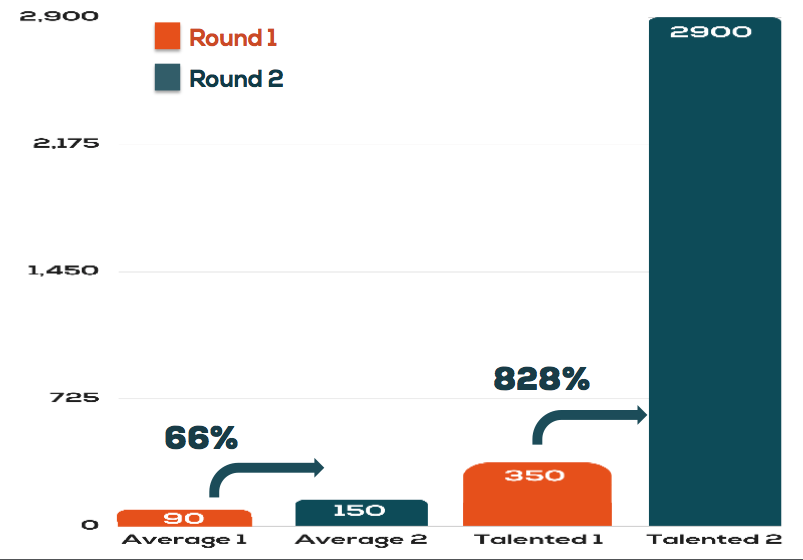
Now, back to the study. All the subjects were given the same training and in the second round, after this training, those average participants, who started out only being able to read 90 words per minute, made some improvements. They went up to a 150 words per minute. This is very much like what you see on the job. You bring in people from off the street. You say, "Hey, you're going to go through the phone rep training and everybody's going to go through the same thing, and everybody who tries hard is going to improve."
So, as expected, these subjects got better. They made a 66% improvement in their performance. That's great. It did something, yet the first piece of insight here is if you remember back to a minute ago...I said the naturally talented group already read 350 words per minute in their first round. So they already beat the trained (average) people right there. That's an interesting insight because you see how your natural talents can help you perform, even when you've never been trained in something. Now, the real magic in this story, in this case study is what happened to the people who were naturally talented. That group improved 828%. So if you ever hear me talk about your triple-digit-performance-improvement-shortcut being strengths, this is what I'm talking about. They went from 350 words per minute to 2900 words per minute with the same training as the other people.
One group of people improved to get to 150. The other group of people improved to get to 2900. You've seen this in the workplace, if you've looked around. You have the same people with the same training exposure, and you see very different performance levels. With those performance levels, you can see high performers who try really hard, but you can also see low performers who try really hard and they're just not getting it because it's not in their zone of genius, so there's the proof point for you: 828% performance improvement for that group of people who focused on what they were already naturally talented in. Now I mentioned that I would give you a proof point and then I would also offer you a metaphor that demonstrates it I think had a real guttural kind of level like, yes, this is how we should be thinking.
So there is a book put out by Donald Clifton and the Gallup organization called Soar With Your Strengths. Now this is an older book and it's actually a fable. It has a really good metaphor in there about taking an animal and sending it to training in something that it's not good at. I'm going to extend the metaphor and do the Lisa version of it. It's a little bit silly, but this way if you read the book, you can still get something out of it, so imagine this. Imagine you're going to work and at work you have a fish, and at work you have a cat, and it's been a year into their experience at work and you say,
"Fish, it's time for the performance review and I've gotta tell ya, we've had you on that responsibility of mouse catching and you've been doing a really cruddy job at catching mice. We're going to really focus in, we're behind you, we want you to be successful, so we're going to spend the next year putting you through a training program so you can be really good at mouse catching. Fish, you're going to go to mouse-catching school."
"Now, Cat, time for your performance review. Gotta tell ya, you did great at mouse catching, but you've also had that responsibility of swimming and you know every time we put you near the pool...you scream...you scratch. You've got people in the HR office because their faces are all cut up when they're trying to throw you in the pool. It's been a real nightmare. We want you to be successful though. We're going to send you through a year long training program to make you a great swimmer."

Ok, so got my weird HR conversation here and you can imagine how ridiculous it would be to spend a year trying to teach a fish to catch a mouse and how ridiculous it would be to get a cat to swim. But if you flip that around and send that fish to swimming school and make it the best fish on the planet, you can see what would happen. Oh yeah! That's its natural tendency and that's what it was made to do. Same thing with a cat. It's made to catch a mouse.
This is something that of course it's not as easy and clear with human beings what they were born to do and we're a lot more complicated because we've probably been squashing a lot of those things out of ourselves and hiding them and it's more difficult to make them apparent. But even the notion that you as yourself or that you as a people manager are looking for the genius in that other person that is exactly the path that's going to unleash performance in the organization. So get your fish in fish school. That's the big lesson.
StrengthsFinder Activity: Conversation With Your Team
Now let's talk application. As you listen to this audio and think about yourself personally, think of a time when you learned something new and it came really easily to you...more easily than that same thing would come to most people. If you make yourself think of 5 or 10 of these types of things, you're going to see some trends. You can extend those trends into your current role and think, "all right, if this stuff comes naturally to me, then how can I extend that into my current job?" If you want to apply the same question at a team level because you're a people manager or you're a strength champion (and awesomely) you are bringing this to a bigger conversation, then you can answer the question by going around the table and having a chat about it.
For example, somebody says, "OK, you know, every time we have to learn new software, it is just so easy for me. I don't even know why user manuals exist. I don't know why help screens exists. I can't believe they have to be built out in such detail, because it's just obvious to me how it's going to work."
Maybe another person in a sales role says, "you know, you're doing a new initiative on storytelling," and when that gets launched, the person is like, "Yeah! That seems easy and fun. This is how you want me to sell. Okay, no problem. Forget those other models we've been talking about. This is what I've been wishing for all along."
Or, maybe you have someone in a project management role and they say, "you know, I can really spot the dependent tasks, I mean like nobody's business...even when the rest of the team can't see the connections. They're oblivious to some of these things that are really connected to each other and are going to make the critical path, and others have to experience the whole thing to realize that some of those steps were connected and that they matter.
That's the start of the question as a team, and then of course the magic isn't just knowing that something in the past happened. Then, the next part of the question is:
"How do we amplify this talent? If this is something you're naturally gifted in, how do we get you more of that? How can we get more of your genius on display at work?"
That makes a great team conversation. Based on the size of your team, you can spend however much or little time you have for this. I'd recommend allocating about 5 minutes a person, so it might be a 30 minute conversation, but if you only have 5 total minutes to spare at the beginning of a team meeting, ask people to submit the answer to you in advance. Put it in a spreadsheet. Collect it before you show up in the meeting so that you've done the first-level work in advance.
Then when you get in the room, it's 5 minutes of, "Here we go. Rapid fire. How can we amplify this stuff?" And then you can take it further in the time that you're actually in person together.
Okay, with that, you have a new question. Hopefully you have a newfound appreciation for how strengths based development really does work - how it does amplify your performance more than an obsession with weakness-fixing would. Now you have some questions to discuss as a team, and some things to think about on your own so you can amplify your own performance at work, and the performance of those around you.
So with that, I'll leave you until next time. Thanks for listening to Lead Through Strengths. To find more strengths-focused tools, go out to our website at LeadThroughStrengths.com/resources. There's a whole host of documents and videos and things that you can do to apply this on your team. I'll see you next time.
Subscribe To The Lead Through Strengths Podcast
To subscribe and review, here are your links for listening in iTunes and Stitcher Radio. You can also stream any episode right from this website. Subscribing is a great way to never miss an episode. Let the app notify you each week when the latest episode gets published.
]]>You'll find lots of StrengthsFinder, leadership, and team tools on our Strengths Resources page.
Lisa also mentions this classic book by Donald O. Clifton and Paula Nelson, Soar with Your Strengths: A Simple Yet Revolutionary Philosophy of Business and Management
Strengths ToolsOne of the best ways leaders can build a strengths based culture is to offer appreciation of strengths in action. If you'll notice what works, you'll get more of what works because people can replicate what they've already done well. On our home page, you can download this awesome tool that offers you 127 easy ideas for recognizing your team. Scroll down and look for the box that says "Great Managers Notice What Works".
Here's a Full Transcript of The ShowYou're listening to Lead Through Strengths, where you'll learn to apply your greatest strengths at work. I'm your host, Lisa Cummings, and today we cover the question, "Is there proof that strengths-based development works?" If you're considering StrengthsFinder or strengths-based development, strengths based culture in your organization. This comes up pretty often. People say, "Hey, if I'm going to move away from this thing that you call a lopsided obsession with weakness fixing, I want to know is it actually going to work?" What I have for you today is 1) a proof point through a case study...some actual research...and then 2) the other is a metaphor because it's a really clear way of thinking and making it obvious that strengths-based development is the way to amplify performance on the job. First, for your proof point, some researchers at the University of Nebraska did a study to quantify the effects of what it is like when you invest in your strengths, versus when you invest in something that you're just average in.
They did this test with the topic of speed-reading. They brought people in off the streets and subjected them to this speed-reading test, and at the end of the speed-reading test, they divided the subjects into two groups. Group 1: they were naturally talented at it. Group 2: they were average at the skill. The average people read 90 words per minute and the naturally talented people read 350 words per minute in this is the first round with no training. Just imagine bringing you in off the street and testing you on how fast you can read. Next, after that first round: they offered the same training to all subject. What they were going to look for, of course, is the answer to the question: "Can the naturally talented people use the same training to amplify their performance at a better pace than those who didn't have the natural talent?"
Well imagine this is very much like work. You see people come in to the same job, but they have different background, skills, talents, knowledge, experience. You see that one person really takes to the job easily. And another person - they don't ramp up as fast, and the work is not intuitive to them. They're slower at it and it never feels quite right for them.
Now, back to the study. All the subjects were given the same training and in the second round, after this training, those average participants, who started out only being able to read 90 words per minute, made some improvements. They went up to a 150 words per minute. This is very much like what you see on the job. You bring in people from off the street. You say, "Hey, you're going to go through the phone rep training and everybody's going to go through the same thing, and everybody who tries hard is going to improve."
So, as expected, these subjects got better. They made a 66% improvement in their performance. That's great. It did something, yet the first piece of insight here is if you remember back to a minute ago...I said the naturally talented group already read 350 words per minute in their first round. So they already beat the trained (average) people right there. That's an interesting insight because you see how your natural talents can help you perform, even when you've never been trained in something. Now, the real magic in this story, in this case study is what happened to the people who were naturally talented. That group improved 828%. So if you ever hear me talk about your triple-digit-performance-improvement-shortcut being strengths, this is what I'm talking about. They went from 350 words per minute to 2900 words per minute with the same training as the other people.
One group of people improved to get to 150. The other group of people improved to get to 2900. You've seen this in the workplace, if you've looked around. You have the same people with the same training exposure, and you see very different performance levels. With those performance levels, you can see high performers who try really hard, but you can also see low performers who try really hard and they're just not getting it because it's not in their zone of genius, so there's the proof point for you: 828% performance improvement for that group of people who focused on what they were already naturally talented in. Now I mentioned that I would give you a proof point and then I would also offer you a metaphor that demonstrates it I think had a real guttural kind of level like, yes, this is how we should be thinking.
So there is a book put out by Donald Clifton and the Gallup organization called Soar With Your Strengths. Now this is an older book and it's actually a fable. It has a really good metaphor in there about taking an animal and sending it to training in something that it's not good at. I'm going to extend the metaphor and do the Lisa version of it. It's a little bit silly, but this way if you read the book, you can still get something out of it, so imagine this. Imagine you're going to work and at work you have a fish, and at work you have a cat, and it's been a year into their experience at work and you say,
"Fish, it's time for the performance review and I've gotta tell ya, we've had you on that responsibility of mouse catching and you've been doing a really cruddy job at catching mice. We're going to really focus in, we're behind you, we want you to be successful, so we're going to spend the next year putting you through a training program so you can be really good at mouse catching. Fish, you're going to go to mouse-catching school."
"Now, Cat, time for your performance review. Gotta tell ya, you did great at mouse catching, but you've also had that responsibility of swimming and you know every time we put you near the pool...you scream...you scratch. You've got people in the HR office because their faces are all cut up when they're trying to throw you in the pool. It's been a real nightmare. We want you to be successful though. We're going to send you through a year long training program to make you a great swimmer."
Ok, so got my weird HR conversation here and you can imagine how ridiculous it would be to spend a year trying to teach a fish to catch a mouse and how ridiculous it would be to get a cat to swim. But if you flip that around and send that fish to swimming school and make it the best fish on the planet, you can see what would happen. Oh yeah! That's its natural tendency and that's what it was made to do. Same thing with a cat. It's made to catch a mouse.
This is something that of course it's not as easy and clear with human beings what they were born to do and we're a lot more complicated because we've probably been squashing a lot of those things out of ourselves and hiding them and it's more difficult to make them apparent. But even the notion that you as yourself or that you as a people manager are looking for the genius in that other person that is exactly the path that's going to unleash performance in the organization. So get your fish in fish school. That's the big lesson.
StrengthsFinder Activity: Conversation With Your Team
Now let's talk application. As you listen to this audio and think about yourself personally, think of a time when you learned something new and it came really easily to you...more easily than that same thing would come to most people. If you make yourself think of 5 or 10 of these types of things, you're going to see some trends. You can extend those trends into your current role and think, "all right, if this stuff comes naturally to me, then how can I extend that into my current job?" If you want to apply the same question at a team level because you're a people manager or you're a strength champion (and awesomely) you are bringing this to a bigger conversation, then you can answer the question by going around the table and having a chat about it.
For example, somebody says, "OK, you know, every time we have to learn new software, it is just so easy for me. I don't even know why user manuals exist. I don't know why help screens exists. I can't believe they have to be built out in such detail, because it's just obvious to me how it's going to work."
Maybe another person in a sales role says, "you know, you're doing a new initiative on storytelling," and when that gets launched, the person is like, "Yeah! That seems easy and fun. This is how you want me to sell. Okay, no problem. Forget those other models we've been talking about. This is what I've been wishing for all along."
Or, maybe you have someone in a project management role and they say, "you know, I can really spot the dependent tasks, I mean like nobody's business...even when the rest of the team can't see the connections. They're oblivious to some of these things that are really connected to each other and are going to make the critical path, and others have to experience the whole thing to realize that some of those steps were connected and that they matter.
That's the start of the question as a team, and then of course the magic isn't just knowing that something in the past happened. Then, the next part of the question is:
"How do we amplify this talent? If this is something you're naturally gifted in, how do we get you more of that? How can we get more of your genius on display at work?"
That makes a great team conversation. Based on the size of your team, you can spend however much or little time you have for this. I'd recommend allocating about 5 minutes a person, so it might be a 30 minute conversation, but if you only have 5 total minutes to spare at the beginning of a team meeting, ask people to submit the answer to you in advance. Put it in a spreadsheet. Collect it before you show up in the meeting so that you've done the first-level work in advance.
Then when you get in the room, it's 5 minutes of, "Here we go. Rapid fire. How can we amplify this stuff?" And then you can take it further in the time that you're actually in person together.
Okay, with that, you have a new question. Hopefully you have a newfound appreciation for how strengths based development really does work - how it does amplify your performance more than an obsession with weakness-fixing would. Now you have some questions to discuss as a team, and some things to think about on your own so you can amplify your own performance at work, and the performance of those around you.
So with that, I'll leave you until next time. Thanks for listening to Lead Through Strengths. To find more strengths-focused tools, go out to our website at LeadThroughStrengths.com/resources. There's a whole host of documents and videos and things that you can do to apply this on your team. I'll see you next time.
Subscribe To The Lead Through Strengths PodcastTo subscribe and review, here are your links for listening in iTunes and Stitcher Radio. You can also stream any episode right from this website. Subscribing is a great way to never miss an episode. Let the app notify you each week when the latest episode gets published.
]]>If you want some strengths-focused tools to use with your team at work, also check out leadthroughstrengths.com/
This week Lisa chats with Cheikh Tall, Maya Tremelling, and a Project Director at FHI 360. Their amazing company is working in 70 countries to find cures for many of the world's deadliest diseases, provide water for villages in Africa, and promote the health and well-being of all people.
In this special episode, you'll hear how FHI 360 has built a strengths-based team, while nurturing a strong company culture. You'll learn about these 10 ideas:
- Charity Cube
- Employee Resource Groups (ERGs)
- Focus On The People
- Offer Awesome Grants
- Randomized Coffee Trials
- Thank You Cards
- Now Awards
- Annual Awards
- Leaders Set The Tone
- Creative Work Schedules
[caption id="attachment_3508" align="alignleft" width="400"] FHI 360's Awesome Mission[/caption]
Meet the interviewees (see photos below):
Cheikh's Top 5 Clifton StrengthsFinder Talent Themes: Maximizer, Adaptability, Achiever, Responsibility, Deliberative (such a great fit for getting a financial analyst in the zone!)
Maya's Top 5 Clifton StrengthsFinder Talent Themes: Positivity, Includer, Woo, Developer, Harmony (what a beautiful set of relationship talents to bring to a records management role!)
Lisa's Top 5 Clifton StrengthsFinder Talent Themes: Strategic, Maximizer, Positivity, Individualization, Woo
Resources of the Episode
You can connect with the FHI 360 team through their website, Twitter, and their interesting and informative blog.
Strengths Tools
You'll also find lots of StrengthsFinder, leadership, and team tools on our ="https://www.google.com/url?hl=en&q=http://leadthroughstrengths.com/resources&source=gmail&ust=1487264698482000&usg=AFQjCNHUtPcayNXycHfGq_r2Crj5sPIU7w">Strengths Resources page.
Subscribe To The Lead Through Strengths Podcast
To subscribe and review, here are your links for listening in iTunes and Stitcher Radio. You can also stream any episode right from this website. Subscribing is a great way to never miss an episode. Let the app notify you each week when the latest episode gets published.
Here's a Full Transcript of the Interview
Lisa: You're listening to Lead Through Strengths, where YOU'LL learn to apply your greatest strengths at work. [music break]
I'm your host, Lisa Cummings—and I gotta tell ya, whether you're leading a team or leading yourself…it's hard to find something more **ENERGIZING** and productive than using your natural talents every day at work.
Today, you'll hear a special episode, where I'm onsite in the Raleigh Durham area of North Carolina. I'm with an organization called FHI 360. They do work in 70 countries, and wow...talk about bringing out the best in humanity…
I was onsite, delivering a StrengthsFinder program to their Global Leadership Team. They came from all over the world and, man, we got to apply the concept of strengths to [00:01:00] suuuuch a wide range of job responsibilities.
We had research scientists, we had country directors, we had clinical operations leaders, and we had people whose career mission is to cure malaria. We had leaders who devoted their entire lives to getting clean drinking water to villages in Africa.
It was amazing, and their organizational culture really stuck me.
It feels different (in a special way) when you walk in their building. So [00:01:30] I couldn't pass up the opportunity to chat with some of their team members about what makes this organization so special.
Now, bear with us. The audio on this episode is not as good as our usual standard. We're on site, in a common space, with four of us on one centralized microphone. The setup was not ideal for your ear buds, yet we made it work on the fly. And, even with the extra fuzz and distance in your ears, you'll absolutely benefit by listening to their creative tips and culture-building ideas.
In just a sec, they'll start giving you 10 specific ideas you can borrow for YOUR work culture. If you find it tough to follow who is talking (because there are 4 of us), take a glance over at leadthroughstrengths.com/listen. When you see the podcast episode art with three faces, you'll know you found them. We added photos of each person throughout the show notes - so I think you'll love checking out those visuals (we even have some that show the 10 tips in action). That page also includes each person's StrengthsFinder talent themes, so it might be fun for you to spot their natural talents as you hear how they describe their ideas.
We kick it off with . She jumps right in with their [00:03:00] Charity Cube idea. Here she is, giving you a cool use for the empty cubicle in your office!
Project Director: Hi, I'm a project director. My favorite thing about working here or one cool thing I look forward to is an initiative we have called the Charity Cube. It's an empty cube that we use as a mini-thrift store to raise funds [00:03:30] for charities that are nominated by our staff.
Sometimes it will be a charity that our staff cares about, local or national, or sometimes it'll be something thathas personal significance to someone, right? Now for example, this month, the funds raised through the Charity Cube are going to the Leukemia Society because one of our colleagues lost her husband recently to leukemia, so it's raising money in honor of him.
Lisa: I can already tell it's something of meaning here. Tell me a little bit [00:04:00] about what that cube looks like. If you walk up to that cube, what do you see? Because I imagine almost everybody listening has an empty cube somewhere around the office and they want to do this. What does that look like?
Project Director: Sure. We invested in a portable clothing rack. I think a company called Neatfreak makes it. We have clothes hanging there. We ask people to only bring in really nice stuff. We usually have some shoes and purses. There are books, CDs and DVDs [00:04:30]. Knickknacks. People bring in all kinds of things. Some things we wish they didn't, but usually what happens is the good stuff is gone in a second. What's left over is the stuff that nobody wants, so once a month, we get volunteers to come clean it out and to purge it, then we start over. We've raised $5,000 in the Charity Cube.
We've been doing it two years and each month, it's a different charity and [00:05:00] staff nominates it. It's fun. It needs to be placed somewhere strategic. Our Charity Cube is placed right next to the canteen, so everyone who's going to warm up their lunch stops by. It's an honor system. There's a moneybox. People put in the cash and once a month, we add up all the money and send it to a charity.
Lisa: It's like a little retail store in a cube. I wasn't even imagining it at first.
Project Director: Yeah. It manages itself, for the most part.
Lisa: And anybody listening to this could implement something like that. They don't have to be a people [00:05:30] manager to do that. That can be anyone who wants to demonstrate leadership and do something meaningful. Ooh. Maya, this is a lot to live up to. What kind of cool thing do you love here?
Maya: My name is Maya Tremelling [00:05:43]. I'm responsible for record management and I've worked for FHI for almost nine years. What I like most about working in this company are the people.
Lisa: Let's talk about relationships for a second and what happens when you're so far away. I talk to more and more people at companies, organizations everywhere that have remote employees all over the place. Your tightest knit team might not be anywhere near you, so how do you ... This answer could be for anyone even though, Cheikh, you haven't been able to introduce yourself yet. How do you stay connected like that relationship-wise when you're not physically seeing each other?
Cheikh: The ERG.
Maya: Yeah, ERG. I don't know if you heard of them [00:06:29].
Lisa: Employee Resource Groups?
Cheikh: Employee [00:06:30] Resource Group. Yes.
Lisa: Yes. Talk about them.
Cheikh: And then people that share…
Project Director: Common interests.
Maya: We have so many groups. Maybe I can talk for "Tapioca" [00:06:38], which is Asian people, but people who care about Asia also can join. You don't need to be Asian to join. We have really good causes too, like fundraising. We celebrate New Year's for all the countries in Asia. We have potlucks. Being away from our countries can feel lonely, but it feels like we are family here. It's just nice.
Lisa: Yeah, so you mentioned Tapioca. You mentioned Young Professionals. Is that an Employee Resource Group?
Maya: Yes.
Lisa: What are some other ones?
Maya: Africa.
Project Director: Working parents.
Cheikh: I think a bicycle group.
Lisa: Bicycle?
Cheikh: They have a bunch of bicycles. Yeah.
Project Director: Yeah. We have a bicycle one, working parents. Oh, Toastmasters, public speaking, Africa, Asia. Military veterans? [00:07:25] Oh, a fitness one that does yoga and meditation.
Lisa: It's as if you find a special connection point, you could make one of these.
Project Director: Sure. You can propose it.
Cheikh: The last one is a women's group.
Project Director: Oh, yeah. The women's group? Yeah.
Cheikh: I attended that one [smiles].
Project Director: That's awesome. Good for you [cheerful crosstalk].
Lisa: Okay, so now people have sort of met you.
Cheikh: Yes.
Lisa: Tell them who you are and one of the cool things you love about working here.
Cheikh: My name is Cheikh Tall [00:07:52]. I've been with FHI for about a year. The purpose for me to join FHI was the work that FHI was doing. I was just sitting at my old job - just working and I guess it wasn't meaningful to me. It wasn't about the money, it's about what I want to do personally. I think working here - and the work that FHI is doing, that's one of the main things that I like about working here.
Lisa: Yeah. I think people listening to this will almost feel like you [00:08:30] have an advantage because when you're in a company like this, that is so mission driven and so out for humanity and what the world could become, you certainly (on the purpose and meaning part) have something special.
Let's just say you're a manager listening to this and they work in a manufacturing company. They're making widgets and you're trying to figure out - how do you tap into meaning? You've obviously had this experience when you didn't feel that connection. [00:09:00] Do you think that connection can be made when it's a hardware product or something like that?
Cheikh: Yes. I think it's good to take time to understand what somebody's motivation is. It's important to tap into that motivation and keep that person going.
Lisa: If you just asked one question to try to get at somebody's motivation, what would that thing be?
Project Director: Whenever I work with someone that I don't know, I make sure that the very first meeting has nothing to do with work. That it's [00:09:30] just about getting to know each other and understanding. You don't want to make people say things that they're not comfortable sharing, but just opening a dialogue for people to share what they're comfortable with about their life and their family and where they went to school or what books they love, what music they love, what their hobbies are, so that you can build trust. I think in order to be able to be on a team and have healthy conflict about ideas, you have to trust each other. In order to build trust, you have to know something about the person [00:10:00] beyond their name and their title.
Lisa: It doesn't cost any money, either. That's a great one, Project Director, for that.
Project Director: Exactly. You do it over lunch. You go out, "Hey, I'm so glad we're working together. Can we go and grab lunch?" You just talk about life and each other. Also in keeping that feeling going and building that relationship too, a lot of times, we work with people that are overseas.
I had a team that was all in Kenya. We did so much better, we were so much more engaged when we were on video, rather than when we were on the phone. As much as we could, we did Skype and video calls more than just being on the phone. When you're on the phone and someone could be doing something else and it's too passive. When you're on video, you have to really focus.
So yeah, using video and just keeping a personal relationship just when you start meeting like, "How's everything going with you guys? How's your family?" You know what their kids are doing. "How's soccer going?" or something. "How's your garden going? You grow tomatoes. Do you have any tomatoes yet?" Just to have ahuman connection and not be so boring about work, because things can get boring sometimes.
Lisa: [00:11:00] It's big. People say, "Oh, you're not focusing on work", but you're focusing on work by focusing on the people that do the work, so you have to have that piece.
Cheikh: Adding to that, I might be an introvert sometimes. I don't like to talk. I just sometimes just keep it business as usual.
Lisa: Perfect for having someone on a video right now, right? [sarcasm] "Let's do an in public interview with someone to make him feel really uncomfortable."
Cheikh: I've been working with my manager for a while. She can tell by how I react if I'm excited about something or not. She knows that I like to be challenged. If a new challenge comes up, she can see the excitement in me. I think paying attention to the non-verbal action of people pays a lot. They can't help unless they are 100% sure what motivates that person.
Lisa: I like how practical your ideas are. You were talking about the fact that someone can read you [00:12:00] and know. The same thing applies with anybody that you're working with whether they're your direct report or a colleague who's a peer. If you get to know each other at those informal lunches and they know, "Oh, you want a little more time to think about things" or "Don't put me under pressure to speak in the moment" or "Now I can see that eye twitch means that's a good thing". All those little signs.
Project Director: One of the things that I love about FHI is HR has set aside funds and resources for employees to come up with [00:12:30] ideas. We have the Awesome grant: give us an idea that's awesome that you can do for $1,000 and we'll consider it. Everyone can submit his or her ideas. One of the Awesome grants was to get some bicycles that employees can check out and go for lunch, go ride into downtown and grab a coffee or a lunch.
HR, it's not tons of money, but it's very encouraging to feel like your ideas are valued and for HR to say, "We want to know what ..." [00:13:00] The Awesome grants are about the culture. $1,000 projects to make our culture better. I love that HR is thinking that way because that's creative and it's not expensive. It's pretty easy. The staff is doing all the work. They're coming up with an idea they're implementing.
Lisa: And executing. I hear that and I think if someone said, "Oh, we don't have that. We have $100", you could do an Awesome grant with $100. That's cool.
Paige Winn (cameo appearance): Do you guys know about the randomized coffee trials?
Maya: Yeah. Every [00:13:30] month, people who register to be part of it will get an invite. They match us with other people and we can have talking and it's just having a coffee or tea or even lunch if you want. I meet most of the time with someone new that I never met before. It's really good because we are such a big company. So many new people - we benefit.
Lisa: Yeah. Say more about how this actually works. You're an employee and I'm imagining [00:14:00] it could be something like networking and I just want to meet someone in whatever department?
Maya: Yes.
Lisa: Networking, mostly? Does it happen through software or how does this happen?
Maya: It's just an email.
Project Director: It's part of the Awesome thing. Someone manages it. They get all the names of people and then they use random matching and send out emails.
Cheikh: Usually the people that they match are in the same department.
Project Director: Yeah.
Cheikh: We end up being matched to somebody who is doing something totally different than your area of work, so you can talk about projects you're working on.
Project Director: The ones that I've been in, we talk about work some and what kind of projects you're doing and what excites you about what's coming down the pike.
Maya: Most of the time. Yeah.
Project Director: "Where did you come from? Who are you?" It's all the employees who schedule it and reschedule it if you need to cancel. That's your gig. They just tell you whom you're matched to and then you can take it and run.
Lisa: You're hitting [00:15:00] on an enormously important concept. I talk a lot with managers about individualizing to each person and what makes them tick.
Project Director: One thing I really appreciate is that we get handed out stationary that is a thank you note. It has a logo and it says 'We are FHI'. You get those and when someone does something that you appreciate or helps you out, you can send them a handwritten thank you note. I have handwritten thank you [00:15:30] notes from people in leadership that mean so much. The power of that is just so real and wonderful. We can do that to each other. We also have an ability to nominate people for awards.
Cheikh: Yeah. The Now Award.
Project Director: On an ongoing basis, we have a Now Award, which is just someone helped you out. It can be a $10 gift card or $20, whatever. Once a year, then we have the big award. They take nominations from around, many, many offices around [00:16:00] the world. It's nice. There's a ceremony and people get to tell their story. You hear why people got this award and they give it to teams. It's not about individual accomplishments, it's about team accomplishment and project accomplishment. That's awesome because then you're really creating a culture that values teamwork.
Cheikh: Also, what I like especially about the Now Award is that it is something that you get from peers. You're working next to each other.
Maya: Right. In the same department.
Cheikh: It doesn't come from the top leader. [00:16:30] My direct manager or my direct coworkers are the ones that can nominate me. Just getting an award from them means a lot because they are the people that you interact with all the time, and they see you putting in the work. The direct manager knows what I'm doing every day. Getting recognition from them sometime means a lot.
Lisa: As I was listening to your answers, I was thinking about how that gave people a [00:17:00] big, bigger, biggest option where thank you cards, recognition cards can be big, Now Awards can be bigger, the team impact thing, the biggest. But that something as simple as a peer recognition getting a handwritten note whether it's from a peer, even an email, that it's big.
It's a big meaning to you even though it's a small easy action to take. Anybody can keep a stack full of blank cards at their desk to recognize peers, even if their company doesn't [00:17:30] provide something. Okay. Closing thought. It's a simple question, yet a deep question. What do you know about team dynamics today that you didn't know five years ago?
Project Director: I don't know if I didn't know it five years ago, but I certainly know now that the leader sets the tone. I'm on a team now where the leader will send out a message [00:18:00] and it's completely heartfelt. "This morning I woke up and there was a beautiful sunrise and I was on my run. I was just thinking about how much we've accomplished in the last month, and how hard you guys have worked, and how much I appreciate it. I'm just thankful that you all are my team."
He's setting the tone. He's setting the tone and then that becomes the tone of the team. I think it goes all the way up to our CEO. We have a CEO suggestion box. You can say anything you want in the suggestion box. Anything. [00:18:30] He will respond publicly unless it's private, if it's an HR issue that is private.
He sets the tone for communication. That would be my nugget: the leader sets the tone. It's your responsibility to set the tone for your team. If there's gnarly-ness going on in your team, you have to not just want to blame it on them but look inward and accept some responsibility. How do I turn this around? What can I do? Instead of just saying, "All those people are hopeless." I [00:19:00] believe it comes from the top.
Lisa: It takes a lot of small interactions to make that openness happen, so that's a really good lesson.
Project Director: You know one thing we didn't talk about, but I think is really great, is that I only work 60% of the time. That's a choice that I made, so that I cannot make my kids eat TV dinner every day, right?
Lisa: Ooh, it is a big one.
Project Director: I work less and I make less money, but I still know, and I think most people here know, that you don't get all this [00:19:30] stuff. Culture is not going to just ... someone else is going to create it. You have to put the time in even though I'm only working 60%, but I put the time in for the Charity Cube. We put the time in for the ERGs. We do it because we know that it's our responsibility. We get to own whether this place is awesome to work at or not. It's everybody's responsibility and we all chip in, don't we?
Maya: Yeah. [00:19:53].
Project Director: People chip in. We're not getting compensated for these things that we're doing. We shouldn't be. We're doing them because we want to work at an awesome place [00:20:00] and that's what it takes to work somewhere awesome. If you're not willing to give a couple of hours a month or one hour a month to make this place awesome, then it's not going to be awesome. That's why it's awesome. If you think everyone else is going to create the culture and then you get to benefit from it? No. That's not how it works.
Lisa: It's so uncommon to see any fractional work schedule.
Project Director: Yeah. It has to be that your project, it meshes with your project needs, but yeah. If you can justify in how it will work and it works [00:20:30] for your group, then you can do it.
Lisa: The Project Director ended it so perfectly, didn't she? You know what, if you want your workplace to be great, it's built from the inside out. A culture's not an HR initiative, it's not a vision from one single leader. It's actually a reflection of the past and the present and all of those actions, habits, preferences, commitments and trusts that are going on in your organization.
Building a strengths-based culture takes [00:21:00] some time, effort, and ongoing communication. They did such a great job of showing how yes, it does take an effort by many people over a long period of time to shape a culture yet at the same time, they demonstrate really beautifully that these 10 ideas can be executed by anyone at any level and really with any budget level.
To do a quick recap, here are the 10 ideas. I hope you will take some inspiration [00:21:30] and implement a spark that you got from this episode in your company.
- Turn an empty cube into a Charity Cube.Use it to give to causes that employees select and care about.
- Form Employee Resource Groups (ERGs), and don't limit them to ethnic diversity groups. Allow team members to find connection points and create groups, like their cyclist group or veterans group.
- Focus on the work by focusing on the people doing the work. Build human connections by being willing to chat about non-work topics. Get on video for remote team members. Going deeper builds trust that translates into results.
- Offer Awesome Grants. Give people the opportunity to apply for grants that build a great workplace. They implemented everything from a sharable bike program to buying StrengthsFinder assessments - all from their Awesome Grants.
- Create a program like their Randomized Coffee Trials.They literally get matched up with a random person from another department to have coffee and try on a conversation. It has been awesome for cross-functional networking and collaboration.
- Provide an inventory of Thank You cards. They provide stationery to each employee so that offering appreciation is convenient. This removes cost barriers and convenience barriers that would otherwise keep people from doing it. I know, that sounds like a lame excuse to not say thank you…yet I don't see fat stacks of thank you cards on people's desks, so this idea rocks. Make it easy.
- Now Awards.Start a peer-nomination system. Get rid of the bureaucracy and approvals. Allow people to give something simple, like a $10 gift card to a peer.
- Annual Awards.This is their big team award, so it's different from peer awards. This one recognizes project level success. They go all out with stories that describe the team's experience together. And they pump up the pomp and circumstance to really make a celebration out of it.
- Set the tone.As a leader, FHI leaders are comfortable with a heartfelt tone. They are willing to listen and help each person feel important. They see from their results and loyalty that it's a big deal. Whether it's a meaningful team message or their CEO suggestion box, they're out to show people that they matter.
- Get creative with work schedules.FHI offers what they call "Reduced LOE" where any professional on their team can work fractional hours and get prorated benefits. What a creative way to keep your best employees through different seasons of their lives. It makes team members feel accountable to keeping the amazing culture train going - what a brilliant way to build a feeling of ownership all the way through. At its simplest level, consider offering a job sharing program or part time roles. The important differentiator here is that it's not just for entry-level jobs. When you show people they have a career path with flexibility, you can keep your top talent rather than having them opt out of the workforce entirely.
It makes the team members feel accountable to keeping the amazing culture train going, you heard that from Project Director, and what a brilliant way to build a feeling of ownership all the way through the organization. If you offered this at its simplest level, just consider doing a job-sharing program where two employees can share a job 50/50 or maybe you offer part-time roles.
The important differentiator is that it's not just for entry-level jobs. I do see people experimenting with part-time offerings, yet they stop at the entry-level jobs. The magic here is that when you show people they have a career path with flexibility, you can keep your top talent rather than having them opt out of the workforce entirely. All right. With that, I'd love to hear what this episode inspires you to put into practice.
If you've done the Clifton StrengthsFinder assessment with your team, it's a great [00:27:00] spark. I say this often. It's a great start, it's a great spark, but it needs the continued conversation and execution to have the deep impact on an organization. First, I'm virtually high fiving you if you've gotten the conversation started already and the examples in this episode are a great way to support talents and put them into action.
Just think about this for a second. If someone on your team leads through the Discipline or Focus talent themes, maybe they create the calendaring process for something like those randomized coffee trials because they really dig the organizational skills and the follow through part. If someone leads through restorative, maybe they institute their own ERG.
They create an employee resource group called the Fix It Amigos, I don't know, to tinker on electronics or solve business issues that people submit. If someone leads through the developer talent, maybe they propose a mentoring program or they offer to be someone's mentor so they can take them through those small steps of development and have someone who they can celebrate the success of.
If someone leads through Includer, they might offer to become the onboarding welcome wagon and offer tour guides to ensure that new hires feel totally comfortable and grounded in their first week on the job. You get the idea here. I'm just spit balling. The idea though is take your talents and the talents of people on your team and aim them at culture building conversations. Aim them at specific company programs.
Get people involved in ways [00:28:30] that light them up. Encourage people to contribute in ways that bring them ease and energy and enjoyment about the workplace and about their culture and about their roles. After all, if they're obsessed with fixing their weaknesses, you know what I'm about to say here. They are performing on the road of most resistance. So help them claim their talents and share them with your culture.
]]>
In this special episode, you'll hear how FHI 360 has built a strengths-based team, while nurturing a strong company culture. You'll learn about these 10 ideas:
- Charity Cube
- Employee Resource Groups (ERGs)
- Focus On The People
- Offer Awesome Grants
- Randomized Coffee Trials
- Thank You Cards
- Now Awards
- Annual Awards
- Leaders Set The Tone
- Creative Work Schedules
[caption id="attachment_3508" align="alignleft" width="400"] FHI 360's Awesome Mission[/caption]
Meet the interviewees (see photos below):Cheikh's Top 5 Clifton StrengthsFinder Talent Themes: Maximizer, Adaptability, Achiever, Responsibility, Deliberative (such a great fit for getting a financial analyst in the zone!)
Maya's Top 5 Clifton StrengthsFinder Talent Themes: Positivity, Includer, Woo, Developer, Harmony (what a beautiful set of relationship talents to bring to a records management role!)
Lisa's Top 5 Clifton StrengthsFinder Talent Themes: Strategic, Maximizer, Positivity, Individualization, Woo
Resources of the EpisodeYou can connect with the FHI 360 team through their website, Twitter, and their interesting and informative blog.
Strengths ToolsYou'll also find lots of StrengthsFinder, leadership, and team tools on our ="https://www.google.com/url?hl=en&q=http://leadthroughstrengths.com/resources&source=gmail&ust=1487264698482000&usg=AFQjCNHUtPcayNXycHfGq_r2Crj5sPIU7w">Strengths Resources page.
Subscribe To The Lead Through Strengths PodcastTo subscribe and review, here are your links for listening in iTunes and Stitcher Radio. You can also stream any episode right from this website. Subscribing is a great way to never miss an episode. Let the app notify you each week when the latest episode gets published.
Here's a Full Transcript of the InterviewLisa: You're listening to Lead Through Strengths, where YOU'LL learn to apply your greatest strengths at work. [music break]
I'm your host, Lisa Cummings—and I gotta tell ya, whether you're leading a team or leading yourself…it's hard to find something more **ENERGIZING** and productive than using your natural talents every day at work.
Today, you'll hear a special episode, where I'm onsite in the Raleigh Durham area of North Carolina. I'm with an organization called FHI 360. They do work in 70 countries, and wow...talk about bringing out the best in humanity…
I was onsite, delivering a StrengthsFinder program to their Global Leadership Team. They came from all over the world and, man, we got to apply the concept of strengths to [00:01:00] suuuuch a wide range of job responsibilities.
We had research scientists, we had country directors, we had clinical operations leaders, and we had people whose career mission is to cure malaria. We had leaders who devoted their entire lives to getting clean drinking water to villages in Africa.
It was amazing, and their organizational culture really stuck me.
It feels different (in a special way) when you walk in their building. So [00:01:30] I couldn't pass up the opportunity to chat with some of their team members about what makes this organization so special.
Now, bear with us. The audio on this episode is not as good as our usual standard. We're on site, in a common space, with four of us on one centralized microphone. The setup was not ideal for your ear buds, yet we made it work on the fly. And, even with the extra fuzz and distance in your ears, you'll absolutely benefit by listening to their creative tips and culture-building ideas.
In just a sec, they'll start giving you 10 specific ideas you can borrow for YOUR work culture. If you find it tough to follow who is talking (because there are 4 of us), take a glance over at leadthroughstrengths.com/listen. When you see the podcast episode art with three faces, you'll know you found them. We added photos of each person throughout the show notes - so I think you'll love checking out those visuals (we even have some that show the 10 tips in action). That page also includes each person's StrengthsFinder talent themes, so it might be fun for you to spot their natural talents as you hear how they describe their ideas.
We kick it off with . She jumps right in with their [00:03:00] Charity Cube idea. Here she is, giving you a cool use for the empty cubicle in your office!
Project Director: Hi, I'm a project director. My favorite thing about working here or one cool thing I look forward to is an initiative we have called the Charity Cube. It's an empty cube that we use as a mini-thrift store to raise funds [00:03:30] for charities that are nominated by our staff.
Sometimes it will be a charity that our staff cares about, local or national, or sometimes it'll be something thathas personal significance to someone, right? Now for example, this month, the funds raised through the Charity Cube are going to the Leukemia Society because one of our colleagues lost her husband recently to leukemia, so it's raising money in honor of him.
Lisa: I can already tell it's something of meaning here. Tell me a little bit [00:04:00] about what that cube looks like. If you walk up to that cube, what do you see? Because I imagine almost everybody listening has an empty cube somewhere around the office and they want to do this. What does that look like?
Project Director: Sure. We invested in a portable clothing rack. I think a company called Neatfreak makes it. We have clothes hanging there. We ask people to only bring in really nice stuff. We usually have some shoes and purses. There are books, CDs and DVDs [00:04:30]. Knickknacks. People bring in all kinds of things. Some things we wish they didn't, but usually what happens is the good stuff is gone in a second. What's left over is the stuff that nobody wants, so once a month, we get volunteers to come clean it out and to purge it, then we start over. We've raised $5,000 in the Charity Cube.
We've been doing it two years and each month, it's a different charity and [00:05:00] staff nominates it. It's fun. It needs to be placed somewhere strategic. Our Charity Cube is placed right next to the canteen, so everyone who's going to warm up their lunch stops by. It's an honor system. There's a moneybox. People put in the cash and once a month, we add up all the money and send it to a charity.
Lisa: It's like a little retail store in a cube. I wasn't even imagining it at first.
Project Director: Yeah. It manages itself, for the most part.
Lisa: And anybody listening to this could implement something like that. They don't have to be a people [00:05:30] manager to do that. That can be anyone who wants to demonstrate leadership and do something meaningful. Ooh. Maya, this is a lot to live up to. What kind of cool thing do you love here?
Maya: My name is Maya Tremelling [00:05:43]. I'm responsible for record management and I've worked for FHI for almost nine years. What I like most about working in this company are the people.
Lisa: Let's talk about relationships for a second and what happens when you're so far away. I talk to more and more people at companies, organizations everywhere that have remote employees all over the place. Your tightest knit team might not be anywhere near you, so how do you ... This answer could be for anyone even though, Cheikh, you haven't been able to introduce yourself yet. How do you stay connected like that relationship-wise when you're not physically seeing each other?
Cheikh: The ERG.
Maya: Yeah, ERG. I don't know if you heard of them [00:06:29].
Lisa: Employee Resource Groups?
Cheikh: Employee [00:06:30] Resource Group. Yes.
Lisa: Yes. Talk about them.
Cheikh: And then people that share…
Project Director: Common interests.
Maya: We have so many groups. Maybe I can talk for "Tapioca" [00:06:38], which is Asian people, but people who care about Asia also can join. You don't need to be Asian to join. We have really good causes too, like fundraising. We celebrate New Year's for all the countries in Asia. We have potlucks. Being away from our countries can feel lonely, but it feels like we are family here. It's just nice.
Lisa: Yeah, so you mentioned Tapioca. You mentioned Young Professionals. Is that an Employee Resource Group?
Maya: Yes.
Lisa: What are some other ones?
Maya: Africa.
Project Director: Working parents.
Cheikh: I think a bicycle group.
Lisa: Bicycle?
Cheikh: They have a bunch of bicycles. Yeah.
Project Director: Yeah. We have a bicycle one, working parents. Oh, Toastmasters, public speaking, Africa, Asia. Military veterans? [00:07:25] Oh, a fitness one that does yoga and meditation.
Lisa: It's as if you find a special connection point, you could make one of these.
Project Director: Sure. You can propose it.
Cheikh: The last one is a women's group.
Project Director: Oh, yeah. The women's group? Yeah.
Cheikh: I attended that one [smiles].
Project Director: That's awesome. Good for you [cheerful crosstalk].
Lisa: Okay, so now people have sort of met you.
Cheikh: Yes.
Lisa: Tell them who you are and one of the cool things you love about working here.
Cheikh: My name is Cheikh Tall [00:07:52]. I've been with FHI for about a year. The purpose for me to join FHI was the work that FHI was doing. I was just sitting at my old job - just working and I guess it wasn't meaningful to me. It wasn't about the money, it's about what I want to do personally. I think working here - and the work that FHI is doing, that's one of the main things that I like about working here.
Lisa: Yeah. I think people listening to this will almost feel like you [00:08:30] have an advantage because when you're in a company like this, that is so mission driven and so out for humanity and what the world could become, you certainly (on the purpose and meaning part) have something special.
Let's just say you're a manager listening to this and they work in a manufacturing company. They're making widgets and you're trying to figure out - how do you tap into meaning? You've obviously had this experience when you didn't feel that connection. [00:09:00] Do you think that connection can be made when it's a hardware product or something like that?
Cheikh: Yes. I think it's good to take time to understand what somebody's motivation is. It's important to tap into that motivation and keep that person going.
Lisa: If you just asked one question to try to get at somebody's motivation, what would that thing be?
Project Director: Whenever I work with someone that I don't know, I make sure that the very first meeting has nothing to do with work. That it's [00:09:30] just about getting to know each other and understanding. You don't want to make people say things that they're not comfortable sharing, but just opening a dialogue for people to share what they're comfortable with about their life and their family and where they went to school or what books they love, what music they love, what their hobbies are, so that you can build trust. I think in order to be able to be on a team and have healthy conflict about ideas, you have to trust each other. In order to build trust, you have to know something about the person [00:10:00] beyond their name and their title.
Lisa: It doesn't cost any money, either. That's a great one, Project Director, for that.
Project Director: Exactly. You do it over lunch. You go out, "Hey, I'm so glad we're working together. Can we go and grab lunch?" You just talk about life and each other. Also in keeping that feeling going and building that relationship too, a lot of times, we work with people that are overseas.
I had a team that was all in Kenya. We did so much better, we were so much more engaged when we were on video, rather than when we were on the phone. As much as we could, we did Skype and video calls more than just being on the phone. When you're on the phone and someone could be doing something else and it's too passive. When you're on video, you have to really focus.
So yeah, using video and just keeping a personal relationship just when you start meeting like, "How's everything going with you guys? How's your family?" You know what their kids are doing. "How's soccer going?" or something. "How's your garden going? You grow tomatoes. Do you have any tomatoes yet?" Just to have ahuman connection and not be so boring about work, because things can get boring sometimes.
Lisa: [00:11:00] It's big. People say, "Oh, you're not focusing on work", but you're focusing on work by focusing on the people that do the work, so you have to have that piece.
Cheikh: Adding to that, I might be an introvert sometimes. I don't like to talk. I just sometimes just keep it business as usual.
Lisa: Perfect for having someone on a video right now, right? [sarcasm] "Let's do an in public interview with someone to make him feel really uncomfortable."
Cheikh: I've been working with my manager for a while. She can tell by how I react if I'm excited about something or not. She knows that I like to be challenged. If a new challenge comes up, she can see the excitement in me. I think paying attention to the non-verbal action of people pays a lot. They can't help unless they are 100% sure what motivates that person.
Lisa: I like how practical your ideas are. You were talking about the fact that someone can read you [00:12:00] and know. The same thing applies with anybody that you're working with whether they're your direct report or a colleague who's a peer. If you get to know each other at those informal lunches and they know, "Oh, you want a little more time to think about things" or "Don't put me under pressure to speak in the moment" or "Now I can see that eye twitch means that's a good thing". All those little signs.
Project Director: One of the things that I love about FHI is HR has set aside funds and resources for employees to come up with [00:12:30] ideas. We have the Awesome grant: give us an idea that's awesome that you can do for $1,000 and we'll consider it. Everyone can submit his or her ideas. One of the Awesome grants was to get some bicycles that employees can check out and go for lunch, go ride into downtown and grab a coffee or a lunch.
HR, it's not tons of money, but it's very encouraging to feel like your ideas are valued and for HR to say, "We want to know what ..." [00:13:00] The Awesome grants are about the culture. $1,000 projects to make our culture better. I love that HR is thinking that way because that's creative and it's not expensive. It's pretty easy. The staff is doing all the work. They're coming up with an idea they're implementing.
Lisa: And executing. I hear that and I think if someone said, "Oh, we don't have that. We have $100", you could do an Awesome grant with $100. That's cool.
Paige Winn (cameo appearance): Do you guys know about the randomized coffee trials?
Maya: Yeah. Every [00:13:30] month, people who register to be part of it will get an invite. They match us with other people and we can have talking and it's just having a coffee or tea or even lunch if you want. I meet most of the time with someone new that I never met before. It's really good because we are such a big company. So many new people - we benefit.
Lisa: Yeah. Say more about how this actually works. You're an employee and I'm imagining [00:14:00] it could be something like networking and I just want to meet someone in whatever department?
Maya: Yes.
Lisa: Networking, mostly? Does it happen through software or how does this happen?
Maya: It's just an email.
Project Director: It's part of the Awesome thing. Someone manages it. They get all the names of people and then they use random matching and send out emails.
Cheikh: Usually the people that they match are in the same department.
Project Director: Yeah.
Cheikh: We end up being matched to somebody who is doing something totally different than your area of work, so you can talk about projects you're working on.
Project Director: The ones that I've been in, we talk about work some and what kind of projects you're doing and what excites you about what's coming down the pike.
Maya: Most of the time. Yeah.
Project Director: "Where did you come from? Who are you?" It's all the employees who schedule it and reschedule it if you need to cancel. That's your gig. They just tell you whom you're matched to and then you can take it and run.
Lisa: You're hitting [00:15:00] on an enormously important concept. I talk a lot with managers about individualizing to each person and what makes them tick.
Project Director: One thing I really appreciate is that we get handed out stationary that is a thank you note. It has a logo and it says 'We are FHI'. You get those and when someone does something that you appreciate or helps you out, you can send them a handwritten thank you note. I have handwritten thank you [00:15:30] notes from people in leadership that mean so much. The power of that is just so real and wonderful. We can do that to each other. We also have an ability to nominate people for awards.
Cheikh: Yeah. The Now Award.
Project Director: On an ongoing basis, we have a Now Award, which is just someone helped you out. It can be a $10 gift card or $20, whatever. Once a year, then we have the big award. They take nominations from around, many, many offices around [00:16:00] the world. It's nice. There's a ceremony and people get to tell their story. You hear why people got this award and they give it to teams. It's not about individual accomplishments, it's about team accomplishment and project accomplishment. That's awesome because then you're really creating a culture that values teamwork.
Cheikh: Also, what I like especially about the Now Award is that it is something that you get from peers. You're working next to each other.
Maya: Right. In the same department.
Cheikh: It doesn't come from the top leader. [00:16:30] My direct manager or my direct coworkers are the ones that can nominate me. Just getting an award from them means a lot because they are the people that you interact with all the time, and they see you putting in the work. The direct manager knows what I'm doing every day. Getting recognition from them sometime means a lot.
Lisa: As I was listening to your answers, I was thinking about how that gave people a [00:17:00] big, bigger, biggest option where thank you cards, recognition cards can be big, Now Awards can be bigger, the team impact thing, the biggest. But that something as simple as a peer recognition getting a handwritten note whether it's from a peer, even an email, that it's big.
It's a big meaning to you even though it's a small easy action to take. Anybody can keep a stack full of blank cards at their desk to recognize peers, even if their company doesn't [00:17:30] provide something. Okay. Closing thought. It's a simple question, yet a deep question. What do you know about team dynamics today that you didn't know five years ago?
Project Director: I don't know if I didn't know it five years ago, but I certainly know now that the leader sets the tone. I'm on a team now where the leader will send out a message [00:18:00] and it's completely heartfelt. "This morning I woke up and there was a beautiful sunrise and I was on my run. I was just thinking about how much we've accomplished in the last month, and how hard you guys have worked, and how much I appreciate it. I'm just thankful that you all are my team."
He's setting the tone. He's setting the tone and then that becomes the tone of the team. I think it goes all the way up to our CEO. We have a CEO suggestion box. You can say anything you want in the suggestion box. Anything. [00:18:30] He will respond publicly unless it's private, if it's an HR issue that is private.
He sets the tone for communication. That would be my nugget: the leader sets the tone. It's your responsibility to set the tone for your team. If there's gnarly-ness going on in your team, you have to not just want to blame it on them but look inward and accept some responsibility. How do I turn this around? What can I do? Instead of just saying, "All those people are hopeless." I [00:19:00] believe it comes from the top.
Lisa: It takes a lot of small interactions to make that openness happen, so that's a really good lesson.
Project Director: You know one thing we didn't talk about, but I think is really great, is that I only work 60% of the time. That's a choice that I made, so that I cannot make my kids eat TV dinner every day, right?
Lisa: Ooh, it is a big one.
Project Director: I work less and I make less money, but I still know, and I think most people here know, that you don't get all this [00:19:30] stuff. Culture is not going to just ... someone else is going to create it. You have to put the time in even though I'm only working 60%, but I put the time in for the Charity Cube. We put the time in for the ERGs. We do it because we know that it's our responsibility. We get to own whether this place is awesome to work at or not. It's everybody's responsibility and we all chip in, don't we?
Maya: Yeah. [00:19:53].
Project Director: People chip in. We're not getting compensated for these things that we're doing. We shouldn't be. We're doing them because we want to work at an awesome place [00:20:00] and that's what it takes to work somewhere awesome. If you're not willing to give a couple of hours a month or one hour a month to make this place awesome, then it's not going to be awesome. That's why it's awesome. If you think everyone else is going to create the culture and then you get to benefit from it? No. That's not how it works.
Lisa: It's so uncommon to see any fractional work schedule.
Project Director: Yeah. It has to be that your project, it meshes with your project needs, but yeah. If you can justify in how it will work and it works [00:20:30] for your group, then you can do it.
Lisa: The Project Director ended it so perfectly, didn't she? You know what, if you want your workplace to be great, it's built from the inside out. A culture's not an HR initiative, it's not a vision from one single leader. It's actually a reflection of the past and the present and all of those actions, habits, preferences, commitments and trusts that are going on in your organization.
Building a strengths-based culture takes [00:21:00] some time, effort, and ongoing communication. They did such a great job of showing how yes, it does take an effort by many people over a long period of time to shape a culture yet at the same time, they demonstrate really beautifully that these 10 ideas can be executed by anyone at any level and really with any budget level.
To do a quick recap, here are the 10 ideas. I hope you will take some inspiration [00:21:30] and implement a spark that you got from this episode in your company.
- Turn an empty cube into a Charity Cube.Use it to give to causes that employees select and care about.
- Form Employee Resource Groups (ERGs), and don't limit them to ethnic diversity groups. Allow team members to find connection points and create groups, like their cyclist group or veterans group.
- Focus on the work by focusing on the people doing the work. Build human connections by being willing to chat about non-work topics. Get on video for remote team members. Going deeper builds trust that translates into results.
- Offer Awesome Grants. Give people the opportunity to apply for grants that build a great workplace. They implemented everything from a sharable bike program to buying StrengthsFinder assessments - all from their Awesome Grants.
- Create a program like their Randomized Coffee Trials.They literally get matched up with a random person from another department to have coffee and try on a conversation. It has been awesome for cross-functional networking and collaboration.
- Provide an inventory of Thank You cards. They provide stationery to each employee so that offering appreciation is convenient. This removes cost barriers and convenience barriers that would otherwise keep people from doing it. I know, that sounds like a lame excuse to not say thank you…yet I don't see fat stacks of thank you cards on people's desks, so this idea rocks. Make it easy.
- Now Awards.Start a peer-nomination system. Get rid of the bureaucracy and approvals. Allow people to give something simple, like a $10 gift card to a peer.
- Annual Awards.This is their big team award, so it's different from peer awards. This one recognizes project level success. They go all out with stories that describe the team's experience together. And they pump up the pomp and circumstance to really make a celebration out of it.
- Set the tone.As a leader, FHI leaders are comfortable with a heartfelt tone. They are willing to listen and help each person feel important. They see from their results and loyalty that it's a big deal. Whether it's a meaningful team message or their CEO suggestion box, they're out to show people that they matter.
- Get creative with work schedules.FHI offers what they call "Reduced LOE" where any professional on their team can work fractional hours and get prorated benefits. What a creative way to keep your best employees through different seasons of their lives. It makes team members feel accountable to keeping the amazing culture train going - what a brilliant way to build a feeling of ownership all the way through. At its simplest level, consider offering a job sharing program or part time roles. The important differentiator here is that it's not just for entry-level jobs. When you show people they have a career path with flexibility, you can keep your top talent rather than having them opt out of the workforce entirely.
It makes the team members feel accountable to keeping the amazing culture train going, you heard that from Project Director, and what a brilliant way to build a feeling of ownership all the way through the organization. If you offered this at its simplest level, just consider doing a job-sharing program where two employees can share a job 50/50 or maybe you offer part-time roles.
The important differentiator is that it's not just for entry-level jobs. I do see people experimenting with part-time offerings, yet they stop at the entry-level jobs. The magic here is that when you show people they have a career path with flexibility, you can keep your top talent rather than having them opt out of the workforce entirely. All right. With that, I'd love to hear what this episode inspires you to put into practice.
If you've done the Clifton StrengthsFinder assessment with your team, it's a great [00:27:00] spark. I say this often. It's a great start, it's a great spark, but it needs the continued conversation and execution to have the deep impact on an organization. First, I'm virtually high fiving you if you've gotten the conversation started already and the examples in this episode are a great way to support talents and put them into action.
Just think about this for a second. If someone on your team leads through the Discipline or Focus talent themes, maybe they create the calendaring process for something like those randomized coffee trials because they really dig the organizational skills and the follow through part. If someone leads through restorative, maybe they institute their own ERG.
They create an employee resource group called the Fix It Amigos, I don't know, to tinker on electronics or solve business issues that people submit. If someone leads through the developer talent, maybe they propose a mentoring program or they offer to be someone's mentor so they can take them through those small steps of development and have someone who they can celebrate the success of.
If someone leads through Includer, they might offer to become the onboarding welcome wagon and offer tour guides to ensure that new hires feel totally comfortable and grounded in their first week on the job. You get the idea here. I'm just spit balling. The idea though is take your talents and the talents of people on your team and aim them at culture building conversations. Aim them at specific company programs.
Get people involved in ways [00:28:30] that light them up. Encourage people to contribute in ways that bring them ease and energy and enjoyment about the workplace and about their culture and about their roles. After all, if they're obsessed with fixing their weaknesses, you know what I'm about to say here. They are performing on the road of most resistance. So help them claim their talents and share them with your culture.
]]>
Ingrid says she's pretty close to knowing what she wants to do with her career. And she even has a list of potential employers collected. These are companies where she could put these new ideas to use. Yet she's just not sure of the timing. She's afraid once she actually gets into the career change...will she still be happy? Will she have picked the right thing?
She asked, "Is it okay to go after what I think (at least right now) my dream job is...simply because I need to have the experience of it to know what it is all about? Or do I need to know exactly what my dream job is before I go after it."
What You'll Learn In The Audio
- Whether to take the risk of the grass not being greener in a new job. Sometimes you worry that you might be romanticizing the role or the company. Or you worry that the interview process is not what the "real" day-in-a-life will be like.
- How you can Happen To Your Career rather than slugging through your work days by letting career "happenings" get imposed upon you. Note: you'll get some super special Scott Anthony Barlow wisdom in this department. And you'll leave wanting to subscribe to his podcast or sign up for his One Stop career shop for getting you where you want to go. This guy rocks.
- Examples of times when a dream job didn't turn out as planned. Yup, even your hosts have experienced these "wrong" turns and came out on a great note. And why you should go for it...even if it turns out to be one of your "not it" roles you're bound to experience in your career.
- Why it's good to go through some career conflict and get outside of your comfort zone. You'll become more self-aware, you'll know better what your strengths are, and you'll get clearer on what you want.
- If you don't try it, you'll miss the chance of knowing whether this is "it" for you. And why not? Because what you want and need today won't be what you want and need in the future. You'll keep changing, growing, and evolving as a person. So go for what feels right today because it will change tomorrow.
- Humans are wired with a survival instinct. You'll tackle pain head on. It's your fight or flight response. You'll take risks to avoid pain. Yet when it comes to gain, humans take far less risk. That's why Ingrid's feelings and question are 100% normal. To get massive career happiness, sometimes you have to take risk on the gain side. And it's a lot tougher to muster up the courage on that end.
Resource of the Episode
At Happen To Your Career, you can find a 14 day course on how to figure out what you want to do with your career. There's no charge. What a super resource to get you started.
Subscribe to the Career Q&A Podcast
To subscribe and review, here are your links for listening in iTunes and Stitcher radio. Subscribing is a great way to never miss an episode - let the app notify you each week when the latest question gets published.
Ask Your Career Question
Send your question on Twitter @careerpodcast or on the Career Q&A Facebook page.
Even better, leave your question through the audio hotline so we can hear your voice.
Related Episodes to Go Deeper on The Topic
- People who are in a similar career space are often debating about money and happiness...trying to find out if it's possible to have both.
- They also wonder if their current team is the right set of peers and colleagues to keep their game moving upward.
]]>
She asked, "Is it okay to go after what I think (at least right now) my dream job is...simply because I need to have the experience of it to know what it is all about? Or do I need to know exactly what my dream job is before I go after it."
What You'll Learn In The Audio - Whether to take the risk of the grass not being greener in a new job. Sometimes you worry that you might be romanticizing the role or the company. Or you worry that the interview process is not what the "real" day-in-a-life will be like.
- How you can Happen To Your Career rather than slugging through your work days by letting career "happenings" get imposed upon you. Note: you'll get some super special Scott Anthony Barlow wisdom in this department. And you'll leave wanting to subscribe to his podcast or sign up for his One Stop career shop for getting you where you want to go. This guy rocks.
- Examples of times when a dream job didn't turn out as planned. Yup, even your hosts have experienced these "wrong" turns and came out on a great note. And why you should go for it...even if it turns out to be one of your "not it" roles you're bound to experience in your career.
- Why it's good to go through some career conflict and get outside of your comfort zone. You'll become more self-aware, you'll know better what your strengths are, and you'll get clearer on what you want.
- If you don't try it, you'll miss the chance of knowing whether this is "it" for you. And why not? Because what you want and need today won't be what you want and need in the future. You'll keep changing, growing, and evolving as a person. So go for what feels right today because it will change tomorrow.
- Humans are wired with a survival instinct. You'll tackle pain head on. It's your fight or flight response. You'll take risks to avoid pain. Yet when it comes to gain, humans take far less risk. That's why Ingrid's feelings and question are 100% normal. To get massive career happiness, sometimes you have to take risk on the gain side. And it's a lot tougher to muster up the courage on that end.
Resource of the EpisodeAt Happen To Your Career, you can find a 14 day course on how to figure out what you want to do with your career. There's no charge. What a super resource to get you started.
Subscribe to the Career Q&A Podcast To subscribe and review, here are your links for listening in iTunes and Stitcher radio. Subscribing is a great way to never miss an episode - let the app notify you each week when the latest question gets published.
Ask Your Career QuestionSend your question on Twitter @careerpodcast or on the Career Q&A Facebook page.
Even better, leave your question through the audio hotline so we can hear your voice.
Related Episodes to Go Deeper on The Topic- People who are in a similar career space are often debating about money and happiness...trying to find out if it's possible to have both.
- They also wonder if their current team is the right set of peers and colleagues to keep their game moving upward.
]]>
This week Lisa chats with Murray Guest. They focus on embedding strengths into your company culture after StrengthsFinder training. Instead of just participating in a training, then putting your results and notes away, find ways to sustain the use of strengths at work and home.
Using your strengths will improve your company culture, inspire your team to learn and grow, and increase your bottom line (and it will improve your family life too)!
Murray is a consultant who works with companies and leaders to weave StrengthsFinder into their businesses. He shares this list of four things he addresses when helping people build strengths-based cultures: 1. Systems 2. Physical Environment 3. Leadership 4. Attitudes. He and Lisa also give a ton of easy-to-implement ideas to infuse strengths into your everyday life, most of which are free, so listen in.
Murray's Top 5 Clifton StrengthsFinder Talent Themes: Relator, Futuristic, Individualization, Communication, Responsibility
Lisa's Top 5 Clifton StrengthsFinder Talent Themes: Strategic, Maximizer, Positivity, Individualization, Woo
Resources of the Episode
You can connect with Murray through LinkedIn, Twitter, Instagram, and his website. Murray also created the Strengths Culture Toolkit to help teams use the Clifton StrengthsFinder beyond their initial team building event.
Strengths Tools
You'll also find lots of StrengthsFinder, leadership, and team tools on our ="https://www.google.com/url?hl=en&q=http://leadthroughstrengths.com/resources&source=gmail&ust=1487264698482000&usg=AFQjCNHUtPcayNXycHfGq_r2Crj5sPIU7w">Strengths Resources page.
Subscribe To The Lead Through Strengths Podcast
To subscribe and review, here are your links for listening in iTunes and Stitcher Radio. You can also stream any episode right from this website. Subscribing is a great way to never miss an episode. Let the app notify you each week when the latest episode gets published.
Here's a Full Transcript of the Interview
Lisa Cummings: [00:00:10] You're listening to Lead Through Strengths, where you'll learn to apply your greatest Strengths at work. I'm your host, Lisa Cummings, and I gotta tell you, whether you're leading a team or leading yourself, it's hard to find something more energizing and productive than using your natural talents every day at work.
[00:00:27] Today your guest is a Strengths expert who I wanted to bring on the show because of a conversation we originally had about sustaining Strengths on your team over the long haul. So both of us had too many experience where we sparked an interest in Strengths in organization with a speech, or the training, or some coaching, but the company didn't have the infrastructure or resources behind it to make it part of the everyday culture. And we're both making it part of our personal mission and our business models to support leaders in a way that helps them embed Strengths into the fabric of the company and to the everyday culture at work.
[00:01:04] A fun fact about your guest's uniqueness, we shared a crush on Lita Ford in the 1980s and we're both drummers. How fun is that? So, Murray Guest, let's rock this show. Welcome!
Murray Guest: [00:01:17] Woo-hoo. Lisa, so good to be with you today. I'm excited to talk about Strengths, but also, yeah, we've got a bit of a love of rock drumming. I'm learning. I'm behind you in my skills. I know it's all about practice, and I'm loving when we connect and you just encourage me to keep going and keep practicing.
[00:01:34] And, yeah, I've a crush on Lita Ford and I got to see her recently play live. And to see someone that was so excited and so happy on stage doing what she loves, and I'm sure she was tapping to her Strengths while she was doing it too.
Lisa Cummings: [00:01:46] Such a good metaphor for what Strengths do for you when you're in flow and you're just totally in your groove at work or on stage, because you love it and it shines through and it makes people want to work with you. It's a good reason to embed Strengths into your culture, because you get to experience people like that at work.
[caption id="attachment_3365" align="alignleft" width="400"] Murray In Action - Inspiring Someone's Business Growth[/caption]
Murray Guest: [00:02:01] Yeah, I'm so passionate about the idea of people being in the state of flow. Unfortunately, not everyone's in that place, and I think Strengths is such a perfect vehicle for people to get in that state where it's energizing and it's not, "Thank God it's Friday," it's, "Thank God it's Monday."
Lisa Cummings: [00:02:18:] I saw that in your Instagram, TGIM, and I thought, "Yes, that is the kind of movement I want." So, okay, let's talk about that from the perspective of loading up listeners with ideas for vetting Strengths into their culture because they take the StrengthsFinder assessment, maybe they do it as a team, and then they don't mean to go back to work and put it in a file and forget about it, but it does happen. We know it does, and it's sad because we see the spark and they know they're going to find their flow with it, and then sometimes it can wane.
[00:02:47] So I want to get into a whole bunch of actionable tips and viewpoints about how people can use this, but I do want to start everyone off by being able to hear your Strengths, so kick us off with your top five first.
Murray Guest: [00:03:00] My top five: Relator, Futuristic, Individualization, Communication and Responsibility. I completed my Strengths assessment back in 2012 so it's been five years that I've really known my Strengths and everyday thinking about how they sharpen and how they apply. But actually, Lisa, so like a bit of a path or a bit of a structure in my top five I just want to quickly explain that. So, for me, Relator is all about building these relationships. Number two, Futuristic, where you want to go as a team or as an organization or a leader and how can we get there.
[00:03:32] Individualization, how can we connect and specifically what it is for you? Communication then is about how we communicate that out for you as a leader or within your business, or if it's someone running their business, how they market themselves. And the Responsibility, that's me and it's a foundation of how I can continue to serve you as a coach. And it's a process, I think, that's showing up and working for me really well as a coach.
Lisa Cummings: [00:03:56] Just last week, I did a training session and we had cards where they were representing each person's talent, and this people manager called me over and he said, "I think my Strengths in this order are like a process that I use for how I handle situations or how I think about things." So as you were saying that I was having a flashback to this guy, and I thought, "Wow, that would be really interesting to ask people to see, 'Does this represent like a thought flow or almost like how you operationalize how you work through challenges or situations or something new?'" Because I bet your talents do reflect an order, not necessarily the order of the Talent Themes number one through five, but an order in how they work in your brain. You might be onto something cool there.
Murray Guest: [00:04:37] Yeah. Well, I love that he identified that in your course last week because I think that's such a great awareness and a claiming of his dominant Themes. If there's a way that we can think about a lot of what you're saying about the thought process, or the way we might problem solve, or the way we might organize ourselves, any way that we can connect and really claim those Strengths that we have is part of the process.
[00:05:02] In my previous life, I worked for an organization where what we did was psychology-based safety training. So it's all about building a culture where people go home safe every day. So when we talk about embedding Strengths, I'm transferring a lot from what I learned from embedding what we call a safe culture where people go home safe, where leaders think about the way they communicate and they lead, and the way that people have an environment where it's safe to speak up.
[00:05:35] In that organization, I worked with a whole range of companies and about 10,000 people across some very large high-risk organizations, and one of them was a mining organization which employed about 2,000 people. This company had bought from us a couple of million dollars' worth of training, of programs and coaching and different sorts of initiatives to develop their culture.
[00:05:58] There was a maintenance team, and you would go into that maintenance team and you would swear that we'd been there only yesterday with our programs. The language, the posters, the way that they would discuss things in their meetings and look after each other, and you would actually see the results of their safety and their performance and their attitudes was actually indicative of that because of how well they were going.
[00:06:23] There was another part, which is the main part of this mining operation, where you would think that we had never been there, we had never run a program, never had a coaching session with the leader, never introduced these models and tools and concepts.
Lisa Cummings: [00:06:37] Same company.
Murray Guest: [00:06:38] Same company. Same site. Quite a large mining operation but same company, same site. Here's the thing. The maintenance team, we hadn't actually done any work with them for nearly seven years. The mining operation, we'd actually been there only in the weeks before, and it was critical to how much the leaders were actually living and breathing and embedding and, I would say, just adopting the language in their everyday conversations which kept this concept or these concepts alive.
[00:07:10] In the maintenance team, you had frontline leaders that are there managing these teams, day in and day out, and they had embraced it, and they didn't need us as coaches and facilitators to come back, and you could see then that was keeping alive, day in, day out. And, like I said, we haven't been there for seven years in that part of the business.
[00:07:27] In this other main operation, being there in the weeks before, yet it wasn't being embedded and sustained because the leaders didn't believe in it, and they weren't bringing into their language, they were sending people to the training courses, saying, "You have to go," but they weren't having, where I would say, the critical conversations before and after the programs.
[00:07:49] So if there was a key insight out of all that that I really want to share is to get the value from, say, building a Strengths culture and thinking about how we actually just make it part of the way we work. We really need to engage our leaders and support them in how they just bring it into part of their everyday language and the conversations they're having with their teams.
Lisa Cummings: [00:08:11] And we've all seen the difference between the compliance training, where the person in the session is rolling their eyes, and saying, "Yeah, yeah." We're talking safety, but in reality they just want it faster and cheaper, and out in the field it's not really going to go down like this. How do you do this with Strengths?
[00:08:08:27] If you translate that, and you're a manager who is just experiencing StrengthsFinder for the first time yourself, and you don't know the jargon, and you don't know the language, can you help simplify that and just give people an idea of a few things, "Hey, you're an everyday people manager, you're used to being an ops guy, or a finance person, or a marketing person, or something like that"? How do you start embedding this in your daily talk and conversation when you don't know the language yet?
Murray Guest: [00:08:55] I break up the culture into four areas, the culture within organizations: systems, environment, the leadership and their attitudes. To help us have those conversations and make it easy, I think one of the little things we can start to bring into those four areas so it's really easy to have those conversations. For example, if I've got a diary and I'm going to meetings with my people, what are the Strengths references I can put in there?
[00:09:20] If I've got a notice board or a whiteboard in my office or somewhere in that team area, what can we stick up there to remind us of Strengths and the Strengths language? As a leader, how am I investing my time when I'm not talking to my people to learn about Strengths? So this podcast, you've got a fantastic podcast, and also things like the Called to Coach that Gallup put out. They are resources that, as leaders, tapping into those when I'm not in front of my people, traveling to and from work, they're great to actually start to learn and get some deep insights around Strengths.
[00:09:52] I also think asking people questions is one of the most powerful tools in a leader's toolkit. Asking people about their Strengths, how they're showing up, what do they want to get out of knowing about their Strengths? And then once people are starting to experience Strengths, whether it's through workshops or coaching, ask them how actually it's helped them, what's come up for them, how have their Strengths shown up for them in the past?
[00:10:16] I'm a big believer, Lisa, that the 10-minute conversation a manager has before a coaching or a workshop event and the 10 minutes after, might be a cup of coffee, it's those little informal conversations which show that, as a leader, "I care about you, and I want to know what you got out of that training, or that coaching session. How can I help you apply that
[caption id="attachment_3366" align="alignright" width="400"] Murray Guest with Paul Allen - Top Strengths Evangelists[/caption]
more?"
Lisa Cummings: [00:10:36] And you're breaking down those four categories and talking about things like systems. Instantly I thought of things like the HR systems where I've seen some people in their HRIS where they do performance reviews and where they have their talent information or talent management system, where they actually put in top five talents or they put in some of the career aspirations related to Strengths, or they link the Strengths conversation into the development plans, and they're building it into stuff that already happens in the organization.
[00:11:06] You know, when you said the diary, my ears perked up. And I know some Americans who are listening their ears perked up because they were thinking of a journal kind of diary, so you're talking calendar kind of diary, right?
Murray Guest: [00:11:17] Yes, that's right. [laughs] I'm still a writer in, let's call it, my day-to-day diary or planner, yeah. Not my deep, deep diary, "Today my Strengths showed up like this."
Lisa Cummings: [00:11:28] [laughs] I had to call that out because I know it's fun language barrier we have.
Murray Guest: [00:11:31] If you're doing that and write in your journal that's fantastic.
Lisa Cummings: [00:11:33] Could be. A lot of "Dear, Diary," good stuff about Strengths for sure. But even in the calendar, making that part of the system where if you can't remember this stuff as a manager and it seems like it's just such a heavy load because you're busy, just having a quarterly meeting that you put on a recurring cycle that is a Strengths one-on-one, and you just had the language showing up on someone's calendar that's a Strengths one-on-one, that alone holds you accountable to think of a couple of questions, I'm going to ask them about their Strengths in this meeting.
Murray Guest: [00:12:00] Yeah, and your link to the HRIS, I totally agree. I was with a client earlier this week and we're talking about their annual performance reviews. I said to him, "How about we put a question in there which says, 'How have you used your Strengths to achieve your goals?' or, 'How have you applied your Strengths to develop this year? How will you apply your Strengths in the coming year to achieve our strategic plan?'" Those little prompts in that performance review and those planning guides are just keeping Strengths alive and will get people thinking about it, and not just in that discussion but the preparation and the follow-on as well.
Lisa Cummings: [00:12:35] And maybe help people not dread the performance review season and just think of an outgoing conversation.
Murray Guest: [00:12:40] I bet that's a whole lot of conversation.
Lisa Cummings: [00:12:43] I know. That could really derail us into a whole separate interview. We'll do that one next time. So give me a couple more for managers, because I think, as you mentioned, they are a linchpin in all of this to keep it going. So you mentioned environment, say a little about what you can do to have Strengths around your environment and keep the thought of Strengths alive in people's minds.
Murray Guest: [00:13:08] One of the best things I've seen, and I love this as an initiative, is building a Strengths wall in your team environment. What I've seen, Lisa, is the very simple one where it's just pieces of paper. And I've seen some very elaborate ones where people are getting photos taken, they've got a board that goes into a frame, and on that board next to their photo they've written their top five Strengths and how they're applying their Strengths to achieve their goals, or how they're using their Strengths to be more successful in their roles or to serve the team.
[00:13:39] And so these Strengths walls have been led by leaders who've said, "Right, let's just keep this alive in our area." And so whenever anyone new joins the team, they get put up on the wall. If anyone thinks, "How am I going to work on a project, or who am I going to collaborate with and draw on their strengths?" Here's this great wall, the pictures of our team members and their top five and how they can really use them to be successful.
[00:14:06] In the environment, when I say that I mean it's the physical environment, things you can touch. We can do certificates on the wall, and we can do top five on our desks and things like that, but I think this next level with the Strengths wall provides that deeper understanding about the individuals that make up the team.
Lisa Cummings: [00:14:24] Mm-hmm. I like that a lot. And the deeper understanding point, I've seen some of my clients go deeper in a way that was really cool. Like I'll provide in a training these four-by-six frames that have people's talents so that, beyond the training event, they're on their desk and they look nice and they can filter their thinking through them. But then they take it further, and one of my clients, I think it's really cool, they have started to essentially hashtag their talents when they see it in action.
[00:14:54] For example, this woman had Positivity talent. She needs to put her headphones on and go into her kind of crank it out mode and not be disrupted, but she hates making people feel like she's shutting them down, and so she's really interruptible because she has Positivity, and it's fun to have fun at work. And so she made this really clever sign that goes on the back of her chair about how she has her headphones on.
[00:15:17] And then at the bottom of this note about how she's in her cave working, it was #Positivity. And then people can remember back to the conversation they had as a team, and that keeps deepening it as well. So it's kind of like a mix of your ongoing conversations in support of leadership and the physical environment, seeing them around you and going, "Oh, yeah, that's that one."
Murray Guest: [00:15:39] I love the #Talent so I think that's great. I'm going to borrow that one. There's assumptions that we make as humans, and here's an assumption that I might make that, "Oh, because one of my team members had their headphones in that it means X, Y or Z." But with this little message, and the #Positivity, it's taking me back to Strengths, but it's also removing these assumptions. I love it. And I love these little things that we can do in organizations which actually don't costs a lot of money, or it don't costs anything, and they can have such value and such impact in developing the Strengths culture.
[00:16:12] Speaking of leaders, Lisa, one that I really want to share, too, is what I called a Strengths leadership commitment. Leaders taking that time to write down what's their commitment to keep Strengths alive, to acknowledge and embrace the Strengths in their team members, and actually signing that and then putting on display.
[00:16:30] But not just putting on display but also communicating that to their team and talking about it, and saying, "How am I going to live and breathe this and asking the team to hold them accountable for it?" Because when we sign something we make that commitment. That's real. That's like signing a check or signing a contract. So here's this contract that I'm signing now that, "Hey, I'm making my Strengths leadership commitment to you as a team."
Lisa Cummings: [00:16:53] I love how it speaks to the accountability that you're putting out there. I've never seen anyone do that, and I haven't suggested that one yet, so cool. Thanks. We're borrowing all sorts of good ideas from each other. Because, once you put that onto them, of course, then they're going to hold you to it, and that's why you're telling them, and putting it out there.
[00:17:09] I have had situations where managers are starting in a way different place, and I would say a lesser way of showing support, where they almost didn't, has come up recently several times, where a company will bring me in and they want a leadership session and they want a session for all. And they'll say, "Okay, we think all of the people who manage people are going to go to leadership session, and then everyone else will go to this other event."
[00:17:38] And they're not doing it to be unsupportive, they just kind of think, "Oh, there's this version and that version." And really talking through the message that sends to someone who is an individual contributor on the team, thinking, "My manager doesn't even care to hear what I have to say about my Strengths in here. They don't even want to understand what we do when we're at our best when we're in the session." All those assumptions and things that are going on in their head.
[00:18:01] So that's been a really useful conversation about embedding them with the message that you're sending about the interest you're showing in it. This had no mal intent in the times that it's come up recently but it does keep coming up and it's just as a practical "we're busy" kind of thought. And they really miss that key point which somebody would think, "Oh, gosh, well, they don't even care."
Murray Guest: [00:18:22] Yeah, and I'd like to think, Lisa, everyone has good intent. So, as a leader, "I have good intent. I'm busy. I want my team to do this. I think it's great. I believe in it. But, hey, I'm too busy. I want to do other things or I've got somebody else, and we'll go to a different program." So there's good intent. However, the way it's communicated, or the assumptions team members might make might be, like you're saying, "We're not part of the greater team, or they don't really care." And so breaking down those assumptions is so important.
[00:18:49] Something that I've actually found that's really helped is when we do need to do that because the leader might have lots of teams, is having a leader open the sessions, so come in and explain, "These are my top five Strengths. This is what I got out of knowing my Strengths. This is what I hope you get out of it, and I look forward to hearing about it, please come tell me." And having that sort of 10-minute opening has also been really powerful.
Lisa Cummings: [00:19:13] And it's so practical. It's easy for them to take the time. I've had a few sessions like that where that company leader, or department leader, or that manager, they kick off and say, "I went through this process. That's why we're doing it because I believe it's that powerful. I want to know this about you. Here's what I got out of it, and I can't wait to see what you'll get out of it too."
[00:19:32] Wow! Then people come in with a really open mind and excitement about it, they've said it in their company's language, and then they take down all those barriers about, "Oh, what's this? What's this outsider going to tell us about our careers or about our Strengths?"
Murray Guest: [00:19:45] Yes, yes, totally. The other one that, I think, leaders can do is how they're integrating Strengths into their meetings. Meetings are such an interesting topic. I think, Lisa, so many people I talk to say, "Oh, we have so many meetings, and we have meetings about meetings, and we don't make decisions but we have more meetings, and all of that sort of stuff going on."
[00:20:06] Yet organizations are going to continue have meetings, it's just we need to get more effective at them, and I fundamentally believe we need to meet more regularly, for less time, more effectively. But what it would like if every time a team met they started their meeting with a Strengths share, "How have I seen the Strengths show up in one of my team members? How have I used them on the weekend with my friends or family? How am I using my Strengths currently to solve a problem? Or how are we using them currently to collaborate on a project?"
[00:20:38] And it's only a very short discussion, but it sets these habits, and once we form these habits that's just going to be part of the way we work. So what if that was a standing agenda or item at the start 1of every team meeting?
Lisa Cummings: [00:20:52] Beautiful. And it could five minutes or three minutes, it could even be one person's one Strengths share and that's it.
Murray Guest: [00:20:57] Yeah, that's right.
Lisa Cummings: [00:20:59] Oh. I've had a client recently do this where they were passing around the responsibility of the opener. They were doing something very similar to a Strengths share but it was more like a, "What is the question related to Strengths we're going to open the meeting with?" And it's something that would take like 30 seconds to report out each person so that it only took up a few minutes at the beginning.
[00:21:19] And they assigned a new person who would come up with that question each time. So it wasn't just on the manager, and it got everybody really involved in it, and it made each person think about Strengths in a deeper way. I thought that was a clever way to do it, and involve everyone and really embed it further.
Murray Guest: [00:21:36] Again it's another great example and I love that. It's just simple, it's short, it's effective, it's building habits, and it's setting the tone, I think, also for the rest of the meeting. Then, as we talk about other topics or things that we may need to discuss, it sets this tone that Strengths is going to be part of the way we do that as well.
[00:21:55] A team I worked with, Lisa, the culture prior to the team and the leader knowing Strengths, was, well, this person, let's call her Jane, is always seeing the bad, always seeing the wrong. And then the assumption of, "Hey, guess what? Jane is not on board." So then, after Strengths workshops and some coaching with the leader, it's actually Jane's number one Strengths is, guess what, Restorative. She just wanted to fix problems and she had this, "Straight away what could go wrong? And I want to make sure this doesn't happen."
[00:22:25] So what that turned around in their meetings was, "Actually, here's the next initiative we're doing. Hey, Jane, can you tell us what you think could be some of our possible pitfalls and how we can address them?" It just changed the whole dynamics of the meeting and actually how engaged she was in the conversations.
Lisa Cummings: [00:22:43] See Jane run after that. [laughs]
Murray Guest: [00:22:45] I love it. Yes.
Lisa Cummings: [00:22:47] Hey, I think it would be fun if we could do the last two minutes of this episode trying to kind of lighting round out some cheap or free things that we've seen people use to keep Strengths alive in an ongoing way. What do you think?
Murray Guest: [00:23:01] Yeah, great. Let's go.
Lisa Cummings: [00:23:02] How about you do one, I do one. You do one, I do one. We'll just go as fast as we can.
Murray Guest: [00:23:06] Fast as we can. Okay, let's do this. So I actually think one of the key things is Strengths report swapping. Here's just going, "Okay, here's mine, here's yours. And then catch up at the end of the week for a coffee. What did you think? What did you get to know about me? And let's chat."
Lisa Cummings: [00:23:21] Hmm, neat idea. How about virtual meet-ups for remote teams who don't get to see each other in person, once a quarter, totally dedicated to a Strengths chat for one hour, Brady Bunch style show in your camera?
Murray Guest: [00:23:33] Love it. And there are so many remote teams these days. It's a great one. Strengths stories in company newsletters. So it's powerful internally, but it's also powerful externally about how we're a Strengths-based culture, how we're embracing Strengths, and it doesn't just need to be about work. It can be about how I've seen this done around other cultural initiatives where people go, "Wow! That's absolutely something we're really living and breathing."
Lisa Cummings: [00:23:56] And then they start using metaphors like you do about mountain biking, how it's related to Strengths, yes.
Murray Guest: [00:24:00] Yes!
Lisa Cummings: [00:24:01] Let's say on-boarding someone new. Assign someone, a Strengths champion or a success coach, so somebody else who's already in the company feels accountable to help that person unleash their Strengths at the company.
Murray Guest: [00:24:16] Nice. Love it. Here's one that one of my clients did recently where they actually asked everyone in their team to send to a neutral person a song that they love and how it reflects one of their Strengths. Then, at their monthly team meeting, they had a playlist and they played the songs, and people had to guess whose song it was and what Strength it was related to. And they all had a dance in the meeting and then they just went through them quite quickly and had this huge energy.
Lisa Cummings: [00:24:45] Wow! This is going to be good. So now you're going to challenge me to end on something really fun like that because that would be awesome. Okay. A costume party, so this could be if the Halloween time is near, or a kickoff meeting, or something where people might have an occasion to dress up. So it would have to be an event, and you dress up representing one of your talents.
Murray Guest: [00:25:09] Love it. So what would you be dressed up as, Lisa?
Lisa Cummings: [00:25:12] Hmm, I think what just immediately comes to mind is probably like a big old giant full-body costume sunshine that would represent positivity talent. That's kind of the give-me obvious one. So I might get a little more cerebral and think of something more clever. How about you?
Murray Guest: [00:25:29] Responsibility comes to mind, it's like a foundation talent of who I am. How I dress up as Responsibility, I'm not too sure. Maybe goody-two-shoes school student or something doing the right thing, maybe something like that.
Lisa Cummings: [00:25:44] Goody-two-shoes. [laughs] So that would be so fun and you'd be trying to look at the other person and go, "Okay, I'm sort of getting this vibe. I don't know." Yeah, that would be a lot of fun if you had to mix and mingle where you could talk about that.
[00:25:58] Well, this is pretty cool. Man, there are so many more ideas, and I know that you have a Strengths toolkit that actually takes people through way more than just these tools and tactics but the whole process for working at a company level, how you would walk someone through embedding Strengths into your culture. Tell them where they can find your Strengths toolkit and where they can connect with you when they want to see more of your content.
Murray Guest: [00:26:24] Thanks, Lisa, and I loved chatting with you today. So, yeah, I've created a toolkit because I, like you, am passionate about people getting the most from any training or intervention and definitely about Strengths. That's been such a powerful thing in my life the last five years and continues to be every day. So if you go to StrengthsCultureToolkit.com there's a toolkit of resources you can get there which includes guidelines, templates, facilitator guides, activities, there's a conversation template, posters. And the idea is to have that toolkit of resources to help keep Strengths alive in those areas of culture we discussed earlier.
[00:27:03] If people want to connect with me, my business is InspireMyBusiness.com, and you can send me an email there or check me out on LinkedIn, and definitely I think that if we can all live an inspired life through our Strengths every day it's a very good place we live in.
Lisa Cummings: [00:27:18] Thanks, Murray. Man, you guys, Murray is the real deal. He's born to be a guest on the show because his last name is Guest. I mean, how perfect is that? So check out his toolkit. He really knows this stuff inside and out, and is so great on the consultancy side, and has done it. Now, I even get the deeper layer, seeing that you did it for the safety consultancy as well, so wow. Yeah, with that, you guys, go check out the Strengths toolkit.
[00:27:43] Also, if you want some Strengths-focused tools to use with your team at work in addition, check out LeadThroughStrengths.com/Resources. There are some other tools there to sustain Strengths – this is the freebie version – to help you with some easy conversation starters, because you're busy, and the big barriers are often like that, "I just don't know what to say. I don't know these one-on-one conversation starters."
[00:28:05] So with that, thanks everyone for listening to Lead Through Strengths. Remember, using your Strengths makes you a stronger performer at work. And if you're putting a lopsided focus on fixing your weaknesses, and fixing your team members' weaknesses, you're choosing the path of most resistance. So claim your talents and share them with the world
Using your strengths will improve your company culture, inspire your team to learn and grow, and increase your bottom line (and it will improve your family life too)!
Murray is a consultant who works with companies and leaders to weave StrengthsFinder into their businesses. He shares this list of four things he addresses when helping people build strengths-based cultures: 1. Systems 2. Physical Environment 3. Leadership 4. Attitudes. He and Lisa also give a ton of easy-to-implement ideas to infuse strengths into your everyday life, most of which are free, so listen in.
Murray's Top 5 Clifton StrengthsFinder Talent Themes: Relator, Futuristic, Individualization, Communication, Responsibility
Lisa's Top 5 Clifton StrengthsFinder Talent Themes: Strategic, Maximizer, Positivity, Individualization, Woo
Resources of the EpisodeYou can connect with Murray through LinkedIn, Twitter, Instagram, and his website. Murray also created the Strengths Culture Toolkit to help teams use the Clifton StrengthsFinder beyond their initial team building event.
Strengths ToolsYou'll also find lots of StrengthsFinder, leadership, and team tools on our ="https://www.google.com/url?hl=en&q=http://leadthroughstrengths.com/resources&source=gmail&ust=1487264698482000&usg=AFQjCNHUtPcayNXycHfGq_r2Crj5sPIU7w">Strengths Resources page.
Subscribe To The Lead Through Strengths PodcastTo subscribe and review, here are your links for listening in iTunes and Stitcher Radio. You can also stream any episode right from this website. Subscribing is a great way to never miss an episode. Let the app notify you each week when the latest episode gets published.
Here's a Full Transcript of the InterviewLisa Cummings: [00:00:10] You're listening to Lead Through Strengths, where you'll learn to apply your greatest Strengths at work. I'm your host, Lisa Cummings, and I gotta tell you, whether you're leading a team or leading yourself, it's hard to find something more energizing and productive than using your natural talents every day at work.
[00:00:27] Today your guest is a Strengths expert who I wanted to bring on the show because of a conversation we originally had about sustaining Strengths on your team over the long haul. So both of us had too many experience where we sparked an interest in Strengths in organization with a speech, or the training, or some coaching, but the company didn't have the infrastructure or resources behind it to make it part of the everyday culture. And we're both making it part of our personal mission and our business models to support leaders in a way that helps them embed Strengths into the fabric of the company and to the everyday culture at work.
[00:01:04] A fun fact about your guest's uniqueness, we shared a crush on Lita Ford in the 1980s and we're both drummers. How fun is that? So, Murray Guest, let's rock this show. Welcome!
Murray Guest: [00:01:17] Woo-hoo. Lisa, so good to be with you today. I'm excited to talk about Strengths, but also, yeah, we've got a bit of a love of rock drumming. I'm learning. I'm behind you in my skills. I know it's all about practice, and I'm loving when we connect and you just encourage me to keep going and keep practicing.
[00:01:34] And, yeah, I've a crush on Lita Ford and I got to see her recently play live. And to see someone that was so excited and so happy on stage doing what she loves, and I'm sure she was tapping to her Strengths while she was doing it too.
Lisa Cummings: [00:01:46] Such a good metaphor for what Strengths do for you when you're in flow and you're just totally in your groove at work or on stage, because you love it and it shines through and it makes people want to work with you. It's a good reason to embed Strengths into your culture, because you get to experience people like that at work.
[caption id="attachment_3365" align="alignleft" width="400"] Murray In Action - Inspiring Someone's Business Growth[/caption]Murray Guest: [00:02:01] Yeah, I'm so passionate about the idea of people being in the state of flow. Unfortunately, not everyone's in that place, and I think Strengths is such a perfect vehicle for people to get in that state where it's energizing and it's not, "Thank God it's Friday," it's, "Thank God it's Monday."
Lisa Cummings: [00:02:18:] I saw that in your Instagram, TGIM, and I thought, "Yes, that is the kind of movement I want." So, okay, let's talk about that from the perspective of loading up listeners with ideas for vetting Strengths into their culture because they take the StrengthsFinder assessment, maybe they do it as a team, and then they don't mean to go back to work and put it in a file and forget about it, but it does happen. We know it does, and it's sad because we see the spark and they know they're going to find their flow with it, and then sometimes it can wane.
[00:02:47] So I want to get into a whole bunch of actionable tips and viewpoints about how people can use this, but I do want to start everyone off by being able to hear your Strengths, so kick us off with your top five first.
Murray Guest: [00:03:00] My top five: Relator, Futuristic, Individualization, Communication and Responsibility. I completed my Strengths assessment back in 2012 so it's been five years that I've really known my Strengths and everyday thinking about how they sharpen and how they apply. But actually, Lisa, so like a bit of a path or a bit of a structure in my top five I just want to quickly explain that. So, for me, Relator is all about building these relationships. Number two, Futuristic, where you want to go as a team or as an organization or a leader and how can we get there.
[00:03:32] Individualization, how can we connect and specifically what it is for you? Communication then is about how we communicate that out for you as a leader or within your business, or if it's someone running their business, how they market themselves. And the Responsibility, that's me and it's a foundation of how I can continue to serve you as a coach. And it's a process, I think, that's showing up and working for me really well as a coach.
Lisa Cummings: [00:03:56] Just last week, I did a training session and we had cards where they were representing each person's talent, and this people manager called me over and he said, "I think my Strengths in this order are like a process that I use for how I handle situations or how I think about things." So as you were saying that I was having a flashback to this guy, and I thought, "Wow, that would be really interesting to ask people to see, 'Does this represent like a thought flow or almost like how you operationalize how you work through challenges or situations or something new?'" Because I bet your talents do reflect an order, not necessarily the order of the Talent Themes number one through five, but an order in how they work in your brain. You might be onto something cool there.
Murray Guest: [00:04:37] Yeah. Well, I love that he identified that in your course last week because I think that's such a great awareness and a claiming of his dominant Themes. If there's a way that we can think about a lot of what you're saying about the thought process, or the way we might problem solve, or the way we might organize ourselves, any way that we can connect and really claim those Strengths that we have is part of the process.
[00:05:02] In my previous life, I worked for an organization where what we did was psychology-based safety training. So it's all about building a culture where people go home safe every day. So when we talk about embedding Strengths, I'm transferring a lot from what I learned from embedding what we call a safe culture where people go home safe, where leaders think about the way they communicate and they lead, and the way that people have an environment where it's safe to speak up.
[00:05:35] In that organization, I worked with a whole range of companies and about 10,000 people across some very large high-risk organizations, and one of them was a mining organization which employed about 2,000 people. This company had bought from us a couple of million dollars' worth of training, of programs and coaching and different sorts of initiatives to develop their culture.
[00:05:58] There was a maintenance team, and you would go into that maintenance team and you would swear that we'd been there only yesterday with our programs. The language, the posters, the way that they would discuss things in their meetings and look after each other, and you would actually see the results of their safety and their performance and their attitudes was actually indicative of that because of how well they were going.
[00:06:23] There was another part, which is the main part of this mining operation, where you would think that we had never been there, we had never run a program, never had a coaching session with the leader, never introduced these models and tools and concepts.
Lisa Cummings: [00:06:37] Same company.
Murray Guest: [00:06:38] Same company. Same site. Quite a large mining operation but same company, same site. Here's the thing. The maintenance team, we hadn't actually done any work with them for nearly seven years. The mining operation, we'd actually been there only in the weeks before, and it was critical to how much the leaders were actually living and breathing and embedding and, I would say, just adopting the language in their everyday conversations which kept this concept or these concepts alive.
[00:07:10] In the maintenance team, you had frontline leaders that are there managing these teams, day in and day out, and they had embraced it, and they didn't need us as coaches and facilitators to come back, and you could see then that was keeping alive, day in, day out. And, like I said, we haven't been there for seven years in that part of the business.
[00:07:27] In this other main operation, being there in the weeks before, yet it wasn't being embedded and sustained because the leaders didn't believe in it, and they weren't bringing into their language, they were sending people to the training courses, saying, "You have to go," but they weren't having, where I would say, the critical conversations before and after the programs.
[00:07:49] So if there was a key insight out of all that that I really want to share is to get the value from, say, building a Strengths culture and thinking about how we actually just make it part of the way we work. We really need to engage our leaders and support them in how they just bring it into part of their everyday language and the conversations they're having with their teams.
Lisa Cummings: [00:08:11] And we've all seen the difference between the compliance training, where the person in the session is rolling their eyes, and saying, "Yeah, yeah." We're talking safety, but in reality they just want it faster and cheaper, and out in the field it's not really going to go down like this. How do you do this with Strengths?
[00:08:08:27] If you translate that, and you're a manager who is just experiencing StrengthsFinder for the first time yourself, and you don't know the jargon, and you don't know the language, can you help simplify that and just give people an idea of a few things, "Hey, you're an everyday people manager, you're used to being an ops guy, or a finance person, or a marketing person, or something like that"? How do you start embedding this in your daily talk and conversation when you don't know the language yet?
Murray Guest: [00:08:55] I break up the culture into four areas, the culture within organizations: systems, environment, the leadership and their attitudes. To help us have those conversations and make it easy, I think one of the little things we can start to bring into those four areas so it's really easy to have those conversations. For example, if I've got a diary and I'm going to meetings with my people, what are the Strengths references I can put in there?
[00:09:20] If I've got a notice board or a whiteboard in my office or somewhere in that team area, what can we stick up there to remind us of Strengths and the Strengths language? As a leader, how am I investing my time when I'm not talking to my people to learn about Strengths? So this podcast, you've got a fantastic podcast, and also things like the Called to Coach that Gallup put out. They are resources that, as leaders, tapping into those when I'm not in front of my people, traveling to and from work, they're great to actually start to learn and get some deep insights around Strengths.
[00:09:52] I also think asking people questions is one of the most powerful tools in a leader's toolkit. Asking people about their Strengths, how they're showing up, what do they want to get out of knowing about their Strengths? And then once people are starting to experience Strengths, whether it's through workshops or coaching, ask them how actually it's helped them, what's come up for them, how have their Strengths shown up for them in the past?
[00:10:16] I'm a big believer, Lisa, that the 10-minute conversation a manager has before a coaching or a workshop event and the 10 minutes after, might be a cup of coffee, it's those little informal conversations which show that, as a leader, "I care about you, and I want to know what you got out of that training, or that coaching session. How can I help you apply that
[caption id="attachment_3366" align="alignright" width="400"] Murray Guest with Paul Allen - Top Strengths Evangelists[/caption]more?"
Lisa Cummings: [00:10:36] And you're breaking down those four categories and talking about things like systems. Instantly I thought of things like the HR systems where I've seen some people in their HRIS where they do performance reviews and where they have their talent information or talent management system, where they actually put in top five talents or they put in some of the career aspirations related to Strengths, or they link the Strengths conversation into the development plans, and they're building it into stuff that already happens in the organization.
[00:11:06] You know, when you said the diary, my ears perked up. And I know some Americans who are listening their ears perked up because they were thinking of a journal kind of diary, so you're talking calendar kind of diary, right?
Murray Guest: [00:11:17] Yes, that's right. [laughs] I'm still a writer in, let's call it, my day-to-day diary or planner, yeah. Not my deep, deep diary, "Today my Strengths showed up like this."
Lisa Cummings: [00:11:28] [laughs] I had to call that out because I know it's fun language barrier we have.
Murray Guest: [00:11:31] If you're doing that and write in your journal that's fantastic.
Lisa Cummings: [00:11:33] Could be. A lot of "Dear, Diary," good stuff about Strengths for sure. But even in the calendar, making that part of the system where if you can't remember this stuff as a manager and it seems like it's just such a heavy load because you're busy, just having a quarterly meeting that you put on a recurring cycle that is a Strengths one-on-one, and you just had the language showing up on someone's calendar that's a Strengths one-on-one, that alone holds you accountable to think of a couple of questions, I'm going to ask them about their Strengths in this meeting.
Murray Guest: [00:12:00] Yeah, and your link to the HRIS, I totally agree. I was with a client earlier this week and we're talking about their annual performance reviews. I said to him, "How about we put a question in there which says, 'How have you used your Strengths to achieve your goals?' or, 'How have you applied your Strengths to develop this year? How will you apply your Strengths in the coming year to achieve our strategic plan?'" Those little prompts in that performance review and those planning guides are just keeping Strengths alive and will get people thinking about it, and not just in that discussion but the preparation and the follow-on as well.
Lisa Cummings: [00:12:35] And maybe help people not dread the performance review season and just think of an outgoing conversation.
Murray Guest: [00:12:40] I bet that's a whole lot of conversation.
Lisa Cummings: [00:12:43] I know. That could really derail us into a whole separate interview. We'll do that one next time. So give me a couple more for managers, because I think, as you mentioned, they are a linchpin in all of this to keep it going. So you mentioned environment, say a little about what you can do to have Strengths around your environment and keep the thought of Strengths alive in people's minds.
Murray Guest: [00:13:08] One of the best things I've seen, and I love this as an initiative, is building a Strengths wall in your team environment. What I've seen, Lisa, is the very simple one where it's just pieces of paper. And I've seen some very elaborate ones where people are getting photos taken, they've got a board that goes into a frame, and on that board next to their photo they've written their top five Strengths and how they're applying their Strengths to achieve their goals, or how they're using their Strengths to be more successful in their roles or to serve the team.
[00:13:39] And so these Strengths walls have been led by leaders who've said, "Right, let's just keep this alive in our area." And so whenever anyone new joins the team, they get put up on the wall. If anyone thinks, "How am I going to work on a project, or who am I going to collaborate with and draw on their strengths?" Here's this great wall, the pictures of our team members and their top five and how they can really use them to be successful.
[00:14:06] In the environment, when I say that I mean it's the physical environment, things you can touch. We can do certificates on the wall, and we can do top five on our desks and things like that, but I think this next level with the Strengths wall provides that deeper understanding about the individuals that make up the team.
Lisa Cummings: [00:14:24] Mm-hmm. I like that a lot. And the deeper understanding point, I've seen some of my clients go deeper in a way that was really cool. Like I'll provide in a training these four-by-six frames that have people's talents so that, beyond the training event, they're on their desk and they look nice and they can filter their thinking through them. But then they take it further, and one of my clients, I think it's really cool, they have started to essentially hashtag their talents when they see it in action.
[00:14:54] For example, this woman had Positivity talent. She needs to put her headphones on and go into her kind of crank it out mode and not be disrupted, but she hates making people feel like she's shutting them down, and so she's really interruptible because she has Positivity, and it's fun to have fun at work. And so she made this really clever sign that goes on the back of her chair about how she has her headphones on.
[00:15:17] And then at the bottom of this note about how she's in her cave working, it was #Positivity. And then people can remember back to the conversation they had as a team, and that keeps deepening it as well. So it's kind of like a mix of your ongoing conversations in support of leadership and the physical environment, seeing them around you and going, "Oh, yeah, that's that one."
Murray Guest: [00:15:39] I love the #Talent so I think that's great. I'm going to borrow that one. There's assumptions that we make as humans, and here's an assumption that I might make that, "Oh, because one of my team members had their headphones in that it means X, Y or Z." But with this little message, and the #Positivity, it's taking me back to Strengths, but it's also removing these assumptions. I love it. And I love these little things that we can do in organizations which actually don't costs a lot of money, or it don't costs anything, and they can have such value and such impact in developing the Strengths culture.
[00:16:12] Speaking of leaders, Lisa, one that I really want to share, too, is what I called a Strengths leadership commitment. Leaders taking that time to write down what's their commitment to keep Strengths alive, to acknowledge and embrace the Strengths in their team members, and actually signing that and then putting on display.
[00:16:30] But not just putting on display but also communicating that to their team and talking about it, and saying, "How am I going to live and breathe this and asking the team to hold them accountable for it?" Because when we sign something we make that commitment. That's real. That's like signing a check or signing a contract. So here's this contract that I'm signing now that, "Hey, I'm making my Strengths leadership commitment to you as a team."
Lisa Cummings: [00:16:53] I love how it speaks to the accountability that you're putting out there. I've never seen anyone do that, and I haven't suggested that one yet, so cool. Thanks. We're borrowing all sorts of good ideas from each other. Because, once you put that onto them, of course, then they're going to hold you to it, and that's why you're telling them, and putting it out there.
[00:17:09] I have had situations where managers are starting in a way different place, and I would say a lesser way of showing support, where they almost didn't, has come up recently several times, where a company will bring me in and they want a leadership session and they want a session for all. And they'll say, "Okay, we think all of the people who manage people are going to go to leadership session, and then everyone else will go to this other event."
[00:17:38] And they're not doing it to be unsupportive, they just kind of think, "Oh, there's this version and that version." And really talking through the message that sends to someone who is an individual contributor on the team, thinking, "My manager doesn't even care to hear what I have to say about my Strengths in here. They don't even want to understand what we do when we're at our best when we're in the session." All those assumptions and things that are going on in their head.
[00:18:01] So that's been a really useful conversation about embedding them with the message that you're sending about the interest you're showing in it. This had no mal intent in the times that it's come up recently but it does keep coming up and it's just as a practical "we're busy" kind of thought. And they really miss that key point which somebody would think, "Oh, gosh, well, they don't even care."
Murray Guest: [00:18:22] Yeah, and I'd like to think, Lisa, everyone has good intent. So, as a leader, "I have good intent. I'm busy. I want my team to do this. I think it's great. I believe in it. But, hey, I'm too busy. I want to do other things or I've got somebody else, and we'll go to a different program." So there's good intent. However, the way it's communicated, or the assumptions team members might make might be, like you're saying, "We're not part of the greater team, or they don't really care." And so breaking down those assumptions is so important.
[00:18:49] Something that I've actually found that's really helped is when we do need to do that because the leader might have lots of teams, is having a leader open the sessions, so come in and explain, "These are my top five Strengths. This is what I got out of knowing my Strengths. This is what I hope you get out of it, and I look forward to hearing about it, please come tell me." And having that sort of 10-minute opening has also been really powerful.
Lisa Cummings: [00:19:13] And it's so practical. It's easy for them to take the time. I've had a few sessions like that where that company leader, or department leader, or that manager, they kick off and say, "I went through this process. That's why we're doing it because I believe it's that powerful. I want to know this about you. Here's what I got out of it, and I can't wait to see what you'll get out of it too."
[00:19:32] Wow! Then people come in with a really open mind and excitement about it, they've said it in their company's language, and then they take down all those barriers about, "Oh, what's this? What's this outsider going to tell us about our careers or about our Strengths?"
Murray Guest: [00:19:45] Yes, yes, totally. The other one that, I think, leaders can do is how they're integrating Strengths into their meetings. Meetings are such an interesting topic. I think, Lisa, so many people I talk to say, "Oh, we have so many meetings, and we have meetings about meetings, and we don't make decisions but we have more meetings, and all of that sort of stuff going on."
[00:20:06] Yet organizations are going to continue have meetings, it's just we need to get more effective at them, and I fundamentally believe we need to meet more regularly, for less time, more effectively. But what it would like if every time a team met they started their meeting with a Strengths share, "How have I seen the Strengths show up in one of my team members? How have I used them on the weekend with my friends or family? How am I using my Strengths currently to solve a problem? Or how are we using them currently to collaborate on a project?"
[00:20:38] And it's only a very short discussion, but it sets these habits, and once we form these habits that's just going to be part of the way we work. So what if that was a standing agenda or item at the start 1of every team meeting?
Lisa Cummings: [00:20:52] Beautiful. And it could five minutes or three minutes, it could even be one person's one Strengths share and that's it.
Murray Guest: [00:20:57] Yeah, that's right.
Lisa Cummings: [00:20:59] Oh. I've had a client recently do this where they were passing around the responsibility of the opener. They were doing something very similar to a Strengths share but it was more like a, "What is the question related to Strengths we're going to open the meeting with?" And it's something that would take like 30 seconds to report out each person so that it only took up a few minutes at the beginning.
[00:21:19] And they assigned a new person who would come up with that question each time. So it wasn't just on the manager, and it got everybody really involved in it, and it made each person think about Strengths in a deeper way. I thought that was a clever way to do it, and involve everyone and really embed it further.
Murray Guest: [00:21:36] Again it's another great example and I love that. It's just simple, it's short, it's effective, it's building habits, and it's setting the tone, I think, also for the rest of the meeting. Then, as we talk about other topics or things that we may need to discuss, it sets this tone that Strengths is going to be part of the way we do that as well.
[00:21:55] A team I worked with, Lisa, the culture prior to the team and the leader knowing Strengths, was, well, this person, let's call her Jane, is always seeing the bad, always seeing the wrong. And then the assumption of, "Hey, guess what? Jane is not on board." So then, after Strengths workshops and some coaching with the leader, it's actually Jane's number one Strengths is, guess what, Restorative. She just wanted to fix problems and she had this, "Straight away what could go wrong? And I want to make sure this doesn't happen."
[00:22:25] So what that turned around in their meetings was, "Actually, here's the next initiative we're doing. Hey, Jane, can you tell us what you think could be some of our possible pitfalls and how we can address them?" It just changed the whole dynamics of the meeting and actually how engaged she was in the conversations.
Lisa Cummings: [00:22:43] See Jane run after that. [laughs]
Murray Guest: [00:22:45] I love it. Yes.
Lisa Cummings: [00:22:47] Hey, I think it would be fun if we could do the last two minutes of this episode trying to kind of lighting round out some cheap or free things that we've seen people use to keep Strengths alive in an ongoing way. What do you think?
Murray Guest: [00:23:01] Yeah, great. Let's go.
Lisa Cummings: [00:23:02] How about you do one, I do one. You do one, I do one. We'll just go as fast as we can.
Murray Guest: [00:23:06] Fast as we can. Okay, let's do this. So I actually think one of the key things is Strengths report swapping. Here's just going, "Okay, here's mine, here's yours. And then catch up at the end of the week for a coffee. What did you think? What did you get to know about me? And let's chat."
Lisa Cummings: [00:23:21] Hmm, neat idea. How about virtual meet-ups for remote teams who don't get to see each other in person, once a quarter, totally dedicated to a Strengths chat for one hour, Brady Bunch style show in your camera?
Murray Guest: [00:23:33] Love it. And there are so many remote teams these days. It's a great one. Strengths stories in company newsletters. So it's powerful internally, but it's also powerful externally about how we're a Strengths-based culture, how we're embracing Strengths, and it doesn't just need to be about work. It can be about how I've seen this done around other cultural initiatives where people go, "Wow! That's absolutely something we're really living and breathing."
Lisa Cummings: [00:23:56] And then they start using metaphors like you do about mountain biking, how it's related to Strengths, yes.
Murray Guest: [00:24:00] Yes!
Lisa Cummings: [00:24:01] Let's say on-boarding someone new. Assign someone, a Strengths champion or a success coach, so somebody else who's already in the company feels accountable to help that person unleash their Strengths at the company.
Murray Guest: [00:24:16] Nice. Love it. Here's one that one of my clients did recently where they actually asked everyone in their team to send to a neutral person a song that they love and how it reflects one of their Strengths. Then, at their monthly team meeting, they had a playlist and they played the songs, and people had to guess whose song it was and what Strength it was related to. And they all had a dance in the meeting and then they just went through them quite quickly and had this huge energy.
Lisa Cummings: [00:24:45] Wow! This is going to be good. So now you're going to challenge me to end on something really fun like that because that would be awesome. Okay. A costume party, so this could be if the Halloween time is near, or a kickoff meeting, or something where people might have an occasion to dress up. So it would have to be an event, and you dress up representing one of your talents.
Murray Guest: [00:25:09] Love it. So what would you be dressed up as, Lisa?
Lisa Cummings: [00:25:12] Hmm, I think what just immediately comes to mind is probably like a big old giant full-body costume sunshine that would represent positivity talent. That's kind of the give-me obvious one. So I might get a little more cerebral and think of something more clever. How about you?
Murray Guest: [00:25:29] Responsibility comes to mind, it's like a foundation talent of who I am. How I dress up as Responsibility, I'm not too sure. Maybe goody-two-shoes school student or something doing the right thing, maybe something like that.
Lisa Cummings: [00:25:44] Goody-two-shoes. [laughs] So that would be so fun and you'd be trying to look at the other person and go, "Okay, I'm sort of getting this vibe. I don't know." Yeah, that would be a lot of fun if you had to mix and mingle where you could talk about that.
[00:25:58] Well, this is pretty cool. Man, there are so many more ideas, and I know that you have a Strengths toolkit that actually takes people through way more than just these tools and tactics but the whole process for working at a company level, how you would walk someone through embedding Strengths into your culture. Tell them where they can find your Strengths toolkit and where they can connect with you when they want to see more of your content.
Murray Guest: [00:26:24] Thanks, Lisa, and I loved chatting with you today. So, yeah, I've created a toolkit because I, like you, am passionate about people getting the most from any training or intervention and definitely about Strengths. That's been such a powerful thing in my life the last five years and continues to be every day. So if you go to StrengthsCultureToolkit.com there's a toolkit of resources you can get there which includes guidelines, templates, facilitator guides, activities, there's a conversation template, posters. And the idea is to have that toolkit of resources to help keep Strengths alive in those areas of culture we discussed earlier.
[00:27:03] If people want to connect with me, my business is InspireMyBusiness.com, and you can send me an email there or check me out on LinkedIn, and definitely I think that if we can all live an inspired life through our Strengths every day it's a very good place we live in.
Lisa Cummings: [00:27:18] Thanks, Murray. Man, you guys, Murray is the real deal. He's born to be a guest on the show because his last name is Guest. I mean, how perfect is that? So check out his toolkit. He really knows this stuff inside and out, and is so great on the consultancy side, and has done it. Now, I even get the deeper layer, seeing that you did it for the safety consultancy as well, so wow. Yeah, with that, you guys, go check out the Strengths toolkit.
[00:27:43] Also, if you want some Strengths-focused tools to use with your team at work in addition, check out LeadThroughStrengths.com/Resources. There are some other tools there to sustain Strengths – this is the freebie version – to help you with some easy conversation starters, because you're busy, and the big barriers are often like that, "I just don't know what to say. I don't know these one-on-one conversation starters."
[00:28:05] So with that, thanks everyone for listening to Lead Through Strengths. Remember, using your Strengths makes you a stronger performer at work. And if you're putting a lopsided focus on fixing your weaknesses, and fixing your team members' weaknesses, you're choosing the path of most resistance. So claim your talents and share them with the world
]]>
This week Lisa chats with Dave Stachowiak. They focus on using your strengths to fuel your leadership journey. If you have ever compared yourself to someone else in the business world (which is probably most of us), or if you've had a career path that has zigged and zagged, then this podcast is for you.
Dave is a consultant who works with top-level managers to build their leadership capabilities and amplify their strengths. So, tune into his examples and tips to improve your personal leadership skills as you listen.
Dave's Top 5 CliftonStrengths StrengthsFinder Talent Themes: Futuristic, Relator, Intellection, Learner, Responsibility
Lisa's Top 5CliftonStrengths StrengthsFinder Talent Themes: Strategic, Maximizer, Positivity, Individualization, Woo
Resources of the Episode
To find out more about Dave and listen to his Top 10 iTunes Careers Podcast, visit Coaching For Leaders.
Strengths Tools
You'll also find lots of StrengthsFinder, leadership, and team tools on our Strengths Resources page.
Subscribe To The Lead Through Strengths Podcast
To subscribe and review, here are your links for listening in iTunes and Stitcher Radio. You can also stream any episode right from this website. Subscribing is a great way to never miss an episode. Let the app notify you each week when the latest episode gets published.
Here's a Full Transcript of the Interview
Lisa Cummings: [00:00:09] You're listening to Lead Through Strengths, where you'll learn to apply your greatest strengths at work. I'm your host, Lisa Cummings, and I've gotta tell ya, whether you're leading a team or leading yourself, it's hard to find something more energizing and productive than using your natural talents every day at work.
[00:00:27] Today, you'll get an episode filled with an exploration of leadership as a journey. You know how on social media you compare your everyday life with everyone else's highlight reel? Well, I believe the same thing happens with careers. People compare themselves to successful leaders, and they forget that those successful people they're looking at went through a process to get there, and often a long process.
[00:00:52] Your guest today is a perfect picture that he has a windy career path from being in a junior police academy in high school, thinking he was going into law enforcement, all the way through working as an executive at Dale Carnegie. So, some very different twists and turns along the way, both in expectations and in achievements.
[00:01:14] For those of you who worry that you can't make huge career shifts or that you have to pick right now what you're going to be for the rest of your life, it's proof right there from our guest that you surely can change your mind.
[00:01:26] Your guest has also failed along the way. He got passed over for some promotions. He ran his first business that he owned into the ground. Yet, if you learned about him today and you only compared yourself to his highlight reel, that he has a top 10 careers podcast called Coaching for Leaders that has 150,000 monthly listeners, including me, you'd think, "Man, what a thought leader." Or, if you knew that he's been highlighted in the Wall Street Journal, and Forbes, and Inc. Magazine, and US News and World Report you might think, "Whoa, only the special and elite can ever get there so I'm not going to compare myself."
[00:02:08] I'll tell you your guest today is one of the most humble guys you'll ever meet, and he makes leadership success attainable. Today you'll hear how you too can have a career path that does some zigging and zagging, and that you can have plenty of bumps in the road. Yet if you focus on your personal leadership journey over the long haul, you can really live a successful life.
[00:02:33] So, Dave Stachowiak, welcome to the show.
Dave Stachowiak: [00:02:37] Lisa, I'm so glad to be here. Thank you for the wonderful introduction, and it got me thinking that I had seven majors officially in college, too, so we can just throw that in there as far as a windy road things I've done in my life.
Lisa Cummings: [00:02:49] Oh, that is such a good one, too. I just did a speech the other day for a university group and I was asking them what's stressing them out right now about their careers, and that was it. They were like, "We have to pick not only the major, but we feel like this is the biggest decision of our life, because if picked the wrong one we set forward this decision that will create a ripple forever. And it feels like this is it. And if I pick wrong, I'm screwed." So I think it's a beautiful picture that, yeah, you can change your major, and you can change your career, and it all works out just fine.
Dave Stachowiak: [00:03:18] Yeah, it seems so stressful at the time, and I remember just being so, I mean, it's such a difficult time in my college years. I'm trying to figure out what I was going to do and what I was going to major in. And I look back now and I realize that because, ironically, I went through seven different majors and did all these different fields of study in school, I'm way better at my job than I would've been if I had focused in one area, because with my career in training and coaching, I work with all kinds of clients in all kinds of industries, and I know a little bit about a lot of different areas. And that's turned out to be a huge benefit actually. So it's kind of ironic.
[00:03:58] Well, and there is the mark too, and I tell this to clients all the time, is you create your story. You tell the story of your career. If you let someone else tell the story of your career, and define it for you, then they're going to define it however they're going to define it, and it may or may not be the story you want told. And so, on a serious note, I really do think that we all need to think about what is our career story going to be, and how does our journey align with that, and the things that happen along the way.
Lisa Cummings: [00:04:26] I think that's the perfect setup for this concept of personal brand and how, when you and I have talked in the past, you've talked about how you made a conscious decision that your strengths would support your success, and that you were going to brand yourself around those. So let's start off, since we do so much with StrengthsFinder and strengths-based development, let's start off by just getting the listeners your top five Talent Themes, and then how you see them showing up on you at work, and then we'll use those to segue into the story part.
Dave Stachowiak: [00:04:58] Certainly. So my five themes are Futuristic, Relator, Intellection, Learner and Responsibility. And I've taken StrengthsFinder a few times over the years and they've always been fairly similar, maybe one difference, but as I look at those today they very much speak to me in the kinds of strengths that I feel like I'm better at than the others.
Lisa Cummings: [00:05:18] Which one do you think resonates with you the most right now, that you see showing up on you all the time at work?
Dave Stachowiak: [00:05:24] Relator is a big one right now because of the work that I'm doing both in my work at Dale Carnegie, and in my work running the Coaching for Leaders Academy, which is a membership organization that's part of my listening community. It is really important and critical for me to develop really strong relationships with clients, and particularly clients who are part of our Academy, that I'm with for at least a year if not longer.
[00:05:50] Those relationships really come down to how well do I relate to my clients, but in addition to that, and perhaps even more importantly, how well do they relate to each other. So I need to not only be really good at doing that myself, and thankfully that's a strength, and so it's something that I feel like I'm pretty good at, but I also need this to set the bar and expectation for modeling that for the entire membership community, and to encourage the members to be doing that for each other. And that's the part for me that's really exciting when I see that happen in a pretty substantial way.
Lisa Cummings: [00:06:30] Yeah, I love how you made the double duty out of it, using it for yourself and then using it to model so others can see how the interactions can look. That's really cool. Now, you seem pretty ninja with your awareness of your strengths and being able to use them the way you just described, but I'm pretty sure you didn't start like that fresh out of school.
[00:06:49] So take us back a little bit. Tell us about your career journey and how it has evolved, and how your strengths uncovered through that process.
Dave Stachowiak: [00:06:58] I really did struggle a lot in school and I felt like I didn't know what my path was going to be, and I felt like I had talents in a few different areas. I actually hired a coach when I was a junior in college. I was working for someone at the time who had a colleague who was doing coaching on the side, and she was coaching students at the university. And the boss I had at the time said, "You know you may want to talk to her, and just kind of see if she would help out."
[00:07:21] I was really stressed, I was overwhelmed with time management, I was over-committed like a lot of people go through when they're going through school. I started working with her, so I've always been conscious of the importance of investing in one's self and recent awareness of one's self. I took things like the NBTI and StrengthsFinder at the time, and by the time I was done with school and in the first few years of my career I'd probably taken Myers-Briggs half a dozen times and I'd taken other assessments.
[00:07:49] One of the interesting things that happened to me that was, it's a cautionary note for utilizing assessments, and you and I are big fan of assessments, Lisa, is that I took Myers-Briggs a bunch of times, and I always came out as an extrovert. And so I really thought of myself as an extrovert and I made career choices that an extrovert would make. I really tried to do the things that extroverted people I think should be doing.
[00:08:16] It wasn't until I went through certification myself on how to administer NBTI assessments that I discovered, in a pretty jolting way, that I wasn't really an extrovert at all, because they can just give the assessment and take you through a whole series of exercises over a course of days and really did a lot of self-reflection. And it became apparent that my core strengths weren't really as an extrovert but they were really much more aligned, and my preferences were much more aligned as an introvert.
[00:08:41] And that was really surprising to me at the time because, one, I thought all this time I was more extroverted and, secondly, I had a belief at the time that in order to be successful in business that you have to be extroverted. I didn't think an introvert could be successful in the career that I was in and the industry that I was in. So it was really a difficult thing for me to process once it became apparent that, yeah, I was probably more introverted. And, of course, as I told this to people, they're like, "Well, of course you're an introvert. We've all known that for years." [laughs]
Lisa Cummings: [00:09:11] [laughs] There's a lesson from the show right there. Just ask people around you. Sometimes they know a lot more than you do.
Dave Stachowiak: [00:09:17] Totally. Totally. In fact, I had a colleague for years who'd be like, "Oh, yeah, you're such an extrovert. Ha, ha. Like how could that happen?" because they all knew but I didn't know. I had to kind of reframe my identity of like, "Okay, I'm in this business in the training industry, and the people of this business, where I have to interact with people a lot where I'm an instructor or I'm a coach or I'm a salesperson. I'm required to, and need to, interact a lot with people in order to do my job well. How am I going to do this as an introvert? If truly I'm an introvert, what can I do?"
[00:09:47] And it also sort of made sense, too, because I always felt like I was kind of a square peg in a round hole in the industry, and in my position, because it seemed like the things that came naturally to everyone else, like cold calling, and going and making lots of sales connections every day, those are things I really struggled with early on in my career. And I couldn't figure out, "Why am I not good at this? What am I missing?" And it turned one of the big things I was missing is I had an incorrect view of myself from an assessment that didn't come out accurately. It took some time to unpack that and really to realize also that whatever strength you bring, you can leverage. It's just I wasn't leveraging them at the time.
Lisa Cummings: [00:10:32] Yeah, that's really interesting. And now, looking back, thinking about the StrengthsFinder results, like some of your potential success factors, seeing a preference with your Intellection. People I meet with Intellection are usually totally fine being alone for long periods of time, and want to do the deep thinking, and so it doesn't lend itself often to the kind of extroversion scale. It's based on different things. It's not personality typing – StrengthsFinder. But if I saw Relator and Intellection, I would not assume you were an extrovert. I would think you might like that smaller close circle of friends and some healthy dose of time by yourself.
[00:11:10] So, that all sounds good from an academic level. So you figured that out. Great. But now let's get back to the real part. You had to make cold calls, you had to do sales, and you had to deliver training and coaching to people. So you know this now. What did you do?
Dave Stachowiak: [00:11:27] Well, I was so bad at my job the first year at Dale Carnegie that I went into our president's office after the first year was complete, and I offered my resignation; that's how bad it was. I mean, from a results standpoint, I got along well with everyone, people liked me. That wasn't an issue, but it's from a result standpoint I was not doing well.
[00:11:45] He, quite brilliantly, which was not what I was expecting, but he said, "How can we rework this job to honor your talents and your strengths?" And I was expecting him to say, "Okay. Thanks. I appreciate it. See you soon. Good luck with your future endeavors." So like, "Wait a minute. You were supposed to let me off easy on this." All of a sudden I had to think about, "Okay, what do I do differently?"
[00:12:14] And I started thinking about like what were the things I was already doing that I'd done successfully. So I had actually started writing an email newsletter a few years back even before I worked for Carnegie. And so I started thinking, "Well, what if I tapped into my talents more in writing? What if I did some more one-on-one coaching?" which we weren't doing at the time, at least not in our office at Carnegie.
[00:12:41] I ended up putting together a coaching program and doing one-on-one coaching. I ended up starting to do a lot of writing and doing things like, over time evolving that into things like webinars and doing more things online. And it turned out, not only was I pretty good at that, but a lot of other people in the organization weren't, because we didn't tend to attract people who were as good as writers or doing things one-on-one. We tended to be more of an extroverted business, and still are today.
[00:13:06] In addition to that, being a really a fantastic listener. All of a sudden were things that people were connecting with, and I was doing it so differently than everyone else that it was very unusual. Within a year or so I'd really found a place where I was a lot more comfortable in my own skin, and I was doing it in a way that made sense to me, where I actually enjoyed putting things together versus when I tried to cold call on my first year was just kind of a disaster.
[00:13:34] I remember this one day, Lisa. I built up all this momentum and I was like, "Okay, I'm going to go to this one office building. I'm going to knock on people's doors, knock on businesses' doors. And I went. I drove all the way up there. I drove up to Los Angeles, parked the car, had all my brochures, everything, and I walked in the building and I couldn't do it, and I walked out back to the office.
[00:13:59] I was like, "I've got to figure out a better way to do this, that is not so hard." So that's what I started doing. And today that has turned into so many wonderful talents and experience, now being able to leverage in so many different ways, and Coaching for Leaders in a lot of ways came out of that.
Lisa Cummings: [00:14:16] What a good example of job shaping. I'm talking about this with people all the time in training sessions about how you think your job description is fixed, but you just gave a perfect example of how a sales job, then got turned into a one-on-one coaching job, but you reframed it and thought about how you could apply the talents you have to be awesome at it, and you were doing something innovative for the company in bringing them new business at the same time, and basically letting your hidden talents out of the closet.
[00:14:44] Let's say that a listener is experiencing what you were experiencing there where they know, "I'm not the typical model for this job," and they're not brave enough to go quit it yet. If somebody feels like they're not the typical mold, what next step would you recommend to somebody who's experiencing what you were?
Dave Stachowiak: [00:15:05] Well, I think a lot about leadership, of course, and so one of the things that really worked for me, I don't know if I would've done that on my own, Lisa. My president at the time really challenged me on that, and he was the one who took the lead initially on that. I think it's really cool when people do that for themselves, and I'm also conscious of the fact that not every organization, not every leader is supportive of that, so I'm a big believer in testing things, trying things out.
[00:15:27] So if you're doing something one way, let's just use sales as an example since that's the world I grew up in and going to Carnegie. If you're doing one sales activity and it's not working, certainly if your organization has that as a requirement and that's the way they need to do business, keep doing it. But test something else out. So take a half hour a day and try something out differently.
[00:15:50] If you want to write, take a half hour to write. And if your organization isn't going to like you do that, put in an extra half hour of work off the clock, and try something that's a little bit different that's a little bit more innovative. I think anytime we're trying to challenge the status quo or do something different in our careers, we've gotta be willing to put in a little extra effort.
[00:16:07] Worst case scenario, the organization is supportive of it. Spend a little extra time outside of work hours and try something a little bit different that you think could work. You'll find out one of two things: either it doesn't work then you don't do it and try something else, or it does work. And I have yet to see a situation with a client or an organization I've worked with, where an employee has brought a new idea to the leadership team or to the customer, and said, "Oh, look, I tried this new thing and I'm getting really good results. Can I keep doing it?"
[00:16:40] Of course, every time, someone says, "Well, yeah. Oh, you're getting good results? Good." Now the challenge is a lot of times people don't think to do that. What they do is they say, "Well, I'd like to do this differently," but they don't have any evidence to support it, so I think that it's incumbent upon us, if we're trying to do something different, if we're trying to be creative, you go try it first. Get some results that show that what you're doing is going to make sense for the company to invest time into doing. That is a strong case for being able to do it more, and then you present it, get approval from the people you need to. But I think we have to take that step first, if we want to do something different in our career.
Lisa Cummings: [00:17:16] I love that. And on the other side of your example you mentioned the selling part and how you came about that with an innovative way. And in the other example you gave was coming up with the one-on-one model that didn't even exist. And so the way I look at this through a job shaping is if you're coming up with something the company has never even done, and you're going to put in extra hours to do it, I'm totally with you, sometimes you have to put in the extra time.
[00:17:43] But you do it and you're doing it thinking about, "What's going to put me in my zone of genius?" then you're going to be pretty energized by that thing you're creating. So it's not like it's going to be the last slog of the day. You're going to be pretty excited about that 30 minutes, and you're not going to want to switch over to the other way because you're so psyched about what you're about to create, so I like the energizing part of it, too.
Dave Stachowiak: [00:18:04] Yeah, indeed. I remember I spent a lot of time on that at the time, and we actually don't do it anymore which is sort of another interesting part of the story. I developed talents in doing other areas so well that I actually went back to doing more the traditional parts of our business eventually, but it wasn't like work. It was, "How can I do this in such a way that's going to really leverage my talents, help the organization be successful, get everyone else on board, because we got a team of people that didn't know about coaching at the time." And so it was really fun.
Lisa Cummings: [00:18:30] Well, you used that today. I know using your Relator talent, and you had these really deep relationships with your Leadership Academy members. Given that, if we switched gears and fast forward to today, I would love the listeners to learn from what you hear because you have these really deep one-on-one relationships with a bunch of senior leaders, and you get to have those interactions every day. So, just in general, what have you learned by marinating constantly in these interactions with senior leaders?
Dave Stachowiak: [00:18:59] How much we all want to be noticed. That's one of the biggest things I see again and again. How much I want to be noticed, how much so many of us are alike as different as we looked, as different as our experiences are, as different industries that many leaders are in, the situations that we find ourselves in.
[00:19:19] We get in Academy sessions a couple of times a month with our members, and it's so surprising, I mean, it's not surprising to me anymore. But initially we'd have someone who was in Paris, who was telling us about a situation, and we've got someone else in Texas and someone else in Toronto who's literally dealing with the same thing or had the same thing come up last week, or is about to run into this same thing. We're so much alike.
[00:19:40] And also I keep getting hit smack in the face with the reality that leadership is a really lonely pursuit in a lot of ways. If you're a leader in an organization, even if you're not the top person, you're responsible for making a lot of decisions, you have to navigate the internal politics of the organization. So it's not like you can sit around and talk with a bunch of people internally in the organization, and talk through all the things you might do or might not do.
[00:20:02] You can do that with some people, sometimes, and I think it's really helpful to have those relationships internally. But it is, it is a lonely pursuit in a lot of ways, especially the higher up you go in an organization. That's something I hear again and again and again from our Academy members. That's one of the reasons the Academy is there, is to create the space where leaders be able to develop relationships with each other, where they can support each other, give confidence and give encouragement, because it is really a difficult thing to be an effective leader.
Lisa Cummings: [00:20:29] I totally echo that experience when I do leadership development programs. I'm constantly hearing in training. And sometimes it's just a virtual session, in chat, they've met each other three times, and someone drops a thing that they're struggling with in a two-sentence description in the chat box. And you just see a stream of, "Oh, you're dealing with that, too. Oh, I thought I was the only one. Oh, I'm glad I'm not alone."
[00:20:54] And, wow, that really backs up what you're saying because you're not, as a leader, going to model that behavior and go bellyache about the things you're struggling with in front of other people, so you keep it to yourself, and it can make it lonely.
[00:21:07] I feel two really strong angles here. So, one, I'm hearing it's lonely, and the leader is going to want to be seen and needs that tribe or those relationships so that it's not such a lonely endeavor because you don't have to sow all this on your own. And then the very first part of the answer that people just want to be seen. Instantly my mind went to the almost desperation in people to be seen, be heard, be appreciated, be listened to, even if you don't have the answer they want to hear, but just knowing that you care enough to hear them out, or listen deeply.
[00:21:42] So if you take that angle, I'm talking all the time to people about notice what works to get more of what works because if you can notice and recognize someone it's a repeatable behavior, they know how to do that again. But I think you're going beyond recognition and you're talking about really helping people feel seen and heard. What do you find as one or two things that leaders end up doing to help people feel totally seen, heard, appreciated?
Dave Stachowiak: [00:22:09] It's one of those things that they care about doing a really good job as a leader so they're already thinking about those things. What they run into is, "How do I get it all done in a day, where I've not only need to do that but I have to answer to an organization that has very aggressive timelines and schedules, and metrics that I need to hit, and keep customers happy, keep suppliers happy, executive team and all those important stakeholders.
[00:22:35] The leaders that I think of in our Academy who are really, really talented at doing this, meet twice a month for an hour and a half, to give feedback and to coach each other within their teams. They are very diligent about making the space for that to happen. And those weekly one-on-ones happen, or maybe it's a monthly one-on-one's, or whatever is appropriate for them and their team. All of the sudden, some really great things start to come out of those conversations and relationships.
[00:23:01] And I think that's something that I've seen again and again is often the difference-maker between leaders that are doing the things you're talking about, which is making that time and giving recognition and understanding what's happening with people. And those that maybe intend well to do those things, but in practice aren't doing those things nearly as much as they'd like to be.
Lisa Cummings: [00:23:23] What a bookend, where you start off the show with your dual use of things, and now we're ending with a dual use of openness, because it's not just openness in your calendar for your team. It's openness in your heart and mind as well, and I love that dual unraveling that happens for them where they realize, "Oh, gosh, it's not just making openness in my own time so I can grow as a leader, but I have to open this up so the team can get the same from me." That's big stuff. That really does reflect the leadership journey so well. Just when you think, "Oh, yes, I hit the next step. I'm doing something great," then you realize, "Oh, so much more reveals itself that I need to learn.
Dave Stachowiak: [00:24:03] You get to this point where it's like, "Okay, I figured this out. I've arrived." And then, of course, later that day you realize something like, "Oh, I haven't even started to figure this out."
Lisa Cummings: [00:24:16] That is so it. Okay, on that theme, that's the perfect ending question which is the question I'm borrowing from you, because it was my all-time favorite one I've been asked in an interview, which is, "What do you know to be true about leadership today that you didn't know personally five years ago?"
Dave Stachowiak: [00:24:34] The importance of starting. So let me say more about that. My natural tendency as a person is to have things really figured out. I tend to be very attention to detail oriented, I'm very much a planner, the Futuristic talent that I have works against me sometimes because I like to think about, "How should it work and how should it be?" and have it all planned out perfectly.
[00:24:58] I have found that the thing that often holds me back, or at least in the past have held me back from staring something new or trying something new. I have really learned the importance of starting. And I think about a quote, I actually pulled it up here, from Colin Powell. Colin Powell said, "Use the formula P= 40 to 70 in which P stands for the probability of success and the numbers indicate the percentage of information you've acquired. Once the information is in the 40 to 70 range go with your gut."
[00:25:32] And that quote, for me, very much captures what I think is really important not only for leadership, but being successful in your career, is if you'd wait until you got things 80 or 90 or 100% figured out, which is what I used to do, I found that I never started anything. Or if I'd start things I get very quickly caught up in the, "Oh, this isn't perfect. That isn't perfect," and I miss the big picture of things that I really should've been focused on.
[00:25:55] Today, I really work on letting go of some of that control. I find something that I think will be valuable or I test an idea and I go with it. And with our Academy, a lot of times we'll test things, we'll try something, we'll go with it. If it works, great we'll keep doing it, we'll make it better. If it doesn't work we set it aside and it's a lesson learned.
[00:26:13] For me, it's been very much a process of just getting used to starting a lot, continually starting, continually refining, continually making things better, but not getting hung up on getting it all figured out at the beginning, because you'll never have it all figured out.
Lisa Cummings: [00:26:26] Oh so true. And what a good metaphor for how life works. You just start and then you adjust along the way, and I think people are going to want to start listening to your show. If you don't already, you'll want to, I'm telling you. It's called Coaching for Leaders. So I know you're a podcast listener because you're hearing this, so go to your player and check out Coaching for Leaders. And where else should they go, Dave, to check out more of your content?
Dave Stachowiak: [00:26:50] Oh, that's a great place to start. Probably the other place to start is to just go to CoachingforLeaders.com. There's a free membership setup there that gives access to our whole library of episodes for the last six years now that the shows been going on. And, in addition, there's a free membership there where you can setup access to a free course that I offer, that's called Ten Ways to Empower the People You Lead. It's a 10-minute a day audio course, and it'll give you a lot of the tips and lessons that I've learned myself, and from the expert guests over the last six years on the show.
Lisa Cummings: [00:27:23] And thanks for making it bite-sized, yes.
Dave Stachowiak: [00:27:27] I love bite size.
Lisa Cummings: [00:27:28] Me too.
Dave Stachowiak: [00:27:29] Start it, right? Rather than four hours, 10 minutes. Makes it easy.
Lisa Cummings: [00:27:33] Exactly. And a combination of both of us spending a lot of years in the learning and development field, if you make it too big and hairy, people are going to go do it.
Dave Stachowiak: [00:27:40] Indeed.
Lisa Cummings: [00:27:41] So for all of you out there, if you want some more strengths-focused tools to use with your team at work, also check out LeadThroughStrengths.com/resources. So, between Coaching For Leaders and those resources, you'll get so many ideas for helping your team feel seen, and helping you extend along your leadership journey.
[00:28:04] With that, thanks everyone for listening to Lead Through Strengths. Remember, using your strengths, your personal natural talents, makes you a stronger performer at work. If you've been putting a lopsided focus on fixing your weaknesses, you're choosing the path of most resistance. So claim your talents and share them with the world.
]]>Dave is a consultant who works with top-level managers to build their leadership capabilities and amplify their strengths. So, tune into his examples and tips to improve your personal leadership skills as you listen.
Dave's Top 5 CliftonStrengths StrengthsFinder Talent Themes: Futuristic, Relator, Intellection, Learner, Responsibility
Lisa's Top 5CliftonStrengths StrengthsFinder Talent Themes: Strategic, Maximizer, Positivity, Individualization, Woo
Resources of the Episode To find out more about Dave and listen to his Top 10 iTunes Careers Podcast, visit Coaching For Leaders.
Strengths ToolsYou'll also find lots of StrengthsFinder, leadership, and team tools on our Strengths Resources page.
Subscribe To The Lead Through Strengths PodcastTo subscribe and review, here are your links for listening in iTunes and Stitcher Radio. You can also stream any episode right from this website. Subscribing is a great way to never miss an episode. Let the app notify you each week when the latest episode gets published.
Here's a Full Transcript of the InterviewLisa Cummings: [00:00:09] You're listening to Lead Through Strengths, where you'll learn to apply your greatest strengths at work. I'm your host, Lisa Cummings, and I've gotta tell ya, whether you're leading a team or leading yourself, it's hard to find something more energizing and productive than using your natural talents every day at work.
[00:00:27] Today, you'll get an episode filled with an exploration of leadership as a journey. You know how on social media you compare your everyday life with everyone else's highlight reel? Well, I believe the same thing happens with careers. People compare themselves to successful leaders, and they forget that those successful people they're looking at went through a process to get there, and often a long process.
[00:00:52] Your guest today is a perfect picture that he has a windy career path from being in a junior police academy in high school, thinking he was going into law enforcement, all the way through working as an executive at Dale Carnegie. So, some very different twists and turns along the way, both in expectations and in achievements.
[00:01:14] For those of you who worry that you can't make huge career shifts or that you have to pick right now what you're going to be for the rest of your life, it's proof right there from our guest that you surely can change your mind.
[00:01:26] Your guest has also failed along the way. He got passed over for some promotions. He ran his first business that he owned into the ground. Yet, if you learned about him today and you only compared yourself to his highlight reel, that he has a top 10 careers podcast called Coaching for Leaders that has 150,000 monthly listeners, including me, you'd think, "Man, what a thought leader." Or, if you knew that he's been highlighted in the Wall Street Journal, and Forbes, and Inc. Magazine, and US News and World Report you might think, "Whoa, only the special and elite can ever get there so I'm not going to compare myself."
[00:02:08] I'll tell you your guest today is one of the most humble guys you'll ever meet, and he makes leadership success attainable. Today you'll hear how you too can have a career path that does some zigging and zagging, and that you can have plenty of bumps in the road. Yet if you focus on your personal leadership journey over the long haul, you can really live a successful life.
[00:02:33] So, Dave Stachowiak, welcome to the show.
Dave Stachowiak: [00:02:37] Lisa, I'm so glad to be here. Thank you for the wonderful introduction, and it got me thinking that I had seven majors officially in college, too, so we can just throw that in there as far as a windy road things I've done in my life.
Lisa Cummings: [00:02:49] Oh, that is such a good one, too. I just did a speech the other day for a university group and I was asking them what's stressing them out right now about their careers, and that was it. They were like, "We have to pick not only the major, but we feel like this is the biggest decision of our life, because if picked the wrong one we set forward this decision that will create a ripple forever. And it feels like this is it. And if I pick wrong, I'm screwed." So I think it's a beautiful picture that, yeah, you can change your major, and you can change your career, and it all works out just fine.
Dave Stachowiak: [00:03:18] Yeah, it seems so stressful at the time, and I remember just being so, I mean, it's such a difficult time in my college years. I'm trying to figure out what I was going to do and what I was going to major in. And I look back now and I realize that because, ironically, I went through seven different majors and did all these different fields of study in school, I'm way better at my job than I would've been if I had focused in one area, because with my career in training and coaching, I work with all kinds of clients in all kinds of industries, and I know a little bit about a lot of different areas. And that's turned out to be a huge benefit actually. So it's kind of ironic.
[00:03:58] Well, and there is the mark too, and I tell this to clients all the time, is you create your story. You tell the story of your career. If you let someone else tell the story of your career, and define it for you, then they're going to define it however they're going to define it, and it may or may not be the story you want told. And so, on a serious note, I really do think that we all need to think about what is our career story going to be, and how does our journey align with that, and the things that happen along the way.
Lisa Cummings: [00:04:26] I think that's the perfect setup for this concept of personal brand and how, when you and I have talked in the past, you've talked about how you made a conscious decision that your strengths would support your success, and that you were going to brand yourself around those. So let's start off, since we do so much with StrengthsFinder and strengths-based development, let's start off by just getting the listeners your top five Talent Themes, and then how you see them showing up on you at work, and then we'll use those to segue into the story part.
Dave Stachowiak: [00:04:58] Certainly. So my five themes are Futuristic, Relator, Intellection, Learner and Responsibility. And I've taken StrengthsFinder a few times over the years and they've always been fairly similar, maybe one difference, but as I look at those today they very much speak to me in the kinds of strengths that I feel like I'm better at than the others.
Lisa Cummings: [00:05:18] Which one do you think resonates with you the most right now, that you see showing up on you all the time at work?
Dave Stachowiak: [00:05:24] Relator is a big one right now because of the work that I'm doing both in my work at Dale Carnegie, and in my work running the Coaching for Leaders Academy, which is a membership organization that's part of my listening community. It is really important and critical for me to develop really strong relationships with clients, and particularly clients who are part of our Academy, that I'm with for at least a year if not longer.
[00:05:50] Those relationships really come down to how well do I relate to my clients, but in addition to that, and perhaps even more importantly, how well do they relate to each other. So I need to not only be really good at doing that myself, and thankfully that's a strength, and so it's something that I feel like I'm pretty good at, but I also need this to set the bar and expectation for modeling that for the entire membership community, and to encourage the members to be doing that for each other. And that's the part for me that's really exciting when I see that happen in a pretty substantial way.
Lisa Cummings: [00:06:30] Yeah, I love how you made the double duty out of it, using it for yourself and then using it to model so others can see how the interactions can look. That's really cool. Now, you seem pretty ninja with your awareness of your strengths and being able to use them the way you just described, but I'm pretty sure you didn't start like that fresh out of school.
[00:06:49] So take us back a little bit. Tell us about your career journey and how it has evolved, and how your strengths uncovered through that process.
Dave Stachowiak: [00:06:58] I really did struggle a lot in school and I felt like I didn't know what my path was going to be, and I felt like I had talents in a few different areas. I actually hired a coach when I was a junior in college. I was working for someone at the time who had a colleague who was doing coaching on the side, and she was coaching students at the university. And the boss I had at the time said, "You know you may want to talk to her, and just kind of see if she would help out."
[00:07:21] I was really stressed, I was overwhelmed with time management, I was over-committed like a lot of people go through when they're going through school. I started working with her, so I've always been conscious of the importance of investing in one's self and recent awareness of one's self. I took things like the NBTI and StrengthsFinder at the time, and by the time I was done with school and in the first few years of my career I'd probably taken Myers-Briggs half a dozen times and I'd taken other assessments.
[00:07:49] One of the interesting things that happened to me that was, it's a cautionary note for utilizing assessments, and you and I are big fan of assessments, Lisa, is that I took Myers-Briggs a bunch of times, and I always came out as an extrovert. And so I really thought of myself as an extrovert and I made career choices that an extrovert would make. I really tried to do the things that extroverted people I think should be doing.
[00:08:16] It wasn't until I went through certification myself on how to administer NBTI assessments that I discovered, in a pretty jolting way, that I wasn't really an extrovert at all, because they can just give the assessment and take you through a whole series of exercises over a course of days and really did a lot of self-reflection. And it became apparent that my core strengths weren't really as an extrovert but they were really much more aligned, and my preferences were much more aligned as an introvert.
[00:08:41] And that was really surprising to me at the time because, one, I thought all this time I was more extroverted and, secondly, I had a belief at the time that in order to be successful in business that you have to be extroverted. I didn't think an introvert could be successful in the career that I was in and the industry that I was in. So it was really a difficult thing for me to process once it became apparent that, yeah, I was probably more introverted. And, of course, as I told this to people, they're like, "Well, of course you're an introvert. We've all known that for years." [laughs]
Lisa Cummings: [00:09:11] [laughs] There's a lesson from the show right there. Just ask people around you. Sometimes they know a lot more than you do.
Dave Stachowiak: [00:09:17] Totally. Totally. In fact, I had a colleague for years who'd be like, "Oh, yeah, you're such an extrovert. Ha, ha. Like how could that happen?" because they all knew but I didn't know. I had to kind of reframe my identity of like, "Okay, I'm in this business in the training industry, and the people of this business, where I have to interact with people a lot where I'm an instructor or I'm a coach or I'm a salesperson. I'm required to, and need to, interact a lot with people in order to do my job well. How am I going to do this as an introvert? If truly I'm an introvert, what can I do?"
[00:09:47] And it also sort of made sense, too, because I always felt like I was kind of a square peg in a round hole in the industry, and in my position, because it seemed like the things that came naturally to everyone else, like cold calling, and going and making lots of sales connections every day, those are things I really struggled with early on in my career. And I couldn't figure out, "Why am I not good at this? What am I missing?" And it turned one of the big things I was missing is I had an incorrect view of myself from an assessment that didn't come out accurately. It took some time to unpack that and really to realize also that whatever strength you bring, you can leverage. It's just I wasn't leveraging them at the time.
Lisa Cummings: [00:10:32] Yeah, that's really interesting. And now, looking back, thinking about the StrengthsFinder results, like some of your potential success factors, seeing a preference with your Intellection. People I meet with Intellection are usually totally fine being alone for long periods of time, and want to do the deep thinking, and so it doesn't lend itself often to the kind of extroversion scale. It's based on different things. It's not personality typing – StrengthsFinder. But if I saw Relator and Intellection, I would not assume you were an extrovert. I would think you might like that smaller close circle of friends and some healthy dose of time by yourself.
[00:11:10] So, that all sounds good from an academic level. So you figured that out. Great. But now let's get back to the real part. You had to make cold calls, you had to do sales, and you had to deliver training and coaching to people. So you know this now. What did you do?
Dave Stachowiak: [00:11:27] Well, I was so bad at my job the first year at Dale Carnegie that I went into our president's office after the first year was complete, and I offered my resignation; that's how bad it was. I mean, from a results standpoint, I got along well with everyone, people liked me. That wasn't an issue, but it's from a result standpoint I was not doing well.
[00:11:45] He, quite brilliantly, which was not what I was expecting, but he said, "How can we rework this job to honor your talents and your strengths?" And I was expecting him to say, "Okay. Thanks. I appreciate it. See you soon. Good luck with your future endeavors." So like, "Wait a minute. You were supposed to let me off easy on this." All of a sudden I had to think about, "Okay, what do I do differently?"
[00:12:14] And I started thinking about like what were the things I was already doing that I'd done successfully. So I had actually started writing an email newsletter a few years back even before I worked for Carnegie. And so I started thinking, "Well, what if I tapped into my talents more in writing? What if I did some more one-on-one coaching?" which we weren't doing at the time, at least not in our office at Carnegie.
[00:12:41] I ended up putting together a coaching program and doing one-on-one coaching. I ended up starting to do a lot of writing and doing things like, over time evolving that into things like webinars and doing more things online. And it turned out, not only was I pretty good at that, but a lot of other people in the organization weren't, because we didn't tend to attract people who were as good as writers or doing things one-on-one. We tended to be more of an extroverted business, and still are today.
[00:13:06] In addition to that, being a really a fantastic listener. All of a sudden were things that people were connecting with, and I was doing it so differently than everyone else that it was very unusual. Within a year or so I'd really found a place where I was a lot more comfortable in my own skin, and I was doing it in a way that made sense to me, where I actually enjoyed putting things together versus when I tried to cold call on my first year was just kind of a disaster.
[00:13:34] I remember this one day, Lisa. I built up all this momentum and I was like, "Okay, I'm going to go to this one office building. I'm going to knock on people's doors, knock on businesses' doors. And I went. I drove all the way up there. I drove up to Los Angeles, parked the car, had all my brochures, everything, and I walked in the building and I couldn't do it, and I walked out back to the office.
[00:13:59] I was like, "I've got to figure out a better way to do this, that is not so hard." So that's what I started doing. And today that has turned into so many wonderful talents and experience, now being able to leverage in so many different ways, and Coaching for Leaders in a lot of ways came out of that.
Lisa Cummings: [00:14:16] What a good example of job shaping. I'm talking about this with people all the time in training sessions about how you think your job description is fixed, but you just gave a perfect example of how a sales job, then got turned into a one-on-one coaching job, but you reframed it and thought about how you could apply the talents you have to be awesome at it, and you were doing something innovative for the company in bringing them new business at the same time, and basically letting your hidden talents out of the closet.
[00:14:44] Let's say that a listener is experiencing what you were experiencing there where they know, "I'm not the typical model for this job," and they're not brave enough to go quit it yet. If somebody feels like they're not the typical mold, what next step would you recommend to somebody who's experiencing what you were?
Dave Stachowiak: [00:15:05] Well, I think a lot about leadership, of course, and so one of the things that really worked for me, I don't know if I would've done that on my own, Lisa. My president at the time really challenged me on that, and he was the one who took the lead initially on that. I think it's really cool when people do that for themselves, and I'm also conscious of the fact that not every organization, not every leader is supportive of that, so I'm a big believer in testing things, trying things out.
[00:15:27] So if you're doing something one way, let's just use sales as an example since that's the world I grew up in and going to Carnegie. If you're doing one sales activity and it's not working, certainly if your organization has that as a requirement and that's the way they need to do business, keep doing it. But test something else out. So take a half hour a day and try something out differently.
[00:15:50] If you want to write, take a half hour to write. And if your organization isn't going to like you do that, put in an extra half hour of work off the clock, and try something that's a little bit different that's a little bit more innovative. I think anytime we're trying to challenge the status quo or do something different in our careers, we've gotta be willing to put in a little extra effort.
[00:16:07] Worst case scenario, the organization is supportive of it. Spend a little extra time outside of work hours and try something a little bit different that you think could work. You'll find out one of two things: either it doesn't work then you don't do it and try something else, or it does work. And I have yet to see a situation with a client or an organization I've worked with, where an employee has brought a new idea to the leadership team or to the customer, and said, "Oh, look, I tried this new thing and I'm getting really good results. Can I keep doing it?"
[00:16:40] Of course, every time, someone says, "Well, yeah. Oh, you're getting good results? Good." Now the challenge is a lot of times people don't think to do that. What they do is they say, "Well, I'd like to do this differently," but they don't have any evidence to support it, so I think that it's incumbent upon us, if we're trying to do something different, if we're trying to be creative, you go try it first. Get some results that show that what you're doing is going to make sense for the company to invest time into doing. That is a strong case for being able to do it more, and then you present it, get approval from the people you need to. But I think we have to take that step first, if we want to do something different in our career.
Lisa Cummings: [00:17:16] I love that. And on the other side of your example you mentioned the selling part and how you came about that with an innovative way. And in the other example you gave was coming up with the one-on-one model that didn't even exist. And so the way I look at this through a job shaping is if you're coming up with something the company has never even done, and you're going to put in extra hours to do it, I'm totally with you, sometimes you have to put in the extra time.
[00:17:43] But you do it and you're doing it thinking about, "What's going to put me in my zone of genius?" then you're going to be pretty energized by that thing you're creating. So it's not like it's going to be the last slog of the day. You're going to be pretty excited about that 30 minutes, and you're not going to want to switch over to the other way because you're so psyched about what you're about to create, so I like the energizing part of it, too.
Dave Stachowiak: [00:18:04] Yeah, indeed. I remember I spent a lot of time on that at the time, and we actually don't do it anymore which is sort of another interesting part of the story. I developed talents in doing other areas so well that I actually went back to doing more the traditional parts of our business eventually, but it wasn't like work. It was, "How can I do this in such a way that's going to really leverage my talents, help the organization be successful, get everyone else on board, because we got a team of people that didn't know about coaching at the time." And so it was really fun.
Lisa Cummings: [00:18:30] Well, you used that today. I know using your Relator talent, and you had these really deep relationships with your Leadership Academy members. Given that, if we switched gears and fast forward to today, I would love the listeners to learn from what you hear because you have these really deep one-on-one relationships with a bunch of senior leaders, and you get to have those interactions every day. So, just in general, what have you learned by marinating constantly in these interactions with senior leaders?
Dave Stachowiak: [00:18:59] How much we all want to be noticed. That's one of the biggest things I see again and again. How much I want to be noticed, how much so many of us are alike as different as we looked, as different as our experiences are, as different industries that many leaders are in, the situations that we find ourselves in.
[00:19:19] We get in Academy sessions a couple of times a month with our members, and it's so surprising, I mean, it's not surprising to me anymore. But initially we'd have someone who was in Paris, who was telling us about a situation, and we've got someone else in Texas and someone else in Toronto who's literally dealing with the same thing or had the same thing come up last week, or is about to run into this same thing. We're so much alike.
[00:19:40] And also I keep getting hit smack in the face with the reality that leadership is a really lonely pursuit in a lot of ways. If you're a leader in an organization, even if you're not the top person, you're responsible for making a lot of decisions, you have to navigate the internal politics of the organization. So it's not like you can sit around and talk with a bunch of people internally in the organization, and talk through all the things you might do or might not do.
[00:20:02] You can do that with some people, sometimes, and I think it's really helpful to have those relationships internally. But it is, it is a lonely pursuit in a lot of ways, especially the higher up you go in an organization. That's something I hear again and again and again from our Academy members. That's one of the reasons the Academy is there, is to create the space where leaders be able to develop relationships with each other, where they can support each other, give confidence and give encouragement, because it is really a difficult thing to be an effective leader.
Lisa Cummings: [00:20:29] I totally echo that experience when I do leadership development programs. I'm constantly hearing in training. And sometimes it's just a virtual session, in chat, they've met each other three times, and someone drops a thing that they're struggling with in a two-sentence description in the chat box. And you just see a stream of, "Oh, you're dealing with that, too. Oh, I thought I was the only one. Oh, I'm glad I'm not alone."
[00:20:54] And, wow, that really backs up what you're saying because you're not, as a leader, going to model that behavior and go bellyache about the things you're struggling with in front of other people, so you keep it to yourself, and it can make it lonely.
[00:21:07] I feel two really strong angles here. So, one, I'm hearing it's lonely, and the leader is going to want to be seen and needs that tribe or those relationships so that it's not such a lonely endeavor because you don't have to sow all this on your own. And then the very first part of the answer that people just want to be seen. Instantly my mind went to the almost desperation in people to be seen, be heard, be appreciated, be listened to, even if you don't have the answer they want to hear, but just knowing that you care enough to hear them out, or listen deeply.
[00:21:42] So if you take that angle, I'm talking all the time to people about notice what works to get more of what works because if you can notice and recognize someone it's a repeatable behavior, they know how to do that again. But I think you're going beyond recognition and you're talking about really helping people feel seen and heard. What do you find as one or two things that leaders end up doing to help people feel totally seen, heard, appreciated?
Dave Stachowiak: [00:22:09] It's one of those things that they care about doing a really good job as a leader so they're already thinking about those things. What they run into is, "How do I get it all done in a day, where I've not only need to do that but I have to answer to an organization that has very aggressive timelines and schedules, and metrics that I need to hit, and keep customers happy, keep suppliers happy, executive team and all those important stakeholders.
[00:22:35] The leaders that I think of in our Academy who are really, really talented at doing this, meet twice a month for an hour and a half, to give feedback and to coach each other within their teams. They are very diligent about making the space for that to happen. And those weekly one-on-ones happen, or maybe it's a monthly one-on-one's, or whatever is appropriate for them and their team. All of the sudden, some really great things start to come out of those conversations and relationships.
[00:23:01] And I think that's something that I've seen again and again is often the difference-maker between leaders that are doing the things you're talking about, which is making that time and giving recognition and understanding what's happening with people. And those that maybe intend well to do those things, but in practice aren't doing those things nearly as much as they'd like to be.
Lisa Cummings: [00:23:23] What a bookend, where you start off the show with your dual use of things, and now we're ending with a dual use of openness, because it's not just openness in your calendar for your team. It's openness in your heart and mind as well, and I love that dual unraveling that happens for them where they realize, "Oh, gosh, it's not just making openness in my own time so I can grow as a leader, but I have to open this up so the team can get the same from me." That's big stuff. That really does reflect the leadership journey so well. Just when you think, "Oh, yes, I hit the next step. I'm doing something great," then you realize, "Oh, so much more reveals itself that I need to learn.
Dave Stachowiak: [00:24:03] You get to this point where it's like, "Okay, I figured this out. I've arrived." And then, of course, later that day you realize something like, "Oh, I haven't even started to figure this out."
Lisa Cummings: [00:24:16] That is so it. Okay, on that theme, that's the perfect ending question which is the question I'm borrowing from you, because it was my all-time favorite one I've been asked in an interview, which is, "What do you know to be true about leadership today that you didn't know personally five years ago?"
Dave Stachowiak: [00:24:34] The importance of starting. So let me say more about that. My natural tendency as a person is to have things really figured out. I tend to be very attention to detail oriented, I'm very much a planner, the Futuristic talent that I have works against me sometimes because I like to think about, "How should it work and how should it be?" and have it all planned out perfectly.
[00:24:58] I have found that the thing that often holds me back, or at least in the past have held me back from staring something new or trying something new. I have really learned the importance of starting. And I think about a quote, I actually pulled it up here, from Colin Powell. Colin Powell said, "Use the formula P= 40 to 70 in which P stands for the probability of success and the numbers indicate the percentage of information you've acquired. Once the information is in the 40 to 70 range go with your gut."
[00:25:32] And that quote, for me, very much captures what I think is really important not only for leadership, but being successful in your career, is if you'd wait until you got things 80 or 90 or 100% figured out, which is what I used to do, I found that I never started anything. Or if I'd start things I get very quickly caught up in the, "Oh, this isn't perfect. That isn't perfect," and I miss the big picture of things that I really should've been focused on.
[00:25:55] Today, I really work on letting go of some of that control. I find something that I think will be valuable or I test an idea and I go with it. And with our Academy, a lot of times we'll test things, we'll try something, we'll go with it. If it works, great we'll keep doing it, we'll make it better. If it doesn't work we set it aside and it's a lesson learned.
[00:26:13] For me, it's been very much a process of just getting used to starting a lot, continually starting, continually refining, continually making things better, but not getting hung up on getting it all figured out at the beginning, because you'll never have it all figured out.
Lisa Cummings: [00:26:26] Oh so true. And what a good metaphor for how life works. You just start and then you adjust along the way, and I think people are going to want to start listening to your show. If you don't already, you'll want to, I'm telling you. It's called Coaching for Leaders. So I know you're a podcast listener because you're hearing this, so go to your player and check out Coaching for Leaders. And where else should they go, Dave, to check out more of your content?
Dave Stachowiak: [00:26:50] Oh, that's a great place to start. Probably the other place to start is to just go to CoachingforLeaders.com. There's a free membership setup there that gives access to our whole library of episodes for the last six years now that the shows been going on. And, in addition, there's a free membership there where you can setup access to a free course that I offer, that's called Ten Ways to Empower the People You Lead. It's a 10-minute a day audio course, and it'll give you a lot of the tips and lessons that I've learned myself, and from the expert guests over the last six years on the show.
Lisa Cummings: [00:27:23] And thanks for making it bite-sized, yes.
Dave Stachowiak: [00:27:27] I love bite size.
Lisa Cummings: [00:27:28] Me too.
Dave Stachowiak: [00:27:29] Start it, right? Rather than four hours, 10 minutes. Makes it easy.
Lisa Cummings: [00:27:33] Exactly. And a combination of both of us spending a lot of years in the learning and development field, if you make it too big and hairy, people are going to go do it.
Dave Stachowiak: [00:27:40] Indeed.
Lisa Cummings: [00:27:41] So for all of you out there, if you want some more strengths-focused tools to use with your team at work, also check out LeadThroughStrengths.com/resources. So, between Coaching For Leaders and those resources, you'll get so many ideas for helping your team feel seen, and helping you extend along your leadership journey.
[00:28:04] With that, thanks everyone for listening to Lead Through Strengths. Remember, using your strengths, your personal natural talents, makes you a stronger performer at work. If you've been putting a lopsided focus on fixing your weaknesses, you're choosing the path of most resistance. So claim your talents and share them with the world.
]]>This week Lisa chats with Strother Gaines, where they talk about using your strengths to maximize the authentic "you" at work. Strother works with a lot of clients who feel trapped in other people's expectations. This interview will help you look at your innate talents and focus on who you are at your natural best. By doing that, you'll make stronger connections in your career because you're not working so hard at showing up like you think you're supposed to at the office.
Strother and Lisa met a few years ago at a public speaking conference while talking about the "yes cat" Vine video that Lisa had not heard of. Since then, Strother keeps Lisa up on the latest viral videos like Yassss Cat, awesome texting abbreviations like TL;DR (too long didn't read), and awesome made up words like Screlting.
Strother's Top 5 Clifton StrengthsFinder Talent Themes: Individualization, Strategic, Significance, Communication, Activator
Lisa's Top 5 Clifton StrengthsFinder Talent Themes: Strategic, Maximizer, Positivity, Individualization, Woo
Resources of the Episode
Check out Strother's get-to-know-him video and the full TEDx talk on Storytelling. Connect with him on his business site, But I'm A Unicorn Dammit, and his LinkedIn page.
Strengths Tools
You'll also find lots of StrengthsFinder, leadership, and team tools on our Strengths Resources page.
Subscribe To The Lead Through Strengths Podcast
To subscribe and review, here are your links for listening in iTunes and Stitcher Radio. You can also stream any episode right from this website. Subscribing is a great way to never miss an episode. Let the app notify you each week when the latest episode gets published.
Here's a Full Transcript of the Interview
Lisa Cummings: [00:00:09] You're listening to Lead Through Strengths, where you'll learn to apply your greatest strengths at work. I'm your host, Lisa Cummings, and I've gotta tell you, whether you're leading your team or leading yourself, it's hard to find something more energizing and productive than using your natural talents every day at work.
[00:00:26] And today, you'll get to learn from my coach. He's a TEDx speaker, he facilitates StrengthsFinder training, he specializes in authenticity, connection and storytelling. If you check out his coaching business at UnicornDammit.com – and, yes, you heard me right – he has this crazy name because he helps people make some giant integrations between different parts of their lives, like lawyers who just want to dance, programmers who wish they were potters, CFOs who are undercover yogis. So fun already, right?

[00:01:02] I also love that he brings a million and one perspectives to the workplace scene. He's done everything from professional speaking to sales management to segue tour guiding. His favorite hobby is directing theater, and he even integrates these amazing theatrical experiences into corporate events. I could gush on and on, yet you're totally waiting for us to get on with the interview section of the show.
[00:01:28] So, Strother Gaines, welcome.
Strother Gaines: [00:01:30] Thank you so much for having me, Lisa.
Lisa Cummings: [00:01:32] Let's start with that by telling everyone your top five and which one you felt most authentically like you, when you first read your results.
Strother Gaines: [00:01:41] Sure, yeah. My top five StrengthsFinder talent themes are Individualization, Strategic, Significance, Communication and Activator. And as far as the – if you'd ask me – pick one before I took the test, I would've said Communication would've been at the top somewhere. And there it is; it's number four. Communication has always been such a huge part of my world personally, and professionally I majored in theater so you get trained in how to be a communicator.
[00:02:06] I sang for a long time, both opera, musical theater, pop, things like that, so you get the diction and the different styles there. Communication's always just been a huge part of my life and I would not be surprised to see it in the top five.
Lisa Cummings: [00:02:19] So cool. I didn't know about the opera part.
Strother Gaines: [00:02:22] You know what, I didn't love it. My undergrad asked me to sing opera because I was awarded a music scholarship because I had kind of a rare-ish vocal part. I was a lyric Italian tenor and opera was not my favorite thing, but if you're going to give me a scholarship to do it, I suppose I will try. So I would do it and I'd sing the solo, and then I'd jump back into musical theater-land right on afterwards.
Lisa Cummings: [00:02:47] When you said musical theater, you made me get back to thinking of dancing lawyers, and that sounds really fun and appealing. One question for you is, if we're so attracted to these kind of ideas – dancing lawyers and CFOs who want to be yogis and people probably identify with parts of them that feel like that – why do you think it's so hard then to just be our authentic selves at work?
Strother Gaines: [00:03:10] In my experience there are lawyers who love what they do, and mazel tov to them, and I wish them all the happiness in the world. Oftentimes, though, when I interact with lawyers they often end up being English majors, who did it because it seemed like a good stable thing to do, but it wasn't really the thing that they were super passionate about. However, you're investing all of this time into cultivating a career in law that, once you make it into it, you go, "Well, I'm in it. Here we are and this is what we do now."
[00:03:36] And so you're in this place where you've invested so much time and it's sort of the sunk-cost fallacy, "I'd made it this far. I can't really turn around now and open my yogurt stand like I would really like to." So lawyers or high-ranking CFO, CTO, that type of group, they've spend so much time getting where they are that they feel they can't turn and pivot at all.
Lisa Cummings: [00:03:57] It makes me think about how even young in my career I used to show up at work with my librarian glasses on and put my hair back in a bun and make sure that I look like I should be taken seriously. And there was some disconnect about who I really was and who I thought I needed to show up as.
[00:04:15] And that reminds me of your concept of connection at work as well, because I think those kind of behaviors make some sort of disconnection or wall between you and people, where they go, "Oh, that's my work environment, and that's my home environment." And I remember you saying something about like, "I don't want to have coffee with you with your work voice on. I just don't want you to have a work voice."
Strother Gaines: [00:04:32] Totally.
Lisa Cummings: [0:04:34] Say something about how you could apply natural talents and the natural you to the concept of being connected at work.
Strother Gaines: [00:04:41] Yeah, so I think this is one of the reasons that I was so drawn to StrengthsFinder when you and I started; I've been guilty of it as well. I used to manage a spa, and when someone would call I had my normal, like, "Thank you for calling. This is Strother. How can I help you?" kind of voice that drops in that's not really me, but is what you assume you'd like to hear when you hop on the phone with a spa. It needs to be a very specific style.
[00:05:05] As an actor, I'm able to throw that type of thing up into the world and it still seem authentic, but it's not actually who I am. So we just get really good at playing these roles for what you expect a lawyer to be, a dog walker to be, "What is the type of voice or persona that I should adopt for that role?" And when you adopt those personas you ignore so

me of the unique things that make you you.
[00:05:33] When I look at my top five, there were elements in the spa world that I could utilize but there are others that I sort of hid or just didn't accentuate. And so I find that StrengthsFinder is such an interesting lens to look at things through because rather than trying to conform to a certain role, or the expectations of a certain role, you take who you are at your core, and make the role conform to you.
[00:05:58] And if you have the flexibility of that, and you don't have a boss who's really concerned with making sure you fit that square peg into that round hole, then you actually end up being better and more engaging, and that connection with people is so much more genuine. I find that connection has been sort of the basis for me of all good professional things in my life, and I find that those are more impactful when that person is connecting with me as an actual person as opposed to a put-on version.
[00:06:27] You kind of mentioned when you first started, and this is oftentimes for people when they first start a new career, they put their hair up, they put on the suit in the right way, they try and make sure that they puff up their chest just big enough that they seem impressive. And at the end of the day, that actually makes us tougher to connect with and so people just sort of fall off the back and aren't as engaged with you. It's a challenge though because it is sort of a cultural thing for us to try and put on the role as opposed to be ourselves within it.
Lisa Cummings: [00:06:57] I wonder, how do you know when you're not allowing people to connect with you and you're giving off some vibe to them that they probably shouldn't want to get to know you more? So how do you know when this is happening? What if you're doing this and you're not noticing?
Strother Gaines: [00:07:14] Yeah, that's a really good question. Sometimes we get so deep into the character. I'm going to diverge a little bit, and if I go too far off, just reel me back because it made me think of some backstory in theater that I've used a couple times.
[00:07:29] So in theater I am not the best actor. I'm okay. I'm a better director, I'm a better producer, but on stage I'm okay. I have a couple of ticks that I'm not great at, and I'm not super great at inhabiting a character so that it feels real. It's very clear that, "That's Strother being a character," as opposed to, "Well, that's just the character."
[00:07:51] When I was training as a performer, I was even worse, as you can imagine, because I had no training, and one of my professors told me that I had penguin arms. And, basically, what that means is you cannot lift your elbow away from the side of your body. You're gesticulating with your hands, they're all over the place, you feel like you're being big and broad – too bad there's no visual, maybe I'll send a little clip of me doing that – but your elbows are basically…
Lisa Cummings: [00:08:18] Is it like your elbows are glued?
Strother Gaines: [00:08:20] Yeah, exactly. They're locked down to the side, and to you it feels like you're being big but to an audience it looks like you're just totally cramped into this little space. I could not get rid of that habit no matter how big I thought I was being, no matter how much I tried to push further, I was always in penguin arms, until I took a mask class.

[00:08:41] In mask class you get to put on – my favorite were Commedia masks which are Italian masks that are half of your face. So your mouth is still exposed but the top of your face is covered and stagnant in that one particular pose.
[00:08:53] As soon as the mask goes on, you have this ability, or I found I had this ability, to finally lift my arms out because suddenly it wasn't me. I was playing a character and it was super obvious for everyone who was watching that I was being Arlecchino, it's one of the stock characters names. That was who that was on stage, and Arlecchino moves with these really big arms, and I could finally do it.
[00:09:15] And then as I took that mask off, later, I had gained the ability to take my elbows away from my side. So through this mark work when I get to kind of play in this world where I am definitely putting something on, I developed the ability to finally step out of that box and be a little more authentic and a little bigger.
[00:09:37] And so I find that people – a lot of people always especially when we talk about authenticity or being your best self, or things that, that are a little buzz worthy right now, they're like, "Take off all your masks and make sure they go away," I see this as, "If you're going to use a mask use it intentionally to forward yourself and get comfortable."
[00:09:55] I think that one of the ways to start – here we are cycling back finally, we've made it back to your question originally – if you can notice that there's a mask, even like a tiny disconnect that you have at work, and most of the time even if it's embedded in yourself, you'll start to catch it usually in a vocal pattern. You'll find it in something that is just not what you do.
[00:10:15] And sometimes it's actually really helpful to get somebody who does know you. If you do answer a phone, can you have somebody call you and see? Does it sound like you? Are you able to catch it? Can you get somebody in your life who does know you are more authentically, to be around, or to look at some of your writing or things like that?
[00:10:33] Most of the time, though, it will be just sort of a sudden revelation on your own part where you're like, "Oh, God, I've got this mask on right now, and it's my professional mask. It's my let-me-be-really-important mask. It's my here's-this-thing-that-I-did mask. You judge that and not me." You make a really good point because it can be really challenging to see when it's happening.
[00:10:54] But I always look for little elements of things that are just off of who you normally would be, and it's really as kind of on you to catch it. And it can be challenging sometimes that's why you have a coach or that's why you have a teacher, or an instructor, or a mentor. They're often the ones who will be able to see things on us that we miss.
Lisa Cummings: [00:11:14] Such a good one. And I love using the people who really do know you well. I've certainly had that kind of feedback from, I know my sister, in seeing some early speaking videos, it's like, oh, my God, I just crack up when I see that because it's you being the formal you, or my husband in the pool last year saying something like, "I'm right here. You don't have to do your training projection voice."
Strother Gaines: [00:11:35] Oh, God, I get that too, and they're like, "We're literally in the room with you." And I'm like, "I'm so sorry."
Lisa Cummings: [00:11:40] [laughs] I just blame it on drumming too much and having hearing problems.
Strother Gaines: [00:11:45] I think that's fair. That's fair, yeah.
Lisa Cummings: [00:11:47] Yeah, it's a good one. Now, all of this is making me think of personal career branding kind of topic as well, and I know you do a lot of work on the concept of storytelling. And so if we put that in the context of personal career branding, I wonder how someone in the audience could use their Strengths to consciously tell a story about who they are at their best?
Strother Gaines: [00:12:08] I find that personal branding to be really fascinating. And there's a personal and a professional benefit, I think, to knowing what your personal brand is, and being able to own it. When I look at mine, to pop out for me that helped me in my branding, Individualization and Significance. Having those pieces as context for the story, being able to say, "Okay, if these are my individual talents, these are the things that are easiest for me to call upon, how do I take that and accentuate them? How do I amplify these Strengths?"
[00:12:43] For clients of mine, that is really one of my bigger things is to, once we've got the concept of who you are, what your Strengths are, I do prefer to focus on the Strengths I know that you're on board with that methodology. It's good to be aware of your weaknesses or the opportunities you have to overcome certain things.
[00:12:59] But I feel like, especially when it comes to storytelling, you want to cater your story to those Strengths. So whether you are an entrepreneur, or an employee, or you're working on a side hustle, it's important to know, "These are the things that I want to lead with." And if you can craft your story around the Strengths then it's a more compelling story, and I'm more willing to come along with you on that story, than if you're in the middle, or sort of muddling around, or, even worse, with some of the weaknesses or things you have to overcome.
Lisa Cummings: [00:13:29] As you were talking about what you're going to start with, I just couldn't help but be sitting there with you at a networking event and how often people have to tell some story of who they are, "Who are you? What are you about?" Usually it's, "What do you do?" I'm curious about these mini-storytelling moments that happen at work events or networking events.
[00:13:53] And I know you do your Networking Under 40 and you lead these big events. So, gosh, I think I remember you saying something about a terrible story about your first networking event. So tell us about how storytelling plays in there. Give us the storytelling personal branding mixed up with networking.
Strother Gaines: [00:14:11] It's interesting because in networking we have this concept now, and, oh, if I could just kill it that would be wonderful, but everyone is like, "Well, what's your elevator pitch? Or how do we squeeze you into 60 seconds?" And I just think that that's such a terrible exercise. In a networking event, when you come up and you give me that pre-rehearsed little piece I am gone in the first three seconds because I know you're not actually connecting with me: your story is boring, your story is contrived, and it has nothing to do with me, and it's you pitching yourself to me.
[00:14:40] Maybe if we are a perfect match business-wise I'm engaged, but realistically as soon as I hear someone switch into the elevator pitch mode I'm gone. Networking for me it's a bit like Improv in that you have to just be super present with the person. I'm always more concerned with them than myself, and trying to drag stories out of them, that might be a little bit of my just natural Strengths coming out too.
[00:15:06] I like to get people to tell me things about themselves and then I can take that and relate to something that I've had going on in my world, and then it's an easier thing for them to connect with. If we can find places where the Venn diagram of our stories connect at a networking event, that's when I actually care, and that's when I'm going to continue to follow up with you.
[00:15:25] The thing that I learned is everyone is terrible at it. If you go to a networking event and you look around, I guarantee nine out of ten people are terrified, or doing a really terrible job at hiding that they're terrified. And so if you go into it and you go, "Oh, my God, everyone is terrible at this because nobody knows what they're doing," and you kind of acknowledge the elephant in the room, then it's way easier.
[00:15:47] If you go with no expectation and you're just there to like connect and see and talk and experience, it's so much easier than if you put all of this pressure on yourself to be the most impressive person in the room, or make sure you get 20 clients before you leave, or 10 business cards that you can follow up with.
Lisa Cummings: [00:16:03] It sounds like this is one of the magic tips, is to find interesting things about other people to ask them about, be curious about, talk to them about. Can you give us some examples of things that others who are listening might look for? Like, I'll just give you the example of if I see you – and for those of you listening, Strother wears this wooden bowties and they're so unique. I've never even heard of them before, seeing it on Strother.

[00:16:34] So that is something where I think you just gave, I call it an approachability doodad. Now, so you wear this thing that makes it easy for other people to find you approachable and ask you about it, and those are the things I look out for in other people as well, because it just opens up and breaks the ice. So how about for you? What are a couple of things that you look for that you can be curious about and ask people about?
Strother Gaines: [00:16:57] Yeah, totally. It's funny you mentioned the bowtie because anytime I speak about networking I have three things that I feel – what did you call it? What was the doodad? I love that.
Lisa Cummings: [00:17:08] The approachability doodad.
Strother Gaines: [00:17:09] The approachability doodad. Love it. I'm going to take that. So my approachability doodads that I have, I always say it's my beard, bowtie, and bracelet. And so I have my three Bs that I wear to any networking event, it's a Miansai. It's this beautiful little anchor. You have one, you've got a hook. I've got an anchor, you've got a hook.
Lisa Cummings: [00:17:25] Right.
Strother Gaines: [00:17:26] And people seems to really like it, and they're like, "Oh, I really like your bracelet," and that's such a super easy in. The bowtie is really great because I can dramatically yank. It's by a guy, the artist is SwitchWood here in D.C. You can rip the bowtie weighing out because you switch them in and out, they're on magnets, and people are like, "Oh, my God, that's so interesting." And then my beard is just a big one and people are like, "Oh, it's a cool beard. How long did that take?" So anything to make yourself approachable.
[00:17:51] I think that there's a fine line for people when do this, because sometimes it gets into the creepy territory of like, "Oh, your hair looks really pretty." Like, "Hmm, now that's not a good way to start this." Start with something usually like the glasses, or an accessory, or shirt color, or the dress color, or something like that. Those are fine.
[00:18:11] But as far as everything else goes, I do the access-ability doodads are wonderful. If you want to wear something like that out, I think that's a really easy way for you to get responsible for giving people an in. Other ways, take the low-hanging fruit. If there is the one person sitting off by themselves, like almost certainly that person is dying for someone to come talk to them because they're at a networking event. They came to talk to people but they're feeling awkward, they're not sure how to approach, so if you approach them, they're like, "Oh, thank God." So find the singular person, and that one is an easy one.
[00:18:45] And then another tip that actually works, that people shake their heads when I say this, but it genuinely does, if you want to break into a group, stepping in and saying, "Mind if I join you?" It actually totally works because people are like, "Yeah, sure," and they'll step aside. It's way better than doing that awkward hover where you're standing like two feet behind the person to the side and trying to wiggle in.
Lisa Cummings: [00:19:04] And kind of creepy.
Strother Gaines: [00:19:05] Yeah.
Lisa Cummings: [00:19:06] Two things you mentioned that sounded creepy – the standing off to the side, and I was imagining like the elevator eyes looking up to them, "Is there anything interesting that they're wearing?"
Strother Gaines: [00:19:16] Exactly. Where they're like, "Let me see. Is this a thing? Oh, yeah, absolutely." Networking, let's own it, can feel creepy. It is a forced environment. We're all thrown to this weird situation. The quicker you just knowledge that the better you are in it.
Lisa Cummings: [00:19:30] Such good stuff. Now, speaking of the power to have big habits as an adult, I want to go to the total other end of the continuum. Yeah, it's like networking at the more surface-level, first intros. Now let's get into the real deep kind of human interactions that you experience when you're coaching people. So you guys heard me mentioned in the intro that Strother is my coach. And I'm curious overall what is your favorite question when you're going deep with people, that you ask of your coachees? Like what conversation topics really seem to move people the most?
Strother Gaines: [00:20:06] I feel like if you took a cross section of all of my clients and anyone that I've ever done a facilitation with, the one thing that they sort of pair it back to me in almost like a mocking way but because I'd say it all the time and it works, is, "What's that in service of?" And so if someone says, "Well, this is what I'm doing and this is what I think I'm going to do and here's what my next plans." And my follow-up question almost always is, "What's that in service of?"
[00:20:31] And that could easily be, "Well, why are you doing that?" But as a coach, one of the things that I try and avoid is something that comes along with the need to explain or justify. And when I say, "Well, why?" that makes somebody go, "Well, I have to defend that choice. I'm going to defend it. Like here's what I will because I think that it's a really good idea and I've done all this research and we're kind of off the topic anyway." But when I say, "What's that in service of?" they have to tell me what they hope to gain from choosing that choice.
[00:20:59] And so to make it very personal for you, you have a calendaring thing where you like to over-schedule quite a bit, and the question I ask is, "Well, what's it in service of?" And you can answer right now, and I can say like most people would say something like, "Oh, to fit it all in because I know I have to get out there and always be a presence and always make sure that people know who I am and keep those relationships alive," and whatever their reasoning is.
[00:21:24] And then we ask, "Well, if that's what that's in service of, is that in line with your larger goals that we're working on?" And usually with clients we'll sort of address anywhere from one on a short end, to up to five or so primary goals that we're working on, and we can take that action and see if it's actually in service of the larger pieces.
Lisa Cummings: [00:21:43] I love that you brought up calendaring because I hear it all the time from listeners as well, and because I'm totally happy to be transparent on the show because I'm always telling people to get as much time as possible in their Strengths zone. But even an overload of that, my calendar is overloaded with stuff in my Strength zone at times.
Strother Gaines: [00:22:03] [laughs] At times.
Lisa Cummings: [00:22:05] At times. [laughs] Many times. Not as much as last year though because I'll tell you, you know, right, we know there are 24 maximum hours in a day, and Strother is not capable of giving you 36 or 38, but he did save me 266 hours of work in one calendar-related conversation last year. Because I remember you were challenging me in order to get some calendar time back, and when you asked me what it was in service of, I remember that I had said yes to too many things and one in particular was a gigantic contractual obligation.
[00:22:42] I felt like it was in service of my integrity to follow up with what I had agreed to do, but once I got in, I was like, "Ugh, what did I do to myself?" And you challenged me to use my Strengths to get some massive calendar time back by not assuming I had to go about that work in a specific way, and you gave me some things to try doing that required less preparation, because I'm kind of an over-preparer, for those listening, and it saved me sooo many hours.
[00:23:13] I think this is a great way to end on your concept of your Big C, Little C, and then I think they could apply it to themselves because you fill your calendar with things but you may not be fully aware of how you're vetting those things. So let's end with that.
Strother Gaines: [00:23:30] Yeah, sure. So Big C, Little C is basically your big commitments and your little commitments. And your big commitments are those things that you would feel those high-minded ideals that you would hope that people would look at you and be like, "Oh, I bet Lisa is committed to music and her husband and the growth of the universe," and all of these things that you would hope someone would look at and say, "Yes, that's their big things."
[00:23:53] And your Little C is what you would actually see if we followed you around and you didn't know for about 48 hours what would I, as an impartial observer, think your commitments were? And so is that Netflix? Is that the dog? Is that iPhone games? That used to be mine. I have since overcome some of those addictions, but nobody tell me any good games, because I will immediately jump right back in to them.
[00:24:15] But when you're being trailed anonymously for 48 hours, and this is an exercise you can do on your own, like look back at the past 48 hours, look at your calendar, look at the things you did, look at how you spent the time in between, big projects as well, and see, "Is this something that I seem committed to that's actually taking up most of my time? Or am I actually living into my big commitments that I have?"
[00:24:36] And so one of my commitments is the growth of my business. Did the things that I did today actually reflect that? And that's your call to make. You get to decide if yes or no. But I find that that Big C, Little C is a nice way to sort of contextualize all of the things you're doing and to tie it back to calendar time or fitting it all in why do we spend all of this time doing things that don't actually move forward our larger goals. Sometimes it's just we aren't aware that we're doing them.
Lisa Cummings: [00:25:01] Some of the conversations, I think, that when we're not looking in the mirror and it just feels like, "Well, this is an outside force, versus an inside force," it makes it feel like the Big C is impossible. So the to-be-continued is follow up with the coach and go deep on this kind of stuff.
Strother Gaines: [00:25:17] Yeah. Well, hello there.
Lisa Cummings: [00:25:19] [laughs] Well, Strother, this has been so fun. So if they do want to reply to your, "Hello, there," then where should they go find you?
Strother Gaines: [00:25:28] Perfect. You can find me at UnicornDammit.com, you can email me at Strother, which you probably can't say. It'll be on your show notes, I'm sure. But it's S-T-R-other, Strother@UnicornDammit.com. I'm happy to chat over there. Yeah, those are my primary spots. Also, if you happen to be in the D.C. area, I'm not an aegis here. We're just a young professionals group under 40. We don't check your ID, so come wherever I could be but we'd love to see you at one of our monthly events. It's every third Thursday and you can check that out at NetworkUnder40.com.
Lisa Cummings: [00:26:04] All right. If you can't connect in D.C. then come on over to LeadThroughStrengths.com and we have some resources at LeadThroughStrengths.com/resources so you can connect with your team at work, and bring out your authentic best, and their authentic best. There are a bunch of tools there related to StrengthsFinder, strengths-focused leadership and on noticing what works about you and others so you can get more of what works in the workplace.
[00:26:30] Thanks, everyone, for listening to Lead Through Strengths. Remember, using your strengths at work makes you a stronger performer at work. And if you're putting a lopsided focus on fixing your weaknesses, you're choosing the path of most resistance. So claim your authentic talents and share them with the world.
Strother and Lisa met a few years ago at a public speaking conference while talking about the "yes cat" Vine video that Lisa had not heard of. Since then, Strother keeps Lisa up on the latest viral videos like Yassss Cat, awesome texting abbreviations like TL;DR (too long didn't read), and awesome made up words like Screlting.
Strother's Top 5 Clifton StrengthsFinder Talent Themes: Individualization, Strategic, Significance, Communication, Activator
Lisa's Top 5 Clifton StrengthsFinder Talent Themes: Strategic, Maximizer, Positivity, Individualization, Woo
Resources of the EpisodeCheck out Strother's get-to-know-him video and the full TEDx talk on Storytelling. Connect with him on his business site, But I'm A Unicorn Dammit, and his LinkedIn page.
Strengths ToolsYou'll also find lots of StrengthsFinder, leadership, and team tools on our Strengths Resources page.
Subscribe To The Lead Through Strengths PodcastTo subscribe and review, here are your links for listening in iTunes and Stitcher Radio. You can also stream any episode right from this website. Subscribing is a great way to never miss an episode. Let the app notify you each week when the latest episode gets published.
Here's a Full Transcript of the InterviewLisa Cummings: [00:00:09] You're listening to Lead Through Strengths, where you'll learn to apply your greatest strengths at work. I'm your host, Lisa Cummings, and I've gotta tell you, whether you're leading your team or leading yourself, it's hard to find something more energizing and productive than using your natural talents every day at work.
[00:00:26] And today, you'll get to learn from my coach. He's a TEDx speaker, he facilitates StrengthsFinder training, he specializes in authenticity, connection and storytelling. If you check out his coaching business at UnicornDammit.com – and, yes, you heard me right – he has this crazy name because he helps people make some giant integrations between different parts of their lives, like lawyers who just want to dance, programmers who wish they were potters, CFOs who are undercover yogis. So fun already, right?
Strother out on his quest to find the unicorn qualities in people[00:01:02] I also love that he brings a million and one perspectives to the workplace scene. He's done everything from professional speaking to sales management to segue tour guiding. His favorite hobby is directing theater, and he even integrates these amazing theatrical experiences into corporate events. I could gush on and on, yet you're totally waiting for us to get on with the interview section of the show.
[00:01:28] So, Strother Gaines, welcome.
Strother Gaines: [00:01:30] Thank you so much for having me, Lisa.
Lisa Cummings: [00:01:32] Let's start with that by telling everyone your top five and which one you felt most authentically like you, when you first read your results.
Strother Gaines: [00:01:41] Sure, yeah. My top five StrengthsFinder talent themes are Individualization, Strategic, Significance, Communication and Activator. And as far as the – if you'd ask me – pick one before I took the test, I would've said Communication would've been at the top somewhere. And there it is; it's number four. Communication has always been such a huge part of my world personally, and professionally I majored in theater so you get trained in how to be a communicator.
[00:02:06] I sang for a long time, both opera, musical theater, pop, things like that, so you get the diction and the different styles there. Communication's always just been a huge part of my life and I would not be surprised to see it in the top five.
Lisa Cummings: [00:02:19] So cool. I didn't know about the opera part.
Strother Gaines: [00:02:22] You know what, I didn't love it. My undergrad asked me to sing opera because I was awarded a music scholarship because I had kind of a rare-ish vocal part. I was a lyric Italian tenor and opera was not my favorite thing, but if you're going to give me a scholarship to do it, I suppose I will try. So I would do it and I'd sing the solo, and then I'd jump back into musical theater-land right on afterwards.
Lisa Cummings: [00:02:47] When you said musical theater, you made me get back to thinking of dancing lawyers, and that sounds really fun and appealing. One question for you is, if we're so attracted to these kind of ideas – dancing lawyers and CFOs who want to be yogis and people probably identify with parts of them that feel like that – why do you think it's so hard then to just be our authentic selves at work?
Strother Gaines: [00:03:10] In my experience there are lawyers who love what they do, and mazel tov to them, and I wish them all the happiness in the world. Oftentimes, though, when I interact with lawyers they often end up being English majors, who did it because it seemed like a good stable thing to do, but it wasn't really the thing that they were super passionate about. However, you're investing all of this time into cultivating a career in law that, once you make it into it, you go, "Well, I'm in it. Here we are and this is what we do now."
[00:03:36] And so you're in this place where you've invested so much time and it's sort of the sunk-cost fallacy, "I'd made it this far. I can't really turn around now and open my yogurt stand like I would really like to." So lawyers or high-ranking CFO, CTO, that type of group, they've spend so much time getting where they are that they feel they can't turn and pivot at all.
Lisa Cummings: [00:03:57] It makes me think about how even young in my career I used to show up at work with my librarian glasses on and put my hair back in a bun and make sure that I look like I should be taken seriously. And there was some disconnect about who I really was and who I thought I needed to show up as.
[00:04:15] And that reminds me of your concept of connection at work as well, because I think those kind of behaviors make some sort of disconnection or wall between you and people, where they go, "Oh, that's my work environment, and that's my home environment." And I remember you saying something about like, "I don't want to have coffee with you with your work voice on. I just don't want you to have a work voice."
Strother Gaines: [00:04:32] Totally.
Lisa Cummings: [0:04:34] Say something about how you could apply natural talents and the natural you to the concept of being connected at work.
Strother Gaines: [00:04:41] Yeah, so I think this is one of the reasons that I was so drawn to StrengthsFinder when you and I started; I've been guilty of it as well. I used to manage a spa, and when someone would call I had my normal, like, "Thank you for calling. This is Strother. How can I help you?" kind of voice that drops in that's not really me, but is what you assume you'd like to hear when you hop on the phone with a spa. It needs to be a very specific style.
[00:05:05] As an actor, I'm able to throw that type of thing up into the world and it still seem authentic, but it's not actually who I am. So we just get really good at playing these roles for what you expect a lawyer to be, a dog walker to be, "What is the type of voice or persona that I should adopt for that role?" And when you adopt those personas you ignore so
This meme makes Strother belly laugh!me of the unique things that make you you.
[00:05:33] When I look at my top five, there were elements in the spa world that I could utilize but there are others that I sort of hid or just didn't accentuate. And so I find that StrengthsFinder is such an interesting lens to look at things through because rather than trying to conform to a certain role, or the expectations of a certain role, you take who you are at your core, and make the role conform to you.
[00:05:58] And if you have the flexibility of that, and you don't have a boss who's really concerned with making sure you fit that square peg into that round hole, then you actually end up being better and more engaging, and that connection with people is so much more genuine. I find that connection has been sort of the basis for me of all good professional things in my life, and I find that those are more impactful when that person is connecting with me as an actual person as opposed to a put-on version.
[00:06:27] You kind of mentioned when you first started, and this is oftentimes for people when they first start a new career, they put their hair up, they put on the suit in the right way, they try and make sure that they puff up their chest just big enough that they seem impressive. And at the end of the day, that actually makes us tougher to connect with and so people just sort of fall off the back and aren't as engaged with you. It's a challenge though because it is sort of a cultural thing for us to try and put on the role as opposed to be ourselves within it.
Lisa Cummings: [00:06:57] I wonder, how do you know when you're not allowing people to connect with you and you're giving off some vibe to them that they probably shouldn't want to get to know you more? So how do you know when this is happening? What if you're doing this and you're not noticing?
Strother Gaines: [00:07:14] Yeah, that's a really good question. Sometimes we get so deep into the character. I'm going to diverge a little bit, and if I go too far off, just reel me back because it made me think of some backstory in theater that I've used a couple times.
[00:07:29] So in theater I am not the best actor. I'm okay. I'm a better director, I'm a better producer, but on stage I'm okay. I have a couple of ticks that I'm not great at, and I'm not super great at inhabiting a character so that it feels real. It's very clear that, "That's Strother being a character," as opposed to, "Well, that's just the character."
[00:07:51] When I was training as a performer, I was even worse, as you can imagine, because I had no training, and one of my professors told me that I had penguin arms. And, basically, what that means is you cannot lift your elbow away from the side of your body. You're gesticulating with your hands, they're all over the place, you feel like you're being big and broad – too bad there's no visual, maybe I'll send a little clip of me doing that – but your elbows are basically…
Lisa Cummings: [00:08:18] Is it like your elbows are glued?
Strother Gaines: [00:08:20] Yeah, exactly. They're locked down to the side, and to you it feels like you're being big but to an audience it looks like you're just totally cramped into this little space. I could not get rid of that habit no matter how big I thought I was being, no matter how much I tried to push further, I was always in penguin arms, until I took a mask class.
Example of commedia mask you'd wear in the mask class that Strother took in college[00:08:41] In mask class you get to put on – my favorite were Commedia masks which are Italian masks that are half of your face. So your mouth is still exposed but the top of your face is covered and stagnant in that one particular pose.
[00:08:53] As soon as the mask goes on, you have this ability, or I found I had this ability, to finally lift my arms out because suddenly it wasn't me. I was playing a character and it was super obvious for everyone who was watching that I was being Arlecchino, it's one of the stock characters names. That was who that was on stage, and Arlecchino moves with these really big arms, and I could finally do it.
[00:09:15] And then as I took that mask off, later, I had gained the ability to take my elbows away from my side. So through this mark work when I get to kind of play in this world where I am definitely putting something on, I developed the ability to finally step out of that box and be a little more authentic and a little bigger.
[00:09:37] And so I find that people – a lot of people always especially when we talk about authenticity or being your best self, or things that, that are a little buzz worthy right now, they're like, "Take off all your masks and make sure they go away," I see this as, "If you're going to use a mask use it intentionally to forward yourself and get comfortable."
[00:09:55] I think that one of the ways to start – here we are cycling back finally, we've made it back to your question originally – if you can notice that there's a mask, even like a tiny disconnect that you have at work, and most of the time even if it's embedded in yourself, you'll start to catch it usually in a vocal pattern. You'll find it in something that is just not what you do.
[00:10:15] And sometimes it's actually really helpful to get somebody who does know you. If you do answer a phone, can you have somebody call you and see? Does it sound like you? Are you able to catch it? Can you get somebody in your life who does know you are more authentically, to be around, or to look at some of your writing or things like that?
[00:10:33] Most of the time, though, it will be just sort of a sudden revelation on your own part where you're like, "Oh, God, I've got this mask on right now, and it's my professional mask. It's my let-me-be-really-important mask. It's my here's-this-thing-that-I-did mask. You judge that and not me." You make a really good point because it can be really challenging to see when it's happening.
[00:10:54] But I always look for little elements of things that are just off of who you normally would be, and it's really as kind of on you to catch it. And it can be challenging sometimes that's why you have a coach or that's why you have a teacher, or an instructor, or a mentor. They're often the ones who will be able to see things on us that we miss.
Lisa Cummings: [00:11:14] Such a good one. And I love using the people who really do know you well. I've certainly had that kind of feedback from, I know my sister, in seeing some early speaking videos, it's like, oh, my God, I just crack up when I see that because it's you being the formal you, or my husband in the pool last year saying something like, "I'm right here. You don't have to do your training projection voice."
Strother Gaines: [00:11:35] Oh, God, I get that too, and they're like, "We're literally in the room with you." And I'm like, "I'm so sorry."
Lisa Cummings: [00:11:40] [laughs] I just blame it on drumming too much and having hearing problems.
Strother Gaines: [00:11:45] I think that's fair. That's fair, yeah.
Lisa Cummings: [00:11:47] Yeah, it's a good one. Now, all of this is making me think of personal career branding kind of topic as well, and I know you do a lot of work on the concept of storytelling. And so if we put that in the context of personal career branding, I wonder how someone in the audience could use their Strengths to consciously tell a story about who they are at their best?
Strother Gaines: [00:12:08] I find that personal branding to be really fascinating. And there's a personal and a professional benefit, I think, to knowing what your personal brand is, and being able to own it. When I look at mine, to pop out for me that helped me in my branding, Individualization and Significance. Having those pieces as context for the story, being able to say, "Okay, if these are my individual talents, these are the things that are easiest for me to call upon, how do I take that and accentuate them? How do I amplify these Strengths?"
[00:12:43] For clients of mine, that is really one of my bigger things is to, once we've got the concept of who you are, what your Strengths are, I do prefer to focus on the Strengths I know that you're on board with that methodology. It's good to be aware of your weaknesses or the opportunities you have to overcome certain things.
[00:12:59] But I feel like, especially when it comes to storytelling, you want to cater your story to those Strengths. So whether you are an entrepreneur, or an employee, or you're working on a side hustle, it's important to know, "These are the things that I want to lead with." And if you can craft your story around the Strengths then it's a more compelling story, and I'm more willing to come along with you on that story, than if you're in the middle, or sort of muddling around, or, even worse, with some of the weaknesses or things you have to overcome.
Lisa Cummings: [00:13:29] As you were talking about what you're going to start with, I just couldn't help but be sitting there with you at a networking event and how often people have to tell some story of who they are, "Who are you? What are you about?" Usually it's, "What do you do?" I'm curious about these mini-storytelling moments that happen at work events or networking events.
[00:13:53] And I know you do your Networking Under 40 and you lead these big events. So, gosh, I think I remember you saying something about a terrible story about your first networking event. So tell us about how storytelling plays in there. Give us the storytelling personal branding mixed up with networking.
Strother Gaines: [00:14:11] It's interesting because in networking we have this concept now, and, oh, if I could just kill it that would be wonderful, but everyone is like, "Well, what's your elevator pitch? Or how do we squeeze you into 60 seconds?" And I just think that that's such a terrible exercise. In a networking event, when you come up and you give me that pre-rehearsed little piece I am gone in the first three seconds because I know you're not actually connecting with me: your story is boring, your story is contrived, and it has nothing to do with me, and it's you pitching yourself to me.
[00:14:40] Maybe if we are a perfect match business-wise I'm engaged, but realistically as soon as I hear someone switch into the elevator pitch mode I'm gone. Networking for me it's a bit like Improv in that you have to just be super present with the person. I'm always more concerned with them than myself, and trying to drag stories out of them, that might be a little bit of my just natural Strengths coming out too.
[00:15:06] I like to get people to tell me things about themselves and then I can take that and relate to something that I've had going on in my world, and then it's an easier thing for them to connect with. If we can find places where the Venn diagram of our stories connect at a networking event, that's when I actually care, and that's when I'm going to continue to follow up with you.
[00:15:25] The thing that I learned is everyone is terrible at it. If you go to a networking event and you look around, I guarantee nine out of ten people are terrified, or doing a really terrible job at hiding that they're terrified. And so if you go into it and you go, "Oh, my God, everyone is terrible at this because nobody knows what they're doing," and you kind of acknowledge the elephant in the room, then it's way easier.
[00:15:47] If you go with no expectation and you're just there to like connect and see and talk and experience, it's so much easier than if you put all of this pressure on yourself to be the most impressive person in the room, or make sure you get 20 clients before you leave, or 10 business cards that you can follow up with.
Lisa Cummings: [00:16:03] It sounds like this is one of the magic tips, is to find interesting things about other people to ask them about, be curious about, talk to them about. Can you give us some examples of things that others who are listening might look for? Like, I'll just give you the example of if I see you – and for those of you listening, Strother wears this wooden bowties and they're so unique. I've never even heard of them before, seeing it on Strother.
Lisa's ode to Strother's wooden bow tie. It was fun to find in a little San Diego shop, but it won't be her go-to "approachability doodad."[00:16:34] So that is something where I think you just gave, I call it an approachability doodad. Now, so you wear this thing that makes it easy for other people to find you approachable and ask you about it, and those are the things I look out for in other people as well, because it just opens up and breaks the ice. So how about for you? What are a couple of things that you look for that you can be curious about and ask people about?
Strother Gaines: [00:16:57] Yeah, totally. It's funny you mentioned the bowtie because anytime I speak about networking I have three things that I feel – what did you call it? What was the doodad? I love that.
Lisa Cummings: [00:17:08] The approachability doodad.
Strother Gaines: [00:17:09] The approachability doodad. Love it. I'm going to take that. So my approachability doodads that I have, I always say it's my beard, bowtie, and bracelet. And so I have my three Bs that I wear to any networking event, it's a Miansai. It's this beautiful little anchor. You have one, you've got a hook. I've got an anchor, you've got a hook.
Lisa Cummings: [00:17:25] Right.
Strother Gaines: [00:17:26] And people seems to really like it, and they're like, "Oh, I really like your bracelet," and that's such a super easy in. The bowtie is really great because I can dramatically yank. It's by a guy, the artist is SwitchWood here in D.C. You can rip the bowtie weighing out because you switch them in and out, they're on magnets, and people are like, "Oh, my God, that's so interesting." And then my beard is just a big one and people are like, "Oh, it's a cool beard. How long did that take?" So anything to make yourself approachable.
[00:17:51] I think that there's a fine line for people when do this, because sometimes it gets into the creepy territory of like, "Oh, your hair looks really pretty." Like, "Hmm, now that's not a good way to start this." Start with something usually like the glasses, or an accessory, or shirt color, or the dress color, or something like that. Those are fine.
[00:18:11] But as far as everything else goes, I do the access-ability doodads are wonderful. If you want to wear something like that out, I think that's a really easy way for you to get responsible for giving people an in. Other ways, take the low-hanging fruit. If there is the one person sitting off by themselves, like almost certainly that person is dying for someone to come talk to them because they're at a networking event. They came to talk to people but they're feeling awkward, they're not sure how to approach, so if you approach them, they're like, "Oh, thank God." So find the singular person, and that one is an easy one.
[00:18:45] And then another tip that actually works, that people shake their heads when I say this, but it genuinely does, if you want to break into a group, stepping in and saying, "Mind if I join you?" It actually totally works because people are like, "Yeah, sure," and they'll step aside. It's way better than doing that awkward hover where you're standing like two feet behind the person to the side and trying to wiggle in.
Lisa Cummings: [00:19:04] And kind of creepy.
Strother Gaines: [00:19:05] Yeah.
Lisa Cummings: [00:19:06] Two things you mentioned that sounded creepy – the standing off to the side, and I was imagining like the elevator eyes looking up to them, "Is there anything interesting that they're wearing?"
Strother Gaines: [00:19:16] Exactly. Where they're like, "Let me see. Is this a thing? Oh, yeah, absolutely." Networking, let's own it, can feel creepy. It is a forced environment. We're all thrown to this weird situation. The quicker you just knowledge that the better you are in it.
Lisa Cummings: [00:19:30] Such good stuff. Now, speaking of the power to have big habits as an adult, I want to go to the total other end of the continuum. Yeah, it's like networking at the more surface-level, first intros. Now let's get into the real deep kind of human interactions that you experience when you're coaching people. So you guys heard me mentioned in the intro that Strother is my coach. And I'm curious overall what is your favorite question when you're going deep with people, that you ask of your coachees? Like what conversation topics really seem to move people the most?
Strother Gaines: [00:20:06] I feel like if you took a cross section of all of my clients and anyone that I've ever done a facilitation with, the one thing that they sort of pair it back to me in almost like a mocking way but because I'd say it all the time and it works, is, "What's that in service of?" And so if someone says, "Well, this is what I'm doing and this is what I think I'm going to do and here's what my next plans." And my follow-up question almost always is, "What's that in service of?"
[00:20:31] And that could easily be, "Well, why are you doing that?" But as a coach, one of the things that I try and avoid is something that comes along with the need to explain or justify. And when I say, "Well, why?" that makes somebody go, "Well, I have to defend that choice. I'm going to defend it. Like here's what I will because I think that it's a really good idea and I've done all this research and we're kind of off the topic anyway." But when I say, "What's that in service of?" they have to tell me what they hope to gain from choosing that choice.
[00:20:59] And so to make it very personal for you, you have a calendaring thing where you like to over-schedule quite a bit, and the question I ask is, "Well, what's it in service of?" And you can answer right now, and I can say like most people would say something like, "Oh, to fit it all in because I know I have to get out there and always be a presence and always make sure that people know who I am and keep those relationships alive," and whatever their reasoning is.
[00:21:24] And then we ask, "Well, if that's what that's in service of, is that in line with your larger goals that we're working on?" And usually with clients we'll sort of address anywhere from one on a short end, to up to five or so primary goals that we're working on, and we can take that action and see if it's actually in service of the larger pieces.
Lisa Cummings: [00:21:43] I love that you brought up calendaring because I hear it all the time from listeners as well, and because I'm totally happy to be transparent on the show because I'm always telling people to get as much time as possible in their Strengths zone. But even an overload of that, my calendar is overloaded with stuff in my Strength zone at times.
Strother Gaines: [00:22:03] [laughs] At times.
Lisa Cummings: [00:22:05] At times. [laughs] Many times. Not as much as last year though because I'll tell you, you know, right, we know there are 24 maximum hours in a day, and Strother is not capable of giving you 36 or 38, but he did save me 266 hours of work in one calendar-related conversation last year. Because I remember you were challenging me in order to get some calendar time back, and when you asked me what it was in service of, I remember that I had said yes to too many things and one in particular was a gigantic contractual obligation.
[00:22:42] I felt like it was in service of my integrity to follow up with what I had agreed to do, but once I got in, I was like, "Ugh, what did I do to myself?" And you challenged me to use my Strengths to get some massive calendar time back by not assuming I had to go about that work in a specific way, and you gave me some things to try doing that required less preparation, because I'm kind of an over-preparer, for those listening, and it saved me sooo many hours.
[00:23:13] I think this is a great way to end on your concept of your Big C, Little C, and then I think they could apply it to themselves because you fill your calendar with things but you may not be fully aware of how you're vetting those things. So let's end with that.
Strother Gaines: [00:23:30] Yeah, sure. So Big C, Little C is basically your big commitments and your little commitments. And your big commitments are those things that you would feel those high-minded ideals that you would hope that people would look at you and be like, "Oh, I bet Lisa is committed to music and her husband and the growth of the universe," and all of these things that you would hope someone would look at and say, "Yes, that's their big things."
[00:23:53] And your Little C is what you would actually see if we followed you around and you didn't know for about 48 hours what would I, as an impartial observer, think your commitments were? And so is that Netflix? Is that the dog? Is that iPhone games? That used to be mine. I have since overcome some of those addictions, but nobody tell me any good games, because I will immediately jump right back in to them.
[00:24:15] But when you're being trailed anonymously for 48 hours, and this is an exercise you can do on your own, like look back at the past 48 hours, look at your calendar, look at the things you did, look at how you spent the time in between, big projects as well, and see, "Is this something that I seem committed to that's actually taking up most of my time? Or am I actually living into my big commitments that I have?"
[00:24:36] And so one of my commitments is the growth of my business. Did the things that I did today actually reflect that? And that's your call to make. You get to decide if yes or no. But I find that that Big C, Little C is a nice way to sort of contextualize all of the things you're doing and to tie it back to calendar time or fitting it all in why do we spend all of this time doing things that don't actually move forward our larger goals. Sometimes it's just we aren't aware that we're doing them.
Lisa Cummings: [00:25:01] Some of the conversations, I think, that when we're not looking in the mirror and it just feels like, "Well, this is an outside force, versus an inside force," it makes it feel like the Big C is impossible. So the to-be-continued is follow up with the coach and go deep on this kind of stuff.
Strother Gaines: [00:25:17] Yeah. Well, hello there.
Lisa Cummings: [00:25:19] [laughs] Well, Strother, this has been so fun. So if they do want to reply to your, "Hello, there," then where should they go find you?
Strother Gaines: [00:25:28] Perfect. You can find me at UnicornDammit.com, you can email me at Strother, which you probably can't say. It'll be on your show notes, I'm sure. But it's S-T-R-other, Strother@UnicornDammit.com. I'm happy to chat over there. Yeah, those are my primary spots. Also, if you happen to be in the D.C. area, I'm not an aegis here. We're just a young professionals group under 40. We don't check your ID, so come wherever I could be but we'd love to see you at one of our monthly events. It's every third Thursday and you can check that out at NetworkUnder40.com.
Lisa Cummings: [00:26:04] All right. If you can't connect in D.C. then come on over to LeadThroughStrengths.com and we have some resources at LeadThroughStrengths.com/resources so you can connect with your team at work, and bring out your authentic best, and their authentic best. There are a bunch of tools there related to StrengthsFinder, strengths-focused leadership and on noticing what works about you and others so you can get more of what works in the workplace.
[00:26:30] Thanks, everyone, for listening to Lead Through Strengths. Remember, using your strengths at work makes you a stronger performer at work. And if you're putting a lopsided focus on fixing your weaknesses, you're choosing the path of most resistance. So claim your authentic talents and share them with the world.
]]>This week Lisa speaks with Bruce Ge and Neil Davis, who join us to talk about what it's like to create an amazing culture at your company. They both give specific examples of ideas you can implement.
Bruce Ge, the CEO at Jobs2Careers, gives insight into the most important functions of executives. Neil Davis, the Director of HR, offers ways to integrate company culture into the hiring process. Unlike our usual audio-only interviews, this one was onsite at the Jobs2Careers headquarters in Austin, Texas. If you prefer to watch the full video versions of the interview, they are embedded below.
Neil's Top 5 Clifton StrengthsFinder Talent Themes: Responsibility, Competition, Adaptability, Learner, Strategic
Lisa's Top 5 Clifton StrengthsFinder Talent Themes: Strategic, Maximizer, Positivity, Individualization, Woo
Resources of the Episode
If you go to the J2C homepage for job seekers you'll see roles in tons of industries, locations, and companies. Check out their careers page to explore their open positions inside of Jobs2Careers in Austin, TX. Keep in mind, even though they're a software company, their workforce is onsite in Central Texas. Working together in the same location is actually part of their secret-culture-sauce. Finally, if you're a hiring manager, you might be interested in the J2C For Employers page to check out their unique Pay Per Application model.
Here's the live interview with Bruce and Neil on camera.
class="mce-preview-object mce-object-iframe" contenteditable="false" data-mce-object="iframe" data-mce-p- data-mce-p-frameborder="0" data-mce-p-src="https://www.youtube.com/embed/ySrQvWkS8-M">
Strengths Tools
You'll also find lots of StrengthsFinder, leadership, and team tools on our Strengths Resources page.
Subscribe To Lead Through Strengths
To subscribe and review, here are your links for listening in iTunes and Stitcher Radio. You can also stream any episode right from this website. Subscribing is a great way to never miss an episode. Let the app notify you each week when the latest episode gets published.
Lisa Cummings: [00:00:09] You're listening to Lead Through Strengths, where you'll learn to apply your greatest strengths, at work. I'm your host, Lisa Cummings, and I gotta tell you, whether you're leading a team or leading yourself, it's hard to find something more energizing and productive than using your natural talents every day at work.
[00:00:28] And today you'll get one of several episodes I've recorded that gives you specific examples straight from leaders who have built awesome company cultures, and there are so many direct ties between strengths and employee engagement on your team. So this peek behind the curtain at workplace culture will be a neat way to inspire ideas you can use at your company.
[00:00:51] Most of today's episode was recorded on site at a company in Austin, Texas, called Jobs2Careers, which you'll hear us refer to as J2C. of course, we'll link to them in the show notes so that you can check them out all the way.
[00:01:05] Now, this show features Neil Davis, their head of HR, and Bruce Ge, their CEO, who also joins us in the second half. In this episode, you'll hear specific strategies that you can put your own spin on. One of my favorites is an example of how they live out their company values. So one of their top values is providing phenomenal experiences.
 Bruce Ge (Left) and Neil Davis (Right) at Jobs2Careers Headquarters in Austin, TX
Neil Davis: [00:02:28] Our selection process, as you may have guessed already, is very different. We look for more than just technical skill or functional capacity; we look for how someone will be able to interact and work on a team on a daily basis. So we look for those interpersonal traits and skills like teamwork, communication, collaboration, and how people generally interact with people on the team. That has equal weight to the technical skill.
Lisa Cummings: [00:02:56] Hmm, I love it. So I'm always talking about, anybody who's a regular listener knows that I talk about the "what" and "how" all the time. So the "what" being the knowledge and the skills and the experiences, and the "how" being all the stuff that you just talked about. Now, how do you do it? Because you have to figure out really quickly how this is going to show up. How do you even get to that?
Neil Davis: [00:03:17] It literally starts from the very first interaction with the candidate. We look at how they communicate with us, how they respond, even, sometimes, how quickly they respond, because it gives you an indicator of how they might be able to interact with folks, or communicate with folks, if they came on board here.
[00:03:35] And then, when they come in face-to-face for an on-campus interview, we get feedback from every point of contact that that candidate had while they were there, and we take that feedback, we combine it with what we learned of their technical skill. If they're a cultural fit and they have the technical aptitude, then they're a great candidate for us to consider moving forward.
[00:03:54] I, myself, take each candidate through a pretty extensive and, I've been told, pretty fun and unique value alignment assessment where we really assess situational attitude, reactionary communication, behavioral traits, and skills that are really important to preserving our culture here.
Lisa Cummings: [00:04:12] I just want to talk about behavioral interviews for one second. I would give people the shortcut of, "Tell me about a time when this…" when you get them to give you examples. How would you shortcut what behavioral interviewing is?
Neil Davis: [00:04:23] Very similar to that. We want to know how someone has demonstrated these skills or how their interpersonal traits manifest themselves in the workplace. So we ask about recent situations that they've gone through, and some of the questions are very unique, some of them are dead on straight to the point, and they all are very strategic in their format, and that's to help us gain a better idea of the candidate. One of the ancillary benefits is the candidate gets to know a lot more about our culture and our value system by going through this process with us.
Lisa Cummings: [00:04:54] So let's talk values. Okay, when I first met you guys and we did a little bit of Strengths work, you told me that one of the ways you bring these things alive is every person – get this if you're listening – every person gets asked the same question every day for one month. So ours would've been, "How did you use your Strengths yesterday, or today on the job?" Something to that effect?
Neil Davis: [00:05:18] Something to that effect, right. Every time we have management training or professional development classes or training courses, all staff are invited not just people managers. And at the end of the training we institute a post-training question related to the concepts or the techniques that were taught in that course, and we add those to our daily status report, or our weekly status report templates, that managers actually give to each of their staff, the manager gets to direct feedback and it stays in that status report template for about a month, depending on when the next training class is.
[00:05:53] The reason we do that is because: a) we know it takes longer than just a day or two for a concept to transform itself into a habit; b) we know that as that employee is focused on this post-training question every day or every week, you could see how their answers go from short to targeted and specific, and that's when we know it works because it's now a newly-developed habit, and then, of course, it supports one of our core company values.
Lisa Cummings: [00:06:20] And we're onto values, right.
Neil Davis: [00:06:21] And that is the crux of why we do this. It's "always grow" is the core value that it directly supports. We believe, whether it's at an individual contributor level or as an organization, one of our core values has been, and will continue to be, to always grow. Push our boundaries, encourage ourselves to learn, make mistakes, learn from those mistakes and become better.
Lisa Cummings: [00:06:45] And it's such a practical tip for anybody listening, that you can just take a deep question like that, ask it every day, and you start to see the depth. What are the other values at Jobs2Careers?
Neil Davis: [00:06:57] Sure. We have five company values, and they truly all start with "do the right thing." That, of course, reflects on the integrity piece. And then, of course, creating phenomenal experiences not just for our clients and our partners but also for our internal customers and teammates. That starts truly with new hires on board day one. We roll out this long orange carpet, they're literally walking across this carpet, we have their favorite drink in hand waiting for them.
Lisa Cummings: [00:07:27] And how do you know their favorite drink?
Neil Davis: [00:07:29] We ask that in the interview process, and it's shocking to see their response when they realize we've paid attention and they forgot that they've told us what their favorite drink was, and then we had it for them on their first day. So that's a way that we create phenomenal experiences even for our new hires. And, of course, I mentioned "always grow" and how that is one of our core company values.
[00:07:50] We also go the extra mile. Go the extra mile is important for us because it is truly a part of teamwork, which is our fifth core company value. So those are our five core company values, and we live them every day.
Lisa Cummings: [00:08:04] Yeah, I really see people living them out. And for anybody who's listening and thought, "Orange carpet?" If you haven't seen the video on Jobs2Careers, or you haven't looked at their website, it's one of their two company colors. It's the primary color, right?
Neil Davis: [00:08:19] Correct. Orange and teal blue. Right.
Lisa Cummings: [00:08:22] Right. And then, something I thought was cool that, as I got to know the team, I kept hearing more and more examples of small things that might represent a phenomenal experience that someone else would need. So someone in the customer-facing customer service kind of team said something about how when they saw that their energy was waning, and they needed a little boost on the phone, they would do planks together as a team and it's one of those ways to support teamwork.
[00:08:49] So it seems like, wow, that's a really deep way of looking at it. It looks just like fun or someone taking an energy break but it was a really cool way to take the values and say, "These things get demonstrated in the smallest ways."
Neil Davis: [00:09:02] Absolutely. Another way we do that, and it might seem small but it really is impactful, we have created values cards. And on these values cards it list each of our five core values individually, but it also list a section where you can fill in what this employee did, and who it's from, and you check what value you saw them represent, or you saw them personified, and you give them that values card as a way to individually recognize their effort, and also a way to inspire them to continue living our values.
Lisa Cummings: [00:09:31] They mean something to them. They receive something that said, "Hey, you meant something to me as a teammate. You did something for me."
Neil Davis: [00:09:38] Right. Right. It's a point of pride here for sure.
Lisa Cummings: [00:09:41] Well, Neil, thank you for giving us a peek of what it's like here.
Neil Davis: [00:09:45] Thank you for talking to me. Appreciate it.
 Glimpse of Fun Culture at Jobs2Careers
[00:10:48] So play around with it to complement your work styles. And the biggest learning for me was to properly introduce the question and what's behind it rather than just writing it and not explaining because when I did that the answers were way more generic.
[00:11:04] So, okay, in the next section of the on-site interview you get to learn from Bruce Ge, the CEO of Jobs2Careers. I thought you'd enjoy hearing about leadership from a founder perspective as well.
[00:11:17] Now, he has led this company through extreme growth and he gives you a viewpoint on the most important functions of executives. And some of his opinions might even surprise you, like the fact that he offers management training to every employee, regardless of their current role, because he wants to prepare each person for leadership positions, even if that means they need to leave the company to live into their potential.
 Lisa Cummings facilitating management training on using your strengths and natural talents at Jobs2Careers
Bruce Ge: [00:11:58] Oftentimes we'll ask employees, "What is your ambition?" They would say, "I want to become a manager. I want to become an executive." And a lot of them are never presented an opportunity. They don't even know what are the expectations from them, and how they're judged. So, in order to be fair, I want to provide an opportunity at least for them to know what a high-level manager should be like.[00:12:24] So the main point is to grow the employees, which is adding value to what Jobs2Careers can provide to their career growth. I also get a side benefit of getting jobs done more efficiently. Ultimately, the education I give to the employees will go with the employees. Well, to be honest, I don't need all of my people to become managers. But that's fine, I will be proud if one day my employees become managers or executives of other companies.
[00:12:53] So I set a high bar for most of my people and I push them to grow. Eventually, a lot of them will make to the management or executive level in other companies, I'll be proud of it. So the point is, I'm trying to make a good deal with my employees.
Lisa Cummings: [00:13:08] It's a very mature way of looking at leadership. A lot of times people feel like they want to be talent hoarders.
Bruce Ge: [00:13:14] I think you have a very good point. Trying to stop talent from growing is going to hurt both sides. Eventually, if I grow my people to a very high level, they will leave me because there are some opportunities outside of Jobs2Careers and I should be happy for them. It's a win-win deal.
Lisa Cummings: [00:13:32] It is win-win. One thing that I think of when I think of a company like yours is I have a lot of clients who are tech companies or they're in the Bay Area or they're fast-growth, and the founder has had a major impact on the culture. What are you doing? Because I can tell you're doing something to ensure that there's a culture that's on purpose and it's not just your personal personality. How are you doing this?
Bruce Ge: [00:13:59] I think the most important value a CEO needs to keep in mind is integrity, especially accountability. Let me take an example of what we do differently from other companies. Jobs2Careers do not impose regular overtime. We require efficient eight hours work, but we do not expect people to work unless there's an emergency or something really important.
[00:14:21] So people can find a good balance of life and work. And this is very well-received because you do see companies who try to push people to work 10, 12 hours a day. I think it tarnishes the image of the employer. It makes your people trust your employer less. So that's the things I'm trying to avoid. I want to behave with a high integrity, and I also hold other people accountable for high integrity. So those are the small things we do that make a difference. But it's important that we hold ourselves, employers hold ourselves to a very high level of integrity, and that sets a very good example for the employees.
Lisa Cummings: [00:15:01] I think modeling what you expect of people is critical. If you said one thing and then you didn't hold yourself to it, it would not become part of the culture.
Bruce Ge: [00:15:10] It damages credibility and everything will go south from there.
Lisa Cummings: [00:15:16] I went back out and peeked at your LinkedIn profile again the other day, and I noticed that you mentioned how important recruiting is in your role as CEO, and I think that's a rare thing to say, "As CEO, recruiting is one of my top job responsibilities," and it certainly tells me a lot about why the culture here is what it is. Can you talk about what led you to make that one of your most important job responsibilities?
Bruce Ge: [00:15:46] Acquiring and retaining talent is probably the most important function of my job. We have been very selective in who we will bring on board. Not only executives, also we have a very high bar for entry-level people. Why develop so much attention for me? Because one is very hard. It takes so much time to know people and it requires patience.
[00:16:13] We have like less than 1% hiring rate from resumes to employees. It also requires a lot of people knowledge. We need good sense to identify the talent. So, ultimately, what matters to an organization is your people. That's probably the most important element that requires me to invest my time on.
 Lisa Cummings at J2C management training with the 1% that got hired
Bruce Ge: [00:16:54] Thank you. Yes, I am very clear on what a CEO should focus on. I'm not focused on any detail-level work. I only focus on people. So once I have the talent, I put them in charge of product, sales, marketing, they handle everything. I need to make sure they're happy, and I need to make sure they are doing the right management job. My job becomes easy and my organization becomes efficient at the same time.Lisa Cummings: [00:17:19] Gives you some time to play ping pong?
Bruce Ge: [00:17:21] I have enough time to spend with my family. I golf every week, play ping pong sometimes. It's a good life.
Lisa Cummings: [00:17:30] Love it. Bruce Ge, thank you.
Bruce Ge: [00:17:32] Thank you, Lisa.
Lisa Cummings: [00:17:33:] We appreciate it. I know the listeners will love so much hearing all these angles, being able to see a marketing leader, a CEO, an HR person at such a fast-growing company with such a fun culture.
[00:17:47] Boy, what a treat to hear from a leader who is growing a thriving company. All his team members are thriving too.
[00:17:54] My top five ideas from Bruce were: one, offer leadership training to everyone because it's a win for everyone; number two, model the behaviors you want to see because you can only be credible as a manager if you're leading through the accountability and the integrity that you expect from everyone else; number three, the number one role of a leader is finding the right people for the team and developing them; number four, if you make a culture of accountability, you don't have to create a culture of working 12 hour days, even at a software company; and number five – that's my favorite one – and that is to never hoard talent, to help everyone grow even if that means some people have to leave the company to live into their highest potential.
[00:18:43] And that, my friends, is a wrap.
[00:18:46] Neil and Bruce, thank you for the backstage pass. What a cool set of ideas to get the outcomes of the work by focusing on the people doing the work. I feel like that's such an important statement. They gave us such a cool set of ideas to get the outcomes of the work by focusing on the people doing the work. So big. And now you have at least 10 more inspirations you can use to ramp up your culture, so just pick one. Do one thing this week.
[00:19:16] If you're using our RAMP model to build your culture, remember R is to nurture relationships, A is to create an environment where people can experience regular accomplishment, M is for meaning and purpose, and P is for positive interactions. And this is in perfect alignment with building a strengths-based culture.
[00:19:40] If you're noticing what works at work, you're going to get more of what works at work. So if you want to recognize people on your team, we made a resource for you. Go to LeadThroughStrengths.com/resources, and one of the documents there gives you 127 ways to offer recognition this week. And it really is possible to nurture all four of those areas of the RAMP model with one sincere recognition, so imagine what you can do if you put that on repeat.
[00:20:13] Like we always say, by nurturing Strengths, you're nurturing performance at work. If you're putting a lopsided focus on fixing weaknesses, you're choosing the path of most resistance. So claim your new work culture, and share the positive results with the world.
Bruce Ge, the CEO at Jobs2Careers, gives insight into the most important functions of executives. Neil Davis, the Director of HR, offers ways to integrate company culture into the hiring process. Unlike our usual audio-only interviews, this one was onsite at the Jobs2Careers headquarters in Austin, Texas. If you prefer to watch the full video versions of the interview, they are embedded below.
Neil's Top 5 Clifton StrengthsFinder Talent Themes: Responsibility, Competition, Adaptability, Learner, Strategic
Lisa's Top 5 Clifton StrengthsFinder Talent Themes: Strategic, Maximizer, Positivity, Individualization, Woo
Resources of the EpisodeIf you go to the J2C homepage for job seekers you'll see roles in tons of industries, locations, and companies. Check out their careers page to explore their open positions inside of Jobs2Careers in Austin, TX. Keep in mind, even though they're a software company, their workforce is onsite in Central Texas. Working together in the same location is actually part of their secret-culture-sauce. Finally, if you're a hiring manager, you might be interested in the J2C For Employers page to check out their unique Pay Per Application model.
Here's the live interview with Bruce and Neil on camera.
class="mce-preview-object mce-object-iframe" contenteditable="false" data-mce-object="iframe" data-mce-p- data-mce-p-frameborder="0" data-mce-p-src="https://www.youtube.com/embed/ySrQvWkS8-M">class="mce-preview-object mce-object-iframe" contenteditable="false" data-mce-object="iframe" data-mce-p-allowfullscreen="allowfullscreen" data-mce-p-frameborder="0" data-mce-p-src="https://www.youtube.com/embed/ZKnloT4zJqE">
Strengths ToolsYou'll also find lots of StrengthsFinder, leadership, and team tools on our Strengths Resources page.
Subscribe To Lead Through StrengthsTo subscribe and review, here are your links for listening in iTunes and Stitcher Radio. You can also stream any episode right from this website. Subscribing is a great way to never miss an episode. Let the app notify you each week when the latest episode gets published.
Here's a Full Transcript of the InterviewLisa Cummings: [00:00:09] You're listening to Lead Through Strengths, where you'll learn to apply your greatest strengths, at work. I'm your host, Lisa Cummings, and I gotta tell you, whether you're leading a team or leading yourself, it's hard to find something more energizing and productive than using your natural talents every day at work.
[00:00:28] And today you'll get one of several episodes I've recorded that gives you specific examples straight from leaders who have built awesome company cultures, and there are so many direct ties between strengths and employee engagement on your team. So this peek behind the curtain at workplace culture will be a neat way to inspire ideas you can use at your company.
[00:00:51] Most of today's episode was recorded on site at a company in Austin, Texas, called Jobs2Careers, which you'll hear us refer to as J2C. of course, we'll link to them in the show notes so that you can check them out all the way.
[00:01:05] Now, this show features Neil Davis, their head of HR, and Bruce Ge, their CEO, who also joins us in the second half. In this episode, you'll hear specific strategies that you can put your own spin on. One of my favorites is an example of how they live out their company values. So one of their top values is providing phenomenal experiences.
Bruce Ge (Left) and Neil Davis (Right) at Jobs2Careers Headquarters in Austin, TX [00:01:32] So one way they live this out is by literally rolling out the red carpet to welcome new hires and make them feel like superstars. Can you imagine how that would make you feel as a new teammate? Wow, I love that one, and there are several nuggets like that as you listen through.[00:01:50] If you would like to see the full impact of this interview with video, you can watch the interview portion of the show on the show notes page at LeadThroughStrengths.com/listen. And one note for this episode is that you'll hear the tone of the audio change a bit as we move over to the on-site recording because we're not in a regular studio environment.[00:02:13] So, with that, let's jump over to the interview where I start with Neil, asking him, from the HR perspective, to tell us about their hiring process and how they use that to build their company culture.Neil Davis: [00:02:28] Our selection process, as you may have guessed already, is very different. We look for more than just technical skill or functional capacity; we look for how someone will be able to interact and work on a team on a daily basis. So we look for those interpersonal traits and skills like teamwork, communication, collaboration, and how people generally interact with people on the team. That has equal weight to the technical skill.
Lisa Cummings: [00:02:56] Hmm, I love it. So I'm always talking about, anybody who's a regular listener knows that I talk about the "what" and "how" all the time. So the "what" being the knowledge and the skills and the experiences, and the "how" being all the stuff that you just talked about. Now, how do you do it? Because you have to figure out really quickly how this is going to show up. How do you even get to that?
Neil Davis: [00:03:17] It literally starts from the very first interaction with the candidate. We look at how they communicate with us, how they respond, even, sometimes, how quickly they respond, because it gives you an indicator of how they might be able to interact with folks, or communicate with folks, if they came on board here.
[00:03:35] And then, when they come in face-to-face for an on-campus interview, we get feedback from every point of contact that that candidate had while they were there, and we take that feedback, we combine it with what we learned of their technical skill. If they're a cultural fit and they have the technical aptitude, then they're a great candidate for us to consider moving forward.
[00:03:54] I, myself, take each candidate through a pretty extensive and, I've been told, pretty fun and unique value alignment assessment where we really assess situational attitude, reactionary communication, behavioral traits, and skills that are really important to preserving our culture here.
Lisa Cummings: [00:04:12] I just want to talk about behavioral interviews for one second. I would give people the shortcut of, "Tell me about a time when this…" when you get them to give you examples. How would you shortcut what behavioral interviewing is?
Neil Davis: [00:04:23] Very similar to that. We want to know how someone has demonstrated these skills or how their interpersonal traits manifest themselves in the workplace. So we ask about recent situations that they've gone through, and some of the questions are very unique, some of them are dead on straight to the point, and they all are very strategic in their format, and that's to help us gain a better idea of the candidate. One of the ancillary benefits is the candidate gets to know a lot more about our culture and our value system by going through this process with us.
Lisa Cummings: [00:04:54] So let's talk values. Okay, when I first met you guys and we did a little bit of Strengths work, you told me that one of the ways you bring these things alive is every person – get this if you're listening – every person gets asked the same question every day for one month. So ours would've been, "How did you use your Strengths yesterday, or today on the job?" Something to that effect?
Neil Davis: [00:05:18] Something to that effect, right. Every time we have management training or professional development classes or training courses, all staff are invited not just people managers. And at the end of the training we institute a post-training question related to the concepts or the techniques that were taught in that course, and we add those to our daily status report, or our weekly status report templates, that managers actually give to each of their staff, the manager gets to direct feedback and it stays in that status report template for about a month, depending on when the next training class is.
[00:05:53] The reason we do that is because: a) we know it takes longer than just a day or two for a concept to transform itself into a habit; b) we know that as that employee is focused on this post-training question every day or every week, you could see how their answers go from short to targeted and specific, and that's when we know it works because it's now a newly-developed habit, and then, of course, it supports one of our core company values.
Lisa Cummings: [00:06:20] And we're onto values, right.
Neil Davis: [00:06:21] And that is the crux of why we do this. It's "always grow" is the core value that it directly supports. We believe, whether it's at an individual contributor level or as an organization, one of our core values has been, and will continue to be, to always grow. Push our boundaries, encourage ourselves to learn, make mistakes, learn from those mistakes and become better.
Lisa Cummings: [00:06:45] And it's such a practical tip for anybody listening, that you can just take a deep question like that, ask it every day, and you start to see the depth. What are the other values at Jobs2Careers?
Neil Davis: [00:06:57] Sure. We have five company values, and they truly all start with "do the right thing." That, of course, reflects on the integrity piece. And then, of course, creating phenomenal experiences not just for our clients and our partners but also for our internal customers and teammates. That starts truly with new hires on board day one. We roll out this long orange carpet, they're literally walking across this carpet, we have their favorite drink in hand waiting for them.
Lisa Cummings: [00:07:27] And how do you know their favorite drink?
Neil Davis: [00:07:29] We ask that in the interview process, and it's shocking to see their response when they realize we've paid attention and they forgot that they've told us what their favorite drink was, and then we had it for them on their first day. So that's a way that we create phenomenal experiences even for our new hires. And, of course, I mentioned "always grow" and how that is one of our core company values.
[00:07:50] We also go the extra mile. Go the extra mile is important for us because it is truly a part of teamwork, which is our fifth core company value. So those are our five core company values, and we live them every day.
Lisa Cummings: [00:08:04] Yeah, I really see people living them out. And for anybody who's listening and thought, "Orange carpet?" If you haven't seen the video on Jobs2Careers, or you haven't looked at their website, it's one of their two company colors. It's the primary color, right?
Neil Davis: [00:08:19] Correct. Orange and teal blue. Right.
Lisa Cummings: [00:08:22] Right. And then, something I thought was cool that, as I got to know the team, I kept hearing more and more examples of small things that might represent a phenomenal experience that someone else would need. So someone in the customer-facing customer service kind of team said something about how when they saw that their energy was waning, and they needed a little boost on the phone, they would do planks together as a team and it's one of those ways to support teamwork.
[00:08:49] So it seems like, wow, that's a really deep way of looking at it. It looks just like fun or someone taking an energy break but it was a really cool way to take the values and say, "These things get demonstrated in the smallest ways."
Neil Davis: [00:09:02] Absolutely. Another way we do that, and it might seem small but it really is impactful, we have created values cards. And on these values cards it list each of our five core values individually, but it also list a section where you can fill in what this employee did, and who it's from, and you check what value you saw them represent, or you saw them personified, and you give them that values card as a way to individually recognize their effort, and also a way to inspire them to continue living our values.
Lisa Cummings: [00:09:31] They mean something to them. They receive something that said, "Hey, you meant something to me as a teammate. You did something for me."
Neil Davis: [00:09:38] Right. Right. It's a point of pride here for sure.
Lisa Cummings: [00:09:41] Well, Neil, thank you for giving us a peek of what it's like here.
Neil Davis: [00:09:45] Thank you for talking to me. Appreciate it.
Glimpse of Fun Culture at Jobs2Careers Lisa Cummings: [00:09:47] It was a good time.[00:09:50] So, are you filled up with ideas yet? I know I am. My favorite top five from Neil were: one, rolling out the red or orange carpet for new hires; two, surprising a new hire by greeting them with their favorite drink; three, having pre-printed values cards to make it easy to give recognition to each other; four, doing planks together as a team as a quick energizer; and, five, deepening the application of a training class by asking a question from that month's training in their daily status report documents.[00:10:22] This one, after getting inspired by J2C's follow-up questions to our Strengths training with their company, my team decided to experiment with this as well, and we started with the question, "How did you use your Strengths at work today?" It was really interesting to me to see the difference in responses. I got everything from detailed and thoughtful answers, all the way through a rushed, "I used my Learner talent today."[00:10:48] So play around with it to complement your work styles. And the biggest learning for me was to properly introduce the question and what's behind it rather than just writing it and not explaining because when I did that the answers were way more generic.
[00:11:04] So, okay, in the next section of the on-site interview you get to learn from Bruce Ge, the CEO of Jobs2Careers. I thought you'd enjoy hearing about leadership from a founder perspective as well.
[00:11:17] Now, he has led this company through extreme growth and he gives you a viewpoint on the most important functions of executives. And some of his opinions might even surprise you, like the fact that he offers management training to every employee, regardless of their current role, because he wants to prepare each person for leadership positions, even if that means they need to leave the company to live into their potential.
Lisa Cummings facilitating management training on using your strengths and natural talents at Jobs2Careers [00:11:44] So here's my interview with Bruce where we pick up a conversation about their company value called "always grow," and how one way they execute it is this monthly training.Bruce Ge: [00:11:58] Oftentimes we'll ask employees, "What is your ambition?" They would say, "I want to become a manager. I want to become an executive." And a lot of them are never presented an opportunity. They don't even know what are the expectations from them, and how they're judged. So, in order to be fair, I want to provide an opportunity at least for them to know what a high-level manager should be like.[00:12:24] So the main point is to grow the employees, which is adding value to what Jobs2Careers can provide to their career growth. I also get a side benefit of getting jobs done more efficiently. Ultimately, the education I give to the employees will go with the employees. Well, to be honest, I don't need all of my people to become managers. But that's fine, I will be proud if one day my employees become managers or executives of other companies.
[00:12:53] So I set a high bar for most of my people and I push them to grow. Eventually, a lot of them will make to the management or executive level in other companies, I'll be proud of it. So the point is, I'm trying to make a good deal with my employees.
Lisa Cummings: [00:13:08] It's a very mature way of looking at leadership. A lot of times people feel like they want to be talent hoarders.
Bruce Ge: [00:13:14] I think you have a very good point. Trying to stop talent from growing is going to hurt both sides. Eventually, if I grow my people to a very high level, they will leave me because there are some opportunities outside of Jobs2Careers and I should be happy for them. It's a win-win deal.
Lisa Cummings: [00:13:32] It is win-win. One thing that I think of when I think of a company like yours is I have a lot of clients who are tech companies or they're in the Bay Area or they're fast-growth, and the founder has had a major impact on the culture. What are you doing? Because I can tell you're doing something to ensure that there's a culture that's on purpose and it's not just your personal personality. How are you doing this?
Bruce Ge: [00:13:59] I think the most important value a CEO needs to keep in mind is integrity, especially accountability. Let me take an example of what we do differently from other companies. Jobs2Careers do not impose regular overtime. We require efficient eight hours work, but we do not expect people to work unless there's an emergency or something really important.
[00:14:21] So people can find a good balance of life and work. And this is very well-received because you do see companies who try to push people to work 10, 12 hours a day. I think it tarnishes the image of the employer. It makes your people trust your employer less. So that's the things I'm trying to avoid. I want to behave with a high integrity, and I also hold other people accountable for high integrity. So those are the small things we do that make a difference. But it's important that we hold ourselves, employers hold ourselves to a very high level of integrity, and that sets a very good example for the employees.
Lisa Cummings: [00:15:01] I think modeling what you expect of people is critical. If you said one thing and then you didn't hold yourself to it, it would not become part of the culture.
Bruce Ge: [00:15:10] It damages credibility and everything will go south from there.
Lisa Cummings: [00:15:16] I went back out and peeked at your LinkedIn profile again the other day, and I noticed that you mentioned how important recruiting is in your role as CEO, and I think that's a rare thing to say, "As CEO, recruiting is one of my top job responsibilities," and it certainly tells me a lot about why the culture here is what it is. Can you talk about what led you to make that one of your most important job responsibilities?
Bruce Ge: [00:15:46] Acquiring and retaining talent is probably the most important function of my job. We have been very selective in who we will bring on board. Not only executives, also we have a very high bar for entry-level people. Why develop so much attention for me? Because one is very hard. It takes so much time to know people and it requires patience.
[00:16:13] We have like less than 1% hiring rate from resumes to employees. It also requires a lot of people knowledge. We need good sense to identify the talent. So, ultimately, what matters to an organization is your people. That's probably the most important element that requires me to invest my time on.
Lisa Cummings at J2C management training with the 1% that got hired Lisa Cummings: [00:16:35] It's a key thing when I talk to listeners, when I talk to my clients, and their leaders are struggling. A lot of times it's because they're focusing on the work, but not the people doing the work, so you're really onto something that is a differentiator I see in the marketplace also.Bruce Ge: [00:16:54] Thank you. Yes, I am very clear on what a CEO should focus on. I'm not focused on any detail-level work. I only focus on people. So once I have the talent, I put them in charge of product, sales, marketing, they handle everything. I need to make sure they're happy, and I need to make sure they are doing the right management job. My job becomes easy and my organization becomes efficient at the same time.Lisa Cummings: [00:17:19] Gives you some time to play ping pong?
Bruce Ge: [00:17:21] I have enough time to spend with my family. I golf every week, play ping pong sometimes. It's a good life.
Lisa Cummings: [00:17:30] Love it. Bruce Ge, thank you.
Bruce Ge: [00:17:32] Thank you, Lisa.
Lisa Cummings: [00:17:33:] We appreciate it. I know the listeners will love so much hearing all these angles, being able to see a marketing leader, a CEO, an HR person at such a fast-growing company with such a fun culture.
[00:17:47] Boy, what a treat to hear from a leader who is growing a thriving company. All his team members are thriving too.
[00:17:54] My top five ideas from Bruce were: one, offer leadership training to everyone because it's a win for everyone; number two, model the behaviors you want to see because you can only be credible as a manager if you're leading through the accountability and the integrity that you expect from everyone else; number three, the number one role of a leader is finding the right people for the team and developing them; number four, if you make a culture of accountability, you don't have to create a culture of working 12 hour days, even at a software company; and number five – that's my favorite one – and that is to never hoard talent, to help everyone grow even if that means some people have to leave the company to live into their highest potential.
[00:18:43] And that, my friends, is a wrap.
[00:18:46] Neil and Bruce, thank you for the backstage pass. What a cool set of ideas to get the outcomes of the work by focusing on the people doing the work. I feel like that's such an important statement. They gave us such a cool set of ideas to get the outcomes of the work by focusing on the people doing the work. So big. And now you have at least 10 more inspirations you can use to ramp up your culture, so just pick one. Do one thing this week.
[00:19:16] If you're using our RAMP model to build your culture, remember R is to nurture relationships, A is to create an environment where people can experience regular accomplishment, M is for meaning and purpose, and P is for positive interactions. And this is in perfect alignment with building a strengths-based culture.
[00:19:40] If you're noticing what works at work, you're going to get more of what works at work. So if you want to recognize people on your team, we made a resource for you. Go to LeadThroughStrengths.com/resources, and one of the documents there gives you 127 ways to offer recognition this week. And it really is possible to nurture all four of those areas of the RAMP model with one sincere recognition, so imagine what you can do if you put that on repeat.
[00:20:13] Like we always say, by nurturing Strengths, you're nurturing performance at work. If you're putting a lopsided focus on fixing weaknesses, you're choosing the path of most resistance. So claim your new work culture, and share the positive results with the world.
]]>
This week Lisa speaks with Samantha Smith, who joins us to talk about what it's like to create an amazing culture at your company. She gives very specific examples of ideas you can implement, no matter what your current title is. Unlike our usual audio-only interviews, this one was onsite at the Jobs2Careers headquarters in Austin, Texas.
You also get a bonus interview with Suong Luu. She gives the cultural overview from the employee perspective. Her first job out of college was with Jobs2Careers. She has already progressed through several roles from intern to marketing coordinator. And she has been able to experiment in functions from IT to marketing.
Resources of the Episode
If you go to the J2C homepage for job seekers you'll see roles in tons of industries, locations, and companies. Check out their careers page to explore their open positions inside of Jobs2Careers in Austin, TX. Keep in mind, even though they're a software company, their workforce is onsite in Central Texas. Working together in the same location is actually part of their secret-culture-sauce. Finally, if you're a hiring manager, you might be interested in the J2C For Employers page to check out their unique Pay Per Application model.
Here's the live interview with Sam and Suong on camera.
Strengths Tools
You'll also find lots of StrengthsFinder, leadership, and team tools on our Strengths Resources page.
Subscribe To Lead Through Strengths
To subscribe and review, here are your links for listening in iTunes and Stitcher Radio. You can also stream any episode right from this website. Subscribing is a great way to never miss an episode. Let the app notify you each week when the latest episode gets published.
Lisa Cummings: [00:00:08] You're listening to Lead Through Strengths, where you'll apply your greatest strengths at work. I'm your host, Lisa Cummings, and I gotta tell you, whether you're leading your team or leading yourself, it's hard to find something more energizing and productive than using your natural talents every day at work.
[00:00:27] And, just the other day I got a new idea for the show. I got in the mail this magazine that had the best places to work. And even though it's an Austin, Texas publication, I'm thinking, "Oh, cool. Strengths and great company cultures and employee engagement, they're all so intertwined so it'd be really cool to get some great ideas to share with listeners."
[00:00:50] And, you know, I was so disappointed. I opened this thing up and, as it describes each of these award-winning companies, it gives some bullet points on what they do to make their culture great. And do you know what the answers are? Oh, gosh, let me give you a sampling. Number one: generous retirement plan. Number two: charity involvement. Number three: rewards program. And number four of your sample: a health and wellness program.
[00:01:19] Oh, my gosh, I was so bummed out when I read those, because I thought it would be full of inspiration and ideas, and although those bullet points are fine enough words, it's just like when you see on a resume when someone says they're a motivated team player. It's like, "Well, yeah, that's the same thing everyone else is saying. Give me something different. Give me something specific and inspirational." It was lacking all of the telling details. And that led me to the idea of what the next couple of interviews are going to be about.
[00:01:48] Today you'll get one of several episodes I've recorded that gives you specific examples straight from leaders who have built an awesome company culture. There are so many direct ties between strengths and employee engagement on your team, so you'll get this peak behind the curtain at workplace cultures that can give you an inspiration to come up with your own ideas that are riffing off of the one you'll hear here.
[00:02:14] The bulk of today's interview was recorded on site at a company in Austin, Texas called Jobs2Careers. So you'll hear us also refer to this company as J2C. Of course we'll link J2C in the show notes so you can check them out all the way.
[00:02:32] Now this show highlights Samantha Smith who runs their marketing team. And then in the next episode you'll hear from their CEO and from their Head of HR. That way you'll get specific examples that are unique from each angle inside of the business. And at the end of this episode, you'll hear a recap about how Sam's examples fit right into our RAMP model for nurturing team culture.
[00:03:00] So as a quick teaser, the four RAMP factors to always be nurturing on your team are R relationship building, A accomplishment, M meaning and purpose, and P positive interactions. So RAMP makes it an easy acronym to think about your culture.
[00:03:19] You'll hear the tone of the audio change a bit as we move over because it was an onsite recording, so if you do want to see the full impact, with video, you can also watch this interview portion on the show notes page. Just go to LeadThroughStrengths/SamanthaSmith and it has everything except for that recap at the end.
[00:03:38] So, with that, let's jump over to the onsite interview.
[00:03:43] We have Samantha Smith, you'll hear me refer to her as Sam, and she runs their marketing team. And I thought it'd be fun to give you all of these different angles of people and different roles around the company because people start to say, "Oh, yeah. Culture, that's an HR initiative," or, "Culture has nothing to do with HR. That's only what happens out in the business."
[00:04:07] So, no matter what side of that fence you're on, you get to see lots of different angles at J2C. And I've been Jobs2Careers but J2C. Is that internally your name?
Samantha Smith: [00:04:18] Internally that's the slang.
Lisa Cummings: [00:04:19] Yeah, that's your slang. And you have to have team slang to have a team culture.
Samantha Smith: [00:04:23] Yeah.
Lisa Cummings: [00:04:24] So what's your favorite thing about culture here?
Samantha Smith: [00:04:26] I would say that we try and do things differently. We're very opposed to, "Oh, we've always done it that way." And one of the things I like is that Bruce (Ge), our CEO, and management team really want to hear what the employees have to say. I believe that Bruce's philosophy would be that you hired good people and that the success of your company is mostly dependent on your team.
[00:04:48] And one of the things that I like is Bruce does a CEO Circle program. And what that is, is every quarter he will give us a business challenge that he's facing. It could be what to name a new product, or it could be how to brand us in a creative way, and it has to be easy to implement and inexpensive and solve a problem.
[00:05:08] And every quarter somebody wins it. Three people, actually. And when you win it, you get to go to a family event with Bruce and his wife and two kids, you get a $1,000 bonus, and you get a chance to implement your program. And one of my favorite examples is our social ambassador program, and that was the answer to a question of, "How do we maintain our culture as we grow?" because we've just about doubled employee headcount year-over-year for the past four years. So how do you keep the culture of a small company when you get big?
[00:05:41] And so the social ambassador program is run by one of our client success analysts, and basically when there's a new person that starts, it's you get a schedule to have lunch with a new person. So they get to have lunch with somebody from a different department every day so it's not you're just going to a lunch. Here's there's 80 people like that you don't know exactly.
Lisa Cummings: [00:06:01] It's like high school again with a tray where you're walking around going, "Where do I sit?"
Samantha Smith: [00:06:06] Yeah, exactly. And so we don't want anyone to feel that way, and we want them to know us, and we want engineers and marketing and sales and HR to all eat lunch together and not get too cliquey.
Lisa Cummings: [00:06:16] Oh, I like. And when you first said it, I'm thinking, "Marketing," I'm thinking, "Social," as in social media, so I expected your answer to be about something to the external world. I love hearing that this is an internal, how you get to know each other and work with each other.
Samantha Smith: [00:06:31] Definitely. One thing I thing is cool is that when I started with Jobs2Careers we had 40-some people, and now I think we're 90 plus. And I think I still pretty much know everybody's name, which I've worked with companies much smaller I can't say that about.
Lisa Cummings: [00:06:48] It says something about people really caring about each other and you can't make somebody care about each other. What are the things that happen here that allow that environment to happen? Because I could certainly see that in a room of essentially every employee, there are really deep relationships that you can tell it's different from those who, "Oh, that's that guy in accounting who I don't know." Now how does that happen here?
Samantha Smith: [00:07:14] It does feel different than other places, and I've thought about why. And I think a big factor is that we all eat together every day, and every afternoon at 3:30 we have tea time which is a 20-minute break to not let your blood sugar dip too much, and you have to mingle outside if it's nice with people in other departments.
[00:07:33] And so we really all do know a lot about each other and that helps when you need to ask for someone's assistance with something, or somebody comes to you. And it also helps that we know what everybody does because sometimes we'll talk about work at lunch and people know what everyone's role is. It's never like, "Oh, I don't know who you are. What do you do?" That doesn't really happen.
Lisa Cummings: [00:07:54] "That's just that lady with brown hair over there. I've seen her around but I have no idea."
Samantha Smith: [00:07:57] Right.
Lisa Cummings: [00:07:58] Right. So when you were talking about the CEO Circle – did I get the terminology right?
Samantha Smith: [00:08:02] Yes.
Lisa Cummings: [00:08:03] Okay. You mentioned the brand as one of the examples of maybe how you bring the brand to life. I looked that there were constraints in it too. It's cheap to implement those sorts of things, that's cool. That made me think about branding and how many companies I work with are trying – I'm sure listeners are feeling this way – "Oh, we want to have an employment brand. We want to be known for something to candidates. We want to be an employer of choice. We want to be a place that people want to come work."
[00:08:31] Then there's the other side of branding that the typical marketing person would be focused on – your company brand and the brand personality traits. They seem very aligned here. So how does that all come together from your perspective?
Samantha Smith: [00:08:42] Well, our mission statement is, "Innovating the way employers effectively find talent, and the talent effectively find employers." So, we're helping both sides of the coin there. And there's the key word of innovating, which is that we want to do employee branding differently and we also want to do searching for a job and hiring differently.
[00:09:03] This company is only five years old, so it's not a legacy brand that you have to give a facelift to. We could start something new and it wouldn't affect any existing business. And even, for a simple example, expense reports, they're really easy to do. We've got software to do them. It's not a lot of cutting and pasting and it works quickly, and that's just an example of something that doesn't get bogged down in red tape.
Lisa Cummings: [00:09:30] And if you're going to make simplicity a key part of your mission statement you want to live it out and model in everything you do, and you really do it.
Samantha Smith: [00:09:38] There is efficiency all the time. Even as simple as dishes are piling up next to the sink. Let's put a basket there if the dishwasher is full. And it sounds silly but in a big office little things like that help.
Lisa Cummings: [00:09:53] And I would imagine they would start to be the small things that create a culture because just like when you walk into a public restroom and you see trash all over the place, similarly if you start to see dishes all over the place then people don't care about the space as much. And so coming up with solutions for things and being efficient and being simple, it does feel like it's really built into what you do here.
Samantha Smith: [00:10:16] It does.
Lisa Cummings: [00:10:17] Another thing we've talked about outside of the interview is perks. Let's actually talk about some of the perks you actually have, because this is a typical go-to for culture. People go, "Okay, it's a tech company. Let's make some cool company perks. Those do attract people, and it has to go beyond that." So talk a little bit about what perks you do have. You've mentioned lunch every day.
Samantha Smith: [00:10:40] Yeah, that's pretty good.
Lisa Cummings: [00:10:41] And tea time is pretty cool. What else, and then how do you go beyond that?
Samantha Smith: [00:10:46] Well, we have everything we need here. We have lunch, we have tea time, we have coffee. Its purpose is to make us work more efficiently. So we have everything we need, and we don't want for anything here. But I would say that beyond the perks, there's the cultural perks too, like to always learn and to try new ideas and to communicate.
[00:11:08] And one of my favorite things that Bruce says is to allow for interruptions. And so what that means to me is like a C-level officer, you can just go in her office and ask them something. And if somebody comes to you, it's sort of the same expectation. So really being transparent, I think that says a lot about our culture beyond, you know, we have a ping pong table and we have a beautiful office space in the hill country, and we see rainbows out there.
Lisa Cummings: [00:11:37] That's a great view.
Samantha Smith: [00:11:38] Yeah, and we grill steaks out there sometimes. And there's these moments like, "Well, this is…"
Lisa Cummings: [00:11:43] Like every Friday?
Samantha Smith: [00:11:44] Yeah, mainly. And so there's these moments, like, "Well, we're really well taken care of." But I think the part that I feel luckiest about, is that I work with such a smart group of people. I mean, the process is rigorous to be hired here, but it's worth it because there are no weak links, and it's really amazing to work that way.
Lisa Cummings: [00:12:05] That makes a big difference in culture. Let's end there with a little more specific look at people and how they come into the role that they're doing, and even how work is assigned? So something I noticed, for example, working with Callie that she's just so energetic. It seems like everybody I interact with, they love what they do.
[00:12:28] And it's not just I want to make the cliché comment about passion because I feel like there's a lot of explanation that needs to happen beyond that, but the energy that people bring. What happens from you being a people manager when you're trying to imagine, "How do I take this person, know their skills and interests, and align them to what puts them at their best so that kind of energy connection show up at work?" Because it's showing up all over the building.
Samantha Smith: [00:12:54] Well, one thing that's neat about how fast we're growing is it gives you room to change your job. For instance, we had an account executive who became a sales manager, who then became a sales operations manager; we've had people transfer departments. And so because we're growing so quickly, these new avenues open up, and if you really jump on them and own them, then you can have that and then somebody else will do the other part.
[00:13:20] So everyone is passionate because you've kind of get to choose your job to a certain extent. There's always support from management, but there's not necessarily, "Okay, this is what you need to do every day." So when I started my job nobody told me, "Okay, so for marketing materials, we're going to focus on doing case studies, and doing content marketing, and get our blog redesigned." No one told me that. It's just you see a need and you go for it and then you see that there's value to it. If you go into your manager's office and have an idea that's going to bring value, they'll let you do it.
Lisa Cummings: [00:13:52] Yeah, I love it. We have a lot of listeners who are at tech companies and that's an environment they'll be able to really touch and feel. And then, I also have a lot of listeners who work for big companies and add maybe a couple or a few zeroes to the headcount. If, for that person, just to go out on an idea of what could they do so it's going to feel more bureaucratic, a little less able to just say, "Oh, my gosh, I can craft my job"? What advice would you give for somebody who's a manager at a company where they're a little more mature in the business so things don't change as fast and they're trying to blaze a trail as a manager and create their own team culture?
Samantha Smith: [00:14:34] I would say don't underestimate the power of going out once a quarter for a department event. We just did that recently with marketing. We did a "Build your own terrarium," which is a thing in Austin, and there were about 12 of us, and we built our own little plants in this jar. And we thought, "What an interesting idea, what's that going to be like." And it was so fun.
[00:14:55] But that something that simple which just shows you care about getting people outside the office, and I think that really says it all, it's just that you value somebody more than what they're producing. One of, I think, the best benefits at Jobs2Careers is management training. It started with our CEO Bruce doing a management training session every two weeks and, of course, that's how we met you. We have guest speakers once a month.
[00:15:20] And there's something about being in a room with all of your colleagues, during company time, where that's an hour and a half or two hours where you're not producing work for the company. There's something about feeling that value that's very flattering and very motivating.
Lisa Cummings: [00:15:35] It really intrigued me. It's the only company that I worked for where they call it management training. You use that terminology because you hear that, and any other company that means people managers only, and it gets referenced a lot by employees, by managers, and it really is like the personal leadership development that everybody here wants for everybody else. I love the tone that it sets, and it says, "This is an exclusive way of thinking. This is how we can all grow the company together."
Samantha Smith: [00:16:08] I think Bruce sees everybody as future managers.
Lisa Cummings: [00:16:11] That's a beautiful way of seeing people's capabilities and then letting those programs start to bring that on people.
Samantha Smith: [00:16:19] Definitely.
Lisa Cummings: [00:16:20] Sam Smith, thank you for the backstage pass. Yes. So to all of you listeners, gosh, wasn't it great for inspiring ideas that you can use at your company? I promised you a recap to align the interview to the RAMP model, so you can apply Sam's examples to your company. So let's jump into that.
[00:16:43] First, the R in RAMP is for relationships. So her first example under the relationship category is her social ambassador program. So when you're onboarding new employees, formally link them up with someone else from the company, so that there's a comfortable lunch buddy, some built-in networking right from the very first day. So get inspired from her idea, and think about what your version of the company welcome wagon can be.
[00:17:09] Now in another example, Sam mentioned hiring great people through a rigorous process so there are no weak links in the cultural fit. So find people who will love working at your company. So to apply this in your workplace specifically, be sure you spend as much time on cultural fit, and values fit, as you do on matching their past experiences and their past skills with the role. So usually people obsess over a candidate's background during the hiring process, yet you can actually make a huge impact on your team culture if you'll also obsess about the interpersonal fit.
[00:17:50] All right. Next in the RAMP model we have A for accomplishment. So Sam told us about their CEO Circle Awards. That was a great example you could apply at your company by creating a competition for people to come up with an idea that solves a specific business challenge. I love the business relevance of this idea. So J2C gives a monetary award, and a social event out with the CEO, and the ability to actually implement their idea. So, of course, you can come up with your own awards, make them big or small, make them work for you, but that notion of the CEO Circle award is a great one.
[00:18:27] Another example she gave under accomplishment is their monthly management training. So, for them, it's open to every single employee. I had a great time being part of a delivery team offering this training to their employees and it was highly attended. They want to show that everybody can be a leader, and there's a dedication there to nurturing that potential and helping people accomplish their big career goals.
[00:18:50] So if you think about your company, you might already have an existing leadership development program that you can just open up to a wider audience as a way to show team members that they have the opportunity to make a big impact, regardless of what their current job title is. If you don't have the budget or an existing program, you could even setup some sort of panel interviews where you take internal executives and team members who have success stories and case studies so that you can offer some level of inspiration around that future that they might have at your company.
[00:19:28] So we've covered R for relationships, A for accomplishment, and now we're at M for meaning and purpose. Sam's first example was about simplicity and innovation being part of their company mission. So they live it out in the smallest daily actions and I thought that was great, how connected the big picture and the small picture were. She even mentioned things down to the detail of the basket that would contain messy dishes, or the streamlining of expense report processes so they could live it out.
[00:20:01] So to implement this at your company, think about your mission statement or your vision statement. Then, challenge each person on the team to find one small process; I'm talking tiny. One small process or workflow that seems out of alignment with your mission or vision. Keep it super small so the changes isn't daunting, it doesn't require approvals and it doesn't get all bogged down. And then get it aligned so that you're modeling your mission through just the tiniest daily actions.
[00:20:31] In her other example on meaning and purpose, I'm thinking she made everyone listening drool. Maybe you feel a little jealous about the fact that at J2C the job that you're hired to do isn't necessarily your job for long because if you have an idea, and it's really using your strengths, you can contribute that to the company, then you can shape your job to make the most of your talents.
[00:20:51] Well, I know not every corporate culture is that flexible, yet apply her idea at work by thinking of a task, or a responsibility, that you've really been drawn to, you've really been interested in or you thought, "Oh, I would like to try that out. I'd love to spend time doing that." And then apply that interest by spotting a need in your actual business and filling that need.
[00:21:13] So if you can solve a business problem while you're also in your zone of genius, I'm talking your personal zone of genius, then you'll become known for the thing you love working on. So even if it's an act of voluntarism and it's an extra duty you're taking on, what a great thing to build a personal brand around the things you love doing because then they'll become the core of your job. Even in the most rigid of workplaces I've found that people can shape their jobs this way over the long term.
[00:21:44] Finally, in the RAMP model, we have P for positive interactions. You know, Sam said it so beautifully, that notion that if you value people more than the work product, value people more than the product, it will make the work product shine while people are also feeling valued for their contribution, so you actually get both by focusing through the people.
[00:22:09] In her first example she talked about the value of communication. Now they live out their version of communication by just being so transparent and open that you can even interrupt a senior officer at the company just like you do to your buddy in the cube next to you. So, to apply these concepts to your company, think about behaviors or traditions that highlight the hierarchy in your organization, the things that build walls between people. Yes, I know this sounds like opposite world, and it is, because you're going to do something that tears down those walls.
[00:22:39] So, for example, if you're a VP with a reserved parking spot, give it to the winner of your new CEO Circle Award for a month. Or if you usually only have one-on-ones with your direct reports, go on a listening tour by holding one-on-ones with every person in your department. It doesn't cost money, it's just time and interest and what makes them great. Just go out of your way to connect at a human level. You don't even have to be a manager to do this.
[00:23:05] So, for example, if you're a marketing coordinator and you have a new intern on the team, offer your mentorship. Do something that makes the line of communication seem very open and natural regardless of level.
[00:23:17] Now, other examples of positive interactions were just plain sprinkled all over the interview. You heard her talk about the "build your own terrarium day" in Austin. I'm sure those are around, lots of interesting ways to do team building. You heard how they eat lunch together every day. You heard about how they break at 3:00 p.m. for tea time. And this consistent interaction with different people around the company helps them know a lot about what makes the other person tick. That gets them business results because it makes it easier to collaborate when they actually need things from each other.
[00:23:54] So, now, think about your team. Can you add a Taco Monday like Jobs2Careers? Will your team take plank breaks? Yeah, like workout planks. This is something else I learned about J2C later, that their customer support team does planks together so to get an energizer. So pick something that's small and easy to start with, just something that does break the typical pattern of interaction even if it's three minutes a day, just something that feels like it really jives with the groove of your team.
[00:24:24] Okay, so with that, you're off to the races. Now you have at least 10 inspirations for how you can use the idea of RAMP, relationship, accomplishment, meaning or positive interaction on your team. Just pick one. Do one thing this week to nurture your culture. And this is in perfect alignment with building a strengths-based culture or a strengths-focused team. If you're noticing what works, you're going to get more of what works.
[00:24:56] So, like what we always say, using your strengths makes you a stronger performer at work. If you're putting a lopsided focus on fixing your weaknesses, you're choosing the path of most resistance. So claim your new work culture and share that positive result with the world.
You also get a bonus interview with Suong Luu. She gives the cultural overview from the employee perspective. Her first job out of college was with Jobs2Careers. She has already progressed through several roles from intern to marketing coordinator. And she has been able to experiment in functions from IT to marketing.
Resources of the EpisodeIf you go to the J2C homepage for job seekers you'll see roles in tons of industries, locations, and companies. Check out their careers page to explore their open positions inside of Jobs2Careers in Austin, TX. Keep in mind, even though they're a software company, their workforce is onsite in Central Texas. Working together in the same location is actually part of their secret-culture-sauce. Finally, if you're a hiring manager, you might be interested in the J2C For Employers page to check out their unique Pay Per Application model.
Here's the live interview with Sam and Suong on camera.
Strengths ToolsYou'll also find lots of StrengthsFinder, leadership, and team tools on our Strengths Resources page.
Subscribe To Lead Through StrengthsTo subscribe and review, here are your links for listening in iTunes and Stitcher Radio. You can also stream any episode right from this website. Subscribing is a great way to never miss an episode. Let the app notify you each week when the latest episode gets published.
Here's a Full Transcript of the InterviewLisa Cummings: [00:00:08] You're listening to Lead Through Strengths, where you'll apply your greatest strengths at work. I'm your host, Lisa Cummings, and I gotta tell you, whether you're leading your team or leading yourself, it's hard to find something more energizing and productive than using your natural talents every day at work.
[00:00:27] And, just the other day I got a new idea for the show. I got in the mail this magazine that had the best places to work. And even though it's an Austin, Texas publication, I'm thinking, "Oh, cool. Strengths and great company cultures and employee engagement, they're all so intertwined so it'd be really cool to get some great ideas to share with listeners."
[00:00:50] And, you know, I was so disappointed. I opened this thing up and, as it describes each of these award-winning companies, it gives some bullet points on what they do to make their culture great. And do you know what the answers are? Oh, gosh, let me give you a sampling. Number one: generous retirement plan. Number two: charity involvement. Number three: rewards program. And number four of your sample: a health and wellness program.
[00:01:19] Oh, my gosh, I was so bummed out when I read those, because I thought it would be full of inspiration and ideas, and although those bullet points are fine enough words, it's just like when you see on a resume when someone says they're a motivated team player. It's like, "Well, yeah, that's the same thing everyone else is saying. Give me something different. Give me something specific and inspirational." It was lacking all of the telling details. And that led me to the idea of what the next couple of interviews are going to be about.
[00:01:48] Today you'll get one of several episodes I've recorded that gives you specific examples straight from leaders who have built an awesome company culture. There are so many direct ties between strengths and employee engagement on your team, so you'll get this peak behind the curtain at workplace cultures that can give you an inspiration to come up with your own ideas that are riffing off of the one you'll hear here.
[00:02:14] The bulk of today's interview was recorded on site at a company in Austin, Texas called Jobs2Careers. So you'll hear us also refer to this company as J2C. Of course we'll link J2C in the show notes so you can check them out all the way.
[00:02:32] Now this show highlights Samantha Smith who runs their marketing team. And then in the next episode you'll hear from their CEO and from their Head of HR. That way you'll get specific examples that are unique from each angle inside of the business. And at the end of this episode, you'll hear a recap about how Sam's examples fit right into our RAMP model for nurturing team culture.
[00:03:00] So as a quick teaser, the four RAMP factors to always be nurturing on your team are R relationship building, A accomplishment, M meaning and purpose, and P positive interactions. So RAMP makes it an easy acronym to think about your culture.
[00:03:19] You'll hear the tone of the audio change a bit as we move over because it was an onsite recording, so if you do want to see the full impact, with video, you can also watch this interview portion on the show notes page. Just go to LeadThroughStrengths/SamanthaSmith and it has everything except for that recap at the end.
[00:03:38] So, with that, let's jump over to the onsite interview.
[00:03:43] We have Samantha Smith, you'll hear me refer to her as Sam, and she runs their marketing team. And I thought it'd be fun to give you all of these different angles of people and different roles around the company because people start to say, "Oh, yeah. Culture, that's an HR initiative," or, "Culture has nothing to do with HR. That's only what happens out in the business."
[00:04:07] So, no matter what side of that fence you're on, you get to see lots of different angles at J2C. And I've been Jobs2Careers but J2C. Is that internally your name?
Samantha Smith: [00:04:18] Internally that's the slang.
Lisa Cummings: [00:04:19] Yeah, that's your slang. And you have to have team slang to have a team culture.
Samantha Smith: [00:04:23] Yeah.
Lisa Cummings: [00:04:24] So what's your favorite thing about culture here?
Samantha Smith: [00:04:26] I would say that we try and do things differently. We're very opposed to, "Oh, we've always done it that way." And one of the things I like is that Bruce (Ge), our CEO, and management team really want to hear what the employees have to say. I believe that Bruce's philosophy would be that you hired good people and that the success of your company is mostly dependent on your team.
[00:04:48] And one of the things that I like is Bruce does a CEO Circle program. And what that is, is every quarter he will give us a business challenge that he's facing. It could be what to name a new product, or it could be how to brand us in a creative way, and it has to be easy to implement and inexpensive and solve a problem.
[00:05:08] And every quarter somebody wins it. Three people, actually. And when you win it, you get to go to a family event with Bruce and his wife and two kids, you get a $1,000 bonus, and you get a chance to implement your program. And one of my favorite examples is our social ambassador program, and that was the answer to a question of, "How do we maintain our culture as we grow?" because we've just about doubled employee headcount year-over-year for the past four years. So how do you keep the culture of a small company when you get big?
[00:05:41] And so the social ambassador program is run by one of our client success analysts, and basically when there's a new person that starts, it's you get a schedule to have lunch with a new person. So they get to have lunch with somebody from a different department every day so it's not you're just going to a lunch. Here's there's 80 people like that you don't know exactly.
Lisa Cummings: [00:06:01] It's like high school again with a tray where you're walking around going, "Where do I sit?"
Samantha Smith: [00:06:06] Yeah, exactly. And so we don't want anyone to feel that way, and we want them to know us, and we want engineers and marketing and sales and HR to all eat lunch together and not get too cliquey.
Lisa Cummings: [00:06:16] Oh, I like. And when you first said it, I'm thinking, "Marketing," I'm thinking, "Social," as in social media, so I expected your answer to be about something to the external world. I love hearing that this is an internal, how you get to know each other and work with each other.
Samantha Smith: [00:06:31] Definitely. One thing I thing is cool is that when I started with Jobs2Careers we had 40-some people, and now I think we're 90 plus. And I think I still pretty much know everybody's name, which I've worked with companies much smaller I can't say that about.
Lisa Cummings: [00:06:48] It says something about people really caring about each other and you can't make somebody care about each other. What are the things that happen here that allow that environment to happen? Because I could certainly see that in a room of essentially every employee, there are really deep relationships that you can tell it's different from those who, "Oh, that's that guy in accounting who I don't know." Now how does that happen here?
Samantha Smith: [00:07:14] It does feel different than other places, and I've thought about why. And I think a big factor is that we all eat together every day, and every afternoon at 3:30 we have tea time which is a 20-minute break to not let your blood sugar dip too much, and you have to mingle outside if it's nice with people in other departments.
[00:07:33] And so we really all do know a lot about each other and that helps when you need to ask for someone's assistance with something, or somebody comes to you. And it also helps that we know what everybody does because sometimes we'll talk about work at lunch and people know what everyone's role is. It's never like, "Oh, I don't know who you are. What do you do?" That doesn't really happen.
Lisa Cummings: [00:07:54] "That's just that lady with brown hair over there. I've seen her around but I have no idea."
Samantha Smith: [00:07:57] Right.
Lisa Cummings: [00:07:58] Right. So when you were talking about the CEO Circle – did I get the terminology right?
Samantha Smith: [00:08:02] Yes.
Lisa Cummings: [00:08:03] Okay. You mentioned the brand as one of the examples of maybe how you bring the brand to life. I looked that there were constraints in it too. It's cheap to implement those sorts of things, that's cool. That made me think about branding and how many companies I work with are trying – I'm sure listeners are feeling this way – "Oh, we want to have an employment brand. We want to be known for something to candidates. We want to be an employer of choice. We want to be a place that people want to come work."
[00:08:31] Then there's the other side of branding that the typical marketing person would be focused on – your company brand and the brand personality traits. They seem very aligned here. So how does that all come together from your perspective?
Samantha Smith: [00:08:42] Well, our mission statement is, "Innovating the way employers effectively find talent, and the talent effectively find employers." So, we're helping both sides of the coin there. And there's the key word of innovating, which is that we want to do employee branding differently and we also want to do searching for a job and hiring differently.
[00:09:03] This company is only five years old, so it's not a legacy brand that you have to give a facelift to. We could start something new and it wouldn't affect any existing business. And even, for a simple example, expense reports, they're really easy to do. We've got software to do them. It's not a lot of cutting and pasting and it works quickly, and that's just an example of something that doesn't get bogged down in red tape.
Lisa Cummings: [00:09:30] And if you're going to make simplicity a key part of your mission statement you want to live it out and model in everything you do, and you really do it.
Samantha Smith: [00:09:38] There is efficiency all the time. Even as simple as dishes are piling up next to the sink. Let's put a basket there if the dishwasher is full. And it sounds silly but in a big office little things like that help.
Lisa Cummings: [00:09:53] And I would imagine they would start to be the small things that create a culture because just like when you walk into a public restroom and you see trash all over the place, similarly if you start to see dishes all over the place then people don't care about the space as much. And so coming up with solutions for things and being efficient and being simple, it does feel like it's really built into what you do here.
Samantha Smith: [00:10:16] It does.
Lisa Cummings: [00:10:17] Another thing we've talked about outside of the interview is perks. Let's actually talk about some of the perks you actually have, because this is a typical go-to for culture. People go, "Okay, it's a tech company. Let's make some cool company perks. Those do attract people, and it has to go beyond that." So talk a little bit about what perks you do have. You've mentioned lunch every day.
Samantha Smith: [00:10:40] Yeah, that's pretty good.
Lisa Cummings: [00:10:41] And tea time is pretty cool. What else, and then how do you go beyond that?
Samantha Smith: [00:10:46] Well, we have everything we need here. We have lunch, we have tea time, we have coffee. Its purpose is to make us work more efficiently. So we have everything we need, and we don't want for anything here. But I would say that beyond the perks, there's the cultural perks too, like to always learn and to try new ideas and to communicate.
[00:11:08] And one of my favorite things that Bruce says is to allow for interruptions. And so what that means to me is like a C-level officer, you can just go in her office and ask them something. And if somebody comes to you, it's sort of the same expectation. So really being transparent, I think that says a lot about our culture beyond, you know, we have a ping pong table and we have a beautiful office space in the hill country, and we see rainbows out there.
Lisa Cummings: [00:11:37] That's a great view.
Samantha Smith: [00:11:38] Yeah, and we grill steaks out there sometimes. And there's these moments like, "Well, this is…"
Lisa Cummings: [00:11:43] Like every Friday?
Samantha Smith: [00:11:44] Yeah, mainly. And so there's these moments, like, "Well, we're really well taken care of." But I think the part that I feel luckiest about, is that I work with such a smart group of people. I mean, the process is rigorous to be hired here, but it's worth it because there are no weak links, and it's really amazing to work that way.
Lisa Cummings: [00:12:05] That makes a big difference in culture. Let's end there with a little more specific look at people and how they come into the role that they're doing, and even how work is assigned? So something I noticed, for example, working with Callie that she's just so energetic. It seems like everybody I interact with, they love what they do.
[00:12:28] And it's not just I want to make the cliché comment about passion because I feel like there's a lot of explanation that needs to happen beyond that, but the energy that people bring. What happens from you being a people manager when you're trying to imagine, "How do I take this person, know their skills and interests, and align them to what puts them at their best so that kind of energy connection show up at work?" Because it's showing up all over the building.
Samantha Smith: [00:12:54] Well, one thing that's neat about how fast we're growing is it gives you room to change your job. For instance, we had an account executive who became a sales manager, who then became a sales operations manager; we've had people transfer departments. And so because we're growing so quickly, these new avenues open up, and if you really jump on them and own them, then you can have that and then somebody else will do the other part.
[00:13:20] So everyone is passionate because you've kind of get to choose your job to a certain extent. There's always support from management, but there's not necessarily, "Okay, this is what you need to do every day." So when I started my job nobody told me, "Okay, so for marketing materials, we're going to focus on doing case studies, and doing content marketing, and get our blog redesigned." No one told me that. It's just you see a need and you go for it and then you see that there's value to it. If you go into your manager's office and have an idea that's going to bring value, they'll let you do it.
Lisa Cummings: [00:13:52] Yeah, I love it. We have a lot of listeners who are at tech companies and that's an environment they'll be able to really touch and feel. And then, I also have a lot of listeners who work for big companies and add maybe a couple or a few zeroes to the headcount. If, for that person, just to go out on an idea of what could they do so it's going to feel more bureaucratic, a little less able to just say, "Oh, my gosh, I can craft my job"? What advice would you give for somebody who's a manager at a company where they're a little more mature in the business so things don't change as fast and they're trying to blaze a trail as a manager and create their own team culture?
Samantha Smith: [00:14:34] I would say don't underestimate the power of going out once a quarter for a department event. We just did that recently with marketing. We did a "Build your own terrarium," which is a thing in Austin, and there were about 12 of us, and we built our own little plants in this jar. And we thought, "What an interesting idea, what's that going to be like." And it was so fun.
[00:14:55] But that something that simple which just shows you care about getting people outside the office, and I think that really says it all, it's just that you value somebody more than what they're producing. One of, I think, the best benefits at Jobs2Careers is management training. It started with our CEO Bruce doing a management training session every two weeks and, of course, that's how we met you. We have guest speakers once a month.
[00:15:20] And there's something about being in a room with all of your colleagues, during company time, where that's an hour and a half or two hours where you're not producing work for the company. There's something about feeling that value that's very flattering and very motivating.
Lisa Cummings: [00:15:35] It really intrigued me. It's the only company that I worked for where they call it management training. You use that terminology because you hear that, and any other company that means people managers only, and it gets referenced a lot by employees, by managers, and it really is like the personal leadership development that everybody here wants for everybody else. I love the tone that it sets, and it says, "This is an exclusive way of thinking. This is how we can all grow the company together."
Samantha Smith: [00:16:08] I think Bruce sees everybody as future managers.
Lisa Cummings: [00:16:11] That's a beautiful way of seeing people's capabilities and then letting those programs start to bring that on people.
Samantha Smith: [00:16:19] Definitely.
Lisa Cummings: [00:16:20] Sam Smith, thank you for the backstage pass. Yes. So to all of you listeners, gosh, wasn't it great for inspiring ideas that you can use at your company? I promised you a recap to align the interview to the RAMP model, so you can apply Sam's examples to your company. So let's jump into that.
[00:16:43] First, the R in RAMP is for relationships. So her first example under the relationship category is her social ambassador program. So when you're onboarding new employees, formally link them up with someone else from the company, so that there's a comfortable lunch buddy, some built-in networking right from the very first day. So get inspired from her idea, and think about what your version of the company welcome wagon can be.
[00:17:09] Now in another example, Sam mentioned hiring great people through a rigorous process so there are no weak links in the cultural fit. So find people who will love working at your company. So to apply this in your workplace specifically, be sure you spend as much time on cultural fit, and values fit, as you do on matching their past experiences and their past skills with the role. So usually people obsess over a candidate's background during the hiring process, yet you can actually make a huge impact on your team culture if you'll also obsess about the interpersonal fit.
[00:17:50] All right. Next in the RAMP model we have A for accomplishment. So Sam told us about their CEO Circle Awards. That was a great example you could apply at your company by creating a competition for people to come up with an idea that solves a specific business challenge. I love the business relevance of this idea. So J2C gives a monetary award, and a social event out with the CEO, and the ability to actually implement their idea. So, of course, you can come up with your own awards, make them big or small, make them work for you, but that notion of the CEO Circle award is a great one.
[00:18:27] Another example she gave under accomplishment is their monthly management training. So, for them, it's open to every single employee. I had a great time being part of a delivery team offering this training to their employees and it was highly attended. They want to show that everybody can be a leader, and there's a dedication there to nurturing that potential and helping people accomplish their big career goals.
[00:18:50] So if you think about your company, you might already have an existing leadership development program that you can just open up to a wider audience as a way to show team members that they have the opportunity to make a big impact, regardless of what their current job title is. If you don't have the budget or an existing program, you could even setup some sort of panel interviews where you take internal executives and team members who have success stories and case studies so that you can offer some level of inspiration around that future that they might have at your company.
[00:19:28] So we've covered R for relationships, A for accomplishment, and now we're at M for meaning and purpose. Sam's first example was about simplicity and innovation being part of their company mission. So they live it out in the smallest daily actions and I thought that was great, how connected the big picture and the small picture were. She even mentioned things down to the detail of the basket that would contain messy dishes, or the streamlining of expense report processes so they could live it out.
[00:20:01] So to implement this at your company, think about your mission statement or your vision statement. Then, challenge each person on the team to find one small process; I'm talking tiny. One small process or workflow that seems out of alignment with your mission or vision. Keep it super small so the changes isn't daunting, it doesn't require approvals and it doesn't get all bogged down. And then get it aligned so that you're modeling your mission through just the tiniest daily actions.
[00:20:31] In her other example on meaning and purpose, I'm thinking she made everyone listening drool. Maybe you feel a little jealous about the fact that at J2C the job that you're hired to do isn't necessarily your job for long because if you have an idea, and it's really using your strengths, you can contribute that to the company, then you can shape your job to make the most of your talents.
[00:20:51] Well, I know not every corporate culture is that flexible, yet apply her idea at work by thinking of a task, or a responsibility, that you've really been drawn to, you've really been interested in or you thought, "Oh, I would like to try that out. I'd love to spend time doing that." And then apply that interest by spotting a need in your actual business and filling that need.
[00:21:13] So if you can solve a business problem while you're also in your zone of genius, I'm talking your personal zone of genius, then you'll become known for the thing you love working on. So even if it's an act of voluntarism and it's an extra duty you're taking on, what a great thing to build a personal brand around the things you love doing because then they'll become the core of your job. Even in the most rigid of workplaces I've found that people can shape their jobs this way over the long term.
[00:21:44] Finally, in the RAMP model, we have P for positive interactions. You know, Sam said it so beautifully, that notion that if you value people more than the work product, value people more than the product, it will make the work product shine while people are also feeling valued for their contribution, so you actually get both by focusing through the people.
[00:22:09] In her first example she talked about the value of communication. Now they live out their version of communication by just being so transparent and open that you can even interrupt a senior officer at the company just like you do to your buddy in the cube next to you. So, to apply these concepts to your company, think about behaviors or traditions that highlight the hierarchy in your organization, the things that build walls between people. Yes, I know this sounds like opposite world, and it is, because you're going to do something that tears down those walls.
[00:22:39] So, for example, if you're a VP with a reserved parking spot, give it to the winner of your new CEO Circle Award for a month. Or if you usually only have one-on-ones with your direct reports, go on a listening tour by holding one-on-ones with every person in your department. It doesn't cost money, it's just time and interest and what makes them great. Just go out of your way to connect at a human level. You don't even have to be a manager to do this.
[00:23:05] So, for example, if you're a marketing coordinator and you have a new intern on the team, offer your mentorship. Do something that makes the line of communication seem very open and natural regardless of level.
[00:23:17] Now, other examples of positive interactions were just plain sprinkled all over the interview. You heard her talk about the "build your own terrarium day" in Austin. I'm sure those are around, lots of interesting ways to do team building. You heard how they eat lunch together every day. You heard about how they break at 3:00 p.m. for tea time. And this consistent interaction with different people around the company helps them know a lot about what makes the other person tick. That gets them business results because it makes it easier to collaborate when they actually need things from each other.
[00:23:54] So, now, think about your team. Can you add a Taco Monday like Jobs2Careers? Will your team take plank breaks? Yeah, like workout planks. This is something else I learned about J2C later, that their customer support team does planks together so to get an energizer. So pick something that's small and easy to start with, just something that does break the typical pattern of interaction even if it's three minutes a day, just something that feels like it really jives with the groove of your team.
[00:24:24] Okay, so with that, you're off to the races. Now you have at least 10 inspirations for how you can use the idea of RAMP, relationship, accomplishment, meaning or positive interaction on your team. Just pick one. Do one thing this week to nurture your culture. And this is in perfect alignment with building a strengths-based culture or a strengths-focused team. If you're noticing what works, you're going to get more of what works.
[00:24:56] So, like what we always say, using your strengths makes you a stronger performer at work. If you're putting a lopsided focus on fixing your weaknesses, you're choosing the path of most resistance. So claim your new work culture and share that positive result with the world.
]]>This week Lisa speaks with Pete Mockaitis, who joins us in a live example of what it's like to explore your StrengthsFinder results for the first time.
Pete's Top 10 StrengthsFinder Talent Themes: Ideation, Strategic, Learner, Activator, Input, Connectedness, Woo, Communication, Positivity, Individualization
Lisa's Top 10 StrengthsFinder Talent Themes: Strategic, Maximizer, Positivity, Individualization, Woo, Futuristic, Focus, Learner, Communication, Significance
Resources of the Episode
You can reach Pete through the Awesome at Your Job website. You can also connect with him on Twitter and LinkedIn. And you should because he's awesome!
Here's the link to Pete's podcast, and to his interview of Lisa Cummings.
Books, terms, and other websites mentioned in this podcast:
Book: Pre-Suasion: A Revolutionary Way to Influence and Persuade by Dr. Robert Cialdini
Study: 80/20 Rule, which is also called the Pareto Principle
Term: Leadership Domains as explained by my friends at Leadership Vision Consulting. They're another firm who offers Strengths based leadership training.
And our favorite resource of the episode: evidence of Pete's wicked-awesome talent of one-handed clapping:
You'll also find lots of StrengthsFinder, leadership, and team tools on our "https://www.google.com/url?hl=en&q=http://leadthroughstrengths.com/resources&source=gmail&ust=1487264698482000&usg=AFQjCNHUtPcayNXycHfGq_r2Crj5sPIU7w">Strengths Resources page.
Subscribe To Lead Through Strengths
To subscribe and review, here are your links for listening in iTunes and Stitcher Radio. You can also stream any episode right from this website. Subscribing is a great way to never miss an episode. Let the app notify you each week when the latest episode gets published.
Lisa Cummings: [00:00:08] You're listening to Lead Through Strengths, where you'll learn to apply your greatest strengths at work. I'm your host, Lisa Cummings, and I've got to tell you, whether you're leading a team or leading yourself, it's hard to find something more energizing and productive than using your natural talents every day at work.
And today you're going to get a really unique episode on StrengthsFinder. It's different from our usual guest interview. Today, your guest joins us in a live example of what it's like to explore your StrengthsFinder results for the first time. So I think a lot of guests are going to identify with his love of learning and his corporate experiences.
He's actually a former consultant for Bain so he has that pedigree company thing on his list that many of you. And today he's the trainer and chief at Awesome At Your Job, so you'll hear more about that and his show as we dig in.
So, you know, if you're a regular listener of this show that we're going to talk about how his differences are his differentiators. So you'll enjoy hearing a fun fact about him. So, here it goes. This guy has a unique talent of being able to clap with one hand. So, Pete Mockaitis, welcome to the show. Please give yourself a one-handed welcome and demonstrate for us.
Pete Mockaitis: [00:01:34] Oh, Lisa, thank you. That's such a unique welcome and it's fun to do, and here we go. [one-handed claps]
Lisa Cummings: [00:01:40] I can't believe that is really happening with one hand. It is blowing my mind. You're going to have to make us a video so we can see what that actually looks like. I can't believe that's possible.
Pete Mockaitis: [00:01:51] I can do that, yes, and that's probably my number one strength is one-handed clapping. It opens a lot of doors.
Lisa Cummings: [00:01:58] [laughs] Your hand can open a door in a traditional way...but his hand...watch out.
Pete Mockaitis: [00:02:01] Oh, well-played.
Lisa Cummings: [00:02:05] Watch out. Oh, my gosh. We're going to totally have this video on the show notes, so if you're listening click on over to that because that's a serious talent. I love it. [laughs] Okay, let's get into the serious side of super powers. That's one, I tell you, parlor tricks though they could fuel the Woo that you have up in there. I think there's something tied here. Maybe that's how you discovered it. Maybe we'll uncover that today.
Pete Mockaitis: [00:02:30] Oh, are folks being won over as we speak, or are they turned off? We'll see with your emails that come flowing in.
Lisa Cummings: [00:02:35] That's right. Okay. So, you know in this episode, we're going to do this like a sample of exploring your StrengthsFinder talents for the first time. Well, we're going to have to start by telling them what your Talent Themes here. So give them your top five.
Pete Mockaitis: [00:02:50] Okay, can do. With just the words or the descriptions as well?
Lisa Cummings: [00:02:54] Let's get a little "Meet Pete" moment. So do the word and also the one sentence what this looks like on you.
Pete Mockaitis: [00:03:03] Okay. So, first, I'll give a quick preview – one, Ideation; two, Strategic; three, Learner; four, Activator; and five, Input.
In terms of the one sentence:
1) Ideation, it's true I am fascinated by ideas and how they connect together on my podcast with guests. I eat it up when I see "Oh, wait, there's one thing someone said" can combine with that other thing they said, so I'm going to focus on prioritizing with the one thing but also building some tiny habits and, boom, there's this combination synergy goodness, and so that resonates.
2) Strategic. I buy that in terms of if I'm always thinking about sort of what's the optimal path forward, that's the name of my company – Optimality, LLC – getting the band for the buck and sort of that 80/20 Rule and action, I'm really after that.
3) For Learner, it's true. Ever since I was a youngster that's kind of where my trainer and chief story starts. I was always going to the library reading books about goal-setting, success, teamwork, collaboration, influence. I was just into that stuff, and I remain to this day.
4) Activator, it's true. I am often impatient. I'm excited to put things into action. Just this week I was thinking it's just too much trying to manage the guests with merely emails and spreadsheets. I need a CRM, customer relationship management piece of software, and five hours later I had tried nine of them and made my decision. So, yeah, I got after it right away. That's kind of my nature. I'll wake up and I'll have an idea and I just want to like run to the computer and implement it.
5) And then, finally, Input. I do, I love to get perspective from wise folks and learn all that they have to offer and collect multiple opinions to really prove or disprove the sort of key facts or assertions that are going to make or break a given decision.
Lisa Cummings: [00:04:59] These are so good. Thanks for adding the Pete color because even for people who don't understand the basic definition of it and Gallup's terminology you explained it and then added your individual color. Just seeing as a kid in the library, I'm imagining you going back and training them so it'll be fun to hear the depth on that. And then Activator, one that just happened the other day. It's just a really great specific example so we can see what these are like in real life.
So, let's talk about if we really relate this to career, and you think back on one of your proudest accomplishments, tell us about that snapshot in time.
Pete Mockaitis: [00:05:40] You know, I'm thinking, the first thing that leaps to mind is just getting the job at Bain & Company itself. I'd say it was very meaningful to me because I had been interested in it for some years before it came about, and it was just a vivid moment. I can recall when I was emceeing a date auction event as a fundraiser in college for a student organization, and when I got the call I just handed the microphone to someone, walked off stage, received the call.
It was great news. I was excited. I hugged my friend, Emily, who was wearing a red puffy coat. It's forever enshrined in my brain as like the moment that this thing I had been after for some years was now mine.
Lisa Cummings: [00:06:31] I love how vivid your imagery is and all of these. Take us through the preparation, what it was like for you getting ready for applying for this job, making it a thing. It sounds like it was a long time coming. So how was that playing out in your life, leading up to that phone call?
Pete Mockaitis: [00:06:49] Oh, sure thing. Well, I was sort of an odd kid in my sort of freshman year of college. I was sort of determined like, "By golly, I want to work in a top strategy consulting firm when I graduate, and so that's just what I'm going to do." And so I began exploring different avenues very early on in terms of student organizations and what were the linkages and how I could have sort of a distinctive profile that I would be intriguing to them.
I went to the University of Illinois Urbana-Champaign which is not a hotbed for recruiting into those firms, but there are a few each year who get in, and I wanted to be one. So, I remember I would sort of try to find the right people, and the right organizations, and learn from them and see what I could do. And I remember, talk about vivid experiences, I was chatting guy named Bo who was wearing a Harry Potter wizard hat at a Halloween party.
And he said, "Oh, you should join the student organization." And I was like, "Oh, I was thinking about that, but isn't that kind of more technology stuff?" And he's like, "Oh, no. It's much broader than that. Yeah, and they're always chatting with so-and-so and they do case interviews," which is a key step to get a job in these firms, "to get in and, yeah, I think you'd like it."
And so I was excited to discover that opportunity and then go after it. Then once I met a real person named Jeff who had the position, I was just having a real lot of fun chatting with him and seeing, "Hey, what's it like on the inside? Is it really what I've built it up to be?" and sort of receiving that reinforcement that it was good.
And then, ultimately, I think the biggest hurdle to get the job is the case interview where you have to sort of solve business problems live before the interviewer's eyes. And so I did a lot of prep. I got the books, I even recorded myself doing case interviews. I'd listen to them back to see how I was doing and to see how I might tweak it to seem more engaging or succinct and insightful.
I remember I was listening to myself doing case interviews while driving up to the interview the day before. So those are things that leap to mind there.
Lisa Cummings: [00:09:06] Those are so good. Now, if you look at your talents, and then you try to make some linkages, now I've made a bunch of linkages and I've even, although the listeners can't see your list beyond your top five, as you would not be surprised if you know a Learner and Input. Pete immediately goes out and wants more input and grabs the full 34 premium version of assessment so he can see the whole lineup.
So I see a bigger lineup and I have some things popping into my head about your number 6, Connectedness, and your number 7, Woo. But when you look at your list and you think back on that experience, what links do you see where you're using those talents as you're preparing?
Pete Mockaitis: [00:09:47] Oh, sure thing. Well, it's interesting, in terms of Activator it's like, "This is the thing I want and so I'm going to start now." I was a freshman and I was evaluating opportunities. Not only whether they were fun and I would get to meet people, but if they would take me to where I wanted to go, and then jumping in full force for those things I thought could really do it. So, I guess that's Activator. I'm getting right to it yet Strategic is that I was kind of being selective, and saying, "You know, while that club sounds kind of interesting, I don't think it's going to have as much sort of bang for my buck, in terms of taking me where I want to be."
And so the interestingness is not quite enough to offset this. And then with Ideation, I think I did take some novel approaches to having distinctive profile, like I authored a book in college about leadership and student organizations, and I saw the opportunity to be the Secretary General of our model United Nations, which I thought, "Well, that's a really cool leadership opportunity in terms of managing dozens of people and thousands of dollars to put together an event for hundreds of folks. Ooh, that'll be a real nice concept to make an impression, as well as having a ton of fun." So I was a pure career-seeking robot along the lines.
But I do see those in learning, yeah, talking to folks, learning what the firms want, how they operate, getting the books. And Input, certainly, talking to numerous people along the way to confirm, "Is this really what I think it is?" and learn, "Well, what needs to be done in order to get there?"
Lisa Cummings: [00:11:30] You're bringing up what happens for a lot of people where if they heard the descriptors in the StrengthsFinder Talent Themes, and they listen to the thing that you just described, they would probably think, "Achiever" because it seems like the easy way to describe what you accomplished. And although Achiever is middle of the road for you, 13, it's not extraordinarily high but you found extreme achievement at that age.
So, you're demonstrating something that's really cool which is I always tell people. StrengthsFinder doesn't tell you what you go do in your career. It's more about how you can go do it, leaning through the talents you have. So you found achievement through totally different talents and it's dangerous to try to look at the words on the surface.
And I think if I listened to your show, which I do.
Pete Mockaitis: [00:12:21] Oh, thank you.
Lisa Cummings: [00:12:22] Which is called Awesome At Your Job. So, for those of you listening and you want to check it out, we'll put the link in the show notes. It's a great show about being awesome at your job overall. I think if listened to that show I may hypothesize that you have an Analytical talent, for example, because I know that you mention research studies very often, you mention proof points, your favorite hobby is Monopoly. So you have some of these things, right, that some people might think, "Oh, that sounds like an Analytical guy."
And Talent Themes show up more in how you approach what you do not necessarily what those interests are. So, kind of fascinating thing you're bringing up. So, tell us about yearnings and interests, like Monopoly and research studies and proof points, and things that you talk about in your show and how your Talent Themes speak to those.
Pete Mockaitis: [00:13:14] Oh, that is interesting in terms of just what's fun. So, on my honeymoon, just a few months ago – Yay.
Lisa Cummings: [00:13:23] Yay.
Pete Mockaitis: [00:13:24] I was reading this book Pre-Suasion by Dr. Robert Cialdini on the beach. And so it's funny, it's non-fiction but that was just fascinating and fun for me, I was like, "Oh, wow. Well, here's an interesting fact. They did study and here's what happened." And so I'll find that all the more thrilling than most works of fiction because I guess Ideation is fuelling that fascination in terms of I'm thinking, "Oh, look at all these implications for how I could go put that to work and make things happen."
And for Monopoly, it's so funny. I remember one time I was meeting this guy for the first time, his name is Peter; fine name, fine guy.
Lisa Cummings: [00:14:09] Fine name.
Pete Mockaitis: [00:14:11] [laughs] And so as we were playing Monopoly he kept asking me some questions about my career journey and how I went into Bain and why I left Bain and started my own business and these things. And I'll tell you what, I was so focused on the strategic options and decisions I had to make in that game Monopoly to win I actually had in my head the idea that this guy is trying to distract me in order to win at Monopoly.
Lisa Cummings: [00:14:40] [laughs]
Pete Mockaitis: [00:14:41] I thought, "Pete, that's crazy. Most people don't care. They play games to socialize in fun ways." [laughs] I was being a little rude in retrospect. I kind of apologized to him. I gave him very short answers, I was like, "Well, ultimately, that's just something I've always loved to do." You know, just one- or two-sentence responses.
Lisa Cummings: [00:15:01] Let's get back to the seriousness of Park Place, buddy. [laughs] Okay. So, now what you're helping me see and raise is this concept of domains. I don't know if you know this about StrengthsFinder, but they've done some studies on leadership, and these four domains of leadership actually came from quite a large study on followers.
So, if I look at your talent lineup, not to get too nerdy and distract from the story of you, I'll give you the quick version. There are four different domains of leadership that people often find their strength in, and yours, to give you the tell as I lean into it, you come in really hot on the Strategic Thinking Talents, and then second highest your Influencing.
So, there are four categories. You have the Relationship Talents. You have the Influencing Talents. You have the Strategic Thinking talents, the thinker guy that you probably are, and then you have Executing Talents. And so, as I listened to your reaction to the Monopoly thing, I could see you being really in your head about what was going on in the situation.
The way I look at these four domains is that they're all valuable, and they're all useful ways that you can demonstrate leadership, but this is kind of, when you have one that comes in heavy in your top five, it's often the color of glasses you're wearing. Like yours would be, if you looked at your StrengthsFinder report, the Strategic Thinking Talents are actually colored red. And you could see, "Okay, look, my first view on things, the lens I'm going to see the world through will, first, likely be thinking about it."
Now you have a lot of fast-thinking talents, so Ideation is fast and Strategic is fast, so it's not like you're going to go deep and sit around and ponder things deeply for months. You can boom, boom, boom, react to that guy and have your answer. And I noticed your Influencing Talents are also high on your list. You have Activator, Woo, Communication up in your top 10. It's interesting to see those two. How does that play into how you've seen yourself and your career?
Pete Mockaitis: [00:17:12] Well, that is interesting. And what's funny is I have a little bit of a hard time switching at times in that I really do like people and building relationships, and connecting and laughing and seeing how we're similar and how we can help each other and collaborate and all those good things. That's fun for me. But surprising, or I don't know, just kind of part of how I go, is that when I get deep into the realm of this Ideation, Strategic, Input, Thinking and I'm trying to crack something, or figure it out, it's just sort of like Peter in that game of Monopoly.
It's like, "I'm not in people mode right now. I am in finding an optimal solution given all of my options and constraints mode right now." And I feel a bit sort of like I'm being pulled away from that which I'm attached to and I'm into at the moment, or I'm just sort of like I'm not really present or there. I think that does show up in that they are different clusters and I feel them differently in terms of my whole headspace and emotional state. It's like, "I'm not in people mode right now."
And sometimes my wife will notice and she would like me to enter into people mode as we're being together, or where she'll just say, "Okay, you're in your groove. Go ahead and finish that first." So that's the first thing that pops to mind there.
Lisa Cummings: [00:18:45] What a deep powerful insight. I love hearing how the thinking stuff is playing out in your head, and then also the relationship part. So, I apply StrengthsFinder to work all the time and find that sometimes the easiest ones to get how you perform relative to other people is through people you're really close to. So your wife probably knows you about as well as anyone in the world so she's going to be more comfortable saying it out loud or noticing it or mentioning it. Do you happen to know hers? Has she taken this yet?
Pete Mockaitis: [00:19:20] You know, I don't think she has.
Lisa Cummings: [00:19:22] Okay. Would be fun. So this could be one where you say, "Okay, look, your first Relationship Talent is Connectedness. It's your number six. I hear you relying on it relatively often." So you could ask a question like how could you lean on your Connectedness talent when you're trying to consciously switch into a mode that would complement the conversation you two are having?
Pete Mockaitis: [00:19:47] That is a great question. And, particularly Connectedness, that's one of those words for the Strengths Finders that makes me think of, "Oh, like a super network." But, no, no. Connectedness is more about having sort of like the faith in why things are the way they are or a higher power. And so, for me, that is big.
I'm a Catholic Christian. I think tapping into some of those, well, one, I guess is the headspace of worship or sort of loving people and serving them as folks made in the image and likeness of God can be pretty potent in terms of a reminder of, "Hey, what's really important here?" "Well, how about we give that person the listening ear and respect and attention that they deserve?"
Lisa Cummings: [00:20:32] Oh, this is so good. I could take this in 20 directions because, one, I hear the interplay of Talents, how your Connectedness and Strategic gets so wound together because you do have so many Thinking Talents, the connection of ideas and not just people and meaning but pull all those things together – connecting meaning, connecting people, connecting ideas. Those are going to play out for you in a way that might even be difficult to separate, you know, "Which talent thing is talking here?"
And then your first Executing Theme is Belief and that, of course, I hear it in what you just said, and so it really helps me see when you say it. Oh, yeah, this would drive how you go about getting things done as well with the perspective of the meaning in your life and what is this all for and how does it play out. I also think this is the direction I'll ultimately take it, because there are so many ways we could go from that conversation.
So a lot of people struggle with this. You look at your lineup, and I've told you about these leadership domains, and you see, "Oh, my gosh. My first Executing Talent is number 12. This sounds like a person. Oh, no, I might be doomed. Does it mean I never get anything done?" Well, clearly you get a lot done. You are a machine it seems. So, where do you get your ability to achieve and get the outcomes and results you want? Because you clearly do.
Pete Mockaitis: [00:22:00] How does it happen? Well, I think part of is just that I think about it in terms of I have a standard in mind in terms of how things should be or go. I think that's kind of a vague broad thing to say. But, day after day, what mostly happens is I have kind of a picture in my head for what is done, good, complete, dream, nirvana state look like, and then I have all these ideas for what are the things that I could do that I couldn't bring it there. And then I just become very excited about those ideas and I just sort of run after them.
In terms of the CRMs, I was thinking, "I have a dream" – so dramatic.
Lisa Cummings: [00:22:57] [laughs] Martin Luther Pete has a dream of CRM systems.
Pete Mockaitis: [00:23:03] In which every guest that comes on my show will be absolutely outstanding, like leaving me and listeners with, "Wow." Well, what's it take to get there? Well, probably a fuller pipeline so that I don't ever have a scramble in terms of, "Oh, I'm a little light on interview appointments. I better get some right away." That's like an obstacle to that is like when you have the time to patiently vet candidates as opposed to, "Oh, I've got to grab somebody," then the odds are in your favor in terms of getting great ones.
So then, I think, "Well, then what does that system look like? And how can I do that without spending my whole life stuck into analyzing their tweet history?" That's how I often think about how it gets done, is I feel this tension inside me. It's like, "I want that to be real and I've got these compelling, exciting ideas for what I could do to make that real so let's go do it."
Lisa Cummings: [00:24:01] It's really pretty deep what you just said because I could see Strategic helping you sort quickly, "Here's the outcome. What's the best way to get there?" Boom, your Activator says, "Go!" and then you create these systems and the insight that listeners won't have, is that you and I have had some other conversations outside of this.
Pete and I are pals. So we'll talk podcast nerd-talk and he has all these great systems and team members who make things happen, and it actually is one of the great things you can do as Activator. You partner with people who see it through the finish line so that you can get the excitement at the starting line, and then other people can do the execution of the systems you've established and the vision you've created. So it's actually a beautiful way you've worked through it.
Pete Mockaitis: [00:24:43] Oh, thank you. You know, it's so funny, when you say it like that I think, "Well, of course, isn't that how everyone does it?" And the answer is I guess clearly, "No, it's not." Because I think, "Well, isn't executing the same thing hundreds of times kind of dull?" But, no, some people are into that.
Lisa Cummings: [00:24:59] A-ha. Okay. So, here's the last topic we'll bring up only because we're running out of time because, geez, this would be so much fun to keep going and going and going. So that comment you just made made me think of the Talent Theme of Consistency, doing the same thing hundreds and hundreds of times. Well, it is Pete's number 33 talent, so we call that a lesser talent, or maybe somebody else's talent. Meaning somebody else, right? Yes, somebody else might get really excited about doing something the same way consistently over and over every day. But if Pete had to do that every day, what would work feel like for you?
Pete Mockaitis: [00:25:37] Oh, it would just be so dull. It's like I would want sort of some spark of newness to make it come together.
Lisa Cummings: [00:25:48] This is a great way to end the show because living in your strengths makes you a stronger performer. Living in your strengths brings you energy and enjoyment about your job. If you're pulling on your lesser talents, or someone else's talents, all day every day, you feel drained, you feel burned out, and so many people feel like that and wonder, "You know, gosh, it's not so hard and people are nice. So why do I feel like this?" And that's often why, it's because they're calling on their weaknesses all day every day but they just don't quite realize why.
So, thanks, in an unexpected way, for illustrating that point because that is so powerful for people to have that insight.
Pete Mockaitis: [00:26:25] Oh, thank you. It's been a blast.
Lisa Cummings: [00:26:27] It has been a blast. I'm so excited to have you here to do this. I wish we could triple down on it. Let's get listeners over to you because you have so many great shows to help people be awesome at their jobs. So, where should they go to dig into your content, your training, your podcasts?
Pete Mockaitis: [00:26:42] Oh, sure thing. Thank you. Well, I'd say if you're already, well, you are a podcast listener, fire up your app and whatever you're doing and search Awesome Job. That should be enough to pop up the show How To Be Awesome At Your Job. Lisa herself is a guest on an episode. You might check that out to get another flavor for her. Or just my website AwesomeAtYourJob.com.
And it's been fun. I've had about 130, wow, conversations with tremendous folks and every one of them is about trying to sharpen the universal skills required to flourish at work. So, whether you're an executive, or a manager, or an individual contributor in marketing, or finance, or anything, it should be applicable because that's kind of the primary screen we're using.
Lisa Cummings: [00:27:26] I second that. It is a fantastic show. I met Pete last year, and ever since leaving our meet-up in Chicago, I just have been an avid listener, and it's just full of great guests and great tips. If you want to go back and listen through the lens of the StrengthsFinder Talents it'll be really fun to do that. Also, for listeners, if you want some Strengths focus tools to use with your team at work, also check out LeadThroughStrengths/resources and you'll get a bunch of great free info there.
As we close episode, remember using your strengths makes you a stronger performer at work. If you're putting a lopsided focus on fixing your weaknesses you're probably choosing the path of most resistance. So claim your talents and share them with the world.
Pete's Top 10 StrengthsFinder Talent Themes: Ideation, Strategic, Learner, Activator, Input, Connectedness, Woo, Communication, Positivity, Individualization
Lisa's Top 10 StrengthsFinder Talent Themes: Strategic, Maximizer, Positivity, Individualization, Woo, Futuristic, Focus, Learner, Communication, Significance
Resources of the EpisodeYou can reach Pete through the Awesome at Your Job website. You can also connect with him on Twitter and LinkedIn. And you should because he's awesome!
Here's the link to Pete's podcast, and to his interview of Lisa Cummings.
Books, terms, and other websites mentioned in this podcast:
Book: Pre-Suasion: A Revolutionary Way to Influence and Persuade by Dr. Robert Cialdini
Study: 80/20 Rule, which is also called the Pareto Principle
Term: Leadership Domains as explained by my friends at Leadership Vision Consulting. They're another firm who offers Strengths based leadership training.
And our favorite resource of the episode: evidence of Pete's wicked-awesome talent of one-handed clapping:
You'll also find lots of StrengthsFinder, leadership, and team tools on our "https://www.google.com/url?hl=en&q=http://leadthroughstrengths.com/resources&source=gmail&ust=1487264698482000&usg=AFQjCNHUtPcayNXycHfGq_r2Crj5sPIU7w">Strengths Resources page.
Subscribe To Lead Through StrengthsTo subscribe and review, here are your links for listening in iTunes and Stitcher Radio. You can also stream any episode right from this website. Subscribing is a great way to never miss an episode. Let the app notify you each week when the latest episode gets published.
Here's The Full Transcript of the InterviewLisa Cummings: [00:00:08] You're listening to Lead Through Strengths, where you'll learn to apply your greatest strengths at work. I'm your host, Lisa Cummings, and I've got to tell you, whether you're leading a team or leading yourself, it's hard to find something more energizing and productive than using your natural talents every day at work.
And today you're going to get a really unique episode on StrengthsFinder. It's different from our usual guest interview. Today, your guest joins us in a live example of what it's like to explore your StrengthsFinder results for the first time. So I think a lot of guests are going to identify with his love of learning and his corporate experiences.
He's actually a former consultant for Bain so he has that pedigree company thing on his list that many of you. And today he's the trainer and chief at Awesome At Your Job, so you'll hear more about that and his show as we dig in.
So, you know, if you're a regular listener of this show that we're going to talk about how his differences are his differentiators. So you'll enjoy hearing a fun fact about him. So, here it goes. This guy has a unique talent of being able to clap with one hand. So, Pete Mockaitis, welcome to the show. Please give yourself a one-handed welcome and demonstrate for us.
Pete Mockaitis: [00:01:34] Oh, Lisa, thank you. That's such a unique welcome and it's fun to do, and here we go. [one-handed claps]
Lisa Cummings: [00:01:40] I can't believe that is really happening with one hand. It is blowing my mind. You're going to have to make us a video so we can see what that actually looks like. I can't believe that's possible.
Pete Mockaitis: [00:01:51] I can do that, yes, and that's probably my number one strength is one-handed clapping. It opens a lot of doors.
Lisa Cummings: [00:01:58] [laughs] Your hand can open a door in a traditional way...but his hand...watch out.
Pete Mockaitis: [00:02:01] Oh, well-played.
Lisa Cummings: [00:02:05] Watch out. Oh, my gosh. We're going to totally have this video on the show notes, so if you're listening click on over to that because that's a serious talent. I love it. [laughs] Okay, let's get into the serious side of super powers. That's one, I tell you, parlor tricks though they could fuel the Woo that you have up in there. I think there's something tied here. Maybe that's how you discovered it. Maybe we'll uncover that today.
Pete Mockaitis: [00:02:30] Oh, are folks being won over as we speak, or are they turned off? We'll see with your emails that come flowing in.
Lisa Cummings: [00:02:35] That's right. Okay. So, you know in this episode, we're going to do this like a sample of exploring your StrengthsFinder talents for the first time. Well, we're going to have to start by telling them what your Talent Themes here. So give them your top five.
Pete Mockaitis: [00:02:50] Okay, can do. With just the words or the descriptions as well?
Lisa Cummings: [00:02:54] Let's get a little "Meet Pete" moment. So do the word and also the one sentence what this looks like on you.
Pete Mockaitis: [00:03:03] Okay. So, first, I'll give a quick preview – one, Ideation; two, Strategic; three, Learner; four, Activator; and five, Input.
In terms of the one sentence:
1) Ideation, it's true I am fascinated by ideas and how they connect together on my podcast with guests. I eat it up when I see "Oh, wait, there's one thing someone said" can combine with that other thing they said, so I'm going to focus on prioritizing with the one thing but also building some tiny habits and, boom, there's this combination synergy goodness, and so that resonates.
2) Strategic. I buy that in terms of if I'm always thinking about sort of what's the optimal path forward, that's the name of my company – Optimality, LLC – getting the band for the buck and sort of that 80/20 Rule and action, I'm really after that.
3) For Learner, it's true. Ever since I was a youngster that's kind of where my trainer and chief story starts. I was always going to the library reading books about goal-setting, success, teamwork, collaboration, influence. I was just into that stuff, and I remain to this day.
4) Activator, it's true. I am often impatient. I'm excited to put things into action. Just this week I was thinking it's just too much trying to manage the guests with merely emails and spreadsheets. I need a CRM, customer relationship management piece of software, and five hours later I had tried nine of them and made my decision. So, yeah, I got after it right away. That's kind of my nature. I'll wake up and I'll have an idea and I just want to like run to the computer and implement it.
5) And then, finally, Input. I do, I love to get perspective from wise folks and learn all that they have to offer and collect multiple opinions to really prove or disprove the sort of key facts or assertions that are going to make or break a given decision.
Lisa Cummings: [00:04:59] These are so good. Thanks for adding the Pete color because even for people who don't understand the basic definition of it and Gallup's terminology you explained it and then added your individual color. Just seeing as a kid in the library, I'm imagining you going back and training them so it'll be fun to hear the depth on that. And then Activator, one that just happened the other day. It's just a really great specific example so we can see what these are like in real life.
So, let's talk about if we really relate this to career, and you think back on one of your proudest accomplishments, tell us about that snapshot in time.
Pete Mockaitis: [00:05:40] You know, I'm thinking, the first thing that leaps to mind is just getting the job at Bain & Company itself. I'd say it was very meaningful to me because I had been interested in it for some years before it came about, and it was just a vivid moment. I can recall when I was emceeing a date auction event as a fundraiser in college for a student organization, and when I got the call I just handed the microphone to someone, walked off stage, received the call.
It was great news. I was excited. I hugged my friend, Emily, who was wearing a red puffy coat. It's forever enshrined in my brain as like the moment that this thing I had been after for some years was now mine.
Lisa Cummings: [00:06:31] I love how vivid your imagery is and all of these. Take us through the preparation, what it was like for you getting ready for applying for this job, making it a thing. It sounds like it was a long time coming. So how was that playing out in your life, leading up to that phone call?
Pete Mockaitis: [00:06:49] Oh, sure thing. Well, I was sort of an odd kid in my sort of freshman year of college. I was sort of determined like, "By golly, I want to work in a top strategy consulting firm when I graduate, and so that's just what I'm going to do." And so I began exploring different avenues very early on in terms of student organizations and what were the linkages and how I could have sort of a distinctive profile that I would be intriguing to them.
I went to the University of Illinois Urbana-Champaign which is not a hotbed for recruiting into those firms, but there are a few each year who get in, and I wanted to be one. So, I remember I would sort of try to find the right people, and the right organizations, and learn from them and see what I could do. And I remember, talk about vivid experiences, I was chatting guy named Bo who was wearing a Harry Potter wizard hat at a Halloween party.
And he said, "Oh, you should join the student organization." And I was like, "Oh, I was thinking about that, but isn't that kind of more technology stuff?" And he's like, "Oh, no. It's much broader than that. Yeah, and they're always chatting with so-and-so and they do case interviews," which is a key step to get a job in these firms, "to get in and, yeah, I think you'd like it."
And so I was excited to discover that opportunity and then go after it. Then once I met a real person named Jeff who had the position, I was just having a real lot of fun chatting with him and seeing, "Hey, what's it like on the inside? Is it really what I've built it up to be?" and sort of receiving that reinforcement that it was good.
And then, ultimately, I think the biggest hurdle to get the job is the case interview where you have to sort of solve business problems live before the interviewer's eyes. And so I did a lot of prep. I got the books, I even recorded myself doing case interviews. I'd listen to them back to see how I was doing and to see how I might tweak it to seem more engaging or succinct and insightful.
I remember I was listening to myself doing case interviews while driving up to the interview the day before. So those are things that leap to mind there.
Lisa Cummings: [00:09:06] Those are so good. Now, if you look at your talents, and then you try to make some linkages, now I've made a bunch of linkages and I've even, although the listeners can't see your list beyond your top five, as you would not be surprised if you know a Learner and Input. Pete immediately goes out and wants more input and grabs the full 34 premium version of assessment so he can see the whole lineup.
So I see a bigger lineup and I have some things popping into my head about your number 6, Connectedness, and your number 7, Woo. But when you look at your list and you think back on that experience, what links do you see where you're using those talents as you're preparing?
Pete Mockaitis: [00:09:47] Oh, sure thing. Well, it's interesting, in terms of Activator it's like, "This is the thing I want and so I'm going to start now." I was a freshman and I was evaluating opportunities. Not only whether they were fun and I would get to meet people, but if they would take me to where I wanted to go, and then jumping in full force for those things I thought could really do it. So, I guess that's Activator. I'm getting right to it yet Strategic is that I was kind of being selective, and saying, "You know, while that club sounds kind of interesting, I don't think it's going to have as much sort of bang for my buck, in terms of taking me where I want to be."
And so the interestingness is not quite enough to offset this. And then with Ideation, I think I did take some novel approaches to having distinctive profile, like I authored a book in college about leadership and student organizations, and I saw the opportunity to be the Secretary General of our model United Nations, which I thought, "Well, that's a really cool leadership opportunity in terms of managing dozens of people and thousands of dollars to put together an event for hundreds of folks. Ooh, that'll be a real nice concept to make an impression, as well as having a ton of fun." So I was a pure career-seeking robot along the lines.
But I do see those in learning, yeah, talking to folks, learning what the firms want, how they operate, getting the books. And Input, certainly, talking to numerous people along the way to confirm, "Is this really what I think it is?" and learn, "Well, what needs to be done in order to get there?"
Lisa Cummings: [00:11:30] You're bringing up what happens for a lot of people where if they heard the descriptors in the StrengthsFinder Talent Themes, and they listen to the thing that you just described, they would probably think, "Achiever" because it seems like the easy way to describe what you accomplished. And although Achiever is middle of the road for you, 13, it's not extraordinarily high but you found extreme achievement at that age.
So, you're demonstrating something that's really cool which is I always tell people. StrengthsFinder doesn't tell you what you go do in your career. It's more about how you can go do it, leaning through the talents you have. So you found achievement through totally different talents and it's dangerous to try to look at the words on the surface.
And I think if I listened to your show, which I do.
Pete Mockaitis: [00:12:21] Oh, thank you.
Lisa Cummings: [00:12:22] Which is called Awesome At Your Job. So, for those of you listening and you want to check it out, we'll put the link in the show notes. It's a great show about being awesome at your job overall. I think if listened to that show I may hypothesize that you have an Analytical talent, for example, because I know that you mention research studies very often, you mention proof points, your favorite hobby is Monopoly. So you have some of these things, right, that some people might think, "Oh, that sounds like an Analytical guy."
And Talent Themes show up more in how you approach what you do not necessarily what those interests are. So, kind of fascinating thing you're bringing up. So, tell us about yearnings and interests, like Monopoly and research studies and proof points, and things that you talk about in your show and how your Talent Themes speak to those.
Pete Mockaitis: [00:13:14] Oh, that is interesting in terms of just what's fun. So, on my honeymoon, just a few months ago – Yay.
Lisa Cummings: [00:13:23] Yay.
Pete Mockaitis: [00:13:24] I was reading this book Pre-Suasion by Dr. Robert Cialdini on the beach. And so it's funny, it's non-fiction but that was just fascinating and fun for me, I was like, "Oh, wow. Well, here's an interesting fact. They did study and here's what happened." And so I'll find that all the more thrilling than most works of fiction because I guess Ideation is fuelling that fascination in terms of I'm thinking, "Oh, look at all these implications for how I could go put that to work and make things happen."
And for Monopoly, it's so funny. I remember one time I was meeting this guy for the first time, his name is Peter; fine name, fine guy.
Lisa Cummings: [00:14:09] Fine name.
Pete Mockaitis: [00:14:11] [laughs] And so as we were playing Monopoly he kept asking me some questions about my career journey and how I went into Bain and why I left Bain and started my own business and these things. And I'll tell you what, I was so focused on the strategic options and decisions I had to make in that game Monopoly to win I actually had in my head the idea that this guy is trying to distract me in order to win at Monopoly.
Lisa Cummings: [00:14:40] [laughs]
Pete Mockaitis: [00:14:41] I thought, "Pete, that's crazy. Most people don't care. They play games to socialize in fun ways." [laughs] I was being a little rude in retrospect. I kind of apologized to him. I gave him very short answers, I was like, "Well, ultimately, that's just something I've always loved to do." You know, just one- or two-sentence responses.
Lisa Cummings: [00:15:01] Let's get back to the seriousness of Park Place, buddy. [laughs] Okay. So, now what you're helping me see and raise is this concept of domains. I don't know if you know this about StrengthsFinder, but they've done some studies on leadership, and these four domains of leadership actually came from quite a large study on followers.
So, if I look at your talent lineup, not to get too nerdy and distract from the story of you, I'll give you the quick version. There are four different domains of leadership that people often find their strength in, and yours, to give you the tell as I lean into it, you come in really hot on the Strategic Thinking Talents, and then second highest your Influencing.
So, there are four categories. You have the Relationship Talents. You have the Influencing Talents. You have the Strategic Thinking talents, the thinker guy that you probably are, and then you have Executing Talents. And so, as I listened to your reaction to the Monopoly thing, I could see you being really in your head about what was going on in the situation.
The way I look at these four domains is that they're all valuable, and they're all useful ways that you can demonstrate leadership, but this is kind of, when you have one that comes in heavy in your top five, it's often the color of glasses you're wearing. Like yours would be, if you looked at your StrengthsFinder report, the Strategic Thinking Talents are actually colored red. And you could see, "Okay, look, my first view on things, the lens I'm going to see the world through will, first, likely be thinking about it."
Now you have a lot of fast-thinking talents, so Ideation is fast and Strategic is fast, so it's not like you're going to go deep and sit around and ponder things deeply for months. You can boom, boom, boom, react to that guy and have your answer. And I noticed your Influencing Talents are also high on your list. You have Activator, Woo, Communication up in your top 10. It's interesting to see those two. How does that play into how you've seen yourself and your career?
Pete Mockaitis: [00:17:12] Well, that is interesting. And what's funny is I have a little bit of a hard time switching at times in that I really do like people and building relationships, and connecting and laughing and seeing how we're similar and how we can help each other and collaborate and all those good things. That's fun for me. But surprising, or I don't know, just kind of part of how I go, is that when I get deep into the realm of this Ideation, Strategic, Input, Thinking and I'm trying to crack something, or figure it out, it's just sort of like Peter in that game of Monopoly.
It's like, "I'm not in people mode right now. I am in finding an optimal solution given all of my options and constraints mode right now." And I feel a bit sort of like I'm being pulled away from that which I'm attached to and I'm into at the moment, or I'm just sort of like I'm not really present or there. I think that does show up in that they are different clusters and I feel them differently in terms of my whole headspace and emotional state. It's like, "I'm not in people mode right now."
And sometimes my wife will notice and she would like me to enter into people mode as we're being together, or where she'll just say, "Okay, you're in your groove. Go ahead and finish that first." So that's the first thing that pops to mind there.
Lisa Cummings: [00:18:45] What a deep powerful insight. I love hearing how the thinking stuff is playing out in your head, and then also the relationship part. So, I apply StrengthsFinder to work all the time and find that sometimes the easiest ones to get how you perform relative to other people is through people you're really close to. So your wife probably knows you about as well as anyone in the world so she's going to be more comfortable saying it out loud or noticing it or mentioning it. Do you happen to know hers? Has she taken this yet?
Pete Mockaitis: [00:19:20] You know, I don't think she has.
Lisa Cummings: [00:19:22] Okay. Would be fun. So this could be one where you say, "Okay, look, your first Relationship Talent is Connectedness. It's your number six. I hear you relying on it relatively often." So you could ask a question like how could you lean on your Connectedness talent when you're trying to consciously switch into a mode that would complement the conversation you two are having?
Pete Mockaitis: [00:19:47] That is a great question. And, particularly Connectedness, that's one of those words for the Strengths Finders that makes me think of, "Oh, like a super network." But, no, no. Connectedness is more about having sort of like the faith in why things are the way they are or a higher power. And so, for me, that is big.
I'm a Catholic Christian. I think tapping into some of those, well, one, I guess is the headspace of worship or sort of loving people and serving them as folks made in the image and likeness of God can be pretty potent in terms of a reminder of, "Hey, what's really important here?" "Well, how about we give that person the listening ear and respect and attention that they deserve?"
Lisa Cummings: [00:20:32] Oh, this is so good. I could take this in 20 directions because, one, I hear the interplay of Talents, how your Connectedness and Strategic gets so wound together because you do have so many Thinking Talents, the connection of ideas and not just people and meaning but pull all those things together – connecting meaning, connecting people, connecting ideas. Those are going to play out for you in a way that might even be difficult to separate, you know, "Which talent thing is talking here?"
And then your first Executing Theme is Belief and that, of course, I hear it in what you just said, and so it really helps me see when you say it. Oh, yeah, this would drive how you go about getting things done as well with the perspective of the meaning in your life and what is this all for and how does it play out. I also think this is the direction I'll ultimately take it, because there are so many ways we could go from that conversation.
So a lot of people struggle with this. You look at your lineup, and I've told you about these leadership domains, and you see, "Oh, my gosh. My first Executing Talent is number 12. This sounds like a person. Oh, no, I might be doomed. Does it mean I never get anything done?" Well, clearly you get a lot done. You are a machine it seems. So, where do you get your ability to achieve and get the outcomes and results you want? Because you clearly do.
Pete Mockaitis: [00:22:00] How does it happen? Well, I think part of is just that I think about it in terms of I have a standard in mind in terms of how things should be or go. I think that's kind of a vague broad thing to say. But, day after day, what mostly happens is I have kind of a picture in my head for what is done, good, complete, dream, nirvana state look like, and then I have all these ideas for what are the things that I could do that I couldn't bring it there. And then I just become very excited about those ideas and I just sort of run after them.
In terms of the CRMs, I was thinking, "I have a dream" – so dramatic.
Lisa Cummings: [00:22:57] [laughs] Martin Luther Pete has a dream of CRM systems.
Pete Mockaitis: [00:23:03] In which every guest that comes on my show will be absolutely outstanding, like leaving me and listeners with, "Wow." Well, what's it take to get there? Well, probably a fuller pipeline so that I don't ever have a scramble in terms of, "Oh, I'm a little light on interview appointments. I better get some right away." That's like an obstacle to that is like when you have the time to patiently vet candidates as opposed to, "Oh, I've got to grab somebody," then the odds are in your favor in terms of getting great ones.
So then, I think, "Well, then what does that system look like? And how can I do that without spending my whole life stuck into analyzing their tweet history?" That's how I often think about how it gets done, is I feel this tension inside me. It's like, "I want that to be real and I've got these compelling, exciting ideas for what I could do to make that real so let's go do it."
Lisa Cummings: [00:24:01] It's really pretty deep what you just said because I could see Strategic helping you sort quickly, "Here's the outcome. What's the best way to get there?" Boom, your Activator says, "Go!" and then you create these systems and the insight that listeners won't have, is that you and I have had some other conversations outside of this.
Pete and I are pals. So we'll talk podcast nerd-talk and he has all these great systems and team members who make things happen, and it actually is one of the great things you can do as Activator. You partner with people who see it through the finish line so that you can get the excitement at the starting line, and then other people can do the execution of the systems you've established and the vision you've created. So it's actually a beautiful way you've worked through it.
Pete Mockaitis: [00:24:43] Oh, thank you. You know, it's so funny, when you say it like that I think, "Well, of course, isn't that how everyone does it?" And the answer is I guess clearly, "No, it's not." Because I think, "Well, isn't executing the same thing hundreds of times kind of dull?" But, no, some people are into that.
Lisa Cummings: [00:24:59] A-ha. Okay. So, here's the last topic we'll bring up only because we're running out of time because, geez, this would be so much fun to keep going and going and going. So that comment you just made made me think of the Talent Theme of Consistency, doing the same thing hundreds and hundreds of times. Well, it is Pete's number 33 talent, so we call that a lesser talent, or maybe somebody else's talent. Meaning somebody else, right? Yes, somebody else might get really excited about doing something the same way consistently over and over every day. But if Pete had to do that every day, what would work feel like for you?
Pete Mockaitis: [00:25:37] Oh, it would just be so dull. It's like I would want sort of some spark of newness to make it come together.
Lisa Cummings: [00:25:48] This is a great way to end the show because living in your strengths makes you a stronger performer. Living in your strengths brings you energy and enjoyment about your job. If you're pulling on your lesser talents, or someone else's talents, all day every day, you feel drained, you feel burned out, and so many people feel like that and wonder, "You know, gosh, it's not so hard and people are nice. So why do I feel like this?" And that's often why, it's because they're calling on their weaknesses all day every day but they just don't quite realize why.
So, thanks, in an unexpected way, for illustrating that point because that is so powerful for people to have that insight.
Pete Mockaitis: [00:26:25] Oh, thank you. It's been a blast.
Lisa Cummings: [00:26:27] It has been a blast. I'm so excited to have you here to do this. I wish we could triple down on it. Let's get listeners over to you because you have so many great shows to help people be awesome at their jobs. So, where should they go to dig into your content, your training, your podcasts?
Pete Mockaitis: [00:26:42] Oh, sure thing. Thank you. Well, I'd say if you're already, well, you are a podcast listener, fire up your app and whatever you're doing and search Awesome Job. That should be enough to pop up the show How To Be Awesome At Your Job. Lisa herself is a guest on an episode. You might check that out to get another flavor for her. Or just my website AwesomeAtYourJob.com.
And it's been fun. I've had about 130, wow, conversations with tremendous folks and every one of them is about trying to sharpen the universal skills required to flourish at work. So, whether you're an executive, or a manager, or an individual contributor in marketing, or finance, or anything, it should be applicable because that's kind of the primary screen we're using.
Lisa Cummings: [00:27:26] I second that. It is a fantastic show. I met Pete last year, and ever since leaving our meet-up in Chicago, I just have been an avid listener, and it's just full of great guests and great tips. If you want to go back and listen through the lens of the StrengthsFinder Talents it'll be really fun to do that. Also, for listeners, if you want some Strengths focus tools to use with your team at work, also check out LeadThroughStrengths/resources and you'll get a bunch of great free info there.
As we close episode, remember using your strengths makes you a stronger performer at work. If you're putting a lopsided focus on fixing your weaknesses you're probably choosing the path of most resistance. So claim your talents and share them with the world.
]]>
This week Lisa speaks with Alexsys (Lexy) Thompson. They discuss lots of ideas about how to apply strengths to both conflict on your team and gratitude on your team. If you interact with others in your daily life, then this is the episode for you!
Lexy's Top 10 StrengthsFinder Talent Themes: Strategic, Connectedness, Futuristic, Intellection, Command, Input, Activator, Ideation, Self-Assurance, Relator
Lisa's Top 10 StrengthsFinder Talent Themes: Strategic, Maximizer, Positivity, Individualization, Woo, Futuristic, Focus, Learner, Communication, Significance
Resource of the Episode
You can reach Lexy through the Trybal Performance website. You can also connect with her on Twitter and LinkedIn.
A great way to improve your communication skills is to take Lexy's communications course, Conversation Mechanics: How To Talk About It (Strengths-Based Communication)
Lexy's website has cool resources, including Gratitude Coupons, 34 Strengths Appreciation E-Cards, and more!
Books that are mentioned during this podcast:
The 7 Habits of Highly Effective People: Powerful Lessons in Personal Change by Stephen R. Covey
The SPEED of Trust: The One Thing That Changes Everything by Stephen M.R. Covey
The Four Agreements: A Practical Guide to Personal Freedom (A Toltec Wisdom Book) by Don Miguel Ruiz and Janet Mills
Strengths Tools
You'll also find lots of StrengthsFinder, leadership, and team tools on our Strengths Resources page.
Subscribe To Lead Through Strengths
To subscribe and review, here are your links for listening in iTunes and Stitcher Radio. You can also stream any episode right from this website. Subscribing is a great way to never miss an episode. Let the app notify you each week when the latest episode gets published.
Lisa Cummings: You're listening to Lead Through Strengths where you'll learn to apply your greatest strengths at work. I'm your host, Lisa Cummings, and I've gotta tell ya, whether you're leading a team or leading yourself, it's hard to find something more energizing and productive than using your natural talents every day at work. Today, in this episode, we are going to talk about how strengths apply to conflict at work, and how you can apply strengths to gratitude on your team, and why that's important.
Your guest today is the founder of a company, Tribal Performance. I left last week, doing several events in New York City, and at those events a bunch of participants said they wished they had more Self-Assurance and more Command, so those are two specific talent themes people were wanting for. Your guest has both of those in her top 10 talents.
Even though I always tell participants, "spend your energy working with what you've got instead of worrying about what other people have - you can always get your outcomes through the talents you have," I figure you would still find it very fascinating to know that your guest has both of those talents. Shhhh. Even though she has them she's still totally terrified of snakes. As a gardener, this can be a scary thing, so even if you lead through Command and Self-Assurance, it doesn't make you bulletproof.
Besides being super unique, and out there with these unique talents, she's also top notch in strengths-based development. She focuses on delivering StrengthsFinder coaching, performance coaching, and training like I do. She's also planning an epic Airstream RV adventure and has some really awesome communication course content that will dribble into our conversation today. All kinds of great stuff.
With that, Lexy Thompson, welcome to the show.
Lexy Thompson: Thanks Lisa. Happy to be here.
Lisa Cummings: Let's dive right in. I mentioned conflict, and this is one of those items that is tough for teams to master. I'd be curious what your number one thing is that you think creates unproductive conflict in the workplace.
Lexy Thompson: Number one I would say is the avoidance of it, the fear of it, the almost aversion to it. Once we can get past that, we can figure out how to actually lean into it. The funny part about this is at the executive level this seems to be the one competency that sets everybody apart. The best of the best at the senior levels are able to manage this day in and day out with some grace and kindness and high level of accountability.
You and I do our work at that mid-level management often times, and that's often a really good space for them to start trying to get comfortable with what's uncomfortable for them.
Lisa Cummings: I think that's really smart because a lot of people listening are people managers and they want to be in executive roles and I could absolutely agree that that does seem to be a distinguishing factor, someone able to go in and really work in those situations confidently. There are also a lot of listeners who are individual contributors trying to be promoted into manager roles and that is about the number one complaint when I am working with people managers, and they say people have these conflicts on the team and they come into their office like tattle tales saying, "Oh, I'm having this issue with so-and-so ..." and are not addressing it head-on.
If you want to be viewed as a high performer, as self-sufficient, as having high emotional intelligence, you start learning your ways of addressing that head-on in a mutually respectful way, in a way that builds trust, you're going to be looked upon as a great candidate, or at least that area of you will make you a much more viable candidate for a leadership position in general.
What is the why that finally makes people see that this is important?
Lexy Thompson: The self-awareness piece, the strengths journey for somebody, is really eye opening. Inside of that awareness, as much as they're willing to really enter in and do some work, the confidence just builds because you start to ... The wiring's there, you just haven't run down the road long enough to pave it. Once you've got that paved, your ability to run down and come back, you can do it within nanoseconds where it might have taken you minutes before. The more you do that the more confident you become, the stronger runner that you are and then you're willing to enter most races and give it a spin.
Conflict really isn't much different than that; it's just knowing that you can take what you've learned here and see how you can apply it in a new situation.
Lisa Cummings: If you're a manager, how do you know whether your team is functional or not? Let's start with how it looks. If you walk in a room and you see a functional team contrasted with a meeting with a dysfunctional team, what are the differences in how they appear?
Lexy Thompson: There are actual body language cues. There are, like the way people sit, the way people walk in a room, the eye contact that you'll see in the meeting. Whenever I see teams talking to a person in the room but they're looking somewhere else, that tells me there's an avoidance of some type going on, whether it's conflict or self-confidence or whatever, there's something that isn't working amongst at least that two-person group, much less the whole group.
Sometimes you walk in a meeting and you feel high-energy and you feel productivity and in other meetings, you'll walk in and you'll feel flat and kind of dull, and that's another cue too.
Lisa Cummings: What do you do next? Say you're a manager, you've walked into a team, you're new to the company, you get the vibe of the 'something is wrong here' and you have to figure out how to put your finger on it. What are the steps that you take to start to unravel it and understand what the root of it is?
Lexy Thompson: Firstly you check yourself. We all, every single one of us, bring our baggage with us when we go anywhere. What I found helpful when I was learning to be really proficient here was to see what was the story I brought into the scenario I was experiencing called conflict, or avoidance of conflict. Once I could check that, I could either say, "Okay, it is something that's outside of me that I'm going to need to engage with," or "It's a filter and a judgment that I just ran and I called it conflict but it really isn't, there's no data on the other side of this table or this room to help me validate that and I can check myself before I start diving in with someone else." That's the first part.
That's the hardest part sometimes because it's called fatal attribution when we think that our faults are about the other person or environment but if it's someone else's faults, it's their character, so we really have to do that homework first.
Lisa Cummings: I love that, when it's simplified down to the idea that you judge yourself by your intentions and you judge somebody else by their actions. It's easy to see the actions and say, "Oh, that's a character flaw," because you don't know the thing that's going in behind the scenes in the mind. I also think it's tough to know what you're assuming because you only know what's in your own head. How do you take people through that process? You've been checking yourself, how do you check in on assumptions and what's going on and probe into what's happening in a way that maintains the trust?
Lexy Thompson: Probably the next step would be really owning your part of that, and making sure that you use language that shows the other person that you own your part of that. If you and I are in a room and I'm concerned about something in relationship to you, I would say it just like that, "Lisa, this is my story. This is what I'm experiencing. I'm not sure if I'm checking myself or do you feel something, a different version of this or any version of this where you are?" At that point the conversation will evolve and it will go where it needs to go and there may be avoidance on your part, maybe you don't see it or you're not ready. There's going to be a dialog there but at least when I open up and say, "I have something going on over here and I'd really like your help to discover what that is."
You have to make sure your intention and your authenticity is just that because what I'll see new people when they're learning this do, is they'll use the language, but they really are just waiting to tell you what's wrong with you. That doesn't build trust because people sniff that out, right?
Lisa Cummings: That's funny because the surface reaction is always to go back to the Stephen Covey concept of seek first to understand, and then to be understood and to actually genuinely do that. There's a little deeper level around subtext. That concept about you saying people can sniff that out, I think that's surprising to a lot of managers and I know it's surprising to a lot of people, I see it in my workshop. This just happened last week where someone when I asked them about when you're getting triggered and when you're at your worst, what does that look like? This woman said, "Well, I get really quiet and I kind of shut down, so maybe people would realize I'm not talking as much but I don't think they would know anything is wrong."
Several teammates started laughing, and a guy said, "No, no, no you have this eyebrow thing," and he was just being really specific about, "I know exactly when something is wrong." She was totally surprised by all of this. I think people fool themselves into thinking that they can have a poker face, even the people who will beat their chests and say, "I don't bring my feelings into the workplace, it's just about the facts, ma'am." They're still going to show it.
This kind of reminds me of your whole concept of a safe place for souls to show up and that you really can't hide how your soul needs to show up because it's there and no matter what words come out of your mouth, people will be able to tell if it's incongruent, or if it doesn't really sound like you feel like you, act like you, at your core. They'll know something's off, even if they can't name it. How do you go through that process to really even understand how you're showing up to you and to other people?
Lexy Thompson: Yeah, so this is kind of where that beautiful 360 that everybody enjoys doing comes in. You actually do need mirrors in your life, whether it's a good friend who you trust with everything or it's a work mate that you've just met, really seeking feedback in a space where you're willing to take it in and then do something with it, process it, and that doesn't mean that everybody's feedback is equal and it doesn't mean everybody's feedback you have to wear like a shawl.
Inside all of it there's some level of truth, because if you're resonating with one person like that, the odds are that there are more. The biggest ... The funny part, or the odd part of this is most people will say to me, "This happened today in a team meeting." They're learning each other's strengths. One person said something they needed around a belief that they have, and then another person said, "Yeah, now that I know you need that I know you need that ..." and she's like, "Well, are you going to give it to me?" She goes, "Well, I don't know. Why should I have to change how I approach it to meet your need?" There it was, right?
There's that concern about having to change who I am, in order to be with you the way you need me to be. That's a really interesting paradigm for someone to venture into, and really have their own internal conversation around, "How can I hold my own authenticity, and still meet the need of someone else in a conversation so that they can hear what I'm saying, I can hear what they're saying, and we can receive each other as we need to in that space?"
I have not experienced it. I won't say it never exists because just because I haven't experienced doesn't make it so. I have not experienced in the many, many negotiations and conflict mediations I've done, where someone couldn't show up in an authentic way, and meets someone's need and lost in that scenario. It doesn't mean it wasn't scary, it doesn't mean that it didn't take a lot of guts in some situations, but I've never, ever seen anyone lose.
Lisa Cummings: Talk about authenticity at work, and what you see most often people being afraid to show.
Lexy Thompson: Most people are not willing to show what they need. When we talk about strengths, going back to that topic, that whole precedence is that we have a needs and contribution piece to strengths. That conversation, when we have that and people are discovering and I'm sure, Lisa, you've had the same fun, amazing transformative times with your clients. When they're able to actually look across the table and do it in a really safe way. My Responsibility needs these things so that I can contribute in this way. When people can communicate that cleanly to each other, people are actually willing to meet the needs so the contribution can be realized. I think it gives them a way to access that that didn't exist before.
Lisa Cummings: If one of the biggest obstacles in the way of people not showing up authentically, and they need to be able to express their needs, is one of the solutions for it, how do they really get to know their needs in the workplace?
Lexy Thompson: You're right, strengths is one, and it's a really nice, clean way to at least start to explore the possibilities. There are lots of other good assessments, I think, out there. They're as good as we want them to be and master them to be. The journey that I took to get myself there was really, and this is going to sound interesting I think, but it took me six years to get to the place where that was really true for me, and it started with a class we took as a company, and we were supposed to write a paragraph about our mission statement in the world, our purpose kind of thing.
Over time, I took another class and boiled it down to two sentences and then I got it down and down and down to the place where I can tell you that it's safe places for souls to show up. Every time that I choose to do anything in the world, personal or professional, if it can't meet that need, I don't do it. When I got that clear about my life, I was willing to show up and when you're willing to show up then you've got to take risks, right? You're not always going to be received in the way that you might like to, and certainly you won't be liked by everybody.
That also, I would tell you, would also help people with that Self-confidence piece because it goes through that filter of your main purpose on this planet and everything else just falls to the wayside.
Lisa Cummings: This is a great. I think a great pivot point to move into gratefulness as well, because we said we would talk about conflict and gratefulness at work. Some people I see receive this concept really open armed and I've worked with some companies that this has become just baked into their culture, and it's how they operate and they don't even have to think about it consciously. Other people have a reaction about, "Really? At work? This doesn't even sound like something that belongs in the office." Talk about that. Why gratitude?
Lexy Thompson: I wish I could remember whose quote it was but I think you'll know it when I refer to it, but there's that thing that someone who's appreciated will fight the last battle with you and that their performance is better and their health is better and all of those good things. There's a lot of science around it. I do a keynote about Tribal Gratitude. I do think there's the personal gratitude. Every morning I'm up in my journal, and I do my stuff there and then at the end of the day I wrap up my day in gratitude, every day for many years.
Then there was the, "Then what?" Beyond me, what do I do with that? We've been out exploring some of those things and reading some of the best stuff out there. The reality is when you start to extend it across to another human being, the emotional release in a really positive way is overwhelming. I think that might be the hesitation in the workplace, because for so long we didn't want to think feelings had a place. Even now, I'll hear hiring managers be like, "Oh, that's a feeling group. They cry at everything," or "They're upset at everything." The reality is we don't do much without an emotional jaunt to make us move one way or the other.
If you can be in a space where you're expressing gratitude in an appropriate way in your work environment on a pretty regular basis but very sincere and very specific, that's the other part, then that person, those behaviors that that person is sharing with you, are getting anchored over and over again so you're getting more of that good stuff and by default you'll get less of the stuff you don't desire. It also makes it, you know there's that old adage, "You need money in the bank to make a withdrawal."
Lisa Cummings: Yeah.
Lexy Thompson: We're really clear about that too that there's going to be times where it isn't going to be all happy and it isn't going to be easy. If you've done this other really good work on the front side it doesn't have to be really, really hard either.
Lisa Cummings: You're making me think back to a meeting when we were together a couple of months ago, and you suggested that we start off the meeting like that. I thought it was a really cool way that supports your point about understanding other people's needs, as well, and then getting more of, I call it, "Notice what works to get more of what works," because if you're noticing what's working about someone's contributions and then they see, "Oh, someone appreciated that. It's easy to deliver more of that," because it's repeatable and then I noticed in the meeting where you asked us to kick off that way that the thing that resonated with each person was really different.
The thing that the person decided to comment on, they were all over the map and it told me about each person. It told me about what they value. It told me about what they want the meetings to be about. It told me a lot of information that without that conversation I wouldn't have understood their needs and their contributions in the same way. I can only imagine if you do that a daily practice as a team, you get some really deep insights into how the other people in the room are at their performance best.
Lexy Thompson: Yeah. It's pretty powerful and at Trybal we're virtual so we meet via the web, but at the end of every meeting we have Sunshine Shout-Outs where we, you know, they're not forced, not everybody has to say anything, it's just if it's showing up for you, we ask each other to share those things. We actually have gratitude coupons that are electronic that we give, they're free, and we just say, "Spread it." There's that, I don't know, it's some meme or something floating around saying that they're, you know, gratitude is one of those currencies you just never go bankrupt with, so why not?
Lisa Cummings: Oh, for sure. Yeah.
Lexy Thompson: Yeah.
Lisa Cummings: If you're talking to a team and whether it's an individual contributor or a manager, and they just want to start doing some of this at work and get a movement going, what are some of the practical tools and habits and things you can do? Give me some examples.
Lexy Thompson: There's actually just saying so, right? It doesn't even have to be a big to-do, it could just be at the end of a team meeting. You could just say, "Hey Lisa, I really appreciate that you had my back on that project, and if you hadn't been there it wouldn't have come out anywhere near as good as it, and thank you for that." Then you know, you know what your behavior was and you'll do more of that most likely next time. Too, you can be really formal. You can put pictures or memes or whatever into e-mails and just shoot them whenever someone's knocked it out of the park for whatever reason.
It doesn't have to be big stuff. I got a gratitude coupon once, and this is one of my favorite ones, and it was just a, "Hey thanks for saying 'hi' to me this morning. I needed that." We forget about those little things, about eye contact because we all have our heads down in or our phone or we're walking from here to there. In that vacuum people are just missing that human connection at some time or another. It helps us keep that stuff present.
Lisa Cummings: I agree. It doesn't have to be big and formal. I like that you leave people with a concept that no one has to ordain this. It doesn't have to be a company movement. It can be as simple as you deciding that when you walk by another human at work you're going to make eye contact and make them feel seen, and that can be a form of it. Just taking the time to give credit.
I had a leadership session recently where they were having some issues in the organization where employees were saying their managers were taking credit for the work they did. If you talked to the people managers, they have no idea that this is how that could even be perceived because they weren't intending to do that. People weren't feeling seen or appreciated, or that the credit was getting spread around, so essentially determined that they were all kind of being credit hoarders and takers instead of givers.
Once they started shifting that and saying, "Hey, the more generous I am with thanking people, and sharing that, "Oh, they made our team look really successful. They made our team act successful, and so we're going to give as much credit as possible." That it just spins up into more desire to be productive and more desire to do it, not just to say it but also to do more of it.
Lexy Thompson: Yeah, it does translate it into action. One of the most interesting phenomenons of it is the actual receiving of the gratitude. Most of us are willing and able to extend it. We may not have a practice of it and we may not be consistent, however when it's given back to us, sometimes it feels really awkward. There's also a learning about Self-awareness and even it could be a strengths conversation with yourself or your coach about what is that. What's going on with you when someone says, "Hey, thanks for a great job," and you feel awkward. Whatever that awkward looks like for you.
Lisa Cummings: I think this is a really important topic because it is a gift that you can receive and if you make someone feel like it's less than, "Oh, no, no, no, it's not a big deal. Oh, no, no, no ..." and you're dismissive of the gratitude, it could actually be like you're turning it down.
Lexy Thompson: Uh-huh.
Lisa Cummings: What does a gracious receiver do?
Lexy Thompson: They just smile and say, "Thank you." It's that simple. It's that simple, and it's that hard sometimes. I've had it happen to me. I'll do a keynote and I'm just as nervous every time I do it, and I could have done it a hundred times and someone will come up and say, "Thank you," and if it's more than that and they're trying to expand on that, I feel uncomfortable. I just stand there and I continue to say, "I really appreciate that." I actually let it into my heart. That's part of it, that I've gotten very deliberate with around heartful and mindful practice around receiving, and not just giving.
Lisa Cummings: I know you've been talking a lot lately, because I know you, about letting love in and you take a set of talents like Command or Self-assurance or Intellection or some of the talents in your line-up that people might stereotype as to saying your tendencies could be to not lead with a big loving heart. I don't know your full journey. I just know where you are today and really focusing on that. For somebody who is feeling more like, "Hey, I lead with the logic side and it's all just about the facts for me, and I just try to keep emotions out of work." Why would someone consider leading with a big old heart the way that you were just describing?
Lexy Thompson: Yeah. Thank you for that question. What comes up for me when you ask that question is my grandfather. He was a pretty savvy entrepreneur in a small town in Vermont, where I grew up, and when he was passing away, his cold, old hands were holding mine and I will never, ever forget this, and he said to me, "I won't ever wish I worked an extra day. I will have wished I loved a lot better." That stuck with me. I was young and I didn't really know what that meant at the time and I will tell you I'm just now starting to be able to manifest it in a way that I feel like I'm honoring that.
I will also tell you I work with a lot of people that come out of really bad places in their life, whether it's the death of a loved one, or their near death, or some tragedy. They don't wish that they could do more of the non-emotional work, it is always the relational work. When I look at my lineup of strengths I have Connectedness and Relator in my top ten. They're my only blue lines to humanity because I can spend days and weeks alone, and be quite content but at the end of all of that what matters is the impact that I left and that impact isn't on the bottom line, it's with people.
Lisa Cummings: Without them in your life what would your impact be on? It would just be on a thing.
Lexy Thompson: I think we're in interesting times, being where technology is leading us and there are so many exciting things to explore with technology. This podcast would be a good example of that, right? This conversation wouldn't have existed.
Lisa Cummings: What a great point. It would have only been able to be in a big network environment in a niche like people who are interested in strengths development. I don't think that's going to make it to primetime 20 years ago.
Lexy Thompson: Yeah, I agree. Yeah. It's exciting because I think that we also have an opportunity to find the things we need, when we need them, rather than just when they show up.
Lisa Cummings: Speaking of things that you need, when you need it, we can make some resources show up for people right now. We've referenced a couple of books and resources. We've mentioned Stephen Covey and The Seven Habits of Highly Effective People. I have a feeling that you do a lot of reading and gathering and researching. I also know you have a class on communications that is darn good. I've flipped through a lot of your content. Maybe since you're going to officially move from Houston, Texas, to Austin, Texas, I can just sit myself down into one. Anyway, tell people about some of your very favorite resources on this concept of communication, on conflict, on gratitude, and be sure to share your course inside of that.
Lexy Thompson: Around the communications piece, difficult conversations, crucial conversations, and non-violent communication are my favorites. They're easy to get to. They're usually on the top reader lists. I think they're all on Audible as well, which is my preferred mode right now. Around conflict, interestingly enough, it's not a conflict direct book but it's The Speed of Trust, also a Covey book, that I think answers a lot of the 'why' around 'why bother' and the value of building trust and the void that's there in conflict that is not trust, and how to bridge that gap.
Another favorite of mine, a real simple read that made a huge impact when I was going through kind of my mission for my own life, was The Four Agreements. It's a very simple thing and yet so very hard to keep top of mind and in action, but it made a difference. Those would be some recommendations I have.
Lisa Cummings: Great ones. Thank you.
Lexy Thompson: Yeah, you're welcome. The one we've developed that's on our website, we'll have a link here, it's a communications course and it has some of the best of the ones I mentioned kind of woven in there. The thing that I think sets it apart, is that it has the assessment StrengthsFinders on the front so as you're moving through the model of communication, you actually bring yourself and all your glorious baggage with you. When you come out of the course, you are quite clear, or at least beginning to be clear, where some of your weak points are going to be, and then how to make corrective action when you need to.
Lisa Cummings: I love it. I can't way to attend. It has been really cool exploring all of our glorious baggage - yours, mine, the listeners' thinking of their own. We'll make sure that we link up to all the resources that Lexy just mentioned, so that you can get your hands on those books and I'm with you, The Four Agreements, you don't even have to go to Audible because it's just teeny, it's a teeny little thing.
Lexy Thompson: Yeah, it is.
Lisa Cummings: There you go. It's like a back pocket size.
Lexy Thompson: It is.
Lisa Cummings: We'll get them all the links to that and to your course. I want to thank you, everyone, for listening again to Lead Through Strengths. Remember, using your strengths at work makes you a stronger performer at work.
Lexy's Top 10 StrengthsFinder Talent Themes: Strategic, Connectedness, Futuristic, Intellection, Command, Input, Activator, Ideation, Self-Assurance, Relator
Lisa's Top 10 StrengthsFinder Talent Themes: Strategic, Maximizer, Positivity, Individualization, Woo, Futuristic, Focus, Learner, Communication, Significance
Resource of the EpisodeYou can reach Lexy through the Trybal Performance website. You can also connect with her on Twitter and LinkedIn.
A great way to improve your communication skills is to take Lexy's communications course, Conversation Mechanics: How To Talk About It (Strengths-Based Communication)
Lexy's website has cool resources, including Gratitude Coupons, 34 Strengths Appreciation E-Cards, and more!
Books that are mentioned during this podcast:
The 7 Habits of Highly Effective People: Powerful Lessons in Personal Change by Stephen R. Covey
The SPEED of Trust: The One Thing That Changes Everything by Stephen M.R. Covey
The Four Agreements: A Practical Guide to Personal Freedom (A Toltec Wisdom Book) by Don Miguel Ruiz and Janet Mills
Strengths ToolsYou'll also find lots of StrengthsFinder, leadership, and team tools on our Strengths Resources page.
Subscribe To Lead Through StrengthsTo subscribe and review, here are your links for listening in iTunes and Stitcher Radio. You can also stream any episode right from this website. Subscribing is a great way to never miss an episode. Let the app notify you each week when the latest episode gets published.
Here's a Full Transcript of the 30 Minute InterviewLisa Cummings: You're listening to Lead Through Strengths where you'll learn to apply your greatest strengths at work. I'm your host, Lisa Cummings, and I've gotta tell ya, whether you're leading a team or leading yourself, it's hard to find something more energizing and productive than using your natural talents every day at work. Today, in this episode, we are going to talk about how strengths apply to conflict at work, and how you can apply strengths to gratitude on your team, and why that's important.
Your guest today is the founder of a company, Tribal Performance. I left last week, doing several events in New York City, and at those events a bunch of participants said they wished they had more Self-Assurance and more Command, so those are two specific talent themes people were wanting for. Your guest has both of those in her top 10 talents.
Even though I always tell participants, "spend your energy working with what you've got instead of worrying about what other people have - you can always get your outcomes through the talents you have," I figure you would still find it very fascinating to know that your guest has both of those talents. Shhhh. Even though she has them she's still totally terrified of snakes. As a gardener, this can be a scary thing, so even if you lead through Command and Self-Assurance, it doesn't make you bulletproof.
Besides being super unique, and out there with these unique talents, she's also top notch in strengths-based development. She focuses on delivering StrengthsFinder coaching, performance coaching, and training like I do. She's also planning an epic Airstream RV adventure and has some really awesome communication course content that will dribble into our conversation today. All kinds of great stuff.
With that, Lexy Thompson, welcome to the show.
Lexy Thompson: Thanks Lisa. Happy to be here.
Lisa Cummings: Let's dive right in. I mentioned conflict, and this is one of those items that is tough for teams to master. I'd be curious what your number one thing is that you think creates unproductive conflict in the workplace.
Lexy Thompson: Number one I would say is the avoidance of it, the fear of it, the almost aversion to it. Once we can get past that, we can figure out how to actually lean into it. The funny part about this is at the executive level this seems to be the one competency that sets everybody apart. The best of the best at the senior levels are able to manage this day in and day out with some grace and kindness and high level of accountability.
You and I do our work at that mid-level management often times, and that's often a really good space for them to start trying to get comfortable with what's uncomfortable for them.
Lisa Cummings: I think that's really smart because a lot of people listening are people managers and they want to be in executive roles and I could absolutely agree that that does seem to be a distinguishing factor, someone able to go in and really work in those situations confidently. There are also a lot of listeners who are individual contributors trying to be promoted into manager roles and that is about the number one complaint when I am working with people managers, and they say people have these conflicts on the team and they come into their office like tattle tales saying, "Oh, I'm having this issue with so-and-so ..." and are not addressing it head-on.
If you want to be viewed as a high performer, as self-sufficient, as having high emotional intelligence, you start learning your ways of addressing that head-on in a mutually respectful way, in a way that builds trust, you're going to be looked upon as a great candidate, or at least that area of you will make you a much more viable candidate for a leadership position in general.
What is the why that finally makes people see that this is important?
Lexy Thompson: The self-awareness piece, the strengths journey for somebody, is really eye opening. Inside of that awareness, as much as they're willing to really enter in and do some work, the confidence just builds because you start to ... The wiring's there, you just haven't run down the road long enough to pave it. Once you've got that paved, your ability to run down and come back, you can do it within nanoseconds where it might have taken you minutes before. The more you do that the more confident you become, the stronger runner that you are and then you're willing to enter most races and give it a spin.
Conflict really isn't much different than that; it's just knowing that you can take what you've learned here and see how you can apply it in a new situation.
Lisa Cummings: If you're a manager, how do you know whether your team is functional or not? Let's start with how it looks. If you walk in a room and you see a functional team contrasted with a meeting with a dysfunctional team, what are the differences in how they appear?
Lexy Thompson: There are actual body language cues. There are, like the way people sit, the way people walk in a room, the eye contact that you'll see in the meeting. Whenever I see teams talking to a person in the room but they're looking somewhere else, that tells me there's an avoidance of some type going on, whether it's conflict or self-confidence or whatever, there's something that isn't working amongst at least that two-person group, much less the whole group.
Sometimes you walk in a meeting and you feel high-energy and you feel productivity and in other meetings, you'll walk in and you'll feel flat and kind of dull, and that's another cue too.
Lisa Cummings: What do you do next? Say you're a manager, you've walked into a team, you're new to the company, you get the vibe of the 'something is wrong here' and you have to figure out how to put your finger on it. What are the steps that you take to start to unravel it and understand what the root of it is?
Lexy Thompson: Firstly you check yourself. We all, every single one of us, bring our baggage with us when we go anywhere. What I found helpful when I was learning to be really proficient here was to see what was the story I brought into the scenario I was experiencing called conflict, or avoidance of conflict. Once I could check that, I could either say, "Okay, it is something that's outside of me that I'm going to need to engage with," or "It's a filter and a judgment that I just ran and I called it conflict but it really isn't, there's no data on the other side of this table or this room to help me validate that and I can check myself before I start diving in with someone else." That's the first part.
That's the hardest part sometimes because it's called fatal attribution when we think that our faults are about the other person or environment but if it's someone else's faults, it's their character, so we really have to do that homework first.
Lisa Cummings: I love that, when it's simplified down to the idea that you judge yourself by your intentions and you judge somebody else by their actions. It's easy to see the actions and say, "Oh, that's a character flaw," because you don't know the thing that's going in behind the scenes in the mind. I also think it's tough to know what you're assuming because you only know what's in your own head. How do you take people through that process? You've been checking yourself, how do you check in on assumptions and what's going on and probe into what's happening in a way that maintains the trust?
Lexy Thompson: Probably the next step would be really owning your part of that, and making sure that you use language that shows the other person that you own your part of that. If you and I are in a room and I'm concerned about something in relationship to you, I would say it just like that, "Lisa, this is my story. This is what I'm experiencing. I'm not sure if I'm checking myself or do you feel something, a different version of this or any version of this where you are?" At that point the conversation will evolve and it will go where it needs to go and there may be avoidance on your part, maybe you don't see it or you're not ready. There's going to be a dialog there but at least when I open up and say, "I have something going on over here and I'd really like your help to discover what that is."
You have to make sure your intention and your authenticity is just that because what I'll see new people when they're learning this do, is they'll use the language, but they really are just waiting to tell you what's wrong with you. That doesn't build trust because people sniff that out, right?
Lisa Cummings: That's funny because the surface reaction is always to go back to the Stephen Covey concept of seek first to understand, and then to be understood and to actually genuinely do that. There's a little deeper level around subtext. That concept about you saying people can sniff that out, I think that's surprising to a lot of managers and I know it's surprising to a lot of people, I see it in my workshop. This just happened last week where someone when I asked them about when you're getting triggered and when you're at your worst, what does that look like? This woman said, "Well, I get really quiet and I kind of shut down, so maybe people would realize I'm not talking as much but I don't think they would know anything is wrong."
Several teammates started laughing, and a guy said, "No, no, no you have this eyebrow thing," and he was just being really specific about, "I know exactly when something is wrong." She was totally surprised by all of this. I think people fool themselves into thinking that they can have a poker face, even the people who will beat their chests and say, "I don't bring my feelings into the workplace, it's just about the facts, ma'am." They're still going to show it.
This kind of reminds me of your whole concept of a safe place for souls to show up and that you really can't hide how your soul needs to show up because it's there and no matter what words come out of your mouth, people will be able to tell if it's incongruent, or if it doesn't really sound like you feel like you, act like you, at your core. They'll know something's off, even if they can't name it. How do you go through that process to really even understand how you're showing up to you and to other people?
Lexy Thompson: Yeah, so this is kind of where that beautiful 360 that everybody enjoys doing comes in. You actually do need mirrors in your life, whether it's a good friend who you trust with everything or it's a work mate that you've just met, really seeking feedback in a space where you're willing to take it in and then do something with it, process it, and that doesn't mean that everybody's feedback is equal and it doesn't mean everybody's feedback you have to wear like a shawl.
Inside all of it there's some level of truth, because if you're resonating with one person like that, the odds are that there are more. The biggest ... The funny part, or the odd part of this is most people will say to me, "This happened today in a team meeting." They're learning each other's strengths. One person said something they needed around a belief that they have, and then another person said, "Yeah, now that I know you need that I know you need that ..." and she's like, "Well, are you going to give it to me?" She goes, "Well, I don't know. Why should I have to change how I approach it to meet your need?" There it was, right?
There's that concern about having to change who I am, in order to be with you the way you need me to be. That's a really interesting paradigm for someone to venture into, and really have their own internal conversation around, "How can I hold my own authenticity, and still meet the need of someone else in a conversation so that they can hear what I'm saying, I can hear what they're saying, and we can receive each other as we need to in that space?"
I have not experienced it. I won't say it never exists because just because I haven't experienced doesn't make it so. I have not experienced in the many, many negotiations and conflict mediations I've done, where someone couldn't show up in an authentic way, and meets someone's need and lost in that scenario. It doesn't mean it wasn't scary, it doesn't mean that it didn't take a lot of guts in some situations, but I've never, ever seen anyone lose.
Lisa Cummings: Talk about authenticity at work, and what you see most often people being afraid to show.
Lexy Thompson: Most people are not willing to show what they need. When we talk about strengths, going back to that topic, that whole precedence is that we have a needs and contribution piece to strengths. That conversation, when we have that and people are discovering and I'm sure, Lisa, you've had the same fun, amazing transformative times with your clients. When they're able to actually look across the table and do it in a really safe way. My Responsibility needs these things so that I can contribute in this way. When people can communicate that cleanly to each other, people are actually willing to meet the needs so the contribution can be realized. I think it gives them a way to access that that didn't exist before.
Lisa Cummings: If one of the biggest obstacles in the way of people not showing up authentically, and they need to be able to express their needs, is one of the solutions for it, how do they really get to know their needs in the workplace?
Lexy Thompson: You're right, strengths is one, and it's a really nice, clean way to at least start to explore the possibilities. There are lots of other good assessments, I think, out there. They're as good as we want them to be and master them to be. The journey that I took to get myself there was really, and this is going to sound interesting I think, but it took me six years to get to the place where that was really true for me, and it started with a class we took as a company, and we were supposed to write a paragraph about our mission statement in the world, our purpose kind of thing.
Over time, I took another class and boiled it down to two sentences and then I got it down and down and down to the place where I can tell you that it's safe places for souls to show up. Every time that I choose to do anything in the world, personal or professional, if it can't meet that need, I don't do it. When I got that clear about my life, I was willing to show up and when you're willing to show up then you've got to take risks, right? You're not always going to be received in the way that you might like to, and certainly you won't be liked by everybody.
That also, I would tell you, would also help people with that Self-confidence piece because it goes through that filter of your main purpose on this planet and everything else just falls to the wayside.
Lisa Cummings: This is a great. I think a great pivot point to move into gratefulness as well, because we said we would talk about conflict and gratefulness at work. Some people I see receive this concept really open armed and I've worked with some companies that this has become just baked into their culture, and it's how they operate and they don't even have to think about it consciously. Other people have a reaction about, "Really? At work? This doesn't even sound like something that belongs in the office." Talk about that. Why gratitude?
Lexy Thompson: I wish I could remember whose quote it was but I think you'll know it when I refer to it, but there's that thing that someone who's appreciated will fight the last battle with you and that their performance is better and their health is better and all of those good things. There's a lot of science around it. I do a keynote about Tribal Gratitude. I do think there's the personal gratitude. Every morning I'm up in my journal, and I do my stuff there and then at the end of the day I wrap up my day in gratitude, every day for many years.
Then there was the, "Then what?" Beyond me, what do I do with that? We've been out exploring some of those things and reading some of the best stuff out there. The reality is when you start to extend it across to another human being, the emotional release in a really positive way is overwhelming. I think that might be the hesitation in the workplace, because for so long we didn't want to think feelings had a place. Even now, I'll hear hiring managers be like, "Oh, that's a feeling group. They cry at everything," or "They're upset at everything." The reality is we don't do much without an emotional jaunt to make us move one way or the other.
If you can be in a space where you're expressing gratitude in an appropriate way in your work environment on a pretty regular basis but very sincere and very specific, that's the other part, then that person, those behaviors that that person is sharing with you, are getting anchored over and over again so you're getting more of that good stuff and by default you'll get less of the stuff you don't desire. It also makes it, you know there's that old adage, "You need money in the bank to make a withdrawal."
Lisa Cummings: Yeah.
Lexy Thompson: We're really clear about that too that there's going to be times where it isn't going to be all happy and it isn't going to be easy. If you've done this other really good work on the front side it doesn't have to be really, really hard either.
Lisa Cummings: You're making me think back to a meeting when we were together a couple of months ago, and you suggested that we start off the meeting like that. I thought it was a really cool way that supports your point about understanding other people's needs, as well, and then getting more of, I call it, "Notice what works to get more of what works," because if you're noticing what's working about someone's contributions and then they see, "Oh, someone appreciated that. It's easy to deliver more of that," because it's repeatable and then I noticed in the meeting where you asked us to kick off that way that the thing that resonated with each person was really different.
The thing that the person decided to comment on, they were all over the map and it told me about each person. It told me about what they value. It told me about what they want the meetings to be about. It told me a lot of information that without that conversation I wouldn't have understood their needs and their contributions in the same way. I can only imagine if you do that a daily practice as a team, you get some really deep insights into how the other people in the room are at their performance best.
Lexy Thompson: Yeah. It's pretty powerful and at Trybal we're virtual so we meet via the web, but at the end of every meeting we have Sunshine Shout-Outs where we, you know, they're not forced, not everybody has to say anything, it's just if it's showing up for you, we ask each other to share those things. We actually have gratitude coupons that are electronic that we give, they're free, and we just say, "Spread it." There's that, I don't know, it's some meme or something floating around saying that they're, you know, gratitude is one of those currencies you just never go bankrupt with, so why not?
Lisa Cummings: Oh, for sure. Yeah.
Lexy Thompson: Yeah.
Lisa Cummings: If you're talking to a team and whether it's an individual contributor or a manager, and they just want to start doing some of this at work and get a movement going, what are some of the practical tools and habits and things you can do? Give me some examples.
Lexy Thompson: There's actually just saying so, right? It doesn't even have to be a big to-do, it could just be at the end of a team meeting. You could just say, "Hey Lisa, I really appreciate that you had my back on that project, and if you hadn't been there it wouldn't have come out anywhere near as good as it, and thank you for that." Then you know, you know what your behavior was and you'll do more of that most likely next time. Too, you can be really formal. You can put pictures or memes or whatever into e-mails and just shoot them whenever someone's knocked it out of the park for whatever reason.
It doesn't have to be big stuff. I got a gratitude coupon once, and this is one of my favorite ones, and it was just a, "Hey thanks for saying 'hi' to me this morning. I needed that." We forget about those little things, about eye contact because we all have our heads down in or our phone or we're walking from here to there. In that vacuum people are just missing that human connection at some time or another. It helps us keep that stuff present.
Lisa Cummings: I agree. It doesn't have to be big and formal. I like that you leave people with a concept that no one has to ordain this. It doesn't have to be a company movement. It can be as simple as you deciding that when you walk by another human at work you're going to make eye contact and make them feel seen, and that can be a form of it. Just taking the time to give credit.
I had a leadership session recently where they were having some issues in the organization where employees were saying their managers were taking credit for the work they did. If you talked to the people managers, they have no idea that this is how that could even be perceived because they weren't intending to do that. People weren't feeling seen or appreciated, or that the credit was getting spread around, so essentially determined that they were all kind of being credit hoarders and takers instead of givers.
Once they started shifting that and saying, "Hey, the more generous I am with thanking people, and sharing that, "Oh, they made our team look really successful. They made our team act successful, and so we're going to give as much credit as possible." That it just spins up into more desire to be productive and more desire to do it, not just to say it but also to do more of it.
Lexy Thompson: Yeah, it does translate it into action. One of the most interesting phenomenons of it is the actual receiving of the gratitude. Most of us are willing and able to extend it. We may not have a practice of it and we may not be consistent, however when it's given back to us, sometimes it feels really awkward. There's also a learning about Self-awareness and even it could be a strengths conversation with yourself or your coach about what is that. What's going on with you when someone says, "Hey, thanks for a great job," and you feel awkward. Whatever that awkward looks like for you.
Lisa Cummings: I think this is a really important topic because it is a gift that you can receive and if you make someone feel like it's less than, "Oh, no, no, no, it's not a big deal. Oh, no, no, no ..." and you're dismissive of the gratitude, it could actually be like you're turning it down.
Lexy Thompson: Uh-huh.
Lisa Cummings: What does a gracious receiver do?
Lexy Thompson: They just smile and say, "Thank you." It's that simple. It's that simple, and it's that hard sometimes. I've had it happen to me. I'll do a keynote and I'm just as nervous every time I do it, and I could have done it a hundred times and someone will come up and say, "Thank you," and if it's more than that and they're trying to expand on that, I feel uncomfortable. I just stand there and I continue to say, "I really appreciate that." I actually let it into my heart. That's part of it, that I've gotten very deliberate with around heartful and mindful practice around receiving, and not just giving.
Lisa Cummings: I know you've been talking a lot lately, because I know you, about letting love in and you take a set of talents like Command or Self-assurance or Intellection or some of the talents in your line-up that people might stereotype as to saying your tendencies could be to not lead with a big loving heart. I don't know your full journey. I just know where you are today and really focusing on that. For somebody who is feeling more like, "Hey, I lead with the logic side and it's all just about the facts for me, and I just try to keep emotions out of work." Why would someone consider leading with a big old heart the way that you were just describing?
Lexy Thompson: Yeah. Thank you for that question. What comes up for me when you ask that question is my grandfather. He was a pretty savvy entrepreneur in a small town in Vermont, where I grew up, and when he was passing away, his cold, old hands were holding mine and I will never, ever forget this, and he said to me, "I won't ever wish I worked an extra day. I will have wished I loved a lot better." That stuck with me. I was young and I didn't really know what that meant at the time and I will tell you I'm just now starting to be able to manifest it in a way that I feel like I'm honoring that.
I will also tell you I work with a lot of people that come out of really bad places in their life, whether it's the death of a loved one, or their near death, or some tragedy. They don't wish that they could do more of the non-emotional work, it is always the relational work. When I look at my lineup of strengths I have Connectedness and Relator in my top ten. They're my only blue lines to humanity because I can spend days and weeks alone, and be quite content but at the end of all of that what matters is the impact that I left and that impact isn't on the bottom line, it's with people.
Lisa Cummings: Without them in your life what would your impact be on? It would just be on a thing.
Lexy Thompson: I think we're in interesting times, being where technology is leading us and there are so many exciting things to explore with technology. This podcast would be a good example of that, right? This conversation wouldn't have existed.
Lisa Cummings: What a great point. It would have only been able to be in a big network environment in a niche like people who are interested in strengths development. I don't think that's going to make it to primetime 20 years ago.
Lexy Thompson: Yeah, I agree. Yeah. It's exciting because I think that we also have an opportunity to find the things we need, when we need them, rather than just when they show up.
Lisa Cummings: Speaking of things that you need, when you need it, we can make some resources show up for people right now. We've referenced a couple of books and resources. We've mentioned Stephen Covey and The Seven Habits of Highly Effective People. I have a feeling that you do a lot of reading and gathering and researching. I also know you have a class on communications that is darn good. I've flipped through a lot of your content. Maybe since you're going to officially move from Houston, Texas, to Austin, Texas, I can just sit myself down into one. Anyway, tell people about some of your very favorite resources on this concept of communication, on conflict, on gratitude, and be sure to share your course inside of that.
Lexy Thompson: Around the communications piece, difficult conversations, crucial conversations, and non-violent communication are my favorites. They're easy to get to. They're usually on the top reader lists. I think they're all on Audible as well, which is my preferred mode right now. Around conflict, interestingly enough, it's not a conflict direct book but it's The Speed of Trust, also a Covey book, that I think answers a lot of the 'why' around 'why bother' and the value of building trust and the void that's there in conflict that is not trust, and how to bridge that gap.
Another favorite of mine, a real simple read that made a huge impact when I was going through kind of my mission for my own life, was The Four Agreements. It's a very simple thing and yet so very hard to keep top of mind and in action, but it made a difference. Those would be some recommendations I have.
Lisa Cummings: Great ones. Thank you.
Lexy Thompson: Yeah, you're welcome. The one we've developed that's on our website, we'll have a link here, it's a communications course and it has some of the best of the ones I mentioned kind of woven in there. The thing that I think sets it apart, is that it has the assessment StrengthsFinders on the front so as you're moving through the model of communication, you actually bring yourself and all your glorious baggage with you. When you come out of the course, you are quite clear, or at least beginning to be clear, where some of your weak points are going to be, and then how to make corrective action when you need to.
Lisa Cummings: I love it. I can't way to attend. It has been really cool exploring all of our glorious baggage - yours, mine, the listeners' thinking of their own. We'll make sure that we link up to all the resources that Lexy just mentioned, so that you can get your hands on those books and I'm with you, The Four Agreements, you don't even have to go to Audible because it's just teeny, it's a teeny little thing.
Lexy Thompson: Yeah, it is.
Lisa Cummings: There you go. It's like a back pocket size.
Lexy Thompson: It is.
Lisa Cummings: We'll get them all the links to that and to your course. I want to thank you, everyone, for listening again to Lead Through Strengths. Remember, using your strengths at work makes you a stronger performer at work.
]]>This week Lisa speaks with Adam Seaman. They chat about the difference between strengths and talents, as well as practical applications for your top strengths. This interview is a great introduction to what you can do with Clifton StrengthsFinder.
Adam's Top 10 StrengthsFinder Talent Themes: Strategic, Individualization, Ideation, Intellection, Input, Adaptability, Command, Activator, Empathy, Futuristic
Lisa's Top 10 StrengthsFinder Talent Themes: Strategic, Maximizer, Positivity, Individualization, Woo, Futuristic, Focus, Learner, Communication, Significance
Resource of the Episode
You can reach Adam through the Talent2Strength website. He also posts helpful thought leadership on Twitter. You'll definitely see his Intellection in action.
Strengths Tools
You'll also find lots of StrengthsFinder, leadership, and team tools on our Strengths Resources page.
Subscribe To Lead Through Strengths
To subscribe and review, here are your links for listening in iTunes and Stitcher Radio. You can also stream any episode right from this website. Subscribing is a great way to never miss an episode. Let the app notify you each week when the latest episode gets published.
Here's a Full Transcript of the 30 Minute Interview
Lisa Cummings: This episode is about stepping back and understanding: what the tool of StrengthsFinder is, and what is it like for a team. Let's start with your opinion on why it is so awesome.
Adam Seaman: Great. My goal is to get other people as excited about it as I am. I don't always reach that goal of course, but it's the striving for it, and sometimes I succeed, and I call it "green lit" when I get somebody as excited about it as I am. StrengthsFinder stands out to me; one of the reasons is that it really gives that language that people can describe themselves with. I hear this all the time. It's like, "oh I always knew I had that quality, but I didn't know there was a name for it." Then they'll say, "and I didn't know other people had it or didn't have it, I just assumed everybody was like me." Those are some of the reasons why I really like this tool. The other is that it really dials into the individual, so instead of it being "I'm one of four colors", or "I'm one of 16 letter combinations", you have one in 278,000 chance of somebody having the same top five themes as you have. Those are just some of the reasons I really, really like this tool.
Lisa Cummings: That's so crazy. Any time I cite that number or the chances that someone else will have the same top five talent themes in the same order as you is 1 in 33 million. That just blows people's minds, and they think, "Okay, so this isn't going to be a training where you come into my team and talk to people about the four boxes you can put them in." It makes people so receptive to StrengthsFinder compared to other tools.
Adam Seaman: Yeah, I think it really makes them go, "Alright, this is serious, serious, stuff here. It really does dial into the individual." But then, it does create a little bit of a barrier because there are 34 themes that it measures you on, and learning all 34 is more daunting than learning four colors or something like that. That's definitely one of the challenges for people - to really access this tool deeply. But once you do...and this gets into another thing I really love about this...is most assessments you read it and you're like, "Alright, I guess that's accurate, I guess that describes me, and then what do I do with it?" You file it away because you don't want to throw it away, but what do you do with it? So you just file it away, and that's the real shame that I try to correct with StrengthsFinder.
Lisa Cummings: [laughing] You give them strength shamings.
Adam Seaman: [playing along] I do. I just shame them. If I'm in a grocery store and somebody is like, "Hey, I just took the StrengthsFinder" you know, as people do when they're in the grocery store.
Lisa Cummings: [jokingly] Definitely. When you're picking out butter. That's when I do it.
Adam Seaman: Yes, it's in the butter aisle.
Lisa Cummings: So to get back to serious stuff for a second, you said something about a personality assessment kind of notion, and so for people less familiar with StrengthsFinder, they often assume this is a personality assessment. I know that you view it in a different way, that you look at StrengthsFinder as so much more than that, as do I. So tell us about how you get people beyond that basic view of it.
Adam Seaman: For me what this captures is this idea that we all live in our own self-world. Lisa, right now you're in your office in Austin, Texas, your side of the world. You have your experiences going on, the things that are happening inside of you. Then I'm over here in Tulsa, Oklahoma. I have my own concerns or issues or things I'm thinking of. So we're kind of in our own self-world. That's actually the term for this, it's a German word, and a German biologist came up with this word. It's called umwelt, which is kind of a cool word.
Lisa Cummings: Umwelt.
Adam Seaman: It's U-M-W-E-L-T. So it kind of roughly translates to this idea of self-world. For me what I love about StrengthsFinder is it helps describe what's happening in your own self-world. In my head, and in your head, we both share the Strategic Talent Theme, so we're always playing through if-then scenarios. We do it so fast, that we don't even know we're doing it. What would be really interesting if this were possible, is if somebody else who didn't have Strategic very high at all were to somehow transplant into our heads, kind of like a Freaky Friday kind of thing, then they were to have to get into our heads, or just take your head with Strategic and Maximizer. They're going to have this flurry of thoughts coming at them at such a high rate of speed; it's just going to be overwhelming for them. It's cool to realize that within each person, there's a whole lot more going on than what we ever could tell, or even just ask them about. It's like if I know your top five themes, and I know your number three is Positivity, which it is, I know that your knee-jerk reaction is going to be to look for the upside of things. It's what shows up when you show up.
Lisa Cummings: That's so true. I love the Freaky Friday thought where if you as a teammate...if you said, "Alright I'm going to do this at work, and I'm going to try to get into Freaky Friday mode as much as I can, where I'm imagining what is it like in that person's head and how can I relate to the world the way that they are so that I can understand what would be relevant for them, or what they care about, or how they make decisions, or how they think about the world."
So it's kind of cool as you were talking about the power StrengthsFinder brings, I was thinking man you could almost turn that into an application exercise where you're trying to do it as if you had Adam's invention. Now that you're telling us this with Futuristic number 10 and Ideation number 3, why don't we get you to share with the listeners what your top 10 talents are, or at least the ones that you resonate with most. Then they can get a feel for, if they're new to StrengthsFinder, what these words even sound like...and how do people resonate with them before they even know the definitions.
Adam Seaman: Before I do that, I just wanted to riff on a point that you made. I'm using musical terms, because I know you're a musician, and I have like two musical brain cells and they don't even talk to each other, so I'm not a musician but I speak your language because I have Individualization number two, just as you have.
Lisa Cummings: So you can riff with me; I like it.
Adam Seaman: Before moving onto that, I just wanted to delve a little deeper into this idea of knowing what's going on inside of somebody, that umwelt or that Freaky Friday thing is. I don't have Achiever very high at all; it's way, way down in the 20's or 30's even. So when I'm around somebody that has Achiever, I now am able to do something I wasn't able to do before StrengthsFinder. I am able to say, "Hey, I think I might be a speed bump in the middle of your day, trying to get things done, so you just feel free to tell me if you need to move on."
I'm this ideas guy (Ideation), I like to talk and brainstorm and be philosophical. People with Achiever, unless it's balanced with some other themes... they don't really have time for that, and it's that awkward moment that I just now know to be able to say, "Hey, if this isn't of interest to you, I'm not going to try to slow you down," because I know inside of their head is this need to get things done, to rack up points by crossing things off their to do list, and I don't take offense to that and I'm trying to tailor myself to their need. It amplifies that point you were making about when you work with people and you understand not only your themes, but you understand their themes, then you're able to really get the relationship to be optimized better.
Lisa Cummings: Yeah, I totally agree and I think it's one of the most useful things. When you have that person at work who frustrates you, it's that moment where you can go, "Alright, I know their talents now. Their talent themes are this, this, this, and what are they likely thinking about right now?" You're making up a hypothesis but by knowing the talent themes and by knowing the definitions you can really start to make some good guesses about what they care about and how they process the world, and then instead of seeing them as annoying teammate, they can become the, "Well that person's bringing a perspective that is actually really useful to the team, and although it's not my favorite place to spend my head, and it would be painful for me to live there, that's where they live." I think it helps people. Sometimes it's just tolerating each other when they didn't before. Sometimes it's appreciating and partnering way more than they ever thought they would or could do. Then when you get really deep, you start to get an eye for what's working in the world. I always call it, notice what works to get more of what works, and you start to see, "Oh yeah, that must be what it's like for them, that really works in this situation." Then you can leverage it more and actually get more productivity out of it for the team.
Adam Seaman: All of that is great. If you get an appliance and it comes with a user's manual, and it describes here's how you use this appliance, and here's what you don't do with this appliance, and here's how you get the most life out of it. We as individuals have user's manuals, except they're not written. We have to work with somebody or marry them or live with them for years to just even get a glimpse of this is how their user's manual works. But if I know someone's top five StrengthsFinder themes, I'm going to have a really good sense of what's in that instruction manual. The idea is, understand your user's manual and understand the people around you's user's manual, and you can find ways to best work together.
Lisa Cummings: I love that you raise the idea that these are patterns of thoughts and behaviors and feelings that come naturally to us. Sometimes they're going to serve us, and sometimes they're not. I know my Maximizer gets me in trouble all the time, and when I over commit and I start to see my calendar get so overloaded, I realize there is a drive in me, and I feel that it comes from my Maximizer talent, because it wants to keep making everything better, so there's always something else I'm adding to the list or trying to tweak or trying to create this new thing or develop a new product or whatever it is, it's unending. Once you can name it and say, hey that's the one that's talking, you can narrow it down and strategize more easily than when you feel spazzy and out of control.
Adam Seaman: There's so much to talk about here, this is where I geek out on this stuff. I want to make sure at some point we talk about why your top five themes or why your StrengthsFinder results are not actually your strengths. You definitely touched on it there with what you just said, so I want to circle back. I'm also mindful that you asked me a question that I haven't answered yet, which are what are my top themes. I'm happy to skip it, but I don't want your audience to think that I was just ignoring you and I'm a rude guest.
Lisa Cummings: You're such a kind guest. What are yours?
Adam Seaman: My number one is Strategic, as you mentioned earlier. I already talked a little bit about that one. My second one is Individualization, now is that your number four? Do I have that right?
Lisa Cummings: Yup.
Adam Seaman: Okay. So Individualization is this quality of looking to tailor things to the person, so I don't like doing things en masse, and your Maximizer theme is more likes to do things in block operations and very efficient, whereas the Individualization theme is one-by-one, case-by-case, what's unique about this person. My number three is Ideation. This is a quality of always wanting to think outside the box, so sometimes in my mind ideas start flowing and I call it popcorning because when I get in this mode, when you're making popcorn that point where the kernels start popping really fast. That's kind of what it's like in my head, it's like an explosion of ideas, and I get really excited by it, things are really best for me when I can be creative and original, and I don't like doing things by the book. So that's my creativity theme there.
My number four is Intellection, and Intellection is about going deep, looking for insight. Several themes look for truth, Intellection looks for wisdom, whereas maybe Connectedness theme looks for spiritual truth. Or the Analytical theme looks for factual truth. So my Intellection is looking for wisdom and insight. Cool story about this one because when you learn your themes, you get the names of your themes and you don't quite know what they mean. When I was learning about Intellection, I read it, and it seemed like it fit, but when I went back and re-read it, something stood out to me that didn't before. What it was, was a description about how I can be in a social situation, but be checked out to the point where somebody would come up to me and say, "Adam, are you okay? Is something wrong?" I would say, "Yeah, everything's fine, and in fact more than fine." I'm in my lab, I call it, when I'm intellectualizing. I'm just thinking about something, but the thinking face doesn't really look like a happy face, so to somebody outside of my head, which is everybody, it doesn't look like I'm really having fun, but inside of my head there's a party going on. They just weren't invited. Then they might say "Hey what's wrong" and I might say "You just crashed my party. Everything was going good and now..."
Lisa Cummings: Womp womp.
Adam Seaman: Yeah, one of those.
Lisa Cummings: This is one of my favorite ones when teams are together and they talk about some of these things that their talent themes might lead them to do or think or say or look like, I love asking that question. Focus is a good one, that's my number six, where people talk about the mode they get into when they're in their Intellection mode or they're in their Focus mode, then I ask people, "What does that look like on you? How will your teammates know?" Just hearing the story you said, is exactly what it sounds like in the trainings, where people go "Oh, that's what he's doing. Now I get it, and now I know when he made the crash-your-party-face, that's what that means" and it's so insightful to know that about people that you actually need to be productive with every day. It's like having magic secrets to the universe.
Adam Seaman: Right, it's kind of like that self-world concept I was talking about. To somebody looking at me it might look like, Adam's not having fun, maybe somebody has Includer, and they want to make sure that I feel part of the group. To them I don't look very engaged, but what they can't see is that I'm at my most engaged when I'm in that space. Now if somebody knows I have Intellection, they won't be as off-put by it or as concerned about it. I know time's ticking here, so I'll go onto my number five which is Input, and this was the hardest one for me to understand. We use the word Input like let me have my Input or let me give my Input, as something you put out into the world. This is one of the reasons why you really have to understand Gallup's standard definitions for the themes, because sometimes the label doesn't fully describe what the word is about. In fact, most of the time they don't. They don't give you enough context just looking at the word, you really have to understand the description. What Input is, is it's not about what I put out into the world and give my Input, it's what I Input into myself, it's what I collect.
One of the things I learned that was very useful from the master StrengthsFinder coach, Curt Liesveld, is he said, "What you collect are things you deem to be useful or that have utility." It was really cool because what I collect, and it varies person to person. I collect quotes and I collect theories and models and tools and concepts; I love that stuff. I've developed a really good sense for what's a useful quote or what's not, or what's a useful model or concept and what's not. I've learned how to use my Input theme a lot better, because I understand it a lot more. There's a lot more to say about each one of these themes, but those are my top five. That's all I stayed with for the longest time, but I'm starting to really appreciate the value of looking into your top 10, your number 6-10 themes, because it's kind of like a basketball team and your main players fall out, they're either injured or they're not the right player for the situation. You can go to your bench and bring in a specialist when you need it. You can start to see traces of someone's themes and how they communicate and that's when you really start to feel like you're getting to know this tool so well is when you can hear vespers of the different themes.
So Command is my number seven, Activate is my number eight, Empathy is my number nine, Futuristic is my number ten, and we just hit 30 minutes in six seconds.
Lisa Cummings: Look at that, you are so precise. I'm still standing back thinking, I've never heard the word vespers, it sounds like a funny pronunciation of a Vespa scooter, and that's a clue of Intellection right there, or my lack of. Let's end this show with your view on talent and strengths.
Adam Seaman: So good. Here's the big secret about StrengthsFinder, or one of them, because there are several secrets.
Lisa Cummings: [dramatically] Ooooh.
Adam Seaman: Did you just say "Ooh"?
Lisa Cummings: Yeah. The more you listen, the more you learn.
Adam Seaman: [laughing] That's great. When you take the StrengthsFinder, one of the most powerful insights is to realize that your top five, these 34 themes of talent that StrengthsFinder measures, are not strengths. It gets into the definition of a strength, and the definition of a talent. A strength is an activity in which you have consistent, near perfect performance. So you do an activity regularly with high quality. That's when you know you have a strength, and this is Gallup's definition for a strength. I'll come back to that, because we're going to break it down.
Lisa Cummings: Break it down.
Adam Seaman: [preparing to beatbox] We're going to break it down.
Lisa Cummings: I think you have some other talent themes in there. [referring to beatboxing]
Adam Seaman: Well, beatboxing would be, if I could do it consistently and near perfectly would be a strength, but it's not. It's less than a strength. So a talent, and these themes of talent, the definition for those is this: a recurring pattern of how you think, how you feel, and how you behave that "can" be productively applied. I put the can in quotes because it can be productively applied, this pattern of thinking and feeling and behaving, but it can also counter productively be applied. It's not always productive. Anybody listening could look at one of their themes and say, "Yeah that theme sometimes gets me into trouble." Sometimes it's not productive, it's counter productive.
Let's take a theme like Positivity, your number three. What could possibly not be great about Positivity? I'll just ask you Lisa, are there times where Positivity is not acting in your best interest?
Lisa Cummings: I'll tell you the most trouble I had with my Positivity talent theme was, early in my career as a manager, I realized that people started responding in a way that led me to believe that they thought I didn't think through issues, that I was giving the Pollyanna view of what we were going to do and that naively I was leading my team forward through some decision without any thinking behind it, the [rah rah voice] "Oh yay we're going to do it, let's go". I realized I needed to actually say the decision factors out loud, because maybe my excitement, maybe my energy level about a change, and I'm always thinking about messaging something and how to get people to a new future...so I see how that could all get really blurry and lead people to think that the substance is lacking behind it.
With my Strategic talent theme, I'm thinking so quickly through those things, I might need to catch people up to "Oh, okay, look here was my thought process, there were a lot of factors in the decision, I considered X Y and Z, I realize there are a couple of risks associated, and this is the decision and then back to the yay-part." Even though it doesn't really sound like that, I realized I needed to actually acknowledge either the thought process or the risks that had been considered, or the facts behind things so that people didn't assume I was trying to play team cheerleader with no substance.
Adam Seaman: Yeah, see it's that kind of insight that I think StrengthsFinder can help reveal, that you might not have ever had in any other way. You have this pattern called Positivity that allows you to take any situation and identify, almost like a reflex, whatever the situation is, your immediate reflex is to say, "Well what's the upside?" or "This is a good thing, because of this…" That pattern is going to play out, it's going to do what it's going to do, and then sometimes that pattern is going to be the perfect match for the situation. Positivity is my number 32. I know that for me, there are many occasions where I wish I had that ability to see the upside; it would have helped me persevere more. So there are times where that theme of Positivity is the perfect match for the situation.
The point is that, this is true for any of the 34 themes, that they are patterns that play out in us, they're patterns for how we think, how we feel and behave, but our situations that we're in are always changing. That pattern in one situation may be a huge benefit, but in another situation it would be the last thing you want to have happen. That's one reason why our themes of talent, our top five that we get from StrengthsFinder, they are not strengths yet. There's a lot more to say on this, but I want to pause and see if you have any thoughts on that.
Lisa Cummings: Yeah, I love the way that you describe it. The part that you said that really got me there, that I thought was cool was, "Look it would be kind of sad, if you got your report and you had nowhere to go, because you've arrived. You have your strengths. Voila. You're done." But instead, if you realize, "Okay these are your talents, it's telling you about your natural patterns, there's an infinite amount of stuff to go do to nurture them, to feed them, to make them get applied in a work situation in a way that really serves you." That's the growth part that's really fun that allows them to turn into strengths so they can be productively applied.
What do you think a world would look like if everyone knew his or her talent themes?
Adam Seaman: If I'm in a place where I'm being fed, where I'm known for what I'm good at and my teammates are setting me up for success and I'm able to do as much as possible, even though you can't get it perfectly, but as much as possible I'm able to do the things I love doing, that I'm good at, that I produce good results, that when I'm doing them I feel that flow state where I don't notice time passing, that that's what a situation like that would look like.
Lisa Cummings: I love that you're talking about the food element, because when I do StrengthsFinder training, I'm always using the terms starved and fed, because I think the talent themes act different ways, they show up on you differently. If you are feeding them, and you're nurturing them and you're working on them, compared with when you're starving them out or you're squashing them down because you don't think they'd be valued in that environment, or it isn't valued in that environment, so it's not getting any attention and it's starved. I think that would be a cool way to end also, to talk about what that looks like on the job, when strengths, when someone's talent themes are consistently getting squashed or offended or not valued or not used, and how you've seen that show up.
Adam Seaman: The first thing is, you have to recognize in yourself what is your state of happiness or satisfaction? Then realize a couple things. One is something I heard called the law of two feet. The law of two feet says if you don't like something, if you're not in a good place, relocate. Walk away, go somewhere else. That's the promise that I see in StrengthsFinder, is that if people really embraced it as more than an assessment then they could really help each other find that better fit. Like as a manager, I could see that hey, this person is struggling here, what can I do to shape their job a little bit more so it plays more to what they're like. It's not like you totally have this complete makeover, but a little bit at a time, you could shift your environment so you can free yourself up from the things you hate a little bit at a time to spend more time doing those things that you really enjoy. As that happens, you increase your value.
Lisa Cummings: As a people manager, there's a lot you can do to shape and continually shape the job of people on the team by individualizing a little bit at a time. It's not to say that this is a custom job for everyone, and I can afford to make yours exactly what you'd like it to be. We know that the business world isn't like that; you have a corporate strategy, you have business objectives to meet, and inside of that there's a lot you can do to shape the rule to match the person on the team. As a person, I love that you are highly accountable with the law of two feet because it's up to you, this is your career, your life, and you get to shape it a little bit at a time until it is what you want it to be. People have a lot more leeway to do that than they often give credit for.
I love to quiz people when they push back on that, and I ask them about the job description when they got hired and say "Okay, remember back to the job description, now how many people in the room have the exact same tasks and responsibilities as when you were first hired into that role?" Even though many people have only been in that role for 18 months or some short time, they laugh and say "Oh, no, it's significantly different." There you go, proof positive. Rules shift and change all the time, so why not be actively shaping it towards the activities you enjoy, the way you want your personal brand to show up in the world and at work, and if you're consciously going after, and even sharing with your manager, "Hey, I'd love more opportunities in this area. If a project comes up, please consider me." It's making them aware, because managers aren't mind readers. They don't know that person's interested in it. So having StrengthsFinder as a language for describing an aspirational work place they'd like to live in, things they'd like to see more of, it can be hugely powerful in the way that tasks are assigned and projects are given out person to person.
Adam Seaman: [Emphatically] Truth. You want to find, what is the highest best use for the qualities that you possess.
Lisa Cummings: And if you help your teammates produce at their best, obviously you're going to meet your goals in a bigger way, your business is going to be more successful overall. Also day to day, you're around people for, if you're physically around each other, you're around them for eight hours a day or more, so wouldn't it be better if you helped people and supported them, if you knew their talents, if you did the Freaky Friday, to call back to that. Then you could support your teammates in becoming their best, and that would also help them, help the business, and help you not be around grumpy people all day at work.
Adam Seaman: That sounds like a great final note to end on. That's a drop-your-mic moment right there.
Lisa Cummings: It's a good thought for bringing it all around.
Adam Seaman: [rapping tone] So you need people to check themselves before they wreck themselves.
Lisa Cummings: Yes, back to a rap as well. That's where we're going to drop the mic. It's been such a blast rhyming with you Adam.
Adam Seaman: This flew by so fast, and it's because we're playing to our strengths. We're both talking about something we love and we're passionate about, and so I hope that as a result, some other people are getting green lit about StrengthsFinder.
Lisa Cummings: Yeah, that's the ultimate call back as well. So getting green lit, I don't know what they're getting bit by, but they're getting green lit.
Adam Seaman: They're getting bit by the strengths bug.
Lisa Cummings: Yeah, bit by the strengths bug. We'll link to Adam's company, Talent2Strength, so that you can look him up and see more. With that, remember, using your strengths makes you a stronger performer at work. If you're putting a lopsided focus on fixing weaknesses, you're probably choosing the path of most resistance. Instead, claim your talents and share them with the world.
Adam's Top 10 StrengthsFinder Talent Themes: Strategic, Individualization, Ideation, Intellection, Input, Adaptability, Command, Activator, Empathy, Futuristic
Lisa's Top 10 StrengthsFinder Talent Themes: Strategic, Maximizer, Positivity, Individualization, Woo, Futuristic, Focus, Learner, Communication, Significance
Resource of the EpisodeYou can reach Adam through the Talent2Strength website. He also posts helpful thought leadership on Twitter. You'll definitely see his Intellection in action.
Strengths ToolsYou'll also find lots of StrengthsFinder, leadership, and team tools on our Strengths Resources page.
Subscribe To Lead Through StrengthsTo subscribe and review, here are your links for listening in iTunes and Stitcher Radio. You can also stream any episode right from this website. Subscribing is a great way to never miss an episode. Let the app notify you each week when the latest episode gets published.
Here's a Full Transcript of the 30 Minute InterviewLisa Cummings: This episode is about stepping back and understanding: what the tool of StrengthsFinder is, and what is it like for a team. Let's start with your opinion on why it is so awesome.
Adam Seaman: Great. My goal is to get other people as excited about it as I am. I don't always reach that goal of course, but it's the striving for it, and sometimes I succeed, and I call it "green lit" when I get somebody as excited about it as I am. StrengthsFinder stands out to me; one of the reasons is that it really gives that language that people can describe themselves with. I hear this all the time. It's like, "oh I always knew I had that quality, but I didn't know there was a name for it." Then they'll say, "and I didn't know other people had it or didn't have it, I just assumed everybody was like me." Those are some of the reasons why I really like this tool. The other is that it really dials into the individual, so instead of it being "I'm one of four colors", or "I'm one of 16 letter combinations", you have one in 278,000 chance of somebody having the same top five themes as you have. Those are just some of the reasons I really, really like this tool.
Lisa Cummings: That's so crazy. Any time I cite that number or the chances that someone else will have the same top five talent themes in the same order as you is 1 in 33 million. That just blows people's minds, and they think, "Okay, so this isn't going to be a training where you come into my team and talk to people about the four boxes you can put them in." It makes people so receptive to StrengthsFinder compared to other tools.
Adam Seaman: Yeah, I think it really makes them go, "Alright, this is serious, serious, stuff here. It really does dial into the individual." But then, it does create a little bit of a barrier because there are 34 themes that it measures you on, and learning all 34 is more daunting than learning four colors or something like that. That's definitely one of the challenges for people - to really access this tool deeply. But once you do...and this gets into another thing I really love about this...is most assessments you read it and you're like, "Alright, I guess that's accurate, I guess that describes me, and then what do I do with it?" You file it away because you don't want to throw it away, but what do you do with it? So you just file it away, and that's the real shame that I try to correct with StrengthsFinder.
Lisa Cummings: [laughing] You give them strength shamings.
Adam Seaman: [playing along] I do. I just shame them. If I'm in a grocery store and somebody is like, "Hey, I just took the StrengthsFinder" you know, as people do when they're in the grocery store.
Lisa Cummings: [jokingly] Definitely. When you're picking out butter. That's when I do it.
Adam Seaman: Yes, it's in the butter aisle.
Lisa Cummings: So to get back to serious stuff for a second, you said something about a personality assessment kind of notion, and so for people less familiar with StrengthsFinder, they often assume this is a personality assessment. I know that you view it in a different way, that you look at StrengthsFinder as so much more than that, as do I. So tell us about how you get people beyond that basic view of it.
Adam Seaman: For me what this captures is this idea that we all live in our own self-world. Lisa, right now you're in your office in Austin, Texas, your side of the world. You have your experiences going on, the things that are happening inside of you. Then I'm over here in Tulsa, Oklahoma. I have my own concerns or issues or things I'm thinking of. So we're kind of in our own self-world. That's actually the term for this, it's a German word, and a German biologist came up with this word. It's called umwelt, which is kind of a cool word.
Lisa Cummings: Umwelt.
Adam Seaman: It's U-M-W-E-L-T. So it kind of roughly translates to this idea of self-world. For me what I love about StrengthsFinder is it helps describe what's happening in your own self-world. In my head, and in your head, we both share the Strategic Talent Theme, so we're always playing through if-then scenarios. We do it so fast, that we don't even know we're doing it. What would be really interesting if this were possible, is if somebody else who didn't have Strategic very high at all were to somehow transplant into our heads, kind of like a Freaky Friday kind of thing, then they were to have to get into our heads, or just take your head with Strategic and Maximizer. They're going to have this flurry of thoughts coming at them at such a high rate of speed; it's just going to be overwhelming for them. It's cool to realize that within each person, there's a whole lot more going on than what we ever could tell, or even just ask them about. It's like if I know your top five themes, and I know your number three is Positivity, which it is, I know that your knee-jerk reaction is going to be to look for the upside of things. It's what shows up when you show up.
Lisa Cummings: That's so true. I love the Freaky Friday thought where if you as a teammate...if you said, "Alright I'm going to do this at work, and I'm going to try to get into Freaky Friday mode as much as I can, where I'm imagining what is it like in that person's head and how can I relate to the world the way that they are so that I can understand what would be relevant for them, or what they care about, or how they make decisions, or how they think about the world."
So it's kind of cool as you were talking about the power StrengthsFinder brings, I was thinking man you could almost turn that into an application exercise where you're trying to do it as if you had Adam's invention. Now that you're telling us this with Futuristic number 10 and Ideation number 3, why don't we get you to share with the listeners what your top 10 talents are, or at least the ones that you resonate with most. Then they can get a feel for, if they're new to StrengthsFinder, what these words even sound like...and how do people resonate with them before they even know the definitions.
Adam Seaman: Before I do that, I just wanted to riff on a point that you made. I'm using musical terms, because I know you're a musician, and I have like two musical brain cells and they don't even talk to each other, so I'm not a musician but I speak your language because I have Individualization number two, just as you have.
Lisa Cummings: So you can riff with me; I like it.
Adam Seaman: Before moving onto that, I just wanted to delve a little deeper into this idea of knowing what's going on inside of somebody, that umwelt or that Freaky Friday thing is. I don't have Achiever very high at all; it's way, way down in the 20's or 30's even. So when I'm around somebody that has Achiever, I now am able to do something I wasn't able to do before StrengthsFinder. I am able to say, "Hey, I think I might be a speed bump in the middle of your day, trying to get things done, so you just feel free to tell me if you need to move on."
I'm this ideas guy (Ideation), I like to talk and brainstorm and be philosophical. People with Achiever, unless it's balanced with some other themes... they don't really have time for that, and it's that awkward moment that I just now know to be able to say, "Hey, if this isn't of interest to you, I'm not going to try to slow you down," because I know inside of their head is this need to get things done, to rack up points by crossing things off their to do list, and I don't take offense to that and I'm trying to tailor myself to their need. It amplifies that point you were making about when you work with people and you understand not only your themes, but you understand their themes, then you're able to really get the relationship to be optimized better.
Lisa Cummings: Yeah, I totally agree and I think it's one of the most useful things. When you have that person at work who frustrates you, it's that moment where you can go, "Alright, I know their talents now. Their talent themes are this, this, this, and what are they likely thinking about right now?" You're making up a hypothesis but by knowing the talent themes and by knowing the definitions you can really start to make some good guesses about what they care about and how they process the world, and then instead of seeing them as annoying teammate, they can become the, "Well that person's bringing a perspective that is actually really useful to the team, and although it's not my favorite place to spend my head, and it would be painful for me to live there, that's where they live." I think it helps people. Sometimes it's just tolerating each other when they didn't before. Sometimes it's appreciating and partnering way more than they ever thought they would or could do. Then when you get really deep, you start to get an eye for what's working in the world. I always call it, notice what works to get more of what works, and you start to see, "Oh yeah, that must be what it's like for them, that really works in this situation." Then you can leverage it more and actually get more productivity out of it for the team.
Adam Seaman: All of that is great. If you get an appliance and it comes with a user's manual, and it describes here's how you use this appliance, and here's what you don't do with this appliance, and here's how you get the most life out of it. We as individuals have user's manuals, except they're not written. We have to work with somebody or marry them or live with them for years to just even get a glimpse of this is how their user's manual works. But if I know someone's top five StrengthsFinder themes, I'm going to have a really good sense of what's in that instruction manual. The idea is, understand your user's manual and understand the people around you's user's manual, and you can find ways to best work together.
Lisa Cummings: I love that you raise the idea that these are patterns of thoughts and behaviors and feelings that come naturally to us. Sometimes they're going to serve us, and sometimes they're not. I know my Maximizer gets me in trouble all the time, and when I over commit and I start to see my calendar get so overloaded, I realize there is a drive in me, and I feel that it comes from my Maximizer talent, because it wants to keep making everything better, so there's always something else I'm adding to the list or trying to tweak or trying to create this new thing or develop a new product or whatever it is, it's unending. Once you can name it and say, hey that's the one that's talking, you can narrow it down and strategize more easily than when you feel spazzy and out of control.
Adam Seaman: There's so much to talk about here, this is where I geek out on this stuff. I want to make sure at some point we talk about why your top five themes or why your StrengthsFinder results are not actually your strengths. You definitely touched on it there with what you just said, so I want to circle back. I'm also mindful that you asked me a question that I haven't answered yet, which are what are my top themes. I'm happy to skip it, but I don't want your audience to think that I was just ignoring you and I'm a rude guest.
Lisa Cummings: You're such a kind guest. What are yours?
Adam Seaman: My number one is Strategic, as you mentioned earlier. I already talked a little bit about that one. My second one is Individualization, now is that your number four? Do I have that right?
Lisa Cummings: Yup.
Adam Seaman: Okay. So Individualization is this quality of looking to tailor things to the person, so I don't like doing things en masse, and your Maximizer theme is more likes to do things in block operations and very efficient, whereas the Individualization theme is one-by-one, case-by-case, what's unique about this person. My number three is Ideation. This is a quality of always wanting to think outside the box, so sometimes in my mind ideas start flowing and I call it popcorning because when I get in this mode, when you're making popcorn that point where the kernels start popping really fast. That's kind of what it's like in my head, it's like an explosion of ideas, and I get really excited by it, things are really best for me when I can be creative and original, and I don't like doing things by the book. So that's my creativity theme there.
My number four is Intellection, and Intellection is about going deep, looking for insight. Several themes look for truth, Intellection looks for wisdom, whereas maybe Connectedness theme looks for spiritual truth. Or the Analytical theme looks for factual truth. So my Intellection is looking for wisdom and insight. Cool story about this one because when you learn your themes, you get the names of your themes and you don't quite know what they mean. When I was learning about Intellection, I read it, and it seemed like it fit, but when I went back and re-read it, something stood out to me that didn't before. What it was, was a description about how I can be in a social situation, but be checked out to the point where somebody would come up to me and say, "Adam, are you okay? Is something wrong?" I would say, "Yeah, everything's fine, and in fact more than fine." I'm in my lab, I call it, when I'm intellectualizing. I'm just thinking about something, but the thinking face doesn't really look like a happy face, so to somebody outside of my head, which is everybody, it doesn't look like I'm really having fun, but inside of my head there's a party going on. They just weren't invited. Then they might say "Hey what's wrong" and I might say "You just crashed my party. Everything was going good and now..."
Lisa Cummings: Womp womp.
Adam Seaman: Yeah, one of those.
Lisa Cummings: This is one of my favorite ones when teams are together and they talk about some of these things that their talent themes might lead them to do or think or say or look like, I love asking that question. Focus is a good one, that's my number six, where people talk about the mode they get into when they're in their Intellection mode or they're in their Focus mode, then I ask people, "What does that look like on you? How will your teammates know?" Just hearing the story you said, is exactly what it sounds like in the trainings, where people go "Oh, that's what he's doing. Now I get it, and now I know when he made the crash-your-party-face, that's what that means" and it's so insightful to know that about people that you actually need to be productive with every day. It's like having magic secrets to the universe.
Adam Seaman: Right, it's kind of like that self-world concept I was talking about. To somebody looking at me it might look like, Adam's not having fun, maybe somebody has Includer, and they want to make sure that I feel part of the group. To them I don't look very engaged, but what they can't see is that I'm at my most engaged when I'm in that space. Now if somebody knows I have Intellection, they won't be as off-put by it or as concerned about it. I know time's ticking here, so I'll go onto my number five which is Input, and this was the hardest one for me to understand. We use the word Input like let me have my Input or let me give my Input, as something you put out into the world. This is one of the reasons why you really have to understand Gallup's standard definitions for the themes, because sometimes the label doesn't fully describe what the word is about. In fact, most of the time they don't. They don't give you enough context just looking at the word, you really have to understand the description. What Input is, is it's not about what I put out into the world and give my Input, it's what I Input into myself, it's what I collect.
One of the things I learned that was very useful from the master StrengthsFinder coach, Curt Liesveld, is he said, "What you collect are things you deem to be useful or that have utility." It was really cool because what I collect, and it varies person to person. I collect quotes and I collect theories and models and tools and concepts; I love that stuff. I've developed a really good sense for what's a useful quote or what's not, or what's a useful model or concept and what's not. I've learned how to use my Input theme a lot better, because I understand it a lot more. There's a lot more to say about each one of these themes, but those are my top five. That's all I stayed with for the longest time, but I'm starting to really appreciate the value of looking into your top 10, your number 6-10 themes, because it's kind of like a basketball team and your main players fall out, they're either injured or they're not the right player for the situation. You can go to your bench and bring in a specialist when you need it. You can start to see traces of someone's themes and how they communicate and that's when you really start to feel like you're getting to know this tool so well is when you can hear vespers of the different themes.
So Command is my number seven, Activate is my number eight, Empathy is my number nine, Futuristic is my number ten, and we just hit 30 minutes in six seconds.
Lisa Cummings: Look at that, you are so precise. I'm still standing back thinking, I've never heard the word vespers, it sounds like a funny pronunciation of a Vespa scooter, and that's a clue of Intellection right there, or my lack of. Let's end this show with your view on talent and strengths.
Adam Seaman: So good. Here's the big secret about StrengthsFinder, or one of them, because there are several secrets.
Lisa Cummings: [dramatically] Ooooh.
Adam Seaman: Did you just say "Ooh"?
Lisa Cummings: Yeah. The more you listen, the more you learn.
Adam Seaman: [laughing] That's great. When you take the StrengthsFinder, one of the most powerful insights is to realize that your top five, these 34 themes of talent that StrengthsFinder measures, are not strengths. It gets into the definition of a strength, and the definition of a talent. A strength is an activity in which you have consistent, near perfect performance. So you do an activity regularly with high quality. That's when you know you have a strength, and this is Gallup's definition for a strength. I'll come back to that, because we're going to break it down.
Lisa Cummings: Break it down.
Adam Seaman: [preparing to beatbox] We're going to break it down.
Lisa Cummings: I think you have some other talent themes in there. [referring to beatboxing]
Adam Seaman: Well, beatboxing would be, if I could do it consistently and near perfectly would be a strength, but it's not. It's less than a strength. So a talent, and these themes of talent, the definition for those is this: a recurring pattern of how you think, how you feel, and how you behave that "can" be productively applied. I put the can in quotes because it can be productively applied, this pattern of thinking and feeling and behaving, but it can also counter productively be applied. It's not always productive. Anybody listening could look at one of their themes and say, "Yeah that theme sometimes gets me into trouble." Sometimes it's not productive, it's counter productive.
Let's take a theme like Positivity, your number three. What could possibly not be great about Positivity? I'll just ask you Lisa, are there times where Positivity is not acting in your best interest?
Lisa Cummings: I'll tell you the most trouble I had with my Positivity talent theme was, early in my career as a manager, I realized that people started responding in a way that led me to believe that they thought I didn't think through issues, that I was giving the Pollyanna view of what we were going to do and that naively I was leading my team forward through some decision without any thinking behind it, the [rah rah voice] "Oh yay we're going to do it, let's go". I realized I needed to actually say the decision factors out loud, because maybe my excitement, maybe my energy level about a change, and I'm always thinking about messaging something and how to get people to a new future...so I see how that could all get really blurry and lead people to think that the substance is lacking behind it.
With my Strategic talent theme, I'm thinking so quickly through those things, I might need to catch people up to "Oh, okay, look here was my thought process, there were a lot of factors in the decision, I considered X Y and Z, I realize there are a couple of risks associated, and this is the decision and then back to the yay-part." Even though it doesn't really sound like that, I realized I needed to actually acknowledge either the thought process or the risks that had been considered, or the facts behind things so that people didn't assume I was trying to play team cheerleader with no substance.
Adam Seaman: Yeah, see it's that kind of insight that I think StrengthsFinder can help reveal, that you might not have ever had in any other way. You have this pattern called Positivity that allows you to take any situation and identify, almost like a reflex, whatever the situation is, your immediate reflex is to say, "Well what's the upside?" or "This is a good thing, because of this…" That pattern is going to play out, it's going to do what it's going to do, and then sometimes that pattern is going to be the perfect match for the situation. Positivity is my number 32. I know that for me, there are many occasions where I wish I had that ability to see the upside; it would have helped me persevere more. So there are times where that theme of Positivity is the perfect match for the situation.
The point is that, this is true for any of the 34 themes, that they are patterns that play out in us, they're patterns for how we think, how we feel and behave, but our situations that we're in are always changing. That pattern in one situation may be a huge benefit, but in another situation it would be the last thing you want to have happen. That's one reason why our themes of talent, our top five that we get from StrengthsFinder, they are not strengths yet. There's a lot more to say on this, but I want to pause and see if you have any thoughts on that.
Lisa Cummings: Yeah, I love the way that you describe it. The part that you said that really got me there, that I thought was cool was, "Look it would be kind of sad, if you got your report and you had nowhere to go, because you've arrived. You have your strengths. Voila. You're done." But instead, if you realize, "Okay these are your talents, it's telling you about your natural patterns, there's an infinite amount of stuff to go do to nurture them, to feed them, to make them get applied in a work situation in a way that really serves you." That's the growth part that's really fun that allows them to turn into strengths so they can be productively applied.
What do you think a world would look like if everyone knew his or her talent themes?
Adam Seaman: If I'm in a place where I'm being fed, where I'm known for what I'm good at and my teammates are setting me up for success and I'm able to do as much as possible, even though you can't get it perfectly, but as much as possible I'm able to do the things I love doing, that I'm good at, that I produce good results, that when I'm doing them I feel that flow state where I don't notice time passing, that that's what a situation like that would look like.
Lisa Cummings: I love that you're talking about the food element, because when I do StrengthsFinder training, I'm always using the terms starved and fed, because I think the talent themes act different ways, they show up on you differently. If you are feeding them, and you're nurturing them and you're working on them, compared with when you're starving them out or you're squashing them down because you don't think they'd be valued in that environment, or it isn't valued in that environment, so it's not getting any attention and it's starved. I think that would be a cool way to end also, to talk about what that looks like on the job, when strengths, when someone's talent themes are consistently getting squashed or offended or not valued or not used, and how you've seen that show up.
Adam Seaman: The first thing is, you have to recognize in yourself what is your state of happiness or satisfaction? Then realize a couple things. One is something I heard called the law of two feet. The law of two feet says if you don't like something, if you're not in a good place, relocate. Walk away, go somewhere else. That's the promise that I see in StrengthsFinder, is that if people really embraced it as more than an assessment then they could really help each other find that better fit. Like as a manager, I could see that hey, this person is struggling here, what can I do to shape their job a little bit more so it plays more to what they're like. It's not like you totally have this complete makeover, but a little bit at a time, you could shift your environment so you can free yourself up from the things you hate a little bit at a time to spend more time doing those things that you really enjoy. As that happens, you increase your value.
Lisa Cummings: As a people manager, there's a lot you can do to shape and continually shape the job of people on the team by individualizing a little bit at a time. It's not to say that this is a custom job for everyone, and I can afford to make yours exactly what you'd like it to be. We know that the business world isn't like that; you have a corporate strategy, you have business objectives to meet, and inside of that there's a lot you can do to shape the rule to match the person on the team. As a person, I love that you are highly accountable with the law of two feet because it's up to you, this is your career, your life, and you get to shape it a little bit at a time until it is what you want it to be. People have a lot more leeway to do that than they often give credit for.
I love to quiz people when they push back on that, and I ask them about the job description when they got hired and say "Okay, remember back to the job description, now how many people in the room have the exact same tasks and responsibilities as when you were first hired into that role?" Even though many people have only been in that role for 18 months or some short time, they laugh and say "Oh, no, it's significantly different." There you go, proof positive. Rules shift and change all the time, so why not be actively shaping it towards the activities you enjoy, the way you want your personal brand to show up in the world and at work, and if you're consciously going after, and even sharing with your manager, "Hey, I'd love more opportunities in this area. If a project comes up, please consider me." It's making them aware, because managers aren't mind readers. They don't know that person's interested in it. So having StrengthsFinder as a language for describing an aspirational work place they'd like to live in, things they'd like to see more of, it can be hugely powerful in the way that tasks are assigned and projects are given out person to person.
Adam Seaman: [Emphatically] Truth. You want to find, what is the highest best use for the qualities that you possess.
Lisa Cummings: And if you help your teammates produce at their best, obviously you're going to meet your goals in a bigger way, your business is going to be more successful overall. Also day to day, you're around people for, if you're physically around each other, you're around them for eight hours a day or more, so wouldn't it be better if you helped people and supported them, if you knew their talents, if you did the Freaky Friday, to call back to that. Then you could support your teammates in becoming their best, and that would also help them, help the business, and help you not be around grumpy people all day at work.
Adam Seaman: That sounds like a great final note to end on. That's a drop-your-mic moment right there.
Lisa Cummings: It's a good thought for bringing it all around.
Adam Seaman: [rapping tone] So you need people to check themselves before they wreck themselves.
Lisa Cummings: Yes, back to a rap as well. That's where we're going to drop the mic. It's been such a blast rhyming with you Adam.
Adam Seaman: This flew by so fast, and it's because we're playing to our strengths. We're both talking about something we love and we're passionate about, and so I hope that as a result, some other people are getting green lit about StrengthsFinder.
Lisa Cummings: Yeah, that's the ultimate call back as well. So getting green lit, I don't know what they're getting bit by, but they're getting green lit.
Adam Seaman: They're getting bit by the strengths bug.
Lisa Cummings: Yeah, bit by the strengths bug. We'll link to Adam's company, Talent2Strength, so that you can look him up and see more. With that, remember, using your strengths makes you a stronger performer at work. If you're putting a lopsided focus on fixing weaknesses, you're probably choosing the path of most resistance. Instead, claim your talents and share them with the world.
]]>Today's episode features Marcus Sheridan, also known as The Sales Lion. Marcus is a marketing and sales guru. He's best known for his concept "They Ask, You Answer." He has definitely given us a kick in the pants when it comes to making helpful video content and making an "answers" page for our customers. As a professional speaker, he's also delving into area like: individual strengths, personal success, and true fulfillment.
He's such a likable guy, and you'll love him on his show The Balance if you dig the ideas they explore on fulfillment. If you're curious about how he's become so good at interacting with clients and prospects, listen in. This episode is especially perfect for marketing and sales people. Lisa and Marcus also get a kick out of their mutual love of the word "dang." Yes, it's a southern thang. Lisa is from Austin, Texas and Marcus is from Heathsville, Virginia, so they had a laugh about their vernacular. And don't worry, neither one will drop a "bless your heart" phrase on you when they're actually trying to tell you that your marketing or strengths based leadership efforts are terrible.
What You'll Learn In This Episode
How to tap into your personal strengths. Marcus tells us that he has done this from a young age. He's accomplished this by being self-aware at all times, and by tuning into his audience's reactions (whether it be one person or a whole audience). Signs to look for: Is the person leaning forward because he is interested, or back because he's bored? Is he looking up because he's having a reflective moment (which should be your goal), or is he looking down because he's only listening and not thinking? If he is smiling at you, this is good, but if he's looking at you blankly, he may just be trying to stay awake!
The art of the question. Our job as communicators is to help our audience discover an insight, before we even say it. This can only occur if we ask the right questions. Listen for Marcus' mention of the mirror of life, and see how people are really reacting to you. If you present things in the correct way, your audience will feel like "it" (whatever that is), is their idea. They won't conclude that you forced them into compliance with your idea. Besides Marcus being a great listener in a human-to-human way, he's also excellent at tuning into customers. You'll see his living proof of "they ask you answer" in the way he adds value on his website and how he shows up in helpful video content.
Prioritization. It's important to prioritize everything in your life, based on what brings you the most energy. Using your strengths will often bring you energy. To find out what your strengths are, grab the book StrengthsFinder 2.0 and use your code in the back of the book. Peak states in life when you're (in the flow) are times when you are gaining energy, not spending it. Learn to love what you are, and know what you aren't. For example, Marcus put his family first and his business second. the helps him to know exactly what he should say NO to. You may have to walk away from opportunities, even when they are attractive, if they don't fit in with your priorities. There was a time when Marcus failed to say no to a great opportunity in San Francisco, California. It turned out to be four days of speaking all day, seeing no Silicon Valley sights, and missing his family. And, people were eating while he was speaking, instead of listening. This was an "ah ha" moment, when he decided to never let money or ambition supercede his priorities - family and self-care.
How To Chase Fulfillment
- In order to feel true fulfillment, you must move toward something rather than running away from it.
- Explore your career. It's very much like a hiking trail. You can't tell where it's going to go; you need to keep walking to see. If an idea seems seeded in you, explore it. See what it grows into, and play with it. Get in the sandbox. For example, even Marcus has given himself a 3-5 year on-ramp to play in a career transition. Keep an eye on Marcus. He's living proof of how this works as he authentically shares his exploration into the topic of life, family, and fulfillment - and how they intersect.
Resources of the Episode
You can reach Marcus through his website or Twitter. To listen to his amazing podcasts, click here. Lisa particularly loves The Mad Marketing show. He also does the Hubcast Podcast, One Last Tool on sales and marketing tools. And The Balance show we mentioned earlier. How does he keep up with all of this? The man is an animal (a very kind one).
Marcus' book is They Ask You Answer: A Revolutionary Approach to Inbound Sales, Content Marketing, and Today's Digital Consumer.
Books mentioned in this podcast include:
A selection of Jim Rohn's books - Leading an Inspired Life, My Philosophy For Successful Living, The Art of Exceptional Living (a cd). Jim Rohn was a huge inspiration to both Marcus and Lisa when they were first digging into personal development. In fact, Lisa used to drive around listening to Jim Rohn and Zig Ziglar tapes (yeah, cassette tapes back in the day).
Edgar Schein's Humble Inquiry: The Gentle Art of Asking Instead of Telling
Jim Collins' Good to Great: Why Some Companies Make the Leap...And Others Don't
Subscribe To Lead Through Strengths
To subscribe and review, here are your links for listening in iTunes and Stitcher Radio. You can also stream any episode right from this website. Subscribing is a great way to never miss an episode. Let the app notify you each week when the latest episode gets published.
Go Live Your Talents
Remember, using your strengths every day at work makes you a stronger performer. If you place a lopsided focused on fixing your team's weaknesses, you're choosing the path of most resistance. Go claim your talents and share them with the world!
Today's episode features Marcus Sheridan, also known as The Sales Lion. Marcus is a marketing and sales guru. He's best known for his concept "They Ask, You Answer." He has definitely given us a kick in the pants when it comes to making helpful video content and making an "answers" page for our customers. As a professional speaker, he's also delving into area like: individual strengths, personal success, and true fulfillment.
He's such a likable guy, and you'll love him on his show The Balance if you dig the ideas they explore on fulfillment. If you're curious about how he's become so good at interacting with clients and prospects, listen in. This episode is especially perfect for marketing and sales people. Lisa and Marcus also get a kick out of their mutual love of the word "dang." Yes, it's a southern thang. Lisa is from Austin, Texas and Marcus is from Heathsville, Virginia, so they had a laugh about their vernacular. And don't worry, neither one will drop a "bless your heart" phrase on you when they're actually trying to tell you that your marketing or strengths based leadership efforts are terrible.
What You'll Learn In This Episode
How to tap into your personal strengths. Marcus tells us that he has done this from a young age. He's accomplished this by being self-aware at all times, and by tuning into his audience's reactions (whether it be one person or a whole audience). Signs to look for: Is the person leaning forward because he is interested, or back because he's bored? Is he looking up because he's having a reflective moment (which should be your goal), or is he looking down because he's only listening and not thinking? If he is smiling at you, this is good, but if he's looking at you blankly, he may just be trying to stay awake!
The art of the question. Our job as communicators is to help our audience discover an insight, before we even say it. This can only occur if we ask the right questions. Listen for Marcus' mention of the mirror of life, and see how people are really reacting to you. If you present things in the correct way, your audience will feel like "it" (whatever that is), is their idea. They won't conclude that you forced them into compliance with your idea. Besides Marcus being a great listener in a human-to-human way, he's also excellent at tuning into customers. You'll see his living proof of "they ask you answer" in the way he adds value on his website and how he shows up in helpful video content.
Prioritization. It's important to prioritize everything in your life, based on what brings you the most energy. Using your strengths will often bring you energy. To find out what your strengths are, grab the book StrengthsFinder 2.0 and use your code in the back of the book. Peak states in life when you're (in the flow) are times when you are gaining energy, not spending it. Learn to love what you are, and know what you aren't. For example, Marcus put his family first and his business second. the helps him to know exactly what he should say NO to. You may have to walk away from opportunities, even when they are attractive, if they don't fit in with your priorities. There was a time when Marcus failed to say no to a great opportunity in San Francisco, California. It turned out to be four days of speaking all day, seeing no Silicon Valley sights, and missing his family. And, people were eating while he was speaking, instead of listening. This was an "ah ha" moment, when he decided to never let money or ambition supercede his priorities - family and self-care.
How To Chase Fulfillment
- In order to feel true fulfillment, you must move toward something rather than running away from it.
- Explore your career. It's very much like a hiking trail. You can't tell where it's going to go; you need to keep walking to see. If an idea seems seeded in you, explore it. See what it grows into, and play with it. Get in the sandbox. For example, even Marcus has given himself a 3-5 year on-ramp to play in a career transition. Keep an eye on Marcus. He's living proof of how this works as he authentically shares his exploration into the topic of life, family, and fulfillment - and how they intersect.
Resources of the EpisodeYou can reach Marcus through his website or Twitter. To listen to his amazing podcasts, click here. Lisa particularly loves The Mad Marketing show. He also does the Hubcast Podcast, One Last Tool on sales and marketing tools. And The Balance show we mentioned earlier. How does he keep up with all of this? The man is an animal (a very kind one).
Marcus' book is They Ask You Answer: A Revolutionary Approach to Inbound Sales, Content Marketing, and Today's Digital Consumer.
Books mentioned in this podcast include:
A selection of Jim Rohn's books - Leading an Inspired Life, My Philosophy For Successful Living, The Art of Exceptional Living (a cd). Jim Rohn was a huge inspiration to both Marcus and Lisa when they were first digging into personal development. In fact, Lisa used to drive around listening to Jim Rohn and Zig Ziglar tapes (yeah, cassette tapes back in the day).
Edgar Schein's Humble Inquiry: The Gentle Art of Asking Instead of Telling
Jim Collins' Good to Great: Why Some Companies Make the Leap...And Others Don't
Subscribe To Lead Through StrengthsTo subscribe and review, here are your links for listening in iTunes and Stitcher Radio. You can also stream any episode right from this website. Subscribing is a great way to never miss an episode. Let the app notify you each week when the latest episode gets published.
Go Live Your TalentsRemember, using your strengths every day at work makes you a stronger performer. If you place a lopsided focused on fixing your team's weaknesses, you're choosing the path of most resistance. Go claim your talents and share them with the world!
]]>Today's episode features Steven Beck, one of the top Gallup StrengthsFinder experts. In fact, he trained Lisa back in the day! This interview focuses on the concepts of peak experience, how to use your Top 5 to bring out the best in others, and great information on how to make a practical connection between your core strengths and the values that are most important to you. Listen in...you'll learn a lot today.
Steven's Top 10 StrengthsFinder Talent Themes: Communication, Woo, Maximizer, Strategic, Activator, Self-Assurance, Individualization, Ideation, Futuristic, Focus
Lisa's Top 10 StrengthsFinder Talent Themes (looks pretty similar, huh?): Strategic, Maximizer, Positivity, Individualization, Woo, Futuristic, Focus, Learner, Communication, Significance
What You'll Learn In This Episode
Learn what your peak experiences are. Steven talks about the yearning he had to really do something different, yet he wasn't sure what that was. And he didn't know where to start with a career change. After reading the book, Never Buy a Hat If Your Feet Are Cold: Taking Charge of Your Career and Your Life, by Ken Felderstein, Steven asked the author to meet for lunch so he could ask him questions. Ken asked Steven this key question: What are the peak moments you've had in your life? These moments will give you a glimpse of excellence, and should show you what you really yearn to do. Once Steven answered this question, and figured out what his peak experiences were (clues to natural talent), he knew he wanted to be a speaker. Over time, he kept pushing himself out of his comfort zone, until he became a strong speaker and trainer. This was the first step that led him to connect with the Gallup team and the Clifton StrengthsFinder tool.
Use your Top 5 to bring out the strengths in others. Steven uses himself as an example of how to use your own strengths to get projects done, while bringing out the best in others. He figured out that, for him, his Communication talent theme is really a story telling strength. His Woo strength is his ability to find common ground within a group, and his natural Maximizer talent is his ability to figure out how he can use a thing in many situations - an efficiency strength. This helps him to pull others' stories out. It also creates his unique version of Woo, which helps him shape how a group interacts with each other. Then, once the group has been strengthened, his Activator strength kicks in, and stuff gets done. You can apply the same method to your own strengths, by figuring out how one strength affects the other, thereby bringing out the strengths in others.
Make a connection between your strengths and your values. Pick the values that are most important to you, not the ones that you think are correct, or that others expect. For instance, the values most important to Steven are passion, family, health, autonomy, and emotional well-being. Once Steven understood what his core values were, he used this to guide him toward establishing Steven Beck Consulting, and still helps him determine which projects he wants to work on, and whom he wants to work with. As a reminder to always consider his values, Steven has a sheet of plexiglass over his desk, and underneath it are things that remind him of each value. One values reminder is a postcard his daughter sent him of a food trailer in Austin, TX (because he loves his daughter and Austin, even though he lives in Irvine, CA). Another values reminder is the phrase "Learn, Love, & Live Toward Strengths," which was mentioned by the late Gallup StrengthsFinder coach, Curt Liesveld. He includes other items they discuss in the audio, and each one reflects important elements from his life. During the interview, Steven mentions this quote by Curt, which sums up this idea, "You live out your strengths through the foundations of your values."
According to social scientist, Daniel Kahneman, there are 20,000 moments in every day - pay attention to particular ones, to know how you are influencing your team members. Each time you interact with a team member, ask yourself, "Was I fully present and mindful of the other person? Did I focus on that person and the value she brings?" Look back, and determine whether a particular moment engaged the person or not. Steven lists three outcomes:
- Red: Was the person devalued, disengaged?
- Neutral: Do I even remember what happened during the interaction?
- Green: Was the person more engaged, and left feeling valued?
Lighten someone else's load for better teamwork and productivity. By this, we don't mean to take on that person's tasks, we mean to take away some of the emotional burden people feel toward their team members. When you listen to this interview, you'll hear a great example of how one team went from wanting to kill each other, to a place of acceptance of each other. The team learned to come from a place of fascination about each individual person, instead of from a place of frustration.
Resources of the Episode
You can reach Steven through his website, Steven Beck Consulting, or via LinkedIn.
Read this article on Gallup's website, about how the Peak Moment Question changed Steven's life.
Subscribe To Lead Through Strengths
To subscribe and review, here are your links for listening in iTunes and Stitcher Radio. You can also stream any episode right from this website. Subscribing is a great way to never miss an episode. Let the app notify you each week when the latest episode gets published.
StrengthsFinder Monthly Training For Managers
If you're a people-manager and you want to sharpen your strengths based support, come join our monthly virtual training. We don't charge for this because we want to help you keep the StrengthsFinder momentum going. Teams who receive strengths feedback have 8.9% greater profitability. Yowza! Sounds like a great reason to join. Source: Asplund, J., & Blacksmith, N. "Strengthening Your Company's Performance." Gallup Business Journal.
Go Live Your Talents
Remember, using your strengths every day at work makes you a stronger performer. If you place a lopsided focused on fixing your team's weaknesses, you're choosing the path of most resistance. Go claim your talents and share them with the world!
Today's episode features Steven Beck, one of the top Gallup StrengthsFinder experts. In fact, he trained Lisa back in the day! This interview focuses on the concepts of peak experience, how to use your Top 5 to bring out the best in others, and great information on how to make a practical connection between your core strengths and the values that are most important to you. Listen in...you'll learn a lot today.
Steven's Top 10 StrengthsFinder Talent Themes: Communication, Woo, Maximizer, Strategic, Activator, Self-Assurance, Individualization, Ideation, Futuristic, Focus
Lisa's Top 10 StrengthsFinder Talent Themes (looks pretty similar, huh?): Strategic, Maximizer, Positivity, Individualization, Woo, Futuristic, Focus, Learner, Communication, Significance
What You'll Learn In This Episode
Learn what your peak experiences are. Steven talks about the yearning he had to really do something different, yet he wasn't sure what that was. And he didn't know where to start with a career change. After reading the book, Never Buy a Hat If Your Feet Are Cold: Taking Charge of Your Career and Your Life, by Ken Felderstein, Steven asked the author to meet for lunch so he could ask him questions. Ken asked Steven this key question: What are the peak moments you've had in your life? These moments will give you a glimpse of excellence, and should show you what you really yearn to do. Once Steven answered this question, and figured out what his peak experiences were (clues to natural talent), he knew he wanted to be a speaker. Over time, he kept pushing himself out of his comfort zone, until he became a strong speaker and trainer. This was the first step that led him to connect with the Gallup team and the Clifton StrengthsFinder tool.
Use your Top 5 to bring out the strengths in others. Steven uses himself as an example of how to use your own strengths to get projects done, while bringing out the best in others. He figured out that, for him, his Communication talent theme is really a story telling strength. His Woo strength is his ability to find common ground within a group, and his natural Maximizer talent is his ability to figure out how he can use a thing in many situations - an efficiency strength. This helps him to pull others' stories out. It also creates his unique version of Woo, which helps him shape how a group interacts with each other. Then, once the group has been strengthened, his Activator strength kicks in, and stuff gets done. You can apply the same method to your own strengths, by figuring out how one strength affects the other, thereby bringing out the strengths in others.
Make a connection between your strengths and your values. Pick the values that are most important to you, not the ones that you think are correct, or that others expect. For instance, the values most important to Steven are passion, family, health, autonomy, and emotional well-being. Once Steven understood what his core values were, he used this to guide him toward establishing Steven Beck Consulting, and still helps him determine which projects he wants to work on, and whom he wants to work with. As a reminder to always consider his values, Steven has a sheet of plexiglass over his desk, and underneath it are things that remind him of each value. One values reminder is a postcard his daughter sent him of a food trailer in Austin, TX (because he loves his daughter and Austin, even though he lives in Irvine, CA). Another values reminder is the phrase "Learn, Love, & Live Toward Strengths," which was mentioned by the late Gallup StrengthsFinder coach, Curt Liesveld. He includes other items they discuss in the audio, and each one reflects important elements from his life. During the interview, Steven mentions this quote by Curt, which sums up this idea, "You live out your strengths through the foundations of your values."
According to social scientist, Daniel Kahneman, there are 20,000 moments in every day - pay attention to particular ones, to know how you are influencing your team members. Each time you interact with a team member, ask yourself, "Was I fully present and mindful of the other person? Did I focus on that person and the value she brings?" Look back, and determine whether a particular moment engaged the person or not. Steven lists three outcomes:
- Red: Was the person devalued, disengaged?
- Neutral: Do I even remember what happened during the interaction?
- Green: Was the person more engaged, and left feeling valued?
Lighten someone else's load for better teamwork and productivity. By this, we don't mean to take on that person's tasks, we mean to take away some of the emotional burden people feel toward their team members. When you listen to this interview, you'll hear a great example of how one team went from wanting to kill each other, to a place of acceptance of each other. The team learned to come from a place of fascination about each individual person, instead of from a place of frustration.
Resources of the EpisodeYou can reach Steven through his website, Steven Beck Consulting, or via LinkedIn.
Read this article on Gallup's website, about how the Peak Moment Question changed Steven's life.
Subscribe To Lead Through StrengthsTo subscribe and review, here are your links for listening in iTunes and Stitcher Radio. You can also stream any episode right from this website. Subscribing is a great way to never miss an episode. Let the app notify you each week when the latest episode gets published.
StrengthsFinder Monthly Training For ManagersIf you're a people-manager and you want to sharpen your strengths based support, come join our monthly virtual training. We don't charge for this because we want to help you keep the StrengthsFinder momentum going. Teams who receive strengths feedback have 8.9% greater profitability. Yowza! Sounds like a great reason to join. Source: Asplund, J., & Blacksmith, N. "Strengthening Your Company's Performance." Gallup Business Journal.
Go Live Your TalentsRemember, using your strengths every day at work makes you a stronger performer. If you place a lopsided focused on fixing your team's weaknesses, you're choosing the path of most resistance. Go claim your talents and share them with the world!
]]>Today's episode is a unique opportunity to hear from someone who has already been there, and done that - Lisa's Grandma Venetta. Lisa interviews her Grandma to get valuable insight into better ways to value your own life experiences, use your own strengths, and see the good in others. In my opinion, this is one of the best podcast interviews yet, because it includes real-life lessons that you can immediately apply to your own life.
What You'll Learn In This Episode
There are five lessons you will learn in this episode, and they can be applied to both your home and work lives.
Lesson 1: Stop The Fussin' And A Fumin'
- Show respect for everyone, regardless of their title or position.
- Be a bridge builder between the various people at your company. Listen to what employees and managers are saying, and help bridge the gap between them.
- Remember that relationships are important, even when you are busy. Treat people like they want to be treated. Treat people like they matter.
- Stop taking yourself so seriously. One of our favorite companies here in Austin, Texas is Kasasa. They have some great examples in this video about humanizing the workplace. They have a good time, and it helps people get more done because they live out their values and respect each other. These are not pedestrian kumbaya games. They have a wooden spoon challenge and a hula hoop competition that I'd like to join, even though I don't work there.
Lesson 2: Your "Fastest Zipper Sewer" Skill
- Be on the lookout for your unique skills and talents.
- Notice what works for you and leverage the heck out of it. You'll have more moments of success and high energy. Help your team members do the same.
- Recognize someone on your team for something. It could create that moment that they'll remember for the next 50 years, just as Grandma Venetta remembers the moment she was declared the "Fastest Zipper Sewer" in the Midwest.
- Create fun, unique titles and awards for your team, such as "Fastest Zipper Sewer". It doesn't have to be fancy or expensive. In another awesome Kasasa video, you can see how they give recognition for employees showing their badassitude and living out their other "Patch" values.
Lesson 3: Your "Cancer is Contagious" Kindness Factor
- Grandma Venetta's family moved an uncle into their home. He had cancer, and they moved him in, even when they thought it was contagious, because that was the kind thing to do.
- You should do anything you can for your friends and neighbors (and co-workers too).
- Find what your "Cancer is Contagious" kindness factor is. Here are some ideas: smile first thing in the morning, even when you're tired; hold the door for others, even though it will delay you by a whole 14 seconds; volunteer to call the customer with difficult news because you are the one with the best relationship, even if it's not your job. These are moments when you can be proud of yourself.
Lesson 4: Actions, Not Words
- Your values and expectations are all shown through your actions.
- Remember that people are always watching you, so they will know who you are, what you value, and what you expect from others.
- Everything you do shows them how to interact with you, and what you expect from the culture at work. Remember these things when you walk through the door in a bad mood.
Lesson 5: Feeling Lucky No Matter What
- Grandma Venetta accidentally ran over herself with her own car, but that didn't stop her from driving. She only stopped when she was afraid of hurting others. Rather than feeling sorry for herself about the medical issues, she finds amusement in the absurdity. She quickly moved to the gratefulness for the lack of serious medical issues.
- Even though Grandma Venetta is unable to drive now, and has to ask family to take her places, she still feels lucky to be alive, and to have family who loves her and is willing to care for her. Even though she still hates asking for help and feeling like a burden, she chooses to focus on feeling lucky for being loved.
- Look for the good in things, even when you are stressed at work and feeling overwhelmed. Step back, get some perspective, and find some good in what you do. This will help you feel lucky and happy for what you do have.
Grandma Venetta says to live every day like it's your last. Your life is always going to have its ups and downs, but if you focus on the good parts, it makes it much easier to deal with the challenges.
Resources of the Episode
Here's a fascinating compilation of elder wisdom. It's actually one of the things that inspired Lisa to travel to St. Louis to interview her grandmother. It's called The Five Regrets Of The Dying. Of course, the lessons are different from this episode because most of the subjects knew they were dying. In the book, Bronnie Ware tells stories of caring for people in their last weeks or days on earth. Not surprisingly, one of the key lessons is, "I wish I hadn't worked so hard." My favorite is, "I wish I'd had the courage to live a life true to myself, not the life others expected of me."
Subscribe To Lead Through Strengths
To subscribe and review, here are your links for listening in iTunes and Stitcher Radio. You can also stream any episode right from this website. Subscribing is a great way to never miss an episode. Let the app notify you each week when the latest episode gets published.
StrengthsFinder Monthly Training For Managers
If you're a people-manager and you want to sharpen your strengths based support, come join our monthly virtual training. We don't charge for this because we want to help you keep the StrengthsFinder momentum going. Teams who receive strengths feedback have 8.9% greater profitability. Yowza! Sounds like a great reason to join. Source: Asplund, J., & Blacksmith, N. "Strengthening Your Company's Performance." Gallup Business Journal.
Go Live Your Talents
Remember, using your strengths every day at work makes you a stronger performer. If you place a lopsided focused on fixing your team's weaknesses, you're choosing the path of most resistance. Go claim your talents and share them with the world!
Read The Full Conversation
Grandma Venetta: [00:00:25] I'm Venetta Joedicke. I used to be a supervisor in garment factories; just getting old and creepy. I need to find something to do. [laughs]
Lisa Cummings: [00:00:38] So, you just heard my grandma's voice. Is she cute or what? As you can tell, this will not be your usual Lead Through Strengths interview. So, when I do StrengthsFinder training events we often get on the topic of personal legacy. And so, I often ask people about their rocking chair moments, when they're my grandmother's age, what do they want to be proud of when they look back.
[00:01:03] So, I thought it would be fun to interview her and see what someone who's really in the rocking chair phase does look back on, and what do they see as important in life and work from that perspective. So, you'll find, as we open the conversation, just like many of us, she was attracted to promotions for the same reasons high achievers today are attracted to promotions, because she wanted more money.
[00:01:28] And one of my favorite viewpoints on this topic comes from Marcus Buckingham. He warns people to not just look at the adornments of a job, like titles and money, but to really be focused on the activities of a job, what it's like really doing the work. So let's fast-forward back into your insights from Grandma and what it was like being the breadwinner when that wasn't a very common thing to see.
[00:01:58] Okay, since you brought up garment factories and being a supervisor, let's talk about that first because I think it's so fascinating that back then – when was back then when you actually were a supervisor of people?
Grandma Venetta: [00:02:11] Probably about 1965.
Lisa Cummings: [00:02:13] What made you want to be in a role like that at work?
Grandma Venetta: [00:02:17] More money. [laughs] After I had been supervisor for a while and work was getting slower, I went up and worked with our designer on new things. I learned a lot from him. I was the only one, I think, that they ever had as an operator and supervisor that went into the designing with him.
Lisa Cummings: [00:02:40] A special job?
Grandma Venetta: [00:02:41] Yeah, it was more of like one of them that you'd like even if you didn't get paid any more.
Lisa Cummings: [00:02:48] Did they pick you for that or how did you know that that was available?
Grandma Venetta: [00:02:52] Oh, they came by the machine when I was working with a girl one day, and they said they wanted to see me in the office, and I thought that probably I was going to get laid off. But as it turned out, Jack Hefner was our plant manager and he's the one that came and got me. He talked for a while and he said, "What do you think about being a supervisor for us?" So, I told him yes, and that was the beginning of it. I was basically just turned loose to learn how to talk to people.
Lisa Cummings: [00:03:25] That's not so different from what happens today all the time. I talk to new managers and they were really good employees, and then they get promoted and they just have to figure it out.
Grandma Venetta: [00:03:34] Mm-hmm.
Lisa Cummings: [00:03:35] How did you learn how to figure out people and how to get their best out of them?
Grandma Venetta: [00:03:40] Getting along with people was more… I paid attention and listened to what the workers said, along with the supervisors, and tried to work as a bridge between them. It just seemed the right thing to do. I'm the go-between. [laughs]
Lisa Cummings: [00:03:56] You're a bridge builder, family, work, everywhere in your life.
Grandma Venetta: [00:04:01] It didn't hurt me. I'm going to be 85 right away and I guess it's alright.
Lisa Cummings: [00:04:07] I think you do that in life in general that you're a really good listener and observer, and you figure out what other people care about.
Grandma Venetta: [00:04:16] I think maybe you're right because I cared about all of them. It nearly killed me to lay somebody off. In fact, they used to tell me I was too big a softy, but it was always I treated people like I wanted to be treated. I think it really works out that as long as you do that, you may not have a perfect life, but who does? And yours' can be a lot brighter if you're not fussing and fuming with somebody.
Lisa Cummings: [00:04:44] I like that. No fussing and fuming around.
Grandma Venetta: [00:04:46] Yeah. [laughs]
Lisa Cummings: [00:04:48] Oh, that's making me think of another interesting piece of the story. I remember you telling me once that you were the breadwinner in the family. And that must've been a really weird dynamic for those times. What was that like?
Grandma Venetta: [00:05:02] It was kind of rough at times. It used to make Emil [Venetta's husband] aggravated because I made more money than he did, and he thought the man was supposed to be the one that did all the work but he never refused me going to work.
Lisa Cummings: [00:05:17] How did he handle it?
Grandma Venetta: [00:05:19] I think the best thing that describes it was I worked days and he worked nights. We didn't have to worry about a babysitter then. It was just something that we just automatically… we met in the hallway one morning, one going in and one going out.
Lisa Cummings: [00:05:33] Almost like a team to be able to figure out how to do what you had to do, huh?
Grandma Venetta: [00:05:38] Yeah.
Lisa Cummings: [00:05:40] Let's talk about good work memories. Tell us about some recognition you received that you remember, or a work situation that you were most proud of.
Grandma Venetta: [00:05:49] I got the notice of being the fastest zipper sewer in the St. Louis area.
Lisa Cummings: [00:05:56] Oh, my gosh, I love that – the fastest zipper sewer.
Grandma Venetta: [00:05:59] Yeah.
Lisa Cummings: [00:06:00] I want to say fastest zipper sewer in the West but it wasn't really in the West, in the Midwest.
Grandma Venetta: [00:06:04] Yeah.
Lisa Cummings: [0:06:05] What are you most proud of?
Grandma Venetta: [00:06:07] It means a lot to be able to look back at your family and think about things that they did. I remember when my Uncle Perry had cancer, a couple of weeks later mother and dad went up and they moved him in with us. And back then, mother was so sure that cancer was contagious.
Lisa Cummings: [00:06:29] That's the most wild thing to even imagine today knowing what we know.
Grandma Venetta: [00:06:36] Mm-hmm.
Lisa Cummings: [00:06:37] So, when you look back, what lesson do you feel like you learned?
Grandma Venetta: [00:06:41] You want to do anything you can for your friends and neighbors.
Lisa Cummings: [00:06:46] You're kind of reminding me of a song lyric. It's one of Jewel's lyrics, and she says, "Only kindness matters." It reminds me of that when you're talking about being helpful, be a good neighbor, be a good friend and family member. How do you react to that song line?
Grandma Venetta: [00:07:05] I think it's appropriate. You should be good to your friends and neighbors. It's going to make you a better person because you put out the extra effort to take your batty and along with your own problem that you had.
Lisa Cummings: [00:07:19] This reminds me of what you told me about – tell me if I get this wrong but I'm paraphrasing how I understand grandma philosophy – that you have good stuff and bad stuff, and you've always focused on what's good. How did you come to that philosophy?
Grandma Venetta: [00:07:36] Oh, I think a lot of it had to do with my mother and dad. When I got out of school she took me over and talked to the boss and he hired me then as just a worker.
Lisa Cummings: [00:07:48] Was that your first job?
Grandma Venetta: [00:07:49] That was my first job.
Lisa Cummings: [00:07:51] And how old were you?
Grandma Venetta: [00:07:52] Thirteen. You know, it was right after the end of the war. I always figured that if people thought enough of me to hire me then I should do as best I could.
Lisa Cummings: [00:08:01] I can tell in you that you've always put your best effort. So, you're a little bit of a rule breaker or at least a little stubborn and you don't want help from anybody. I know that you've passed down this gene to me because I have a real independent streak as well, and I feel proud that I can take care of myself, some of those things that came from you. Where do you think you got it from?
Grandma Venetta: [00:08:22] I think from my mother. Mother was so persistent that I think she kind of drilled that into me, and not by saying anything but just by doing, because she would work at the factory, she'd take in laundry, she would do ironing for people, she cleaned house for people. I know that she worked Saturdays all the time.
Lisa Cummings: [00:48] I love the lesson of instilling that in you through actions, not through trying to tell you but by showing you.
Grandma Venetta: [00:08:55] Yeah, she always thought she had a duty to us kids.
Lisa Cummings: [00:08:59] It sounds a lot like you, that you keep those things to yourself and you're very humble and you instill a lot of good lessons, and you probably look at your kids and say, "Hey, look, I have a nurse and a pharmacist, and people who owned construction companies, and they've all found their way to make their way in the world." And you can be really proud of them, and you didn't go tell them who to go be, right?
Grandma Venetta: [00:09:22] No, I never told them who I thought they should be. I thought that had to be their decision.
Lisa Cummings: [00:09:28] How do you teach people about values?
Grandma Venetta: [00:09:32] Basically, just by showing them. Back to the same old basics, as long as you do right and do the best you can toward anybody, I think that you're more satisfied, the people around you are more satisfied, and that's what you really want. You want people that like you for you not because of what they can give you or something like that.
Lisa Cummings: [00:09:54] It's the same at work, it's the same with friends, it's the same with family, isn't it?
Grandma Venetta: [00:09:58] Mm-hmm. In my opinion, it is.
Lisa Cummings: [00:10:01] So, one other last thing, you've said to me something about figuring out how to appreciate what you have right now because you never know when you'll lose it all, whether that's thinking about your job or your life and your happiness right now. Say more about that.
Grandma Venetta: [00:10:18] Well, I think that's true. You should live everyday like it's going to be your last because you don't know it may be. You never know when the loved one that you have might pass away or might get sick. When I get to thinking back, I think about how lucky I am. I had cancer. It never flared back up. And I had a pacemaker put in, and it worked great. Now I've got a valve in my heart and I'm sure it's okay. I hate having to ask the kids to take me places. I decided not to drive. I supposed I'd maybe hurt somebody else. I gave the keys to the kids.
Lisa Cummings: [00:10:59] What might be important? Because people listening to this might not realize that you only stopped driving when you were afraid of hurting someone else. But when you ran over yourself trying to get into your own car, that didn't stop you from learning to drive. [laughs]
Grandma Venetta: [00:11:14] [laughs] Yeah. I still don't understand how I did it.
Lisa Cummings: [00:11:18] [laughs] Who else has a story where they ran over themselves? That takes talent.
Grandma Venetta: [00:11:23] Yeah. [laughs]
Lisa Cummings: [00:11:24] I bet anybody who's hearing this, who doesn't know how it all goes down, is thinking, "How is that even possible?" But I can just imagine you hanging off of the running board and trying to reach in and put it into gear, being half in and half out.
Grandma Venetta: [00:11:38] Yeah.
Lisa Cummings: [00:11:39] If that doesn't make you feel like Wonder Woman.
Grandma Venetta: [00:11:40] That's what I did.
Lisa Cummings: [00:11:42] I like it. I thank you for the stubbornness you've given me and the independent spirit to be able to just figure things out. Well, I really appreciate getting to do this this way. It's really fun to hear your stories and I know we don't talk usually as much about work kind of stuff. Usually it's more fun family, weaving that stuff in, or tales of your childhood, so it's kind of cool to get a new angle this way.
[00:12:09] But I think it'll be fun for people to hear what it's like from the perspective of somebody who worked in a day that when we didn't have all the technology to help us where we want to get. And you really stripped it back to the simple human interactions that matter.
Grandma Venetta: [00:12:24] That's something that I'm proud of if it helped you.
Lisa Cummings: [00:12:28] Well, I hope you think my grandma's insights are useful as I do. There's so much perspective to get from people who have been around the block already. And I want to offer you a recap of five key lessons that I think you'll find useful from my grandmother.
[00:12:46] So, lesson one is stop the fussing and the fuming. That was so cute. So, rather than working in dysfunction, be a bridge builder. Show respect regardless of people's levels and titles in your organization, and remember that relationships are important even when you feel too busy to give them attention.
[00:13:08] Lesson two is to find your fastest zipper sewer moments at work. Now, even if you don't get an award that shows your best skills and talents, you can certainly be on the lookout for your skills and talents. And, hey, you can make up whatever award or rewards you want for people that you work with. I mean, come on, fastest zipper sewer in the West? You can make up something like that for your team.
[00:13:31] And this gets to the heart of strengths-based career development. If you all notice what works for you and you leverage the heck out of it, you'll have more moments of success and high energy. And the same goes for you noticing those things in others. I mean, isn't that cool? She remembers almost 50, 50, five-zero, years later some recognition that she got at work.
[00:13:53] So, especially for those of you in a people manager role, doesn't that say something huge about the ripple effect you have on the world? Every person reading the notes to this episode has the power to recognize someone for something great they did at work. And who knows, maybe you'll be part of their rocking chair moments 50 years later.
[00:14:13] So, lesson three, what's your cancer-is-contagious kindness? I mean, I don't know about you but, whoa, did you catch that story? I mean, just the notion that people thought cancer was contagious kind of blew my mind but then go beyond that. My great grandparents were convinced that it was contagious yet they still took in family members into their home to care for him.
[00:14:37] If you apply this on a work scale, think about simple acts of kindness. Are you taking time to smile and look people in the eye? Are you holding the door when someone is 10 steps away and you could've just walked in, but instead you wait 15 extra seconds, and you hold it open for them? Do you volunteer to call a customer with difficult news because you're the one on the team with the best relationship even when that call is not going to be something you look forward to?
[00:15:03] Those are the moments when you look back that will make you proud of the actions you took, and make you proud of the person you were becoming. Speaking of actions, lesson four, it's about actions not words. Just like grandma said, your values and your expectations are shown through your actions. Throughout the workday you're constantly teaching people what your values are and what your expectations are and who you are. Those are all shown through your actions.
[00:15:30] When you're a leader, people are always watching you. And because of that, everything you do is showing them how to interact. It's showing them what you value. It's showing them what you expect of that work culture. It's great to say what you expect, and what's more important is that your words and your behaviors actually match up.
[00:15:51] And the fifth lesson is feeling lucky. Can you believe that she singlehandedly ran over herself with her own car? I know this may just be completely crazy when you read about it. You can't even imagine how that is possible, but she did do this. She got in the car and was halfway in it, put it in neutral and then it started rolling backward. She fell out and it ran over her. Crazy!
[00:16:16] But even more wild than that is that she has been through a lot, lot more, and she still feels lucky. She still looks for the bright spots every day to keep perspective and remember what's going well. This reminds me a lot of the challenge that I set for people in my workshops to make it really practical: it's to go catch someone doing something right.
[00:16:39] You know, there's such a negativity bias that's natural in people's minds and it's easy to get overwhelmed by stress and too many meetings, too many emails, too many requests for TPS reports. Yet, if you step back, make yourself get some perspective. You can always find some things that are going right and celebrate them. So, get out there and catch someone doing something right.
[00:17:00] Well, I think that's the perfect transition out. When you lead through your natural talents you automatically keep your superpowers and your energizing work moments in front of you. It helps you remember why your colleagues are lucky to have you around and it helps you see the same in them.
[00:17:18] So, thanks for reading this episode of Lead Through Strengths, and if you want to get some more practical ideas for building a strengths-based culture join our virtual training series. It's at LeadThroughStrengths.com/monthly training. It's usually the second Tuesday of each month. No charge the first couple of hundred people because it's our monthly pay-it-forward event, and I personally come on camera and meet you with your fellow managers and strengths champions, and we meet up live for 30 minutes, and I give you some tools to apply the strengths-based approach in your workplace.
[00:17:47] So, with that, remember, using your strengths makes you a stronger performer at work. If you're putting a lopsided focus on fixing your weaknesses, you're choosing the path of most resistance. So, instead, claim your talents and share them with the world.
Today's episode is a unique opportunity to hear from someone who has already been there, and done that - Lisa's Grandma Venetta. Lisa interviews her Grandma to get valuable insight into better ways to value your own life experiences, use your own strengths, and see the good in others. In my opinion, this is one of the best podcast interviews yet, because it includes real-life lessons that you can immediately apply to your own life.
What You'll Learn In This Episode
There are five lessons you will learn in this episode, and they can be applied to both your home and work lives.
Lesson 1: Stop The Fussin' And A Fumin'
- Show respect for everyone, regardless of their title or position.
- Be a bridge builder between the various people at your company. Listen to what employees and managers are saying, and help bridge the gap between them.
- Remember that relationships are important, even when you are busy. Treat people like they want to be treated. Treat people like they matter.
- Stop taking yourself so seriously. One of our favorite companies here in Austin, Texas is Kasasa. They have some great examples in this video about humanizing the workplace. They have a good time, and it helps people get more done because they live out their values and respect each other. These are not pedestrian kumbaya games. They have a wooden spoon challenge and a hula hoop competition that I'd like to join, even though I don't work there.
Lesson 2: Your "Fastest Zipper Sewer" Skill
- Be on the lookout for your unique skills and talents.
- Notice what works for you and leverage the heck out of it. You'll have more moments of success and high energy. Help your team members do the same.
- Recognize someone on your team for something. It could create that moment that they'll remember for the next 50 years, just as Grandma Venetta remembers the moment she was declared the "Fastest Zipper Sewer" in the Midwest.
- Create fun, unique titles and awards for your team, such as "Fastest Zipper Sewer". It doesn't have to be fancy or expensive. In another awesome Kasasa video, you can see how they give recognition for employees showing their badassitude and living out their other "Patch" values.
Lesson 3: Your "Cancer is Contagious" Kindness Factor
- Grandma Venetta's family moved an uncle into their home. He had cancer, and they moved him in, even when they thought it was contagious, because that was the kind thing to do.
- You should do anything you can for your friends and neighbors (and co-workers too).
- Find what your "Cancer is Contagious" kindness factor is. Here are some ideas: smile first thing in the morning, even when you're tired; hold the door for others, even though it will delay you by a whole 14 seconds; volunteer to call the customer with difficult news because you are the one with the best relationship, even if it's not your job. These are moments when you can be proud of yourself.
Lesson 4: Actions, Not Words
- Your values and expectations are all shown through your actions.
- Remember that people are always watching you, so they will know who you are, what you value, and what you expect from others.
- Everything you do shows them how to interact with you, and what you expect from the culture at work. Remember these things when you walk through the door in a bad mood.
Lesson 5: Feeling Lucky No Matter What
- Grandma Venetta accidentally ran over herself with her own car, but that didn't stop her from driving. She only stopped when she was afraid of hurting others. Rather than feeling sorry for herself about the medical issues, she finds amusement in the absurdity. She quickly moved to the gratefulness for the lack of serious medical issues.
- Even though Grandma Venetta is unable to drive now, and has to ask family to take her places, she still feels lucky to be alive, and to have family who loves her and is willing to care for her. Even though she still hates asking for help and feeling like a burden, she chooses to focus on feeling lucky for being loved.
- Look for the good in things, even when you are stressed at work and feeling overwhelmed. Step back, get some perspective, and find some good in what you do. This will help you feel lucky and happy for what you do have.
Grandma Venetta says to live every day like it's your last. Your life is always going to have its ups and downs, but if you focus on the good parts, it makes it much easier to deal with the challenges.
Resources of the Episode
Here's a fascinating compilation of elder wisdom. It's actually one of the things that inspired Lisa to travel to St. Louis to interview her grandmother. It's called The Five Regrets Of The Dying. Of course, the lessons are different from this episode because most of the subjects knew they were dying. In the book, Bronnie Ware tells stories of caring for people in their last weeks or days on earth. Not surprisingly, one of the key lessons is, "I wish I hadn't worked so hard." My favorite is, "I wish I'd had the courage to live a life true to myself, not the life others expected of me."
That concept is in perfect alignment with what we teach in StrengthsFinder training events. It's about finding your personal yearnings and natural talents so you can build a life that feels rewarding and energizing. If you spend a lifetime taking jobs that impress other people, you might just look up in your 80's and realize that you didn't impress yourself at all.
Subscribe To Lead Through Strengths
To subscribe and review, here are your links for listening in iTunes and Stitcher Radio. You can also stream any episode right from this website. Subscribing is a great way to never miss an episode. Let the app notify you each week when the latest episode gets published.
StrengthsFinder Monthly Training For Managers
If you're a people-manager and you want to sharpen your strengths based support, come join our monthly virtual training. We don't charge for this because we want to help you keep the StrengthsFinder momentum going. Teams who receive strengths feedback have 8.9% greater profitability. Yowza! Sounds like a great reason to join. Source: Asplund, J., & Blacksmith, N. "Strengthening Your Company's Performance." Gallup Business Journal.
Go Live Your Talents
Remember, using your strengths every day at work makes you a stronger performer. If you place a lopsided focused on fixing your team's weaknesses, you're choosing the path of most resistance. Go claim your talents and share them with the world!
Read The Full Conversation
Grandma Venetta: [00:00:25] I'm Venetta Joedicke. I used to be a supervisor in garment factories; just getting old and creepy. I need to find something to do. [laughs]
Lisa Cummings: [00:00:38] So, you just heard my grandma's voice. Is she cute or what? As you can tell, this will not be your usual Lead Through Strengths interview. So, when I do StrengthsFinder training events we often get on the topic of personal legacy. And so, I often ask people about their rocking chair moments, when they're my grandmother's age, what do they want to be proud of when they look back.
[00:01:03] So, I thought it would be fun to interview her and see what someone who's really in the rocking chair phase does look back on, and what do they see as important in life and work from that perspective. So, you'll find, as we open the conversation, just like many of us, she was attracted to promotions for the same reasons high achievers today are attracted to promotions, because she wanted more money.
[00:01:28] And one of my favorite viewpoints on this topic comes from Marcus Buckingham. He warns people to not just look at the adornments of a job, like titles and money, but to really be focused on the activities of a job, what it's like really doing the work. So let's fast-forward back into your insights from Grandma and what it was like being the breadwinner when that wasn't a very common thing to see.
[00:01:58] Okay, since you brought up garment factories and being a supervisor, let's talk about that first because I think it's so fascinating that back then – when was back then when you actually were a supervisor of people?
Grandma Venetta: [00:02:11] Probably about 1965.
Lisa Cummings: [00:02:13] What made you want to be in a role like that at work?
Grandma Venetta: [00:02:17] More money. [laughs] After I had been supervisor for a while and work was getting slower, I went up and worked with our designer on new things. I learned a lot from him. I was the only one, I think, that they ever had as an operator and supervisor that went into the designing with him.
Lisa Cummings: [00:02:40] A special job?
Grandma Venetta: [00:02:41] Yeah, it was more of like one of them that you'd like even if you didn't get paid any more.
Lisa Cummings: [00:02:48] Did they pick you for that or how did you know that that was available?
Grandma Venetta: [00:02:52] Oh, they came by the machine when I was working with a girl one day, and they said they wanted to see me in the office, and I thought that probably I was going to get laid off. But as it turned out, Jack Hefner was our plant manager and he's the one that came and got me. He talked for a while and he said, "What do you think about being a supervisor for us?" So, I told him yes, and that was the beginning of it. I was basically just turned loose to learn how to talk to people.
Lisa Cummings: [00:03:25] That's not so different from what happens today all the time. I talk to new managers and they were really good employees, and then they get promoted and they just have to figure it out.
Grandma Venetta: [00:03:34] Mm-hmm.
Lisa Cummings: [00:03:35] How did you learn how to figure out people and how to get their best out of them?
Grandma Venetta: [00:03:40] Getting along with people was more… I paid attention and listened to what the workers said, along with the supervisors, and tried to work as a bridge between them. It just seemed the right thing to do. I'm the go-between. [laughs]
Lisa Cummings: [00:03:56] You're a bridge builder, family, work, everywhere in your life.
Grandma Venetta: [00:04:01] It didn't hurt me. I'm going to be 85 right away and I guess it's alright.
Lisa Cummings: [00:04:07] I think you do that in life in general that you're a really good listener and observer, and you figure out what other people care about.
Grandma Venetta: [00:04:16] I think maybe you're right because I cared about all of them. It nearly killed me to lay somebody off. In fact, they used to tell me I was too big a softy, but it was always I treated people like I wanted to be treated. I think it really works out that as long as you do that, you may not have a perfect life, but who does? And yours' can be a lot brighter if you're not fussing and fuming with somebody.
Lisa Cummings: [00:04:44] I like that. No fussing and fuming around.
Grandma Venetta: [00:04:46] Yeah. [laughs]
Lisa Cummings: [00:04:48] Oh, that's making me think of another interesting piece of the story. I remember you telling me once that you were the breadwinner in the family. And that must've been a really weird dynamic for those times. What was that like?
Grandma Venetta: [00:05:02] It was kind of rough at times. It used to make Emil [Venetta's husband] aggravated because I made more money than he did, and he thought the man was supposed to be the one that did all the work but he never refused me going to work.
Lisa Cummings: [00:05:17] How did he handle it?
Grandma Venetta: [00:05:19] I think the best thing that describes it was I worked days and he worked nights. We didn't have to worry about a babysitter then. It was just something that we just automatically… we met in the hallway one morning, one going in and one going out.
Lisa Cummings: [00:05:33] Almost like a team to be able to figure out how to do what you had to do, huh?
Grandma Venetta: [00:05:38] Yeah.
Lisa Cummings: [00:05:40] Let's talk about good work memories. Tell us about some recognition you received that you remember, or a work situation that you were most proud of.
Grandma Venetta: [00:05:49] I got the notice of being the fastest zipper sewer in the St. Louis area.
Lisa Cummings: [00:05:56] Oh, my gosh, I love that – the fastest zipper sewer.
Grandma Venetta: [00:05:59] Yeah.
Lisa Cummings: [00:06:00] I want to say fastest zipper sewer in the West but it wasn't really in the West, in the Midwest.
Grandma Venetta: [00:06:04] Yeah.
Lisa Cummings: [0:06:05] What are you most proud of?
Grandma Venetta: [00:06:07] It means a lot to be able to look back at your family and think about things that they did. I remember when my Uncle Perry had cancer, a couple of weeks later mother and dad went up and they moved him in with us. And back then, mother was so sure that cancer was contagious.
Lisa Cummings: [00:06:29] That's the most wild thing to even imagine today knowing what we know.
Grandma Venetta: [00:06:36] Mm-hmm.
Lisa Cummings: [00:06:37] So, when you look back, what lesson do you feel like you learned?
Grandma Venetta: [00:06:41] You want to do anything you can for your friends and neighbors.
Lisa Cummings: [00:06:46] You're kind of reminding me of a song lyric. It's one of Jewel's lyrics, and she says, "Only kindness matters." It reminds me of that when you're talking about being helpful, be a good neighbor, be a good friend and family member. How do you react to that song line?
Grandma Venetta: [00:07:05] I think it's appropriate. You should be good to your friends and neighbors. It's going to make you a better person because you put out the extra effort to take your batty and along with your own problem that you had.
Lisa Cummings: [00:07:19] This reminds me of what you told me about – tell me if I get this wrong but I'm paraphrasing how I understand grandma philosophy – that you have good stuff and bad stuff, and you've always focused on what's good. How did you come to that philosophy?
Grandma Venetta: [00:07:36] Oh, I think a lot of it had to do with my mother and dad. When I got out of school she took me over and talked to the boss and he hired me then as just a worker.
Lisa Cummings: [00:07:48] Was that your first job?
Grandma Venetta: [00:07:49] That was my first job.
Lisa Cummings: [00:07:51] And how old were you?
Grandma Venetta: [00:07:52] Thirteen. You know, it was right after the end of the war. I always figured that if people thought enough of me to hire me then I should do as best I could.
Lisa Cummings: [00:08:01] I can tell in you that you've always put your best effort. So, you're a little bit of a rule breaker or at least a little stubborn and you don't want help from anybody. I know that you've passed down this gene to me because I have a real independent streak as well, and I feel proud that I can take care of myself, some of those things that came from you. Where do you think you got it from?
Grandma Venetta: [00:08:22] I think from my mother. Mother was so persistent that I think she kind of drilled that into me, and not by saying anything but just by doing, because she would work at the factory, she'd take in laundry, she would do ironing for people, she cleaned house for people. I know that she worked Saturdays all the time.
Lisa Cummings: [00:48] I love the lesson of instilling that in you through actions, not through trying to tell you but by showing you.
Grandma Venetta: [00:08:55] Yeah, she always thought she had a duty to us kids.
Lisa Cummings: [00:08:59] It sounds a lot like you, that you keep those things to yourself and you're very humble and you instill a lot of good lessons, and you probably look at your kids and say, "Hey, look, I have a nurse and a pharmacist, and people who owned construction companies, and they've all found their way to make their way in the world." And you can be really proud of them, and you didn't go tell them who to go be, right?
Grandma Venetta: [00:09:22] No, I never told them who I thought they should be. I thought that had to be their decision.
Lisa Cummings: [00:09:28] How do you teach people about values?
Grandma Venetta: [00:09:32] Basically, just by showing them. Back to the same old basics, as long as you do right and do the best you can toward anybody, I think that you're more satisfied, the people around you are more satisfied, and that's what you really want. You want people that like you for you not because of what they can give you or something like that.
Lisa Cummings: [00:09:54] It's the same at work, it's the same with friends, it's the same with family, isn't it?
Grandma Venetta: [00:09:58] Mm-hmm. In my opinion, it is.
Lisa Cummings: [00:10:01] So, one other last thing, you've said to me something about figuring out how to appreciate what you have right now because you never know when you'll lose it all, whether that's thinking about your job or your life and your happiness right now. Say more about that.
Grandma Venetta: [00:10:18] Well, I think that's true. You should live everyday like it's going to be your last because you don't know it may be. You never know when the loved one that you have might pass away or might get sick. When I get to thinking back, I think about how lucky I am. I had cancer. It never flared back up. And I had a pacemaker put in, and it worked great. Now I've got a valve in my heart and I'm sure it's okay. I hate having to ask the kids to take me places. I decided not to drive. I supposed I'd maybe hurt somebody else. I gave the keys to the kids.
Lisa Cummings: [00:10:59] What might be important? Because people listening to this might not realize that you only stopped driving when you were afraid of hurting someone else. But when you ran over yourself trying to get into your own car, that didn't stop you from learning to drive. [laughs]
Grandma Venetta: [00:11:14] [laughs] Yeah. I still don't understand how I did it.
Lisa Cummings: [00:11:18] [laughs] Who else has a story where they ran over themselves? That takes talent.
Grandma Venetta: [00:11:23] Yeah. [laughs]
Lisa Cummings: [00:11:24] I bet anybody who's hearing this, who doesn't know how it all goes down, is thinking, "How is that even possible?" But I can just imagine you hanging off of the running board and trying to reach in and put it into gear, being half in and half out.
Grandma Venetta: [00:11:38] Yeah.
Lisa Cummings: [00:11:39] If that doesn't make you feel like Wonder Woman.
Grandma Venetta: [00:11:40] That's what I did.
Lisa Cummings: [00:11:42] I like it. I thank you for the stubbornness you've given me and the independent spirit to be able to just figure things out. Well, I really appreciate getting to do this this way. It's really fun to hear your stories and I know we don't talk usually as much about work kind of stuff. Usually it's more fun family, weaving that stuff in, or tales of your childhood, so it's kind of cool to get a new angle this way.
[00:12:09] But I think it'll be fun for people to hear what it's like from the perspective of somebody who worked in a day that when we didn't have all the technology to help us where we want to get. And you really stripped it back to the simple human interactions that matter.
Grandma Venetta: [00:12:24] That's something that I'm proud of if it helped you.
Lisa Cummings: [00:12:28] Well, I hope you think my grandma's insights are useful as I do. There's so much perspective to get from people who have been around the block already. And I want to offer you a recap of five key lessons that I think you'll find useful from my grandmother.
[00:12:46] So, lesson one is stop the fussing and the fuming. That was so cute. So, rather than working in dysfunction, be a bridge builder. Show respect regardless of people's levels and titles in your organization, and remember that relationships are important even when you feel too busy to give them attention.
[00:13:08] Lesson two is to find your fastest zipper sewer moments at work. Now, even if you don't get an award that shows your best skills and talents, you can certainly be on the lookout for your skills and talents. And, hey, you can make up whatever award or rewards you want for people that you work with. I mean, come on, fastest zipper sewer in the West? You can make up something like that for your team.
[00:13:31] And this gets to the heart of strengths-based career development. If you all notice what works for you and you leverage the heck out of it, you'll have more moments of success and high energy. And the same goes for you noticing those things in others. I mean, isn't that cool? She remembers almost 50, 50, five-zero, years later some recognition that she got at work.
[00:13:53] So, especially for those of you in a people manager role, doesn't that say something huge about the ripple effect you have on the world? Every person reading the notes to this episode has the power to recognize someone for something great they did at work. And who knows, maybe you'll be part of their rocking chair moments 50 years later.
[00:14:13] So, lesson three, what's your cancer-is-contagious kindness? I mean, I don't know about you but, whoa, did you catch that story? I mean, just the notion that people thought cancer was contagious kind of blew my mind but then go beyond that. My great grandparents were convinced that it was contagious yet they still took in family members into their home to care for him.
[00:14:37] If you apply this on a work scale, think about simple acts of kindness. Are you taking time to smile and look people in the eye? Are you holding the door when someone is 10 steps away and you could've just walked in, but instead you wait 15 extra seconds, and you hold it open for them? Do you volunteer to call a customer with difficult news because you're the one on the team with the best relationship even when that call is not going to be something you look forward to?
[00:15:03] Those are the moments when you look back that will make you proud of the actions you took, and make you proud of the person you were becoming. Speaking of actions, lesson four, it's about actions not words. Just like grandma said, your values and your expectations are shown through your actions. Throughout the workday you're constantly teaching people what your values are and what your expectations are and who you are. Those are all shown through your actions.
[00:15:30] When you're a leader, people are always watching you. And because of that, everything you do is showing them how to interact. It's showing them what you value. It's showing them what you expect of that work culture. It's great to say what you expect, and what's more important is that your words and your behaviors actually match up.
[00:15:51] And the fifth lesson is feeling lucky. Can you believe that she singlehandedly ran over herself with her own car? I know this may just be completely crazy when you read about it. You can't even imagine how that is possible, but she did do this. She got in the car and was halfway in it, put it in neutral and then it started rolling backward. She fell out and it ran over her. Crazy!
[00:16:16] But even more wild than that is that she has been through a lot, lot more, and she still feels lucky. She still looks for the bright spots every day to keep perspective and remember what's going well. This reminds me a lot of the challenge that I set for people in my workshops to make it really practical: it's to go catch someone doing something right.
[00:16:39] You know, there's such a negativity bias that's natural in people's minds and it's easy to get overwhelmed by stress and too many meetings, too many emails, too many requests for TPS reports. Yet, if you step back, make yourself get some perspective. You can always find some things that are going right and celebrate them. So, get out there and catch someone doing something right.
[00:17:00] Well, I think that's the perfect transition out. When you lead through your natural talents you automatically keep your superpowers and your energizing work moments in front of you. It helps you remember why your colleagues are lucky to have you around and it helps you see the same in them.
[00:17:18] So, thanks for reading this episode of Lead Through Strengths, and if you want to get some more practical ideas for building a strengths-based culture join our virtual training series. It's at LeadThroughStrengths.com/monthly training. It's usually the second Tuesday of each month. No charge the first couple of hundred people because it's our monthly pay-it-forward event, and I personally come on camera and meet you with your fellow managers and strengths champions, and we meet up live for 30 minutes, and I give you some tools to apply the strengths-based approach in your workplace.
[00:17:47] So, with that, remember, using your strengths makes you a stronger performer at work. If you're putting a lopsided focus on fixing your weaknesses, you're choosing the path of most resistance. So, instead, claim your talents and share them with the world.
]]>Today's episode includes an interview with Kim Ades, president and founder of Frame of Mind Coaching. You'll get some insights about how your strengths come out (or get hidden) based on your mindset. She also helps you see how your ability to thrive in your strengths is shaped by the way you're interpreting the world.
What You'll Learn In This Episode
You'll learn several different tools to help you move beyond your current way of looking at the world around you. These ideas move you toward a life that's not as limited by your internal biases and traditional thought patterns.
- Notice What Works To Get More Of What Works. Kim says that to find what you are really good at, you need to look at all the clues around you. Look at when you are actually in the zone. This is when you are at your highest peak, focused, putting forth your best effort, and highly productive. In other words, look at where you're enjoying yourself!
- Write It Down. She highly recommends journaling for several reasons: 1) it shows you how how your thinking impacts your results over time 2) it gives you a sense of how you react over a series of circumstances so you can spot your patterns of behavior that aren't obvious to you, 3) journaling helps you to separate you from your thoughts. Kim stresses that we are not our thoughts; thoughts are things that momentarily pass us by. Looking at things from a distance gives you a better perspective.
- Get Clear On Your Triggers. Understanding your patterns of behavior in certain circumstances will enable you to see things that trigger your default responses.
- Decide How To Respond. The behaviors of others that trigger strong responses in you can lead to judgments about things that may or may not be true. If you know your triggers in advance you can decide what you're letting them mean to you.
- Do Something With The Trends. It's important to look back at your journal entries to find your patterns and triggers so that you can limit your judgments that interfere with team success.
Kim has a surprise for those who listen to the show. She poses three questions during the interview. If you submit the answers to Kim, she'll assign one of her coaches to review insights about your answers by phone. How cool is that? Answering these questions will help you explore what's getting in the way of you reaching your goals.
The last thing Lisa and Kim address in this interview is values, both the values you live and the values you'd like to incorporate. They are two different categories. Kim believes that your highest values always come with contradictory consequences. For example, take an employee who sees a teammate not finishing his part of a project. She jumps in to finish it because she makes the assumption that no one else will. She also assumes her customers would otherwise suffer because the product wouldn't go to market. Her value of taking care of customers is important, yet adding these tasks to her already packed workload will hinder her overall performance (and therefore customer satisfaction).
Can you see an example like this in your life? Do you have a belief that no one else will jump in when a ball is dropped? If yes, are you showing a lack of faith in your team? This is an example we see in our StrengthsFinder training as well. Often someone who leads with the Responsibility talent theme will take on extra work to save a project, only to find himself drowning and struggling to meet deadlines because of the extra workload. This vicious cycle leads to burnout, or it makes you feel like your values are getting nurtured and insulted at the same time.
To understand what your values and beliefs really are, ask yourself two questions: 1) What do I believe to be true about myself? 2) Is it the absolute truth? The answer to the second question will help you create a little wiggle room. That way you can question some of the assumptions you're making and spot patterns in your thinking that you want to change.
Go Live Your Talents
Remember, using your strengths every day at work makes you a stronger performer. If you're always focused on fixing your team's weaknesses, you're choosing the path of most resistance. Go claim your talents and share them with the world!
Read The Full Conversation:
Lisa Cummings: Today you're going to get some insights about how your strengths come out or even get hidden based on your mindset and how you're interpreting the world. Your guest owns a business called frame of mind coaching. She works with leaders internationally to help them improve performance by managing and even reacting better to their thoughts, reacting differently, and hey, for those of you who think that it's a time-luxury to get to your strengths by working on your thinking, Hey, she lives a busy life as a company president and a mother of five kids at the same time. So busy is not an excuse this time to skip this stuff and maybe we'll get to chat about some of the fun of working with leaders internationally because that global element is one of my very favorite things about business. So Kim Ades, welcome to the show.
Kim Ades: Thank you very much. I'm very much looking forward to this conversation.
Lisa Cummings: I've heard you talking about "seeing what you can't see" and I often find that people have trouble seeing their own strengths and I kind of find it that usually they know they're good at that thing, but they don't think that it's anything special. They assume everyone can do it, so it must not be valuable and actually everyone can't do that thing easily. So how do you suggest people find what they're great at?
Kim Ades: I think that people leave clues, right? And, if we look back at where they succeeded or what people tell them, or more importantly than that, were they enjoying themselves and just in a flow and a state of flow and you've ever heard of the term just kind of "I'm in the zone." There are clues to be found when you're in the zone, when you're in the zone, you're working at your highest peak, you are focused or concentrated. You're enjoying yourself and you're probably putting out your best productivity or effort. And so if you look at moments when you're in the zone or strengths will most probably lie there.
Lisa Cummings: I love that. Okay. So this makes me think of journaling because I know you're big on that. Give us a little bit on your perspective on journaling. Why do it and how could you use that to spot your strengths?
Kim Ades: Well, I use journaling heavily with my clients, so I coach high end executives and what I do is I look at how their thinking impacts the results and so we have phone calls and we record our phone calls and we asked people to listen to them, to their themselves, to hear how they show up the language they use, the stories they tell, etc. But then in between every call we ask them to (journal) every single day. And so what we do is we give them a question and they answer the question. The question goes back to their coach. I have a team of coaches and the coach reads and responds. So there's this back and forth dialogue going on every single day. And so the purpose of journaling in this case is to really get a sense of how a person thinks across a different series of circumstances. And our job as coaches is to start to pick up the patterns, the patterns of thought, the patterns of belief, the patterns of perspective values, the triggers that people have.
Kim Ades: And so what is journaling for? The journaling is to capture the stories that allow you to go back and pick up the patterns. It's a process where you can unload and so a lot of times people can't sleep at night because they have all these thoughts turning around in their brain. And journaling allows you to put it down and then pick it up later and review it. The other thing that journaling does is it allows you to separate yourself from your thoughts. We often believe that we are our thoughts, but we're not. Thoughts are kind of like things-are clouds floating by and we are actually separate from us. they don't have to inhabit us. And if we can put them down and look at them from a little bit of a distance, we gain massive perspective. And so for executives who are interested in strategic advantage, there's no greater strategic advantage then to understand how your thinking is affecting your results or your outcomes. And journaling is a venue for making that happen.
Lisa Cummings: There are so many good pieces to plug into.One, I love the consistency of it because if people want to grow the fact that you're interacting with them consistently over time, that's beautiful. And then your concept of triggers and the story you're telling yourself, you made me think of this situation. Alright, I'm looking back and I'm totally going to fib on myself. But about 10 years ago, I remember having a direct report on my team. She was a manager and I had concluded that she didn't like salespeople based on her behaviors. That's the interpretation I made. And what would happen was when they didn't get her the data she needed to serve customers fully, she would use this phrase and she would say, garbage in, garbage out, garbage in, garbage out, and that's all she would say. So over and over again, this thing drove me nuts.
Lisa Cummings: It became a real trigger for me. Super hot button and it's funny, even this day today saying the story, I can feel it in my body of frustration by telling the story and I felt like she was telling the salespeople that they weren't being accountable to gathering the right data, but she was doing it effectively, but ironically she wasn't being accountable to the client because she wasn't solving the problem. She just kept repeating the same phrase to kind of throw it in their face. It drove me nuts, but looking back, I realize it was a trigger for me and my mindset about her approach was getting in the way of me being a good manager and a good supporter for her. So talk about situations like that where think you're dealing with a difficult person. I thought I was dealing with her as a difficult person. Yet really your mindset and your interpretation needs its own spring cleaning of those triggers.
Kim Ades: Well, what happens is we do interpret other people's behavior and their words and their language all the time and that affects how we respond and how we react. And part of the issue is that we forget what we want, and so if we think about a game of basketball, for example, and your defending your or you're trying to block the opposition and you grabbed the ball, usually you're facing the wrong direction in what you need to do is you got to turn around and make sure you're facing the right net but we forget about that. We forget about the game and we forget about the goal when we're interacting with someone like a direct report or someone like that, or even a colleague in an organization. When we interpret what they say, we decide that they're wrong. We get defensive, we use it as a trigger. We grabbed the ball and we forget to turn around. And so and so. What does that mean? That means that in your case, what is it that you really wanted from her?
Lisa Cummings: Yeah, I wanted her to find a way to show the sales team what it would look like when, you know, maybe provide a model, hey, this person always brings really great data. And, to go to that person and say, how did you decide it was important to go get it? I wanted her to solve the problem and find some people who were doing it right and use them as a model. I wanted her to dig in and understand why those who weren't doing it, why they didn't think it was important and I felt like instead of trying to solve the problem, she just came up with this catchphrase and used it as a block.
Kim Ades: And so what you wanted to do was help her achieve her goal. And what interfered was that one phrase that had you not even wanting to help her achieve her goal. Right? Because your opinion of her, your experience of her was taped it, you know, you said you had a physical reaction even just now. And so that's what happens: is that we get in our own way. You got in your way of helping her. She got in her way of helping the salespeople get what she needed them to get. And so there's this big, huge, massive trickle-down effect. Now, in the case of a lot of senior professionals, executives, managers, if they can apply this concept, assume positive intent, what does she want? She wants to succeed, and she wants her team to succeed so you know, here's how you help them succeed. Let me show you.
Lisa Cummings: I love the concept of assume positive intent as well because I admit that over time, I started to let that color the assumptions about where she was coming from on things and I've seen it a lot in work places too. You just get down to the most basic watercooler talk situations. I remember having a team member who was concerned that people were talking about her in the office and when I asked her more about what made her think that it all came back to a situation where she was at her desk and she looked up and people were looking at her direction and giggling and in her mind it was that they were looking at her, making fun of her and she looked up and then she started avoiding them because she thought, oh, they were making fun of me behind my back. And in reality, once we unraveled all of what was going on, the people who were looking in her direction and making the face that she was interpreting, they weren't looking at her at all, they were looking past her at another situation and it's all about the meaning she made of it and then it colored her interactions with them after and then it affected their relationships. And over the course of a couple of weeks productivity's going downhill or not getting along. They're not collaborating and it's all over this one bad assumption.
Kim Ades: And so what you're really saying is we tell stories, we invent stories about what's going on around us and what it means. And we're doing that all the time. That's how we make sense of the world. You know, we need to have judgment. You know, if something bad is happening, if something dangerous is happening, we need to use our judgment. Unfortunately, often times we use our judgment, maybe at all times, we use our judgment as a protective mechanism. And that protective mechanisms sometimes has us interpreting things in a way that isn't true, isn't real. We make up stories.
Lisa Cummings: I'd like to talk about the stories that people make up about their careers, even in a bigger picture, like the frame of mind that they take on. I get story after story from people who they are looking up and they're far enough along in their career and it happens to people at all different times. I hear them in their twenties, thirties, forties, fifties. They look up and they feel a little bit trapped and they say, this is not what I expected of me. I thought I would be somewhere else and now I have big kid bills or have responsibilities or I can't make a rash decision because kids are relying on me or whatever thing they're putting in the way and once you get there, obviously they know there's a block, but often they don't know that their mind is getting in the way, but how do you help people get that realization? How do you know that your mindset is holding you back in your career? What are some of the signs?
Kim Ades: Well, the only thing ever holding you back from anything is your mindset. How do you know your mindset is holding you back? It's always holding you back, is the only thing that holds you back. So now the question is what is my mindset doing? And so, you know, sometimes it's, I don't feel strong enough, I don't feel capable enough, I don't feel like I have the education or the experience and so, you know, we're talking about all the self-doubt that's there and really that fuels a lot of the feeling of being unable to make a decision about whether to move on or how to move on or how to move up. And sometimes a lot of people feel like they're victims. I was overlooked for a position, you know, they keep hiring someone else for these major higher-level positions, etc. And so what we want to do is help people understand what they believe to be true about themselves and how the world operates. Because the way you see the world is the way you live the world, is the way you experience the world.
Lisa Cummings: I think there's a lot to that and we've all had examples of so many times when you're living in what feels like a parallel universe with someone else, they're in the same room hearing the same conversation and they took away something totally different about it. So if we apply that concept to personal leadership, I know you focus a lot on self-awareness because it's all. Getting back to the mindset thing, what is one thing people can do to get a little bit more self-aware about how they show up at work? Finding the good, finding the bad, finding where their minds are on target and where it is not.
Kim Ades: Again, I'm a big believer in journaling, so if you're okay, I'm going to give your listeners an assignment. Is that cool?
Lisa Cummings: I think they love assignments.
Kim Ades: Okay, so here's the assignment. Grab a pen and a piece of paper and write these three questions down, their journaling questions and what I'm going to do is say to you that you fill this out and send it to me, I will assign a coach To you will read and review your questions with you over the phone in a coaching role. So why am I offering this? Because I know that your listeners will say that's cool and then they won't execute it, so those that do, it's a very small portion of the population, walk away with huge value. So here are your three questions: Question number one, what do I really, really want and why are there two reallys? Because it's not what somebody else really wants for you. It's not what you think you should have, but what did you authentically, genuinely want for yourself? What do you want? And it could be related to your career or not and why not? Because sometimes what you want is a little more time in your day and then you look at your career and say, hey, does this accommodate that? What do you really want? And it could be anything. It could be something tangible, it could be something intangible, it could be an emotion, it could be a state, it could be a relationship, it could be anything. So what do you really, really want?
Kim Ades: Question number two is: why do I want that thing? In other words, what would it mean to me if I had that and would I be okay if I never had that? Would I be happy with my life if I never had what I really, really want? And then question number three is so: why don't I have what I really, really want right now? What are all the reasons? What I will suggest to you is that number three question starts the journey of exploring your thinking and your beliefs about what's really getting in the way of you living, the kind of life you want to live, achieving the goals you want to achieve, getting the job you want to get, moving up in your career, having the relationships you want, being the type of parent you want. That one question is the beginning of your journey to really exploring what's getting in your way.
Lisa Cummings: That's deep. I like it. I can tell just from the things that were going through my mind while you were saying the questions that even if they did nothing with the homework, if they just consider those questions, they're going to get some real insight into what's driving them and what they should focus on and really just making that pivot like you were talking about, to actually face the basket and figure out what they're aiming toward.
Kim Ades: Let me give you my email address so if you can send it's: kim@frameofmindcoaching.com.
Lisa Cummings: Perfect. I have to admit also, the other thing that kept going through my mind while I was listening to them was the Spice Girls song from way back when, "so tell me what you want, what you really, really want."
Lisa Cummings: so there'll be sending you these emails, Spice Girl questions. Yeah. I think that's a cool lead and actually not the Spice Girls, but hey, Sporty Spice might be proud with these basketball references. You have a book, what you focus on grows and that is what I was thinking of while you were talking about facing the outcomes you're actually trying to get. I love the concept so much and one thing I do with people is try to help them focus just in the day to day work responsibilities, the smaller stuff, the situations that they want more of the tasks and responsibilities they want more of because if they can spend even three more minutes a day getting more in their strength zone and getting in the things that bring them energy, what you focus on grows, they're going to get known for that. They're going to get more of those opportunities. They're going to be able to attract more of that kind of work in their life. So when you're working with someone to help them focus on their talents like that and help those grow in their career, what are one or two actions you like to help them take to do that?
Kim Ades: So I'm a little bit backwards. Most coaching is around helping people take actions. for me, I want them not to take action for a bit. I want them to save their action for later because what I find is that when you take action that is not really aligned with your thinking, it doesn't really turn out well for you. That's what I find, so what I want to do with people before, or let's call this the action, I want them to really, really start to pay attention to the moments that create peaceful peace for them or ease versus the moments that created stress or tension. I want them to start to just track it so that would be the action for me, is paying attention to where you're feeling great and where you're not feeling right and then start to pay attention to the dialogue that runs through your mind in both scenarios. For some people that's extended meetings. For some people at certain meetings really with certain people really lift them up and once you start to collect that data, you start to learn what you want more of and what you want less of. I feel that a lot of people just don't know because they're not paying attention.
Lisa Cummings: Yeah, I think that's a really great idea. Just the idea that you're paying attention, it could be at a task or responsibility level, it could be at the people you're around level. I kind of like to go with the who, what, when, why. It's all that you know, who are you around, what kind of work are you doing? Where are you? I mean, for some it's even fueled or drained by being outdoors or indoors. Being around a lot of people are being alone. It's all of those kinds of scenarios where you just start paying attention and asking yourself what's the situation and then why does that make me feel excited or drained? The more they're willing to dig into it and watch the patterns, the more they're going to, the more insight they're going to pull.
Kim Ades: and if for some people it's something as simple as, I love my job, I hate the commute it's killing me.
Lisa Cummings: Yes, and then figuring out is there a solution in that environment? So one last thing I'd like to talk about a little bit, his values, because as you were talking about some of the drains and life being in or out of alignment way early on in the conversation today, you mentioned something about values and my hypothesis is that some people are out of values alignment with something going on at work, whether it's overall a company culture or whether it's a manager and they just feel like it's not keeping them true to themselves, but I don't think it's always obvious and in your face. It's not necessarily some requests for them to have unethical behavior. That's really obvious. It's just something that grabs at them here and there and something's off, but they can't place it. So, what do you do to help people get in touch with the value side?
Kim Ades: It's an interesting thing right there. I think that there are two buckets of values, the values you live and the values you'd like to incorporate, the values you'd like to raise in a matter of importance. And so what I always want to do is look at the values people live. So for example, I was talking to a woman today and she was describing her marriage and she described how her husband is a very successful, business owner and that essentially, and she said, you know, I wake up early in the morning with him at five in the morning. I said, why? And she got quiet and said "be with him, to help him in whatever you know, she does it so that she can help him make breakfast or whatever that she does. But so her key value is to be of service to the people in her world.
Kim Ades: And that's the life she lives. However, in almost every case, our highest values, while we feel great when we're living them, they also have a counter effect. And in her case, it's self-sacrifice which ends up hurting her. So what we want to do always as look at how people are currently living their values, we always live our values and it could be that someone confronts you and what you do is you just stay quiet. Why? Because your value is not to be in conflict. You'd rather have a polite, nice exchange. And so when someone's attacking you, your decision is to withdraw and that's a reflection of your values, but that doesn't always serve you. And so what I find is that our highest value always comes with a contradictory effect. Always. So, I like to first just look at how do people actually express their values. You always do, and you always are.
Lisa Cummings: I've had at least several events lately where people on the team had this deep sense of responsibility for the team, for each other, and they'll pick up a ball that they think is dropping because it looks like no one else is going to and they feel really responsible to the outcome that has been promised and keeping commitments is, you know, my honor is my word is one of those core values for them. But then the dark side is they're over committed. They start giving up their own life or taking care of themselves in order to meet these commitments. And then they're not meeting their commitments to themselves and then they, they're in the doom spiral on that. So then let's say you've noticed that. So, okay, they spotted that about themselves and they've done the reflection and they see that pattern in them and then what do you do to spot the queue and when it's happening. What do you do to break the pattern and get out of the habit? Because your values are going to drive your habits too.
Kim Ades: What I look at is the beliefs attached to that. So in your situation, the belief was someone's dropping the ball, it's my job to pick it up or you know, there's another belief that goes with it. I don't believe the others have the capacity or the capability to pick up the ball even though they've dropped it. I don't have faith in lighting. And so we try to address and identify the beliefs that are really getting them in trouble and trapping them and we try to challenge those beliefs so that they can say it's true. I am seeing the world through that lens and that lens isn't serving me or them. I'm not building leaders. I'm actually keeping us set this low level because I keep jumping in.
Lisa Cummings: That's great. And then do you find that people are able to go through their own belief systems to kind of figure out that thing alone? I mean, obviously I could say yes, fine, find a coach like Kim and she's going to be able to get to it really quickly. So that's the obvious one, but say they're, you know, maybe it's a peer accountability partner or they're trying to do it for themselves. How do you get to it when you're trying to get through your own belief system and know that you're going to muck up your own thinking,
Kim Ades: ask yourself the question, what do I believe to be true about this situation? And once you write all your beliefs, there they are. Is this true? I'll give you another example. I'm coaching a lawyer and so one of the things she wrote about her beliefs is that things work out better for other people, whether they do for me. And so the. So the question is, is that always true? Is that true? Is that an absolute truth? And that's the question you want ask, is that an absolute truth? No, it's not the absolute truth, right? And so when we can start to just even create a little wiggle room in a belief, then what we're doing is we're creating another possibility of stepping in, right? We're creating another possibility. So in your case, the example of the gentleman who stepped in because someone was dropping the ball, well, if I don't step in and pick up the ball, nobody else will. What was that at an absolute truth? Is that true?
Lisa Cummings: And then he says, no, somebody else would. Or maybe they want to, but they don't know how. Or maybe they don't think it's their role…
Kim Ades: yep. Right. So what can you do to enable other people to set that? Right? So now the conversation changes
Lisa Cummings: and it changes from that one trapping to a lot of possibilities.
Kim Ades: Right? And so the question that you want to ask is, so list your beliefs, what do I believe to be true? And then is it the absolute truth
Lisa Cummings: I have a hunch that the answer is normally no.
Kim Ades: Often times it is no. And often times it is, they believe it's absolutely true. They still hold onto it for dear life. Right? Well, it is true. You know, sometimes they need to like when somebody holds onto something tightly, we need to kind of wedge their hands away from that idea.
Lisa Cummings: Good visual Kim. This is so deep and insightful. I love it. I know listeners will want to dig in a little bit more to your work. So what would be the best way to do that?
Kim Ades: Best way to do that is frameofmindcoaching.com on that website. I mean there's a lot of information, blogs, videos, all kinds of stuff, there, audios, but one of the most important things on that site is an assessment. And what that assessment does is it allows you to take a snapshot of what direction you're heading in. And I think before you think about making any change, you've got to understand where you're pointed is the single most important starting point for any personal development or leadership concept. Any change to take place, you got to know where you're starting. And so take the assessment and again, you'll be introduced to one of our coaches who will review the assessment with you. Very, very important and powerful first step.
Lisa Cummings: Thanks so much, Kim. I love the offer of that. So we'll link up to the site and the resources you mentioned and your book and I think everyone's going to appreciate that so much. And speaking of you guys, appreciating it, I also want to say I appreciate you the reader. Thanks for reading "Lead Through Strengths" and remember that using your strengths at work makes you a stronger performer at work. If you're always focused on fixing your weaknesses, you're probably choosing the path of most resistance. So claim your talents and share them with the world.
Today's episode includes an interview with Kim Ades, president and founder of Frame of Mind Coaching. You'll get some insights about how your strengths come out (or get hidden) based on your mindset. She also helps you see how your ability to thrive in your strengths is shaped by the way you're interpreting the world.
What You'll Learn In This Episode
You'll learn several different tools to help you move beyond your current way of looking at the world around you. These ideas move you toward a life that's not as limited by your internal biases and traditional thought patterns.
- Notice What Works To Get More Of What Works. Kim says that to find what you are really good at, you need to look at all the clues around you. Look at when you are actually in the zone. This is when you are at your highest peak, focused, putting forth your best effort, and highly productive. In other words, look at where you're enjoying yourself!
- Write It Down. She highly recommends journaling for several reasons: 1) it shows you how how your thinking impacts your results over time 2) it gives you a sense of how you react over a series of circumstances so you can spot your patterns of behavior that aren't obvious to you, 3) journaling helps you to separate you from your thoughts. Kim stresses that we are not our thoughts; thoughts are things that momentarily pass us by. Looking at things from a distance gives you a better perspective.
- Get Clear On Your Triggers. Understanding your patterns of behavior in certain circumstances will enable you to see things that trigger your default responses.
- Decide How To Respond. The behaviors of others that trigger strong responses in you can lead to judgments about things that may or may not be true. If you know your triggers in advance you can decide what you're letting them mean to you.
- Do Something With The Trends. It's important to look back at your journal entries to find your patterns and triggers so that you can limit your judgments that interfere with team success.
Kim has a surprise for those who listen to the show. She poses three questions during the interview. If you submit the answers to Kim, she'll assign one of her coaches to review insights about your answers by phone. How cool is that? Answering these questions will help you explore what's getting in the way of you reaching your goals.
The last thing Lisa and Kim address in this interview is values, both the values you live and the values you'd like to incorporate. They are two different categories. Kim believes that your highest values always come with contradictory consequences. For example, take an employee who sees a teammate not finishing his part of a project. She jumps in to finish it because she makes the assumption that no one else will. She also assumes her customers would otherwise suffer because the product wouldn't go to market. Her value of taking care of customers is important, yet adding these tasks to her already packed workload will hinder her overall performance (and therefore customer satisfaction).
Can you see an example like this in your life? Do you have a belief that no one else will jump in when a ball is dropped? If yes, are you showing a lack of faith in your team? This is an example we see in our StrengthsFinder training as well. Often someone who leads with the Responsibility talent theme will take on extra work to save a project, only to find himself drowning and struggling to meet deadlines because of the extra workload. This vicious cycle leads to burnout, or it makes you feel like your values are getting nurtured and insulted at the same time.
To understand what your values and beliefs really are, ask yourself two questions: 1) What do I believe to be true about myself? 2) Is it the absolute truth? The answer to the second question will help you create a little wiggle room. That way you can question some of the assumptions you're making and spot patterns in your thinking that you want to change.
Go Live Your Talents
Remember, using your strengths every day at work makes you a stronger performer. If you're always focused on fixing your team's weaknesses, you're choosing the path of most resistance. Go claim your talents and share them with the world!
Read The Full Conversation:
Lisa Cummings: Today you're going to get some insights about how your strengths come out or even get hidden based on your mindset and how you're interpreting the world. Your guest owns a business called frame of mind coaching. She works with leaders internationally to help them improve performance by managing and even reacting better to their thoughts, reacting differently, and hey, for those of you who think that it's a time-luxury to get to your strengths by working on your thinking, Hey, she lives a busy life as a company president and a mother of five kids at the same time. So busy is not an excuse this time to skip this stuff and maybe we'll get to chat about some of the fun of working with leaders internationally because that global element is one of my very favorite things about business. So Kim Ades, welcome to the show.
Kim Ades: Thank you very much. I'm very much looking forward to this conversation.
Lisa Cummings: I've heard you talking about "seeing what you can't see" and I often find that people have trouble seeing their own strengths and I kind of find it that usually they know they're good at that thing, but they don't think that it's anything special. They assume everyone can do it, so it must not be valuable and actually everyone can't do that thing easily. So how do you suggest people find what they're great at?
Kim Ades: I think that people leave clues, right? And, if we look back at where they succeeded or what people tell them, or more importantly than that, were they enjoying themselves and just in a flow and a state of flow and you've ever heard of the term just kind of "I'm in the zone." There are clues to be found when you're in the zone, when you're in the zone, you're working at your highest peak, you are focused or concentrated. You're enjoying yourself and you're probably putting out your best productivity or effort. And so if you look at moments when you're in the zone or strengths will most probably lie there.
Lisa Cummings: I love that. Okay. So this makes me think of journaling because I know you're big on that. Give us a little bit on your perspective on journaling. Why do it and how could you use that to spot your strengths?
Kim Ades: Well, I use journaling heavily with my clients, so I coach high end executives and what I do is I look at how their thinking impacts the results and so we have phone calls and we record our phone calls and we asked people to listen to them, to their themselves, to hear how they show up the language they use, the stories they tell, etc. But then in between every call we ask them to (journal) every single day. And so what we do is we give them a question and they answer the question. The question goes back to their coach. I have a team of coaches and the coach reads and responds. So there's this back and forth dialogue going on every single day. And so the purpose of journaling in this case is to really get a sense of how a person thinks across a different series of circumstances. And our job as coaches is to start to pick up the patterns, the patterns of thought, the patterns of belief, the patterns of perspective values, the triggers that people have.
Kim Ades: And so what is journaling for? The journaling is to capture the stories that allow you to go back and pick up the patterns. It's a process where you can unload and so a lot of times people can't sleep at night because they have all these thoughts turning around in their brain. And journaling allows you to put it down and then pick it up later and review it. The other thing that journaling does is it allows you to separate yourself from your thoughts. We often believe that we are our thoughts, but we're not. Thoughts are kind of like things-are clouds floating by and we are actually separate from us. they don't have to inhabit us. And if we can put them down and look at them from a little bit of a distance, we gain massive perspective. And so for executives who are interested in strategic advantage, there's no greater strategic advantage then to understand how your thinking is affecting your results or your outcomes. And journaling is a venue for making that happen.
Lisa Cummings: There are so many good pieces to plug into.One, I love the consistency of it because if people want to grow the fact that you're interacting with them consistently over time, that's beautiful. And then your concept of triggers and the story you're telling yourself, you made me think of this situation. Alright, I'm looking back and I'm totally going to fib on myself. But about 10 years ago, I remember having a direct report on my team. She was a manager and I had concluded that she didn't like salespeople based on her behaviors. That's the interpretation I made. And what would happen was when they didn't get her the data she needed to serve customers fully, she would use this phrase and she would say, garbage in, garbage out, garbage in, garbage out, and that's all she would say. So over and over again, this thing drove me nuts.
Lisa Cummings: It became a real trigger for me. Super hot button and it's funny, even this day today saying the story, I can feel it in my body of frustration by telling the story and I felt like she was telling the salespeople that they weren't being accountable to gathering the right data, but she was doing it effectively, but ironically she wasn't being accountable to the client because she wasn't solving the problem. She just kept repeating the same phrase to kind of throw it in their face. It drove me nuts, but looking back, I realize it was a trigger for me and my mindset about her approach was getting in the way of me being a good manager and a good supporter for her. So talk about situations like that where think you're dealing with a difficult person. I thought I was dealing with her as a difficult person. Yet really your mindset and your interpretation needs its own spring cleaning of those triggers.
Kim Ades: Well, what happens is we do interpret other people's behavior and their words and their language all the time and that affects how we respond and how we react. And part of the issue is that we forget what we want, and so if we think about a game of basketball, for example, and your defending your or you're trying to block the opposition and you grabbed the ball, usually you're facing the wrong direction in what you need to do is you got to turn around and make sure you're facing the right net but we forget about that. We forget about the game and we forget about the goal when we're interacting with someone like a direct report or someone like that, or even a colleague in an organization. When we interpret what they say, we decide that they're wrong. We get defensive, we use it as a trigger. We grabbed the ball and we forget to turn around. And so and so. What does that mean? That means that in your case, what is it that you really wanted from her?
Lisa Cummings: Yeah, I wanted her to find a way to show the sales team what it would look like when, you know, maybe provide a model, hey, this person always brings really great data. And, to go to that person and say, how did you decide it was important to go get it? I wanted her to solve the problem and find some people who were doing it right and use them as a model. I wanted her to dig in and understand why those who weren't doing it, why they didn't think it was important and I felt like instead of trying to solve the problem, she just came up with this catchphrase and used it as a block.
Kim Ades: And so what you wanted to do was help her achieve her goal. And what interfered was that one phrase that had you not even wanting to help her achieve her goal. Right? Because your opinion of her, your experience of her was taped it, you know, you said you had a physical reaction even just now. And so that's what happens: is that we get in our own way. You got in your way of helping her. She got in her way of helping the salespeople get what she needed them to get. And so there's this big, huge, massive trickle-down effect. Now, in the case of a lot of senior professionals, executives, managers, if they can apply this concept, assume positive intent, what does she want? She wants to succeed, and she wants her team to succeed so you know, here's how you help them succeed. Let me show you.
Lisa Cummings: I love the concept of assume positive intent as well because I admit that over time, I started to let that color the assumptions about where she was coming from on things and I've seen it a lot in work places too. You just get down to the most basic watercooler talk situations. I remember having a team member who was concerned that people were talking about her in the office and when I asked her more about what made her think that it all came back to a situation where she was at her desk and she looked up and people were looking at her direction and giggling and in her mind it was that they were looking at her, making fun of her and she looked up and then she started avoiding them because she thought, oh, they were making fun of me behind my back. And in reality, once we unraveled all of what was going on, the people who were looking in her direction and making the face that she was interpreting, they weren't looking at her at all, they were looking past her at another situation and it's all about the meaning she made of it and then it colored her interactions with them after and then it affected their relationships. And over the course of a couple of weeks productivity's going downhill or not getting along. They're not collaborating and it's all over this one bad assumption.
Kim Ades: And so what you're really saying is we tell stories, we invent stories about what's going on around us and what it means. And we're doing that all the time. That's how we make sense of the world. You know, we need to have judgment. You know, if something bad is happening, if something dangerous is happening, we need to use our judgment. Unfortunately, often times we use our judgment, maybe at all times, we use our judgment as a protective mechanism. And that protective mechanisms sometimes has us interpreting things in a way that isn't true, isn't real. We make up stories.
Lisa Cummings: I'd like to talk about the stories that people make up about their careers, even in a bigger picture, like the frame of mind that they take on. I get story after story from people who they are looking up and they're far enough along in their career and it happens to people at all different times. I hear them in their twenties, thirties, forties, fifties. They look up and they feel a little bit trapped and they say, this is not what I expected of me. I thought I would be somewhere else and now I have big kid bills or have responsibilities or I can't make a rash decision because kids are relying on me or whatever thing they're putting in the way and once you get there, obviously they know there's a block, but often they don't know that their mind is getting in the way, but how do you help people get that realization? How do you know that your mindset is holding you back in your career? What are some of the signs?
Kim Ades: Well, the only thing ever holding you back from anything is your mindset. How do you know your mindset is holding you back? It's always holding you back, is the only thing that holds you back. So now the question is what is my mindset doing? And so, you know, sometimes it's, I don't feel strong enough, I don't feel capable enough, I don't feel like I have the education or the experience and so, you know, we're talking about all the self-doubt that's there and really that fuels a lot of the feeling of being unable to make a decision about whether to move on or how to move on or how to move up. And sometimes a lot of people feel like they're victims. I was overlooked for a position, you know, they keep hiring someone else for these major higher-level positions, etc. And so what we want to do is help people understand what they believe to be true about themselves and how the world operates. Because the way you see the world is the way you live the world, is the way you experience the world.
Lisa Cummings: I think there's a lot to that and we've all had examples of so many times when you're living in what feels like a parallel universe with someone else, they're in the same room hearing the same conversation and they took away something totally different about it. So if we apply that concept to personal leadership, I know you focus a lot on self-awareness because it's all. Getting back to the mindset thing, what is one thing people can do to get a little bit more self-aware about how they show up at work? Finding the good, finding the bad, finding where their minds are on target and where it is not.
Kim Ades: Again, I'm a big believer in journaling, so if you're okay, I'm going to give your listeners an assignment. Is that cool?
Lisa Cummings: I think they love assignments.
Kim Ades: Okay, so here's the assignment. Grab a pen and a piece of paper and write these three questions down, their journaling questions and what I'm going to do is say to you that you fill this out and send it to me, I will assign a coach To you will read and review your questions with you over the phone in a coaching role. So why am I offering this? Because I know that your listeners will say that's cool and then they won't execute it, so those that do, it's a very small portion of the population, walk away with huge value. So here are your three questions: Question number one, what do I really, really want and why are there two reallys? Because it's not what somebody else really wants for you. It's not what you think you should have, but what did you authentically, genuinely want for yourself? What do you want? And it could be related to your career or not and why not? Because sometimes what you want is a little more time in your day and then you look at your career and say, hey, does this accommodate that? What do you really want? And it could be anything. It could be something tangible, it could be something intangible, it could be an emotion, it could be a state, it could be a relationship, it could be anything. So what do you really, really want?
Kim Ades: Question number two is: why do I want that thing? In other words, what would it mean to me if I had that and would I be okay if I never had that? Would I be happy with my life if I never had what I really, really want? And then question number three is so: why don't I have what I really, really want right now? What are all the reasons? What I will suggest to you is that number three question starts the journey of exploring your thinking and your beliefs about what's really getting in the way of you living, the kind of life you want to live, achieving the goals you want to achieve, getting the job you want to get, moving up in your career, having the relationships you want, being the type of parent you want. That one question is the beginning of your journey to really exploring what's getting in your way.
Lisa Cummings: That's deep. I like it. I can tell just from the things that were going through my mind while you were saying the questions that even if they did nothing with the homework, if they just consider those questions, they're going to get some real insight into what's driving them and what they should focus on and really just making that pivot like you were talking about, to actually face the basket and figure out what they're aiming toward.
Kim Ades: Let me give you my email address so if you can send it's: kim@frameofmindcoaching.com.
Lisa Cummings: Perfect. I have to admit also, the other thing that kept going through my mind while I was listening to them was the Spice Girls song from way back when, "so tell me what you want, what you really, really want."
Lisa Cummings: so there'll be sending you these emails, Spice Girl questions. Yeah. I think that's a cool lead and actually not the Spice Girls, but hey, Sporty Spice might be proud with these basketball references. You have a book, what you focus on grows and that is what I was thinking of while you were talking about facing the outcomes you're actually trying to get. I love the concept so much and one thing I do with people is try to help them focus just in the day to day work responsibilities, the smaller stuff, the situations that they want more of the tasks and responsibilities they want more of because if they can spend even three more minutes a day getting more in their strength zone and getting in the things that bring them energy, what you focus on grows, they're going to get known for that. They're going to get more of those opportunities. They're going to be able to attract more of that kind of work in their life. So when you're working with someone to help them focus on their talents like that and help those grow in their career, what are one or two actions you like to help them take to do that?
Kim Ades: So I'm a little bit backwards. Most coaching is around helping people take actions. for me, I want them not to take action for a bit. I want them to save their action for later because what I find is that when you take action that is not really aligned with your thinking, it doesn't really turn out well for you. That's what I find, so what I want to do with people before, or let's call this the action, I want them to really, really start to pay attention to the moments that create peaceful peace for them or ease versus the moments that created stress or tension. I want them to start to just track it so that would be the action for me, is paying attention to where you're feeling great and where you're not feeling right and then start to pay attention to the dialogue that runs through your mind in both scenarios. For some people that's extended meetings. For some people at certain meetings really with certain people really lift them up and once you start to collect that data, you start to learn what you want more of and what you want less of. I feel that a lot of people just don't know because they're not paying attention.
Lisa Cummings: Yeah, I think that's a really great idea. Just the idea that you're paying attention, it could be at a task or responsibility level, it could be at the people you're around level. I kind of like to go with the who, what, when, why. It's all that you know, who are you around, what kind of work are you doing? Where are you? I mean, for some it's even fueled or drained by being outdoors or indoors. Being around a lot of people are being alone. It's all of those kinds of scenarios where you just start paying attention and asking yourself what's the situation and then why does that make me feel excited or drained? The more they're willing to dig into it and watch the patterns, the more they're going to, the more insight they're going to pull.
Kim Ades: and if for some people it's something as simple as, I love my job, I hate the commute it's killing me.
Lisa Cummings: Yes, and then figuring out is there a solution in that environment? So one last thing I'd like to talk about a little bit, his values, because as you were talking about some of the drains and life being in or out of alignment way early on in the conversation today, you mentioned something about values and my hypothesis is that some people are out of values alignment with something going on at work, whether it's overall a company culture or whether it's a manager and they just feel like it's not keeping them true to themselves, but I don't think it's always obvious and in your face. It's not necessarily some requests for them to have unethical behavior. That's really obvious. It's just something that grabs at them here and there and something's off, but they can't place it. So, what do you do to help people get in touch with the value side?
Kim Ades: It's an interesting thing right there. I think that there are two buckets of values, the values you live and the values you'd like to incorporate, the values you'd like to raise in a matter of importance. And so what I always want to do is look at the values people live. So for example, I was talking to a woman today and she was describing her marriage and she described how her husband is a very successful, business owner and that essentially, and she said, you know, I wake up early in the morning with him at five in the morning. I said, why? And she got quiet and said "be with him, to help him in whatever you know, she does it so that she can help him make breakfast or whatever that she does. But so her key value is to be of service to the people in her world.
Kim Ades: And that's the life she lives. However, in almost every case, our highest values, while we feel great when we're living them, they also have a counter effect. And in her case, it's self-sacrifice which ends up hurting her. So what we want to do always as look at how people are currently living their values, we always live our values and it could be that someone confronts you and what you do is you just stay quiet. Why? Because your value is not to be in conflict. You'd rather have a polite, nice exchange. And so when someone's attacking you, your decision is to withdraw and that's a reflection of your values, but that doesn't always serve you. And so what I find is that our highest value always comes with a contradictory effect. Always. So, I like to first just look at how do people actually express their values. You always do, and you always are.
Lisa Cummings: I've had at least several events lately where people on the team had this deep sense of responsibility for the team, for each other, and they'll pick up a ball that they think is dropping because it looks like no one else is going to and they feel really responsible to the outcome that has been promised and keeping commitments is, you know, my honor is my word is one of those core values for them. But then the dark side is they're over committed. They start giving up their own life or taking care of themselves in order to meet these commitments. And then they're not meeting their commitments to themselves and then they, they're in the doom spiral on that. So then let's say you've noticed that. So, okay, they spotted that about themselves and they've done the reflection and they see that pattern in them and then what do you do to spot the queue and when it's happening. What do you do to break the pattern and get out of the habit? Because your values are going to drive your habits too.
Kim Ades: What I look at is the beliefs attached to that. So in your situation, the belief was someone's dropping the ball, it's my job to pick it up or you know, there's another belief that goes with it. I don't believe the others have the capacity or the capability to pick up the ball even though they've dropped it. I don't have faith in lighting. And so we try to address and identify the beliefs that are really getting them in trouble and trapping them and we try to challenge those beliefs so that they can say it's true. I am seeing the world through that lens and that lens isn't serving me or them. I'm not building leaders. I'm actually keeping us set this low level because I keep jumping in.
Lisa Cummings: That's great. And then do you find that people are able to go through their own belief systems to kind of figure out that thing alone? I mean, obviously I could say yes, fine, find a coach like Kim and she's going to be able to get to it really quickly. So that's the obvious one, but say they're, you know, maybe it's a peer accountability partner or they're trying to do it for themselves. How do you get to it when you're trying to get through your own belief system and know that you're going to muck up your own thinking,
Kim Ades: ask yourself the question, what do I believe to be true about this situation? And once you write all your beliefs, there they are. Is this true? I'll give you another example. I'm coaching a lawyer and so one of the things she wrote about her beliefs is that things work out better for other people, whether they do for me. And so the. So the question is, is that always true? Is that true? Is that an absolute truth? And that's the question you want ask, is that an absolute truth? No, it's not the absolute truth, right? And so when we can start to just even create a little wiggle room in a belief, then what we're doing is we're creating another possibility of stepping in, right? We're creating another possibility. So in your case, the example of the gentleman who stepped in because someone was dropping the ball, well, if I don't step in and pick up the ball, nobody else will. What was that at an absolute truth? Is that true?
Lisa Cummings: And then he says, no, somebody else would. Or maybe they want to, but they don't know how. Or maybe they don't think it's their role…
Kim Ades: yep. Right. So what can you do to enable other people to set that? Right? So now the conversation changes
Lisa Cummings: and it changes from that one trapping to a lot of possibilities.
Kim Ades: Right? And so the question that you want to ask is, so list your beliefs, what do I believe to be true? And then is it the absolute truth
Lisa Cummings: I have a hunch that the answer is normally no.
Kim Ades: Often times it is no. And often times it is, they believe it's absolutely true. They still hold onto it for dear life. Right? Well, it is true. You know, sometimes they need to like when somebody holds onto something tightly, we need to kind of wedge their hands away from that idea.
Lisa Cummings: Good visual Kim. This is so deep and insightful. I love it. I know listeners will want to dig in a little bit more to your work. So what would be the best way to do that?
Kim Ades: Best way to do that is frameofmindcoaching.com on that website. I mean there's a lot of information, blogs, videos, all kinds of stuff, there, audios, but one of the most important things on that site is an assessment. And what that assessment does is it allows you to take a snapshot of what direction you're heading in. And I think before you think about making any change, you've got to understand where you're pointed is the single most important starting point for any personal development or leadership concept. Any change to take place, you got to know where you're starting. And so take the assessment and again, you'll be introduced to one of our coaches who will review the assessment with you. Very, very important and powerful first step.
Lisa Cummings: Thanks so much, Kim. I love the offer of that. So we'll link up to the site and the resources you mentioned and your book and I think everyone's going to appreciate that so much. And speaking of you guys, appreciating it, I also want to say I appreciate you the reader. Thanks for reading "Lead Through Strengths" and remember that using your strengths at work makes you a stronger performer at work. If you're always focused on fixing your weaknesses, you're probably choosing the path of most resistance. So claim your talents and share them with the world.
]]>Today's episode features Michelle McQuaid, the author of "Your Strengths Blueprint: How to be Engaged, Energized, and Happy at Work." During this engaging interview, Lisa Cummings chats with Michelle about her personal experience using her unique Strengths. Michelle shares practical examples about how she made huge changes not only at work, but also throughout every aspect of her life. Today, Michelle is flourishing and providing guidance to others via her books, coaching, training, and through her annual Strengths Challenge. In 2016, the strengths challenge is September 6 – 12, and we hope you'll join the next one!
If you are interested in adding new tools to your Strengths toolbox, then this is the episode for you! Listen for several tips and tools to improve your work and home life, and perhaps learn a Dr. Seuss rhyme along the way.
Michelle and Lisa's Strengths
Michelle's VIA Character Strengths: Creativity, Hope, Love, Love of Learning, Perseverance
Lisa's VIA Character Strengths: Creativity, Humor, Curiosity, Hope, and Zest
Michelle's StrengthsFinder Talents: Strategic, Learner, Maximizer, Achiever, Activator
Lisa's StrengthsFinder Talents: Strategic, Maximizer, Positivity, Individualization, Woo
What You'll Learn In This Episode
Michelle was in an executive role. She had achieved her career goals, and everything looked great on paper. However, she had a nagging, unhappy feeling about work, and she found herself dragging her feet into work each day. One day, she was watching a popular tv show, and saw a segment on "positive psychology." This segment would forever change her life. Michelle found one of Martin Seligman's books. He's the guru in the field of positive psychology. As she read (and later studied directly with Seligman), she realized that our goal should be to bring out the best in ourselves and others more consistently. The more we use our strengths in our jobs, the more engaging, energizing, and fulfilling our lives can be.
Michelle started with the free VIA Survey, and found that her #1 trait was Curiosity. That led to her Ah Ha moment – the reason she was unhappy was because she wasn't learning anything at work any more. In an effort to fulfill he need to learn new things, she implemented this plan:
- Read one new thing about positive psychology each day for 10 minutes. Michelle found that this exercise had a positive ripple effect throughout the rest of her day. It shifted how she felt at work.
- Each Friday, she emailed her boss 3 things she had learned through her reading that week. Later, she found out that he had been forwarding her emails to other people. At her 9 month review, he noted that the company hadn't been using her strengths as effectively as they could be, and asked if she'd like to teach these ideas to others. This gave her a chance to put her strengths to work every day.
- The moments that people were able to actually see her strengths led to new career opportunities. In essence, Michelle ended up crafting her new career path.
VIA is a a system that "diagnoses" the best in people. It's a list of 24 character strengths that are consistent across cultures and history. The goal is to focus on the top 5 character strengths that light you up the most.
Because we are affected by situations around us, Michelle recommends taking the survey every year. If there is a character strength you want to move up the list, there are methods to follow (but Michelle notes that it should only be because it's something you value, not because society desires it). Here are 4 steps:
- Determine which strength you want to build
- Harness the natural part in your brain to create new habits (good or bad). Make sure you have some cue to work on that strength each day. For example, putting a book on your keyboard for the next day, or listen to a recording about this strength each day on your way to work.
- Try and use that strength when you are in a state of flow (when you can focus)
- Reward yourself each time you work on this new habit; it needs to be something you really want. For example, have a cup of coffee after your 10 minutes are up.
Check out the resources below, because Michelle offers a free e-book on her website to help you be in your zone of greatness. It's an excellent aide to improving yourself and creating new habits.
Tool: Appreciative inquiry
It's a strengths-based approach to change, where you build on things that are working well. There is a positive effect on the company and the team.
Spend 80% of your time on your strengths, and 20% on our weaknesses. You want commitment not compliance.
Be realistic about how to get the best return on investment.
Resources of the Episode
Here are ways to reach Michelle: Website Twitter Facebook LinkedIn YouTube
Your Strengths Blueprint: How to be Engaged, Energized, and Happy at Work by Michelle McQuaid and Erin Lawn
What Good is Positive Business? By Robert Dauman and Michelle McQuaid
Books of Interest by Martin E.P. Seligman:
Learned Optimism: How to Change Your Mind and Your Life
Flourish: A Visionary New Understanding of Happiness and Well-being
Character Strengths and Virtues: A Handbook and Classification (by Christopher Peterson and Martin Seligman)
Michelle's Article with Shane Lopez.
Take the free Character Survey from VIA Institute on Character.
Michelle's eBook resource: Can You Do More of What You Do Best?
Learn more and register for the Annual Strengths Challenge, which is September 6 – 12, 2016.
Subscribe
To subscribe and review, here are your links for listening in iTunes and Stitcher Radio. You can also stream any episode right from the website. Subscribing is a great way to never miss an episode. Let the app notify you each week when the latest episode gets published.
StrengthsFinder Mini-Course For Managers
If you're a people-manager and you want to sharpen your strengths based support, come join our monthly mini-course. We don't charge for this because we want to help you keep the StrengthsFinder momentum going. Teams who receive strengths feedback have 8.9% greater profitability. Yowza! Sounds like a great reason to join. Source: Asplund, J., & Blacksmith, N. "Strengthening Your Company's Performance." Gallup Business Journal.
Go Live Your Talents
Remember, using your strengths every day at work makes you a stronger performer. If you're always focused on fixing your team's weaknesses, you're choosing the path of most resistance. Go claim your talents and share them with the world!
Today's episode features Michelle McQuaid, the author of "Your Strengths Blueprint: How to be Engaged, Energized, and Happy at Work." During this engaging interview, Lisa Cummings chats with Michelle about her personal experience using her unique Strengths. Michelle shares practical examples about how she made huge changes not only at work, but also throughout every aspect of her life. Today, Michelle is flourishing and providing guidance to others via her books, coaching, training, and through her annual Strengths Challenge. In 2016, the strengths challenge is September 6 – 12, and we hope you'll join the next one!
If you are interested in adding new tools to your Strengths toolbox, then this is the episode for you! Listen for several tips and tools to improve your work and home life, and perhaps learn a Dr. Seuss rhyme along the way.
Michelle and Lisa's Strengths
Michelle's VIA Character Strengths: Creativity, Hope, Love, Love of Learning, Perseverance
Lisa's VIA Character Strengths: Creativity, Humor, Curiosity, Hope, and Zest
Michelle's StrengthsFinder Talents: Strategic, Learner, Maximizer, Achiever, Activator
Lisa's StrengthsFinder Talents: Strategic, Maximizer, Positivity, Individualization, Woo
What You'll Learn In This Episode
Michelle was in an executive role. She had achieved her career goals, and everything looked great on paper. However, she had a nagging, unhappy feeling about work, and she found herself dragging her feet into work each day. One day, she was watching a popular tv show, and saw a segment on "positive psychology." This segment would forever change her life. Michelle found one of Martin Seligman's books. He's the guru in the field of positive psychology. As she read (and later studied directly with Seligman), she realized that our goal should be to bring out the best in ourselves and others more consistently. The more we use our strengths in our jobs, the more engaging, energizing, and fulfilling our lives can be.
Michelle started with the free VIA Survey, and found that her #1 trait was Curiosity. That led to her Ah Ha moment – the reason she was unhappy was because she wasn't learning anything at work any more. In an effort to fulfill he need to learn new things, she implemented this plan:
- Read one new thing about positive psychology each day for 10 minutes. Michelle found that this exercise had a positive ripple effect throughout the rest of her day. It shifted how she felt at work.
- Each Friday, she emailed her boss 3 things she had learned through her reading that week. Later, she found out that he had been forwarding her emails to other people. At her 9 month review, he noted that the company hadn't been using her strengths as effectively as they could be, and asked if she'd like to teach these ideas to others. This gave her a chance to put her strengths to work every day.
- The moments that people were able to actually see her strengths led to new career opportunities. In essence, Michelle ended up crafting her new career path.
VIA is a a system that "diagnoses" the best in people. It's a list of 24 character strengths that are consistent across cultures and history. The goal is to focus on the top 5 character strengths that light you up the most.
Because we are affected by situations around us, Michelle recommends taking the survey every year. If there is a character strength you want to move up the list, there are methods to follow (but Michelle notes that it should only be because it's something you value, not because society desires it). Here are 4 steps:
- Determine which strength you want to build
- Harness the natural part in your brain to create new habits (good or bad). Make sure you have some cue to work on that strength each day. For example, putting a book on your keyboard for the next day, or listen to a recording about this strength each day on your way to work.
- Try and use that strength when you are in a state of flow (when you can focus)
- Reward yourself each time you work on this new habit; it needs to be something you really want. For example, have a cup of coffee after your 10 minutes are up.
Check out the resources below, because Michelle offers a free e-book on her website to help you be in your zone of greatness. It's an excellent aide to improving yourself and creating new habits.
Tool: Appreciative inquiry
It's a strengths-based approach to change, where you build on things that are working well. There is a positive effect on the company and the team.
Spend 80% of your time on your strengths, and 20% on our weaknesses. You want commitment not compliance.
Be realistic about how to get the best return on investment.
Resources of the Episode
Here are ways to reach Michelle: Website Twitter Facebook LinkedIn YouTube
Your Strengths Blueprint: How to be Engaged, Energized, and Happy at Work by Michelle McQuaid and Erin Lawn
What Good is Positive Business? By Robert Dauman and Michelle McQuaid
Books of Interest by Martin E.P. Seligman:
Learned Optimism: How to Change Your Mind and Your Life
Flourish: A Visionary New Understanding of Happiness and Well-being
Character Strengths and Virtues: A Handbook and Classification (by Christopher Peterson and Martin Seligman)
Michelle's Article with Shane Lopez.
Take the free Character Survey from VIA Institute on Character.
Michelle's eBook resource: Can You Do More of What You Do Best?
Learn more and register for the Annual Strengths Challenge, which is September 6 – 12, 2016.
Subscribe
To subscribe and review, here are your links for listening in iTunes and Stitcher Radio. You can also stream any episode right from the website. Subscribing is a great way to never miss an episode. Let the app notify you each week when the latest episode gets published.
StrengthsFinder Mini-Course For Managers
If you're a people-manager and you want to sharpen your strengths based support, come join our monthly mini-course. We don't charge for this because we want to help you keep the StrengthsFinder momentum going. Teams who receive strengths feedback have 8.9% greater profitability. Yowza! Sounds like a great reason to join. Source: Asplund, J., & Blacksmith, N. "Strengthening Your Company's Performance." Gallup Business Journal.
Go Live Your Talents
Remember, using your strengths every day at work makes you a stronger performer. If you're always focused on fixing your team's weaknesses, you're choosing the path of most resistance. Go claim your talents and share them with the world!
]]>
This Episode's Focus on Strengths
This month's episode features Matt Swenson, who is another StrengthsFinder all-star. He helps his clients use their Strengths to improve the well being of the whole person. Lisa's interview with Matt provides cool tools to help you apply your natural talents to your wellbeing.
If you are ready to create some healthy strengths habits, then this is the interview for you. Matt has a background in international business, sales, coaching, sales management, marketing, product development, and athletics. Those unique experiences roll up to offer you a unique perspective on wellbeing that you can apply to all areas of your life.
In fact, Matt brings strengths based development to five key areas of life. They are: career, social, physical, financial, and community. As you listen to the interview, you'll hear about how to apply these in his Wellbeing Wheel Activity. You'll also hear his ties to the concepts of Autonomy, Mastery, and Purpose from one of our favorite books, Drive by Daniel Pink.
Matt's top 10 Strengths are: Strategic, Learner, Achiever, Responsibility, Deliberative, Relator, Activator, Individualization, Focus, Analytical
Fun facts: Matt busts out a Vanilla Ice rhyme in our interview. Despite how you might stereotype someone who leads with Deliberative and Analytical, Matt shows that you can't assume you know how people will act based on their external or assumed traits. It's worth a listen!
Also, Matt is the artist behind Djonk, an Americana art business. Lisa bought one of his pieces. This robot is made of upcycled "junk" and now lives in her guest bedroom to greet friends. You'll find more about his "Swedish for Junk" name in the interview.
What You'll Learn In This Episode
- How to deal with people who frustrate you. Matt used to think that the people who annoyed him at work were doing it on purpose (which didn't help with his work relationships). With an understanding of each person's unique strengths, he now knows that's just who they were and how they operated. Once you understand that, you can then adjust your lens to see things from the other person's point of view. Matt shares this great quote, "Always assume positive intent and when in doubt, ask."
- View others through the Strengths lens, rather than based on attitude, demeanor, or clothing. When dealing with people (whether at home or on the job) try to understand their strengths, and where they are coming from, rather than what is most obvious. You'll often be surprised when you look a little deeper. It's also a great exercise in listening to understand.
- After you've taken the StrengthsFinder assessment, complete Matt's practice guide, "Raw and Refined." This book will help you activate your inherent talents and wellbeing. Here are a few ways you can use his guide to put your natural talents to work:
- Before you meet with someone, spend 60 seconds reviewing their talents so you can customize your conversation to resonate better with them.
- Look up one of your StrengthsFinder Talent Themes and consider how you can use it to full effect that day.
- Flip through your Top 5 strengths and come up with one new habit to implement.
- Focus on the five essential elements of wellbeing. Matt recommends the book, Wellbeing: The Five Essential Elements, by Tom Rath and Jim Harter, which takes your Strengths and helps you to apply them to you whole life. Their five essential elements of wellbeing are: career, social, financial, physical, and social. If things are out of alignment, it's likely one is zapping the life out of you because it is not getting positive attention in your life.
- Use Matt's wellbeing wheel to identify when you are at your absolute best. Once you identify when you are at your best, make sure to do the most important things during that time. This provides the most efficient utilization of your energy, and takes pressure off of the rest of the day. Matt also gives a great example in the interview about a guy who was draining his own energy on the way home from work - all based on his habits. As he used the Wellbeing Wheel, he figured out where he was sucking his energy away and found a rejuvenating fix for his drive home from work.
- Realize that habits are things that can help or hurt you. For example, if we meet a new person who seems similar to a good person in our lives, then our minds tend to compartmentalize them together (to make things simpler). However, if we meet a new person who seems similar to a person who has hurt us, it is very unfair to lump them together. This is not fair to the new person, and undermines their uniqueness.
Remember this quote from Fred Rogers (Mr. Rogers' Neighborhood): "Most of us, I believe, admire strength. It's something we tend to respect in others, desire for ourselves, and wish for our children. Sometimes, though, I wonder if we confuse strength with other words—like 'aggression' and even 'violence'. Real strength is neither male nor female; but it is, quite simply, one of the finest characteristics that a human being can possess."
Resources of the Episode
Matt's StrengthsFinder and wellness practice is called Metamorfos. His Americana art site (pronounced Yonk, which is Swedish for junk), is Djonk.
Matt's StrengthsFinder practice guide is Raw & Refined. Check out the Wellbeing Wheel on pages 81-86 to see the tool we referenced in the interview.
Many of the concepts that Matt Swenson uses are found in the book Wellbeing: The five essential elements by Tom Rath and Jim Harter.
Subscribe
To subscribe and review, here are your links for listening in iTunes and Stitcher Radio. You can also stream any episode right from the website. Subscribing is a great way to never miss an episode. Let the app notify you each week when the latest episode gets published.
StrengthsFinder Mini-Course For Managers
If you're a people-manager and you want to sharpen your strengths based support, come join our monthly mini-course. We don't charge for this because we want to help you keep the StrengthsFinder momentum going. Teams who receive strengths feedback have 8.9% greater profitability. Yowza! Sounds like a great reason to join. Source: Asplund, J., & Blacksmith, N. "Strengthening Your Company's Performance." Gallup Business Journal.
Go Live Your Talents
Remember, using your strengths every day at work makes you a stronger performer. If you're always focused on fixing your team's weaknesses, you're choosing the path of most resistance. Go claim your talents and share them with the world!
]]>This month's episode features Gary Ware, whose mission is to help people "energize their work." If you find that your job is sometimes humdrum, and that your team's ability to create new, innovative ideas is stifled, then this is the episode for you. Gary provides practical tools (and cool examples) you can use to get creative juices flowing. And, there's even a bonus – tips to improve your interviewing skills. You can use those tips on both sides of the proverbial interviewing table.
To give you a hint about Gary's essence, here's his favorite quote by Plato. He lives his life by it:
"You learn more about a person in an hour of play, than a lifetime of conversation."
What You'll Learn
Practical tools to improve creativity and problem solving at work:
- Use this lesson from Improv: be in the moment and be fully present. If you're not fully engaged, your ability to contribute to a proposed idea will be limited. Gary and Lisa both practice the concept of "soft focus" that comes from improvisation. In practicing soft focus, you're fully tuned into what's going on in the room. Rather than thinking about what you're going to say next, you're fully there with the intention to listen and soak in what's going on around you.
- Use the words "Yes, and…" instead of cutting off someone's idea with a "Yes, but." Make an effort to see where the idea takes you as a group, and don't deviate from a concept until it's fully played out. Ideas are different from execution, yet often people squash ideas by thinking about impractical execution details as ideas get launched. This is why you hear "Yes, but" so often in meetings. The challenge is that ideas need space. When a team member thinks his idea will get slammed, he won't bother throwing it out. And his idea might just be the one that inspires his teammate's genius breakthrough that would have come 7 ideas down the line.
- Notice what works. When you keep going, and when you get stuck, that's where you get the amazing stuff! Spend time debriefing as a team. Talk about what brings out your biggest ideas. Talk about what makes you feel your best. Share moments of success because noticing what works will help you get more of what works. Accepting and considering ideas, no matter how crazy, will lead you to innovation and creative breakthrough moments. Allow yourselves to get stuck so that you can get to the breakthrough.
- Don't disregard them. Take the word "but…" out of your vocabulary entirely. That's just another way of saying no. It's a way of disregarding a person's contribution, which may inhibit them from speaking up when they have their next incredible idea. Many leaders and team members think they're being practical when they pick ideas apart. On the surface it feels like a way to quickly cull and make decisions. Yet actually, it creates a situation where people don't want to speak until they have a great idea.
- Find your openness. Enter creative sessions with a sense of curiosity and possibility. If needed, tell everyone that this meeting isn't about making a decision. Tell them it's about coming up with ideas. If needed, create a silly mantra like "thank you for that idea" that everyone says in unison after every idea. Rather than commenting on an idea, you simply thank them, accept the submission and keep moving to the next idea. That way, you're not categorizing ideas as good and bad, you're simply generating the list of ideas.
- Step into their shoes. Remember that we all see things through different lenses. Try to see ideas and concepts as others do. Consider that their perspectives, assumptions, and experiences are leading them to show up with a unique perspective. Using this mental practice is great for team building because it asks you to consider how someone else might view a project or problem.
Bonus tools to help you during an interview:
- If you are thrown off during an interview, compose yourself and be real.
- If you don't know an answer, be honest. They'll know when you're flustered, and making up an answer is not a good option.
- Hiring managers want to know who you are. They want to know how you work. With all things being equal, people are going to hire those they like, so be your true self. Your resume tells them what you've done. That's easy enough to read, so use the interview to show the who and how.
- Have some stories about yourself ready. Use these stories to highlight your strengths. Lisa recommends coming up with one example for each of your Top 5 StrengthsFinder talent themes. Since your natural talents are more about how you work than what you do, they make for great behavioral interview answers. For example, if you have a story about how you used your Includer talent to bring success to a high-stress project, you can use that example for many common behavioral interview questions, such as "tell me about a time when you overcame a challenging situation" or "tell me about a time when you dealt with a difficult person."
- If you're a hiring manager, try the Monkey Wrench Game that Gary and Lisa demonstrate during the episode. This is a tool you can use in an interview to see how someone thinks on the fly. And like the Plato quote above, you can tell a lot about a candidate through their play.
If you manage a team, try the activities that Gary and Lisa demonstrated in a team meeting.
These Improv exercises are a fun way to do a five minute team building exercise at the beginning of your next team meeting. They're a great way to set the tone for a creative, collaborative conversation.
Yes, And Interview (San Antonio Zoo Interview was the example in the episode)
- Objective: Hold a 1x1 conversation between two people at a time with no pre-planned expertise or interview questions.
- Time: 10 min. This could take 30 min or an hour if you have a large team. Be sure to set the stage so people know they should try to keep their answers to 1 minute or less. An average-size team will be finished in 10 minutes + instruction time.
- Purpose: Get your team in the moment and fully present so that they "Yes, And" their way to a full conversation. The purpose is to generate collaboration, ideation, support, creativity, and of course...fun.
- Preparation: Bring a pad of sticky notes. Get two volunteers. One person will be the interviewer, and one will be the first interviewee. The interviewer will be the same person during the entire game. This person should be a good communicator who will enjoy being part of the exercise the entire time. The interviewee will change after each question, so each team member will take a turn. Tell the team that you'll be building on a conversation (a mock expert interview) as you go person by person. Encourage them to call back to each other's references. Ask them to try to transition into their response seamlessly, as if it is one conversation. Do a quick demo so they get the idea before you get started.
- How to do it with your team:
- Ask each person to write one noun on one sticky note and one verb on a second sticky note. When people are finished, have them put those on a wall or in the middle of the table where everyone can see. This is your pile of inspiration words.
- Get your interviewer to pick one of the words. That person starts the interview with, "thanks for coming in to share your expertise on [word]" - then the interviewer continues by asking a relevant question about that word. The interviewee answers and then says, "I think you should also talk to my friend [teammate's name] he/she is an expert when it comes to [word]."
- Then the interviewer asks the new person a question about that word. The interview continues until all teammates have answered a question.
- Key: this needs to feel like one conversation. That's where the Yes, And comes into play. Try to transition into their response seamlessly, as if it is one conversation.
- On a flip chart or whiteboard, write, "I think you should also talk to my friend [teammate's name] he/she is an expert when it comes to [word]" - this will help them remember how to generate the handoff from one interviewee to the next.
- Debrief the experience:
- Ask how that exercise mimicked things that happen at work on a regular day.
- Ask what it felt like when the transitions were natural and tied together.
- Ask what it felt like when someone abruptly moved to the next topic in the interview.
- Note: the lesson you're drawing out is what it feels like when you use "Yes, And" to collaborate and build on each other's ideas. It's to talk about what it feels like when you show up as a fully present participant who accepts what "is" and moves forward from there. If you have a team with a lot of emotional baggage or a habit of squashing infant ideas, this would be a great exercise.
Monkey Wrench Story (this was the ranch story from the episode)
- Objective: Hold a conversation in pairs where the storyteller flexes the story based on random words inserted by the randomizer.
- Time: 3 min + instruction time.
- Purpose: Get your team out of an over-analyzing mode; practice full presence; have fun; practice adaptability and innovation; experience change with no luxury of planning.
- Preparation: Get a timer. You can likely use the stopwatch feature on your phone. Have everyone pair up. One person will be the storyteller (this is the role Lisa played in the example in the episode). One person will be the randomizer (this is the role Gary played). Ask them to decide who will play which role for their 3 minute story. Do a quick demo so they get the idea before you get started.
- How to do it with your team:
- Tell the storytellers that their job is to tell a story that begins with "once upon a time...", to try to create some excitement in the middle, and to bring it to a close in a relatively short period of time.
- Tell the randomizers, in advance, to think of 5 unrelated words. Have them write them on a piece of paper that only they can see. Tell them that their job is to insert those words randomly in the middle of a sentence (not the end) while the storyteller is talking.
- The storyteller's job is to accept the word and smoothly weave it into the story.
- Tell them how you will call them back together. All pairs will be talking at once, so the room might get loud. Tell them how to know it's time to cut off their story if it hasn't finished when you call time.
- Key: this needs to feel like one story. That's where the Yes, And comes into play. They're practicing the idea of changing direction quickly, and not being able to plan their responses.
- Debrief the experience:
- Start off by hearing a couple of the interesting story topics they covered. Ask who wants to do a 15 second story synopsis. It's fun hearing that one group talked about aliens inventing a revolutionary code that will forever change software development, whereas another group talked about hardcover books being distributed by orphaned dolphins who swam with the books on their fins.
- Ask how that exercise mimicked things that happen at work.
- Ask what it felt like to the storytellers when they had to shift the story into an unexpected direction.
- Ask what it felt like to the randomizer to hear where the story goes versus where they expected.
- Ask what was difficult; ask what was easy.
- Note: the lesson you're drawing out is what it feels like when you're fully present--when you come without assumptions or expectations about what's next. And you get to experience what it's like being fully in the moment. It's not to show that future thinking or learning from past failures is bad. Of course, if you know us at Lead Through Strengths, you'll know we love the talents of Futuristic, Context, and Strategic. Instead, this is to get people to also experience what it feels like to be fully present in the moment and to support ideas in a different way. If you have a team with a lot of competing priorities and distractions, this would be a great one.
Using these tools and techniques helps teams create and innovate, while allowing all people to feel valued and appreciated.
Resources of the Episode
To connect with Gary, check out his website, and follow him on twitter.
Subscribe
To subscribe and review, here are your links for listening in iTunes and Stitcher Radio. You can also stream any episode right from the website. Subscribing is a great way to never miss an episode. Let the app notify you each week when the latest episode gets published.
StrengthsFinder Mini-Course For Managers
If you're a people-manager and you want to sharpen your strengths based support, come join our mini-course. We don't charge for this because we want to help you keep the StrengthsFinder momentum going. Teams who receive strengths feedback have 8.9% greater profitability. Yowza! Sounds like a great reason to join. Source: Asplund, J., & Blacksmith, N. "Strengthening Your Company's Performance." Gallup Business Journal.
Read the full conversation:
Lisa Cummings: Today you'll get some serious depth on the concept of energizing your work. Your guest host a show called Breakthrough Cocktail. He helps teams get out of their funk, through improvisation and through play. Now, if that sounds just a little bit too much like a boondoggle of a work day for you, hey, listen through anyway, All right, because improv has helped me become such a better player at work and beyond the distressing and beyond the fun that it brings you, there are real productivity benefits to this stuff. It helps you think on your feet.
Lisa Cummings: It helps you innovate and you learn a ton about your teammates. By being in Improv games, you get to simulate your decision making responses. You simulate the default ways that you act in different situations. Yet you do it in a way that is accepting of each other's ideas and building instead of stripping down, basically you give huge support to each other. Yes, even to the people who annoy you and it shows you a whole new way to value them and what they bring to the team. So, Gary Ware, thank you for bringing us some productivity boosting fun and games today. So why don't you get us started by telling us your perspective on play at work.
Gary Ware: Yeah. I actually have a quote that summarizes that and it's from Plato and it says you learn more about a person in an hour of play than a lifetime of conversation. Like Lisa, I totally agreed. I got hooked on during Improv because it was something, there was something about it. Yeah, you can do these icebreaker games, but it was just something about Improv and just letting yourself go back and play and discovery that it was like I was transformed back to when I was five in kindergarten on the, on the playground, just doing silly things and there was no care in the world.
Lisa Cummings: Yeah, I know that you've said you love being goofy and I love being goofy too, so it certainly feeds that part. Yeah, just the play and not planning what to say. I'm very much like that. I plan a few steps ahead. I want to be careful about what I say and it, it's the opposite of that and not being seven steps ahead. So really just being in the moment, being fully present. It's just so cool. I could go on, I could gush.
Gary Ware: Yeah, I know. Exactly. And it's just a new way of thinking. So Lisa, question for you. So you got into Improv and it sort of transformed your life. Can you talk about a few other areas of, of how just Improv this impacted you?
Lisa Cummings: The "yes, and" part has been huge for me. So anybody who's listening who's not familiar with "yes, and" it's, it's kind of a basic tenants that you're going to support what's going on in a scene or in a moment and build on it rather than cutting it off or saying no to what's happening. And so putting yourself in that mindset of you're in the scene or at work, you're at work and then going with what is happening and then making the best of it, building on it and making it better as a completely new way. It shifted me in many ways like down to the basics of trying to get "but" out of my vernacular, unless you're talking about a literal butt on a body, it's "the yes, and" or I'll say yet I won't say, but if I'm being conscious of it because it does, it changes the way you actually think and put things together and it, it just changes your frame of mind. So that's been a huge one for me in life. How about for you?
Gary Ware: It causes me to think of other possibilities. You're right when you are saying "yes, and" you are agreeing 120 percent with someone and you're building on that and everything's a possibility because I know we're so quick to say "no" for whatever reason. It could be that you're just scared or you really think that you have an idea that is stellar and you're not listened to and sometimes it's just all about; let's support what's already out there
Lisa Cummings: And it teaches you about yourself in a way that you.
I understand more about your assumptions. So, I'm remembering back to a recent class and so I'm an Improv and you're in this scene. Work with a person and they're doing something and so as the recipient or you're, you're up there with them listening and trying to understand what they're doing through their actions. The guy who was up there with me he was being a cook in his mind and so he was chopping something with a knife and what I saw was a guy working in his wood shop and as a perfect example of "yes, and" because I started commenting on what he was making in his wood shop and it was after the scene we were debriefing when he said, I was actually starting as a chef. It turned in a completely different direction and just imagine if we weren't in front of an audience, it was in the class, but if we're in front of an audience and he's like, hey dummy, I'm not in a wood shop.
Lisa Cummings: I'm in a chef. Hello. Can you not see my knife? Would have ruined the whole thing. He just went with it and then there's something human and real that happens too because you see his face, he's shifting gears. He's recalibrating, okay, now I'm going to shop and what am I holding and what I was seeing him like with a rasp or something and it's just for me, that's very insightful when you think about it. Applied to work because you see the world through your eyes and you have no idea where they're coming from and you can assume yet getting in and saying yes and going with what's happening really helps you understand. You come from a place of curiosity, come from a place of openness and then you start to see, oh yeah, there are different people who see things differently. And my way is not the only way to go about the world.
Gary Ware: I totally agree. And myself coming from a very creative background and working in the agency world by saying, yes, it opens up in endless possibilities for innovation because I know far too often, if you're in a brainstorming session and again, everyone wants to get their ideas heard and like every time we deny someone's idea. And we throw someone else's idea out. If you start over again and, but just by throwing all egos aside and just supporting what is out there and just agreeing 110 percent and just not, you know, exploring that until it's completely done. And then, before we move onto any new concepts, you will get awesome ideas. And another example of- this was something how we brought one of the tenants of Improv "yes, and" into the brainstorming scenario so when we would brainstorm, it would be uber focused, brainstorm, so it would be on one concept, but we could not explore outside of that concept until we explored everything about that concept. And so no one can throw any new ideas into the mix until everything from the very first idea has been explored and it makes you think… in the beginning, you get all the obvious things out. But then that's where the magic happens is we can't move on because that's typically what happens. You get all the obvious stuff and then you get stuck and then you move onto something else and then you have to start over. But You keep going and then that's where you get those breakthrough moments.
Lisa Cummings: Yeah, those are great. It's kind of like, oh, for anybody reading, if you're really into this stuff, it's convergent and divergent thinking. And the typical brainstorm, people are always talking about, oh, blue sky, you know, think about anything wacky out there and you do come up with good ideas there and that's more of the divergent. But if you create the constraint and you say, all right, we're living inside of this limitation. What can we come with? Insight of the limitation, the ideas I see come up are better when you're limiting yourself, constraining yourself, because then you can get real wacky with how to make it unique and those are the most fun to me. But versus the wide-open universe of ideas you could come up with.
Gary Ware: Yeah, exactly. Sometimes we need limitations and constraints to come up with amazing ideas. And I know for my own improv experiences, sometimes those limitations are the format of the game. You know, this specific game has, has specific rules and specific limitations. But aside from that, you're free to completely explore and do whatever you want. And like what you mentioned earlier, you are not by yourself. You're with someone that is supporting you and we see things through different lenses and by just supporting whatever's out there and building on it, it's magic. It is magic. Yeah. And so I thought maybe we can kick things off by playing a little game. One of the simplest games is, ""yes, and"", and maybe we can just start with, since this is a career focused and, and whatnot, maybe we can do a yes and gain where maybe it's an interview focus game, but we're going to just keep saying "yes and" we're going to build on something and see where we go. Okay, cool. Lisa, would you like to be the interviewer and I will be the interviewee.
Lisa Cummings: Yes. I would love to. And I would love to know what job you would like to interview for.
Gary Ware: I would like to interview for a trainer at the zoo. Okay.
Lisa Cummings: Gary, it's great to have you in here. Tell me about the wackiest animal experience you've had at the zoo so far or in your animal life.
Gary Ware: I have to say the most wacky experience that I ever had was when I worked in Africa and I was tracking rhinos through the safari.
Lisa Cummings: You know, I've always wanted to do a safari in Africa, and I know it's a little off what you might expect an interview topic to be about, but can you tell me what you learned while you were tracking rhino and what, what the purpose was? What were you out there after?
Gary Ware: Yeah. What I learned is that rhinos, they travel in packs and that reminds me of family and the importance of having a good support system and I can bring those, you know, that experience here to this zoo, the San Antonio Zoo, and I can apply that to any aspect of our training facility.
Lisa Cummings: That's great. I love the lessons you can apply. I'm wondering, so rhinos, they seem kind of scary. Were there ever moments when you were just… Yeah, they scared the bejesus out of you or were you pretty confident the whole time? How did you handle fears being out like that in some risky environment?
Gary Ware: Yes, they did. Right? Those are scary beast and I'm not going to lie. I was quite scared; there was one time when we were trying to identify if this was a specific heard that we have tagged, and I had to go into the pack where a mother was nursing with some of her young and just like any mother, if you're going to approach her children, she's going to get defensive. I personally thought she was going to charge me, but I noticed the warning signs and I stayed very clear. And one thing that you have to know about rhinos is that if you, if you don't show fear and you show dominance, they will immediately back down.
Lisa Cummings: Wow. And how did you show dominance to a rhino?
Gary Ware: Well, I think the best way to show dominance to a rhino is to appear like you are a male rhino. So that requires you to get into this position and, start stomping your feet. It is quite the site. And I did that very successfully.
Lisa Cummings: Have you ever stomped your feet like that in a work environment?
Gary Ware: Actually, sometimes you have to show dominance in a work environment, and so yes, that I can relate to multiple times when, if I'm in a situation where I'm being bullied, sometimes you just have to stomp your feet and you know, show that you mean business, but that doesn't necessarily mean that I'm going to always do that.
Lisa Cummings: Well, tell me about a time when you had to show you meant business.
Gary Ware: Well, I'm a little ashamed about this, but there was a time when I worked for the San Diego Zoo and I thought I was up for a raise. I had to say, Hey, I, am and doing a super job and I felt like I am due for a raise. Would you please reevaluate me? And I was very firm yet not overbearing. And that was the last time I had to really show that I meant business.
Lisa Cummings: Now, if you had to show you meant business to end this interview and show me that you wanted the job, what would you do right here?
Gary Ware: Well, I would make sure that I have, a power stance and a power stance means that my feet are shoulder width apart. I am leaning in which is more of a position of power and I will make direct eye contact and I would have more of a deeper voice and I would say I am the best candidate for this position. You should hire me because no one else is going to bring their experience like myself
Lisa Cummings: "And, scene"
Lisa Cummings: So now if we go out of character and debriefed that some things that were really cool to me is for the listeners out there, it's kind of cool to show "yes, and" and Improv stuff doesn't have to be about being funny. It's about going with what's going on and having been a recruiter and hiring manager as I watched and listened to your answers and thinking about how you just rolled with it, it didn't matter what I threw out you, they were not typical interview questions. I don't know if there are typical zoo interview questions is a different environment, but it was interesting. You probably think you're going to get it. It told me about your strengths and weaknesses. Tell me about your background. We ended up talking about rhinos and power stances and I think that's a really cool thing. Sometimes when I interview people I see, oh, they're off script.
Lisa Cummings: What am I going to do? I used to ask a question of people about what, is the last thing you did that you found really fun? And people were like a fun. It surprised people so much and know people have fun. They just was not a work question. So it really threw people and that's something I looked for in interviews is, will they be able to roll with the punches and sometimes the punches are weird questions and sometimes it's, giving you the insight, especially the "Tell me about a time when", I mean, that's a very technical, it's called behavioral interviewing and it's beautiful as a candidate because you get to tell stories and stories, bring emotion into the picture and make things memorable until they're so great for you as a candidate. But a lot of people resist them. So I thought that showed all sorts of cool things. How about you
Gary Ware: Agreed. And another thing to note, especially being on both sides of the table, being someone that is interviewing and being interviewed yourself, you're right, you do not know what's going to be out there. However, if someone throws you for a loop, all you have to do is just take a deep breath, pause, because you don't have to answer right away, compose yourself and just be yourself. Be Real at the end of the day, they're hiring a human. And if you don't know the answer, you know, feel free to, you know, just be honest and just be real. And, you're right stories are, that is the, in my opinion, the Trojan horse of an interview because if you can talk about story, you sometimes get off tangent and they stopped interviewing you and you're having a conversation and when you're having a conversation, now you're getting real and now you're getting to the heart of why we want to interview. So when we want to find out what they're about.
Lisa Cummings: Yeah, and you're getting to the "what makes people pick people". I mean if you think about, if you talked to people the way you talk to your friends, you're not formal and stiff. You think about what you do when you sit around and relax, you know, cocktails, right? Breakthrough cocktail. So when I sit around on the patio with my friends, what do we do? We sit around and tell each other stories. When you talk to people like you talk to people you like, you tell stories, so do that with your employer. Give them the chance to see the you behind the kind of robotic curtain that people put up in interviews and let them like you and people hire people. They like all things being equal. If your resume looks about the same, that's what got you in the door. The thing that gets you hired over the final couple of candidates, it's the interpersonal stuff and that the stories are such a great way to go with that. So embrace behavioral interviews; they are awesome.
Gary Ware: I totally agree. And as a way to prepare within Improv, you can't really prepare. We run through games, but as a way to prepare, I tell all of my people that I mentor have some stories like about yourself, whether it's, you know, what was the last time you felt yourself in a scary situation? You know, how do you have fun, you know, and anytime I come across a really good story that I could use in any situation I sort of just jot down and actually that reminds me of one other game that I would like to play the team, Lisa, if you would like to be so brave and it's called the Monkey Wrench game. I don't know if there's a technical term. So a Lisa, if you would be brave to be the person on this one. I asked them to tell me a story about anything. It's just telling your story, but I'm going to throw out random words and then you have to just take that word and immediately add it to your story.
Lisa Cummings: Okay. Love it.
Gary Ware: Cool. So to get you started, maybe just tell me a story about a time when someone had fun since we were talking about.
Lisa Cummings: Once upon a time there was a man who had no fun in his life and he went on a quest to have fun training.(Gary Ware suggests the word 'tractor') So he showed up at his friend's farm and said, you know, I've lived in the city my whole life and I want to learn to drive a tractor. In fact I want to operate the backhoe because I think it will be so much fun. So his friend got him out and he started tooling around with all of those knobs and sticks and he started thinking, wow, this is not as fun as I thought. Gary Ware suggests the word 'plank') I want to do something else on the farm I want to... So his friend said, I think you'd have more fun if you walk the plank. And the guy said, oh, what do you mean walk the plank? I thought you walk the plank when you were like getting off to buy haters or something.
Lisa Cummings: And so Joe said, no, no, no, no, no. Walking the plank here is great. So we take them out to the pool and stands them out on the diving board, puts a blindfold on him and asks him to jump. So he jumps in the pool and (Gary Ware suggests the word 'sunset') so we jumped in the pool and started treading water and Joe said, you know, here's the thing, you've walked the plank, you've done the best cannon ball we've seen in like four years. The next part of fun is whether you can tread water until sunset and do some of that synchronized dancing to the beat of the music on the radio. So we started listening to the songs and moving his body to the sounds of the songs and he felt like a synchronized swimmer in the Olympics. (Gary Ware suggests the word 'glasses') So his friend said, you're brilliant. I mean if, if only you had that swimming cap that was pink, you would look great. So let's get out of the pool and finish up the night by having an old fashion and clinking our glasses because today was a breakthrough for fun.
Gary Ware: Yay. "And, scene". How it was that? Thank you for being a Guinea pig.
Lisa Cummings: That was a cool game. Yeah, I really liked it. I've done the game where you do story building where you do like once upon a time and you started off and then you just cut yourself, you edit yourself and the next person has to build on the story and let it roll. So I really, I really liked it, I'm pivoting because your mind's going in one direction and then you have to jump over to the side and make it something totally different. So I thought it was pretty fun.
Gary Ware: Great. Yeah. And I have to say the story became even more creative because with this and I do a lot of people that I mentor with is to get them out of their head and be ready for anything. And now you created a story that you never would've thought you would've went there and I had no idea. And yeah, sometimes again, in interviews and on the workplace, you think you know where things are going and then you get thrown a monkey wrench, you know, pivot and adjust.
Lisa Cummings: And sadly for this episode, things have to pivot to the close so we have to do more of this though, is so good. Thanks for the monkey wrench game and the interview game, Gary. I mean this has been quite the strengths jam, so I know a lot of readers can learn from this advice you gave on telling stories during interviews, whether the interviewer or the interview, my favorite action to out of this whole conversation is to practice at least one "yes, and" every day and then you'll notice how much you say but as well and just watch what it does for your influence, for your listening and for your trust on the team. That one tiny word, yes instead of but, can change the whole dynamic on your team. And then for that monkey wrench game, try that with your group at work.
Lisa Cummings: It's such a fun team builder and it's really good for getting in that creative mindset when you need to or for exercising your adaptability muscle if you have to deal with a lot of change and it's even a way to practice that. "yes, and" concept because it builds on other people's ideas, even if that's not where you were planning to take the conversation. Now I know all of you listeners want to check out more from Gary. You can find him at breakthroughplay.com.
]]>This month's episode features Gary Ware, whose mission is to help people "energize their work." If you find that your job is sometimes humdrum, and that your team's ability to create new, innovative ideas is stifled, then this is the episode for you. Gary provides practical tools (and cool examples) you can use to get creative juices flowing. And, there's even a bonus – tips to improve your interviewing skills. You can use those tips on both sides of the proverbial interviewing table.
To give you a hint about Gary's essence, here's his favorite quote by Plato. He lives his life by it:
"You learn more about a person in an hour of play, than a lifetime of conversation."
What You'll Learn
Practical tools to improve creativity and problem solving at work:
- Use this lesson from Improv: be in the moment and be fully present. If you're not fully engaged, your ability to contribute to a proposed idea will be limited. Gary and Lisa both practice the concept of "soft focus" that comes from improvisation. In practicing soft focus, you're fully tuned into what's going on in the room. Rather than thinking about what you're going to say next, you're fully there with the intention to listen and soak in what's going on around you.
- Use the words "Yes, and…" instead of cutting off someone's idea with a "Yes, but." Make an effort to see where the idea takes you as a group, and don't deviate from a concept until it's fully played out. Ideas are different from execution, yet often people squash ideas by thinking about impractical execution details as ideas get launched. This is why you hear "Yes, but" so often in meetings. The challenge is that ideas need space. When a team member thinks his idea will get slammed, he won't bother throwing it out. And his idea might just be the one that inspires his teammate's genius breakthrough that would have come 7 ideas down the line.
- Notice what works. When you keep going, and when you get stuck, that's where you get the amazing stuff! Spend time debriefing as a team. Talk about what brings out your biggest ideas. Talk about what makes you feel your best. Share moments of success because noticing what works will help you get more of what works. Accepting and considering ideas, no matter how crazy, will lead you to innovation and creative breakthrough moments. Allow yourselves to get stuck so that you can get to the breakthrough.
- Don't disregard them. Take the word "but…" out of your vocabulary entirely. That's just another way of saying no. It's a way of disregarding a person's contribution, which may inhibit them from speaking up when they have their next incredible idea. Many leaders and team members think they're being practical when they pick ideas apart. On the surface it feels like a way to quickly cull and make decisions. Yet actually, it creates a situation where people don't want to speak until they have a great idea.
- Find your openness. Enter creative sessions with a sense of curiosity and possibility. If needed, tell everyone that this meeting isn't about making a decision. Tell them it's about coming up with ideas. If needed, create a silly mantra like "thank you for that idea" that everyone says in unison after every idea. Rather than commenting on an idea, you simply thank them, accept the submission and keep moving to the next idea. That way, you're not categorizing ideas as good and bad, you're simply generating the list of ideas.
- Step into their shoes. Remember that we all see things through different lenses. Try to see ideas and concepts as others do. Consider that their perspectives, assumptions, and experiences are leading them to show up with a unique perspective. Using this mental practice is great for team building because it asks you to consider how someone else might view a project or problem.
Bonus tools to help you during an interview:
- If you are thrown off during an interview, compose yourself and be real.
- If you don't know an answer, be honest. They'll know when you're flustered, and making up an answer is not a good option.
- Hiring managers want to know who you are. They want to know how you work. With all things being equal, people are going to hire those they like, so be your true self. Your resume tells them what you've done. That's easy enough to read, so use the interview to show the who and how.
- Have some stories about yourself ready. Use these stories to highlight your strengths. Lisa recommends coming up with one example for each of your Top 5 StrengthsFinder talent themes. Since your natural talents are more about how you work than what you do, they make for great behavioral interview answers. For example, if you have a story about how you used your Includer talent to bring success to a high-stress project, you can use that example for many common behavioral interview questions, such as "tell me about a time when you overcame a challenging situation" or "tell me about a time when you dealt with a difficult person."
- If you're a hiring manager, try the Monkey Wrench Game that Gary and Lisa demonstrate during the episode. This is a tool you can use in an interview to see how someone thinks on the fly. And like the Plato quote above, you can tell a lot about a candidate through their play.
If you manage a team, try the activities that Gary and Lisa demonstrated in a team meeting.
These Improv exercises are a fun way to do a five minute team building exercise at the beginning of your next team meeting. They're a great way to set the tone for a creative, collaborative conversation.
Yes, And Interview (San Antonio Zoo Interview was the example in the episode)
- Objective: Hold a 1x1 conversation between two people at a time with no pre-planned expertise or interview questions.
- Time: 10 min. This could take 30 min or an hour if you have a large team. Be sure to set the stage so people know they should try to keep their answers to 1 minute or less. An average-size team will be finished in 10 minutes + instruction time.
- Purpose: Get your team in the moment and fully present so that they "Yes, And" their way to a full conversation. The purpose is to generate collaboration, ideation, support, creativity, and of course...fun.
- Preparation: Bring a pad of sticky notes. Get two volunteers. One person will be the interviewer, and one will be the first interviewee. The interviewer will be the same person during the entire game. This person should be a good communicator who will enjoy being part of the exercise the entire time. The interviewee will change after each question, so each team member will take a turn. Tell the team that you'll be building on a conversation (a mock expert interview) as you go person by person. Encourage them to call back to each other's references. Ask them to try to transition into their response seamlessly, as if it is one conversation. Do a quick demo so they get the idea before you get started.
- How to do it with your team:
- Ask each person to write one noun on one sticky note and one verb on a second sticky note. When people are finished, have them put those on a wall or in the middle of the table where everyone can see. This is your pile of inspiration words.
- Get your interviewer to pick one of the words. That person starts the interview with, "thanks for coming in to share your expertise on [word]" - then the interviewer continues by asking a relevant question about that word. The interviewee answers and then says, "I think you should also talk to my friend [teammate's name] he/she is an expert when it comes to [word]."
- Then the interviewer asks the new person a question about that word. The interview continues until all teammates have answered a question.
- Key: this needs to feel like one conversation. That's where the Yes, And comes into play. Try to transition into their response seamlessly, as if it is one conversation.
- On a flip chart or whiteboard, write, "I think you should also talk to my friend [teammate's name] he/she is an expert when it comes to [word]" - this will help them remember how to generate the handoff from one interviewee to the next.
- Debrief the experience:
- Ask how that exercise mimicked things that happen at work on a regular day.
- Ask what it felt like when the transitions were natural and tied together.
- Ask what it felt like when someone abruptly moved to the next topic in the interview.
- Note: the lesson you're drawing out is what it feels like when you use "Yes, And" to collaborate and build on each other's ideas. It's to talk about what it feels like when you show up as a fully present participant who accepts what "is" and moves forward from there. If you have a team with a lot of emotional baggage or a habit of squashing infant ideas, this would be a great exercise.
Monkey Wrench Story (this was the ranch story from the episode)
- Objective: Hold a conversation in pairs where the storyteller flexes the story based on random words inserted by the randomizer.
- Time: 3 min + instruction time.
- Purpose: Get your team out of an over-analyzing mode; practice full presence; have fun; practice adaptability and innovation; experience change with no luxury of planning.
- Preparation: Get a timer. You can likely use the stopwatch feature on your phone. Have everyone pair up. One person will be the storyteller (this is the role Lisa played in the example in the episode). One person will be the randomizer (this is the role Gary played). Ask them to decide who will play which role for their 3 minute story. Do a quick demo so they get the idea before you get started.
- How to do it with your team:
- Tell the storytellers that their job is to tell a story that begins with "once upon a time...", to try to create some excitement in the middle, and to bring it to a close in a relatively short period of time.
- Tell the randomizers, in advance, to think of 5 unrelated words. Have them write them on a piece of paper that only they can see. Tell them that their job is to insert those words randomly in the middle of a sentence (not the end) while the storyteller is talking.
- The storyteller's job is to accept the word and smoothly weave it into the story.
- Tell them how you will call them back together. All pairs will be talking at once, so the room might get loud. Tell them how to know it's time to cut off their story if it hasn't finished when you call time.
- Key: this needs to feel like one story. That's where the Yes, And comes into play. They're practicing the idea of changing direction quickly, and not being able to plan their responses.
- Debrief the experience:
- Start off by hearing a couple of the interesting story topics they covered. Ask who wants to do a 15 second story synopsis. It's fun hearing that one group talked about aliens inventing a revolutionary code that will forever change software development, whereas another group talked about hardcover books being distributed by orphaned dolphins who swam with the books on their fins.
- Ask how that exercise mimicked things that happen at work.
- Ask what it felt like to the storytellers when they had to shift the story into an unexpected direction.
- Ask what it felt like to the randomizer to hear where the story goes versus where they expected.
- Ask what was difficult; ask what was easy.
- Note: the lesson you're drawing out is what it feels like when you're fully present--when you come without assumptions or expectations about what's next. And you get to experience what it's like being fully in the moment. It's not to show that future thinking or learning from past failures is bad. Of course, if you know us at Lead Through Strengths, you'll know we love the talents of Futuristic, Context, and Strategic. Instead, this is to get people to also experience what it feels like to be fully present in the moment and to support ideas in a different way. If you have a team with a lot of competing priorities and distractions, this would be a great one.
Using these tools and techniques helps teams create and innovate, while allowing all people to feel valued and appreciated.
Resources of the Episode
To connect with Gary, check out his website, and follow him on twitter.
Subscribe
To subscribe and review, here are your links for listening in iTunes and Stitcher Radio. You can also stream any episode right from the website. Subscribing is a great way to never miss an episode. Let the app notify you each week when the latest episode gets published.
StrengthsFinder Mini-Course For Managers
If you're a people-manager and you want to sharpen your strengths based support, come join our mini-course. We don't charge for this because we want to help you keep the StrengthsFinder momentum going. Teams who receive strengths feedback have 8.9% greater profitability. Yowza! Sounds like a great reason to join. Source: Asplund, J., & Blacksmith, N. "Strengthening Your Company's Performance." Gallup Business Journal.
Read the full conversation:
Lisa Cummings: Today you'll get some serious depth on the concept of energizing your work. Your guest host a show called Breakthrough Cocktail. He helps teams get out of their funk, through improvisation and through play. Now, if that sounds just a little bit too much like a boondoggle of a work day for you, hey, listen through anyway, All right, because improv has helped me become such a better player at work and beyond the distressing and beyond the fun that it brings you, there are real productivity benefits to this stuff. It helps you think on your feet.
Lisa Cummings: It helps you innovate and you learn a ton about your teammates. By being in Improv games, you get to simulate your decision making responses. You simulate the default ways that you act in different situations. Yet you do it in a way that is accepting of each other's ideas and building instead of stripping down, basically you give huge support to each other. Yes, even to the people who annoy you and it shows you a whole new way to value them and what they bring to the team. So, Gary Ware, thank you for bringing us some productivity boosting fun and games today. So why don't you get us started by telling us your perspective on play at work.
Gary Ware: Yeah. I actually have a quote that summarizes that and it's from Plato and it says you learn more about a person in an hour of play than a lifetime of conversation. Like Lisa, I totally agreed. I got hooked on during Improv because it was something, there was something about it. Yeah, you can do these icebreaker games, but it was just something about Improv and just letting yourself go back and play and discovery that it was like I was transformed back to when I was five in kindergarten on the, on the playground, just doing silly things and there was no care in the world.
Lisa Cummings: Yeah, I know that you've said you love being goofy and I love being goofy too, so it certainly feeds that part. Yeah, just the play and not planning what to say. I'm very much like that. I plan a few steps ahead. I want to be careful about what I say and it, it's the opposite of that and not being seven steps ahead. So really just being in the moment, being fully present. It's just so cool. I could go on, I could gush.
Gary Ware: Yeah, I know. Exactly. And it's just a new way of thinking. So Lisa, question for you. So you got into Improv and it sort of transformed your life. Can you talk about a few other areas of, of how just Improv this impacted you?
Lisa Cummings: The "yes, and" part has been huge for me. So anybody who's listening who's not familiar with "yes, and" it's, it's kind of a basic tenants that you're going to support what's going on in a scene or in a moment and build on it rather than cutting it off or saying no to what's happening. And so putting yourself in that mindset of you're in the scene or at work, you're at work and then going with what is happening and then making the best of it, building on it and making it better as a completely new way. It shifted me in many ways like down to the basics of trying to get "but" out of my vernacular, unless you're talking about a literal butt on a body, it's "the yes, and" or I'll say yet I won't say, but if I'm being conscious of it because it does, it changes the way you actually think and put things together and it, it just changes your frame of mind. So that's been a huge one for me in life. How about for you?
Gary Ware: It causes me to think of other possibilities. You're right when you are saying "yes, and" you are agreeing 120 percent with someone and you're building on that and everything's a possibility because I know we're so quick to say "no" for whatever reason. It could be that you're just scared or you really think that you have an idea that is stellar and you're not listened to and sometimes it's just all about; let's support what's already out there
Lisa Cummings: And it teaches you about yourself in a way that you. I understand more about your assumptions. So, I'm remembering back to a recent class and so I'm an Improv and you're in this scene. Work with a person and they're doing something and so as the recipient or you're, you're up there with them listening and trying to understand what they're doing through their actions. The guy who was up there with me he was being a cook in his mind and so he was chopping something with a knife and what I saw was a guy working in his wood shop and as a perfect example of "yes, and" because I started commenting on what he was making in his wood shop and it was after the scene we were debriefing when he said, I was actually starting as a chef. It turned in a completely different direction and just imagine if we weren't in front of an audience, it was in the class, but if we're in front of an audience and he's like, hey dummy, I'm not in a wood shop.
Lisa Cummings: I'm in a chef. Hello. Can you not see my knife? Would have ruined the whole thing. He just went with it and then there's something human and real that happens too because you see his face, he's shifting gears. He's recalibrating, okay, now I'm going to shop and what am I holding and what I was seeing him like with a rasp or something and it's just for me, that's very insightful when you think about it. Applied to work because you see the world through your eyes and you have no idea where they're coming from and you can assume yet getting in and saying yes and going with what's happening really helps you understand. You come from a place of curiosity, come from a place of openness and then you start to see, oh yeah, there are different people who see things differently. And my way is not the only way to go about the world.
Gary Ware: I totally agree. And myself coming from a very creative background and working in the agency world by saying, yes, it opens up in endless possibilities for innovation because I know far too often, if you're in a brainstorming session and again, everyone wants to get their ideas heard and like every time we deny someone's idea. And we throw someone else's idea out. If you start over again and, but just by throwing all egos aside and just supporting what is out there and just agreeing 110 percent and just not, you know, exploring that until it's completely done. And then, before we move onto any new concepts, you will get awesome ideas. And another example of- this was something how we brought one of the tenants of Improv "yes, and" into the brainstorming scenario so when we would brainstorm, it would be uber focused, brainstorm, so it would be on one concept, but we could not explore outside of that concept until we explored everything about that concept. And so no one can throw any new ideas into the mix until everything from the very first idea has been explored and it makes you think… in the beginning, you get all the obvious things out. But then that's where the magic happens is we can't move on because that's typically what happens. You get all the obvious stuff and then you get stuck and then you move onto something else and then you have to start over. But You keep going and then that's where you get those breakthrough moments.
Lisa Cummings: Yeah, those are great. It's kind of like, oh, for anybody reading, if you're really into this stuff, it's convergent and divergent thinking. And the typical brainstorm, people are always talking about, oh, blue sky, you know, think about anything wacky out there and you do come up with good ideas there and that's more of the divergent. But if you create the constraint and you say, all right, we're living inside of this limitation. What can we come with? Insight of the limitation, the ideas I see come up are better when you're limiting yourself, constraining yourself, because then you can get real wacky with how to make it unique and those are the most fun to me. But versus the wide-open universe of ideas you could come up with.
Gary Ware: Yeah, exactly. Sometimes we need limitations and constraints to come up with amazing ideas. And I know for my own improv experiences, sometimes those limitations are the format of the game. You know, this specific game has, has specific rules and specific limitations. But aside from that, you're free to completely explore and do whatever you want. And like what you mentioned earlier, you are not by yourself. You're with someone that is supporting you and we see things through different lenses and by just supporting whatever's out there and building on it, it's magic. It is magic. Yeah. And so I thought maybe we can kick things off by playing a little game. One of the simplest games is, ""yes, and"", and maybe we can just start with, since this is a career focused and, and whatnot, maybe we can do a yes and gain where maybe it's an interview focus game, but we're going to just keep saying "yes and" we're going to build on something and see where we go. Okay, cool. Lisa, would you like to be the interviewer and I will be the interviewee.
Lisa Cummings: Yes. I would love to. And I would love to know what job you would like to interview for.
Gary Ware: I would like to interview for a trainer at the zoo. Okay.
Lisa Cummings: Gary, it's great to have you in here. Tell me about the wackiest animal experience you've had at the zoo so far or in your animal life.
Gary Ware: I have to say the most wacky experience that I ever had was when I worked in Africa and I was tracking rhinos through the safari.
Lisa Cummings: You know, I've always wanted to do a safari in Africa, and I know it's a little off what you might expect an interview topic to be about, but can you tell me what you learned while you were tracking rhino and what, what the purpose was? What were you out there after?
Gary Ware: Yeah. What I learned is that rhinos, they travel in packs and that reminds me of family and the importance of having a good support system and I can bring those, you know, that experience here to this zoo, the San Antonio Zoo, and I can apply that to any aspect of our training facility.
Lisa Cummings: That's great. I love the lessons you can apply. I'm wondering, so rhinos, they seem kind of scary. Were there ever moments when you were just… Yeah, they scared the bejesus out of you or were you pretty confident the whole time? How did you handle fears being out like that in some risky environment?
Gary Ware: Yes, they did. Right? Those are scary beast and I'm not going to lie. I was quite scared; there was one time when we were trying to identify if this was a specific heard that we have tagged, and I had to go into the pack where a mother was nursing with some of her young and just like any mother, if you're going to approach her children, she's going to get defensive. I personally thought she was going to charge me, but I noticed the warning signs and I stayed very clear. And one thing that you have to know about rhinos is that if you, if you don't show fear and you show dominance, they will immediately back down.
Lisa Cummings: Wow. And how did you show dominance to a rhino?
Gary Ware: Well, I think the best way to show dominance to a rhino is to appear like you are a male rhino. So that requires you to get into this position and, start stomping your feet. It is quite the site. And I did that very successfully.
Lisa Cummings: Have you ever stomped your feet like that in a work environment?
Gary Ware: Actually, sometimes you have to show dominance in a work environment, and so yes, that I can relate to multiple times when, if I'm in a situation where I'm being bullied, sometimes you just have to stomp your feet and you know, show that you mean business, but that doesn't necessarily mean that I'm going to always do that.
Lisa Cummings: Well, tell me about a time when you had to show you meant business.
Gary Ware: Well, I'm a little ashamed about this, but there was a time when I worked for the San Diego Zoo and I thought I was up for a raise. I had to say, Hey, I, am and doing a super job and I felt like I am due for a raise. Would you please reevaluate me? And I was very firm yet not overbearing. And that was the last time I had to really show that I meant business.
Lisa Cummings: Now, if you had to show you meant business to end this interview and show me that you wanted the job, what would you do right here?
Gary Ware: Well, I would make sure that I have, a power stance and a power stance means that my feet are shoulder width apart. I am leaning in which is more of a position of power and I will make direct eye contact and I would have more of a deeper voice and I would say I am the best candidate for this position. You should hire me because no one else is going to bring their experience like myself
Lisa Cummings: "And, scene"
Lisa Cummings: So now if we go out of character and debriefed that some things that were really cool to me is for the listeners out there, it's kind of cool to show "yes, and" and Improv stuff doesn't have to be about being funny. It's about going with what's going on and having been a recruiter and hiring manager as I watched and listened to your answers and thinking about how you just rolled with it, it didn't matter what I threw out you, they were not typical interview questions. I don't know if there are typical zoo interview questions is a different environment, but it was interesting. You probably think you're going to get it. It told me about your strengths and weaknesses. Tell me about your background. We ended up talking about rhinos and power stances and I think that's a really cool thing. Sometimes when I interview people I see, oh, they're off script.
Lisa Cummings: What am I going to do? I used to ask a question of people about what, is the last thing you did that you found really fun? And people were like a fun. It surprised people so much and know people have fun. They just was not a work question. So it really threw people and that's something I looked for in interviews is, will they be able to roll with the punches and sometimes the punches are weird questions and sometimes it's, giving you the insight, especially the "Tell me about a time when", I mean, that's a very technical, it's called behavioral interviewing and it's beautiful as a candidate because you get to tell stories and stories, bring emotion into the picture and make things memorable until they're so great for you as a candidate. But a lot of people resist them. So I thought that showed all sorts of cool things. How about you
Gary Ware: Agreed. And another thing to note, especially being on both sides of the table, being someone that is interviewing and being interviewed yourself, you're right, you do not know what's going to be out there. However, if someone throws you for a loop, all you have to do is just take a deep breath, pause, because you don't have to answer right away, compose yourself and just be yourself. Be Real at the end of the day, they're hiring a human. And if you don't know the answer, you know, feel free to, you know, just be honest and just be real. And, you're right stories are, that is the, in my opinion, the Trojan horse of an interview because if you can talk about story, you sometimes get off tangent and they stopped interviewing you and you're having a conversation and when you're having a conversation, now you're getting real and now you're getting to the heart of why we want to interview. So when we want to find out what they're about.
Lisa Cummings: Yeah, and you're getting to the "what makes people pick people". I mean if you think about, if you talked to people the way you talk to your friends, you're not formal and stiff. You think about what you do when you sit around and relax, you know, cocktails, right? Breakthrough cocktail. So when I sit around on the patio with my friends, what do we do? We sit around and tell each other stories. When you talk to people like you talk to people you like, you tell stories, so do that with your employer. Give them the chance to see the you behind the kind of robotic curtain that people put up in interviews and let them like you and people hire people. They like all things being equal. If your resume looks about the same, that's what got you in the door. The thing that gets you hired over the final couple of candidates, it's the interpersonal stuff and that the stories are such a great way to go with that. So embrace behavioral interviews; they are awesome.
Gary Ware: I totally agree. And as a way to prepare within Improv, you can't really prepare. We run through games, but as a way to prepare, I tell all of my people that I mentor have some stories like about yourself, whether it's, you know, what was the last time you felt yourself in a scary situation? You know, how do you have fun, you know, and anytime I come across a really good story that I could use in any situation I sort of just jot down and actually that reminds me of one other game that I would like to play the team, Lisa, if you would like to be so brave and it's called the Monkey Wrench game. I don't know if there's a technical term. So a Lisa, if you would be brave to be the person on this one. I asked them to tell me a story about anything. It's just telling your story, but I'm going to throw out random words and then you have to just take that word and immediately add it to your story.
Lisa Cummings: Okay. Love it.
Gary Ware: Cool. So to get you started, maybe just tell me a story about a time when someone had fun since we were talking about.
Lisa Cummings: Once upon a time there was a man who had no fun in his life and he went on a quest to have fun training.(Gary Ware suggests the word 'tractor') So he showed up at his friend's farm and said, you know, I've lived in the city my whole life and I want to learn to drive a tractor. In fact I want to operate the backhoe because I think it will be so much fun. So his friend got him out and he started tooling around with all of those knobs and sticks and he started thinking, wow, this is not as fun as I thought. Gary Ware suggests the word 'plank') I want to do something else on the farm I want to... So his friend said, I think you'd have more fun if you walk the plank. And the guy said, oh, what do you mean walk the plank? I thought you walk the plank when you were like getting off to buy haters or something.
Lisa Cummings: And so Joe said, no, no, no, no, no. Walking the plank here is great. So we take them out to the pool and stands them out on the diving board, puts a blindfold on him and asks him to jump. So he jumps in the pool and (Gary Ware suggests the word 'sunset') so we jumped in the pool and started treading water and Joe said, you know, here's the thing, you've walked the plank, you've done the best cannon ball we've seen in like four years. The next part of fun is whether you can tread water until sunset and do some of that synchronized dancing to the beat of the music on the radio. So we started listening to the songs and moving his body to the sounds of the songs and he felt like a synchronized swimmer in the Olympics. (Gary Ware suggests the word 'glasses') So his friend said, you're brilliant. I mean if, if only you had that swimming cap that was pink, you would look great. So let's get out of the pool and finish up the night by having an old fashion and clinking our glasses because today was a breakthrough for fun.
Gary Ware: Yay. "And, scene". How it was that? Thank you for being a Guinea pig.
Lisa Cummings: That was a cool game. Yeah, I really liked it. I've done the game where you do story building where you do like once upon a time and you started off and then you just cut yourself, you edit yourself and the next person has to build on the story and let it roll. So I really, I really liked it, I'm pivoting because your mind's going in one direction and then you have to jump over to the side and make it something totally different. So I thought it was pretty fun.
Gary Ware: Great. Yeah. And I have to say the story became even more creative because with this and I do a lot of people that I mentor with is to get them out of their head and be ready for anything. And now you created a story that you never would've thought you would've went there and I had no idea. And yeah, sometimes again, in interviews and on the workplace, you think you know where things are going and then you get thrown a monkey wrench, you know, pivot and adjust.
Lisa Cummings: And sadly for this episode, things have to pivot to the close so we have to do more of this though, is so good. Thanks for the monkey wrench game and the interview game, Gary. I mean this has been quite the strengths jam, so I know a lot of readers can learn from this advice you gave on telling stories during interviews, whether the interviewer or the interview, my favorite action to out of this whole conversation is to practice at least one "yes, and" every day and then you'll notice how much you say but as well and just watch what it does for your influence, for your listening and for your trust on the team. That one tiny word, yes instead of but, can change the whole dynamic on your team. And then for that monkey wrench game, try that with your group at work.
Lisa Cummings: It's such a fun team builder and it's really good for getting in that creative mindset when you need to or for exercising your adaptability muscle if you have to deal with a lot of change and it's even a way to practice that. "yes, and" concept because it builds on other people's ideas, even if that's not where you were planning to take the conversation. Now I know all of you listeners want to check out more from Gary. You can find him at breakthroughplay.com.
]]>This episode will energize and encourage you to take a big leap toward living the life you truly want to live. Lisa speaks with David Ralph, a man who ditched the corporate life, took that leap, and is now living a life that he loves (and it meant he went from working a mandatory 8 hours every day to working for a few hours at tasks he loves). And, he tells us about how he used his strengths to make it all happen.
This is a great episode, especially for those of you who have always been searching for that elusive Passion Pot of Gold. David points out that it's not something that's just going to appear; you need to go out there and do something to reach the life you want.
David keeps in mind his Top 5 Talent Themes from the Clifton StrengthsFinder: Futuristic, Maximizer, Belief, Positivity, and Activator. You'll hear how his Maximizer talent has impacted his life, and how he's learned to use his Activator talent to get stuff done.
What You'll Learn
David tells us his story, and how he got to where he is today. Along the way, he gives these sage pieces of advice:
Be where people give you kudos for the good things you do. When he was in the corporate world, David realized that no one told him when he did the good things, they only commented on the tasks that needed improvement, which most likely led to discouragement, and a negative view of his job. When he went out on his own, those same people started telling him how good he was at certain things. That's empowering! When David was in the corporate world, his Maximizer talent told him that nothing was every good enough – he spent hours perfecting the little details that didn't truly matter. Now, he believes that he can do a great job, and that the little details don't matter to others, so he saves a lot of time by not sweating the small things. Prioritize!
You don't have to work hard every day to succeed and be happy. Somewhere along the way, it's become the norm that in order to succeed, we have to put in a hard day's work and that life isn't easy. That is NOT true! As David moved up the corporate ladder and become more successful and earned more money, he realized he was less and less happier. Working "hard" was not a pleasure.
Look around at what other people are doing. Watch to see what others around you are doing, especially those who've found a way to do what they truly love. It will give you ideas for other ways to earn a living, while at the same time enjoying your life. In David's case, there was another podcaster who he heard, and thought it was something he would love to do.
Have your own goals. If you are working every day in the corporate world, you are fulfilling the goals, and earning money of someone else. David encourages you to have your own goals, using the example of the band Duran Duran. You've got to hear their story and how they achieved their own goals, as David tells it.
The status quo doesn't have to be. Just because people expect you to go to work every day, dressed a certain way, being a high achiever, it doesn't mean that you are required to be part of the status quo. Once David has this AH HA moment, he was ready to take that LEAP, and go for it. As he says, he "Broke Free".
Connect the dots. Go back in time, and look at yourself before life got serious (around ages 5-9). What things did you want to do? What did you truly enjoy doing every day? Then, go through your attic and look for things from that time period. In David's case, he found cassette tapes that included interviews he had done with people around town when he was 9. He had completely forgotten about that. Next, look at the paths of your career. In his case, he had a training background, and then moved into doing presentations. All these dots connected him to what he is doing now – interviewing people and presenting topics to the world. What are your dots?
Find a mentor (or at least a person who will encourage you). Having someone to encourage you to take a leap, can make all the difference. It feels great to know others believe you have what it takes to meet your own goals.
Use your strengths to help you make the leap. For example, David has an Activator talent, which enables him to start projects. He uses this to go out each day, doing what he loves, and actually "living" his life. Can you believe he sometimes goes a whole week without checking his email? That's because he can.
Wait for the SUPER YESES. Once you are out on your own, if people approach you with deals that would bring in money, but not meet your own criteria for the new business you've started, then say no. David found that all the little no's make room for the SUPER YESES, which are the ones that will really move you on.
Live the 20/80 Rule. Knowing that 20% of the things you do bring 80% of the reward, PRIORITIZE your tasks to focus on the 20%, and limit the amount of time you spend on the other 80% (they can be time suckers).
Remember, knowing your Strengths and understanding them can have a huge impact on your personal and professional lives. So go claim your talents and share them with the world.
Resources of the Episode
To "get more David in your life" check out these links: http://www.joinupdots.com and http://www.podcastersmastery.com. You can also connect with David on Twitter.
During the podcast, David mentions Michael O'Neal, who hosts the Solopreneur Hour Podcast. If you are interested, here's the link: https://solopreneurhour.com/podcasts
Subscribe
To subscribe and review, here are your links for listening in iTunes and Stitcher Radio. You can also stream any episode right from the website. Subscribing is a great way to never miss an episode. Let the app notify you each week when the latest episode gets published.
StrengthsFinder Mini-Course For Managers
If you're a people-manager and you want to sharpen your strengths based support, come join our monthly mini-course. We don't charge for this because we want to help you keep the StrengthsFinder momentum going. Teams who receive strengths feedback have 8.9% greater profitability. Yowza! Sounds like a great reason to join. Source: Asplund, J., & Blacksmith, N. "Strengthening Your Company's Performance." Gallup Business Journal.
Go Live Your Talents
Remember, using your strengths every day at work makes you a stronger performer. Go claim your talents and share them with the world!
]]>
This episode will energize and encourage you to take a big leap toward living the life you truly want to live. Lisa speaks with David Ralph, a man who ditched the corporate life, took that leap, and is now living a life that he loves (and it meant he went from working a mandatory 8 hours every day to working for a few hours at tasks he loves). And, he tells us about how he used his strengths to make it all happen.
This is a great episode, especially for those of you who have always been searching for that elusive Passion Pot of Gold. David points out that it's not something that's just going to appear; you need to go out there and do something to reach the life you want.
David keeps in mind his Top 5 Talent Themes from the Clifton StrengthsFinder: Futuristic, Maximizer, Belief, Positivity, and Activator. You'll hear how his Maximizer talent has impacted his life, and how he's learned to use his Activator talent to get stuff done.
What You'll Learn
David tells us his story, and how he got to where he is today. Along the way, he gives these sage pieces of advice:
Be where people give you kudos for the good things you do. When he was in the corporate world, David realized that no one told him when he did the good things, they only commented on the tasks that needed improvement, which most likely led to discouragement, and a negative view of his job. When he went out on his own, those same people started telling him how good he was at certain things. That's empowering! When David was in the corporate world, his Maximizer talent told him that nothing was every good enough – he spent hours perfecting the little details that didn't truly matter. Now, he believes that he can do a great job, and that the little details don't matter to others, so he saves a lot of time by not sweating the small things. Prioritize!
You don't have to work hard every day to succeed and be happy. Somewhere along the way, it's become the norm that in order to succeed, we have to put in a hard day's work and that life isn't easy. That is NOT true! As David moved up the corporate ladder and become more successful and earned more money, he realized he was less and less happier. Working "hard" was not a pleasure.
Look around at what other people are doing. Watch to see what others around you are doing, especially those who've found a way to do what they truly love. It will give you ideas for other ways to earn a living, while at the same time enjoying your life. In David's case, there was another podcaster who he heard, and thought it was something he would love to do.
Have your own goals. If you are working every day in the corporate world, you are fulfilling the goals, and earning money of someone else. David encourages you to have your own goals, using the example of the band Duran Duran. You've got to hear their story and how they achieved their own goals, as David tells it.
The status quo doesn't have to be. Just because people expect you to go to work every day, dressed a certain way, being a high achiever, it doesn't mean that you are required to be part of the status quo. Once David has this AH HA moment, he was ready to take that LEAP, and go for it. As he says, he "Broke Free".
Connect the dots. Go back in time, and look at yourself before life got serious (around ages 5-9). What things did you want to do? What did you truly enjoy doing every day? Then, go through your attic and look for things from that time period. In David's case, he found cassette tapes that included interviews he had done with people around town when he was 9. He had completely forgotten about that. Next, look at the paths of your career. In his case, he had a training background, and then moved into doing presentations. All these dots connected him to what he is doing now – interviewing people and presenting topics to the world. What are your dots?
Find a mentor (or at least a person who will encourage you). Having someone to encourage you to take a leap, can make all the difference. It feels great to know others believe you have what it takes to meet your own goals.
Use your strengths to help you make the leap. For example, David has an Activator talent, which enables him to start projects. He uses this to go out each day, doing what he loves, and actually "living" his life. Can you believe he sometimes goes a whole week without checking his email? That's because he can.
Wait for the SUPER YESES. Once you are out on your own, if people approach you with deals that would bring in money, but not meet your own criteria for the new business you've started, then say no. David found that all the little no's make room for the SUPER YESES, which are the ones that will really move you on.
Live the 20/80 Rule. Knowing that 20% of the things you do bring 80% of the reward, PRIORITIZE your tasks to focus on the 20%, and limit the amount of time you spend on the other 80% (they can be time suckers).
Remember, knowing your Strengths and understanding them can have a huge impact on your personal and professional lives. So go claim your talents and share them with the world.
Resources of the Episode
To "get more David in your life" check out these links: http://www.joinupdots.com and http://www.podcastersmastery.com. You can also connect with David on Twitter.
During the podcast, David mentions Michael O'Neal, who hosts the Solopreneur Hour Podcast. If you are interested, here's the link: https://solopreneurhour.com/podcasts
Subscribe
To subscribe and review, here are your links for listening in iTunes and Stitcher Radio. You can also stream any episode right from the website. Subscribing is a great way to never miss an episode. Let the app notify you each week when the latest episode gets published.
StrengthsFinder Mini-Course For Managers
If you're a people-manager and you want to sharpen your strengths based support, come join our monthly mini-course. We don't charge for this because we want to help you keep the StrengthsFinder momentum going. Teams who receive strengths feedback have 8.9% greater profitability. Yowza! Sounds like a great reason to join. Source: Asplund, J., & Blacksmith, N. "Strengthening Your Company's Performance." Gallup Business Journal.
Go Live Your Talents
Remember, using your strengths every day at work makes you a stronger performer. Go claim your talents and share them with the world!
]]>
In this episode, Lisa has a fun conversation with Melissa Dinwiddie. Melissa is a multi-talented, creative person who lights up your day with her voice and enthusiasm! She helps her clients to use their strengths to get their mojo back when they feel like their innovation gene has left the building.
You'll find lots of ideas to spark your creative mojo in this episode. Plus, you'll hear about her "Passion Pluralite" life, as she calls it, so listen in. You'll walk away with a newly formed opinion of what's possible for a multi-passionate person. It's inspiring to see someone who wouldn't settle for "one thing" or one activity driving her entire career path.
As she's working with her clients, Melissa always keeps in mind her Top 5 Talent Themes from the Clifton StrengthsFinder: Connectedness, Achiever, Input, Futuristic, and Positivity. You'll hear why this combination of Talents makes Melissa one of the most knowledgeable, multi-talented, creative people you will ever meet.
What You'll Learn
Find your unique you. Melissa Dinwiddie is a multi-talented woman who has many different interests. She knows a lot about a lot of things. She always took for granted that she had so many interests, until she had a conversation with a client that led to a life-altering Ah Ha moment. In that moment, she realized that she had a unique gift, and that her Connectedness and Positivity Strengths made her a natural at consulting and collaborating with others. This led to her career working with clients to improve their creativity – which leads to innovation, increased profitability, and achievement.
Use your Strengths. Connectedness and Positivity also enable her to look for meaning and connection all around her. She is always using that information to figure out how she can help her clients.
Always say "Yes, and…" Improv class, which is one of Melissa's newer hobbies, taught her to always say "Yes, and…" instead of "Yes, but…" because when you say it, you keep thing going and growing. This approach generates more new ideas, and allows for more creativity. Saying "but" is really just another way of saying no. It shuts down creativity. It leaves your team with more potential conflict and stifled creativity. Adding many ideas to the big mosh-pit brings forth more possibilities, and will empower your team members. When people are scared that they're gonna be cut down, they become afraid to speak up (and you might be missing the best idea yet).
Understand your Strengths…to overcome them. This might sound counter-intuitive, yet Melissa gives a great example when speaking about her Achiever Talent Theme. In the past, her need to achieve kept her stuck in self-perfection. By understanding how the Achiever Strength has the possibility to (counter intuitively) limit her ability to finish projects, she has developed self-compassion. She now considers herself to be a "recovering perfectionist". So, if you tend to be a perfectionist at work, remember, everything doesn't always have to be perfect; sometimes it just needs to get done. Give yourself a break!
Lisa adds that the Achiever Talent Theme in its pure form is all about completing tasks and getting to the finish line. She hypothesizes that Melissa's other StrengthsFinder Talents may be playing into her perfectionist tendencies too. While her Achiever wants to get things done, her Input will want to keep sponging up learning and insights that broaden her view of the project.
Speaking of opening up possibilities, her Futuristic Talent will keep her in constant "what-if" mode. The fascination and vision of what can be can also keep you in rework mode. And her Connectedness Talent could have event played into her perfectionist tendencies because she sees connections and wants to share them with other people. Imagine when she's creating courses and wants to keep tinkering so that every person with every perspective can get what they need. Ahhh, feeding your talents can be so energizing. And, sometimes, they can derail your progress if you're not keeping an eye on the outcomes you set out to achieve.
Schedule sandbox time every day. Our modern lives are super-busy, and often jam-packed with activities and projects every single day (even the weekends). Melissa suggests you spend 15 minutes every day relaxing, like you used to do as a kid. Play in the sandbox, doodle on paper, or go for a walk – whatever floats your boat. She's proven that just that short amount of downtime can rejuvenate your creativity, and you will have a much easier time coming up with new ideas or finishing projects you've neglected. So schedule a short break time every day, and see what happens.
Finding your "true passion" takes practice. People often ask career coaches and StrengthsFinder consultants how they can find their "true passions". Melissa has an answer for them: Go out and try different things. She cites the example of learning to dance, another recent hobby. It took her 3 – 4 years of different types of dancing to figure out that she loves salsa and Argentine tango. In the work environment, you may be in a role you don't love. Maybe you even hate your job. Look at the tasks your perform, and pay attention to what you actually do enjoy. Then find ways to get more of them added to your job responsibilities. If you stick with it, you'll end up happier, more successful, and your business will be more profitable.
Remember, knowing your Strengths and understanding them can have a huge impact on your personal and professional lives. So go out there and create.
Resources of the Episode
To connect with Melissa and grab some creativity resources, check out her website. You can also connect with her on Instagram, Twitter, and Facebook.
Ready to live a full-color life? Melissa's Live Creative Now podcast is filled with practical tips and inspiration on creativity and creative productivity. Feeding your creative hungers is one of the fastest ways to happiness, joy, and self-fulfillment. Not only will you feel more alive, it's how you will change the world!
Subscribe
To subscribe and review, here are your links for listening in iTunes and Stitcher Radio. You can also stream any episode right from the website. Subscribing is a great way to never miss an episode. Let the app notify you each week when the latest episode gets published.
StrengthsFinder Mini-Course For Managers
If you're a people-manager and you want to sharpen your strengths based support, come join our monthly mini-course. We don't charge for this because we want to help you keep the StrengthsFinder momentum going. Teams who receive strengths feedback have 8.9% greater profitability. Yowza! Sounds like a great reason to join. Source: Asplund, J., & Blacksmith, N. "Strengthening Your Company's Performance." Gallup Business Journal.
Go Live Your Talents
Remember, using your strengths every day at work makes you a stronger performer. Go claim your talents and share them with the world!
Read the full conversation:
Lisa: Today, this show is all about using your natural talents to unleash your creative side at work. Your guest is so super interesting. She's actually dedicated her career to instigating creativity around the world. She works with teams to help them get their Mojo back when they feel like their innovation gene has left the building. She might even change your mind today about how very important play is at work. And speaking of play on the literal side, your guest plays the Ukulele and even brings that into her work world. So get ready. You're about to see how your creative expression can help you offer your value to the world. So Melissa Dinwiddie, welcome to the show.
Melissa: Wow. Thanks Lisa. That was like the greatest intro ever.
Lisa: It could have only been better if I had primed you for it so that you could have your Ukulele ready to play a little tune. Right. So, okay. You know, this show, it's all about exploring strengths from every angle. We're getting a unique angle of creativity today and we're bringing in strengths to that. So when you mentioned to me that when you first considered your top five StrengthsFinder talents that the one called Input was interesting to you because at first you didn't see that as something special and you. So tell us more about how that went down for you. In your mind, how did you open yourself up to the idea that it could actually be a superpower that you were overlooking?
Melissa: I was doing a trade with a woman who was, at the time, my yoga teacher and she's also a life coach and so she was trading coaching. She was giving me some coaching and I was creating a website for her. It was maybe the third time that she had asked me about how to do something inside of a WordPress website, upload an image or create a new page or something, and I was showing her. And then she said, well, what if I want to do, you know, x, Y, z? And I said, oh, well there's three different plugins that I know of for that. And she looked at me and she said, how do you know all this stuff? And I said, I don't know, I just, I made my own website a number of times so I know this stuff. And she's like, I think you don't appreciate how that, you knowing all this stuff, like that's not normal, that's normal in a really cool, really cool way.
Melissa: Like you could, you could do consulting and you know, Blah Blah Blah. And it, it was that moment that made me realize, wow, this is something that's unusual about me in a good way. And it made me flash back to a moment, years earlier, this would have been back in the late 90's, mid 90's when I had started doing calligraphy, which became a huge passion of mine and that ultimately turned into a career. But at this point I was still a relatively new calligrapher and I was at a workshop and it was one of the first workshops I had been to with this calligraphy guild that I had joined. And somebody asked about a tool called an automatic pen. Well, what is an automatic pen and how is that different from, you know, this other kind of pen? Well, I, when I got into calligraphy, I had taken, like I'd ordered all the, there were two big stores that had, at the time, this was really before the Internet took off, so they had these paper catalogs. So of course I had ordered these paper catalogs and that was my bedtime reading. I would go to bed and pour through these catalogs and read all the details about every single tool and every single book. And so I just knew all this stuff. And so here I was, I'd been doing calligraphy for, you know, less than a year or something, and I was spouting off "well and automatic pen is its way and it works in this way and the way it's different from quick pan is blah blah". And I remember the people looking at me like, are you an alien? Like they just didn't know you've been, I've been doing calligraphy for eight years and you just started, eight months ago, how do you know all this stuff?
Melissa: And I, didn't realize that that was, I didn't have a word for it. I was just who I was. So I didn't realize that it was unique or unusual or a particular strength. And it just was this quirky thing about me that I didn't even realize was quirky. So yeah, that, was probably of my StrengthsFinder strengths. That was probably the first one that I went, oh yeah, that I can totally see as a strength because the things that I'm passionate about, I dive in and I learn everything that I can about them because that's what I do and then it nothing makes me happier than sharing that knowledge with other people, so it's a natural for consulting.
Lisa: So cool. I love when I have clients with Input. It is so much fun to hear because they love going deep and gathering all the information and learning about a topic and then really directing it to what they're into, whether it's a hobby or work and then sharing it and it becomes such a collaboration strength too because you can add so much value because you realize, oh, not everyone does that.
I mean, if I know if I got into calligraphy, I would flip through and look at the pretty pens and that's about it. I didn't know anything about any specs.
Melissa: Right, right. Yeah, it, it definitely comes in really handy. The other one, I'm number five for me is Positivity and that one I recognized right away and people are always telling me, Oh my God, you have so much energy and you're such a cheerleader, you know, and that's just my personality. I hadn't really thought of that as a particular strength either, but I see it like I use that every day and the work that I do with clients and the groups that I lead that, that I am always essentially cheering people on. I mean not with like pompoms or something, but you know, I always have a positive spin on things and that it's not pollyannaish. It's just, it's just how I am. I think actually that's quite related to my top strength of Connectedness, which I mean I read that and when that's a strength, what?
Lisa: That one always surprises people. They go, Huh, I would never think of that one.
Melissa: Never would have thought of it. But I think that really ties in with my Positivity that this sort of outlook of always finding meaning and connection and you know, there's always this sense that everyone and everything is connected and I'm not like a religious person, but I'm it definitely infuses kind of everything I do
Lisa: Well, knowing a little bit more about you and how you bring play into your work and how you're an improviser, that's a high Positivity. It just makes complete sense because there's a fun-loving elements of it. It's finding the good times and things like if you're going to be here on the planet, go have a good time while you're at it, why not? And that tends to be one of the outlooks of people with high Positivity. So when I saw that and then knew that you were into play and Improv, I thought, oh well, it's just so perfect.
Melissa: Yeah. And of course the sort of core piece of Improv is to say "yes, and".
Lisa: Yes, please say more about that. How that has shown up at work for you? Because most of the corporate people I work with are completely unfamiliar with Improv. Maybe you can talk about how that looks for people in a meeting or how that looks for people in either supporting each other's ideas versus squashing it if they gave it a "yeah, but."
Melissa: That got really clear for me when I think it was like my first Improv class, I've been doing improv for about three years now and although I've been improvising, interestingly enough, I've been drawn to improvisational creative forms for a really long time. For example, I got into salsa dancing and Argentine tango and those are purely improvisational dance forms. They are based on a vocabulary of movement and each social dance has its own vocabulary of movement, but within that vocabulary it is 100 percent improv and then when I got into music, the music that I was drawn to was jazz, which is an enormous umbrella that covers so many different styles of music within it, but the one thing that is a consistent among all of them is that there have improvisational elements, so it's really not that big of a surprise that I would end up doing improv.
Melissa: Now I can connect that all together. My very first improv class, there was an exercise where a group of us were sitting up on the little stage area. We were supposed to pretend that we were in a meeting creating, we're talking about creating some, I don't know, some random object that we made up on the spot and about how to market it, I think. And so the first part of the exercise was that whenever anybody says something, let's, you know, let's throw a big party with confetti and invite the whole town or you know, whatever it was we were supposed to respond with, "yes, but," and then add something. Right. So we did that for a while and then we stopped, and we replayed the same scene essentially. But this time whenever somebody gave an idea, the response was to be "yes, and", and what was so interesting was when we did the "yes but" or "well, but" it would turn into just squashing, squashing just that: No, no, no, no, no. And it stopped everything where when the exercise was "yes, and" it became this like crazy mashup and it just kept growing and growing and growing and growing. And when you bring that "yes, and" to say a meeting where you're generating ideas or something and if you can respond to somebody else from that space of "yes, and" it opens up so many possibilities, you know, there's time later where you can refine things and cut things out and look at the, you know, the reality of our budget is limited to x or whatever. But to generate ideas, you have to be in that space of "yes, and", and people don't like to put an idea out there if they know that there's a chance that it's going to be cut down. Right. Nobody likes that. That feels terrible. So that's a really important place to bring that Improv scale of "Yes, and".
Lisa: I love the example too, of how you used it and actually had the contrast of the "yes, but" or the "well, but" with the "yes, and in the same situation because right, it just stops all the momentum and turns everything. And it's kind of like the eeyore moment.
Melissa: Totally. Yeah. And "yes, but" is really another way of saying "no"
Lisa: it true. Another thing that you're getting me thinking about reflecting on a work day and how you can have these breakthroughs and also sparked me to think about something you mentioned about your Achiever talent, how when now when you look back on a work day, you can kind of see that when you're fueled up, it's because you've achieved something and felt productive and that you feel frustrated when you're not. What does that process look like for you? And just exploring them and seeing how they show up.
Melissa: That one for me, in some ways it feels like as a liability as much as a strength only because, my history is being way too much of a perfectionist. I mean, I am now a card carrying him perfectionist, which means a recovering perfectionist. It's the same thing, which means basically that I treat myself with self-compassion. I was so stuck in perfectionism. I mean my Achiever strength was, you know, so blown out of proportion, there was no balance to it. There was nothing, nothing connected with the Achiever that you know, just sort of say it's okay. You get to be a human being, you get to be human. What ended up happening was, I mean, I call myself an artist. I had a career, a business. I still have a business and our business primarily making Jewish marriage contract. It's basically a side business these days.
It used to be my main business and for about a decade while I was making my living from my art, I didn't create anything for myself purely for play, except once a year I would go on a retreat with my calligraphy guild and then I would do some things for myself, but the whole rest of the year, all the other 360 days of the year, the only art I ever created was to other people's specifications and partly or a big chunk of that was because I was so trapped in perfectionist paralysis that anything that I would create, I would think, well that's not good enough. That's crap. And so it became so painful to try to do anything that I just didn't do it. But I was in such denial about it that I told myself, you know, I bought into the story, I created this story that it was because I just didn't have time and it wasn't until February 1st 2011 when I was actually interviewing an artist for my first online course that I created called the thriving artists project and this particular artist mentors other artists who want to have fine art, you know, professional fine art gallery, exhibiting art careers.
Melissa: And they get stuck in resistance as anybody else on the planet. Surprisingly enough. And so this artist that I was interviewing would tell her mentees, if you can't put 15 minutes a day into your art, you're making an excuse. And she was just talking about what she told her mentees. But in that moment, I was so nailed. She was, she was talking to me. She didn't realize she was talking to me, but she was saying to me, and by the time I got off that phone call first I got very defensive inside. But then I realized, oh my God, she is right. For the past decade I have been making an excuse because of fear, and so that day, and it was February 1st 2011, I committed to putting 15 minutes a day into making time for the joy of creative sandbox time that you talk about.
Lisa: Is that your creative sandbox time?
Melissa: Absolutely. That is. I didn't have that terminology at that point, but yeah, that's, that's my creative sandbox time. That is my playtime where in fact, in order to get myself into that head space where I could put even just 15 minutes into making art, I had to set up a bunch of sorts of ground rules for myself and it started off with maybe four or five. You know, it's all about the process. It's not the product let go of the outcome. When you get to the place where, you know, it's not done yet, it needs something, but you're not sure what and you're afraid to try anything because you might ruin it. One of my rules was go ahead and ruin it. And over a period of a two or three years that expanded into 10 rules for the creative sandbox. It's now what I call my creative sandbox manifesto.
Melissa: And the sandbox image was because I realized at one point that I wasn't taking time to do art. I'd started making some art, but the art that I was making, I stopped after a while, a couple of weeks into it or something, I just wasn't getting to my art table anymore and I couldn't figure out why because I wanted so badly to get back to making art. And one day I was looking at the table and I realized, oh my God, the art that I'm making right now has nothing different from when I'm working for a client. So it feels like work to me. It was very meticulous. It was very design-y. There was nothing improvisational about, there was nothing playful about it. It was the opposite of play. And I realized it was like this light bulb went off over my head and that's when I thought I need to play.
Melissa: I need to be like my little four-year-old nephew playing in a sandbox, making messes, thinking, oh, what would happen if I poured water on this? What would happen if I did this? That's the headspace that I needed to be in. And so that's, what I develop those, those rules to help me get into that headspace.
Lisa: It's so cool. And the boy, I mean, you know that in the corporate world this is such a thing for people because you have this push-pull and your mind whether or not someone's specific talent is Achiever. People have a drive to get stuff done is push for the next thing, but then you know you need white space. You have to explicitly sometimes not manage yourself to a goal or you burn yourself out. And there's this internal fight thing and you even sparked for me a thought that takes it beyond the moment to moment push-pull, but even the overall career stress that people put themselves under when they think of finding their passion or finding their calling.
Lisa: And I, think I remember you talking about callings as an elusive thing and that it's normal to resist them and refuse the call, that sort of thing. And I'd love to hear… you just got me sparked on that idea to what's your take on work as a calling and what do you do for those people who are beating themselves up over the fact that they feel like they don't have one?
Melissa: Oh my God. So that makes me think about a conversation that I had a number of years ago with a woman in my synagogue and I was talking about this stuff was pretty new to me then I was like, wow, I'm discovering this new direction for my life or I'm helping people get connected to their creative side, which for most of us has been, you know, got quashed down pretty early, including me.
Melissa: I mean a lot of people get quashed down at age five or six or something was like age 13 when I stopped making art. But for most of us that that gets really squashed and you know, so I was finding my passion again and our passion number 17 or whatever. So I figured out that I have a lot of them and this woman said, well, what do you do if you don't, if you don't have a passion. And I was stumped. I did not know how to answer her question. And it was only later when I was reading an article by somebody who I think she calls herself like the passion mentor or something, I can't remember, but she was writing about how, you know, passions, we have this idea that you're going to have this Eureka moment. You're going to open a door and boom.
Melissa: Yeah, that's my passion, I found it. And the reality is, even though I spent, I can't tell you how many times I've told the story of various passions I've had in my life: dance, calligraphy, getting back to social dancing, writing, improv, music. So many different passions. And the story has always been, oh, you know, then I discovered this and that became my next passion. But that's not really what happened. Really, what happened was with dance, I was too scared to try dancing as a little kid. I had some movement classes when I was like four. And then I had friends who were in ballet, but I had this image of the mean ballet teacher with the big stick who would like hit you if you don't do things right or. So I never took any dance classes. And then in I think my freshman year in high school, some friends of mine, we got together, and we took a class at a community center.
Melissa: We thought it was going to be, you know, mtv kind of how to dance to Madonna's material girl or something, you know, like the music video kind of dance. And it was actually, it was a modern dance class, which I didn't realize was much more classical style. And we were like, wow, this is lame. So I didn't, you know, I ended that class and forgot about it. So finally, you know, years later after, you know, first thinking about dance, I took a class at this local dance school and that's the moment where I went, oh my God, I want to do this every day. But it was, you know, three or four years of, tipping my toe into different kinds of dance before I discovered that dance school and Bingo had my Eureka moment. Every passionate I've ever had has been like that.
Melissa: You have some kind of interest in something enough to try it. And you know, maybe the first time it doesn't do anything for you. But for some reason you go back to it at some point again and maybe the next time you find something new in that and eventually you know, you try it a little more and then it starts to develop a little more meaning for you. And then you dive in a little bit deeper and it's the sort of back and forth thing and it happens, you know, much more organically. It's much more like, you know, there are people out there in the world who feel like they had this instant, you know, love at first sight moment with their spouse or their partner. Right? But most people, it didn't actually happen that way with me, my husband, it took me two and a half years to see him as a contender and, he's like best match I could ever imagine for myself.
Melissa: And that's what it's like with, with our passions for activities or pursuits.
Lisa: What a good metaphor because it is like, I mean I can see the relationship metaphor so strongly that you meet somebody and then you think, hey, I actually enjoyed my time there, or I feel better when that person enters the room. Then when they leave the room and then you think, well, I'm going to hang out with that person some more, and it's the same with responsibilities and tasks in the work that you do. You can say, oh, that things kind of neat. I've never done it. I'm going to hang out with that thing a little bit more. And then you start exploring all the offshoots of it and it's so much like that at work and people for whatever reason, feel like there should be the Eureka moment you talked about and not the process of experimenting and going, okay, that thing's cool.
I'm going to follow that path and all of the arms and legs that it has, and then you find that one thing that's super awesome and really fuels you up and I don't know why it's like that, but it does make me sad because a lot of people beat themselves up because they haven't found "the calling" or "the passion" and I know you use that term passion, plural light and looking at the plural like we have. We love a lot of things. Yeah, you have a lot of hobbies. You have a lot of interests, so let yourself feel that way about your work as well and go explore them. Maybe we can end with that exploration combined with how you explore your creative energy through your doodles because I think that's so fascinating and people will dig finding their own version of what you do with your doodling. Will you share about that?
Melissa: Oh yeah, absolutely. Yeah. So what I know about myself is that if I don't get a little bit, at least a little bit of time in the creative sandbox every day, my day doesn't go as well. It just, it makes me happy. It feeds me, it nourishes me. I also know that, uh, the thing I do first is the thing that gets done. So if I want to make sure that I get something into my day, it works best if I get it in first thing. I was not making, not making time for my creative play and realized I have to do it like before I even get out of bed. So I figured out, well, you know, I can bring a sketchbook and a pen, have it on my bedside table and then I can draw first thing in the morning. And so I set a timer for 15 or 20 minutes and I doodle first thing in the morning and I intentionally call it doodling because I want to be in that space of Improv.
Melissa: That space of being in the creative sandbox like a four-year-old playing in the sand so that it's all about exploration and following my curiosity and not about trying to make something perfect or even good. And so it's just been an incredible self-growth experience to do this for the past, well, it's really since the start of the year, so it's been three months that I've been doing this. Every day I spend, you know, 15 or 20 minutes usually with a pen and some paper and a sketchbook, just doodling. It's like a spiritual, a spiritual practice because you learn so much about yourself. You know? Just today, there was a page where I had started something and I got really frustrated with it weeks back because I could see that it was going to require all this meticulous work that I just didn't want to invest in. It was going to drive me straight into that perfectionist place, which I don't like. I don't want to be in. And I came back to it today and thought, oh well I don't have to look at it that way I could come at it from a creative sandbox mindset and not worry about if these lines are perfectly rounded or whatever. And I was able to come back to that piece that I had totally rejected and really enjoy it and learn something and kind of expand my ability to break down those perfectionist walls from this one little doodle. So I highly recommended it. And it doesn't have to be pen and paper. I mean, you could do it with sound, you could do it with movement. You can do it with, you know, they're just so many ways that you can express yourself in, the equivalent of a doodle.
Lisa: And I even do my white space. It's not quite my creative sandbox, but just my white space to clear my brain. My office is at home and in the woods and I take walks with the dogs and I just insert them in the middle of the day to give myself that moment. To not be distracted, to not be listening to shows. To not be learning, to not be in a meeting and it clears, it clears the space in a different way. And I'm the uber efficient. I mean I get so caught up that I'll listen to podcasts while I'm in the shower just because I want every moment to be so productive. And so it's that moment where I go, no, I'm just breathing, I'm listening to the wind listening to the birds and just let it rest for a minute. And then I get all these strokes of brilliance in that time and the sandbox time and the white space time.
Lisa: I hope for everyone reading that this gives you some inspiration to bring that creativity back into your work day. To try yes, and if that's not something that's been part of your vocabulary, that you give that, some, just give that some air go, try that. It's easy to implement at work. Just show up and say "yes, and", and your next set of meetings and don't squash an idea even if the squash comes to your mind, let it ride, let it ride and do that later. And let the ideas and the big breakthroughs happen. So thank you everyone for reading this Lead Through Strengths today. Melissa, this has been great. The readers are going to want to check you out. You have a show to tell them about, tell us how they can find you and your doodle delicious life.
Melissa: Oh sure. Well, my website is Melissadinwitty.com.com, but that's hard to spell so you can also get to the exact same place livingacreativelife.com and my podcast is livecreativenow, which you can find there are. You can go to live creativenow.com, which will take you there as well.
Lisa: Thank you. And we'll put all of that in the show notes so you guys can find it super easily and we'll get you her twitter and Instagram and Facebook links as well. So guys, remember using your strengths makes you a stronger performer at work. If you're always focused on fixing your weaknesses, always stuck in that perfectionist zone she's been talking about today then you're choosing the path of most resistance and you can choose instead to claim your talents and share them with the world.
]]>In this episode, Lisa has a fun conversation with Melissa Dinwiddie. Melissa is a multi-talented, creative person who lights up your day with her voice and enthusiasm! She helps her clients to use their strengths to get their mojo back when they feel like their innovation gene has left the building.
You'll find lots of ideas to spark your creative mojo in this episode. Plus, you'll hear about her "Passion Pluralite" life, as she calls it, so listen in. You'll walk away with a newly formed opinion of what's possible for a multi-passionate person. It's inspiring to see someone who wouldn't settle for "one thing" or one activity driving her entire career path.
As she's working with her clients, Melissa always keeps in mind her Top 5 Talent Themes from the Clifton StrengthsFinder: Connectedness, Achiever, Input, Futuristic, and Positivity. You'll hear why this combination of Talents makes Melissa one of the most knowledgeable, multi-talented, creative people you will ever meet.
What You'll Learn
Find your unique you. Melissa Dinwiddie is a multi-talented woman who has many different interests. She knows a lot about a lot of things. She always took for granted that she had so many interests, until she had a conversation with a client that led to a life-altering Ah Ha moment. In that moment, she realized that she had a unique gift, and that her Connectedness and Positivity Strengths made her a natural at consulting and collaborating with others. This led to her career working with clients to improve their creativity – which leads to innovation, increased profitability, and achievement.
Use your Strengths. Connectedness and Positivity also enable her to look for meaning and connection all around her. She is always using that information to figure out how she can help her clients.
Always say "Yes, and…" Improv class, which is one of Melissa's newer hobbies, taught her to always say "Yes, and…" instead of "Yes, but…" because when you say it, you keep thing going and growing. This approach generates more new ideas, and allows for more creativity. Saying "but" is really just another way of saying no. It shuts down creativity. It leaves your team with more potential conflict and stifled creativity. Adding many ideas to the big mosh-pit brings forth more possibilities, and will empower your team members. When people are scared that they're gonna be cut down, they become afraid to speak up (and you might be missing the best idea yet).
Understand your Strengths…to overcome them. This might sound counter-intuitive, yet Melissa gives a great example when speaking about her Achiever Talent Theme. In the past, her need to achieve kept her stuck in self-perfection. By understanding how the Achiever Strength has the possibility to (counter intuitively) limit her ability to finish projects, she has developed self-compassion. She now considers herself to be a "recovering perfectionist". So, if you tend to be a perfectionist at work, remember, everything doesn't always have to be perfect; sometimes it just needs to get done. Give yourself a break!
Lisa adds that the Achiever Talent Theme in its pure form is all about completing tasks and getting to the finish line. She hypothesizes that Melissa's other StrengthsFinder Talents may be playing into her perfectionist tendencies too. While her Achiever wants to get things done, her Input will want to keep sponging up learning and insights that broaden her view of the project.
Speaking of opening up possibilities, her Futuristic Talent will keep her in constant "what-if" mode. The fascination and vision of what can be can also keep you in rework mode. And her Connectedness Talent could have event played into her perfectionist tendencies because she sees connections and wants to share them with other people. Imagine when she's creating courses and wants to keep tinkering so that every person with every perspective can get what they need. Ahhh, feeding your talents can be so energizing. And, sometimes, they can derail your progress if you're not keeping an eye on the outcomes you set out to achieve.
Schedule sandbox time every day. Our modern lives are super-busy, and often jam-packed with activities and projects every single day (even the weekends). Melissa suggests you spend 15 minutes every day relaxing, like you used to do as a kid. Play in the sandbox, doodle on paper, or go for a walk – whatever floats your boat. She's proven that just that short amount of downtime can rejuvenate your creativity, and you will have a much easier time coming up with new ideas or finishing projects you've neglected. So schedule a short break time every day, and see what happens.
Finding your "true passion" takes practice. People often ask career coaches and StrengthsFinder consultants how they can find their "true passions". Melissa has an answer for them: Go out and try different things. She cites the example of learning to dance, another recent hobby. It took her 3 – 4 years of different types of dancing to figure out that she loves salsa and Argentine tango. In the work environment, you may be in a role you don't love. Maybe you even hate your job. Look at the tasks your perform, and pay attention to what you actually do enjoy. Then find ways to get more of them added to your job responsibilities. If you stick with it, you'll end up happier, more successful, and your business will be more profitable.
Remember, knowing your Strengths and understanding them can have a huge impact on your personal and professional lives. So go out there and create.
Resources of the Episode
To connect with Melissa and grab some creativity resources, check out her website. You can also connect with her on Instagram, Twitter, and Facebook.
Ready to live a full-color life? Melissa's Live Creative Now podcast is filled with practical tips and inspiration on creativity and creative productivity. Feeding your creative hungers is one of the fastest ways to happiness, joy, and self-fulfillment. Not only will you feel more alive, it's how you will change the world!
Subscribe
To subscribe and review, here are your links for listening in iTunes and Stitcher Radio. You can also stream any episode right from the website. Subscribing is a great way to never miss an episode. Let the app notify you each week when the latest episode gets published.
StrengthsFinder Mini-Course For Managers
If you're a people-manager and you want to sharpen your strengths based support, come join our monthly mini-course. We don't charge for this because we want to help you keep the StrengthsFinder momentum going. Teams who receive strengths feedback have 8.9% greater profitability. Yowza! Sounds like a great reason to join. Source: Asplund, J., & Blacksmith, N. "Strengthening Your Company's Performance." Gallup Business Journal.
Go Live Your Talents
Remember, using your strengths every day at work makes you a stronger performer. Go claim your talents and share them with the world!
Read the full conversation:
Lisa: Today, this show is all about using your natural talents to unleash your creative side at work. Your guest is so super interesting. She's actually dedicated her career to instigating creativity around the world. She works with teams to help them get their Mojo back when they feel like their innovation gene has left the building. She might even change your mind today about how very important play is at work. And speaking of play on the literal side, your guest plays the Ukulele and even brings that into her work world. So get ready. You're about to see how your creative expression can help you offer your value to the world. So Melissa Dinwiddie, welcome to the show.
Melissa: Wow. Thanks Lisa. That was like the greatest intro ever.
Lisa: It could have only been better if I had primed you for it so that you could have your Ukulele ready to play a little tune. Right. So, okay. You know, this show, it's all about exploring strengths from every angle. We're getting a unique angle of creativity today and we're bringing in strengths to that. So when you mentioned to me that when you first considered your top five StrengthsFinder talents that the one called Input was interesting to you because at first you didn't see that as something special and you. So tell us more about how that went down for you. In your mind, how did you open yourself up to the idea that it could actually be a superpower that you were overlooking?
Melissa: I was doing a trade with a woman who was, at the time, my yoga teacher and she's also a life coach and so she was trading coaching. She was giving me some coaching and I was creating a website for her. It was maybe the third time that she had asked me about how to do something inside of a WordPress website, upload an image or create a new page or something, and I was showing her. And then she said, well, what if I want to do, you know, x, Y, z? And I said, oh, well there's three different plugins that I know of for that. And she looked at me and she said, how do you know all this stuff? And I said, I don't know, I just, I made my own website a number of times so I know this stuff. And she's like, I think you don't appreciate how that, you knowing all this stuff, like that's not normal, that's normal in a really cool, really cool way.
Melissa: Like you could, you could do consulting and you know, Blah Blah Blah. And it, it was that moment that made me realize, wow, this is something that's unusual about me in a good way. And it made me flash back to a moment, years earlier, this would have been back in the late 90's, mid 90's when I had started doing calligraphy, which became a huge passion of mine and that ultimately turned into a career. But at this point I was still a relatively new calligrapher and I was at a workshop and it was one of the first workshops I had been to with this calligraphy guild that I had joined. And somebody asked about a tool called an automatic pen. Well, what is an automatic pen and how is that different from, you know, this other kind of pen? Well, I, when I got into calligraphy, I had taken, like I'd ordered all the, there were two big stores that had, at the time, this was really before the Internet took off, so they had these paper catalogs. So of course I had ordered these paper catalogs and that was my bedtime reading. I would go to bed and pour through these catalogs and read all the details about every single tool and every single book. And so I just knew all this stuff. And so here I was, I'd been doing calligraphy for, you know, less than a year or something, and I was spouting off "well and automatic pen is its way and it works in this way and the way it's different from quick pan is blah blah". And I remember the people looking at me like, are you an alien? Like they just didn't know you've been, I've been doing calligraphy for eight years and you just started, eight months ago, how do you know all this stuff?
Melissa: And I, didn't realize that that was, I didn't have a word for it. I was just who I was. So I didn't realize that it was unique or unusual or a particular strength. And it just was this quirky thing about me that I didn't even realize was quirky. So yeah, that, was probably of my StrengthsFinder strengths. That was probably the first one that I went, oh yeah, that I can totally see as a strength because the things that I'm passionate about, I dive in and I learn everything that I can about them because that's what I do and then it nothing makes me happier than sharing that knowledge with other people, so it's a natural for consulting.
Lisa: So cool. I love when I have clients with Input. It is so much fun to hear because they love going deep and gathering all the information and learning about a topic and then really directing it to what they're into, whether it's a hobby or work and then sharing it and it becomes such a collaboration strength too because you can add so much value because you realize, oh, not everyone does that.
I mean, if I know if I got into calligraphy, I would flip through and look at the pretty pens and that's about it. I didn't know anything about any specs.
Melissa: Right, right. Yeah, it, it definitely comes in really handy. The other one, I'm number five for me is Positivity and that one I recognized right away and people are always telling me, Oh my God, you have so much energy and you're such a cheerleader, you know, and that's just my personality. I hadn't really thought of that as a particular strength either, but I see it like I use that every day and the work that I do with clients and the groups that I lead that, that I am always essentially cheering people on. I mean not with like pompoms or something, but you know, I always have a positive spin on things and that it's not pollyannaish. It's just, it's just how I am. I think actually that's quite related to my top strength of Connectedness, which I mean I read that and when that's a strength, what?
Lisa: That one always surprises people. They go, Huh, I would never think of that one.
Melissa: Never would have thought of it. But I think that really ties in with my Positivity that this sort of outlook of always finding meaning and connection and you know, there's always this sense that everyone and everything is connected and I'm not like a religious person, but I'm it definitely infuses kind of everything I do
Lisa: Well, knowing a little bit more about you and how you bring play into your work and how you're an improviser, that's a high Positivity. It just makes complete sense because there's a fun-loving elements of it. It's finding the good times and things like if you're going to be here on the planet, go have a good time while you're at it, why not? And that tends to be one of the outlooks of people with high Positivity. So when I saw that and then knew that you were into play and Improv, I thought, oh well, it's just so perfect.
Melissa: Yeah. And of course the sort of core piece of Improv is to say "yes, and".
Lisa: Yes, please say more about that. How that has shown up at work for you? Because most of the corporate people I work with are completely unfamiliar with Improv. Maybe you can talk about how that looks for people in a meeting or how that looks for people in either supporting each other's ideas versus squashing it if they gave it a "yeah, but."
Melissa: That got really clear for me when I think it was like my first Improv class, I've been doing improv for about three years now and although I've been improvising, interestingly enough, I've been drawn to improvisational creative forms for a really long time. For example, I got into salsa dancing and Argentine tango and those are purely improvisational dance forms. They are based on a vocabulary of movement and each social dance has its own vocabulary of movement, but within that vocabulary it is 100 percent improv and then when I got into music, the music that I was drawn to was jazz, which is an enormous umbrella that covers so many different styles of music within it, but the one thing that is a consistent among all of them is that there have improvisational elements, so it's really not that big of a surprise that I would end up doing improv.
Melissa: Now I can connect that all together. My very first improv class, there was an exercise where a group of us were sitting up on the little stage area. We were supposed to pretend that we were in a meeting creating, we're talking about creating some, I don't know, some random object that we made up on the spot and about how to market it, I think. And so the first part of the exercise was that whenever anybody says something, let's, you know, let's throw a big party with confetti and invite the whole town or you know, whatever it was we were supposed to respond with, "yes, but," and then add something. Right. So we did that for a while and then we stopped, and we replayed the same scene essentially. But this time whenever somebody gave an idea, the response was to be "yes, and", and what was so interesting was when we did the "yes but" or "well, but" it would turn into just squashing, squashing just that: No, no, no, no, no. And it stopped everything where when the exercise was "yes, and" it became this like crazy mashup and it just kept growing and growing and growing and growing. And when you bring that "yes, and" to say a meeting where you're generating ideas or something and if you can respond to somebody else from that space of "yes, and" it opens up so many possibilities, you know, there's time later where you can refine things and cut things out and look at the, you know, the reality of our budget is limited to x or whatever. But to generate ideas, you have to be in that space of "yes, and", and people don't like to put an idea out there if they know that there's a chance that it's going to be cut down. Right. Nobody likes that. That feels terrible. So that's a really important place to bring that Improv scale of "Yes, and".
Lisa: I love the example too, of how you used it and actually had the contrast of the "yes, but" or the "well, but" with the "yes, and in the same situation because right, it just stops all the momentum and turns everything. And it's kind of like the eeyore moment.
Melissa: Totally. Yeah. And "yes, but" is really another way of saying "no"
Lisa: it true. Another thing that you're getting me thinking about reflecting on a work day and how you can have these breakthroughs and also sparked me to think about something you mentioned about your Achiever talent, how when now when you look back on a work day, you can kind of see that when you're fueled up, it's because you've achieved something and felt productive and that you feel frustrated when you're not. What does that process look like for you? And just exploring them and seeing how they show up.
Melissa: That one for me, in some ways it feels like as a liability as much as a strength only because, my history is being way too much of a perfectionist. I mean, I am now a card carrying him perfectionist, which means a recovering perfectionist. It's the same thing, which means basically that I treat myself with self-compassion. I was so stuck in perfectionism. I mean my Achiever strength was, you know, so blown out of proportion, there was no balance to it. There was nothing, nothing connected with the Achiever that you know, just sort of say it's okay. You get to be a human being, you get to be human. What ended up happening was, I mean, I call myself an artist. I had a career, a business. I still have a business and our business primarily making Jewish marriage contract. It's basically a side business these days.
It used to be my main business and for about a decade while I was making my living from my art, I didn't create anything for myself purely for play, except once a year I would go on a retreat with my calligraphy guild and then I would do some things for myself, but the whole rest of the year, all the other 360 days of the year, the only art I ever created was to other people's specifications and partly or a big chunk of that was because I was so trapped in perfectionist paralysis that anything that I would create, I would think, well that's not good enough. That's crap. And so it became so painful to try to do anything that I just didn't do it. But I was in such denial about it that I told myself, you know, I bought into the story, I created this story that it was because I just didn't have time and it wasn't until February 1st 2011 when I was actually interviewing an artist for my first online course that I created called the thriving artists project and this particular artist mentors other artists who want to have fine art, you know, professional fine art gallery, exhibiting art careers.
Melissa: And they get stuck in resistance as anybody else on the planet. Surprisingly enough. And so this artist that I was interviewing would tell her mentees, if you can't put 15 minutes a day into your art, you're making an excuse. And she was just talking about what she told her mentees. But in that moment, I was so nailed. She was, she was talking to me. She didn't realize she was talking to me, but she was saying to me, and by the time I got off that phone call first I got very defensive inside. But then I realized, oh my God, she is right. For the past decade I have been making an excuse because of fear, and so that day, and it was February 1st 2011, I committed to putting 15 minutes a day into making time for the joy of creative sandbox time that you talk about.
Lisa: Is that your creative sandbox time?
Melissa: Absolutely. That is. I didn't have that terminology at that point, but yeah, that's, that's my creative sandbox time. That is my playtime where in fact, in order to get myself into that head space where I could put even just 15 minutes into making art, I had to set up a bunch of sorts of ground rules for myself and it started off with maybe four or five. You know, it's all about the process. It's not the product let go of the outcome. When you get to the place where, you know, it's not done yet, it needs something, but you're not sure what and you're afraid to try anything because you might ruin it. One of my rules was go ahead and ruin it. And over a period of a two or three years that expanded into 10 rules for the creative sandbox. It's now what I call my creative sandbox manifesto.
Melissa: And the sandbox image was because I realized at one point that I wasn't taking time to do art. I'd started making some art, but the art that I was making, I stopped after a while, a couple of weeks into it or something, I just wasn't getting to my art table anymore and I couldn't figure out why because I wanted so badly to get back to making art. And one day I was looking at the table and I realized, oh my God, the art that I'm making right now has nothing different from when I'm working for a client. So it feels like work to me. It was very meticulous. It was very design-y. There was nothing improvisational about, there was nothing playful about it. It was the opposite of play. And I realized it was like this light bulb went off over my head and that's when I thought I need to play.
Melissa: I need to be like my little four-year-old nephew playing in a sandbox, making messes, thinking, oh, what would happen if I poured water on this? What would happen if I did this? That's the headspace that I needed to be in. And so that's, what I develop those, those rules to help me get into that headspace.
Lisa: It's so cool. And the boy, I mean, you know that in the corporate world this is such a thing for people because you have this push-pull and your mind whether or not someone's specific talent is Achiever. People have a drive to get stuff done is push for the next thing, but then you know you need white space. You have to explicitly sometimes not manage yourself to a goal or you burn yourself out. And there's this internal fight thing and you even sparked for me a thought that takes it beyond the moment to moment push-pull, but even the overall career stress that people put themselves under when they think of finding their passion or finding their calling.
Lisa: And I, think I remember you talking about callings as an elusive thing and that it's normal to resist them and refuse the call, that sort of thing. And I'd love to hear… you just got me sparked on that idea to what's your take on work as a calling and what do you do for those people who are beating themselves up over the fact that they feel like they don't have one?
Melissa: Oh my God. So that makes me think about a conversation that I had a number of years ago with a woman in my synagogue and I was talking about this stuff was pretty new to me then I was like, wow, I'm discovering this new direction for my life or I'm helping people get connected to their creative side, which for most of us has been, you know, got quashed down pretty early, including me.
Melissa: I mean a lot of people get quashed down at age five or six or something was like age 13 when I stopped making art. But for most of us that that gets really squashed and you know, so I was finding my passion again and our passion number 17 or whatever. So I figured out that I have a lot of them and this woman said, well, what do you do if you don't, if you don't have a passion. And I was stumped. I did not know how to answer her question. And it was only later when I was reading an article by somebody who I think she calls herself like the passion mentor or something, I can't remember, but she was writing about how, you know, passions, we have this idea that you're going to have this Eureka moment. You're going to open a door and boom.
Melissa: Yeah, that's my passion, I found it. And the reality is, even though I spent, I can't tell you how many times I've told the story of various passions I've had in my life: dance, calligraphy, getting back to social dancing, writing, improv, music. So many different passions. And the story has always been, oh, you know, then I discovered this and that became my next passion. But that's not really what happened. Really, what happened was with dance, I was too scared to try dancing as a little kid. I had some movement classes when I was like four. And then I had friends who were in ballet, but I had this image of the mean ballet teacher with the big stick who would like hit you if you don't do things right or. So I never took any dance classes. And then in I think my freshman year in high school, some friends of mine, we got together, and we took a class at a community center.
Melissa: We thought it was going to be, you know, mtv kind of how to dance to Madonna's material girl or something, you know, like the music video kind of dance. And it was actually, it was a modern dance class, which I didn't realize was much more classical style. And we were like, wow, this is lame. So I didn't, you know, I ended that class and forgot about it. So finally, you know, years later after, you know, first thinking about dance, I took a class at this local dance school and that's the moment where I went, oh my God, I want to do this every day. But it was, you know, three or four years of, tipping my toe into different kinds of dance before I discovered that dance school and Bingo had my Eureka moment. Every passionate I've ever had has been like that.
Melissa: You have some kind of interest in something enough to try it. And you know, maybe the first time it doesn't do anything for you. But for some reason you go back to it at some point again and maybe the next time you find something new in that and eventually you know, you try it a little more and then it starts to develop a little more meaning for you. And then you dive in a little bit deeper and it's the sort of back and forth thing and it happens, you know, much more organically. It's much more like, you know, there are people out there in the world who feel like they had this instant, you know, love at first sight moment with their spouse or their partner. Right? But most people, it didn't actually happen that way with me, my husband, it took me two and a half years to see him as a contender and, he's like best match I could ever imagine for myself.
Melissa: And that's what it's like with, with our passions for activities or pursuits.
Lisa: What a good metaphor because it is like, I mean I can see the relationship metaphor so strongly that you meet somebody and then you think, hey, I actually enjoyed my time there, or I feel better when that person enters the room. Then when they leave the room and then you think, well, I'm going to hang out with that person some more, and it's the same with responsibilities and tasks in the work that you do. You can say, oh, that things kind of neat. I've never done it. I'm going to hang out with that thing a little bit more. And then you start exploring all the offshoots of it and it's so much like that at work and people for whatever reason, feel like there should be the Eureka moment you talked about and not the process of experimenting and going, okay, that thing's cool.
I'm going to follow that path and all of the arms and legs that it has, and then you find that one thing that's super awesome and really fuels you up and I don't know why it's like that, but it does make me sad because a lot of people beat themselves up because they haven't found "the calling" or "the passion" and I know you use that term passion, plural light and looking at the plural like we have. We love a lot of things. Yeah, you have a lot of hobbies. You have a lot of interests, so let yourself feel that way about your work as well and go explore them. Maybe we can end with that exploration combined with how you explore your creative energy through your doodles because I think that's so fascinating and people will dig finding their own version of what you do with your doodling. Will you share about that?
Melissa: Oh yeah, absolutely. Yeah. So what I know about myself is that if I don't get a little bit, at least a little bit of time in the creative sandbox every day, my day doesn't go as well. It just, it makes me happy. It feeds me, it nourishes me. I also know that, uh, the thing I do first is the thing that gets done. So if I want to make sure that I get something into my day, it works best if I get it in first thing. I was not making, not making time for my creative play and realized I have to do it like before I even get out of bed. So I figured out, well, you know, I can bring a sketchbook and a pen, have it on my bedside table and then I can draw first thing in the morning. And so I set a timer for 15 or 20 minutes and I doodle first thing in the morning and I intentionally call it doodling because I want to be in that space of Improv.
Melissa: That space of being in the creative sandbox like a four-year-old playing in the sand so that it's all about exploration and following my curiosity and not about trying to make something perfect or even good. And so it's just been an incredible self-growth experience to do this for the past, well, it's really since the start of the year, so it's been three months that I've been doing this. Every day I spend, you know, 15 or 20 minutes usually with a pen and some paper and a sketchbook, just doodling. It's like a spiritual, a spiritual practice because you learn so much about yourself. You know? Just today, there was a page where I had started something and I got really frustrated with it weeks back because I could see that it was going to require all this meticulous work that I just didn't want to invest in. It was going to drive me straight into that perfectionist place, which I don't like. I don't want to be in. And I came back to it today and thought, oh well I don't have to look at it that way I could come at it from a creative sandbox mindset and not worry about if these lines are perfectly rounded or whatever. And I was able to come back to that piece that I had totally rejected and really enjoy it and learn something and kind of expand my ability to break down those perfectionist walls from this one little doodle. So I highly recommended it. And it doesn't have to be pen and paper. I mean, you could do it with sound, you could do it with movement. You can do it with, you know, they're just so many ways that you can express yourself in, the equivalent of a doodle.
Lisa: And I even do my white space. It's not quite my creative sandbox, but just my white space to clear my brain. My office is at home and in the woods and I take walks with the dogs and I just insert them in the middle of the day to give myself that moment. To not be distracted, to not be listening to shows. To not be learning, to not be in a meeting and it clears, it clears the space in a different way. And I'm the uber efficient. I mean I get so caught up that I'll listen to podcasts while I'm in the shower just because I want every moment to be so productive. And so it's that moment where I go, no, I'm just breathing, I'm listening to the wind listening to the birds and just let it rest for a minute. And then I get all these strokes of brilliance in that time and the sandbox time and the white space time.
Lisa: I hope for everyone reading that this gives you some inspiration to bring that creativity back into your work day. To try yes, and if that's not something that's been part of your vocabulary, that you give that, some, just give that some air go, try that. It's easy to implement at work. Just show up and say "yes, and", and your next set of meetings and don't squash an idea even if the squash comes to your mind, let it ride, let it ride and do that later. And let the ideas and the big breakthroughs happen. So thank you everyone for reading this Lead Through Strengths today. Melissa, this has been great. The readers are going to want to check you out. You have a show to tell them about, tell us how they can find you and your doodle delicious life.
Melissa: Oh sure. Well, my website is Melissadinwitty.com.com, but that's hard to spell so you can also get to the exact same place livingacreativelife.com and my podcast is livecreativenow, which you can find there are. You can go to live creativenow.com, which will take you there as well.
Lisa: Thank you. And we'll put all of that in the show notes so you guys can find it super easily and we'll get you her twitter and Instagram and Facebook links as well. So guys, remember using your strengths makes you a stronger performer at work. If you're always focused on fixing your weaknesses, always stuck in that perfectionist zone she's been talking about today then you're choosing the path of most resistance and you can choose instead to claim your talents and share them with the world.
]]>In this episode, Lisa speaks with Jim Collison. He manages a technology team at Gallup in Omaha, Nebraska. He also champions the community for Gallup Certified Strengths Coaches, so he's the poster child of the movement for many strengths professionals.
You'll find this podcast particularly interesting if you're ready to implement strengths-based coaching with your team. Jim gives specific examples that will get your wheels turning. He offers ideas for building a stronger team. He shares stories from his strengths based parenting experiences. And he shares examples of how he applies natural talents on the fly. He does this every year as he manages large teams of interns and only has a few months with each person.
All the while he's partnering with other people to maximize the productivity on the team. Jim's Top 5 Talent Themes from the Clifton StrengthsFinder are Arranger, Woo, Maximizer, Communication, and Activator. He's a great example of someone who doesn't waste time wishing he had more of his "lesser" talents. Instead, he pairs up with those who bring the talents that are tough for him to call on.
Where It Started For Jim
Every person's strengths journey begins in a different place. Jim's started at home, which led him into a career where he gets to apply his top talents and encourage others' every day.
He tells the story of how he took the StrengthsFinder Assessment, and was so excited, that as soon as he got home, he said to his wife, "You take this too! Let's parent this way." This had a profound influence on his life and the way they parent each of their unique children.
He confesses that he thought one of his sons was apathetic. He got an enlightened view and changed their whole relationship once he looked at it through a talent lens. By looking at their children, and understanding what their individual strengths were, Jim and his wife were able to support each one and encourage growth in a positive way.
Applying Strengths At Work
While finding his strengths had an immediate impact at home, it was much slower at work. He's still evolving 10 years later. Jim says it's a "long-haul" approach, and that you have to live it. Here are some of Jim's TIPS:
- Live it.
Dig into your own top 5 talents, and strive to understand them at a deep level. You need to "live that life and walk that walk" every day. You have to invest in each talent theme to turn them into strengths on the job. - Team View.
Create a Team Grid that includes every team member's top 5 StrengthsFinder talent themes. Use the grid to get a big picture view of the overall strengths of the team (and where your team lacks strengths). Remember, you want well-rounded teams, not well-rounded individuals. This is a great process for seeing who you need to lean on for different responsibilities and initiatives at work. - Manage Head Butting.
Utilize the Team Grid as a conflict management tool. For example, if you have two team members who are in conflict, you can use this knowledge of the conflicting strengths without them realizing that's what you're doing.
Tell the two people " I understand, Bob, that you are adaptable and can go with the flow. And, Anna, I understand that you need structure. As you two interact on this project, please remember to take that into account." Both people will feel understood and more open to compromise. Set up the potential conflict and ask them how this shows up at work for them. - Work Around Weaknesses.
When it comes to projects, don't spend time trying to improve your own weaknesses. Instead, spend time building partnerships by looking for someone who has strengths that are complementary to yours. Then, this is the big part: ASK. Ask the person to work with you on your project. If you don't ask, the answer will be no. You'll be surprised at how often people jump at the opportunity because you're requesting help in areas they love working in. This will lead to a well rounded team. That's so much better than trying to fight your way to a well rounded you. - Live Into Talents In Small Bites.
If you oversee a team, Jim says not to undertake huge strengths initiatives out of the gate. It's not because he doesn't believe in them, it's because they almost always fail. Instead, take little bites at a time. Little changes are not as noticeable, and are much easier to achieve. People don't resist the small bites. They add up to a lot of momentum over time. - Align Responsibilities To Strengths.
When it comes to specific assignments, pay attention to what your team members enjoy doing, and give them those tasks. When you give someone a job they want to do, the management part becomes a side thing. What you're really doing is giving them opportunities to let them soar. - Get Out Of The Way.
If you're a manager and you give assignments, remember to stand back and let people do their jobs. You can help them with adjustments to keep them on course, yet that's about all they'll need when they're in their strengths zoze. Stay focused on the outcomes. Let them approach the "how" through their unique talents. This even holds true for remote teams. Here at Lead Through Strengths, we're based in Austin, Texas, yet we each work remote from each other. The outcome is the focus of the work, and way the work happens in between is based on each person's talents. - Keep Growing. Jim's last tip is to go to the Gallup Coaching website and check out all the free resources. You don't have to be a certified strengths coach to access these helpful items that will help you grow as a leader.
Resources of the Episode
To get even more strengths tips, follow Jim on twitter @JimatGallup and the Gallup Organization @Gallup
Listen To Gallup podcasts that Jim hosts:
Theme Thursday – Listen on iTunes, Stitcher, and YouTube
Called to Coach – Listen on Gallup.com and Spreaker
Jim mentions three books that he recommends about strengths:
-- StrengthsFinder 2.0, by Tom Rath
-- First, Break All the Rules, by Marcus Buckingham and Curt Coffman
-- Now, Discover Your Strengths, by Marcus Buckingham and Donald Clifton
Subscribe
To subscribe and review, here are your links for listening in iTunes and Stitcher Radio. You can also stream any episode right from the website. Subscribing is a great way to never miss an episode. Let the app notify you each week when the latest episode gets published.
Go Live Your Talents
Remember, using your strengths every day at work makes you a stronger performer. Go claim your talents and share them with the world.
]]>
In this episode, Lisa speaks with Jim Collison. He manages a technology team at Gallup in Omaha, Nebraska. He also champions the community for Gallup Certified Strengths Coaches, so he's the poster child of the movement for many strengths professionals.
You'll find this podcast particularly interesting if you're ready to implement strengths-based coaching with your team. Jim gives specific examples that will get your wheels turning. He offers ideas for building a stronger team. He shares stories from his strengths based parenting experiences. And he shares examples of how he applies natural talents on the fly. He does this every year as he manages large teams of interns and only has a few months with each person.
All the while he's partnering with other people to maximize the productivity on the team. Jim's Top 5 Talent Themes from the Clifton StrengthsFinder are Arranger, Woo, Maximizer, Communication, and Activator. He's a great example of someone who doesn't waste time wishing he had more of his "lesser" talents. Instead, he pairs up with those who bring the talents that are tough for him to call on.
Where It Started For Jim
Every person's strengths journey begins in a different place. Jim's started at home, which led him into a career where he gets to apply his top talents and encourage others' every day.
He tells the story of how he took the StrengthsFinder Assessment, and was so excited, that as soon as he got home, he said to his wife, "You take this too! Let's parent this way." This had a profound influence on his life and the way they parent each of their unique children.
He confesses that he thought one of his sons was apathetic. He got an enlightened view and changed their whole relationship once he looked at it through a talent lens. By looking at their children, and understanding what their individual strengths were, Jim and his wife were able to support each one and encourage growth in a positive way.
Applying Strengths At Work
While finding his strengths had an immediate impact at home, it was much slower at work. He's still evolving 10 years later. Jim says it's a "long-haul" approach, and that you have to live it. Here are some of Jim's TIPS:
- Live it. Dig into your own top 5 talents, and strive to understand them at a deep level. You need to "live that life and walk that walk" every day. You have to invest in each talent theme to turn them into strengths on the job.
- Team View. Create a Team Grid that includes every team member's top 5 StrengthsFinder talent themes. Use the grid to get a big picture view of the overall strengths of the team (and where your team lacks strengths). Remember, you want well-rounded teams, not well-rounded individuals. This is a great process for seeing who you need to lean on for different responsibilities and initiatives at work.
- Manage Head Butting. Utilize the Team Grid as a conflict management tool. For example, if you have two team members who are in conflict, you can use this knowledge of the conflicting strengths without them realizing that's what you're doing. Tell the two people " I understand, Bob, that you are adaptable and can go with the flow. And, Anna, I understand that you need structure. As you two interact on this project, please remember to take that into account." Both people will feel understood and more open to compromise. Set up the potential conflict and ask them how this shows up at work for them.
- Work Around Weaknesses. When it comes to projects, don't spend time trying to improve your own weaknesses. Instead, spend time building partnerships by looking for someone who has strengths that are complementary to yours. Then, this is the big part: ASK. Ask the person to work with you on your project. If you don't ask, the answer will be no. You'll be surprised at how often people jump at the opportunity because you're requesting help in areas they love working in. This will lead to a well rounded team. That's so much better than trying to fight your way to a well rounded you.
- Live Into Talents In Small Bites. If you oversee a team, Jim says not to undertake huge strengths initiatives out of the gate. It's not because he doesn't believe in them, it's because they almost always fail. Instead, take little bites at a time. Little changes are not as noticeable, and are much easier to achieve. People don't resist the small bites. They add up to a lot of momentum over time.
- Align Responsibilities To Strengths. When it comes to specific assignments, pay attention to what your team members enjoy doing, and give them those tasks. When you give someone a job they want to do, the management part becomes a side thing. What you're really doing is giving them opportunities to let them soar.
- Get Out Of The Way. If you're a manager and you give assignments, remember to stand back and let people do their jobs. You can help them with adjustments to keep them on course, yet that's about all they'll need when they're in their strengths zoze. Stay focused on the outcomes. Let them approach the "how" through their unique talents. This even holds true for remote teams. Here at Lead Through Strengths, we're based in Austin, Texas, yet we each work remote from each other. The outcome is the focus of the work, and way the work happens in between is based on each person's talents.
- Keep Growing. Jim's last tip is to go to the Gallup Coaching website and check out all the free resources. You don't have to be a certified strengths coach to access these helpful items that will help you grow as a leader.
Resources of the Episode
To get even more strengths tips, follow Jim on twitter @JimatGallup and the Gallup Organization @Gallup
Listen To Gallup podcasts that Jim hosts:
Theme Thursday – Listen on iTunes, Stitcher, and YouTube
Called to Coach – Listen on Gallup.com and Spreaker
Jim mentions three books that he recommends about strengths:
-- StrengthsFinder 2.0, by Tom Rath
-- First, Break All the Rules, by Marcus Buckingham and Curt Coffman
-- Now, Discover Your Strengths, by Marcus Buckingham and Donald Clifton
Subscribe
To subscribe and review, here are your links for listening in iTunes and Stitcher Radio. You can also stream any episode right from the website. Subscribing is a great way to never miss an episode. Let the app notify you each week when the latest episode gets published.
Go Live Your Talents
Remember, using your strengths every day at work makes you a stronger performer. Go claim your talents and share them with the world.
]]>
Ben Fanning shows you how to take the job you're already in and shape it into something you'll love. He says to think twice before quitting your job. He cautions you to look carefully before you fire a team member. Why? Well, it's because both actions can cost as much as buying a new car. That's a lot of money! And often, the role can be tweaked in a way that brings your talents (or theirs) to the forefront.
You'll find this episode especially useful if you're not in your "dream" job. Even if you are - things change - and you need to know how to steer those changes toward work you can truly enjoy and thrive in.
If you have team members who aren't performing…well, look closer. Their low productivity might be caused by their job responsibilities not lining with their natural talents. In this episode, you'll get three cool angles for lining them up:
- Tool: the StrengthsFinder survey.
- Books: both the StrengthsFinder 2.0 book and The Quit Alternative.
- Tips: Ben's ideas and examples will help you make the best choices for your personal career and your company's productivity.
Since we're expanding our StrengthsFinder team in Austin, Texas and around the world, this interview was helpful for us too. It reminds us to match each team member to work they are energized by. I can say from personal experience that this feels like magic when it is done well. Seriously. I get giddy several times per week when I see how well matched we are for certain responsibilities.
My position as Director of Client Experience at Lead Through Strengths is a perfect partnership for Lisa and me. While she run the delivery side, I run the operations side. I get to curate articles using my Input talent. I combine my Achiever and Responsibility to be sure that every project step happens accurately and as promised. And we're even re-matching talents as we speak as it relates to podcast duties. Ben's tips were hitting home for both of us as we recapped the show.
What You'll Learn
Ben starts this episode by telling his personal story. He was miserable at work. And it was literally making him sick. His advice:
- Start journaling. Writing in a journal helps you notice how you really feel about your job. And look, Ben is not a touchy-feely woo-woo guy if you're thinking that journaling is for the soft. He's a practical guy who wants outcomes—and journaling gave him a huge shift.
- Make the change. Advice he would give to his younger self – Dear Ben… "Your job is to create the job you love"
- Make it yours. Continually molding yourself to the job erodes your personal mold and you forget who you are.
Ben's steps to create the job you love:
- Ask - Why am I working in the first place? Knowing the answer to this question can help you during the tough times.
- Ask - What are the work activities I'm doing that I truly enjoy? Ben calls these items "soul-filling" work. He points out the more you fill your day with these things, the happier you will be. And as you might guess, the happier everyone else will be too (cough cough, ahem, I think Ben's wife will agree based on the sticky note she left him). TIP: To figure out what you enjoy doing, pull out your calendar and circle the things you are really looking forward to doing.
- Plan – Assemble your personal game plan. TIPS:
- Look at the conversations you have, and think about what you're saying. Look at the trends.
- Stop advertising the tasks you do well, but don't enjoy. Why get type cast into a character you despise? Lets say you are great at cleaning toilets. You think it's gross, and you hate every second of this duty. Would you put it on your resume? No. Surely you wouldn't. Yet this happens every day because people are in the habit of listing a skill inventory.
- Start mentioning the things you really enjoy. Tell your manager. Put them on your resume. Add them on LinkedIn. And bring them up in conversations with teammates.
- Ask clients and teammates to send you comments about things you've done well (that you enjoy), and then show those to your boss.
- After showing these good reviews, ask for the task to be added to your job description. You'll be surprised at how often you can change your "official" responsibilities if you take on projects that you love—especially when you figure out how to tie that to business outcomes.
- Listen for the business challenges your company is facing, and find ways to solve those issues. Solve these problems using the activities you love. This way, you're helping the company while making yourself happier.
When you're feeling stressed or you're thinking about quitting your job, remember that you can improve your existing job. With some effort, you can shape it into what you want it to be. So go claim your talents, and share them with the world!
Resources of the Episode
Ben has made it easy for you to get even more tips to improve your current job. Click here to go to his website, benfanning.com, where you can also grab a free copy of his report, The Catastrophic Cost of Quitting: How Organizations and Employees Pay the Price. Click here to purchase The Quit Alternative on Amazon.com.
Other ways to connect with Ben are Twitter, Google Plus, Facebook, and LinkedIn.
Ben mentions he was motivated by Simon Sinek's work, The Golden Circle, which is available for free by clicking here.
Subscribe
To subscribe and review, here are your links for listening in iTunes and Stitcher Radio. You can also stream any episode right from the website. Subscribing is a great way to never miss an episode. Let the app notify you each week when the latest episode gets published.
Here's A Full Transcript of the 30 Minute Interview
Lisa Cummings: [00:00:04] I'm your host, Lisa Cummings, and I've gotta tell you, whether you're leading a team, or leading yourself, it's hard to find something more energizing and productive than using your natural talents every day at work.
[00:00:15] Today, you're going to love this guest. If you think your job is just, "Bleh," or if you dread your commute, or if you beat your alarm clock a little too hard when you pound on the snooze button every morning, if you just feel bored and apathetic at work, today's guest will help you change all of that.
[00:00:33] His advice about not quitting your job inspired today's theme song. Do you remember that old one from Johnny Paycheck "Take This Job and Shove It?" There are also a couple of versions by the Dead Kennedys and David Allan Coe. Well, today's guest will tweak those lyrics for you.
[00:00:49] Ben Fanning will forever change that song for you into "Take This Job and Love it."
Ben Fanning: [00:00:57] Whoo. Thanks, Lisa. Heck of an introduction. I did not know that the Dead Kennedys had a version of that song. I'm making a note and I will check that out immediately following our interview.
Lisa Cummings: [00:01:07] Yeah, just make sure it's not first thing in the morning because their version is pretty intense. It's like, "Take this job and shove it!"
Ben Fanning: [00:01:14] Fantastic.
Lisa Cummings: [00:01:15] [laughs] So, Ben, I invited you to this show after reading your book The Quit Alternative and I just love how you help people create and reshape their work inside of their existing job without having to quit. Now, before the audience hears how to recreate their job, I want to know how this all came to be. What drove you to figure it out?
Ben Fanning: [00:01:38] Yeah, Lisa, I'll be happy to share that here. I grew up with big dreams with a corner office. I really envisioned myself in a big city in this office surrounded by glass and having that moment where I've gotten on my personal jet as a CEO, I flew back to my hometown in Alexander City, Alabama, and they would actually name a road after me, right? I had this big vision of that.
[00:02:01] And so four different cities, four companies, four different jobs, I finally ended up in Manhattan and so I always was sort of taking the job for the next promotion opportunity. But once I had the job in Manhattan, in a corner office, it wasn't what I thought it was going to be. The hours were longer than ever, there was more pressure and stress, and every night I would find myself coming home feeling totally exhausted, drained, burned out, and just unloading all these complaints about work and my boss and my clients on my wife. And she was just sort of my sounding board, and I think it was starting to drive her a little nuts.
[00:02:41] One day she was out of town and the stress was really mounting, in the middle of the night I woke up with a pressure of a bowling ball in my chest. I have a family history of heart attacks, I thought, "Oh, my God, I am having a heart attack. I'm in my 30s, how could I be having a heart attack?" But I ran in the hallway, gotten a cab, went to the hospital, and the doctor comes out and says, "Relax, Mr. Fanning, you're not having a heart attack. You're having a panic attack." And I thought, "A panic attack? What in the world?"
[00:03:15] And he said, "Ben, you need to learn to relax a little bit, and take some time and learn to laugh a little bit too." Now, I was like, "This does not qualify as medical advice," and I just walked out, never return to that office. And, honestly, things didn't get much better, Lisa, after that. But my wife, in her intuitiveness, one day I woke up and she had left a Post-It note on my bag that had the name of a therapist and a phone number, and an appointment time, proactively set an appointment with a therapist.
[00:03:48] Now, I don't know how many of your listeners are from the southeast and are male, but if you're a Southern male, the idea of a therapist is pretty close to the enjoyment of maybe being stung by a thousand bees. So it's not a very fun experience. I was like, "Thank, God, it wasn't a Dear John Post-It note," you know. It's like, "Okay, this is a little help that she's just trying to reach out and give me here." I actually went to that appointment, and I would trudge from our place on 86th Street in the Upper West Side uptown and I would go see this therapist once a week.
[00:04:21] And, Lisa, I would walk in there and the guy would just sit there, he barely said anything. He would just listen to me, and I would just rant and just complain at this guy about how bad work was, and I actually would walk out feeling pretty good. I would feel a little bit better when I walked in but as soon as I walked in the office I just felt sort of pulled back in to this mire and this dread and just really this resentment and anger, and then still feeling exhausted at the end of the day.
[00:04:50] And then one day, something really big happened, I walked in to see my therapist, sat down and I started just complaining about everything, and he stopped me mid-sentence, and he said, "Ben, you know what your problem is?" I just felt myself, just like my draw dropped, just in shock because this guy is finally going to earn what I'm paying him, he's going to tell me what my problem is. And I'm just sitting there, and he says, "Ben, you hate your job. There's no pill for it. It's not a place for me to work with you anymore. You need to go off, and you need to figure this out for yourself."
[00:05:27] And I looked at him square in the eye and I said, "Are you firing me?" And he said, "Yes."
Lisa Cummings: [00:05:33] Wow.
Ben Fanning: [00:05:34] That was the wakeup call for me that day, and that day I didn't go in to work. I just walked around Manhattan all afternoon. And sitting there in reflection of what he'd said, what I really discovered was that I went and thought about all the different jobs I had, all the different companies I worked for, and the common element was me. For some reason, that was a real shock. I was the common element. And the quote came to me, and it's something I'd read somewhere along the lines, was, "No matter where you go, there you are."
Lisa Cummings: [00:06:09] Oh, yeah.
Ben Fanning: [00:06:11] That the problem, ultimately, started with me and so I had to make some personal changes and start thinking through this. So I started journaling, and one of the things that came out of that when I was working through The Quit Alternative, I was going back to my notes, and I discovered this note that I had written to myself back in college. Like, if I was to talk to Ben before he got his career started, what would that tidbit of advice have been? And it's this, "Dear Ben, your job is to create the job you love." That's the whole thing.
Lisa Cummings: [00:06:46] Interesting.
Ben Fanning: [00:06:47] When I left college it was all about finding a job. And this mindset of finding is actually a really big distraction because you're fitting yourself into the job out there. So you're sort of molding yourself to the job. Once you mold yourself enough, you start to lose yourself in your career and your job, and so it's a really important thing to, just as this podcast says, really understand what your strengths are, understand the work that doesn't feel like work for you. If your listeners doesn't know what that is we can talk more about that and maybe get more into that.
[00:07:25] But it's important to know that everyone has work that doesn't feel like work. And whatever that is for you is a direction that you want to start steering your career, and using that is really the backbone of creating the job you love right where you are. Otherwise, you're just going to be playing the lottery as to what work ends up getting on your plate.
[00:07:47] And another question that comes up about this a lot, Lisa, is this whole idea of, "Well, I took a job that I really like and they sold me on it," or, "It was like this when I started, and now it kind of stinks. Now, I don't like it anymore."
Lisa Cummings: [00:08:01] Right.
Ben Fanning: [00:08:02] "And things have changed." And the usefulness of this creating perspective is you expect that, right? You expect the environment to change, you will get a new boss, but if you're always in this mindset of creating the job you love, you're always going to be fine tuning your work activities, negotiating on your own behalf, campaigning for the work you love, just start to bringing it back to sort of net neutral in a positive-career direction for yourself that feels authentic.
Lisa Cummings: [00:08:32] I really love the personal accountability in it because no matter the business situations that change around you, if you're always shaping your career toward your strengths you're going to feel more energized and engaged with your work. So let's say someone's listening to the show, Ben, and they're digging this idea you have, yet it feels like a farfetched idea to them. Say it seems like too big of a ship to turn the way their career is going today. How do you break this down? How do you start taking action?
Ben Fanning: [00:09:03] I like to think about sort of the Simon Sinek approach starting with why in the first place. So I usually just try to ask the question, "Well, why are you working in the first place?" That can really reveal a lot of powerful insights for people. Probably the most important thing that I find is when you're burning the candle on both ends, or you're really stressed out, it is so helpful to have a reminder to yourself of why you're working in the first place.
[00:09:34] Are you working because you're in a position where you're developing yourself in skills and you're planning for this to lead to something bigger and better for yourself down the road? Are you working to pay the bills for your family? Have you been working in the same job for a long time and you really love your co-workers, and you know maybe one of them is sick and out, and you're pulling the load on behalf of the team? Now, you remind yourself of why you're working, and that can help you get through some really hard times. And so I think in a very fundamental level, understanding why you work in the first place is really important to explore.
[00:10:12] When I was talking about Simon Sinek, just sort of like the CliffNotes version is Simon Sinek sort of thought through this thing called the golden circle, and his idea is, "Well, hey, maybe you know what you do, you may know how you do your job, but almost no one is thinking about why they're doing their job in the first place." And then I think, really, like a second helpful thing to think about, and it's a little bit different than why, is, "What are the work activities you're doing?" One thing on their calendar during the day that they actually really enjoy doing. And I like to talk about that as soul-filling work.
[00:10:46] So that's the work that you invest yourself in, and after you invest your energy and focus on that, you actually receive that back, so it's sort of like a positive or return on investment. The more that your day is full of those kinds of activities, the better you're going to feel after work, the more energy you're going to have to work out, to cook, to be with your friends and family, to not conk out in front of the TV, to actually feel like you want to do something after work. And this sort of compounds and leads to positive results in your career, as well as for the organization, the boss, and the team that you work with every day.
Lisa Cummings: [00:11:23] What a great visual. It makes me think of soul food. I'm thinking of okra right now.
Ben Fanning: [00:11:30] Oh, yeah. Well, I live in Charleston so we really like the soul food concept.
Lisa Cummings: [00:11:34] Yeah, and I like how you could take your career okra in small bites. Your approach really makes it digestible and realistic for people. I joke around with my clients all the time and tell them that they look like they're waiting around at a passion lost and found counter, like one day someone will magically recover this thing in them and say, "Oh, here it is. Here's that passion you've been longing to find all this time. It was here all along."
[00:12:02] And what I tell them is, "Look, stop that madness. You are a complex human being, and you're good at a lot of things, and you would enjoy a lot of things." And instead, to use your soul-filling idea, Ben, "Your soul can be filled by lots of things, so stop beating yourself up because you weren't born with the clarity that you're a prodigy who knew from the age of three."
Ben Fanning: [00:12:22] You know, I'm totally with you on that, because I used to believe that. I'm like, "Man, I want to find my passion." I know once I find out that I'm passionate about walking around in a Mickey Mouse suit around Disney World everything will be right.
Lisa Cummings: [00:12:38] Are you going to dress up like a princess?
Ben Fanning: [00:12:40] Umm, you know you never know. I mean, maybe. That might be a way to be passionate, too
Lisa Cummings: [00:12:45] You have to stand correct through the whole time.
Ben Fanning: [00:12:47] At Disney World recently, those people as princesses seem to be very passionate about their work standing around. If you don't even want to go through that, pull out your calendar for the next two days, and just put a red circle around the ones you're looking forward to, as simple as that. Just put it on the ones that you're looking forward to, because that's a clue of something that maybe you could be passionate about. Maybe if you have more of that work in your job to look forward to you'd be more excited to get to work.
[00:13:15] So that sort of clueing you into that important self-awareness, and then once you thought about why you got these motivating work activities identified, then you can start to assemble your personal game plan, or playbook, from moving more in that direction and taking action.
Lisa Cummings: [00:13:32] What a great technique for paying attention to the things you're looking forward to on your calendar, and rather than just doing them, like you usually would, actually thinking about how you can shape your job with those responsibilities. I talk a lot about this in my StrengthsFinder training, as well. It's part of paying attention to what fuels you so you can get more of it.
Ben Fanning: [00:13:53] I like it. I like it. It is the best investment of time. Most research, self-assessments, I try to be a little bit careful because sometimes people can sort of over-rely on them, just like looking at their work activities, that's just sort of practical. But I think you can be such a great kick-start for like where to look. And if you've already put some of these pieces together, it can be a real validating thing.
[00:14:17] One of the things I like about StrengthsFinder is that quick assessment that's printed out at the end, it gives you ideas for who you might be great collaborators with, that have different strengths. That, for me, is Disney magic. It's like, "Hey, Pooh Bear, you need to work with Pinocchio, or you need to work with Tigger, because Tigger can bounce up high and get honey out of a honey tree."
Lisa Cummings: [00:14:44] Ben, you are cracking me up. Okay, guys, you're probably listening, thinking, "Wow, this guy really likes his Disney metaphors." So now I'll let you in on our inside joke, and tell you why he's using Pooh Bear to demonstrate who you should partner up with at work to tap into your complementary talents. See, Ben recently went on vacation at Disney and I challenged him to work a Disney character into the interview without it feeling too off the wall, so that's why he found his passion in dressing up as a Disney princess and teaming up with Tigger because their talents were complementary.
[00:15:20] So even though you heard our silliness here, this is an important place where everything comes together. Ben started with that Simon Sinek concept where you identify your "why," then you do things like his super practical calendar exercise to consider "what" activities energize you at work, then you use StrengthsFinder to dig into the "how." It shows you how you think, how you execute, how you relate to people. So combine all of those and you're tapping into a seriously powerful start to creating, or reshaping, the job you're already in today.
Ben Fanning: [00:15:51] Yes, I love that. That's a cool combination.
Lisa Cummings: 00:15:54] Now, what if you've been locking yourself into other people's molds for a lot of years, and you don't even know what it feels like to design your career for yourself? What if you're executing on old belief patterns that will take you back into a rut and you don't even know it?
Ben Fanning: [00:16:12] Yeah, a really simple way to do that is stop advertising your accomplishments, doing the work that you don't like to do, or the draining work.
Lisa Cummings: [00:16:20] Yeah.
Ben Fanning: [00:16:22] It's funny, I have a friend that's an accountant and he was bragging that he got notified by LinkedIn, he's like, "I'm in the top 5% of viewed profiles on LinkedIn." "Okay, well, cool. Well, congratulations on that." But I knew he doesn't really like being an accountant.
Lisa Cummings: [00:16:42] Uh-oh.
Ben Fanning: [00:16:43] And so I'm like, "You realize all these people are coming to your LinkedIn profile because they're searching for accounting people." And I'm like, "You don't sound like you're really happy doing traditional accounting work." He's since made some changes, but I think we all can fall into this trap so easily. People are sharing at staff meetings, or wherever, all these accomplishments on stuff they don't enjoy doing. And what ends up happening is it's like you're a burnout work magnet, and I was like this for a long time.
[00:17:15] One of my specialties early on in my career was managing this customs compliance team, and I was doing some logistics and supply chain work, and that group just sort of fell under the group I was managing. I was just amazed at the amount of work that that would attract. And the more results we had, the more work we had to do in that, and it wasn't really helping my workday very much.
[00:17:39] So I really thought through again the work that I was advertising that I enjoyed, and started to share some of those wins. The first step is to start to minimize that, and the first is – for everybody listening to day – to think about these few work activities that you enjoy and then start highlighting them, whether it's your resume, your LinkedIn profile, or whether that's in your weekly staff meeting, start to share it.
[00:18:05] And, for me, years later, I discovered that one of the soul-filling activities for me was around presenting and training and mentoring other people, and that was not part of my job. It was a small facet but not a very big part, and certainly not mentorship. But what I did was, I started doing some mentoring of employees and then I would ask them to send a quick email to me and say, "Hey, that was helpful," or, "Thank you for your insights on that." And that teed up an excellent email that I would share with my boss.
Lisa Cummings: [00:18:38] Oh, very clever, Ben.
Ben Fanning: [00:18:40] Like, "Hey, here's third-party validation that this other work that I'm doing that's not really part of my every day job description is adding value." And the next year I was able to get mentoring added on my annual review, so that was something I actually got evaluated for and so it became part of my job, and then I applied a very similar thing. And this is sort of expanding, but I'll roll with it here.
[00:19:11] So there was a situation where I was presenting and enjoying this stuff, but I didn't really know what to do with it other than just presenting at my weekly staff meeting. So what I did was I listened to the problems that our group was struggling with which was getting closure on projects. These projects our group was involved in, they were stretching out way past the deadline and costing everybody money and getting the boss really ticked off.
[00:19:36] And so I said, "Hey, what if I do a little lunch-and-learn training program around getting closure on big projects? Just like, how do you finish that project that has been hanging out there forever?" And I thought my boss was going to kiss me, he was so excited. He's like, "That sounds great." And so, suddenly, it's my job to present ideas that I've been thinking about to our group. And the beautiful part was after that he shared those four modules that I did with somebody else, and so I got to go present it to a different team. And, literally, it started just to take off from there.
[00:20:15] The funny thing is I would say that was one of those big inflection points where it sort of steamrolled into, "Well, hey, I'm going to blog a little bit. I'm going to share that blog." And fast-forward years later, I've got a number one bestselling book that involves a lot of these stories and strategies that all came out of that experience.
[00:20:37] That is the sort of thing, I think, that can happen if you start really small, acknowledge what's motivating you, start to highlight those accomplishments, and then have that attract more of the work. And, really, that's what happened for me and a lot of my clients, it's the more you advertise the stuff you like, it is like a magnet. You start to get more of that work in your workday and you can sort of watch the evolution and build more momentum in that direction for your career.
Lisa Cummings: [00:21:06] Oh, yeah. This is so practical. And it's going to be a huge insight for people because it's not just about finding things that energize you, it's also about tying them to a business problem. If you can solve something that's causing someone's pain and enjoy the work at the same time, you're going to get that kind of work thrown at you. No wonder your boss wanted to kiss you, Ben.
[00:21:28] So, now, okay, flip it around. Here's a dark side of that, I think, people might worry about when they're listening. Do you think there's a risk that you can get so much more work thrown at you, even if it's good work, that you end up working an extra 10 hours a week, and kind of kill the upside of it all by piling on more and more?
Ben Fanning: [00:21:51] Yeah, and I think it's so important, like you said, people could say, "Well, I don't want to do more work," or, "That's too much." If it feels like too much, I mean, in my opinion, is not to do it, because that's going to come across to whoever you're working with on this, and it's going to come across as a have-to-do versus a get-to-do. So carve out a really small action or small lunch-and-learn, 30 minutes, on a topic that's useful to the company, and the team, but that you actually want to do.
[00:22:20] Good grief, if you don't want to do it they're going to know. And it works in other ways too. I thought of the lunch-and-learn because that's a really personal example but if that's not your bag then let's think of something else. Maybe you like doing financial analysis and you really are passionate about that. You can offer to show somebody how to do an analysis, or do it for someone. Or maybe you like to automate tasks in Excel. If that's you then, first, please call me. I like that.
[00:22:51] But you can just start with what you like to do and what's interest to you and start to sort of bring that into work in some capacity and just watch what happens. Watch the magic.
Lisa Cummings: [00:23:04] Ha-ha, watch the Disney magic. And, okay, as you're creating these new responsibilities in your job, as long as you're solving a business problem, you can negotiate it so that as you add two or three new responsibilities that solve a big business problem you're also deleting other ones. That way people won't feel like it's becoming an out-of-control workload.
Ben Fanning: [00:23:29] Yeah, and you can go deep. I love thinking about how these things can help the organization, and because that's really an important thing, I think a lot of employees when they think about this stuff, they're thinking about "me," right? They're not thinking about the organization, and so the art and the real trick is to make sure it is impacting the organization, because that's how you can even go further with your career and your job and the benefit to the company. There's really always a way to tie it back in some positive form.
Lisa Cummings: [00:23:59] All right, everyone, you heard it here. Now it's your turn to go solve a problem that lives in your strengths zone. So go find some soul-filling work like this Southern have been, who got fired from his therapist in Manhattan because his work was sucking his soul away, and he turned all that situation into something great. If he can do it, you can do it.
Ben Fanning: [00:24:21] [laughs]
Lisa Cummings: [00:24:23] So when they want more of you, obviously, they'll read your book The Quit Alternative. Also, tell them how to get more Ben Fanning in their lives.
Ben Fanning: [00:24:33] You guys go on over to BenFanning.com, and right now you can go over there, I have a report, it's called The Catastrophic Cost of Quitting. Don't fire another employee or resign your job until you've reviewed this report. Basically, it's a really quick review on the cost of quitting. If you're thinking about quitting your job, it breaks down the cost, it actually shows you how the uncovered costs for them can equal more than the cost of a new car.
[00:25:02] So it's not that you shouldn't think about quitting ever but if you're ever going to do it make sure you take the same calculated risk and go to this calculations like you would with a big financial investment, and from a company side, decreasing disengagement. Disengaged employees are two and half times more likely to quit, and you look at a 10,000-person organization, you could buy a couple of Super Bowl commercials if you could have other impacting engagements. So think about that. This reports walks you through that over at BenFanning.com, and I invite you to get it and enjoy.
Lisa Cummings: [00:25:38] Enjoy, you guys. Go grab it. You'll love reading Ben's work. It's such good perspective. It's not about quitting the job, it's about taking accountability for your career and creating one you love. So get on out there, go claim your strengths, and share them with the world.
]]>
Jessica Rhodes joins us to show you how to apply your top strengths. She also shares some magical ideas for uncovering the natural talents of people on your team.
You'll find this episode especially useful if you've had your team take the StrengthsFinder survey, yet wondered how to actually apply strengths to real-world situations to improve and grow your business. Jessica is an inspiring guest, who encourages you to experiment. She helps you change things up, use your strengths to maximize potential, and to increase profitability.
As we're expanding our StrengthsFinder team in Austin, Texas and around the world, this interview was helpful for us too. It was a great mix of strengths-based development, hiring tips, and awesome chats about growing as a leader.
What You'll Learn
Jessica shares these tips:
- Start with you. Understand both your strengths and weaknesses. Use your strengths to move you to where you want to go. And hire people who are strong in the areas where you're weak. This leads to a well-rounded team (and keeps you from having to perform tasks you hate)!
- Use your strengths to achieve your goal. Jessica shares the first major goal she achieved after completing the StrengthsFinder Assessment. Knowing that she was going to be on maternity leave in nine months, she set the goal to have her company not only be surviving, but experiencing a strong level of growth, even while she was taking care of her family.
- Try Task Swapping. Find the right team members, and match their job responsibilities with their strengths.
- Hire And Quickly Experiment With Your Team's Talents. Be willing to test out new responsibilities. Jessica switched things up with her employees after reading the StrengthsFinder 2.0 It has improved business performance and has helped the team enjoy their roles. For example:
- Sue did fine when she started, yet she really started exceling when she became the Director of Client Happiness. It was a perfect use of Sue's Positivity, Woo, and Communication talent themes. Jessica also asked Sue to use those talents to create customer onboarding packets and to run their client gratitude program.
- Cathy did fine when she started, yet she really took off when Jessica started tapping into her natural talents. Jessica used Cathy's Input and Learner talent themes when she made Cathy the official hub for software training on the team. It allowed Cathy to get energy from being a curator. Jessica helped her invest in her Developer and Strategic talents to create new systems and trainings that would serve the business in the long term.
- Make It Rain With Change. Realize that while some people enjoy doing the same task every day, others get easily bored. If an employee gets bored, change their responsibilities so that person has a high level of variety. Then watch to see how much that person's productivity increases (and it will).
- Remember This Is The Beginning, Not The End. It's more than just knowing your strengths. Jessica says that the results of the assessment are like a little bitty drip in a giant ocean. Once you have the results, then it's important to use
- Show You Care. Value your employees and listen to them. Employees respond well when you're investing in them. It makes them feel cared for and more loyal.
- Tap Into Their Quirks. Match employee strengths with tasks. They'll be stronger at their jobs. And they'll be happier, which will make you happy too. Jessica stressed learning, thinking, and "keeping your ears and eyes open" to see how things play out.
- Consider How Talents Impact Relationship Building. Match your team members with clients carefully. When teammates and clients are a good mix, you can create a positive bounce in your business.
- Create a Culture of Trust. Encourage employees to speak up when they're unhappy about tasks. They'll feel trusted to apply their own strengths and to work around their weaknesses. This helps you to implement change to keep them happy. It will keep your clients happy as well.
- Feel The Strengths Love. Use employee strengths to solve differences. Jessica shows how to use understanding of a fellow employee's strengths and weakness to solve conflict in the office.
- Why Strengths? According to Jessica, the benefit of understanding and utilizing strengths-based development is that you'll be happier! If you are around people who enjoy what they're doing, you'll be happy and have more positive results.
Resource of the Episode
Check out Jessica's weekly web TV show, Interview Connection TV and listen to her weekly Rhodes to Success podcast. You can also follow her ideas on Facebook and Twitter.
Remember, using your strengths and those of your employees will benefit everyone. Your company will grow. Your employees will be happy. You will be happy. And according to Gallup research, teams who focus on strengths improve their productivity as much as 21%.
Subscribe
To subscribe and review, here are your links for listening in iTunes and Stitcher Radio. You can also stream any episode right from the website. Subscribing is a great way to never miss an episode. Let the app notify you each week when the latest episode gets published.
]]>Jessica Rhodes joins us to show you how to apply your top strengths. She also shares some magical ideas for uncovering the natural talents of people on your team.
You'll find this episode especially useful if you've had your team take the StrengthsFinder survey, yet wondered how to actually apply strengths to real-world situations to improve and grow your business. Jessica is an inspiring guest, who encourages you to experiment. She helps you change things up, use your strengths to maximize potential, and to increase profitability.
As we're expanding our StrengthsFinder team in Austin, Texas and around the world, this interview was helpful for us too. It was a great mix of strengths-based development, hiring tips, and awesome chats about growing as a leader.
What You'll Learn
Jessica shares these tips:
- Start with you. Understand both your strengths and weaknesses. Use your strengths to move you to where you want to go. And hire people who are strong in the areas where you're weak. This leads to a well-rounded team (and keeps you from having to perform tasks you hate)!
- Use your strengths to achieve your goal. Jessica shares the first major goal she achieved after completing the StrengthsFinder Assessment. Knowing that she was going to be on maternity leave in nine months, she set the goal to have her company not only be surviving, but experiencing a strong level of growth, even while she was taking care of her family.
- Try Task Swapping. Find the right team members, and match their job responsibilities with their strengths.
- Hire And Quickly Experiment With Your Team's Talents. Be willing to test out new responsibilities. Jessica switched things up with her employees after reading the StrengthsFinder 2.0 It has improved business performance and has helped the team enjoy their roles. For example:
- Sue did fine when she started, yet she really started exceling when she became the Director of Client Happiness. It was a perfect use of Sue's Positivity, Woo, and Communication talent themes. Jessica also asked Sue to use those talents to create customer onboarding packets and to run their client gratitude program.
- Cathy did fine when she started, yet she really took off when Jessica started tapping into her natural talents. Jessica used Cathy's Input and Learner talent themes when she made Cathy the official hub for software training on the team. It allowed Cathy to get energy from being a curator. Jessica helped her invest in her Developer and Strategic talents to create new systems and trainings that would serve the business in the long term.
- Make It Rain With Change. Realize that while some people enjoy doing the same task every day, others get easily bored. If an employee gets bored, change their responsibilities so that person has a high level of variety. Then watch to see how much that person's productivity increases (and it will).
- Remember This Is The Beginning, Not The End. It's more than just knowing your strengths. Jessica says that the results of the assessment are like a little bitty drip in a giant ocean. Once you have the results, then it's important to use
- Show You Care. Value your employees and listen to them. Employees respond well when you're investing in them. It makes them feel cared for and more loyal.
- Tap Into Their Quirks. Match employee strengths with tasks. They'll be stronger at their jobs. And they'll be happier, which will make you happy too. Jessica stressed learning, thinking, and "keeping your ears and eyes open" to see how things play out.
- Consider How Talents Impact Relationship Building. Match your team members with clients carefully. When teammates and clients are a good mix, you can create a positive bounce in your business.
- Create a Culture of Trust. Encourage employees to speak up when they're unhappy about tasks. They'll feel trusted to apply their own strengths and to work around their weaknesses. This helps you to implement change to keep them happy. It will keep your clients happy as well.
- Feel The Strengths Love. Use employee strengths to solve differences. Jessica shows how to use understanding of a fellow employee's strengths and weakness to solve conflict in the office.
- Why Strengths? According to Jessica, the benefit of understanding and utilizing strengths-based development is that you'll be happier! If you are around people who enjoy what they're doing, you'll be happy and have more positive results.
Resource of the Episode
Check out Jessica's weekly web TV show, Interview Connection TV and listen to her weekly Rhodes to Success podcast. You can also follow her ideas on Facebook and Twitter.
Remember, using your strengths and those of your employees will benefit everyone. Your company will grow. Your employees will be happy. You will be happy. And according to Gallup research, teams who focus on strengths improve their productivity as much as 21%.
Subscribe
To subscribe and review, here are your links for listening in iTunes and Stitcher Radio. You can also stream any episode right from the website. Subscribing is a great way to never miss an episode. Let the app notify you each week when the latest episode gets published.
]]>Andy Sokolovich joins us to help you lead through your strengths at work. You'll find this episode especially useful if you need to influence others at work. He does it with his talent called WOO (Winning Others Over). He also shows the world how your natural talents are cooler than purple rain.
Subscribe
To subscribe and review, here are your links for listening in iTunes and Stitcher radio. Subscribing is a great way to never miss an episode - let the app notify you each week when the latest question gets published. You can also stream any episode live on the website. Just click through the title you like and there will be a player waiting for you on each page. See you there!
Here's The Full Interview
Lisa Cummings: You mentioned Woo as one of your top talents, and it is one that interestingly, when I'm doing training events or speaking events, people probably more than any other, mention that one, and have a negative reaction to seeing it on their list, and they say, "I've been told that I talk too much in my career," or, "I've been told that I'm shaking hands and kissing babies, and that it doesn't look genuine," I've had a lot of people show a lot of concerns about that talent, and several others give a similar response. So Andy, talk to people about anything that you see in people where they've been trying to squash their talent and their career, because it's not really a virtue.
Andy Sokolovich: Yeah Woo is definitely one that often gets highlighted a lot. Either you hear people talk about Woo and say, "The first thing I think of is the smarmy salesman that gives you a nice firm handshake and brings you in for that half hug with the sole desire of getting to buy something from them."
That's not the case. I do see a lot of people suppress their Woo, because they do not want to come across as that.
Granted, I embrace my Woo. I give it the double hug, bear hug. Bring it in. I love having Woo. Why? It has really allowed me to build my social capital to a level that I would never be able to do if I don't think I had that. Here's the thing. I'm not very good at noticing emotions in people, so some of those emotionally driven strengths, or people will notice that, "Hey, you're coming across to strong," or, "Hey, this person is kind of freaked out by the fact that you're super positive and excited, and way outgoing."
Lisa Cummings: So when they stick out their hand out to shake your hand…and you give them a big bear hug instead they think, "Whoa buddy."
Andy Sokolovich: Yeah. What is that? That is just the type of person that I am. But what I'm finding now, more and more, is that people are receptive to that as opposed to get offended or feel like they need to go on the defense. I tell people, "If you have the strong desire to go out and meet others to shake hands, to foster relationships, to grow your social capital, use it," because that's an untapped talent that a lot of people are not willing, especially managers, are not willing to foster that growth within their organization.
This is my pet peeve on job descriptions. I feel we've created this way that we employ people: we give them a paragraph of what they're going to be paid to do. You have to have this degree, you have to have this amount of years experience, you have to have this, this, and this. Once all of those items are checked off here's a block of text that says what you're paid to do, yet we don't take enough initiative to unearth those untapped talents from those individuals and see what they're naturally good at.
Now just imagine if you had somebody who was just overflowing with Woo. Someone who wanted to go out and meet people, who wanted to grow new relationships, wanted to bring new people into the business. And instead they were stuck in a cubicle crunching numbers.
Is that the best use of their talents from a business perspective? My answer is probably not. Don't let them just sit there and wallow and own their own self defeat because they need to get out there and meet people, they need to go out there and shake hands.
You've seen people like this if you work in the corporate world. They are the people that walk around and start up little conversations with everybody, and never really seem to be focused on their work. Why? They need to go out and communicate in order to feel like they are contributing something to the overall goal of the organization.
Lisa Cummings: Yeah, and it's likely that that actually helps them relate better, influence better, and get their work done. It just looks different.
Andy Sokolovich: Absolutely.
Lisa Cummings: I always talk about it like a Jack-in-the-box where you have this talent (pick Woo or any others that you've been trying to squash down), and on the inside what's going on is that thing is getting cranked up, and do do do do dooodledo, do do do do dee do [singing] ... It's just getting tighter and tighter, and sometime when you're not expecting it, or when you don't want it, Bam, it's going to pop out and scare people.
If you actually invest in it instead, and watch the effect that it has on people and use it to your advantage--double down on it, while you're maturing it and investing in it--it has a great effect for you. But if you're just trying to squash it, it comes out eventually. It's a part of you, so if it's your natural way of thinking or feeling, it's going to pop out at you. Trying to squash it isn't going to do you a lot of good in your career.
Andy Sokolovich: Yeah, no, I reflect back onto the small part-time jobs I had before I joined the military, and I always think of reasons why I was either 1) fired, or 2) counseled for my bad behavior, and they all relate to me over communicating. I was always talking (first job when I worked at the grocery store) instead of stocking the shelves. I was always talking to somebody—to the customers that were walking up and down--sparking up conversations because of the jersey they were wearing for my favorite football team.
Or if I was working at a grocery store up at the cashier station, I would get chastised for the fact that I'm spending more time talking to the customer than actually ringing them out and getting them out the door so the person behind them can come check out. All of the things that I ever got in trouble for were because I like to talk, and it wasn't just I like to talk because I wanted to kill time. It's because I needed to communicate with others in order to feel good about myself.
Lisa Cummings: I can see with communication being such a strong talent for you also that you talk to think, and talk to figure stuff out, whereas other people might just go back to their cube and be able to do that stuff alone. There's such a different need from each unique person. How did you find the roles that would shine the light on those in a good way, instead of, early in your career thinking, "Oh my gosh, those are getting me in trouble all the time, getting me fired." Obviously you did the right thing. You didn't say, "Well, I guess I suck as a human." Instead you found how to make those work for you. How did you figure all that out?
Andy Sokolovich: Yeah, it was a long maturing process. When I left the military, I had this overwhelming desire to be an entrepreneur. I can't really say where it came from. I knew nothing about business. I knew nothing about marketing. I knew nothing about any of that stuff. But when I moved to Clinton Iowa, I was looking for a void in the marketplace that I could fill.
It's a small blue-collar town with a population around 26,000. There's a lot of small business growth, but there is the larger businesses in industry. We have large corporations in this community that really support most of our qualified workforce. So when I got here I was looking around at the small businesses—at what they were doing to market themselves. Really nobody at that point was leveraging the power of the Internet, and I started doing some research on marketing.
Really what I found out was that marketing is being able to tell a story in order to draw in new business. Whether that story would be told via platforms like social media, websites, press releases, whatever it was, I needed to get out there and tell the story of these local businesses in order to draw in more business. I thought, "Man, would I be good at that?" I remember sitting there one day and I was talking to a friend on the phone and he said, "Well you like to talk, and you tell a pretty good story, actually half the time we don't know if you're telling the truth, or if you're stretching the truth," because I'm a storyteller, and actually, professionally, that's what I call myself: a professional storyteller.
I tried it, and I got my first client. I realized that the client-relationship part of it--the sitting down, trying to create a narrative and tell a story--was a little difficult because they already had a story in their mind. My expertise was really to highlight those areas of their business that nobody knew about. Those little hidden gems that nobody really knew existed, but man if only they did, it would bring up a whole new level to that business, and there would be a huge attraction factor, and we just need to get it out there.
It was slow growth at the time, because I had a lot of maturing to do. Believe it or not, I was that type of person who thought they were never wrong for a long time. I was so confident in my own abilities that I thought, "I'm never wrong," so once I got involved in client work, I really had to understand that, "Listen, we have to work as a team in order to make this effective."
I started to grow the marketing business, and there was a time about 11 months after I actually started that where my business started to plateau. I wasn't losing clients, but I was having a hard time getting new ones. I went to a friend of mine, a mentor of mine, here in the Clinton area Chamber of Commerce, and he handed me a book called Strengths Finder 2.0. "Take this assessment." I thought, "An assessment? Dude I don't need something to tell me what I'm good at. I know what I'm good at."
Lisa Cummings: I'm good at everything, huh?
Andy Sokolovich: Yeah. He said, "Do me a favor and just take it. See what happens." Once my Top 5 were revealed, I did the Andy way of doing things at that time. I basically stuffed the report in my desk drawer for about another year. Now we're two years into my business development, and things are continuing to plateau. Again, not losing clients, but just not getting any new ones.
What was even worse was that I was no longer in love with the fact that I was an entrepreneur. I was no longer in love with the fact that I was building my own business. I hated it. I went back to the same guy and I said, "What am I doing wrong?" He said, "What are your Top 5?" I said, "Dude I respect you, but I could not tell you because they're in my desk drawer collecting dust." Needless to say he was not surprised by that, because he just assumed that was going to be my course of action moving forward, but he said, "Go get them, bring them back in, and let's review them."
Strategic, Futuristic, Woo, Ideation, Communication. What we quickly realized as we reflected back on my business growth and what I was actively doing, is I was spending an awful amount of time on the logistics of running a business. Tweaking the business plan, applying for financing, sending out invoices. All the little nitpicky numbers things that I hated, hated, but it had to be done, and I was the only one doing it at the time.
He said, "What are you good at?" I said, "Man all I want to do is go out and talk to people about my business. I want to talk about their business. I want to go out and I want to share their passion for why they do what they do." He said, "Why aren't you doing it?" I said, "Who's going to do all the rest of this stuff?" He said, "Outsource it, find somebody else." And that was probably the single most important turning point of my career, when I started to realize, "I don't have to be good at everything, and there are people out there who like crunching numbers, and just because I'm not one of them doesn't mean I have to take that action on. I don't have to take on that responsibility."
I started outsourcing whatever I could, whenever I could, and focus 80% of my time on just getting out there and speaking, doing what I naturally loved. From that moment on, things began to skyrocket. Not necessarily in result to my bank account, but in the way that I feel towards my business, and the social gains that I've been able to make over the last almost a year now.
Lisa Cummings: There's so much good stuff in there…with identifying your talents and doing something with it. The career slump that was sneaking up on you, I mean you were at a point saying, "What's going on here? What am I doing wrong?" That stuff just happens over time, and people feel that in their careers all the time. For a lot of people listening that are in the corporate world--they may manage people, or they may not--a lot of them have had this experience of the career slump sneaking up.
Let's say they're digging the Clifton StrengthsFinder report out of the drawer…and if you are Andy talking to them now…and you want to give them a couple of ideas for what to do with this. Okay, they know their Top 5 talents now. How can they handle this at work in a corporate setting? What could they do next, just action taking?
Andy Sokolovich: Yeah, the first step is always to be able to identify where your talents lie, and I think you and I probably have had similar success in the fact that when we get people in the room, and we show them their Top 5. When you have managers, supervisors, even C suite employees reviewing their Top 5, it sparks a conversation where people start to talk about, "Hey, what other skills do you have? Why are you so good at this? How have we been ignoring this the whole time?"
My first little bit of advice is make it known. Okay? Don't keep your talents to yourself.
Now it doesn't mean that you come in with your favorite kazoo and play your kazoo down the hallway, and say, "I'm musically talented." That means have that conversation with your supervisor and let them know what you are naturally good at, because if you keep it a secret, nothing is ever going to happen.
The other thing I tell people is often when I give this conversation, or I give this speech in a large setting, people want to talk to me about the entrepreneurial side of things. "Well Andy I'm really good at this, and I've always wanted to do this as a business, but I'm scared to." Listen, the power of the World Wide Web has never, ever been stronger. I mean if you have it a desire to crochet for a living, and you think you can do it, and you're naturally gifted at crocheting, pursue doing that and try to draw in some extra residual passive income.
Whether it be through online courses, or maybe crocheting stuff and selling it on Etsy, just try it and see if you actually like it first, because sometimes when people think they actually really would do well at something, whether it be starting up a business, or selling a specific product, they quickly realize that they don't like it as much as they thought they would. So test out the waters, grab a hold of your talents, figure out a way to apply them. If you want to try something outside of your normal 9-to-5 grind, use the power of the Internet to maybe start a little online business for yourself.
Lisa Cummings: I've been wanting to start a kazoo band on the side [laughs].
Andy Sokolovich: It's really the only instrument that I play. I'm actually talented all across the board, but the kazoo… [laughs]
Lisa Cummings: I couldn't let that one drop, you know you mentioned the kazoo…
Andy Sokolovich: I have zero musical talent, I can't carry a note even on a kazoo [laughs].
Lisa Cummings: Oh Andy you were singing with me earlier, so that's pretty good.
Andy Sokolovich: Yeah we were, Purple Rain I think is what we were jamming out to.
Lisa Cummings: Yeah, now that's going to be in everyone's head the rest of the day. Purple rain [singing]. Oh, so let's talk about managers. Those are really good tips for employees, and then the next layer that happens is managers will say, "Okay I get it, I need to pay more attention to what's going on with the team, and I want to do this to lead my team through their talents instead of trying to scale humans."
Let's say one of the listeners leads a team and they want to get better at just spotting Strengths on the job, even without StrengthsFinder, what do they look for, or how do they start this? What do they say? What are they watching for?
Andy Sokolovich: Yeah, I mean as you and I know, every manager is different. Not everybody manages the same. What I found to be most effective is I always ask the managers that I work with to start communicating with their employees. To just start talking about things, and once you become aware, once you mentally decide, "I'm going to start searching for talents, I'm going to start mining for abilities that maybe are untapped in the organization." You will find that you are more in tune in the conversation to pluck those things out.
It could be something as simple as, "Hey, what did you do this weekend?" Listen to what people are saying. Listen to their hobbies, look for when their eyes light up, when maybe they've spent the weekend with their son, and their granddaughter. Start to mine for those abilities that maybe you didn't realize existed, and ask them … You and I have talked about this in the past. There's an exercise that we do with some of our clients, and it's called "The Best Of Us."
Really what the conversation is about is asking people, "What do you need from me in order to be successful?" It's not a bigger budget. It's not a front row parking space. It's not a bigger office. You've got to think of this emotionally. What do you need from me as your manager, in order for you to be successful? That conversation goes both ways. Managers can say, "This is what I need from you in order for me to be successful."
Again, it's not budget minded type of stuff, it's, "Hey, what I need from you in order to be more successful is five minutes of your time," or, "What I need from you to be more successful is maybe a little bit of information before moving forward." "What I need from you to be more successful is maybe that you understand that I'm a Deliberative person, and I'm not going to ever be late in getting you this report, but you've got to understand that I'm going to read over it 10, 15, 20 times and make sure that every I is dotted, and every T is crossed before it comes across your desk."
That conversation usually yields massive results, but you have to be open and willing to have it. I guess my advice would be as a manager, is start asking people what they need from you in order to be successful. Ask them deeply. What do you…you…not your department, not whatever office you serve…what do you, first name, last name, need from me in order to be at your very best?
Lisa Cummings: That's so good. To bring some examples like you did. And be ready. Give them context about why you're asking this because if that question comes out of nowhere, and you haven't asked that kind of thing before, they might be looking at you with really blank eyes, like "what is up here? What's going on?"
You mentioned something way earlier in that answer that is so cool to tap into. You mentioned somebody's eyes lighting up when a person was talking about a hobby. It's just taking those moments and saying, "Oh, you really lit up on that one. Tell me more about that." It can be the simplest sentence, but just noticing that that thing got them really fired up, and asking one more follow-up question, that's where the deep part comes from.
Andy Sokolovich: Yeah, I'll use one example that I keep remembering, and it was early on when I started coaching, but we were sitting there and it was a group about 25 of us. I issued that same response, you know what I would do if I was manager, and I could see that there was this person to my left crying, I mean noticeably sobbing. I looked over and I said, "Are you okay?" She said, "Yeah, I'm okay." She said, "So and so is my manager," and he's sitting right there, and she's like, all I want to say to him is, "I need five minutes," and I think that's why I use that example all the time, "I need five minutes of your time in the morning."
He says, "What?" She's like, "When I come by your door first thing in the morning, you're doing the standard zipping through 250 emails, do I need to reply? Junk, trash, the standard thing that most of us do every single morning when we sit down at our computer." She said, "In order for me to be effective, and to serve the position that you hired me to do, it's important to me that I have five minutes of your time every morning so I can go over my action steps for that day."
She was like, "I don't need you to approve them, I don't need you to agree with them, it's important for me to verbally speak with you and tell you that." He was like, "Oh." She's crying, and he's like, "Well, I didn't realize it was that big of a deal," and she was like, "Yeah, because there's several times where I had my letter of resignation typed up and ready to send."
Lisa Cummings: Wow.
Andy Sokolovich: All because all she wanted was five minutes of his time, but she didn't know how to start that conversation, she never had permission to in her own mind. Now he would not have cared if she came up and said that. In her mind, she didn't give herself permission to share that, why? She thought that in doing so, she would be perceived as weak, or needy, or different from the others. The fact she was different, because she needed that five minutes, and then he started welling up a little bit and said, "Oh my gosh, I never knew it was that bad," and she said, "Well it is, and now we're talking about this, and I just want you to know that if you give me that five minutes every single morning," he said, "You got it. You have five minutes of my time between 8:00 and 8:05 is dedicated to you. I won't be at the coffee pot. I won't be putting my food in the refrigerator. I won't be checking emails. I'll be in my office waiting for you so we can have this five-minute sharing session of what you're going to do that day," and as long as he was there ready to listen it changed everything for her.
Lisa Cummings: It's so big. Five minutes, and just that moment to have this conversation and what you were doing opened that up.
Andy Sokolovich: Yeah, and to think she was willing to pack up her office and leave in search of somewhere else that may have yielded less results financially who knows?
Lisa Cummings: Who knows?
Andy Sokolovich: The willingness to test the waters because of five minutes.
Lisa Cummings: This also makes me think of one more question, which is how sometimes people have trouble seeing the other person's virtues, or preferences, or talents. You know, to pick that thing, and get into a mental habit about how you think about your boss, or how you think about that employee. It can go either way, whether you're the manager, or you are the employee with the relationship.
Instead of viewing it like a lost cause going, "This person…we're just never going to click." How do you instead approach that when you're in a situation like this: you have an employee who you know has some goodness, because everybody has genius and talents, but they don't know how to uncover it. How do they even get started with the process of opening up to understand each other?
Andy Sokolovich: Well, we always say as strength coaches, and strength enthusiasts, be able to look through a lens of strength. I think that comes with maturity, and it actually comes with an increased feeling of responsibility and discipline, because for the longest time I never was seeking out talents in other people. I mean it wasn't something that I totally ignored, but it was not on my priority list.
I was focused on my own personal growth, but once I started to become really in tune to what other people brought to the table, no matter what level they are ... We've all seen the movies, you look at Goodwill hunting where the janitor solves the algorithm, but those people out there exist, but you've got to find them. I think the starting point is start with yourself, being able to identify the talents within yourself. First become aware of what talents look like. It's one of the beauties of StrengthsFinder. I say this time and time again, I'm in love with the concept of strengths-based development.
The 34 Talent Themes are great verbiage to add to your arsenal of tools to help you identify talents with others. I love the fact that Gallup has taught us (and Dr. Donald Clifton has taught us) that there is this whole strengths movement where we're actually starting to identify what's right with people rather than what's wrong with people. Once you start to realize the terminology of strengths, the 34 Natural Talent Theme names, you can start to look at people and be able to not judge. Instead, pluck around, or pick different talents until you can zone in on what you think they definitely have, and you don't want to say, "Oh, you're a Woo," or, "Oh you're a Deliberative, that's why you're taking so long to get me this report," or, "You're this."
Be aware of it, and start asking questions to try to mine for that talent, and see if it actually exists, and then think of ways to apply it. Here's what I hear all the time. "That's great Andy, but that's not within..." and this is going back to my job description rant, but they say, "That's great Andy, I'm good at this, and yes I probably make a better salesperson then an accountant, but that's not within my job description, that's not what I've been hired to do."
To me, that retards business generation, and forward momentum because you're not allowing people to grow within the company, and fill those cracks or voids using their natural talents. For the life of me, I can't understand why businesses still expect that.
They just expect you to be happy in the position that you're hired in and never seek out more. If I went to my boss and said, "Hey, you know what? I know I'm an account, that's what you hired me to do right out of college. I'm an accountant today. I don't mind doing that, but I'm telling you what, I just have this deep itch to be in the sales floor and to go out there and talk people. Is there any way that I can maybe transition out of this office into that position?"
When managers, or supervisors, or CEOs or whoever say, "No." I think, "Man, why would you ever say no? Why would you ever deny somebody the chance to express themselves and go out there and try to do something amazing for your company?" I probably just derailed your whole question there.
Lisa Cummings: No I love that, because there are so many good conversations that come out of this. When I work with teams and people have that same feeling you just described--then I say, "all right, well, if you're doing something that's within your control, and you're the accountant…and you want to go be a salesperson…it's a serious change. So think about projects you can take on, teams you could be a part of, some extra stuff you could go build your network in that area. Test it out, and maybe build some chops as well. Be able to have that conversation with your manager so that you say, "Hey, this is what I'm interested in trying on.""
Take on something that's low stake. Try a project where you can get involved. Then people start seeing you in that light. Managers aren't mind readers. I mean they don't know this stuff about you unless you have the conversation. Now I hope they're having the conversation, and I think listeners are the types who try to pull this out, but if you're in the employee perspective here, you've got to go think about what you want in your life. What do you want more of? What talents, what yearnings do you have? Then go ask for it, and say, "Hey, I'd really like to try out X," because if you haven't asked for it, it's not going to be on their mind.
They have 4000 other things competing for that priority, but if you spark that thing that says, "Hey be on the lookout for projects that would let me test this out, I would love to do it," a lot of times, they come back and bring you the opportunity, and then those turn into roles, and they turn into relationships that 10 years later you're getting a job from somebody you worked with on a project because you expressed interest.
Andy Sokolovich: Right, absolutely, and every corporate boardroom has that buzzword called retention. People constantly try to think of how to solve for it: how do we keep people here for the long haul? How do we bring them into our family, our culture and make sure that they continue to grow and they become enthusiasts about what we're trying to do? How do we make them want to stick with us forever?
How do we do that? Well, the secret sauce is what we just said. You ask them what they want and what they need. You ask how you can foster their growth internally. Don't just expect them to live within your guidelines, i.e. that job description that they got hired under 11 or 12 years ago.
I mean really start to invest in people, and you'll see things just mature to a level that's mind blowing. I've done it personally, even with folks that I worked with online. I do stuff with virtual assistants, and I do stuff with graphic artists, graphic designers. I try to constantly tell them, "You are naturally gifted at design, keep doing what you're doing. I really really enjoy this," and even when I'm not working with them, I'll go back every once in a while and say, "Hey, I just want to check in with you and see how you're doing. Is there anything I can do to help your business grow? Can I direct you to anybody? Is there a certain niche, or is there a certain group that you're trying to target? How can I help you grow, because I really believe you have the talent and to do what it takes."
We've talked sometimes about low points. Just imagine being at a low point in your life, where maybe your career is not firing on all cylinders. Your family life is falling apart. Your health is going away--who knows--but when somebody comes and actually acknowledges or recognizes a talent that you have, something that you're able to do better than anybody else, how much of an uplift is that? How much of a boost in confidence is that? I think that little gesture makes all the difference.
Lisa Cummings: I so agree. You never know what's going on in people's lives, and taking that moment to appreciate a talent that you see, and like I had an experience so similar to what you're talking about recently. I was working with a client, they were going through a merger and acquisition process. I was working with somebody who was a really heavy part of the due diligence process, and I know she was working insane hours.
She was sleeping four hours a night. Otherwise working the other 20. I asked for something that just seemed trivial, and I knew it was going to be a pain. I didn't even want to send a request to the person, but it was something that I needed. So I made mention, "I appreciate you so much for taking the time to get this. It was so accurate and fast, and I know you must be so slammed right now."
Then she wrote back this very heartfelt note. It was just about noticing what she was going through, and acknowledging that she took that extra time, and it was really cutting into her few hours of sleep that night, and she appreciated so much the notice. I think that's such a big deal--taking 30 seconds to tell someone what you see in them--just like you do with the designer you work with, or whomever, and say, "I really see this spark in you," and it gives them the juice to go, "There really is something to that," and maybe the difference in pursuing a whole different career.
Andy Sokolovich: Absolutely, well said.
Lisa Cummings: Andy this has been such a blast. Now I know the listeners want all sorts of Andy now, so how can they find you?
Andy Sokolovich: My website is over at unleashstrengths.com
Andy also has an excellent podcast focused on Strengths. It's called Theme Addicts
Andy Sokolovich joins us to help you lead through your strengths at work. You'll find this episode especially useful if you need to influence others at work. He does it with his talent called WOO (Winning Others Over). He also shows the world how your natural talents are cooler than purple rain.
Listen Links Give the full episode a listen on iTunes or Stream The Audio Right Here.
SubscribeTo subscribe and review, here are your links for listening in iTunes and Stitcher radio. Subscribing is a great way to never miss an episode - let the app notify you each week when the latest question gets published. You can also stream any episode live on the website. Just click through the title you like and there will be a player waiting for you on each page. See you there!
Here's The Full Interview
Lisa Cummings: You mentioned Woo as one of your top talents, and it is one that interestingly, when I'm doing training events or speaking events, people probably more than any other, mention that one, and have a negative reaction to seeing it on their list, and they say, "I've been told that I talk too much in my career," or, "I've been told that I'm shaking hands and kissing babies, and that it doesn't look genuine," I've had a lot of people show a lot of concerns about that talent, and several others give a similar response. So Andy, talk to people about anything that you see in people where they've been trying to squash their talent and their career, because it's not really a virtue.
Andy Sokolovich: Yeah Woo is definitely one that often gets highlighted a lot. Either you hear people talk about Woo and say, "The first thing I think of is the smarmy salesman that gives you a nice firm handshake and brings you in for that half hug with the sole desire of getting to buy something from them."
That's not the case. I do see a lot of people suppress their Woo, because they do not want to come across as that.
Granted, I embrace my Woo. I give it the double hug, bear hug. Bring it in. I love having Woo. Why? It has really allowed me to build my social capital to a level that I would never be able to do if I don't think I had that. Here's the thing. I'm not very good at noticing emotions in people, so some of those emotionally driven strengths, or people will notice that, "Hey, you're coming across to strong," or, "Hey, this person is kind of freaked out by the fact that you're super positive and excited, and way outgoing."
Lisa Cummings: So when they stick out their hand out to shake your hand…and you give them a big bear hug instead they think, "Whoa buddy."
Andy Sokolovich: Yeah. What is that? That is just the type of person that I am. But what I'm finding now, more and more, is that people are receptive to that as opposed to get offended or feel like they need to go on the defense. I tell people, "If you have the strong desire to go out and meet others to shake hands, to foster relationships, to grow your social capital, use it," because that's an untapped talent that a lot of people are not willing, especially managers, are not willing to foster that growth within their organization.
This is my pet peeve on job descriptions. I feel we've created this way that we employ people: we give them a paragraph of what they're going to be paid to do. You have to have this degree, you have to have this amount of years experience, you have to have this, this, and this. Once all of those items are checked off here's a block of text that says what you're paid to do, yet we don't take enough initiative to unearth those untapped talents from those individuals and see what they're naturally good at.
Now just imagine if you had somebody who was just overflowing with Woo. Someone who wanted to go out and meet people, who wanted to grow new relationships, wanted to bring new people into the business. And instead they were stuck in a cubicle crunching numbers.
Is that the best use of their talents from a business perspective? My answer is probably not. Don't let them just sit there and wallow and own their own self defeat because they need to get out there and meet people, they need to go out there and shake hands.
You've seen people like this if you work in the corporate world. They are the people that walk around and start up little conversations with everybody, and never really seem to be focused on their work. Why? They need to go out and communicate in order to feel like they are contributing something to the overall goal of the organization.
Lisa Cummings: Yeah, and it's likely that that actually helps them relate better, influence better, and get their work done. It just looks different.
Andy Sokolovich: Absolutely.
Lisa Cummings: I always talk about it like a Jack-in-the-box where you have this talent (pick Woo or any others that you've been trying to squash down), and on the inside what's going on is that thing is getting cranked up, and do do do do dooodledo, do do do do dee do [singing] ... It's just getting tighter and tighter, and sometime when you're not expecting it, or when you don't want it, Bam, it's going to pop out and scare people.
If you actually invest in it instead, and watch the effect that it has on people and use it to your advantage--double down on it, while you're maturing it and investing in it--it has a great effect for you. But if you're just trying to squash it, it comes out eventually. It's a part of you, so if it's your natural way of thinking or feeling, it's going to pop out at you. Trying to squash it isn't going to do you a lot of good in your career.
Andy Sokolovich: Yeah, no, I reflect back onto the small part-time jobs I had before I joined the military, and I always think of reasons why I was either 1) fired, or 2) counseled for my bad behavior, and they all relate to me over communicating. I was always talking (first job when I worked at the grocery store) instead of stocking the shelves. I was always talking to somebody—to the customers that were walking up and down--sparking up conversations because of the jersey they were wearing for my favorite football team.
Or if I was working at a grocery store up at the cashier station, I would get chastised for the fact that I'm spending more time talking to the customer than actually ringing them out and getting them out the door so the person behind them can come check out. All of the things that I ever got in trouble for were because I like to talk, and it wasn't just I like to talk because I wanted to kill time. It's because I needed to communicate with others in order to feel good about myself.
Lisa Cummings: I can see with communication being such a strong talent for you also that you talk to think, and talk to figure stuff out, whereas other people might just go back to their cube and be able to do that stuff alone. There's such a different need from each unique person. How did you find the roles that would shine the light on those in a good way, instead of, early in your career thinking, "Oh my gosh, those are getting me in trouble all the time, getting me fired." Obviously you did the right thing. You didn't say, "Well, I guess I suck as a human." Instead you found how to make those work for you. How did you figure all that out?
Andy Sokolovich: Yeah, it was a long maturing process. When I left the military, I had this overwhelming desire to be an entrepreneur. I can't really say where it came from. I knew nothing about business. I knew nothing about marketing. I knew nothing about any of that stuff. But when I moved to Clinton Iowa, I was looking for a void in the marketplace that I could fill.
It's a small blue-collar town with a population around 26,000. There's a lot of small business growth, but there is the larger businesses in industry. We have large corporations in this community that really support most of our qualified workforce. So when I got here I was looking around at the small businesses—at what they were doing to market themselves. Really nobody at that point was leveraging the power of the Internet, and I started doing some research on marketing.
Really what I found out was that marketing is being able to tell a story in order to draw in new business. Whether that story would be told via platforms like social media, websites, press releases, whatever it was, I needed to get out there and tell the story of these local businesses in order to draw in more business. I thought, "Man, would I be good at that?" I remember sitting there one day and I was talking to a friend on the phone and he said, "Well you like to talk, and you tell a pretty good story, actually half the time we don't know if you're telling the truth, or if you're stretching the truth," because I'm a storyteller, and actually, professionally, that's what I call myself: a professional storyteller.
I tried it, and I got my first client. I realized that the client-relationship part of it--the sitting down, trying to create a narrative and tell a story--was a little difficult because they already had a story in their mind. My expertise was really to highlight those areas of their business that nobody knew about. Those little hidden gems that nobody really knew existed, but man if only they did, it would bring up a whole new level to that business, and there would be a huge attraction factor, and we just need to get it out there.
It was slow growth at the time, because I had a lot of maturing to do. Believe it or not, I was that type of person who thought they were never wrong for a long time. I was so confident in my own abilities that I thought, "I'm never wrong," so once I got involved in client work, I really had to understand that, "Listen, we have to work as a team in order to make this effective."
I started to grow the marketing business, and there was a time about 11 months after I actually started that where my business started to plateau. I wasn't losing clients, but I was having a hard time getting new ones. I went to a friend of mine, a mentor of mine, here in the Clinton area Chamber of Commerce, and he handed me a book called Strengths Finder 2.0. "Take this assessment." I thought, "An assessment? Dude I don't need something to tell me what I'm good at. I know what I'm good at."
Lisa Cummings: I'm good at everything, huh?
Andy Sokolovich: Yeah. He said, "Do me a favor and just take it. See what happens." Once my Top 5 were revealed, I did the Andy way of doing things at that time. I basically stuffed the report in my desk drawer for about another year. Now we're two years into my business development, and things are continuing to plateau. Again, not losing clients, but just not getting any new ones.
What was even worse was that I was no longer in love with the fact that I was an entrepreneur. I was no longer in love with the fact that I was building my own business. I hated it. I went back to the same guy and I said, "What am I doing wrong?" He said, "What are your Top 5?" I said, "Dude I respect you, but I could not tell you because they're in my desk drawer collecting dust." Needless to say he was not surprised by that, because he just assumed that was going to be my course of action moving forward, but he said, "Go get them, bring them back in, and let's review them."
Strategic, Futuristic, Woo, Ideation, Communication. What we quickly realized as we reflected back on my business growth and what I was actively doing, is I was spending an awful amount of time on the logistics of running a business. Tweaking the business plan, applying for financing, sending out invoices. All the little nitpicky numbers things that I hated, hated, but it had to be done, and I was the only one doing it at the time.
He said, "What are you good at?" I said, "Man all I want to do is go out and talk to people about my business. I want to talk about their business. I want to go out and I want to share their passion for why they do what they do." He said, "Why aren't you doing it?" I said, "Who's going to do all the rest of this stuff?" He said, "Outsource it, find somebody else." And that was probably the single most important turning point of my career, when I started to realize, "I don't have to be good at everything, and there are people out there who like crunching numbers, and just because I'm not one of them doesn't mean I have to take that action on. I don't have to take on that responsibility."
I started outsourcing whatever I could, whenever I could, and focus 80% of my time on just getting out there and speaking, doing what I naturally loved. From that moment on, things began to skyrocket. Not necessarily in result to my bank account, but in the way that I feel towards my business, and the social gains that I've been able to make over the last almost a year now.
Lisa Cummings: There's so much good stuff in there…with identifying your talents and doing something with it. The career slump that was sneaking up on you, I mean you were at a point saying, "What's going on here? What am I doing wrong?" That stuff just happens over time, and people feel that in their careers all the time. For a lot of people listening that are in the corporate world--they may manage people, or they may not--a lot of them have had this experience of the career slump sneaking up.
Let's say they're digging the Clifton StrengthsFinder report out of the drawer…and if you are Andy talking to them now…and you want to give them a couple of ideas for what to do with this. Okay, they know their Top 5 talents now. How can they handle this at work in a corporate setting? What could they do next, just action taking?
Andy Sokolovich: Yeah, the first step is always to be able to identify where your talents lie, and I think you and I probably have had similar success in the fact that when we get people in the room, and we show them their Top 5. When you have managers, supervisors, even C suite employees reviewing their Top 5, it sparks a conversation where people start to talk about, "Hey, what other skills do you have? Why are you so good at this? How have we been ignoring this the whole time?"
My first little bit of advice is make it known. Okay? Don't keep your talents to yourself.
Now it doesn't mean that you come in with your favorite kazoo and play your kazoo down the hallway, and say, "I'm musically talented." That means have that conversation with your supervisor and let them know what you are naturally good at, because if you keep it a secret, nothing is ever going to happen.
The other thing I tell people is often when I give this conversation, or I give this speech in a large setting, people want to talk to me about the entrepreneurial side of things. "Well Andy I'm really good at this, and I've always wanted to do this as a business, but I'm scared to." Listen, the power of the World Wide Web has never, ever been stronger. I mean if you have it a desire to crochet for a living, and you think you can do it, and you're naturally gifted at crocheting, pursue doing that and try to draw in some extra residual passive income.
Whether it be through online courses, or maybe crocheting stuff and selling it on Etsy, just try it and see if you actually like it first, because sometimes when people think they actually really would do well at something, whether it be starting up a business, or selling a specific product, they quickly realize that they don't like it as much as they thought they would. So test out the waters, grab a hold of your talents, figure out a way to apply them. If you want to try something outside of your normal 9-to-5 grind, use the power of the Internet to maybe start a little online business for yourself.
Lisa Cummings: I've been wanting to start a kazoo band on the side [laughs].
Andy Sokolovich: It's really the only instrument that I play. I'm actually talented all across the board, but the kazoo… [laughs]
Lisa Cummings: I couldn't let that one drop, you know you mentioned the kazoo…
Andy Sokolovich: I have zero musical talent, I can't carry a note even on a kazoo [laughs].
Lisa Cummings: Oh Andy you were singing with me earlier, so that's pretty good.
Andy Sokolovich: Yeah we were, Purple Rain I think is what we were jamming out to.
Lisa Cummings: Yeah, now that's going to be in everyone's head the rest of the day. Purple rain [singing]. Oh, so let's talk about managers. Those are really good tips for employees, and then the next layer that happens is managers will say, "Okay I get it, I need to pay more attention to what's going on with the team, and I want to do this to lead my team through their talents instead of trying to scale humans."
Let's say one of the listeners leads a team and they want to get better at just spotting Strengths on the job, even without StrengthsFinder, what do they look for, or how do they start this? What do they say? What are they watching for?
Andy Sokolovich: Yeah, I mean as you and I know, every manager is different. Not everybody manages the same. What I found to be most effective is I always ask the managers that I work with to start communicating with their employees. To just start talking about things, and once you become aware, once you mentally decide, "I'm going to start searching for talents, I'm going to start mining for abilities that maybe are untapped in the organization." You will find that you are more in tune in the conversation to pluck those things out.
It could be something as simple as, "Hey, what did you do this weekend?" Listen to what people are saying. Listen to their hobbies, look for when their eyes light up, when maybe they've spent the weekend with their son, and their granddaughter. Start to mine for those abilities that maybe you didn't realize existed, and ask them … You and I have talked about this in the past. There's an exercise that we do with some of our clients, and it's called "The Best Of Us."
Really what the conversation is about is asking people, "What do you need from me in order to be successful?" It's not a bigger budget. It's not a front row parking space. It's not a bigger office. You've got to think of this emotionally. What do you need from me as your manager, in order for you to be successful? That conversation goes both ways. Managers can say, "This is what I need from you in order for me to be successful."
Again, it's not budget minded type of stuff, it's, "Hey, what I need from you in order to be more successful is five minutes of your time," or, "What I need from you to be more successful is maybe a little bit of information before moving forward." "What I need from you to be more successful is maybe that you understand that I'm a Deliberative person, and I'm not going to ever be late in getting you this report, but you've got to understand that I'm going to read over it 10, 15, 20 times and make sure that every I is dotted, and every T is crossed before it comes across your desk."
That conversation usually yields massive results, but you have to be open and willing to have it. I guess my advice would be as a manager, is start asking people what they need from you in order to be successful. Ask them deeply. What do you…you…not your department, not whatever office you serve…what do you, first name, last name, need from me in order to be at your very best?
Lisa Cummings: That's so good. To bring some examples like you did. And be ready. Give them context about why you're asking this because if that question comes out of nowhere, and you haven't asked that kind of thing before, they might be looking at you with really blank eyes, like "what is up here? What's going on?"
You mentioned something way earlier in that answer that is so cool to tap into. You mentioned somebody's eyes lighting up when a person was talking about a hobby. It's just taking those moments and saying, "Oh, you really lit up on that one. Tell me more about that." It can be the simplest sentence, but just noticing that that thing got them really fired up, and asking one more follow-up question, that's where the deep part comes from.
Andy Sokolovich: Yeah, I'll use one example that I keep remembering, and it was early on when I started coaching, but we were sitting there and it was a group about 25 of us. I issued that same response, you know what I would do if I was manager, and I could see that there was this person to my left crying, I mean noticeably sobbing. I looked over and I said, "Are you okay?" She said, "Yeah, I'm okay." She said, "So and so is my manager," and he's sitting right there, and she's like, all I want to say to him is, "I need five minutes," and I think that's why I use that example all the time, "I need five minutes of your time in the morning."
He says, "What?" She's like, "When I come by your door first thing in the morning, you're doing the standard zipping through 250 emails, do I need to reply? Junk, trash, the standard thing that most of us do every single morning when we sit down at our computer." She said, "In order for me to be effective, and to serve the position that you hired me to do, it's important to me that I have five minutes of your time every morning so I can go over my action steps for that day."
She was like, "I don't need you to approve them, I don't need you to agree with them, it's important for me to verbally speak with you and tell you that." He was like, "Oh." She's crying, and he's like, "Well, I didn't realize it was that big of a deal," and she was like, "Yeah, because there's several times where I had my letter of resignation typed up and ready to send."
Lisa Cummings: Wow.
Andy Sokolovich: All because all she wanted was five minutes of his time, but she didn't know how to start that conversation, she never had permission to in her own mind. Now he would not have cared if she came up and said that. In her mind, she didn't give herself permission to share that, why? She thought that in doing so, she would be perceived as weak, or needy, or different from the others. The fact she was different, because she needed that five minutes, and then he started welling up a little bit and said, "Oh my gosh, I never knew it was that bad," and she said, "Well it is, and now we're talking about this, and I just want you to know that if you give me that five minutes every single morning," he said, "You got it. You have five minutes of my time between 8:00 and 8:05 is dedicated to you. I won't be at the coffee pot. I won't be putting my food in the refrigerator. I won't be checking emails. I'll be in my office waiting for you so we can have this five-minute sharing session of what you're going to do that day," and as long as he was there ready to listen it changed everything for her.
Lisa Cummings: It's so big. Five minutes, and just that moment to have this conversation and what you were doing opened that up.
Andy Sokolovich: Yeah, and to think she was willing to pack up her office and leave in search of somewhere else that may have yielded less results financially who knows?
Lisa Cummings: Who knows?
Andy Sokolovich: The willingness to test the waters because of five minutes.
Lisa Cummings: This also makes me think of one more question, which is how sometimes people have trouble seeing the other person's virtues, or preferences, or talents. You know, to pick that thing, and get into a mental habit about how you think about your boss, or how you think about that employee. It can go either way, whether you're the manager, or you are the employee with the relationship.
Instead of viewing it like a lost cause going, "This person…we're just never going to click." How do you instead approach that when you're in a situation like this: you have an employee who you know has some goodness, because everybody has genius and talents, but they don't know how to uncover it. How do they even get started with the process of opening up to understand each other?
Andy Sokolovich: Well, we always say as strength coaches, and strength enthusiasts, be able to look through a lens of strength. I think that comes with maturity, and it actually comes with an increased feeling of responsibility and discipline, because for the longest time I never was seeking out talents in other people. I mean it wasn't something that I totally ignored, but it was not on my priority list.
I was focused on my own personal growth, but once I started to become really in tune to what other people brought to the table, no matter what level they are ... We've all seen the movies, you look at Goodwill hunting where the janitor solves the algorithm, but those people out there exist, but you've got to find them. I think the starting point is start with yourself, being able to identify the talents within yourself. First become aware of what talents look like. It's one of the beauties of StrengthsFinder. I say this time and time again, I'm in love with the concept of strengths-based development.
The 34 Talent Themes are great verbiage to add to your arsenal of tools to help you identify talents with others. I love the fact that Gallup has taught us (and Dr. Donald Clifton has taught us) that there is this whole strengths movement where we're actually starting to identify what's right with people rather than what's wrong with people. Once you start to realize the terminology of strengths, the 34 Natural Talent Theme names, you can start to look at people and be able to not judge. Instead, pluck around, or pick different talents until you can zone in on what you think they definitely have, and you don't want to say, "Oh, you're a Woo," or, "Oh you're a Deliberative, that's why you're taking so long to get me this report," or, "You're this."
Be aware of it, and start asking questions to try to mine for that talent, and see if it actually exists, and then think of ways to apply it. Here's what I hear all the time. "That's great Andy, but that's not within..." and this is going back to my job description rant, but they say, "That's great Andy, I'm good at this, and yes I probably make a better salesperson then an accountant, but that's not within my job description, that's not what I've been hired to do."
To me, that retards business generation, and forward momentum because you're not allowing people to grow within the company, and fill those cracks or voids using their natural talents. For the life of me, I can't understand why businesses still expect that.
They just expect you to be happy in the position that you're hired in and never seek out more. If I went to my boss and said, "Hey, you know what? I know I'm an account, that's what you hired me to do right out of college. I'm an accountant today. I don't mind doing that, but I'm telling you what, I just have this deep itch to be in the sales floor and to go out there and talk people. Is there any way that I can maybe transition out of this office into that position?"
When managers, or supervisors, or CEOs or whoever say, "No." I think, "Man, why would you ever say no? Why would you ever deny somebody the chance to express themselves and go out there and try to do something amazing for your company?" I probably just derailed your whole question there.
Lisa Cummings: No I love that, because there are so many good conversations that come out of this. When I work with teams and people have that same feeling you just described--then I say, "all right, well, if you're doing something that's within your control, and you're the accountant…and you want to go be a salesperson…it's a serious change. So think about projects you can take on, teams you could be a part of, some extra stuff you could go build your network in that area. Test it out, and maybe build some chops as well. Be able to have that conversation with your manager so that you say, "Hey, this is what I'm interested in trying on.""
Take on something that's low stake. Try a project where you can get involved. Then people start seeing you in that light. Managers aren't mind readers. I mean they don't know this stuff about you unless you have the conversation. Now I hope they're having the conversation, and I think listeners are the types who try to pull this out, but if you're in the employee perspective here, you've got to go think about what you want in your life. What do you want more of? What talents, what yearnings do you have? Then go ask for it, and say, "Hey, I'd really like to try out X," because if you haven't asked for it, it's not going to be on their mind.
They have 4000 other things competing for that priority, but if you spark that thing that says, "Hey be on the lookout for projects that would let me test this out, I would love to do it," a lot of times, they come back and bring you the opportunity, and then those turn into roles, and they turn into relationships that 10 years later you're getting a job from somebody you worked with on a project because you expressed interest.
Andy Sokolovich: Right, absolutely, and every corporate boardroom has that buzzword called retention. People constantly try to think of how to solve for it: how do we keep people here for the long haul? How do we bring them into our family, our culture and make sure that they continue to grow and they become enthusiasts about what we're trying to do? How do we make them want to stick with us forever?
How do we do that? Well, the secret sauce is what we just said. You ask them what they want and what they need. You ask how you can foster their growth internally. Don't just expect them to live within your guidelines, i.e. that job description that they got hired under 11 or 12 years ago.
I mean really start to invest in people, and you'll see things just mature to a level that's mind blowing. I've done it personally, even with folks that I worked with online. I do stuff with virtual assistants, and I do stuff with graphic artists, graphic designers. I try to constantly tell them, "You are naturally gifted at design, keep doing what you're doing. I really really enjoy this," and even when I'm not working with them, I'll go back every once in a while and say, "Hey, I just want to check in with you and see how you're doing. Is there anything I can do to help your business grow? Can I direct you to anybody? Is there a certain niche, or is there a certain group that you're trying to target? How can I help you grow, because I really believe you have the talent and to do what it takes."
We've talked sometimes about low points. Just imagine being at a low point in your life, where maybe your career is not firing on all cylinders. Your family life is falling apart. Your health is going away--who knows--but when somebody comes and actually acknowledges or recognizes a talent that you have, something that you're able to do better than anybody else, how much of an uplift is that? How much of a boost in confidence is that? I think that little gesture makes all the difference.
Lisa Cummings: I so agree. You never know what's going on in people's lives, and taking that moment to appreciate a talent that you see, and like I had an experience so similar to what you're talking about recently. I was working with a client, they were going through a merger and acquisition process. I was working with somebody who was a really heavy part of the due diligence process, and I know she was working insane hours.
She was sleeping four hours a night. Otherwise working the other 20. I asked for something that just seemed trivial, and I knew it was going to be a pain. I didn't even want to send a request to the person, but it was something that I needed. So I made mention, "I appreciate you so much for taking the time to get this. It was so accurate and fast, and I know you must be so slammed right now."
Then she wrote back this very heartfelt note. It was just about noticing what she was going through, and acknowledging that she took that extra time, and it was really cutting into her few hours of sleep that night, and she appreciated so much the notice. I think that's such a big deal--taking 30 seconds to tell someone what you see in them--just like you do with the designer you work with, or whomever, and say, "I really see this spark in you," and it gives them the juice to go, "There really is something to that," and maybe the difference in pursuing a whole different career.
Andy Sokolovich: Absolutely, well said.
Lisa Cummings: Andy this has been such a blast. Now I know the listeners want all sorts of Andy now, so how can they find you?
Andy Sokolovich: My website is over at unleashstrengths.com
Lisa Cummings: Thanks Andy, for joining. And thanks to all of the followers of Lead Through Strengths. Remember, using your strengths at work makes you a stronger performer. If you're focused on fixing your weaknesses, you're choosing the path of most resistance. So claim your talents. Then share them with the world. And help your team do the same!
Andy also has an excellent podcast focused on Strengths. It's called Theme Addicts
]]>
- Knowing You're In Your Strengths Zone.
What it's like when you feel the "high" of using your natural talents and getting a literal paycheck to show you that you're moving in the right direction. - When Your Strengths Are Opposite Of Someone Else's.
What to do when you have a talent of sparking ideas and projects, yet your constant ideas and activation of new projects drives your team crazy. In her case, she realized that her employees needed things she wouldn't naturally bring. She gives great examples of how she listened deeply to understand what her employees needed. - Noticing Other People's Strengths At Work.
How to notice other people's needs, even when you don't consider yourself a great relator. - Full Openness Between Employee And Manager.
Whether it's a good thing or a bad thing to talk about other job opportunities with your current employees. - When People Are Grumbling About Work.
How to consider what you could do differently on the team to impact this phenomenon. - Engagement Driving Turnover.
Why turnover happens at a high % and great expense—and how your employee retention practices may not be getting the results you want. Grace shared this study that shows how people leave for reasons very different from what execs believe.
In this study, it showed that people leave because of:
- Relationships — With supervisor and among colleagues
- Staffing — Under staffing, disorganized processes, and inequitable assignments
- Personal Reasons — Lack of recognition and respect, burnout, unreasonable job demands, and limited promotional opportunities
Grace shared her Top Five StrengthsFinder Talent Themes: Focus, Activator, Ideation, Input, Futuristic. If you want to explore your Clifton StrengthsFinder Talent Themes, you should check out the show called Theme Addicts. Grace is a co-host on that show.
You can also find Grace on her company website, on Facebook, Twitter, and LinkedIn.
]]>
- Knowing You're In Your Strengths Zone. What it's like when you feel the "high" of using your natural talents and getting a literal paycheck to show you that you're moving in the right direction.
- When Your Strengths Are Opposite Of Someone Else's. What to do when you have a talent of sparking ideas and projects, yet your constant ideas and activation of new projects drives your team crazy. In her case, she realized that her employees needed things she wouldn't naturally bring. She gives great examples of how she listened deeply to understand what her employees needed.
- Noticing Other People's Strengths At Work. How to notice other people's needs, even when you don't consider yourself a great relator.
- Full Openness Between Employee And Manager. Whether it's a good thing or a bad thing to talk about other job opportunities with your current employees.
- When People Are Grumbling About Work. How to consider what you could do differently on the team to impact this phenomenon.
- Engagement Driving Turnover. Why turnover happens at a high % and great expense—and how your employee retention practices may not be getting the results you want. Grace shared this study that shows how people leave for reasons very different from what execs believe.
In this study, it showed that people leave because of:
- Relationships — With supervisor and among colleagues
- Staffing — Under staffing, disorganized processes, and inequitable assignments
- Personal Reasons — Lack of recognition and respect, burnout, unreasonable job demands, and limited promotional opportunities
Grace shared her Top Five StrengthsFinder Talent Themes: Focus, Activator, Ideation, Input, Futuristic. If you want to explore your Clifton StrengthsFinder Talent Themes, you should check out the show called Theme Addicts. Grace is a co-host on that show.
You can also find Grace on her company website, on Facebook, Twitter, and LinkedIn.
]]>This Episode's Focus On Strengths
Mike Ganino joins us to help you lead through your strengths at work. You'll find this episode especially useful if you manage a team and you're trying to create a better culture at work--one that your customers can feel too. You'll also love this episode if you're fun and you like people who are intelligent and charismatic at the same time. That's Mike!
What You'll Learn
Mike shares wisdom on:
- How to create a culture change, even when you're sitting around on milk crates with no budget or corporate support.
- Influencing what happens in moments of truth between employees and customers. You can do this by creating an environment that helps each person bring their best performance to work. It's using their individual strengths to get the experience you want for your customers and employees.
- How to improve customer service without writing employee manuals and memos that say things like "you need to smile" - because making employees force a smile is just weird.
- Viktor Frankl "Man's Search For Meaning" - Mike shares this nugget about Frankl being able to, in the darkest of humanity (a reference to his experience in concentration camps), act intentionally with the energy you bring to the team.
- Owning it. When you're managing a team, it's your team. You get to choose how you run your meeting. You get to decide whether to do it like everyone else, or to change some simple things so you can lead through your strengths. And in doing that, you can help your employees lead through theirs too.
- Meetings. He offers a tip to wrap up your meetings with one minute of appreciation. Just one minute. Do small things to change the temperature of the room. When you take time to notice what works, your team members will know what you want to see more of and they can give it to you.
- Doing more of what allows you to use your natural talents. That way, you're building a personal brand. You're getting known for work you love and you're great at. That creates a virtuous circle for you because you end up getting more work that reflects what you're great at.
- Live into your strengths and change your entire career trajectory by doing more of what you want to be doing.
- Applying this concept in non-corporate work environments (this is where people like to tell me that working from strengths won't work in their industry). Mike shares a story with contrast where you'll see that you don't have to stop your expectations at, "I wish they'd stop coming in late because they're hung over." He used these techniques to transform restaurant cultures.
- The magical properties of applied improvisation. Mike and I are both big fans, students, and users of improv. He gives great pointers for using it in professional development, employee interviews, and even coaching and feedback.
What You'll LearnMike shares wisdom on:
- How to create a culture change, even when you're sitting around on milk crates with no budget or corporate support.
- Influencing what happens in moments of truth between employees and customers. You can do this by creating an environment that helps each person bring their best performance to work. It's using their individual strengths to get the experience you want for your customers and employees.
- How to improve customer service without writing employee manuals and memos that say things like "you need to smile" - because making employees force a smile is just weird.
- Viktor Frankl "Man's Search For Meaning" - Mike shares this nugget about Frankl being able to, in the darkest of humanity (a reference to his experience in concentration camps), act intentionally with the energy you bring to the team.
- Owning it. When you're managing a team, it's your team. You get to choose how you run your meeting. You get to decide whether to do it like everyone else, or to change some simple things so you can lead through your strengths. And in doing that, you can help your employees lead through theirs too.
- Meetings. He offers a tip to wrap up your meetings with one minute of appreciation. Just one minute. Do small things to change the temperature of the room. When you take time to notice what works, your team members will know what you want to see more of and they can give it to you.
- Doing more of what allows you to use your natural talents. That way, you're building a personal brand. You're getting known for work you love and you're great at. That creates a virtuous circle for you because you end up getting more work that reflects what you're great at.
- Live into your strengths and change your entire career trajectory by doing more of what you want to be doing.
- Applying this concept in non-corporate work environments (this is where people like to tell me that working from strengths won't work in their industry). Mike shares a story with contrast where you'll see that you don't have to stop your expectations at, "I wish they'd stop coming in late because they're hung over." He used these techniques to transform restaurant cultures.
- The magical properties of applied improvisation. Mike and I are both big fans, students, and users of improv. He gives great pointers for using it in professional development, employee interviews, and even coaching and feedback.
This Episode's Focus On Strengths
Michael Port joins us to help you lead through your strengths in all of the performances in your corporate life. You'll find this especially useful if you give presentations, if you're interviewing for a job, or if you're delivering a speech in front of others.
What You'll Learn
You'll see how working with a performer's mindset will boost your career. Michael shares wisdom on:
- How doing everything yourself will keep you from progressing in your career.
- Why you should never say "I'm happy to be here" or "let's get started" before you begin a talk.
- Connecting with the audience before the presentation to change the dynamic in a way that makes them want to have your back.
- Why natural talents without your investment and training...well, they're not doing you any good.
- How to be self-expressed, yet also able to flow from situation to situation with fluency. And why being a chameleon is actually being authentic.
- Learn why winging it in your next corporate presentation is a terrible idea, even if you're naturally gifted at thinking on your feet.
- How Stealing The Show is different from upstaging a teammate. Instead, Stealing The Show is making the whole show better for all of the performers involved.
- If you have jitters before speaking in front of people, he gives you some tips for focusing more on your audience rather than focusing on yourself and your anxiety. It actually takes the pressure off of you and allows you to get out of your own way.
- For job interviews, he offers you strategies for knowing what role the interviewer is trying to cast. And you'll even learn how to position yourself for a role you're less qualified in because you can contrast the "old way" of doing that role with the "new way" that puts you in a favorable light.
- Start your presentation-preparation with the audience in mind--to show them you know the world they're living in.
- How not asking for help will make you a mediocre performer.
- Secrets that usually only actors know--that they're not pretending to feel what you see on screen. They're actually feeling it. And that's what you need to do when you're presenting.
- Why "yes, and" lessons from improv will boost your career.
- And why you don't want to be the devil's advocate at work.
You'll read Steal The Show and you'll want more of Michael. It's a bit addicting. So here are his other books:
- Book Yourself Solid
- Book Yourself Solid Illustrated (this is my favorite!)
- Beyond Booked Solid
- The Think Big Manifesto
- The Contrarian Effect: Why It Pays (Big) To Take Typical Sales Advice and Do The Opposite
Lisa Cummings: Today you will experience a guest who is using his strengths in spades. Michael Port is joining me today to talk about stealing the show at your next job interview or corporate presentation and you might notice that the phrase 'steal the show' sounds a little bit like something an entertainer would do and it is, so Michael beautifully blends this experience he has as an actor with the business world in a way I don't think the business world has seen before. You guys might have seen him on Sex in the City or Law and Order or movies like the Pelican Brief and then in the business world you might be familiar with his marketing system "Book Yourself Solid" or speaker training called Heroic Public Speaking. And let me tell you guys, he is living the idea of using your strengths at work. So, speaking of that, Michael, can you talk a little bit about discovering work that just looks so natural on you when someone else sees it? I dare I say it kind of looks like you're living out your calling.
Michael Port: I think that I've always worked in the areas that I'm strong because the areas that I'm weak in are really weak. I'm not kidding. One of the reasons that this idea of working within your strengths were so powerful to me early in my career is because I'm very dyslexic. Growing up I had a hard time with the systems that were presented in school. So the way things were taught didn't always make sense to me. I still can't spell to save my life. I have to ask my girlfriend how something is spelled, you know, the most basic things that I've written. But as of this show, I have written sixth books, which just goes to show you that you don't actually need to know how to spell it to write. And I got very, very good at identifying things I needed help with and developing relationships with people that could help me with those things.
Michael Port: And this is important because what I have experienced is those who think that they need to do everything themselves have a hard time progressing in their career because they don't rely on other people or call for help from other people when they need it. So they end up mediocre in a number of different areas and the areas in which they could be exceptional, you know, they end up mediocre as well because they're not spending as much time in those areas. So for me as a performer, I had a natural talent for performing. And so I went to graduate school and got a master's at enacting at the Grad acting program at NYU and I did have to craft a set of skills that would allow me to exploit those talents because I think without training, talents are just talents; with training talents become a craft. Michael Cain, the wonderful actor says something to the effect of "Whether I have talent or not is not an issue, I'm a professional actor with a craft."
And that I think is something that we should all consider that it should have. Mastery with respect to skills is so important and it's really helpful to focus on the areas where we're strong. The thing that's tricky for some people is that they need to present. They need to present themselves in job interviews, in promotional situations, interviews and trying to go in and get the job or get the job promotion, sales pitches, and leading meeting, etc.
Lisa Cummings: So, let's focus on meeting and corporate presentations on
Michael Port: Sure. So the issue is, you know, some people feel that they are naturally gifted, that "I can wing it." I go in and, or go give her a speech or presentation. I'll just quick on my feet. No problem. Others go nerve and said, "I don't know what to say. Uh, I'm, I'm kind of stiff."
Michael Port: And both of those groups face their own challenges. Let's start with the group that thinks that they have something special first; that group can get by and more often than not they end up average when they could be exceptional because they think that they are naturally talented, so they don't prepare. They don't spend much time rehearsing. They wing it. And when I meet somebody who's like that and I call them on it. I said, listen, you're not preparing, are you? You're just going and winging it. (and they say) "Yeah". and I think you could be usually you can be better, don't you?
I think, oh my god, you know, I figured, you know, I'm thinking on my feet. I can; I can charm the audience. And I was okay. I was fine, maybe even good, but until I really focused on rehearsing, rehearsing, rehearsing, rehearsing until I focused on rehearsing, I wasn't great and then that's when I became great when I put in the time because the work that you put into preparing for your meetings or for your interviews, that's what's most important and then of course staying in the moment during those meetings and interviews, it's not, you know, if we think we're going to rise to the occasion, we may actually fall flat.
Michael Port: We generally don't rise to the occasion. Rather we fall back on our training
Lisa Cummings: and it's a perfect example of your, what you said about investing in your talents and then you turn it into a craft by rehearsing, by putting the practice in.
Michael Port: Absolutely. So anytime we have a meeting that we need to lead or an interview that we want to net. We want to make sure that we can demonstrate to the people in the room is that we know what the world looks like to them. That's very important that we start there because if we don't start there, they may not think we understand that, so they need to know that we understand that, so we always start with the way the world looks to them right now. Then we make sure that they know the promise that we're making, the promise that is inherit, is built into the meeting or the interview so that if they follow your lead, this is what will occur and they need to know the consequences of what will happen if they don't, if they don't achieve this promise, if they don't realize this promise, what are the consequences? How bad are they? And what do the rewards look like if they do?
Lisa Cummings: And gave you some urgency when you combine those together?
Michael Port: Absolutely. Act and urgency is such an important part of getting anything done, you know, moving forward in any way. Do we have urgency? So what does the world look like? What's the promise that you're making to them? What are the consequences of not following through on this and what are the rewards of following through on this?
Lisa Cummings: It also sounds like that could be a strategy for that person who doesn't feel like they were born with jazz hands to dazzle and have charisma and they're a little more shy or they're nervous in front of audiences and they're saying, hey, come on Michael, you do this for a living. I'm totally uncomfortable in the spotlight. What do I do? It sounds like you go to apply what you just said to relate one to one and then build from there. What else do you offer that person?
Michael Port: First of all, I'm nervous all the time, anyone who cares about what they're doing, maybe a little bit nervous, and often I hear advice to people that get nervous and don't think that they're naturally talented. They suggest that they focus on their breathing or that you a physical warm-up, relax a little bit. Those are great. Those are really important things to do. Get your instrument ready to perform, but here's the thing, the more that you focus on yourself, more internal you get before you present, often the more anxious you will be because you're thinking about you and how you look and how you're going to do when in fact, if you focus on the audience and what you're going to help them with, what you're going to do for them; if you focus on their needs, their desires, their goals, then you take the pressure off of yourself and it no longer is about you. It's about them and if it's about them, you get out of your own way and you are less likely to be as anxious.
Lisa Cummings: That's one of those tips that sounds so obvious when you hear it, yet people don't do it and I see you do one thing masterfully that they could use, which is before you give a speech, you're out there relating one to one, to people in the audience so that they're not the big scary monster when they're. When you're up on stage, how do you go about that and how would you recommend doing that for someone who is trying to shake the stage fright and have a personal connection with the audience?
Michael Port: If I give a speak at a convention center to 6,000 people, most people who are listening to probably not giving those kinds of speeches, so if you're giving a presentation to a room full of five people or 50 people want to try to shake the hand of every person in the room, look them in the eye, smile, make a connection before you present to them for a couple of reasons. One, it may relax you because you feel like you've gotten to know them. Two, they feel that they know you and they are going to give you more of themselves right from the beginning because if you are someone who they don't have a relationship, then they are more likely to sit back, cross their arms and say, all right, let me see what you got. But if they've shaken your hand, talk to you for just a few seconds. Even look me in the eye, smiled. They already feel an obligation towards you. Feel an obligation to you to listen to you right off the bat. Now if you don't serve them throughout the presentation, then they may sit back and cross their arms and go, hi, come on. But if you're focusing on them throughout and the promise that we're going to deliver to them, then it's likely that they will.
Lisa Cummings: I could see that they want to have your back. If you've had a conversation, you have a different relationship with them just straight away.
Michael Port: Of course they do. If they are going to sit there and listen to you, they'd much rather enjoy themselves than be bored. I mean, isn't that the case? Of course there's always somebody who just wants to be oppositional, but most people want to have a good time. So they want you to do a great job. I want you to serve that and they want you to have fun doing it. So here's the thing. Often people will start a presentation by saying, I'm really happy to be here. Really excited to be here, but I don't think you need to say that. I think you can just actually show them that you're happy to be there because, what's the alternative to being happy to be there? That you're really pissed that you're there. So just show that there's a lot of things that we often say at the beginning of the speech that is just filler and it actually makes the presenter to look weak. For example, they may you here present presenter say, all right, let's get started. Well, it started as soon as they saw you. It started even before if somebody introduced you with a Bio. So as soon as you're introduced, it's already started. So any filler that you might do, you can cut and get right to the heart of the matter.
Lisa Cummings: Everything's an interview. You're always on stage at work. People are watching you a year before you decide to apply for the job and then you walk into a room where you're giving a presentation and eyes are on you very keenly because you're the one who was about to deliver a message. It's a really great thing to think about that; people are always assessing. That's just what we do to discern as humans.
Michael Port: Chapter three - in Steal the Show is about playing the right role, every situation. So this is specifically geared for people that need to perform in lots of different situations, not on a stage necessarily, but inside your organization you may need to play different roles with different people. Some people are superior in terms of their position, a supervisor, some people are subordinate, and you are a sort of, as a leader for some people are on the same pay scale, so to speak. Sometimes you have to deal with folks in the mailroom. Sometimes you have to deal with folks in the marketing department. Sometimes you have to deal with folks in the accounting department. Sometimes you have to deal with folks in the sales department and each department may have different culture, different sensibility, different types of personalities. And we've got to be able to move through all of these environments very comfortably.
Michael Port: And if we learn how to play the role that is the right role for that situation, well, then we can excel because the people in those other environments, they feel more comfortable with you. They feel you get that. You understand that. And folks who are comfortable adopting different styles of behavior, playing different roles in different situations, often excel more quickly than those who only have one style of behavior, who are overly true to self. Now listen closely because this may seem like a confrontational idea, people like that because it seems like it's an authentic thing to do. However, if you are so true to yourself, you cannot easily flow from one situation to the next with different types of people where you need to play different roles. Then you generally get left out of those situations, but if you are chameleon like, then you are generally invited to more environments, more situations with different types of people. Now, here's the thing. The reason this is often confronting us, people say, yeah, that seems inauthentic, Michael. It seems like you know, a chameleon changes their colors depending on the environment that they're in. That's not authentic, but if you think about it, a chameleon is a hundred percent authentic. When an actual chameleon is at a green leaf? it actually turns green. It's not pretending to turn green. It has actually turned agree. If it is on a red leaf? It's actually turning red. It's not pretending to turn red, so It is absolutely authentic.
Lisa Cummings: It's just a part. It's revealing.
Michael Port: So you're amplifying. What you're doing is amplifying different parts of your personality so that you fit comfortably into these different situations.
Lisa Cummings: It's perfectly aligned with what I talk about in strengths is there's a raw version and a mature version of your strengths and if you're mature enough in that strength and you've really invested in that talent, then when you show up, you can decide which strength to lead with based on the environment you're in so that you can show up your best and show your red when you need red and show your green when you need green.
Michael Port: Exactly. Green is not called for in that situation or might make trouble for you, leave the green at home. Right? You know, sometimes you know, we walk around with a chip on our shoulders and want to make sure that everybody knows how we feel about every little thing and in fact that can be very counterproductive inside the corporate world because you may create conflict inadvertently, but you may create conflict based on some of the ideas you have or worldview or ways you feel about different situations that aren't really necessary to bring it up all the time. Now, I'm not saying in any way, shape or form that you should not be true to your values.
Michael Port: This is important to me. Integrity is an essential fabric of my way of being that we should be true to our values, but this idea of being true to yourself in such a way that it creates rigidity? Well, that's a problem and that's very different than saying, you know what? I'm not going to jump over that fence into a place that says no trespassing because it's a nuclear waste site. Even if that's supposed to help my career, I'm not going to do. That's being true to your values. Here's the thing, just because you have a different value system doesn't mean you have to share it all the time.
Lisa Cummings: It's such an important distinction because if it's really hot right now to talk about authenticity and authenticity is important, yet the definition of it is very loose. It depends on who you are and what you believe about it and I do hear a lot of people equate authenticity with sharing everything that comes to the tip of their tongue at every moment and that might be a really bad career move.
Michael Port: I'm with you 100 percent. This buzzword as I just hear, authenticity, authenticity, authenticity and authenticity and yes, I think has become a problem because it means to some people like, hey, let me tell you about my date last night, man, she was hot. That is not something that needs to be discussed in the break room at the table. So that kind of authenticity is not called for, and this is performance. this one I'm talking about, like Shakespeare said, all the world's a stage and I think he hit the nail right on the head because what you share with people tells them something about you, and this is not just performance, is not just about speaking in front of people. Performance is about the way you walked into the break. Do you walk in with your head down looking at the floor or do you walk in with your shoulders back and your chest open and a big smile on your face that is performance and you're playing a role, but this is, you know, it's performance and the question is, are you the kind of performer that says yes to people and plays well with others and is part of an ensemble or are you the kind of performer that upstages people and stealing the show and upstaging people is very different.
Michael Port: Stealing the show, it means that you have brought something to others that is extraordinary. That's special and what it does is it makes the whole show better, but it's not upstaging anybody else. Upstaging is trying to purposely hinder somebody else's performance. You've never going to do that.
Lisa Cummings: I appreciate having the difference there because someone not familiar with the term may have thought, oh, that's, I don't know that I want to steal the show from someone. So you're very good to have the distinction. Now, here's a situation where maybe somebody thinks they should and I don't think so, but what about job interviews that gets people in a very competitive mindset. So I've loved hearing your perspective on competition and how that works. So what do's and don'ts would you suggest for stealing the show with a potential employer and they're just learning as much as they can about them, but they don't know as much as they would in a regular work environment where they've been an employee.
Michael Port: Competition is fantastic, but not when you compete with others, you know, competition is something that drives us. And the question is, are you competitive in such a way that you are knocking other people down or are you competitive in such a way that you want to produce more because you're urgent, you have urgency and hopefully so when you're in a job interview situation, you want to look at what role are they trying to cast, this is important, what role are they trying to cast and how would you play that role? For example, when I left acting, the first interview I had was for a middle management position at a fitness club and I wanted to be the group exercise manager. I was teaching a spinning class because I raced bikes and that was a fun thing to do and I taught the class once a week, but I absolutely no experience in group exercise management whatsoever.
Michael Port: I didn't tell any of the certifications that were required for that job. So I said, well, it doesn't seem like I have what they're asking for to play this role but let me see what I have done in my past that I could use to demonstrate that I could play this role. And I identified the way the role is currently played and then I crafted the way that I thought the role could be played better. So, for example, the way that they played this role currently is they would hire the top instructors in fitness to be the managers, which I didn't think turned out that well because they weren't necessarily managers. It was a different skill-set. So I presented the idea that the role should be cast with somebody that has management skill and understands performance and creating theatrical experiences. And they said, hmm, I hadn't thought about it that way.
Michael Port: And I said, look, if you look at the managers that you have now in this particular department, you'll notice that there are payroll issues. People don't always get paid what they should when they should. There are often scheduling issues, dropped classes and they're often human resource issues. And I knew this because I had been teaching a class and I said, I think this is because the folks who are running these departments don't have experience in management. And I said that I have experienced because I was producing plays and tv commercials when I was acting and so I said, look, I understand budgeting, I understand production. I understand casting, which of course is important part of which is hiring and let me demonstrate why this will translate to what you have to do here. I also understand about creating theatrical experiences and all of these different classes should be theatrical experiences. That's what makes them so compelling to the members. I know I don't have this certification or that certification, but if you need them, I can get them in short order and guess what? They took a chance on me and within a short period of time, six months, in fact, I was running the division for the entire company throughout the country
Lisa Cummings: It ties so beautifully with what you were talking about where you thought all about them. It's all about the audience. What do they care about? What are they trying to achieve? And you tied that into productivity for the company and then you linked into your strengths and leaned in on what you're great at and what you could offer. So the two things came together perfectly.
Michael Port: Exactly right. One of those developing this character to play this role. I didn't pretend those anything other than I was. That's the key. When you go in for job interview, if you pretend you are anything other than you are, that's when you're inauthentic. That's when you're faking this role and a great performer never fakes their role. The most authentic performance in the world, the best performers in the world are the most authentic performers in the world. And often the most authentic performers in the world are the most authentic people. So if you look at actors like Tom Hanks, Meryl Streep, these are honest performers. One of the reasons you love watching them is because they seem so real and they are real. They don't pretend to be feeling what they're feeling when they are having an emotional experience. They are actually feeling that, which is why you feel it.
Michael Port: And so you don't want to pretend that you're, that you are somebody that you're not. You want to go in there and leverage what you have to turn it into what you want so you can play lots of different roles as long as you can see, take your strengths and the things that you've done and figure out a way to apply them to this new situation. And that is role play. That in part is also improvisation because you are responding to what is coming at you in the moment. So people often ask about preparation and say, well, you know, if I prepare too much, then I feel like, you know, I'm on, I'm going to be stiff. You know, how much should I prepare? And I say, you should prepare more than you think you should prepare. You know, if I asked somebody if they've rehearsed, you know, before they give a presentation and say, oh yeah, I went over to the hotel room a few times before I get it.
Michael Port: That's not rehearsal. But one of the reasons that we are afraid of the rehearsals because we think we're going to get stuck in the patterns or in the exact process or protocol that we rehearsed in our presentation and that is only because we are not in the moment during that presentation or during that interview, but if you're so well prepared that you can throw out what you've prepared before you walk into the room and stay in the moment, then everything that you worked on, other thing that you prepared will come to you naturally and organically in that moment and if what we prepared doesn't apply to what's actually happening in the moment, because sometimes interviewers will throw things at you that you did not expect, you won't get stuck. You won't feel like you're trying to draw on something that you prepared even though it doesn't fit to the situation at hand. But rather you're in the moment and you're answering by saying "yes and" which is an important improper technique. We don't say no. We always say yes, and you try to come up with a response that is honest and organic to that situation.
Lisa Cummings: What a way to whet the appetite. I'm big on improv. I take improv classes and love them.
Michael Port: The second part of Steal the Show, introduce the performance principals, specifically principals that performers use to steal the show and how each of those principles can be used in everyday life for the nonactive, for real regular person and one of them is the principle of saying "yes and" which is what's something you learned on shore and improv class because if I'm doing, if you and I are doing an improv scene and you walk in the in the room were on the stage and say, oh my god, I broke my leg. I'm in so much pain. And I say, no, no, no, you're fine. You're fine. It just it's over. this scene is done. But obviously, oh my god, that's terrible. But you know what they said your hair looks fantastic and you say, I know it's because I was at the hair salon was getting a haircut.
Then I colored my hair that you show the chemicals. I fell out of the chair, fell down, broke my leg. Well, now we've got somewhere to go. So saying yes, it says an important part of improvisation and so when you're in a meeting and somebody comes up with an idea that you're not crazy about, the default response is, yeah, but we got to worry about this as opposed to yes, and we can also think about this, and it changed the dynamic of the relationship the entire. Because you're not saying no to people. You're saying yes ad and you will then talk about some of the issues that may come up, but it's not a no, it's a yes. And if everybody in the room says "yes and" rather than no, you will change the feeling in the room, which of course changes the collaborative spirit, which then changes the results. What you produce in that room. Because I'm not just a former actor who writes books about business and give speeches. I run two very, very competitive companies. Two of the top companies in the industry and you know, we employ lots of people. We have tens of thousands of clients and customers around the world and we run our businesses the same way that we would work in an ensemble if we were performers and I have detailed all of that in Steal the Show.
Lisa Cummings: It's such a beautiful tip and we can turn it into a challenge for the listener. So if you're a listener and you find yourself playing the devil's advocate all the time and meetings, challenge yourself for a week to get out there and instead say those two simple words, "yes and" make yourself follow on the sentence and build. Instead of breaking it down.
Michael Port: It's one of my rules. Listen, if anybody in an interview for our company says they like to be the devil's advocate, they're out. They're gone. It doesn't mean we want, "yes people". The devil's advocate just likes being oppositional and I don't want people who like being oppositional. I love when people find holes in our theories and the things that we're working on. They say "yes and" I have an idea of how we can plug that hole, but the devil's advocate doesn't devil's advocate. Now there's a hole there. That's where the devil's advocate, that we call them the DA. We don't want any idea is in the room.
Lisa Cummings: Definitely using that one. That's great.
Michael Port: That's actually in the book. This whole concept of the devil's advocate and the DA.
Lisa Cummings: Who knew I was getting into that part. That's great. Well, dear readers, you might've guessed that the resource of the episode is Michael's book. The title is Steal the Show: from speeches to job interviews to deal closing pitches, how to guarantee a standing ovation for all the performances in your life. Michael, any other goodies you want to tell them about if they're interested in finding more about you because you know you write those books and they're like potato chips. Once you eat one, you're going to want another. So I'll link to all those in the show notes as well. Your other five bestselling titles.
Michael Port: That's fantastic. So stealtheshow.com. I've got lots of bonuses, free videos to watch on performance, lots of downloads, tips, cheat sheets, etc. So to stealtheshow.com, you can pick those up and of course buy the book, you'll love it. I promise.
Michael Port joins us to help you lead through your strengths in all of the performances in your corporate life. You'll find this especially useful if you give presentations, if you're interviewing for a job, or if you're delivering a speech in front of others.
What You'll LearnYou'll see how working with a performer's mindset will boost your career. Michael shares wisdom on:
- How doing everything yourself will keep you from progressing in your career.
- Why you should never say "I'm happy to be here" or "let's get started" before you begin a talk.
- Connecting with the audience before the presentation to change the dynamic in a way that makes them want to have your back.
- Why natural talents without your investment and training...well, they're not doing you any good.
- How to be self-expressed, yet also able to flow from situation to situation with fluency. And why being a chameleon is actually being authentic.
- Learn why winging it in your next corporate presentation is a terrible idea, even if you're naturally gifted at thinking on your feet.
- How Stealing The Show is different from upstaging a teammate. Instead, Stealing The Show is making the whole show better for all of the performers involved.
- If you have jitters before speaking in front of people, he gives you some tips for focusing more on your audience rather than focusing on yourself and your anxiety. It actually takes the pressure off of you and allows you to get out of your own way.
- For job interviews, he offers you strategies for knowing what role the interviewer is trying to cast. And you'll even learn how to position yourself for a role you're less qualified in because you can contrast the "old way" of doing that role with the "new way" that puts you in a favorable light.
- Start your presentation-preparation with the audience in mind--to show them you know the world they're living in.
- How not asking for help will make you a mediocre performer.
- Secrets that usually only actors know--that they're not pretending to feel what you see on screen. They're actually feeling it. And that's what you need to do when you're presenting.
- Why "yes, and" lessons from improv will boost your career.
- And why you don't want to be the devil's advocate at work.
Resource of the Episode Check out the book Steal The Show: From Speeches To Job Interviews To Deal-Closing Pitches, How To Guarantee A Standing Ovation For All Of The Performances In Your Life. Also, if you visit the Steal The Show website, there are great resources to download.
You'll read Steal The Show and you'll want more of Michael. It's a bit addicting. So here are his other books:
- Book Yourself Solid
- Book Yourself Solid Illustrated (this is my favorite!)
- Beyond Booked Solid
- The Think Big Manifesto
- The Contrarian Effect: Why It Pays (Big) To Take Typical Sales Advice and Do The Opposite
Lisa Cummings: Today you will experience a guest who is using his strengths in spades. Michael Port is joining me today to talk about stealing the show at your next job interview or corporate presentation and you might notice that the phrase 'steal the show' sounds a little bit like something an entertainer would do and it is, so Michael beautifully blends this experience he has as an actor with the business world in a way I don't think the business world has seen before. You guys might have seen him on Sex in the City or Law and Order or movies like the Pelican Brief and then in the business world you might be familiar with his marketing system "Book Yourself Solid" or speaker training called Heroic Public Speaking. And let me tell you guys, he is living the idea of using your strengths at work. So, speaking of that, Michael, can you talk a little bit about discovering work that just looks so natural on you when someone else sees it? I dare I say it kind of looks like you're living out your calling.
Michael Port: I think that I've always worked in the areas that I'm strong because the areas that I'm weak in are really weak. I'm not kidding. One of the reasons that this idea of working within your strengths were so powerful to me early in my career is because I'm very dyslexic. Growing up I had a hard time with the systems that were presented in school. So the way things were taught didn't always make sense to me. I still can't spell to save my life. I have to ask my girlfriend how something is spelled, you know, the most basic things that I've written. But as of this show, I have written sixth books, which just goes to show you that you don't actually need to know how to spell it to write. And I got very, very good at identifying things I needed help with and developing relationships with people that could help me with those things.
Michael Port: And this is important because what I have experienced is those who think that they need to do everything themselves have a hard time progressing in their career because they don't rely on other people or call for help from other people when they need it. So they end up mediocre in a number of different areas and the areas in which they could be exceptional, you know, they end up mediocre as well because they're not spending as much time in those areas. So for me as a performer, I had a natural talent for performing. And so I went to graduate school and got a master's at enacting at the Grad acting program at NYU and I did have to craft a set of skills that would allow me to exploit those talents because I think without training, talents are just talents; with training talents become a craft. Michael Cain, the wonderful actor says something to the effect of "Whether I have talent or not is not an issue, I'm a professional actor with a craft."
And that I think is something that we should all consider that it should have. Mastery with respect to skills is so important and it's really helpful to focus on the areas where we're strong. The thing that's tricky for some people is that they need to present. They need to present themselves in job interviews, in promotional situations, interviews and trying to go in and get the job or get the job promotion, sales pitches, and leading meeting, etc.
Lisa Cummings: So, let's focus on meeting and corporate presentations on
Michael Port: Sure. So the issue is, you know, some people feel that they are naturally gifted, that "I can wing it." I go in and, or go give her a speech or presentation. I'll just quick on my feet. No problem. Others go nerve and said, "I don't know what to say. Uh, I'm, I'm kind of stiff."
Michael Port: And both of those groups face their own challenges. Let's start with the group that thinks that they have something special first; that group can get by and more often than not they end up average when they could be exceptional because they think that they are naturally talented, so they don't prepare. They don't spend much time rehearsing. They wing it. And when I meet somebody who's like that and I call them on it. I said, listen, you're not preparing, are you? You're just going and winging it. (and they say) "Yeah". and I think you could be usually you can be better, don't you? I think, oh my god, you know, I figured, you know, I'm thinking on my feet. I can; I can charm the audience. And I was okay. I was fine, maybe even good, but until I really focused on rehearsing, rehearsing, rehearsing, rehearsing until I focused on rehearsing, I wasn't great and then that's when I became great when I put in the time because the work that you put into preparing for your meetings or for your interviews, that's what's most important and then of course staying in the moment during those meetings and interviews, it's not, you know, if we think we're going to rise to the occasion, we may actually fall flat.
Michael Port: We generally don't rise to the occasion. Rather we fall back on our training
Lisa Cummings: and it's a perfect example of your, what you said about investing in your talents and then you turn it into a craft by rehearsing, by putting the practice in.
Michael Port: Absolutely. So anytime we have a meeting that we need to lead or an interview that we want to net. We want to make sure that we can demonstrate to the people in the room is that we know what the world looks like to them. That's very important that we start there because if we don't start there, they may not think we understand that, so they need to know that we understand that, so we always start with the way the world looks to them right now. Then we make sure that they know the promise that we're making, the promise that is inherit, is built into the meeting or the interview so that if they follow your lead, this is what will occur and they need to know the consequences of what will happen if they don't, if they don't achieve this promise, if they don't realize this promise, what are the consequences? How bad are they? And what do the rewards look like if they do?
Lisa Cummings: And gave you some urgency when you combine those together?
Michael Port: Absolutely. Act and urgency is such an important part of getting anything done, you know, moving forward in any way. Do we have urgency? So what does the world look like? What's the promise that you're making to them? What are the consequences of not following through on this and what are the rewards of following through on this?
Lisa Cummings: It also sounds like that could be a strategy for that person who doesn't feel like they were born with jazz hands to dazzle and have charisma and they're a little more shy or they're nervous in front of audiences and they're saying, hey, come on Michael, you do this for a living. I'm totally uncomfortable in the spotlight. What do I do? It sounds like you go to apply what you just said to relate one to one and then build from there. What else do you offer that person?
Michael Port: First of all, I'm nervous all the time, anyone who cares about what they're doing, maybe a little bit nervous, and often I hear advice to people that get nervous and don't think that they're naturally talented. They suggest that they focus on their breathing or that you a physical warm-up, relax a little bit. Those are great. Those are really important things to do. Get your instrument ready to perform, but here's the thing, the more that you focus on yourself, more internal you get before you present, often the more anxious you will be because you're thinking about you and how you look and how you're going to do when in fact, if you focus on the audience and what you're going to help them with, what you're going to do for them; if you focus on their needs, their desires, their goals, then you take the pressure off of yourself and it no longer is about you. It's about them and if it's about them, you get out of your own way and you are less likely to be as anxious.
Lisa Cummings: That's one of those tips that sounds so obvious when you hear it, yet people don't do it and I see you do one thing masterfully that they could use, which is before you give a speech, you're out there relating one to one, to people in the audience so that they're not the big scary monster when they're. When you're up on stage, how do you go about that and how would you recommend doing that for someone who is trying to shake the stage fright and have a personal connection with the audience?
Michael Port: If I give a speak at a convention center to 6,000 people, most people who are listening to probably not giving those kinds of speeches, so if you're giving a presentation to a room full of five people or 50 people want to try to shake the hand of every person in the room, look them in the eye, smile, make a connection before you present to them for a couple of reasons. One, it may relax you because you feel like you've gotten to know them. Two, they feel that they know you and they are going to give you more of themselves right from the beginning because if you are someone who they don't have a relationship, then they are more likely to sit back, cross their arms and say, all right, let me see what you got. But if they've shaken your hand, talk to you for just a few seconds. Even look me in the eye, smiled. They already feel an obligation towards you. Feel an obligation to you to listen to you right off the bat. Now if you don't serve them throughout the presentation, then they may sit back and cross their arms and go, hi, come on. But if you're focusing on them throughout and the promise that we're going to deliver to them, then it's likely that they will.
Lisa Cummings: I could see that they want to have your back. If you've had a conversation, you have a different relationship with them just straight away.
Michael Port: Of course they do. If they are going to sit there and listen to you, they'd much rather enjoy themselves than be bored. I mean, isn't that the case? Of course there's always somebody who just wants to be oppositional, but most people want to have a good time. So they want you to do a great job. I want you to serve that and they want you to have fun doing it. So here's the thing. Often people will start a presentation by saying, I'm really happy to be here. Really excited to be here, but I don't think you need to say that. I think you can just actually show them that you're happy to be there because, what's the alternative to being happy to be there? That you're really pissed that you're there. So just show that there's a lot of things that we often say at the beginning of the speech that is just filler and it actually makes the presenter to look weak. For example, they may you here present presenter say, all right, let's get started. Well, it started as soon as they saw you. It started even before if somebody introduced you with a Bio. So as soon as you're introduced, it's already started. So any filler that you might do, you can cut and get right to the heart of the matter.
Lisa Cummings: Everything's an interview. You're always on stage at work. People are watching you a year before you decide to apply for the job and then you walk into a room where you're giving a presentation and eyes are on you very keenly because you're the one who was about to deliver a message. It's a really great thing to think about that; people are always assessing. That's just what we do to discern as humans.
Michael Port: Chapter three - in Steal the Show is about playing the right role, every situation. So this is specifically geared for people that need to perform in lots of different situations, not on a stage necessarily, but inside your organization you may need to play different roles with different people. Some people are superior in terms of their position, a supervisor, some people are subordinate, and you are a sort of, as a leader for some people are on the same pay scale, so to speak. Sometimes you have to deal with folks in the mailroom. Sometimes you have to deal with folks in the marketing department. Sometimes you have to deal with folks in the accounting department. Sometimes you have to deal with folks in the sales department and each department may have different culture, different sensibility, different types of personalities. And we've got to be able to move through all of these environments very comfortably.
Michael Port: And if we learn how to play the role that is the right role for that situation, well, then we can excel because the people in those other environments, they feel more comfortable with you. They feel you get that. You understand that. And folks who are comfortable adopting different styles of behavior, playing different roles in different situations, often excel more quickly than those who only have one style of behavior, who are overly true to self. Now listen closely because this may seem like a confrontational idea, people like that because it seems like it's an authentic thing to do. However, if you are so true to yourself, you cannot easily flow from one situation to the next with different types of people where you need to play different roles. Then you generally get left out of those situations, but if you are chameleon like, then you are generally invited to more environments, more situations with different types of people. Now, here's the thing. The reason this is often confronting us, people say, yeah, that seems inauthentic, Michael. It seems like you know, a chameleon changes their colors depending on the environment that they're in. That's not authentic, but if you think about it, a chameleon is a hundred percent authentic. When an actual chameleon is at a green leaf? it actually turns green. It's not pretending to turn green. It has actually turned agree. If it is on a red leaf? It's actually turning red. It's not pretending to turn red, so It is absolutely authentic.
Lisa Cummings: It's just a part. It's revealing.
Michael Port: So you're amplifying. What you're doing is amplifying different parts of your personality so that you fit comfortably into these different situations.
Lisa Cummings: It's perfectly aligned with what I talk about in strengths is there's a raw version and a mature version of your strengths and if you're mature enough in that strength and you've really invested in that talent, then when you show up, you can decide which strength to lead with based on the environment you're in so that you can show up your best and show your red when you need red and show your green when you need green.
Michael Port: Exactly. Green is not called for in that situation or might make trouble for you, leave the green at home. Right? You know, sometimes you know, we walk around with a chip on our shoulders and want to make sure that everybody knows how we feel about every little thing and in fact that can be very counterproductive inside the corporate world because you may create conflict inadvertently, but you may create conflict based on some of the ideas you have or worldview or ways you feel about different situations that aren't really necessary to bring it up all the time. Now, I'm not saying in any way, shape or form that you should not be true to your values.
Michael Port: This is important to me. Integrity is an essential fabric of my way of being that we should be true to our values, but this idea of being true to yourself in such a way that it creates rigidity? Well, that's a problem and that's very different than saying, you know what? I'm not going to jump over that fence into a place that says no trespassing because it's a nuclear waste site. Even if that's supposed to help my career, I'm not going to do. That's being true to your values. Here's the thing, just because you have a different value system doesn't mean you have to share it all the time.
Lisa Cummings: It's such an important distinction because if it's really hot right now to talk about authenticity and authenticity is important, yet the definition of it is very loose. It depends on who you are and what you believe about it and I do hear a lot of people equate authenticity with sharing everything that comes to the tip of their tongue at every moment and that might be a really bad career move.
Michael Port: I'm with you 100 percent. This buzzword as I just hear, authenticity, authenticity, authenticity and authenticity and yes, I think has become a problem because it means to some people like, hey, let me tell you about my date last night, man, she was hot. That is not something that needs to be discussed in the break room at the table. So that kind of authenticity is not called for, and this is performance. this one I'm talking about, like Shakespeare said, all the world's a stage and I think he hit the nail right on the head because what you share with people tells them something about you, and this is not just performance, is not just about speaking in front of people. Performance is about the way you walked into the break. Do you walk in with your head down looking at the floor or do you walk in with your shoulders back and your chest open and a big smile on your face that is performance and you're playing a role, but this is, you know, it's performance and the question is, are you the kind of performer that says yes to people and plays well with others and is part of an ensemble or are you the kind of performer that upstages people and stealing the show and upstaging people is very different.
Michael Port: Stealing the show, it means that you have brought something to others that is extraordinary. That's special and what it does is it makes the whole show better, but it's not upstaging anybody else. Upstaging is trying to purposely hinder somebody else's performance. You've never going to do that.
Lisa Cummings: I appreciate having the difference there because someone not familiar with the term may have thought, oh, that's, I don't know that I want to steal the show from someone. So you're very good to have the distinction. Now, here's a situation where maybe somebody thinks they should and I don't think so, but what about job interviews that gets people in a very competitive mindset. So I've loved hearing your perspective on competition and how that works. So what do's and don'ts would you suggest for stealing the show with a potential employer and they're just learning as much as they can about them, but they don't know as much as they would in a regular work environment where they've been an employee.
Michael Port: Competition is fantastic, but not when you compete with others, you know, competition is something that drives us. And the question is, are you competitive in such a way that you are knocking other people down or are you competitive in such a way that you want to produce more because you're urgent, you have urgency and hopefully so when you're in a job interview situation, you want to look at what role are they trying to cast, this is important, what role are they trying to cast and how would you play that role? For example, when I left acting, the first interview I had was for a middle management position at a fitness club and I wanted to be the group exercise manager. I was teaching a spinning class because I raced bikes and that was a fun thing to do and I taught the class once a week, but I absolutely no experience in group exercise management whatsoever.
Michael Port: I didn't tell any of the certifications that were required for that job. So I said, well, it doesn't seem like I have what they're asking for to play this role but let me see what I have done in my past that I could use to demonstrate that I could play this role. And I identified the way the role is currently played and then I crafted the way that I thought the role could be played better. So, for example, the way that they played this role currently is they would hire the top instructors in fitness to be the managers, which I didn't think turned out that well because they weren't necessarily managers. It was a different skill-set. So I presented the idea that the role should be cast with somebody that has management skill and understands performance and creating theatrical experiences. And they said, hmm, I hadn't thought about it that way.
Michael Port: And I said, look, if you look at the managers that you have now in this particular department, you'll notice that there are payroll issues. People don't always get paid what they should when they should. There are often scheduling issues, dropped classes and they're often human resource issues. And I knew this because I had been teaching a class and I said, I think this is because the folks who are running these departments don't have experience in management. And I said that I have experienced because I was producing plays and tv commercials when I was acting and so I said, look, I understand budgeting, I understand production. I understand casting, which of course is important part of which is hiring and let me demonstrate why this will translate to what you have to do here. I also understand about creating theatrical experiences and all of these different classes should be theatrical experiences. That's what makes them so compelling to the members. I know I don't have this certification or that certification, but if you need them, I can get them in short order and guess what? They took a chance on me and within a short period of time, six months, in fact, I was running the division for the entire company throughout the country
Lisa Cummings: It ties so beautifully with what you were talking about where you thought all about them. It's all about the audience. What do they care about? What are they trying to achieve? And you tied that into productivity for the company and then you linked into your strengths and leaned in on what you're great at and what you could offer. So the two things came together perfectly.
Michael Port: Exactly right. One of those developing this character to play this role. I didn't pretend those anything other than I was. That's the key. When you go in for job interview, if you pretend you are anything other than you are, that's when you're inauthentic. That's when you're faking this role and a great performer never fakes their role. The most authentic performance in the world, the best performers in the world are the most authentic performers in the world. And often the most authentic performers in the world are the most authentic people. So if you look at actors like Tom Hanks, Meryl Streep, these are honest performers. One of the reasons you love watching them is because they seem so real and they are real. They don't pretend to be feeling what they're feeling when they are having an emotional experience. They are actually feeling that, which is why you feel it.
Michael Port: And so you don't want to pretend that you're, that you are somebody that you're not. You want to go in there and leverage what you have to turn it into what you want so you can play lots of different roles as long as you can see, take your strengths and the things that you've done and figure out a way to apply them to this new situation. And that is role play. That in part is also improvisation because you are responding to what is coming at you in the moment. So people often ask about preparation and say, well, you know, if I prepare too much, then I feel like, you know, I'm on, I'm going to be stiff. You know, how much should I prepare? And I say, you should prepare more than you think you should prepare. You know, if I asked somebody if they've rehearsed, you know, before they give a presentation and say, oh yeah, I went over to the hotel room a few times before I get it.
Michael Port: That's not rehearsal. But one of the reasons that we are afraid of the rehearsals because we think we're going to get stuck in the patterns or in the exact process or protocol that we rehearsed in our presentation and that is only because we are not in the moment during that presentation or during that interview, but if you're so well prepared that you can throw out what you've prepared before you walk into the room and stay in the moment, then everything that you worked on, other thing that you prepared will come to you naturally and organically in that moment and if what we prepared doesn't apply to what's actually happening in the moment, because sometimes interviewers will throw things at you that you did not expect, you won't get stuck. You won't feel like you're trying to draw on something that you prepared even though it doesn't fit to the situation at hand. But rather you're in the moment and you're answering by saying "yes and" which is an important improper technique. We don't say no. We always say yes, and you try to come up with a response that is honest and organic to that situation.
Lisa Cummings: What a way to whet the appetite. I'm big on improv. I take improv classes and love them.
Michael Port: The second part of Steal the Show, introduce the performance principals, specifically principals that performers use to steal the show and how each of those principles can be used in everyday life for the nonactive, for real regular person and one of them is the principle of saying "yes and" which is what's something you learned on shore and improv class because if I'm doing, if you and I are doing an improv scene and you walk in the in the room were on the stage and say, oh my god, I broke my leg. I'm in so much pain. And I say, no, no, no, you're fine. You're fine. It just it's over. this scene is done. But obviously, oh my god, that's terrible. But you know what they said your hair looks fantastic and you say, I know it's because I was at the hair salon was getting a haircut.
Then I colored my hair that you show the chemicals. I fell out of the chair, fell down, broke my leg. Well, now we've got somewhere to go. So saying yes, it says an important part of improvisation and so when you're in a meeting and somebody comes up with an idea that you're not crazy about, the default response is, yeah, but we got to worry about this as opposed to yes, and we can also think about this, and it changed the dynamic of the relationship the entire. Because you're not saying no to people. You're saying yes ad and you will then talk about some of the issues that may come up, but it's not a no, it's a yes. And if everybody in the room says "yes and" rather than no, you will change the feeling in the room, which of course changes the collaborative spirit, which then changes the results. What you produce in that room. Because I'm not just a former actor who writes books about business and give speeches. I run two very, very competitive companies. Two of the top companies in the industry and you know, we employ lots of people. We have tens of thousands of clients and customers around the world and we run our businesses the same way that we would work in an ensemble if we were performers and I have detailed all of that in Steal the Show.
Lisa Cummings: It's such a beautiful tip and we can turn it into a challenge for the listener. So if you're a listener and you find yourself playing the devil's advocate all the time and meetings, challenge yourself for a week to get out there and instead say those two simple words, "yes and" make yourself follow on the sentence and build. Instead of breaking it down.
Michael Port: It's one of my rules. Listen, if anybody in an interview for our company says they like to be the devil's advocate, they're out. They're gone. It doesn't mean we want, "yes people". The devil's advocate just likes being oppositional and I don't want people who like being oppositional. I love when people find holes in our theories and the things that we're working on. They say "yes and" I have an idea of how we can plug that hole, but the devil's advocate doesn't devil's advocate. Now there's a hole there. That's where the devil's advocate, that we call them the DA. We don't want any idea is in the room.
Lisa Cummings: Definitely using that one. That's great.
Michael Port: That's actually in the book. This whole concept of the devil's advocate and the DA.
Lisa Cummings: Who knew I was getting into that part. That's great. Well, dear readers, you might've guessed that the resource of the episode is Michael's book. The title is Steal the Show: from speeches to job interviews to deal closing pitches, how to guarantee a standing ovation for all the performances in your life. Michael, any other goodies you want to tell them about if they're interested in finding more about you because you know you write those books and they're like potato chips. Once you eat one, you're going to want another. So I'll link to all those in the show notes as well. Your other five bestselling titles.
Michael Port: That's fantastic. So stealtheshow.com. I've got lots of bonuses, free videos to watch on performance, lots of downloads, tips, cheat sheets, etc. So to stealtheshow.com, you can pick those up and of course buy the book, you'll love it. I promise.
]]>Ian Altman joined me to bust the myth that you're always selling ideas at work. In this episode, you'll see instead how you should stop trying to persuade and convince. Stop trying to push your solution. Stop focusing on your value. And start focusing on their problems. Start serving them from their perspective.
What You'll Learn
It's only after standing in their shoes that you can understand if you're a good fit anyway. You'll see how flipping your perspective can avert disaster and ensure results. Ian shares wisdom that will help you:
- Present to senior executive in a way that feels relevant to them.
- Understand the ancient, mythical creature called empathy.
- Stop selling your ideas. Stop persuading. Stop trying to convince. He offers you a better way.
- Get your customer to convince you that their issues are painful enough that they're worth solving.
- Hear the song "Dancin' In The Streets" in your head for the rest of your day today.
- Focus on fit--and whether you have solutions for problems your audience cares about.
- Changing your finish line with clients to the results the other party is looking for rather than the moment you get your "yes".
- Get more high-five-worthy moments with clients.
- Find out why you should stop asking, "who else needs to be involved in this decision?"
- Get a Quadrant more magic that the ones from Gartner: 1) Issue 2) Impact & Importance 3) Results 4) Others Impacted
- Avoid feeling like you're making ATM transactions with your customer.
- See how Ian grew and sold businesses that impressed even Dr. Evil.
Lisa Cummings: Today you're going to get tips for selling your ideas at work - and how to do that while using your strengths.
Lisa Cummings: If you've ever felt frustrated when the person you're trying to influence just doesn't get it and you feel totally stuck and things like arm wrestling and Roshambo are the only things you've come to as a way to end the stalemate. Well, if you've ever wished for it to be easier than that, you're going to love our guest today. Ian Altman is joining to help you sell your ideas at work. So I first met Ian at an event for public speakers and he reeled me right in. He has this really easy communication style. He fills up the room with his big old smile and intelligence and wit, and you can get a piece of this personality every week on Forbes. If you read his articles there and then there's a book, Same Side Selling his book is just excellent and although I'm not going to give it away for you here in the intro and spoil your read, I'll tell you that it will flip your views on a lot of things you've been taught your whole career. So after today's chat you'll see why people like Seth Godin and Dan Pink recommend Ian. So Ian, thanks for joining.
Ian Altman: Thanks, Lisa.
Lisa Cummings: Alrighty. And as you know, the show is all about exploring your natural talents, how to find them, how to leverage them, what it's like when you actually do that. So if you think back over your personal career, can you kick us off with just sharing one of your favorite peak experiences where you were personally selling your ideas at work? And you totally nailed it.
Ian Altman: I can probably think of more examples where I didn't nail it. And that's the thing that I think for most people to understand is that it's natural for us to stumble when we're trying to sell stuff. And I think that were way more successful when we're trying to solve things for other people and most people have a natural ability or natural strength to try and help solve challenges for other people. And this notion of selling becomes really uncomfortable. And so most of the experiences I look back on when we were really successful either selling things to clients or selling things internally, all we really trying to do with solving the underlying problem for somebody and sometimes they got paid for that. Sometimes we were just gaining adoption by other people and getting their buy-in to our ideas. But it mostly came down to helping the other person to understand how what we were really trying to do was help them.
Lisa Cummings: I really like that because people get so scared when I say, here's something like selling your ideas. Even if they're not thinking about themselves in a sales role, they get a little bit nervous with you flipping that around and just saying, hey look, you can get in the shoes of your customer and do something for the other person. Solve something for the other. You can actually totally nail it even when your whole approach is all about them.
Ian Altman: That's absolutely it. I mean, I think about, let's say you're an HR professional and HR professionals trying to convince the senior executive they should do something that's in the best interest of their business and usually the HR person feels like they're on this on unattainable mission to convince this person they should do something that the HR person knows is actually in the best interest of the business and what if instead they said, look, you know, I know we've been struggling with retention. I know I've been struggling to attract the right people and I've come up with some strategies that will help us do that better. Now all of a sudden, the senior executive says, Oh, well what? You should totally do that. Why didn't you start yesterday? But if you said, oh, here's this training program that I want to do, the senior executive business sitting around saying, man, I wonder if we can do more training, training and be good. If we just took all of the people were paying and had them spend dedicated time in a training session, that would be awesome. That's not what's going on, but if you can present your ideas in ways that get you and the other person on the same side trying to solve the same puzzle metaphorically, and obviously it leads to less adversarial tension because you're both trying to achieve the same thing.
Lisa Cummings: You have that concept in your book, right - the adversarial trap. If you applied it in your workplace, the same side thing would absolutely apply. How do they do more of that? How do they understand the other side so that they can be more influential with their ideas?
Ian Altman: Well, there's a concept that isn't new and I certainly didn't invent it called empathy and so and it sounds funny to mention that way, but usually what happens is we as professionals are so focused on what we're trying to accomplish, then it's easy for us to forget the other person's perspective. So for example, when I'm teaching people about sales and selling, what I always ask them is, "okay, so what do you think is going through your customer's mind right now? What do you think your customers thinking and feeling right now?" And the answer I usually get from salespeople is one of two answers. Either I have no idea or the compound I have no idea, and why would I care. The most in the most advanced people that people are the most successful? I say, what do you think your customers thinking at that moment? And they'll talk for 10 minutes about exactly what's going through their client's mind and you start to realize that the people who were most successful have that empathy. They can see themselves in their customers' shoes, in the other party's shoes. They know exactly how they're feeling and then their co building a plan to achieve success instead of, I'm here, let me force this on you. Oh, you don't like it? Maybe I'll say it louder and then that'll work and it just doesn't play out very well.
Lisa Cummings: Let's take the concept of empathy. Now that we're remembering that exists, right? And say, okay, they are beginning to plan for this conversation. They're going to focus on the fit and understand how to persuade the customer or future customer to do business with them. One thing I hear people feel tough in the reconciliation is they think, okay, how am I going to incorporate my unique talents and strenghs into this relationship and make it all about them at the same time? How do you pull that together when it feels like a paradox?
Ian Altman: Well, there's a few different things. One is that we have to be careful that we're not trying to persuade. In fact, what I would say is any time you're trying to exercise influence, what we're really trying to get to is the truth as quickly as possible because let's say for example, that using that, that silly HR example I gave, let's say the other person really isn't that interested in retention recruitment. They're not really concerned about their individuals on their team. Then they're probably not what you tell them. They're not going to be sold on this idea because they really don't care. So the first thing we have to do is get the other people to convince us that they have something that's worth solving and that they have whatever their issue is that you're talking about, they feel has enough impact.
Is this important to solve, to make it worth your time to help them find a solution? Once you get to that point where now you're both in agreement that this is worth solving, now all you're doing is saying, okay, the first thing you're doing in terms of fit is saying, am I well suited to help them solve this? And if so, now I just have to illustrate how and why I am, so part of it comes down to you may have a disconnect where someone is asking you to do something you're not really good at, and that's when you need to be honest and say, you know what? We may need some other help for this because otherwise you end up putting yourself in a position where you're probably going to fail and we don't like to fail, and the people working with us don't like to see us fail.
Lisa Cummings: It's big. Your concept that, really, your goal is not to persuade. You need to understand. And if you can't be convinced and they're not convinced that this is a fit, then you'd be a fool to move forward. That's a really powerful shift in thinking right there.
Ian Altman: You're absolutely right. Here's the interesting part of it is that when I'm coaching people on the selling side, the hardest thing to an understanding as they say, so what if I talked to the client and it doesn't seem like their issue is that impactful for them and is that important to solve. Then what do I do? And I say, well then first you can share third party stories to say, well, here's why this thing is important to other people. And they still might say, yeah, you know, I can see why that's important other people, but it's really not to me, and if they don't get it, then don't try and be a missionary trying to convert these people to your way of thinking. Just realize that, okay, this probably isn't going to work out so well, right? It's just not a good fit because even on the selling side, people will say, well, so I talked to this client, men, I know we could help them, but they don't seem to care and they're not really interested in this. What should I do? Like what do I do next? I said, you move on. You could have someone who actually cares.
Lisa Cummings: Let's say you've focused on the fit and the fit is there, and then you're in the deeper relationship with the client and the initial ideas there. How do you avoid making it feel like a one-time transaction with them?
Ian Altman: In what I teach, we spend a lot of time talking about the idea of results. What I mean by that is that, so let's say, you know, pick any scenario. You're trying to get someone to agree to do something just because they've agreed to do something and exchange whatever the currency is. So if you're selling something, they exchange money. If they're investing in a program internally, it might be investing their time. Just because they actually complete the transaction doesn't mean they've achieved success. So usually what happens is the person who's trying to do the persuading, the person who's doing the "selling" of their ideas often sees the commitment, the contract, the sale, the decision as the finish line. But the other party doesn't see it that way. The other party sees the decision as an incidental step toward achieving the results they're looking for. And so the way that you focus on making sure that people see the bigger picture is now what you do is you ask them, okay, let's say that we started this program. How would we know six months out, 18 months out whether or not we were successful, what would we notice? What would we measure to let us know that we were successful? And now the other person you're talking to feels like you have the same goal as them, which is to achieve the results, not just get the decision or the sale.
Lisa Cummings: I love the questions. What would we notice? How do you go about getting inside so that you can notice together? And so what I mean by that is a lot of times they'll ask about the measure of success and then in six months they check in and say, you know, how did that metric turn out? And let's see if the trend line is up into the right. So how do you get the relationship rolling in a way that you can be noticing those things together as a relationship rather than a check-in?
Ian Altman: I love that question because it demonstrates that you're focused on actually them achieving those results because it's not just how do we know now you're saying how are we actually going to measure it together? And so that dialogue says, not only. So how would we know if we were successful? And someone says, oh, this would be it. Then you'll ask a question like, so what might happen that would lead to us not achieving those results? And now the person says, for example, let's say it was a training program you were selling to them and the person says, well, I mean, I guess if people didn't come to the program and then if they didn't commit the time for follow through and reinforcement. Okay, what are some of the things that we can do together to make sure that those things don't happen? Because obviously we want to achieve success and they usually scratch their head a little bit, especially if their scalp is dry.
Ian Altman: And then, all of a sudden now you're building a strategy and a plan together that keeps you involved going forward and it's easy for you to say, look, so it sounds like somebody that's on a regular basis how about I check in with you in three or four weeks and just make sure we're accomplishing those things because my sense is if we're accomplishing those every three to four weeks, then we're probably going to see those results six months out. Now, if you're constantly involved in ensuring that your partner in essence is successful, then you have an ongoing dialogue and anytime something comes up, you're the first person that's right there. And when your clients see you deliver amazing results, that can be an internal, external client. Now all of a sudden they're way more inclined to work with you because not only did they buy your idea or whatever it is your selling, but you actually helped them ensure that they got results. And thankfully so many people miss that, that when you do it, it seems extraordinary. Even though all you're doing is just delivering what you said you would.
Lisa Cummings: Now, how does this dynamic shift when you're doing the same thing we just talked about and it's the internal senior executive you've been having this conversation with?
Ian Altman: It doesn't change; honestly it doesn't change at all. I mean that's. That's the whole beauty of this is that it's not so much a sale because keep in mind I'm trying to do is get them to do, be on the same page with us on the same side in terms of what we're trying to accomplish and sometimes that means that we need to move them closer to us and sometimes we need to move ourselves closer to them, but it's a collaborative process and whether that's an internal senior executive who you're partnering with to accomplish something or someone externally; think about it. The COO of the company or the CEO, do they want to spend time with the people who get their buy in on an idea and then don't deliver? Or do they want to constantly go back to the person who not only executed but ensure that the business got the results that we're looking for, so those are the people who advance the most through their career. Those are the people who excel. Those are the people who get those promotions. Those are the salespeople who are at the top of their game because it's so easy for their customer internally or externally to trust that they're going to see results with them.
Lisa Cummings: You brought all kinds of layers to my mind here about the idea of people wanting to get promoted and advance their career and the idea of getting closer to that person that they've been doing this work with. I tell my audience all the time to listen hard, to understand the other person's situation better, know what makes them tick, know what other options they have other than the choice that you've been talking about as you've gone through the process together and it's really difficult for people. It's like people go through their careers getting better and better at pontificating and kind of worse at really hearing what's going on with the other party. So if you apply all this stuff to just some sort of simple negotiation, let's say with an internal colleague at work, how do you craft some of those same side questions or the thought processes to be able to listen and hear them better?
Ian Altman: A lot of it is having a structure around it. So on the selling side of the world, we break it down in these four quadrants. So what we say is that anytime we're speaking with somebody, we want to focus on the issue that they're facing, which would be, if you think about four quadrants, like a sheet of paper, you draw a vertical line down the center and horizontal line across. So now you have two squares in the top, two squares on the bottom, and the idea is that in the upper left you would write the word issue. In the upper right, you would write the words impact and importance. In the lower left, you'll write results in the lower right, you'll write others impacted and let me explain what's in each of those quadrants. So the issue is the surface level goal of the person you talked to.
Ian Altman: So someone says, oh, we're looking to put in x, Y, z program into the business. Great. Now on the impact side, which the upper right, we're going to ask questions like, so what happens if we don't achieve that? What if we don't hit the deadline? What if this thing got deferred and we didn't accomplish it? Because what we're trying to figure out is what's the consequence to the organization of not solving that issue? Then in the lower left where we have results, we take notes that centered around how we're going to measure success together. So let's say we do this project six months after we're done, how are we going to know if we were successful? What are we going to see that we can measure that tells us both that we've achieved a high five worthy moment is I like to call it. So how do we know that we're both singing Kumbaya and dance in the streets? Because we did something amazing
Lisa Cummings: That ear worm is going to be in my head all day long now. And everyone listening. "Dancing in the streets"
Ian Altman: Then in the lower right, we put others impacted and the reason we put others is that, especially in sales and really in every type of business transaction, oftentimes what happens is we're dealing with one individual and we assume that they're the only person impacted. And then the 11th hour somebody gets inserted into the process we didn't even hear about and they derail the whole process. And we're like, man, what happened? Where this person come from? And if we said, well, who else is involved in the decision? You never get an honest answer because the person you're dealing with doesn't want you to think that they don't have full authority. But instead after you talk about impact and after you talk about results, if you say, well, so, so who else stands to lose the most? Would that impact you get those people? Okay, well who else is probably going to be most excited about these results?
Ian Altman: And guess what? The people who are going to be impacted the most on the negative and the positive side, they're going to be involved with you like it or not, so you may as well figure that out early on in the process. Now in that upper right quadrant, that idea of impact and importance, the difference in impact and important is impact is kind of quantifiable measure of what happens if you don't solve it. Importance is a outcome of a simple question which is compared to other things on your plate. How important is it to solve this issue? And if someone tells you that it's not that important, don't waste your time on it because it's not important to them, then it doesn't need to be important to you.
Lisa Cummings: I love this quadrant and there are so many pieces of depth in here. If you really dissect it and I hope everyone listening will go grab the book and see and be dissecting things as simple as that comment you just made about others and the typical question, who else needs to be involved in this decision that gets you nowhere and the way that you reframed that and gave alternative ways to get to the same thing that could completely kill your deal or make it great? You have so many nuances in the stuff that you just said that we could talk about for another hour.
Ian Altman: Let me give you just one little, one little piece of perspective. When I asked him who else needs to be involved in this decision? My finish line is the decision. When I say who else stands the most to gain from these results, who else is going to want to put in their two cents into how we measure the results? Now I'm focused on the real end goal, which is the results and it's a much more comfortable question for the other person to answer because we're in alignment with what should be important to them
Lisa Cummings: And once again it's because you framed the question in a way that it's something they care about instead of something that you care about.
Ian Altman: When you say it that way, it's like, well, it sounds really obvious and it's amazing how few people do it this way.
Lisa Cummings: I don't know that in all of the sales calls I've attended in my life, I've ever heard anyone frame it like that. There are so many nuggets of Ian Altman genius, that you'll get when you follow his work, so no one here would be surprised to hear that Ian, he started, he sold and grew companies worldwide to values have more than a billion dollars. That's like 1 billion with a b. So yes, I'm doing Austin powers thing with my fingers right now. Your contribution to this conversation is this great visual of the quadrant and mine is Austin Powers movie. He hit those numbers and did these genius brilliant billion dollar things by using the ideas that you started to learn about in this show. What's the best way to connect with you and dive into your work?
Ian Altman: The easiest way is if you just remember it grow my revenue. So on twitter it's growmyrevenue, the website is growmyrevenue.com, the podcast that launches starting the end of September is growmyrevenue business cast. And so, if you think "grow my revenue", if that's important to you then I'm easy to find. My website is https://www.ianaltman.com/
Lisa Cummings: Easy. "Like Sunday morning guys".
Ian Altman: Oh no, we got all these musical things are going to be singing all day now.
Lisa Cummings: I mean we're helping people dance in the streets. And it's a beautiful thing when you can have that magical moment. Yes. So thanks everyone for reading Lead Through Strengths. Remember that using your strengths at work makes you a stronger performer and now Ian has given you a way to also incorporate interests and strengths of your audience. So if you're always focused on fixing weaknesses at work or filling in these gaps are on the path of most resistance. So claim your talents and your clients and share them with the world.
What You'll LearnIt's only after standing in their shoes that you can understand if you're a good fit anyway. You'll see how flipping your perspective can avert disaster and ensure results. Ian shares wisdom that will help you:
- Present to senior executive in a way that feels relevant to them.
- Understand the ancient, mythical creature called empathy.
- Stop selling your ideas. Stop persuading. Stop trying to convince. He offers you a better way.
- Get your customer to convince you that their issues are painful enough that they're worth solving.
- Hear the song "Dancin' In The Streets" in your head for the rest of your day today.
- Focus on fit--and whether you have solutions for problems your audience cares about.
- Changing your finish line with clients to the results the other party is looking for rather than the moment you get your "yes".
- Get more high-five-worthy moments with clients.
- Find out why you should stop asking, "who else needs to be involved in this decision?"
- Get a Quadrant more magic that the ones from Gartner: 1) Issue 2) Impact & Importance 3) Results 4) Others Impacted
- Avoid feeling like you're making ATM transactions with your customer.
- See how Ian grew and sold businesses that impressed even Dr. Evil.
Lisa Cummings: Today you're going to get tips for selling your ideas at work - and how to do that while using your strengths.
Lisa Cummings: If you've ever felt frustrated when the person you're trying to influence just doesn't get it and you feel totally stuck and things like arm wrestling and Roshambo are the only things you've come to as a way to end the stalemate. Well, if you've ever wished for it to be easier than that, you're going to love our guest today. Ian Altman is joining to help you sell your ideas at work. So I first met Ian at an event for public speakers and he reeled me right in. He has this really easy communication style. He fills up the room with his big old smile and intelligence and wit, and you can get a piece of this personality every week on Forbes. If you read his articles there and then there's a book, Same Side Selling his book is just excellent and although I'm not going to give it away for you here in the intro and spoil your read, I'll tell you that it will flip your views on a lot of things you've been taught your whole career. So after today's chat you'll see why people like Seth Godin and Dan Pink recommend Ian. So Ian, thanks for joining.
Ian Altman: Thanks, Lisa.
Lisa Cummings: Alrighty. And as you know, the show is all about exploring your natural talents, how to find them, how to leverage them, what it's like when you actually do that. So if you think back over your personal career, can you kick us off with just sharing one of your favorite peak experiences where you were personally selling your ideas at work? And you totally nailed it.
Ian Altman: I can probably think of more examples where I didn't nail it. And that's the thing that I think for most people to understand is that it's natural for us to stumble when we're trying to sell stuff. And I think that were way more successful when we're trying to solve things for other people and most people have a natural ability or natural strength to try and help solve challenges for other people. And this notion of selling becomes really uncomfortable. And so most of the experiences I look back on when we were really successful either selling things to clients or selling things internally, all we really trying to do with solving the underlying problem for somebody and sometimes they got paid for that. Sometimes we were just gaining adoption by other people and getting their buy-in to our ideas. But it mostly came down to helping the other person to understand how what we were really trying to do was help them.
Lisa Cummings: I really like that because people get so scared when I say, here's something like selling your ideas. Even if they're not thinking about themselves in a sales role, they get a little bit nervous with you flipping that around and just saying, hey look, you can get in the shoes of your customer and do something for the other person. Solve something for the other. You can actually totally nail it even when your whole approach is all about them.
Ian Altman: That's absolutely it. I mean, I think about, let's say you're an HR professional and HR professionals trying to convince the senior executive they should do something that's in the best interest of their business and usually the HR person feels like they're on this on unattainable mission to convince this person they should do something that the HR person knows is actually in the best interest of the business and what if instead they said, look, you know, I know we've been struggling with retention. I know I've been struggling to attract the right people and I've come up with some strategies that will help us do that better. Now all of a sudden, the senior executive says, Oh, well what? You should totally do that. Why didn't you start yesterday? But if you said, oh, here's this training program that I want to do, the senior executive business sitting around saying, man, I wonder if we can do more training, training and be good. If we just took all of the people were paying and had them spend dedicated time in a training session, that would be awesome. That's not what's going on, but if you can present your ideas in ways that get you and the other person on the same side trying to solve the same puzzle metaphorically, and obviously it leads to less adversarial tension because you're both trying to achieve the same thing.
Lisa Cummings: You have that concept in your book, right - the adversarial trap. If you applied it in your workplace, the same side thing would absolutely apply. How do they do more of that? How do they understand the other side so that they can be more influential with their ideas?
Ian Altman: Well, there's a concept that isn't new and I certainly didn't invent it called empathy and so and it sounds funny to mention that way, but usually what happens is we as professionals are so focused on what we're trying to accomplish, then it's easy for us to forget the other person's perspective. So for example, when I'm teaching people about sales and selling, what I always ask them is, "okay, so what do you think is going through your customer's mind right now? What do you think your customers thinking and feeling right now?" And the answer I usually get from salespeople is one of two answers. Either I have no idea or the compound I have no idea, and why would I care. The most in the most advanced people that people are the most successful? I say, what do you think your customers thinking at that moment? And they'll talk for 10 minutes about exactly what's going through their client's mind and you start to realize that the people who were most successful have that empathy. They can see themselves in their customers' shoes, in the other party's shoes. They know exactly how they're feeling and then their co building a plan to achieve success instead of, I'm here, let me force this on you. Oh, you don't like it? Maybe I'll say it louder and then that'll work and it just doesn't play out very well.
Lisa Cummings: Let's take the concept of empathy. Now that we're remembering that exists, right? And say, okay, they are beginning to plan for this conversation. They're going to focus on the fit and understand how to persuade the customer or future customer to do business with them. One thing I hear people feel tough in the reconciliation is they think, okay, how am I going to incorporate my unique talents and strenghs into this relationship and make it all about them at the same time? How do you pull that together when it feels like a paradox?
Ian Altman: Well, there's a few different things. One is that we have to be careful that we're not trying to persuade. In fact, what I would say is any time you're trying to exercise influence, what we're really trying to get to is the truth as quickly as possible because let's say for example, that using that, that silly HR example I gave, let's say the other person really isn't that interested in retention recruitment. They're not really concerned about their individuals on their team. Then they're probably not what you tell them. They're not going to be sold on this idea because they really don't care. So the first thing we have to do is get the other people to convince us that they have something that's worth solving and that they have whatever their issue is that you're talking about, they feel has enough impact.
Is this important to solve, to make it worth your time to help them find a solution? Once you get to that point where now you're both in agreement that this is worth solving, now all you're doing is saying, okay, the first thing you're doing in terms of fit is saying, am I well suited to help them solve this? And if so, now I just have to illustrate how and why I am, so part of it comes down to you may have a disconnect where someone is asking you to do something you're not really good at, and that's when you need to be honest and say, you know what? We may need some other help for this because otherwise you end up putting yourself in a position where you're probably going to fail and we don't like to fail, and the people working with us don't like to see us fail.
Lisa Cummings: It's big. Your concept that, really, your goal is not to persuade. You need to understand. And if you can't be convinced and they're not convinced that this is a fit, then you'd be a fool to move forward. That's a really powerful shift in thinking right there.
Ian Altman: You're absolutely right. Here's the interesting part of it is that when I'm coaching people on the selling side, the hardest thing to an understanding as they say, so what if I talked to the client and it doesn't seem like their issue is that impactful for them and is that important to solve. Then what do I do? And I say, well then first you can share third party stories to say, well, here's why this thing is important to other people. And they still might say, yeah, you know, I can see why that's important other people, but it's really not to me, and if they don't get it, then don't try and be a missionary trying to convert these people to your way of thinking. Just realize that, okay, this probably isn't going to work out so well, right? It's just not a good fit because even on the selling side, people will say, well, so I talked to this client, men, I know we could help them, but they don't seem to care and they're not really interested in this. What should I do? Like what do I do next? I said, you move on. You could have someone who actually cares.
Lisa Cummings: Let's say you've focused on the fit and the fit is there, and then you're in the deeper relationship with the client and the initial ideas there. How do you avoid making it feel like a one-time transaction with them?
Ian Altman: In what I teach, we spend a lot of time talking about the idea of results. What I mean by that is that, so let's say, you know, pick any scenario. You're trying to get someone to agree to do something just because they've agreed to do something and exchange whatever the currency is. So if you're selling something, they exchange money. If they're investing in a program internally, it might be investing their time. Just because they actually complete the transaction doesn't mean they've achieved success. So usually what happens is the person who's trying to do the persuading, the person who's doing the "selling" of their ideas often sees the commitment, the contract, the sale, the decision as the finish line. But the other party doesn't see it that way. The other party sees the decision as an incidental step toward achieving the results they're looking for. And so the way that you focus on making sure that people see the bigger picture is now what you do is you ask them, okay, let's say that we started this program. How would we know six months out, 18 months out whether or not we were successful, what would we notice? What would we measure to let us know that we were successful? And now the other person you're talking to feels like you have the same goal as them, which is to achieve the results, not just get the decision or the sale.
Lisa Cummings: I love the questions. What would we notice? How do you go about getting inside so that you can notice together? And so what I mean by that is a lot of times they'll ask about the measure of success and then in six months they check in and say, you know, how did that metric turn out? And let's see if the trend line is up into the right. So how do you get the relationship rolling in a way that you can be noticing those things together as a relationship rather than a check-in?
Ian Altman: I love that question because it demonstrates that you're focused on actually them achieving those results because it's not just how do we know now you're saying how are we actually going to measure it together? And so that dialogue says, not only. So how would we know if we were successful? And someone says, oh, this would be it. Then you'll ask a question like, so what might happen that would lead to us not achieving those results? And now the person says, for example, let's say it was a training program you were selling to them and the person says, well, I mean, I guess if people didn't come to the program and then if they didn't commit the time for follow through and reinforcement. Okay, what are some of the things that we can do together to make sure that those things don't happen? Because obviously we want to achieve success and they usually scratch their head a little bit, especially if their scalp is dry.
Ian Altman: And then, all of a sudden now you're building a strategy and a plan together that keeps you involved going forward and it's easy for you to say, look, so it sounds like somebody that's on a regular basis how about I check in with you in three or four weeks and just make sure we're accomplishing those things because my sense is if we're accomplishing those every three to four weeks, then we're probably going to see those results six months out. Now, if you're constantly involved in ensuring that your partner in essence is successful, then you have an ongoing dialogue and anytime something comes up, you're the first person that's right there. And when your clients see you deliver amazing results, that can be an internal, external client. Now all of a sudden they're way more inclined to work with you because not only did they buy your idea or whatever it is your selling, but you actually helped them ensure that they got results. And thankfully so many people miss that, that when you do it, it seems extraordinary. Even though all you're doing is just delivering what you said you would.
Lisa Cummings: Now, how does this dynamic shift when you're doing the same thing we just talked about and it's the internal senior executive you've been having this conversation with?
Ian Altman: It doesn't change; honestly it doesn't change at all. I mean that's. That's the whole beauty of this is that it's not so much a sale because keep in mind I'm trying to do is get them to do, be on the same page with us on the same side in terms of what we're trying to accomplish and sometimes that means that we need to move them closer to us and sometimes we need to move ourselves closer to them, but it's a collaborative process and whether that's an internal senior executive who you're partnering with to accomplish something or someone externally; think about it. The COO of the company or the CEO, do they want to spend time with the people who get their buy in on an idea and then don't deliver? Or do they want to constantly go back to the person who not only executed but ensure that the business got the results that we're looking for, so those are the people who advance the most through their career. Those are the people who excel. Those are the people who get those promotions. Those are the salespeople who are at the top of their game because it's so easy for their customer internally or externally to trust that they're going to see results with them.
Lisa Cummings: You brought all kinds of layers to my mind here about the idea of people wanting to get promoted and advance their career and the idea of getting closer to that person that they've been doing this work with. I tell my audience all the time to listen hard, to understand the other person's situation better, know what makes them tick, know what other options they have other than the choice that you've been talking about as you've gone through the process together and it's really difficult for people. It's like people go through their careers getting better and better at pontificating and kind of worse at really hearing what's going on with the other party. So if you apply all this stuff to just some sort of simple negotiation, let's say with an internal colleague at work, how do you craft some of those same side questions or the thought processes to be able to listen and hear them better?
Ian Altman: A lot of it is having a structure around it. So on the selling side of the world, we break it down in these four quadrants. So what we say is that anytime we're speaking with somebody, we want to focus on the issue that they're facing, which would be, if you think about four quadrants, like a sheet of paper, you draw a vertical line down the center and horizontal line across. So now you have two squares in the top, two squares on the bottom, and the idea is that in the upper left you would write the word issue. In the upper right, you would write the words impact and importance. In the lower left, you'll write results in the lower right, you'll write others impacted and let me explain what's in each of those quadrants. So the issue is the surface level goal of the person you talked to.
Ian Altman: So someone says, oh, we're looking to put in x, Y, z program into the business. Great. Now on the impact side, which the upper right, we're going to ask questions like, so what happens if we don't achieve that? What if we don't hit the deadline? What if this thing got deferred and we didn't accomplish it? Because what we're trying to figure out is what's the consequence to the organization of not solving that issue? Then in the lower left where we have results, we take notes that centered around how we're going to measure success together. So let's say we do this project six months after we're done, how are we going to know if we were successful? What are we going to see that we can measure that tells us both that we've achieved a high five worthy moment is I like to call it. So how do we know that we're both singing Kumbaya and dance in the streets? Because we did something amazing
Lisa Cummings: That ear worm is going to be in my head all day long now. And everyone listening. "Dancing in the streets"
Ian Altman: Then in the lower right, we put others impacted and the reason we put others is that, especially in sales and really in every type of business transaction, oftentimes what happens is we're dealing with one individual and we assume that they're the only person impacted. And then the 11th hour somebody gets inserted into the process we didn't even hear about and they derail the whole process. And we're like, man, what happened? Where this person come from? And if we said, well, who else is involved in the decision? You never get an honest answer because the person you're dealing with doesn't want you to think that they don't have full authority. But instead after you talk about impact and after you talk about results, if you say, well, so, so who else stands to lose the most? Would that impact you get those people? Okay, well who else is probably going to be most excited about these results?
Ian Altman: And guess what? The people who are going to be impacted the most on the negative and the positive side, they're going to be involved with you like it or not, so you may as well figure that out early on in the process. Now in that upper right quadrant, that idea of impact and importance, the difference in impact and important is impact is kind of quantifiable measure of what happens if you don't solve it. Importance is a outcome of a simple question which is compared to other things on your plate. How important is it to solve this issue? And if someone tells you that it's not that important, don't waste your time on it because it's not important to them, then it doesn't need to be important to you.
Lisa Cummings: I love this quadrant and there are so many pieces of depth in here. If you really dissect it and I hope everyone listening will go grab the book and see and be dissecting things as simple as that comment you just made about others and the typical question, who else needs to be involved in this decision that gets you nowhere and the way that you reframed that and gave alternative ways to get to the same thing that could completely kill your deal or make it great? You have so many nuances in the stuff that you just said that we could talk about for another hour.
Ian Altman: Let me give you just one little, one little piece of perspective. When I asked him who else needs to be involved in this decision? My finish line is the decision. When I say who else stands the most to gain from these results, who else is going to want to put in their two cents into how we measure the results? Now I'm focused on the real end goal, which is the results and it's a much more comfortable question for the other person to answer because we're in alignment with what should be important to them
Lisa Cummings: And once again it's because you framed the question in a way that it's something they care about instead of something that you care about.
Ian Altman: When you say it that way, it's like, well, it sounds really obvious and it's amazing how few people do it this way.
Lisa Cummings: I don't know that in all of the sales calls I've attended in my life, I've ever heard anyone frame it like that. There are so many nuggets of Ian Altman genius, that you'll get when you follow his work, so no one here would be surprised to hear that Ian, he started, he sold and grew companies worldwide to values have more than a billion dollars. That's like 1 billion with a b. So yes, I'm doing Austin powers thing with my fingers right now. Your contribution to this conversation is this great visual of the quadrant and mine is Austin Powers movie. He hit those numbers and did these genius brilliant billion dollar things by using the ideas that you started to learn about in this show. What's the best way to connect with you and dive into your work?
Ian Altman: The easiest way is if you just remember it grow my revenue. So on twitter it's growmyrevenue, the website is growmyrevenue.com, the podcast that launches starting the end of September is growmyrevenue business cast. And so, if you think "grow my revenue", if that's important to you then I'm easy to find. My website is https://www.ianaltman.com/
Lisa Cummings: Easy. "Like Sunday morning guys".
Ian Altman: Oh no, we got all these musical things are going to be singing all day now.
Lisa Cummings: I mean we're helping people dance in the streets. And it's a beautiful thing when you can have that magical moment. Yes. So thanks everyone for reading Lead Through Strengths. Remember that using your strengths at work makes you a stronger performer and now Ian has given you a way to also incorporate interests and strengths of your audience. So if you're always focused on fixing weaknesses at work or filling in these gaps are on the path of most resistance. So claim your talents and your clients and share them with the world.
]]>Jason Treu joined me to chat about using your natural talents to build better relationships at work. He gives lots of ideas for building real connections.
What You'll Learn
Jason reminds us that business is not the only thing about your life. And he translates it into asking simple questions like, "what do you have planned for this weekend?" Those questions can build rapport very quickly. It's about being human. And getting beyond conversations about spreadsheets. And he shares ideas on:
- Tapping into emotions (don't worry, you don't have to be a walking Hallmark card).
- Rapport, likability, and trust – getting beyond the surface in small talk so you can get to know a person.
- Being magnetic and irresistible, even when you feel awkward or quiet.
- Listening. I mean listening actively. And not thinking about your next topic while your conversation partner is still talking.
- Spreading the contagion of high fives.
- Allowing vulnerable moments. Stop trying to be perfectly perfect.
- Build on people's ideas with a "yes, and" philosophy.
- Learn how to lead through a person's strengths to be a better manager.
- Why you should consider offering the gift of a book (and Jason did this for me–what a delightful surprise to receive a book as a gift). Jason, if you're reading this, I'm digging right in to Give and Take. Thank you for walking your talk!
Resource of the Episode
Check out Jason's book Social Wealth when you're ready to go deeper on these topics.
Subscribe
To subscribe and review, here are your links for listening in iTunes and Stitcher radio. Subscribing is a great way to never miss an episode – let the app notify you each week when the latest question gets published. You can also stream any episode live on the website. Just click through the title you like and there will be a player waiting for you on each page. See you there!
Episode URL
Read the full Conversation:
Lisa Cummings: Today you'll get some ideas on how to make career transitions and how to increase your success through the relationships you nurture and you'll get to do all of this with Jason Treu. So Jason is the author of a book called Social Wealth, and just like the title implies, the wealth part, it's not about the blinky kind of currency, it's about building extraordinary relationships and that's why it's social wealth. So Jason, thanks for joining.
Jason Treu: It will. Thanks for having me on. Lisa, in speaking to your fantastic tribe.
Lisa Cummings: They are fantastic and as you know, these fantastic people are all about exploring their strengths, how to find them, leverage them, and what it's like. What's your life is like when you do that. So let's give him just a little glimpse of your life before getting into your expertise. So think about your life and a peak experience or a peak moment where you can think about when you were in your relationship flow and can you tell us about what that was like for you?
Jason Treu: Well, before I found the job that I have now been in business and executive coach, I was working as a marketing executive and I noticed that when I was on the road and doing roadshows with my usually my CEO of the company, I was with, you know, I'd be on fire. I would just be so passionate because I'd be speaking to different people. We'd be evangelists to whether it's financial analysts or media or customers or whatever it is. And I just be loving it. And you're right. And that was when I was in my peak because connecting and belonging are my core emotions, are my top emotions. And so having that ability to connect and feel that belonging and be passionate about speaking and evangelizing with something that I really got me excited in my life.
Lisa Cummings: And I love that. You know, that the connecting and belonging matters for you. How did you find those values and how have you come to that to determine that those matter that much to you?
Jason Treu: Well, one of the things is finding your purpose, so people typically mixed up a mission statement with a purpose because they say to themselves, well, my purpose is to help entrepreneurs or help you know my clients do better work, or whatever it is, but that's something external to you and everything external to you will let you down. So if you have your purpose outside of yourself, what happens with people as they go through some precipitative crashes in their life? Because eventually when that purpose lets you down, whether it's something you've unconsciously made or consciously, you really go through some significant trauma. But if your purpose is inside you, you don't. And when you attach it to emotion and your top emotions and figure that out, life really opens up for you. And how you really do that as an exercise. You know, you go back and recall your earliest happiest memories in your life.
And from those you can extract your emotions that are in each of those memories. And then ask yourself what emotion would you rather feel and you can really uncover that. And what's really great about that is that although as you age, you will want your different experiences will be different. The structure and form of bad emotions will not. And so then when you can say to yourself, am I living my emotion? Am I living my purpose? And that's a little bit more than that, but that's really an easy way of taking a look at it for someone. So to see what they're doing. Because the problem for me in my job before was I was great when I was connecting and belonging, but I was, as I was going up the corporate ladder, I was sitting in my office more and more about myself and I was dissatisfied more and more so I realized at some point I connected the dots and realize well I'm better with people and I need to be with people all the time and not just part of the time.
Lisa Cummings: Yeah, and your hitting on a topic and getting into things like emotion. I love that you brought that up straight away here because a lot of people shy away from that and the corporate space and they're afraid to talk about it or use that word and I think that one thing that's important as, hey, there are a lot of emotions that go well beyond the hallmark kind of emotions. I mean you might go through that exercise and recount all of the times where you just felt jubilant because you were riding your bike faster than anyone else on your street or because you won a track meet or something like that and you can start tracing back those. And those are emotions too. So that's cool to hear that terminology in this context because a lot of people shy away from it.
Jason Treu: Yeah. And I think the great thing about it, I have a client of mine who's a CEO of a large company here in Dallas and he is extremely unemotional. His father was in the police force in Boston area and you know, they never showed emotion and I went through exercises like that earlier on with him and you know, probably like a month ago and then I working with about three months. He's like, I got to tell you a story, and I'm like, okay. And he was like, he told me he dropped off his daughter at summer camp and as he drove away, he cried for the first time in 25 years. Oh Wow. And he felt so good. And the ability, he said, the ability for him to actually open up to people, be more vulnerable, be authentic speak his truth and be generous, has transformed his ability to lead, manage and actually run his entire organization, which is a very large company. And I thought that, you know, that's a really critical thing because when you're not in touch with your emotions, you don't understand what drives you, you really become lost because you can't connect to other people. People don't buy facts and figures. They buy emotions and buying could mean anything, any part of the organization, right? It's everyone's selling something right and idea of thought or to a client partner or supplier, etc.
Lisa Cummings: Yeah, and let's talk about that part where you get into the other. So building relationships, it's great if you can feel your own emotions and also watch what other people are feeling because it's going to inform you about how your connection. So okay. One of your key principles I've heard you talk about is that your career potential, your success happens because of your relationships with other people. So give us a tip on making the brand-new connections and not feeling awkward about it.
Jason Treu: Right? So the building blocks of any relationships are rapport, likability, and trust and how you build a relationship quickly or you can take an existing relationship significantly farther is on the rapport side. You have to start tapping into people's emotions because emotions are what runs people. That's why they do everything that they do. So I find that people ask questions to other people that are just surface level questions. You know, where do you work, what are you doing or how's your weekend? And that's fine, but if you never get any farther than surface level, you will never really get to know a person and that's going to hurt you in your career because people make promotion decisions, they give you money, they do everything because they like you. And the more passionate they feel about you, the more they're going to advocate for you in anything that they do.
Jason Treu: So in an easy way to ask this, I've done this to strangers all the time, is I ask people, what are you passionate about? What projects are you working on that you're passionate about? And in fact, I did that a month ago to a woman. I was at a charity event and I asked her, you know, what's, what are you passionate about? And she told me she's passionate about, you know, cancer, charity events. And I was like, well gee, that's awesome. I am too. And my mom had leukemia and I told the story about how she almost died and etc. And you know, this woman just lit up. She didn't. She told me a story about her sister having breast cancer and literally in a couple of minutes later she was crying and I'm sitting there and I gave her a hug and she introduced me to her friends like, this is the greatest guy you got to meet him, and so we carried on a conversation and all that.
Jason Treu: My conversation between me and her was less than 10 minutes. Right? And then I created an emotional connection at that point that I could have done anything else. And in top of that, what you do then is you ask a person, well, what do you need any help with that? Are you having any challenges around that passion in your life? And then you can actually help people with the things they actually care about the most. And if you can do that, people will do anything for you, right? Because one, if you lead with giving, people know that you don't have a scorecard and the only people that don't have score cards with them are people in their inner circle. The closest people to them. And also there's a thing called the law of reciprocity. Meaning, people don't like to get things too far out of whack typically, so when someone gives the other person many times will at least give back in match that in that relationship and get back to even. So either way you can get pretty far and take relationships pretty quickly or take existing ones and really move them forward quickly.
Lisa Cummings: Yeah. So okay. There's a situation that I keep hearing happening with the audience and they will buy what you're saying and when it comes to their peers and where they get tripped up is with exec senior executives that they want to build a relationship with, but for some reason the hierarchy gets this thing all out of whack for them. So let's say because you mentioned promotional opportunity in there, so that's what prompted me to think about this. I keep hearing at where suddenly people feel more awkward or they feel that the opener that they might be pushing. Strangely if they come in and they're trying to make emotional connections. So when somebody is approaching a senior executive, they don't yet know who would be in a promotional power kind of situation or even just an org chart kind of power situation in their company. What would you do if anything that's different or would you do it totally the same? Say you're nervous around that person. How do you work through that? What's your first step?
Jason Treu: I realized they're human beings too and they're having a connection with me too. You need to understand that you have to learn about them. Right? And the business is not the only defining thing; their personal life really is and what their passions are. So I think a great thing is I ask people all the time is what did you do this weekend? What's on your agenda for the week? Right? Something like that. So I can try to find some things that they might really like, that I can find some common ground and build rapport quickly with them. Especially if I don't have very much time because at least you can build some quick rapport with that. The other thing that you can do is some more technique on mirroring and matching them, and that's a very powerful way because most communication is nonverbal, so you can, if you mirror how someone is, speaks, the tone of their voice, if it's high or low, if they're animated, not animated on the space in between them to make sure you have the proper space.
Jason Treu: If you can actually match their movements a little bit, you don't need to be like mirroring every possible thing, but the more that you can do, the more helpful it will be because people like people that are like themselves or the people that they want to be like. So you need to build that rapport on both sides of it, the verbal and nonverbal because then it's a way a quicker way to build a relationship that matters for them. Right? And how they see you in view and you because people make snap decisions really quickly. So you want to go in there and do that in plus most people are not really interested in the other person, right? Or they're trying to ask them business questions or they're trying to get it and they're trying to an angle and when you try to do that, the other person knows because again, most of communication is nonverbal so people know when you're trying to get something from them or you're trying to run your own agenda on them. I try to go into with a contribution mindset, like how can I help someone else and how can I get to know them? Right. And that is what I'm always acting like in everything that I do and everyone I meet.
Lisa Cummings: Yeah, I love those. And I like the weekend one because it's easy. It's repeatable. I mean, if you give someone that tip alone and they go ask five people that same question, then they have something also to follow up and take the conversation beyond later because you can say, hey, how'd your triathlon go that weekend? Or how was your son's play? And then it fuels future conversations as well. And then on the mirroring part, one of the simplest of all of those is the kind of the pace and the tone of that person. So that's an easy one. If it's too much mentally to handle having all sorts of things to watch, for just the pace of their conversation. Trying to match that and bring it up a level or down a level can really be helpful.
Jason Treu: The other thing to do too is that if you know, something I think often we don't do is trying to do that little bit extra. Like perhaps you find out when their birthday is and you know, you give them a card or perhaps that you decided to get a book and just buy a book and you know, write a little note saying, I thought you might like this book and you know what? You may not even know what they like, but if you go find a business book that you really enjoy, odds are that person will. And even if they never even read it, the fact that you were thoughtful and did something like that, you're immediately going to stand out because you know what, no one does that. I've talked to senior execs all over the place. I've asked them that question because I bring people books know, and I ask. So when's the last time someone's brought your book? Never,
Jason Treu: You know. And that's the question. That's almost always the answer. Never. Or it will be someone that they know really, really well. So if you're an organization you want to stand out, why would you not do something like that? Because it's a $10 investment in your future and it's an easy thing to do for other people and, you know, you won't ever be wrong because someone will least appreciate the thought. And that's what matters the most.
Lisa Cummings: Yes. And it could really go well as an opportunity to notice something that you appreciate about their leadership style, where if you read this and say, hey, when I read this, I thought of you. It's almost as if you contribute it as an author. And then they realize, of course they liked the generosity and that you thought of them and that you would, you know, get grab a book for them. All of that is great and you noticed something that they're doing well and you're reinforcing their strengths and just because they are a higher level in the org chart, then you are at that point, doesn't mean they don't like to be appreciated as well. And those things they stick in the memory.
Jason Treu: Yeah, because often as a pretty lonely existence because my clients that are that level, you know, they have no one to talk to, right? Because they have a board over them or they're on the board and the people on the leadership team like, you know, that's a difficult challenging conversations. They can share something but people below in the organization, they really can't. Right. So they're often very alone and lonely in that role. And so they want people to actually embrace them. And I think the way to do that as well have been talking about today and realize that they're not sitting on some high mountain and they want to be a part of something else in the organization itself is just filling a role that makes it many times very challenging to do so.
Lisa Cummings: I like how this topic is really getting into a feeling of being a magnetic person and in a lot of ways you're doing that by offering that same sentiment out to someone else. And I think you've gone as far as calling it irresistible, like you believe anybody could be irresistible. So for a lot of people when they hear that term, that feels way far away from where they are today. So what are a couple of steps? Let's just start with the first one. What do you do out of the gates? When you don't feel like an irresistible person, you want to build better relationships at work with all the people around you. Get us a starting point,
Jason Treu: Listen. You know, very few people actually listen. How many people do you know are thinking about the answer? And everyone listening, ask yourself, how many times are you really listening to someone or are you finding the answer in your head before they finished the sentence? Right? And I think being an active listener is one of the skill-sets that seems so simple in like, oh yeah, how can they make a difference? But it makes all the difference in the world because when you actually listen to someone and give them positive feedback, it's amazing what can happen, right? And be an active listener along the way because you know they have feelings too and they have emotions and I think that's something that is really important to do in the process. The other thing is just be excited. Be passionate and be enthusiastic. You know what I mean?
Jason Treu: They've proven that happiness and enthusiasm is contagious so you can actually change someone's state right in front of you by being happy, enthusiastic, and being excited. And I do it all at a time and prove it out. My friends were. I go anywhere what I do anything or done it all the time in organization. I might go in and I've hired five people and it's wonderful, right? If I see a client's really down, I get always more exciting and I'll five them, or I'll do something just because I want to get them excited. You know what? Instantaneously their state changes and if you're around in doing something like that with people, that's amazing. I think the other thing is what we don't do is actually share vulnerable moments with other people and we don't really tell them about ourselves. We try to be perfectly perfect instead of imperfectly perfect.
And when you actually are vulnerable and authentic with people, you make it okay for them to be dumb selves around you because they don't need to worry about being perfect. So I love to lead with being vulnerable and telling stories about things that are going on in my own life or things that are not going well so I can actually create a level of… it's not even beyond rapport. It's that emotional connection as a human being and what's going on and people's struggles. Right, and that again, then and you can listen to what they're saying and you don't solve it. You don't know. You don't need to come up with a solution or try to fix it. All you need to do is be empathetic and listen. Right, and a lot of times that's the best thing because sometimes when you're offering solutions and trying to help people, people look at it as you're not really listening. You're trying to fix them.
Lisa Cummings: Yeah, I love the phrase "perfectly imperfect" too, and that sharing that stuff is. It's not about the thing itself, it's that you're willing to share the story and that you've become human to them and then you get the emotional connection and the listen thing. Let's back up to that because, this is big and there are many factors. There's obviously the huge number of distractions that people have that keep them from listening and then when I've been around people are trying to listen better, I've also noticed that one thing that's missing from the equation is actually acknowledging back that they actually heard what the person said. I mean, they might be watching, they might be hearing the words yet kind of to that point of pre planning what you're going to say next, even if they're trying to focus intently, just bringing the conversation through instead of it being a choppy, you know, you're saying your part. I'm saying my part. So I think that's another good step is acknowledging, oh, I loved, oh, okay. Here's a perfect example. Let's get real meta here when you said perfectly imperfect. And I said, oh, I love that phrase. Perfectly imperfect. This is a small way of listening and paraphrasing what you said yet it's at least acknowledging I heard that and I made some meaning out of it and let's break it down a little bit more.
Jason Treu: Yes, and that's the thing, that important point, if you can bring part of what their content of what they just said to you back into your first statement or two that will make the other person's feel like they've been heard and that you actually listened to them because otherwise you wouldn't have been able to do it. And that's like that's what they call active listening. Right? Versus focusing on what you're going to say and getting out what you need and not in just asking them a question, not because you want to hear what they have to say but more because you want to get your point made.
Lisa Cummings: Exactly, and I noticed something that in the way that you hold a conversation personally that you say a lot of yes and not literally. You do a lot of "yes, and" and that can be another great one and listening that you're modeling is instead of saying sometimes you're going to disagree with somebody and instead of jumping right in with your defense or your butts or your other way to view things can say yes, I see where you're coming from on x and here's another way we could also consider it. And that is a way to throw in another perspective without shutting down what that person said. And I love how you've been modeling that here.
Jason Treu: Yeah, that's important thing. "Yes, and", and the other thing too, for managers out there I think is really helpful to do is when someone comes to you with a problem or a challenge, you spend five percent on the challenge and making sure you define specifically what it is, but 95 percent of the solution and what I tell people all the time is when someone comes into your office or your cube or wherever it may be an ask a question, you should ask back, okay, well what are three suggestions to solve this problem? Right? Or what are a couple ways that you believe they can solve the problem? And if they say to you, well, I don't really know, then I say to them, well, if you did know, what would you say? And if the person continually doesn't give an answer saying, well, you know what?
I tell them to come back when you have some things; are there some ways that you think you could possibly solve it, right? And it doesn't have to be right, but I want to know that you actually thought this through more and you force people. It's like fishing, right? If you teach people to fish, they can continually do that, but if you give them this fish will always need your help and when people walk away from that conversation and they've solved their own problem, he feels smarter and they feel like, wow, like that's awesome. Like I can do this on my own. right, and that's a really powerful way, again, to build an irresistible brand for yourself and other people because people want to be around those people because you're lifting them up, right and you're helping them and it's a fantastic way and very few people do that.
Jason Treu: Most managers give the solution and they say, well, no, that's not right. Do it this way. Right? Well, the other person then feels like they walked away and that they were broken or they did the wrong way and it will because the manager didn't take the time which would have helped the manager have a better relationship and the employee be way more motivated and proactive moving forward because they're excited about being in a learning environment where you know where being wrong isn't panelized. What's wrong is not having any thought or any idea and not communicating it forward.
Lisa Cummings: And it's such a fun skill to practice as a manager because it's actually easier to ask back and the tendency is, okay, well yeah, I have an idea in my mind I could offer up this advice and instead of doing that, I love how you did the three options. That's cool too because the person who's coming in with a problem, they might have an idea of a solution. They probably feel stuck, but they have a solution that they don't love yet. Or they would have taken action and started solving it, so to say what are a few options? It gets them feeling open enough that they could throw out bad options and then it's good options and then work through them. So that's a really cool too.
Jason Treu: And if you're a manager, what you can't say back, let's say someone throws out an idea and you're like, wow, that's not really right. You can say to someone, you know, I can see how you could think that that can be an option. Right? And you know, and then you can sort of guide them by asking another question. We'll have you have you thought or considered, you know, doing x, y, or z, right? And you can lead them down the path by asking them questions and having the other person then give answers back, right? In guiding them through the question sets to get to the answer right then. And then you can say to him, see, you knew the answer, right? I may have had to help guide you a little bit, but all along you had the answer inside of you. So I want you to continually start looking inside of yourself because you're a smart, motivated, intelligent individual, and you can do anything you want if you set your mind to it. Right? And I helped you a little bit along this process, but now you see that you can do this yourself, right? So I'll be excited next time when you come to me and we go through this process and we see how much quicker you're going to get to the solution. It's got way more motivating. Someone was walking out of an office like that or somebody who's been told the answer, what do you think is going to motivate and get people excited? Right,
Lisa Cummings: Right. Obviously the second one, and it also, if you tie this to strengths, it's such a beautiful way to have a conversation because everybody problem solve a little differently. We have different thoughts, patterns of thoughts and behaviors and that influences how we solve problems and how we process what's going on around the world. So when you as a leader asks somebody else how they're thinking through the issue, you're helping them use their strengths to solve the problem and you're also learning how they think and then you're learning how to lead in a way that supports that person individually. So it does so much beyond even just getting the answer to the problem; it really does help you individualize your style to that person.
Jason Treu: Yeah, I think it's really important. And you know, the last thing for managers to. I think it's important to really understand your employees and understand where they're at, because you know one of the challenges I've been finding, I was just doing some sales training a few weeks ago and I was talking to people and I was doing more inner work than I was doing actual strengths that they would be using in the external world. What I found when people were coming to me, marital problems, some people had abuse other things that had gone on in their life and this is the things that were holding them back. So I think we've got to realize that when people walk into a business or organization or work remotely or whatever they're going to do, they don't leave their personal life at the door. It goes with them. So you have to get to know people.
Jason Treu: You have to understand what people are doing and you have to support them and be empathetic and possibly even get them help because that's affecting their work performance and affecting the bottom line. And if you try to gloss over that, you're missing a huge opportunity to uplift people and really improve the bottom line. Because people who are more happy and motivated work harder because when you are in a negative mindset or sad or frustrated or angry; the first thing to go with self-discipline and momentum and motivation. Every time. You've heard this before, people say, well, I'm not motivated. I'm not this, I'm not that. Well, you know, one, if you get happy, excited or really joyful in your life, you're going to be more motivated. The other thing is you've got to take action in your life, but you're less likely to take action when you're in a negative place.
Lisa Cummings: Yes! And there are stats from Gallup that they've put out and have studied this really deeply and those who focus on their strengths and focus on what's right about them in the workplace are six times as engaged with their work. So it's a significant difference in the way that you feel.
Jason Treu: Yeah, and I think that's how you find out your strengths a lot of the times too is you know, you got to help people figure those out and see where their challenges are as well. Right? And help them with their own blind spots and weak spots and help them alleviate those or bring those up, work around it. Right. And figure those out. And I think that these are ways for you as a manager and also to manage up and you can see that in other people as well, once you get more in tune with them on an emotional level and started connecting with them and they've done all the studies that the managers today that are succeeding and the people they lead are succeeding because they have vulnerability and authenticity; they are key leadership traits because end of the day, that's what influences other people. And that's what creates charisma. That's what creates persuasion and at the end of the day that creates leadership.
Lisa Cummings: So I know a lot of people are going to want to get their hands on social wealth because there'll be thinking about the charisma and building their leadership and building those relationship skills. So for everybody who wants to get more of Jason, where can they find you, where can they find your book and how can they dig into your stuff?
Jason Treu: So you can go to https://jasontreu.com/(updated, February 2019) it's all one word and you can find my coaching. There are tons of free guides on branding, networking, you know, how to email busy people. There's tons of things and self-development as well and there's stuff on my coaching as well there. And then you can go there also to Amazon to get my book and audio book.
Lisa Cummings: Wonderful. And that is called Social Wealth. So thanks so much for joining Jason. This has been really cool to look at relationships and emotional connections.
Jason Treu: Well, thanks a lot. At least I appreciate the opportunity to speak with you and your audience and know they're all fantastic and just go out and take on the world.
]]>
Jason Treu joined me to chat about using your natural talents to build better relationships at work. He gives lots of ideas for building real connections.
What You'll Learn Jason reminds us that business is not the only thing about your life. And he translates it into asking simple questions like, "what do you have planned for this weekend?" Those questions can build rapport very quickly. It's about being human. And getting beyond conversations about spreadsheets. And he shares ideas on:
- Tapping into emotions (don't worry, you don't have to be a walking Hallmark card).
- Rapport, likability, and trust – getting beyond the surface in small talk so you can get to know a person.
- Being magnetic and irresistible, even when you feel awkward or quiet.
- Listening. I mean listening actively. And not thinking about your next topic while your conversation partner is still talking.
- Spreading the contagion of high fives.
- Allowing vulnerable moments. Stop trying to be perfectly perfect.
- Build on people's ideas with a "yes, and" philosophy.
- Learn how to lead through a person's strengths to be a better manager.
- Why you should consider offering the gift of a book (and Jason did this for me–what a delightful surprise to receive a book as a gift). Jason, if you're reading this, I'm digging right in to Give and Take. Thank you for walking your talk!
Resource of the Episode
Check out Jason's book Social Wealth when you're ready to go deeper on these topics.
Subscribe
To subscribe and review, here are your links for listening in iTunes and Stitcher radio. Subscribing is a great way to never miss an episode – let the app notify you each week when the latest question gets published. You can also stream any episode live on the website. Just click through the title you like and there will be a player waiting for you on each page. See you there!
Episode URL
Read the full Conversation:
Lisa Cummings: Today you'll get some ideas on how to make career transitions and how to increase your success through the relationships you nurture and you'll get to do all of this with Jason Treu. So Jason is the author of a book called Social Wealth, and just like the title implies, the wealth part, it's not about the blinky kind of currency, it's about building extraordinary relationships and that's why it's social wealth. So Jason, thanks for joining.
Jason Treu: It will. Thanks for having me on. Lisa, in speaking to your fantastic tribe.
Lisa Cummings: They are fantastic and as you know, these fantastic people are all about exploring their strengths, how to find them, leverage them, and what it's like. What's your life is like when you do that. So let's give him just a little glimpse of your life before getting into your expertise. So think about your life and a peak experience or a peak moment where you can think about when you were in your relationship flow and can you tell us about what that was like for you?
Jason Treu: Well, before I found the job that I have now been in business and executive coach, I was working as a marketing executive and I noticed that when I was on the road and doing roadshows with my usually my CEO of the company, I was with, you know, I'd be on fire. I would just be so passionate because I'd be speaking to different people. We'd be evangelists to whether it's financial analysts or media or customers or whatever it is. And I just be loving it. And you're right. And that was when I was in my peak because connecting and belonging are my core emotions, are my top emotions. And so having that ability to connect and feel that belonging and be passionate about speaking and evangelizing with something that I really got me excited in my life.
Lisa Cummings: And I love that. You know, that the connecting and belonging matters for you. How did you find those values and how have you come to that to determine that those matter that much to you?
Jason Treu: Well, one of the things is finding your purpose, so people typically mixed up a mission statement with a purpose because they say to themselves, well, my purpose is to help entrepreneurs or help you know my clients do better work, or whatever it is, but that's something external to you and everything external to you will let you down. So if you have your purpose outside of yourself, what happens with people as they go through some precipitative crashes in their life? Because eventually when that purpose lets you down, whether it's something you've unconsciously made or consciously, you really go through some significant trauma. But if your purpose is inside you, you don't. And when you attach it to emotion and your top emotions and figure that out, life really opens up for you. And how you really do that as an exercise. You know, you go back and recall your earliest happiest memories in your life.
And from those you can extract your emotions that are in each of those memories. And then ask yourself what emotion would you rather feel and you can really uncover that. And what's really great about that is that although as you age, you will want your different experiences will be different. The structure and form of bad emotions will not. And so then when you can say to yourself, am I living my emotion? Am I living my purpose? And that's a little bit more than that, but that's really an easy way of taking a look at it for someone. So to see what they're doing. Because the problem for me in my job before was I was great when I was connecting and belonging, but I was, as I was going up the corporate ladder, I was sitting in my office more and more about myself and I was dissatisfied more and more so I realized at some point I connected the dots and realize well I'm better with people and I need to be with people all the time and not just part of the time.
Lisa Cummings: Yeah, and your hitting on a topic and getting into things like emotion. I love that you brought that up straight away here because a lot of people shy away from that and the corporate space and they're afraid to talk about it or use that word and I think that one thing that's important as, hey, there are a lot of emotions that go well beyond the hallmark kind of emotions. I mean you might go through that exercise and recount all of the times where you just felt jubilant because you were riding your bike faster than anyone else on your street or because you won a track meet or something like that and you can start tracing back those. And those are emotions too. So that's cool to hear that terminology in this context because a lot of people shy away from it.
Jason Treu: Yeah. And I think the great thing about it, I have a client of mine who's a CEO of a large company here in Dallas and he is extremely unemotional. His father was in the police force in Boston area and you know, they never showed emotion and I went through exercises like that earlier on with him and you know, probably like a month ago and then I working with about three months. He's like, I got to tell you a story, and I'm like, okay. And he was like, he told me he dropped off his daughter at summer camp and as he drove away, he cried for the first time in 25 years. Oh Wow. And he felt so good. And the ability, he said, the ability for him to actually open up to people, be more vulnerable, be authentic speak his truth and be generous, has transformed his ability to lead, manage and actually run his entire organization, which is a very large company. And I thought that, you know, that's a really critical thing because when you're not in touch with your emotions, you don't understand what drives you, you really become lost because you can't connect to other people. People don't buy facts and figures. They buy emotions and buying could mean anything, any part of the organization, right? It's everyone's selling something right and idea of thought or to a client partner or supplier, etc.
Lisa Cummings: Yeah, and let's talk about that part where you get into the other. So building relationships, it's great if you can feel your own emotions and also watch what other people are feeling because it's going to inform you about how your connection. So okay. One of your key principles I've heard you talk about is that your career potential, your success happens because of your relationships with other people. So give us a tip on making the brand-new connections and not feeling awkward about it.
Jason Treu: Right? So the building blocks of any relationships are rapport, likability, and trust and how you build a relationship quickly or you can take an existing relationship significantly farther is on the rapport side. You have to start tapping into people's emotions because emotions are what runs people. That's why they do everything that they do. So I find that people ask questions to other people that are just surface level questions. You know, where do you work, what are you doing or how's your weekend? And that's fine, but if you never get any farther than surface level, you will never really get to know a person and that's going to hurt you in your career because people make promotion decisions, they give you money, they do everything because they like you. And the more passionate they feel about you, the more they're going to advocate for you in anything that they do.
Jason Treu: So in an easy way to ask this, I've done this to strangers all the time, is I ask people, what are you passionate about? What projects are you working on that you're passionate about? And in fact, I did that a month ago to a woman. I was at a charity event and I asked her, you know, what's, what are you passionate about? And she told me she's passionate about, you know, cancer, charity events. And I was like, well gee, that's awesome. I am too. And my mom had leukemia and I told the story about how she almost died and etc. And you know, this woman just lit up. She didn't. She told me a story about her sister having breast cancer and literally in a couple of minutes later she was crying and I'm sitting there and I gave her a hug and she introduced me to her friends like, this is the greatest guy you got to meet him, and so we carried on a conversation and all that.
Jason Treu: My conversation between me and her was less than 10 minutes. Right? And then I created an emotional connection at that point that I could have done anything else. And in top of that, what you do then is you ask a person, well, what do you need any help with that? Are you having any challenges around that passion in your life? And then you can actually help people with the things they actually care about the most. And if you can do that, people will do anything for you, right? Because one, if you lead with giving, people know that you don't have a scorecard and the only people that don't have score cards with them are people in their inner circle. The closest people to them. And also there's a thing called the law of reciprocity. Meaning, people don't like to get things too far out of whack typically, so when someone gives the other person many times will at least give back in match that in that relationship and get back to even. So either way you can get pretty far and take relationships pretty quickly or take existing ones and really move them forward quickly.
Lisa Cummings: Yeah. So okay. There's a situation that I keep hearing happening with the audience and they will buy what you're saying and when it comes to their peers and where they get tripped up is with exec senior executives that they want to build a relationship with, but for some reason the hierarchy gets this thing all out of whack for them. So let's say because you mentioned promotional opportunity in there, so that's what prompted me to think about this. I keep hearing at where suddenly people feel more awkward or they feel that the opener that they might be pushing. Strangely if they come in and they're trying to make emotional connections. So when somebody is approaching a senior executive, they don't yet know who would be in a promotional power kind of situation or even just an org chart kind of power situation in their company. What would you do if anything that's different or would you do it totally the same? Say you're nervous around that person. How do you work through that? What's your first step?
Jason Treu: I realized they're human beings too and they're having a connection with me too. You need to understand that you have to learn about them. Right? And the business is not the only defining thing; their personal life really is and what their passions are. So I think a great thing is I ask people all the time is what did you do this weekend? What's on your agenda for the week? Right? Something like that. So I can try to find some things that they might really like, that I can find some common ground and build rapport quickly with them. Especially if I don't have very much time because at least you can build some quick rapport with that. The other thing that you can do is some more technique on mirroring and matching them, and that's a very powerful way because most communication is nonverbal, so you can, if you mirror how someone is, speaks, the tone of their voice, if it's high or low, if they're animated, not animated on the space in between them to make sure you have the proper space.
Jason Treu: If you can actually match their movements a little bit, you don't need to be like mirroring every possible thing, but the more that you can do, the more helpful it will be because people like people that are like themselves or the people that they want to be like. So you need to build that rapport on both sides of it, the verbal and nonverbal because then it's a way a quicker way to build a relationship that matters for them. Right? And how they see you in view and you because people make snap decisions really quickly. So you want to go in there and do that in plus most people are not really interested in the other person, right? Or they're trying to ask them business questions or they're trying to get it and they're trying to an angle and when you try to do that, the other person knows because again, most of communication is nonverbal so people know when you're trying to get something from them or you're trying to run your own agenda on them. I try to go into with a contribution mindset, like how can I help someone else and how can I get to know them? Right. And that is what I'm always acting like in everything that I do and everyone I meet.
Lisa Cummings: Yeah, I love those. And I like the weekend one because it's easy. It's repeatable. I mean, if you give someone that tip alone and they go ask five people that same question, then they have something also to follow up and take the conversation beyond later because you can say, hey, how'd your triathlon go that weekend? Or how was your son's play? And then it fuels future conversations as well. And then on the mirroring part, one of the simplest of all of those is the kind of the pace and the tone of that person. So that's an easy one. If it's too much mentally to handle having all sorts of things to watch, for just the pace of their conversation. Trying to match that and bring it up a level or down a level can really be helpful.
Jason Treu: The other thing to do too is that if you know, something I think often we don't do is trying to do that little bit extra. Like perhaps you find out when their birthday is and you know, you give them a card or perhaps that you decided to get a book and just buy a book and you know, write a little note saying, I thought you might like this book and you know what? You may not even know what they like, but if you go find a business book that you really enjoy, odds are that person will. And even if they never even read it, the fact that you were thoughtful and did something like that, you're immediately going to stand out because you know what, no one does that. I've talked to senior execs all over the place. I've asked them that question because I bring people books know, and I ask. So when's the last time someone's brought your book? Never,
Jason Treu: You know. And that's the question. That's almost always the answer. Never. Or it will be someone that they know really, really well. So if you're an organization you want to stand out, why would you not do something like that? Because it's a $10 investment in your future and it's an easy thing to do for other people and, you know, you won't ever be wrong because someone will least appreciate the thought. And that's what matters the most.
Lisa Cummings: Yes. And it could really go well as an opportunity to notice something that you appreciate about their leadership style, where if you read this and say, hey, when I read this, I thought of you. It's almost as if you contribute it as an author. And then they realize, of course they liked the generosity and that you thought of them and that you would, you know, get grab a book for them. All of that is great and you noticed something that they're doing well and you're reinforcing their strengths and just because they are a higher level in the org chart, then you are at that point, doesn't mean they don't like to be appreciated as well. And those things they stick in the memory.
Jason Treu: Yeah, because often as a pretty lonely existence because my clients that are that level, you know, they have no one to talk to, right? Because they have a board over them or they're on the board and the people on the leadership team like, you know, that's a difficult challenging conversations. They can share something but people below in the organization, they really can't. Right. So they're often very alone and lonely in that role. And so they want people to actually embrace them. And I think the way to do that as well have been talking about today and realize that they're not sitting on some high mountain and they want to be a part of something else in the organization itself is just filling a role that makes it many times very challenging to do so.
Lisa Cummings: I like how this topic is really getting into a feeling of being a magnetic person and in a lot of ways you're doing that by offering that same sentiment out to someone else. And I think you've gone as far as calling it irresistible, like you believe anybody could be irresistible. So for a lot of people when they hear that term, that feels way far away from where they are today. So what are a couple of steps? Let's just start with the first one. What do you do out of the gates? When you don't feel like an irresistible person, you want to build better relationships at work with all the people around you. Get us a starting point,
Jason Treu: Listen. You know, very few people actually listen. How many people do you know are thinking about the answer? And everyone listening, ask yourself, how many times are you really listening to someone or are you finding the answer in your head before they finished the sentence? Right? And I think being an active listener is one of the skill-sets that seems so simple in like, oh yeah, how can they make a difference? But it makes all the difference in the world because when you actually listen to someone and give them positive feedback, it's amazing what can happen, right? And be an active listener along the way because you know they have feelings too and they have emotions and I think that's something that is really important to do in the process. The other thing is just be excited. Be passionate and be enthusiastic. You know what I mean?
Jason Treu: They've proven that happiness and enthusiasm is contagious so you can actually change someone's state right in front of you by being happy, enthusiastic, and being excited. And I do it all at a time and prove it out. My friends were. I go anywhere what I do anything or done it all the time in organization. I might go in and I've hired five people and it's wonderful, right? If I see a client's really down, I get always more exciting and I'll five them, or I'll do something just because I want to get them excited. You know what? Instantaneously their state changes and if you're around in doing something like that with people, that's amazing. I think the other thing is what we don't do is actually share vulnerable moments with other people and we don't really tell them about ourselves. We try to be perfectly perfect instead of imperfectly perfect.
And when you actually are vulnerable and authentic with people, you make it okay for them to be dumb selves around you because they don't need to worry about being perfect. So I love to lead with being vulnerable and telling stories about things that are going on in my own life or things that are not going well so I can actually create a level of… it's not even beyond rapport. It's that emotional connection as a human being and what's going on and people's struggles. Right, and that again, then and you can listen to what they're saying and you don't solve it. You don't know. You don't need to come up with a solution or try to fix it. All you need to do is be empathetic and listen. Right, and a lot of times that's the best thing because sometimes when you're offering solutions and trying to help people, people look at it as you're not really listening. You're trying to fix them.
Lisa Cummings: Yeah, I love the phrase "perfectly imperfect" too, and that sharing that stuff is. It's not about the thing itself, it's that you're willing to share the story and that you've become human to them and then you get the emotional connection and the listen thing. Let's back up to that because, this is big and there are many factors. There's obviously the huge number of distractions that people have that keep them from listening and then when I've been around people are trying to listen better, I've also noticed that one thing that's missing from the equation is actually acknowledging back that they actually heard what the person said. I mean, they might be watching, they might be hearing the words yet kind of to that point of pre planning what you're going to say next, even if they're trying to focus intently, just bringing the conversation through instead of it being a choppy, you know, you're saying your part. I'm saying my part. So I think that's another good step is acknowledging, oh, I loved, oh, okay. Here's a perfect example. Let's get real meta here when you said perfectly imperfect. And I said, oh, I love that phrase. Perfectly imperfect. This is a small way of listening and paraphrasing what you said yet it's at least acknowledging I heard that and I made some meaning out of it and let's break it down a little bit more.
Jason Treu: Yes, and that's the thing, that important point, if you can bring part of what their content of what they just said to you back into your first statement or two that will make the other person's feel like they've been heard and that you actually listened to them because otherwise you wouldn't have been able to do it. And that's like that's what they call active listening. Right? Versus focusing on what you're going to say and getting out what you need and not in just asking them a question, not because you want to hear what they have to say but more because you want to get your point made.
Lisa Cummings: Exactly, and I noticed something that in the way that you hold a conversation personally that you say a lot of yes and not literally. You do a lot of "yes, and" and that can be another great one and listening that you're modeling is instead of saying sometimes you're going to disagree with somebody and instead of jumping right in with your defense or your butts or your other way to view things can say yes, I see where you're coming from on x and here's another way we could also consider it. And that is a way to throw in another perspective without shutting down what that person said. And I love how you've been modeling that here.
Jason Treu: Yeah, that's important thing. "Yes, and", and the other thing too, for managers out there I think is really helpful to do is when someone comes to you with a problem or a challenge, you spend five percent on the challenge and making sure you define specifically what it is, but 95 percent of the solution and what I tell people all the time is when someone comes into your office or your cube or wherever it may be an ask a question, you should ask back, okay, well what are three suggestions to solve this problem? Right? Or what are a couple ways that you believe they can solve the problem? And if they say to you, well, I don't really know, then I say to them, well, if you did know, what would you say? And if the person continually doesn't give an answer saying, well, you know what?
I tell them to come back when you have some things; are there some ways that you think you could possibly solve it, right? And it doesn't have to be right, but I want to know that you actually thought this through more and you force people. It's like fishing, right? If you teach people to fish, they can continually do that, but if you give them this fish will always need your help and when people walk away from that conversation and they've solved their own problem, he feels smarter and they feel like, wow, like that's awesome. Like I can do this on my own. right, and that's a really powerful way, again, to build an irresistible brand for yourself and other people because people want to be around those people because you're lifting them up, right and you're helping them and it's a fantastic way and very few people do that.
Jason Treu: Most managers give the solution and they say, well, no, that's not right. Do it this way. Right? Well, the other person then feels like they walked away and that they were broken or they did the wrong way and it will because the manager didn't take the time which would have helped the manager have a better relationship and the employee be way more motivated and proactive moving forward because they're excited about being in a learning environment where you know where being wrong isn't panelized. What's wrong is not having any thought or any idea and not communicating it forward.
Lisa Cummings: And it's such a fun skill to practice as a manager because it's actually easier to ask back and the tendency is, okay, well yeah, I have an idea in my mind I could offer up this advice and instead of doing that, I love how you did the three options. That's cool too because the person who's coming in with a problem, they might have an idea of a solution. They probably feel stuck, but they have a solution that they don't love yet. Or they would have taken action and started solving it, so to say what are a few options? It gets them feeling open enough that they could throw out bad options and then it's good options and then work through them. So that's a really cool too.
Jason Treu: And if you're a manager, what you can't say back, let's say someone throws out an idea and you're like, wow, that's not really right. You can say to someone, you know, I can see how you could think that that can be an option. Right? And you know, and then you can sort of guide them by asking another question. We'll have you have you thought or considered, you know, doing x, y, or z, right? And you can lead them down the path by asking them questions and having the other person then give answers back, right? In guiding them through the question sets to get to the answer right then. And then you can say to him, see, you knew the answer, right? I may have had to help guide you a little bit, but all along you had the answer inside of you. So I want you to continually start looking inside of yourself because you're a smart, motivated, intelligent individual, and you can do anything you want if you set your mind to it. Right? And I helped you a little bit along this process, but now you see that you can do this yourself, right? So I'll be excited next time when you come to me and we go through this process and we see how much quicker you're going to get to the solution. It's got way more motivating. Someone was walking out of an office like that or somebody who's been told the answer, what do you think is going to motivate and get people excited? Right,
Lisa Cummings: Right. Obviously the second one, and it also, if you tie this to strengths, it's such a beautiful way to have a conversation because everybody problem solve a little differently. We have different thoughts, patterns of thoughts and behaviors and that influences how we solve problems and how we process what's going on around the world. So when you as a leader asks somebody else how they're thinking through the issue, you're helping them use their strengths to solve the problem and you're also learning how they think and then you're learning how to lead in a way that supports that person individually. So it does so much beyond even just getting the answer to the problem; it really does help you individualize your style to that person.
Jason Treu: Yeah, I think it's really important. And you know, the last thing for managers to. I think it's important to really understand your employees and understand where they're at, because you know one of the challenges I've been finding, I was just doing some sales training a few weeks ago and I was talking to people and I was doing more inner work than I was doing actual strengths that they would be using in the external world. What I found when people were coming to me, marital problems, some people had abuse other things that had gone on in their life and this is the things that were holding them back. So I think we've got to realize that when people walk into a business or organization or work remotely or whatever they're going to do, they don't leave their personal life at the door. It goes with them. So you have to get to know people.
Jason Treu: You have to understand what people are doing and you have to support them and be empathetic and possibly even get them help because that's affecting their work performance and affecting the bottom line. And if you try to gloss over that, you're missing a huge opportunity to uplift people and really improve the bottom line. Because people who are more happy and motivated work harder because when you are in a negative mindset or sad or frustrated or angry; the first thing to go with self-discipline and momentum and motivation. Every time. You've heard this before, people say, well, I'm not motivated. I'm not this, I'm not that. Well, you know, one, if you get happy, excited or really joyful in your life, you're going to be more motivated. The other thing is you've got to take action in your life, but you're less likely to take action when you're in a negative place.
Lisa Cummings: Yes! And there are stats from Gallup that they've put out and have studied this really deeply and those who focus on their strengths and focus on what's right about them in the workplace are six times as engaged with their work. So it's a significant difference in the way that you feel.
Jason Treu: Yeah, and I think that's how you find out your strengths a lot of the times too is you know, you got to help people figure those out and see where their challenges are as well. Right? And help them with their own blind spots and weak spots and help them alleviate those or bring those up, work around it. Right. And figure those out. And I think that these are ways for you as a manager and also to manage up and you can see that in other people as well, once you get more in tune with them on an emotional level and started connecting with them and they've done all the studies that the managers today that are succeeding and the people they lead are succeeding because they have vulnerability and authenticity; they are key leadership traits because end of the day, that's what influences other people. And that's what creates charisma. That's what creates persuasion and at the end of the day that creates leadership.
Lisa Cummings: So I know a lot of people are going to want to get their hands on social wealth because there'll be thinking about the charisma and building their leadership and building those relationship skills. So for everybody who wants to get more of Jason, where can they find you, where can they find your book and how can they dig into your stuff?
Jason Treu: So you can go to https://jasontreu.com/(updated, February 2019) it's all one word and you can find my coaching. There are tons of free guides on branding, networking, you know, how to email busy people. There's tons of things and self-development as well and there's stuff on my coaching as well there. And then you can go there also to Amazon to get my book and audio book.
Lisa Cummings: Wonderful. And that is called Social Wealth. So thanks so much for joining Jason. This has been really cool to look at relationships and emotional connections.
Jason Treu: Well, thanks a lot. At least I appreciate the opportunity to speak with you and your audience and know they're all fantastic and just go out and take on the world.
]]>
Ryan Rhoten joined me to chat about using your natural talents to understand and design your Personal Brand. If you want to have a rockin' career, you need to know what your brand is (you have one whether you tried to or not). And then you can do branding efforts to leverage your personal strengths.
What You'll Learn
You'll hear a personal story–how Ryan discovered the importance of knowing how others perceive you at work (and on Google). You'll see how taking the StrengthsFinder assessment was his starting point for understanding the talents he needed to lean into at work. And:
- How you can take strengths like "Whiteboard Weirdo" and turn them into you biggest brand asset.
- Using your natural talents so that you can consciously select your next job–you can use it as a way to vet job descriptions and work cultures.
- If you're feeling dread and misery at work…this episode might just reveal why.
- What to do when you're working with leaders who have an opposite style to yours.
- Find out the difference between Personal Brand and Personal Branding. There IS a difference, and Ryan makes a cool distinction so you can align who you are with what you do and then market your strengths to the world.
- What to do when you realize that your current job forces you into your weakness zone.
Subscribe
To subscribe and review, here are your links for listening in iTunes and Stitcher radio. Subscribing is a great way to never miss an episode – let the app notify you each week when the latest question gets published. You can also stream any episode live on the website. Just click through the title you like and there will be a player waiting for you on each page. See you there!
Ryan Rhoten joined me to chat about using your natural talents to understand and design your Personal Brand. If you want to have a rockin' career, you need to know what your brand is (you have one whether you tried to or not). And then you can do branding efforts to leverage your personal strengths.
What You'll LearnYou'll hear a personal story–how Ryan discovered the importance of knowing how others perceive you at work (and on Google). You'll see how taking the StrengthsFinder assessment was his starting point for understanding the talents he needed to lean into at work. And:
- How you can take strengths like "Whiteboard Weirdo" and turn them into you biggest brand asset.
- Using your natural talents so that you can consciously select your next job–you can use it as a way to vet job descriptions and work cultures.
- If you're feeling dread and misery at work…this episode might just reveal why.
- What to do when you're working with leaders who have an opposite style to yours.
- Find out the difference between Personal Brand and Personal Branding. There IS a difference, and Ryan makes a cool distinction so you can align who you are with what you do and then market your strengths to the world.
- What to do when you realize that your current job forces you into your weakness zone.
Subscribe
To subscribe and review, here are your links for listening in iTunes and Stitcher radio. Subscribing is a great way to never miss an episode – let the app notify you each week when the latest question gets published. You can also stream any episode live on the website. Just click through the title you like and there will be a player waiting for you on each page. See you there!
]]>Dorie Clark joined me to chat about using your uniqueness to Stand Out at work. If you want to improve your personal brand or reinvent yourself at work, this is a must-listen episode of Lead Through Strengths. We talked about applying your greatest strengths at work to help you stand out and boost your leadership cache.
What You'll Learn
How to use a personal 360 to understand the starting point of your personal brand. She gives a rich version for those who really want to invest in their development. We also recount my experiment with her "Three Words Exercise" (great experience, by the way). That's the super-fast version of the experience. And if you want an in-between commitment level when you apply it, here's a resource she published in Forbes. It's about asking for input via email.
- Why I got called "Lady With Chainsaw" in my personal brand exercise.
- How to stop sanding down your uniqueness and instead make it part of your brand.
- Given that we're moving more and more to a world where what's different about you is what matters, she shows you how to own your unique gifts and articulate them as part of your professional reputation.
- The story of a poet turned management consultant. You heard that right. It's not a corporate exile who left to follow her art. It's an artist who used that to her advantage in the boardroom.
- Ideas for developing yourself as a thought leader, even when you're internal to a company and feel like it might be an awkward place to build a platform.
- Tips for breaking through the noise if you're in a job transition and want to be the candidate that stands out.
What You'll LearnHow to use a personal 360 to understand the starting point of your personal brand. She gives a rich version for those who really want to invest in their development. We also recount my experiment with her "Three Words Exercise" (great experience, by the way). That's the super-fast version of the experience. And if you want an in-between commitment level when you apply it, here's a resource she published in Forbes. It's about asking for input via email.
- Why I got called "Lady With Chainsaw" in my personal brand exercise.
- How to stop sanding down your uniqueness and instead make it part of your brand.
- Given that we're moving more and more to a world where what's different about you is what matters, she shows you how to own your unique gifts and articulate them as part of your professional reputation.
- The story of a poet turned management consultant. You heard that right. It's not a corporate exile who left to follow her art. It's an artist who used that to her advantage in the boardroom.
- Ideas for developing yourself as a thought leader, even when you're internal to a company and feel like it might be an awkward place to build a platform.
- Tips for breaking through the noise if you're in a job transition and want to be the candidate that stands out.
This Episode's Question
I have a question about finding a mentor. I hear consistently that it's an exceptional tool for professional development. I'm not sure where to find one...and if I do find one, how can I make sure they're a good fit?
What You'll Learn
- How to ask a mentor for their time without offending them.
- A way of thinking about mentor "fit" that feels the same way you decide whether a friend fits your style.
- 4 non-mentor relationships that can have mentor-like outcomes for you.
- The secret sauce of a BBF.
- Why offering to buy coffee could cost your mentor $3,000.
- How asking to "pick your brain" could annoy a potential mentor.
- Simple exchanges, requests, and relationship building "asks" that let you build a mentorship without asking them to move into your house during your first conversation.
Tweetable of the Episode
Remember to be a giver with your mentors, not just a taker. You have value they need.
Resource of the Episode
Book: 52 Strategies for Life, Love & Work: Transforming Your Life One Week at a Time by Anne Grady, my BBF.
What You'll Learn - How to ask a mentor for their time without offending them.
- A way of thinking about mentor "fit" that feels the same way you decide whether a friend fits your style.
- 4 non-mentor relationships that can have mentor-like outcomes for you.
- The secret sauce of a BBF.
- Why offering to buy coffee could cost your mentor $3,000.
- How asking to "pick your brain" could annoy a potential mentor.
- Simple exchanges, requests, and relationship building "asks" that let you build a mentorship without asking them to move into your house during your first conversation.
Tweetable of the Episode Remember to be a giver with your mentors, not just a taker. You have value they need.
Resource of the Episode Book: 52 Strategies for Life, Love & Work: Transforming Your Life One Week at a Time by Anne Grady, my BBF.
]]>How do I make the leap from an operational role to a sales role?
What you'll learn
- That you're not alone if this seems like a tough career conundrum.
- How you can make a major career change (even into an entirely new field) without having to start over in an entry level position.
- Ways that very small or very large companies can present great opportunities to switch departments or roles.
- How to go get real life practice in the newly-desired role rather than simply studying it from an academic viewpoint and crossing your fingers that someone would take a chance on you.
- Steps for building relationships with people who are already in the role: both your future colleagues and the leadership team.
Resource of the episode
Book - Influence: The Psychology of Persuasion by Robert Cialdini.
Tweetable of the episode
If you don't ask, the answer is no. via @careerpodcast
]]>
What you'll learn- That you're not alone if this seems like a tough career conundrum.
- How you can make a major career change (even into an entirely new field) without having to start over in an entry level position.
- Ways that very small or very large companies can present great opportunities to switch departments or roles.
- How to go get real life practice in the newly-desired role rather than simply studying it from an academic viewpoint and crossing your fingers that someone would take a chance on you.
- Steps for building relationships with people who are already in the role: both your future colleagues and the leadership team.
Resource of the episode Book - Influence: The Psychology of Persuasion by Robert Cialdini.
Tweetable of the episodeIf you don't ask, the answer is no. via @careerpodcast
]]>
My question is about a letter of introduction. My wife is applying for a licensed social work position for a school district. The application has a spot for a letter of introduction. This is the first time either of us have come across a requirement like that. So...what is it? Then, should it be written by you or by a third party? And should you submit only one like you do for a cover letter or multiple letters like you do for letters of recommendations? Thanks for your input.
What You'll Learn In The Audio
- Whether to comply with their funky, old school job application requests.
- The origins of these traditions from the 1700's and 1800's. Yup! They're that old school.
- Your safest bet for action when you get any outlier requirement while applying for a new job.
- How you can use this type of requirement as a sign post for the company culture you're about to join.
- Whether recruiters and hiring managers want you to do cover letters as a separate attachment. Hint: highly-debated-topic alert!
- How to not get yourself excluded for a job because you missed a step that was intended to check your attention to detail.
- A more modern version of this mythical letter of introduction (a referral), and how an email from a 3rd party introducing you to the employer is a great tip for getting in the door and getting noticed.
Tweetable of the Episode
Take notice of job application requirements as a sign of the company culture.
Resource of the Episode
Article: Too funny! You'll get a kick out of this Wikipedia article on Letters of Introduction. Besides the fact that it reinforces the old-school-osity, there's a fun quip in there from Ben Franklin writing one in a sarcastic way.
Subscribe to the Career Q&A Podcast
To subscribe and review, here are your links for listening in iTunes and Stitcher radio. Subscribing is a great way to never miss an episode - let the app notify you each week when the latest question gets published.
Related Episodes to Go Deeper on The Topic
- People who are applying for new roles also wondered whether you should submit a unique resume for each job you apply for.
- They also wanted strategies to keep their resume out of the trash bin and at the top of the pile.
]]>What You'll Learn In The Audio - Whether to comply with their funky, old school job application requests.
- The origins of these traditions from the 1700's and 1800's. Yup! They're that old school.
- Your safest bet for action when you get any outlier requirement while applying for a new job.
- How you can use this type of requirement as a sign post for the company culture you're about to join.
- Whether recruiters and hiring managers want you to do cover letters as a separate attachment. Hint: highly-debated-topic alert!
- How to not get yourself excluded for a job because you missed a step that was intended to check your attention to detail.
- A more modern version of this mythical letter of introduction (a referral), and how an email from a 3rd party introducing you to the employer is a great tip for getting in the door and getting noticed.
Tweetable of the EpisodeTake notice of job application requirements as a sign of the company culture.
Resource of the EpisodeArticle: Too funny! You'll get a kick out of this Wikipedia article on Letters of Introduction. Besides the fact that it reinforces the old-school-osity, there's a fun quip in there from Ben Franklin writing one in a sarcastic way.
Subscribe to the Career Q&A Podcast To subscribe and review, here are your links for listening in iTunes and Stitcher radio. Subscribing is a great way to never miss an episode - let the app notify you each week when the latest question gets published.
Related Episodes to Go Deeper on The Topic- People who are applying for new roles also wondered whether you should submit a unique resume for each job you apply for.
- They also wanted strategies to keep their resume out of the trash bin and at the top of the pile.
]]>This Episode's Question
Hi. This is Ivy Portwood. My question is: how do I keep learning on the job? And where do I find the most relevant sources of information to contribute to both my current work and my longer-term career aspirations? Thanks.
What You'll Learn In The Audio
- The two types of skills you should be thinking about. Hint: it's not 100% about technical and functional skills.
- 4 ideas for getting learning opportunities on the job...all without having to change roles or companies. And without having to attend hundreds of training courses.
- How to narrow down your career development steps into a zone you can succeed with.
- There's a theory in the Learning & Development world called 70-20-10. It says that you learn 70% of what you know from on the job experiences. You get about 20% by learning from others. And you get about 10% from formal learning like training courses. So this question is exactly on track with real world learning.
- What's missing from nearly every career development plan I've seen.
- People don't remember what you said. They don't remember what you did. They remember how you made them feel...taking wisdom from Maya Angelou and applying it to the skills you build.
- Why you should always be becoming something you're proud of.
- There's so much more to you than the skills you can write on paper. 90% of the career impression you convey has nothing to do with what you actually say with words (Source: John Maxwell). Get beyond your technical skills and impact how the world sees you.
Tweetable of the Episode
Looking to develop yourself? It's not just WHAT you know, it's HOW you show up.
Resource of the Episode
Book: Influence: The Psychology of Persuasion by Robert Cialdini
Book: The EQ Interview: Finding Employees with High Emotional Intelligence
Subscribe to the Career Q&A Podcast
To subscribe and review, here are your links for listening in iTunes and Stitcher radio. Subscribing is a great way to never miss an episode - let the app notify you each week when the latest question gets published.
Related Episodes to Go Deeper on The Topic
- When you've developed yourself into "top talent" or "high potential talent" you'll want to feel ready to have a conversation about getting a promotion.
- Many people think they need an MBA to have the business skills to skyrocket their careers. This episode debunks the MBA requirement.
]]>What You'll Learn In The Audio - The two types of skills you should be thinking about. Hint: it's not 100% about technical and functional skills.
- 4 ideas for getting learning opportunities on the job...all without having to change roles or companies. And without having to attend hundreds of training courses.
- How to narrow down your career development steps into a zone you can succeed with.
- There's a theory in the Learning & Development world called 70-20-10. It says that you learn 70% of what you know from on the job experiences. You get about 20% by learning from others. And you get about 10% from formal learning like training courses. So this question is exactly on track with real world learning.
- What's missing from nearly every career development plan I've seen.
- People don't remember what you said. They don't remember what you did. They remember how you made them feel...taking wisdom from Maya Angelou and applying it to the skills you build.
- Why you should always be becoming something you're proud of.
- There's so much more to you than the skills you can write on paper. 90% of the career impression you convey has nothing to do with what you actually say with words (Source: John Maxwell). Get beyond your technical skills and impact how the world sees you.
Tweetable of the EpisodeLooking to develop yourself? It's not just WHAT you know, it's HOW you show up.
Resource of the EpisodeBook: Influence: The Psychology of Persuasion by Robert Cialdini
Book: The EQ Interview: Finding Employees with High Emotional Intelligence
Subscribe to the Career Q&A Podcast To subscribe and review, here are your links for listening in iTunes and Stitcher radio. Subscribing is a great way to never miss an episode - let the app notify you each week when the latest question gets published.
Related Episodes to Go Deeper on The Topic- When you've developed yourself into "top talent" or "high potential talent" you'll want to feel ready to have a conversation about getting a promotion.
- Many people think they need an MBA to have the business skills to skyrocket their careers. This episode debunks the MBA requirement.
]]>Hi. I have a question for you on resume composition. Now that I've been in the workforce for awhile and have various roles under my belt, I'm struggling with what to include and exclude on my resume. How do you balance including roles and experiences you know are relevant (and you know show the right expertise)...and balance that with keeping it short enough that someone will want to read it?
What You'll Learn
- The truth about what a resume really is - and where to put the extra details that won't glue the recruiter's eyes to the page.
- How your email address can sabotage your application.
- Why you should know what a Google search of your name looks like (and social media search) - even if you lead a squeaky clean life.
- How you can use LinkedIn to add depth to your resume and to give you keyword goodness for recruitment searches.
- Why Objectives sections are a waste of paper.
- How to make a Summary section useful for a recruiter rather than a blah, blah, blah sleep inducer.
- Provocative thoughts on why saying you're driven and self-motivated can be a turnoff to a recruiter or hiring manager.
- What do do with jargon, acronyms, and "leftover" skills that keep making it through your resume versions over the years.
Tweetable of the Episode
Your resume is your marketing tool. Include the stuff that sells you.
Resource of the Episode
Pinterest board: Killer Visul Resumes - layout inspiration to compliment your great content
Subscribe to the Career Q&A Podcast
To subscribe and review, here are your links for listening in iTunes and Stitcher radio. Subscribing is a great way to never miss an episode - let the app notify you each week when the latest question gets published.
Related Episodes to Go Deeper on The Topic
- To see why you need one resume for every job you apply for, listen to this episode
- Listen in on a discussion on networking, and how it will get you more jobs than a resume every day of the week
]]>
What You'll Learn - The truth about what a resume really is - and where to put the extra details that won't glue the recruiter's eyes to the page.
- How your email address can sabotage your application.
- Why you should know what a Google search of your name looks like (and social media search) - even if you lead a squeaky clean life.
- How you can use LinkedIn to add depth to your resume and to give you keyword goodness for recruitment searches.
- Why Objectives sections are a waste of paper.
- How to make a Summary section useful for a recruiter rather than a blah, blah, blah sleep inducer.
- Provocative thoughts on why saying you're driven and self-motivated can be a turnoff to a recruiter or hiring manager.
- What do do with jargon, acronyms, and "leftover" skills that keep making it through your resume versions over the years.
Tweetable of the EpisodeYour resume is your marketing tool. Include the stuff that sells you.
Resource of the EpisodePinterest board: Killer Visul Resumes - layout inspiration to compliment your great content
Subscribe to the Career Q&A Podcast To subscribe and review, here are your links for listening in iTunes and Stitcher radio. Subscribing is a great way to never miss an episode - let the app notify you each week when the latest question gets published.
Related Episodes to Go Deeper on The Topic- To see why you need one resume for every job you apply for, listen to this episode
- Listen in on a discussion on networking, and how it will get you more jobs than a resume every day of the week
]]>I really feel like I'm ready for a job promotion, to take on more responsibilities, and to build more skills. But I'm not sure how to have that conversation with my manager.
What You'll Learn
- How to make YOU the obvious answer when your leadership team considers people for new roles, open positions, or new projects.
- A simple concept about asking for things, and how it gives you super powers for keeping you top-of-mind when your manager considers who will get the next job.
- Thoughts on "as-if" current performance: acting as if you're already in that role so you become the obvious next choice.
- Why it's important to show or communicate your untapped talents so that you are viewed as having high potential (rather than making them worry that the Peter Principle is in effect and you might be topped out at the next role).
- Questions to ask yourself about your current performance so that you know you're not distracting yourself from excelling in your current job.
- Assessing your risk factors: what things will make you seem like a risky choice when they decide who to promote? What things will make them worry that promoting you could be a career-limiting decision for them.
- How to use special projects to demonstrate skills and experiences they haven't been able to see in you yet.
- Why emotional intelligence or social fluency will win out over your technical skill set every time. It is a better predictor of promotability, even though this is counter-intuitive to most people.
Tweetable of the Episode
If you don't ask, the answer is No.
Resource of the Episode
Book: The EQ Interview: Finding Employees with High Emotional Intelligence by Adele B Lynn
Book: Influence: The Psychology of Persuasion by Robert Chialdini
Subscribe to the Career Q&A Podcast
To subscribe and review, here are your links for listening in iTunes and Stitcher radio. Subscribing is a great way to never miss an episode - let the app notify you each week when the latest question gets published.
]]>What You'll Learn- How to make YOU the obvious answer when your leadership team considers people for new roles, open positions, or new projects.
- A simple concept about asking for things, and how it gives you super powers for keeping you top-of-mind when your manager considers who will get the next job.
- Thoughts on "as-if" current performance: acting as if you're already in that role so you become the obvious next choice.
- Why it's important to show or communicate your untapped talents so that you are viewed as having high potential (rather than making them worry that the Peter Principle is in effect and you might be topped out at the next role).
- Questions to ask yourself about your current performance so that you know you're not distracting yourself from excelling in your current job.
- Assessing your risk factors: what things will make you seem like a risky choice when they decide who to promote? What things will make them worry that promoting you could be a career-limiting decision for them.
- How to use special projects to demonstrate skills and experiences they haven't been able to see in you yet.
- Why emotional intelligence or social fluency will win out over your technical skill set every time. It is a better predictor of promotability, even though this is counter-intuitive to most people.
Tweetable of the EpisodeIf you don't ask, the answer is No.
Resource of the EpisodeBook: The EQ Interview: Finding Employees with High Emotional Intelligence by Adele B Lynn
Book: Influence: The Psychology of Persuasion by Robert Chialdini
Subscribe to the Career Q&A Podcast
To subscribe and review, here are your links for listening in iTunes and Stitcher radio. Subscribing is a great way to never miss an episode - let the app notify you each week when the latest question gets published.
]]>I'm in the petroleum industry. I have a two part question. One is - how would you go about finding six figure job openings? And then from there, how would you approach a very cookie cutter job description? They seem so rigid - as if no one would fit the qualities, skills, and experiences they're asking for in that description.
What You'll Learn
- How job descriptions get written behind the scenes
- Where to find six figure job openings
- Whether you should take all of the requirements seriously (education, skills, years of experience, competencies)
- When all of those things in a job description go out the window, and how applying "blindly" to job descriptions will not be your best bet
- How to get creative and get an interview, even if you don't meet the criterion on the job description
Tweetable of the Episode
Find a job description you love, then find a person to get you in the door.
Resource of the Episode
TheLadders - used to be 100k & above (only), now they've opened it up. They have salaries listed much of the time.
My favorite is Indeed- it's an aggregator that pulls from many sites, and lets you filter by salary.
]]>What You'll Learn
- How job descriptions get written behind the scenes
- Where to find six figure job openings
- Whether you should take all of the requirements seriously (education, skills, years of experience, competencies)
- When all of those things in a job description go out the window, and how applying "blindly" to job descriptions will not be your best bet
- How to get creative and get an interview, even if you don't meet the criterion on the job description
Tweetable of the Episode Find a job description you love, then find a person to get you in the door.
Resource of the EpisodeTheLadders - used to be 100k & above (only), now they've opened it up. They have salaries listed much of the time.
My favorite is Indeed- it's an aggregator that pulls from many sites, and lets you filter by salary.
]]>I'm looking for a new job. And I'm considering a couple of different kinds of jobs. So do I need a separate resume for each type of job that I'm applying for?
What you'll learn
- How to stop wasting your time submitting resumes to recruiters and hiring managers who throw it in the trash or overlook your awesomeness.
- How to get noticed by talent management "bots" - the automated tools that are screening you as a candidate before a human ever sees your resume.
- The big secret to getting hiring managers and recruiters to give your resume more than the 10 second skim. Hint: make it all about them.
Resource of the episode
Pinterest inspiration boards for Killer Visual Resumes to differentiate yourself and catch the eye of a recruiter. There's also a board on resume writing tips and interviewing tips.
Tweetable of the episode
In the world of resumes, if you make recruiters do work to see how your skills are relevant, they will move along to someone who doesn't. via @careerpodcast
What you'll learn - How to stop wasting your time submitting resumes to recruiters and hiring managers who throw it in the trash or overlook your awesomeness.
- How to get noticed by talent management "bots" - the automated tools that are screening you as a candidate before a human ever sees your resume.
- The big secret to getting hiring managers and recruiters to give your resume more than the 10 second skim. Hint: make it all about them.
Resource of the episode Pinterest inspiration boards for Killer Visual Resumes to differentiate yourself and catch the eye of a recruiter. There's also a board on resume writing tips and interviewing tips.
Tweetable of the episodeIn the world of resumes, if you make recruiters do work to see how your skills are relevant, they will move along to someone who doesn't. via @careerpodcast
]]>I'm an artist, and I've been in art just about all of my life. My question has to do with getting happier doing what I do. I'm in a company that offers a good 401(k) and a decent salary and standard hours, yet I don't have any cool projects to work on.
I have friends in markets like L.A. and New York who are working on cool projects in TV, movies, and video games. I have a friend who is an art teacher and she absolutely loves it. I just don't find myself having the level of happiness that my friends do. I don't want to move, so I feel kind of stuck.
How do I find happiness at my current work or somewhere else?
What you'll learn
- Whether money and happiness are mutually exclusive.
- How doing what you love doesn't promise you money–there's a little more to it.
- That most people are passionate about more than one thing, and how thinking like Forrest Gump can help your career approach.
- Getting your EKG report in the right direction (and what the heck a Career EKG is).
Resource of the episode
Podcast: How Sean Dietrich Built a Thriving Art Business – Solopreneur Hour with Michael O'Neal
Podcast: How an Artist Built Slow and Steady to A Million – The Eventual Millionaire with Jaime Tardy
Podcast: How Artist Dorsey McHugh Painted Her Way to A New Life – Relaunch with Pei and Joel Boggess
Tweetable of the episode
Make sure your career EKG isn't flattening–have Excitement, Knack, and the G's. via @careerpodcast
]]>I'm an artist, and I've been in art just about all of my life. My question has to do with getting happier doing what I do. I'm in a company that offers a good 401(k) and a decent salary and standard hours, yet I don't have any cool projects to work on.
I have friends in markets like L.A. and New York who are working on cool projects in TV, movies, and video games. I have a friend who is an art teacher and she absolutely loves it. I just don't find myself having the level of happiness that my friends do. I don't want to move, so I feel kind of stuck.
How do I find happiness at my current work or somewhere else?
What you'll learn - Whether money and happiness are mutually exclusive.
- How doing what you love doesn't promise you money–there's a little more to it.
- That most people are passionate about more than one thing, and how thinking like Forrest Gump can help your career approach.
- Getting your EKG report in the right direction (and what the heck a Career EKG is).
Resource of the episode Podcast: How Sean Dietrich Built a Thriving Art Business – Solopreneur Hour with Michael O'Neal
Podcast: How an Artist Built Slow and Steady to A Million – The Eventual Millionaire with Jaime Tardy
Podcast: How Artist Dorsey McHugh Painted Her Way to A New Life – Relaunch with Pei and Joel Boggess
Tweetable of the episode
Make sure your career EKG isn't flattening–have Excitement, Knack, and the G's. via @careerpodcast
]]>My boss makes rules and doesn't enforce them. My teammates ignore them and roll in with a lazy wave in the morning. It is unfair and is getting distracting - what should I do?
What you'll learn
- How this situation could actually be good for you
- How the environment is keeping you from stepping your game up
- How people can lose credibility and trust at work (listen up leaders!)
- What to focus on instead of this dysfunctional stuff
Resource of the episode
Book: QBQ! The Question Behind the Question: Practicing Personal Accountability at Work and in Life by John G. Miller
Tweetable of the episode
It's easy to look good if your teammates are Eeyores. Immerse in what you want to become. via @careerpodcast.
]]>How do I make networking events more effective, make an impression, and spend time with those who will make a difference?
What you'll learn
- Why too many networking event participants look like they belong in Las Vegas.
- How simply being curious and making friends can boost your career.
- How to make yourself more approachable.
- Having a keep-in-touch plan, and executing it with the help of software.
Resources of the episode
Software: Contactly & Promptivate
Book: Dig Your Well Before You're Thirsty by Harvey MacKay
Training: Smart Networking by Liz Lynch
Tweetable of the episode
Want to make an impression at your next networking event? Be approachable. Smile & wave people into your circle.]]>
What you'll learn
- Why you should think really hard about it before enrolling...especially if you're doing it just to get the letters on your resume
- How to earn 100k with no degree at all
- 3 tips that will pay off more than getting an MBA with a 4.0 GPA
- How to maximize your experience if you do decide to go
Resource of the episode
The $100 MBA course
Tweetable of the episode
You can get all of your MBA knowledge from a MOOC or a book, so have another "why"
What you'll learn
- Why you should think really hard about it before enrolling...especially if you're doing it just to get the letters on your resume
- How to earn 100k with no degree at all
- 3 tips that will pay off more than getting an MBA with a 4.0 GPA
- How to maximize your experience if you do decide to go
Resource of the episodeThe $100 MBA course
Tweetable of the episodeYou can get all of your MBA knowledge from a MOOC or a book, so have another "why"
]]>
This episode is all about sharing with you the vibe of the show, what to expect, and how I got to you as your host.
First, let's talk about you
Do you do your daily commute, slug into cubicle land, and wonder to yourself why you're still doing what you're doing?
If that's you, you're in the right place. You have big ol' giant dreams …and you have big kid bills and heavy obligations that seem to play against your big goals.
So if you're still trackin'….big dreams for financial success and happiness at the same time…yet you're just not there yet, keep on listening because you're not alone. This is your hub to learn how to discover and apply your unique strengths at work.
The structure of the show
You'll either get Q&A style where your career questions are answered. Those episodes tend to be around 10 minutes. Other episodes are leader-interviews where people who are using Strengths Based Development at their company share their tips, tricks, and stories with you. Those episodes are 20-30 minutes so that you can still finish an episode during your commute.
You'll always get a quick action tip in the answer, along with some longer-term stuff to work on.
And why me?
Look, you get to pick whose opinions you consider. I definitely won't try to talk you into listening to mine. Give it a whirl and see if it's a fit.
Credibility-wise, I've spent 20 years moving through roles in training (or learning and developmentor talent management roles as we call it in corporate), organizational development roles, performance consulting, recruiting and HR. Point is, That part of my experience gives me the ability to share with you the company viewpoint–both what they're trying to do for you, what they're looking for, and why.
Then I have marketing experience layered in. That helps me give you a unique viewpoint about how to position yourself, and how to have influential conversations or communications…ones that help them pick you. And ones that work from the employer's point of view because it's actually all about them (not you) when you're trying to land a new gig or get promoted. So that gives you a personal branding angle.
I have also been on the hiring manager side a lot. So I can help you see what's going on in our minds (or what we're thinking while making hiring or promotional decisions). So often, executives or hiring managers seem mysterious. I can demystify that. It's simpler than you think.
I'm also a Gallup-certified strengths performance coach. I spend a huge amount of my life training, coaching, and speaking on the topic of strengths. It's all about using your strengths to make you a stronger performer at work. So that's it–by bringing you both the academic and practical view on things, I can get you tracking.
Closing
I hear people say things like "that's why they call it work…it's not supposed to be fun." I'm here to poo poo that philosophy.
Instead, why not create yourself a life that makes you want to pinch yourself. Why not create one that makes you say, "dang, this is amazing. I can't believe this is my life."
Why can't you be one of these people with a wicked, crazy, cool life? Thousands (heck maybe millions of people have done it). So I leave you with one question: Why not you?
]]>
This episode is all about sharing with you the vibe of the show, what to expect, and how I got to you as your host.
First, let's talk about you Do you do your daily commute, slug into cubicle land, and wonder to yourself why you're still doing what you're doing?
If that's you, you're in the right place. You have big ol' giant dreams …and you have big kid bills and heavy obligations that seem to play against your big goals.
So if you're still trackin'….big dreams for financial success and happiness at the same time…yet you're just not there yet, keep on listening because you're not alone. This is your hub to learn how to discover and apply your unique strengths at work.
The structure of the show You'll either get Q&A style where your career questions are answered. Those episodes tend to be around 10 minutes. Other episodes are leader-interviews where people who are using Strengths Based Development at their company share their tips, tricks, and stories with you. Those episodes are 20-30 minutes so that you can still finish an episode during your commute.
You'll always get a quick action tip in the answer, along with some longer-term stuff to work on.
And why me? Look, you get to pick whose opinions you consider. I definitely won't try to talk you into listening to mine. Give it a whirl and see if it's a fit.
Credibility-wise, I've spent 20 years moving through roles in training (or learning and developmentor talent management roles as we call it in corporate), organizational development roles, performance consulting, recruiting and HR. Point is, That part of my experience gives me the ability to share with you the company viewpoint–both what they're trying to do for you, what they're looking for, and why.
Then I have marketing experience layered in. That helps me give you a unique viewpoint about how to position yourself, and how to have influential conversations or communications…ones that help them pick you. And ones that work from the employer's point of view because it's actually all about them (not you) when you're trying to land a new gig or get promoted. So that gives you a personal branding angle.
I have also been on the hiring manager side a lot. So I can help you see what's going on in our minds (or what we're thinking while making hiring or promotional decisions). So often, executives or hiring managers seem mysterious. I can demystify that. It's simpler than you think.
I'm also a Gallup-certified strengths performance coach. I spend a huge amount of my life training, coaching, and speaking on the topic of strengths. It's all about using your strengths to make you a stronger performer at work. So that's it–by bringing you both the academic and practical view on things, I can get you tracking.
Closing I hear people say things like "that's why they call it work…it's not supposed to be fun." I'm here to poo poo that philosophy.
Instead, why not create yourself a life that makes you want to pinch yourself. Why not create one that makes you say, "dang, this is amazing. I can't believe this is my life."
Why can't you be one of these people with a wicked, crazy, cool life? Thousands (heck maybe millions of people have done it). So I leave you with one question: Why not you?
]]>