Advertise with Googlier.com Business Talent Group https://businesstalentgroup.com/ Access the world's best problem solvers on demand Thu, 02 Apr 2026 18:00:43 +0000 en-US hourly 1 https://wordpress.org/?v=7.1.1 https://businesstalentgroup.com/wp-content/uploads/2018/06/cropped-btg_logo_circle_teal_RGB_600x600-1-32x32.png Business Talent Group https://businesstalentgroup.com/ 32 32 Using AI as a Force Multiplier for Interim Leaders and Experts https://businesstalentgroup.com/uncategorized/ai-workflow-tools-for-leaders/ Thu, 02 Apr 2026 18:00:43 +0000 https://businesstalentgroup.com/?p=20330 Today’s interim executives operate on the front lines of organizational complexity—stabilizing operations, accelerating transformations, and closing critical capability gaps under intense time pressure. When speed and precision are the job, AI-enabled ways of working are not a bonus; they are becoming a baseline expectation. In...]]>

Today’s interim executives operate on the front lines of organizational complexity—stabilizing operations, accelerating transformations, and closing critical capability gaps under intense time pressure. When speed and precision are the job, AI-enabled ways of working are not a bonus; they are becoming a baseline expectation.

In Heidrick & Struggles’ 2026 Talent Lens: The State of Interim Talent, it’s no surprise that three in four interim leaders and experts report actively upskilling—learning new AI tools and platforms—and nearly 40% are collaborating with others who have AI expertise. Only 11% say they are not using AI at all, and nearly half expect clients to soon require them to bring AI expertise to their engagements.

For organizations, this shift toward AI-enabled ways of working is happening in parallel with rising complexity and persistent capacity gaps. Modern leadership roles expand faster than the structures supporting them; priorities multiply while decision rights and resourcing lag behind. When that happens, even strong leaders fall into a triage mindset—constantly reacting instead of shaping the agenda.

AI workflow solutions empower interim experts and leaders to do what they do best—create immediate impact, sharpen focus, and increase the speed of execution.

Note: Interim leaders and experts must follow their clients’ AI policies, use only client-approved and client-controlled tools and platforms for engagement work, and never input sensitive or proprietary data into any external model. Also remember that AI models are developing technologies and can make mistakes. Always double-check responses!

What It Means to Streamline Workflows with AI

Streamlining a workflow means removing the operational drag that slows decisions. In a purely manual environment, an interim leader might spend their first two weeks synthesizing historical data, interviewing stakeholders, and mapping existing processes before they can even begin to shift the agenda.

It’s not about replacing judgment or leadership. It’s about reducing manual friction in how work moves, standardizing repeatable processes so teams spend less time reinventing the wheel, and focusing scarce leadership attention on the choices and relationships that truly require it.

In practice, this often means introducing targeted AI workflow tools and workflow automation tools that handle tasks to avoid all the work repetition, such as:

  • Drafting and refining status reports, executive updates, and board materials
  • Turning unstructured meeting notes into clear action lists with owners and timelines
  • Monitoring project risks and dependencies before they become emergencies
  • Synthesizing data from multiple systems into concise, decision-ready summaries

This is not about cutting corners. When applied thoughtfully, the use of artificial intelligence is less about experimentation and more about operational design—a deliberate choice about where machines can handle the mechanical aspects of work so people can concentrate on higher-order thinking.

With an outsider’s perspective beyond the constraints of internal politics or legacy habits, interim leaders are well equipped to put these technologies to work. Interim leaders are not passive placeholders; they are brought in specifically to stabilize operations, lead complex projects, and create momentum through periods of transition. That same mandate—to move fast, cut through complexity, and deliver results—makes embedding AI a natural part of how they work, not an add-on to it.

Practical Ways Interim Leaders Are Using AI at Work

The ways people are using AI at work have shifted considerably—and nowhere more visibly than in how interim leaders manage the first weeks of an engagement. Arriving to a tangle of decks, spreadsheets, and email threads, interim leaders can use AI to scan and synthesize the material into a concise briefing rather than spending manually reviewing everything. It compresses a two-week discovery process into something closer to two days.

The same logic applies during transformations and integrations. Drawing on AI-enabled diagnostics, interim leaders can surface trends in data—as well as anomalies—far faster than manual analysis allows. This allows them to spend their time pressure-testing assumptions and sequencing decisions rather than chasing down data. AI also excels in communication-related tasks. Interim leaders using generative tools as an AI writing partner can translate technically complex progress into clear narratives for boards, executives, and frontline managers who each need a different version of the same story.

Many leaders also rely on workflow automation tools to maintain project rhythm — assembling status materials from live issues and milestones, and flagging items at risk before they require escalation. The use of AI here is not about replacing judgment. It is about making sure the administrative pulse of a project does not consume the attention that should be going toward the harder, human work of alignment and decision-making.

AI at Work—Beyond the Engagement

The use of AI for interim leaders extends well beyond any individual project. When researching potential clients and opportunities, AI can synthesize the prospect’s industry landscape, recent financial performance, leadership changes, and competitive pressures—enabling an interim leader to walk into an interview or first meeting well oriented in advance.

Winning work is another area where AI-enabled independents are pulling ahead. The need to tailor resumes, proposals, and communications to the opportunity at hand has become ubiquitous for both independent talent and permanent employment seekers alike. Generative tools acting as an AI writing partner can sharpen that output considerably, helping independents present themselves with the same polish they would bring to a board communication.

Finally, there is the longer game of knowledge management. Every engagement produces insights—what worked, what did not, which frameworks proved durable. But capturing those lessons requires discipline about what belongs to the client and what belongs to the interim. Workflow notes, general frameworks, and personal observations about approach are fair game; client data, internal analyses, and proprietary processes are not. AI tools can help interims build a compounding knowledge base from that portable layer alone—and over a career of back-to-back engagements, that accumulation becomes a genuine differentiator.

How to Get Started with AI for Productivity

Remember that goal is not to master every application at once, but to start with a few high-value use cases that align with your role and your clients’ priorities.

  1. Select a pilot workflow. Rather than trying to build out a full AI workflow from scratch, choose a single repetitive task—summarizing weekly stakeholder meetings or cleaning up a disorganized data set—and use it as a testbed. Measure the time saved and the quality of the output before deciding whether to expand.
  2. Experiment with different types of AI—within your client’s approved platforms. A common question is: what are the different types of AI, and which one fits my needs? Broadly, large language models handle content generation while agentic AI handles task execution. Understanding how to learn AI in the flow of work—rather than as an abstract side project—helps you choose the right tool for a specific problem rather than forcing one solution onto every use case.
  3. Establish guardrails. In an executive capacity, security and trust are non-negotiable. Ensure that the use of AI complies with the client’s data privacy and governance policies. Never feed proprietary or sensitive data into public models without a secure, enterprise-grade environment, and be explicit about where human review is always required.

The Value-First Approach to AI Integration

By embedding AI into your independent practice, you are not just making your work easier; you are compressing the time between arrival and impact. The average interim leader arrives with 20-plus years of experience that can be applied almost immediately; used effectively, AI can be a powerful force multiplier in their toolkit.

In a world where 42% of interim projects now last longer than six months, using AI to streamline your AI workflow is one of the fastest ways to stay focused on the work that only a human leader can do: building trust, aligning culture, and navigating the complexities of human-led change. Those who pair deep experience with AI-enabled capacity will be best positioned to turn both into a structural advantage for the organizations they serve.

]]>
Fostering Strategic Alignment in a New Leadership Role https://businesstalentgroup.com/uncategorized/fostering-strategic-alignment-in-a-new-leadership-role/ Tue, 27 Jan 2026 16:26:17 +0000 https://businesstalentgroup.com/?p=20310 Fostering Strategic Alignment in a New Leadership RoleWhen stepping into a new role, it’s natural to feel compelled to act quickly: to decide, to change, to make an immediate and obvious impact. But leaders who create durable momentum tend to do something more deliberate first. They slow down just enough to understand...]]> Fostering Strategic Alignment in a New Leadership Role

When stepping into a new role, it’s natural to feel compelled to act quickly: to decide, to change, to make an immediate and obvious impact. But leaders who create durable momentum tend to do something more deliberate first. They slow down just enough to understand the system they’ve inherited, the people who power it, and the forces—visible and invisible—that shape outcomes.

It’s generally not speed or bold moves that determine success for a new leader—it’s strategic alignment. When priorities, internal expectations, and resources are aligned early, leaders can create real momentum.

On the flipside, one of the most underestimated risks for new leaders is misalignment. Success can mean very different things to different stakeholders: short-term results versus long-term transformation, stability versus disruption, speed versus precision. When those internal expectations remain implicit, even strong execution can miss the mark.

Early on, it’s critical to align on what matters most, how success will be evaluated, where authority begins and ends, and which constraints are truly non-negotiable. Just as importantly, these assumptions need to be revisited as conditions change and new information emerges.

Strategic alignment creates freedom. When expectations are clear, you and your team can move decisively toward a well-defined goal. Let’s look at some ways to slow down, gather and evaluate insights, make early progress, and ultimately work toward strategic alignment in your new leadership role.

When you’re ready to dig in further, find the resources you need to develop your 30-60-90 plan in our 90-Day Leadership Playbook.

Conduct a Listening Tour as a Source of Strategic Intelligence

As a new leader, listening is both a relationship-building tool and your most valuable means of gaining insight. Structured, intentional listening allows you to see how work actually gets done—not just how it’s described in decks or org charts.

As you conduct a listening tour, place more weight on patterns than individual opinions. When you ask consistent questions across functions and levels, disconnects often begin to surface: between strategy and execution, priorities and resources, authority and accountability. You also start to see informal power structures, cultural fault lines, and long-standing friction points that rarely show up in formal reports.

Essential Questions for a Listening Tour

  • The Organization: What do we do especially well? What are the biggest opportunities for improvement?
  • Strategy and Priorities: What are the most important priorities for the next 12 months? Are there initiatives we should reconsider or stop?
  • Culture and Ways of Working: How would you describe our culture in a few words? What gets in the way of people doing their best work?
  • Leadership and Teams: Who are the unsung heroes making a big difference? Where do you see gaps in leadership or critical capabilities?
  • Relationships and Stakeholders: Which relationships should I focus on strengthening immediately?

The posture you bring to these conversations is just as important as the content. Curiosity, patience, and authenticity signal genuine interest and invite candor. In these moments, credibility is earned less by having answers and more by demonstrating the discipline to fully understand the problem before acting.

Understand Culture Before Trying to Change It

Culture either reinforces strategic alignment—or quietly undermines it. It shapes how decisions are made, how conflict is handled, and which behaviors are rewarded or discouraged. Culture is shaped and reinforced through everyday interactions.

As a new leader, it’s important to be mindful that you are stepping into a culture that predates you. Take time to observe and acknowledge underlying threads, assumptions, and forces at play across the organization.

In the early days of a leadership tenure, small actions carry disproportionate weight—how you listen, how you follow through, and how you respond under pressure. These signals shape internal expectations about what will be rewarded, what will be tolerated, and what kind of environment is being reinforced.

While cultural change takes time, cultural awareness starts immediately. By noticing and naming patterns—without rushing to judge or fix them—you make the invisible visible and begin building the trust required for meaningful change later.

Evaluate the Team with an Eye Toward Trajectory

Assessing a team isn’t simply about identifying top performers or underperformers. It’s about understanding whether the current configuration is suited for what lies ahead. Keep in mind that strong results can hide exhaustion or inefficiencies, and quieter contributors may hold disproportionate influence or institutional knowledge. Misalignment between capability and strategy often shows up as underperformance.

Rather than rushing into structural change, this is the moment to focus on clarifying roles, stabilizing responsibilities, and identifying gaps in capability or capacity that could slow progress. A measured approach gives you space to make better long-term talent decisions while still addressing risks that require near-term attention. Ultimately, team structure should reflect strategic priorities, not historical roles.

Remember that not every priority needs to be resourced internally. Thoughtful use of cross-functional partners, short-term specialists, or external project leadership can unlock progress without waiting for ideal conditions.

The Power of Interim Talent in the First 90 Days

Interim leaders and experts can be extremely valuable when strategic alignment is still forming. Used thoughtfully, on-demand talent can stabilize critical functions, deliver rapid diagnostics, and absorb operational demands, while you stay focused on getting your 360-degree view of the organization and fostering leadership alignment.

A 30-60-90 look at how interim support can help new leaders:

Days 1-30

Buy Time: Place interim leaders in critical roles so you’re not forced into rushed hiring decisions. Deploy project-based specialists to stabilize while you assess long-term needs.

Reduce Risk: Tap seasoned leaders and subject matter experts to run rapid diagnostics (financial health, cultural risks, operational bottlenecks). Lean on experienced operators to manage sensitive initiatives or transitions where early missteps could erode credibility.

Create Bandwidth: Assign interim talent to handle day-to-day execution, freeing you to focus on strategy and leadership alignment. Bring in short-term project leads to deliver quick, visible wins that build early momentum.

Days 30-60

Deepen Insight: As you build your 360° view of the business, tap subject-matter experts to analyze market dynamics, customer data, or operational performance.

Accelerate Cross-Functional Alignment: Deploy project managers or interim leaders to coordinate cross-functional efforts, ensuring your strategy synthesis doesn’t stay theoretical. Facilitators or coaches can help run workshops or off-sites to align leadership teams.

Unlock Options: Bring in specialists to model scenarios, stress-test strategies, or evaluate transformation pathways. This builds confidence that your plan is grounded, feasible, and resilient to external shifts.

Days 60-90

Deliver Results: Bring in interim leaders or project specialists to drive execution of your first few visible initiatives, ensuring momentum doesn’t stall while you balance strategy with delivery.

Strengthen Systems: Use interim experts to assess, design, or refine core processes so improvements stick.

Extend Capacity: Assign short-term project leads to accelerate change initiatives or manage workstreams that would otherwise stretch your permanent team.

Look Ahead: Engage specialists to scope future opportunities, risks, and capability needs for the next 6–12 months. Begin building optionality with talent pipelines and external partners so you’re not starting from scratch later.

The flexibility harnessed through the use of on-demand talent in the early days of a leadership position allows for greater speed, agility, and confidence later on.

Aligning Around a Clear Focus and Shared Priorities

As information accumulates, it can be tempting to act on everything at once. But narrowing the field to a small number of priorities—and being explicit about what will pause or stop—demonstrates discipline and clarifies intent.

Once you have both granular insights (from a listening tour) and high-level perspective (from strategy and performance reviews). It’s time to distill that into a clear, integrated understanding of the business—its strengths, risks, and opportunities.

Synthesize findings into a concise, shareable narrative—whether as a strategy brief, visual map, or presentation. Use it to align your leadership team, inform key stakeholders, and create a shared understanding of the priorities ahead. This synthesis becomes your compass for decision-making and your foundation for future planning.

Wondering if your team is aligned and ready to move forward? Here are some questions you can ask:

A quick strategic alignment check:

  • Are success metrics consistent across stakeholders?
  • Do decision rights match accountability?
  • Are resources aligned to stated priorities?
  • Do incentives reinforce or contradict strategy?
  • Is culture supporting—or resisting—the direction of travel?

Turn Early Progress into Credibility

Visible progress—delivered through a small number of focused initiatives—demonstrates competence and builds confidence among stakeholders and teams alike.

Early wins don’t need to be sweeping transformations; they should be real, measurable, and aligned with stated priorities. Clear ownership, defined metrics, and regular communication are essential.

Celebrating progress builds energy and signals that effort leads to impact. As results accumulate, your credibility grows—and with it, the ability to take on more complex or contentious change.

Reflect, Recalibrate, and Look Ahead

Establishing clear rhythms for communication, decision-making, and accountability creates stability—not rigidity. Teams work more effectively when they understand how decisions are made, how issues are escalated, and how progress is tracked.

Remember to pause periodically to reflect. What’s working? What remains stuck? Which assumptions need revisiting? What new feedback have you received? Capturing these insights—individually and with the team—helps refine direction and reinforce team alignment. Leaders who regularly recalibrate stay adaptive, grounded, and credible as conditions evolve.

The Throughline: Alignment

Strategic alignment between people, priorities, and execution is the first step toward sustained momentum. Leaders who invest early in team alignment don’t just move faster; they move together.

Ready to put these concepts into action? Our 90-Day Leadership Playbook offers a practical 30-60-90 plan, with diagnostic tools, worksheets, and checklists to help you stay grounded and moving forward in your new role.

]]>
Borrowing Executive Talent in the Age of AI https://businesstalentgroup.com/expert-insights/build-buy-borrow-talent-strategy/ Fri, 09 Jan 2026 17:35:43 +0000 https://businesstalentgroup.com/?p=20301 There’s a paradox at the heart of today’s business landscape. The pace of change—driven by AI, geopolitical disruption, and macroeconomic shifts—is lightning fast. Yet many organizations feel paralyzed by this very speed. During a recent Heidrick & Struggles webinar discussion on the 2026 leadership agenda,...]]>

There’s a paradox at the heart of today’s business landscape. The pace of change—driven by AI, geopolitical disruption, and macroeconomic shifts—is lightning fast. Yet many organizations feel paralyzed by this very speed. During a recent Heidrick & Struggles webinar discussion on the 2026 leadership agenda, a striking 86% of attendees reported they are currently undergoing or planning a major transformation. But confidence in those efforts remains a scarce commodity.

The path forward requires a shift in how organizations view human capital. While technology dominates the headlines, Dustin Seale, Managing Partner of Heidrick Consulting, argued that we are entering the “age of the people function.” He noted that while AI agents are entering the workforce, business remains a human institution—yet only 11% of companies currently have a culture fully optimized for their strategy.

The consensus among the Heidrick & Struggles panelists—including Seale; Lauren Ridge, a Principal in executive search; and Allen Mueller, Chief Revenue Officer, On-Demand Talent, Americas —was that readiness is the new leadership currency. For many organizations, achieving that readiness will mean embracing a more flexible, agile approach to talent acquisition known as the “Build, Buy, or Borrow” framework.

Watch the webinar on demand or keep reading for highlights from the conversation.

Today’s Talent Gap and Bridging the “Borrow” Imperative

The pressure to transform is colliding with a difficult talent market. Mueller highlighted a critical disconnect: 77% of employers report difficulty finding the skilled talent they need, yet there is a massive pool of nearly 2 billion independent professionals globally.

Bridging this gap requires honesty about organizational capabilities. Mueller advised leaders to map out their key gaps—whether in skills, process, or governance—and apply the “Build, Buy, Borrow” model. While building internal talent and buying permanent hires are traditional routes, the “borrow” strategy is increasingly vital for agility. On-demand talent allows companies to tap into a highly skilled workforce of senior operators and former consultants who can step in immediately to drive outcomes without the long-term commitment of a full-time hire.

Today, leveraging interim leaders can be the catalyst that helps large enterprises close that speed gap and break through the paralysis of “waiting to be right.”

“Large companies now take about 270 days to move from an AI idea to a pilot, while smaller organizations can do it within 30 to 90 days. And that gap truly represents a competitive risk for all of these organizations,” Mueller explained.

Beyond Gap Filling: The Rise of Catalytic Leadership

The application of interim talent has evolved far beyond simple gap-filling. While about a quarter of on-demand work involves traditional interim roles—covering for a leave of absence or an unexpected resignation—the majority is focused on accelerating change. Mueller described these professionals as “catalytic leaders” who bring both a strategic lens and an operator mindset to specific initiatives.

This is especially relevant for AI adoption. Rather than viewing AI solely as an IT project, forward-thinking leaders are treating it as a governance and people challenge. On-demand experts are frequently brought in not just to define an AI strategy, but to conduct the complex change management required to make that strategy live and breathe within the organization’s culture. This allows internal teams, which may already be fully deployed or lacking specific niche skills, to maintain momentum on core business priorities while the on-demand resource drives the transformation.

Accelerating Is About Aptitude Over Attributes

The shift toward flexible talent mirrors a broader trend in executive search: prioritizing potential over a perfect resume. Ridge noted that the most sought-after skillsets are shifting from “attributes” (years of tenure, specific industry titles) to “aptitudes” (curiosity, humility, and agility). In an environment where there is often “no playbook” for the problems leaders face, companies need individuals who can thrive in ambiguity.

On-demand talent aligns perfectly with this shift. Because these professionals move between engagements frequently, they are tested for agility and the ability to deliver results quickly in varied environments. They offer a practical way for organizations to inject these high-aptitude behaviors into their teams immediately, fostering a culture of experimentation and learning that Seale identified as critical for high-performing organizations.

Breaking Inertia Through Experimentation

For organizations hesitant to embrace fractional or interim leadership, the advice is simple: just try it. Mueller argued that the on-demand model is inherently low-risk because it allows for experimentation. Leaders can engage a catalytic leader to tackle specific hurdles—such as the SMB automation initiatives Ridge highlighted, or specific workstreams within complex post-merger integrations—without a long-term commitment.

Success in these pilot projects builds momentum, helping to alleviate what Seale described as the pervasive fear currently gripping the C-suite. Seale noted that for organizations to survive, they must balance the survival mechanism of fear with the collaborative power of trust. By creating space to experiment—whether with AI tools or flexible talent models—leaders can foster a more resilient, people-first culture that is prepared for whatever 2026 brings.

Watch the full webinar for more insights!

]]>
Smart Strategies for Planning Meetings Across Time Zones https://businesstalentgroup.com/tips-for-talent/planning-meetings-across-time-zones/ Mon, 15 Dec 2025 20:19:23 +0000 https://businesstalentgroup.com/?p=20294 Today, your team might span continents, from New York to London, and Sydney to Singapore . This global reach is a competitive advantage, fostering diversity, resilience, and 24/7 productivity. But it also introduces a significant logistical challenge: How do you bring everyone together for a crucial conversation without asking half the team to log in at 2 a.m.?

The trick lies in moving beyond simply checking a world clock. It requires adopting a strategic, empathetic approach to scheduling across time zones. This companion piece builds on the general principles of working globally by offering a deep dive into the tactical strategies and tools necessary to make cross-time zone meetings productive, fair, and sustainable.

Today’s Core Challenge is the Time Zone Tango

The primary hurdle in planning meetings across time zones is the inherent trade-off. Unless two teams are in very close proximity (e.g., London and Paris), an optimal time for one group often means an inconvenient or disruptive time for another. The core of the problem can be visualized by breaking the globe into three major work blocks:

  • The Americas (PST to EST): Late afternoon/Evening overlap with…
  • EMEA (GMT to MSK): Morning/Lunch overlap with…
  • APAC (IST to AEDT): Early Morning/Late Night.

A single meeting time cannot fall within the standard 9 a.m. to 5 p.m. work window for all three regions simultaneously. Therefore, the goal shifts from finding a perfect time to finding the most humane time, and crucially, ensuring the burden of inconvenience is shared equally.

Your Toolkit for Scheduling Across Time Zones

The right technology doesn’t just display time; it facilitates empathy and automates compromise. Before you send out an invitation, ensure your team is leveraging these three essential tools:

The Dynamic World Clock & Universal Time Converter

Relying solely on “local time” mental math is a recipe for errors. Your team must standardize on a reliable, dynamic time zone converter tool. More importantly, everyone should have an understanding of Coordinated Universal Time (UTC). By referencing meeting times in UTC, you establish a single, unambiguous global standard, allowing each recipient to translate it accurately to their local time, regardless of Daylight Saving Time (DST) shifts.

Time Zone-Aware Calendar Systems

Most modern calendar applications (like Google Calendar, Microsoft Outlook, or dedicated scheduling platforms) offer features that are indispensable for global teams. The most critical features are:

  • Default Time Zone Display: Ensure your calendar clearly shows your local time zone and allows you to temporarily view other time zones.
  • Attendee Local Time View: When creating an event, the system should automatically display the proposed time in the local time zone of each invited attendee. Seeing that your proposed 9:00 a.m. is 1:00 a.m. for a colleague in Sydney immediately stops you from making that mistake.

Automated Scheduling Assistants

For meetings with five or more participants spanning three or more time zones, manual iteration is inefficient. Tools designed to schedule across time zones shine here. These assistants allow users to input their availability, and the system algorithmically calculates the best shared window, showing clearly which potential times minimize the imposition of early mornings or late nights across the entire group. This feature dramatically reduces the “reply-all” email chains and negotiation overhead.

Golden Rules for Planning Meetings Across Time Zones

If you’re looking to effectively plan meetings across time zones, it requires more than just picking a time; it demands a larger transformation in meeting culture and execution.

Rule 1: Rotate the Sacrifice (The Fairness Principle)

This is perhaps the single most important rule for team morale and preventing burnout. The onus for logging on at an inconvenient hour must be rotated. If the team in London had to stay up late for a 7 p.m. call this week, the team in New York should be asked to log in early for an 8 a.m. call next week, or the team in Sydney for a 10 p.m. call the week after.

Planning the overall meeting schedule—not just the individual event—around a principle of rotational fairness ensures that no single team or individual is consistently penalized for the company’s global footprint. Over the course of a quarter, the inconvenience should balance out.

Rule 2: Aim for the Overlap Sweet Spot

When scheduling, identify the largest possible window that minimally impacts the most people. This usually means aiming for one team’s early morning (8 a.m. to 10 a.m.) and another team’s late afternoon (4 p.m. to 6 p.m.).

  • Example: A meeting between a team in London (GMT) and New York (EST -5) is easiest: 4 p.m. GMT is 11 a.m. EST.
  • Example: A meeting between a team in London (GMT) and Singapore (SGT +8) is harder: 9 a.m. GMT is 5 p.m. SGT—a doable end-of-day slot. 4 p.m. GMT is 12 a.m. SGT—not humane. In this case, the London team must log on earlier (e.g., 7 a.m. GMT) to catch the Singapore team at 3 p.m. SGT.

Rule 3: Keep It Short and Focused (Respecting the Sacrifice)

If a team member is attending a meeting outside of their standard work hours, the meeting must be ruthlessly efficient.

  • Tight Agenda: Every cross-time zone meeting needs a published agenda with clear time allocations for each topic.
  • Preparation: Assign pre-reading or pre-work (e.g., draft reviews, data analysis) that must be done before the meeting. The meeting time should be reserved for debate, decision-making, and critical alignment—not passive information sharing.
  • Time Cap: If a one-hour meeting can be condensed to 45 minutes, do it. If it can be broken into two 30-minute sessions over two days, that’s often better than one long, draining session.

Rule 4: Record Everything and Prioritize Asynchronous Work

For extreme time differences (like EST and AEDT, a 16-hour gap ), it is often impossible to find a shared time that works for a regular cadence. For these situations, synchronous meetings must become the exception, not the rule.

  • Asynchronous-First: Plan to use tools for asynchronous updates (video messages, detailed project documentation, shared dashboards) for the bulk of communication.
  • High-Quality Recording: All synchronous meetings should be recorded and transcribed. The recording link, a summary of decisions, and next steps should be posted immediately for those who could not attend. This acts as a vital backup and a courtesy to those whose sleep was prioritized.

Planning Meetings Across Time Zones for Different Spreads

Different time difference scenarios call for different strategies:

Time Zone Spread Example Ideal Scheduling Strategy Planning Focus
Near Overlap (2-6 Hours) London & New York Pick the middle of the workday for both. Decision-making; short, high-frequency
Moderate Overlap (7-10 Hours) Bangkok & London Requires rotation (London early / Bangkok late, or vice versa). Sharing the burden; agenda discipline
Extreme Overlap (11+ Hours) New York & Sydney Minimize synchronous meetings; prioritize async work. Recording and documentation; alignment checks only

By categorizing your meetings based on the time zone spread of the attendees, you can set realistic expectations. For “Extreme Overlap,” for example, your planning should stipulate that the meeting is non-mandatory for one group, which will rely on the recording for information.

The Bottom Line

The challenges of planning meetings across time zones are ultimately human ones that require patience and empathy to overcome. While tools and technology help with the logistics of scheduling across time zones, the lasting success of a global team depends on a foundation of empathy, mutual respect, and strategic forethought.

A meeting should never feel like a punishment. By applying the principles of rotational fairness, leveraging the right time-aware technology, and enforcing a culture of tight, agenda-driven meetings, your organization can successfully navigate the global clockwork. By trying these tips and tricks, your global team will not only survive the time zone challenge but may just thrive because of it.

]]>
Escaping the Triage Mindset That Keeps Leaders Reactive https://businesstalentgroup.com/uncategorized/leaders-stuck-in-triage-capacity-planning/ Mon, 01 Dec 2025 23:24:37 +0000 https://businesstalentgroup.com/?p=20288 How strategic capacity planning restores focus, bandwidth, and execution Every leader eventually encounters a moment when the demands of the role begin to outpace the available capacity. Sometimes the shift is slow and almost invisible—more decisions, more meetings, more escalations. Other times it’s abrupt, triggered...]]>

How strategic capacity planning restores focus, bandwidth, and execution

Every leader eventually encounters a moment when the demands of the role begin to outpace the available capacity. Sometimes the shift is slow and almost invisible—more decisions, more meetings, more escalations. Other times it’s abrupt, triggered by organizational change, shifting priorities, external disruption, or the loss of a key team member.

Regardless of how it emerges, the result is familiar: leaders feel stretched thin, important work slows, and attention becomes fragmented across too many fronts.

A capacity gap is not a sign of weak leadership. It’s a resource management challenge born out of modern organizational complexity. But when left unaddressed, it puts pressure on performance, clarity, and a leader’s ability to operate at the right altitude.

Workforce Capacity Gaps Can Overwhelm Even Strong Leaders

Modern leadership roles expand faster than the structures supporting them. Growth initiatives stack on top of business-as-usual work. New expectations emerge, but old ones remain. Cross-functional needs spike. Most leaders assume this intensity is temporary, but complexity rarely unwinds itself.

Initially, a high-performing leader may simply absorb the swelling workload, creating an illusion of keeping pace. But over time, the effects begin to compound and ripple out across the organization.

Execution slows. Key initiatives lose steam. The organization develops a culture of reactive urgency, instead of strategic clarity. High-potential team members risk burnout. And worst of all, decisions begin to get rushed, deferred, or made without full context—eroding leadership credibility over time.

Indeed, the real danger isn’t simply doing too much. It’s never having enough space to think, delegate, or design for the long term.

What Drives the Gap

Behind this struggle are structural dynamics—not just overwork:

  • Leaders tend to pick up anything and everything during periods of transition or transformation (“the hero reflex”), absorbing work that hasn’t yet been delegated or embedded within a team.
  • Decision rights aren’t always clear. When there’s ambiguity about who should decide what, more decisions get escalated, slowing everyone down.
  • Teams may lack specific capabilities (transformation experts, analytical specialists, program leaders), but hiring full-time can be slow or misaligned with the urgency or temporary nature of the work.

These factors combine in ways that make capacity gaps feel inevitable, especially in fast-moving, high-stakes environments.

Closing the Gap with Strategic Capacity Planning and Resource Management

When executives find themselves in a constant state of urgency and triage, it’s often because their operating environment hasn’t been calibrated to the demands of the role. Even strong leaders can find themselves reacting instead of shaping direction when priorities multiply, teams expand, or the pace of change outstrips available bandwidth.

This is where strategic capacity planning becomes a powerful lever—not as an operational exercise, but as a leadership discipline. Before adding more effort, great leaders redesign the system around them so it can support clearer decisions, faster execution, and increased agility.

Executive Capacity Reset: 5 Ways to Move from Stretched to Strategic

1. Clarify what truly requires your ownership.

Identify the decisions, relationships, and initiatives that only you can lead. Then, just as importantly, name the ones you don’t need to own. This becomes the foundation for freeing up meaningful capacity.

2. Strengthen your operating rhythm.

Bring predictability to how work moves: establish a clear cadence for alignment, decisions, and escalations. A strong rhythm reduces ad hoc interruptions and keeps teams moving without constant oversight. (Learn more about developing and refining your leadership style in The 90-Day Leadership Playbook).

3. Map and simplify workflows.

Trace how work actually moves through your team. Where are handoffs unclear? Where do approvals stall? Small changes—cleaner ownership, fewer bottlenecks, tighter decision rights—can unlock hours of leadership bandwidth each week.

4. Recalibrate regularly.

Capacity isn’t a one-time fix. Reassess monthly: What’s changed? Where is work accumulating? What’s creating noise? Leaders who treat capacity as a strategic input—not a finite personal resource—maintain agility when conditions shift.

5. Expand your capacity with flexible support.

Oftentimes, stretching internal teams further isn’t the answer—and adding permanent headcount may not be feasible or timely. When priority initiatives or transitions outstrip the team’s bandwidth, consider on-demand experts or interim leaders. They can run point on programs, lead a function through change, or stabilize an overloaded team—without requiring long-term headcount.

How to Extend Leadership Capacity with On-Demand Talent

The right external expert can absorb critical work, stabilize overloaded teams, and help leaders stay out of firefighting mode while keeping high-priority initiatives on track. Two recent examples illustrate how powerful this model can be:

Client Story: Stabilizing a Busy Season with Specialized Expertise

Heading into a high-pressure commissions cycle, the Chief People Officer of a mid-sized professional services firm faced a sharp spike in workload on her rewards team. The team was already running lean; adding more onto their plates risked errors, burnout, and delays during one of the most important periods of the year.

Through Business Talent Group (BTG), she brought in a compensation lead with deep experience in professional services environments. The consultant quickly embedded into the team, driving key activities tied to variable and performance-based compensation while flexing between full- and part-time support as the season demanded. The result: a smoother cycle, reduced strain on internal staff, and the ability to maintain rigor and accuracy without compromising broader priorities.

Client Story: Pulling a Leader Out of Triage Mode

A newly hired Controller for a multi-billion-dollar manufacturing business line was juggling competing priorities from day one—managing a 20-person team, overseeing an ERP upgrade, and still getting up to speed himself. When unexpected audit remediation demands landed, the operation quickly tipped into triage mode.

Leadership recognized the risk and acted quickly, bringing in a seasoned Chief Accounting Officer and former Deloitte Audit Partner as a finance advisor. The advisor immediately took ownership of the remediation process, knocked out urgent action items, and laid the foundation for stronger controls and clearer processes. She also advised on long-term role design and hiring needs to prevent similar capacity shocks in the future. The impact: accelerated remediation, reduced pressure on the Controller, and a stronger, more resilient finance function moving forward.

Why Flexible Leadership Support Works

These examples share a common thread: leaders were able to stay focused on what mattered most because they had the right-level, right-moment support beside them. Flexible experts don’t just fill gaps—they create room to breathe. They bring specialized capabilities, absorb mission-critical work, and give leaders the space to make smart, long-term decisions instead of reactive ones.

In environments where priorities shift fast and internal teams are already at full stretch, this kind of agile support can mean the difference between slipping into triage mode and sustaining strategic execution.

Harness Capacity as a Strategic Asset

As we’ve seen, persistent capacity gaps lead to the slow normalization of overload. Leaders make incremental adjustments, teams compensate, and the organization adapts to a constant state of strain.

But once capacity is rebuilt—through clearer structure, stronger rhythms, and additional leadership support—momentum often returns quickly. Priorities sharpen. Execution accelerates. Teams move with more confidence and less friction.

Leaders who treat capacity as a strategic asset not only perform better—they build healthier, more resilient organizations capable of navigating complexity with far greater clarity and speed. In a world where leadership demands will only continue to rise, the ability to recalibrate and extend capacity becomes one of the most powerful differentiators of performance.

]]>
Build Smarter Succession Plans with Interim Leadership https://businesstalentgroup.com/uncategorized/interim-succession-planning-template/ Mon, 17 Nov 2025 20:37:49 +0000 https://businesstalentgroup.com/?p=20285 Amid constant complexity and uncertainty in today’s business landscape, traditional executive succession planning is being tested right when it’s needed most. The long-standing practice of identifying heirs apparent for a few key roles on a static template is a relic from a more predictable era....]]>

Amid constant complexity and uncertainty in today’s business landscape, traditional executive succession planning is being tested right when it’s needed most. The long-standing practice of identifying heirs apparent for a few key roles on a static template is a relic from a more predictable era.

This gap between old methods and new realities is reflected in recent data, which reveals a stark crisis of confidence. Research from Heidrick & Struggles highlights a significant gap between the need for and the reality of effective executive succession planning:

  • Only 11% of CEOs and directors are “entirely confident” that their executive talent strategies are positioning the organization well for the future.
  • A mere 4% of Chief People Officers cite their current leadership transition leadership planning as being as effective as it needs to be.
  • 55% of CPOs think they have succession plans for the wrong roles.
  • In the average F1000 corporation, fewer than 5 executive roles are even considered in the formal executive succession plan.

These findings signal that most organizations are dangerously exposed to leadership risk beyond the CEO succession process, lacking a ready-now plan for critical roles like the COO, CHRO, or CTO. When a high-impact executive transition occurs—whether planned or unplanned—a lack of preparation can create a vacuum that stalls momentum, rattles investors, and burns out the remaining team.

The answer isn’t simply a more detailed, yet still static, plan. Leading companies are embracing an entirely new, agile mindset that includes external interim leaders—along with scalable, digital assessments, more dynamic succession planning, and more targeted leadership development—to de-risk high-impact transitions and strengthen long-term leadership transition planning.

Today’s interim leaders are not simply “seat-warmers.” They are proven, high-caliber executives deployed to play a critical, surgical role in stabilizing operations, bridging to moments of clarity, and actively developing an organization’s internal teams.

Based on our work deploying interim executive talent, we have identified three key moments to engage an interim leader in the executive succession process.

1. Getting Ahead of a Potential Executive Retirement or Departure

The traditional succession planning playbook often relies on a long, predictable runway, such as a planned retirement 18 months out. In reality, things are rarely so clear. The final timing of a transition is often influenced by factors beyond a simple retirement date. Interdependent moves at the top of the team, key financial triggers like vesting windows, and unpredictable personal matters such as health issues or caregiver contingencies can all create a fluid—or even compressed—timeline while successor readiness is still being built.

While many organizations maintain emergency succession plans for critical roles, these common scenarios—where the timing is unclear or an internal successor is not yet fully defined—require more than just a stopgap. An organization cannot afford to simply wait for clarity. This situation calls for a proactive approach to bolster capabilities and bridge gaps, often even while the incumbent is still in place, ensuring the team is supported as the long-term transition takes shape.

In moments like these, engaging a proven executive in a supporting role can be the best tactic to ensure progress continues while leadership decisions are made. This interim leader’s mandate is not to fill the top spot, but to take on complex projects that are critical for forward momentum, such as leading a major systems implementation, executing a business-unit turnaround, or standing up a new center of excellence.

This strategy achieves two critical objectives simultaneously. First, it immediately ensures there’s a designated leader for key initiatives through the transition, which de-risks the initiative and takes immense pressure off the incumbent and the team. Second, it provides the board and CEO with invaluable breathing room to conduct a thoughtful, unhurried search for the permanent successor, ensuring the right long-term fit rather than a reactive, “good enough for now” hire.

2. Redefining an Existing Role Prior to Naming a Successor

A common trap in succession planning is assuming the goal is to find a “carbon copy” of the incumbent. The reality is that the role itself is almost never static. Even in stable conditions, market demands, new technologies, and shifting strategies are constantly redefining what a key leadership position requires.

This space between the current role and the future one becomes a critical challenge during moments of profound transformation—a digital pivot, a new go-to-market strategy, or a post-merger integration. The skills that successfully built the business are often not the same ones needed to transform it.

Hiring a permanent, senior-level executive into a newly defined, untested position can be exceptionally high risk. This new leader is being asked not only to do the job but also to invent the job, all while navigating legacy processes and, often, internal resistance. This can lead to a costly and high-profile flameout.

A more agile approach is to deploy an interim leader to trial the reformed executive mandate before committing to a long-term hire.

External leaders bring a distinct advantage. They often have no internal political baggage and can operate with a degree of objectivity that is difficult for an internal candidate. Their mandate is to absorb the friction of change, pressure-test the new scope, and validate what the role truly requires to be successful.

Of course, this approach requires selecting an interim who can navigate the existing culture and build credibility quickly. When done right, the permanent successor steps into a role that is already functioning, tested, and aligned with the future-state strategy—increasing the odds of success from day one.

3. Providing Executive Scaffolding for the Next Leader

One of the most common succession dilemmas is the “high potential, but not quite ready” internal candidate. This is a rising star who is worthy of promotion but lacks notable experience or skills. In such scenarios, companies are sometimes left with two perhaps equally undesirable options: “promote and pray,” risking a critical business unit on an untested leader; or pass over for an external hire, demoralizing the star and sending a negative signal to the internal talent pipeline.

Appointing a seasoned, “been there, done that” leader to act as an advisor high-level accelerator for a preferred “step-up” candidate mitigates risk and shortens the learning curve, effectively fast-tracking the successor’s transition into the new position.

The interim executive’s role in this case is to provide real-time, on-the-job development and serve as an operational backstop. As the internal candidate takes the lead, the interim advisor can personally own one or two high-risk areas where the candidate is weakest, providing a masterclass in execution while protecting the business.

This “scaffolding” model closes experience gaps in real-time and builds the candidate’s confidence, ensuring the internal talent is fully prepared to take sole command. It also transforms what was once a reactive process into a proactive, strategic component of the executive planning cycle.

Modernizing a Succession Planning Strategy

Companies have used standardized, static succession planning templates for decades. Today, it’s clear that this approach rarely captures the dynamic realities of current leadership needs.

Rethinking the traditional succession playbook doesn’t mean abandoning planning. It requires augmenting those plans with more agile and responsive tools. This is where engaging interim executives becomes a core component of a modern, more resilient strategy.

Modern succession planning should include not just who might fill a role, but how and when the transition would occur under different scenarios. This includes:

  • A clear understanding of critical role profiles and success metrics.
  • Defined contingencies for both planned and unplanned executive transitions.
  • Access to on-demand or interim succession options for immediate coverage.
  • Built-in leadership development goals that link internal talent readiness to strategic needs.

Ultimately, the question for every board and CPO is not just “Do we have a succession plan?” It is, “Do we have the agile options, like interim leadership, to ensure that our plan succeeds in the real world—not just on paper?”

]]>
Why Companies are Turning to Interim CIOs for Critical Tech Leadership https://businesstalentgroup.com/uncategorized/what-is-a-cio/ Mon, 03 Nov 2025 17:28:43 +0000 https://businesstalentgroup.com/?p=20281 The role of the Chief Information Officer (CIO) has fundamentally changed. No longer a back-office support function, technology is now the central nervous system of the modern enterprise—driving growth, enabling strategy, and defining the customer experience. From generative AI and data analytics to cloud infrastructure...]]>

The role of the Chief Information Officer (CIO) has fundamentally changed. No longer a back-office support function, technology is now the central nervous system of the modern enterprise—driving growth, enabling strategy, and defining the customer experience. From generative AI and data analytics to cloud infrastructure and cybersecurity, the demands on tech leadership are more intense, complex, and strategic than ever.

As the CIO’s remit expands, the cost of a leadership gap or failed initiative has never been higher. A six-month search for a permanent leader can stall a critical digital transformation or leave a company vulnerable. That’s why leading organizations are increasingly calling on interim CIO talent as part of a flexible and modern workforce approach. These executives are not just placeholders—they are strategic accelerators deployed to manage critical transitions, lead high-stakes projects, and drive immediate change.

For leaders asking what is a CIO in today’s business landscape, the answer has evolved. The CIO role has shifted to center around business strategy and transformation , not just IT gatekeeping. And when organizations need that caliber of leadership on demand, interim CIO services provide a proven solution.

Based on our work providing top-tier technology leaders, here are the most common and high-impact scenarios for engaging an interim CIO.

1. Bridging a Critical Leadership Gap

The most traditional use case remains one of the most critical. When a CIO departs suddenly, a temporary CIO can be in the seat within days, providing a steady hand and keen oversight. Interim CIOs ensure business continuity, manage the IT team, maintain cybersecurity protocols, and keep critical systems (like the ERP and CRM) running smoothly. This stability gives the organization the breathing room to conduct a thorough search for the perfect permanent leader without rushing the decision or losing momentum.

2. Driving Digital, Data, and AI Transformation

Today, nearly every company is a technology company. But leading a true digital transformation—reimagining business models, workflows, and customer engagement—is an enormous challenge. Interim CIOs who have led these transformations multiple times bring an invaluable outside-in perspective. They’re not tied to internal politics or legacy systems; instead, their focus is clear: accelerate innovation, strengthen data strategy, and align the technology roadmap directly with business goals.

Organizations that use interim CIO services often see faster progress because these leaders can quickly assess the current environment and apply proven frameworks to move forward with confidence.

3. Leading High-Stakes Technology Projects

Major projects typically require specialized leadership. An interim CIO acts as a “special forces” leader for these initiatives—de-risking delivery, managing vendors, and ensuring outcomes are achieved on time and on budget. These are often one-time events that the permanent team may lack experience in:

  • ERP Implementation or Overhaul: A massive undertaking (e.g., migrating to SAP S/4HANA or Oracle Cloud) that touches every part of the business. With their deep ERP expertise, an interim leader can provide critical oversight, hold third-party vendors accountable, and drive the initiative to a successful, controlled finish.
  • Cloud Migration: Shifting complex, legacy infrastructure to a public or hybrid cloud (AWS, Azure, GCP) requires specialized architectural and security skills.
  • Application Modernization: Rebuilding or replacing legacy applications that are holding the business back.

Some companies also use this as an opportunity to explore fractional CIO roles or a part-time CIO arrangement, particularly when ongoing oversight is needed but a full-time hire isn’t yet warranted. This flexible approach does more than just right-size the leadership investment; it unlocks access to an entirely different, high-caliber talent pool.

After all, a significant segment of ‘been-there-done-that’ technology executives now exclusively prefer this way of working. By embracing a flexible model, organizations can source world-class expertise from leaders they would otherwise never be able to access through the traditional, full-time talent marketplace.

4. Steering Post-Merger (M&A) Integration or a Carve-Out

Mergers, acquisitions, and divestitures test even the strongest IT functions. An interim CIO with M&A experience can lead the integration of systems, data, and teams—navigating complex compliance requirements and technology stacks. In a carve-out scenario, a temporary CIO may be tasked with building a standalone IT function from scratch, separating networks and applications from the parent company while setting up the new entity for success.

5. Hardening Cybersecurity and Risk Posture

Whether in the wake of a security breach or preemptively adapting to evolving threat landscapes, companies need to move quickly. An interim CIO with deep cybersecurity expertise can assess vulnerabilities, rebuild trust with the board and customers, and implement modern frameworks. When time is of the essence, interim CIO services offer a rapid, capable response without the long lead time of a full executive search.

6. Mentoring and Developing the Next Tech Leader

Sometimes a company has a high-potential “number two”—a strong VP of IT or Engineering who isn’t quite ready for the C-suite. A part-time CIO can be engaged to act as a mentor and coach, preparing this internal successor for the permanent role. The interim can handle the complex board-level strategy while upskilling the internal leader, ensuring a smooth and successful transition to the next generation of leadership.

Find Your Next Chief Information Officer in the Interim

In a world where technology drives competitive advantage, companies cannot afford to press pause on leadership. Interim CIOs provide agility and expertise exactly when it’s needed most. They are a flexible, strategic asset—bridging gaps, accelerating transformation, and ensuring progress never slows.

]]>
Today’s Leadership Qualities Defining Executive Success https://businesstalentgroup.com/uncategorized/leadership-qualities-for-executive-success/ Thu, 23 Oct 2025 15:49:26 +0000 https://businesstalentgroup.com/?p=20277 The global business environment has never been more fluid. From market volatility and technological disruption to evolving talent expectations, executives today operate in a constant state of change. In this dynamic arena, the effectiveness of an organization is often a direct reflection of the strength...]]>

The global business environment has never been more fluid. From market volatility and technological disruption to evolving talent expectations, executives today operate in a constant state of change. In this dynamic arena, the effectiveness of an organization is often a direct reflection of the strength and adaptability of its leadership.

It is no longer enough to rely on seniority or title. Modern success requires leaders who can do more than manage; they must inspire, pivot, and execute complex strategies. This demanding reality means leadership qualities, leadership styles, and leadership skills must be continuously assessed, cultivated, and deployed with precision.

For senior executives and boards navigating transformation, understanding the anatomy of excellent leadership is the first step toward building a high-impact, resilient enterprise. This guide explores the blend of character, approach, and capability that defines the modern, effective executive.

Essential Leadership Qualities that Define the Modern Executive

Leadership qualities are the foundational, character-driven traits that form a leader’s internal compass. They are the non-negotiable elements that build trust and credibility, especially during high-stakes decisions and organizational stress. Without these inherent traits, a leader’s strategies and tactics will quickly falter.

The most successful executives consistently exhibit the following core leadership qualities:

  • Integrity and Authenticity: A leader’s word must be their bond. This quality is the currency of trust, ensuring stakeholders—from employees to investors—believe in the mission and the decisions made to achieve it.
  • Visionary Thinking: True leadership requires the ability to look beyond the immediate quarter and articulate a compelling future. A visionary leader provides the necessary context and direction to rally teams around a shared, ambitious goal.
  • Resilience and Adaptability: The path to growth is rarely smooth. Effective leaders display the mental fortitude to absorb setbacks, manage ambiguity, and pivot strategies without losing momentum or confidence.
  • Emotional Intelligence (EQ): The capacity to understand and manage emotions effectively—in oneself and in others—is paramount. High-EQ leaders build stronger teams, manage conflict constructively, and foster an environment of psychological safety.
  • Decisiveness: While consultation is key, an executive must possess the confidence to make the final, tough call. Decisiveness, coupled with the wisdom of calculated risk, translates strategy into action.
  • Curiosity and Humility: The most impactful leaders recognize they don’t have all the answers. They approach challenges with an open, questioning mind, driving continuous learning and encouraging innovative ideas from their teams. This focus on continuous growth is also key to overcoming barriers like imposter syndrome, a challenge even the most qualified executives face.

These leadership qualities are the internal architecture that supports someone’s external impact.

The Strategic Use of Leadership Styles

If leadership qualities are who a leader is, then leadership styles are how a leader interacts with and motivates their team. No single style is universally effective. Superior executives possess situational fluency—the wisdom to adapt their approach based on the specific context, team maturity, and task complexity.

The ability to fluidly shift between approaches is a hallmark of strategic leadership.

  1. Transformational Leadership: This is arguably the most powerful style in modern business. It focuses on inspiring and motivating followers to achieve extraordinary outcomes, often by connecting their individual contributions to the organization’s overarching vision. It empowers individuals and drives long-term growth.
  2. Strategic Leadership: More than a style, this is a lens. It involves continuously analyzing the market, allocating resources effectively, and setting the organizational direction. The strategic leader blends vision with practical execution, ensuring daily decisions align with long-term goals.
  3. Coaching Leadership: This style prioritizes the long-term development of team members. The leader acts as a guide, asking powerful questions and giving targeted feedback to unlock individual potential, thereby building a more capable and resilient bench.
  4. Democratic/Participative Leadership: Engaging teams in the decision-making process is crucial for buy-in and utilizing collective expertise. While the leader retains final authority, this style fosters ownership and boosts morale.
  5. Pacesetting Leadership (used judiciously): Setting extremely high standards of performance and modeling those standards can drive rapid results. However, this style must be used sparingly and thoughtfully, as overuse can lead to burnout and stifle innovation.

Today’s best leaders know that their role is not to simply direct, but to calibrate their style to maximize team performance and accelerate organizational change.

The Core Leadership Skills in the Executive’s Toolkit

While qualities are inherent and styles are adaptable approaches, leadership skills are the actionable, measurable capabilities that translate strategy into execution. They are the tools in the executive’s toolkit. For those focused on delivering tangible impact—especially during high-stakes projects like M&A integration or major transformations—these skills must be razor-sharp.

To drive execution and achieve strategic objectives, modern leaders must master competencies such as:

  • Strategic Communication: Beyond simply speaking, this involves articulating complex ideas clearly, ensuring consistency across all channels, and managing the narrative for all stakeholders—internal and external.
  • Problem-Solving and Critical Thinking: The ability to quickly analyze multifaceted issues, separate symptoms from root causes, and develop innovative, practical solutions under pressure.
  • Effective Delegation and Empowerment: Successfully distributing tasks, authority, and accountability to the right people. This skill is key for scaling an organization and fostering team ownership.
  • Talent Development and Mentorship: Proactively identifying high-potential employees and investing in their growth. This is the foundation of succession planning and organizational longevity.
  • Change Management: Guiding an organization through significant transitions. This involves addressing resistance, clearly communicating the why, and ensuring continuity of operations during disruption.
  • Negotiation and Influence: Achieving consensus, securing resources, and managing competing interests with stakeholders, partners, and governing bodies.
  • Data Literacy: The capacity to interpret complex data and metrics to make informed, objective decisions rather than relying on intuition or legacy assumptions.

The 90-Day Leadership Imperative

For a newly appointed executive—whether internally promoted or externally sourced—the first 90 days are not merely an orientation period; they are the critical window for establishing credibility and setting the organizational trajectory. This period is the ultimate test of the qualities, styles, and skills discussed above.

A leader must rapidly execute on three fronts:

  • Diagnosis: Quickly absorb data, understand the political landscape, and identify the true root causes of organizational challenges, not just the symptoms.
  • Alignment: Secure early wins and build consensus among key stakeholders (board, peers, direct reports) on a unified vision for the path forward.
  • Mobilization: Launch initial, high-impact projects that demonstrate strategic competence and build momentum for long-term change.

Failing to establish control and momentum within this window can jeopardize long-term success. Success demands speed, precision, and the ability to immediately deploy expert knowledge.

Access our guide to help your leaders navigate this transition with proven strategies and help them hit the ground running today.

Sourcing Unparalleled Leadership via Interim Roles

Market urgency often reveals a critical mismatch: the urgent need for a specific, high-level skillset versus the time it takes to source it through traditional hiring channels. This is where the strategic advantage Business Talent Group (BTG) offers becomes clear.

BTG provides immediate access to an unmatched network of proven, independent executives who already embody these essential leadership qualities, have mastered diverse leadership styles, and possess specialized leadership skills. Whether the need is an interim executive to lead a turnaround, a CFO to guide a merger, or a project leader to manage a complex integration, BTG ensures leadership gaps are closed with speed and precision. We don’t just fill seats; we inject proven expertise that drives significant, measurable impact from day one.

For organizations looking to strategically augment their leadership bench and ensure project success with immediate, top-tier expertise, partnering with a proven talent solution is the definitive next step.

The pursuit of great leadership is not a destination, but a continuous journey of self-assessment and strategic alignment. The modern leader understands that authority is earned through character, deployed through adaptable leadership styles, and validated through demonstrable skills. By rigorously cultivating these three pillars—qualities, styles, and skills—executives can ensure their organizations are not simply surviving the current climate, but poised to define the next era of their industry.

]]>
Why Workplace Trust Is the Key to Stronger Teams https://businesstalentgroup.com/uncategorized/workplace-trust-strong-teams/ Fri, 17 Oct 2025 16:03:34 +0000 https://businesstalentgroup.com/?p=20274 Trust in the workplace is one of the most valuable assets any professional can build. When colleagues know they can rely on each other, collaboration comes easier, communication is smoother, and teammates become true allies. Without workplace trust, even the best strategies can stall. With...]]>

Trust in the workplace is one of the most valuable assets any professional can build. When colleagues know they can rely on each other, collaboration comes easier, communication is smoother, and teammates become true allies. Without workplace trust, even the best strategies can stall. With it, organizations move faster, take smarter risks, and deliver stronger results.

Still, learning how to build trust at work takes time and intention. It develops through consistent follow-through, sound judgment, and fair dealing. And knowing how to rebuild trust after it’s been damaged is just as important. Building lasting trust requires deliberate actions, clear communication, and consistent follow-through—no matter your role or title.

Understanding Workplace Trust

In the workplace, trust is more than a feeling—it’s a belief in someone’s reliability, competence, and integrity.

Three elements form its foundation:

  • Reliability – Following through on commitments and delivering as promised.
  • Competence – Demonstrating the skills and judgment needed to perform at a high level.
  • Integrity – Acting with honesty, fairness, and respect, even under pressure.

When these qualities are present, employees feel safe sharing ideas, asking for help, and admitting mistakes without fear of judgment. This psychological safety often separates good teams from great ones.

Why Building Trust Is Essential

Trust is a business advantage. It keeps people engaged, accelerates decision-making, and reduces friction. In high-trust environments, communication is clearer, misunderstandings are resolved faster, and collaboration feels natural.

The opposite is equally true. In low-trust settings, employees may withhold information, question motives, and avoid taking initiative. Over time, that hesitation erodes morale, slows progress, and drives away top performers.

Leaders who understand how to build credibility and maintain it in their teams are better positioned to avoid these pitfalls. They can spot trust breakdowns early, address them directly, and reinforce behaviors that keep trust strong.

How to Build Trust at Work: Strengthen Your Credibility

If you want to know how to build credibility with colleagues and leaders, start with consistency. Align your actions with your words. Communicate openly about both successes and setbacks. Deliver on commitments—no matter how small—and acknowledge the contributions of others.

For a quick credibility check, ask yourself:

  • Do I follow through on what I promise?
  • Do I share information proactively rather than reactively?
  • Do I give credit generously and fairly?

When the answer is “yes” most of the time, you’re laying the groundwork for long-term trust. Over time, this kind of credibility can help you shift from being simply competent to being seen as a trusted advisor in your organization.

Leadership’s Role in Building Trust in the Workplace

For leaders, building trust isn’t just about managing well—it’s about learning how to become a confidant, an anchor, a guide. That means being transparent about your decision-making, holding yourself accountable to the same standards as your team, and creating space for others to speak up.

Leaders who consistently explain the “why” behind decisions model accountability in both successes and failures; this sends a clear signal that trust is not just encouraged but expected.

When you are seen as a trusted advisor, colleagues come to you not only for solutions but also for perspective, guidance, and reassurance during uncertain times. That role requires both technical competence and emotional intelligence—an ability to read the room, understand motivations, and balance short-term needs with long-term priorities.

Building Trust in Remote Teams

Remote work adds complexity to trust-building. Without in-person cues, misunderstandings can happen more easily, and relationships can feel transactional. To counteract this, leaders and team members need to be deliberate about connection.

10 Ways to Foster Workplace Trust

  • Schedule “connect 4” time: Dedicate the first four minutes of a one-on-one or team meeting to non-work topics, such as weekend plans, family, or shared hobbies.
  • Arrange time for personal blueprint sharing: Discuss personal values, strengths, and common struggles. This isn’t therapy; it’s a strategic, structured way to understand motivations and pressure points.
  • Cultivate idea safety: Implement “spaghetti to the wall” brainstorming sessions where every contribution is welcomed and no idea is immediately dismissed. This rewards creative risk and encourages fearless contribution.
  • Model accountability and high-trust delegation: Be willing to visibly own your own missteps as a leader. Furthermore, demonstrate deep trust by delegating workstreams, granting direct reports ownership and autonomy for execution.
  • Conduct failure debriefs: This could be a post-mortem review. But it could also be a pre-mortem exercise for a future project, identifying where things could go wrong. This models accountability and vulnerability.
  • Plan low-stakes team challenges: Engage in team-building exercises that require interdependence and shared problem-solving (e.g., escape rooms, cooking classes, complex puzzles). The focus is on how the team collaborates, not just the outcome. And, these options often have virtual offerings!
  • Coordinate structured volunteering events: When you prioritize volunteering with your limited in-person time, you can align the team’s professional competence with shared values, demonstrating a commitment to something larger than the bottom line.
  • Conduct role-specific strengths-mapping: Spend time mapping out who on the team has which strengths and how they apply to the current project. This ensures everyone feels valued and understood for their unique contribution.
  • Define “why now” and “why us” for every initiative: Consistently articulate the strategic “why” behind every major decision and project. This honors the team’s intelligence and allows them to connect their daily work to the macro business goals, signaling respect.
  • Establish a culture of specific, public appreciation: Implement a kudos board or dedicated public time for peers and leaders to acknowledge specific effort, courage, or help—not just successful results—reinforcing that the journey matters as much as the destination.

Remote trust also hinges on visibility. Sharing progress, giving timely updates, and being responsive in digital channels help colleagues feel confident in your contributions.

How to Rebuild Trust at Work When It’s Broken

Even in strong teams, trust can be damaged—whether through missed deadlines, communication breakdowns, or perceived unfairness. While rebuilding trust is harder than establishing it, it’s possible with deliberate action.

Start by acknowledging the issue openly and taking responsibility for your role in it. Apologies should be paired with concrete steps to prevent a repeat. Then, focus on small, consistent wins—meeting commitments, showing transparency, and keeping communication open. Over time, consistent behavior is the only way to restore confidence.

Building Trust Across Departments and Functions

Knowing how to build trust at work doesn’t stop at your immediate team. Cross-functional collaboration often tests trust because priorities, processes, and success measures can differ. Here, credibility matters just as much as competence.

Practical approaches include learning the pressures and goals of other departments, making an effort to understand their language and timelines, and avoiding the perception that you’re only looking out for your own team’s interests. Shared wins—where multiple teams benefit—are powerful trust-builders.

The Bottom Line

Whether you’re leading a department, managing a project, or advancing your career, learning how to build trust at work is an investment that pays off every day. Clear communication, integrity, and competence form the foundation of trust. When practiced consistently, they not only strengthen credibility but also position you as a trusted advisor in your organization.

Emotionally intelligent professionals know that trust is never “done”—it’s built, reinforced, and sometimes repaired over time. By making trust a conscious priority, you create a workplace where people are willing to collaborate, innovate, and support one another in pursuit of shared goals.

]]>
What Is an Interim Manager? https://businesstalentgroup.com/uncategorized/what-is-an-interim-manager/ Thu, 02 Oct 2025 18:02:45 +0000 https://businesstalentgroup.com/?p=20269 In the UK and across Europe, the term interim manager describes a highly skilled leader who steps into an organisation on a temporary basis to deliver critical impact. These leaders are often called in at moments when delay isn’t an option—covering a sudden leadership gap,...]]>

In the UK and across Europe, the term interim manager describes a highly skilled leader who steps into an organisation on a temporary basis to deliver critical impact. These leaders are often called in at moments when delay isn’t an option—covering a sudden leadership gap, steering through disruption, or managing a high-stakes initiative where the cost of inaction is high.

The terminology may differ—interim executive in the US, interim manager in the UK—but the underlying value is the same: immediate access to expertise without the long hiring cycles or commitments of a permanent appointment.

What makes this especially relevant now is the speed of change. Companies are dealing with compressed timelines, unpredictable markets, and increasing scrutiny from investors, boards, and regulators. Interim managers give organisations a way to respond decisively in the face of these pressures—delivering results today while helping build resilience for tomorrow.

What Does an Interim Manager Do?

Interim managers are not advisors standing on the sidelines. They take direct ownership, assume leadership responsibilities, and are accountable for results. They may stabilise operations after a leadership departure, lead a transformation programme, or manage a critical project such as post-merger integration.

The common thread is action. Interim managers join with a clear mandate: deliver rapid results, transfer knowledge to the permanent team, and then exit once the business is back on stable ground.

Why Hire an Interim Manager?

The appeal of interim management is speed and impact. Appointments can be made in days, not months, which means organisations avoid losing momentum during transitions. Interim managers also bring specialized skills—often the kind that aren’t found in house—such as turnaround expertise or experience scaling into new markets. They arrive with proven playbooks, which saves time and reduces risk.

Because they come from outside the organisation, interim managers offer a fresh perspective that can cut through internal dynamics. That objectivity often accelerates decision-making. And while they’re highly experienced, they don’t come with the ongoing cost of a permanent senior salary—an important consideration when budgets are tight.

When Should Companies Use Interim Management?

Interim managers are most valuable in moments of change. They are often brought in to:

  • Cover a leadership transition while a permanent search is underway
  • Drive restructuring or turnaround initiatives
  • Integrate teams and systems after an acquisition
  • Support expansion into new markets or business lines
  • Manage a crisis or urgent project with no internal owner

Interim Benefits for UK and European Businesses

In an environment defined by uncertainty and constant transformation, interim managers offer organisations something increasingly rare: flexibility without compromise. They can be deployed quickly, often within days, and immediately begin closing leadership gaps that might otherwise slow progress or stall critical initiatives.

Because many interims have worked across multiple sectors and geographies, they bring perspectives that go beyond industry silos. They know what has worked in other contexts and can adapt proven strategies to fit the unique dynamics of a new organisation. That breadth of experience helps businesses avoid common pitfalls and move faster with more confidence.

The value of an interim manager isn’t measured only in the results delivered during the assignment. Equally important is the enduring impact they leave behind. By transferring knowledge, strengthening processes, and coaching permanent team members, they create improvements that endure long after the engagement ends. In many cases, an interim acts as both a leader and a mentor, ensuring continuity and expanding capability for the future.

For UK and European businesses facing volatile markets, regulatory change, or global competition, that combination of immediate impact and lasting uplift makes interim management an indispensable tool.

Interim Manager vs. Acting Manager

Though the terms are sometimes used interchangeably, there’s a clear distinction. An acting manager is usually a current employee who temporarily steps up to cover a vacant role, often alongside existing responsibilities. The goal is to maintaini continuity until a permanent hire is made.

An interim manager, by contrast, is an external expert with experience handling transitions, transformations, or urgent challenges. Rather than simply keeping the seat warm, an interim manager is tasked with delivering measurable outcomes and leaving the organisation stronger than before.

Key differences at a glance:

  • Acting managers preserve continuity; interim managers drive change.
  • Acting roles usually go to insiders; interim roles are filled by external leaders.
  • Acting managers focus on stability; interim managers focus on impact.

The distinction matters: When a business needs more than continuity—when it needs transformation or rapid execution—it’s an interim manager who can deliver.

How to Find the Right Interim Manager

Success depends on the match between the interim’s experience and the organisation’s challenge. A proven track record of similar assignments, the ability to adapt quickly, and strong communication skills are essential. Cultural fit matters, too—especially when the interim is working closely with existing leadership teams.

BTG helps make it possible to identify and place interim managers quickly, ensuring that businesses can respond to challenges without delay.

For UK organisations navigating disruption, growth, or transformation, interim managers provide a proven way to secure the right expertise at the right moment. They deliver leadership with precision, speed, and flexibility—helping companies manage uncertainty while building toward the future.

Explore how on-demand executives and interim managers can support your next business challenge.

Interim Manager FAQs

What does interim manager mean?

An interim manager steps into a leadership role temporarily to solve specific challenges, manage transitions, or lead critical projects.

How long should an interim position last?

Most assignments last three to twelve months, though some may extend based on project scope.

What industries use interim managers most?

Interim managers are common in finance, healthcare, technology, manufacturing, and professional services—sectors where change and transformation are constant.

]]>
Interim leadership: A catalyst for the UK industrials sector https://businesstalentgroup.com/uncategorized/interim-leadership-industrials-uk/ Mon, 22 Sep 2025 17:01:11 +0000 https://businesstalentgroup.com/?p=20256 Significant forces are at play in the UK industrial sector, opening up opportunities for companies to harness interim talent to drive transformation and growth. These forces are headlined by the government’s Industrial Strategy, a long-term plan targeting eight sectors – among them advanced manufacturing, clean...]]>

Significant forces are at play in the UK industrial sector, opening up opportunities for companies to harness interim talent to drive transformation and growth. These forces are headlined by the government’s Industrial Strategy, a long-term plan targeting eight sectors – among them advanced manufacturing, clean energy, life sciences and digital tech – which includes measures aimed at boosting industrial production.

Alongside this, we’re seeing the trend for manufacturing contraction easing: in July, PMI had improved for the fourth straight month, with the slowest decline since January. Market confidence is gradually returning and executive optimism is at a five-month high. There is a marked shift towards greater localisation, driven by geopolitical risks, cost pressures and the need for supply chain resilience, with UK businesses planning to invest $650bn over three years to bring operations closer to home.

Digital transformation—encompassing AI, robotics and IoT—also promises productivity gains, cost reduction and further innovation, with a competitive edge the reward for those embracing Industry 4.0.

All of that being said, persistent inflation, constrained near-term business investment and rising labour costs are still creating drag in the sector, with British Chambers of Commerce forecasts projecting only a modest recovery in manufacturing production in 2026.

Non-tariff barriers and compliance burdens remain acute pain points for SMEs in particular, and a severe labour shortage remains a paramount obstacle, with many industrial businesses citing skills gaps as a barrier to growth – compounded by recruitment and retention challenges. Business Talent Group’s 2025 High-End Independent Talent Report: Industrials found the most in-demand skills to be financial controls and planning, project management, and growth strategy, with companies in fierce competition for the best talent across these areas.

Interim leadership: supplying skills and strategic advantage

On-demand talent is a route to countering these leadership and skills gaps. That’s why we’re witnessing large and mid-market organisations across US and European markets leveraging interim leadership to catalyse high-impact transformations during critical inflection points.

BTG’s research shows that industrials’ requests for interim executives rose 59% in 2025, making up 39% of total demand, with independent talent being brought in for turnaround projects; to bridge roles while permanent searches run; or to steady the ship during restructuring efforts. Large transformation agendas all benefit from time-boxed executives who bring expertise, networks and the ability to work at scale. Our reporting shows the most common use cases to be:

  • Programme/transformation directors for plant consolidation, ERP/PLM rollouts, supply-chain redesign, and ESG or energy transition work – with the demand for ERP experts for industrials increasing by 200% in 2025 as an example.
  • Acting CEO/MD to stabilise operations, preserve customer confidence and maintain momentum during permanent leadership searches.
  • Interim CFO to anchor the finance function during transition moments, maintaining progress while bringing clarity to key decisions – for example, shoring up controls, driving refinancing or disposals, or rebuilding investor credibility.

Business strategy is another fertile ground for on-demand talent, with cost pressures including energy, tariffs and demand volatility prompting industrials to make course corrections, carve-outs and site decisions at pace. Seasoned interims can hit the ground running to take organisations to the next stage; we’ve seen a 71% increase YOY in hiring independent experts for manufacturing excellence projects, and a 200% increase on supply chain projects.

Demand for independent talent at the top is also on the rise: requests for interim CEOs and presidents has increased 80% YOY. This is being driven by a convergence of factors—including economic volatility, executive retirements, and the ever-evolving demands placed on today’s business leaders. Although CEO exits can have significant financial and reputational implications, Heidrick & Struggles reporting shows that succession planning often doesn’t get the board attention it deserves. In such cases, interim CEOs can quickly backfill leadership gaps and ensure continuity.

On-demand talent takeaways for UK industrials

Interim leadership isn’t a stop-gap solution. It’s a strategic move to increase resilience and make organisations future ready. Boards and executive teams in industrial organisations can maximise the use of independent talent by hiring credible interims to ensure continuity and execution rather than pausing transformation during hiring cycles.

There’s also a strong argument for putting finance first, with finance chairs pivotal in taking advantage of industry opportunities. This is perhaps why interim CFOs continue to be the most frequent plug-in at the high-end of the on-demand talent market, tasked with handling cash, controls and transaction readiness.

To succeed, industrials should also seek out specialists for large transformation programmes, such as decarbonisation of heavy industry, supply-chain reconfiguration and digital programmes which, more often than not, require leaders who’ve seen and done it before at scale – making interim talent the ideal option.

With experienced individuals in high demand, organisations need to move quickly to secure the best interim talent. For support in accessing the skillsets you need, reducing hiring friction, and meeting internal demands quickly, please get in touch with me directly, or contact Business Talent Group.

]]>
Working Across Time Zones: Tips for Independent Consultants https://businesstalentgroup.com/tips-for-talent/tips-for-working-across-time-zones/ Mon, 08 Sep 2025 14:53:33 +0000 https://businesstalentgroup.com/?p=20241 Remote work has made it easier than ever for independent consultants and interim executives to partner with clients anywhere in the world—but working across time zones brings unique challenges. Managing clients in different countries can mean navigating early-morning calls with Europe, late-night updates from Asia,...]]>

Remote work has made it easier than ever for independent consultants and interim executives to partner with clients anywhere in the world—but working across time zones brings unique challenges. Managing clients in different countries can mean navigating early-morning calls with Europe, late-night updates from Asia, and midday check-ins with North America, all without losing focus or flexibility.

At Business Talent Group (BTG), we’ve seen hundreds of geographically dispersed projects succeed not because consultants worked around the clock, but because they used time zones strategically to deliver impact. Here’s how you can do the same.

1. Start with the clock conversation

The smoothest projects begin by setting clear time expectations, especially when planning meetings across time zones. Confirm working hours, outline response-time commitments, and identify where schedules overlap. Even a single 90-minute window that’s available for real-time interaction can keep momentum going—but only if everyone knows when it is.

2. Think like a relay team

Use a “baton pass” approach. Just like in a relay race, the goal is a smooth handoff so work doesn’t stall. Instead of sending a vague end-of-day note, record a short video, annotate key documents, and organize files so the client can take action immediately. That extra 15 minutes turns a 12-hour gap into continuous progress—a tactic that works across industries and time zones.

3. Guard your golden hours

Overlap time is a limited resource. Use it for high-value activities like decision-making, problem-solving, and relationship building. Shift routine updates into shared dashboards, recorded walkthroughs, or written recaps so meeting time is spent on what really matters.

4. Let tools do the time math

When it comes to scheduling across time zones, calculating differences in your head invites mistakes. Instead, pin client clocks to your desktop, add multiple time zones to Google Calendar, or try schedulers like World Time Buddy. Some consultants even add a “Current Local Time” link to their email signature, making it easy for clients to know when they can expect a response.

5. Manage your energy as carefully as your calendar

Working with international clients sometimes means adjusting your working hours. If you have a late-night meeting, block a lighter morning. If the most critical call is at 6 a.m., prepare the day before and start later. Energy is as important as time when it comes to delivering your best work.

6. Build trust from afar

Distance and time delays can erode confidence if you’re not proactive. Frequent, structured updates—even when there’s no major change—reassure clients you’re in control. Share progress early, flag potential risks quickly, and be transparent about timelines. Reliability builds trust faster than constant availability.

7. Work with the culture, not against it

Time zones are linked to work patterns. We’ve seen projects move faster when consultants understood their client’s local workweek, holiday schedule, and preferred communication style. Adjusting to those rhythms signals you’re not just delivering the work—you’re invested in how it gets done.

The bottom line:

Managing clients in different time zones isn’t about working longer hours—it’s about working smarter. When you’re intentional about how you structure your day, you can turn time differences into an asset rather than a barrier.

For independent consultants, success comes from more than just showing up on time for calls—it’s about creating a consistent rhythm that works for both you and your client. That means setting clear expectations early, designing handoffs so projects keep moving while you’re offline, and protecting your own energy so you can deliver high-quality work over the long term.

It also means thinking beyond the calendar. Time zones carry cultural nuances, local business habits, and communication preferences that shape how work gets done. Adapting to those patterns isn’t just good manners—it’s a competitive advantage that builds trust and strengthens client relationships.

With the right systems, tools, and mindset, working across time zones can expand your reach, open doors to new markets, and position you as the go-to consultant for high-stakes projects. Instead of letting the clock dictate your work, you can make it work for you—anywhere in the world.

]]>
Executive Readiness: The Rise of Agile Leadership Strategy https://businesstalentgroup.com/uncategorized/executive-readiness-agile-leadership-strategy/ Wed, 13 Aug 2025 16:52:52 +0000 https://businesstalentgroup.com/?p=20231 Leadership strategy is at an inflection point. The speed of disruption—from market volatility to organizational change—is outpacing traditional workforce planning. When leadership requirements can change in weeks, annual succession reviews and rigid talent pipelines simply can’t keep up. Companies need an approach that is as...]]>

Leadership strategy is at an inflection point. The speed of disruption—from market volatility to organizational change—is outpacing traditional workforce planning. When leadership requirements can change in weeks, annual succession reviews and rigid talent pipelines simply can’t keep up. Companies need an approach that is as agile and dynamic as the environment they operate in.

To meet the challenge, forward-looking organizations are pairing scalable leadership assessments with interim executives—an approach that delivers visibility and insight on leadership depth, insight into at-risk functions and business units, and immediate access to high-caliber expertise.

That was the focus of a recent Heidrick & Struggles webinar that explored how scalable digital assessments and interim executive talent are enabling organizations to identify capability gaps, respond in real time, and future-proof their leadership strategies. Read on for highlights from the conversation and insights for leadership teams navigating today’s volatile business environment.

Why Static Leadership Planning Fails in Today’s Market

The gap continues to grow between traditional leadership planning and the pace of today’s business environment. Even companies with sophisticated HR functions often rely on processes designed for more predictable times—and those processes are buckling under the pressure of constant change.

“Our Heidrick search team places over 300 chief people officers per year,” said Brad Warga, Partner and Co-Head of Heidrick & Struggles’ Global CHRO Practice. “And there’s no doubt that HR leaders are being asked to be more strategic than ever before.” This isn’t just about filling roles; it’s about guiding organizations through cultural transformation, workforce planning, and operational resilience while delivering measurable business impact.

Yet, the way most organizations plan for leadership hasn’t caught up. “The vast majority of companies are still only doing succession planning for the top 5 roles in the company,” Warga noted. What’s more, over 70% of those plans are static and do not connect to individual development plans—a major disconnect between HR and the board.

Heidrick & Struggles Partner Melissa Lind reinforced the point, calling out the risk of narrow planning: “Organizations can’t plan for the future using yesterday’s data.” She added that “Succession pipelines are not keeping pace” with the changing nature of roles—particularly as new executive-level positions emerge to address transformation agendas, digital enablement, or expansion into new markets.

Warga and Lind agreed that the world in which these leadership models were created no longer exists. The pace of business change, coupled with rising expectations for leaders, demands a more flexible, data-driven, and continuous approach to succession planning—one that reaches deeper into the organization and anticipates needs before they become urgent.

Strategic implication: Organizations that fail to expand and modernize leadership planning risk being caught unprepared when the next shift—whether market-driven, operational, or regulatory—hits.

How Scalable Assessments Deliver Enterprise-Wide Visibility

If outdated planning models are the problem, scalable, digital assessments are proving to be a critical part of the solution. Too often, companies rely on gut instinct or outdated competency models, leaving them unsure who is truly ready to lead or where capability gaps exist.

Lind illustrated the shift with a client example: a successful professional services firm that had been holding annual, insular succession discussions. Seeking an outside-in perspective, they first defined future-forward role requirements, then assessed their leadership population against those benchmarks. This role-based, data-first approach revealed readiness by role, pinpointed at-risk areas, and uncovered capability gaps.

The result was a revamp of development programs—both their design and who was enrolled—grounded in clear insights rather than assumptions. By moving from “guesswork to visibility,” the company aligned its leadership planning with future needs, using assessment data as an active tool for succession, promotions, and targeted development.

Strategic implication: Scalable, digital assessments give organizations the ability to anticipate leadership needs, make faster and more confident decisions, and align talent strategy directly with business priorities. When combined with the right follow-through, they shift leadership planning from reactive replacement to proactive readiness.

Interim Executives: From Stopgap to Strategic Asset

If scalable assessments give organizations clarity on readiness and capability gaps, interim executives provide the means to act on those insights immediately. Once seen mainly as a stopgap for unexpected vacancies, interim leaders are now a deliberate component of forward-looking leadership strategies.

Sandra Pinnavaia, Partner and Global Head of On-Demand Talent Strategy and Innovation for Heidrick & Struggles, spoke on how interim leaders can now help companies address fast moving challenges and opportunities while not experiencing a delay in advancing the strategic priorities for the longer term.

Defining interim leadership today as an innovation that enables companies to bring in “outside talent that has deep experience and critical skills not only for the role, but for the moment—the specific moment in time,” she clarified that these roles are not solely limited to formal seats on the org chart. They can also be “a project-based or advisor role to a sitting executive or CxO”.

To illustrate the momentum, Pinnavaia noted that Business Talent Group, a Heidrick & Struggles company, has seen a 310% increase in the use of interim leaders at all levels in the last five years, while in Fortune and Axios noted that up to one-third of CEO placements this year in the United States are actually interim CEO placements. Pinnavaia suggests that this signals a real-time evolution in leadership strategy, with boards, “being a little bit more flexible around what they’re going to need long term while covering in the short term”.

Strategic implication: Interim executives are no longer just a bridge between full-time hires. They are a high-impact lever for adding specialized expertise, accelerating initiatives, and maintaining momentum through periods of uncertainty—all without adding permanent headcount. Organizations that integrate interim talent into their leadership strategy are constructing built-in resilience.

When Interim Leadership Delivers Impact

Pinnavaia pointed to four recurring situations where interim leaders have become an essential strategic tool today. The first involves what she called “the atypical nature of challenges and opportunities” companies are facing, where sudden, unexpected issues disrupt existing plans. As an example, she cited the recent tariff situation which has led multiple clients to put opportunities on pause as they rethink supply chains and pricing strategies. In these moments, interims with experience in these areas are able to help leadership teams pivot quickly and effectively.

A second driver is the need for optionality in uncertain conditions—as companies adopt a “wait and see” posture when long-term decisions aren’t yet clear. One client in the luxury goods sector, expecting to be acquired later in the year, lost its CMO at a critical juncture. “It was going to be really hard to recruit a permanent CMO,” Pinnavaia explained, knowing a transaction was likely. Instead, they brought in an interim who “was able to exploit the current moment very successfully with a set of partnerships that significantly advanced the revenue line.”

A third scenario stems from headcount sensitivity, even at the executive level. In the healthcare space, Pinnavaia noted, some clients are ready to launch major digital and data-based initiatives but are not yet ready to commit to permanent hires. By “using interim leadership to keep moving the ball down the field,” they can make progress while waiting for the right timing to build out a full team.

Finally, she highlighted transformation execution as a major growth area for interim leaders. Noting that transformations are extraordinarily difficult, and almost always on top of a day job, Pinnavaia pointed out roles created to lead them frequently should be designed to “actually go away at the end.” Bringing in interims avoids the challenge of placing permanent hires into positions with no long-term fit, while also allowing companies to “mix and match the set of skills and experience that’s explicitly needed in each phase of transformation.”

Across all of these scenarios, Pinnavaia emphasized a common shift: interim leaders are being deployed not just to fill gaps, but to make leadership teams “stronger and more fit for the moment now,” evolving capabilities in real time.

Strategic implication: Interim leadership gives organizations a decisive advantage in volatile environments. It ensures they can seize opportunities and navigate crises without compromising strategic priorities, while also protecting and developing their permanent leadership team.

Key Takeaways

1. Static succession planning isn’t enough

Limiting succession planning to the top few roles leaves organizations vulnerable to leadership gaps in a fast-changing environment.

2. Scalable assessments reveal the full talent picture

Evaluating leaders at scale creates a data-driven view of capabilities, gaps, and potential—informing development, promotion, and succession decisions.

3. Interim executives bring immediate capacity

Temporary, high-impact leaders can address urgent needs, lead critical initiatives, or fill unexpected vacancies without slowing strategic priorities.

4. Pairing the two tools builds agility

Assessment insights pinpoint where capacity is needed; interim leaders deliver it on demand, creating a dynamic, responsive leadership model.

The Bottom Line

The days of once-a-year leadership planning are over. Today’s most competitive organizations are using scalable assessments to see their leadership landscape clearly and interim executives to act decisively. This combination builds strategies that are fluid, fast, and resilient—ready for whatever the market brings next.

There’s no better time to integrate scalable assessments and interim executives into your talent approach. As business conditions shift and leadership demands evolve, these tools give you the agility to respond quickly and confidently. By working with Heidrick & Struggles, you’ll tap into our expertise, global network, and proven strategies for building resilient, high-performing leadership teams. Watch the full webinar or reach out today to learn more.

]]>
Making a Career Change to Consulting After Corporate: Tips for New Independent Talent https://businesstalentgroup.com/tips-for-talent/career-change-consulting-after-corporate/ Fri, 01 Aug 2025 16:47:20 +0000 https://businesstalentgroup.com/?p=20225 Transitioning from a corporate job to a career in consulting can be both exciting and overwhelming. A career change to consulting brings you more freedom—over your time, your clients, and the kind of work you take on—but building a sustainable consulting career doesn’t happen by...]]>

Transitioning from a corporate job to a career in consulting can be both exciting and overwhelming. A career change to consulting brings you more freedom—over your time, your clients, and the kind of work you take on—but building a sustainable consulting career doesn’t happen by accident. It takes focus, preparation, and a shift in mindset.

Whether you’re still wondering “is a career in consulting right for me?” or you’re ready to land your first client, this guide offers practical steps to help you launch your independent consulting practice with confidence—and grow on your own terms.

Why Corporate Professionals Are Making a Career Change to Consulting

More professionals are leaving traditional corporate roles to pursue flexible, independent consulting careers. For many, it’s not just about flexibility—it’s about freedom. Becoming an independent consultant offers the ability to choose your clients, set your own schedule, and apply your expertise in new and meaningful ways.

Still, the question remains: Is consulting a good career? It depends on your goals. If you’re seeking autonomy, variety, and the chance to build something on your own terms, consulting can be an ideal next step. It’s especially appealing to experienced professionals and post-MBA talent who want to stay hands-on, expand their strategic influence, or test the waters of entrepreneurship.

What Makes a Consulting Career Path Different from a Corporate Job

Moving from corporate to consulting means shifting from employee to entrepreneur. In a traditional role, your responsibilities are defined, the processes are set, and the work often comes to you. As an independent consultant, you create the opportunities by marketing your services, managing client relationships, and taking full ownership of outcomes.

That leap can feel daunting, but it also brings a new kind of freedom: the ability to shape your workload, build a personal brand, and align your work with your values and long-term goals.

For many—including MBA graduates and experienced professionals—becoming an independent consultant offers the chance to apply strategic thinking across industries while tackling a wide range of business challenges. It’s an ideal path for those who want to stay hands-on, operate at a senior level, and take control of their own careers in consulting.

A consulting career path takes focus, motivation, and intention. You’re not just doing the work; you’re running a business. And when done well, a consulting career can be just as financially and professionally rewarding as a traditional corporate role.

Is Consulting a Good Career for You?

Before you commit to making a career change to consulting, take stock of your own skills, working style, and career preferences. What are your strengths? What problems do you solve best—and enjoy solving? The more clearly you define your value proposition, the easier it will be to stand out. It’s also important to be financially prepared. A consulting career can often mean an unpredictable income, at least in the beginning. A financial cushion gives you the flexibility to grow your client base without added pressure.

Your mindset is equally important; a consultant career path requires comfort with ambiguity, the ability to self-direct, and a willingness to constantly learn and adapt. If you enjoy building, problem-solving, and managing your own time, it’s a promising fit.

How to Start Your Consultant Career Path

  1. The first step to building a career in consulting is defining your niche. What kind of work do you want to do—and who needs it? Focusing on a specific audience or type of problem will help you attract the right clients faster.
  2. Then, formalize your business. Choose the legal structure that makes sense—sole proprietorship, LLC, etc.—and get your operations in order. This includes establishing contracting processes, invoicing tools, and a basic system for managing projects and deadlines.
  3. Next, establish your presence. Build a simple, professional website that explains what you do and how you help. Make sure your LinkedIn profile reflects your consulting focus. The goal is to make it easy for potential clients to understand your value and reach out.

How to Get Clients as a New Consultant

The fastest way to land your first consulting projects is to activate your network. Let past colleagues, mentors, and contacts know what you’re doing. Be specific about the kind of work you’re looking for—and ask for referrals. From there, increase your visibility. Post insights on LinkedIn. Join industry groups or professional organizations. Attend events. As you gain traction, ask happy clients for testimonials or introductions.

Pro tip: create a repeatable marketing system. You don’t need to be everywhere—but you do need to be consistent. Whether it’s email outreach, publishing content, or networking regularly, your consulting career will grow as your visibility and credibility grow.

Time Management Tips for Independent Consultants

One of the most common early challenges in a career as a consultant is managing multiple clients and projects without burning out. Start by blocking time for business development, client work, and admin separately—and protect that time. Use project management tools like Trello, Asana, or Notion to stay on top of deliverables. Try time-tracking apps like Toggl to understand where your hours go and improve future estimates.

As your workload grows, consider building standard processes for proposals, onboarding, and reporting. Efficiency matters—not just to save time, but to create a consistent, high-quality client experience.

How to Grow and Evolve in Your Consulting Career

A successful career in consulting is never static. The best consultants constantly evolve—expanding their skills, tracking industry trends, and staying connected to peers.

Invest in your growth through online courses, certifications, and webinars. Read widely. Follow thought leaders. Stay current on your clients’ challenges so you can offer fresh, relevant insights.

And don’t go it alone. While consulting can be isolating, it doesn’t have to be. Build community through peer groups, forums, or mentor relationships with other consultants who can offer feedback, support, and perspective.

Launch Your Independent Consulting Career with BTG

For established corporate leaders, a career change to consulting is both a professional evolution and a personal growth opportunity. With the right preparation, mindset, and support, you can build a career that’s aligned with your strengths, flexible to your needs, and rich in opportunity.

If you’re exploring this path, check out these other guides to help you navigate the early stages:

Ready to make a move? Business Talent Group helps top professionals grow their consulting careers by connecting them with high-impact work at leading companies. Learn more and get started.

]]>
How Interim Leadership Can Help in Volatile Times https://businesstalentgroup.com/uncategorized/interim-leadership-volatile-times/ Thu, 26 Jun 2025 16:26:10 +0000 https://businesstalentgroup.com/?p=20209 In an environment defined by uncertainty, companies are finding new ways to stay agile. One increasingly vital strategy? Leveraging interim executives—not just to bridge leadership gaps, but to drive transformation, build resilience, and create forward momentum. In a recent conversation, Heidrick & Struggles’ Sunny Ackerman...]]>

In an environment defined by uncertainty, companies are finding new ways to stay agile. One increasingly vital strategy? Leveraging interim executives—not just to bridge leadership gaps, but to drive transformation, build resilience, and create forward momentum.

In a recent conversation, Heidrick & Struggles’ Sunny Ackerman and Sandra Pinnavaia explored how interim executives are helping organizations rethink traditional leadership models. Their discussion highlighted how interim and fractional leaders are being deployed not as a fallback, but as a flexible, strategic tool to meet evolving business needs.

Watch the full video below or read on for highlights about how leading organizations are leveraging on-demand talent to build more agile, responsive, and resilient leadership teams.

A Shift from Stopgap to Strategy

For years, interim executives were viewed primarily as short-term solutions—filling roles temporarily while companies searched for permanent leaders. That perception is quickly changing.

Today, we’re seeing interim talent being used to drive business-critical initiatives, launch new functions, pilot future-state capabilities, and strengthen leadership teams in high-impact ways. These leaders are no longer just stepping in to maintain continuity. They’re being brought in to lead transformation and deliver results—often under conditions of significant change or ambiguity.

This shift reflects a growing recognition that interim executives bring more than just availability. They bring experience, adaptability, and the ability to quickly assess challenges, align teams, and move the business forward.

Why Demand Is Growing

Uncertainty is becoming the norm. Companies are facing everything from global supply chain issues to shifting federal policies to sudden swings in demand—often all at once. As a result, traditional hiring models, long-term planning, and linear decision-making aren’t always sufficient.

Interim talent provides an immediate, flexible alternative. Leaders can bring in experienced executives in days—not months—who are ready to tackle specific problems, lead initiatives, or stabilize critical functions. This type of rapid deployment isn’t just convenient; it can be the difference between falling behind and staying competitive.

Three drivers stand out:

  • Immediacy: Businesses can respond to real-time needs without waiting for a lengthy search process.
  • Optionality: Companies can test new capabilities, pilot roles, or buy time while determining long-term direction.
  • Headcount flexibility: Interim roles allow organizations to add leadership capacity without permanent commitments—particularly valuable during hiring freezes or restructurings.

Interim as a Leadership Development Tool

Interim talent isn’t just a bandage—it’s a scaffold. Used well, it can support existing leaders who are overloaded, inexperienced in a particular challenge, or navigating a demanding moment in their role. It can also help organizations avoid burning out critical talent by distributing the load more strategically.

This could mean adding a fractional CMO to develop and launch a digital growth strategy. Or deploying an experienced CFO to manage a transaction or prep for a fundraise. In many cases, interim leaders are helping organizations explore new directions or test future-state operating models—without overextending existing teams.

A Talent Model That Matches Today’s Business Reality

Many companies are recognizing that what they need now—and what they’ll need next year—are two different things. Interim talent offers a way to match leadership to the moment, whether that’s completing a carve-out, supporting a shift in business model, or responding to evolving customer or market dynamics.

It also aligns with workforce trends. More executives than ever are choosing to work independently, especially in later stages of their careers. This growing supply of experienced, high-impact talent makes it easier for companies to tap the right expertise at the right time—without waiting for the stars to align around a full-time hire.

Watch the Full Interview

The full discussion between Sunny Ackerman and Sandra Pinnavaia explores real-world examples across industries, from manufacturing and consumer goods to technology and healthcare. They also highlight the growing confidence among top companies to experiment with interim models—and how that flexibility is fast becoming a core element of modern leadership strategy.

Whether you’re navigating transformation, leading through change, or simply looking for new ways to extend your team’s capabilities, interim executives can help you move forward now—without locking yourself into decisions that may not fit your future.

]]>
Why Interim Management is Rising in the Consumer Sector https://businesstalentgroup.com/uncategorized/why-interim-management-consumer-sector/ Mon, 23 Jun 2025 16:47:32 +0000 https://businesstalentgroup.com/?p=20206 Upheaval in the consumer landscape is impacting hiring trends, with on-demand talent offering an attractive blend of flexibility and instant access to transformation skills Transformation is occurring across the consumer markets industry, forced onwards by the convergence of competing, contradictory pressures. Tight margins and rising...]]>

Upheaval in the consumer landscape is impacting hiring trends, with on-demand talent offering an attractive blend of flexibility and instant access to transformation skills

Transformation is occurring across the consumer markets industry, forced onwards by the convergence of competing, contradictory pressures. Tight margins and rising costs, higher consumer expectations, international trade disputes, and ongoing, rapid tech developments mean consumer brands must upgrade or be left behind. Business strategy, operations, staffing, supply chains, digital and AI capability, and omni-channel consumer reach all have to be optimised if businesses are to generate growth in a contracting space.

Specialised talent is needed to handle the complexity of these multi-front change management programmes – and it’s needed now. As a result, we’re seeing consumer companies embracing the independent talent model, engaging interim, high-level expertise to help them navigate disruption while identifying and exploiting new opportunities to drive growth, build resilience and stay relevant in a challenging market.

A transformative staffing shift

Rising employment costs combined with sluggish economic growth are causing UK businesses to rethink their hiring strategies. The increase in employers’ National Insurance rates announced in last October’s Budget and concerns over the impact of the Employment Rights Bill in particular are suppressing the appetite to hire, causing the country’s labour market to noticeably cool in recent months.

ONS data reveals that the estimated number of available vacancies is down by 42,000 from February to April 2025, while payroll employment dropped by 109,000 in May – the steepest monthly decline, excluding the pandemic, since 2014. Across all sectors, there’s a shift to a short-term workforce, with the number of temporary workers rising by 7.4% year-over-year in the first quarter of 2025, reaching 1.56 million.

Consumer-facing firms are on the frontline of these employment trends. With UK retail sales growth slowing to just 1% year-on-year in May – failing to match inflation and signalling weak discretionary spending – there is no margin for extra staffing expenditure. Major retailers are slimming down, with Sainsburys planning to cut 3,000 jobs, and Morrisons and PrettyLittleThing both implementing redundancies across their operations. International organisations and consumer goods giants are also feeling the bite, with Unilever embarking on a cost-cutting restructure as part of its effort to save €800m, which sees it shedding 7,500 roles worldwide.

These moves are part of a wider transformative shift in workforce strategies across the UK, Europe and the US, with organisations reducing long-term payroll commitments to focus on a leaner, more resilient model based on temporary contracts and flexible, agile hiring models.

The time and place for interim executive talent

This reassessment of how talent is sourced and deployed in an unpredictable business environment extends to executive level, where on demand and hybrid talent is enabling companies to fill skills gaps efficiently and so quickly adapt to economic changes while maintaining productivity. Research from Business Talent Group, a Heidrick & Struggles company, shows that in the US and European consumer markets, demand for interim leaders at all levels has jumped by 310% since 2020.

Independent talent is particularly suited to transformation programmes, and it’s no surprise that respondents to the INIMA (International Network of Interim Manager Associations) annual survey 2025 cited change management and process optimisation as the most common focus for recent assignments. The top three specialities of European interim managers across all sectors are general management at 30.4%, finance (10.5%) and operations (10.4%).

Experienced executives are being brought into consumer organisations to lead critical transformation efforts – such as ecommerce expansion, ESG compliance and supply chain optimisation – while allowing businesses to avoid the delays and costs associated with permanent hires. The Business Talent Group data shows a strong focus on digital transformation, with the demand for AI and machine learning talent jumping 33% year-on-year, with business intelligence and analytics projects the priority. Strategy-related work is also key, seeing a 39% increase in requirements year-on-year, with supply chains, manufacturing strategy and financial controls all significant targets for on demand talent.

A win-win outcome

Within evolving employment structures, interim roles provide immediate access to leadership and industry expertise, helping consumer brands maintain momentum during periods of change and transition. The ability to inject fresh, specialised perspectives is proving particularly valuable in shaping customer-centric strategies that maximise engagement in a congested space where competitors clamour for consumers’ attention. Alongside this, companies are not having to commit to long-term executive contracts during a period of financial uncertainty.

There are also benefits from the perspective of interim talent. Flexible employment models align with changing worker expectations of greater control of their time and development paths. Many professionals now prioritise autonomy, varied experiences and work-life balance over traditional job security. This is reshaping what employees look for in employers and how they engage with their careers.

With 2025 proving to be a period of transformation, rewards are on offer for independent talent who can demonstrate adaptability, innovation and strategic focus, and upskill themselves to enable the adoption of AI and digital tools. By offering varied, shorter term opportunities, organisations can attract these high-calibre professionals, boosting their ability to grow in a competitive market.

For support in accessing interim talent with the skillsets you need, reducing hiring friction and meeting internal demands quickly, please get in touch with me directly, or contact Business Talent Group.

]]>
7 Trends Defining the Future of Healthcare: A Look Inside Reuters Pharma 2025 https://businesstalentgroup.com/uncategorized/healthcare-trends-reuters-pharma-2025/ Tue, 27 May 2025 18:28:13 +0000 https://businesstalentgroup.com/?p=20198 In April, The Reuters Pharma 2025 conference convened leaders from across the life sciences industry to share transformative ideas, bold innovations, and critical challenges shaping the future of healthcare. Sessions were structured by priority, not function—reflecting the breaking down of silos occurring across the pharmaceutical...]]>

In April, The Reuters Pharma 2025 conference convened leaders from across the life sciences industry to share transformative ideas, bold innovations, and critical challenges shaping the future of healthcare. Sessions were structured by priority, not function—reflecting the breaking down of silos occurring across the pharmaceutical industry today. The fit-for-purpose content tracks included Collaboration and Change Management, Customer Engagement, and Launch and Value. Key trends around data activation, AI integration, patient centricity, and talent agility took center stage across dozens of keynote sessions and panel discussions.

The team from Business Talent Group, a Heidrick & Struggles company, joined in to engage with the industry’s most pressing questions. Below, we explore seven high-level trends that are redefining how pharmaceutical companies operate, collaborate, and deliver value to patients.

1. Global Health Equity and Access Moves from Mission to Model

Several sessions emphasized that improving access to medicine is no longer a corporate social responsibility side initiative—it’s central to pharma strategy. Efforts to embed global health equity into business operations, such as reframing underserved markets as viable areas for innovation and partnership, were a recurring focus.

Global indices tracking access to medicine have accelerated this shift, pushing companies to measure success not just in revenue, but in availability, adherence, and outcomes. At the same time, regulatory progress and harmonized approval processes are helping companies bring medicines to more regions faster.

These efforts are more than altruism—they reflect a strategic recognition that health equity is a growth driver and a competitive differentiator in the global pharmaceutical landscape.

2. AI and Advanced Analytics Are Rewriting the Pharma Playbook

AI’s transformative role was a dominant thread at the conference. Presenters laid out a compelling vision of AI as a central force in reshaping discovery, development, and engagement. For instance, machine learning is cutting target identification times, and clinical development timelines are shrinking thanks to AI-assisted authoring and digital simulation.

Other sessions demonstrated the shift from experimentation to enterprise adoption. Use cases shared included AI-generated content for physicians, productivity-boosting assistants for field teams, and agentic workflows that replace simple prompts with full-scale decision trees.

The message was clear: rather than just being a tool of the future, AI is a strategic imperative that demands new governance models, data maturity, and upskilling across all levels of the organization.

3. Digital Health and Omnichannel Engagement Reach Critical Mass

Omnichannel transformation—long discussed and haltingly adopted—has now become an industry-wide mandate. Case studies showcased how digital-only models can succeed in a range of global markets when supported by new roles, cross-functional coordination, and data-driven personalization.

Speakers emphasized the importance of moving beyond vanity metrics toward high-value interactions and customer performance indicators. It’s clear that a new generation of healthcare professionals is demanding content designed for them—short-form, on-demand, and interactive.

Video, gamification, and AI-generated content were everywhere. Platforms offering Netflix-style interfaces and interactive training are helping the industry embrace digital-first engagement just as a necessity, but as a strategic advantage. just as a necessity, but as a strategic advantage.

4. Patient-Centric and Outcome-Focused Models Take Center Stage

Putting patients first is no longer just a branding statement—it’s a design principle. From efforts to reach millions of patients to digital tools that drive adherence through gamification, patient experience and outcomes are now core metrics. , like—digital resources, symptom tracking, and community features—are becoming key to value delivery. Some sessions explored how to harmonize patient support metrics across markets. Presenters revealed the importance of triangulating self-reported adherence data with real-world delivery records and satisfaction scores to get a more honest picture of outcomes.

5. Organizational Agility and Innovation Culture Are No Longer Optional

To thrive amid regulatory shifts, AI acceleration, and patient demands, pharma companies are redesigning how they work. Presenters demonstrated the power of cross-functional teams, roadmap-driven planning, and dynamic operating models, on the back of which internal team satisfaction and measurable performance indicators showed strong improvements.

Multiple sessions emphasized the need to dismantle silos, adopt agile workflows, and foster psychological safety for experimentation. Leaders pointed to cross-functional fluency, soft skills, and a growth mindset as essential traits for future pharma professionals.

The bottom line: innovation isn’t just about the next molecule; it’s about how teams think, move, and learn.

6. Collaboration and Ecosystem Building Power Scalable Impact

The conference reinforced the idea that no company can go it alone. From Rare Disease acceleration playbooks to digital health challenges, presenters spotlighted examples of cross-sector collaboration producing tangible results.

Examples ranged from public-private partnerships and alliances with advocacy groups, to new models that co-develop services with startups. Whether enabling equitable access or accelerating clinical trial timelines, these partnerships are amplifying reach, relevance, and results.

Smaller organizations are also bringing fresh energy, using AI, to spotlight data gaps and unlock untapped markets. Meanwhile, large organizations emphasized how collaboration with community stakeholders is vital for translating global strategy into local execution.

7. ESG and Sustainability Priorities Are Becoming Operationalized

Sustainability is no longer confined to annual reports. Pharma companies are now embedding circular economy principles and climate impact considerations into digital health design and distribution. Some of the collaborative projects outlined specific strategies for reverse logistics, reuse frameworks, and cross-border training.

Beyond environmental goals, companies are also measuring societal value—like closing health equity gaps, improving digital health literacy, and expanding access in humanitarian crises. Sessions on AI ethics, equity in global health, and sustainable market entry in lower-income countries pointed to a broader redefinition of value creation.

The shift from compliance-driven ESG to opportunity-driven sustainability signals a deeper integration of purpose into pharma’s operating model.

Pharma’s Future Is Holistic, Digital, and Collaborative

Across every stage of the value chain—from molecule to market—the sessions at Reuters Pharma 2025 painted to a future of healthcare that is more inclusive, connected, intelligent, and outcomes-oriented. Companies that succeed will be those who can integrate AI with empathy, data with design, and global ambition with local nuance.

This is not a future that will be built with old structures or outdated strategies. It will be forged by agile teams, cross-functional collaboration, and a relentless focus on delivering real value to patients, providers, and society at large. As the industry looks ahead to 2030 and beyond, one thing is clear: the transformation is already underway.

To learn more or to discuss how sourcing on-demand talent through Business Talent Group can support your pharma teams, please contact me any time.

]]>
Scaling LLM Inclusivity: AI Language Expansion for a Global Nonprofit https://businesstalentgroup.com/uncategorized/scaling-llm-inclusivity-ai-language-expansion-for-a-global-nonprofit/ Tue, 13 May 2025 18:12:37 +0000 https://businesstalentgroup.com/?p=20192 AI interest and use have surged as next-gen capabilities disrupt industries, redefine work, and reshape the future at an unprecedented pace. But while generative AI and other advanced models are poised to deliver enormous benefits for companies, many struggle to understand how to use them—let...]]>

AI interest and use have surged as next-gen capabilities disrupt industries, redefine work, and reshape the future at an unprecedented pace. But while generative AI and other advanced models are poised to deliver enormous benefits for companies, many struggle to understand how to use them—let alone implement them successfully. Independent AI consultants are an innovative solution—but demand for their niche expertise outweighs talent supply and availability.

As large language models (LLMs) gain broader adoption, their inconsistent performance across languages has become a significant concern. To address the disparity in LLM performance between English and African languages, a major non-profit global health organization enlisted Ghamut Corporation—a boutique AI consulting firm led by Dr. Mohammad Ghassemi, an AI expert and former BCG strategy consultant with deep experience in artificial intelligence and data systems—and Dr. Tuka Alhanai, a renowned AI innovator named a Young Global Leader by the World Economic Forum.

Identifying the Need 

Among AI experts, it’s known that LLMs perform near human levels in English, but in other languages, it’s not even close. While AI capabilities are improving every day—to the point that the difference in performance between top-of-the-line LLMs and humans is fading away—all of those advancements are occurring, again, almost exclusively in English. Performance drops on African languages compared to high-resource languages—and we lack benchmark data to fully understand how LLMs perform on key tasks like reasoning, reading comprehension, and domain knowledge.

When readily available linguistic resources—such as dictionaries, extensive bodies of written works, and annotated datasets—are scarce for a particular language, it is considered low-resource. And without that data to train conversational models, LLM performance is reduced. More than 2,000 native African languages are considered to be low-resource, and 31 of those languages have over 10 million speakers—an undeniably sizeable market. So, in their current form, LLMs are least effective for the very people who could gain the most from AI capabilities bridging language gaps in education, healthcare, and digital services.

This was a top priority for the global nonprofit, whose core mission is to support communities where non-English languages are predominantly spoken. The organization’s goal is to provide critical resources—such as contraceptives, vaccines, and other tools that empower people to live healthier lives. But to do this effectively, it needed a way to communicate clearly and meaningfully with these populations.

From Insight to Action 

The team began by translating two gold-standard reasoning and knowledge benchmarks into 11 African languages that are frequently spoken, geographically diverse, and have limited AI training resources.

By translating, validating, and fine-tuning these benchmarks, they were able to create a dataset of more than a million human-translated words in eleven underserved languages spoken by more than 230 million people. They then used the translated benchmarks to measure how well state-of-the-art, “frontier” models (including Anthropic’s Claude 3, Google’s Gemini, and OpenAI’s GPT-4 models) perform in these languages and identify targeted strategies to improve them.

With the performance gap effectively assessed, the team could shift their efforts toward closing it.

Next they developed a method to retrain LLMs that improves their accuracy in limited data contexts generally, and for African languages specifically. Their approach combines small, high-quality datasets from a targeted African language with larger, lower-quality datasets from related languages, enabling LLMs to extract broad knowledge from the larger data while developing domain-specific reasoning from the higher-quality sources.

While their focus for this project was on African languages, their approach offers a scalable solution for improving AI performance in any domain with limited data.

It might appear that translating the queries into English and running them through an English LLM presents a simple solution. But that was impossible in this case, as back-translation wasn’t an option for 10 out of the 31 unsupported languages.

The Impact of Innovation

“This project holds a special place in my heart because it will help us improve the performance of LLMs for over 230 million people… That’s a lot of people!” Dr. Ghassemi shared.

“And also very importantly, people can take the code and continue to build on it and extend it to create more public good,” he continued, citing the publicly available resources released once the team completed the project—which will help others build more inclusive and effective AI models across diverse languages and low-data environments.

The team’s work earned recognition from the Association for the Advancement of Artificial Intelligence (AAAI), one of the most prestigious conferences in the field. Selected for an invited talk—an honor extended to only the top 5% of AI research globally—the project was acknowledged not only for addressing a meaningful problem, but also for introducing innovative AI methods to tackle it.

Source Tomorrow’s Most In-Demand Skills Today

This initiative demonstrates how the right expertise, strategy, and execution can unlock AI’s full potential. Whether you’re exploring opportunities, scaling a solution, or navigating increasingly complex AI challenges, an AI consultant or team can help you move the needle.

Ready to explore our AI consulting capabilities?

]]>
AI in Business: How to Address the AI Talent Shortage https://businesstalentgroup.com/uncategorized/ai-in-business-how-to-address-the-ai-talent-shortage/ Tue, 04 Mar 2025 15:13:16 +0000 https://businesstalentgroup.com/?p=20079 For all the benefits expected to be unleashed by AI in business, there’s a lot standing in the way of widespread adoption and acceptance: a lack of understanding, a lack of excitement, fear about the tech itself and the efficacy of its use, and implications...]]>

For all the benefits expected to be unleashed by AI in business, there’s a lot standing in the way of widespread adoption and acceptance: a lack of understanding, a lack of excitement, fear about the tech itself and the efficacy of its use, and implications for staffing and job security. Not to mention a vast gap in the availability of AI skills and talent.

While 92% of companies plan to increase their AI investments over the next three years—as of yet, only 1% of leaders report that AI is fully integrated across the company and driving substantial business outcomes. To guide leaders through this new age of AI in the workplace, Heidrick Navigator—an AI-powered leadership talent intelligence solution from Heidrick & Struggles—recently hosted a webinar on Addressing the AI Talent Shortage: Actionable Strategies for HR Executives, featuring:

  • Ryan Bulkoski, Global Head, Artificial Intelligence, Data & Analytics Practice
  • Maria Konat, Global Managing Partner, Go-To-Market Integration
  • Jennifer Wilson, Co-Head, Global Human Resources Officers Practice

Join us as we recap some of the key points.

Reframing AI in Business

Many leaders are sharing that they don’t know what they have relative to AI skills and expertise in their existing org. But as Bulkowski said, “AI isn’t just about technical expertise, it’s about connecting innovation to people,” noting the importance of simplifying complex tech capabilities to foster success. It’s not about coding courses so much as it is about AI awareness and education. Wilson shared that “The skill of harnessing the power of others is crucial for HR success in navigating the uncertainty around AI,” advising listeners to “lock arms” with the different parts of their organizations and tap into external networks of expertise.

There is likely not enough AI talent today for every company to have exactly what it needs, internally or externally, so it’s critical to figure out how to make the most of what’s available and accessible. Konat reminded listeners that “sometimes the best ideas come from somebody who has less tenure in the organization,” not a sitting C-suite or senior executive, because the grassroots professionals are often the ones going out and testing things, resulting in new ideas and different points of view.

Today’s tone has shifted to one of pragmatism when it comes to the intersection of AI and talent. Questions to consider include:

  • How do all leaders learn to lead in the world of AI?
  • How do we understand and harness AI in any function or business?
  • How do we learn to understand how it affects external strategy?
  • Where or how should we use it?

AI in Business, Today

Business leaders have the unique opportunity to tap into a broader set of skills across and outside the organization to expertly excel with AI. Today’s in-demand AI leader can serve as a “chief translator,” or storyteller—one who can show and tell how AI concepts turn into insights. They are the ones who understand that these topics need to be approached with empathy, since empathy is what fosters trust. This is especially important with the subject of integrating AI, as workers wonder whether—or even when—robots will take their jobs.

On that note, Bulkoski pointed out that “only humans can envision the extraordinary.” So even if AI systems play a more present role in today’s society and workforce, their value will never be realized without human innovation and ideation. Bulkoski shared that this “plays right into the need to adapt to change in an agile manner. AI advancement requires leaders to really embrace continuous learning and pivot around their strategies swiftly.” He explained that the most effective and agile leaders are quick to make decisions, demonstrate a willingness to experiment, and most importantly, remain open to embracing failure.

As for finding those AI leaders and experts, Konat later asked how the panel is looking at the marketplace; if there are shortages across the board; if there are different geographic complexities we should be thinking about as our talent landscape; and whether the capability demand we’re seeing internally match up with what’s in the market today. In short, Bulkoski confirmed that there is more demand than there is supply.

“The expectations are now outsized in terms of what you have to pay for talent,” he said. “That means you may have to get a little bit creative in terms of who you bring in, and then we go back to this human element. If you can’t afford the PhD in computer science who has built teams from zero to 300 and comes from a top five tech company, maybe you get creative and you look at somebody who has a master’s in anthropology or philosophy, or you know, they’ve done something where they’re creative in connecting disparate points of view. Maybe they started their career as a developer and then they went to strategic consulting,” explaining that sometimes, the most successful businesses are successful because they think outside the box in terms of what type of candidate should be considered suitable for a given role.

Wilson corroborated his point, “The gains from the experimentation and the productivity that you get from that as a leader hopefully frees you up to spend more actual time with your people,” explaining that “most managers right now are overburdened with work, so let’s figure out how to decrease that to be leaning into the more inspirational and human sides of leadership.” Konat agreed and said, “Let’s become more human in our work by using AI.”

Enabling the AI Talent Ecosystem

According to Wilson, the most successful organizations are first defining their strategic objective, then assessing whether their current structure—likely developed ad hoc—aligns with existing goals. That involves prioritizing AI use cases by both business value as well as practicality.

“Some buy, some rent, some build, some do a bit of each,” she continued. When it comes to “renting” talent, Wilson shared that “one of the interviewees from our research who leads HR at a large global consulting firm created a flexible talent ecosystem to bring in AI expertise. So how did they do that? They brought in freelancers, gig workers, part-time employees, and that allowed them to adapt to their changing client needs while also infusing that new AI expertise into their organization.” And on the “build” side, she said they’ve seen some HR leaders redesign roles to get their own teams exposed to AI, which can in turn be rolled out across the organization.

At the end of the day, confronting the opportunities and challenges requires a cross-functional, collaborative approach. Wilson encouraged listeners to “lead from the front and show the promise of flexible talent, ecosystems, human centric cultures, and importantly cross-functional governance.”

On-Demand Expertise for AI in Business

In one example of how companies are tackling AI talent shortages, Bulkoski shared a case in which he was working with a large, publicly traded fintech company. After the company had spent time working with a strategy consulting firm, leadership recognized they needed an AI strategy, as well as a new head of AI, data, and analytics to implement it. Once the new leader assessed their organization, however, they quickly realized that they didn’t have all the talent they needed to actually carry out the strategy. Bulkoski suggested that on-demand talent could be a perfect solution.

“Here is a bench of talent who would be able to step in as soon as you’re ready. You say the word,” he said. “That could be today, it could be three weeks from now, it could be three months from now. But if there are specific projects that you don’t want to wait to hire somebody for the long term, you’d be able to utilize that talent at any given moment.”

On-demand talent can even be helpful in the midst of an executive search, notes Bulkoski. “We have an AI and data project that we need to kick off in the next eight weeks, and we’re not sure we can finish an executive search in eight weeks. What do we do to bridge that gap? That’s where it’s been incredibly helpful to have our business called BTG.”

He continued, “Let’s say, an organization wanted to jumpstart an AI assessment or an AI project. We’d be able to procure within three days a number of on-demand executive leaders who would be able to step in and jumpstart that project.” At the same time, Heidrick & Struggles’ executive search team is conducting a search to bring in a full-time executive. Bulkoski said to think about it “not just in the lens of let’s do one executive search, but is there a bridge to be able to get there from an on-demand perspective?”

Get the AI Skills Your Business Needs with AI Consultants from BTG

Discover how HR can lead the charge in building adaptable, AI-savvy leadership and talent frameworks that drive scalable, sustainable success for your organization. to glean more insights about the AI talent opportunities and challenges we’re seeing today, HR best practices for building AI expertise and talent pipelines, and more.

If AI is a priority for your organization this year, you can’t afford to waste time when talent is so in demand. Don’t settle for keeping pace—accelerate your competitive advantage with top AI consultants and leaders from Business Talent Group. Get started today.

]]>
Leadership Development Essentials: Managing the Effects of Stress https://businesstalentgroup.com/uncategorized/leadership-development-essentials-managing-effects-of-stress/ Wed, 11 Dec 2024 14:37:29 +0000 https://businesstalentgroup.com/?p=19945 Stress is something most of us experience at one point or another, but it’s often not discussed openly. It’s a natural response to life’s challenges, but when stress becomes chronic, its effects can be far-reaching and impact every facet of our physical and mental well-being....]]>

Stress is something most of us experience at one point or another, but it’s often not discussed openly. It’s a natural response to life’s challenges, but when stress becomes chronic, its effects can be far-reaching and impact every facet of our physical and mental well-being.

Symptoms of Stress

When stress hits, our bodies release hormones like adrenaline and cortisol to prepare us for the “fight or flight” response. While this reaction can be helpful in the short term, prolonged activation of these stress hormones takes its toll over time, leading to a wide range of physical and emotional issues. In the long run, chronic stress can leave us feeling overwhelmed and exhausted, both at work and in our personal lives.

Physical Symptoms of Stress

Chronic stress can affect our bodies in several ways:

  • Weakened Immune System: Prolonged stress lowers the body’s ability to fight off illnesses, leaving you more susceptible to infections.
  • Increased Risk of Heart Disease: Stress raises blood pressure and heart rate, which can contribute to long-term heart problems.
  • Muscle Tension: Continuous stress can lead to tight muscles, headaches, and even chronic pain, particularly in the neck and shoulders.
  • Sleep Disruptions: High stress levels can interfere with sleep, leading to insomnia or poor-quality rest, which in turn can make stress worse.

Mental and Emotional Symptoms of Stress

Stress also takes a toll on our mental and emotional state:

  • Cognitive Impairment: Chronic stress can impair memory, focus, and decision-making abilities.
  • Anxiety and Depression: Prolonged stress is linked to mood disorders, such as anxiety and depression, as it affects the brain’s chemistry and emotional regulation.

How Stress Affects Your Work-Life Balance

Stress doesn’t just impact your health; it can also disrupt the delicate balance between work and personal life. When stress levels rise, it becomes harder to focus, prioritize, and maintain healthy boundaries between your responsibilities and personal time.

  • Decreased Productivity: Tasks that could normally take you an hour may end up taking much longer due to the cognitive effects of stress and their impact on your overall productivity. As a result, you may feel like you’re constantly chasing deadlines, leaving little room for personal time or relaxation.
  • Blurred Boundaries: Stress can lead to a constant mental “overload,” making it difficult to mentally “switch off” when it’s time to leave work. Whether you’re working from home or the office, when you’re stressed, it’s easy to carry work into your personal time, whether through late-night emails, worrying about pending tasks, or neglecting to take breaks.
  • Impact on Relationships: Chronic stress can cause irritability, exhaustion, and frustration—emotionally affecting how you connect with others. This could mean less quality time with family or friends, as well as strained relationships due to emotional withdrawal. Stress can also lead to neglecting your own well-being, which further impacts how you interact with loved ones.
  • Burnout: The ongoing stress of juggling multiple responsibilities without adequate rest or self-care leads to burnout—a state of physical, emotional, and mental exhaustion. When you’re burned out, it becomes incredibly challenging to perform at work, and you may find yourself resenting both your job and your personal commitments, creating a vicious cycle of stress.
  • Lack of Motivation: Stress can lead to decreased motivation, making it difficult to stay engaged in both work and personal activities. You may start to feel that everything is too overwhelming, making it harder to tackle both work-related tasks and personal projects, leaving you feeling stuck and unproductive.

If you feel the effects of stress wearing you down both in the workplace and at home, try these tips to prioritize work-life balance.

Common Causes of Stress + Tailored Remedies

Authenticity

Stressor: Striving to show up authentically at work can feel overwhelming, especially in environments that encourage compartmentalization or conformity.

Why It Happens: Many of us juggle concerns about saying the wrong thing, doing too much, or not being accepted or liked. These anxieties are exacerbated in remote or flexible work environments where clear boundaries and personal interactions can blur.

How to Address It: Building self-awareness and setting personal boundaries can help alleviate the pressure. Focus on gradual, consistent efforts to align your actions with your values. Learn more about authenticity and professionalism here.

Disorganization

Stressor: Disorganization, whether mental or physical, creates chaos that can heighten stress levels.

Why It Happens: When our thoughts or physical spaces become cluttered, it becomes harder to focus and prioritize tasks, leading to a cycle of mounting stress.

How to Address It: Break the clutter cycle with small, intentional actions—decluttering digitally, organizing your physical space, and creating a prioritization system. We’ve outlined some advice for getting organized here.

Emotional Intelligence (EQ)

Stressor: Being in tune with emotions, both yours and others’, can make you vulnerable to secondhand stress.

Why It Happens: High EQ means understanding and empathizing with others’ emotions, but this can lead to emotional overload—especially if you’re surrounded by individuals projecting their stress or frustrations.

How to Address It: Set emotional boundaries and practice self-care to safeguard your mental space. Discover more about emotional intelligence and stress management here.

Feedback and Criticism

Stressor: Feedback, especially when poorly delivered, can feel like criticism and cause unnecessary stress.

Why It Happens: A lack of context or constructive framing can trigger overthinking and lead you to catastrophize or question your abilities.

How to Address It: Shift your mindset to see feedback as a growth opportunity, even when it’s not perfectly delivered. Here are our best tips for leveraging feedback and criticism for professional growth.

Focus and Motivation

Stressor: Losing focus or feeling unmotivated creates frustration and compounds stress.

Why It Happens: Distractions, forgetfulness, and perceived lack of progress can make it feel like your productivity is slipping, creating a cycle of guilt and overwhelm.

How to Address It: Break tasks into manageable chunks, take intentional breaks, and reestablish clear goals to regain momentum. Here’s some advice on how to stay focus and motivated.

Imposter Syndrome

Stressor: Feeling like a fraud, even when you’re competent, can be deeply unsettling and stressful.

Why It Happens: Self-doubt often creeps in when you’re navigating new challenges or responsibilities, making it feel like you’re figuring things out on the fly without a safety net.

How to Address It: Acknowledge your accomplishments, seek support from peers, and remind yourself that growth often feels uncomfortable. Explore more insights on overcoming imposter syndrome.

Project Setbacks

Stressor: Unexpected disruptions to projects can create stress for all involved.

Why It Happens: When things go wrong, even outside your control, it creates a sense of failure or disappointment, especially for problem-solvers and planners who thrive on structure.

How to Address It: Stay solution-oriented, and remember setbacks are part of the process. Try these steps to mitigate common setbacks.

Seasonal Affective Disorder (SAD)

Stressor: Seasonal changes, especially reduced daylight, can trigger stress and sap motivation.

Why It Happens: Shorter days and limited sunlight disrupt sleep patterns and serotonin levels, leading to fatigue and low mood.

How to Address It: Light therapy, regular exercise, and proactive planning for seasonal transitions can help. Find more tips to tackle SAD here.

Tech Challenges

Stressor: Technical difficulties are a significant source of stress, especially for remote workers.

Why It Happens: Hardware failures, software bugs, or connectivity issues create immediate frustration and can delay productivity.

How to Address It: Establish a reliable tech support system and learn proactive troubleshooting strategies. Discover ways to solve common tech challenges here.

The Bottom Line

Stress is a universal challenge, but it’s one we can learn to manage with the right strategies and mindset. After all, recognizing how stress affects our bodies and minds is the first step toward taking control of it. Whether it’s recognizing the triggers, finding balance in the chaos, or taking small steps to protect your mental health, you’re working toward a more stress-free day to day. And by learning to manage stress effectively, you can prevent these negative effects and improve your overall quality of life.

]]>
Prioritizing Work-Life Balance: 10 Strategies for Success https://businesstalentgroup.com/tips-for-talent/how-to-prioritize-work-life-balance/ Tue, 12 Nov 2024 17:52:34 +0000 https://businesstalentgroup.com/?p=19846 We’ve all felt the pressure of balancing work, personal commitments, and the constant pull of everyday life. And when stress mounts, it doesn’t just impact your productivity—it affects your health, relationships, and overall happiness. Work-life balance is more than just a self-help buzzword—it’s essential for...]]>

We’ve all felt the pressure of balancing work, personal commitments, and the constant pull of everyday life. And when stress mounts, it doesn’t just impact your productivity—it affects your health, relationships, and overall happiness. Work-life balance is more than just a self-help buzzword—it’s essential for your well-being and success.

10 Work-Life Balance Strategies

Whether you’re handling remote work, office deadlines, or family commitments, creating balance leads to greater happiness, productivity, and peace of mind. Here are 10 powerful strategies to help you craft a more fulfilling, balanced life.

1. Define What Flexibility Means for You

Flexibility in your work schedule can transform your day. Research shows that flexibility is a top priority and that it leads to higher job satisfaction and lower stress. Consider exploring options for flexible hours or compressed workweeks with your employer. Or, if you have autonomy over your schedule, tailor it to align with your peak productivity times and personal commitments.

For example, if you’re an early riser, you might prefer starting work earlier to have afternoons free for family or hobbies. A flexible schedule isn’t just about convenience—it allows you to better integrate personal priorities into your daily life, creating a natural flow between work and leisure.

2. Prioritize with Strategic Time Management

Time management is the backbone of a balanced life. Use tools like the Eisenhower Box to categorize tasks by urgency and importance, making it easier to prioritize. Dedicate blocks of time for work and personal activities—and protect these blocks fiercely. Productivity tools like Toggl and RescueTime can help you refine your approach, ensuring that your time is optimized and freeing up hours for rejuvenation. For instance, set aside “distraction-free” time for focused work and separate moments for personal relaxation or family time.

3. Adapt Your Strategy for Different Work Environments

Work-life boundaries can vary depending on where you work. Tailor your approach to your environment for the best results:

  • Remote Work: Structure is essential at home, where it’s easy to blur work and personal time. Create a dedicated workspace, set clear start/stop times, and schedule breaks to maintain focus and avoid burnout.
  • In-Person Work: Use downtime such as lunch breaks to recharge. For example, stepping outside for a walk during lunch can help reset your energy. Be sure to also set limits around after-hours communication so you can fully disconnect.
  • Hybrid Work: Maintain similar hours across locations, grounding your day with routines like morning exercise or coffee breaks to keep work from spilling into personal time. A consistent routine helps you establish a clear distinction between work and home life.

4. Prioritize Self-Care Every Day

Self-care isn’t selfish—it’s essential. Begin your day with a grounding activity, such as meditation or yoga, and take small breaks during your workday to stretch or go for a quick walk. Research shows that self-care reduces stress and strengthens emotional resilience, helping you stay centered and energized. Daily self-care is an investment in your well-being that builds the foundation for balance. Whether it’s enjoying a cup of coffee in silence or taking a 10-minute meditation break, these moments recharge your body and mind.

5. Disconnect with a Technology Detox

Digital distractions can drain focus and intrude on your downtime. Introduce tech-free hours—especially before bed—to recharge. Research links reduced screen time to better sleep, improved focus, and a more fulfilling personal life. And small breaks from technology can help you reconnect with yourself and others. For example, consider a “digital sunset,” where you turn off all screens an hour before bed to wind down naturally. You could also try an app like Forest to help you stay off social media and remain on task.

6. Set and Protect Your Boundaries

Clear communication is essential for maintaining balance in both your professional and personal life. Set expectations with colleagues, clients, and family members about when you’re available and when you’re off-limits. Boundaries aren’t just about saying “no” to requests—they’re about making space for what matters most to you. It’s also important to practice saying “no” to things that disrupt your priorities, whether it’s work demands or personal commitments. When others respect your boundaries, you can focus on what matters without spreading yourself too thin. Protecting your time is essential for ensuring that you can give your best to both work and personal life.

7. Build a Support Network

Lean on friends, family, and coworkers, and seek out communities for shared advice and camaraderie. Strong support systems are linked to lower stress and greater satisfaction, helping you feel more connected and capable. Surrounding yourself with people who understand your needs can help relieve pressure and offer encouragement when you’re feeling stretched thin.

8. Learn to Delegate and Share Responsibilities

Another key to maintaining balance is knowing when to delegate tasks and share responsibilities with others. Whether it’s at work or in your personal life, you don’t have to do it all alone. Trust your team, family, or friends to take on some tasks, freeing up your time for other matters, including self-care or relaxation. Delegating doesn’t mean you’re not capable; it means you’re taking a more strategic approach to managing your time and energy, allowing you to focus on what truly matters.

9. Embrace Work-Life Integration

Instead of strict separation, look for harmony between work and personal life. For example, use lunch breaks for a quick workout if you’re passionate about fitness, or attend work events that align with personal interests. Blending work and personal priorities where possible creates a more fluid, fulfilling day. Flexibility allows you to maintain energy and productivity without feeling like you’re constantly juggling two separate worlds.

10. Reflect and Adjust Regularly

Work-life balance is a continual process. Set aside time each month to reflect on your current balance. Are you honoring your priorities? If not, make small adjustments to your schedule, boundaries, or routines. Balance isn’t about perfection; it’s about making intentional choices that bring you joy and satisfaction. Reflecting periodically allows you to assess what’s working and what isn’t—giving you the chance to course-correct before things feel too out of balance.

The Bottom Line

Finding a healthy work-life balance is not about doing everything perfectly but about making conscious choices that prioritize both your well-being and your ambitions. By incorporating even a few of these strategies, you can foster a work-life harmony that keeps you energized and fulfilled, rather than overwhelmed and overworked. Remember, balance is a journey that evolves with your needs and goals. Start by embracing one or two strategies, make adjustments along the way, and give yourself permission to continually refine your approach. In time, you’ll see how small, intentional changes can lead to a life that feels both rewarding and sustainable.

]]>
How Layered Support Helps Strengthen the Integration Process https://businesstalentgroup.com/uncategorized/how-to-support-integration-process/ Mon, 11 Nov 2024 16:07:19 +0000 https://businesstalentgroup.com/?p=19842 The successful implementation of a business integration strategy can be a powerful way to achieve growth. However, integration can be challenging, and a project is only as successful as the strength of its plan. Identifying and aligning goals is a critical piece of the puzzle,...]]>

The successful implementation of a business integration strategy can be a powerful way to achieve growth. However, integration can be challenging, and a project is only as successful as the strength of its plan. Identifying and aligning goals is a critical piece of the puzzle, but ample consideration must also be given to potential risks, roadmap effectiveness, and resource allocation. When the planning stage is rushed, at least 70% of post-merger integrations fail to achieve the deal thesis.

Another common weakness in business integration strategies is an underestimation of the resources required in order to implement the plan properly. When a strategy relies entirely on internal resources, teams can quickly become overwhelmed or overworked, leading to burnout, organizational gaps, and substantial, costly delays. Hiring additional leaders requires a great deal of time—another resource that’s severely lacking when speed and momentum are essential.

Frequently, companies will engage an outside consulting firm to assist with strategic planning or execution. These arrangements can provide crucial support, but they also tend to be fairly rigid in scope and focused on broad objectives. Once the merger is closed and basic workstreams are in place, the consulting firm’s engagement concludes. But internal teams often aren’t yet acclimated to the resulting process changes and organizational shifts.

A Layered Integration Process

The strongest approach is a layered one that allows for greater flexibility and efficiency while ensuring the project is fully supported from beginning to end—and beyond. By bringing in independent integration consultants, an organization can bridge gaps wherever and whenever they might pop up. These highly experienced, deeply knowledgeable experts also offer an unbiased perspective that’s invaluable during initial strategic stages and indispensable when issues emerge.

Whether the integration is being handled entirely internally or with the assistance of an outside consulting firm, independent business integration managers can provide an additional, much-needed layer of support. They can even help identify potential acquisition targets.

We’re going to explore three of the most helpful ways independent talent can be deployed to strengthen your business integration strategy.

1. During Initial Planning Stages

Due Diligence Doesn’t Replace Integration Strategy

Business integrations have the potential to drive growth and improve an organization’s competitive position in a number of ways. Strategic mergers, acquisitions, and vertical integrations provide access to economies of scale, larger market share, and streamlined supply chains. Through diversification, conglomerations can help reduce risk exposure and accelerate cross-industry innovation. Regardless of the type of integration, however, one thing remains true across the board: Success depends on early, consistent alignment.

Due diligence conducted prior to closing the deal can uncover and potentially help resolve points of difference, but any discoveries or resolutions do not, by themselves, define a fully mapped-out plan for integration. The integration process requires its own due diligence, and a neutral third party, such as an independent integration consultant, can provide a fresh perspective, one uninfluenced by the business negotiations themselves.

An On-Demand Integration Management Office

These highly skilled consultants can also operate like an on-demand integration management office (IMO), bringing in industry-specific expertise to help businesses outline clear goals, identify potential risks, and establish effective roadmaps and timelines.

This was the case when a global pharmaceutical company acquired a large company and decided to use on-demand talent through BTG to drive the HR integration. The team of integration experts that BTG provided established critical workstreams and bridged knowledge gaps when internal expertise was insufficient.

Cost-Efficient Collaboration

Independent integration consultants are also more cost-effective than permanent hiring. They’re skilled at hitting the ground running, and the flexible, temporary nature of their engagements allows them to jump in—or out—whenever necessary. They often come from traditional consulting backgrounds, which can help smooth coordination with outside firms.

2. During Execution

Integrating Tech Ecosystems

As the integration process gets underway, it’s essential to foster and maintain alignment across teams and ensure the smooth integration of systems. IT, in particular, requires additional diligence, as the entities being integrated each have their own “tech ecosystem.” A thorough application rationalization process can help uncover synergies and redundancies to improve asset management and drive overall efficiency.

Impartial, independent integration consultants can ease the burden on internal teams by evaluating these various IT assets to identify optimization opportunities. This was the case when BTG connected an F500 B2B company with an experienced technology strategist. After the company completed its acquisition, it brought back the strategist and three additional consultants to support its lean PMO in leading workstreams, scoping resources, and monitoring progress of the systems integration.

Keeping Internal Teams Aligned

The integration of teams is similarly complex, yet it requires a different, specific sort of expertise. This type of human-centered change management expertise is less common in internal teams, unless the organization frequently targets integration opportunities. Even in those cases, the objectivity offered by an independent third party can be preferable when developing and executing plans for process standardization, employee training, and communication processes.

When an F500 tech company realized it lacked the internal change management expertise it needed in order to integrate the employees from its newly acquired global data firm, they turned to BTG for support. BTG brought in a former Arthur Andersen consultant to design and lead a comprehensive change management plan that included employee training and retention benchmarking, as well as content review and approval policies. The processes she established helped position both the company and the employees for post-integration success.

3. Post Integration

Smoothing Transitions

Engagements with traditional consulting firms are frequently focused on high-level strategic planning, though sometimes these teams can also be brought in to help with execution. Once this support ends, however, the transition to internal ownership can remain a challenge.

Often, retained employees are still acclimating to new systems and processes, and additional support is needed to maintain momentum and accelerate growth. The post-integration adjustment period is still part of the integration process, and outside support can help smooth the transition.

Independent consultants can assist with post-merger integrations and other types of integration by applying specialized expertise to realize immediate gains and ensure long-term success. This was what happened when the board and executive teams of an F100 company wanted their internal teams to start owning the workstreams that a strategy consulting firm had implemented during the integration process.

They had acquired a multi-billion-dollar company seven months earlier, and the consulting firm had established an IMO and fully staffed it with more than 50 of their own people. Once the firm’s engagement concluded, the lean internal team that remained wasn’t resourced well enough to keep up the pace. Skills gaps and bandwidth shortages prevented them from being able to realize critical synergies.

The company turned to BTG for on-demand talent, and we delivered seven highly skilled consultants with integration-specific expertise to assist with knowledge transfer and support the internal team while they assumed ownership of the new workstreams. By working together, the teams were able to help the company realize exceptional savings and growth opportunities a full quarter sooner than expected.

Filling Leadership Gaps

Other times, resource gaps emerge during the pre-close process or during the integration process itself. Filling these gaps can be difficult in the absence of concrete knowledge about the ultimate deal approval or integration timeline, or about whether the roles will be needed long-term. The niche expertise and wealth of experience that independent talent possess often makes them a good fit for interim leadership positions in these scenarios. In the meantime, the on-demand business integration manager can help further define the new role and source full-time candidates to fill it permanently.

This was how a private-equity-backed provider of labor market data handled things when it realized it would need a long-term HR leader after acquiring its biggest competitor. BTG delivered a senior HR executive to help integrate their newly doubled workforce, a process that included resolving critical culture issues and developing policies to manage performance and enhance employee growth.

Alongside these broader objectives, the integration consultant also worked to attract and recruit a permanent leader for the company’s HR function. By clearly defining the ongoing support that the role would require, the talent was able to set up the incoming leader for success.

The Bottom Line

Anytime an organization pursues a merger, acquisition, vertical integration, or conglomeration, risk is inherent. By putting a solid business integration strategy in place, however, companies can reduce this risk while also ensuring they’re able to fully leverage combined strengths and increase collective efficiencies.

An organization may choose to manage the integration internally or engage an outside firm for strategy and/or implementation support, but the benefits of either option are accompanied by challenges that can threaten the integration’s success. Gaps will pop up, whether due to a lack of integration-specific expertise, bandwidth, or ongoing support.

Rather than waiting for the gaps to appear, a solid post-merger integration plan identifies opportunities to bridge them with another layer of support: highly skilled independent talent. These cost-efficient, on-demand resources offer targeted expertise backed by decades of experience—not to mention the flexibility they provide. When it comes to de-risking integrations, a layered approach is a smart approach.

]]>
Perfecting Your Consulting Portfolio: A Key to Showcasing Your Expertise https://businesstalentgroup.com/tips-for-talent/perfecting-your-consulting-portfolio-a-key-to-showcasing-your-expertise/ Fri, 08 Nov 2024 15:22:59 +0000 https://businesstalentgroup.com/?p=19817 A consulting portfolio is your opportunity to showcase your skills, experience, and success stories. In other words, it’s your professional story in action. Unlike a resume that simply lists job titles and responsibilities, a portfolio demonstrates your experience through case studies, testimonials, and examples of...]]>

A consulting portfolio is your opportunity to showcase your skills, experience, and success stories. In other words, it’s your professional story in action. Unlike a resume that simply lists job titles and responsibilities, a portfolio demonstrates your experience through case studies, testimonials, and examples of your successful projects.

With a well-designed portfolio, you can illustrate the impact you’ve had in your roles and prove your ability to solve unique, challenging problems. Whether available publicly online (on LinkedIn or a personal website) or tailored for sharing privately on a case-by-case basis, this tangible show and tell presentation guides potential clients toward seeing you as their perfect-fit solution.

Follow these tips to create a compelling consulting portfolio that reflects your unique value-add, wows potential clients, and helps you fill your project pipeline.

Understanding Your Audience

To make your portfolio effective, it’s essential to know your audience. Every client has unique needs, and your portfolio should address those needs directly.

Start by researching your target clients. Understand their industry, challenges, and what they value in a consultant. Then craft your portfolio to demonstrate how your expertise aligns with their goals. When selecting which projects and testimonials to include, focus on those that align with the client’s industry. A portfolio tailored to resonate with the needs of potential clients is much more persuasive.

While your public portfolio might serve as more of a broad overview of your skills and expertise, privately, you might create more specific versions based on industry or type of work. For example, someone might create a version of their portfolio for tech startups and another for healthcare clients. This customized approach ensures your portfolio feels relevant to each audience.

Elements of a Strong Portfolio

A great consulting portfolio covers multiple aspects of your professional experience. Here’s what to include:

  • Case Studies: Present detailed accounts of projects you’ve worked on, including the challenges faced, solutions implemented, and results achieved. Find more on how to create engaging case studies below!
  • Testimonials: Showcase endorsements from clients that highlight your skills, professionalism, and the positive impact of your work.
  • Personal Branding Elements: Share information about your background, expertise, and a summary of your unique value proposition.
  • Visuals: If possible, utilize high-quality images, charts, and graphs that illustrate your work and make your portfolio visually appealing.
  • Contact Information: Make it easy for potential clients to reach out to you by including your contact details and links to your LinkedIn profile or personal website.

These elements combine to give potential clients a well-rounded picture of your skills and the results you can deliver.

Creating Engaging Case Studies

Case studies are the backbone of any consulting portfolio. They bring your achievements to life and show how you approach complex problems. Here’s how to build an engaging case study:

1. Start with a Clear Structure

  • Introduction: Briefly describe the client and the challenge they faced.
  • Approach: Explain the steps you took to address the challenge, including any innovative strategies or techniques used.
  • Results: Highlight the outcomes of your work, using quantifiable results wherever possible.
  • Conclusion: Summarize the key takeaways and the impact of your work on the client’s business.

2. Include Metrics

Specific numbers make a difference. Saying “Reduced operational costs by 25%” makes a stronger impact than general statements. Use charts or graphs to present data in a visually appealing way.

3. Tell a Story

Frame your case study as a narrative. Set the scene, describe the initial problem, detail the journey of solving it, highlight the outcomes, and encourage reflection. Storytelling humanizes your skills and expertise, setting the stage for clients to start to build trust with you and connect with your work. Consider including the following (where applicable and available):

  • Describe the industry, client, role, and scope of work
  • Outline goals and problems the client faced in achieving them
  • Include past attempts to solve the problem and how the client came to need YOUR expertise
  • Describe specific actions you took to help the client achieve their goals
  • Include quotes or testimonials
  • Recap results and share next steps where applicable
  • When choosing and writing up case studies, ensure they mirror common challenges so readers can see how your services and skills apply to their problems and pain points

By following these guidelines, you can create case studies that not only showcase your expertise but also capture the interest of potential clients. That said, remember to blind or avoid confidential details; check out our Consultants’ Guide to NDAs and Confidentiality to learn more.

Gathering and Using Testimonials

Client testimonials are an incredibly effective way to build credibility by providing social proof that others value your work. Here are some tips to help you effectively gather and present testimonials:

Find Your Moment: The best time to ask for a testimonial is usually right as the engagement or project starts to wrap up and you begin to hand off deliverables and workstream ownership. Don’t wait too long or the client might begin moving on to the next thing and not recall all of the great work you’ve done.

Seek Specific Feedback: When requesting testimonials, prompt clients to mention specific aspects, such as your problem-solving skills or the results they saw.

Leverage Diverse Voices: Include testimonials from different industries to demonstrate versatility. Show you can solve diverse challenges across multiple sectors.

Be Intentional with Placement: Place testimonials where they support key claims in your portfolio. Ensure each testimonial has the client’s name, title, and company for authenticity.

Incorporating a diverse range of detailed testimonials, strategically placed to support key claims, can significantly bolster your portfolio’s credibility and illustrate your ability to address various industry challenges effectively.

Designing Your Portfolio

Whether you’re presenting your portfolio online or sharing an offline version directly with prospective clients, a clean, intentionally designed portfolio makes a difference in how your work is perceived.

Simplicity Wins: Opt for a modern, clean layout with ample white space. Avoid overloading pages; let your visuals and text breathe.

Organize for Clarity: Arrange your content so it flows logically, guiding readers naturally from section to section. Headings and subheadings help readers navigate.

Focus on the User Experience: Ensure digital portfolios are easy to browse, mobile-friendly, and interactive. Adding clickable links or embedded videos can make the experience more engaging.

A well-designed portfolio not only looks professional but also enhances the overall user experience, making it more likely that potential clients will take the time to review your work.

Making Your Portfolio SEO-Friendly

Optimizing your online portfolio for search engines can increase its visibility and attract more potential clients. Here are some basic SEO principles to apply:

Use Relevant Keywords

  • Identify keywords about your skills and expertise that your target audience is likely to search for, such as “freelance operations consultant”, “fractional HR leader”, “business strategy consultant in [Your City]’ or “independent product launch expert”.
  • Integrate these keywords naturally throughout your portfolio, including in headings, subheadings, and body text.

Optimize Meta Descriptions

  • Write compelling meta descriptions for each page of your online portfolio. Include relevant keywords and a clear call to action.
  • Keep meta descriptions under 160 characters to ensure they display correctly in search engine results.

Augment with Images

  • Use descriptive filenames and alt text for images to improve their visibility in search engine results.
  • Compress images to reduce load times and enhance the user experience.

By implementing these SEO strategies, you can increase the chances of your portfolio being discovered by potential clients searching online.

Putting It All Together

Creating a consulting portfolio involves several steps, but the effort is well worth it. Here’s a checklist to help you get started:

  • Research your audience to understand their needs and preferences.
  • Gather and organize content, including case studies, testimonials, and personal branding elements.
  • Design your portfolio to ensure it’s visually appealing and easy to navigate.
  • Optimize for SEO to increase visibility and attract more potential clients.

By following these steps, you can create a consulting portfolio that effectively showcases your skills, experience, and results. If you feel that there are gaps or areas for strengthening, check out our top tips for expanding your skill sets or pursuing microcredentials and certifications to bolster your business acumen.

The Bottom Line

A strong consulting portfolio is an invaluable tool for freelancers and aspiring consultants. It provides a comprehensive view of your professional accomplishments and demonstrates your ability to deliver results. By investing the time and effort to create a compelling portfolio, you can differentiate yourself from the competition and position yourself as a top-tier consultant.

Start building or improving your consulting portfolio today. Your next big project could be just around the corner. Eager for more tips and how-to’s? Explore our talent resources for more content tailored for you!

]]>
Expert Insights on AI in the Pharmaceutical Industry https://businesstalentgroup.com/expert-insights/expert-insights-on-ai-in-the-pharmaceutical-industry/ Mon, 04 Nov 2024 20:32:11 +0000 https://businesstalentgroup.com/?p=19812 Artificial intelligence is driving unprecedented advancements across the entire pharmaceutical value chain—from drug discovery and clinical development to patient-centric care and operational optimization. By leveraging the power of AI, pharmaceutical companies can unlock insights from vast, complex datasets, streamline R&D processes, and expedite the delivery...]]>

Artificial intelligence is driving unprecedented advancements across the entire pharmaceutical value chain—from drug discovery and clinical development to patient-centric care and operational optimization. By leveraging the power of AI, pharmaceutical companies can unlock insights from vast, complex datasets, streamline R&D processes, and expedite the delivery of cutting-edge therapies. This not only accelerates time to market but also paves the way for more personalized, effective treatments and significantly improved patient outcomes. The strategic deployment of AI in the pharmaceutical industry is no longer a future consideration; it is a competitive imperative shaping the industry’s next era of innovation.

That was the focus of a recent digital roundtable hosted by Atreus, the leading provider of interim leaders and experts in Germany and Europe, and a Heidrick & Struggles company. Led by Christian Wagner, director at Atreus, the webinar convened a panel of industry leaders and AI experts to explore both the extraordinary potential and the current limitations of AI in the pharmaceutical sector.

Watch the discussion or read on for highlights on how AI is reshaping the pharma landscape—as well as the strategic challenges that must be navigated to fully realize AI’s promise in this highly regulated and data-intensive field.

AI in Pharma: Insights and Takeaways

The Importance of Aligning AI with Business Objectives

Jack Lampka, a keynote speaker with 27 years of experience in technology and AI, cautioned against the common mistake of starting AI initiatives by focusing on the technology, which often results in a “solution looking for a problem.” Noting that 70% of AI projects fail—often for this very reason—he instead advises companies to start with concrete challenges that need to be addressed in the business. In the pharmaceutical industry, this means decision-makers should first identify specific areas where AI can deliver measurable value—such as optimizing sales strategies or streamlining research and development—and establish clear KPIs to ensure focus and accountability.

Lampka also notes that bringing the business side into the early stages of AI initiatives is essential. Because success hinges not just on the quality of the AI solution, but on whether it is actively used, it’s crucial to involve business stakeholders in setting usage goals and make them co-owners of the AI-driven outcomes. But Lampka emphasizes that adoption will not be automatic. AI leaders should develop a well-thought-out internal marketing strategy to effectively communicate the benefits of their initiatives to stakeholders and ensure solutions are both understood and embraced across the organization.

Corporate Culture’s Role in AI Adoption  

Successful AI implementation hinges on fostering a corporate culture that embraces innovation and change. These initiatives require employees to shift how they operate, adopt new tools, and adapt workflows. Without openness to change, even the best AI solutions will falter. Lampka also stresses the importance of addressing employees’ key question: “What’s in it for me?” Clear communication about how AI benefits individual roles is essential to securing buy-in.

To increase buy-in, Lampka suggests that organizations work to promote a data mindset company wide. One way to do so is by creating data literacy programs that demonstrate how AI can improve employees’ daily activities and operations, while helping data scientists understand operational challenges. Engaging enthusiastic employees in AI development in this way can help companies develop advocates, further driving adoption. Executive support is equally crucial; leaders should be actively involved in fostering organizational acceptance of AI solutions.

AI Is a Diverse Ecosystem of Technologies

Lampka emphasizes the importance of distinguishing between different forms of AI, including machine learning (ML), deep learning (DL), and generative AI (gen AI). While ML and DL have been used for years in contexts such as predictive analytics for sales and marketing, gen AI, the “new kid on the block,” excels at creating content such as text, images, and videos. For pharmaceutical companies, understanding these distinctions helps in selecting the right AI technology to meet specific business needs.

Lampka also notes that while generative AI is currently generating buzz, traditional ML and DL have the potential to provide even greater business value. While McKinsey estimates that gen AI could contribute up to $4 trillion annually to the global economy, it’s possible that ML and DL could generate up to four times that amount. Accordingly, Lampka cautioned companies to not let the hype around gen AI overshadow the proven impact of ML and DL, which continue to drive significant value across industries.

AI’s Role in Pharmaceutical Sales and Marketing

In pharmaceutical sales and marketing, AI offers significant opportunities. AI can define customer segments, provide insights into key physicians’ preferences, and estimate patient numbers in regions with strict regulations. For sales teams, AI can recommend next best actions, advising on which physicians to target, which channels to use, and what content to deliver. By analyzing vast customer data, AI uncovers insights that enhance marketing strategies and improve return on investment (ROI).

Additionally, AI optimizes resource allocation, identifying the most effective sales channels and marketing strategies. It also enables customized content creation, including avatar training videos in multiple languages, helping pharmaceutical companies scale their marketing efforts efficiently.

Navigating Compliance Issues Around AI

AI strategy expert Dr. Marlon Rück stresses the importance of and challenges around regulatory compliance when integrating AI into the pharmaceutical industry. Given the high stakes, particularly around patient safety and treatment efficacy, AI systems must be thoroughly tested at all levels to ensure safe and reliable implementation.

Rück also highlights that compliance must be considered from the very early stages of AI planning. Organizations should prioritize transparency and closely collaborate with authorities to ensure their AI solutions meet all regulatory standards. By embedding these practices into AI development, companies can mitigate risks and ensure successful, compliant AI integration that delivers real value.

Balancing AI Capabilities with Human Oversight

AI consultant and interim leader Dr. Maximilian Pinker cautions against overestimating AI’s capabilities, especially in decision-making processes that require human judgment. He emphasizes that while AI excels at processing data and recognizing patterns, it cannot replace human oversight in critical areas like compliance and accuracy. In the pharmaceutical industry, AI systems lack the predictability of traditional systems, making it difficult to validate AI for good manufacturing practices (GMP), as the same input may produce different results over time.

Pinker acknowledges that AI can enhance efficiency, speeding up content creation and handling parallel processes that would otherwise be costly. However, the limitations, particularly around validation and regulatory compliance, remain a challenge. He advises a balanced approach—leveraging AI’s strengths while ensuring human oversight to meet compliance needs. Staying informed and pragmatic as AI technology evolves is crucial to navigating both its potential and limitations.

Operational Efficiency Gains through AI

AI offers significant opportunities to streamline production, from planning and optimization to maintenance scheduling. Automating routine tasks and using AI-driven analytics enables better resource allocation, quicker market responses, and a stronger competitive edge. Furthermore, AI can optimize production planning, process workflows, procurement, and energy consumption, ensuring smoother operations and timely availability of materials.

Rück also highlights how AI-driven knowledge management can prevent knowledge silos, while automating manual tasks like document writing speeds up processes. This combination of automation and optimization can help companies increase efficiency, maintain compliance, and reduce costs throughout the production cycle.

AI’s Impact on Drug Development

Rück highlights AI’s transformative potential across the drug development cycle, from discovery to clinical trials. AI can streamline the discovery process by predicting the properties of proteins and drugs, helping pharmaceutical companies identify promising candidates faster and allocate resources more efficiently.

On the clinical side, AI can predict patient profiles for trial site selection, forecast adverse effects, and generate synthetic patient data for virtual trials. By reducing development time, companies can improve time-to-market and launch drugs faster—gaining more time under patent protection and increasing revenue potential during exclusivity.

The Bottom Line

Even as adoption rapidly grows, companies are still only scratching the surface of AI’s use cases in the pharmaceutical industry. By focusing on strategic alignment, development of a company-wide data mindset, and regulatory compliance, life science leaders can unlock the enormous potential of AI to improve patients’ lives and drive business success.

Need help with your AI strategies and implementation? Reach out today to learn how our expert talent solutions can accelerate your critical AI initiatives.

]]>
Mastering Feedback and Criticism for Professional Growth https://businesstalentgroup.com/uncategorized/feedback-criticism-growth/ Tue, 15 Oct 2024 19:45:16 +0000 https://businesstalentgroup.com/?p=19770 Imagine this: you’re wrapping up a big presentation that you spent hours perfecting. As soon as it’s over, your boss approaches you. You brace yourself—what’s coming? Praise or a list of what went wrong? Moments like these shape our growth. Whether you’re just starting out...]]>

Imagine this: you’re wrapping up a big presentation that you spent hours perfecting. As soon as it’s over, your boss approaches you. You brace yourself—what’s coming? Praise or a list of what went wrong? Moments like these shape our growth. Whether you’re just starting out or a seasoned executive, knowing how to handle feedback and criticism is a pivotal skill for all types of professionals. This post will explore the different types of feedback, how to receive criticism, and how to offer each in a way that inspires growth.

Understanding the Different Types of Feedback

Positive vs. Negative Feedback 

Positive feedback reinforces what’s working, boosts morale, and motivates people to keep it up. Constructive negative feedback highlights areas for improvement, which is essential for growth.

Example: 

  • Positive Feedback: “Your teamwork on the recent project was outstanding. Keep up the great collaboration.”
  • Negative Feedback (Constructive): “Your report had great content, but it needs better organization for clarity.”

Constructive Criticism vs. Personal Attacks

Constructive criticism is aimed at improvement. It focuses on specific behaviors and offers actionable suggestions. Contrast that with general criticism that can feel like a personal attack as it leaves you with no clear direction for improvement—and can even hurt feelings.

Example:

  • Constructive Criticism: “Your presentation was well-researched, but I noticed you spoke very quickly. Slowing down can help your audience better understand your points.”
  • Personal Attack: “Your presentation was terrible,” or even worse, “You’re terrible at presentations.”

Knowing the difference between constructive criticism vs. personal attacks allows you to frame your comments in ways that help rather than harm.

How To Receive Feedback

With any type of professional feedback, it’s important to adopt a growth mindset. The right mindset keeps you resilient and focused on continuous improvement, especially when receiving constructive criticism that might be challenging. If you view feedback as a tool for learning, these best practices can help ensure you get the most benefit possible out of the feedback you receive.

Active Listening

Fully concentrate on what’s being said, without planning your response while the other person is speaking. Active listening helps you truly understand the feedback you’re receiving and how to use it effectively.

Steps:

  1. Maintain eye contact.
  2. Nod to show understanding.
  3. Avoid interrupting the speaker.

Asking for Clarification and Examples

When receiving feedback, especially if it’s critical, ask for specific examples to better understand the context and the areas needing improvement. Specific feedback is easier to act on.

Question Examples:

  • “Can you provide an example of when I exhibited this behavior?”
  • “What specific actions can I take to improve in this area?”

Reflect Before Responding

After receiving feedback, take some time to process it before responding. Reflecting on the feedback helps you to absorb the information and think critically about how you can use it to improve.

Tip: Write down the feedback and revisit it after a few hours or days to gain a fresh perspective.

Real-Life Scenario for Receiving Feedback:

Think of a time when someone provided you with constructive feedback—perhaps on a presentation, a creative project, or even your communication style. At first, you might have felt a bit defensive or unsure. But if you sought clarification and approached it with an open mind, perhaps you found ways to adjust and improve. This is a great example of how receiving feedback thoughtfully can lead to meaningful progress.

Strategies for Giving Feedback Constructively 

The Feedback Sandwich

The feedback sandwich is a popular method for delivering feedback constructively. It starts with positive feedback, followed by constructive criticism, and ends with more positive feedback. This approach makes the criticism easier to digest.

Example: “I appreciate your enthusiasm during meetings. One area for improvement is staying on topic, as this will help us stay within the time limits. Overall, your energy is a great asset to the team.”

The SBI Model (Situation-Behavior-Impact)

The SBI model offers a structured approach to feedback by describing the situation, the behavior observed, and the impact of that behavior. This method provides clear, actionable insights.

Example:

  • Situation: “During yesterday’s meeting…”
  • Behavior: “You interrupted several times…”
  • Impact: “This caused confusion and slowed down the meeting.”

Turning Feedback into Action

Setting SMART Goals

Use feedback to set Specific, Measurable, Achievable, Relevant, and Time-bound goals. SMART goals turn vague intentions into actionable steps.

Example:

  • Specific: “I will practice my presentation skills…”
  • Measurable: “for one hour weekly…”
  • Achievable: “with the help of a mentor and online resources…”
  • Relevant: “to enhance my communication skills for leadership roles…”
  • Time-bound: “and achieve a noticeable improvement in three months.”

Tracking Progress and Measuring Improvement

Regularly track your progress and measure your improvement to stay motivated and on course. Use tools like performance reviews, self-assessments, and in-the-moment feedback at work to help you stay focused and motivated.

Tip: Keep a journal of your goals and achievements. Reflect on your progress regularly to stay committed to your growth.

The Bottom Line

Feedback is one of the most powerful tools for growth—whether you’re just starting your career, experiencing a professional pivot, or leading a team. By understanding how to receive feedback, accepting constructive criticism, and mastering the art of giving and receiving it, you’ll be well on your way to continuous improvement. After all, learning to handle criticism without taking it personally builds emotional strength. Remember, feedback is about your work, not your worth.

Embrace feedback, use it as a stepping stone, and let it propel you forward. It’s what turns good professionals into great ones and what makes great teams unstoppable. The next time you get feedback at work, see it as an opportunity rather than a challenge. With these strategies, you’ll be ready to learn, grow, and strive for excellence in everything you do.

]]>
What is a Chief Strategy Officer? https://businesstalentgroup.com/uncategorized/what-is-a-chief-strategy-officer/ Mon, 07 Oct 2024 15:50:24 +0000 https://businesstalentgroup.com/?p=19704 The Chief Strategy Officer (CSO) is a senior executive responsible for formulating and executing strategic initiatives that drive business growth and success. As companies navigate a complex and competitive business environment shaped by shifting consumer behaviors, geopolitical challenges, and rapid technological advancements, the need for...]]>

The Chief Strategy Officer (CSO) is a senior executive responsible for formulating and executing strategic initiatives that drive business growth and success. As companies navigate a complex and competitive business environment shaped by shifting consumer behaviors, geopolitical challenges, and rapid technological advancements, the need for a dedicated executive to steer strategic initiatives has never been more pronounced.

CSOs excel in aligning business objectives with market conditions, identifying growth opportunities, and working in close collaboration with other C-suite executives to establish comprehensive strategies that ensure their company remains competitive. By providing strategic guidance and direction, CSOs help organizations navigate challenges, capitalize on opportunities, and foster sustainable growth.

The key responsibilities and functions of a Chief Strategy Officer include:

  • Strategy Development: The CSO is instrumental in creating and refining the overall corporate strategy. This involves analyzing market trends, identifying growth opportunities, and setting strategic objectives that align with the company’s vision and goals.
  • Business Planning: CSOs develop comprehensive business plans that outline strategic initiatives, resource allocation, and key performance indicators necessary for achieving organizational objectives.
  • Market Analysis: CSOs monitor market dynamics, customer preferences, and industry trends to uncover new market opportunities, assess competitive threats, and recommend strategies to maintain a competitive edge.
  • Partnerships and Alliances: CSOs actively seek strategic partnerships, collaborations, and alliances to enhance market presence, drive innovation, and leverage shared resources for mutual growth.
  • Change Management: CSOs lead and manage organizational change initiatives, ensuring effective communication, stakeholder engagement, and smooth implementation of strategic initiatives throughout the organization.

By providing strategic direction, ensuring alignment of business activities with the overall strategy, and driving innovation and transformation, a Chief Strategy Officer significantly contributes to business growth and success. They help organizations anticipate and respond to market disruptions, identify new revenue streams, and optimize resource allocation to achieve a sustainable competitive advantage.

Qualifications And Skills

The role of a Chief Strategy Officer demands a high level of expertise and strategic thinking, as well as excellent leadership and communication skills to effectively collaborate with cross-functional teams and stakeholders. CSOs should be adept at interpreting data and possess a deep understanding of the company’s market and competitive landscape. Remaining adaptable and cool-headed in the face of business change and challenges is also crucial for a CSO’s success.

Education and Experience

Most CSOs hold advanced degrees such as an MBA or a Ph.D. in fields such as business administration, economics, or finance. A solid educational background provides the foundation for understanding complex business strategies and market dynamics. Additionally, extensive experience in strategic planning, corporate development, or management consulting is crucial for aspiring CSOs.

Key Skills and Competencies

Successful CSOs possess a range of skills that enable them to drive an organization’s strategic initiatives. These include:

  • Analytical Thinking: CSOs must analyze market trends, evaluate business opportunities, and make data-driven decisions.
  • Leadership: CSOs lead cross-functional teams, collaborate with stakeholders, and influence other executives.
  • Strategic Vision: CSOs need to develop a clear strategic vision for the organization and align it with overall business goals.
  • Communication: Excellent communication skills are crucial for CSOs to effectively convey complex strategies and gain buy-in from key stakeholders.

Certifications and Professional Development

Although not mandatory, becoming a certified Senior Business Strategy Professional (SBSP) or Strategy Management Professional (SMP) can enhance a CSO’s credibility and demonstrate their commitment to ongoing professional development. Attending industry conferences, participating in executive education programs, and networking with peers can provide valuable insights and keep CSOs updated on the latest strategic trends and best practices.

The Benefits of a Chief Strategy Officer

Having a Chief Strategy Officer within an organization offers numerous advantages. The key benefits of having a CSO include:

Strategic Expertise

A CSO brings a unique set of skills and expertise to the table, including a deep understanding of market trends, competitive landscapes, and industry dynamics. This knowledge enables them to identify opportunities and threats, develop innovative strategies, and drive growth.

Strategic Decision-Making:

A CSO plays a pivotal role in guiding strategic decision-making within the organization. They collaborate with other senior leaders to set goals, define objectives, and prioritize initiatives. By leveraging their strategic thinking and analytical abilities, CSOs help organizations make informed decisions that align with their long-term vision.

Long-Term Business Strategy

A CSO is responsible for developing and executing the company’s long-term business strategy. They assess market conditions, identify emerging trends, and evaluate the competitive landscape. Based on their analysis, CSOs formulate strategies that position the organization for sustained success and competitive advantage.

The Chief Strategy Officer vs. Other C-Suite Roles 

While each C-suite officer plays a crucial part in the success of an organization, there are distinct differences between a Chief Strategy Officer and other roles such as the Chief Executive Officer (CEO), Chief Operations Officer (COO), and Chief Marketing Officer (CMO).

  • CEO vs. CSO: As the highest-ranking executive, the CEO oversees the entire organization and is responsible for setting the overall direction of the business. In contrast, the CSO focuses specifically on developing and implementing strategic initiatives to further the company’s goals.
  • COO vs. CSO: The COO primarily focuses on the operational side of the business, ensuring smooth day-to-day operations. While the CSO collaborates with the COO to align strategic initiatives with operational capabilities, their primary focus is on long-term planning and growth.
  • CMO vs. CSO: The CMO is responsible for marketing and promoting the company’s products or services. The CSO works closely with the CMO to ensure that strategic objectives are reflected in marketing efforts, but their role extends beyond marketing to encompass the overall strategic positioning of the organization.

Collaboration and synergy between the CSO and other executives are crucial for organizational progress, but the unique contributions of a CSO lie in their ability to provide a clear strategic direction for other functions to orient toward—ensuring that the organization is well-positioned for long-term success.

Finding a Qualified Chief Strategy Officer

Finding the right Chief Strategy Officer is critical for businesses seeking to implement effective strategic initiatives. Here are some best practices to help identify and attract top talent for this crucial role:

  1. Clearly Define the Role: Start by creating a clear and comprehensive job description that outlines the responsibilities, qualifications, and expectations for the CSO position. This will help attract candidates who possess the necessary skills and experience.
  2. Utilize an Executive Search Firm: Partnering with a reputable executive search firm like Heidrick & Struggles can significantly enhance your search for a CSO. With extensive networks and expertise in identifying and recruiting top-level professionals, executive search consultants can help you tap into a wider pool of qualified candidates.
  3. Leverage Professional Networks: Engage with industry-specific professional networks and associations to connect with potential CSOs. Attend relevant conferences, workshops, and networking events where you can interact with professionals specializing in strategic leadership.
  4. Utilize Online Platforms: Use online platforms such as LinkedIn to search for CSO candidates who have demonstrated expertise in strategy development and execution. Join industry-specific groups and participate in discussions to expand your network and find potential candidates.
  5. Tap into Internal Talent: Consider existing high-performing employees within your organization who may possess the skills and potential to excel as a CSO. Providing opportunities for professional development and growth can help groom internal candidates for this crucial role.
  6. Engage an Interim Executive: If your organization’s strategic needs can’t wait, or if you’d like to take some time to develop the ideal leadership profile for your permanent executive, you may want to engage an interim executive to serve as your Chief Strategy Officer until a long-term leader can be found. Business Talent Group can help you access thousands of experienced strategy leaders and former management consultants who are available for interim engagements lasting from just a few months to several years.

By implementing these best practices and leveraging various resources and networks, you can increase your chances of finding a qualified CSO who can drive your company’s strategic initiatives and deliver impactful results.

Future Trends and Challenges

The Chief Strategy Officer role is continually evolving to keep pace with the changing business landscape. One emerging trend in the CSO role is the increasing focus on innovation and digital transformation. CSOs are now responsible for identifying growth opportunities through the adoption of new technologies and digital strategies. They play a crucial role in developing and executing innovative business models to stay competitive in the digital age.

Another trend is the shift toward data-driven decision-making. CSOs are leveraging big data and analytics to gain insights into market trends, customer behavior, and competitive intelligence. By analyzing and interpreting data, they can make informed strategic decisions and drive business growth.

Along with these emerging trends, CSOs also face several challenges in today’s business landscape, including the increasing uncertainty of the global market and the difficulties of developing and executing strategic plans in this environment. Another challenge is balancing short-term goals with long-term sustainability. CSOs are responsible for driving immediate results while ensuring that the company’s strategies align with its long-term vision. This requires effective prioritization and resource allocation to achieve both short-term wins and long-term success.

To adapt to these evolving market dynamics and disruptions, CSOs can employ various strategies. They can foster a culture of innovation and collaboration within the organization, encouraging employees to think creatively and embrace change. CSOs can also build strategic partnerships and alliances to leverage external expertise and access new markets. Furthermore, CSOs can invest in continuous professional development to enhance their strategic thinking and leadership skills.

By staying ahead of the curve and adopting strategies to adapt to evolving market dynamics and disruptions, CSOs can drive foster innovation and lead their organizations toward long-term success.

How On-Demand Talent Support Chief Strategy Officers

Experienced Chief Strategy Officers are well accustomed to a continual ebb and flow of strategic initiatives—and the challenges of accessing much-needed expertise for the moment at hand. While the inherently variable nature of strategy work demands a lean team structure, the specialized expertise needed for each initiative requires a ready source of elite resources. Highly skilled on-demand talent offer the speed, agility, and expertise CSOs need at up to 63% lower costs than traditional consulting firms.

Chief Strategy Officers often tap on-demand talent to support important needs such as: 

  • Annual planning and budgeting: To enable surge capacity during peak activity periods
  • Long-term planning: To leverage external expertise without the overhead of a large consulting firm
  • Corporate development and M&A: To remain agile amid a highly irregular demand cycle
  • Operational excellence and innovation initiatives: To drive innovation and change

This flexible resourcing approach allows CSOs to access top talent with the right skill set precisely when they need it. Independent talent can seamlessly integrate into your team, providing specialized support they need to achieve strategic goals.

The Bottom Line

A Chief Strategy Officer plays a pivotal role in shaping and steering an organization’s strategic direction. By leveraging their expertise in strategic planning, data analysis, and communication, a CSO ensures that the company remains competitive and poised for long-term success. As businesses continue to evolve in response to market dynamics and technological advancements, the role of the CSO will only become more critical.

Interested in learning more about engaging an interim Chief Strategy Officer or other on-demand talent to support your organization’s strategic objectives? Reach out today.

]]>
Filing in the Gaps: Interim Leadership During Family Leave https://businesstalentgroup.com/uncategorized/filing-in-the-gaps-interim-leadership-during-family-leave/ Tue, 01 Oct 2024 19:02:14 +0000 https://businesstalentgroup.com/?p=19699 Establishing family-first corporate policies can be a powerful way to retain and attract talent in a competitive hiring market. However, without giving proper consideration to how family leave programs will actually play out, the morale boost they initially provide can quickly devolve into burnout. Regardless...]]>

Establishing family-first corporate policies can be a powerful way to retain and attract talent in a competitive hiring market. However, without giving proper consideration to how family leave programs will actually play out, the morale boost they initially provide can quickly devolve into burnout.

Regardless of how temporary or pre-planned a leader’s leave of absence may be, the fact remains that their departure will create a gap. At best, this gap is likely to slow or stall project momentum. At worst, it can stretch internal teams so thin that critical mistakes are made, productivity suffers, and resentment builds.

In the past, organizations would generally opt for one of two ways to fill this gap: contract with an outsourced services provider or reallocate the residual work internally. Neither offers an actual bridge solution, though. Each is more like a fraying tightrope: an illusion of continuity that’s unable to support much weight. External firms might be able to handle discrete projects, but they’re not going to advance the company’s strategic goals. Internal teams already have full plates, not to mention disparate skill sets.

Now that 45 percent of the workforce is composed of independent talent, however, there’s a new, far more effective option: the interim leader.

With their extensive experience in similar roles, these highly skilled professionals are able to effectively fill temporary leadership gaps to provide ongoing stability and seamless continuity. It’s their nature to hit the ground running, and when it’s time for those on family leave to return—whether in three months or 12—the interim leader can help facilitate a smooth transition.

Flexible leave requires flexible coverage

Each family leave scenario is unique, and it’s important for companies to be prepared for all possibilities. Certain types of leave are federally protected, whereas others might be state-specific or codified by the business’ own policies.

The Family and Medical Leave Act (FMLA), for example, is a statutory right that covers a broad range of scenarios. Though a foreseeable leave of absence requires a minimum of 30 days notice, an unexpected event that triggers FMLA family leave can lead to a covered, unpaid absence of up to 12 months. Currently, 13 states have passed legislation to create mandatory paid family leave programs, as well.

At minimum, your organization needs to be compliant; and in order to foster a supportive culture, you’ll likely want to establish your own family leave policies, too. Whether they’re required to or not, many businesses already choose to offer paid leave as part of an employee’s benefits package. In today’s job market, paid family leave can be an attractive differentiator, and it helps demonstrate a company’s commitment to the health and happiness of its employees.

As Crystal Landsem, CEO of curated apparel brand Lulus, puts it, “At Lulus, we believe in empowering parents-to-be and their partners to excel both in their careers and their roles as parents. Providing immediate and flexible executive coverage during family leaves is not just a policy, it’s a reflection of our commitment to supporting the whole person—because you can lead a thriving career while acclimating the profound journey of parenthood. As a women-led organization, we embrace the strength, resilience, and balance that come with being both a leader and a caregiver, proving that excellence in both is not only possible but celebrated.”

The mode of coverage matters, and if you design your strategy only around planned leaves of absence, your organization will be blindsided by those that aren’t. Plus, some absences might last a few weeks, while others might span a year or more. The recently enacted Pregnant Workers Fairness Act also federally requires employers to provide reasonable accommodations for limitations that arise due to pregnancy or a pregnancy-related medical condition. This means there might be periods of time where additional capacity is needed, even if someone going on leave hasn’t left just yet.

All of these family-friendly policies intend to provide workers with adequate flexibility, but if you don’t build at least as much flexibility into your coverage strategy, you’ll be woefully underprepared for the gaps they inevitably create.

Pitfalls of traditional coverage strategies

A well-designed family leave program ensures that any length of time an employee spends away from their role (or in a temporarily limited capacity) is as supportive for them as it is for the larger team. In the absence of adequate coverage, critical work can fall through the cracks, and productivity and morale are likely to suffer. Worse still, the absentee will be burdened with resolving these issues upon their return, thus further delaying any forward progress and compounding frustration.

So, why not just reallocate the work internally? Often positioned as an opportunity for junior staff to gain experience or for executive peers to diversify their skills, this shuffling of roles and responsibilities raises a number of concerns. First and foremost, the internal talent assuming these new duties still have their own roles to fulfill. Overwhelm and burnout become imminent risks, and gaps are likely to pop up in other areas as they struggle to focus on competing priorities.

Second, those stepping up or stepping in are likely to have different skill sets. An accounting executive can’t seamlessly transition into a CFO’s role. Despite their shared focus on numbers, one looks to the past, while the other looks to the future. This mismatch of skills increases the likelihood of failure and frustration, regardless of how competent the individual might be.

Third, the variable duration of family leave makes this strategy difficult to apply unilaterally. Redistributing tasks for a few days is one thing; reassigning responsibility for the company’s strategic vision for the next 12 months is something else entirely.

Okay then, what about hiring an outside firm to pick up the slack? Outsourcing projects to relieve pressure on internal resources can be effective if the strategic piece is already there and the milestones are well defined. But outsourcing work is costly, and minimum contracts are often longer than needed. These teams also tend to operate entirely outside the organization, which can affect team dynamics and cause disconnects that lead to inefficiencies and process breakdowns.

How, then, to provide coverage for absences of indeterminate duration while also supporting internal teams and maintaining organizational momentum? Enter: the interim leader.

Interim leadership as a versatile solution

When it comes to flexibility, effectiveness, and value, independent talent checks all the boxes—and then some. Many have backgrounds that blend operational expertise with executive experience, and when rapidly immersed in a company’s ecosystem, they’re able to quickly grasp its goals and challenges. Their versatility allows them to fill leadership roles at any level of management, from the C-suite to the head of marketing or IT.

Here are three ways that bringing in an interim leader can bridge the gap to maintain—and even accelerate—momentum during an executive leave of absence:

1. Relieving resource pressure while adding strategic value

By bringing in support that actively takes pressure off internal resources, family-first leave of absence policies become truly human-centered. This sort of bridge can actually result in an improved strategic position for the company.

Case study: Support for Fundraising Strategy and Impact Frameworks During Parental Leave

BTG helped a strategy and impact portfolio manager at a philanthropic organization in the global health space find the perfect interim leader to keep critical projects on track while she was on parental leave. The results-oriented interim leader shared the organization’s world-positive vision and quickly went to work prioritizing initiatives and developing fundraising programs to support them. By bridging the gap between technical and fundraising teams, she was able to deliver a cohesive global outreach messaging strategy.

For extended engagements, interim leaders can even provide transformative strategic guidance or facilitate the smooth implementation of existing strategy. Because they’re bringing in a pair of fresh eyes, they have the ability to introduce different perspectives and shine a spotlight on angles that might have otherwise gone unseen.

Case study: Interim HR Leader for Parental Leave Backfill at a Tech Startup

When a FinTech startup needed coverage for their HR leader’s planned leave of absence, BTG brought in an HR operations executive to fill the role. The interim leader drew on 15 years of experience strategically guiding organizations through periods of rapid growth to not only help steady the ship, but also to support and add value across HR, recruiting, and executive leadership.

2. Paving the way for a seamless transition

Transitioning in and out of coverage for a leader’s family leave is nearly as important as the work that gets done while they’re away. Interim leaders are highly experienced with jumping in and getting right down to work without interrupting the current project flow. This seamlessness goes a long way toward reassuring internal teams and maintaining momentum and positive morale during the original leader’s absence.

Case study: Senior Marketing Project Leader to Cover a Family Leave Gap in Retail

With several big holidays approaching, an ecommerce apparel retailer needed a strong marketer who could fill in while its senior marketing director was on leave. BTG matched the company with a seasoned operations and growth leader whose extensive marketing experience and global perspective allowed her to slip right into the role. She took ownership of the customer retention channels without hesitation, and she even helped shepherd the organization through the re-platforming of its planned email service provider switch.

3. Accommodating variable timelines

From unexpected FMLA family leave to planned parental leave, the start and end times of these absences can vary widely. In certain circumstances, a leave of absence might need to be extended or a returning leader may need additional support while they transition back to their role. Prior to their leave, an organizational leader might even want to work side-by-side with their interim counterpart to align objectives, define processes, and make introductions to the larger team.

Due to their flexibility, interim leaders provide a true Goldilocks solution in these scenarios. They’re uniquely positioned to step in for six weeks, six months, a year, or more, and they’re able start whenever it makes the most sense and stick around afterwards to help finish up projects or streamline a leader’s reentry.

Case study: Interim Finance Manager

The former senior financial analyst and interim leader that BTG supplied to cover a finance manager role at an F100 pharmaceutical company wound up delivering more than just backfill. For 27 weeks, she helped maintain the company’s accounting needs, and when the finance manager returned from maternity leave, she stayed on to assist with quarterly close activities, year-end reporting, process improvements, and the development of training documents.

Build bridges before you need them

Whether your current policies are shaped by federal law or you offer a generous, flexible paid leave program, it’s essential to have a solid coverage plan in place to support them. In order to nurture a family-positive corporate culture while maintaining the capacity and morale of your internal teams, that coverage plan needs to be flexible, versatile, and easy to implement.

Interim leaders are an ideal solution, because they can drop into the role seamlessly and provide temporary coverage for a wide range of situations. In many cases, they can even go above and beyond the existing position to help streamline operations and strategically advance the company’s mission.

]]>
Types of Business Integrations: Examples and Insights https://businesstalentgroup.com/uncategorized/types-of-business-integrations/ Mon, 23 Sep 2024 19:19:43 +0000 https://businesstalentgroup.com/?p=19690 Seamless and strategic business integrations can be pivotal for driving growth, fostering innovation, and maintaining competitive advantage today. But what is business integration, and how exactly can it benefit your organization? Without a plan, 70% of integrations fail to deliver the results desired, which is...]]>

Seamless and strategic business integrations can be pivotal for driving growth, fostering innovation, and maintaining competitive advantage today. But what is business integration, and how exactly can it benefit your organization?

Without a plan, 70% of integrations fail to deliver the results desired, which is why it’s important for a company to understand not only what an integration is, but why and how a company decides to integrate. After all, companies only have two options when it comes to growth: organic (growing from within) and inorganic (growing through external factors like mergers, acquisitions, or partnerships). In the case of an acquisition, leaders must think ahead and consider whether it will be beneficial to integrate the businesses at all, which parts to integrate when, and so forth. Timelines and to-dos vary depending on the goal of the acquiring organization. Will it be a gradual integration, or will it happen all at once? Which approach will deliver the most value? Is this the right next step on the quest for growth?

Since understanding a business integration’s nuances and benefits is imperative to its success, we’ll explore the different types of business integrations, their strategic imperatives, and real-world examples to illustrate their effectiveness to see how they can support various goals and objectives across industries.

Understanding Business Integration

What is Business Integration?

Business integration is a strategy that involves consolidating different segments of a business or combining with other companies to streamline operations and enhance competitive advantage. This can include merging processes, technology, or even entire companies.

By integrating various facets of your business, your business might experience any of the following:

  • Improved operational efficiency
  • Enhanced data accuracy and accessibility
  • Better collaboration and communication
  • Accelerated real-time decision-making
  • Reduced operational costs

The Importance of Integrations

The primary goal of this process is to create synergy and improve efficiency. By integrating different parts of a company, or other companies in the case of mergers and acquisitions, organizations can reduce costs, improve productivity, and offer better products or services to their customers.

By streamlining operations and fostering collaboration across different segments, business integration enables organizations to respond faster to market changes, innovate more effectively, and deliver superior value to customers. Other key components include internal process alignment, technological synchronization, and human capital cohesion.

Benefits of Business Integrations

A well-executed integration can drive corporate growth and enhance competitive positioning, in the following ways:

  • Economies of Scale: By consolidating operations, reduce redundancies, and achieve economies of scale, leading to significant cost savings.
  • Increased Market Share: By consolidating resources and capabilities, strategic integrations can help companies capture a larger share of the market, strengthen their competitive edge, and create barriers to entry for potential competitors.
  • Enhanced Innovation: Combining resources and expertise from different entities can spur innovation and lead to the development of new products and services. They also provide greater flexibility to adapt to market changes and customer demands.
  • Improved Supply Chain: Vertical integrations can streamline the supply chain, reduce dependency on external suppliers, and improve quality control
  • Risk Diversification: Conglomerations can spread risk across different industries, providing greater stability and resilience

Join us as we explore five different types of business integrations: horizontal (mergers, acquisitions), vertical (forward, backward), and conglomerations.

Horizontal Integration

What is a Horizontal Integration?

Horizontal integration involves merging with or acquiring businesses at the same stage of production in the same industry. Companies often pursue this strategy to expand market share, reduce competition, and achieve economies of scale. This is often done at the same production stage.

Benefits of Horizontal Integration

Horizontal integration offers several advantages, such as:

  • Increased market share and reduced competition
  • Enhanced economies of scale, leading to cost savings
  • Expanded product or service offerings through combined capabilities

Challenges and Considerations

A few challenges with a horizontal integration may include potential antitrust issues, cultural clashes between merging entities, and the complexity of integrating operations and technologies.

Types of Horizontal Integrations: Mergers

Mergers involve the strategic consolidation of two companies into a single entity, aiming to harness synergies that enhance market power and operational efficiency. This approach not only expands market share but also allows the combined entity to operate more effectively while reducing redundancy. A merger can take various forms, including mergers of equals, where both companies retain a sense of parity, or more traditional structures where one entity clearly acquires the other.

Benefits of Mergers

A few motivators for a merger might include:

  • Increased market power
  • Cost efficiency and economies of scale
  • Enhanced innovation and resource sharing

Challenges and Considerations

Cultural clashes between merging entities can hinder integration and reduce employee morale. Clear communication and thoughtful integration strategies become essential as leaders must navigate this complex landscape, ensuring that the combined organization harmonizes its values and operational practices.

Real-World Example

Take JetBlue’s merger with Spirit Airlines in 2022. By combining their operations, the two airlines leverage synergies that boost efficiency and enhance service offerings, thereby making strides to reshape the competitive landscape of the airline industry.

Types of Horizontal Integrations: Acquisitions

Acquisitions occur when one company purchases another to bolster its market presence and operational capabilities. This strategy is often implemented to achieve immediate market expansion, enhance product offerings, or acquire valuable technologies and intellectual property. Unlike mergers, acquisitions can lead to one company assuming full control over the other, often resulting in a shift in organizational structure and culture.

Benefits of Acquisitions

The following are some primary benefits of acquisitions:

  • Rapid market expansion
  • Diversification of product lines
  • Access to talent and expertise

Challenges and Considerations

The integration period can be turbulent, with potential redundancies causing staff dissatisfaction or loss of key talent. An effective integration strategy is critical in ensuring that the acquired company aligns with the parent organization’s goals while maintaining operational continuity and morale.

Real-World Example

A prominent example of horizontal integration is Facebook’s acquisition of Instagram. Both companies operate in the social media space, and this integration enabled Facebook to capture a broader audience and fortify its market position.

Vertical Integration

What is a Vertical Integration?

Vertical integration involves a company expanding its operations along the supply chain, either by acquiring suppliers (backward integration) or distributors (forward integration). This approach aims to gain greater control over the production process, reduce dependency on external partners, and increase profit margins.

Benefits of Vertical Integration

The key benefits of vertical integration include:

  • Improved supply chain control and reliability
  • Enhanced profit margins by eliminating intermediaries
  • Increased ability to innovate and customize products

Challenges and Considerations

Vertical integration can be capital-intensive and complex to manage. Companies must ensure they have the expertise and resources to handle additional stages of the supply chain effectively.

Types of Vertical Integration: Forward Integration

Forward integration involves a company taking control of distribution channels by acquiring or establishing its own distribution networks. This strategy seeks to reduce dependency on third-party distributors, improve customer relationships, and increase profit margins.

Benefits of Forward Integration

The advantages of forward integration include:

  • Greater control over the distribution process
  • Enhanced profit margins by bypassing intermediaries
  • Improved customer relationships and brand loyalty

Challenges and Considerations

Forward integration requires significant investment in distribution infrastructure and expertise. Companies must also manage potential conflicts with existing distribution partners.

Real-World Example

Apple is a classic example of forward integration. By operating its retail stores, Apple provides a cohesive customer experience, from purchase to after-sales support, thereby maintaining control over its brand and customer interactions

Types of Vertical Integration: Backward Integration

Backward integration occurs when a company acquires or merges with suppliers to secure raw materials or components. This strategy aims to reduce supply chain disruptions, improve cost control, and enhance production efficiency.

Benefits of Backward Integration

Backward integration offers the following benefits:

  • Improved supply chain stability and reliability
  • Enhanced cost control and production efficiency
  • Increased bargaining power with suppliers

Challenges and Considerations

Backward integration can be capital-intensive and require expertise in managing upstream operations. Additionally, companies must balance the benefits of integration with the risk of overextending their resources.

Real-World Example

Starbucks’ acquisition of coffee farms is an example of backward integration. By owning the supply chain from farm to cup, Starbucks ensures the quality of its coffee beans and reduces costs associated with sourcing from third-party suppliers

Conglomeration

What is a Conglomeration?

Conglomeration occurs when a company acquires or merges with unrelated businesses, creating a diversified portfolio of operations. This strategy aims to spread risk, tap into new markets, and leverage synergies between different industries.

Benefits of Conglomeration

Conglomeration integration offers the following key benefits:

  • Diversification reduces risk exposure
  • Access to new markets and revenue streams
  • Potential for cross-industry innovation and synergies

Challenges and Considerations

Managing a conglomerate can be challenging due to the complexity of overseeing diverse operations. Additionally, the lack of focus on a core industry may dilute brand identity and strategic direction.

Real-World Example

General Electric (GE) is a prime example of conglomerate integration. From aviation to healthcare, GE’s diversified portfolio helps mitigate risks and leverage opportunities across different sectors.

Best Practices for Successful Integrations

Effective and seamless business integrations require careful planning and execution. The following are business integration best practices:

  • Conduct thorough due diligence: Before proceeding with any integration, conduct comprehensive due diligence to assess the target company’s financial health, operational capabilities, and cultural fit. This involves evaluating the target company’s assets, liabilities, and potential synergies.
  • Develop a clear integration plan: Create a detailed integration plan that outlines objectives, timelines, responsibilities, and key performance indicators (KPIs). Monitor progress closely and address any issues promptly.
  • Communicate effectively: Ensure transparent and consistent communication with all stakeholders throughout the integration process to manage expectations and address concerns.
  • Align cultures: Take proactive steps to align organizational cultures and foster a sense of unity and collaboration.
  • Monitor progress: Continuously monitor the integration process to identify any issues and make necessary adjustments.

Ensure a seamless integration with on-demand talent

If you’re looking to maximize and accelerate synergies and value creation while aligning cultures and org charts to drive the integrated company forward, on-demand talent are the perfect-fit solution. Complement your internal resources rather than risk team burnout, slipping deadlines, and org gaps from reallocating leaders’ time. Highly skilled external resourcing can help not only prepare new processes and workstreams but equip and work with internal teams to take them over effectively and efficiently.

Get help when and where you need it

On-demand integration consultants, change managers, FP&A experts, project managers, former consultants, and interim leaders can help flexibly support integration initiatives in a number of ways, including:

  • Backfill gaps in leadership roles
  • Bring in specific expertise
  • Add extra project management support for key workstreams
  • Transition to internal ownership faster (when working with a consulting firm)
  • Open new roles before long-term hiring needs are known
  • Create and run an integration management office (IMO)
  • Support HR, operations, and supply chain optimization and integration

With a wealth of knowledge, in-demand skills, and deep experience at traditional consulting firms and top companies, our typical talent could be your perfect-fit business integration solution.

Conclusion

Business integration is a powerful tool for achieving strategic growth. Whether through horizontal, vertical, forward, backward, or conglomerate integration, businesses can find new ways to enhance their competitive edge, streamline operations, and unlock new revenue streams.

Whether you’re at the beginning of the integration process or seeking a bridge solution post-close, reach out to see how precise, tailored resourcing via our network of experts can support your organization as you work to achieve your desired results.

]]>
The Strategic Advantage of Interim CHROs and Other HR Leaders https://businesstalentgroup.com/uncategorized/the-strategic-advantage-of-interim-chros-and-other-hr-leaders/ Thu, 12 Sep 2024 21:43:25 +0000 https://businesstalentgroup.com/?p=19653 When the role of a Chief Human Resources Officer (CHRO) or Chief People Officer (CPO) is done well, it can be one of the broadest roles in an organization. Not only are these executives critical human capital strategists charged with overseeing an organization’s end-to-end talent...]]>

When the role of a Chief Human Resources Officer (CHRO) or Chief People Officer (CPO) is done well, it can be one of the broadest roles in an organization. Not only are these executives critical human capital strategists charged with overseeing an organization’s end-to-end talent agenda, they are also key business leaders who can impact everything from environmental, social, and governance (ESG) and diversity, equity, and inclusion (DEI) initiatives to commercial outcomes and investor interests. The best CHROs and CPOs are agile enough to serve in roles ranging from strategic talent advisor to crisis lead to diversity and inclusion champion and more.

As the HR function navigates a landscape of near-constant scope expansion, innovation, and change—and as human capital opportunities and challenges become increasingly technical and complex—it’s no surprise that finding a perfect-fit permanent HR leader usually isn’t a short and sweet process. But the demands of both day-to-day people operations and moments of significant organizational change frequently can’t wait. In these scenarios, engaging an interim CHRO or senior HR leader can be an ideal solution to fill gaps, address immediate priorities, and define the ideal leadership profile while a search for a long-term executive is underway.

In fact, human resources is the #2 interim function revealed in our 2024 High-End Independent Talent Report as increased focus on reskilling and upskilling workers, digital transformation and AI adoption, and culture human capital initiatives prove paramount across industries. Read on for more insights on how leading companies are leveraging interim CHROs today.

The Benefits of Engaging an Interim CHRO

An interim CHRO is an accomplished and experienced HR executive who steps into a critical role within an organization to offer a steady hand and strategic leadership to the HR department during periods of transition, such as leadership changes, post-merger integrations, or carve-outs and spin-outs.

Engaging an interim CHRO can bring about several benefits:

  • They bring a fresh perspective and an unbiased approach to review existing HR practices, identify areas of improvement, and implement effective strategies for positive change.
  • With a wealth of HR leadership experience to draw on, they are adept at aligning human capital strategy with business goals, reinventing talent acquisition, leading culture changing initiatives, transforming the function, optimizing the organization, and adding expertise to supplement your full-time team.
  • The limited tenure of their interim engagement drives them to adapt to the organization’s culture quickly and jump right in to make an immediate impact.

For a business to thrive, its people must too. As noted by Deloitte, “We’re operating in a world where work is no longer defined by jobs, the workplace is no longer a specific place, many workers are no longer traditional employees, and human resources is no longer a siloed function.”

Historically, HR leaders were tasked with using tools and technologies to “unlock the power of the workforce” by trying to make humans better at work rather than making work better and more meaningful for the organization’s people. Today, amid workers’ rising demands for work-life balance and flexibility in how and where they work, the goals have shifted. What’s more, because of widespread skill shortages in many of today’s most in-demand disciplines—AI, for example—increasingly the most important professionals that HR must keep top of mind are not part of the organization’s permanent workforce at all.

To navigate this labor labyrinth, companies must enable a hybrid work environment and increasingly incorporate a liquid workforce approach—all while remaining more mindful of the organization’s culture than ever before. They must explore new ways of thinking human capital, human potential, and human performance. Thanks to their wealth of knowledge, years of experience, and external perspective, interim CHROs are especially well suited to the task.

When to Engage an Interim CHRO

Like all types of interim executives, the reasons why and ways in which companies engage interim CHROs have expanded significantly from their traditional use case as seat-fillers following an HR leader’s departure. Today’s interim CHROs infuse immediate expertise and skill to both help companies cover leadership gaps as well as to stand up or expand an HR function, try out new roles and organization designs, develop and advise internal talent, or manage through moments of significant growth or change.

Here are four perfect times to engage an interim CHRO or other senior HR leader:

Sudden Departures

When a senior HR leader suddenly departs, the gap can disrupt vital functions, from talent acquisition to total rewards. Organizations need an immediate solution to maintain stability and continue operations without missing a beat. Interim HR leaders are ideally suited to step into these situations, bringing immediate expertise and neutrality to manage the transition effectively. They can swiftly assess the current landscape, address immediate issues, and ensure that ongoing HR initiatives remain on track.

For example, a global financial services company sought Business Talent Group’s (BTG) help when its head of compensation and benefits resigned during an HR team expansion that also included a head of total rewards role. BTG promptly provided an interim global compensation and benefits consultant with extensive HR leadership experience across various financial sectors. This interim leader managed the responsibilities of both open roles, allowing the head of talent to focus on hiring permanent replacements, ensuring continuity in HR functions, and minimizing organizational disruptions.

Standing Up an HR Function

Building an HR function from the ground up requires strategic planning, expert insight, and a clear vision of the organization’s goals. Interim HR leaders can be pivotal in setting up a robust HR framework, establishing policies and procedures, and creating a sustainable HR strategy tailored to the company’s growth trajectory. Their tried-and-tested skills allow them to swiftly develop a comprehensive HR infrastructure that aligns with the organization’s long-term objectives.

Consider a private equity firm that was working on a the carve-out acquisition of an undervalued pharmaceutical business. The operating partner knew it would take time to find the right long-term leader, but needed help standing up the HR function in the interim. BTG provided an interim HR executive with over 20 years of experience setting the HR agenda for rapid-growth life science companies. The interim leader assumed responsibility for the management of all HR operations, including the company’s Professional Employer Organization (PEO) relationship and driving recruiting efforts. After a full-time CHRO was found, she stayed on for an additional two weeks in a part-time advisory capacity to help ease the transition.

Transforming the HR Function

When an existing HR function isn’t meeting its potential due to outdated practices, misalignment, or inefficiencies, transformation may become necessary. Interim HR leaders are ideal for these situations, providing the expertise needed to revitalize the HR function, while ensuring uninterrupted operations. They swiftly identify areas for improvement and devise strategic plans that align with the organization’s goals. By bringing a fresh perspective and vast experience, interim HR leaders facilitate smooth transitions, minimize disruptions, and enhance the effectiveness of the HR function.

A global insurance company found itself in this position, after churning through four CHROs in as many years. Realizing that the structure of the organization could be playing a role in the turnover, the CEO reached out to BTG before kicking off a search for yet another new leader. BTG deployed an interim HR executive who worked closely with senior leadership to understand their strategic objectives. After performing a detailed diagnostic of the company’s HR service model, the talent delivered an organizational transformation plan informed by experience and vision.

Moments of Significant Change

Organizations undergoing large-scale transactions and transformations—such as initial public offerings (IPOs), mergers, or digital overhauls—require specialized interim leadership to navigate these complex shifts. Interim HR leaders can play a crucial role in these periods by delivering been there, done that experience to facilitate rapid adaptation and seamless transitions without disrupting ongoing business operations.

For instance, an ultraviolet radiation start-up in the midst of preparing for an IPO needed strong finance and HR leadership to prepare the functions for large-scale growth and major transition. BTG provided two senior executives: an interim CFO and PWC alum with a background in renewable energy and an interim CHRO with experience establishing human capital infrastructure and operational procedures for a public company. These experts equipped the start-up to handle significant growth opportunities and transition smoothly into a public entity.

Periods of Rapid Growth

Companies experiencing rapid expansion must augment their HR capabilities swiftly to keep pace with growth. In such scenarios, an interim HR leader can help the organization seamlessly integrate new employees, optimize talent acquisition processes, and scale HR operations effectively. These leaders can be instrumental in maintaining organizational culture and productivity during times of intense growth, ensuring that the company can continue its upward trajectory without disruptions.

Take the example of a PE-backed provider of labor market data that acquired its largest competitor, and faced the challenge of integrating two organizations of similar size, but with very different cultures. BTG delivered a senior HR executive with experience at companies such as Microsoft, AT&T, Comcast, and Blue Cross Blue Shield. Along with creating policies, processes, and leadership commitments to sustainably scale and level up the workforce, the talent provided strategic guidance to resolve critical culture issues and worked to define, attract, and recruit a long-term leader for the integrated company’s HR function.

Finding an Ideal Interim CHRO with Business Talent Group

Access the right HR leadership at the right time can significantly impact your organization’s success, which is why many leaders turn to BTG for experienced and capable interim CHROs, HR functional leaders, and other HR experts. Our network of highly skilled talent have the niche expertise to be your in-seat solution whenever a challenging situation or opportunity presents itself. We provide access to perfect-fit on-demand talent solutions: remote or on-site, part-time or full-time, individuals or teams, all around the world.

Let us connect you with the human resources professionals you need to support your most pressing HR projects and priorities. Reach out today.

]]>
Leadership Development Essentials: How to Harness Emotional Intelligence (EQ) https://businesstalentgroup.com/uncategorized/leadership-development-essentials-emotional-intelligence-eq/ Thu, 12 Sep 2024 19:12:03 +0000 https://businesstalentgroup.com/?p=19650 In an era defined by shifts in workforce dynamics, worker expectations, and the means by which we communicate and collaborate—which has become more remote and virtual than ever before—emotional intelligence (EQ) has emerged as a critical pillar for sustainable organizational success. Cultivating EQ within an...]]>

In an era defined by shifts in workforce dynamics, worker expectations, and the means by which we communicate and collaborate—which has become more remote and virtual than ever before—emotional intelligence (EQ) has emerged as a critical pillar for sustainable organizational success.

Cultivating EQ within an organization’s culture enhances interpersonal interactions and empowers teams to engage more meaningfully, fostering an environment ripe for collaboration, innovation, and resilience. By prioritizing EQ, leaders and organizations can strategically position themselves to thrive amid uncertainty, securing a robust competitive advantage in the evolving business landscape.

The Essence of Emotional Intelligence

So what is emotional intelligence? It’s when a person possesses awareness of their emotions, control over them, and the ability to effectively express them in appropriate contexts. It also includes the individual’s ability to handle interpersonal relationships judiciously and empathetically.

At its core, emotional intelligence encompasses five key components:

  1. Self-Awareness – Recognizing one’s emotions and their impact
  2. Self-Regulation – Managing emotions and adapting to changing circumstances
  3. Motivation – Harnessing emotions to pursue goals with energy and persistence
  4. Empathy – Understanding others’ emotions and perspectives
  5. Social Skills – Building and managing relationships effectively

These components collectively empower individuals to navigate complex social environments, make informed decisions, and lead with authenticity and empathy

Benefits of Cultivating EQ

Improved Communication and Collaboration

Emotionally intelligent individuals excel in communication, listening actively and conveying messages clearly. This fosters an environment where team members feel heard and understood and paves the way for more effective problem-solving and decision-making. Enhanced communication skills also minimize misunderstandings, ensuring that projects run smoothly and objectives are met efficiently.

Increased Empathy and Understanding

Developing EQ fosters empathy, which enhances relationships with clients, customers, and stakeholders. For organizations, empathetic employees are better equipped to anticipate and address the needs and concerns of clients, thereby improving customer satisfaction and loyalty. This empathetic approach also extends to internal relations, promoting a supportive and inclusive workplace.

Enhanced Leadership Skills

Leaders with high emotional intelligence are adept at motivating and inspiring their teams. They create a vision that resonates emotionally with employees, fostering a sense of purpose and engagement. Such leaders are also more approachable and responsive, which builds trust and encourages open dialogue. Consequently, teams led by emotionally intelligent leaders are more cohesive, innovative, and resilient.

Reduced Conflict and Stress

Workplace stress and conflict are inevitable, but leaders imbued with emotional intelligence are better equipped to handle them constructively. EQ enables individuals to recognize and manage their stress responses, leading to a more composed and positive workplace atmosphere. Additionally, emotionally intelligent employees are skilled in conflict resolution, addressing issues before they escalate and maintaining harmony within the team.

Greater Adaptability and Resilience

In an era characterized by rapid change and uncertainty, adaptability and resilience are invaluable traits. Emotional intelligence enables these qualities by helping leaders remain calm and focused when facing adversity. Organizations that prioritize EQ are more agile, able to pivot strategies and operations as needed without compromising morale or productivity.

How to Develop Your Emotional Intelligence

Cultivating EQ is essential for personal and professional growth. Below are several strategies professionals can adopt to enhance their own emotional intelligence:

  • Self-Reflection: Regularly assess your emotional responses in various situations. Identify your triggers and patterns of behavior to gain deeper insights into your emotional landscape.
  • Seek Feedback: Reach out to colleagues and mentors for constructive feedback about your interactions. This additional perspective can highlight areas for improvement.
  • Active Listening: Focus on truly hearing what others are saying. Active listening not only strengthens your connections but also enhances your understanding of different viewpoints.
  • Mindfulness Practices: Engage in mindfulness exercises to increase your emotional awareness. This practice will help you stay grounded and in control, especially during stressful situations.
  • Goal Setting: Establish personal goals catered to emotional growth. This proactive approach encourages continuous self-improvement and accountability in your journey towards greater emotional intelligence.

How to Develop Emotional Intelligence in an Organization

Building emotional intelligence in an organization is a continuous process. Here are key strategies on how to develop emotional intelligence within your corporate culture:

  1. Provide Training and Development: Offer workshops and training sessions focused on emotional intelligence. This can help employees develop their EQ skills and apply them in the workplace.
  2. Encourage Open Communication: Create an environment where employees feel comfortable sharing their thoughts and emotions. Open communication fosters trust and understanding.
  3. Lead by Example: Leaders should model emotionally intelligent behavior. When leaders demonstrate high EQ, it sets a standard for the rest of the organization.
  4. Recognize and Reward Empathy: Acknowledge and reward employees who display empathy and emotional intelligence. This reinforces the importance of these skills within the corporate culture.

Independent Professionals: Harnessing EQ for Success

Emotional intelligence is as important for independent professionals as it is for any other leader. As self-starters who often work in dynamic environments, the ability to manage emotions, build strong client relationships, and navigate complex interpersonal situations is essential. Understanding what emotional intelligence is and how to develop emotional intelligence allows these independent professionals to differentiate themselves in a competitive market and unlock new levels of performance, innovation, and success.

Consider the case of freelance consultants or entrepreneurs who rely heavily on their ability to connect with clients and stakeholders. A high EQ enables them to read the room, anticipate client needs, and provide tailored solutions that resonate emotionally. This not only leads to higher client satisfaction but also builds long-term relationships that are crucial for sustained success.

Conclusion

By adhering to these principles and strategically working to cultivate emotional intelligence, leaders and their organizations can anticipate a more engaged, productive, and harmonious workplace. The investment in EQ is an investment in the future, ensuring that businesses remain inclusive and resilient in an ever-changing landscape.

If your organization is seeking to undertake a culture transformation and become more emotionally intelligent, Business Talent Group and our network of highly skilled independent experts are standing by to help. Reach out today!

]]>
Business Talent Group Launches On-Demand Talent and Interim Executive Offerings in Canada https://businesstalentgroup.com/news/business-talent-group-canada/ Wed, 11 Sep 2024 20:39:30 +0000 https://businesstalentgroup.com/?p=19647 Break out the bubbly and pass the poutine: we’re launching in Canada! As of June 2024, Canadian business leaders can now access a rapidly growing network of more than 1,500 on-demand talent and interim executives in Canada—and 35,000+ worldwide—from Business Talent Group (BTG), a Heidrick...]]>

Break out the bubbly and pass the poutine: we’re launching in Canada!

As of June 2024, Canadian business leaders can now access a rapidly growing network of more than 1,500 on-demand talent and interim executives in Canada—and 35,000+ worldwide—from Business Talent Group (BTG), a Heidrick & Struggles company. Likewise, BTG talent will now have more opportunities to leverage their considerable skills and experience for meaningful projects and roles at leading Canadian companies.

“Globally, we’re seeing incredible demand from companies across all industries and business functions for greater access to leadership bandwidth, specialized skills, and organizational agility,” said Sunny Ackerman, global managing partner of on-demand talent at Heidrick & Struggles. “We’re excited to help business leaders in the Canadian market supplement their workforce strategies and complete critical work with the help of highly skilled on-demand talent and interim executives.”

BTG enables business leaders across all industries to nimbly react to changing business environments with fast access to top independent talent, including:

  • Interim executives to quickly cover unexpected gaps, backfill critical roles, or supplement existing leaders through unfamiliar moments
  • Special project leads with deep experience in transformation, innovation, implementation, expansion, and change initiatives
  • Top management consultants, subject matter experts, and project and program managers unbundled from a traditional consulting firm model

Founded in 2008 and acquired by Heidrick & Struggles in 2021, BTG is the leading provider of top on-demand talent for the world’s best companies. BTG delivers just the right on-demand talent needed: remote or on-site, part-time or full-time, individuals or teams, all around the world. More than 50% of the Fortune 100 and hundreds of other leading companies trust BTG to curate, vet, and compliantly deliver talent who fuel growth, innovation, and performance improvement.

The full breadth of Business Talent Group’s on-demand talent and interim executive offerings are available in Ontario. Limited offerings are also available in all other provinces except Quebec.

]]>
Business Talent Group’s Typical Talent: The Best in the Business https://businesstalentgroup.com/uncategorized/business-talent-group-typical-talent/ Tue, 20 Aug 2024 21:08:47 +0000 https://businesstalentgroup.com/?p=19605 Today’s workforce mandate requires speed, agility, and flexibility—especially where outsourced resourcing is concerned. Accessing the exact skills and expertise needed to move forward on your most pressing projects and priorities is paramount, which is why the ability to engage and leverage perfect-fit talent—remote or on-site, part-time or full-time, individuals or teams, anywhere in the world—accelerates competitive advantage in our increasingly complex business environment.

When it comes to “typical” talent from Business Talent Group (BTG), our network of carefully curated, vetted consultants, subject matter experts, operators, executives, and interim leaders are anything but typical. They’re leaders, thinkers, and doers hailing from Big 3 consulting firms and boutique and specialty firms, as well as Fortune’s 50 most admired companies across industries and functions. In fact, more than 50% of the F100 and hundreds of other leading companies trust BTG to curate, vet, and compliantly deliver talent who fuel growth, innovation, and performance improvement.

Starting with stats: a BTG typical talent overview

Among our network of 35,000+ experts, we have:

  • Senior operators and executives specialized in moments of transformation, innovation, and expansion
  • Project leaders skilled in integrations, product launches, standing up new business lines, upgrading key functions, and more
  • Top management consultants and project and program mangers “unbundled” from the traditional consulting firm model 
  • Cutting-edge specialists with data science, AI, and other emerging, in-demand skills 

Your perfect resourcing solution might not be a one-in-a-million unicorn. It could be a duo, trio, or team of experts. It might be a project split into multiple phases, each requiring differing skills and a seamless hand-off to execute effectively. It could be an interim leadership engagement. Regardless of your needs, BTG can deliver your ideal talent, with the skills, expertise, and capacity you need to move onward and upward.

BTG talent go far beyond bullet points on a page. They are in-demand experts with illustrious backgrounds and a wealth of industry and functional expertise. Instead of just telling you what (and who) we have to offer, today we’re going to show some examples of the highly skilled independent professionals available in the BTG talent community.

Management consultants

When internal problems or special projects arise, the corporate instinct is often to turn to the Big Three. In addition to brand name recognition, these firms deliver expertise from skilled management consultants with experience from a single firm—but it’s often fulfilled through pre-packaged frameworks completed by large, pyramid-shaped teams composed of new analysts and junior consultants. The fees are fixed (and high, at that) which can make this avenue high-risk for varied rewards.

With BTG, on the other hand, clients can quickly access in-demand talent with consulting firm expertise to solve specific business problems, maximize value, and deliver savings of up to 63%. Our streamlined, targeted engagements deliver cost-effective custom talent configurations in addition to a dedicated BTG team that supports, scopes, curates, and vets to find the perfect solution and ensure quality execution.

The former big firm consultants in BTG’s talent network are seasoned experts who excel at diagnosing complex business problems and implementing effective strategies. They bring a wealth of industry experience and analytical prowess to each engagement, ensuring that organizations achieve strategic objectives. Whether it’s driving growth, optimizing operations, or transforming business models, our management consultants deliver actionable insights and tailored solutions with precision and impact.

Join us as we share a few examples of talent profiles and the engagements they have worked on with and through BTG.

International Integration Lead

A former KPMG consultant and managing director of Hitachi Consulting with over 20 years’ experience driving business transformation, organizational restructuring, and turnaround projects across multiple industries. With commercial, due diligence, carve-out, and post-merger integration expertise, this leader has managed and delivered countless integration initiatives, operational restructurings, and turnaround projects in the healthcare, industrial, private equity, and professional services sectors.

BTG Placement: 

Post-merger integration lead for an international consulting firm

When an international consulting firm was seeking a senior leader to support post-merger integration efforts, this consultant led the integration initiative, oversaw related workstreams, and supported the client’s growth targets.

Strategy & Transformation Consultant

A former BCG strategy consultant with extensive experience defining, shaping, and realizing ambitious transformations in asset-intensive sectors across Europe. Experienced in cost reduction, PMO, carve-outs, organizational restructuring, change management, and more, this leader’s tenacity for rolling up sleeves and getting work done alongside colleagues, senior leadership, and the like is evident on every project he’s placed on.

BTG Placement: 

Transformation lead for business separation

When a PE-backed European specialty chemicals company needed the support of a transformation leader, this expert collaborated with senior leadership while effectively overseeing and leading the transformation through completion.

HR Leader & Strategic Advisor  

A renowned consultant, coach, and adjunct professor with more than 25 years of experience creating and implementing initiatives to drive positive social and community impact, foster diversity and inclusion, and enhance ESG and sustainability performance, having held roles like chief ESG and people officer and global head of D&I, corporate responsibility, and ESG.

BTG Placement: 

ESG expert to establish an office of sustainability

When the leadership team of a Fortune 500 convenience store chain recognized the importance of maturing their environmental, social, and governance (ESG) approach and wanted to establish an office of sustainability for the Americas to prioritize related strategic initiatives, this consultant conducted a comprehensive assessment of the existing ESG roadmap. After performing gap and opportunity analyses, the talent identified and prioritized improvement areas and offered recommendations on establishing the new sustainability office.

Interim leadership

Our pool of interim leaders contains highly skilled professionals who are equipped to step into critical roles to provide executive leadership during times of transition or transformation. With a proven track record of navigating corporate challenges, they offer immediate stability and strategic direction. An interim leader from BTG can drive performance, manage change effectively, and achieve sustainable results, ensuring business continuity and long-term success.

In this year’s High-End Independent Talent Report, we found that demand has increased for experienced and capable interim leaders at all levels (+23% YOY, +170% since 2022) to address critical challenges, guide strategic initiatives, and maintain stability during times of transition. Not only that, but the report shows that the finance function still leads the pack with interim placements. Continually we’ve seen significant increases in requests for interim CFOs, ringing in at 54% of all interim C-suite needs (+46% YOY), as well as SVP/VP-level finance leaders like Controllers and heads of FP&A (+114%). Additional areas of high demand include leaders in human resources (#2 interim function) and digital, data, and IT (#3 function, +47%).

Interim CFO

An experienced interim CFO and former Deloitte Senior Manager with right-fit strategic, financial, accounting, and operational expertise across financial services, private equity and venture capital, retail, professional services, and tech. This leader is adept at partnering with financial sponsors, management teams, and boards of directors to drive sustainable change and value and has a knack for utilizing creativity to design and execute innovative business solutions.

BTG Placement: 

Interim CFO to carve out a healthcare company

A private equity firm with $4.5 billion+ in assets under management was looking for an interim CFO to lead a portfolio company’s finance team through the carve-out of two business units. This perfect-fit interim executive supported the stand-up of the businesses and navigated FP&A staffing, organization, and a complex multi-unit ERP implementation.

Interim Operations Director

A demonstrated contact center leader and transformation consultant with experience in all aspects of the customer lifecycle, both in-house and with outsourced multi-site contact center operations. This executive’s wealth of knowledge includes customer service, sales management, operational excellence, cost control and reduction, engagement, performance analysis, and more.

BTG Placement: 

Interim operations director for a UK-based financial services firm

When a UK-based financial services firm sought an interim operations leader to steady the ship during the period between the incumbent director’s departure and the start date for the replacement, this leader provided critical coverage during the leadership gap as the client explored long-term solutions and additional supporting roles.

Interim Operations and Client Experience Expert

A strong and accomplished transformational enterprise technology leader with deep B2B SaaS experience and a proven record delivering and developing sales leadership, product enhancements, and client services for large financial institutions. This expert also possesses M&A, turnaround, system integration, Six Sigma process reengineering, and rapid growth expertise.

BTG Placements: 

Interim general manager in fintech

Interim strategy and transformation leader in retail banking

For the former, the consultant provided critical transformation expertise and supported the client in streamlining billing and invoicing operations amid a larger leadership structure transformation. The talent focused on achieving revenue targets, client satisfaction, and more effective team management while leading the overall business and providing strategic direction, leadership, and guidance for both day-to-day activities and broader strategic initiatives.

For the latter, the talent focused on developing segment journey experience strategies to grow segments that drive customer satisfaction and loyalty. They demonstrated success by creating a customer experience improvement plan and coordinated onboarding of retail colleagues on the effective use of CX principles, ensuring consistent application across the business.

Project managers, product managers, and program managers

These skilled project leads are adept at steering complex initiatives from inception to completion. They possess a deep understanding of project management methodologies and best practices, ensuring projects are delivered on time, within scope, and under budget. Their robust skillset encompasses strategic planning, resource management, and risk mitigation, enabling organizations to execute high-impact projects that drive innovation and competitive advantage.

Independent Life Sciences Consultant

A renowned scientist turned project manager specializing in pharma and biotech research and development (R&D) with experience seamlessly integrating quality organizations. Broad experience in corporate and entrepreneurial strategic planning, business development, sales and marketing, process optimization, and change management make this expert an effective solution for life science leaders today.

BTG Placement:

Project manager for a post-merger biotech integration

With business process optimization and change management know-how, this talent developed and executed a detailed integration plan for a large pharmaceutical firm after it had acquired a biotech company. The expert designed tailored communication strategies for various stakeholders and oversaw quality assurance to standards and regulatory requirements.

Pharma Strategy & Transformation Consultant

A former Gemini Consulting practice lead turned operational strategy and transformation consultant with expertise in post-merger integrations for quality and compliance systems, PMO and remediation management, analytics and AI, and supply chain

BTG Placement:

Integration and regulatory program manager in pharma

When an F100 pharma company sought integration and regulatory expertise, this leader supported several initiatives, including accessing source data and documents, populating inspection readiness templates, and quality checking transcribed data to ensure cohesiveness during the integration period.

Product Management Consultant

Skilled strategy, digital transformation, and product management leader and McKinsey data product owner with over 18 years of experience in innovation with startups, and agile product management and development.

BTG Placement:

AI and machine learning digital product manager to support product strategy initiatives

When the AI and machine learning team at an F500 chemicals company needed a product manager to support ongoing digital transformation efforts, this PM led product strategy efforts by focusing on product vision and creating a roadmap for success using data gleaned through validation efforts—namely, the validation of relevant customer, value proposition, growth and viability, and ROI assumptions. This work paved the way for a holistic digital transformation.

Operators and executives

Our operators and executives bring practical knowledge and a results-oriented mindset to their roles. They are adept at optimizing business processes, driving efficiency, and enhancing organizational performance across various functions. With a focus on achieving measurable outcomes, these leaders empower businesses to scale operations and sustain growth, ensuring agility and resilience in ever-changing market conditions.

Former CEO, Board Member, Angel Investor and Independent Business Leader

A former Senior Advisor at Bain and General Manager at L’Oreal, Hatch Beauty, and Kate Somerville, with experience developing brand strategies and international growth plans. This talent has an established aptitude for brand management, assessing market opportunities, value creation, growth, and strategy related to the cosmetics and personal care, luxury goods, food and beverage, and private equity and venture capital industries.

BTG Placement:

Strategizing a five-year growth plan in beauty

When a PE-backed French perfume brand sought support and strategic expertise to construct a five-year plan, this exceptional executive stepped in quickly to assess the current state of the business and refine brand positioning for a more modernized approach through historical data and KPIs. By doing this, the talent was able to scope future opportunities for the brand and enhance brand depth and category awareness.

Entrepreneur and Business Executive

A former CEO and management consultant with a PhD from the University of California and over 20 years’ experience providing guidance to F100 corporations, private companies, and government entities. This leader is adept with business and management consulting, process improvement, growth and planning, joint ventures, operational streamlining, profitability, and more. 

BTG Placement:

Strategic growth plan for a restaurant chain 

A restaurant brand was selling off a sub-brand and needed to develop a robust growth plan for its remaining fast casual chain. The talent’s ability to solve complex problems and find innovative, cost-effective solutions allowed them to step in quickly and pull together information to help the restaurant group determine how to grow beyond the regional market ahead of a significant deadline.

Healthcare Consultant, Author, and Digital, Data, and AI Leader

A former cardiologist, McKinsey consultant, and founder and CEO of a digital health company. This healthcare and life science leader specializes in market assessment and strategy, digital technologies, drug development and commercialization, real world data and analytics, and artificial intelligence.

BTG Placements:

Industry thought leader to lead internal training session on AI

Clinical digital strategy and technology market landscape

In the first example, a large pharma company sought support assessing digital efforts and creating a digital technology investment roadmap to maximize asset potential. This deeply knowledgeable healthcare consultant outlined a five-year roadmap highlighting the best opportunities to integrate digital technologies that would improve clinical development and enhance adoption, with a business case for each featuring required investments, timelines, and plans for implementation.

In the latter, the talent provided a full assessment of the digital health investments and initiatives to date compared against organizational objectives and industry best practices. The five-month project concluded with the consultant team delivering recommendations for several options along with a cost/benefit analysis and high-level implementation plan for each.

Subject matter experts (SMEs)

BTG’s subject matter experts (SMEs) are distinguished by their deep domain knowledge and specialized skills. Drawing upon years of experience in their respective fields, they offer unparalleled insights and technical expertise to tackle specific business challenges. Whether it’s regulatory compliance, IT systems, or market analytics, our SMEs provide the critical knowledge necessary to make informed decisions, innovate, and maintain a competitive edge.

What that looks like today: as digital transformation is top of mind across the board and leaders seek to prioritize data-driven decision-making, BTG’s clients rely on our 10,700+ talent with today’s most in-demand digital skills, including data science, AI, machine learning, and advanced analytics. This on-demand solution is of particular interest for those struggling to keep up with rapid technological advancements and near-constant change who want to expand bandwidth to stay competitive and grow.

Professor and Internationally Renowned Scientist and Entrepreneur

An award-winning scholar and entrepreneur with a PhD from MIT in artificial intelligence, deep experience in technical and strategic consulting across several key industries, over fifteen years of technical and strategic consulting experience in former roles such as a director of data science at S&P Global and as a strategic consultant with BCG. This talent is the lead inventor on multiple US patents, wrote a widely consumed book on health informatics, and has authored over 60 peer-reviewed scientific papers.

BTG Placements:

Data-driven decision making in insurance

AI expert for long COVID modeling

The CIO of a global insurance company needed a consultant who could leverage data, lead cross-functional teams, and utilize AI and machine learning to conduct a proof-of-concept for these data initiatives. This leader effectively supported the buildout of a data science capability within the business and identified opportunities for growth through data science methodologies.

In the latter case, an even more specialized situation, a multinational pharmaceutical and biotechnology corporation sought to validate its Long COVID model, generalize an AI model, and establish disease definition workflows to other disease types. The talent also developed a tool to map features from literature to features in Optum and generalized the algorithm and modeling framework for prediction to create data-driven disease definitions while providing advice and insights on best practices and strategies for conducting and translating technical work to be used by a variety of audiences.

Speaker, Thought Leader, and Innovation Consultant

A new markets specialist with experience finding whitespace opportunities and assessing markets, building business plans, creating market entry and adjacency strategy, developing new models, and building corporate innovation units and capabilities to support their endeavors.

BTG Placements:

AI thought leader to assess market opportunities and support growth strategy efforts in tech

Developing an innovation plan for a fast-growing mattress company

When an intelligence technology company sought to better understand the emerging world of AI (specifically as it pertains to exploring and taking advantage of recent AI developments within a manufacturing environment), this consultant evaluated the customer base and built recommendations for the top emerging areas in AI by industry vertical and furthered the client’s knowledge base on the latest developments and opportunities.

In the second case, over the course of three months, the talent was able to work collaboratively to audit capabilities and analyze gaps, prioritize initiatives, define new organizational units, establish metrics, provide an overarching change management plan, and, finally, sequence the rollout of a key innovation initiative.

Inspired by these success stories? Let’s find your perfect-fit talent

With a network as vast as ours, these examples of Business Talent Group’s typical talent serve as a starting point to showcase the breadth and depth of our capabilities. For a more exhaustive overview of how we can support your unique problem, priority, pain point, or project, reach out today to schedule a quick conversation about your needs.

btg_blog_cta

]]>
An Eye on Business Growth in the UK and Europe: A BTG Expert Q&A https://businesstalentgroup.com/expert-insights/an-eye-on-business-growth-in-the-uk-and-europe-a-btg-expert-qa/ Tue, 09 Jul 2024 15:30:39 +0000 https://businesstalentgroup.com/?p=19580 European and UK companies find themselves at a critical juncture in enhancing their competitive edge amid global shifts, crises, and the complexities of today’s economic environment. Leaders are becoming increasingly aware of significant needs such as addressing gaps in their teams’ expertise, rejuvenating outdated and...]]>

European and UK companies find themselves at a critical juncture in enhancing their competitive edge amid global shifts, crises, and the complexities of today’s economic environment. Leaders are becoming increasingly aware of significant needs such as addressing gaps in their teams’ expertise, rejuvenating outdated and underdeveloped operations, and increasing their investments in innovation and the adoption of cutting-edge technologies. While these efforts are vital to propelling UK businesses forward, aligning these initiatives with sustainable growth requires a strategic approach.

To gain some insight on the current growth landscape in Europe and the UK, we connected with Derek Mackey, an experienced commercial leader and expert from BTG’s talent community. Read on for his thoughts on where companies should be focusing to fuel growth, important things to consider when framing growth objectives, and more.

Meet the Expert

Photo of Derek Mackey

Derek Mackey

International sales and commercial leader with more than 15 years of experience helping companies craft high-growth strategies, create brand value, and build high-performance teams

Get the Latest News and Insights

Subscribe for independent talent trends, expert advice, and updates from Business Talent Group.

Subscribe Today

Broadly speaking, is the current economic environment in Europe more ripe for organic or inorganic growth opportunities?

The current economic environment presents both opportunities and challenges for organic and inorganic growth, but the better option largely depends on specific industry conditions and individual company circumstances. Organic growth is generally more sustainable and aligns with long-term strategic goals, leveraging internal capabilities and market conditions. However, with ongoing technological disruptions and market consolidations, inorganic growth through mergers and acquisitions (M&A) can offer rapid market expansion and diversification. Companies with strong balance sheets might find M&A particularly attractive in a low-interest-rate environment, whereas those with innovative products might prioritise organic growth to build a strong, differentiated market presence.

The current economic environment presents significant challenges for driving organic growth, particularly in a depressed economy. Businesses face tight budgets and are often reluctant to invest heavily in new initiatives due to economic uncertainty. Consumers and clients alike may reduce spending, which can dampen demand for new products and services. Additionally, heightened competition and market saturation can make it difficult for companies to achieve substantial growth through organic means alone.

Challenges of Driving Organic Growth in a Depressed Economy:

Reduced Consumer Spending: Economic downturns typically lead to reduced consumer spending, which can stifle demand for new products and services.

Tight Budgets: Companies often implement strict budget controls and prioritise essential expenditures over new investments, making it harder to fund growth initiatives.

Market Saturation: In saturated markets, finding new avenues for growth requires significant innovation and differentiation, which can be resource intensive.

Increased Competition: Economic pressures can lead to increased competition as companies vie for a smaller pool of consumer spending.

Business Responses to Economic Challenges:

While businesses are interested in pursuing growth, they demonstrate caution and prefer low-risk strategies. This environment makes relationships and trust paramount.

Relationships and Trust: In challenging times, businesses gravitate towards partners and suppliers with proven credentials and a history of reliability. Companies want to work with those they can trust to deliver consistent results, minimising risk and ensuring stability.

Proven Credentials: Having a track record of success becomes a critical factor. Companies with established reputations and demonstrated expertise in their fields are more likely to secure new business, as clients and customers seek assurance of quality and reliability.

Safe Pair of Hands: Businesses prefer to engage with partners known for their dependable execution and ability to navigate uncertainties. A reputation as a “safe pair of hands” becomes a significant competitive advantage.

In summary, while both organic and inorganic growth opportunities exist, the current economic environment often necessitates a focus on proven relationships and trust.

How can organisations effectively identify and capitalise on new market opportunities today?

Organisations can identify and capitalise on new market opportunities by conducting thorough market research, leveraging data analytics to understand consumer trends, and staying agile to adapt to market changes. Building strong relationships with local stakeholders, such as industry bodies, can provide insights and support.

Know Your Market

Understanding customer drivers such as financial terms, assortment, service, consultation, activation, and relationship management is crucial for businesses aiming to build strong, lasting customer relationships and drive growth.

Financial terms, including pricing and payment options, directly impact customer satisfaction and purchasing decisions.

Offering a diverse assortment ensures that customer needs and preferences are met, enhancing the overall value proposition.

High-quality service and expert consultation build trust and position the business as a knowledgeable partner.

Activation strategies, such as onboarding and user training, help customers maximise the value of their purchase.

Effective relationship management fosters loyalty and long-term engagement by ensuring consistent, personalised communication and support.

By comprehensively understanding and addressing these drivers, businesses can create tailored experiences that meet customer expectations and drive repeat business.

In a B2C environment, understanding consumer drivers is essential for crafting effective strategies that enhance customer satisfaction and boost sales.

Key drivers include availability and affordability, ensuring products are easily accessible and priced competitively to attract a broad audience.

Understanding pricing elasticity is critical to balancing profitability against sales volume, allowing businesses to adjust prices to maximise revenue.

Quality remains a top priority, as consumers seek reliable and high-performing products.

Visibility through effective marketing and promotion ensures that products stand out in a crowded market.

Persuasion, especially through targeted promotions and compelling messaging, plays a crucial role in driving the rate of sale by influencing consumer behaviour and encouraging immediate purchases.

By aligning strategies with these consumer drivers, businesses can foster loyalty and drive sustained growth.

Optimise Lead Generation and Pipeline Management

Effectively identifying and capitalising on new market opportunities in the UK requires a focused approach to lead generation and pipeline management.

Lead Generation:

Targeted Marketing Campaigns: Use data analytics to identify target demographics and tailor marketing campaigns to attract potential leads. This could involve using social media advertising, content marketing, email campaigns, and search engine optimisation (SEO) to reach the right audience.

Content Marketing: Develop valuable content that addresses the needs and pain points of your target audience. This content can draw potential customers into your sales funnel by providing solutions and insights, establishing your organisation as a thought leader.

Networking and Events: Participate in industry events, trade shows, and webinars to connect with potential clients and partners. These platforms provide opportunities for direct engagement and lead generation.

Referral Programs: Implement referral programs to incentivise existing customers to refer new leads. Word-of-mouth referrals often convert at higher rates due to the established trust.

Pipeline Management:

Lead Qualification: Develop a robust lead qualification process to ensure that sales efforts are focused on high-potential leads. Use criteria such as budget, authority, need, and timeline (BANT) to evaluate leads.

CRM Systems: Implement Customer Relationship Management systems to track and manage leads throughout the sales pipeline. System helps in organising contact information, tracking interactions, and setting follow-up reminders, some systems can be automated to on the follow up based on dwell time on specific topics or elements. Advanced CRM systems also offer automation tools for lead scoring, segmentation, and nurturing, ensuring that high-potential leads receive timely and relevant communications. Additionally, CRMs facilitate the tracking of each lead’s journey through the sales pipeline, from initial contact to conversion, allowing sales teams to monitor progress, identify bottlenecks, and prioritise efforts. Real-time analytics and reporting features help businesses assess the effectiveness of their strategies, optimise their processes, and ultimately increase conversion rates and drive sustainable growth.

Segmentation: Segment leads based on their readiness to buy and tailor your approach accordingly. This can involve nurturing leads with targeted content until they are ready for a sales conversation.

Pipeline Stages: Clearly define the stages of your sales pipeline, from lead generation to closing. This helps in monitoring progress and identifying bottlenecks in the sales process.

Focus on Conversion Rates

Understanding key success factors is vital for unlocking new customer acquisition and driving business growth. These factors, which can include market demand, competitive positioning, product differentiation, and customer experience, provide insights into what drives success in acquiring new customers. Assessing and weighting these factors helps businesses prioritise their efforts and resources effectively.

By focusing on high-impact areas, salespersons can tailor their strategies to meet the specific needs and preferences of potential customers. Unfortunately, this crucial analysis is often overlooked, leading to missed opportunities and suboptimal performance. By rigorously evaluating key success factors, sales teams can enhance their effectiveness, improve conversion rates, and achieve sustained growth in customer acquisition.

Identify Key Success Factors: Early in the process, identify key success factors that contribute to high conversion rates. This could include understanding customer pain points, offering competitive pricing, or providing exceptional customer service.

Monitor Metrics: Regularly monitor conversion metrics to understand the effectiveness of your lead generation and pipeline management efforts. Key metrics include the number of leads, lead-to-opportunity conversion rate, opportunity-to-deal conversion rate, and average deal size.

Optimise Processes: Use insights from your metrics to optimise lead generation and pipeline management processes. This might involve refining your lead qualification criteria, adjusting your sales strategies, or enhancing your follow-up tactics.

Sales Training: Invest in sales training to ensure your team is equipped with the skills and knowledge needed to convert leads effectively. Training should cover areas such as objection handling, negotiation techniques, and relationship building.

Build Strong Relationships and Trust

Businesses that can demonstrate reliability, a solid track record, and a low-risk approach will find more success in securing new opportunities and driving growth even in a constrained economic landscape.

Strengthen Customer Relationships: Focus on deepening relationships with existing customers by offering exceptional service and consistent quality. Customer loyalty programs and personalised marketing can help retain and grow the customer base.

Build Brand Credibility with Proven Credentials: Invest in branding and reputation management to highlight the company’s stability and reliability. Showcase your proven credentials, such as customer testimonials, case studies, and industry awards, to reassure potential clients of your reliability and expertise.

Adopt a Customer-Centric Approach: Understand and address the specific needs and concerns of each lead. Personalisation can significantly enhance the customer experience and improve conversion rates.

Practise Consistent Communication: Maintain consistent and transparent communication with leads throughout the sales process. This builds trust and keeps potential customers engaged.

Reliably Follow-Through: Demonstrate reliability by consistently following through on commitments and delivering on promises. A reputation as a dependable partner can be a significant differentiator in competitive markets

Foster Partnerships: Develop strategic partnerships and alliances with trusted entities to expand reach and capabilities without substantial financial investment.

Leverage Innovative Low-Cost Strategies: Utilise digital marketing and social media to engage with customers in cost-effective ways. Leveraging data analytics can help identify niche opportunities and optimise marketing efforts.

Invest in Digital Transformation

Investing in digital transformation can help organisations tap into the growing online market. Collaboration with local partners, and or distributors, attending industry events, and continually monitoring regulatory changes are also critical strategies for capitalising on new opportunities.

Online Presence: Enhance your online presence through a user-friendly website, active social media engagement, and online advertising. This not only aids in lead generation but also in building brand awareness and credibility.

Automation Tools: Utilise marketing automation tools to streamline lead generation and nurturing processes. Automated email campaigns, chatbots, and personalised content delivery can improve efficiency and engagement.

Data-Driven Insights: Leverage data-driven insights to refine your marketing and sales strategies continuously. Analysing customer behaviour, preferences, and feedback can help in making informed decisions.

What unique challenges do small to mid-cap European companies face with growth initiatives, and how can they overcome these barriers?

Small to mid-cap European companies often face challenges such as limited access to capital, regulatory complexities across different countries, and competition from larger, well-established firms. To overcome these barriers, they can focus on niche markets where they can leverage unique strengths, seek funding through alternative finance options like venture capital and crowdfunding, and build strategic alliances or partnerships. Additionally, investing in innovation and technology can help them stay competitive. Efficiently managing resources and scaling operations thoughtfully are also essential strategies to navigate growth challenges.

Appointing a distributor or partner with a joint business plan can significantly help small to mid-cap European companies overcome growth challenges by pooling resources and aligning objectives for mutual benefit. A well-chosen distributor can provide local market expertise, established networks, and logistical capabilities that a growing company might lack, facilitating smoother market entry and expansion. By developing a joint business plan, both parties can clearly outline shared goals, investment commitments, and strategies for achieving them, fostering a sense of collaboration and shared responsibility. This approach not only spreads the financial risk but also enhances the potential for success as both entities are incentivised to work towards common targets. Joint success and reward structures, such as shared profits or performance-based incentives, further motivate both the company and its partner to invest fully in the growth initiative, driving higher efficiency and better results.

Over manufacturing capacity in various industries presents a valuable opportunity for businesses to avoid substantial capital investment in production facilities and instead concentrate their efforts on sales and marketing. By leveraging existing manufacturing infrastructure through robust contracts and well-defined KPIs, companies can swiftly scale production without the financial burden and time required to build new facilities. This approach allows businesses to allocate more resources towards market penetration, brand building, and customer acquisition, driving growth and competitiveness. However, relying on external manufacturers can also have drawbacks, such as reduced control over production quality and potential supply chain vulnerabilities. Additionally, misaligned incentives between the business and the manufacturer can lead to conflicts. Ensuring clear agreements and strong oversight is crucial to mitigate these risks and fully capitalise on the benefits.

In what ways can fostering a culture of innovation contribute to successful growth, and how can companies diversify while maximising the value of their core product?

Fostering a culture of innovation contributes to successful growth by encouraging continuous improvement, creativity, and adaptability within a company. It allows businesses to respond swiftly to market changes, develop unique products, and differentiate themselves from competitors.

Companies can diversify while maximising the value of their core product through range extensions and new product development. These strategies not only add value for retailers and customers by expanding choices and meeting diverse needs but also position the company as a true category partner. By developing products at different price points, companies can grow category value by offering consumers great value for money and trade-up opportunities to higher quality, enhanced products, driving both value and margin. This approach enhances category management, fostering loyalty and boosting overall profitability for both the retailer and the company.

How can you predict the sustainability of growth initiatives within an organisation?

Predicting the sustainability of growth initiatives within an organisation involves a comprehensive analysis of various factors, including market demand, competitive landscape, financial health, and operational capacity. One critical element is conducting thorough customer research and leveraging consumer insights. Understanding customer needs, preferences, and behaviours allows organisations to tailor their products and services to better meet market demands. This alignment ensures that growth initiatives are not only attractive to consumers but also positioned for long-term success.

Consumer insights can reveal emerging trends, potential market gaps, and areas for innovation, providing a foundation for strategic decision-making. By continuously monitoring customer feedback and market data, companies can adjust their strategies proactively to maintain relevance and competitiveness. Additionally, incorporating predictive analytics can help anticipate future market shifts and consumer behaviours, allowing for more informed and forward-looking planning. Sustainable growth initiatives are those that are adaptable, customer-centric, and grounded in data-driven insights, ensuring that they can withstand market fluctuations and evolving consumer expectations.

Market testing of new products is an essential step in predicting the sustainability of growth initiatives. By introducing new products to a small, targeted segment of the market before a full-scale launch, companies can gather valuable feedback on product performance, customer satisfaction, and market reception. This process allows for the identification and rectification of potential issues, fine-tuning of marketing strategies, and validation of product demand. Effective market testing not only reduces the risk of product failure but also provides actionable insights that can enhance product development and positioning. Ultimately, it ensures that new products are well-received and aligned with consumer needs, thereby supporting sustainable growth.

Quick market testing followed by fast scaling offers several benefits for businesses. It allows companies to validate product-market fit early, reducing the time and resources spent on ideas that may not resonate with consumers. Rapid scaling after successful market testing capitalises on initial positive feedback, enabling businesses to capture market share swiftly and stay ahead of competitors. This agile approach also fosters innovation by encouraging iterative improvements based on real-time customer feedback, ensuring that products meet evolving market demands effectively. Overall, quick market testing and fast scaling minimise risks, optimise resource allocation, and accelerate growth trajectories for businesses.

What factors should be considered when designing an organisational structure and processes for sustainable growth?

When designing an organisational structure for sustainable growth, consider factors such as scalability, flexibility, and alignment with strategic goals. The structure should facilitate efficient decision-making and clear communication channels. Processes need to be streamlined and standardised where possible, but also adaptable to change. Investing in technology and training ensures that employees are equipped to handle growth. Additionally, fostering a collaborative culture and ensuring that leadership is supportive and visionary can drive sustainable growth. Regularly reviewing and adjusting the structure and processes in response to internal and external changes is also crucial.

Leveraging temporary contract staff can offer distinct advantages. These professionals bring specialised skills and experience to the organisation without the long-term commitment and costs associated with permanent hires. This flexibility allows businesses to scale their workforce according to fluctuating demand and specific project needs. Moreover, engaging temporary staff provides an opportunity for mutual assessment: businesses can evaluate the fit of these individuals within their organisational culture and operations, while contract staff can demonstrate their capabilities and cultural alignment. This trial period can pave the way for potential future collaboration on a more permanent basis, ensuring that businesses can access top talent when needed and foster sustainable growth through strategic workforce management.

Personal profiling and personality profiling can significantly aid businesses in building an organisational structure that aligns with their goals and values, ensuring they attract and retain the right talent. Personal profiling involves assessing individual skills, qualifications, and experience to match job roles effectively. This process ensures that candidates possess the necessary competencies and expertise required for specific positions within the organisation. Personality profiling, on the other hand, focuses on understanding individuals’ behavioural traits, communication styles, and work preferences. By incorporating personality assessments like DISC, Insights or Myers-Briggs Type Indicator (MBTI), businesses can gain insights into how candidates may fit into the team dynamics and organisational culture.

These profiling methods help businesses in several ways:

Alignment with Organisational Culture: Assessing personality traits ensures that new hires align with the company’s values, culture, and work environment. This alignment fosters employee engagement and reduces turnover.

Enhanced Team Dynamics: Understanding personality profiles enables businesses to build diverse teams that complement each other’s strengths and weaknesses. This diversity promotes collaboration, innovation, and effective problem-solving.

Improved Hiring Decisions: Personal and personality profiling provides objective data that aids in making informed hiring decisions. Employers can better predict how candidates will perform in specific roles and adapt to organisational challenges.

Tailored Development Strategies: Once hired, personalised profiling can guide individualised development plans and training initiatives. This approach helps employees maximise their potential and contribute effectively to the organisation’s growth.

In summary, personal and personality profiling enables businesses to build a cohesive organisational structure by ensuring they recruit and retain individuals who not only possess the right skills but also fit seamlessly into the company culture.

How can organisations strike a balance between investing in the workforce they need for growth and maintaining profit margins?

Organisations can strike this balance by adopting a strategic approach to workforce planning. This involves aligning workforce investments with business objectives and growth projections. Implementing efficient processes and leveraging technology can enhance productivity, reducing the need for excessive hiring. Offering training and development programs can upskill existing employees, making them more versatile and valuable. Additionally, employing flexible workforce models, such as part-time or contract workers, can help manage labour costs. Regularly reviewing workforce performance and productivity metrics ensures that investments are yielding the desired returns without compromising profit margins.

Many businesses use a rule of thumb measurement known as the “revenue per employee” ratio to gauge the efficiency of their workforce investments. This figure typically represents the total revenue generated per employee, taking into account salaries, training, and development costs. By tracking this metric, businesses can assess the productivity and effectiveness of their workforce investments relative to revenue generation. A higher revenue per employee ratio indicates that the organisation is efficiently utilising its workforce to generate revenue, potentially justifying higher investments in staff salaries, training, and development to support growth initiatives. However, striking the right balance involves careful consideration of industry benchmarks, market conditions, and strategic goals to ensure that investments in the workforce contribute positively to both growth and profitability without compromising margins.

What role can independent, on-demand talent marketplaces and models play in supporting organisations with their growth aspirations?

Independent, on-demand talent marketplaces and models play a pivotal role in supporting organisations with their growth aspirations by offering flexibility, expertise, and scalability. Providing access to a diverse pool of freelance professionals, interim employees, and external consultants who bring specialised skills and experience without the long-term commitment of traditional employment. For organisations navigating growth phases or undergoing strategic initiatives, tapping into this talent pool allows them to quickly fill skill gaps, execute projects efficiently, and accelerate time-to-market for new products or services.

Outsourcing tasks to independent professionals through these marketplaces can also enhance operational agility and cost-effectiveness. Companies can leverage external expertise for specific projects or roles, without incurring overhead costs associated with full-time hires. This approach not only reduces administrative burdens but also allows businesses to scale resources up or down as needed, aligning workforce capacity with fluctuating demand and market conditions.

Hiring interim employees and management through on-demand talent platforms offers strategic advantages during transitional periods or leadership vacancies. Interim professionals bring immediate leadership and expertise, helping organisations maintain continuity, drive strategic initiatives, and manage change effectively. Their temporary placement allows businesses to bridge critical gaps in leadership without the immediate need for permanent hires, providing stability and leadership during periods of transition or crisis.

This approach not only ensures operational continuity but also allows organisations to benefit from seasoned professionals who can implement necessary changes and improvements swiftly. Additionally, the use of external consultants from these marketplaces enables businesses to access specialised knowledge and industry insights for specific projects or strategic advisory roles. Consultants bring fresh perspectives, best practices, and a depth of experience that can drive innovation, improve decision-making, and accelerate business growth. Overall, independent, on-demand talent marketplaces empower organisations to optimise their workforce strategies, achieve operational flexibility, and effectively pursue their growth aspirations in a dynamic business environment.

btg_blog_cta

]]>

The Benefits of Joining a Professional Association https://businesstalentgroup.com/tips-for-talent/the-benefits-of-joining-a-professional-association/ Fri, 28 Jun 2024 21:23:08 +0000 https://businesstalentgroup.com/?p=19573 As an experienced professional, you’re likely aware of the immense value that networking and continuous learning can bring to your career. But even with extensive experience and established expertise, joining a professional organization can provide numerous benefits once you’ve embarked on your independent career. As...]]>


As an experienced professional, you’re likely aware of the immense value that networking and continuous learning can bring to your career. But even with extensive experience and established expertise, joining a professional organization can provide numerous benefits once you’ve embarked on your independent career.

As the business landscape evolves and new challenges emerge, staying connected with a community of like-minded professionals can be a pivotal factor in maintaining your competitive edge and achieving long-term success. Here are a few reasons you should consider joining a new professional association or becoming more involved in associations you are already part of:

Expand Your Professional Network

One of the most compelling reasons to join a professional association is the opportunity to expand your network. These organizations provide a platform to connect with your peers, mentors, and industry leaders, fostering both professional and personal growth. Networking can lead to:

  • New referrals for projects and clients: Connecting with other professionals can result in valuable referrals, opening doors to new business opportunities.
  • Collaborative opportunities with other professionals: Working alongside like-minded individuals can spark innovative ideas and partnerships, enhancing your capabilities and scope of work.
  • Mentorship and guidance from experienced practitioners: Gaining insights and advice from seasoned experts can help you navigate your career path more effectively, offering support and knowledge to overcome challenges and achieve your goals.

Additionally, professional associations often host events specifically for the purpose of networking. Attending and participating in these gatherings can be a significant step towards career advancement and personal development.

Stay Updated on Industry Trends

In today’s fast-paced world, staying updated on industry trends is crucial for maintaining a competitive edge. By joining a professional association, you can often access a variety of resources to help you keep up-to-date on new developments:

  • Newsletters and journal subscriptions featuring the latest industry news, ensuring members are always informed about recent developments.
  • Webinars and seminars discussing current trends and challenges, providing opportunities for learning and professional growth through expert insights.
  • Research papers and case studies that provide in-depth insights and detailed analyses, helping professionals apply new knowledge to their own work and stay ahead of the curve.

By leveraging these resources, professionals can continuously enhance their knowledge, skills, and expertise in their respective fields.

Learn from Fellow Professionals

Being part of a professional association gives you access to a wealth of knowledge from fellow members. This invaluable resource allows you to tap into a collective pool of expertise and experiences, enhancing your own professional journey. You can learn about:

  • Effective marketing tactics employed by other independent professionals, including innovative approaches to building your brand and client engagement.
  • Growth strategies that have helped others expand their practices, such as scaling operations, entering new markets, and optimizing business processes.
  • Best practices in various aspects of your field, covering everything from day-to-day operations and client management to advanced techniques and emerging trends.

By actively participating in a professional association, you not only gain the opportunity to learn from others, you get a chance to share your own insights and build meaningful connections that can lead to collaborations, mentorship opportunities, and long-term friendships.

Enhance Your Resume

Having an industry association listed on your resume signals professionalism and commitment to your discipline. It not only enhances your credentials but also demonstrates your proactive approach to your career. It shows potential clients and employers that you are:

  • Dedicated to your profession: Being associated with a professional organization indicates that you take your career seriously and are willing to go the extra mile to stay connected with industry leaders.
  • Actively participating in its advancement: Active participation signals that you are engaged in the growth and development of your field.
  • Committed to continuous learning and professional development: Membership often provides access to exclusive resources, workshops, and educational opportunities, showing that you are committed to staying updated with the latest trends, skills, and knowledge in your industry.

Enjoy Member Discounts

Many professional associations offer discounts on a wide range of products and services from participating vendors. These benefits can significantly reduce expenses for members and enhance their professional toolkit. The discounts can include:

  • Software subscriptions for essential tools such as productivity suites, design software, and industry-specific applications.
  • Office supplies ranging from everyday essentials like paper and pens to more substantial items like furniture and technology.
  • Professional services such as accounting, legal advice, and consulting, which can provide valuable support for managing business operations and compliance.

By taking advantage of these offers, members can save money while accessing high-quality resources that support their professional growth and efficiency.

Advocacy and Representation

Being part of an organization that advocates on your behalf in public policy is another significant benefit. Professional associations work tirelessly to ensure that your voice is heard and your interests are represented. Here are some key ways they support you:

  • Lobby for legislation that benefits your industry: These organizations actively engage with lawmakers to push for laws and regulations that will positively impact your field. This can include everything from securing funding for new initiatives to pushing for favorable tax policies.
  • Represent your interests in public forums: Whether it’s a legislative hearing or a media appearance, professional associations make sure your perspective is included in the conversation. They often have seasoned professionals who can articulate your concerns effectively.
  • Provide a unified voice on important issues affecting your profession: One of the major strengths of these associations is their ability to bring together diverse voices from your industry. This creates a strong, collective stance on critical matters, ensuring that your concerns are addressed in a coherent and powerful manner.

Final Thoughts

Joining a professional association can provide numerous benefits for independent talent. From expanding your network and staying updated on industry trends to enhancing your resume and enjoying member discounts, the advantages are substantial and the range of professional associations that are available to you are many. 

If you are serious about advancing your career and making meaningful connections, consider joining a professional association today. Your participation can not only enhance your own practice but also contribute to the advancement of your profession as a whole. 

Join the Talent Revolution

Skilled professionals are becoming independent talent to capitalize on their strengths, gain ownership over how they work, and select projects that interest and excite them. You can too! Join our talent community today.

APPLY TODAY
]]>
The Interim Talent Solution: Rebalancing Supply and Demand in UK Finance Skills https://businesstalentgroup.com/independent-consulting-economy/interim-talent-uk-finance-skills/ Thu, 20 Jun 2024 16:00:34 +0000 https://businesstalentgroup.com/?p=19552 vector illustration with representation of various finance symbolsFinance sits at the center of the talent storm. With the CFO becoming the strategic consigliere in most organizations, high-calibre financial expertise is in high demand. Meanwhile, the increasingly complex needs of UK companies are pushing the evolution of the finance function. Technological advancements that...]]> vector illustration with representation of various finance symbols

Finance sits at the center of the talent storm. With the CFO becoming the strategic consigliere in most organizations, high-calibre financial expertise is in high demand. Meanwhile, the increasingly complex needs of UK companies are pushing the evolution of the finance function. Technological advancements that create efficiencies and allow for deeper financial analysis are requiring teams to shift focus rapidly from auditing and accounting to big data analysis, technology and AI investment, risk management, and sustainability – leaving many finance teams under resourced and under skilled.

While the need for specialist experience grows, the supply of qualified talent is shrinking. Accordingly, we’re seeing a rising demand for highly skilled finance experts to act as interim CFOs, Controllers, and Heads of Financial Planning & Analysis (FP&A). But what particular advantages can on-demand talent offer UK companies? And how can these individuals best be deployed in bridging the skills gap?

The UK’s finance skills crisis

Across the board, the UK’s skills gap is at a breaking point, with the imbalance between supply and demand causing chronic staff shortages. According to the government’s 2023 Employer Skills Survey, 23% of workplaces had at least one vacancy in 2022 – with 36% of all UK vacancies chalked up to skills deficits. In tandem with this, overall economic inactivity has been on the rise in the UK since the pandemic.

A significant factor in this landscape is the finance talent gap. Research by software provider Alvalara found that 92% of CFOs in the UK face talent shortages and struggle to recruit within their accounting and finance teams. They need robust players who are both commercially and technically savvy. Among the most in-demand technical skills are financial controls, accounting, and audit; FP&A and modeling; and tax strategy. Meanwhile, key finance-related projects competing for the limited talent include interim leadership, business processes optimization, business intelligence and analytics, and financial operations improvement.

In response to Alvalara’s survey, 47% of CFOs cited employee burnout around hours and menial tasks, as well as accounting and finance employees switching careers, as notable factors in the evaporating talent pool. Traditional ways of working are less attractive to new talent, and organizations that are not moving to automate the basics and instead utilize finance professionals in value-adding projects are failing to attract them.

An interim talent solution for complex finance roles

This skills shortage is particularly acute at C-suite level. With the increasingly strategic role of the CFO and growing complexity of the position beyond its historical boundaries, finding the right talent can take time UK companies do not have. In addition to traditional finance capabilities, CFOs now have responsibilities for harnessing data for actionable insights; costing sustainability; risk management in unpredictable financial waters; financing genAI; and being a key strategic partner to the CEO.

Consequently, the search for a new permanent, full-time CFO with the right capabilities can be extensive. To keep moving on key initiatives and daily operations, companies are choosing to engage interim finance leaders. At Business Talent Group, 54% of the requests we receive for interim C-suite talent are for CFOs – making it the top interim C-suite requirement – while across all seniority levels, finance makes up 52% of interim needs. This is against the backdrop of a 46% year-on-year increase in requests for interim CFOs; and a 114% rise in demand for SVP and VP-level finance talent, such as Controllers and Heads of FP&A.

The benefits of interim finance talent

Combined with far-sighted succession planning, interim finance leadership offers an agile route to improving skillsets within the finance department. During periods of transition, an interim CFO can maintain continuity, provide guidance, and contribute specialized expertise when assessing new opportunities and driving innovation. They bring an external, neutral perspective, enabling them to provide an honest view of company culture and operations without being influenced by internal politics.

Interim CFOs can use their background to balance lack of experience within internal teams and help with hiring into the finance talent pipeline, ongoing career development, internal training, and mentoring – ultimately establishing a dynamic, business-critical department.

More broadly, in engaging on-demand finance talent, companies gain experienced talent, ready to hit the ground running, within as little as two weeks. And, working within a fixed timeline, interims are highly motivated to accomplish essential tasks and put specific processes in place at pace. They can complete short-term initiatives that will set the existing, and future, team up for success.

Companies can use the period of interim support to advance the finance team’s capabilities, allowing them more time to find the perfect permanent solution, while refining their criteria for what that means. This includes aligning the role(s) to the company’s future goals – yesterday’s ideal financial leader might not have the right mix of skills and experience to get the business where it wants to be in six months.

A guide to utilising interim finance talent

There are a number different capacities in which organizations can draw on the skills and experience of interim CFOs and finance leaders. Key among these are:

    1. Traditional interim CFO: Interim CFO talent can step in to provide steady leadership and keep workstreams moving during a temporary leave or gap in the organizational chart.
    2. Support for acting finance leaders: When internal resources have been redeployed to fill the CFO role, companies can tap experienced interim CFOs to consult, guide, and back-stop acting CFOs.
    3. Backfill for internal talent currently acting as CFO: Companies may also seek on-demand CFO-level talent to provide targeted support in roles such as interim Treasurer or VP of FP&A.
    4. Fulfilling critical near-term components of the finance function: By carving out certain workstreams and objectives, the interim role can be hyper-focused on special projects and niche needs.
    5. Assessing the finance function and wider business operations: This analysis enables the incoming permanent leader to understand the lie of the land and be effective from day one.
    6. Support for newly appointed permanent CFOs: With organizational knowledge and a trusted relationship established through their period of engagement, interim finance support can oversee immediate project-based priorities as the permanent CFO gets up to speed – and round out missing expertise in the existing team.

To discuss options for sourcing the immediate financial skills needed within your business, and how interim finance talent could work for you, please don’t hesitate to get in touch.

This post originally appeared on LinkedIn.

Get the Skills You Need

Thousands of independent consultants, subject matter experts, project managers, and interim executives are ready to help address your biggest business opportunities.

GET STARTED
]]>
The Strategic Imperative: On-Demand Consulting Services for Strategy Leaders https://businesstalentgroup.com/uncategorized/consulting-services-for-strategy-leaders/ Wed, 12 Jun 2024 16:14:27 +0000 https://businesstalentgroup.com/?p=19513 Today’s strategy leaders are navigating the intricate landscapes of immediate budgetary decisions, long-term planning, and performance excellence, all while contending with a backdrop of constant transformation and change. As chief strategy officers (CSOs) and business professionals, they are acutely aware of the demands placed upon...]]>

Today’s strategy leaders are navigating the intricate landscapes of immediate budgetary decisions, long-term planning, and performance excellence, all while contending with a backdrop of constant transformation and change. As chief strategy officers (CSOs) and business professionals, they are acutely aware of the demands placed upon them to adapt quickly and effectively. One critical challenge they face is accessing specialized expertise precisely when needed, without overextending their resources.

In this dynamic environment, the concept of on-demand consulting services has emerged as a game-changer. This model allows organizations to tap into highly skilled professionals on a flexible, as-needed basis, providing the agility and expertise required to meet strategic objectives. Here, we explore the multifaceted benefits of on-demand consultants and how strategy leaders can harness their potential to drive success.

The Evolution of Strategy Work

The inherently variable nature of strategy work necessitates a lean team structure capable of scaling up or down based on project demands. Traditional consulting firms, while valuable, often come with high costs and long-term commitments that may not align with the fluctuating needs of strategy offices. On-demand consultants, by contrast, offer a cost-effective solution, saving companies up to 63% compared to traditional consulting models.

Four Key Ways Strategy Leaders Can Use On-Demand Consulting Services

1. Annual Planning and Budgeting

Annual planning and budgeting periods are characterized by intense activity and critical decision-making. During these peak times, strategy leaders often require additional capacity to manage the workload efficiently. On-demand consultants provide the necessary surge capacity, enabling organizations to meet tight deadlines and deliver comprehensive plans without compromising quality.

In one recent case, a restaurant group was selling off one brand and needed to develop a robust strategic growth plan for the remaining brand (a fast casual regional chain) in advance of an upcoming board meeting. Lacking the internal capacity to synthesize the necessary information, the group engaged a former CEO and management consultant with strategic planning expertise, who stepped in quickly and pulled together information to help them determine how to grow beyond the regional market.

2. Long-Term Planning

Long-term planning involves complex analyses and strategic foresight that benefit from external perspectives. By leveraging on-demand consultants, strategy leaders can access specialized expertise without the overhead of a large consulting firm. This approach allows for a more nimble and adaptable planning process, incorporating innovative insights and methodologies that drive future growth.

For example, a global F100 food and beverage company was looking to better understand how potential industry shifts might impact business. Company leaders wanted to explore go-to-market capabilities to employ across customer and channel cohorts in the forecasted retail environment. BTG delivered a former L.E.K. consultant who provided a projection of the retail landscape through scenario-based modeling, as well as analyses on changes in consumer requirements, supply chain, and service operation effectiveness.

3. Corporate Development and Mergers & Acquisitions (M&A)

The corporate development and M&A landscape is highly irregular, with demand cycles that can be unpredictable. On-demand consulting services offer the flexibility needed to stay agile in such an environment. These professionals can be brought in to provide critical support during due diligence, integration planning, and execution phases, ensuring that each transaction maximizes value and aligns with strategic goals.

For instance, a corporate strategy group of a major diversified conglomerate regularly leverages on-demand professionals to support target assessment. The heads of strategy and M&A within each of the product lines reach out to the BTG team when they lack the internal commercial or operational expertise in a specialized industry. BTG rapidly deploys strong subject matter experts with operations and commercial expertise to support the deal team in any knowledge gaps as they go through the various diligence stages.

4. Operational Excellence and Innovation Initiatives

Driving innovation and operational excellence requires a blend of deep expertise and creative problem-solving. On-demand strategy consultants and subject matter experts can infuse fresh ideas and cutting-edge practices into an organization’s operations. By tapping into these resources, strategy leaders can accelerate innovation initiatives and foster a culture of continuous improvement.

Case in point: The R&D strategy and operations team at an F100 pharma company had developed a high-level vision and detailed design plan for their continuous improvement program and needed help implementing the initiatives in order to bring drugs to market faster. BTG provided a team of two: a Lean Six Sigma Master Black Belt paired with a former Accenture consultant. Together they provided training, governance, and change management to support the initiative.

Advantages of On-Demand Consulting Services for Strategy Leaders

  1. Agility and Flexibility: On-demand consultants allow organizations to scale their teams based on project needs, ensuring that the right expertise is available at the right time.
  2. Cost Efficiency: By avoiding the long-term commitment and high costs associated with traditional consulting firms, companies can allocate their budgets more effectively.
  3. Access to Specialized Skills: On-demand professionals bring niche expertise and diverse experiences that can be pivotal in addressing specific strategic challenges.
  4. Speed to Market: With the ability to quickly deploy talent, strategy leaders can expedite project timelines and respond swiftly to market changes.
  5. Enhanced Innovation: External perspectives and specialized knowledge can stimulate innovative thinking and drive transformative change within the organization.

Embracing the Future with On-Demand Consultants

As the business landscape continues to evolve, the ability to adapt and innovate is paramount for strategy leaders. On-demand consulting services offer a strategic advantage, providing the expertise, flexibility, and cost-efficiency needed to navigate the complexities of modern business. By embracing this model, organizations can enhance their strategic capabilities, drive performance excellence, and secure a competitive edge in the market.

Whether you’re seeking consultants with big firm experience, seasoned project managers, or simply expertise you lack in-house, Business Talent Group delivers the talent you need to achieve your strategic goals. Reach out and talk to our team about your most pressing projects and fast-moving opportunities.

Get the Skills You Need

Thousands of independent consultants, subject matter experts, project managers, and interim executives are ready to help address your biggest business opportunities.

GET STARTED
]]>
Achieving a Strategic Edge with Data-Driven Decision-Making https://businesstalentgroup.com/uncategorized/achieving-a-strategic-edge-with-data-driven-decision-making/ Fri, 24 May 2024 16:34:12 +0000 https://businesstalentgroup.com/?p=19484 For companies seeking competitive advantage, data has become invaluable in every regard. From buyer intent alerts to performance metrics to industry forecasts, the ability to leverage data to guide organizational strategies and decisions has become a business imperative. Globally—across industries and functions at companies large...]]>

For companies seeking competitive advantage, data has become invaluable in every regard. From buyer intent alerts to performance metrics to industry forecasts, the ability to leverage data to guide organizational strategies and decisions has become a business imperative. Globally—across industries and functions at companies large and small—leaders are not just looking to read and understand these insights, but to learn how to leverage their data as an asset to innovate, optimize, and drive growth. No surprise then that many of today’s top companies are seeking to implement data-driven decision-making (DDDM) as a best practice underpinning all aspects of their business strategy and operations.

So what is data-driven decision-making? DDDM is a methodology that enables businesses to make informed choices rooted in data analysis rather than relying solely on gut instincts or assumptions. After all, it can be easy to leap to decisions based on emotion or intuition, but the best way to tackle big business decisions is to start from the data—facts, numbers, findings. With the explosion of data availability and technological advancements, the intelligent use of reliable and robust data has become a beacon guiding leaders through the cacophony of market fluctuations, competitive pressures, and the relentless pursuit of growth.

Companies that harness data for decision-making find themselves in a better position to outmaneuver their competitors and make more strategic, informed choices in today’s increasingly digitally dependent landscape.

Understanding Data-Driven Decision-Making

The foundation of DDDM lies in the power of data to reveal insights, drive superior results, and identify trends that might go unnoticed with subjective observations. But what are data-driven decisions based on? Essentially, they rely on—unsurprisingly—data, analytics models, and predictive mechanisms to inform strategic directions, operational efficiencies, and even personnel allocations. It’s a procedure that involves setting precise, actionable objectives (KPIs), collecting and analyzing relevant data, and continually refining decisions based on outcomes.

This systematic approach to decision-making ensures that a leader, team, or organization has a solid foundation to execute and oversee the implementation of strategic initiatives relative to their unique goals and objectives.

The Importance of Data-Driven Decision-Making

Adopting a data-driven approach can effectively improve accuracy and efficiency, removing the guesswork often associated with traditional decision-making methods. DDDM can also assist in mitigating risks and unveiling new opportunities such as emerging market trends or customer preferences, enabling businesses to stay ahead of the curve. By analyzing both historical and real-time data, businesses can anticipate potential risks and opportunities to act preemptively.

3 Benefits of Data-Driven Decision-Making

While not exhaustive, the following benefits of DDDM create a compelling argument to embrace this methodology:

Enhanced Objectivity and Accuracy

One of the paramount strengths of DDDM is that it injects objectivity into the decision-making process. By basing decisions on verifiable data, businesses can eliminate biases and guesswork, ensuring that strategies are not swayed by subjective influences but are aligned with actual market and internal performance data.

Increased Organizational Agility

Agility in responding to market trends and consumer needs is another key benefit. Data and decision-making go hand-in-hand to enable businesses to quickly pivot strategies in response to real-time information, thereby staying competitive and agile.

Boosted Profitability

Perhaps the most compelling argument for DDDM is its potential impact on the bottom line. Through optimized operational efficiencies, targeted marketing strategies, and enhanced customer experiences, companies that utilize data-based decision-making invariably find themselves on a path to increased growth and profitability.

How to move toward more data-driven decision-making in your org:

Adopting DDDM is essential for businesses aiming to stay competitive in today’s data-rich landscape. The first step involves identifying and collecting relevant data. For example, organizations might be interested in gathering data on customer interactions with marketing channels or customer support, performance metrics and data from internal tools and business intelligence systems, or competitor and market analyses. Once you have the data, you can begin analyzing and interpreting it to derive actionable insights. Technology can streamline these processes, improve efficiency, and facilitate more accurate and timely decisions.

Implementing DDDM isn’t a one-and-done effort. It demands a cultural shift within the organization, emphasizing continuous data collection, analysis, and utilization for decision-making. Embracing this approach helps businesses gain a competitive edge and ensure long-term success.

Here are some key steps to take if you’re looking to evolve into a more data-driven org:

  • Cultivate a Data-Centric Culture: Encouraging an organizational culture that values data as a critical asset is foundational. This involves training, educating, and incentivizing teams to utilize data in their everyday decision-making processes
  • Invest in the Right Tools: Implementing robust data analytics tools and platforms that can churn through vast datasets to extract meaningful insights is crucial
  • Foster Collaboration: Bridging the gap between data scientists, analysts, and decision-makers ensures that insights are not only generated but are also effectively communicated and acted upon.
  • Commit to Continuous Learning and Improvement: As technology evolves, so do the tools and techniques for making data-driven decisions. Organizations must engage in continuous learning and improvement to stay ahead of the curve.

Real-World Examples of Data-Driven Decision-Making at Work

Developing strategies to actualize data

Before you can make informed decisions, you must have some sort of strategy or plan of what you want to do with your data. Without a roadmap of sorts, finding the right path arbitrarily is like finding a needle in a haystack: it can be done, but it’s better to start by determining the desired outcome or objective and what that will look like for your org. This scenario is a perfect opportunity to harness the expertise of an on-demand data strategist.

For instance, when a major asset management firm acquired a large shopping enterprise, they soon realized they had a significant gap in their data strategy. They had a bulk of historical data but needed a specialized consultant trained in working with clients to actualize the data and optimize the operation, improve customer engagement, and execute on forward-thinking initiatives like sustainability. To fill that gap, Business Talent Group (BTG) delivered an established data leader to serve as an interim chief data officer and help the organization build a robust data ecosystem, enhance its technical infrastructure and data knowledge, and establish clear governance to manage and start using data in a more effective, compliant, and secure manner.

Establishing solid data foundations

Despite today’s vast and often overwhelming digital, data, and IT landscape, it’s never too late to focus on your data foundations. This might involve initiating an extensive data cleanup project to improve data hygiene, leveraging AI to analyze data and report on findings, or employing software to support decision-making efforts. If these ideas align with your org’s priorities, consider bringing in an on-demand data scientist or AI expert.

In one example of this scenario, the CIO of a global insurance company needed a data science expert to take a leadership role on several initiatives, including risk identification, efficiency efforts for acquisition marketing programs, and development of an Agile Scrum team model. To support this leader, BTG provided a seasoned data science and AI expert who oversaw a team of three internal resources and conducted the work that would ultimately support a larger effort to build out and sustain a data science capability within the company.

Using data to enhance marketing campaigns

One powerful use case for DDDM is to inform objectives and enhance campaigns with the help of an on-demand digital marketing consultant. That was the case when the CRO and CMO of a PE-backed direct-to-consumer global skincare brand needed to plug in an expert to upgrade their digital marketing and market growth strategies to meet high-growth targets. BTG provided a former McKinsey consultant and Sr. Manager of Marketing Strategy at Gap Inc., who ramped up quickly, establishing data-driven integrated marketing programs and direct response campaigns to drive sustainable growth for the ecommerce business.

Need Help Implementing Data-Driven Decision-Making in Your Organization?

The use cases for DDDM are endless. Our network of digital and data strategists, AI and machine learning experts, C-level tech leaders (CIOs, CISOs, and CTOs), and digital project managers are ready and able to support your data-related project needs. Ready to find your right-fit solution? Just reach out.

]]>
Key Takeaways from Reuters Pharma 2024 https://businesstalentgroup.com/uncategorized/key-takeaways-from-reuters-pharma-2024/ Wed, 22 May 2024 16:37:04 +0000 https://businesstalentgroup.com/?p=19468 As a sector, pharma doesn’t give itself enough credit for being innovative. It is one of only a handful of industries that have had a dramatic influence and impact on society and human life in recent decades – and it needs to recognise both its...]]>

As a sector, pharma doesn’t give itself enough credit for being innovative. It is one of only a handful of industries that have had a dramatic influence and impact on society and human life in recent decades – and it needs to recognise both its power and its responsibility.

This was the argument of one panellist at Reuters Pharma 2024 in Barcelona, where the overarching motif was the changing role of pharma within the healthcare sector, dictated by increasing demand, innovation, regulatory change, and economic constraints. In April, our team from Business Talent Group, a Heidrick & Struggles company, joined 1,200 delegates from across the sector at the event to discuss the industry’s most pressing issues.

Understandably, the core focus of the event was on patient outcomes, and how innovations in technology can be employed to improve them. Patient engagement, the development of new technologies, and the unification of fragmented healthcare systems were common themes across many of the sessions, as leaders in commercial, digital health, communications, and medical affairs came together to share best practices and possible solutions.

Effectively employing digital and AI

It was remarkable, but perhaps not surprising, that nearly all of the sessions, no matter which conference track they followed, touched on AI in some way. As one panellist noted, artificial intelligence has become impossible to ignore, saying: “With AI, we’re now in a revolution similar to the internet and the cloud.”

The sessions that specifically addressed digital and analytics focused on utilising these technologies to significantly improve the patient experience. One speaker suggested that, by combining the power of AI with scientific expertise, pharma companies should be able to find answers to some of the most pressing questions in healthcare: accelerating breakthroughs in understanding and treating diseases; discovering and developing therapies; equipping healthcare providers with better insights; and personalising care for patients.

Another attendee pointed out that pharma has access to the “Rolls-Royce” of tech stacks. Now, they added, the sector needs to start making this technology work harder. Generative AI, for example, is offering an unprecedented breadth of opportunities. It can be used to create integration right across the entire patient experience journey – enhancing response times and allowing high levels of customisation for specific populations and individuals.

AI’s capabilities include providing health care professionals with more targeted access to information, allowing them to make better treatment suggestions. One speaker also noted that there has been a general return from a state of “digital remoteness” in new tech solutions. They asserted that most successful launches since COVID have involved more interpersonal interactions in addition to their digital elements.

The power of patient data

Another strong theme at the event was the transformative power of patient-reported data. “Pharma companies are really data management businesses,” stated one speaker. “We rarely touch the product – the drug – but we do touch a lot of real-world data.”

This discussion centred on one key insight: that embracing a data-driven approach will prove fundamental in improving global healthcare outcomes. Moving forward, it will therefore be crucial to support healthcare policies that enhance data integration. Data needs to be less fragmented – but equally important are data accessibility and connectivity, making data fair, and the consistency of data – particularly real-world data.

Ensuring a homogenous approach to data management will require greater synergy of multidisciplinary teams, bringing together data scientists, clinicians, and ethicists, each contributing unique insights. And ultimately, attendees were told, the sector needs to be able to move from data theory to practice – because the future lies in reviewing patient outcomes in real time.

Putting engagement at the forefront

Key questions asked at the event included: how can the sector partner with governments, researchers, and health systems to sustainably fund innovation for future generations? And how do pharma companies meaningfully engage with patients and physicians in the new healthcare ecosystem? 

One answer to both questions is for the sector to help overcome fragmentation in healthcare systems and build bridges between different stakeholders. As one speaker outlined, the current complexity leads to silos, with too many different teams involved – for example, global versus local market teams. They added: “Don’t fall in love with a specific solution for a market or hub – fall in love with solving the problem.”

This end can be achieved through a focus on outcomes, said another speaker – creating outcome-based solutions, better patient outcomes, and win-win partnerships for pharma companies, healthcare systems, and patients.

‘Omnichannel’ continues to be a buzzword across the sector and was much in evidence at the event. But, noted one attendee, it’s a word that lazy marketers tend to hide behind. It inhibits innovation and gives marketers an excuse not to think beyond traditional channels and ways of doing business.

By contrast, a true omnichannel approach should open up new areas of patient engagement. Both the preferences of healthcare professionals and the broader macro-economic context are evolving, pointed out one speaker. Lasting changes in physician preferences require new engagement models, with health care professionals asking for innovative channels of engagement and personalisation.

Patient engagement is another area where AI can drive innovation, through content generation, virtual assistants, workflow automation, and insight generation.

A new model for pharma

In a resource-limited environment, the right capabilities need to be in exactly the right place in order to succeed. Global macro-economic headwinds have increased internal pressure on resources within the pharma sector, resulting in product lifecycle compression amid growing competition and complexity. Pharma teams are being expected to do more, faster, with less.

They therefore need to keep patient outcomes front of mind at all times. No one size fits all for every company, but there are a few key transversal trends. These include moving away from traditional, functional pharma models in order to revolutionise resource allocation across brands and functions; and exploring radically different health care professional engagement models, with digital and AI at their centres.

For further insights, and to discuss how sourcing on-demand talent through Heidrick’s Business Talent Group (BTG) can support your pharma teams, please contact me any time.

This post originally appeared on LinkedIn. 

]]>
Accelerating Digital Transformation with On-Demand Talent https://businesstalentgroup.com/uncategorized/accelerating-digital-transformation-with-on-demand-talent/ Fri, 10 May 2024 18:48:55 +0000 https://businesstalentgroup.com/?p=19455 No matter your line of work, AI is likely making its mark on your industry, and new developments in tech are becoming a daily conversation.

At the organizational level, the ability to keep pace with innovation is an increasingly important performance differentiator, and rewiring the digital ecosystem to allow for continual improvement is a business imperative. The rewards of getting digital transformation right can be abundant and tangible: enhanced cybersecurity, streamlined operations, more actionable data, increased customer engagement—and at the end of the day: competitive advantage.

But getting it right is no simple task. Approximately 90% of companies have launched some kind of large-scale digital transformation. Yet they have captured only a third of the expected revenue lift and 25% of expected cost savings from the effort, according to McKinsey.

Why the results gap? Digital transformations are complex and require a wide variety of skills and expertise across the process—from the initial vision and strategy through implementation, culture change, and scale. There’s a lot of room for error. One key differentiator between success and failure McKinsey identifies: executive-level talent.

Companies are increasingly engaging on-demand transformation leaders to provide niche knowledge, strategic insights, and experienced oversight to accelerate progress from one phase to the next. In fact, BTG’s 2024 High-End Independent Talent Report found that demand increased 47% YOY for interim data, digital, and IT leaders at all levels and 67% for interim CIOs, CTOs, and CISOs in particular.

From change managers, project managers, and interim executives to experts with digital skills like data and analytics, AI, or machine learning, experienced digital transformation leaders are available on demand to offer high-level advice, integrate with internal teams, or drive and manage workstreams.

On-Demand Talent for Every Phase of a Digital Transformation

Each stage of a transformation relies on the groundwork established in the previous phases. A meticulous approach ensures that strategic planning, stakeholder involvement, and implementation build upon each other, reducing risks, making the best use of resources, and increasing the chance of reaching the end goals. Let’s look at how companies engage on-demand talent across a holistic digital transformation.

1. Envision: Defining Success

Decisions made in the first phase of a digital transformation will cascade throughout the rest of the initiative and have lasting implications on the company’s ability to capture evolving tech opportunities down the line.

In this phase, the purpose and objectives must be clearly defined. Typically there are multiple end goals such as enabling AI decision-making tools that enhance the customer experience and improve operational efficiency, for example. Stakeholders, including company leaders, employees, and customers, are engaged both to communicate the vision and gather input on priorities and desired outcomes. Independent strategists frequently support these activities by helping to align goals and objectives, streamline communication, and foster transparency.

Current and future state assessments are critical in this phase. This includes a detailed examination of the organization’s existing digital capabilities—including infrastructure, systems, and processes—to identify strengths, weaknesses, and opportunities. From there, the desired future state of the organization’s digital ecosystem can be mapped out, informed by emerging technologies, industry trends, and competitive dynamics. Independent consultants are often brought in for projects such as:

  • Conducting systems and process evaluations
  • Identifying areas for improvement
  • Providing an outside perspective on best practices and suitable technologies
  • Performing risk assessments
  • Evaluating security vulnerabilities
  • Providing data and analytics expertise to bolster a strong data foundation

In one recent example, the emerging technology group of a major life insurance company was in the first stage of an AI transformation aimed at improving efficiency. The team was struggling to identify the tools, processes, and business areas to prioritize. BTG provided a former AT Kearney partner and disruptive technology executive to assess the current state, get buy-in, and develop the go-forward AI vision.

2.  Plan: Developing a Comprehensive Transformation Strategy

The second stage of a digital transformation layers on the strategy and resource allocation necessary to achieve the phase one vision. This includes detailing the approach, priorities, and roadmap, as well as the budget, talent, and technology investments necessary to support the implementation and transition. A crucial step in this phase is the design of a scalable and flexible technology architecture that supports the organization’s digital objectives.

Independent experts and transformation leaders can be an asset here—stepping in to provide strategic insights as well as niche tech knowledge to inform critical decisions and next steps. For example, when a global financial services firm was transforming its IT operating model with overarching goals of increasing efficiency, building a stronger data foundation, and enabling cloud technology, the leadership team needed an experienced and objective view of what could be done differently. Through BTG, they sourced a senior IT transformation expert who had trained at McKinsey and served as CIO at several major companies. After analyzing the team’s topline business imperatives and long-term aspirations, the consultant refined the IT operating models based on the company’s internal drivers, leveraging best practices to draft a high-level framework for the future.

Another phase two priority is creation of a change management plan that addresses cultural shifts, skill gaps, and organizational readiness for adopting the new digital technologies. Change management is key to maximizing the effectiveness of any transformation, and independent change managers can provide a fresh, unbiased perspective and specialized expertise to ensure all the integral pieces are put into place. This might entail facilitating communication, tracking KPIs, or collecting feedback and making adjustments.

3. Implement: Executing the Digital Transformation Plan

In the third phase, strategic plans and designs are executed, and the organization begins the transition to new systems and processes. Technology deployment might span multiple fronts, such as enterprise software, mobile apps, IoT devices, and AI solutions—a web of processes that requires skilled leadership and hands-on expertise across multiple teams and departments.

Change management continues to be integral to ensuring success and maintaining momentum. In addition to on-demand change managers, independent talent are often engaged to provide program and project management for specific workstreams, enabling multiple facets of the transformation to run in tandem with one another.

Take the case of one retailer in the midst of a major transformation to digitize its end-to-end design and manufacturing process. In need of help keeping the project on track, the innovation team brought in an independent program manager to drive project streams for technology and supply chain, prepare content for governance reviews, and make sure all milestones were met.

In this phase, hands-on roles that require specialized skills, such as machine learning, large language models, and advanced analytics, are incredibly important, and those skills can be difficult to source in-house. In fact, a 2023 survey by BTG found that more than one-third of executives anticipate expertise limitations in data and analytics; compliance, reporting, and risk management; and process improvement and business transformation. Independent experts offer fast and flexible access to such skills and can also step in to provide training and development to equip in-house teams with the necessary digital skills and capabilities to succeed in the organization’s new digital environment.

4. Scale and Sustain: Fostering a Culture of Innovation

The technology has been deployed, new processes are in place, and most employees have been trained, but the transformation isn’t complete. This final phase focuses on evaluating, optimizing, and leveraging lessons learned from pilot projects, as well as documenting the progress and developing in-house champions to encourage adoption and ensure long-term success.

On-demand talent is often a source of bandwidth and expertise for activities such as developing continuous improvement mechanisms, implementing robust cybersecurity measures, and establishing risk management practices to protect digital assets and data, ensuring the resilience and sustainability of the digital transformation efforts.

A critical component of the final phase of a digital transformation is fostering a culture of innovation—encouraging employees to explore new ideas, technologies, and business models that drive digital innovation and differentiation. On-demand talent can be brought in to provide objective feedback, inject new ideas, and serve as mentors and coaches for internal teams.

In one instance, the global procurement team of a multinational life science team was nearing the end of a major transformation to implement a new cloud-based procurement system, which was going to require the team to adopt an entirely new way of working. The head of strategic project delivery worked with BTG to engage a former senior consultant at PwC and IBM to collaborate closely with content and process owners to determine training needs and then develop a curriculum to support the company’s change initiative.

If done well, a digital transformation can act as a force multiplier, allowing companies to achieve multiple strategic objectives through a single investment: adopting tech that improves both the customer and employee experience, for example, or creating efficiencies that both reduce costs and enhance security.

Five Benefits of Bringing in On-Demand Talent to Support and Accelerate a Digital Transformation

  1. Access to Specialized Expertise: Many of the specialized skills and expertise necessary to get it right may not be readily available within the organization. Engaging independent experts allows transformation leaders to access talent that is often hard to find in the full-time market.
  2. Flexibility and Scalability: Transformation workstreams are inherently temporary. Bringing in external talent provides flexibility in terms of engagement duration and scope of work. Business leaders can scale resources up or down based on project needs, allowing for efficient resource allocation.
  3. Cost Reduction: Hiring on-demand talent for short-term engagements is a cost-effective way to support projects that require expertise for a limited period of time and can also function as an alternative to or follow-on from a large consulting firm.
  4. Objective Perspective: External consultants and specialists bring a fresh perspective to the transformation process, free from internal biases or constraints and rich with outside knowledge and broad industry insight.
  5. Augmentation of Internal Resources: On-demand talent can complement internal teams by filling skill gaps or providing additional capacity during peak periods of transformation activity, as well as serve as mentors or interim leaders for in-house teams.

A successful digital transformation establishes a technical and operational foundation that can withstand disruption, new tech, market fluctuations, and changing customer demands. Harnessing the power of on-demand talent throughout the course of a digital transformation can help achieve sustained success in driving meaningful and lasting change. Reach out today to find talent to support your digital transformation.

]]>
Leadership Development Essentials: The Importance of Authenticity and Professionalism https://businesstalentgroup.com/uncategorized/leadership-development-essentials-the-importance-of-authenticity-and-professionalism/ Thu, 07 Mar 2024 19:34:45 +0000 https://businesstalentgroup.com/?p=19186 For today’s leaders, an increasingly critical responsibility and key area of leadership development is creating an authentic organizational culture where employees can feel at ease not only being themselves, but voicing their thoughts, opinions, and concerns candidly. Why? Because cultivating an environment built on trust,...]]>

For today’s leaders, an increasingly critical responsibility and key area of leadership development is creating an authentic organizational culture where employees can feel at ease not only being themselves, but voicing their thoughts, opinions, and concerns candidly. Why? Because cultivating an environment built on trust, communication, and teamwork enables your employees’ motivation, productivity, and professionalism to thrive.

In this post, we’ll explore what professional authenticity means, why it’s important to be authentic professionally, how to foster an authentic professional environment, how to develop authenticity and professionalism within yourself, and how to prioritize those traits as a leader.  

What do authenticity and professionalism have to do with each other?

Generally speaking, when one feels comfortable being themselves—being authentic—at work, studies show increased life satisfaction and well-being, which provides a launch pad for a professional to flourish. Not only that, but authenticity at work yields better motivation and performance. It can be tough when you feel comfortable being yourself everywhere but work, or if you feel like being yourself will bring about judgement or some sort of reprimand. Of course, authenticity manifests differently depending on where you are and who you’re with, but while at work, remind yourself that you belong in the room (or in the meeting) and you have something to offer.

If you’re worried about saying the wrong thing or saying too much, try setting boundaries and practicing active listening. Consider the following, “Your boundaries are based on your unique needs and wants. They are rules, created by you, that indicate what you will accept and what you will not, including how you want to be treated by others and show up at work. What and how much you feel comfortable sharing varies from person to person.” Author Lan Nguyen Chaplin, professor of marketing at Northwestern, continues, “When you listen deeply, you allow yourself to be silent. Silence allows you to declutter your thought process, be present, reflect, and make an honest contribution to whatever is being discussed.”

How to create and maintain a professional environment rooted in authenticity

Unsurprisingly, finding comfort at work is a marathon, not a sprint. While 72% of people say they are authentic at work, it can take a while to reach that state. While the majority begin to feel comfortable being authentic within two to three months, others may take up to a year to show their true selves. But corporate culture starts at the top, and creating an authentic, candid professional environment can speed up this process and make it significantly easier for everyone to operate with authenticity. Here are five ways to encourage authenticity at work as a business leader:

  1. Encourage finding strength in being one’s authentic, best self
  2. Recognize that authenticity can be a journey
  3. Consider the implications of code-switching (or, adapting one’s communication, appearance and mannerisms to fit in)
  4. Build diverse teams
  5. Support conversations about lived experiences

While communication is key, patience is essential. Everyone has their own experiences, boundaries, preferences, and priorities, so if someone isn’t ready or willing to share something or participate in a particular way, it’s important to give them space. If your company culture is rooted with the right intentions and beliefs, closed-off colleagues will eventually come around.

Diversity, Equity, and Inclusion efforts are especially critical here. DE&I should feel like a company value rather than simply a program. If that’s not the case, leadership should be held accountable and make a genuine effort to improve. According to one expert in a recent Forbes article, “If leaders need to understand the delicacies of race and ethnicity, employ an expert who has lived that experience. If leaders need to understand gender issues, hire an expert who has lived that experience. If leaders need to understand the issues of workplace age bias, employ an expert who has lived that experience.”

The individual approach to developing authenticity and professionalism 

Despite some arguing that authenticity and professionalism are at odds with one another, it’s really all about balance. Wendy Barclay, Vice President of Marketing and Public Relations at England Logistics outlined a few tips for finding that balance:

  • Be clear on your values and priorities
  • Be respectful of others’ expectations
  • Communicate openly and honestly
  • Embrace your quirks and individuality\

Additionally, authors at HBR outlined common mistakes and pitfalls leaders make when trying to be more authentic and provided a five step plan to guide you toward more effective self-disclosure:

  1. Build a foundation of self-knowledge. The best approach is to solicit honest feedback from coworkers and follow it up with coaching.
  2. Consider relevance to the task. Before sharing personal information, ask yourself if it’s germane to the situation.
  3. Keep revelations genuine. Making up or exaggerating stories is easily discovered and can damage credibility.
  4. Understand the organizational and cultural context. Some societies are more inclined than others to disclose personal information.
  5. Delay or avoid very personal disclosures. First take note of how open others are.

Now that you’ve learned about authenticity and professionalism and are able to identify your own strengths and weaknesses in that regard, you’ll be able to identify strengths and weaknesses within your team, department, and organization. Once you’ve put these recommendations into practice, you’ll be better equipped to enable others to do the same, effectively starting an authentic company culture transformation from the inside out.

Lean in to the leadership qualities shaping the modern workforce.

Authenticity isn’t the latest buzzword. It’s not a trend or a fad, it’s a pivotal piece in the future of work. It’s not a box to check, either. The authenticity journey is ongoing; it will evolve year by year, job by job, and team by team. Remember to take a step back and enjoy the ride, let the goal to be yourself at work be a guiding force that propels you toward endless success.

If you’re looking to move on pressing priorities and your top to-dos, loop in Business Talent Group and our network of independent experts and get started today.

]]>
How to Support New Leaders in Executive Roles https://businesstalentgroup.com/uncategorized/how-to-support-new-leaders-in-executive-roles/ Tue, 27 Feb 2024 18:11:46 +0000 https://businesstalentgroup.com/?p=19171 The C-suite landscape has changed dramatically in recent years, with thousands of CEOs and long-tenured executives either retiring or transitioning to non-traditional roles like independent consulting. Meanwhile, the positions they’ve left behind continue to grow in complexity and scope. It’s no longer enough for corporate...]]>

The C-suite landscape has changed dramatically in recent years, with thousands of CEOs and long-tenured executives either retiring or transitioning to non-traditional roles like independent consulting. Meanwhile, the positions they’ve left behind continue to grow in complexity and scope.

It’s no longer enough for corporate officers to focus on a specific area of functional expertise, such as financial planning or talent acquisition. Today’s leaders also have to be strategists, salespeople, technology experts, regulatory specialists, and more—all while moving at breakneck speed and keeping both the forest and the trees within view.

With the C-suite version of the Great Resignation still underway, it may not be a surprise that many of those who have been hired or promoted to fill these ever-growing shoes are first-time executives. According to a 2023 analysis by Heidrick & Struggles, “72 percent of current Fortune 100 CFOs were appointed to their current roles as first-time CFOs, with no prior CFO experience.”

Though there’s something to be said for the enthusiasm of fresh-faced talent, there’s also the reality of their roles’ ongoing expansion to contend with. Leveling up to the C-suite is a daunting transition in and of itself, let alone when expectations are always evolving. Even for the executive-level unicorns out there, the sheer number of plates they’ve got spinning and the amount of work on each of those plates is a lot to manage.

What support do leaders need right now?

To help new leaders succeed, many top companies are tapping independent talent for executive mentorship and support. A cost-effective alternative to traditional consulting firms, high-end independent consultants have CVs rich in executive experience and subject matter expertise, allowing them to step in quickly and assist wherever they’re needed.

They also know how to support C-suite executives in their new roles by providing supplemental expertise for emerging trends such as AI, guidance on ESG compliance, and much-needed capacity for critical, time-sensitive projects such as IPOs or acquisitions. Whether it’s their first time in a leadership role or they’ve worn the executive mantle for years, corporate officers don’t need to have all the answers—they just need to have the right people in place.

These flexible, on-demand engagements can be broad and strategic or short and execution-focused. Below, we’ll explore three ways in which independent talent can boost the effectiveness of a new executive.

How independent talent help new leaders succeed

1. Providing key insights to help cut through complexity

New corporate officers benefit greatly from the establishment of a support network that can provide expert guidance and advice. From shaping strategic frameworks and refining reporting relationships to identifying new opportunities and policy gaps, an experienced mentor can offer valuable insights and illuminate potential paths forward.

Though its advantages are evident, networking can also be a challenge—particularly for those who have never held an executive position before. Many of these advisory relationships develop mutually and organically over time, but at the outset, bringing in an independent consultant can give new corporate officers a stronger foundation upon which to build.

A significant number of independent consultants today are the very same C-suite executives who recently left their corporate gigs to strike out on their own. They possess a wealth of leadership experience and operational expertise, and their mentorship can be the difference between new executive effectiveness and a swift exit.

Case study: Mentorship as a springboard for success
In one example, a privately held, mid-market professional services company wanted to ensure their new COO was properly set up for success. The new executive candidate was promoted from within and had been identified as having high potential for the COO role. The company had already seen two COOs exit in two years, so they sought to avoid previous mistakes by providing increased support to the “step up” executive candidate.

They reached out to BTG for an independent consultant with COO experience who could advise the new COO and help develop a high-functioning operations unit. The organization involved the candidate in the process to ensure the selected consultant meshed well with their personality and working style. It was also important that the consultant had technical and/or financial expertise, as part of the new COO’s duties would be to streamline processes between the IT and Finance teams.

BTG delivered an experienced services company COO to serve as a temporary, part-time advisor to the first-time COO candidate. Together they focused on building key infrastructure for the organization’s operations, including frameworks for opportunity identification and governance policies and processes. The independent advisor also helped redesign reporting relationships among the C-suite and then coached the candidate on how best to step into the re-envisioned role.

2. Building flexible, high-performing teams to help free up capacity

Regardless of experience level, one thing remains true for all executives: delegation is key to staying out of the weeds. This becomes even more critical for first-time executives, as they may feel driven to prove their aptitude, and acknowledging knowledge gaps can feel risky.

Bringing on additional, skilled on-demand talent can help round out the executive’s team and handle project delivery so that the corporate officer can focus on the big picture. After all, it’s not necessary for a CFO to know all of the technical aspects of a cybersecurity transformation—they just need to understand the technologies’ impact and potential.

Similarly, independent talent can help minimize distractions and maintain momentum by temporarily taking high-priority projects off of the executive’s ever-growing to-do list. This way, new corporate officers can better focus on strategic initiatives and other immediate needs, then return to the projects when they have the capacity to do so.

Case study: Increasing executive bandwidth
In one example involving a critical—but short-term—initiative, a fast-growing public biotech company had important work to do around compensation and benefits. The HR leadership team knew that time was of the essence, but pressing matters in the organization’s people functions repeatedly drew their attention away from the workstream.

They could have brought in a permanent hire, but given the temporary nature of the work, it made more sense to source independent talent with a skillset aligned to the company’s specific needs. This approach would also be more cost-effective, and it would allow the CHRO to retain control and oversight over the project.

BTG matched the project with a seasoned HR professional, placing her in a special project role that would last three months—long enough to complete critical tasks and provide much-needed bandwidth while freeing up capacity for the CHRO.

Case studies: Filling executive skills gaps
In other instances, BTG’s independent experts have provided interim support to global executives while their organizations built out standalone functions. On-demand talent has also proven valuable in situations where sitting executives lacked the experience to take the company through specific landmark events, such as an IPO or Series B fundraising.

In the latter case, the former private equity partner and finance executive that BTG brought in helped a biotech company close Series B well beyond its fundraising goals while also developing a financial strategy that made it possible to create a permanent CFO position—essentially preparing the organization to go public.

3. Delivering subject matter expertise to support emerging needs

It’s essential for new executives to fully understand the ways in which emerging technology can and will affect the overall business. Artificial intelligence and environment, social, and corporate governance (ESG) are the hot topics right now, and the speed at which they are evolving can make it difficult for thinly stretched corporate officers to keep up. Plus, the ever-increasing complexity of these trends makes specialized expertise a must.

Carbon compliance and reporting are of particular concern, as greenwashing has corporate watchdogs on high alert. The guardrails for AI, on the other hand, are still being put in place—and as these regulations evolve, it’ll be important to already have a strategy in place and a compliance framework ready.

Many top companies are bringing in on-demand talent to help identify opportunities and shape strategies for digital transformation, AI implementation, and ESG reporting and compliance. In addition to their strategic chops and specific subject matter expertise, these independent consultants also possess the operational knowledge necessary to effectively implement new technologies and data capabilities across functions.

Case study: Understanding AI capabilities
When a multinational technology corporation wanted to assess the market landscape with regard to AI use in startups, they knew they’d need to bring in an expert from outside the company as internal leaders lacked the necessary knowledge on this cutting edge technology. They specifically wanted to compare competitive large-scale AI models, with a focus on the models’ ability to generate and understand language, images, and videos.

BTG provided an independent consultant with extensive expertise in growth strategy, innovation, marketing, and business development. The consultant’s resulting landscape analysis and research helped the company identify and better understand the leaders in the space, as well as their competitive embedded technology products.

Case studies: From sustainability efforts to ESG communications
Recycling is a core part of many sustainability strategies, but when the baby care division at a global consumer goods company wanted to explore a new approach, leaders found that they lacked the expertise needed to effectively assess potential options.

BTG connected them with a former Bain consultant who specializes in consumer goods. The independent consultant drew on his experience with improving the sustainability of end-to-end product lifecycles to assess the proposed program’s viability. After evaluating the competitive landscape and potential market size, he dove into a detailed analysis of operations and supply chain cost—including estimated reclamation revenue—to develop a proposal that the team could draw on to forge a more sustainable path forward.

In another case, a strategic advisory firm needed to develop communications and ESG strategies for a mining company based in the Middle East, but they didn’t have the in-house transformation and operational support to make it happen.

BTG brought in a senior strategy consultant and former mining executive with global experience to support their multifaceted initiative. In addition to conducting a landscape assessment and competitor benchmarking, the on-demand consultant also devised a strategic plan to improve the company’s global positioning and better communicate their ESG efforts to international audiences.

If it hasn’t happened already, it’s likely that at some point in the near future someone in your organization will ascend to the C-suite without prior experience in a corporate officer role. By providing them with adequate support and guidance, you can set them up for early success and help accelerate your organization’s own growth. Tapping independent talent for project-specific needs, capacity expansion, subject matter expertise, or strategic guidance can help bridge the divide and keep your company moving forward.

Ready now? Let’s get started.

]]>
Leadership Development Essentials: Overcoming Imposter Syndrome https://businesstalentgroup.com/uncategorized/leadership-development-essentials-overcoming-imposter-syndrome/ Thu, 25 Jan 2024 19:05:59 +0000 https://businesstalentgroup.com/?p=19093 One of today’s top leadership challenges is imposter syndrome. Studies show that this professional plight can affect individuals at all levels of the org—regardless of age or experience—at any time without substantial rhyme or reason. Overcoming insecurities is essential to your leadership development journey no...]]>


One of today’s top leadership challenges is imposter syndrome. Studies show that this professional plight can affect individuals at all levels of the org—regardless of age or experience—at any time without substantial rhyme or reason. Overcoming insecurities is essential to your leadership development journey no matter your tenure. Explore these strategies to look confident on the outside, even if you feel anything but that on the inside.

When it comes to leadership traits, confidence is key.

According to professor of business psychology Tomas Chamorro-Premuzic, “Competence is how good you are at something. Confidence is how good you think you are at something. Competence is an ability; confidence is the belief in that ability.” Often, a professionals’ accomplishments and merits speak for themselves, but one can be confident in their abilities while lacking confidence in themselves. Body language, speech, and appearance are three areas to target in order to exude an aura of confidence.

Body Language

Generally, three body language behaviors go into manifesting confidence: eye contact, smiling, and a steady, open stance.

Try these body language tricks to instantly appear more confident:

  1. Keep your chin and head up.
  2. Stand up straight.
  3. Plant your feet in an open, wide stance.
  4. Gesture with your palms up.
  5. Keep your hands out of your pockets and always visible.
  6. Maintain strong eye contact.

According to body language expert Lillian Glass, the best piece of advice for people who want to appear more confident is to “be interested, not interesting.” Dedicating your attention to the people you’re speaking with can help take your mind off your own insecurities about how others perceive you.

Speech

A confident tone and manner of speech are two key characteristics of leadership. The most successful leaders think before they speak and show intention with word choice. When it comes to filler words or sounds such as “um,” “uh,” “like,” or “you know,” they’ve either managed to limit their use or cut them entirely—an impressive feat considering this bad habit affects many if not most individuals. On the other hand, a deliberate pause is okay! To others, it can demonstrate that you’re thinking about your response and not hastily speaking off the cuff.

Rightly or wrongly, studies show that regardless of gender, those with relatively low frequency voices are seen as—and even perceive themselves as—more confident. So, consider playing with your pitch when trying to curate confidence as a part of your leadership development. How low can you go?

Appearance

First impressions are important, but they won’t necessarily make or break you. Remember, when you feel good, you look good, so dress to impress within reason. Within the expected dress code, wear what you love and what you feel comfortable and confident in. Interested in learning more about color psychology and clothing? Give this resource a read.

Comparisons and confidence don’t mix.

A critical part of overcoming imposter syndrome is working on not comparing yourself—your leadership style, your accomplishments, your title, your experience—to others as much as possible. Admittedly, that’s hard and only getting harder in the age of social media, but think about it: the more we fixate on our perceived shortcomings in comparison to others, the less mental space we have to focus on our own goals and good qualities.

Leadership challenges and how to overcome them

One of the biggest roadblocks to becoming a strong leader is fear. Learning your own work style, learning style, leadership style, and leadership orientation establishes a strong backbone of beliefs and behaviors to combat your insecurities.

Learn your leadership orientation

Forbes explored two different leadership orientations with the help of Betsy Leatherman of Leadership Circle.

“The first orientation we call Problem-Reacting. For example, a problem happens, and that creates some sort of fear for the leader. So, they respond. When they respond to the problem it gets a little bit smaller because they have given some sort of response to it. Their fear goes down a little bit. And then they don’t feel they have to respond any longer. However, because they are not responding to it or focusing on it anymore, all of a sudden, the problem starts to get bigger, again. And that creates fear, again, so they respond, again. That reactive pattern, we call it an oscillating loop, because it can continue over time. Problem-Reacting-Problem-Reacting.” Leatherman said.

The author explains that the Problem-Reacting loop lacks scalability and is often something that plagues leaders who want to fix things, to problem-solve. Conversely, the second orientation, Outcome-Creating, flips the script and reframes the focus on purpose rather than dwelling on problems.

“When a leader views problems as signs of systems that are broken, and as obstacles in the way of creating purpose (such as the purpose of the team or organization), then instead of hooking into fear, they begin hooking into passion. They can start to connect themselves and their team to a greater purpose in the world. When leaders connect themselves and their teams to this purpose, they unleash people’s passion.” Leatherman said.

To make that shift, here are three things to try:

  1. Regularly checking in with yourself, physically and mentally
  2. Stop trying to do it all yourself (delegate!)
  3. Solicit feedback

By incorporating these behaviors into your leadership style, you can foster vision, purpose, and passion for both yourself and your team.

Practice makes perfect

Habits are just as hard to make as they are to break. Think of your mindset like a habit; it’s your default, it’s automatic, honed, second nature. As time goes on, that mindset—much like any habit—can be hard to shift, even imperceptibly. So, start small. Since habits are constantly forming, fluctuating, and should remain top of mind, start by improving your work habits and zoom out from there. Try reframing the way you think about a task you dislike or something work-related that bothers you. Then, move on to bigger pictures like how you manage people, ways to innovate, the broader company culture, or growth strategies.

Leadership challenges call for savvy solutions.

Overcoming imposter syndrome is one of the most significant and common challenges that today’s leaders face, but with a little time and practice, it’s not only achievable, but an essential goal worth prioritizing no matter your tenure. Often, an underlying cause of imposter syndrome is the feeling that you simply aren’t enough to tackle everything that’s on your plate. And that’s okay—it’s important to remember that none of us can do it alone.

If you’re struggling with a pile of projects or simply lack the expertise to tackle top priorities, Business Talent Group and our network of highly skilled independent experts can help. Reach out today!

]]>
Leveraging On-Demand Expertise for Life Science Transformations https://businesstalentgroup.com/uncategorized/life-science-transformation-expertise/ Thu, 25 Jan 2024 16:53:05 +0000 https://businesstalentgroup.com/?p=19087 In the dynamic life science industry, change is vital to maintaining competitive advantage—whether adapting to shifting market dynamics, technological advancements, regulatory requirements, patient needs, or all of the above.

From digital transformation to organizational change and supply chain optimization to R&D innovation, large-scale transformations in the life sciences are frequently a strategic imperative for efficiency and effectiveness. Yet, successful transformations are the exception, not the rule—with only about a third resulting in sustained performance improvement, according to McKinsey.

Mapping out a plan for success starts with determining clear answers to some common questions:

  • What is the purpose of the transformation?
  • What is the anticipated timeline, and how quickly can new tools and processes be adopted?
  • Do we have a clear strategy and approach for our vision?
  • What is the budget we need to adhere to?
  • Are we able to operationalize the strategy and plans?
  • Do we have key stakeholders identified?
  • Do we have the expertise required for success?

Large transformations don’t work as side-of-desk projects. They require experienced strategists, knowledgeable oversight, dedicated project management, and niche subject matter expertise—with a wide range of knowledge and skills required across the project timeline.

From leveraging highly specialized digital and data analytics experts to accessing experienced professionals in regulatory compliance and restructuring, the integration of on-demand talent is proving to be a key driver in navigating the complexities of transformations within this highly regulated industry.

Fast, Flexible, and Affordable: On-Demand Talent for Life Science Transformation and Change Management

It’s no surprise that process optimization and transformation ranks consistently as one of the most in-demand skills in BTG’s annual High-End Independent Talent Report. Big events like transformations, mergers and acquisitions, and reorganizations often require outside skills and expertise because reallocating existing employees can leave initiatives under-resourced and disrupt daily business activities. Other resourcing options can be equally limiting—from large consulting firms that aren’t cost effective for all needs to contingent staffing firms that aren’t built to deliver high-end talent. Even a new full-time hire will take time to make an impact and can be costly if they don’t work out.

In comparison, independent life science consultants, project managers, and subject matter experts can be deployed quickly and flexibly on demand to offer high-level strategic advice, integrate with internal teams, or drive and manage workstreams over the course of a holistic end-to-end transformation—from design and planning through implementation and scaling and sustaining.

Supporting Life Science Transformation at Every Stage

Each phase of a transformation builds upon the foundation laid by the preceding one. A meticulous approach ensures that strategic planning, stakeholder engagement, and execution align seamlessly—minimizing risks, optimizing resources, and ultimately enhancing the likelihood of achieving the transformation’s overarching goals.

With strategic resourcing, life science companies are not only able to achieve greater success at each stage, they are often able to move through the transformation process more quickly and effectively—seeing real results sooner. Let’s examine how leaders across pharma, biopharma, medical device, distribution, and healthcare companies are tapping on-demand talent every step of the way.

How on-demand talent support every phase of a holistic end-to-end transformation

Developing a Vision for Success

The first phase of a transformation is crucial for laying the groundwork and determining the direction of the transformation initiative. The process begins with assessment and analysis, such as evaluating the existing state and identifying internal strengths and weaknesses, as well as external opportunities and threats.

In this phase, stakeholders are identified, and plans are made for thorough communication and sustained engagement. Vision and objectives are established, ROI and cost-benefit analyses are conducted, and risk mitigation strategies are laid out. From there, the strategic plan can be shaped and the change management framework developed. A budget must be detailed, alongside a clear evaluation of the resources needed (including talent) to execute the transformation.

Frequently, large consulting firms assist with this phase, providing deliverables to inform the vision of the subsequent phases. Independent life science talent can add a specialized layer of expertise here by offering insights into life science-specific regulatory nuances. Companies frequently tap independent experts to provide a third-party perspective, planning support, and to serve as a liaison between a consulting firm and company leadership, ensuring that the subsequent phases are well-informed, strategically aligned, and effectively executed.

In one recent case, the internal strategy and consulting group of an F500 pharma company was redesigning a customer-facing team and reached out to Business Talent Group (BTG) in need of strategic thinking and change management expertise. BTG delivered an organizational design and transformation consultant who had done similar work for other life science companies. The talent assessed the current state and then designed the potential future state vision, structure, and business processes.

Creating a Plan and the Roadmap to Get There

As a transformation progresses into the next phase, the focus shifts to translating the vision and objectives into a detailed strategic plan. In the life science industry, the planning phase of a transformation is uniquely intricate.

Industry leaders often tap independent talent to drive PMO design and project management. These consultants and experts collaborate closely with stakeholders to design a PMO and project frameworks that align with Good Clinical Practice (GCP), Good Laboratory Practice (GLP), and other industry-specific standards. They can guide the establishment of robust project management methodologies, ensuring that the transformation aligns with regulatory expectations and adheres to the highest standards of quality and compliance.

At every stage of a transformation, but perhaps most often in the planning phase, it’s valuable to bring in a PMO and subject matter expert to help support the creation of practical and impactful plans. For example, an F100 wholesale drug company was establishing an office of privacy and needed guidance for the stand-up process and expertise on compliance. BTG provided a former EY consultant with 20+ years’ experience building and managing effective compliance, ethics, and privacy programs to develop plans and procedures to ensure data protection and oversee an effective transformation.

In this stage, on-demand talent often play a crucial role in collaborating with key stakeholders to develop a roadmap that outlines specific initiatives, timelines, and milestones. This involves refining the strategic plan, further aligning it with the organization’s capabilities, and addressing any challenges identified in the initial assessment. This detailed refinement process accounts for the unique challenges and dependencies inherent to the life science industry, such as considerations for regulatory submission timelines, clinical trial milestones, and the integration of data management and analysis.

By fostering collaboration and accountability within project teams, independent professionals ensure that the roadmap is not only a guide that provides clear direction for the implementation phase, but moreover a blueprint for achieving excellence long after the transformation is complete.

Implementing Meaningful Change

In the implementation phase, expertise in change strategy and change management becomes indispensable. Working closely with internal change management teams and stakeholders, independent consultants are often tasked with conducting thorough impact assessments to ensure that changes do not compromise patient safety or data integrity and crafting communication plans that address the unique sensitivities of stakeholders in the life science ecosystem, including regulatory bodies, healthcare professionals, and patients. Industry leaders often tap independents to develop training programs to equip employees with the necessary skills to adapt to the changes introduced.

Case in point: A large life science organization was implementing a new organizational and operational framework and needed support to manage the roll-out. BTG provided a former McKinsey EM with extensive BD&L expertise and organizational change management experience. The talent drove the implementation with deliverables including a current state assessment, gap analysis, tool implementation, and training/enablement.

On-demand talent is a perfect resource to fill hands-on roles. Independent life science project managers have “been there, done that” experience, and they are equipped with the skills and knowledge necessary to step in quickly and serve as intermediaries between project teams, regulatory bodies, and PMOs, ensuring that projects are executed in alignment with regulatory submission timelines and data integrity requirements. Their contribution can ensure that the implementation phase upholds the highest standards of compliance and patient safety in the life science sector—and fosters a culture of continuous improvement within the team.

Scaling, Sustaining, and Optimizing the Transformation

The tech has been implemented, new operations have been adopted, most of the staff is trained, and leadership is evangelizing the new systems, but the transformation isn’t over. This final phase is all about measuring, improving, optimizing, and documenting the work that’s been done to ensure success.

On-demand talent remains a key resource, particularly in governance strategy, governance management, and continuous improvement. Collaborating closely with organizational leaders, independent experts are often brought in to develop decision-making frameworks that align with industry-specific regulations, define roles and responsibilities, and implement mechanisms for ongoing regulatory performance measurement.

The need for dedicated project management continues through this final phase of a transformation to support training and development, knowledge transfer, stakeholder communication, and KPI tracking.

In one case, the clinical development group of an F500 pharma company was undergoing a transformation of clinical processes with a goal of eliminating waste, reducing complexity, and increasing speed to market and patient access—and needed flexible project management across the transformation. BTG created a flexible project manager resourcing model that enabled the client to deploy a customized stable of project managers against various projects and workstreams as needs changed. Over the course of a two-year transformation, the team had five to 10 consultants deployed at any given time.

As organizations strive to navigate the ever-evolving landscape of life science transformation, the strategic deployment of on-demand talent proves to be a key differentiator in achieving sustained success and excellence—from creating the transformative vision to driving meaningful and lasting change.

Whether you need a classically trained management consultant to help you turn your vision into a roadmap or a detail-oriented project manager to manage workstreams, BTG’s talent team can help you find a perfect fit. And there’s no cost to explore a project. Reach out today to get started!

]]>
Is Liquid Talent the Key to Strategic Workforce Flexibility? https://businesstalentgroup.com/uncategorized/liquid-talent-workforce-flexibility/ Tue, 09 Jan 2024 17:54:54 +0000 https://businesstalentgroup.com/?p=19068 In recent years, the way we approach work has undergone a remarkable transformation, reshaping the very fabric of organizational dynamics. The traditional norms of fixed, rigid, and siloed workforces have given way to a new paradigm—one defined by agility, adaptability, and flexibility. Companies today navigate...]]>

In recent years, the way we approach work has undergone a remarkable transformation, reshaping the very fabric of organizational dynamics. The traditional norms of fixed, rigid, and siloed workforces have given way to a new paradigm—one defined by agility, adaptability, and flexibility.

Companies today navigate a landscape marked by rapid changes, technological advancements, and shifting consumer behaviors, compelling them to reassess how they structure their teams and engage talent. This seismic shift has propelled the rise of the liquid talent model, revolutionizing the concept of work itself.

What Is Liquid Talent?

A “liquid talent” model describes a highly adaptable and dynamic staffing structure marked by a strategic transition away from the constraints of traditional full-time employment. Instead, companies are embracing a hybrid, liquid workforce approach—strategically supplementing in-house teams with on-demand, independent talent such as management consultants, interim executives, project managers, and industry and functional experts—to fill roles and gaps and provide expertise as needed at any given time.

A liquid talent model enables teams to rapidly scale up or down based on organizational needs—quickly and easily harnessing specialized skills for specific projects or periods.

The New Workforce Landscape

This framework was already growing in popularity before the pandemic, but shifts in the way we think about work broadly and the tech we have at our disposal, as well as the onslaught of stressors and opportunities of the past several years, have accelerated the pace of change. In fact, the number of full-time independents surged 20% in 2023 to 26 million—a remarkable 73% growth since 2019, according to MBO Partners. Independents now make up 45% of the US workforce. That’s a lot of talented professionals who are accessible only on the independent market!

In this talent pool, you’ll find seasoned executives who prefer working as interim leaders, classically trained consultants who want to do more hands-on work, and experts in cutting edge fields like artificial intelligence who can offer their knowledge to all manner of companies—and these professionals are all used to jumping into new environments and seamlessly collaborating with existing teams.

Whether the task at hand is pharmaceutical product development, digital transformation, or a post-merger integration, the skills needed for one stage are often different from the next. Companies can now bring in talent who have “been there, done that” every step of the way. They can assemble bespoke teams for specific projects or objectives and pivot swiftly without getting bogged down.

Benefits of Embracing the Liquid Talent Approach

1. Agility and Adaptability:

In today’s volatile business landscape, agility is paramount. The ability to swiftly respond to market shifts and tech advancements is a competitive advantage. Liquid talent offers unparalleled agility, allowing companies to assemble specialized teams quickly, scale operations efficiently, and adapt to changing business landscapes.

2. Access to Specialized Skills and Hard-to-Find Talent:

The traditional workforce model often limits companies to the skills they have in house or the talent on the full-time market. However, a more agile approach unlocks access to a diverse pool of experts worldwide—talent who choose to work independently because they value the flexibility, challenge, and satisfaction of project-based work. Companies can bring in individuals with niche expertise, ensuring that every project benefits from the best-suited talent available.

3. Cost Efficiency:

Maintaining a large permanent workforce comes with fixed costs, including salaries, benefits, and overhead expenses. Embracing a variable staffing approach enables companies to optimize costs by engaging resources only when necessary. This strategy has already been proven to be especially effective in professional services staffing—an industry characterized by frequent cycles of high and low demand— and in this time of constant change and uncertainty, corporate leaders are increasingly also coming to realize the cost benefits of staffing variability.

4. Innovation and Fresh Perspectives:

Diversity in talent brings diversity in ideas. The infusion of fresh perspectives from a varied talent pool fosters innovation and creativity within organizations. Liquid talent introduces new ways of thinking and problem-solving, driving continuous innovation and allowing traditional full-time employees daily opportunities to learn and upskill.

5. Enhanced Flexibility and Scalability:

By adopting a liquid talent strategy, companies can scale their workforce up or down rapidly, aligning with project demands or seasonal fluctuations. This flexibility allows for better resource allocation, ensuring optimal efficiency and productivity.

6. A Global Talent Pool:

In a digitally interconnected world, geographical boundaries are no longer barriers. Liquid talent enables companies to harness expertise from anywhere, fostering a truly globalized approach to business operations.

Your New Competitive Advantage

With today’s pace of change, embracing this paradigm shift isn’t just an option—it’s a strategic imperative for companies aiming to stay competitive.

By working with a partner like Business Talent Group (BTG), companies can quickly tap into a deep network of highly skilled talent. BTG carefully and compliantly curates, vets, and deploys these professionals to ensure they fit in with an organization’s culture and can work hand-in-hand with existing teams. BTG also provides ongoing oversight to ensure that projects are delivered on time and expectations are met.

Reach out today to find the perfect talent for your pressing project.

]]>
Myth Busting Common Assumptions About Independent Talent https://businesstalentgroup.com/future-of-work/myth-busting-common-assumptions-about-independent-talent/ Fri, 17 Nov 2023 22:42:30 +0000 https://businesstalentgroup.com/?p=19035 Tradition tends to bind organizations to outdated methods, even when evidence exists to prove the efficacy of a more modern approach. Often, it’s not until traditional methods become obsolete that lagging companies grudgingly shift away from convention, though their skepticism persists. Today, workers can pick...]]>

Tradition tends to bind organizations to outdated methods, even when evidence exists to prove the efficacy of a more modern approach. Often, it’s not until traditional methods become obsolete that lagging companies grudgingly shift away from convention, though their skepticism persists.

Today, workers can pick and choose opportunities, and the burgeoning independent talent pool offers a win-win solution. Unfettered by geographic restrictions, companies get access to specialized expertise without the overhead, and independent talent get greater flexibility and a more diverse array of projects.

Companies that embrace both digital-first and independent talent strategies will have the greatest advantage when it comes to finding talent, yet tradition remains an alluring refuge and, thus, misconceptions still exist. Here are two of the most pernicious:

If they were that talented, they would be in a full-time role.

Remember that the vast majority of independent workers are independent by choice—with only 21% saying a job loss drove their decision to go independent—and less than half (43%) would even consider returning to the traditional workforce. Instead they value autonomy and flexibility.

The independent professionals that BTG works with have proven track records and CVs full of applied expertise, including experience at top consulting firms and the world’s biggest companies. Simply put, their expertise and flexibility becomes your expertise and flexibility—to scale quickly, to strategize or execute on strategic work, or to fill leadership gaps while you search for a permanent hire. They weren’t overlooked for full-time roles; they chose to look beyond them.

They’re too senior to get their hands dirty.

You can’t judge independent talent by their previous job titles or assume they’re too senior to want to join your team in the trenches. Often, independents chose that path because they enjoy hands-on analysis—and prefer doing work to talking about it.

In one case, a global industrial company was creating a new commercial group to standardize processes across business lines. A large consulting firm had been brought in to strategize the plan, but once they left, the project’s executive sponsors needed help establishing the infrastructure, processes, and governance to execute it successfully.

BTG paired the company with an independent consultant who had previously worked at McKinsey and Roland Berger. He worked to clarify governance structures and design a PMO, then staffed it with internal resources and led it throughout the transformation.

]]>
AI and Machine Learning: How Independent AI Experts Are Helping Companies Get Ahead of Disruption https://businesstalentgroup.com/uncategorized/ai-and-machine-learning-how-independent-ai-experts-are-helping-companies-get-ahead-of-disruption/ Fri, 01 Sep 2023 17:50:34 +0000 https://businesstalentgroup.com/?p=18935 Seemingly overnight, generative AI became a front-page story and the hottest topic for companies large and small across industries. With estimates suggesting that $4.4 trillion in potential economic value could be unlocked through savvy use of generative AI, it’s no surprise that 75% of CEOs believe that organizations with the most advanced generative AI have a competitive advantage, and 74% of executives believe the benefits of AI will outweigh associated concerns.

However, despite the generally positive outlook, there are multiple hurdles associated with adoption. Some of the top challenges that organizations anticipate include:

  • A lack of clarity on the regulation of AI
  • A lack of engagement at senior levels
  • Little understanding about where these technologies can be best applied
  • Leaders are too busy with other things
  • Concerns about data lineage, provenance, and security

As companies seek to gain insight on AI opportunities and chart a path through disruption, highly skilled independent experts are proving to be invaluable in helping leaders harness these advanced technologies in pursuit of their business goals. In fact,

Business Talent Group’s 2023 Skills Index revealed spiking demand for talent with the strategic, technical, and operational skills to help, including a 100% YOY increase in requests for AI and machine learning skills, another +100% YOY increase for data science skills, and tech and systems implementation ranking as the #6 most in-demand skill overall. With 71% of executives saying their organizations don’t have the in-house expertise to adequately adopt generative AI, it’s no wonder independent, on-demand talent have become a key resource in this area.

Let’s dig into four key ways to leverage on-demand talent on your AI journey:

1. Leverage on-demand talent to support AI Assessment and Strategy

McKinsey’s recent State of AI report revealed that while AI adoption and investment continue to rise, some organizations are definitively pulling ahead. These AI high performers are seeing the biggest bottom-line impact from their investments and are more likely to report that AI is driving revenue. One key commonality among them: linking AI strategy to business outcomes.

But when the talent needed to develop and implement a strategy for this emerging technology is in short supply, it’s easy to fall behind. Many of today’s best AI business strategists and tech experts are working independently—stepping into an organization quickly to assess AI opportunities, craft an AI strategy, or create a practical roadmap for experimentation and beyond. Let’s look at how two BTG clients recently made significant strides by tapping independent AI strategy consultants:

The business development team of an intelligence technology company wanted to explore and take advantage of recent AI developments within a manufacturing environment. BTG provided a knowledgeable AI and new markets specialist with extensive experience finding whitespace opportunities, building business plans, creating market entry and adjacency strategy, and building corporate innovation units and capabilities. The consultant evaluated the customer base and built recommendations for the top emerging areas in AI by industry vertical.

In another case, a multinational technology corporation was looking for a hands-on consultant to conduct market landscape assessments, specifically related to startups utilizing AI.BTG sourced an impact-driven innovator with extensive growth strategy, marketing, and business development expertise. The consultant produced the requested landscape analysis and research that identified and informed about the leading competitors and startups in the space and aggregated competitive embedded technology products organized by vertical.

2. Data Foundation Development is an essential step on an AI journey

According to McKinsey, key AI roles are shifting fast—favoring data and machine learning engineers and generative AI adoption experts over last year’s software engineers.

With the talent pool for full-time expertise drying up as demand heightens, leaders can access independent, on-demand data scientists and advanced analytics consultants to refine data strategies, data processes, data organization, data quality, and data security to capture the most value from AI from BTG.

For instance, a leading pharmaceutical company needed an advisor to inform the company on sustainable capabilities within its digital workforce. BTG connected the client with a former PwC leader with a background in agile product management, strategic programs, go-to-market strategies, and proficiency with emerging technologies including AI and automation.The consultant was instrumental in establishing and maintaining health monitoring across the clients’ ecosystem of intelligent automation solutions and guided internal automation teams to build and refine capabilities to kickstart solution maturation while supporting the discovery of innovative use cases across the enterprise.

Or, when a multinational pharmaceutical and biotechnology corporation sought to validate its Long COVID model, generalize an AI model, and establish disease definition workflows to other disease types, BTG paired the client with an award-winning scholar and entrepreneur who holds a PhD from MIT in artificial intelligence and has extensive experience in technical and strategic consulting. The team wanted to include user interface development for marketers to surface market access related insights and provide guidance on data processing, modeling, operationalization, and visualization efforts across multiple workstreams. The consultant supported the initiative by cleansing and preparing data assets for ingestion, characterizing performance, and preparing figures and materials to communicate results as a scientific paper in order to prepare the Long COVID model for deployment by health care providers. He also developed a tool to map features from literature to features in Optum and generalized the algorithm and modeling framework for prediction to create data-driven disease definitions.

3. Digital transformation starts with AI innovation

It’s no secret that digital transformation means much more than plugging in new tech. Successful transformation requires deep and meaningful shifts in the way a company operates and requires a wide range of expertise. AI is no exception. BTG’s network of trained management consultants, project managers, and change managers are exactly what’s needed to lead critical transformations and help clients navigate disruptive change, digitally or otherwise.

For instance, the data management and governance team within the neuroscience unit at an F500 pharma company was looking for a senior business analyst to support the re-architecture of various data feeds within their internal data warehouse—with the ultimate goal of breaking dependency on the internal system in favor of establishing direct connections to their third-party managed database. BTG paired the client with a hands-on data scientist and former Senior Analyst at Novartis who worked to ensure data quality by monitoring operational quality control and evaluating data anomalies to determine remediation.

Additionally, the talent defined and documented business and functional requirements for new and enhanced data capabilities, developed business and data process maps, swim lane diagrams, and definitions for data operation, and performed and managed User Acceptance Testing (UAT) for new data capabilities.

In another case, the AI and machine learning team at an F500 chemicals company needed strong digital talent to support ongoing digital transformation efforts.BTG provided a flexible, on-demand solution: a skilled strategy, digital transformation, and product management leader and McKinsey data product owner with key experience in Agile/Scrum product management, data analytics, machine learning, artificial intelligence, and data science.

4. Interim leaders are adept to advance AI capabilities and internal know-how

BTG’s 2023 High-End Independent Talent Report revealed that there has been a significant increase in demand for interim leadership—up 116%, to be exact. And while these interim executives fit the bill for an extensive list of initiatives, they’re especially keen to tackle special projects. By engaging an interim AI, data, digital, or tech leader with experience overseeing the strategic direction of technology, data, and IT functions at an enterprise scale, organizations can advance big-picture initiatives and learn from industry thought leaders directly, fueling awareness and knowledge from the inside out.

For example, a UK-based medical affairs and healthcare communications company faced challenges with its IT team—ineffective internal leadership coupled with inexperienced team members had led to stagnation and a lack of focus. In order to revitalize the function and get a handle on team dynamics, the CHRO reached out to BTG looking for an interim CIO. BTG provided a seasoned UK-based technology executive and strategist with 25+ years of experience as an IT leader. He was able to manage the team effectively while helping the organization develop a plan to transform the IT function—addressing organizational development and assessing people, skills, and technology. He also acted as a strategic advisor to the CEO on key technology concerns.

Or, consider this example in which a large healthcare company had recently launched a subsidiary and was in the process of setting up the organization and laying out the infrastructure. The client reached out to BTG, looking for hands-on interim leaders to step in as CIO and CISO, as well as several IT experts to support them.

The interim CIO took a hands-on approach and collaborated with leaders of other business units to ultimately create a product delivery function, develop a tech platform and IT infrastructure, and deliver a beta release for physician users, and the interim CISO who stepped in to work with the product and development teams on business requirements, maintained and executed on security-related controls, assessed the current risk state, provided recommendations, and directed the staff in security planning and design. BTG also provided a support team that included a senior IT architect, IT design consultant, and technical project manager.

AI experts are hard to come by, so don’t wait around

Quick adopters and AI innovators have competitive advantage and will retain the upper hand so long as slow adopters and skeptics persist. While questions and challenges abound, the opportunities and benefits connected with AI are almost endless. From automation, recommendation, generation, translation, and more, this is just the tip of the iceberg for AI business deployment.

For leaders looking to keep pace with the near-constant technological advances in today’s business landscape, explore new horizons with BTG and our network of high-end independent talent.

]]>
Maximizing the Potential of Interim Executives https://businesstalentgroup.com/uncategorized/maximizing-interim-executive-potential/ Tue, 22 Aug 2023 19:23:19 +0000 https://businesstalentgroup.com/?p=18773 Dynamic shifts in the global business landscape necessitate a new level of agility. With so much disruption and innovation happening each day, companies often require flexible, high-caliber leadership to steer transformative initiatives, address sudden gaps, or drive rapid change. Uniquely positioned at the crossroads of...]]>

Dynamic shifts in the global business landscape necessitate a new level of agility. With so much disruption and innovation happening each day, companies often require flexible, high-caliber leadership to steer transformative initiatives, address sudden gaps, or drive rapid change.

Uniquely positioned at the crossroads of expertise and adaptability are interim executives. These seasoned professionals offer a compelling solution for firms looking to augment their strategic capabilities on a short-term basis and have immediate access to independent talent.

Understanding When to Engage Interim Executives

Identifying the right time to engage an interim executive is as imperative as understanding their potential. Four scenarios often necessitate their involvement: leadership gaps, sudden departures, special projects or transformations, and the need for specific expertise.

In periods of transition or growth, organizations may face an absence of strategic leadership. For example, when expanding into a new market, a company may not have the necessary experience on its leadership team. However, an interim executive with expertise in that market can lead a company through expansion and help establish permanent leadership.

Unforeseen resignations can disrupt operations, harming both internal morale and external stakeholder confidence. Interim executives, with their readiness and ability to step into complex situations, provide stability, continuity, and expertise during these challenging times. They ensure the organization’s strategic objectives remain on track, buying time for a thorough search for a permanent replacement.

Embarking on complex projects like digital transformations or post-merger integrations often requires special skills or added leadership. Interim executives fill this gap, providing needed expertise without long-term obligations. For instance, a firm lacking a seasoned chief digital officer for a digital overhaul can rely on an interim executive. This approach ensures successful execution and a smooth digital transition.

Sometimes, organizations require expertise not present in their current leadership, such as regulatory compliance in a new territory or advanced technology implementation. For example, consider a firm navigating regulatory changes in a foreign market; an interim executive with relevant experience becomes invaluable, facilitating a smooth transition through these complexities.

When Not To Use Interims

Interim executives bring a unique blend of skills and perspectives to an organization. However, successfully integrating them is never guaranteed; and might not be wise in specific situations. One key scenario stands out: when there’s a lack of internal alignment regarding the value of an interim executive.

Internal alignment – the consensus among team members, other executives, and stakeholders – is paramount when considering an interim appointment. The engagement could fall short of expectations if your organization lacks a unified understanding of the interim’s role and value. It’s not only about the contributions an interim can make but also how these are perceived and supported within the organization.

By the nature of their role, interim executives interact with various levels within the organization, so alignment on their value is essential to avoid miscommunication and unmet expectations. Any discord can undermine the interim’s impact, impede them from maximizing their potential, and pose unwarranted challenges that set up both the interim and the organization for failure.

Developing an Effective Plan for Utilizing Interims

A well-structured utilization plan is essential to unlocking interim executives’ full potential. It entails recognizing the need, defining objectives, and creating a robust onboarding plan. While these steps require some thought about your goals for the engagement and internal processes, they can happen fast if you have the proper buy-in and alignment from stakeholders.

Effective planning starts with identifying the need. Whether you’re filling a leadership gap, spearheading a transformation project, or requiring specific expertise, recognizing where an interim executive can bring value is the first step.

Outlining specific objectives for an interim role is crucial once the need is recognized. This clarity sets expectations and aids in performance assessment. If a company hires an interim executive to lead a digital transformation, it can establish clear objectives, such as completing the project within a set timeline and achieving specific benchmarks.

Adopting a strategic approach to using interim executives instead of sporadic, isolated engagements is a best practice that amplifies value and improves outcomes. Even though not all companies have an approach outlined, the ones that do can reap substantial rewards. Incorporating interim executives into the broader talent strategy promotes forward-thinking while facilitating swift pivots in response to various business challenges and opportunities. Moreover, it’s a practice that can enhance internal alignment, foster a shared understanding of the interim’s role and value, and result in better value and outcomes.

A crucial factor for interim executives is efficient onboarding and aligning them with your organization’s most immediate priorities and culture. Clear timelines, responsibilities, and “rules of the road” for the engagement—outlining team management structures and decision-making authority—aid in this transition. Partnerships with advisors like Business Talent Group (BTG), who are proficient in engagement scoping, talent delivery, and knowledge transfer, can expedite this process and ensure a successful start for your interim executive.

Navigating the Transition: Integrating Interim Executives

The arrival of an interim executive heralds a phase of transition, one that needs careful handling to ensure successful integration and collaboration.

Companies must clearly explain the business and its objectives to interim executives to ensure they can hit the ground running. A solid induction plan is crucial to enable this. This type of plan allows interims to meet the team, better understand their duties, and adapt to the company’s culture.

Interim executives must form productive relationships with permanent staff. Encouraging open communication, setting clear expectations, and promoting collaboration can foster cohesion and a positive working environment.

A key part of this transition phase is knowledge transfer. Interim executives bring a wealth of industry insights and experience. Creating channels for sharing this expertise with permanent staff is a game-changer.

Post-Engagement Strategy: Beyond the Interim Role

Planning a post-engagement strategy is a crucial step in maximizing the potential of interim executives in business strategy. Let’s explore two primary aspects: preparing for succession or transitioning back to permanent leadership and rolling into projects to support permanent leaders.

First, preparing for succession or transitioning back to permanent leadership is crucial for any organization. For instance, if a CEO suddenly departs, an interim leader can stabilize the company and prepare for a smooth transition. Moreover, the interim executive can coach internal candidates who may step up into the permanent role and sets the groundwork for the incoming CEO—whether they are an internal or external hire—to take the reins.

Second, the talent can further enable a seamless transition by rolling into projects to support permanent leaders, bridging the gaps between strategic vision and execution. For example, a Fortune 500 company undergoing restructuring can benefit from an interim CFO’s extensive experience turning around struggling businesses. The interim CFO initiates projects to realign financial processes and controls, providing immediate relief. Once the firm hires a permanent CFO, the interim exec can transition to a supporting role informed by their prior experience in the CFO seat, ensuring the successful implementation of value-adding projects.

Pitfalls of Reallocating Internal Talent as a Substitute for Interims

Reallocating internal talent sounds like a cost-effective option when considering alternatives to hiring interim executives. However, this approach carries several pitfalls that businesses must weigh.

Adding more responsibilities to an existing employee’s workload can overburden them, leading to burnout. Let’s take a scenario where a current executive takes on an additional role in crisis management. Despite initial enthusiasm, the added workload reduces productivity, lowers morale, and leads to resignations.

Transferring an employee to fill a critical role can deplete resources in their original department, disrupt workflow, and create inefficiencies. Imagine a large manufacturing firm temporarily promoting an important engineer to a project management role. The resulting gap in the engineering team would negatively impact their productivity.

Asking an employee to assume unfamiliar roles can set an otherwise capable leader up for failure. For example, what happens if a company tasks an accounting leader to own investor communications? Even if the accounting leader has financial expertise, they don’t necessarily have the expertise or ability to effectively communicate to investors, resulting in diminished confidence.

Case Studies: Effective Use of Interims in Different Industries

To fully understand the potential of interim executives, we must look to various industries for concrete examples. Life sciences, private equity, and consumer/retail are just a few examples of sectors that showcase the vital role of these executives and how an experienced on-demand talent partner like BTG can help.

Life Sciences

A rapidly growing public biotech company faced an urgent gap in its Total Rewards department. At the same time, it desired a forward-thinking retention strategy. To address these dual tactical and strategic needs, they sought assistance from BTG.

BTG swiftly connected the company with an HR consultant with Big 4 consulting experience and skills in process design, compensation, and employee relations. This specialist simultaneously kept day-to-day operations running smoothly and developed a future-focused strategy, providing much-needed support and strategic relief for the CHRO.

Private Equity

A private-equity-backed consumer apparel firm contacted BTG to find an experienced interim CFO to manage critical financial operations. It needed visibility into the business and to drive key initiatives related to audit and tax filings, monthly close activities, a rolling CF model, and the setup of ABL. This situation reflects a broader trend where CFOs are the most in-demand for interim C-suite roles, and the finance function broadly is the greatest area of demand for interim executives at all levels. 

In this case, BTG effectively matched the company with a seasoned consultant, boasting two decades of experience at McKinsey and Kearney, specializing in reshaping finance functions and business strategies. This story underlines the crucial role of interim executives in creating value in portfolio companies for private equity firms and BTG’s unrivaled capacity to satisfy this escalating demand.

Consumer/Retail

A multi-billion-dollar grocer had a crucial e-commerce optimization project which faced difficulties due to the absence of a chief data officer. To avoid delays, the chief customer and digital officer contacted BTG for temporary assistance. 

BTG provided a former Apple data science manager specializing in digital transformation and creating business value through data analytics. The independent consultant created a plan, set a structure, and developed an analytical framework that fulfilled internal and external user requirements. As a result, the project moved forward successfully, allowing the executive team to concentrate on long-term hiring needs.

Partner with Business Talent Group

Interim executives can provide targeted expertise and deep operating experience that drives positive transformations in today’s rapidly changing business world. By partnering with BTG, companies can capitalize on this dynamic talent to enhance performance and seamlessly navigate critical transitions. The key to unlocking the potential of interim executives lies in knowing when to bring them on board. By working with a partner like BTG, businesses can strengthen their resilience and ensure a thriving future in a competitive marketplace.

]]>
Fractional vs. Interim, Acting vs. Interim Executives https://businesstalentgroup.com/uncategorized/fractional-vs-interim-executives/ Thu, 10 Aug 2023 16:06:35 +0000 https://businesstalentgroup.com/?p=18777 In its multifaceted forms, executive leadership is the engine that drives businesses toward their strategic goals. Understanding the dynamics of leadership selection in line with business needs is paramount, especially in 2023. Why? Independent, flexible talent is overturning the rigid model of full-time executive team structure.

This shift presents us with three distinct types of executives: acting, interim, and fractional. Acting executives, often hired internally, take on additional temporary positions while fulfilling their primary duties. On the other hand, interim executives are seasoned professionals stepping in during transition periods, filling leadership voids with proficiency. Lastly, fractional executives, often handling roles across multiple organizations, bring a part-time or project-focused approach.

This shift isn’t a mere trend but a reflection of a new business reality. Industries across the board acknowledge and accept this change, prompted by the need for agility, versatility, and innovation. Let’s take a detailed look at this transformation.

Acting Executives: The Stand-In Solution

Acting executives represent an organization’s adaptability, stepping up in times of need. These internal leaders temporarily assume additional roles, often juggling their existing responsibilities with new ones. For instance, there may be a company where the CEO has taken an unexpected leave. In such cases, a CFO with a deep understanding of the business can step up, taking on the acting CEO role while also carrying out their CFO duties. This dual role allows the company to maintain its course, with the acting executive effectively guiding the team through the sudden change.

Acting Executives: Navigating Temporary Vacancies

When a key role becomes temporarily vacant, companies can rely on acting executives to maintain their momentum. If a CIO departs and the company has yet to find a permanent replacement, an executive with ample knowledge of the digital landscape can step in and keep the company on track as an acting CIO.

Interim Executives: The Power of Temporary Leadership

During times of transition, crisis, or opportunity, interim executives provide invaluable assistance to organizations and offer deep operating experience in similar roles throughout their careers. They possess extensive knowledge and expertise, allowing them to easily step in, provide temporary leadership, fill gaps, and address specific challenges.

In the course of business, emergencies are bound to happen. For instance, a firm may unexpectedly lose a key executive, causing operational disruption. However, the firm can engage an interim executive to restore stability, minimize disruption, and ensure business continuity while seeking a permanent replacement.

Transition periods, such as mergers, acquisitions, or divestitures, are often complex. For example, take a private equity firm integrating a new acquisition. An interim executive adept at such transitions can steer the company effectively during this transformative phase.

Sometimes, a unique project requires niche, short-term expertise—particularly in constantly evolving consumer markets. For example, a retailer struggling to launch an e-commerce fulfillment division may benefit from an interim executive with digital transformation experience to spearhead this initiative.

To take a look at another industry, executive changes perpetually impact financial services companies. For instance, say a bank has to maneuver a period between an incumbent director’s departure and the replacement’s start date. Seeking an interim operations leader to steady the ship during this time is often the best action. 

Fractional Executives: The Project-Based Approach

Fractional executives personify the agility and adaptability of the modern business world. As independent talent, they assume leadership roles on a part-time basis, often serving multiple organizations simultaneously. A fractional CMO could work two days a week for one company and another day per week for another organization. They embody flexibility, guiding discrete projects such as digital transformations or technology implementations.

If you’re a business owner, have you ever faced challenges when dealing with limited resources or rapidly changing environments? If so, implementing project-based strategies can help address these challenges. This concept, called projectizing, aims to optimize resource allocation and adaptability. But how does it work exactly? By beginning with the desired outcome and reverse-engineering the skills needed, teams can effectively respond to dynamic conditions and inject new expertise. For example, imagine a company entering the Chinese market, where conventional approaches falter. The strategic incorporation of a fractional executive with expertise in Asian markets—possessing targeted experience in areas as varied as regulatory landscapes, logistics and supply chain, or consumer preferences—can offer the specific know-how for success, showcasing the value of a projectizing.

Fractional executives are not just efficient; they’re also cost-effective. Take an e-commerce startup, for instance. It may lack the resources for a full-time CISO or CIO but needs expert guidance on cybersecurity. A fractional executive offers the required expertise without the long-term financial commitment, making it an excellent solution for a growing company.

Different industries can also benefit from fractional executives. Imagine a manufacturing company looking to double its supply chain throughput. It could use a fractional executive with a strong operations background. Or how about a digital marketing company aiming to scale its user acquisition strategies? A fractional executive with solid experience in growth hacking and digital marketing can provide the proper guidance.

Comparing Each to Traditional Executives

As businesses evolve, alternatives to traditional executive leadership offer distinctive advantages, standing up on cost, flexibility, experience, specific expertise, and commitment.

Interim vs. Traditional

With specialized skills and cost savings, interim executives offer unique value. Companies often engage them on a time-bound basis, tailoring their roles to address specific challenges during critical periods. While not always replacing the need for long-term commitments, they afford the company valuable time to stabilize, experiment, and make informed decisions about a long-term hire.

In some situations, these roles are purposely temporary, nullifying the need for ongoing commitments. Although generally, the idea of “temporary-by-design” roles better fit the project-based framework, this idea still makes interim executives an economical choice compared to traditional executives.

Fractional vs. Traditional

Fractional executives, holding simultaneous roles in different organizations, deliver experienced leadership at reduced costs. Fractional executives deliver experienced leadership at reduced costs—as much as 60-70% less than traditional executives, due to the part-time nature of their engagement, according to a Reforge.com report. In temporary-by-design roles, they can lend extra muscle and particular focus to critical projects and free up leadership capacity to improve their focus on other priorities. An experienced fractional executive who can stretch up and down—completing critical tasks, providing meaningful bandwidth to the org, and thinking strategically—can enormously benefit growing organizations.

Acting vs. Traditional

Acting executives outshine their traditional counterparts in flexibility and commitment. They step into interim roles without the typical search and hiring costs associated with a new traditional executive. Moreover, acting positions can be outstanding stepping stones for elevated roles. For instance, a CFO assuming the acting CEO role can showcase cost-effectiveness, flexibility, and a culture of internal growth if all goes well. Yet, an acting executive will only work by exercising caution and balancing the immense workload with adequate support. Be wary that piling too many responsibilities on a single leader can lead to burnout and detract from their primary duties without the necessary support provided.

The Synergistic Approach: Interim and Fractional Executives Supporting Acting Leadership

In the dynamic business ecosystem, leveraging a mix of leadership types, such as interim and fractional executives, bolsters acting leaders and yields remarkable results.

Interim and fractional executives inject distinct expertise, offering vital support to acting leaders. Acting CEOs can rely on an interim CFO’s financial prowess or a fractional CMO’s marketing acumen to guide decision-making, thereby enhancing organizational performance.

Project-based talent integrates seamlessly into this model. With a fractional executive driving a crucial transformation or functional buildout, an acting leader can stay focused on overarching strategies without getting mired in project-specific challenges.

Synergistic approaches offer numerous benefits, such as cost-effectiveness and flexible expertise deployment. However, it also requires careful orchestration to ensure clear roles, seamless collaboration, and effective communication across all leadership levels.

Choosing the Right Executive Leadership Model for Your Business

Selecting the optimal executive leadership model can be a daunting task. Nonetheless, carefully analyzing your organization’s needs and the potential benefits of each model will guide your decision-making.

Assessing business needs is vital to selecting the right executive model. Sometimes, an interim executive best suits short-term leadership gaps and strategic initiatives. On the other hand, ongoing part-time needs or temporary-by-design project leadership may call for a fractional executive. Finally, acting leadership may be ideal for immediate vacancies requiring stability and an established reputation within the organization. Each scenario differs, underlining the importance of thoroughly evaluating business requirements.

Integrating these leaders requires a well-thought-out onboarding process and a clear communication strategy. Moreover, fostering a culture of inclusivity and collaboration optimizes their impact, enhancing the value they offer your organization.

The Future of Executive Leadership

As we gaze into the horizon of executive leadership, a seismic shift is taking place. Independent talent is steering the helm of leadership, introducing more dynamic and flexible models for the C-suite.

As independent talent revolutionizes executive leadership, it creates agile solutions to unique business challenges. Business Talent Group (BTG) exemplified the transformative power of independent talent in executive leadership when a UK healthcare firm needed tech leadership support. Providing an experienced interim CIO, BTG revitalized the team, spearheaded the development of a transformation strategy, and gave the CEO vital technology advice. 

Expect to see an increase in the use of interim, fractional, and acting executives. Businesses recognize these flexible models’ value, particularly in navigating uncertain economic conditions.  

Moreover, expect to see the rise of “portfolio careers,” where executives and independent consultants concurrently serve in multiple interim or fractional roles, enriching their expertise and bringing a broader perspective to each role. Ultimately, executive leadership will become more flexible, diverse, and adaptive than ever before.

The Key Takeaways

When it comes to leadership, companies have more options than ever before. Interim, fractional, and acting leadership roles offer unique advantages that traditional leadership roles may not have. These non-traditional roles prioritize agility and adaptability, allowing businesses to remain flexible and cost-effective while achieving their strategic goals.

Businesses must embrace these new leadership models and consider how to integrate them into their organizational structure. By doing so, they can unlock new potentials and ensure a more robust, versatile, and resilient future for their business. Thus, with thoughtful planning and implementation, companies can leverage these dynamic, on-demand executive roles as powerful tools in their strategic arsenal.

On-demand talent partners like Business Talent Group provide essential guidance in decision-making and integration, utilizing a depth of experience in matching organizations with the right leadership model. Their unique insights can equip you to navigate this complex landscape effectively.

]]>
Interim Executive Demand in 2023: Where to Watch https://businesstalentgroup.com/uncategorized/interim-executive-demand-in-2023-where-to-watch/ Fri, 04 Aug 2023 20:30:06 +0000 https://businesstalentgroup.com/?p=18867 Today’s workforce is roiled by constant change, competition, and uncertainty in the market. Leaders are looking for niche know-how, professional prowess, and innovation that excites to maintain momentum in the turbulent business landscape. But even with the best leadership teams in place, there will always...]]>

Today’s workforce is roiled by constant change, competition, and uncertainty in the market. Leaders are looking for niche know-how, professional prowess, and innovation that excites to maintain momentum in the turbulent business landscape.

But even with the best leadership teams in place, there will always be open roles, new opportunities, and fast-moving transformations and transitions. According to this year’s High-End Independent Talent Report, there’s been a significant increase in demand (+116% YOY) for interim leadership at all levels. With their strategic expertise and operating experience at industry-leading organizations, these on-demand leaders enable organizations to align skills and leadership for the immediate future.

When it comes down to it, lingering skills gaps and indecisive leadership will cause businesses to lag behind the competition, or worse, cede the game completely. Let us walk you through the latest data and today’s top trends so you can better explore your options amid uncertainty.

The finance function is focusing on fluidity

The most significant demand for interim leadership is in the office of the CFO, with interim CFO requests increasing by 103% YOY, buoyed by the growing complexity of and turnover in the CFO role. Other key finance roles are also highly in demand with Controller taking the spot as the fastest-growing interim C-suite role (+233%), and 43% of interim requests at all levels originating from needs within finance (+71%). Today’s tumult is the aftershock of events earlier this year, and top companies are still fighting to figure out how to navigate their financial needs in this environment.

Above all else, there’s demand to fill C-suite seats

Amid widespread talent shortages, renewed focus on work-life balance, and ongoing market uncertainty, top levels of leadership are experiencing rapid change and transformation. Sourcing the skills needed can be difficult in a short period of time, which is why companies are turning to on-demand talent for experienced leadership at the C-suite level (+78%), with especially acute needs for CEOs (+220%), CHROs (+100%), and Chief Transformation Officers (+100%). These needs are commonly seen in the private equity space, as firms seek skilled interim leadership to help their portfolio companies drive significant transformation initiatives, build out business functions, and experiment with leadership profiles ahead of the long-term hire.

IT and tech talent are in demand

Amid skyrocketing interest in generative AI, 5G, cloud solutions, automation, and more, the competition for right-fit skills and expertise is fierce. If you are looking to augment areas such as software development, data analytics, and cybersecurity, an interim IT or tech leader can lend a hand. It’s no wonder demand for IT and tech transformation projects and tech and system implementation each rose about 20%. Top tech executives have a knack for knowing what’s what even as the trends ebb and flow, making them well-equipped to innovate and enhance your business.

Human resource heroes help you help others

HR is the backbone to every organization, and their critical place in the modern workforce can’t be glossed over. When there’s a lull in the market or threats of further uncertainty, having the right human capital in place can be a game-changing move. Interim HR executives have the capacity and skillset to hit the ground running on DE&I initiatives, improve organizational design and effectiveness, review and restructure compensation packages, and manage all things people amid layoffs, hiring freezes, and reorganizations or restructures while maintaining day-to-day employee operations and relations.

Operations leaders keep the ball moving org-wide

It’s no secret that even the smallest disruption can have lasting impacts on an organization, be that in terms of cost or in required recovery labor. At all levels through the role of the COO, interim operations leaders can come in, identify the problem, and strategize solutions on day one if need be. If there’s no problem to solve, they can support internal development efforts and focus on improving efficiency, sustainability, and resilience through process optimization or reprioritization.

Interim executives are outside-the-box solutions for today’s problems

What’s stopping you from investing in an interim executive? Conversations show that hesitancy stems from outdated myths such as the idea that interim leaders are only useful in crisis situations. That couldn’t be further from the truth, because these industry leaders are ideal for a wide variety of situations. Here are some of the many services an interim executive can provide:

  • Fill a temporary leadership or skill gap
  • Lead and manage a team during a merger or acquisition
  • Overhaul operations and optimize for growth
  • Provide stability, continuity, and an outside POV
  • Provide a temporary-by-design solution for immediate priorities
  • Stand in as effective leadership on day one
  • Pilot and support new launches, initiatives, programs, and strategies
  • Improve performance and maximize revenue
  • Help you experiment with and shape the leadership profile needed for a permanent hire
  • Get a newly hired permanent leader up to speed avoid disruption
  • Seamlessly transition to project-based work to help the new-in-seat leader hit the ground running

If that doesn’t get the wheels turning, we offer complimentary consultations and have an extensive library of case studies and resources exploring the vast possibilities interim executives bring to the table.

Get started with an interim executive

On-demand interim executives bring the most in-demand skills and expertise to the table with extensive in-seat and on-the-ground experience. If you have a gap to fill or if you’ve simply been looking to try something new, join savvy business leaders at top companies who are innovating with on-demand talent in critical capacities. Loop in Business Talent Group so we can pair you with right-fit talent who can tackle your top initiatives with insight you won’t find anywhere else.

Book a free consultation today to explore how on-demand talent can support your team. There’s no upfront cost to explore a project or interim engagement.

]]>
Navigating Non-Disclosure Agreements and Client Confidentiality: a Guide for Independent Consultants https://businesstalentgroup.com/tips-for-talent/independent-consultant-confidentiality-guide/ Fri, 28 Jul 2023 17:47:28 +0000 https://businesstalentgroup.com/?p=18841 Please note: This post is for informational purposes only and is not legal advice. If you need advice about entering into an NDA or any other contractual agreement, you should consult an attorney licensed in your jurisdiction. Credibility, consistency, and quality of work are among...]]>

Please note: This post is for informational purposes only and is not legal advice. If you need advice about entering into an NDA or any other contractual agreement, you should consult an attorney licensed in your jurisdiction.

Credibility, consistency, and quality of work are among the top fundamental needs for becoming and maintaining your status as a successful independent consultant. Another important requirement is the ability to manage client confidentiality with care and discretion.

One way businesses can ensure confidentiality is through a non-disclosure agreement (NDA) or confidentiality agreement. In this post, we’ll delve into the world of NDAs by providing an NDA definition, outlining the purpose these agreements serve, as well as providing you with essential insights on how to navigate client confidentiality needs effectively.

What is a Non-Disclosure Agreement (NDA)?

A non-disclosure agreement, also known as an NDA, is a legally binding contract established between two or more parties that outlines the information they wish to protect to ensure that it will remain confidential. This type of agreement may also be referred to by other names, such as a confidentiality agreement (CA), a confidential disclosure agreement (CDA), or a proprietary information agreement (PIA). Once an NDA is signed, the parties outlined within that agreement legally cannot disclose the specified information detailed to anyone unauthorized to do so.

Understanding the purposes of non-disclosure agreements

NDAs are most commonly used to help safeguard sensitive business, technical, or proprietary information from being disclosed to unauthorized individuals or entities. Their purpose is to:

  • Establish expectations and obligations
    As an NDA clearly outlines which business information is protected, guidance on how to handle trade secrets, and the consequences for employees or consultants who violate the agreement.
  • Protect intellectual property
    Businesses often rely on their intellectual property as a competitive advantage. NDAs ensure that proprietary information, including business plans, product designs, marketing strategies, or trade secrets, remains confidential and secure from potential competitors.
  • Facilitate collaborative partnerships
    NDAs foster collaboration between parties involved in a project. By clearly defining the scope of confidential information and its permitted uses, consultants can work closely with clients, discuss sensitive matters freely, and propose innovative solutions without the fear of compromising proprietary knowledge.

Three types of NDAs

  1. Unilateral – Also known as a one-way NDA, unilateral agreements only protect the confidential information of one party. This type of NDA is the most common and most often used when companies need to share confidential information such as trade secrets, business and development plans, pricing data, or technical information with employees, partners, clients, and other stakeholders.
  2. Bilateral – Also known as mutual NDAs or two-way NDAs, these agreements require both parties to disclose confidential information. Each party can also limit how the other party will use and share the information. These agreements are most common when the parties involved need to exchange a lot of private business information during negotiations, such as during a corporate takeover, joint venture, merger, or acquisition.
  3. Multilateral – These multiparty agreements are most often utilized in complex, negotiation-heavy deals involving three or more parties where at least one will disclose information to the other parties and require the prohibited information from further disclosure. This agreement can streamline confidentiality needs across multiple parties and avoid the need for separate bilateral or unilateral NDAs across parties.

An NDA, regardless of type, is a critical tool for establishing trust and enabling open and trusted lines of communication.

The DNA of an NDA

NDAs use very specific language to ensure the agreement can be enforceable in court. Before you sign, check to make sure that the non-disclosure agreement clearly defines:

  • Proper identification of all parties in the agreement
    An NDA should identify the disclosing party (the entity sharing confidential information) and the receiving party (the entity receiving the information).
  • What is considered confidential information
    An NDA should explicitly define the types of information considered confidential, such as proprietary technology, financial data, customer information, marketing plans, or any other information the disclosing party wishes to protect. It is also standard for an NDA to define what is not considered confidential information, such as information that has entered the public domain through a source other than the parties.
  • Clarity regarding non-disclosure and non-use obligations
    An NDA should clearly outline the obligations of the receiving party to maintain confidentiality beyond the agreed-upon project or collaboration.
  • The duration of the agreement
    The NDA should specify how long the receiving party must protect the disclosed information. Some NDAs have a fixed time frame, while others may extend indefinitely.
  • Requests that are deemed unlawful
    An NDA should not request anything illegal from the parties involved. For example, it would be illegal to request for the recipient to engage in withholding information that would be considered a legal duty to report.

Navigating Client Confidentiality Needs

Understand the scope

As a legally binding contract, NDAs can carry serious consequences for employees and consultants who violate the agreement, resulting in a lawsuit. Before signing into an agreement, carefully review the NDA to grasp the breadth of information covered and request clarity on what can be shared, what can’t, and the permissible use of confidential information as needed. Also, sometimes companies include non-confidentiality obligations such as non-solicitation terms in an NDA. These may be appropriate depending on the context, but make sure you understand what you are agreeing to and can maintain those commitments.

Adhere to best practices

Familiarize yourself with best practices in information security, confidentiality, labor compliance, and contracting processes.

Safeguard the data

Take proactive measures to protect client data and confidential information throughout your engagement. Utilizing secure cloud storage and encrypted communication channels can demonstrate your commitment to maintaining the confidentiality of your clients. For BTG guidance on how to reinforce your tech security and find tech support as an independent consultant, visit here.

Share information on a need-to-know basis

Limit access to confidential information only to individuals who require it to help minimize the risk of inadvertent disclosure and ensure that all sensitive information remains within a trusted circle.

Maintain documentation

Keep an updated record of all NDAs signed, noting any instances where confidential information is shared or accessed and terms for the agreement. Maintaining clear documentation helps demonstrate your commitment to client confidentiality and serves as evidence of your adherence to contractual obligations.

The Bottom Line

Client confidentiality is more than a legal requirement; it is the cornerstone of your reputation as a trusted advisor and expert in your field. As an independent consultant, your ability to navigate non-disclosure agreements and confidently protect sensitive information reflects your professional reputation and standards. By protecting confidential information, you position yourself as a reliable and trustworthy consultant, ensuring long-term success and a steady stream of satisfied clients.

With Business Talent Group, talented independent consultants and businesses seeking talent can rest easy with best-in-class information security, confidentiality, labor compliance, and contracting processes that adhere to the strict requirements of leading organizations. Join or learn more about the BTG talent network here.

]]>
Debunking 7 Common Myths About Interim Executives https://businesstalentgroup.com/uncategorized/debunking-7-common-myths-about-interim-executives/ Tue, 25 Jul 2023 18:37:50 +0000 https://businesstalentgroup.com/?p=18775 The role of interim executives in business is becoming increasingly prominent. Catalyzed by an evolving corporate world that values agility, adaptability, and short-term specialized expertise, many organizations are discovering the power of interim leaders. However, as with many relatively new paradigms, several misconceptions paint a...]]>

The role of interim executives in business is becoming increasingly prominent. Catalyzed by an evolving corporate world that values agility, adaptability, and short-term specialized expertise, many organizations are discovering the power of interim leaders.

However, as with many relatively new paradigms, several misconceptions paint a skewed picture of interim executives. Unfortunately, many of these myths have kept businesses from seeking the help they need during transition and growth. The fact is that many companies can benefit from the expertise and experience of interim executives in their organizations. Dispelling these myths is critical to ensure leaders understand the value of interim executives and why more organizations are taking advantage of their services.

Myth #1: Interim Executives Are All Retirees

Many assume interim executives are all retirees, suggesting they are older individuals seeking part-time or less demanding work after retiring from a full-time career. This myth likely arises because some choose such roles to continue contributing their skills and experience in defined, short-term engagements.

However, interim executives represent a diverse age group, including mid-career professionals and young executives. The average age of an interim executive is 52 years old, which means there are plenty of executives, both older and younger, working as independent talent. Some executives opt for temporary roles for more flexibility, allowing them to gain experience in different industries or balance other commitments. Interim roles can be highly demanding and require a diverse skill set, making them attractive to executives at all career stages who seek challenging opportunities.

Myth #2: Interim Executives Can’t Secure Permanent Jobs

The second myth posits that interim executives can’t secure permanent roles and settle for temporary assignments. Again, this idea stems from the perception that independent engagements are less desirable or prestigious than permanent roles.

In reality, many interim executives willingly choose such roles due to the unique advantages they provide. Research on interim management found that less than 9% planned on finding a permanent position, and almost 60% wanted to continue their career as interim talent for the foreseeable future. Interim executives choose their roles because of the variety of work, opportunities to drive significant change, and exposure to diverse industries and business models. Plus, they often require specialized skill sets that are highly valued in the job market, making these roles not merely fallback options but targeted career choices with possibly greater earning potential than permanent roles.

Myth #3: Interim Executives Don’t Want to Work Hard

This myth suggests that interim executives choose temporary roles to evade the demands and pressures associated with permanent executive positions. This misconception often arises from the temporary nature of interim roles, which causes some to believe it signals an executive’s lack of dedication.

Contrary to this myth, interim executives often work in highly demanding circumstances. They are typically brought in to navigate change or transition, which requires a strong work ethic, exceptional leadership abilities, and the capacity to make difficult decisions. Plus, the success of an interim executive depends on their ability to deliver results quickly in a limited timeframe, often necessitating a high degree of dedication and hard work.

Myth #4: Interim Executives Lack Commitment to the Company

Given the temporary nature of their tenure, it can be easy to assume interim executives lack a commitment to the company. This stems from a presumption that long-term commitment and a sense of ownership can only come from permanent roles.

However, interim executives can—and often do—demonstrate a high level of commitment and dedication to the companies they serve. Their success relies on rapidly integrating into a company and delivering measurable outcomes—especially when that success hinges on regularly sourcing new engagements through on-demand talent providers like Business Talent Group. This necessitates a deep understanding of the company’s culture, goals, and challenges, which can only be achieved through commitment and engagement.

Myth #5: They Only Manage Crisis Situations

Some companies assume interim executives are only beneficial for managing crises. This myth arises from some high-profile cases where interim executives were indeed hired to navigate companies through challenging situations, such as averting an impending bankruptcy.

Although interim executives may often be brought in during a crisis due to their specialized skills and experience, their roles are not limited to this scenario. They handle a variety of situations beyond crisis management. Some of these situations include:

  • Strategic initiatives. These professionals frequently lead the charge on key initiatives, such as digital transformation projects, business expansion into new markets, or the launch of a new product line. These tasks require specialized skills and extensive experience.
  • Leadership transition. Interim executives help during leadership transitions beyond crisis situations. When an executive departs suddenly, an interim executive can step in to ensure continuity and stability until a permanent replacement is found.
  • Skills gap. An interim executive with the required expertise can fill the void if an organization identifies a temporary skills gap. For example, a business wanting to improve its supply chain efficiency might engage an interim executive with deep knowledge in this area.
  • Business transformation. Organizations often tap interim executives to lead business transformation efforts. This could include organizational restructuring, mergers, acquisitions, or significant cultural shifts. These situations are not necessarily crises but strategic efforts to improve or change the business.
  • Growth or expansion. Companies in the process of rapid growth or expansion often benefit from the expertise of interim executives. They provide the necessary leadership and experience to manage such a challenging and exciting phase, setting the groundwork for sustainable success.
  • New role trial. Adding a new permanent executive position is a significant commitment. Organizations often choose to start with an interim executive to test out the position and its compatibility with their culture and goals first. Beyond roles, they also help companies test out organizational structures, skill sets, and leadership styles to see if they are a good fit.

While interim executives are well-suited for crisis management, they are not limited to it. They offer versatility and a wealth of experience instrumental in various business scenarios.

Myth #6: Interim Executives are Less Qualified Than Permanent Ones

This myth suggests that these independent consultants are less qualified than their permanent counterparts, perhaps arising from the perception that they’re a “stop-gap” solution.

Most interim executives have honed many of the critical skill sets needed at specific moments in time for organizations, such as functional build-outs, post-merger integrations, crisis management, situations requiring specific functional skills, and more. They are usually highly experienced professionals with various skills and expertise. They often possess a breadth of industry knowledge and leadership experience, allowing them to adapt quickly to new environments and effectively lead through change.

In short, they are not any less qualified than traditional permanent executives—on the contrary, they are likely even more qualified to hold the role due to their wealth of experience, ability to hit the ground running, and skills that are aligned with the company’s needs at that exact moment in time.

Myth #7: Interim Executives Are Only For C-Suite Roles

Understandably, some assume interim executives are only hired for C-suite interim executive positions because this gains the most publicity. From REI to Twitter, some CEOs and other executives secured their positions by starting out interim. It gives the impression that interim executives are limited to this echelon of the corporate hierarchy.

Contrary to this belief, interim executives are not confined to C-Suite roles. While it’s true that many serve in top-level positions, interim roles can exist at various levels of management, depending on the company’s pressing needs. For example, these professionals can fill roles like:

  • Operations Director. This role manages the entire operations of a business unit, ensuring efficiency and effectiveness in delivering goods and services.
  • PMO Leader. Companies undergoing significant projects, such as product launches or IT system overhauls, may benefit from an interim PMO leader.
  • Finance Heads. If an organization is undergoing financial restructuring or in a period of economic instability, an interim finance executive—such as a Head of FP&A or Controller—brings valuable experience and stability.
  • Human Resources Director. Interim HR executives are crucial in times of significant organizational change. They can help manage restructurings, mergers, large-scale recruitment initiatives, or key HR responsibilities like compensation and benefits.
  • Marketing Director. Companies engage interims to lead brand refreshes and product launches or strategize and implement new marketing campaigns.
  • IT Director. Interim IT executives can oversee digital transformation efforts, implement new technology systems, or manage cybersecurity incidents.

The versatility of interim executive models means professionals can fill virtually any leadership role temporarily. Their presence is especially valuable in times of transformation or when the organization needs specific expertise not currently available.

Dispelling Interim Executive Myths

Interim executives have become an increasingly important resource for organizations in today’s dynamic business landscape. As we explored, the interim space has evolved rapidly in recent history, and many of the myths surrounding interim executives stem from misconceptions, misunderstandings, and outdated notions. Interim executives aren’t just retirees or individuals who can’t secure permanent jobs. They aren’t less committed or qualified than their permanent counterparts. Nor are they confined to handling crises or exclusively to C-suite roles.

Interim executives offer specialized skills, broad experience, and adaptability that companies leverage across all levels of an organization. They serve various functions and industries, from leading strategic initiatives and driving business growth to managing transitions and filling sudden vacancies. Most importantly, they are driven by a passion for bridging crucial gaps and leveraging skills where they are most needed. This makes them a vital asset for businesses seeking short-term leadership or specialized expertise.

As the business world evolves and organizations grapple with unforeseen challenges and opportunities, the demand for these flexible, highly skilled professionals only increases. Debunking common myths and recognizing interim executives’ true value and potential allows organizations in various sectors to utilize the benefits they offer for sustained and increased success while in transition.

If your organization is facing a transitional period, needs to drive a strategic project, or requires specialized leadership temporarily, consider the benefits an interim executive provides.

Don’t let misconceptions deter you from leveraging this powerful resource. Instead, explore the potential of engaging an interim executive for your organization. Post your project to Business Talent Group today. The right talent could be the key to not just survive but thrive through your business’s next challenge or opportunity.

]]>
An Inside Look at Business Talent Group’s Typical Projects https://businesstalentgroup.com/uncategorized/typical-projects/ Tue, 18 Jul 2023 16:42:07 +0000 https://businesstalentgroup.com/?p=18811 If you’re looking to build your agile workforce, access hard-to-find skills, reduce consulting spend, or simply get more done, you’ve come to the right place. Business Talent Group (BTG)’s marketplace of experts and problem solvers—backed by top-notch client service and proprietary technology—positions us to best...]]>

If you’re looking to build your agile workforce, access hard-to-find skills, reduce consulting spend, or simply get more done, you’ve come to the right place. Business Talent Group (BTG)’s marketplace of experts and problem solvers—backed by top-notch client service and proprietary technology—positions us to best support top companies on their projects and priorities. Whether you’re looking for strategic industry or functional knowledge, project execution, or interim C-suite leadership, BTG’s on-demand talent can fill your need seamlessly and on budget.

Carefully curated and expertly vetted, our consultants, subject matter experts, operators, and executives hail from top consulting firm and leading companies. In short, they possess cutting-edge skills and expertise to tackle your most demanding strategic, operational, and technological challenges, which is why Business Talent Group’s typical projects tend to involve filling critical skill and leadership gaps.

Today we’ll take a moment to explore a number of BTG’s typical projects to showcase our network of experts and capabilities.

Typical Project Overview

There are a few recurring themes for most BTG typical projects: strategy, operations, transformation, organization, and interim executive engagements.

Strategy

In today’s fast-paced and ever-changing business landscape, having a well-defined and adaptable strategy is a must for organizations looking to stay competitive. Strategy projects require specialized knowledge, keen problem-solving skills, and fresh perspectives. As such, strategy requests top the list of Business Talent Group’s typical projects.

One strategy project we see frequently are opportunity assessments. In a clinical trial technology opportunity assessment, BTG helped an F100 pharma company conduct a landscape analysis of technology trends in Phase 3 clinical trials in immunology. The consultant identified key players, areas of opportunity, and ways to achieve competitive advantage.

Large-scale strategy development is also a common use case for on-demand talent. For example, a strategic advisory firm was looking to develop a global communication strategy in the mining sector. Part of a global expansion program, the initiative consisted of creating communication and ESG strategies whilst building capacity and overseeing day-to-day communications—all relying on much-needed expert market insights. The firm needed transformation and operational support to conduct a landscape assessment, global stakeholder mapping, competitor benchmarking, and an internal review of current strategy.

BTG placed a senior strategy consultant and former mining executive, who conducted the assessment and devised a strategic plan to improve global positioning and better communicate to international audiences.

Similar projects might include: corporate and business unit growth strategy, digital strategy, innovation strategy, product and launch strategy, ESG strategy, staffing strategy, advanced analytics, project management, advanced analytics, and more.

Operations

Today’s challenges and opportunities have renewed business leaders’ focus on efficiency, sustainability, and resilience, making operations requests popular Business Talent Group’s typical projects.

Supply chain optimization and resilience has been mission-critical in recent years. For instance, a large footwear brand sought to harmonize and integrate its supply chain operations and practices. BTG provided a supply chain expert with 15+ years of experience to help the company develop a hypothesis, analysis, recommendations, and a roadmap for implementing the project.

Oftentimes operations projects are related to transformations or growth, but sometimes it’s simply a matter of filling a short-term leadership gap. One such need arose when a UK based financial services firm needed an interim operations director to fill the gap between the incumbent director’s departure and the start date for the full-time replacement. BTG placed an interim operations director with extensive experience in contact center operations to provide critical coverage during the leadership gap.

Similar projects might include: process and structural overhauls, resource upgrades, process optimization, performance improvements, integrated business planning initiatives, cost cutting, resilience, project management, and operational excellence.

Transformation

Another set of Business Talent Group’s typical projects revolve around transformation as leaders look to drive efficiencies in business processes, add new layers of security, deliver new offerings, and capitalize on innovation and change—all while catering to demands for worker flexibility and autonomy.

Process optimization and transformation came in at the #4 most in-demand skill in this year’s High-End Independent Talent Report, so it’s no surprise that leaders of one industrial holding company turned to BTG when they found themselves in need of a cybersecurity transformation leader for an IT infrastructure overhaul. BTG provided a cybersecurity transformation leader with 20+ years of experience to assess vulnerabilities, develop plans, and implement a secure IT infrastructure.

Large-scale transformations are no easy feat, but with the right people in seat, it’ll be smooth sailing ahead, like when a company-wide transformation project required specific data and analytics expertise. BTG supported the client, a multinational life science data and analytics company, by providing a data strategy and management executive who carried out a capability assessment, identified risks, and developed a roadmap for change.

Similar projects might include: IT and tech transformation, digital transformation, change management, ERP transformation, HR and culture transformation, organizational transformation, process optimization and transformation, tech and systems implementation, marketing and sales, innovation and R&D, and more.

Organization

In order to stay adaptable and resilient today, all industries are seeing an increasing need for valuable expertise, support, and guidance to enhance the effectiveness and success of organizational initiatives as they navigate challenges like change and uncertainty, cost-cutting mandates, risk mitigation, and restructuring.

Since M&A needs are among Business Talent Group’s typical projects, this post-merger integration HR project is of note. When an acquisition swelled an F500 hospitality giant’s headcount by 50%, the organization was committed to its unique culture, but the HR team was struggling to efficiently integrate the new employees. BTG placed an HR growth specialist, who developed a new talent acquisition and search process and supported a total organizational redesign without impacting morale or productivity of the two different company cultures.

Or, when an F500 consumer company was launching an initiative to improve organizational agility, BTG provided a senior organizational and operational strategist to help the VP of Transformation redesign everything from processes and systems to talent strategies and culture.

Similar projects might include: organizational design and workforce planning, organizational effectiveness, business processes, HR and culture transformation, compensation and benefits, organizational transformation, global HR, program management office (PMO), human capital, brand strategy, restructuring, post-merger integration, and more.

Interim

Increasingly, interim placements are among the top reasons companies reach out to Business Talent Group, as revealed in the 2023 High-End Independent Talent Report. Amid recent economic uncertainty, changing markets, and fierce competition, a leadership deficit is taking a toll on organizations large and small, contributing to a +116% YOY increase in demand for interim leadership at all levels.

Within interim leadership, the most significant demand is in the office of the CFO, with interim CFO requests increasing by 103% YOY. Other key finance roles are critical as well, with Controller taking the spot as the fastest-growing interim C-suite role with 223% growth.

Demand is also rising outside the finance department, with requests for interim CEOs up 220%, CHROs up 100%, and Chief Transformation Officers also up 100%.

Consider this first example of an interim CFO for a PE-backed consumer apparel company. BTG provided a seasoned interim CFO with 20+ years of experience as a management consultant to help a client with administrative priorities, including audit and tax filings, monthly close activities, a rolling CF model, and setup of ABL.

Interim leadership goes beyond the C-suite and is a frequent need for roles at the SVP, VP, and director levels as well. Take this case of an interim claims operations executive to support a benefits provider post-acquisition. BTG helped the dental benefits provider by providing a leader with 30+ years of experience in claims transformations to fill this short-term role. The executive seamlessly assimilated and worked entirely dedicated to post-merger data integration workstreams.

A Typical Project at Business Talent Group Swiftly Supports Your Unique To-Dos.

It’s easy to see how Business Talent Group fits the bill for these common project types, but the beauty of on-demand talent is that it enables quick access to the talent you need for your own priorities and pain points—whatever they may be. Whether you’re facing a situation like one above or in need of a unicorn talent, look no further than BTG’s network of highly skilled independent consultants, project managers, subject matter experts, and interim executives. Reach out today to discuss your talent needs.

]]>
Organizational Software for Remote Workers https://businesstalentgroup.com/tips-for-talent/organizational-software-remote-workers/ Thu, 06 Jul 2023 13:55:06 +0000 https://businesstalentgroup.com/?p=18769 In today’s fast-paced, always-on work environment, getting and staying organized is crucial to setting up and maintaining your success as an independent contractor. Unlike a traditional employee, operating as an independent contractor means being responsible for all facets of your business management, from billing and...]]>

In today’s fast-paced, always-on work environment, getting and staying organized is crucial to setting up and maintaining your success as an independent contractor. Unlike a traditional employee, operating as an independent contractor means being responsible for all facets of your business management, from billing and accounting to IT and online client collaboration. Thankfully, many free and paid organizational software solutions are available and designed to help you manage your business. From simplifying scheduling meetings and streamlining client communications and projects to note-taking and more, there are a seemingly endless number of new and established digital tools that can help stay productive and work more seamlessly.

As new organizational websites and apps for organizations emerge frequently, keeping up with the latest options, examining your workflows, and finding the most effective tools can take time. The upfront investment in your attention can pay off in the long run by improving your productivity, freeing up your time to tackle more billable tasks. In this post, we’ll share suggestions on organizational apps, outlining their pros and cons to help you get started in determining the best solutions to better your business.

What Are Organizational Tools and Why Do I Need Them?

An organizational tool is an app or software developed to help you enhance your daily tasks and performance. While there are many different types of solutions available to help meet different personal and professional needs, they all have one thing in common — the ability to help you find efficiencies in how you manage your day-to-day responsibilities.

Which Tools Should I Start With?

While every individual business need is different, improving the financial management of your business, automating how you track your time, securing cloud-based storage solutions, evaluating task management options, exploring note-taking apps, and establishing communications tools are just some of the more common organizational solutions that can help you stay organized.

Accounting Software Options

As an independent contractor, overseeing your accounting needs, including invoicing, expense tracking, and tax payments can be a time suck. Look for software solutions for self-employed employees and small businesses that offer customer invoicing, organize billable expenses, track time and mileage, and help you maintain the separation of your personal and business finances. Some popular options include:

FreshBooks

FreshBooks is a small-business accounting software product that is best suited for freelancers and independent contractors looking for a user-friendly platform to manage billing and accounting.

Pros: 

  • User-friendly interface with intuitive navigation
  • Efficient time-tracking and invoicing features
  • Easy integration with popular payment gateways
  • Offers financial reporting and expense tracking capabilities

Cons:

  • Limited customization options for invoices and templates
  • Higher pricing plans may be expensive for small-scale freelancers
  • Lacks advanced accounting features compared to some other tools

QuickBooks Self-Employed

QuickBooks Self-Employed is an online accounting tool designed for freelancers, independent contractors, and sole proprietors who do not have oversight of other employees or inventory.

Pros:

  • User-friendly interface with intuitive navigation
  • Efficient time-tracking and invoicing features
  • Easy integration with popular payment gateways
  • Offers financial reporting and expense tracking capabilities

Cons:

  • Limited customization options for invoices and templates
  • Higher pricing plans may be expensive for small-scale freelancers
  • Lacks advanced accounting features compared to some other tools

Wave

Wave is a financial management platform best suited for freelancers seeking free accounting and billing software with essential features as well as very small businesses with 10 or fewer employees.

Pros: 

  • Unlimited income and expense tracking
  • Unlimited invoicing with customizable templates and payment terms and automated payment reminders
  • Provides basic financial reports for business insights

Cons:

  • Lacks advanced features such as time tracking and project management
  • Less scalable features and functionality as you grow your business
  • Limited customer support options for free users

Time-Tracking Applications

Automating how you track your time can make it easier to gain valuable insights and make more informed decisions on how you estimate your time, pricing, and resource needs for projects.

Toggl

Toggl is a popular time-tracking tool that allows users to track and manage their time spent on various tasks and projects. It is best suited for those seeking an easy-to-use and flexible time-tracking solution.

Pros:

  • Simple and intuitive interface for effortless time tracking
  • Flexible tracking options, including manual entry, timer, and browser extensions
  • Detailed reports and analytics for tracking productivity and billing clients
  • Integration with other tools and apps for seamless workflow management

Cons:

  • Limited features in the free version, with restrictions on team collaboration and project management
  • Steeper learning curve for advanced reporting features and customization
  • Lack of automatic idle time detection and reminders for tracking accuracy

Harvest

Harvest is a time tracking and invoicing tool designed to help independent consultants manage their time and billing efficiently. This tool is best suited for independent consultants who require more robust time tracking and invoicing capabilities.

Pros: 

  • Easy time tracking with manual entry, timer, or integration with other tools
  • Flexible project and task management for tracking time spent on different activities
  • Advanced reporting and analytics for better insights into productivity and profitability
  • Seamless integration with popular project management and accounting tools.

Cons:

  • Higher priced option when compared to other time-tracking tools
  • Invoicing features may not be as comprehensive as dedicated invoicing platforms
  • Steeper learning curve for advanced features and customization

Clockify

Clockify is a free time tracking tool that offers basic time tracking features and project management capabilities for independent consultants. This tool is best suited for those seeking a free and simple time-tracking solution.

Pros:

  • Free plan with basic time tracking features and unlimited users
  • Easy-to-use interface for effortless time tracking and project management
  • Basic reporting and export options for tracking and analyzing time data
  • Integration with other popular productivity tools for seamless workflow

Cons:

  • Limited features compared to more advanced time-tracking tools
  • Lack of advanced reporting and analytics features
  • Invoicing and billing capabilities are not included

Cloud Storage Solutions

Cloud storage solutions offer remote workers the ability to securely store important client files including business data, videos, and images. This type of storage also makes it easier to work from anywhere and collaborate more seamlessly with teams online. Options include:

Google Drive

Google Drive is a cloud-based storage solution that allows users to save files online and access them anywhere from an internet-connected device. This solution is best suited for independent consultants and freelancers who heavily rely on collaboration and real-time document editing with clients or team members.

Pros:

  • Large free storage space offering (15GB)
  • Affordable paid plans
  • Seamless third-party integration
  • Real-time collaboration in documents, spreadsheets, and presentations
  • Strong search capabilities and advanced file organization options

Cons: 

  • Limited offline access to files
  • Sharing large files can be challenging due to storage limitations
  • Security concerns have been raised regarding data privacy; lack of password-protection offering for shared files

Microsoft OneDrive

Microsoft OneDrive is a cloud-based service that connects to, stores, and protects your files while allowing you to share them with others as well as access them anywhere on all of your devices. This solution is best suited for independent consultants and freelancers who heavily use Microsoft Office applications and require seamless integration with their cloud storage.

Pros:

  • Easy-to-use interface and intuitive file organization
  • Seamless file syncing across multiple devices and fast upload speeds
  • Advanced sharing features, including password-protected links and expiration dates
  • Integrations with thousands of applications and popular productivity tools like Microsoft Office and Google Docs

Cons: 

  • Limited storage space for free users compared to competitors (2GB)
  • Higher pricing plans compared to some alternatives
  • Collaboration features are more basic compared to some other tools
  • Limited search functionality may make it harder to find specific folders and files

Task Management Tools

Organizational tools can help you stay ahead of deadlines and keep track of everyday business and at-home needs by making it easier to assign and organize tasks as part of a larger project. Most software solutions offer the ability to break larger tasks into subtasks as well as reporting tools so you can analyze the life cycles of tasks and improve your productivity. Check out these tools to find the right solution for your business needs:

ClickUp

ClickUp is a category leader in project management that combines task management, collaboration, and communication tools and offers a wide range of features. It is best suited for independent contractors seeking a scalable, all-in-one project management platform with strong collaboration offerings.

Pros: 

  • Comprehensive, customizable, and feature-rich
  • Provides customizable project views and templates
  • Great for remote collaboration and offers internal chat messaging
  • Offers a Forever Free plan for small teams who need basic project management capabilities and don’t require all the features of a premium plan

Cons:

  • Can feel overwhelming due to the number of available features
  • Most security features are limited to high-priced plan options
  • Automations are limited per month on all plans

Trello

Trello is a popular visual project management tool that uses boards, lists, and cards to help you organize tasks and projects effectively. Trello is best suited for independent consultants seeking a highly visual and flexible task management system.

Pros: 

  • Intuitive and user-friendly interface
  • Supports collaboration with team members and clients, allowing for real-time updates and comments.
  • Offers customizable boards, lists, and cards, providing flexibility to tailor the workflow to individual needs
  • Integrates with various third-party apps and services for enhanced productivity

Cons: 

  • Advanced features, including Gantt charts and time tracking, as well as security features, require paid subscriptions
  • Lack of built-in time management features may require the use of additional tools
  • More limited reporting and analytics capabilities compared to dedicated project management tools
  • Managing multiple projects on low-tier plans may be difficult

Asana

Asana is a powerful work management tool designed to help teams organize, track, and manage their projects effectively. It is best suited for independent consultants and freelancers working on complex projects with multiple stakeholders.

Pros: 

  • Easy to use and navigate
  • Robust project management capabilities, including task dependencies, subtasks, and milestones
  • Supports team collaboration with features like file sharing, commenting, and task assignment
  • Integrates well with other tools, platforms, apps, and services, enabling seamless workflow management

Cons: 

  • Some advanced features are only available with higher-tier plans
  • Lacks a built-in time-tracking feature
  • Steeper learning curve compared to simpler task management tools
  • Limited customization options for task views and layouts
    24/7 customer support is limited to enterprise plan users

Todoist

Todoist is a task manager and to-do list organizational app that makes it easier to keep track of professional and personal tasks as well as collaborate. It is best suited for individuals who are seeking a simple and streamlined task management solution.

Pros: 

  • Clean and minimalist interface, making it easy to create and organize tasks
  • Offers features like due dates, labels, and priority levels for efficient task management
  • Supports collaboration with up to five people per project, allowing task sharing and comments
  • Integrates with popular tools like Google Calendar, Slack, and Dropbox for enhanced productivity

Cons:

  • Lack of robust project management capabilities compared to other tools
  • Limited reporting and analytics features for tracking project progress and productivity
  • The free plan version does not offer automatic backups and reminders

Digital Notebook Applications

Utilizing a note-taking app can help improve your organization, better capture your creative ideas, facilitate stronger collaboration, ensure accurate documentation, and provide convenient access to information. These options can help get the job done:

Evernote

Evernote is a versatile note-taking and organization tool that allows independent consultants and freelancers to capture and manage notes, ideas, and creative content. This tool is best suited for independent consultants and freelancers who need a digital workspace to store and organize their notes and creative ideas.

Pros: 

  • Easy note-taking and organization across multiple devices
  • Flexible formatting options for rich text, images, and attachments
  • Tagging and search capabilities for quick retrieval of information
  • Integration with other apps and services for seamless workflow

Cons:

  • Limited storage capacity for free users
  • Some advanced features require a premium subscription
  • Collaboration and real-time editing features are not as robust as dedicated project management tools

OneNote

OneNote is a digital note-taking and organization tool that allows independent consultants and freelancers to capture and organize notes, ideas, and other information. This solution is best suited for self-employed professionals who prefer a comprehensive note-taking solution with strong organizational capabilities.

Pros: 

  • Multi-platform support for seamless note-taking across devices
  • Rich formatting options for text, images, and multimedia content
  • Integration with Microsoft Office suite for enhanced productivity

Cons:

  • Some advanced features may be available only to Microsoft 365 subscribers
  • Syncing issues and occasional performance problems
  • Collaboration features are not as robust as dedicated collaboration tools

Google Keep

Google Keep is a simple and intuitive note-taking app that allows independent consultants and freelancers to capture and organize notes, reminders, and creative ideas. This app is best suited for those who prefer a lightweight and straightforward note-taking solution.

Pros: 

  • Easy note-taking with a quick and intuitive interface
  • Color-coding and labeling options for organization.
  • Integration with other Google services for seamless workflow
  • Cross-platform compatibility for accessibility on various devices

Cons: 

  • Limited features compared to more advanced note-taking apps
  • Lack of robust formatting options for complex content
  • Collaboration features are limited and mainly focused on sharing notes

Online Communication Solutions

As a remote worker and independent contractor, you are less apt to see your clients, teams, and other key collaborators in person, making online communications technology an essential tool for your business. Here are some tools that can strengthen your communications:

Slack

Slack is a communication platform that enables real-time messaging, file sharing, and collaboration for teams and individuals. It is best suited for independent consultants and freelancers who require frequent, efficient, and instant communication with clients and team members.

Pros: 

  • Real-time messaging and file sharing for quick and seamless collaboration
  • Easy organization of channels, offers direct messaging
  • Integration with various tools and apps for streamlined workflow management
  • Customizable notifications and powerful search functionality enhance productivity

Cons: 

  • Free plan limitations, including restricted message history and file storage
  • Learning curve may be steeper compared to simpler messaging apps
  • Occasional performance issues and outages can disrupt workflow

Microsoft Teams

Microsoft Teams is a comprehensive communication and collaboration platform that combines chat, video conferencing, and file sharing features. It is best suited for independent consultants and freelancers who prefer an all-in-one solution for communication and collaboration.

Pros: 

  • Seamless integration with Microsoft Office suite for document collaboration and editing
  • Robust video conferencing and screen-sharing capabilities
  • Extensive third-party app integrations for enhanced productivity
  • Customizable channels and workflows for effective team collaboration

Cons: 

  • Learning curve for users unfamiliar with Microsoft products
  • Limited functionality and features in the free version
  • Can be resource-intensive and require a powerful device for optimal performance

Google Chat

Google Chat is a secure communications tool designed to provide easy business communications within the Google Workspace ecosystem. It is best suited for independent consultants who prefer a simple and widely accessible communication tool.

Pros: 

  • Seamless integration with other Google services like Gmail and Google Calendar
  • Easy-to-use interface for quick messaging, voice calls, and video meetings
  • Supports group chats and screen sharing for collaboration
  • Cross-platform compatibility for accessibility on various devices

Cons: 

  • Limited features compared to more robust communication platforms
  • Quality of video and audio may vary depending on the internet connection
  • Lack of advanced collaboration and project management features

Other Helpful Organizational Tools

If there is a function of your business that you are looking to streamline, there is likely an organizational tool available to help solve it. Here are a few additional tools and how they can help:

Simplify scheduling meetings.

Calendly is a user-friendly scheduling tool that simplifies the process of setting up meetings and appointments by integrating with your calendar and allowing others to book time slots based on your availability. Basic features are available for free, with advanced features offered in paid plans. 

Clean up your copy.

Writing app Grammarly offers a free version that covers all of the basic spell-checking errors and a paid version to help you improve your sentence structure, tone, and more to check everything from emails to documents, social copy, and more.

Visually upgrade your presentations.

Canva is an online graphic design tool that simplifies the digital design process by offering royalty-free images and templates that help create more professional-looking presentations, social media assets, and other materials.

The Bottom Line

In the age of remote work, effective organization is essential for independent consultants, subject matter experts, and executives. Organizational software tools offer a range of features and options to suit different needs and preferences. Whether you’re looking for task management, scheduling, collaboration, or overall project organization, these tools can significantly enhance your productivity and streamline your workflow. By implementing best practices and utilizing the right tools, you can stay organized, and focused, and ultimately excel in your professional endeavors.

With Business Talent Group, talented independent consultants and businesses seeking talent can rest easy with best-in-class information security, confidentiality, labor compliance, and contracting processes that adhere to the strict requirements of leading organizations. Find more productivity and organization tips and learn more about the BTG talent network here.

Business Talent Group does not sponsor or endorse any of the tools or services listed above. These tools and services are provided only as potential solutions, with the recognition that what is best for your business will depend on the unique needs of your business. Business Talent Group encourages readers to research and compare multiple organizational software and product options against unique business needs before choosing a solution.


]]>
What are Interim Executives, and What Do They Offer? https://businesstalentgroup.com/uncategorized/what-are-interim-executives-and-what-do-they-offer/ Wed, 05 Jul 2023 17:51:46 +0000 https://businesstalentgroup.com/?p=18771 In today’s rapidly evolving and uncertain business landscape, organizations often need experienced and capable leaders who can address critical challenges, guide strategic initiatives, and maintain stability during times of transition.

This is where interim executives are crucial in leadership and organizational management. Interim executives are highly skilled professionals with a wealth of industry knowledge and leadership expertise. They step into temporary roles to provide immediate impact and guidance.

Here are the basics about interim executives: what they are, how they benefit organizations, and situations to consider using their services.

What is an Interim Executive?

Interim executives are highly experienced and skilled professionals who assume temporary leadership roles within an organization. These individuals are appointed to bridge critical leadership gaps, address specific challenges, or provide strategic guidance during transition, crisis, or opportunity periods.

Benefits of an Interim Executive

Companies that leverage interim executives during key times of transition or crisis experience several benefits, including:

Stability

Interim executives bring stability to organizations during times of crisis or transition. For example, when an organization experiences sudden leadership departures due to resignations or unexpected circumstances, it often creates a sense of instability and disrupts normal business operations. Interim executives step in quickly to fill gaps, providing a sense of continuity and reassurance and ensuring operations continue smoothly. In addition, their presence helps maintain momentum and offers guidance to employees and stakeholders.

Support

Interim executives help overextended teams by offering expertise, experience, and an objective perspective. They mentor and guide existing leadership teams, helping them overcome challenges and develop new strategies. Their independent position allows them to offer unbiased advice, act as a sounding board, and provide the necessary support to drive organizational success.

Growth and Transformation

Interim executives are adept at driving growth and leading transformation initiatives. With their extensive knowledge and deep operating experience in similar roles, they can assess the organization’s current state, identify opportunities for improvement, and execute strategic plans to achieve growth objectives. These independent leadership-level professionals bring a fresh perspective and a results-oriented mindset, accelerating change and fostering a culture of innovation.

Specialization

If your organization has a temporary, unique project, an interim executive is perfect for driving one-off projects. They often possess specialized expertise in niche areas or industries that are relevant during crucial moments but not necessarily skills needed for a full-time executive.

This specialized knowledge enables interim executives to tackle complex challenges, implement industry-specific best practices, and provide targeted solutions for a specific moment in time. For example, they provide valuable assistance for a business pivot, spin-off, or functional buildout. Their deep understanding of specific sectors or functions allows organizations to benefit from their focused insights and leverage their specialized skill sets for optimal results.

Unbiased perspective

One notable benefit of interim executives is their ability to provide an unbiased perspective on organizational challenges and decision-making processes. They are uninfluenced by pre-existing alliances, internal politics, or personal biases that may exist within the organization. Because they are external to the company, they approach situations with fresh eyes and an objective mindset.

An interim executive’s impartiality allows them to analyze complex situations objectively, identify underlying issues, and propose unbiased solutions. It’s a perspective that makes them particularly valuable during critical decision-making processes. Additionally, they act as neutral parties when resolving conflicts or addressing sensitive issues within organizations. Their independent position allows them to mediate and facilitate discussions in an unbiased manner, helping stakeholders reach mutually beneficial resolutions. Their outside perspective enhances problem-solving capabilities and fosters a culture of openness where diverse viewpoints are considered, leading to more effective outcomes.

Immediate Expertise

One significant advantage of interim executives is their ability to provide immediate expertise. They are seasoned professionals who have successfully navigated similar roles and situations in the past. This wealth of experience allows them to assess organizational needs quickly, understand the nuances of the organization, and start making an impact from day one. Their ability to hit the ground running ensures organizations can address critical issues promptly and capitalize on opportunities without delay.

Smooth Transitions

Leadership transitions can be challenging to navigate. Interim executives excel at managing transitions seamlessly. Whether it’s filling a temporary gap or facilitating a succession plan, they possess the skills to ensure a smooth transition of power. They quickly understand the organization’s dynamics, build relationships with key stakeholders, and guide the incoming executive to ensure a successful handover.

Once permanent executives are in their role, the interim executive is in the perfect position to take on special project work to tackle any immediate priorities. With their established knowledge of the organization’s needs and culture, interim executives can provide valuable immediate assistance while the permanent one is learning their role and about the company. Interim executives’ focus on knowledge transfer and maintaining continuity ensures minimal disruption during the leadership transition.

Reasons Why You Might Need an Interim Executive

There are many situations where an interim executive might benefit an organization. Some of the most common reasons companies seek interim executives include:

Sudden departure

When a key executive unexpectedly leaves the organization, hiring an interim executive provides immediate stability and leadership. They can step in quickly, maintain operations, and ensure continuity until a permanent replacement is found.

During a search for a permanent executive

Recruiting a permanent executive is time-consuming and complex, leaving critical gaps. Interim executives fill the leadership gap during the search, keeping organizations on track and allowing for a thorough and thoughtful selection process.

In addition to temporarily filling the spot, interim executives provide valuable help during selection. They use their expertise and knowledge to advise organizations on what to look for to fill a permanent role. They can even assist by evaluating candidates based on their understanding of the company’s needs.

New role trial

Before committing to a permanent executive position, organizations may bring in an interim executive to test the waters. It allows them to assess the compatibility of the role with the organizational culture, challenges, and objectives, providing valuable insights for making informed long-term hiring decisions.

An interim executive also tests out more than just roles. Their unbiased leadership allows companies to objectively evaluate and draw insights before investing in a new way of doing business. They even help organizations test different leadership styles, skill sets, organizational structures, and whether the capability will be needed long-term or simply for immediate priorities.

Underperforming business

Interim executives are instrumental in turning around underperforming businesses. With their expertise and a fresh, unbiased perspective, they assess the situation, identify areas of improvement, implement necessary changes, and guide the organization toward recovery and growth. Disconnected from internal politics and unencumbered by prior assumptions, they take the burden of emotion off decision-making and provide logical, practical steps.

Market uncertainty

Hiring an interim executive provides valuable strategic guidance during market uncertainty or rapid industry shifts. These seasoned professionals navigate turbulent environments, adapt business strategies, and position the organization to seize opportunities or mitigate risks effectively.

Acquisition

Mergers and acquisitions often require significant integration efforts and leadership alignment. Interim executives are crucial to managing the transition, aligning teams, streamlining operations, and facilitating integration, ensuring a smooth and successful merger or acquisition.

New products and services

Introducing new products or services may require specialized expertise or dedicated leadership. Interim executives with relevant industry knowledge and experience can lead the development and launch phases, providing guidance and strategic direction to ensure successful market entry.

Developing internal talent

You can retain top talent by offering opportunities for advancement. However, training new executives can be labor-intensive as they learn their new roles. An interim executive is in a perfect position to provide valuable mentorship and feedback. They ensure the internal candidate is ready to step into their position and can spend three to six months helping them improve and sharpen their skills. An interim executive is also equipped to objectively assess whether the individual is qualified to take on a challenging role.

Divestitures and company split

During divestitures or company splits, interim executives can be instrumental in helping the newly independent company establish crucial roles such as HR, finance, and more. They design functional structures, develop policies and procedures, and recruit key personnel to build effective teams. Within the finance function—an area of especially high demand—interim executives can establish financial frameworks and ensure accurate reporting, financial controls, and compliance.

Interim leaders provide valuable change management expertise, facilitating a smooth transition for employees and integrating processes and systems. Additionally, interim executives support knowledge transfer and training, enabling the newly formed company to use existing knowledge while creating its own identity. Their specialized expertise and experience ensure the new company has the foundations and capabilities to operate successfully as an independent entity.

Preparing for an IPO

Preparing for an initial public offering (IPO) requires careful planning and strategic decision-making. Hiring an interim executive during this crucial phase provides valuable expertise and support. Organizations often find an interim CFO essential while preparing for an IPO. The CFO that successfully guides a company through the process is often neither the startup CFO that got the organization there nor the post-IPO public company CFO needed long term.

Interim executives assess the organization’s IPO readiness, ensure financial planning and reporting compliance, establish governance structures, and assist with investor relations. Interim executives also bring project management skills, help recruit top independent talent, and ensure timelines are met, minimizing risks and streamlining the IPO process. Their specialized knowledge and experience in navigating the complexities of going public can significantly enhance the organization’s chances of successfully transitioning to a publicly traded company.

Best Practices for Working with Interim Executives

While each company, executive, and situation differs, working effectively with interim executives requires implementing some basic best practices. Here are some keys to collaborating with interim executives:

Establish clear goals and expectations. Clearly define the interim executive’s role’s plans, objectives, and expectations. Ensure alignment between their responsibilities and the organization’s strategic priorities. Clear communication regarding deliverables, timelines, and performance indicators sets the foundation for a successful engagement.

Build effective communication channels. Foster open and transparent communication with interim executives. Encourage them to ask questions, seek clarification, and share insights. Regularly provide updates on organizational developments and relevant information to support their decision-making process.

Provide the necessary resources and support. Equip interim executives with the tools, resources, and support they need to operate effectively. This may include access to data, systems, technology, and the necessary personnel. Ensure they have the authority and autonomy to make informed decisions and drive desired outcomes.

Monitor progress and evaluate performance. Regularly monitor the progress of the interim executive’s work and assess their performance against defined goals and expectations. Offer constructive feedback and recognize their achievements. It will enable them to course correct if needed and ensure accountability for results.

Ensure a smooth transition or exit strategy. Plan for when the interim executive’s engagement comes to an end. Ensure knowledge transfer and documentation of processes, decisions, and key insights. Prepare the organization for a seamless transition by identifying a successor or outlining the next steps.

Recognizing and appreciating the interim executive’s experience, skills, and contributions is critical. Their insights and guidance are valuable assets, so create a healthy culture that fosters their perspective and contributions.

Meeting Organizational Transformation with Interim Executives

Organizations often face many challenges and opportunities that require specialized expertise and flexible leadership. Interim executives have emerged as invaluable, providing stability, strategic guidance, and immediate impact during transition, crisis, or growth. By leveraging interim executives’ unique skill sets and experience, organizations can navigate complex situations, drive results, and position themselves for long-term success.

In today’s fast-paced business environment, organizations need agile and skilled leaders who can adapt quickly and deliver results. Don’t miss the opportunity to access top-tier interim executive talent through Business Talent Group. Reach out today and set your organization up for success with the right interim executive.

]]>
How to Solve Tech Challenges as an Independent Consultant https://businesstalentgroup.com/tips-for-talent/tech-problems-and-solutions-for-independent-consultants/ Thu, 01 Jun 2023 19:31:06 +0000 https://businesstalentgroup.com/?p=18742 As an independent consultant working remotely, you already know the important role technology plays within the day-to-day operations of your business. From helping you manage client communications and streamline repetitive tasks, to supporting your deliverable development across multiple projects, having the right tools and software technology can make all the difference by improving your productivity and enabling you to work more efficiently.

However, just as a traditional full-time employee can run into tech problems in the workplace, you can and should expect to encounter common technical issues that may hamper your workflow. The question is, how do you overcome these challenges and get the support you need when there’s no IT department to call?

In this blog post, we’ll explore how independent consultants can overcome tech challenges. We’ll also identify how to get home technical support when you’re working as an independent consultant and where to find reliable answers to your tech-related inquiries.

Identifying common technical challenges

As an independent consultant, there are several common tech challenges that you may face while working at home and some practical strategies to help overcome them:

The problem: Hardware issues

Computers crash, printers fail, and when they do, it can create unexpected downtime, taking a significant toll on your productivity.

The solution: Equip yourself with reliable hardware

Having the right gear can make or break your in-home business set-up by reducing the likelihood that you’ll run into common hardware-related issues and providing a faster, smoother work experience. If your budget permits it, consider making an upfront investment to source the best reliable, high-quality tech hardware you can afford for your business needs. Key investments might include:

  • A powerful computer with a large display monitor.
  • Fast and stable internet connection. You may also consider securing a Wi-Fi hotspot for travel or Wi-Fi extenders throughout your home to strengthen connection points across your home depending on where and how you work.
  • A printer and/or scanners.

The problem: Software glitches

While software plays a critical role in the operations of your business, occasional glitches and bugs can cause applications to freeze, software compatibility issues to arise, or updates to install.

The solution: Keep your software up-to-date

It might feel easier at the moment to continue ignoring the software update pop-up notifications on your computer or phone and avoid having to learn any new features, but staying on top of updating your software and operating system can play a critical role in helping you proactively avoid bigger tech challenges. Hackers are always looking for vulnerabilities to exploit, and staying on top of updates can help improve the security of your system. If you’ve been regularly ignoring these updates for a while, here are some immediate next steps you can start with:

  • If a trusted software program shares a prompt to opt-in for automatic updates, approve it to help make your future software updates easier.
  • Back up your data with a cloud-based service like Google or iCloud or via an external hard drive.
  • Run a manual check for any missed updates on your phone or computer by checking for software updates. Turn on automated options as you go.
  • If your software bugs out, opt to send crash reports to the software companies to help them find bugs in their system and help keep your applications less vulnerable to hackers.

The problem: Permissions and access

As a remote worker, you might encounter difficulties when accessing certain files, databases, or systems due to permission constraints. Managing and resolving access-related challenges is crucial for fostering efficient collaboration and project execution.

The solution: Utilize cloud-based tools and services and secure remote access.

Cloud-based tools and solutions for file storage, project management, and collaboration offer a great way to seamlessly facilitate collaboration with clients and team members while working remotely and circumvent permission issues. These types of service providers also generally provide users with the most up-to-date technology via automated updates, making it easy to stay on top of updates. Consider using these tools to avoid permission and accessibility issues.

In the event that you need to access client systems or databases remotely with an added layer of security, you may want to opt into utilizing virtual private networks (VPNs) or remote desktop software to establish secure connections and maintain data privacy. Here are some suggestions on where to start.

Setting yourself up with these solutions is a great way to get ahead of some of the more common tech problems you’re likely to face as an independent consultant, but what about those times when the issue is beyond your skillset to solve? As an independent consultant, it’s crucial to know where to find help when facing technical challenges. Here’s where to start when looking for remote tech support for freelancers: 

Contact your client’s IT team.

As a consultant or freelance employee, your first stop for tech support regarding a client system or equipment should always be the client’s IT team or helpdesk for assistance. Businesses take great care to set up their systems against a variety of vulnerabilities to maintain security across all company-owned devices, so before seeking a solution independently, be sure to start here.

Tap company support centers for help with paid products or services.

A great place to find help is by reaching out to the official support channels of the hardware or software vendors you use. For example, if you’re faced with an issue with a paid service, such as poor or frequently interrupted internet connectivity, your Internet Service Provider (ISP) is obligated to help you. If the issue is with a product and you’ve registered your equipment with the company you bought it from, check to see if there is a warranty, or visit the company website for a text-based chat window or call option to get the help you need. Many companies provide comprehensive online knowledge bases, tutorials, and user forums where you can find answers to your queries as well as technical support for more specific issues.

Connect with an online community or forum.

Connect with an online community or forum: Online internet forums and communities dedicated to technology-related discussions can be a great do-it-yourself resource when it comes to finding solutions for common technical issues. Platforms like Reddit, Quora, or Stack Exchange have technologically savvy communities where professionals often share their personal experiences and trade solutions, and they can be a great place to find the answer to your specific challenge. YouTube is another resource to mine for step-by-step tutorials from technical experts. For the best results, be as specific as you can when typing out your query, using keywords to help guide better results within the search engine or forum.

Call a friend.

If all online resources have failed you and you’re lucky enough to know someone within your inner friends or family circle who is tech savvy, consider reaching out to them for assistance. To make it easier for them to help, be sure to set aside enough time to try to troubleshoot the problem with their support, write down any instructions, and let them know what steps you’ve taken and any error responses you’ve received.

Seek professional tech support.

When you’re self-employed and working without an IT department to rely on, it’s essential to secure access to reliable tech support you can trust. Consider subscribing to a reputable tech support service provider specializing in remote assistance for independent professionals. These services provide reliable, on-demand assistance for various tech-related issues, ranging from software troubleshooting to network setup. With your permission, they can remotely access the computer in front of you using their preferred remote software.

Send out your equipment for servicing.

If you have time to go without your equipment or don’t have the patience for remote assistance online or by phone, you may consider dropping off your equipment at an electronics store or service center for expert repair. Be sure to get a quote on the estimated time and costs before committing to the service to know what to expect.

Consider in-person support.

Whether you’re phoning a friend, visiting a big box store, or working with a technical support team service, opting for in-person, on-site support is likely to create the least amount of friction and provide an opportunity for you to learn how to troubleshoot the problem in the future.

The Bottom Line:

As an independent consultant, subject matter expert, or executive working remotely, technology plays a vital role in your professional success. By taking the steps to identify and plan for common technical issues you can make sure you’re well equipped to handle any tech-related issue that comes your way so you can focus your time on what you do best.

Business Talent Group offers a wide array of resources for independent contractors. For tips on remote project collaboration tools, how to improve your remote work habits, how to avoid digital overload, and more, visit the BTG Business Resource Center here.

]]>
Facing an ERP Transformation? How to Plan for Success https://businesstalentgroup.com/uncategorized/facing-an-erp-transformation-how-to-plan-for-success/ Thu, 11 May 2023 20:54:04 +0000 https://businesstalentgroup.com/?p=18728 Whether dealing with disruption or predicting which way the wind will blow next in a mercurial market, speed and flexibility are often the deciding factors for success. This was proven time and again during the pandemic, when companies with cloud-based Enterprise Resource Planning (ERP) solutions were able to move more nimbly than those with disparate systems.

By centralizing and integrating business functions, ERP software aids transparency and communication, allowing organizations to switch gears quickly while remaining aligned. All data is stored and organized within a central database, allowing for rapid analysis and detailed reporting. As a result, companies can get a clearer look into the health of their organization and identify opportunities for improving efficiency, innovation, and cost savings.

Alternatives certainly exist—e.g. some organizations cobble together software solutions to meet specific business needs, while others outsource certain processes to third-party providers. But differences in data models can make it difficult to get a reliable, holistic view of the organization, and managing and updating multiple systems can be a drain on IT resources. Moreover, while discrete software solutions may seem more cost-effective at the outset, their total cost of ownership is likely to exceed the upfront costs of an ERP, and implementing individual solutions makes it exceedingly difficult to realize the savings that a fully optimized ERP system offers:

  • Less wasted time spent searching and integrating data from fragmented systems
  • Quicker decision-making, because users at every level have access to and are working off of the same information at all times
  • Simplified, and frequently automated, reporting, granting executives a clear view of the organization’s operations on an up-to-the-minute basis.
  • Valuable, timely insights on customer trends from integrated CRM systems, enabling the company to pivot, build, or deprecate initiatives as necessary
  • Compliance management to ensure adherence to industry-specific regulations
  • Forecasting tools to help with everything from planning production schedules and optimizing inventory levels to predicting future cash flow and assessing future hiring needs

So if the benefits are this clear—and justify a business case for the upfront costs—why are some companies failing to successfully implement an ERP software transformation?

Why so many ERP transformations fail

When ERP software transformations fail, it’s usually because they weren’t set up for success from the start. Too often, those leading the transformation fail to see that an ERP implementation is not an IT project: It’s a business-led project that requires active engagement with stakeholders across the organization. IT can assist with system selection, data migration, and user training, but before any of those activities can even begin, a robust, strategic framework for the transformation must be put in place.

A 2019 report from McKinsey found that “three-fourths of ERP transformation projects fail to stay on schedule or within budget, and two-thirds have a negative return on investment.” The factors behind these staggering statistics boiled down to a lack of adequate program management.

A successful ERP implementation is guided by strong program managers who secure the support of the C-suite and ensure alignment with the organization’s strategic objectives. In doing so, they’ll not only guarantee the initiative has sufficient resources and funding; they’ll also smooth the path for effective change management.

As a centralized, comprehensive system, ERP software has an impact on virtually every role in an organization. Users must be fully prepared for transformation and given effective training, or they could struggle to adapt. Even more likely, they might resist changes outright: Deloitte found that resistance to change is the top barrier to a successful ERP transformation journey. By making sure everyone is involved in the transformation, program managers can bolster support across the enterprise and speed ERP software adoption.

Alignment is also the key to preventing the new system from becoming over-complicated with extraneous customization. Given how flexible and precisely tailored ERP software can be, it’s easy to imagine how companies could get carried away. But every additional feature brings with it down-the-road updates and additional maintenance, so it’s important for program managers to earmark only those that are truly essential for implementation.

A unique challenge for SAP clients

For companies currently running on SAP software, the clock is ticking on ERP transformation especially loudly. Though SAP agreed to extend support for Business Suite 7 through 2030 (at the latest), some businesses are finding that timeline still too short.

One of the world’s largest pharmaceutical companies has already invested $2 billion into upgrading, but their program—like many—is taking four to five years to build out. They might make it in just under the wire, but many others won’t. There’s a distinct lack of qualified ERP implementation consultants in the market right now, leading some to contend that the extension doesn’t solve anything, it just delays the problem:

“There simply aren’t the skills or resources available to migrate everyone by that deadline,” Darren Roos, CEO of enterprise software specialist IFS says.

What’s more, when disruptive forces—from cyberattacks to natural disasters—loom large, those with outdated ERP systems risk potentially devastating downtime. “Downtime costs organizations around $300,000 per hour due to productivity losses and catch-up time,” Forbes Technology Council member Kevin Beasley reports. “While it can’t always be measured, the reputational damage following downtime can also be difficult to recover from.”

SAP is shy on specialists, and resources from the Big 4 consulting firms are already committed to ongoing transformations. Even Tier 2 suppliers are sold out. Between companies looking to move from point solutions to an ERP system, and SAP ERP-tied organizations that desperately need to migrate to next-gen software, there’s an overwhelming demand to get started immediately.

But how do you get started when there’s no one left to help?

ERP expertise, on demand

Traditional consultancies might be tight on ERP support, but fortunately for businesses looking to implement on-premise or cloud-based ERP, there’s plenty of high-quality independent talent out there. And much like the nimbleness and speed offered by cloud-based ERP software, BTG’s unique platform offers clients centralized access to these types of specialized resources.

When the talent market is tight, BTG’s experienced on-demand executives can “chalk the field” and/or “move the ball downfield” as EVP, Chief Innovation Officer at BTG Sandra Pinnavaia puts it. Here are just a few examples of how our expert ERP implementation consultants have helped major companies keep their ERP goals on track:

Getting back on Track with SAP Integration

As mentioned earlier, SAP integration is a particularly timely matter, so when a global healthcare company was running two weeks behind on its go-live, the client needed a plan for recovery—fast. BTG provided an executive with experience in ERP migrations, specifically SAP and Electronic Warehouse Management (EWM).

Drawing on their background in supply chain transformation, the talent was able to define the path to recovery, along with a system sustainability assessment to prevent workstream issues with future integrations.

Leading ERP Work from a Business Process Perspective

Sometimes, the plan is already in place, but the business lacks the resources to execute. This was the case when the VP of strategy at a food and beverage giant commissioned an ERP redesign to streamline the company’s heavily customized system and critical processes. With no one in-house to lead the work, the client turned to BTG for someone who could not just advise but execute.

BTG brought in a business process transformation expert who had led multiple ERP implementations at IBM’s SAP practice. He worked with the client’s technical lead to drive “as is” documentation and spearhead early “to be” design efforts. Throughout the process, he helped spot potential issues and developed plans to rectify them.

After he painstakingly standardized and integrated master data into his designs, he created a Center of Excellence for master data management. The results were so impressive, the company decided to roll his designs out to other business units across the enterprise.

Managing Multiple Global Transformations

When things become productively complicated—as they did for a Fortune 1000 retailer that had initiated a number of global transformations with multiple consulting firms—organization becomes a top priority.

The retailer’s CEO approached BTG for an Organizational Change expert who could quickly coordinate multiple vendors and complex workstreams while ensuring all of the transformations were completed smoothly. We connected him with a former Partner at Accenture who had decades of experience that gave him deep insight into the client’s issues.

Our talent helped harmonize external workflows while ensuring timely completion of deliverables. When it became clear that additional change management capabilities were needed in order to build on his success, he stayed on to help establish a permanent Project Management Office.

Whether you’re just getting started or you’re midway through a transformation and the ERP consultant shortage has stopped you in your tracks, BTG offers limitless access to the talent and skills you need. We carefully curate and vet our talent for the highest caliber qualifications, yielding tens of thousands of independent experts with resumes that include Big 4 consulting firms, boutique and specialty firms, and Fortune 50’s most admired companies.

Let us help you on your ERP journey—find the expertise you need today.

]]>
The Next-Gen Staffing Strategy for Professional Services Firms https://businesstalentgroup.com/future-of-work/professional-services-staffing-strategy/ Wed, 10 May 2023 17:24:05 +0000 https://businesstalentgroup.com/?p=18723 The Next-Gen Staffing Strategy for Professional Services Firms - Group of consultants working in an officeProfessional services and consulting firms have long been known for their high workload and fast-paced environment. Current trends, however, may call for a significant shift in the way these firms operate. From 2020 and into the first half of 2022, the professional services industry was...]]> The Next-Gen Staffing Strategy for Professional Services Firms - Group of consultants working in an office

Professional services and consulting firms have long been known for their high workload and fast-paced environment. Current trends, however, may call for a significant shift in the way these firms operate.

From 2020 and into the first half of 2022, the professional services industry was booming. But while firms were flush with business, many found that their teams lacked resources to meet the demand. Finding themselves short-staffed, firms were forced to either turn away lucrative contracts or plow ahead at the risk of increasingly burning out their consultants. Today the industry finds itself in a much different place on the supply-and-demand curve. Amid economic uncertainty and belt-tightening across the business landscape, many firms are now struggling with finding work for their current teams and becoming seriously worried about very low utilization levels.

In the past, firms were forced to accept such cyclicality as a reality of the consulting business. Professional services staffing levels would balloon in good times, but in trickier conditions, firms were forced to diversify their offerings to drum up business or make difficult cuts to optimize costs—leading to a loss of valuable talent and institutional knowledge. These cycles are very disruptive for professional services firms and their employees. Moreover, the problem has gotten even harder over time as practice areas have grown more specialized—necessitating deeper industry or functional knowledge for top client work. Staffing and utilization have to be examined on a more granular basis, but moving people from one area to another can be difficult given the lack of expertise.

To avoid the hit to performance that these issues can result in, many top firms are now seeking a better way to manage their staffing levels through both boom and bust periods.

Thankfully, the rise of high-end, on-demand talent offers professional services leaders a better way to think about controlling their staffing levels of mid-pyramid talent (e.g post-MBA to engagement manager). Rather than endlessly tweaking staffing to meet current conditions, firms can set their “all full” level lower (around 90% per practice area) and then strategically supplement teams with on-demand talent—including management consultants, executives, project managers, and experts who have chosen to work independently on a project-by-project or interim basis—to fill in the roles, gaps, and expertise needed for specific client engagements. With training from traditional consulting firms, hands-on operating experience at top companies, and deep expertise in their respective fields, these independent, on-demand professionals can bring fresh perspectives and in-demand skills across a wide array of consulting engagements.

Using on-demand talent in this way has several benefits for professional services firms:

  • The firm can reduce its fixed costs by supplementing teams with extra skills and capacity only when necessary, rather than keeping those resources on hand in a permanent position. This can help the firm maintain or even boost profitability at all stages of the cycle.
  • Teams can tap into a broader pool of expertise by leveraging on-demand talent, enabling them to deliver better results to their clients and win new business.
  • Industry and practice areas can have ready access to the right people with the right skills to execute specific client projects, rather than tapping somebody without deep experience “on loan” from another area.
  • Staff can focus on their work and be more productive without having to worry about layoffs during downtimes. And when business is booming, consultants are no longer stretched thin trying to keep up with demand.

These decisions are strategic and have to be taken at the highest levels of a firm—i.e. the CEO, CFO, CHRO all have to be in alignment—and the executive team has to be open to new ways of working and be willing to experiment with new staffing models. They also have to be willing to invest in on-demand talent and develop the necessary processes to successfully deploy them. But most of all, they need an experienced, on-demand talent partner like Business Talent Group (BTG) who can ensure that the right talent are found for client projects, quickly brought up to speed, and seamlessly integrated into the firm’s teams.

With BTG, professional services firms can tap into a deep network of highly skilled professionals who can help firms with various projects. BTG carefully and compliantly curates, vets, and deploys these professionals to ensure they fit in with a firm’s culture and can work hand-in-hand with existing teams. BTG also provides ongoing oversight to ensure that projects are delivered on time and expectations are met for both the professional services firm and its clients.

Regardless of market conditions, rethinking professional services staffing strategies will be crucial to ensuring the sustainability and profitability of these firms over the long term. By embracing new ways of working with on-demand talent and partnering with providers like BTG, consulting firms can reduce fixed costs, tap into a broader pool of expertise, and deliver better results to their clients. As the consulting industry continues to evolve, firms that can adapt to the changing talent landscape will be the ones that thrive in the years to come.

Extend Your Teams with On-Demand Talent

Flawlessly execute on client projects with flexible access to top independent consultants, executives, project managers, and subject matter experts.

Let's Talk
]]>
Integrated Business Planning Best Practices: A BTG Expert Q&A https://businesstalentgroup.com/expert-insights/integrated-business-planning-expert-qa/ Thu, 04 May 2023 18:50:37 +0000 https://businesstalentgroup.com/?p=18708 Integrated business planning (IBP) initiatives have accelerated in the wake of COVID-19 as senior executives cross-sector come to recognize that heightened economic and geopolitical volatility is here to stay. While not a new concept or trend, IBP is quickly becoming mission critical among savvy leaders...]]>

Integrated business planning (IBP) initiatives have accelerated in the wake of COVID-19 as senior executives cross-sector come to recognize that heightened economic and geopolitical volatility is here to stay. While not a new concept or trend, IBP is quickly becoming mission critical among savvy leaders who are coming to recognize IBP as the compass in the storm.

Why?

IBP at its core is a choreographing engine – tying together the right people, information, and insights at precisely the right time, in service of more adaptive, intelligent response to cross-functional risk and opportunity.

To get the latest insights on IBP—with a particular focus on the consumer and retail industries—we’ve turned to Steve Hochman, a former Bain & Company and Abt Associates consultant who also held senior leadership roles including CEO, COO, and VP at several highly successful startups and Nike Corporation, where he led global supply chain strategy and oversaw two major global planning transformations. Hochman advises clients cross-sector in supply chain strategy, end-to-end planning, and supply chain transformation.

MEET THE TALENT

Steve Hochman

Steve Hochman is the VP of Research & Advisory at Zero100, Inc. a boutique supply chain think tank that helps Fortune 500 C-level executives accelerate operations innovation and transformation at scale.

What is the main goal of an integrated business plan? How does a successful IBP strategy help align high-level goals with day-to-day operations?

Integrated business planning is a process that continuously aligns targets, assumptions, and plans across all key players in a company to assure more reliable achievement of business plans and brand objectives. In plain English, it’s a way to get everyone on the same page, fast, and execute.

IBP emerged in the early 2000s because of a very practical problem: The more they grow, the more companies become functionally specialized. Particularly when the competition for talent heats up, specialization is necessary to achieve high degrees of competence and pool scarce skills. The problem is that specialization leads to silos. Over time, processes, information systems, incentives, and even team subcultures grow apart, as do their operating plans. Supply chain may see a factory constraint or an inventory risk, but sales teams are told to just keep on selling. Or, operations and sales are aligned, but neither is aligned to the budgets created by finance. And so on.

Fast forward to 2020, and you now have the added challenge of what statisticians called “randomness:” The idea that all plans to some extent are wrong because unforeseeable game-changing world events are now part of the fabric of everyone’s global operating environment. Anyone experiencing the effects of a pandemic, a post-pandemic business rebound, 50% fuel price hikes due to a war in Ukraine, an escalating US-China cold war, intensifying consumer expectations around greenhouse gas transparency, inflation that outlived every economist’s forecast, persistent labor shortages, and now revolutions in artificial intelligence that may change the nature of work itself will know what I’m talking about.
So, having every executive on the same page is no longer a nice-to-have, it’s survival. Enter IBP.

How does IBP differ from traditional planning processes, such as Sales and Operations Planning (S&OP) or Demand Planning? What does the timeline look like for a company who decides to move from S&OP to IBP?

IBP is a natural evolution from earlier versions of planning. Way back in the 1990s, “planning” often just meant getting the orders entered properly ahead of a factory production run. All you needed was a smart analyst to key in the forecast, plus or minus maybe 20% to allow for an order cancellation or two.

S&OP emerged because, as companies grew in scale and complexity, increasingly specialized Operations and Sales functions started to feed factories different demand signals, and chaos ensued. Conversely, S&OP pioneers like Honeywell, Procter & Gamble, and Intel realized that bringing teams together with a more choreographed plan alignment process could be a source of competitive advantage. And it was. Tens of billions of dollars in shareholder value accrued to companies who brought in the top-down, cross-functional plan choreography that we now call S&OP.

The gap that remained was Finance. Particularly amongst larger companies with high degrees of business complexity, it made no sense to align sales and operations plans (often stated in units) if those plans didn’t also connect back to budgets (i.e. dollars). CFOs and divisional GMs at companies like Samsung and Nike recognized that so-called “unit-dollar translation,” while hard, was mission critical. And in many cases, those same companies invested millions of dollars in multi-year integrated planning transformations to ensure it. And thus IBP was born. No longer a supply chain process, among leaders IBP had become part of the business and systems core.

Learn more: Supply Chain Planning Gets a Post-Pandemic Makeover  – Zero Percent Carbon, 100% Digital (zero100.com)

What are the key components of integrated business planning? What are the benefits of having a separate IBP division?

Integrated business planning takes existing supply, demand, commercial, product, and financial planning processes within a company and connects them. When done well, IBP is connective tissue rather than its own separate thing.

The only add-on is 1) the executive meeting that assures cross-functional alignment, and 2) the “pre-IBP” coordination that assure C-level executives are equipped to act on the hard tradeoffs of the hour.

When done right, IBP meetings are exception-based, meaning they are proactive escalations of the vital few risks and opportunities facing the business at that moment in time. And they are, crucially, decision-based. They are not about reporting the news. They are about confronting risk and opportunity, surfacing real bets and options, and making decisions that stick.

I was advising one global fashion brand recently who said culture change is actually what’s most challenging: In many companies, executive reviews are performative – focused on showcasing excellence. IBP is different. While certainly making room for celebration, the express goal is to put the ugly (or sometimes beautiful) truth on the table and confront it so that the company can move with more agility and confidence through the inevitable turbulence ahead.

The masters of IBP understand the value of this pre-IBP meta-capability and do a ton of legwork prior to the meeting itself to assure that one hour spent with all C-suite executives is set up for action.

What IBP practices are easiest for a supply chain leader to implement when beginning to take steps towards IBP excellence?

We often say the best thing to do when taking on an IBP transformation is to just get started. Bring C-level executives into the process and make them part of it. Put executive review meeting #1 on the calendar 60 days out and work towards it. Don’t overanalyze your plan alignment process. Identify the gaps by doing. Then improve.

For that first meeting: What are the big risks you face next quarter? What questions are crucial to answer to align plans against those risks? Is it a demand-side risk? A question on product assortment or pricing strategy? An emerging inventory bubble? Chances are, you know what the big issues are facing the business. The only thing missing is putting it on the table.

Behind the scenes, you can define the longer timeframe, more architectural work of systems, process, and cultural transformation. But get started. Add value now with the information and processes you have. Most IBP leaders get immense value from the associated momentum.

How can IBP help identify opportunities and risk amidst uncertainty? How can supply chain leaders properly assess their processes and determine pain points?

IBP is tailor-made to identify risk and opportunity. By establishing a cadence by which we proactively bring plans together and see where assumptions are misaligned, IBP leaders develop a magical capability to surface business gaps sooner. Sometimes those gaps represent upside—untapped revenue, margin, or brand goodwill. Other times gaps really do equal risk. Either way, the continuous nature of plan alignment itself allows companies to move months faster.

The IBP lead at a $50B global diversified technology brand told me her company saves at least 6-12 months on key plan tradeoffs vs. conventional serial planning processes. And that time savings in turn is worth billions of dollars in recaptured growth and margin each year.

Knowing that IBP is not simply a supply chain planning process upgrade, how can leaders get stakeholders across the org aligned and involved?

Great question. It’s a bit of cliché to say large scale transformations require active executive sponsorship. But they really do. The more cross-functional the nature of the initiative, the greater that maxim holds true.

The first step in many IBP transformation initiatives is a Board of Directors’ presentation to educate on the “what and why” of IBP, with specific asks for help. Those presentations are often followed with carefully scripted roadshows to assure all C-level executives and their teams are clear.

IBP leaders will even go so far as to script out role descriptions for C-level executives ahead of that first experimental IBP meeting, training “upwards” to help each executive understand what they need to do to be successful. Beyond explaining “what’s in it for the boss,” IBP leaders need to explain what behaviors are required to deliver IBP value.

Another maxim is to say, “we’re all in sales.” With IBP, that’s absolutely the case. Supply chain or finance leaders who take on the IBP mantle need to develop a core competency not just in operational excellence, but in storytelling. At Zero100, we spend a lot of our energy helping executives with the latter. And it is always time well spent.

And of course, it helps if the storyteller themselves already has trust with the C-level stakeholders involved. Pick leadership talent wisely in this regard. Whether through finance, operations, or other prior experience, having a track record of adding business value is essential to opening the door to any uncertain change.

How can leaders ensure successful and effective integrated business plans? What are the best ways to measure and track related metrics, and how can they best be integrated into existing business processes?

The best way to know an IBP process is successful is if it delivers better decisions faster. Per the IBP leader at the technology company mentioned earlier, “time to decision” is the ultimate metric. The meta-metric flows from that initial indicator. For example, if I decided to liquidate excess inventory 6 months faster, how did that benefit the firm? Chances are, it led to a cleaner marketplace, more cash, and higher margins.

Companies that implement IBP wisely will often instrument their process with a logging mechanism, asking simply: “What would have happened if I had waited 6 months on this decision? How would the financials or the health of the brand have been different? What was the opportunity cost that we avoided by bringing the gap and the debate to a head sooner?” Usually that rough cut analysis is enough to prove to ourselves the huge IBP-led value accrued to the bottom line.

How can leaders ensure these plans and processes are sustainable and able to be maintained?

There are different ways to sustain momentum and operate IBP at progressively greater scale. The most important is generally organizational: IBP leaders will often create a planning “Center of Excellence (CoE)” or equivalent hub to drive continuous improvement and scale-up. Applying dedicated resources ensures organizational focus and signals to the organization that you are putting your money where your mouth is. In short, you want the horsepower in place to drive focus and trust.

Per above, the other signaling device is picking your strongest leaders to drive the change. If IBP is genuinely important to you, you’ll put your A-team on the case. Not only will that A-team have the necessary street cred at the top of the org chart, they’ll also be talent magnets for any long term change you want to drive at scale.

The other scale-driver of course is information systems. While quick process experiments are a great way to generate quick early wins, it’s pivotal to embed a technology swim lane in your transformation roadmap. Much can be achieved with spreadsheets in the first 90 days. After six months, you’ll want to have a robust plan for how you’ll integrate data to automate your IBP plan alignment processes. And you’ll want to have a forward-looking view of the technology landscape to harness fast-evolving capabilities like artificial intelligence, machine learning, and simulation through digital twins. Having a strong digital visionary embedded in your IBP initiative will be paramount.

How can consumer goods companies create sustainable success and properly create a roadmap of actionable items?

Whether consumer goods or otherwise, the principles are the same.

The only additional item to consider is non-competitive peer conversations to learn from the wins and mistakes of others. A great way to accelerate learning is to plug into communities of practice that are cross-sector, e.g. a consumer goods company may learn more from a consumer electronics company than one of its direct competitors.

It’s partly why we complement our research with a lot of peer events for C-level supply chain practitioners. It’s about advancing the collective.

Where should IBP leaders be focusing for 2023? What advice do you have for them?

If I could give just one piece of advice, it would be to work back from 5 years out. Deliver rapid value because you need it for momentum. But technology is advancing too fast to leave your long-term technology and associated talent roadmap to chance. And it’s not just the fancy stuff like artificial intelligence you should track. It’s also newer cloud-based data architectures and master data management services that will fundamentally streamline and accelerate the way an IBP process will function. If you limit yourself to a 1- to 3-year vision, you may lock yourself into legacy architectures that block you from real step-function IBP advantage. You want to be the nimble one. That means careful tracking of digital trends. You may not implement all the cutting-edge tools all at once, but you want an architecture that allows you to pivot as new tools emerge. And equally important, you want to build internal skillsets to be able to digest and capitalize on the exceptional technical capabilities that are just around the corner. Deliver value now but be ready for what’s to come.

To learn more on emerging IBP trends such as advanced scenario analysis, see: Digital Twins Break Into the Boardroom – Zero Percent Carbon, 100% Digital (zero100.com)

Get the IBP expertise you need to succeed.

There are a lot of ways IBP experts can support your goals this year. Among them, identifying and building upon existing processes, identifying opportunities for improvement and growth, creating roadmaps for success, and providing insight on relevant current events and models. Independent talent are essential assets for companies looking to optimize and standardize supply chain and business processes in all industries thanks to their in-demand skills and niche expertise.

Reach out today to secure insights from Steve Hochman or start a project with another highly skilled independent consultant from Business Talent Group.

]]>
The Top 4 Reasons Consultants Go Independent https://businesstalentgroup.com/tips-for-talent/top-4-reasons-consultants-go-independent/ Fri, 21 Apr 2023 15:01:01 +0000 https://businesstalentgroup.com/?p=18665 The rise of the gig economy has brought about a shift in the way people work, as many U.S. professionals are opting to pursue independent consulting opportunities versus following the more traditional career path. According to the April 4, 2023 release of the latest Job...]]>

The rise of the gig economy has brought about a shift in the way people work, as many U.S. professionals are opting to pursue independent consulting opportunities versus following the more traditional career path.

According to the April 4, 2023 release of the latest Job Openings and Labor Turnover Survey (JOLTS) report by the U.S. Department of Labor’s Bureau of Labor Statistics, 4 million US workers quit their jobs during February of this year, a slight increase from January. The report also found 1.7 jobs open for every unemployed worker in February, representing only a slight decline from 1.9 in January as The Federal Reserve continues to look to slow job growth as part of its effort to contain inflation.

Amid these changes to the macroeconomic environment, highly skilled talent continue to seek greater control and flexibility in their schedules. The total number of independent workers has surged—rising 69% from 38.2 million in 2020 to 64.6 million in 2022. Among the rise, the number of full-time independent workers, defined as those regularly working more than 15 hours a week, also grew from 13.6 million in 2020 to 21.6 million in 2022.

According to our 2022 Talent Lens report, which surveyed more than 1,900 high-end independent talent, 88% of respondents reported already working independently for more than one year with the number of new independents doubling since our 2020 survey.

In this blog post, we will explore the benefits of independent consulting that are driving highly-skilled and successful subject matter experts, executives, and others to freelance consulting.

Ability to Pick Your Projects

One of the biggest benefits of consulting is the ability to choose the projects you work on and the types of clients you work with. This means that you can pursue projects that align with your interests and strengths, and avoid those that don’t.

This level of autonomy is particularly appealing to those who value a sense of control over their work. In fact. Among those surveyed in the Talent Lens report, control was the top reason for workers to become independent consultants, with 70% seeking the ability to pick their own projects, 60% looking to be their boss, and 57% interested in the ability to select their own clients.

By being able to choose the projects you work on, you can build a portfolio of work that reflects your skills and interests, and positions you as an expert in your field.

Work When and Where You Want

The ability to work from anywhere is another major benefit of being independent. According to the Talent Lens report, 63% of independent consultants report the freedom to work from anywhere as one of the top benefits of their job with 57% seeking the independence to work when they want to. When asked what they liked most about being an independent consultant, 45% of respondents cited working from anywhere as the top benefit.

By being able to work from home, or from anywhere in the world, you can save time and money on costs associated with commuting and have more control over your schedule. This can be especially valuable for those balancing family responsibilities or those seeking work that offers the flexibility to travel.

Variety of Project Work

Another benefit of being an independent consultant is the variety of project work available. According to the Talent Lens report, 62% of skilled workers were compelled to become independent consultants by the variety of projects made available to them, which keeps the work interesting and challenging. This translates to better value for clients, with workers more invested in the work they are doing.

Additionally, this variety of work can also help you develop new skills and expertise. By working on different projects with different clients, you can expand your knowledge and experience in your field. This can be particularly valuable for those who are looking to transition into a new career or explore working in industry.

Greater Earnings Potential

Another benefit of being independent is the potential for greater earnings. According to a report from MBO Partners on the State of Independence in America, the number of independents who reported high incomes grew from 16% last year, following a 27% increase in 2021, with nearly 20% of Full-Time independents reporting earnings of more than $100,000 annually.

This increased earning potential can be attributed to several factors, as independent consultants often have a higher hourly rate than their full-time counterparts, and can also bill for more hours since they are not limited to a 40-hour workweek. Additionally, independent consultants can take on multiple projects at once, which can increase their overall earnings.

Whether you’re driven by the idea of having more control of the projects you take on, inspired by the idea of working from anywhere, seeking more variety in your project work, or desiring higher rates of compensation, choosing to become an independent consultant offers many benefits and can be a rewarding and fulfilling career path.

For tips and resources to help you kickstart your career transition to consultancy, visit the Business Talent Group Business Resource Center here.

]]>
5 Steps to Help You Set Up Your Independent Consultancy https://businesstalentgroup.com/tips-for-talent/how-to-set-up-your-independent-consultancy/ Fri, 21 Apr 2023 14:36:13 +0000 https://businesstalentgroup.com/?p=18616 This post is for informational purposes only and is not legal or financial advice. You should always consult a qualified attorney, accountant, and/or tax advisor before making these kinds of business decisions. Being an independent business consultant means being your own boss, selecting the projects...]]>

This post is for informational purposes only and is not legal or financial advice. You should always consult a qualified attorney, accountant, and/or tax advisor before making these kinds of business decisions.

Being an independent business consultant means being your own boss, selecting the projects you’re the most passionate about, and setting your own schedule. But being a smart independent business owner also requires understanding how to set up a consulting business for success.

As the sole owner and operator of your independent consulting business, it’s up to you to figure out how to grow a consulting business by finding your next new project and marketing your capabilities to the appropriate audiences. You’re also responsible for juggling the day-to-day operational needs of your existing clients and carving out the time to do the work you’ve been hired to do—and do it well.

In this blog post, we’ll explore how to set up a consultancy, covering key topics like how to navigate networking, insurance, and how independent consultant taxes are influenced by the structure of your business.

What is an Independent Consultant?

Before we dive into the details, it’s important to define what an independent consultant is. By definition, an independent consultant is an individual with extensive specialized expertise who works for themselves or executes work as part of a small team and is not directly employed by a company. Consultants may work in an advisory role or a more hands-on capacity with work in a wide range of industries, from marketing to technology to healthcare. They may offer services such as strategy development, project management, or technical expertise.

As such, when you are an independent consultant you are essentially operating your own consulting business. This can be both exciting and overwhelming, so it’s important to go into this career path with a clear understanding of what you’re getting into as you set up your business consulting services.

Now that we’ve defined our terms, let’s get into the logistics of starting a consulting business. Here’s your checklist:

1. Define your business structure

The first thing you’ll need to do when starting your own business is to decide on what the legal entity for your business structure will be. It’s important because the choice you make here will determine how you manage your taxes and how much personal liability you could assume in the event of the failure of your business. Each comes with its own pros and cons so it’s important to weigh out the advantages and disadvantages. Ultimately, this decision will be guided by the nature of your business and your vision for how it will grow. Depending on your industry and location, you may need to obtain certain licenses or permits to operate your business legally and so it’s important to consult with an attorney or accountant to determine the best plan forward.

In general, there are four main types of business structures:

  • Sole proprietorship – For those just learning how to form a consulting company, this set-up offers the lowest maintenance but with more personal risk. As a single-owner or member, you become responsible for withholding any necessary income taxes, including self-employment taxes, to pay for Social Security and Medicare. The assets and the liabilities of the business are synonymous with your own personal assets and liabilities, so taxes derived from your business pass through your personal tax return when you submit your business income and expenses with your individual Form 1040, Schedule C. An advantage of a sole proprietorship is that it requires very little work to set up as you generally don’t have to register it with the state, but the disadvantage is that your personal assets jeopardized in the event that your work as an independent business owner leads to a lawsuit.
  • Limited Liability Companies (LLCs) – Similarly to a sole proprietorship, LLCs are unincorporated business entities with one or more owners. However, an LLC is more costly to establish and offers a more formal business structure, requiring more paperwork and a fee to register formation papers with your state. Profits and losses are managed again here through an owner’s individual tax returns and require withholding self-employment and personal income tax. The main reason someone may elect to set up as an LLC is to avoid personal liability for business debts. However, it’s worth noting that a single-member LLC can be recognized as a disregarded entity which may impact your personal liability and asset protection, so it’s worth taking steps to actualize a separation between the business and the owner(s).
  • C Corporation – This type of business structure is typically reserved for big, for-profit business entities with shareholders. In this structure, corporations are treated as separate from the owners of the corporation and must pay corporate taxes on all profits and earned employee income (a practice also known as double taxation). Generally, C Corporation shareholders are exempt from personal liability with this structure as a C Corporation is a completely separate taxpayer from its owners.
  • S Corporation – This structure is typically reserved for larger consultancies operating with several employees and shareholders. This setup avoids the double taxation seen with C Corporations, with profits or losses reported on personal tax only once, and shareholders taxed at an individual rate. This requires a separation of stock shares to be distributed among the appointed S Corporation owners who can pay shareholders dividends that aren’t subject to self-employment tax. This can translate to financial savings, but if a shareholder provides a service to the business, the S Corporation is required to pay a reasonable, taxable salary. This structure protects personal assets and avoids personal liability but requires more responsibility from the shareholders. To set up this structure, articles of incorporation forms must be submitted to your Secretary of State along with a fee.

2. Register your business

Now that you’ve committed to your business structure, you’ll need to register your business with your state or local government. This involves filing the necessary paperwork (where applicable), as well as obtaining any required licenses and permits, and paying any associated fees.

3. Set up your business finances

As an independent business owner, you’ll need to keep careful track of your finances, by setting up a separate business bank account, tracking all work-related expenses, and paying taxes in accordance with your business structure. It’s important to create a detailed budget before starting your business, so you can accurately forecast your expenses and determine your pricing strategy.

Determining how much to charge for your services can be challenging, so you’ll want to consider the scope of your expenses, your experience and expertise, and the value you provide to your clients. Researching what other consultants in your field are charging can be helpful in developing a pricing strategy.

There are also consulting business startup costs to consider, whether you’re investing in professional licenses or certifications, subscribing to accounting software or hiring a lawyer, or simply stocking up on office equipment. Making a plan will ensure that you’re staying on top of your financial obligations and avoiding any legal or financial issues down the line. You may also want to earmark funds for required software tools and a small budget for marketing or networking opportunities that could help grow your business. Regardless, it’s important to take steps to avoid confusion and delays come tax time. Here are some potential expenses to consider when setting up your consulting business:

4. Purchase insurance

When working independently there’s no safety net in the form of an employer-provided insurance plan, which means you’ll need to purchase your own insurance to protect yourself and your business. The nature of your work and industry will inform the specific insurance policies you’ll need to get, but some common policies include general liability insurance, professional liability insurance, and property insurance. Take time to research your options and purchase the policies that make the most sense for your business.

5. Make yourself discoverable

Today, having a professional website or social channel is essential for helping your target clients find you. Your website and/or social channels should include information about your services, your background and experience, and most importantly, offer your contact information so you can acquire new prospective clients.

You may also want to consider attending industry events, conferences, and trade shows, as well as joining professional organizations relevant to your field to help identify potential clients and expand your network.

Whether you’re just getting started in setting up your independent consultancy or well-established within your niche, Business Talent Group offers a wide array of resources to help you kickstart your career transition. To learn more, visit the Business Talent Group Business Resource Center here.

]]>
[Podcast] Bloomberg Businessweek Covers the Latest On-Demand Talent Trends amid Economic Uncertainty https://businesstalentgroup.com/news/bloomberg-businessweek-covers-on-demand-talent-trends/ Wed, 12 Apr 2023 20:19:27 +0000 https://businesstalentgroup.com/?p=18564 Image with Bloomberg Businessweek logo and 2023 High-End Independent Talent text(Skip to 21:30) Business Talent Group’s 2023 High-End Independent Talent Report explores how business leaders are leveraging on-demand talent to stay nimble amid uncertainty—as companies strive to attain more flexibility and bring in new skills to navigate rapidly changing markets. Among the findings: a 116%...]]> Image with Bloomberg Businessweek logo and 2023 High-End Independent Talent text

(Skip to 21:30)

Business Talent Group’s 2023 High-End Independent Talent Report explores how business leaders are leveraging on-demand talent to stay nimble amid uncertainty—as companies strive to attain more flexibility and bring in new skills to navigate rapidly changing markets. Among the findings: a 116% increase year over year in the need for interim leadership at all levels throughout organizations, with demand in the C-suite rising 78%.

BTG CEO Amelia Warren Tyagi joined Carol Massar and Madison Mills of Bloomberg Businessweek to take a closer look at the research, which is based on analysis of thousands of project inquiries across industries and functions. Tyagi noted that demand for flexible talent solutions is on the rise.

“We’re actually seeing that as the economy gets choppier and there’s more uncertainty out there, that folks are really turning to on-demand solutions because they want that flexibility,” Tyagi said. “They still need to get things done and they need it fast, but they don’t want to necessarily make long-term commitments.”

The report highlights an acute need for on-demand talent in the finance office: Interim CFO requests were up 103% year over year, while the demand for interim controllers skyrocketed 233%. For interim finance talent across the board, demand was up 71%, and requests for talent skilled in financial controls, accounting, and audit increased 76%.

“Some of what we’re seeing is some skill realignment,” Tyagi said. “The CFO is increasingly being asked to wear a number of additional hats, especially in this kind of environment. In some situations they’re being asked to raise money. In others, they’re asked to manage cash in a whole different way. They’re asked to help with restructuring; they may even be asked to assist with big IT projects.”

Listen in as they further explore how highly skilled independent talent have become a key source of skills and expertise for business leaders, whether they need to grow fast, seize opportunities, or pivot adeptly in today’s increasingly competitive business environment. Skip to 21:30 to jump right into the interview.

Or see the data for yourself in the 2023 High-End Independent Talent Report.

]]>
How to Prepare Your Family for Your Independent Career https://businesstalentgroup.com/tips-for-talent/how-to-prepare-your-family-for-your-independent-career/ Fri, 31 Mar 2023 17:54:35 +0000 https://businesstalentgroup.com/?p=18513 You’ve done your homework on how to start a career in independent consulting, outweighed the pros and cons for your career change, and feel ready to make the leap from full-time employment to striking out on your own—but does your family feel as prepared as...]]>


You’ve done your homework on how to start a career in independent consulting, outweighed the pros and cons for your career change, and feel ready to make the leap from full-time employment to striking out on your own—but does your family feel as prepared as you do?

The transition from a full-time employee to an independent consultant can be an exciting and daunting experience for everyone in your household. The same freedom and flexibility that comes with being your own boss and setting your own schedule will require you and your family to undergo a period of adjustment together as you work to establish your new schedule and routine, manage income fluctuations, and ultimately, grow your business.

As anyone who has ever navigated how to work from home with kids can tell you, it is essential to establish new routines and get the full support of your family as you enter this new chapter in your career. Whether you’re working fully remote or need to spend time on-site with your clients, figuring out how to balance work and family starts with setting the right expectations for everyone, and a little planning and communication can go a long way to avoid work-family conflict as you navigate managing family and consulting work.

Here are ten tips to help you establish work and family balance as you begin consulting:

1. Communicate openly and honestly

If you’ve already defined your business goals and objectives, make sure you take the time to communicate openly about what they are with your family. Share how you plan to balance your work from home consulting and on-site commitments. Schedule a designated time to sit down with your family and discuss why you’re interested in making this change, what the transition entails for you and for them, and the level of support you feel you’ll need to maintain a balance between your consulting and family life.

The age of your children will help set the tone for this discussion. For younger kids, focus on taking time to get them comfortable with how their time with you or away from you might shift. If you’re introducing a new caregiving situation, consider having them meet with your kids in advance of any major changes to your current schedule to help them feel secure. Elementary and middle-school kids may benefit from having a conversation to express why you’re electing to make these changes in your career and how it’s important to the whole family. If your children living at home are in high school or older, help them understand where they can step up to take more ownership by helping with younger siblings or taking on new responsibilities to pitch in at home. Be honest about the potential risks and rewards and encourage your family to ask questions. Listen attentively and be ready to address their concerns.

2. Establish personal and professional boundaries

If your family is used to reaching you more frequently, it’s especially important to help them understand when and how to reach you during your set working hours. Being upfront about what your availability will look like and the best methods for contacting you. Establishing visual cues—like posting a sign on your in-home office door while in meetings or wearing noise-canceling headphones—can help to further reinforce your boundaries when working at home.

3. Create a routine and set clear expectations

While freelancing brings independence to your schedule, it’s important to take a realistic view of your current schedule and establish what your daily routine for consulting work will be. Talk your partner through what your vision is for how your day-to-day routine could work. Share what you expect to earn and discuss what that means for the current dynamic of your household. Talk openly about what you might look to deprioritize or look to outsource in order to help ensure that this can work for everyone. Discuss how responsibilities at home may need to shift in order to manage work and family priorities. Making sure everyone is on the same page will go a long way in helping you feel supported and avoiding potential pitfalls down the road.

4. Establish a dedicated workspace

To maintain a healthy work-life balance consulting, it’s important to create a dedicated workspace to allow you to go into work mode with minimal distractions. Whether you are planning to dedicate a separate room in your home, investing in a membership to a co-working space, or plan to frequent your library or local coffee shop to work remotely, make sure your family understands what to expect and the importance of having uninterrupted time to complete your work.

5. Budget for income fluctuations

As an independent consultant, it’s common to have an income that will fluctuate from month to month. It’s also important to plan for these fluctuations by setting aside a portion of your income for savings and other unexpected expenses. Communicate early and often with your family about any shifts in income and how you’ll budget accordingly to avoid putting pressure on your partner.

6. Create a contingency plan

As with any career change, unexpected circumstances can arise when consulting. Take time to create an action plan for where you’ll work in case of a power issue or internet outage. Discuss your plans for how to navigate a significant downturn in your business to get ahead of any potential pitfalls.

7. Utilize a shared calendar or app

Establish a family calendar to track and manage your professional and personal commitments to keep everyone on the same page about your schedule as it shifts. This is especially important if you expect you may need to travel for work.

8. Manage your workload

Setting realistic goals and deadlines for yourself and your clients is key to maintaining work and family balance and avoiding burnout. Communicate honestly with your clients about your availability and how to reach you in case of emergency, be transparent about your workload with your family, and avoid taking on more work than you can handle. It’s also a great idea to establish a coverage plan to help prepare yourself for how you’ll manage the ebb and flow of your workload without putting additional strain on your family.

9. Set aside time for self-care

When first diving into consulting work, life balance can sometimes take a backseat, but setting aside time each day for exercise and establishing a self-care routine can help you recharge and stay ahead of the demands of your work and family life. Talk to your family about when you hope to prioritize self-care in your schedule and discuss how you can support each other.

10. Celebrate your wins

Your family will be there with you through the thick of it, so it’s important to take time to pause and celebrate your successes with them. Whether your latest win is securing a new client, achieving a major milestone in your business, or completing a training that will take your work to the next level, be sure to take time to acknowledge your accomplishments and share your successes with your loved ones.

Figuring out how to manage family and work life and find balance can take some trial and error but the more open, honest, and clear you are in setting expectations for yourself, your family, and your clients, the better off you and your business will be in the long run.

Business Talent Group also offers a wide array of resources to help you kickstart your career transition to consultancy. Learn more by visiting the BTG Business Resource Center here.

JOIN THE TALENT REVOLUTION

Skilled professionals are becoming independent consultants to capitalize on their strengths, gain ownership over how they work, and select projects that interest and excite them. You can too! Become an independent consultant today!

Apply Today

]]>
7 Questions to Ask Yourself Before Becoming an Independent Consultant https://businesstalentgroup.com/tips-for-talent/7-questions-for-those-considering-independent-consulting/ Thu, 09 Mar 2023 16:41:07 +0000 https://businesstalentgroup.com/?p=18459 Are you currently considering making a career transition from full-time employee to independent consultant? If so, you’re not alone. MBO Partners’ 2022 State of Independence report found that the total number of independent professionals in the U.S. grew to 64.6 million independent workers in 2022—a...]]>

Are you currently considering making a career transition from full-time employee to independent consultant? If so, you’re not alone.

MBO Partners’ 2022 State of Independence report found that the total number of independent professionals in the U.S. grew to 64.6 million independent workers in 2022—a 69% increase from 2020 levels—and the number of full-time independents grew an equally impressive 59%, from 13.6 million in 2020 to 21.6 million in 2022. As the demand for independent talent rises, an increasing number of full-time workers have reported feeling more secure with the idea of working independently, citing flexibility, the pursuit of a better work/life balance, and the opportunity for increased earning potential as reasons to make the transition.

As an experienced professional with skills that are in demand for both traditional roles and independent projects, how do you decide which arrangement is better for you?

Traditional employment offers a steady source of reliable income, on-the-job networking and training, and employer-provided benefits. On the other hand, independent consultants are awarded the freedom to choose the types of projects they take on, flexibility to set their own schedules, and opportunities to increase their income.

Before we dive into the career questions to ask yourself when considering this transition, it’s important to get clarity on what an independent consultant is and how it differs from the role of an independent contractor.

What is consulting?

By definition, independent consulting work is work executed by an individual or team that holds extensive experience or subject matter expertise. Businesses contract with this individual or team to help identify what the business is doing well and identify any areas for improvement in order to help solve their biggest business problems. Independent consultants may work in advisory capacity or operate more hands-on to support shaping and executing a business’s strategies, processes, and decisions—whether they were the ones who originally developed them or are just acting in a post-strategy support role to add experience and capacity.

If the independent route sounds intriguing, here are a few career path questions to ask yourself before you make the transition from employee to consultant:

1. What is my goal or motivation for becoming an independent consultant?

Before you send in your resignation and make the switch to become a consultant, it’s important to identify your key motivation and consider how this transition can support your long-term career goals. Is there something specific you are hoping to achieve as an independent consultant that you cannot achieve within your current role? Are you looking to gain more control over your work schedule? Is earning more money a driving factor for considering this career pivot or are you more interested in looking for opportunities to vary your client projects and industry experience?

Taking time to identify your goals will help you make better informed decisions about your career path and help you later identify the types of projects you take on and clients you work with. Reading about the experiences of other professionals who have made the professional plunge to go independent can also be a great source of inspiration.

2. What types of skills and areas of expertise can I offer?

Consulting requires a high level of expertise in a specific area. For you and your clients to be successful, it’s critical to assess whether you have the necessary skills and experience you need right now to provide value to clients. Make a list of your current skills and qualifications and consider your professional experience. Determine your value proposition as a consultant to help specify the type of services you can offer. Consider what you’re passionate about and where you want to focus your energy.

It’s also important to be honest with yourself. If you find that you’re lacking knowledge or skills in certain areas that you feel would be important to being successful, you may need to focus on gaining additional experience or education before making a full career transition.

3. What is the demand for my skills in the consulting market?

Consulting is a highly competitive industry that spans a wide variety of industries and sectors. It’s important to research the demand for your skills in the consulting market. Take the time to do your research. Are there a lot of consultants with similar skills? Is there a high demand for your specific expertise?

It’s important to note that as you start off in consulting, it can be more difficult to choose one particular niche, but over time, honing in on your specialization will help you identify yourself more distinctly as a thought leader and allow you to consider the best potential target clients for your services. As you look to determine your specialty area, consider the geography, industry type, and nature of the services you can offer and how your expertise could stand out against the competition.

4. Do I have a strong personal and professional network?

Having a strong network of mentors, friends, former colleagues, and family members can help make a career transition smoother and offer a sounding board for future guidance and support when you need it most. Consider your current network and how you can strengthen or build upon your existing connections or create new ones.

5. How will I market myself as a consultant?

Growth is often the primary challenge for new consultants, with consulting often reliant upon word-of-mouth referrals. This makes having a strong professional network even more vital to helping you secure new projects and clients.

In order to market yourself, it is essential to have a clear value proposition and a marketing plan for your consultancy. This can include activities like developing a dedicated website, establishing a LinkedIn presence, attending networking events, participating in speaking engagement, and dedicating time to build relationships with potential clients. As you consider the channels to promote your services, consider what resources you have available to you now and where you are willing to invest your time to help your business grow.

If you’re not sure where to start, Business Talent Group offers resources, with suggestions on marketing tactics that can help you grow your business as an independent consultant by engaging your audience, increasing your online presence, building your network, becoming a thought leader, and building your brand.

6. Am I prepared to handle the uncertainty and financial implications that come with independent consultancy?

One of the benefits of becoming an independent consultant is the potential to earn a higher, but less predictable, compensation. As you’re weighing out the financial implications of making the switch from full time employment, you’ll need to factor in what the costs are to manage your healthcare, retirement savings, and taxes—as well as your marketing and other business expenses.

There is a level of uncertainty that comes with the territory of being an independent consultant and the reality is that you may not always have a steady stream of projects. Evaluate if you’re in a position to weather financial downturns. Are there steps you can take now to get your financial structure in a better place to manage the ebb and flows of being an independent consultant? Be strategic in your pricing to consider how hourly, results- or value-based pricing, retainer, or transactional pricing could work best for your business.

7. Does my current work style align with my personal values and what is required of me to be successful as an independent consultant?

Consulting can have a unique culture and way of working and transitioning can feel like a major adjustment for people who have spent their careers in a traditional working environment. As a consultant, you’ll need strong communications and problem-solving skills. The ability to manage your time and work independently and deliver results on deadline will be critical to your business. Unlike traditional employment, this may mean moving at a fast and unpredictable pace to meet your client’s needs. Before you make the leap, consider how the requirements for the working environment align with your current values and work style.

The Bottom Line:

Traditional employment may be the best fit for you if you are someone who requires a steady source of income, set hours, employer-provided benefits, or access to mentorship or training opportunities.

Becoming an independent consultant may be a better fit for you if you’re more interested in taking control of your professional destiny—from the types of projects and creative challenges you take on to establishing a more flexible work environment to suit your lifestyle needs.

If you’re interested in making a change, Business Talent Group offers a wide array of resources to help you kickstart your career transition to consultancy.

JOIN THE TALENT REVOLUTION

Skilled professionals are becoming independent consultants to capitalize on their strengths, gain ownership over how they work, and select projects that interest and excite them. You can too! Become an independent consultant today!

Apply Today

]]>
The Rise of Independent Talent in the U.K. and EU https://businesstalentgroup.com/expert-insights/rise-of-independent-talent-in-uk-and-eu/ Fri, 03 Feb 2023 19:08:44 +0000 https://businesstalentgroup.com/?p=18423 The independent workforce in the U.K and EU is growing quickly and becoming stronger than ever with high-end talent flocking to fluid work with the desire for autonomy, flexibility, and control. We’ve seen those reasons and more reflected in the responses to our annual Talent...]]>

The independent workforce in the U.K and EU is growing quickly and becoming stronger than ever with high-end talent flocking to fluid work with the desire for autonomy, flexibility, and control. We’ve seen those reasons and more reflected in the responses to our annual Talent Lens survey—the most comprehensive study of workers at the top end of the on-demand talent economy.

Demand trends demonstrate that executives are beginning to understand the benefits that on-demand talent can offer given the attractive economics for project-based work. According to recent Heidrick & Struggles market research, more than 60% of executives surveyed in Europe have used some form of on-demand talent in the past, and 85% believe they will start to use on-demand talent services more in the future.

To provide a lens into the growing population of independent talent, we’ve profiled three highly skilled, successful professionals in the BTG network to talk about their background and experience with independent consulting.

Meet the talent

Angel Arbizu

Process improvement and digital transformation consultant based in Madrid, Spain

Angel Arbizu gained a global perspective early on when he obtained a scholarship to study abroad in the United States during his undergrad in Spain, then again in Paris, France, for his MBA, and later China with a scholarship to study Business Chinese where he earned his PhD in international marketing. Amidst his educational pursuits, Arbizu was a senior consultant at PwC for six years with extensive project management, change management, systems implementation, and corporate launch experience in the healthcare industry.

Over the course of his career, he has worked with several clients in Western Europe and China to manage data flow requirements, master data management (MDM) initiatives, change management and governance, and system roll-outs. He specializes in global PMO establishment and operations, process design and implementation, and ongoing systems support, and excels at coordinating cross-functionally between end users, business leaders, vendors, and IT.

All these experiences and projects that took place all over the world quenched his thirst for variety, learning, and development, and each choice queued him up to be a perfect fit for independent consultancy. The true catalyst for the official shift to working independently came from a colleague from PwC who started a boutique and saw Arbizu as “the link or the bridge” for European clients. He did this for two years before going totally solo and finding BTG.

Arbizu notes that he chose to become an independent consultant so he could choose projects and clients himself rather than being locked into a traditional full-time role. He emphasizes the importance of adding value. Project-based work is wholly based on deliverables and priorities so independents like Arbizu know their efforts are adding value to the client and company because they can see the results.

“At the end of the day, we’re definitely going to deliver… [which is why] they should just try us,” Arbizu said.

Frederick Bagnall

Strategy consultant with a focus on strategic transformations through organic and inorganic growth based in Madrid, Spain

Fred Bagnall is a former Ernst & Young consultant with over eight years of PMO, project, and program management experience with a focus on strategic transformations through organic and inorganic growth in various industries including pharma, financial services, PE, and the public sector.

While he’s relatively new to independent consulting (having started in April 2022), Bagnall feels that this path allows for limitless growth. “Working as an independent consultant your circle, or the people that you choose to interactive with, can be as small or as large as you like,” he said. “As an independent consultant you directly benefit from expanding your network and can influence the type of clients and people you work with.”

Additional to that, Bagnall cites flexibility as a key reason he chose to become an independent consultant, both in scheduling flexibility and how and where he works. He said that the ability to meet with different people, build their trust and gain their confidence while working on valuable projects is a win-win, coupled with the limitless networking and professional growth opportunities.

He also theorized that his experience working in niche areas like post-merger integrations, separations, and large-scale transformations gives him a unique insight into the challenges his clients are likely to face, since a typical client will only go through a few transformations in their lifespan, if any. That background gives him the ability to anticipate challenges and act accordingly when they arise—having likely experienced them on projects prior.

On-demand talent like Bagnall are well equipped to work in positions that require impartiality and confidentiality, such as on transactions and transformation projects. “[It’s] the perfect use case for independent consultants as they are exactly that, independent,” he said. Independents provide unique perspectives untainted by internal politics or individual career ambitions. According to Bagnall, if a client actively pursues those perspectives, it can also bring interesting and challenging work to the consultant.

And compared to traditional hires, consultants can gain unique insights into the minds of clients, their business, their problems. “I often find myself acting as a sounding board for my clients on topics they may not feel comfortable discussing with internal employees,” Bagnall said.

Incorporating independent consultant support with talent like Fred Bagnall can enable organizations to benefit from an outside point of view.

Romano Kroemer

Accomplished leader in Pharma R&D with experience in research and development projects, strategy and operations, as well as data and digitalization programs based in Paris, France

Romano Kroemer is motivated by fast-paced, challenging environments, as well as the flexibility and diversity in projects. For Kroemer, going independent wasn’t so much a “start” of a new endeavor as it was a continuation of what he was doing before – pursuing projects, transforming the sector he has been working in, and innovating to drive results and growth.

As the former Head of Structure, Design & Informatics at a global healthcare company as well as an accomplished leader in the pharmaceutical space, Kroemer has extensive experience in digitalization, data science, scientific computing, data management, operations and business performance, and strategy implementation. Earning his PhD in chemistry led him to the pharmaceutical industry with focus on research, strategic operations, and data science. After touching so many areas of interest and enjoying the inherent variety of work, the natural progression was for Kroemer to transition to independent consulting full-time.

Project-based professionals are goal oriented and driven – “You have a very concrete, a very well-defined mission, and you are really dedicated to that mission,” Kroemer said, vouching for the “hit the ground running through thorough preparation” mentality of independent consultants as a salve for any client hesitancy. “On that mission, then you have this opportunity to make key contributions when it really counts. In many cases these consultancy projects are time bound; there are very stringent objectives associated with them … you are focused on that. You are not sidetracked by administrative tasks or supervising people on your team.”

Highly learned professionals like Romano Kroemer–who possess the ability to go deep across a variety of fields and make the connections between them–have the insights necessary to be a driving force for change amidst uncertainty.

Advice from the inside

For clients looking to get ahead in the competitive landscape or those contemplating joining the indie ranks, sometimes the best advice comes from people in the field. Here are some best practices from these experts in addition to a few tried and true tips from BTG.

For clients:

  • Try ODT and see – you’ll likely find that they’re exactly what you’re looking for in terms of skills, expertise, and cost.
  • Evaluate how willing the team or the manager is to accept outside input as you determine how to best tackle your initiatives.
  • Ask yourself how realistic the scale or the timeframe is of the change you’re trying to facilitate.
  • Define the mission. Identify opportunities and explore where a consultant’s skills can support your initiatives as you better understand when to engage on-demand talent.
  • Maintain a collaborative environment where new perspectives are valued rather than excluded, dismissed, or feared.
  • Recognize that a majority of independent workers are independent by choice, especially when talking about high-end talent.
  • Don’t write off candidates as “too senior” for your consideration. These professionals are motivated and emboldened by the nitty-gritty, hands-on nature of independent work and are more than able to hit the ground running to get the work done.

For talent:

  • Really think about the differences between the corporate world and independent consulting. Not only can you choose projects, but you can choose clients and managers that you click with as you’re prospecting.
  • Remember that it’s up to you to decide where you want to go and what your professional progression looks like.
  • Be open and honest about what you look for in your work. Being an independent consultant requires skills, expertise, and experience, but it also requires self-motivation to drive projects to successful completion.
  • If you’re deliberating whether independent consulting is the right path for you, do some market research to find out if there’s a good market for your experience and expertise and whether clients in that space have a culture of engaging with external support or not.
  • Be mindful and prepared for fluctuations in workload and income.
  • Be prepared to ask informed questions to show that you’ve done your research, you’re paying attention, and you’re a good listener.
  • Be humble.

The European labor market is evolving and expanding

Be among the innovative leaders and top companies that have a leg up on the competition thanks to on-demand talent in Europe; engage right-fit, highly skilled independent consultants on your latest initiatives and pressing priorities.

GET THE SKILLS YOU NEED

Thousands of independent consultants, subject matter experts, project managers, and interim executives are ready to help address your biggest business opportunities.

Get Started

]]>
Microcredentials and Certifications for Independent Talent https://businesstalentgroup.com/tips-for-talent/microcredentials-and-certifications-for-independent-talent/ Thu, 02 Feb 2023 18:19:35 +0000 https://businesstalentgroup.com/?p=18417 One of the most effective ways to make yourself stand out is by adorning your social and talent platform profiles with certifications and skills badges. If you’re looking to round out your resume and showcase your latest skills, upskilling with microcredentials—certifications that recognize the completion...]]>

One of the most effective ways to make yourself stand out is by adorning your social and talent platform profiles with certifications and skills badges. If you’re looking to round out your resume and showcase your latest skills, upskilling with microcredentials—certifications that recognize the completion of a short-term course or training session—could be an interesting avenue to pursue this year.

Courses that feature microcredentials offer flexible, targeted ways to develop the knowledge, skills, and competencies you need for your personal and professional development. While the concept is relatively adolescent and still developing, it’s growing quickly in the wake of the COVID-19 pandemic. They’re designed for professionals to show that they’re up to date amidst an ever-changing and evolving landscape, especially in areas of high growth, such as IT, data analytics, project management, UI/UX, digital marketing, communications, and cybersecurity, to name a few.

Companies are finding microcredentials to be one key source of the skills they need most at this critical moment. That’s why Barrons identifies them as “an area of tangible promise for the nation’s workforce-development and economic problems.” And while the affordability varies based on what you’re looking for and what industry you’re in, they all bridge the gap between jobs and skills. These certifications can be sourced in several ways, through colleges and universities, platforms like LinkedIn, and other local or online institutions. There are even free tutorials out there via LinkedIn Learning and similar platforms that you can take for broader and expanded technical knowledge.

Let’s explore some professional development opportunities related to upskilling and microcredentials to help give you an edge up on the competition in 2023.  

An argument for upskilling and reskilling

Upskilling means teaching or learning additional skills generally whereas reskilling refers to learning new skills so you can do a new job, or to teach someone new skills so they can do a new job. Which of the two you’re looking to do depends on your interests and desires related to independent consulting.

You might choose to upskill if you discover an interest in a new area or niche that you want to dive deeper into, or perhaps you’re looking to learn more about an area you already have experience in. Reskilling might be more top of mind for those looking to pivot to a new industry or specialty. Either way, these courses can be well worth your while as they enable and emphasize your professional growth while giving you a new perspective to bring to your clients’ projects.

After the near-constant uncertainty we’ve faced since 2020, businesses are looking to future-proof themselves against disturbances, and they’re increasingly turning to the independent talent market for critical skills they may lack today. Upskilling enables professionals to become more effective workers and stay competitive in their industry by developing today’s most in-demand skills—bettering their position for opportunities down the road.

In fact, according to a 2023 Wiley survey, 69% of U.S. human resource professionals said their organization has a skills gap, up from 55% in a similar 2021 survey. And Mckinsey found that the need to address skill gaps is more urgent than ever with 58% of leaders saying that closing skill gaps in their companies’ workforces has become a higher priority since the pandemic began. No wonder then that 69% respondents say that their organizations do more skill building now than they did before the COVID-19 crisis.

Doubling-down on the trends, Mercer reported in 2022 that “66% of executives say they face a labor shortage crisis.” As such, right-fit, highly skilled talent are clearly hard to come by in some industries, which is reason enough to pursue knowledge wherever it makes sense.

How to get started

If you’re truly starting from scratch, map out areas that interest you or areas that you know you could develop further. These could be technical certifications or something more theoretical, industry depending. For those in HR, it might look like a focused course on employee relations, DE&I, or KPIs. For marketing leaders, it could look like SEO skills trainings, digital marketing certifications, or a deep dive into specific platforms like Google or LinkedIn. Tech and digital talent might look to focus on artificial intelligence, machine learning, or education on the metaverse. All it takes is a quick search to send you down the rabbit hole of opportunity.

Traditional certifications are valuable if they’re viable

Don’t neglect traditional certifications if they make sense for your independent career path! Among BTG clients, some of the most commonly sought-after certifications—which you can note on your BTG talent profile—include:

  • Certified Public Accountant (CPA)
  • Project Management Professional (PMP)
  • Six Sigma – Black Belt
  • Six Sigma – Yellow Belt
  • Six Sigma – Green Belt
  • Certified Associate in Project Management (CAPM)
  • Certified Information Privacy Manager (CIPM)
  • Certified Professional in Supply Management (CPSM)
  • Master Project Manager (MPM)
  • Organizational Project Management Maturity Model (OPM3)
  • Program Management Professional (PgMP)
  • Portfolio Management Professional (PfMP)
  • Project Management Essentials (PME)
  • Project Management Institute Risk Management Professional (PMI-RMP)
  • Project Management Institute Project Scheduling Professional (PMI-SP)
  • Project Management Institute Agile Certified Practitioner (PMI-ACP)
  • Chartered Accountant (CA)
  • International Project Management Association (IPMA)

Interested? Learn more about the highly skilled professionals in BTG’s talent community, or find out what makes them tick in our annual survey of talent, Talent Lens.

Now’s the perfect time to work on yourself

If a specialized certification isn’t on your roadmap, perhaps some broad self-improvement priorities are in order. How’s your relationship with productivity? Are you ticking items off your to-do list, or are there areas that you could work on? How about organization—how’s your calendar looking? Your desk? Get a head start on spring cleaning with our tips and tricks. Finally, do you feel like you have a hold on your focus and motivation? Remote work has its pros and cons, so be sure to find balance between your personal life and your projects.

Put your skills and experience to work on interesting, high-priority projects with BTG.

Upskilling and reskilling can just as easily be done on the job, on projects with top clients, and alongside insightful teams. If you’re planning a professional pivot, the independent workforce has infinite opportunities for learning and development. And, if you’re already a part of our network, be sure to update your profile with your latest skills and certifications so you can be paired with projects that are in your wheelhouse.

JOIN THE TALENT REVOLUTION

Skilled professionals are becoming independent consultants to capitalize on their strengths, gain ownership over how they work, and select projects that interest and excite them. You can too! Become an independent consultant today!

Apply Today

]]>
On-Demand Talent in an Anticipated Economic Downturn https://businesstalentgroup.com/expert-insights/economic-downturn-and-on-demand-talent/ Tue, 17 Jan 2023 22:38:18 +0000 https://businesstalentgroup.com/?p=18380 Entering 2023, many companies are holding back. We see clients slowing hiring, tightening budgets, and reprioritizing strategic initiatives. At the same time, they’re continuing to strive for growth and watching carefully for moments to spring into action as the economy turns. Trying to do all...]]>

Entering 2023, many companies are holding back. We see clients slowing hiring, tightening budgets, and reprioritizing strategic initiatives. At the same time, they’re continuing to strive for growth and watching carefully for moments to spring into action as the economy turns. Trying to do all of this, in a somewhat unfamiliar and unsettled economic context, and with tighter resources, sounds like a really tough act. It is. And, it turns out, it’s a perfect moment to use high-end on-demand talent to help.

BTG has seen a version of this movie before. In 2008, when we were a brand-new company, we prepared for the worst as our clients began to freeze headcount, undertake RIFs, and slow down or hold back on planned investments. We expected that we, too, would be forced to retract and retrench. Surprisingly, our business grew extremely quickly during the Great Recession and the period immediately following.

We are seeing a similar set of phenomena now—although certainly less dramatically than in 2008—as our clients gird themselves for what may become a recession. Over the past 3-6 months, we’ve seen many clients, large and small, slow down hiring processes, trim operating costs, scale back their use of traditional consultancies, and take a rigorous fresh look at how to pivot or rebalance workflows. Increasingly, clients value optionality and nimbleness as they play out economic and competitive scenarios.

And, they’re using on-demand talent to help them do so. Here are three common—and we think smart—scenarios in which clients have recently put on-demand talent to work:

1. Quickly improve bottom-line performance

Of course, in-house management is consistently looking for these opportunities. Yet the day-to-day demands of running the business—coupled with the ever-present challenge for internal leaders of true objectivity—can make it difficult to quickly identify, confirm, and act upon smart, short-term performance improvement measures in any given function or business line. That’s where the infusion of experienced on-demand talent can make the difference. Two quick examples:

Modest but real and quick cost reduction

The US CEO of a midcap industrial client recently needed to find 5% savings quickly. To help, he brought in an experienced former COO for a special project. This “freelance executive” had, as an independent consultant, helped several previous clients tighten up operations. He was brought into a specially designed short-term “Chief Transformation Officer” role and, over an intensely focused four-month period, helped the leadership team find ways not only to cut costs but also to streamline and improve operations.

Pricing improvement during inflation

The CEO of a B2B services company saw the necessity to abruptly tweak annual contracts as she headed into their fiscal year beginning in June given the sudden emergence of inflation. The company brought in a top-flight independent pricing consultant, formerly of Bain & Co, to quickly assess and propose modifications that enabled the company to deliver against profitability objectives despite rising costs and without losing customers.

2. Protect and grow pockets of innovation

Perhaps counter-intuitively, we’re seeing clients not letting a good crisis go to waste, if I may borrow a phrase from Churchill. Instead they’re using this economic moment to stoke innovation by pulling up to take a fresh look at how customer needs and pain points are changing in substantial and sudden ways. Others are recognizing and working to capitalize on discontinuities in their markets and readying themselves for fairly dramatic strategic pivots. And some have even made opportunistic acquisitions, taking advantage of depressed prices.

The judicious and highly targeted use of on-demand talent helps leaders make the most of these moments even when resources are limited. How? By injecting skilled people and deep expertise exactly where and only when needed, rather than building out all-purpose teams for innovation or business model transformation teams. For example, we have a client in the food and beverage industry that is exploring entry into wildly new business categories by using skilled executives from these “new” areas to get smart quickly and to pilot concepts. Another example: We have a client in the recreation and entertainment sector staffing a newly-in-seat Chief Innovation Officer with on-demand analysts and innovation consultants until he decides what type of team and processes are needed to drive the innovation muscle throughout the company.

We’ve been impressed with how many of our clients are explicitly attempting to simultaneously batten down the hatches in their core businesses while quietly and selectively upping investment in innovation. On-demand talent becomes a “strike force alpha”-type talent strategy for these critical innovations.

3. Align skills and leadership with the immediate future—and buy time for longer-term talent decisions

Here’s a very common client need we’re hearing these days: “We had planned to build out a [fill in the blank] leader/team…but we’ve decided to wait. Yet, we have a) work building up or b) a number of questions still to answer.”

Woah, tough, but here’s the good news.

There is an in-between solution, one that simultaneously honors the imperative of the moment to hold off on permanent commitments while not putting everything on ice. On-demand talent can be used in any number of ways in short bursts on projects.

If you’ll allow a sports analogy or two here, we are seeing clients use on-demand talent to:

  1. “Chalk the field.” I.e., prepare the way and get things set up in advance of “the big game.” Recent clients have, for example, brought in skilled analytical leaders to complete phase-zero analysis. Others have used on-demand executives to set up underlying systems (e.g., HR information systems, ERPs) that will be necessary regardless of who is brought in as the permanent leader or when.
  2. “Move the ball downfield.” Similarly, we’ve watched clients rapidly switch strategies, from one BIG permanent hire (aka, the long, high-stakes perfect pass on a football field) to a more incremental one involving a series of shorter plays. What do we mean? Clients will take a phased approach, bringing in a temporary leader for one phase of work, often the initial build. This way, they over-index on the skills needed for the immediate work and moment and just get that done. Then, they can either pause or reflect and deploy the best team for the next phase of work. We’ve seen this happen very successfully as one of our top clients in healthcare stood up and spun out a new business, taking this approach with several key leadership roles including the CIO and the CISO roles.

In short, as the purse strings tighten while both opportunity and challenge for the business abounds, we encourage clients to explore how high-end, on-demand talent can be put to use in creative and powerful ways. Preserve your options, stay nimble, prevent work from piling up or burying your permanent leadership team—and get exactly the skill and experience you need for the moments immediately ahead.

]]>
The 2023 Talent Strategy: Skills Take Center Stage https://businesstalentgroup.com/future-of-work/the-2023-talent-strategy-skills-take-center-stage/ Tue, 03 Jan 2023 21:05:24 +0000 https://businesstalentgroup.com/?p=18368 Business leaders have a lot on their minds right now. Facing unfilled positions, under-resourced priorities, over-burdened workers, and a backlog of projects, they are increasingly seeing a chasm between the skills they have and the skills they need to move forward in this tenuous environment....]]>

Business leaders have a lot on their minds right now. Facing unfilled positions, under-resourced priorities, over-burdened workers, and a backlog of projects, they are increasingly seeing a chasm between the skills they have and the skills they need to move forward in this tenuous environment. Because of the current climate, those that tap into the independent workforce solidify their competitive advantage by quickly and efficiently procuring the skills and expertise they need.

Rapid growth and rising satisfaction

The size of independent workforce grew significantly over the past year, according to MBO Partners’ “2022 State of Independence” report, as well as their satisfaction, earnings, and overall success. With more and more professionals choosing to pivot to project-based independent work and finding that it is viable as a full-time endeavor—no longer relegated to simply a “side hustle.” —it’s clear that the segment is booming.

MBO found that there have never been more people working independently, with 64.6 million independent workers in 2022, up 26% over 2021. While that number includes those who are part-time or “occasional” independents, the research shows that full-time independents in particular grew 59%, from 13.6 million in 2020 to 21.6 million in 2022 and what’s more, nearly 20% of independents are high earning—meaning they make more than $100,000 annually. It’s clear that top talent are flocking to the independent market, and business leaders would do well to consider how to make the best use of them to address their biggest pain points and opportunities. 

Leading corporations have received the message and are ready to hit the ground running with these independent workers. In fact, two-thirds of companies say they plan to substantially increase their utilization of independents within the next 18 months. say they plan to substantially increase their utilization of independents within the next 18 months.

According to the report, “The Great Realization is a dual-sided trend. Enterprises now recognize independents as an imperative part of their strategic growth agenda and a competitive workforce edge, and independents see greater benefits than ever before in having the control to do the work they love, the way they want.” That echoes findings from Business Talent Group’s 2022 Talent Lens survey of high-end independent talent, who reported that their top reasons to go and stay independent include control, flexibility, and variety.

A workforce-wide shift toward skills-based organizations

Organizations are trying to combat widespread burnout—but that goal is often at odds with the need to do more with less in a time of labor shortages and market-influenced hiring freezes. Those competing priorities aren’t likely to dissipate any time soon, with 73% of executives reporting that they expect talent shortages to continue over the next three years, according to Deloitte. In response, 70% of surveyed business leaders say they’re getting creative about sourcing for skills. Independent, on-demand talent—a fast, flexible, and cost-effective source of in-demand skills and experience—may just be the solution such leaders are seeking.

Deloitte argues that skills are overtaking traditional jobs as the fundamental building block of work. Many organizations are applying skills-based models to meet the demand for agility, agency, and equity. Now more than ever, organizations are moving toward a whole new operating model for work and the workforce that places skills, more than jobs, at the center. This new model can help organizations focus their attention on the outputs and skills needed to accomplish their top priorities.

Among other benefits, organizations that adopt a skills-based approach have shown significant gains in their ability to operate with efficiency, boost resilience, and innovate. For instance, skills-based organizations are:

  • 49% more likely to improve processes to maximize efficiency
  • 57% more likely to anticipate change and respond effectively and efficiently
  • 52% more likely to innovate

This emphasis on skills may be exactly what’s needed in this era of accelerating, often unpredictable change. And business leaders agree—with 85% of executives saying that organizations should create more agile ways of organizing work to swiftly adapt to market changes.

Companies increase their competitive advantage by utilizing on-demand talent

In another recent report, 60% of buyers of consulting services described their organizations as being very short-staffed, with 68% citing capacity as the number one reason for using outside consulting help—as opposed to 27% indicating the need for increased capabilities. Source Global attributes capacity shortages as a major reason why demand for external help, stating that “workloads [on internal teams] and the pace of activity remain problematically high, with staff even more exhausted and stressed.” Furthermore, recruitment remains difficult despite the slowing pace of employee resignation, increasing the need for external support.

The data shows that the independent workforce is increasingly in demand

Other recent research confirms that highly skilled independent professionals are quickly becoming an essential and ubiquitous source of skills and capacity. MBO found that 67% of HR managers expect their use of contingent labor to increase substantially over the next 18 months to meet temporary workload needs, increase productivity, get tasks done more quickly, and access specialized skills and hard-to-hire talent. Furthermore, Upwork revealed that nearly 60% of hiring managers who engage independent talent say they plan to increasingly rely on freelancers over the next six months (58%) and over the next two years (66%). Finally, Mercer discovered that 60% of executives expect that gig workers will substantially replace full-time employees at their company in the next three years, showing yet again that the fluid workforce is here to stay.

Fill skill and leadership gaps with top talent from Business Talent Group

On-demand talent is proving to be a key pillar of a holistic talent strategy for forward-thinking businesses. On a recent investor call, Krishnan Rajagopalen, president and CEO of Heidrick & Struggles, noted “We believe on-demand talent will continue to grow in relevance and demand, particularly as the labor markets are so very tight, and companies are operating in an environment where variable versus fixed costs are a priority. … Clients in need of executive search also often have near-term capacity challenges that can be solved by interim or project-based on-demand talent.”

BTG’s clients have likewise discovered the possibilities for resourcing better, faster, and more flexibly. We can confidently report that we are trusted by more than 50% of the F100 with 91% of clients exploring a new project need within 12 months. Our clients not only recognize the value of skills, but they have personally experienced how fast, easy, and cost effective it can be to utilize high-end independent talent.

From broad industry knowledge to niche expertise, our talent network has what you need to keep moving and improving amidst uncertainty. There’s no reason to put off your priorities, stretch your capacity, or extend your workday any longer. Harness the skills and experience of on-demand talent to tackle your most pressing projects today.

]]>
5 Ways Independent Talent Are Adding Agility to Life Science Operations https://businesstalentgroup.com/expert-insights/5-ways-independent-talent-are-adding-agility-to-life-science-operations/ Thu, 08 Dec 2022 19:42:07 +0000 https://businesstalentgroup.com/?p=18356 The life sciences industry occupies a unique position, in that it must be both highly competitive and highly collaborative. As a result, its challenges are also unique. Though supply chain fragility, cost pressures, and talent shortages are global pain points at the moment, a historic...]]>

The life sciences industry occupies a unique position, in that it must be both highly competitive and highly collaborative. As a result, its challenges are also unique. Though supply chain fragility, cost pressures, and talent shortages are global pain points at the moment, a historic deprioritization of technological infrastructure has put life science operations at a significant disadvantage when it comes to agility and resilience initiatives.

Nothing illustrated this better than the beginning of the pandemic, when technology became the fulcrum upon which slow adopters teetered precariously. Some life science orgs embraced the sudden need to go deeper with tech, yielding improved product traceability and thrusting previously marginalized services (such as telemedicine) into the mainstream. Others, however, continue to struggle with the abundance of available technologies and how best to tap the opportunities that automation and digitization offer.

Sustainability is a similarly outsized concern due to the industry’s inherent focus on the betterment of life. This makes life science supply chain challenges all the more acute, as sustainability initiatives must be considered from both angles: operational and environmental. Without one, manufacturing resilience suffers; without the other, ESG resilience does.

Ultimately, all of these challenges unique to life science operations are further exacerbated by the global talent shortage. The speed at which the industry has evolved has left broad skills gaps, and while some larger companies have accelerated upskilling, the fact remains that life, physical, and social science occupations have the second-lowest unemployment rate of all US occupations. Talent is hard to find everywhere, but especially so in this sector.

Upskilling vs. Right-Sizing Talent

Upskilling has its advantages, but it takes time—something that’s a bit of a luxury in a rapidly expanding industry. Another issue is that upskilling requires both infrastructure and an existing skills base from which to draw. Though a select few of the largest life science companies may have the resources to support the former, it would be a quantum leap for most organizations. The latter is the bigger concern, as the intersection between technology and life science operations is where most growth needs to happen right now in order to strengthen resilience.

Where upskilling doesn’t apply, life science leaders are augmenting internal teams by bringing in independent talent. Though the larger talent market is tight, the availability of highly skilled independent talent has grown. Unfettered by geographic restrictions and armed with CVs rich in operational and consulting experience, these on-demand experts are stepping in to support strategic growth across the life sciences.

How Highly Skilled Independents Are Helping to Close the Gap

With more than 4,600 highly skilled life science talent in its cohort—half of whom also possess operational experience—Business Talent Group (BTG) has gotten a first-hand look at the tactical ways in which independent experts are currently being deployed. Five areas, in particular, jump out when assessing the life science operational landscape:

1. Tech enablement and organizational effectiveness, such as strategic and operational change management for developing an integrated digital ecosystem

Once the industry’s Achilles’ heel, digital integration has become a foundational priority for life science companies. “By modernizing their core technology,” a recent report from McKinsey asserts, “life-science companies have a distinct opportunity to gain true competitive advantage over peers.”

This assertion is further bolstered by McKinsey’s findings that “digital maturity is associated with better business outcomes (for example, five times the revenue compound annual growth rate and better delivery of products).” Yet knowing the benefits and having the resources in place to reap them are two different things. Enter: on-demand expertise.

By nature, digital transformations are complex, and both planning and execution are equally critical. Independent life science consultants not only have applicable expertise; many also have project management and systems implementation expertise.

In one case, a global healthcare company needed support on a multinational master data management transformation. The former PwC consultant whom BTG engaged for the project provided the company with process maps and Fit Gap analyses for 21 markets across all functions, and also prepared, arranged, and coordinated change impact assessments as well as implementation and track mitigation plans. When he was finished, the company was able to move forward confidently, and the consultant was free to move on to the next project.

2. Tactical and strategic expertise to guide initiatives including supply chain market assessment, planning, and optimization; supply process transformation; and operations readiness

Life science supply chain challenges carry risks beyond the bottom line. Bottlenecks can be truly dangerous, as delays can prevent life-saving medicine and devices from reaching vulnerable individuals. BTG supply chain operations expert Marcos Buelvas says the supply-side constraints experienced early in the pandemic revealed additional underlying risks that warranted direct, and swift attention:

“Structurally, it is clear that risk is (and should have always been) a major driver of decision making. Decisions around dual supply, near-shoring, and localized capacity have become part of everyone’s language and should stay there so that we are better prepared to manage known and unknown risks, and appropriate plans should always be detailed and understood within and across organizations.”

Again, however, knowing and doing are two different things. Supply chain fragility was laid bare for all to see, but without next steps in place, those weaknesses—and risks—remain. That’s why this is another area where we are seeing on-demand consultants brought in to think through supply chain design and create a cost-effective, sustainable plan for implementation.

“Independent supply chain experts like myself bring a wealth of diverse experiences that can supplement those of our clients,” Buelvas says. “It starts with how the organization sources and who it partners with in that space to reduce risk. It then extends to our manufacturing strategy, both internally and with external partners. And it ends with distribution and how we ensure we can meet customer and patient expectations.”

3. Pre-commercial planning and development activities, including market research and competitive analysis, product and portfolio development, and ESG/sustainability and disaster planning

While supply chain transformation leans more heavily on cooperative relationships, pre-commercial planning and development in the life science sector veer hard into competitive territory. With the introduction of innovative new treatments increasing rapidly across the life sciences, it’s no wonder that companies are trying to ensure that promising products are ready to hit the ground running as soon as they are approved for patients’ use.

From the patient’s journey and the payer’s perspective to the therapeutic and regulatory landscapes, traditional consulting firms have the ability to help identify obstacles throughout the product development process. Yet independent consultants possess the ability to both advise and execute, and many are also former life science executives, giving them functional insight into what works and what doesn’t.

For example, when a clinical stage biotech company was developing an innovative product with wide-ranging medical applications, the Chief Medical Officer needed help moving the product from phase 2 to phase 3.

BTG paired the client with a manufacturing expert who was able to provide recommendations on process improvements and commercial manufacturing. They assessed the supply chain situation and existing limitations and created a method qualification/validation plan, reviewed current final release assays, and made recommendations on how to prepare for the next phase.

4. Product and process development / design, such as design controls, new product and lifecycle management planning, cost matrix analysis, QMS decisions, and digitization and automation of quality processes

In talking about the growing role of AI in life science operations, Marcos Buelvas says, “I am not overreaching when I say that it is everywhere. AI is about evaluating multiple data sources and providing options or recommendations on the decisions to be made.”

AI can be applied to great effect in supply chain strategy as well as product and lifecycle management planning—but only if it has sufficient, reliable data to work with. What’s more, executing on AI-generated recommendations and automating quality processes still requires implementation planning and process design consideration. Internal teams may lack the expertise to effectively identify—let alone clean—the necessary data, and they might also lack the tech-savviness to design an effective automation process.

Independent consultants at the intersection of data analysis and digitization bring the ideal blend of talent to these types of life science product and process development projects. For example, when an F500 medical device company needed to automate its scenario analysis and data visualization processes, BTG paired the client with a former McKinsey consultant. The consultant brought their experience from past analytics-focused engagements to create an Excel model that would feed a digital optimization tool and create data visualizations. The final deliverable also included a deck with next steps for the overall initiative workflow and project plan.

5. Launch, management, and support activities such as product and tech transfer planning and execution, manufacturing excellence, risk reduction, and manufacturing network resilience

The combination of a tight labor market and soaring costs has put additional strain on teams, leading many to be stretched whisper-thin. Given the myriad risks already involved in a life science product launch, falling behind schedule is a threat that looms large. Fortunately, on-demand experts can integrate quickly and easily into internal teams, whether providing support for ramp-ups or removing roadblocks along the way.

This was precisely the case when the Senior Value Stream Project Manager of a global healthcare company needed critical project management support while ramping up capability for worldwide production of a COVID-19 vaccine. Their primary concern was staying on schedule while simultaneously pushing development forward.

BTG was able to provide a former Accenture consultant with extensive project management, change management, supply chain, and logistics expertise across the pharmaceutical and medical device industries. By participating in team meetings, the consultant was able to keep things on track. He stepped in to support several technical transfers, facility ramp ups, and expansions, and also provided dashboard design automation, communications presentations, meeting oversight, and risk register maintenance.

Challenges abound in the global market landscape, but perhaps none appear more frequently than in the life science industry. At the same time, challenges often give way to unprecedented opportunities, and it’s the life science leaders that make the most of this critical moment that will come out ahead. The key lies in securing the necessary expertise without relying on a geographically constrained and talent-scarce labor market.

BTG’s marketplace features thousands of independent life science talent with broad operations expertise and specific in-demand skills that can help assist with the opportunities and challenges of both pre-commercial and commercial activities. If you could use support with product development, clinical supply, quality automation, regulatory compliance, supply chain resilience, and/or manufacturing excellence, reach out today.

]]>
Cost Pressures in the Life Sciences: A BTG Expert Q&A https://businesstalentgroup.com/expert-insights/life-science-cost-pressures/ Tue, 06 Dec 2022 21:49:14 +0000 https://businesstalentgroup.com/?p=18349 Across the life sciences, one of the biggest pain points plaguing companies and business leaders today is cost pressures stemming from the turbulent economy and an uncertain outlook ahead. While costs are a hot topic for everyone, life science leaders are seeing circumstances unique to...]]>

Across the life sciences, one of the biggest pain points plaguing companies and business leaders today is cost pressures stemming from the turbulent economy and an uncertain outlook ahead. While costs are a hot topic for everyone, life science leaders are seeing circumstances unique to their industry and laser focusing on cost reduction strategies to help keep things moving amid disruptions. No surprise then that, in these conditions, Business Talent Group (BTG) has seen an influx of demand for operations leaders experienced with all things cost related as leaders navigate needs that can quite literally be life altering for the patients they serve.

In order to provide on-the-ground insights to help life science leaders think about how they can optimize costs and operations in this moment, we’ve turned to Patrick Groody, an experienced senior Abbot leader with broad expertise in the medical diagnostics industry who is skilled at accelerating business performance improvement organization-wide.

Meet the Expert

Patrick Groody

A goal-oriented senior executive with a proven track record of success delivering new products and driving cultural change, leadership development, and business performance improvement.

While cost pressures are a cross-industry pain point right now, what are some pressures that are specific to the life sciences?

General inflationary pressures are causing pain points across industries right know. In the life sciences, companies often need highly skilled workers for product development, manufacturing, and technical product support roles. Current labor shortages are making it increasingly difficult to fill these positions, and labor costs are therefore significantly higher.

Life science products also frequently have unique and challenging storage requirements or limited stability dating, and this often results in complex shipping and storage costs. As transportation, fuel, and energy costs have increased, this had a significant cost impact on these areas.

Finally, since many raw materials are sourced globally, the general lack of supply resulting from the lingering effects of the COVD pandemic continues to put pressure on key raw material costs for life science products.

How have concerns like those you mentioned changed in the past few years? What impact are they having on operations in life science organizations today?

Many of the challenges began during the COVID pandemic, and while there has been some relief, many of those challenges remain. Demand for healthcare products remains high even as demand for discretionary consumer products has started to decrease. Raw material shortages, especially for materials sourced from China and countries where COVID lockdowns remain, continue to cause supply disruptions.

Supplies that used to have reliable lead times are now often on back order for weeks or months. As a result, companies are having to readjust manufacturing schedules more frequently, thereby leading to an increase in plant inefficiencies. Additionally, many companies have had to reconsider and increase raw material inventories in order to sustain a reliable production plan. Finally, sustained high fuel prices and labor shortages in the transportation sector continue to drive significant increases in distribution costs.

What are the biggest opportunities for life science leaders to take cost out of the business right now? How can leaders go about prioritizing them?

Companies need to take a more comprehensive approach to cost reduction. Often, cost reduction efforts focus on finding less expensive alternatives for raw materials or packaging. While this can lead to substantial savings, raw material suppliers now have more leverage, and that “low-hanging fruit” is more difficult to harvest.

It’s now increasingly important to comprehensively examine all aspects of the value chain. This includes identifying areas of process inefficiency, reducing process variability, reducing costs associated with poor product quality, and reallocating resources to drive sustainable efficiencies in both the direct labor and indirect labor parts of the organization.

These are also times of significant market uncertainty. Companies need to nimble. They need to ensure they have processes and plans in place to deal with market changes and disruptions so they can adapt quickly and avoid both inventory excesses and inventory shortages that may otherwise occur.

What are some of the most important things for companies to keep in mind as they move from strategically planning cost reduction initiatives into implementation?

It’s important to stay focused on the long-term objectives and make sure the actions being taken will achieve sustainable reductions in cost. Too often companies look for quick fixes. Although this can produce short-term savings, the results are often not sustainable because the real drivers of cost inefficiency have not been adequately addressed. It’s critical to make sure progress is measured on an ongoing basis. Failure to do so can often result in cost savings creeping right back into the organization.

How can companies ensure that their cost reduction efforts don’t negatively impact product quality and organizational effectiveness?

Maintaining product quality is essential in today’s market. Customers simply won’t stay with a firm that doesn’t produce quality products, as there are often plenty of good alternatives available. Changes in raw materials, suppliers, and manufacturing processes need to be thoroughly tested and validated prior to market in order to ensure product quality and performance are not compromised. Once the changes are implemented, regular review of complaints and other customer feedback data needs to be carefully monitored to ensure changes have not yielded any adverse consequences.

Looking forward, how can organizations effectively forecast and prepare for operational cost variables in the uncertain economic environment?

Forecasting is always difficult since no one knows for sure what the future looks like. The best companies have good processes in place for assumption management. Their plans and strategies are built upon both controllable and uncontrollable assumptions, which are monitored frequently and on a regular basis. By monitoring changes in assumptions continuously, companies have better opportunities to proactively adjust plans when things they assumed don’t materialize.

What makes experts like you an effective solution for companies seeking to strategically approach cost reduction?

Sometimes an outside expert can provide a different perspective and can challenge the assumptions and plans which have been generated internally. Also, many external consultants have the advantage of having had experiences working with many different companies. As a result, they have often seen the differences between plans that work and lead to sustainable savings and those that do not.

How can organizations ensure that transformations related to cost reduction create meaningful, sustainable change?

The key is to be strategic in formulating plans that will have long-term impact. Too often companies are focused on short-term, tactical actions that don’t produce long-term results. Sustainable change requires solving for the key driver of the cost inefficiency and ongoing due diligence to ensure it has a lasting impact.

Find the answers to your cost pressures questions with experts like Patrick.

Business Talent Group’s network includes 4,600+ independent life science consultants, subject matter experts, boutique firms, project managers, and executives. Our talent have advanced degrees, specialized expertise, traditional consulting training, and hands-on experience. We serve:

  • 13 of the top 15 largest pharmaceutical companies
  • 6 of the top 10 biotech companies
  • 8 of the top 10 medical device companies

See why more than 50% of the Fortune 100 and hundreds of other leading companies trust BTG to curate, vet, and compliantly deliver talent who fuel growth, innovation, and performance improvement.

]]>
How Costovation Fits into a Cost-Reduction Initiative https://businesstalentgroup.com/expert-insights/costovation-cost-reduction/ Thu, 01 Dec 2022 20:30:13 +0000 https://businesstalentgroup.com/?p=18342 How Costovation Fits into a Cost-Reduction Initiative - Image of two trendline arrows with one increasing and one decreasingToday’s post is brought to us by Steve Wunker, a member of the BTG talent network and Managing Director of New Markets Advisors, a boutique consulting firm that provides actionable recommendations to help companies drive growth and innovation. With both inflation and recession fears high,...]]> How Costovation Fits into a Cost-Reduction Initiative - Image of two trendline arrows with one increasing and one decreasing

Today’s post is brought to us by Steve Wunker, a member of the BTG talent network and Managing Director of New Markets Advisors, a boutique consulting firm that provides actionable recommendations to help companies drive growth and innovation.

With both inflation and recession fears high, many BTG clients are embarking on cost reduction initiatives. We are teaming with them to find those opportunities.

But this is also a time to look further. Many companies have already gone through rounds of cost-cutting, and they risk hollowing out core capabilities. Moreover, the dislocations of the pandemic have changed many customer needs and buying patterns, creating opportunity for firms to alter business models in ways that both reduce expenses and keep customers delighted.

It’s clear that new approaches are needed. In fact, we have observed that many executives are now recognizing—in this unique moment in time—that there is a real opportunity to pull up and take a fresh look at what, why, and how they do business. The pressure-cooker of the pandemic era yielding to one of economic turmoil has executives searching for ways to focus how they are spending resources and adjust where they are taking the company.

This is where Costovation comes in. Costovation, as detailed in the award-winning book by that name, is a proven approach that deploys the tools and methods of innovation to the cost side of a business. It deploys design thinking, radical reconfigurations of approaches, and rapid prototyping to find step-change opportunities in costs that continue to excel on customer needs.

Consider how Capitec upended assumptions about retail banking. The company removed all cash from branches, and so could do away with security. It configured branches so that tellers could sit alongside customers and look at screens together, in a collaborative manner that enabled cross-sell. It did away with promoting separate accounts, and instead offered a single account for savings, checking, and credit. In so doing, it could charge fees roughly half that of its rivals, and still earn an astonishing 20%+ Return on Equity. Low fees went hand-in-hand with delighted customers and high profits.

Signs That a Market is Ripe for Costovation

Costovation opportunities abound when companies see some of these seven signals:

  1. Expensive features: If a significant amount of cost is driven by a handful of features, isolate the features that drive up costs. Cut back or find ways to improve their return on investment.
  2. Expensive customers: If a significant amount of expense is driven by a handful of customers, adjust your approach to more efficiently serve the “expensive” customers or make the strategic decision to focus on other populations.
  3. Expensive sales: If a significant amount of expense is in sales, not in the product itself, find daring new ways to circumvent traditional sales channels and costovate the way the offering is sold.
  4. Over-standardized products: If output is standardized despite very specialized customer needs, zoom in on the customer subsets that are dissatisfied or under-satisfied with current solutions. They are your foothold to disruptive innovation.
  5. Over-standardized sales: If the offering is sold the same way to all customers, identify customer segments whose needs are being underserved or overserved by the traditional sales mechanism. Design a new approach that is tailored to meet their core needs (and does not overshoot them).
  6. Cost imbalance: If the revenue for certain activities is not proportional to their costs, stand out in the industry by adjusting pricing to accurately reflect the value being delivered.
  7. Contingency creep: If the system is built to cover all conceivable use cases, even those that are rare, pick your battles and focus on what is the most impactful.

A Costovation initiative often runs in parallel with other, more typical ways of cost-cutting. They are not inconsistent. Oftentimes, the sponsor is a general manager who can look across the various functions of a business and find ways to blur traditional boundaries to significant effect, as Capitec did with branch operations, marketing, and product development.

Discover Promising Costovation Opportunities in Six Weeks

How do you get started? We’ve found that a rapid, six-week effort can determine what opportunities exist. This fast-moving program has four parts:

  1. Understand both apparent and hidden cost drivers: If big cost-reduction opportunities are obvious on the income statement, they are often being targeted in other ways. While these line items matter, it pays to look beyond at some of the potential hidden cost drivers such as serving diverse customer segments in overly-standardized ways, downtime in the usage of personnel or assets, and distributor margins taken for activities that could be brought in-house.
  2. Gain internal perspectives: The best experts on Costovation opportunities lie inside your own business. Targeted questioning based on patterns of Costovation elsewhere can elicit significant insights, as well as key hypotheses, uncertainties, and divergences to resolve. Critically, this questioning leverages cross-functional thinking in delving into function-specific activities, looking at the overall business system and the underlying cost drivers within it.
  3. Leverage relevant external case studies: Appropriate examples from outside the company, and often even outside the company’s industry, can get people to look at old issues in radically new ways. The case studies get people to think about parallels, what is and isn’t unique to their situation, and a playbook of opportunities that can be applied to their situation.
  4. Convene a cross-functional workshop to align on opportunities: The six-week effort concludes with a cross-functional workshop to talk through cost drivers, take-aways from external examples, and playbook opportunities. It also leverages innovation and design thinking techniques to generate new ideas, and it narrows down the set of opportunities to the most promising ones for building out.

Cost-cutting is on many strategic agendas for 2023. As you proceed down that road, we advocate reserving a bit of energy to find the big moves. Costovation can unlock transformative potential for a business to operate with significantly lower expenses while continuing to keep customer-focus right in the bullseye.

Explore a Costovation Sprint

Learn how a six-week Costovation effort can help you find cost-effective ways to meet, and even exceed, customers’ expectations.

Let's Talk
]]>
Remote Work in 2023: How to Stay Focused and Motivated https://businesstalentgroup.com/tips-for-talent/2023-focus-motivation-tips/ Mon, 24 Oct 2022 21:10:08 +0000 https://businesstalentgroup.com/?p=18237 Regardless of where you work, be it in an office, in a coffee shop, or at home, maintaining focus and motivation can prove difficult at times. Different than organization or productivity, focus, attentiveness, and motivation require self-discipline, mindfulness, and regularity in order to maximize effectiveness,...]]>

Regardless of where you work, be it in an office, in a coffee shop, or at home, maintaining focus and motivation can prove difficult at times.

Different than organization or productivity, focus, attentiveness, and motivation require self-discipline, mindfulness, and regularity in order to maximize effectiveness, or else you’ll be right back to square one.

Focus and motivation don’t come easy to everyone, but they can be cultivated, and once they flourish, yield increased performance and professional satisfaction. Check out the following best practices to level up your focus and motivation as the new year approaches.

Start by getting organized

If asked, we could all come up with an area for improvement—personally or professionally—and often it starts with organization. With remote work, an organized workspace and desktop are key. If you find yourself chasing around to look for documents, details, dates, and deadlines, you might be prone to getting frustrated or sidetracked (AKA losing motivation and/or focus), perhaps leaving loose ends here and there.

For example, let’s focus on your inbox for a second. It can seem onerous to get your rules, alerts, calendar, and filtering just the way you like it, but think of how overwhelming your inbox can get without any organization in place. Often when starting a new job, the constant bombardment of blasts, notifications, and network noise is a massive distraction. By taking some time to focus on making your inbox work for you rather than the other way around, you can save yourself from future digital headaches with just a few clicks.

Start by:

  • Setting up rules and alerts to automatically sort, forward, and notify you of important emails
  • Using labels and folders to categorize emails according to their subject matter or the project they relate to
  • Applying flags and stars to mark emails for follow-up or to easily find them again later
  • Using snooze to remind you of important emails when you have the time to dedicate to them
  • Archiving and deleting within reason, and unsubscribe from senders when their blasts lose value

For more tips worth trying in 2023, check out our recent post on organization best practices.

Prioritize productivity

Productivity, focus, and motivation all go hand in hand (in hand). By incorporating a few tried and true productivity hacks into your routine, you can start to get more out of your workday.

How about starting with the daily highlight?

Instead of filling your to-do list with countless tasks every day, focus on a single must-do that you can consider your daily highlight. Start each day by asking yourself, “What do I want to get done today?” Adjusting your mindset from need to want can help facilitate a feeling of accomplishment where previously you may have felt defeated if you were unable to complete a lofty to-do list. Additionally, this practice will in turn help you better understand your priorities and consider the process it will take you to complete your daily must-do.

A daily highlight anchors where your focus needs to be for the day to ensure that you complete the essentials and also eliminates the endless task list that was probably detrimental to your motivation. The more daily highlights you complete with ease, the more motivated you’ll be to tackle loftier projects and problems.

For more, check out our recent post on productivity tips for 2023.

Utilize Focus mode (AKA Do Not Disturb)

Wondering how to stay focused? Manufacture focus with software programmed into your devices. The whole point of these different modes is to promote better focus, whether that be when you’re winding down for the day, or when you’re trying to get your remote work done. By using these features, you can minimize digital distractions. This isn’t a foolproof practice, but it’s a starting place if you find yourself easily distracted by things like email, push notifications, texts, calls, social media, or the news. Whatever your mindless vice, focus mode can help you start to break your habits.

Or, try other focus-oriented software

There’s an app for everything nowadays. From mindfulness apps like Calm and Headspace to organizational software like Notion and ClickUp to apps like Cold Turkey and Chrome extension Clockwork Tomato – there are infinite resources available for you to be able to take control of your workday in 2023 however you see fit.

The thing to remember when turning to software is that it’s only as effective as you allow for it to be.

Get to know your “flow”

Prior to the new normal, your hours were more rigidly enforced by the need to be present in an office. Now, in many remote/hybrid workplaces, there’s room for more flexibility. And, if you’ve decided to go independent, you have even more freedom to figure out when and where you work best. After all, one of the top reasons people are choosing to become independent consultants is to pick their hours. That way you can work when you feel focused and motivated and take breaks when you don’t.

Perhaps you work better in short sprints rather than marathons, or, maybe you like to power through and get things done all at once. Maybe you knock the most off your to-do list during quiet morning hours, or perhaps your creative juices start flowing at 6 p.m. You can optimize your workday by scheduling tasks around your peak times for focus and motivation. Try out a few different schedules and see what works best for you. Your schedule may vary day by day, but that’s the beauty of flexible work, especially when it comes to being independent talent.

Know when to call it

This tip goes hand-in-hand with figuring out your flow. There’s a clear turning point in either the workday or with a given set of tasks where productivity wanes and work becomes work. Tasks take longer to complete, you’re seeking any excuse to get away from your desk, and Focus Mode fails to stop you from starting to scroll. In these cases, it can be best to recognize that your productive time has ended and call it a day. In turn, you’ll waste less time trying to force productivity and your bursts of work will become more effective.

Refresh and recharge

When you’re offline, stay offline. Remote work and working independently can make it easy for the lines to become blurred between the workday and your off-hours. Emergencies come up, sure, but if possible, use your workspace, computer, and accounts just while you’re working, and allow yourself the time to unplug and unwind. You’ll be more likely to feel fulfilled in the work that you’re doing if it doesn’t drag you away from family or free time.

Hold onto your progress by building good habits

Like all the professional development tips we’ve shared recently, you have to make these into habits yourself for them to become effective. Otherwise, you’re adding to the already mind-numbing noise that exists everywhere, every day.

One study published in the European Journal of Social Psychology revealed that it takes 18 to 254 days for a person to change a habit, and on average, it takes 66 days for a new behavior to become automatic. That goes both ways—forming a habit and breaking one. So, when figuring out how to stay focused, or when trying to get motivated, keep that in mind as a frame of reference for success.

How to Facilitate More Motivation

Motivation inherently varies from person to person in the same way as it varies day to day. Here are some ideas to help you stay excited about your work:

  • Regularly set goals and review progress
  • Keep challenging yourself and stay interested in learning
  • Listen to uplifting, motivating audio (music, podcasts, etc.)
  • Use failure as motivation rather than as a detriment
  • Build anticipation – try to find things to look forward to and get excited about
  • Look for benefits rather than potential difficulties with your goals and your work
  • Try to think differently about anything and everything
  • Stay up to date on the latest news
  • Explore what drives and motivates you on and off the clock and pursue it
  • Find balance – whatever that looks like to you

Understanding your Locus of Control

The locus of control theory refers to an individual’s perception about the underlying main causes of events in their life. Simply put, do you believe that your destiny is controlled by yourself or by external forces?

If you have five minutes, this video explains the correlation between the locus rule and motivation well. The takeaway is that when you believe that you’re in control, you are more likely to be motivated to take action to change your situation.

Whether you’re already an active independent consultant or you’re considering making the switch, you likely are driven by an internal locus of control, motivated by increased flexibility, independence, and control over your workday, your workplace, and what you’re working on. Professionals like you are changing the future of work.

Make 2023 your best year yet by working with BTG.

When you are a part of our network of high-end, on-demand talent, you’ll have the flexibility to focus on the work, motivated by projects that interest and excite you. Join our network of independent professionals that are paving the way for a reimagined workforce.

What will you do with increased control?

JOIN THE TALENT REVOLUTION

Skilled professionals are becoming independent consultants to capitalize on their strengths, gain ownership over how they work, and select projects that interest and excite them. You can too! Become an independent consultant today!

Apply Today

]]>
Life Science Supply Chain Challenges and Opportunities: A BTG Expert Q&A https://businesstalentgroup.com/expert-insights/life-science-supply-chain-challenges-opportunities/ Thu, 29 Sep 2022 20:59:22 +0000 https://businesstalentgroup.com/?p=18196 While today’s supply chain challenges remain a pressing issue for companies of all types, perhaps no other industry feels them more acutely than the life sciences—where bottlenecks and disruption could literally mean life or death for patients. From disruptions dating back to the start of...]]>

While today’s supply chain challenges remain a pressing issue for companies of all types, perhaps no other industry feels them more acutely than the life sciences—where bottlenecks and disruption could literally mean life or death for patients. From disruptions dating back to the start of the COVID-19 pandemic to ongoing quandaries regarding the sustainability and scalability of existing processes, Business Talent Group has seen growing demand from organizations to address issues at every step of the supply chain.

To help life science leaders address this particularly troublesome issue, we’ve turned to supply chain operations expert Marcos Buelvas. Read on for a closer look at what’s going on at the ground level—as well as Marcos’s recommendations on how organizations can create more agile and resilient operations that keep the production of life-improving treatments on track.

MEET THE EXPERT

Marcos Buelvas

Marcos is a hands-on leader with experience designing and implementing manufacturing and supply chain transformation efforts and leading cross-functional manufacturing and supply chain programs for well-known global brands.

How has supply and demand in the life sciences been impacted in the last few years?

Similar to every other industry, COVID and other disruptions have had a significant impact. On the demand side, demand for many pharmaceutical products—specifically vaccines, of course—went up a great deal. But the demand for other common over-the-counter products, such as cold medicines, also went up. New and repurposed therapies went into the market and found new therapeutic applications. The distribution of super low temperature products like the new vaccines meant an increase in that particular cold chain, and more importantly, its reach to end consumers and patients around the world.

On the supply side, we experienced constraints in all sorts of products, from saline solution to life saving drugs. It was quite widespread to find constraints not just in production capacity but also in distribution capacity. The benefit of this has been tighter coordination across the supply chain and finding new ways of working together across functions, geographies, and companies (e.g. suppliers).

Structurally, it is clear that risk is (and should have always been) a major driver of decision making. Decisions around dual supply, near-shoring, and localized capacity have become part of everyone’s language and should stay there so that we are better prepared to manage known and unknown risks, and appropriate plans should always be detailed and understood within and across organizations.

Which supply chain and manufacturing model makes the most sense for life science companies in today’s environment (e.g. minimum cost, maximum throughput, highest yield, zero environmental impact, or one based on a combination of multiple factors)?

Supply chain is always a combination of several factors. It is becoming increasingly clear that none of those variables will sustain us in the long term if we don’t account for de-risking the supply chain, so a lot of emphasis is going toward supply chain models that incorporate risk, business continuity, resilience, and flexibility.

There is no question that the market remains competitive and will remain so because we have to continue to reach increasing consumer and patient populations. Hence, it is imperative that the cost and asset focus also remain; but it is clearer than ever that multi-dimensional optimization is a must.

Where are the biggest challenges and bottlenecks in life science supply chains at present and how are the most effective organizations addressing them?

It is clear that resilient supply chains will win, and we are not there yet. So, the challenge is to fight fires (they have increased) and build your future supply chain simultaneously. The future supply chain is necessary because, for example, low cost is not good enough anymore. That has to be supplemented with de-risked, etc.

For a long time, we have been pushing organizations to build more connected or integrated supply chains (pick your term) and this is the only vehicle to achieve fighting fires and build the future at the same time. The reason is simple, connected supply chains achieve the essence of supply chain which is to really understand how the links across the chain are working together and not independently so that teams are not spending all of their time inefficiently collaborating.

How can companies monitor and anticipate changes in demand to adapt supply chains and manufacturing in advance?

There are two critical connections for supply chain organizations, and they are the connections to Commercial organizations and to R&D in the context of product launches and future platforms. Strong linkages with these two organizations empower Supply Chain leaders to attain a better picture of demand as well as the attributes and assumptions of that demand forecast and its likely change or volatility. These linkages cover the three dimensions of robust people, processes, and technology to yield solid connectivity to demand and changes in it.

Perhaps most important to highlight is that the linkages cannot be taken for granted. Often, we say, “oh yes, we have a demand review process,” or “we have an S&OP process.” Unfortunately, we are not challenging the process, assumptions, and how real-time the information is connected for action across the organization to really stay ahead of demand—and that is the only way to do so.

What effect will cost pressures have on how organizations approach their supply chain and manufacturing operations?

For this area, I would primarily highlight the impact on the Sourcing and Procurement groups within Supply Chain organizations. Inflation has driven costs up anywhere from 10 to 50% across many items, and spikes could be even worse. Managing this volatility has been really hard for supply chain teams. The emphasis on agile procurement practices will increase and teams will be forced to integrate these practices along with shorter cycles on supplier contracts and off-contract purchasing. We have seen many suppliers directly advising their customers that they can’t honor existing contracts. In these circumstances, buyers are constantly engaging the market to understand supply constraints, substitution, and any opportunity they can get to control cost.

Until things stabilize more, there is no substitute for agile, active management of the sourcing and procurement environment, and more broadly across the end-to-end supply chain

What are some of the most effective digital tools to help optimize supply chain processes? How should companies think about the implementation of these tools?

Every digital innovation is being applied or studied in some form across supply chains; e.g., block chain is getting a lot of attention in Smart Contracts (Sourcing), Artificial Intelligence (AI) is changing Planning by offering more informed scenarios that incorporate learning and real time information, The Internet of Things (IoT) is enabling detailed tracking across manufacturing and supply chain nodes. The list goes on, but none of it can be belittled. It is all quite transformational, accretive, and can enhance some aspects of supply chain.

Beyond these technology applications, the idea of Control Towers is perhaps the most compelling. A supply chain requires a connected nerve-center with clear visibility across nodes, partners, manufacturing, etc. Creating this distributed, yet integrated visibility is no small task and requires robust processes and technology to connect diverse information. The value proposition is visible in top and bottom-line results given remarkable enhancements to supply chain responsiveness.

Implementation requires proven methodology and experienced teams. Above all, teams have to be dynamic and adaptable to engage and recognize that they will have to solve problems along the way to design and run the implementation program.

What role is AI playing in supply chain today and how do you see that evolving in years to come?

I am not overreaching when I say that it is everywhere. AI is about evaluating multiple data sources and providing options or recommendations on the decisions to be made. The role of AI is hence quite applicable to all aspects of the supply chain. For example, in Procurement, teams are using AI to evaluate supplier performance and recommend the best supplier based on location, performance, and/or cost adherence. These evaluations can take too long to be performed at scale without AI.

Another good example is Planning. Teams must plan production and inventory levels to support demand and are now incorporating new variables through AI to inform the decisions. There are great examples of incorporating weather, economic changes, inflation—among other variables—into models that provide options and recommendation on what we call Planning Targets.

We will continue to see increasing levels of investment year-on-year because the examples are more clearly demonstrating ROI.

What are the most important things for companies to keep in mind as they shift from strategic supply chain initiatives into implementation?

There is a lot to be said here, but in the interest of time and readability, I’ll just pick a few highlights:

  • Keep it specific and practical and not general and conceptual. Think through the details. It’s not enough to say that you want to employ global sourcing strategy; for implementation, one must specify the components, the countries, and the suppliers, etc.
  • Ensure top executive sponsorship for the strategy execution to ensure it yields good results. Multiple studies by top management consulting firms have shown an increase in results to the tune of 50% to 60% higher when the CEO is involved in implementing a supply chain strategy.
  • Ensure that key stakeholders communicate and act like a team, despite the business function conflicts that may arise due to conflicting KPIs. Discussion among business units to support the strategy and to benefit the organization as a whole is the key.
  • Understand the value of technology. Technology enabled tools could significantly enhance the performance of the supply chain by enabling decision making. But these technology-enabled tools can’t replace broken processes. So, while implementing the strategy for deployment of a technology, process improvement should be considered first to realize the expected benefits.

What makes independent supply chain experts like you an effective solution for companies seeking to strategically improve supply chain resilience and avert disruptions?

Independent supply chain experts like myself bring a wealth of diverse experiences that can supplement those of our clients. It is critical that experts not only bring knowledge, but a great deal of respect and appreciation for how to integrate and work as part of the client team. Beyond that, your expectation of any consultant is that they will value you, the client, and be committed to working hard to achieve the vision of success and enhance it however possible.

In the context of supply chain resilience this translates into carefully thought-through design principles that can be implemented and cost effectively sustained. It starts with how the organization sources and who it partners with in that space to reduce risk. For example, where are our sources of supply and are we monitoring this rigorously? It then extends to our manufacturing strategy, both internally and with external partners. And it ends with distribution and how we ensure we can meet customer and patient expectations. Inventory strategies are critical in this respect also and can make all the difference to ensure patients get their most needed medicines.

Explore your options to fine-tune your life science operations practices with Business Talent Group.

Whether you’re looking to recover from recent supply chain disruptions, prevent them from happening in the future, or improve your existing processes, you can find highly-skilled life science operations talent at Business Talent Group.

Business Talent Group’s network includes 4,600+ independent life science consultants, subject matter experts, boutique firms, project managers, and executives. Our talent have advanced degrees, specialized expertise, traditional consulting training, and hands-on experience. We serve:

  • 13 of the top 15 largest pharmaceutical companies
  • 6 of the top 10 biotech companies
  • 8 of the top 10 medical device companies

See why more than 50% of the Fortune 100 and hundreds of other leading companies trust BTG to curate, vet, and compliantly deliver talent who fuel growth, innovation, and performance improvement.


]]>
Ideas and Resources to Support Employee Wellness https://businesstalentgroup.com/news/support-employee-wellness-2022/ Mon, 26 Sep 2022 15:18:03 +0000 https://businesstalentgroup.com/?p=18189 Employee wellbeing is a growing focus for companies as they strive to create positive and supportive cultures for hybrid and remote workers. And for good reason—a recent Gallup survey found that teams that are most likely to feel the organization cares about their wellbeing achieve...]]>

Employee wellbeing is a growing focus for companies as they strive to create positive and supportive cultures for hybrid and remote workers. And for good reason—a recent Gallup survey found that teams that are most likely to feel the organization cares about their wellbeing achieve higher customer engagement, profitability, and productivity, as well as lower turnover and fewer safety incidents.

A robust culture of wellness has long been integral to our team at Business Talent Group. Every year throughout the month of September, BTG celebrates and explores employee wellness—centering conversation around important topics like mental and physical wellbeing, stress management, and creating healthy routines.

Our guiding principles for wellness month 2022:

In 2022, we’re taking a holistic approach to wellness that looks at elevating ourselves both inside and out. In planning our wellness month activities, we used three guiding principles:

Be intentional about how to prioritize taking care of our physical bodies, our emotional and spiritual health, and the way we nourish and fuel ourselves.

This meant setting up intentional times and activities geared around specific aspects of our total wellness. For the team, that came in the form of 30- to 45-minute Friday sessions together that ranged from guided meditation to a live cooking workshop. Doing it together as a team added team bonding time as well as a nice break in the daily routine.

Make it something to look forward to. Nobody likes chores, so orient around something that brings joy and is easy to adopt into a day-to-day schedule.

We brainstormed about the wellness activities our colleagues find energizing and inspiring, as well as those that calm and center the mind.

Stay the course. Wellness is not a task that can be accomplished in one fell swoop but rather a journey of prioritizing yourself time and time again. Because people are 65% more likely to reach their goals when they’ve shared them with someone else, we engaged the team throughout the month, making wellness part of our conversations and sharing each other’s favorite tips and tricks.

Wellness month 2022 activities at BTG

Our goal in planning BTG’s wellness month was to support all kinds of health and wellbeing for our team—social, emotional, physical, and mental. As such, we discovered a wide variety of resources and activities:

  • We brought in a former Michelin chef turned farmer and cooking teacher to show us how to make a nutritious, restaurant-worthy lunch bowl that would fuel our bodies for the day and could be repurposed into countless meals across the week.
  • Ergonomics expert Tammy Wise helped us reconsider how we breathe and sit while at our computers—learning to work in positions that foster energy and focus.
  • Guided meditation specialists Giselle Littleton and Jameelah Carver taught the team how to practice Nadi Shodhana, or Alternate Nostril Breathing, to relieve stress and reenergize.
  • A core power yoga instructor led the team in yoga sculpt, a mix of Vinyasa flow with weights and exercises for a full body workout.
  • BTG’s Adrianna Egan hosts a podcast that focuses on inspiring and empowering others. Her episode on Burning Out and Filling Your Cup discusses preventing and recognizing signs of burnout, as well as coping and breathing life back into your soul.
  • Our employees enjoy access to wellness apps and activities through our company portal. Apps like Calm can help with sleep, focus, meditation, relaxation, and breathing.

Try these tips for wellness month 2022

On an individual level, here are our team’s favorite go-to tips and tricks that might help you kickstart your own wellness initiative:

  1. Start your day on the right foot:
    • A daily gratitude, first thing after waking up—consider writing it in a journal or your phone notes if you’re traveling
    • The Miracle Morning—a 6-step routine to take time for yourself before the work day: silence, daily affirmations, visualization, exercise, reading, and writing
  2. Insert bite-sized activities throughout the day when you just need that reboot:
    • Quick two-minute box breathing exercises before any big meetings to calm your nerves
    • Walking meetings, walking dogs, walking by the water—we’re a team of walkers!
    • Keep an email folder of “positive work stuff”—funny emails, kudos from colleagues, etc. When you’re feeling stressed, scroll through them for a little boost.
    • EFT Tapping for stress relief
    • Take lunch away from your desk and save a favorite podcast to listen to during lunch for motivation
  3. For a refresh after work, consider these activities:
    • Stroll around the block and catch up with a friend on a quick phone call. Or take one of your furry friends for a walk—the fresh air will do you both good!
    • Try a fitness session, such as hot yoga, spin rides (biking indoors or outdoors), pilates (online or in-person), or a game of tennis or pickleball with friends.
    • Play the piano, put a puzzle together, or cook a healthy meal.
    • Take yourself out on a date to a coffee shop or enjoy a meal alone for some people watching
  4. Are you looking for more holistic approach to motivation and inspiration? Consider a career or life coach, or a therapist—for example, a coach who specializes in helping female executives build support systems and recharge effectively.

Whether you’re considering how to compile resources and ideas into an employee wellness program for your team like we have done at BTG, or you’re just looking to boost your own workplace wellness, we hope you’ll find this helpful.

]]>
How Freelance Analytics Experts Can Help You Do More with Your Data https://businesstalentgroup.com/uncategorized/do-more-with-data-analytics/ Wed, 14 Sep 2022 04:46:35 +0000 https://businesstalentgroup.com/?p=18175 How Freelance Analytics Experts Can Help You Do More with Your Data - Hands at keyboard with analytics overlayThere’s a general sense of a lack of control that accompanies inflationary pressures and looming threats of recession. As costs rise and consumers become increasingly price-sensitive, budgets shrink and financial strategies narrow, thus fostering the ideal conditions for reactive decision-making—all at a time when measured...]]> How Freelance Analytics Experts Can Help You Do More with Your Data - Hands at keyboard with analytics overlay

There’s a general sense of a lack of control that accompanies inflationary pressures and looming threats of recession. As costs rise and consumers become increasingly price-sensitive, budgets shrink and financial strategies narrow, thus fostering the ideal conditions for reactive decision-making—all at a time when measured responses are most needed.

If there’s one thing we’ve learned from the pandemic, however, it’s that information can be a tremendous asset in identifying both risks and opportunities for a business. In fact, data-driven insights have become a key differentiator between flourishing and floundering in a post-pandemic economy, but it can be a significant challenge to find the right resources to harness those insights effectively.

Better data informs better decisions

By leveraging critical information in times of flux, organizations are able to make better decisions quickly. This enhanced agility helps them mitigate the effects of economic factors that lie beyond their control. As Source Global Research reports in its recent Market Update, “With rising fuel and other costs threatening individuals’ discretionary purchases, [businesses] are investing to ensure they have better, more up-to-date information on consumer behaviour and on being able to forecast demand more accurately, both at the overall level and for specific products and services.”

The fact that automating processes increases efficiency and reduces cost—the few areas an organization can attempt to control amidst economic uncertainty—isn’t news for most. Neither is leveraging technology to anticipate and respond to rising consumer needs. These realizations happened long before the pandemic, and many organizations were already shoring up in-house resources to support a tech-forward strategy when the first stay-at-home mandates rolled out.

During the pandemic, investment in technology surged in response to the sudden acceleration of consumer demand for digital everything. Early pivots were almost certainly reactionary, and in the absence of solid data analytics, many were a gamble. Now, as consumer behavior shifts in response to the downstream ripples of supply chain fragility, global conflict, and wage inflation, there’s even less margin for error.

That’s likely why Source found that, “54 percent of [respondents] say that their data & analytics functions will be one of the three areas within their organisations where they’ll be making the greatest investment over the course of the next 18 months.” Technology alone can’t steady the ship if there isn’t solid data anchoring the strategy behind it.

Higher and higher hiring challenges

Though data science is a critical function that organizations clearly need, in-house skills gaps and the broader talent shortage are making it tough to establish data and analytics teams within their own walls. Making matters worse: Organizations still struggle to articulate what they want or expect to achieve with their data.

This is largely because data science is a relatively new discipline for many organizations—with nearly three quarters (74%) of data, analytics, and artificial intelligence leaders saying that their role has existed in their company for fewer than five years, according to Heidrick & Struggles. This unfamiliarity, coupled with sizable data and analytics salaries, can create a speed bump that’s difficult to overcome.

Then, of course, there’s the dearth of full-time talent to contend with. These types of skills are already in short supply, and the competition to access them is expected to grow fiercer. Job postings in the data science domain are expected to grow by 71% over the next five years, according to IT Career Finder. No surprise then that the US Bureau of Labor Statistics now ranks data scientists and statisticians as two of the top 10 fastest growing occupations.

Fortunately, there’s more than one way to build a data science team. As Lu Wang—co-founder and CEO of boutique data science consultancy Komodo Tech—writes, there are three primary options for “investing in the path to data science”:

  • “Hire an analytics lead, a data analyst, and a data engineer, in that order.
  • Contract an independent data scientist with the experience to assume multiple roles, then hire employees to fill in the rest of the team.
  • Outsource the work to a boutique data science firm that can supply all the roles at once.”

The first approach might not seem to address the aforementioned issues of labor shortages and payroll budgets, and the third might seem to be so hands-off that it gives CEOs pause. But not everything is what it seems. Any of these can be made viable under current circumstances by applying the central tenet of the second: securing support from freelance data scientists.

Working from the outside in

Indeed, demand for independent data and analytics consultants and AI consulting is growing daily. As Wang points out, “Though [data science’s] promise spans many industries, it’s not yet so core to most businesses that the early phases can’t be outsourced.”

BTG’s 2022 Skills Index found that, “requests for artificial intelligence and machine learning skills are up 500% as companies seek to tap big data for more informed decision-making, automate processes for efficiency and cost reduction, and leverage technology to anticipate and respond to rising consumer needs.”

BTG also noted a 120% increase in requests for Data Visualization experts who can implement dashboards in platforms such as Power BI and Tableau and offer real-time insights to executive leadership on everything from sales and performance indicators to workforce headcount, costs, capabilities, and energy usage across facilities.

Whether bringing in full teams of data science consultants or supplementing internal teams with a freelance data analyst (or three), there are both immediate and long-term benefits to be had. Headcount remains flat while the outsourced team provides support until ROI can justify building an internal team. Meanwhile, the business is gaining experience with how a properly structured and managed data science team functions.

The smart way to deploy freelance data scientists

Independent talent are especially well-suited to meet leading companies’ needs for data and analytics experts. Their ability to ramp up or down as needed also offers greater flexibility—in a far more cost-effective manner—than hiring permanent employees or a big firm for a temporary need.

“Independent consultants can often cut through politics and red tape more rapidly than people on the inside of an organization,” said Mohammad Ghassemi, an independent data science expert with over a decade of experience. “Another advantage of coming into an organization as a contractor is that it forces the organization to clearly articulate both their expectations and an associated timeline under which those expectations are to be met. ”

By providing on-demand access to high-end independent data scientists, analytics consultants, and AI consultants, BTG has helped industry leaders—ranging from a multi-billion dollar grocer to an F500 biotech company—build and maintain governance structures and analytical frameworks to ensure their data platforms serve the current and future needs of all users.

Examples include:

AI and Machine Learning: Leading Internal Teams on Proof of Concept

In addition to offering a wealth of expertise, BTG independent consultants are also skilled leaders who can jump in to support internal teams. When the CIO of a global insurance company needed a data science expert to conduct a proof-of-concept for several initiatives, BTG provided a seasoned data science and AI expert with both executive leadership and big firm consulting experience.

The consultant led the cross-functional internal team in building out a sustainable data science capability within the organization, leveraging data and AI and machine learning to identify risk, develop an Agile Scrum team model, and improve efficiency efforts for acquisition marketing programs.

See more AI and machine learning case studies

Data Science: Executing a More Realistic Roadmap

It’s not uncommon for organizations to bring in big consulting firms to create strategic roadmaps; once the firm exits, however, reality sets in. This was the case with a Bay Area tech company that had engaged a consulting firm to develop a big data strategy roadmap. Soon after, the SVP of Strategy realized his budget was not sufficient to cover all recommendations—but internal politics made it difficult to determine what to cut.

Business Talent Group delivered a single, senior independent consultant who knew the industry and could offer a swift, neutral translation and coordinate with the Program Management Office to manage, lead, organize, and monitor the implementation. The client avoided an additional seven-figure consulting spend—and kept the execution on track and on time.

See more data science case studies

Analytics: Refining data operations to serve new needs

Even organizations that specialize in data and analytics can find themselves in need of independent consultant expertise. When a multinational life science data and analytics company needed an experienced, hands-on data and analytics consultant to work with its UK-based team, BTG provided a data strategy and management executive and former Big 3 consultant who could provide high-level strategy insight as well as on-the-ground execution support.

Working directly with the COO and CEO, the consultant carried out a capability assessment of the current team’s strengths and weaknesses, identified risks, and developed a roadmap to support the new strategy. He then reviewed ongoing data governance for further improvement, conducted competitive benchmarking, and identified and recommended opportunities for automation and optimization—ultimately ensuring the company’s data operations were qualitative, robust, and scalable.

See more analytics case studies

Business Intelligence: Interim support for critical roles

One of the most valuable advantages of independent talent is that they can be brought in on an as-needed basis. In one case, the Global Portfolio Management team of an F100 consumer healthcare company was in the midst of developing a portfolio reporting framework when a key team member stepped away on parental leave. Needing continued analytical support for the project, the director reached out to BTG for an interim, six-month engagement.

BTG deployed a former director of IT Shared Services and Business Intelligence, who was able to build and maintain actionable and insightful analysis, reports, and dashboards to enable transparent prioritization and optimization of the end-to-end project portfolio—including innovation, life cycle management, cost improvement, and compliance projects.

Immediate support for immediate needs

As the global economy struggles to regain its balance, companies need to be prepared to weather continued headwinds. Data science and analytics have proven to be an organization’s most valuable tools in this regard. As Source puts it, “The data & analytics market is likely to remain strong while economic uncertainty remains high and consumer behaviour remains unpredictable—which probably means for quite a long time.”

Whether augmenting teams or providing support for from-scratch data strategies, BTG offers on-demand access to high-end independent data scientists, data translators, and data analysts with cutting-edge skills in a wide range of specialties—from data strategy, visualization, and monetization to AI and machine learning, advanced analytics, and business intelligence. There’s more than one way to build a data science team, and by bringing in independent, experienced talent, you can ensure you’re building it sustainably and cost-effectively, too.

Ready to do more with your data? Explore a project today.

Build the digital capabilities your organization needs

Discover a three-pronged strategy to help ensure leaders have the digital expertise they need, today and tomorrow.

Get the Guide
]]>
Organizational Tips for Independent Talent in 2023 https://businesstalentgroup.com/tips-for-talent/2023-organization-tips/ Tue, 13 Sep 2022 14:12:35 +0000 https://businesstalentgroup.com/?p=18166 A classic resolution as a new year approaches is to get organized, to reset and refresh, and to mark a new beginning both personally and professionally. Clients also typically look at the new calendar year with fresh eyes and a fresh budget to take on...]]>

A classic resolution as a new year approaches is to get organized, to reset and refresh, and to mark a new beginning both personally and professionally. Clients also typically look at the new calendar year with fresh eyes and a fresh budget to take on initiatives they want to tackle. As such, it can be an especially in-demand time for independent talent, which makes now a perfect time to get organized and ready for the incoming workload.

To help you be more productive and start 2023 on the right foot, here are some of our favorite organizational tips worth trying in 2023—from digital organization to decluttering your physical space to structuring your day.

Digital Organization Tips

A cluttered screen can make for a more difficult workday regardless how strategically you lay it out or how methodical you are at naming your documents. So don’t sleep on digital organization when you’re looking toward the new year.

Take ownership of your inbox

Email is an easy thing to disregard until it becomes overwhelming. Here are a few steps to take control of your inbox instead of letting it take control of you.

  • Set up rules and alerts to automatically sort, forward, and notify you of important emails
  • Use labels and folders to categorize emails according to their subject matter or the project they relate to
  • Apply flags and stars to mark emails for follow-up or to easily find them again later
  • Use snooze to remind you of important emails when you have the time to dedicate to them
  • Archive and delete within reason, and unsubscribe from senders when their blasts lose value

Prioritize notifications—what gets a push?

Everyone feels entitled to our immediate attention on our devices. Beyond texts, phone calls, and emails, now websites and apps nudge you to enable notifications, even for something as arbitrary as a recipe site you might visit once and never return to. Only you can determine what is an automatic action item, but by being ruthless in only allowing the most important notifications, you’ll experience fewer disruptions throughout the day.

Spatial Organization Tips

A disorganized workspace has been proven to have negative effects on your productivity, which is why organizing your physical space should be a top priority.

Cut the clutter

Start by getting rid of any trash, miscellaneous dishes, or anything else that has an obvious home elsewhere. Once you see what’s left, sort between what’s essential and what’s sentimental. Sentimental trinkets are a key contributor to clutter, so be selective on which photos, memorabilia, and other odds and ends you allow into your workspace. For essential supplies, ensure that you discard or find another home for any duplicates to save on space. Only keep what you need and use on an almost daily basis and get everything else out of your way.

One tip to help you start implementing spatial organization is to spend 15 minutes at the end of each day clearing your desk and 15 minutes the next morning getting everything you need for your day’s activities. That way you’ll ensure that you start each day with a workspace that’s set up and ready for you to get the work done.

Give yourself some room

Just like whitespace in a design or a simple email, less is more when it comes to your physical desktop. Empty space on your desk or in your office isn’t a bad thing at all. In fact, having space to work is helpful, allowing you to write notes, outline to-dos, build makeshift models, or whatever it is that helps you visualize or move forward with your work. A low-stress, low-mess workspace will yield improved performance over time compared to those that let everything build up.

Remote Work Organization Tips

Remote and hybrid work arrangements have become increasingly commonplace, requiring a unique approach to organization, productivity, and the projects themselves. Some professionals have been slow to adapt some of these best practices, expecting a post-pandemic bounce back rather than a new normal. But with hybrid work looking like it’s here to stay, now is the perfect time to refresh your approach to work.

Set a schedule and structure your day

One of the best things about being an independent consultant is setting your own schedule. While every day can look different, having a weekly check-in to set expectations with yourself, the client, or other members of your household on when you’ll be working can help provide structure to your workweek.

Have you tried making a daily/weekly to-do list to anchor your priorities and enhance productivity? It can be a very beneficial practice for professionals to maintain, especially while working remotely.

Write it out

Writing things on paper is better than typing things out in more ways than one. According to Psychology Today’s review of a recent study that investigated the merits of physical vs. digital notetaking, handwritten notes top the digital alternative in four ways:

  • Jotting things down on paper is faster.
  • Handwritten notes tend to be more accurate and have personalized flairs.
  • Handwriting in a notebook triggers more robust brain activity.
  • Writing by hand is associated with stronger neural encoding and memory retrieval.

In the study, researchers found that participants who used a paper datebook filled in the calendar within about 11 minutes, compared to 14 minutes for tablet users and 16 minutes for smartphone users. The authors also noted that accuracy was higher in the handwritten group—so keep a pad of paper or a stack of sticky notes and your preferred writing utensil handy and see how writing things down works for you.

Consultancy Organization Best Practices

One final area to focus on for organization best practices is with regard to your independent consultancy. Whether you’re just getting started, thinking of making the switch, or are well established in the practice, here are some organizational tips worth considering.

Focus on quality over quantity.

By nature, project-based work relies on organization, or else details, dates, and deliverables can fall through the cracks. With the ebb and flow of independent consultancy, it’s important to stay aware of your bandwidth so that you can maintain high-quality deliverables. Utilize planners, calendars, reminders, and take diligent, detailed notes to ensure optimal organization.

Create a system.

This may look different for everybody, and again, blurs some lines with productivity best practices. Perhaps you get caught up in the constant stream of emails; switch to dedicating blocks of time to email, whether it be at the start and end of a day or other scheduled times. Maybe the system is for communicating with colleagues, clients, and those around you—communicating when you’re available, busy, in meetings, on calls. Take what stands out to you from all these organization ideas and create your system from that. The great thing about a system is that you created it, which usually means you’re more likely to uphold it.

Let BTG take on some of the load.

More and more, skilled professionals are going independent to capitalize on their strengths, gain ownership over how they work, and select projects that interest and excite them. But just because you’re independent doesn’t mean you have to go it alone! From project scoping to invoicing, BTG will support both you and the client for success. Plus, you’ll receive benefits like professional development opportunities and supporting resources for research, graphic design, and more.

Let us help you elevate your independent consultancy practice.

JOIN THE TALENT REVOLUTION

Skilled professionals are becoming independent consultants to capitalize on their strengths, gain ownership over how they work, and select projects that interest and excite them. You can too! Become an independent consultant today!

Apply Today

]]>
Phygital and the Future of Banking https://businesstalentgroup.com/expert-insights/the-future-of-banking-is-phygital/ Thu, 08 Sep 2022 19:02:37 +0000 https://businesstalentgroup.com/?p=18158 Phygital and the Future of Banking - digital rendering of bank iconBanking is getting phygital as industry leaders transform their offerings to deliver exceptional customer experiences that cross the online/offline divide. In case you haven’t encountered this particularly buzzy phrase yet, phygital, a portmanteau of “physical” and “digital”, was coined more than a decade ago by...]]> Phygital and the Future of Banking - digital rendering of bank icon

Banking is getting phygital as industry leaders transform their offerings to deliver exceptional customer experiences that cross the online/offline divide. In case you haven’t encountered this particularly buzzy phrase yet, phygital, a portmanteau of “physical” and “digital”, was coined more than a decade ago by advertising executive Chris Weil to describe what he called the “immense possibilities for brands” to engage consumers in both worlds.

Top companies in consumer goods and retail—industries where the wall between the online and offline customer experience was already crumbling well before the pandemic—have been tinkering with phygital experiences for years. Today, banking leaders are taking up those learnings and adapting the phygital philosophy to meet both the unique needs of their customers and the rapidly increasing array of banking and investment services they offer.

To learn more about the phygital future of banking and other trends to watch, we turned to business and financial services savant Angela Paulk for her take on the trends she’s seeing today and where the industry is heading next.

Meet the Expert

Angela Paulk

Seasoned manager and business intelligence analyst skilled at developing strategic business insights and managing large-scale change initiatives across global financial services sectors.

What changes and trends are shaping the banking industry this year and beyond?

The common themes currently affecting the banking industry include an uncertain macro environment, pandemic re-positioning, and the increased focus on data capture, management, governance, and monetization—as well as ongoing automation and digitalization across the market. But, within the industry, the changes and trends affecting the competitors are a bit more nuanced given a company’s size, business mix, and regional footprint. We can think about the ‘banking industry’ in three buckets:

1. Diversified banks with a global footprint and large institutional client base

The largest and most established banks are thinking about the broader implications of de-coupled markets and protectionism, opportunities around climate regulation, end-to-end (E2E) efficiencies and opportunities to benefit from scale across their business lines. They’re also weighing continued investments into technology (and staff) and more strategically embedding a culture of principles, organizational frameworks, and management accountability. For banks which have grown from acquisitions, I expect heightened focus on how well the talent, tools (e.g., AI), and insights (e.g., ESG analytics) have been integrated—and how well they were valued.

2. Regional banks and Consumer banks with large retail and/or SME (Small/medium sized enterprises) corporates client base

This group is hyper focused on the macro, client sentiment, and consumer activity. Like what we saw post the Great Financial Crisis of 2007-09, there will continue to be more consolidation in the market to benefit from economies of scale and/or rightsizing—of operations, product mix and clients. Aside from a concentration on digital and customization capabilities, I think product and service differentiation at a target market level will continue to intensify.

3. Challenger ‘banks’

These banks—most of which are around a decade old and offer services via web/mobile—have embedded digital processes, were founded with a focus on client experience, and have benefitted from lower cost bases than more traditional banks, which have multiple legacy issues such as dated infrastructure. However, these challengers have not had the benefit of managing through multiple economic cycles nor of the regulatory enforced scenario planning and stress testing that other banks have now operationalized—both of which help inform client resiliency. So, there is hyper focus on client profitability and cost. Public or private, I also expect increased M&A activity for this group. Management teams should plan for enhanced levels of due diligence and regulatory scrutiny, particularly with regard to how they have operationalized governance and risk management.

How are banks transforming to accommodate changing consumer behavior and demand?

I think the past few years have been a consumer-driven market. Given the breadth of financial products, lower barriers to entry, and an evolving range of competitors (and pricing), banks have had to evolve and modernize to remain viable. Some banks have even broadened their consumer base to include the historically underserved/underbanked.

Bank strategies to address consumer demand and changing behaviors range from internal initiatives such as employee digital trainings to externally facing activities like enhanced marketing and increasing input from clients via Net Promotor Score (NPS) and sentiment surveys. Banks have also enhanced their product offerings (e.g., crypto), range of partnerships (e.g., Goldman and JUST Capital), valuation models (e.g., ESG data and insights), and expanded into new types of service (e.g., J.P. Morgan’s foray into travel) to accommodate—and in anticipation of—client-demand. Some of the most interesting strategies that we are likely to see evolve at banks—large and small—include more products and services that focus on transparency.

A couple examples that I think are indicative of what more is to come include:

  1. Visa’s Sustainable Solutions and Eco Benefits, which enables clients to understand the environmental impact of their spending
  2. Investment strategies focused on broader impact, such as former NFL player Derrick Morgan’s challenge for more transparency on what investments (e.g. mutual funds, REITs) he held that might have contributed to funding private prisons.

How can banks become more “phygital”? Are there steps that banking leaders can take?

My take on the meaning of ‘phygital’ is that it captures that sweet spot combination of the best of the physical client experience with digital—and that the combination is not static. Aside from routine client engagement and sentiment surveys which routinely capture client input on market direction and relative competitiveness, bank organizational models are shifting to be more client focused end-to-end so they can be more responsive to their clients and pivot accordingly. So, if a bank is not already routinely incorporating this type of client input, it should be considered. For banks with a more diversified service/product offering, if there hasn’t been a lot of focus on a broader client coverage model (i.e., ‘client’ at a broader macro level rather than solely at a short-term product/service level) there are multiple benefits to doing so as soon as possible.

Do you think digital channels and experiences can entirely replace physical banks?

The question is whether retail and consumer banking clients can go completely virtual, and while I agree that is the direction in which the industry is headed, I think there is a foreseeable need for physical branches—although the number, the services offered, and locations really depend on a bank’s target market clientele.

To elaborate, I offer a couple of vignettes: The first, I think of my dad down in rural Georgia, who still does not use an ATM card and genuinely enjoys the banter at his regional bank drive through when he cashes a check. And the second, I think of a meeting I had a few years ago with a tech savvy former colleague (and successful venture investor) who was in London for a couple of days. He was having issues accessing funds that were deposited at a challenger bank—one in which I think he had been an early investor—and needed fast action. He had no person to call or branch to visit and ending up having to contact the CEO on Twitter to get attention.

How can banks ensure the accessibility and availability of physical locations, even as a significant portion of their business transitions to the digital realm?

The gist of this question is about location strategy—which to my mind incorporates not only the historical background of a firm, its core/target customers, and the type of business services and products offered, but also components of broader legal entity and cross-border regulatory considerations. To better address this question, I think it’s worth sharing a perspective on location strategy from both an operational point of view and from a client strategy perspective:

From an operational location point of view, the pandemic sped up physical location right-sizing initiatives for all banks, and we should see execution of these strategies over the next few years. However, for banks with a global footprint and that are operating cross-border, regulation (and in particular MiFID II, Brexit, and the OECD/G20 agreement on a global corporate minimum tax rate) was a precursor to the pandemic, so these firms may be further along in executing location strategies and will be more focused on client service.

From a client service perspective, the logical focus is on what type of service a client warrants—and how much are they willing to pay. So, if we think of ‘high touch’ as meaning in-person, a high level of customization, and/or exclusive access to financial products, physical accessibility for clients will remain in exclusive areas where high net worth individuals frequent and/or in urban financial centers, which are already home to multiple corporate and institutional investors. For more retail- and consumer-focused banks, the challenges will be in addressing the cost part of physical locations without losing clients—and staying profitable in this ambiguous macro environment.

What are the security and risk management issues with digitizing in financial services?

Aside from cybersecurity issues, multi-jurisdictional issues around data protection and banking secrecy, and just general issues around servicing retail clients and/or manage collateral—all components of banking which are highly regulated and scrutinized—there are a few issues and risks worthy of management attention in executing digitization strategies:

  • Weak internal stakeholder management and inconsistent communications
  • The potential to over elevate the importance of tools (e.g., AI), project management disciplines (e.g., Agile) and data insights (without relevant context) at the expense of quality and purpose
  • Competing initiatives and re-prioritization
  • Implications of broader market harmonization and/or lack thereof – for clients and regulators

Level up your competitive advantage in the banking space.

Whether you’re looking to leverage your phygital know-how, reprioritize with the “new normal”, or introduce new digital banking products, you’ll find experienced, on-demand financial services consultants at Business Talent Group.

]]>
A Liquid Workforce Approach to Balancing Growth and Risk https://businesstalentgroup.com/uncategorized/a-liquid-workforce-approach-to-balancing-growth-and-risk/ Wed, 03 Aug 2022 21:11:31 +0000 https://businesstalentgroup.com/?p=18060 Coming into 2022, the U.S. economy was in the midst of a tightrope act that seemed eminently precarious yet, astonishingly, manageable. Despite inflationary pressure from unraveling supply chains, wages were trending upward. Production was also growing steadily, and the labor market appeared to be starting...]]>

Coming into 2022, the U.S. economy was in the midst of a tightrope act that seemed eminently precarious yet, astonishingly, manageable. Despite inflationary pressure from unraveling supply chains, wages were trending upward. Production was also growing steadily, and the labor market appeared to be starting to stabilize. It seemed safe to assume that equilibrium was just a few well-balanced steps ahead.

Then global conflict shook the wire—hard.

Resulting headwinds from the war in Ukraine triggered new economic issues while exacerbating those we thought were nearly behind us. Inflation hit a 40-year high, and though the Labor Department’s report that 362,000 jobs were added in June seems reassuring, it’s an alarm bell for the Fed.

While companies look to capitalize on remaining growth opportunities, they are also cognizant of risk on the horizon and are seeking ways to minimize its impact on their businesses. All this, while simultaneously facing the manifold challenges of an ever-tightening job market. It’s a tough situation, to be sure; but for companies with forward-thinking talent strategies, it’s also a chance to move past mere survival and into an era of greater resilience and growth.

The rise and fall — and rise again — of business growth initiatives

Economic downturns and global events have historically spurred extraordinary bursts of innovation, and the COVID pandemic has been no exception. Perhaps uniquely, though, subsequent supply chain turmoil both disrupted and further extended this period of innovation. What started as a scramble for workarounds evolved into a fervent investment in digital capability upgrades as companies sought improved demand planning and real-time visibility.

Innovation drives growth, so it’s not surprising that its fits-and-starts would mirror business growth prioritization. Growth strategy is frequently ranked among the most in-demand skill sets in our annual analysis, but in looking at the data on a half-year basis, it’s clear that companies have changed their priorities over the past few years:

  • 2019: Pre-pandemic
    Growth strategy was a middle-of-the-road priority in 2019, falling from the fifth most in-demand skill sought in the first half of the year to #8 in the second. It was still on the C-suite’s mind, but not its primary focus.
  • 1H 2020: Beginning of the pandemic
    Growth fell completely off the list in the first half of 2020 as companies rapidly pivoted their strategies toward right-sized staffing, process optimization, and general triage. Survival surpassed growth as a top concern.
  • 2H 2020/1H 2021: Vaccines roll out
    Optimism followed on the heels of vaccine roll-outs, and unprecedented business opportunities stoked a renewed interest in potential growth, putting it back on the in-demand skills list at #4.
  • 2H 2021: The Great Resignation
    Growth took a backseat to labor concerns in the latter half of 2021, falling to #9. Between competing for talent and automating processes to maintain (or increase) productivity, companies couldn’t spare much strategy for business growth.
  • 1H 2022: Living with the pandemic
    Entering the current year, growth strategy found its way back to the middle of the pack, with companies still looking to capture available opportunities yet turning ample attention toward buttoning up their organizations, process, and finances. For the time being, the latter activities are keeping growth ambitions in check.

Currently, talent management and digital transformation are emerging as centerpieces of corporate growth strategies. PwC reports that 77% of executives say hiring and retaining talent will be a top growth driver in 2022, and 60% say the same for digital transformation.10

The thing is, these anticipated drivers threaten to become their own speed bumps. A recent report from McKinsey found the ongoing talent shortage to be a curtailing factor in digital acceleration efforts: “In our 2020 survey, only 10% of companies said they had sufficient in-house digital talent. And by this year, that figure had dropped dramatically, to only 1%.” Ringing the same alarm bell, almost half of the respondents to the PwC survey cited the talent shortage as the “biggest risk to their business achieving its growth targets.”

Weathering the forthcoming freeze

The risk is real, as broader labor market trends such as the Great Resignation, Boss Loss, and hybrid work vs. mandatory return-to-office moves further complicate the challenges of completing critical work. While unemployment is nearly back at pre-pandemic levels, the number of available jobs far outstrips the number of available workers at a rate of 2:1.

In order to close skills gaps without increasing headcount, companies are either reskilling and redeploying existing staff or turning toward the enormous pool of highly skilled independent talent—adopting a “liquid workforce” approach. The latter is often more efficient and effective, as there’s no time lost to training, and additional experts can be added as projects evolve and new skills gaps emerge.

A rise in the demand for risk management expertise

Additional risks lurk on the horizon, from cybersecurity threats and sustainability concerns to financial market turbulence and changing regulations. BTG has seen a 200% YOY increase in requests that are explicitly for risk management experts, making it one of the fastest growing skills for 2022.

Sustainability risk management, in particular, has become a top priority. Yet the “green skills gap” persists, making it even tougher to find talent in an already slim market. Across industries, BTG reports that more and more companies are seeking independent experts who can help them prepare for the impacts of climate change by assessing the environmental impacts and risk factors of their facilities and manufacturing sites. These experts possess deep experience in sustainability analysis and project management, allowing them to jump right in and accelerate foundational initiatives.

The demand for financial risk management experts is even higher. As organizations seek to get ahead of broader financial market risks, comply with increased regulations, and assess risk in consumer finance and credit, targeted expertise has become critical. Along with risk management requests, BTG has seen heightened demand for related skills in two additional financial expertise buckets: financial controls, accounting and audit; and financial planning, analysis, and modeling. Both are among the top five most in-demand skills sought from independent talent this year, largely due to a parallel demand for interim finance talent—including CFOs.

The increased risk exposure is perhaps most acutely felt by the life sciences industry. The risks involved in drug development have proliferated as quickly as perspectives on the development process have shifted. Here, independent experts are helping to develop frameworks for managing this risk as companies develop and roll out new therapies. They’re also able to help assess clinical trial data and determine the risks and likelihood of success for subsequent development phases.

Balancing Risk and Reward Without Adding Headcount

Though seeking the rewards of growth and innovation, companies remain vigilant of risk on the horizon. As such, they’re strategizing ways to remain resilient should a recession occur (which 75% of CEOs globally say is already underway or expected to happen before the end of 2023).

A big part of that strategy involves filling critical skills gaps by supplementing their core workforce with independent talent. A survey from Harvard Business School and the BCG Henderson Institute found that “90% of business leaders reported that on-demand talent would be somewhat or very important to their organizations’ future competitive advantage.”

Requests for talent skilled in cost reduction are up 400% as companies seek to right-size spending and maintain margins amid economic headwinds. Requests for AI and machine learning expertise are up 500%—at the top of the exec wish list—to help companies make more informed decisions about strategic growth areas and automate processes to reduce costs.

A liquid workforce approach has also become an effective interim solution for organizations experiencing—or anticipating— “Boss Loss.” Burnt out from years of unmanageable workloads compounded with the pandemic’s extraordinary pressures, many executives are leaving their jobs to improve their work-life balance. One recent survey found that 72% of executives expect to resign within the next two years.

BTG’s talent network includes seasoned C-suite executives as well as classically trained consultants, subject matter experts, and execution-oriented project managers. Their expertise covers a broad range of specialized skills, operational knowledge, and strategic capabilities, allowing them to provide relief for business leaders who are stretched thin.

In this type of support role, independent talent can help business leaders complete critical work and continue driving growth initiatives—all without increasing headcount. There’s no need to go through an extensive hiring and onboarding process, either. All BTG experts are carefully curated and vetted, and their extensive experience enables them to quickly and seamlessly support existing teams or work independently as needed.

On-demand talent can also be effective as a counter-cyclical measure, filling skill and capacity gaps and serving as a smaller gauge solution when consulting budgets get cut. A fluid talent strategy allows companies to test and experiment with new organizational capabilities and the type of talent they would like to hire for full-time roles before committing to a permanent headcount.

Ultimately, to find the balance that’s so critical for long-term growth, it’s important for business leaders to prioritize near-term measures while keeping an eye to the future. A quick and decisive shift in hiring strategy now can become a foundation for future resilience, allowing organizations to weather whatever comes next.

]]>
How an Interim CMO Can Maximize Marketing Effectiveness https://businesstalentgroup.com/future-of-work/how-to-use-an-interim-cmo/ Wed, 20 Jul 2022 21:33:04 +0000 https://businesstalentgroup.com/?p=17967 How an Interim CMO Can Maximize Marketing Effectiveness - woman working on a laptop in an office settingThe traditional marketing playbook has been upended and rewritten by the pandemic. As a result, today’s marketing leaders are innovating fast to adopt new technologies and take advantage of new channels. As we enter a new phase of living with the effects of the COVID-19...]]> How an Interim CMO Can Maximize Marketing Effectiveness - woman working on a laptop in an office setting

The traditional marketing playbook has been upended and rewritten by the pandemic. As a result, today’s marketing leaders are innovating fast to adopt new technologies and take advantage of new channels. As we enter a new phase of living with the effects of the COVID-19 pandemic, these leaders have continued to drive growth in existing businesses and explore ways to stand out in a crowded marketplace with innovative new products, programs, and offerings while refining their approach to reaching the right customers, right where they are. with innovative new products, programs, and offerings while refining their approach to reaching the right customers, right where they are.

But in a world driven by post-COVID workforce trends like The Great Resignation and Boss Loss, attracting and retaining the right marketing leader can be a challenge even for the world’s top companies. As leadership teams know, the search for a right-fit, permanent Chief Marketing Officer (CMO) is no small feat. During this time of ongoing disruption and uncertainty, more and more companies are finding the skills and expertise they need to drive success and growth in the business via short-term interim CMO engagements—as shown by the 83% year-over-year increase in interim CMO requests found in BTG’s 2022 High-End Independent Talent Report.

Enhancing the marketing function with an Interim CMO

Interim CMOs can provide a wide array of skills and experience tailored to whatever scenario your company is facing. For example, if the current CMO is leaving, perhaps in part to the Great Resignation or the competitive hiring environment luring them away, an interim CMO can drive business growth and strategic direction, manage teams, and enhance marketing capabilities. Or, in acquisition or spinoff scenarios, interim CMOs can help build a whole new marketing function, define the permanent CMO role, and provide continuity and support during the transition.

But companies can do much more than merely maintain buoyancy during a marketing leadership gap. Interim marketing leaders can assess and improve business processes and capabilities by tackling unique campaigns and projects that require niche expertise. They can also help support internal teams that might lack people in seat or industry experience while the search for a long-term candidate continues behind the scenes.

What’s driving the demand for interim CMOs

CMOs are grappling with intense pressure to drive profitable growth, meet changing demands for business transformation, and keep up with increasing complexity in the broader marketing landscape—resulting in the lowest average CMO tenure in more than a decade. In addition, the COVID-19 pandemic has accelerated demand due to the increase in remote work and the desire from professionals for more day-to-day flexibility.

Demand for highly skilled interim marketing leadership has never been higher, with a number of factors at play:

  • Both the marketing function and the CMO’s scope are growing in complexity, requiring fresh perspectives and in-demand skills to upgrade the function and add new specializations.
  • In today’s fast-paced business environment, companies can’t afford to lose 3–6 months of leadership and fail to capitalize on opportunities while searching for a permanent hire.
  • With an uncertain economic outlook ahead, many companies are not ready to add permanent headcount for product launches and new initiatives.
  • After multiple years of operating through a global pandemic, business leaders are exhausted and need support to manage competing priorities, adjust strategies to current conditions, and drive execution of major initiatives.
  • Top talent are increasingly turning to independent work for flexibility and unique project-based assignments.

On top of it all, highly skilled talent are increasingly turning to independent work for flexibility and unique project-based assignments.

As such, it’s no surprise that a recent BTG report found a 450% increase in demand for talent with B2B marketing expertise. With travel curtailed and in-person events called off during the height of the pandemic, agile marketing departments doubled down on online channels and content marketing and sought external experts to help build strategies, reorganize marketing teams and investments, and execute new playbooks.

On the B2C side, consumers are more aware of all aspects of the brands they are supporting, from their company values and employee experience to their environmental impacts and political activities. What worked to capture attention and call customers to action a few short years ago simply won’t work post-2020. But with a wide variety of unique experiences and extensive expertise, interim CMOs can offer fresh perspectives and in-demand skills to help businesses prevail and grow through times of uncertainty.

How companies are utilizing interim CMOs

Organizations are leveraging interim marketing leaders in three main ways:

Traditional interim CMO

Not only can a skilled interim fill the void of a leadership departure, they can also provide leadership and support for overextended teams by assisting with internal skills gaps, redistributing and prioritizing work, and projectizing critical near-term components of the traditional CMO role.

Such was the case when a UK-based global athletic league required an interim leader to manage the team day to day, develop a programmatic planning process, and drive a content-focused growth strategy, prior to the start of the season. BTG provided a marketing executive with 20+ years of experience across music, sports, TV, books, magazines, and mobile technology to help the team build and execute a marketing plan aimed at generating interest in a niche market among a general, global audience.

Standing up new capabilities or the function as a whole

In scenarios where the company is undergoing a major transformation—or in acquisition and spin-off situations in which the business unit is missing critical components of the marketing function—an interim leader can be brought in to develop capabilities, build out a team, and set up the organization for success.

Those capabilities were on display when BTG delivered two interim heads of marketing to an FTSE 250 derivatives trading company to lead a marketing transformation—including the creation of five new functions—to better support the company’s global strategies.

Add specific skills and capacity for unique campaigns and special projects

As marketing technology rapidly advances and consumer behaviors, buying patterns, and media consumption continue to evolve, marketing teams frequently struggle to keep up with both the pace of work and the rewriting of previous marketing playbooks. Companies are leveraging independent marketing leaders to bring targeted domain expertise, resource flexibility, and capacity to all types of projects—from digital marketing to pricing strategies to product launches and more.

In one such example, a global financial services company was seeking support with their new tax-reporting application during a key leader’s parental leave. BTG delivered a product marketing expert who defined the product’s target audience, developed its positioning, and had a comprehensive communications strategy and numerous pieces of supporting content in hand before the permanent exec returned.

Find the Interim CMO you need

With Business Talent Group, you can access an on-demand talent marketplace that includes 7000+ leadership-level talent with in-demand marketing skills. Whether you are experiencing a moment of rapid growth and transformation, undergoing unprecedented challenges, dealing with leadership gaps, or entering a new phase in your company’s progression, BTG can help you find right-fit marketing talent for any situation. Reach out today to discuss your interim CMO needs.

]]>
Retail and Ecommerce Trends for a Post-Pandemic World https://businesstalentgroup.com/expert-insights/ecommerce-retail-trends-forecast/ Mon, 27 Jun 2022 19:11:25 +0000 https://businesstalentgroup.com/?p=17945 Retail and Ecommerce Trends for a Post-Pandemic World - woman shopping online using her smartphoneThere is no question that the COVID-19 pandemic profoundly shifted the way retailers and consumer goods companies connect with and serve their customers—from capturing their attention online to integrating service and delivery into the customer experience. While the topmost concern of retailers in the past...]]> Retail and Ecommerce Trends for a Post-Pandemic World - woman shopping online using her smartphone

There is no question that the COVID-19 pandemic profoundly shifted the way retailers and consumer goods companies connect with and serve their customers—from capturing their attention online to integrating service and delivery into the customer experience.

While the topmost concern of retailers in the past might have been securing optimal real estate and square footage, today a vast proportion of the customer’s experience takes place in the increasingly cluttered online arena—a shift that was already underway pre-pandemic but which has only been accelerated by seismic shifts in consumer behavior over the past few years. Now, the key factors that can make or break a brand are accessibility, ease of purchasing, and the speed of service.

Although retailers have proven incredibly resilient—by adjusting and optimizing supply chains, scaling ecommerce, rolling out contactless payments and digital/physical experiences, and doubling down on personalization—significant opportunities remain to build more engaging customer experiences, drive brand loyalty, and deliver seamless, satisfactory service. At the same time, retailers face increased challenges in the form of economic pressures and continuing supply chain struggles.

Fortunately, adept and experienced high-end independent talent are ready to dive in and help leading consumer companies kickstart recovery, facilitate stability, and strategize their next steps. BTG reached out to Rachael Ulman, an experienced retail executive, to discuss current trends playing out across the ecommerce and retail landscape—and what might be coming next as another wave of uncertainty looms on the horizon.

Meet The Expert

Rachael Ulman

Rachael Ulman is the Founder and CEO of 27 Edge, a strategy consulting firm helping retail and consumer brands grow through omnichannel and ecommerce expansion.

What are the big trends retailers should be focusing on for 2022 and beyond?

Retailers are focusing on two significant post-pandemic impacts: accelerated adoption of online shopping and record post-pandemic inflation.

First, ecommerce sales surged during the pandemic, with consumers having no other option than to adapt to online shopping. Even in categories like grocery, ecommerce adoption rates accelerated 10+ years in a matter of months. Now, as many customers return to stores and physical sales increase, ecommerce adoption is expected to persist above pre-pandemic levels. In 2022 and beyond, customers are expected to continue to shop online for a broader set of categories and use services that they adopted during the pandemic, like BOPIS (Buy Online, Pickup in Store) and mobile checkout.

Second, coming out the pandemic, retailers are dealing with an environment of record inflation impacting both retail prices and costs. As inflation impacts consumer spending, retailers will need to adjust their inventory levels and reduce their operating expenses. For example, we are already seeing some retailers having to significantly markdown excess inventory in pandemic categories like TVs, small kitchen appliances and furniture as demand softens.

How do you see the online-to-offline experience, like BOPIS, continuing or evolving post-COVID?

Buy Online, Pickup In Store (BOPIS) is tablestakes now. According to the Omnichannel Retail Index 2022 report released by OSF, 84% of leading retailers across different categories offer BOPIS (up from 33% in 2016). The pandemic accelerated adoption and retailers have invested to offer a better service. Anticipated further improvement areas for BOPIS include:

  • Geolocation-based pickup services to shorten customer wait times
  • Reconfigured stores that have dedicated space for staging orders and customer pickup
  • Faster click to pickup times in < 30 minutes
  • Inventory accuracy improvements through real-time data integration and predictive models

How can brands capture consumer attention amongst countless digital distractions?

Anyone who has scrolled TikTok while watching Netflix knows the power of digital distractions. Marketers are adapting to this new hyper digital world. From influencers to NFTs, there are a myriad of marketing options available. Two trends worth watching:

  • There was a seismic shift in digital marketing with the impact of Apple’s iOS privacy change in 2021. Advertising performance on platforms such as Facebook, Instagram, and Snap that rely on off-platform interaction data has been significantly impacted. As a result, we are seeing retailers invest more in 1st party data (e.g., transaction data, loyalty programs, referral programs) to reach customers. Leveraging 1st party data, retailers can create hyper-personalized and relevant experiences for their customers and offer digital advertising opportunities for their brands.
  • Second, given the value of 1st party data, we can expect Amazon to be a big winner in digital advertising. Currently, Amazon is the 3rd largest digital ad platform (after Google and Meta) and the fastest growing of the three. Given its massive customer transaction database, Amazon has clear signals on customer preferences, intent, and purchase behavior. Over the next several years, we expect to see more brands advertise on Amazon, whether they sell on Amazon or not.

How can ecommerce companies and retailers best gather, utilize, and monetize their data?

Data is one of retail’s most important assets. Large retailers such as Walmart and Amazon have been able to create competitive advantages by leveraging data to improve everything from supply chain operations to the customer experience. As the saying goes, “retail is detail”, and information is the bedrock for good decision making.

Data gathering:

Before cloud computing, retail data was stored on owned, dedicated servers which were difficult to access or integrate. Cloud services, like Google, Microsoft, and AWS, have unlocked retail data allowing for reduced maintenance costs, more reliability, and easier data access. We have seen many retailers migrate to these cloud services to host their data and expect this trend with continue.

Data utilization:

A suite of data warehouse tools and services have been developed to allow for easier sharing, analysis, and interpretation of retail data. These span from “data warehouse as a service” companies like Snowflake, to data engineering and machine learning tools like Databricks. Retail organizations are staffing up their data science teams to automate and improve decision-making like never before.

Data monetization:

Smart retailers are recognizing the value of their data and monetizing it. Many retailers monetize their data with their vendor partners by selling them premium data access or through advertising opportunities on their retail media networks. An often untapped but new opportunity is to monetize anonymized transaction data. One company that is helping across all of these areas is Banyan, which leverages receipt-level data to help retailers securely monetize their transaction information, reduce fraud, and provide more personalized customer experiences.

Get the ecommerce and retail expertise you need.

As leading retailers and consumer goods companies seek to accelerate digital transformations and ecommerce initiatives to meet changing consumer behaviors, independent talent are a crucial source of in-demand skills and expertise to fill critical leadership gaps, transform processes and supply chains, and revolutionize digital marketing strategies. Reach out today to start a project with Rachael Ulman or another highly skilled independent talent from Business Talent Group.

]]>
5 Conflict Resolution Strategies for Independent Talent https://businesstalentgroup.com/tips-for-talent/5-conflict-resolution-strategies-for-independent-talent/ Wed, 22 Jun 2022 21:38:26 +0000 https://businesstalentgroup.com/?p=17936 conflict resolution strategies for independents - image of a large ocean wave during a stormMany people shy away from dealing with conflict in the workplace. But knowing how to confront and resolve disputes in the workplace is one of the most valuable skills you can have. As an independent talent, conflict resolution skills are crucial. You’ll have to learn...]]> conflict resolution strategies for independents - image of a large ocean wave during a storm

Many people shy away from dealing with conflict in the workplace. But knowing how to confront and resolve disputes in the workplace is one of the most valuable skills you can have.

As an independent talent, conflict resolution skills are crucial. You’ll have to learn how to communicate effectively with your clients and may need to have difficult conversations over deliverables and other project details. You will also have to learn how to balance your workload with other team members and may need to address differing opinions about how to complete the project. And you’ll most likely have to set boundaries with your friends or family members around working from home.

If you struggle with managing conflict, the good news is that it’s a skill you can learn and get better at. It will take years of practice to implement fully, but you can start by working on some of the most effective conflict resolution strategies.

The 5 Conflict Management Styles

Before you dive right into trying to resolve conflict, it’s helpful to understand how you currently deal with conflict. The Thomas-Kilmann Conflict Mode Instrument (TKI) is a valuable tool for understanding your conflict management style.

The TKI Conflict Model identifies five common strategies for dealing with conflict:

  • Competing: Individuals who compete focus on their own advancement at the expense of others. They like to argue, take a stand, and assert power over other people. Sometimes it’s necessary to be competitive, like when you’re trying to win a new client or contract. But this style can be harmful when working with other people since it focuses on winning over building relationships.
  • Accommodating: This conflict resolution strategy is the opposite of competing—accommodating people rarely assert themselves. This person neglects their own well-being for the good of others. Again, sometimes it’s necessary to be accommodating when you’re trying to preserve a relationship. But being overly accommodating can cause resentment.
  • Avoiding: People who avoid conflict are unassertive and uncooperative. This person tends to sidestep issues or avoid them altogether to avoid the discomfort of dealing with conflict. This strategy can be appropriate if you really don’t care about the outcome, but the downside is that nothing gets resolved if you don’t deal with the situation.
  • Collaborating: Collaborating means you assert yourself while still cooperating with the other person. This style aims to find a solution that works for everyone and to minimize any negative feelings. It’s an excellent strategy to use when the outcome matters, but you want to preserve the relationship as well.
  • Compromising: Compromising falls somewhere between competing and accommodating. This strategy is typically used when you’re running out of time and need to reach a solution. In a compromise, no one gets exactly what they want—the outcome is fair for everyone, but no one is really happy about it either.

Navigating Conflict Resolution in the Workplace

The exact steps you take to resolve conflict will vary based on the situation and the people involved. But here are five general steps to help you get started.

1. Recognize Your Primary Conflict Resolution Strategy

Most people are capable of using all five conflict resolution methods, but odds are, you have one or two go-to strategies. Maybe you always give in to other people’s demands, or you may tend to avoid conflict altogether.

It’s important to understand that there is no “right” conflict resolution strategy. But some people overuse or underuse specific methods depending on their personality, and this can lead to problems. Understanding how you naturally respond to a conflict will give you more awareness going forward.

2. Clarify What the Problem Is

If you’re having a problem with a client or a team member, start by clarifying the issue at hand. If there are multiple people involved, make sure everyone gets an opportunity to speak their mind.

What do they think would be an appropriate resolution to the problem? Asking questions will help you figure out how the other person perceives the situation. Just make sure you meet in a neutral environment and use active listening, so other people feel heard.

3. Come Up With Some Possible Solutions

Once everyone understands what the problem is, take some time to brainstorm different solutions. Offer different ideas as they come to you and give everyone in the group the chance to offer their feedback and suggestions.

During the brainstorming process, focus on working towards a common goal. This will help eliminate the mindset of “winning” or “losing” and help everyone work toward a mutually beneficial solution.

Once the group has come up with a list of possible ways to fix the situation, everyone should agree on the next steps and how to implement them. Ideally, the solution the group comes up with should benefit everyone involved.

4. Act Immediately

Once you’ve put in the time and come up with a solution to the problem, it’s important to take decisive action. You don’t want to rush the conflict resolution process, but it’s time to take action once a decision has been reached.

Waiting or lingering over the solution could cause you to lose face with the others in the group. Once a decision is reached, take action on it, so everyone knows where they stand.

5. Recognize When There’s Nothing You Can Do

And finally, you need to recognize when the situation is out of your hands. Perhaps your relationship with your client or team member is beyond repair, and you’ll never see eye-to-eye.

Perhaps you’ve done all that you’re capable of doing, but for whatever reason, you just can’t resolve the situation on your own. At that point, it may be helpful to bring in a neutral third party or turn the problem over to a manager or someone from HR.

The Bottom Line

Even minor conflicts can cause huge rifts between you and your clients or team members. Deal with these conflicts as they arise before your productivity or work starts to break down. Using the conflict resolution strategies outlined in this article will help you develop stronger, more beneficial working relationships all around.

]]>
Fluidity Is the Future of Work https://businesstalentgroup.com/future-of-work/fluidity-is-the-future-of-work/ Fri, 10 Jun 2022 16:56:45 +0000 https://businesstalentgroup.com/?p=17927 With 53% of US employees saying they are actively looking for new opportunities or at risk of leaving their current employer, and similar trends playing out around the world, the Great Resignation continues unabated. So too does the dramatic growth in the number of workers...]]>

With 53% of US employees saying they are actively looking for new opportunities or at risk of leaving their current employer, and similar trends playing out around the world, the Great Resignation continues unabated. So too does the dramatic growth in the number of workers choosing to go independent—up 34% in 2021—and contributing their skills and expertise to companies on a project-by-project basis.

The growth is especially pronounced at the upper end, where the number of independent workers who reported annual earnings of $100,000 or more soared nearly 30% to 3.8 million. That’s the most high-earning independents recorded since researchers began studying them, and nearly twice the number found a decade ago.

But the independent route isn’t a one-way street. The growth in demand for independent talent and their rising earning potential is enabling a new, more fluid type of career path—where individuals move from traditional permanent roles to project-based work to startups to entrepreneurship and back again. Mixing and matching role types throughout to build a career that allows them to flexibly adapt their employment situation in line with changing priorities and life circumstances.

The sentiments underlying this trend match findings from an annual survey of high-end independent talent from Business Talent Group (BTG), where we found that the primary motivations for talent who chose to go independent included not only flexibility, but also control over their professional destinies:

  • 70% of respondents said they went independent because they wanted to pick their own projects
  • 57% wanted to select their own clients
  • 63% were seeking the freedom to work from anywhere
  • 57% chose independence to work when they wanted to

FLUIDITY IS A WIN-WIN FOR TALENT AND COMPANIES ALIKE

One leader who’s given this a lot of consideration is Marcus Sawyerr of EQ Community, an invite-only, social business members community focused on empowering capable and diverse talent, providing them access to professional opportunities, and accelerating diversity, equity, and inclusion across the workplace.

After 16 years in HR tech and recruiting—climbing from the front line to executive and CEO inside a Fortune 500 company focused on online recruitment and digital transformation—Marcus says he witnessed only a surface-level evolution of access to meaningful and life-changing jobs, especially for people of color. He founded EQ to enable connections between individuals who care about helping each other progress and provide access to exciting opportunities, particularly board and senior-level roles, that often go under the radar for POC.

Marcus argues that the new fluidity of work is advantageous for both professionals and the companies who hire them. For professionals, a more fluid career path offers deeper learning opportunities and a wider range of experience beyond those they could acquire through traditional employment with a single organization for a majority of their working life. Fluidity between permanent roles, project-based work, and entrepreneurial endeavors creates a virtuous cycle—wherein the experience gained through one type of work enhances the professional’s capabilities for the next opportunity.

“The nature of projects encourages collaboration and develops experiences on the job, and ‘side hustles’ fuel your creativity. Demonstrating expertise and creativity are cornerstones for employers hiring in top positions irrespective of the mode of employment,” Marcus said.

“Over six years, I worked with someone who was a V.P. of Marketing at a Fortune 500 company, switched to consulting, then ran her own business, and again into full-time work while living in the US, UK, and Switzerland. Working in full-time employment for a company became rewarding as she refined the process to leverage her superpowers with her gained exposure.”

For organizations, candidates with a wider range of experience in both roles and employment types offer fresh perspectives, enhanced and up-to-date skill sets, and all the insights and best practices they have picked up along the way. At the same time, professionals who are empowered to make the leap into independent work increase the pool of skilled talent available to assist business leaders with project-based work—where a full-time traditional role may not be necessary to achieve the organization’s objectives.

“Being a ‘Fluid Friendly’ organization gives companies agility to drive rapid innovation and encourages diverse and capable talent to join your mission,” Marcus said. “Investing in conducive environments for builders to thrive gives you options, and becoming empathetic to circumstances and professional goals gives you a competitive edge to ultimately attract the right talent for the best outcome.”

FLUIDITY IN ACTION

THE INNOVATOR

Malcolm Tyson, PhD
Business transformation strategist and innovation consultant to leaders at small and mid-size knowledge-intensive service firms

For Malcolm Tyson, a fluid career path delivers greater control over his professional destiny.

“I’m in control of how much money I make and all that sort of stuff. And that’s really what is driving me. I’m not ashamed of it… I’m a control freak. I like to control everything… As you get older, you are even more self aware and you want to align with things that help you be your best self and be authentic. You don’t want to be, well, having this tug-of-war with any situation that you’re having.”

That desire for control surfaced early in Malcolm’s career. Upon graduating from college as an accounting major, he says that he had big dreams of changing the world. At first, he thought a role at one of the Big Four accounting practices would put him on that path, but reality quickly sunk in.

“I wasn’t going to be a partner, and I didn’t want to be a partner. I just didn’t want that life,” Malcolm said. “So I pat myself on the back now because I had a certain level of self-awareness at that point.”

After being introduced to government contracting through a colleague, Malcolm worked in financial planning and analysis for NASA and other government organizations for the next 18 years. Over time, his contracts began to incorporate more strategic thinking, rather than just advising on the numbers. He found the work exciting, but the sink or swim nature of government contracting eventually caught up with him when the agency that employed him lost the contract he was working on—and Malcolm was told he’d have to train the person coming in to replace him.

“That helped me think about exit strategy. And I was like, ‘Okay, I can do this.’ Decided to go back to school, get my PhD. All during this time, I had been thinking about getting out. Government contracting was burning me out. I’ve always had sort of an entrepreneurial spirit. I had my CPA license, so I was doing taxes on the side… I had been doing that for years, but I’m like, ‘You know what? This is it. This is the sign that says get out, right?’…It’s perfect. I can ride off into the sunset. I can actually change the world now.”

Malcolm had been researching the possibility of purchasing a business coaching franchise, and although his wife was wary of the costs involved, Malcolm decided to move forward. He says it was one of the hardest things he’s ever done because although he had the energy and passion, the franchise provided little support. Malcolm struggled to make the franchise work on his own, but eventually it became too hard on his family, so he returned to a traditional full-time role in order to generate income. He still had the dream of helping small business owners in some way, but found that he would rather be the one proposing solutions, rather than simply coaching clients to find answers to their problems themselves.

Malcolm decided to rebrand his firm as an innovation consultancy practice to help small- and medium-sized business executives become better leaders, build innovative cultures, and create innovative companies. At that point, he began to juggle a full-time gig with project work, which he’s still doing today with great success. Malcolm said that the fluidity he’s engaged in throughout his career has made him more effective in each type of role he takes on.

“If you see the same instance multiple ways, it allows you to provide different perspectives… You’re able to see it from so many different angles. You are then able to speak authoritatively about it,” Malcolm said. “You become expert level, as opposed to just having a surface-level understanding.”

THE ADVISOR

Pablo Naicker
Digital transformation leader and advisor to large enterprises,
startups, and private equity firms

Pablo Naicker says that for him, fluidity means freedom.

“I’m working almost full time now at a particular client, but I’ve retained my independence. I have the freedom to conduct other business as I wish. No one has the right to question or challenge my independence provided there’s no conflict of interest. As long as I get the job done, I’m okay.”

That’s a marked change from the traditional, permanent roles he held previously. Pablo began his career as a consultant at a traditional firm, before moving into a CIO role in the maritime industry and then project managing an SAP implementation for a very large family-owned retail business. After a mid-career break to complete his MBA and fill gaps in his skill set around corporate finance, marketing, and economics, he found that the consulting roles he was looking to get back into were limited following the dot-com crash of the early 2000s.

Instead, Pablo found his next job in the pharmaceutical industry, where he worked his way from project manager to program director to the Global Head of Enterprise Architecture. In 2010, he joined another pharma company as its CIO and ultimately gained exposure to large-scale M&A transactions when the company was sold. He continued building upon his M&A knowledge upon returning to his previous employer as the head of its CIO Office and Governance.

In 2016, he pivoted again and became the head of digital for one of the world’s largest human resources providers and staffing firms. In that role, he began working closely with startups and new technology—experience which would serve him well when he made the leap to full-time independence in 2019 and began serving a portfolio of companies and private equity firms as a consultant and technology advisor. The independent arc of Pablo’s career has accelerated rapidly and kept him on the cutting edge.

“For me when I looked back there [over the past few years, I thought], oh wow. Okay. I didn’t realize that there were so many different clients, so many different industries and it’s helped me stay fresh and stay relevant,” Pablo said. “I’ll be honest. It was not my choice. I didn’t expect it, but I think probably after the first six months, I realized this was the right thing to happen to me. It forced me out of a certain comfort zone that I’d gotten used to in my career. And then it’s allowed me to be much more adaptive now.”

THE ENTREPRENEUR

Karl Jackson
Technical strategist, program manager, and founder of Black Beard Brigade Grooming Co.

Karl Jackson views fluidity as a means to advance his career, investment objectives, and entrepreneurial endeavors all at once.

“For me, it is being able to see where the ceiling is in a company and not always making a horizontal move… I’ve been doing this and I have these diverse skill sets. This company has this job description here that seems to speak more to what I’ve picked up in the last few years…so now let me use that to make a more vertical move to a higher position there,” Karl said. “So for me, it’s just being able to just build on the skills that I’ve had to also use that as a stepladder, move into another position or progress as I see fit.”

Karl discovered his passion for technology and computers not in the classroom, but through a friend who introduced him to hacking while in high school. Despite originally being more interested in hardware, Karl began taking programming classes in college because that route would carry him further in his career without the continual recertification required of hardware engineers. He also minored in business management, and that combination of business and technical education set him on the path for the next step in his career.

Post-college, Karl began contracting on projects such as upgrading voting machines and installing new computer systems for a hospital network. He then returned to a traditional full-time role as a system analyst helping companies configure files for data file conversions. He moved up quickly, and soon was tasked with translating requirements from the company’s business partners and sales team to its website developers and project management team. He also went back to school to acquire a master’s degree in intelligence studies, focusing on cybersecurity among other disciplines.

Karl says he really started to find his niche in his next role as a software release manager, where he developed go-to-market strategies for new software releases and updates, coordinating everything from release notes for end users to training programs for customer service and sales teams. He continued building those skills within a similar role in another company, where he also had a conversation that completely changed his perspective on what a fluid career path could really mean for him.

“One of the VPs, he was like, ‘What’s your endgame?’ And I didn’t know what he was talking about. I’m like, ‘Endgame? I don’t know,’ and it made me think,” Karl said. “He was like, ‘Yeah, your salary is probably more than mine, but I’ve got equity in this company…and when it gets bought out, I get paid millions.’… I was like, ‘Yo, that’s something new. I didn’t think about that.’ So my whole question there was, ‘How can I get equity in the company?’”

Inspired, Karl began reading and watching everything he could find on the subject of equity investing, venture capital, and the virtues of being a producer, rather than simply a consumer. His knowledge-seeking eventually led to conversations with a friend who was on a similar entrepreneurial and investment journey. Together they formed a business built around their mutual struggle with finding beard grooming products formulated for black men, which they named Black Beard Brigade. The process of bringing their new brand to market tied together all of the threads Karl has been developing in both contract and permanent roles throughout his fluid career path.

“Having a background in tech, if I want to build out a shop on Shopify…I’m forward thinking, right? There’s integrations that they have there. If I want different apps to kind of work together, now I have to think in the space of, ‘All right, if I put this app on here to do X, if I eventually want to do some other stuff, what other apps actually can integrate with the platform that I’m working on, and what makes that easier?’” Karl said. “Doing the launch piece, now you’re thinking about, ‘All right, how do I market this? What types of things have I seen people do in the past at companies I was in…to market things?’… So things like that have helped me in having that knowledge of putting this together.”

THE CREATOR

Dani Craig
Senior project manager, certified SCRUM Master, and writer/producer of black female-led dramas and comedies for TV and film

For Dani Craig, fluidity allows her to focus on her own needs and pursue the right opportunities for each stage of her life.

“I have a breadth of knowledge and experience so I could really do a lot of things right now,” Dani said. “Project management, I have a SCRUM Master certificate…and then I have a sales background. I could plug myself into a recruiting role. I could plug myself into sales development, customer success manager. I have a lot of different avenues I could pursue.”

Dani began her career working in advertising sales for radio and television, and later translated those skills into consultative sales roles in commercial banking where she worked to develop relationships with clients and propose solutions to meet their needs. Before long, she decided to make a career switch and went back to school to attain a master’s degree in entertainment industry management.

The second year of the program took her to Los Angeles, where she got a job as a project manager for a well-known cable network upon graduating. In that role, she worked to shepherd shows from pre-production to post-production—liaising between network executives, internal teams, and production companies to coordinate project deliverables, manage budgets, and efficiently deliver creative assets to the network’s various platforms.

After several years, Dani left the network and began working independently both as a project management consultant within the corporate world and as a writer and producer for reality TV. The freedom of independent work allowed her the flexibility she needed to take care of her health and pursue her own creative endeavors.

“It was really the best decision I could have made because now I feel rejuvenated… The thing that I know about working [to help] someone else build their dream is that when you’re done, usually at the end of the day, you don’t have any mental capacity to do much of anything else. You’re just home and you’re just like a vegetable. You’re just like, ‘Oh, I need to make dinner and then go to sleep and then start it all over again.’ I know when I was independent, I had a lot of time to be more creative,” Dani said.

Today, Dani has expanded her writing and production into scripted film and TV and is currently developing an Afrofuturist sci-fi program that she’s excited to pitch to networks and streaming platforms. As for whether she’ll ever return to a traditional, permanent role, Dani says there’s no question—so long as it’s on her terms.

“I will definitely go back to work for a company if the price is right and the role is right. I’m open to that… I am also, in the meantime, learning about cybersecurity because project management is sometimes you have a role, you actually have things to do, but sometimes…you’re on the outside managing other people’s workflows and processes and their job. And it’s not as fun,” Dani said. “I’m doing those classes on the side and…just exploring some other options, but more importantly, I’m willing to work for someone. It just has to be the right thing.”

FINDING FLUIDITY

Tips from those who’ve been there

Each of the talent we interviewed shared a few words of advice for others seeking to seize the advantages of fluidity to advance their own career and personal objectives.

Malcolm Tyson emphasized the importance of enjoying the journey wherever it may take you:

“Understand that it’s not going to be linear. You may have to take a couple steps backward in order to go forward… I was just having this conversation with somebody else, it’s all on the perspective. If you see those two steps backward as a failure, then it’s going to be a failure. But if those two steps backwards are an opportunity for you to learn and accelerate your growth—hey, that’s the way I want to look at it.”

Pablo Naicker highlighted the need to be your own biggest advocate, while building connections with others who can help you along the way:

“You’ve got to be fairly self aware and self-confident—you’ve got to back yourself. You need to know what you’re good at that you can package as a product and sell… Before you go from whatever you are in to, let’s say, a portfolio career, understand your network, understand how that can be tapped, understand who is willing to help you. And reach out, get guidance— because the network for me has been really, really valuable for all of that.”

Karl Jackson focused on really listening to the needs of others and making yourself a resource for those who can help you get where you want to go:

“It’s being able to understand where the gaps are and provide solutions, right? So if you’re always able to say, ‘Hey, here’s the problem, but I have this solution,’ you can start that conversation. And then people will come to you and say, ‘Well, they helped me sell X, or they brought this up. Maybe they have a solution for this.’ Now they see you as more of a thought leader or somebody in that space that can help with whatever problem that they’re having, whether that’s within a company or outside of it.”

Dani Craig stressed how important it is to remain open to possibilities and seize opportunities to better yourself.

“Don’t be afraid to fail. Don’t be afraid to take chances… Sometimes you really have to dig deep inside yourself to make something happen. And really, I think the more that I see the world today, there are literally no limits to what you can do… You literally could change your life and it just takes a little bit of hard work.”

HOW TO PICK YOUR PATH

As a professional with skills that are in demand for both traditional roles and independent projects, how do you decide which arrangement is better for you at any given moment?

Traditional employment may be the right fit if:

  • You are seeking a steady income and/or employer-provided benefits
  • You are looking to develop close professional relationships or receive mentorship and training opportunities
  • You want to work consistent, set hours year-round
  • You would rather leave tax withholding and management to the company
  • Your dream job or an exciting opportunity within your chosen field is available

On the other hand, you might consider independent, project-based work when:

  • You want to control your own professional destiny, choose who you work for, and pick your own projects
  • Your life circumstances either require more flexibility in when and where you work or, conversely, they afford you to option to seek that flexibility
  • You want to work for a variety of organizations on a range of interesting challenges
  • You care more about pursuing exciting opportunities than receiving a consistent income
  • You are seeking potentially greater compensation without regard for employer-provided benefits

Whichever route is right for you, EQ Community and BTG are here to help.

COLLABORATING TO ACCELERATE DIVERSITY & INCLUSION

EQ Community and Business Talent Group are excited to announce a new collaboration to offer exciting project opportunities to EQ Community members and more diverse independent talent slates to leading companies. Together, EQ Community and Business Talent Group will champion a diverse and inclusive workforce resulting in greater innovation, creativity, profitability, competitive advantage, and career path fluidity.

Join the EQ Community and explore exciting project-based opportunities today.

]]>
Is Boss Loss the Next Step in The Great Resignation? https://businesstalentgroup.com/future-of-work/boss-loss-and-the-great-resignation/ Thu, 09 Jun 2022 21:31:42 +0000 https://businesstalentgroup.com/?p=17923 Is boss loss the next step in the Great Resignation? An illustration of group of business people towards giant exit wordOn the subject of workforce trends, the newest, hot-off-the-presses phrase going around is “boss loss,” or the notion that high level executives are becoming increasingly inclined to resign as The Great Resignation continues to develop. In fact, one recent survey found that 72% of executives...]]> Is boss loss the next step in the Great Resignation? An illustration of group of business people towards giant exit word

On the subject of workforce trends, the newest, hot-off-the-presses phrase going around is “boss loss,” or the notion that high level executives are becoming increasingly inclined to resign as The Great Resignation continues to develop. In fact, one recent survey found that 72% of executives say they plan to leave their current employer within the next two years. As workers continue to favor flexibility and autonomy in their careers, this suddenly rising trend proves that even highly skilled, seasoned executives are being lured away as much as the junior professionals they lead.

So, what is boss loss and why is it happening?

The pandemic—and the changes to both our professional and personal lives that came with it—have inexorably altered the meaning and value of “work” for many of us. Last year, experts began noting that a Great Resignation was underway as the rate of voluntary departures began climbing within the global workforce. It’s becoming increasingly clear that trend is now moving up the ladder to the leadership level.

“Our research signals there is significant talent demand for a life-work shift. Even senior leaders are experiencing it and acknowledge that employers could be doing more,” said Tammy Browning, president of KellyOCG. “A shift in workplace culture is needed and organizations must evolve to remain competitive, profitable, and attractive to top talent.”

  • Browning theorizes that boss loss is rising because many executives have been saddled with an unmanageable workload due to years of consolidation in executive roles. Meanwhile, many leaders feel that they aren’t being properly compensated for the skewed work-life balance they’re experiencing. Feeling overworked, they’re hunting for greener pastures at companies they feel can offer the flexibility they desire.

Organizationally, businesses are transforming to meet ever-shifting circumstances, and as they adapt, it’s opening up a much broader array of options for workers. As Axios puts it, “The companies eager to hire you aren’t just the ones within commuting distance anymore. Remote work means there are many more places to land if you quit.” Accordingly, it takes significantly more effort for companies to build employee loyalty in the era of flexible work.

And despite the logistical difficulties of remote work on the company side, “taking away work-from-anywhere isn’t an option for most.” Gartner’s Chief of HR Research, Brian Kropp, found that 7 in 10 workers now think of work flexibility as table stakes. Furthermore, he suspects that the elevated level of turnover is going to stick around as long as remote and hybrid work is at the forefront of the professional world.

Axios continues, “Companies will have to bring in more recruiters to handle the long-term load of open roles. And they’ll have to build some redundancy into teams so products and clients don’t suffer from concentrated turnover spikes.” On the bright side, by following some proven best practices—as well as utilizing on-demand talent–it is possible to decrease turnover or lessen its impact in the era of the Great Resignation. This has been shown by plenty of companies that were already operating remotely or in hybrid on-site/remote work arrangements prior to the pandemic which have managed to stabilize their resignation rates.

“Human resources leaders at those places tell us that clarity around company purpose and mission to drive a strong culture is as vital as competitive pay and perks,” the article continues, confirming that it’s less about job necessity for talent in today’s market as is their connection to the organization. Companies must put in active effort to show their talent that they are valued and heard and to give them reasons to believe in their employer.

Overcoming and adapting to boss loss

According to KellyOCG’s survey, companies should focus on four areas to stem the flow of attrition and attract the best new talent:

Strengthening Workforce Agility

The emphasis on work-life balance and flexible work arrangements is paramount to successfully procuring top talent. One area of attention is the remote/hybrid/in person requirement of a given role. The report quotes Crystal Lannaman of BASF who said, “If you decide not to participate in hybrid, you are leaving talent on the table in this market.” Focusing on your employees’ mental well-being and listening to the new reality of their expectations is what sets companies apart in the eyes of talent.

Reinventing the Employee Experience

Companies have begun to face difficulties attracting and retaining talent in terms of pay and benefits in addition to work arrangement fluidity mentioned above. For starters, the report found that career progression is more important than compensation in improving retention in 2022. Nowadays, employees are looking for growth and development opportunities, they want benefits and policies that serve them, to be paid fairly, and for companies to put an emphasis on the human aspects of work that drive connection and purpose.

Diversity, Equity, and Inclusion (DEI)

According to the report, despite the high profile of DEI issues in the past two years in the US and around the world, only about a third of firms have implemented innovative initiatives to improve DEI. By actively creating and facilitating an inclusive culture, not only in terms of DEI, but in terms of mental health and well-being, talent will take notice and interest in available opportunities.

Adoption of Tools and Technologies

The report establishes that nowadays, businesses have better options than ever for finding the right tools and technologies to power their talent management strategies. Not only that, but the abundance of these tools and technologies allow for the improvement of workforce agility, productivity, knowledge sharing, training, data analytics, and more. Companies that spearhead adopting these digital innovations are beginning to set the standard for the best places to work, thereby attracting, retaining, and training the best leadership talent.

Averting Boss Loss with On-Demand Talent

Tapping on-demand talent is another key tactic to combat boss loss, skill gaps, and outstanding empty seats across your organization. Business Talent Group’s marketplace of highly skilled on-demand talent is comprised of high-end independents at all levels, from interim executives to established consultants across all industries and functions. Tap on-demand talent to:

  • Provide relief for exhausted leaders by taking projects off their plate, leading workstreams, executing critical initiatives, and serving as trusted advisors to offer strategic thinking and insight to help tackle challenges and seize opportunities
  • Fill leadership gaps across the organization (on-demand talent can step in to provide steady leadership and keep workstreams moving during a temporary leave or gap in the organization chart)
  • Provide critical support within HR to help right-size compensation and benefits, improve the employee experience, and add critical but short-term capacity for recruiting new talent

Get the high-end independent talent you need from Business Talent Group

With Business Talent Group, you can access an on-demand talent marketplace that includes countless executives across all industries and functions. Whether you’re experiencing boss loss, looking to bolster your existing executives, or find yourself approaching an opportunity for rapid growth and transformation, BTG can help you find perfect-fit talent to combat temporary leadership and skill gaps. Reach out today to learn more.

]]>
How to Wrap Up a Project on the Right Foot https://businesstalentgroup.com/tips-for-talent/how-to-wrap-up-a-project-best-practices/ Mon, 23 May 2022 18:20:49 +0000 https://businesstalentgroup.com/?p=17556 Ask the Experts: How to Wrap Up a Project on the Right Foot - two hands holding checkered flags at the finish lineEvery step of an independent talent engagement is critical to the success of the project, from hitting the ground running and ready to make an impact to your interactions with teammates and stakeholders to the actual work you do. Though it can be easy to...]]> Ask the Experts: How to Wrap Up a Project on the Right Foot - two hands holding checkered flags at the finish line

Every step of an independent talent engagement is critical to the success of the project, from hitting the ground running and ready to make an impact to your interactions with teammates and stakeholders to the actual work you do. Though it can be easy to overlook, one of the steps that can leave the longest-lasting impression is how you wrap up the project and leave the client with deliverables and insights that set them up for long-term success.

To help you complete projects in a satisfactory manner for both your clients and yourself, we sought out some best practices from experts in the BTG talent community who have honed their processes through numerous independent engagements. We offer these tips and tricks to help you avoid common project missteps and succeed in your independent consultant endeavors with Business Talent Group.

Read on for some key takeaways on how to wrap up your independent projects on the right foot.

Meet the Experts

Vivek Garg

Former Apple Data Science Manager and Bain Strategy Consultant with 15+ years of product, strategy, and program leadership across the healthcare and retail sectors.


Rebecca Drinkwater

Former Kearney Consultant with 20+ years of experience across strategy, business transformation, and change management across the pharmaceutical, food & beverage and non-profit sectors.


Marc Prine

Seasoned management consultant and industrial / organizational psychologist with 10+ years of experience in human capital management.


Clearly Outline Next Steps and Who Owns Them

Arguably the most important part of a project is ensuring that you’ve accomplished the tasks at hand, whether they mirror the original ask or have expanded and adapted over time. Reviewing original contracts, keeping checklists, and having regular conversations with the client are key steps to make sure everything stays on track. Here are some more tips from our experts:

  • Produce a handover document detailing the status of all key open activities, where documents are stored, and next steps as a reference guide for the client. Ensure that each outstanding action has an owner going forward and that the owner agrees to the actions you’ve outlined.
  • Have a one-on-one conversation with the project owner to make sure that they know how to access all of the key deliverables, what the next steps are, and who will take ownership going forward.
  • You may also consider holding a one-on-one with each team member to go over the location of important documents—and perhaps their contents—as well as who the relevant stakeholders are, the remaining actions they need to take, and anything they should focus on or be aware of.
  • Consulting is a process of constant feedback, and the most successful projects have frequent touch points between the client and talent where insights are shared and feedback received well in advance of the project wrap-up, so that there are no surprises from the client perspective. The last week, or even the last few weeks, of a project should be spent tweaking decks and making the final presentation or recommendations based on previously provided client feedback and alignment.

Make it Sustainable

Interims and independent consultants are asked to join a team for a short amount of time in order to add a lot of value—and ensuring the sustainability of that value is essential. Refer back to the original statement of work to make sure all of the commitments were met, and ensure the team has all of the tools needed in order to capture and sustain the value you have added.

  • Solicit client feedback on what amongst your work they expect to continue to leverage, who needs to be trained, what the key risk and mitigation plans are, and what kind of help they anticipate needing in the future.
  • Hold an after-action review with key stakeholders to understand what went well and what could have been even better. Focus on nailing down actionable learnings for the client on areas to address next time.
  • In your exit interviews, brainstorm with the client on anything else they wished they could have accomplished while you were there. Be diligent about suggesting ideas for the client to explore in the future.

Utilize Digital Resources to Level Up Your Practice

Software plays a pivotal role in neatly wrapping up an independent engagement, from securing your data security to ensuring it remains accessible for the long-term.

  • Make sure your work is available for the client within a secure online system, and that it is searchable and easily digestible. Ensure that all project documents are stored properly in the client’s document management system (e.g., SharePoint) in a logical fashion with old versions archived.
  • Where possible, show your KPIs in interactive dashboards so that the client can truly appreciate your impact. The interactivity can help empower them to take the ideas forward.

Build Relationships and Focus on Self-improvement

Independent engagements are opportunities for professional experience, but can also provide insights for self-improvement and help you build relationships with like-minded individuals. Remember to keep an eye out for additional project opportunities where either you or BTG could help out!

  • Throughout the project, think of what needs the client has or could have in the next six months to one year, both in the immediate as well as adjacent organizations.
  • Think of your other competencies that were not leveraged in the project and where they could help in the client organization.
  • Ask for feedback on your performance and advice on what you could improve going forward. On BTG projects, our teams stay in regular touch with our client and consultant to ensure expectations are met.
  • Don’t forget to ask the client to be a future reference in the form of LinkedIn endorsements, a recommendation letter, or perhaps for discussions with future prospects.
  • Share specific suggestions with the client and your BTG Talent solutions team on how you could help on next steps if needed.

Getting Paid

Now comes the fun part: getting paid for all the great work you’ve done! Be sure to submit final invoices as soon as possible to make things easy on your client’s accounting team and receive your payment in a timely manner. When you work on a BTG project, our team will handle all client invoicing, so you simply need to submit your final invoices promptly upon project completion, and we’ll take care of the rest.

Find Your Next Project with BTG

The independent talent market is hot and only getting hotter with talent finding great success in both interim and independent consultant roles. Demand is higher than ever among BTG’s clientele of Fortune 100 companies and other leading organizations, with projects popping up in every industry and function.

The best place to start looking for new and exciting projects is the BTG Talent Portal. Sign up or log in to see all available project opportunities, and keep in mind that new opportunities are posted regularly.


JOIN THE TALENT REVOLUTION

Skilled professionals are becoming independent consultants to capitalize on their strengths, gain ownership over how they work, and select projects that interest and excite them. You can too! Become an independent consultant today!

Apply Today

]]>
5 Ways to Drive Digital Health Strategy and Innovation with On-Demand Talent https://businesstalentgroup.com/uncategorized/5-ways-to-drive-digital-health-strategy-and-innovation-with-on-demand-talent/ Mon, 16 May 2022 23:04:47 +0000 https://businesstalentgroup.com/?p=17541 Digital health has grown and evolved rapidly in the past decade—spurred by exciting developments in AI, machine learning, and the internet of things (IoT), alongside nearly ubiquitous adoption of smartphones and other digital tools. Like so many tech advancements, this was greatly accelerated by the COVID...]]>

Digital health has grown and evolved rapidly in the past decade—spurred by exciting developments in AI, machine learning, and the internet of things (IoT), alongside nearly ubiquitous adoption of smartphones and other digital tools. Like so many tech advancements, this was greatly accelerated by the COVID pandemic, when shifting to a remote model became immediate and imperative.

As digital health capabilities evolve, they have the potential to dramatically improve patient outcomes, increase accessibility, and slow rising healthcare costs for both patients and providers. Additionally, by putting outcomes front and center, digital tools support the ongoing shift to value-based care.

Innovation is happening on all fronts, and healthcare and life science leaders are finding new ways to communicate with patients; digitize fundamental operations; develop, test, and launch digital and pharmaceutical products; and utilize and improve data.

We can conceptualize the digital health space in five interconnected components:

  • Digital Health Strategy
  • Digital in Clinical and R&D
  • Connected Health
  • Digital Commercialization
  • Data Management and Improvement

The digital health space is broad—spanning the healthcare system and the pharmaceutical drug development cycle. It includes patient- and provider-facing and internal initiatives, as well as the strategy, technology, and data supporting them. Digital health touches nearly every area of the organization, which creates a challenge for leaders when it comes to devising a holistic strategy, executing across teams, thinking through implications for the entire organization, and creating and owning partnerships.

On-demand talent is not only proving to be a flexible source of skills and insight in this fast-paced digital environment, but experienced independent life science consultants are a valuable resource for leaders who must bridge the many parts of the organization that fall under the umbrella of digital health.

How independent executives and experts are supporting teams across the digital health space

Digital health innovations are critical to market access, clinical, and commercial teams, as well as healthcare and strategy leaders more broadly. Let’s look at five key ways skilled independent talent are stepping in to support these teams:

1. Strategizing and executing digital health initiatives

In digital health, as anywhere else, new technology alone does not ensure success. Unlocking the true value of these powerful solutions comes down to informed strategy and tactical execution. On-demand life science experts have experience executing digital health initiatives and working cross-functionally—and they are equipped and ready to hit the ground running at an organization.

They are a tremendous source of knowledge and insight when it comes to:

  • Overcoming organizational siloes in order to realize the potential of digital innovations
  • Identifying and understanding underlying problems and matching them to the right solutions
  • Bridging the gap between technical teams and senior stakeholders
  • Devising portfolio strategies with a lens specific to therapeutic areas
  • Project management of technology implementations including internal and external alignment and communication
  • Assessing feasibility and conducting market landscapes

Case Study: Commercial Strategy for a Cardiovascular Digital Health Product

The innovation and business acceleration group of an F200 pharmaceutical company was preparing to launch a new cardiovascular device with an accompanying digital therapeutic product and needed a commercial strategy leader to own the commercial plan development, project timeline, and marketing plan for the digital product. BTG provided a seasoned life science executive who had previously led the financing, development, approval, and launch of multiple innovative life science products, including cardiovascular digital therapies. The consultant conducted a competitive assessment, determined the appropriate commercial (payment and reimbursement) model for the product, developed both upstream and downstream marketing plans, and created a go-to-market launch plan.

Case Study: Digital Health Strategy Refresh

An F200 pharma company wanted to implement next generation digital health technologies, which required a thorough review of the existing strategy across three therapeutic areas and a roadmap for moving forward. BTG provided a healthcare expert (who was both a physician and former McKinsey consultant) with expertise in life sciences commercial strategy, business development, and digital health, as well as deep insights on digital health success factors, barriers, and commercialization models. He assembled an overview of digital capacity and capabilities, conducted market and opportunity assessments, delivered feedback on how to align internal and external communications to key stakeholder personas, and suggested prioritization of areas for further development.

2. Identifying and implementing virtual tools and platforms for patients and HCPs

Patient-facing products and initiatives like smartphone apps and virtual care are gaining widespread adoption, and they are part of the most visible aspect of the digital health space: Connected Health. Patients are using apps for everything from broad wellness and fitness activities to management of specific diseases, such as diabetes, heart disease, and mental health conditions.

Connected Health also includes wearable devices, such as fitness trackers, blood pressure monitors, and ECG monitors, as well as a newer category of devices, biosensors—which come in the form of gloves, clothing, bandages, and implants. Also in this arena are electronic health and medical records (EHR/EMR), digital care platforms, and digital diagnostics and therapeutics.

Telehealth use rates tripled from January to July of 2020, and 71% of US adults say they’d be willing to use telehealth post-pandemic. This presents a tremendous opportunity for healthcare and pharmaceutical leaders alike to identify and harness new tools and platforms for virtual care.

As teams sprint to develop and advance these products, independent experts offer fast and flexible insight—from market and opportunity assessment through product strategy and launch.

Case Study: Developing a Healthcare Provider Locator Solution

A multinational pharma company was seeking to launch a healthcare provider (HCP) locator solution that would help patients identify a doctor for treatment. The team needed support in mapping and analyzing external physician locators and potential partners for development, as well as specific recommendations on how to set up such a tool across different markets. BTG provided a former Capgemini consultant with extensive experience driving customer engagement and digital transformations in life science. The consultant investigated competitors’ solutions and did a technical deep dive on required IT infrastructure, resource and technical capability requirements, and potential partners.

3. Unlocking opportunities within early-stage development and adapting to virtual clinical trials

One extremely powerful application of digital health is the potential to accelerate R&D—ushering in shorter, faster clinical trials, better quality data, and faster go-to-market times.

As companies work to shorten drug development cycles and improve onboarding and adherence, they are harnessing digital health solutions to achieve ambitious goals. Innovations here include process improvements and automation, expanded use of AI and machine learning in drug discovery, and the use of algorithms and advanced analytics in drug development. Digital tools to strengthen adherence and home monitoring include wearables, apps, and digital diagnostics.

Furthermore, decentralized clinical trials are proving to increase patient engagement, better assess drug efficacy, and enable clinical teams to boost recruitment, communication, data capturing, and patient monitoring.

Clinical solutions leaders are calling on independent experts to inform these initiatives and provide execution support, as well as to enhance data governance and the ability to unlock more insights and value from clinical data.

Case Study: Clinical Trial Technology Opportunity Assessment

A senior director in R&D at an F100 pharma company needed a landscape analysis of technology trends and innovation impacting Phase 3 clinical trials in immunology to improve speed, effectiveness, and the patient/provider experience. BTG delivered a digital health strategy consultant with 20+ years of diverse strategic advisory, market access, and competitive intelligence experience. The consultant identified key players and areas of opportunity, anticipated disruptive competitor developments, and pinpointed ways to achieve competitive advantage—informing the digital health strategy of the Immunology R&D team.

4. Supporting commercial teams with launch and promotional efforts

Digital health is becoming ever more vital to commercial leaders as they create personalized solutions for patients and accelerate go-to-market strategies. These initiatives include:

  • Digital brand strategy and execution (how a brand reaches patients and physicians)
  • Telemedicine/telehealth and virtual care
  • Digital product launches
  • Digital promotion strategies for patients and HCPs
  • Digital presence and search engine optimized websites

Commercial leaders, like clinical, rely on tools such as apps and wearables, as well as physician-facing tools and digital platforms to track patient adherence. On-demand talent can bring knowledge and experience not only to assist in developing innovative patient- and provider-facing tools, but also to help navigate the space and provide execution support for commercial teams.

Case Study: Digital Education Strategy for a COVID-19 Marketing Pivot

When the COVID pandemic hit, the marketing team at an F150 biopharma company needed to develop a digital-first education program strategy to remotely engage both HCPs and patients. BTG provided a strategic life science marketing executive who had previously worked at BMS, Merck, and Pfizer and had extensive experience in HCP and patient digital education and engagement. The consultant developed a two-year virtual education program strategy and roadmap.

Case Study: HCP Engagement Strategy

A multinational Fortune Global 500 pharma and life science company sought to develop a strategic approach to HCP engagement across its consumer health portfolio. Following a shift in focus that deprioritized its HCP engagement programs, the company’s efforts in this area had become fragmented and lacking in coordination across product categories. BTG delivered a seasoned pharmaceutical executive to provide strategic insights on how the company could better understand and address HCP needs, increase recommendations of their brands, and leverage digital platforms to improve HCP engagement. In addition to these insights, the talent developed a pilot plan and process blueprints for key markets and products.

5. Leveraging data, analytics, and AI

Effective data management is critical to support trial design, development of new and innovative therapies, commercial insights, and the gathering of real-world evidence (RWE). Real-world data (RWD) comes from a variety of sources, including EHRs, claims and billing activities, product and disease registries, and other sources, such as mobile and home medical devices.

The data collected from digital health tools provides valuable insights into things like patient monitoring, consumer preferences, treatment/product effectiveness, and demographics. And consumers are increasingly willing to share and utilize that data. According to a PEW study, 4 in 10 people said the pandemic made them more likely to support efforts that enable data-sharing among a patient’s providers and allow downloading of personal data from EHRs to apps on smartphones and other devices.

Well-maintained data means more personalization for patients, more insights for providers, better-informed clinical trials, and a faster pace of drug discovery and development. And new developments in analytical capabilities offer the potential to unlock even more value.

On-demand talent on the data side of digital health include data scientists, analysts, and translators with life science experience; interim IT and analytics leaders; project managers; data and IT strategists; and hands-on commercial analytics experts.

Case Study: Portfolio Reporting Lead and Data Translator

When a key member of the Global Portfolio Management team of an F100 consumer healthcare company embarked on parental leave in the midst of developing a portfolio framework, the team needed leadership and data translation expertise to keep the project moving forward. BTG deployed a former director of IT shared services and business intelligence, who was able to build and maintain actionable and insightful analysis, reports, and dashboards to enable transparent prioritization and optimization of the end-to-end project portfolio.

Independent Digital Health Expertise to Support Your Team or Project

As the digital health space continues to evolve, new considerations and opportunities for innovation continuously present themselves. 

A faster, more flexible alternative to big consulting firms, independent life science experts are at the cutting edge of the marketplace, providing niche skills quickly, as needed. They bring lived experience executing digital health initiatives at leading organizations, and they are ready to jump in and become part of the team.  

Learn more about how on-demand talent can help in digital health, or reach out to start a project today!

]]>
Interim CFOs: Who’s Using Them and How? https://businesstalentgroup.com/future-of-work/how-to-use-interim-cfos/ Fri, 13 May 2022 19:22:03 +0000 https://businesstalentgroup.com/?p=17535 Interim CFOs: Who’s Using Them and How? - financial overlays of an officeIn recent years, the role and responsibilities of Chief Financial Officers (CFOs) have grown greatly beyond their historical boundaries. No longer seen simply as stewards of the company’s financial management, compliance, and reporting, CFOs today are taking an increasingly prominent role as key strategic partners...]]> Interim CFOs: Who’s Using Them and How? - financial overlays of an office

In recent years, the role and responsibilities of Chief Financial Officers (CFOs) have grown greatly beyond their historical boundaries. No longer seen simply as stewards of the company’s financial management, compliance, and reporting, CFOs today are taking an increasingly prominent role as key strategic partners to the CEO, tapping vast troves of data generated by the organization to provide actionable insight on company priorities and offer early warning of risk on the horizon.

As businesses upgrade and expand their finance capabilities, they’re adding complexity and operational scope to the CFO role—requiring ever-greater expertise to succeed within it. One survey by Heidrick & Struggles found that two thirds of CFOs said new responsibilities have been added to their team’s plate since the pandemic began, from new reporting requirements to real estate evaluation and employee health and safety.

According to Alyse Bodine of Heidrick & Struggles, “The broadening spectrum of factors shareholders expect companies to pay attention to, along with their rising complexity, has elevated the importance and scope of the CFO role. Today’s CFOs are expected to have broad business and commercial acumen to develop and execute enduring strategies for creating shareholder value, measure their impact on stakeholders, and address various forms of risk—particularly global risks—as companies move into new markets. Add in issues such as social responsibility, and it is clear that CFOs are expected to function at a higher level than ever before.”

At the same time, incumbent CFOs often lack the skills or experience necessary to meet the evolving needs of the business. The search for a new permanent, full-time CFO can be lengthy, especially in this dynamic market where the The Great Resignation has impacted the supply of CFOs—particularly those with the in-demand data and digital skills that are now essential for senior leaders. To ensure that organizations have access to the specific financial skills they need and are able keep moving on key initiatives and daily operations, leading companies are increasingly engaging interim CFOs.

Anchoring the finance function with interim CFOs

The case for interim CFOs is stronger than ever. During periods of transition, an interim CFO can help maintain continuity, provide guidance, and contribute specialized expertise when assessing new opportunities. Their timeline is limited, which makes the urgency of their goals that much greater. They are highly motivated to accomplish essential tasks and put specific processes in place quickly. Interim CFOs can guide innovation, and their experience may pad out the potential lack of experience within internal teams that could be uncovered during the search for a long-term candidate.

By tapping a skilled interim CFO, companies can do more than just keep the seat warm until a permanent hire is made. They can take the opportunity to advance the finance team’s capabilities, allow more time to find the perfect permanent CFO—while refining their criteria for what exactly that means—and complete short-term initiatives that set the long-term leader up for success.

What’s driving the demand for interim CFOs?

According to Deloitte, early in the pandemic, many CFOs were resolved to staying put because many felt a renewed sense of loyalty and weren’t about to abandon the business just when it needed them most. Plus, internal candidates suddenly gained extra appeal, and some companies even enticed retiring CFOs to stay in place. In fact, from March – May 2020, some search firms reported seeing new searches drop by as much as 25%.

The current surge in demand for CFOs is a complete reversal from those early days of the pandemic. Within a short timeframe, several market trends turned the field in CFO’s favor with “breathtaking volume and velocity.”

A Need for Support in Rapid Growth or “Challenging” Financial Situations

The pandemic presented opportunities for many companies to acquire weakened competitors or grow organically—requiring finance leaders with experience in turnarounds and M&A integration. Other companies in less resilient industries found themselves facing never-before-seen economic challenges.

While incumbent CFOs are experienced at “running” the finance function under normal conditions, they often struggle to “build” the function to support rapid growth, debt restructuring, or operating under tight cash flows. The right interim CFO can bring much needed outside perspective and experience acquired in other engagements to assist companies with whatever their current financial situation may be.

Widespread Transformation and Critical Transitions

The pandemic accelerated workplace trends such as virtualization, the changing pace of work, and the integration of new automation tools. Moreover, transformation took hold in almost every corner of the business. And CFOs are now a more critical component of these transformations than ever before, with 42% of CFOs saying their primary role in their companies’ transformations is to serve as co-leader.

In situations where a company needs strong leadership from the CFO, but they aren’t yet ready to make a full-time hire or can’t hire fast enough, interim CFOs can step in to help companies keep these critical transformations on track.

A Boom in Public Exits

Planning for and going through an IPO demands experience with SOX, IR, etc., and many private company CFOs lack this expertise. Furthermore, the special purpose acquisition company (SPAC) market took off in 2020-2021, offering a whole new route to a public offering while creating new companies all requiring seasoned CFO leadership.

With experience operating across the public-private divide, interim CFOs can help companies button-up their financials and lay the groundwork for the more rigorous finance function that public companies require.

Sudden CFO Departures, Unexpected Gaps, and Executive Exhaustion

Fatigue, burnout, and the changing role of CFOs are fueling a Great Resignation within the finance function. While some CFOs who steered their companies through the pandemic found they lacked the energy to gear back up for a growth sprint in 2021, others seized upon a sustained rally in the equity markets to cash out and pursue retirement or pivot into full-time board careers. In fact, the number of retiring CFOs in S&P 500 companies rose almost 30% between 2019 and 2020, while the average CFO tenure dropped sharply—decreasing to 4.58 years compared to 5.3 years in 2015.

As the supply and demand curve for skilled finance leadership grows ever more steep, interim talent can provide steady hands to help companies bridge the gap until an ideal long-term CFO can be found.

How companies are utilizing interim CFOs

The expertise that a skilled interim CFO can offer is increasingly critical as companies upgrade their financial capabilities and the CFO role grows in scale and scope. No surprise then that demand for interim CFOs leaped by 74% last year, according to BTG’s 2022 High-End Independent Talent Report.

In our experience delivering highly skilled interim CFOs to leading companies, there are four ways that organizations are leveraging interim resources for the role:

  1. Traditional interim CFO
    In what is considered the most traditional scenario, interim CFO talent can step in to provide steady leadership and keep workstreams moving during a temporary leave or gap in the org chart.
  2. Support for acting finance leaders
    In scenarios where internal resources have already been redeployed to fill the CFO role, it’s common for companies to tap experienced interim CFOs to consult, guide, and back-stop acting CFOs along the way.
  3. Backfill for internal talent currently acting as CFO
    During leadership gaps, companies may also seek on-demand CFO-level talent to provide targeted support in roles such as interim treasurer or VP of FP&A.
  4. Projectizing critical near-term components of the CFO role
    By carving out certain workstreams and objectives, the interim role can be hyper-focused on special projects and niche needs.

So what are organizations looking for in their next CFO, whether interim or for the long-term?

“About 90% of our clients place a strong understanding of operations at the top of their list, along with organizational leadership skills. The focus on operationally capable CFOs, who have worked at the business unit level, transcends industry sectors… Business partnering, leadership, and experience interacting with the board are also among our clients’ frequent ‛must haves.’” Bodine said in a Wall Street Journal article on current market demands.

Jeremy Hanson of Heidrick & Struggles adds, “There is a need for CFOs who are adept at taking customer data and analytics and using that information to improve business and the way they market products and services. There simply aren’t enough of those executives on the planet right now.”

Find the interim CFO you need

With Business Talent Group, you can access an on-demand talent marketplace that includes more than 10,000 top finance executives. Whether you’re experiencing a moment of rapid growth and transformation, undergoing financial challenges, dealing with unexpected gaps, or entering a new phase in your company’s progression, BTG can help you find right-fit finance talent for any situation. Reach out today to discuss your interim CFO needs.

]]>
5 Tips for Succeeding in an Interim Role https://businesstalentgroup.com/tips-for-talent/5-tips-for-succeeding-in-an-interim-role/ Mon, 02 May 2022 19:45:28 +0000 https://businesstalentgroup.com/?p=17512 The labor market is continuing to navigate uncharted waters with millions of workers joining the Great Resignation, resulting in labor shortages and a seemingly never-ending list of open roles for businesses everywhere. To fill these gaps and continue facilitating growth, change, and impact, top companies...]]>

The labor market is continuing to navigate uncharted waters with millions of workers joining the Great Resignation, resulting in labor shortages and a seemingly never-ending list of open roles for businesses everywhere. To fill these gaps and continue facilitating growth, change, and impact, top companies are leveraging high-end independent talent within interim roles as they seek long-term solutions—as shown by a 137% year-over-year increase in requests for interim leaders, according to the 2022 High-End Independent Talent Report from Business Talent Group (BTG).

So as an independent talent, how do you position yourself for success in the highly competitive interim space while the demand is so high? To discuss that critical question, BTG’s Elaine Leff and Heidrick & Struggles Tim Dietlin recently joined a webinar on “How to Land an Interim Role: Becoming On-Demand Talent” from BlueSteps—a career services division of the Association of Executive Search and Leadership Consultants (AESC).

Here are 5 takeaway tips from the webinar to help you succeed as an independent, interim leader.

1. Know why you are pursuing an interim role

Becoming an interim leader should be a part of your professional plan, rather than an impulse pivot. It can be enticing to jump on the Great Resignation bandwagon, but first you should sit down and determine why you’re interested in leaving the permanent workforce and whether interim roles are the particular path that you’re interested in.

In our annual Talent Lens, BTG surveys our community of independent talent (including interim leaders) to figure out their “why.” This year, we found that the key drivers are control, flexibility, and variety. As independent talent, interims are able to pick the companies they work for, are excited by a variety of work, and enjoy driving impact at a number of organizations over the course of their career. It’s important to note that talent are quite satisfied with independent work—with 83% reporting as such and 88% being likely to recommend the independent path to others.

“[Being an interim leader] provides quite a bit of diversity and exposure to different industries, business situations, cultures, and organizations that can really help somebody in their career trajectory,” Leff explained. “It also allows for a lot of flexibility, as the talent has actual choices in terms of which interim roles that they select.”

Much of the guidance behind interim leadership and traditional leadership is similar but differs in positioning and approach. In terms of starting the interim leadership journey, “Do the work upfront… make sure that you clearly understand and know why you want to pursue an interim career and the value that you add to potential clients. Then go down the path,” Dietlin said, “and if you are looking to land a permanent traditional leadership role, present yourself to the talent market that way.”

2. Clearly define and market your unique selling position

“Be very clear, be very structured, be very targeted with who you’re reaching out to and why. Make sure that the value proposition is well communicated,” Dietlin advised.

Think of it like an elevator pitch on paper. Eliminate any fluff from your resume or CV, and be sure to highlight specific metrics you’ve helped your clients achieve. Avoid require hiring managers to fish for information anywhere else (i.e., portfolio sites). If necessary, source outside assistance to handle updating your paperwork if it’s been a while.

Think of being an interim as being a business. Your business, and therefore you, must be easy to work with and the value you deliver must be apparent or else the client will move on to another option. Keep your CV clear, concise, and direct—and make sure to showcase experience that’s relevant to the specific role you’re seeking. Make it easy on the decisionmakers, so that they can seamlessly envision you in the role.

3. Understanding the scope of pricing is key

Be fluid with initial pricing while you’re learning the interim ropes because it’s easy to unintentionally close the conversation if your rate is outside the range of the client’s budget.

“There’s a number of things to consider. We price on a per diem basis, so a daily basis that allows our clients flexibility to ramp up and ramp down as needed… our rates are set by our talent, so they’re market based, based on their skillset, background experience and so forth.” Leff said.

“Maybe set your rate a little bit lower for the first one or two assignments, just to get a couple of projects under your belt,” she suggested. “Then you can increase your rate accordingly.”

4. Be prepared to make a big impact right away

One of the greatest selling points that interims have is their ability to jump in, get started, and facilitate growth quickly. According to Leff, “You can have a…great impact in a short period of time with a lot of these interim roles. I’ve seen interim executives really be able to change the strategic direction of a firm in a very short period of time.” That’s important to recognize as a quick impact is often what companies are seeking when they turn to interims.

For instance, an interim leader can ask pointed, possibly obvious questions that internal teams often overlook. Their outside perspective allows them to notice missed details and their varied experience allows them to make unique suggestions to drive projects forward.

5. Network, network, network

One of the most unique professional benefits of interim work is the ability to make quality, high-level connections across top companies. However, it can be difficult to network as an interim, especially if you are predominantly remote.

“I think we all recognize that the search industry isn’t the easiest industry to navigate, but there are resources—AESC being a fantastic one,” Dietlin said, emphasizing the importance of spending the time to understand the landscape and make connections with both traditional executive search consultants who can be indirect conduits to interim roles, as well as networks like Business Talent Group where project-based assignments can be found.

Expand your network by joining the talent revolution today.

There’s no better time to start your interim endeavors than now. The demand for interim talent is higher than ever, and the labor market is shifting permanently. By joining the Business Talent Group community, you’ll gain access to our network of Fortune 500 clientele and exclusive, exciting interim projects that are added daily.

In the meantime, listen to the full webinar for more insights from these interim industry experts.

JOIN THE TALENT REVOLUTION

Skilled professionals are becoming independent consultants to capitalize on their strengths, gain ownership over how they work, and select projects that interest and excite them. You can too! Become an independent consultant today!

Apply Today

]]>
How to Transition Your Side Hustle Into a Full-Time Consulting Business https://businesstalentgroup.com/tips-for-talent/how-to-transition-your-side-hustle-into-a-full-time-consulting-business/ Fri, 29 Apr 2022 18:15:38 +0000 https://businesstalentgroup.com/?p=17509 You may have started your consulting business for a variety of reasons—personal fulfillment, extra money, or something to do on the side. But as your business starts to grow, you may start to think about taking it full-time. But how do you know when you’re...]]>

You may have started your consulting business for a variety of reasons—personal fulfillment, extra money, or something to do on the side. But as your business starts to grow, you may start to think about taking it full-time.

But how do you know when you’re ready to quit your job and go from side hustle to full-time consulting? And what are the steps you can take to maximize your odds of success?

3 Signs You’re Ready to Take a Side Hustle Full-Time

Side hustles have become increasingly popular over the years, and 34% of Americans currently have some sort of side hustle. Of those who have a side hustle, 67% started it in the last three years.

A side hustle is a great way to explore new opportunities and bring in a little extra income. But how do you know when it’s time to take your side hustle full-time? Here are three signs you may be ready.

You’re having trouble managing both

As your consulting business continues to grow, you may find yourself stretched for time. You’re waking up early and working late hours to manage your side hustle alongside your full-time job.

At some point, it may start to feel like you’re working two full-time jobs! You may be able to sustain this for a little while, but eventually, your business or your job performance will start to suffer. So if your business continues to ramp up, it may be time to take it full-time.

You’re consistently out-earning your full-time job

With a full-time job, you receive a consistent paycheck every month and have additional benefits like health insurance or retirement savings. In comparison, income from a side hustle can be very inconsistent from month to month.

If you reach a point where the income from your side hustle is consistently exceeding what you earn at your full-time job, this could be the tipping point. However, the critical word is consistent—if you only do it one time, it could be a fluke.

Your true passion lies with your side hustle

The final factor you should consider is where your true passion lies. Are you more passionate about your consulting business than your full-time job? If you’re passionate about your consulting business, you’ll be more motivated to put in the work to make it financially successful.

6 Steps to Take Your Consulting Business Full-Time

1. Come up with a plan

The first place to start is to develop a strategic plan for how you’ll take your side hustle full-time. How many hours will you need to work each week in your consulting business? How many clients do you need to have, and how much do you need to charge per project?

When you’re creating your plan, it’s important to think long-term. Come up with a three- to five-year plan for your business based on your goals and desired lifestyle.

2. Figure out how much you need to live on

Next, you need to figure out what is the absolute minimum you need to live on. In addition to your regular monthly expenses, you’ll need to consider items your employer usually covers, such as health insurance, taxes, and retirement contributions.

Plus, you’ll probably want to take the occasional vacation. Since there’s no paid time off when you’re self-employed, you’ll need to have the funds to cover this yourself.

Of course, the goal is to earn much more than this eventually, but it could take you time to get to that point. Knowing the minimum amount you need to live on will give you a baseline to strive for.

3. Create processes and streamline your work

Many people assume that if they work twice as much on their business, they’ll see double the returns. But that isn’t necessarily the case. You need to put systems and processes in place that allow your business to scale.

As the demand for your services increases, it may become harder to manage it all. So start by outlining your process for how you work with clients. Look for ways to automate things like accounting, social media, and marketing. You can also consider bringing on a virtual assistant to help out.

4. Build up a six-month emergency fund

Cash flow is the number one problem most business owners encounter. It’s normal to experience some financial uncertainty in your business, but when you’re counting on that business to pay your bills, this can feel incredibly stressful.

The best way to navigate this is by having a six-month emergency fund on hand. Knowing you have the savings to cover six months of expenses will give you peace of mind. This can help you avoid overreacting to problems that come up in your business.

5. Build your network

As an independent consultant, you’re going to need a solid base of customers and leads to ensure you have money coming in every month. The best way to do this is by focusing on networking.

By networking, you’ll start to build relationships with other business owners, which can be a good source of referrals. You’ll also begin to build your reputation as the go-to person in your industry.

6. Don’t wait for the perfect time

Giving up the security of a full-time job can be scary, and you want to go into it with a plan. But don’t make the mistake of waiting for the “perfect time” to go all-in on your consulting business because it may never come.

The best way to avoid dragging your feet or waiting too long is to give yourself a deadline. A deadline will hold you accountable while still giving yourself time to get all the pieces in place.

The Bottom Line

Taking a side hustle and turning it into a full-time consulting business isn’t easy, but it’s worth the effort. Just make sure you have a solid plan, savings, and processes in place to sustain your business going forward. And if you’re looking for additional ways to build your client base, consider joining BTG’s network of on-demand talent to start getting matched with exciting project opportunities at leading companies.

JOIN THE TALENT REVOLUTION

Skilled professionals are becoming independent consultants to capitalize on their strengths, gain ownership over how they work, and select projects that interest and excite them. You can too! Become an independent consultant today!

Apply Today

]]>
A New Lever for Private Equity Value Creation: Talent Optimization https://businesstalentgroup.com/expert-insights/independent-talent-private-equity-value-creation/ Tue, 26 Apr 2022 16:31:04 +0000 https://businesstalentgroup.com/?p=17506 A New Lever for Private Equity Value Creation—Talent Optimization: Image of three levers, one up and two downThe very nature of private equity’s value proposition demands continuous evolution, innovation, and quick, nimble strategy. Historically speaking, however, private equity value creation levers have remained relatively static over time, generally shifting only in response to significant external pressures. The timeworn, “if it ain’t broke…”...]]> A New Lever for Private Equity Value Creation—Talent Optimization: Image of three levers, one up and two down

The very nature of private equity’s value proposition demands continuous evolution, innovation, and quick, nimble strategy. Historically speaking, however, private equity value creation levers have remained relatively static over time, generally shifting only in response to significant external pressures.

The timeworn, “if it ain’t broke…” adage certainly applies, as these traditional initiatives are still highly effective when employed properly; but with COVID receding and the job market continuing to tighten, leading PE firms are looking for new ways to resource initiatives to take advantage of market opportunity, accelerate transformation, and drive value creation within their portfolios. The interesting thing is: the “Great Resignation” just might be creating its own solution.

For all the doors that COVID closed for many businesses, it opened just as many windows of opportunity for others. In the PE realm, “buy and build” is still a popular approach, identifying and leveraging synergies to revive and strengthen organizations. Yet the growing talent shortage threatens to widen knowledge gaps, slow critical work and initiatives, and cripple ROI for private equity portfolios. It’s a less-than-ideal outlook for a sector that thrives on speed.

As such, talent innovation is becoming one of the most powerful private equity value creation levers. For firms that can provide private equity portfolio companies with access to talent and infrastructure to support their use at scale, it’s also a huge competitive advantage.

Talent prioritization and reallocation

For many professionals leaving their jobs during the Great Resignation, it’s the traditional workforce they’re leaving. They still plan to work—particularly those with specialized expertise and decades of high-level experience. According to Upwork, “64 percent of professionals at the top of their industries are increasingly choosing to work independently.”

This, along with a COVID-spurred shift toward remote work, has actually opened up the labor market globally, creating a broader, richer talent pool from which to draw. For PE firms—whose portfolio companies comprise a wide range of investment strategies, growth opportunities, and market positions and, as such, require a wide range of talent needs—this growth of the on-demand talent pool offers a distinct advantage.

“Even before COVID-19, PE firms were beginning to consider the workforce through a fresh lens, and the pandemic has accelerated thinking about a comprehensive talent agenda at their portfolio companies—one that focuses on the employee, the business, and the value derived from an optimized workforce,” reports EY. Yet despite identifying independent talent as a tremendous resource, many firms have failed to make the most of it, ultimately sticking to traditional hiring strategies and missing out on potential innovation. Now that the labor market has tightened, however, PE firms find themselves with few other options. Fortunately, in this case, the on-demand option is also the best one.

Talent optimization might be the value driver, but—as always, in the world of PE—speed is the key. Alpha returns and successful exits are intrinsically tied to prioritizing talent decisions as part of the value creation plan. Bain & Company and Hunt Scanlon found that “92 percent of PE professionals said that waiting too long to take action on talent issues had resulted in portfolio company underperformance.” On the flip side, “80 percent of portfolio companies that match the right talent to critical roles from the start return 2.5x the initial investment,” according to McKinsey Quarterly.

In a separate report, McKinsey further asserts that talent and resources for private equity portfolio companies need to be dynamically reallocated on a granular and ongoing basis. Active reallocation yields significant returns: “Within 20 years, the dynamic reallocator will be worth twice as much as its less agile counterpart—a divide likely to increase as accelerating digital disruptions and growing geopolitical uncertainty boost the importance of nimble reallocation.”

Retaining speed and agility with on-demand support

Private equity has long been at the forefront of innovation, and talent optimization should be no different. As BTG Co-CEO Jody Greenstone Miller said in a recent podcast with Tim Sanders, VP of Customer Insights at Upwork, “If you think about PE as an engine of economic innovation… I think they really do have the potential to be the leader in innovating on talent…they just need to be able to implement it as well and as fast as possible. And it’s hard not to see the most innovative firms figuring out quickly that this is an important piece of how to get that done.”

For decades, private equity firms have employed multiple strategies to create value within their portfolios. Among others, they include initiatives such as:

  • M&A and Inorganic Growth – “Buy and Build”
  • Operational Excellence and Margin Improvement
  • Technology Implementation and Transformation
  • Digitization and Automation
  • Market, Channel, and Customer Expansion

Traditional initiatives continue to effectively create value, but ultimately their success depends on phasing the work properly and having access to the right talent to strategize and execute on them. A 2020 report from Deloitte found the primary drivers of value for private equity portfolios to be cost transformation and digital transformation, both of which carry significant talent implications. How the talent strategy for each is addressed can yield very different outcomes.

“For most portfolio companies, payroll represents 40 to 60 percent of their fixed costs. In a world where technology and facilities are becoming on-demand, traditional talent models are the cement in the budget,” says Tim Sanders. “Because on-demand talent can be scaled up or down, they serve to variabilize a portfolio company’s cost structure. Given the never-ending uncertainties of today’s landscape, this should be a priority for any PE firm as they protect their downside,”

High-end independent talent can enable and accelerate value creation for PE firms in a number of ways:

Smoothing leadership transitions & filling critical gaps

“C-suite evaluation and change is the first step in a PE firm’s playbook,” says Greenstone Miller. No wonder, seeing how a portfolio company’s leadership has a 10-15 percent impact on financial performance and a 25-30 percent impact on market valuation, according to Harvard Business Review.

At the same time, replacing a member of a portfolio company’s leadership team is often a confidential process that’s slow and lacking critical insight. By bringing in an experienced interim c-suite officer, the executive search can be a much quicker and more open process, and the transition smoother all around.

This is equally effective if the departure is voluntary. When the CEO of a recently integrated $600M travel and hospitality company abruptly left right after acquiring a global insurance company, the PE firm reached out to BTG for an interim C-level executive. BTG connected the firm with a former EVP at a worldwide hotel conglomerate and one of the top three global distribution systems (GDS), who stepped in to stabilize performance and employee morale, revitalize marketing focus, and execute on the remainder of the integration plan. The company was successfully exited three years later.

This interim talent strategy needn’t be limited to an organization’s highest levels, either. BTG found a 189 percent year-over-year increase in requests for interim leadership below the C-suite, reflecting an increasingly prominent role for on-demand talent up and down the org chart.

Improving performance

Accelerating growth is among the most common objectives in a private equity value creation plan. Whether through business model innovation, new products, or adapted go-to-market initiatives, growth initiatives are well suited to the quick action and deep expertise offered by experienced on-demand talent.

In one case, BTG delivered a former GM exec and Deloitte consultant with 10+ years leading supply chain transformations to help a PE-backed, fast-growing CPG company resolve numerous supply chain glitches and lead a round of supply chain consolidation. The consultant was able to work with the in-house team to address current issues, immediately begin to create enterprise-level synergies, and develop a go-to-market strategy with a major competitive advantage.

In another, the SVP of Sales/Marketing at a multi-billion-dollar software company was concerned about inefficiencies in the global sales process. Legacy systems and old workflows were clearly part of the issue, but they couldn’t determine what specifically needed improvement. BTG provided a hybrid team—a former McKinsey EM focused on tech companies paired with a lean transformation expert—who delivered a prioritized list of initiatives that increased the productivity of the client’s sales teams and realized a savings of 30%.

Advancing transformations and digital initiatives

Private equity leaders know that speed and innovation are what drives effective—and profitable—technology implementation. By tapping high-level independent talent to provide essential technological expertise, PE firms can quickly and seamlessly advance transformations and execute digital initiatives.

In one such case, cross-functional IT matrices were contributing to inefficiencies at a PE-backed global financial services firm. Consistency on issues like data center strategy and cloud technology was elusive, and the leadership team was concerned that the company’s IT model would not support its long-term needs.

BTG brought in a senior IT transformation expert who had trained at McKinsey to provide objective insight. After analyzing the team’s topline business imperatives and long-term aspirations, he refined their IT operating models based on the company’s internal drivers and delivered a high-level framework and plan that management adopted.

Access to talent paired with best practices

The opportunity for independent talent as private equity value creation levers is evident, and although these experts can nimbly step into high-level roles and initiatives as needed, most PE leaders don’t yet know how to effectively deploy them. By developing and implementing a best-in-class strategy up front and incorporating the use of on-demand, independent talent into their overall value creation plan (VCP), PE firms can fully take advantage of the nearly limitless potential afforded by this nearly limitless talent pool. Solutions such as BTG Enterprise for PE can help firms think through their talent optimization strategy and strategically deploy on-demand talent to execute and accelerate work within their VCP.

BTG Enterprise for PE is a programmatic on-demand talent solution for PE firms that addresses this need by pairing on-demand access to high-end independent talent with:

  • Best practices and guidance for deploying independent talent across the firm’s portfolio
  • Awareness and education efforts to help firm and portfolio leaders understand where, when, and how to use independent talentfuture
  • Analytics and visibility into independent talent usage across the portfolio

Ready to learn more? Schedule a Meeting

]]>
How to Expand Your Skill Sets as an Independent Consultant https://businesstalentgroup.com/tips-for-talent/how-to-expand-your-skill-sets-as-an-independent-consultant/ Tue, 12 Apr 2022 14:39:33 +0000 https://businesstalentgroup.com/?p=17492 You may be surprised to learn that your professional development doesn’t end once you leave your full-time job. As an independent consultant, continuing to develop skills is crucial if you want to grow your business and work with top companies. Many people refer to this...]]>

You may be surprised to learn that your professional development doesn’t end once you leave your full-time job. As an independent consultant, continuing to develop skills is crucial if you want to grow your business and work with top companies.

Many people refer to this process as upskilling—or building upon your existing skill sets with focused and intentional self-directed learning. It involves taking on a mindset of lifelong learning and being willing to embrace new ways of doing things.

Types of Skill Sets

Everyone has different skill sets depending on their natural abilities and professional background. Expanding your current skill sets can lead to increased income, better clients, and more professional opportunities.

When people talk about upskilling, they are usually referring to two types of skills—hard skills and soft skills. It’s important to understand the difference between each and how to highlight both types of skills.

Hard Skills

Hard skills are abilities that are easy to quantify and are typically skills you learned in college or at work. You can improve these skills through practice or by receiving technical training. Here are some examples of hard skills:

  • Being able to speak a foreign language
  • Knowing how to use certain types of software
  • Earning a certain license or certification
  • Computer programming experience

Soft Skills

Soft skills are more subjective and usually refer to interpersonal skills. One of the advantages of soft skills is that they are easily transferable, so they’re useful no matter what industry you’re in. Here are some examples of soft skills:

  • Problem solving abilities
  • Time management skills
  • Effectively communicating with others
  • A willingness to learn

How to Expand Your Current Skill Sets

As an independent consultant, you need to have a combination of hard and soft skills. Your knowledge and professional experience makes you valuable to clients, but open-mindedness and communication skills is what allows you to work with them effectively.

Let’s look at seven ways you can expand your current skill sets in the coming year.

Identify the Areas You Want to Improve

To figure out the skills you want to improve, take some time to consider where you are now and where you want to go. From there, you can identify the gaps in your skills and where you need to improve.

Once you know the areas you want to improve, you can set goals for yourself. Make sure these goals are measurable and time-bound—this will increase your odds of achieving them.

Utilize Online Classes

If you’re looking to develop a technical skill, you can take advantage of online classes. There are tens of thousands of courses available online about nearly every subject you can imagine, and many of them are inexpensive or completely free.

Here are a few learning platforms you can consider:

Each of these platforms offers a wide range of courses, and you’ll receive a certificate once you’re finished.

Seek Out a Mentor

Another way to expand your skill sets is by working with a mentor. A mentor is someone who’s accomplished many of the things you want to do professionally and is willing to offer you guidance and support.

However, asking someone to mentor you is a big commitment and some people may be reluctant to take that on. Another option you can consider is simply networking with peers that are slightly ahead of where you are and seek every opportunity you can to learn from their experience.

Stay on Top of the Latest Skills

What’s considered an in-demand skill right now may no longer be relevant in a couple of years. That’s why it’s important to stay up-to-date on changing trends in your industry.

One of the easiest ways to do this is by taking a little time every day to read the news about your industry. Reading the news will help you understand the current challenges as well as changes that are coming.

This can feel overwhelming at first, but staying on top of relevant trends can benefit you in a number of ways. It can help you identify and take advantage of upcoming opportunities and give you the ability to pivot quickly and offer new services.

Join a Professional Organization

Another way to expand on your current skills is by joining and becoming active in a professional organization. Look for national and state organizations in your industry.

Joining this type of organization will allow you to find and network with other people. The connections you build could lead to further business opportunities.

Get Certified

Another option is to go the extra mile and receive a professional consulting certification. Doing this can give you added credibility with potential clients and increase your competitive advantage. If you want to go this route, here are a few options you can consider:

  • Project Management Professional (PMP): A PMP certification shows clients that you have extensive knowledge when it comes to managing projects. This certification teaches you how to deal with conflict, build an effective team, and maximize team performance. 
  • Certified Management Consultant (CMC): A CMC certification will help you expand your knowledge of organizational management, ethics, and client communications.
  • Certified Sales Professional (CSP): To receive this certification, you must show that you have four years of professional client management experience. In this skill set training, you’ll learn how to find prospects, close deals, and maintain client relationships.

Attend Seminars and Workshops

Finally, you can also look for opportunities to attend relevant seminars and workshops. Traditionally, these had to be attended in person, but now there are tons of opportunities online. And most online workshops and seminars offer break-out rooms and an opportunity to connect with other professionals as well.

The Bottom Line

Part of being a successful consultant is staying curious and continuing to look for opportunities to improve your personal development skills. No matter what your goals are for the coming year, you can benefit from leveling up your current skill sets. Just make sure you spend time thinking about your goals and using them to identify the skills you’re looking to develop.

]]>
Tackling the Banking Talent Shortage https://businesstalentgroup.com/future-of-work/tackling-the-banking-talent-shortage/ Tue, 05 Apr 2022 21:47:03 +0000 https://businesstalentgroup.com/?p=17472 It goes without saying that the pandemic has had an indelible effect on how we live our lives, do our jobs, and run our businesses. The sheer number of ways in which we, as a society, have had to suddenly shift priorities and adjust our...]]>

It goes without saying that the pandemic has had an indelible effect on how we live our lives, do our jobs, and run our businesses. The sheer number of ways in which we, as a society, have had to suddenly shift priorities and adjust our goals has primed us for transformation and growth. This is just as true for the global business economy as it is for us as individuals, and it’s the industry that connects us all—the banking sector—that is positioned for the biggest changes.

That said, “transformation” and “growth” are relative—and for businesses, they can be double-edged. The doors of opportunity opened by the pandemic were also exit signs for much of the workforce, leaving functional leadership gaps and a banking talent shortage. So while the future of banking is bursting with potential, executives are simultaneously scrambling to address the “Great Resignation” and its growing effect on that very potential.

New demands reveal new paths—and new problems

After proving their resiliency in the face of unprecedented uncertainty, today’s banking leaders continue to press on into uncharted territory, from navigating continuous technological developments to overhauling their strategies to address the burgeoning digital assets market.

Driven by these myriad new demands, many have already begun tackling a wide array of large-scale change and transformation initiatives, particularly in the areas of product innovation, customer acquisition, and service. Similarly, rapid growth, process improvement, and automation have become top priorities, further accelerating a parallel need to better address risk management and regulatory compliance.

Hesitation is a liability right now, but full steam ahead is only well and good if you have enough of the right people in place to support initiatives like these. The problem is: the banking talent pool is shrinking, and the competition for quality talent has become cutthroat.

Upheavals in the workforce

How and where work gets done has changed significantly over the past two years, and as a result, so has the entire hiring landscape. Whether you call it the “Great Resignation,” the “Great Realization,” or the “Great Reshuffle,” one thing is clear: it’s not great news for employers.

Despite its decidedly bullish outlook as the pandemic started to recede, Wall Street is now finding its cushion steadily deflated by the pressure of rising wages. Early this year, the Wall Street Journal reported that compensation expenses for Goldman Sachs Group Inc rose by 33% in 2021, with the additional $4.4 billion in payroll leading to a 4th quarter profit decline. JPMorgan Chase spent an additional $3.6 billion and Citigroup $2.9 billion, similarly leading to an erosion of Q4 profits.

Wage inflation is just part of growing workforce concerns for the future of banking, however. Experienced professionals are also being wooed away from traditional finance by the allure of blockchain and crypto companies.

A recent survey by Heidrick & Struggles found that nearly 75 percent of new blockchain and crypto executives came from investment banking and other financial services backgrounds. Nearly a third left their previous jobs to found their own companies, while 20 percent more were actively recruited. This reveals that many are willing to trade the security of customary roles for the experimentation and learning opportunities offered by an emerging market.

Flexibility is high on executives’ priority lists, too. They want to work where and when they want, which meshes well with the nontraditional work arrangements offered by many crypto startups. They also express a desire to shed layers from institutional decision-making processes so they can move more quickly and have a stronger impact. Overall, the theme is one of seeking roles that fit better with personal objectives. Preferences have become priorities.

Traditional banking is attempting to remain attractive to top executives through increased compensation, but providing intangible benefits related to personal and professional growth remains a challenge. As a result, the banking talent gap is growing. That is why more and more banking leaders are turning to on-demand talent—who find flexibility and professional control by working independently—for support with changing and running their businesses.

Changing the Business with Strategic Growth

Historically, on-demand talent has comprised a fraction of the banking workforce. PwC says this is changing, however: “In the next five years…this pool is forecast to take on as much as 20 percent of the workload at most financial institutions. More than half of financial services (52 percent) surveyed by PwC said they plan to expand their on-demand talent in the next three to five years.”

With deep expertise, hands-on operating experience, and the ability to hit the ground running, high-end independent talent enables banks of all types—from diversified, multinational firms to regional/midcap banks—to access the in-demand skills and expertise they need for critical initiatives. By bringing in highly experienced on-demand talent to fill banking talent gaps, executives can augment their existing teams with targeted support for strategic planning, regulatory impact assessments, business rationalization, and organic/inorganic growth initiatives.

Case in point: Expansion of Services

For example, when a top 30 US bank was looking to expand its retail banking arm, company leaders knew it would be essential to create a common vision and alignment across the retail business. Their own team lacked a strategy and transformation leader to achieve this, however, so they reached out to Business Talent Group (BTG) for support.

BTG provided a transformational enterprise technology leader with deep B2B SaaS experience and proven record delivering sales leadership, product enhancements, and client services for large financial institutions. He was able to not only drive effective transformation alignment around a cohesive strategic vision; he also created infrastructure for improved talent assessment and hiring to eliminate current and future talent gaps.

Case in Point: New Markets

In another instance, the corporate strategy team at a top 20 US bank was charged with implementing a mortgage origination strategy work plan to support the organization’s goal of quintupling its annual mortgage business. This task uncovered a critical knowledge gap, as the team had limited mortgage experience. They would need a hands-on growth strategy consultant with relevant industry expertise, so they turned to BTG.

Within three days, BTG delivered a former banking executive and PwC and Accenture financial services consultant with 15+ years’ experience working with residential mortgages and expertise in strategy analysis, go-to-market strategy, and market assessment. Eight weeks later, the team had a go-to-market strategy as well as an execution roadmap and P&L model for implementation.

In both cases, urgently needed talent was able to be sourced and embedded within days, rather than the months it can take to hire a full-time candidate. Critical objectives were efficiently accomplished within a matter of weeks, speeding each organization’s growth in an increasingly competitive landscape.

Changing the Business by Transforming It

In recent years, the most globally relatable catalyst for business transformation has been the pandemic. But like many industries, banking institutions have also begun to pursue transformation initiatives to keep up with (and, ideally, get ahead of) continuous technological advancements and establish competitive advantages in new markets.

Digitization and software rollouts also require careful project management, each requiring market-specific strategic roadmaps and implementation planning. Meanwhile, company events such as post-merger or acquisition integrations and corporate spin-offs carry their own administrative burdens and requirements for niche subject matter expertise. In all cases, time is of the essence, as speed to market can be the difference between innovating and emulating—and, in instances of M&A, it can directly affect company culture, further exacerbating talent retainment concerns.

Fortunately, transformation and program management are other areas where high-end talent can be brought in on an on-demand basis, helping to smooth transitions and facilitating efficient program rollouts. Experienced consultants can even be brought in in the middle of projects to right the ship and regain ground.

Case in Point: Interim Transformation Leadership

When a project to make a major regional US bank’s technology more scalable and efficient fell behind schedule, the bank’s head of innovation realized the team lacked the technical expertise to lead the initiative.

BTG brought in a technology transformation leader whose 20 years of experience with CRM programs, agile methodologies, implementation, and leadership allowed him to immediately jump in and get to work. Within six months, BTG’s consultant was able to execute a successful CRM roll-out and deliver a high-level training roadmap to strengthen the team moving forward.

Running the Business with Targeted Banking Talent

A recent report by PwC found that industry leaders are currently evaluating “which roles need to be performed by permanent employees and which can be performed by gig-economy workers, contractors, or even crowd-sourced on a case-by-case basis.”

Once limited by geographic location, the massive shift to remote working during the pandemic has “opened the door to accessing talent outside of a firm’s physical location,” says John Garvey, global financial services leader at PwC US. This door opens onto a global stage, granting banks greater access to highly talented interim executives outside their respective countries.

This, in turn, has created a more robust pool of specialized on-demand talent in financial services. Once-finite strategic initiatives are no longer hampered by an inability to fill functional leadership gaps locally. What’s more, organizations are able to experiment with new roles and projects by taking a “try-before-you-buy” approach.

Case in Point: Piloting Process Improvements

Acquisitions bring with them an immediate need for uniformity across formerly disparate processes. Most of the time, there’s no preexisting in-house leadership for such an initiative. This was the case when, after a series of acquisitions, a commercial bank needed to standardize its back-office loan processes.

Rather than hiring a full-time financial strategist to define and execute these time-sensitive process improvements, the SVP of Process turned to BTG. After a short diagnostic, the BTG strategist outlined key principles for servicing small business customers, designed a detailed end-to-end process that followed them, and created an implementation plan.

She then continued to work with the company on a part-time basis as the client began to execute. The organization was able to pilot both the project and the consultant while filling a critical knowledge gap, effectively saving time while mitigating risk.

The Future of Banking Remains Bright

It’s true that “The Great Resignation” has created a potential speed bump for the future of banking. As the 2022 Banking and Capital Markets Outlook from Deloitte asserts, “Employees, for the first time in decades, appear to have the upper hand, especially in sought-after positions.” At the same time, the global workforce’s increased desire for flexibility precipitated a permanent shift toward remote work that has increased the depth of talent available in an on-demand capacity.

Banking leaders now have unprecedented access to high-end, specialized banking expertise via on-demand talent networks such as BTG. Whether you need immediate support on an in-progress transformation project or need to fill critical knowledge gaps for on-deck initiatives, we help you drive growth, innovation, and performance improvement with in-demand skills, expertise, and interim executives. Find the talent you need today.

]]>
How to Bounce Back From a Project Setback https://businesstalentgroup.com/tips-for-talent/bounce-back-from-project-setbacks/ Thu, 31 Mar 2022 18:52:27 +0000 https://businesstalentgroup.com/?p=17446 If you’ve recently taken on a new project at work or in your business, you may be excited about the new opportunity. But then you experience a significant setback, and it leaves you feeling disoriented and disappointed. Nobody likes experiencing a setback at work, but...]]>

If you’ve recently taken on a new project at work or in your business, you may be excited about the new opportunity. But then you experience a significant setback, and it leaves you feeling disoriented and disappointed.

Nobody likes experiencing a setback at work, but these moments can be valuable lessons. Working through the challenge can ultimately help strengthen your team and make you better prepared to deal with these situations in the future.

If you’re wondering how to bounce back from a project setback, this article will outline six steps you can take.

Common Setbacks You Might Encounter

Setbacks can occur without any warning and come in all shapes and sizes. While this list certainly isn’t all-inclusive, here are some common setbacks you might encounter.

Problems With Your Team

A problematic team dynamic is one of the most common work-related challenges. In the book The Founder’s Dilemma, Noam Wasserman claims that 65% of startups fail due to conflicts among the founders.

The workplace can be a high-stress environment, and conflicting personalities can lead to tension or fighting. However, if you acknowledge and deal with these issues, it can leave your team stronger than it was before.

Miscommunication

Anytime you’re working on a big project, there are a lot of moving parts. That means clear communication among team members is critical.

If the project manager doesn’t provide feedback or clear deliverables, this can cause all sorts of problems. Scheduling conflicts, timeline errors, and finger-pointing are just a few of the issues that can arise.

Personal Challenges

Sometimes personal issues will arise in your own life, making it challenging to show up the way you want to at work. A medical emergency, problems with your family, or any kind of disturbance at home can bleed into your ability to show up effectively for a work project.

Unforeseen Setbacks

And finally, unforeseen setbacks can arise that leave everyone reeling. Maybe you recently lost a major client, and it damaged team morale. Or maybe minor problems keep occurring with the project—you repeatedly encounter software issues, or perhaps the project scope is more extensive than anyone anticipated.

Or maybe the problem is that everyone is two years into a pandemic, and your team is attempting to collaborate remotely. Internet instability, virtual meetings, and time zone differences have left everyone a bit frazzled.

6 Steps to Bounce Back From a Project Setback

There’s no way to minimize the disappointment that comes with a significant setback, but specific actions will make it easier to bounce back and continue moving forward. Here are six steps to overcoming setbacks at work.

Acknowledge Your Feelings

The first step to recovering from any big setback is to acknowledge your feelings about it. It’s normal to feel discouraged, and it’s important to feel any negative emotions that come as a result. Pretending you aren’t angry or disappointed won’t make those feelings disappear.

However, resist the urge to blame other people for the setback. Process your own feelings, but if you want a successful project recovery, don’t react or lash out at other people on the team.

Show Up For Your Team

Once you’ve taken a time out for yourself, you need to be there for your team. Research shows that a leader’s feelings are contagious and can impact the mood of everyone in the group. So do what you need to do to move on from your own negative feelings so you can help the team process theirs.

But don’t try to sugarcoat the situation or make other people feel better. Avoid telling your team to “look on the bright side” or that you’re lucky everything worked out the way it did. Listen and validate their feelings and give your team members space if they need it.

Assess What Went Wrong

Once you’re in a more neutral place, take some time to assess what went wrong. What is the problem that caused the setback in the first place? For instance, if you lost a major client, take some time to think about why that happened.

Was that client simply the wrong fit for your business, or did the team fall short in some area? Evaluating what went wrong will help you figure out how to move forward and take steps to avoid making the same mistake in the future.

If you’re not sure what went wrong, it can help to ask other people for their assessment. You may be too close to the situation to analyze it objectively.

Keep an Open Mind

As you evaluate how to move forward, it’s essential to keep an open mind. If you’re only focused on one solution, then disappointment is inevitable, and you probably won’t learn much from that situation.

Maybe this setback is an opportunity to change your strategy and find an even more effective way to complete the project. Maybe you need to revisit your goals entirely. But you have to be open to learning those lessons.

Start Slowly Moving Forward

Once your team is ready, it’s time to reassess the situation and start moving forward. Take the time you need, but don’t dwell in disappointment for too long, as this will just keep you stuck.

Ask your team for feedback on what they think went wrong, and discuss what everyone can learn from the situation. Review your goals for the project, and work together to find a creative solution moving forward.

Focus on What You Can Control

Whenever you’re working toward a major goal, there are many factors that are outside of your control. That’s why it’s important to focus on the things you can control. Break your tasks down into small, manageable pieces and focus on taking action every day. As long as you continue to make progress, you’ll eventually come out on the other side.

The Bottom Line

Setbacks are inevitable, and the way you recover from disappointment will determine your success going forward. You can let a major setback derail you, or you can use it as an opportunity to pivot and develop resilience. Many of the most significant breakthroughs occur when someone encounters a major challenge and figures out a way to overcome it.

]]>
5 Steps to Write a Powerful Elevator Pitch https://businesstalentgroup.com/tips-for-talent/5-steps-to-write-a-powerful-elevator-pitch/ Wed, 09 Mar 2022 21:06:55 +0000 https://businesstalentgroup.com/?p=17401 5 Steps to Write a Powerful Elevator Pitch - view of a modern elevator bayAt some point, we’ve all been asked the question, “So, what do you do?” And for too many people, this question is a wasted opportunity because they aren’t confident talking about themselves and what they do for a living. That’s why it’s essential to go...]]> 5 Steps to Write a Powerful Elevator Pitch - view of a modern elevator bay
At some point, we’ve all been asked the question, “So, what do you do?” And for too many people, this question is a wasted opportunity because they aren’t confident talking about themselves and what they do for a living.

That’s why it’s essential to go into these situations prepared with an impactful elevator pitch. A well-crafted elevator pitch can help you stand out to other people and find more professional opportunities in the future.

What is an Elevator Pitch?

An elevator pitch is a brief explanation of your talents and what you have to offer potential employers or clients. It can be used at career fairs, networking events, or even in your LinkedIn bio.

You can use an elevator pitch to sell yourself as a potential job candidate, to pitch a project, or to create interest in your company’s product or service. A good elevator pitch should highlight a problem you solve and demonstrate what makes you, your service, or your company stand out.

The ideal elevator pitch length is between 30 seconds to a minute—just long enough to get your message across and leave the other person wanting to learn more. In other words, you should be able to deliver your pitch within a short elevator ride.

How to Write an Elevator Pitch

So now that you understand what an elevator pitch is and why it matters, how can you come up with your own? Let’s look at five elevator pitch ideas to help you get started.

1. Outline the Goal of Your Elevator Pitch

You want to start by identifying the goal you’re trying to achieve with your elevator pitch. For instance, are you trying to get the word out about your product or service?

Or is your primary goal to find a new job within your industry or land a project within your area of expertise? Understanding what you’re trying to accomplish will help you create a more compelling and targeted pitch.

2. Introduce Yourself

You want to start your elevator pitch with a one-sentence introduction of yourself. This sentence should be brief, but it should also capture the other person’s interest. For instance, here are a few elevator pitch examples for job seekers:

  • “I’m Sarah, and I help kids discover a love of reading.”
  • “Hi, my name is Jeanine, and I help companies sell more products and stand out online.”
  • “My name is Scott, and I help companies meet their deadlines and create a better workflow.”

3. Explain What You Do

Once you’ve captured the other person’s attention, it’s time to get into the specifics of what you do and how you help. Here are a few things to keep in mind as you do this:

  • Outline a problem you solve: Who is your target audience, and what is the problem you help them solve?
  • Explain your unique selling proposition (USP): Your unique selling proposition is what sets you apart from others in your industry—why should someone hire you or choose your company?
  • Talk about your “why”: Your elevator pitch isn’t just about what you say—it’s also about how you say it. Talking about why you love what you do will help you stay excited and will make your pitch more attractive to other people.

4. Practice, Practice, Practice

Once you’ve written your elevator pitch, read it aloud several times to see how it sounds. Record yourself reading it and when you listen, go through and cut out anything that’s unnecessary or feels off-topic.

It can also be helpful to practice with other people and ask for their feedback. Are you talking too fast, or is your elevator pitch too long? Does it sound conversational, or is it too stiff?

Be mindful of the body language you use when you deliver your pitch as well. Practice making eye contact and shaking hands with the other person. The best elevator pitch will sound confident and won’t seem overly rehearsed.

5. Don’t Forget to Follow Up

Whenever you meet someone new and give your elevator pitch, you should always end the conversation by looking for a way to follow up with that person. For instance, you could connect with them on LinkedIn, ask for their business card, or set up a time to meet for coffee.

Remember, your elevator pitch is just an introduction to get the other person curious about you. The results will come when you follow up and focus on building relationships with people.

Elevator Pitch Mistakes to Avoid

By now, you understand how to write your elevator pitch and hopefully have a few elevator pitch ideas. But as you’re getting started, watch out for these common mistakes:

  • Sounding too salesy: When you give your elevator pitch, you never want to come across as pushy. If you sound like you’re trying to sell yourself to the other person, it will likely turn them off. The best way to avoid doing this is by focusing on the other person instead of yourself—what problems do they have that you can help them solve?
  • Using too much jargon: Don’t fall into the trap of using too much jargon. You may think it makes you sound knowledgeable, but it will likely just cause your audience to lose interest.
  • Not engaging with the other person: Another common mistake is barreling through your elevator pitch and not giving the other person time to respond. The whole point is to engage with the other person and to build a new connection. After you’re done speaking, give the other person a chance to respond to what you said.
  • Using the same pitch for everyone: And finally, you want to use your elevator pitch as a guide, not a script. At times, it may be necessary to modify it depending on whom you’re speaking to and the environment you’re in.

The Bottom Line

An elevator pitch is a valuable tool you can use to build relationships and find more business opportunities, whether you’re looking for a new job or for your next client. Always look for opportunities to practice your pitch and update it to make it better.

JOIN THE TALENT REVOLUTION

Skilled professionals are becoming independent consultants to capitalize on their strengths, gain ownership over how they work, and select projects that interest and excite them. You can too! Become an independent consultant today!

Apply Today

]]>
[Podcast] Pitchbook In Visible Capital Podcast: Innovations in Talent Advancement https://businesstalentgroup.com/news/podcast-pitchbook-in-visible-capital-podcast-innovations-in-talent-advancement/ Wed, 09 Mar 2022 19:05:48 +0000 https://businesstalentgroup.com/?p=17398 Business Talent Group Co-Founder and Co-CEO Jody Greenstone Miller recently joined Tim Sanders, Upwork’s Vice President of Client Strategy, on the In Visible Capital podcast as part of the “Innovations in Private Equity: A Fresh Perspective” series co-produced by Pitchbook and Upwork. Jody and Tim...]]>

Business Talent Group Co-Founder and Co-CEO Jody Greenstone Miller recently joined Tim Sanders, Upwork’s Vice President of Client Strategy, on the In Visible Capital podcast as part of the “Innovations in Private Equity: A Fresh Perspective” series co-produced by Pitchbook and Upwork.

Jody and Tim discussed why PE firms are gravitating to high-end freelance consultants and contractors to unlock value across portfolios. She also reveals the opportunity that interim executives deliver for PE firms who are looking to upgrade or fix PortCo C-Suites.

Jump to “Segment 3: Innovations in Talent Advancement with Jody Greenstone Miller of Business Talent Group” for insights on:

How private equity and venture capital were top-of-mind when BTG was founded

Before founding Business Talent Group, Jody worked as an investor at a venture capital firm. She says she quickly began to notice how often the firm needed talent, and how they needed it in all different shapes and sizes and timeframes.

“I started to think, there are a lot of people who like to work differently—come in, quickly do a project, move on—but there was just no efficient way to access them… I decided there was a new piece of human capital infrastructure that might benefit both talent and investors, who were the group of people I was most focused on at the time.”

How BTG helps private equity firms improve and innovate

Sanders suggested that PE firms currently are driving a lot of talent innovation within their portfolio companies, from the workforce itself to the workplace and work arrangements. Miller explains that the question BTG leaders are solving is how they take this new way of thinking about talent and make it available easily to firms and their portfolio companies alike.

“Private equity firms are organizations themselves, but most importantly, they oversee the development and value creation in all of their portfolio companies. So a company like BTG, which has this incredible resource of immediately available talent that’s independent and available very quickly, is able to come in and work as a partner with private equity firms across their portfolios, to provide the kind of actual implementation of the strategy that the private equity firm has decided is the right way to create value…”

“…We believe as a firm that it will help them move faster, be more flexible, more nimble. The most innovative PE firms are starting to think about this in an institutional way and making it a part of how they think about developing their investments. And to me, that’s the key.”

How the Great Resignation has put talent in the driver’s seat

The adoption of on-demand talent is becoming increasingly widespread, bolstered by a COVID-era shift in mindset where the notion of having remote talent became normalized, and people began to understand that a lot of great work could be done in a different manner than before.

“What I think you’re seeing is this massive shift from a talent perspective, which I believe will force private equity firms who are on the cutting edge of needing talent fast and creating value from talent fast, to make it incumbent upon them to understand how to access and utilize and over time be desirable to the independent talent community.”

How interim executives can help firms experiment and reduce risk in C-level hiring

“If a search has to be confidential, it’s much harder. It takes longer, it’s harder, more risk. So one of the things that has emerged as a real opportunity is if there’s an ability to put in an interim executive…[it] allows a company to more normalize the search, to make it not confidential, because they can get somebody in who can keep the ball rolling. And also, interestingly enough, it also allows a portfolio company to figure out what is the right next C-level person.”

“You can try one flavor, maybe it’s a marketing bend, but you may decide you need more of a financial bend. So it gives you information that I think actually improves the long-term decision. So it really frees up the search process, and I think ultimately improves the result because you get information about what’s working and what’s not…[that’s] one of the real interesting ways that particularly portfolio companies have been using BTG.”

To hear more from Jody Greenstone Miller and Tim Sanders, listen to the full segment of the podcast and learn more about how BTG and on-demand talent can help drive workforce innovation for leading private equity firms.

]]>
How to Get Ahead in the Hiring Waiting Game https://businesstalentgroup.com/uncategorized/how-to-get-ahead-in-the-hiring-waiting-game/ Wed, 16 Feb 2022 21:28:00 +0000 https://businesstalentgroup.com/?p=17359 For most companies, the era of pandemic-induced uncertainty and hesitation has been replaced by a frenzy of hiring to keep pace with growth and transformation goals. With millions of workers participating in the Great Resignation, business leaders face a growing list of open roles. But...]]>

For most companies, the era of pandemic-induced uncertainty and hesitation has been replaced by a frenzy of hiring to keep pace with growth and transformation goals. With millions of workers participating in the Great Resignation, business leaders face a growing list of open roles. But in an era of quick changes in consumer behavior, new product offerings, data and digital advancements, and a spike in M&A activity—to name a few of today’s challenges and opportunities—this is no time to delay major initiatives and wait for the hiring process.

When recruiting teams are stretched thin and leadership vacancies slow momentum, it’s easy to get bogged down. But you can keep advancing the ball down the field—hiring and accomplishing important work in tandem—by harnessing the speed and flexibility of on-demand talent. Innovative companies are not only placing traditional interim leadership roles, but also boosting capacity up and down the org chart with interim and temporary engagements at the leadership level.

Here are some of the ways that leading companies are using on-demand talent to keep moving forward on critical priorities while hiring:

1. Start Building Capabilities Ahead of a Full-Time Hire

You might have a critical role open, but that doesn’t mean you need to wait until that position is filled to move on key priorities. In fact, getting a jump start on critical work ahead of time is a great way to set your future permanent hire up for success.

[Case Study] A multi-billion-dollar grocery chain was in the midst of optimizing its ecommerce fulfillment network, but an open Chief Data Officer role was slowing progress on the project. By engaging an interim data science leader, the team secured much-needed expertise and leadership right away, which not only enabled the company to stay competitive during a boom in online purchasing, but also helped ensure the eventual new CDO could hit the ground running.

2. Take Two Smaller Steps Instead of One Big One

When companies are looking to set up or to step up new business lines, new functions, or new capabilities, they often approach leadership needs with a strong vision of the future state they are building toward. Not surprisingly, key roles for these new areas are critical to ultimately fill with strong permanent hires—but the desire to move quickly from today to the future can lead to overly ambitious and nearly impossible-to-fill job descriptions. For example, the need for a permanent CFO and finance team with public company experience is paramount for organizations looking forward to an IPO. But does having experience as a public company CFO in the steady state equip a leader with the same skills required to build the finance systems, policies, and team necessary for the IPO preparation and execution?

Further, sometimes the sequence is just out of order, or the big picture and key reporting relationships are not settled enough to recruit confidently and successfully for the long-term. Distinguishing near-term versus long-term key activities and skill requirements—and then using on-demand talent solutions to fill those near-term needs—can unlock some of the logjams that can arise around major hires in significantly new moments.

[Case Study] A large healthcare organization was standing up a subsidiary. While the CHRO knew that a permanent CIO hire would make sense down the road, she recognized that she had an opportunity to hire an interim CIO with a different skillset—namely, experience building the function from the ground up. She turned to BTG for both an interim CIO and a skilled IT architect, who could work together to build necessary infrastructure, products, and tech teams to set the stage for an eventual permanent CIO hire.

3. Provide Relief for Leadership Teams with Temporary Project-Based Support

On-demand talent can support permanent leaders in powerful ways, extending their reach and impact during crunch periods—even as recruiting for permanent team build-out continues. Sometimes this takes the form of on-demand talent in interim VP- or senior director-level roles, but more often it looks like temporary-by-design roles that can lend special focus and extra muscle to critical projects and free up leadership capacity to focus on other priorities. This trend is particularly acute in HR, finance, and technology functions within companies that are growing quickly.

[Case Study] A fast-growing public biotech company’s HR leadership team had an important set of work to do around compensation and benefits but was repeatedly distracted by more pressing work in the people functions. The CHRO said, “If only someone could concentrate on this workstream for a few months and take it off my plate for a little while…” BTG provided a seasoned HR professional who was adept at both hands-on execution and bigger picture strategy work in Total Rewards, placing her in a “special project role” designed to last for only three months. Having someone who could stretch up and down—completing critical tasks, providing meaningful bandwidth to the HR org, and thinking strategically—freed up desperately needed capacity for the CHRO.

4. Add Leadership-Level Capacity Only When Needed

Clients are designing “flex” into their organizations and learning how to add capacity in a variety of intentional ways by replicating key roles for defined periods of time. Going through a hiring burst for a new business launch? Running “hot” against a variety of corporate development opportunities? These are two examples of times when leaders may wish they could clone themselves or high-performing team members to get through the crunch. On-demand resourcing can extend the team for those surge moments and resolve the conundrum around whether to add headcount for the long-term.

[Case Study] One F200 appliance manufacturer did just that when facing a major hiring challenge related to its digital transformation. The company’s Talent Acquisition team was simply overloaded, behind schedule, and looking to fill dozens of critical new and open roles at the senior manager and manager levels. The company had engaged recruiters as well, but also simply needed to extend its own TA team for a six-month period. With the help of an independent talent acquisition executive serving as a twin to the permanent TA leader, the HR team got the bandwidth it had desperately lacked and was able to push through the crunch.

While unicorn talent do exist, the reality is that these days, high-level talent are busy and have plenty of options, and engaging them requires moving fast. Instead of looking for a single perfect-fit person who can accomplish your list of goals, break out your objectives into multiple engagements and make progress immediately with on-demand resources.

Need help moving forward while hiring? Reach out to learn more about how on-demand talent can support your goals.

]]>
Environmental, Social, and Governance (ESG): Why It’s Important and Where to Start https://businesstalentgroup.com/expert-insights/esg-important-where-to-start/ Tue, 15 Feb 2022 16:20:25 +0000 https://businesstalentgroup.com/?p=17345 Environmental, Social, and Governance (ESG): Why It’s Important and Where to Start -ESG-friendly building in the modern cityESG has become one of the hottest topics at companies across all industries—with many high-end independent talent citing it as one of their clients’ top priorities in BTG’s 2022 Talent Lens survey. So, what is ESG and why is it suddenly so important? ESG stands...]]> Environmental, Social, and Governance (ESG): Why It’s Important and Where to Start -ESG-friendly building in the modern city

ESG has become one of the hottest topics at companies across all industries—with many high-end independent talent citing it as one of their clients’ top priorities in BTG’s 2022 Talent Lens survey. So, what is ESG and why is it suddenly so important? ESG stands for environmental, social, and governance, and companies across the globe are increasingly using ESG criteria to ensure they are operating responsibly while also keeping an eye out for risks and opportunities related to sustainability.

Driven by a combination of factors—including employees who are increasingly seeking more purposeful and socially responsible work, customers making brand choices based on sustainability and social issues, investor attitudes, and new government regulations—corporations and business leaders have become acutely focused on their responsibilities and role in society.

As companies increasingly grapple with these issues, highly skilled independent talent are standing by to help. We recently sat down with one such expert from the BTG talent community for timely insights on how business leaders can make progress on critical ESG-related initiatives regarding biodiversity, carbon neutrality, sustainable manufacturing practices, and more. Read on for his insights below.

Meet The Expert

Ted Grozier is the Principal & Chief Sustainability Officer at Good.Lab, and helps businesses win by strategically by addressing ESG and sustainability data.

Which sustainability practices are easiest for a company to implement when beginning to monitor and manage social and environmental impact?

A successful approach to ESG management starts with an assessment of “Materiality,” a strategic process that systematically identifies and prioritizes Environmental, Social, and corporate Governance issues as they relate to your business and its stakeholders. Companies will make the best progress when they tackle the most important issues first. In addition, because energy and climate is an important topic for almost every business, and because energy conservation can have very attractive financial returns, efforts in that impact area can often find a smooth path to implementation.

How should companies properly assess their impact on biodiversity? What are the potential business challenges and opportunities in this area?

As part of a Materiality process, businesses can consider what impact they have on biodiversity throughout their full value chain. An early-stage pharmaceutical company, for example, may find that palm oil is necessary to produce its medication. Yet palm oil production is a major contributor to biodiversity loss. The biodiversity impact of a company may occur many steps into the supply chain and may not be obvious at first glance.

While there are methods to monetize so-called “ecosystem services,” the value that businesses get from the environment, they are conceptually complex and difficult to quantify. Business leaders will get more traction within their organization and be more successful if they frame biodiversity in more familiar business terms. If, for example, a company’s main product contains palm oil, what is the associated reputational risk, and how could that negatively impact sales? Against that backdrop, what are the cost implications of ensuring that the palm oil is harvested sustainably? Better yet, can the ingredient be eliminated or substituted?

As pledging carbon neutrality becomes a trend among businesses, how can a company carve out the proper timeline and resources to become carbon neutral?

Carbon neutrality is only one component of an effective, value-creating ESG strategy. Before taking the net-zero leap, companies need to understand their material ESG issues and develop a prioritized approach to mitigating their largest impacts.

How can a business properly monetize the future cost associated with emissions and compare that to the monetary value that relates to emission reduction in the future?

For some emissions such as CO2, where no existing market mechanism exists, companies can perform scenario analyses based on projected carbon prices. Doing so requires the calculation of a baseline and estimation of the CO2 impact of business decisions, however. Even if done at a high, imprecise level, this can help future-proof capital investment and other major decisions.

One industry that’s been a particular focus of yours is consumer goods. How can a consumer goods company choose between different shipping methods (land, air, sea) to increase monetary and ecological benefit?

In general, the emissions associated with shipping increases in the following order: Rail → Sea → Truck → Air. Avoiding unnecessary air freight is an obvious strategy to reduce the impacts of transportation. But beware that shipping is often a very small fraction of a product’s environmental footprint! Consider raw materials, manufacturing, and packaging impacts alongside shipping.

How can a consumer goods company redesign their products in such a way that the products are easier to repair or recycle at end of life?

Design for recycling is a science that begins with an understanding of all the processes associated with the product design, production, use, and disposal. Choosing lower-impact materials, labeling them, and avoiding the use of composite materials are just some of the ways to improve recyclability.

Is longevity or recyclability more important to prioritize during the manufacturing process?

In general, product longevity is much more important than recyclability in product design. A notable exception is products that have high use-phase impacts compared to their manufacturing impacts. LED bulbs are more difficult to recycle than incandescent bulbs, but they use a fraction of the energy—and also happen to last much longer!

What is the benefit of using recycled materials vs virgin materials?

Using recycled content has three primary benefits:

  1. It diverts waste from landfill, incineration, and “leakage” to the environment;
  2. It reduces primary material demand, particularly for plastics, keeping fossil carbon in the ground; and
  3. It has the potential to dramatically reduce the energy demands for materials production.

For example, it takes 95% less energy to recycle aluminum than to create it from bauxite; depending on the energy source, this can reduce CO2 emissions by up to 95% as well.

When contracting and manufacturing abroad, what resources help companies find reliable subcontractors who provide living wages and follow environmental standards?

The Responsible Business Alliance, Fair Labor Association, and International Labor Organization are non-governmental organizations dedicated to improving the performance of manufacturing abroad. The U.S. Department of State and the State of California publish several resource guides on transparency and labor standards. (Ed. Note: see here and here for examples).

For-profit companies like QIMA are skilled in factory audits, but the Japanese quality mantra Genchi genbutsu—“go and see for yourself”—is a best practice as well.

]]>
BTG Unveils Upgraded Talent Portal https://businesstalentgroup.com/news/btg-unveils-upgraded-talent-portal/ Tue, 01 Feb 2022 15:17:52 +0000 https://businesstalentgroup.com/?p=17291 Sample screenshots of the updated BTG Talent PortalAt Business Talent Group, our top priority is bringing the best on-demand talent to the most important projects to enhance business performance and improve people’s lives. To further that mission, we’re thrilled to launch updated functionality in the BTG Talent Portal that will make it...]]> Sample screenshots of the updated BTG Talent Portal

At Business Talent Group, our top priority is bringing the best on-demand talent to the most important projects to enhance business performance and improve people’s lives. To further that mission, we’re thrilled to launch updated functionality in the BTG Talent Portal that will make it even easier to connect skilled talent to perfect-fit projects.

On February 1, 2022, Business Talent Group (BTG) rolled out robust updates to the BTG Talent Portal. The upgraded Talent Portal allows for enhanced profiles to better showcase the skills, experience, and preferences of those in our talent community.

Some of the updates include:

  • A new, streamlined user interface
  • Availability for more detailed entries to reflect users’ skills, experience and more
  • A responsive, mobile-friendly experience

These upgrades will enhance the experience of BTG Talent Portal users, make our talent curation and vetting processes more seamless, and enable us to better pair the world’s best independent talent with the right project opportunities. Together, we can help top companies overcome resource limitations, complete critical projects, and enhance business performance.

For existing talent

Log in and check out what’s new! To start, we’ve populated your existing information in our profile builder to help you quickly make sure everything is up to date. A current and thorough BTG talent profile is your key to connecting with perfect-fit projects and exciting opportunities. Please take a moment to make sure all your information is up to date, add any new skills, credentials, or experience, and update your availability as needed.

For new talent

There’s never been a better time to join the talent revolution as business leaders increasingly turn to on-demand talent for fast, flexible expertise and capacity amid widespread labor shortages and skill gaps. Apply to join the BTG network today so you can build your profile and start getting connected to exciting opportunities at top companies. And be on the lookout for more exciting updates and robust tools on the way!

]]>
Assess and Improve Your Remote Work Habits: 6 Steps to Get Started https://businesstalentgroup.com/tips-for-talent/improve-remote-work-habits/ Mon, 24 Jan 2022 18:52:26 +0000 https://businesstalentgroup.com/?p=17277 Improve Remote Work Habits - father and son work from home across the tableJamie Johnson is an experienced freelance writer who teaches others how to start their own careers as independent professionals. In this post she shares some of her best tips for increasing your productivity and finding work-life balance as a remote worker. Whether you’ve been working...]]> Improve Remote Work Habits - father and son work from home across the table

Jamie Johnson is an experienced freelance writer who teaches others how to start their own careers as independent professionals. In this post she shares some of her best tips for increasing your productivity and finding work-life balance as a remote worker.

Whether you’ve been working remotely for years or were forced into it due to the pandemic, there are a number of challenges that come with remote working. Depending on your work style, you may struggle with managing your time or feeling engaged with your work.

Fortunately, just making a few small shifts can help you get out of a work rut and improve your work-life balance. Let’s look at six steps you can take to get started.

1. Find a daily routine you can stick with

The best way to improve your working habits is by finding a daily routine you can stick with. Spontaneity sounds fun, but if overused, it can actually cause you to feel insecure and out of control.

Routine gives you a sense of stability, especially during times of uncertainty. And once you get in the habit of a regular work routine, it helps you overcome mental barriers to doing certain tasks.

For instance, if you set a goal to follow up with three people every day, you probably won’t feel like doing it in the beginning. But over time, it will become routine, and you’ll start to act without thinking about it.

To create a positive work routine, take some time to think about the activities you would like to do in a typical week. Then identify any obstacles that could get in the way and how you can manage them.

From there, you can come up with a daily routine. However, it’s essential to give yourself some time to settle into the new routine — don’t try to change it up too soon.

2. Manage your energy through the day

Have you ever noticed how different people function best at different times throughout the day? Personally, I like to wake up early and finish any pressing tasks by the early afternoon.

In particular, I’ve noticed that my most challenging articles need to be finished by noon at the latest. But I know other people who work best in the afternoons or evenings.

We can’t function at 100% capacity all the time, so it’s important to pay attention to when your energy levels are at their highest point. If you’re not sure when your optimal working hours are, it can help to note how you feel throughout the day.

Pay attention to how long specific tasks take in the morning versus the afternoon. You may notice that a task that you took an hour to complete in the morning takes three hours to finish in the afternoon.

3. Get ready for the day

I know, I know. Part of the reason why people want to work from home is so they can hang out in their sweats all day. But one of the best things I’ve ever done for my overall productivity is to start getting ready for my workday.

Make a habit of showering, wearing a nice outfit, and making yourself look presentable. When you get ready, it signals to your brain that you’re in work mode. It also changes your mental attitude and how you feel about your work.

4. Deal with distractions

I can’t write an article about improving your remote work habits without discussing distractions. Distractions come in all forms, and you need different strategies to deal with various distractions.

Email, social media, and YouTube videos are the most obvious examples of distractions and are probably the easiest to overcome. They’re apparent time wasters, so for the most part, you can just decide not to engage in them until you’re done working.

But the more insidious distractions are the ones that feel productive even though they really aren’t. Here are some examples of this:

  • Doing households chores
  • Scheduling appointments
  • Going to midday appointments
  • Going grocery shopping or running errands

Unfortunately, it’s not possible to eliminate all distractions, but you do need to set boundaries around your workday. You can do this by scheduling specific times to check your email throughout the day and setting all chat tools (Skype, Slack, etc.) to Do Not Disturb while you’re working.

I also like to keep a notepad and pen on my desk while working. That way, if I suddenly remember that I need to complete some “urgent” task, I can make a note of it for later.

5. Get out of the house when you can

Confession: I don’t really like working in coffee shops. There’s always music playing as well as a chatty group of people talking nearby.

I’ve found that I get my best work done when I’m in my home office with the door closed. But it’s all too easy to let a week go by and realize I haven’t left the house once.

Spending too much time at home can lead to boredom and feelings of isolation. This is especially true if you don’t have a team of co-workers you regularly interact with.

So if you enjoy varying your working location, then go for it. If not, keep working from home full-time, but prioritize getting out of the house periodically.

Go grab a coffee before you start your workday, or take your dog for a walk on your lunch break. You’ll feel better by hanging onto your connection with the outside world.

6. Schedule a time to sign off every day

Many people mistakenly believe that remote work will solve their work-life balance problems. In my experience, it’s actually the opposite — when you work from home, it’s harder to unplug at the end of the day.

It’s easy to find yourself answering emails from clients at 9:00 at night or letting work creep into every conversation you have with family members. Before you know it, you’re overworked and burnt out.

That’s why it’s a good idea to choose a certain time when you’ll sign off every day. Take some time to go through your inbox one last time and reach “inbox zero,” if possible.

Take some time to reflect on how your day went and what you would like to improve the next day. Then set your laptop aside, and let yourself be done working for the day.

The Bottom Line

For many people, remote work will be the norm for the foreseeable future. Mastering the art of working remotely can improve the quality of your work and set you up for a successful career. By starting small and focusing on your daily habits, you’ll continue to improve over time.

]]>
Speed Is Key to Win the War for Independent Talent https://businesstalentgroup.com/future-of-work/find-top-talent-fast/ Mon, 03 Jan 2022 18:26:22 +0000 https://businesstalentgroup.com/?p=17237 Speed is the key to winning the war for independent talent - speed lines image in bright neon colorsThe competition to secure top talent is at a fever pitch as companies seek much-needed skills, expertise, and capacity to fuel business transformations and capture growth opportunities. With certain skills more in-demand than ever before, many of the best candidates are opting out of the...]]> Speed is the key to winning the war for independent talent - speed lines image in bright neon colors

The competition to secure top talent is at a fever pitch as companies seek much-needed skills, expertise, and capacity to fuel business transformations and capture growth opportunities. With certain skills more in-demand than ever before, many of the best candidates are opting out of the full-time workforce in favor of flexible, autonomous work—producing a 34% surge in the number of independent workers in 2021.

Instead of fighting these labor trends, savvy leaders are turning to independent talent to build competitive advantage, access in-demand skills, and tackle initiatives their full-time team lacks the bandwidth to complete. With Business Talent Group (BTG), finding the right independent talent quickly and deploying them compliantly can be as simple as posting a project—so long as you’re ready to act when the right candidate comes along.

Based on our years of experience helping top companies source highly skilled talent for thousands of mission-critical projects, BTG has deep insight into how business leaders can streamline their talent search, avoid roadblocks, and rapidly select the ideal candidate for the project at hand. Secure talent now with these proven best practices.

Pre-scope the project and process

The key to making quick decisions is to know ahead of time what—or whom—you’re looking for. It’s also essential to determine who needs to provide input during the decision-making process. Try these tips to start your project on the right foot and avoid costly delays:

  • Clarify the individuals who will be involved in the decision-making process, including business leaders who can help define the project details and skill requirements, those who will be directly involved in interviews, and other stakeholders who simply need to be kept informed.
  • Determine what skills most closely align with essential and immediate deliverables. What needs to happen over the next 12 weeks vs. what might be needed long-term?
  • Outline as many specific tasks and deliverables as possible—as well as a general timeline and anticipated budget—even if the project isn’t fully fleshed out.
  • Ask yourself if your budget is realistic. Or are you doing a direct translation from a prorated FTE annual salary? Keep in mind the scope of the need. Is it temporary, or is it long-term?
  • Focus on the “Use It or Lose It” mindset and take advantage of budget and internal approvals while you have them.

Determine what you really need to get the job done

Focus on finding a great candidate who fits your most essential criteria. Be sure to consider these factors:

  • Prior project experience: If a talent has “been there, done that” they will be able to help you exactly as you need.
  • Working style: Are you looking for someone who can operate solo, or someone who works well with and on a team?
  • Location: Do you NEED them to be on-site (or local), or is a remote candidate acceptable? If you open the position or project up, the pool of viable candidates grows exponentially.
  • Time of day availability: Do they need to be in the same time zone or region, or are you willing to expand that if they can work and meet during similar hours to you?
  • Must-have requirements: Now that you’ve identified the scope of the project, list out the top three to five things you want from this person (e.g., specific industry or project experience, motivation, ingenuity), and pad those out with some “nice-to-have” qualities.

And remember! These are not long-term hires. Think about the present—the now—when sourcing your talent, rather than the more extended considerations associated with full-time hires.

With your project and talent requirements in mind, BTG’s dedicated Talent Solutions team will curate a list of candidates matching those criteria. As we send talent profiles for your review, be sure to read and focus on the summary—our team will put the important details about a candidate up front to simplify the process of choosing which candidates you would like to interview.

Make interviews more valuable

Whether you opt for a group setting or 1:1s, if your talent interviews are just a Q&A, you won’t get the best sense of your candidate. Instead, utilize the time to discuss the project details, scope, goals, deadlines, and other details you established in the project scoping phase.

Treat the interview as a working session and spend time considering the talent’s approach to the problem so that you are evaluating their proposal. This will give both you and the candidate a sense of what they’re signing on to do before you dive in too far, so that each of you can decide quickly whether the project is a good fit and cut down on wasted time.

Here are some best practices to help you get more out of each interview:

  • Have consistent interview questions. You might ask about relevant examples of previous work, what motivates the candidate, and other opportunities they are considering. You can also discuss the project requirements and gauge their reactions/attitude. As you interview multiple candidates, keep your line of questioning the same so that you can get a clear overview of your applicant pool and make comparisons.
  • For a more efficient process, limit interviews to 2-3 stakeholders who will work directly with the candidate. This ensures that the people who know the project best are the ones making the decision.
  • Ensure that everybody’s expectations are established and vocalized. This will minimize the potential for miscommunication.
  • Discuss the project schedule, your time-of-day requirements, and any limitations on their availability, such as potential preexisting obligations that may affect the project start.
  • Ask yourself “Are their answers convoluted or straight to the point? Can they define success?” This can shed light on the way the candidate approaches work and how they will complete deliverables for the project at hand.
  • Don’t hesitate to ask for feedback from references.
  • Build in or allow for negotiation time during the interviewing process.

To save yourself additional time, as soon as you find a candidate that’s a good fit, it’s best to move forward and get the ball rolling vs. interviewing a dozen+ what-ifs and introducing unnecessary delays.

Find the right talent with Business Talent Group.

Executives who act quickly and decisively tend to get the best talent in the end. The best candidates are likely considering many opportunities, and if you wait too long, they may not be available when you’re finally ready to go. To rapidly capture results from using on-demand talent, the process from intro to interview to offer should be much faster than the one you employ for full-time hires.

BTG makes it easy for business leaders like you to connect with the world’s top talent—including independent consultants, subject matter experts, project managers, and interim executives—to help you fuel growth and innovation, improve performance, and gain competitive advantage. Explore a project to take advantage of the talent revolution today.

]]>
Overcoming Seasonal Affective Disorder (SAD) as a Working Professional https://businesstalentgroup.com/tips-for-talent/overcoming-seasonal-affective-disorder/ Wed, 01 Dec 2021 17:17:53 +0000 https://businesstalentgroup.com/?p=17176 watercolor image of a person walking in the snow to signify overcoming seasonal affective disorderDepending on where you are in the world, you might not feel 100% once the clocks fall back at the end of Daylight Saving Time and into the winter. Holiday festivities provide a welcome break to be sure, but those only jazz up the scenery...]]> watercolor image of a person walking in the snow to signify overcoming seasonal affective disorder

Depending on where you are in the world, you might not feel 100% once the clocks fall back at the end of Daylight Saving Time and into the winter. Holiday festivities provide a welcome break to be sure, but those only jazz up the scenery for so long before the earlier evenings, cloudy skies, and frigid temperatures drag on well into the new year.

Most often occurring in climates where there is less sunlight at certain times of the year, Seasonal Affective Disorder (SAD)— characterized by symptoms such as fatigue, depression, hopelessness, and social withdrawal—is a very common diagnosis to describe the winter doldrums many of us experience. In our working lives, SAD could manifest as lethargy, difficulty waking up in the mornings, lower concentration, and apathy, or a loss of passion. These symptoms can make it difficult to show up or complete work in a timely fashion, which can and will impact your brand or business.

The most common methods of treatment for Seasonal Affective Disorder include light therapy (phototherapy), talk therapy, and various medications. It’s critically important to consult with your primary care physician if you feel you suffer from SAD, but here are a few coping mechanisms and tips for powering through the season of slumps in the meantime.

TIPS TO ALLIEVIATE SEASONAL AFFECTIVE DISORDER (SAD) SYMPTOMS

FORM ANTI-SAD HABITS

Despite the transition from fall to winter happening annually, it happens seemingly out of nowhere, overnight. One day, it could be a crisp 55-degree autumn afternoon, and the next sleet could be sliding down your window. The transition is difficult to plan for, which is partly why Seasonal Affective Disorder hits so hard every year.

As we discussed in our recent post on boosting your productivity, some environmental elements that can help you shake off lethargy and grogginess are:

  • Sunshine
  • Fresh air
  • Water
  • Movement
  • Downtime

Whether you’re an independent talent or working as a full-time employee, being able to unwind and unplug can positively influence your mental health. While the weather is mild, try to budget time for enjoying the nice weather however you see fit. If you get in the habit of going out to lunch, going out on walks, taking classes, spending time at a park, playing yard games, organizing game nights, or attending happy hours after work, it’ll be easier to follow through when the weather is underwhelming at best.

SEE THE LIGHT

Seasonal Affective Disorder is tightly linked with a lack of exposure to sunlight. But what can you do if the weather or your schedule make it difficult to get out into the sunshine for a few hours each day?

Many people find phototherapy—using light boxes that simulate sunlight—to be an acceptable alternative. Light boxes are much brighter than “daylight” bulbs, and they distribute the light through different wavelengths than a standard lamp. And unlike therapeutic lamps used for skin disorders, which emit ultraviolet (UV) light and could damage your eyes if used incorrectly, light boxes used to treat SAD should filter out most or all UV light.

Although the practice isn’t regulated by the FDA, research indicates that spending 20-30 minutes in front of a light box within the first hour that you’re awake could help equip your brain chemistry to alleviate symptoms of Seasonal Affective Disorder, according to the Mayo Clinic. For best results, look for products that are 10,000 LUX that you can position in your bedroom, at your desk, or wherever works best for you.

GET SOME ZZZ’S

Sleep is another area of our lives that is greatly affected by the transition of the seasons. Suddenly it gets bright out earlier than you’re used to waking up, and dark an hour before you’re leaving the office. And if you keep atypical hours, you may be dealing with only a few hours of daylight before it’s pitch-black outside. Keeping to a normal schedule, winding down properly, cutting out caffeine before rush-hour, and using Do Not Disturb mode on your devices at night can all help you sleep more soundly and wake up refreshed and ready to go.

For a technological solution that can help you rest easier, try a dawn simulator. Also known as sunrise clocks or lamps, these products simulate the natural cycle of the sun on your schedule. You can adjust your wake up and wind down light fluctuations to fit your sleep/wake times and even customize the sounds that certain models play. In practice, this could mean utilizing a lower light level and relaxing sounds to help you wind down and get to sleep, or it could mean pairing steadily increasing light levels with a certain sound, station, or song to wake you up gently rather than a default alarm that aggressively jolts you awake.

HOW COMPANIES CAN HELP

Mental health has become more of a priority for business leaders in recent years, but there’s still discomfort about the subject in many corners of the corporate world. The first thing leaders can do is destigmatize SAD. Studies suggest that SAD occurs in 1% to 2.4% of the general population, and more than 3 million cases are discovered each year.

Employers can offer Employee Assistance Programs (EAP), and working professionals should feel comfortable taking advantage of those offerings—not just to remedy Seasonal Affective Disorder, but to improve mental health across the board. Most importantly, if you are trusted enough to have a colleague or employee come to you with their SAD struggles ensure that you treat them with care, sensitivity, and respect. Slowly, these steps can help us all improve our mental health as working professionals.

]]>
How to maintain high levels of productivity in 2023 https://businesstalentgroup.com/tips-for-talent/how-to-boost-productivity/ Tue, 09 Nov 2021 22:50:00 +0000 https://businesstalentgroup.com/?p=17095 How to maintain high levels of productivity in 2022 - graphic of a man stretching at his desk after completing a taskThere are a lot of tried-and-true tactics for increasing your productivity, but just like our working lives are constantly evolving, so too are the ways in which we get the most out of our day. Productivity may look different depending on the circumstances of your...]]> How to maintain high levels of productivity in 2022 - graphic of a man stretching at his desk after completing a task

There are a lot of tried-and-true tactics for increasing your productivity, but just like our working lives are constantly evolving, so too are the ways in which we get the most out of our day. Productivity may look different depending on the circumstances of your role, but incorporating a few productivity hacks into your routine can be a great way to get more out of each workday and your career overall. Read on for some of the latest and best productivity tips to try.

SYSTEMS VS RESULTS

Stating your goals is only the first step in accomplishing them. In the book Atomic Habits by James Clear, the author focuses on how habits make or break productivity and shares how to make small changes to improve existing habits. Habits are what build a methodical system that helps you achieve progress and accomplish goals, and they form based on how frequently you engage in them, not just over time. Instead of changing habits by listing “what” you want, consider “who” you want to become or “how” you want to get there. This will enable you to work on a system to foster more positive, permanent results rather than continue to focus on short-term, singular, temporary goals.

TO-DO LISTS WITH A TWIST

If some of the traditional means of increasing productivity haven’t worked for you, try thinking about them in a different way. For instance, to-do lists. Some people find checking the boxes of daily to-dos to be motivating and satisfying. Others find it completely overwhelming and daunting. Here are a few ways to update this classic productivity tip.

The Daily Highlight

Instead of filling your to-do list with countless tasks every day, focus on a single must-do that you can consider your daily highlight. Start each day by asking yourself, “What do I want to get done today?” Adjusting your mindset from need to want can help facilitate a feeling of accomplishment where previously you may have felt defeated if you were unable to complete a lofty to-do list. Additionally, this practice will in turn help you better understand your priorities and consider the process it will take you to complete your daily must-do.

Don’t limit yourself to thinking of your daily highlight as strictly professional. There may be days where you need to prioritize your mental health with a personal or social must-do, even if it’s as simple as calling a family member or taking yourself out to lunch.

Might-Do vs Must-Do Mindset

It may be too much to expect professionals to simplify their lives down to a single must-do, which is where you supplement your musts with mights. They may be just as important or necessary as your daily highlight, but they just didn’t make the #1 cut, and it will be okay if you don’t get to them today. There’s always tomorrow, after all. By reducing the demand you inflict on yourself, you may begin to feel better about your daily accomplishments and deliverables. In turn, productivity can improve and the feeling of being overworked could dissipate.

MULTITASKING OFTEN ISN’T PRODUCTIVE—TRY TIME BLOCKING OR DELEGATING INSTEAD

It may feel like we’re getting more done when we’re juggling different tasks, but studies show that it can make us less efficient and prone to errors. According to neuropsychologist Cynthia Kubu, PhD, “When we think we’re multitasking, most often we aren’t really doing two things at once, but instead, we’re doing individual actions in rapid succession, or task-switching,” That’s why things often fall through the cracks when we attempt to multitask, and we accomplish less than we think we should. Instead, consider trying time blocking or delegating instead.

Time Blocking

Exactly as it sounds, time blocking is when you dedicate chunks of time to singular tasks. Week by week, consider the things that are must-dos or goals and block out everything you’d need to do to prepare for them. Include everything from work projects to family commitments to appointments and personal goals—and carve out time for whatever you might need to prepare for them, such as research or reading time, phone calls, meals, and everything in between. Instead of jumping from task to task within the same hour, you now have each task blocked out in a more step-by-step format allowing for your full, undivided attention. This will not only ensure that you’re prepared for your must-dos, but it will protect your time so that you’re the one deciding where to spend it and distributing your efforts accordingly.

Delegating

It can be difficult to ask for help when you become overworked, but it’s completely acceptable and normal. Plus, delegating work ensures that the right tasks and projects are being completed by the right people, and it’s one way leaders can maximize their time at work. With effective delegation, leaders can focus on the bigger picture and outsource tasks to teammates who may be better suited to complete them. Collaborating to get the most work done with the amount of time you collectively have—that’s productivity.

SPEED UP YOUR CONTENT CONSUMPTION, LITERALLY

Listening to audiobooks, news articles, podcasts, or watching videos at increased speeds—which many players allow—can naturally increase the quantity of content you consume. Avoid multitasking whilst listening or watching sped-up content, however, as it’s easier to miss key details at increased speeds, and you may have to rewatch or relisten to get the point. But if you dedicate your attention to the content, you could walk away having listened or watched 2-3x as much as you would have at normal speed.

ANOTHER TYPE OF SPEED—PHYSICAL ACTIVITY BOOSTS PRODUCTIVITY

The benefits associated with exercise are vast and well-known—for instance, better sleep, more energy, decreased stress, and improved immune health—but it’s not often considered how activity can improve productivity.

Grogginess is the enemy of productivity. A round of exercise in the morning can kickstart your day and help you shake off the sleepiness. Productivity influencer Thomas Frank maintains that there are really only three things you need in the morning to get your brain geared up and in the right place:

  • Movement
  • Sunlight
  • Water

To assess whether exercising helps you feel more mentally capable to take on the world, try implementing a new routine for at least a week. Get outside and go on a jog first thing in the morning. Or, slow it down and go on a stroll, even if it’s just to your mailbox, to take your dog on a walk, or to take out the trash while still in your pjs. Then, when you return indoors, drink a glass of water and get the productivity ball rolling.

The takeaway here is the mindset shift. You can wake up earlier, but you may just sit in bed on your phone until it’s time to get to work or to your appointment. You can go outside to exercise but end up just turning back inside if the weather is less than ideal. All of these productivity tips are all useful, but only if you pencil them in, plan for them, and actually try them.

OTHER PRODUCTIVITY TIPS YOU MAY HAVE HEARD BEFORE

100% OF THE TIME, ENJOYING YOUR WORK HELPS YOU GET THE JOB DONE

If you like the work you do and the company you’re working for, you’ll have an easier time getting the job done. All of the advice above can help you increase your productivity, but the most important things are focusing on what really needs to get done, enjoying the work you do, and knowing when to ask for help or delegate work to others who may have more bandwidth or expertise to deal with the project at hand.

JOIN THE TALENT REVOLUTION

Skilled professionals are becoming independent consultants to capitalize on their strengths, gain ownership over how they work, and select projects that interest and excite them. You can too! Become an independent consultant today!

Apply Today

]]>
Resilience in 2022 for HR Professionals https://businesstalentgroup.com/expert-insights/resilience-in-hr/ Tue, 26 Oct 2021 16:18:57 +0000 https://businesstalentgroup.com/?p=17063 Resilience in 2022 for HR professionals - Indian male running a HR team meeting digitallyEvery facet of a business was impacted by the global pandemic—especially the realm of human resources. HR teams were the ones tasked with keeping businesses afloat, staffing properly (but not too much), competing with unemployment benefits and hiring freezes, and navigating the new digital-first, remote...]]> Resilience in 2022 for HR professionals - Indian male running a HR team meeting digitally

Every facet of a business was impacted by the global pandemic—especially the realm of human resources. HR teams were the ones tasked with keeping businesses afloat, staffing properly (but not too much), competing with unemployment benefits and hiring freezes, and navigating the new digital-first, remote workspace that many have proclaimed to be the “New Normal.”

At BTG, we’re exploring how companies can increase resilience across the enterprise in 2022. In part one, we covered how operations leaders can optimize for supply chain resilience. Today we’re taking a look at human resources—one of the most important functions to cover in light of current trends such as The Great Resignation, increasing demand to return to the office, and an ever-widening skills gap in many organizations. No surprise then that BTG’s internal data shows an 80% spike in demand for independent talent in HR in 2021.

For insights on how HR leaders can tackle the problems of today and prepare for the workforce of the future, we turned to a highly skilled independent HR expert from the BTG talent community.

Meet the Expert

Gail Thakarar

A former Chief People Officer, board member, and experienced transformation and change management expert working with CEOs to realize the untapped potential of their greatest asset—their people. She is passionate about bringing paradigms into play and treading boldly into new waters.

How have HR professionals had to adapt to the evolving post-pandemic workforce?

Human resources leaders need to be resilient in the face of enormous disruption to operating environments; the increased urgency of diversity, equity, and inclusion; the changing role of HR; remote work; and the digital transformation.

Recruiting remains the top priority challenge with the complexities of managing remote work and hybrid work, a generation of millennials who look at work differently, and with the priorities of diversity, equity, and inclusion. The Great Resignation and the projected 40% of women leaving the workforce adds to the pressure to recruit and retain the best.

Over the last decade, organizational priorities and business models have shifted. People have increasingly been acknowledged as the driving force behind value creation, thrusting HR into the spotlight. This has only been accelerated by changes brought on by the pandemic. Employees are expecting more from their organizations, and HR’s role is consequentially more far-reaching, more meaningful, and more stressful than ever.

After years of plateaued involvement in strategy, the upheaval of 2020 has thrust HR into its most strategic role ever. More organizations are acting on their people-first promise and involving HR in strategy. Where that happens, organizations have higher effectiveness in quickly changing to capitalize on new opportunities and are therefore more likely to be resilient in uncertain times.

Organizations are using business continuity planning (BCP) to enable operations to resume after a disruption. BCP can no longer be solely about operations when HR’s strategic involvement is vital.

The pandemic and resulting emergency work-from-home measures highlighted how many roles can be performed just as well, if not better, remotely. However, the traditional approach to work is so entrenched, many organizations are still resistant to making the shift permanent due to fears of impacts on culture, communication, and innovation. Employees also share mixed feelings. While the increased flexibility has been very beneficial for some, others are struggling with the loss of social connections, suboptimal work environments, and the blurred line between work and personal life. It is not realistic to expect a full return to how and where work was done pre-pandemic.

HR needs to ensure their approach in response to all these changes is supported by keeping an eye on employee engagement and adjusting related programs such as onboarding to suit the new virtual environment. Finally, revisit how the organization positions itself in its employee value proposition and employer brand to ensure it accurately reflects the new way work is being done.

Digital transformation, the investment or adoption of new technology or business models, has been trending for the past few decades. Experts have been predicting widespread digital transformation each year. Digital transformation is here, and if not faced head on, organizations will be left behind.

What do you think business leaders have learned to survive, or even thrive, during the last few years?

Business leaders that have survived and, in some instances, thrived from the pandemic have been the resilient leaders, and they have capitalized on the lessons learned from previous crises, although the pandemic has lasted a much longer time. They have been quick to:

Transform the Organization

Leaders during the pandemic have been forced to work in different ways—remote work, hybrid work, changes in physical layout of offices, shortages in supply chain, changes in delivery of product and in some cases new product development and/or elimination of products. Successful leaders responded quickly with clear goals, focused teams, and fast decision making and have recognized that they need to commit to this way of operating during the coming years. Leadership itself changed and is changing fundamentally in how they responded to their employee needs for safety. Leaders that have adapted well have a strong sense of identity and have a common sense of purpose with their employees, and they lead with empathy. Leaders have realized the value of teamwork and the need for small teams to address issues quickly and are continuing to streamline their organizational structures.

Make decisions faster

Whether it is looking at their revenue streams or improving operations, leaders have learned that they need to maintain their agility and responsiveness to the changes in supply chain and service networks.

Accelerate digitization

During the last year, the way we interact in our personal lives as well as our business lives has transformed, accelerating the migration to digital technologies. Digitization will play a pivot role in pandemic recovery as customer expectations are changing, and it varies from region to region. For example, while it will be critical for airlines to focus on ensuring the health and safety of their passengers and crews, for retailers it is all about creating a seamless online experience.

What are the latest and greatest HR tools and tips that organizations should consider implementing?

For human resources professionals to lead the people efforts during this stage of the pandemic and beyond, it is more critical to have a user-friendly information system that meets the needs of line management and human resources.

Some key components are:

• Time & Attendance that can manage tracking hours, time off accruals, and schedules for hourly employees
• HR Analytics and Reporting to provide timely reports to all constituents with an ability to make real-time custom reports
• Talent Management, including managing paperless onboarding, performance reviews, goals, and rewards and recognition, etc.
• Mobile Apps to allow employees to view pay stubs and, submit time off, and enable managers to view employee vacation, salary data, and performance reviews

How can HR professionals retain great talent considering trends like the Great Resignation?

First, HR needs to identify and prioritize the competencies that will best support digital transformation and drive performance, such as change management, emotional intelligence, and inclusion. Identify the competencies that fit best for your organization by analyzing the skills gap. Next, improve continuous learning to enhance the effectiveness of leadership development initiatives and increase workforce proficiencies in the prioritized competencies. Finally, support the technologies that drive digital collaboration and productivity as these are the HR actions that will best enable digital transformation.

To help retain employees as the economy improves, HR professionals can take steps now to reduce the predicted voluntary departures.

HR needs to identify top performers that the company cannot afford to lose and ensure that managers sit down with employees every other week to conduct “stay interviews” designed to make sure workers are satisfied.

Other recommendations for strengthening your employee retention efforts:

  • Address employee concerns. Listen to employees’ challenges and look for solutions.
  • Present realistic job descriptions. Turnover tends to be highest among new hires—often because the job doesn’t match their initial expectations. Once they experience what they perceive to be the downsides of a job, they quit. The solution is to expose potential candidates to the worst parts of the job so they know what they will be doing before they accept. Hire for culture, and have a successful onboarding process that eases new hires into their new work environment.
  • Establish strong onboarding, mentoring, and advancement opportunities. New hires have weak ties to the organization, so it’s easier for them to leave. To retain them, help them make connections as quickly as possible.
  • Use stay interviews, not exit interviews. Exit interviews provide insights on why employees are leaving. The idea is that once an employer knows what factors are contributing to employee departures, it can prevent an exodus. However, these insights can only be gleaned after the fact. Wouldn’t it be better to know ahead of time what factors might inspire an employee to leave, as well as those that keep them around? For that reason, stay interviews are equally as important—if not more important—to conduct as exit interviews.
  • Offer accommodations. Employees are facing personal issues, so focus on those with young children at home or who have aging parents that need more care.
  • Communicate frequently. The best way to reduce turnover is to understand why employees stay and why they leave.
  • Be accessible. Make it easy for employees to communicate with HR and have an open door.
  • Train and develop managers to communicate clearly, follow through on commitments, and be honest about issues that impact employees.

How should HR leaders think about company culture differently going forward?

Company culture has always been critical, and the right culture that attracts, develops, and retains its employees is a key requirement for success of an organization. However, there have been significant pandemic-related changes that can impact culture, such as an acceleration of digitization and the need to work remotely. HR needs to start with developing the leadership to be more resilient and empathetic and communicate more with employees. With a remote or hybrid workforce, HR needs to develop systemic programs that will allow for timely and improved communication through avenues such as town hall meetings, one-on-one meetings, inter-department webinars, and written messaging to keep employees engaged. HR will need to think of creative ways to provide learning and development; the tendency is to provide bite-size training. They should develop a list of high potentials and ensure that managers communicate with them every quarter, conduct stay interviews, and provide challenging work.

What are the keys to being resilient during difficult times?

Digitization and now the pandemic have tested our resilience, both professionally and personally, as to how we have responded and adjusted to the new way of work. What is resiliency? Amit Sood, Executive Director of the Global Center for Resiliency defines it as “… your ability to withstand adversity and bounce back and grow despite life’s downturns.” It is an ongoing process that requires time and effort and engages people in taking several steps.

Based on several studies, there appear to be four areas that are essential to being resilient during difficult times.

  • Focus – Resilient individuals focus on the situations and issues at hand that they can manage, and they feel empowered rather than letting the situation control them.
  • Challenge – Resilient individuals view a difficulty as a challenge, and they look at various options to resolve the challenge. They look at failures as a learning experience and an opportunity for growth.
  • Commitment – Resilient individuals are committed to their work, their relationships, their friends, and their goals. Those who spend time thinking about uncontrollable events can feel lost and powerless.
  • Empathy – Resilient individuals are good listeners. They understand the changes that affect employees, but they don’t lose their focus on what needs to be accomplished.

A great example of resiliency

The 1966 World Cup was a low point for the Brazilian Soccer team; they had been eliminated in the first round as they fouled frequently and their star player, Pele, had performed poorly. This was a team that had won the previous two tournaments.

Four years later Brazil won—the 1970 team is regarded widely as the best team ever, and Pele was named player of the tournament.
Making this transformation required innovation, a new unique style of attack, teambuilding, and focused leadership. Through focus, commitment, empathy, and a willingness to take on the challenge, Brazil came back strong.

What advice would you share with HR professionals as we’re entering a new year?

This is a great opportunity for the human resources profession to be strategic and impact the business. HR professionals now more than ever need to understand the levers that make their business grow and provide the necessary people management to lead the effort. What are the values of the company? Is the company living up to those values? Does the organizational structure need to be changed? Do you have the right people leading your teams? Do you have the right people for the right jobs of the future? Are you developing your leaders for the future? Do you understand the next generation of workers and their needs? Are you current on the impact of digitization? Are your employees engaged? What is the workforce for the future? Understand all of this and more, and take the lead to drive the business.

Ready to prioritize HR?

Find on-demand talent like Gail Thakarar with the HR experience you need to strategize, innovate and tackle your most pressing workforce challenges.

Get Started
]]>
Demand for Independent Talent in HR Is up 80%. Here’s Why. https://businesstalentgroup.com/independent-consulting-economy/why-independent-talent-hr/ Wed, 13 Oct 2021 19:49:58 +0000 https://businesstalentgroup.com/?p=17045 2020 taught us to think differently about work: which meetings should be replaced with emails, how to collaborate remotely with our colleagues, how to hire and onboard virtually, and how to shift focus and digitize in an instant to meet people where they are—as well...]]>

2020 taught us to think differently about work: which meetings should be replaced with emails, how to collaborate remotely with our colleagues, how to hire and onboard virtually, and how to shift focus and digitize in an instant to meet people where they are—as well as the importance of empathy through it all as we adapted to a new reality together. Perhaps no function has felt the brunt of those challenges more acutely than HR.

A Perfect Storm of HR Challenges and Changes

Today, with the economy on the rebound and business demand returning, HR is facing another round of challenges as the pandemic remains alongside a Great Resignation and a tight labor market.

HR leaders face a convergence of tremendous changes, including:

  • A return to workplaces
  • The adoption of hybrid working models and the ensuing impacts on business culture
  • A changing workforce and myriad “future of work” demands
  • Enhanced commitment to diversity, inclusion, and equity (DE&I)
  • The ongoing digital and data revolution
  • The necessity of building a cohesive, constructive, and inclusive culture

It’s no surprise then that Gartner’s top three priorities for HR leaders in 2022 are building critical skills and competencies for the organization, focusing on organizational design and change management, and developing their current and future leadership bench—followed closely by future-of-work needs and DE&I.

All of these priorities must be juggled while navigating a business recovery period and economic cycle that continues to feature surprises, rapid pivots, and an unprecedented need for speed. Agility and flexibility are of the essence. In fact, one recent survey found that 77% of employers say their current talent strategies are more focused on workforce agility than ever before.

Avoiding a Breaking Point by Tapping On-Demand Talent

As HR leaders tackle the list above, especially in the second year of the COVID era, many have realized that they and their teams are at a breaking point. BTG’s internal data shows nearly a doubling of demand YoY in 2021 (+ around 80%) for on-demand talent for special HR projects, to augment HR leadership teams, and to help HR address critical gaps across the business.

These highly skilled independent experts and executives are jumping in to help in several ways:

    1. To undertake or lead special projects to help adapt HR functions and their operations quickly to the immediate challenges. This might include projects like return-to-office policies and systems, adaptations to training and development, reinvention of HR playbooks, or refreshing of comp and benefits.

      Case Study

      A global financial services company was expanding its HR team and already in the process of hiring a head of total rewards when the company’s head of compensation and benefits resigned to pursue other opportunities.

      BTG provided an interim global compensation and benefits lead with extensive experience that included numerous HR leadership positions across the financial services industry.

    2. To add critical but short-term capacity, especially for recruiting surges and temporary-by-design roles.

      Case Study

      The CEO and CHRO of a plastics and packaging company recently found themselves needing just this kind of support in the face of pandemic-related rapid growth and rising product demand.

      An on-demand HR leader helped them tackle two workstreams: rapidly hiring into the flagship plant to keep pace with demand, and piloting and rolling out improved manufacturing recruitment processes across all plants.

    3. To undergo a critical transition or transformation at a time when the company isn’t yet ready for a full-time hire or can’t hire fast enough.

      Case Study

      An ultraviolet radiation startup was growing exponentially and preparing to go public, but the company’s finance and HR functions weren’t ready for the transition; nor were they able to hire full-time C-level leadership fast enough to manage the changes.

      BTG provided two key interim leaders:

      An interim CFO — A PwC alum and former CFO in the renewable energy space to facilitate the NASDAQ audit process, set up public company filling processes, and anticipate financial implications of the transition from a product to a service model.

      An interim CHRO — A seasoned HR executive with experience standing up HR functions to establish the required human capital infrastructure and operational procedures—including all talent management processes, playbooks, and personnel policies

    4. To help business leaders with new roles when they don’t have time to formally define and authorize the positions. With on-demand talent, HR leaders can help the rest of the business incubate and trial new roles before finalizing a true job spec and going out to hire in the full-time market; this is particularly prevalent with respect to new digital roles, for which speed is of the essence, and parameters are continually moving.

      Case Study

      A large financial services organization was looking to expand its retail banking arm and needed help creating a common vision and alignment across the retail business.

      BTG provided a seasoned transformational enterprise technology leader with deep B2B SaaS experience and a proven record delivering sales leadership, product enhancements, and client services for large financial institutions. In the role of interim strategy and transformation leader, he drove a customer-centric and segment-tailored approach to maximizing market opportunities. Furthermore, he created a customer experience improvement plan and coordinated onboarding of retail colleagues on the effective use of CX principles, ensuring consistent application across the business.

These independent experts allow for unparalleled flexibility and efficiency in HR. And when HR moves more efficiently, the entire company feels the lift—enabling the organization to fill gaps quickly and seize opportunities, increase employee satisfaction and retention, and expand a culture of innovation.

Driving Business Impacts Across the Organization

The opportunity to build agility, resilience, and flexibility into the organization has never been more promising or more pressing. Only 30% of hiring managers feel their teams have the skills needed to support the business needs in the next 3–5 years, and 91% of HR leaders are concerned about employee turnover in the coming months. And, more than ever before, experts at the top of their fields are choosing to work independently on projects that inspire them.

By harnessing on-demand talent in this moment of turbulence, HR leaders can first steady their own ships and then support other business leaders around them with urgent needs, such as:

  • Defining critical new roles and deciding where in the organization to place them
  • Pacing important decisions to take immediate action against priorities even if they are not able or ready to hire permanent leadership
  • Tapping digital and data skills that are more urgently needed than ever, in greater volume—and for which traditional full-time talent is scarce

Creating a Future-Focused Gig Economy Strategy

COVID has turned many things upside down in business today. Jamie Kohn, research director in the Gartner HR practice, recently noted, “As the economy continues to recover from the disruption caused by the COVID-19 pandemic, organizations are facing a very different—and extremely competitive—job market than years past. While many are experiencing a record number of open roles, companies are also trying to mitigate pent-up employee turnover.”

Innovative companies are tapping the gig economy at the enterprise level in order to gain speed and control, decrease costs, and improve access to top talent. And in many cases, HR is leading the way in helping their organizations understand how, when, and why to use on-demand talent. As John Winsor of Open Assembly noted, “Acknowledging and endorsing the gig economy as an acceptable tool and creating a formal method to tap it can help an organization lead, rather than chase, what’s happening.”

Get Help with Critical HR Priorities

Find out how on-demand talent can help with special HR projects, augment HR leadership teams, and address critical gaps across the business.

Get Started
]]>
Optimizing for Supply Chain Resilience in 2022 https://businesstalentgroup.com/expert-insights/resilient-supply-chain/ Wed, 13 Oct 2021 18:30:39 +0000 https://businesstalentgroup.com/?p=17041 Optimizing for Supply Chain Resilience in 2022 - Warehouse with workersThe global supply chain suffered greatly due to the COVID-19 pandemic. Material scarcity, increasing freight prices, hit-or-miss demand forecasting, port backups, and digital transformation are just a few of the key issues causing shortages on things like cars, lumber, household products, chicken, imported goods, aluminum,...]]> Optimizing for Supply Chain Resilience in 2022 - Warehouse with workers

The global supply chain suffered greatly due to the COVID-19 pandemic. Material scarcity, increasing freight prices, hit-or-miss demand forecasting, port backups, and digital transformation are just a few of the key issues causing shortages on things like cars, lumber, household products, chicken, imported goods, aluminum, and even coins.

It should be no surprise that supply chain ranks in ranks in BTG’s top 10 most in-demand skills for the first half of 2021 in light of recent trends, difficulties, and shortages. To help business leaders adapt to this unique environment, we sought insight from one of the highly skilled members of our independent talent community, Priya Kumar. Read on for her thoughts on how leading companies can optimize for supply chain resilience in 2022 and adapt to unforeseen challenges in a post-COVID world.

Meet the Expert

Priya Kumar

Supply chain expert with experience guiding clients to continuously extract value and efficiency by harmonizing operations

What are the main aspects of pre-pandemic supply chains that required urgent correction in 2020-2021?

Organizations with siloed supply chain operations and a lack of an integrated strategy suffered immensely, as they were unable to adapt quickly to supply shortages, delivery delays, and staffing deficiencies. Those companies with a lack of reliable, transparent data also experienced huge challenges. They were not able to identify operational gaps in enough time to be able to mitigate the substantial impact to the supply chain.

One of the biggest pitfalls was found in those organizations that were relying on one geographic area for most of their supply. Natural disasters, the pandemic, and political turmoil made every area problematic at one point or another. Additionally, those that relied on one mode of transportation were greatly impacted by logistical challenges.

What are the most important things that business leaders have learned to survive, or even thrive, in this era of COVID-related supply chain challenges?

The importance of strong supplier relationships has been key in supporting organizations through challenging supply chain situations in the past year. Relationships that have really thrived are ones which both the supplier and customer wanted the other to succeed. In such relationships, I found a distinct transparency of information and a collaborative partnership attitude, where both parties were advising each other on how to address various challenges.

The need for robust category strategies has been apparent given the volatility of the market. Those supply chain organizations with clear category strategies had documented plans for how to mitigate risk and execute on their disaster planning. With clear goals in sight related to supplier rationalization, spend goals and savings initiatives, these companies were able to modify actions as necessary and still achieve good results.

What are the vital components of a resilient supply chain going into 2022?

To create resilient supply chains in 2022, companies must focus on three areas: prioritizing and investing in digital transformation initiatives, capturing and monitoring robust market intelligence, and flexibly leveraging talent to solve both short- and long-term challenges.

Digitalization
  • Implement the practice of data-driven decisions to align business goals, practices, and profit.
  • Prioritize real time data, lucid processes, and accessible information to meet the demands of today’s customer.
  • Continuously invest in powerful technology to reduce operational cost and improve efficiency.
Market Intelligence
  • Keeping in touch with the market’s movement regularly will help you in staying ahead of trends that may disrupt supply, logistics and other aspects of the supply chain
  • Industry insights will ensure your organization’s supply chain strategy stays relevant
Leveraging your talent
  • Cross train employees so that resources can be flexible when the organizational needs pivot
  • Empowerment through active decision-making will enable individuals to claim ownership of strategic projects and daily responsibilities
  • Individuals will seek meaningful ways to add value to organizations. They will be motivated by solving internal challenges.

What are some emergency steps a business can take if they’re facing unforeseen supply chain issues?

First, understand your best- and worst-case scenario. Project the overall impact from a 3-year, 5-year and 10-year perspective. The challenge will start to look a lot smaller.

Then, brainstorm solutions with the entire team. The individuals closest to the issue often have the best ideas for solutions.

Finally, act with a measured approach in mind. Take small steps first and be ready to pivot or change direction completely if your initial steps don’t lead you to where you’d like to be.

What tips do you have for newer supply chain professionals as the field continues to adapt?

For newer supply chain professionals, it’s critical to take the time to invest in building partnerships with your suppliers, industry peers, and customers. You must understand the challenges that they face and their methodology for addressing them. And don’t just focus on your immediate suppliers—ensure that you understand your 3rd and 4th party suppliers (the subsequent layers) of your supply chain so that you can view the suppliers risks holistically

On a professional development level, be sure to find opportunities to work on projects in a variety of supply chain functions (procurement, materials management, quality, risk mitigation, category management, demand planning, etc.).

What are the keys to being resilient during difficult times (professionally & personally?)

Professional
  • Creativity: Thinking outside the box to solve problems; pivoting your strategy to cater to a different supply chain/ business need
  • Foresight: Assessing a variety of scenarios and predicting outcomes, having plans for how to tackle associated challenges
Personal
  • Acceptance: Having the wisdom to accept what is and look forward. Staying stuck in the past and ‘the way things were’ may hold you back from what the future has to offer.
  • ‘Silver Lining’ Mindset: Nothing stays the same, the world continuously changes. If we want to fulfill our desire of being happy, we have to learn to find positivity in every situation. This helps us to appreciate what we have and to make the most of opportunities presented to us.

Need Help Optimizing for Supply Chain Resilience?

Reach out to start a project with Priya Kumar or another highly skilled, independent supply chain and operations expert from BTG.

Get Started
]]>
The “Great” Debate: Post-COVID Workforce Trends Driving Today’s Labor Market https://businesstalentgroup.com/expert-insights/greatest-workforce-trends/ Wed, 29 Sep 2021 21:53:38 +0000 https://businesstalentgroup.com/?p=16988 The Great Debate of 2021 - GREAT illustration in yellow, red, and blueExperts agree that we’re experiencing unprecedented times in the global labor market, but the one thing no one seems to agree on is what exactly to call this moment. If you follow the latest workforce trends and news, chances are you’ve read an article, listened...]]> The Great Debate of 2021 - GREAT illustration in yellow, red, and blue

Experts agree that we’re experiencing unprecedented times in the global labor market, but the one thing no one seems to agree on is what exactly to call this moment. If you follow the latest workforce trends and news, chances are you’ve read an article, listened to a podcast, or had a conversation in the past few months that revolve around the same word: “Great.”

While a few of the buzziest phrases include the Great Resignation, the Great Realization, and the Great Reshuffle, there are many more “Greats” where those came from. Each of these workforce trends center around the same notion, that the pandemic has caused major changes in the labor force at all levels across nearly every industry. Read on for a recap of today’s most superlative workforce trends and find out why there’s never been a better time to tap high-end independent talent for help with your greatest business opportunities and challenges.

Workforce Trend #1: The Great Resignation

The most widely discussed post-COVID workforce trend, The Great Resignation refers to the mass, voluntary exodus from the workforce—or at least the shift toward many considering leaving their current roles within the next several months. The COVID-19 pandemic forced companies to make changes for better or worse, such as the 180-degree flip from in-office to working remotely or reducing headcount to weather the uncertainty. In turn, those business decisions impacted the way of thinking for many in the workforce and gave people pause to reevaluate what they want out of work and out of life. “[Workers] want to work for companies they can be proud of, that are involved in their communities and that take a stand for things that they believe matter,” reads a recent article from Inc. “And they want a say—in decision making AND in their own scheduling.”

One factor fueling The Great Resignation is another “Great,” specifically The Great Talent Migration to remote work. As Tsedal Neeley, the Naylor Fitzhugh Professor of Business Administration at the Harvard Business School and author of Remote Work Revolution: Succeeding From Anywhere, puts it, “We have changed. Work has changed. The way we think about time and space has changed.” According to Neely, workers now crave the—previously unattainable—flexibility that companies had no choice but to give them during the pandemic.

Another survey from August 2021 sheds more light on workers’ reasoning regarding The Great Resignation. “The key reason employees cite for jumping ship: money. Among employees who plan to quit, 50 percent say their primary reason is better pay and benefits. Others want to explore new career opportunities, with 44 percent of workers interested in starting their own business; this number jumps to 70 percent for employees in the tech industry,” said an Inc. summary of the survey findings. “Remote work continues to be draw for many. About 43 percent of workers say they’re quitting to find jobs that don’t require being in an office. As more workplaces shift back to in-person, flexible work schedules and the option to stay remote may help businesses retain talent.”

Autonomy is key with the newly enlightened workforce. According to Microsoft’s 2021 Work Trend Index, 73% of employees want flexible remote work options to stay, and 46% of remote workers are planning to move to a new location this year because their work arrangements grant them the freedom to do so. Employees have had ample time to review and restructure their working lives how they see fit, but at the same time many have become burnt out by digital overload and the realities of remote work. One in five employees say their employer doesn’t care about their work-life balance, 54% say they feel overworked, and 39% say they’re downright exhausted. It’s no wonder then that many of them are ready to see if there is something better out there for them specifically. If the pandemic taught the workforce anything, it’s that work can and should be different, so now they’re looking for roles that meet their new expectations of what that means.

Data to Digest

  • 48% of America’s working population is actively job searching or watching for opportunities (Gallup)
  • The current quit rate is staggeringly high: nearly 4 million Americans resigned in July alone, for a quit rate comprising 2.7% of total employment—second only to the record-high rate of 2.8% found in April 2021 (US Bureau of Labor Statistics)
  • Business leaders and their employees are experiencing the post-COVID environment very differently: 61% of business leaders say they are thriving right now, compared 64% of new employees and 61% of frontline workers who say they are struggling or merely surviving (Microsoft)

Workforce Trend #2: The Great Realization

Hand in hand with The Great Resignation, The Great Realization is a workforce trend in which “workers are re-examining the way they choose to pursue careers, find professional and personal fulfillment, and manage their income and lifestyles.”

This isn’t a completely new development. As tracked by MBO Partners’ State of Independence Report, the way workers think about and approach their work has been evolving over the past decade—with more and more choosing to become independent talent (for good reason). What makes this workforce trend pertinent right now is the surge in realizations turning into resignations across the workforce at large. More than ever before, great talent are opting to go independent because of the high levels of satisfaction associated with the change, the improved work-life balance that independent work offers, and new independents reporting that they feel happier, healthier, and more financially secure than they did as a part of the traditional workforce.

Independent work isn’t a lofty, out of reach concept anymore. After dipping slightly in 2020 in line with the broader labor market, the number of independent workers surged from 38.2 million to more than 51 million in 2021—an unprecedented 34% year-over-year increase. With 77% of independents saying they’re highly satisfied, and almost one-third of traditional jobholders now viewing independent work as less risky than having a traditional job, it’s no surprise that millions of workers are having an ah-ha moment.

Workforce Trend #3: The Great Attrition/Attraction

At this point, business leaders have no choice but to take what the workforce is saying and learn from it. Learn why employees are leaving. Learn what makes them consider leaving, no matter how big or small the inciting incident may seem. Once a company has taken the time to synthesize what they’re hearing and learning, it’s up to them to act, to instigate changes that will both attract and retain talent.

According to McKinsey, companies can transform The Great Attrition into The Great Attraction if they make a concerted effort to take meaningful action. “By seizing this unique moment, companies could gain an edge in the race to attract, develop, and retain the talent they need to create a thriving post pandemic organization.” But the authors caution, “By not understanding what their employees are running from, and what they might gravitate to, company leaders are putting their very businesses at risk.”

Companies must facilitate a workplace built on flexibility, connectivity, unity, recognition, and purpose at all levels of an organization, from executive leadership to interns and everyone in between. While McKinsey’s survey shows that 60% of employees are not likely to leave in the next 3-6 months, the firm cautions that employers shouldn’t view that stat as “safe” from attrition. “Options are increasing, and with more and more employers offering remote-work choices for hard-to-source talent, these employees could change their intentions.”

The only way to stem the attrition is to make the changes necessary to turn it into attraction. To do so, make sure key conversations around work arrangements, company values, and culture don’t occur in a vacuum. Include your employees in the restructuring and realization processes, because if you demonstrate that you’re listening to your people and making the changes they value, they’ll stick around.

Data to Digest

  • 40% of employees stated that they are at least somewhat likely to leave their current job in the next 3-6 months—including 18% who said their intentions range from likely to almost certain (McKinsey Quarterly)
  • 2/3 of those who said they’re likely to leave added that they would do so without having a new job lined up(McKinsey Quarterly)
  • 53% of the employers said that they are experiencing greater voluntary turnover than they had in previous years, and 64% expect the problem to continue—or worsen—over the next six months(McKinsey Quarterly)

Workforce Trend #4: The Great Reshuffle

Partly in response to The Great Resignation, businesses are undergoing The Great Reshuffle to keep up with rapid changes in the workforce. Like their employees, employers are also coming to realize that how we work isn’t the only thing that matters, so too does the answer to why we work.

According to LinkedIn CEO Ryan Roslansky, companies are having to rethink what their company means, their entire set of values, and their working style as a company. All of this while maintaining a growth mindset, embracing flexibility, and defining the roles and skills they will need to rapidly act on unforeseen opportunities amid ongoing uncertainty.

Roslansky sees this as a positive development that will ultimately benefit organizations who engage their employees with empathy and trust—as well as the talent doing work they love at companies they feel passionate about.
< h3>Workforce Trend #5: The Great Wait

For both business leaders and the workforce at large, dealing with what to do next has proven tricky at best. At the same time Microsoft found that a large majority of employees want flexible remote work options to continue, its 2021 Work Trend Index also showed that 65% are craving more in-person time with their teams. With that in mind, 66% of business decision markers are considering redesigning their physical spaces to better accommodate hybrid work environments.

And yet, return-to-office plans have been postponed repeatedly by the global health crisis that’s still very much in flux—a post-COVID workforce trend that organizational consultant Kate Bullinger calls The Great Wait. The stakes are high, and companies are facing significant financial strain and difficulties making and communicating a decision. If a company announces a return-to-office date and it gets pushed back, it can change the strategies or policies that may be required for safety and monitoring.

Tracking vaccination status and securely storing that data aren’t free. Nor are COVID tests, PPE, and systems to keep unvaccinated and untested employees away from the workplace—such as automatic badge deactivation if unvaccinated employees haven’t provided negative test results in the past 24 hours. Without careful planning and execution, a messy return could impose additional non-monetary costs such as lack of trust, loss of productivity, and—the worst possible outcome—the risk of an office outbreak. Each step in a return-to-office plan opens the door for a number of difficult decisions.

Candid communication is sorely needed by everyone involved, but the last thing business leaders want to do is make an announcement only to have to retract it soon after. On the other hand, being tight-lipped can have negative effects on some workers as well, such as parents who must plan childcare and might have more concern around office reopenings and a physical return to work. According to Bullinger, business leaders should be as transparent as possible, even when decisions haven’t been made official yet—communicating the plans they have made while acknowledging the fluidity of the situation in a clear and consistent way. Doing so allows employees and employers the time they need to plan accordingly for whatever decision comes to fruition.

Data to Digest

  • As of late August, 66% of organizations are delaying their office reopening due to COVID variants (Gartner)
  • 45% of workers want to be in-office full-time, compared with 31% who want to be remote full-time and 24% who want a hybrid arrangement (The New York Times / Morning Consult)
  • Only a third of employees would give their employers an ‘A’ for the way they’ve managed resuming in-person work (Eden Workplace)

A Great Time for Independent Talent

The inundation of competing takes on exactly which “Great” workforce trend we’re currently experiencing is a reminder that 18+ months into the COVID-19 pandemic, the future of the workplace is as uncertain as ever. Meanwhile, employers are spending a lot of money to figure out what to do next. As companies think about how to retain and attract talent in one of the tightest labor markets to date, high-end independent talent can be a gamechanger—providing a nearly limitless source of in-demand skills and expertise to fill resourcing gaps, develop strategies to seize unforeseen opportunities, and lead critical projects such as return-to-office initiatives.

Savvy business leaders are taking note of the vast pool of talent available in independent marketplaces like BTG, with nearly 50% of business leaders saying that they expect their use of new digital platforms to increase significantly in the future, and almost 90% of business leaders reporting that talent platforms will be somewhat or very important to their organization’s future competitive advantage. In addition to that, 40% of users reported that accessing highly skilled workers through new digital talent platforms helped improve speed to market, boost productivity, and increase innovation.

Each of the workforce trends above will play a role in shaping the next new normal for the workforce at large. As more and more skilled talent discover that independent arrangements suit their preferences for flexibility and fulfillment in their work, leading companies are also realizing how valuable flexible projects and consultants can be. With so much uncertainty and potential for change still, there’s no time like the present to take advantage of the booming independent market by posting critical projects with BTG. Find the talent you need today.

Need Help with Your Next Steps?

Explore how BTG's marketplace of highly skilled independent consultants, interim executives, subject matter experts, and project managers can help with your greatest business opportunities and challenges.

See Our Capabilities
]]>
How to Hit the Ground Running on a New Independent Consulting Engagement https://businesstalentgroup.com/tips-for-talent/new-consulting-engagement-best-practices/ Tue, 14 Sep 2021 21:10:01 +0000 https://businesstalentgroup.com/?p=16890 How To Hit The Ground Running On A New Independent Consulting Engagement - person gearing up to go on a runStarting new projects can be daunting, especially as an independent talent where it’s critical to demonstrate value as soon as you’re brought onboard. Whether it’s your first consulting engagement or your fiftieth, each new client and project require digging in and doing the work—making a...]]> How To Hit The Ground Running On A New Independent Consulting Engagement - person gearing up to go on a run

Starting new projects can be daunting, especially as an independent talent where it’s critical to demonstrate value as soon as you’re brought onboard. Whether it’s your first consulting engagement or your fiftieth, each new client and project require digging in and doing the work—making a good first impression, holding meaningful kick-off meetings, asking hard questions, and demonstrating your proposed solution.

There’s no definitive guide floating around to teach independent consultants the tips and tricks, so we sought advice from seasoned experts in the BTG marketplace. Note that each consulting engagement is different, and it’s important to fully understand the client need before applying a generic methodology or practices that don’t fit the project context. The experts below have honed their suggestions based on their specific experience and area of expertise. We offer their tips here as a starting point you should pick and choose from to find what works best for you.

Keep reading for their best on how to start a new consulting engagement on the right foot.

Meet the Experts

Ted Bissell headshotTED BISSELL

Consultant and executive who designs strategies and builds businesses that bring together digital financial services and payments, IoT smart devices and blockchain infrastructure, plus data analytics and machine learning


Mohammad Ghassemi BgMOHAMMAD GHASSEMI

Technology and strategy expert with over 10 years of experience leading AI and data science innovation in a variety of industries


Priya Kumar Headshot PRIYA KUMAR

Supply chain expert with experience guiding clients to continuously extract value and efficiency by harmonizing operations


Todd Sazenski headshot

TODD SAZENSKI

Experienced consultant in leading health care transformation engagements across strategy, post-merger integration, performance improvement, and financial turnaround efforts


Stephen Wunker Headshot


STEVE WUNKER

Innovation expert and consultant helping clients chart breakout strategies and build ongoing innovation capabilities


First Impressions Are Everything

Across the board, these experts agreed that first impressions and the initial meetings you have can make or break a new independent engagement. Forbes would agree—taking notes, asking informed questions, doing your research, listening, and showing up on time can do a lot for this professional first impression. Additionally, it’s essential to not be bound solely by the project description. Seek to become an asset to the client for the length of your engagement and watch for opportunities to suggest project extensions and repeat engagements.

Priya Kumar explained her process in becoming a team player from the start. “I connect with the client stakeholders as I would if I were employed by their organization,” she said. “This feeling of oneness goes a long way in getting stakeholders to openly collaborate throughout the life of the project.”

Ted Bissell said one should “hold a formal kickoff meeting or call, with as many project stakeholders present as possible, to agree on project methodology. Handle as many housekeeping items as possible in advance, such as the process of getting badges, IT access, expense policies, etc. This practice also gives insight into the politics of the organization and the direct client’s level of autonomy.”

Steve Wunker suggested listening before providing opinions. “Many clients are wary of consultant arrogance, so make sure you demonstrate that you really want to understand their views,” he said. “Play what you’ve heard back to people to show that you heard and to ensure that you got it right.”

Cover your bases

When working independently, it’s best to get everything you might need to know up front so you don’t have to circle back time and time again. Have a checklist or set of preliminary questions or record your initial meetings to ensure you have something to refer to. Organization is key in this regard; come to a preliminary meeting prepared to soak in all pertinent information so you leave ready to get to work.

Todd Sazenski emphasizes the importance of an early meeting with the client and key stakeholders to clarify the project needs and better understand how the work affects them. “Taking the time to learn and understand the potential issues and roadblocks going into the project makes a substantial difference,” he said.

As for Kumar, she focuses on background information before even getting to the initial meetings. “I read about the history of the company, their latest news happenings, industry trends and information about competitors,” she said. “This helps me to cultivate an educated perspective and demonstrates my commitment to understanding the client.”.

Bissell concluded by saying that it’s vital to validate project scope. “By the time the contracting process is complete, inevitably a priority has changed—and it’s essential to draw it out as early as possible,” he said.

Blend Previous Experience with a Clean Slate Approach

Experience builds expertise, and expertise is what lands you new engagements. Naturally, you’ll take what you’ve learned on previous projects and apply it to future projects as you continue to learn what works best in your field. However, avoid constant comparisons to previous work to avoid coming off as unteachable or stalwart. The great thing about being independent is that you get to change things up regularly, learn with and from new people, and hone skills in a unique way that full-time employees don’t have access to. That’s why, according to Kumar, you should approach every engagement with a clean slate mindset.

“For the first couple of weeks, I ‘forget’ every other project I’ve ever worked on,” Kumar said. “Entering into an engagement with a clean slate helps me to consciously listen to the client stakeholders. Every organization has very unique challenges, and coming up with a customized solution ensures long-term, integrable, sustainable success.”

Doing so prevents you from falling back on “what’s worked in the past” and forces you to think about what will work for this project, now.

Find your ‘Five Step Process’

Maybe yours is three, maybe it’s seven, maybe it’s fifteen—the number of steps doesn’t matter as much as developing a process that works for you with some semblance of regularity. Mohammad Ghassemi outlined the five-step process he uses for projects in the realm of data science:

  1. Specification
  2. Identification
  3. Development
  4. Communication
  5. Demonstration

Ghassemi explained, “It starts with a specification of exactly what the client wants. We move to an identification of what data we need in order to get to their end goal. Then we have a development phase where we sort of build out algorithms, the communication around how those algorithms work, and finally we demonstrate the value back to the client.”

He asks questions along the way to whoever will entertain them

  • What’s working well?
  • What are some current pain points for the organization?
  • What data matters most? (Vice versa: What data do they not pay attention to?)
  • Industry specific: What in their wildest dreams could technology do to help them, and what is it that technology has done that absolutely annoys them?

After having those conversations, he synthesizes the information into a single multi-page document. With this method, he is able to get people engaged and invested in the project’s success, even if they just answered a question or two.

We hope that these insights will help guide you toward finding your own way to hit the ground running on an independent engagement, no matter where you are in your career. The best place to start looking for new projects is the BTG Talent Portal. Sign up or log in to see all available project opportunities, and keep in mind that new opportunities are posted regularly.


JOIN THE TALENT REVOLUTION

Skilled professionals are becoming independent consultants to capitalize on their strengths, gain ownership over how they work, and select projects that interest and excite them. You can too! Become an independent consultant today!

Apply Today

]]>
Digital Overload for Consultants: 5 Tips to Help You Cope https://businesstalentgroup.com/tips-for-talent/digital-overload-tips/ Fri, 10 Sep 2021 20:57:57 +0000 https://businesstalentgroup.com/?p=16882 Digital Overload For Consultants 5 Tips To Help You Cope - Woman working after hours at her computerTechnology is an integral part of our lives, especially if you’re self-employed. As a consultant, your smartphone and laptop make it possible for you to find new clients and work with them remotely. But along with the many positive benefits of technology, it also brings...]]> Digital Overload For Consultants 5 Tips To Help You Cope - Woman working after hours at her computer

Technology is an integral part of our lives, especially if you’re self-employed. As a consultant, your smartphone and laptop make it possible for you to find new clients and work with them remotely. But along with the many positive benefits of technology, it also brings a growing problem—digital overload.

Digital overload is nothing new, but it’s worsened substantially since the start of the pandemic. Microsoft’s annual Work Trend Index found that workers now spend more time online than ever before.

Most of us are sending more emails, responding to more chats, and attending more meetings. That’s borne out in Microsoft’s research, which found that its users sent 40.6B more emails overall, sent 45% more chats per person, and spent 148% more time in meetings each week in February 2021 compared to one year prior. Even though this communication is virtual and can happen at any time, most people feel the need to respond immediately.

Digital overload can take a serious toll on your personal and work life. But with the right strategies, consultants can find ways to lessen the effects of digital overload.

What is digital overload?

Digital overload is the feeling of constantly being connected to your devices. It’s the endless treadmill of keeping up with emails, messages, and notifications.

Here are some examples of digital overload:

  • Too much screen time: According to a report from eMarketer, the average U.S. adult spends seven hours and 50 minutes a day on digital media, which is more time than some people spend sleeping. This average screen time increased 15% from a year earlier, and is the biggest jump since 2012.
  • Information overload: Part of the problem with digital overload is the sheer amount of information we’re exposed to every day. And this goes beyond just emails and work conversations and extends to things like 24-hour news and social media networks. It can be hard to process the constant amount of information thrown at us, leading to feelings of distraction, anxiety, and fatigue.
  • Media multitasking: Media multitasking happens when you switch back and forth between separate devices. For instance, you might check your email on your phone while checking your Slack channels on your laptop. Studies have shown that media multitasking makes it harder to focus and filter out irrelevant information.

5 tips for managing digital overload

So why is digital overload a problem? The short answer is that it can leave many people feeling distracted and burnt out. And while it may seem like you’re constantly busy, you may not be producing anything of real value.

There’s no quick fix to dealing with digital overload, but you can lessen its effects by making small lifestyle changes. Let’s look at five solutions to information overload for consultants.

1. Set communication limits

One of the hardest parts about consulting is the feeling that you always need to be available to your clients. And when you’re in the middle of a big project for a client, it may seem like the emails, and Slack notifications will never end.

It’s easy to get in the habit of constantly checking your email to see if something has come up, but this can be draining and unproductive. Instead, block off specific times throughout the day to check your email and Slack notifications. Most emails can wait a few hours to be answered, and in a true emergency, people will find a way to contact you.

2. Only use one device at a time

One of the best ways to deal with digital overload is to stop media multitasking. If you’re on a team Zoom call, resist the urge to pick up your phone and check your email at the same time. Focus on the task—and the device—that’s in front of you.

Of course, this can be difficult to do if you’re in the habit of checking multiple devices throughout the day. So the best way to start may be to put your phone in airplane mode while you’re working on your laptop or computer. And when you’re done with your laptop for the day, put it away, so it’s out of sight, out of mind.

3. Turn off notifications

If you’re looking for ways to reduce your information overload, consider turning off the notifications on your phone and laptop. Do you really need to know every time there’s a new Slack notification or when someone has tagged you in Basecamp? Consider that every message that pops up is costing you precious time and mental focus.

4. Prioritize other activities throughout the day

One of the best ways to improve your mental clarity and recharge is prioritizing regular breaks throughout your day. Find other activities to do that don’t involve screens, like taking a walk or fixing a cup of coffee.

And resist the urge to eat lunch at your desk while working. Having regular times when you step away from your desk to do something else will help you combat digital overload.

5. Create screen-free times

And finally, managing digital overload in your work life means you need to manage it in your personal life as well. It’s ironic because most people choose consulting for the freedom and flexibility it provides but then spend nearly all of their time chained to their laptops.

You may not have the option or even the desire to set regular 9-5 hours in your consulting business. But you should regularly designate time to unplug. For instance, turn on the “Do not disturb” feature in the evenings so your sleep won’t be interrupted by needless notifications.

And aim to have one day a week where you completely unplug from your devices. This may be hard to do at first, but over time, you’ll most likely find that the break rejuvenates you.

The bottom line

There’s no denying the benefits of technology and instant access to information. It’s what makes it possible for you to pursue consulting as a career and do the work you love. Putting boundaries in place around your screen time will help you minimize digital overload and stay focused on your main priorities.

JOIN THE TALENT REVOLUTION

Skilled professionals are becoming independent consultants to capitalize on their strengths, gain ownership over how they work, and select projects that interest and excite them. You can too! Become an independent consultant today!

Apply Today

]]>
Innovation After Covid-19 https://businesstalentgroup.com/expert-insights/innovation-after-covid/ Wed, 08 Sep 2021 16:33:31 +0000 https://businesstalentgroup.com/?p=16865 Innovation After Covid-19 - Looking up between two skyscrapersThis post originally appeared as a working paper titled “After Covid-19, How Does Innovation Change” from New Markets Advisors, a boutique consulting firm specializing in innovation opportunities and capabilities. Download a copy here.   Executive Summary For many organizations, the challenges faced in 2020 were unprecedented....]]> Innovation After Covid-19 - Looking up between two skyscrapers

This post originally appeared as a working paper titled “After Covid-19, How Does Innovation Change” from New Markets Advisors, a boutique consulting firm specializing in innovation opportunities and capabilities. Download a copy here.  

Executive Summary

For many organizations, the challenges faced in 2020 were unprecedented. To survive the pandemic and prepare for an uncertain future, businesses had to innovate in ways they never had before. In this paper, we lay out the five innovation practices that found widespread adoption over the last year, and that we recommend companies continue embracing well after COVID-19.

Meet the Authors

Photo of Stephen Wunker - Managing Director, New Markets Advisors

Stephen Wunker

Managing Director, New Markets Advisors

Photo of Jennifer Law - Principal, New Markets Advisors

Jennifer Law

Principal, New Markets Advisors

Photo of Charlotte Desprat - Manager, New Markets Advisors

Charlotte Desprat

Manager, New Markets Advisors

Lessons on Innovation from Covid-19

We are all innovators now. As the end of the pandemic nears, we can look back on 2020 knowing that we have discovered innovation muscles that we didn’t know we had. We needed to innovate in order to cope with the upheaval in our personal lives, as well as for businesses to continue to thrive.

Notably, the way that organizations approach innovation changed massively over a few short months. The status quo—what New Markets has commonly observed in enterprises over the past decade—is that innovation has typically been product-focused instead of customer-led, nested in big programs, and split between functional silos instead of being a widespread habit. These companies have wanted to do things differently—which is one reason why they engaged us—but breaking with long-held habits was tough.

COVID-19 demanded new behaviors if companies were to survive. Speed, ongoing adaptation, and multidimensional innovation reigned as enterprises adjusted to the pandemic. It worked. Amid all its hardships, 2020 witnessed perhaps the fastest pace of innovation the world has ever seen—from new business models to new forms of customer interaction, and a great deal more. This is one of the year’s unheralded triumphs, and it indicates that much better times lie ahead.

What’s changed? We evaluated the state of innovation across dozens of clients and distilled our findings into five key principles you can embrace to sustain and keep building up your innovation strengths:

  1. Embrace uncertainty
  2. Innovate with a purpose
  3. Think beyond the product
  4. Learn by doing
  5. Experiment and scale fast

1. Embrace Uncertainty with Futurecasting

2020 saw a major defeat for hubris. Organizations learned that the future often does not arrive through orderly extrapolation, but via sudden shifts in which trends combine to create fast, massive upheaval. The turn of the millennium was another such time. While many of us may crave stability ahead, the pace of economic, societal, and political change currently shows few signs of deceleration. In these times, gaining visibility about the future requires both concerted effort and humility.

Futurecasting—a disciplined method of determining what your company’s future can be—is a way to surmount these challenges. Through approaches we have described elsewhere, including trend analysis with scenario planning, mechanisms to determine what COVID-related behavior changes will stick, as well as the Uncertainty Matrix, you can identify both the most plausible futures as well as edge cases that create threat and opportunity. This vision of the future then establishes the context for determining what growth options to seek.

Embrace Uncertainty: Planning a University’s Finances

Schools and universities rank among the newest adopters of scenario planning. While some institutions had used the tool before, the pandemic fostered widespread usage. Whether they are designing near-term contingency plans or preparing for the post-pandemic future, educators have had to wrestle with the uncertainty that lies ahead. Let’s take a look at the University of North Carolina: as early as March 2020, its faculty released four possible scenarios for managing the university’s finances based on the percent of students living on campus and the negative revenue impact. Each scenario was tied to clear action items on which budget cuts, investments, and opportunities to aim for. Thanks to these efforts, the university could quickly align on decisions and resource allocations during a time of rapid change.

2. Innovate with a Purpose

Innovation is a means to an end, and the end should be defined for innovation to be truly impactful. COVID-19 forced organizations to pick concrete innovation goals, such as making up for lost revenue when retail stores closed, adapting an offering to virtual delivery, or capitalizing on an influx of new users. We didn’t have time to be innovative just for the sake of being innovative. Innovation needed to solve tangible problems.

Before COVID-19, organizations could be lazier about their innovation mandate. They could scrape by without asking hard strategic questions, like “Should our innovation efforts be more about defending against rivals or about creating new growth?” or “Should we focus more on lowering costs, raising prices, or winning new customer types?” They could gloss over challenging conversations about how much risk they were willing to take, and what timeframes were most important for realizing their innovation goals.

These foundational questions are critical to ensure that innovation energies focus on what truly matters. COVID-19 simplified things by forcing organizations to adapt fast to survive in the near term. That typically meant focusing on business models and customer engagement over new product introductions, and it was essential to concentrate foremost on the most important current customers. Clear enough. For the future, you need to establish where the bullseye lies and articulate your innovation purpose with rigor.

Innovate with a Purpose: Digital in the Arts

From virtual tours to live-streamed performances, arts & culture organizations have had to quickly adapt to their new socially distanced reality. And for many, going virtual was not enough—they had to enhance the experience altogether. To continue drawing audiences, several organizations decided not just to digitize their in person offering, but to create a unique experience that stood on its own. This was the strategy used by The Actors Fund when they set out to create their immersive, virtual performance of Shakespeare’s Macbeth. Streamed for three nights, this “3-D audio” soundscape was designed to be listened to in the dark on headphones, with a candle and Bloody Mary mix shipped to your home to enjoy during the show. By clarifying what role technology should play—in this case, as a means to an end, rather than an end itself—such organizations had a clearer sense of what types of innovation to strive for.

3. Think Beyond the Product

COVID-19 taught us that innovation doesn’t (and shouldn’t) just have to be about new products. While companies often focus on new products as the most tangible fruits of innovation, that is not enough. As we’ve explored with Deloitte’s Doblin unit, there are actually Ten Types of Innovation that enable companies to move multi-dimensionally. Moreover, two of these non-product types of innovation the business model and the customer experience—are associated with greatly outsized financial returns.

During COVID-19, many organizations reconsidered, experimented, and redesigned their businesses. Restaurants became meal preparation services, selling a week’s worth of cooking at once packaged into a small box. Ski resorts reconfigured how they move skiers around a mountain in socially distanced ways.

Even as vaccines roll out and the grip of COVID-19 loosens, continue to push your organization to think outside of product innovation. Consider also how to create a repeatable process around doing so. 5 Organizations often have well-articulated processes for developing new products, but other forms of innovation seldom have much of a process at all. It doesn’t need to be fancy, but a basic and repeatable mechanism to innovate beyond the product saves effort, money, and time.

Beware! Although enterprises often unlock many new ideas by exploring non-product innovation, you must ensure that these concepts stay rooted in customer needs. Use our framework of the Jobs Atlas, summarized in this working paper and extensively laid out in our book Jobs to be Done, to ensure that you are focused on what really matters to customers, rather than what happens to excite people within your organization.

Think Beyond the Product: Cross-Functional Thinking in Food Ingredients

In the spring of 2020, New Markets Advisors helped a global food ingredients company determine its innovation strategy. One of the key objectives was to focus innovation efforts on the manufacturing process, and not simply on the food category itself, in order to open up new vectors for change. The client was also eager to rethink the end-customer experience through different packaging or formulations of the same product. After a series of internal workshops, the company decided to establish a handful of Centers of Excellence that would bring together different business units to work on a handful of key topics. This cross-functional set-up helped ensure that the company spread its learnings from one silo to the next and that it continued to innovate beyond a specific ingredient category.

4. Experiment and Scale Fast

Humility should apply not just to projecting the future, but also to assuming how innovations will take hold in the marketplace. A process of disciplined experimentation enables rapid, purposeful learning through experimenting in the real world. If your industry doesn’t readily permit in-market experimentation, for instance because it is highly regulated, consider other ways to learn fast from real customers. To build speed, consider highly targeted experiments of particular variables using the scientific method. Experiments testing an overall proposition can be valuable too, but they take time and are often most valuable toward the end of an innovation process when the key need is to identify operational kinks.

Even after zeroing in on an idea, COVID-19 did not allow for much time to pilot. Small-scale initial efforts can be valuable, but they have a tendency to stretch on and on. Move faster. Learn in a foothold market selected for its ability to provide quick insight and validation, all the while plotting how to scale up. The need for scale will inform what you test, such as whether customers can deploy innovations without extensive support from your organization.

The learning doesn’t stop as you scale. Ensure you have a system to capture new findings, and set pivot points into your plan that force careful consideration of what you have discovered as you build momentum.

Experiment and Scale Fast: Ramping Up a New Form of Communication

Twitter saw a record number of users at the start of the pandemic and wanted to retain this audience through new offerings. From previous research, Twitter staff knew that users struggled to express themselves comfortably through tweets that could be seen by anyone and feel permanent. So in early 2020, Twitter decided to tap into this opportunity by building a new concept called Fleets—tweets that disappear within 24 hours and don’t get Retweets, Likes, or public replies. But it had to test its appeal first. After buying a startup specialized in ephemeral stories in February 2020, Twitter moved through a rapid succession of experiments, starting in March with internal tests and user research in Brazil. Two weeks later, it tested Fleets in Italy, and another two weeks later in India, with each test building off of the previous one. These staged experiments allowed for a constructive and swift roll-out of Twitter’s newest product.

5. Spread the Competencies Through Learning-by-Doing

The principles in this paper are not conveyed solely through classroom learning. While it helps to have a clear, common grounding in core methodologies, nothing is better than learning through action. Give people the key methods and then push them to move forward. As we saw with COVID-19, once the pandemic forced people to act fast, they often found that organizations could move much more rapidly than previously thought. To ensure that the principles are being deployed, embed into your projects periodic checkpoints to discuss methods used, not just project progress. What did people do? What were the surprises along the way? What have they learned for the future?

Learn by Doing: Turning a Bank’s Employees into Innovators

When it comes to innovation training, there is a huge array of formats available, from half-day sprints to week-long immersions to semester-long online courses. What we have found to be particularly effective is centering innovation training around solving a real business need, so that you truly learn by doing. For a major U.S. regional bank looking to spark more innovative thinking in its middle ranks, participants were assigned real business challenges such as increasing credit card customer loyalty or boosting engagement from younger customers. Over the next three months, New Markets Advisors guided them through the innovation process, from problem investigation to ideation to experimentation. The biggest intangible takeaway was the confidence booster—because they had done the innovation process once with us, they knew they could do it again on their own.

How to Get Started

COVID-19 showed that organizations can change quickly. The most important way to create momentum is to get moving. Begin in these three areas: 

  1. Start your Futurecasting now:Peering into the future could be an endless exercise, but it doesn’t need to be. Take 2 – 3 months to generate potential futures in a rigorous way, linking those futures to what they mean for your company in its current state and the gaps your face. Then use those futures to generate highly specific “From…To” statements, laying out exactly what states you have to move from and to so that you can thrive in the future you have laid out.
  2. Build your innovation strategy:Given that evolution you’ve laid out in the “From…To” statements, and the details of the futures you have projected, determine what innovations you are seeking. Typically, companies lay out the strategy in terms of factors such as:
    • Types of innovation to prioritize
    • Offensive vs. defensive rationale for those innovations
    • Strategic imperatives underlying the innovations (premiumization, adjacency expansion, etc.)
    • Investment they are willing to make
    • Expected failure and redirection rates
    • Financial goals
    • Timeframe for realizing your goals
  3. Determine your metrics:If you don’t measure your efforts carefully, they may wane as urgent
    priorities inevitably arise. Moreover, the forces of gravity in organizations tend to lead innovation toward making very small, diffuse bets, with perhaps a couple of wildly ambitious projects thrown into the mix to show big aspirations. No healthy investment portfolio should look like that. Create a set of metrics about your inputs, outputs, and processes that ensure you stay on track.

Conclusion

While 2020 was a tough year for the world, it underscored how we can rise to huge challenges. From futurecasting and setting clear objectives to quick experiments, organizations have adjusted their innovation practices to the new reality they faced. For the future, we can embrace newfound speed and agility to build on new types of innovation approaches which will endure.

Resourcing for High-Growth Recovery

See the most in-demand and fastest growing independent talent skills needed as companies seek recovery and growth amidst continuing uncertainty.

Get the Report

]]>
Wellness Ideas and Resources for Remote Workers https://businesstalentgroup.com/tips-for-talent/wellness-ideas-and-resources-for-remote-workers/ Fri, 03 Sep 2021 17:23:57 +0000 https://businesstalentgroup.com/?p=16860 In today’s world of remote work, pandemic-related stress, and economic fluctuation, mental and physical health all too often take a backseat to more seemingly urgent matters. Earlier this year, a CDC study showed that the percentage of adults with recent symptoms of anxiety and depression...]]>

In today’s world of remote work, pandemic-related stress, and economic fluctuation, mental and physical health all too often take a backseat to more seemingly urgent matters. Earlier this year, a CDC study showed that the percentage of adults with recent symptoms of anxiety and depression had increased from 36.4% to 41.5% over the course of the pandemic. It can be hard to unplug in an always-on work environment and to step away from our daily responsibilities to take care of ourselves.

Throughout the month of September, Business Talent Group (BTG) focuses on workplace wellness with activities, ideas, and events to encourage team members to take care of themselves and each other. For inspiration, the BTG Diversity and Inclusion and Culture Committees have compiled a list of books, talks, and podcasts to help us all decrease stress, hone work-life balance, practice mindfulness, improve self-image, and increase our overall wellbeing. We share them here in hopes they help you and your team along your own mental and physical health journeys.

Here’s what we’re reading, watching, and listening to this month:

Books:

  • The Power of Habit: Why We Do What We Do in Life and Business
    Award-winning business reporter Charles Duhigg takes a deep dive into a scientific basis for why habits exist and how they can be changed for the better—from daily work routines and productivity to exercising and losing weight.
  • On Mental Toughness
    In this compilation of articles from Harvard Business Review, experts examine how to build emotional strength and resilience in order to improve performance.
  • Why We Sleep: Unlocking the Power of Sleep and Dreams
    Prof. Matthew Walker, Director of UC Berkeley’s Sleep and Neuroimaging Lab, explores the purpose and benefits of sleep and dreaming on learning, mood, energy, longevity, productivity, and overall health.
  • Set Boundaries, Find Peace: A Guide to Reclaiming Yourself 
    Licensed counselor and relationship expert Nedra Glover Tawwab presents a guide to setting healthy boundaries in order to achieve work-life balance, combat anxiety and depression, and foster rewarding relationships.

Ted Talks:

  • All it Takes is 10 Mindful Minutes
    Mindfulness expert Andy Puddicombe describes the transformative power of doing absolutely nothing for 10 minutes a day—simply being mindful and watching as thoughts come and go.
  • How to Make Stress Your Friend
    Psychologist Kelly McGonigal encourages us to think differently about stress and presents several studies that reveal the health benefits of doing so.
  • How to Stay Calm when You Know You’ll be Stressed
    Neuroscientist Daniel Levitin shares the concept of “prospective hindsight”—thinking about all the things that could go wrong and minimizing the potential damage.
  • Changing How We Think About Wellness
    Monica Mo, founder and CEO of WellSeek, sheds light on the emotional and cultural lens through which we view health and how that affects our own self-image and wellbeing.

Podcasts:

  • 10% Happier
    Self-help author Dan Harris interviews guests on a variety of mental health-related topics including joy, relationships, kindness, self-reflection, and love.
  • Happier
    Gretchen Rubin, author of The Happiness Project, and her cohost Elizabeth Craft talk all things happiness, habits, and human nature.
  • Untangle Podcast
    Patricia Karpas and Ariel Garten host guests including psychologists, nutritionists, storytellers, and sleep experts for discussions that cover mindfulness, brain health practices, leadership, and life.
  • Food Psych
    Dietitian Christy Harrison’s weekly podcast focuses on helping people break free from diet culture and foster a healthy relationship with food and a positive body image.

BTG’s Remote Work Tips:

  • Work from Home Best Practices
    BTG has had distributed teams for years prior to the pandemic, so many of our team members are seasoned remote workers. We look at best practices for creating your workspace, optimizing tech, staying focused, and setting boundaries.
  • Maintaining Work-Life Balance
    When your home is your office, boundaries are everything. Here’s how to create weekday and weekend routines to foster balance and connection and enhance productivity.
  • How to Make a Home Office in a Small Space
    We surveyed BTG’s apartment dwellers for their best tips on how to optimize a remote work set-up when options are limited.
  • How to Work from Home with Kids
    Remote work + remote school = a full house.
    If you’re a working parent, you’ve likely done this math and discovered the challenge of working and taking care of children simultaneously over the past year. We outline some tips and tricks to balancing remote arrangements as a family.

Productivity and success at work are closely tied to our own wellbeing. Cultivating wellness takes effort and dedication, but it’s more important than ever in today’s remote, socially distanced world.

]]>
Is TikTok a Good Fit for Independent Talent? https://businesstalentgroup.com/tips-for-talent/tiktok-independent-talent/ Wed, 01 Sep 2021 19:41:31 +0000 https://businesstalentgroup.com/?p=16840 If you’ve spent any time online, you probably know that TikTok steamrolled into the social game with high levels of success. You may even be tired of hearing about TikTok if you haven’t given it a try yourself. What started as Musical.ly, a platform predominantly...]]>

If you’ve spent any time online, you probably know that TikTok steamrolled into the social game with high levels of success. You may even be tired of hearing about TikTok if you haven’t given it a try yourself. What started as Musical.ly, a platform predominantly comprised of lip syncing, dancing, skits, and more, has blossomed into a rapidly growing visual platform with a wide focus on everything from trending topics to niche interests.

The wealth of industries and interests is what makes TikTok a unique platform for independent talent. Although using it for this purpose is relatively new and not fully tested, it may be a good addition to your marketing mix once you nail down the table stakes, such as LinkedIn, blogging, and networking. Investing the time to really learn what works and what doesn’t while establishing yourself on the platform could pay off as TikTok continues to develop and the audience grows.

TikTok put a spin on traditional social media

With its focus on bite-size content, memeable videos, and collaborative user interactions, TikTok was developed specifically to meet the appetites of today’s social media audience. It’s particularly intriguing as a marketing channel for several reasons.

Starting with the basics, every user on the platform has a personalized feed known as the For You Page (FYP) that, according to TikTok, “recommends content by ranking videos based on a combination of factors — starting from interests you express as a new user and adjusting for things you indicate you’re not interested in, too”.

The TikTok FYP algorithm relies on a number of factors, including:

  1. User interactions, such as the videos you like or share, accounts you follow, comments you post, and content you create
  2. Video information, including details like captions, sounds, and hashtags
  3. Device and account settings, such as your language preference, country setting, and device type.

Once your FYP gets a sense of the content you’re most likely to interact with, the algorithm becomes tailored to you. The TikTok algorithm uses these indicators of interest to craft a personalized user experience, so no two FYPs are alike, and bypassing things that don’t interest you is as easy as a swipe (or tapping a button if you really dislike something and never want to see it again).

As of September 2021, many creators and social media gurus have been discussing recent changes to the TikTok algorithm that specifically favor a creator’s following first. If those viewers engage with a piece of content, it’s more likely to be pushed to a wider audience (the FYP at large). This change could be beneficial for small creators who are likely to have fewer, but more engaged, followers. With this change, it’s even more important to know your target audience and their interests, as you will need their early engagement to signal to TikTok that your content is worth a broader push.

However, content produced on and for TikTok is highly shareable across other social platforms. Video, especially short-form video, is a highly rewarded medium—and that’s exactly where TikTok excels. You will often see TikTok videos shared on other platforms, whereas content produced for other platforms tends not to travel as well. In that way, content originating on TikTok can end up being seen by a much broader audience beyond the app users.

Plus, TikTok isn’t trying to avoid cross-platform usage or growth. In fact, it facilitates it with easy linking to Instagram and YouTube as well as a general link you could use for your portfolio, LinkedIn page, or website—allowing you to drive traffic further into your marketing funnel.

TikTok facilitates leads through its broad, candid audience

The age demographics of TikTok users are split fairly evenly. At the end of 2020, the following were the published user stats:

TikTok Users by Age

TikTok Users By Age Chart

So what keeps users coming back? Authenticity and vulnerability. The users, the content, the algorithm, the communities—everything that makes up TikTok comes from real people doing real things. While brands, businesses, celebrities, and influencers use the platform too, the nature of the platform is different by default. There are still some formulaic aspects to the platform (e.g. proper hashtag use, the best times to post, understanding trends, and ad transparency) but the consensus is that people feel like they’re connecting with people, not just feeding into the consumer supernova.

The breadth of the TikTok demographic and the nature of the algorithm are where professional use comes into play. The global app caters to every interest, industry, and specialty, including content that is informational, entertaining, or a bit of both. This applies to both creators and users.

4 Tips for Grabbing Attention on TikTok as an Independent Talent

TikTok is entirely dedicated to short, shareable clips. While many social platforms rely on regularity and audience engagement—e.g. likes, shares, and saves—to determine if content is worth being pushed, these factors are especially important on TikTok.

Be creative

Right now, having a TikTok portfolio can make you stand out in the crowded digital landscape. The platform provides a unique forum for showcasing skills. For instance:

  • Posting tutorials or professional life hacks on new ways of completing tasks in your field
  • Sharing your opinions on hot topics within your area of expertise
  • Presenting interesting facts or trivia about a subject you’re passionate about
  • Showcasing the culture or inside jokes of your field to encourage interest
  • Detailing the reality of day-to-day life on the job (emotional targeting!)
  • Facilitating conversations about a job, project, or career
  • Answering viewer asks from your Q&A section, which highlights comments with questions for more direct engagement

As an independent talent, these are just a few of the ways can use TikTok to showcase your skills, expertise, and passion for your field. Overall, the key is to be creative, give credit to others who inspire you, and think outside the box.

Be concise

Online attention spans are short, as are most TikTok videos—though users now can create up to 3 minutes of content, which can seem long compared to the mere minute allowed before. Content posted on TikTok needs to grab viewers’ attention immediately or be doomed to the ‘not interested’ void. Even if you plan to utilize the 3-minute allowance, be deliberate in how you use it so people don’t scroll on by.

Be consistent

Since posts aren’t expressly chronological thanks to the algorithm, another user could see your content anywhere from seconds after you posted to weeks later. TikTok tends to reward regular publishing of posts, so consistency is key. By generating a consistent stream of new uploads, you’ll have more opportunities for your content to spread around over time, rather than relying on viewers to be online at the time you post.

Be calculated

Users are unwilling to waste time on TikTok content that doesn’t interest them. Everything should have a purpose, from the content to the editing, to the filters, to the hashtags, to the caption, to the text. Doing a little bit of research on applicable hashtags, current trends, and other best practices can help you find and reach your specific audience on TikTok.

TikTok has the potential to be a great tool for independent talent

While there isn’t much dedicated research yet on the concept of using TikTok as an independent talent, the data suggests that it’s worth the time to check out due to the worldwide and inclusive scope of the TikTok app. Define your brand, stand out as an influencer in your space, learn and hone new niche skills, and compete in a new way by offering advice, expertise, tricks, and more on the most downloaded and used social media platform to date.

And be sure to keep learning and growing with Business Talent Group. We’re dedicated to linking independent talent with the world’s best companies and consistently providing you with interesting and innovative project opportunities.

JOIN THE TALENT REVOLUTION

Skilled professionals are becoming independent consultants to capitalize on their strengths, gain ownership over how they work, and select projects that interest and excite them. You can too! Become an independent consultant today!

Apply Today

]]>
Independent Talent for Today’s Commercial Life Science Challenges https://businesstalentgroup.com/uncategorized/independent-talent-for-todays-commercial-life-science-challenges/ Mon, 30 Aug 2021 17:54:04 +0000 https://businesstalentgroup.com/?p=16836 As companies sprint to innovate and respond to public health challenges, engage and serve patients remotely, and adapt and accelerate clinical trials, independent talent are providing an agile source of skills, allowing life science leaders to keep pace in a fast-changing environment. This is especially...]]>

As companies sprint to innovate and respond to public health challenges, engage and serve patients remotely, and adapt and accelerate clinical trials, independent talent are providing an agile source of skills, allowing life science leaders to keep pace in a fast-changing environment. This is especially the case for commercial strategy and operations leaders, who are being tasked with simultaneously increasing patient centricity, adapting to new technologies, and integrating more data than ever before—all while seizing new growth opportunities at breakneck speed.

COVID-era Trends and Challenges for Commercial Leaders

Succeeding in today’s fast-changing commercial environment requires agility and rapid response to new market conditions and quickly evolving consumer attitudes and behaviors. Commercial leaders today have several pressing issues to consider, including trends like:

A customer-centric focus in a time of rapidly changing consumer behavior

Patient-centricity is more central than ever before as companies try to figure out how to connect with consumers and healthcare providers (HCPs) in today’s digital world. In a market of empowered consumers, every touchpoint is important. It’s no surprise then that a Deloitte survey showed that 80% of pharma and medtech leaders cited changes in consumer attitudes and behavior as an issue that will have the greatest impact on their company.

What’s changing in consumer behavior? According to PwC, the most significant trends include:
• A 97% surge in the use of telehealth services
• A 40% increase in retail clinic use
• An 18% growth in urgent care visits
• Growth in at-home “DIY” care such as testing and remote monitoring
• Increasing interest in home health visits

To keep up with these changes and so many others, organizations are tying digital strategy into commercial strategy. They’re also calling on digital marketers and innovation experts to support analytics-based segmentation, predictive marketing, streamlined customer processes, customer service, and self-service tools. And by incorporating technologies like AI and machine learning, pharma companies are able to increase efficiency and data-driven decision making in R&D and marketing and sales.

A burgeoning digital health toolkit enables connection

Even before the pandemic, 80% of internet-connected adults were using digital health tools, according to RockHealth. Then in 2020, more than 90,000 digital health apps were introduced, with tremendous growth in apps focused on single health conditions—with mental health, diabetes, and cardiovascular health at the top of the list.

The market is also booming for wearable devices like blood pressure, blood sugar, and ECG monitors, wellness trackers, and biosensors—supporting a connected health model of care in which services and interventions are designed around a patient’s needs. The rapid adoption of digital health technology continues to break down silos in patient care and foster greater transparency.

This rapidly evolving digital landscape requires a future-focused digital talent strategy, as demands grow for innovation and digital transformation on all fronts across the life science industry.

An abundance of data to distill

As a connected model of patient health management gains a stronger foothold in the industry, actionable data is both more accessible and more important than ever before. This includes data about drug success that is increasingly owned by health systems and health plans, as well as data about consumer preferences to enable personalization, multi-channel selling, and relationship-building. Harnessing all of this data requires a variety of data experts—from translators to engineers and information designers to data managers.

Fluid movement of resources

To keep pace and stay competitive amid the immediate challenge of rapid changes in consumer behavior, new marketing and sales trends, digital transformation and R&D demands, and data science developments, new mindsets and skills are in high demand. Meanwhile, growth opportunities abound, and leadership teams need talent to link business strategy, organizational design, and operational delivery in order to foster long-term growth while protecting immediate revenues and profit. With accelerated expansion plans in place, companies are rapidly shifting talent within the organization, as well as working to attract in-demand talent in a tight labor market.

With both internal and external resources limited, more companies are realizing the value of on-demand independent talent—a fluid and agile source of skills that can be deployed precisely as needed for projects ranging from early-stage product development through (re)launch and established products, as well as innovation, analytics, and global commercial excellence initiatives.

5 Key Project Types for Independent Commercial Experts

Independent life science consultants, subject matter experts, and project managers are helping top companies drive growth, streamline operations, and deliver more targeted messages across the product development and launch cycle. Life science leaders are tapping on-demand talent to provide strategic and tactical support for five key commercial capacities:

1. Early-stage products

Supporting “go/no go” decisions and path-to-market processes, projects in this area include go-to-market strategy; HCP segmentation, targeting, and messaging; TPP development; portfolio strategy and optimization; resource allocation; forecasting and market landscape; and brand planning.

Example project:

A major pharma company was pursuing multiple indications for a groundbreaking oncology therapy and struggling to keep up with the work.

The global marketing team engaged a total of six consultants, ranging from senior director-level consultants to supporting analysts, who helped lead multiple global initiatives, from the development of a long-range marketing strategy and sales forecasting models to the selection and management of agency partners.

2. (Re)Launch

Developing and executing key strategies in this arena, projects include launch strategy, execution, and communications; launch plan development; patient services development; KOL engagement and strategy; agency selection and management; patient, HCP, and payer marketing execution; and digital strategy and execution.

Example project:

A global biopharmaceutical company was preparing to launch a promising new rare disease therapy in the UK and Europe with a global commercialization team to drive all launch activities. However, coordinating this cross-functional team was proving to be a challenge.

BTG connected the company with a senior life science strategist to help the company by supporting nine workstreams in total, managing deliverables, facilitating decisions with well-defined frameworks and templates, and acting as a strategic thought partner to team members within each function.

3. Established products

Developing and executing lifecycle management strategies, these projects include disease awareness strategy development; lifecycle management strategy; line extension; generics/end-of-lifecycles strategies; re-growth strategies; HCP marketing, promotional analytics, and data visualization; and customer engagement analyses.

Example project:

When the COVID pandemic hit, the marketing team at an F150 biopharma company shifted its speaker and educational programs to a virtual format. However, the team then recognized that the content and format had quickly become repetitive and stale. The CMO needed a consultant to develop a digital-first education program strategy to more effectively engage both health care practitioners (HCPs) and patients.

BTG provided a strategic marketing executive in the life science industry, who developed a two-year virtual education program strategy and roadmap, including both content and channel execution recommendations, and then initiated kick-off of the program.

4. Analytics and innovation

Measuring performance and innovating across new and established products, projects include digital therapeutics, digital health strategy, big data analytics, electronic medical record (EMR) and electronic health record (EHR) data analytics, advanced analytics forecasting, KPI and data visualization, data and technology strategy, and real-word data (RWD)/real-word evidence (RWE).

Example project:

The director of digital health at an F200 pharma company was developing a new patient adherence device. The goal: to use real-time usage data to improve care and enhance the patient experience. Yet the team was having difficulty determining what information to collect—and developing a comprehensive project plan for the new device.

BTG connected the company with an experienced independent data analyst with F500 operating experience and advanced data science and programming skills. He worked with the team to translate its topline goals into patient-level data, then synthesized the information into a broader strategic roadmap. He also helped refine predictive models that could identify patients at high risk for non-compliance and developed a preliminary analytic engine for guiding intervention. Finally, he identified two vendors that could execute a proof-of-concept pilot and stayed on in a part-time capacity to manage the collaboration.

5. Global capabilities and commercial excellence

Building and delivering best-in-class commercial capabilities across all stages, such projects include therapeutic area (TA) strategy development; commercial optimization and excellence; omnichannel customer experience engagement; voice-of-the-customer strategy; patient centricity; patient support strategy; companion diagnostics strategy; salesforce sizing, mapping, and training; organization transformation and change management; and market research management.

Example project:

As a part of its global TA health policy initiatives, a leading biopharma company needed a new and improved narrative and evidence deck to impress upon policymakers and other critical stakeholders the importance of timely diagnosis and treatment of a specific disease.

BTG delivered a senior health policy consultant to analyze the current research and materials to better understand the burden and impact of the disease. The consultant then created a TA-specific health policy narrative for both U.S. and ex-U.S. markets, developed a one-page leave-behind tailored to each market, and built an external evidence deck for presentation at regional franchise meetings.

Ready to innovate with on-demand life science commercial talent? Independent consultants, experts, project managers, and interim executives bring life science and pharma companies a unique mix of real-world experience, strategic rigor, and targeted domain expertise. Reach out to start a project.

]]>
Corporate Finance Consulting: Why On-Demand Talent Are a Perfect Fit https://businesstalentgroup.com/expert-insights/why-corporate-finance-consulting/ Fri, 27 Aug 2021 16:36:58 +0000 https://businesstalentgroup.com/?p=16828 Corporate Finance Consulting Why On Demand Talent Are A Perfect Fit Blog Header - woman working on finance at a deskBringing in new revenue is a top priority for any business, but managing the money you already have is just as important. Having sufficient cash flow and access to capital makes it possible for companies to invest in new opportunities that will lead to more...]]> Corporate Finance Consulting Why On Demand Talent Are A Perfect Fit Blog Header - woman working on finance at a desk

Bringing in new revenue is a top priority for any business, but managing the money you already have is just as important. Having sufficient cash flow and access to capital makes it possible for companies to invest in new opportunities that will lead to more sales in the future.

Whether you’re updating your pricing strategy or need an interim CFO, your company can likely benefit from the services of a corporate finance consultant. The right consultant has the skill sets to complement your team and provide actionable insights to move the needle in your business.

What is a Corporate Finance Consultant?

A corporate finance consultant provides internal financial guidance to corporations with the overarching goal of increasing shareholder value. This consulting can take various forms, from assisting in a company’s M&A strategy to helping you navigate an audit.

Corporate finance experts often have a diverse background to draw from, with many studying finance for their undergraduate degree and going on to earn an MBA. Many begin their careers by working with top financial firms, and have a mixture of consulting and operational experience.

Corporate finance consultants can either work for a large firm or operate as independent contractors. Increasingly, many businesses are seeing the benefit of utilizing independent corporate finance consultants over large firms.

Independent consultants have the specialized skill sets companies are looking for but are usually more cost-effective since they don’t have the large-firm overhead. And since independent consultants are usually open to virtual work, there are fewer travel expenses to deal with.

Types of Financial Consultants

  • FP&A consulting: A financial consultant specializing in Financial Planning and Analysis (FP&A) helps companies with budgeting and revenue forecasting—one of the fastest growing skills needed by companies this year, according to The BTG 2021 Skills Index. They help business leaders evaluate the best use for their working capital and gauge the company’s overall financial health.
  • Financial controls: This type of consultant helps organizations assess the policies they’re using to allocate their financial resources. They do this by analyzing the data, researching different operational scenarios, and making financial projections.
  • Treasury consulting: Treasury management involves optimizing cash flow and minimizing the financial risks a business faces. This type of consultant ensures that your company has sufficient cash flow for day-to-day operations while developing a long-term treasury strategy as well.
  • Debt management: If your company is struggling with its debt load and facing financial difficulties as a result, a financial consultant can help. This kind of consultant can help you understand your options and chart the best path forward.
  • Risk management: Consultants specializing in financial risk management help companies identify and mitigate risk in their investments. Every investment involves some degree of risk, but a risk management consultant can help you better understand the potential trade-offs.

Why Hire a Corporate Finance Consultant?

A corporate finance consultant can provide a comprehensive analysis of your business and help you deal with the big and small financial decisions your company is facing. Let’s look at a few ways a corporate finance consultant can help.

Assess financial risks

A corporate finance consultant can help you evaluate your company’s current financial position. They’ll consider the present risks your company faces and look at how these risks could impact the company in the future.

They can also build a financial model and forecast your company’s future financial position. This information will help you establish the goals and objectives for your company.

Identify new streams of income

By analyzing your company’s performance, a corporate finance consultant can help you identify opportunities to create new income streams. These consultants understand consumer behavior and may be able to recommend ways to expand your current market.

That could be through transaction-based revenue, recurring revenue, or revenue from services rendered. They can also help you develop forecasting models for each type of revenue, which can help you better manage your company’s cash flow.

Debt management

Many businesses take on some type of debt, and the ability to manage this debt is crucial. A corporate finance consultant can help you understand your options and restructure your debt to avoid bankruptcy. And if you do have to go through bankruptcy, a corporate finance consultant can help you develop a plan to protect your assets.

Help you navigate each stage of growth

A corporate finance consultant can help you gain clarity around your company’s vision and provide a neutral perspective so you can navigate each new stage of growth. And they can provide you with the plan and tools to make it happen.

That individual can also help you plan for and navigate events like mergers and acquisitions, taking your company public, or making provisions to transfer company ownership once you retire.

The Bottom Line

The financial decisions you make today will continue to impact your company for years to come. A corporate finance consultant can provide a fresh perspective and help you see opportunities you weren’t aware of before.

If you’re looking for an outside consultant to help with your company’s financial needs, BTG’s talent marketplace is a great place to start. Many of our corporate finance consultants have both consulting and operational experience and have been trained by Big 3 and boutique firms.

And every consultant is curated and vetted by our in-house team. That way, you know you’re receiving hands-on support from the most qualified individuals. If you’re interested in getting started, you can post a project today.

Get help with critical finance initiatives

Whether you’re forecasting future growth, refining pricing strategies, or covering a leadership gap with an interim CFO, our on-demand finance consultants will help you get greater value out of your assets.

Start a Project Today
]]>
10 Tips For Virtual Presentations And Public Speaking https://businesstalentgroup.com/tips-for-talent/virtual-presentations-public-speaking/ Wed, 25 Aug 2021 21:46:23 +0000 https://businesstalentgroup.com/?p=16821 10 Tips For Virtual Presentations And Public Speaking - person presenting via digital platformMention public speaking and most people will tell you how much it terrifies them. In fact, the fear is so real, there’s an actual term for it—glossophobia! Yet, good public speaking skills are often considered an essential skill for independent consultants. Speaking opportunities are a...]]> 10 Tips For Virtual Presentations And Public Speaking - person presenting via digital platform

Mention public speaking and most people will tell you how much it terrifies them. In fact, the fear is so real, there’s an actual term for it—glossophobia!

Yet, good public speaking skills are often considered an essential skill for independent consultants. Speaking opportunities are a great way to increase your visibility, establish your industry expertise, build trust with clients, and create a successful professional brand for yourself.

So what’s a nervous-about-public-speaking consultant to do? Start virtually.

While virtual presenting isn’t easy, it does take away some of the pressures of in-person public speaking—especially for those who are new to public speaking. In a virtual environment, you don’t have to be on a stage, there’s a physical distance between you and your audience, there is significantly less focus on the performance element of public speaking, and if you really want, you can present in your PJ bottoms (no one will ever know!)

In our current hybrid workplaces, virtual presentations, meetings, and webinars have become the norm and continue to grow in popularity. Webinar platform On24 reports that in 2020, the number of events hosted on its platform jumped by more than 330%. The number of attendees doubled year-over-year.

Over the last few years, you too probably have become used to an increased number of virtual meetings and Zoom calls. As a direct result of these, you’ve likely—and perhaps unwittingly—already developed online presentation and speaking skills. It’s time to hone these skills to become a better public speaker.

To help you get started, we’ve put together some key tips to show you how to do a virtual presentation well. This advice will help you do better every step of the way—before, during, and after your online presentation or event.

Before the Virtual Presentation

Preparation is key to making sure your online remote presentation goes well. This includes planning your content but also preparing your tech, your software, and yourself! Here are some key things to focus on:

1. Rehearse your presentation

The secret to confident public speaking is rehearsal. Lots of it. Get familiar with the content you will be presenting. You don’t want to get on camera and start reading from your slides. That’s a recipe for boredom.

Practice delivering your presentation out loud—several times! You want your presentation to come across as natural as possible. It’s worth noting also that even though your presentation is virtual, your audience is likely to be more affected by your facial expressions, gestures, posture, and movements, as well as by the tone, pitch, and volume of your voice, than they are by your content alone. So make sure to spend time rehearsing your delivery as much as the content of your presentation.

2. Get familiar with your setup

You’re likely to be a little bit nervous on the day of your presentation. Don’t leave it to the last minute to get to know your tech. If anything should go wrong, this will unnecessarily add to your presentation-day stress. Instead, get familiar with your software, hardware, and any platforms or tools you will use before the actual presentation.

  • Choose a room with good lighting. If the natural light isn’t good enough, consider adding supplementary lights.
  • Make sure your background enhances your professional image and is free of any distractions.
  • Test your computer and internet connection.
  • Check your camera and test your microphone and headphones.
  • Whether you’re using Zoom or any other webinar or online remote presentation platform, make sure you understand how to let participants into the presentation, share your screen, mute and unmute microphones, etc.
  • On the day, log in to your virtual presentation platform at least 15 minutes before the start time so you can double-check that everything is working properly and address any tech issues that may arise.

During the Virtual Presentation

The day is here. You have everything you need to execute your presentation, you know your content, and you’re feeling confident. This next set of public speaking tips will help you keep your audience interested and engaged during your presentation.

3. Connect with your audience

The best presenters and public speakers start by engaging their audience straight off the bat. Always welcome your audience and have a plan for how you will handle those first few minutes without making it awkward. Also, think about how you can take the first few minutes of your presentation to draw them in.

This could mean telling a (relevant!) story or joke, or you could even play some fun music to set the tone while the attendees stream in. Customize the experience depending on whether you’re giving a motivational talk or presenting to a potential new client.

4. More energy is better

According to a survey by Virtira Consulting, 49% of professionals working remotely reported a high degree of “Zoom fatigue” as a direct result of our numerous daily video calls. You don’t want your presentation to be another tiresome video meeting your attendees have to attend.

Just like an in-person presentation, you want to make sure your virtual presentation is lively. Present with energy. Be animated. Don’t be afraid to be over the top energetic. It may feel like you are being theatrical but sometimes that extra energy is what you need to connect with an audience watching you on a screen.

5. Maintain virtual eye contact

Maintaining eye contact is a key presenting skill. In a virtual environment, however, that becomes tricky. But, it doesn’t make it less important!

Eye contact in a virtual presentation environment is all about looking into the camera. Even if you can’t look into your audience’s eyes, they have a direct face-to-face view of you. Don’t make the all-too-common mistake of focusing intently on the content of your presentation instead of looking at your audience.

Always speak into the camera. To make this easy, make sure your camera is positioned at eye level. Also, turn off your self-view so that you aren’t distracted by your own image on the screen.

6. Engage your audience

The most powerful presentations are those that find ways to engage and invite participation from the audience. Yes, this is possible even in an online presentation scenario.

To engage your audience, consider some of these tactics:

Polls and surveys

Interactive polls and surveys help to get everyone involved. To make them work, strategically place them throughout the presentation—not just at the end. Keep these surveys topical and relevant. Build anticipation and excitement by letting your audience know that a poll or survey is coming up.

Q&A sessions

While the common practice is to leave the Q&A until the end (there is nothing wrong with that), Q&A sessions can make your presentation more engaging if you break them up and use them throughout the presentation. Your audience is less distracted when they can participate more often. Plus, you also get to discuss problems and answer questions when the topic is still fresh in your audience’s mind.

Quizzes

Bring out the competitive side of your audience with a short quiz either to break the ice at the beginning of your presentation, or towards the end as an entertaining recap. You can build a quiz around fun facts relating to your presentation. Or, you can use it to test your audience’s knowledge of the topic of your presentation. Whichever method you choose, remember the goal is to keep your audience engaged so do it only when it adds value to them.

7. Stay on topic

Hold your audience’s attention during your presentation by staying clear of fluff or meandering.

Ask yourself: What are the key message(s) for my audience to take away?

Then communicate that message succinctly in your presentation. Brief, on-topic presentations can make more of an impact than a long-winded speech where the audience is more likely to become distracted and lose focus.

You don’t have to include every bit of information you have about a topic. It’s more important to keep your core message focused. So, if what you’re planning to say will not add any extra value to that core message, don’t include it. You can always send your audience more info (if needed) in the post-presentation follow-up.

8. Have fun while you’re at it

Audiences connect with authenticity—just like in face-to-face presentations. Be yourself when presenting and don’t try to put on a personality that isn’t yours.

If you want your audience to enjoy your presentation you must enjoy it too. So have fun with it. Explore creative ways to deliver your presentation. Use images, GIFs, memes, and videos if relevant and appropriate. When presenting data, don’t just read it out, present it in interesting graphical representations.

Stay professional but don’t be afraid to add a bit of personality to your presentations.

After the Virtual Presentation

You nailed it! So what’s next? Here are some final tips on how to follow up with your audience and continue working on your presentation skills.

9. Send a follow-up email

Follow up with your attendees after your presentation to sustain the momentum you created and to nurture the new connections you just made. This should ideally be within a day or two after your presentation to keep your message fresh in people’s minds.

Send a follow-up email and start with a “Thank You” note. Focus your email on providing a quick recap of your virtual presentation. You can also include a link to a post-event survey or ask them to check out your additional content.

However, don’t overtly solicit your audience and make them feel like they’re doing extra work that benefits you more than it does them. Instead, they should feel they’re getting additional value.

10. Keep learning and improving

Presentation skills get better with practice.. If possible, record every presentation you give. This will help you critique yourself in action and make adjustments as needed. Acknowledge your strengths—you want to keep doing what worked—as well as your areas of improvement.

The best and most confident speakers have honed their skills with hours of practice—behind the scenes and in front of an audience. Don’t be afraid to keep learning and practicing—even if your next presentation is imaginary (for now!)

Parting Thoughts

Honing your public speaking and presentation skills will stand you in good stead throughout your independent consulting career. If your first virtual presentation doesn’t go as well as you had hoped—don’t worry, it’s just the beginning. With time and practice, you will be able to engage your audience so they focus on your message instead of noticing your (perfectly natural) nerves.

Want to connect and work with leading organizations on interesting consulting projects? BTG helps skilled professionals capitalize on their strengths and gain ownership over how they work through independent consulting. Take control over what you work on, who you work with, and when you do it. Join the BTG community of independent consultants today.

JOIN THE TALENT REVOLUTION

Skilled professionals are becoming independent consultants to capitalize on their strengths, gain ownership over how they work, and select projects that interest and excite them. You can too! Become an independent consultant today!

Apply Today

]]>
5 Types of Post-MBA Professionals Who Pivot to Consulting https://businesstalentgroup.com/uncategorized/5-types-of-post-mba-professionals-who-pivot-to-consulting/ Tue, 17 Aug 2021 16:58:29 +0000 https://businesstalentgroup.com/?p=16807 A few years ago, I was chatting with a classmate from my Chicago Booth MBA program, and she told me about the work she was doing as an “independent consultant.” I had no idea what an independent consultant was, but I did know that this...]]>

A few years ago, I was chatting with a classmate from my Chicago Booth MBA program, and she told me about the work she was doing as an “independent consultant.”

I had no idea what an independent consultant was, but I did know that this classmate was earning an income comparable to when she was a manager at Bain. And she had enough flexibility and freedom to launch a side business.

Just as she shared her pivot to consulting with me, I was getting weary of balancing working as a Director of Strategy while raising my then 6-month-old daughter. Over the next few months, I resigned from my role and became an independent consultant.

I combined my healthcare and strategy background with a love of interviewing and research to become a healthcare-focused market research consultant for BTG and other agencies. I, too, loved the flexibility and freedom. But instead of launching a business, becoming a consultant allowed me to explore and test new career options.

As I began connecting with other independent consultants, I noticed that we all tend to pursue this line of work because we deeply value something about the project or the lifestyle (or both). I also realized that we tend to fall into one of five recognizable personality types.

The following are real examples of some of the consultants I know who have done a post-MBA pivot to consulting. Please note their names have been changed to protect their privacy. Perhaps one or more of their stories will resonate with you:

1: “In-Transition”

Values testing different companies or exploring new functions/industries before committing to a new full-time role

Motivations & Rationale for Becoming a Consultant:

  • In-between jobs and is willing to stretch out their job search to find the right position
  • Seeks projects or roles that let them upskill, bolster their resumé, pivot to a new industry, and may even provide an entry into full-time employment
  • Regards consulting work as a lucrative or productive path back into traditional corporate work

Real-Life “In-Transition” Example: Amanda

  • Previous role: Project Leader at Boston Consulting Group (BCG)
  • MBA: Harvard Business School
  • Unhappy with the long hours and travel, Amanda recently left consulting after three years. However, she is unsure of her ideal next role and wants to work for different companies and industries before committing to a full-time position.

2. “Emerging Entrepreneur”

Values cash flow to fuel personal ventures or side hustles

Motivations & Rationale for Becoming a Consultant:

  • Has an entrepreneurial venture or side business that requires significant investment or resources
  • Seeks projects or roles that cover expenses related to the venture or personal commitments (i.e., mortgage/rent, bills, etc.)
  • Wants to minimize financial risk and keep one foot in the professional world

Real-Life “Emerging Entrepreneur” Example: Chris

  • Previous role: Investment Banking Associate at J.P. Morgan
  • MBA: Wharton School of the University of Pennsylvania
  • Chris is developing a new digital payment platform for Gen Z’ers. He diligently completes an intense but well-paying project every few months to cover rent, student loans, and business expenses.

3. “Digital Nomad”

Values freedom and wants a lifestyle that supports extensive travel or living abroad

Motivations & Rationale for Becoming a Consultant:

  • Works to fund a nomadic lifestyle, which includes traveling and living around the world
  • Seeks projects that give freedom to work remotely from anywhere without worrying about using too many vacation days
  • Has little to no desire to work in traditional 9-to-5 jobs but still wants income and challenge of working on professional creative projects

Real-Life “Digital Nomad” Example: Patrick

  • Previous Role: Software Developer at Microsoft
  • MBA: MIT Sloan
  • Wants to live all around the world and has no desire to work long-term for the same company
  • Realizing that project management is a highly sought-after skill, he earned a Project Management Professional (PMP) certificate and has booked a range of projects while traveling throughout Europe.

4. “Caregiver”

Values flexibility and the autonomy to choose when to care for children or loved ones

Motivations & Rationale for Becoming a Consultant:

  • Left the workforce to become the primary caregiver for a child or parent
  • Seeks projects or roles that do not require being on-site from 9 to 5, five days a week and give them the flexibility to work anytime
  • Overqualified for many part-time or “stay-at-home” positions but wants to keep résumé updated while generating income comparable to previous roles

Real-Life “Caregiver” Example: Veronica

  • Previous role: Digital Marketing Strategy at American Express
  • MBA: Kellogg School of Management
  • Works on projects that allow her to work remotely from home while her daughter is in preschool
  • When travel is required, it is mainly for the project kick-off and critical milestones, and she only commits to day trips.

5. “Driven Professional”

Values a challenge and wants to work on an exciting problem and then quickly move on to the next one

Motivations & Rationale for Becoming a Consultant:

  • Felt stagnant or intellectually bored in their previous role
  • Seeks projects or roles that allow them to share expertise with different companies and take on new responsibilities while exploring other interests
  • Wants to work full-time but does not have a strong desire to stay at the same company or in the same role for an extended time

Real-Life “Driven Professional” Example: Michael

  • Previous role: Operations and Supply Chain Management at Amazon
  • MBA: Tepper School of Business at Carnegie Mellon University
  • Plateaued at work and was tired of the never-ending daily grind
  • He likes working in operations but wants to apply that knowledge to different industries and companies.

What do they all have in common?

While the profiles, motivations, and values of the consultants I’ve met range, they do tend to share a few traits. The post-MBA professionals I know who have made the most successful pivots to independent consulting are those with sought-after skills, notable accomplishments, and 3–5 years of professional experience.

Examples include:

Top Tier Business School/Specialized Degree or Skill
  • MBA from a Top 20 School
  • Ph.D. in a “business-friendly” field like health economics, biotechnology, software engineering, etc.
  • Certified Public Accountant (CPA) or Chartered Financial Analyst (CFA)
  • Project Management Professional Certification (PMP)
  • Programming Certifications for C/C++, Ruby on Rails, Javascript, Python, Java, etc.
  • Six Sigma / Kaizen
Notable Experience/Backgrounds

Management Consulting
e.g., McKinsey, BCG, Bain, Deloitte, Oliver Wyman, etc.

Investment Banking
e.g., Goldman Sachs, Morgan Stanley, J.P. Morgan, Citi, etc.

Private Equity
e.g., Blackstone, KKR, Carlyle, etc.

Fortune 100 Companies and Industry leaders
e.g., Apple, Amazon, Google, Facebook, CVS Health, Nike, Disney, Netflix, etc.

Years of Work Experience
  • 3–5 Years or Associate/Manager experience for execution-type projects
  • 5–10 Years or Director/VP experience for advisory-type projects or roles
  • 10 Years or Executive experience
Industry Experience
  • Management Consulting
  • Pharmaceutical & Biotechnology
  • Financial Services
  • Health Insurance & Hospitals
  • Industrial Goods & Manufacturing
  • Consumer Packaged Goods
  • Information Technology and Services
  • Computer Software

Within those qualifications, the following list represents highly in-demand services, according to the consultants I know.

In-Demand Expertise
Management Consulting & Strategy
  • Business Strategy
  • Corporate Strategy
  • Data Analysis
  • Market Research
  • Competitive Analysis
  • Pricing

Investment Banking, Finance & Accounting

  • Due Diligence
  • Financial Modeling
  • Mergers & Acquisition Advisory
  • Managerial Accounting
  • Financial Accounting

Project Management

  • Program Management
  • Change Management
  • PMO (Project Management Office)

IT & Digital Technology

  • Data Scientists
  • Digital Strategists
  • Software Developer
  • Mobile App Developer
  • IT Project Management

Operations

  • Process Improvement
  • Procurement
  • Supply Chain & Logistics

Product Development

  • Business Development
  • Research & Development
  • Go-to-Market Launch
  • Customer Segmentation

Marketing

  • Content Marketing
  • Social Media Marketing
  • SEO
  • Communications
    I hope that learning how and why some professionals pivot to become independent consultants empowers you to see new possibilities for your own career path.
]]>
How Independent Talent Can Help with the Latest Data Management Trends https://businesstalentgroup.com/uncategorized/how-independent-talent-can-help-with-the-latest-data-management-trends/ Tue, 10 Aug 2021 20:53:14 +0000 https://businesstalentgroup.com/?p=16777 Today, data is and should be top of mind for business leaders in every industry. With the amount of data coming and going every day, it’s no surprise that the need for data management specialists has also skyrocketed. BTG’s recently released 2021 Skills Index bears...]]>

Today, data is and should be top of mind for business leaders in every industry. With the amount of data coming and going every day, it’s no surprise that the need for data management specialists has also skyrocketed. BTG’s recently released 2021 Skills Index bears this out, showing data management to be the 10th fastest growing independent talent skill with an increase of 175% in project requests YOY. As companies increasingly embrace technologies that rely upon structured data—such as the internet of things and artificial intelligence—holistic data management has become a corporate necessity.

WHY IS DATA MANAGEMENT A HOT TOPIC RIGHT NOW?

Data is constantly being generated, accessed, and processed in today’s always online and increasingly connected world. On the personal level, it could include user data on your browsing history and online platform interactions, cookies that enable seamless logins and targeted advertisements, facial recognition to unlock your devices, and much more. At the corporate level, there’s a lot that goes into securely capturing, storing, and harnessing data for business impact, such as:

  • Data governance and security
  • Database architecture and data warehousing
  • Analysis and business intelligence
  • Data quality and integration

And that’s only a small sample of the tasks required of companies to maximize the utility of their data and generate actionable insights. Yet, research shows that as much as 85% of time is spent on data prep and only 15% is spent on actual analysis. Moreover, only 25% of companies feel like they are exactly where they want to be in their corporate data management—down from 31% in 2015. The need for structured and actionable data has become more acute and with it a realization that previous models of data management are no longer up to the task.

MAJOR DATA MANAGEMENT TRENDS IN 2021

As data management increases in necessity, there are some breakthrough trends worth noting, including data monetization, artificial intelligence (AI), data “lakes,” and data democratization. These in no way encapsulate the entirety of data management but are especially critical for business leaders and consultants in the industry today. What do they have in common? They all demonstrate how companies are seeking to make data a core asset of the business.

Monetizing Data

In a recent Business Talent Group (BTG) Expert Q&A, data strategy and transformation leader Bill Sequeira discussed three ways companies can monetize data—via a data-driven service, a product enabled by data, or data as an asset in and of itself. Each of these areas requires a different set of tasks and considerations to implement properly.

Sequeira said, “As data use becomes widespread, the risks of cyber injury (the consequences of using online data against someone), cyber liability (exposure to liability through the use of data), and the use of ‘fake’ data in data-driven systems will increase,” which is why the frameworks surrounding monetized data, such as compliance, privacy, governance, security, data breaches, and data leaks, must be considered on a regular basis.

We see data become monetized regularly—think business contacts, email lists, consumer analytics, and more. If it can be logged and monetized in some form or fashion, an independent data management expert can help your company develop a strategy and processes to do so.

AI and Data

What role can AI play in ensuring the quality and utility of data? While the field of AI is developing rapidly, it’s not yet a silver bullet on its own. According to Sequeira, “Good data requires good interpretation, and the challenge is having the right context for a correct interpretation.”

For instance, it’s quite possible that if you add the wrong parameters, good data could unintentionally be filtered out by default (until AI becomes intelligent enough to differentiate quality from lackluster data). The only way to avoid this misstep is to reject automation and allow a human analyst to review every possible data decision, which simply isn’t feasible at enterprise scale. Sequeira emphasized that if implemented correctly, however, AI can play an active role in detecting data that is prone to ambiguity, flagging abnormal cases, isolating conditions, and understanding patterns of use—resulting in higher quality data and AI being of greater value to all.

Data Lakes

A ‘data lake’ refers to a storage repository that holds a vast amount of raw data in its native format until it is needed, often binary large objects (BLOBs) or files. Though data lakes can present processing problems, they can be extremely valuable in the right situations. How can these lakes yield actionable insights? Sequeira points out that the value is not just in the data itself, but also in the algorithms integrated within data lakes. His advice for business leaders is to “seek data lakes that can provide a distributed, virtual view of data within your organization and can rapidly integrate new repositories into their standardized flow.” Having the ability to integrate disparate data sources rapidly and on-demand is critical.

Data Democratization

Data democratization is the process of making digital information accessible to the average non-technical user of information systems, without needing IT to step in—a process that leads to faster decision making and more agile teams. When data is readily available through self-service across the company, users become more comfortable working with data, more confident discussing it, and more adept at making data-driven decisions in order to build customer experiences powered by data. “The goal is to have anybody use data at any time to make decisions with no barriers to access or understanding,” says Bernard Marr, bestselling author of “Big Data in Practice.”

Getting everyone on the same page is crucial, but it’s no easy task. According to CompTIA, levels of satisfaction with data capabilities vary widely throughout the hierarchy of an organization. While 41% of those at the executive level report that they feel their company’s data capabilities are exactly where they should be, only 23% of IT staff feel that their data capabilities are ideal, likely because they are the most aware of areas for improvement. Finally comes business staff, with 17% reporting the highest level of satisfaction. This group is the most likely to understand the shortcomings of a subpar data approach because they generally are the ones tasked with pulling together insights, yet they tend to have the least access to data from all parts of the organization.

That was the problem faced by a major agriculture conglomerate that recently came to BTG in need of support for enterprise-wide data improvement. With the help of a Big Three consulting firm, the executive team had crafted a strategic roadmap for IT, sourcing, tax, treasury, and finance, and begun to integrate this work with the company’s broader business unit strategies and goals. The project’s owner, the Head of Global IT, needed help coordinating workstreams, synthesizing data, and making sure each business got the most out of the consulting firm’s recommendations. BTG provided a former McKinsey Associate Partner who worked with each business unit to document their processes and then used the consulting firm’s framework to craft an actionable plan for improvement. By the end of his engagement, he’d helped each business unit owner realize the full value of the original roadmap, increasing efficiency and ensuring strategic success.

The bottom line? Businesses can harness the power of data at all levels of the organization to improve the baseline of knowledge, decision-making, and, ultimately, the customer experience and business success.

WHAT MAKES INDEPENDENT PROFESSIONALS A PERFECT FIT FOR DATA MANAGEMENT PROJECTS?

With further data-reliant innovations—such as the implementation of AI-augmented analytics and self-service data management tools, monetization of corporate data assets, and adoption of distributed ledger technology for everything from supply chains to finance—already in the works, top companies are embracing new ways to stay ahead of the digital divide. In this environment, on-demand professionals are becoming an ever-more important source of in-demand data management skills.

Only 44% of companies say they have internal IT employees dedicated to data management or analysis, so it’s no surprise that 33% cite data-related skill gaps as a significant stumbling block. Without critical data management skills, digital transformations stall, growth stagnates, and projects fall by the wayside. But those hard-to-find skills are within reach in the on-demand market, and companies are increasingly reaping the rewards—finding skilled leaders to tackle projects like:

Developing and implementing policies, processes, and metrics to drive the accuracy, integrity, and timely creation and maintenance of supply chain and operations data

Creating an overall corporate customer data strategy, architecture, and implementation roadmap for database management

Translating top-line goals into actionable data points and synthesizing the information into a broader strategic roadmap that empowers company-wide data-driven decision making

Not only can independent talent be a source of hard-to-find digital skills, but the on-demand talent market also offers companies the ability to find perfect-fit “unicorn” talent with industry-specific experience and niche expertise. Instead of sourcing simply a general data specialist, companies can access experts with the exact combination of data management skills, industry experience, and working style needed. And if that perfect person doesn’t exist, the unbundled nature of on-demand talent allows for the creation of superteams that pair highly skilled data management talent with another expert possessing the specific industry or functional knowledge required for the project in question.

Moreover, with the increasing acceptance of remote work, companies are no longer limited to the candidate pool in their specific geographical area. Consider this stat from Business Wire: “US digital skills proficiency falls behind that of many countries in Europe and Asia. 91% of US businesses accelerated their digitization plans in 2020, but skills among the workforce have not transformed at the same pace.” Opening your mind to the possibilities of remote independent professionals allows you to find the best possible talent for the project period, not just the best talent near you.

But companies shouldn’t have to go it alone when trying to find the best available talent for data management projects, especially when such experts are so difficult to source in today’s labor market. With BTG, you get a partner experienced in curating, vetting, and compliantly delivering the perfect talent for this critical work. With so many opportunities riding on these future-focused initiatives, having a trusted and knowledgeable partner on your side can be invaluable.

Ready to find a data management expert? Explore a project today!

]]>
[Webinar] Closing the Digital Skills Gap https://businesstalentgroup.com/uncategorized/webinar-closing-the-digital-skills-gap/ Fri, 06 Aug 2021 17:36:10 +0000 https://businesstalentgroup.com/?p=16772 Microsoft CEO Satya Nadella described experiencing two years of digital transformation in just two months due to the pandemic business environment. Cool

A recent webinar from Business Talent Group (BTG) and Heidrick & Struggles explored how companies can close the digital skills gap. Four digital talent strategy thought leaders discussed how to secure the skills needed (and figure out exactly what those are) in order to innovate, grow, and compete in this rapidly changing digital landscape.

Adam Howe, Principal, Digital Innovation, Heidrick Consulting

Sam Burman, Global Managing Partner, Specialty Practices and DIT EMEA Digital Leader, Heidrick & Struggles

Sandra Pinnavaia, Chief Knowledge & Innovation Officer, Business Talent Group

Yulia Barnakova, Digital Innovation Lead, Heidrick Consulting

THE DIGITAL SKILLS GAP ISN’T NEW, BUT IT IS GROWING WIDER

Years before the COVID pandemic, digitization was accelerating and transforming industries—from changing customer expectations to reshaping how people work and springing up new business models. Yulia Barnakova notes that “to remain competitive, organizations really have to stay ahead of these digital shifts and constantly reinvent themselves for the future. And to do that, they need leaders with the right digital skills to enable that kind of transformation.”

Yet, a recent MIT survey found that only 9% of leaders felt that their organizations had the skills they need to thrive in the digital age, and only 40% agree their organizations are building robust digital talent pipelines.

“Once an organization starts to fall behind, it is really challenging to catch up… and that is why it is really critical to address this gap before it becomes even wider,” Barnakova says. “A lot of times they don’t see these disruptive shifts coming until it’s too late.” Furthermore, the path to obtaining necessary skills is often unclear.

ADDRESSING THE DIGITAL SKILLS GAP

Adam Howe has experience helping leaders clarify digital strategies and goals. He shares a proactive talent strategy framework that entails defining necessary digital capabilities for business units and functions—including both technical and non-technical capabilities and mindsets. From there, leaders can determine optimal roles and teams and then compare future digital talent needs to existing talent within the organization. The resulting skills gap presents an opportunity to create an integrated, future-focused digital talent strategy that utilizes the right mix of three key talent solutions: permanent hiring, on-demand talent, and upskilling.

In the webinar, Howe addresses some of the ideal situations for each type of solution—e.g. turning to permanent hiring for the critical, cornerstone leadership roles, tapping on-demand talent to capture fast-moving opportunities, or employing upskilling to ensure business leaders raise the bar across the organization.

With regard to permanent hiring, Sam Burman provides some best practices for companies to follow to help increase chances for success when hiring digital leaders. Among other tips, Burman recommends understanding what the digital role(s) aim to achieve versus the context of the overall strategy—so that the digital transformation agenda augments all areas of the business—as well as how the role fits in among other leadership roles with digital responsibilities. It’s also critical to focus on the cultural aspects of hiring digital leaders and the strategy they’re hired to deliver.

“The biggest challenge [executive leaders] always have is the cultural implications of a digital transformation—far more challenging than the people side, the technology side, and the strategy side,” he notes.

THE MOST IN-DEMAND DIGITAL LEADERSHIP ROLES

What positions make the most sense to establish? The digital and tech leadership landscape continues to evolve, with enterprises primarily bringing in five key C-suite roles (often in the form of blended hybrid versions of the following):

CHIEF TECHNOLOGY OFFICER

Runs the organization’s engineering group and uses technology to enhance the company’s product offerings and improve top-line revenue

CHIEF INFORMATION OFFICER

Leads the organization’s internal IT operations, streamlining business processes and increasing the bottom-line with technology

CHIEF DIGITAL OFFICER

An evolving, but frequently transformational role, responsible for the adoption of digital technologies across the business

CHIEF PRODUCT OFFICER

As the company’s top product leader, this role defines the product vision, strategy, and execution—inclusive of designing and developing new products

CHIEF DATA OFFICER

Serves in one of two capacities: as governance focused Chief Data Officer—defining how the organization collects, stores, and secures data—or in a commercial oriented role, driving commercial value from data and helping the organization make data-driven decisions

“These are the slate of roles that we typically see as ‘digital leadership roles’ within enterprise environments,” Burman says. “You don’t need all of them in your organization, and certainly one is not better than the other. And there are no silver bullets.”

AUGMENTING DIGITAL CAPABILITIES WITH ON-DEMAND TALENT

Regardless of how an enterprise defines and fills these C-level roles, the leaders need teams to support the evolving functions around them. On-demand talent can be a perfect solution for addressing this aspect of the digital skills gap.

“[On-demand talent] is an increasingly important piece of the puzzle as organizations build their capabilities and just move through business cycles and the evolution of their business strategy,” Sandra Pinnavaia says. “And we’ve really seen an enormous rise in the percentage of leadership-level freelancers available to be on-demand talent with digital skillsets.”

Such independent executives are increasingly choosing to work this way. In fact, an MBO study found that more than 80% of skilled independents report remarkably high levels of satisfaction, optimism about the future, and a desire to continue working independently.

Virtually all levels of digital talent are now present in the on-demand segment, from interim CIOs to manage near-term challenges and deliver value on digital transformation initiatives to data scientists and technologists to implement tech and tool changes involving AI, IoT, analytics, and other emerging technologies. Project managers are also represented in the segment to help companies keep digital initiatives on track, and so too are digital marketers who can develop and implement campaigns harnessing digital capabilities for brand awareness and lead generation

In these ways and others, on-demand talent is a tool for much more than covering gaps. It is key to achieving digital performance goals that require speed, innovation, and facilitating change. These needs come into play across the enterprise—whether in the form of rapid digital transformation to compete in the COVID economy, a first ever Chief Digital Officer to create a new AI and machine learning COE, a team to stand up an innovative data-driven business unit amid uncertainty, or highly skilled tech talent to upskill team members and help manage a change initiative.

“Setting up and integrating on-demand talent into your company requires intention,” Pinnavaia says. She notes that BTG often facilitates implementation of on-demand talent with clients in two different ways: working with the hiring manager to create a distinct project with explicit deliverables—also known as “projectizing” the role, and leading clients through an exercise in describing and outlining a nontraditional role—in other words, differentiating the on-demand role from a permanent role.

STAYING AHEAD OF THE DIGITAL SKILLS GAP

In today’s business environment, all leaders, especially in the C-suite, must be digital leaders. Innovating in a digital age requires a unique combination of skills across technology awareness, innovation culture, and executive excellence. A digital strategist stays ahead of market disruptions and finds opportunities to win. A digital innovator disrupts the status quo, leverages data, and enables innovation. And a digital driver leads strategic change and enables rapid execution on innovation initiatives. Today’s enterprise leaders must gain the skills to execute on all three levels, with the ultimate goal of staying agile in order to adapt to market changes, stay resilient, and lean into continuous learning.

“Agility really underpins everything here,” Yulia Barnakova says. “Agility is the personal ability to foresee and adapt to disruptive shifts, let go of your legacy mental models, and always lean into learning to stay on the leading edge.”

Watch the webinar to learn how permanent hiring, on-demand talent, and upskilling are critical to a fully integrated digital talent strategy that addresses the opportunities and challenges your company is facing today—as well as those yet to come.

]]>
[Podcast] Bloomberg Businessweek Reviews the Independent Talent Trends Fueling Economic Recovery https://businesstalentgroup.com/news/bloomberg-businessweek-skills-index/ Fri, 30 Jul 2021 20:26:09 +0000 https://businesstalentgroup.com/?p=16762 Bloomberg Businessweek Reviews The Independent Talent Trends Fueling Economic Recovery - Butterfly sitting on leave with text and logo overlayThis week, Business Talent Group released our 2021 Skills Index chronicling the most sought-after independent talent skills global companies are tapping to ride the upswing of the K-shaped economic recovery. Based on an analysis of proprietary data on thousands of project requests from BTG clients,...]]> Bloomberg Businessweek Reviews The Independent Talent Trends Fueling Economic Recovery - Butterfly sitting on leave with text and logo overlay

This week, Business Talent Group released our 2021 Skills Index chronicling the most sought-after independent talent skills global companies are tapping to ride the upswing of the K-shaped economic recovery. Based on an analysis of proprietary data on thousands of project requests from BTG clients, the report spotlights the most in-demand and fastest growing skills needed as companies seek to accelerate growth in the nascent economic recovery.

Following the release, BTG Co-Founder and Co-CEO Jody Greenstone Miller joined Bloomberg Businessweek host Carol Massar to discuss the Skills Index results, which show that demand for high-caliber independent skills has skyrocketed as companies strive to access skills and expertise that are difficult to source in today’s tight labor market. Listen in on Bloomberg Radio, or read on for highlights below.

Massar began the segment by noting recent comments from Federal Reserve chairman Jerome Powell in which he stated that the labor market has a long way to go in terms of returning to pre-pandemic normalcy. Miller offered her perspective as Co-CEO of BTG, the leading provider in the rapidly growing high-end independent talent segment. “From our point of view, which is fast moving on-demand talent, [the market] is booming. Everyone in the space is seeing double-digit growth, there’s enormous demand and talent is busy, so it’s a good time to be an independent professional.”

Massar and Miller then discussed some specific findings from the annual Skills Index.

“What we found, not surprisingly, is that there is a category of things that are somewhat related to the COVID period that are growing very fast. B2B marketing, forecasting, compliance strategy,” Miller said. “At the same time, the things that are most common in the on-demand world are basics: project management, market landscape and research, growth strategies. We’re seeing this population be able to both pitch in and help on very specific things that are happening in the world now, but also take on the traditional roles that they can jump in and provide value for.”

With concerns about COVID variants rising, Miller also shared advice about how companies can navigate the uncertainty re-entering the business landscape:

“When you have instability and uncertainty, having the ability to quickly bring in talent and have them focus on something near-term and specific can be a very smart way to deal with that kind of uncertainty.”

There’s more where that came from in the remainder of the Bloomberg segment. Give it a listen or take some time to review The BTG 2021 Skills Index and see how companies like yours are resourcing for high-growth recovery amid the ongoing uncertainty.

Reach out today to learn how BTG can help with your talent and project needs.

Resourcing for High-Growth Recovery

See the most in-demand and fastest growing independent talent skills needed as companies seek recovery and growth amidst continuing uncertainty.

Get the Report
]]>
Virtual Networking: How to Stay Connected in a Remote Work World https://businesstalentgroup.com/tips-for-talent/virtual-networking/ Wed, 21 Jul 2021 16:50:00 +0000 https://businesstalentgroup.com/?p=16735 Virtual Networking How To Stay Connected In A Remote Work World - Wooden blocks with chat icons connected by stringDoes virtual networking feel awkward to you? Does the thought of asking strangers for a favor make you cringe a little bit? You’re not alone! According to research, “Unlike personal networking in pursuit of emotional support or friendship… instrumental networking in pursuit of professional goals...]]> Virtual Networking How To Stay Connected In A Remote Work World - Wooden blocks with chat icons connected by string

Does virtual networking feel awkward to you?

Does the thought of asking strangers for a favor make you cringe a little bit? You’re not alone!

According to research, “Unlike personal networking in pursuit of emotional support or friendship… instrumental networking in pursuit of professional goals can impinge on an individual’s moral purity.”

So if networking feels insincere for so many of us—why bother with it?

Networking, when done with the right intentions, can be very valuable for independent professionals. Networking will help you develop and improve your skill set, stay up-to-date with the latest trends in your industry, keep a pulse on the job market, meet prospective mentors, partners, and clients, and gain access to the necessary resources that will foster your career development.

Working independently in a remote environment can also feel lonely for many. Research shows that those without strong social networks are more likely to suffer from chronic illnesses or depression than those who are well-connected. This makes it even more important to focus on building relationships with others for your overall health and well-being.

Put simply, networking is important—even more so in an increasingly online and remote world. So how do you build meaningful connections and grow your professional network online? Let’s find out.

7 Tips to Start Networking Virtually

In an increasingly virtual world of work, how can you build your network and grow your career in the process? Let’s take a look at seven strategic remote networking ideas to help you get started with building your professional network online.

1. Establish your why

Before you start building your network, it’s important to get clear on why you’re networking in the first place. Networking simply because you feel like you should isn’t a strong (or genuine!) reason.

Some legitimate reasons to consider include:

  • To find new clients
  • To build relationships with other independent professionals
  • To grow your public speaking resume
  • To connect with a mentor
  • To find a co-founder

Consider what you want to gain from your networking efforts. This will help you approach your networking with intention and connect with the people who will help you meet those goals.

2. Start within your inner circle

One of the best ways to start networking is by reaching out to people who already have solid and trusting relationships with you.

Is there anyone in your circle who may be able to help you achieve your goals, or who may be able to connect you with someone who can? Family members, friends, ex-bosses and colleagues, previous or current clients, or other professional contacts can all be useful resources to tap into.

If you’re considering someone you haven’t spoken to in a while, don’t be shy. Send out a personalized email or arrange to have a call with your contact. Be genuine and explain your goals. Even if it doesn’t lead to something straight away—you’ve now taken the first step to build your professional network virtually.

3. Build your LinkedIn presence

You probably don’t need us to tell you that LinkedIn is a fantastic resource for virtual professional networking. If you have a profile but haven’t paid any attention to it in a while, now is the time to spruce it up. In your profile, clearly articulate what you’re looking for professionally. This will help you attract the right connections that will be beneficial to your career goals.

Of course, we’ve all been hit with the generic “I would love to pick your brain” or “I’m looking to grow my network” LinkedIn Inmail. Don’t do that.

LinkedIn networking is more than just adding to your contact list. It also involves building up your presence with content and engaging with others in your community. Your goal should be to attract new contacts instead of always being the one to reach out.

Here’s how you can start building your LinkedIn network:

  • Send personalized notes introducing yourself or explaining why you’d like to connect with each outreach request.
  • Follow experts and thought leaders in your industry. Engage with their posts by leaving thoughtful comments.
  • Create your own content to showcase your expertise as a thought leader. Share learnings, insights, or offer your perspective on a particular topic or issue.
  • Search for and join relevant groups on LinkedIn. Actively post and interact in these groups to establish your thought leadership. You could also reach out to group admins to build your network.

4. Attend online events

Online industry events can also be a great resource for virtual networking. Make an effort to attend events and engage with the speakers and other attendees at these events. This helps you meet and build relationships with others in your industry. Some tips include:

  • Ask questions or share thoughtful comments.
  • Participate in breakout sessions.
  • Engage with other attendees via private messaging.
  • Share your event participation via LinkedIn and/or Twitter.

Be careful not to overdo it so you don’t appear spammy.

Check LinkedIn, Eventbrite, Facebook, industry newsletters or simply run Google searches to keep tabs on upcoming events you may be interested in.

5. Start a podcast

Feel passionately about a particular topic or industry? Want to share your expertise with a wider audience? Why not start a podcast?

A podcast is a unique way of getting your name out there in your industry. Granted it’s labor-intensive, especially while trying to balance your other work alongside. But, it’s easier than you think and it’s a great opportunity to establish yourself as a thought leader in your area of work.

You can start and run a podcast entirely from home. The guests you host can also join you virtually. This is a great opportunity to build close relationships with your guests (other thought leaders). Plus, you also add to your network by creating a community of listeners interested in your podcast.

6. Leverage informational interviews

Not quite ready to start a podcast but still interested in interviewing industry experts? Consider asking them for a remote informational interview.

An informational interview is when you interview with the sole purpose of getting information from them. An informational interview doesn’t have to be formal and serious either. Consider it a conversation. You could use it as a way to build a relationship with new LinkedIn contacts. Or maybe you met someone at a virtual event that you’d like to get to know better?

This can be useful if you’re considering a career pivot. Ask to interview someone who is already working in the role you’d like to move into. Ask them how they got their start, how they got their first clients, what their career has been like, or any other insights that may be useful for you.

6. Network on other social media

LinkedIn isn’t the only social media networking option for professionals. Depending on your industry (and also your own personality), other social channels can also prove to be very handy for building a virtual network.

Twitter

Twitter can be a more casual, yet still useful way to start building connections through sharing insights and having conversations. To get the most from Twitter, consider these tips:

  • Tweet frequently about your industry.
  • Follow leaders and organizations you are interested in.
  • Follow relevant hashtags to track down others tweeting about topics of interest
  • Interact with, respond to, and retweet other’s posts—especially from those you’d like to add to your network.
Facebook

While most of us use Facebook for personal relationships, it can still be a valuable networking tool. Here’s how to use Facebook to grow your professional network:

  • Share your work or other goals on your personal Facebook page. You never know who in your personal network may be able to help?
  • Facebook groups can be very useful for building professional networks as well. Join and engage within professional Facebook groups, especially local industry groups.
Instagram

Instagram may not be the first platform that comes to mind when you think about professional networking but don’t rule it out. Here’s how you can make use of Instagram professionally:

  • Similar to Twitter, follow people and organizations that interest you.
  • Engage with those you’re interested in networking with by commenting on photos or responding to their Instagram Stories.
  • Join in on Instagram Live sessions hosted by people or organizations you follow. Engage in the discussions, ask questions, and contribute meaningfully to the sessions.
  • Build your own presence on Instagram with photos, Stories, and also go Live on Instagram where possible and relevant.

7. Maintain connections

You’ve put in all this work into creating a connection, don’t forget to maintain it. Genuine connections aren’t born out of simply following someone on Instagram or commenting on their LinkedIn post once. It takes effort.

You don’t have to constantly message them to maintain the relationship of course. But don’t be shy to follow up a few times a year with a genuine update. Some ideas:

  • Send them a link that you thought they might like.
  • Invite them to a virtual coffee catch
  • Congratulate them on a career change
  • Respond to one of their tweets
  • Schedule a follow-up conversation with an event attendee
  • Give them an update about yourself.

Keep it short and most importantly, genuine.

It’s Time to Make that Connection

Virtual networking doesn’t have to become an exhausting, all-consuming affair. Incorporate it into your day-to-day life with little actions. Add someone on LinkedIn after an online event. Send an ex-colleague a quick email to let them know you’re just saying hello and wanted to reconnect.

Be genuine in your interactions and you’ll find it’s actually not as icky as you first thought. You can’t automate building relationships, but with the right approach, you can truly build and sustain meaningful professional relationships virtually. Go ahead and get started today.

If you’re looking to connect and collaborate with leading organizations on interesting consulting projects right now, join Business Talent Group. BTG is dedicated to linking independent professionals with the world’s best companies. Gain control over what you work on, who you work with, and when you do it. Get in touch with us today to learn more about becoming an independent consultant.

JOIN THE TALENT REVOLUTION

Skilled professionals are becoming independent consultants to capitalize on their strengths, gain ownership over how they work, and select projects that interest and excite them. You can too! Become an independent consultant today!

Apply Today

]]>
Reducing costs by adding on-demand insight https://businesstalentgroup.com/expert-insights/on-demand-talent-for-cost-reduction/ https://businesstalentgroup.com/expert-insights/on-demand-talent-for-cost-reduction/#respond Tue, 08 Jun 2021 15:34:42 +0000 https://businesstalentgroup.com/?p=16674 Reducing costs by adding on-demand insight - male and female hands pointing at corporate financesThough we’re beginning to peek out from under the pandemic’s shadow, the economic effects of Covid persist. We remain in uncharted territory, and many companies are struggling to predict when—or if—they’ll experience the bounce-back they need. This is particularly true for the industries that suffered...]]> Reducing costs by adding on-demand insight - male and female hands pointing at corporate finances

Though we’re beginning to peek out from under the pandemic’s shadow, the economic effects of Covid persist. We remain in uncharted territory, and many companies are struggling to predict when—or if—they’ll experience the bounce-back they need. This is particularly true for the industries that suffered the steepest revenue declines.

Those on the downward-angled leg of our K-shaped global recovery, such as insurance and hospitality, find themselves having to take aggressive actions. But even those feeling moderate economic strain are cutting costs to improve profitability as well as resilience. The lessons they learned during the past year are informing their strategic plans for the future.

Shrinking in Order to Grow

In rethinking their near- and long-term cost structures, many companies are choosing to reduce costs by reducing their headcounts. Others are reevaluating and refining their strategic priorities to determine which projects can be pared back or eliminated, as well as which are likely to realize the greatest returns. In both cases, it’s all about downsizing.

Each of these approaches affects the other, however. Downsizing might be the quickest way to shrink costs, but without careful consideration of the skills and experience needed to fulfill future goals, it can be a double-edged sword. At the same time, Covid has caused such a fundamental shift in business goals, that many organizations might already be lacking the expertise they need to recover and/or thrive in the “new normal.”

This has given rise to a “build, buy, borrow” talent strategy for cost reduction. In the past, companies that downsized were averse to engaging on-demand talent, since it seemed like a net-zero approach. What business leaders are realizing now, however, is that nimble, focused talent strategies yield the greatest advantage—in terms of both cost-reduction and growth.

Securing the Necessary Expertise

Early on in Covid, it became clear that flexibility would be what divided the businesses that thrived from those that struggled to survive. The ability to pivot became paramount, and uncertainty gave rise to innovation. Though some companies possessed the in-house resources to quickly adjust—most did not. Employees who weren’t furloughed found themselves stretched thin, as did execs who were suddenly juggling multiple full plates.

As a result, on-demand talent became critical. Whether acting as C-suite strategists, analysts, or project managers, high-end freelancers provided the flexibility and experience needed to right ships and keep them from running ashore. Now that the tide is finally turning, companies are drawing on their expertise for direct and indirect assistance with cost-reduction efforts.

Indirectly, on-demand experts offer a cost-effective alternative to bringing in a big, traditional consulting firm. As operations ramp back up, they can also be a compelling alternative to hiring new full-time employees. Their direct impact is where they offer the most value, though. With CVs packed with officer titles, operational expertise, and consulting experience, they’re able to jump right into projects to accelerate the identification and execution of specific cost-savings opportunities. Here’s how:

  1. Identifying opportunities

    The value of innovation isn’t limited to what a business can gain; it can also be used to trim excess and improve efficiency. As BTG talent and former Bain consultant Steven Wunker writes, “Using innovation to cut costs…can improve the customer experience while simultaneously lowering expenses.” He and his colleague Jennifer Luo Law call this “Costovation.”

    Being innovative requires a thorough understanding of your specific customer base. Knowing what your target market wants is just as important as identifying what it doesn’t need. A well-focused product builds loyalty by demonstrating this understanding. Plus, eliminating features tends to be less resource-intensive than adding more bells and whistles.

    Applying that same sense of focus to your processes can also reveal cost-savings opportunities. When a multinational beverage company wanted to shutter a failing plant, BTG connected its project management office with a manufacturing operations expert who had trained at Deloitte. While developing a plan for moving production to a lower-cost facility, the expert identified a number of operational inefficiencies that had been causing the plant to struggle. With the innovation spurred by that insight, the company discovered the issues could be resolved to realize a higher long-term return than if the plant were shut down.

    Outside perspectives can be powerful catalysts for innovation. When brought in as freelance support, they can also lighten the load and help cultivate a more focused process. The result is, inevitably, greater operational agility and cost efficiency.

    “Frequently, the reason companies need an interim officer or a consultant is because they are trying to do too many things at once,” says Carl Lane, Chicago-based business transformation and turnaround management specialist. “They lack focus. So, I help management identify which changes will make the most impact, take their to-do list from 50 down to five, and then help them make those changes quickly.”

  2. Developing a roadmap for realizing cost savings

    Once potential opportunities are identified, the path forward must be equally well defined. Knowing your audience helps shape your value proposition; ranking the resulting strategic priorities helps drive it.

    Wunker recommends surveying the landscape and casting a wide creative net—zigging where others zag—and making sure not to mistake longstanding trends for critical templates:

    “Draw inspiration from what companies are doing in other geographies, understand how companies might be tackling the opportunity by coming at it from totally different directions, and push your creativity through mechanisms like workshops to generate an expansive yet tractable number of ways to address the needs you’ve identified.”

    This can be a distinct challenge for companies with an entrenched resistance to change or a habit of hiding behind “tried-and-true” methods. It can also be daunting for organizations that simply lack the resources to perform adequate competitive research or organize strategy workshops. Bridging these gaps to help create a detailed, action-driven roadmap is something on-demand experts do every day.

    Case in point: When the VP of Sales at a multi-billion dollar data giant knew the company’s sales process was suffering from workflow inefficiencies, he asked BTG to connect him with an expert who could help fix it. We sent in a lean service operations expert and a business performance improvement specialist to identify process improvements and roll out the changes at an offsite workshop. The resulting productivity enhancements helped the company reduce related costs by 30%.

  3. Executing the roadmap

    This is the point at which traditional consulting firms often disengage: The roadmap is in place, and now it’s on the company to execute. But even the best-laid plans will fail without adequate leadership, management, and guidance.

    Fortunately, this is another area where high-end freelancers shine. Not only are they cost-effective alternatives to traditional consulting firms in and of themselves, they’re also highly skilled and execution-oriented. They know how to apply the roadmap, and they’re hands-on in doing it. Many possess both operational and consulting expertise, which means they’ll keep an eye out for additional cost-savings opportunities, too.

    The Head of Transformation for an F500 financial services company once approached BTG because he was struggling to address inefficiencies that had been identified by a Big Three consulting firm. The firm had outlined improvements, but the company was having trouble mapping them to its operations. Our team, led by a former Big Three consultant and lean process expert, examined the firm’s recommendations, analyzed everything, and designed a detailed execution process that could achieve the client’s goal of improving profitability by 20%.

  4. Final Thoughts on Cost Reduction as a Means of Growth

    Though downsizing often means reducing headcount, it’s still essential to make sure you have the right people in place. Do your existing resources have both the bandwidth and the expertise to lead the transformative projects that will have the greatest impact on your bottom line? Cost-saving initiatives including operational improvement, turnaround and recovery, sales or finance restructuring, and change management can all benefit from bringing in high-end freelance talent to strategize and/or guide the project to success.

    Whether you’re looking for innovative ways to cut costs at your organization, or you could just use some help getting across the finish line, our on-demand experts are here to help. Tell us about your project >

    Need Help with Your Cost Reduction Initiatives?

    From right-sizing your workforce to using innovation to realize cost savings, BTG's highly skilled independent talent can help—at up to 63% less than traditional consulting. There’s never any cost or commitment to explore a project.

    Get Started
    ]]> https://businesstalentgroup.com/expert-insights/on-demand-talent-for-cost-reduction/feed/ 0 Program Manager vs Project Manager: Which One Do You Need? https://businesstalentgroup.com/expert-insights/program-manager-vs-project-manager/ https://businesstalentgroup.com/expert-insights/program-manager-vs-project-manager/#respond Fri, 04 Jun 2021 15:34:28 +0000 https://businesstalentgroup.com/?p=16656 Program Manager vs Project Manager - Woman putting sticky notes on project management board2020 taught businesses that agility is no longer just a nice-to-have, it’s a must-have. Program managers and project managers are an essential component in meeting this increasing need for agility in business. According to a spotlight on project management trends in BTG’s 2021 High-End Independent...]]> Program Manager vs Project Manager - Woman putting sticky notes on project management board

    2020 taught businesses that agility is no longer just a nice-to-have, it’s a must-have. Program managers and project managers are an essential component in meeting this increasing need for agility in business.

    According to a spotlight on project management trends in BTG’s 2021 High-End Independent Talent Report:

    “As companies made massive changes to ride out the economic turbulence of 2020, the need for unique skills, expertise, and leadership for both business units and individual projects was greater than ever. Ready to get right to work within days, experienced…project managers provide just-in-time and right-sized resourcing where and when needed. It’s the kind of agility that’s essential in 2021 and at any stage of an agile journey.”

    So should you onboard a project manager straightaway? Or is a program manager better suited for your needs? While each of these hires could help your business achieve its strategic vision, it is crucial to understand that the terms aren’t interchangeable. They represent two different roles in the workplace.

    Below we explain the differences in the roles and their specific job responsibilities to help you get a better understanding of which professional you need for your business.

    Program manager or Project manager: What’s the difference?

    Programs and projects may be interrelated but they are also distinctive. A project is temporary work (of sorts) geared towards a specific goal. It comes with a set of deliverables and objectives to be fulfilled within a set deadline. It usually has a set start and end date and is overseen by a project manager supported by a team.

    A program, on the other hand, is a group of related projects that work together to achieve a company’s overall goal. Programs are linked to strategic initiatives, hence they will often be long-running and even permanent in some cases. They are led by a program manager.

    To explain better, let’s take a look at a program management example. Imagine a company is launching a new product. The product launch is the program. To launch this product successfully, different things have to come together. For instance, marketing, legal, operations, etc.
    In this case, a good project management example would be the marketing department creating effective sales training and support materials specific to this product launch. The successful delivery of sales training and support materials will incrementally move the product launch forward.

    So now that you have an idea of the differences in the roles, let’s dive deeper into understanding these two similar—but distinct—job functions.

    What is the role of a program manager?

    A program manager takes on the strategic management role of executing and controlling multiple related projects. They are responsible for overseeing the program by working with different teams, project managers, and stakeholders. They steer their teams towards achieving the strategic goals and objectives of the company.

    According to BTG’s 2021 High-End Independent Talent Report, “A well-resourced Program Management Office is key to the critical transformations companies must undertake to succeed in 2021.”

    Further, the report found that program managers are highly sought after for roles in business processes, supply chain, IT and tech transformation, M&A, growth strategy, product strategy, and launch and business transformation.

    Program manager responsibilities

    So what does a program manager’s day-to-day involve? They:

    Run the program

    Program managers are responsible for running the program. They are in charge of managing budgets and resources in liaison with project managers. It is their responsibility to define the program’s operating parameters and controls. It’s also their role to develop strategies for continued program advancement.

    Analyze policies, goals, and objectives of the program

    As program leaders, they are responsible for shaping how teams progress toward their goals. It’s their duty to identify goals and objectives and analyze policies. They also establish communication channels and reporting methods as well as determine priorities across the entire program.

    Liaise between different project leaders

    A program lead oversees the entire program which includes the projects supporting the program. It is, therefore, their responsibility to liaise between different project leaders to ensure projects are running smoothly. With the help of project managers, program leaders should periodically review outcomes to identify opportunities for improvement.

    Oversee collaboration across project teams

    It’s their job to review and evaluate a program by working closely with teams to identify any risk mitigation or improvement opportunities. Their goal is to stay connected and make sure all teams are working towards shared goals.

    Manage risks

    A program manager should mitigate any risks before they even happen. It is their duty to be aware of anything that could impact the progress or outcome of the program and related projects.

    Real-life example

    See how program managers contributed to the success of a clinical process transformation program.

    What is the role of a project manager?

    A project manager carefully manages all the tasks and activities involved in an individual project within a company’s program. They take a hands-on role that’s responsible for numerous moving parts of a project and ensure that everything is running smoothly.

    Project manager responsibilities

    So what exactly does a project manager do? They:

    Track project progress

    A project manager is responsible for overseeing the progress of the project until it’s completed. They should regularly update the program manager on the progress of the project and on any hurdles or delays.

    Develop and monitor tasks

    A project leader develops tasks that will help realize the project’s goal and objectives. They delegate these tasks to team members and monitor them to ensure they are being worked on.

    Track project deliverables

    The leader of a project should constantly check on the status of deliverables to determine whether they will be delivered on time and within budget. Should there be any constraints, it’s their duty to coordinate them.

    Evaluate milestones

    The project lead should clearly communicate the project scope with their team and create a plan for how to reach specific project milestones. They develop timelines to help members work through tasks within set deadlines.

    Quality control

    The lead is responsible for ensuring that project work meets the quality and reliability requirements established at the beginning of the project. Once the project is done, they should review workflow processes and determine what didn’t work in the project.

    Real life example

    See how a highly skilled project manager kept 15 different workstreams on track for one Fortune 500 life science company.

    Program management vs project management: Which do you need?

    As you may understand by now, the roles of a program manager and a project manager can easily intertwine but the scope is what differentiates one from the other. When it comes to scope, a program is broader than a project. Both are important to a company and each support the business in their own unique way.

    Before you bring on a project or program manager, here are some questions to consider—to help you decide which role will serve your business better:

    Is your scope pre-defined or unknown?

    A deadline-based scope requires a project manager while a scope with a non-defined timeline usually requires a program manager.

    How many management roles will be involved?

    Work that requires just a single or at most a few departments can be project-based. However, if a wide variety of departments need to work together towards a similar goal, a program manager would be the best bet to oversee the work.

    Discrete units of work or a series of deliverables?

    Does the job you need done involve creating, updating, or reviewing a particular document, process, outcome, or other discrete units of work? Then hire a project manager. But, if it is an overarching series of deliverables, then you need a program manager.

    Are you looking for a specific output or want to achieve a long-term business goal?

    A specific output will best be delivered by a project manager while a long-term goal is best handled by a program manager.

    Find the right program or project manager for your business

    Projects and programs are both immensely valuable to businesses, and each has a role to play. The question of program manager vs project manager is best answered in relation to your business needs and goals. Learning the differences and similarities of each role gives you a better understanding of which function will help you achieve your goals.

    Whether you need a project manager or a program manager—or maybe even both—BTG can help you find the right person for the job. Our on-demand expert consultants can manage multiple workstreams, coordinate with stakeholders,and most importantly, keep the work on track.

    Accessing project-specific talent on an on-demand basis not only allows your existing teams to remain focused on their work; it also allows your organization to ramp up or down as needed. As projects change and clarify, independent consultants with specific areas of expertise can be brought in to help define the next steps, shape strategy, and address concerns. Get in touch to find the right independent program or project manager today.

    Explore a Project Today

    Get highly skilled program and project managers from a marketplace purpose-built for your most important work. There’s never any cost or commitment to explore a project.

    Get Started

    ]]>
    https://businesstalentgroup.com/expert-insights/program-manager-vs-project-manager/feed/ 0
    Data as an Asset: Creating and Implementing an Effective Data Strategy https://businesstalentgroup.com/expert-insights/data-as-an-asset-creating-and-implementing-an-effective-data-strategy/ https://businesstalentgroup.com/expert-insights/data-as-an-asset-creating-and-implementing-an-effective-data-strategy/#respond Wed, 12 May 2021 15:13:20 +0000 https://businesstalentgroup.com/?p=16567 A former CTO and COO, Bill Sequeira is an experienced digital and tech executive who helps healthcare companies adopt advanced data science methods and rapidly transform their data into a strategically valuable asset. Companies across industries are realizing the potential value of their data, but...]]>

    A former CTO and COO, Bill Sequeira is an experienced digital and tech executive who helps healthcare companies adopt advanced data science methods and rapidly transform their data into a strategically valuable asset. Companies across industries are realizing the potential value of their data, but unlocking that value is no simple task. In our latest Expert Q&A, he talked to us about how companies can craft an effective data strategy, tackle the complexities of a large data transformation, foster a culture that values data, and, ultimately, turn data into a core element of the business and a valuable asset.

    When companies get it right, what kind of value can they unlock from their data? Can you share an example you have seen of an organization that figured out how to extract extraordinary value from their own data?

    There is much value to unlock. Data can be used to create a 360º customer view, allowing companies to:

    • Extract more revenue, provide better service, improve loyalty, and identify critical patterns in their market.
    • Understand relationships between key players and entities to anticipate patterns of use and identify where costs can be better managed or where latent but unrealized revenue can be extracted.
    • Provide B2B or B2B2C data services with useful and timely data that businesses or consumers use for improved decisions.
    • Secure the knowledge of key customers and enable new services that lead to an increase in revenue.
    • Increase enterprise value by harnessing strategic market sector customer data.

    That’s just the start, and often several value dimensions can be realized at once.

    To illustrate, a healthcare company was facing challenges with population health management in its core business. With some help, the company was able to mine the healthcare data it had to create add-on solutions focused on newly targeted clinical subpopulations. By repurposing its own data and staff, the company was able to deploy new services to existing customers in as little as six months. Over time, the company developed a reputation as the most innovative company in its market, client retention rates went up, and new products were introduced.

    Turning data from an afterthought into a core element of the business can be an overwhelming task. What are the keys to overcoming the paralysis that sometimes happens when contemplating a data/digital transformation?

    Paralysis often comes from an overwhelming sense of not understanding the breadth, depth, and cost of change required to achieve the desired value, and from the multitude of interrelationships necessary to make it work.

    The first pitfall is not knowing what you don’t know. Sometimes you have the intuition that using data to generate value is possible, but how to get there is unclear. The second is fragmentation. Multiple organizations and teams. Multiple technologies. Perhaps multiple acquisitions and legacy systems.

    To illustrate, imagine five business areas. Now introduce core data as a sixth business area. It will impact the prior five. Core data will change the relationships between the prior five areas (5×4), plus create five new relationships, for a total of 25 relationships and processes that will change.

    And because data transformation is multidisciplinary, a wide range of functions such as business development, marketing, venture investment, IT, data science, technology, infrastructure, cloud, AI, mathematics, analytics, architecture, systems analysis, customer engagement, et al. will also converge.

    It’s hard for companies to tackle such complexity without help. So where to start?

    Excellent planning is key. An external expert can help you avoid paralysis by creating transformation maps that outline your current state vs. future state, internal business relationships, change areas, bottlenecks to overcome, and the investment to be done. They can also help define the process required to maintain a high level of service while the core of the organization is being transformed, as well as the gradual steps to be taken forward to manage disruption.

    What are key elements of a data strategy? What kinds of things should business leaders keep in mind when crafting one?

    Not a simple question to answer as organizations vary in size and strategic objectives. But I would say these are some useful tenets when crafting a sound data strategy:

    • Understand where the market is heading to ensure data assets will support the organization’s market position.
    • Identify the strategic objects where data is key to achieve success.
    • Create data-specific objectives for your organization and pinpoint where true data value resides.
    • Measure data ROI — measure data value, data-related objectives, and success.
    • Identify a before and after of the data strategy to visualize end goals and their contribution to your success.
    • Identify reasonable steps to go between the before and after.
    • Identify the data producers and data consumers in your organization, internal and external.
    • Assess the impact of change your data strategy will have in your staff, and the need for new skills, knowledge and experience.

    At a technical level, ensure that a sound data architecture is established and a good set of metrics is created. Also verify that data technologies, tools, and infrastructure are within reach and budget, and identify any external partners that are needed.

    Lastly, a data transformation is a very complex process. Make sure that you have experts at hand that can support you and your organization throughout the transformation.

    What are the biggest obstacles to the successful implementation of a data initiative? How can business leaders anticipate and overcome them?

    Some common data transformation obstacles are:

    • Failure to secure transformational skills, knowledge, and experience to help craft, plan, and execute on a data transformation. The proverbial not knowing what you don’t know. Most organizations do not possess the skills required to implement a transformation on their own or to operate post-transformation.
    • An organization that is reluctant to change its culture, decision-making style, power base, accountability, project-management style — all can derail much needed transformations. We’ve seen executives hampered by a company culture that does not want to move forward.
    • Insufficient diligence to identify, understand, and set objectives, establish realistic timelines, and measure progress and success due to a lack of knowledge.
    • Overemphasizing the technical aspects of a transformation but underestimating the difficulties associated with process (and consequent culture) transformation when transitioning into new ways of doing business.
    • Underestimating the cost (time and money) of transformation, and in particular new staff costs (new hires with new skills and expertise), loss of staff, delays introduced when deploying new processes, the staff’s learning curve related to new processes, etc.

    In general, the key to a successful transformation resides on identifying expert knowledge to provide guidance throughout the transformation process.

    A data transformation typically affects many — if not all — employees in some respect. How can leaders convince people to change old habits and foster a culture that manages data in a cohesive way?

    There are two approaches that can help the process — one technical and the other administrative.

    The fastest way to affect technical change is to introduce new useful tools with related processes that staff can start operating right away. If accompanied by clear purpose, direction, and the outlining of results, the transition is easier. Habit and culture change are the hardest to accomplish, and it can’t happen in a vacuum.

    The administrative side can help too, by including explicit transformation goals for staff associated with performance reviews, tied to performance targets, salaries, and bonuses.

    An unfortunate but real consequence of a transformation is that some staff may no longer fit within the new paradigm. Therefore, be ready to rethink staffing as the transition evolves.

    What role can AI play in ensuring the quality of data?

    A big challenge for AI is good data. The data adage “garbage in, garbage out” plays a role in AI applications.

    So what can AI do to increase the quality of data? Good data requires good interpretation, and the challenge is having the right context for a correct interpretation.

    A past client was building a massive data pipeline to serve millions of customers and was concerned that 5–10% of the data presented to them had the potential for being incorrect due to ambiguous interpretation and selection. We built a deep metadata framework — ~240 dimensions — to drive intelligent data-driven processes that first identified critical data prone to ambiguity and then constructed useful “views” (context) to interpret and disambiguate. In such situations AI plays an active role — detecting data that is prone to ambiguity, detecting abnormal cases, isolating conditions and understanding patterns of use. This example goes beyond light-weight ML applications. AI can have a profound advantage if implemented correctly.

    What can independent experts offer to this process?

    Experts bring valuable knowledge, skills, and experience that can help throughout the process of transformation and achieve strategic objectives desired:

    1. Time to Solution — Experts know what to do and where to do it, and therefore can save much time in identifying the right steps to be followed.
    2. Cost — Experts are knowledgeable of the process and its pitfalls and experienced in mapping and driving transformation processes that will ultimately bring the overall cost down by preventing unnecessary mistakes, conflicts, and project failure.
    3. Team Transformation — Experts familiar with the organizational impact of data transformation can provide support and prepare the staff for change.
    4. Solution Quality — Multidisciplinary experts are effective at identifying relevant long-term issues and cross-boundary decisions. Organizations in the process of transforming seldom have the skills, knowledge, or expertise to do so. The result is a better integrated data transformation process.
    We’re seeing more and more enterprises creating “data lakes” as real-time repositories of structured and unstructured data from all of their available sources. What are the most important things business leaders can do to ensure they will be able to leverage these data lakes for actionable insights?

    Data lakes are useful in the right situations. But from a strategic viewpoint they solve a data processing problem but not the underlying business, strategic data problem.

    IT organizations have struggled to centralize, standardize, and normalize data, with varying degrees of success. The most common concerns we hear from our clients are the very long time required to provide new solutions, the difficulty to integrate fragmented data (often the result of M&A activity), and the struggle when new insights are direly needed within a window of time.

    But the very nature of data is to be distributed across organizations, to replicate, and grow. So how to reconcile data processing with distributed data, data integration, and data agility?

    Seek data lakes that can provide a distributed, virtual view of data within your organization and can rapidly integrate new repositories into their standardized flow. Having the ability to accommodate disparate data repositories and integrating the data rapidly, on demand, is a must. M&A does not stop, neither does the market.

    Also realize that while data lakes aggregate data, the power for strategically valuable insights comes from algorithms, not just the data. Many lose track of this important component. So when selecting a data lake, carefully review how the tool incorporates algorithms, how algorithms and algorithmic tools are managed and integrated, and how easily can algorithms be changed to adapt to new requirements.

    How should companies approach data monetization opportunities? What are the risks to keep in mind?

    It is important to first determine if you are monetizing a data-driven service, a product enabled by data, or data as an asset.

    When building a new data asset, it is wise to follow a path typical of new business venture development — construct a business case, measure product acceptance, understand the product or service packaging, and identify viable adoption models, product positioning, etc. Do these right and you have a better chance of building a valuable asset and significantly de-risking the opportunity. And to maximize the opportunity of building data products or services, find effective ways to make data come alive. Algorithmic power brings out the value locked inside data, its meaning, value, and use.

    Monetizing data also has an important legal dimension — ownership, use, liability, transactions, duplication, distribution, licenses. Underlying is the need for well-defined legal relationships between providers and consumers and the trust between them.

    Another aspect of risk comes from your regulatory environment and your market, operational, and legal frameworks—compliance, privacy, governance, security, data breaches, and data leaks. As data use becomes widespread, the risks of cyber injury (the consequences of using online data against someone), cyber liability (exposure to liability through the use of data), and the use of “fake” data in data-driven systems will increase.

    Careful planning and design goes a long way to manage risk during implementation and operation. The use of Blockchain can also alleviate some of the data-related risks. And the use of “smart” processes to actively monitor data transformation networks can help de-risk processes.

    As an example, a company was looking to increase its enterprise value by repurposing its existing healthcare data to build an information services business to serve non-healthcare companies with marketing insights. The company incubated the effort with the help of outside expertise, reporting directly to its board. The two key de-risking steps taken were 1) fielding a marketing study as a proof of concept that insights generated were additive to existing marketing data and data models to lower product risk, and 2) by aggressively looking for customers and Letters of Intent (LOIs) to measure acceptance and lower market risk.

    ]]>
    https://businesstalentgroup.com/expert-insights/data-as-an-asset-creating-and-implementing-an-effective-data-strategy/feed/ 0
    18 Video Interview Tips to Ace Your Next Client Call https://businesstalentgroup.com/tips-for-talent/video-interview-tips/ https://businesstalentgroup.com/tips-for-talent/video-interview-tips/#respond Mon, 10 May 2021 17:52:38 +0000 https://businesstalentgroup.com/?p=16458 18 Video Interview Tips to Ace Your Next Client Call - Icons illustrating steps in video interview processVideo interviews are a crucial part of an independent professional’s career. Once you’ve worked to identify clients in need of your services, it’s time to begin interviewing so you can start building your project pipeline. However, client interviews can be nerve-wracking—even for the most confident...]]> 18 Video Interview Tips to Ace Your Next Client Call - Icons illustrating steps in video interview process

    Video interviews are a crucial part of an independent professional’s career. Once you’ve worked to identify clients in need of your services, it’s time to begin interviewing so you can start building your project pipeline.

    However, client interviews can be nerve-wracking—even for the most confident people. Trying to establish a rapport with the potential client, while navigating video conferencing tools and potential internet issues can feel especially daunting.

    To help you rein in the overwhelming feelings, we’ve put together some tips for video interviews to help you make a good first impression. Below you’ll find advice to guide you through the entire interview process—before, during, and after.

    Video Interview Tips: Before the Call

    Just like you would for an in-person interview, you need to do your due diligence and prepare for a video interview.

    1. Test your internet

    Make sure your WiFi is solid before your interview. If your connection is prone to dropping out, consider connecting directly with an ethernet cable. You may also like to consider a backup internet option such as tethering your phone to your laptop.

    2. Master the tools

    It seems trivial but test out any tools or software that will power your interview. Whether it’s Zoom, Google Meet, or anything else—make sure you are very comfortable with it. Check if you need to set up an account or download any additional software. Also test out your audio, microphone, and video settings. Practice muting/unmuting yourself and sharing your screen.

    3. Research the company

    Read up everything you can to ensure you’re familiar with the company’s products and services. Browse through any information on company values and culture. Research the industry and competitors as well. Check out social media and any media mentions to see what the company has been up to recently. This will give you a feel for the client and will also help you prepare questions in the next step.

    4. Prepare questions (and answers)

    Your research will help you prepare relevant questions you can use during the interview to demonstrate that you’ve done your homework ahead of time. Based on the project details and your experience on previous projects—try to really think about what the client’s pain points may be and what they really need. Spending some time on these details can also help you predict and prepare for questions you’re likely to face during the interview.

    5. Set the stage

    To truly get a feel for your upcoming video conference, it’s best to set yourself exactly as you would on the interview day—and do a practice call. Decide where you’re going to set and think about camera angles. Be mindful of your backdrop to ensure it presents a professional image free of visual distractions. To look your best, make sure you have light in front of you—either natural light from a window or a lamp placed in front of you.

    6. Find a quiet place

    Background noise can be distracting during a client interview—for you and the client. Pick a quiet place where you can conduct the interview without interruption. If you live with family or roommates, give them a heads up so they know to keep their voices down while you’re on your call.

    7. Turn off notifications

    Eliminating distractions also include the distractions that pop up on your computer—notifications. Switch off anything that pings, jingles, pops up, and can be distracting during your interview. If you plan to have your phone nearby during the call—consider turning off notifications on your phone as well.

    8. Dress professionally

    Clothes can affect your mindset and confidence. Our advice is to choose an outfit you would wear to an in-person interview. Even if it’s business on top and pajamas on the bottom—keep it simple and professional.

    Video Interview Tips: During the Call

    The day is here! You’ve researched, you’ve prepped, and you’re all set up and ready to go. The next set of video interview tips are to help you feel confident on the day of.

    9. Don’t be late

    It goes without saying, but don’t be late for your interview. In fact, our tip for a video interview is that it’s best to log in a few minutes early to make sure you can set up your camera and microphone before connecting. It also helps you go into the interview feeling calm and ready.

    10. Try a digital handshake

    Be prepared with what you’re going to say as you first join the call and introduce yourself. Start off with a smile and a “hello” to act as your digital handshake. There is always a short period of small talk before the actual interview begins. Have an opener to build a bridge with the client—perhaps a shared connection or a detail about the company that you found compelling while researching the company and client. Be friendly and try to establish a connection before you get started.

    11. Be enthusiastic

    Enthusiasm and energy are hugely important for video calls. Show that you are excited about the project and ready to get the work done. Not everyone is comfortable operating in selling mode, and that’s okay. You can still state your enthusiasm for the project directly.

    12. Be mindful of body language

    It’s harder to read nonverbal cues over a video call but body language is still an important part of the interview process. Try not to slump into your seat and maintain good posture by sitting up straight. Show you’re engaged in the conversation by smiling and nodding while someone else is talking. Try to maintain eye contact by looking directly at the camera.

    13. Listen and respond

    Approach the call as you would an initial work session, rather than a traditional interview for a full-time employment role. As you speak with the client, listen for deliverables and due dates, and be prepared to discuss how you would approach the project based on the information you receive.

    14. Be time aware

    Use your time wisely. Client interviews with independent talent are not like those for permanent employment roles. They tend to move much quicker, and you won’t have multiple rounds of comprehensive interviews. Know the key points you want to convey ahead of time, so you can match the client’s pace but still ensure you get across all of the details that make you a perfect fit for the project.

    15. Get straight to the point

    Answer the question directly first, then you can elaborate if needed—but be sure to stay focused on the topic at hand. Weave your relevant experience into your responses. For example, you could say something like “Here’s what I saw when I performed similar work for a prior client. Are you facing the same issue?”

    16. Treat it like a conversation

    Don’t worry so much about how to be successful in a video interview that you forget to show your human side. Treat the interview like a conversation. This is key if you want to create a connection with the potential client. Answering questions is important but don’t be robotic about it. Be personable and be yourself. Comment on their responses if needed or ask questions in return. Sprinkle relevant small talk and maybe even a touch of (work-appropriate) humor if relevant.

    Video Interview Tips: After the Call

    The hard part is done! Now what? Our most important post-video interview tip is follow-up. This shows your enthusiasm and you continue to make a good impression even after the interview is over.

    17. Say thank you

    Even if it is a video interview, saying thank you matters. Send a short thank you email to the interviewer to thank them for taking the time to speak with you. Reiterate your interest in the project and working with the client.

    18. Follow up

    If you haven’t heard back from the client after 5-7 days, don’t be afraid to follow up. Just a short friendly email to enquire about any updates they may have. Be friendly and don’t overwrite it. Keep your message short and focused on following up on the project.

    Final Thoughts

    Interviews are a critical step to help clients choose the right people for their projects. These video interview tips will help you prepare, get confident, and be camera-ready for your upcoming chat.

    If you’re looking to create more control over the work you do, and who you work with, become an independent consultant with Business Talent Group. We are dedicated to connecting our community of independent talent with exciting project opportunities at the world’s best companies.

    Whether it’s finding the best talent match for a project or helpful interview advice—the BTG team supports both our talent and clients for success, from project inception to completion.

    JOIN THE TALENT REVOLUTION

    Skilled professionals are becoming independent consultants to capitalize on their strengths, gain ownership over how they work, and select projects that interest and excite them. You can too! Become an independent consultant today!

    Apply Today

    ]]>
    https://businesstalentgroup.com/tips-for-talent/video-interview-tips/feed/ 0
    4 Steps to Achieve Market Expansion https://businesstalentgroup.com/expert-insights/achieve-market-expansion/ https://businesstalentgroup.com/expert-insights/achieve-market-expansion/#respond Fri, 07 May 2021 16:55:30 +0000 https://businesstalentgroup.com/?p=16386 4 Steps to Achieve Market Expansion - Abstract image of open doorwaysMarket expansion is a goal many executives share, and rightly so. Expanding into new markets is not only a revenue driver but also a way to escape familiar competitive dynamics. It has powered giant success stories, such as Netflix’s entry into video streaming and then...]]> 4 Steps to Achieve Market Expansion - Abstract image of open doorways

    Market expansion is a goal many executives share, and rightly so. Expanding into new markets is not only a revenue driver but also a way to escape familiar competitive dynamics. It has powered giant success stories, such as Netflix’s entry into video streaming and then content production. Moreover, you don’t need to be a Silicon Valley wunderkind company to make it work. Consider Fujifilm’s transformation from Kodak rival to a $20 billion medical imaging powerhouse, or how Ingersoll-Rand grew from air compressors into markets as diverse as air conditioning and power tools.

    But great care is required as dangers abound. All too often, these efforts become pet projects of senior executives, and they scale up before the customer needs or business model are truly worked out. Conversely, they can also linger in a zombie-like state, moving forward aimlessly with an unclear list of priorities, too little funding to spring to life, and no ability to kill off struggling ventures.

    Who gets market expansion right? Look to venture capitalists for inspiration. Their profession is to assess new markets and figure out the best bets to make on them. Of course, if you have an established business, you should have a leg up on the VCs, as you have strategic advantages you can also leverage. The trick is to stay market-focused (not inwardly-focused) and not to transpose preconceptions from your existing business into new ones.

    So, how do you do it? Here are four steps to expand into a new market:

    1. Start from market needs and work backwards

    Don’t be a hammer looking for nails, but rather start with what the market really requires. This is often not what customers are asking for directly—that’s the obvious stuff which your future competitors are hearing too. Go deeper by using techniques such as Jobs to be Done, so that you understand the root motivations people have, the awkward work-arounds they may have simply gotten used to, and the totally different methods that people use to cope with similar challenges.

    Look at what Princess Cruises did prior to the pandemic to kick off its efforts to change the game against rivals. Rather than gravitate immediately to doing more of the same—bigger swimming pools, better food, etc.—it spent three months going really deep and landed in a totally different spot: making the cruise experience more personalized.

    2. Establish strategic theses

    Given what you’ve learned about underlying market dynamics—as well as contextual factors such as your strategic strengths and competitive activity—lay out a set of clear theses to build your market expansion efforts. These can include a short list of factors:

    • What are the market needs? What jobs are customers trying to get done that are relevant to you? What drives them to prioritize different jobs at different times? What frustrations and pain points exist in accomplishing those jobs today? How do customers measure “success” in accomplishing those jobs, and what gets in the way of achieving that success? How valuable is it to them to improve the situation?
    • Why are they currently under-addressed? Is it just that nobody has noticed before? Are these needs somehow unattractive for industry incumbents to serve? (This is a classic formula for disruptive innovation.) Are trends starting to move in this direction but the industry hasn’t yet caught up?
    • What segment looks most compelling to target? When I led a team developing one of the first smartphones in the late 1990s, I was too tempted by opportunity. There were so many things this device could do! You could even send a fax from your phone! (I’m still not sure why.) Meanwhile, Blackberry’s device did essentially one thing: e-mail. And it did so spectacularly well. Don’t make my mistake. Blackberry won that battle.
    • What are your competitive advantages? Now is the time to put on your traditional strategic lenses. What advantages from your existing business leverage into the new one? Are there any disadvantages you would carry with you?
    • Why can this business scale fast? Don’t get caught in “pilot hell,” always trying things out but never punching the accelerator. Figure out which markets are poised to grow quickly, what uncertainties are most important to resolve prior to that happening, and what levers you can pull that would pour fuel onto the growth fires.
    • What major risks exist and which should you prioritize? Push your thinking category-by-category to enumerate risks and then prioritize. Don’t start with what you think the priority risks are, because the mind tends to focus too narrowly when considering the risks behind new ventures.

    Throughout this step, try to remain solution-agnostic, focusing on what your concepts should accomplish rather than what the solutions themselves are. Once people start to think about the tangibility of a specific solution, they tend to focus on that rather than on the context in which it has to work.

    3. Search for potential solutions

    Now is the time to find those solutions. Think about this from three angles. First, what are others doing, including outside your core geographic markets. For instance, we often find inspiration in other sophisticated economies like Japan, Singapore, and Brazil. These analogies can spark fresh thinking.

    Second, look at what start-ups are doing and which types of start-ups in your focus area venture capitalists seem most enthusiastic about. They may not be perfect parallels for your business, but you can learn from the bets they chose to make.

    Last, convene a meeting of your internal stakeholders, grounding them thoroughly in the outputs from your steps prior to this one so that the impact of preconceptions is minimized. In this meeting, alternate between divergent and convergent thinking to push for diverse and detailed concepts.

    4. Shape, prioritize, and iterate

    Venture capitalists excel not only at backing new ventures, but also at killing them. Out of every 10 investments a VC makes, only a couple will be real winners. Determine what are the key proof points for prioritized market expansion ideas, and what is the minimum investment of money and time required to reach them. Beware the zombie projects—if they can’t prove they should live, don’t keep investing. Market expansion doesn’t succeed if you spread attention thinly. By all means seek and test diverse ideas, but then focus on the champions.

    Expanding into new markets is alluring but a challenge. Done right, however, you can minimize the risks while powering vibrant new growth.

    Steve Wunker is a former Bain consultant who has focused on disruptive innovation as an entrepreneur and consultant for over 20 years. He is the author of several books including Jobs to be Done: A Roadmap for Customer-Centered Innovation and Capturing New Markets: How Smart Companies Recognize Opportunities Others Don’t.

    Need Help with Your Market Expansion Strategy?

    Reach out to start a project with Steve Wunker or another highly skilled, independent strategic expert from BTG.

    Get Started
    ]]>
    https://businesstalentgroup.com/expert-insights/achieve-market-expansion/feed/ 0
    Organic Growth in the Post-Covid Era: Right Place, Right Team https://businesstalentgroup.com/expert-insights/organic-growth-post-covid/ https://businesstalentgroup.com/expert-insights/organic-growth-post-covid/#respond Thu, 06 May 2021 16:31:59 +0000 https://businesstalentgroup.com/?p=16179 Organic Growth in the Post-Covid Era — Growth chart overlaid above photo of growing plants and bright lightbulbIn the swirl of uncertainty that swept the globe during the early days of Covid, companies found themselves disrupted in ways they never expected. For some, their consumer markets evaporated overnight — as in the case of the airline and hotel industries. Stay-at-home orders and...]]> Organic Growth in the Post-Covid Era — Growth chart overlaid above photo of growing plants and bright lightbulb

    In the swirl of uncertainty that swept the globe during the early days of Covid, companies found themselves disrupted in ways they never expected. For some, their consumer markets evaporated overnight — as in the case of the airline and hotel industries. Stay-at-home orders and travel restrictions forced these sectors into survival mode, and many are still struggling to recover.

    Others thrived due to the unique market conditions presented by the pandemic, particularly the technology, logistics, and pharmaceutical sectors. Some of this was driven by the sudden acceleration toward digital; some was a byproduct of the pandemic itself. Logistics companies found themselves in the spotlight as supply chains revealed their fragility and resource scarcity intensified. Pharma, of course, hustled to brighten the light at the end of the tunnel, developing rapid tests while exploring and engineering potential vaccines.

    Those were largely edge cases, though. In the early days, the vast majority of businesses hunkered down. They furloughed staff, halted new expenditures, and went into a period of deep analysis and stagnation. Strategic pivots were prioritized, but these were mostly existing long-term plans accelerated by the sudden change in the business landscape—MVPs rushed to market, work-from-home policies cobbled together, cost-cutting measures magnified. Organic growth strategies, on the other hand, largely fell by the wayside.

    Organic Growth Factors Return to the Fore

    Late in the year, it became clear that the upward trajectory of a V-shaped recovery would remain elusive for many. Though some businesses have done exceedingly well over the last 15 months, others are still floundering.

    The former are likely to continue their current growth trajectories along the upper arm of what economists have dubbed the global economy’s “K-shaped recovery.” Meanwhile, the less fortunate latter are clinging to its precipitously downward-angled leg, carefully assessing where they should invest resources, and placing small but timely bets.

    Post-Covid, all companies, regardless of where they’re currently camped on the K, will once again begin seeking organic growth in business. Whether a company chooses to do so via market penetration, product development, market development and/or diversification will depend on a number of factors, perhaps the most important being the speed with which it can implement its chosen strategy. Speed, in turn, will require having the right teams and resources in place.

    Here’s a closer look at what those organic growth strategies might look like, as well as the best moves companies can make to ensure their success:

    Market Penetration

    The lowest-risk growth opportunities lie within a company’s existing market. By identifying a specific capability at which the company excels and then deepening its roots, growth can be achieved with very little risk to the core business. This might mean refining the quality of existing products or services to better serve existing markets, or expanding sales channels to reach new customers.

    The biggest challenge is knowing where best to invest and how to expedite implementation. Leading companies often find that bringing in an independent consultant to help develop a roadmap and/or manage development and delivery can save a good deal of time while ensuring its strategy and processes are rooted in expertise.

    At BTG, our execution-oriented independent talent have long track records of helping companies right the ship and/or move full steam ahead. In one instance, when a global eCommerce company was looking to improve its struggling UK business, we connected the head of global strategy with a quantitatively minded growth specialist who’d led strategic initiatives both at McKinsey and at a major European financial services company.

    After reviewing the business’ financial performance and key drivers, the independent analytics expert contextualized the data in terms of market size and competitors. He then modeled potential solutions for improving business performance, outlined strategic choices, and developed corresponding business cases and implementation plans to help turn the UK business around.

    Data is a big deal when it comes to identifying the best path forward. But few companies possess the necessary data science resources. Recently, the CIO of a global insurance company found himself in this very situation: He wanted to use data science to identify new opportunities, but lacked a specialist who could leverage data and utilize AI to conduct a proof-of-concept for various data initiatives.

    BTG paired the CIO with a seasoned data science and AI expert who had previously helped an insurance company employ data-driven tech to improve quality of service and customer satisfaction. He worked with internal teams to build out and sustain a data science capability within the organization.

    Product Development

    In many cases, it makes sense to develop a new offering or expand product lines to serve clients beyond what already exists. This can be a first step beyond market penetration, a new step toward new market development, or an ongoing strategy in and of itself. How complicated this is depends on the industry.

    In highly regulated industries, there are myriad hoops to jump through that can extend timelines to the point where competitive advantages wash out. Product launch teams must possess a thorough understanding of compliance concerns and regulatory requirements, as well as the most efficient ways to address them — or the company risks missing its window of opportunity.

    In the early days of Covid, when grocery shelves seemed to have permanent holes in the cleaning aisle, a global consumer goods company wanted to focus on developing household products suited to the pandemic environment. The speed bump was that the company was unfamiliar with the regulations associated with these types of products.

    The CEO reached out to BTG for an expert in EPA and FDA processes who could guide the internal team through product development and ultimately support an international launch. BTG delivered a seasoned regulatory and strategy consultant with U.S. and global experience in the consumer goods and chemical manufacturing sectors. He was able to translate the regulatory processes and requests to business requirements, ensuring the client could move smoothly through submissions and approvals.

    Pharma is a similarly highly regulated sector that requires specific considerations when it comes to product development. One of our pharma-focused independent marketing executives, Kimberly Crichton, says that these types of product launches are particularly challenging because everything needs to be ready to go the minute the FDA approval comes through.

    “Product launches are a big challenge,” Crichton says. “There are all these moving parts under strict regulatory constraints, and you have to create this perfectly integrated system for an immovable date. It’s like coordinating an orchestra when the members practice individually and suddenly have to come together for a nationally televised concert.”

    Fortunately, the collaborative support provided by independent experts such as Crichton has helped companies ensure launch success: “The most successful product launches have a crystal-clear, research-informed positioning strategy early on,” Crichton says. “Execution is never easy, but if the strategy is clear, everything is more likely to fall into place.”

    Market Development

    This organic growth strategy often means expanding into new geographies or establishing a foothold in an adjacent category. It’s riskier territory, however, as research shows that only one in four market adjacency moves are successful. Of course, developing a new market can also be highly rewarding, so long as the risks are mitigated through careful planning and strategizing.

    One of the biggest temptations is to seek a big transformation through these moves. But as BTG talent and global advisor Richard Kaung states: “Most successful adjacency moves start close. They stick to known customer needs and often complement your best products. They might eventually end up at a bold, new place, but they do so in small, discrete steps. (Most people don’t remember Apple’s failure with the Newton, a handheld PDA that preceded the iPad.)”

    In BTG’s guide to “Winning in New Markets”, Kaung outlines seven steps that companies can take to increase their odds of success in a new market:

    1. Growth context
      Make sure pursuing adjacencies fits your current business vision and culture.
    2. Market & product positioning
      Know where you are before you assess where to go.
    3. Opportunity map
      Don’t go in with blinders or you’ll miss the most valuable adjacencies.
    4. Core competencies
      Assess the relatives strengths you can build on to succeed in a new market
    5. Research & analysis
      Understand what it takes to win in a new market
    6. Strategic priorities
      Focus on the empirically best opportunities
    7. Execution plan
      Make sure it happens. Plan, deploy, measure, and course correct.

    Many of these steps require deep contemplation and direct input from stakeholders. At the same time, there are a number of areas where potential blindspots lurk, and where expert guidance can help shape a company’s market development strategy for optimal results.

    That’s why clients ranging from global technology companies to F500 food and beverage companies reach out to BTG for support. Our independent consultants have helped growth-minded organizations evaluate opportunities, make informed investment decisions, build business, and ultimately succeed in rapidly developing markets.

    Diversification

    By far the riskiest organic growth option, diversification is when a company attempts something it has never done before. This strategy effectively combines market and product development — at the same time. There are a lot of unknowns involved, and the company is often learning on the fly.

    When the current market no longer bears opportunities for growth, diversification becomes an attractive option to explore. Yet, due to its broad scope, it also requires significant resources. Unprepared companies can quickly find themselves stretched thin, both financially and human resources-wise.

    Hiring qualified leadership takes time and resources of its own, time that companies looking to move quickly don’t have. What’s more: Should the strategy or concept change, the leadership experience and expertise needs are likely to change, too. It’s often for these reasons that independent talent are tapped to provide interim support during rapid growth and transformative shifts.

    Our expert consultants have stepped into executive roles to bridge sudden expertise gaps as well as drive the strategic vision for 10-year plans. Whether they join the team for weeks or months — or, in some cases, become permanent hires — their focus is always on delivering value and ensuring measurable results.

    Independent Talent as Its Own Organic Growth Strategy

    Growth is challenging, but it doesn’t have to be painful — if you have the right people. When it comes to implementing an organic growth strategy, assembling the appropriate team should be priority #1.

    Today’s business challenges require flexible solutions and targeted expertise. As BTG talent and growth expert Stephen Wunker writes for Forbes, “Most companies benefit from a hybrid approach — getting moving fast with the staff available and potentially a bit of outside help from consultants who do these things, and then recruiting an outstanding team over time. By the time the team is in place, you will have a better idea of what talents you really need, and how viable the concept is as it moves beyond PowerPoint and into real deployment.”

    Highly skilled independent consultants can provide interim support across all types of growth initiatives at all levels, from the C-suite to the ground floor. They fill in the blanks so companies can experiment with priorities, responsibilities, and working styles until they make a permanent hire. Having that expertise in the right place at the right time can be the competitive advantage a company needs when seeking growth in the post-Covid era.

    Whether you’re currently strategizing process changes, piloting new products, or exploring adjacent markets, BTG talent can help you succeed. Contact us today to learn more.

    Talent Agility for the Next New Normal

    See how leading companies are using high-end independent talent to build competitive advantage, capture market share, and blaze paths to renewed growth in 2021.

    READ THE REPORT

    ]]>
    https://businesstalentgroup.com/expert-insights/organic-growth-post-covid/feed/ 0
    Collaborating Effectively: How to Get Buy-In from Key Stakeholders https://businesstalentgroup.com/tips-for-talent/collaborating-effectively-how-to-get-buy-in-from-key-stakeholders/ https://businesstalentgroup.com/tips-for-talent/collaborating-effectively-how-to-get-buy-in-from-key-stakeholders/#respond Fri, 16 Apr 2021 14:31:03 +0000 https://businesstalentgroup.com/?p=16142 Collaborating Effectively - How to Get Buy-In from Key Stakeholders - Smiling man sitting at computerSecuring buy-in from key stakeholders is an art—and critical to ensuring a project’s success. Getting leaders with competing agendas and other consultants with conflicting schedules on the same page can be tricky. Pair those challenges with navigating an organization that’s already facing significant change and...]]> Collaborating Effectively - How to Get Buy-In from Key Stakeholders - Smiling man sitting at computer

    Securing buy-in from key stakeholders is an art—and critical to ensuring a project’s success.

    Getting leaders with competing agendas and other consultants with conflicting schedules on the same page can be tricky. Pair those challenges with navigating an organization that’s already facing significant change and it’s easy to see how the ability to get buy in from stakeholders can be one of the most difficult and important soft skills you can hone as an independent practitioner.

    Here’s how you can most effectively collaborate with and gain buy-in from key stakeholders for your project proposals, the work you perform, and subsequent changes to the organization the work will produce.

    First, listen

    Let’s say you’ve been tasked with creating the implementation strategy for a new enterprise software platform at a global company. Since you’ve successfully helped other companies with similar projects, your inclination may be to thoughtfully craft a beautiful slide deck that contains a plan you believe will work well, wait until it’s perfectly polished, and then bring it to your client.

    According to Roger Martin, author of the Playing to Win Strategy Toolkit, this would be a big mistake. Whether you’re creating a proposal for new work or an initial plan for your client, you should be sure to communicate “early and often.”

    “If you’re getting buy-in at the end, you’re in some sense saying, ‘I don’t want any contribution from you’,” Martin says. An internal leader will be able to share access to unique organizational insight that perhaps you would not be able to see from the outside. People don’t like surprises. In order to nail your next project proposal or initial plan, make sure each element of it is so inline with what you’ve already discussed with your client that it sails through approval.

    If your project involves engaging a workforce in a big organizational change like the adoption of a new enterprise software platform, listening to the workforce should be one of the very first steps you take. Conduct town halls. Send out surveys to gauge the “buy-in level” of your stakeholders within the organization. This will help you assure them that their thoughts on everything—from what the old system was lacking to how the company can best leverage the new system—are heard, and will be incorporated throughout the implementation process.

    Build trust

    When collaborating on projects, why do some groups thrive and some fail?

    In 2012, Google set out to answer these questions. They gave their project a code name: Project Aristotle, a nod to the philosopher’s famous quote, “The whole is greater than the sum of its parts.”

    The company rounded up its best engineers, sociologists and psychologists. They studied hundreds of Google’s teams to find out if the conventional wisdom about team formation they were following was correct. After reviewing half a century of academic studies regarding how to structure a great team, they found something surprising in their own research: What really matters is not about who is on the team, but how the team worked together.

    Google’s researchers found that the most important indicator of team effectiveness was not if team members’ educational backgrounds were similar, if they were introverts or extroverts, or even how skilled they were. It was psychological safety.

    According to Google, “In a team with high psychological safety, teammates feel safe to take risks around their team members. They feel confident that no one on the team will embarrass or punish anyone else for admitting a mistake, asking a question, or offering a new idea.” In short, they trust each other.

    As an independent consultant, building trust as you embark on new projects is paramount. Be transparent. When you’re sitting on a plane awaiting takeoff for a delayed flight and the pilot keeps telling you it will “take off shortly,” it often raises more questions than answers, doesn’t it? Be open with your client and team, and they will respect you more—and trust you more—because of it. If you need to, devote one member of your team to lead stakeholder buy-in efforts so they don’t get lost in the hustle of activity.

    Leverage collaboration tools

    In the age of COVID-19, leveraging technology successfully can be key to engaging key stakeholders and helping your team work quickly and effectively once your project is underway. Consider putting a system in place for communication with your team, and using collaboration tools that are designed specifically for remote teams, including:

    • Slack for team messaging
    • Google Drive for document collaboration
    • Microsoft 365 and Skype for Business for an office suite and web-based calling, and
    • Trello for workflow management.

    When collaborating over video, establish a meeting agenda and protocol in advance, ensure your background looks professional, and master the video platform and the features it offers.

    Enlist champions

    Times of change are hard. Especially if you are in a role that involves organizational design & effectiveness or transformation and restructuring, engaging an influential or well-liked senior leader to champion your project could be a great way to position it for success even after your time working on it comes to a close.

    An internal executive champion is a leader in the organization who supports a change that is impacting their group or enterprise. Often someone who represents a group that is most affected by the change, a champion can serve as the face of the effort and help:

    • Rally other internal leaders to support the initiative on which you’re working
    • Navigate any red tape or office politics that could otherwise hinder progress on the project
    • Engage the workforce, keep them motivated, and get out in front of any problems they’re facing, and
    • Serve as a conduit for feedback and point of contact for other key stakeholders to turn to with questions—in turn, eliciting even more trust and engagement as your project is implemented.

    As an advocate who can promote change from within, a project champion can help ensure the vision for your project materializes and lasts long after your contract ends and you’re engaged in a new endeavor. And perhaps the champion of your project will become a champion of yours, too, leading to more future projects.

    Overall, global enterprises are engaging more independent talent than ever before. And fifty percent of the Fortune 100 turn to BTG to connect them with independent consultants, subject matter experts, executives and project managers to solve their biggest business problems. Are you ready to find exceptional consulting work? Join our community of independent talent today.

    JOIN THE TALENT REVOLUTION

    Skilled professionals are becoming independent consultants to capitalize on their strengths, gain ownership over how they work, and select projects that interest and excite them. You can too! Become an independent consultant today!

    Apply Today

    ]]>
    https://businesstalentgroup.com/tips-for-talent/collaborating-effectively-how-to-get-buy-in-from-key-stakeholders/feed/ 0
    Inorganic Growth and Independent Talent: The Twin “Ins” of 2021 https://businesstalentgroup.com/future-of-work/independent-talent-for-inorganic-growth/ https://businesstalentgroup.com/future-of-work/independent-talent-for-inorganic-growth/#respond Mon, 12 Apr 2021 17:07:28 +0000 https://businesstalentgroup.com/?p=16123 Inorganic Growth and Independent Consultants - Wooden blocks with blue arrows showing growthAfter months of starts, stops, and unavoidable stalls, businesses are now making big moves to get back on track and take advantage of burgeoning demand. The need for increased resilience and flexibility is shaping current corporate goals, with inorganic growth strategy leading the way. Though...]]> Inorganic Growth and Independent Consultants - Wooden blocks with blue arrows showing growth

    After months of starts, stops, and unavoidable stalls, businesses are now making big moves to get back on track and take advantage of burgeoning demand. The need for increased resilience and flexibility is shaping current corporate goals, with inorganic growth strategy leading the way.

    Though the pandemic largely spurred this shift, geopolitical changes have generated additional urgency. As companies merge and purge to scale quickly or jettison superfluous assets, independent talent are proving to be critical resources in facilitating these transformations.

    Pair up or pare down

    Traditional growth strategies generally center on saturating a market with established products, then diversifying and expanding to new markets with new products. The second part of this strategy often involves lengthy roadmaps and extensive testing, but when Covid hit, time became a luxury few could afford.

    Certain industries, such as airlines and hotels, were caught off-guard and continue to struggle mightily to recover. Most others pressed pause on their plans so they could reassess their options and redirect their efforts and resources. Technology and logistics were well positioned to thrive due to the accelerated need for increased flexibility and digital everything. Though they fared best, speed remains their watchword.

    During the pandemic, companies with plans for digital transformation had to abbreviate their timelines, and many turned to AI and IoT to survive. Now, they are looking to acquire these assets rather than building them entirely in-house. At the same time, pandemic fatigue is on the rise and valuations remain stable, creating attractive divestiture opportunities for weary owners.

    Confidence despite recession concerns

    Though an M&A boom isn’t something most economists would expect when facing an imminent global recession, Covid continues to defy expectations. Over the last year, companies have learned a great deal about seeking silver linings and prying open doors of opportunity, and inorganic growth is the gold ring many are reaching for right now.

    Organizations along both legs of the world’s K-shaped recovery are finding SPACs (special purpose acquisition companies), M&A (mergers and acquisitions), and joint ventures to be the best path forward in the “new normal.” The PwC 2021 Outlook found that 53 percent of executives said their companies expect to increase M&A activity in 2021.

    Furthermore, despite the fact that prospects of a recession remain high, so does confidence. As Anu Aiyengar, Global Co-Head of M&A for JP Morgan says, “M&A is a confidence game. With political certainty, the end of the pandemic in sight, and strong capital markets, the confidence levels in the C-suite and board rooms are high. That bodes well for M&A.”

    Market confidence is being driven by pent-up demand as well as the political landscape. But while many expect greater predictability and stability to come, there’s also the likelihood of an increase in capital gains, which is putting pressure on corporations to complete M&A activities sooner than later.

    On-demand success in inorganic growth

    It’s clear that speed remains essential, yet transformations of significant size and complexity also require experienced leadership and guidance. For multi-billion dollar acquisitions, it’s common practice to employ the services of a large consulting firm and/or investment bank. It’s also increasingly common to bring in independent consultants for additional support — or as project leads on business unit-specific acquisitions.

    Prior to the pandemic, on-demand talent had already begun to demonstrate its value in executive-level work. Since then, as companies scrambled to reinforce supply chains, implement e-commerce strategies, and overhaul HR policies, the demand for on-demand has only grown.

    Leadership, strategy, and execution are where high-end talent add the greatest value. And though independent talent may not entirely replace the services a big firm provides, there’s still plenty they can do to help ensure the project’s success. With high-stakes inorganic growth activities such as M&A—where 90 percent of deals fall through—it’s critical to have expert support throughout the process.

    As a leading marketplace for highly experienced independent talent, Business Talent Group (BTG) has helped organizations across a broad range of industries navigate complex transformations. BTG collaborates with Upwork to combine our high-end strategic talent and its creative, technical and administrative talent into a comprehensive skill set that allows us to consistently execute large-scale M&A projects.

    Here are some case studies of how our talent have provided critical expertise throughout the M&A / joint venture lifecycle:

    VALUATION

    Client: Head of M&A at a global pharma company

    Project: Acquisition of a target in India with non-core assets in Europe and the U.S.

    Challenge: Understanding the valuation of non-core assets

    BTG Talent: A team of four independent M&A experts and analysts, led by a former Bain and LEK consultant who had held senior corporate development roles across the specialty manufacturing and life sciences sectors

    Solution: Using a revenue-based approach and public and purchased market data, the consultants completed valuation P&Ls and deal models for each of the target’s non-core portfolio, pipeline, and manufacturing businesses in just two weeks.

    DUE DILIGENCE

    Client: Head of commercial business development for a global biopharma company

    Project: Potential acquisition of a target with indications ranging from gastrointestinal disorders to ophthalmology

    Challenge: Absence of a key leader with the deadline for a non-binding term sheet rapidly approaching

    BTG Talent: Two-person team consisting of a biotech investment specialist and market analyst

    Solution: The specialist customized a model that evaluated multiple scenarios and helped size patient populations while the analyst assessed market access and competitive dynamics. Within a week, the company had the information needed to make a successful bid and move to the next phase of acquisition.

    TARGET ASSESSMENT

    Client: Regional head of business development for a US-based technology company

    Project: Conducting M&A target assessments in the UK

    Challenge: Gap in expertise related to laying out strategic rationale and building financial models to quantify potential opportunities

    BTG Talent: A former McKinsey engagement manager and financial services strategist with experience in growth, innovation, new market entry and product launch

    Solution: The consultant helped the client identify the most promising targets by researching competitive positioning, quantifying potential synergies and building preliminary discounted cash flow models and material adverse change clauses.

    IMPLEMENTATION

    Client: Director of product and portfolio management at a F200 biopharmaceutical company

    Project: Replacing a team of Big Three consultants and rounding out internal resources

    Challenge: Keeping an in-progress integration of a recent acquisition on track

    BTG Talent: A team of three consultants, including: a former Accenture manager with experience in global change management; a former Deloitte manager with deep experience in M&A and organizational effectiveness; and a former Deloitte, Accenture and IBM consultant with experience leading transformation and operations initiatives.

    Solution: The team took the reins on implementation planning and helped manage multiple functional workstreams to facilitate an efficient integration progress.

    POST-MERGER INTEGRATION

    Client: HR team for a F500 hospitality giant

    Project: Integrating new employees from an acquisition that had increased the organization’s headcount by 50%

    Challenge: Shortage of resources and expertise related to efficiently integrating the new employees

    BTG Talent: HR growth specialist

    Solution: The specialist took the lead on integration while also transforming the HR organization and its talent acquisition and search process. The resulting organizational redesign helped integrate the new employees in a way that merged two corporate cultures without having a negative impact on morale or productivity.

    INTERIM LEADERSHIP

    Client: Stakeholders at a leading health insurer and its joint venture partner, one of the largest non-profit health systems in the US

    Project: Interim leadership following the launch of a new health plan

    Challenge: Lagging KPIs and the abrupt departure of a key leader

    BTG Talent: A healthcare executive with experience managing strategy, clinical, and business objectives for numerous healthcare organizations

    Solution: The talent served as interim CEO, bringing experience from previous joint ventures to provide oversight of the leadership team, ensure alignment across both organizations, and develop strategic plans for addressing market potential and opportunities.

    Move quickly, grow quickly

    Things aren’t slowing down anytime soon, and the companies that make moves now will be those with the greatest competitive advantage as 2021 rolls on. With the potential for tax hikes on the horizon, and consumer demand set to skyrocket higher as the end of the pandemic nears, it’s critical for organizations to take advantage of the inorganic growth opportunities that abound right now.

    By combining on-the-ground executive experience with deep technical expertise, BTG independent consultants and executives can help your company navigate inorganic growth initiatives, whether you’re buying, selling, or just assessing your options. Their ability to provide interim leadership and shape long-term roles for joint ventures and partnerships can help bridge gaps, clarify strategic goals, and set a strong foundation for growth.

    Securely connecting organizations with highly skilled talent is our specialty. Our dedicated BTG Talent Solutions team handles all aspects of talent identification, indemnification, and contracting — while keeping your information confidential with best-in-class information security.

    Ready to grow? Let us know about your next project, and we’ll help you find the talent you need.

    Talent Agility for the Next New Normal

    See how leading companies are using high-end independent talent to build competitive advantage, capture market share, and blaze paths to renewed growth in 2021.

    READ THE REPORT

    ]]>
    https://businesstalentgroup.com/future-of-work/independent-talent-for-inorganic-growth/feed/ 0
    [Podcast] BTG and Heidrick & Struggles CEOs on Bloomberg Businessweek https://businesstalentgroup.com/future-of-work/jody-greenstone-miller-and-krishnan-rajagopalan-on-bloomberg-businessweek/ https://businesstalentgroup.com/future-of-work/jody-greenstone-miller-and-krishnan-rajagopalan-on-bloomberg-businessweek/#respond Fri, 09 Apr 2021 16:27:23 +0000 https://businesstalentgroup.com/?p=16113 This week global advisory firm Heidrick & Struggles announced its acquisition of Business Talent Group (BTG) in response to rising demand for speed, agility, and flexibility in closing critical leadership gaps. This comes after a successful two-year exclusive collaboration between the firms and enables Heidrick...]]>

    This week global advisory firm Heidrick & Struggles announced its acquisition of Business Talent Group (BTG) in response to rising demand for speed, agility, and flexibility in closing critical leadership gaps. This comes after a successful two-year exclusive collaboration between the firms and enables Heidrick & Struggles to expand its suite of executive talent solutions to address new and ongoing client demands.

    Following the announcement, Heidrick & Struggles President and CEO Krishnan Rajagopalan and BTG Co-CEO and Co-Founder Jody Greenstone Miller joined Bloomberg Businessweek’s Carol Massar to discuss why and how their companies are combining forces, trends they are seeing in the market, and what this all means for the future of work. Listen to the interview on Bloomberg Radio or read on for highlights below.

    Rajagopalan began the interview by noting that Heidrick & Struggles is the first global leadership advisory firm to enter the on-demand independent talent space, which allows the firm to offer a full spectrum of executive and high-end talent solutions, from on-demand leadership to interim executives to permanent placements.

    “BTG is the high-end independent talent space leader, and that combination just made sense to us,” Rajagopalan said. “A one-size-fits-all approach doesn’t work for our clients, and the addition of BTG and the on-demand capability allows Heidrick & Struggles to meet all of our clients’ top talent needs by offering a full range of executive and high-end talent solutions.”

    He continued by pointing out that changes over the past year have accelerated the future of work and underscored the need for agile workforces.

    “Clients want agility, they want flexibility, they want speed,” Rajagopalan said. “All of that’s only accelerating. They want the right talent and the right solutions, and they want it now. There’s a lot of research out there that says that trend has been going on for a while. Publications such as HBR have shown that 90% of business executives believe that on-demand talent will be critical to their future. What this pandemic has done is accelerated that—not only acceptance of the fact that people can work where they want, but also how they work.”

    Miller noted that Heidrick & Struggles is a visionary company—historically as a pioneer in the executive search industry, and now in its recognition of the tremendous growth and potential in the on-demand talent space.

    “We are just thrilled to be joining forces with Heidrick & Struggles, which is—as you probably know—one of the leading brands in executive search and leadership consulting, but it is also a pioneer and actually created the industry,” Miller said. “So it’s appropriate they are now taking the really bold step of recognizing that on-demand high-end talent is going to be an important piece of the future.”

    Together, BTG and Heidrick & Struggles plan to offer top companies even more innovative ways to get critical work done.

    “We’re creating a platform for a global market that will identify the best immediately available talent—people who are former executives, subject matter experts, project managers, and make that talent available in an accessible way to the world’s best companies,” Miller said.

    Read more about the acquisition and what it means for the future of work from BTG Co-Founders and Co-CEOs Jody Greenstone Miller and Amelia Tyagi. Or reach out today to learn how BTG can help with your talent and project needs.

    ]]>
    https://businesstalentgroup.com/future-of-work/jody-greenstone-miller-and-krishnan-rajagopalan-on-bloomberg-businessweek/feed/ 0
    5 Common Mistakes New Consultants Make And How to Avoid Them https://businesstalentgroup.com/tips-for-talent/mistakes-new-consultants-make/ https://businesstalentgroup.com/tips-for-talent/mistakes-new-consultants-make/#respond Fri, 26 Mar 2021 16:37:04 +0000 https://businesstalentgroup.com/?p=16031 5 Common Mistakes New Consultants Make And How to Avoid Them - "Oops!" spelled out in large block lettersRemote work has steadily been picking up traction over the past decade, but it reached a whole new level in 2020. Many companies were forced to lay off full-time employees and instead began relying on freelancers and independent consultants. If you’re thinking about starting your...]]> 5 Common Mistakes New Consultants Make And How to Avoid Them - "Oops!" spelled out in large block letters

    Remote work has steadily been picking up traction over the past decade, but it reached a whole new level in 2020. Many companies were forced to lay off full-time employees and instead began relying on freelancers and independent consultants.

    If you’re thinking about starting your own consulting business, there has never been a better time to jump in. It’s estimated that half of the working population will be freelancers or consultants over the next five years.

    Mistakes are inevitable anytime you’re starting a new venture and going into business for yourself. Let’s look at five common mistakes you’ll want to watch out for as a new consultant.

    Common Mistakes Consultants Make

    1. Not choosing a specialty

    Choosing a specialty is what’s going to set you apart as a consultant. It’ll ensure that you find projects that are the best fit for your skill sets and do work that you enjoy.

    It will also help you make a name for yourself in your industry and find the right types of clients. And when you specialize, you can charge more for your services because you’re an expert in that industry.

    But for many new consultants, choosing a niche can feel counterintuitive. You’re anxious to start bringing in revenue, and the thought of working with all different types of clients may sound appealing.

    But failing to specialize may leave you stretched too thin, and it’ll make it harder for you to deliver your best work. So before you start working with clients, spend some time identifying your unique skills and decide what you want to specialize in.

    2. Not setting boundaries with clients

    When you’re in the midst of a client project, you’re probably willing to devote a lot of time and energy to that client. But that doesn’t mean all boundaries should go out the window.

    One of the biggest mistakes many consultants make is forgetting that they are involved in a business relationship. You’re not your client’s employee — you’re working with them, not for them.

    Make sure to stick to the terms of your contract and keep an eye out for scope creep. If you’re not careful, this can lead to lost time, money, and resources.

    It can also jeopardize your relationship with your client in the long run. Here are some best practices for maintaining boundaries with your clients:

    • Set expectations right from the beginning.
    • Don’t just assume that you and your client are on the same page.
    • Make sure they understand how they can contact you and when you aren’t available.
    • Clearly outlined the expected deliverables of the project in your contract.

    3. Not staying on top of your finances

    It takes some time to get used to managing your finances as a solopreneur. And one of the easiest things to overlook is setting aside money for taxes every month.

    As an independent consultant, you’re responsible for paying your estimated quarterly taxes. At the end of the year, you’ll either pay the remainder of what you owe or receive a refund if you overpaid.

    To avoid getting stuck with a massive tax bill at the end of the year, set aside 30% of your revenue toward taxes every month. And pay your quarterly taxes when they’re due to avoid getting hit with any late fees.

    It’s also a good idea to hire an accountant who can walk you through this process. That person can tell you how much money you owe and help you figure out what expenses you’re able to deduct.

    4. Not marketing every day

    In the beginning, most consultants pour a lot of time and energy into finding their initial clients. However, once they have a stable base of clients, many people stop doing the marketing that helped them find those clients in the first place.

    This inaction becomes a problem when one or two of those contracts end, and you find yourself short on clients with no new leads in your pipeline. Soon, you’ll find yourself back at square one, having to hustle for new clients all over again.

    To avoid finding yourself in this situation, make marketing a daily priority, even when you’re all booked up with work. Consistent marketing will help you maintain ongoing client projects and avoid dry spells in your business.

    5. Not diversifying your client base

    You’ve probably heard that you should diversify your income so that if one income stream dries up, you have others to rely on. In the same way, you should try to diversify your client base.

    Having just one client who makes up most of your income may feel more manageable, but you’re putting yourself in a vulnerable situation. Plus, you’re likely missing out on many opportunities.

    Here are a few ways you can start broadening your client base:

    • Update your website: Make sure your current website looks professional and that it clearly outlines the services you offer. Be sure to include testimonials from previous clients and make it easy for prospects to contact you.
    • Ask for referrals: One of the easiest ways to find new clients is by asking your current clients for a referral. Your clients already know you, and like working with you, so it’s only natural they would want to recommend you to their business colleagues.
    • Expand your offerings: Can you expand on your expertise to offer new services to consulting clients? For instance, if you offer content marketing services, you could expand into social media marketing.

    Final Thoughts

    Consulting is a rewarding and lucrative career path, but it’s not without its challenges. By avoiding the common mistakes outlined in this article, you’ll be able to give your new business the best chance of success.

    One way to ensure that you get your business off to the best start possible is by joining a talent community like Business Talent Group. We can connect you to the leading organizations in your industry, so you find the work you’re best suited to do.

    And BTG will be there to facilitate and support you during every step of the project. See if the BTG community of independent talent is right for you.

    JOIN THE TALENT REVOLUTION

    Skilled professionals are becoming independent consultants to capitalize on their strengths, gain ownership over how they work, and select projects that interest and excite them. You can too! Become an independent consultant today!

    Apply Today

    ]]>
    https://businesstalentgroup.com/tips-for-talent/mistakes-new-consultants-make/feed/ 0
    On-Demand Talent Is Your Key to Workforce Agility in 2021 https://businesstalentgroup.com/future-of-work/on-demand-talent-workforce-agility/ https://businesstalentgroup.com/future-of-work/on-demand-talent-workforce-agility/#respond Tue, 09 Mar 2021 18:49:38 +0000 https://businesstalentgroup.com/?p=15991 On-Demand Talent Is Your Key to Agility in 2021: Illustration of arrows with curving pathsWe may be well into the new year, but 2020’s central theme—uncertainty—continues to drive corporate strategy. And out of the dizzying array of strategic pivots, a new theme has emerged: opportunity. It’s clear that now is the time to plot growth and seize competitive share....]]> On-Demand Talent Is Your Key to Agility in 2021: Illustration of arrows with curving paths

    We may be well into the new year, but 2020’s central theme—uncertainty—continues to drive corporate strategy. And out of the dizzying array of strategic pivots, a new theme has emerged: opportunity. It’s clear that now is the time to plot growth and seize competitive share. To streamline operations and achieve greater agility. To innovate. And innovate. And innovate some more.

    Perhaps that’s why 77% of employers say their current talent strategies are more focused on workforce agility than ever before, according to the 2021 Talent Trends Report from Randstad Sourceright. However, with the accelerating need for emerging skills and the increasing scarcity of talent, this might seem easier said than done. That’s why now is also the time to make independent talent a core part of your resource strategy.

    Everyone (who’s savvy) is doing it

    When the pandemic began, many businesses saw their timelines for distant plans become drastically abbreviated and their skills gaps widen due to the sudden need for virtual everything and on-demand anything.

    Companies that already had remote work infrastructure in place were the fastest to rebound and reorient to these previously unimaginable challenges. For many of those, independent talent was already part of their strategy, allowing them to move quickly and develop new solutions while others struggled to adapt, let alone thrive.

    During that time, we at Business Talent Group (BTG) found that 95 percent of our independent talent’s ongoing projects continued seamlessly into remote work arrangements. This wasn’t surprising, as our consultants have considerable experience when it comes to navigating complex challenges. Shifting to remote work is just another adjustment they’re able to make on the fly. It’s one reason why nearly half of all hiring managers surveyed by Upwork in its 2020 Future Workforce Report said they are more likely to engage independent talent in the future due to Covid-19.

    A recent report by Harvard Business School concurred: “Covid-19 has only accelerated the move away from traditional, pre-digital-era talent models toward on-demand workforce models,” and nearly 90% of business leaders who responded to its survey indicated that talent platforms will be “somewhat or very important to their organization’s future competitive advantage.”

    Optionality and agility have become essential elements of current talent strategies because, at this point, volatility is the new norm. Businesses have put long-range planning on hold and instead apply strategies on a case-by-case basis. This has led to a seismic shift in how key functions are redefined. The companies that are fortunate to be growing are growing fast, and as they scale, functions are becoming more complex. Increasingly, they’re bringing in independent consultants to bridge the gap and get them to the next level with less cost and reduced risk.

    For example, a company that wants to take advantage of current market conditions might need to choose between raising additional capital or going public. Such a decision would benefit from the guidance of a CFO who has gone down both paths before—experience that’s likely to be lacking in most small and mid-sized businesses. Rather than risking a poor decision, the organization could bring in an independent consultant to advise and help strategize.

    In other cases, a renewed focus on wellness has led to major organizational changes in human resources. HR has to prepare for whatever comes next while also dealing with what’s happening now, which puts a significant strain on existing resources. When one of our clients wanted to build out a Chief Human Resources Officer (CHRO) function, they were able to accelerate implementation by engaging an HR consultant who was able to rapidly define the function and then hand over the reins.

    Rapid delivery of in-demand skills

    In what appears to be a K-shaped economic recovery, some companies are riding a rocket ship of growth and seeking to rapidly capitalize on unforeseen opportunities. Meanwhile, others—those whose business models have been challenged at the core by the Covid pandemic—are reinvesting in and recentering their businesses in order to facilitate a return to growth. For both, speed has never mattered more.

    Yet the fact is, few possess the expertise necessary to address the business needs that are emerging right now. While tangential skills might bridge the gap for a while, the ever-more-rapid evolution of products and solutions requires a higher level of experience and a dedicated application of niche skills.

    Upwork found that 30 percent of hiring managers don’t believe their current teams have adequate skills to support changing business needs over the next 3-5 years, and three out of four “aren’t fully convinced that retraining employees is more efficient than engaging independent talent.”

    Even if employees were constantly retrained, the demand for new skills will continue to accelerate, and eventually those employees’ roles would expand past their capacity. That’s likely why HR Executive predicts that, in 2021, companies will “shift their investment away from [building internal capabilities] and focus more on buying and renting talent than they have ever before.”

    Right now, the glaring reality of growing talent scarcity—across virtually all sectors—is somewhat obscured by high unemployment rates. It might seem as if an organization is lacking resources due to Covid-related layoffs, but when it comes time to rehire for certain roles, HR may struggle to find qualified candidates.

    Hiring project-specific talent on an on-demand basis not only allows existing teams to remain focused on their work; it also allows the organization to ramp up or down as needed. As projects change and clarify, independent consultants with specific areas of expertise can be brought in to help define next steps, shape strategy, and address concerns.

    As the Harvard Business School study found, “An adaptable approach to talent can be a dynamic force that improves [a business’s] competitive strategy.” When speed matters as much as it does right now, being able to quickly ramp up or down is a critical advantage.

    Experience-driven innovation

    Agility is certainly among the most compelling reasons to engage independent talent right now, but innovation is right up there. Remote work arrangements allow companies to cast a wider geographic net, attracting the best talent with the most in-demand skills without being limited to their immediate area.

    It’s also becoming more common for highly skilled professionals to choose freelance work over salaried positions, further enriching the on-demand talent pool. Upwork found that, “64 percent of professionals at the top of their industry are increasingly choosing to work independently.” These are former executives and high-end consulting firm alums with subject matter expertise that can only be gained through years of experience.

    At BTG alone, our curated independent talent network includes thousands of the world’s best independent business professionals. More than ten thousand of them are subject matter experts, and two-thirds have both consulting and operations experience. Another 3,300+ have skills in emerging categories such as AI, machine learning, data security, advanced analytics, and Agile methodology.

    By augmenting existing teams with these on-demand experts, businesses are realizing immediate, enterprise-wide gains. The Harvard Business School found that, “40 percent of users reported that accessing highly skilled workers through new digital talent platforms helped improve speed to market, boost productivity, and increase innovation.”

    Skilled independents are also strongly committed to continuous improvement. They seek out opportunities to sharpen their skills and tend to engage more deeply with complex challenges in order to gain greater insight. A 2019 Edelman Intelligence report found that 65 percent of skilled freelancers have participated in training in the last six months, compared with just 40 percent of non-freelancers.

    What’s more, this influx of expertise appears to have the added benefit of raising the bar for existing employees: Upwork found that “61 percent of hiring managers say working with external talent helps keep current employees up to date.” So, hiring independent talent not only helps the company innovate more efficiently and effectively, it also helps outside talent gain new experience while exposing internal talent to new ideas and methodologies. Sounds like a win-win-win.

    Lower overhead, higher potential

    Cost management is always a priority, but the pressure to control costs is even greater in the wake of the pandemic—particularly for businesses on the bottom leg of the “K”. Investment in infrastructure has shifted to the digital realm, and it’s unlikely to go back. As organizations begin to rehire, many are reevaluating the necessity of a physical footprint altogether. Others are planning for early retirements and other workforce cuts.

    Whether reducing costs or resources—or helping to strategize both—these are areas where independents shine. Not only can they help evaluate cost considerations and identify the best path forward, independent consultants also deliver greater value themselves. Our Consulting Costs and Value Analysis found that using high-end independent consulting talent instead of a traditional consulting firm saves companies as much as 63 percent.

    Offering superior speed, expertise and value, on-demand consultants will be top companies’ competitive advantage through 2021 and beyond. Opportunity abounds for those who embrace independents as part of their talent strategy right now.

    Whether you’re looking for an independent project manager to streamline your enterprise data processes, a corporate development consultant to evaluate new markets, or virtually anything in between—we can help. Get in Touch

    Talent Agility for the Next New Normal

    See how leading companies are using high-end independent talent to build competitive advantage, capture market share, and blaze paths to renewed growth in 2021.

    READ THE REPORT

    ]]>
    https://businesstalentgroup.com/future-of-work/on-demand-talent-workforce-agility/feed/ 0
    6 Financial Best Practices for New Consultants https://businesstalentgroup.com/tips-for-talent/financial-best-practices-consultants/ https://businesstalentgroup.com/tips-for-talent/financial-best-practices-consultants/#respond Tue, 02 Mar 2021 16:15:48 +0000 https://businesstalentgroup.com/?p=15983 6 Financial Best Practices for New Consultants: Calculator, spreadsheet, and penThis general information is not legal, financial, or tax advice and is being provided for educational purposes only. You should talk to a licensed accountant, lawyer, or financial advisor to see what’s right for you. When you thought about starting your consulting business, there were...]]> 6 Financial Best Practices for New Consultants: Calculator, spreadsheet, and pen

    This general information is not legal, financial, or tax advice and is being provided for educational purposes only. You should talk to a licensed accountant, lawyer, or financial advisor to see what’s right for you.

    When you thought about starting your consulting business, there were probably many things you considered. Finding your first few clients, choosing a specialty, and marketing your business were probably all top-of-mind.

    For many new consultants, managing their finances is one of the last things they think about. But setting up a strong financial foundation is too important for you to overlook.

    And fortunately, managing your finances doesn’t have to be confusing or stressful. If you’re not sure where to start, here are six financial best practices for consultants to focus on.

    1. Choose a business entity

    The first place to start is by choosing your business entity. And you have a few different options for how you can get started.

    Many new consultants choose to operate as sole proprietors because it’s the easiest way to start a business. A sole proprietor is an unincorporated business that’s run by one individual. You are responsible for any revenue and liabilities the business generates.

    If you choose to operate as a sole proprietor, there is no action needed on your part. You have complete control over the business, and since your business isn’t taxed separately, you’ll have it pretty easy come tax season.

    But when you operate as a sole proprietor, there is no legal separation between you and your business. So you’ll be held personally liable for any debts the business takes on or lawsuits incurred.

    That’s why it may be a good idea to set up a Limited Liability Company (LLC). You’ll gain more credibility as an LLC, and you’ll have liability protection.

    To set up your business as an LLC, you will have to file with the Secretary of State and pay an annual fee. And depending on where you live, you may have to pay State Business Taxes and Unemployment Taxes.

    2. Apply for your EIN

    Even if you don’t have any employees, you’ll need to apply for an Employer Identification Number (EIN). An EIN is a nine-digit number issued by the IRS, and it’s necessary for tax reporting purposes. You’ll probably need an EIN before you can open a business bank account.

    To apply, you’ll fill out the online application on the IRS’s website. After the IRS has validated your identity, you’ll be issued an EIN confirmation notice. Be sure to download and save this notice somewhere safe.

    3. Open a business bank account

    Opening a business bank account will help you separate your personal income from your business revenue. And if you ever need to apply for financing, having a business bank account will make this possible.

    It’s a good idea to open both a business checking account and a business savings account. You’ll use the checking account for day-to-day operations and the savings account for taxes and future business investments.

    You’ll need the following information to open your account:

    • EIN: Having an EIN proves your business’s identity. If you’re a sole proprietor, some banks will let you use your Social Security Number instead.
    • Business license: If you received any state licenses, you’ll need this paperwork on hand to show the bank.
    • Articles of incorporation: If you filed as an LLC, then you received a document called the articles of incorporation. This document states your business’s name, address, and management structure.
    • Personal identification: And finally, you’ll need to verify your identity to the bank. Most banks require either a state driver’s license or passport.

    4. Set up bookkeeping software

    Once you start working with clients, you’ll need a way to send invoices, accept payments, and track your revenue and expenses. The right bookkeeping software can help you do all of that.

    Look for software that comes with time tracking, invoicing, and customer billing features. You also want financial statements so you can keep track of your business’s profitability. QuickBooks, Xero, and Freshbooks are all good options for consultants.

    Here are a few things you should look for when you track your business finances every week:

    • Are there any invoice payments due in the next week?
    • Do you need to adjust your budget to account for late payments or upcoming expenses?
    • How much is your business on track to earn for the month?

    5. Set aside money for savings

    Many consultants find that their income fluctuates from month to month. And there is a certain level of uncertainty that comes with self-employment. Big projects can unexpectedly fall through, and clients will occasionally pay late.

    Financial uncertainty is one of the scariest parts of being self-employed. And it’s hard to make smart business decisions if you’re worried about how you’ll pay your bills next month.

    That’s why it’s essential to focus on saving up at least three to six months’ worth of expenses in an emergency fund. If you have an emergency fund set aside, it will pull you through during those months when you’re low on cash flow.

    6. Set aside money for taxes

    Nobody likes paying their taxes, and this can be incredibly stressful for anyone who’s self-employed. As a consultant, you’re responsible for setting aside money for taxes for your quarterly and annual taxes.

    And unlike a full-time employee, businesses have to pay estimated quarterly taxes to the IRS. Don’t neglect to save for taxes or you’ll be in for a very unpleasant surprise come tax season.

    The amount of money you need to set aside for taxes will vary depending on where you live, but it’s a good idea to save at least 30%. If you end up saving too much, you can put that money toward next quarter’s tax payment.

    If you use bookkeeping software like QuickBooks, it estimates how much you owe in quarterly taxes. But it’s still a good idea to hire a CPA, so you know you’re receiving accurate guidance.

    Final Thoughts

    Running your own consulting business can be very financially rewarding. By focusing on tracking your income and expenses, saving, and staying on top of your taxes, you’ll be able to enjoy all the benefits that self-employment has to offer.

    JOIN THE TALENT REVOLUTION

    Skilled professionals are becoming independent consultants to capitalize on their strengths, gain ownership over how they work, and select projects that interest and excite them. You can too! Become an independent consultant today!

    Apply Today

    ]]>
    https://businesstalentgroup.com/tips-for-talent/financial-best-practices-consultants/feed/ 0
    Fad-Free Strategy: Making Evidence-Based Strategic Decisions https://businesstalentgroup.com/expert-insights/fad-free-strategy-making-evidence-based-strategic-decisions/ https://businesstalentgroup.com/expert-insights/fad-free-strategy-making-evidence-based-strategic-decisions/#respond Tue, 23 Feb 2021 16:18:52 +0000 https://businesstalentgroup.com/?p=15971 Headshot of Fad-Free Strategy Author Herman Vantrappen with BTG Expert Q&A Logo, Name, and TitleHerman Vantrappen is the Managing Director of Akordeon, a strategic advisory firm that serves large and medium-sized clients in a range of industries around the world. Together with Dr. Daniel Deneffe, another strategic advisor and consultant who teaches at Hult and Harvard, he released a...]]> Headshot of Fad-Free Strategy Author Herman Vantrappen with BTG Expert Q&A Logo, Name, and Title

    Herman Vantrappen is the Managing Director of Akordeon, a strategic advisory firm that serves large and medium-sized clients in a range of industries around the world. Together with Dr. Daniel Deneffe, another strategic advisor and consultant who teaches at Hult and Harvard, he released a book called Fad-Free Strategy.

    We recently spoke to Mr. Vantrappen about why he wrote the book—and how his approach to business strategy can help executives make more confident, efficient, and evidence-based decisions.

    You wrote Fad-Free Strategy to help managers break free from the simplistic promise that following market leaders like Amazon and Google can help them “win” their own markets. Let’s talk about your approach, starting with the distinction you draw between Grand Strategy and Operational Strategy.

    That is right: We introduced the notions of Grand Strategy and Operational Strategy. In fact, Grand Strategy and Operational Strategy are two high-contrast archetypes that we are introducing primarily for didactic purposes. Richard Thaler and Cass Sunstein have done something similar in their famous book Nudge, in which they make the distinction between Econs and Humans. Or take the distinction that Daniel Kahneman makes between System 1 and System 2 in his book Thinking, Fast and Slow.

    Can you tell us a bit more about Grand Strategy?

    Most people will immediately recognize Grand Strategy as something they already do in their company today. It is about defining the company’s overarching vision, it is about setting ambitious goals (for instance about the revenues or the market position to be achieved, say, 5 years down the road), and it is about making high-level choices about where and how to compete: in which existing or new markets, with which products, with which partners, etc. Most companies at some point in time go through such an exercise, calling the outcome, say, “Vision 2025”. And they then regularly update those visions as they progress.

    And is there anything wrong with that?

    There is nothing wrong with Grand Strategy, quite to the contrary. For instance, a Grand Strategy helps to define the boundaries of what the company will NOT do. And a Grand Strategy helps to rally people around a shared goal. The problem occurs when the company’s top management team, after having defined such a “Vision 2025,” then tells their operational managers: “From now on, it is up to you guys to execute the strategy.” What we are advocating is that managers should not execute those Grand Strategy choices straight away. They should still look at those Grand Strategy choices as hypotheses that still need to be tested through what we call Operational Strategy.

    So what about Operational Strategy?

    Operational Strategy is about testing the hypotheses that have come out of Grand Strategy. It would take us too far to explain in detail how such testing should be done, but in essence it must be based upon a thorough understanding of customers’ preferences and behavior. Such testing can lead to two outcomes. Either, the Grand Strategy hypothesis is confirmed, possibly with a bit of fine-tuning of the strategic choices. Or, what is also possible, the Grand Strategy hypothesis is rejected altogether. That may be an unfortunate outcome, but at least it prevents sinking millions of additional development and marketing costs in a strategy that in most likelihood was going to fail.

    Could you give us a concrete example?

    Sure. Imagine we are a US-based fast-food chain, with a strong nationwide position in the U.S. The U.S. market is maturing, though, and the scope for further growth in the U.S. is fairly limited. So, we are wondering: why don’t we enter the European market? After all, McDonalds, Burger King, and others have done so successfully, why couldn’t we do it as well? Hence, let’s do a Grand Strategy exercise: we look at demographic data in each European country, we look at changing dining habits of European consumers, we look at COVID-triggered trends linked to WFH, urban planning and takeaway delivery services, we look at the product range of existing fast-food chains, we do some back of the envelope calculations about ramp-up speed and investments, and we come to conclusion: yeah, entry in Europe seems to be a promising strategic choice. So, we prepare a nice presentation for the Board of Directors, with a 10-year projection of cash flows, and we request their approval. That is Grand Strategy. Very familiar.

    But that Grand Strategy can only be a hypothesis. It still needs to be tested before pushing the “execute now” button. We could, for instance, zoom in one specific European country, say, France. We should then gather real evidence from the field, that is, from customers, to test our hypothesis that entering France is a good strategic choice indeed. In essence such testing should answer three questions.

    1. The first and most difficult question is: how many consumers in France will actually switch to our product, at the price we have in mind, given what they are willing to pay, and given their best current alternative, which may be: going to, for instance, McDonald’s, or simply dining at home?
    2. The second and slightly easier question is: how will competitors react to our entry and our offering? Will they emulate our product? Will they respond by a price cut? Etc.
    3. The third, and usually easiest question is: How much do we need to invest and spend?
    Those don’t sound like easy questions to answer.

    Well, when we explain the first question to managers, about how customers will behave, we often get two kinds of reactions:

    1. The first reaction is: But finding out about customers, isn’t that ordinary market research? Aren’t their many well-established methods to find that out, ranging from net promotor score to conjoint analysis?
    2. The second, in a way opposite reaction is: Wow, that is really most impressive, understanding customer behavior to that depth! But is it really possible? Isn’t it too good to be true?

    The answer to both questions is: there is a superior and effective method to really understand customers’ preferences accurately. Again, it would lead us too far here to explain in detail, but conjoint analysis, for example, has serious shortcomings.

    What is the origin of the method you are proposing?

    In essence, the foundations of the method that we are proposing are not new. The method is based on decision science and microeconomic utility theory, which have been around for over half a century. The method extracts preferences and ultimately willingness-to-buy at different prices for any offering that a company can bring. I use the word “extract” because people do not necessarily know their preferences. They find it hard to express them, and definitely so for new products having a variety of features and benefits that they never encountered before. Think, for example, of the GPS device when it was first introduced two decades ago.

    To uncover and craft those preferences, we use a preference elicitation method. In essence we conduct in-depth interviews with a sample of potential customers to identify their point of indifference between pairwise options, that is, between two offerings having different combinations of features or, more generally, benefits. It is the point at which the customer can no longer choose between the two offerings presented at that moment. Using these indifference values, and making the very reasonable assumption that customers go for the best deal, we craft an individual customer’s entire preference structure. That allows us to accurately forecast choices that an individual customer would make between any of the company’s possible offerings and between these and the customer’s best alternative. Note that, in order to minimize bias, the method does not rely on any direct price questions.

    So, coming back to the original question, Grand Strategy and Operational Strategy are complementary?

    Absolutely. Grand Strategy, Operational Strategy and Strategy Execution form an end-to-end process. We are advocating that companies, before executing important strategic choices, before pushing the “commit” button, that they get much better evidence about customer behavior. Because ultimately, whether a strategy will generate the aspired financial results does not depend on the ambitions let alone the dreams of the company’s executives but on the choices that customers make.

    Most business strategy books would start the Operational Strategy phase by segmenting a market and mapping different offerings to each. But Fad-Free Strategy recommends starting with individual customers and aggregating from there. Can you explain?

    Sure. If you think about it, most strategists and marketeers love bubble charts. You know those two-dimensional diagrams, in which each bubble represents a business or a market. Strategists use the bubble chart to show, on the one hand, the attractiveness of the market in which a given business of the company is active, and, on the other hand, to show the strength of the company in that business. The position of the business in the bubble chart could inform the strategic decision you may make: let’s invest in the business, let’s exit the business, etc. Likewise, marketeers use the bubble chart to show, for instance, the average spend per user in a given segment, and the number of customers in that segment.

    Such bubble charts can very helpful when doing Grand Strategy, to get a feel for business opportunities, to generate creative new product ideas, what have you. Unfortunately, such bubble charts suffer from one big shortcoming: by definition each bubble represents an average. But in strategy, averages never matter. Strategy is not about doing the same thing, but about doing things differently. There are no general strategies (for example, “low cost” versus “differentiation”) that always work, just as there are no general strategies that always work in chess-games. In fact, when playing against a star chess player, one may have just one chance out of 1000 to win the game. When doing the same as the champion, chances are zero.

    Could you elaborate on why segments aren’t all that useful?

    When people define market segments, they lump individual customers together into a group that is supposed to be reasonably homogenous. For example, in B2C markets a segment may be defined in terms of age, gender, income, hometown, professional occupation, etc. In B2B markets a segment may be defined in terms of application, geography, size, profitability, etc. The reality is, however, that no two potential customers can be claimed to be identical, at least not upfront. Two different customers have different preferences. You and I may have the same professional occupation, the same income, the same household composition, etc., and hence be part of the same “segment”, but may nonetheless make totally different choices when it comes to selecting, say, a fast-food restaurant. In our experience, belonging to a defined segment is often not a good predictor of customer preferences or of the choices that a given customer will actually make.

    In other words, we advocate to be customer segment agnostic. Don’t assume anything. Don’t reason top-down; reason bottom-up, with the individual customer being at the bottom.

    How do you apply that kind of bottom-up reasoning in practice?

    Practically speaking, it means the following: we talk to a sample of individual customers, with a blank sheet of paper, and extract the specific preferences of each individual customer. That means four things:

    1. To begin with, we check whether this customer is part of our potential market. For instance, when talking about fast-food, she may say: “I only consider vegan-only restaurants; I don’t even think of going to any other type of restaurant.” If we are not vegan-only, there is no point in pursuing this customer.
    2. Assuming she is a potential customer, we estimate her willingness-to-pay for improvements in the features (or, more generally, “benefits”) of our offering above her minimum requirements. But to minimize bias, we don’t ask any direct price questions. Instead, we assess the trade-offs she makes between pairs of features. For instance, assume that “speed of drive-thru service” and “menu variety” are two features of our offering. We would want to find out what improvement in the speed of drive-thru service she would need relative to her minimally acceptable level (say, no more than 10 minutes) in exchange for a specified improvement in menu variety. We do that questioning for the full range of feasible improvements in speed of service. Later on, we do the same for all the relevant features that we could technically improve, that is, not just drive-thru speed but also parking lot size, accuracy of the order, friendliness and the like. By doing so, we arrive at a full picture of the “value” (or economists call it “utility”) that this specific customer attaches to the features of our offering, including its price.
    3. In the third step, we estimate by how much the same customer prefers her best current alternative over ours. Again, we don’t make direct comparisons with competitors but extract that information indirectly.
    4. Finally, in the fourth step, we have the same interviews with all other individual customers in the chosen sample and aggregate the results.

    It would lead us too far now to explain the techniques used in those four steps in detail, but it is fairly simple. It does not involve any statistical processing. The only skill needed is one that we all have: summing up.

    So, it’s all about modelling customer behavior?

    That’s right. The important thing really is that we get to an accurate picture of how we can expect customers to behave in reality, and hence how much volume we can expect to sell at what price.

    Of course, after having measured those preferences through this bottom-up process, segments possibly could be identified. This is the case when two conditions are met. First, when groups of customers can be identified with relatively similar needs and willingness-to-buy, and, second, when the similarity of preferences can be linked to observable characteristics. In our experience these evidence-based real segments, if existing at all, often differ significantly from the a priori segmentation made internally.

    In Fad-Free Strategy, you advocate a very rigorous methodology for understanding customers’ behavior, switching costs, and unmet needs. What’s the evidence that it works?

    The core of the method originates from scientific work done by Professor Wakker and Deneffe (my co-author), as documented also in their seminal article published in Management Science in 1996. We have subsequently adapted that work to business settings, and applied and finetuned it in numerous real-world situations for some 20 years. We have done so in a very wide range of markets, both B2B and B2C. We find that the method is equally applicable to commodities (think cement), innovative products (e.g. advanced battery materials), services (e.g. payroll processing), platforms (e.g. speed camera information exchange platforms) or any other product, service or solution.

    In fact, it should not be a surprise that the method is valid and widely applicable. After all, it is based on only a couple of basic behavioral assumptions with which one could hardly argue. If one agrees with those assumptions and follows the method, one has no choice but to agree also with the revenue forecasts that flow from it.

    Tell us a bit more about these “basic behavioral assumptions.”

    The most salient of those behavioral assumptions is that of “highest deal value.” It says the following: when faced with a number of alternatives, a customer will pick the alternative that gives him the best deal, that is, the alternative with the largest difference between his willingness-to-pay and the price he has to pay for it. Sounds more than reasonable, doesn’t it?

    The real question is, how to increase deal value? To increase the deal value for a given customer sufficiently to make him switch, a company can make one of three moves:

    1. Decrease the price of that product, provided the product satisfies the customer’s minimum requirements, that is, his must-haves. If it does not, the customer won’t buy even at a price of zero.
    2. Add more benefits for which the customer is willing-to-pay, while keeping the price constant.
    3. A combination of the above, that is, remove benefits that decrease the willingness-to-pay by less than the price decrease, or add benefits that increase the willingness-to-pay by more than the price increase.

    All of these critical switching points will differ across individuals since their preferences differ. Hence, by inferring the effect of all those potential moves on the respective switching behavior of a representative sample of individual customers, one can derive an estimate of the true demand curve for any product within the capabilities of the company. By multiplying volumes and prices, one also gets the revenues, as well as the margins, provided costs are known. This is the most important information a company can have: an evidence-based forecast of the revenues it can generate within its capabilities.

    Fad-Free Strategy explores how the concepts we’ve discussed translate onto various real-world strategic scenarios, from entering new markets to improving profits in commoditizing ones. Now, being disrupted by a competitor is one of the great business fears of our age. So could we talk through some of your thoughts about developing successful defense strategies?

    You are absolutely right about the fears provoked by an aggressive new entrant. I can think of three reasons why such an entry is profoundly unsettling. First, in most industries there is some kind of a modus vivendi among the incumbents. Without there being any form of collusion whatsoever, they realize that everyone risks losing if one of them starts behaving irrationally. But a new entrant upsets that precarious equilibrium and reduces the predictability of the business, all of which unsettles the incumbents. Second, in most cases, the new entrant, with his offering, does not increase the size of the pie, but takes a piece of it, away from the incumbents. And third, incumbents could respond by lowering prices, but given their size and many other reasons this is often not desirable.

    In short, a new entrant is often cause for panic, so to speak, and when people panic, they do not always react rationally, let alone thoughtfully. When people panic, they tend to revert to some dogmatic beliefs or generic decision rules.

    Can you give an example of such a dogmatic belief?

    For example, some managers believe in a “zero-tolerance” attitude. Their reasoning is that there should be no doubt whatsoever among new entrants that any price cut they make will be matched immediately by an equivalent price cut. In other words, these managers adhere to an unconditional tit-for-tat approach. But other managers, even in the same company, may have the opposite belief. They are adamant that one should never respond with a price-cut to low-priced entrants, because, they reason, it is a never-ending game that destroys the market for all. Instead, they reason, one should respond by somehow differentiating one’s products.

    Who of the two is right?

    Well, there is no general right answer. The best defense strategy very much depends on the specific case. Let’s take an example. Let’s assume that the incumbent is the Coca-Cola Corporation and that it gets attacked by a low-priced unbranded product in one of its product categories. Assume, in addition, that Coca-Cola has 99% market share, that the new entrant entered at a somewhat lower price than Coca-Cola. Finally, assume that Coca-Cola’s superior brand name and Coca-Cola customers’ loyalty prevented the entrant from obtaining more than 1% market share. If the new entrant now decides to get aggressive and cuts prices further by 20%, its market share may increase from 1% to 2%. If Coca-Cola does not respond with a lower price, and if the entrant’s unit variable costs are not too high, such a price cut is a meaningful proposition for the entrant, since after all it doubles its volume. For Coca-Cola, however, responding with an equivalent 20% price cut to keep 99% instead of 98% market share is way too costly relative to accommodating the entrant and accepting a minor erosion of its market share. If Coca-Cola lowered its prices, it would have to do so for all its volumes, and as a consequence it would lose lots of profits, much more than the profit lost from losing 1% market share.

    This is just one example. The message is that the defense strategy needs to be defined as a function of the specific situation. Key is to understand, again, customer preferences, the choices customers make to maximize their deal value, the position and the behavior of the various incumbents in the market, and the entrant’s objectives, incentives and behavior.

    That all sounds like hard work…

    If it sounds like hard work, it does because it is hard work. But who said credibly that strategy is easy? In the newspapers we all read about sensational companies making sensational headlines, like virtual reality meetings, vertical urban farms, you name it. But you know, 99% of companies are “just” what one could call “mainstream”, “middle-of-the-road” businesses whose managers labor every day to try and earn a reasonable, decent return on capital. Doing business is hard operational work, and so is strategy. But there are solid ways of thinking as well as practical methods to make that work more enjoyable and effective. And that is simply what we tried to write down and share in our book.

    Find out more about Mr. Vantrappen’s approach to making better business strategy decisions or get the book on the Fad-Free Strategy website.

    Thinking Strategically in Uncertain Times

    Learn about making (and changing) plans, focusing priorities, making fast business decisions, and translating strategy into action in the BTG Guide to Strategy in Uncertain Times.

    GET THE GUIDE

    ]]>
    https://businesstalentgroup.com/expert-insights/fad-free-strategy-making-evidence-based-strategic-decisions/feed/ 0
    Top eCommerce Trends for 2021 https://businesstalentgroup.com/expert-insights/2021-ecommerce-trends/ https://businesstalentgroup.com/expert-insights/2021-ecommerce-trends/#respond Thu, 04 Feb 2021 15:49:32 +0000 https://businesstalentgroup.com/?p=15934 2021 eCommerce Trends - Sign that says "2021 trends" on a desk with other itemsEvery year, I identify over fifty mostly technical trends that are impacting eCommerce. After narrowing the list down and removing very obvious trends or those that have remained the same for many years (e.g., move to mobile, increased personalization, AI, social commerce), the final list...]]> 2021 eCommerce Trends - Sign that says "2021 trends" on a desk with other items

    Every year, I identify over fifty mostly technical trends that are impacting eCommerce. After narrowing the list down and removing very obvious trends or those that have remained the same for many years (e.g., move to mobile, increased personalization, AI, social commerce), the final list favors trends that are immediately useful and actionable for a typical merchant or those interested in eCommerce. For each of these 2021 eCommerce trends, we will clarify:

    • What the trend is
    • The metrics behind the trend
    • The risks or downsides of the trend

    Read on for an in-depth look into each of the top eCommerce trends for 2021. In addition, this year we included a list of the top trends we feel are overhyped.

    eCommerce Trend #1: Re-Normalization of eCommerce

    2021 eCommerce Trends - Man posting "Open for Business As New Normal" sign in shop window
    2020 was a unique year, and eCommerce growth rates exploded as traditional offline channels were not a readily available option for many consumers. At the height of the pandemic in 2020, 10 years of eCommerce growth happened in just 90 days in the U.S. 2021 will certainly not see the same year-over-year growth in eCommerce that 2020 did. However, the rapid need for consumers to shift more purchasing to eCommerce channels should result in more comfort and preference for online vs. offline purchases in the future—and much of the shift to online will not subside when the world gets back to normal.

    Metrics

    2020 eCommerce sales have grown 40.3% to reach $839.02 billion USD in sales. This compares to an originally forecasted 13.2% for 2020.

    Although not as robust growth, global eCommerce has grown 27.6% to reach $4.280 trillion USD for 2020. This compares to an originally forecasted 19% growth for 2020.

    2021 and beyond will likely see eCommerce growth rates go back to the projected norms of 15–20% of annual growth—but 2020 created a new higher baseline for this growth.

    Risks

    The 2020 pandemic rapidly increased the growth of eCommerce, and as normalcy is reached, the risk is that eCommerce may be shunned as consumers prefer the renewed experience of safely shopping in-person. The desire for the in-person interaction may overwhelm the newfound comfortability and preference of eCommerce.

    eCommerce Trend #2: Expansion to International Markets

    2021 eCommerce Trends - 3d rendering of various currency symbols flying through space
    2021 will be the year that cross-border eCommerce and the expansion of eCommerce brands beyond their home countries starts rapidly accelerating. Why? Because the ease of doing so is multitudes greater now than it was only a couple years ago. Language, payments, localization, logistics, distribution, and shipping obstacles are no longer technical constraints. Accepting orders from a new country once took many months to set up, but now—with even basic eCommerce platforms and some outsourcing—this can be done within a week’s time. In addition, many of the fastest growing eCommerce opportunities are in emerging countries, which may not have all the internal product categories and brands desired. This is opening the door to sellers outside their borders.

    Metrics

    Global cross-border B2C eCommerce will reach $4,820 Billion USD by 2026, comprising 12.2% of the total global eCommerce market expected in 2026. I expect this figure will turn out to be an underestimation as cross-border sales increase faster than currently anticipated.

    Risks

    The traditional non-technical barriers to cross-border transactions will not be going away anytime soon. Jurisdiction constraints, legal hurdles, tariffs, and taxes are all barriers to entry and decrease margin in international markets.

    eCommerce Trend #3: Integration of Blockchain and Cryptocurrencies

    2021 eCommerce Trends - Illustration of nodes and lines with "Blockchain" in the center
    Although the application and benefit of blockchain and cryptocurrencies can be separated, for the summary purposes here we are going to put these in the same bucket.

    With blockchain technology already becoming its own distinct platform that’s being incorporated in more and more everyday transaction activities, we will see many B2C eCommerce implementations have integrations into public/private blockchains. Blockchains for supply chain, tracking shipments, and content management have already become commonplace. With many more direct blockchain integrations to come, many traditional solutions and markets are going to be disrupted or displaced.

    Furthermore, as legal jurisdictions allow them, cryptocurrencies will become a more and more common payment type. In many countries, we are already seeing cryptocurrencies being used for majority of online payments. In 2020, we have seen PayPal/Venmo enable cryptocurrencies for payments and several crypto-based credit cards being announced.

    Metrics

    $2.7 billion was spent worldwide on business blockchain solutions in 2019.
    Because of blockchain’s incredible integration potential (supply chain, payments, inventory, product data, and security being some of the top areas), 53% of global businesses say blockchain was a top 5 priority for 2020.

    Many of the largest retail brands accept cryptocurrency for eCommerce payment, including the likes of Microsoft and AT&T. Although there are currently no trusted metrics out yet for the expected percentage of eCommerce transactions that will be completed via crypto, it will definitely be in the multiple billions of dollars USD.

    Risks

    Blockchain technologies (including cryptocurrencies) are still often considered the “wild west.” There are thousands of potential blockchain projects companies can undertake—and selecting the right technology and application for your business involves some serious due diligence. Also, governments are equal parts fascinated and terrified of blockchain technologies and cryptocurrencies, resulting in many legal and regulatory restrictions to navigate through in most countries.

    eCommerce Trend #4: Focus on B2B Channels

    2021 eCommerce Trends - Corporate buildings against the skyline
    2021 will see B2B return to faster growth than B2C. Also, B2B is moving downstream where it can now apply to buyer groups and small organizations and not only to traditional larger business consumers. I am amazed how even the heaviest B2C merchants also have a B2B eCommerce channel. Going forward, every major B2C merchant will need a B2B eCommerce strategy.

    Metrics

    The global B2B eCommerce market is estimated to reach $20.9 trillion by 2027—and Forrester predicts that by 2023, U.S.-only B2B eCommerce will hit $1.8 trillion. Signs are clear that businesses are the dominant eCommerce customer and should be a focus for any products that can be sold B2B.

    Risks

    B2B eCommerce sites and technologies are often more complex than B2C sites. ROI on implementations and costs of B2B platforms may be harder to achieve than B2C.

    eCommerce Trend #5: Expansion to the Mesh Omnichannel

    2021 eCommerce Trends - Woman holding phone with omnichannel icons overlaid
    2020 saw the hurried expansion of merchants into additional channels beyond basic eCommerce. New terms have now become common vernacular in eCommerce discussions, adding to the complexity of what a “channel” is:

    • Buy Online, Pick Up in Store (BOPIS)
    • Buy Online, Return in Store (BORIS)
    • Research Online, Purchase Offline (ROPO)
    • Browse In-Store, on Mobile, Buy Online (BIMBO)
    • Voice Commerce (vCommerce)
    • Virtual Commerce (also called vCommerce)
    • Shoppable Video
    • Pickup Lockboxes

    Furthermore, completing an eCommerce transaction for a product directly through a social media platform, affiliate site, voice interaction, or product finder website will become commonplace in 2021. And with these additional channels, tracking a customer across several channels is imperative. Thankfully, the technology to do so is becoming readily available.

    Metrics

    15 years ago, the average consumer only needed two touch points when buying a product; now the average is six. This will only increase at an exponential pace as the availability of additional channels and information-sharing touchpoints increase.

    Risks

    Omnichannel requires eCommerce organizations to become quite familiar with their end-to-end customer journeys and have consistent data typologies, as well as excellent reporting and data intelligence, to benefit from the mesh omnichannel.

    eCommerce Trend #6: Voice Commerce Becomes a Primary Channel

    2021 eCommerce Trends - voice assistance device sitting on counter with man and woman in background
    Today in your kitchen, if you realize you are running low on milk or need to buy a replacement toaster, you can order those items with a simple command on your voice assistant—a possibility enabled only recently by developments in the field of voice commerce. You can also order takeout while you are at it, without ever having to touch a single screen. It saves a lot of time and can make the ordering process much easier.

    As more and more households adopt this technology and grow more comfortable using it to make purchases, there is a lot of untapped potential for eCommerce businesses looking to add in voice commerce. Whether consumers are using Alexa, Google Home, Siri—or even the hands-free system in their car—each platform has or will shortly have product ordering capability.

    Metrics

    75% of U.S. households will own a smart speaker by 2025. People are increasingly relying on voice assistants like Google Assistant or Amazon Alexa to do everything from checking the weather to buying products online.

    Risks

    Although voice recognition has gotten better over the years, there is still some room for improvement and instances where some voice orders are not translated properly. Also, consumers may be concerned that they are not getting the best price for a product when they cannot easily comparison shop via voice.

    eCommerce Trend #7: The New Visual Commerce

    2021 eCommerce Trends - illustration of a digital eye
    Traditionally, visual commerce has been taking the “normal” visuals that people expect when they visit an online store and making them a little better. However, in 2021 the definition of what visual commerce is will change. With the advent of easier visual machine learning (or computer vision) and augmented reality (AR), we will see interaction with the visual world become another popular and exciting eCommerce engagement channel.

    Need to order a product? Just put it in front of a phone camera, and it will be delivered tomorrow. Need to find a part for a broken home appliance? Take a picture of the appliance and see an overlaid part list ready to order. And virtual try-ons already started to gain popularity in 2020. Visual machine learning is advancing so quickly, and the applications are endless. Simply feed a machine learning tool enough image examples, and it will decipher almost any visual image or product—making the implementation many times easier than only a short while ago.

    Metrics

    It is estimated that 100M consumers will have used AR to shop in 2020. And the global visual machine learning market is expected to reach $17.9 billion by 2026, increasing at a 10.1% annual growth rate. There is no doubt that the visual commerce engagement channel will start to accelerate in 2021.

    Risks

    More advanced delivery and perfection of visual commerce continues to be difficult to implement. While the back-end tools to create the data and mechanisms for visual commerce have seen major advancements, the front-end tools are only very recently becoming available to ease the difficulty in the deployment of the corresponding customer engagement layer.

    eCommerce Trend #8: The Rise of Amazon Brands and Competitors

    2021 eCommerce Trends - Cardboard boxes on a conveyer belt
    Amazon currently owns over 100 private label brands they fully control, market, price, and sell on amazon.com. Over the last couple years, their number of private label brands has been increasing exponentially. It is extremely difficult to compete in product categories in which these brands exist. Also, if you have a product selling on Amazon—despite what Amazon implies publicly—you ARE giving all of your product and customer analytics to Amazon to help them create their next brand to overtake yours.

    However, 2021 will see the rise of the first true Amazon competitors. A few companies are getting close to the complex logistics, customer service, and navigation that Amazon excels at. In 2021, we will start to see Shopify, Walmart, Target, Google, and cross-border international competitors decrease Amazon’s eCommerce market share in the U.S. As eCommerce marketplace competition has risen, utilizing these new channels has almost become a requirement for eCommerce success.

    Metrics

    In a survey in late 2020, 73% of merchants said they are concerned with Amazon’s private label products competing with their own. The chance of helping a new competitor should be weighed when listing any products on Amazon or on any of the eCommerce marketplaces.

    Already, half of all global eCommerce sales occur on marketplaces, and the sheer volume compels brands to participate. But with the newer marketplaces gaining some market share, it will allow for diversification and better choice of terms to help control your product and customer data.

    Risks

    The risks to the trend are two-fold: antitrust regulation could put a stop to marketplaces using merchant data; and failure and acquisitions could occur that would slow down the Amazon competitors.

    eCommerce Trends That Are OVERHYPED for 2021

    2021 eCommerce Trends - Yellow computer mouse with the word "Hype" on it

    After our dive into the big trends for 2021, it is also important to point out the following trends that will be heavily discussed this year but will not have the significant impact or acceleration on eCommerce that many are promoting:

    Expansion of Mobile 5G

    Bandwidth and latency are improved to varying degrees over 4G and coverage is quickly expanding. However, many of the benefits will not be realized in 2021, and users will not see a different experience on 5G vs 4G mobile commerce. Studies have shown that users are currently not realizing much of a difference when on 5G vs. 4G.

    Virtual Reality (VR) eCommerce Becomes a Primary Channel

    Although VR continued to gain in popularity in 2020, we still have not seen much success in eCommerce transactions or applications within VR. Although some new experiences are planned for these environments, we will not see significant transaction volume in 2021. Note that VR should not be confused with augmented reality (AR), which is one of the hot trends for 2021 noted above.

    Antitrust Against Big eCommerce Players

    Despite a push for antitrust actions against large tech companies in late 2020, the large eCommerce players have not been a focus. Though there was some talk of an Amazon breakup in 2020, it largely fell off the radar as other antitrust cases against big tech companies took the spotlight.

    Impact of Privacy and Data Regulation

    2021 will see a lot more talk about consumer personal privacy and data regulation, but there is no indication anything significant will occur that will have an impact from a legal or behavioral standpoint.

    Want to Learn More?

    This article was based on a “eCommerce Trends for 2021” presentation given to several companies, vendors, and organizations in early 2021. If you are interested in having this presented to your organization or need more information on these 2021 eCommerce trends, please do not hesitate to contact me on LinkedIn.

    ]]>
    https://businesstalentgroup.com/expert-insights/2021-ecommerce-trends/feed/ 0
    3 Ways to Nurture Company Culture https://businesstalentgroup.com/expert-insights/3-ways-to-nurture-company-culture/ https://businesstalentgroup.com/expert-insights/3-ways-to-nurture-company-culture/#respond Tue, 19 Jan 2021 22:23:05 +0000 https://businesstalentgroup.com/?p=15916 The famous management guru Peter Drucker is quoted as saying, “Culture eats Strategy for breakfast.” Clearly, business thought leaders agree as to the importance of company culture, but not many have opined about the challenges to organizational culture when a global event interrupts the process....]]>

    The famous management guru Peter Drucker is quoted as saying, “Culture eats Strategy for breakfast.” Clearly, business thought leaders agree as to the importance of company culture, but not many have opined about the challenges to organizational culture when a global event interrupts the process. Past wars have impacted global business operations; however, the common battle cry to fight the identified enemy sustained people during the global transition (i.e., WWII slogans like “We Can Do It” and “Dig for Victory”).

    What happens when something like a pandemic, an enemy that not everyone can agree on—mask, no mask, lockdown, no lockdown—interrupts the organization’s culture and team members are distributed back to their homes? The immediate shift of our company culture to address the overarching pandemic has created a void in the effective feeding and nurturing of our culture. To rebuild (yes, rebuild) and nurture the organizational culture going forward, requires some deliberate actions that quite frankly happened more naturally in the historical work environment (i.e., office vs. remote).

    Nurturing the organizational culture relies upon three distinct actions:

    • Non-agenda communication
    • Personal touchpoints
    • Thoughtful expressions

    While office settings provide some of these opportunities more naturally, it’s incumbent upon business leaders to bring these same actions into the remote world as well.

    Non-Agenda Communication

    Most business meetings and gatherings have an agenda (known or unknown), information is provided, and goals, policies, issues, challenges, etc. are exchanged. The level of all team members’ involvement is an important factor to organizational culture. Are knowledgeable, but shy team members contributing on the phone more or less than they did in person? Has the leader even noticed? In an exceptional culture, the leader will not have only noticed but taken action to build up the communication process. How? With non-agenda communication.

    The key to non-agenda communication is the discussion of items that impact the work environment but don’t typically find themselves on the organizational agenda. This could be work-related or personal work related. A leader who notices a lack of involvement from an employee on Zoom should schedule a separate phone call to discuss what is happening with the team member. Determining and addressing the reasons for the team member’s lack of involvement are what build organizational culture. Asking, listening, and encouraging are the powerful tools of the culture leader. These conversations, if handled well, also create “personal touchpoints”—and this is the bond for future communications that provide a positive view of the team member’s interaction at work.

    Personal Touchpoints

    These are usually things that people have either in common, sympathy for, or friendly competitiveness about. In an office setting, these touchpoints are littered throughout our communications. How many times do people discuss their favorite sports team, show a picture of their pet, or express an understanding of a new parent’s lack of sleep? These non-agenda topics are personal touchpoints in which people connect with their team, their mutual goals, shared experiences, and their organizational culture. The mere discussion or remembrance of these topics contributes to the organizational culture as expressions of caring for the individual. In the remote work environment, these can be somewhat “maintained” (if they were already well established), but the leader needs to foster these communications on an ongoing basis. This is critically important in the event of new team members, when leaders must engage them on non-agenda topics to create these touchpoints. Otherwise, new team members that join a previously communicative team will lack these touchpoints and feel like they are excluded from the more personal relationships in the organization (i.e., private jokes only shared by some).

    I will share an example drawn from the story of two of my clients. I work with Client A remotely, and we accomplish significant business objectives. However, there are few non-agenda discussions and no real emotional touchpoints. Consequently, the conversations are short, exact, and, frankly, little emotional satisfaction is derived from the communication. In the case of Client B, they have adopted non-agenda topics and touchpoints as a regular practice. That’s why everyone on the Zoom call knows my Goldendoodle Archer (code name: Duchess), and weekly they like to hear a 10-second story of his latest venture. Both clients’ calls are productive, both have serious business to complete, and both have an organizational culture. As a lifelong executive and now consultant, which client phone call do you think I look forward to the most?

    Thoughtful Expressions

    One of my favorite quotes regarding organizational culture comes from Maya Angelou, “People will forget what you said, people will forget what you did, but people will never forget how you made them feel.” It is my belief that the single greatest skill of a leader is the ability to make personal touchpoints and then use them to provide thoughtful expressions that build team members up. I have seen leaders take broken or distant organizational cultures and teach fellow leaders how to build up team members and encourage unlimited personal growth by providing thoughtful expressions on personal touchpoints.

    Remembering someone’s birthday or a work anniversary, acknowledging a contribution on a project or success in overcoming adversity, or showing sympathy for team members surviving sleepless nights with a newborn and other struggles—regardless of the topic, a leader’s ability to capture these moments, remember them, and then provide a thoughtful expression that builds that person up is the absolute key to an exceptional culture, whether it lives in office cubicles or on Zoom screens. When the leader effectively utilizes these touchpoints and thoughtful expressions with others in the room (or on the call), the leader demonstrates their humanity, caring, and by their shear interest in the lives of their team members, they draw team members closer to each other, the organization, and the leader. Additionally, this communication method is then role modeled for others with their peers, supervisors, and subordinates.

    Thoughtful expressions demonstrate sincerity and humanity to both the direct recipient and the fellow team members involved. Any exceptional culture always has a thick and measurable expression of sincerity and humanity. One of the secrets of sincerity and humanity is that team members crave them for themselves but also learn that sharing them with others can be even more rewarding. The best organizational cultures are self-sustaining and woven into the organization’s DNA; however, it takes a great deal of time and persistence to achieve this goal.

    Final Thought

    The best advice that I have been given, shared, and lived with regard to creating, changing, sustaining, and/or improving an organization’s culture can be described by the deliberate, daily focused, and repeated practice of following the Golden Rule – “Treat others the way you want to be treated”— nothing more, nothing less, nothing else.

    ]]>
    https://businesstalentgroup.com/expert-insights/3-ways-to-nurture-company-culture/feed/ 0
    Client Retention Tips to Turn One-Off Consulting Projects Into Repeat Business https://businesstalentgroup.com/tips-for-talent/consulting-client-retention-repeat-business/ https://businesstalentgroup.com/tips-for-talent/consulting-client-retention-repeat-business/#respond Tue, 19 Jan 2021 18:06:38 +0000 https://businesstalentgroup.com/?p=15907 Client Retention Tips to Turn One-Off Consulting Projects into Repeat Business - Magnet attracting metal ball bearingsYou’ve probably heard of the Pareto Principle which states that 80% of your results will come from 20% of your effort. This principle certainly applies to your consulting business, where a handful of your customers will likely make up the majority of your revenue. As...]]> Client Retention Tips to Turn One-Off Consulting Projects into Repeat Business - Magnet attracting metal ball bearings

    You’ve probably heard of the Pareto Principle which states that 80% of your results will come from 20% of your effort. This principle certainly applies to your consulting business, where a handful of your customers will likely make up the majority of your revenue.

    As a consultant, one of the best ways to grow your revenue is through client retention and repeat business. According to the National Law Review, it costs five times more to acquire a new customer than it does to keep the ones you already have.

    And 61% of small businesses reported that over half of their revenue comes from repeat customers. Recurring clients will help you stabilize your income, and the work will become easier because you and your client both know what to expect.

    But despite the benefits of long-term clients, many new consultants and freelancers find themselves caught in a cycle of one-off jobs. They do the work, then find themselves scrambling to drum up some new business.

    So the question is, how do you take those one-off jobs and turn them into repeat clients?

    5 Ways to Find Repeat Clients

    With the right client retention strategies, you can dramatically increase your odds of turning one-time gigs into recurring work. Here are five strategies you can use to find repeat clients.

    1. Set Expectations From the Start

    If you want clients to be incentivized to work with you long-term, then you need to deliver good customer service. And one of the best ways to do this is by setting clear expectations from the start.

    Before the project even begins, take the time to walk your client through the details. This sets the tone right from the beginning and calibrates their expectations. Here are a few ways you can do this:

    • Establish a timeline and deliverables: Make sure your client understands the timeline, deliverables, payment schedule, and scope of the work. Going through these details can be tedious, but it will help you avoid problems down the road.

      For independent consultants, one of the biggest benefits of working with Business Talent Group is that our client success team will help hammer out these crucial details before the work begins.

    • Over-communicate with your clients: Different clients will have different expectations when it comes to the level of communication they expect. Make sure you have a dedicated platform for communicating with your clients, like Basecamp or Slack. And schedule times for periodic phone calls and check-ins so you can get feedback from your client.
    • Set up a schedule for yourself: It’s essential to have a system set up so you can make sure you stay on track for the project. Set up calendar reminders, back up your work, and be sure to factor in buffer time so you can stay on schedule.

    2. Over-Deliver on the Results

    The best way to encourage clients to keep working with you is by over-delivering on the results. Instead of just delivering what you promised, find a way to go the extra mile.

    An easy way to do this is by delivering the work ahead of your deadline. Beating your deadlines makes your client’s life a little easier and also demonstrates your work ethic.

    And when you get in the habit of delivering high-quality results, it sets you apart from your competition. Even if that client doesn’t continue working with you, you’re setting yourself up for more repeat business in the future.

    3. Find Ways to Upsell and Cross-Sell the Client

    As a consultant, it’s crucial to get in the habit of continually finding ways to upsell and cross-sell your current clients. Upselling and cross-selling just means that you’re finding new ways to help your clients solve their problems, and bringing them more value.

    When you meet with your clients, ask them about the problems they’re encountering in their business and listen to what they tell you. From there, you can look for ways to add more value to their business.

    For instance, let’s say you’re helping a client develop a M&A strategy and they tell you they need a change manager to help with their post-merger integration. You can do that for them, and build a team to help with integration by leveraging the BTG talent marketplace.

    4. Encourage Clients to Sign Retainers

    One of the best ways to encourage clients to work with you on an ongoing basis is by encouraging them to sign retainers. Consulting retainers create predictable revenue and will help you break free of the “feast and famine” cycle so many people fall into.

    And retainers are a good deal for the client because you package your services into a more affordable monthly fee. The client receives your services at a discounted rate, and you create a predictable stream of income.

    However, if you want your clients to agree to a retainer, you need to get the timing right. The best time to ask is right after you’ve finished a successful project when the client is happy and understands the value of your services.

    And you need to be able to clearly show them the ROI of your retainer. The better you get at explaining the ROI of your services, the more likely it is that clients will be willing to sign up for your retainers.

    5. Ask for Referrals

    No matter how well you communicate or how much you over-deliver, some clients will not turn into repeat business at the end of the project. That person may have been happy with your work but isn’t ready to commit to a long-term working relationship.

    In this situation, you should continue to follow up with that client. You can also ask that person–and every other client you work with– for a referral.

    Asking for referrals can be uncomfortable, but many successful businesses are built on referrals. When the project is wrapping up, simply ask your client, “Do you know any other businesses that could benefit from my service?”

    Try to be as specific as possible about the type of companies you’re looking to work with. And if your client does refer you, make sure you follow up with a “thank you.”

    The Bottom Line on Client Retention

    Repeat business is what’s going to help you get to the next level in your consulting business. And it doesn’t just benefit you—this type of long-term engagement allows your client to receive the most value from your services as well.

    Above all else, continue to focus on building relationships with your clients. When you build trust through strong communication skills and over-delivering on value, client retention will come naturally as those in your network will be happy to continue working with you and refer you to others.

    JOIN THE TALENT REVOLUTION

    Skilled professionals are becoming independent consultants to capitalize on their strengths, gain ownership over how they work, and select projects that interest and excite them. You can too! Become an independent consultant today!

    Apply Today

    ]]>
    https://businesstalentgroup.com/tips-for-talent/consulting-client-retention-repeat-business/feed/ 0
    BTG Client Stories: The Public Theater Finds an Interim CFO https://businesstalentgroup.com/expert-insights/interim-cfo-public-theater/ https://businesstalentgroup.com/expert-insights/interim-cfo-public-theater/#respond Tue, 12 Jan 2021 21:40:20 +0000 https://businesstalentgroup.com/?p=15895

    The renowned Public Theater in New York—home to the original productions of Hamilton, A Chorus Line, and Hair—had nearly completed its search for a full-time CFO when the COVID-19 pandemic struck. Upon the immediate shutdown of its business operations, the organization determined that moving forward with the position no longer made sense. Facing extraordinary uncertainty and in need of flexible resourcing to fulfill critical finance priorities, The Public’s Executive Director, Patrick Willingham, reached out to Business Talent Group for help.

    We recently had the pleasure of interviewing Patrick about his experience working with BTG to find an interim CFO for his incredible organization. Watch the video above or read the transcript below to hear Patrick’s story in his own words.

    Transcript

    My name is Patrick Willingham, and I’m the Executive Director of The Public Theater.

    The Public Theater is theater of, by, and for all people. We have a venue in downtown Manhattan, as well as the beloved Delacorte Theater in Central Park where we produce Shakespeare in the Park for up to a hundred thousand New Yorkers for free every summer. In our downtown theater, we have six different performing spaces where we produce somewhere between 17 and 18 productions each season, as well as Joe’s Pub, which is a beloved cabaret space where we also serve food and drink. And we run a number of programs that are very focused on community engagement: one called Public Works, in which about 200 New Yorkers perform every summer on the stage of the Delacorte Theater in Central Park for all of their fellow New York citizens, and a program called the Mobile Unit, where we actually take works of Shakespeare around throughout the five boroughs of New York City.

    Why did you reach out to Business Talent Group?

    We reached out to Business Talent Group because, when the COVID-19 pandemic started, The Public was almost immediately subject to a shutdown by state orders and we’ve been closed ever since. We were about to the end of a search for a full-time CFO, and because of the ceasing of all of our business operations, we determined that moving forward with that position didn’t make sense, and instead determined that we would be better served by having a more flexible arrangement.

    What were you looking for in an interim CFO?

    What we needed from an interim CFO was someone who would be able to come into the organization quickly, understand the financial needs of the organization, be able to speak to and present to our trustees, and help us navigate through a really uncertain time.

    We were looking for someone who had deep experience in the not-for-profit space. Also hopefully someone who had some sense of how the performing arts, and particularly theater, worked—as well as a level of sophistication and expertise in terms of the overall finance function.

    How did BTG help you find the perfect talent?

    The BTG process was amazing. It required very little of my time and attention. After a couple of very brief discussions, we worked together on a job description and posting, and got that immediately posted, and within a couple of weeks had a slew of candidates who were really high quality.

    How well did the talent fit your needs?

    The talent was really extraordinary. I have to say I had no expectations going in. This is the first time we’ve actually used flexible talent in this way. And so, to get back the level of both experience and the level of skill was really gratifying.

    It was very clear that BTG was able to identify, source, and then deliver a candidate who was exactly fitting my needs.

    How is your talent engagement going?

    The talent engagement is going really really well. I have to say, I was both excited when this candidate was presented on paper, excited when I had the opportunity to speak with this candidate, and since we’ve been working together for several months, have just been really really pleased with the skills that he brings to the table,
    the level of expertise, and truly his ability to very easily slide into the day-to-day functions of my business.

    What would you say to others thinking of using on-demand talent?

    What I would say to any organization considering using on-demand talent and BTG is that, in these times, having access to the level of talent that BTG can access, as well as the type of flexibility that on-demand talent represents, is absolutely vital.

    Engage an Interim Leader Today

    Business Talent Group helps you fill critical gaps with effective leadership—because even temporary solutions can be transformative.

    Get Started

    ]]>
    https://businesstalentgroup.com/expert-insights/interim-cfo-public-theater/feed/ 0
    Interim CEOs and Beyond: NPR Examines a Rising C-Suite Trend https://businesstalentgroup.com/independent-consulting-economy/interim-ceo-npr-csuite/ https://businesstalentgroup.com/independent-consulting-economy/interim-ceo-npr-csuite/#respond Tue, 12 Jan 2021 20:59:39 +0000 https://businesstalentgroup.com/?p=15892 Interim CEOs and Beyond - NPR Weekend Edition logo and names of BTG CEO Jody Greenstone Miller and BTG talent Duncan Thomas and Peter WokwiczAmid the turbulence and disruption the global business community faced in 2020, independent talent have proven to be a critical source of human capital for the world's leading companies—not only at the level of freelancers completing creative, administrative, and technical tasks, but also at the...]]> Interim CEOs and Beyond - NPR Weekend Edition logo and names of BTG CEO Jody Greenstone Miller and BTG talent Duncan Thomas and Peter Wokwicz

    Amid the turbulence and disruption the global business community faced in 2020, independent talent have proven to be a critical source of human capital for the world's leading companies—not only at the level of freelancers completing creative, administrative, and technical tasks, but also at the highest levels of leadership.

    As companies navigate multi-faceted crises and transform to meet today's challenges and opportunities, they're increasingly turning to independent interim leadership to enable flexibility, unlock new insights, and access expertise across industries. Business Talent Group's Co-Founder and Co-CEO Jody Greenstone Miller and independent BTG talent Duncan Thomas and Peter Wokwicz recently joined NPR's Weekend Edition to discuss one particular role that companies are using flexible resources to fill: interim CEOs.

    Listen to the story below or access the full transcript on the NPR website, and continue reading after the break for more examples of how organizations are accessing flexible, interim leadership for just-in-time, right-sized resourcing where and when needed.

    The Power of Independent Talent in Interim CEO Roles

    The use of interim executives is growing for multiple reasons, among them the wide variety and abundance of on-demand talent at all levels of experience and the ease with which companies can efficiently and safely access them through trusted marketplaces like BTG. Moreover, companies in transition or crisis are often not in a position to take on the multiyear commitment of a long-term CEO.

    On-demand interim leaders are an effective solution in these cases, allowing companies to borrow a talent solution suited to the immediate or short-term situation, while enabling the organization to have better clarity about filling the long-term role later. Here's the story of how BTG recently provided one such solution:

    An interim CEO to lead through uncertainty

    When a leading health insurer entered a joint venture with one of the largest non-profit health systems in the United States to create a new health plan, no one anticipated the issues it would face soon after launching—from lagging KPIs to leadership team challenges and finally the abrupt departure of a key leader.

    Stakeholders at both the health insurer and non-profit health system knew they needed a stopgap resource. In need of rapid assistance finding this interim leader, they reached out to BTG for help.

    Solution: BTG delivered a healthcare executive with experience directly managing strategy, clinical, and business objectives for numerous healthcare organizations to serve as interim CEO for the joint venture. In previous executive roles, the talent led organizations and joint ventures in creating clinically integrated networks to provide progressive population health management services and manage value-based contracts across disparate populations.

    In his role as interim CEO for this new joint venture, the talent provides oversight of the leadership team, ensures alignment with the owner organizations' vision and values, and collaborates with leadership across both organizations. Additionally, the talent is responsible for developing company strategy to address both short- and long-term market potential and business opportunities, communicating the company's market vision and strategy both within the organization and among partners, and driving distribution strategies, financial management, contractual relationships, and growth within current and targeted geographies—among other priorities.

    Interim Leadership Across the C-Suite

    Though the NPR piece focused specifically on interim CEOs, examples abound regarding the value of experienced, interim leadership in executive positions of all stripes. In today’s unprecedented business environment, there are many situations where it simply makes good sense for the business to hold off from embarking on a search or otherwise make a long-term permanent hire or promotion decision until greater clarity can be attained.

    Real-World Examples:

    • The renowned Public Theater in New York—home to the original productions of Hamilton, A Chorus Line, and Hair—had nearly completed its search for a full-time CFO when the COVID-19 pandemic struck. Faced with an immediate shutdown of its business operations, the organization determined that moving forward with the position no longer made sense. In need of more flexible resourcing to fulfill critical finance priorities, the theater turned to BTG for help finding an interim CFO to fill the role.

      BTG connected The Public with an experienced interim CFO—who specializes in working with nonprofit organizations and socially responsible businesses—to help the organization navigate a highly uncertain period. According to the theater's Executive Director, Patrick Willingham, the talent engagement has gone exceptionally well, with the talent slotting seamlessly into the organization's day-to-day operations. Learn more about The Public's  experience with BTG in this video.

    • When the Acting CIO of a medical equipment manufacturer chose not to to renew his contract, the company was faced with a big gap on its leadership team and several time-sensitive initiatives on the line. To meet the client's need, BTG delivered an interim CIO who had previously worked at Sur la Table and Expedia, and who possessed deep experience in assisting companies with their IT-turnaround initiatives. As interim CIO and through multiple contract extensions, the talent played a key role in developing, planning, budgeting, and implementing multiple strategic IT initiatives.
    • After acquiring a leading insurance and warranty provider, a major PE firm sought to cut costs by consolidating the company's back office operations within a single region. In need of an experienced hand to develop and implement the consolidation plan, the firm turned to BTG for an interim COO with a blend of strategic thinking and strong execution skills. BTG delivered a former Bain consultant and interim exec, who evaluated the company's current operations, developed and drove the required consolidation plan, and was ultimately converted to serve as the company's full-time COO. Four years later, his efforts helped make it possible for the PE-firm to exit its investment with a 13% YoY ROI.

    The Expanding Role of Interim Leaders at all Levels

    Innovative business leaders are realizing that key gaps can be filled on an interim basis well beyond the C-suite. From divisional level roles such as heads of finance, HR, or marketing to directors and senior directors of functions with inherent workflow variability—e.g. strategy, data analytics, and business insights teams. Some clients even use on-demand talent as variable resourcing for their corporate development, transformation, and project management organizations, which all benefit from the headcount flexibility and skill alignment that interim resources can provide.

    Real-World Examples:

    • A global pharmaceutical company recognized that it lacked critical U.S. leadership within its pharmacovigilance function. Without a clear path in mind, the company needed an experienced senior leader on the ground to review the organizational structure and recruit top talent to round out the team. BTG delivered an interim head of pharmacovigilance with extensive experience in corporate and strategic planning and risk management to help the company both tackle urgent product launches and plan for long-term success.
    • When a PE-backed client sought to make a significant move into the U.S. via an acquisition, the investors, CEO, and CFO all knew that several key functions required a dramatic overhaul—and fast. While a long-term search was underway, the critical work to fix what was broken could not wait for the recruitment process to complete. To get some of the tough stuff out of the way, BTG delivered interim executives who helped get the business on a solid footing and create an an even more appealing opportunity for long-term, full-time growth executives.
    • Amid dramatic market shifts brought on by the COVID-19 pandemic, a leading supermarket chain experienced a dramatic uptick in online demand for which they were not prepared. As a result, the Chief Commercial Officer needed assistance to help get the company to a higher level of eCommerce capability so it could serve newly remote customers. With BTG's help, the company rapidly created temporary roles for two experienced eCommerce executives to expand and refine its online business, which could then be ran by more junior managers after a period of time.

    As the NPR story correctly notes, utilizing interim resources offers companies the ability to not only plug leadership gaps and maintain bandwidth and continuity, but also to bring in fresh perspectives and untapped expertise that can lead to entirely new ways of getting critical work done. 

    At BTG, we’ve been at the forefront of thinking about different approaches to resourcing work for over a decade. Now, more than ever before, companies can proactively engage leaders at all levels to navigate volatility and embrace recovery opportunities with maximum speed and skill. Learn more or start an interim executive engagement today!

    Engage an Interim Leader Today

    Business Talent Group helps you fill critical gaps with effective leadership—because even temporary solutions can be transformative.

    Get Started

    ]]>
    https://businesstalentgroup.com/independent-consulting-economy/interim-ceo-npr-csuite/feed/ 0
    Digital Transformation Success with On-Demand Talent from Business Talent Group and Upwork https://businesstalentgroup.com/news/digital-transformation-btg-upwork/ https://businesstalentgroup.com/news/digital-transformation-btg-upwork/#respond Fri, 08 Jan 2021 19:03:53 +0000 https://businesstalentgroup.com/?p=15867 Illustration of a digitalized butterfly with BTG and Upwork logos overlaidWith 92% of companies expecting that their business models would need to change to remain viable in the face of increasing digitization—even before COVID-19—it’s no wonder that digital transformation efforts are at the heart of business recovery for many leading companies. “ We’ve seen two...]]> Illustration of a digitalized butterfly with BTG and Upwork logos overlaid

    With 92% of companies expecting that their business models would need to change to remain viable in the face of increasing digitization—even before COVID-19—it’s no wonder that digital transformation efforts are at the heart of business recovery for many leading companies.

    “ We’ve seen two years’ worth of digital transformations in two months. From remote teamwork and learning, to sales and customer service, to critical cloud infrastructure and security–we are working alongside customers every day to help them adapt and stay open for business in a world of remote everything. ”

    — Satya Nadella, Microsoft CEO

    While 90% of corporate leaders view digital as a top priority, 83% struggle to make meaningful progress. And of the $1.3 trillion spent on digital transformation in 2019, $900 billion was wasted when initiatives did not meet their goals.

    Why the disheartening data? Because the digital and process changes to automate operations, facilitate customer interactions, leverage data, or enable a remote workforce (among other priorities) mean more than just plugging in new technologies. These large-scale, multifaceted business transformations require strategy and planning across teams, widespread culture changes, executive buy-in, enhanced communication with purposeful feedback loops, and implementation of new ways to work.

    But help is standing by to plan, execute, or accelerate critical and innovative digital transformation initiatives—the kind of assistance with just the right skills, expertise, and niche experience companies need.

    Through an exclusive collaboration between Business Talent Group (BTG)—the leading marketplace for management consultants, subject matter experts, project managers, and interim executives—and Upwork, the world’s largest work marketplace, you can access on-demand digital transformation talent across both companies’ networks.

    Engage thought leaders on everything from digital strategy to cybersecurity, data science to performance marketing. With Upwork’s tactical technical talent complementing BTG’s high-end strategic talent, together they provide a full range of specialized skills necessary to execute large-scale, multifaceted digital transformations.

    Together, on-demand experts from BTG and Upwork can help companies:

    • Create digital transformation strategies that align technology with business-driven objectives
    • Leverage data and customer insights to identify the right organizational model and build an effective digital transformation
    • Manage projects to implement initiatives on time and within budget
    • Ensure cultural adoption and sustained impact
    • Measure effectiveness of the changes

    Image of an info sheet with further detail on BTG and Upwork's combined digital transformation capabilities

    Get the Digital Transformation Support You Need Today

    Whether you’re starting a new digital transformation or you already have an actionable roadmap in hand, find the right path forward with help from Business Talent Group and Upwork.

    Start a Project

    ]]>
    https://businesstalentgroup.com/news/digital-transformation-btg-upwork/feed/ 0
    Business Resources to Start 2021 Strong https://businesstalentgroup.com/expert-insights/start-2021-strong/ https://businesstalentgroup.com/expert-insights/start-2021-strong/#respond Tue, 08 Dec 2020 17:03:44 +0000 https://businesstalentgroup.com/?p=15736 Business Resources to Start 2021 Strong - Illustration of the text 2021 with glowing lightbulb iconLooking forward to the start of the new year? While it may take longer than any of us would like to put the turbulence of 2020 behind us, business leaders across industries are gearing up to make the most of 2021 by refocusing on growth,...]]> Business Resources to Start 2021 Strong - Illustration of the text 2021 with glowing lightbulb icon

    Looking forward to the start of the new year? While it may take longer than any of us would like to put the turbulence of 2020 behind us, business leaders across industries are gearing up to make the most of 2021 by refocusing on growth, transformational change, and capturing competitive market share as the global economy roars back to life.

    In this time of volatility, independent consultants, executives, project managers, and experts are a critical piece of human capital for the world’s leading companies—offering a fast, flexible, and low-risk source of expert strategic thinking, hands-on execution, and in-demand skills to complete critical work. Below we’ve compiled some of the must-read pieces we published on the BTG Business Resource Center this year.

    Read on for in-depth research on the independent talent landscape, advice to help you make the most of your talent engagements and the shift to remote work, and expert insights and best practices around the most important initiatives that leading companies are tackling right now.

    Icon of Clipboard with Charts and "Independent Talent Research and Trends" text

    2020 Skills Index

    In our third annual Skills Index, based on BTG’s proprietary data, we examined how trends in the high-end independent talent marketplace have rapidly shifted over the past year and within the months in which the COVID-19 pandemic swept the globe. See how leading companies rely on independent talent to fill expanding skill gaps, manage through uncertainty, move nimbly in recovery, and prepare for the post-pandemic future of work.

    Independent Talent Trends In The Time Of COVID-19

    The global pandemic is transforming the traditional workforce—and expediting adoption of a rapidly growing independent talent market. Here’s a look at the state of the independent workforce in the time of COVID-19 and the emerging trends that are upending the way organizations hire, engage, and collaborate with independent workers.

    Icon representing top talent (3 people with 5 stars) with text "How to Use Independent Talent Effectively"

    How On-Demand Talent Helps Logitech Do More with Less

    As the head of Global Indirect Procurement at Logitech, David Latten is responsible for sourcing the software and services that help power the company’s work, including high-end independent professionals like those in the BTG marketplace. Hear David discuss how on-demand talent help Logitech complete critical work, bring expertise in-house, and do more with less.

    Exploring the Frontier of Open Innovation at NASA

    As the Deputy Director of NASA’S Center of Excellence for Collaborative Innovation, Steve Rader facilitates and promotes the use of crowdsourcing and collaborative innovation platforms to solve critical problems both within the agency and across the U.S. government. Listen to his thoughts on why gig economy solutions are powerful tools for innovation and problem-solving.

    Inside Microsoft’s Freelance Services Program

    Microsoft is one company that’s far ahead of the curve in realizing the power of the gig economy as a tool to get work done. As the leader of the tech giant’s Freelance Services Program, Nihat Sengul sets the program’s strategy and works to ensure its successful adoption and execution. Hear his advice on how leading enterprises can follow Microsoft’s example to successfully embed the use of on-demand talent and freelancers across the organization.

    Unicorn Talent: Sometimes a Project Match Is Pure Magic

    A unicorn talent is a recruiter’s dream—a perfect-fit applicant with fantastically relevant work experience, a treasure chest brimming with applicable skills, a quest for knowledge, and a vision to improve the whole company. See how BTG helps leading companies find unique thinkers and doers with in-demand skills and niche domain expertise.

    On-Demand Resourcing for Today’s Business Challenges and Uncertainty

    In this turbulent time, many companies face a seemingly contradictory challenge: on one hand, they have invoked headcount and budgetary freezes to ride out the storm. On the other, they desperately need unique skills and expertise and a faster way to tackle previously uncharted opportunities and atypical business demands. Here are three ways leading companies are using on-demand talent to tackle their most pressing problems amid the current volatility.

    Life Science Lens: On-Demand Talent for Resilience and Agility

    On-demand talent is a critical resource for life science and pharma companies as they innovate to keep pace with market changes, respond to emerging health threats, and adapt to a remote environment. See top in-demand skills, key life science capabilities, and remote work trends for independents in this infographic.

    The BTG Guide to Projectizing

    In this time of unprecedented uncertainty and economic volatility, not keeping up is not an option. Neither is stocking your team with a full suite of skills you need now or might need in the future. So how do you approach business challenges when you don’t or can’t have all the right resources? When the skills you need can change before you’ve produced a single deliverable? Find out how to projectize work so you can inject skills and expertise right when you need them.

    Icon of a laptop with text "Remote Work Resources"

    On-Demand Talent for Critical Remote Work

    Business leaders increasingly rely on on-demand talent as a flexible way to get critical work done. And for good reason—independent talent are particularly well suited for today’s remote environment. See top remote projects, traits to look for in a remote consultant, and more in this infographic.

    Guide to Remote Hiring: From Interviews to Onboarding

    The shift to widespread remote work presented a particular challenge for companies in terms of hiring and onboarding new candidates and consultants at a distance. BTG has more than a decade of experience remotely onboarding senior business talent for consulting projects and interim roles with the world’s top companies. See our best practices for remote hiring, from interviews to onboarding and all stops in between.

    The BTG Guide to Remote Work

    For the past decade, the popularity of remote work has steadily grown, yet widespread acceptance remained elusive prior to the COVID-19 pandemic. And then suddenly, companies were faced with the need to expand their remote work programs to protect not just the health and safety of their employees, but also the continuity of their business operations. To help organizations and employees adapt, BTG developed this in-depth guide with best practices from remote work veterans on everything from managing virtual teams and getting the most out of video calls to maintaining work-life balance and optimizing your space.

    Icon of a bar chart with magnifying glass with text "Expert Insights from BTG Talent"

    The BTG Guide to Strategy in Uncertain Times

    These are the most difficult business conditions most leaders have witnessed. Check out this guide for expert advice on strategic planning and execution, focusing priorities, making fast decisions, and adapting strategy as part of a crisis response.

    Adapting Your Business Strategy to the Pandemic

    Although we’re past the initial shock, the effects of the COVID-19 pandemic are still being felt in communities and companies around the globe. Hear how business leaders can adapt business strategies to four distinct phases of the pandemic response and recovery from innovation expert and entrepreneur Steve Wunker.

    The BTG Guide to Digital Transformation

    Digital and process changes to automate operations, facilitate customer interactions, leverage data, or enable a remote workforce require more than just plugging in new technologies. These large-scale, multifaceted business transformations require strategy and planning across teams, culture changes, and implementation of new ways to work. Check out this in-depth guide to digital transformation for expert advice on how to implement successful transformations.

    Building and Advancing Diversity & Inclusion Initiatives

    Diversity and inclusion is one of the most important, if not the most important, issue that corporate leaders are facing today. Hear advice from noted Diversity, Equity, and Inclusion expert Todd Corley on how companies can implement transformational change that improves the well-being of all people.

    Digital Transformation Best Practices: A BTG Expert Roundtable

    Companies across industries are working hard to conduct business in a new (and much more virtual) reality—to create frictionless online customer experiences, streamline supply chains, enable remote workforces, and leverage data. Help ensure the success of your next digital transformation initiative by following these best practices from our independent digital transformation experts.

    Pharmaceutical Detailing in a Digital World

    The COVID-19 pandemic has sidelined the field reps that pharma and biopharma sales organizations typically rely on to conduct in-person pharmaceutical detailing and promotion with healthcare providers. Listen to this podcast with independent healthcare marketing strategist Martine Taylor for advice on how life science companies can use eDetailing to pull through the immediate crisis and rethink long-term physician-engagement strategies.

    NEED HELP WITH YOUR NEXT STEPS?

    Manage through uncertainty and prepare for post-pandemic growth with help from Business Talent Group's independent consultants, subject matter experts, project managers, and executives.

    Get Started
    ]]>
    https://businesstalentgroup.com/expert-insights/start-2021-strong/feed/ 0
    BTG’s Co-CEO Jody Greenstone Miller on Adapting to the Challenges of 2020 https://businesstalentgroup.com/expert-insights/adapting-to-challenges-2020/ https://businesstalentgroup.com/expert-insights/adapting-to-challenges-2020/#respond Tue, 24 Nov 2020 17:03:16 +0000 https://businesstalentgroup.com/?p=15665 Upwork Back to Better podcast logo with headshot of Jody Greenstone Miller, Co-Founder & Co-CEO of Business Talent GroupUpwork’s Back to Better podcast examines how companies are learning, growing, and transforming themselves through the Covid-19 crisis by exploring topics such as remote work, digital transformation, dealing with change, and adopting the growth mindset. Business Talent Group’s Co-Founder and Co-CEO Jody Greenstone Miller recently...]]> Upwork Back to Better podcast logo with headshot of Jody Greenstone Miller, Co-Founder & Co-CEO of Business Talent Group

    Upwork’s Back to Better podcast examines how companies are learning, growing, and transforming themselves through the Covid-19 crisis by exploring topics such as remote work, digital transformation, dealing with change, and adopting the growth mindset.

    Business Talent Group’s Co-Founder and Co-CEO Jody Greenstone Miller recently joined Back to Better hosts Tim Sanders and Gene Gates to discuss:

    • BTG’s origin during the Great Recession of 2008 and rapid growth as the economy stabilized and companies tapped independent talent to help with their renewed focus on growth and innovation
    • The better-than-anticipated results of the Great Remote Work Experiment brought on by the Covid-19 pandemic, companies’ increasing acceptance of remote work, and BTG’s own history of flexible working arrangements
    • How the accelerating adoption of remote work and increased usage of on-demand, high-end business talent can help companies access a richer, global pool of expertise and emerge better on the other side of 2020

    Read an excerpted transcript of Jody’s interview below or listen to the full episode on the Upwork Back to Better website.

    YOU ARE MORE ADAPTABLE NOW, BUT ARE YOU CONSTANTLY TRANSFORMING? (PODCAST EXCERPT)

    Tim Sanders:

    Speaking of partners, our next guest is a partner in an exclusive collaboration with Upwork. She’s also a great example of an innovative mind, just like Tim Minahan, that’s always thinking about how to take the current opportunities and create more value. She joins us now via the Zencaster wifi network.

    Jody Greenstone Miller is the co-founder, co-CEO and chair of Business Talent Group. We like to call it BTG, the premier marketplace for high-end, on-demand talent. Recently, BTG and Upwork entered into an exclusive collaboration. Jody, welcome to the program.

    Jody Miller:

    Thanks. Happy to be here.

    Tim Sanders:

    Business Talent Group, tell us a little bit about the platform and about your talent pool.

    Jody Miller:

    So BTG was built to create an on-demand capability for big organizations to tap into the really rich, increasingly growing population of high-end business talent, former consultants, former executives, subject matter experts, interim executives, project managers, people who bring a lot of experience and ability to jump in and really make a difference on day one.

    Tim Sanders:

    I like that phrase, high-end. Gene, you’re a pretty high-end person. You really need to look into BTG.

    Jody Miller:

    We’d love to have you.

    Gene Gates:

    I already reached out on LinkedIn, and we’re going to be besties any moment here, Jody.

    Tim Sanders:

    Okay. Wonderful. Jody, BTG was named to Inc. Magazine’s 5,000 fastest growing companies a remarkable three years in a row. What drove that level of growth?

    Jody Miller:

    It’s actually interesting, Tim, and I think it’s really relevant for where we are today. BTG was formed literally on the eve of the last great recession. I think we cashed our last investor check the day before Lehman went under.

    Tim Sanders:

    Wow.

    Jody Miller:

    We ended up, I had come out of venture capital, and so I looked at the world and I said, “I’m not spending this money right now. We’ll be in business,” but the whole world was frozen, actually, in a way that, in retrospect, seems much worse than what happened with COVID. So we ended up keeping our powder dry, and then as the economy started to stabilize, what we saw is that we had a value proposition that was incredibly relevant. Companies who were beginning to pop their heads out of the sand said, “We want to start getting back to mostly growth and innovation,” because that’s what came to a halt in a recession. Anything that’s future-oriented gets shortchanged, but they weren’t quite ready to go to a traditional, expensive either full-time traditional permanent hire or a big consulting project, and what we were offering was kind of perfect.

    Tim Sanders:

    Well, as Yogi Berra always liked to say, the great philosopher Yogi Berra, it’s deja vu all over again.

    Jody Miller:

    [crosstalk 00:05:42].

    Tim Sanders:

    So Jody, talk to me about what you’re hearing now from some of your customers about how they’re going to add back capacity in 2020, 2021.

    Jody Miller:

    Yeah. I mean, I think there’s no question that not only is it just the dynamics that we saw coming out of the last recession, but there’s also been a big change, some of it really driven by Upwork in the overall both visibility footprint and acceptance of both on-demand talent and remote talent. So my view is that this moment of moving from massive uncertainty to stabilization will be supercharged compared to what we saw coming out of the recession, because there is an Upwork, because BTG has been in the market all this time, making people comfortable with this, because remote was a battlefield education for most of corporate America.

    Tim Sanders:

    Right.

    Jody Miller:

    I think when you add all of that together, what you will see is, as Hayden has said, I think it’s going to be the golden age for the transition to a new way to work.

    Tim Sanders:

    Absolutely. I want to go back just a few clicks. You mentioned remote work is a battlefield, and I agree that as recent as last year, a preponderance of leaders would say their teams could not work from home, not productively, not well at all. Obviously, the great remote work experiment of 2020 played out much better than expected. You serve on boards. You talk often to your enterprise customers. What are you hearing from them about remote work, going forward?

    Jody Miller:

    So BTG, like Upwork, has always been a remote distributed company. So we’ve kind of always had a bit of this. As a business, our clients, until March of 2020, I would say on average, about 70% of our projects had, at the client’s request, at least some on-site component. The biggest question we had when COVID started is what would happen to those projects? Would clients just clam up and say, “We can’t go on”? 98% of them continued remotely, just transitioned seamlessly to remote.

    Jody Miller:

    So from just our business perspective, I think clients have done the fastest progression I could have ever imagined in being open to a remote independent talent relationship. With respect to their own employees, I think it’s a mix, and I think you can see that if you look. Even the Wall Street Journal, there’s a group of CEOs who are like, “This is working just fine. It’s going to be okay. We actually like it. Our employees get to live wherever they want. That may ultimately come into lower costs for both salary and facilities.” There’s been a group of CEOs who … I mean, I think it was the Netflix CEO, Reed—

    Tim Sanders:

    Yeah, Reed Hastings.

    Jody Miller:

    … saying, “I don’t like it. I like to walk down the halls. I like the camaraderie.” So I think there’s a continuum. Some of it may be just personalities and the way people like to work, but I don’t think there’s any question that it can produce great results. So I have a slightly different point of view. I think COVID is an unnatural environment to ask this question, because not only are people remote and distributed, they’re also very isolated in their personal life.

    Tim Sanders:

    Yeah. So my question for you, Jody, is for your teams, what can you do as a leader to help them overcome those distractions, that loneliness, and that work-life balance so that they can be very productive, even in 2020?

    Jody Miller:

    So, first of all, BTG has always been about trying to give people a lot of options to create the work versus the rest of their life that they want, because people want different things at different stages. So as a company, that’s always been a priority. We’ve had people work less than what would be considered 100%, 40 hours a week, who are still leaders in the organization. So I think that piece of it, that’s always been part of our culture.

    Look, I don’t think there’s a silver bullet here. We’re doing what everybody’s doing, right? Personally, me and the executive team reaches out much more regularly for video coffees with our team. We create Wellness Wednesday, where we have yoga instruction. We do what we can to enrich the experience of people, both connecting to one another inside of BTG and to give them something that will break up the day. We try to give them more flexibility when they need time. We’re doing book clubs. We’re trying to do anything to enrich their environment. When it’s possible, we’re about to try … Our team in Chicago met outside in the park, socially distant, so they could just have a picnic. We’ll try and do the same thing in LA and in climates where we can do it.

    It’s understanding that people will have stresses that are not necessarily caused by BTG, but caused by the situation and trying to support them. Again, I think that, in some ways, work is a really positive thing in people’s lives during this period, because otherwise, they’re sitting at home, and what are they doing?

    Gene Gates:

    Exactly. So Jody, a strategist or a consultant, that seems so normal and common. How would you differentiate that from having an on-demand expert?

    Jody Miller:

    Well, I think yes, a strategist, there are a lot of strategists and consultants. I think what there are not a lot of is access in a really efficient, on-demand way to a pool of people who are readily available, who have the quality of the people you might access at a top firm, but who you can bring in in a bespoke way to do exactly what you need to do.

    Gene Gates:

    If you were going to just highlight the advantages of on-demand versus bringing in a firm, how would you define those?

    Jody Miller:

    I think you get to pick who you work with, exactly who you work with. When you bring in a big firm, you often have a senior person who sells you and then a lot of more junior folks who come in behind them. In this world, you get to decide what team you want, who’s on that team, and who’s doing the work, which allows you to get a much more precise skillset into the project that you can get exactly what you need. You can add subject matter experts. You can bring project managers in when you get to the execution stage. So it’s a very flexible, precise model. Compared to a lot of the brand name firms, it’s much more economical.

    The brand name firms, it’s much more economical. Our talent is very well paid and fairly paid, but they’re not supporting big offices and what used to be flying around the world first class. So, it’s just a more economical strategy, not just because of the overhead change, but also because, again, you get to pick what you need as opposed to fitting into a firm’s desired way to structure a project, which often is really designed for their economics.

    Tim Sanders:

    Last question, how can companies emerge better on the other side of 2020, because of the experience, the ways they’ve adapted? In other words, Jody, what could be the silver lining?

    Jody Miller:

    Oh my gosh. So, many silver linings. In a very self-serving way, for me and for Upwork, for BTG and Upwork they will recognize they need to integrate, in a more systematic way, access to independent talent. And get that access pushed down to their users. Not keep it up in HR, or through some centralized thing. You’ve got to push it throughout the organization. I think flexibility around remote and with that, to me, comes flexibility around the number of hours worked. One of the things that I’ve often felt was very unfair in the world is that if you were willing to devote 24/7 to your job, that really got rid of a whole lot of people, a whole lot of competitors. And so, as a practical matter, I don’t believe organizations are getting the best people. They’re getting the best people who are willing to make that choice. And I think if you open up the world to different choices, on that spectrum, you will, in fact, open up your organization to a much richer talent pool.

    Tim Sanders:

    Wonderful. Thank you so much. We’ve been talking to Jody Greenstone Miller. She is the co-CEO of Business Talent Group. Thank you for your time, thank you for your insights. And best to you in the days ahead.

    Jody Miller:

    Thanks so much, Tim.

    NEED HELP WITH YOUR NEXT STEPS?

    Manage through uncertainty and prepare for post-pandemic growth with help from Business Talent Group’s independent consultants, subject matter experts, project managers, and executives.

    Get Started

    ]]> https://businesstalentgroup.com/expert-insights/adapting-to-challenges-2020/feed/ 0 7 Tips for Choosing Projects and Managing Your Project Pipeline https://businesstalentgroup.com/tips-for-talent/choose-projects-manage-pipeline/ https://businesstalentgroup.com/tips-for-talent/choose-projects-manage-pipeline/#respond Fri, 20 Nov 2020 18:52:49 +0000 https://businesstalentgroup.com/?p=15653 7 Tips for Choosing Projects and Managing Your Project Pipeline: Laptop, notepad, and pen sitting on a desk
    One of the greatest benefits of working independently is working for yourself. But as your own boss, you need to make sure you’re garnering a pipeline of projects that are a good fit for your expertise and availability in the same way a great manager...]]> 7 Tips for Choosing Projects and Managing Your Project Pipeline: Laptop, notepad, and pen sitting on a desk

    One of the greatest benefits of working independently is working for yourself. But as your own boss, you need to make sure you’re garnering a pipeline of projects that are a good fit for your expertise and availability in the same way a great manager would help you do if you were working in-house.

    Do you love your work, but wish you could put your project pipeline management on autopilot? Here are seven ways to make project selection and managing your pipeline a cinch.

    7 tips to manage your project pipeline

    1. Set your availability

    Don’t sell time that you don’t have. Without being tethered to a 40-hour workweek, you get to define what ‘full time’ means to you. Setting your availability is a critical first step, because if you don’t set it for yourself, someone else will! Consider the following questions to determine your availability, and update your availability in the BTG talent app to reflect your preferences and priorities:

    • Do you plan to have set working hours each day?
    • Approximately how many hours per week would be ideal for you to work?
    • Do you prefer to work mostly asynchronously?
    • Are you open to working with a client in a different time zone than yours?
    • Are you looking for long-term or short-term projects?

    2. Define your niche

    Defining a niche not only often earns you more, but also helps you build a business that’s aligned with your interests and values. If you’re struggling to select just one area on which to focus, consider where your passion, knowledge and profit overlap. This is where your perfect niche will emerge:

    • Passion: What do you love to do? What industries or type of work are you passionate about?
    • Knowledge: What is your area of expertise? In which skills do you excel? What comes easily to you?
    • Profit: Which of your skills are most valuable, or have been most lucrative? Is there a skill you have that’s experiencing an uptick in demand?

    Venn diagram showing "Niche" at the intersection of "Passion, Profit, and Knowledge"

    3. Choose channels in which to market your services

    Now that you’ve set your availability and selected an area of focus, make sure you have a process in place to market your services. There are an array of channels that will help you generate leads consistently:

    • Online platforms: Online platforms like Business Talent Group can be great places to establish and market your independent practice. When you join the BTG community of independent consultants, you can view and apply for a wide range of opportunities within the BTG Talent Portal. Beyond access to great clients, BTG also provides resources, incentives, and discounts to support independent consultants.
    • Social media channels: Think through where your potential clients are and meet them there. Are they on LinkedIn? Schedule daily posts on LinkedIn that position you as a thought leader. Are they on Twitter? Enhance your Twitter presence by including a professional headshot, title, and cover image on your profile.
    • Podcasts, webinars, and events: Listening to an industry podcast or webinar or participating in a virtual event which your target clients attend could open the door to new opportunities, especially if you follow up with people who were featured afterward.

    4. Don’t be afraid to say ‘no’ more often than you say ‘yes’

    Imagine this scenario: It’s October, and you are below the financial goals you set for yourself for the year. You are offered and accept a project that will last 6-12 months. While it pays a rate below your typical day rate and isn’t exactly your favorite type of work, it will get you to the earnings goal you set for yourself. A few weeks after accepting this opportunity, you’re offered a different opportunity that offers a day rate higher than your own – and is a perfect fit for your niche.

    This scenario would put you in an uncomfortable and challenging situation in which you’d need to choose between disappointing a new client you just started working with or turning down a new one you’d love to support. All independent consultants are essentially small business owners, and as an individual, you only have so much capacity. As the owner of your business, don’t be afraid to say ‘no’ to good opportunities in order to make room for great ones.

    5. Stay two steps ahead

    When you’re immersed full time in an exciting project, it’s easy to lose sight of the next quarter. Even when you’re busy, make note of the following three key elements of successful pipeline management and begin soliciting new clients in a manner that is aligned with this data:

    • Acceptance rate: How many opportunities do you typically apply for before you accept one? For instance, you may find that for every 10 opportunities you apply to, you land one high-level engagement that you accept, which is a 10% acceptance rate.
    • Lead time: How much time typically passes between when you first apply to an opportunity and when you accept one?
    • Quiet periods: Are there times during the year in which you are not busy at all? Does your work tend to slow down or stop entirely over the holidays?

    6. Be organized

    Your business needs a control panel. From collaboration tools to time-tracking software and productivity apps, leveraging technology to stay organized will help you ‘wow’ your clients while keeping one eye focused on your own success and road ahead. Try:

    • Using Asana to keep tabs on all of your tasks and track milestones, both for your clients and for your own business.
    • Using Google Calendar to schedule your work time and your personal time. Create recurring reminders to check your quarterly income or follow up with a client who mentioned they wanted to begin a project with you in the back half of the year.
    • Use Calendly to make it easy for clients to schedule meetings with you.
    • Use Trello to stay on top of multiple workflows and collaborate with other professionals.

    Because habits can take time to form, give a tool a try for 15 or 30 days, and if you find it doesn’t add value, switch to another.

    7. Nurture your leads

    Don’t schedule yourself so tightly that you don’t have time to nurture your leads. Leave time for pipeline management, and set clear and realistic goals for yourself. Get creative:

    • Know when your clients’ birthdays (and children’s birthday) are, and reach out with a personal note on those dates.
    • Schedule a reminder to connect with an old colleague or friend every Friday.
    • Take a few hours at the beginning of each year to create and schedule 2-4 emails throughout the year with holiday greetings, offers or tips.

    Final Thoughts

    Ensuring you have a pipeline management process in place can alleviate a lot of stress, freeing up space for you to focus on what many of us set out to do in the first place: work on projects you love.

    BTG offers access to great clients while supporting independent professionals in finding projects that interest and excite them. Learn more or become an independent consultant today!

    JOIN THE TALENT REVOLUTION

    Skilled professionals are becoming independent consultants to capitalize on their strengths, gain ownership over how they work, and select projects that interest and excite them. You can too! Become an independent consultant today!

    Apply Today

    ]]>
    https://businesstalentgroup.com/tips-for-talent/choose-projects-manage-pipeline/feed/ 0
    Work and Wellness: How We Can Stay Healthy Together https://businesstalentgroup.com/tips-for-talent/work-and-wellness-how-we-can-stay-healthy-together/ https://businesstalentgroup.com/tips-for-talent/work-and-wellness-how-we-can-stay-healthy-together/#respond Fri, 13 Nov 2020 18:58:51 +0000 https://businesstalentgroup.com/?p=15646 We designated the month of September “Wellness Month” at Business Talent Group (BTG). One of the driving reasons for my joining BTG just about a year ago was the organization’s core values, which underpin our company culture. With wellbeing a top priority in our company,...]]>

    We designated the month of September “Wellness Month” at Business Talent Group (BTG). One of the driving reasons for my joining BTG just about a year ago was the organization’s core values, which underpin our company culture. With wellbeing a top priority in our company, it wasn’t a surprise to me when Kathy, our Head of People, and our Co-CEOs, Jody and Amelia, asked our culture team to implement wellness initiatives aimed at bolstering our people as we navigate pandemic life and virtual working.

    I took a lesson from a Fortune 500 manufacturing organization, where I consulted for a two-year period during my tenure at Deloitte. The company’s culture was focused on safety—no surprise given that many of their employees work in factories and production lines. That safety culture permeated the company, and leadership would begin every meeting with a safety tip. Each meeting, one attendee would be designated to come prepared with a few pointers about safety in the context of a particular topic—as for me, one summer I covered pool safety and, another time, the importance of sunscreen. This simple but important practice, among others, seemed to considerably move the needle on the number of accidents and injuries in the workplace. So if we were to advocate for wellness at Business Talent Group, I knew we needed to make it a top-of-mind topic throughout the organization.

    Twice weekly during September, I started our internal company meetings with a five-minute overview on different wellness practices. Here are some of the topics I covered that you might be interested in exploring as you seek ways to focus on wellness within your organization:

    1. Practicing Gratitude: Research shows that practicing gratitude increases overall happiness and wellness. This is sometimes referred to as the “Gratitude Advantage.” Three simple ways to build the gratitude muscle include:
      • Writing daily about the things that we are grateful for, known as gratitude journaling
      • Celebrating three wins a day, no matter how small
      • Deliberately and specifically expressing gratitude to people in your life (family, friends, colleagues, etc.—whether in person or by text, e-mail, or phone)
    2. “Forest Bathing”: Also known as “nature therapy,” forest bathing originated in Japan and encourages immersion in nature (forests, in particular) to transform your health and happiness. The movement has considerable momentum right now, especially in places where forests and mountains abound, such as the western United States. You can read more from an expert, Dr. Qing Li, in his book Forest Bathing.
    3. Making time to laugh and be kind: Both laughter and kindness have demonstrable health benefits for both the giver and the receiver. These practical tips for practicing kindness are easy to implement—and most of them are possible even while social distancing.
    4. Taking care of your eyes: With frequent Zoom meetings, extended work hours because of a lack of commute, and overall increased screen time, our eyes are more vulnerable than ever to strain and fatigue. The American Academy of Opthamology suggests some simple interventions that can help with this.
    5. CBT journaling: The Cognitive Behavioral Therapy journaling method uses the principles of CBT—traditionally carried out in-office with a therapist (or, these days over Zoom)—and allows an individual to process anxiety, stress, or other emotions through journaling. There are free templates available online, which you can print, compile and write on, but a number of companies also produce journals for purchase. I was impressed by one from Therapy Notebooks, created by psychologists and designers, and had it delivered to my door. It’s quite a beauty!

    These days, many companies are offering employees a wellness stipend to cover the purchase of books, anti-glare glasses, yoga mats, gratitude journals, and other items. It’s one way for leadership and employees to support each other and create a company culture that values health and wellbeing.

    BTG’s focus on wellness has gone a long way for many of our people, and we are pleased to share these tips with other organizations as you consider keeping your employees happy for the continued social distancing our world expects.

    ]]>
    https://businesstalentgroup.com/tips-for-talent/work-and-wellness-how-we-can-stay-healthy-together/feed/ 0
    The Lasting Impact of COVID-19 on U.S. Pharma Marketing https://businesstalentgroup.com/uncategorized/us-pharma-marketing-covid-impact/ https://businesstalentgroup.com/uncategorized/us-pharma-marketing-covid-impact/#respond Tue, 10 Nov 2020 18:44:03 +0000 https://businesstalentgroup.com/?p=15617 What to incorporate into your marketing plans now It is now clear that COVID-19 and its recessionary impact are not going away in the near-term. Now in Q4 of 2020, the U.S. is bracing for the impact of a second wave of the virus. On...]]>

    What to incorporate into your marketing plans now

    It is now clear that COVID-19 and its recessionary impact are not going away in the near-term. Now in Q4 of 2020, the U.S. is bracing for the impact of a second wave of the virus. On a positive note, we are more prepared to handle the impact of a second wave should it hit than we were for the devastation caused in April/May of this year. So with this said, how do we move forward as pharma marketers to ensure that we remain relevant and effective to our key customers, patients and healthcare providers (HCPs)? What should we incorporate in our 2021 plans to help them get the information and resources they need to positively impact patient outcomes in health conditions beyond COVID-19?

    This article will explore the topline market shifts that are expected to have lasting effects on U.S. pharma marketing and provide suggestions on how to evolve marketing plans to best address these shifts.

    What are the key consumer dynamic market shifts caused by COVID-19?

    From an overall consumer dynamics standpoint there are four key shifts:

    1. Cash Conservation
    2. Being Prepared
    3. Becoming Homebodies
    4. Becoming More Safety-Conscious

    Let’s take a closer look at each shift.

    1. Cash Conservation

    With unemployment at an all-time high and amid the growing uncertainty of job security, consumers have switched into cash conservation mode and are basically only buying the essentials they need. Major purchases and medical procedures that can be delayed are being delayed. In addition to just taking care of the essentials, consumers are shopping for value. There is a shift to buying more store brands versus buying major brands. The loyalty to major brands has also been hampered by COVID-19 shortages of these branded products, thus forcing consumers to try other brands that they would not have otherwise tried simply because they are the only items available for purchase. It is expected that this shift will have a lasting negative effect on brand loyalty once COVID-19 has subsided.

    2. Being Prepared

    Consumers are making sure they are well-stocked in case they need to hunker down at home and ride out another wave of COVID-19. This hoarding has caused major shortages and price gouging across key necessities, such as:

    • Toilet paper
    • Paper towels
    • Hand sanitizers/wipes
    • Cleaning products
    • Personal protective equipment
    • OTC medication for COVID-19 type symptoms
    • Meat products
    • Pasta, etc.

    In addition to the hoarding, the supply chains for these products are being compromised by COVID-19 outbreaks that have slowed production.

    3. Becoming Homebodies

    Outside of healthcare workers and essential workers, mostly everyone who can work from home is working from home. People are having to balance home-schooling their kids with getting their work done, and they are also cautious about engaging in their usual out-of-home activities, such as going to the gym, eating in restaurants, going to the movies, going to the hair salon/barbershop, etc. Even as states open up after their shut-downs, these activities have declined. People are in a wait-and-see mode until there is a vaccine or there is no appreciable second wave of the virus. In becoming homebodies, consumers have driven the following shifts:

    • Shift to binge watching and online streaming
    • Increased shopping online
    • Doctor’s visits via telemedicine
    • Growth of gaming through video games
    • Travel limited to car travel—avoiding public transportation
    4. Becoming More Safety-Conscious

    When consumers venture out of their homes to shop for goods or services, many are looking for businesses that have visible safety measures such as screening processes for customers and employees for COVID-19, enhanced cleaning and physical barriers. This is just as true for a retailer as it is for a dentist or doctor’s office—probably more so for a dentist or doctor’s office due to the increased chances of exposure in those venues. The actions taken by businesses that show they care about the safety of their customers during this crisis are likely to be remembered long after the COVID-19 crisis is over and should increase loyalty.

    How do these major shifts in consumer dynamics apply to the pharma industry?

    You may be wondering why understanding the top COVID-19 driven consumer dynamics shifts is important to the pharma industry. That’s because everyone is a consumer regardless of also being a patient or HCP. What drives people in their personal lives will carry over into their attitudes and actions in healthcare. People never stop being a consumer, but they can turn off being a patient or HCP when that role is not necessary. Let’s delve into how these four consumer dynamic shifts impacts healthcare.

    Cash Conservation and Becoming More Safety Conscious are the two consumer dynamic shifts that have hit HCP revenues hard in the era of COVID-19. With high unemployment and job uncertainty combined with wanting to limit their exposure to people who may have COVID-19, patients are postponing what they consider non-essential healthcare, which includes routine wellness visits. A study by McKinsey and Company showed an 80% drop in patient volume in April 2020. As a result, pharma has seen a decrease in new prescriptions (NRx), which shows that patients are putting off looking after their non-COVID-19 health concerns.

    As the country has gotten past the worst of COVID-19, patients are starting to go back to their doctors for their routine visits; however, it is not back to pre-COVID-19 levels. HCPs need to reassure patients that they have protocols in place that limit the patient’s exposure. I have personally seen HCPs list out protocols of what patients must do that protect the HCP and their staff from contracting COVID-19, but they don’t go into what they are doing to protect their customer, the patient, from contracting COVID-19. For instance, did they put in additional air filtration systems in their offices and extra cleaning protocols put in place, or are they using hand sanitizer or putting on clean gloves in front of the patient before the exam? This one-sidedness needs to change if HCPs want to get more of their patients back sooner, since this is the key driver of why patients are reluctant and slow to come in for their needed wellness visits.

    In addition to patients being safety conscious, so are HCPs in wanting to limit themselves, their employees, and their patients to contact with others. Especially those in pharma sales who would come in contact with a lot of people while making in-person sales calls. Because of this a significant number of pharma sales calls have gone digital. COVID-19 has only accelerated this trend that was already happening anyway, and the practice of limiting sales professionals’ personal access to HCPs will most likely continue. Not only does it have a social-distancing benefit, but it also allows the HCP to stay focused on their practice and patients during regular business hours. This makes mastering non-personal promotion key for the pharma industry.

    Being Prepared is an interesting consumer dynamic that can help HCPs increase patient visits. COVID-19 has caused patients to feel out of control. Hoarding which comes under the Being Prepared consumer dynamic is just a sign of wanting to be in control and not having a situation control you. People don’t know who has COVID-19 and when and if they are going to get it from an asymptomatic person. However, they can better control their own health to even the odds, so that if they do get COVID-19, it will not be as severe or life threatening. This is a great opportunity for HCPs and pharma to stress getting high blood pressure, diabetes, obesity, and other conditions under control. Furthermore, the mental health impact of COVID-19 should not be neglected. Another casualty of COVID-19 is the increased rates of suicide and domestic violence. HCPs and pharma need to continue to raise awareness that taking care of one’s mental health is as important as your physical health.

    The consumer dynamic of Becoming Homebodies has caused a revolution in telemedicine. As of April 2020, 85% of HCPs are supplementing their appointments with telemedicine, and 73% expect it to continue telemedicine post-COVID according to a physician study by the DHC Group. Telemedicine is here to stay and a great way to have follow up visits with the HCP and keep a patient’s healthcare on track at the convenience and safe-distancing of the patient’s own home. Though older patients may continue to need support in using telemedicine since they are not digital natives, pharma can help provide tools to ensure successful telemedicine visits.

    What needs to be incorporated in pharma marketing plans now?

    In order for pharma to continue to successfully market to HCPs and patients they need to become very adept at remote engagement through digital marketing and digital platforms.

    Pharma has quickly pivoted from “boots-on-the-street” to virtual sales call during COVID-19. However, mastering remote engagement will provide a competitive advantage because “boots-on-the street” with samples in the car will not be coming back in a big way post-COVID-19. A report by Reuters Events and EY, Beyond COVID-19: Pharma Reimagined, states that 69.5% of industry respondents anticipate HCPs will prefer fewer to no face-to-face interactions post-COVID-19, and 81% expect face-to-face access to HCPs will become more difficult post-COVID-19. With the reduction in in-person access, pharma needs to provide a turn-key way for HCPs to have access to samples. For that reason, sampling programs should move online and be self-service.

    Since every pharma company has integrated virtual calls into their call plan, HCPs are now inundated with digital information. To be memorable and stand out from competition, the brand content must be relevant. Do not fall into the one-size fits all trap. Gain an understanding of what the HCP wants from your brand and how they want to receive it. Personalization at scale is the strategy that should be employed. In order for sales professionals to become as good at remote engagement as they are with in-person engagement, they need training on virtual platforms, building virtual relationships, digital communication forums, and remote event management. Sales professionals need to become adept at non-personal promotion, remote detailing, e-meetings, webinars and email. They need to understand where to engage, through what channels and why. There is an upside to the virtual approach versus in-person sales calls. There is less travel time and more flexibility. If non-personal promotion is done right, there is an opportunity to reach more HCPs more often with relevant information.

    Another way sales professionals can differentiate their value is through supporting HCPS in their care of patients through easing the transition to a more technology-driven practice. This is especially important for older non-digital native patients. Pharma can play a role in making the transition to telemedicine less painful by supplying tools, interfaces, and platforms. PwC reports that 50% of HCPs want virtual patient support programs. They want digital tools to share with patients such as video resources to send to patients that explain the disease/condition in laymen’s terms.

    In addition to the tried and true consumer/patient omni-channel tactics of Direct-to-Consumer (DTC) advertising, there is a real opportunity to help HCPs help their patients. This can be done through enhancing patient assistance programs and adherence programs. In effect creating a circle of care portal around the patient which could include:

    • Payer integration and specialty pharmacy integration
    • Patient disease education and onboarding those new to treatment on what to expect
    • Patient assistance programs/co-pay cards to ease the financial burden
    • Patient personal care network, including caregiver tips and support, support groups, advocacy groups, and community-based health resources

    Based on the impact COVID-19 has had on patients, revisiting and revising the patient journey is necessary. This will ensure that the brand is providing the needed information in the right format at the right time. This will help ensure that the patient is educated and empowered to speak with their HCP about treatment options. This can include:

    • Downloadable patient materials and videos that can be easily shared in a live or virtual HCP visit
    • Telemedicine-friendly doctor locators
    • Video or chat-based tips from patient influencers that have been successful on therapy

    The last marketing area that will be addressed is conferences and congresses. It is not expected that these will be in-person events until there is a readily available vaccine or highly effective approved therapies to treat COVID-19. So for the first half of 2021 at least, these types of events will continue to be largely virtual. These types of events are high-tech in nature so including augmented reality (AR) and virtual reality (VR) to enhance the virtual booths and virtual poster session could be a key differentiating feature. VR is a great way to bring the mechanism of action alive, and AR can enhance the experience so that it makes the participate feel that they are actually in the booth. Once the country reopens large events, people will still be germ-conscious and not wanting to unnecessarily touch high-contact surfaces. Proximity sensors and touchless panel navigation should be considered to replace touch-screen panels in addition to having hand sanitizers readily available.

    Conclusion:

    COVID-19 has accelerated shifts in the industry that were already happening such as limiting sales professionals access to HCPs, the increased use of telemedicine and the increased use of digital marketing. Embracing these shifts and fully leveraging the opportunities they provide are keys to success in 2021 and beyond. However, being cognizant of remote engagement fatigue is paramount. Keep in mind that everyone is engaging the HCP and patient digitally. In order to stand out the content has to be relevant and timely to fit the evolving customers’ journeys. Employing personalization at scale is key to increasing content relevancy.

    The post-COVID-19 future is uncertain and still evolving. Marketers need to keep up with new market trends and rapidly adapt. While uncertainty is uncomfortable, these will prove to be exciting times as marketers rise to the challenge of embracing new opportunities that arise.

    Resilience and Agility in the Life Sciences

    On-demand talent are a critical resource for life science and pharma companies as they innovate to keep pace with market changes, respond to emerging health threats, and adapt to a remote environment. See in-demand skills, key capabilities, and remote work trends in our new infographic.

    See Infographic
    ]]>
    https://businesstalentgroup.com/uncategorized/us-pharma-marketing-covid-impact/feed/ 0
    Unicorn Talent: Sometimes a Project Match Is Pure Magic https://businesstalentgroup.com/future-of-work/unicorn-talent/ https://businesstalentgroup.com/future-of-work/unicorn-talent/#respond Fri, 30 Oct 2020 15:04:56 +0000 https://businesstalentgroup.com/?p=15577 Unicorn Talent: Sometimes a Project Match is Pure Magic - Unicorn illustration made of digital nodes and linesA unicorn talent is a recruiter’s dream—a perfect-fit applicant with fantastically relevant work experience, a treasure chest brimming with applicable skills, a quest for knowledge, and a vision to improve the whole company. Though they might sound too good to be true, unicorn talent are...]]> Unicorn Talent: Sometimes a Project Match is Pure Magic - Unicorn illustration made of digital nodes and lines

    A unicorn talent is a recruiter’s dream—a perfect-fit applicant with fantastically relevant work experience, a treasure chest brimming with applicable skills, a quest for knowledge, and a vision to improve the whole company. Though they might sound too good to be true, unicorn talent are real. They rarely turn up in job searches and are seldom seen in the wild, but don’t let anyone tell you they’re just a fairy tale.

    Though unicorn talent are hard to locate and even harder to attract, Business Talent Group (BTG) frequently helps companies find them. In our global marketplace of high-end independent talent enchanted by the opportunity to apply their abilities to critical projects, unicorns actually turn up quite frequently.

    Finding Just the Right Talent Unicorn

    Specific skills plus language and location requirements:
    A rare disease specialist fluent in the project location’s language

    Once upon a time, an F100 pharmaceutical company came to BTG seeking a very niche talent indeed. In an effort to inform its Rare Diseases commercial strategy within a specific country, the company was looking to gain a deeper understanding of the current competitive landscape and market access scenarios for a set of pharmaceutical assets. Needing a skilled market landscape consultant who could fluently speak the country’s primary language and work on-site, the company reached out to BTG. Lo and behold, BTG’s Talent Solutions team was able to find a true unicorn talent who not only met the language and location requirements, but also brought deep rare disease expertise, as well as big-firm consulting experience developing pharma commercial strategies.

    Niche knowledge and experience:
    An international regulatory agency process expert in the disinfectant, sanitation, and hygiene segments

    In response to soaring demand for home disinfectants, a global F50 consumer goods company was pivoting to develop household products suited to the pandemic environment. The company’s CEO reached out to BTG looking for support in navigating regulatory agency approvals for a new product line. The company needed a regulatory unicorn—an expert in traversing the rocky terrain of EPA and FDA processes that companies must follow when making submissions in the disinfectant, sanitation, and hygiene segments within the U.S. The ideal talent would also have international experience in order to launch globally. BTG delivered a seasoned regulatory and strategy wizard with U.S. and global experience in the consumer goods and chemical manufacturing sectors. He was able to translate the regulatory processes and requests to business requirements, ensuring the client could move with great haste through submissions and approvals.

    Cross-functional specialization:
    A talent acquisition specialist located in New Jersey with experience in modernizing manufacturing recruitment processes

    A global plastics manufacturer was embarking on a quest to assess and modernize its manufacturing plant recruitment processes in order to rapidly—and digitally—source, interview, hire, and onboard employees in the suddenly all-remote pandemic reality. Thus, the company needed a consultant with experience in both HR operations and process improvement, and a true unicorn talent would also possess manufacturing recruiting experience and be located in the New Jersey area. BTG delivered a local senior human resources executive with talent acquisition, change management, and organizational effectiveness expertise spanning across multiple industries and functions, including consumer goods and pharmaceutical manufacturing. She was able to conduct a thorough assessment of the recruiting process and related metrics—from sourcing and interviewing to hiring and onboarding.

    Project management paired with focused expertise:
    A project manager with CMMC expertise to prepare and advise a Department of Defense contractor

    As part of an acquisition, a large industrial goods company was integrating a smaller company that held a U.S. Department of Defense contract. As such, the larger company needed to obtain Cybersecurity Maturity Model Certification (CMMC). Looking for a skilled project manager with deep experience in DoD planning and extensive knowledge of CMMC, the company’s integration management leadership sought out BTG. BTG delivered the ideal unicorn talent—a skilled security strategy, operations, and compliance consultant with experience helping companies level up for CMMC certification.

    It’s No Myth

    Perhaps you need a unicorn talent who possesses experience with highly specialized projects or niche industries. Or maybe you require talent with high-demand skills that aren’t available in the full-time realm. Whatever your needs, don’t venture out on your talent search alone. BTG is built to serve unicorn talent needs, so you can get the work done and live happily ever after.

    Find Your Unicorn

    Business Talent Group was built to deliver hard-to-find independent talent with deep functional expertise, knowledge of niche domains, and today’s most in-demand skills. Reach out today to find the unicorn talent you need.

    Get Started
    ]]>
    https://businesstalentgroup.com/future-of-work/unicorn-talent/feed/ 0
    How to Find the Right Clients for Your Consulting Business https://businesstalentgroup.com/uncategorized/find-consulting-clients/ https://businesstalentgroup.com/uncategorized/find-consulting-clients/#respond Tue, 27 Oct 2020 15:25:08 +0000 https://businesstalentgroup.com/?p=15570 How to Find the Right Clients for Your Consulting Business - Image of Prospector Pan with Gold NuggetsFor many people, finding clients is one of the most challenging aspects of running a consulting business. You know the types of clients you want to work with, but how do you actually get those companies to hire you? If you find yourself in this...]]> How to Find the Right Clients for Your Consulting Business - Image of Prospector Pan with Gold Nuggets

    For many people, finding clients is one of the most challenging aspects of running a consulting business. You know the types of clients you want to work with, but how do you actually get those companies to hire you?

    If you find yourself in this situation, then I have good news for you. Once you’ve landed that very first client, finding the next one becomes much easier.

    And by taking the right actions consistently, you can build a repeatable process that brings in a steady stream of new clients. This is the best way to grow your consulting business and do work that’s meaningful to you.

    5 Ways to Find the Right Consulting Clients

    The demand for consultants is expected to grow by 14% through 2028, so there is plenty of opportunity for qualified consultants. Here are five ways you can not only find the right types of consulting clients but convince them that you’re the best person for the job.

    1. Optimize Your Online Presence

    Before you start looking for clients, you need to create the kind of online presence that will draw your ideal clients to you. That’s because potential clients will research you, and what they find could determine whether or not they choose to hire you.

    Your website and social media profiles are a form of social proof, so you want to use them to paint yourself in the best light possible. On your website, the best way to do this is by sharing a detailed portfolio of your work.

    Your portfolio should include examples of the work you did, and the results you achieved. And most importantly, be sure to include a client testimonial. If you don’t have any client work to share yet, ask a previous employer if you can share some of the work you did as an employee.

    Next, you’re going to clean up all of your social media accounts. Choose one custom URL for all of your accounts, use a professional headshot, and start sharing content that is focused on your ideal client and solving their problems.

    2. Send Cold and Warm Pitches to Potential Clients

    If you want to get clients quickly as a consultant, then cold pitching is one of the best ways to do it. To get started, you’ll make a list of companies you’d like to work with and then reach out to them via a cold email.

    The benefit of cold pitching clients is that you have their undivided attention, and don’t have to compete with anyone else to get the job. You can also connect with that person on LinkedIn first so it’s more of a warm outreach.

    When you contact that person, you need to personalize your email. Take the time to find the person’s name, and personalize it to share what you know about that company and their strategy. You can also include insights about things that are currently going on in their industry.

    Second, share some of your expertise for free. For instance, if you specialize in market analysis and growth strategy, you could share insights about their competitive positioning.

    And finally, make it easy for that person to schedule a sales call with you. Send them a link to your scheduler, so you don’t have to email back and forth to find a time that works.

    3. Master the Sales Call

    If you’ve never done a sales call before, they can feel pretty nerve-wracking at first. But when done right, sales calls are one of the best ways to turn your prospects into clients.

    As the consultant, you need to lead the call from the beginning. You can start by thanking them for taking the time to meet with you, and then asking some very specific questions to get the conversation flowing.

    Here are some sample questions you can ask:

    • What challenges is your company dealing with right now?
    • Who is your target audience?
    • Who are your competitors?
    • If we worked together, what would success look like to you?

    At the end of the call, you can summarize everything the client talked about and share how you can help them. From there, you can explain what the next steps are in the process.

    4. Come Up With a Winning Proposal

    If the client is interested in working with you, then the next step is to send them a proposal outlining your services. Here are the essential elements you should include in every client proposal:

    • A cover letter thanking the client with a summary of why you’re the best person to help them
    • A recap of the client’s challenges and how working together will address those issues
    • An outline of the scope of the project, the timeline, and the deliverables—try to be as detailed as possible to avoid scope creep
    • Your fees, acceptable payment methods, and payment due dates
    • A contract that outlines the terms and conditions and a cancellation clause

    5. Continue to Follow Up

    And finally, there will be some prospects who are willing to get on the phone with you but don’t end up hiring you. Maybe the timing of your conversation just wasn’t right or maybe they found someone else.

    Whatever the reason, you should find creative ways to continue to follow up with that person. Connect with them on LinkedIn and regularly like and comment on their posts. Email them periodically to see if there’s anything you can help them with, and send useful articles and insights related to their role.

    If you stay in touch then when the timing is right, and they’re ready to hire a consultant, you’ll be top of mind.

    Final Thoughts on How to Get Clients

    Creating a repeatable sales process is the best way to find the right clients and build a pipeline of prospects. If you need help getting started, you should consider joining BTG’s community of independent talent.

    When you join the BTG talent community, you’ll have access to companies and projects that you might not be exposed to otherwise. And we’ll support you and the client through every step of the project.

    JOIN THE TALENT REVOLUTION

    Skilled professionals are becoming independent consultants to capitalize on their strengths, gain ownership over how they work, and select projects that interest and excite them. You can too! Become an independent consultant today!

    Apply Today

    ]]> https://businesstalentgroup.com/uncategorized/find-consulting-clients/feed/ 0 Independent Talent Trends in the Time of COVID-19 https://businesstalentgroup.com/expert-insights/covid-19-talent-trends/ https://businesstalentgroup.com/expert-insights/covid-19-talent-trends/#respond Thu, 22 Oct 2020 14:50:21 +0000 https://businesstalentgroup.com/?p=15540 Independent Talent Trends in the Time of Covid-19: Tip of ink pen pointing at bar charts on a piece of paper
    Workforces throughout the U.S. are engaging independent talent more than ever before, and likely will continue to do so when COVID-19 is behind us. There’s been a tectonic shift in how we collaborate on a daily basis as companies have pivoted organizational structures and systems...]]> Independent Talent Trends in the Time of Covid-19: Tip of ink pen pointing at bar charts on a piece of paper

    Workforces throughout the U.S. are engaging independent talent more than ever before, and likely will continue to do so when COVID-19 is behind us.

    There’s been a tectonic shift in how we collaborate on a daily basis as companies have pivoted organizational structures and systems in ways that once seemed unimaginable. While perhaps a catalyst none of us would have anticipated, the global pandemic is transforming the traditional workforce—and expediting adoption of a rapidly growing independent talent market.

    Here’s a look at the state of the independent workforce in the time of COVID-19 and the emerging trends that are upending the way organizations hire, engage, and collaborate with independent workers:

    Skilled workers are choosing independent work in droves

    Upwork’s Freelance Forward 2020 report, the most comprehensive measure of the independent workforce in the U.S., found that 59 millions Americans freelanced this year amid the COVID-19 public health crisis. That’s 36% of our total workforce, and an 8% increase from 2019. Of those who freelanced:

    • 75% of those who left an employer to freelance say they make the same or more income than they did in their traditional job
    • 58% of traditional workers who began working remotely during the pandemic are now considering working independently moving forward
    • Freelancers surveyed reported lower rates of negative impact of COVID-19 on their overall wellbeing and financial health than those in the traditional workforce

    The report found that even throughout a global recession, the independent workforce has remained a pillar of the U.S. economy, with independent workers contributing $1.2 trillion dollars to the U.S. economy in annual earnings—a 22% increase since 2019.

    Adoption of the open talent economy is growing, and no longer taboo

    In large part due to the pandemic, remote work is now more commonplace than it has ever been before. A shift in focus from location to skills when hiring workers has opened the door for on-demand talent platforms to become a central part of talent management strategy.

    According to SIA’s The Gig Economy and Talent Platform Landscape report, nearly two-thirds (65%) of large firms either already use online staffing platforms or plan to at least seriously explore them within two years. Although this percentage was the same as in 2019, the share of enterprises that already have online staffing in place today has expanded from 14% to 18% over the past year.

    Every indication is that the independent workforce will not only continue to grow, but will become increasingly central to enterprise strategy as more skilled professionals choose to work on their own:

    • According to the Freelance Forward report, 73% of hiring managers plan to continue or increase their usage of independent professionals in the next three months, and 47% of hiring managers said they are more likely to engage independent professionals in the future due to the COVID-19 crisis.
    • According to Deloitte, two years from now, about 70 percent of the executives they surveyed expect to use more temporary workers and contractors onsite at their companies than they did before the crisis.
    • Citrix’s Work 2035 study found that 86% of business leaders say the pandemic will impact the make-up of their workforce, with 54% expecting that they will move to a model of fewer permanent employees and more contractors.

    The independent talent market is driving novel organizational change

    As companies accelerated the integration of independent workers into their organizations during the pandemic, the need to adapt organizational culture to this hybrid way of working has become clear.

    Our structures are changing:

    Will the workforce of the future consist of one small team that engages help from a robust human could of talent? According to Gartner, in many organizations, leaders are beginning to replace the traditional team structure with an approach that more closely resembles an ecosystem. In a world post-COVID-19, companies will be more focused on critical skills and projects than critical roles and traditional jobs.

    Additionally, COVID-19 has prompted a shift in designing for efficiency to designing for resilience. Prior to the pandemic, 55% of organizational redesigns were focused on streamlining workflows, supply chains, and roles to increase efficiency. This path has “created fragile systems, prompting organizations to prioritize resilience as equally important as efficiency,” Gartner says.

    Gartner also predicts that these new operating models will initially result in an increase in organizational complexity, prompting a need for HR leaders to help teams establish a systematic way of engaging on-demand talent by developing internal policies and procedures.

    Our workforce engagement efforts are changing:

    From changing the terminology used internally as a means to remove the stigma of freelancing to eradicating rigid work models, research indicates that how we engage our workforce may never be the same.

    In the time of COVID-19, flexibility is king. An estimated 2.7 billion people—or more than four out of five workers in the global workforce—have been affected by lockdowns and stay-at-home measures. Asynchronous, remote, and flexible work arrangements have become commonplace, and may be central to employee engagement moving forward as companies strive to engage and retain skilled workers who face an array of opportunities.

    At the same time, companies will need to rethink how they measure workforce engagement moving forward, as companies have traditionally excluded part-time and external workers from engagement studies. According to ADP, one in six workers in organizations is non-employee talent, and in many cases, the number is even higher. In about 40% of companies, one in four workers is an independent worker. For accurate data, Deloitte suggests, companies need to realize that their full-time employees are a “shrinking percent of their workforce” and must begin to include their on-demand workforce in their studies.

    Our workforce priorities are changing:

    After the pandemic, we will see a focus on workplace health, hygiene, wellness, and safety like we never have before. A McKinsey & Company global survey of 800 executives found that 73% of executives expect to deploy more resources to on-site physical distancing and sanitation, potentially including the use of robotics to clean floors and kill bacteria. Additionally, implementing workplace programs that support workers’ mental health and financial wellness will be critical to helping people adjust to a ‘new normal’. Ensuring these programs are accessible to independent workers will go a long way toward attracting and retaining high-end independent consultants.

    Additionally, a shift in focus on skills rather than past experience is prompting more organizations to promote learning and upskilling. According to the Open Assembly Future Workforce Trends 2020 report, companies are increasingly encouraging an internal “freelance” culture that helps formerly siloed divisions tap into existing workers’ potential, increasing worker mobility and organizational collaboration.

    The most in-demand skills are shifting

    As companies face challenges they never anticipated, they’re filling significant organizational gaps with independent talent who have expertise in skills their internal talent pools lack.

    The BTG 2020 Skills Index, BTG’s signature report that draws from proprietary internal data on thousands of projects initiated by Fortune 1000 clients, provides insight into the most in-demand and fastest-growing skills for 2020. The report found:

    • A significant spike in demand for eCommerce and Internet Strategy, Product Development, and Customer Experience and Insights as organizations identify new areas to meet customer needs and shift to serving customers through different—and often contactless—channels
    • A rise in requests for experts in Organizational Transformation as companies adjust to new needs and structures due to the pandemic
    • Increased demand for Financial Controls, Accounting, and Audit to help companies cope with economic disruptions

    The study also found increased demand for experts in market landscapes, project management, and transformative process improvements as companies prepare for our new world. Growth in areas such as product launches, clinical operations, and regulatory strategy—as well as cutting-edge disciplines like data science and customer analytics also speak to how companies are leveraging independent consultants as a means to help them achieve their most critical goals and prepare for 2021 and beyond.

    The future of work is here today

    “The coronavirus, and its economic and social fallout, is a time machine to the future. Changes that many of us predicted would happen over decades are instead taking place in the span of weeks,” Anne-Marie Slaughter, President of the New America Foundation, has said.
    The importance of preparing adequately for the future has arguably never been more apparent than it is today. The world of work is undergoing a monumental transformation, and in our new world, independent talent is key to success and maintaining a competitive advantage.

    In order to remain competitive in a post-COVID-19 world, implementing a strategic approach to engaging on-demand talent is critical. Designing an infrastructure that supports the integration of independent workers will help your company operate with increased agility and resilience in the future.

    BTG has been helping global companies tackle vital projects both remotely and on-site for more than a decade. As your organization shifts from crisis control to pandemic recovery, visit our expert resource library to learn more about how to thrive in this new world and consider engaging expert support.

    NEED HELP WITH YOUR NEXT STEPS?

    Manage through uncertainty and prepare for post-pandemic growth with help from Business Talent Group's independent consultants, subject matter experts, project managers, and executives.

    Get Started
    ]]>
    https://businesstalentgroup.com/expert-insights/covid-19-talent-trends/feed/ 0
    How to Handle a Tough Conversation With a Client https://businesstalentgroup.com/tips-for-talent/difficult-conversations-clients/ https://businesstalentgroup.com/tips-for-talent/difficult-conversations-clients/#respond Tue, 20 Oct 2020 20:21:39 +0000 https://businesstalentgroup.com/?p=15533 How to Have a Tough Conversation with a Client: Illustration of two speech bubbles, one with an exclamation point and one with a question markNo matter what type of consulting business you run, you will eventually have to face difficult client conversations. Even if you rarely make mistakes and deliver top-notch customer service, problems will occasionally arise in client relationships. A client might get upset because they aren’t happy...]]> How to Have a Tough Conversation with a Client: Illustration of two speech bubbles, one with an exclamation point and one with a question mark

    No matter what type of consulting business you run, you will eventually have to face difficult client conversations. Even if you rarely make mistakes and deliver top-notch customer service, problems will occasionally arise in client relationships.

    A client might get upset because they aren’t happy with the work you’ve done so far. They may not think your strategic plan is working quickly enough.

    Or you may have to let them know that you can’t meet a deadline, or that what they’re asking for will cost more than they budgeted for. You may also have to give a client some tough insights about their business. All of these scenarios will require difficult client conversations.

    For that reason, knowing how to have difficult conversations will determine the success of your business. There’s no easy answer to dealing with demanding clients, but with the right strategies, you learn how to navigate them more effectively.

    How to Have Difficult Conversations With Clients

    When you work remotely with clients, it’s a matter of when not if you have to deal with a difficult client and have a tough conversation. Conflicts and problems are bound to arise, so you need to be able to effectively navigate these situations.

    Here are six steps to managing difficult client conversations.

    1. Determine the Outcome You’d Like

    Before you try to work things out with your client, take some time to think about what you want to come from the conversation. What would a favorable outcome look like to you?

    Knowing what you want ahead of time will help you stick to your boundaries, and let go of any emotions that might come up in the heat of the moment. Plus, know what you want makes it more likely that you’ll get it.

    2. Schedule a Phone Call

    Most of us spend a lot of time communicating with our clients through email and Slack channels. And while this has its advantages, it’s easy for misunderstandings to arise.

    For instance, a client may have misunderstood a due date. Or perhaps they keep trying to add little tasks to your to-do list, and the scope creep is adding up quickly.

    At this point, it helps to get your client on the phone to talk through the details of your contract. A phone call allows you to have a two-way conversation and eliminates some of the potential for miscommunication.

    3. Don’t Take it Personally

    If a client comes to you because they don’t like some aspect of your work, it’s hard not to take it personally. But it’s important to leave your emotions out of it and adopt a customer-first mindset.

    A customer-first mindset means that regardless of the quality of your work and whether or not you’re at fault, it’s up to you to work with the client and solve the issue. It means that you set your feelings aside and focus entirely on your customer and the situation at hand.

    And always try to look for the kernel of truth in what the client is saying. If they don’t like your work, is it because you cut corners or rushed to get the project done? No matter how unfounded it seems, criticism provides a good moment for self-reflection.

    4. Ask Specific Questions

    Anytime you’re dealing with an unhappy client, it’s important to ask very specific questions and then listen to their response. If a client is dissatisfied with the results of a project so far, asking questions will give you ideas for how you can fix it.

    But don’t make the mistake of jumping in with solutions right away. Just let your client air their concerns, and actively listen to what they have to say. Active listening will fill in any communication gaps and form a partnership between you and your client.

    Once you have given them a chance to talk, reflect their concerns back to them and be empathetic. Repeating their concerns back to them shows the client you were listening, and it makes it easier to come up with a solution.

    5. Work With Them to Find a Solution

    Now that you understand how the client feels, you need to offer a solution. If you think you know what will make them happy, then you can just tell them what you’d like to do to fix the situation.

    If you’re not sure exactly what they want, or they don’t like your suggestions, then you can ask them what they think will fix the situation. From there, you can come to an agreement about what needs to happen next.

    Once you’ve reached a solution, make sure your client understands what your next steps are. Follow up after a few days to make sure they’re happy with the results.

    6. Be Willing to Walk Away

    Unfortunately, some client relationships are not worth saving, so you should always be willing to walk away. Dealing with tough clients is emotionally draining, and it takes your energy away from spending your time on the work you enjoy doing.

    In every client interaction, try to see things from their perspective and meet their needs as best you can. But you also need to stay focused on what’s best for your business.

    And if a client becomes too much of a drain on your time and resources, be willing to set boundaries or even walk away if necessary.

    Wrapping Things Up

    Communicating with clients can be challenging, and problems are bound to arise along the way. Whether you’re an experienced consultant or just beginning to look for consulting work, it can be helpful to have support along the way.

    When you join Business Talent Group’s talent community, you not only get access to Fortune 500 companies, you’ll have ongoing support throughout the project. This support will help you and your client work together more successfully and can lead to ongoing work.

    JOIN THE TALENT REVOLUTION

    Skilled professionals are becoming independent consultants to capitalize on their strengths, gain ownership over how they work, and select projects that interest and excite them. You can too! Become an independent consultant today!

    Apply Today

    ]]>
    https://businesstalentgroup.com/tips-for-talent/difficult-conversations-clients/feed/ 0
    Ensure Every M&A is Successful with On-Demand Talent from Business Talent Group and Upwork https://businesstalentgroup.com/news/ensure-merger-acquisition-success-with-on-demand-talent/ https://businesstalentgroup.com/news/ensure-merger-acquisition-success-with-on-demand-talent/#respond Mon, 19 Oct 2020 15:49:36 +0000 https://businesstalentgroup.com/?p=15511 In today’s environment of change and uncertainty, companies are moving faster than ever to scope and seize opportunities as they arise. More than half of business leaders said they expect mergers and acquisitions (M&A) activity to return to pre–COVID levels within the next year, according...]]>

    In today’s environment of change and uncertainty, companies are moving faster than ever to scope and seize opportunities as they arise. More than half of business leaders said they expect mergers and acquisitions (M&A) activity to return to pre–COVID levels within the next year, according to a recent Deloitte survey. “During an economic downturn, strategic M&A is a lever corporations and private equity investors can pull to accelerate their recovery through a combination of opportunistic, offensive, and defensive strategies,” said Russell Thompson of Deloitte.

    It is no secret that stakes are high when it comes to M&A: research has shown that up to 90% of deals fail. From a smart acquisition strategy to comprehensive due diligence research, integration planning to execution, an experienced third-party perspective can bring invaluable insight. Independent on-demand talent can help companies streamline the unpredictable workflow of early-stage M&A and deal integrations, augmenting internal resources with specialized skills and capabilities. That’s why on-demand talent have long been a critical resource for M&A—providing not only a cost-effective source of specialized skills and capabilities, but often a valuable third-party perspective as well.

    In June 2020, Business Talent Group (BTG) announced a collaboration with Upwork aimed at helping clients more seamlessly access the full spectrum of available on-demand talent. Upwork’s tactical creative, technical, and administrative talent complement BTG’s high-end strategic talent—together providing a full range of specialized skills necessary to execute large-scale projects.

    “ This collaboration ushers in a new era of flexibility at a time when everyone needs it.”

    — Hayden Brown, CEO of Upwork

    There are many business initiatives in which Upworkand BTG talent can be deployed in tandem across workstreams. Business leaders are finding the collaboration particularly effective when undertaking mergers & acquisitions. Together BTG and Upwork provide seasoned, independent experts and executives for each step of the complex M&A value chain—from defining strategy to performing due diligence to post-merger integration. For example, clients who turn to BTG for change management leadership can simultaneously tap graphic designers and copywriters from Upwork to support asset creation for related internal and external communications.

    “M&A activity is on the rise as companies seek to strategically consolidate, diversify, and seize opportunities to accelerate economic recovery. BTG’s collaboration with Upwork allows companies to fluidly access the M&A talent they need to stay nimble during this critical time.”

    — Jody Greenstone Miller, Co-founder and Co-CEO of Business Talent Group

    Together, on-demand experts from BTG and Upwork can help companies:

    • Build an end-to-end M&A playbook from deal sourcing through PMI
    • Develop an M&A strategy framework to prioritize and quickly act on potential deals
    • Provide accurate and comprehensive due diligence research
    • Negotiate a deal structure that mitigates risks and ensures a fair valuation
    • Provide a plan, as well as interim functional and business leadership
    • Guide the integration of new employees and preserve company culture post-merger

    Screenshot of info sheet explaining Merger & Acquisition capabilities enabled by the BTG & Upwork collaboration

    Get the M&A support you need today

    Whether you are developing your acquisition strategy, evaluating new opportunities, or looking to shed non-core assets, find the right path forward with help from Business Talent Group and Upwork. Need M&A support? Start a project!

    Ensure M&A Success

    Find the M&A expertise you need on demand. Upwork and Business Talent Group deliver access to a global pool of professionals to help at every step of the M&A value chain.

    Get Started
    ]]>
    https://businesstalentgroup.com/news/ensure-merger-acquisition-success-with-on-demand-talent/feed/ 0
    How to Create a 2022 Strategic Plan for Your Consulting Practice https://businesstalentgroup.com/tips-for-talent/2022-strategic-plan-consulting-practice/ https://businesstalentgroup.com/tips-for-talent/2022-strategic-plan-consulting-practice/#respond Mon, 12 Oct 2020 16:15:04 +0000 https://businesstalentgroup.com/?p=15486 How to Create a 2021 Strategic Plan for Your Consulting Practice: Pen laying on open planner calendarAs a consultant, you don’t have a manager asking you to set performance objectives, an annual review, or even a company pay scale determining your salary. When it comes down to it, all independent professionals are essentially small business owners, and are in a unique...]]> How to Create a 2021 Strategic Plan for Your Consulting Practice: Pen laying on open planner calendar

    As a consultant, you don’t have a manager asking you to set performance objectives, an annual review, or even a company pay scale determining your salary. When it comes down to it, all independent professionals are essentially small business owners, and are in a unique and exciting position to establish your own rules of the road.

    As author Zig Ziglar said, “success occurs when opportunity meets preparation.” While it can be as formal or informal as you’d like, creating a strategic plan for your consulting practice can go a long way toward positioning you for success throughout the upcoming year and beyond.

    As we approach 2022, here’s how to craft a straightforward but powerful annual strategic plan that can serve as a ‘North Star’ for your consulting practice and help you stay focused on your goals in an ever-changing world.

    1. Define your mission

    Tesla’s mission statement is “to accelerate the world’s transition to sustainable energy.” JetBlue’s is “to inspire humanity—both in the air and on the ground.” What is your mission for your consulting practice?

    While it doesn’t have to be as refined or sophisticated as a large company’s, having one umbrella mission for your practice can help you stay motivated throughout the year. In fact, some studies suggest that you are almost twice as likely to achieve a goal if you write it down.

    Start by taking a step back and considering why you set out to become an independent consultant in the first place. Remember that there is no one definition of success. The most important question to consider is: “What does success look like to you?”

    After giving some thought to what your biggest goal is and why you are uniquely positioned to achieve it, write it down and consider it your mission for the year. Don’t be afraid to make it big, bold, and high-level. Make sure you are passionate about it and that it motivates you.

    2. Craft your objectives

    The COVID-19 pandemic forced both companies and workers to reevaluate the way work gets done. With more and more workers considering what they want out of their working lives, it’s no surprise that many are turning to independent work for the flexibility and income diversification that working on your own offers. In fact, the number of independent workers grew an unprecedented 34% year over year—from 38.2 million in 2020 to 51.1 million in 2021—according to MBO Partners 2021 State of Independence. As one of these millions of independent workers, think through all the benefits that independence presents, as well as all of the elements of your consulting career that are important to you. Then, write specific objectives for the year ahead. Some examples could include:

    Financial objectives: As an independent talent, you have the ability to set your rate and income goals for the year. What does success look like to you from a monetary standpoint? Determine the salary you’d like to achieve for the year and work backward to figure out how much you need to charge as a day rate to meet your financial goals.

    Educational objectives: How would you like to upskill or expand upon your skill set this year? Are there certifications you’d like to pursue?

    Professional objectives: Are you hoping to build your leadership skills, or position yourself as a thought leader?

    Personal objectives: Do you want your work to provide you with more flexibility so you can spend more time with your family? Perhaps you want to work on projects that serve a specific group of people, or have a positive social impact.

    Growth objectives: How do you plan to scale and grow your business this year? How do you plan to find clients and market yourself? Define where you want your business to be at the end of the next 12 months.

    Try to make each objective SMART (Specific, Measurable, Achievable, Relevant, and Time-bound):

    • Specific: Is your objective clearly defined?
    • Measurable: How will you know if you achieved it?
    • Achievable: Is this something you can realistically achieve in the coming year?
    • Relevant: Does this support your overarching goal?
    • Time-bound: By what point in the year do you hope to achieve it?

    3. Outline strategies

    If your objective is your destination, your strategies are your roadmap. Writing down specific strategies can help you see a path forward and turn your high-level goal into a reality this year. Strategies can also help you identify where there are gaps you need to fill.

    Under each objective, jot down 1-3 strategies you plan to take to achieve it. For example:

    • If your objective is to enroll in and complete four educational opportunities throughout the year, outline how you plan to identify and complete each course. Perhaps you can plan to set aside three hours per week just for learning opportunities, or commit to fewer working hours one quarter.
    • If one of your objectives is to pivot your practice by serving an industry that’s different than the one you currently serve by year-end, one of your strategies could be to reach out to a colleague or friend in the industry you’re hoping to switch to by the end of the first quarter.

    4. Stay the course

    Even as we appear to be making headway in getting COVID under control globally, economic uncertainty remains in regards to which sectors will recover and how fast, what the impacts of inflation and impending changes to economic policy may be, and so forth. Along with those macro factors, unforeseen opportunities and challenges have likely arisen in your own life. If one thing is for certain, what your days and months will look like in 2022 may still seem a little up in the air.

    As they say, smooth seas do not make skillful sailors. While your navigation may change, you can stay focused on your destination by following your plan throughout the year and looking to it for inspiration. Make your annual plan a living document by:

    • Saving your plan on your desktop for easy access.
    • Putting a recurring note on your calendar to review it quarterly.
    • Turning to it when you are presented with a new opportunity.
    • Updating it when you achieve milestones.
    • Adjusting it when needed.

    Keeping your 2022 strategic plan at hand will keep your priorities top of mind and propel you forward. By staying true to your personal definition of success, you may just be able to make the year ahead the most personally and professionally fulfilling one yet.

    JOIN THE TALENT REVOLUTION

    Skilled professionals are becoming independent consultants to capitalize on their strengths, gain ownership over how they work, and select projects that interest and excite them. You can too! Become an independent consultant today!

    Apply Today

    ]]>
    https://businesstalentgroup.com/tips-for-talent/2022-strategic-plan-consulting-practice/feed/ 0
    The #1 Secret of the Most Effective Remote Project Managers https://businesstalentgroup.com/future-of-work/effective-remote-project-managers/ https://businesstalentgroup.com/future-of-work/effective-remote-project-managers/#respond Thu, 08 Oct 2020 17:05:34 +0000 https://businesstalentgroup.com/?p=15476 The #1 Secret of the Most Effective Remote Project Managers: Illustration of Arrows Moving Rightward Against Digital BackdropWorking from home had been steadily growing in popularity when, suddenly, it became the only option available for many enterprises. Companies that had resisted the clamor for what was once just a “nice perk” suddenly found themselves facing an ultimatum: go remote or take on...]]> The #1 Secret of the Most Effective Remote Project Managers: Illustration of Arrows Moving Rightward Against Digital Backdrop

    Working from home had been steadily growing in popularity when, suddenly, it became the only option available for many enterprises. Companies that had resisted the clamor for what was once just a “nice perk” suddenly found themselves facing an ultimatum: go remote or take on unnecessary, costly—and potentially even fatal—risks to continue in-person operations.

    The struggle with this shift was real, and businesses with support systems already in place fared the best. But even for those that had to quickly adapt to the new reality, it was revelatory. Fears about decreased productivity were quickly dispelled—56% of hiring managers feel that the shift to remote work has gone better than expected, according to Upwork—and reduced overhead coupled with improved flexibility helped keep many ships upright amidst a tempest of uncertainty.

    And there’s little chance of going back now. Though some industries and roles still require at least a partially on-site presence, most have discovered the ability to evolve and embrace remote work as a benefit to the organization as well as its individuals. However, doing it is one thing, and doing it well is another—especially when it comes to remote project management.

    Can project managers work from home?

    Traditionally, project management is a hands-on role that’s responsible for numerous moving parts of a project, which is why physical connection feels like an essential part of the job. The phrase “hands-on” implies literal touch, after all.

    Project managers are professional jugglers, but the concern is that once the physical element of their job is removed, they could drop the ball. Execs want reassurance that someone is there, making sure the work gets done. But this flies in the face of everything the world has learned about remote work over the past year. Physical presence—or lack thereof—doesn’t necessarily correlate to productivity or effectiveness.

    In fact, project managers already do so much coordination across functions and office locations that even when they are working on-site, they’re already operating in a near-virtual capacity. It could be argued that they were among the first remote workers, and as additional systems are put in place to support them, they only become more effective.

    What the most effective remote project managers do right

    There’s one element that drives the success of remote work in general, and especially the work done by remote project managers: Clarity. Establishing and protecting project clarity is critical to keeping everyone on the same page and moving toward the same goal with the same expectations.

    At a high level, this means maintaining clarity of purpose, process, and communication, but to break it down a little further, here are six ways in which clarity can keep remote project management moving smoothly:

    1. Clear priorities

    Without well-defined priorities, a project can devolve into chaos quickly. It’s important to determine up front what the project, team, and individual priorities are. Otherwise, small wrinkles can easily wind up getting disproportionate attention at the expense of big-picture concerns. Allow time for potential issues and bugs along the way, but prioritize their resolution so that small bumps in the road don’t derail the project as a whole.

    2. Clear deliverables

    For a remote project manager, the primary deliverable is the completed project. But the rest of the team needs to be clear on what they are expected to contribute in support of the project. It’s the PM’s job to make sure every member of the team knows what they are producing, why they are producing it, and how it will be used. Clear context ensures the project deliverables don’t miss their mark.

    3. Clear responsibilities and accountabilities

    Like most of these elements, there’s a bit of overlap here. The remote project manager is accountable for the project, and the team is responsible for its execution—but individual team members are also accountable for decisions made along the way. Responsibilities may include: assigned deliverables/objectives, who reports to whom, who owns which processes, and what happens after the project is complete. Transparent accountability helps streamline decision-making to keep projects on track.

    4. Clear feedback process

    Remote work and virtual teams thrive on continuous refinement. Remote project managers should actively solicit feedback and clearly define the processes by which teams can share constructive ideas. This not only helps optimize productivity and efficiency, it also helps individuals take greater ownership of the project.

    5. Clear milestones

    The benefit of milestones is two-fold: they give the team something to work toward, and they give the PM a way to demonstrate progress. Milestones are essential for remote teams because they provide checkpoints at which you can adjust course or realign priorities. Unlike a timeline, they’re not tied to specific tasks; and unlike goals, they look back at what’s done rather than forward at what’s yet to come.

    6. Clear communication

    Whether remote or in person, there’s no substitute for consistent, clear communication. Project management software such as Basecamp or Asana can provide a centralized hub for project communications, while video conferencing allows for 1:1s or daily stand-ups. Chat programs like Slack can stand in for watercooler chats and desk drive-bys, making it easy to stay in touch throughout the day.

    Doing it all can be daunting

    None of this is to say project management is a piece of cake—it’s just that taking it remote doesn’t have to make it more complicated. For an experienced project manager, the shift toward virtual operations is likely to be a welcome one, because well designed remote work practices help teams stay better organized.

    But it’s still a lot for existing teams to tackle on top of other responsibilities, particularly if there are significant knowledge gaps related to the project at hand. Bringing in a highly skilled project management consultant can help marshal team members and drive key initiatives. Plus, with remote teams, you’re not tied to a specific geographic area. You can engage perfect-fit remote project managers from anywhere in the world.

    That’s why nearly 50 percent of the Fortune 100 trust Business Talent Group to curate, vet, and compliantly deliver talent who fuel growth, innovation, and performance improvement. Our independent consultants offer deep project management expertise, and they flex with your projects, so you can engage them only when you need them. They also know how best to facilitate knowledge transfer for seamless transition after the project is complete.

    Let our remote project management experts bring greater clarity to your next project.

    Explore a Project Today

    Get highly skilled remote project managers from a marketplace purpose-built for your most important work. There's never any cost or commitment to explore a project.

    Get Started
    ]]>
    https://businesstalentgroup.com/future-of-work/effective-remote-project-managers/feed/ 0
    Why Change Management Consultants are Key for Complex Initiatives https://businesstalentgroup.com/expert-insights/why-change-management-consultants/ https://businesstalentgroup.com/expert-insights/why-change-management-consultants/#respond Mon, 05 Oct 2020 17:41:49 +0000 https://businesstalentgroup.com/?p=15460 Why Change Management Consultants Are Key for Complex Initiatives: Illustration of paper airplanes with one highlighted airplane turning a new direction2020 has been a year of significant change. It started with a scramble as the world grappled with the realities of a global pandemic. Since then, the corporate landscape has shifted dramatically. Many businesses have suffered, while others have taken advantage of new opportunities to...]]> Why Change Management Consultants Are Key for Complex Initiatives: Illustration of paper airplanes with one highlighted airplane turning a new direction

    2020 has been a year of significant change. It started with a scramble as the world grappled with the realities of a global pandemic. Since then, the corporate landscape has shifted dramatically. Many businesses have suffered, while others have taken advantage of new opportunities to prosper.

    Now, as we enter the fourth quarter, businesses looking to spin gold from straw are making ambitious moves. Those in hard-hit industries, such as retail, travel and hospitality, are exploring ways to stay afloat and weather the remaining storm. Meanwhile, the pharmaceutical and technology sectors continue to grow and transform at rapid rates.

    As companies merge and acquire new assets to bolster security, efficiency, and innovation, their success depends on effective change management—and having the right resources in place to support it.

    Humanity lies at the heart of leading change

    Business transformation and organizational change initiatives are necessarily complex. They involve multiple projects running in parallel, multiple vendors and workflows, and, often, multiple consultancies, as well. And the risks are real: Only 26% of executives say their companies’ business transformation efforts succeed.

    It can be tempting to blame failed efforts on poor strategy or insufficient technology, but the truth is more complicated—and human—in nature.

    About 15 years ago, the now-ubiquitous DICE framework was first published in the Harvard Business Review. Developed by three partners at BCG, DICE is a quantifiable assessment tool that uses the most important aspects of change management to predict a transformation project’s success or failure.

    Technology and strategy, while important tools, are entirely peripheral to the patented DICE analysis. An organization’s people are what directly inform three of the four factors:

    • Integrity: the ability of the project team, and specifically its leader, to execute
    • Commitment: on the part of both senior management and staff
    • Effort: the additional work that employees will have to perform in order to adapt

    The fourth factor, Duration, relates to the timeline for the project, although couched within this is the frequency and thoroughness of project check-ins. So, it could be said that all four aspects are human at their core.

    The problem is, the same humans responsible for these factors are often already overburdened. And depending on the type of transformation, they may or may not possess adequate experience or expertise to manage it. Even for companies with internal change management teams, the scope of the project can exceed the resources available.

    This is where third-party support becomes invaluable. High-caliber independent talent can deliver deep knowledge in project-specific areas, from mergers and acquisitions to organizational development, and their involvement can be scaled up or down depending on the business’ needs. Classical training, combined with hands-on operating experience, allows change management consultants to provide objective insights and action plans that are free from the influence of company culture and internal politics.

    Strategy is only the first step…of many

    Bringing in a big consulting firm—or several—to develop the strategic framework for a business transformation isn’t uncommon, especially for large, complex organizations. These firms excel at high-level strategy and roadmapping. Once that’s complete and the invoice is paid, however, that’s usually where their involvement ends.

    Still left to do: execute the plan, manage the moving pieces, secure buy-in from stakeholders, support internal teams, maintain company culture, integrate new assets, and facilitate knowledge transfer once complete. Pretty much everything, and all while keeping day-to-day operations fully functional.

    It’s no wonder the failure rate for transformation is so high: At the point when the big firms wrap up, the real nitty-gritty of the project hasn’t even begun. It’s also when we, at Business Talent Group, tend to get urgent requests for support. Our independent talent have stepped in on numerous complex initiatives not only to manage and facilitate transformation, but also to provide a trusted outside perspective on what will work and what won’t:

    1. Executing the plan

    When a Fortune 1000 retailer engaged multiple consulting firms to strategize its global transformation projects—ranging from inventory and procurement to merchandising and sourcing—the execution piece got a little unwieldy.

    Global transformations can be messy, but they don’t have to be. The complexity of these types of initiatives requires a great deal of parallel processes and disparate vendors, making communication and organization the primary bulwarks of success. To ensure smooth implementation, the retailer’s CEO approached BTG to bring in an independent consultant.

    We paired him with a former partner at Accenture who had decades of direct experience handling the firm’s global organizational change initiatives. Our talent understood the project’s multifaceted challenges and offered expert insight into the best ways to address them.

    He took a hands-on approach to lead implementation and execution, ultimately streamlining workflows, keeping communication channels open and active, and ensuring that everything finished on time. His help was so instrumental to the initiatives’ success that the company retained his services to help establish a permanent project management office.

    2. Managing the moving pieces

    Independent consultants excel at both providing and facilitating agility, which makes them particularly well suited to fluid, fast-paced projects. When a global life science company needed to quickly relocate after a corporate split, it wasn’t as simple as packing everything into boxes and putting it on a truck.

    There were 12 different workstreams to consider, spread out across four different offices nationwide. The company’s infrastructure and processes needed to be split, including office staffing, food service, and IT—and it needed to be done fast.

    The head of business operations turned to BTG for support, and we had the ideal solution: a senior program manager who was trained at Accenture and CSC and had previously executed a similar split at a European life science company. As a highly capable, experienced consultant, he required little oversight in coordinating the transition. And when additional change management consultants joined the project, he helped coordinate their efforts, too.

    3. Securing buy-in and supporting internal teams

    An acquisition would seem to have the built-in benefit of suddenly swelling your human resources, but integrating your teams can be its own challenge. When a Fortune 500 tech company acquired a global data firm, it added 1,000 employees to its ranks. The existing team, however, was maxed-out on other projects, and the Director of Integration wasn’t confident they had the change management expertise to integrate the new team members effectively.

    The change management consultant that BTG brought in started by getting buy-in from senior leadership and soliciting feedback from the newly acquired employees. As a former Arthur Andersen consultant, she was experienced with developing comprehensive change management plans. She knew that success depended on giving those affected by the acquisition the opportunity to be heard.

    After strengthening key areas of communication, training, and standards, she developed and implemented processes for employee benchmarking and retention. By the time her engagement was complete, she had established an infrastructure that would continue to support the integration—and pave the way for more to come.

    4. Preserving corporate culture

    Mergers and acquisitions can also create challenges around cultural integration. Every company has its own culture, and even when two are closely aligned, slight mismatches can quickly become rifts if they aren’t addressed proactively. In some cases, particularly in larger organizations, the corporate culture is clearly defined, whereas in many others it evolves organically.

    When an organization’s headcount suddenly increases by 50% due to an acquisition, as it did with one Fortune 500 hospitality giant, integrating the two company cultures is essential to maintaining stability. In this case, the in-house HR department wasn’t confident it could do this efficiently, so it turned to BTG.

    BTG deployed an organizational consultant with operational expertise in HR growth. The consultant implemented an integration plan that helped onboard the new employees while preserving the existing corporate culture. Her organizational design efforts helped sustainably transform the entire HR department to accommodate the integration, all while streamlining new talent acquisition.

    5. Integrating new assets

    On-demand change management consultants have the benefit of being highly cost-effective, as well. A while back, the VP of business development at a F500 company approached BTG after a Big 3 firm had identified an acquisition target to support its growth strategy.

    Before moving forward with the deal, he wanted to affordably assess whether integration of the two organizations’ systems was feasible. He also had concerns about his lean PMO’s ability to keep up should the acquisition proceed.

    The experienced technology strategist we paired with the project helped evaluate both systems, create a high-level integration plan, and then execute on it. Additional consultants were brought in to manage the varied workstreams, scope resources and monitor progress. With the help of BTG’s on-demand talent, the organization was able to flex its team without a substantial increase in overhead. This, in turn, allowed internal resources to remain focused on revenue-generating responsibilities.

    6. Facilitating knowledge transfer

    What happens at the end of the project when the consultants leave and take essential project knowledge with them? Even the best-laid plans can fall apart upon crossing the finish line if there isn’t adequate infrastructure in place to support the business moving forward.

    This is particularly important when there’s an internal team in place that needs to be confident executing on the plan long after external support leaves. This was exactly the case with a leading industrial company that was making a sizeable “carve-out acquisition” from a competitor.

    The division’s EVP wanted to assess the potential risks of the acquisition—which is important, as up to 90% of M&A deals fail. But he also wanted to support his team. So, BTG deployed an experienced executive to act as a “private adviser” to the company’s head of acquisitions.

    Thanks to BTG’s in-depth project scoping and end-to-end client success model, the consultant was able to help the team anticipate, assess, prioritize, and resolve issues, all while prioritizing knowledge transfer for ongoing success. After the deal was complete, he stayed on to help further support integration.

    The right kind of support, right when you need it

    In looking at the DICE model of predicting change management success, the value of flexible, on-demand support is clear. By bringing in change management consultants with direct experience in your specific niche, business function, or industry, you can ensure you have a strong team in place to drive and streamline implementation. This added support also helps reduce the burden of effort on your internal resources.

    BTG consultants are highly experienced executives who have led similar initiatives in their own careers and enjoy the hands-on work of leading execution following a big strategy firm engagement. When you’re facing a big change, let us know and we’ll connect you with the right talent.

    Change Management Consultants You Can Count On

    Whether you’re preparing for an enterprise-wide transformation or implementing a new technology, our on-demand change management consultants will help you drive adoption—and results.

    Learn More
    ]]>
    https://businesstalentgroup.com/expert-insights/why-change-management-consultants/feed/ 0
    How to Choose Your Speciality as an Independent Consultant https://businesstalentgroup.com/tips-for-talent/choose-your-consulting-speciality/ https://businesstalentgroup.com/tips-for-talent/choose-your-consulting-speciality/#respond Thu, 24 Sep 2020 20:59:20 +0000 https://businesstalentgroup.com/?p=15452 How to Choose Your Specialty as an Independent Consultant: Archery Target with Three Arrows in BullseyeRight now, there’s a lot of demand for all types of high-end consultants. And the best way to set yourself apart and stand out in the market is by choosing the right speciality. But many new consultants make the mistake of casting their net too...]]> How to Choose Your Specialty as an Independent Consultant: Archery Target with Three Arrows in Bullseye

    Right now, there’s a lot of demand for all types of high-end consultants. And the best way to set yourself apart and stand out in the market is by choosing the right speciality.

    But many new consultants make the mistake of casting their net too wide. Being a generalist may land you new clients, but your returns will be much greater if you target a specific niche.

    By narrowing in on your specialty early on, you position yourself as an expert, and as your business grows, your reputation grows with it. Specializing can lead to more lucrative consulting opportunities, and give you a competitive advantage down the road.

    How to Narrow Your Focus as a Consultant

    But with so many different types of consultants, how do you know where to specialize? The following five steps can help you narrow your focus and validate your consulting specialty.

    1. Consider Your Skills and Expertise

    The first step is to take an inventory of your skills and how you’ve been most helpful to others throughout your career. What are the tangible skills you’ve gained over the years that clients could benefit from?

    Take out a pen and a piece of paper and start brainstorming some ideas. Here are a few things you can include on this list:

    • The various industries you’ve worked in
    • Hard skills you gained during your career
    • The types of customers you’ve helped
    • Big wins you had throughout your career

    As you continue writing out your ideas, you should begin to notice patterns emerging. From there, you can narrow your focus to those activities that you are truly the best at doing.

    You can also pick the work you truly enjoy doing. Because a big part of becoming an independent consultant is the opportunity to do what you love, work when you want, and pick who you work with.

    2. Know the Different Types of Consultants

    Consulting is a pretty diverse industry, and there are a wide variety of services you can offer. At this point, it can be helpful to familiarize yourself with the different types of consultants and see which one fits your skill set the best.

    Here are some of the different types of types of consultants and the relevant skills you’ll need to have for each role:

    • Strategy: This type of consultant helps clients identify and manage their organizational strategy. To be successful in this role, you need to have experience in business strategy and business development. You’ll also need to have strong interpersonal skills and be able to lead your client through this process.
    • Operations: Operations consultants help businesses improve their business processes. You’ll help your clients improve their internal operations and make improvements to their overall infrastructure. This type of consultant should have experience with specific business processes or infrastructure support.
    • Marketing and sales: In this role, you’ll work with companies to create and implement a new marketing strategy. You’ll help your clients identify their marketing message, and figure out how to share that message with their audience. To be effective in this role, you’ll need to have a mix of technical and soft skills, as well as practical marketing experience.
    • IT: As an IT consultant, you’ll analyze your client’s IT systems to ensure they help the company meet its business objectives. You’ll need to be able to analyze and evaluate the company’s IT infrastructure, identify any inefficiencies, and help them implement an improvement plan.
    • Project management: As a project management consultant, you help businesses keep their most important projects on track. To do this role, you should have a solid foundation in project management and experience applying these skill sets in real-world situations.

    3. Identify a Need in the Market

    Once you’ve identified the skills you have to offer potential clients, you need to identify a need in the market. This will help you find the kinds of clients who need and value the services you offer.

    Spend some time thinking about the types of companies that could not only find value in your services but have the most to lose by not hiring someone like you. For instance, there are many opportunities when it comes to market access, data science, and mergers and acquisitions.

    Once you’ve identified your target market, take some time to learn about their problems and the language they use to describe those problems. You can learn this by reading industry forums, attending industry conferences, and searching Reddit and Quora threads.

    4. Study Your Competition

    A lot of people see competition as a bad thing, but that’s not necessarily true. Whenever you’re entering a competitive market, that means there’s a lot of demand. And you can learn a lot by studying your competitors.

    Competitive research will help you identify industry trends and figure out how to position your consulting business for success. Once you’ve identified some of your competitors, you’ll want to consider the following:

    • Their website and positioning
    • What they post about on social media
    • How they describe their services
    • How they’re building their email list
    • Their unique value proposition
    • Whether they include their pricing on their website

    5. Validate Your Offer

    And finally, it’s time for you to validate your offer. Doing competitor research and learning more about industry trends is useful, but those things aren’t enough on their own. You need to talk to potential clients and find out if they see the value in your services and are willing to pay your fees.

    At some point, no matter what type of consultant you choose to be, you’re going to have to invest in growing your consulting business. Validating your idea from the start is going to save you time and money down the road.

    Come up with a minimum viable offer and begin selling it to your target market. This will help you identify whether potential clients are willing to pay for your services. And most importantly, it will give you valuable feedback that you can use to continue changing and improving your offer.

    Final Thoughts

    Identifying your consulting specialty is the best way to stand out to your target market and grow a successful consulting business. And when you’re known in a specific industry, it makes it easier for people to refer you to other clients.

    If you’re not sure exactly about your specialty, the best course of action is to choose an area that’s in demand and see how potential clients respond. You can always change it down the road if you find something that’s a better fit or if you identify an unmet need in the market.

    One of the best ways for new consultants to get started is to apply to join Business Talent Group’s community of independent talent. We can connect you with the kinds of high-profile clients who are looking for skills and experience just like yours.

    JOIN THE TALENT REVOLUTION

    Skilled professionals are becoming independent consultants to capitalize on their strengths, gain ownership over how they work, and select projects that interest and excite them. You can too! Become an independent consultant today!

    Apply Today

    ]]>
    https://businesstalentgroup.com/tips-for-talent/choose-your-consulting-speciality/feed/ 0
    How to Start a Career in Independent Consulting https://businesstalentgroup.com/tips-for-talent/start-independent-consulting-career/ https://businesstalentgroup.com/tips-for-talent/start-independent-consulting-career/#respond Fri, 18 Sep 2020 15:45:30 +0000 https://businesstalentgroup.com/?p=15448 How to Start a Career as an Independent Consultant: Cracked door with light shining throughWith the right tools and resources, starting your consulting practice can be a lucrative and rewarding experience. Let’s look at six steps you can take to start a career in independent consulting. 1. Choose Your Niche The easiest way to stand out from other consultants...]]> How to Start a Career as an Independent Consultant: Cracked door with light shining through

    With the right tools and resources, starting your consulting practice can be a lucrative and rewarding experience. Let’s look at six steps you can take to start a career in independent consulting.

    1. Choose Your Niche

    The easiest way to stand out from other consultants is by specializing in a particular niche. Businesses hire consultants because they are experts in their field. Having a niche will show them that you understand the problems they’re facing and have the knowledge to solve those problems.

    Many new consultants find picking a niche relatively easy. After all, you already have years of experience that you’ve gained through your career. Now it’s just a matter of narrowing down your options.

    Here are a few questions to consider as you go about picking your niche:

    • What do you enjoy thinking about and teaching others about?
    • Do you have any special licenses or certifications within your field?
    • Do you see any market shifts that could lead to new opportunities?
    • Are there any gaps within your industry?
    • What unique experience do you have that would be useful for potential clients?

    2. Outline Your Services

    Once you know your niche and the type of clients you’ll be targeting, it’s time to outline your services. The term “consultant” can be somewhat vague, so businesses need to know the results they can expect to receive from working with you.

    To get started, brainstorm some of the general services you’d like to offer your clients. From there, you can begin outlining more specific services and deliverables.

    Doing this will help you articulate your unique value proposition to clients. It will also help you determine the kinds of rates you need to charge so you can run a profitable business when you become an independent consultant.

    3. Write a Business Plan

    As you’re researching how to start a consulting business, there will be plenty of people who tell you that you don’t need a business plan. And while that may be true, a business plan can still be very beneficial.

    It can help you get clear on your ideas and avoid making costly mistakes. Writing out a business plan gets your ideas out of your head and forces you to start coming up with concrete strategies.

    Here are the areas you should focus on when writing your business plan:

    • Your unique value proposition
    • Your target market and the specific problem you’ll solve for them
    • Your marketing strategy and how you’ll find clients
    • How you’ll scale and grow your business

    Try to keep your business plan as simple as possible. And seek out feedback from others so you can identify any gaps in your plan.

    4. Set Up Your Business Structure

    It’s a good idea to choose the legal structure for your business right from the start. Your business structure will affect how you pay taxes, as well as your personal liability.

    Here are three types of business entities many consultants choose:

    • Sole proprietor:

      As a sole proprietor, you’re a single-owner, unincorporated business and you can get started without any paperwork. It’s the easiest way to get started, but it can be risky. You’re considered a “pass-through business,” which means that your personal and business assets are not separate.

    • Limited Liability Company (LLC):

      An LLC is also a single-owner, unincorporated business, but you do have to file your business with the state. And unlike sole proprietors, LLC’s are shielded from personal liability if their business fails.

    • S corporation:

      An S corporation is considered a separate legal entity, and it provides liability protection. S corps file taxes yearly, and are not subject to double taxation. Establishing an S corp could also help you build credibility with potential clients.

    As a new business owner, choosing a legal structure can feel overwhelming and confusing. If you’re not sure what the best choice is, it can be helpful to seek out the advice of a CPA or business attorney.

    5. Build Your Website and Brand

    One of the best ways to establish trust and professionalism is through your website and branding. Branding allows you to command top rates and attract high-quality clients.

    The term branding has become somewhat of a buzzword over the years, but it just refers to your business’ public persona. Here are a few questions that can help you nail down your brand identity:

    • What is the personality of my business?
    • What are the values I want to portray?
    • What kind of experience do clients get when they work with me?
    • How do I stand out from other consultants?

    Your website design, logo, and graphics will all be built off of your brand identity. And it may be worth it to outsource your website design to a professional. The right designer will save you time and help you build a strong brand identity.

    6. Start Marketing Your Business

    One of the most challenging aspects of starting a consulting business is that you’re responsible for finding clients and bringing in revenue every month. So you need to have a plan for how you’ll market your business.

    Here are a few ideas for how you can get started:

    Since you’re not getting paid to market your consulting business, you’ll want to find opportunities to bring in organic leads. Joining a talent marketplace like BTG is another great way to grow your business and connect with top tier clients.

    JOIN THE TALENT REVOLUTION

    Skilled professionals are becoming independent consultants to capitalize on their strengths, gain ownership over how they work, and select projects that interest and excite them. You can too! Become an independent consultant today!

    Apply Today

    ]]>
    https://businesstalentgroup.com/tips-for-talent/start-independent-consulting-career/feed/ 0
    Project Collaboration Tools for Remote Teams https://businesstalentgroup.com/future-of-work/remote-project-collaboration-tools/ https://businesstalentgroup.com/future-of-work/remote-project-collaboration-tools/#respond Wed, 16 Sep 2020 19:50:09 +0000 https://businesstalentgroup.com/?p=15442 Project Collaboration Tools for Remote Teams: Illustration of laptop with icons of team members connected to various collaboration tools  For the time being, tens of millions of people are remote workers, whether they want to be or not. But for some of us, collaborating with a remote team is just another part of doing business. At Business Talent Group, we’ve long championed alternatives...]]> Project Collaboration Tools for Remote Teams: Illustration of laptop with icons of team members connected to various collaboration tools


    For the time being, tens of millions of people are remote workers, whether they want to be or not. But for some of us, collaborating with a remote team is just another part of doing business.

    At Business Talent Group, we’ve long championed alternatives to traditional office-based employment. To help companies adjust to the changes brought on by the COVID-19 pandemic, we have released a number of resources to help companies adapt to the new reality of remote work, including:

    These are all useful resources for business leaders, consultants, and freelancers alike. But to effectively collaborate over long distances, you need the right tools to do the job. Here’s a list of seven project collaboration tools that make remote work as productive as working at a traditional office.

    Top Project Collaboration Tools for Remote Work

    Best for Team Messaging: :Slack

    Slack is, first and foremost, a messaging app. It’s designed to allow teams to communicate with each other as well as share files within a simple interface. It’s better than email, because it allows for instant, synchronous communication similar to texting. It’s also better than most chat apps, since it’s easily searchable and you can send files back and forth easily.

    The free version of Slack will usually be good enough for small teams, unless you need to host video calls with multiple participants. However, if the file and message storage limits are too restrictive, two tiers of paid service offer more robust feature package. One thing you’ll find on all versions of Slack is that it tracks your chat progress across all your devices.

    In an interview with The Verge, Slack CEO Stewart Butterfield says: “We kept what we call a cursor position, or what’s the most recent message you’ve read up to, in every single channel, and we immediately sync that across devices. So you could walk across the room, scrolling on your phone, sit down at your desktop, and you’re in exactly the same position. People forget that, until Slack came along, the other apps didn’t do that.”

    Best for Collaborating on Documents: Google Drive

    Google Drive is primarily designed for personal storage, but it also works well as a project collaboration tool. The free version offers you 15GB of storage, and paid options start at $1.99 a month for 100GB. Unless you’re editing audio or video, the free version is usually more than enough for one person.

    Within Google Drive, you can give other Google Drive users access to your documents. You can set overall default access, as well as give specific people access to specific documents. You can even set a password for access, so people who aren’t Google Drive users can see what’s going on and give their two cents.

    This feature is particularly useful for editing Google Documents. You can create team spreadsheets, collaborate on group presentations, and more. To be fair, offline use will require you to download your documents ahead of time. But as long as everybody is connected, project collaboration is free and easy.

    Best Complete Office Suite: Microsoft 365

    Microsoft 365 is Microsoft’s rebranding of Office 365, and it’s the latest and greatest in Microsoft’s line of office suites. But Microsoft 365 offers a lot more than the same old office programs you know and love.

    To begin with, each Microsoft 365 user gets a Skype for Business account for web-based calling and conferencing. Users also get access to Microsoft Teams, a project management app that’s also available on a standalone basis. There’s no free version of Microsoft 365, but pricing starts as low as $5.00 per user.

    Best for Workflow Management: Trello

    Trello is a workflow management app, which means it’s designed to track a team’s ongoing work. It’s based on the Kanban system, which consists of sets of “boards” and “cards”. Each card represents a specific task, while a board represents the task’s status. Alternatively, you can also use a list-based categorization for different tasks.

    Here’s how it works in practice. Let’s say your team has a task called “Add social media links to home page”. You create a card, and add it to the board labeled “to do”. Emily sees the task, moves it to the board labeled “in progress”, and starts working on it. When she’s done, she moves it to the board marked “complete”. This simple, straightforward system lets everyone on the team see what’s going on, making this an excellent project collaboration tool for teams working on multiple initiatives at once.

    Best for Project Management: Asana

    Asana is designed for project management, not workflow management, which essentially means it’s more complex than Trello. In addition to keeping track of individual tasks, team members can leave comments, share files, and set deadlines. But the biggest advantage is the ability to set tasks so they’re dependent on each other. For instance, if you have a building project that requires a permit, you can make that distinction within the software. These extra tools make Asana a bit more complicated, but the steeper learning curve is well worth the effort.

    Best for Video Chat: Zoom

    With everything that’s going on in the world, Zoom should need no introduction. It’s a video chat app that allows up to 100 users to meet simultaneously. Paid versions of the service allow for unlimited users, as well as unlimited meeting length. This makes Zoom a great project collaboration tool for everyone from independent consultants to large corporations.

    Best App Integration: Microsoft Teams

    Microsoft Teams is a simple chat app, but it’s uniquely useful because it integrates with dozens of other apps. To begin with, it works with all Microsoft 365 apps, and actually comes for free with Microsoft 365. You can also connect Microsoft Teams with your social media accounts to post directly from the app, or to set alerts for specific hashtags.

    Remote Work Is the Future

    Regardless of what industry you’re working in, remote work is the future for many companies. For years, we’ve had the technology and the tools for most office jobs to be performed from home, but traditional managers feared that this would result in a loss of productivity. In fact, remote workers are actually four percent more productive.

    With the current global pandemic, more and more companies are learning this fact. They’re also realizing how much money they spend on office space that isn’t actually necessary. As we transition into this uncertain new business environment, some people will adapt better than others. By using the right project collaboration tools, you’ll have a leg up on the competition.

    Get Help with Remote Work

    BTG has long championed alternatives to traditional office-based employment. Reach out if your company is struggling to get work done at this critical juncture. We are here to help!

    Contact Us

    ]]>
    https://businesstalentgroup.com/future-of-work/remote-project-collaboration-tools/feed/ 0
    On-Demand Resourcing for Today’s Business Challenges and Uncertainty https://businesstalentgroup.com/independent-consulting-economy/on-demand-resourcing-for-todays-business-challenges-and-uncertainty/ https://businesstalentgroup.com/independent-consulting-economy/on-demand-resourcing-for-todays-business-challenges-and-uncertainty/#respond Fri, 11 Sep 2020 17:05:44 +0000 https://businesstalentgroup.com/?p=15437 A breakthrough moment for independent talent solutions As leaders across industries move from ad hoc solutions put in place during the pandemic toward renewal and recovery initiatives—like right-sizing their on-site and remote workforce resourcing, transforming their businesses to be more digital, and rapidly evaluating emerging...]]>

    A breakthrough moment for independent talent solutions

    As leaders across industries move from ad hoc solutions put in place during the pandemic toward renewal and recovery initiatives—like right-sizing their on-site and remote workforce resourcing, transforming their businesses to be more digital, and rapidly evaluating emerging strategic opportunities—freelance professionals are proving to be more essential than ever.

    In fact, a recent Upwork survey showed that 47% of hiring managers are more likely to engage independent talent in the future due to COVID-19—and for good reason. Why? It’s all about speed and options, creating the ability to pivot quickly against both opportunity and challenge.

    As we near the end of 2020, many companies face a seemingly contradictory challenge: On one hand, they have invoked headcount freezes, halted consulting spend, and severely reduced costs to ride out the storm. On the other, they desperately need unique skills and expertise and a faster way to tackle previously uncharted opportunities and atypical business demands. Or if they’re among the very lucky, they simply can’t find and onboard talent quickly enough to rise to the occasion.

    On-demand (or freelance) talent, and firms like Business Talent Group, are an essential tool for senior leaders and the entire enterprise to navigate this unprecedented moment, providing just-in-time and right-sized resourcing where and when needed—without adding headcount and without the fully loaded costs of traditional consulting firms.

    Here are three ways leading companies are using on-demand talent to tackle their most pressing problems amid the current uncertainty.

    #1: RESOURCING FOR SPECIAL PROJECTS OR TEMPORARY ROLES

    SCENARIO:

    “I need real experience, today, to tackle an unexpected challenge or opportunity. I don’t know if this be an ongoing need or what I’ll need tomorrow.”

    SOLUTION:

    An experienced on-demand executive placed on a special project or in a temporary role

    Business leaders find themselves in need of expertise they never would have expected at this time last year, and rarely do they have time to work out new job descriptions, reporting relationships, and budgeting processes to add permanent headcount.

    Innovative companies have worked with BTG to create special projects quickly—within days—to bring in the resources they need. These special projects demand real hands-on participation as part of a team or function, with roles defined for a specified period of time with real-time tweaks to priorities and substantial operating responsibility from the outset.

    REAL-WORLD EXAMPLES:

    • When a plastics manufacturing company experienced a sudden and unexpected uptick in demand related to producing material for COVID testing this spring, leaders found themselves scrambling to revamp HR processes in order to keep plants adequately staffed. Through BTG, the CEO and CHRO created a special project to build immediate capability to remotely recruit and hire plant workers. They brought in an experienced HR executive—nearly a peer to the CHRO but with more recent experience in recruiting innovation—to undertake ramping up the flagship plant’s capacity. And, this learning-while-doing special project spawned a follow-up project to drive these new processes into the rest of the business and all facilities.

    Clients have also created formal temporary roles—roles that by design will not be replaced in the future.

    • A leading supermarket chain experienced a sudden pain point now familiar to many retail businesses: a dramatic uptick in online demand, for which they were not prepared. The Chief Commercial Officer needed “simply to clone himself” to get him and the company over the hump and to a new level of eCommerce capability to serve newly remote customers. With BTG, the company created—within one week—two temporary roles for experienced eCommerce executives. One had previously built an online grocery business for an F50 drugstore, and the other had led an eCommerce team for an F50 retailer. It was known from the onset that after 6 months, their roles would no longer be needed and, if anything, more junior managers could keep the expanded online business running.

    In these special projects and temporary roles, on-demand talent play deeply integrated, hands-on roles at the SVP, VP, or director level as part of the operational leadership of the client.

    #2: INTERIM EXECUTIVE RESOURCING

    SCENARIO:

    “I cannot or should not make a permanent FTE hire now, but I really need immediate help.”

    SOLUTION:

    An interim executive at or below the C-suite

    The concept of an interim executive is expanding largely because on-demand or freelance talent now exists in abundance and at all levels of experience, and companies like BTG make this marketplace efficient, easy, and safe for major companies to use. Savvy business leaders recognize the downside of making long-term permanent resourcing decisions in many situations right now and prefer instead to effectively borrow a solution well suited to the immediate or short-term situation. This solves the near-term problem and has the added advantage of “buying an option” to have better clarity about the long-term role later.

    Traditionally, an interim executive fills a C-suite level leadership gap during a search for a permanent hire, tasked with following in the footsteps of the previous leader to provide a seamless transition. Companies will always experience normal gaps in leadership perfect for an interim resource—for example, when a member of the C-suite leaves the role or goes on parental leave. And on-demand solutions work in these situations quite well.

    But in today’s unprecedented business and public health environment, there are many, many more situations where it simply makes good sense for the business not to embark on a search or otherwise make a long-term permanent hire or promotion decision.

    Why? Simply, too much uncertainty abounds, both for the business and for the talent. For example:

    • Business Uncertainty: Will there be enough budget to attract the level of talent we need? What will the department size really be next year? Are we spinning off or shrinking this business unit? Is there leadership change expected in the level above, making this position tough to hire into until then?
    • Talent Uncertainty: Can I imagine uprooting my family to move to a new location during COVID? What other professional options would be available if I wait for more of the shakeout to happen?

    These days, business leaders realize that key gaps can—and often should—be filled on an interim basis not only at the C-suite level, but also at the C minus 1, 2, 3, and 4 levels. They are using interim leaders in critical functions often and the corporate level and increasingly at the divisional level, such as heads of finance, HR, or marketing.

    Clients also use interim talent at the director and senior director level for functions that have inherent variability in their workflows, such as strategy, data analytics, and business insights teams. Several of our clients use on-demand talent as variable resourcing for their corporate development and transformation teams, as well as for some project management organizations. All of these situations benefit from significant flexibility around the headcount (savings) and—perhaps even more importantly—from better alignment of skill sets for the specific work of the immediate quarter.

    REAL-WORLD EXAMPLES:

    • A global pharmaceutical company reached out to BTG because the company’s US pharmacovigilance group lacked critical leadership in the US, with the group’s leadership solely in Asia. The company hadn’t determined the path forward just yet, and they needed an experienced leader senior enough to guide the team, conduct a thorough review of the organizational structure, and recruit top talent. BTG delivered an interim head of pharmacovigilance with extensive experience in corporate and strategic planning and risk management in the life sciences to help the company both tackle urgent product launches and plan for long-term success.

    In addition, we are seeing incredible creativity as our clients begin to treat gaps and hiring moments quite innovatively right now, turning the gap into an opportunity to try something new before locking into a firm job description for hiring.

    • A major health plan provider used interim professionals in both the CIO role and in three roles beneath the CIO for a new information-based business unit they were standing up. In this case, the timing of the investment and the exact nature of the commercial product were still in development, and the business needed to experiment further before finalizing the org chart and placing people into permanent positions.
    • A client backed by private equity was making a major move into the US through acquisition. The investors, CEO, and CFO all knew that several key functions needed dramatic overhauling right away. Long term, they needed a strong cultural fit with the acquiring leadership team and alignment around the company mission, but the critical work to fix what was broken simply could not wait for the recruitment process wheels to turn. So they brought in interim executives specifically to do some of the tough stuff right away, getting the business on solid footing and creating an even more appealing opportunity for a long-term growth executive hire down the road.

    #3: RESOURCING WITH TARGETED CONSULTANTS

    SCENARIO:

    “My consulting budget is frozen or cut, but I have even more to figure out, change, improve than I anticipated.”

    SOLUTION:

    Highly expert consultants with skills matched precisely to the problem, delivered at the pace and team size needed

    On-demand talent have long been a flexible and cost-effective source of skills for companies in need of problem solving, such as a strategy refresh, a marketing plan, cost reduction, or operational improvements. But in this fast-changing and uncertain environment, business leaders are turning to independent talent to solve problems in a very targeted fashion—precisely matching expertise with niche consulting needs.

    The unbundled nature of on-demand consulting means experts can put their knowledge to work for companies in hands-on, low-overhead, low-commitment engagements. In fact, using independent talent saves companies an average of 35–49% on strategy projects and 31–47% on implementation projects over the big firms just by enabling clients to build highly specialized team configurations to solve specific problems. And these days, clients are taking advantage of this resourcing option to stretch budgets, align projects with immediate business needs, and stay nimble in a fluctuating market. We’re seeing clients engage in management consulting in smaller bites than ever before—whether it’s a quick look at acquisition opportunities or a pared-down market access evaluation.

    REAL-WORLD EXAMPLES:

    • The head of operations at a global tech company found himself grappling with one such problem when he was faced with the task of merging sales and delivery functions. Concerned about the difficulty of merging the two, he turned to BTG and engaged and experienced independent process mapping expert and marketing executive who provided the hands-on work and objective perspective necessary to re-engineer the global sales process; he did this alone (without a team) and quickly with a pragmatic focus stemming from his real-world executive experience.
    • When the head of R&D at a global pharma company was in the midst of a major transformation aimed at using new technologies to drive efficiency throughout the drug development process, she found herself needing assistance to keep up with implementation of top-line strategy from a Big 3 firm. Through BTG, she engaged a dedicated independent life science consultant with big firm training who was able to jump in immediately and assume leadership on a number of workstreams and support critical analytical tasks. The executive was then able to maintain ownership of the broader process.

    BTG’s consultants, subject matter experts, operators, and executives hail from Big 3 consulting firms, boutique and specialty firms, and Fortune’s 50 most admired companies, to name a few. They are leaders in their fields with cutting-edge skills and expertise and the ability to jump in and tackle your most demanding problems and critical needs.

    IN THE FACE OF UNCERTAINTY, WE’RE CERTAIN ABOUT THIS.

    In a recent survey, 69% of respondents agreed that the pandemic will permanently change the nature of work. At BTG, we’ve been at the forefront of thinking about different approaches to resourcing work for over a decade. We couldn’t agree more that the current moment is a watershed one for independent talent and the companies who figure out how to best tap this marketplace specifically to give them a competitive edge in this challenging moment.

    The solution space is large and can be adapted to many types of situations: We’ve seen independent professionals tackle complex problems both remotely and on-site, sometimes moving fluidly between the two. We’ve helped companies find niche talent for very focused endeavors as well as teams of consultants to tackle multifaceted projects. Many companies undertaking large initiatives or transformations choose to install PM Flexhub, a stable of project managers installed programmatically to enable custom high-quality, adjustable project management resourcing. Companies that want the greatest level of organizational agility are installing enterprise-wide on-demand talent solutions, which allows teams across business units to seamlessly access talent as needed, with the confidence that comes with experienced scoping, talent curation, and vetting, as well as best-in-class oversight, information security, confidentiality, and compliance.

    Now, more than ever before, is the time to engage on-demand talent proactively. The winners are already doing so to navigate an uncertain future nimbly and to embrace recovery opportunities with maximum speed and skill. See what on-demand talent can do for you. Learn more or start a project today!

    ]]>
    https://businesstalentgroup.com/independent-consulting-economy/on-demand-resourcing-for-todays-business-challenges-and-uncertainty/feed/ 0
    Marketing Tactics for Independent Consultants: Engage Your Audience https://businesstalentgroup.com/tips-for-talent/engage-your-audience/ https://businesstalentgroup.com/tips-for-talent/engage-your-audience/#respond Wed, 09 Sep 2020 21:31:37 +0000 https://businesstalentgroup.com/?p=15424 In this five-part series, we’re looking at marketing tactics that can help boost your consulting business’ visibility and better sell your skills to the organizations that need them right now. Today we take a look at three ways you can engage your audience to remain...]]>

    In this five-part series, we’re looking at marketing tactics that can help boost your consulting business’ visibility and better sell your skills to the organizations that need them right now. Today we take a look at three ways you can engage your audience to remain top-of-mind when they need your services. 

    Welcome to the final installment in our Marketing Tactics for Independent Consultants series! Back in part one we discussed how to build your brand and looked at the ways in which social media offers opportunities for audience interaction. In part four, we showed how to increase your online presence and optimize your content for maximum engagement. Now, in part five, we’ll explore additional ways to connect with and engage your audience.

    By varying the ways in which you interact with your target audience, you’ll be able to better maintain their interest while learning which channels they prefer. This will help you streamline your strategy and better focus your efforts for maximum impact.

    The overarching goal for any ongoing engagement strategy is to stay top of mind with current and prospective clients. As business needs continue to rapidly evolve throughout the pandemic, executives are looking to stay ahead of trends and have resources at the ready for potential pivots. As we discussed in our tips for building your network (part 3), personal connections help establish trust while positioning you—and your unique skill set—as a go-to resource.

    By delivering valuable insights and providing opportunities for personal interaction, you begin to build relationships that can grow into formal consulting arrangements. Here are three ways to do just that.

    Live-stream Webinars

    As we discussed in part two of our series, Becoming a Thought Leader, people increasingly prefer video to text, which has contributed to the growing popularity of webinars. Previously, we discussed the “why.” Now we’ll get into the “how.”

    Start by identifying a business challenge that is timely and for which you can offer a unique perspective. This allows you to showcase your expertise while creating a sense of urgency. The business impacts of COVID-19 will continue to be top concern, so that’s a smart place to start when considering potential topics.

    You’ll want to promote your webinar well in advance via social channels, your newsletter, placement on your website, and any other calendars on professional sites your target audience follows. Send reminder emails leading up to the event, particularly the day before.

    When it comes to creating your actual webinar presentation, there are numerous resources out there that offer tips and tricks. The biggest thing to remember is that your slide deck shouldn’t be just a script you read, it should be a visual tool. Other best practices include:

    • During registration, include the option to subscribe to your newsletter so you can stay connected with registrants afterwards. As discussed in part four of our series, keep your registration form simple to encourage maximum participation.
    • Offer the opportunity for registrants to submit questions in advance. This will allow you to tailor your presentation to your audience’s most pressing needs.
    • Log in to the webinar well in advance (at least 15 minutes) of the start time so you can double-check that everything is working properly and proactively address any technological issues.
    • Start a little late to account for connection delays on your audience’s end, but not so late as to frustrate those who were on time. Two to three minutes should be enough of a buffer.
    • Let attendees know how and when to interact with you throughout the webinar. It can help to have someone else on your end available to review incoming questions so your focus can remain on the audience.
    • Use personal anecdotes and experiences to tailor the presentation to your expertise, but balance these with sourced facts and actionable advice.
    • Record the meeting and send it to everyone who registered within 24-48 hours—they’re going to ask you for it anyway!

    Virtual Conferences

    We’ve already talked a little about how speaking engagements can help establish your expertise. They also offer the opportunity to connect with your target audience in a meaningful way.

    Though the pandemic has necessitated a shift from in-person gatherings to virtual events, this space matures daily and technology is continuously evolving to refine attendee and speaker experiences alike so that even the largest-scale conferences can be polished and compelling. Here’s how to get involved:

    • Unless you already have conference organizers reaching out to you, you’ll have to reach out to them. Keep an eye out for “save the dates” and future sessions of industry conferences, and then identify a topic and submit a proposal. The upside to virtual conferences is that you’re not limited geographically—you can engage with your audience without ever leaving your own office (or couch).
    • Look for conferences that both directly and tangentially relate to your area of expertise. As we discussed in part 3, networking outside your industry can yield surprising connections and opportunities for exciting projects.
    • Once you’ve spoken at a few events, organizers will start seeking you out. They usually have a general theme they’re working with, but they recognize that the most compelling sessions are rooted in the passion of the speaker, so be prepared to pitch specific ideas for your engagement.
    • You don’t have to go it alone. Panels and roundtables tend to be popular with attendees because their unscripted nature grants greater insight into the speakers’ personalities. As a participant, you get to showcase your expertise while interacting with—and learning from—other experts at the same time.

    Informal Mini-Events

    Not everyone in your target audience is going to be a conference-goer or webinar attendee. They might simply be too busy to commit larger chunks of time, or they might need proof that it would be time well spent. Shorter, more casual online events not only fit better into busy schedules; they also allow you to engage your audience in a more personal manner.

    “Lunch with a Leader” and “Breakfast with the Boss” are examples of highly focused, yet comparatively informal opportunities to engage with your audience in short spurts and at times when they tend to have a bit more flexibility. Here are some thought-starters for tailoring these sorts of “mini-events” to your personality and expertise:

    • Make it interactive, either by responding to comments in real time or by posting the topic and soliciting questions ahead of time.
    • Keep to a strict time limit. This sets expectations and makes it easier for your audience to fit it into their day. A 15- or 20-minute lunchtime chat keeps the barrier to entry low, driving greater participation.
    • Provide contact information so that if someone has a question that isn’t answered or they want to contract your services, they can reach you easily.
    • Don’t give everything away for free, though! Interaction is important—and it can give you valuable insight into your audience’s concerns and interests—but consider focusing your Q&A on a single question each time so that you aren’t providing free consulting services on a rolling basis.
    • Get creative with your themes or topics. For example, if you’re a product development expert, you could do a weekly Facebook Live mini-event where you discuss one or two new products and their impact on the industry. Or if you’re a data visualization whiz, you could share some of the most impactful graphics you’ve come across recently.

    By now, you should have everything you need to supercharge your marketing strategy during the pandemic and well beyond. If you’re looking to connect with leading organizations on interesting consulting projects right now, apply to join the BTG community of independent consultants today.

    JOIN THE TALENT REVOLUTION

    Skilled professionals are becoming independent consultants to capitalize on their strengths, gain ownership over how they work, and select projects that interest and excite them. You can too! Become an independent consultant today!

    Apply Today
    ]]>
    https://businesstalentgroup.com/tips-for-talent/engage-your-audience/feed/ 0
    On-Demand Talent for Innovation, Transformation, and Growth in Life Sciences https://businesstalentgroup.com/uncategorized/life-science-capacities/ https://businesstalentgroup.com/uncategorized/life-science-capacities/#respond Thu, 03 Sep 2020 16:09:44 +0000 https://businesstalentgroup.com/?p=15414 illustration with various life science-related iconsEmerging from the COVID-19 pandemic, life science companies continue to become more agile and innovative. From developing and ramping up testing capabilities to reducing development-to-production timescales for vaccines, biotech companies have been front and center to the pandemic response. Lessons learned from these efforts are...]]> illustration with various life science-related icons

    Emerging from the COVID-19 pandemic, life science companies continue to become more agile and innovative. From developing and ramping up testing capabilities to reducing development-to-production timescales for vaccines, biotech companies have been front and center to the pandemic response. Lessons learned from these efforts are likely to continue driving how these companies react to emerging health threats—as well as how they approach the development process in more traditional therapeutic areas—well into the future.

    Building upon the speed with which they innovated against COVID, increased remote engagement with patients and providers, and adapted and accelerated clinical trials, pharmaceutical and biotech leaders continue to develop novel solutions to perennial challenges, seize opportunities for growth, and harness new technology. Independent talent provide an agile source of skills that allows life science leaders to keep pace in this fast-moving environment, helping companies plan and execute critical projects like:

    • Shifting production locations closer to end markets as part of supply chain resilience efforts
    • Incorporating telehealth, e-detailing, and remote accessing into customer interactions
    • Diagnosing and addressing cybersecurity concerns
    • Implementing flexible talent programs to enhance productivity and efficiency
    • Addressing risk mitigation and creating contingency and scenario plans
    • Adopting policies and procedures to enhance transparency
    • Innovating clinical trials from trial design to logistics

    The life science product development and launch cycle has long made the industry a perfect fit for on-demand talent—with short-term phases of drug development and steps that are easily projectized. Today, life science companies are also tapping independent data science and change management experts to help accelerate suddenly critical digital transformations to enable cloud-based data and workflow solutions. In short, with the help of on-demand talent, life science companies are pivoting to succeed in a new reality, innovating to keep pace with change, and laying the groundwork for long-term growth.

    How On-Demand Talent Can Help Life Science Leaders with Critical Priorities

    Independent consultants, executives, and project managers are ready and equipped to step in and help life science companies in these 8 key capacities:

    Market Access, Value, and Reimbursement

    Across the life sciences, market access organizations are facing great challenges and greater opportunities—from adjusting to changes in approval requirements and reimbursement processes to taking advantage of new funding sources. Highly skilled on-demand market access, value, and reimbursement talent deliver the expertise, project leadership, and execution support necessary to tackle priorities such as pricing and reimbursement, product launch and channel execution, integrated evidence planning, and health policy strategy.

    Clinical Solutions

    More than ever, innovative therapies are being brought to market, and new technologies are available to improve clinical outcomes, but clinical research is expensive and complex. On-demand clinical solutions experts are ready to jump in on critical projects like adjusting approval and launch timelines, adopting new technologies, reassessing portfolios, supporting the development of regulatory planning and submissions processes, and implementing systematic use of RWE/D generation, storage, and analysis.

    Commercial Excellence

    Succeeding in today’s fast-changing commercial environment requires agility and rapid response to new market conditions. On-demand commercial excellence consultants can help formulate strategies that foster long-term growth while protecting immediate revenues and profit. From product launch to patient centricity and brand strategy to lifecycle planning, independent commercial excellence consultants can step in nimbly to drive measurable results.

    Digital Health and Innovation

    Digital health has opened new ways to improve patient engagement and outcomes, and in today’s remote reality, it is paramount. On-demand digital health and innovation consultants can help identify and act on the most promising opportunities—both broadly in overall digital health strategy and within targeted areas like clinical solutions, R&D, commercial, Connected Health, and data management and improvement.

    Strategy and M&A

    The life science landscape is changing fast, thanks to new technologies, competitors, market dynamics, and customer expectations. On-demand life science strategy consultants bring both experience and speed to these challenges, supporting initiatives like introducing new products to market, re-optimizing portfolios, or assessing new opportunities and acquisition targets. Independent talent is a low-risk and affordable source of actionable insights about products, markets, and performance.

    Operations, Supply Chain, and Manufacturing

    Life science companies were already under enormous pressure to reduce costs, improve efficiency, and deliver more value to patients. Add to that the imperative to localize supply chains, address workforce planning and business continuity concerns, and develop large-scale digital initiatives. On-demand life science operations consultants offer fast and efficient expertise for finding smart solutions to complex challenges.

    Organization and Transformation

    Today, agility and speed replace yesterday’s rigid hierarchies, cultural silos, and bureaucratic processes. On-demand life science organizational consultants provide fast, flexible help on pressing organizational challenges such as implementing large-scale digital transformations, addressing risk mitigation, enhancing transparency, and developing workforce and talent strategies. Create an effective, accountable, and highly communicative culture with the help of independent talent.

    Interim Leadership

    With the Great Resignation in full swing, companies are facing leadership gaps up and down the org chart. Interim leaders offer life science teams the ability to keep making critical progress throughout the hiring process. Pharma leaders are increasingly calling on interim commercial directors, senior directors or VPs in manufacturing and supply chain, market access directors, product launch leads, and more.

    Most In-Demand On-Demand Life Science Skills Right Now

    BTG’s 2021 Skills Index shows broadly that companies are increasingly relying on on-demand talent to fuel growth and innovation, optimize operations, and drive market-moving results across all areas of the business landscape. A closer look at top skills particular to the life science industry shows companies tapping hybrid, on-demand resources to continue or accelerate existing workstreams, develop new products, and seize growth opportunities:

    Top 5 Life Science Skills in the Time of COVID-19

    Project Management
    Market landscape and research
    Market access and value
    Clinical Operations
    Portfolio Strategy

    Get Help with Your Critical Priorities

    Find out how on-demand life science talent can help you innovate and keep your most important work moving.

    Get Started
    ]]>
    https://businesstalentgroup.com/uncategorized/life-science-capacities/feed/ 0
    8 Tips to Make Your BTG Project Applications Stand Out https://businesstalentgroup.com/tips-for-talent/btg-project-application-tips/ https://businesstalentgroup.com/tips-for-talent/btg-project-application-tips/#respond Wed, 02 Sep 2020 16:25:16 +0000 https://businesstalentgroup.com/?p=15400 Render of computer keyboard with Apply Now buttonOnce you join our community of independent consultants, you can apply for current Business Talent Group projects to help leading organizations tackle their biggest strategic, operational, and technological challenges. You can view all project postings—which have been vetted and scoped by our Talent Solutions team...]]> Render of computer keyboard with Apply Now button

    Once you join our community of independent consultants, you can apply for current Business Talent Group projects to help leading organizations tackle their biggest strategic, operational, and technological challenges. You can view all project postings—which have been vetted and scoped by our Talent Solutions team to ensure successful engagements for both you and our clients—under the “Projects” tab in the BTG Talent Portal.

    To apply for a BTG project, click Apply Now while viewing the project posting and answer a few short questions about your relevant experience and qualifications. Once you apply for the project, our Talent Solutions team will personally review your responses. Should they determine that your experience and qualifications are a fit for the client’s needs, they will reach out to discuss the project further.

    We appreciate the time and energy it takes to apply for a project, so we put together these tips to help you best position yourself for our project opportunities.

    8 TIPS FOR APPLYING TO BUSINESS TALENT GROUP PROJECTS

    Apply Early

    Please don’t hesitate to apply for BTG projects that you are interested in! Many clients prefer to review candidates on a rolling basis as applications come in, which means they may choose to move forward with a particular candidate before the application deadline. We will remove project postings if the client chooses talent prior to the deadline, so you can rest assured that any projects you see in the BTG Talent Portal are still seeking applicants.

    Review the Project

    Read the full project description before you start your application. Be sure to pay attention to key details such as the specific project requirements, deliverables, location, rate considerations, and timing.

    Summarize Your Background

    Treat the summary portion of the BTG project application as an executive summary. A great executive summary should be limited to 3-4 sentences that provide a quick overview of your relevant professional experience.

    Provide Relevant Examples

    The next part of the application will ask for 3–5 examples of your relevant experience. Be as specific as possible. The examples don’t have to be limited to consulting projects as an independent or with a past firm. They can also include initiatives you’ve led or supported while employed directly by a company.

    Create a Project List

    Consider creating a document with a library of pre-written bullets that you can refer back to when you apply for various BTG projects. You can and should still tailor the examples to reflect the specific needs of each project.

    Protect Confidential Information

    Do not reveal any confidential information about clients or projects in your responses. Sensitive information can be blinded in your examples (e.g. referring to the client as “a Fortune 100 retailer” instead of using its brand name).

    Be Specific

    We ask you to complete an application in addition to your profile because it gives you an opportunity to expand on your background and provide additional information that isn’t included in your profile. Be sure to highlight details that make you a perfect fit for the project at hand.

    Keep an Eye on Your Applications

    Our clients’ timelines for choosing a consultant and kicking off work can sometimes shift. You can check the up-to-date status of projects you’ve applied to by going to the “Projects” tab in the BTG Talent Portal and clicking “Applications” on the left side of the projects list.

    We hope you find these tips helpful as you complete your applications for Business Talent Group projects. Current talent can view and apply for projects here. Have a question for our team or suggestions on how we can better serve our community of independent consultants? Contact us today!

    JOIN THE TALENT REVOLUTION

    Skilled professionals are becoming independent consultants to capitalize on their strengths, gain ownership over how they work, and select projects that interest and excite them. You can too! Become an independent consultant today!

    Apply Today
    ]]>
    https://businesstalentgroup.com/tips-for-talent/btg-project-application-tips/feed/ 0
    How Working Parents Can Stay Ahead During the COVID-19 Pandemic https://businesstalentgroup.com/tips-for-talent/working-parents-stay-ahead-covid/ https://businesstalentgroup.com/tips-for-talent/working-parents-stay-ahead-covid/#respond Mon, 31 Aug 2020 16:46:40 +0000 https://businesstalentgroup.com/?p=15391 man working on laptop in bed with child climbing on his backPhoto by Ketut Subiyanto from Pexels The coronavirus outbreak has disrupted all of our lives, but new studies show that it has uniquely affected parents—especially working parents. Workers with young children who do not have a family caregiver comprise at least 20 percent of the workforce. With thousands...]]> man working on laptop in bed with child climbing on his back

    Photo by Ketut Subiyanto from Pexels

    The coronavirus outbreak has disrupted all of our lives, but new studies show that it has uniquely affected parents—especially working parents.

    Workers with young children who do not have a family caregiver comprise at least 20 percent of the workforce. With thousands of U.S. school districts beginning the academic school year remotely and daycares closed, parents are working 40-hour-a-week jobs while also providing 40 hours of childcare and schooling per week. This, coupled with the overall emotional and financial challenges the pandemic has caused, has left millions of working Americans scrambling and has triggered stress levels that surpass those observed during the Great Recession.

    You may have set out to work on your own in the first place because doing so offers unique opportunities to leverage your strengths, choose how and when you work, and undertake projects that are aligned with your interests. Despite the challenges COVID-19 presents for working parents, as an independent consultant, you are arguably in an enviable position to reclaim some of the control over your days—and career—that the pandemic has usurped.

    You don’t have to press pause on your independent consulting business. Here are five ways consulting talent with children can stay ahead during this challenging time.

    5 Tips for Working Parents During COVID-19

    Evaluate all of your options

    In large part due to globalization, changing demographics, and innovation in the workplace, the days of having to choose between a traditional full-time role or staying home with children are behind us. Today, working as an independent professional is a third option that offers an array of flexible and dynamic career opportunities.

    As top companies engage consultants from a distance to take on critical work during COVID-19, independent consultants have an opportunity to choose work that’s aligned with your availability and interest. Right now, it may make sense to take on a short-term project, or one that starts a few weeks after school begins and your children are in a routine. By customizing your BTG preferences to reflect your preferred industries, types of projects, location, and length of assignment, you can handcraft a career path that’s aligned with your priorities and availability.

    Be transparent

    As economist Emily Oster has said, “we can’t improve the lot of parents at work if we pretend we aren’t parents.” “Secret parenting,” as Oster calls it, is not just bad for working parents, but also for employers who want to retain you.

    Be authentic. Tell clients exactly what they can expect while working with you, and try to see your availability as advantageous rather than a handicap. Do you work early in the morning Eastern time and have projects with California-based companies? Your ability to turn around work left over from the day before prior to 9 a.m. PST could make you a tremendous asset to a busy West Coast team. Be open with your clients about your childcare responsibilities, and chances are they will respect you even more for it.

    Take three small steps

    As the saying goes, Rome wasn’t built in a day, but they were laying bricks every hour. Even if you’ve decided to step away from large projects right now, you can use this time to take small steps that build your brand, position you as a thought leader, or increase your online presence. List five small steps you can take to advance your career and devote one week to completing them. Do this for several weeks in a row and you may be surprised to see how much traction you’ve gained. Some ideas to get you started include:

    • Streamlining your online presence across social channels
    • Finding three articles you can share on LinkedIn along with some insight
    • Updating your BTG talent profile

    Plant seeds today so you can reap them tomorrow.

    Continue growing your network

    Human connection may be more important now than it ever has been before. With conferences across the globe cancelled or taking place virtually, now is a good time to examine how you can expand your network from behind your computer so you’re well positioned when the pandemic is behind us.

    If you attend an online professional conference, Zoom college reunion, or virtual happy hour with old friends, follow up afterward with people who could be beneficial additions to your professional network. Invite them to join you for a virtual coffee break in which you can continue building a relationship with them.

    Be realistic and creative

    Studies show that it takes approximately 23 minutes to refocus each time you are interrupted while working. To limit the distractions you experience with children at home:

    • Try garnering work that can happen asynchronously. This can give you the freedom to work for larger chunks of time outside of the traditional work week when you aren’t also trying to navigate Google Classroom.
    • Rethink your work-from-home arrangement. If you have someone who can watch your children, maybe there is a safe, quiet office close to your house that you can rent for a few hours at a time.
    • When accepting new work, remember that the ability to be there for your clients — and your families — when they need you the most was potentially one of the reasons you chose to work independently in the first place. Say ‘no’ to opportunities that are not a perfect fit for you right now, or consider saying ‘yes’, but with defined parameters around what works best for you.

    Working from home with kids is challenging. Exploring options you haven’t before may help.

    Upskill or pivot

    Consider pivoting or growing your skillset in a way that that’s aligned with the demands and challenges companies are facing during this time. Maybe you’re an HR leader who specializes in change management and would like to expand your skill set so you can help companies specifically with digital transformation. General Assembly offers hundreds of online courses, as well as free workshops and resources that could help you advance your professional and personal development.

    BTG’s mission is to bring together the world’s top companies and independent professionals to enhance business performance and improve people’s lives. By taking advantage of the benefits that working independently unlocks, there may just be an opportunity to solve your clients’ biggest problems while making your life easier and better at the same time.

    JOIN THE TALENT REVOLUTION

    Skilled professionals are becoming independent consultants to capitalize on their strengths, gain ownership over how they work, and select projects that interest and excite them. You can too! Become an independent consultant today!

    Apply Today
    ]]>
    https://businesstalentgroup.com/tips-for-talent/working-parents-stay-ahead-covid/feed/ 0
    BTG Reading Room: Talent News You Can Use https://businesstalentgroup.com/tips-for-talent/btg-reading-room-talent-news-you-can-use/ https://businesstalentgroup.com/tips-for-talent/btg-reading-room-talent-news-you-can-use/#respond Fri, 14 Aug 2020 22:29:38 +0000 https://businesstalentgroup.com/?p=15377 Whether you’re new to the gig economy or have been flying solo for a while, there’s a lot to follow in the news and much to consider when managing and marketing your own business. Here’s some insight to add to your newsfeed. Building and growing...]]>

    Whether you’re new to the gig economy or have been flying solo for a while, there’s a lot to follow in the news and much to consider when managing and marketing your own business. Here’s some insight to add to your newsfeed.

    Building and growing your independent consulting career

    Covid-19 Is Causing People To Pivot Careers—If You Want To Reinvent Yourself, Here’s How To Start – from Forbes

    As a result of COVID, many workers are reinventing their careers and striking out on their own. Forbes offers advice on building a personal brand, following (and monetizing) your passion, and creating a safety net.

    Moving from Corporate to Contract – from Boxes and Arrows

    An experienced design consultant walks through the process of building a freelance career—from finding a niche and clients to pricing, pitching, and closing deals.

    How to Adjust to the New Normal of Remote Work – from Upwork

    56 percent of hiring managers polled by Upwork said the shift to remote work went better than expected, and a separate Gartner study found that 74 percent of US financial leaders plan to shift some employees to remote work permanently. Upwork explores how companies can embrace the remote mindset in company culture, allowing talent the freedom of flexible work arrangements.

    Freelancers: Take Charge of Your Finances with These 14 Tips – from Forbes

    From taxes to investment and retirement, independents have plenty of financial responsibilities and potential pitfalls. Fourteen members of Forbes Finance Council offer their top finance tips for freelancers.

    How to Grow Your Freelance Business with Strategic Self-Promotion – from Inc

    “Now isn’t the time to be modest. Show current and future clients that you’re a perfect fit for the job.” Build your brand and your network with these tips from Inc.

    Making It as a Freelancer – from Business Insider

    From the initial start-up to contracts, rate setting, and dealing with difficult clients, Business Insider has compiled a series of guides and insights for independents.

    Remote work and rapid change—the big picture

    Microsoft Analyzed Data on Its Newly Remote Workforce – from Harvard Business Review

    “We wanted to know how to nurture and improve employee well-being during times of crisis.” See Microsoft’s nuanced learnings after they studied their own newly dispersed team, looking at work-life balance and company culture in a remote work environment.

    The Workforce Is About to Change Dramatically – from The Atlantic

    A look at the broader implications of a long-term remote workforce suggests the possibility of an exodus from major cities, with the potential to affect the geography of the US electorate. The Atlantic looks at the big picture and what the future might (or very well might not) hold.

    How To Close The Distance on Remote Work: The Most Important Leadership Skill – from Forbes

    Responsiveness and accessibility are key elements of meaningful and impactful leadership, but what does that look like in a remote world? Here are some suggestions for fostering trust and empowerment and being open to team members without always having to be “on.

    When Work Goes Remote – from Upwork

    “With remote work, 49% of business spend is going from the top 15 most expensive places to lower cost places.” Research from Upwork dives into the potential for remote work to reshape the “geography of opportunity” for US workers.


    For more insights to help you grow your independent consulting career, drive engagements, and boost project performance, check out our Talent Resources in the BTG Business Resource Center.

    ]]>
    https://businesstalentgroup.com/tips-for-talent/btg-reading-room-talent-news-you-can-use/feed/ 0
    Transitioning from COVID Crisis Control to Pandemic Recovery https://businesstalentgroup.com/future-of-work/pandemic-recovery-trends/ https://businesstalentgroup.com/future-of-work/pandemic-recovery-trends/#respond Tue, 11 Aug 2020 17:01:58 +0000 https://businesstalentgroup.com/?p=15341 architectural feature resembling a bar graph increasing from left to rightOver the past few months, as organizations scrambled to adjust to a digital-first economy and a newly remote workforce, long-term projects were fast-tracked and operations were rapidly reworked to accommodate emerging needs. Now, as the focus shifts from triage to long-term strategy, the pandemic recovery...]]> architectural feature resembling a bar graph increasing from left to right

    Over the past few months, as organizations scrambled to adjust to a digital-first economy and a newly remote workforce, long-term projects were fast-tracked and operations were rapidly reworked to accommodate emerging needs. Now, as the focus shifts from triage to long-term strategy, the pandemic recovery phase begins. Though many businesses have made significant changes to their operations during the crisis, the long-term viability of these ad-hoc solutions requires additional scrutiny.

    A PwC Pulse Survey in May found that 72 percent of finance leaders believe the changes being made now will make them “more resilient and agile in the long run.” While it’s true that the groundwork has been laid, there’s still much to be done. What worked before won’t necessarily be enough to position businesses for sustained success in the “new normal.”

    For example, the PwC survey also found that “81 percent of CFOs are planning cost-containment measures,” as a tried-and-true means of business recovery. But cost-cutting alone won’t strengthen a company to withstand the fierce competition that’s emerging as the global economy contracts.

    Here are some of the biggest trends and business opportunities we expect to see during the pandemic recovery phase:

    Pandemic Recovery Trend #1:
    Greater organizational complexity

    Whereas executives tend to think of organizational complexity in an institutional sense, their employees tend to experience it in a much different way: broken processes, ill-defined roles, and accountability issues.

    Amidst the chaos of COVID, this type of complexity has only increased. Furloughs have placed additional hats on the remaining team members’ heads, and quick pivots have made for unclear priorities.

    Opportunity: Facilitating agile decision-making

    Fortunately, the need for rapid implementation during the crisis has yielded some positive trends, as well. Many businesses reverted to a start-up mindset, iterating quickly and giving remote teams greater agency so that leadership could focus on bigger strategy pieces.

    A McKinsey survey of CPG retail executives found that, “More than 80% of executives said decisions made during the COVID-19 crisis are being made faster than before the crisis…[and] major decisions, such as closing stores or exiting a business unit, are requiring far fewer meetings.”

    Though initially deployed out of necessity, this shift in the organizational process can help businesses maintain focus and strategic clarity going forward. By narrowing priorities at a high level, leadership is able to stay focused on big decisions—and objectives remain aligned with those high-level priorities. With the help of an organizational transformation expert, businesses can fully institutionalize this process and build on it.

    Data visualizaton also aids in rapid decision-making by distilling huge volumes of data into meaningful—and easily digestible—information. At the same time, it’s a tool that’s only as good as the data and design that go into it. Without proper analysis and purposeful design, data visualization can present misleading patterns or a skewed view of problems and their solutions.

    At Business Talent Group, we’ve seen a significant uptick in requests for independent data visualization and value chain analysis experts recently, which would suggest that companies are placing greater value on objectivity and proven experience in these areas.

    Pandemic Recovery Trend #2:
    Fierce competition

    With the global economy expected to contract 4.7 percent in the pandemic recovery phase, companies in virtually every market will be fighting each other for a bigger piece of a shrinking pie. PwC chair and senior partner Tim Ryan said he expects, “six to 18 months of fairly intense competition.”

    According to McKinsey’s preliminary impact assessment, retail and consumer goods sectors anticipate doubling or tripling their allocation of eCommerce resources in the near future. Those that hesitate risk further narrowing already-slim margins: “Retailers that don’t proactively adapt to changing conditions could see their margins fall 200 to 400 basis points because of increased labor and fulfillment costs.”

    Adding to this is the fact that when COVID began closing retailers’ doors, brand loyalty went out the window. McKinsey observed that, “Up to 40 percent of consumers have switched stores and brands during the crisis, and many may choose to keep their new habits.”

    Opportunity: Meeting customers (every)where they’re at

    Independent product development experts are in high demand as companies shift toward more human-centered design and service. But while securing greater market share in highly competitive markets means innovating new products and services to meet changing consumer behavior, it also means rethinking delivery models.

    Adobe’s Digital Economy Index found that online spending was up 77.8 percent year-over-year in May, yet at the same time, “buy online, pick up in store” behavior—which surged 195 percent during the shutdown—is starting to decline as stores reopen. Trends like these will continue to shift during pandemic recovery, requiring businesses to regularly reassess their approach.

    Omnichannel has emerged as a winning strategy with built-in resilience. Some businesses dabbled in it prior to COVID-19, but many more found themselves scrambling to implement curbside pickup, online ordering, and other alternative channels when the outbreak occurred.

    In the rush to pivot, many of these systems were broken right out of the box, frustrating consumers who expect a seamless shopping experience. Global research firm IHL Group found that non-optimized omnichannel strategies cost retailers an average of 4.2 – 8.2 margin point loss as compared to traditional in-store visits.

    But now businesses have the chance to get it right. By selling products or services on multiple channels, and refining back-end architecture to support fulfillment, inventory management and payment options, businesses can meet customers wherever they prefer to shop. At BTG, we’ve seen a 425 percent increase in demand for independent eCommerce experts from businesses looking to optimize their omnichannel processes and identify new strategic opportunities for growth.

    Pandemic Recovery Trend #3:
    Supply chain fragility

    One of the biggest revelations of the COVID health crisis has been how easily our supply chains can be disrupted. For decades, the focus had been on reducing costs and inventory through global sourcing and optimization strategies, such as just-in-time manufacturing. When the pandemic hit, it hit this globalization model hard.

    “Events like coronavirus are rare, but the impact of them are so much greater because the world is so interconnected,” says Samuel Mathew, global head of documentary trade at Standard Chartered. “Modern supply chains are longer and more complex than ever before, often spanning multiple countries across multiple continents.”

    Opportunity: Diversification and digitization

    What applies to one crisis might not apply to another, which is why it’s important to mitigate risk not only by diversifying suppliers, but also by diversifying your offerings. Supply chain and logistics experts can help businesses secure contingencies, capacity, and inventory for existing products, but additional agility can be gained by innovating new capabilities. We saw this when distilleries began manufacturing hand sanitizer, clothing manufacturers shifted to producing masks and hospital PPE, and Dyson started designing and building ventilators.

    Digitization and diversification go hand-in-hand. Top companies are leveraging digital supply network solutions to identify—in real time—weak points in their supply chains as well as opportunities for growth. Plus, accelerating digital transformation during the pandemic recovery phase not only helps improve supply chain resilience and operational flexibility; it also creates opportunities for greater efficiency.

    Pandemic Recovery Trend #4:
    A distant workforce & socially distanced workplaces

    Many of the changes made to how we work during the pandemic—telecommuting, social distancing in offices and factories, flexible staffing strategies—are here to stay. In a recent survey, Gartner found that, “74% of CFOs intend to increase remote work at their organization after the outbreak,” and “32% of organizations are replacing full-time employees with contingent workers as a cost-saving measure.”

    Though cost-savings are worth celebrating, there are a number of new challenges these new arrangements present:

    • Remote / contingent talent strategy, development, and support
    • Plant / warehouse / office design flexibility
    • Right-sizing real estate

    And these might be the most critical of all concerns, because they affect—and are affected by—all of the previous challenges mentioned.

    Opportunity: Planning for flexibility

    When workforces worldwide went remote overnight, few companies were prepared to manage this seismic shift in HR operations. However, many soon found that productivity concerns were unfounded, and that the challenge wasn’t getting the work done; it was getting employees the resources and tools they need to perform their best.

    Organizations are now building-out and refining their remote-work infrastructure, whether using internal resources or support from remote work enablement experts. The next step will be solving for the more human side of things, such as supporting employees’ mental health as they settle into the reality of a more isolated workday.

    Then there are independent talent to consider. The use of freelancers has proven to be a cost-effective and flexible way to ramp up or down. That’s why companies who want to capture the full value of such talent are building programmatic solutions that embed the use of independents across the enterprise­—complete with their own infrastructure from onboarding to relationship management, and all the performance tracking, accountability, and reporting processes in between. To learn how BTG can help install and scale an on-demand talent program within your company, visit businesstalentgroup.com/enterprise

    Finally, the actual space in which your business operates will require reevaluation. Businesses that are embracing remote work may find cost-savings in reducing their office space. On the other hand, an increase in inventory to support online sales and reduce supply chain disruptions will translate to the need for additional industrial real estate.

    Robinson-Weeks, a large commercial real estate firm in Atlanta, estimates that, “If companies keep an extra 5 percent of inventory, it could translate to 800,000 – 1 billion square feet of new demand for warehouse space,” in industrial markets. Plants and warehouses will also have to incorporate greater flexibility into their layouts to accommodate social distancing standards that are likely to persist.

    Know what you don’t know

    The challenges businesses will face during the pandemic recovery phase require new solutions. Modernization and digital transformation will be essential in the coming months, and companies will need to reset their cost structures and revisit their strategic priorities if they want to come out ahead.

    But the truth is, few businesses currently have all of the resources necessary to tackle these challenges. That’s why many organizations bring in independent experts to better support growth efforts and establish greater resiliency. If you could use expert support for your business recovery efforts, contact us.

    Demand for Independent Talent Is on the Rise

    Discover the most requested and fastest growing independent talent skills in the BTG 2020 Skills Index.

    Get the Report
    ]]>
    https://businesstalentgroup.com/future-of-work/pandemic-recovery-trends/feed/ 0
    Marketing Tactics for Independent Consultants: Increase Your Online Presence https://businesstalentgroup.com/tips-for-talent/increase-online-presence/ https://businesstalentgroup.com/tips-for-talent/increase-online-presence/#respond Fri, 07 Aug 2020 20:27:38 +0000 https://businesstalentgroup.com/?p=15330 Hands typing on laptop with search bar overlayIn this five-part series, we’re looking at marketing tactics that can help boost your consulting business’ visibility and better sell your skills to the organizations that need them right now. Today we examine steps you can take to increase your online presence. With all of...]]> Hands typing on laptop with search bar overlay

    In this five-part series, we’re looking at marketing tactics that can help boost your consulting business’ visibility and better sell your skills to the organizations that need them right now. Today we examine steps you can take to increase your online presence.

    With all of the changes the pandemic has brought the world, one of the most significant for businesses large and small is the reality of an increasingly crowded market. As an independent consultant, differentiating yourself and making your value apparent are key—which is why the first three parts of this series have focused on building a unique brand, establishing expertise, and expanding your network.

    The next piece of the puzzle involves increasing your online presence to help organizations looking for independent consulting talent find you easily so you can build a trusted relationship with them.

    What constitutes an “online presence”?

    Simply put, your online presence comprises everything that connects back to your—and your business’—identity on the internet. This includes both your website and social media accounts as well as papers or articles you’ve published, interviews, and events or speaking engagements you’ve participated in. It’s essentially everything about you that can be “Googled.”

    But more importantly, it’s the impression you create via this conglomeration of digital identifiers. The more optimized your online presence is, the more compelling it will be to potential clients.

    These recommendations will help you increase your online presence while presenting a consistent, complete picture of who you are, what skills you offer, and the value you provide.

    1. Optimize your site’s search visibility

      Standing out is important, but first you need to be visible. Applying best practices for Search Engine Optimization (SEO) will help you appear higher in search results when companies are looking for someone with your particular set of talents.

      There are a variety of tools out there that can identify specific SEO keywords to incorporate into your website’s pages. These should be woven into landing pages and blog posts naturally, both to appease search engine algorithms and to remain readable — and meaningful — to your audience.

      Start by considering any trends or common issues that your content addresses, and use an SEO keyword tool to discover which closely related terms people are searching for. The most valuable keywords will strike a balance between a high number of people searching for it and a low number of sites using it. With the increasing use of Siri, Alexa, and other digital assistants, you may want to explore opportunities for voice search optimization as well.

    2. Prioritize mobile

      Having a mobile-friendly site is equally essential, for both usability and searchability. Google’s algorithms rank mobile sites higher, and as of June 2019, 94% of internet searches happen on a Google property. Add to that the fact that more than half of all global web searches take place on mobile devices (excluding tablets!), and it’s easy to see why mobile optimization needs to be a top priority. Fortunately, Google will analyze your site’s mobile friendliness for free.

    3. Improve contact data collection

      You’ll want to make it easy for potential clients to connect with you, and you can personalize future interactions by learning more about them early on. Start by designing your contact or lead form to gather more than just their name and email—find out what industry they’re in, what challenges they’re facing, and what type of support they’re looking for.

      At the same time, don’t go overboard or you’ll risk losing them before they hit “submit.” Keep it simple, and make it visual. UK technology company Venture Harbor examined the lead generation forms for 25 leading sites and found that the less a form looks like a form, the more successful it is. The best-converting forms consider the user’s intent, use clickable elements instead of plain text, and integrate conditional logic to ask questions that are relevant.

      Make sure there are a few different ways you’re routing people to your form, too. Have a contact page you link to throughout your site, but also consider gating some of your most valuable content to collect information before a visitor can download it. The content they download gives you another level of insight into their interests and potential challenges they’re facing.

    4. Create a robust content calendar

      Consistently posting new content on your site will boost search rankings while also growing your online following. A content calendar can make consistent posting feel less daunting and help you standardize and refine your strategy. For example, you could plan to post a quick video tip once a week, then pepper in longer-form content and trend analyses throughout the month. If one or the other gets significantly more traction, you know which direction to focus on moving forward.

      To further increase your online presence, the blogs and videos you create can also be repurposed on social channels and in monthly digest-style newsletters to extend your reach and drive readers/viewers back to your site. Avoid simply cutting-and-pasting, though. You’ll want to adjust your message, interactions, and formatting to fit each platform, both to keep it fresh for your followers and to sidestep potential faux pas.

    5. Integrate social proof

      As helpful as the internet is in connecting us, it has also eroded our trust for businesses in a big way. Social proof can help your independent consulting business clear this hurdle by associating the well-known (trusted organizations and industry leaders) with the potentially lesser known (you).

      It can be as simple as posting about upcoming events that you are speaking at, displaying trust seals and certifications, or linking to key directory sites and talent platforms where you’re listed. The most compelling forms of social proof, however, include testimonials and success stories from clients who have expressed high levels of satisfaction with your past work.

      When requesting testimonials from past clients, Hubspot recommends:

      • Creating a template that can be tailored to your project
      • Timing your request appropriately
      • Giving clients a choice in the format (text or video)
      • Offering a review / testimonial in return

      Ideally, these social proof elements are woven throughout your site in key areas. If you choose to house them all on one page, though, make sure to underscore their relevance by organizing them in a visual and easily digestible manner. And don’t forget to include context, such as meaningful data and statistics, that clearly describes the value you bring to your projects.

    6. Continuously analyze and refine

      The only way to effectively attract the clients you want is to regularly reassess which channels and approaches work best for them—and for you. You can do this by reviewing your newsletter stats to see which links received the most attention, embedding a Google Analytics tracking code on your site to see who is visiting your site and which pages are getting the most traffic, and noting engagement on social media posts.

      This data can then be used to refine your strategy. For example, you might identify trends that better inform your content strategy, or you might notice that certain topics are less compelling to your audience and deprioritize those. Once you’ve achieved a solid following, you can even include share/read stats on your posts to reinforce social proof. Use social tools that have a built-in threshold for displaying social share counts so you don’t work against yourself by displaying low share numbers.

    In the next—and final—post of our series, we’ll take a look at how to engage your audience with meaningful interactions to strengthen your connection with them.

    JOIN THE TALENT REVOLUTION

    Skilled professionals are becoming independent consultants to capitalize on their strengths, gain ownership over how they work, and select projects that interest and excite them. You can too! Become an independent consultant today!

    Apply Today
    ]]>
    https://businesstalentgroup.com/tips-for-talent/increase-online-presence/feed/ 0
    Remote Consulting Jobs: How Top Companies Are Getting Critical Work Done from a Distance https://businesstalentgroup.com/future-of-work/remote-consulting-jobs/ https://businesstalentgroup.com/future-of-work/remote-consulting-jobs/#respond Tue, 04 Aug 2020 15:57:31 +0000 https://businesstalentgroup.com/?p=15304 At a time when scarcely anything can be called business-as-usual, remote work has suddenly become the new normal. As COVID-19 forced companies to clear their offices, business leaders discovered a less than expected impact on productivity—as low as 1% according to one survey—accelerating the acceptability...]]>

    At a time when scarcely anything can be called business-as-usual, remote work has suddenly become the new normal. As COVID-19 forced companies to clear their offices, business leaders discovered a less than expected impact on productivity—as low as 1% according to one survey—accelerating the acceptability of distributed work arrangements for both full-time employees and independent consultants alike. At the same time, it’s clear that some types of remote consulting jobs are easier to execute than others.

    At Business Talent Group (BTG), we’ve been helping leading companies tackle critical projects both remotely and on-site for over 10 years. Although we have found that highly skilled independent talent can carry out nearly any project from afar, there are several that are particularly well suited for remote consultants.

    THE TOP 5 JOBS BEST SUITED FOR REMOTE CONSULTING

    Here are our top five remote consulting jobs that independent talent have been successfully completing for leading companies since long before COVID-19:

    1. Strategy
      Strategy projects include a large array of initiatives, including strategic planning, corporate and business unit strategy, growth strategy, business plan development, innovation, product strategy, market landscape, and competitive analysis. With a little planning, endeavors like these can actually be more successful when conducted by a remote consultant—without the ingrained preconceptions of the internal team, independent strategists are frequently able to be more creative and think outside the box to deliver powerful strategies that address the need at hand.
      The most important thing to keep in mind when assessing strategy and planning remotely is communication. Make sure the lines of communication are open for all involved and all stakeholders have the opportunity to provide insights and perspectives. As the leading marketplace for high-end independent talent, BTG helps ensure a fruitful collaboration and keeps the process moving by setting clear timeframes and milestones that align the talent’s performance and deliverables to stakeholder expectations.
    2. Data Science and Digital Initiatives
      As companies seek to maximize their use of data to solve problems, reach customers, identify trends, and streamline operations, data scientists and data translators are in high demand. As long as communication with stakeholders is robust, data science experts can easily design modeling processes, create algorithms, conduct analyses, and share insights remotely.
      Furthermore, in the COVID-19 era, digital transformation is on nearly everyone’s to-do list—building eCommerce capabilities, enabling sudden (and likely continued) remote HR functions, expanding telehealth capabilities, and augmenting processes with AI. BTG’s digital transformation experts have long executed those projects remotely.
    3. Mergers and Acquisitions
      Mergers and acquisitions include a cascade of needs, such as due diligence, market sizing, deal origination, and portfolio assessment, all of which have long been conducted remotely by many organizations. From acquisition strategy to comprehensive research, integration planning to execution, independent M&A experts can bring valuable third-party insights and help streamline the unpredictable workflow of early-stage M&A and deal integrations by augmenting internal resources with specialized skills and capabilities.
    4. Project Management
      Project management is a broad category of work, and for leaders who haven’t hired a remote project manager, it might seem an unlikely task to complete from afar. But many of BTG’s project managers have extensive experience executing remotely—with numerous advantages, including lower project costs and increased efficiency. Keys to success here include building virtual project teams made of passionate, dedicated people, as well as clearly defining team members’ roles. And, as with all remote projects, establishing schedules and timelines for activities and deliverables is paramount.
    5. Marketing and Sales
      Handshakes are out, but relationship building isn’t going anywhere. Marketing and sales leaders have long been at the forefront of remote workforces and using freelancers for creative and digital tasks. Now, thanks to the rise of independent talent, leaders in these functions can outsource even more high-level strategic and operational marketing and sales projects such as brand strategy, marketing communications, customer segmentation, salesforce effectiveness, sales enablement, pricing strategy, and more. Not to mention that marketing is all about meeting customers where they are—and right now, they are online. Creating and executing on a digital marketing strategy is a remote no-brainer, as long as all team members involved have the communication and tech tools they need to collaborate, create, and share.

    9 MORE REMOTE CONSULTING JOBS FOR INDEPENDENT TALENT

    On-demand experts and consultants are high-EQ self-starters, renowned for their adaptability and used to moving freely between remote and on-site work depending on client and project needs. And now emerging communication and collaboration software are making it easier every day to get work done remotely.

    With new tech and adaptable talent on hand, clients are calling on remote consultants to lead projects they had previously conducted on-site—or with a hybrid mix of remote and on-site work—including:

    As well as key initiatives within the life science, pharmaceutical, biopharma, and medical device industries, such as:


    WHEN TO BRING IN REMOTE CONSULTANTS

    As you shift projects from on-site to remote, keep in mind these qualities of remote jobs that are ideal for independent consultants:

    • The work can be “projectized,” or broken down into modular tasks that can be filled with talent possessing the exact skills needed
    • The company is comfortable with the concept of remote working and key tools such as teleconferencing and cloud data systems
    • The project has a clearly defined deliverable, e.g. a report or presentation based upon independent research and info gathering
    • The initiative is strategic or problem-solving in nature or data/tech oriented
    • The project requires subject matter expertise or inputs from sources (internal or external) that can be collected and aggregated remotely without heavy reliance on access to internal systems
    • Collaboration involves an already dispersed team, which could be global

    The move to a more remote future of work is one silver lining to the current cloud of uncertainty—enabling companies to access a wider world of highly skilled talent unbounded by geography. As a pioneer in the independent consulting market, BTG has extensive experience delivering workforce solutions for critical business needs—whether on-site or remote. Contact us today to keep workstreams moving during this period of disruption.

    ]]>
    https://businesstalentgroup.com/future-of-work/remote-consulting-jobs/feed/ 0
    4 Data-Driven Approaches for a Better Pricing Strategy https://businesstalentgroup.com/expert-insights/data-driven-pricing-strategy/ https://businesstalentgroup.com/expert-insights/data-driven-pricing-strategy/#respond Fri, 24 Jul 2020 21:17:21 +0000 https://businesstalentgroup.com/?p=14924 Today’s post was authored by Dimitar Antov, a Ph.D. economist, consultant, and analytics leader who specializes in applying empirical analysis, Big Data, and advanced analytics to highly complex business problems and strategy implementations. Contact BTG to start a project with Dimitar or other highly skilled...]]>
    Today’s post was authored by Dimitar Antov, a Ph.D. economist, consultant, and analytics leader who specializes in applying empirical analysis, Big Data, and advanced analytics to highly complex business problems and strategy implementations. Contact BTG to start a project with Dimitar or other highly skilled independent talent.

    Determining the appropriate level of pricing is an integral part of any effective and comprehensive go-to-market strategy. How do you select the optimal level of pricing? This is one of the most important questions to tackle primarily because the pricing you choose will have an impact on nearly every other decision as you formulate your go-to-market strategy. Below, I offer a methodological perspective on different approaches you can use to determine your pricing strategy. I will also make a clear distinction between price changes and value delivered within a framework that ties in the benefits to the consumer.

    Bain & Company research established that 18% of companies have no internal capabilities and processes for their pricing decisions. It turns out that a large fraction of managers are not relying on analytics but rather on subjective factors such as historic use cases and their own gut feelings. Could these managers do better by integrating analytics and leveraging available data assets? Yes! In fact, I suspect that few would argue that data-driven price setting mechanisms are superior and the north-star for companies that wish to thrive in the marketplace—but implementing such systems can be a weighty task. To help you reduce your reliance on subjective factors, here we will cover four approaches that increase the relevance of data, analytic insights, and statistics in your pricing strategies.

    Setting a price too high or too low can have negative consequences. If price levels are too low, profits could be non-existent or even negative. Unless cross subsiding another offering in the portfolio (the way Costco does with its rotisserie chicken offering), or seeking to reap some medium to long-term pay-offs such as customer loyalty (the hallmark approach of Amazon in its early days of establishing itself as market leader in the online retail space), being a loss leader rarely makes sense as a long-term strategy. When price levels are set too high, sales will stagnate and competitors will take over, again leaving profits non-existent. Economic theory tells us that an ideal price balances competitive forces and customers’ utility from consumption. Wouldn’t it be nice if we had a simple framework to use and apply such a theory? Without one, how can we even hope to determine the optimal price levels?

    A Framework for Thinking About Pricing Strategy

    Value=Benefits/Price is a framework that allows you to derive price as a function of the value offered to consumers and the benefits they received from consumption. If price is too low and benefits are held constant, value would likely be higher than other offerings in the marketplace. This high value would cause demand to surge as customers try to take advantage of the situation. In trying to meet such a spike in demand, providers of the products are likely to run into capacity constraints. If price is too high, and benefits are held constant, value would likely be lower than consumers’ willingness to pay—translating into dissipated demand that in turn would be picked up by competitors with lower prices. The challenge is to accurately estimate the appropriate level of price since neither benefits nor value are directly observed. What can we do to accomplish this?

    One way of trying to estimate benefits and value is to use an analytics toolkit. These tools allow for a data-driven and disciplined approach to setting prices in a way that maximizes profit and minimizes the chance of expensive errors. Many pricing analyses try to avoid more complex analysis by relying directly on observed historical data. It is important to recognize the limitations of this approach. Specifically, historical data only lets you evaluate price levels you have observed in the past. Anything outside of the low or high end of the price range cannot be evaluated through historical data. Imagine applying your historical data to address the dynamics of COVID-19 pandemic world!

    You could overcome some of the limitations of historical analysis with primary research data generated by interviews where you ask purchasers for information on their shopping decisions, but primary research comes with its own weak spots. It runs into problems that arise when consumers self-report on their thoughts and behaviors (more on this below). Regardless of how much an organization relies on historical data or “listens” to the consumer, it should remain agile in how it sets prices. No price should be set in stone. Instead, a sensible pricing strategy will account for changes in market conditions and allow for iterating through different price levels based on analytic outputs. Price is what customers are paying but it is value that managers can create by varying the pricing up or down. The effect that price has on sales provides a very strong indicator of whether value is appropriately balanced with benefits offered.

    There are four distinct approaches to setting up a robust pricing architecture. They are not mutually exclusive and can often be used in combination with one another to provide the best results.

    • The first approach is to conduct primary research and ask consumers directly about the right level of price. Fielding shopper surveys and collecting data on representative samples allows managers to run some advanced analytics.
    • The second approach involves carrying out simulation exercises where you simulate multiple price levels to evaluate their impact on buy rates and estimate demand. Conjoint studies are hallmarks for simulation approaches in market research and are especially relevant for new product introductions where historical data is unavailable.
    • The third approach relies on collecting point-of-sale data, market, geography, and consumer characteristics and leverages machine learning methodologies to estimate the right level of price.
    • Finally, the fourth approach employs the design and application of controlled experiments, e.g., A/B tests, for quick results in the field that can be rolled up more broadly after having gained confidence in the outcomes from initial test.

    Prior to selecting a price-setting approach, it is important to recognize and consider the key benefits and weaknesses of each of these four alternatives. None offer a silver bullet in picking your optimal pricing, but depending on your ability to capture and measure value and benefits, each of the four alternatives could be more or less suitable to identify your optimal price levels.

    Distinguishing Characteristics of Each Approach to Pricing Strategy

    Primary Research

    Qualitative and quantitative insights derived through primary research—such as focus groups and consumer surveys—can provide rich information on how consumers are interacting with the category and your product specifically. You might ask consumers directly how prices affect purchase decisions and establish the impact of price hikes or reductions on demand. While primary research can be helpful, managers should be careful when relying on the stated importance for price levels given the tendency for consumers to overstate their preference for low prices. Instead of relying on stated importance, managers can leverage statistical techniques to determine the derived importance of price charges on the value received during a purchase decision. In this way, analytics can turn qualitative insights into quantitative ones for effective pricing recommendations.

    Simulation Exercises

    With simulation exercises, managers can field short surveys and utilize conjoint simulation techniques to discover customers’ revealed preferences on a variety of price levels and features. These approaches allow for the testing of numerous product attributes and shopping alternatives. The main limitation of simulation approaches lie in the strong assumptions of consumer preferences and their inability to capture the wide variation in shopping environments. Despite these limitations, simulations are a quick and powerful way of estimating customers’ preferences and the impact of those preferences on profits.

    Machine Learning Methodologies

    Machine learning methods that estimate optimal price levels utilize various statistical and modeling techniques, the most common of which are regression-based models. Relying on historical sales data allows managers to conduct competitive assessment and benchmarking. In addition, they could test for how variation in the macroeconomy and other uncontrollable factors influence consumption and interact with price levels to affect value delivered to consumers. The issue with these approaches in general is that they rely on untestable assumptions of model form and do not accurately size up top-line growth.

    Controlled Experiments

    Controlled experiments allow for numerous quick iterations and capture the wide variation in shopping environments. They can be agile in testing and are associated with high speeds of implementation. A test is set up by splitting the population on two different subsamples, one called the “test” and the other “the control”. The test group is selected such that it remains identical to the control in terms of market conditions, consumers, representative geographies, etc. The only exception in difference between the test and control groups lies in price levels. In the control, price is held constant, but in the test group different price levels are tested to estimate the effect it has on sales. One needs to be aware that techniques such as controlled experiments require broader departmental alignment and coordination, and are likely more expensive.

    Often, rather than relying on a single approach to set optimal price levels, you would combine approaches to devise a robust pricing strategy. In some instances, you may use all four approaches together. Primary research is an ideal place to start to formulate your hypothesis in direct exchanges with consumers via focus groups, for example. Then, you could proceed with collecting survey data to supplement store-level sales data in various machine learning modeling applications. After results are evaluated and the pricing dynamics are well understood, you could proceed with test-and-control experiments in the field for quick confirmation of strategy prior to broader national roll-outs. Irrespective of the combination of methods you employ, a pricing framework that leverages data assets and analytic techniques is preferable to employ when determining optimal levels for prices charged and the value delivered in the marketplace.

    Start a Project Today

    Connect with Dimitar or one of thousands more independent consultants, experts, project managers, and interim executives who can help address your biggest business opportunities and challenges.

    Get Started
    ]]>
    https://businesstalentgroup.com/expert-insights/data-driven-pricing-strategy/feed/ 0
    Marketing Tactics for Independent Consultants: Build Your Network https://businesstalentgroup.com/future-of-work/build-your-network/ https://businesstalentgroup.com/future-of-work/build-your-network/#respond Mon, 06 Jul 2020 14:54:21 +0000 https://businesstalentgroup.com/?p=14867 In this five-part series, we’re looking at marketing tactics that can help boost your consulting business’ visibility and better sell your skills to the organizations that need them right now. Today we examine concrete steps you can take to build your network. If you’ve been...]]>
    In this five-part series, we’re looking at marketing tactics that can help boost your consulting business’ visibility and better sell your skills to the organizations that need them right now. Today we examine concrete steps you can take to build your network.

    If you’ve been following our series thus far, you already have the tools you need to build your brand and establish yourself as a thought leader. And you may recall that as part of the latter strategy, we discussed the importance of creating shareable content to extend your reach. In this third part of the series, we look at another way to extend your reach—by expanding your professional network.

    What you know vs. who you know

    COVID continues to reshape the way the world does business, and many companies are exploring previously uncharted territory, either to stay afloat or to get ahead. Speculation abounds, and though innovation thrives amidst uncertainty, the last thing any CEO wants is to be uncertain about the independent consultant they’re hiring to help innovate.

    It’s no surprise that organizations prefer to hire talent with a proven track record. But when trust is this critical, referrals from respected peers and employees become the gold standard. Various studies estimate that 70-85 percent of people were hired for their current role thanks to networking.

    Be clear about what you do best—and make yourself known for it—in order to build your network and stay top of mind when executives are looking for independent talent to support new projects and changing priorities. Here are four ways to do just that:

    Start with the relationships you already have

    Anything worth building is worth building well, which means it requires a sturdy foundation. When it comes to your professional network, think of your current clients, former co-workers, and professional contacts as that foundation. The stronger it is, the more you can build on it.

    As LinkedIn founder Reid Hoffman has said, “One of the challenges in networking is everybody thinks it’s making cold calls to strangers. Actually, it’s the people who already have strong trust relationships with you, who know you’re dedicated, smart, a team player, who can help you.”

    Deepening these connections means considering your network’s needs, challenges, or pain points and reaching out proactively. Be genuine in your interactions and nurture relationships in a way that allows you to apply your skills to add value.

    Give first, receive later

    Whether strengthening your current connections or seeking out new ones, networking is a two-way street. If you want others to think of you when making referrals or introductions, you have to think of them first.

    “It does not have to be big stuff. It does not have to be, ‘Adam, I am presenting you with a business gift,’” Sallie Krawchek, founder of Ellevest, says. “But instead it can be, I met with Adam a couple weeks ago, and I know he was interested in X, and here is an article on X, so let me send it over to him. Or I met someone, and I think he and Adam would really hit it off. Let me make that introduction or offer to make it.”

    Connecting people within your network is a powerful way to add value to your relationships, particularly if they have experience or skills outside your area of expertise. This has the added benefit of reinforcing trust by acknowledging that you know what you know, as well as what you don’t.

    Later, those contacts will be more likely to think of you when they need to connect someone with the specific types of problems you excel at solving.

    Build your network beyond your industry

    When you spend much of your professional life focused on a specific industry or area of expertise, your closest professional relationships tend to become similarly focused. This makes for a valuable network in many ways, but lack of diversity will ultimately limit its potential.

    By connecting with experts outside your immediate industry, you enrich your network by introducing new perspectives and resources—and possibly even unexpected partnership opportunities. It can also help broaden your understanding of current business challenges and spark ideas for innovative solutions.

    Be their guest

    Though COVID concerns have made in-person networking difficult lately, the digital realm offers its own opportunities. Guest authoring articles for related industry sites can help you demonstrate your expertise and help you build your network connections with a new audience. In many cases, you can repurpose content you originally created for your site, dive deeper into a topic you’ve touched on before, or create a round-up post that links back to past articles. Don’t forget to include a link to your site in your author bio!

    Further multiply the benefits of this strategy by offering to share your expertise on your network contacts’ blogs or news sites. Their audience gets the benefit of your expertise, your contact gets the benefit of providing valuable content, and you get the benefit of making new connections.

    With your network established and growing strong, it’s time to polish your online presence. In part four of this series, we’ll explore ways to make your website more robust that will help attract new clients and build trust.

    JOIN THE TALENT REVOLUTION

    Skilled professionals are becoming independent consultants to capitalize on their strengths, gain ownership over how they work, and select projects that interest and excite them. You can too! Become an independent consultant today!

    Apply Today
    ]]>
    https://businesstalentgroup.com/future-of-work/build-your-network/feed/ 0
    Digital Transformation Best Practices: A BTG Expert Roundtable https://businesstalentgroup.com/expert-insights/digital-transformation-best-practices-a-btg-expert-roundtable/ https://businesstalentgroup.com/expert-insights/digital-transformation-best-practices-a-btg-expert-roundtable/#respond Wed, 01 Jul 2020 16:30:36 +0000 https://businesstalentgroup.com/?p=14851 Companies across industries are working hard to conduct business in a new (and much more virtual) reality—to create frictionless online customer experiences, streamline supply chains, enable remote workforces, and leverage data. These digital transformation initiatives require much more than just plugging in new tech. They...]]>

    Companies across industries are working hard to conduct business in a new (and much more virtual) reality—to create frictionless online customer experiences, streamline supply chains, enable remote workforces, and leverage data. These digital transformation initiatives require much more than just plugging in new tech. They entail strategy and planning across teams, company-wide culture changes, executive buy-in, and enhanced communication with purposeful feedback loops.  

    To help ensure the success of your next digital transformation initiative, we asked several digital transformation experts in our talent network to answer some common questions and offer best practices garnered from their on-the-ground experience in the field. 

    Meet Our Experts 

    Edward Brooks, Strategy and transformation expert in robotics, RPA, and artificial intelligence 

    Nathan Gampel, Transformation program specialist 

    Dr. Mohammad Ghassemi, Data science, innovation, and artificial intelligence expert 

    Simon Metz, Agile and digital transformation, data analytics, and project management consultant 

    Alan Walker, Digital transformation thought leader, strategist, and implementer 

    Timothy Wilson, Change management executive in digital marketing, strategic planning, and sales 

    Digital Transformation Best Practices Part One: Planning 

    Q: When contemplating a digital transformation, what questions should a client ask themselves? 

    Alan Walker:  The business should start by asking, “What do we want the digital transformation to achieve?” In other words, what are its objectives—Improved customer experiences? Reduced costs? Higher sales? If the business doesn’t know what its objectives are, then it risks wasting money and effort—and will never know whether the transformation is a success. If in doubt, check your business strategy. A ‘digital strategy’ shouldn’t exist standalone. The question is what can ‘digital’ do to help deliver the business strategy. 

    Dr. Mohammad Ghassemi:  What are the expected business value, human and data resource requirements, estimated time-to-impact (short-, medium-, long-term), costs, and business impact category (cost side, revenue side, innovation) that we expect from the digital transformation effort? Does the technology solve an important problem or create an opportunity for the business? If so, how long will the solution last, and is the technology the most cost effective and scalable way to solve the problem?     

    Nathan Gampel:  Are you prepared? Digital transformation is about more than implementing new technology or using Agile concepts in a loose way. Digital transformation is a mind shift. It is about modernizing how you work, your culture, and organization as much as it is about technology and infrastructure. A complete approach that includes change management and operating model are key determinants for success.  

    Q: What are some best practices that leaders can follow to leverage the digital tools they have already invested in? 

    Simon Metz:  Ensure that the tools they have tell a comprehensive story. So many times I have worked with COOs, CIOs, and CMOs who purchase many tools that deliver siloed analytics or a siloed experience for customers. The ROI is therefore minimized. 

    Timothy Wilson:  Leaders should ask which digital tools already in place are not being used or maximized to the extent that the project was justified for prioritization and why. Which tools are not meeting the original goals or expectations and why? Should these tools be scrapped, replaced, or adjusted, or is more training needed? Could an add-on capability increase utilization by the organization?  

    Dr. Mohammad Ghassemi:  Identify several groups of people (both internally and externally) that are currently (or will be) potential end users of the digital tools. Quantify and compare the ways those tools are measurably improving the ability of people in those groups to perform the tasks that drive value back to the business. Use this information to inform how the tools can be expanded to solve other use cases.   

    Q: What training / change management / process changes would you recommend in order to maximize the use and adoption of digital technologies?  

    Edward Brooks:  Focus on awareness (of what the tech can do), use cases (where you can apply the tech), and skills (needed to apply it). Then set small, tangible “victories.” But recognize that the only way you really succeed with anything is when it becomes embedded in your culture. As a senior leader, you have to drive that with your questions. If there is job vacancy, your question becomes, “How can we automate it?” If reports focus on historical data, your question becomes, “How can we leverage data to create predictions?” If you are launching a new product, your question becomes, “Can we embed AI in this product to transform this offering?”  

    Simon Metz:  In today’s world, Agile processes and lean waste removal are a must–have. I have trained and managed projects in financial services, CPG, and manufacturing using Agile and seen enormous improvements. In the ever-changing world of COVID, Agile and the ability to constantly measure and pivot are essential. Servant leadership and removing organizational and technology debt are also critical.  

    Timothy Wilson:  Change management techniques need to be a part of every project from the onset, rather than simply a back-end communication announcing that the new capability has been launched. Interview the people who are going to use the digital tool and involve them by building the capability around their processes. Or better yet, improve their processes as the digital tool is implemented. Include end-users during development and provide training before the launch. 

    Q: Dollar for dollar, what would be the smartest area(s) to invest in a digital transformation effort? 

    Dr. Mohammad Ghassemi: 

    • Augmented Intelligence: Use Artificial Intelligence to augment, rather than replace, human efforts within the organization.  
    • Data Ingestion Pipelines: Infrastructure to ingest and pre-process disparate data sources (both within and outside the organization) into a unified format that is amenable to statistical analysis and training AI methods.    
    • Technology Containerization: Packaging all technologies and their dependencies into modular, self-contained applications (e.g., via Docker/Kubernetes) 

    Simon Metz:  Detailed analytics, data collection, and insight development are connected to every digital transformation that I have designed and managed. It’s important to collect the data that you need in a well–thought–out schema. Don’t rush this, as it will eliminate the value if the data schema is not designed with actual users. Architects may design a “correct” schema, but business owners must be involved so that the data is usable and insights can be developed on a regular basis. Once you have analytics and insights, a COO/CIO/CMO will have insights at their fingertips to lead them to additional investments in digital and technology.  

    Edward Brooks:  The tech is the easy part—it all works and has been proven to work in multiple organizations, so it will work for you. The problem is “change”—how do you really force a “culture of digital” in your organization?  

    The answer is pretty simple. Look at what the best coaches say on this subject: Make a commitment and create public accountability. So, create your strategy and then publish it—internally and externally. Share with your stakeholders, suppliers, staff, advisors, bankers, consultants, etc. Tell them that you are going to invest in leading–edge technologies to make your company the most amazing place to work, the most amazing company to partner with, the most amazing company to supply to, with amazing products and services for your customers.   

    Then commit to reporting publicly to this audience on the last day of every month with the progress you are making. Not only is this free, it also creates amazing accountability. And that drives results.  

    Nathan Gampel:  Every organization is different, and there is no single area that fits all. The key is to understand your goals and vision and then invest in a direct way. For example, if your digital transformation is about improving the customer experience, this may include investing in portals, websites, and digital channels to be sure, but it may also include developing marketing and data management practices to ensure companies take the most advantage of their newfound capabilities. This is transformation which means it is large, strategic, and deep. If done properly it can be game changing. If not, it may be just another project. The right investment will depend on the strategy and depth to which the company wants to transform.    

    It is also important to invest in the right project management and governance structure. The right leader will know how to design the program and adjust how it moves throughout the transformation so the company can get the most out of its investment and people.  


    Digital Transformation Best Practices Part Two: Execution  

    Q: What are some of the biggest hurdles / pain points / showstoppers you have seen companies face during digital transformations? (And, if applicable, how could they best be avoided or addressed?)  

    Edward Brooks:  We see four major hurdle points: 

    1. Taking too long to get started, as well as losing time planning, strategizing, etc., thus missing out on the real value you get from doing  
    1. Not believing that it will work, so only planning enough funds to get started—then having to pause, get approvals, get funding, etc., which results in a loss of momentum  
    1. Not scaling fast enough—again, having to stop to get more approvals and funding  
    1. Not embedding digital (and the core competencies, e.g., automation, data, cybersecurity, etc.) in the culture of the organization 

    Timothy Wilson:  Once you get leadership buy-in for funding and priority, the hurdles to avoid include: 

    • Loss of momentum or priority over time (solution is stakeholder management and periodic reviews) 
    • No quick wins to keep the teams engaged (solution is to identify and communicate some small wins quickly) 
    • Technical delays or loss of capability (solution is to avoid the big bang launch and to phase in smaller capabilities over time to build credibility) 
    • Lack of consistent data against the goals (Up front along with metrics, agree on how the data will be collected and shared.)   

    Nathan Gampel:  Improper investment in change management and communications. Most companies elect to spend heavily on the “hard skills” and technologies but neglect the right change management program. Not investing enough in creating the right climate for change is often a significant blind spot. This includes standing up the right program infrastructure.    

    Aligning leadership is another frequent challenge for a successful initiative. Transformation is hard, and when you are going through it, the change can be ugly at times. Ensuring leaders are aligned, engaged, and supportive is key. The right program structure and governance are important determinants for success because they ensure leaders remain aligned and supportive throughout the life of the program.  

    Q: How would you position where you as an independent can be helpful compared to—or in conjunction with—a traditional consulting firm?  

    Simon Metz:  As an independent contractor, I am fully dedicated to my projects. I don’t have overhead that distracts me from always delivering the best possible outcomes to my clients. I create relationships with leaders and tell them the truth, and in my current engagement, I have global leaders that depend on my inputs, KPIs, and models. I deliver my endgame to requirements plus an expansive set of additional capabilities such as deep technical know-how, workflow optimization, marketing, SEO, and Agile training and coaching.   

    Unlike FTEs or consultants from large firms, I jump in on the spot where I can leverage my expertise to improve outcomes. I don’t try to add resources to a project when a client needs something additional that I can deliver.   

    From a purely financial perspective, traditional consulting firms have partners that provide oversight but many times less value on the ground and are charged to clients usually at $500–$1,000 per hour. Consulting firms then depend on very junior resources to create attractive margins, but these resources—typically with no more than 2–3 years of experience—do not have the depth and breadth of experience to think on their feet and answer questions in meetings.  

    Dr. Mohammad Ghassemi:  Independent consultants often come from unique backgrounds (e.g., university professors or founders of small companies) and may have deeper expertise than those embedded within traditional consulting firms—which are necessarily more broadly focused.  

    Timothy Wilson:  Independents are more flexible, nimble, and affordable than a big firm. A big firm is great for a multi-year, multi-pronged digital transformation involving many different systems and groups. A big firm can bring large capability across the platform over a long period of time. The value of an independent is that they have the exact experience you need for the time and cost that is most effective for your biggest headaches without a large and expensive contract. Independents can get in and get out quickly and efficiently. Most independents can be approved by a lower–level manager for a short-term project. Engaging with a big firm usually involves purchasing and high-level manager approval for a multi-year relationship.  

    Alan Walker: Traditional consulting firms offer significant amounts of delivery bandwidth and a “single throat to choke”—both of which can be very valuable. But their business model depends on scale, so they’re usually less willing to sell you an individual expert—unaccompanied by a bigger team—who can be your trusted advisor, or someone to fulfill a specific role you can’t staff yourself. In both of these latter cases, independents come into their own and often offer significantly higher value for money, even at equivalent rates.   

    Q: How can companies get the entire organization aligned behind their digital transformations?   

    Simon Metz:  Engage a broad spectrum of the organization in planning sessions. Report what is working and what is not working, be Agile, and admit when the transformation needs to pivot. For political reasons I have seen many times where people won’t admit that a tactic or technology that was previously planned is no longer the right fit.   

    Ask tough questions of those who may execute the transformation: Is there enough value? Can we achieve what we are planning? Are we investing in the right people? Are there experts that we should bring in to partner for the success of the transformation?  

    Dr. Mohammad Ghassemi:  By emphasizing the role of digital transformation in augmenting, not automating, processes in the organization. Digital transformation, when done right, doesn’t automate people away—it makes them more efficient.   

    Timothy Wilson:  Organizational alignment happens when the strategy and goals are well communicated and understood and when the digital transformation program enables that end result via a roadmap document. If the organization can achieve the end result without the digital transformation program, then other programs can and will take priority and mind share. Periodic updates (even bad news and how you will fix it) on where the organization is on the roadmap keep folks engaged and aligned.    


    Digital Transformation Best Practices Part Three: The Big Picture  

    Q: What are the top trends in digital transformation right now?  

     Simon Metz:  Digital is a broad set of areas, often a misnomer as everything today is “digital” in some respects. The top trends that I see in small and large enterprises are:   

    • Data and analytics   
    • Machine learning (what-if scenarios and leveraging the paths for insights that drive production, sales, investments, etc.)   
    • Agile methodology, lean approaches, smaller lightweight teams, minimum viable product releases of products and services 
    • Early thinking on the “next billion-dollar business”—don’t expect that what sells now will sell tomorrow.   
    • Technology upgrades—during COVID many enterprises lacked the basic technology to allow remote work to continue. Large banks had almost no support because they had antiquated technology (such as mainframes) that are difficult to remotely access and configure.  

    Alan Walker:  The whole topic of digital transformation has suddenly received a major boost in pretty much every industry, courtesy of the COVID-19 pandemic. For all that has been awful about the disease, it has forced businesses to accelerate their use of digital technologies (particularly in relation to remote working and digital customer channels). It has also shown them how much more beneficial some of these technologies have been, with much higher adoption rates than they imagined. As a result, almost every business I’m talking to plans to ramp up digital transformation efforts significantly over the next 12 to 18 months.  

    Edward Brooks:  

    • Cybersecurity never goes away—embed it in your culture.  
    • Automation/robotic process automation (RPA) has been around for years, but most organizations are only 1% down their journey.  
    • Data is the most valuable resource you are sitting on. It will drive AI and give you insights and predictions that were impossible to get even a few years ago.  
    Q: What advice would you give a client right now who is contemplating starting, stopping, or continuing a digital transformation?     

    Alan Walker : If you’re contemplating starting: good for you, you’re not yet too late. If you’re contemplating stopping: unless you’re stopping just to regroup and redouble your efforts, you might want to reconsider whether you’ll end up on the right side of history. If you’re continuing a digital transformation: excellent—you’re very sensible. But, in the aftermath of COVID-19, do you now need to change even more quickly?  

    Edward Brooks:  If you are not doing digital now, you will be next week or next year. So, the sooner you get deep into digital the sooner you get to the real challenges and then access the insane benefits.  

    Timothy Wilson:  My advice is to start with a basic assessment. Where are you now? Where do you want to be? What are the key projects, and in what priority will these take you there? What assets (budget, time, people, tools) do you have now and what assets are needed for successful completion? What capabilities do you have and which do you need to add going forward over what period of time? Can you develop capabilities inhouse or should you go outside the company? Is this a short-term or long-term need for outside resources? Where is the best place to quickly and successfully find what you need?  

    Based on the above, create a roadmap of what success looks like over the next month, quarter, year, and five years and use that document to communicate and align against budgets and priorities up and down the organization.  

    Nathan Gampel:  Get a second set of eyes. I see clients doing this a lot—even before recent events. Transformation is very disruptive and can be very expensive both in terms of dollars and lost cohesiveness across teams. Sometimes stopping is the right decision, but other times it is about resetting expectations. This is where preliminary assessments can be priceless.  


    Whether you’re starting a new digital transformation or you already have an actionable roadmap in hand, your initiative probably has a lot of moving parts—and a lot at stake! By following our experts’ best practices and advice, you can start your digital transformations on the right foot, avoid the most common pitfalls, and generate stakeholder buy-in and organizational alignment behind your initiatives. 

    ]]>
    https://businesstalentgroup.com/expert-insights/digital-transformation-best-practices-a-btg-expert-roundtable/feed/ 0
    BTG Announces Exclusive Collaboration with Upwork https://businesstalentgroup.com/news/btg-upwork-collaboration/ https://businesstalentgroup.com/news/btg-upwork-collaboration/#respond Wed, 17 Jun 2020 14:04:24 +0000 https://businesstalentgroup.com/?p=14777 Business Talent Group and Upwork Logos over dark blue image of a skyscraperIn response to the impacts of COVID-19 on the U.S. labor force, Business Talent Group (BTG) is entering into an exclusive collaboration in the on-demand talent industry with Upwork to offer clients access to the full range of specialized skills and expertise available across both companies’ networks. The collaboration...]]> Business Talent Group and Upwork Logos over dark blue image of a skyscraper

    In response to the impacts of COVID-19 on the U.S. labor force, Business Talent Group (BTG) is entering into an exclusive collaboration in the on-demand talent industry with Upwork to offer clients access to the full range of specialized skills and expertise available across both companies’ networks. The collaboration will also ensure that our growing ranks of independent talent have access to a wider set of clients to protect their income and livelihood during uncertain times.  

    According to Upwork’s annual Future Workforce Report, only 30% of hiring managers feel their teams have the skills needed to support business needs in the next 3–5 years. The collaboration between BTG and Upwork, “ushers in a new era of flexibility at a time when everyone needs it. Unlocking the power of on-demand talent at all levels of the business hierarchy will help our clients close the gap between the jobs that need to be done, and the talent to get the work done,” said Hayden Brown, CEO of Upwork. 

    See the full range of project types enabled by the BTG and Upwork collaboration in the chart below: 

    Chart with icons signifying project types enabled by BTG and Upwork collaboration

    Together, BTG and Upwork will empower our clients to connect with skilled talent around the globe for strategic, operational, technology, digital, and creative tasks or roles. The collaboration represents another important step in growing our industry-leading talent solutions, which help businesses advance their strategies by accessing the very best independent talent on demand. 

    Read the press release or get in touch to learn how BTG’s on-demand talent can help you solve critical business challenges. 

    – Jody Greenstone Miller and Amelia Warren Tyagi
    Co-Founders and Co-CEOs, Business Talent Group

    Succeeding with High-End Independents

    See how business leaders across industries and functions use on-demand talent to stay ahead of the curve.

    Get the Report
    ]]>
    https://businesstalentgroup.com/news/btg-upwork-collaboration/feed/ 0
    Marketing Tactics for Independent Consultants: Becoming a Thought Leader https://businesstalentgroup.com/future-of-work/become-a-thought-leader/ https://businesstalentgroup.com/future-of-work/become-a-thought-leader/#respond Mon, 01 Jun 2020 15:04:53 +0000 https://businesstalentgroup.com/?p=14749 Rows of lightbulbs with one lit up - Marketing for Consulting Businesses: Becoming a Thought LeaderIn this five-part series, we’re looking at marketing tactics that can help boost your consulting business’ visibility and better sell your skills to the organizations that need them right now. With how radically the pandemic has changed the way people live and work, organizations everywhere...]]> Rows of lightbulbs with one lit up - Marketing for Consulting Businesses: Becoming a Thought Leader

    In this five-part series, we’re looking at marketing tactics that can help boost your consulting business’ visibility and better sell your skills to the organizations that need them right now.

    With how radically the pandemic has changed the way people live and work, organizations everywhere are working diligently to adapt and adjust accordingly. This brings with it a rapidly growing demand for specialized knowledge and skill sets that address these emerging needs. By positioning your consulting business as a vital resource and thought leader during this time, you gain a competitive advantage and the opportunity to contribute to innovations that will have a lasting impact.

    Previously in this series, we addressed the most fundamental aspect of your independent consulting business: your brand itself. Now, in part two, we’re going to build that out a bit by exploring various steps you can take to establish—or reinforce—your brand’s thought leadership.

    How to become known as a thought leader (especially in emerging fields)

    One of the most effective ways to get your name out there is by creating online content that offers immediate value. In doing so, you are able to demonstrate your expertise, attract potential clients, and keep existing clients engaged. Right now it’s particularly critical to show how past strategic successes can translate to solutions for current challenges—and those on the horizon. Here are some ways you can do that:

    1. Offer your perspective—and have purpose

      Blogs and videos dominate content marketing strategies for two reasons: they’re easy to post and easy to consume. But beware of publishing content just to publish content. The goal is to post consistently—but not constantly—about current business challenges while offering solutions that are rooted in your consultancy’s area of expertise.

      Start by identifying several niche knowledge areas that you can speak to with authority. Everything you post should tie back to one or more of these. A simple, effective strategy is to identify a specific concern, share your personal experience, and then recommend actions that executives can take immediately.

      Consistently posting high-quality content on your consulting business’ site also helps drive organic traffic while improving your search ranking. Hubspot recommends posting a couple of times a week if you’re looking to boost brand awareness, and up to four times a week if you’re gunning for greater traffic. Guest blogging on related, well respected sites can help extend your reach even further.

    2. Create visual, shareable content

      People are highly visual creatures, which is why videos, infographics, quick-hit lists of tips and tricks, and data visualization are so popular—and readily shared. By making your content shareable, you can effectively expand your circle of influence and strengthen your position as a thought leader.

      Hubspot’s 2020 State of Marketing report found that video is now the top form of content marketing media, with blogs and e-books tied for second place. More importantly, video is preferred by the C-suite. According to Social Media Week, 59 percent of executives choose video over text when given the choice. Perhaps this is why video campaigns on LinkedIn—the top social channel for business-related content—have an 82 percent view rate.

      Fortunately, modern video production has a fairly low barrier to entry. All you need is a smartphone to produce candid, expert content like Ellevest CEO Sallie Krawcheck’s “Money Monday” series. Unedited videos like these trade glossy polish for the raw appeal of authenticity. If you’re not comfortable on camera, you can still produce high-value videos by repurposing past webinar recordings or using slideshow software to illustrate key points from a recent blog post.

    3. Embrace speaking engagements

      There’s no better way to increase your visibility and showcase your skills than to get on stage and speak directly to your target audience. Whether you’re standing at a podium or seated on a panel, speaking engagements offer a unique opportunity to establish your industry expertise and build trust with potential clients. Although live events have largely been put on hold in light of the current need for social distancing, they will one day resume—and in the meantime there has been a huge growth in the number of virtual conferences and events at which you can demonstrate your expertise.

      As with other content marketing channels, you’ll create a stronger, more personal connection by demonstrating your strategic thinking rather than selling your services. In the Demand Gen Report’s 2019 Content Preferences Survey, 96% of senior-level respondents indicated that B2B content quality could be improved by “curbing the sales speak.”

      Take advantage of the question-and-answer sessions that often follow, too, as this is a chance to flex your communication skills while gaining insight into your audience’s most pressing matters.

    4. Trade white papers for webinars

      Whereas social media favors succinct sound bites, white papers and webinars allow for deeper analysis backed by data and research. As such, they are valuable resources for executives who want to better understand an issue, solve a problem, or make a decision. This makes them particularly effective lead generation tools and trust-builders.

      White papers were the go-to format for decades, but the visual appeal of webinars has recently given them an edge in terms of engagement. Demand Gen Report’s survey found that, despite 73 percent of its respondents stating they have less time to spend on research, 63 percent are willing to spend 20-60 minutes watching a webinar. When it came to white papers, the majority only allocated 5-20 minutes.

      What’s more, webinars continue to increase in popularity as executives—many with newfound schedule flexibility while working from home—carve out time to consume content that helps them grapple with changes brought by the COVID-19 pandemic. Webinar platform On24 found that the number of events hosted on its platform jumped by more than 330% in March 2020, with the number of attendees doubling year-over-year. These trends make the webinar format an excellent choice for any consultant seeking to become a thought leader in their field.

    Once you’ve set up your website, listed your services, and name-checked past projects, it’s tempting to assume everything is on autopilot. But if nothing is driving people to your site, those who need to see it never will. Through strategic content marketing, you can sell yourself as a thought leader before you sell your services. By reaching time-starved executives with valuable information, you demonstrate the expertise your consulting business offers and compel them to click through to your site.

    Next in our series on how to market your consulting business, we’ll explore tactics for growing your network.

    JOIN THE TALENT REVOLUTION

    Skilled professionals are becoming independent consultants to capitalize on their strengths, gain ownership over how they work, and select projects that interest and excite them. You can too! Become an independent consultant today!

    Apply Today
    ]]>
    https://businesstalentgroup.com/future-of-work/become-a-thought-leader/feed/ 0
    Expert Advice to Stay Ahead Through the COVID-19 Pandemic https://businesstalentgroup.com/uncategorized/stay-ahead-covid/ https://businesstalentgroup.com/uncategorized/stay-ahead-covid/#respond Tue, 26 May 2020 19:03:51 +0000 https://businesstalentgroup.com/?p=14724 compass with arrow pointing to the north laying on a table - Expert Advice to Stay Ahead Through the COVID-19 PandemicIn today’s turbulent business atmosphere, it’s critical for executives and leaders to have expert knowledge, fresh ideas, and new perspectives as they plan and execute their next steps. Here’s a round-up of our best advice from top independent consultants to help you stay ahead through...]]> compass with arrow pointing to the north laying on a table - Expert Advice to Stay Ahead Through the COVID-19 Pandemic

    In today’s turbulent business atmosphere, it’s critical for executives and leaders to have expert knowledge, fresh ideas, and new perspectives as they plan and execute their next steps. Here’s a round-up of our best advice from top independent consultants to help you stay ahead through the COVID-19 pandemic:


    Costovation: Using Innovation to Cut Costs

    Innovation isn’t just a way to boost revenue and capture market share. It can also help you control costs by helping you build targeted solutions at a low cost. Innovation specialist Steve Wunker explains how.


    Turnaround Management: How to Create and Execute Realistic Plans

    Distressed companies often try to do too many things at once. Business transformation expert Carl Lane explains how he helps clients focus on the most impactful changes—and create realistic turnaround plans.


    Interim Leadership is Entering a New Era. Here’s What You Need to Know

    Every business leader needs the support of their A-team to respond to a crisis. But if your team is missing a critical player, independent interim executives can help fill the gap. BTG’s Chief Innovation Officer Sandra Pinnavaia explains how.


    Three Ways to Drive Operational EfficienciesUncovering new operational efficiencies is one of the ways a company can mitigate the impacts of an economic crisis. Independent growth executive Suzie Kronberger shares her cross-industry tips for optimizing operations.


    Transforming Your Business? Avoid These 5 MistakesAs a result of the pandemic, many companies have had to accelerate their timelines for rolling out business transformations. Expert Scott Leavitt outlines the most common pitfalls companies face when undergoing transformations and explains how to avoid them.


    The BTG Guide to Strategy in Uncertain Times

    As you look at contingency planning and adjusting goals for both the short- and long-term, check out this guide with some of our top thought pieces on strategic planning and execution, focusing priorities, making fast decisions, and adapting strategy as part of a crisis response.


    BTG Guide to Projectizing

    How do you approach business challenges when you don’t have all the right resources or face talent constraints? By projectizing, i.e. defining the results you are looking to achieve and then working backward to identify the skills you need. We outline more on how to implement projectizing in our guide.


    Guide to Working with Independent Consultants

    On-demand consultants can be a critical resource for the current era—whether you need to respond quickly to unexpected needs, access crisis expertise, or get experienced support for key leaders. Our guide explains how to find and attract the best on-demand talent as well as maximize their value once they are engaged.


    BTG Insights on Demand

    The BTG Insights on Demand podcast is packed with advice and tips you can implement now, from talent specializing in a wide variety of industries and business functions. Recent topics have included:

    These are the most difficult business conditions most of us have witnessed. It is our hope that you these resources help you stay ahead during this uncertain, unprecedented time.

    Need Help with Your Next Steps?

    Start a project with one of the experts above or the thousands more independent consultants, experts, project managers, and executives in the BTG marketplace.

    Get Started
    ]]>
    https://businesstalentgroup.com/uncategorized/stay-ahead-covid/feed/ 0
    Implementing a Sustainable Digital Transformation in Insurance https://businesstalentgroup.com/expert-insights/sustainable-digital-transformation-insurance/ https://businesstalentgroup.com/expert-insights/sustainable-digital-transformation-insurance/#respond Fri, 22 May 2020 16:06:31 +0000 https://businesstalentgroup.com/?p=14714 Image of pyramids with text that says "Sustainable Digital Transformation" and logo for Alan Walker LLCHaving spent 7 years helping major insurers with Digital Transformation, I’ve seen the good, the bad, and sometimes the downright ugly of Digital Transformation in practice. The bad and the ugly include: Digital ‘strategies’ disconnected from the priorities of the business; Inconsistent approaches across different...]]> Image of pyramids with text that says "Sustainable Digital Transformation" and logo for Alan Walker LLC

    Having spent 7 years helping major insurers with Digital Transformation, I’ve seen the good, the bad, and sometimes the downright ugly of Digital Transformation in practice.

    The bad and the ugly include:

    • Digital ‘strategies’ disconnected from the priorities of the business;
    • Inconsistent approaches across different parts of the insurer, confusing customers;
    • Gaps and overlaps in delivery, wasting both opportunities and resources;
    • Approaching Digital as a project rather than as a root and branch transformation; and
    • Lots of activity, but little practical achievement.

    All of these issues, and more, can be avoided by implementing a model for sustainable Digital Transformation.

    I offer you my version of such a model, below.

    1. The Customer

    Ultimately all premiums and other revenues flow from the customer, hence placing the customer at the center of the model. Without strong focus on the customer, the Digital Transformation won’t be sustainable in the longer term.

    For any digital initiative, the insurer therefore needs to ask what the impact will be on the customer and design or re-design accordingly.

    That doesn’t mean that the customer should the only focus. There’s still scope for using Digital to reduce costs, increase efficiency and generate new revenue streams – just not at the expense of the customer.

    2. Business Strategy

    The way in which the insurer seeks to serve the customer will be set out in the Business Strategy. This should therefore be the starting point for the insurer’s Digital Transformation.

    To be sustainable, any ‘Digital Strategy’ has to be rooted in the insurer’s Business Strategy. To give but one example, ‘Digital Claims’ would look very different in an insurer competing primarily on price than in an insurer competing primarily on personal service.

    3. Digital Vision

    The Digital Vision expresses how Digital will help deliver the Business Strategy.

    It can potentially take many forms, such as narrative statements, depictions of the future state, and/or key re-imagined customer journeys. But much more important than the format is that all key stakeholders must understand, buy into, and be able to expound the Digital Vision.

    The Digital Vision provides the glue for everything that follows.

    4. Digital Design

    Once all key stakeholders are aligned behind the Digital Vision, the next step is to drill the Vision down to a level of detail that is deliverable. Again, the precise methods and tools for doing so can vary according to the particular needs of the insurer in question. But in my experience a focus on Customer Journeys and/or User Stories is almost always a powerful component.

    What is critical is to ensure that all key stakeholders, across the insurer, are aligned behind this more detailed Digital Design as well as the higher-level Digital Vision – not least because trade-offs between different functions and/or business units are likely to be required.

    If key stakeholder alignment isn’t achieved at this relatively early stage, the Digital Transformation is unlikely to be sustainable.

    5. Digital Capabilities

    Only now should the insurer ask what it needs to put in place to deliver its Digital Transformation – the Digital Capabilities required.

    These can, and should, be wide ranging, encompassing Culture, People and Processes as well as the requirements for new and improved Technology.

    The Digital Capabilities provide the bedrock for the Digital Transformation, and are likely to be fairly stable over time.

    6. Roadmap

    Once the insurer knows What capabilities are required, the next step is to establish the How and the When. How will any required Culture changes be made sustainable? Should new people be brought in, or can existing staff be re-trained? For technology capabilities, should the insurer buy on the open market, build unique capabilities in-house, or rent from others in the increasingly-abundant InsurTech Ecosystem?

    More controversial is likely to be the When. By now everyone should be excited about the Digital Transformation and be keen to get on with it. Unfortunately, not everyone can be ‘first’ – so compromises and trade-offs will again be required. Otherwise the Digital Transformation is liable to collapse in acrimony in its early stages – and never deliver in the first place, let alone be sustainable.

    This is also the point at which the Digital Transformation’s relative priority against other strategic initiatives comes into play. Reaching alignment on the trade-offs between Digital Transformation and other critical programs will be essential to the sustainability of the Digital Transformation.

    7. Delivery

    And now the insurer merely(!) needs to deliver to the Roadmap. As with any transformation program, this won’t be simple – but the same sorts of approaches, tools and techniques apply, so I won’t go into that further here.

    8. Review

    Many Digital Transformations end with Delivery. But that’s a mistake. Because the world moves on, and the Digital Transformation of an insurer is rarely complete.

    To ensure sustainability, it is also critical to implement a process of ongoing Review – seeking feedback from customers, assessing financial and other outcomes, considering potential improvements, and translating what is learnt into updated Visions, Designs, Capabilities and Roadmaps as appropriate.

    Without this step, both the Digital Transformation and the insurer itself will stagnate – losing the benefit of all the hard work done to that point.

    9. Change Management

    Surrounding steps 2 to 8 in the model you’ll see a ring entitled Change Management.

    Having now read through those steps above, you’ll see why.

    Multiple times I’ve used terms such as alignment, understanding, and buy-in. And no Digital Transformation program will be sustainable without its key stakeholders acting in harmony to achieve common goals.

    Key to sustainability, therefore, is the establishment and use of a high quality Change Management capability within the Digital Transformation program.

    I won’t go into that more in this article, but you can see some of my thoughts on Change Management, within the context of Digital Transformation, here: Digital Change Management and Adapting OCM for an Increasingly Digital World.

    10. Governance

    Finally, no insurer’s Digital Transformation program is likely to be sustainable without the underpinnings of good governance.

    This includes multiple elements, but experience shows that the most important to get right are:

    • The RACI Matrix for Digital, showing exactly who is responsible and/or accountable for what, across the insurer’s functions, lines of business and/or transformation capabilities;
    • An accompanying Target Operating Model; and
    • The processes and cadences for managing the Digital Transformation, at both the strategic (Vision, Capabilities, Design, Roadmap and Review) and tactical (ongoing program Delivery) levels – including financial management.

    * * *

    None of the above is rocket science, yet to this day few insurers, globally, have implemented a truly sustainable Digital Transformation.

    I hope that, by publishing this simple model, I am providing some help to those who find themselves struggling.

    Most insurers won’t, of course, be starting from a blank sheet of paper, so the model will need refining to meet the particular needs of each insurer.

    If you’d like to discuss the model’s application in your own particular circumstances, do get in touch.

    Otherwise, please feel free to respond below, or to contact me directly, with any thoughts, comments, or suggestions for improvement.

    Capture This Pivotal Moment

    Whether you’re digitizing interactions, automating operations and processes, or enabling remote work, our on-demand digital transformation consultants will help you maintain or accelerate your initiatives. With classical training from the big firms and on-the-ground operating experience, they’ve got the skills that leading companies need to take the next step in an increasingly digital world.

    Get Started
    ]]>
    https://businesstalentgroup.com/expert-insights/sustainable-digital-transformation-insurance/feed/ 0
    Marketing Tactics for Independent Consultants: Building Your Brand https://businesstalentgroup.com/future-of-work/marketing-for-consulting-business-build-brand/ https://businesstalentgroup.com/future-of-work/marketing-for-consulting-business-build-brand/#respond Mon, 18 May 2020 17:55:40 +0000 https://businesstalentgroup.com/?p=14697 Marketing Tactics for Consultants: Building Your Brand - Image of Desk with Colored Pencils and ComputerDuring a time when customer needs are changing rapidly, businesses are scrambling to adapt and respond just as quickly. This is giving independent consultants an unprecedented opportunity to offer specialized expertise in areas that were previously blindspots for many organizations. With demand for your skills...]]> Marketing Tactics for Consultants: Building Your Brand - Image of Desk with Colored Pencils and Computer

    During a time when customer needs are changing rapidly, businesses are scrambling to adapt and respond just as quickly. This is giving independent consultants an unprecedented opportunity to offer specialized expertise in areas that were previously blindspots for many organizations.

    With demand for your skills higher than ever, you want to be able to connect with the right clients and projects to take advantage of this unique opportunity. The value you offer must be clear, and your experience should be demonstrated. This is all to say: you must be on point with how you market your consulting business.

    To help, we’ve put together a five-part series that looks at different marketing tactics that independent consultants can leverage immediately to reinforce their value and drive business. In this first part, we explore four tips for building your brand—or better focusing the brand you already have.

    Building a brand that stands out

    Whether you already have an established brand or not, it’s important to refresh your marketing periodically to remain relevant and top-of-mind for both past and potential clients. For independent consulting businesses, this is more nuanced than, say, an ad campaign—but visibility is still the goal.

    1. Nail down your niche

      Focus on the unique perspective you bring to projects, as that is essentially the value proposition for your consulting business. By tailoring this to emerging trends—especially in the digital realm—you can better reach prospective clients who are seeking specific skill sets.

      Take a look at how past wins can be translated into possible leads. If you have experience with product development, for example, consider how that might translate to value for businesses looking to transition to digital solutions. On the other hand, if your background is in finance, you might want to explore the ways in which you can help organizations deploy lean strategies during a downturn.

    2. Polish your web presence

      With the increase in companies that are turning to independent talent marketplaces to flex their teams and pivot their strategies, keeping your BTG talent profile current is a good way to get connected with them when they’re looking for what you offer.

      If you don’t already have a professional website, now is the time to put those wheels in motion, too. Research shows that a polished online presence helps establish credibility, and it affords you the opportunity to show, rather than tell, your value to prospective clients. Several plug-and-play site builders, such as Wix and Squarespace, make it easy to get a polished, mobile-responsive consulting site up and running, which you can then use to highlight your talents and attract new leads. We’ll take a closer look at how to do that in part 2 of this series.

    3. Show your work

      Once you have a professional site in place, you have a platform where you can tell your story and show off your track record of success. Go beyond just posting your CV—you want to illustrate what’s listed there. If you can disclose the clients you’ve worked with, display their logos or wordmarks proudly, as it helps establish social proof and build trust with prospects.

      Whether you can disclose past clients or not, there are plenty of additional ways to show the value of your work. A particularly effective strategy is to share mini case studies, where you describe the support you’ve provided and use metrics to prove your results. And don’t forget to highlight any collaborative and/or tailored solutions you helped deliver. Direct engagement is something you can offer that the big firms can’t.

    4. Go social with your brand

      With COVID-19 keeping everyone isolated, people are glued to their screens. A recent report from Global Web Index found that nearly half of all U.S consumers now turn to social media for their daily news. Your potential audience has never been more captive.

      Overall, your primary social media strategy should be to extend your influence by posting shareable content. It’s smart to shape your content to fit the channels you choose to focus on, and it’s doubly smart to employ multiple channels. LinkedIn posts, for example, are at their most shareable when they offer thought leadership and professional experience, whereas Facebook and Twitter are better suited to direct interaction, commentary, and visual storytelling.

      Social media’s main attraction is its ability to facilitate interaction and encourage feedback. Use that to your advantage by asking your audience questions related to the topics you’re posting about. Short video posts are another easy way to share compelling thoughts while giving your audience a glimpse of your personality.

    Building a strong brand takes time and effort, but right now it’s an investment that has the potential for immediate returns. The key is to develop a strategy that is consistent yet adaptable to changing business needs. Next in our series on how to market your consulting business, we’ll dive deeper with concrete ways to demonstrate your expertise and establish yourself as a thought leader.

    Join the Talent Revolution

    Skilled professionals are becoming independent consultants to capitalize on their strengths, gain ownership over how they work, and select projects that interest and excite them. You can too! Become an independent consultant today!

    Apply Today
    ]]>
    https://businesstalentgroup.com/future-of-work/marketing-for-consulting-business-build-brand/feed/ 0
    4 Tips to Fast-Track Digital Transformation During the Pandemic https://businesstalentgroup.com/news/fast-track-digital-transformation-during-pandemic/ https://businesstalentgroup.com/news/fast-track-digital-transformation-during-pandemic/#respond Fri, 08 May 2020 14:28:24 +0000 https://businesstalentgroup.com/?p=14611 fast-track digital transformationCOVID-19 has affected the world in countless ways, laying bare the fragility of our physical and digital infrastructures and spurring many organizations to accelerate their timelines for digital transformation. Although a 2019 survey by Gartner found that 82% of CEOs were working towards a more...]]> fast-track digital transformation

    COVID-19 has affected the world in countless ways, laying bare the fragility of our physical and digital infrastructures and spurring many organizations to accelerate their timelines for digital transformation. Although a 2019 survey by Gartner found that 82% of CEOs were working towards a more digital future, few had made enough headway by the end of the year to be prepared for a black swan event.

    In other cases, businesses that once thought digital innovation to be the exclusive realm of tech disruptors suddenly had to grapple with the reality that they, too, would need to start operating in the virtual space. Though many of the ad-hoc solutions that emerged as a result have helped bridge gaps during a time of rapidly changing needs, those bridges are shaky at best—and budgets remain frozen while the realities of reopening and restaffing loom large.

    “Even prior to COVID, 92 percent of companies anticipated changes in their business models due to global digitization. Now, mid-crisis, there’s immediate demand and significant momentum for those changes…”

    Fast-tracking digital transformation during a downturn

    Generally speaking, it’s the technologies that have improved collaboration and transparency while prioritizing online identity security that are thriving amidst the global crisis. Global research firm IDC estimates that the pandemic will drive a 2.7 percent decline in worldwide IT spending, yet infrastructure and software spending are expected to continue to grow, likely in support of expanded remote work policies and associated collaboration tools.

    Even prior to COVID, 92 percent of companies surveyed by McKinsey anticipated changes in their business models due to global digitization. Now, mid-crisis, there’s immediate demand and significant momentum for those changes in areas such as cybersecurity, data analytics, and improving the customer’s online experience—but also the threat of displacement for organizations that miss their window of opportunity.

    Those that act quickly and embrace change will likely come out ahead. The McKinsey research shows that “companies that move early and decisively in a crisis” achieve a significant competitive advantage: eight years after the recessions of 2007-08, those that had prioritized a “through-cycle mindset” during the downturn led their peers by more than 150 percentage points in terms of cumulative total returns to shareholders.

    The clear takeaway here is that, in order to come out of this crisis poised for success in the “new normal,” you must prioritize your digital transformation now. Here’s how:

    Four tips to fast-track your digital transformation right now

    1. Reassess your roadmap
      It’s safe to say that many of the digital behavioral changes that have emerged during the pandemic are likely to stick around. Others, such as relaxed regulations in certain sectors, will continue to evolve.“This is a wake-up call for organizations that have placed too much focus on daily operational needs at the expense of investing in digital business and long-term resilience,” says Sandy Shen, Senior Director Analyst, Gartner. “Businesses that can shift technology capacity and investments to digital platforms will mitigate the impact of the outbreak and keep their companies running smoothly now, and over the long term.”In reassessing your position in this new landscape, start by considering the needs of your current customers. Use what you’ve learned from adapting to COVID to identify opportunities for growth and innovation, specifically including ways to digitize interactions, facilitate customers’ transition from offline to online channels, and encourage adoption.Don’t hesitate to bring in outside experts, either. Independent transformation consultants can help with everything from digitizing interactions and monitoring regulatory changes to developing minimum viable products for faster delivery of innovative digital solutions. Because they only stick around as long as you need them to, bringing in independent consulting talent is often more cost-effective than hiring a big firm, too.
    2. Maintain organizational alignment
      It was tough to do before, and even tougher now that everyone is working remotely. But that means organizational alignment is all the more important, too. Your revamped roadmap has little value unless everyone is using it.Whether you’ve been through a large-scale transformation before or not, it’s risky to assume all transformations are the same. Research by Harvard Business Review found that 75 percent of the 1.2 trillion spent on digital transformation in 2018 was wasted due to projects that fell short of their goals. And in its 2019 Chaos Report, The Standish Group revealed that 84% of technology projects “partially or completely fail.”Enterprise-wide transformation starts with organizational alignment and is realized through effective change management. Engaging a digital change management expert can help get the C-Suite on board and keep everyone on the same page so that critical milestones aren’t missed. By getting your key stakeholders to embrace change as a mindset rather than a checklist, you can help keep your teams from backsliding into old habits and processes.
    3. Rebalance your talent strategy
      As some workers return from furlough while others fight burnout from continuous high-pressure work cycles, it’s critical to rebuild your teams for greater resilience and innovation.A recent survey by OpsRamp revealed that “94 percent of IT decision-makers find it somewhat difficult, difficult or very difficult to hire the right technology professionals to manage their hybrid infrastructure” as they transition to a digital-first strategy. Adding to the challenge is the fact that these roles are in especially high demand right now, leaving a shortage of qualified full-time IT professionals.As a result, many organizations are updating their hiring strategies to include freelance consultants. They turn to talent marketplaces such as Business Talent Group to connect with experienced top-level consultants, many of whom hail from “Big 3” firms or Fortune 50 companies.These high-end technology consultants help guide companies through digital transformations by providing the flexibility of on-demand expertise in specialized and emerging areas of knowledge. Depending on where the business is in its transformation, they can provide support to fast-track a wide range of digital transformation initiatives, from accelerating product launches and implementing cybersecurity strategies to providing critical skill sets during times of rapid scale.
    4. Stay agile
      This once-in-a-lifetime crisis will leave an indelible mark on our processes and strategies, but the only constant is change. In order to continuously adapt to evolving market needs and customer experience objectives, your internal processes have to be built with agility in mind. Teams that are empowered to focus on objectives rather than discrete tasks get more done because they’re able to make decisions, test, and iterate more rapidly.Even prior to COVID, McKinsey found that, “The top 10 percent of companies in terms of revenue growth are more than 50 percent more effective than peers in testing, measuring and executing based on what they’ve learned.” This agility is only possible once centralized decision-making is dismantled in favor of “embedding a culture of experimentation, learning, and iterating.”

    Preparing for the “new normal”

    As the world starts reopening, ramping up back-end operations is the focus for many companies, but those that back-burner digital transformation projects until full recovery risk being disrupted and displaced. On-demand support from independent consultants, digital experts, and project managers can be a game-changer, offering the increased flexibility and targeted expertise in areas like data science, IoT, and IT strategy that businesses need in order to transform rapidly and cost-effectively.

    Ultimately, it’s the organizations that are able to balance fiscal concerns with enterprise-wide transformation that are most likely to emerge from this crisis stronger than before.

    ]]>
    https://businesstalentgroup.com/news/fast-track-digital-transformation-during-pandemic/feed/ 0
    Keep Consulting Engagements Moving https://businesstalentgroup.com/uncategorized/keep-consulting-engagements-moving/ https://businesstalentgroup.com/uncategorized/keep-consulting-engagements-moving/#respond Mon, 04 May 2020 13:58:52 +0000 https://businesstalentgroup.com/?p=14598 Save up to 63% on consulting with highly skilled independent talent The COVID-19 pandemic and resulting economic fallout have halted business plans, cut budgets, and left corporate leaders scrambling to revise yearly goals and strategies. What current projects can be saved? What to do about...]]>

    Save up to 63% on consulting with highly skilled independent talent

    The COVID-19 pandemic and resulting economic fallout have halted business plans, cut budgets, and left corporate leaders scrambling to revise yearly goals and strategies. What current projects can be saved? What to do about big initiatives in the face of a budget freeze?

    2020 was slated to be a big year for business transformation. There was global buzz around AI adoption, operations streamlining, process integration, ecommerce, and digital transformation. In the face of a sudden human and economic crisis, these key projects might hang in the balance, but are even more critical for business continuity and both short-and long-term success. In fact, a recent survey of 137 IT managers suggests that despite a spending slowdown, 73% of IT operations and DevOps leaders expect to either accelerate or maintain their digital transformation initiatives.

    Business Talent Group (BTG) is seeing a similar trend, with new and ongoing transformation needs in spite of (and in some cases because of) the pandemic including: agile transformation of a benefits unit for F100 insurance company, software delivery process redesign, digital service delivery transformation for a F1000 technology company, molecular diagnostic testing platform process improvement for a F500 medical device company, and operating model and governance transformation for a US commercial bank.

    Many executives find themselves struggling to salvage ongoing projects (often already past the strategic planning phase) without the budget or timeline required for a big consulting firm or the headcount necessary to conduct the work internally. They face big goals with limited resources, and no diminished expectations with regard to deadline. Independent talent marketplaces like Business Talent Group were built for this.

    Consulting Cost Comparison

    On-demand talent is a nimble and cost-effective resource to leverage against critical priorities in this moment of uncertainty. BTG conducted a cost comparison study and found that by using high-end independent talent rather than large consulting firms, companies can save up to 63%. And a deeper dive on the numbers shows an average savings of 35-49% on strategy projects and 31-47% on implementation projects.

    Streamlined Team Structure

    With BTG, clients are able to build highly specialized team configurations to solve specific problems, from strategy to execution. When examining team configurations on a project-specific basis, potential savings on consulting costs are even greater, at an average savings of 48-63%. Meanwhile, when clients were asked what they would consider meaningful consulting cost savings, respondents said that a savings of 15-20% would be significant. 

    The study looked at multiple client scenarios and showed, for example, that a BTG 3-person team (a high-powered partner-level talent paired with a subject matter expert and a top-tier analyst) was able to conduct a significant supply chain improvement project for an F200 company that would have required a 4-level, 7-person configuration from a larger consulting supplier. The result? BTG delivered the end-to-end supply chain process overhaul at a savings of 36% over Big 4 firms and 59% over strategy firms. 

    Scroll through the whole study for more project types and scenarios. 

    Keep Your 2020 Plans Moving

    How can executives move forward with ongoing consulting projects or overwhelming but urgent initiatives in this moment of turbulence and unpredictability? 

    • Transition out of large consulting engagements into a lower cost structure. For example, engage one independent transformation expert or assemble a small team to execute on phase 2 or 3 of a previously established consulting project. 
    • Pursue new short-term engagements by dividing up larger initiatives into smaller pieces that work within revised budgets. 
    • Hand off mounting day-to-day tasks to an independent consultant so you can focus on more pressing challenges and managing business disruption 
    • If new workstreams are popping up as a result of COVID, support them with an experienced senior project manager who is comfortable working remotely and can help your overstretched team coordinate and communicate. 
    • Consider replicating skills for the short term by appointing temporary executives who can jump in and help your team deal with challenges as they arise. 

    The coronavirus pandemic has thrown a wrench in the works for nearly every business leader. On-demand talent provides easy access to a customized and cost-effective source of skills and expertise that can help you through these challenging times. Need expert help? Reach out. 

    ]]>
    https://businesstalentgroup.com/uncategorized/keep-consulting-engagements-moving/feed/ 0
    Pro Bono Consulting and Special Offers for COVID-19 Talent Needs https://businesstalentgroup.com/news/pro-bono-consulting-offers/ https://businesstalentgroup.com/news/pro-bono-consulting-offers/#respond Thu, 30 Apr 2020 18:57:52 +0000 https://businesstalentgroup.com/?p=14588 illustration of hands raised to volunteerAt Business Talent Group, we’re continually impressed with the talent in our marketplace—not only for their abilities, but also for their drive to roll up their sleeves and provide hands-on solutions that improve both our clients’ business performance and the lives of their customers. In...]]> illustration of hands raised to volunteer

    At Business Talent Group, we’re continually impressed with the talent in our marketplace—not only for their abilities, but also for their drive to roll up their sleeves and provide hands-on solutions that improve both our clients’ business performance and the lives of their customers. In recent days, we’ve received a number of exceedingly generous offers from talent interested in pitching in with discounted or pro bono consulting services for companies working on solutions to the coronavirus (COVID-19) pandemic and related business problems.

    In the interest of supporting critically important and possibly life-saving projects, here we are showcasing talent who have made such offers. We will continue to update this post with new pro bono consulting resources and special offers as we receive them.

    To start a pro bono consulting engagement or inquire about the special offers listed below, please provide details about your project here and note the talent you would like to engage in the Project Description field.


    Photo of Marc Cooley - BTG Talent

    Marc Cooley

    BioPharma Commercial Development Architect

    Marc Cooley is an independent biopharma consultant with experience in vaccine development and infectious disease epidemiology. His firm, PharmaTegix, helps companies bring commercial planning efforts to their research and development processes to ensure launch success and accelerate return.

    Available to Help with: Pro bono consulting services for companies and organizations working on treatments or vaccines for the management of COVID-19. No role too small or limited


    Photo of Martine Taylor - BTG Talent

    Martine Taylor

    Healthcare, Pharmaceutical, and Medical Device Marketing Strategist

    Martine Taylor is a seasoned healthcare marketing strategist who has held senior leadership roles in Europe and North America that span inline and pipeline pharmaceutical, biotech, and medical device marketing across a broad range of therapeutic areas. Combining experience across both agency and industry, Martine offers an innate ability to translate strategy into robust tactical execution, with a proven record of accomplishment for developing innovative, customer-centric, integrated solutions that shape and profitably grow healthcare brands.

    Available to Help with: Pro bono marketing and strategy consulting services for healthcare and life science companies working on COVID-19 related projects.

    Martine also joined us on the BTG Insights on Demand podcast to share advice on building effective pharmaceutical detailing programs and discuss how a digital version of detailing (eDetailing) can help life science companies pull through the immediate public health crisis and rethink long-term strategies for engaging with physicians. Listen Now


    Photo of Lee Leiderman - BTG Talent

    Lee Leiderman

    Strategic Finance Executive with Global Mindset

    Lee Leiderman is a strategic senior financial executive with extensive global “operational” experience and a passion for value-added process improvements. Possessing 20+ years of experience in large multinational public and private companies, diverse industries, and complex business case scenarios, Lee is a decisive problem solver with superior analytical and leadership skills who has driven process optimizations saving millions of dollars worldwide.

    Available to Help with: Pro bono consulting services for companies dealing with the impact of the COVID-19 pandemic.


    Photo of Dr. Debbie Kelsey - BTG Talent

    Dr. Debbie Kelsey

    Strategy Consultant with Passion for Improving Patient Experience & Outcomes

    Dr. Debbie Kelsey, Ph.D, is a former McKinsey consultant with 20+ years of executive management and 25+ years of innovation experience, specializing in healthcare strategy and innovation across the pharmaceutical, medical device, healthcare IT, payer/provider, and policy sectors. Her work has focused on leading executive teams to develop and execute transformational strategic initiatives to drive growth, optimize performance and build capabilities, with a focus on disruptive trends and technologies to deliver improved patient experience and outcomes to clients and their customers.

    Available to Help with: Strategy consulting services (remote-only) at a reduced rate for healthcare, life science, and technology companies working on COVID-19 solutions, staff and patient safety, or the manufacturing and distribution of critical supplies.


    Photo of Michelle Cantor - BTG Talent

    Michelle Cantor

    Experienced and Results-Driven Diversity, Equity, and Inclusion Consultant

    For more than 20 years, Michelle Cantor has been a driver of thought leadership and strategic direction relative to organizational and talent development, with a background that includes eight years of change management consulting with Fortune 500 companies and serving as the Diversity and Inclusion Program Lead for Accenture’s North America Strategy Practice.

    Available to Help with: Creating and implementing a remote-workforce strategy. Offering a free half-hour virtual consultation and readiness assessment.


    All of us at BTG sincerely thank the talent above for their generous offers for discounted and pro bono consulting, as well as all of our talent and clients who are already working on solutions to the coronavirus (COVID-19) pandemic.

    Inquire About a Pro Bono Consulting Project or Special Offer

    To start a pro bono consulting engagement or inquire about the special offers listed above, please provide details about your project and note the talent you would like to engage in the Project Description field.

    Get Started
    ]]>
    https://businesstalentgroup.com/news/pro-bono-consulting-offers/feed/ 0
    BTG Supports Talent, Nonprofits, Companies Small and Large https://businesstalentgroup.com/news/btg-supports-talent-nonprofits-companies/ https://businesstalentgroup.com/news/btg-supports-talent-nonprofits-companies/#respond Mon, 27 Apr 2020 16:33:44 +0000 https://businesstalentgroup.com/?p=14578 We are built to help From the beginning, our mission at Business Talent Group has been to bring top on-demand, independent talent to the most important projects, thereby enhancing business performance and improving people’s lives. During these uncertain times, we want to use our platform...]]>

    We are built to help

    From the beginning, our mission at Business Talent Group has been to bring top on-demand, independent talent to the most important projects, thereby enhancing business performance and improving people’s lives. During these uncertain times, we want to use our platform and expertise to help where we are able. To that end and guided by our mission, we are supporting talent and businesses as they navigate the coming months in the following ways:

    BTG is supporting Talent by:

    • Making a philanthropic donation to the Freelancers Relief Fund established by the Freelancers Union to assist independent workers who experience financial hardship as a result of the coronavirus pandemic
    • Partnering with companies to provide furloughed and laid-off talent with project-based opportunities and access to exclusive benefits
    • Offering BTG talent access to exclusive discounts to an award-winning curriculum and expert instructors through our partnership with General Assembly.

    BTG is supporting Small Businesses and Nonprofits by:

    • Connecting organizations that have fewer than 50 employees with BTG independent consultants, experts, and executives who are interested in working on their critical project needs during this period of unprecedented challenges through our Small Business and Nonprofit Expert Connection program. Talent can log in to the talent portal to view Expert Connection projects and find more instructions on how to apply.

    BTG is supporting the Companies we serve by:

    • Gratefully connecting our clients with talent who have made astoundingly generous offers to work on COVID-19-related projects gratis
    • Creating a collection of resources—including expert Q&A podcasts, remote working tips, and more—to help lead organizations through COVID-19 disruptions

    Please know that we are here to help. We hope you are safe and healthy.

    Explore COVID-19 Resources

    Leading companies are taking big steps to safeguard employees through the current public health crisis, but these measures can have a big impact on critical operations. Keep workstreams moving with COVID-19 resources from our experts.

    Read More
    ]]>
    https://businesstalentgroup.com/news/btg-supports-talent-nonprofits-companies/feed/ 0
    10 Things Freelancers Should Do Now https://businesstalentgroup.com/future-of-work/what-freelancers-should-do-now/ https://businesstalentgroup.com/future-of-work/what-freelancers-should-do-now/#respond Fri, 17 Apr 2020 18:07:10 +0000 https://businesstalentgroup.com/?p=14565 Though uncertainty is nothing new for independent professionals who face the natural ebb and flow of freelance work, the business impacts of coronavirus (COVID-19)—and the pandemic’s indefinite timeline—are weighing heavily on full-timers and freelancers alike.  

    In fact, LinkedIn’s recent Workforce Confidence Index found that freelancers are just as shaken as the currently unemployed. And yet, because of their resilience, experience with remote working, and ability for personal reinvention, independents are uniquely positioned to weather the short-term impacts of the current crisis and control their own destinies in a post-pandemic future.  

    Here are ten things you can do now to stabilize your finances, find project opportunities, and grow your professional network. 

    1. Get financial help if you need it. For the first time, independent workers qualify for federal unemployment. Further, a variety of organizations are also offering financial assistance to help freelancers and independent workers during this time. Find out what you may qualify for and apply. 
    2.  Focus on financial planning. Take a look at your budget and plan for the best- and worst-case scenarios in the coming months. Figure out which bills must be paid and what expenses can be trimmed.   
    3.  Update your LinkedIn profile. Do an audit of your professional profile to make sure it’s clear that you’re an independent worker available for project-based work (and that you can do the work remotely). 
    4.  Refresh your professional website (or start one). Make sure your contact information and overview of your services are current and easy to find. Publish your thought leadership and case studies on your website and share it on social media. 
    5.  Highlight your relevant skills. Do you have experience helping organizations with restructuring, turnarounds, crisis management, or other in-demand skills? Make sure your expertise in these areas is apparent on your résumé and your profiles on LinkedIn, Business Talent Group, and other platforms.  
    6.  Showcase your thought leadership. Look for opportunities to leverage your experience by appearing on podcasts, contributing to articles such as BTG Expert Q&As, writing up case studies from past projects, or publishing relevant articles on your website and LinkedIn. 
    7.  Stay engaged on social media. Use social media accounts to connect with other professionals in your industry and join in online conversations to stay involved and find new opportunities. 
    8.  Keep in touch with clients. If you have regular clients who might not be pursuing active projects right now, you don’t have to go radio silent. Share your original content or other helpful resources you find and communicate your willingness and availability to help if and when they need it. 
    9.  Update your skillset. Take advantage of current discounts and specials on professional development courses and workshops, like those offered by General Assembly. 
    10.  Get organized. Do you have outstanding invoices or outdated records? Take time to do an inventory and take care of any necessary administrative work that often gets pushed down on the list. 

    Navigating a new and constantly evolving reality is difficult for everyone, but independent professionals are characterized by their ability to pivot and tackle new challenges. By doing a few things now, you can start to adapt your business to the changing landscape both for the near term and for the future. 

    Find exceptional consulting work

    Are you an independent professional looking for project opportunities? We connect leading organizations with independent consultants, executives, project managers, and team players—and then support both sides for ongoing success.

    Apply Today
    ]]>
    https://businesstalentgroup.com/future-of-work/what-freelancers-should-do-now/feed/ 0
    Guide to Remote Hiring: From Interviews to Onboarding https://businesstalentgroup.com/future-of-work/guide-to-remote-hiring/ https://businesstalentgroup.com/future-of-work/guide-to-remote-hiring/#respond Mon, 13 Apr 2020 18:02:11 +0000 https://businesstalentgroup.com/?p=14544 remote hiringAs organizations around the world shift to remote work in response to the COVID-19 pandemic, their employees are finding ways to adapt and continue being productive. But the shift to remote work presents a particular challenge for companies that were in the middle of hiring—or...]]> remote hiring

    As organizations around the world shift to remote work in response to the COVID-19 pandemic, their employees are finding ways to adapt and continue being productive. But the shift to remote work presents a particular challenge for companies that were in the middle of hiring—or had already extended offers to candidates or consultants and must now onboard them at a distance.

    How can you replace the important in-person meetings that help you “seal the deal?” After you’ve found just the right person, how can you help them get up and running when you can’t talk face-to-face?

    Business Talent Group has more than a decade of experience remotely onboarding senior business talent for consulting projects and interim roles with the world’s top companies.

    From interviews to onboarding, here are our best practices for remote hiring.

    REMOTE HIRING: SELECTING THE CANDIDATE

    Prepare, Prepare, Prepare

    As more conversations happen via phone and video chat, there’s additional room for error or misunderstanding. Transparent, accurate communication is critical when everyone is working remotely—doubly so when people don’t know each other very well.

    Here are a few ways we recommend positioning interviews, so everyone is prepared:

    • Set accurate expectations. This isn’t normal for anyone yet. Don’t make assumptions and don’t set up surprises or “gotchas.”
    • Explain the process up front for both the interviewer and the interviewee. There is no standard or default process in this new, remote world, so be explicit to minimize misunderstandings.
    • Clearly differentiate between phone calls and video calls. Make sure everyone is aware when they will be expected or required to appear on video.
    • Confirm the technical details for information transfer (resumes, background information, specifications) before arranging the interaction between the hiring manger/client and the candidate or consultant.
    • Triple confirm details with an executive assistant, if possible, to be sure everyone is on the same page and the scheduling is accurate.

    InterZOOMing: Ace Your Video Interviews

    Video offers a great opportunity to interact with candidates and colleagues when working remotely, but it’s not a one-to-one replacement for an in-person conversation. A good interview is as much about the interviewer as the interviewee. Set yourself—and your candidates—up for success with these best practices for video conferencing:

    • Test the technology from both sides in advance. Make sure everyone has the correct software requirements and check lighting, camera settings, and audio quality.
    • Come to the call prepared and calm.
    • Dress for an interview—wear professional clothing and be sure to look your best.
    • Allow some time for small talk at the beginning of the conversation to break the ice and assess the cadence and tempo of everyone’s speech patterns in video format.
    • Prepare for delays and build in pauses. Speak in shorter sentences, if possible, to allow for audio lags and give others a chance to ask questions, respond, or change topics.

    Rock Your Next Video Call

    From preparation and communication to logistics and tech skills, here are BTG’s best practices for planning and executing productive, engaging video calls.

    GET THE GUIDE

    Make the Virtual Personal

    Video calls are a nice way to see each other face-to-face, but it’s easy to launch straight into business. Without in-person meetings, you may need to add in a few additional steps to the interview process to get to know the candidate better. Make the remote hiring process more personal whenever possible.

    • Before the interview, conduct extra reference checks or add additional questions to understand the candidate’s working style.
    • Use assessment tools to learn more about the candidate, their personality, and skillset.
    • Build in more time for small talk during calls to help everyone become more comfortable and learn more about the interviewee.
    • When interviewing, ask explicitly about their experience working remotely and any tips and tricks they have for being effective and productive in their role.

    When You Make An Offer, Be Clear About Timing

    When you have identified the candidate that’s the right fit, be sure you and other decision-makers are all on the same page about timing and requirements. Communication is more important than ever in remote hiring scenarios, so be fully prepared before contacting the candidate.

    • Set up a phone or video call to make the offer, if possible.
    • Be open about your timeline and expectations with respect to onboarding, technology set-up, and stakeholder meetings in the first few weeks—then confirm whether this fits your consultant or candidate’s own schedule and availability.
    • Be willing and prepared to spend time answering questions.
    • For candidates that will not be moving forward in your hiring process, it’s equally important to be clear in communicating your decision and to practice empathy wherever possible.

    REMOTE HIRING: ONBOARDING NEW HIRES AND CONSULTANTS

    Once you’ve made your decision, communicated with candidates, and extended an accepted job offer, it’s time to onboard your new hires. Remote onboarding has some unique challenges that you’ll want to address to make sure everything goes smoothly. It takes a little more planning—and a lot more communication—to onboard someone virtually, but it’s entirely possible. Here’s how.

    Sweat the Small Stuff

    • Overcommunicate. If you think you’ve communicated enough, double it.
    • Confirm your candidate’s contact information—what are their preferred and alternate numbers or emails?
    • Start on the right foot. Have a formal kickoff meeting to set yourself up for success.
    • Create a list of key meet-and-greets with key stakeholders and set up formal video calls to mimic how things might go if you were onboarding someone at the office.
    • Schedule brief, regular onboarding check-ins between the hiring manager and the new hire in addition to regular business meetings. (Ex. Daily for the first week and weekly for the first month of work.) These check-ins will give you an opportunity to make sure everything’s going smoothly—and course-correct if it isn’t.

    Get the Right Tools

    Getting the necessary technology set up is key for helping your new hire hit the ground running. Make sure you have equipment, logins, permissions, and other technology requirements completely and securely set up, as soon as possible.

    • If the new hire needs a company-issued laptop and/or access to a VPN, organize shipping and network access as soon as the paperwork is in motion.
    • Ensure that your new hires have access to all available corporate tools, including your preferred video conferencing provider, chat tools, project management, and cloud collaboration software.
    • Make sure they are granted any permissions to access necessary data.
    • Technology has made virtual interviewing, remote hiring, and onboarding easier than ever before, but it’s not without its challenges. Throughout the process, you want to be as clear as possible about each step and what to expect.
    • Lay out the process from the beginning and make expectations clear about video calls, timelines, and requirements for working virtually. When in doubt, overcommunicate—with candidates and internal stakeholders. Lastly, remember that everyone is adjusting to the new reality of remote work, so assume positive intent whenever possible!

    Get Help with Remote Work

    BTG has long championed alternatives to traditional office-based employment. Reach out if your company is struggling to get work done at this critical juncture. We are here to help!

    Contact Us
    ]]>
    https://businesstalentgroup.com/future-of-work/guide-to-remote-hiring/feed/ 0
    Maintaining work-life balance during COVID-19 https://businesstalentgroup.com/future-of-work/maintaining-work-life-balance-during-covid-19/ https://businesstalentgroup.com/future-of-work/maintaining-work-life-balance-during-covid-19/#respond Wed, 08 Apr 2020 21:29:21 +0000 https://businesstalentgroup.com/?p=14532 When you work from home, the lines between work and leisure often start to blur. That’s especially true in situations like the current COVID-19 pandemic, which, thanks to social distancing, has made it harder for many of us to feel like we’re actually taking a...]]>

    When you work from home, the lines between work and leisure often start to blur. That’s especially true in situations like the current COVID-19 pandemic, which, thanks to social distancing, has made it harder for many of us to feel like we’re actually taking a break on weekends.

    But reclaiming some balance to your days and weeks isn’t just good for your mental health—it’s good for your productivity, too.

    Here are our favorite suggestions on how to maintain a healthy work-life balance when both activities take place inside the same space.

    Weekdays

    On weekdays, it’s important to create a routine that helps you minimize distractions and focus on what you need to get done. Here’s how:

    • Don’t get stuck in a WFH rut of waking up and just walking over to your kitchen table to start the day. Instead, hold yourself accountable to at least 30 minutes of movement. This can be anything from going for a walk, run, yoga, stretching, dancing, etc.
    • Virtual happy hours are all the rage right now, and your pantry full of quarantine snacks is just a few feet away—but moderation is key. Save the special treats for the weekend to make them more special.
    • Actively seek out virtual water-cooler moments with your colleagues. Whether your work is more collaborative or more solitary, it helps to stay connected with your peers and colleagues to swap anecdotes and ideas—and maybe spark a few creative insights.
    • Dress for work (and no, we don’t mean putting on a new pair of pajamas). Use your wardrobe to differentiate between the parts of your day and week, and you’ll be even happier to put those PJs on in the evening and over the weekend.

    Weekends

    When the weekend rolls around, it’s time to put your work self aside and embrace your weekend warrior. The key here is to make sure these activities differ from your weekday routine. Here’s how:

    • Don’t check your work email at the same frequency. While we all love an empty inbox, checking your email less often is an easy way to separate work from home. Additionally, unless a request is truly urgent, reply at a designated time during the weekend—or just wait until Monday.
    • Spend time engaging in relaxing, fun activities. Whether that’s making pancakes with the family, Marie Kondo-ing your garage, or trying out a new face mask, find what relaxes you and invest some time in it to make the weekend feel like the weekend.
    • Try out a more intensive, group online workout class. Due to the pandemic, there has been an incredible push by gyms and studios across the country to keep their members engaged with free online classes. Keep your head in the weekend mindset by attending an online group class that’s more intensive than your usual 30 minutes of movement.
    • Staying connected during the quarantine is crucial. Bringing back Sunday dinners (via Zoom or Skype of course) is an easy way to spend time with friends and family. For an extra layer of fun, try some game apps like Heads Up.

    Get Help with Remote Work

    BTG has long championed alternatives to traditional office-based employment. Reach out if your company is struggling to get work done at this critical juncture. We are here to help!

    Contact Us
    ]]>
    https://businesstalentgroup.com/future-of-work/maintaining-work-life-balance-during-covid-19/feed/ 0
    Best Practices for Managing Virtual Teams https://businesstalentgroup.com/future-of-work/best-practices-managing-virtual-teams/ https://businesstalentgroup.com/future-of-work/best-practices-managing-virtual-teams/#respond Wed, 25 Mar 2020 18:07:38 +0000 https://businesstalentgroup.com/?p=14504 managing virtual teamsThe abrupt global shift to remote work due to the ongoing COVID-19 pandemic means that many leaders are discovering the unique challenges of managing virtual teams. According to the literature, virtual teams typically face challenges around communication efficiency, process management, and culture. Business Talent Group’s...]]> managing virtual teams

    The abrupt global shift to remote work due to the ongoing COVID-19 pandemic means that many leaders are discovering the unique challenges of managing virtual teams.

    According to the literature, virtual teams typically face challenges around communication efficiency, process management, and culture.

    Business Talent Group’s marketing department has long functioned as a virtual team; over the years, we’ve honed a series of best practices to stay productive, collegial, and connected. Here’s how we do it.

    Organize your team’s world

    When it comes to successfully managing virtual teams, we’ve found that it’s worth taking time to set expectations up front, foster a mutual understanding of how work will be done, and determine how to manage both personal and team preferences. Here’s how we did it:

    • We established our team ground rules early on. These range from the practical (cameras on for all video calls) to the philosophical (one of BTG’s core values is to assume positive intent of others). Figure out what works for your team, and don’t forget that enforcement and periodic reminders are critical to making the rules come to life.
    • Within our team, we each have defined areas of expertise and responsibilities so the rest of the team always has a go-to person to tackle a certain issue or answer a specific question.
    • We commit to staying organized. All the technology in the world won’t help you if your team isn’t organized enough to take advantage of it.

    Commit to a project management tool

    Project management software is an essential tool for managing virtual teams, but it’s not enough to just pick a tool and let folks run with it. Here’s how our team found success:

    • Our project management software is our one source of truth. We diligently put every note, file, email, etc., into the software so any team member can figure out the state of any project.
    • We have internal conventions for how our team uses our PM tool. From how projects are assigned to how to manage version control, we made sure the entire team speaks the same language.
    • We meticulously break up large projects into smaller tasks and assign them out. This helps maintain clarity around exactly who is responsible for what deliverables.
    • We make an effort to keep our PM tool clean. We review all outstanding tasks during our weekly stand-ups and re-organize as necessary.

    Use your chat tool diligently

    For the BTG marketing team, our home office is Slack. From new babies to upcoming deadlines, it all happens on Slack. But no matter what chat tool you use, here are some best practices from how our team leverages it:

    • Our team is typically online throughout the workday, but we use statuses to indicate individual availability. This helps folks route questions and set expectations around response times.
    • Channel hygiene is important. Our team channel houses only conversations that are relevant or involve the entire team, and all other conversations are routed to separate topic channels or to smaller groups with appropriate team members.
    • We ask each other a ton of questions. Think of it as the virtual equivalent of swinging by someone’s office for a quick chat. It keeps our lines of communication wide open.
    • We keep our Slack fun–GIFs, emojis, and silly puns–we embrace it all. But more importantly, this keeps everyone on the team engaged and excited to come back online and see what the conversation is.

    Schedule regular stand-ups

    When managing virtual teams, meetings and face time become even more important. Here’s how our team stays in touch:

    • Establish a cadence. The BTG marketing team has a weekly stand-up, and all our team members have weekly 1:1s with our SVP of Marketing. Figure out what cadence works best for your team.
    • Each meeting has a flexible agenda. There are items that must be covered, but plenty of time is built in for impromptu discussions and brainstorming.
    • Not every call has to be scheduled and on the calendar. If you have a quick question or something that is a little too complicated to explain over chat or email, you can always ask for a quick 15-minute call to discuss.

    Get Help with Remote Work

    BTG has long championed alternatives to traditional office-based employment. Reach out if your company is struggling to get work done at this critical juncture. We are here to help!

    Contact Us
    ]]>
    https://businesstalentgroup.com/future-of-work/best-practices-managing-virtual-teams/feed/ 0
    COVID-19 Update From BTG https://businesstalentgroup.com/future-of-work/covid-19-update/ https://businesstalentgroup.com/future-of-work/covid-19-update/#respond Tue, 24 Mar 2020 17:59:55 +0000 https://businesstalentgroup.com/?p=14491 covid-19 updateLike all of you, we are closely monitoring the COVID-19 pandemic and its ongoing impact on our families, communities, and companies. Our top priorities at Business Talent Group are the health and safety of our employees, talent, and clients. It is our sincere hope that...]]> covid-19 update

    Like all of you, we are closely monitoring the COVID-19 pandemic and its ongoing impact on our families, communities, and companies.

    Our top priorities at Business Talent Group are the health and safety of our employees, talent, and clients. It is our sincere hope that you, your colleagues, and your loved ones stay safe and healthy.

    Please know that our company is fully operational with no interruption in service. We continue to deliver highly skilled independent talent to meet the needs of leading organizations safely and compliantly.

    BTG was built to deliver fast, flexible, and cost-effective talent solutions to help companies thrive in uncertain moments like this. We have long championed and practiced alternatives to traditional office-based employment and have deep experience with compliantly structuring remote engagements and helping clients rapidly onboard remote talent for critical projects.

    For our valued clients, please know we are here to help you keep work moving through this difficult time on both your day-to-day priorities and new initiatives. For our talent, rest assured that we are tirelessly working to continue connecting you with GREAT project opportunities.

    Don’t hesitate to contact the BTG team if we can be helpful in any way.

    COVID-19 Resources

    Leading companies are working to safeguard employees through the current public health crisis—but these measures can have a big impact on operations. Keep workstreams moving with resources from our experts.

    READ MORE
    ]]>
    https://businesstalentgroup.com/future-of-work/covid-19-update/feed/ 0
    Stressed Out About Work and Coronavirus? Here are 5 Practical Ideas For Staying Afloat https://businesstalentgroup.com/expert-insights/work-coronavirus/ https://businesstalentgroup.com/expert-insights/work-coronavirus/#respond Thu, 19 Mar 2020 19:34:05 +0000 https://businesstalentgroup.com/?p=14482 work and coronavirus - life raftAs the world stares down the humanitarian and economic crisis of the coronavirus pandemic, many executives—who may also be scrambling to figure out video conference call etiquette and how to work from home with kids—are feeling stressed and overwhelmed. Priorities are constantly in flux, and...]]> work and coronavirus - life raft

    As the world stares down the humanitarian and economic crisis of the coronavirus pandemic, many executives—who may also be scrambling to figure out video conference call etiquette and how to work from home with kids—are feeling stressed and overwhelmed. Priorities are constantly in flux, and new challenges present themselves by the day, if not the hour. Unforeseen and urgent tasks must be done just to keep the business running, let alone look to the future.

    Independent consultants and executives are a critical resource for those who are struggling to adjust to this new reality. If you’re feeling underwater, here are a few ideas for making your life easier:

    1. Support new workstreams with experienced project management.
    Need to create a new WFH policy, stabilize your supply chain, or figure out how to maintain the health and safety of your contract workers—ideally by the end of the day? Adding these immense, pressing tasks to a full plate of work isn’t impossible, but it does require some additional organizational support. Use experienced senior project managers to keep everyone on track and leveraged.

    Independent project managers are comfortable working remotely and can help your overstretched staff coordinate calendars, communicate with stakeholders, and make sure critical deliverables are on schedule.

    2. Hand off as many day-to-day tasks as possible.
    Between contingency planning, school closures and city lockdowns, ordinary business tasks are hard to keep up with these days. Think about batching some of the stuff that’s piling up on your desk and handing it off as a project to someone who’s experienced and capable. Outsource what you’re not good at to someone who is. Save your bandwidth to focus on completing the new strategies and tasks that will take your business forward; get help with the other essentials.

    Independent consultants and executives can easily take on project portfolios to keep important but less urgent things running while you focus on new priorities.

    3. Wish you could clone yourself (or key members of your team)? Do it!
    Given the scale of the crisis, many of us have more to do than ever at work and at home, even as we’re preparing to make do with less. Consider replicating critical skills for the short term: appoint a temporary Chief of Staff to seriously leverage yourself in the short term or import temporary executives to beef up the critical skills needed NOW for your team.

    4. Get advice and, when needed, expert help.
    Find ways to compare notes with colleagues across the world with similar challenges. Take advantage of the growing number of professional chat groups and roundtables being offered. And don’t hesitate to reach out for expertise from the outside. For example, the pandemic has exposed gaps in specialized areas, from business continuity planning to logistics, that require expertise, care, and attention to solve. If you need help creating plans, problem solving something really tricky, or just an objective perspective, get expert help.

    Many independents specialize in specific niches by industry, function, or situation; these experts can support you with tried and tested experience.

    5. Get emergency backfill at the management tier.
    Every business leader needs the support of his or her A team to respond to a crisis. Of course, you also need to keep the business running as they work on other things. And, if we start to see health absenteeism rising (God forbid), be prepared to get and use backfill for key positions.

    Independent professionals are available on demand, however you want and need to use them. They can backfill your A team proactively or in response to unforeseen gaps.

    A fast, flexible, and low-risk source of skills, expertise, and capacity can be a tremendous business asset to help you through uncertain times. So if you’re struggling in any of these areas, get in touch.

    ]]>
    https://businesstalentgroup.com/expert-insights/work-coronavirus/feed/ 0
    How to Make a Home Office in a Small Space https://businesstalentgroup.com/expert-insights/how-to-make-a-home-office-in-a-small-space/ https://businesstalentgroup.com/expert-insights/how-to-make-a-home-office-in-a-small-space/#respond Wed, 18 Mar 2020 14:35:24 +0000 https://businesstalentgroup.com/?p=14471 How to Make a Home Office in a Small SpaceAs the COVID-19 pandemic spreads around the world, many companies and employees are transitioning to remote work, some for the first time in their careers. And while this shift can be tough for anyone, figuring out how to make a home office in a small...]]> How to Make a Home Office in a Small Space

    As the COVID-19 pandemic spreads around the world, many companies and employees are transitioning to remote work, some for the first time in their careers.

    And while this shift can be tough for anyone, figuring out how to make a home office in a small space with roommates and/or family can add some extra challenges to work through. At BTG, we surveyed our apartment residents for their best tips on how to optimize your remote work situation when options are limited.

    Make use of any and all space

    When you’re working remotely from a small or shared apartment, it’s important to think outside the box and effectively use whatever space you do have available. Here’s how:

    • When designating workspaces, get creative. Dining tables, coffee room tables, it’s all fair game
    • Take calls wherever you can find some quiet space–including the bathroom or a car if necessary
    • Make sure you’re comfortable, but not too comfortable. If that couch is putting you to sleep during a conference call, it might be time to find a new workspace

    Set up ground rules

    If you’re living with roommates, it can be beneficial to set-up a shared workspace in a communal area like the living room. But don’t forget to set some ground rules:

    • Figure out a mutual policy around calls. Can they be taken in a common area or should folks try to find a quiet corner?
    • Agree on what kind of background noise will be tolerated. Music or background TV can be energizing for some but distracting for others
    • If all else fails, headphones are a great way to get some privacy and focus

    Coordinate schedules

    When thinking through how to make a home office in a small space with multiple remote workers, it’s important to consider how to coordinate schedules and potentially overlapping calls. Here are some ways to prevent any major disruptions:

    • Sit down at the beginning of the day or the week to compare schedules and troubleshoot any conflicts
    • If someone has an important call, figure out how to keep distractions to a minimum as a group
    • Break for lunch or coffee around the same time to enjoy each other’s company and retain some of that office atmosphere

    Get Help with Remote Work

    BTG has long championed alternatives to traditional office-based employment. Reach out if your company is struggling to get work done at this critical juncture. We are here to help!

    Contact Us
    ]]>
    https://businesstalentgroup.com/expert-insights/how-to-make-a-home-office-in-a-small-space/feed/ 0
    How to Work from Home with Kids https://businesstalentgroup.com/future-of-work/how-to-work-from-home-with-kids/ https://businesstalentgroup.com/future-of-work/how-to-work-from-home-with-kids/#respond Tue, 17 Mar 2020 21:38:21 +0000 https://businesstalentgroup.com/?p=14473 how to to work from home with kidsThe COVID-19 pandemic has led to widespread school closures, leaving many parents trying to balance their brand new remote work arrangements with a full house. BTG’s working parents compiled their best ideas for figuring out how to work from home with kids during these next...]]> how to to work from home with kids

    The COVID-19 pandemic has led to widespread school closures, leaving many parents trying to balance their brand new remote work arrangements with a full house.

    BTG’s working parents compiled their best ideas for figuring out how to work from home with kids during these next few weeks and months.

    Accept the new normal

    Due to the coronavirus, the contours of most people’s lives have fundamentally changed. Get your entire family on board with a few conversations:

    • Help your kids understand what’s happening at an age-appropriate level. Answer questions as best you can and find resources online to fill in the gaps.
    • Discuss with your spouse how to triage the most important tasks to keep the household running. Everything else can wait.

    Build a routine

    Adults and kids alike crave routine, and right now, almost everyone is winging it. To help your household run a little more smoothly, it’s worth spending some time creating a new routine and focusing on what works best for your family. Here are some things to consider:

    • If possible, coordinate with your partner or other adult in the home so someone is always on-call to tackle any pressing issues.
    • Take advantage of naps, movies, and other periods when your kids are engrossed in an activity by using that time to knock out important calls or tasks that require your undivided attention.
    • Time your lunch breaks so you get to spend some quality time together.
    • If possible, build in some outdoor time to burn off that extra energy–whether backyard time or a supervised walk around the block.

    Use the Internet to your advantage

    The Internet can be your best friend when trying to figure out how to work from home with kids. Here are some of our favorite resources:

    Managing older children

    Middle and high schoolers typically require less supervision and more management than younger children. Here are some ideas on how to keep your older kids busy and occupied:

    • Make sure they have a designated workspace in which to complete their schoolwork and help them build an appropriate schedule.
    • Let them take the lead in figuring out ways to occupy their time–whether it’s creating a workout routine, learning a new skill, tackling a big baking or craft project, etc.
    • When possible, allow them to spend some time with friends. Figure out what rules need to be followed during these hangouts, such as staying outdoors and maintaining a minimum distance at all times.

    Roll with the punches

    Yes, your kids will interrupt one of your calls. Yes, something will go horribly wrong at exactly the wrong time. Take a deep breath, because it will ultimately be fine. Your friends, coworkers, and a good percentage of the country are all going through the exact same thing.

    Get Help with Remote Work

    BTG has long championed alternatives to traditional office-based employment. Reach out if your company is struggling to get work done at this critical juncture. We are here to help!

    Contact Us
    ]]>
    https://businesstalentgroup.com/future-of-work/how-to-work-from-home-with-kids/feed/ 0
    Best Practices for Video Conference Call Etiquette https://businesstalentgroup.com/expert-insights/best-practices-video-conference-call-etiquette/ https://businesstalentgroup.com/expert-insights/best-practices-video-conference-call-etiquette/#respond Tue, 17 Mar 2020 19:18:41 +0000 https://businesstalentgroup.com/?p=14462 video conference call etiquette tipsThe abrupt global shift to social distancing and remote work has nearly everyone, from business execs to middle school teachers, using video to connect. At BTG, finding new ways to work is in our DNA—we’ve been meeting remotely and using video conferencing for as long...]]> video conference call etiquette tips

    The abrupt global shift to social distancing and remote work has nearly everyone, from business execs to middle school teachers, using video to connect. At BTG, finding new ways to work is in our DNA—we’ve been meeting remotely and using video conferencing for as long as we’ve been around.

    In the 8 years I have worked from home with BTG, I’ve learned how to plan and execute productive, engaging video calls. From preparation and communication to logistics and tech skills, here are my best practices on video conference call etiquette to help you rock your next call:

    Set up your space

    • Make sure your background looks as professional as possible.
    • Check your lighting—try not to be backlit, and make sure your face is visible.
    • Plan your wardrobe—for some meetings, this might mean to dress as you would for an in-person meeting. Choose an outfit that will not be distracting, and look presentable.
    • Make sure you have planned or potentially useful documents and webpages open, but unnecessary programs closed. When possible, share just the relevant programs, rather than your entire screen.
    • Hide notifications, and turn off your bookmarks bar in your browser.

    Plan your agenda

    • When preparing materials to share, plan to keep the conversation interactive—not a lecture. (Do not run through 15 slides without stopping.) Engage your audience, and plan for the dialogue you want to happen. Ask your participants questions along the way. Good meeting etiquette is also often good video conference call etiquette.
    • Share your screen with your content—just a few pages or a live demo of technology—or preferably both.
    • Know your material well so you can jump to the parts most important to the conversation.

    Practice, practice, practice

    • Use your tools on internal calls, and practice with colleagues.
    • Fine tune your audio set-up in advance. Decide on what is the best voice connection option—headphones, landline/cell/ computer, etc. (Ring Central and Zoom each have microphone settings that are separate from your computer’s audio controls. In Ring Central, use the ^ button next to the microphone mute/unmute button to see the in-app controls for volume.)
    • Get comfortable with what you look like on video, and think about camera angles.
    • Learn and practice using the features of video chat, like sharing screens vs. specific windows, showing/hiding non-video participants, and pinning videos.

    Set client expectations

    • Let your meeting attendees know ahead of time that you will be using video and would like them to as well if it is convenient; for clients, suggest a video call but be prepared in case they choose to dial in (audio only).
    • Make sure you send instructions on how to login for new users (if needed).
    • When possible, have each person on their own video screen even if in the same room. Voice can be on a common speaker phone if needed. This does not apply to large groups with 10–15 in a room.

    Run the show

    • Confirm that everyone’s audio and video are working properly.
    • You are the MC—open by setting the agenda, stating goals for the call, and calling on people. If it is a group call, get comfortable using the Attendee chat function—see who has “raised their hand” to ask a question.
    • Call on people by name, especially if it’s a group call, e.g., “Mary, given what we have spoken about in the past, what is your reaction?” “Bob, do you agree with Mary that your division would have the same reaction?”
    • And don’t forget, a key part of video conference call etiquette is to relax, have fun, and be yourself.

    Watch body language

    • If someone looks confused, offer to clarify.
    • If people are sitting up and listening, you know they are engaged.
    • Don’t plan to eat during your call; turn your camera off if you need to sneeze or otherwise have a private moment.
    • Allow for a pause between speakers.

    End with positive momentum

    • End your calls on time, like all good meetings.
    • Set clear next steps and get client agreement.

    Get Help with Remote Work

    BTG has long championed alternatives to traditional office-based employment. Reach out if your company is struggling to get work done at this critical juncture. We are here to help!

    Contact Us
    ]]>
    https://businesstalentgroup.com/expert-insights/best-practices-video-conference-call-etiquette/feed/ 0
    Creating an Effective Work from Home Policy for COVID-19 https://businesstalentgroup.com/future-of-work/wfh-policy/ https://businesstalentgroup.com/future-of-work/wfh-policy/#respond Mon, 16 Mar 2020 15:09:23 +0000 https://businesstalentgroup.com/?p=14434 wfh policy - home officePreviously a popular perk, working from home (WFH) has quickly become an essential business strategy for mitigating the effects of the COVID-19 pandemic. Following the advice of public health officials, companies big and small are facilitating social distancing by sending their staff home. Big Tech...]]> wfh policy - home office

    Previously a popular perk, working from home (WFH) has quickly become an essential business strategy for mitigating the effects of the COVID-19 pandemic. Following the advice of public health officials, companies big and small are facilitating social distancing by sending their staff home. Big Tech led the way, with Google, Microsoft, and Facebook all publicly encouraging remote work. Each day since, more and more companies have followed suit.

    The companies quickest to implement WFH already had a plan in place. But not all businesses are prepared to suddenly support a work-from-home policy. In some cases, such as the healthcare, manufacturing and retail industries, it simply isn’t possible. For many others, it’s a matter of missing infrastructure.

    With all of the other COVID-19 concerns to consider, hustling to establish a WFH policy where it didn’t previously exist can place a significant burden on HR. Fortunately, it doesn’t have to.

    An incomplete WFH policy is inadequate

    Beyond public health cautionary measures, the benefits of remote work are well-established. Yet while the number of companies supporting WFH flexibility has grown 40% since 2015, this still only represents 7% of all U.S. employers. And more than half of those companies (57%) don’t have a formal WFH policy in place.

    When a global pandemic like COVID-19 makes social distancing a necessity, the scramble to accommodate work-from-home arrangements can lead to inadequate policies. Though acting quickly is important, these ad-hoc plans have the potential to create confusion and inconsistency, potentially eroding any benefits and disrupting business operations.

    Business Talent Group co-founder and CEO Jody Greenstone Miller has written before about the importance of being deliberate when it comes to organizing and managing remote teams. She offers three fundamental principles for establishing a basic WFH policy:

    1. Set expectations and lead with trust. Focus on the quality of the work and let your employees determine how best to deliver it within the expected timeframe. Micromanagement only serves to bog down the process on both ends.
    2. Make technology a bridge, not a shackle. Technological tools can help bring the team together and foster communication. But during a global health epidemic, it’s important to consider that people might need additional flexibility to attend to other commitments, such as childcare or elder care. Forcing everyone to always be available during “normal” business hours might not be realistic.
    3. Encourage collaboration and assume positive intent. Right now, everyone is struggling to adapt to the rapidly evolving business and personal challenges related to COVID-19. A culture of collaboration helps people feel more connected. This, combined with the assumption of positive intent, helps minimize misunderstandings and promote collective success.

    Filling expertise gaps with flexible HR support

    These principles provide a high-level strategic framework for remote work policies, but the fact remains that there are still innumerable details to consider. Whether you have a team of 25 or 2,500, quick implementation of a program that won’t fall apart in a few days is a lot of pressure to place on in-house HR teams that are likely already stretched thin.

    Plus, full plates are just part of the problem. The HR team might have a gap in expertise or experience that makes it difficult to properly develop an effective WFH program—regardless of time constraints. Companies looking to move quickly, decisively, and effectively are smart to seek outside support in these situations.

    By bringing in highly skilled and fully vetted independent HR talent, companies can easily augment their existing teams while bringing the necessary level of detail to their WFH policies. Strategy becomes streamlined, and implementation is handled by an independent consultant who has designed and deployed similar programs before. All without placing additional burden on in-house teams.

    BTG’s talent network comprises the world’s best independent HR consultants and executives, all of whom are thoroughly vetted before being carefully paired with appropriate projects. They combine on-the-ground executive experience with deep organizational expertise to provide flexible support when companies need it most—like right now.

    Going beyond WFH to work better overall

    Of course, with how quickly things are evolving, WFH process planning might just be a piece of the puzzle. Program implementation will likely benefit from enhanced employee communications or even a fresh look at how the company is organized. Executives have tapped our experts for a wide variety of HR and organization planning projects, from communications and interim executives to organizational design and development.

    What’s more, highly skilled independent consulting talent isn’t limited to HR. With COVID-19 disrupting global supply chains in ways that affect virtually every industry from pharma to electronics, businesses around the world are working to overhaul sourcing strategies and plan for inevitable delays and shortages. These are other areas where it can be beneficial to have an expert on call.

    Of course, the number one concern right now is health and safety, which is why WFH is dominating headlines. But eventually the pandemic will pass, and the businesses that establish a solid WFH policy now will likely come out the other side to find they’re not only more resilient as a result, but more efficient, too.

    Get Help with Remote Work

    BTG has long championed alternatives to traditional office-based employment. Reach out if your company is struggling to get work done at this critical juncture. We are here to help!

    Contact Us
    ]]>
    https://businesstalentgroup.com/future-of-work/wfh-policy/feed/ 0
    Work From Home Best Practices https://businesstalentgroup.com/expert-insights/working-remotely-tips/ https://businesstalentgroup.com/expert-insights/working-remotely-tips/#respond Mon, 16 Mar 2020 14:49:57 +0000 https://businesstalentgroup.com/?p=14428 working remotely tipsAs COVID-19 spreads, many people are being asked to work from home—sometimes for the first time in their careers. It’s a transition that requires some planning and adapting. For the past 8 years, I’ve been working remotely for Business Talent Group, a company that was...]]> working remotely tips

    As COVID-19 spreads, many people are being asked to work from home—sometimes for the first time in their careers. It’s a transition that requires some planning and adapting.

    For the past 8 years, I’ve been working remotely for Business Talent Group, a company that was built to champion new ways of working. Our team has been highly distributed since its inception more than a decade ago, while successfully serving clients at F1000 companies.

    Here are my tips on how to work from home and be just as productive as you are in the office.

    1. Designate a workspace

    Just because you’re no longer in the office doesn’t mean you don’t need an office. When choosing a workspace, here are some things to consider:

    • Stay away from your bedroom and try to find space that is quiet, away from household distractions, and ideally has a door you can close.
    • Take a look around and make sure your background is presentable and you have adequate lighting for any video calls.
    • Set this workspace up as you would your desk in your office, with all essentials nearby—pens, notebook, water bottle, etc.

    2. Maximize the value of your tech

    When thinking about how to work from home, it’s important to go the extra mile to stay connected with your colleagues. Here’s how:

    • Whenever possible, turn regular phone calls into video calls and ask all participants to turn their cameras on.
    • If a topic requires discussion, opt for a quick video call instead of a lengthy email—you’ll get many of the same brainstorming benefits as you would in a regular office setting.
    • Missing out on watercooler chats? Schedule a virtual coffee with colleagues and clients using a video call.

    3. Don’t lose yourself in your work

    It’s easy for your work to bleed into every hour of your life when working remotely, but there are several easy ways to combat this:

    • Create a start time for yourself and stick to your morning routine—including putting on real clothes—before starting work.
    • As the day progresses, make sure to take breaks to eat and stretch before returning to your computer.
    • If you’re craving a little more physical activity, try taking phone calls while walking around the block.
    • Designate a time when your day ends so you can wrap up and move on to other parts of your life.

    4. Set clear expectations with family and roommates

    For family members and roommates, it may take some time to adjust to the fact that while you may be at home, you’re not actually available to them. Here’s how to make the transition easier:

    • Have a conversation with them in advance about your work schedule and availability
    • Figure out a signal for anything truly urgent

    5. Go easy on yourself

    Lastly, don’t forget that it’s challenging to have your entire work routine upended on short notice. So go easy on yourself the first few days and weeks as you figure out how to work from home:

    • Build in extra time to tackle new technology
    • Think about what improvements you can make to improve your work from home set-up

    Get Help with Remote Work

    BTG has long championed alternatives to traditional office-based employment. Reach out if your company is struggling to get work done at this critical juncture. We are here to help!

    Contact Us
    ]]>
    https://businesstalentgroup.com/expert-insights/working-remotely-tips/feed/ 0
    Guide to Strategy Consulting https://businesstalentgroup.com/future-of-work/strategy-consulting/ https://businesstalentgroup.com/future-of-work/strategy-consulting/#respond Thu, 12 Mar 2020 17:46:05 +0000 https://businesstalentgroup.com/?p=14412 strategy consulting - conference roomStrategic questions can seem deceptively simple: what’s our value proposition? How do we differentiate ourselves in the market, and are we investing in the areas that will keep us ahead of the competition? Behind each business strategy are hundreds of alternatives—and many more data points,...]]> strategy consulting - conference room

    Strategic questions can seem deceptively simple: what’s our value proposition? How do we differentiate ourselves in the market, and are we investing in the areas that will keep us ahead of the competition? Behind each business strategy are hundreds of alternatives—and many more data points, insights, and analyses.

    What’s more, a lot is at stake. Only one in nine companies has sustained profitable growth in the last decade. The strategic failures of companies like Apple, Blockbuster, and Coke are still widely discussed. So it’s not surprising that many executives seek help as they attempt to address these issues. And the first place most of them look is to strategy consulting firms.

    These firms, dominated by the Big Three trio of McKinsey, Bain, and BCG, pioneered many of the frameworks that companies use to develop corporate strategies. But while they loom large in the strategy consulting market, they’ve got new competition, from expert networks and internal consulting groups to the independent strategy consultants that Business Talent Group works with.

    So how do you know when you need strategic support and what the best option is for your business? In this guide, we’ll unpack what exactly strategy consultants do—and help you navigate an increasingly cluttered landscape.

    Table of Contents

    What is Strategy Consulting?

    Strategy consultants are problem solvers, trained to answer big questions by applying rigorous analytical frameworks. They bring an objective eye and, in many cases, cross-industry experience to issues like:

    Growth in existing markets
    • Can we make our current customers more profitable by raising prices or persuading them to buy more?
    • Should we work harder to retain our current customers?
    • How can we attract new customers to our existing products?
    Entering new markets
    • Should we enter a new market or develop a new business?
    • Should we acquire a new business, and if so, how will it integrate with our current operations?

    Over the past decade, strategy execution—the actions companies take to translate their business strategies from PowerPoint to reality—has captured a disproportionate share of the spotlight. And with good reason: compelling strategies are unlikely to succeed without the discipline, incentives, and accountability that come with thoughtful strategy deployment and execution.

    However, it’s worth noting that what UCLA professor Richard Rumelt called bad strategy carries even bigger risks. If you don’t properly define your business challenge, you won’t be able to address it. If you can’t focus your strategic priorities, your team will be pulled in too many different directions to succeed—or worse, strike a muddled compromise that addresses everything without solving anything. You might set aggressive growth goals, but you’ll also need to clearly delineate what business strengths you’ll leverage in order to accomplish them.

    Why is it so hard for executives to address these issues on their own? Internal politics often get in the way, while internal blind spots prevent leaders from seeing solutions that seem so clear to outsiders. In many cases, assessing new opportunities takes companies out of their comfort zones and into areas that require deep expertise in another field. Strategy consultants make it easier to bridge these gaps, speaking truth to power and helping executives understand how new ventures might fit with existing offerings—and how they’ll impact operations.

    Moving to a New Market?

    Read consultant Richard Kaung's advice on how to find, assess, and execute on the most valuable opportunities.

    GET THE EBOOK

    Strategy Consulting Services

    strategy consulting services - blocks

    If strategy consultants help clients solve problems, what types of problems are they solving? The answers, unsurprisingly, are as varied as the types of challenges that businesses might encounter, from identifying opportunities to refining performance metrics—and more.

    Typical strategy consulting services include:

    Business intelligence, data science & analytics
    Business plan development
    Commercial strategy & operations
    Competitor analysis
    Corporate & business unit strategy
    Due diligence
    Ecommerce, digital & omnichannel strategy
    Emerging technologies strategy
    Financial modeling
    Financial risk management
    Growth strategy
    Innovation & R&D
    International strategy
    Joint ventures & partnership development
    Market access strategy
    Mergers & acquisitions
    New market entry
    Opportunity assessment
    Payer strategy
    Pipeline development
    Portfolio planning
    Product lifecycle management
    Product strategy
    Profitability analysis
    Regulatory strategy
    Retail strategy
    Strategic planning

    In short, any time companies need help with the substance or the process of deciding where to focus their time, resources, and investments, strategy consultants can offer valuable insights and expertise.

    Of course, expert insights aren’t inexpensive. Consulting firms and clients may argue about whether strategy consulting is advice by the hour or profits at a discount, but one thing is clear: to get the most value from the process, it helps to be savvy when selecting your options, which is a subject that we’ll turn to in our next section.

    Top Trends in Independent Consulting

    How did freelance consultants helped other F1000 executives? Read our 2020 report to find out.

    READ THE REPORT

    Strategy Consulting firms

    strategy consulting firms - darts

    Strategy consulting is the service that launched the multi-billion-dollar management consulting market, and it’s still the most prestigious. Hire a Big Three management consulting firm for your engagement, and you’ll get smart consultants, established problem-solving frameworks, and a brand name that looks good before the board.

    However, strategy consulting represents just a fraction of the market, even at traditional firms. Why?

    First, the digital economy has made market research and data easier than ever to access. Once-proprietary methodologies are also widely available online. Many companies have formed specialized internal consulting groups staffed with big consulting firm alums, while other big-firm alums have struck out on their own to become freelance strategy consultants.

    All of this makes it harder and harder to justify the big consulting costs that most Big Three engagements entail. When you need C-suite credibility and dozens of resources working on your problem, the big firms shine. When you need more targeted and flexible help, independent strategists are often a better answer. Here are a few of the reasons:

    • Scope: It’s easier to address problems that are too “small” for big firms to tackle.
    • Expertise: A wide variety of skills and experiences are available in the independent market—often highly specialized. What’s more, independents are also more likely to have hands-on executive experience in different industries.
    • Flexibility: You can deploy one partner-level consultant without engaging his or her entire team. You can adjust the number of people you engage as needs evolve. You can buy exactly what you need, and select whom you want to work with.
    • Fit: Because they come without a big brand name, independent consultants often integrate with internal teams better than big firms can.
    • Cost: Costs are often substantially lower with independents. In fact, our rate card analysis showed that using high-end independent consulting talent instead of a traditional firm could save companies an average of 35-49% on strategy projects.

    When it comes to answering difficult questions, identifying blind spots, and assessing strategic options, an external perspective is almost always helpful. Combine it with consultants who have broad experience and rigorous strategic methodologies, and you’ve got a (market) winning combination.

    ]]>
    https://businesstalentgroup.com/future-of-work/strategy-consulting/feed/ 0
    Is Your Supply Chain Ready for Coronavirus? https://businesstalentgroup.com/expert-insights/coronavirus-supply-chain/ https://businesstalentgroup.com/expert-insights/coronavirus-supply-chain/#respond Mon, 02 Mar 2020 17:46:31 +0000 https://businesstalentgroup.com/?p=14374 coronavirus supply chainWhen coronavirus slows global supply chains, what’s your backup plan? Any time an epidemic spreads the way the coronavirus has, containment and treatment are the most pressing concerns. At the same time, there’s an economic ripple effect that’s already starting to reach our shores. And...]]> coronavirus supply chain

    When coronavirus slows global supply chains, what’s your backup plan?

    Any time an epidemic spreads the way the coronavirus has, containment and treatment are the most pressing concerns. At the same time, there’s an economic ripple effect that’s already starting to reach our shores. And notable economists expect those ripples to grow into tidal waves.

    The Dow’s tumble last week marked the worst single-day loss in its 124-year history. It was a jarring reflection of the growing concern for how extensively the coronavirus outbreak will upend global supply chains. As economist Gary Schilling told the New York Post, “No one understands supply chains until one of the links breaks.”

    Now companies are scrambling for a Plan B—or even Plan C—to mitigate the effects of an imminent global supply chain disruption.

    Supply chain disruption in slow-motion

    As the world’s largest exporter, China is the go-to supplier for an enormous range of products and components—everything from electronics to pharmaceuticals. When the trade war between the US and China first flared in 2018, it was a wake-up call for a number of industries.

    Rosemary Coates, president of boutique supply chain consultancy Blue Silk Consulting, has been working with many companies in those industries to develop tariff strategies. The coronavirus epidemic, however, will catch many more off-guard.

    “There were already a lot of companies that were looking at alternative sources and alternative ideas,” Coates commented in an interview with Business Talent Group. “But there are a lot that haven’t, and now they’re going to [hurt] because they don’t have any alternatives.”

    The outbreak occurred during the Lunar New Year break in China, which helped delay the immediate effects of a supply chain slowdown. Ocean freight already has a built-in lag, and importers plan for additional delays around the annual holiday.

    Following the holiday, however, factories were slow to restart, as fears of further quarantines spread and travel bans made it difficult for workers to return to their jobs. The FDA also suspended facility inspections in China, further disrupting exports of critical drug components, medical products, and food.

    Thus it is only now, a couple of months after the epidemic began, that we are starting to feel the rumblings of supply chain disruption.

    “Some companies are trying to source parts to stock up on inventory, to try to outlast this critical virus period,” Coates pointed out. “This, in turn, will eventually cause shortages of all kinds as companies pay premium prices and hoard parts.”

    How to secure your supply chain

    It’s true that you can’t control health epidemics, trade wars, extreme weather, or a million other factors that affect global supply chains. But what you can do is position yourself to be more resilient, regardless of what crisis arises.

    If you don’t already have a Plan B in place, Coates warned, it’s going to be a challenging year. However, she also suggested some steps you can take right now to assess the situation and start securing your supply chain:

    1. Identify which products you—or your distributors—are sourcing exclusively from China
    2. Rank those by critical importance
    3. Look for alternative suppliers or opportunities to move production elsewhere

    The steps themselves may seem simple, but the strategic underpinnings are often where businesses can use assistance, particularly if there’s a gap in global supply chain expertise or a lack of resources because they’re already in crisis mode. This is an area where independent supply chain experts can step in to provide necessary support and strategic guidance.

    “This is not easy,” Coates said. “It’s complicated and takes time.”

    Now is the time to plan for later

    The coronavirus epidemic is a reminder of how fragile our global supply chain is. Nearly a quarter of U.S. imports come from China, totaling $539.5 billion in 2018. Worldwide, the republic exported $2.49 trillion worth of goods in 2018.

    “Pretty much every product has some parts that are sourced in China,” Coates said. “About 90% of the world’s electronics comes from the Pearl River Delta, right outside of Hong Kong. I saw a headline the other day that said ‘You can’t make a car with only 99% of the parts,’ which really is the way you have to think about it. Even if you have only one part coming from China, you may be vulnerable.”

    SARS, MERS, and the US-China trade war were all warning shots, and some businesses were fortunate to dodge those bullets. Economists and experts warn that the effects of the coronavirus will reach much further and have much longer-lasting effects. If you didn’t take heed before, now’s the time to get serious about shoring up your supply chain.

    “We’ve been encouraging companies to start developing alternative sources for a while since the tariffs went into effect, and now with the coronavirus, it just magnifies the urgent need to do that, to have alternative plans and sources around the world,” Coates said in a recent interview with TechTarget.

    Preparing for the future means making sure you have a backup plan in place before a crisis occurs—something Coates says a surprising number of businesses fail to do. It can help to bring in an independent consultant to help with planning and to think through alternative strategies such as:

    • Risk-management planning
    • Sales and operations planning
    • Finding and qualifying secondary and tertiary sources
    • Relocating production facilities

    Business Talent Group connects companies with experts like Coates to help strengthen supply chain strategies and prepare for whatever crisis might come next. Independent consultants can step in and assist when you need it, then step back once you’re on track. The businesses that put the right strategy in place now are the ones that will not only be able to weather world crises, but ultimately also come out on top.

    Need a Supply Chain Expert?

    Disaster-proof your supply chain with help from Business Talent Group's independent consultants, experts, and executives.

    HIRE AN EXPERT
    ]]>
    https://businesstalentgroup.com/expert-insights/coronavirus-supply-chain/feed/ 0
    Why Independent Clinical Solutions Consulting Is on the Rise https://businesstalentgroup.com/future-of-work/clinical-operations-consultants/ https://businesstalentgroup.com/future-of-work/clinical-operations-consultants/#respond Thu, 27 Feb 2020 18:17:36 +0000 https://businesstalentgroup.com/?p=14363 clinical operations consultingThe life sciences are far from immune to the wide-ranging challenges seen across most sectors right now. From talent shortages, skills gaps, and the need to reduce costs through flexibility to supply chain fragility and shifting consumer behavior, obstacles abound—as do opportunities. The very nature...]]> clinical operations consulting

    The life sciences are far from immune to the wide-ranging challenges seen across most sectors right now. From talent shortages, skills gaps, and the need to reduce costs through flexibility to supply chain fragility and shifting consumer behavior, obstacles abound—as do opportunities. The very nature of clinical operations, however, adds layers upon layers of complexity to current challenges. 

    For starters, conducting clinical trials is expensive and time-consuming: 40% of sites in multi-center studies face under-enrollment, and 11% fail to enroll a single patient. 18% of patients who do enroll in a trial end up dropping out. What’s more, only one in ten drugs that reach clinical stage development make it to FDA approval and commercialization—and up to half of those failures are due to bureaucratic and procedural errors.

    Add to that critical needs for safety, reliability, diversity in patient enrollment, decentralized clinical trials, and regulatory compliance, and it’s no wonder that clinical operations consulting is the #3 most in-demand skill for project-based work within the life sciences industry. Across all areas of life science consulting, BTG has seen growing demand within R&D and clinical development, specifically to address:

    • Go/no-go decisions on early clinical assets
    • Increasing efficiency to reduce the rising costs of running trials
    • Optimizing protocol design to account for competitive factors
    • Implementing new technologies—including artificial intelligence—to improve R&D strategy development processes, clinical operations, or clinical trial length
    • Addressing the changing regulatory/access environment
    • Developing sophisticated portfolio tools 
    • Creating a more sustainable pipeline

    Most often, these needs are project-based and/or triggered by skills (or bandwidth) gaps. Increasingly, as life science companies are preparing for lower cost structures due to the labor reduction act, there is a need to flex resourcing up and down with demand—versus building a large cost base of labor. As such, many top executives are finding independent talent to be the ideal fit when it comes to sourcing strategic support. 

    Independent clinical solutions consultants are an excellent resource for these leaders, offering targeted expertise and more flexible engagement structures than other resourcing options can provide. With training from top consulting firms and niche boutiques, experience at leading pharmaceutical and biotech companies, and advanced degrees in areas such as chemistry, biology, and medicine, they can support clinical leaders by helping to:

    • Optimize the R&D function
    • Improve pre-clinical research and clinical development productivity
    • Innovate and implement clinical development initiatives/strategies 
    • Provide capacity to help with trial execution
    • Provide pharmacovigilance and regulatory consulting expertise and execution support 
    • Assist in optimizing resource allocation and balancing risk across the portfolio
    • Incorporate D&I considerations into trial design and execution
    • Identify and implement the latest technology and tools

    Whether organizations seek interim leadership support during times of transformation or lack critical talent in emerging categories and day-to-day needs, the unique on-demand model BTG has developed offers access to curated and vetted top-notch independent talent, including 1,250+ clinical and R&D experts. In fact, 80% of the top 20 pharmaceutical companies turn to BTG for strategic and tactical support. Here’s why:

    Robust research and development resources

    The industry’s sharpened focus on precision medicine is both driving drug development innovation and being driven by it. Already, firms are exploring AI-generated simulations for drug discovery and using AI-derived imaging biomarkers to develop companion diagnostics and guide treatment decisions. 

    Meanwhile, digitalization is helping make supply chains more resilient by improving transparency and facilitating the reliable exchange of real-time information. Optimized supply chains, in turn, grant organizations greater agility, allowing them to respond more quickly to sudden demand or targeted needs. 

    Taking advantage of digitalization and optimization opportunities not only requires subject matter expertise in a variety of niche areas but also the ability to evaluate and prioritize technologies for implementation. BTG’s R&D clinical solutions consultants have the ability to support these initiatives in a number of ways:

    • Early-stage TA and asset strategy and project management support
    • Pre-clinical asset evaluation, acquisition, and divestiture
    • Clinical supply chain optimization
    • Transformation and innovation of R&D organization
    • Biomarker plan and/or companion diagnostics strategy and execution
    • Data management and operationalization

    For example, when a global pharma company wanted to understand potential digital capabilities across the R&D and clinical value chain, BTG provided a two-person team: A former McKinsey consultant and a junior consultant.

    The former McKinsey consultant was a digital health specialist with expertise in transformations, AI in product development and workflow optimization, and RWE acquisition and analytics. The junior consultant had experience supporting pharma R&D strategic growth initiatives, including market landscapes, operational improvement plans, new market entry, and M&A.

    Within 5 months, the two-person clinical solutions consulting team had performed a complete assessment of the client’s current capabilities, goals, and market landscape. They also prioritized potential technologies and recommended several options, complete with cost/benefit analysis and a high-level implementation plan for each. 

    Improved clinical development management

    As technology speeds innovation (and vice-versa), pharmaceutical companies often have a broad range of assets in the clinical development pipeline. Products must be brought to market safely, but lengthy cycles often bog down progress. When dealing with products across multiple therapeutic areas, timelines can also become tangled if there isn’t a PM keeping everything on track.

    Though newly emerging, the digitization of trials offers the potential to improve clinical trial ROI by reducing costs, shortening cycles, and increasing participation across a more diverse patient population. The resulting data may be more robust, but trial design must include ways to ensure they’re also reliable—and secure.

    For companies looking to build these sorts of next-gen capabilities into their processes or identify other digital tools to help improve cycle times, it’s essential to have the right resources in place. BTG’s 5,500 life sciences experts include clinical solutions consultants, SMEs, and PM/PMOs with deep experience managing clinical development, trials, and CROs. They can help with:

    • Simplification and transformation of clinical trial processes and cycle time improvement
    • Continuous improvement program design, analytics, and change management
    • Protocol development and clinical trial design
    • Digital tool identification and capability building for next-gen clinical trials and innovation
    • Development and launch of platform technologies

    In one case, a Fortune 500 pharma company sought to streamline the time and cost associated with clinical development. They wanted to redesign and improve clinical processes by eliminating waste and reducing complexity, as well as increase speed to market and access to patients. To put it simply: They were looking for transformation.

    BTG created Flexhub, a Flexible Project Manager Resourcing Model where the client could deploy resources as needed. This meant, on average, five BTG consultants were providing fully remote support to help manage cross-functional task forces at the company, facilitate stakeholder engagement, drive business process mapping and redesign, and implement communication strategies. 

    Currently, Flexhub is supporting the client’s transformation, moving their global clinical trial apparatus to a next-gen, increasingly digital/virtual model. 

    Expertise in regulatory strategy and execution

    Regulatory considerations are an inherent part of clinical product development, but changes in the regulatory/access environment can delay or disrupt cycles if a company is caught off-guard. What’s more, regulatory submissions require a coordinated approach, and without a comprehensive strategy or framework, there’s ample room for error.

    It should come as no surprise that these, too, are areas where AI is becoming increasingly common. From pharmacovigilance to GxP compliance, automation is making it possible for companies to strengthen regulatory processes while accelerating product development. The primary speedbump for many organizations, however, is a gap in expertise with regard to regulatory strategy and process redesign—let alone AI implementation.

    We are starting to see more AI-driven projects, but often a client’s resources are focused on product development, leaving little-to-no bandwidth elsewhere. In either case, BTG clinical solutions experts can provide regulatory consulting in a variety of areas:

    • Regulatory strategy, management, and process redesign
    • Regulatory and GxP compliance consulting recommendations
    • Pharmacovigilance process improvement initiatives
    • RWE and RWD
    • EU regulations (IVDR) navigation
    • AI tools for the regulatory submission process

    When a large international pharmaceutical company was developing a new dosing device, its regulatory group needed a consultant to guide them on design control and regulatory approval. BTG brought in a former PA principal consultant with a 20+ year track record in R&D and extensive experience in bringing drug delivery devices to market.

    The consultant worked onsite at the company for six months, following a design control pathway of establishing user needs, design input and output, and design validation. After identifying a qualified supplier, he performed full qualification testing and successfully submitted the regulatory filing.

    Portfolio prioritization, management, and more

    The life sciences industry is fortunate to have so many paths of opportunity, yet it’s in identifying the right paths, balancing risk, and optimizing resource allocation that life sciences companies are able to actually move forward.

    The value of an outside perspective with deep industry expertise cannot be overstated when it comes to outside-in portfolio analysis, assessment, and review. BTG independent talent have helped many top companies perform data analytics for portfolio strategy and optimization, as well as tool selection and system implementation.

    BTG clinical solutions consulting teams are built to support success by tailoring the team structure to the client’s needs. Depending on the project or initiative, our talent can complement existing internal resources, leverage prebuilt resourcing from consulting boutiques, and/or deliver teams with both consulting and operating experience.

    As life sciences organizations invest in overcoming ever-changing challenges, they often find themselves with knowledge and resourcing gaps: business process expertise to support new technology implementations, operating model design to support organizational overhauls, and even project management support to keep transformations on track.

    BTG’s unique on-demand model can help you:

    • Access curated and vetted top-notch independent talent, including 1,250+ clinical & R&D experts
    • Provide a seamless process to deliver customizable solutions to your team
    • Define and projectize the opportunities
    • Deliver strategic and tactical support that helps bridge the gap between scientific teams and senior stakeholders

    What makes independents so well-suited to projects of this nature? As independent pharmacovigilance expert Kerry Coffee notes: “What I see from clients is that they appreciate having the ability to bring in one or two individuals as opposed to a large team. As an independent, I can also work a bit more closely with my clients, rather than going off into a room with other partners and deciding, ‘Okay, here’s what the solution is.’”

    Aside from the flexibility and intimacy of the work, independents also frequently bring very targeted expertise, especially compared to what’s available through large consulting firms. Independent clinical solutions and forecasting expert Jeffrey Boschwitz pointed out, “The big firms often use people who haven’t done it a lot of times and don’t understand how to gather claims, audit, or prescription data and what the risks and limitations are.”

    Amid increasing competitive pressures, speed is of the essence in life science clinical product development. Delays cost, and so do mistakes. With the support of experienced independent clinical solutions consultants, neither has to be an issue.

    Streamline Your Clinical Operations

    Get on-demand access to experienced clinical and regulatory experts, project managers, and strategists.

    FIND A CONSULTANT
    ]]>
    https://businesstalentgroup.com/future-of-work/clinical-operations-consultants/feed/ 0
    Pharmacovigilance Best Practices: A Q&A With Kerry Coffee https://businesstalentgroup.com/expert-insights/pharmacovigilance-best-practices/ https://businesstalentgroup.com/expert-insights/pharmacovigilance-best-practices/#respond Mon, 24 Feb 2020 14:30:36 +0000 https://businesstalentgroup.com/?p=14354 pharmacovigilance best practies - Kerry CoffeeIndependent life sciences consultant Kerry Coffee helps companies evaluate investments, craft growth strategies, and restructure their organizations, with a particular emphasis on bridging the gap between clinical science and commercialization. In our latest Expert Q&A, she shares best practices for building efficient pharmacovigilance organizations, leveraging...]]> pharmacovigilance best practies - Kerry Coffee

    Independent life sciences consultant Kerry Coffee helps companies evaluate investments, craft growth strategies, and restructure their organizations, with a particular emphasis on bridging the gap between clinical science and commercialization.

    In our latest Expert Q&A, she shares best practices for building efficient pharmacovigilance organizations, leveraging artificial intelligence, and accelerating clinical trials.

    Many pharmaceutical companies are trying to evolve the operating models of their pharmacovigilance functions. Let’s talk about some of the dynamics at play.

    With the rise social media and the internet, there are a growing number of channels through which potential adverse events can be reported. So the number of reports that safety organizations must evaluate has grown exponentially. At the same time, there is a continuous pressure to manage costs. Companies are primarily using two levers to address these pressures. The first is moving operations to lower cost locations globally and making sure that knowledge is shared and understood. The second is introducing AI and other workflow technologies that can handle the growing volume of work.

    Another consideration for larger companies is the frequency of M&A activity. As companies acquire and divest different parts of their portfolio, they often have to grow or shrink their pharmacovigilance organizations, which requires flexibility in the operating model.

    What are some best practices for building efficient global pharmacovigilance functions?

    Pharmacovigilance organizations have three primary focuses: regulatory compliance, quality, and cost. We often think that outsourcing is a great way to create efficiency, however for large, global organizations, the companies that perform most efficiently will keep the majority of their operations in-house. They may build those operations in lower-cost geographies, but keeping the expertise and processes in-house gives them more control over work quality and cost, leading to more efficient operations.

    Also, with the volume of work and variability in the workload, the resource model must be flexible. There are different ways of accomplishing that. One model is to create regional centers that concentrate expertise and absorb overflow.

    How does that fit into broader clinical operating structures?

    A lot of it depends on the size of the company, their portfolio, and what they’re reasonably able to do in-house. What is their geographic presence? Companies today are marketing their products all over the world, and local knowledge is important. If you already have a base of operations in China, you can evaluate whether it’s cost-effective to use that to establish a greater regional presence—whether it’s to conduct clinical trials or do pharmacovigilance work.

    It also gets back to your earlier point of making sure that information flows efficiently throughout the organization.

    In pharmacovigilance, as a product comes to market, you go through a process of evaluating and understanding signals. If you launch a year later in another country, you want to make sure that knowledge is available and the information that you’re reporting to regulatory bodies is consistent.

    That’s something that hasn’t always been done well in the past, especially in organizations where you’ve got strong command and control at the country level as opposed to headquarters.

    What best practices are there with respect to governance?

    Governance has to be global. Pharmacovigilance collects information on chemical and biological entities. If you’re trying to understand a product and evaluate the signals, you want to have as much information as possible. By its nature, the safety function is always going to be global because biology crosses borders. Most organizations, if they don’t already have a global governance structure, are moving towards one.

    You brought up artificial intelligence. How have you seen it deployed in pharmacovigilance and/or broader R&D?

    In drug discovery, there’s a lot of potential. AI gives you a more robust and faster way to screen potential candidates. It also enables you to do systems modeling, so you can understand not just how a drug acts locally or at the level of, say, the renal system, but within the whole body.

    True AI has yet to be deployed at scale in pharmacovigilance, because the technology is not quite there. Many pharma companies have AI programs and partnerships, and things are moving very quickly. Safety is a great area for AI because of the large amount of data and common variables that you use to evaluate risk. In the future, a case will come in and be run through an algorithm to look for similarities with past cases and assess risk. If enough things match, it will tell you, “We’ve seen this before, and the characteristics tell us it’s low risk,” and no further review will be necessary. If we can do that with even half of the cases, it’s huge from a resource standpoint—and I think the hope is that we’ll eventually be able to do it with the great majority of cases. But it’s at least a couple years away.

    Are the companies you’ve worked with preparing for that eventuality as they reevaluate their pharmacovigilance operating models?

    They are certainly planning for it from an investment standpoint, and they are starting to plan for it from a resource forecasting standpoint. But they can’t deploy it until the technology has been validated.

    You’ve been involved with several projects that were aimed at accelerating clinical development. Can you talk about some of the best practices you’ve learned? Where do companies stumble?

    Some things have been around for a while, but it takes companies a while to put them into play. An example is adaptive trial design, which helps accelerate development by enabling you to make real time modifications to the protocol. You don’t have to wait for the full results of a phase II study before adjusting dosage, and often you can move into the next phase of development without interruption.

    Many of the newer drugs that are coming to market are in rare diseases or very specific types of cancers, including gene-based therapies where you’ve got much smaller patient populations. You need to be smart about how you’re recruiting patients to avoid delays. This is an area where outsourcing can be a very effective strategy because you’re accessing a larger network of investigators which can accelerate development timelines. But it’s a challenge.

    Organizations like TransCelerate emphasize the creation of standards throughout the industry so that things like investigator training and site monitoring are consistent and there’s not as much friction around trial execution. All of these things help to get therapies to market faster.

    What about some newer innovations?

    One thing that interests me are the new types of data that are being leveraged in clinical development and regulatory approval. Registries, for example, offer a way of collecting meaningful data on marketed products, often in disease states for which a product isn’t indicated. There are companies that develop and house disease registries. Corrona is probably the best—they run registries for several immune disorders. And it’s terrific, because their data is often better than anything you’re going to get in an EMR or through a clinical trial. It’s really targeted to the disease state.

    Recently, a large pharmaceutical company was submitting for drug approval for an autoimmune disorder and was told by regulators that they needed more safety data. They were able to use registry data instead of going back and running more people through the trial, which might have taken another year.

    The more that companies can utilize alternative data sources like registries, the more comfortable regulators will become with the data. I think there’s often a perception that regulators require you to jump through hoops. But the reality is that they are looking for better ways of doing things, too. They’re looking for best practices, and they’ll often take industry’s lead if industry has found a best practice that allows products to get to market sooner.

    ]]>
    https://businesstalentgroup.com/expert-insights/pharmacovigilance-best-practices/feed/ 0
    RPA in Insurance: 6 Tips for Success https://businesstalentgroup.com/expert-insights/rpa-in-insurance/ https://businesstalentgroup.com/expert-insights/rpa-in-insurance/#respond Wed, 12 Feb 2020 18:23:32 +0000 https://businesstalentgroup.com/?p=14284 RPA in insuranceIt’s not hard to understand the appeal of Robotic Process Automation, or RPA, in insurance: by automating mundane, repetitive tasks like data entry, it can reduce costs and cut cycle times while freeing employees to focus on providing better service to customers. Over the past...]]> RPA in insurance

    It’s not hard to understand the appeal of Robotic Process Automation, or RPA, in insurance: by automating mundane, repetitive tasks like data entry, it can reduce costs and cut cycle times while freeing employees to focus on providing better service to customers.

    Over the past few years, I’ve talked with, advised, and worked alongside insurance companies as they implemented RPA. All of them have benefitted, but few have gained as much as they expected.

    Why is that? Here are the mistakes that I’ve seen—and six lessons that all insurance companies should keep in mind as they embark on RPA.

    Lesson 1: Build a Clear Business Case for RPA

    You’ll be told that RPA is now a well-proven approach, delivering sizable financial benefits quickly. While that’s a reasonably fair statement, I counsel you to view the business case with a degree of skepticism.

    Strong financial returns rely on multiple key assumptions, including that:

    • The processes being automated are well-understood
    • The processes being automated don’t need to be changed in order to deliver benefits
    • Implementing the technology will be straightforward
    • RPA can indeed automate the process

    In practice, I’ve seen:

    • Insurers who don’t know what their existing processes are, or who don’t realize that different individuals or teams use significantly different processes to achieve the same ends. These insurers must therefore undertake a significant process-mapping and/or process rationalization exercise before they can automate anything.
    • Operations in which the activities are divided between individuals at such a low level of granularity that there’s rarely more than one person carrying out any given task. So even if a bot could take over all the work, the savings would only amount to a single full-time employee.
    • Insurers who lack a sufficiently stable systems environment to efficiently test bots and put them into production. These companies found that the bot build-and-test phase of each implementation was significantly longer (and more expensive) than anticipated.

    Even if none of these problems apply to you, RPA still isn’t a panacea. RPA bots do certain things extremely well. But they’re not miracle-workers. If, for example, a key step in a process requires reading a handwritten document, extracting meaning from it, and branching the process accordingly, then an RPA bot alone is unlikely to be able to handle that. We’ll return to this theme later—but it’s another reason to be slightly wary of the ‘slam dunk’ business case for RPA that you’ve likely heard from others.

    This doesn’t mean that there’s no business case for RPA. Often there is, and it’s compelling. You just need to adjust any overly optimistic assumptions to fit your own realities.

    Lesson 2: Designate a Single Point of Accountability Across the Enterprise

    Even a very small Insurer will have multiple areas in which RPA could be applied. They include, but aren’t necessarily limited to:

    • Underwriting
    • Policy issuance
    • Renewals
    • Admin/operations
    • Claims
    • HR
    • Finance

    That’s a lot of managers who can see the potential benefits of RPA and decide to pursue it.

    Such enthusiasm is to be applauded, but it can also lead to multiple separate initiatives springing up across an Insurer. Often, they’ll have similar objectives, but they’ll take differing approaches, trial different technologies, and set up multiple project/program infrastructures to manage the effort.

    So the first risk of a ‘laissez faire’ approach is overlapping activities—wasting time, effort and money.

    The second risk is the exact opposite. With multiple uncoordinated initiatives, it’s entirely possible that, in addition to overlaps, there will be significant gaps. If one team is at least aware that other teams are working on RPA, they may assume that one of those teams is, for example, ensuring that appropriate tweaks are being made to the IT infrastructure to enhance the likelihood of RPA success. But it may be that several independent teams have thought of this, without anyone actually doing anything.

    Both of these risks have the same remedy: ensuring that RPA projects/programs are coordinated across all parts of the Insurer.

    But I’d advise going even further than that. Coordinating initiatives across a business often means little more than communicating what various groups are doing. That doesn’t always lead to better, or faster, decision-making and delivery.

    In order to bring real focus to RPA across the enterprise, I recommend that one single individual be given responsibility and accountability for RPA, across the enterprise. RPA doesn’t have to be that person’s only job, but they must know that the majority of their performance rating and bonus eligibility depends on the Insurer’s RPA success.

    Lesson 3: Think, and Act, Holistically About RPA in Insurance

    The vast majority of insurers I’ve talked to or worked with have begun their RPA journey with teams that are focused exclusively on RPA.

    Sometimes these are IT teams, who are looking to explore the latest software capabilities and assess how they might help the Insurer. Other times they are business teams, perhaps exploring RPA because a manager has heard that RPA is a good way to remove process cost from operations.

    More forward-looking insurers have appreciated that the ‘Insurer of the Future’ requires more agile outcome-delivery models, and have put together a combined Business and IT team to explore the possibilities available from RPA.

    And all of those approaches are probably fine for the very initial exploratory stages. But the insurers who have then continued their RPA initiatives with the same focus have often run into difficulties.

    Here are 3 examples I’ve come across:

    1. Having experimented with RPA, one business unit within an Insurer embarked on a significant program to develop and implement bots in its Sales and Marketing function. Unfortunately, the team was unaware of an enterprise-level program that was already selecting a new Sales and Marketing platform for use across the Insurer. The RPA team spent time, effort, and money building bots that were soon replaced by functionalities that were already present in the new system.
    2. An RPA team analyzed their Insurer’s Claims function, looking for RPA opportunities. But Claims hadn’t been subject to any work re-design initiatives (such as process improvement, process re-engineering, and/or Lean) in the previous decade. Because of this, the group divided activities between individuals at such a low level of granularity that it was impossible to build business cases for bots. In hindsight, it would have been a much better use of funds to analyze a function that had already been re-engineered with process efficiency in mind and leave Claims until later.
    3. When looking at customer query resolution, one Insurer’s RPA team found that only 30% of the contact center rep’s time was spent actually resolving the query. The other 70% was needed to understand the query in the first place. That meant it was hard to construct a viable business case. If only the Insurer could use an artificially intelligent (AI) chatbot to understand the customer’s query, the business case for automating the end-to-end process was sound. The good news was that the Insurer was already experimenting with AI chatbots. The bad news was that AI was in the hands of a completely separate team, who had no interest in contact center processes.

    The root cause of these insurers’ difficulties is the same in each case. When RPA is looked at in isolation, at best, the insurer loses out on viable opportunities. At worst, the company spends money without getting a return.

    The solution is simple to state, though often less easy to implement in practice. When assessing opportunities, the Insurer shouldn’t look at RPA in isolation. Instead, it should examine how a combination of process improvement techniques—Work Re-Design, RPA, AI and Core Automation—could be used to deliver greater operational efficiency and better customer service.

    The key is to take a holistic approach to process improvement: planning and delivering a comprehensive short, medium, and long-term program, enterprise-wide, under a single leader.

    Lesson 4: Don’t Prolong Technology Decisions

    Robotic Process Automation is at an interesting point in its development. Though the technology required is no longer bleeding edge, no clear leader has emerged in the field.

    Most of the best-known names in RPA software are relatively small organizations. Some of the big players have taken steps to add RPA capabilities to their offerings, but there’s a sense that it’s all a bit ‘me too’ at the moment.

    Without a clear software leader, it can be tempting for insurers to take no action at all. That’s especially the case if their software procurement processes are particularly risk averse, requiring them to buy only from long-established brands.

    “I’ve seen too many insurers take ages to make decisions about RPA software—thereby increasing the overall cost of the automation program and extending the time to value.”

    And even where ‘big brands only’ rules aren’t a barrier, setting up and running a software selection exercise can be both time consuming and challenging. How, for example, do you compare a more limited offering from a more established player with a much broader product offered by a relative minnow?

    I’ve seen too many insurers take ages to make decisions about RPA software—thereby increasing the overall cost of the automation program and extending the time to value.

    In my view, companies in this position should recognize the problem and deal with it head on. With so much digital disruption in insurance, insurers must be able to make fast decisions. They must be agile enough to explore new capabilities with one brand of software, but able to switch rapidly to another provider when it makes sense to do so.

    Here, then, is an ideal opportunity to take a speedier approach to selecting your RPA software:

    • Recognize upfront that you may need to revisit the decision in future years—that’s okay
    • Seek advice on who the ‘best’ players are currently
    • Delete any from your shortlist who break any genuinely inviolable procurement rules
    • Run a speedy process (ideally a conference room pilot) to assess which software you like best
    • Negotiate pricing with your top two or three preferences
    • Make a decision and get on with it

    This whole process needn’t take more than a month—two at most. And you can be setting up other elements of your program in parallel.

    The key is to focus on the need to try RPA and deliver some concrete wins, not to find the ‘perfect’ RPA software—especially when the pace of change means that today’s best option may well not be tomorrow’s.

    Lesson 5: Get Ahead of People Issues

    In the excitement of applying a powerful new technology like RPA, it’s all too easy to forget about the people involved, and change management in particular.

    Here are some real-world examples I’ve seen:

    1. An Insurer was embarking on a significant digital insurance / automation program. Sensibly, it was being led from the top, with clear messaging to senior leadership about the reasons for the program and the potential consequences of not carrying it out. Senior leadership cascaded these messages to middle management. At that point, the Insurer’s “immune system” kicked in to kill the program. The problem was that the Insurer had a very paternalistic culture, jobs in the area were scarce, and middle managers often had relationships with their employees outside of work. The last thing those middle managers intended to do, therefore, was implement something that might put their friends (and sometimes relatives) out of work.
    2. Another Insurer didn’t have the same issue of intertwined relationships. But it did have a culture in which executives’ power was measured by how many people they were responsible for. Without a change of culture, it was unlikely that a powerful leader was going to find many roles to automate.
    3. A third Insurer was growing, year on year, faster than its staff attrition rate. Automation wouldn’t typically lead to job losses, which was helpful. However, because of the high growth, managers had always been very focused on onboarding new talent and quickly getting them productive, while fighting the administrative ‘fires’ that cropped up daily. Most managers had never been asked to step back and consider potential process efficiencies, and they had neither the tools nor the time needed to do so.
    4. In my final example, none of the problems above were applicable. However, despite a claim that honesty was a core value, management shied away from giving staff harsh messages. Because the managers realized that the RPA program would lead to some lost jobs, they resisted discussing the subject with their team. This left an information vacuum—which was quickly filled by rumor and conjecture. In many cases, these imagined implications were far, far worse than the reality. But because communications had been mishandled, the Insurer was at risk of losing good people—people with skills they would want to keep—to competitors.

    None of these challenges was impossible to solve. In all cases, a properly constructed Change Management program, including stakeholder management, communications, training and, in some cases, culture change, would have meant a much greater return on investment from RPA.

    Lesson 6: Don’t let Perfection be the Enemy of the Good

    If you’ve read this far, you’re probably thinking that implementing RPA in Insurance is an enormous challenge. And you’d be right.

    But that doesn’t mean that you should succumb to paralysis by planning.

    As with software selection, so with the overall process: speed is almost always more important than attaining some notion of perfection.

    Assuming that you are senior enough in the Insurer to make RPA happen, then you are ideally placed to:

    1. Take a realistic approach to the overall business case for RPA
    2. Appoint a single leader with enterprise-wide accountability
    3. Ensure that the leader’s scope includes all process improvement tools
    4. Make sure the team doesn’t prolong software selection unnecessarily
    5. Put appropriate change management elements in place to maximize the chance of success

    With these points in mind, you’re ready to start your effective Insurance automation program—and to start now if you haven’t already.

    This post first appeared on LinkedIn.

    Top Trends in Insurance Consulting

    How did freelance consultants helped other insurance executives? Read our 2020 report to find out.

    READ THE REPORT

    ]]>
    https://businesstalentgroup.com/expert-insights/rpa-in-insurance/feed/ 0
    Pharma Product Launch Best Practices https://businesstalentgroup.com/expert-insights/pharma-product-launch/ https://businesstalentgroup.com/expert-insights/pharma-product-launch/#respond Wed, 05 Feb 2020 22:07:46 +0000 https://businesstalentgroup.com/?p=14272 pharma product launch - Kimberly CrichtonKimberly Crichton is an experienced independent marketing executive who helps biotech and pharma companies launch new products, expand to new markets, and refine brand strategies and positioning. Formerly a Senior Product Manager at Genentech, she talked to us about how technology is changing the way...]]> pharma product launch - Kimberly Crichton

    Kimberly Crichton is an experienced independent marketing executive who helps biotech and pharma companies launch new products, expand to new markets, and refine brand strategies and positioning. Formerly a Senior Product Manager at Genentech, she talked to us about how technology is changing the way life science companies launch products and communicate with consumers and healthcare providers.

    Product launches in the life sciences have so many moving pieces. Where does your work fit in?

    My work usually takes place as part of the brand team, where I’m often responsible for planning and integrating marketing and sales programs reaching both consumers and healthcare providers (HCPs). Product launches are, by necessity, collaborative, so I work closely with teams from legal and regulatory to sales and outside advertising agencies. It’s an intense burst of highly specialized work that takes place in a limited timeframe, and it’s an exciting place to be.

    It’s also a high-risk operation—everything has to be ready when the FDA says you’re approved.

    Product launches are a big challenge. There are all these moving parts under strict regulatory constraints, and you have to create this perfectly integrated system for an immoveable date. It’s like coordinating an orchestra when the members practice individually and suddenly have to come together for a nationally televised concert.

    “You want to inform the consumer, but you also want to make sure that each healthcare provider has the information they need to have a rich and accurate discussion with their patients.”
    What are some of the other big challenges with consumer and HCP marketing?

    For one thing, consumers are better informed than ever before. They have all this information at their fingertips that informs their healthcare choices, and they’re taking it with them each time they interact with a healthcare provider. That’s changing the way the medical community interacts with patients, and it presents a challenge to pharma and biotech companies: how should they support both HCPs and patients when patients’ perception of a treatment is a factor?

    It’s a balance. You want to inform the consumer, but you also want to make sure that each healthcare provider has the information they need to have a rich and accurate discussion with their patients.

    There’s also an opportunity to facilitate those discussions on the other end by engaging directly with patients.

    Today’s consumers seek information and interact with brands—not just in pharma—across a wide variety of channels and devices. They may see a TV commercial, look up a product on their phones, and then call the manufacturer or chat with them from their desktop. Then they might tweet about it or post their opinions on a community web site.

    I think it’s important that pharma and biotech companies understand the role that those media channels play in the consumer’s mind—and make sure the brand experience is as consistent across them as possible.

    But truly integrating those channels and taking a more omnichannel approach is challenging, because in healthcare, patients use information to make critical decisions, and every communication is regulated. We have to be very careful and very responsible.

    That’s a good point. There’s this perception that life science companies are behind the curve when it comes to digital marketing, but it’s not exactly an industry where you can move fast and break things.

    We were trying to do it ten years ago, at least, but you’re right—“breaking things” in pharma is simply not an option. We’ve made a lot of progress. The social piece is probably the hardest; it’s possible, but we can’t really play there without rigorous oversight. If brands create a digital environment to facilitate discussion about a condition or a therapy, they can be held responsible for what people say on it.

    Technology is also changing the workflow for healthcare providers. How do you manage that from the pharma side?

    Well, there are specific channels we can use, and there are platforms that are designed to help us do that, as opposed to, say, promoting to HCPs on Facebook. We need to be really targeted, and credibility is a huge piece, as well: which journal we select for our banners, which EHR we choose to offer point-of-care decision support. Multi-channel marketing can get very complicated in pharma and biotech, but it’s also a powerful support for, and complement to, a traditional salesforce.

    “The most successful product launches have a crystal-clear, research-informed positioning strategy early on. Execution is never easy, but if the strategy is clear, everything is more likely to fall into place.”
    How can companies set biopharma and pharma product launches up for success?

    The most successful product launches have a crystal-clear, research-informed positioning strategy early on. The company has invested time and energy in creating it, and they’re investing the time and energy in communicating and aligning to it as the launch progresses. Execution is never easy, but if the strategy is clear, everything is more likely to fall into place. It’s easier to make hard decisions in a time-sensitive environment if you’re very clear on what the strategy and goals are.

    How can they leverage your work more effectively as an independent marketer and launch expert?

    Launches are highly collaborative, and team effectiveness is critical. In general, the more that my clients help to clarify my role within their teams, the easier it is for me to make an impact, and for others to work with me. Of course, that requires that my clients are able to trust me and my experience, so I have to invest to make sure that trust is built early.

    Like any leader, I want the resources to achieve my objectives and the autonomy to perform at my best. I think good clients know that, and they’ll go out of their way to clarify what I’m there for and why.

    Beyond that, I love being a part of a team during a launch, supporting them, and helping them be successful.

    Why Life Science Execs Tap Independent Consultants

    Independent consultants are an essential resource for the world’s most innovative life science companies. So what are they working on? Read our 2020 report to find out.

    READ THE REPORT

    ]]>
    https://businesstalentgroup.com/expert-insights/pharma-product-launch/feed/ 0
    Independent Consulting: A User’s Guide https://businesstalentgroup.com/future-of-work/independent-consulting/ https://businesstalentgroup.com/future-of-work/independent-consulting/#respond Wed, 05 Feb 2020 19:29:34 +0000 https://businesstalentgroup.com/?p=14245 Independent consulting helps companies boost organizational agility, access hard-to-hire skills, and move faster on critical projects. Unfortunately, there’s still a lot of confusion about exactly what it is—and how executives and HR and procurement leaders can put it to effective use. It goes by a...]]>

    Independent consulting helps companies boost organizational agility, access hard-to-hire skills, and move faster on critical projects.

    Unfortunately, there’s still a lot of confusion about exactly what it is—and how executives and HR and procurement leaders can put it to effective use. It goes by a variety of names: freelance consulting, on-demand talent, the gig economy, supertemps, flash organizations, the human cloud, the liquid workforce, and many others.

    It also means different things to different people. Some executives view independents as a faster and more flexible alternative to Big 3 consulting firms. Others tap them to access extra skills and capacity in advance of a big deadline. And a growing number of people are simply calling them the future of work.

    In this guide, we’ll unpack the trend and help you understand exactly how independent consulting fits in with your company’s structure and goals.

    Table of Contents

    Meet the Talent

    Who are independent consultants?

    independent consulting - consultants

    As you might imagine, independent consulting starts with independent consultants. Who are they?

    They are people—knowledge workers with advanced degrees, hands-on experience, and cutting-edge skills in almost every industry and field—who want to work differently. They’re not between jobs; in fact, they’re not looking for jobs. Instead, they want to control what they work on and who they work with, rather than committing to a permanent role with a single employer. They’re the so-called supertemps, among the 60% of workers who told TD Ameritrade that the ability to be your own boss is the new American dream.

    And their ranks grew by 70% between 2011 and 2018, according to an MBO brief on high-earning independent workers.

    Some of the earliest independents of the modern era were creatives: writers, designers, graphic artists, and the like. A second wave grew when the alumni of firms like McKinsey, BCG, and Bain began offering a more targeted set of strategic and analytical services—without the big-firm overhead.

    Now, independents come from a broad range of top firms and companies. They don’t necessarily have classical consulting experience, and they don’t need to. Why? Because the work that they’re doing transcends consulting project types like strategy, analysis, and market research (though there’s still plenty of that, too).

    But before we get to the work of independent consulting, we’ll make one last point about the people.

    From a historical perspective, there’s a sense in which the trend is simply taking us back to the future. “When people were artisans, before corporations, they were all independent professionals,” as Business Talent Group CEO, Jody Greenstone Miller, noted in a conversation with Wharton professor Peter Cappelli and attorney Dan O’Meara on their podcast, In the Workplace. Top talent almost always does better in a free-agent model.

    Introducing the New Talent Economy

    Learn how to put the gig economy to work on your top business initiatives.

    GET THE EBOOK

    Project Power

    What can independents do for big companies?

    independent consulting projects

    The most straightforward options for using independent talent come from the consulting world.

    Say you’ve just hired one of the big strategy firms to create a roadmap for the digital transformation that will keep your firm competitive. Do you have the bandwidth to support successful strategy execution? Go it alone and you’ll likely find that trying to manage daily business and implement the strategic plan means that neither gets done effectively. Independent consultants, on the other hand, can assume responsibility for all the temporary activities that relate to implementation and that disappear afterwards. What’s more, the consulting costs will be far lower than the big firm would have charged.

    Say you need help exploring an opportunity in an adjacent market but would prefer not to rely on an array of newly minted MBAs to do the work. Say you’ve been asked to update a strategic plan and can’t justify McKinsey’s rates. Or say you’d simply prefer to hand-pick your consulting team or need more targeted expertise than big consulting firms can offer.

    But if you work at a big company, it’s not a stretch to say that you’ve probably encountered one of the following situations:

    • You’re up against a big deadline, but your team can’t work any harder
    • You’re investigating a new opportunity, but you need someone with specific expertise to help validate or extend your analysis
    • You’d like to stand up a new business, but you don’t know where it fits in the company
    • You’re looking for help in a hard-to-hire area like data science or artificial intelligence
    • You need project management support on a critical but temporary initiative

    Independents can do all that and more. They can take on big initiatives, fill temporary roles, and oversee significant transitions and transformations. They can tackle projects on demand that range from org design, marketing, and operations to change management and interim leadership.

    And they are doing it, in ever greater numbers, at F1000 companies across the globe. Our analysis of the latest independent talent trends reveals that F1000 executives are using independents for everything from business intelligence to business process improvement. Meanwhile, an American Express survey found that 71% of executives expected to increase their use of independents in the future, and 75% of executives said that independent labor would soon be an integral part of their firm’s employment practices.

    Top Trends in Independent Consulting

    How did freelance consultants helped other F1000 executives? Read our 2020 report to find out.

    READ THE REPORT

    Benefits of Independent Consulting

    Why top executives choose independents

    independent consulting clients

    From streamlining consulting costs to moving quickly on new opportunities, the reasons executives work with independents are vast and varied. In fact, if you understand the true breadth of independent consulting world, according to one of our clients, “it begins to reshape the way you think about your resourcing and talent strategy and what you do internally and externally to use it to your advantage.”

    Here are a few additional perspectives we’ve gathered from our clients:

    “The flexibility of using independent consultants is a great draw. You can buy exactly what you need, and you can choose who you want to work with. It’s fast. You get good quality. Traditional consulting firms have industry specialists, but they don’t always have access to the kinds of highly specialized skill sets clients need.”

    —Eva Smith, VP of Corporate Strategy at Western Union
    “One of the great strengths of the gig economy is the wide variety of skills and experiences in the market. Second is the price relative to large consulting firms. Third is the flexibility of how you can plug independents into different team sizes and structures. Some consulting firms will only work with you if you engage pre-defined teams, but you can bring in independent talent even on a part-time basis.”

    —Dan Lee, former VP of Pfizer’s Consulting and Execution Group (PCE)
    “We work with independents because we want to deliver talent more economically, but beyond the economics, we also know it will be a positive experience for the business.”

    —George Post, former Director of World Headquarters Procurement at giant Johnson & Johnson
    “I’ve said many times that the project wouldn’t have gotten done without [the independent project manager we engaged].”

    —Tim Hylan, VP of Pfizer’s Internal Medicine Field Medical Director Group

    Maximizing Value

    How to find, engage, and succeed with independents

    independent consulting value - sparkler

    The independent talent marketplace is filled with people who would be thrilled to work on interesting, impactful projects at your company.

    That doesn’t mean they’ll accept whatever you throw at them—or that they’re available at a moment’s notice to work around the clock. To attract top freelancers, you’ll need to show them how your project will help them hone or advance their skills and how they’ll fit into your company culture. You’ll need to write a compelling project description that outlines what you want them to do and why it’s relevant to your company’s broader needs and goals.

    Sometimes, to get approval, you might need to dispel some of the gig economy myths your colleagues have bought into—and explain exactly why independent consulting is the best fit for the task at hand. As research has revealed, independent work makes it easier for people to specialize in doing what they do best. Add that to the speed, flexibility, and cost-effectiveness of working with independents and, chances are, you won’t find it hard to make a compelling case.

    You’ll also need to understand what to look for as you screen independent consultant resumes. It’s easy to get carried away with a list of qualifications you’d like your candidates to have. But you’re far more likely to find the best consultant if you keep your expectations grounded in reality and tied to a tight scope of work.

    So what happens when an engagement kicks off? Check out our guide to working with independent consultants—and maximizing value as you integrate their skills with your own team.

    Working with Independent Consultants

    Download our new eBook to learn the best practices we’ve honed across 10+ years of working with independent consultants and F1000 companies.

    GET THE EBOOK

    Is This Really The Future of Work?

    Independent consulting by the numbers

    independent consulting numbers

    There are a lot of factors that have brought us to the current moment in independent consulting. Some, like the tight job market, won’t last forever. Others are more enduring. Employees no longer expect to stay with a single company for their whole careers; the median job tenure now hovers around 4 years, and it’s even shorter for key C-suite execs like CMOs. Millennials are especially receptive to the idea of working independently. In fact, in 2019, they made up 38% of the full-time independent workforce, up from 37% the preceding year.

    Statistically, the outlook for independent consulting is complicated by the difficulty people have in defining it. Are independents freelancers, small business owners, or solopreneurs? According to a 2018 BLS report, the number of workers who rely on freelance work for their main livelihood has declined since 2005, from 7.4% to 6.9%. Yet according to Emergent Research, those figures include only three in five of those who are self-employed. An analysis of IRS data done by Fiverr draws a similar conclusion. Between 2000 and 2014, there were approximately 22% more 1099-MISC filings and 3.5% fewer W-2 filings—suggesting that however independents define themselves in surveys, their ranks are indeed on the rise.

    Corporations also continue to show interest in using independents. In a Boston Consulting Group study, 40% of executives said they expected freelance workers to account for an increased share of their organization’s workforce over the coming five years. To combat skills and worker shortages, 91% of HR managers have begun adopting more agile talent strategies, and 80% of global CHROs predicted that their deployment of nontraditional workers will increase in the coming years.

    And good thing, given that 77% of independents are happier on their own, preferring their work to salaried work by a factor of two to one. The companies that win in this landscape will be those that are able to shift away from traditional organizational hierarchies and build talent strategies that support successful team-based work. The most innovative organizations are already moving towards a multi-tiered talent model in which some capabilities are bought, some are built, and some are borrowed—and some are automated, as bots grow more adept at handling mundane tasks.

    There are real benefits for organizations that embrace this change, namely a more flexible, agile workforce with faster access to skills and a more variable cost structure. Organizations that are innovators in their strategic use of independent consulting are also nearly three times more likely to save on labor costs and 25 times more likely to experience significantly higher performance.

    Top Trends in Independent Consulting

    How did freelance consultants helped other F1000 executives? Read our 2020 report to find out.

    READ THE REPORT

    ]]>
    https://businesstalentgroup.com/future-of-work/independent-consulting/feed/ 0
    Strategic Workforce Planning: Behind the Buzzword https://businesstalentgroup.com/future-of-work/strategic-workforce-planning/ https://businesstalentgroup.com/future-of-work/strategic-workforce-planning/#respond Wed, 22 Jan 2020 21:35:00 +0000 https://businesstalentgroup.com/?p=14198 It’s hard to understate the importance of getting the right people in the right roles at the right time. Yet strategic workforce planning—the process that evolved in the 1960s and ‘70s to help organizations do just that—was historically dismissed as an ineffectual bureaucratic exercise. Now,...]]>

    It’s hard to understate the importance of getting the right people in the right roles at the right time. Yet strategic workforce planning—the process that evolved in the 1960s and ‘70s to help organizations do just that—was historically dismissed as an ineffectual bureaucratic exercise.

    Now, thanks to increased interest in organizational agility, ever-tightening labor markets, and a shift in how top talent want to work, strategic workforce planning has emerged as a critical way for business leaders to make sure they can deliver on broader business goals.

    Just what is strategic workforce planning, and why it is important? Read the latest piece in our Behind the Buzzword series to find out.

    What is strategic workforce planning?

    Strategic workforce planning proactively maps business and people strategies so that they work in tandem. The process brings together HR, finance, operations, and business unit leaders and aims to anticipate—and address—an organization’s future skills gaps and resourcing needs.

    Why is it important?

    Workforce needs change rapidly. In fact, most executives believe that at least one in five roles at their company will cease to exist by 2022. Organizations that have a process in place for anticipating and assessing those changes will be better equipped to deal with them. The strategic workforce planning process aims to analyze not just the number of resources you’ll need to execute on business strategies, but the precise skills and capabilities required.

    And it’s not just about the future. Today’s executives often need help with complex, fast-turnaround projects. Many go around HR to tackle them. But when HR gets involved, they can help leaders find better fit for purpose and take advantage of all the resources that are available.

    Why should organizations include external talent in their workforce plans?

    By now, HR leaders know they must often look beyond the organization’s own walls to source the very best talent. They also understand that many of today’s top knowledge workers aren’t interested in permanent roles, but prefer to work independently, on a project basis.

    And they know that, to stay agile and adapt to future, they need to integrate these workers into a comprehensive talent strategy that outlines which skills they will build, buy, and borrow.

    Organizations often struggle to integrate independent talent into their company culture. Yet as workers become independent, they grow pickier about where they work, what they work on, and who they work with. Companies that have figured out how to make independent talent comfortable and effective thus have a huge competitive advantage over those that have not focused on this area and don’t know how to make it work.

    What’s the best place to start?

    The strategic workforce planning process will be different for each company. Yet there are some common features and steps:

    1. Define your needs. Ask senior leaders to precisely define what they need to accomplish in the next 3 – 5 years and what skills they’ll need to get there.
    2. Evaluate your staff. What capabilities do you already have, and what might you need to bring in from the outside? What resources are available on the independent market, and what business goals best lend themselves to project work?
    3. Understand your constraints. One of the most powerful benefits of strategic workforce planning is the ability to model different market scenarios and how your organization might address them.
    4. Establish an action plan. Create a detailed plan that outlines the skills you need and how you plan to source them—then link that plan back to the broader business strategy so that everyone understands what’s at stake.
    5. Rinse and repeat. Business goals and strategies evolve, and so will your workforce plans. Set a regular cadence for evaluating and adjusting both in tandem.

    Done well, strategic workforce planning creates a virtuous cycle in which business leaders enjoy a frictionless pipeline of talent to execute their strategies, and HR can easily anticipate and address future resourcing needs.

    ]]>
    https://businesstalentgroup.com/future-of-work/strategic-workforce-planning/feed/ 0
    Building Data Science Applications: A Q&A With Aaron Barzilai https://businesstalentgroup.com/expert-insights/data-science-applications/ https://businesstalentgroup.com/expert-insights/data-science-applications/#respond Wed, 08 Jan 2020 16:28:52 +0000 https://businesstalentgroup.com/?p=14185 Headshot of Data Science and Analytics Expert Aaron Barzilai with name and title textAaron Barzilai is a data science and analytics expert with experience both in basketball analytics and pharmaceutical data science applications. In his work as an independent consultant, he helps companies craft and execute complex predictive analytics, statistical analysis, and data architecture projects. In our latest...]]> Headshot of Data Science and Analytics Expert Aaron Barzilai with name and title text

    Aaron Barzilai is a data science and analytics expert with experience both in basketball analytics and pharmaceutical data science applications. In his work as an independent consultant, he helps companies craft and execute complex predictive analytics, statistical analysis, and data architecture projects.

    In our latest Expert Q&A, Aaron talks about evaluating data science opportunities, combining the human and statistical perspective, and building tools that are useful to everyone in the business.

    What skills do you bring to the table as an independent data science expert?

    My background is pretty varied. I’m not classically trained in data science—I have a PhD in mechanical engineering from Stanford—but I’ve always been very curious, and I got started in data analysis working first for the Motley Fool and then for Capital One. After that, I moved into management consulting at ZS Associates. As an independent data science expert, I think it’s critical to be as comfortable talking with senior management as you are getting your hands dirty while writing quality code. That way, you can work anywhere in the chain at your client to solve their problems.

    You’ve also done a lot of work in basketball analytics, with stints at the Memphis Grizzlies, the Philadelphia 76ers, and HerHoopStats.com, a website you founded in 2017 that’s devoted to NCAA Division I women’s basketball.

    I’ve loved basketball from a young age and always enjoyed math. I was on the varsity basketball team at MIT. I wasn’t very good, though. When I first learned about the existence of basketball analytics about 15 years ago, I thought it would be a fun thing to start dabbling with.

    Analytics has taken the business world by storm. Everyone knows they need to develop better data science strategies and make more data-driven decisions, but many companies are struggling to get there. What challenges have you seen in your consulting practice?

    Companies, especially big, established companies, face a lot of different challenges. I think sales offers a useful analogy—there’s an inherent tension between the sort of localized knowledge that you get from being in the field and the more data-driven recommendations that come from HQ. We say the same thing in basketball. There’s a great quote by Dean Oliver that says, “The numbers don’t see any game as well as a human does, but they see every game.” The idea is that you’re better off watching a game instead of just looking at the stats if you can, but there’s also power in having consistent information on every game—or potential customer—including ones you can’t observe in person.

    So the trick is to be able to marry the human and the statistical perspective?

    The real trick is having enough information that you can see the same things that people in the field are seeing—the things that humans are using in their decision making. So much of what data scientists are trying to do is just systematize things and make them consistent, so that our approach isn’t swayed by the biases we all bring to decision making.

    How, in your consulting practice, do you help your clients accomplish that?

    It varies. Sometimes, clients are struggling to optimize a process, and we need to come up with really concrete, measurable ways to prove value. “We sped up the targeting process by X number of weeks or days,” or “We’re much more efficient, so our ROI is going up by Y percent.” It’s always satisfying to create predictive models that do well in unfamiliar situations and to watch your chart of predicted-to-actual-outcomes come close to a straight line. Other times, you’re working in the white space, and you don’t really know what the solution’s going to be.

    What’s your approach in that situation? Many companies seem to struggle with a realm in which there’s still so much open territory.

    I’m pretty pragmatic, and I don’t assume I know more about what’s going on than the client does. Often, we arrive at the answer by defining a structure through which to evaluate the opportunities and pain points and key drivers of the business. If you think about the pharmaceutical world, it’s like going from the whole population to people with a specific condition to just those people that are going to benefit from your therapy. When you do that systematically, it’s much easier to recognize if you’re lagging in a particular issue.

    So you’re trying to create a disciplined discovery process rather than casting about and evaluating different data science applications.

    So many times, people ask, “What do we think about this?” instead of, “Well, let’s find out.” When people think about data scientists, they picture fancy algorithms and natural language processing and all that. But really, so much of it is very first-order model kind of stuff. What are the chances that a 5’ 11” NBA prospect is going to be an All Star? I don’t have the numbers off the top of my head, right? But something to the effect of 50 players who are 5’ 11” or smaller have been drafted by the NBA in the last ten years, and three of them have made it to the All Stars. So, saying it’s a 6% chance would be a pretty good first-order guess.

    And you can refine your prediction as you learn more about the player. Maybe they have much longer arms, and that increases it from 6% to 7%. But you don’t often need to have some crazy complicated neural network. In a lot of situations, it’s much more about just leveraging what’s out there and what you know.

    “So many times, people ask, “What do we think about this?” instead of, “Well, let’s find out.””
    What steps should companies take as they try to become more data driven?

    First, make sure you’ve got good infrastructure around your data so that you can actually start to make use of it. Second, take a very hard look at how you can get your whole organization to use better data practices. Can you put a tool into the hands of your marketing team that everyone can use? If you’ve got 100,000 people in your organization, it might be more impactful to make them 5% better than to hire the top Data Science PhDs from Stanford and form a centralized analytics group.

    Finally, and perhaps most importantly, when people get poached by your competitors, make sure the institutional learning stays in your organization and you can still run those models next year.

    On some level, that suggests that overcoming data science challenges is not really so different than following best practices for any other domain.

    Sometimes, people seize on the next big thing and assume the rules no longer apply. You could have the very best NBA draft model, but it won’t help you if nobody uses it. The same thing applies to data scientists. There are plenty of incredibly talented people out there. You don’t necessarily need the best person in the world, but you do need to make sure your organization can take advantage of what’s being built.

    “If you’ve got 100,000 people in your organization, it might be more impactful to make them 5% better than to hire the top Data Science PhDs from Stanford and form a centralized analytics group.”
    Do you have any specific recommendations for making use of independent data science experts?

    It always helps to get as specific as possible about the problem you’re trying to solve. It’s okay to acknowledge that you’re not exactly sure what you’re looking for as long as everyone’s on the same page. But sometimes clients ask for one thing, then discover they really wanted something else, and that’s frustrating for everyone. It’s one of the reasons I try to mock up the deliverable at the start of every project—this is the area we’re looking at, and these are the pieces of information I’m going to give you when things are done.

    Another place people get into trouble is when they don’t give the consultant access to the real client. If you’re creating a tool for the company’s sales force, it can be hugely important to talk to some salespeople and find out how they do their work.

    In a field that changes so quickly, what developments are you keeping your eye on?

    People are moving into newer serverless technologies like AWS Lambda. It’s pretty cool, and I enjoy using it, but it’s a lot harder to debug than traditional computer programs.

    I tend to focus on the fundamentals. That was Tim Duncan’s nickname, Big Fundamental, after all. It’s important to track new technologies, but not at the expense of the fundaments. People often make huge advances adding to their data science capabilities and using predictive models. It’s not because they’re inventing new ways to analyze the data, but because they’ve invested in getting better data sets or using the data more effectively. It doesn’t get as much attention as the latest image processing technique. But really, it’s amazing what you can do with logistic regression.

    ]]>
    https://businesstalentgroup.com/expert-insights/data-science-applications/feed/ 0
    Structuring Your Data Science Team: A Practical Guide https://businesstalentgroup.com/expert-insights/data-science-team/ https://businesstalentgroup.com/expert-insights/data-science-team/#respond Wed, 18 Dec 2019 21:09:34 +0000 https://businesstalentgroup.com/?p=14099 Data science is hard, and data scientists are hard to hire. Data science teams often arrive at traditional companies with great fanfare and even greater promises. But without the right structure in place, you may find your team’s data quality demands surprising, their work outputs...]]>

    Data science is hard, and data scientists are hard to hire. Data science teams often arrive at traditional companies with great fanfare and even greater promises. But without the right structure in place, you may find your team’s data quality demands surprising, their work outputs difficult to interpret, and their models difficult to deploy. How can you make sure your data scientist roles and responsibilities are clearly defined—and your data science team is set up to succeed?

    Summary
    What Does a Good Data Science Team Look Like?
    Determining Demand For Your Data Science Team
    Investing in the Path To Data Science
    Failure Models and Their Root Causes
    Conclusion

    Summary

    Data science initiatives fail when data management and data quality are poor.

    Without the support of data analysts and data engineers, data scientists will not be able to get your data into the format they need to do real data science and successfully deploy the solutions that they build.

    To unlock the most value from your data science strategy and initiatives, focus on filling all required functional roles—and defining intentional relationships between your data science team and non-data science stakeholders in other teams.

    By reading this article, you will find out:

    • What data science team roles you’ll need to fill and what capabilities to look for
    • How to structure your data science team and its interfaces with engineering and stakeholders
    • How to triage your data science team’s problems and connect them to personnel gaps

    What Does a Good Data Science Team Look Like?

    Let’s start with a comprehensive view of what a data science department looks like.

    A data science team helps the company by assisting in data-driven decision making, improving operations, monitoring KPIs, and automating complex processes. One good data science team can serve several external teams. Working with them feels like ::happiness::

    Structurally, there are five data science team roles you’ll need to fill. You’ll also need to build three external relationships.

    1. Analytics Lead: Your analytics lead will prioritize, structure, and frame initiatives according to their business, strategic, or monetary impact and manage data team resources. He or she will receive results with interpretations from your data scientists and analysts—and interface with executive stakeholders, using these results to support data-driven decisions, operational improvements, and process and outcome monitoring.

    2. Data Engineer: Your data engineer will provide properly cleaned and transformed data to the rest of the data science team. He or she will also coordinate with the rest of your engineering team to make sure your data science team has access to the right databases, servers, and tools.

    3. Data Scientist: Your data scientist will determine which problems are suitable for modeling approaches. He or she will perform data modeling tasks and interpret the corresponding results.

    4-5. Analyst Team: Your analyst team will carry out analyses. They’ll conduct descriptive statistics and organize, manage, and analyze any A/B tests the data science team conducts. Reporting analysts may prepare outputs for external teams (and can serve several different external teams) and are staffed with the following roles:

    • Quantitative Data Analyst: Your quantitative data analyst will create data assets that are used by the data science team and will often be in charge of experiments and statistical analyses.
    • Reporting Analyst: Your reporting analyst will produce reports and other data assets that serve as inputs for other teams’ operations.

    Here’s how this looks in practice:

    chart: data science team roles and responsibilities

    Determining Demand For Your Data Science Team

    A successful data science team can serve several external teams. Your data science team is functioning well if it enables external teams to make operational and process improvements by, for example, using models to automate key processes, absorb increased complexity without requiring more operational resources, and reduce the time it takes to produce KPI reporting.

    At the beginning, one person may fill multiple roles. But if your data science team does not have a data engineer, an analytics lead, and a reporting analyst, you’ll find that their ability to produce work and support the business will be severely limited. These are the roles that you should always fill first, because even without data science capabilities, you can define and organize useful data assets. So if you start by hiring a data scientist, make sure they have ample practical experience in these domains and have the results to prove it. Ask how they strategized for actual business impact, what projects they deprioritized, and how they prepared data at scale.

    It can take months to staff a data science team with individuals to fill each role. As a team scales, a basic ratio of people to maintain is 6 analysts to 2 data engineers to 1 data scientist to 1 analytics lead. The primary drivers of scale are the numbers of external teams that the data science team needs to serve.

    There is an important distinction between enabling external teams and absorbing their work. There are few things that destroy a data science team’s morale more than being responsible for an ever-ballooning backlog of reporting requests. It is the job of your analytics lead to make sure that the data science team’s resources are balanced between the completion of ad-hoc requests and the creation of strategic data science assets that can help the business and lead to better processes for other teams—including self-service reporting for the most commonly permuted questions.

    Investing in the Path To Data Science

    So what are your options for building a functional data science team?

    1. Hire an analytics lead, a data analyst, and a data engineer, in that order.
    2. Contract an independent data scientist with the experience to assume multiple roles, then hire employees to fill in the rest of the team.
    3. Outsource the work to a boutique data science firm that can supply all the roles at once.

    Given the eye-popping headlines about data science and AI salaries, it may come as a surprise to learn that there are so many options available for building functional data science capabilities. And while some may balk at the idea of outsourcing such a critical function, it’s worth pointing out that, for most organizations, data science is a new discipline. Though its promise spans many industries, it’s not yet so core to most businesses that the early phases can’t be outsourced.

    Indeed, many companies outsource accounting (arguably more critical to company success) until they are big enough to achieve the ROI on an in-house team. The same can be said of data science. A key driver of data science hires should be the number of external teams that rely on them. As long as that number is low, companies may experience better outcomes by utilizing consultants or firms with proven track records of delivering a TEAM as a service. The company will enjoy the benefits of seeing how a well-run data science team functions and, subsequently, be more successful in running their own internal team once there’s sufficient demand for doing so.

    There is another category of investments that can distract companies who are trying to expand their data science capabilities: software, tools, and platforms. A good team is so much more than these things. A good team has a leader who can assess its needs and determine which combination of tools best serve the company. A good team has resourceful and diligent people who can take practically any combination of tools and use them to produce work. You can buy a top-of-the-line laptop and pay for word processing software that is specifically designed to support writers, but it will not write a novel for you. Don’t expect your data science software to do the work for you. You still need people to use the tool for your company’s benefit.

    Failure Models and Their Root Causes

    What are some common failure modes that bad data science team structures can produce?

    <trstyle=”border: 1px solid black;”>We are TOLD the ROI of our analytics initiatives are great, but we don’t have any evidenceThis is unacceptable behavior for an analytical leader.

    Failure Symptoms Root Cause
    The data is not good enough for modeling There is insufficient data engineering coverage, or a communications breakdown has occurred between the data engineer and the data scientist.
    No one understands the models Expectations have been poorly managed. This usually happens when a data scientist leads the team as a DATA SCIENTIST instead of as an Analytics Lead. A good analytics lead will not attempt to make external teams experts in data science. Instead, he or she will help external teams learn how to use model outputs and interface with the data science team. Most people can drive a car, even though most people do not know how cars work. Hire a good analytics lead.
    No one can use the outputs of the models Analyst team staffing is insufficient, leaving the company with few resources who can translate model outputs (which are often technical, stored within a database) into outputs that are suitable for operations.
    The organization has rudimentary analytics capabilities but is struggling to derive additional benefits Congratulations! The fact that your company is able to assess the marginal gains of its analytical initiatives means you have excellent analytics leadership. Time to hire a data scientist!
    We don’t know the ROI of our analytics initiatives, or we suspect that it is negative You need better analytical leadership. Review the workload of your analytics lead and make sure he or she has sufficient bandwidth and skills to assess ROI.

    Conclusion

    When your data science initiatives are built on a solid, functional team, you’ll be able not just to unlock better automation and data usage, but also to boost organizational alignment. Suddenly, you’ll be able to create a long-term view of initiatives without relying on tools and processes that are scattered across data silos. This will contextualize short-term fires and the excitement of a “cool new tool that will solve all our problems” against the project lifecycle and help the project and executive team understand the changes necessary to reach their business goals.

    Furthermore, what’s good for your business is also good for your data science team. Analysts will get to tell stories with data for the business, which is rewarding. Engineers will get to use interesting tools and cross-domain thinking. Data scientists will have the support they need to do their best work and implement solutions for the business.

    ]]>
    https://businesstalentgroup.com/expert-insights/data-science-team/feed/ 0
    Succeeding With Interim Executives: An A-To-Z Guide https://businesstalentgroup.com/future-of-work/succeeding-with-interim-executives/ https://businesstalentgroup.com/future-of-work/succeeding-with-interim-executives/#respond Tue, 17 Dec 2019 19:45:59 +0000 https://businesstalentgroup.com/?p=14063 interim executives - bridgeInterim executives can help companies address skills gaps, pilot new initiatives, and tackle business transformations and other critical priorities. Yet success isn’t always straightforward. After more than a decade helping clients source on-demand interim executives from the Director to the CXO level, BTG has learned...]]> interim executives - bridge

    Interim executives can help companies address skills gaps, pilot new initiatives, and tackle business transformations and other critical priorities. Yet success isn’t always straightforward. After more than a decade helping clients source on-demand interim executives from the Director to the CXO level, BTG has learned a lot about what it takes to make interim engagements productive.

    Here’s what to expect when you work with an interim executive—and how our own process can help.

    Step 1: Conducting the Search

    The quest for an interim executive is not a hyper-fast version of traditional executive search.

    There simply won’t be time to cast a wide net and process a funnel of possible candidates, not to mention to unwind them from existing roles. In the past, executives worked connections of the board of directors, hoping to find an (often retired) executive who was willing to step in.

    Now, there’s a new and growing group of talented freelance executives who are in the middle of their careers, independent by choice, and eager to tackle hands-on projects at top companies. BTG’s approach leverages this marketplace, and after more than 10 years of nurturing it, we are confident that we have the largest and highest-quality network in the US.

    We also know who is available, what they are good at, what they love to do. We use this knowledge to generate a tight slate of two to three qualified, interested, and available candidates within a week. This jumpstarts the process and makes it pragmatic and real from the beginning.

    We do this work with no upfront cost or obligation. The “downside” is simply this: we cannot generate an endless stream of candidates. We know our network well, and we can work quickly—very quickly—with insights that help clients pragmatically assess the fit of real, available people for a specific interim situation and role.

    • DON’T: Expect to see dozens of resumes or to interview more than 3-4 candidates.
    • DO: Work your own networks and turn to BTG to extend those networks. Be thrilled if BTG’s slate of candidates is very small and tight, if, in fact, it is well aligned with your interim need. This one of the best ways to move quickly.

    Step 2: Creating Job Specs

    Interim roles and responsibilities are not the same as your permanent job description.

    The need for interim leadership typically arises from a special situation that colors the immediate context in which he or she will operate. An important transformation might have gone off course; a business unit may be preparing to spin off from the parent company. Often, these moments call for extraordinary actions or a significant re-prioritization of more “regular” business responsibilities.

    That’s why BTG’s approach focuses intensely on the situation at hand, and—most importantly—on the work that must be done by the interim exec and the team in the next three to five months. This work might involve overseeing the normal course of business, but it typically requires something different or additional.

    In fact, many clients come to see the interim period as much as an opportunity as a challenge. There is the chance to reset, or to unite around a simplified focus point, or to get an important atypical piece of work done to prepare for the arrival of a new permanent exec. BTG helps clients prioritize and streamline the must-have attributes of an interim. And we do a careful reality check on the culture and style requirements that the immediate moment requires rather than those desired for the long term.

    • DON’T: Recycle the job description you used for the former CXO or the one you plan to use for the permanent search. Don’t let yourself envision the interim as a perfect plug providing “magically continuous service” for the gap.
    • DO: Be prepared for BTG to pose some radical or unexpected questions to help you reconsider the main priorities of the iCXO for the coming months. We may also suggest that you adjust the work of the organization during the interim period.
    • DO: Consider pausing some longer-term or high-change initiatives, including other key recruits, for a few months.
    • DO: Think about giving short-term “battlefield promotions” to trusted or rising star leaders in the organization to help cover workflow or accelerate the completion of key projects. Then, make sure you support those acting leaders, either by pairing them with a skilled part-time advisor and/or simplifying their job description by carving out some project work to tackle on the side with a consultant.

    Step 3: Interviewing and Selecting Candidates

    Clarify and streamline the selection process before you begin.

    Your top goal is likely to move quickly. Of course, you also need to be smart and get buy-in from the right people. But you’ve got a gap right now, and taking more than two weeks to interview prospective candidates will significantly diminish your chances for success. The search for an interim exec is not usually a moment for consensus—it is a moment for ruthless prioritization around the most critical needs.

    • DON’T: Allow all stakeholders to weigh in with nuance over the course of the interview process. This frequently adds little value and can significantly clutter the process.
    • DO: Identify the primary decision maker (for an iCEO, typically the Board Chair) and a small committee of two or three others who will do interviews. Prepare those people uniformly with the job description you’ve created and align on goals.
    • DO: Coordinate schedules for interview and debriefing times up front—even before the candidates are presented.
    • DO: Manage other stakeholder expectations. Not everyone will get to be part of this decision or meet the iCXO before his or her selection.
    • DO: Expect to make explicit tradeoffs in selecting your interim CXO. You’re looking for the most pragmatic option, unless you’re prepared to limp along with an open position.

    Step 4: Determining Compensation

    Do not expect a bargain. Remember to think big picture when it comes to fully loaded compensation comparables and, more importantly, the value to your business of not having a gap.

    Interim executives are more expensive than permanent hires, certainly on a cash comp basis. Why? Because they are coming in on short notice, for an open-ended period, to rescue what is likely a complex situation. Typically, interim executives are not around long enough to justify bonus or equity compensation. You also won’t be paying for many indirect employee expenses like benefits or recruiting.

    • DON’T: Compute a comparable annual salary and give yourself sticker shock at the front end of the process.
    • DO: Expect, on a direct cash comp basis, to see an annualized salary that looks significantly higher—by 50% or more—than the base salary of the outgoing exec. Remember, though, that you’re only paying this person for as long as you need his or her services. BTG’s model also enables you to taper or turn off the expense as soon as your permanent solution is in place.
    • DO: Think of this expense as a special, one-time situation with a total project cost, as opposed to a permanent change in the operating economics of the business. And consider the value of not losing momentum against goals, over-taxing remaining team members, and putting critical operations at risk.

    Step 5: Making the iCXO Successful

    Set up clear expectations and manage the situation mindfully.

    Onboarding an interim executive requires perhaps even more attention than onboarding a permanent exec. Your Board must communicate its full support; you must also give the iCXO’s team clear, simple, confident messaging, not just at the beginning but throughout the interim engagement.

    • DON’T: Expect that the board’s role will lighten up fully once an iCEO is in place; ongoing support will be needed. Ditto for other interim C-suite roles.
    • DO: For interim CEOs, appoint a small, clear oversight committee (or just the Board Chair) and agree to a calendared rhythm for check-ins and adjustments so that you can work in close partnership during the interim period.
    • DO: Use BTG as a neutral resource to help problem solve, convey messages, or offer additional suggestions or solutions during the engagement.

    Today’s interim leaders are a more powerful, flexible, and time-efficient resource than ever. Manage your expectations and process, and you’ll be amazed by how much they can accomplish.

    ]]>
    https://businesstalentgroup.com/future-of-work/succeeding-with-interim-executives/feed/ 0
    Gig Economy Trends: BTG on LinkedIn’s Working Together https://businesstalentgroup.com/future-of-work/gig-economy-trends/ https://businesstalentgroup.com/future-of-work/gig-economy-trends/#respond Wed, 11 Dec 2019 21:34:18 +0000 https://businesstalentgroup.com/?p=14016 gig economy trends - jody miller and jake schwartzLinkedIn’s Working Together is a weekly newsletter and video series that covers the evolving landscape of business in the US. On December 4, Business Talent Group’s co-founder and co-CEO, Jody Greenstone Miller, and General Assembly’s co-founder and CEO, Jake Schwartz, joined the program to discuss...]]> gig economy trends - jody miller and jake schwartz

    LinkedIn’s Working Together is a weekly newsletter and video series that covers the evolving landscape of business in the US.

    On December 4, Business Talent Group’s co-founder and co-CEO, Jody Greenstone Miller, and General Assembly’s co-founder and CEO, Jake Schwartz, joined the program to discuss gig economy trends—and why demand for elite gig workers has been growing.

    Watch the full interview, or read on for a summary of some of our favorite moments:

    What’s driving the desire to work independently?

    The world of work is changing as more people leave traditional, full-time roles to work independently. Today’s workers want more autonomy, and they want more control over the way they manage their work and their lives.

    One of the biggest incentives to working independently is flexibility—as Miller said, “People want to choose what they work on, who they work with, and when they work.”

    As baby boomers retire and millennials seek the flexibility and freedom of independent work in ever greater numbers, the size of this workforce is poised to get even larger.

    Who benefits from the independent marketplace?

    Highly skilled knowledge workers do especially well in the independent marketplace and can often earn more working independently than they would in a traditional role. As Miller pointed out, “high-earning independent workers—those making over $100,000 per year—are one of the least-acknowledged segments in the marketplace, but they’re the ones really driving the market.”

    Freelance work helps independent professionals stay current due to the faster pace and increased responsibilities it offers workers compared to traditional roles. Elaborated General Assembly’s Schwartz: “Freelancing accelerates the learning curve. If you’re able to go from project to project and scope the project, do it, and deliver success, you get to move a lot faster through the journey to the next level in your career.”

    Companies who are able adapt to gig economy trends and the changing world of work can benefit both from using independent workers to fill critical gaps and by identifying ways to retain traditional talent. Many companies have seen the shift to shorter employee tenures and decided it’s not worth investing in their workforce. Of course, many employees choose to leave when employers don’t invest in their growth.

    According to Schwartz, General Assembly is helping to break that cycle by building reskilling programs within companies so that they can get a higher ROI on recruiting dollars by upskilling current employees and finding paths for growth within a current role.

    How can independent professionals and companies succeed in the future of work?

    To remain competitive in the future of work, both independent professionals and permanent employees must regularly reassess their skills and, when necessary, acquire new ones. Upskilling is necessary for workers as the market evolves and, as Miller said, “Project-based work is the best way to stay cutting edge.”

    For organizations, understanding how to leverage independent talent and knowing how to attract and retain them are key to successfully adapting to the new talent model. According to Miller, “One of the big challenges is helping organizations learn how to work with people who aren’t long-term colleagues and understand that freelancers are not second-class citizens.”

    Watch the full interview to learn more!

    ]]>
    https://businesstalentgroup.com/future-of-work/gig-economy-trends/feed/ 0
    Organizational Culture: What it is, Why it Matters, and How to Improve It https://businesstalentgroup.com/expert-insights/organizational-culture/ https://businesstalentgroup.com/expert-insights/organizational-culture/#respond Wed, 04 Dec 2019 21:31:29 +0000 https://businesstalentgroup.com/?p=13978 By now, the research is clear: organizational culture has a clear link to business performance. Culture drives employee engagement, impacts companies’ ability to attract talent, influences the efficiency of decision-making, and affects many other factors that play a role in short and long-term financial success....]]>

    By now, the research is clear: organizational culture has a clear link to business performance. Culture drives employee engagement, impacts companies’ ability to attract talent, influences the efficiency of decision-making, and affects many other factors that play a role in short and long-term financial success.

    What has made it a new point of attention, though, is the massive downside risk of ignoring or underestimating culture. We need think no further than the reputational damage caused by tainted cultures in the Wells Fargo sales scandal, the VW emissions fiasco and the Vale mining disaster. Moreover, in the war for talent, companies know that younger and highly mobile workers want to be associated with organizations whose cultures they respect and can relate to.

    The ICD 2019 Director Lens Survey found that over 60% of respondents say that they are spending the right amount of time discussing organizational culture. But only 34% indicated that they have agreed on measures to improve culture and discuss them frequently.

    This is why, in May and June of 2019, the ICD, in partnership with Mobilis Strategic Advisors, the Governance Professionals of Canada, and the David and Sharon Johnston Centre for Corporate Governance, curated five workshops with experienced corporate directors and governance professionals in Montreal, Toronto, Calgary and Vancouver to better understand how companies and their boards can go about governing corporate culture.

    Here’s what we learned during those sessions—and some practical tools for executives who are looking to contribute to the governance of culture.

    PART 1: UNDERSTANDING CULTURE

    Academic researchers define culture as a set of shared beliefs, values, norms and assumption that influence behaviour within an organization. Let’s start by unpacking what that means.

    What is organizational culture?

    Put most simply: culture is how we get things done.

    Other definitions of organizational culture that came up during our sessions included:

    • How the strategy will get done
    • How people behave when nobody is looking
    • A set of values as expressed by behaviors

    Culture has visible and invisible components. Visible ones include actions, communications, processes, behaviours and reporting relationships. Like an iceberg, beneath the surface lie the more invisible ones like values, feelings, beliefs, assumptions and cultural norms.

    All these components and their impact are identifiable, measurable and trackable: culture is most decidedly not soft!

    Why is culture important?

    If an organization’s culture is “how” strategy is executed, then executives have a clear responsibility for ensuring that the culture is healthy and effective.

    In other words, critical aspects of organizational culture—from processes, incentives, behaviours, and resources—must be aligned behind the strategy, which means that corporate leadership is responsible not only for ensuring that the strategy is set but also that it is being implemented effectively.

    But there is a topic that comes before strategy, and that is PURPOSE.

    organizational culture - purpose chart

    As Isabelle Courville, a workshop participant and Chair of the Board of Canadian Pacific Railway, noted, “In France, there is a regulatory requirement to define the raison d’être—the purpose of a company. This definition comes before the strategic exercise and is broader than the definition of Mission-Vision-Values.”

    A clear purpose—why a company exists and what it is there to do—is the starting point for a successful company and is closely tied to its strategy and culture.

    Culture both informs explicit and implicit discussions of strategy and how to achieve that strategy, but it must also be monitored against the guidepost of organizational purpose. It is important to clearly see how strategic decisions might impact a company’s culture or purpose and to work towards creating better internal alignment—and incentives—with a company’s purpose, vision, strategy and culture.

    aligning organizational culture - chart

    Why is culture so hard to assess?

    Workshop participants expressed frustration at the difficulty of understanding an organization’s culture from the perspective of the boardroom. But it’s important to note that even internal executives struggle with this issue. In fact, only 28% felt they understood their organization’s culture, according to Deloitte research.

    Here are the most common barriers to understanding organizational culture:

    • Culture is perceived as difficult to measure: It is often seen as a “soft” issue. Robert Tessier, Chair of the Caisse de dépôt et placement du Québec pointed out, “It’s hard to define culture and therefore to measure it. You understand what it is the day you decide to change it!”
    • It’s hard to find the right business moment: Isabelle Courville, Chair of the Board of Canadian Pacific Railway, remarked: “When a company is in a crisis, going through a turnaround, or during an intense M&A phase, there’s no time allocated to thinking about culture.”
    • It’s hard to find time, period: Corporate agendas are already so packed that there is little room to talk about strategy, let alone culture.
    • Boards may not have access: Several board members complained that the legendary “plant or office tour”— during which a dozen or so board members are taken through highly choreographed meetings with staff and management—was the only way they could connect directly with an organization. Unless boards have a strong relationship with the CEO, they will have little ability to understand how things are getting done.
    • Systemic issues can be hard to recognize: While companies have an obligation to dig into fraud or misconduct, Jim Goodfellow, past Vice Chair of Deloitte Canada, suggested: “it is not obvious how to distinguish between what is cultural or systemic and what is an isolated occurrence.”
    • There may be multiple—and even competing—cultures: In many complex organizations, multiple business units and geographic diversity can lead to multiple cultures. Noted one participant: “Within a bank, the culture of the investment banking group will differ significantly from that of the commercial lending arm. If our organization is doing business in the U.S. or Europe, the cultures of those entities will differ, as well.”
    • Cultures are not static: Organizational culture fluctuates and must evolve to meet the demands of a changing world. Kotter and Heskett’s study on corporate culture and performance found that firms with cultures that could more easily adapt to change were associated with stronger financial results.

    PART 2: HOW TO ASSESS, TRACK, AND IMPROVE ORGANIZATIONAL CULTURE

    Despite these barriers, the participants offered powerful guidance on how to understand an organization’s current culture, measure it, improve it, and maintain effective oversight.

    Understand the current culture

    There are several ways executives can get a handle on the current culture.

    1. Increase access to management and employees. First, a frank conversation must take place amongst the Board Chair, the CEO, and other senior executives regarding the intent to pay attention to culture—and why it is important. This discussion might address:
      • Finding a way to gain more exposure to employees throughout the organization in informal settings
      • Scheduling opportunities for managers to be in contact with the board or committees
      • Inviting staff from various levels to board dinners
    2. Make culture part of normal business. It’s not easy to add culture to an already packed corporate agenda, but there are several ways to ensure that it is addressed on a regular basis.
      • Integrating culture oversight into board committee mandates (e.g. audit, strategy, compensation, nominating and governance committees) and encouraging committee chairs to build trust-based relationships with their executive counterparts
      • Agreeing that any time the company discusses its strategy, they talk about culture
      • Requesting the corporate secretary/governance professional puts culture on the agenda at a regular cadence and he/she helps guide discussions
    3. Commit to measuring culture. There are several different ways to measure organizational culture. The most important thing is to find the one that works for your company—and then commit to using it.
      • The Barrett Values Centre has developed powerful Cultural Transformation Tools® that can rapidly measure cultural health, assess sub-cultures, and track differences by level, age, function, business unit, location, and more
      • Online “pulse surveys” can be used on a regular basis to track engagement and job satisfaction in real time
      • Traditional engagement surveys can also be useful, but the questions must reflect the desired strategic values and behaviours, and the results must be tracked over time

    It’s also important to note that culture and engagement—while related—are not equivalent. Engagement measures an individual’s emotional and intellectual connection and commitment to the company, while culture represents shared beliefs, values and ways of doing things.

    “There is no “best” culture, only that which supports your strategy. Otherwise, you have a big execution risk.

    – Mary Jordan, Director, Superior Energy ”

    Measure and track cultural traits

    Once you’ve understood your organization’s culture, the next step is to develop the disciplines and measures to keep track of it. One way to visualize this is as a series of steps, beginning with the areas of culture that present the highest risk to the company:

    tracking organizational culture - chart

      1. Agree on the types of risks your company is most likely to face. Be sure to consider these risks in the context of your purpose and strategy—and identify the ones that could do the most damage to the organization.
      2. Agree on metrics that are associated with those risks. Once you’ve assessed your risks, you should identify the appropriate metrics to track and report over time.
        • Workforce risk metrics might include:
          • Succession plans
          • Staff turnover and absenteeism rates
          • Grievance data
          • Exit interviews
          • Diversity and inclusion data
          • Training data
          • Recruitment policies and practices
        • Reputational risk concerns could be tracked via:
          • Customer complaints
          • Net Promoter Scores
          • Market share
          • Promotion decisions
          • Remuneration policies and practices, particularly the structure of financial and non-financial incentives
        • Safety, ethical, or environmental risk indicators could include:
          • Incidences of breaches of regulatory matters or codes of ethics—especially by star employees
          • Health and safety records, including near-miss reporting
          • Whistleblowing/speak up incidents
          • Control failures and instances of poor compliance
          • Fines
    “Ideally, we would have a cultural ‘dipstick’ or dashboard that allows us to be proactive about culture issues. We would have in it a set of non-financial measures that are aspirational, but not so unrealistic that there would be pressure to under-report.

    – Jim Dinning, Chair, Western Financial Group ”
    1. Establish a regular set of procedures to track and investigate risks, fraud, and misdeeds. This can involve putting in place an ombudsperson, defining whistleblower policies, or ensuring that everyone adheres to the organization’s code of conduct. This code of conduct should clearly articulate the values and behaviours needed to achieve the organization’s strategies; regular pulse surveys can be used to track employees’ views regarding adherence to the Code.Link crisis prevention and mitigation strategies to your values to help guide responses and investments. Culture measurement can also be added to the due diligence and post-merger integration process.
    “When strategy shifts, the board must be very aware of the need to redefine the type of culture that will enable the strategy. The strategy could imply cultural norms that carry significant risk—which would cause management and the board to question the wisdom of the strategy.”

    – Linda Hohol, Director, Canadian Western Bank (CWB) ”

    Define the ideal culture

    Perhaps the most comprehensive approach that a company can take to defining an “ideal culture” is to develop a good understanding of the connections between why a company exists (its purpose), its desired end state (its vision), the path it chooses to get there (its strategy) and to work with management to define how it chooses to travel that path (its culture). This involves specifying the cultural attributes—beliefs, norms, behaviours, and so on—that will support the successful implementation of strategy.

    The rationale for doing so lies in the growing belief that many of the companies that have been successful over a long period of time have a “purpose” beyond profit. Think Unilever or J&J or CN or the Business Development Bank of Canada. The leadership of these organizations have worked hard to think through the values and sense of meaning that underlie their strategies.


    michelin logo Offering everyone a better way forward
    cp logo Founded in 1881 to connect Canada, today we deliver transportation solutions that connect North America and the world
    tesla logo To help accelerate the world’s transition from a fossil fuel economy towards a sustainable energy future
    veolia logo “Resourcing the world” through its environmental services business
    To make sustainable living commonplace: helping to create a world where we can all live well and within the natural limits of the planet

    While it’s difficult to prove, one could argue that defining a meaningful purpose and supporting it with both a robust strategy and a strong operating culture has led these companies to more successful attraction and retention of talent, better motivation and engagement, more satisfied customers, greater attention to risk factors, stronger leadership, and more focus on achieving business goals.

    Maintain effective go-forward oversight

    Once an organization’s core values and purpose have been established, boards and leadership must make sure they are never compromised. This means that if there is any danger of the organization—or parts of it—slipping into a toxic culture, management takes action to mitigate those risks and returns the organization or subculture to a healthy status.

    What are some of the initiatives that companies can take to retain oversight of a healthy organizational culture?

    • Make cultural implications a direct part of your strategy review. If the strategy changes, make sure your company’s culture can support and enable it.
    • Update committee charters. In particular, make sure that HR, Audit, Governance, and Strategy charters include responsibility for “culture oversight.” HR may also tie performance evaluations and promotions to established cultural values.
    • Communicate culture expectations with the board and senior management. Everyone at the company must walk the walk of the Code of Conduct. There should also be transparency about actions that will be taken to address transgressions.
    • Consider tying executive compensation to the cultural dimension of achieving the strategy. Compensation may also be clawed back as compensation for breaches.
    • Benchmark your company’s culture. Resources like ICD, GPC, or third-party strategic advisors can help.

    CONCLUSION

    Insight from the workshop participants, supported by academic and other research, shows that a thriving culture is no longer a “nice to have.” Instead, culture has far-reaching impacts on the effective implementation of strategy and on related outcomes, including employee engagement, customer satisfaction, and profitability. As such, culture now requires proactive investment and oversight.

    Assessing a company’s culture requires a transparent relationship between its board and its senior executives, as well as a formalized approach to gathering information on the most significant cultural indicators. Boards should require that management provide them with a description of the cultural attributes that enable the organization to deliver on its strategy. Management should commit to understanding their company’s culture at all levels of the enterprise.

    Organizational culture should not be tracked in isolation on the corporate agenda. Instead, it should be contemplated in the context of other activities, including strategy, risk, CEO selection and evaluation, compensation, and shareholder communications.

    ]]>
    https://businesstalentgroup.com/expert-insights/organizational-culture/feed/ 0
    Healthcare Innovation: Digital Health in The Life Sciences https://businesstalentgroup.com/expert-insights/healthcare-innovation/ https://businesstalentgroup.com/expert-insights/healthcare-innovation/#respond Tue, 03 Dec 2019 14:44:36 +0000 https://businesstalentgroup.com/?p=13894 healthcare innovation conceptThere’s been a lot of hype surrounding innovation in healthcare. Most life science companies—even in Big Pharma—have embraced the idea of leveraging digital health technologies to go “beyond the pill” and drive change. But progress has been evolutionary. In part, that’s thanks to well-established hierarchies...]]> healthcare innovation concept

    There’s been a lot of hype surrounding innovation in healthcare. Most life science companies—even in Big Pharma—have embraced the idea of leveraging digital health technologies to go “beyond the pill” and drive change. But progress has been evolutionary.

    In part, that’s thanks to well-established hierarchies and business models, where stakeholders are reluctant to abandon proven channels and processes. In part, it’s because “digital health” seems to mean something different to the life science industry than it does to payers, providers, and employers. People embrace digital health solutions to enhance their health and well-being—to improve outcomes, in other words. The life science industry, on the other hand, is still largely focused on using digital health to increase patient engagement and adherence—and to both expand and streamline data collection efforts.

    When your main source of revenue is (still) selling pills and devices, how can you build solutions that go beyond traditional business models, power healthcare innovations, and fulfill the digital health industry’s much-hyped expectations?

    In this guide, I’ll unpack the options—and examine some best practices for one of the most common paths established companies take when they enter this domain, namely partnering with a digital health startup.

    Starting Your Healthcare Innovation Journey: Build vs. Partner vs. Buy

    When it comes to driving innovation and implementing new digital health offerings and capabilities, life science leaders have three high-level options: Build, partner, or buy. Each option comes with its own set of decision-making inputs and downstream implications and challenges.

    Your first step should always be to determine what your organization’s core competencies are—or will be, e.g., after an acquisition. Building your own digital health solutions requires at least three of the following competencies, not to mention a rock-solid strategy and a cross-functional business plan:

    • Digital health expertise. Be objective about whether or not you have digital health experts on your team—if you have doubts, then you probably don’t. And note that “digital” experience in other industries or functions like digital marketing don’t count.
    • Time. When does the solution need to reach the market and achieve its revenue goals?
    • Resources. Will existing budgets or organizational structures hamstring your efforts before they get off the ground?
    • Market knowledge. What does success look like? How do we maximize our positive ROI?

    If you fall short across two or more of these areas, then a DIY approach is not likely your best bet, and you should move on to the next set of options. Partnerships are most effective when the prospective opportunity is adjacent to your core business and related competencies. Your prospective partner should complement your core, not compete with it.

    If you have only one of these, i.e., a budget, and the desire to learn more about “what’s possible” in the space, then it’s time to “buy” (or even rent-to-own) proven digital health expertise—and be prepared to listen/learn. There are several ways to do this, from the utilization of consultants, to formation of a strategic partnership or joint venture to an investment or even an outright acquisition.

    More sophisticated, mature, and practiced organizations might deploy a hybrid strategy, utilizing elements of “build”, “partner,” and/or “buy” across a single project or even their entire portfolio of digital health offerings. They might find partners to implement across a specific aspect of the portfolio, like IT infrastructure, or at a specific stage of the project—from managing ongoing patient engagement to communications and device fulfillment.

    “Your first step should always be to determine what your organization’s core competencies are—or will be, e.g., after an acquisition.”

    When Partnership Is The Right Option

    Everyone wants to be successful, and everyone wants to have their shiny, new digital health initiative succeed. And sometimes the best chance of success comes via partnership, i.e., 1 + 1 = 3.

    But successful partnership is really all about knowledge—of your company, of your potential partner, and of your customers and your market—along with properly-aligned incentives. In the rest of this article, I’ll focus on a few key ways to give your partnerships the best footing for what will be a challenging climb to the top of the mountain of success, a peak that still has plenty of unclaimed space at its summit.

    Driving Successful Digital Health Partnerships

    Successful strategy execution is difficult and time-consuming. The importance of arming yourself with the right expertise, expectations, and processes is clear—yet often far easier said than done. What follows are a few shortcuts to getting those basics right, speeding your time to market, and reducing risk across all stages of your initiative.

    Remember the old adage that when something seems too good to be true, it is? The same applies to the assessment of both internal and external capabilities. So how can we maximize certainty in the decision-making process? We need to push to the “next level” of expertise, starting with a solid, high-level understanding of “what’s possible” with regard to the S.M.A.R.T. utilization and deployment of the latest available digital health technologies.

    Unfortunately, and perhaps a bit surprisingly, this kind of expertise isn’t widely available or even easily intuited. Even the bluest of blue-chip venture capital firms often take no more than a cursory look “under the hood” at technological and IT infrastructure. Additionally, to increase the likelihood of reaching their own respective summit(s), vendors and potential partners often sell their future product roadmaps today. They might even overstate their current capabilities or understate the risks associated with their product or platform.

    Startups also tend to underestimate how much effort and time is required across governance, communications, project management, development, execution, support, and so on—not because they want to mislead, but more often because they lack the expertise, experience, and/or resources to do so.

    “Successful partnership is about knowledge—of your company, of your potential partner, and of your customers and your market—along with properly-aligned incentives.”

    To mitigate these issues, here are seven places to dive deeper and bulk up your due diligence process, along with some specific examples for each:

    1. Macro and other industry trends: The trends that impact the digital health world can be daunting. There are fast-moving developments in the regulatory, judicial, political, financial, technological arenas, not to mention reimbursement, supply chain, quality, clinical workflows and care settings, the consumerization of healthcare, automation, and data science. Before you start evaluating partners, you’ll need to set a process for tracking and keeping pace with them—and for monitoring the many signposts associated with these types of macro environmental changes.

    You’ll also need to figure out how your digital health initiatives fit into your organization’s broader corporate strategic, executional, and transformational objectives. Leading life science companies are beginning to think about the social determinants of health (SDOH), population health management (PHM), value-based care (VBC), and clinically-integrated networks (CINs), though their understanding and practice of these concepts is rudimentary relative to that of payers and providers. On the other hand, the industry is farther ahead on the innovation curve when it comes to precision medicine and personal genomics. Digital health can help you address all of these issues—but only you can determine how it fits with your company’s goals.

    On a related note, think about how you source potential partners. Do you conduct and maintain active market landscape assessments by category or need or do you rely 100% on inbound contacts and opportunities?

    Case study: I recently helped a digital health and innovation group within an F500 pharmaceutical company structure, resource, and establish a dedicated team to monitor new industry trends, technologies, and potential partners across a number of categories that were critically important to the organization’s 3- and 5-year strategic objectives. Examples included technologies to support and enable clinical trials (virtual and otherwise), connected medical device platforms and manufacturers, digital therapeutics, and population health management. Once it was up and running, the newly established group was able to quickly identify about half a dozen potential new partners, and subsequently proceeded to enter into multi-year agreements with three of them.

    2. Enterprise-level data management, governance, and IT infrastructure: As you think about how digital health fits into the broader world and your own strategic roadmap, you’ll also need to consider where it fits into your organization’s technology roadmap. Doing that requires true cross-functional understanding and collaboration—and the knowledge that technology investment decisions can no longer be made in a box, that is, in a siloed or unilateral fashion, by a single region, business unit, or brand.

    Take the example of remote patient monitoring or patient-generated health data (PGHD). Let’s say you want to enable this capability in your own organization, whether to support virtual clinical trials, real-time data insights, or even as part of some “beyond the pill” service offering. If you do not already have a framework in place for quickly getting high-level answers on considerations like interoperability, connectivity, data sharing, security, privacy, compliance, consent, patient matching, data normalization, storage, and access, you run the risk of “reinventing the wheel” with each partnership—and greatly increasing complexity, risk, and time-to-market. To be successful over time, your organization will need to design and deploy an IT or systems architecture that supports and enables your digital health business model in as seamless and frictionless way as is possible.

    Case study: Over the last several years, I have helped numerous clients identify the most appropriate enterprise-level platform technologies for meeting their mid- and long-term strategic aims. One example involved the selection of Salesforce Health Cloud and several other Salesforce ecosystem solutions. After establishing a cross-functional search and selection team, we collaboratively walked through a stage-gate search process, including initial requirements gathering, market survey, identification, due diligence, and finalist selection phases. Establishing a cross-functional core team (consisting of members who would later be functional champions during the implementation and training stages) in such circumstances is key to securing and maintaining organizational support. We were also able to successfully identify a solution set that fulfilled many cross-functional needs and supported a myriad number of organizational and business processes: Clinical, operational, sales, marketing, service, CRM, security, regulatory, CRM and financial.

    3. Scalability: You wouldn’t be evaluating a digital health partnership if you didn’t think it could scale. But have you evaluated all the strategic, technological, clinical, operational, and even personal factors that will drive its broader success? Has the platform you’re reviewing been architected and load tested to support that first big concurrent user milestone? What kind of tests have been conducted, and what assurances do you have that your first largescale campaign won’t be derailed by crashing servers? (Yes, this happens.)

    Those are a few technical examples. But the same applies to other factors that impact scalability—and thus your ultimate definition of “success”—from people resource requirements and the balance between manual and automated processes to implementation, onboarding, and the amount of sales and marketing effort that’s required. Identify the pieces that are most likely to slow you down during high-growth phases, and then map out how you’ll mitigate those risks.

    Case study: In addition to helping organizations realize that they do not have the appropriate level of risk management expertise or processes in place, I have also helped them source credentialed third parties for what I consider to be requisite platform testing and certification (e.g., load and penetration testing, security, privacy, GDPR, HIPAA, HITRUST, and so on). I was hired by a prominent digital health platform startup a number of years ago, not too long after their servers and site had crashed upon reaching a pretty minimal threshold of ~1,000 concurrent users. Unfortunately, the crash came during the initial onboarding of their largest customer at the time. The lesson: Plan ahead and leave as few stones unturned as possible through robust, comprehensive product development and risk management processes. If you don’t have the requisite expertise, find someone who does.

    4. Current customers: It’s common for companies to talk to their prospective partners’ own partners and customers, but don’t stop with the list of references or case studies that you’re given. Instead, try to get as complete a picture as possible of real-world, historical, and current development, delivery, support, and service issues. Then, use that knowledge to inform your due diligence, create clearer agreements and contracts, and develop metrics to measure milestone attainment and success in your collaborative execution.

    Case study: Relying solely on the list of reference customers that your potential partner provides is…risky. They are most likely going to cherry pick only the most satisfied subset of their customer base, leaving potential horror stories unheard. I’ve helped several companies compile much more comprehensive customer reports, grouping collated feedback into useful categories across the sales process, general communications, responsiveness, technical and customer support, product delivery / launch, integration / implementation, quality, upgrades, fixes and maintenance, billing, compliance, etc. While this process can’t identify all potential risks, it will help you go just a bit beyond the norm in selecting and maintaining the best possible partners or vendors.

    5. Complexity: Two or three partnerships are pretty easy to manage, even if they’re very different from each other in type or scope. Now imagine managing 30+ partnerships, each with its own contract or agreement, across multiple geographic regions. I’ve managed up to ~50 partnerships at one time, and I’ve learned two things about developing and growing successful digital health portfolios:

    • Keep it simple when building your boilerplate partnership agreement template. In particular, you’ll need to standardize across key metrics like efficacy, adoption, engagement and utilization.
    • Strive to only include performance metrics that you are actually going to measure and in which you find real value. Then, make sure that you have a fairly easy way to derive the measurement value and even compare partnership metrics across your portfolio. A useful example is service levels. What’s your minimum threshold for site or application uptime? How important is this metric, and how are you going to measure it? Another critical set of service levels are customer and technical support. Who is supporting the offering across the various support tiers, and what are the acceptable lead times and issue resolution metrics? What are the processes around bug fixes, custom development, updates, upgrades and new releases? Oh, and how are you going to calculate and compare return on investment (ROI) by partner?

    It’s not difficult to envision that these types of considerations can get pretty complex, pretty quickly. The downstream impact is that they all need to be clearly reflected in the partnership agreement—and that as your portfolio or ecosystem of partners grows, so too will the resource requirements for managing these partnerships. The work required here will be much like that of the “alliance management” function that exists in many large life sciences companies, but with a greater emphasis on technology, data (from many diverse sources) and experience, and with a much higher day-to-day level of effort typically required. A creative, open-minded, outside-the-box-thinking legal counsel / contracting resource won’t hurt, either!

    Case study: Successful digital health partnerships require a skillset that is not yet broadly appreciated. The flip side? It also represents an opportunity for substantial competitive advantage for those life science firms that get it “right.” Traditional life science partnership efforts revolve around a substantial amount of clinical, technical, and scientific data. Digital health partnerships compound that complexity by adding substantial information technology, consumer, educational, experiential, motivational, behavioral and workflow components. Developing a full understanding of the real-world impacts of these additional components requires several years of hands-on management—because they are complex, because there are few teachers / subject-matter experts, and because, quite frankly, most companies underestimate the issues until they’ve experienced them firsthand, often in a very negative way.

    The answer? Here are few that I’ve shared with my clients. Hire employees and consultants with relevant, proven bona fides. Establish clearly delineated steps for the entire process, as you would for any traditional partnering or even development effort. Utilize cross-functional teams and governance bodies for stage-gate decision making along the way. Keep contracts and contracting as simple as is possible, while still covering all of your important bases (i.e., risk categories). Measure your partners’ performance, continually reassess the health of each of your current partnerships, and be prepared to replace underperforming or problematic partners.

    6. Downstream communications: In the life sciences, there are long and well-established guidelines for any direct-to-consumer (DTC) communications. But to set your digital health partnership up for success, you’ll need to think through the process steps for engaging with your consumers, particularly if the message(s) will be delivered by someone else.

    Unfortunately, these questions are typically not answered until after the agreement is inked, i.e., too far along in the partnering process. As an example of a “worst-case” scenario, I’ve seen entities on either side of the partnership equation just flat out refuse to budge from their standard frequency of contact norms, and thus miss out on some very real and tangible opportunities to engage with their customers, influence or change behaviors or simply provide for a better experience.

    7. Return on Partnership (ROP): Is it “pie in the sky” to want a way to measure and compare each partner’s performance across an organization’s portfolio of partnerships? Only insofar as so few life sciences companies attempt it—at least with regard to their digital health partnerships and portfolios. The above metric, ROP, is an example of one way to solve for the value that each partner contributes to your enterprise’s aggregate digital health endeavors, and thus provides for a mechanism to compare partners in a given niche area of focus, or even across regions, products and services.

    Of course, there are many ways to measure the current health and historical performance of a partner, the key is that you are doing this. Despite your best efforts to create an ecosystem of 100% “win-win” partnerships, you will inevitably have underperforming partners. Some of them may even need to be replaced—so build this critical set of partnership metrics and measurement capabilities as early on in your partnering efforts as you can.

    “Calculating your Return on Partnerships can help you solve for the value that each partner contributes to your aggregate digital health endeavors and provide a mechanism to compare partners in a given niche area of focus, or even across regions, products and services.”

    Partnering Thoughts

    Organizations that launch successful digital health initiatives give them the same kind of priority, consideration, and support they do their core offerings. The specifics, scale, and expertise required may vary, but the components do not: Strategy, business case, budget, cross-functional team(s), stage-gate development, product lifecycle management (PLM), and governance processes.

    The areas I’ve highlighted here aren’t unheard of, but they do not typically receive the kind of attention that they deserve, particularly early on. The digital world tends to move much faster than traditional life science companies. To stay ahead and create partnerships that drive real innovation in healthcare, you’ll need to pay attention to these fundamentals—and make sure you’ve got specific expertise, a few new frameworks, scaled and flexible processes, and a sustained, dedicated effort.

    ]]>
    https://businesstalentgroup.com/expert-insights/healthcare-innovation/feed/ 0
    Costovation: Using Innovation to Cut Costs https://businesstalentgroup.com/expert-insights/costovation-using-innovation-to-cut-costs/ https://businesstalentgroup.com/expert-insights/costovation-using-innovation-to-cut-costs/#respond Mon, 25 Nov 2019 18:32:52 +0000 https://businesstalentgroup.com/?p=13884 costovation - hand bulb coinsControlling costs is always important, but the task has particular urgency when the possibility of recession looms over the coming years. What’s more, as many companies learned during the 2008 financial crisis, it’s hard to chop costs quickly without damaging long-term growth prospects. A healthier...]]> costovation - hand bulb coins

    Controlling costs is always important, but the task has particular urgency when the possibility of recession looms over the coming years. What’s more, as many companies learned during the 2008 financial crisis, it’s hard to chop costs quickly without damaging long-term growth prospects. A healthier way to cut costs is to do so when times are good, by making longer lead-time investments in low-cost ways of doing business.

    The tools of innovation can help. While innovation is typically seen as a way to boost revenues by attaining higher price points or gaining more market share, innovation-based approaches can also be applied to the cost side of the business. Using innovation to cut costs—which my colleague Jennifer Luo Law and I call Costovation and write about in our latest book—can improve the customer experience while simultaneously lowering expenses.

    Costovation: A Case Study

    Look at Planet Fitness, a gym chain with no pools, no fitness classes, and no extensive selection of free weights. Yet this company is a huge success, with over 10 million members and leading the fitness industry in customer satisfaction. How do they do it?

    One way is price: Planet Fitness memberships cost just $10 a month, compared, for instance, to the $200-plus that Equinox charges. But that’s just a portion of the story.

    Planet Fitness deeply understands its target customers—casual and first-time exercisers. It knows that they prefer cardio workouts over pumping iron, and it knows they can’t stand waiting for a machine to become available. So Planet Fitness is packed with treadmills and ellipticals, available 24/7. There’s almost always one free.

    At the same time, Planet Fitness avoids offerings that don’t mean much to its target customers, like space-hogging weight sets and pricey training packages. Those can be intimidating, and they often go under-utilized among casual exercisers. The result is a simple, no-nonsense business model that delights its investors as much as its customers.

    Building Targeted Solutions at Low Cost

    This approach—of delivering outstanding customer experiences while hugely cutting costs—appears in all kinds of contexts: Trader Joe’s, Dollar Shave Club, Capella University, Cognizant, and many others. Compared to technologies that call for major R&D investments, costovating in the mold of these firms can be surprisingly approachable.

    Here are three of the innovation themes shared by companies that do costovation well:

    • They are not all things to all people. They have laser-sharp conviction about who they are serving and who is outside the bullseye.
    • They have achieved a deep understanding about what their target customers don’t need. Innovation can mean subtracting unnecessary frills as much as it can mean adding wondrous new features.
    • They do away with longstanding industry assumptions—for example, traditional ideas about how a gym should look or what it must contain.
    “Using innovation to cut costs can improve the customer experience while simultaneously lowering expenses.”

    Getting Started With Costovation

    How can you achieve this level of clarity and insight and put costovation to work for your company?

    • Know your customers. Costovation starts with deep knowledge of your customers. In particular, you’ll need to analyze the trends that impact which market segments might crave a simpler, less expensive offering that’s still targeted to their needs. Examine the trade-offs your customers might be willing to make and understand what will delight them. The pod-hotel chain Yotel does away with square footage and services for rooms, for example, but it does provide monsoon showers because it knows people have often arrived after long trips and really want to use a room to refresh.
    • Determine your strategic priorities. Are you trying to boost margins, defend share, blunt asymmetric threats, or capture new markets? These choices—based on scenarios for how competitive advantage and the business models will evolve—should guide your decisions about which customers to target and what propositions matter most for your business.
    • Create a wide range of concepts. Too many companies anchor very fast on one lead idea, only to find, after extensive development, that it isn’t the right fit. Few venture capitalists would get caught dead making that mistake. Instead, draw inspiration from what companies are doing in other geographies, understand how companies might be tackling the opportunity by coming at it from totally different directions, and push your creativity through mechanisms like workshops to generate an expansive yet tractable number of ways to address the needs you’ve identified.
    • Test it fast. While further market research may be warranted, nothing substitutes for quickly getting a concept into a real test market in a fast, inexpensive, and scrappy manner. If those adjectives don’t suit your normal way of doing business, consider partnering with specialists that can help turbo-charge your efforts.

    Cost-cutting has an unsavory reputation of stripping down organizations to their bones. You don’t need to be Ryanair, which once tried to charge customers for using an airplane’s bathroom. Go further. How can the pressure to lower cost enable better experiences—ones linked to growth, a profound understanding of the customer, and highly targeted new solutions to unsolved problems?

    ]]>
    https://businesstalentgroup.com/expert-insights/costovation-using-innovation-to-cut-costs/feed/ 0
    BTG Co-Founders in SIA’s 2019 Global Power 150 https://businesstalentgroup.com/future-of-work/sia-global-power-150-2019/ https://businesstalentgroup.com/future-of-work/sia-global-power-150-2019/#respond Tue, 19 Nov 2019 20:43:20 +0000 https://businesstalentgroup.com/?p=13868 2019 global power 150 - jody miller and amelia tyagiBusiness Talent Group is proud to announce that our co-founders and co-CEOs, Jody Greenstone Miller and Amelia Warren Tyagi, have been named to Staffing Industry Analysts’ 2019 Global Power 150 — Women in Staffing list. In its fifth year, the list includes 150 of the...]]> 2019 global power 150 - jody miller and amelia tyagi

    Business Talent Group is proud to announce that our co-founders and co-CEOs, Jody Greenstone Miller and Amelia Warren Tyagi, have been named to Staffing Industry Analysts’ 2019 Global Power 150 — Women in Staffing list.

    In its fifth year, the list includes 150 of the staffing industry’s most influential women with the goal of celebrating their contributions to the workforce solutions ecosystem.

    In the words of Subadhra Sriam, editor and publisher, media products at SIA, these women are “elevating not only the bottom line for their organizations but lifting up their teams through a passionate focus on employee development and creation of positive and inclusive cultures in which talent thrives.”

    According to SIA:

    The list is not a ranking. It shines a spotlight on those whose accomplishments and contributions have not just elevated the industry but have helped to shape, define and influence the rapidly evolving world of work. From established players to up-and-coming executives, the women comprising this year’s list are succeeding in taking a $461 billion global industry forward.

    Congratulations to Jody, Amelia, and all the other exceptional women on the list and in the industry.

    ]]>
    https://businesstalentgroup.com/future-of-work/sia-global-power-150-2019/feed/ 0
    Skills Gap Analysis: Using Training As a Bridge https://businesstalentgroup.com/expert-insights/skills-gap-analysis/ https://businesstalentgroup.com/expert-insights/skills-gap-analysis/#respond Thu, 14 Nov 2019 18:02:33 +0000 https://businesstalentgroup.com/?p=13845 skills gap analysis - building a bridgeExecutives at all levels have voiced concerns about the skills gap: the difference between the competencies that companies need to be successful and the ones today’s job seekers offer. In the middle of this are educational institutions, trying to meet tomorrow’s workforce demands using a...]]> skills gap analysis - building a bridge

    Executives at all levels have voiced concerns about the skills gap: the difference between the competencies that companies need to be successful and the ones today’s job seekers offer.

    In the middle of this are educational institutions, trying to meet tomorrow’s workforce demands using a centuries-old model. The picture these trends paint is quite confusing, especially at a time when unemployment reports are at record lows, yet the number of open job postings continues to increase.

    BLS jobs chart

    Using a Skills Gap Analysis to Size the Challenge

    Key to making sense of these trends is understanding the mindset many hiring managers have, in which every job requires specific—and non-negotiable—technical skills. Many jobs do, of course. Yet while employers post job descriptions that list role-specific requirements, analysts warn that college graduates who meet these requirements today will need to be re-trained for the same role in about 6 years.

    So employers must, at the same time, attract skilled new hires while ensuring that current employees have the intellectual capital that’s required to meet the needs of the business. A solution to both concerns is to conduct a skills gap analysis and use the learnings as a strategic business tool, both for maintaining access to the skills that the enterprise needs now and planning its requirements for the next 12 – 36 months.

    This requires a cross-functional planning initiative that brings together teams from human resources, operational business units, marketing, research, and talent development to identify the competencies that are needed in the future. It results in a talent strategy that aligns a career pathing model with a ladder of learning that clearly communicates the progression for professional growth. This 5C model begins by considering the business direction and goals, calculating the skills and competencies needed to support and grow the organization, and creating a learning ladder that provides employees opportunities to be prepared. It then charts the progress of people and planned growth—while maintaining an active communication line between leadership teams and the participants that are now filling the talent pipeline.

    skills gap analysis

    When most companies undertake the exercise, they also find gaps that may be difficult to address with permanent employees, whether because they are only needed at specific moments, like M&A deal evaluation, or because they are emerging skills, like AI, whose role to the business is still unclear. Fill these gaps by incorporating independent talent into your plans, which can reduce recruitment costs, increase organizational agility, and boost performance and competitive advantage.

    How Training Can Bridge the Gap

    Effective talent development has substantial business benefits, from a reduction in the amount of time it takes to fill open roles to higher total shareholder returns. Why? A clear career path helps employees see all available options for job progression, enticing them to stay. It also helps them understand the key competencies they’ll need to demonstrate in order to reach each new level—and the different ways they can acquire these skills.

    Just how can using learning as a strategic business tool impact an organization? Consider the results reported by Starbucks five years after it launched the generous Starbucks College Achievement Plan, which combines scholarship and reimbursement funds:

    “Nearly a fifth of all job applicants now cite the college program as one of their main motivators to don the green apron. Participants stay at Starbucks 50% longer and are promoted at three times the rate of U.S. retail employees who don’t use the program.”

    Yet it’s important to understand the factors that make successful talent development initiatives work. Beyond skills training, learning programs must include the behavioral abilities required for employees to be successful as they operate across functional and organizational boundaries. Technical skills might get someone the job, but competencies like communication, adaptability, prioritization, time management, and teamwork are the keys to long-term success—and need to be included in the career pathway model.

    And, as it turns out, these so-called soft factors can drive real impact on performance metrics, from attrition rates to the bottom line. A recent case study in SHRM relayed the findings of an organization that faced a 60% turnover rate. After undertaking a detailed review to define and measure the competencies needed for specific roles, the HR team implemented a competency-based selection process. The result was a reduction in turnover to under 20%.

    Conducting Your Skills Gap Analysis

    Giving employees at each level the ability to build on knowledge and skills is one of the most effective ways to bridge the skills gap. Individuals can identify new experiences, education, and training that will prepare them to move to new jobs in other job roles across an organization. Here’s how your organization can conduct its own skills gap analysis:

    • Identify the workforce staffing predictions for the next 12 – 36 months
    • Define and describe the skills and competencies your business will need
    • Identify the gaps between what can be offered and acquired today and what will need to be added
    • Incorporate independent talent into your plans to make the best strategic use of this powerful resource
    • Define the path by which permanent employees will be prepared for their future roles
    • Communicate the process and support the people

    Independent consultants can do more than strategically augment your workforce. They can also support the creation of effective talent development plans by incorporating existing resources, like internal training programs and formal courses or degree programs, as well as expanded professional development options such as job shadowing, stretch assignments, and job sharing. And they can help you address blind spots in your organization—a real issue given the behavioral factors I mentioned earlier, not to mention the gap between how CEOs and HR leaders assess the strength of their talent development programs and the way others in the company view them.

    To maximize employee engagement and develop a talent pipeline that will meet your business needs in the future, hire for the best blend of technical skills and behavioral competencies and plan for future career opportunities. You’ll be rewarded with enthusiastic workers who are aligned with the organizational purpose, culture, and mission—and eager to drive results.

    ]]>
    https://businesstalentgroup.com/expert-insights/skills-gap-analysis/feed/ 0
    Interim Leadership is Entering a New Era. Here’s What You Need to Know. https://businesstalentgroup.com/future-of-work/interim-leadership/ https://businesstalentgroup.com/future-of-work/interim-leadership/#respond Thu, 07 Nov 2019 01:16:21 +0000 https://businesstalentgroup.com/?p=13796 escalatorUsed to be, the need for interim leadership was straightforward—and relatively rare. It arose with the unexpected departure of a permanent exec, usually in the C-suite. The work of an interim executive was also straightforward: step in seamlessly and do exactly what the permanent exec...]]> escalator

    Used to be, the need for interim leadership was straightforward—and relatively rare. It arose with the unexpected departure of a permanent exec, usually in the C-suite.

    The work of an interim executive was also straightforward: step in seamlessly and do exactly what the permanent exec had done, but for a limited period of time. Reporting relationships remained intact. Many interim execs were retirees of the company or members of the board. The primary goal was to stabilize the ship and mark time until a new permanent exec could be in seat, not to push through new initiatives.

    Now, thanks to developments in the talent marketplace and the ever-accelerating pace of change within major corporations, the concept of interim leadership is expanding. The use of interim executives is becoming a tool that augments companies’ human resource assets while enhancing “talent liquidity” at the leadership level and facilitating change and innovation. From a Head of Corporate Affairs who plays an enhanced role during a defined period of transition to Integration Leaders whose roles literally disappear over time, interim leaders are being deployed on demand, in more strategic ways than ever before, across an increasingly diverse array of categories. They help companies pilot new initiatives and address skills gaps in hard-to-hire areas. They serve as discreet advisors to permanent execs who are moving into unfamiliar territory.

    Here’s why—and how your company can take advantage of the trend.

    Mind the leadership gap

    Even in the C-suite, employee tenure has fallen. The average tenure of permanent CEOs is only about seven years among the S&P 500, while the average tenure of CFOs is just over five years. CMOs last a mere 43 months. At the same time, it can take a while to find the right permanent executive—anywhere from two to five months, according to the Association of Executive Search and Leadership Consultants (AESC). Increasingly, there’s also a delay between the completion of a successful search and the commencement of a new job, making the effective time-to-hire even longer.

    Against that backdrop, more changes are happening, with more regularity, for almost all companies and in almost every industry. Publications from the Harvard Business Review to Forbes have proclaimed that “change is the new normal.” New technologies create new ways of engaging with customers. New analytics tools expose old inefficiencies and create new product opportunities. The increased adoption of Agile methods has made team structures even more fluid and dynamic.

    These changes are exciting, but they often prompt a combination of departures and new leadership roles as companies transition to the next future-state. Some of these gaps—like the white-hot and hard-to-fill Chief Information Security Officer (CISO) role—require new permanent hires. Others are, by their very nature, transitional and temporary, for instance:

    • Build versus run: The executive who drives the strategic implementation of a new CRM or establishes a data science hub isn’t necessarily the right person to manage things going forward.
    • Market timing: It’s inefficient—if not outright impossible—to find permanent leadership for a business unit that’s about to be sold.
    • Finite initiatives: The skills you need to integrate a new acquisition or complete a transformation may no longer be needed once the work is done.
    • Sequencing: At a lower but no less critical level, it can be difficult to recruit VPs when a business function is in transition and C-suite leadership is in flux.

    Over time, addressing these challenges becomes less about filling a specific temporary opening than about finding ways to resource near-continuous business transformations. How do you keep moving forward when you don’t have time to find the perfect permanent hire, or when a permanent hire isn’t right for your business moment, or seemingly can’t be found anywhere?

    Fortunately, a new on demand talent pool has grown up to help companies serve these needs: executives who become independent by choice and pursue their careers by developing a portfolio of interim or project roles. Couple that with companies like Business Talent Group—which helps clients find and evaluate talent, scope assignments, and support the engagement—and you have fast, flexible “interim” style resourcing at levels that range from the C-suite to VP and Director levels.

    “How do you keep moving forward when you don’t have time to find the perfect permanent hire, or when a permanent hire isn’t right for your business moment, or seemingly can’t be found anywhere?”

    The next generation of interim leadership

    Like independent consultants, most of the new cohort of freelance executives consciously choose this career path for a significant phase of their career. At BTG, we find that the majority make this choice mid-career (not at retirement) and in pursuit of hands-on, fulfilling work (rather than while searching for a permanent role).

    According to the Worldwide Interim Leadership group, or WIL, 57% have been working as an interim executive for more than three years, and 19% for more than ten years. They have expertise in every sector, from energy and retail to manufacturing and logistics. One quarter of the interim executives that WIL surveyed operate at CEO and Board level, while 23% are involved with business transformation. An additional 14.5% operate at CFO level. They are well-qualified—and sometimes over-qualified—for the roles that they perform.

    What can these interim executives do for you? Here are some examples from our recent engagements:

    1. Traditional interim roles, with a scope and capabilities update: The need for old-style interim executives has not gone away. What has changed is their availability at lower levels of the corporate org chart—and the way companies conceptualize these short-term talent gaps. We’re noticing that, more often than not, the motivation to cover a leadership gap has changed from simply “stabilizing the ship” to using the interim to accomplish a specific objective in the short term, from executing a turnaround to implementing new business processes. In the past six months, we helped a global private equity firm source an interim CEO for a retail business whose permanent CEO was on medical leave. We also provided a major HMO with an interim VP of Continuous Care while they searched for a permanent hire and supplied a global pharmaceutical company with an interim Director of Pharmacovigilance.
    2. Special assignments: Interim executives offer real leadership on important but temporary projects. When the head of innovation at a major American bank was implementing a new CRM—and realized that his team lacked the technical experience to lead this important initiative—he engaged an interim executive with over 20 years of experience implementing CRM programs. This temporary leader not only oversaw day-to-day development efforts but also managed the development of top-level plans and strategies for 10 months; he then left the system up and running with a team well equipped to operate it going forward.
    3. Advisory engagements: Interim leaders can also work as advisors to internal execs, offering behind-the-scenes support while maximizing knowledge transfer. When the EVP of a leading industrial company made a carve-out acquisition from a competitor, he engaged an experienced M&A expert to advise the acquisition and integration team. Seasoned and highly intuitive, this executive was able to read both corporate cultures and help the team anticipate, assess, prioritize, and resolve issues.
    4. Start-up roles designed to test new functions and businesses: More and more companies recognize the need to test/iterate/refine new roles in the field, not just on paper, before making a permanent hire. What will the pacing of the rollout of a new product really be like? How will this new function’s resourcing work, and what is the ultimate governance structure going to be for that new division? Answering these and other questions requires moving forward with work and remaining open to real learning and a variety of outcomes. We recently helped a major insurer launch a new data-rich business unit using an interim CIO, to learn and “advance the ball down the field” before committing to a retained search and a permanent job spec that was better informed and focused for success.
    5. An agile workforce for hard-to-hire skills: For advanced users, interim executives have evolved into a new form of fixed/variable staffing for highly critical functions. The former head of Pfizer’s in-house strategy team used independent consultants and interim executives to supplement his team in areas where in-house expertise was lacking. The HR team at another life science company is using them to build more robust capabilities in the hard-to-hire realms of data science and artificial intelligence, supplementing internal resources with on-demand experts.

    Being temporarily without the support of a critical executive—or a deep leadership bench in a scarce talent segment—doesn’t mean you have to suffer through the absence or make a hasty permanent hire. With a deeper understanding of today’s interim executive market, you can move forward without skipping a beat and gain an edge over competitors who are still stuck in a 20th century talent mindset.

    Struggling to Fill Critical Roles?

    BTG's experienced interim executives can help you make the most of your leadership gaps.

    Close the Gap
    ]]>
    https://businesstalentgroup.com/future-of-work/interim-leadership/feed/ 0
    Types of Consulting Services: Forked Roads and Parallel Paths [Part 3 of 3] https://businesstalentgroup.com/future-of-work/types-of-consulting-services/ https://businesstalentgroup.com/future-of-work/types-of-consulting-services/#respond Thu, 31 Oct 2019 14:42:48 +0000 https://businesstalentgroup.com/?p=13766 consulting services - night highway« Previously: Types of Consulting Firms « Previously: Types of Consultants Business Talent Group’s series on independent consulting has already examined where independents and big firms diverge in terms of people and problem solving frameworks. To wrap things up, we’re going to look at the...]]> consulting services - night highway

    « Previously: Types of Consulting Firms
    « Previously: Types of Consultants

    Business Talent Group’s series on independent consulting has already examined where independents and big firms diverge in terms of people and problem solving frameworks. To wrap things up, we’re going to look at the types of consulting services that each resource can provide—and what projects are better suited to independent consultants vs. their big-firm counterparts.

    Engaging Independents: Types of Consulting Services

    Here are four different scenarios that outline the criteria that should drive your selection.

    Scenario 1: When you need a big name to get buy-in

    Though more and more Fortune 500 companies are tapping the high-end gig economy for consulting support, some organizations still struggle to secure C-suite buy-in. Meanwhile, others have yet to develop the internal infrastructure they need to successfully manage independent talent. Freelance consulting talent platforms can help with the latter, but getting buy-in can be quite a challenge for large, complex organizations.

    This is particularly true when it comes to high-risk projects or complicated problems. Fear of failure is a strong motive for sticking to what’s tried and true. As the well-worn adage goes, “No one ever got fired for hiring McKinsey.” A big name can help bolster confidence in big decisions.

    When the problem is risky but well-defined, the broad frameworks developed by the Big 3 can be applied with great success. Unfortunately, they also tend to come at great expense. That’s one reason the high-end independent consulting market has grown so significantly over the last decade: it offers name-brand expertise without name-brand consulting costs.

    Still, few consulting projects can succeed without broad organizational buy-in. So if your board is apprehensive, go ahead and hire a Big 3 firm.

    Scenario 2: When you’re hit by a sudden salvo of work

    Some businesses are cyclical; others have periodic growth spurts. In either case, there comes a time when, suddenly, support runs short. Accounting firms can plan for this, as they know their peak time is going to be centered around the early spring. In other industries, however, sudden directives, looming deadlines, and fleeting opportunities can spur an urgent and immediate need for highly targeted strategic expertise.

    According to Sandra Pinnavaia, BTG’s EVP and Chief Knowledge Officer, there are two ways this support shortage manifests in the corporate world: the need for more of the experts you already have, and the need for more of those you don’t.

    “If you’re in corporate development and all of the sudden the market turns or you get a directive from the board that it’s time to pursue acquisitions, you need a real surge effort to get things launched or completed,” Pinnavaia said. “You need clones of the kind of people already on your team—and what independent consultants offer, at that point, is a way do that.”

    Of course, many companies have already established internal consulting groups, but the members of these groups have their own day-to-day directives and priorities. It’s dangerous to assume that there’s enough room on anyone’s plate for a third or fourth—let alone 18th or 19th—helping of time-critical strategy work.

    Plus, while your internal strategists are proficient in existing areas of the business, they might lack experience with other markets or technologies. In that case, it’s overkill to bring in a big firm; most of the work is already being addressed, and what’s needed is deeply knowledgeable support in a specific area of expertise.

    “Maybe there’s somebody on the team that came out of consumer goods consulting, and maybe there’s somebody who’s really good at supply chain issues,” Pinnavaia said. “But what if there’s no one on the team who understands digital service pricing? The company may simply need someone with that very particular set of skills to get through a specific project.”

    Scenario 3: When specific expertise is advantageous

    Both big consulting firms and high-end independent marketplaces can deliver talented professionals with impressive credentials and deep familiarity with traditional problem-solving frameworks. In a traditional firm, however, senior consultants move progressively further away from applying that expertise, whereas independent consultants prefer to stay right in the thick of things.

    “The independent professional world is full of people who love to actually do the work, and who have followed career paths that combine executive experience in an industry with time at a consulting firm. They’re especially oriented to be doers,” Pinnavaia explained. “In traditional consulting firms, the higher up you go inside a firm, the less you’re actually doing. Big firm consultants know a ton about the industry—there’s no question that they’re experts—but they’re only experts as consultants.”

    Pinnavaia also emphasized that independent talent work is more clear-cut and focused. Independents are there to do the job they were hired to do, not scope out additional work or gather insights for other projects.

    “Independent consultants are not compensated based on how much business they drive,” Pinnavaia said. “We hear a lot of clients say that they are overserved by the big firms. They are suspicious that they’re not just working but hunting for insights that will help them either develop other clients or to sell new projects to the same company.”

    “The independent professional world is full of people who love to actually do the work, and who have followed career paths that combine executive experience in an industry with time at a consulting firm. They’re especially oriented to be doers.”

    Scenario 4: When you want a more hands-off approach

    There are times when big firms lend consultants to their clients for specific chunks of work. These consultants might integrate with the in-house consulting team; occasionally, they’ll even become full-time employees of the company. Some firms are more successful with this model than others. According to Pinnavaia, however, the majority of the arrangements are closest to hands-off outsourcing.

    “The big firms would say that they are going to work in a very close way, but the reality is, you’re outsourcing the work to a firm that has a brand and a set of methodologies,” Pinnavaia said. “They’re going to do the work, you’re going to get progress reviews, and you can try to keep your teams integrated, but you’re really outsourcing almost everything.”

    For some companies, and some projects, this hands-off approach might make sense. In cases where the work is critical to a company’s daily services and operations, blending internal teams with consulting talent delivers greater ROI.

    “What an independent talent marketplace like BTG does with this full-time model is sort of white-label people into the company,” Pinnavaia said. “That way, they are positioned more as a temporary member of the team, as opposed to a traditional consultant who’s there to do it for you. That has quite a different feel to it—and BTG can do it very quickly. You get on-demand talent instead of just borrowing a McKinsey guy.”

    Ultimately, if you’ve got a well-defined, high-risk problem and a conservative company culture, then a traditional firm might be the right fit. If, however, your support needs will fluctuate throughout the project, or if you have expertise gaps but want your team embedded in the process so they can help manage the outcome, independent consultants can do more—for a whole lot less.

    ]]>
    https://businesstalentgroup.com/future-of-work/types-of-consulting-services/feed/ 0
    Consulting Costs and Value Analysis: On-Demand Talent vs. Traditional Firms https://businesstalentgroup.com/future-of-work/consulting-costs-value-analysis/ https://businesstalentgroup.com/future-of-work/consulting-costs-value-analysis/#respond Mon, 28 Oct 2019 16:04:27 +0000 https://businesstalentgroup.com/?p=13543 Consulting Costs and Value Analysis: On-Demand Talent Savings vs. Traditional Firms — Scale icon with dollar sign on background of financial graphsUsing on-demand talent adds value to your biggest strategy and implementation projects while significantly cutting consulting costs. But just how much can you save by using independent consultants rather than traditional firms? To find out, we analyzed consulting costs three ways. See what we found...]]> Consulting Costs and Value Analysis: On-Demand Talent Savings vs. Traditional Firms — Scale icon with dollar sign on background of financial graphs

    Using on-demand talent adds value to your biggest strategy and implementation projects while significantly cutting consulting costs. But just how much can you save by using independent consultants rather than traditional firms? To find out, we analyzed consulting costs three ways. See what we found in the infographic below.

    Summary of Findings

    Save 48–63% on consulting costs vs. traditional firms

    Business Talent Group (BTG) provides on-demand access to management consultants, subject matter experts, consulting boutiques, and F1000 executives. With BTG, clients are able to build highly specialized team configurations to solve specific business problems, maximizing consulting value while reducing spend. To quantify the savings, we conducted a rate card analysis, team configuration by engagement analysis, and client interviews.

    A rate card analysis shows that using high-end on-demand talent rather than a consulting firm could save companies an average of 35-49% on strategy projects and 31-47% on implementation projects.

    Potential savings on consulting costs are even greater when examining team configurations on a project-specific basis, resulting in an average savings of 48-63%. This is even more significant in light of the fact that when we asked clients what they would consider meaningful consulting cost savings, respondents said that a savings of 15-20% would be significant.

    Consulting Costs by the Numbers: A Closer Look

    Direct Rate Card Comparison

    A direct rate card analysis of broad project types shows significant savings when comparing on-demand talent to other sources of consulting.1

    Client daily rates reflect average daily rates by role. Strategy Suppliers defined as firms primarily focused on strategy, such as McKinsey, Bain, and BCG. Big 4 firms include PwC, EY, KPMG, Deloitte, and other firms with extended service offerings (consulting, audit, etc.).

    Strategy Projects

    We compared consulting costs for strategy projects against both strategy suppliers and Big 4 suppliers at various talent levels. BTG provided significant savings across the board.

    When compared against strategy suppliers, BTG offered the following savings off each talent level:

    • Partner: 53%
    • Associate Partner / Senior Engagement Lead: 55%
    • Senior Consultant / Engagement Lead: 50%
    • Consultant: 42%
    • Senior Analyst / Analyst: 43%

    When comparing consulting costs for strategy projects against Big 4 suppliers, BTG provided savings of:

    • Partner: 40%
    • Associate Partner / Senior Engagement Lead: 34%
    • Senior Consultant / Engagement Lead: 34%
    • Consultant: 33%
    • Senior Analyst / Analyst: 35%

    Overall, working with BTG provided average consulting savings of 49% over strategy suppliers and 35% over Big 4 suppliers on strategy projects.

    Implementation Projects & Project Leadership

    When looking at implementation projects and project leadership against other types of suppliers, we found that BTG offered similarly significant savings on consulting costs.

    When compared against strategy suppliers, BTG offered savings of:

    • Senior Program Leader: 50%
    • Program Leader: 53%
    • Program Manager: 48%
    • Project Manager: 40%
    • Project Analyst: 42%

    When comparing costs for implementation projects & project leadership against Big 4 suppliers, BTG provided savings of:

    • Senior Program Leader: 33%
    • Program Leader: 32%
    • Program Manager: 31%
    • Project Manager: 29%
    • Project Analyst: 30%

    Overall, working with BTG provided an average savings of 47% over strategy suppliers and 31% over Big 4 suppliers on implementation projects and project leadership.

    Effective and Efficient Team Configurations

    For a holistic analysis of the true value of on-demand talent, we looked into how consulting costs on BTG projects compare to traditional consulting firm costs in four different scenarios, noting the typical staffing models of each.

    Note: The percentages next to each role in the examples below denote the amount of each consultant’s time dedicated to the engagement.

    Scenario 1: Supply chain improvement

    An F200 agricultural company wanted to enhance end-to-end supply chain processes for its leading business units, including redesigning all operational planning capabilities and executing the improvements. BTG delivered a high-powered, Partner-level talent, who was a former AT Kearney and BCG Principal and supply chain/omnichannel strategy executive. This talent worked alongside a subject-matter expert who had 30+ years as a supply chain executive, as well as a top-tier analyst. The team of three worked full-time to deliver outstanding results.

    TEAM STRUCTURE

    BTG Solution:
    Partner (100%)
    SME (100%)
    Analyst (100%)

    Traditional Firm Solution:
    Partner (10%)
    Engagement Lead (100%)
    Consultant x 2 (100%)
    Analyst x 3 (100%)

    SAVINGS

    BTG Cost: $337,000
    Strategy Firm Cost: $810,000 | Savings with BTG: 59%
    Big 4 Cost: $525,000 | Savings with BTG: 36%

    Scenario 2: Growth strategy

    An F100 CPG company needed help developing a growth strategy for the chilled beverage market. BTG delivered a former Sr. Engagement Manager and beverage expert with 12+ years of experience in McKinsey’s CPG/Retail Practice, who performed the bulk of the work with the help of one part-time analyst. BTG’s brand name, top-tier talent was just the piece of the consulting pyramid needed with specific industry expertise at a fraction of the cost.

    TEAM STRUCTURE

    BTG Solution:
    Partner (100%)
    Analyst (50%)

    Traditional Firm Solution:
    Partner (10%)
    Engagement Lead (50%)
    Consultant (100%)
    Analyst (100%)

    SAVINGS

    BTG Cost: $75,000
    Strategy Firm Cost: $272,000 | Savings with BTG: 72%
    Big 4 Cost: $197,000 | Savings with BTG: 62%

    Scenario 3: Data analytics implementation

    A global tech company had engaged a large consulting firm to create a big data strategy roadmap but did not have the budget to cover implementation. BTG delivered an experienced, unbiased technology leader—who had served as CIO for several name-brand eCommerce organizations—to implement the firm’s recommendations.

    TEAM STRUCTURE

    BTG Solution:
    Partner (100%)

    Traditional Firm Solution:
    Partner (10%)
    Associate Principal (30%)
    Program Manager (100%)
    Analyst (100%)

    BTG Cost: $516,000
    Strategy Firm Cost: $1,580,000 | Savings with BTG: 67%
    Big 4 Cost: $1,125,000 | Savings with BTG: 54%

    Scenario 4: Product launch

    A global pharmaceutical company was preparing for a new product launch and needed to support the development of an agile launch plan and playbook. BTG delivered three consultants with global biopharma launch experience to lead the highly coordinated effort. The team included a former McKinsey Sr. Engagement Manager with 15 years’ experience in pharma and medical device product launch, as well as a former Deloitte consultant experienced in market access, and a former Accenture consultant with 10 years’ experience in pharma and healthcare.

    TEAM STRUCTURE

    BTG Solution:
    Associate Partner (100%)
    Consultants x 2 (100%)

    Traditional Firm Solution:
    Partner (20%)
    Engagement Lead (100%)
    Consultant (100%)
    Analyst x 3 (100%)

    SAVINGS

    BTG Cost: $296,000
    Strategy Firm Cost: $670,000 | Savings with BTG: 56%
    Big 4 Cost: $490,000 | Savings with BTG: 40%

    Beyond Consulting Costs: Independents vs. the Big Firms

    More broadly, a recent study showed that independent consultants report they are able to work more efficiently and cost-efficiently to deliver more value for clients than when they’re employed in traditional consultancies.2

    • 91% of independent consultants said they deliver better value for the money
    • 76% said they are able to work more efficiently
    • 66% said their recommendations are more likely to be implemented
    • 61% said their projects are more impactful for clients

    BTG’s marketplace of independent management consultants and executives can help you tackle your next initiative and save big on consulting costs. Find out more about the value of using on-demand talent today.

    ]]>
    https://businesstalentgroup.com/future-of-work/consulting-costs-value-analysis/feed/ 0
    Driving Data Science Adoption: A Q&A With Matt Ahlers https://businesstalentgroup.com/expert-insights/data-science-adoption/ https://businesstalentgroup.com/expert-insights/data-science-adoption/#respond Wed, 23 Oct 2019 15:22:29 +0000 https://businesstalentgroup.com/?p=13551 data science adoption - matt ahlersBy now, many legacy companies are experimenting with data science, piloting specific tools and projects and seeing success in small areas. What’s proving to be more difficult: leveraging these wins to fundamentally change the way they operate across the business. Independent consultant Matt Ahlers helps...]]> data science adoption - matt ahlers

    By now, many legacy companies are experimenting with data science, piloting specific tools and projects and seeing success in small areas. What’s proving to be more difficult: leveraging these wins to fundamentally change the way they operate across the business.

    Independent consultant Matt Ahlers helps healthcare companies lead successful digital and data science initiatives. In our latest Expert Q&A, he talks about an initiative he helped launch at a global life science company to drive data science adoption across the enterprise.

    Driving Data Science Adoption: Matt’s Perspective

    You recently helped a global health and life science company establish a formal Council to drive data science adoption across the enterprise. Can you tell me about the project?

    Like many organizations, this company had several fragmented data science efforts going on across the business. In some cases, these initiatives were at the forefront of what it was doing, while in other areas, they simply informed the work that flowed into traditional parts of the business. At the same time, many executives had grown up in an analog world and had yet to embrace data science on a larger scale.

    What were some of the specific challenges?

    Challenges included everything from understanding how to attract, train, and develop data scientists within the organization to empowering the people who didn’t have those skills to leverage data science tools and techniques. Questions my client faced included: How do you democratize data across the organization? Where should executives invest and how could they drive the business value? Which concepts and techniques should they employ based on their goals? How could they create a shared awareness of the opportunities and a definition of what good looks like?

    Where did your work fit in?

    The principal clients, strategic R&D, and supply chain executives, really helped drive engagement from key leaders across the business. I served, first, as a strategic thought partner to help them shape a council charter, organization structure, and meeting cadence. Then, I supported operational activities like onboarding new council members, creating data science training modules, highlighting successful case studies, and tracking work throughout the enterprise.

    Initially, the Council was a bit of a startup effort. Once our work gathered momentum and we began to demonstrate the progress we had made, it became easier to tap other council members for additional resources, and some people even randomly volunteered to help out with the work.

    Success breeds success.

    It does. There were a number of things we did right that really made it possible.

    Such as?

    One was to make highly visible investments in the area and focus on educating top leadership. If you don’t show how an initiative impacts someone’s core business, they might view it as an interesting learning opportunity, but only if they have spare time—which, of course, they don’t. Instead, if you’re talking about it, their colleagues are talking about it, the board’s talking about it, and it’s understood that raising awareness about data science and its applications is a company priority, then everybody knows they need to be on board.

    “If you don’t show how an initiative impacts someone’s core business, they might view it as an interesting learning opportunity, but only if they have spare time—which, of course, they don’t.”
    It can be challenging to help people understand where a new concept fits into the organization, especially one that’s so foundational to the way they approach daily business.

    We made a big effort to ensure that key stakeholders could align around a common taxonomy and vocabulary for data science and digital literacy. Then we pushed it out in a coherent fashion, from the top, so that it would cascade throughout the organization. The last thing that you want to do is have people talking past each other because the terms are confused.

    You also planned a Data Science Showcase to highlight success stories from across the company.

    Celebrating successes is critical to getting buy-in throughout the business. There are two parts to this. First is awareness. An organization might be getting huge benefits from a change to a supply chain algorithm. But if you don’t call attention to it, leaders might conclude those benefits are due to better management, and not realize that the improvement was driven by the application of a whole new analytical approach. Second, these events can motivate and inspire practitioners to innovate more and improve retention.

    “Data scientists want concrete, interesting, cutting-edge problems to work on. If they’re not using their skills at your company, they’ll go find another organization to work for.”
    How did you approach the data science talent challenges you mentioned earlier?

    We developed a data science talent management strategy to make sure that everyone understood how to onboard and deploy these new hires. It’s a real challenge for traditional industries. Data scientists want concrete, interesting, cutting-edge problems to work on. If they’re not using their skills at your company, they’ll go find another organization to work for.

    What about ensuring that everyone has the right processes and tools to collect, use, and share data while maintaining security standards and HIPAA requirements?

    That’s a larger challenge, and the work is still ongoing. But it’s obviously the holy grail to unlock that for the organization. When we launched this initiative, we began by focusing on education and training, highlighting data science talent and the value that they brought to the company. Our idea was that those goals would be a little easier to obtain and would give us a bit of time to start the longer and more tedious process of defining better infrastructure around technology, security, and privacy.

    I suppose it also helps ensure that everyone appreciates the business mandate for doing that unglamorous work.

    It’s so important to help people understand the true value of big data sets, especially when they’re combined with other data sets. The workforces that lead and operate healthcare organizations need to be able to embrace and trust these emerging trends. The pace of change is also accelerating, so competitive gaps between firms will either increase or close at a faster rate.

    ]]>
    https://businesstalentgroup.com/expert-insights/data-science-adoption/feed/ 0
    Why I Work With Independent Strategy Consultants: Western Union’s Eva Smith https://businesstalentgroup.com/expert-insights/independent-strategy-consultants-smith/ https://businesstalentgroup.com/expert-insights/independent-strategy-consultants-smith/#respond Tue, 08 Oct 2019 21:00:18 +0000 https://businesstalentgroup.com/?p=13486 independent strategy consultants - eva smithEva Smith is the Vice President of Corporate Strategy for Western Union. In our latest Expert Q&A, she speaks to us about why she works with independent strategy consultants—and how two of BTG’s consultants helped her team launch a roadside assistance business. As Allstate’s VP...]]> independent strategy consultants - eva smith

    Eva Smith is the Vice President of Corporate Strategy for Western Union. In our latest Expert Q&A, she speaks to us about why she works with independent strategy consultants—and how two of BTG’s consultants helped her team launch a roadside assistance business.

    “The process went very smoothly, and the consultants delivered exactly what we needed.”
    As Allstate’s VP of Strategy, you managed a team of in-house consultants that served the business on various initiatives.

    I had a core team, but we always had more demand than we could fulfill. There’s a lot going on in the insurance industry, and insurance companies are facing significant disruption. If you’re a strategy consultant, it’s a great place to be, but it also creates a lot of work.

    How did you handle the overload?

    We would staff our project teams using my core consultants. Where we turned to after that depended on the scope and complexity of the engagement. On big corporate initiatives, we used traditional consulting firms, who came with a big team and a lot of resources. On smaller initiatives, we would fill in with resources from a business unit or a functional team like marketing or tax. But we still had capacity and expertise gaps, and that’s when I found out about Business Talent Group.

    You engaged Business Talent Group for two different projects at Allstate. Can you describe them?

    Both projects were tied to an internal start-up in the roadside assistance business. Historically, roadside assistance has relied on what we call traditional providers. If you have a flat tire, we’ll notify a company in our network, and they’ll come to help you out. But speed is critical, so the more providers you have, the greater the chances are that someone is close and can react quickly. With our start-up, we were trying to build a new network that relied on crowdsourced providers for repairs that didn’t require a tow truck. The idea was that, with proper training, even I could change a tire. And I might be able to stop and change a tire on my way to work or be on call for a couple of hours.

    Using independent consultants to build a business like that makes a lot of sense.

    It does. When we were just getting going, we needed somebody with specific technical expertise in roadside assistance to help us prepare for launch. Business Talent Group identified three candidates who were all technically qualified, so we had the luxury of picking the one we thought would be the best fit for us culturally. The process went very smoothly, and the consultant delivered exactly what we needed for a successful launch.

    Then, maybe a year later, we were in a number of different markets, and we trying to optimize the business’s performance. So we went back to BTG for a very different skill-set, namely someone with start-up experience who could help us think through distribution and so on. That, too, went very smoothly. I was impressed by how fast the process was, and I didn’t feel like we sacrificed quality at all.

    Had it not been for BTG, would you have turned to a traditional consulting firm for this kind of work?

    We had a big corporate parent behind us, but they were funding us like a start-up. And we didn’t need a big consulting team—we needed one person with very specific expertise for a specific amount of time. BTG’s model was a perfect fit.

    Eventually, you left Allstate and launched your own independent strategy consulting practice.

    I had been commuting from Colorado to Illinois, where Allstate is located, for a number of years. Eventually, it was time for me to move on, and I started my own consulting company. I had a lot of direct referrals, but they were in different industries and scattered all over the country. BTG connected me with some local opportunities, and that led to an engagement with my current employer, Western Union. My intent was to stay independent, but you end up with some pretty interesting assignments through BTG, and this one just worked out.

    “We didn’t need a big consulting team—we needed one person with very specific expertise for a specific amount of time. BTG’s model was a perfect fit.”
    Did being a former client help you hone your positioning as an independent consultant?

    When I worked with BTG as a client, I was very specific about my assignments and the capabilities that I needed to complete them. As a consultant, I knew I would get the best matches if I could be thoughtful, honest, and precise about my strengths. BTG’s onboarding process for new consultants facilitates that, and it was comforting to know that that was in everybody’s interest.

    How does your ability to make an impact change when you’re working as an independent strategy consultant vs. as an in-house strategist?

    One challenge of being an independent consultant is that you don’t have all the context. You might not know if the problem that the client is asking you to solve is the right one. There’s also a big learning curve, because you have to understand the culture in order to create an actionable strategy.

    But what you bring as an independent consultant is a lot of objectivity. You can be honest in ways that are difficult to be as an internal consultant, and you can stay apart from some of the politics. Finally, you can draw upon a broader and more diverse set of experiences, versus just one company’s experience and way of doing things.

    From the client side, how does engaging independent strategy consultants compare with engaging a traditional firm?

    The flexibility of using independent consultants is always a great draw. You can buy exactly what you need, and you can choose who you want to work with. It’s fast. You get good quality. Traditional consulting firms have industry specialists, but they don’t always have access to the kinds of highly specialized skill sets clients need.

    That said, there are a lot of reasons to engage a traditional consulting firm, whether it’s because you need a lot of resources or the C-suite credibility. But when those firms leave, there’s still lots of work to be done to execute what they’ve developed. In situations when you don’t have the skills or the capacity to do that work internally, the hybrid model of using independent consultants to help implement is a very good solution.

    ]]>
    https://businesstalentgroup.com/expert-insights/independent-strategy-consultants-smith/feed/ 0
    How Promising is the Data Science Outlook? https://businesstalentgroup.com/news/how-promising-is-the-data-science-outlook/ https://businesstalentgroup.com/news/how-promising-is-the-data-science-outlook/#respond Mon, 07 Oct 2019 14:22:23 +0000 https://businesstalentgroup.com/?p=13479 data science outlookNew data science tools and technologies are incredibly promising—and incredibly difficult to put to use at most big companies. In fact, only 13% of the executives we surveyed in our recent webinar, Unlocking Your Data Goldmine, said their organizations were sufficiently data driven. Companies struggle...]]> data science outlook
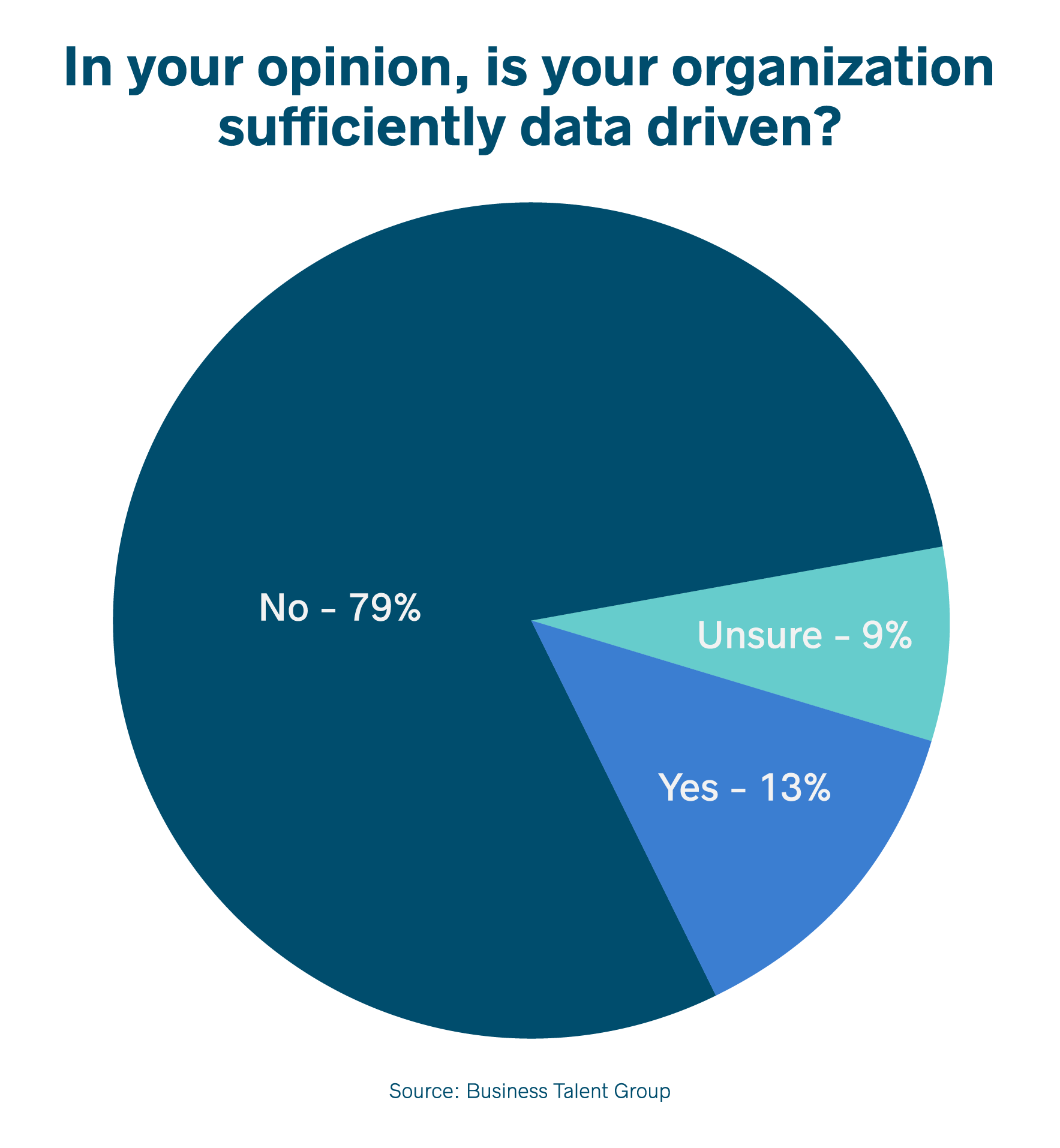
    New data science tools and technologies are incredibly promising—and incredibly difficult to put to use at most big companies. In fact, only 13% of the executives we surveyed in our recent webinar, Unlocking Your Data Goldmine, said their organizations were sufficiently data driven. Companies struggle to find and retain data science talent and drive ROI on data science initiatives. Given those challenges, how promising is the data science outlook?

    During the webinar, we sat down with Heidrick & Struggles partner Ryan Bulkoski and independent data science experts Mohammad Ghassemi and Ted Bissell to discuss how companies can go from promising pilots to enterprise-wide change initiatives.

    Check out our 5 top takeaways—then watch a full recording of the webinar on demand.

    “You are going up that first hill and all you hear is ka-chunk, ka-chunk, ka-chunk.”

    AI technology is currently flourishing—from fast processing speeds to AI poker bots that can beat human players. But according to Bulkoski, the current state of artificial intelligence is on par with the opening climb of a roller coaster.

    That first hill is typically filled with anticipation and excitement, and riders are rewarded for their patience with a beautiful view from the top. But, as any theme park fanatic will tell you, the ride has only just begun, and there is a long, exhilarating journey ahead.

    Similarly, Bulkoski said, the data science outlook in ten years is going to make 2019 feel like the dark ages, even though our current technology seems very sophisticated now.

    “You can’t go from zero to AI overnight.”

    As the Global Head of Artificial Intelligence and Data & Analytics Practice at Heidrick and Struggles, Bulkoski sometimes encounters senior executives who are unfamiliar with the area and are looking to hire someone with “AI superpowers” who can take their company from “nothing to AI.”

    Unfortunately, this approach simply isn’t feasible. Instead, Bulkoski said, the key is to focus on data science talent acquisition and retention—and lay the groundwork for successful analytics initiatives.

    “One of the things you need to start with is at least an initial hypothesis of what you’re trying to do with this capability.”

    Before hiring any kind of AI talent, independent data scientist Ted Bissell said it was critical that an organization set clear goals and priorities and outline exactly what kind of investment it is willing to make to further their analytics initiatives.

    Without this groundwork, any talent hired by the organization will have a harder time achieving success.

    “If you bring in a very high-end data scientist who works well when all the systems are humming, and your systems aren’t humming yet, and you don’t really have buy-in across the organization to invest in them and get them to that point, then you may have a bit of a hiccup before you get moving,” he said.

    “If people feel like they’re solving very interesting problems with AI, my pulse on the talent pool is that they really value that.”

    AI expert Mohammad Ghassemi, an assistant professor at Michigan State University, recently advised a student who was debating between taking a $350,000 job at a major tech company or working on a start-up passion project and “eating ramen noodles for a few years.”

    The student eventually chose to pursue his passion project and, according to Ghassemi, is representative of the overall talent pool, which often prefers interesting work and recognition over brand names and salaries.

    Companies can use this to their favor when hiring independent consultants and full-time employees by connecting their data science outlook and initiatives back to the mission of the broader business.

    “This will provide a competitive edge to organizations who are really looking to grow their data science teams, but who may not have the resources to throw $400,000 at an AI engineer or who don’t have the brand to be able to attract talent through some of the standard channels,” he said.

    “Somebody who comes in with an independent lens has a couple of distinct advantages.”

    When compared to full-time hires, independent data science experts have a couple of advantages, according to Ghassemi.

    “They can provide insights into the problem by helping the clients simplify their train of thought and then go about identifying what the key directions are,” he said. “Then, once those directions are identified, helping them understand how to prioritize those opportunities with respect to what’s been seen in several other industries where the consultant has experience.”

    Additionally, most companies often specialize in a subfield of AI, and an independent consultant can provide guidance in an area that is outside that core expertise.

    “I think where independent folks can be most effectively engaged are those places where it may not be a core AI thrust for the organization, but something that would augment those core capabilities that the organization wants to build out for their own AI initiative,” Ghassemi said.

    ]]>
    https://businesstalentgroup.com/news/how-promising-is-the-data-science-outlook/feed/ 0
    Making Fast Business Decisions https://businesstalentgroup.com/expert-insights/making-fast-business-decisions/ https://businesstalentgroup.com/expert-insights/making-fast-business-decisions/#respond Wed, 02 Oct 2019 19:34:43 +0000 https://businesstalentgroup.com/?p=13391 fast business decisions - lines convergingMost business decisions—particularly at senior levels—are made on timespans measured in days, weeks, and even months. However, there are many environments where the day-to-day cadence is much faster. Think newsrooms, airline operations centers, customer service centers, and hospitals. In these environments, it is not uncommon...]]> fast business decisions - lines converging

    Most business decisions—particularly at senior levels—are made on timespans measured in days, weeks, and even months. However, there are many environments where the day-to-day cadence is much faster. Think newsrooms, airline operations centers, customer service centers, and hospitals. In these environments, it is not uncommon for highly consequential decisions, involving many people’s input, to be made in a matter of minutes.

    Both big and small company executives know they need to move quickly. Many have adopted new tools and technologies to foster greater organizational agility. But for most companies, the difference between being making good decisions in minutes-hours-days versus days-weeks-months isn’t technology or data. It’s about some very basic management practices and mindsets. And accelerating that cadence is one of the toughest challenges a team can face.

    “Everybody, start doing things faster!”

    Most teams don’t have to match the pace of a newsroom or a hospital ER. Yet even a small change in well-established expectations and routines can be difficult to implement. If all you do is yell “everybody start doing things faster,” you’ll create chaos and confusion. If you install a new tool, most of your existing norms around communication, roles, and accountability are likely to come with it.

    So how can you help your company make faster business decisions? What follows are a few suggestions about shifting your tempo. They take some practice and diligence, but after even a few weeks they can start to become normative.

    1. Communicate that the pace is changing and why. When organizations seek to change the pace of their business decisions, there’s usually a good reason for it. Make sure your teams understand that reason—because chances are, they’ll tell you they’re already operating at the fastest clip that’s possible or advisable. You’ll also need to give people a strong mental picture of what a faster decision-making environment would feel like. Bolster their confidence by citing specific examples of organizations that successfully operate at a fast cadence while doing complex, consequential work.
    2. End vague communications. Vague communications can be a huge drag on people’s performance. What’s more, vagueness often transcends whatever technologies your team uses to collaborate and communicate. When you pass along a “to do” to someone in your team, do you take the few extra minutes to clarify what outcome you’d like? To set a deadline? To be explicit about where this item fits in the priority stack? Consider the difference in clarity and outcomes between the following two emails:
      Jane, can you take a look at the e-mail below and see what we can do about it?

      versus

      Jane, can you take a quick pause in the presentation you’re building this morning, meet with Susan to understand the implications of what they’re asking for, and send me your thoughts by 4 pm?
    3. Have faster meetings. Become a stickler about how meetings are run. This can feel daunting, but you won’t have to do it forever. In relatively short order, you’ll be able to lighten up as better behaviors take hold. Make 15- and 30-minute meetings the norm. Ensure that each meeting is related to a clear, specific decision. Call out a lack of preparation and recognize when individuals do an excellent job preparing for or running a meeting. Make sure the right people—and only the right people—are present. Action items should be summarized afterwards and assigned an owner and a deadline.
    4. Recalibrate how deadlines are set. Management decisions often require a series of steps—some data gathering, consultation with specific colleagues—that, in total, constitute a couple of hours of work. However, many teams default to a one- or two-week deadline for each assignment, regardless of the amount of work that’s involved. Initially, your team may be surprised if you start setting deadlines of a day or two, but as long as you’re realistic about it, you’ll be able to recalibrate the instinct to pad in large amounts of unnecessary time.
    5. Define appropriate routing, roles, processes, and end-products for common management situations. Rapid-tempo organizations tend to have well defined standard operating procedures. But if you don’t a thick binder of SOPs, that doesn’t mean you can’t raise the tempo. Often, when I’m called in to help an organization, they’re already under so much pressure to make faster business decisions that the last thing they can do is stop the presses to create a raft of new procedures. Fortunately, you can usually get the lion’s share of the benefit of well-defined SOPs with a handful of well-facilitated meetings to better clarify “the basics” in terms of how common types of management issues should be routed, the roles people should and shouldn’t play, how a decision will be made, and what constitutes a solution.
    6. Ensure that you’re available to your team and vice-versa. In rapid-tempo organizations, people make themselves easy-to-reach. An “open door” policy is great, but going even further by making informal check-ins for just 10 minutes each morning or afternoon can have a tremendous impact on your team. You can also dedicate one of your team’s next meetings to setting new standards for intra-team communication. Most organizations have few established norms for responsiveness to basic modes of communication like email, and even fewer for more advanced workplace collaboration tools. You can only raise your collective management tempo as high as you raise the reliability of your colleagues’ availability and responsiveness. Define specific expectations for how and how quickly you’ll respond to communications you receive across various channels—both during and outside the workday. Most collaboration tools offer a variety of ways to flag or categorize messages. Unfortunately, many teams don’t define consistent ways to use them. Even plain, vanilla email can be improved if you establish a few ground rules. For example, general emails will be read within 24 hours, emails with the recipient’s name in the subject line will be answered by end-of-day, and anything with “Urgent” will receive a response in 3 hours and can’t be copied to more than one person. Whatever ground rules you set, make them specific, then stick to them.
    7. Make sure it’s easy to access information that’s foundational to the team’s work. Rapid-tempo organizations are often big users of visual management systems. Putting information in easy-to-access places sounds obvious, but I’m amazed at how many organizations struggle to effectively share basic, up-to-date management information—like the current list of projects the team is working on, who is assigned to what projects, or deadlines that are coming up. Dedicate one of your upcoming team meetings to re-clarifying your team’s most critical common, need-to-know information, who maintains it, and where it’s located.

    Raising the decision-making tempo of your organization doesn’t happen overnight, but you can usually achieve significant gains by addressing mindsets and committing to (or recommitting to) some basic practices.

    This post first appeared at Portola Advisors.

    ]]>
    https://businesstalentgroup.com/expert-insights/making-fast-business-decisions/feed/ 0
    Overcoming Data Science Challenges: Expert Panel https://businesstalentgroup.com/expert-insights/data-science-challenges/ https://businesstalentgroup.com/expert-insights/data-science-challenges/#respond Wed, 02 Oct 2019 15:26:11 +0000 https://businesstalentgroup.com/?p=13365 data science challenges - btg webinar panelThe data your business already collects can help you rethink strategies, streamline processes, understand and interact with customers, and power new products and services. Unfortunately, only 18% of companies believe they can gather and use data insights effectively. Companies can see where they want to...]]> data science challenges - btg webinar panel

    The data your business already collects can help you rethink strategies, streamline processes, understand and interact with customers, and power new products and services.

    Unfortunately, only 18% of companies believe they can gather and use data insights effectively. Companies can see where they want to go, but most of them simply cannot find enough data science talent to get there. Executives are also struggling with how to organize around this topic—is it a new function? What are the key leadership roles? How do AI and data science integrate into existing functions?

    On September 25, Business Talent Group and Heidrick & Struggles organized a webinar to tackle these and other data science challenges. Below is a lightly edited version of a discussion that Business Talent Group’s EVP, Sandra Pinnavaia, had with Heidrick & Struggles Global AI Practice Lead, Ryan Bulkoski, and independent data science experts Mohammad Ghassemi and Ted Bissell.

    Do you think companies should centralize their data science efforts under something like a chief data officer or keep them distributed across the organization?

    Ted: In my experience, the answer to that question depends on where the company is starting from. The basic analytics capabilities that are baked into many popular IT platforms may be enough to help a company reach its basic goals, in which case it makes sense to keep things distributed. But the moment you reach a point where you’re putting sensitive data at risk or changing the level of effort or intensity with respect to what you source and collect, and why, you’ll likely need the sort of transparency that centralization offers.

    Ryan: I’ll echo Ted—it depends. In massive global companies that have been around for decades, it’s really hard to take a centralized approach, just because the data sits in so many different areas. In smaller organizations that might be tackling for this for the first time, it does make a lot of sense to centralize. Of course, there’s also a hybrid methodology where you build a hub-and-spoke model to ensure there’s good governance and oversight at the center, which then informs the work of individual businesses and functions.

    Mohammad: I see pros and cons to both approaches. Centralization makes it easier to scale and deploy certain algorithmic frameworks and operations across an organization. The con is that it can be time-consuming to get various stakeholders to adhere to those centralized policies. If, on the other hand, you allow your teams to define how they structure data and create APIs to transact information, it allows you to operate more quickly, but as you start to scale, it creates problems.

    For companies that are trying to centralize, where should those key leadership roles fit within the organization?

    Ryan: Historically, many companies incubated data science and AI roles within the technology function. That sounds like a natural place, but over time, it’s become clear these roles can drive a lot of commercial value, so people are rethinking that.

    At times, a Chief Data and Analytics Officer might report directly to the CEO. The function might also report to the CFO, so there’s a tie into the organization’s money line. I’ve also seen it report into the Chief Operating Officer for the same reason. But really, the higher up it is within the organization, the more visibility it will have, and that really serves as a great recruiting tool, because it shows the company is prioritizing their investment in data and analytics.

    Many companies have a very hard time recruiting qualified data science and AI talent. Mohammad, you’re in touch with a lot of folks that are coming out of school. What suggestions do you have about attracting and retaining them?

    Mohammad: This is a timely question because I was just speaking to a student a few days ago who was grappling with the decision to take a $350,000 job at a major tech company or continue eating ramen noodles while working on a start-up that was a passion project. We went through the pros and the cons, but ultimately this student decided to go for the project he was passionate about. And that’s one of the factors that can really provide a competitive edge to organizations that are looking to grow their data science teams. If people feel like they will be solving very interesting problems with AI and data science, and will get recognition and opportunities for growth, my pulse on the talent pool is that they really value that—more than they value brand names and sometimes even salaries.

    “If people feel like they will be solving very interesting problems with AI and data science, and will get recognition and opportunities for growth, my pulse on the talent pool is that they really value that—more than they value brand names and sometimes even salaries.”
    How does geography factor into these recruiting challenges?

    Ryan: Geography is definitely a challenge, and often people assume they won’t be able to recruit anyone if they’re not based in the Bay Area. There’s a lot of talent in the Bay Area, but there are plenty of people in other hot spots around the world. In this world, a recruiting decision can come down less to geography and more to the challenge that’s presented to the individual. Most people will be motivated to move for the right opportunity, especially if it represents an up-leveling and greater exposure to the C-suite.

    Of course, permanent employees aren’t the only way for companies to build robust data science capabilities. Independent data science experts can help companies refine strategies and lead important projects. Mohammed and Ted, what have you learned about that from your recent project work?

    Mohammad: One of my latest projects was with a large financial institution based out of Latin America. They were interested in using data both within and outside of their organization to make better strategic decisions about investments, loans, and various other things within the market ecosystem.

    Over the course of the project, we were able to help the company’s decision makers understand not just how to grow their data science capabilities in the short, medium, and long term, but also, very critically, how to recognize what components of data science it was strategically advantageous to outsource. For most companies, it makes sense to specialize in specific data science capabilities. In the case of this financial institution, predictive analytics was a big one. Something like the collection of satellite imagery, on the other hand, was less important for them to build up as a core capability.

    How was the fact that you came in on a project basis useful to this client?

    Mohammad: Having somebody who comes in with an independent lens has a couple of distinct advantages. First is the ability to help stakeholders tease out which factors are important to the success of the engagement—to simplify their train of thought and identify key directions. Another is the ability to help the client prioritize their opportunities relative to what other industries are doing. I’m not necessarily an expert in the Latin American investment ecosystem, but I do have experience in the U.S. and Middle Eastern markets that I can help them translate over.

    Ted, what projects have you worked on recently in data science and advanced analytics?

    Ted: One project I did recently was with a major US insurer. Insurance companies have always assigned a high priority to analytics, but in the case of this insurer, they wanted to go a little bit further and use data to create products that protected and enhanced value in the home.

    In the age of IoT, smart home technologies are collecting a lot of intimate data for the first time. Overlaid on that are privacy concerns, but there’s also an opportunity to create new communications channels for a company that typically distributes its products through human agents. As we examined what this product might look like, we had to add new approaches to the company’s existing analytics capabilities. I think that’s one of the reasons that the company wanted to get an independent view. They already had hundreds of data scientists at their disposal, but they weren’t really sure what this new team would look like once the product launched. Would it focus on the digital interface? Would it emphasize machine learning and algorithms or risk management?

    As it turned out, the company decided to mix a number of these different capabilities in a single team, and now that they’re operational, they’ve been able to use those learnings to form a much better view of whom to hire and what capabilities to pursue.

    What projects or situations are better suited for independent consultants, and when should you hold out for a permanent hire?

    Mohammad: I think it comes down to evaluating whether your company has a strategic reason for developing a long-term capability around a particular area of data science—like predictive analytics, in the case of the organization I mentioned earlier. If so, I think it does make sense to have a person who is permanently involved, though when you’re getting started or if you need to grow quickly, you can also augment that person’s work with independent experts.

    Another situation where independent expertise makes sense is in some of the more technical areas of AI. AI refers to a ton of things, from image processing to natural language processing, and the Ph.D. students that are graduating tend to specialize in only one of them. So independent experts are great for augmenting an organization’s core AI capabilities with one of those specialties.

    Finding talent is only part of the battle. What other steps do you recommend that companies take as they start to do more with data?

    Ted: One of the things you need to start with is at least a hypothesis of what you’re trying to do with this capability. Are you trying to grow your company’s product lines? Are you looking to prevent customers from going to the competition? On the cost side, are you trying to increase the efficiency of the way you serve existing customers or even run the organization itself?

    You’ve also got to formulate what that means for the organization, because that enables you to start scoping. Are we talking about a huge project to reform some IT systems that can’t keep up with current data volumes? Are we trying to test where the best place is to get some quick wins? And do we have buy-in from across the organization so that everyone is ready to invest?

    Setting clear goals and priorities sounds so obvious and easy, but many companies still struggle with it. Mohammad, what’s your perspective?

    Mohammad: I agree with Ted. At the start of my engagements, I often ask people to identify two or three things that, if automated, would provide some kind of ROI. Then, I take them through the exercise of trying to quantify that savings or value. The same is true for engagements that are about augmenting, not replacing, human processes. Where could you increase employee performance or improve your ability to sell or price a product or service more effectively? Once that’s done, we can take the secondary step of analyzing what kind of resources you’d need to invest, both human and financial, in order to get there.

    What do you think are the most critical things for corporations to have in place before bringing in a data science or AI expert, whether on a project basis or at the permanent hire?

    Ted: First of all, you need to understand how you are holding data. Evaluate the performance of your systems and the quality of your data. If you’re dealing with multi-year datasets, how far back do they go, and have you tested to make sure they are consistent? You’ll also need to understand the covenants you’ve made with your customers about the use of data, especially if you’ve been around for a while. You may never have explicitly told your customers that you’re collecting all the data that you actually have on hand.

    Second, you’ll need to understand where you are headed with respect to your competition. How much of your customer base is under threat by other companies that are moving faster than you or have committed to more data-centric processes?

    Ryan: I think it’s really important for the organization to go through an education on why they are doing this. What is the ultimate takeaway from investing in data and analytics? Does everyone understand the different use cases—where they’ll make money and where they’ll save it?

    “ I think it’s really important for the organization to go through an education on why they are doing this. What is the ultimate takeaway from investing in data and analytics? Does everyone understand the different use cases—where they’ll make money and where they’ll save it?”
    Ted, are there any other practical insights you can offer companies from your experiences as a consultant?

    Ted: One of the problems I think we’ll face in the next 12 months is that, increasingly, IT and analytics platforms are touting all kinds of great capabilities. So it will seem increasingly easy to install a new platform and start running analytics. But usually, for these platforms to function well, they need live client data. And if you’re talking about a bank or a healthcare organization, it’s not a trivial matter to just open up a port and start getting that. So suddenly, we reach kind of a cathartic IT and business moment where these issues must be overcome before progress can be made.

    What do you think about people analytics—should companies do more in this realm?

    Ryan: We’ve seen a lot of demand, but largely from Fortune 500 organizations. Part of the challenge with people analytics is you need enough people to analyze if it’s going to be successful. We’ve seen a lot of success in global multinational corporations, whether they’re looking at geographic expansion and figuring out where employees should be based, analysis from a compensation perspective, predictive analytics on retention based on someone’s career path, and even using analytics to promote diversity within the workforce. But at a 1,000-person company, these techniques might not be as fruitful as in a 100,000-person company.

    What are the biggest data science challenges that companies must overcome?

    Ted: Many companies have a sense that they’re underutilizing much of the data that they already have on hand. But legacy data doesn’t just plug itself into algorithms. Chances are, past data wasn’t collected with the goal of supporting robust analytics, so there’s likely to be inconsistency in data standards. Over time, IT systems probably shifted from mainframe to minicomputer to PC to cloud, which all rely on different data storage formats and media. Companies might need to augment gaps with third-party data, but they might not know what cost is justified.

    The solution to all of these challenges is a robust business case that outlines the expected upside and incorporates the cost of aligning the right data, plus testing and deploying repeatable models. In any large organization, that amount of money is likely to fall in the approval range of the C-suite, forcing the creation of and agreement to a shared vision.

    On-Demand Webinar: Unlock Your Data Goldmine

    Watch top AI and talent management experts discuss how to find, develop, and retain data science talent—and build more effective data science capabilities.

    WATCH NOW
    ]]>
    https://businesstalentgroup.com/expert-insights/data-science-challenges/feed/ 0
    Turnaround Management: How to Create and Execute Realistic Plans https://businesstalentgroup.com/expert-insights/turnaround-management-how-to-create-and-execute-realistic-plans/ https://businesstalentgroup.com/expert-insights/turnaround-management-how-to-create-and-execute-realistic-plans/#respond Thu, 26 Sep 2019 17:27:15 +0000 https://businesstalentgroup.com/?p=13169 turnaround management - carl laneCarl Lane is a Chicago-based business transformation and turnaround management specialist. During engagements as an independent consultant and interim executive, he helps companies develop, plan, and execute solutions to the operational or financial challenges they are facing. In our latest Expert Q&A, Carl spoke with...]]> turnaround management - carl lane

    Carl Lane is a Chicago-based business transformation and turnaround management specialist. During engagements as an independent consultant and interim executive, he helps companies develop, plan, and execute solutions to the operational or financial challenges they are facing. In our latest Expert Q&A, Carl spoke with us about creating and executing turnaround plans, addressing talent shortages, and creating a culture of accountability within distressed companies.

    You specialize in helping companies address situations where there’s operational or financial distress. What are some of the most common reasons those situations arise?

    Distress can be caused by internal factors, like weak infrastructure, or external factors, like commodity price changes, or a combination of both. Poor information systems are a common issue; executives believe they are making the right strategic decisions, but they are actually making decisions that negatively impact their company because the information is incorrect or incomplete.

    External factors that can cause distress change from year to year and the impact on companies can vary widely. The financial crisis like we saw in 2008 affected everyone, but the recent tariffs and trade wars now are affecting certain sectors more than others. Large companies can often weather the storm of the tariffs and trade wars, because they are diversified and have greater access to capital. But, if you are a small supplier that sells goods or services to those companies, and the China volume is suddenly down 50%, it is going to cause distress.

    How do you start to address those issues?

    Consultants often focus on a specific niche where they have deep expertise. What I bring to the table is a more process-driven expertise. I know how to prioritize resources, manage liquidity and interact with outside parties like bank lenders, bond holders, and trade creditors with whom there are issues, and I know the tools you put in place for those types of situations.

    Frequently, the reason companies need an interim officer or a consultant is because they are trying to do too many things at once. They lack focus. So, I help management identify which changes will make the most impact, take their to-do list from 50 down to five, and then help them make those changes quickly.

    In most situation, I will do some initial analysis to gain understanding of the severity of the distress. This may be a weekly cash flow forecast or a longer-term projection along with a review of detailed historical financial performance. Doing this helps me identify the broader underlying issues, and then I can start to address them, whether by executing my own plan or just giving management direction.

    Are there best practices that you’ve learned for creating and executing turnaround plans?

    Often, it is about maintaining the right process—coming up with a plan that lays out the interim steps that need to get done, not just the endgame.

    Then, you need to allocate those tasks to the appropriate people and have frequent meetings and status checks. Because often, what happens is that people get sidetracked by their “day jobs,” and two weeks later, you will have a meeting, and they have achieved nothing. Ultimately, you need to hold people accountable for their deliverables and provide the guidance and tools for them to succeed. I like simple tools to keep projects on track, like having weekly meetings, setting clear deadlines, and, of course, understanding where one deadline impacts another.

    What other issues do you see companies struggling with these days?

    Tariffs and Brexit are probably the biggest right now. How do you adapt to something that might be temporary? Should companies look for new suppliers or relocate production, which could take months if not years to implement? If companies do not take action, then they may not be cost competitive. If they take action and struggle with implementation, they could end up with supply disruptions.

    The other big struggle is access to labor. The stronger companies have an easier time acquiring talent, whereas the companies that are facing financial and operational challenges have a harder time convincing people to come work for them, especially in the current tight labor market. You can work on efficiency and put tools in place to better manage your employees, but those are usually just marginal improvements. What is often a better solution is to identify which products and services you are really making money on and to shrink your workforce to focus on the most profitable products or services. This approach can have a significant impact for companies that sell a lot of products and focus primarily on revenue and for companies with poor information that do not fully understand their product/service profitability.

    Before you founded your own practice, you were a Principal at Deloitte and a Managing Partner at Alix Partners. How does the work you do now compare to what those firms offer?

    When I worked at Deloitte and Alix Partners, my role was to identify operational issues, then bring in specialists to get things done, so it was more of an identification and oversight process. Now, I am involved in implementing the work and developing processes to make sure it gets done. I am blocking and tackling, I am running weekly meetings to hold people accountable, and so on.

    What should clients do in order to get the most value when they engage you?

    I think it is important to look beyond the scope. When I am brought in, there are usually broader issues that need to get addressed. And in order to implement meaningful operational and financial change, I have to spend some time developing a deep understanding of the business. If I have gained that knowledge base and built the right kind of relationships with senior leadership, I find that they are more willing to reach beyond the scope and seek broader strategic advice that will help them succeed and help their company recovery.

    ]]>
    https://businesstalentgroup.com/expert-insights/turnaround-management-how-to-create-and-execute-realistic-plans/feed/ 0
    What is Digital Change Management? https://businesstalentgroup.com/expert-insights/digital-change-management/ https://businesstalentgroup.com/expert-insights/digital-change-management/#respond Fri, 20 Sep 2019 17:59:24 +0000 https://businesstalentgroup.com/?p=13091 digital change management - plugging cables into serverDigital transformation is disrupting nearly every industry. So perhaps it’s only natural that people have begun to talk about “digital change management.” But what is digital change management? And how does it differ from traditional change management? What’s especially confusing about the term “digital change...]]> digital change management - plugging cables into server

    Digital transformation is disrupting nearly every industry. So perhaps it’s only natural that people have begun to talk about “digital change management.” But what is digital change management? And how does it differ from traditional change management?

    What’s especially confusing about the term “digital change management” is that it can mean one of two things:

    • The change management aspects of digital transformation projects and programs; and/or
    • The use of digital techniques as part of your change management toolkit (regardless of the type of project or program)

    These two definitions are closely related, but different.

    Just because you’re working on a “digital” transformation doesn’t mean you can ignore the (traditional) basics of change management. Those basics include:

    • Top executives are leading the change
    • A clear vision has been created and communicated
    • All stakeholders understand and buy into the change
    • Steps have been taken to ensure that the people who are being asked to change are ready to put those changes into practice, both in terms of their capabilities and their buy-in

    By definition, digital transformations involve new technology. They also almost always require changes to corporate culture. For example, our clients often realize that, as part of becoming a “digital” company, they also need to become more agile and more comfortable with “failing fast.” They need to lose their fear of trying something new and figure out quickly what must change for an initiative to be successful—and then either make those changes or drop the idea altogether.

    You can’t make changes to culture just by saying, “Make it so.” You have to change the fabric of the organization to make the changes stick. For example, you can’t create a “fail fast” culture without changing the performance measures and targets that typically discourage that approach.

    So what about the second definition: the use of digital techniques as part of your change management toolkit?

    Consultants who believe in the power of digital transformation often do this with our clients—we introduce digital and digital-enabling techniques as part of the change management streams we lead on all sorts of projects (whether digital or not).

    For example, if you’re updating stakeholders on the progress of a digital transformation, why use old-fashioned emails and memos? If you take a multi-channel approach to communications—using videos, discussion boards, web-based demos, and apps—people start to live the change, not just read about it.

    In my consulting practice, I’ve also moved the management of change projects from a white-board-and-paper environment to an online, digital environment—digital Scrum boards, digital issue logs, digital decision logs etc. That means project members are no longer tied to the office. Instead, they can be out in the field where the change is happening, and they can help manage those changes far better.

    What about digital-enabling techniques? These can also be powerful agents for change.

    An insurance client, for example, had only ever used Agile in an IT context, and was skeptical of its value outside of technology projects. So we used Agile techniques, including two-week sprints, for the digital strategy phase of our work. The client’s team was amazed by the benefits gained in terms of transparency, flexibility, and speed—and they started adopting this cultural change more widely.

    In short, therefore, some aspects of digital change management are no different from what we’ve seen before. But there is a huge opportunity now to use digital, and digital-enabling, techniques to increase the likelihood of successful change.

    This post first appeared on LinkedIn.

    ]]>
    https://businesstalentgroup.com/expert-insights/digital-change-management/feed/ 0
    Procurement and the Gig Economy: An Interview with George Post https://businesstalentgroup.com/expert-insights/on-demand-talent-program/ https://businesstalentgroup.com/expert-insights/on-demand-talent-program/#respond Wed, 11 Sep 2019 15:58:21 +0000 https://businesstalentgroup.com/?p=12994 george post - on-demand talent programGeorge Post recently retired as the Director of World Headquarters Procurement at life science giant Johnson & Johnson. There, as part of his broader mission to optimize procurement and consulting services, he founded an on-demand talent program called Specialists on Demand, or SOD. SOD is...]]> george post - on-demand talent program

    George Post recently retired as the Director of World Headquarters Procurement at life science giant Johnson & Johnson.

    There, as part of his broader mission to optimize procurement and consulting services, he founded an on-demand talent program called Specialists on Demand, or SOD. SOD is designed to provide J&J executives access to specialized independent professionals, consultants, experts, and executives for targeted engagements across the enterprise. Business Talent Group is a preferred partner in the program, offering business leaders a low-cost high-value option for solving complex strategic and operational issues.

    In our latest Expert Q&A, George spoke to us about topline trends in the gig economy and how procurement leaders can build effective on-demand talent programs.

    Prefer to listen to the interview? Check it out on Insights on Demand, our new podcast.

    Many procurement leaders have followed the rise of the high-end gig economy. What prompted you to create a formal on-demand talent program to source and deploy this type of talent?

    Many years ago, we noticed that traditional consulting firms were beginning to have challenges in attracting talent. Later on, we began to realize that this dynamic was not taking place in isolation, but was part of a new generation of professionals and subject matter experts who were looking for a different way of working. These professionals wanted to be able to select the kind of work that they did, and they wanted to do it where and when they wanted.

    After a lot of discussion with Business Talent Group and others in the industry, it became clear that we should take steps to implement a program for this freelance talent, similar to what we’ve done with a number of other programs at J&J.

    Can you tell me about how you structured the program and how it fit within the landscape of the other programs that you have at J&J?

    We wanted to make sure, early on, that the business would support the program and find value in it. So we did a series of surveys with hundreds of senior leaders within J&J, and an extraordinarily high percentage of them responded favorably. That gave us the confidence to begin implementing the program using sort of the basic framework for some of the other programs that we’ve implemented in J&J for strategy and operations, mergers and acquisitions, and implementation and execution.

    What were your goals for the program, other than simply making it easier for the organization to engage this new type of talent?

    The goal was to give the business a lower-cost option to speak with subject-matter experts within a function or business unit, and then use that engagement to inform their approach to whatever challenges they were facing.

    We knew that we could deliver that talent more economically, but beyond the economics, we also knew we could make the experience a positive one for the business. We wanted to give business leaders a different way of getting expertise and insights.

    Did those goals evolve as the program developed?

    We tracked the cost savings for every engagement that came through the SOD program. We also tracked feedback from our business leaders to understand whether it delivered the kind of value and insights that they expected, and we used that to refine the program.

    “”
    We wanted to give business leaders a different way of getting expertise and insights.
    “”
    Looking back, is there something you would’ve done differently?

    The thing that jumps out is the need to develop more material to help the business understand how SOD differed from our other programs. As I mentioned, we had programs that ranged from strategy through implementation, along with various types of freelance and staff augmentation. However, SOD was the only one where you could source independent talent that you would typically only otherwise see through BCG or McKinsey.

    How do you think procurement officials should share the task of getting buy-in with the program partners they’ve selected?

    It’s just a lot of interaction, knocking on doors, and making sure that the organization not only knows that about the program but has faith that the process is streamlined, efficient, and ultimately delivers a really great experience for the business.

    What are some of the best practices that you learned about earning that trust from business leaders?

    We were fortunate because we had excellent relationships with senior leaders within the organization. Our proposition also was, generally speaking, low risk and high reward. So, the gist of our conversations was, “Hey, give this a try. It could change the way you approach trying to solve your business problems. You can do it with a very minimal investment, and you can do it very quickly.” It was a value proposition that resonated with a lot of senior leaders, and it was often key to getting them to actually try the SOD program.

    You mentioned earlier that you kept track of the business’s satisfaction with SOD engagements along with cost-saving metrics. Were there other things you did to gauge the effectiveness of SOD?

    At the end of the day, it’s about the performance. How did the talent do? Would leaders use the program again? We made sure we could understand that as clearly as possible, and then share that with our suppliers to help them improve.

    What do you anticipate are the next steps for SOD program?

    I think there’s a lot of opportunity. Initially, we envisioned SOD as a program that could deliver individual talent. Eventually, I can see it growing to something where you can source small teams of talent to deliver on programs that require some level of execution.

    How did you partner with J&J’s HR organization on all this?

    Historically, our group did not have a really close working relationship with HR, but I happened to have a relationship with the senior-most HR leader, and years back, I suggested that his organization become more aware of what we were doing so that they could get a more holistic view of how work gets done within the organization. That prompted HR to want to work with us more closely in creating awareness of our programs and how they supported J&J’s business objectives.

    Essentially, the mission of our programs is to deliver a certain level of expertise to the organization, augment internal teams, and help them get work done. HR has similar goals—how they acquire talent for the organization, whether as full-time employees or temporary resources—so it seemed like a natural combination.

    Do you have any other recommendations for procurement leaders who are interested in creating a program like SOD?

    I think of it as a sort of business development initiative. We always want to implement programs that are responsive to the needs of the business, so we’ve always started by getting the business’s feedback and testing our hypotheses about a program. Moving forward, in essence, then becomes a response to that feedback, and you can do it using the design you have for your other programs.

    ]]>
    https://businesstalentgroup.com/expert-insights/on-demand-talent-program/feed/ 0
    Independent Contractor Certifications: New Partnership with General Assembly https://businesstalentgroup.com/future-of-work/independent-contractor-certifications/ https://businesstalentgroup.com/future-of-work/independent-contractor-certifications/#respond Thu, 05 Sep 2019 19:15:21 +0000 https://businesstalentgroup.com/?p=12944 independent contractor certifications - btg and general assemblyFor years, employers have warned that they are struggling to fill open roles because of a so-called “skills gap” between the qualifications today’s job-seekers have and the ones that companies need to stay competitive. The nature of the “skills gap” has been called into question...]]> independent contractor certifications - btg and general assembly

    For years, employers have warned that they are struggling to fill open roles because of a so-called “skills gap” between the qualifications today’s job-seekers have and the ones that companies need to stay competitive.

    The nature of the “skills gap” has been called into question lately. Yet as economist James Bessen pointed out in the Harvard Business Review, the most real, persistent, and widespread gaps have to do with finding workers who can make the most of new technologies.

    Indeed, in a rapidly digitizing economy, according to the Brookings Institute, “workers of every stripe … are now spending sizable portions of their workdays using tools that require digital skills.”

    Unsurprisingly, companies are increasing their investments in tech-focused last-mile training and upskilling. Tech Crunch reported a rise in last-mile training providers across almost every sector, and many large corporations are investing multi-millions of dollars into technologically upskilling their existing workforce. For example, Amazon recently announced that it was investing $700 million to upskill one-third of its US workforce for more technical roles, including machine learning and software engineering.

    The case for independent contractor certifications and training

    However, most of these solutions are targeted at training full-time employees, in the hopes of filling full-time positions.

    As such, they sideline one of the labor pools that’s most interested in working with cutting-edge technology—and most invested in learning what they need to accomplish this—namely freelancers in the gig economy. According to Upwork research, freelancers are more proactive about updating their skills than non-freelancers. In fact, 70% of full-time freelancers participated in skills training and independent contractor certifications in the past six months, compared to 49% of full-time non-freelancers.

    That’s why we are excited to announce Business Talent Group’s new, visionary partnership with General Assembly (GA), a pioneer in education and career transformation specializing in today’s most in-demand skills.

    BTG’s network of highly skilled independent talent will have preferential access to GA’s learning and credentialing opportunities, while top-tier GA graduates will gain entry to BTG’s vast talent pool. As a result, BTG’s clients, which include more than 40% of the Fortune 100, will benefit from an expanded and diversified pool of credentialed on-demand experts.

    Digital marketing and data science skills training and IC certifications will be the first area of focus between the two companies, with plans to expand the partnership into other in-demand areas in the near future.

    To learn more about this partnership, check out the press release.

    ]]>
    https://businesstalentgroup.com/future-of-work/independent-contractor-certifications/feed/ 0
    Forked Roads and Parallel Paths [Part 2 of 3]: Types of Consulting Firms https://businesstalentgroup.com/future-of-work/types-of-consulting-firms/ https://businesstalentgroup.com/future-of-work/types-of-consulting-firms/#respond Wed, 28 Aug 2019 20:13:48 +0000 https://businesstalentgroup.com/?p=12793 types of consulting firms - highway lights« Previously: Independent Consultants vs. Big Firms In the first part of our latest series on independent consulting, we looked at the differences between independent consultants and the consultants that are employed by big firms. The people themselves are a big part of the story,...]]> types of consulting firms - highway lights

    « Previously: Independent Consultants vs. Big Firms

    In the first part of our latest series on independent consulting, we looked at the differences between independent consultants and the consultants that are employed by big firms. The people themselves are a big part of the story, but they tend to share the same roots. Look at problem-solving approaches, however, and you’ll see how different types of consulting firms start to diverge from the other.

    This isn’t to say the frameworks applied or their underlying principles vary all that much. “Most of the core methodologies of management consulting are very, very similar,” Sandra Pinnavaia, EVP and Chief Knowledge Officer at Business Talent Group (BTG), said. “They’re called different things, and they have different kinds of consulting associated with them, but they’re not that wildly different.”

    Push or Pull

    The primary difference is that big consulting firms are, well, big. You get a big name, a big team, and resources that span the globe. But big-firm consulting teams tend to be composed of generalists who use standardized frameworks to analyze problems and present solutions.

    “All the big consulting firms are out selling solutions and yes, they modify them, absolutely they do,” Pinnavaia said. “But they’re pushing solutions onto clients.”

    Independent consultants, on the other hand, are often alumni of the big firms. They can work alone or in teams that deliver more specialized expertise than big firms typically offer. But the most important distinction is that these consultants are highly collaborative in tailoring their approach. So, too, are marketplaces like Business Talent Group, which are designed to vet and curate independent consultants—and make the market easier for big companies to tap.

    “We embrace the problem and we staff the right people to help solve that problem. And we do it bespoke every single time,” Pinnavaia said. “We structure the engagement in a way that is as closely aligned to what the client thinks they need as possible—as opposed to coming in and saying, ‘This is how it’s gonna run.’”

    Implementation Meets Collaboration

    That’s the other thing with big firms: Once the strategy work is complete, it’s largely (if not entirely) on the business to execute the plan. They might leave a consultant or two behind to advise on execution, but those people are unlikely to be partner-level advisors.

    At the same time, implementation work often involves significant scale. But while global firms like Deloitte and Accenture might have the advantage when it comes to a project that requires input from 40 or 50 people worldwide, there’s still the opportunity for talent platforms like BTG to build out squads of independent consultants to drive bigger implementations.

    And this is exactly what BTG is doing with its PM FlexHub model: instead of delivering one or two people, BTG delivers a whole team of consultants and adds or removes people as needed. In doing so, independents are able to come together to do bigger pieces of implementation work.

    Here’s how PM FlexHub works:

    • Scope: BTG identifies, vets, and presents the best-fit project managers for stakeholder interviews
    • Deploy: We manage the onboarding of all talent, from contracting to culture
    • Oversee: We build a centralized project governance hub that’s customized to the client’s needs, delivering status reports, insights, and improvement opportunities

    “We wrap around the team, and it’s very effective,” Pinnavaia said. “What clients love about it is, since the talent is not our full-time, permanent employee, we can adjust the staffing with much more fine-tuning than a traditional firm can. A big firm would put 45 people on it, and they’re running against that the whole time. We can say, this week we need 6, next week we need 9.”

    Technology as an Engine

    Over the past decade, the democratization of information has dramatically shifted the way big firms and independents approach their own businesses. Writing in Harvard Business Review, HBS Professor and disruptive innovation expert Clay Christensen cites the 2002 recession as having been particularly influential in the emergence of “disaggregate consulting,” with cost pressures spurring the modularization of services:

    “The shift is generally triggered when customers realize that they are paying too much for features they don’t value and that they want greater speed, responsiveness, and control,” writes Christensen. “As access to knowledge is democratized, opacity fades and clients no longer have to pay the fees of big consulting firms.”

    Of course, technology itself is a big driver. Businesses once relied solely on consultants for data collection and analysis in order to understand where opportunities lie. Now, databases, market research tools, and advanced analytics make it possible for businesses to gather that information independently.

    In addition to giving rise to different types of consulting firms such as BTG, this trend toward asset-based consulting is also being addressed by traditional firms. Many are productizing their services, packaging them into smaller, more discrete bundles. McKinsey Solutions is one such example, offering seven sub-brands and 85 distinct solutions.

    The Future: A Shared Challenge

    But so far, this is less a revolution than it is an evolution. The current productization of services has enhanced the market rather than upending it. These “solutions” can be used repeatedly across a range of clients, but the resulting recommendations still require tailored implementation—which is often where experienced independent consultants come in. As BTG consultant Thomas Collet writes, “Sometimes, knowing what not to do is as important as knowing how to do it. Without a sense of focus that is informed by experience, it is easy to get lost in the [weeds].”

    Right now, companies are still struggling to get comfortable with the data science revolution. The concern is that by the time they do, artificial intelligence will already be here. Pinnavaia believes the “AI revolution” is still a ways off, but acknowledges that reskilling looms large as a growing challenge for independents and traditional firms alike.

    “There is a generational shift that’s coming, and maybe it’s even two generations,” Pinnavaia said. “The first generation is advanced analytics. The second starts to become the AI stuff, the sort of black box, whiz-bang stuff. I think that will be a challenge for consultants who have to reskill.”

    One thing is sure: the future of technology won’t eliminate the need for management consulting, whether from traditional or alternative models. If anything, it will make it more essential as businesses themselves grapple with technological advancement.

    “I think there is a huge amount of exciting promise in these technologies,” Pinnavaia said. “I think it’s a little like liberal arts, where everybody’s going to have more STEM, but you still want them to be really good thinkers. So, I am optimistic that we will have core consulting always, but the toolkit is going to be a challenging generation or two to migrate through.”

    ]]>
    https://businesstalentgroup.com/future-of-work/types-of-consulting-firms/feed/ 0
    Forked Roads and Parallel Paths [Part 1 of 3]: Independent Consultants vs. Big Firms https://businesstalentgroup.com/future-of-work/independent-consultants/ https://businesstalentgroup.com/future-of-work/independent-consultants/#respond Thu, 22 Aug 2019 16:56:07 +0000 https://businesstalentgroup.com/?p=12789 They don’t advertise, but they don’t need to. Their very names—McKinsey, BCG, and Bain—are pedigrees in and of themselves, virtual synonyms for elite management consulting. Before the Big 3 existed, strategy was an afterthought; today they’re the industry’s standard-bearers. Their seminal, proprietary frameworks canonized strategy...]]>

    They don’t advertise, but they don’t need to. Their very names—McKinsey, BCG, and Bain—are pedigrees in and of themselves, virtual synonyms for elite management consulting. Before the Big 3 existed, strategy was an afterthought; today they’re the industry’s standard-bearers. Their seminal, proprietary frameworks canonized strategy as an essential competitive advantage. They changed how businesses approach business.

    And now it’s all changing again.

    While thousands of associates have moved “up” in the big firms, hundreds of thousands more have moved “out” to become independent consultants. There’s more consulting talent than ever, everywhere. But though some executives remain steadfastly devoted to big names, many more are finding value in the highly targeted talents of elite independent teams.

    In this series, we are going to take a look at the ways in which these two paths differ, starting with the people who actually do the work.

    The More, the Merrier

    It was the 1970s when the firms collectively known as MBB began to resemble the Big 3 we know today. They hired the best and the brightest from the world’s top B-schools, and this shiny new path attracted grad students in droves.

    According to CB Insights, between 1970 and 1995, the number of MBAs granted annually grew from 25,000 to 90,000. Today, nearly 200,000 MBAs are granted each year, and MBB are there to grab the most elite graduates before the ink on their diplomas is even dry.

    Knowing this, it would seem that MBB has a monopoly on top consulting talent—recruitment-wise, anyway. Attrition tells a different story. The churn rate at prestigious firms hovers between 18 and 20 percent annually, and only one in six new hires at McKinsey sticks around for more than 5 years.

    The result of this constant turnover is a combined 66,000 alumni across just those three firms. Add in Deloitte, Accenture, EY and other top consultancies, and the number rises dramatically, with Accenture and EY contributing another 250,000 alumni—each.

    Many leave to work for other firms or current clients, and some eventually “boomerang” back to their former firms, but the flexibility and freedom offered by independent work is proving irresistible to a growing number of highly skilled consultants.

    In the UK, official statistics show that 31 percent of management consultants and business analysts are now self-employed. In the U.S., it’s around 17 percent and growing. The biggest challenge for independents—keeping their work pipelines full—was effectively eliminated by the rise of talent platforms like Business Talent Group. Now businesses can directly connect with this rapidly growing pool of top independent consulting talent.

    Generally Speaking: Big-Firm and Independent Consultants

    Though independents and big firm consultants are essentially cut from the same cloth, their beginnings tend to be where their similarities end.

    At big generalist firms like MBB, the ones doing the bulk of the client work are usually freshly minted MBAs who have little-to-no real business experience. They might be talented, but specialized expertise takes time. Even the director/partner on any given project is unlikely to be a subject matter expert—as one former MBB consultant puts it, “their value is in pattern recognition,” having catered to a broad range of clients across a broad range of problems.

    Highly skilled independents, on the other hand, are more likely to have already paid their dues as generalists, ultimately moving on to focus on specific industries and specific kinds of challenges.

    At BTG, many of our independent consultants not only possess highly specialized industry expertise. They’ve also spent a fair amount of time in the C-suite. Two-thirds have both consulting and operational expertise. This unique dual perspective is less common at big firms because executive positions are usually achieved after earning alumni status.

    “In our marketplace of independent consultants, there are tons of executives as well as crossover people who started out as consultants and then became executives,” Sandra Pinnavaia, EVP and Chief Knowledge Officer at Business Talent Group (BTG), said. “They can approach problem-solving from both directions, and it’s very powerful.”

    Multiple perspectives strengthen any strategy. Harvard Business Review found that CEOs with a management consulting background were almost 30% more effective at improving the condition of the company.

    Unbundling Expertise

    It’s true that over the past 30 years, the Big 3 have worked to hone specific areas of expertise, yet they remain fairly siloed in their respective categories: Bain focuses on financial strategy; BCG skews heavily toward corporate development and innovation; and McKinsey leads the pack on governance, development, and healthcare.

    With independent talent, those areas of expertise are available unbundled, ready to be cherry-picked and assembled into a highly skilled cross-functional team that can address less clear-cut problems.

    “You get very sophisticated thought leaders that you can engage directly,” Pinnavaia said. “They don’t have to come with a big team, which is the only way that you can buy them if they were working inside McKinsey.”

    Direct engagement is another aspect of the value independents bring to high-end problem-solving and strategic work. In areas where big firms struggle to integrate real, live industry expertise into their consulting teams, talent marketplaces like BTG excel.

    “A lot of independent consultants are super experts in certain kinds of problem-solving,” Pinnavaia said. “For example, in our talent group, we have the former heads of the pricing practices at both Bain and McKinsey. These guys KNOW pricing. And, similarly, you can bring in different types of independent consultants to do that across different kinds of functions, for different types of problems.”

    Though high-risk, well-defined problems might be a good fit for big firms and their more generalized frameworks, today’s rapidly evolving business landscape often requires a more collaborative, tailored approach. Next, we’ll compare how independents and big firms approach strategic projects.

    ]]>
    https://businesstalentgroup.com/future-of-work/independent-consultants/feed/ 0
    Strategy at Scale: Internal Consulting Group Best Practices https://businesstalentgroup.com/expert-insights/internal-consulting-group-best-practices/ https://businesstalentgroup.com/expert-insights/internal-consulting-group-best-practices/#respond Thu, 15 Aug 2019 20:40:49 +0000 https://businesstalentgroup.com/?p=12768 internal consulting group - dan leeInternal consulting groups have become very popular at the world’s biggest companies, supplementing and even replacing teams from Big Three firms to solve critical issues, oversee transformations, and execute new initiatives. Few execs have a clearer view of the trend than Business Talent Group client...]]> internal consulting group - dan lee

    Internal consulting groups have become very popular at the world’s biggest companies, supplementing and even replacing teams from Big Three firms to solve critical issues, oversee transformations, and execute new initiatives.

    Few execs have a clearer view of the trend than Business Talent Group client Dan Lee, who built an internal consulting group at Pfizer known as the Consulting and Execution Group, or PCE. PCE served the company on complex strategic and operational projects—yielding, by Lee’s calculation, over $750 million of incremental revenue on an annual basis and over $1.6 billion of expenses reduced annually.

    In our latest Expert Q&A, Lee shares best practices for building an internal consulting group—and how independent consultants played a crucial role in helping PCE successfully serve internal clients.

    In 2011, you formed PCE, an internal consulting group dedicated to serving the company on complex strategic and operational projects. And yet you have no formal background in consulting. What’s the story of PCE?

    Over the course of my career at Pfizer, I worked with management consultants from many big firms, including McKinsey, BCG, Deloitte, Booz, and others. These engagements were across a wide spectrum of project types. In my experience, the firms were invaluable on some engagements, and we were much better off having engaged them, even if it was expensive.

    However, on numerous occasions, the engagements were frustrating—consultants would take up my time and my data, and after synthesizing everything, I’d receive a deck late the night before a major readout and it’d be clearly not up to par. On more than one occasion, my team and I were up all night redoing the work. A few weeks later, I’d receive an invoice, and I thought there had to be a better way. And unfortunately, my experiences were not an isolated incident, but shared by others in the company.

    So when I was asked to take over and evaluate a struggling Six Sigma group that was underperforming, I had an idea: “What if we use the budget to create an internal management consulting group with employees who know our company culture and truly understand the business, but have many of the skills and capabilities you see from strong consultants? And what if we focused on high-impact strategic projects, working on both the upfront strategic aspects and guiding the implementation of any solutions? Could we do better quality work and drive true sustainable business impact vs. conceptual recommendations that sat on a shelf? And that’s how PCE was born, starting with about 15 people.

    By the time you left Pfizer, PCE had grown to over 75 employees. Can you talk about the path from seeing the opportunity to building the group and making it work for the company?

    When starting a new internal consulting group, your reputation is paramount, as your clients are all in the same company and frequently speak to each other. So it was crucial for us to quickly demonstrate the value we could bring. We focused on quantifiable quick wins, predominately high-impact projects driving incremental P&L. It had to be incremental P&L impact and not already baked into someone’s budget since we wanted to move the P&L in a meaningful way. This also meant that the leaders we worked with had to be willing to put the project results into their budget in the next budget cycle.

    We also tracked the consulting fees we saved. How much would that leader have paid if the project had been done via a traditional consulting firm? A number of our projects went out for bid, so we had really good data in addition to the rate cards to determine how much money we saved the company by internalizing the work.

    What types of projects were you doing?

    We worked on what was most important for the company, since our sponsors tended to be the most senior leaders in the company. In the early days, Pfizer was going through sizable revenue loss with patents expiring, so much of the work was about reimagining how different parts of the business could operate more efficiently. As leaders began to shift focus to top-line growth, we began working on a lot of growth strategies, go-to-market models, geographical expansion along with R&D productivity, innovation initiatives, and figuring out how to leverage new digital and analytical capabilities and embed those into our business.

    Focusing on impact really helps you prioritize, I imagine. Can you share some of the consulting savings and P&L impact that your group had?

    Over an eight-year time frame, the projects yielded over $750 million of incremental revenue on an annual basis, and over $1.6 billion of expenses reduced annually. That’s roughly 25 to 26 cents of EPS impact, so a meaningful contribution to the enterprise.

    “Over an eight-year time frame, the projects yielded over $750 million of incremental revenue on an annual basis, and over $1.6 billion of expenses reduced annually. That’s roughly 25 to 26 cents of EPS impact, so a meaningful contribution to the enterprise.”
    That’s impressive.

    It’s stunning what you can actually do, but it couldn’t have happened without a great team and the fact that we were set up to succeed within the company. I’m grateful for the Pfizer leaders who supported us, empowered us, and set us up for success.

    How did you think about resourcing your own group?

    Initially, we brought on board internal employees who brought great strengths in really understanding the business and demonstrating good project skills. Over time, we balanced that with more hires from consulting firms that focused on life sciences, who brought a strong consulting skillset and some knowledge of the business. Eventually, we built out our own training program, at which point we shifted to hiring more directly from schools, since we felt that if we could find the right people, we could train and mentor them in both the business and the consulting skillset.

    We were very careful about how we scoped a project to pull together a team, and team members could, on occasion, also come from the client organization. In this manner, we also knew when we had gaps and what role and skills we needed to fill.

    At that point, you would often turn to independent consultants and other external resources.

    That’s right. For example, we might have had a gap for a change management expert, or an R&D project where we needed someone who understood pharmacovigilance and drug safety issues. What really helped when tapping into the gig economy was being deliberate when scoping a project and designing the team so that we knew what role and skills we needed before we started looking for people. That helped a lot, because when someone comes in from the outside, both they and the rest of the team need a good understanding of how they fit into the team.

    Another aspect we were careful to consider was ensuring that the rest of the team could help the independent consultant quickly navigate through the company, since large organizations are naturally complex. In fact, there were many occasions where we would have had to turn away a project if not for the ability to augment with independent consultants.

    How did you source independent talent?

    We evaluated different vendors, and based on our volume, felt it would be appropriate to form relationships with three. Each firm brought something different to the table, and Business Talent Group was one of those firms.

    “One of the great strengths of the gig economy is the wide variety of skills and experiences in the market, so we usually could find someone with the business knowledge and skills we needed.”
    What were the benefits to your group of working with independents?

    One of the great strengths of the gig economy is the wide variety of skills and experiences in the market, so we usually could find someone with the business knowledge and skills we needed.

    The second is the price relative to large consulting firms. When you first try to source independent consultants, it may feel like the prices are all over the place. That’s true, but as you learn the market, you’ll start to see consistency and get a sense of what is an appropriate price for different skills. In general, you get what you pay for.

    Third is the flexibility of how you can plug independents into different team sizes and structures. Some traditional consulting firms will only work with you if you engage pre-defined teams, and your only decision is what size team to engage, but with independent talent, you can even find them on a part-time basis.

    While there’s some great benefits, I will caution that to be successful you also have to invest in changing the way you work internally so that you set your independent talent up for success. I think often leaders don’t consider the importance of doing that.

    How so?

    As you can imagine, every company has a different culture and different complexity, particularly heavily matrixed organizations. Those factors can play heavily into what you are asking the independent consultant to do.

    If it’s a fairly contained project, I think it’s safe to say that you could ask an experienced independent consultant to lead a project. However, on projects where you have to work extensively across a matrix, do a lot of stakeholder management and conflict resolution, and bring strong business knowledge, you’re probably better off having that independent consultant be part of an internal team so other team members can give guidance, counsel, and support around effectively navigating the organization and avoiding pitfalls.

    So it’s not always as easy as plug-and-play. But if you’re thoughtful about how you do it, you can access a strong and wide talent pool and more flexible capabilities for your different projects.

    This reminds me of the scoping point you made earlier—in particular, the need to identify both your skills gaps and the type of role that you need someone to perform.

    Yeah. We figured it out the hard way. In truth, many people don’t know how to do it. What do you look for? How do you think about staffing? How do you pressure test it, and how do you flex when you realize the project’s shifting? Who has the right business knowledge depth? These are all questions you have to wrestle with when scoping and staffing a project.

    How have your experiences at PCE shaped the way you think about the way companies harness and deploy talent?

    There’s a real opportunity for life science companies to look at talent differently. Part of that is thinking through opportunities to projectize work. It also means expanding your thoughts about talent pools to include external resources—not in terms of specific suppliers, but in terms of the way the gig economy works.

    And that’s a bit of a challenging concept, because when you’re inside a big company, the concept of a gig economy feels like this amorphous thing that’s out there, and you really don’t know how good the talent is or how to tap into it, at least not at a scale that’s efficient.

    You might know one independent consultant or have a personal network of five or six people that you tap into. But if you understand the real power of the gig economy, it begins to reshape the way you think about your resourcing and talent strategy and what you do internally and externally to use it to your advantage.

    ]]>
    https://businesstalentgroup.com/expert-insights/internal-consulting-group-best-practices/feed/ 0
    Why You Need a Better Data Science Strategy https://businesstalentgroup.com/expert-insights/data-science-strategy/ https://businesstalentgroup.com/expert-insights/data-science-strategy/#respond Mon, 05 Aug 2019 14:15:30 +0000 https://businesstalentgroup.com/?p=12686 data science strategy - ted bissellTed Bissell is an independent consultant and executive who helps companies bring together data analytics and machine learning to improve digital offerings in the financial services and payments space—and other industries that depend on them. In our latest Expert Q&A, he talks about using data...]]> data science strategy - ted bissell

    Ted Bissell is an independent consultant and executive who helps companies bring together data analytics and machine learning to improve digital offerings in the financial services and payments space—and other industries that depend on them. In our latest Expert Q&A, he talks about using data science to deliver business value, overcoming analytics challenges like legacy systems and compliance issues, and why the future of these platforms may be simpler than it seems.

    Business functions from strategy to supply chain leverage modern data analytics; many companies have even set up dedicated analytics groups. Yet while most execs see promise in these techniques, only 18% believe their organizations can gather and use data insights effectively. Why do you think that is?

    In the best of circumstances, companies have rolled out uncoordinated initiatives in various business units, and they are struggling to pull up and chart a path for driving them forward or expanding or consolidating them.

    The worst cases are what I call analytics train wrecks. Someone has managed to cough up the budget to implement a specific analytics platform or environment. They might have hired an expensive team, but the business isn’t seeing results, and now they’re kind of stuck. Highly trained data scientists are doing pretty basic analyses, which demotivates them. Folks on the business side may not have had a lot of exposure to the technology, so they’re unable to foster a dialogue around the organization’s real needs.

    How can companies go about trying to fix these issues?

    I think the first question is “when.” What’s the best time for organizations to start thinking about and redefining their high-level data strategies? There are several potential triggers. It could be that someone sees the budget spent on a lot of third-party data sources or realizes there’s an imminent decision about whether to upgrade a specific platform or pull the plug on a legacy database. An investment might be tied to what’s happening with data. Or there might be a compliance issue, whether it’s the realization that something’s vulnerable, a specific breach or event, or regulatory obligations such as GDPR in Europe or state-level privacy laws in the US.

    At moments like those, it can be a good strategic decision to say, “We know we could be doing something better with our data, but we’re not sure what it is.” And to answer that, you’ve got to get a handle on what’s happening day to day.

    And then?

    Then it’s time to start framing the potential business impact. What should the company get to be able to justify the investment that’s required to upgrade a platform or tackle the broader question of redefining data strategies? How will deploying advanced analytics help us gain a competitive edge? Even if it’s something we’ve got to do because of privacy, well, what’s the cost of compliance worth in terms of impact on earnings per share or the overall IT or compliance budget?

    Part of making big questions actionable is breaking down what you are really going after and defining what getting it right will deliver.

    How does that tie in with some of the communication issues you mentioned earlier, where executives and data scientists struggle to align around what the business really needs?

    It’s not just about communication. Data scientists are trained on the latest, advanced models, applications, and approaches to data types. But the moment you reach an average big corporation, you run into all kinds of compliance and regulatory issues—and the oldest of legacy systems.

    Most US banks, for example, have held customer and transaction data for years. Yet often, that information is trapped in one of a handful of core platforms never envisioned for our cloud-connected world. Getting valuable legacy data out in a safe and legally compliant way is a huge challenge. You might have data scientists who can do a fantastic analysis, but they won’t get off the ground if they don’t have access to a coherent dataset. That’s not a communication issue or even a coding problem.

    It does speak to the importance of understanding the investment that’s required to retrieve and format data, not just analyze it.

    Getting data right isn’t trivial. It’s expensive. Yet obviously, if you want to do anything interesting, you need to start with good data.

    Unfortunately, most data scientists have been trained on techniques that rely on clean, large, and easily accessible datasets. They simply haven’t been tasked with dealing with sloppy data or extracting it from a legacy system. To a degree, I don’t think anyone would ever expect to find such antiquated elements still in use. Yet many healthcare companies and banks rely on databases that were built on technology developed by IBM in the 1960s. Often, these systems rely on batch processes that run overnight. So if a bank has just recorded my payment transaction, it’s not likely that anyone on the analytics side will be able to access that information quickly—at least not quickly enough to create an algorithm that reacts to my behavior in real-time, for example.

    No one in academia would be willing to recreate an environment like that simply for the purposes of teaching people how to take it apart and fix it.

    And yet the opportunities are so powerful.

    They are. Let’s stick with banking for a moment. The bank website is typically laid out and run by the marketing department. But the moment a user logs in, IT is running the backend. So they can analyze the traffic to their website, and they can analyze how customers use their services. But they can’t leverage real-time machine learning that could dynamically alter the online experience for each customer type.

    My son applied to college last year, for instance, and I paid for his application fees. I was struck by the fact that my financial institution did not connect those transactions with a timely offer for a parent student loan or related services.

    What lessons do you take from companies that have managed to get it right with respect to the resourcing side of data analytics?

    One of the BTG clients I worked with—an insurance company—had a very centralized analytics function, and then collaborated with different business units on a project basis. As a result, they were able to deliver a very consistent quality across their work. Perhaps most interestingly, rather than reporting into IT, analytics exists as a distinct business unit at this company. Other insurers have gone on to create sub-brands for their analytics businesses.

    That’s fairly unusual.

    Insurance has bought into analytics for a long time. More often, what happens is that someone sources a new platform—a Tableau instance or a Hadoop infrastructure, say—with some analysis tools, and not many people know how to run them. IT, responsible for the platform implementation, goes out and hires the first wave of programmers and data scientists, but often acquires that expertise without a realistic sense of what data can and can’t be put to immediate use, or how the benefits to the company will be measured and reported. And very quickly, you’ve lost contact with the boardroom decision that led to the acquisition in the first place. Day to day, people are not saying, how is our analytics delivering value and what goals do we want to reach?

    What about the future?

    in my view, maybe five years out, all these data science capabilities will be integrated into most business platforms and used by all business units. For example, Salesforce, which just acquired Tableau, will have some sort of ready-to-go, basic analysis capability for any user. You won’t need a specialized programmer or data scientist to run it. Instead, you’ll rely on some easy-to-use weak AI capabilities that are embedded into whatever package that you’re implementing. Meanwhile, stronger AI-based automated decision-making will be hungry for real-time data at faster-than-human speeds. This will force companies to connect new data sources and invest in Internet of Things (IoT) technologies.

    Obviously, to be competitive, you’ll need to stay ahead of that. But the mainstream is very likely to skip over some of the current complexities that everyone’s trying to understand.

    Need Data Science Support?

    Our independent data science experts can help you do more with your data.

    START A PROJECT
    ]]>
    https://businesstalentgroup.com/expert-insights/data-science-strategy/feed/ 0
    Gig Economy Workers on Bloomberg BusinessWeek https://businesstalentgroup.com/news/bloomberg-gig-economy-workers/ https://businesstalentgroup.com/news/bloomberg-gig-economy-workers/#respond Tue, 30 Jul 2019 16:04:46 +0000 https://businesstalentgroup.com/?p=12673 Business Talent Group CEO Jody Greenstone Miller sat down with Bloomberg Businessweek to discusses key takeaways from our 2019 Skills Index—and put more detail around just who high-end gig economy workers are and what they’re working on. Here are three of our favorite moments: “Any...]]>

    Business Talent Group CEO Jody Greenstone Miller sat down with Bloomberg Businessweek to discusses key takeaways from our 2019 Skills Index—and put more detail around just who high-end gig economy workers are and what they’re working on.

    Here are three of our favorite moments:

    “Any time you make any big changes in your organization, you need help.”

    The Skills Index uses BTG’s proprietary data to rank the most in-demand skills in the independent marketplace.

    For the second year in a row, project management was the single most in-demand consulting skill and as Miller explained, this reflects the broad need for experienced resources who can lead workstreams, coordinate stakeholders, and make sure new initiatives are delivered on time and on budget.

    “Think about all the initiatives that companies are trying to manage, going digital, new technology, transformations, going agile,” she said. “And any time you make any big changes in your organization, you need help, and it’s not necessarily from people who are right there.”

    “I do think we’re a bit of a leading indicator.”

    The Skills Index also ranks the fastest-growing skills year over year. Most notably, Miller pointed out that gig economy workers with expertise in cost reduction saw a 250% jump in demand—and warned that this increase could be a sign of things to come.

    “Companies are reaching out to us when they need to think about what’s next, whether it’s growth or whether cost reduction,” said Miller. “So seeing that jump 250% year over year is something we should all keep our eye on.”

    “It’s a platform that works for everybody.”

    When asked about the demographic make-up of BTG’s talent marketplace, Miller explained that the typical gig economy worker in the talent pooled skewed male, with most of them in the sweet spot of their careers and united by a shared desire to work outside the confines of corporate culture.

    “If you’re at the later stage in your career, it’s a great idea to come on and be available to use your expertise,” said Miller. Of course, not everyone has decades of experience behind them. “What we’re finding is that millennials really like to work this way and that’s going drive a lot of the talent pool.”

    ]]>
    https://businesstalentgroup.com/news/bloomberg-gig-economy-workers/feed/ 0
    Solve Your Data Analytics with Freelance Data Scientists https://businesstalentgroup.com/future-of-work/freelance-data-scientists/ https://businesstalentgroup.com/future-of-work/freelance-data-scientists/#respond Mon, 29 Jul 2019 19:06:51 +0000 https://businesstalentgroup.com/?p=12664 Data science. Artificial intelligence. Machine learning. Business intelligence. Whatever the techniques, the idea of using powerful algorithms to use large quantities of data to generate critical insights and power new products and services is everywhere—and every business wants to tap into its potential. On one...]]>

    Data science. Artificial intelligence. Machine learning. Business intelligence.

    Whatever the techniques, the idea of using powerful algorithms to use large quantities of data to generate critical insights and power new products and services is everywhere—and every business wants to tap into its potential.

    On one end of the spectrum, Amazon recently announced that it was investing $700 million to upskill one-third of US workforce for more technical roles, including machine learning. Similarly, Microsoft announced it would partner with General Assembly to reskill 15,000 workers by 2022 in order to create a pool of AI talent.

    On the other end, data scientists and experts with the right credentials command sky-high salaries. The New York Times reported that “in the entire world, fewer than 10,000 people have the skills necessary to tackle serious artificial intelligence research”—and that fresh PhDs earn salaries between $300,000 and $500,000, while top experts can earn up to double-digit millions. With those market dynamics, it’s no wonder that companies are struggling to attract and retain the kind of talent they need to staff their data analytics initiatives.

    But the staffing struggle obscures a much deeper challenge: most companies still have difficulty articulating what they even want or expect to achieve with their data. A few data points to consider:

    • A McKinsey survey found that only 18% of companies believe “they have the skills necessary to gather and use insights effectively”
    • Teradata reported that 91% of survey respondents “anticipate significant barriers to adoption” of AI technology
    • Gartner found that “37% of organizations are still looking to define their AI strategies, while 35% are struggling to identify suitable use cases.”

    Freelance Data Scientists Can Help You Do More With Data

    Fortunately, the answer to both challenges starts with the same resource: freelance data scientists and strategists who’ve found a more lucrative, varied, and rewarding career working not as in-house resources but as independent consultants. These independent experts can be deployed to help with everything from creating high-level data strategies to implementing workstreams and advising pilot initiatives at a technical level.

    At BTG, our clients have tapped our marketplace of independent consultants and subject matter experts to support every phase of their data analytics programs. Here are some examples:

    • Data strategy: The head of R&D Strategy and Operations at a global pharmaceutical company was establishing an enterprise-wide data science council to ensure the successful adoption of new analytics technologies. BTG’s consultant, who had previously run an analytics startup, drafted a charter and governance for the new council, developed a comprehensive communications and training strategy and assisted in change management initiatives during the rollout.
      Data science: The VP of enterprise transformation at a global insurance giant was building a predictive pricing model to better forecast supply and demand for its buyback program. BTG deployed a data scientist who had previously served as Chief Data Scientist at Accenture to build and refine a machine learning algorithm that the client’s team used to build an enterprise predictive tool.

    There are two distinct benefits to using independent talent to fill these roles. First, as independent contractors, freelance data scientists can often serve as more impactful thought partners.

    “Independent consultants can often cut through politics and red tape more rapidly than people on the inside of an organization,” said Mohammad Ghassemi, an independent data science expert with over a decade of experience. “Another advantage of coming into an organization as a contractor is that it forces the organization to clearly articulate both their expectations and an associated timeline under which those expectations are to be met. ”

    Second, as Heidrick & Struggles’s Ryan Bulkoski and Sam Burman recently wrote, developing comprehensive, mature strategies in AI and other cutting-edge disciplines is key to recruiting the kind of high-powered talent who can take your programs to the next level. That means the benefits of using independent talent to get smarter about data will compound down the line—whether you continue your journey by building out a bigger internal analytics group or by continuing to attract the best freelancers.

    Whether you need to prioritize new data opportunities or assess and expand the ones that are already underway, Business Talent Group’s marketplace of freelance data scientists and experts can help. Contact us today to learn more.

    ]]>
    https://businesstalentgroup.com/future-of-work/freelance-data-scientists/feed/ 0
    Using Data Science to Drive Value: A Q&A With Mohammad Ghassemi https://businesstalentgroup.com/expert-insights/data-science-value/ https://businesstalentgroup.com/expert-insights/data-science-value/#respond Thu, 25 Jul 2019 18:51:42 +0000 https://businesstalentgroup.com/?p=12653 Mohammad Ghassemi is an independent data science expert with over a decade of experience working with executives who want to leverage data science—from machine learning and data mining to recommendation systems and decision support—to make their businesses more competitive, innovative, and effective. In our latest...]]>

    Mohammad Ghassemi is an independent data science expert with over a decade of experience working with executives who want to leverage data science—from machine learning and data mining to recommendation systems and decision support—to make their businesses more competitive, innovative, and effective.

    In our latest Expert Q&A, he talks to us about how to organize data and teams to drive value across the enterprise.

    You’ve got a very unique background, with a PhD in Computer Science and experience as a consultant at the Boston Consulting Group.

    I was admitted into Cambridge almost 10 years ago to do a Master’s in a business area. When I got there, although I enjoyed the program, I ultimately decided to switch into computer science because I became convinced that, in the future, doing effective work in the business community was going to be very technical in nature.

    Most companies know they have a mandate to use data to make smarter decisions. How does your work fit in?

    Many of the clients we deal with are in areas where human judgement plays an important role, like healthcare, finance, and law. For these clients, and more generally, there is a trend to use data science to augment, not automate, the workforce—that is, to combine human and artificial intelligence to multiply the effectiveness of an organization’s talent pool and solve problems that neither humans nor machines can solve as effectively alone.

    Our group delivers both strategic leadership and technical execution on all aspects of that journey and its related technology innovation.

    What are some of the challenges your clients face as they try to focus more on data?

    Many of the companies we work with have access to rich data resources and talented teams. But they don’t know how to leverage those resources to drive value back to the organization. How should they organize the data so that their engineers can use it and, more importantly, so that non-technical folks won’t lose the ability to leverage it for ongoing business activities? How should they structure data so that it is easy to expand, cost-effective, and secure?

    Structuring teams for success can be a challenge, too.

    At many organizations, the data science teams are very new. These folks might be technically talented, but that doesn’t mean they’ve been trained on how to contribute to a software engineering project. They are probably used to having complete control over their projects and using whatever languages they want. They may have collaborated with others, but usually not in the same way you’d expect at a large organization, where there’s periodic code reviews and so on.

    Engineers may also fall short in articulating the ROI of their projects. Once a data science tool is built, clients want to know how to translate the performance of that tool back into a figure that is meaningful for their business. For both sides, bridging that communication barrier is essential for success.

    What are some of the most effective ways you’ve seen or helped clients address those issues?

    In order to use data science to solve a problem in the real world, you’ve got to have intensive, honest conversations with an organization’s stakeholders about what they want to accomplish, whether it’s reducing the number of deaths at a hospital or improving their ability to predict a loan default. The better we understand a client’s objectives and pain points, the more effectively we can develop tools and procedures to help them use data science to solve them.

    However, once everyone knows what the tools need to do, we’ve also got to communicate about how that might change moving forward. Inevitably, a company’s goalposts will shift, but if we’ve constructed our data science ecosystem in a thoughtful way from the beginning, the client can continue deriving value from the solution without having to wipe it clean and start from scratch.

    “In order to use data science to solve a problem in the real world, you’ve got to have intensive, honest conversations with an organization’s stakeholders about what they want to accomplish. However, once everyone knows what the tools need to do, we’ve also got to communicate about how that might change moving forward.”
    What about articulating ROI in terms that are easy to understand?

    A lot of the primary takeaways in the data science domain are actually not very complicated. They can be translated into simple ideas—it’s just that the folks who usually do that translation are used to speaking in technically loaded terms that unintentionally create a barrier between the technical and business stakeholders.

    One of the things I like to do early in a project is to talk executives through data science concepts and help them understand their relevance to the project we are working on. For instance, it’s almost always useful to discuss how, exactly, the organization wants to assess the performance of the model that we build. Do they simply care about accuracy—that is, how often it’s correct? Or, do they care more about accuracy under a constrained set of circumstances? Is failing under circumstance A more or less important than failing under circumstance B? And can we tie the difference back to dollar values in the organization—or hours saved or lives saved or whatever else that organization cares about?

    Tying concepts that, frankly, most executives are already familiar with back to some of the technical terms in data science gives them additional comfort when they’re sitting with the technical team and having those conversations.

    How else can companies facilitate better communication between technical and business teams?

    I cannot even begin to tell you how many times I’ve seen organizations pay a premium to bring on a group of data scientists, then ignore the ecosystem that’s necessary to make sure they’re successful. Data science is like a river—it has a lot of force, but if you don’t channel it the right way, you won’t be able to spin a turbine and create electricity.

    That gets especially problematic when the folks on the data science side don’t have a continuous feedback loop, because then they start to build things that don’t really solve the problems of the business. They might be able to use data sets to make predictions, but they can’t tie those predictions back into metrics that the business cares about. Good data scientists always keep business objectives in mind. On the executive side, of course, you’ve also got to be clear about what you want to see data science accomplish.

    Yet not all business leaders understand how to use data science to drive strategic initiatives within an organization.

    There’s nothing wrong with that. In fact, I think there’s a wisdom in organizations that say, “We have a lot of data. We don’t exactly know how we can use it to deliver value. We’d like to get somebody in here who’s an expert and who could tell us how.”

    As opposed to hiring data scientists and hoping that the conversation happens naturally.

    Exactly. Because it might be the case that the organization only needs a team of 10 people, not 100, in order to pull the most value from their data. Or even just a team of two. As with most things in life, doing a little bit of due diligence up front can really help you optimize resources.

    Need Data Science Support?

    Our independent data science experts can help you do more with your data.

    START A PROJECT
    ]]>
    https://businesstalentgroup.com/expert-insights/data-science-value/feed/ 0
    Making Startup Partnerships Successful https://businesstalentgroup.com/expert-insights/startup-partnerships/ https://businesstalentgroup.com/expert-insights/startup-partnerships/#respond Tue, 16 Jul 2019 13:18:52 +0000 https://businesstalentgroup.com/?p=12625 startup partnerships - young people at whiteboardStartup partnerships are a great way for established companies to jump-start innovation. But startups need lots of advice, from defining audience targeting and value propositions to building out messaging frameworks and navigating the corporate gauntlet that can make or break their success. The problem is,...]]> startup partnerships - young people at whiteboard

    Startup partnerships are a great way for established companies to jump-start innovation. But startups need lots of advice, from defining audience targeting and value propositions to building out messaging frameworks and navigating the corporate gauntlet that can make or break their success.

    The problem is, even with a well-defined marketing, communications, and sales strategy, a startup at the pre-seed, seed, or even A-round stages may not have the endurance to make it through the corporate gauntlet. The effort is just too complex and time-consuming given the demands and limitations on a young company’s talent, and the sensitivity to monthly cash burn.

    You may say, well, the startup world is a bit Darwinian. Only the fittest survive, and that is to be expected.

    Yet while most everyone at work in the corporate world acknowledges their own bureaucracies, too few act upon the recognition that their people, policies, and processes can affect startups’ survival, which in turn hurts enterprise efforts to transform and innovate. They themselves pay a price for killing or weakening these innovators, who are a source of new capabilities that established companies are unlikely to create on their own.

    The good news is that corporate leaders can do something about it—if they can summon the leadership, courage, and tenacity to do so.

    Where startup partnerships go wrong

    Here’s a sampling of what I’ve seen founders run into once introductions are made and interest is expressed in learning more.

    First, a couple of months pass before a meeting can be put on the calendar with at least some of the right people in attendance.

    Then, after the presentation and demo, the conversation moves to: “We love this tech and it would do a lot for our organization…”

    Yet within a couple of follow-up meetings, phone calls, and other internal introductions, someone introduces one of many variations on “but”…

    • “But we have too many priorities.”
    • “But we have to pick our battles with [fill in the blank – Procurement, Compliance, Information Security, et al.]
    • “But we have so many open roles and there is no one here to lead the pilot.”
    • “But we cannot get the support in “the business,” they are just focused on this quarter’s sales.”
    • “But [often incorrectly] it turns out we already do this or can do it ourselves.”

    These are real quotes from real conversations with well-paid, smart, and accomplished corporate managers who get the reality of declining customer franchises, diminished brand commitment, new and unbounded competitors, legacy distribution, etcetera. Some of them are actually—yes—digital natives, and all are at least digitally enlightened.

    I wonder, are they simply beaten down? Are they afraid? Do they define their roles as being great at repeating how things have always been done, and not deviating too much? Or are they trapped inside a legacy mindset, an outmoded idea of the value of speed (no, you cannot expect the world to wait for your annual planning cycle), and higher internal hurdles for getting approval to do new stuff than to maintain the status quo?

    How startup partnerships can go right

    There are common characteristics inside large enterprises where startup partnerships are being used to advance the future and startup business models, offerings, and technologies are being adopted.

    • Leaders are allowing the processes, policies, and procedures that are fit for the purpose of innovating to co-exist alongside those that are essential to sustaining earnings predictability.
    • Leaders are present who are willing to try new things, and know that failure is a natural and expected part of experimentation.
    • Leaders are speaking up and advocating for policy and process change, and holding themselves and their people accountable for delivering the short term while also taking steps to the future.
    • Leaders are developing their people, ensuring collaboration and diversity through action not just talk, and having their people’s backs when they take risks.

    Startups are discouraged by enterprise relationship opportunities where the pace and bureaucracy are simply too slow and complex to be practical when they have to demonstrate milestones every month to their investors.

    Is your company or another one you know of missing out as a result? Can you challenge yourself to change it?

    This post was first published on Amy’s blog.

    ]]>
    https://businesstalentgroup.com/expert-insights/startup-partnerships/feed/ 0
    Succeeding With an Agile Transformation: A Q&A With Mobilis Advisors https://businesstalentgroup.com/expert-insights/agile-transformation-advice/ https://businesstalentgroup.com/expert-insights/agile-transformation-advice/#respond Wed, 10 Jul 2019 17:38:16 +0000 https://businesstalentgroup.com/?p=12611 agile transformation - mary larson, kevin joy, danica meredithMobilis Strategic Advisors is an independent consulting firm that helps clients adapt to disruption, build strategic agility, and get the right things done faster. To support this work, they often turn to formal Agile methods, helping companies create and deploy Agile frameworks that enable them...]]> agile transformation - mary larson, kevin joy, danica meredith

    Mobilis Strategic Advisors is an independent consulting firm that helps clients adapt to disruption, build strategic agility, and get the right things done faster.

    To support this work, they often turn to formal Agile methods, helping companies create and deploy Agile frameworks that enable them to move faster on new opportunities while increasing alignment across the business.

    In our latest Expert Q&A, we spoke with Mobilis’s CEO, Mary Larson, President Kevin Joy, and Senior Consultant Danica Meredith about making agile transformations successful.

    Why do you think executives are so interested in learning about Agile?

    Mary: Most organizations these days have to deal with change in a way that’s fast, yet still highly inclusive and constructive.

    Kevin: We often talk about “strategic agility.” Companies need a clear strategy, effective leadership, and a culture that enables it. And then, as far as implementation goes, the Agile framework complements that and makes things happen more effectively.

    When did you first start working with Agile methods?

    Mary: Several years ago, we were engaged by a large retailer here in Canada. For years, the CEO had been trying to shorten the design-to-store cycle. Originally, it was about 18 months. He got it down to nine months, and then he wanted to reduce it to three months.

    To help him accomplish that, we brought in an Agile coach who began, first, to train the executive team, and then launched a number of agile teams in merchandising, design, manufacturing, supply chain, and so on.

    Not just IT, in other words.

    Mary: That’s right. It was unbelievably successful. We’re now working with a very large, global healthcare company on a culture transformation exercise that leverages Agile to realign processes like compensation, communication, and accountability to the values of the firm. We’ve thought a lot about what you need to do to embed Agile practices inside an organization. One of the key reasons this project is succeeding is that the product owners and scrum masters aren’t coming from an Agile group within the company, but instead are people’s colleagues, whom we trained. We helped them create a center of excellence around culture transformation—that is built on agile methodologies—that keeps those teams alive and brings new people into the Agile way of getting things done.

    As opposed to a more top-down approach that starts with an influx of scrum masters who are new to the company.

    Danica: A SWAT team approach to Agile implementation doesn’t work. When you come in from the outside, you’re never going to know what the employees know. When you bring people up from inside, it accelerates everything and increases people’s trust in each other.

    Mary: Agile is not a one-size-fits-all solution. The model that’s sustainable is the one that uses the talents of internal people in the right place in the right way.

    “Agile is not a one-size-fits-all solution. The model that’s sustainable is the one that uses the talents of internal people in the right place in the right way.”
    What are some of the other ways that organizations can build—and sustain—success with Agile?

    Danica: Our approach starts with executive leadership, because if you don’t have leadership buy-in, it’s not going to happen.

    Then we talk about goals. Agile is a hot word, like “innovation.” Everybody’s got “innovation” in their strat plan, but what does that actually mean? Agile can be anything from a quick project to an initiative that spans the entire organization. So when executives tell us they’re going Agile, we always ask them why. What’s the problem that you’re trying to solve? What are you trying to improve?

    Assuming Agile is an appropriate answer, what then?

    Danica: We define a small area that can give us proof of concept within the organization, and we start to look at the corporate culture. Does the company have the right people in the right roles for what they’re trying to do? If Joe worked for eight years to become a team lead, and that title is important to him, it may not work to make him a scrum master and say, “Oh yeah. You have no authority in an agile team; you are there to facilitate the process.”

    Mary: We often use a psychometric tool called SuccessFinder to determine, objectively, whether someone has the behavioral characteristics to be effective as a scrum master or in some other role.

    Danica: The goal is to build a high-performance team and increase accountability and trust, while reskilling the middle layer of executives and helping them excel at their job.

    Kevin: That’s so important. You’re not just trying to train scrum masters. You are trying to make sure that everyone’s who’s involved understands the objectives and the terminology and everything that makes it important.

    “You’re not just trying to train scrum masters. You are trying to make sure that everyone’s who’s involved understands the objectives and the terminology and everything that makes it important.”
    What about the actual pilot?

    Mary: One of the things that makes Agile helpful is that you can start to get quick wins happening through the process of defining the epic story and the other stories underneath it. You start to get results very quickly, which in turn helps drive engagement.

    What’s more, the approach that we’re talking about has an implicit multiplier effect. It does not require 35 people.

    Mary, you mentioned earlier that Agile isn’t a one-size-fits-all solution. Can you talk about some of the scenarios where you think it is and isn’t appropriate?

    Mary: If the solution to the problem lies within a particular group and the answer is probably pretty clearly defined, and you don’t need Agile.

    But if your problem requires cross-functional collaboration to solve, or if you don’t have a good idea as to what the answer is going to look like at the outset, that is a really good time to use Agile. The word “transformation” is used all over the place, but big culture transformations, organizational transformations, supply chain transformations, and other big, complex, cross-functional problems are perfect for Agile.

    What are some of the most common things that go wrong during Agile transformations and initiatives?

    Mary: One thing that causes problems is when there are people acting as scrum masters and coaches who don’t understand the business. That’s why we have an almost allergic reaction to organizations that try to implement Agile through IT. They may be fabulous IT people, but they don’t necessarily understand the business.

    Agile must be driven by a well-understood business imperative, where everyone understands “we’ve got to do this,” and senior leadership is playing an active role in bolstering the confidence of the team.

    Danica: Another common source of pain is an overly hierarchical, top-down implementation process. People can really go cuckoo pajamas when they don’t understand or believe in the change—I mean, I’ve seen IT people cut their own ethernet cables. Clients say, “But we sent them an email. We did a town hall.” If you don’t find and activate change agents in different parts of the organization, it can be very, very traumatic.

    Kevin: The final point I’d make is that if organizations go into this and the culture is not accepting of failure, they will have a hard time. Agile is all about iteration, it’s about failing fast and learning from mistakes. If the expectation is that everyone knows everything and if you don’t, you shut up, that’s antithetical to the framework.

    ]]>
    https://businesstalentgroup.com/expert-insights/agile-transformation-advice/feed/ 0
    Gig economy myths: Getting buy-in from the skeptics https://businesstalentgroup.com/future-of-work/gig-economy-myths/ https://businesstalentgroup.com/future-of-work/gig-economy-myths/#respond Tue, 09 Jul 2019 19:02:04 +0000 https://businesstalentgroup.com/?p=12585 gig economy myths: businesspeople talkingAny time a new path forward emerges, there will be those who question where it leads. It’s easy to assume this stems from a general fear of change, but many times it simply reflects a need to know more. This is something we often see...]]> gig economy myths: businesspeople talking

    Any time a new path forward emerges, there will be those who question where it leads. It’s easy to assume this stems from a general fear of change, but many times it simply reflects a need to know more. This is something we often see with the high-end gig economy, which, despite the well-documented advantages it offers for big companies, still has skeptics.

    For those who have yet to tap this vast resource, caution is natural. But when you’re the one who can see the opportunity clearly, it can be tough to understand why others in your organization hesitate―which makes the challenge of inspiring action that much more daunting.

    Gig economy myths

    Knowing the specific ways in which highly skilled independent talent can bring value to your organization is the first step. Next, you’ll need to present it to stakeholders in a way that allays concerns, acknowledges change, and outlines a plan for successful execution.

    Let’s start by looking at the most common questions that executives and senior leadership have when it comes to bringing independent talent on board, unpacking the misconceptions that tend to underpin those questions, and outline how best to address them.

    1. How do we know they’re qualified?

    What they mean: If they’re so talented, why don’t they have a full-time job?

    This misconception usually arises among people who associate gig workers primarily with the service industry (e.g. ride sharing) and manual labor-type jobs. The fact is, independent talent spans a wide range of industries, skill sets, and experience levels.

    A recent report by applicant tracking platform iCIMS Inc. found that 82% of contingent workers said they have at least one current contract job that’s knowledge-based. Beyond that, the top tiers of the independent talent pool are populated by highly skilled, highly experienced individuals who are often leaders in their field.

    So why don’t they have full-time jobs? When BCG Henderson Institute conducted a large-scale survey of the global workforce last year, it found that most of the freelancers surveyed “do not choose gig work for lack of better options.” The top three reasons they choose independent work are:

    • The opportunity to spend time on more meaningful and interesting tasks
    • To be self-employed
    • To fit full-time work more flexibly around private needs.

    Similar surveys by professional services firm EY and the McKinsey Global Institute echo these findings, as does our own internal research. Business Talent Group’s independent consultants, executives, and experts hail from Big 3 consultancies, top boutique and specialty firms, and the Fortune’s 50 most admired companies. They have deep expertise and cutting-edge skills, and they are independent by choice.

    2. How will this affect our culture?

    What they mean: Will our full-time staff feel threatened?

    This is a reasonable concern, as permanent employees sometimes perceive contract workers as their potential replacements. The way to resolve it is through teamwork and communication, which happen to be two of the top skills that independent workers bring to their projects.

    Field Nation’s Future Workplace Nation Research Report found that nearly all companies surveyed (93%) “have noticed more freelancers teaming up with traditional employees to work on projects together, creating a blended workforce where staff members who are focused on core business areas can partner with freelancers for effective execution.”

    On the flip side, forging ahead without adequate human resources can be just as detrimental to employee morale, if not more so. By communicating how independent talent will enhance, rather than replace, your full-time workers’ roles, you can provide necessary reassurance and increase internal support for blended teams.

    Additionally, an enterprise-wide talent management platform can help create a formal channel through which to not only source top talent, but also to seamlessly integrate on-demand workers into your business in the most effective way possible.

    3. How do we know they’ll be effective?

    What they mean: Will their results be as temporary as their contract?

    Interim executives and independent consultants are highly goal-oriented. They operate like small, self-contained businesses, which makes them strongly motivated to deliver lasting results. After all, their reputations depend on it. Plus, the independent nature of their employment arrangements helps improve productivity: they won’t bill you for time they don’t work.

    The McKinsey report mentioned earlier concludes that “a shift to independent work enables people to specialize in doing what they do best and raises their engagement. This has the potential to make them more productive, both through better skill matching of the right person for the right job, and higher employee engagement.”

    There’s a reason why more and more companies are turning to on-demand talent to fill expertise gaps on specific projects and during periods of growth and transition: they’re seeing real, lasting results. Want real-world evidence? Look no further than our online library of case studies about on-demand talent.

    4. Wouldn’t a full-time hire be better in the long run?

    What they mean: Why let all that institutional knowledge walk out the door?

    Boomers are retiring in droves, and the median tenure for full-timers is a mere 3-4 years, which means institutional knowledge is already walking out the door. Preserving it should be a priority, regardless of your employment model. This means establishing internal processes that promote information sharing and, in the case of independent workers, developing a comprehensive talent management strategy.

    When it comes to specific projects, independent talent can provide essential expertise while cost-effectively helping you scale up and down as needed. With the right processes and technology (Google Drive, Slack, meeting recordings, etc.) in place, institutional knowledge can be preserved via teamwork, transparent documentation, and ongoing communication.

    Even if you’re ultimately looking for a permanent solution, interim talent can effectively bridge the gap while you find the right candidate.

    5. What if something goes wrong?

    What they mean: What sort of guarantees do I have?

    Hiring anyone, whether full-time or temporary, always has its risks. Fortunately, it is possible to mitigate those risks by drawing from a pool of well vetted talent.

    At BTG, we ensure you get the perfect independent consultant for your project by going beyond the services of a traditional talent marketplace. We don’t just provide access to top talent; we also:

    • Help define project scope
    • Curate, vet, and match talent to your project
    • Provide comprehensive oversight, confidentiality, compliance, indemnification, and quality guarantees

    By leveraging vast talent knowledge, a proprietary private project bidding platform, extensive client service, and rock-solid corporate practices, we give you the best consultants every time, at the best market prices. Want to learn more about how to put the high-end gig economy to work for your company? Get in touch.

    ]]>
    https://businesstalentgroup.com/future-of-work/gig-economy-myths/feed/ 0
    Implementing AI: A Q&A with Teresa Escrig https://businesstalentgroup.com/expert-insights/implementing-ai/ https://businesstalentgroup.com/expert-insights/implementing-ai/#respond Mon, 01 Jul 2019 21:02:27 +0000 https://businesstalentgroup.com/?p=12568 implementing AI - Teresa EscrigAccording to Infosys, 90% of C-level executives report measurable benefits from implementing AI within their organization. However, as examples continue to emerge of bias in Machine Learning models, there is also a justified concern about the unintended consequences of a technology that is still not...]]> implementing AI - Teresa Escrig

    According to Infosys, 90% of C-level executives report measurable benefits from implementing AI within their organization. However, as examples continue to emerge of bias in Machine Learning models, there is also a justified concern about the unintended consequences of a technology that is still not well understood. And that concern is mounting.

    Independent AI expert Teresa Escrig (a research scientist, former AI global lead on Cognitive Computing and Computer Vision at Accenture, and author of the new book, Safe A.I.) spoke with Business Talent Group about the dilemma. In our latest Expert Q&A, Escrig talks about implementing AI—and how executives can harness the technology’s benefits while avoiding pitfalls and delivering both transparency and ROI to stakeholders.

    New AI applications and use cases seem to come out every day. How should executives start implementing AI and bringing those technologies into their operations?

    I always say that the best way to start the AI journey is by “owning” the organization’s data. That means establishing an automatic way to pull data from the different silos within an organization into a Knowledge Graph or Ontology. It is very empowering for C-level executives to have immediate access to their organization’s most relevant data and most valuable insights.

    Creating a Knowledge Graph also means that executives don’t have to wait until they have large amounts of clean, unbiased data, which they’d need before they can apply Machine Learning models. Instead, they can generate valuable business insights using the data they have. Machine Learning models might come later in the AI journey if there is a business value that justifies it. At that point, the insights that the Knowledge Graph provides can be used as input into the learning process to ensure that the decisions made by the AI engine are transparent.

    “It is very empowering for C-level executives to have immediate access to their organization’s most relevant data and most valuable insights. ”
    What other methods do you recommend for surfacing the best opportunities?

    I’ve developed a methodology that encourages executives to think about how they would like to see their organization transformed in the next one, three, and five years. What challenges would they like to have solved? What would their products and services look like? Then, I ask them to assign to these ideas both an approximate cost of development and a business value. Finally, we organize the ideas in a two-dimensional chart, yielding a prioritized list of projects that will bring the highest ROI at the lowest cost.

    How do you calculate the ROI of implementing AI when there are so many unknowns?

    There are mechanisms that help assign an approximate ROI to each project. For example, how much market share would an organization gain if it is the first to solve a particular challenge in their industry? Solving current problems and even transforming organizations will bring value from AI, but only to a point. The greatest value from AI will come from new business models that organizations will discover while solving the current challenges in their industry. To get that benefit, it is mandatory that they invest in reskilling their employees, who already know their industry. We have seen many examples of this phenomenon in the big tech companies, Google, Apple, Amazon. They have branched into many other business areas that they didn’t start with.

    What are some of the most common misconceptions about implementing AI in the business world?

    The biggest misconception about AI in the industry is that it’s the same thing as Machine Learning. In fact, Machine Learning is only a subset of AI technologies, among many others that the industry has not yet exploited. This has caused a number of recent setbacks in the AI field.

    To name a few, Machine Learning requires large amounts of data to generate meaningful results, and most organizations don’t have full control over their data, which remains in silos. Machine Learning can mainly do classification and prediction, so data scientists have been looking for challenges in their organizations that fit this type of technology. The data used have not always been debiased, and we have seen much wrongdoing from some Machine Learning models. This technology is opaque, and nobody understands why it works. When it fails—and it does—whole industries, like the autonomous vehicles industry, face mandatory halts that affect writing code and testing on roads.

    But if we consider all AI technologies as tools in the toolkit—not just Machine Learning—we will be able to focus on the challenges that each industry is facing and stop focusing on the technology. The AI winners and disrupters will be organizations that understand the power of AI in this broader perspective and create a robust strategy that focuses on solving challenges, improving products and services, and discovering new business models along the way.

    “The AI winners will be organizations that understand the power of AI in a broader perspective and focus on solving challenges, improving products and services, and discovering new business models along the way.”
    In your book, Safe A.I., you write that executives have a responsibility to understand what they are funding—and you try to explain AI concepts in a way that everyone can understand.

    Although most organizations have already begun to adopt AI in their business, only 17% of companies have an AI strategy in place and know how to source the data that will allow AI to work. Many organizations still lack the foundational practices they need to create value from AI at scale. Data scientists are in charge of finding the projects they will work on. The ROI is not always clear, nor is the impact to the brand if the behavior of the model deviates from what is intended. Most of the decisions made by an AI engine are business executives’ concern. However, most of the time, business executives are not involved in the process.

    That’s why I wrote Safe A.I. The book is designed to empower non-technical executives by educating them about what responsible and safe AI is and what it can do for them—so they can forget about the technology and focus on the challenges that they want to see solved. I explain, with personal stories, three things: (1) why Machine Learning and Deep Learning algorithms are considered black boxes, and why it is dangerous to have only this type of AI in your organization; (2) a simple-to-understand overview of other AI technologies that provide transparency to boost trust for stakeholders; and (3) a step-by-step process to define a Responsible AI Journey for organizations that will allow them to harness the benefits of AI and avoid the pitfalls.

    I am also a keynote speaker at corporate conferences and meetings, where I introduce the concept of Safe AI in a very practical way. I conduct corporate workshops to help executives to define their Safe AI strategies. In a weekend, they come up with a Responsible AI strategy that they can present to their board and use in the hiring process to solve the problems that they define, with highest ROI and no pitfalls.

    One example from your work at Accenture was the development of a module that provided transparency into the decisions made by autonomous vehicles.

    Autonomous Vehicles contain many black box Machine Learning models. They do not give any context to the decisions that are made by the car. When an accident happens, the engineers don’t know where to go in the code to understand what happened. Quality control of Autonomous Vehicle algorithms is a nightmare.

    We built a module that was inserted between the Machine Learning algorithms to associate the decisions made by the car with the context of the car in real time. The context might include things like how many lanes there were, whether there were cars around the autonomous vehicle, and, if so, where they were and what they were doing. The result was a report of the behavior of the autonomous vehicle and the reasons behind that behavior. When something went wrong, the engineers knew how to fix it. It reduced the cost of algorithm development by up to 30%, and most importantly, by increasing transparency, it increased trust in all stakeholders.

    What's Your AI Roadmap?

    Our on-demand AI experts will help you define and execute AI strategies that work.

    GET STARTED
    ]]>
    https://businesstalentgroup.com/expert-insights/implementing-ai/feed/ 0
    How to Screen Independent Consultant Resumes https://businesstalentgroup.com/future-of-work/independent-consultant-resume/ https://businesstalentgroup.com/future-of-work/independent-consultant-resume/#respond Mon, 24 Jun 2019 20:39:56 +0000 https://businesstalentgroup.com/?p=12530 magnifying glass on independent consultant resumesEngaging an independent consultant? Chances are, you already have a good sense of what the best person for your project looks like. Yet as you sift through resumes during your search, you’ll need to understand what to look for—and what you can ignore. In almost...]]> magnifying glass on independent consultant resumes

    Engaging an independent consultant? Chances are, you already have a good sense of what the best person for your project looks like. Yet as you sift through resumes during your search, you’ll need to understand what to look for—and what you can ignore.

    In almost every scenario, it’s more important to look at the holistic impact and substance of a candidate’s work, rather than any specific credential.

    Here are six tips to guide you:

    1. Make sure you have an actionable scope of work.

    Crafting a scope of work creates a strong foundation for your project by helping identify key deliverables, milestones, and goals in order to track success later on.

    It also allows you to pinpoint exactly what skills and capabilities your independent consultant needs to possess in order to accomplish the objectives set forth. The independent marketplace has experts in almost every field imaginable, from data science to supply chain strategy. The more precisely you scope your project, the better you’ll be able to pinpoint what you need to successfully accomplish your goals.

    2. Be clear about the role you need your consultant to play.

    One of the most exciting things about working with independents is the ability you have to customize the engagement. Do you need a behind-the-scenes advisor to offer experienced, yet unobtrusive, support? A project manager to keep complex, multi-stakeholder initiatives on track? Understand the role you need your consultants to play, and you can screen the independent consultant resumes for situations where they’ve done something similar for other organizations.

    3. Figure out what’s truly critical.

    It’s easy to get carried away as you develop a laundry list of your desired qualifications. But you’re far more likely to find the best consultant if you keep your expectations grounded in reality.

    Use your scope of work to create an outline of the skills and capabilities your independent consultant needs to possess, then rank order them by necessity. Doing that will help you keep sight of what you absolutely need—and what’s a nice-to-have.

    “There are many times when strategic vision and consulting skills are more important than experience in any one industry.”

    4. Be open to analogous experiences.

    If you’re in the market for a subject-matter expert, you’ll need specific industry experience to make your project a success, whether it’s technology product management or pharmaceutical patient engagement. However, there are many times when strategic vision and consulting skills are more important than experience in any one industry.

    Business Talent Group was approached by a multinational pharmaceutical company that was losing market share on a key product. The VP of Marketing was looking for a packaging expert to redesign the product to make it more appealing to consumers, while also meeting all regulatory requirements.

    The client was highly skeptical when we presented the resume of an executive with deep consumer packaged goods experience but no pharmaceutical background. However, after meeting the consultant, they were won over by how well the executive’s skills and experience complemented the project’s end goals—and brought her on for a successful engagement.

    The lesson? When you screen independent consultant resumes, keep an open mind about what kinds of experiences and credentials align best with your project needs.

    5. Look for success in unexpected places

    An independent consultant brings a fresh perspective to your project, so it’s important to evaluate candidates with a fresh perspective as well. Just because your previous rock-star CMO had a degree in chemical engineering doesn’t mean the interim executive you bring on to temporarily fill their shoes also needs to.

    Instead, align your search with the skills and capabilities that you outlined in your scope of work and focus less on any one specific aspect of a previous hire’s career history. After all, it’s not always easy to tell what factors contributed to someone’s overall success.

    6. Start formulating questions to ask in the interview

    Once you’ve narrowed the independent consultant resumes to a short list, start drafting questions to ask when you’re interviewing independent talent. If resumes help you filter by past experiences and credentials, then interviews will help you answer the next most critical question—can you actually work with this person? Now is the time to figure out what questions you need to ask to explore their work styles, their thought process, and what they could potentially contribute to your project.

    ]]>
    https://businesstalentgroup.com/future-of-work/independent-consultant-resume/feed/ 0
    [PODCAST] The Six-Figure Freelancer https://businesstalentgroup.com/news/gig-mindset-jody-greenstone-miller/ https://businesstalentgroup.com/news/gig-mindset-jody-greenstone-miller/#respond Mon, 24 Jun 2019 14:41:06 +0000 https://businesstalentgroup.com/?p=12545 gig mindset jody greenstone millerBTG CEO Jody Greenstone Miller sat down with the Gig Mindset podcast—hosted by Microsoft’s Paul Estes and Bruce Bracken—to discuss how companies can better tap into high-level independent executives, and why there are more six-figure freelancers today than ever before. Here are our favorite moments:...]]> gig mindset jody greenstone miller

    BTG CEO Jody Greenstone Miller sat down with the Gig Mindset podcast—hosted by Microsoft’s Paul Estes and Bruce Bracken—to discuss how companies can better tap into high-level independent executives, and why there are more six-figure freelancers today than ever before.

    Here are our favorite moments:

    “One of the things that’s really helped is that, over time, people know great people who have done this for a while, and that really changes things.”

    The potential for companies who tap into the independent talent marketplace is huge, according to Miller. She argues that innovation is fundamentally driven by how many “at-bats” a company has, and deploying independent talent allows a firm to significantly increase how many times they tackle a problem.

    And all of this starts with hiring that first freelance consultant.

    “You start by showing you can bring in somebody here, you can bring in somebody there. ‘Oh, that worked? Let’s do that again,'” she said. “Companies who are facing talent gaps, in part because of the baby boomers retiring and because millennials don’t want to work the way their predecessors did, they are going to have to dip into this pool. And the companies that do it the soonest and get it down are going to have a huge competitive advantage.”

    “Nobody any good could be an independent consultant. That’s the number one myth that I need to burst.”

    Miller told Gig Mindset that she finds this myth particularly pernicious because it is both false and also makes it more challenging to convince companies and executives to engage with the independent talent marketplace.

    “I think, more and more, the best people are everywhere, and you’ve got to learn how to access them and find them,” she said. “You look at other industries where there’s been a move to a freelance mode. Take sports, take Hollywood. What happens in those industries is that the very best people are there because they can actually command a greater compensation because it’s a free market. I think you see a lot of that in the tech industry and I think you see more and more of that in the professionals that we deal with.”

    “I like to joke that everybody I meet is either talent or client and most people will be both. Clients become talent, talent becomes clients, it’s the way of the world.”

    Miller commented that most people find themselves evolving from doing work to managing work in the course of their careers, but the independent marketplace often allows these individuals to return to their roots.

    “I think a lot of the reason some consultants, in particular, go into the independent market is that as you go up the ladder in a consulting firm, you don’t get to do the projects anymore,” she said. “What you do is you get clients. You’re going to manage a different group of people to deliver the strategy or whatever the project is. [Those consultants] miss doing the work because that’s what they went into consulting for in the first place. So, in some ways, when they come into the independent market, they’re coming back to do the work they like to do.”

    ]]>
    https://businesstalentgroup.com/news/gig-mindset-jody-greenstone-miller/feed/ 0
    Why I Work With Freelance Pharma Consultants: Pfizer’s Tim Hylan https://businesstalentgroup.com/future-of-work/freelance-pharma-consultants/ https://businesstalentgroup.com/future-of-work/freelance-pharma-consultants/#respond Wed, 19 Jun 2019 15:47:55 +0000 https://businesstalentgroup.com/?p=12534 freelance pharma consultants - tim hylanTim Hylan is Vice President of Pfizer’s Internal Medicine Field Medical Director Group. In our latest Expert Q&A, he speaks to us about why he works with freelance pharma consultants—and how one of BTG’s freelance project managers helped him launch an internal SharePoint site on...]]> freelance pharma consultants - tim hylan

    Tim Hylan is Vice President of Pfizer’s Internal Medicine Field Medical Director Group. In our latest Expert Q&A, he speaks to us about why he works with freelance pharma consultants—and how one of BTG’s freelance project managers helped him launch an internal SharePoint site on time and on budget.

    You contacted Business Talent Group for project management help on an important but temporary internal initiative. Can you tell me about the project?

    We were working on a SharePoint site that we wanted to create for 6,000 colleagues across the organization globally. As the project leader, I was charged with creating it from scratch, and I had a team of fifteen subject-matter experts around the world. I have a full-time job in medical affairs, so I needed help managing the project. But because it was something new, we didn’t know whether the role would be sustainable after the initial launch. A colleague of mine at Pfizer connected me with BTG, and that’s how we came to engage freelance pharma project leader Pam Yourish.

    I’ve said many times that the project wouldn’t have gotten done without Pam’s leadership.

    What was it like to work with Business Talent Group?

    Sometimes, when you work with outside consultants, there’s a lot of back-and-forth about what the problem really is. BTG heard our requirements and identified the right person, not only from the standpoint of technical competency but in terms of personality and fit. Everything about the project’s contracting and management was seamless; BTG was always on top of the details.

    “BTG heard our requirements and identified the right person, not only from the standpoint of technical competency but in terms of personality and fit.”
    What was it like to work with Pam?

    Pam was very purposeful, and she listened carefully to what we needed to do. She asked the right questions, and her attention to detail was critical to the project. She helped us flesh out a framework to use to develop the content, and she worked closely with the developers to review deliverables as they came back.

    For everyone else, this was not their day job. Pam focused on it exclusively, so the buck usually ended up stopping with her, and she did a lot to make sure that things got done on time. Thanks to her independence, she was also able to say things that I might not have been able to as the project’s leader, so her objectivity was key.

    What about the project’s launch?

    We were ready to go on the day we’d all agreed to launch, thanks in large part to Pam’s leadership. And the site got a lot of accolades, which was really a proud moment. It went far beyond what our executive stakeholders had envisioned was possible, and in fact, I recently learned that the project team and site were nominated for an Annual Achievement award in Pfizer’s Worldwide Research and Development and Medical organization—the organization’s highest accolade.

    Results You Can Count On

    Whether you're launching a new product or streamlining clinical trials, our on-demand life science consultants will help you get results.

    START A PROJECT
    ]]>
    https://businesstalentgroup.com/future-of-work/freelance-pharma-consultants/feed/ 0
    Need a Business Transformation Consultant? Here’s How to Choose the Right One https://businesstalentgroup.com/expert-insights/business-transformation-consultant/ https://businesstalentgroup.com/expert-insights/business-transformation-consultant/#respond Thu, 13 Jun 2019 16:03:06 +0000 https://businesstalentgroup.com/?p=12498 business transformation consultant - concept of choiceIn competitive industries, incremental improvements aren’t enough to sustain long-term market leadership. Instead, companies need to totally transform the way they do business. According to Gartner, CIOs ranked digital transformation among their top three business priorities for 2018 in 11 of 15 industries. Other companies...]]> business transformation consultant - concept of choice

    In competitive industries, incremental improvements aren’t enough to sustain long-term market leadership. Instead, companies need to totally transform the way they do business. According to Gartner, CIOs ranked digital transformation among their top three business priorities for 2018 in 11 of 15 industries. Other companies are seeking to transform everything from their supply chains to their customer service.

    The question is, how can companies seize an opportunity to create meaningful, effective change? And, what’s the best way to manage the complex process of designing, planning, and implementing a major business transformation?

    Most companies seek external help for all or part of the transformation process. It makes sense, given how critical these initiatives are to the business—and how complicated it can be to shift internal processes and mindsets in support of something new.

    The good news is, there are more options for transformation consulting support than ever. However, these options can make it seem daunting to select the one that’s right for your company’s needs. I’ve led transformations both as a consultant at Capgemini and an executive at companies like AT&T and Starwood Hotels; my independent consulting practice now focuses on helping clients drive successful outcomes through enterprise-wide change initiatives.

    In this article, I am going to review some of the options that executives at big companies can choose from nowadays—and why I think independent consultants offer the best combination of agility, fit, and effectiveness on large transformation initiatives for the modern company.

    Understanding the decision to outsource

    Some transformation ideas happen organically, whether it’s because an employee has proactively identified an opportunity for improvement or because executives have solicited new solutions to specific problem areas.

    Other times, companies seek an outside opinion to assess the most promising opportunities or to help make sense of a complicated landscape. Obtaining an outside perspective at this phase can be very valuable, whether it’s done in conjunction with internal resources or not. Business transformation consultants have a broader view of what’s going on across other companies in your industry; they can also help you assess both the strategic and tactical implications of the change.

    Of course, hiring the right help doesn’t come cheap; however, viewing it as a priceless investment in your company’s future is essential. Business transformation consultants are one of the highest-value options—but in today’s consultancy marketplace, you don’t necessarily need to choose a firm with a heavy footprint. Nor should you assume that the highest-priced engagements will deliver the most value.

    “In today’s consultancy marketplace, you don’t necessarily need to choose a firm with a heavy footprint. Nor should you assume that the highest-priced engagements will deliver the most value.”

    Business Transformation Consultants: Independents vs. the big firms

    When you hire a consulting firm, you have two different options. The traditional option on large transformations would be to engage with a large consulting firm; they will deliver a team of consultants with established methodologies and frameworks.

    However, the days of this being your only option are long gone. Thanks to the growth of the independent consulting marketplace, you can also engage a smaller team of seasoned independents. These consultants may also bring similar methodologies and frameworks, but they will have a broader set of unique and diverse experiences that are their own as opposed to the same one as their firms. They can work in a more flexible manner, often delivering support that’s more practical, targeted, and executable—for, most likely, less of a bill.

    Here are a few factors that should influence your decision:

    1. Experience

    When you hire the Accentures of the world, you are buying the firm’s experience rather than the experiences of the individual consultants who’ll be working on your project—they’ll be selected by the firm, not by you individually.

    By contrast, independent consultants bring their own experience. When you engage them, you are selecting specific backgrounds and contributions that they will make immediately to your project. Like in my case, many independents have both consulting and executive experience. That’s especially important when it comes to large business transformations, where the options that look good on PowerPoint might not fly when implemented in the real world.

    2. Fit

    Big consulting firms often come in with a heavy footprint. Their work can be hard for your team to absorb on a day-to-day basis, and when they leave, they take their learnings with them.

    On the other hand, engaging independents enables you to bring exactly the right expertise in at exactly the right time. Most independents don’t require a minimum spend of $250K for a Phase 0 Transformation engagement; they just want to help you solve the problem at hand. You can mix and match different skill sets to get just what you need or tightly define roles to make sure the work is done at an absorbable pace. You can even engage different consultants at different times to support specific phases of your project.

    3. Reputation

    Unlike independents, big consulting firms carry known brands and reputations. There are situations when it helps to have that pedigree—for instance, on high-profile projects where you need to secure people’s confidence on the board and in the C-Suite.

    Other times, an informed, experienced external point-of-view is all you need for success. In that case, independents may deliver not just better value but better results. It’s easy for independents to blend into your company’s culture, and many times, employees will forget that they aren’t technically part of the team. On projects that require a lot of change, that can be a huge advantage. The close and often intimate relationships that independent consultants will forge with your team will help them tailor their support to exactly what your organization needs.

    Independents may require heavier vetting than the big firms. Of course, that can also work to your benefit: if you’ve invested more time in their selection, you’ll have greater confidence in their work. Companies like Business Talent Group, which combine the dynamic selection of the independent marketplace with extensive client service and support, can help too.

    4. Size

    Major business transformations require a lot of work. That prompts many clients to imagine they can only be done by the big firms—how effective can a team of people who’ve never worked together really be?

    Of course, that’s exactly what the big firms do. In my eight years and 16 projects at Capgemini, I worked with the same consultants on just two projects; otherwise, it was always a new team. If you’re concerned about your consultants’ ability to work together, you can look for people who have trained at the same consulting firm and have common frameworks and methodologies. Here is another place where firms like Business Talent Group can help. They deploy dedicated in-house consultants to curate, and vet, and oversee independent teams to make sure they work well together and can deliver the results you need.

    5. Cost

    Consulting companies have a lot of overhead—and they pay their consultants a salary regardless of whether or not they’re deployed on a project. On the contrary, Independents don’t collect a salary unless they’re on a project. That is because their overhead expenses don’t typically add more than a couple percentage points to their salaries, and their per-diems are almost always lower. Given how often all large corporate initiatives go over time and over budget, that ought to be something you seriously consider when making your decision.

    The best of both worlds

    Independent consultants don’t typically seek to create 100-page decks that will sit on your desk and collect dust. They are doers as well as thinkers, and they succeed only when they have prepared their client thoroughly to take their work and move forward without them.

    The link between organizational agility and market leadership is clearer than ever. Independent business transformation consultants help companies work more nimbly as they manage to always keep their fingers on the fast-changing pulse of the market.

    Accelerate Your Next Transformation

    BTG’s independent business transformation experts can help you succeed on major change initiatives.

    Learn more
    ]]>
    https://businesstalentgroup.com/expert-insights/business-transformation-consultant/feed/ 0
    Accelerating Pharma Product Launch: A Q&A With Ron Niesen https://businesstalentgroup.com/expert-insights/accelerating-pharma-product-launch/ https://businesstalentgroup.com/expert-insights/accelerating-pharma-product-launch/#respond Wed, 05 Jun 2019 15:17:07 +0000 https://businesstalentgroup.com/?p=12441 pharma product launch - ron niesenRon Niesen is an experienced project leader who helps pharmaceutical companies execute major transformation projects in R&D and product commercialization. After a career that spanned firms like Accenture, Deloitte, and CSC Index, Ron launched an independent consulting practice that’s focused on translating challenging market objectives...]]> pharma product launch - ron niesen

    Ron Niesen is an experienced project leader who helps pharmaceutical companies execute major transformation projects in R&D and product commercialization. After a career that spanned firms like Accenture, Deloitte, and CSC Index, Ron launched an independent consulting practice that’s focused on translating challenging market objectives into executable programs—and managing them to on-time, on-budget completion.

    In our latest Expert Q&A, Ron talks about pharma product launch best practices, from coordinating across functional areas to facilitating fast decisions.

    You’re currently helping a pharmaceutical company launch a portfolio of digital asthma inhalers—the first of which received FDA approval in December—that help patients track not just usage but the quality of the inhalation. What’s your role?

    I’m the launch leader, so my responsibility is to coordinate the functional work streams that are involved in the product’s launch, such as product design, development, regulatory approval, manufacturing, and commercialization.

    Typically, pharma products are launched one at a time, but this one is being released as a suite, with new versions coming out every six months.

    Most pharma products are launched for one or two indications and tracked by the launch team for six months to a year afterwards. Then the team moves on to another product. On this project, we are launching a suite of products, where each product will be upgraded to new versions within six to eight months. While this is the norm for technology companies, it is not for the highly regulated pharma industry that by necessity is organized for a different, more methodical approach.

    I imagine that’s made the task of launch management a much longer and more complex process.

    It has. But decision-making is always a challenge when you’re working across multiple functions, especially in an environment that’s as dynamic as the pharma market is today. The pace at which decisions need to be made is accelerating every day. The risks are also much higher. Twenty years ago, there was an expectation that a discovery factory could churn out blockbuster molecules that would be dramatically differentiated from other products on the market. As we learned, it was impractical to make that discovery factory deliver returns, because science moved into more complex arenas like biologics and immunosuppressants, where one molecule was not the answer. Consequently, more fine-tuning must be done to optimize all the levers involved to turn a discovery into a profitable product.

    Market acceptance is more complex, too.

    There’s no sure thing anymore—the more complex your product is, the more complex it is to sell. You’ve got to convince the medical community and, most critically, the payer community that the product is worthwhile. This adds complexity and time, which increases risks that force companies to constantly hunt for better information on which to base their decisions. As Launch Lead, it’s my role to facilitate the activities that support this decision making. It takes assembling the right people, information, and motivation to attack a well-framed problem. I also need to be savvy about how I tee-up the questions I ask to decision-makers to focus our limited time on the issues of highest priority.

    “The more complex your product is, the more complex it is to sell.”
    What do you mean?

    In an earlier era, you could make the business case for most products on the back of an envelope: X number of millions of units sold at Y price will get you Z net sales. Now, since products typically have to be profitable with many fewer patients using them, it’s more complicated to build a solid business case that is fair to the public and still allows for more research to be done. You’ve got to put more effort into collecting data and framing the questions that will matter most to the marketplace—then answer them with the best information you can get.

    What are some of the structural ways you facilitate all the decisions that need to be made and work that needs to get done on an engagement?

    I try to create a comprehensive meeting structure that speeds up work, rather than slowing it down. There’s two levels to that. There’s a week-to-week and month-to-month structure I put in place to facilitate collaboration. A product launch can have nearly 120 people involved in different locations around the world. Some will be full-time, while for others, it’s maybe 20% to 30% of their job—or even less. So a large part of my role is to develop an effective means of coordinating their input so that the right people hear the right information and act on it. The time people spend on a call is time they could also spend doing something else. It’s all about balancing participation so that people find their discussions more useful than just sending emails.

    The other aspect of meeting structure is organizing the team to align when we need to go to senior upper management for resources or decisions. The facts need to be clear, and everybody on the team needs the same understanding of the problem and decision to be made.

    Are there certain tools or technologies you like to use to keep the work aligned?

    I have my favorites, but what it boils down to, in my experience, is that it’s not so much about the technology as it is about the process that you put around the technology—and getting people to abide by the process. I can suggest, but they have to do it for it to work. Let’s use this. Let’s keep the information up-to-date. Let’s regularly review it so that it’s of value to us. And let’s adapt the process over time if it isn’t delivering the value we need.

    “In my experience, it’s not so much about the technology as it is about the process that you put around the technology—and getting people to abide by the process. ”
    What can clients do to get the most out of your work as an independent consultant and project manager?

    Engage consultants fully as team members. Often, clients are overly concerned with the information that they share with consultants. In reality, there’s very little important information that an active consultant won’t be aware of, but delaying access to it makes them less able to provide assistance and recommend options to consider. Do I need to understand the business strategy or the marketing plan or the production schedule in order to manage the project? Yes, because understanding these elements puts the work we’re doing in context. The more I’m able to get in front of issues, put them into context, and provide options to address them, the more value I am to the team.

    ]]>
    https://businesstalentgroup.com/expert-insights/accelerating-pharma-product-launch/feed/ 0
    7 Myths About Blockchain for Business https://businesstalentgroup.com/expert-insights/blockchain-for-business/ https://businesstalentgroup.com/expert-insights/blockchain-for-business/#respond Tue, 04 Jun 2019 15:46:14 +0000 https://businesstalentgroup.com/?p=12437 blockchain for business - hand on tabletBlockchain doesn’t generate the breathless headlines that it did before the Crypto market’s 2018 pullback. Yet while market hype has slowed, blockchain has become an essential tool for business—and a technology that companies should ignore at their peril. So what is blockchain? It’s a distributed...]]> blockchain for business - hand on tablet

    Blockchain doesn’t generate the breathless headlines that it did before the Crypto market’s 2018 pullback. Yet while market hype has slowed, blockchain has become an essential tool for business—and a technology that companies should ignore at their peril.

    So what is blockchain? It’s a distributed ledger that eliminates the need for a trusted central party to facilitate digital transactions, with the following key features:

    • Consensus: All parties in a blockchain transaction must agree to the same rules
    • Provenance: All transactions are traceable
    • Immutability: Once a transaction has been recorded to the blockchain, it can’t be changed
    • Finality: There’s only one ledger for the whole network

    The basics of blockchain for business

    The best way to think about using blockchain is as a “platform” that powers business systems and solutions. In situations where information or assets are exchanged, the question to ask is, “Does it offer advantages over a traditional database or other platforms?” The answer, in many cases, is yes.

    Blockchain applications now exist—and are thriving—for transactions, contracts, insurance, supply chain, and even music. Ethereum powers smart contracts that facilitate financial agreements between two or more parties. MineHub helps companies track mining equipment parts. Ripple streamlines international payments, while Civic verifies people’s digital identities when they do things like buy airplane tickets or check in at hotels.

    Within a couple years, blockchain will be a small part of many larger enterprise applications, and we will be using dozens of blockchains every day without realizing it.

    Still, there are a lot of myths out there about the viability of blockchain for business. Here are seven of the most common ones:

    1. Blockchain’s success is directly tied to cryptocurrencies

    Even now, 11 years after blockchain’s first successful implementation, people often confuse it with bitcoin and other cryptocurrencies.

    That’s understandable, since blockchain was originally developed to support the digital currency. What’s more, blockchain platforms like Ethereum are fueled by proprietary cryptocurrencies. Yet monetizing the cryptocurrency on a blockchain doesn’t necessarily reflect the value of its underlying technology. REP token was used to raise capital for the development of the Augur prediction marketplace, for example, but it is not used for many of the ongoing functions that take place on it. Platforms like Hyperledger and Ripple are not tied to cryptocurrencies at all.

    2. There are no successful blockchain projects

    If you look at ICO success rates only, it’s easy to conclude that blockchain has been a failure. In reality, there have been many successful blockchain implementations for B2B and internal uses. IBM, Microsoft, Deloitte, and SAP each have multiple live projects.

    One recent B2B success is the TradeLens global supply chain solution. This blockchain-powered solution already encompasses almost half of the world’s container shipments and has processed over 500 million transactions. Another recent example comes from Vanguard, which, since February, has been using blockchain technology to manage data for $1.3 trillion worth of funds. That’s one-quarter of its total assets under management.

    Cryptokitties and some gambling-related applications aside, however, blockchain implementations so far have seen little success in the B2C space.

    3. Blockchain is slow

    Bitcoin protocols like Ethereum’s ETH network and bitcoin’s BTC network are often decried as frustratingly slow—and, at times, they are. However, speeds are improving every month, and new protocols like Tron, which is closing in on 10,000 transactions in less than a second, may soon resolve the speed problem. (By comparison, Visa claims that its system can handle 24,000 transactions per second, though in reality, it processes around 1,700 transactions per second.)

    In addition, off-chain transactions, in which transactions are not synchronized across an entire distributed ledger immediately, can also greatly increase speed.

    4. Blockchains get hacked all the time

    Blockchain technology is not immune to attack. However, no major blockchain has been hacked—though exchanges, smart contracts, and apps that sit on top of blockchains have been. In the next three to eight years, Quantum computing may upend that calculus as it moves from promise to reality. However, all encrypted internet transactions will also be affected. And unlike ordinary databases, applications, and the internet at large, blockchains have the flexibility to upgrade through soft and hard forks to stay ahead of security risks.

    5. Blockchain tech is the solution to everything

    Like many new technologies, blockchain is often applied to problems that are better served by non-blockchain solutions. Chances are, the technology is just one of many potential solutions to the business problem you are facing. As you evaluate it, ask yourself whether a centralized database or simple application could do the same job just as well—and take an honest look of whether it’s worth the effort of bringing in new technology vs. using existing platforms and products.

    You should not use blockchain to track a few assets within your company, for example; a simple spreadsheet or database can do that more simply and just as effectively. If, on the other hand, you need to track large sets of assets across many companies and maintain a detailed history for each asset, you should look into using blockchain.

    6. It’s easy to find a blockchain expert

    Thousands of blockchain “experts” who talk about the technology have neither designed nor implemented blockchain systems. Skilled blockchain resources are hard to find, and they’re also very expensive. By my estimation, there are fewer than 50 very good, experienced blockchain architects in the US.

    7. Big businesses are rooting for blockchain

    Given how many big companies have launched blockchain applications, you might assume that all but a handful of naysayers are on board with the technology. However, from banking and financial services to database providers and tech platforms, many industries do not want blockchain to succeed any faster than they can get ahead of it.

    JP Morgan is the poster child here: in 2017, CEO Jamie Dimon called bitcoin a “fraud.” At the same time, the company was diligently working on creating blockchain payment technologies. And, in 2018, JP Morgan launched Quorum, a bitcoin-like payment system that was built on top of Ethereum and is now supported by Microsoft’s Azure cloud platform.

    The US government, meanwhile, has fallen behind other countries on issuing clear blockchain guidance, which is forcing the industry to navigate the different—and often contradictory—laws and regulations for this new technology on its own. As things stand now in the US, you can’t technically issue, send, or exchange a Token or Coin without breaking a regulation or having to report the transaction to the federal government.

    Seizing the opportunity

    Right now, most blockchain tech is proprietary, but momentum is growing towards aligning around common plug-and-play platforms, development languages, and tools. That’s important, because it will help accelerate the move towards app, interface, and UI creations that happen at the business level, rather than requiring complex software development efforts. And that, in turn, will hasten the use of blockchain-based solutions across the entire business.

    ]]>
    https://businesstalentgroup.com/expert-insights/blockchain-for-business/feed/ 0
    Independent Contractor Compliance: How to Maximize Value and Manage Risk https://businesstalentgroup.com/future-of-work/independent-contractor-compliance/ https://businesstalentgroup.com/future-of-work/independent-contractor-compliance/#respond Thu, 30 May 2019 20:29:20 +0000 https://businesstalentgroup.com/?p=12428 independent contractor compliance - checklistIf your company works with independent contractors—from developers and graphic designers to consultants and subject-matter experts—you probably know that it’s important to comply with certain state and federal regulations. You might have read about big payouts that companies like Uber and FedEx have made to...]]> independent contractor compliance - checklist

    If your company works with independent contractors—from developers and graphic designers to consultants and subject-matter experts—you probably know that it’s important to comply with certain state and federal regulations. You might have read about big payouts that companies like Uber and FedEx have made to workers they classified as independent contractors in the face of challenges brought against the companies. You might even be familiar with a few of the compliance tests that can help you determine whether workers should be classified as contractors or employees.

    Yet chances are, you still have questions about independent contractor compliance. Has your company kept up with every nuance of the law, or is it one of the 10% to 20% that studies estimate have misclassified at least one worker? If you engage an independent consultant to help you build a commercial center of excellence or lead a major business transformation, are you putting your business at risk?

    Protecting the enterprise

    By now, it’s clear that the on-demand talent marketplace can deliver enormous value on complex, strategic issues. That’s why it’s even more crucial to get the framework right.

    At Business Talent Group (BTG), we’ve developed a robust compliance program to ensure that the independent consultants we place on client projects are properly vetted, classified, and deployed. Our standard compliance and confidentiality framework—designed by an in-house team of experts and the guidance of specialized outside counsel—was purpose-built for delivering highly-sensitive and often confidential project-based work at F1000 companies.

    Here are the few of the best practices we’ve learned about independent contractor compliance:

    1. Know your workers

    There’s no single standard for defining an independent professional. That’s why it’s important to get to know your independent talent—and how they structure their business—before you deploy them on projects. How many years have they been practicing as an independent? How do they advertise and promote themselves? Do they run their business as an LLC or other legal entity? What kinds of other clients do they serve?

    Better yet, create a streamlined way to document this information, along with records of other items that could help you verify their self-employment. These might be informal (hold on to a business card; bookmark their professional website or LinkedIn page) or formal (photocopy any business or professional licenses or corporate entity records). At BTG, we document the professional status of the independent talent we place using a detailed questionnaire that’s signed by each consultant and analyzed by legal counsel. Then, we review and update it before every new engagement to make sure the information is up-to-date and complies with current laws.

    2. Define your expectations

    Outlining your expectations isn’t just good for compliance—it also helps ensure a successful business outcome. Standard agreements should reflect the consultants’ classification and include necessary clauses for confidentiality, intellectual property, tax withholdings, and other protections. They should also reflect a clear Scope of Work (SOW) that sets forth all timelines, milestones, and deliverables, along with policies for managing changes.

    At BTG, we handle this work, as a matter of course, for each engagement. We also often go a step further by creating Master Services Agreements (MSAs) with our clients that lay out standard legal criteria that are applied to each project we deliver—and streamline new engagements with a customized SOW template.

    3. Start a program

    By now, the most forward-thinking users of independent talent have created formal on-demand talent programs to streamline the way they source, contract, and coordinate independent resources. These programs are customized to each organization and built around specific needs and goals—from reducing consulting spend to boosting organizational agility. They also represent the gold standard in terms of legal protection.

    However, they can also be challenging to implement. BTG has extensive experience creating enterprise-wide on-demand talent solutions and can help your company customize a program that delivers.

    4. Pick your partners

    As the on-demand marketplace has grown, so too have companies like ours that help executives make the most of it—quickly, reliably, and with best-in-class confidentiality, compliance, and contracting processes.

    Yet it’s important to note that not all on-demand talent companies offer the same level of protection for the enterprise. That’s why you should request—and review—detailed confidentiality and compliance documentation from every on-demand talent vendor you work with.

    The bottom line

    It can feel overwhelming to confront the complexities that surround worker classification. But it doesn’t have to be hard to design processes that work for your company—and find vendors who can meet your structural requirements as well as your business needs.

    Have more questions about independent contractor compliance? We’re here to help.

    ]]>
    https://businesstalentgroup.com/future-of-work/independent-contractor-compliance/feed/ 0
    A Tight Market Makes a Strong Case for Interim CFOs https://businesstalentgroup.com/future-of-work/interim-cfo/ https://businesstalentgroup.com/future-of-work/interim-cfo/#respond Thu, 30 May 2019 20:24:08 +0000 https://businesstalentgroup.com/?p=12421 interim cfo - revolving doorSupply and demand drive our economy, and when one outpaces the other, a strategic shift follows: goods are marked down or production is ramped up. In the job market, however, this dynamic is less easily balanced. And in the finance sector, it’s becoming a very...]]> interim cfo - revolving door

    Supply and demand drive our economy, and when one outpaces the other, a strategic shift follows: goods are marked down or production is ramped up. In the job market, however, this dynamic is less easily balanced. And in the finance sector, it’s becoming a very real issue.

    Vanishing act or failure to attract?

    Finance is a rapidly evolving occupation, due in part to ongoing technological advancements that allow for deeper analysis and greater efficiency. AI can handle the routine processes, but humans are still essential for more strategic work—provided they have the right skills. Right now, the demand for niche financial skills is growing, while the supply of qualified talent continues to shrink.

    In April 2019, the U.S Department of Labor reported that overall unemployment in the U.S. fell to 3.6%, the lowest since December 1969. In the financial sector, unemployment rates are even lower:

    • Management, business, and financial operations: 1.4%
    • Financial activities: 2.1%
    • Accounting and bookkeeping: 1.3%
    • Financial analysts: 1.0%

    As more experienced finance professionals retire, fewer recruits are joining the ranks. Meanwhile, those in the middle are faced with the challenge of quickly becoming experts in a wider variety of more complex tasks. The required skill set for finance professionals has shifted from auditing and accounting to Big Data analysis in a very short period of time, leaving many workers underskilled and running to catch up.

    With the need for financial analysts and specialists projected to grow by 10-11% by 2026 and a shortage of 10.7 million finance and business workers expected by 2030, the market is only going to get tighter. That’s why the search for alternative sources of top finance talent is already underway.

    Weathering C-suite shakeups

    A talent shortage poses a significant challenge for any business, but it’s especially tough in today’s highly competitive business landscape, where windows of opportunity are narrow. Should your CFO suddenly depart, a new market open up, or you find yourself in the midst of a merger, are you confident you’d have the necessary resources to keep moving forward?

    Many companies are not. In fact, a recent report by Deloitte found that CFOs across the globe cite the lack of qualified finance talent as their “top constraining internal risk.” This was the first time in the report’s history that an internal risk outranked external ones.

    The risk of not having much-needed expertise at a critical time is further compounded by the pressure to hire quickly. But a “something is better than nothing” approach is dangerous―particularly at the executive level. Experts estimate that the cost of a bad hire in the C-suite can cost a business 5–15 times as much as the position’s annual salary.

    Rather than standing still or rushing to recruit the first available candidate, many businesses are turning to independent talent to bridge expertise gaps and mitigate risk.

    Bridging the gap with an interim CFO

    Thanks to the role’s importance, hiring a new CFO―whether for an open position or a new one―takes significantly longer than a regular role. Global HR Research estimates an average of 71 days for a C-suite hire, not including onboarding time.

    While you’re waiting for the perfect hire, opportunities fly by and stability can start to suffer. With the growth of the gig economy, however, executives are finding that positions can be immediately filled by top finance talent while the search for a permanent hire continues.

    In a recent study by American Express, 71% of the 900 CFOs and senior finance executives surveyed said they plan to increase their use of short-term and contract labor in 2019 and beyond. These businesses will gain a competitive advantage because their demand for specialized skills is no longer as constrained by the job market’s supply. Gaps in expertise become opportunities to gain greater agility.

    Temporary talent with a lasting impact

    During periods of transition, an interim CFO can help maintain continuity, provide guidance, and contribute specialized expertise when assessing new opportunities. Their timeline is limited, which makes the urgency of their goals that much greater. They are highly motivated to accomplish essential tasks and put specific processes in place quickly.

    We’ve helped our clients hire interim executives to take the wheel on everything from a critical fundraising effort at a renewable energy company, which couldn’t wait for a permanent placement, to the overhaul of finance operations at a multinational wellness brand.

    If this is the type of talent you’re looking for―an experienced interim CFO who can step in when needed and deliver a plan for ongoing success―you just need to determine how they can bring the most value to your organization while you search for a permanent hire. Figure out what you want to accomplish in the next six months, and we can help you find the right talent to get it done.

    Fill Your Finance Gaps

    BTG's experienced interim CFOs and finance executives can help you make the most of your leadership gaps.

    GET STARTED NOW
    ]]>
    https://businesstalentgroup.com/future-of-work/interim-cfo/feed/ 0
    Will Robots Win the Talent Wars? https://businesstalentgroup.com/future-of-work/gig-economy-technology-talent-wars/ https://businesstalentgroup.com/future-of-work/gig-economy-technology-talent-wars/#respond Wed, 22 May 2019 13:58:33 +0000 https://businesstalentgroup.com/?p=12398 gig economy technologyIt’s not news that most businesses are facing a talent crunch. Gartner, Inc.’s 2019 Emerging Risks Survey found that 63% of senior executives indicated that a talent shortage was a key concern for their organization. The Society of Human Resource Management, meanwhile, found that 68%...]]> gig economy technology

    It’s not news that most businesses are facing a talent crunch.

    Gartner, Inc.’s 2019 Emerging Risks Survey found that 63% of senior executives indicated that a talent shortage was a key concern for their organization. The Society of Human Resource Management, meanwhile, found that 68% of HR professionals are experiencing difficulty recruiting candidates for full-time positions in their organizations.

    In the midst of this crisis, the gig economy has emerged as a strong source of potential solutions—hire talent with the exact combination of skills and experience you need for only as long as you need them, then rinse and repeat project by project.

    And a lot of what makes the gig economy so appealing is the technology behind it—input your requirements, and an algorithm will find the best person to complete your task. Theoretically, such an approach requires the investment of fewer resources to generate a better outcome.

    At the low-end of the gig economy, this does indeed play out very successfully in the real world. For the Ubers, AirBnBs and TaskRabbits of the world, the initial requirements are fairly simple. Are they qualified? Are they available? Are they nearby? Three simple checks and an algorithm has all the information it needs to quickly match you to the nearest delivery driver or vacation rental—far more efficiently than the traditional process.

    Limitations of Gig Economy Technology

    It’s tempting to believe this premise holds true at the high-end of the gig economy. After all, people analytics have been a hot HR trend for several years, and according to Bersin, a research arm of Deloitte, 69% of companies installed analytics-driven HR databases in 2017.

    It would be a corporate dream to be able to punch a few buttons, input the degree, experience, and expertise requirements into a computer and have it find you the best consultant for any given project. That is, until the rubber hits the road and the algorithm finds a consultant who is perfect on paper but loathed by your entire staff.

    That’s because, at the high-end of the gig economy, qualitative factors like work styles and personality matter just as much as the quantitative factors that an algorithm can sift through.

    In our ten-years of matching high-end independent consultants with Fortune 500 companies, we have found that these the qualitative factors usually boil down to:

    • Cultural fit: A senior executive who spent his career working at conservative firms may not thrive at a laid-back start-up. A consultant who’s used to working in a fast-paced culture may struggle when deployed to a firm that prefers process over action. These kinds of cultural mismatches can derail a project before it even begins.
    • Judgment: A resume can only tell you so much. Does someone work better with a team or on their own? Are they great at building consensus or better at the technical aspects? These kinds of details can only be gleaned through conversations and interviews and not through a computer screen.

    For both of these elements, it takes a human to sift through the nuances on the side of both the talent and the client and then make the best possible match.

    That’s why, here at BTG, our skilled Talent Solutions team works hand-in-hand with all our clients to scope the work, identify and interview talent, and work through all aspects of contracting, compliance and project oversight. Technology supplements every step of the process, but at the end of the day, our Talent Solutions team verifies all decisions to guarantee a successful outcome for our clients.

    And we are not alone in our approach. The Harvard Business Review found that the ability to pick up the phone or send an email and have it reach an actual person is invaluable to building relationships. They reported that in high-anxiety settings, funneling customers toward an automated self-service platform caused long-term damage to service relationships and that offering access to a human increased the customer’s trust in the firm.

    Additionally, as the debate rages over whether artificial intelligence, robotics, and other upcoming technologies will replace humans, the strongest position emerging is that humans and technology will amplify and enhance each other—not unlike our own model.

    Deloitte Insights recently wrote that “solutions created collaboratively by humans and machines are different from, and superior to, solutions created by either humans or machines individually,” and “that humans, so far from being replaceable, are essential partners in realizing AI’s optimal value.” These kinds of collaborative solutions could potentially include human explainers who help C-suite executives understand why an algorithm arrived at the conclusion it did and human trainers who can help chatbots better understand human behavior and psychology.

    In the talent space, we look forward to seeing how this human-technology partnership plays out in the coming years and how our team can successfully leverage the latest gig economy technology to better serve our clients.

    ]]>
    https://businesstalentgroup.com/future-of-work/gig-economy-technology-talent-wars/feed/ 0
    Agile for Business: A Guide to Effective Talent Strategies https://businesstalentgroup.com/future-of-work/agile-for-business-talent/ https://businesstalentgroup.com/future-of-work/agile-for-business-talent/#respond Tue, 14 May 2019 20:39:16 +0000 https://businesstalentgroup.com/?p=12351 Agile has seeped into every business department and function, from software development to HR and marketing. After all, what business doesn’t want to be fast-moving, customer-focused, and easily adaptable? But while everyone wants to be agile, very few know how to actually get there. Here...]]>

    Agile has seeped into every business department and function, from software development to HR and marketing. After all, what business doesn’t want to be fast-moving, customer-focused, and easily adaptable?

    But while everyone wants to be agile, very few know how to actually get there. Here at Business Talent Group (BTG), we field requests for talent to support agile initiatives several times a month. That’s exciting, because we built our business around the idea of helping companies boost organizational agility, and agile methods are a great way to get started. It’s also challenging. While there’s a long, established body of theory and practice around using agile in software development, agile for business is relatively new, which means that methodologies are still in flux. That makes it difficult to source agile talent, let alone to define what success looks like.

    To cut through the noise, we’ll unpack the insights we’ve gained from our experience supporting clients’ agile transformations and initiatives—and outline what you can and can’t expect to accomplish through the independent marketplace.

    Finding Agile Talent is Hard

    No matter where you turn, demand for agile coaches and scrum masters is high. Many companies have already launched agile pilots or successfully deployed agile methods within specific parts of the business. As executives look to scale these initiatives, they often assume they’ll need a big influx of agile talent to execute.

    But sourcing these skills is proving to be challenging, for two reasons:

    • There simply isn’t a large pool of trained agile coaching/scrum master qualification in the US, which proves especially problematic since a lot of the work often must be completed on-site.
    • Industry standards are still fluid and certifications easy to come by, which makes vetting candidates challenging.

    After all, it’s one thing to look for an agile coach or two to support a specific initiative. BTG has helped clients design effective governance structures to support agile pilots and guide cross-functional communication between software engineering, marketing, operations, and management teams during the development of a new app. Similarly, on-demand talent can be a great source for support around specific pieces of an agile transformation, from change management to workforce planning to the restructuring of a specific department.

    But underlying these sourcing issues is a fundamental truth we’ve uncovered in working with our clients—the brute-force approach to transforming your existing company into an agile organization simply does not work. Or put more simply, you cannot hire your way to true agility, and attempting such an approach is deeply un-agile to begin with.

    The Reality of Implementing Agile for Business

    So how should companies staff agile transformations and pilots? There are a number of different routes available, but the most successful one we’ve found starts by deploying independent agile experts to create a long-term strategy. Then, you can start training internal teams on agile methodologies and best practices.

    After all, the independent talent marketplace is very competitive, and as a result of the high demand for experienced agile strategists, many of the best people are independent.

    Additionally, using independent talent to craft a strategy provides the company with a practical design at the outset that’s customized to their organization. It also offers informed help completing the transformation and a guarantee that all homegrown talent will operate using the same methodologies.

    Independent agile transformation expert Nathan Gampel advocates a similar approach in his own practice.

    “At the end of the day, you have to train people to think agile, and you have to train your organization to think agile, and you have to have someone embedded that helps the organization develop in that way,” said Gampel.

    According to Gampel, to give an organization the best chance at transformation, it’s best to begin with a senior, centralized resource who can plan and then coordinate how the transformation is rolled out. Then, rather than jumping in head first with a team of many, begin small with a pilot program. By using the right lead and rolling out in a controlled manner, organizations can tailor their approach to guarantee a more successful adoption of agile methodologies.

    When John Deere, the farm equipment company, undertook their agile transformation, they deployed a similar approach. After several years of nurturing agile in their IT department, the firm brought in an external resource to help translate the tech-heavy terminology into concepts the entire firm could understand. Then, they began training and deploying agile coaches to support the organization’s transformation.

    Now, the organization reports that “almost every area at John Deere someone is either starting to use agile or thinking about how it could be used.”

    Ready to complete your agile transformation?

    Find the talent your business needs to succeed with agile methods.

    Get Started
    ]]>
    https://businesstalentgroup.com/future-of-work/agile-for-business-talent/feed/ 0
    9 Technology Trends That Will Shape the Rest of 2019 https://businesstalentgroup.com/expert-insights/2019-technology-trends/ https://businesstalentgroup.com/expert-insights/2019-technology-trends/#respond Tue, 14 May 2019 14:11:05 +0000 https://businesstalentgroup.com/?p=12353 2019 technology trends - workersIn my practice as an Interim CIO and independent technology advisor, I have a front-row seat to today’s most influential technologies. Here are nine of the trends that I foresee having the biggest impact on business for the rest of 2019—and how soon they’ll be...]]> 2019 technology trends - workers

    In my practice as an Interim CIO and independent technology advisor, I have a front-row seat to today’s most influential technologies. Here are nine of the trends that I foresee having the biggest impact on business for the rest of 2019—and how soon they’ll be able to deliver on all their promises.

    1. Artificial Intelligence (AI) and Machine Learning (ML)

    Importance: ★ ★ ★ ★ ☆
    Hype: ★ ★ ★ ★ ★
    Reality: ★ ★ ☆ ☆ ☆

    These days, it feels like everyone is talking about the transformative power of AI. But the technology is not new—it’s just becoming much more powerful thanks to advances in computing and an explosion of training data.

    At the same time, many traditional approaches are being re-branded as AI or ML. About 90% of the AI technologies that I review as a start-up investor and advisor to big companies turn out to not use any real AI.

    In the business world, there’ve been a few high-profiles failures like IBM’s Watson along with some success stories, like Google’s Vision.

    The main challenges for companies that are trying to harness ML and AI lies usually not in programming, but in securing very large, high-quality data sets to use to train the algorithms. It’s a big, crowded space, with thousands of small players trying to be successful, not to mention all the big tech firms.

    Companies to watch: Innovative small firms as well as big players like Microsoft and Google that maintain the dominant underlying “enabling” development platforms.

    AI Landscape - 2019 technology trends

    2. Blockchain

    Importance: ★ ★ ★ ★ ☆
    Hype: ★ ★ ★ ☆ ☆
    Reality: ★ ★ ★ ★ ☆

    Though Blockchain is often confused with Bitcoin, the technology has moved well beyond cryptocurrencies, with applications for transactions, contracts, insurance, supply chain, and even music.

    So despite the perceived hit Blockchain has taken recently due to the Crypto market’s 2018 pullback, it continues to enjoy many successes in the business world. In fact, I have helped implement three successful blockchain projects for large companies that are in use today and showing benefits and positive ROI. These were all solutions to improve supply chains solutions using Hyperledger Fabric or Ethereum for the Blockchain protocol.

    Over the last year, market hype has slowed somewhat, but the reality of Blockchain applications is closer than ever. DApps—open source, decentralized applications that are stored and executed on Blockchains—have seen some success at the consumer level. If you’ve read about or even played the game Cryptokitties, you’ve interacted with a DApp. Other popular DApps include gambling platforms and freelance job boards.

    Blockchain tech is quickly becoming a popular “technology platform” to develop solutions on top of and should be in consideration for any database or applications solutions that are being planned. It is also becoming easier to build blockchain applications—for example, JPMorgan Chase and Microsoft recently announced a partnership to build a platform called Quorum that makes it easier for companies to use JPM’s enterprise blockchain and Microsoft’s cloud computing software.

    Companies to watch: Companies that are focused on building enterprise Blockchain solutions for business transactions, as well as services companies that help big companies develop custom blockchain solutions.

    3. Robotic Process Automation (RPA)

    Importance: ★ ★ ★ ☆ ☆
    Hype: ★ ★ ★ ★ ☆
    Reality: ★ ★ ★ ☆ ☆

    Robotic Process Automation, or RPA, enables businesses to automate mundane tasks like processing insurance claims, freeing workers to focus on higher-value work. The idea is not new, but thanks to advances in technology and excitement around the idea of using AI to enhance capabilities, it’s recently been re-branded as a separate category.

    Most of the popular RPA products are derived from the automated application testing products of the past. The space is currently dominated by 3 RPA vendors: Blue Prism, UIPath, and Automation Anywhere.

    In my experience, it’s still fairly difficult to implement RPA. Most off-the-shelf RPA products give you a good base to start with, but almost always require substantial customization and development. What’s more, they don’t often eliminate the need for manual process intervention—just reduce it. Still, most implementations show some net benefit in the end.

    There are some good and cost-effective use cases for using RPA, especially on tasks that don’t require much human-to-human interaction and have high daily transaction volumes.

    Companies to watch: The companies that have built the dominant technology platforms for developing RPA, like Blue Prism, UI Path, and Automation Anywhere.

    4. Privacy/Data Regulation

    Importance: ★ ★ ★ ★ ☆
    Hype: ★ ★ ★ ★ ☆
    Reality: ★ ★ ★ ☆ ☆

    Concerns about data privacy have finally come to the US. Many other countries already have far stricter regulations in place, but they aren’t often enforced.

    In the coming months, we will start to see more regulation and enforcement. (Despite what they may say publicly, many of the larger tech companies prefer more regulation—provided they can shape it to their benefit.) The costs to companies of complying with these regulations will also grow.

    At the same time, consumers are starting to become immune to the constant announcements on privacy violations and data breaches. If no significant breaches or revelations occur in the near future, the topic will quickly fade to the background as a public concern.

    Companies to watch: Popular B2C tech companies that don’t rely on end-user data as a source of revenue.

    5. Virtual Reality (VR) / Augmented Reality (AR)

    Importance: ★ ★ ★ ☆ ☆
    Hype: ★ ★ ★ ☆ ☆
    Reality: ★ ★ ★ ☆ ☆

    Virtual Experience, or VX technologies—including Virtual Reality (VR), Augmented Reality (AR), and Mixed Reality (MR)—are here to stay, and we are about to see new hardware that gets us closer to the original promise of changing the way humans interact with the environment and each other.

    As hardware costs continue to decline, adoption will increase, and VX will start to be integrated into portable, everyday devices like cell phones.

    AR, in which people’s view of real-world environments is augmented with superimposed computer-generated images, will dominate the space in both consumer and business applications. It’s already become standard practice for sports commentators to use AR as they discuss and analyze plays and physicians use AR to guide them during surgeries. Meanwhile, Google just announced that AR results will start showing up in search later in the year, enabling people to view, manipulate, and interact with 3D objects.

    Companies to watch: The big players that make the Operating Systems for the VR/AR hardware, like Oculus and Microsoft.

    6. 5G

    Importance: ★ ★ ☆ ☆ ☆
    Hype: ★ ★ ★ ☆ ☆
    Reality: ★ ★ ★ ★ ☆

    5G networks offer faster speeds and more reliable connections than ever before. The technology is starting to see limited rollouts in 2019, but likely won’t see widespread adoption until late 2020.

    Most of the attention on 5G has focused on the fact that it offers faster speeds on smartphones. But the less publicized promise of 5G is its ability to replace traditional broadband connections in homes and businesses around the world. Instead of maintaining on-site networks and WiFi, users will connect directly from their devices to a specific virtualized 5G network through one of the telcom providers. This eliminates the need for a user to ever connect through less secure channels, even when outside the walls of a business.

    As you might imagine, this will have significant negative impacts to the market share of broadband cable and slower Tx line providers.

    Companies to watch: Companies that will excel in providing 5G as a wireless broadband solution for businesses at low price points.

    7. Death of Onsite Infrastructure

    Importance: ★ ★ ★ ☆ ☆
    Hype: ★ ☆ ☆ ☆ ☆
    Reality: ★ ★ ★ ★ ☆

    The rise of cloud computing has prompted many organizations to move all technology infrastructure “outside the walls” of the company.

    Every CIO I know is trying to bring this mantra to their own companies. In fact, some have already pulled the plug on all their data centers.

    In the past, it was seen as safer to keep your data on-premise or in proprietary hosting centers. In the past few years, the opposite has become true. Moving outside the walls reduces liability and decreases costs. It’s a little-heralded but important trend.

    Companies to watch: The dominant cloud players (Amazon, Microsoft, Google) along with any company that has a unique solution to get infrastructure outside the walls of a business.

    8. Cybersecurity

    Importance: ★ ★ ★ ☆ ☆
    Hype: ★ ★ ★ ★ ☆
    Reality: ★ ★ ★ ★ ☆

    Cybersecurity has claimed a growing percentage of today’s IT budgets. Some companies are building in-house teams, but outsourcing is a popular option.

    Yet the nature of the work is changing. As corporate assets move to the cloud, cybersecurity now focuses more on understanding how applications interact and training end-users to detect and avoid phishing schemes—rather than administering internally hosted systems and maintaining server and database integrity.

    Most of the recent work I’ve done for big companies has centered around this, too. It makes sense, given that humans are still the weakest link in the information security chain.

    Companies to watch: Companies that focus on cybersecurity services or that have novel products that automatically adapt to different threats.

    9. Internet of Things (IoT) / Autonomous Things (AuT)

    Importance: ★ ★ ★ ☆
    Hype: ★ ★ ★ ★ ☆
    Reality: ★ ★ ☆ ☆ ☆

    The Internet of Things (IoT) has been around for many years now. As the technology has matured, it is starting to seem commonplace—generic, even. From smart watches to smart speakers, there’s a good chance you interact with an IoT product many times each day.

    Development costs have plummeted, too. I recently helped a client add IoT to an existing device for less than $1 USD per unit and a couple of weeks of application development. Increasingly, IoT will become a standard feature in many common devices, rather than a novelty item.

    Autonomous Things, or AuT, are newer, incorporating AI into more complex devices like delivery drones and self-driving cars. They aren’t a full reality yet, but that’s only a matter of time.

    Companies to watch: Companies that manufacture plug-and-play IoT/AuT chips as well as those that provide out-of-the-box IoT/AuT firmware.

    What else is on the horizon?

    Of course, those aren’t the only tech trends on the horizon for 2019. Here are a few additional ones I think will make an impact:

    • Folding Smartphones: First generations of folding smartphones are already being released in 2019. By the end of 2020, all high-end smartphone manufacturers will have a foldable version.
    • Voice: Voice will continue to become more pervasive for interacting with technology and will soon be an expected, not a novel, feature.
    • Antitrust in Tech: We may soon see the first “requested” breakup of a tech company this year due to monopoly concerns. Rumors have been swirling that discussions are already happening with one of the big tech companies to break up into four separate companies.
    • Cloud/edge/serverless/quantum computing: Cloud is here to stay. The need for edge will pass. Serverless technology already exists, and it’s part of Cloud today. Quantum computing is advancing, but it’s years away from any material impact or significant revenue.

    Tech Talent You Can Count On

    Put the latest tech trends to work for your business with the help of our independent technology experts.

    LEARN MORE
    ]]>
    https://businesstalentgroup.com/expert-insights/2019-technology-trends/feed/ 0
    Building Commercial Centers of Excellence: A Q&A With David Davidovic https://businesstalentgroup.com/expert-insights/building-commercial-centers-of-excellence/ https://businesstalentgroup.com/expert-insights/building-commercial-centers-of-excellence/#respond Wed, 08 May 2019 18:08:44 +0000 https://businesstalentgroup.com/?p=12335 David Davidovic - commercial operations executiveIn a career that’s spanned more than 30 years, independent life science executive David Davidovic has held an enormous range of commercial roles—from sales and marketing to operations—at companies like Merck, Genentech, and Roche. His advisory practice now focuses on helping clients develop and implement...]]> David Davidovic - commercial operations executive

    In a career that’s spanned more than 30 years, independent life science executive David Davidovic has held an enormous range of commercial roles—from sales and marketing to operations—at companies like Merck, Genentech, and Roche. His advisory practice now focuses on helping clients develop and implement effective brand, marketing, commercial capabilities and launch strategies. In our latest expert Q&A, Davidovic talks about assessing new technologies, making fast decisions, and building commercial centers of excellence.

    How has technology changed the work of commercial and operations teams?

    There are a lot of new technologies in life sciences—new, precise drug targets in many diseases (including rare ones), new diagnostic techniques, and new tools for patient engagement, data analytics, and visualization. It’s easy to get seduced by all this novelty and innovation, but unless you cover the fundamental questions, they are just shiny objects. Why do you want to do that? What are you trying to achieve? What is driving the change? I like to think you still need to apply the same core practices and principles. In fact, in some cases, companies have scaled back large planned transformations once they went back to core principles.

    What are the core principles, in your view?

    Who’s the customer, what does the customer care about, and what are we doing about it?

    Those are the things that haven’t changed—our understanding of the market and of the customer. Of course, customers have changed, and the dynamics of the market have changed dramatically, but that’s where it all starts. Your approach should be outward-in as opposed to, here’s a new tool or hit trend and I’m going to find a way to deploy it.

    What are some of the other challenges facing life science commercial teams?

    Clients are struggling to be agile. When I say “agile,” I’m not talking about “capital A” Agile processes that have come in from the software industry and help develop and iterate solutions quickly. I mean “agility,” i.e., the ability to make fast decisions and act on them. I don’t know if it’s insecurity, inexperience, or lack of organizational clarity, but, for example, I often see this desire for everyone to want to be involved in a decision, and also to keep looking for the perfect set of data and for the perfect proof. People need to be granted the accountability and be able to make decisions where there’s incomplete and ambiguous data.

    “I often see this desire for everyone to want to be involved in a decision, and also to keep looking for the perfect set of data and for the perfect proof. People need to be granted the accountability and be able to make decisions where there’s incomplete and ambiguous data.”
    This is where experience helps, I imagine.

    If you do something long enough, things become intuitive. But what’s happening now in many life science companies is that people rotate through jobs very quickly, doing something for a few months to a year, in jobs with very narrow scopes, and then moving on. There’s nothing wrong with that, but it makes it harder to develop both deep and broad expertise.

    One of the benefits of my own experience, when applied to advisory and consulting projects, is that I can get from point A to point B much faster because I’ve seen firsthand what’s been done, what works, and what doesn’t in many different situations. So I try to take a very practical, experience-based approach when I present potential solutions, rather than going through months of interviews and analysis just to get back what’s already known.

    You’re currently helping a biopharma client of ours create a commercial Center of Excellence. Can you talk about the process of finding the right balance there between centralization and decentralization?

    Commercial models are in constant flux; I don’t think there’s one that’s suitable for every company in every situation. Centers of Excellence are the perfect example. Companies create them, and then a few years later, they move things back into the functions; a few years after that, they bring them back together. In that sense, a Center of Excellence is not a cure-all. It’s a place for some commercial capabilities to sit and provide unique and deep know-how, and the trick is finding a balance, as you say.

    What capabilities do you think are best-suited for Centers of Excellence?

    I usually look for things that require specific expertise that can only be built over a long period of time. Let’s take forecasting. It takes a long time to become good at it. And if forecasting sits within brands, people’s responsibilities are constantly changing, and it’s hard to build that experience.

    The nature of the company matters, too. In a multi-brand company, Centers of Excellence make it easier to balance resources, share best practices and techniques, and build institutional expertise. If you have completely independent groups of people doing similar things for each product, you will end up with inefficiencies, utilization peaks and valleys, and conflicting directions, and you’ll likely be re-inventing the wheel all the time.

    What capabilities are more effective when they sit closer to the brand?

    Tactical and strategic planning. But core brand teams should also be accountable for the use, application, and outcomes of work done in Centers of Excellence—and the Center of Excellence needs to be accountable to the brand for direction, funding, priorities, relevance, and more. Say, for example, that analytics and insights have been centralized in a Center of Excellence. The Center of Excellence will produce findings, analyses, insights, but the brand team should own the application of those findings in strategies and the tactics. Just because a capability sits in a Center of Excellence outside the brand, it does not mean the brand can take a hands-off approach.

    “Just because a capability sits in a Center of Excellence outside the brand, it does not mean the brand can take a hands-off approach.”
    What other trends will be important for commercial organizations?

    This isn’t a new trend, but I think core brand teams are behind when it comes to dealing with the changing landscape or ‘ecosystem’ of healthcare decision-making. Physicians used to make all the decisions, and now patients, payers, and other stakeholders are much more involved. But what capabilities are companies building to support that evolving model?

    The market access organization, for instance, has become incredibly important. In most companies, it’s a separate Center of Excellence, but unfortunately often with only indirect or single point-of-contact links back to the brand. Expertise in pricing, market access, value and reimbursement, and advocacy are very much in demand, and the demand is currently higher than the supply.

    You’ve had a long career. What do you enjoy the most about working independently as opposed to in traditional roles?

    In the independent consulting space, there is such great variety in the kinds of challenges we see out there. Also, we are open to operating differently and have different ways of contributing to a company’s success. In some cases, being in an advisory role is sufficient for a client. In other cases, clients want someone to do it all for them. Fundamentally, however, I enjoy helping companies build things that will live a long time, like culture, competencies, and organizational structures. Working on product launches are also very satisfying, of course, because at the end of the day, you’re reaching more patients and helping them.

    ]]>
    https://businesstalentgroup.com/expert-insights/building-commercial-centers-of-excellence/feed/ 0
    Strategic Planning Best Practices: A Practical Guide https://businesstalentgroup.com/expert-insights/strategic-planning-best-practices/ https://businesstalentgroup.com/expert-insights/strategic-planning-best-practices/#respond Wed, 01 May 2019 19:28:35 +0000 https://businesstalentgroup.com/?p=12311 strategic planning best practicesHundreds of management books have been written about great strategy. Far less attention has been paid to the task of running a great strategic planning process, and hardly anything could be considered a “how-to” guide for practitioners. In this article, I’ll leverage my work helping...]]> strategic planning best practices

    Hundreds of management books have been written about great strategy. Far less attention has been paid to the task of running a great strategic planning process, and hardly anything could be considered a “how-to” guide for practitioners. In this article, I’ll leverage my work helping organizations—from Fortune 100 companies to governments to large not-for-profits—build strategies to outline important ingredients for success as well as pitfalls to avoid. If the task of creating a strategic plan is in your lap, read on to make sure that it delivers the perspective and the insights your business needs.

    Whose Strategy Is It, Anyway?

    During strategic planning, there’s often more emphasis on process than on the quality of strategic thinking. The results are predictable: plans that are collections of relatively bland initiatives that include lots of details that soon become irrelevant. The problem is in the process itself: like the cheese that contains no cheese, many strategy planning processes don’t actually include any real strategic planning.

    Winston Churchill was famously credited as saying “Plans are useless, but planning is invaluable.” The most important end-product of a good planning process isn’t the plan on paper—it’s developing a powerful new perspective on the business. It’s the quality of that perspective that fosters bold, on-target initiatives and helps ensure that, if future conditions change, the strategy can be readily and smartly revised. But how can you make sure that your planning process is fostering something as intangible—and hard to quantify—as a powerful new perspective?

    “The most important end-product of a good planning process isn’t the plan on paper—it’s developing a powerful new perspective on the business. ”

    Much of the answer lies in the kinds of discussions you’re having as you build the plan. First, make sure you’re analyzing data openly and without bias. We all have a tendency to focus on things that confirm our existing beliefs and dismiss things that don’t fit the pattern. That tendency becomes amplified in an organizational context. Analyses are often cut in ways that bury the data that offers novel insight, by individuals who are more eager to show conventional patterns than surprises. Make sure you’re having conversations that encourage people to come forward with data that doesn’t fit the pattern and propose novel explanations. Second, make sure you’re pushing people to engage in the kind of hypothetical, “if-this-then-what” discussions that lead to real strategy. “If we do X, our competitor will likely respond with Y or Z, and then we’ll need to be ready to do A or B.” Strategic planning conversations often stop at the “If we do X” step. But the questions that follow are the ones that will lead to a conversation that’s actually about strategy.

    The design of the overall planning process is also important. Many organizations follow a regimented, one-way stepwise process when they do strategic planning. Often, the process starts with some kind of situation analysis, and then proceeds to setting goals, designing initiatives, and planning implementation. This is followed by a long phase of strategy execution. It’s a “point, close-your-eyes, and shoot” formula that seldom leads to breakthrough strategies. There are often no real validation steps in the planning phase, no plan B’s, or even future decision points. The focus is on reaching maximum closure and forcing alignment around a single path forward. I’ve seen strategic plans created via these kinds of processes rendered useless within weeks of completion by a single, unexpected change in the marketplace. Often, they required months of effort and hundreds of hours of senior management time to create.

    Here are a few indications that your strategic planning needs to be more strategic:

    1. We invest a lot of time in strategic planning, but we don’t feel we consistently get the kind of breakthrough thinking we’d like.
    2. When breakthrough opportunities do surface, they typically do so outside the formal planning process.
    3. Our plans seem to quickly become outmoded, and we invest a lot of time in planning details that are never executed.
    4. We often critique ourselves for not thinking or acting “strategically enough.”

    How to Incorporate real strategy into your strategic plan

    Here are five breakthrough tips for the next time you’re launching into strategic planning mode:

    1. Rethink what it means to be “done” with the strategic plan.

    In many organizations, strategic planning is approached as a task with a single deliverable at the end. There is a wealth of management literature about how startups find their way by continuously running experiments and refining their approach to the marketplace. Much of that insight is directly relevant to strategic planning in large, established organizations. Aim for a strategic plan that’s less about hard-wiring and up-front decisions—and more about defining a set of experiments that you’ll run, identifying multiple potential paths forward, and specifying the trigger-points that will tee up future decisions and actions at appropriate times.

    2. Don’t ever let yourself say “we’re past that step.”

    Nobody likes to reopen a can of worms, but it’s important to keep in mind that the ultimate goal of strategic planning is not following a neat, stage-gate process and finishing on time. If your process is too stepwise and one-way—if, for example, you aim to do all of your situation analysis or initiative scoping up front—you’re likely to neglect insights that emerge at later stages. Include several loop-back points in your planning process, and prepare your team—who may be expecting a very linear progression—to expect them. Encourage participants to bring new opportunities and salient information to the table at any time, not just at the “appropriate” step in the process.

    3. Create more opportunities for true strategic thinking—particularly structured discussions around scenarios and second-order moves.

    Good planning doesn’t stop at “We will do X.” It goes at least as far as “If we do X, the market may do Y or Z, and we should be ready to do A or B.” Assume every action you take triggers a change in your competitor’s strategy or market ecosystem, and your response to that reaction needs to be as well thought-out as your initial move. Make sure the richness of that thinking is captured in the plan documentation so that you can leverage it as conditions change.

    4. Reward a different kind of accountability than just hitting milestones defined up-front.

    Having actions, milestones, and targets set forth in strategic plan creates easy marching orders. But strategic plans that are excessively hard-wired often put initiative owners in the unwinnable and demoralizing position of being asked to march down a path that’s no longer in sync with the realities they’re facing. Or worse, they follow the plan blindly, regardless of the consequences. If feet are dragging or deadlines are being missed, have a way to assess whether the problem is in execution or the strategy itself—and, if it’s the latter, develop a process whereby the strategy can be readily and openly revised.

    5. Be ready to halt a strategy that’s no longer working and do it with as much fanfare as you gave the strategy when it launched.

    Often, defunct strategies are just put out to pasture, where they continue to consume resources, or initiatives are refocused to try and preserve a sense of continuity. (“We don’t want to change the name of the initiative, because we spent so much time debating it.”) In my experience, the internal confusion created by these approaches is far greater than just hitting stop and getting to work on a new strategy. That means having a standing group that’s actively monitoring the strategy and is empowered to hit the stop button—hard, if necessary.

     
    This post first appeared at Portola Advisors.

    ]]>
    https://businesstalentgroup.com/expert-insights/strategic-planning-best-practices/feed/ 0
    How Focusing on Speed Can Kill Your Customer Service https://businesstalentgroup.com/expert-insights/speed-vs-out-of-stocks/ https://businesstalentgroup.com/expert-insights/speed-vs-out-of-stocks/#respond Tue, 23 Apr 2019 19:12:41 +0000 https://businesstalentgroup.com/?p=12279 out-of-stocks - retail checkoutSpeed kills. Retailers with brick-and-mortar operations are always trying to keep the checkout lines moving and get customers out the door as quickly as possible. Many collect time stamps on their sales transactions in order to measure and reward cashiers according to how quickly they...]]> out-of-stocks - retail checkout

    Speed kills.

    Retailers with brick-and-mortar operations are always trying to keep the checkout lines moving and get customers out the door as quickly as possible. Many collect time stamps on their sales transactions in order to measure and reward cashiers according to how quickly they can scan.

    At the back of the store, speedy retail receiving is seen as a critical component of good customer service—after all, products only sell from the shelf, not from the receiving bay or the back of a truck.

    This focus on speed has led many stores to look for ways to boost transactional efficiencies:

    • If a customer puts 12 cans of frozen concentrated juice on the belt, a cashier may scan the first one, then use the multiplier key to add the other 11 to the bill all at once.
    • If a product doesn’t scan properly or is missing its UPC code, cashiers ask the customer for its price and key the sale under a “miscellaneous” SKU—or code it as a similar item with the same price—rather than calling for a time-consuming code check.
    • If a shipment arrives in the receiving bay, receivers scan the waybill instead of each individual case and get the product to the floor.

    These time-saving measures can certainly delight “the customer of this moment.” They can also have devastating consequences.

    What if those 12 cans of concentrate included 6 different flavors of juice? Your customer may not care if they are paying the same price, but by using the multiplier key, you’ve fouled up your inventory records for 6 different SKUs for the sake of saving a few seconds. To the extent that you’re using system on-hand balances to make automated replenishment decisions, this one action could inconvenience dozens of customers for several more days, weeks, or even months before the lie is exposed.

    The real cost of out-of-stocks

    It’s easy to see the smile on a customer’s face because you saved her 5 seconds at checkout—or to be impressed with the cashier speed rankings board in your break room. It’s not so easy to see how costly the stockouts and lost sales that arise from this practice are over time.

    The situation is similar when you skip code checks or “pencil whip” your back-door receipts. Is sacrificing accuracy for the sake of speed really an effective customer service policy?

    The service/speed trade-off becomes especially poignant when you consider what a recent article in Canadian Grocer magazine pointed out:

    “A lack of open checkouts and crowded aisles may be annoying to grocery shoppers, but their biggest frustration is finding a desired product is out of stock, according to new research from Field Agent.”

    According to the article, out-of-stocks are costing Canadian grocers $63 billion per year in sales. Meanwhile, an IHL survey suggests that over 24% of Amazon’s retail revenue comes from consumers who first tried to buy the product at their local stores. While better store-level planning and replenishment can drive system reported in-stocks close to 100%, the benefits are muted if the replenishment system thinks the store has 5 units when it actually has none.

    This doesn’t just affect the experience of your walk-in customers. It’s more serious in an omnichannel world, where the expectation is that retailers will publish store inventories on their public websites (gulp!). It’s one thing to walk in and see an empty shelf. But publishing inaccurate on-hands on your website amounts to lying to your customers’ faces.

    “Boosting transactional efficiencies can certainly delight “the customer of this moment.” It can also have devastating consequences on your out-of-stocks.”

    My business partner, Mike Doherty, and I have seen firsthand that it’s not uncommon for retailers to have a store on-hand accuracy rate in the low 60s. That means that almost 40% of the time, the system on-hand record differs from the counted quantity by more than 5% at the item/location level. Furthermore, we’ve found that on the day of an inventory count, the actual in-stock is several points lower than the reported in-stock on average.

    Suffice it to say that inaccurate on-hand records are a big part of the out-of-stocks problem.

    Nothing I’ve said above is particularly revolutionary or insightful. The real question is why has it been allowed to continue?

    In my view, there are 3 key reasons:

    1. Most retailers conflate shrink with inventory accuracy and make the horribly, horribly mistaken assumption that if their financial shrink is below 1.5%, then their inventory management is under control. Shrink is a measure for accountants, not customers. The responsibility of store inventory management belongs in Store Operations, not Finance.
    2. Nobody measures the accuracy of their on-hands. It’s fine to measure the speed of transactions and the efficiency of store labor, but if you’re taking shortcuts to achieve those efficiencies, you should also be measuring the consequence of those actions—especially when they have such a profound impact on the customer experience.
    3. Retailers think that maintaining accurate store on-hands is an intractable problem that’s impossible to solve economically. That’s been true of every identified problem in human history at one point or another. Of course, if no action is taken to solve the problem because it’s “impossible to solve,” then it will never be solved.

    It won’t be easy to overcome inertia on this issue.

    Keep in mind, though, that your customers’ expectations will continue to rise regardless.

    Slash Your Out-of-Stocks

    Learn about a new planning process—pioneered by supply chain experts Jeff Harrop and Mike Doherty—that helps retailers slash out-of-stocks and improve supply chain agility.

    GET THE EBOOK

     
    This article first appeared at Demand Clarity.

    ]]>
    https://businesstalentgroup.com/expert-insights/speed-vs-out-of-stocks/feed/ 0
    How To Drive Change at Big Companies: A Q&A With John Proietti https://businesstalentgroup.com/expert-insights/how-to-drive-change-organization/ https://businesstalentgroup.com/expert-insights/how-to-drive-change-organization/#respond Thu, 18 Apr 2019 16:05:44 +0000 https://businesstalentgroup.com/?p=12200 how to drive change in an organization - john proietti headshotJohn Proietti is an independent consultant and project manager with experience in digital product development, program management, and operational integrations. He’s been a consultant at Bain & Company, held project management roles at Uber and Expedia, and served as the COO for BlueSleep, a digital...]]> how to drive change in an organization - john proietti headshot

    John Proietti is an independent consultant and project manager with experience in digital product development, program management, and operational integrations. He’s been a consultant at Bain & Company, held project management roles at Uber and Expedia, and served as the COO for BlueSleep, a digital health start-up.

    In our latest expert Q&A, he talks about how to drive change in an organization—and how the health and life sciences industries can capitalize on digital opportunities.

    You’ve led several major business transformations in healthcare, an industry that’s not always known for its willingness to embrace change. What are some of the things you do to make those initiatives a success?

    You have to take a long view. Just because you have a great idea that delivers quality healthcare in an innovative way does not mean you can turn it into a profitable service in the space of a year. You’ve got to invest in getting that idea to market in a way that works for everybody—patients, payers, regulators, and all the other stakeholders.

    And from an organizational perspective?

    The projects that I’ve seen go well at big companies have both top-level executive support and a lot of resources—and usually a tight timeline, as well. When teams are under-resourced, they become overworked, and then things get delayed. That makes the project look bad, and it becomes a self-fulfilling prophecy. Take a decent-sized team and put them to work, hard, for three months. Take a small team with fewer resources and give them a year, and it usually goes wrong.

    “The projects that I’ve seen go well at big companies have both top-level executive support and a lot of resources—and usually a tight timeline, as well.”
    Digital health holds a lot of promise for the industry, but it’s been hard to execute on those opportunities.

    Healthcare providers and payers have been looking for ways to innovate and scale their services, but there are a lot of obstacles. Take the example of telemedicine. Healthcare payers either won’t reimburse doctors for the cost of a virtual visit, or they’ll reimburse it at around one-tenth of an in-office visit. That stifles innovation, and it’s a real challenge. Other companies are trying to go directly to consumers. But health insurance is a major cost for most people, so they don’t want to spend money outside of their plan, and it can be difficult to convince them that your product or service is worth opening their wallets for.

    How can companies start to tackle some of those challenges?

    You’ve got to demonstrate the benefits—to offer users actionable insights that link their behaviors with opportunities to improve their health or incentives to change their behavior. Healthcare technology and wearables often provide people with a lot of data that doesn’t do anything. After people get over the novelty of knowing how many steps they take each day, they realize it hasn’t changed how they behave, so they stop caring. A similar thing is happening with sleep monitors. Actually, in some ways, it’s preventing people from sleeping, because it’s giving people sleep anxiety. They wake up and get graded and start to worry.

    Fortunately, wearable technology is getting to a point where it can, say, alert a diabetic that his or her blood sugar is getting low, or tell someone to sit down and call a doctor, because their heartbeat is irregular. Those are huge insights that can make powerful changes to people’s lives.

    Yet even with telemedicine, the adoption has been much slower than one might expect.

    I mean, the technology has been around for a long time, but it’s just really starting to be used at scale. Virtual visits are shorter, so doctors can see more patients. They also lower costs for patients, because you no longer have to take your whole afternoon off to see the doctor. But in addition to the reimbursement issues I brought up earlier, ensuring privacy is a challenge. You need HIPAA compliant video, and a lot of folks are worried that they’ll share some sensitive issue with their doctor and will get hacked.

    There are also some things you can’t accomplish without being in the same room as a doctor.

    That’s true. But some interesting innovations are happening in places like the Veterans Administration, where they’re providing robots that can take vitals so folks can get good in-home care and daily monitoring.

    Are there things you wish companies would stop doing as they roll out major change initiatives?

    The impulse towards scope creep is so hard to control. “While we’re building this, let’s add this other thing,” and so on. It can be difficult to push back on those suggestions or postpone them till version two, but if you don’t, your teams will never finish what they set out to do.

    “When you come in from a big firm, with a huge group of people, you stick out like a sore thumb, and it sends a pretty clear signal that you’re not part of the team.”
    Do you have any recommendations to help clients get the most out of their engagements with you and other independent consultants?

    It pays to be explicit not just about objectives, but about how we’ll work together. As an independent consultant, it’s a lot easier for me to become part of the team and operate from the inside. When you come in from a big firm, with a huge group of people, you stick out like a sore thumb, and it sends a pretty clear signal that you’re not part of the team.

    At most places, people are working hard, and change initiatives are like extra homework in addition to their day job. If people forget you’re a consultant, there’s a huge advantage there.

    ]]>
    https://businesstalentgroup.com/expert-insights/how-to-drive-change-organization/feed/ 0
    New Study: Corporate Finance Leaders Expect Contingent Labor Use to Grow https://businesstalentgroup.com/future-of-work/new-study-corporate-finance-leaders-expect-contingent-labor-use-to-grow/ https://businesstalentgroup.com/future-of-work/new-study-corporate-finance-leaders-expect-contingent-labor-use-to-grow/#respond Wed, 17 Apr 2019 19:36:37 +0000 https://businesstalentgroup.com/?p=12191 American Express contingent labor - stock chartPolitical and economic uncertainty is rampant across the globe but according to a new study by American Express, financial executives at major international firms remain optimistic about the future. In particular, even as the labor marketplace tightens, executives surveyed said they have aggressive plans to...]]> American Express contingent labor - stock chart

    Political and economic uncertainty is rampant across the globe but according to a new study by American Express, financial executives at major international firms remain optimistic about the future.

    In particular, even as the labor marketplace tightens, executives surveyed said they have aggressive plans to expand their teams in order to sustain ambitious growth goals. However, these teams might not look like your traditional corporate teams.

    The 2019 Global Business & Spending Outlook is a joint survey between American Express and the Institutional Investor Thought Leadership Studio. It is based on a cross-industry survey of 900 CFOs and other senior finance executives of global firms with $500 million or more in annual revenues. Executives were surveyed on a variety of topics including business goals, growth expectations, technology outlook, and talent strategies.

    The survey found that finance executives plan to grow their headcount by 9.8% globally but are having difficulty hitting these numbers in today’s challenging labor markets. 60%+ of execs struggled to find and retain staff across a variety of functions, including operations, IT, marketing, sales, and administration.

    And while these executives said they plan to increase compensation and improve benefits to attract talent, many are also turning to another pool of labor to hit their growth targets – independent talent.

    71% of survey respondents said they would be increasing their use of short-term and contract labor in 2019 and beyond. 75% of executives said that independent labor would be an integral part of their firm’s employment practices over the next two years.

    These executives are not alone in their bullish optimism on high-end contingent workers. The Staffing Industry Analysts’ 2017 Workforce Solutions Buyers Survey found that over the next ten years, 35% of large firms expect to increase their usage of freelances and 26% expect to increase their usage of statement of work (SOW) consultants.

    At BTG, we are excited and encouraged by these findings and will continue the support the growth of this sector through our marketplace of independent consultants.

    ]]>
    https://businesstalentgroup.com/future-of-work/new-study-corporate-finance-leaders-expect-contingent-labor-use-to-grow/feed/ 0
    Why Take a Programmatic Approach to Project Management? https://businesstalentgroup.com/future-of-work/pm-flexhub/ https://businesstalentgroup.com/future-of-work/pm-flexhub/#respond Mon, 15 Apr 2019 21:39:13 +0000 https://businesstalentgroup.com/?p=12160 flexhub - woman relaxingIt’s challenging to resource major business transformations. Redeploying internal resources threatens daily operations, while adding full-time hires is time-consuming and inefficient for temporary initiatives. It can be even more challenging to keep everything on track, especially when you don’t have a full suite of project...]]> flexhub - woman relaxing

    It’s challenging to resource major business transformations. Redeploying internal resources threatens daily operations, while adding full-time hires is time-consuming and inefficient for temporary initiatives.

    It can be even more challenging to keep everything on track, especially when you don’t have a full suite of project managers at your disposal. According to a PwC study, only 2.5% of companies complete all the projects they set out to do, and one in six projects runs at least 200% over budget.

    Introducing PM FlexHub

    That’s why Business Talent Group created PM FlexHub, a programmatic project management resourcing solution that pairs a customized roster of project managers with a centralized governance and knowledge management hub.

    PM FlexHub starts with a stable of independent project and program managers who combine precise-fit experience with domain expertise that’s relevant to your initiative—from life science product launch to innovation and all things digital. These resources are delivered individually or in teams on an on-demand basis, bringing you high-quality, adjustable project management resourcing that’s paced for success and specifically matched to each role.

    Supporting them is our PM FlexHub delivery team, which offers a continuous cycle of service and governance.

    From start to finish, here’s how FlexPM works:

    • Scope: We identify, vet, and present the best-fit project managers for stakeholder interviews
    • Deploy: We manage the on-boarding of all talent, from contracting to culture
    • Oversee: We build a centralized project governance hub that’s customized to your needs, delivering status reports, insights, and improvement opportunities.

    PM FlexHub in action

    PM FlexHub is a solution that combines the flexible capabilities—and competitive market-based rates—of the on-demand marketplace with the quality and convenience of a top firm.

    Here’s how we customized it for a major change initiative at an F100 life science company:

    Executive leaders at an F100 life science company were implementing a multi-year transformational program to boost the speed and efficiency of their global product development function. This would, they knew, be a long-term project with complex, shifting demands. Looking to maximize resources while responding effectively to project demands, they contacted Business Talent Group (BTG).

    We customized a PM FlexHub installation that enabled the company to deploy a stable of project managers against various projects and workstreams as capacity needs changed. The BTG Talent Solutions team not only screened, selected, and onboarded each PM professional, but also provided a centralized project governance hub in the form of team leadership and tools, customized per the client’s request for rigorous project status reports, continual insight and improvement sharing, and critical knowledge capture and transfer.

    Get in touch today to learn more about how we can customize a PM FlexHub installation for your next major change initiative!

    On-Demand Project Management, Customized for your Company

    PM FlexHub is a programmatic project management resourcing solution that pairs a customized roster of project managers with a centralized governance and knowledge management hub.

    Learn more
    ]]>
    https://businesstalentgroup.com/future-of-work/pm-flexhub/feed/ 0
    [PODCAST] The Gig Economy Grows Up https://businesstalentgroup.com/news/gig-economy-grows-up/ https://businesstalentgroup.com/news/gig-economy-grows-up/#respond Thu, 11 Apr 2019 13:28:40 +0000 https://businesstalentgroup.com/?p=12145 Jody Greenstone Miller podcastIn the Workplace is a podcast where Wharton professor Peter Cappelli and attorney Dan O’Meara take a look at workforce trends and the challenges that today’s business owners and job seekers face. The two sat down recently with Business Talent Group CEO Jody Greenstone Miller...]]> Jody Greenstone Miller podcast

    In the Workplace is a podcast where Wharton professor Peter Cappelli and attorney Dan O’Meara take a look at workforce trends and the challenges that today’s business owners and job seekers face.

    The two sat down recently with Business Talent Group CEO Jody Greenstone Miller to talk about the gig economy—and why companies are hiring independent consultants, experts, and executives at the management level.


    Here are our favorite moments:

    Why do companies engage independents?

    The independent marketplace is diverse, cutting across functions and industries and incorporating management consultants, project managers, subject-matter experts, and more. As Miller pointed out, companies turn to it for a lot of different reasons. “In some cases, there’s just not enough bandwidth,” she said. In other cases, companies need specific skills for discrete initiatives, like the launch of a new product. “You might need a high level of sophistication and knowledge to plan the launch and get it going, and then once you get it going, you don’t need it anymore.”

    How do independents get things done without deep, longstanding ties to an organization?

    Work is changing. Miller unpacked a world in which more and more companies are investing in building an agile workforce. “You have managers being moved around, different kinds of leaders. If someone comes in from outside to help mobilize them, it shouldn’t feel that different from someone coming in from another department.”

    Of course, boosting organizational agility means matching the right person to the right role. “You have to have the right skills,” said Miller, “But also the right cultural fit.” Sometimes, companies need a fresh, confident perspective on a difficult project; other times, they need a diplomatic thinker who can help them build a consensus. “Each situation requires that you understand what the objectives are and build the right individual or team to do it.”

    What prompts people to go independent?

    People want to control what they work on and who they work with, Miller noted. What’s more, in every industry that’s moved to a free-agent model, the top talent do much better. According to a TD Ameritrade survey, she pointed out, the ability to be your own boss is the new American dream.

    From a historical perspective, this is probably not surprising. “When people were artisans, they were all independents,” said Miller. “Our whole mission is to make it safe and efficient for companies to go into this market and have a great experience, and at the same time, to help independent professionals have steady work.”

    ]]>
    https://businesstalentgroup.com/news/gig-economy-grows-up/feed/ 0
    Agile Project Management: How On-Demand Talent Can Help https://businesstalentgroup.com/future-of-work/agile-project-management/ https://businesstalentgroup.com/future-of-work/agile-project-management/#respond Tue, 09 Apr 2019 15:48:32 +0000 https://businesstalentgroup.com/?p=12100 agile project managementBy almost every metric, big companies struggle to manage the execution of the strategic initiatives they undertake. According to the Project Management Institute (PMI), nearly 10% of every dollar that’s spent on corporate projects is wasted—that’s nearly $100 million for every $1 billion invested. According...]]> agile project management

    By almost every metric, big companies struggle to manage the execution of the strategic initiatives they undertake. According to the Project Management Institute (PMI), nearly 10% of every dollar that’s spent on corporate projects is wasted—that’s nearly $100 million for every $1 billion invested. According to PwC, meanwhile, only 2.5% of companies complete all the projects they set out to do, and one in six projects runs at least 200% over budget.

    We’ve already examined the factors behind why so many corporate projects fail: inadequate planning, insufficient resources, and lack of flexibility.

    Here, we’ll take a deeper look at the last two items on the list—and what flexible resourcing means not just for project management but for broader organizational agility.

    What is Agile project management?

    In the business world, agility has become something of a muddled concept. At one end, it’s a rigorous product development methodology. At the other, it’s a goal that’s so ambiguous no-one could possibly take issue with it. What executive would claim she didn’t want to cultivate an agile workforce to move more quickly on new opportunities?

    At Business Talent Group, we bridge this divide by using agile principles to address the place where, in our experience, most big companies struggle to move quickly, let alone adroitly: resourcing. Because regardless of whether or not your organization uses agile methods or is contemplating a full-blown agile transformation, it’s hard to be agile about anything if you don’t have the right people in place. Forget about scrum masters; you can’t cultivate self-organized teams unless they have the skills and bandwidth to do the work that’s expected of them.

    Which brings us back to project management. Even the largest companies don’t have the luxury of having experienced PMs on staff for each item on the corporate agenda. Nor should they, in an era when the expertise they need can change before they’ve produced a single deliverable. Adding full-time project managers is time-consuming and inefficient for short-term initiatives. Yet big name consulting firms aren’t set up to deliver the kind of flexibility executives need to execute on projects with complex, shifting demands—at least, not cost-effectively. Niche project management firms, meanwhile, can rarely match the scale and specificity of the skills companies need to drive global results.

    That’s why the freelance project managers we work with are such a powerful resource. They’ve been trained at boutique and big consulting firms, and many have also held executive roles at big companies. They understand your industry and they know how to manage big projects. And, most importantly, they can be deployed, individually or in teams, for exactly the time it takes to deliver results, and in exactly the right configuration—whether that means they’re tasked with coordinating executive stakeholders, driving workstreams, supporting your PMO, or all of the above.

    It’s the kind of agility you can use at any stage of your agile journey.

    The F1000’s most in-demand consulting skill

    Strategic priorities can change quickly. Freelance project managers make it easier to keep up with the change, not just because they can work more flexibly (part-time, say, or for the duration of a single initiative), but because they offer precise-fit skills that can be hard to find on the full-time market. Need a product launch expert with experience in biotech? A technology leader with expertise in CRM installations? Or a strategic project manager who can help you tie your initiatives to your broader business goals? Scope the project and get to work.

    In fact, project leadership topped our list of the most in-demand consulting skills for the past two consecutive years. Big-company execs are clearly searching for better solutions when it comes to project management. In independents, they may just have found an answer.

    Succeeding with freelance project managers

    Read examples of how BTG’s independent project managers and program managers helped companies execute large initiatives or tell us how we can best support you on your next project.

    Accelerate your next big initiative

    Whether you need to coordinate executive stakeholders or drive entire workstreams, our on-demand project managers will help you get results.

    START A PROJECT
    ]]>
    https://businesstalentgroup.com/future-of-work/agile-project-management/feed/ 0
    [PODCAST] What’s in a Name? https://businesstalentgroup.com/news/podcast-whats-in-a-name/ https://businesstalentgroup.com/news/podcast-whats-in-a-name/#respond Fri, 05 Apr 2019 19:16:17 +0000 https://businesstalentgroup.com/?p=12116 Business Talent Group (BTG) CEO Jody Greenstone Miller continues her discussion with host Chad Nitschke on his podcast, Ready. Set. Work. In Part 2, they expand further on the evolution of the gig economy, from the language that defines the industry—gig worker, freelancer, consultant, on-demand...]]>

    Business Talent Group (BTG) CEO Jody Greenstone Miller continues her discussion with host Chad Nitschke on his podcast, Ready. Set. Work. In Part 2, they expand further on the evolution of the gig economy, from the language that defines the industry—gig worker, freelancer, consultant, on-demand talent—to Jody’s long-term predictions for the Future of Work.

    Here are two of our favorite moments:

    “I joke that BTG is about 10 years old and we’ve been called 10 different things.”

    When asked how she would categorize BTG, Miller said this is often a challenge because the central concept of the firm was and remains something entirely different.

    “Part of the problem is that if I look at BTG, we’re a little bit of a lot of things right?” she said. “Ultimately, I think we are a marketplace and a platform. But you’ve got a little bit of consulting firm, a little bit of recruiting, a little bit of staffing, a little bit of an expert network, and a little bit of an e-lance kind of platform. It’s still a new category. And I think that’s what makes it challenging…To me, the notion of being on-demand, independent talent, captures what it really is for us and is probably as close as we’re going to get. So that’s kind of our default right now.”

    “In some ways, we’d be going back to the future.”

    Looking out to the future of the gig economy, Miller argues that the workforce will grow increasingly independent, citing that “historically, most people were independent and it was the advent of the corporation itself that created this new model.”

    “I think the arc of history will favor ultimately an increased ability for people to move more rapidly between jobs. We’re seeing it even in the permanent world with the average job tenure going down, we’re seeing it with what Rick Wartzman calls the decline of employee loyalty. We don’t have companies like GE used to be—where people are expected to stay 30 years,” she said. “So what I really think will happen is that demographic changes will accelerate some of this, that as baby boomers retire and there is a real shortage of knowledge workers, as millennials like to work differently, you will see that come together and companies will have no choice but to think about how to do things differently.”

    ]]>
    https://businesstalentgroup.com/news/podcast-whats-in-a-name/feed/ 0
    Is Your Company Ready to Build an Agile Workforce? https://businesstalentgroup.com/future-of-work/build-agile-workforce/ https://businesstalentgroup.com/future-of-work/build-agile-workforce/#respond Wed, 03 Apr 2019 13:22:56 +0000 https://businesstalentgroup.com/?p=12077 build an agile workforce - hand on tower of blocksIf you’re interested in using the high-end gig economy to drive organizational agility, you’re not alone: according to Upwork, 72% of HR managers believe dynamic, agile team structures will soon become the norm. And if you suspect that your company isn’t yet making the most...]]> build an agile workforce - hand on tower of blocks

    If you’re interested in using the high-end gig economy to drive organizational agility, you’re not alone: according to Upwork, 72% of HR managers believe dynamic, agile team structures will soon become the norm.

    And if you suspect that your company isn’t yet making the most of this powerful new resource, you’re also not alone. KellyOCG research suggests that most organizations don’t implement the workforce strategies they need to drive real results from gig workers, and only 13% of organizations today are considered innovators in the space. An ADP survey, meanwhile, found that while plenty of companies talk about building an agile workforce, only 6% have actually adopted an agile workforce model.

    That’s the paradox Business Talent Group CEO Jody Greenstone Miller spoke about at the 2019 SXSW Conference in Austin, Texas. “Companies need to figure out, How do we access this talent pool?” she said. “How do we deploy it? How do we keep track of it? How do we know and teach our executives how to use it? There’s a lot of learning that has to happen.”

    Miller also underscored why it’s so urgent that companies learn to make better use of gig resources, citing the following reasons:

    • Speed. Having on-demand access to talent makes it easier for companies to find the skills that fit the challenges they face now. “You can’t be in a world today where every job has to be a permanent employee,” Miller noted. “You won’t be able to move fast enough.”
    • Skills. The gig economy gives you access to a population of workers that’s not available on the full-time market. “When you’re talking about higher-skilled workers, they want to choose what they work on, they want to choose what they think about, and they want to choose who they work with. You cannot hire them. They will do a nice project for you, but they will not take that job.”

    The good news is, there’s no reason to struggle alone when partners like BTG are available to help your company install limitless access to on-demand talent across the enterprise. Contact us today to learn more!

    ]]>
    https://businesstalentgroup.com/future-of-work/build-agile-workforce/feed/ 0
    [PODCAST] Setting the Stage for the Gig Economy https://businesstalentgroup.com/news/podcast-setting-the-stage-for-the-gig-economy/ https://businesstalentgroup.com/news/podcast-setting-the-stage-for-the-gig-economy/#respond Tue, 02 Apr 2019 14:22:47 +0000 https://businesstalentgroup.com/?p=12052 Business Talent Group CEO Jody Greenstone Miller recently sat down with Ready. Set. Work. podcast host Chad Nitschke to discuss the evolution of the gig economy. In the first part of the two-part series, Jody reflects on the origins of the on-demand talent space and...]]>

    Business Talent Group CEO Jody Greenstone Miller recently sat down with Ready. Set. Work. podcast host Chad Nitschke to discuss the evolution of the gig economy. In the first part of the two-part series, Jody reflects on the origins of the on-demand talent space and how the independent workforce is changing the face of employment.

    Here are our three favorites moments:

    “I call it the Jerry Maguire thing. You know, we have to help them help us help them.”

    Miller co-founded BTG “to create the company you wished existed in the world,” but she remains surprised at how tough it is sometimes to get other major corporations on board with the idea of using independent talent.

    “I think the naive belief that obviously since I needed this kind of talent and I knew that other people would need it, that that was all that mattered was inaccurate,” she says.

    For most of its history, BTG focused on executives who had the power to operate outside of the traditional procurement and HR process until about two years ago, when Miller began noticing a shift in the HR landscape.

    “About two years ago, we started to notice, probably as you all did, that organizations were becoming interested at a different level in what was going on in the independent talent market,” she says. “And that was a good thing, but it was also a hard thing because as they became interested, they still didn’t really understand how to get their arms around it and how to bring this capability into the organization. And so what BTG has had to do is develop the skill of helping these organizations actually bring us into their world.”

    “Hollywood is one group of independent people coming together after another.”

    When asked which industry benefits the most from using independent talent, Miller was quick to mention the bright lights of Hollywood.

    After all, BTG was initially called the United Talent Group as an homage to United Artists, an entertainment studio that was founded in 1919 after some of the biggest stars of the era grew fed-up with restrictive studio contracts.

    And the benefits of going independent are far more than just having more control over your career.

    “Some economists have pointed out to me is that in every industry where the best talent become free agents, whether it’s Hollywood or whether it’s sports, what ends up happening is the most talented people actually have more leverage and earn more,” she says. “This is something you’re starting to see in technology. And I think you will start to see it in the broader talent world that BTG is pioneering as well.”

    “The rigidity of the way we think about career progression is totally out of sync with how people want to spend their time.”

    Miller has had a lifelong interest in the way work happens as a society and thinks there is a real opportunity to improve work flexibility for high performers.

    “We’re leaving a lot of talent on the sidelines and also making things harder than we should for individuals,” she says. “If you aren’t progressing immediately and quickly through the ranks, you’re often not deemed to be top talent … But if you look at a lot of the consulting firms and law firms, they’re mandatory retirement sometimes as early as 60 so on one hand, your organizations are forcing people out at a certain age. And on the other hand, they’re forcing them to work in a certain way at an earlier point in their career. That may not be ideal because let’s face it, there’s pieces of people’s lives that happen in their thirties or forties.”

    ]]>
    https://businesstalentgroup.com/news/podcast-setting-the-stage-for-the-gig-economy/feed/ 0
    The Ultimate Guide to Creating Customer Personas in Health and Life Sciences https://businesstalentgroup.com/expert-insights/creating-customer-personas-for-life-science/ https://businesstalentgroup.com/expert-insights/creating-customer-personas-for-life-science/#respond Thu, 28 Mar 2019 19:10:19 +0000 https://businesstalentgroup.com/?p=12056 customer personas for life scienceToday’s customers expect the products, services, and messages they receive—from a pair of socks to a new prescription—to be customized to their individual needs. As marketers, that means we need to create materials that speak “one-to-one” with them. One of the best ways to accomplish...]]> customer personas for life science

    Today’s customers expect the products, services, and messages they receive—from a pair of socks to a new prescription—to be customized to their individual needs. As marketers, that means we need to create materials that speak “one-to-one” with them.

    One of the best ways to accomplish this is to employ customer personas (a.k.a. buyer personas). Customer personas take the customer from a generalized customer profile based on a segmentation study to the living, breathing beings that they are. Understanding exactly who the customers are is imperative to developing a marketing plan that will reach, connect, and motivate them.

    Customer personas have been used in the retail and consumer packaged goods (CPG) industries for some time, but their use is relatively new in the health and life science space. This article will apply those best practices to the healthcare industry and outline four key steps for developing actionable customer personas for life science, with the focus on the word “actionable.” Personas are not just an exercise in your marketing plan that never gets pulled through—instead, they should be something that drives the key deliverables of that plan.

    What is a Customer Persona?

    A customer persona is a description of your ideal customer that’s based on market research and real data that you’ve gathered about your current customers. It is a fictionalized, composite sketch of a specific target segment. It identifies the segment’s key characteristics and concerns, and it’s based on both qualitative and quantitative data from sources like:

    • Qualitative Research: customer interviews (phone or in-person), focus groups, and ethnographic research
    • Quantitative Research: web and CRM program analytics, market segmentation tools, customer surveys, and other internal data

    A customer persona also provides insight into what your customers are thinking as they weigh their options for addressing a problem that your product could help them solve. An actionable persona should reveal insights about what drives the customer’s purchase decision, such as their assumptions, anxieties, and questions. It will help you uncover unmet or under-met needs and understand how to speak more effectively to their concerns.

    Why Are Customer Personas Important?

    Customer personas provide value by:

    • Giving you a better understanding of customer needs and how best to meet those needs
    • Guiding product development for synergistic products or services
    • Helping you prioritize the projects and initiatives that will be most valuable to the business
    • Creating alignment across the organization on a customer-centric vision

    Constructing actionable customer personas also has the potential to save your organization money and drive increased sales by shifting the focus onto what’s most important to your buyers.

    Step One: Select your target customers

    Customer personas can be done for any relevant target customer type, such as:

    • Patients
    • Physicians or Healthcare Providers
    • Key decisions makers in Payer or Managed Care organizations

    Remember, you are targeting a person, not an organization or company. Decision makers are human beings, not corporate entities. To accomplish this step, you’ll need to utilize hard data.

    For each customer type, identify the top segments that are most desirable for your business. Segment your customers by demographic data, including age, gender, income, profession, interests, attitudes, and more. The best place to find this data is in a recent segmentation study, where you should concentrate on the top two segments by customer type. If you don’t have a recent segmentation study at your disposal, you can also glean a lot of data from web analytics about who is visiting your brand’s product or service website. If the brand is engaged in social media, get data from social platforms about who is interacting with it there. Social media listening research is another a great way to gather information about a key target, or you can look for data from your call center and CRM (Customer Relationship Marketing) programs. The point is to use the best available data to define the most valuable customers for persona development. There is no need to develop personas for every customer segment, just the top segments that drive business.

    A key way to go wrong with persona development is to base it on irrelevant data, poorly sourced data, or no data at all (your gut). Do not include things that could never be known about a customer, just because it feels like it fits. Successful personas should help you develop a clear picture of what drives different kinds of customers to purchase your products or services. This is best accomplished with a combination of qualitative and quantitative data. Qualitative research will help you identify the knowledge gaps you’ll need to address through quantitative research.

    Most personas are done on customers that are desirable targets for your company’s products or services; these are known as positive personas. There is also value in creating negative personas to target audiences that are unlikely to purchase your products or services. Negative personas are a great way to identify undesirable targets and help your salesforce easily recognize them, thereby avoiding wasted time and money.

    Step Two: Pull your data together

    Now that you’ve identified the top customer segments you’d like to target, the next step is to form a cross-functional team to develop the corresponding personas. Keep this team limited to a core group of people that have significant knowledge about the customer, and take care not to allow it to become too large. You’ll need to involve key stakeholders to ensure buy-in, but you can gather and add input from others added as needed. This will help ensure the development process moves smoothly and efficiently.

    People to consider for the core team could be representatives from the following areas:

    • Marketing (team leader)
    • Market Research
    • Sales
    • Key Agency Partners
    • Marketing Operations (web & CRM analytics)
    • Call Center (Voice of the Customer)

    In order to bring the customer persona to life, focus on using the data you have to answer questions in five key areas:

    1. Demographics: Age, location, education, income, household size
    2. Activities and Behaviors: Important habits and activities in daily life
    3. Personal Histories: Goals, needs, and interests when interacting with the product or service
    4. Expectations: Different needs at various touch points and how those needs are or aren’t being met
    5. Decision Criteria: Strongest reasons for buying and the key influencing factors

    In addition to data that is already available, you may need to do additional research to address your knowledge gaps and make sure that these questions can be answered in a meaningful way.

    Finally, as you develop your personas, make sure to avoid these missteps:

    • Don’t use information that’s based on a very small sample size
    • Don’t use data that’s not a key driver of purchasing behavior
    • Avoid developing too many personas
    • Avoid conducting customer interviews in a leading way and thus not getting a natural response from your customers

    Step Three: Create your provider, payer, and/or patient personas

    Once your core team has reviewed the available data and conducted the research it needs to fill any knowledge gaps, they’ll need to distill what they’ve learned and zero in on the things that are most important in driving purchase intent. A persona is not a data dump that includes everything you know about a target, but rather a clear picture of a customer who’s likely to purchase your products or services. Focus on gleaning insights that speak to their needs and barriers to purchase, along with what drives them to want to buy.

    There is no correct template for a customer persona. However, they all contain the same basic information:

    • Demographic data
    • Personality
    • Interests and behaviors
    • Role in the purchase decision
    • Motivations and frustrations
    • Goals and challenges
    • Influences

    Depending on the data that’s available and the insights that you’ve gleaned, you can adjust what you include in the persona to construct a living breathing being (or as close to one as possible).

    Here’s a hypothetical diabetes patient persona as an example:

    sample patient persona

    Keep in mind that customer personas are living documents and should be revisited as new information is collected so they will always be up-to-date.

    Step Four: Make it useful

    Once you’ve finished developing your customer personas, you can use them to inform your marketing plan and determine which communications strategies will be most effective. You can also use them to develop more motivating and targeted messaging.

    When you think about the communications channels through which you’ll reach your customers, use your personas to understand:

    • The format through which your customers prefer to get information
    • Which types of media they consume
    • Their social media habits and preferences
    • Key influencers

    Then, align your communications strategy with your target customer segments to create messaging, content, and campaigns that resonate. The persona should reveal what customers want to hear and help you persuasively address issues like:

    • Budget constraints
    • Pain points
    • Key interests and motivating factors
    • Barriers to purchase
    • Core values
    • Dreams and expectations
    • Fears

    In summary, customer personas go beyond the generalized profiles that are developed in segmentation studies to help you forge stronger connections between your products and your customers. Today’s healthcare payers, providers, and patients are more engaged than ever with the choices that matter to their constituents, budgets, and health outcomes. Take the time to understand their specific needs and concerns will dramatically increase the effectiveness of your interactions with them.

     
    This article first appeared on Regina’s blog.

    ]]>
    https://businesstalentgroup.com/expert-insights/creating-customer-personas-for-life-science/feed/ 0
    Top 3 Business Problems – Interim Executives https://businesstalentgroup.com/case-studies/top-3-business-interim-executives/ https://businesstalentgroup.com/case-studies/top-3-business-interim-executives/#respond Thu, 21 Mar 2019 21:07:01 +0000 https://businesstalentgroup.com/?p=12006 interim executives - blank nameplateIt takes a long time to hire an executive—between 4 to 8 months at the CEO or Executive Director level. What’s more, there are real costs to hiring the wrong candidate. No wonder 84% of CEOs cite talent acquisition as their company’s top HR challenge!...]]> interim executives - blank nameplate

    It takes a long time to hire an executive—between 4 to 8 months at the CEO or Executive Director level.

    What’s more, there are real costs to hiring the wrong candidate. No wonder 84% of CEOs cite talent acquisition as their company’s top HR challenge!

    Of course, your business can’t exactly sit still while you search for the perfect candidate. Our clients enjoy not missing a beat during key transitions when our experienced interim executives come in. Combining deep industry experience with functional expertise in areas like innovation and human resources, they step in quickly to help companies fill critical knowledge gaps, maintain momentum on initiatives like driving operational efficiencies or preparing for a business transformation—and then ensure a smooth transition once a permanent hire has been found.

    Here are a few examples where companies have leveraged our interim executives.

    Interim CEO of an Industrial Conglomerate

    The board of a global industrial conglomerate needed to unexpectedly terminate the CEO of a US subsidiary. They knew that his ideal replacement would take some time to recruit, combining an unusual set of skills with a specific culture fit. So they turned to Business Talent Group for an interim executive who could calm the waters while ensuring that the company continued to perform as planned. We delivered a senior operating executive with over 40 years of experience leading and optimizing businesses in the industrial goods industry—both as a longtime SVP of a privately-owned US company and a turnaround consultant for a boutique firm. He helped the company create a detailed set of plans to support its long-term business goals, defining KPIs and management reports to support the organization at all levels. He also led the shift to a regional structure in which P&L decision-making resided at the branch and regional division, creating special cross-functional teams to help standardize business processes and identify and disseminate best practices.

    Interim Head of HR at a Rapid-Growth Pharma Company

    The operating partner at a global Private Equity firm was working on the carve-out acquisition of an undervalued pharmaceutical business. He knew it would take time to find the right lead for the new company’s Human Resources department, so he turned to Business Talent Group in search of an interim head. We delivered an HR executive with over 20 years of experience setting the HR agenda for rapid-growth life science companies. Over the course of the next four months, she assumed responsibility for the management of all HR operations, handling the company’s Professional Employer Organization (PEO) relationship and driving recruiting efforts. After a full-time CHRO had been located, she stayed on for an additional two weeks in a part-time advisory capacity to help ease the transition.

    Interim Head of Innovation

    A $5 billion technology company was looking to diversify revenue and develop its next billion-dollar business. With the departure of the company's SVP of Innovation—and multiple product delays on the horizon—the SVP of Strategy recognized that he did not have the right internal resource to manage and lead the initiative. Could the company look at out-of-the-box ideas in a measured and cost-effective way? What resources would be needed to make those ideas a reality? We provided a serial entrepreneur and tech pioneer to serve as interim head of innovation and lead an internal task force to uncover the best opportunities. As he began working, this executive soon realized that there were no real innovation practices or processes in place to generate ideas or make them real. What began as a conceptual project thus quickly grew to include implementation. Within three months, the executive provided the company with an overview of the competitive landscape, developed an innovation framework through which to evaluate options, and supplied three strategic recommendations. After choosing to move forward with one of those recommendations, the client re-engaged the executive in an advisory capacity to help with implementation.


    ]]>
    https://businesstalentgroup.com/case-studies/top-3-business-interim-executives/feed/ 0
    How to Write the Perfect Job Description for Independent Consultants https://businesstalentgroup.com/future-of-work/writing-project-descriptions/ https://businesstalentgroup.com/future-of-work/writing-project-descriptions/#respond Tue, 19 Mar 2019 15:54:25 +0000 https://businesstalentgroup.com/?p=11986 writing project descriptions - pen on paperCompetition for top talent is just as fierce in the independent marketplace as it is in the full-time world. So if you’re trying to attract top freelancers, one of the most effective ways to cut through the noise is to create a concise and compelling...]]> writing project descriptions - pen on paper

    Competition for top talent is just as fierce in the independent marketplace as it is in the full-time world.

    So if you’re trying to attract top freelancers, one of the most effective ways to cut through the noise is to create a concise and compelling statement of work (SOW). After all, a great job description is critical to attracting great full-time talent. The same is true for the project descriptions that appeal to the best consultants, experts, and project managers in the independent talent marketplace.

    Because they are designed to describe temporary tasks rather than long-term roles and responsibilities, project descriptions often get short shrift. Ignore them at your peril, however. If you can’t explain why your initiative is interesting and important—or, worse yet, you can’t articulate what you hope to accomplish and how it fits your broader business goals—you won’t get the results you need.

    Here are a few tips to help you craft effective project descriptions.

    1. Identify the skills you need. If you’re going through the work of bringing on independent talent, make sure you understand the skills and capabilities you need for your project. Whether it’s hard skills like experience or subject matter expertise or soft skills like consensus building or information synthesis, the project description is the place to lay it all out.
    2. Bake in success from the start. A well-defined scope is one of the best ways to make sure your consultants deliver the value and ROI your project desperately needs. Outline specific deliverables, milestones, and goals in the SOW to give yourself an objective way to track success and efficiency.
    3. Add some sizzle. Don’t forget that on-demand consultants went independent for a reason—they want to work on exciting, interesting, and important projects that fit their skills. It’s up to you to explain why your project is worthy of their time and expertise.

    So how does this work in practice? Here are some examples of what to do—and what not to—when you’re writing project descriptions:

    Example #1: An Ineffectual Project Description

    Aid in the transition of current SVP, Marketing as we undertake the search for CMO. Guarantee completion of department process overhaul. Report to CEO.

    Why it doesn’t work: Vague project descriptions are a recipe for wasted time and money. Ideally, the description for a project like this would include an overview of key operational responsibilities, the size of the team they would be overseeing, more details about the process overhaul—including deliverables and desired outcomes—and an outline of any other ongoing initiative they need to lead.

    Example #2: A Compelling Project Description

    Teapot Inc. is a leading kitchenware manufacturer seeking support in developing its growth strategy for Canada. We are looking for a report on the current landscape of teacup manufacturers in Canada, including potential competitors, the products they manufacture and sell, and their financial positions. We will also require a final recommendation on markets to target and an overall market entry strategy with potential options including strategic partnerships, external sourcing, or greenfield expansions.

    The ideal consultant will have prior consulting experience, prior growth strategy development experience, and preferably prior experience in the manufacturing industry. They should be able to compile a comprehensive report that will be used as the basis for a future roadmap as well as present key findings to a committee of senior executives. The consultant will have the opportunity to guide the growth strategy and create a blueprint for success for a popular multinational firm as it expands into new territories.

    Why it works: The project description clearly outlines the scope of the project, key deliverables, and skills the consultant needs to possess. It also explains why an independent consultant would find the opportunity interesting.

    Looking for more ways to attract the best on-demand talent? Check out the eBook below, which will also help you identify how and when to use independents, how to screen for the right skills, and how to maximize the ROI of each engagement.

    ]]>
    https://businesstalentgroup.com/future-of-work/writing-project-descriptions/feed/ 0
    In the War for Finance Talent, Here’s Why CFOs Are Turning to the Gig Economy https://businesstalentgroup.com/future-of-work/finance-talent-cfo-gig-economy/ https://businesstalentgroup.com/future-of-work/finance-talent-cfo-gig-economy/#respond Thu, 07 Mar 2019 14:51:31 +0000 https://businesstalentgroup.com/?p=11769 finance talent - hand on calculatorSourcing finance talent has been a top concern of CFOs for some time. Perhaps not surprisingly, according to new Deloitte research, these efficiency-minded execs are now turning to a uniquely economical resource: the gig economy. Independent finance consultants and executives currently make up an average...]]> finance talent - hand on calculator

    Sourcing finance talent has been a top concern of CFOs for some time. Perhaps not surprisingly, according to new Deloitte research, these efficiency-minded execs are now turning to a uniquely economical resource: the gig economy.

    Independent finance consultants and executives currently make up an average of 8.3% of a typical big company’s finance workforce. A Deloitte survey of CFOs at 132 of North America’s largest organizations found they expect that number to grow by 88% in the next three years. They also anticipate that the percentage of the finance workforce that operates in real or virtual shared services will increase from 19.3% to 31.9%, an uptick of 65%.

    Finding talent for the evolving finance function

    According to KellyOCG, organizations that are “Innovators” in their strategic use of freelancers are nearly 3x more likely to save over 30% on labor costs. But the factors underpinning the segment’s growth go beyond cost-efficiency. Like other business functions, finance is evolving rapidly, and it can be challenging for companies to source the skills they need to keep up with the change. Writes Deloitte’s Sandy Cockrell:

    “CFOs expect the responsibilities of the finance function to shift beyond accounting, reporting and compliance, to attract and develop finance staff who are more adept at analysis, prediction, and decision support. ”

    The independent marketplace is a great place to find cutting-edge, hard-to-hire skills, as Business Talent Group’s internal research has long shown. This is especially true in the red-hot digital space—think data management and analysis, process management, and automation, which, as Deloitte confirms, are rightly at the top of most CFOs’ wish lists. Independent workers also update their skills more frequently: 70% of full-time freelancers participated in training in the past six months, according to Upwork research, compared to 49% of full-time non-freelancers. All this makes them well-suited to serving tomorrow’s finance functions.

    Finally, independent workers help finance functions (and the companies they serve) achieve greater organizational agility, adding critical skills as priorities and projects change to fit new business moments.

    Putting independents to work for finance

    But how get the most from this fluid, growing workforce? Here are some tips for getting started:

    1. Rethink talent strategies

    Most companies have already moved toward more modular hiring practices. But many still lack a formal talent strategy for attracting and managing both internal and external resources. According to Deloitte, 53% of companies report weakness in handling external resources, ranging from haphazard onboarding policies to preferred vendor programs that leave a ‘long tail’ of spend unaccounted for. Make sure your company can drive the results it needs by defining strategies that treat independents as the extension of your workforce that they are—then crafting policies to support that idea.

    2. Clarify your goals

    It can be overwhelming to confront the breadth and depth of what’s available on the independent marketplace. To avoid undermining your efforts, be clear about your business goals before you start looking for talent, whether it’s sourcing additional support in advance of a deadline or finding niche skills that will keep your business competitive.

    3. Create a program

    The most innovative companies have taken a systematic approach to capturing the benefits of independent talent, deploying enterprise-wide solutions through which freelance talent can be easily sourced, contracted, and integrated into the team. The benefits of being innovative are real, according to KellyOCG: innovators are 25 times more likely to experience significantly higher performance, and 11 times more likely to achieve a significantly higher competitive advantage.

    For finance execs who are grappling with increasingly complex challenges—from shareholder activism to merger integration—those are benefits to take to the bank.

    ]]>
    https://businesstalentgroup.com/future-of-work/finance-talent-cfo-gig-economy/feed/ 0
    7 Steps for Redefining Your Talent Strategy https://businesstalentgroup.com/future-of-work/7-steps-for-redefining-your-talent-strategy/ https://businesstalentgroup.com/future-of-work/7-steps-for-redefining-your-talent-strategy/#respond Mon, 04 Mar 2019 15:14:33 +0000 https://businesstalentgroup.com/?p=11726 talent strategy - hand on chalkboardWhat is a talent strategy? The most common definition is broad: it’s how you source, hire, onboard, engage, and retain talent. But to address the growing shift towards independent employment—and incorporate all the talent your organization needs to stay successful—you’ll need to embrace a new...]]> talent strategy - hand on chalkboard

    What is a talent strategy? The most common definition is broad: it’s how you source, hire, onboard, engage, and retain talent. But to address the growing shift towards independent employment—and incorporate all the talent your organization needs to stay successful—you’ll need to embrace a new definition of talent strategy that’s a lot more specific. There are cultural shifts to facilitate, relationships to nurture, and networks to build. It’s both a plan and a process, equal parts standardization and evolution. It’s not a definition so much as it is a redefinition.

    Flexibility creates agility

    The freelance population is growing faster than the rest of the workforce, and for good reason: the jobs are there, and demand is on the rise. Top organizations have already started to recognize the value of independent talent, particularly when it comes to highly skilled roles.

    The Harvard Business Review (HBR) found that organizations tend to approach independent talent from one of three angles: as a rarely used resource, as a strategic augmentation, or as a total workforce strategy. The middle angle, strategic augmentation, is the one HBR found to be most popular with top companies. By offering project-specific experience on an as-needed basis, independent consultants provide businesses with greater organizational agility in a rapidly changing global market.

    Yet even as companies move toward more modular hiring practices, most still lack a formal talent strategy for managing independent talent. An SAP Fieldglass report found that, of 800 senior executives surveyed, only 10% could be identified as adequately managing external resources―which means only 10% are getting the full benefit of the independent talent they’re hiring.

    In order to grow with this trend, you have to be proactive and flexible with your talent strategy. If you wait too long or design a process that can’t handle a curveball, you risk draining your talent pool before it’s fully stocked.

    Here are seven steps to get you started:

    1. Shift the internal mindset

    Communication is key when bringing in outside resources. Independent talent has long been perceived as disposable or temporary, which can make internal acceptance and effective integration difficult. Full-time employees, in particular, can feel threatened.

    The Society for Human Resources Management (SHRM) emphasizes the importance of treating independent consultants as an extension of the workforce. To successfully shift your enterprise toward this mindset, you have to consistently demonstrate and reinforce the value of independent talent. Address any employee concerns while actively socializing the concept of external resources as enhancements, not replacements.

    2. Identify skills gaps

    Aligning your talent management strategy with the business’ overall strategy helps ensure you’re creating jobs that add direct value. Start by assessing business goals and project roadmaps to determine what skills are critical right now, and which ones you’ll need in the future. Though you can’t predict market disruptions or specific innovations, building flexibility into your strategy will help you adapt to new needs as they emerge.

    3. Draw from within

    Identify retired or former employees who have specialized skills that are―or will be―in demand for future projects. After all, the relationship is already there, and many times, people in their positions are looking for a side gig. They already know your processes, understand your mission, and have worked with your teams. It’s the easiest placement you’ll ever get.

    Plus, corporate alumni may also be able to refer you to other professionals in their networks for projects outside their area of expertise. And voilà: you have the foundation for an external talent network.

    4. Use AI to streamline your process

    At this point, artificial intelligence (AI) is so embedded in our daily lives that we don’t even realize how much we rely on it. Yet it’s hardly ever found in one place where it could make a critical difference: HR.

    This is surprising, because AI can be a game-changer for recruiters. It can automate screening and searching, send job postings to potential candidates and handle other rote tasks. The more you use it, the more accurate it becomes. This frees up HR professionals to focus on relationship building, while bringing greater efficiency and speed to the hiring process.

    5. Support them from the start

    Though independent consultants aren’t permanent hires, they still need to know how to get into the building, access necessary files, and report to the right person. Make them feel welcomed and valued by providing essential tools such as facilities maps, passwords, and org charts on day one.

    It’s also important to define clear roles, milestones, schedules, and goals for independent talent. They can’t do their job if they don’t know what it is. Be available for feedback and questions, and make it a point to formally introduce them to the people they’ll be working closely with. Research shows that freelancers prefer to work for companies that help them feel like part of the team.

    6. Keep them engaged

    By staying connected with successful talent and nurturing your relationship with them, you can better grow and curate your talent network. The resulting pool of independent talent becomes a reliable resource you can draw from as needed, reducing your administrative burden while making you more agile.

    Although a formal review isn’t necessary, most freelancers appreciate feedback on their performance. Check in with them throughout the project and provide support as needed. Solicit feedback, too, so you can address any issues and smooth things out for future projects.

    7. Measure your effectiveness

    The goal of developing an agile talent strategy is to better support your business’ evolving needs. Track both poor fits and successes so you can identify areas where the process or approach could be improved.

    It can also be helpful to ask executives, managers, and team members for feedback on resource effectiveness, as well as the overall hiring strategy and process. Feedback from those affected by freelance hiring decisions offers invaluable insight into the reality of your strategy.

    Even if you already have a talent strategy, if it doesn’t address independent resource management, it’s not optimized for current employment trends. Take the time to put the right infrastructure in place before you need it, that way you’ll be ready to grow.

    ]]>
    https://businesstalentgroup.com/future-of-work/7-steps-for-redefining-your-talent-strategy/feed/ 0
    Point-of-Care Decision Support https://businesstalentgroup.com/expert-insights/point-of-care-decision-support/ https://businesstalentgroup.com/expert-insights/point-of-care-decision-support/#respond Fri, 01 Mar 2019 01:13:39 +0000 https://businesstalentgroup.com/?p=11709 point of care decision supportDigital workflows now allow for the ongoing support of clinicians at the point of care, using a combination of well-designed technical solutions and clinical logic that’s based on patient data and the application of guidelines and drug labels. The trouble with pharma marketing For years,...]]> point of care decision support
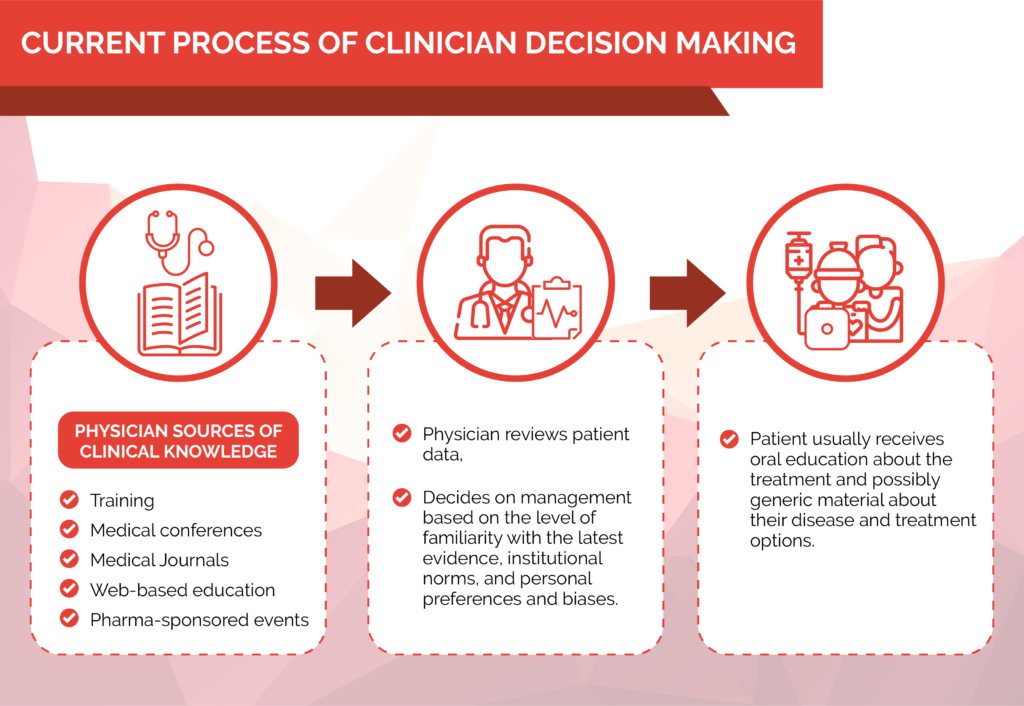
    Digital workflows now allow for the ongoing support of clinicians at the point of care, using a combination of well-designed technical solutions and clinical logic that’s based on patient data and the application of guidelines and drug labels.

    The trouble with pharma marketing

    For years, Big Pharma has marketed its drugs to healthcare providers using a tried-and-true model: running clinical trials, publishing the results in journals, and presenting them at conferences. To drive awareness, brands leverage the evidence in marketing campaigns and physician detailing.

    clinical decision support - pharma marketing chart

    Ubiquitous as it’s become, however, this approach has shown mixed effectiveness in commercializing drugs. Its overall return-on-investment is inconsistent, and its effectiveness in new product launches is declining. In many cases, brands underperform because physicians continue to use older and cheaper alternatives, even when a brand offers significant advantages in certain patient populations.

    In other cases, several drugs are indicated to treat a single illness, and physicians do not remember the nuances of each alternative at the point of care. Increasingly important are the workflow distractions of the practicing physician; most of their time is now spent in the digital environment reviewing or entering patient data.

    Clinical decision support: the opportunity

    So, how do you overcome this issue? By spending even more on physician education to cover every possible clinical scenario and which treatment to use in it? Perhaps. Improving physician education is always a worthy goal. But brands reach a point of diminishing returns when it comes to information retention: physicians simply won’t remember each detail, in each scenario, at the point of care. eDetailing, in which interactive digital content is made available for clinicians to review on their own time, has drawn a positive response, but information about ROI is still limited.

    Some of the developments of the last decade offer a new path forward. In recent years, the adoption of Electronic Health Records (EHR) has significantly increased. The newest EHRs have improved functionalities, making relevant clinical information like radiology, pathology, and labs more easily available within the system. Given that clinical workflows are already increasingly digital, there is a natural opportunity to educate physicians about possible treatment options at the point of care, rather than before or after it.

    point of care decision support process

    Challenges with POC Support tools

    What, then, is keeping point-of-care education and decision support from being widely used today? The answer is that although many things are possible in theory within EHRs, the reality is a long way from this theory. One of the key barriers is the difficulty of interfacing with EHRs. There are many reasons for this. EHR companies create obstacles to prevent access to their proprietary databases. Medical centers, meanwhile, have a high number of competing projects. Finally, nearly 80% of the data in EHRs is unstructured, meaning it must either be ignored or—often manually—converted before it’s accessible and available for analysis.

    These barriers would give pause to any Life Sciences company. Indeed, they are some of the primary reasons that the ROI for such projects to date has been unfavorable.

    However, they are not insurmountable, as we discovered when we began to devise a business process and technology solution that could anticipate and overcome them. In fact, our experience building Kinders and Hiteks—two companies that leverage new technologies and enhance healthcare business models—suggests that with the right tools, Life Science companies can build point-of-care solutions that are highly effective marketing vehicles.

    Evaluating point of care support tools

    Here’s what companies should look for as they evaluate potential partners and systems:

    • EHR integration: It’s no secret that the EHR landscape is complex and cluttered. But your installation costs will skyrocket if your point-of-care solution doesn’t easily integrate with the EHRs that are being used at the majority of medical centers. For Hiteks, we first built software that would integrate easily into of most major commercially available EHRs, especially Epic. Then, we fully integrated this into the Epic main engine to become an application for their customers. Because Epic has the largest base of users, this allows us to achieve the wide-scale adoption of new decision support solutions without additional local installation—and create a turnkey solution on the technical side.
    • Effective methodology: False positives and irrelevant suggestions are a big problem in POC support. To minimize override rates, make sure your decision support solutions providers can work with you to create decision support that results in highly relevant advice. Our approach includes studying the clinical guidelines and drug labels for the brand, understanding current clinical decision making around the specific illness, mapping current workflows within the EHRs and listing the data used by clinicians to arrive at a management plan, clearly defining the pivotal points in decision process, and building logic to generate reminders at the right time.
    • ROI measurement tools: You won’t be able to improve your POC support tools—or make the case for extending them to other brands—unless you keep rigorous track of your results. By combining software that’s fully integrated into the EHR and a robust clinical logic creation methodology, our software can launch point of care decision support reminders quickly and consistently. We then closely monitor engagement with our reminders, using EHR logs to track clinicians’ acceptance of the advice—and any resulting behavioral changes.

    Case study: Putting POC tools to the test

    Our experience shows that point-of-care support solutions can be highly effective. One pharma brand we worked with had a novel treatment in sepsis. Yet while clinical evidence showed significant advantages for their treatment in certain patients—reducing progression from Sepsis and Severe Sepsis to Septic Shock by 25% and shortening the length of stay by half a day—72% of physicians continued to rely on commonly used antibiotics that have been the mainstay of sepsis treatment for decades.

    After careful study of the clinical workflows and clinician decision-making process, we identified all of the key data elements that clinicians use in choosing a sepsis therapy. We then mapped where each one of these data elements resides in the EHR. Using the most up-to-date clinical guidelines and the drug label, we created the logic to generate a reminder in the EHR for the clinicians at the appropriate moment during the management process. This guidelines-based reminder showed the novel therapy as one of the options. It also summarized the reason physicians might select it and the potential associated benefits. Within 3 months, this solution led to 12% increase in the usage of the therapy as the first line of treatment.

     
    Written by Ronald M. Razmi, MD, and Gerry Petratos, MD

    ]]>
    https://businesstalentgroup.com/expert-insights/point-of-care-decision-support/feed/ 0
    BTG’s Jody Greenstone Miller Named to SIA’s Staffing 100 List for 2019 https://businesstalentgroup.com/news/btg-ceo-staffing-100-list-2019/ https://businesstalentgroup.com/news/btg-ceo-staffing-100-list-2019/#respond Wed, 20 Feb 2019 19:54:56 +0000 https://businesstalentgroup.com/?p=11658 Business Talent Group is proud to share that our CEO, Jody Greenstone Miller, has been named to Staffing Industry Analysts’ 2019 Staffing 100 List. SIA’s annual list recognizes the most influential workforce solutions leaders in North America. These 100 movers and shakers “create new models...]]>

    Business Talent Group is proud to share that our CEO, Jody Greenstone Miller, has been named to Staffing Industry Analysts’ 2019 Staffing 100 List. SIA’s annual list recognizes the most influential workforce solutions leaders in North America. These 100 movers and shakers “create new models of work, drive efficiencies while running companies, influence legislation and introduce technologies that change how we work,” according to SIA.

    “Jody Greenstone Miller, the co-founder and CEO of Business Talent Group, has been a driving force in the talent solutions industry for more than 10 years…[making] it easier for companies to identify, access and manage the best independent talent for their needs.”

    “It’s an honor to be named to this year’s Staffing 100 by SIA—one of the first organizations to recognize the full potential of the gig economy—alongside other talent solutions industry leaders who are pioneering new ways for the world’s top companies to get important work done,” Jody said. “I’m especially proud of the team we’ve built at Business Talent Group to serve the needs of a wide-ranging client base that includes more than 40% of the Fortune 100, as well as the recognition we have received as innovators in the on-demand talent space.”

    Alongside co-founder Amelia Warren Tyagi, Jody has established BTG as a leader in agile workforce solutions and a key player in the on-demand talent marketplace. BTG enables companies to work smarter, faster, and more flexibly by accessing a curated network of thousands of the world’s best consultants, industry experts, and project leaders. The recent acquisition of UK-based Hillgate expands BTG’s international footprint and scope, further solidifying the company’s position as a global leader in the industry.

    Jody’s entry in the SIA list reads: “Jody Greenstone Miller, the co-founder and CEO of Business Talent Group, has been a driving force in the talent solutions industry for more than 10 years. In 2018, BTG developed and deployed enterprise-wide programs for the Fortune 1000 that make it easier for companies to identify, access and manage the best independent talent for their needs. BTG works with more than 40% of the Fortune 100 and this year experienced its 11th consecutive year of growth. Miller was also named to SIA’s 2018 Global Power 150 — Women in Staffing list.”

    ]]>
    https://businesstalentgroup.com/news/btg-ceo-staffing-100-list-2019/feed/ 0
    Behind the Buzzword: The Autonomous Supply Chain https://businesstalentgroup.com/expert-insights/autonomous-supply-chain/ https://businesstalentgroup.com/expert-insights/autonomous-supply-chain/#respond Thu, 14 Feb 2019 22:22:56 +0000 https://businesstalentgroup.com/?p=11639 autonomous supply chain - robotic warehouseThe drive for digitization is everywhere. What does that mean for supply chain planning? A number of companies and supply chain technologists are pursuing a vision they describe as the Autonomous Supply Chain—a supply chain that is largely self-learning, adapting, and holistically focused on continuously...]]> autonomous supply chain - robotic warehouse

    The drive for digitization is everywhere. What does that mean for supply chain planning? A number of companies and supply chain technologists are pursuing a vision they describe as the Autonomous Supply Chain—a supply chain that is largely self-learning, adapting, and holistically focused on continuously meeting the needs of consumers and customers.

    Suffice it to say, the concept of digitizing the supply chain doesn’t just sound cool. It’s also poised to offer tremendous value to those companies that achieve it, maximizing revenue and margins while removing costs and simplifying planning activities across the value chain.

    You may shudder at the thought or dismiss it out of hand—after all, a recent McKinsey study found that the average supply chain has a digitization level of just 43%. Have the futurists gotten ahead of themselves? Will any of those benefits ever really materialize?

    Based on my experience helping retail clients install a supply chain process I call Flowcasting to plan and manage the flow of inventory from supplier to consumer, I would say that many benefits are already here. In fact, I expect that the autonomous, self-learning supply chain will soon become the norm. In this edition of Business Talent Group’s Behind the Buzzword series, I’ll explain why.

    What is an autonomous supply chain?

    The vision behind the end-to-end, autonomous supply chain is to leverage data and technology to anticipate consumer demand for each item that a retailer sells—then locate, load, and transport that item to the location where it’s needed, whether that’s a shelf on a store, a distribution center, or a customer’s home—all with little human intervention. To do that, an autonomous supply chain needs to know where all inventory and even all individual components are, at all times.

    That may not yet be possible across all industries. But some of the technologies that are driving the development of autonomous supply chain systems are already powering huge advances. In particular, it’s now possible for retailers and their CPG partners to view a digital twin of their entire, extended supply chain within a single planning solution.

    What’s a digital twin?

    A digital twin is a complete model of the business, whereby all physical product flows, both current and planned, are digitally represented within the solution—a complete, up-to-date, real time view of their business, containing all projected flows from supplier to consumer for an extended planning horizon of 52 or more weeks.

    This enables what we often refer to as continuous planning. The process and solution re-plans and re-calibrates the entire value chain, digitally, based on what happens physically. Changes in sales, inventories, or shipments will result in re-forecasting and re-planning product flows—to stay in stock, flow inventory, and respond to real exceptions or unplanned events. The process, solution, and supply chain is self-learning.

    The result is that it can manage the flow of information and trigger the movement of goods, digitally, on auto-pilot, a vast majority of the time—requiring planner input only when judgment and experience are needed.

    When I think about how our clients use the Flowcasting process to plan, for instance, I would estimate that 95% of the product flows are initiated automatically (e.g., digitally) based on the solution interpreting what yesterday’s sales and inventory movements mean, and then re-adjusting, self-correcting, and altering current and planned product flows.

    Furthermore, as part of one implementation, we worked with planners to semi-automate how the solution would handle certain exceptions based on what they learned during its initial pilot. It’s certainly not a stretch to think that, at some point, a machine learning algorithm could do that, too, and respond to these types of anomalies in order to enable the smooth and continuous flow of product.

    What are the results?

    Flowcasting is not a fully autonomous solution. But it is self-learning, self-correcting, and digitized. So what has it brought the retailers that have adopted it?

    The highest in-stocks in company history, increased sales, improved inventory turns, reduced costs and, most importantly, happier customers.

    Please understand I’m not talking about a Skynet scenario here. I firmly believe that supply chain planning solutions can largely become autonomous and self-learning, but will always require some human input for situations where intuition and judgement are required. But I’d argue this will be the exception and is also a form of a self-learning supply chain (e.g., people learn from experience).

    The autonomous, self-learning supply chain is quite a vision. And, like all visions, it needs initial pilots and examples to move the ball forward, provide initial learnings, and help people understand what is and might be possible. Our recent retail implementations of Flowcasting have, we believe, helped the cause and should provide food for thought for any retailer.

    So to the folks and companies pursuing this vision, I can only offer best wishes and the advice from Calvin Coolidge: “Press on. Nothing in this world can take the place of persistence”.

    Build your autonomous supply chain

    Learn about a new planning process—pioneered by supply chain expert Mike Doherty—that helps retailers slash out-of-stocks and improve supply chain agility.

    GET THE EBOOK

     
    This post was adapted from Mike’s blog.

    ]]>
    https://businesstalentgroup.com/expert-insights/autonomous-supply-chain/feed/ 0
    2019 Staffing Trends: The Year of the Supertemp https://businesstalentgroup.com/future-of-work/2019-staffing-trends-the-year-of-the-supertemp/ https://businesstalentgroup.com/future-of-work/2019-staffing-trends-the-year-of-the-supertemp/#respond Thu, 14 Feb 2019 18:12:15 +0000 https://businesstalentgroup.com/?p=11604 staffing trends - fist bumpEvery year, the Staffing Industry Analysts (SIA), the Global Advisor on Staffing and Workforce Solutions, reports on the most important global staffing trends. In the 2019 report, we were interested to see a number of things that validate our own perspective on the high-end gig...]]> staffing trends - fist bump

    Every year, the Staffing Industry Analysts (SIA), the Global Advisor on Staffing and Workforce Solutions, reports on the most important global staffing trends.

    In the 2019 report, we were interested to see a number of things that validate our own perspective on the high-end gig economy.

    Here are three of SIA’s most impactful 2019 staffing trends, in our view:

    1. Staffing shortages: SIA notes that staffing firms—like HR leaders and other top executives—regularly cite talent shortages as the biggest barrier to business growth. Major declines in the labor force are expected as baby boomers around the globe retire in ever greater numbers. The good news? Talent shortages are also paving the way for alternative ways to work. That’s something savvy search firms like Heidrick & Struggles are determined to capitalize on by offering clients ever faster and more seamless access to the growing pool of high-end independent professionals. These so-called supertemps prefer to work with big companies on a project basis, rather than full-time.
    2. Gig economy: On-demand staffing platforms continue to gain ground and expand their enterprise-wide agile workforce solutions. As SIA notes, while industry-watchers were waiting for the “Uber of staffing” to emerge, Uber itself got into the game with Uber Works, which focuses on the hiring of short-term workers for events and corporate functions. At the high end of the talent marketplace, companies like Business Talent Group are also attracting plenty of attention, with an investment from global workforce solutions leader Kelly Services and an exclusive collaboration with Heidrick & Struggles.
    3. Procurement sophistication: Contingent workforce managers are adopting increasingly complex procurement solutions. According to SIA, “Many believe that total talent acquisition is the next summit to climb, combining proactive sourcing solutions for both employed and non-employed talent.” Given how focused most big companies are on enhancing organizational agility, this is a trend we expect to continue, as organizations seek to nimbly adjust the assets—including human ones—they put against each initiative.

    From the perspective of the staffing industry, these trends offer big opportunities for firms that can harness new technologies and alternative forms of work. From the perspective of big companies, they point to the increasing importance of being able to break through organizational silos and align resourcing decisions with strategic priorities.

    ]]>
    https://businesstalentgroup.com/future-of-work/2019-staffing-trends-the-year-of-the-supertemp/feed/ 0
    Business Talent Group Launches BTG Europe https://businesstalentgroup.com/news/btg-europe/ https://businesstalentgroup.com/news/btg-europe/#respond Wed, 13 Feb 2019 15:05:15 +0000 https://businesstalentgroup.com/?p=11618 Hillgate BTG - Europe at nightBusiness Talent Group is launching BTG Europe with the acquisition of UK-based Hillgate, a talent marketplace that provides agile workforce solutions to multinational Fortune 500 companies. The move expands BTG’s international footprint, scale, and position as the leading global marketplace for on-demand, high-end independent talent....]]> Hillgate BTG - Europe at night

    Business Talent Group is launching BTG Europe with the acquisition of UK-based Hillgate, a talent marketplace that provides agile workforce solutions to multinational Fortune 500 companies. The move expands BTG’s international footprint, scale, and position as the leading global marketplace for on-demand, high-end independent talent.

    The London team and operations will integrate seamlessly into BTG’s own operations, giving Fortune 1000 companies—including more than 40% of the Fortune 100—even greater access to vetted, high-end executives, subject matter experts, and independent management consultants around the world. Top independent talent, meanwhile, will have more opportunities to help leading companies solve their most pressing business challenges. Hillgate CEO Andrew Lecocq will join BTG as Head of EMEA, leading BTG Europe’s London team in providing talent for clients across EMEA and worldwide.

    “Combining BTG’s proprietary technology platform, data, compliance capabilities, and customer success process with Hillgate will accelerate BTG’s growth in Europe and allow us to scale rapidly and better serve our clients around the world,” said Jody Greenstone Miller, BTG’s Co-founder and CEO. “Operating under Andrew Lecocq’s skilled leadership, Hillgate has built a top online talent marketplace of the world’s brightest business minds, and its track record serving clients in Europe will build on BTG’s powerful international position to firmly establish our global leadership in this rapidly growing market.”

    Together, the two companies will be a truly global player in this space, offering executives the agile workforce solutions they need to work smarter, faster, and more flexibly. “We are incredibly excited to join the BTG team,” said Andrew Lecocq. “Jody Miller and Amelia Tyagi pioneered the on-demand talent market, and, together with their team, have built a world-class company that is a leader in the space. The close alignment of the culture, mission and goals of our two companies are very closely aligned which makes this a great opportunity for us.”

    Read the press release or get in touch to learn how BTG’s on-demand talent can help you solve critical business challenges.

    – Jody Greenstone Miller and Amelia Warren Tyagi
    Co-Founders, Business Talent Group

    ]]>
    https://businesstalentgroup.com/news/btg-europe/feed/ 0
    Do This Before You Hire Your Next Data Scientist https://businesstalentgroup.com/expert-insights/hiring-a-data-scientist/ https://businesstalentgroup.com/expert-insights/hiring-a-data-scientist/#respond Wed, 06 Feb 2019 20:36:51 +0000 https://businesstalentgroup.com/?p=11586 data scientist - big data visualizationIt’s not exactly news to suggest that data analytics is an essential part of doing business. Almost all functions have, if begrudgingly, embraced it as way to understand customers and monitor business performance. Though companies have used data to drive decisions for over a century—think...]]> data scientist - big data visualization

    It’s not exactly news to suggest that data analytics is an essential part of doing business. Almost all functions have, if begrudgingly, embraced it as way to understand customers and monitor business performance. Though companies have used data to drive decisions for over a century—think actuarial tables—new technologies have recently made it accessible to a wide range of industries.

    Companies that have been around for a while can draw on many years of customer data, at least in theory. Unfortunately, making those data sets perform is often a challenge, thanks to factors that range from the skills of internal teams to the structure of the data itself. But complacency isn’t an option. Companies that can’t put legacy data to use in convenient and intuitive ways will lose ground to digital-first competitors that skip over legacy systems and vigorously gather new data, promising customers something of value in return for their information.

    So … bring in the data scientists? If you work at a big company, you probably have one or more groups with “analytics” in their name. There are probably at least a few people with data science responsibilities embedded in your product and IT teams. (If you’ve been lucky enough to recruit them, they may even have been educated as data scientists.) To make the most of their expertise, however—and drive the kind of digital innovation that will prevent you from becoming the next Blockbuster—you’ll need to put the issue higher on your strategic agenda.

    Here’s why that is—and how you can start extracting full value from the data goldmine you’re sitting on.

    Big data or a big waste of time?

    Though most companies hold themselves to increasingly rigorous standards, the most familiar presentation format for data is still business intelligence, which aims to turn information into more easily interpreted “insights.” It’s a worthy goal, but it’s rarely held to any sort of dependable test-and-learn process.

    That means—beyond feeling like you must be making progress—there’s no way to evaluate the impact of your data or measure the marginal benefit of capturing it in the first place. It also means it’s difficult to make decisions on investing in platform upgrades or team capabilities.

    And it won’t cut it when your competitors are establishing products and processes that combine customer actions with other relevant information in real-time.

    As with any investment, you’ll need to calculate the value before you can assess the approach. Do your analytics support the front office? Then they’ll have to deliver top-line growth in the form of customer acquisition, retention, and cross-selling. Back-office activities will need to help you with the bottom line, perhaps by ensuring regulatory compliance, reducing fraud, or increasing cybersecurity. And all of it will need to live up to the lofty expectations of your customers, who are likely to go elsewhere if your mortgage calculators won’t bring them any meaningful information unless they complete a 6-step process that starts with a contact form and ends with the promise that a representative will be in touch.

    Taking inspiration from the leaders

    To get a clearer sense of what you might do with your data, think about how it might help you anticipate and react to your customers’ needs. Financial service companies have a lot of information about people’s spending, for example. Why not harness it to make better upsell and cross-sell recommendations, or simplify navigation on digital channels? If someone has recently paid for a few college application fees, chances are high that they—or a loved one—will soon head off to school. Can you get that information over to marketing in time to offer the customer a short-term loan?

    You can make your data even more valuable by combining it with other information, whether it’s behavioral or from other institutions. The major UK bank NatWest has deployed technology from BioCatch that measures customers’ behavior while using digital services, using such parameters as reaction time or screen gestures as a way of detecting when a user is not legitimate. Meanwhile, portals like Mint and Acorns pull together information from disparate sources to bring consumers a comprehensive overview of their finances and make product recommendations that are independent of any service providers. Bots can grab this data from a bank’s website in a matter of milliseconds; if you’re not doing something meaningful with it, you’re behind the competition.

    New data sources like wearables, smart homes, and autonomous vehicles will facilitate even more opportunities to have meaningful, data-driven interactions with your customers.

    Understanding the challenges

    So what’s holding back the would-be innovators? Many companies, especially in financial services and healthcare, depend on hosted core IT systems from a limited range of providers specialized in their respective sectors—and strict requirements when it comes to customer data protection. Adding customizations to these standard services is notably expensive and requires technical expertise that’s usually long gone after the platforms have been installed.

    Legacy data on customer interactions, meanwhile, may be stored on different platforms and in formats that were more often were created by the platform manufacturer—with troubleshooting and maintenance in mind—rather than with the goal of creating a decades-long dataset. And migrating to the cloud is a challenge of its own, independent of any analytics efforts.

    Team dynamics and incentive structures can also impact progress:

    • Executives don’t always relish diving into data and may not know enough about what’s possible to set clear goals and priorities
    • Data scientists don’t like inconsistent, messy legacy data and typically have not followed a career path that exposes them to general business goals
    • Programmers are essential for making data extraction, AI and machine learning work, but need direction from data scientists

    How to do more with your data

    Data scientists are an integral part of the solution, but they’ll never be successful without support and understanding at the highest levels of your company. Here are some practical steps you can take to refresh your data strategy:

    • Define success: Think about the metrics you could use to understand customer interactions, then link them to corporate-level goals like growth, profitability, revenue per customer, and attrition.
    • Establish a baseline: You may be sitting on a treasure trove of data, but is it accurate? Is it in a consistent and easy-to-access format? If not, create a business model for evaluating the effort it will take to restore and reconcile imperfect data sets—then assess the tradeoffs, decide, and update.
    • Prioritize your opportunities: Of all the areas where data analytics might make a difference to your business, where should you get started? Customer interactions offer one way to size opportunities. Have they requested services that draw on more data? Could data help you deliver the services they already use faster or more efficiently? Competitor products are also worth keeping track of for ideas and effectiveness.
    • Think “real time”: Actively identify digital journeys that customers will increasingly expect to be personalized for them. This offers opportunities for analytics to be deployed ‘live’ and also gain valuable experience with test-and-learn algorithms along with architecting data stores for continuous use.
    • Build the culture: Facilitate greater understanding and awareness for the power of analytics at your company by sharing your plans, your goals, and—especially—your success stories. You may also need to rethink team structures and incentives to give different functions a reason to collaborate on what are likely to be complex projects, and achieve a common understanding of the overall business goals.

    Sitting on a data goldmine?

    Get more from your legacy data with the help of an independent analytics expert.

    REFRESH YOUR DATA STRATEGY
    ]]>
    https://businesstalentgroup.com/expert-insights/hiring-a-data-scientist/feed/ 0
    Top 10 Reasons to Engage an Independent Pharma Executive https://businesstalentgroup.com/expert-insights/independent-pharma-executive/ https://businesstalentgroup.com/expert-insights/independent-pharma-executive/#respond Wed, 06 Feb 2019 15:49:25 +0000 https://businesstalentgroup.com/?p=11580 charts and stethoscope - independent pharma execLife science marketing is complicated, thanks to stringent regulations—and a key customer base of patients, providers, and payers who have different needs and often divergent priorities. Pharma marketing teams are also facing large talent gaps as they work to find strategies that will address all...]]> charts and stethoscope - independent pharma exec

    Life science marketing is complicated, thanks to stringent regulations—and a key customer base of patients, providers, and payers who have different needs and often divergent priorities. Pharma marketing teams are also facing large talent gaps as they work to find strategies that will address all their constituents. Fortunately, there’s a growing pool of experienced, independent life science consultants and executives who can help with these shortages. When organizations need to solve specific challenges or just fill skill/knowledge gaps, these independent executives can bring the right experience and objectivity to the project.

    Health and life science companies typically engage consultants when a business problem is especially complex or an important deadline is looming—or whenever an objective perspective is needed to achieve a business goal.

    There are four main types of consultants:

    1. Specialist: Specialists offer best-in-class capabilities in niches like branding or patient engagement.
    2. Expert: Experts command a premium, offering not just expertise but widely recognized thought leadership for high-visibility projects like health reform.
    3. Vendor: These service providers can assist clients with specific skills and capabilities, from advertising to business analytics.
    4. Total Solutions Provider: Big consulting firms like McKinsey and PwC can tackle everything from strategy to implementation. Of course, that assistance also comes with a premium price tag—and they may not be able to supply expertise in niche domains like preparing for FDA committee meetings or meeting international GCP standards.

    Independent consultants deliver instant expertise, acting as a catalyst to accelerate growth in both specialist and expert capacities. Often highly accomplished self-starters, independents require little to no supervision. Their strength lies not just in their experience, however, but in their versatility. Independents can play roles that range from advisors to doers, and many other things:

    • Counselor or advisor: Independents often have broad experience with a variety of different companies and situations. This makes them well-poised to give advice about a specific topic like patient centricity—or act as a sounding board while you’re assembling your own plans.
    • Objective review: Freelancers aren’t caught up in internal politics or received wisdom about the way things should be done at your company. So they’re well-equipped to deliver a neutral, well-reasoned perspective on business processes and strategies.
    • Change agent: Whether you’re switching from paper to interactive vis-aids or preparing for a big transformation, independents can embed themselves into your organization to guide and accelerate change.
    • Project manager/implementer: Independent project managers come not just with project management expertise but experience with specific therapeutic areas and domains like market access and product launch.
    • Deadline support: If you’ve fallen behind on an important deadline, independents can help your team meet their commitments.
    • Teacher or coach: Independents are often accustomed to working across functions. This makes them especially well-suited to helping teams learn to do something new—for instance, training research scientists to think like marketers to streamline the product launch process.
    • Facilitator: When you need to solve problems in new or unconventional ways like workshops or ideation sessions, independents can help you establish effective guidelines and structure.

    There are essentially two types of independent consultants: ex-consultants from consulting firms and ex-industry executives. There is great value in both types. However, former pharma marketing executives turned independent consultants have these ten advantages:

    1. They have had successful careers at senior levels.
    2. They have had to live with their business decisions and understand the consequences.
    3. They have done the job and know what the client is up against.
    4. They know what good looks like—they understand the corporate environment and have even employed consultants to help them deliver business results.
    5. They understand the job in a practical way and can bring real-world examples.
    6. They apply learnings from actual prior experience.
    7. They have deep therapeutic area knowledge and know what works for that therapeutic class.
    8. They bring best practices from other companies they’ve worked with and from related therapeutic areas.
    9. Depending on their background, they can take learnings from other industries and apply them to life sciences.
    10. They will be objective and bring a broader perspective to solving problems.

    Independent consultants can be the key to maximizing business performance by bringing in needed expertise and an outside perspective. Here are a few key areas they can help you address:

    • Identifying problem areas when you’re trying to turn around a business: I once helped a pharma client rewrite their educational materials to a 6th grade reading level so that their addiction treatment could win adoption by US prison facilities.
    • Identifying innovative ideas to accelerate business growth or get to the next level: I helped a healthcare nonprofit accelerate growth by adding an assessment service to facilitate the adoption of their core product line.
    • Filling in knowledge gaps for an expertise that the organization does not have: Because I’m an expert in patient centricity, I’m often called upon to offer that perspective during workshops and other engagements.

    When you work with independents, it’s easy to get the help you need, whether it’s individuals or teams, on-site or remote, U.S. based or global. So whether you’re trying to improve brand performance or launch a new product, accelerate your results by engaging an independent life science consultant with deep industry and therapeutic area expertise.

    Life Science Consulting to Count On

    Find independent pharmaceutical experts to improve patient outcomes and brand performance across all major segments and therapeutic areas.

    FIND A CONSULTANT
    ]]>
    https://businesstalentgroup.com/expert-insights/independent-pharma-executive/feed/ 0
    [PODCAST] Continued Demand for High-End Gig Economy https://businesstalentgroup.com/future-of-work/high-end-gig-economy/ https://businesstalentgroup.com/future-of-work/high-end-gig-economy/#respond Thu, 31 Jan 2019 21:18:48 +0000 https://businesstalentgroup.com/?p=11555 high-end gig economyAccording to an ATD survey, 83% of companies report skills gaps that threaten their organization’s ability to prepare for the future. So it’s no surprise that more and more of them are trying to make better use of the high-end gig economy—especially given the segment’s...]]> high-end gig economy

    According to an ATD survey, 83% of companies report skills gaps that threaten their organization’s ability to prepare for the future. So it’s no surprise that more and more of them are trying to make better use of the high-end gig economy—especially given the segment’s robust growth. Business Talent Group’s co-founder and CEO, Jody Greenstone Miller, unpacked the trend on a recent podcast with Bloomberg Businessweek’s Carol Massar and Jason Kelly.

    BTG’s collaboration with Heidrick & Struggles illustrates the evolution of how large global organizations think about high-end talent.

    “If you think about the way that high-end talent has typically gone into organizations,” Miller explained, “It’s typically through collaborative efforts with a firm like Heidrick and a very detailed search process. That’s a wonderful way to fill high-end jobs, but there’s all kinds of other things that companies need to get done that require a faster and more temporary solution. So having the ability to dip into a new pocket of high-end independent talent helps companies find talent they couldn’t find otherwise and be more agile.”

    Why turn to independents?

    First of all, Miller explained, it’s where the talent is going. According to a recent brief by MBO Partners, the population of high-earning independents has swelled by 70% between 2011 and 2018. Tapping these workers just about accessing hard-to-hire talent—in many cases, it’s about accessing up-to-the-minute skills like data analytics, which is as new as it is essential to corporate performance.

    Second, says Miller, the needs of large global companies are changing. As they seek to fend off competition by smaller, nimbler start-ups, they are trying to boost not just innovation but organizational agility. Independent talent can play a crucial part in helping to execute these strategies, offering fast access to the skills companies need to tackle specific initiatives, then moving on to the next challenge.

    Unfortunately, most big global companies aren’t yet set up to integrate this type of talent. But as firms like BTG—and, now, Heidrick & Struggles—work to help them get smarter about it, the change will continue to accelerate.

    ]]>
    https://businesstalentgroup.com/future-of-work/high-end-gig-economy/feed/ 0
    Agile for Transformations: The Complete Guide https://businesstalentgroup.com/expert-insights/agile-for-transformations-the-complete-guide/ https://businesstalentgroup.com/expert-insights/agile-for-transformations-the-complete-guide/#respond Fri, 25 Jan 2019 14:08:00 +0000 https://businesstalentgroup.com/?p=11519 agile for transformations - geometry chalkboardThese days, it seems like everyone is undertaking a business transformation. Whether it’s about reorganizing to be more competitive, deepening customer connections, or simply not having an option not to change, executives are obsessed with transformation … and that’s a good thing. Identifying an opportunity...]]> agile for transformations - geometry chalkboard

    These days, it seems like everyone is undertaking a business transformation. Whether it’s about reorganizing to be more competitive, deepening customer connections, or simply not having an option not to change, executives are obsessed with transformation … and that’s a good thing.

    Identifying an opportunity to transform your business is only the beginning, however. To prepare for a business transformation—and attain meaningful results—you must focus not just on completing the program but also on how you transform. Winning organizations have recognized that implementing a successful transformation is different than executing a new business strategy, and it requires a different approach.

    In particular, many companies are looking beyond the classic tools of project management, change management, and future state design to techniques that are commonly used in software development, like Agile development.

    Proponents of the Agile Methodology say it fosters closer alignment between workers and end users. Agile enthusiasts also boast that the methodology fosters greater independence and ownership among teams, which in turn leads to improved predictability and planning.

    And Agile offers a unique opportunity to redesign how work gets done both during and after transformations. By leveraging Agile, my consulting practice has delivered complicated transformational programs more predictably and cost-effectively. We have also helped clients lay a foundation for moving towards an on-demand talent model and creating a more agile organization.

    So how do you start employing Agile techniques during transformational initiatives? In a recent white paper, I introduced a methodology I call “Agile for Transformations” that details how leading organizations can use Agile techniques to foster change and deliver transformational programs faster and more cost-effectively.

    Below, I’ll summarize the paper—and outline when Agile techniques are appropriate, how to introduce it into your organization, and how to tailor it to your specific needs and timing. To see a complete copy, get in touch.

    What’s Unique About Transformations

    A business transformation is about changing how your organization operates. To succeed, you must develop an approach that reflects your goals and encourages organization learning and culture development throughout. You must also make sure that your organization is ready to transform. This is particularly true with digital transformations, where focusing on new technologies often causes people to lose sight of business goals—and transformations become more about integrating new systems than driving meaningful change.

    To solve for this, make sure your transformation is:

    1. Sponsored by management. Are leadership and key stakeholders aligned on the goals, objectives and expected outcomes of the effort?
    2. Adequately resourced. Do you have subject matter experts—whether internal or external to the company—who can participate without harming business as usual?
    3. Adequately funded . Transformations typically require a heavy investment of time, money, and resources. Is your organization prepared for this expense? Are you prepared to see it through? Does the cost of the transformation outweigh the risk of doing nothing?
    4. Quantifiable. Can you articulate the benefit you expect from the transformation? Are your stakeholders aligned on that benefit, and can you express it with meaningful metrics?
    5. A departure from business as usual. Transformations are different and disruptive. They require more thought around change, investment, and staffing than typical programs do. They also require you to make a clear-eyed assessment of whether your organization is truly ready. Will people accept the change, or will they revert to tried and true methods when the going gets tough? Can you articulate what’s in it for them?

    By revisiting these questions throughout your transformation, you can continuously reorient the program towards its goals and help achieve your vision for the future.

    Why Agile?

    Before Agile became one of the business world’s biggest buzzwords, it referred to a methodology for developing software. Centered around an iterative, team-based approach, Agile replaced detailed requirements with terse, user-defined stories organized in a hierarchical structure. These stories are planned in a product backlog, and development occurs in fast-moving cycles known as sprints. At the end of each sprint, the team demonstrates the value and usability of the work they’ve produced.

    Among the documented benefits of using Agile are improved productivity, visibility, and business/product alignment. On transformations, Agile also improves predictability, accountability, motivation, communication, and alignment with stakeholders and customers.

    But the push for Agile doesn’t end there. Increasingly, it has also become a key delivery success factor for Digital Transformations, as leaders recognize that continuous delivery with end users and closer business/product alignment are key factors for success. And some business leaders have looked to Agile principles as they attempt to make entire organizations more flexible in the face of change. These factors are core drivers for the broader adoption of Agile outside of software development—and a key reason to consider using Agile during transformational initiatives.

    Of course, moving to Agile is not without challenges—first among them, knowing when and how to implement Agile so you get the most out of it.

    Using Agile For Transformations: Knowing When

    Using Agile for transformations starts with understanding how transformational initiatives unfold. To do this, we posit the model below, which is grounded in Lewin’s seminal change theory and illustrates the fluid nature of transformations, where each phase may present in different ways as things progress.

    agile for transformations - knowing when

    Ready. The Ready phase is all about clarifying goals and aligning leadership.
    Change. The Change phase concerns planning and actually doing work. This is where the use of methodologies, such as Agile and feedback loops, comes in to play.
    Refreeze. Refreeze is about recognizing when it’s time to begin shifting to business as usual—and complete the move from a transformational initiative to the future state.

    Transformation Leads sit at the center of all this. If they can guide your transformation through these shifts, they will be able to foster the emergence of a new operating culture organically rather than forcing it via a standard change and culture program, as is so often the case.

    So when should you introduce Agile? Here are a few times it may make sense:

    1. You are in the change phase. Agile will help keep your team engaged, productive, and accountable for all deliverables.
    2. Requirements are ambiguous. Agile is a great way to smash through comments like “I have no idea where to start” or “this project is so big and there is so much detail that we don’t know how to make a decision.”
    3. Team resources are rapidly shifting. Agile can help teams stay focused when resources or needs are in flux and the need for communication and openness is at a peak. Responding to this symptom with Agile is fundamental to designing the on-demand staffing model.
    4. You have or can get a strong Product Owner and Scrum Master. Agile will not work without a strong leader and Scrum Master to oversee the effort. If you don’t have the right resources or can’t get them, then don’t do it.
    5. The team is falling behind and you need a new approach. Agile can also be used as a mechanism to jumpstart a flagging team that has run out of gas. I’ve used the intervention effectively on carve-outs, stand-ups of centers of excellence, and multiple forced transformations (responses to regulation).

    Using Agile For Transformations: Understanding How

    Once you’ve determined that the time is right to use Agile, we recommend a 5-step implementation process we call the ATTAC method. Here’s how it works.

    1. Align. Start by aligning your leadership and your team about the use of Agile. Making changes in any program’s operations can be challenging, and even more so when adopting Agile. Preparing the team for this change is therefore critical for success.
    2. Team Design. Team Design is about ensuring that you have the right resources available and can design a governance structure that enables your Agile and non-Agile teams to continuously coordinate their work.
    3. Team Planning. Team Planning is where Agile delivery begins. Collectively, the team maps the project and constructs a backlog that’s broken into tasks and a sprint plan. This phase is where the benefits of Agile methods will start to accrue—and the breakdowns. Team members must change how they think about work. It is therefore incumbent upon the transformation lead to work closely with the Product Owner to properly identify the places where Agile is appropriate. It is also the lead’s responsibility to ensure there is a master, integrated project plan that brings Agile and non-Agile work together in a seamless, integrated fashion.
    4. Assemble. During the Assemble portion, the team works through their sprint cycles to deliver valuable work products. You’ll leverage Agile’s work breakdown structure and its definition of “Done.” You’ll also need to monitor closely for fatigue and dissention. Teams that are unaccustomed to Agile will quickly burn out and turn on the transformation lead. Balancing delivery with sensitivity to the team’s morale are important considerations for when to pull back.

      Evangelists will tell you that Agile is something that gets better with practice, and it is up to the lead to ensure this is the case. As the Transformation Lead, Product Owner, and team work together and begin delivering, a new culture will form, and new modes of thinking will be established. If fostered, this will contribute to new operating cultures once the transformation initiative ends.

    5. Continuous Delivery. The final part of implementation is Continuous Delivery. This is one of the core benefits of Agile, since it enables users to interact frequently with completed pieces of work. If you do this properly, it will clarify open questions and limit integration risks. It will also help team members who have to live within the new future-state environment gain comfort with the result—and lay the groundwork for the ongoing use of Agile in the company’s future state.

      Your transformation lead should work to manage this feedback loop. As the iterative delivery unfolds, she or he must constantly monitor the situation and foster dialogue so the change sticks and a new culture emerges.

    If done right, savings can be substantial. Imagine completing a transformation for one-third of the traditional cost and reducing ongoing costs and operational risk? We have seen this in our practice and believe the trend will continue as more organizations look to methodologies like Agile for transformations.

    Building an Agile Workforce

    The Agile methodology is all about empowering development teams to make fast, intelligent decisions about where to go next. By deploying so-called big-A Agile, you can start to build a more broadly agile organization, matching the right talent to the right challenges and opportunities, becoming more receptive to change as it occurs, and maintaining predictability in the outcome.

    The growth of the gig economy enables us to take this a step further by disrupting traditional talent management norms, both during a transformation and after it. Agile teams need access to the right resources at the right time—internal and external. By leveraging a mix of contractors, managed services, and big firms, companies have a unique opportunity to create a more efficient and economical solution to staffing.

    New Agile HR Technologies like flexible employee benefits and human cloud models are helping to make the notion of on-demand staffing even more of a reality. When used together with the right governance and operating model, they provide a powerful mix that supports implementation of on demand staffing.

    Agile represents a shift in mindset, and the promising results it has yielded will only grow as companies become more adept at applying its principles to other areas of work. Through a structured approach, transformation leads have an opportunity to bring the benefits of Agile to enterprise-wide change initiatives. Results include faster, more effective, and more cost-effective delivery. More importantly, Agile helps facilitate a closeness and a culture that will permeate the new organization once the program ends and business-as-usual begins.

    This article was condensed and edited from a draft by Simpel and Associates, LLC.

    ]]>
    https://businesstalentgroup.com/expert-insights/agile-for-transformations-the-complete-guide/feed/ 0
    [Report] 2019 Independent Talent Trends, Revealed https://businesstalentgroup.com/future-of-work/2019-independent-talent-trends/ https://businesstalentgroup.com/future-of-work/2019-independent-talent-trends/#respond Thu, 24 Jan 2019 18:10:48 +0000 https://businesstalentgroup.com/?p=11509 independent talent trends - report coverEvery year, Business Talent Group reviews the trends that are shaping the independent consulting economy to help F1000 executives understand the power of on-demand talent—and what it can help them accomplish. This year’s results are summarized in our 2019 High-End Independent Talent Report. So how...]]> independent talent trends - report cover

    Every year, Business Talent Group reviews the trends that are shaping the independent consulting economy to help F1000 executives understand the power of on-demand talent—and what it can help them accomplish. This year’s results are summarized in our 2019 High-End Independent Talent Report.

    So how are F1000 companies leveraging independent consultants, experts, and executives? What emerges from the data is a vivid picture of cutting-edge skills and initiatives, from market analysis to product strategy. Like last year, the greatest needs were for project leadership in highly specialized niches like supply chain, disruptive innovation, and market access. Given the dismally low completion rate of most corporate projects, it suggests savvy companies have realized that freelance project management consultants can provide critical support in situations where resources are tight or teams are distracted by competing priorities.

    But given that 83% of companies report skills gaps that threaten their organization’s ability to prepare for the future, it’s also no surprise that the needs went beyond project management. So what other critical projects are independent consultants working on?

    Read the full report to learn:

    • The most in-demand project types and skills across all industries and business functions
    • Where the work is getting done—remote vs. on-site—plus the top regions for talent location
    • Industry- and function-specific spotlights with recent examples of real problems we’ve helped solve in each area

    Indeed, independent “gig economy” workers have emerged as a powerful solution to the talent gaps many companies are facing. Nearly one-third of global workers are free agents, and 80% of global CHROs predict that their deployment of these nontraditional workers will increase in the coming years. Scarcity is by far the biggest pain point. BTG’s research is based on an analysis of 12 months of client needs, with the goal of understanding how these professionals are helping large companies get work done.

    “In a tight labor market, companies turn to independent professionals for cutting-edge skills that often can’t be found anywhere else. We are thrilled to help executives understand the breadth of what these professionals can accomplish—and the many ways they can make a difference on mission-critical initiatives,” Jody Greenstone Miller, Business Talent Group’s CEO and co-founder, commented.

    To see trends and sample projects across all industries and by business function, read the report.

    Top Trends in Independent Consulting

    How did freelance consultants helped other F1000 executives? Read our 2019 report to find out.

    READ THE REPORT
    ]]>
    https://businesstalentgroup.com/future-of-work/2019-independent-talent-trends/feed/ 0
    Business Talent Group Announces Exclusive Collaboration with Heidrick & Struggles https://businesstalentgroup.com/future-of-work/business-talent-group-heidrick-struggles/ https://businesstalentgroup.com/future-of-work/business-talent-group-heidrick-struggles/#respond Tue, 15 Jan 2019 23:06:52 +0000 https://businesstalentgroup.com/?p=11461 buildings - business talent group heidrick strugglesBusiness Talent Group (BTG) is entering into an exclusive collaboration with Heidrick & Struggles to offer Heidrick clients seamless access to BTG’s top independent professionals—on demand—for critical project-based assignments. We are excited to collaborate with Heidrick, and we are honored that Krishnan Rajagopalan, President and...]]> buildings - business talent group heidrick struggles

    Business Talent Group (BTG) is entering into an exclusive collaboration with Heidrick & Struggles to offer Heidrick clients seamless access to BTG’s top independent professionals—on demand—for critical project-based assignments. We are excited to collaborate with Heidrick, and we are honored that Krishnan Rajagopalan, President and CEO, Heidrick & Struggles, sees BTG as a “leader and an innovator when it comes to sourcing highly experienced independent professionals.”

    According to an ATD survey, 83% of companies report skills gaps that threaten their organization’s ability to prepare for the future. The same study found that 50% say their companies had insufficient leadership bench strength, and 47% expected a gap of leadership or executive-level skills in the future.

    Together, we will empower our clients to identify, access, and integrate the right talent at the right time to solve their most pressing business issues. The collaboration represents another important step in growing our industry-leading talent solutions, which help businesses advance their strategies by accessing the very best independent talent on demand.

    Read the press release or get in touch to learn how BTG’s on-demand talent can help you solve critical business challenges.

    – Jody Greenstone Miller and Amelia Warren Tyagi
    Co-Founders, Business Talent Group

    ]]>
    https://businesstalentgroup.com/future-of-work/business-talent-group-heidrick-struggles/feed/ 0
    M&A: When Being in the Majority is Bad News https://businesstalentgroup.com/future-of-work/freelance-ma-consultants/ https://businesstalentgroup.com/future-of-work/freelance-ma-consultants/#respond Tue, 15 Jan 2019 17:31:18 +0000 https://businesstalentgroup.com/?p=11490 freelance m&a consultants - light bulbsWhen you’re looking to grow, a merger or acquisition deal can be an attractive proposition. But the unfortunate truth is that most mergers and acquisitions fail—anywhere between 70% and 90%, according to McKinsey and the Harvard Business Review. The reasons behind the high failure rate...]]> freelance m&a consultants - light bulbs

    When you’re looking to grow, a merger or acquisition deal can be an attractive proposition. But the unfortunate truth is that most mergers and acquisitions fail—anywhere between 70% and 90%, according to McKinsey and the Harvard Business Review.

    The reasons behind the high failure rate are manifold, with the most frequent being:

    There are plenty more, but these challenges alone hint at the complexity of an M&A deal. And though some companies reach out to freelance M&A consultants for help, many attempt to close the deal using the resources they already have on-hand—or assume they must engage a costly traditional consulting firm if they need help vetting, closing, and integrating a new deal.

    However, even experienced in-house specialists can overlook the nuances of an unfamiliar market or overestimate the project’s potential. Consulting firms, meanwhile, may overlook important nuances about the realities of how your company does business. This is often what leads to integration struggles or unrealistic projections—and ultimately, failure.

    Given how complicated these deals can be, it’s easy to imagine all the things that could go wrong. So why do mergers and acquisitions continue to be so common? And how can you keep yours from becoming just another statistic?

    The motivation behind M&A

    Executives pursue mergers and acquisitions for a variety of reasons. Smaller companies don’t have access to the economies of scale that a larger company does, making growth an economic challenge. And many larger companies want to grow their market share by diversifying, yet they don’t always have the in-house talent or technology to do so.

    There are competitive reasons, as well. Acquiring smaller companies can help larger companies effectively remove the competition. If you can’t beat ‘em, buy ‘em, as the saying goes. We’ve seen this happen in the beer industry a lot recently, as “big beer” companies acquire craft breweries to expand their reach in an otherwise inaccessible market. But once a craft brewery is acquired, it is no longer considered “craft.” As a result, this strategy has managed to slow the smaller segment’s growth considerably.

    Regardless of the impetus, one thing remains consistent across all M&A activities: the stakes are high. And as such, the two (or more) different entities must come together seamlessly to be successful. This is where a third-party perspective of an independent M&A advisor is particularly valuable.

    Resisting the statistic

    Despite a staggering failure rate, not all mergers and acquisitions fizzle. Some succeed spectacularly: Disney and Pixar, JP Morgan and Chase, Exxon and Mobile, to name a few. These are cases in which no detail was too small and every angle was objectively examined before, during, and after. But when you’re on the inside looking out, it can be hard to be objective.

    And it’s why freelance M&A consulting is essential at each stage of the project. With a unique combination of classical strategy training and practical executive experience, freelance M&A consultants can help with:

    • Planning
      When a company wants to grow inorganically, it helps to have a seasoned professional who can help identify potential acquisition targets or explore the ways in which it can merge with companies where synergies already exist. An outside perspective offers the objective insight needed to create a foundation for a smart strategy.

    • Due diligence
      When it comes time for due diligence, the competitive bid process requires decisions to be made quickly. Companies look to independent M&A specialists for support so that they don’t lose time or make costly mistakes in their haste.

    • Integration
      Even after the details of a merger or acquisition are finalized and all the papers are signed, the toughest challenge still lies ahead. The process of integrating two companies is extremely complex, and few companies have the ability to navigate it using only in-house resources. A freelance mergers and acquisitions expert can add agile, cost-effective support to smooth the transition, plugging into existing workflows while adjusting more readily to broader team structures and culture.

    Throughout the process, it’s important to fully understand where the value of the merged or acquired business resides. This should drive the strategy as well as the integration. For example, if the business model is what you’re after, then consider how it will work in tandem with your current offering. If market dominance is your goal, then it’s likely you’ll want to keep the resources and leave the business model behind.

    How BTG’s freelance M&A experts drive success

    There’s a lot of money on the line with M&A projects. And when there are also a lot of question marks around the bidding process or post-merger integration, BTG’s freelance M&A consultants can help fill in the blanks.

    We connect companies with independent consultants and executives who possess deep M&A advisory experience. From developing a smart acquisition strategy to planning and executing the actual integration, our consultants can help you untangle and streamline the erratic workflow of early-stage M&A and support your internal resources with specialized skills and insight.

    Roughly 67% of our talent has both consulting and operational experience, and 78% have held executive roles at major corporations. By combining on-the-ground executive expertise with extensive technical expertise, they are able to deliver a pragmatic view that goes beyond the usual abstract analyses. They can ramp up or down as needed, without adding the significant overhead and risk of a permanent hire.

    We’ll help you select the right team from a pool of thousands of McKinsey, Bain, EY, Deloitte, Booz, BCG, Accenture, and Capgemini alumni—and more than 2,000 alumni of specialty and boutique consulting firms. Here are just a few examples of past successes:

    • Navigating A Carve-Out Acquisition
      When a leading industrial company’s internal acquisition team faced this highly specific kind of acquisition for the first time, its board of directors turned to BTG to locate an experienced executive to serve as a neutral advisor. He worked quickly and discreetly to anticipate problems, structure transition services, analyze options, and more. Read more»

    • Strategic Due Diligence
      When a global private equity firm realized that traditional consulting firms couldn’t deliver the deep technical knowledge its operating partners required, it engaged BTG to enhance due diligence across its portfolio. The firm now turns to us for on-demand access to independent specialists with deep operational and geographical expertise. Read more»

    • Post-Merger Integration HR Strategy
      When an acquisition swelled this F500 consumer giant’s headcount by 50%, its HR team sought help from an independent growth and change management specialist. She led the team’s integration group, incorporating new employees without impacting morale or productivity. Read more»

    • If you’re currently considering M&A, don’t go it alone. BTG can help you join the other companies that found success by tapping an independent consulting team for support. Tell us about your project so we can get started!

      ]]> https://businesstalentgroup.com/future-of-work/freelance-ma-consultants/feed/ 0 What is the Gig Economy? A Look Back At 2018 https://businesstalentgroup.com/future-of-work/what-is-the-gig-economy/ https://businesstalentgroup.com/future-of-work/what-is-the-gig-economy/#respond Mon, 14 Jan 2019 14:33:26 +0000 https://businesstalentgroup.com/?p=11406 microphone - what is the gig economyIf 2017 was the year when the gig economy took center stage, 2018 was the year when many organizations took a closer look—and found there’s more work to be done to understand this dynamic segment. In June, for the first time in 13 years, the...]]> microphone - what is the gig economy

      If 2017 was the year when the gig economy took center stage, 2018 was the year when many organizations took a closer look—and found there’s more work to be done to understand this dynamic segment.

      In June, for the first time in 13 years, the Bureau of Labor Statistics (BLS) released numbers on the gig economy’s size. According to the BLS, the overall number of full-time freelance workers has shrunk since 2005. What that means (and whether it’s even true) has been debated ever since. Even economists Alan Krueger of Princeton University and Lawrence Katz of Harvard recently revised their once-bullish estimates of the growth of the gig economy—though as Emergent Research’s Steve King pointed out, “According to the technical note in [the BLS] release, because of their independent contractor definition, only 3 in 5 of those who are self-employed are included in their number.”

      One thing is clear, however: growth in freelance business and professional services has indeed been substantial. Between 2005 and 2017, according to the BLS, it jumped by 21%. More than 460,000 American freelancers now identify it as the industry in which they work. The vibrancy of our own marketplace of independent consultants, experts, and executives is only one indication of the trend.

      High growth in the high-end segment

      A recent brief by MBO Partners provides more evidence that the marketplace for independent knowledge workers is more robust than its lower-skilled counterpart. MBO examined a specific niche within the broader population of independent workers: high earners. Turns out, that population has swelled by 70% between 2011 and 2018.

      What’s more, according to a report by iCIMS, 82% of independents said they have at least one current contract job that is knowledge-based.

      As HR thought leader Jon Younger wrote in Forbes, these types of figures suggest that there are actually two gig economies: one where commoditized services are accessed via different platforms (think ridesharing or grocery delivery), and another where highly specific skill sets are sought, no matter what platform delivers them (like freelance strategy consultants).

      Solving the talent crunch

      By now, the evidence is clear: there’s a shortfall of highly skilled workers. According to Korn-Ferry research, we are headed toward what could be a global talent shortage of more than 85 million people by the year 2030. Meanwhile, an ATD survey found that 83% of companies report skills gaps that threaten their organization’s ability to prepare for the future. The same study found that 50% say their companies had insufficient leadership bench strength, and 47% expected a gap of leadership or executive-level skills in the future.

      In Bullhorn’s 2018 North American Staffing & Recruiting Trends Report, researchers found that while revenue and profitability claim the top two spots for HR prioritization, “41% say the talent shortage is their single biggest challenge, and 64% list it in their top three.” For larger firms, the skills deficit is even more pressing: 52% say it’s their biggest obstacle, with IT and manufacturing being among the toughest skills to source.

      Independent workers have emerged as a powerful solution to this problem. According to SAP/Fieldglass, 40% of today’s global workforce is already comprised of non-employee talent. 68% say the external workforce is important or very important to developing or improving products and services, and 91% of executives say the external workforce will be important for sourcing skills that are in scarce supply in three years’ time. Per Conference Board Research, nearly 80% of CHROs see independents as a solution to skills shortages.

      Indeed, independent talent has now become a strategic advantage for many growing companies. The reasons go beyond the skills gap—independents also provide the new perspectives and agility that today’s companies can’t afford not to have. This improved organizational agility enables companies to remain competitive in an ever-shifting marketplace. As demand for this agility increases, so will the rates that skilled independent talent can command.

      But despite the positive impact gig workers have, most organizations fail to implement the workforce strategies needed to drive real business results. A KellyOCG study found that only 13% of organizations today are considered Innovators in terms of their strategic use of gig workers. Just what are the other 87% missing?

      • Innovators are nearly 3x more likely to save over 30% on labor costs.
      • Innovators are 25x more likely to experience significantly higher performance.
      • Innovators are 11x more likely to achieve a significantly higher competitive advantage.

      From where we sit, in other words, the gig is definitely not up on the gig economy.

      ]]>
      https://businesstalentgroup.com/future-of-work/what-is-the-gig-economy/feed/ 0
      6 Ways to Develop Effective Performance Metrics https://businesstalentgroup.com/expert-insights/develop-effective-performance-metrics/ https://businesstalentgroup.com/expert-insights/develop-effective-performance-metrics/#respond Fri, 28 Dec 2018 17:07:52 +0000 https://businesstalentgroup.com/?p=11424 concept of metrics - measuring tapeMeasuring performance is an essential part of management, but there are some right ways and wrong ways to think about metrics. When done right, metrics are essential inputs to decision-making, driving new insight, and shaping decisions. Done wrong, metrics can become a waste of energy—and...]]> concept of metrics - measuring tape

      Measuring performance is an essential part of management, but there are some right ways and wrong ways to think about metrics. When done right, metrics are essential inputs to decision-making, driving new insight, and shaping decisions. Done wrong, metrics can become a waste of energy—and create a sheen of progress that distracts you from addressing real challenges.

      Here’s how to avoid common pitfalls when you think about how to develop effective performance metrics.

      1. Before you pick metrics, think about the toughest managerial challenges you’re facing. What data would lead you to make different, better decisions?

      Many managers believe their metrics should be a fixed set of high-level measurements to monitor performance in each area they manage, rather than as a tactical aid for the most significant decisions they’re facing. Seize the opportunity to define metrics that will help you see things you otherwise wouldn’t—and that will not just warn you of a problem, but give you new insight about how to fix it. That may mean measuring quite narrow things, measuring more in certain areas than others, and changing your metrics as your challenges evolve.

      “What data would lead you to make better—and different—decisions?”
      2. Don’t disqualify non-quantitative indicators.

      Often, managers believe that metrics have to be quantitative, focusing particularly on data that lends itself to nice, time-series charts. But many things aren’t actually meaningfully measured that way. Don’t discount the power of non-quantitative and even subjective measures—sometimes they can be the most powerful and direct indicators of how you’re actually performing. If you’re implementing a new plan, sometimes the best metric is simply “did we meet our most recent deadline or not?” That’s a purely binary measure. Subjective data—such as customer feedback—is often much more impactful when presented as a selection of raw quotes as opposed to some sort of synthesized score. Of course, representative data needs to be gathered thoughtfully to minimize bias, but in practice, most quantitative measures aren’t immune to bias, either. The goal is to have indicators that help you to make different (better) decisions that you otherwise would, and if the most useful indicator isn’t a number, so be it.

      3. Commit to setting targets, trajectories and triggers.

      Many times, I’ve heard executives say, “We want performance metrics, but we’re not ready to set targets.” Having a metric without a target is a bit like flying with an altimeter but not knowing how high the mountains are. If you can’t contextualize a value in terms of how good or how bad it is, you’ll almost certainly not be able to use that metric to support decisions and choices, which is the fundamental purpose of having metrics. In addition to end-point targets, spend some time up front discussing the trajectory you’d like to see. Discussing trajectories often uncovers important issues regarding how change will actually be driven. A similarly valuable exercise is discussing what management actions you’d trigger if a metric reaches a certain value. These kinds of conversations can really help to make the value and purpose of performance metrics clear and real.

      4. Be willing to measure new things.

      Many organizations expend enormous resources gathering data, and there’s often pressure to pick metrics that use available data. If you’re trying to implement a new strategy or achieve different results, you often won’t get there measuring things in the same way you’ve measured them in the past. Remember that the seven most-limiting words in organizations are “We don’t cut the data that way.” Be resolved to measure things in the ways that give you the clearest, unequivocal insight, not muddy, “could be” messages.

      5. Don’t try to use data that isn’t trusted.

      If, every time you show a particular metric, you enter a debate about whether the data is valid, look for a different metric. I’ve been in countless meetings where more time is spent discussing all the caveats about why a particular measure may be flawed than discussing what it implies if it’s accurate. A measurement that nobody trusts isn’t going to drive any meaningful action. If your team responds to the question, “What would we do if this metric dropped by 10%?” with an imperious Captain-of-the-Titanic style, “Of course we wouldn’t do anything, because clearly, the data would be wrong” … the metric isn’t serving its purpose.

      6. Keep it simple.

      Tracking lots of metrics and having a dashboard that looks like the cockpit of a 747 doesn’t necessarily mean that you’re managing more effectively. If you’re spending most of your meetings just getting through the data rather than engaging in high-quality problem-solving, you have too many metrics. Ensure that you’ve got a process where you can decide to stop measuring things that aren’t proving useful. A handful of metrics is sufficient for most organizations if you’re selecting metrics that are truly essential for guiding key initiatives forward. And if you find you need to dig deeper on a particular issue, you can always do some extra data gathering and analysis where it’s needed, rather than regularly collecting and displaying mountains of data that aren’t essential to current management decisions.

       
      This post first appeared at Portola Advisors.

      ]]>
      https://businesstalentgroup.com/expert-insights/develop-effective-performance-metrics/feed/ 0
      What’s Behind the Rapid Growth of High-Earning Independent Workers? https://businesstalentgroup.com/future-of-work/high-earning-independent-workers/ https://businesstalentgroup.com/future-of-work/high-earning-independent-workers/#respond Thu, 20 Dec 2018 20:46:23 +0000 https://businesstalentgroup.com/?p=11412 high-earning independent workersThe independent workforce has significantly outpaced traditional employment growth over the last seven years, at 31% vs. 14%, respectively. This alone says a great deal about how the business landscape is changing―but if we look closer, we also start to see why. Within the broader...]]> high-earning independent workers

      The independent workforce has significantly outpaced traditional employment growth over the last seven years, at 31% vs. 14%, respectively. This alone says a great deal about how the business landscape is changing―but if we look closer, we also start to see why.

      Within the broader independent population is a quietly but rapidly growing segment: high earners. Swelling by 70% between 2011 and 2018, high-earning independents are evidence that there’s more to the freelance boom than just low overhead and flexible schedules.

      These numbers come from a recent brief by MBO Partners, a professional staffing firm that’s been tracking the volume and defining characteristics of the independent worker population since 2011. The report identifies three primary drivers for the high-earning segment’s explosive growth:

      • A strong U.S. economy
      • The increasing integration of freelance talent
      • The appeal of an independent lifestyle

      Lifestyle factors often come up during discussions about why more and more individuals are drawn to freelance work. The first two drivers, on the other hand, grant insight into what’s motivating businesses to tap external resources on an increasingly frequent basis. Let’s take a closer look.

      A strong U.S. economy

      When the economy is strong, so, too, is the push for growth. Though the country has enjoyed more than 100 straight months of employment growth since 2009, the MBO Partners report notes that during that time, significant talent gaps have emerged in high-demand fields such as biotech, IT, and marketing.

      This trend is similarly reflected in a report released earlier this year by the Korn Ferry Institute, which found that we are headed toward what could be a global talent shortage of more than 85 million people by the year 2030. Baby Boomers are retiring in numbers that surpass current birth rates, and technology is changing more rapidly than current training programs can accommodate.

      Human resources departments are already feeling the squeeze, reporting ongoing difficulty hiring full-time candidates for highly skilled and in-demand positions. Recent research by the Society for Human Resource Management (SHRM) shows where hiring challenges are particularly persistent. HR respondents said these roles continue to be “very difficult” or “somewhat difficult” to fill with full-time professionals:

      • Executives (64%)
      • Information Technology (65%)
      • Engineering and Architecture (72%)

      The most proactive businesses are addressing this issue by developing a culture of continuous learning, “upskilling” existing resources to meet current and future needs. But the long-term nature of this approach begs the support of an immediate solution as well.

      As a result, many companies are turning to the independent workforce for highly skilled talent that can fill critical gaps―and they’re willing to pay handsomely for it. MBO reports that today, “3.3 million independent workers earn more than $100,000 annually.”

      The increasing integration of freelance talent

      With 68% of HR professionals reporting that they have a hard time recruiting full-time candidates, particularly for vacancies left by highly skilled workers, companies have already starting looking to external resources for support.

      As evidence of this trend, the MBO report cites the SAP/Fieldglass study we looked at earlier, which found that spending on external, non-employee talent at large corporations now accounts for nearly half the total talent spending budget (44%). The Korn Ferry report and current IRS data further indicate that this number will continue to rise: between 2011 and 2016, small businesses increased spending on contract labor by more than 76%.

      But although the hiring of independent talent was once reserved as a temporary fix for resource shortfalls, it has now also become a strategic advantage for many growing companies. MBO Partners pins this trend to the agility that highly skilled independents provide.

      The new perspectives and flexibility that independent talent bring to projects and processes helps drive innovation in areas where other businesses struggle to keep up. Technology’s rapid pace slows for no-one, and improved organizational agility allows companies to remain competitive in an ever-shifting marketplace. As demand for this agility increases, so will the rates that skilled independent talent can command.

      The appeal of an independent lifestyle

      From retirees who offer independent consulting services to full-time freelancers, the independent workforce is populated by individuals who seek the advantages of being untethered. Work-life balance and greater control frequently top the priorities list for independent workers, but now the allure of high compensation is drawing more highly skilled talent into the fold.

      The so-called independent lifestyle holds appeal for companies as well. A well curated talent pool can provide on-demand support across a wide range of projects, allowing teams to rotate in and out as needed. As the pool becomes further refined, recruiting and onboarding require less time and effort while yielding superior results.

      In order to make it work, however, companies must develop the proper infrastructure for efficiently and effectively managing freelance talent. SAP Fieldglass suggests this may be a challenge: although 46% of the survey respondents said their businesses couldn’t operate without the support of external resources, only 25% of C-suite executives actually claim a thorough understanding of what those resources are doing and how well they’re performing.

      But as talent gaps continue to widen and technology forges ahead at its ever-increasing pace, we expect to see best practices and AI converge to ease the transition to this more modular hiring model. And as companies become better at managing independent resources, they’ll be able to attract more highly skilled―and highly compensated―talent.

      ]]>
      https://businesstalentgroup.com/future-of-work/high-earning-independent-workers/feed/ 0
      Optimizing from the Inside Out: Independent Operations Consulting https://businesstalentgroup.com/future-of-work/independent-operations-consulting/ https://businesstalentgroup.com/future-of-work/independent-operations-consulting/#respond Wed, 19 Dec 2018 16:58:35 +0000 https://businesstalentgroup.com/?p=11402 freelance operations consultant - business chartsAs organizations grow, new roles emerge, new processes evolve, and strategies become more complex. During this shift, it’s easy for gaps and inefficiencies to develop, and—especially when the business is growing—just as easy for them to be overlooked. This is where the outside perspective of...]]> freelance operations consultant - business charts

      As organizations grow, new roles emerge, new processes evolve, and strategies become more complex. During this shift, it’s easy for gaps and inefficiencies to develop, and—especially when the business is growing—just as easy for them to be overlooked.

      This is where the outside perspective of a freelance operations consultant can be particularly valuable. Because they’ve seen it before, consultants know where to look for optimization opportunities, and because they’re not entrenched in the business’ existing processes, they can more readily spot inefficiencies, potentially saving you up to 20-30% in lost revenue.

      Sometimes these inefficiencies are apparent; other times they’re obscured by things that seem to be working. Unfortunately, effective doesn’t always mean efficient. Just because something is working doesn’t mean it’s working the best it possibly could. And in that gap is where opportunity lies.

      Closing the gap between effectiveness and efficiency

      Even the largest companies rely on a surprising number of manual processes, from complicated forecasting spreadsheets to KPI dashboards, purchase orders, and hiring documents. The problem with manual processes, however, is that they’re rarely scalable. They might work all right in a pinch, but they also make delegation difficult—and reliable accuracy nearly impossible.

      Let me share a personal example: When I first opened my brewery and taproom, my partners and I all worked in separate spreadsheets and tracked inventory manually (often through approximation). Our production schedule was primarily based on educated guesses. Part of this was out of habit, but mostly we kept doing things that way because, essentially, it was working. Our taproom was rocking, we were profitable, and our taps were always full. As far as we were concerned, our processes were validated.

      But as business grew, the silos we’d accidentally built with our discrete processes quickly became barriers. There was little transparency, communication was scattered across disparate channels, and reporting was sporadic at best. We had regular meetings, but there were so many things to address that we never got through all of them. Things started to fall through the cracks.

      Next thing we knew, we were out of beer. Not entirely, but enough to cripple our tap list. “A nice problem to have!” our regulars would say, but the truth was clear: our processes (or lack thereof) were a problem. Distribution had been working on pushing more beer to outside accounts, but the brewery was still producing at the same rate. Our taproom traffic had also continued to grow, yet its inventory allocation hadn’t changed. We had become so comfortable with how we were doing things that we hadn’t noticed how disconnected we really were. And to make matters worse, we couldn’t delegate or hire for key roles because our processes were so idiosyncratic.

      We worked with an independent consultant to get us back on track. Through centralized reporting, regular sales analysis, and automated keg tracking software, we were able to improve our forecasting. What’s more, inefficiencies that were quietly eroding our bottom line were suddenly laid bare—everything from outrageous spillage and unaccounted losses to underutilized equipment and exorbitant fees.

      Armed with this new, data-driven information, we suddenly had a common language and clear goals. It’s still a work-in-progress, but our margins have grown considerably and our losses are shrinking. We’re expanding operations, adding more taps, and exploring new packaging options. If we’d kept doing things the way we were doing them, none of this would be possible, let alone sustainable. It took a third-party perspective to give us the clarity we needed.

      What an outside perspective offers

      Though my story describes a relatively simple business model, the more complex a business is, the more significant these inefficiencies can become. Ultimately, it’s agility that suffers, making it difficult to keep up with rapid changes like global supply chains, new technologies, and evolving regulations.

      Agility is essential for growth. It’s what allows you to keep pace with the market and your competitors. But it can be difficult to achieve during periods of rapid growth, especially if you’re short on bandwidth. These types of operational optimization projects often require large teams and technical skill sets that are rarely available in-house.

      Hiring an experienced freelance performance improvement consultant can give you a more objective view of your processes and projects, not to mention a strategic plan for improving them. From changing cost structures and increasing productivity to improving operational effectiveness through cross-functional collaboration, BTG’s freelance operational strategy consultants have helped a broad range of companies reach their strategic goals.

      The top challenges we’ve helped business leaders address are project and program management (45%) and transformations (11%). Other problems our freelance operational strategy consultants have helped clients solve include:

      • Analytics & operational strategy
      • Value chain analysis
      • Performance dashboards
      • Sales & Operations Planning (S&OP)
      • Demand/supply alignment
      • Forecasting
      • Process improvements
      • M&A/PMI integration
      • Change management
      • Quality improvement
      • IT integration

      Freelance performance consultants can provide leadership and support on large-scale operations projects as well as upfront strategy advice on operational issues. The flexibility of the freelance model also allows them to ramp up or down as needed, which helps minimize overhead as project goals shift.

      Don’t settle for a one-size-fits-all operations consultant

      What’s the best way to choose a performance improvement consultant? First, it’s important that they have the right type of expertise for your project. Businesses typically turn toward large operational-focused firms, or rely on their internal network for project management support. However, you should be aware of the drawbacks associated with these options.

      Traditional firms often take a one-size-fits-all approach, so the consultant they select for you may or may not have relevant domain expertise. And internal resources, while convenient, don’t always have the breadth of experience or expertise needed for large-scale operations projects. There’s also the potential for bandwidth issues.

      At BTG, we work with you to select the appropriate team from our marketplace of freelance consultants. Our talent possess deep expertise in a number of critical areas:

      • Cost-reduction and process mapping
      • Enterprise risk management
      • IT systems strategy
      • Logistics and manufacturing strategy
      • Turnaround / restructuring

      They’re also experts in their fields, having trained at consulting firms such as McKinsey, Bain, and Deloitte; worked for companies such as Google, Pepsi and Wal-Mart; and attended top business schools such as Harvard Business School, Stanford GSB, and Wharton.

      And, most importantly, they’ve achieved real results for their clients in areas like:

      • Turning disruptive insights into concrete action items
        When the board of a major consumer goods corporation wanted to explore the innovations that were most likely to disrupt the company’s supply chain in the next 10 years, BTG put together a team of three partner-level consultants with deep expertise in logistics, transportation, and disruptive innovation. The 8-week project culminated in a board presentation and a prioritized action list of more than 20 transformational concepts, from POS labeling to 3D printing.

      • Transforming S&OP for 30% of what a traditional consulting firm would charge
        A global CPG company with many suppliers and SKUs saw an opportunity to better align its supply chain with demand forecasts. Two of BTG’s veteran operations consultants worked closely with the client to build out analyses that would help them prioritize areas of higher impact. Then they created a program to transform the process. Finally, they developed a new high-level design.

      • Optimizing the global supply chain
        A multi-billion-dollar housing materials business had expanded its global distribution centers to accommodate its growing customer base, but it was struggling to optimize the new operations. BTG’s supply chain expert helped them revamp the global supply chain—including warehouse locations—to uncover improvement opportunities in China, Brazil, and North America and incorporating SAP technology to drive down costs.

      Ready to optimize your operations? Reach out to be connected with the right team for your project needs.

      Ready to optimize your operations?

      Get in touch to find independent performance improvement specialists who can help you close the gap between effectiveness and efficiency.

      FIND A CONSULTANT
      ]]>
      https://businesstalentgroup.com/future-of-work/independent-operations-consulting/feed/ 0
      Rethinking Investor Engagement in a Time of Surging Activism https://businesstalentgroup.com/expert-insights/iro-best-practices/ https://businesstalentgroup.com/expert-insights/iro-best-practices/#respond Fri, 14 Dec 2018 17:47:58 +0000 https://businesstalentgroup.com/?p=11384 iro best practices - stock chartThe first IPO in the United States took place more than 200 years ago. But the scope of today’s Investor Relations (IR) department is a more recent invention. Today’s IR department is led by an Investor Relations Officer (IRO), typically the CFO or an executive...]]> iro best practices - stock chart

      The first IPO in the United States took place more than 200 years ago. But the scope of today’s Investor Relations (IR) department is a more recent invention. Today’s IR department is led by an Investor Relations Officer (IRO), typically the CFO or an executive reporting to the CFO, who works under tremendous pressure. IROs operate in an age where a single corporate announcement may create billions of dollars of value—and a single misstep can wipe away that value in an instant. Add in the potential impact of around-the-clock media coverage, third party social media posts, and 100-page PowerPoint presentations from activist investors, and it’s easy to understand why today’s IROs face numerous stressors.

      Perhaps there is no greater stressor than activist investor campaigns. Elliott. Starboard. ValueAct. JANA. Icahn. Third Point. Trian. In 2018, these activist investors charged into the corporate boardrooms of Nielsen, Symantec, Citigroup, Pinnacle Foods, Cigna, Campbell Soup, PPG Industries, and other companies seeking to alter governance, capital allocation, and M&A. As activism surges, proactively rethinking investor engagement is moving from a “best practice” to a necessity.

      Here are 5 practical IRO best practices for anticipating, detecting, and effectively responding to activism.

      1. DOCUMENT & COMPLY WITH KEY POLICIES

      Rule 10b-5, PSLRA, Regulation FD, Sarbanes-Oxley, and Regulation G. The myriad of laws, regulations, and rules for public companies is mind-numbing. Or is it?

      In practice, companies may afford themselves substantial protections by thoughtfully crafting, and periodically reviewing, key policies on the following matters: external communications (e.g., authorized spokespersons, permitted channels, and internal approvals); confidential information; guidance; and insider trading. Of course, crafting and reviewing policies isn’t enough—companies must follow them. Therefore, IROs should ensure that these policies are integrated into corporate compliance regimens.

      2. DEVELOP A FACT BASE

      Companies should develop—and maintain—a fact base that pulls together information on investors, analysts, employees, customers, suppliers, and media contacts. This fact base is central to the IRO’s efforts to anticipate, detect, and effectively respond to activist investor activity. To illustrate why, consider how a company might respond to an activist’s demand for the return of 50% of available cash if the investor base is dominated by long-term investors seeking consistent stock appreciation and dividends with minimal risk. Now, imagine how the same company might respond if it knows the investor base is dominated by activist investors.

      3. CREATE A PLAN

      There are countless reasons to create an IR plan, and activist investors are a big one. Yet IR plans seldom address the specific risks and opportunities posed by current or potential activist investors or include scenario-planning for how negotiations could play out.

      To create a robust IR plan, start by making strategic decisions on which investors and analysts the company will target; then, set achievable goals. From there, identify the required activities and deliverables, draft an IR calendar, and build a detailed budget. The IR calendar should provide clear accountability for each deliverable and highlight critical interdependencies. Inevitably, frictions between the IR calendar and corporate budget guidelines will arise. When they do, take the time to identify and evaluate trade-offs (e.g., opportunities for insourcing and outsourcing).

      4. HOLD “INVESTOR DAY”

      “Investor Day” is not the Annual Meeting of Shareholders. Investor Day is a separate day on the IR calendar that highly successful IR teams utilize, annually or periodically, to synthesize strategies, operating plans, and financial plans into a compelling story for investors and analysts. Investor Day, if well-planned and -executed, is also an opportunity for companies to reduce their exposures to potential activist investor campaigns or respond to activists’ claims and plans.

      Investor Day preparations should begin 6 months out to ensure adequate time for publicity, event planning, content development, and rehearsals. The typical Investor Day lasts 4 to 8 hours. It features 6 to 8 presentations by the CEO, CFO, other CxOs, and business unit leaders, and it concludes with a hefty Q&A session that gives the audience direct access to executives. While Investor Days vary in formats and formalities, each one ultimately reflects company culture and leadership. In addition, Investor Days routinely provide insights on strategies, business plans, capital allocation, personnel, and other matters that cannot be discerned from press releases and conference calls.

      5: TRACK AND COMMUNICATE PROGRESS

      Like any business plan, your IR plan will require you to track and communicate progress against targets. Typically, the CEO or full leadership team will receive monthly updates, while the Board will receive quarterly updates. However, during activist investor campaigns and other inflection points in the business, weekly, daily, or even semi-daily updates can be appropriate.

      THE GOOD NEWS

      Activist investors are here to stay. The good news? Most activist investor campaigns result in a settlement, and companies can anticipate and plan for activist campaigns with a few simple steps. With that in mind, are you ready to rethink investor engagement in a time of surging activism?

      Ready to rethink investor engagement?

      Get in touch to find independent investor relations experts who can help you anticipate, detect, and respond to activist investors.

      FIND A CONSULTANT
      ]]>
      https://businesstalentgroup.com/expert-insights/iro-best-practices/feed/ 0
      What Technologies Will Drive the Future of Work? https://businesstalentgroup.com/future-of-work/what-technologies-will-drive-the-future-of-work/ https://businesstalentgroup.com/future-of-work/what-technologies-will-drive-the-future-of-work/#respond Thu, 13 Dec 2018 22:11:30 +0000 https://businesstalentgroup.com/?p=11319 future of work - hand on processorBy now, it’s clear that technology is a major driver for the growing gig economy, both as a tool and as a potential disruptor. At its most basic, technology has helped independent workers connect with prospective employers via online platforms. Increasingly, however, companies are tapping...]]> future of work - hand on processor

      By now, it’s clear that technology is a major driver for the growing gig economy, both as a tool and as a potential disruptor. At its most basic, technology has helped independent workers connect with prospective employers via online platforms. Increasingly, however, companies are tapping independent workers to provide the expertise they need to stay competitive as technology evolves.

      A parallel evolution

      In a report released earlier this year, IT research and consultancy Gartner looked at what technologies will drive the future of work. Gartner identified four trends that they expect to work in parallel:

      • Accelerated adoption
        In order to remain competitive in a world where technology changes quickly, businesses must be agile in their adoption of new tools, techniques, and systems.

      • Employment marketplaces
        From algorithms to online platforms, technology is making it easier than ever for HR to effectively pair talent supply and organizational demand, both internally and externally.

      • Job deconstruction
        Static roles and clear-cut career paths are dissolving in favor of collected expertise and skills specialization, allowing for greater flexibility in building project-specific teams.

      • The rise of the “robo-boss”
        AI has the potential to automate certain management functions to create greater efficiency and consistency while freeing up resources for more strategic tasks.

      Each of these factors supports an overall shift toward a more fluid workforce. Yet businesses are still struggling to adapt. When talent-management group SAP Fieldglass partnered with business analyst Oxford Economics to survey 800 senior executives, it found that only 10%—dubbed “Pacesetters”—were effectively managing external resources to gain a competitive advantage in the digital age.

      Forging blindly ahead

      A CB Insights study of disruption in consulting reported that spending on external resources is somewhere in the neighborhood of $800 million annually. According to SAP Fieldglass, external resources accounts for roughly of 44% of total workforce spend.

      But although 46% of the survey respondents said their businesses couldn’t operate without the support of external resources, only 25% of C-suite executives actually claim a thorough understanding of what those resources are doing and how well they’re performing. Worse, the breakdown appears to begin before the hiring process is even complete: of those surveyed, only a handful could claim seamless collaboration between HR and procurement (4% for contingent workers, 10% for service providers).

      The problem here is that while businesses recognize the need for external support, they’re not managing the resources they bring in to their best advantage. Not only is potential wasted; so are the time and money invested in it—and then some. A third of the executives surveyed said they’d seen overcharges and payment redundancies related to external resources, and 25% have seen rates that deviate from previous agreements. They also reported unauthorized spend (28%) and compliance issues (29%). Yikes!

      We agree with SAP Fieldglass that this is a perfect opportunity to automate parts of the process. The Gartner report hints at that, too, predicting that AI “robo-bosses” are the next wave in workforce management. Not only can AI help eliminate crossed wires between HR and procurement, it can also track performance and report any issues. Perhaps the Pacesetters are already employing it—78% of their group reported seamless collaboration between HR and procurement.

      The leaders of the flexible workforce

      More than half of the survey respondents indicated that they’re already experiencing skills shortages in critical areas, and those growing the fastest said they find it particularly challenging to fill specialized and emerging technology-focused roles. This is where the “employment marketplaces” that Gartner references come into play.

      The majority of Pacesetters (56%) use on-demand online marketplaces to source external resources, and the fact that so few (13%) use non-payroll employees and service providers for staff augmentation leads us to believe they’re primarily sourcing highly skilled talent. Rather than filling gaps, they’re preparing for what’s next.

      This is also reflected in the responses from Pacesetters regarding the reason why they use an external workforce. Rather than citing cost savings as the primary motivation, 79% of Pacesetters said that these on-demand resources are the key drivers of business performance (compared with 52% of non-Pacesetters), and 60% said it “allows them to stay competitive in the digital age.”

      Managing for the future

      Though the Pacesetters are on the right track, there’s still plenty of work for everyone to do in order to scale, pivot, and remain competitive in an era when technology changes by the minute. The ad-hoc approaches many companies use now will not hold up under the pressure of increasingly complex business needs.

      Fortunately, as the Gartner report indicates, technology is also here to help. Through the use of online talent marketplaces and AI, businesses can manage their resources more effectively, allowing them to adopt new technology more readily and pair talent demand with talent skills more modularly. The result is an agile workforce that integrates internal and external resources to drive business success.

      ]]>
      https://businesstalentgroup.com/future-of-work/what-technologies-will-drive-the-future-of-work/feed/ 0
      Exit Interviews for Independent Consultants https://businesstalentgroup.com/future-of-work/exit-interview-freelancers/ https://businesstalentgroup.com/future-of-work/exit-interview-freelancers/#respond Thu, 06 Dec 2018 20:38:52 +0000 https://businesstalentgroup.com/?p=11281 handshake - exit interview for freelancersAt Business Talent Group (BTG), we’ve seen the rise of high-end independent talent power a new path to organizational agility and performance. We’ve also seen companies stumble while trying to make the most of this formidable resource. In this series, we’ll share best practices that...]]> handshake - exit interview for freelancers

      At Business Talent Group (BTG), we’ve seen the rise of high-end independent talent power a new path to organizational agility and performance. We’ve also seen companies stumble while trying to make the most of this formidable resource. In this series, we’ll share best practices that we’ve honed across 10+ years of work with F1000 companies—and help business leaders unlock the real promise of on-demand talent.

      When a project wraps up, its mission lives on. It’s up to you—and your team—to determine how to build upon the success you’ve achieved.

      Ideally, you and your independent consultants have been working throughout the project to define what happens next. If not, don’t be shy about tacking on a few extra days to get it right.

      You might also take advantage of the flexibility that independents offer and redefine their roles to support your team moving forward. Could one or more consultants stay on as part-time advisors to address any questions that come up? Could they come back at a later date to support project execution? Discuss these options with your consultants to find a mutually beneficial arrangement.

      Exit interviews: Getting smarter in the future

      You can’t support your team without supporting the resources they use. That’s why it’s important to develop a formal offboarding process for departing independents. This is a great way to uncover opportunities for improvement, and it should go beyond making sure they’ve turned in their devices and handed off access credentials. Like an exit interview, your independent offboarding process should give consultants a chance to offer feedback on the project, your process, and your company.

      Ask questions like:

      • Were you given clear goals and objectives?

        If you don’t define the mission, you’ll never know whether or not your engagement was a success—or be able to troubleshoot what went wrong.

      • Did you have what you needed to succeed?

        Consultants rely on you for the things they need to do their work, from access to data and systems to time with project stakeholders. Make sure your organization is set up to maximize the value they are able to deliver.

      • Did you feel like you were able to make an impact?

        By the end of an engagement, your consultants should be able to give you a succint, persuasive statement of the ROI they’ve delivered. They may also have a clear-eyed perspective on improvements you should make to internal processes.

      • What can we do to make the best use of your work going forward?

        The breadth of experience top freelancers have often gives them a good view of the best way forward, whether it’s effective execution methods for a strategy or further analysis that would help you refine a promising idea.

      • Would you recommend our company to other independent consultants?

        If you want to attract top freelancers, it helps to get an honest perspective on why people would—or wouldn’t—recommend you to their colleagues.

      A strong close to a project helps set the stage for next steps, and the transparency it provides allows everyone to take ownership of improvements next time.

      Working With Independent Consultants

      Download our new eBook to learn more of the best practices we’ve honed across 10+ years of work with F1000 companies.

      GET THE EBOOK
      ]]>
      https://businesstalentgroup.com/future-of-work/exit-interview-freelancers/feed/ 0
      4 Practical Steps to Patient Centric Marketing https://businesstalentgroup.com/expert-insights/patient-centric-marketing/ https://businesstalentgroup.com/expert-insights/patient-centric-marketing/#respond Wed, 05 Dec 2018 19:47:41 +0000 https://businesstalentgroup.com/?p=11263 patient centric marketing - doctor and patientThese days, you’d be hard-pressed to find a life science company that doesn’t strive for patient centricity—that doesn’t seek to incorporate patients’ views, needs, and priorities into the drug development process. What this means for marketers is that it’s more important than ever to create...]]> patient centric marketing - doctor and patient

      These days, you’d be hard-pressed to find a life science company that doesn’t strive for patient centricity—that doesn’t seek to incorporate patients’ views, needs, and priorities into the drug development process.

      What this means for marketers is that it’s more important than ever to create information about your brand that’s relevant, actionable, and engaging.

      But what does patient-centric marketing mean in practice? Here are four steps you can take to ensure patient centricity and boost patient engagement with your brand.

      1. Meet patients where they are

      This is by far the most critical task for improving patient centricity. To understand it, think about the following three factors:

      • Where people are in the patient journey

        Patient journeys are a hot topic in healthcare. Unfortunately, they are not always executed from the patient’s point of view. They tend to only include information about how a patient got to the brand and how he or she now interacts with the brand. They do not usually include the steps it took for the patient to be diagnosed. But if you skimp on pre-diagnosis, you might miss valuable opportunities to engage with the patient sooner—and move them along more efficiently on their path to your therapy. To do this, you’ll need to understand when they first noticed something was wrong, what they did, what resources they used, and how satisfied were they with those resources. Search for common symptoms, talk to friends of your patients, and test-diagnose yourself through a healthcare website.

        Engaging with your patients doesn’t always mean sending them a brand message—in fact, sending branded messages too early may be off-putting and ineffective. Instead, think about leveraging an advocacy group to reach people or distributing disease state information that will eventually lead them to your brand.

        It is equally important to understand the steps a patient takes after receiving their diagnosis, or even while waiting for the results. Think about things that don’t include your brand or a healthcare provider—things like the research people do in private to verify additional details about their condition or explore alternative options to what was presented to them. These patients are better informed and will value any additional opinions and options you can give them.

        The post-diagnosis patient journey should also include getting the patient to a “steady state,” including being compliant with and persistent on the therapy. Identify what steps in this journey are causing patients to drop off therapy or not utilize it as directed. This will help you identify the resources you could employ to ensure retention.

      • The patient’s emotional state

        No matter what point of the patient journey you are targeting, you must account for the emotional state of your patients. This will help your brand feel like a more empathetic and understanding resource. Answer the following questions about your patients:

        • Are they in denial? This could be true for dreaded diseases like HIV or cancer. How can your brand move them out of this emotional state quicker to make sure they get the treatment they need to save their lives?

        • Are they angry? Your brand will need to plan the best way to move them past this so that they can effectively deal with their situation.

        • Have they accepted their condition and how they need to live for the best outcomes? This patient is looking for tips to stay on track in their therapy, which can include branded messages.

      • Life issues they must overcome

        Your brand may not be able to address these issues through a product, but you can be more relevant by acknowledging the issues patients face—and providing a list of resources that can help. Common issues include:

        • Lack of a support system: For instance, a patient may not have a caregiver to lean on. What resources are available to help? Consider resources that are available locally as well as those from national organizations. Similarly, a patient’s family may not be supportive of the dietary changes they need to make to stay healthy, such as a low-sodium or diabetic friendly diet. Being more realistic with what patients are actually dealing with will go a long way in advancing patient centricity.

        • Financial stability: Patients may also face issues affording the treatment they need. Most pharma companies are effective at helping patients navigate reimbursement on more expensive Rx therapies. However, when a patient is in a situation of just failing to meet the criteria for assistance, little help is given. Even if the brand cannot help, they can refer patients to potential resources that may be able to provide assistance.

      Making a sincere, concerted effort to go deep and see things from your patients’ point-of-view will help you meet them where they are and increase the relevance of your brand communications. Patients will better relate to the information you provide because the information will be useful to them. This, in turn, will lead them to conclude that your brand is more valuable—and promote higher acquisition and retention rates.

      2. Be Understandable

      Pharma companies often struggle to communicate at appropriate health-literacy levels thanks to legal, medical, and regulatory constraints. Yet it’s critical that they try, especially if they wish to remain relevant to their patients. Brands should strive to stay out of the high school and college literacy levels, aiming for the 6th grade reading level, which the government recommends. Reading level is influenced primarily by two factors:

      • The average length of sentences
      • The number of difficult words

      The shorter the sentences and fewer the multisyllabic words, the lower the reading level. Here are some guidelines that can help.

      Incorporating these guidelines will make the communications development process longer and possibly more expensive. Account for this in your budgeting process.

      Cultural relevance is another important consideration. If your brand has significant skews to demographics beyond the general population, then you’ll need to make materials available that are culturally relevant to improve patient centricity across the patient spectrum. For example, a diabetic patient might be looking for a healthier meal plan, in spite of the fact that they are accustomed to eating large quantities of rice. Grilled chicken, green beans, and a side of carrots is an appropriate meal for a diabetic. But telling this patient to completely eliminate a carb like rice from their diet may not be practical. Instead, help them understand how to adapt their diet to their condition. Offer advice and guidelines about how to incorporate rice, count the carbs, and understand what other foods they should reduce or eliminate to maintain the diet they are used to.

      Creating patient materials that are culturally relevant and easy to understand is also valuable to healthcare professionals and can help your brand differentiate itself as a valuable partner for them.

      3. Be Useful

      Patients don’t label themselves as “disease sufferers.” They are people first, who have health issues to contend with. Their disease does not define them. Once you acknowledge this, you can understand that a valuable role from their POV is to help them overcome obstacles from the disease, letting them live life on their terms by addressing the key issues below:

      • Side effects and how to combat them
      • Social issues and stigmas and how to overcome them
      • Where to get additional support
      • Comorbidities

      Provide information that treats the totality of what people are up against with their disease, rather than just your treatment. Several Multiple Sclerosis drugs have done this to great effect. For example, Avonex® provides information and resources on how to manage common side-effects to help make the therapy more tolerable and thus increase patient retention.

      For most chronic conditions, patients usually have comorbidities. Although regulations prevent you from addressing these conditions head-on, you could give a nod to some of the more obvious solutions. For example, most diabetics also have heart disease. Offering recipes that are also low in sodium as well as carbs would be useful for considering the needs of the whole person.

      Taking a more holistic approach and providing information that is relevant, practical, and useful concerning all aspects of the disease treatment can set you apart from the competition. Patients are more sophisticated and are having more say in their treatment options. Delivering more value to them through showing that you really understand what they are up against should increase preference for your brand as well as improve compliance and persistency.

      4. Be Engaging

      The last step in patient-centric marketing is to engage in the channels where your patients already spend time—but be relevant. For example, in social media, you need to join the conversation, not change it. Coming in and talking solely about the things that might lead to your brand is like interrupting an ongoing conversation to talk about yourself. Instead, provide information that’s relevant to helping patients cope with their conditions and lead a better life. These topics may not be directly linked to your brand, but social media is about relationship building, not advertising. Remember the 80/20 rule: 80% of what you do should provide direct value to the patient and only 20% should be about the brand or something that leads to the brand.

      Engaging in social media is challenging for pharma companies. However, it’s not impossible. The 2014 FDA’s draft guidance on internet and social media allows brands to include only the most serious risks associated with a drug, along with a balanced representation of the benefits, as long as a hyperlink to a more complete discussion of risk is included. Now that Twitter allows up to 280 characters, it’s easier for marketers to more effectively communicate with patients in real-time.

      The 80/20 rule should also hold true in more traditional branded communication that you send to your audience. Don’t just talk about your product; give people relevant information to tackle their health issues in a holistic way. Don’t ignore the fact that these are real people, not subjects. Include topics that are relevant to their condition and can help their quality of life, but do not infer that you are trying to broaden your indication or do off-label promotion. That can be a tricky balance, and you will need to work with your legal, medical, and regulatory team to develop communications that your organization is comfortable with.

      Another way to increase engagement is to reward your audience for achieving goals. Incorporating some level of gamification increases engagement because it creates a fun challenge. Let people have fun beating their best score, or “celebrate” when they hit a specific goal. This could be as simple as a fireworks animation; you don’t always have to provide an expensive rewards program.

      Improving engagement is often the hardest of the four steps to do. This is because you will have to balance selling the brand and adding value to the patient beyond the product benefits. You may experience push-back on the necessity of doing this. However, if you keep in mind that your goal is to establish a helpful relationship with the patient, you will find that a more engaged patient decides to take your drug and stays on it versus someone who is not engaged.

       
      This post first appeared on Regina’s blog.

      ]]>
      https://businesstalentgroup.com/expert-insights/patient-centric-marketing/feed/ 0
      4 Myths About Freelance HR Consultants https://businesstalentgroup.com/future-of-work/4-myths-about-freelance-hr-consultants/ https://businesstalentgroup.com/future-of-work/4-myths-about-freelance-hr-consultants/#respond Thu, 29 Nov 2018 15:45:09 +0000 https://businesstalentgroup.com/?p=11231 freelance hr consultants - Temple Of OlympiansDisrupting long-stable industries can be invigorating, but for many of those industries’ incumbent organizations, it’s also a sudden wake-up call. Businesses that are bigger and better-established often struggle to pivot, because they’re not as nimble as the disruptors. Those who succeed do so because they’ve...]]> freelance hr consultants - Temple Of Olympians

      Disrupting long-stable industries can be invigorating, but for many of those industries’ incumbent organizations, it’s also a sudden wake-up call. Businesses that are bigger and better-established often struggle to pivot, because they’re not as nimble as the disruptors. Those who succeed do so because they’ve succeeded in building organizational agility, allowing them to quickly acclimate to unexpected market shifts and new industry trends.

      Incumbents tend to struggle because agility requires the systemic, strategic integration of new mindsets and new processes. Technology alone is a temporary fix, whereas a thoughtful, coordinated shift will yield more sustainable results. And at the heart of this strategic shift? People. People who can help develop new products or new use cases for existing products. People who can identify and test new markets. People from those very same startups who could benefit from the reach and resources offered by an M&A deal. And, perhaps most importantly, people to find those people.

      Most top organizations already have a robust HR department, but during these critical times, many are looking to freelance HR consultants for additional support. Talent strategy and management isn’t the only reason why businesses bring in independent HR consultants, however. At BTG, executives have tapped our experts for support with a wide variety of HR and organization planning projects, such as:

      • Compensation strategy
      • Culture transformation
      • Employee communications
      • HR transformation
      • Interim executives
      • Organizational design and development
      • Performance management systems
      • Training & development

      Yet there are a number of myths and misconceptions about freelance HR consultants that often prevent companies from seeking the help they need. Here are the top four:

      1. Independent HR consultants will drag down morale.

      Some executives worry that bringing in an independent HR consulting team will be perceived as a loss of faith in the internal team’s abilities. They also worry that other departments might see it as a smoke signal that their jobs could be outsourced, too.

      But whether it’s an expansion or a business transformation, the fact remains that you’re going to need more people to help manage it. Employee satisfaction will suffer if your business grows but your staff doesn’t, making the fear of poor morale a self-fulfilling prophecy. What’s more, if your HR department is understaffed, you could wind up with gaps in training, potentially leading to quality issues and increased turnover.

      If growth comes via a merger or acquisition, hiring might not be a concern, but there are other matters to address: cultural integration, role redefinement, new management hierarchies, etc. These types of projects require specific types of expertise that the internal HR team might not possess.

      Bringing in an independent HR transformation consultant can help bridge the gap while laying a strategic foundation that will ultimately strengthen your internal HR processes. The key is to bring in a team that will complement your internal team’s strengths and actively collaborate with other departments to smooth the transition.

      2. An independent consultant won’t understand our values or strategy.

      We’ve already discussed the potential pitfalls of relying entirely on the internal HR team during times of rapid growth or transformation. It seems the other option implied would be to make a permanent hire.

      Unfortunately, finding the right person—or people—for a permanent position takes significant time and resources. And until your new hire is fully onboarded, they won’t be experts on your mission, values, or strategy, either.

      Spending time up front with a freelance human resources consultant can go a long way toward helping them fully understand your corporate vision and your business’ genetics. At BTG, many of our independent consultants possess a consulting background as well as extensive corporate HR, change management, and operational development experience, which allows them to quickly assess a company’s position and tailor their strategies to specific business goals.

      3. My employees won’t get the face-time they need.

      Your HR department is, internally, the face of your organization, so obstructed access is a reasonable cause for concern. Fortunately, many consultants can—and do—come into the office as needed. If you already have an internal HR team, an independent HR consultant can help free them up to handle employee relations, too.

      The goal when hiring any consultant is to find someone whose skills and experience complement and enhance what your team already has. For example, you could have your freelance human resources consultant handle strategic projects while your internal HR team manages the administrative side of things.

      4. An outsourced HR consulting team will be too expensive.

      Again, this concern is more about perception than reality. First, the freelance hiring model actually promotes cost-efficiency, because it saves time, frees up internal resources and reduces overhead. At BTG, our independent HR consultants can ramp up or down as needed and work remotely or onsite, all without the recruiting and training costs of a permanent hire—or worse, a bad hire.

      Second, organizational development is meant to be a long-term strategy, not a band-aid. A freelance HR consultant can help develop processes that promote greater efficiency and flexibility across your entire organization. They can help reduce organizational redundancy to help eliminate waste and unnecessary complexity. Or develop effective ways to measure performance and drive accountability. If they’re solid strategies, they won’t be temporary.

      The bottom line is, don’t wait until your internal teams are struggling to support them. Hesitation could hurt you. Instead, set your teams up for success by making smart decisions about how to support them.

      With Business Talent Group, you can pick from a robust pool of expert HR strategists who hail from the world’s best consulting firms. The team you assemble can be selected based on background, skill set and experience level, allowing you to secure specific domain expertise without the hassle and expense of big consulting firms. It’s why more than 40% of Fortune 100 companies come to us in the first place, and why 97% of our clients come back.

      Get in touch when you’re ready to get started!

      ]]>
      https://businesstalentgroup.com/future-of-work/4-myths-about-freelance-hr-consultants/feed/ 0
      Agile For Business: 5 Tips For Getting Started https://businesstalentgroup.com/expert-insights/agile-for-business/ https://businesstalentgroup.com/expert-insights/agile-for-business/#respond Tue, 27 Nov 2018 17:41:39 +0000 https://businesstalentgroup.com/?p=11219 agile for business - women at scrum boardThe majority of Agile use cases involve technology projects. After all, tech companies in the early 2000s—think Google, Apple, Shopify, Amazon, dot-com start-ups—were the first adopters of agile work methods. But that’s about to change. Increasingly, companies are realizing that the benefits of agile can...]]> agile for business - women at scrum board

      The majority of Agile use cases involve technology projects. After all, tech companies in the early 2000s—think Google, Apple, Shopify, Amazon, dot-com start-ups—were the first adopters of agile work methods. But that’s about to change. Increasingly, companies are realizing that the benefits of agile can also be reaped in business and corporate settings.

      Here’s a quick example. Not too long ago, I worked for a fast fashion retailer that had product development cycles of nine months. There was a very tight calendar with an orchestrated sequence of activities that had to happen to make a clothing collection come to life. These ranged from trends research, product design, sourcing, manufacturing, transportation, and warehousing to stocking products on the shelves. Given that manufacturing occurred in China and transportation lead times to Canada were fixed, nobody thought this timeframe could be reduced by much. But by applying Scrum methodology, a type of agile framework, we were able to cut the product development cycle from nine to three months!

      So what is this agile magic all about?

      Implementing Agile for Business

      Here are five things you’ll need to do in order to implement the agile framework in a business setting.

      1. Set up small, cross-functional teams that are empowered, accountable, self-organized, fact-driven, and—ideally—dedicated full-time to a project. Staff each team with no more than seven people, and stick to the same rule for meetings. This will force you to think carefully about the skill-sets you need to deliver your objectives. The retailer I described earlier once included upwards of 30 people in product reviews to give their input about clothing collections. You can only imagine how unproductive that consensus-driven process was, with constant back-and-forth’s that slowed down the process and more meeting follow-ups being scheduled than decisions made.

      2. Define clear roles for each member of your agile teams. There is one product owner who holds the vision for the project, sets priorities, and collaborates with stakeholders as needed. That role is typically held by a leader with decision-making authority; the most successful product owners are servant-leaders who empower their team instead of telling them how to do the work. No co-ownership, ok? There can only be one owner accountable for the overall project. There is one Scrum Master or agile coach whose role is to help the team best use agile to deliver the project, remove roadblocks, and facilitate agile events (daily stand-ups, sprint planning, sprint reviews, sprint retrospective, and so on). Finally, there are between three to five team members who are accountable to deliver chunks of work on time, on scope, and on quality.

      3. Embrace customer input as a core value. Agile is a customer-centric approach. It incorporates customer input throughout each project to validate progress and iterate based on customer feedback. The last thing you want is people making decisions based on their own biases as a consumer instead of the target customer’s needs. Too often, I heard employees at the fast fashion retailer say things like, “I don’t like this piece of clothing and wouldn’t buy it for myself.” Of course, if you’re an executive in your 40s and your target customer is a teenager, that’s not necessarily a good gauge for success! Technology has made obtaining customer feedback easier than ever before—I often find myself answering a 1-minute poll on Facebook for the brands I follow—and it’s a great way to create lasting customer engagement.

      4. Adopt a fast project cadence so that you deliver in frequent increments. The philosophy behind agile is to move quickly so you can “fail fast,” measure, learn, and improve your next delivery. Typically, project work is segmented into two-week “sprints,” so that key stakeholders can rapidly validate the increment you delivered. In the agile world, delivering a working output upon which you iterate is more important than delivering a perfect output or extensive documentation. How many project reviews have you sat through where the final output—after too many months and significant investments—was not what you had in mind at the start of a project? With agile, it’s difficult to experience this scenario, given the bi-weekly validations and clear “definitions of done” that are established for every deliverable at the beginning of a two-week sprint. The agile framework aims to eliminate confusion on what the expectations are. And in the unlikely event the team did not deliver against the “definition of done” that was expected, you’re only out a two-week investment, not a months-long affair!

      5. Provide complete transparency into your project’s progress. The self-organized team can choose to create a simple physical agile board where they keep track of what’s in the backlog, what’s in progress, what’s blocked, and what’s done. Anybody walking by the team’s area can understand within seconds where people are in the workflow. Alternatively, if the team is operating virtually in multiple locations, they can use online tools such as Trello (a user-friendly tool that’s perfect for first-time agile practitioners) or Jira from Atlassian (a helpful tool for projects with a strong technology component or for experienced agile practitioners). The agile team will typically meet daily for a 15-minute stand-up where they’ll review their agile board and discuss if there are any roadblocks impacting their progress, so you know almost immediately if there’s an obstacle to be removed. No need to wait for the traditional weekly project status that most corporations use for their projects!

      In our practice at L&C Advisors, we use the agile framework when working with clients on complex business strategy issues, so you can see that agile can be applied to the business world as much as it has been applied to the tech world.

      To learn more about the agile process and scrum, check out Scrum: The Art of Doing Twice the Work in Half the Time by Jeff Sutherland.

      Need an Agile coach or consultant? Contact us to learn more.

       
      This post first appeared at L&C Advisors.

      ]]>
      https://businesstalentgroup.com/expert-insights/agile-for-business/feed/ 0
      Supertemps: Why It Pays to Get Smart About Nontraditional Talent https://businesstalentgroup.com/future-of-work/supertemps-nontraditional-talent/ https://businesstalentgroup.com/future-of-work/supertemps-nontraditional-talent/#respond Wed, 21 Nov 2018 02:04:35 +0000 https://businesstalentgroup.com/?p=11203 supertemps - stacked coinsWhen big companies want to move quickly, they need to re-examine internal practices, not just look at the market. It’s an argument we’ve been making for years—one we’re pleased to see gaining traction as corporate leaders look for new ways to power organizational agility. According...]]> supertemps - stacked coins

      When big companies want to move quickly, they need to re-examine internal practices, not just look at the market. It’s an argument we’ve been making for years—one we’re pleased to see gaining traction as corporate leaders look for new ways to power organizational agility. According to McKinsey, companies that proactively realign their best talent to their highest-value initiatives are 2.2 times more likely to outperform their competitors on total returns to shareholders. But how can you realign your best talent when, thanks to tightening labor markets, those workers aren’t widely available?

      The answer, according to a new study from The Conference Board, is to look at a different labor pool: the highly skilled independent consultants and executives, or supertemps. It is critical, say the study’s authors, that Chief Human Resource Officers, or CHROs, spend as much time attracting the best freelancers—not to mention recruiting, engaging, and retaining them—as they do on traditional hires.

      Supertemps get to work

      The Conference Board surveyed CHROs and human capital executives at 95 different organizations. What those executives revealed is that, thanks to the increased focus on building an agile workforce, nearly 60% of global companies have increased their usage of nontraditional workers over the past three years. The top three reasons for the shift included:

      • A need for extra workers to handle short-term projects or seasonal business needs
      • A desire for increased flexibility around workforce planning needs
      • The search for specific skills not found in current company’s workforce

      What’s more, 80% of global CHROs predicted that their deployment of nontraditional workers will increase in the coming years.

      Yet several challenges remain. The biggest concern that CHROs voiced about nontraditional workers was engagement and retention: because supertemps are taking on ever more critical roles, companies need to work harder to keep them motivated, happy, and productive. What to do? Here’s advice written by the study’s authors:

      Understanding the value non-traditional workers are seeking can help. From the perspective of the highly skilled workers, these nontraditional arrangements provide them the flexibility to choose work that is of interest to them and diversifies their work portfolio by contracting with multiple companies. For example, “supertemps” … may pursue careers built around revolving projects rather than one firm. Responsibilities that would have previously been allocated to permanent employees are now passed onto “supertemps.” In some instances, these relationships serve as a win-win for both parties: companies have access to a specialized and diverse set of skills in light of an ambiguous business climate, while workers are able to exercise autonomy to balance their workload and produce quality work.

      Beyond the productivity play

      Nontraditional workers were once regarded as an efficiency play: low cost, low commitment labor. Now, companies are waking up to the fact that freelance knowledge workers can serve as rocket fuel for growth, helping them steer complex, strategic initiatives and move quickly in fast-changing markets.

      In fact, according to Kelly Services, companies who are innovators in strategic use of gig workers are 25 times more likely to experience significantly higher performance.

      Unfortunately, the best supertemps aren’t going to wait around for the laggards to get smart. They’re going to go where their contributions are valued—and where they’re making a difference.

      ]]>
      https://businesstalentgroup.com/future-of-work/supertemps-nontraditional-talent/feed/ 0
      Independents in the Expert Economy https://businesstalentgroup.com/future-of-work/independents-expert-economy/ https://businesstalentgroup.com/future-of-work/independents-expert-economy/#respond Mon, 19 Nov 2018 16:56:14 +0000 https://businesstalentgroup.com/?p=11173 expert economy - scientific formulasWhen most people think of the “gig economy,” the gigs that immediately come to mind are often the ones we associate with our everyday lives—the ones that are within a few taps’ reach. Need groceries? Tap, tap, tap. Need a ride? Tap, tap, tap. Need...]]> expert economy - scientific formulas

      When most people think of the “gig economy,” the gigs that immediately come to mind are often the ones we associate with our everyday lives—the ones that are within a few taps’ reach. Need groceries? Tap, tap, tap. Need a ride? Tap, tap, tap. Need temporary housing halfway across the world? Tap, tap, tap.

      These might be the most visible representatives of the gig economy, but they don’t comprise its entirety. In fact, as a recent report from Civic suggests, they only begin to hint at its full potential.

      Civic interviewed numerous executives, experts, business leaders and analysts to define and examine a growing subset at the high end of the gig economy: the expert economy. These highly paid, highly skilled workers enjoy the same freedom and flexibility as other gig workers, but while technology helps facilitate their role, it’s unlikely to ever completely replace it.

      That’s because, according to the Civic report, there’s no substitute for human experience. Individual expertise is more than the sum of its parts, making it uniquely valuable. Whether we believe it or not, we’re all experts at something—and that knowledge is worth something to someone else. This is the basis for the expert economy.

      Twin engines of the expert economy: technology and innovation

      With all the data and information available to us today, expertise seems an unlikely commodity. Yet, interestingly, the more sophisticated technology gets and the more complex the world economy becomes, the more valuable specialized knowledge grows. Innovation is the door to competitive advantage, and targeted expertise is the key.

      According to interviews and surveys by Civic, the most common reasons why businesses seek specialized expertise include needs for:

      • Fresh thinking
      • Flexibility
      • Faster innovation
      • Objectivity
      • Greater agility
      • Knowledge of unfamiliar markets
      • Insight into emerging trends

      Virtually all of these needs are motivated by the desire to innovate, but technology’s influence cannot be denied. Professional learning firms use AI to help match talent with projects, and online marketplaces make it easier than ever for executives to connect with on-demand experts. As the Civic report notes, “digital connectivity can overcome physical constraints to accelerate innovation anywhere.”

      And just as ever-greater technology fuels ever-greater innovation, the reverse is also true. Whether it’s a new product, service or process, the technology must be developed to support it—further reinforcing the critical need for specialized experts.

      The network effect

      The allure of the gig economy is the same on both sides of the table: cost-effective flexibility. Connections are made when mutual needs align. But at the heart of the expert economy lies what Civic describes as “companies’ unquenchable thirst for knowledge.” Sometimes this manifests as an hour-long phone call with an expert; other times it might mean embedding a knowledge worker in a project for months. Though the solution must be quick, it can’t be arbitrary.

      Whereas Uber, Instacart, and AirBnB pair gig workers with customers based primarily on proximity, professional learning firms and on-demand talent platforms like Business Talent Group dig a lot deeper to match specific expertise with project needs. They do more than just connect experts and executives—they also source and vet talent, negotiate contracts and put compliance protections in place.

      Be careful not to confuse on-demand experts with traditional consultants, however. The former is more of a supplementary tool for smaller, more focused projects, whereas the latter is usually reserved for enterprise-wide undertakings such as business restructuring.

      The educational makeup of expert networks is also distinctive. Civic found that, “41% of independent contractors have 4-year college degrees, while 19% hold advanced degrees, proportions that are both larger than the general population, according to Census Bureau data.” At BTG, 78% of our independent consultants have held director roles or higher at major corporations, and 80% hold advanced degrees.

      Obstacles to address

      Civic reports that the expert economy is now a billion-dollar business that’s composed of more than 1.5 million experts. Yet many businesses still haven’t taken advantage of this vast knowledge network simply because they don’t know how.

      The demand is there, the technology is there, but often what’s missing are the business practices that make it possible to properly leverage these opportunities. Without the right processes for managing an external workforce, it’s tough to attract and retain experts. And if culture and strategy are misaligned, the implementation of expert advice can be impossible.

      What’s more, the expert economy suffers from the same lack of a social contract that the larger gig economy does. Despite the potential global economic benefits attributed to the rise of independent workers, few working in this sector can claim the same civil rights, health insurance, and tax benefits that full-time employees enjoy.

      Civic proposes a potential solution: portable benefits that workers take with them from one project to the next. Companies hiring external workers would “contribute to their benefits at a fixed, pro-rated rate based on how much work is completed.”

      Currently, New York’s Black Car Fund is one of the few organizations that supports benefits for independents, but with how quickly demand is growing for specialized experts, the expert economy could become a catalyst for policy change throughout the gig economy. If we value human knowledge to the extent that Civic asserts we should, then basic protections shouldn’t even be a question.

      ]]>
      https://businesstalentgroup.com/future-of-work/independents-expert-economy/feed/ 0
      Business Talent Group CEO Named to SIA Global 150 https://businesstalentgroup.com/future-of-work/jody-greenstone-miller-sia-global-150/ https://businesstalentgroup.com/future-of-work/jody-greenstone-miller-sia-global-150/#respond Thu, 15 Nov 2018 16:00:39 +0000 https://businesstalentgroup.com/?p=11186 SIA global 150 - jody greenstone millerThe Staffing Industry Analysts (SIA) Global Power 150 celebrates women who influence a rapidly evolving world of work. Business Talent Group is proud to announce that our CEO, Jody Greenstone Miller, is included on the list—a tribute to her focus on changing the way work...]]> SIA global 150 - jody greenstone miller

      The Staffing Industry Analysts (SIA) Global Power 150 celebrates women who influence a rapidly evolving world of work. Business Talent Group is proud to announce that our CEO, Jody Greenstone Miller, is included on the list—a tribute to her focus on changing the way work gets done.

      SIA’s list, introduced in 2015, initially included 50 women from North America and 50 from elsewhere in the world. It now includes 150 women in staffing from around the globe and aims “to honor those female leaders making a difference.” As the list’s editors note:

      Women account for 58% of the American workforce, according to the US Department of Labor, but they are significantly outnumbered when it comes to leadership positions at top companies. Our industry is not that different. While women dominate the industry at the branch-office level, these numbers are not reflected in our C-suites.

      There’s obviously more to be done. But what was heart-warming was the several hundred nominations we received from our readers for this list.

      At our end, we want the narrative to celebrate those women who influence a rapidly evolving world of work. These women have not just elevated the industry, but have helped shape a $461 billion global staffing industry (based on 2017 revenue) by introducing new models of work.

      “It continues to be essential that we recognize female leadership and call out the immensely important roles these women play in developing, driving and delivering solutions, work models and value for the industry,” said Subadhra Sriram, SIA’s Editor & Publisher, Media Products. “It is exciting to see the list grow this year to include more of the executives who are making things happen across the workforce solutions ecosystem.”

      Congratulations to Jody and all the other exceptional women on the list and in the industry.

      ]]>
      https://businesstalentgroup.com/future-of-work/jody-greenstone-miller-sia-global-150/feed/ 0
      Working With Freelancers? Here’s How to Maximize ROI https://businesstalentgroup.com/future-of-work/working-with-freelancers-maximize-roi/ https://businesstalentgroup.com/future-of-work/working-with-freelancers-maximize-roi/#respond Wed, 14 Nov 2018 19:47:57 +0000 https://businesstalentgroup.com/?p=11119 working with freelancers - sparklerAt Business Talent Group (BTG), we’ve seen the rise of high-end independent talent power a new path to organizational agility and performance. We’ve also seen companies stumble while trying to make the most of this formidable resource. In this series, we’ll share best practices that...]]> working with freelancers - sparkler

      At Business Talent Group (BTG), we’ve seen the rise of high-end independent talent power a new path to organizational agility and performance. We’ve also seen companies stumble while trying to make the most of this formidable resource. In this series, we’ll share best practices that we’ve honed across 10+ years of work with F1000 companies—and help business leaders unlock the real promise of on-demand talent.

      When you’re working with freelancers, it’s important not to let yourself be misled by their day rates. The value of a freelance consultant is much more than the sum of their paychecks. Ideally, in fact, the work your consultants have done will continue to deliver results long past the time that you’re paying them. That’s why it’s important to identify and track measurable, meaningful goals to understand the ROI of an engagement, rather than comparing an annualized salary that doesn’t include benefits or even a long-term commitment.

      Here are some ideas.

      What Executives Can Do

      1. Set clear KPIs

      Make sure you’ve outlined clear, measurable goals at the outset of the project.

      It sounds obvious, but the best way to ensure that your independent consultants deliver value on your project is to outline specific deliverables and milestones—upfront, and ideally in your SOW. By clearly communicating these project goals, you avoid misunderstandings and give yourself an objective way to track success and efficiency.

      2. Be careful about scope creep

      Sure, you’re paying for their time. But your consultants won’t be able to focus on what’s important if you load them up with extra work.

      Highly-skilled consultants don’t come cheap. But you won’t get the results you want if you try to justify your spend by squeezing them for as much work as you can. When you’re working with freelancers, free them up to deliver on their goals and don’t slap them with all of the grunt work.

      3. Learn as you go

      Taking advantage of informal opportunities to reassess progress and goals helps everyone work more efficiently.

      Used to be, consultants were cloistered away from their clients, and you had to wait until the engagement was over to see what they’d done. Today’s independent consultants cultivate closer working relationships with their clients, encouraging conversations that are more regular and less formal throughout the engagement.

      Why is that important? First, when they come to you with new findings and roadblocks, your feedback can make the difference between a long detour down a path your company has already explored … or a major breakthrough. Second, it’s an opportunity for you to act on their insights and make mid-course corrections. It’s a process of learning as you go—and it helps your consultants get smarter, too.

      4. Assume positive intent

      Some mistakes are inevitable. Treat them as opportunities rather than obstacles.

      Outsiders are likely to make smart mistakes and speak truths that are harder to voice internally. Should a misstep or misunderstanding occur, try to understand what’s behind it rather than pointing fingers. Flexibility is an essential part of agility, after all, and if a single mistake threatens the viability of your project, it might be time to reassess your approach.

      What’s more, mistakes may lead to breakthroughs that are important for your business. So be sure to keep an open mind as you consider whether a stray suggestion or procedural error contains an insight that can help you work more effectively.

      What Companies Can Do

      1. Define success

      Set high-level, enterprise-wide goals for the company’s use of independents.

      To optimize the success of your independent talent management program, start by defining clear, measurable priorities, whether it’s saving money on consulting or improving team KPIs. But think carefully about how to reflect the true potential of the resource. Metrics like fill rates and rate cards will be familiar from the longer-established worlds of consulting and contingent labor. But it’s often more accurate to start with simpler KPIs like program usage, executive satisfaction, and speed-to-delivery time for processing and onboarding new resources.

      2. Measure it

      Track KPIs, share them—then aim to improve over time.

      Setting goals is meaningless if you don’t track your results. You’ll also want to share them with the broader company to raise the program’s profile and help executives understand when and how they can take advantage of it. Finally, of course, use your data to validate existing processes and determine opportunities for improvement.

      3. Get smarter about sourcing

      Develop your own “talent cloud” of proven independent resources so you can easily tap top performers for future projects.

      This is a time-saver in more ways than one: you have proven talent at your fingertips, and onboarding is a snap since they’ve already worked with you in the past. By reusing top-performing independents, you’re also likely to get better and better results as they gain additional context and history.

      The key is to define a formal process for developing and managing your talent cloud. Your cloud should be customized to your organization and built around specific needs and goals. You can also solicit help from an on-demand talent vendor like Business Talent Group to curate a cloud that best serves your needs.

      Working With Independent Consultants

      Download our new eBook to learn more of the best practices we’ve honed across 10+ years of work with F1000 companies.

      GET THE EBOOK
      ]]>
      https://businesstalentgroup.com/future-of-work/working-with-freelancers-maximize-roi/feed/ 0
      What is InsurTech? Six Technologies Disrupting Insurance https://businesstalentgroup.com/expert-insights/what-is-insurtech-digital-disruption-in-insurance/ https://businesstalentgroup.com/expert-insights/what-is-insurtech-digital-disruption-in-insurance/#respond Fri, 09 Nov 2018 19:20:21 +0000 https://businesstalentgroup.com/?p=11132 what is insurtech - cracked touch screenThe insurance industry has been plagued by slow growth for years—particularly in mature markets like the US and Europe—and has lagged behind the overall economy for a decade. Fortunately, advances in technology are creating plenty of opportunities for growth. Can established insurance companies catch up?...]]> what is insurtech - cracked touch screen

      The insurance industry has been plagued by slow growth for years—particularly in mature markets like the US and Europe—and has lagged behind the overall economy for a decade.

      Fortunately, advances in technology are creating plenty of opportunities for growth. Can established insurance companies catch up? According to my research, 98% of the population will be, at minimum, digitally competent by 2025. However, of the top 100 established insurance carriers, only 2% have implemented a cohesive and truly innovative digital customer experience.

      Adding to the challenge is an aging talent pool. By the end of 2018, 25% of professional staff are expected to retire, and by the year 2020, there are expected to be at least 400,000 open positions in insurance. Fewer than one in 20 young professionals are interested in a job in insurance, and most millennials are unfamiliar with insurance as a career path altogether.

      As Forbes puts it, “The insurance industry has a ‘coolness’ problem.” Tech-minded millennials would rather work in Silicon Valley than Hartford, CT. The result is a huge talent gap that’s going to be tough to fill.

      Already, a number of smaller players are driving the transformative disruption the industry desperately needs. They are leveraging technology in new ways—you may have heard it referred to as “InsurTech.” Almost $16 billion has been invested externally in InsurTech in the last five years alone, and GCA Global predicts that total InsurTech spending will exceed $50 billion by 2019.

      A portmanteau of “insurance” and “technology,” InsurTech represents an amalgam of innovations: big data, RPA, AI, IoT, P2P, and blockchain. Though these buzzwords and acronyms likely sound familiar, they tend to be tossed around in strategy meetings without much insight into how they can actually be applied. So, what is InsurTech? Let’s take a closer look.

      digital disruption in insurance: 6 ways InsurTech is changing the game

      1. Big Data

      Insurance has always relied on data to make decisions. What’s changing is the volume of information that’s available. Big data uses huge data sets—petabytes!— from networked home systems, telematics devices, and social media to construct to price, underwrite, and adjust claims, making it a big deal for underwriting insurance, especially life or property/casualty.

      It’s also useful for customer relationship management. Analyzing data from your CRM can help you turn subjective opinions into actionable business intelligence and embed customer insights into decision-making across the enterprise.

      2. Robotic Process Automation (RPA)

      If you’re familiar with Microsoft Excel macros, then you already know the time-saving benefits of using computer code to perform rote or repetitive tasks. RPA takes it a step further, making it possible to automate rote tasks like data entry and digitize large volumes of paper documents.

      Roboadvisors are an even more sophisticated example of RPA—these programs provide financial advice, such as where to invest and what lines of insurance to buy, based on basic profiles completed by the user.

      3. Artificial Intelligence (AI)

      AI uses code, big data, and Machine Learning techniques to underwrite, adjust claims, interact with customers, and provide oversight. Over time, as AI systems learn and improve, they can effectively remove huge chunks of manual labor, particularly on simpler tasks. As this technology continues to be refined, its applications are sure to grow.

      4. Internet of Things (IoT)

      Most people’s experience with IoT is limited to interactions with digital home assistants (Alexa, Google Home, etc.) and smart devices (such as “learning thermostats” and internet-enabled home security systems). In the insurance industry, however, IoT uses connected devices to do much more: report claims, provide immediate notice of loss, pre-pay claims, and enable usage-based insurance.

      Metromile, a usage-based, pay-per-mile auto insurer, is one InsurTech disruptor that is using IoT to tailor insurance to individual risk. It offers a mobile app that can be integrated into a car’s data port to track mileage by driver and help owners understand how their driving and vehicle condition affect their rates.

      5. Peer-to-Peer (P2P)

      P2P networks are, essentially, collectives with like-minded interests that pool risk over the Internet. They’re generally smaller, and they serve the needs of a homogeneous group electronically. Some are MGAs, or “managing general agents,” which rely on a traditional insurer to handle the underwriting while they assume responsibility for attracting and pooling appropriate risks.

      • Lemonade puts an additional twist on insurance by appealing to its customers’ social values. Initially launched as a service providing renter’s insurance in large urban markets, Lemonade donates leftover premiums to “causes you care about.” This social impact angle is particularly appealing to millennials.
      • Slice targets the “shared economy” with its on-demand insurance model. As AirBnB, Lyft and Uber grew, a need for specific coverage at specific times emerged. Slice recognized that need and developed short-term insurance tailored specifically to those markets.
      • Hippo took its lead from GenX’ers needs, offering homeowners insurance that is quick to quote, affordable and digitally convenient. Where standard offerings were limited—particularly regarding coverage for home electronics—Hippo expanded its coverage, helping customers protect the things they value most, from standard appliances to home stereos.
      6. Blockchain

      If you associate blockchain with bitcoin, you’re not alone. But blockchain’s application extends far beyond cryptocurrency. It is a distributed ledger technology that’s especially useful in situations that involve multiple third parties and numerous complex transactions requiring secure and transparent solutions. As you can imagine, insurance is a natural fit.

      Rather than relying on a single database that is duplicated on multiple independently updated mainframes, blockchain distributes the database across permissioned hosts within a network so they can share data in real time. It’s much more secure than other technologies used today, because there’s no single point of failure and encryption can be handled by the user directly, rather than being shopped out to third parties.

      The ongoing evolution of insurance

      These innovations—and those still to come—represent enormous growth potential for the industry. Where, then, will insurers find talent to help them navigate this brave new world?

      The on-demand talent marketplace is often a perfect fit, especially for industries that have a hard time attracting cutting-edge digital talent. BTG’s independent insurance consultants are in a prime position to help traditional insurers think more strategically about how to integrate technology into their businesses and position themselves for growth. Contact us to learn more.

      Fuel your digital strategies

      Find cutting-edge insurance consultants to help your company unlock the power of InsurTech.

      GET STARTED
      ]]>
      https://businesstalentgroup.com/expert-insights/what-is-insurtech-digital-disruption-in-insurance/feed/ 0
      Strategic Planning: Do This NOW To Make Next Year Even Better https://businesstalentgroup.com/expert-insights/strategic-planning-next-year/ https://businesstalentgroup.com/expert-insights/strategic-planning-next-year/#respond Thu, 08 Nov 2018 18:00:22 +0000 http://businesstalentgroup.com/?p=1234 Strategic Planning: woman at desk writingEvery fall, we see our clients wonder what they can and can’t get done before the end of the year. We point them to this post by strategic planning expert Richard Kaung, which offers a smart, timely take on how executives can set themselves up...]]> Strategic Planning: woman at desk writing

      Every fall, we see our clients wonder what they can and can’t get done before the end of the year. We point them to this post by strategic planning expert Richard Kaung, which offers a smart, timely take on how executives can set themselves up for success in the new year. Then, we ask them to consider how experienced independent consultants could help them make even more out of the weeks that remain.

      If you’re one of the many companies whose fiscal year ends December 31, you’ve probably got a lot on your mind. Budgets. Project deadlines. Pushing for your quarterly and annual targets. Strategic planning.

      Oh yeah, and the holidays.

      You’d have to be crazy to want to add more to your to-do list… but what if there were a few tasks that could make your life easier next year? That would jumpstart your strategic planning process and set you up for a more calm, confident, and successful 2019?

      Here are two impactful things you can do.

      1. Start gathering strategic insights

      At many companies, strategic planning starts in mid-to-late spring. And chances are, you’ll wish you had more time to gather research to support your business case. Sure, you could scramble and pull something together at the last minute—but that’s a painful process, and one that doesn’t always yield the best plan.

      But now is a perfect time to start researching the priorities that are on your shortlist for next year. What data will you need to validate your thinking and build a home-run strategy? What research will give your organization confidence to go forward in April or May?

      Here are some key questions to help you figure out what research to pursue:

      • Are you achieving all your goals this year? Do you know exactly how well you are performing against your targets—and why? Could you make course corrections aided by market research and analysis, and build confidence that 2019 will be an even stronger year?

      • Thinking about launching a new product or service? Are you confident in your value prop and in the concept you’re developing? Do you have everything you’ll need to make your business case?

      • Wondering where to focus going forward? During strategic planning, there are often too many ideas and not enough resources. Wouldn’t it be great to evaluate that list now, prioritize, and give yourself a few months to gain alignment around the initiatives that are truly the best?

      2. Start implementing your 2019 strategy

      By now, your 2019 budget is probably set. Want to see results by the end of 2019? Don’t wait till January to start implementing—do it now.

      Things take time to implement. If you don’t get that process going until the start of next year, you won’t start executing until April—and that’s if you’re fast. In fact, you might be halfway through the year before you start to see business results, and you won’t know if you’ll meet your targets until the 3rd or 4th quarter.

      Start now by implementing…

      • Ownership of strategic initiatives. Assign teams now with the right skills and bandwidth to own success of your strategic initiatives.

      • Goals, milestones & metrics. Define monthly what success means for each of your initiatives—and how you’ll measure it throughout the year.

      • Organizational strategy alignment. Every function has its own specific goals. However, most strategies are cross-functional, and mis-aligned priorities are one of the top causes of missed deadlines. Rally cross-functional teams around these strategic goals and metrics.

      Are you thinking “Yes. But can’t this wait?” Just consider Jack Welch‘s storied advice about competitive advantage:

      “We have only two sources of competitive advantage: the ability to learn more about our customers faster than the competition, and the ability to turn that learning into action faster than the competition.”

      Need on-demand strategy & planning support? We can help!

      ]]>
      https://businesstalentgroup.com/expert-insights/strategic-planning-next-year/feed/ 0
      How to Manage Freelancers—And The Internal Teams They Support https://businesstalentgroup.com/future-of-work/how-to-manage-freelancers/ https://businesstalentgroup.com/future-of-work/how-to-manage-freelancers/#respond Tue, 06 Nov 2018 20:58:00 +0000 https://businesstalentgroup.com/?p=11043 manage freelancers - office conference roomAt Business Talent Group (BTG), we’ve seen the rise of high-end independent talent power a new path to organizational agility and performance. We’ve also seen companies stumble while trying to make the most of this formidable resource. In this series, we’ll share best practices that...]]> manage freelancers - office conference room

      At Business Talent Group (BTG), we’ve seen the rise of high-end independent talent power a new path to organizational agility and performance. We’ve also seen companies stumble while trying to make the most of this formidable resource. In this series, we’ll share best practices that we’ve honed across 10+ years of work with F1000 companies—and help business leaders unlock the real promise of on-demand talent.

      One of the biggest benefits independent consultants offer is the ability to quickly integrate with your existing team and workflow. Unfortunately, that doesn’t mean it’s easy to manage freelancers. There’s an art to supervising blended teams that mix internal with external resources, and it’s crucial to getting results. Freelancers are an extension of your team, after all, and the better a team works together, the more successful they are in reaching their goals.

      Your in-house team is looking at their long-term prospects at the company. They’re exposed to internal politics. And they possess a high level of knowledge about the organization (which can also contribute to any baggage that they’re carrying).

      Freelancers, on the other hand, are focused on a specific, short-term goal. Unless you’ve worked with them before, they probably don’t know a whole lot about the way things are done at your company. But if you can’t successfully integrate them into the in-house team, you won’t get maximum value from their expertise.

      Here are a few things you can do to successfully manage freelancers.

      What Executives Can Do

      1. Make it easy for everyone to apply their expertise

      By giving everyone a clear way to contribute, you inspire ownership while preventing duplicate work.

      Cultivating successful blended teams starts by carefully defining your mission and rallying everyone around it. Encourage the team to get to know each other, since they won’t have worked together as a unit before. This helps promote communication and makes it easier for your external resources to fit themselves into the day-to-day operations of the full-timers.

      Don’t forget that your consultants rely on you for the things they need to be successful. Outsiders often have to get the visible endorsement of the boss. Start by making sure your internal team understands the importance of the project and when and how they should pitch in. Then, help your consultants understand what resources are at their disposal. Connect them with people who can offer insight into current processes. And point them to previous research so that they aren’t flying blind or duplicating past efforts.

      Finally, make yourself personally available. Your consultants might be smart, but they’ll need your help to understand the finer points of the business.

      2. Be clear about deliverables

      Set clear timelines, milestones, and roles for everyone involved in the project.

      Designate a team lead, and communicate early and often about what you need and how you expect everyone to work together. Reconfirm individual commitments throughout the project and adjust accordingly as priorities and pacing change.

      Defining roles and deliverables can be especially difficult when you are working on a large, long-term project like a post-merger integration or a complex business transformation. In those situations, it can be helpful to apply a formal management framework like Agile to facilitate a clearer process for evaluating and assessing progress. Learn as you go, and keep communication channels open to facilitate ongoing feedback.

      3. Plan ahead

      Task one person on the team with thinking through what happens once the project is complete.

      Plotting next steps is especially important for blended teams. Why? Because some people may move on once the project is over, leaving you with little recourse if questions come up afterwards. If you are working on a strategy, for instance, make sure that you’ve determined what you’ll need to implement it. Is a deck with recommendations enough, or should you develop a more detailed playbook? What about training materials? Will you need to reconfigure people’s job descriptions, compensation, or incentives? How else can you bring your full-time employees along and facilitate knowledge transfer?

      These are questions that should be answered well in advance of the project’s completion, leveraging the input of your independent consultants and your understanding of your own team’s capabilities and preferences.

      What Companies Can Do

      1. Make it easy for independents to hit the ground running

      Have a detailed onboarding process in place for independent contractors.

      Independent consultants can be an awkward fit for companies whose buying channels have been optimized for large professional services firms and contingent labor partners. Maintaining a thoughtful onboarding process will help you make sure they are set up to hit the ground running—and deliver maximum value. A smart plan should include:

      • How to enter your facility
        It may sound obvious, but if your consultants are working on-site, you’ll need to make sure they have what they need to access your facilities.

      • How to securely access your systems
        Project security should be established in advance, along with how team members both internal and external will access and share information.

      • How to understand company operations
        Give your consultants detailed information about your company—org charts, business processes and templates, and any documents you might have about cultural and ethical commitments. This isn’t a matter of courtesy; it’s about enabling your external resources to help you more efficiently.

      2. Share company-specific best practices

      Help executives understand what others at your company have done to promote project success.

      Corporate executives have varying levels of experience and sophistication when it comes to working with independent consultants. Help them facilitate a strong team dynamic not just by sharing best practices, but by promoting the experiences of others at your company. How have others maximized value and minimized institutional roadblocks? What else have your company’s first movers in this space done to succeed with blended teams?

      Working With Independent Consultants

      Download our new eBook to learn more of the best practices we’ve honed across 10+ years of work with F1000 companies.

      GET THE EBOOK
      ]]>
      https://businesstalentgroup.com/future-of-work/how-to-manage-freelancers/feed/ 0
      Interviewing Freelancers: 5 Questions For Finding the Right Fit https://businesstalentgroup.com/future-of-work/interviewing-freelancers/ https://businesstalentgroup.com/future-of-work/interviewing-freelancers/#respond Mon, 05 Nov 2018 17:43:40 +0000 https://businesstalentgroup.com/?p=11028 interviewing freelancers - job candidatesAt Business Talent Group (BTG), we’ve seen the rise of high-end independent talent power a new path to organizational agility and performance. We’ve also seen companies stumble while trying to make the most of this formidable resource. In this series, we’ll share best practices that...]]> interviewing freelancers - job candidates

      At Business Talent Group (BTG), we’ve seen the rise of high-end independent talent power a new path to organizational agility and performance. We’ve also seen companies stumble while trying to make the most of this formidable resource. In this series, we’ll share best practices that we’ve honed across 10+ years of work with F1000 companies—and help business leaders unlock the real promise of on-demand talent.

      Interviewing freelancers is different than screening permanent hires. Why? For one, it’s more situation-driven. You’re not looking for long-term growth potential or executive ambition. You’re looking for someone who can fit into your company’s workflow and culture and perform a specific task.

      To identify candidates who will contribute to the overall success of your initiative, you must first rigorously define each role and the expertise you need to fill it. Then, you can start to assess people based on those criteria.

      interviewing freelancers: how to screen for the right skills

      Here are five questions that will help you get the best fit.

      1. Why are you interested in this project?
        Just as you might ask a potential employee why they’re interested in a job, you’ll need to know what interests an independent consultant about your particular project. Try to steer the conversation toward specifics, which will help you assess whether the candidate’s vision aligns with your project goals.
      2. Have you tackled a problem like this before?
        Look for a story, not a general philosophy. Details about a time when the consultant helped past clients overcome a similar challenge are far more valuable than generic platitudes about the importance of making sure the whole team is on the same page.
      3. What is your level of expertise with regard to (a critical component of the project)?
        Many projects require specific expertise that you’ll need to be able to evaluate. You should also ask your consultants to articulate why and how that expertise is relevant to your project.
      4. When and where have you performed a similar role?
        When you engage independent consultants, you’ll need to understand how their leadership abilities align with your project goals. Be specific about what you need them to do. Is it detailed expertise you’re after, or do you need more abstract skills like the ability to synthesize information, inspire trust across multiple stakeholders, or develop a storyline? Will they be leading an internal team or working on their own?
      5. How will you fit into our team?
        When you bring on an independent consultant, it’s essential that they hit the ground running. Culture fit is a big part of this, as communication failures and incompatible personalities can exacerbate existing problems—or create new ones. Fortunately, many independent consultants are used to integrating into new teams and adapting to their work styles. But don’t be afraid to assess how well you communicate and get along with potential new resources.

      MYTHBUSTING: DISPELLING COMMON ASSUMPTIONS

      According to Kelly Services, 64% of global talent managers are already using free agents, and consider them “the new normal.”

      Yet misconceptions still exist—especially at the high end. Here are a few of the most pernicious.

      1. They’re too senior to get their hands dirty.
        Don’t judge independent consultants by their previous job titles or assume they’re too senior to want to join your team in the trenches. Often, independents chose that path because they enjoy a little hands-on analysis—and prefer doing work to talking about it.
      2. If they were that talented, they would be in a full-time role.
        Remember that 70% of independent workers are independent by choice—and even more at the high end. They value autonomy and flexibility, and they report greater job satisfaction than those in traditional roles.1
      3. They need to be persuasive to succeed.
        Some people are good at giving pitches; others aren’t. Give them the benefit of the doubt, rather than disqualifying them outright.

      TURBOCHARGE YOUR SEARCH FOR THE BEST

      Overwhelmed by the prospect of interviewing an endless stream of candidates? Consider working with an on-demand talent partner that combines the selection of a marketplace with more personalized services that ensure you’re getting the best consultants for each engagement. At Business Talent Group, for instance, our dedicated in-house team curates and vets our talent to deliver the right resources for your project—all at the best market pricing available. We can even pre-build consulting teams to tackle larger projects. Contact us to learn more »

      Working With Independent Consultants

      Download our new eBook to learn more of the best practices we’ve honed across 10+ years of work with F1000 companies.

      GET THE EBOOK
      ]]>
      https://businesstalentgroup.com/future-of-work/interviewing-freelancers/feed/ 0
      Innovations in Market Access Consulting: How On-Demand Talent Can Help https://businesstalentgroup.com/future-of-work/innovations-market-access-consulting/ https://businesstalentgroup.com/future-of-work/innovations-market-access-consulting/#respond Wed, 31 Oct 2018 13:43:28 +0000 https://businesstalentgroup.com/?p=11002 market access consulting - pharmacist with scannerIt’s not easy to bring a new drug to market. As corporate market access functions evolve to help life science companies streamline the complex process of getting therapies into patients’ hands, the market access consulting landscape is changing, too. In particular, the rise of independent...]]> market access consulting - pharmacist with scanner

      It’s not easy to bring a new drug to market. As corporate market access functions evolve to help life science companies streamline the complex process of getting therapies into patients’ hands, the market access consulting landscape is changing, too. In particular, the rise of independent consultants has unlocked faster, more efficient, and more cost-effective ways of supporting projects in health economics, pricing, regulations, patient engagement, communications, and more.

      Market access consulting: the independent option

      Market access is about removing obstacles. It’s about understanding the patient journey, the payer’s perspective, and the therapeutic and regulatory landscapes—then crafting value propositions and strategies that resonate with each. Thanks to pricing pressures in the U.S. and austerity measures in other markets, these activities are more important than ever to a drug’s success. Many life sciences companies are thus trying to embed market access considerations into the earliest stages of development. But the urgent need for these roles is producing a scarcity of skilled talent.

      Traditional consulting firms can fill some of these gaps. But a growing number of market access specialists now work independently, enabling companies to work smarter, faster, and more flexibly throughout the product development cycle. How? By combining both consulting and executive experience, along with deep expertise in niche areas like value proposition development, pricing, and project management.

      It’s not uncommon for large consulting firms to offer specialized domain expertise. Independent experts, however, do more than advise—they execute. What’s more, many independents are also former life science executives, giving them an intimate familiarity with what does and doesn’t work at big companies.

      “It’s not uncommon for large consulting firms to offer specialized domain expertise. Independent experts, however, do more than advise—they execute. ”

      Independent life science consultants are also an excellent resource in situations where deadlines are tight and internal resources are spread thin on competing priorities. They can integrate quickly onto your team and focus on driving deliverables. They can also structure engagements in innovative ways to minimize the burden on internal resources, from market access ideation workshops to cross-functional support and training.

      Getting past the gatekeepers

      Market access is no longer a procedural afterthought. Instead, it’s something that must be embedded into the earliest stages of drug development, so that companies can develop data-driven messages not just about how their therapies address an unmet clinical need, but how they provide value to patients, payers, and healthcare providers. Independent consultants offer targeted help and expertise on the complex array of initiatives that inform market access activities:

      • Value proposition strategy and development
      • Pricing and reimbursement strategies
      • Segment engagement strategies
      • Due diligence research
      • Pre- and post-launch execution and project management support

      Need help with market access?

      Start a project »
      Learn more about our capabilities »

      CASE STUDY: INNOVATIONS IN MARKET ACCESS

      Learn how Business Talent Group's independent experts helped a global life science company create a framework for evaluating pharmaceutical affordability models.

      READ THE CASE STUDY
      ]]>
      https://businesstalentgroup.com/future-of-work/innovations-market-access-consulting/feed/ 0
      Prescription Drug Affordability: A Q&A With Asif Velani and Will Wright https://businesstalentgroup.com/expert-insights/prescription-drug-affordability-qa-asif-velani-will-wright/ https://businesstalentgroup.com/expert-insights/prescription-drug-affordability-qa-asif-velani-will-wright/#respond Tue, 30 Oct 2018 17:43:39 +0000 https://businesstalentgroup.com/?p=10966 Prescription drug affordability is a major concern in health and life science—and not just in the U.S. Mounting drug costs have put huge strains on global health systems and have contributed to a crisis in access to medicines for millions of people. In our latest...]]>

      Prescription drug affordability is a major concern in health and life science—and not just in the U.S. Mounting drug costs have put huge strains on global health systems and have contributed to a crisis in access to medicines for millions of people.

      In our latest expert Q&A, we talk to independent market access specialist Asif Velani and Will Wright, now the VP of Digital and Innovation at Protective Life Insurance. This spring, Will and Asif co-led an engagement with one of Business Talent Group’s global life science clients aimed at tackling affordability.

      During the project—which was structured as a series of full day workshops—Asif, Will, and three other independent health and life science experts helped our client create a framework for evaluating affordability models and, ultimately, aligning around a single pilot.

      Market Access Innovations: Prescription Drug Affordability Models

      What was the goal of this project?

      Asif: We were working for the client’s global market access and value group, which was hoping to assess the feasibility of different financing approaches. Before we came in, the group had engaged a large strategy consultancy to examine how other industries had addressed similar challenges. They had also done some work internally around affordability. We were engaged to galvanize internal resources and help them use that work to identify one or two pilots to take to phase two.

      Why did you propose a workshop?

      Asif: Everybody has ideas. Our intent was to drive towards something tangible, something they could actually put into play.

      Will: One of the things that’s great about well-designed workshops is what’s possible in terms of speed-to-pilot. When large companies need to move quickly, it requires a certain freedom of thought and willingness to invest time. The ideation process enabled us to articulate various pieces of what I would call an operating model for the pilot, forcing fast decisions and moving towards something real.

      How were these workshops structured?

      Asif: For each workshop, we created standardized templates for the client to complete. During the first workshop which was focused on brainstorming potential models, we came up with eight or nine potential models. Next came a feasibility assessment to narrow down to four or five worth future development. Between each workshop, we coordinated with executive stakeholders and conducted additional research. Pretty quickly, it emerged that amortized payments represented the most viable option. So during the final workshop, we built guidelines for when and where it was appropriate: when are you eligible for putting a drug into a scheme like this, who are the populations, and so on.

      Can you tell me a little bit about those guidelines? What’s the rationale for amortization in pharma payments?

      Will: The rationale for amortization is to align your pricing to the value you deliver, especially with high-cost therapeutics that are curative. Patients recoup the benefits of your therapy over multiple years, as does society yet its paid for upfront. From the pharma side, amortization allows you to maintain pricing that reflects those benefits. From a societal perspective, it allows you to spread the costs out over the lifetime of the value you’ve received.

      Asif: Strategically, it can also be a source of competitive differentiation instead of traditional discounts.

      What are some of the challenges when it comes to implementing amortization programs? Initially, many payers were resistant to the idea.

      Will: I think the question is not whether amortization will work but how. In my experience, building new payment capabilities such as amortized payments can be difficult. The claims and payment systems that currently exist aren’t built to handle this kind of financing. This is, of course, fixable, but getting there will require investment and creativity.

      What are some of the challenges with affordability in general?

      Asif: I think it can be a struggle to remember what you’re solving for. Typically, you’re trying to address several challenges at the same time, because affordability affects multiple stakeholders. It protects the patients, but it also affects the payer. In some cases, it affects the health authority. Physicians will engage with you differently based on how you implement the solution.

      Will, you come at this issue from a patient advocacy perspective. How does that figure into all this?

      Will: Patients are increasingly exposed to the cost of being sick, and a lot of them lack the resources to absorb these costs. We all know that, but how much are we willing to embrace it? It’s important to think beyond the development of life-saving therapeutics to the endpoint, which is the patient value we’re delivering. So creative financing is important not just from a bottom-line, revenue perspective—increasing utilization and access by enabling people to pay in different ways—it’s also valuable from an end-user patient perspective.

      What was the most interesting thing about this project?

      Asif: I enjoyed seeing the genuine interest within the client’s team to actually solve the affordability challenge. They aren’t just doing this because it’s politically correct, but because they genuinely want to ensure that patients get access to their drugs. The hard part for them was saying, “Okay, we have to make some trade-offs. We can’t analyze everything.” And they were very surprised that in an 8-week effort, they were able to narrow down to one or two pilots and actually align people around it.

      [CASE STUDY] Innovations in Market Access

      Learn how Business Talent Group's independent experts helped a global life science company create a framework for evaluating pharmaceutical affordability models.

      READ THE CASE STUDY
      ]]>
      https://businesstalentgroup.com/expert-insights/prescription-drug-affordability-qa-asif-velani-will-wright/feed/ 0
      [PODCAST] The Agile Company and the High-End Gig Economy https://businesstalentgroup.com/future-of-work/agile-company-high-end-gig-economy/ https://businesstalentgroup.com/future-of-work/agile-company-high-end-gig-economy/#respond Wed, 24 Oct 2018 21:54:04 +0000 https://businesstalentgroup.com/?p=10941 agile company - scrum post-itsAccording to research by Korn-Ferry, the global talent crunch could cost nations trillions of dollars in unrealized revenues. Our CEO, Jody Miller, spoke to Bloomberg Businessweek’s Carol Massar and Jason Kelly in a podcast about why high-end independent talent could help companies address that problem....]]> agile company - scrum post-its

      According to research by Korn-Ferry, the global talent crunch could cost nations trillions of dollars in unrealized revenues. Our CEO, Jody Miller, spoke to Bloomberg Businessweek’s Carol Massar and Jason Kelly in a podcast about why high-end independent talent could help companies address that problem.

      Listen to the podcast »

      What they talked about

      As today’s companies look to grow and invest, companies like Business Talent Group (BTG) are seeing huge demand for high-end independent talent, particularly in niche areas like digital technology and new business growth.

      What do those people look like? Generally speaking, they have MBAs from top universities and have worked at leading consulting firms and companies. They are independent by choice, enjoying the freedom of being able to help companies solve specific, complex problems, then move to a new opportunity.

      So why are big companies interested? The heightened focus on building an agile company has led executives to recognize that having fast access to top talent is a competitive advantage. “Instead of doing a search that might take three to nine months, if you can bring in talent in a few days, that lets you move faster,” Miller said.

      The most sophisticated companies, in fact, take a systematic approach to capturing the benefits of this new resource by setting up enterprise-wide on-demand talent programs.

      Miller also spoke about independent talent in the context of Business Talent Group’s recent investment from Kelly Services. Kelly Services, as Miller pointed out, has always focused on specialty talent. In BTG and our segment of the market, she noted, “they see a kind of specialty talent that none of the staffing firms thus far have had access to.”

      Working With Independent Consultants

      Download our new eBook to learn the best practices we’ve honed across 10+ years of work with F1000 companies.

      GET THE EBOOK
      ]]>
      https://businesstalentgroup.com/future-of-work/agile-company-high-end-gig-economy/feed/ 0
      Rethinking The Financial Services Value Chain: A Q&A With Abhijoy Gandhi https://businesstalentgroup.com/expert-insights/financial-services-value-chain-a-qa-with-abhijoy-gandhi/ https://businesstalentgroup.com/expert-insights/financial-services-value-chain-a-qa-with-abhijoy-gandhi/#respond Wed, 24 Oct 2018 18:08:47 +0000 https://businesstalentgroup.com/?p=10933 Abhijoy Gandhi is a senior strategy consultant and executive who helps clients in the financial and business services industries adopt and leverage the latest FinTech tools, drive ROI through financial and operational initiatives, and identify new opportunities for growth. In our latest expert Q&A, he...]]>

      Abhijoy Gandhi is a senior strategy consultant and executive who helps clients in the financial and business services industries adopt and leverage the latest FinTech tools, drive ROI through financial and operational initiatives, and identify new opportunities for growth. In our latest expert Q&A, he talks about how these companies can redefine value, address digital disruption, and take a page from the Amazon playbook by using emerging technologies to focus on customers, not products.

      Your consulting practice focuses on the intersection of financial services and business services. What does that mean?

      Financial services is exactly as it sounds, namely everything along the four corners of our clients’ balance sheets. Banking, lending, insurance, and retirement—all four converge during the life of a customer. If you wanted to add the institutional cut to it, there’s investment banking, mergers and acquisitions, and the different trading and research desks.

      The financial services value chain has been disintermediated into front, middle, and back offices. And a large share of middle- and back-office functions are now fulfilled by business services firms, who have, in the past couple decades, grown to be Fortune 1000 companies in their own right—and have become an indispensable part of how financial institutions transact, operate, and fulfill client needs. We focus on this B2B nexus to serve both constituencies.

      That’s a very broad remit.

      It is. But what’s been happening recently, especially with emerging technologies, is that large pieces of the value chain that used to be manual are getting automated. My firm has followed that trajectory, and we’ve built skills to help both parties build effective partnerships. We help business services firms develop new capabilities, and we help financial services firms better value and leverage those capabilities, so that they can, in turn, create a wallet view of their end clients and customers and meet more of their needs.

      What’s a wallet view?

      We’ve worked very hard, over the years, to help financial services firms adopt consumer-friendly self-service technologies and thus shift their focus away from product management and towards client delivery through segmentation and share-of-wallet management. Essentially, this helps them refocus from product management related metrics to ultimate customer satisfaction. Every customer is an ecosystem with many needs. If you proceed from that hypothesis, you can basically aggregate your customers into segments based on their needs, provide them autonomy through self-help tools, and offer them customized suites of products and services that fulfill their needs in a seamless way, all while collapsing cost-to-serve and speed-to delivery. It does sound a little utopian, but it is now increasingly possible to execute with the right leadership support at the top of the house.

      “Every customer is an ecosystem with many needs. If you proceed from that hypothesis, you can basically aggregate your customers into segments based on their needs, then offer customized suites of products and services that fulfill their needs in a seamless way.”
      What are the implications for your business services clients?

      Business services firms are being asked to take the headache away from their clients—financial institutions—by building capabilities to execute on non-core functions that currently reside within financial institutions. We therefore encourage them to build more offerings through a product platform. By creating a marketplace where, either through proprietary tools or through alliances, they fulfill more client needs, they can streamline their service delivery, establish more value and market power and ultimately make clients’ lives easier.

      How does the drive towards automation you mentioned earlier figure into all of this?

      Technology is now enabling disintermediation that was earlier neither possible nor scalable. Machine Learning is now steadily delivering lower errors than the best performing teams for repeatable tasks. Along with Neural Networks and Deep Learning, Artificial Intelligence now has mainstream business applications, and the resultant automation and digitization enable us to collapse speed-to-delivery and cost-to-serve. Customers want everything tomorrow, and there’s nothing wrong with that. Our goal, therefore, is to make our client’s tangible assets “sweat” more, either by delivering more units within the same period of time or by creating proprietary digital assets to replace them.

      What other trends are shaping the industry?

      One big trend in the B2B space is that the definition of “good” is converging across industries. Clients used to have very siloed expectations about what a good customer experience looks like. Now, thanks to the Amazons of the world, people suddenly know what to expect, and it’s no longer okay for, say, clients of a basic materials or mining firm to receive shoddy customer service. That has never been the case before, especially in B2B, where stellar customer service was close to non-existent.

      Another trend has to do with regulations. In the same moment, we’re becoming a global village, but we’re also subject to more governance at each step. In this increasingly complicated world, the firms that build a strong GRC—governance, regulation, and compliance—capacity are starting to use it as a competitive advantage, because it affects speed-to-market and overall cost of doing business. A firm like Chase, which has a fantastic GRC framework, can seamlessly navigate in India, China, Vietnam. Wells-Fargo, on the other hand, does not have the same level of cross-border experience, so as they start to expand internationally, it will take longer and be more expensive.

      Then there is the need to refresh the industry’s understanding of value. This is a little nebulous. In the past, the value that vendors added was very easy to estimate, because products and services were point-solutions, and it was easy to identify when demand was fulfilled. That’s not how things are anymore—each service has multiple components and is underpinned by multiple technologies and alliances. In a network-effects world, it’s no longer easy to estimate the value of a vendor, and this reflects in their inability to price in a transparent way. A lot of vendors that are doing well are thus giving away a lot of value to clients due to this inability to price for it. So there’s a lot of interest in being able to disintermediate what value is and finding ways to re-estimate and re-price it with new tools.

      “In the past, the value that vendors added was very easy to estimate, because products and services were point-solutions, and it was easy to identify when demand was fulfilled. That’s not how things are anymore. So there’s a lot of interest in being able to disintermediate what value is and finding ways to re-estimate and re-price it with new tools.”

      The last trend on our radar, which we think may have the biggest macro-impact on financial services per se since the creation of the internet, is Blockchain. We are more interested in the applicability of Blockchain—rather than the crypto-currency piece of it—because, at a fundamental level, blockchain technology, if executed well, can become a trustless, costless peer-to-peer system that does away with intermediaries. So incumbents need a lot of help playing defense and learning how to leverage and incorporate this technology in their everyday operations to continue to remain relevant.

      Can you walk me through an example of how you’ve helped clients take on one of these challenges?

      We recently worked with a payroll services provider that was a market leader for the past 30+ years. Payroll is a complicated business—every state has its own regulations, and in cases like New York and San Francisco, a bunch of cities do, too. This company’s go-to-market strategy relied on having extremely well-trained service specialists to help clients install and manage their offerings.

      But technology has started to disrupt things. Startups began building algorithms that could very easily compute withholdings across different states and cities, automate time and attendance through geo-fencing, auto-populate the information into client payroll systems and so on. Thanks to the emergence of these newer, infinitely scalable tech-based platforms and point-solutions, industry price points are beginning to crash.

      Unfortunately, this dominant incumbent was challenged to believe that the tech platforms were nothing more than ankle-biters, and they ignored them for the longest time, especially because they had a flanker brand that was also a digital platform. About two years ago, we helped them come to the realization that one of the Google ventured-backed startups was poised to overtake their flanker by 2020. So they recognized that the rate-of-change and adoption was acceleration and they finally needed to act.

      How did you approach the problem?

      The first thing we did was to size the technology challenge. The accepted wisdom at the company was that these platforms were never going to disrupt their service-led business model. Through cross-sectional analysis, we proved that 60%+ of their clients in fact actively wanted self-help tools, and up to 25% of the company’s business was at risk of migrating.

      Then, we began to educate executives about the FinTech solutions that had disrupted adjacent industries. We showed them how industries such as consumer lending and retail banking were being disrupted, we showcased how the time to execute on a mortgage could be collapsed from six weeks to four hours, and we showcased how an insurance policy could be written online in a few minutes. We brought to them the reality of Robo-advisors, who attracted attention from a fourth of all retail investors. We showed them how something as tangible as real estate is being disrupted with the Redfins of the world. This helped them understand that they weren’t an exception and needed to participate in the transformation.

      Finally, we did a new-space analysis on what end clients were expecting, and we demonstrated how antiquated their onboarding systems were. Clients couldn’t navigate their platform without a lot of help from sales and service people. This really wasn’t consistent with what the company was calling “service,” as the help clients were receiving was more to bridge the gap in their technical capabilities, as opposed to delighting people. On newer platforms, that help was not required, because the systems were intuitive, and customers could self-navigate through self-help tools. We’re now in the process of helping the company redefine service. This is all ongoing, and it will take a while. But they have created an MVP for a capability that will compete head-on with the technology plays. This is a huge departure from what they’ve done—so we consider our role to have been impactful. It took eighteen months, but there are no quick fixes when it comes to changing mindsets and behaviors.

      Of course, it’s also critical for large companies to act with alacrity when addressing disruptive change.

      The FinTech boom is not something many established companies fully understand. They call them “ankle biters,” but the truth is, there are a multitude of point-solutions being created in real-time that are disintermediating traditional financial services powerhouses. Savvy venture capitalists are rolling up some of these into platform companies, which are infinitely scalable platforms. On such online digital platforms, one can have a million clients or a billion clients with marginally incremental infrastructure investments—a big departure from the feet-on-the-street model. And given the rate of change, we’ve started to bash the notion that our incumbent client can build from within at the required rate. Big-firm culture just cannot move that quickly—understandably, because they have a lot more to lose, and their risk management structures are much more (rightly) robust than at smaller firms. But that has an impact on their go-to-market speed. So we’re promoting early-stage acquisitions as a key competitive advantage for the business-development function of large clients.

      “Big-firm culture just cannot move that quickly. So we’re promoting early-stage acquisitions as a key competitive advantage for the business-development function of large clients.”
      How else do you help companies build the case for change?

      Most clients want to get straight to solutioning. And most consultants are also pretty eager to get there, because they know that’s what stokes clients’ fires.

      But we’ve found that the biggest reason for under-performance is that the executive suite has a set of beliefs that are internally consistent but are disconnected with market reality. So before we get into solutioning, we try to pin down and quantify our clients’ beliefs about the industry, key trends, where they’re investing and why. That way, we have a baseline that shows executives how what we are finding in the market is at odds with what they told us initially—which then serves as a motivation and trigger for change. Otherwise, it becomes a sort of a continuum, where our findings incrementally merge with their previous beliefs, and they feel like they are already doing everything, anyway, and there’s no burning platform and cause for action.

      You began your consulting career at McKinsey, where you served as an Engagement Manager. How do you see your work as an independent vis à vis the large consulting houses?

      We’re now in a start-up world where things change quickly. So I’m a huge fan of not being locked away in a room, working on a deck that contains perfectly formulated solutions. I can’t tell you how many times I’ve seen those decks collecting dust. Frankly, given how far we go to deliver impact, a CEO’s pat on the back is simply not enough unless there’s also an accompanying discernable change in strategic vision and execution-path.

      McKinsey is an amazing success story and is now bigger than almost 75% of the Fortune 1000 firms that it serves. BCG and Bain are also growing at a rapid rate. Given their premium partnership model, and at their current price-points, I think it’ll be increasingly difficult for McKinsey to serve the Business Unit president of a F800 company. If McKinsey comes in for a 3-month engagement, that’s basically a 5% hit to their EBIT for the year. So it’s a high-risk option for clients. And that opens up a big space for us.

      Independent consultants with 20 or 30 years of experience have a lot of value to add and care about giving clients direction about what to focus on. They are better positioned to help clients choose ‘big rocks’ and can work at a pace at which the client can absorb information, as there is no pyramid structure or time-based delivery (i.e., the need to appoint partners to the firm bi-annually) to worry about. So they can roll up their sleeves, be part-consultant and part-operator, and really customize the solution to the client’s problem. To me, the disintermediation of the overall top management consulting offering to be much more specific to client need, and the customization therein, is what really distinguishes us. Given their fees or price point, how often can big firms have the luxury of tailoring their solutions to the client’s real needs?

      What do you do when you’re not working?

      I’m a voracious reader. I also have three kids, and we’re traditional about building strong family values, so we try and have quality moments addressing culture and the Gandhi-family way of doing things. Overall, I like what I do, so working on challenging problems makes me happy. I still build my own spreadsheets and conduct my own market research, and I keep my feet firmly planted to the ground in service of clients.

      ]]>
      https://businesstalentgroup.com/expert-insights/financial-services-value-chain-a-qa-with-abhijoy-gandhi/feed/ 0
      When Should You Engage An Independent Consultant? https://businesstalentgroup.com/future-of-work/hire-a-freelancer/ https://businesstalentgroup.com/future-of-work/hire-a-freelancer/#respond Tue, 23 Oct 2018 13:53:29 +0000 https://businesstalentgroup.com/?p=10919 hire a freelancer - man writingAt Business Talent Group (BTG), we’ve seen the rise of high-end independent talent power a new path to organizational agility and performance. We’ve also seen companies stumble while trying to make the most of this formidable resource. In this series, we’ll share best practices that...]]> hire a freelancer - man writing

      At Business Talent Group (BTG), we’ve seen the rise of high-end independent talent power a new path to organizational agility and performance. We’ve also seen companies stumble while trying to make the most of this formidable resource. In this series, we’ll share best practices that we’ve honed across 10+ years of work with F1000 companies—and help business leaders unlock the real promise of on-demand talent.

      So when should you hire a freelancer?

      The independent marketplace is as diverse as its full-time counterpart. Each independent consultant has a unique professional background, domain expertise, and strategic strengths. Corporate projects are equally variable, as are the specific skill sets they require. To find the best fit, think about:

      • The most important problems you face
      • The most compelling opportunities you’d like to explore
      • The skills you’d need to tackle them successfully

      Then, consider how having on-demand access to those skills would change the way you think about your priorities. What, or what else, could it help your team accomplish?

      Here are some specific moments to think about engaging independents.

      1. Targeted help or expertise—for a finite period of time

      This is the most straightforward reason to contract an independent consultant. Maybe an important project is behind schedule and your team doesn’t have the capacity to catch up. An independent project manager with relevant domain expertise could get things back on track. Maybe you’re exploring a new opportunity and need strategic guidance on an unfamiliar market. An independent expert could shortcut your analysis and help you understand how the initiative fits into your broader strategic portfolio.

      Independent consultants are used to jumping in mid-project and ramping up quickly. They adjust easily to sharp learning curves and handle the heavy lifting so your employees can remain focused on their own objectives.

      2. Consulting projects that are too small for the big firms

      A strategic business plan refresh. A tech vendor reassessment. In every company and business unit, there are consulting projects that are important but not huge. So why pay for an army of junior consultants to tackle them when a few smart independents could deliver better results for less? With independents, you don’t just get to choose the specific people who’ll do the work—you also make it easier for your team to digest the learnings by removing the heavy footprint and restrictive workflow involved with traditional consulting firms.

      3. Recurring help with specific knowledge gaps

      The most agile companies know where their knowledge gaps and shortages lie—and proactively identify points where they could use additional expertise. Whether it’s recurrent, finite projects like business case development or unique moments like a major business transformation, these companies systematically incorporate independents into their resourcing plans. By doing this, they are able to operate leanly without overextending the resources they have on hand.

      “Agile companies know where their knowledge gaps and shortages lie—and proactively identify points where they could use additional expertise.”

      4. Building a new kind of team

      Over the past decade, innovative companies have pioneered entirely new use cases for independent talent. Here are a few things you can do:

      • Define and build new functions. Perhaps you sense an opportunity but don’t know which direction holds the most potential—let alone who to hire to find out. Why not tap a series of independent consultants to identify the optimal path, outline the best business structure, and pinpoint the resources you’ll need to be successful?

        That’s what a major beverage manufacturer did as it contemplated whether to expand into the restaurant business. After engaging a few independent experts to launch a few pilots and advise on how to structure the business, it built out a permanent team to manage the new venture.

      • Manage uneven workflows. Every business goes through time when workflow is variable or hard to predict: after making a major business acquisition, for instance. During these moments, independent consultants can do more than simply round out the team—they can redefine the way you staff and structure it.

        When the head of Corporate Development for a F500 B2B company needed to prioritize and act on several potential deals, he began by making two full-time hires dedicated to M&A. Then, over the course of the next year, he brought in six independent consultants to meet his evolving needs. One consultant helped develop an M&A pipeline strategy; others played roles that ranged from analytic support to running and building a new business group. Together, they enabled the client to work leanly and efficiently on a broad range of deals without adding permanent headcount or compromising quality.

      Working With Independent Consultants

      Download our new eBook to learn more of the best practices we’ve honed across 10+ years of work with F1000 companies.

      GET THE EBOOK
      ]]>
      https://businesstalentgroup.com/future-of-work/hire-a-freelancer/feed/ 0
      What Does Payer/Provider Consolidation Mean For the Future of Pharma? https://businesstalentgroup.com/expert-insights/pharma-payer-provider-consolidation/ https://businesstalentgroup.com/expert-insights/pharma-payer-provider-consolidation/#respond Thu, 18 Oct 2018 20:13:42 +0000 https://businesstalentgroup.com/?p=10901 payer provider consolidation - prescription and paperworkThe lines are blurring between U.S. healthcare payers and providers. What does this payer/provider consolidation mean for pharma? Nothing less than a total shift in the way it does business. If the CVS-Aetna and ESI-Cigna mergers goes through, we will enter a world in which...]]> payer provider consolidation - prescription and paperwork

      The lines are blurring between U.S. healthcare payers and providers. What does this payer/provider consolidation mean for pharma?

      Nothing less than a total shift in the way it does business.

      If the CVS-Aetna and ESI-Cigna mergers goes through, we will enter a world in which three PBMs manage 72% of all pharmacy benefit claims. We will also see increased concentration in the Medicare Part D marketplace. In fact, just four payers—United Health Care, Humana, and the new ESI-Cigna and CVS-Aetna entity—would manage over 70% of Medicare Part D beneficiaries.

      Increased healthcare market consolidation, both vertical and horizontal, should not come as a surprise. It follows a wave of provider consolidation, as seen in the earlier part of the decade, first with medical practices and more recently with hospitals and hospital systems (e.g., Adventist Health and St. Joseph Health).

      Whether by merger or through collaborative arrangements, these partnerships are being pursued both to capture economies of scale and for strategic reasons: gaining the ability to participate in value-based healthcare, for example, or gaining access to new markets.

      Consolidated payer/provider models also enable other elements of the healthcare delivery value chain, such as specialty pharmacies, to participate in the burgeoning growth of specialty pharmaceuticals. The CVS merger would give Aetna’s 22 million members access to CVS’s 1,100 MinuteClinics. It would also open up many avenues for the new entity to enhance that offering—not a bad defensive play given Amazon’s impending foray into healthcare.

      These vertical mergers portend a more complex—and perhaps challenging—environment for pharma. To generate near-term value, newly combined entities will synchronize pharma rebates, starting with the best terms across each organization. Here are four more broad implications that pharma can expect:

      • Higher stakes on every contract, given the increased concentration and market presence of each player
      • Greater complexity in payer org structures, leading to more opacity in understanding incentives and decision-making
      • Changes in front-line relationships between pharma and payers
      • Attempts to exercise greater influence on provider decision-making through innovative payment models and tools that help calculate the benefit/cost trade-offs between therapies

      Biopharma companies are paying more in rebates than they have in the past, with total spend eclipsing even R&D costs. This makes it even more critical that their interactions and relationships with payers are well thought out and executed.

      Responding to the mega-payers

      Each mega-payer is unique, with distinctive business models, revenue sources, geographies, strategic priorities, and primary customer segments. Pharma must respond to mega-payers with individualized strategies that address specific opportunities and challenges. This requires pharma executives to:

      1. Understand the impact of mergers on payer economics

      Each payer/PBM entity generates income through different lines of business. For example, ESI generates around 40% of its gross margin from its specialty pharmacy, Accredo. Fail to consider this when you evaluate the contracting and economics landscape and you overlook a key opportunity. Similarly, with fewer payers to negotiate with, you should expect each deal to have a greater swing-factor on forecasts and margins. Individual wins and losses can have a material impact on volume and net price. Pharma players should consider doing bottoms-up forecasts that take mega-payers’ volume and pricing into account.

      2. Evolve more detailed and customer specific contracting abilities

      Deal analytics should consider competitor postures and positions as well as likely payer economics from these competitors. You’ll need to understand positions in other therapeutic areas with this payer and estimate potential gross-to-nets to determine their rebate levels. This will determine the value each competitor brings to the payer and the likelihood of them altering formulary positions if other revenue is at risk.

      3. Invest in the capabilities to participate in new payment models

      Value-based healthcare continues to expand from experimentation to implementation. More plans will participate in these new payment models, and pharma will need to develop the capabilities to successfully engage in them. This will require considerable effort and investment, including outcomes and contract performance, data infrastructure, and government price reporting capabilities. Yet technological advances, such as smart contracts that are facilitated through blockchain technology, have the potential to lower the barriers to entry in value-based arrangements. Though blockchain implementation in this vertical is several years out, health plans are investing in understanding its potential in simplifying the execution of these arrangements.

      Delays in treatment for patients who are tightly managed by payers directly hit pharma’s bottom line and put patient care at risk.

      4. Position account management to address the needs of larger, more complex customers

      Mega-payers will present a more complex landscape for account managers to navigate. Some concerns include:

      • How will the new organization make formulary decisions?
      • What are their near-term and long-term priorities?
      • Who will be the new organization’s formal and informal influencers?
      • How quickly will the organization adopt its new structure and strategy?

      To address these concerns, conduct an honest appraisal of both your commercial and research interactions with the new payer organization. This, in turn, will help you develop an integrated and coordinated engagement strategy with the new entity—and a coherent and unified voice with each interaction. There are plenty of examples where lack of consistency in message has inadvertently undermined hard fought for positions with influential payer decision-makers.

      5. Help providers and patients navigate the reimbursement complexities

      Providers may have more uncertainty about product coverage and reimbursement. First, economics is playing a more significant role in payer coverage decisions. Second, newly merged payers may be transitioning systems and decision-making processes, raising questions on which policy positions will be adopted.

      For patients, coverage may be delayed. This is more critical for patients on specialty drugs, who represent two percent of prescriptions but comprise 35% of drug costs. Delays in treatment with these patients, who are tightly managed by payers, directly hit pharma’s bottom line and put patient care at risk. By understanding patient economics at the segment level—especially as we enter a world of high deductible health plans and rebates being passed through to patients—pharma can allay patient concerns by helping them navigate reimbursement.

      6. Reexamine R&D priorities to ensure they are relevant in the new access environment

      Greater consolidation will only lead to a greater need for value and evidence. Pharma players should examine their assets in development through the lens of the new access environment. Will reimbursement be more challenging? If so, what are the implications? What additional data or supporting evidence would be required to secure access in this new environment? A similar consideration in the due diligence process holds true for business development functions.

      Whether these specific vertical mergers go through or a new set of partners engage in potential collaborations, the trend is clear: consolidation will continue. Pharma players should prepare their organizations to be ready for potential changes.

       
      This post first appeared on Asif’s blog.

      ]]>
      https://businesstalentgroup.com/expert-insights/pharma-payer-provider-consolidation/feed/ 0
      How To Attract Top Freelancers https://businesstalentgroup.com/future-of-work/how-to-attract-top-freelancers/ https://businesstalentgroup.com/future-of-work/how-to-attract-top-freelancers/#respond Wed, 17 Oct 2018 17:33:56 +0000 https://businesstalentgroup.com/?p=10862 attract top freelancer - conference tableAt Business Talent Group (BTG), we’ve seen the rise of high-end independent talent power a new path to organizational agility and performance. We’ve also seen companies stumble while trying to make the most of this formidable resource. So we’re launching a new series that’s designed...]]> attract top freelancer - conference table

      At Business Talent Group (BTG), we’ve seen the rise of high-end independent talent power a new path to organizational agility and performance. We’ve also seen companies stumble while trying to make the most of this formidable resource. So we’re launching a new series that’s designed to help business leaders maximize the value of each engagement—and unlock the real promise of on-demand talent.

      In this post, we’ll talk about how to make your company attractive to top independent consultants. Today’s independents have plenty of choice when it comes to selecting their work. In fact, in competitive, cutting-edge fields like innovation and supply chain strategy, competition for top independent talent is as fierce as it is for full-time hires. The companies that win are the ones that are willing to court their consultants, treating them as partners, not vendors.

      What else can you do to attract top freelancers?

      What Executives Can Do

      1. Define the mission

      Exciting challenges are always going to be more attractive. Identify an interesting, well-defined opportunity and be specific about what you need and how a contractor’s skills would fit in.

      One of the main reasons that domain experts go independent is to give themselves the freedom to choose which projects they work on. So when you scope and define your project, try to make it as compelling as possible. Freelancers are entrepreneurs in their own right, and the projects they accept are the ones that define their brand. They want work that’s exciting and important; it’s your job to show them why your initiative fits that bill. And make sure you can connect the work you need done with a broader mission that’s important to the business.

      2. Support flexible scheduling

      Don’t make your independent resources come into the office every day if working remotely would be as effective.

      Some independent workers appreciate the opportunity to work closely, in-person, with your team. Others prefer a blend of in-person and remote work. Don’t let company norms guide your expectations about what’s best for a particular project. Instead, demonstrate trust by asking what your independent consultants feel is most effective, and be prepared to discuss your reasoning in the event that you feel differently.

      What Companies Can Do

      1. Cultivate an open culture

      Maintain a collaborative environment where new perspectives are valued, not feared or dismissed out of hand.

      An outside perspective is often exactly what’s needed to free people from unproductive or insular views. Internally, dissent can be intimidating, and the pressure to conform often keeps companies from exploring alternative paths.

      Independents aren’t burdened by that baggage or invested in pre-conceived ideas about what works and what doesn’t at your company. This enables them to introduce valuable new ideas and new strategies for implementation. Because their domain expertise is broader than a single company, they’re often able to see the big picture—and hidden opportunities—more easily than those who are already part of it.

      Of course, change can be uncomfortable—especially when it’s suggested by someone who doesn’t have to live the consequences. That’s why it’s critical to make sure that everyone, from the highest to the lowest levels of your company, is open to new ideas. The best independent consultants thrive in dynamic, fast-paced environments. Dismissing their ideas not only diminishes the impact they can have on your business, but discourages them from wanting to work for you in the future.

      2. Treat independents with respect

      Show your contractors that you value their contributions by treating them with the same respect you extend to your full-time employees.

      You might be their client, but that doesn’t mean you’re their boss. Independent consultants are business owners in their own right, more partners than employees. But too often, the smaller you are, the more carelessly you are treated.

      Setting extended payment terms is a red flag, signaling a lack of respect that will keep consultants from returning your calls in the future. They might not be permanent fixtures, but they’re smart and talented—that’s why you engaged them, right? Don’t expect them to incur additional financing costs to support your financing strategies.

      3. Build an enterprise-wide talent management program

      Create a formal channel through which freelance talent can be easily sourced, contracted, and integrated into the team.

      The most innovative companies have taken a systematic approach to capturing the benefits of independent talent, deploying enterprise-wide solutions to quickly source top performers, reduce consulting spend, and position their organizations for growth in fast-changing markets.

      On-demand talent programs signal to independents that you’re serious about making the best use of what they offer—which, in turn, helps position you as a first-choice client.

      ]]>
      https://businesstalentgroup.com/future-of-work/how-to-attract-top-freelancers/feed/ 0
      Reinventing Hiring: Jobs in the Gig Economy https://businesstalentgroup.com/future-of-work/reinventing-hiring-gig-economy-jobs/ https://businesstalentgroup.com/future-of-work/reinventing-hiring-gig-economy-jobs/#respond Thu, 11 Oct 2018 13:16:19 +0000 https://businesstalentgroup.com/?p=10855 gig economy jobs - business handshakeAs individuals, it’s not hard to feel the effects of accelerating technological change. Companies—not to mention public policy—move more slowly. Most organizations already recognize the advantages that technological advancement offers: enhanced organizational agility, increased efficiency, and improved productivity. Yet the monumental challenge of overhauling outdated,...]]> gig economy jobs - business handshake

      As individuals, it’s not hard to feel the effects of accelerating technological change. Companies—not to mention public policy—move more slowly.

      Most organizations already recognize the advantages that technological advancement offers: enhanced organizational agility, increased efficiency, and improved productivity. Yet the monumental challenge of overhauling outdated, yet deeply entrenched, HR systems and hiring processes can slow progress to a crawl.

      However, the fact remains that work is changing—and quickly. According to recent reports by Bullhorn and Deloitte, the companies that are fastest to embrace the “organization of the future” as an opportunity, not an obstacle, are the ones that stand to gain the most.

      What is the organization of the future?

      Both reports agree that the future of work is one in which we shift away from traditional organizational hierarchies in favor of team-based work. This new, more agile workforce model is expected to help businesses leverage rapidly evolving technology and maintain their competitive advantage in an increasingly complex global economy.

      A project-based model diverges significantly from the process-based one most of us are familiar with. But Deloitte found that even executives recognize the inadequacy of the old model. Only 14% of the executives surveyed believe a hierarchical structure is the key to their organization’s effectiveness.

      So why are businesses so slow to change? In some cases, they don’t know where to start. In others, they struggle to establish an enterprise-wide human capital strategy. And for an unfortunate few, they worry that the new model will be the wrong sort of “disruptive.” In all cases, such a big change requires a mindset adjustment across the entire organization, and that alone can be a significant challenge.

      Finding talent for the future

      In Bullhorn’s 2018 North American Staffing & Recruiting Trends Report, researchers found that while revenue and profitability claim the top two spots for HR prioritization, “41% say the talent shortage is their single biggest challenge, and 64% list it in their top three.” For larger firms, the skills deficit is even more pressing: 52% say it’s their biggest obstacle, with IT and manufacturing being among the toughest skills to source.

      As technology becomes more specialized, so do the skills that support it. This is one factor contributing to the skills shortage; however, the issue is compounded when businesses rely on a push, rather than pull, approach. Bullhorn says it’s critical to meet candidates where they are by using prevailing technologies—such as SMS messaging—to reach them. Deloitte, on the other hand, emphasizes the importance of culture and employee engagement.

      In a team-based work structure, the employee experience becomes even more important. It takes an integrated approach to attract and retain skilled employees. Rather than focusing solely on perks and benefits, Deloitte suggests that HR should prioritize learning and career development, as well as wellness, rewards, and inclusion—things that can truly differentiate their organization.

      Where do digital platforms fit in?

      Digital platforms such as Business Talent Group offer a viable solution for companies looking to shift to a flexible, project-based, small-team model. But despite the fact that there are more ways than ever to find on-demand talent, staffing firms and businesses still aren’t entirely sure how to best integrate these new platforms into their hiring strategies.

      Bullhorn reports that staffing firms are open to partnering with digital platforms, with 21% of respondents saying the arrangement could help their business, and only 16% worrying it could hurt. Interestingly, 63% indicated that they are unsure as to how digital staffing platforms would affect them, revealing a potential gap in knowledge or possibly even reluctance in acknowledging the influence of this growing sector.

      According to Deloitte, 66% of companies surveyed say they expect their use of contingent, freelance, and gig workers to grow significantly in the next 3-5 years, but only 6% rated it as a priority for this year. A full 55 percent reported that “they have never used or do not understand how to leverage crowdsourcing.”

      Still, companies recognize there is value to be gained from this model: 26% see it as becoming important in the next 3-5 years, a 400% increase from today. Once again, the key is going to be establishing the infrastructure to support contingent labor. Almost half of Deloitte’s respondents say managing off-balance-sheet labor is not something they currently do well.

      Will AI upend everything?

      Many digital staffing firms already use AI to streamline their processes, applying data from past successful matches to help predict new ones. At the same time, traditional staffing firms know automation has the potential to improve candidate selection, screening, and performance tracking, but according to Bullhorn, 40% have yet to integrate it into their hiring process.

      Deloitte found a similarly lagging deployment on the executive side, with only 41% of respondents having either “fully implemented” or “made significant progress” in adopting cognitive and AI technologies. Yet “only 17% of global executives report they are ready to manage a workforce with people, robots, and AI working side by side—the lowest readiness level for a trend in the five years of the Global Human Capital Trends survey.”

      In addition to simply not being ready, reluctance to use AI often stems from worries about worker displacement and trading the “human touch” for sterile efficiency. Deloitte contends that the automation of rote tasks doesn’t devalue or displace human contributions. If anything, it elevates their importance and gives workers more time to focus on strategic concerns, decision making, and customer experience. The challenge lies in redefining individual roles and reskilling employees to work alongside automation.

      Moving forward

      While it’s clear there’s still a ways to go before the augmented workforce of the future is fully realized, there are steps organizations can take now to start moving in the right direction. Of the eight directives Deloitte outlines in its report, we found these two to be particularly salient:

      • Assess all available talent segments and technologies and determine how best to integrate them to get the job (or project) done.
      • Actively plan and guide the workforce transformation with a roadmap that considers all aspects of your organization, from HR and procurement to IT and finance.

      With these two paths laid out in parallel, it’s impossible to go in the wrong direction.

      ]]>
      https://businesstalentgroup.com/future-of-work/reinventing-hiring-gig-economy-jobs/feed/ 0
      5 Ways to Boost Your Customer Ratings https://businesstalentgroup.com/expert-insights/5-ways-to-boost-your-customer-ratings/ https://businesstalentgroup.com/expert-insights/5-ways-to-boost-your-customer-ratings/#respond Tue, 02 Oct 2018 13:31:28 +0000 https://businesstalentgroup.com/?p=10840 customer ratings - thumbs upToday’s B2C products live and die by customer ratings. If we are looking for Italian restaurants in a new city, we read the reviews. When we order a new set of sheets on Amazon, we filter by 4+ stars. Thanks to the increased availability of...]]> customer ratings - thumbs up

      Today’s B2C products live and die by customer ratings. If we are looking for Italian restaurants in a new city, we read the reviews. When we order a new set of sheets on Amazon, we filter by 4+ stars.

      Thanks to the increased availability of this feedback—to say nothing of its volume—customers can efficiently access products they perceive to be higher in quality. For companies, that means managing your online reputation is critical to driving sustained sales volume. Many businesses ask how they can get a higher rating for their products. A more useful question is how to earn higher ratings. If you take the right steps towards becoming a customer-centric business, the ratings will follow.

      Here are five ways to become a five-star business.

      1. Get the basics right, every time

      People often imagine that 5-star companies are flashy—that they go above and beyond with a game-changing product or service. In reality, what unites them is far less flashy: a commitment to getting the operating basics right. Without solid SOPs, procedures, and operating principles, it’s inevitable that you’ll disappoint at least a few vocal customers and receive those dreaded one-star reviews. What’s more, because people tend to pay more attention to negative reviews than positive ones, a few loud dissenters can offset all your hard work and drown out any 5-star reviews you’ve received.

      This is the unsexy part of business. In football terms, it’s blocking and tackling. It’s meeting expectations every time, delivering on service/quality expectations, and being kind to customers every day. Before you layer on value-add components, you must perfect the day-to-day basics.

      2. Implement a wow factor

      Wow factors are the hallmark of 5-star companies. Think about the handful of companies that you brag about to friends when you get nothing in return. They are the companies like Zappos and USAA, with rabid fans in random industries. They all exceed expectations, do something extra, and brighten your day.

      Some 5-star companies wow customers with a wildly differentiated product or service. For the most part, however, implementing a wow factor simply means doing a few key things to add more value. How could you make someone’s day better, their experience more potent, or their life more efficient? As it turns out, the answer may be closely tied with the next point.

      3. Empower your front-line team members by focusing on WHY

      As Simon Sinek pointed out, ”People don’t buy what you do; they buy why you do it.” When your team members are empowered to deliver on your company’s vision, the results will roll in. This applies to both implementing a wow factor as well as to fixing mistakes.

      Many managers are reluctant to give junior team members permission to veer off script, especially in zero-defect industries. This risk is easier to mitigate than we think. The easiest way to encourage this duality without exposure is to provide a clear vision, establish spending limits for exceptions, and conduct regular discussions with managers to review the prior week. The fundamental questions that every team member should be able to ask are the following:

      • Is this action in line with our stated vision, mission, and WHY we exist as a company?
      • Is this action within my authorized spending/decision-making constraints?
      • It this action moral, ethical, and legal?

      In over 4 years running The Pet Loss Center, we had countless team members do something exceptional to assist a customer, and I don’t regret a single action. This system empowered our team members, created a better customer experience, and solidified our company culture.

      4. Turn fans into advocates

      Most mission-driven leaders have trouble ASKING for a review. That’s understandable: it can be daunting to put your company and your reputation on the line. In the death care industry, we rarely encouraged or asked for reviews, due to the sensitivity of the topic. Even so, this was probably a bit of a mistake.

      As business leaders, our role is to provide value to as many customers as possible. If someone wants to tell our story, shouldn’t we encourage them? I’m not talking about incentives and bullying, but rather, making it easy for someone to share their experiences and opinions. Whenever we solicited reviews at The Pet Loss Center, we did so from all customers, because we felt that it was better to have both good and bad reviews. If one review happened to be negative, it enabled us to get feedback that could help us improve for the next customer.

      5. Own your mistakes—then fix them

      Mistakes will happen. Bad ones. Mistakes that are due to uncontrollable forces. Mistakes that are your fault. And yes, you’ll have customers who are angry for no legitimate reason. But 5-star companies shine in how they handle these important moments.

      First, they own their mistakes. They don’t deflect, and they don’t try to diminish what the customer is experiencing. Your company’s mission is to delight your customers. If someone is complaining, then they aren’t delighted, and that means you haven’t delivered. Dismissing that person’s feelings will only escalate the ill-will. By reaching out, the person has given you an additional chance that you may not have had otherwise—a final opportunity to make it right and deliver on your promise. They opened the door; all you have to do is walk through.

      Second, 5-star companies escalate customer complaints as needed. While you can and should empower your front-line associates to handle complaints, you also want to show your customers that senior management cares about their experience. This lets them know that you are committed to listening, making change, and evolving into a better company for future customers.

      Becoming a 5-star company

      In a world of reviews and easily accessible information, every customer interaction matters. If you focus every day on delivering operationally, going above and beyond, empowering your team, encouraging net promoters, and caring about complaints, then your performance as a company will reflect in your online reputation. You will be the 5-star company that customers want to choose.

      ]]>
      https://businesstalentgroup.com/expert-insights/5-ways-to-boost-your-customer-ratings/feed/ 0
      BTG Included in the SAP Fieldglass Digital Network https://businesstalentgroup.com/future-of-work/btg-included-in-the-sap-fieldglass-digital-network/ https://businesstalentgroup.com/future-of-work/btg-included-in-the-sap-fieldglass-digital-network/#respond Mon, 01 Oct 2018 17:54:17 +0000 https://businesstalentgroup.com/?p=10827 business talent group sap fieldglassThe SAP Fieldglass Digital Network is a global ecosystem of providers that help companies transform how they engage and manage the external workforce. Business Talent Group is proud to join other innovators in the Network, delivering near-limitless access to top independent management consultants, subject matter...]]> business talent group sap fieldglass

      The SAP Fieldglass Digital Network is a global ecosystem of providers that help companies transform how they engage and manage the external workforce. Business Talent Group is proud to join other innovators in the Network, delivering near-limitless access to top independent management consultants, subject matter experts, and executives.

      According to the SAP Fieldglass report External Workforce Insights 2018: The Forces Reshaping How Work Gets Done, roughly 44% of businesses’ total workforce spend goes to external resources. 38% of companies surveyed use on-demand solution providers to access talent, and 74% plan to source external talent via these channels in three years.

      To be successful, companies need to be able to quickly find, engage, and manage these resources. That’s where Business Talent Group comes in. We curate, vet, and deliver just the right on-demand talent needed—on-site or remote, part-time or full-time, individuals or teams, anywhere in the world.

      Business Talent Group’s partnership with SAP Fieldglass further solidifies our vision of making on-demand independent talent a seamless and ubiquitous resource for every company. We’ve already enabled nearly half of the Fortune 100 to put this talent to work on top business problems. We look forward to supporting SAP Fieldglass customers as they seek to increase their organizational agility and access critical skills that fuel growth, innovation, and performance improvement.

      To learn more, visit the SAP Fieldglass Digital Network website or get in touch.

      ]]>
      https://businesstalentgroup.com/future-of-work/btg-included-in-the-sap-fieldglass-digital-network/feed/ 0
      Business Talent Group Announces Minority Investment From Kelly Services https://businesstalentgroup.com/future-of-work/business-talent-group-announces-minority-investment-from-kelly-services/ https://businesstalentgroup.com/future-of-work/business-talent-group-announces-minority-investment-from-kelly-services/#respond Wed, 26 Sep 2018 13:28:40 +0000 https://businesstalentgroup.com/?p=10744 business talent group series c - estaiada bridgeThe promise of the gig economy just got a little closer—and a lot easier for the world’s top companies to tap. Business Talent Group (BTG) is pleased to announce a minority investment from global workforce solutions leader Kelly Services. This investment will unleash the potential...]]> business talent group series c - estaiada bridge

      The promise of the gig economy just got a little closer—and a lot easier for the world’s top companies to tap.

      Business Talent Group (BTG) is pleased to announce a minority investment from global workforce solutions leader Kelly Services. This investment will unleash the potential of the next generation of the gig economy for the benefit of top companies and skilled talent. It also reaffirms our commitment to expanding client access to the rich pool of independent professionals who can help them work more efficiently on top business problems and opportunities.

      Specifically, with the Kelly Services investment, we plan to accelerate the growth of our enterprise-wide on-demand talent offerings and our proprietary technology platform. BTG’s unique model blends proprietary technology and talent data, with a dedicated in-house team to select and deliver the right independent talent to Fortune 1000 customers. Kelly’s investment in BTG will help customers build agile workforces and access hard-to-find skills.

      Demand for highly skilled independent talent—a growing segment of the gig economy—is rising quickly. McKinsey predicts a global shortfall of 35–40 million high-skill workers by 2020, with only 7% of senior managers indicating that they have enough talent within their organizations to pursue their most promising opportunities.

      With a workforce solutions leader like Kelly supporting our vision to make on-demand independent talent a seamless and ubiquitous resource for every company, BTG further solidifies its place at the forefront of the next-gen gig economy. We’ve already enabled nearly half of the Fortune 100 to access this marketplace to work smarter, faster, and more flexibly. Working with Kelly Services, as well as our other partners, will dramatically expedite our efforts to bring those benefits to all leading companies.

      As the lead investor in BTG’s Series C funding, Kelly Services will hold a minority stake in BTG. Kelly and BTG will benefit from the respective expertise each brings to this relationship, even as both firms continue to operate independently and build strong bonds with multiple partners throughout the entire workforce ecosystem.

      Read the press release or get in touch to learn how BTG’s on-demand talent can help you solve critical business challenges.

      Meet Your Agile Workforce

      The rise of high-end independent talent is powering a new path to greater organizational agility. Learn how your company can capture the benefits.

      Get Started

       
      – Jody Greenstone Miller and Amelia Warren Tyagi
      Co-Founders, Business Talent Group

      ]]>
      https://businesstalentgroup.com/future-of-work/business-talent-group-announces-minority-investment-from-kelly-services/feed/ 0
      5 Ways To Stifle Organizational Agility https://businesstalentgroup.com/future-of-work/5-ways-to-stifle-organizational-agility/ https://businesstalentgroup.com/future-of-work/5-ways-to-stifle-organizational-agility/#respond Thu, 20 Sep 2018 19:39:13 +0000 https://businesstalentgroup.com/?p=10647 organizational agility - man in castEveryone is talking about the agile workforce these days. We’re all for it—and who wouldn’t be? In work as in life, it’s hard to argue against the concept of enhanced agility: nimble responsiveness to changing circumstances and opportunity. What’s more, 2018 is shaping up to...]]> organizational agility - man in cast

      Everyone is talking about the agile workforce these days. We’re all for it—and who wouldn’t be? In work as in life, it’s hard to argue against the concept of enhanced agility: nimble responsiveness to changing circumstances and opportunity.

      What’s more, 2018 is shaping up to be the year of agile. Companies from ING to IBM have recognized a need for new tools, policies, processes to evolve—or even break—long-established habits in light of a quickly changing economy and an increasingly competitive world. Formal agility frameworks, like the Agile organization, have taken hold in many corporations, providing an important new lens for problem-solving and growth mobilization.

      Unfortunately, even formal, big-A Agile is elusive enough, at the corporate level, to be easily corrupted or diluted. Change is not agility. Yet too often, the concepts are conflated, and “Agile” is used to justify a business transformation whose goals are too vague to be useful.

      “ Change is not agility. Yet too often, the concepts are conflated, and “Agile” is used to justify a business transformation whose goals are too vague to be useful.”

      Further, very few big companies are positioned to set up and run agile teams. One challenge is giving people enough freedom from traditional operating responsibilities to make time for agile projects. Another is breaking embedded processes and policies—think incentive plans, budgeting cycles, reporting loads, and the like—that weigh down agile explorations.

      Here are five ways we’ve seen that happen—and what you can do about it.

      1. You spend more time talking than taking action

      Trite but true? Funny but sad? You bet, and we’re seeing it!

      We’ve watched companies talk for years about taking a more agile approach to consulting without setting up a single pilot. We’ve seen HR and procurement leaders at F50 companies create programs specifically to drive organizational agility, then take disproportionate amounts of time to approve projects within the program. (Should it take four weeks to approve external support for a two-week exploratory initiative?)

      We’ve watched leading global brands assemble an agile team of internal and external experts to tackle an important project … then burden that team by adding “observers” from each Business Unit and each function. Yikes!

      How to avoid this trap? As you think about enterprise-wide agile programs, construct smaller pilots along the way that resource problems and opportunities in non-traditional ways. Make sure those pilots are sponsored by key execs in your agility movement—and track success metrics like usage and satisfaction rates to boost momentum going forward.

      2. You don’t know the difference between tasks and projects

      An agile organization runs on teams that are organized around different projects or initiatives.

      In classic project management, iniatives are divided into workstreams, which are then are broken into tasks and assignments that lead to discreet, pre-defined deliverables. In Agile projects, that workflow is overlaid with an additional, and distinctive, philosophy: a flexible and active construct that emphasizes ongoing problem-solving, cumulative scope refinement, and permission for creative destruction from start to finish.

      In other words, Agile projects are still broken into tasks and assignments—but more creatively, and with more latitude about the exact outcomes that are ultimately delivered.

      When companies confuse tasks with projects (a common mistake in both casual language and in procurement definitions) you get too specific too quickly to be Agile, because you don’t leave any room for the creative problem-solving. Projects involve more than the production of a deliverable—they also include problem structuring and, often, restructuring and refinement. Tasks, by contrast, are already well-defined. Accomplishing a task may require some creativity, but mostly it just needs to get done. Here are some examples we’ve recently seen of tasks disguised as projects:

      • Gather competitive intelligence on product X
      • Create growth forecasts for Franchise Z
      • Analyze customer experience data

      Why is it so important to distinguish tasks from projects? Projects require participants to make decisions—they drive to a specific conclusion or recommendation. Tasks, on the other hand, result in information, insights, and progress against a to-do list. But they don’t drive to measurable business change or performance improvement.

      What’s the best way to turn a task into an agile project? By reframing it as an open-ended problem and letting your team explore the best solution:

      • Develop competitive action and reaction strategies to gain market share for product X
      • Explore growth strategies for Franchise Z using design thinking and rapid prototyping
      • Find new ways to improve customer experience and boost customer retention

      3. You conflate efficiency with agility

      Classic outsourcing is not agile. It’s simply cost-effective. It’s a form of restructuring your workflow to achieve enhanced efficiency. There is nothing fundamentally creative or generative about the process.

      A truly agile workforce—one in which your teams have access to the internal and external resources they need, and are empowered to make fast, intelligent decisions about where to go next—is often cost-efficient. That’s especially true of situations like M&A deals, where the workflow is uneven and the expertise you need to evaluate new opportunities can vary widely from deal to deal.

      However, the real reason to “go agile” is growth. That’s why companies need to drive instead towards the kind of outsourcing that enables them to take advantage of new opportunities—to move more quickly and access skills that aren’t in-house. Agility is about having the right expertise at the right moment, whether you’re contemplating moving to a new market, piloting a new planning process, or capitalizing on a new technology. You can and should think about outsourcing certain tasks to external talent to create bandwidth for an overworked team. But you will kill the promise of an agile workforce if you view it solely through the lens of outsourcing.

      4. You think that agile teams will come together on their own—and only pull from internal resources

      In an agile organization, teams are independent, self-directed, and scalable. That doesn’t mean that they’ll come together on their own once everyone has been trained in Agile methodologies.
      In the age of “people analytics,” data can certainly help improve the way you identify, attract, and develop the right talent for an initiative. But structuring each role—and understanding the trade-offs involved with using internal and external talent—requires some consideration. It also requires you to articulate a clear strategy and framework for making the decision. Questions you might ask include:

      • What’s the business goal of the initiative? If you’re conducting an experimental pilot, it might not be critical to include a lot of internal talent. If you’re building a critical new capability for the business, on the other hand, you’d think differently.
      • How clearly do you understand the type of talent that will help you succeed? In situations where technologies or techniques are new, it’s not always obvious what you should look for at the outset of a project. Using external talent in these circumstances can help you get up to speed more quickly and cost-efficiently (indeed, in some cutting-edge areas, it might be your only option).
      • How can you make sure your company retains the capability moving forward? Taking an organized approach to knowledge transfer is one of the best ways to protect yourself from ending up with half-finished products and strategic recommendations that gather dust on the proverbial shelf.

      The bottom line: it takes a strong partnership between HR and procurement to distribute the work and outline the trade-offs between quality, fit/cost, and business objectives. It also requires a business partner who understands the marketplace of on-demand talent and goes beyond identifying the right talent to build a solution that works for your goals and your company.

      5. You build a program, but don’t spread the word

      As Peter Drucker famously said, “Hope is not a strategy.” We’ve seen companies build on-demand programs, formalize partnerships with key vendors, and announce them with great fanfare… then wait around for months while business leaders ignore all their work.

      How can you prevent this from happening at your company? By formalizing an educational plan that translates broader program goals to specific value props and use cases inside the business. Have executives been tasked with reducing consulting spend? Help them understand how agile external talent can help them get better results for less. Are they focused on driving innovation? Help them understand how they can take advantage of the cutting-edge skills that aren’t available anywhere else but on the independent marketplace.

      Your work as a program leader should be agile and iterative, too: cultivate internal advocates publicize their success stories, then use their insights and feedback to refine your program and processes.

      ]]>
      https://businesstalentgroup.com/future-of-work/5-ways-to-stifle-organizational-agility/feed/ 0
      Line it Up: Why You Need to Align Culture and Strategy https://businesstalentgroup.com/expert-insights/align-culture-and-strategy/ https://businesstalentgroup.com/expert-insights/align-culture-and-strategy/#respond Thu, 13 Sep 2018 18:13:31 +0000 https://businesstalentgroup.com/?p=10612 culture and strategy - lining up blocksNot long ago, the EVP of a multinational client called us in to say that his company had recently been through an expensive strategic planning exercise with a major consulting firm. The firm left them with a detailed implementation roadmap. And though the company had...]]> culture and strategy - lining up blocks

      Not long ago, the EVP of a multinational client called us in to say that his company had recently been through an expensive strategic planning exercise with a major consulting firm. The firm left them with a detailed implementation roadmap. And though the company had been attempting to implement this roadmap for a few months, they had not met objectives. Our client had just been asked to take over the project, and he was frustrated. “The problem is,” he said, “that no one can really get their arms around this, and so far, people seem to either genuinely not know what to do or actively resist the plan, and in each case retreat into passive-aggressive blocking mode.”

      Two main problems immediately became obvious:

      1. The consulting firm’s implementation roadmap was a binder about 6 inches deep with over 100 densely packed PowerPoint slides.
      2. While a tremendous amount of thought had been given to engineering every project, subproject, and step, no thought had been given to ensuring the participation of the individuals and departments who would be affected by it.

      The mobilizing potential of an organization’s culture is rarely recognized during implementation planning. Neither is its capacity to insidiously block plans that its members can’t understand or relate to.

      Culture and strategy: Ensuring greater alignment

      At my consulting firm, L&C Strategic Advisory, we define an organization’s culture as “the way we do things around here.” Culture is the invisible glue that binds an organization together. To make successful changes to a business, we need to understand the values on which its culture is based. What will have to change for people to respond to the new strategy? Frequently, the values of innovation, collaboration, and fearlessness will have to be adopted or moved to the forefront. Many groups also need to refresh their understanding of the culture’s basic values—things like transparency, professionalism, and so on.

      Fortunately, there are culture metrics that make it easier to compare where corporate and personal values are and identify any gaps between them and the values the organization needs to implement its new strategy. At L&C, we often use these to demonstrate the link between a company’s culture and its business outcomes.

      It also helps to remember that the first step in making changes to implement a strategy is, to quote John Kotter, a sense of urgency. In its broadest sense, that means people need to understand why it’s in their interests to get behind a new strategy and what changes it will require. It might be about beating the competition or benefiting the communities; it might also come from reasons of self-interest or self-preservation. To get the message across, there has to be open communication across the organization. Everyone must understand not just the plan itself, but the adjustments that will have to be made to “how we do things.” And the communication process must be as participative as possible, giving people the opportunity to debate, understand, and, where appropriate, make their own suggestions as to how the implementation plan should unfold.

      Work Within Your Company’s Culture (Or Help Them Change)

      As our client put it, “They gave us the ‘what’ but not the ‘how’—the ‘hard’ but not the ‘soft.’” No matter how well-researched and meticulously crafted your strategy is, it will be extremely difficult to implement if your culture does not understand, and sees no reason to try and understand, its rationale. Conversely, a well thought-through strategy that’s developed with the culture in mind, with plentiful opportunities for those affected to understand “the why” and at least be consulted on “the how,” stands a much better chance of success. In the words of Nilofer Merchant, culture does indeed trump strategy every time.

       
      This post first appeared at L&C Advisors.

      ]]>
      https://businesstalentgroup.com/expert-insights/align-culture-and-strategy/feed/ 0
      The Agile PMO: Effective Transformation Governance Through On-Demand Talent https://businesstalentgroup.com/future-of-work/agile-pmo-transformation-governance/ https://businesstalentgroup.com/future-of-work/agile-pmo-transformation-governance/#respond Fri, 07 Sep 2018 16:53:55 +0000 https://businesstalentgroup.com/?p=10576 Agile PMO for transformation governance - supreme courtWithout good governance, implementing a major business transformation can feel like the wild west: teams aren’t sure what to do and strike out on their own. Approvals take ages, prompting fewer and fewer people to seek them. Corporate standards go out the window. Inconsistencies abound...]]> Agile PMO for transformation governance - supreme court

      Without good governance, implementing a major business transformation can feel like the wild west: teams aren’t sure what to do and strike out on their own. Approvals take ages, prompting fewer and fewer people to seek them. Corporate standards go out the window. Inconsistencies abound in process, outcomes, and quality.

      Project Management Offices (PMOs) are often an effective way to impose structure, mitigate risk, and ensure that transformation work proceeds according to corporate best practices. But how can companies efficiently organize and resource them when, at any moment, multiple change projects are happening with many different workstreams and stakeholders?

      Governing the governors

      Change is constant, but individual transformation initiatives are, by their nature, temporary. That’s why creating appropriate governance structures for them has always been a challenge. Maybe your company already has a central PMO; should you add to their to-do list or add resources to the team? Maybe you have multiple business or functional PMOs. Should you create a new one, given that your transformation probably cuts across all those domains?

      Fortunately, the rise of on-demand talent is powering a new solution to these problems. Experienced, independent project governance experts can integrate quickly onto your team to support internal resources and add critical expertise on standards, procedures, and tools. They can scale their involvement up and down as project needs evolve. And they can enhance accountability by offering a neutral perspective during what can sometimes be a heavily politicized process.

      In fact, innovative companies are using independents to create temporary transformation offices that coordinate with executive stakeholders, workstream leaders, and internal governance resources…then disband once the transformation is complete. These offices are organized separately and staffed with on-demand talent, so that they support transformation initiatives without straining corporate resources. They operate in conjunction with an internal steering committee to tailor governance to each stage of the project, and their work is tracked using standardized, stage-appropriate milestones.

      There’s been lots of chatter lately about the agile organization. At BTG—where we think the best way to enhance agility is to give your teams access to the internal and external resources they need to make fast, intelligent decisions—we don’t think it’s a stretch to call this the agile PMO. Agile PMOs, like agile organizations, think outside the walls of their organization. They recognize that every major business transformation is unique, and demands a unique set of skills and processes to be successful. And they are dedicated to getting the job done as efficiently as possible.

      Build Your Agile PMO

      If your company is struggling to implement or sustain a major business transformation, BTG can help. We’ll connect you with the independent resources you need to build an agile PMO that can help you keep things on track.

      Ready to put independents to work?

      Access our marketplace of independent consultants today

      Get Started
      ]]>
      https://businesstalentgroup.com/future-of-work/agile-pmo-transformation-governance/feed/ 0
      Take Control of Your Next Business Transformation https://businesstalentgroup.com/future-of-work/take-control-of-your-next-business-transformation/ https://businesstalentgroup.com/future-of-work/take-control-of-your-next-business-transformation/#respond Thu, 06 Sep 2018 16:35:41 +0000 https://businesstalentgroup.com/?p=10490 business transformation - hand on steering wheelIt can be hard for big companies to break free of established habits—but it doesn’t have to be. History may be filled with examples of organizations that failed to appreciate the need for change until it was too late. But at many companies, change leaders...]]> business transformation - hand on steering wheel

      It can be hard for big companies to break free of established habits—but it doesn’t have to be. History may be filled with examples of organizations that failed to appreciate the need for change until it was too late. But at many companies, change leaders are working to capture the opportunities that will keep them competitive in the future. Why, then, do just 26% of executives say their companies’ business transformation efforts succeed?

      One answer: the difficulty of finding and structuring the support internal teams need, especially in critical areas like change management, project management, and project governance. According to McKinsey, allocating sufficient resources to a transformation makes it 3.6 times more likely to succeed. But redeploying employees to these areas can disrupt daily work and threaten revenue generation. Traditional consulting solutions are expensive, especially when you include the cost of the business strategy they’ve already helped you hone. What’s more, relying on outsiders to do the work can diminish the sense of ownership your team feels of the results—not the best recipe for sustaining meaningful change.

      Fortunately, there’s a better way: independent experts with specialized skills, experience leading transformations at other major companies, and more flexible ways of working that are easier to integrate into your team. Here’s why.

      Independent Change Management Consultants

      Culture has emerged as one of the biggest barriers to successful transformation.

      Effective change management—which prepares and guides people to successfully adopt new ways of working—is thus a critical component of any transformation initiative. But at many companies, employees are too focused on executing the actual change to map out its implications to people and processes.

      Will your new IT system change the way that employees interact with your customers? Will compensation structures or incentives need to change to support your new sales workflow? And who will be responsible not just for training people but making sure they’re comfortable with everything that’s changed?

      Dedicating experienced, external resources to these questions is the best way to ensure that they aren’t 17th on someone’s to-do list. It also lends objectivity to what often becomes a highly politicized process. And help doesn’t have to come in the form of an expensive consulting engagement: independent change management experts can work closely and inconspicuously with your company to make sure everyone’s on board. Thanks to the vibrancy of the independent market, you should be able to find someone who’s not only got expertise in your industry but experience with the type of transformation you’re implementing. They’ll understand the risks that you face and know how to mitigate them.

      Independent Project Managers

      According to the Project Management Institute (PMI), almost 10% of project budgets are wasted due to poor management, counterproductive behaviors, and bad decision-making. PMI data suggests the most effective way to combat that waste—and boost your chances of successfully meeting goals—is to take a formal, disciplined approach to project management.

      Whether that approach is predictive, agile, or hybrid will depend on your organization. It will also guide the way you search for effective project leaders.

      Independent project managers can integrate quickly with existing methodologies to support or even lead critical workstreams—without the need for a long-term commitment. The best independent PMs combine big consulting firm training with on-the-ground executive experience, making it easy to get the specialization you’ll need to keep things on time and on budget.

      Independent Governance Experts

      Without good governance, business transformations start to feel like the wild west: there’s no accountability, consistency, or continuity across the project. People might be confused about who’s responsible for what, leading to duplicated work and poor documentation on deliverables. Stakeholders will have a hard time assessing where things stand, let alone what top priorities are for future work.

      Independent consultants can help you avoid these headaches by creating effective governance structures. Whether it’s supporting an overwhelmed PMO or establishing and resourcing a new one, they’ll make sure everyone has a clear view of what’s going on. Independent governance experts are the perfect resource to keep accountability and quality top of mind for the team. Their unique backgrounds enable you to fill knowledge gaps in a highly targeted fashion and customize the scope of the engagement to directly match your needs.

      sustaining meaningful change

      If your company is struggling to implement or sustain a major business transformation, BTG can help. We’ll connect you with the independent resources you need to manage critical workstreams, support or lead governance, and prepare your employees to adapt to new ways of working.

      Learn more

      ]]>
      https://businesstalentgroup.com/future-of-work/take-control-of-your-next-business-transformation/feed/ 0
      [eBook] Digitally Connecting the Retail Supply Chain https://businesstalentgroup.com/expert-insights/ebook-digitize-the-supply-chain/ https://businesstalentgroup.com/expert-insights/ebook-digitize-the-supply-chain/#respond Wed, 05 Sep 2018 22:28:09 +0000 https://businesstalentgroup.com/?p=10430 digitizing the supply chain: bar code readerIt’s no secret that today’s consumers are demanding. Spoiled by near infinite choice, expecting to be able to purchase anything at any time, from any device or location—and at the lowest price possible—they’re putting massive pressure on retail and CPG supply chains. Promising but vague...]]> digitizing the supply chain: bar code reader

      It’s no secret that today’s consumers are demanding. Spoiled by near infinite choice, expecting to be able to purchase anything at any time, from any device or location—and at the lowest price possible—they’re putting massive pressure on retail and CPG supply chains. Promising but vague buzzwords like AI, machine learning, and a push to “digitize” the supply chain only add to the confusion. Meanwhile, retail out-of-stocks have remained stubbornly at 8% – 15% for decades, and a recent McKinsey study found that the average supply chain has a digitization level of just 43%.

      The good news? There’s an opportunity for retailers to work with their CPG partners and create a consumer-driven, digitally connected and integrated, end-to-end supply chain planning process that relieves some of these pressures. Leading companies are investing in processes and technologies to become “demand-driven”—ultimately attempting to drive all planning and execution from as close to the consumer as possible and to connect the planning process into a single, digital model of the business. The benefits are real: after overhauling its supply chain in 2015, Canadian retailer Princess Auto now consistently achieves in-stocks of around 98%, even during promotional periods.

      Digitize the Supply Chain: A new resource

      In our latest eBook, Flowcasting: Digitally Connecting the Retail Supply Chain—written by supply chain consultant Mike Doherty—we review leading practices for improving supply chain agility. We’ll also outline a straightforward and effective methodology for digitally connecting the retail supply chain to maximize revenue and margins while removing costs and simplifying planning activities across the entire value chain.

      Download the eBook »

      You’ll learn:

      • How to connect high-level sales targets to day-to-day operating plans based on what is and isn’t selling
      • New processes that give planners the ability to quickly update key planning information like forecasts, replenishment parameters, and more—so that everyone can see the most up-to-date plans
      • How to make sure that every point in your supply chain is driven by a single forecast: consumer demand at store level or at other customer touchpoints
      • How overhauling your supply chain processes can boost incremental revenue, enhance margins, reduce days outstanding and cycle time, and increase forecast accuracy up to 40%

      Flowcasting: Digitally Connecting the Retail Supply Chain

      Learn about a new planning process—pioneered by supply chain expert Mike Doherty—that helps retailers slash out-of-stocks and improve supply chain agility.

      Get the eBook
      ]]>
      https://businesstalentgroup.com/expert-insights/ebook-digitize-the-supply-chain/feed/ 0
      A New Social Contract for Freelancers https://businesstalentgroup.com/future-of-work/new-social-contract-for-freelancers/ https://businesstalentgroup.com/future-of-work/new-social-contract-for-freelancers/#respond Wed, 22 Aug 2018 14:51:24 +0000 https://businesstalentgroup.com/?p=10479 social contract for freelancers - paper in trash canOver the past decade, changing demographics and new economic realities have given rise to a dynamic, flexible workforce that prefers to work on a freelance basis instead of seeking full-time employment. On the surface, this would seem like a win-win for both parties: businesses get...]]> social contract for freelancers - paper in trash can

      Over the past decade, changing demographics and new economic realities have given rise to a dynamic, flexible workforce that prefers to work on a freelance basis instead of seeking full-time employment. On the surface, this would seem like a win-win for both parties: businesses get the talent they need without a lot of overhead, and workers get greater freedom of choice in the work that they do. But as the popularity of non-traditional work continues to grow, so, too, do the risks—at least for workers.

      A recent report by The Adecco Group, a temporary staffing firm, explores those risks, along with the challenges associated with addressing them. As the way we work continues to change, the report asserts, our social protection systems can’t stay the same.

      The shift that started a landslide

      Though still less common than permanent full-time work, alternative employment arrangements aren’t as “non-traditional” as they used to be. The report reveals that in the US, 40 percent of the workforce is part-time, temporary or self-employed, and 93 percent of part-timers have consciously chosen that path.

      The flexibility afforded by freelance work is especially popular with younger generations. A survey by The Adecco Group and LinkedIn found that “82 percent of 18–26-year-olds see freelancing as a career choice.”

      But governments and employers, particularly in the U.S., have been slow to catch up, leaving many freelancers without the clear protections provided by full-time employment, such as benefits for children and coverage for maternity, unemployment, disability, and healthcare. The report cites a recent LinkedIn survey that found the last of those, adequate healthcare coverage, to be the biggest concern for freelancers in the U.S.

      When BTG interviewed Rick Wartzman, author of The End of Loyalty, a year ago, he raised an important distinction in the freelance market that further contributes to this vulnerability:

      “Obviously, it’s great when people have the knowledge and skills to be at the high end of the professional talent market. There’s also a low end of gig and temp workers who don’t have the skills or formal education to be able to be in demand the way [BTG’s] talent is. And they face a different reality with low pay, lousy or even nonexistent benefits, and working conditions that are often substandard.”

      In fact, more than 50 percent of contract workers receive no benefits at all.

      The gig economy as a catalyst for change

      Though the gig economy represents a sliver of the non-traditional workforce—perhaps as little as 1% in the U.S., according to the report—it’s growing quickly. And as it does, so do the cracks in the freelance social contract.

      As to how the U.S. is addressing these cracks, David Autor, Ford Professor of Economics at MIT, is quoted as saying, “The US social security system is less generous and more fractured [than other major economies]. Much of it is also much more antiquated than in many other developed countries: the programs that do exist are there because they’ve been around for a long time. They’re not typically rethought or improved, and aren’t retuned for how things are changing.”

      Even the freelance management consultants that BTG works with—who have the experience necessary to command a premium for their work—struggle to find portable benefits that will accompany them from project to project.

      A question without an answer

      Though there’s a clear need for a new social contract, it will be a challenge to define adequate protections for the diverse range of employment types that would need to be covered:

      • Part-time work
      • Temporary work
      • Self-employment
      • Employee sharing
      • Job sharing
      • Collaborative working
      • Platform work (gig economy)

      The report argues that a one-size-fits-all approach would fail to achieve uniform protection across all of these types of work—and across all of the various countries in which they are performed. In order to be effective, the report argues, social contracts must be defined within the terms of the political environment where they reside.

      Certain solutions, such as those implemented by New York’s Black Car Fund, leverage embedded technology to provide certain protections for independent contractors. These are a step in the right direction, and should be looked to for inspiration as politicians look for ways to achieve a nationwide policy.

      But, the report concludes, we can’t develop policies that provide protection for all workers without “dialogue, innovation and international cooperation.” As such, The Adecco Group proposes ongoing discourse as the best next step in solving this increasingly complex puzzle.

      ]]>
      https://businesstalentgroup.com/future-of-work/new-social-contract-for-freelancers/feed/ 0
      2018 Skills Index: How Global Business Leaders Are Closing The Skills Gap https://businesstalentgroup.com/future-of-work/2018-business-talent-group-skills-index/ https://businesstalentgroup.com/future-of-work/2018-business-talent-group-skills-index/#respond Tue, 21 Aug 2018 19:26:30 +0000 https://businesstalentgroup.com/?p=10351 geometric skyscrapers in black and white with BTG title overlayHow are business leaders closing the skills gap in hard-to-hire areas like innovation and pharmaceutical market access? Business Talent Group’s inaugural Skills Index report—which analyzes a year’s worth of project data from F1000 companies—suggests that many executives are turning to the dynamic marketplace of independent...]]> geometric skyscrapers in black and white with BTG title overlay

      How are business leaders closing the skills gap in hard-to-hire areas like innovation and pharmaceutical market access? Business Talent Group’s inaugural Skills Index report—which analyzes a year’s worth of project data from F1000 companies—suggests that many executives are turning to the dynamic marketplace of independent consultants and executives.

      The Skills Index ranks the 20 most in-demand consulting skill sets across industries. It also examines the top three skills by industry and the fastest-growing year-over-year.

      What emerges from this data is a vivid picture of cutting-edge specialties, from market analysis to supply chain strategy. With a global shortfall of 35 to 40 million high-skill workers projected by 2020, it’s no surprise that companies are engaging them for projects; after all, only 7% of senior managers agree they have enough talent within their organizations to go after their promising opportunities.

      And with such high demand, it’s no surprise that the talent who possess these skills want to work on the independent marketplace, where they command a premium and have more control over their clients and projects.

      Download the full report »

      TOP 10 MOST IN-DEMAND CONSULTING SKILLS

      These are the top 10 most in-demand consulting skills across F1000 companies:

      1. Project Management
      2. Market Analysis
      3. Growth Strategy
      4. Strategic Planning
      5. Corporate & Business Unity Strategy
      6. Program Management Office (PMO) Support
      7. Product Development & Product Launch
      8. Supply Chain
      9. Customer Experience & Insights
      10. Innovation Strategy

      TOP 5 FASTEST-GROWING SKILLS

      We also took a look at which of these skills experienced the biggest growth in demand, year over year.

      1. Market Access & Value

        With competitive pressures intensifying, regulatory structures becoming more complex, and a growing scarcity of in-demand talent, it’s no surprise that pharmaceutical and biotech companies are increasingly tapping independent consultants for the market access and value skills they need throughout the product development and launch cycle.

      2. Supply Chain

        Today’s consumers expect to be able to purchase anything at any time, from any device or location, and at the lowest price possible—increasing pressure on companies’ supply chains across industries. In response, leading companies are now turning to independent consultants for the cutting-edge skills they need to create consumer-driven, digitally connected, end-to-end supply chain processes that eliminate inefficiencies and better align with customer demand.

      3. Portfolio Strategy

        When companies need to make hard choices about where to focus their resources and efforts, getting an outsider’s perspective can be invaluable to determine the most fruitful projects, programs, and products—free of personal investments and sunk-cost fallacies. Skilled independent consultants are an ideal solution for companies seeking to strategically prioritize initiatives and acquisitions.

      4. Post-Merger Integration

        It’s no secret that stakes are high when it comes to mergers and acquisitions—that’s why top companies are choosing independent consultants with on-the-ground executive experience and deep technical expertise to drive critical integration efforts.

      5. Organizational Transformation

        Major companies must be prepared to make necessary transformations to stay on top or regain lost ground, but redeploying internal resources can be disruptive to daily work and revenue generation. Independent consultants allow stakeholders to execute significant transformations while conserving resources and maintaining control over their most important projects.

      Download the full report »

      .

      ]]>
      https://businesstalentgroup.com/future-of-work/2018-business-talent-group-skills-index/feed/ 0
      Re-Imagining Healthcare: A Q&A With Sundeep Karnik https://businesstalentgroup.com/expert-insights/healthcare-transformation-a-qa-with-sundeep-karnik/ https://businesstalentgroup.com/expert-insights/healthcare-transformation-a-qa-with-sundeep-karnik/#respond Wed, 15 Aug 2018 17:45:42 +0000 https://businesstalentgroup.com/?p=10410 healthcare transformation - Sundeep Karnik headshotIndependent consultant Sundeep Karnik is a medical doctor who built his career delivering results in the business of healthcare. In our latest expert Q&A, he talks about the trends that are shaking the health and life science industries—and what companies can do to thrive in...]]> healthcare transformation - Sundeep Karnik headshot

      Independent consultant Sundeep Karnik is a medical doctor who built his career delivering results in the business of healthcare. In our latest expert Q&A, he talks about the trends that are shaking the health and life science industries—and what companies can do to thrive in this fast-evolving market.

      You’ve played key roles in clinical service, pharma and med device R&D, and market access and commercialization. How do you help your clients now that you’re an independent consultant?

      I support senior health and life science executives on developing strategies and driving large scale strategic program initiatives. Examples might be developing a five-year business growth strategy, creating a product launch strategy, building the business case for a new growth platform, or managing a company-wide strategic transformation program.

      Communicating the vision and a compelling story is critical for the success of every strategic plan and transformation program. I always work with business leaders to articulate an uplifting picture of the future state, including elements of “what’s in it for me” for key stakeholders—both internal and external. In healthcare, we can always be authentic about our commitment to improving health and make a positive impact on the world.

      What are the most important trends affecting health and life science companies?

      We have seen seismic shifts in healthcare over the past decade or more. These shifts demand that companies fundamentally re-invent:

      • How to create new products & services: New technologies are driving discovery and development, and new requirements and regulations govern approvals.
      • How these products are marketed and used: There are new stakeholders and new competitors. New complexities are also involved in communicating product benefits and in driving adoption and use, especially now that patients tend to hit Google before they set foot in a doctor’s office.
      • How to capture value: New economic models and payment sources are changing the way companies make money. These are partly a result of technologies that enable new ways of creating and delivering value— and partly a response to market demand for alternatives to the traditional fee-for-service model that has given us rising costs without a proportionate improvement in key health outcomes for many.

      Historically, our healthcare business models have been very transactional. Everything was fee-for-service. There was no guarantee that the advice or medication that your physician gave you would work. However, the products and services were billed and paid for regardless.

      As healthcare expenditures keep rising, with questionable improvement in health outcomes, those who foot the bill are looking for a different approach. If your phone or car breaks, you can take it back to the store. There is a push to create something similar in healthcare. Who should bear the risk when a treatment doesn’t work? How do we strike the balance between fostering innovative new tests and treatments vs. ensuring that these innovations actually deliver better health outcomes at a better total cost?

      “If your phone or car breaks, you can take it back to the store. There is a push to create something similar in healthcare.”
      What are some of the ways you’ve seen the industry start to respond to these shifts?

      Successful companies opt to embrace these shifts as opportunities to drive step function improvements in creating and delivering value. If you’re a health insurer, can you find creative ways to incentivize delivery networks to manage people’s care more efficiently? If you’re a manufacturer, can you earn more for a therapy by proving that outcomes delivered are better?

      Leading pharmaceutical and medical device companies are expanding their focus from serving the physicians to engaging all actors like patients, caregivers, and even a Payer’s care management services to create a coordinated program that improves therapy compliance and provides healthy behavioral nudges to collectively deliver good outcomes.

      In the past, healthcare companies relied on product innovation alone. Leading companies have now realized that innovation needs to be a core value across all functions. They are methodically driving this via transformation programs. Leaders are demonstrating the behaviors they want to see—challenge the status quo, break out of comfortable patterns of problem solving, and seek new and unfamiliar perspectives.

      They are actively adding new talent and advisors from successful disruptors from other industries as well as voices that represent the new stakeholder groups that they have not engaged in the past.

      Finally, to institutionalize new behaviors, they are changing management systems, decision processes, incentives, and governance to demand and reward being maniacally customer-driven. They are also being iterative in their testing and treating “fast” failures as successful learning vs. a set-back.

      “In the past, healthcare companies relied on product innovation alone. Leading companies have now realized that innovation needs to be a core value across all functions.”
      How can clients get the most out of their engagements with you and other independent consultants?

      On some projects, clients simply want an outside-in view of a particular issue. So, the consultant would spend some time in the company, but largely the work is external. In that case, the best thing you can do is simply let the consultant run on his or her own.

      But the vast majority of projects require independent consultants to spend quite a bit of time working with internal teams—in fact, this is one of the biggest benefits of working with independents. It is critical to integrate the consultant into your team and make sure you communicate what their project is and why it’s important. Independents come in with a much lower profile than, say, a McKinsey. Clients need to foster their internal credibility to make sure that people are prepared to help with data collection and analyses. It’s almost like you’re onboarding a new leader into the company.

      Do you have a favorite or most memorable project to date? If so, what was it?

      It is very hard to pick one. The projects I recall most fondly are ones where I had the opportunity to build trust and that resulted in lasting relationships beyond the project. I feel great pride when I see that team members I worked with gain recognition and success, and when I see actions that we recommended and executed yield tangible wins in the market.

      A few years ago, I helped a medical device manufacturer develop a competitive response strategy. The executive team suspected that a disruptive new entrant would cannibalize the company’s business, but the threat was not reflected in their current numbers.

      So we analyzed the business in new ways to help quantify the threat and paint a few scenarios of what might happen if the company failed to respond effectively. Once we had agreement that the threat was credible, we worked to formulate a strategy to respond by combat the disruption with more innovative and comprehensive solutions, going beyond the device/product.

      The business case included an objective assessment of their current strengths vs. competitors as well as market opportunities. We articulated user requirements built on extensive research and understanding of customers’ ‘jobs’ and pain points. We also detailed out options to execute the plan. Should they establish a new company or just create a new division within the current business? How would they recruit the talent they needed to execute? It was exciting to help launch the new group and jump-start development by identifying, performing diligence, and supporting the acquisition of foundational technologies to secure a couple of early wins.

      “I feel great pride when I see that team members I worked with gain recognition and success, and when I see actions that we recommended and executed yield tangible wins in the market.”
      When you’re not working, what are you most likely doing?

      I love to travel. My wife and I have a goal of visiting at least one UNESCO world heritage site every year. I volunteer with students to help with academics and exploring career options. I also volunteer time with healthcare startups in biotech, devices and digital health. It might be a toss-up, on which direction the knowledge flows happen in both cases…

      ]]>
      https://businesstalentgroup.com/expert-insights/healthcare-transformation-a-qa-with-sundeep-karnik/feed/ 0
      Is Freelance Going Mainstream? A Look at the IRS Data https://businesstalentgroup.com/future-of-work/is-freelance-going-mainstream-a-look-at-the-irs-data/ https://businesstalentgroup.com/future-of-work/is-freelance-going-mainstream-a-look-at-the-irs-data/#respond Wed, 08 Aug 2018 15:45:47 +0000 https://businesstalentgroup.com/?p=10444 irs freelance dataFrom part-time freelancers to full-time entrepreneurs, many folks have struck out on their own at some point in their lives. But now, according to a report by Fiverr, the independent path is becoming even more heavily traveled. Fiverr, an online freelance services marketplace, teamed up...]]> irs freelance data

      From part-time freelancers to full-time entrepreneurs, many folks have struck out on their own at some point in their lives. But now, according to a report by Fiverr, the independent path is becoming even more heavily traveled.

      Fiverr, an online freelance services marketplace, teamed up with market research firm Rockbridge Associates to take a closer look at the growth of the independent services marketplace. The resulting report, Understanding the Impact of the Freelance Economy, reveals which markets are growing the fastest and what’s spurring the shift.

      Using the number of 1099-MISC and W-2 forms filed with the IRS to gauge the size of the independent workforce, the report reveals that from 2000-2014, the IRS saw approximately:

      • 22 percent more 1099-MISC filings
      • 3.5 percent fewer W-2 filings

      Though not an entirely infallible benchmark, the filings suggest a dramatic increase in freelance work, while traditional employment has remained fairly flat. Some of this increase can be attributed to burgeoning labor platforms such as Uber, Lyft, and Instacart, which have drawn a new population into the workforce. But it’s clear that demand for independent professionals with specialized knowledge is also a major driver.

      Fiverr cites three macro trends as contributing to the growth of both the specialized freelance market and its workforce:

      1. Fast, reliable internet: It’s easier than ever for independent workers to work from anywhere and connect more easily with potential clients.
      2. Greater earning potential: Skills gaps created by technological advancements can be lucrative niches for independent professionals with the right skill sets.
      3. Shifting economies: As service-based economies grow and tech jobs are increasingly offshored, skilled workers are left with few attractive full-time options.

      We’d add that reduced overhead and increased flexibility also help make independent contract arrangements more attractive to employers. Rather than hiring full-time jacks- or jills-of-all-trades, businesses can assemble an on-demand team with project-specific skill sets and disband it once the project is complete.

      But the real impact of the freelance marketplace’s growth becomes apparent upon examining individual markets in the U.S. In looking at the specialized independent workforce in 15 metropolitan areas, Fiverr found that:

      • The top three markets for specialized independent professionals are New York, Los Angeles and Chicago, with independents in LA making up 6% of the area’s total workforce.
      • Total revenues across all markets add up to more than $110 billion—representing roughly 1 to 2 percent of the GDP in each market.
      • Earnings potential is greater in markets with a higher cost of living, the highest being San Francisco and the lowest being Minneapolis.
      • The workforce is growing at a rate of 7 percent, while revenue is growing at a rate of 11 percent, indicating strong business growth for independent professionals themselves.
      • Professional services account for approximately half of the specialized independent workforce, while technical services make up a third and creative arts fill in the rest.

      These numbers indicate a growing, thriving independent market, but one that’s not quite mainstream—yet. Before it can be, Fiverr concludes that there are still several barriers to overcome, the most critical being the lack of adequate legal protection for freelancers. In 2017, New York City took the lead on this issue and enacted freelance-specific protections via the “Freelance Isn’t Free” Act. Now it’s up to other metropolitan areas to follow suit.

      The second barrier is a bit more surprising: the need for “faster, more reliable internet.” With WiFi seemingly everywhere, it’s hard to believe we’re not already riding technology’s razor edge. Yet Fiverr reports that the U.S. ranks only 10th in the world for average connection speed.

      The final barrier is one that might not prevent a professional from entering the freelance economy, but will eventually limit their success: the need for freelance-specific business education. Specialized workers have specialized knowledge, but unless business management is their specialty, they can struggle to grow.

      Identifying these barriers is a big step in the right direction for freelancers—as each is addressed, we get closer to making freelance truly mainstream.

      ]]>
      https://businesstalentgroup.com/future-of-work/is-freelance-going-mainstream-a-look-at-the-irs-data/feed/ 0
      What Professional Services Gets Wrong About Corporate Culture https://businesstalentgroup.com/expert-insights/what-professional-services-get-wrong-about-corporate-culture/ https://businesstalentgroup.com/expert-insights/what-professional-services-get-wrong-about-corporate-culture/#respond Thu, 02 Aug 2018 14:14:32 +0000 https://businesstalentgroup.com/?p=10420 professional services corporate culture - stack of handsIt affects productivity, employee retention, and whether or not top talent want to work for a business. It’s what drives organizational success: how colleagues act, interact, and behave. Managing workplace culture is a critical business function, yet most professional services firms just wing it. By...]]> professional services corporate culture - stack of hands

      It affects productivity, employee retention, and whether or not top talent want to work for a business. It’s what drives organizational success: how colleagues act, interact, and behave. Managing workplace culture is a critical business function, yet most professional services firms just wing it.

      By contrast, leading companies have recognized the business value of intentionally managing culture—which, research has shown, is directly linked to financial performance. They now turn to new tools such as people analytics. They think long and hard about their Employer Value Proposition (EVP), what Talent Brand author Jody Ordioni calls the “single-minded expression of an organization’s unique offerings as an employer, coupled with its expectations for employees.” Ordioni argues the next iteration of this is talent branding, or how successful an organization is at truly fulfilling its promise to employees. Leading companies that fulfill this promise are not exactly winging it when it comes to their culture. They are highly intentional about actively managing it.

      Among professional services firms, culture is mostly left alone, with little thought to how it can morph into something unrecognizable to the organization’s original vision or purpose. (One encouraging exception to this hands-off approach is how much attention professional services firms are giving to diversity and inclusion—a key building block to a healthy workplace).

      What sets professional services apart?

      Why are professional service firms so different? For one thing, they’re filled with knowledge workers. In this way, they are a very special kind of business—with people as the product. It’s also a source of irony. When people are your product, workplace culture is your most potent differentiator of all.

      “When people are your product, workplace culture is your most potent differentiator of all.”

      This, of course, represents opportunity. The knowledge workers of the professional services sector are highly trained, and almost always laser-focused on their craft and practice. That’s a good thing. It’s also incomplete. To develop a talent brand, professional services firms must also nurture a healthy and inviting culture where colleagues constantly grow and learn.

      The knowledge workers of the professional services sector care far more about workplace culture than benefits or compensation, something that’s even more pronounced among Millennials. As former CPA and Deloitte HR executive Charlie Judy reminds us, there will always be a firm that can out-compete you on benefits or compensation. It’s why firms should differentiate their workplace through the Employee Experience formula: cultivate, manage, and sustain a healthy culture.

      Competence isn’t culture

      From accountants to architects, from engineers to lawyers, from wealth managers to physicians—the professional services sector is largely stuck on competence. Their marketing departments find creative ways to tout the firm or practice’s expertise, pedigree, and results. In the Experience Economy, clients and patients already expect all of these things. What people really crave are extreme levels of attention and care, in addition to competence. When people find businesses intentionally delivering the kinds of distinctive, hassle-free experiences they crave, they can’t wait to tell their peers about it.

      The consistent delivery of competence, attention, and care is fueled by a healthy workplace culture. As the saying goes, what you get on the inside, you get on the outside.

      So how should professional services firms begin to manage their culture? Here are a few tips to get started.

      • Avoid the employee engagement trap. Who doesn’t want fully engaged employees? Regrettably, employee engagement is also an outcome of sentiment. It doesn’t reveal much about what’s behind the outcome, and it’s difficult to affect. Even worse, some of the metrics used in employee engagement surveys are nearly useless. My favorite example is this popular question: “Do you have a best friend at work?” Though a friendly and collegial workplace is obviously desirable, having a best friend at work is not really an outcome or “score” that professional services firms (or any businesses) should worry about.
      • Go deeper: Use data science and expertise to understand what drives Employee Experience. Consider how well your business anticipates (or fails to anticipate) employee needs. Find experts to determine if the physical environment promotes desirable or undesirable behavior. Use data science to learn what intrinsically motivates individual employees. You may learn, for example, it may be best to kill off your annual performance review process in favor of something most humans prefer: real-time feedback. While you’re at it, forget the foosball tables and free donuts on Fridays. Spend your time and energy on the behaviors that actually matter to the bottom line and the healthy, collaborative culture that will sustain it. Better yet, find a tool to map your culture and identify the distinct drivers behind the firm’s success.

      In the face of changing expectations, the winning firms will actively invest in Employee Experience. They’ll treat it like the new management function that it is, and find an operating system for it. For a primer on how to install a culture management platform, download “Creating Healthy Cultures at Professional Service Companies.” Published by WorkXO, this new e-book contains the eight building blocks needed to create and manage a healthy culture of knowledge workers.

      If you’re paying attention, you’re seeing interest in all of this on the rise, and for good reason. Managing culture is a high-octane formula for growth through differentiation. I recommend finding the right set of tools and methodologies for your organization, before your competitors do.

       
      This post first appeared on Ed’s blog.

      ]]>
      https://businesstalentgroup.com/expert-insights/what-professional-services-get-wrong-about-corporate-culture/feed/ 0
      Behind The Buzzword: Digital Transformation in Life Science https://businesstalentgroup.com/expert-insights/behind-the-buzzword-digital-transformation-in-life-science/ https://businesstalentgroup.com/expert-insights/behind-the-buzzword-digital-transformation-in-life-science/#respond Mon, 23 Jul 2018 19:59:00 +0000 https://businesstalentgroup.com/?p=10263 digital transformation in life science - man with microscope and tabletIf you’re like most life science executives, you can’t go more than a few days without reading about new technologies that are poised to disrupt your business. You may have read about competitors who are committed to “going digital.” You may even have been tasked...]]> digital transformation in life science - man with microscope and tablet

      If you’re like most life science executives, you can’t go more than a few days without reading about new technologies that are poised to disrupt your business. You may have read about competitors who are committed to “going digital.” You may even have been tasked with exploring or leading a digital transformation at your own company.

      But what does digital transformation mean for a life science company? In this edition of Business Talent Group’s Behind the Buzzword series, we unpack what people mean when they talk about “digital,” where the opportunities are, and how you can start to take advantage of them.

      What is “digital?”

      “Digital” was once an adjective. Now, it’s become short-hand for a slew of very different trends, techniques, and technologies: Artificial Intelligence, Machine Learning, Blockchain, (the analysis of) big data, changing customer expectations, changing business models, new sales channels, and new communication tools.

      Not surprisingly, executives can talk about “going digital” and mean very different things.

      We already use technology. Why do we have to go digital?

      The life science industry has relied on data analysis for ages. But what’s driving the hype behind “digital” is scale. Imagine being able to leverage larger data sets about compounds and targets, more quickly and more easily, to drive insights that reduce time-to-market for new therapies, increase the personalization of key medicines, and boost operational efficiencies.

      In an industry where product development is hard to do and harder to scale, it’s no surprise that companies have latched on to the transformative promise of this idea.

      Where are the opportunities?

      Impactful opportunities have emerged across the organization, throughout both R&D and commercial processes. New external partnerships make it easier to share insights and get access to best-in-class expertise. New data linkages and exchanges facilitate an easy flow of information between functions, powering real-time and predictive analytics that accelerate business decisions.

      As you evaluate these opportunities, it can be tempting to think big. But the clearest wins with digital have been operational, not scientific. The closer you get to fundamental science and discovery, the harder it is to realize the benefits of these tools and technologies—at least, in a “corporate timeframe.”

      Here are three specific areas that have seen early success:

      • Conducting virtual trials: Digital tools can accelerate the selection of subjects across geographies and streamline the execution of clinical trials by making data collection easier for patients and trial sponsors.
      • Forecasting in-development and in-line drug supply: Predictive algorithms make it easier to forecast demand, understand how different factors impact demand, and ultimately produce what is needed—thereby lowering COGS for both Development and Commercial operations.
      • Reinventing target discovery: New analytical tools promise to greatly improve the efficiency of target discovery, helping researchers better link targets to a specific disease. Larger, multi-dimensional data sets are also more accessible than ever before. Efforts are quite recent, however, so it’s still not clear whether this success will ultimately constitute step change or just a gradual improvement.

      What’s the best way to get started?

      The technologies may be new, but the process for successfully creating and implementing business strategies is the same as ever. Those who follow a deliberate path in this rapidly evolving space will find it easier to cut through the noise and deliver progress against clearly definable goals. Carve out projects that can demonstrate merit quickly—even if they don’t sound as exciting—to gain support for larger initiatives. Develop and maintain progress against solid metrics and KPIs for each initiative.

      Chances are, several functions and business units at your company have already undertaken different digital transformation initiatives. Catalog and consolidate these initiatives to boost your efficiency and free up resources.

      Creating your digital roadmap while delivering on near-term goals can be daunting—but it doesn’t have to be. To learn more about how life science companies can develop effective digital strategies, download our latest eBook. Written by life science expert Thomas A. Collet, it’s filled with advice from industry leaders—and a 6-step checklist that enables analytics teams to benchmark their efforts against emerging best practices.

      Where can I get more help?

      You can also consider engaging an independent life science consultant to help with everything from building sustainable strategies to managing implementation, all while avoiding the hassle of a big consulting firm or distracting your team from their day-to-day priorities.

      ]]>
      https://businesstalentgroup.com/expert-insights/behind-the-buzzword-digital-transformation-in-life-science/feed/ 0
      Why Corporate Culture is a Board Responsibility https://businesstalentgroup.com/expert-insights/why-corporate-culture-is-a-board-responsibility/ https://businesstalentgroup.com/expert-insights/why-corporate-culture-is-a-board-responsibility/#respond Tue, 17 Jul 2018 18:56:37 +0000 https://businesstalentgroup.com/?p=10248 corporate culture - businesspeople signing documentsCorporate boards tend to focus their meetings on “the hard stuff:” compliance, budgets, risk management, financing, CEO succession planning. Not surprisingly, putting company culture onto the board’s agenda can be difficult. Boards may feel that it is not their responsibility or that it is something...]]> corporate culture - businesspeople signing documents

      Corporate boards tend to focus their meetings on “the hard stuff:” compliance, budgets, risk management, financing, CEO succession planning. Not surprisingly, putting company culture onto the board’s agenda can be difficult. Boards may feel that it is not their responsibility or that it is something that should be addressed at the C-suite level. Board members may believe that they needn’t concern themselves with employees’ mindsets and behaviors. They may feel that it doesn’t really matter (unless, of course, something goes wrong).

      The problem? Research has shown that corporate culture is directly linked to financial performance. Consider the following data from John P. Kotter and James L. Heskett’s Corporate Culture and Performance:

      corporate culture and business performance chart

      A positive and open culture leads to lower employee turnover and a better work ethic. It also attracts higher quality applicants and drives productivity and innovation. But the obverse is also true: McKinsey recognized several years ago that 70% of their recommendations weren’t being implemented due to corporate cultural barriers.

      We know that boards are responsible for ensuring that there is a sound strategy in place, that CEO succession is being addressed, and that the company’s performance is safeguarded. If culture is so tightly tied to performance, then culture ought to be very high on a board’s list of issues to address.

      What do we mean by corporate culture?

      Carol Faull, the culture practice leader of my consulting firm, L&C Strategic Advisory, defines culture simply: it’s “the way we do things around here.” Culture drives everything from how emails are handled to reward and recognition practices and whether an organization tolerates lax safety standards. Organizational culture is different from employee engagement, which measures how individuals are feeling about their work. A good way to distinguish these concepts is to think about the Titanic on the eve of its sinking, April 13th, 1912. I am sure that engagement was very high that evening: the champagne was flowing, the music and food were spectacular, and people felt coddled. But in the early hours of the 14th, when there weren’t enough lifeboats to save everyone, the passengers were victims of a culture that didn’t value the safety standards that I referred to above.

      While culture is often thought of as an intangible, it can be measured. The tool we use at L&C is the Barrett Values Assessment. The online tool, which can be completed by everyone at every level in the organization, measures the gap between how individuals would like to see organizational values expressed and the current reality. Results can be broken down by function and level to identify where gaps—referred to as organizational entropy—are more serious.

      When the online assessment results are coupled with intensive, one-on-one interviews with a broad range of leaders, and focus groups with front line managers and personnel, deep insights arise: it is possible to pinpoint what types of responses and actions executive leadership needs to drive to shift “how business is getting done.” Addressing organizational entropy in a disciplined and open manner can lead to enormous shifts in a company’s culture and directly enhance performance.

      Here are the results of one recent culture diagnostic and transformation we helped a client complete:

      corporate culture employee survey

      … and the corresponding business outcomes:

      corporate culture business performance analysis

      This exercise can also help board members understand why the company may be succeeding (or not) in achieving its goals.

      Putting corporate culture on the agenda

      When boards put Culture on the agenda, the topic might sit within a balance scorecard discussion or become part of the HR Committee’s deliberations. No matter where it sits, however, the board must recognize that culture is the responsibility of the CEO and her team: culture starts at the top. The board ought to ask the CEO for concrete measures of the organization’s cultural health and insist that they have opportunities to meet with staff in informal settings. These situations facilitate the process of gaining a better understanding of the general atmosphere at the company—whether people are readily able to accomplish their work, the degree to which they are aware of and aligned with the strategy, whether they feel valued by their bosses and colleagues, etc.

      Putting culture on the board’s agenda is becoming increasingly important, and boards are beginning to understand that it is an area that should be measured, monitored, and addressed at their level—not just left to the VP of HR. It is, perhaps, THE bottom line issue.

      ]]>
      https://businesstalentgroup.com/expert-insights/why-corporate-culture-is-a-board-responsibility/feed/ 0
      What’s The Best Way To Measure Innovation ROI? https://businesstalentgroup.com/expert-insights/whats-the-best-way-to-measure-innovation-roi/ https://businesstalentgroup.com/expert-insights/whats-the-best-way-to-measure-innovation-roi/#respond Fri, 13 Jul 2018 19:03:59 +0000 https://businesstalentgroup.com/?p=10235 innovation roi - lightbulbs and chalkboardAccording to the Gartner 2018 CEO and Senior Business Executive Survey, respondents who believe their company is an “innovation pioneer” reached a high last year of 41 percent, up from 27 percent in 2013. Responders are taking some measure of credit for moving their organizations...]]> innovation roi - lightbulbs and chalkboard

      According to the Gartner 2018 CEO and Senior Business Executive Survey, respondents who believe their company is an “innovation pioneer” reached a high last year of 41 percent, up from 27 percent in 2013.

      innovation roi - chart of ceo priorities

      Responders are taking some measure of credit for moving their organizations ahead of competitors in the race for growth and relevance. The Gartner survey findings further reveal that the priorities ranked two through five—including new partnerships and M&A (part of corporate development), new technologies, workforce capabilities, and the customer—all presumably enable the number one priority on the C-suite list, which is, no surprise, growth.

      So how does innovation create value for the business?

      Add to the priority to-do’s an additional leverage point that may be too buried to get well-deserved attention: To develop innovation metrics that monitor and accelerate the conversion of insights and ideas to sources of value for all stakeholders.

      Neither attempts at defining surgically-precise metrics nor peering into one’s crystal ball will lead to helpful innovation metrics.

      Using legacy performance measures to assess concepts that may have little resemblance to established products and services, or treating innovation as an immeasurable, both turn out to undermine potential opportunities. Only the C-suite is empowered to assign new metrics that can nurture these investments and judge them appropriately, and that may not conform to the standards the entire organization has been taught are right. Choices should have rigor, be reasonable for the evaluation of potentially unprecedented products and services, and be able to hold their own even in zero-sum resource allocation processes.

      Early in my career, an executive gave me valuable advice, more recently reinforced in conversations with corporate leaders, startup founders, and investors as I undertook the research for my book, The Change Maker’s Playbook. Back then my team and I were seeking seed funding for a new concept. In a presentation to this particular executive, we shared copious financial analyses, including five years’ worth of P&Ls carried out to the penny. He waved aside our spreadsheets and told us, “Don’t seek a level of precision that cannot be possible when you are looking at something so new.”

      New growth opportunities are put at risk when overly precise and backward-looking metrics, from old business models, are applied to gauge potential impact and measure their worthiness to continue to move forward.

      Instead, executive teams can adopt common-sense approaches to ensure discipline—the right kind of discipline—for evaluating emerging business models.

      Reframing innovation ROI

      For an early stage, new-to-market concept, what is most important is to ask the right questions, rely on judgment where facts simply do not exist, seek metaphors from other sectors or markets, and accept good enough data that can be refined along the way. Smart questions answered in fast test-and-learn cycles can lead to relevant metrics, and keep innovation projects moving closer to success or the set-aside file.

      Here are five suggested questions to find the right metrics for your innovation initiatives:

      1. How big is the addressable market? As soon as the team can characterize the potential audience for an innovation it becomes possible to estimate how many users and buyers exist. How big is the audience, in your geography, of people who represent the demographics, have purchasing ability, and are reachable by your brand? Once you have this estimate, take the one percent test, i.e., would a good result be to earn one percent share of the market?
      2. What would you have to believe? In the absence of a rearview mirror’s worth of history, better to look forward and envision market, customer, operational, and other basics that would need to exist for a concept to appear reasonable. A useful answer to this question assumes the team’s ability to avoid clouding the future view of what is possible with too much knowledge of past precedents that may now be irrelevant. What does the intensity of user reaction to prototypes reveal: are you solving a functional problem, or are you also hitting an emotional chord with your audience, suggesting a willingness to buy? What breakthroughs can you discern by examining what is happening in other markets or sectors?
      3. What are the key drivers of revenue and expenses? In early iterations, set aside the spreadsheets and calculators. Think conceptually about your preliminary assumptions regarding the business model. What appears to be the primary revenue driver? And what do your assumptions suggest about potential expense drivers? Perhaps early on each of these will only be assigned “high” “medium” or “low” designations to indicate importance, but not be any more quantifiable.
      4. Can you figure out the unit profit model? Factor in to early tests, as you refine your prototype and begin to engage potential users, gathering insight to determine the unit profit model and how comfortable the team is that it can be delivered.
      5. What is the potential to scale? With the confidence that you understand unit-level profitability dynamics, test for the path to scale. What will it take to attract each new customer or dollar of sales, for example, and how steep will the growth curve be?

      “Reframing” is a popular innovation concept. Reframing is simply the ability to set aside beliefs and see concepts with a fresh eye. Executives who are able to reframe metrics stand to increase their organizations’ innovation effectiveness. They will energize members of the organization who are drawn to creating the future because the right metrics can themselves be powerful motivators and enablers.
       
      This post first appeared on Amy’s blog.

      ]]>
      https://businesstalentgroup.com/expert-insights/whats-the-best-way-to-measure-innovation-roi/feed/ 0
      MBO’s State of Independence: Is Gig Work the New Normal? https://businesstalentgroup.com/future-of-work/mbo-state-of-independence-2018/ https://businesstalentgroup.com/future-of-work/mbo-state-of-independence-2018/#respond Fri, 13 Jul 2018 20:46:17 +0000 https://businesstalentgroup.com/?p=11859 mbo state of independence - man at deskThere’s no doubt that payroll jobs have rebounded in a big way since hitting bottom at the beginning of 2010. Historically, we might expect this sort of growth to cannibalize the independent jobs market, but a new report from MBO Partners found that this hasn’t...]]> mbo state of independence - man at desk

      There’s no doubt that payroll jobs have rebounded in a big way since hitting bottom at the beginning of 2010. Historically, we might expect this sort of growth to cannibalize the independent jobs market, but a new report from MBO Partners found that this hasn’t really been the case. In fact, the increase in 17 million payroll jobs over the last seven years hasn’t made much of a dent at all in the number of full-time independent workers.

      Defining “independent”

      As we saw with the Bureau of Labor Statistics (BLS) report earlier this year, the way independents are categorized can have a significant impact on how we assess this segment of the workforce.

      The BLS took a much narrower view, including only full-time freelancers in its analysis, which resulted in numbers that seem to indicate a decline of 0.5%. The recent MBO report, on the other hand, includes part-time and occasional gig workers, revealing an overall uptick of 2.2%.

      We feel it’s important to include all of the 42 million adults who work as consultants, freelancers, contractors, and temporary workers, as this big-picture view takes into account the evolving nature of freelance work. As the MBO report puts it, choosing between freelance and payroll jobs “is not necessarily an either-or choice.” More and more individuals are choosing to supplement traditional roles with freelance work.

      The state of independence: holding steady

      Like the BLS, MBO found that the number of full-time independents dropped slightly; but when compared with the massive growth in the payroll job market, this decrease actually hints at stability. From 2011 to 2018, payroll jobs grew by 17 million, yet the number of full-time independents shrank by only 200,000.

      Part-time independents fell by slightly more—about 700,000—which makes sense, since many of these individuals were “reluctant independents” who were eager to return to traditional roles once they became available. There’s also a certain fluidity within the independent market: full-timers and part-timers often cross the boundary between the two from one year to the next. But if both full- and part-time independents decreased, where’s the increase coming from?

      The answer: occasional independents. The number of people who work side gigs at least once a month has jumped 42% over the last two years. This is significant, as it indicates a growing overlap of the two worlds. More and more people are looking to supplement the security and benefits of a payroll job with the freedom, control and additional income of freelance jobs.

      It also underscores a general shift in attitude toward independent work. Though there’s still a need to broaden social contract for independents, freelance work is now widely accepted as a viable, and the platforms and tools that support it continue to grow.

      Strong support from digital platforms

      By and large, technology is driving the gig economy’s growth. It facilitates connections between companies and individuals that might otherwise be impossible due to distance or accessibility.

      MBO found that personal networks remain an important part of finding freelance work, with 44 percent of full-time independents reporting referrals as their primary source, but social media and digital platforms are filling in the gaps. Millennials are three times more likely to use online platforms, and as their share of freelance jobs grows, so too will these technologies.

      Digital platforms are also making it easier for highly skilled workers to connect with the growing number of executives that seek high-level support. This group continues to grow, both in numbers and in earnings. Nearly half of the total spending at big corporations is on contract talent, due to the fact that skilled independents provide much-needed agility for evolving and increasingly complex businesses.

      This demand gives highly skilled independents leverage, too. Not only are they able to pick and choose the projects they work on; they’re also able to command higher rates. Today, more than one in five full-time independents earns $100,000 or more annually, and most of these are likely to work in highly skilled fields.

      Strong satisfaction from independent workers

      Perhaps one of the most important indicators of the independent market’s strength is the satisfaction of its cohorts. Many independents choose to pursue gig work because helps them better balance their work and their daily lives. The MBO report reveals that 79% of full-time independents say they’re happier working outside of traditional employment, and 68% say they’re also healthier for it.

      As freelance work has become more accepted, it’s also become less volatile. MBO found that only 33% of full-time independents worry about keeping their work pipeline full, a significant decrease from 46% in 2011. They also worry less than payroll employees about displacement due to automation—55% said that automation technology won’t affect any of the work they do, compared with 44% of workers in traditional roles.

      The only real detractor from this sunny outlook has been uncertainty about benefits. From 2011 to 2016, those who reported concern about benefits fell to 33%, but MBO reports that since the 2016 change in administration, the number of full-time independents citing these concerns has shot up to 42%.

      Fortunately, some organizations that work extensively with contract workers, such as Silicon Valley’s Survey Monkey, are already looking for ways to extend benefits to independents. This may very well hint at the market’s next evolution.

      Forecasting the future

      Though the rapid pace of technology makes it difficult to predict what the future holds for American workers in general, let alone independents, MBO expects contract work to continue to increase, and we agree. After all, rapid change requires greater organizational agility, which is something the independent workforce is proven to deliver.

      As business becomes more complex, so do jobs, and we believe this will lead more workers to seek greater balance in their lives. Stagnant wages in the traditional job market will encourage payroll workers to dip their toes into the freelance world to supplement their income.

      And just as technology is driving this evolution, so too is it helping to create the infrastructure that supports it. We believe online talent marketplaces like BTG will continue to grow to meet the needs of both independent workers and the organizations that look to connect with them.

      ]]>
      https://businesstalentgroup.com/future-of-work/mbo-state-of-independence-2018/feed/ 0
      Consulting Disruption: Advice for the Advice Givers https://businesstalentgroup.com/future-of-work/consulting-disruption-advice-for-the-advice-givers/ https://businesstalentgroup.com/future-of-work/consulting-disruption-advice-for-the-advice-givers/#respond Thu, 05 Jul 2018 17:51:45 +0000 https://businesstalentgroup.com/?p=10197 consulting disruption - broken lightbulbYou know the names: McKinsey, Bain, BCG. For decades, these three firms have dominated the management consulting space. And for good reason: their ranks include some of the most experienced and successful business strategists out there. So do their alumni. According to Kennedy Research, the...]]> consulting disruption - broken lightbulb

      You know the names: McKinsey, Bain, BCG. For decades, these three firms have dominated the management consulting space. And for good reason: their ranks include some of the most experienced and successful business strategists out there. So do their alumni.

      According to Kennedy Research, the annual turnover rate at leading consulting firms averages 18 to 20 percent. Recently, CB Insights released a report that looks at how these “graduates” of the Big 3 have helped propel the current wave of disruption that’s rippling through the industry.

      Expertise, on demand

      Consultants who leave prestigious firms are finding ample opportunities in the freelance market. After all, these newly independent consultants offer pedigreed expertise—à la carte. Many also have executive experience at top companies, making the advice they can offer even better tailored to the realities of a big company. As the gig economy grows, so do their prospects.

      There are more than 60,000 Big 3 alumni out there right now. So perhaps it’s no surprise that marketplaces like Business Talent Group (BTG) have sprung up to help them connect with clients at leading companies. BTG’s network includes more than 2,800 McKinsey, Bain, EY, Deloitte, Booz, BCG, Accenture and Capgemini alumni, as well as more than 2,000 alumni of specialty and boutique consulting firms.

      As CB Insights notes, “Having a wide network of experts helps consulting firms come up with better solutions for clients.” We agree.

      Some consulting marketplaces do little more than make introductions; others, like BTG, vet candidates as thoroughly as any leading firm would, then match them with projects that best fit their skills and expertise. We can also combine subject-matter experts with strategists or experienced executives with project managers to keep them on track. Our clients get targeted expertise without the overhead of traditional firms.

      For this reason, more and more companies are ditching the big firms in favor of more precise, fit-for-purpose engagements with independents.

      Data in every direction

      But access to expertise is just one disruptive factor. The CB Insights report notes that greater availability of data is also contributing to the industry’s modularization. Enterprises no longer need the data part of the consulting package, because they can gather it themselves using widely available software and technology-based tools.

      As BTG’s CEO, Jody Miller, said in a 2013 Harvard Business Review article, “Democratization and access to data are taking out a huge chunk of value and differentiation from traditional consulting firms.”

      Of course, collecting data and analyzing it are two different things. Commonly used data analysis tools are often sufficient for smaller-scope questions, but when big questions come along, consultants come in handy.

      As CB Insights puts it, “When data is abundant, consulting firms act as sense-makers. They aggregate, filter, and deliver the precise information that will help companies solve problems. They look for answers to higher-level questions in the data.” It’s a role that independent management consultants are also finding their way into.

      The democratization of strategy

      Insight is no longer solely the domain of big firms, either. Though Bain, McKinsey and BCG are credited with developing some of the most effective strategic frameworks, these frameworks have been so widely distributed by big firm alumni that they’re no longer a secret.

      “Virtually every management consulting framework (including the growth-share matrix) has been explained in books, MBA courses, essays, workshops, seminars, and blogs run by ex-BCG, ex-McKinsey, and ex-Bain consultants,” CB Insights notes.

      This has brought greater transparency to the once-opaque processes of the industry’s most prestigious firms. Whereas clients used to rely on social proof to gauge the effectiveness of proposed strategic solutions, now they have the insight they need to ask pointed questions and set clear benchmarks for the project’s success.

      Interestingly, however, this hasn’t slowed industry growth. CB Insights reports that in 2016, the management consulting industry grew by 7% from the year before, reaching a new high of $58.7 billion in annual total spend. This is largely because even with all the tools of the trade at-hand, enterprises still need help executing on strategy.

      Execution as a disrupter

      While strategy work at traditional firms has declined over the last 30 years—now accounting for only about 20% of the total work share, according to Tom Rodenhauser at Kennedy Consulting Research & Advisory—execution has become the industry’s bulwark.

      The emergence of new technologies has widened the gap between idea and implementation, making room for new consulting models to disrupt the industry and take hold. For example, McKinsey launched its own offshoot, McKinsey Solutions, to provide embedded analytics tools to clients, which McKinsey itself could then conveniently help develop into action plans.

      Independent consulting marketplaces like BTG and Eden McCallum are also finding their niche in this space. The CB Insights report notes, “If a new CPG brand is trying to figure out how to price its products, it has a fairly routinized problem on its hands. That’s not a problem that necessitates a McKinsey-level of involvement—and the company can probably get just as good results by working with a pricing expert sourced through somewhere like BTG.”

      Looking to the future

      As the talent pool of Big 3 alumni grows, and as analytics and strategy tools become increasingly accessible, traditional consulting firms will face growing pressure to prove their continued relevance. At the same time, the proliferation of expert networks has given clients more options than ever before, making for a robust marketplace of ideas with readily available resources and support for strategic implementation.

      ]]>
      https://businesstalentgroup.com/future-of-work/consulting-disruption-advice-for-the-advice-givers/feed/ 0
      Peter Drucker Management Advice: Re-examining Corporate Performance https://businesstalentgroup.com/expert-insights/peter-drucker-management-advice-re-examining-corporate-performance/ https://businesstalentgroup.com/expert-insights/peter-drucker-management-advice-re-examining-corporate-performance/#respond Thu, 28 Jun 2018 18:10:40 +0000 https://businesstalentgroup.com/?p=10163 peter drucker management advice office buildingsOn June 21, Business Talent Group co-hosted a behind-the-scenes look at the Drucker Institute’s annual Management Top 250 list with Executive Director, Zach First. The list—based on Peter Drucker management principles and hailed as the first holistic corporate ranking—examines corporate performance through 37 indicators that...]]> peter drucker management advice office buildings

      On June 21, Business Talent Group co-hosted a behind-the-scenes look at the Drucker Institute’s annual Management Top 250 list with Executive Director, Zach First. The list—based on Peter Drucker management principles and hailed as the first holistic corporate ranking—examines corporate performance through 37 indicators that fall under five areas of performance: customer satisfaction, employee engagement, innovation, social responsibility, and financial strength.

      In the webinar, we took a closer look at the metrics behind the rankings, why they are important, and what companies can do to improve their score. Here are the top takeaways:

      • It pays to rank high on the list. When the Institute connected non-financial metrics to a company’s financial performance, they found that improving these intangibles generates a modest boost in financial performance within two years. In fact, the Institute is now working on an investment product that would enable them to further test and refine that hypothesis.
      • Happy customers = higher scores. Of the top 10 companies on the Drucker 250 list, 7 were tech companies. Yet it wasn’t their innovation scores that pushed them to the top of the list, but their customer satisfaction metrics. The average tech industry score for customer satisfaction was 56, compared to 50 for other industries.What does that mean for your company? Here’s what Zach First had to say: “As you begin to look at your own firm and say, how should we be benchmarking ourselves, what is it we should be managing toward, one lesson you can immediately take from this is maybe you want to spend some time not talking about all the great innovation work tech firms are doing that you want to catch up with, and start talking about all the great customer satisfaction work that you’d like to catch up with.”
      • Community is important, too. So how can you improve your customer satisfaction score? By boosting your social responsibility score, which turned out to drive 66% of customer satisfaction scores across industries. “When companies know what a company stands for and why they’re doing business, that improves their sense of satisfaction,” said First.In other words, tech firms are most effective not mainly because they’re innovative, but because they effectively combine social responsibility, employee engagement, and innovation to drive exceptional customer satisfaction and above-average financial strength.
      • There’s room for improvement. Only 58% of the webinar attendees, which included senior executives in financial service, life science, and consumer goods, said their companies included social responsibility initiatives in their strategic priorities. That suggests there’s a lot of untapped potential for improving enterprise performance.

      Missed the webinar? Check out our on-demand recording.

      ]]>
      https://businesstalentgroup.com/expert-insights/peter-drucker-management-advice-re-examining-corporate-performance/feed/ 0
      [eBook] Digital Transformation in Life Science https://businesstalentgroup.com/expert-insights/digital-transformation-in-life-science/ https://businesstalentgroup.com/expert-insights/digital-transformation-in-life-science/#respond Thu, 28 Jun 2018 13:31:37 +0000 https://businesstalentgroup.com/?p=10152 digital transformation in life scienceThe opportunity for digital transformation in life science has been apparent for some time. Industry watchers analyze the ways that artificial intelligence, machine learning, and big data will transform how companies develop products and boost patient engagement. Industry giants make bold proclamations about using digital...]]> digital transformation in life science

      The opportunity for digital transformation in life science has been apparent for some time. Industry watchers analyze the ways that artificial intelligence, machine learning, and big data will transform how companies develop products and boost patient engagement. Industry giants make bold proclamations about using digital to drive a productivity revolution—perhaps drawn to research that indicates that digitization will fuel around 40% of the profitability in the pharmaceutical market by 2020.

      Yet while most life science companies have launched digital initiatives, the industry is still struggling to go from individual successes to sustained, enterprise-wide impact.

      Digital Transformation in Life Science

      In our latest eBook, Digitizing Life Science—written by life science expert Thomas A. Collet—we explore how life science companies can develop effective digital strategies and transform patchwork systems into an integrated analytics engine.

      Download the eBook »

      Filled with advice from industry leaders—and a 6-step checklist that enables analytics teams to benchmark their efforts against emerging best practices—this eBook will help life science companies:

      • Understand what’s driving the shift and analyze the most promising opportunities
      • Evaluate relevant benchmarks and early wins at other companies
      • Follow a deliberate path in this rapidly evolving space

      ]]>
      https://businesstalentgroup.com/expert-insights/digital-transformation-in-life-science/feed/ 0
      When Should You Bring in a Freelance Strategy Consultant? https://businesstalentgroup.com/future-of-work/when-should-you-bring-in-a-freelance-strategy-consultant/ https://businesstalentgroup.com/future-of-work/when-should-you-bring-in-a-freelance-strategy-consultant/#respond Tue, 26 Jun 2018 19:29:08 +0000 https://businesstalentgroup.com/?p=10131 freelance strategy consultant people writing on whiteboardGrowth can come from many directions. Should you move your current products into an adjacent market or build the next big thing? Should you focus on growing margins or on optimizing your product portfolio? What’s the best way to streamline your strategic priorities? And how...]]> freelance strategy consultant people writing on whiteboard

      Growth can come from many directions. Should you move your current products into an adjacent market or build the next big thing? Should you focus on growing margins or on optimizing your product portfolio? What’s the best way to streamline your strategic priorities?

      And how can you avoid what Richard Rumelt so memorably called bad strategy—failing to face the problem, mistaking goals for strategy, and incorporating too many fuzzy, jargon-filled objectives into strategic plans?

      One way is to make sure you’ve put the right team in place. Successful strategies require talent with the expertise to evaluate new opportunities, develop winning strategic plans, and implement those strategies. That can be a tall order for even the most sophisticated companies, which is probably why freelance strategy consulting was the second-most common service requested by BTG clients last year.

      The right team at the right time

      When it comes to building successful strategies, the hardest part—and the most critical—is identifying, acknowledging, and resolving your weaknesses. At BTG, we find that businesses seek support from our freelance strategic planning consultants to fill the following gaps:

      • Growth planning expertise
        Most companies don’t lack for ideas about new avenues for growth. That doesn’t mean it’s easy to determine which products/services, markets, or geographical areas are most likely to promote and sustain optimal growth.
      • Operational efficiency expertise
        Cost-control is always a big concern. So how can you cut the fat in your company’s processes without severing critical muscles?
      • Organizational development expertise
        Aligning corporate culture with broader corporate goals is essential to successful strategy execution.
      • Lack of resources
        It’s impractical for even the largest companies to keep all the expertise they need on staff. So what happens when updating strategic plans requires a detailed analysis that can’t be done internally?
      • Lack of bandwidth
        In other cases, the team is simply stretched too thin to take on another strategy project.

      How freelance strategy consultants can help

      For companies that don’t have an internal strategy group, the benefits of seeking freelance strategy consulting assistance are apparent. Other companies, however, already have an internal strategy group in place. Even then, there might be areas in which additional support is warranted.

      An example would be a business that is eyeing unfamiliar new markets, or one that is evaluating an acquisition. The experienced, objective perspective offered by an independent strategy consultant makes an ideal complement to the business’ internal resources.

      Freelance strategic planning specialists offer specific domain expertise without the hassle and expense of big consulting firms by providing:

      • Targeted, practical strategic advice
      • A cost-effective external perspective
      • Detailed evaluations of potential markets, competitive dynamics and major trends

      Many also have experience with developing a structural framework for problem solving. By combining this with a thorough understanding of the industry, market, customer base, or competitive landscape, they’re able to help companies develop and implement an effective top- or bottom-line strategy.

      Dispelling myths about freelance strategy consultants

      Though an increasing number of businesses are picking up the freelance model due to the many benefits it offers, some are still hesitant to bring in an outsider to help with critical strategic initiatives. Executives worry that an independent strategic consultant might want to change their methodology, or that they might not have access to enough—or the right kind of—data, or that a permanent hire might be a better solution.

      It’s smart to be selective in whom you bring on board, but rest assured that these particular worries are unfounded. Freelance strategic planning consultants are trained to work with your team and your methodology; any tweaks or shifts will be designed with optimization in mind. Many consultants also partner with research firms to provide the data they need for thorough strategic analysis.

      And though a permanent hire is appropriate in many cases, this is probably not one of them. You’ll lose momentum and miss out on potential opportunities while you search for and onboard a candidate you can only hope works out. The agility of on-demand talent is likely why, according to Randstadt Sourceright’s Q4 2017 Talent Trends report, 61% of employers plan to replace up to 30% of their permanent positions with freelancers, gig workers, and independent consultants.

      A flexible solution for strategy projects

      It’s important to work with consultants who “get” your vision and who complement your existing team. If you go to a large consulting firm, however, it’s unlikely that you’ll be able to handpick the team you’re working with. You’ll often get whoever’s available, without as much attention to whether they’re a fit for your project. They might have functional experience or industry experience, but rarely both.

      At companies like Business Talent Group, you get a lot more flexibility of choice. We let you pick from a robust pool of world-class strategists who have trained at top firms and have real-world executive experience. The team you assemble can be selected based on background, skill set, and experience level, and our consultants can ramp up or down on their given projects, as needed. Plus, you’ll frequently find our freelance planning consultants possess both functional and industry experience, which allows them to provide not just a comprehensive strategy but a practical one.

      Here are just a few ways we’ve helped growing businesses achieve strategic success:

      • Growth Strategy
        The product team at a multi-billion dollar financial services company was too busy to craft a long-term strategy for maintaining the success of a newly acquired business. Business Talent Group put together an experienced team of freelance financial services consultants that identified and prioritized four major avenues of growth in just eight weeks, resulting in a sizable expansion of the company’s technology platform and its ability to serve a new channel.
      • Sales Strategy
        A medical device manufacturer had just launched a product that dramatically cut patient recovery time—as well as recovery-related expenses. Could the company accelerate sales by working with healthcare payers and IDNs, rather than physicians? Business Talent Group assembled a tight two-person team of freelance healthcare experts. Together, they interviewed payer representatives, refined value propositions, and provided a topline estimate of the opportunity’s magnitude.

      • Supply Chain Strategy
        The board of a major consumer goods company wanted to explore the innovations that were most likely to disrupt its supply chain in the next ten years—from POS labeling to 3D printing—and where the top threats and opportunities lay. Business Talent Group’s team of freelance operations consultants to investigate. The eight-week project culminated in a board presentation and a prioritized action list of more than 20 transformational concepts.

      Learn more about what our freelance strategic planning specialists can do for you, or tell us about your project. Then we can help match you with the right consultant to keep your business growing in the right direction.

      ]]>
      https://businesstalentgroup.com/future-of-work/when-should-you-bring-in-a-freelance-strategy-consultant/feed/ 0
      What’s in a Number? Unpacking the BLS Gig Data https://businesstalentgroup.com/future-of-work/whats-in-a-number-unpacking-the-bls-gig-data/ https://businesstalentgroup.com/future-of-work/whats-in-a-number-unpacking-the-bls-gig-data/#respond Wed, 13 Jun 2018 15:08:54 +0000 https://businesstalentgroup.com/?p=10020 BLS gig economy data - man in front of chalkboardOn June 7, for the first time in 13 years, the Bureau of Labor Statistics (BLS) released numbers on the size of the gig economy, showing… little more than how difficult it is to properly size the segment, and a big picture that’s still hard...]]> BLS gig economy data - man in front of chalkboard

      On June 7, for the first time in 13 years, the Bureau of Labor Statistics (BLS) released numbers on the size of the gig economy, showing… little more than how difficult it is to properly size the segment, and a big picture that’s still hard to see.

      According to the BLS, the overall number of gig economy workers has shrunk since 2005. In particular, the proportion of workers who rely on freelance work for their main livelihood has declined, from 7.4% to 6.9%.

      That surprised many economists, who pointed to other data that showed dramatic growth in the segment.

      Whose gig is it, anyway?

      The BLS data includes only people for whom freelancing is a primary job. It doesn’t count so-called moonlighters, who supplement their regular income with contract work. In the words of UpWork CEO Stephane Kasriel, that means it “doesn’t always reflect how people approach and perform various kinds of independent work anymore.”

      At Business Talent Group, we were more surprised by the supposedly modest scope of the full-time freelance economy. According to Staffing Industry Analysts research, full-timers comprise 15.5% of the workforce, a figure that’s also supported by economists at Princeton and Harvard. Internal surveys of our own independent consultants suggest that nearly all of them have committed to the work on a full-time basis.

      Unfortunately, full-timer freelancers are exactly one of the populations that are most difficult to count. The BLS study counts only those who self-identify as an “independent contractor, independent consultant, or freelance worker.” However, many independents consider themselves small business owners. The Aspen Institute cites research that shows the way people identify their work arrangements on surveys often contradicts the way they identify on their tax returns. And Emergent Research’s Steve King points out that “According to the technical note in [the BLS] release, because of their independent contractor definition only 3 in 5 of those who are self-employed (solopreneurs) are included in their number.”

      What the BLS gig economy study got right

      More revealing, in our view, is the finding that growth in freelance business and professional services has indeed been substantial. Between 2005 and 2017, in fact, it jumped by 21%. More than 460,000 American freelancers now identify it as the industry in which they work.

      Here are some other BLS findings that didn’t surprise us:

      • Independent contractors overwhelmingly prefer their work arrangement (79 percent) to traditional jobs
      • Fewer than 1 in 10 independent contractors would prefer a traditional work arrangement
      • Pay for independent contractors is about the same as for traditional workers, although there is wide variation

      Separate data released by the Federal Reserve found that nearly a third of adults engaged in some form of gig work, whether as a primary job or to supplement other sources of income. The Census Bureau’s statistics on non-employer businesses show a significant rise between 1997 and 2015 in the number of sole proprietorships and other solo endeavors.

      In September, the BLS will release data on Americans who find work through online staffing apps. Unfortunately, since it does not currently have funds to run the Contingent and Alternative Employment Arrangements survey on a regular basis, the debate over the size of this important sector may not be resolved for some time.

      ]]>
      https://businesstalentgroup.com/future-of-work/whats-in-a-number-unpacking-the-bls-gig-data/feed/ 0
      Doing the Right Things Well https://businesstalentgroup.com/future-of-work/doing-the-right-things-well/ https://businesstalentgroup.com/future-of-work/doing-the-right-things-well/#respond Thu, 07 Jun 2018 21:39:24 +0000 https://businesstalentgroup.com/?p=9967 Drucker Institute Top 250 Blog HeroIt’s common to see companies ranked for how they perform in various subset areas of the company. Best place to work, coolest office, highest revenue generated, etc. But what about the overall performance or effectiveness of a company? Back in September 2013, the Drucker Institute...]]> Drucker Institute Top 250 Blog Hero

      It’s common to see companies ranked for how they perform in various subset areas of the company. Best place to work, coolest office, highest revenue generated, etc. But what about the overall performance or effectiveness of a company? Back in September 2013, the Drucker Institute realized that most major companies were over-focused on the short-term financial results and gathered a group of scholars and business leaders to combat this. The gathering proved to be insightful and the team walked away with a mission to create a new measure of corporate performance—one that would give executives and investors a more complete, longer-term view of how a company was being managed.

      Fast-forward to 2017, the Drucker Institute and The Wall Street Journal teamed up to provide an annual Management Top 250 list. It was first released in December 2017 and has been regarded as the first holistic corporate ranking. Their system examines corporate performance through 37 indicators that fall under five areas of performance: customer satisfaction, employee engagement, innovation, social responsibility, and financial strength. The Drucker Institute’s model ranks Fortune 500, S&P 500 and other large-cap companies according to their overall effectiveness based on Peter Drucker’s principles.

      What’s Really in a Number?

      The Drucker Institute has brought together five dimensions of corporate performance that factor into their rankings system. These areas are: Customer Satisfaction, Employee Engagement and Development, Innovation, Social Responsibility and Financial Strength. All of these areas are based on Peter Drucker’s core principles.

      Take a look at the Top Management 250 list of 2017 to see how companies ranked in 2017. Before the Drucker Institute releases its 2018 rankings—learn about the metrics behind the rankings and how to improve your company’s score during our webinar A Breakthrough View of Corporate Performance. On June 21 at 1 pm ET the Drucker Institute’s Executive Director, Zach First and Business Talent Group’s EVP, Chief Knowledge & Innovation Officer, Sandra Pinnavaia will co-host the event to lead a behind-the-scenes look at the Drucker principles, how their ranking system really works, industry trends and more.

      Join our webinar to learn more about:

      • Peter Drucker’s principles of corporate effectiveness and their importance
      • The indicators that reveal how well a company adheres to these principles
      • Lessons from the tech sector about why innovation is not the key to success
      • How to use the Drucker Institute’s model to uncover where your industry as a whole stands out—and where it doesn’t
      • One thing you can do differently to take advantage of these insights immediately

      Who is Peter Drucker?

      A teacher, consultant, writer, and management guru were all titles of the man who has been well respected in the business community since the mid-nineteenth century. In the 1940’s he was invited to look inside General Motors, where he met the legendary GM Chairman Alfred Sloan. This engagement led to the publication of his landmark book Concept of the Corporation in 1946—and many believe that Sloan became the Drucker’s model for the effective executive in many ways.

      From there Drucker continued to publish many works throughout his lifetime. In the 1950’s he joined the faculty of New York University, where he’d work as a professor of management for 21 years, began his formal consulting practice, and published The Practice of Management. This title is widely considered the first book to organize both the art and science of running a business into one body of work.

      He coined the term “knowledge work” and authored Management: Tasks, Responsibilities, Practices, which became the playbook for multiple generations of corporate execs, nonprofit managers, and government leaders alike. If that wasn’t enough, he also held a 20-year tenure as a monthly columnist for The Wall Street Journal.

      ]]>
      https://businesstalentgroup.com/future-of-work/doing-the-right-things-well/feed/ 0
      Why Do So Many Corporate Projects Fail? https://businesstalentgroup.com/future-of-work/freelance-project-manager/ https://businesstalentgroup.com/future-of-work/freelance-project-manager/#respond Thu, 07 Jun 2018 18:23:48 +0000 https://businesstalentgroup.com/?p=9936 freelance project management consultant - dead plantIf you’re among the whopping 2.5 percent of companies that successfully complete every project they start, congratulations! If you’re not, then you’ve probably wondered, at one time or another, where things are going wrong. Though it’s little comfort, that stat—from a PricewaterhouseCoopers study—shows you’re not...]]> freelance project management consultant - dead plant

      If you’re among the whopping 2.5 percent of companies that successfully complete every project they start, congratulations! If you’re not, then you’ve probably wondered, at one time or another, where things are going wrong.

      Though it’s little comfort, that stat—from a PricewaterhouseCoopers study—shows you’re not alone. PwC reviewed 10,640 projects from 200 companies in 30 countries and ultimately found that the vast majority of corporate projects fail.

      It seems that IT projects tend to suffer the most, with 43% having experienced a recent project failure, but the effects of poor project management are felt throughout virtually every industry. Harvard Business Review reports that one in six projects has an average cost overrun of 200% and an average schedule overrun of nearly 70%.

      With numbers like that, it shouldn’t be surprising that project and program management consulting is among the top three requests we get at Business Talent Group. Let’s take a look at which pitfalls our clients are trying to avoid—and what a freelance project management consultant brings to the table.

      Breaking down the breakdown

      Though the specific reasons for project failure vary greatly, they generally fall into three categories:

      1. Inadequate planning

      The problem: One of the biggest missteps in project planning is failing to clearly define the project goals. When opportunities and risks are fuzzy, so is the roadmap for success. Ill-defined goals also make it difficult to accurately estimate project costs, resources, and timeline — leading to overruns.

      In defining project goals, it’s critical to get buy-in from all involved stakeholders and then maintain momentum by communicating responsibilities to team members and following up regularly. Early engagement and accountability help improve the accuracy of initial estimates and overall alignment.

      Unfortunately, these steps are often missed due to lack of proper training. This is particularly common at companies where subject matter experts (SMEs) are de facto project managers. Many times, SMEs lack the formal project management skills to clearly define project goals, effectively delegate responsibilities, or develop a reliable method of accountability.

      How freelancers can help: An independent project management consultant can not only help facilitate strategic planning at the project or portfolio level; they can also help develop a training program to strengthen your team’s project and change management skills and improve the value of your internal resources.

      2. Inflexibility

      The problem: This is probably the most overlooked cause of failure, primarily because it manifests as an inability to handle common issues, such as scope change, timeline adjustments, resource scarcity, communication breakdown, inaccurate business requirements, etc.

      Of the seven project performance factors that the Project Management Institute identifies as critical to project success, five directly influence flexibility:

      • Focus on business value, not technical detail. A big-picture perspective makes it easier to accommodate revised objectives.
      • Have consistent processes for managing unambiguous checkpoints. Project tracking prepares teams for potential roadblocks and opportunities.
      • Have a consistent methodology for planning and executing projects. A strong project framework promotes greater efficiency.
      • Manage and motivate people so that project efforts will experience a zone of optimal performance throughout its life. Effective delegation frees the PM to focus on strategic tasks.
      • Provide project team members with the tools and techniques they need to produce consistently successful projects. Empowered teams are resilient teams, ready to handle sudden changes.

      Though two of these focus on process and methodology, it’s worth pointing out that they’re only two of seven project performance factors. When companies rely on process and procedure to manage the bulk of the work, everything has to go exactly as planned in order for the project to succeed. There’s no room for flexibility if the organization’s priorities or project objectives change (two of the most common reasons for project failure).

      This is why two of the other factors focus specifically on people: Having a motivated, well-supported team allows for flexibility within a defined framework. You need both the process and the people to achieve success.

      How freelancers can help: When resources are tight or project management skills lacking, a freelance project leadership consultant can provide additional support. They can help develop an appropriate project framework, define key checkpoints and create a communications plan for keeping everyone connected.

      3. Insufficient resources

      The problem: Many projects are doomed from day one because there simply aren’t enough of the necessary resources available to support them. In a survey by PM Solutions Research, PMOs identified two of their top challenges as:

      • A lack of time to dedicate to strategy (45 percent)
      • Inadequate resource management capability (43 percent)

      When a PMO doesn’t have enough time for strategy work, they’re either juggling too many projects or have too few resources at their disposal — or, most likely, both. If a project manager can’t marshal adequate resources on their own, stakeholder support is imperative.

      According to PMI’s Pulse research, 55% of project managers agree that effective communications with stakeholders is the most critical success factor in project management. As the project’s advocates within the organization, the project owner and project champion are its most valuable resources.

      That’s why it’s essential for the PM to maintain contact with stakeholders throughout the project, providing regular updates on roadmaps, milestones, obstacles, and resource needs. This ensures issues are addressed proactively and with enough context to substantiate the need for additional support.

      How freelancers can help: Designing and implementing a strategic communication plan can be a project in and of itself, one well-suited to the expertise of an experienced freelance program management consultant. By tailoring the plan to the project’s team and stakeholders, a freelance PM consultant can help improve plan adoption and overall effectiveness.

      Guiding your next project to success

      There’s no excuse for poor planning, inflexibility, or insufficient resources. These are issues that exist at the outset, and there are two paths to addressing them: stop before you start, or hire a freelance PM consultant to help address them.

      When a company doesn’t have the necessary bandwidth or skill sets internally, an independent project management consultant can help bridge the gap. Our freelance consultants are experts in their fields and have served 37 percent of the Fortune 100 on significant projects, including:

      • Strategic project planning
      • Project portfolio management
      • Project assessment and business case analysis
      • Enterprise risk management
      • Communication strategy
      • International retail strategy
      • Vendor selection process development
      • Global supply chain optimization
      • Enterprise risk management
      • Leadership development

      See how BTG talent have collaborated with internal teams to guide their projects to success. Or tell us how we can best support you on your next project.

      ]]>
      https://businesstalentgroup.com/future-of-work/freelance-project-manager/feed/ 0
      Forget InsurTech. The Insurance Industry’s Real Opportunity Is Digital Transformation. https://businesstalentgroup.com/expert-insights/forget-insurtech-digital-transformation-insurance/ https://businesstalentgroup.com/expert-insights/forget-insurtech-digital-transformation-insurance/#respond Wed, 23 May 2018 14:50:23 +0000 https://btg-dev.andrewvaughan.io/?p=9663 digital transformation in insuranceThe customer-centric revolution has finally reached the insurance industry. Slowly and sometimes reluctantly, large insurance carriers realized that confusing forms written in archaic language frustrated their customers, who perceived the industry giants as only trying to protect their own interests. After all, most carriers didn’t...]]> digital transformation in insurance
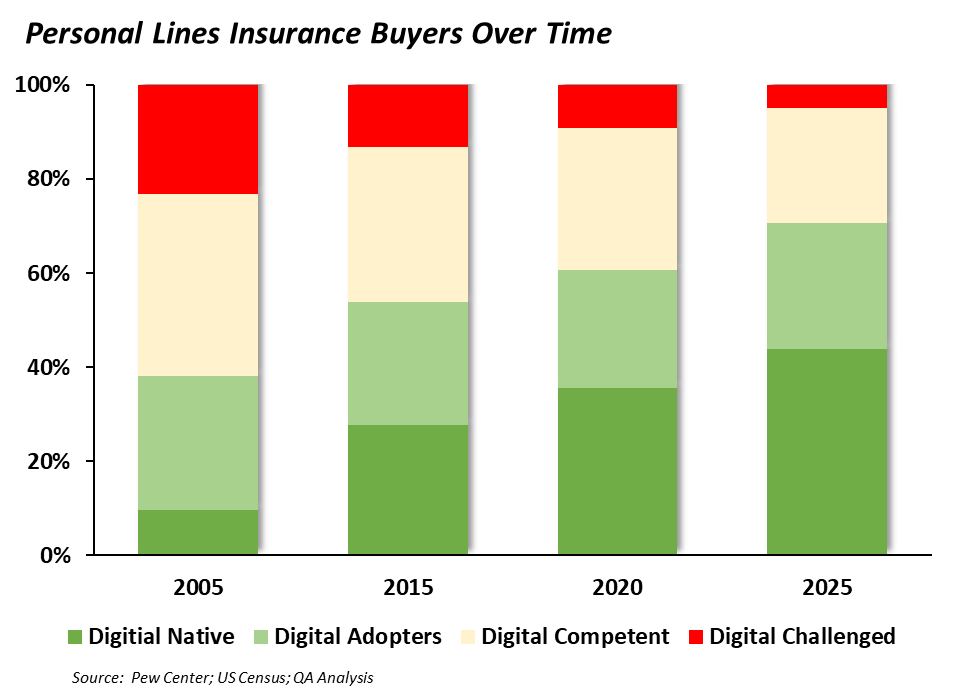
      The customer-centric revolution has finally reached the insurance industry. Slowly and sometimes reluctantly, large insurance carriers realized that confusing forms written in archaic language frustrated their customers, who perceived the industry giants as only trying to protect their own interests. After all, most carriers didn’t even refer to them as customers; they were “policyholders” or “claimants.”

      But that has changed significantly, especially in the past 15 years. While industry pioneers like GEICO and Progressive took a more customer-focused and “friendly” approach to catapult their personal lines business, many of the largest carriers now boast a Chief Marketing Officer, Chief Customer Officer, or Chief Engagement Officer. Those senior titles were practically unheard of 20 years ago.

      This shift—from an institutional, legacy view to an external, customer-focused perspective—is timely, because the demographics of insurance buyers are changing.

      The case for digital transformation in insurance

      Consider the following chart, which reflects the purchasers of personal lines (auto, homeowners, renters, etc.) insurance from 2005 actual to 2025 forecast.

      insurtech digital transformation in insurance

      Buyers are becoming more digitally adept. This trend is not simply driven by age, as Gen X/Yers and Millennials overtake their less tech-savvy parents and grandparents. Older generations are becoming more digitally proficient, too, and many a grandparent today is as adroit with Facebook and online shopping as their grandkids are. So, while the population shifts to a younger generation of insurance buyers, the growing technological sophistication of earlier generations is accelerating the trend.

      Today’s insurance consumers can be broken into four groups:

      • Digital Native: these buyers grew up with or have become comfortable with digital “ubiquity.” The internet has always been a part of their life and interacting with sellers online is fundamental, if not “old school.” In fact, they expect to be able to interact with companies anywhere, on any digital device (smartphone, tablet, Alexa/Echo devices, etc.), with lightning speed and zero complexity. These buyers aren’t impressed with a quote in “15 minutes or less”—they want it in 60 seconds or less. While powered by the influx of Millennials (born ~1980-1996) and Gen-Z (born after 1996) into the insurance marketplace, they are augmented by many Gen-X (born 1965-1979) who came of age in the PC era and some Baby Boomer (1946-1964) technophiles.
      • Digital Adopters: with Gen-X and early Gen-Y as their largest core, digital adopters have come to expect most, if not all, of the ease and simplicity of ubiquitous digital interaction as the Natives. They may, however, be less reluctant than the Digital Natives to resort to an actual phone call to a carrier.
      • Digital Competent: while this group may not have come of age with PCs and smartphones, they have grown accustomed to and comfortable with emerging technologies. They may not handle every brokerage or banking transaction online or by smartphone app, but they know how to. Even though they may still read a physical paper (sometimes just out of nostalgia), they are regularly reading their morning news on the train on a Kindle or iPhone.
      • Digital Challenged: this group prefers the old ways of interacting with their carrier or agent—by phone or even in person—and eschews (or distrusts) most things digital. They may pay by check (or cash) rather than ACH or credit card, and they want to speak with a person, not some “interactive voice response” system. The dwindling number of the digitally challenged is partly driven by the passing of the Silent Generation (born prior to 1945) but also by steadfast technophobes and those wary of digital transactions in general.

      The importance of this customer evolution for insurers is clear. Currently, over 50% of personal lines buyers (Digital Natives and Digital Adopters) have high expectations for a concrete, pervasive, simple, purposeful, and engaging digital customer experience. That’s up from under 40% just 10 years ago. By 2025, they will represent more than 70% of insurance buyers. Carriers who do not embrace those changing demographics—and take on the cause of digital transformation—are apt to be left in the “digital dust.”

      The urgency of digital transformation in insurance

      Given the shift in demographics, digital expectations, and a desire to change what’s perceived as “wrong” with traditional insurance, it is no surprise that a new group of “disruptors” is emerging. Some of these startups are well-funded or mainstream carrier backed, and many of them claim to “reimagine” the insurance experience and eliminate unnecessary complexity in the process. These startups can seem daunting to traditional carriers. They leverage InsurTech innovations such as artificial intelligence and big data to improve and perhaps mechanize underwriting and product development. They offer a digital-only or digital-heavy customer experience to bypass physical agents or help manage claims. And they design digital-centric user interfaces and customer-focused user experiences. Here are a few examples:

      insurtech startups

      Rather than viewing these startups as foreboding harbingers of rampant disintermediation, job loss, or doom, traditional carriers can and are learning from some of the best-in-class innovators who are “plugging into” the new insurance buyer’s psyche. Many insurers are already using InsurTech advances developed in-house or through technology partners. However, to date, most big-carrier InsurTech applications have been aimed at cost/headcount reduction and efficiency gains. Robotic process automation helps eliminate rote tasks and clerical labor, “Big Data” and AI enhance the accuracy of pricing and underwriting, drones help assess damage and improve claims adjustment.

      But very few of the largest insurers have undergone the comprehensive digital transformation that’s needed to truly meet the needs and desires of this emerging customer demographic. A recent survey I conducted of P&C insurance executives bears this out:

      digital transformation in insurance

      Only a handful of insurers—the Digital Innovators—have implemented a cohesive and truly innovative digital customer experience. Meanwhile, 88% of insurers are either investigating or partially implementing digital customer experience strategies. However, many programs labeled “digital strategy” are still internally focused: trying to leverage data and communication to improve internal or legacy KPIs, metrics, and processes. They are not externally focused on the customer experience and evolving customer needs.

      Digital Adopters, 40% of the sample, have taken some steps towards innovative digital engagement. They may have built enhanced online user interfaces or smartphone apps, for instance. But often they are merely “shining a sneaker” rather than acting like digital disruptors. Digital Investigators, meanwhile, are actively developing use cases, business cases (ROI), and prototypes, but they seem to be moving glacially, allowing ideas to get stymied in bureaucratic committees.

      Finally, about 10% of large, traditional insurers (Digital Dinosaurs) either don’t have the requisite capital or the inclination to innovate; they are simply burying their heads in the sand. Some are content to focus on a declining customer segment that has no use for a digital solution (or at least a digital experience when it comes to insurance). This last group is pursuing what’s called a “last iceman strategy”—though there may not be much demand for ice delivery anymore, the sole surviving iceman does have a monopoly of that small market. For such a strategy to succeed in insurance, the last large player will have to have market dominance, given that the segment is likely to account for just 5% of insurance purchases by 2025, and is shrinking fast.

      What digital transformation in insurance looks like

      Pursuing a bona fide digital strategy has two core aspects. First, it is outward-looking, focused on emerging customer needs and preferences rather than internal needs like legacy processes, products, and reporting. Second, it is pervasive. It incorporates all elements of the value chain, from payments processing to regulatory reporting and compliance to historically mundane back-office operations—not just product development, pricing, underwriting, and claims. A digital strategy is not developing a new, “hip,” snazzy website or launching a smartphone app. Improving and tailoring the customer engagement experience is vital, but improved user interface (UI) and user experience (UX) alone will fail if underlying processes, approaches, and thinking do not embrace a pervasive digital approach.

      Established carriers can learn from, adopt, and improve upon startup InsurTech innovations, much as they did in the e-commerce era. But the demographics alone dictate that insurers move out of committee and into action. Ultimately, it may be less about “reimagining insurance” than refining, evolving, and adjusting to a digital world. Because when it comes to customer expectations and needs, the digital era isn’t coming—it’s here.

       
      This post first appeared at Quincy Analytics.

      ]]>
      https://businesstalentgroup.com/expert-insights/forget-insurtech-digital-transformation-insurance/feed/ 0
      Why the Agile Organization is Bigger Than You Think https://businesstalentgroup.com/future-of-work/why-the-agile-organization-is-bigger-than-you-think/ https://businesstalentgroup.com/future-of-work/why-the-agile-organization-is-bigger-than-you-think/#respond Thu, 17 May 2018 14:48:18 +0000 https://businesstalentgroup.com/?p=6396 agile organizationThere’s been a growing interest among big companies in the so-called agile organization and agile workforce. The Harvard Business Review outlines how agile methodologies—in which cross-functional teams are empowered to work independently and iteratively on large, complex problems—are transforming talent management, boosting productivity, and improving...]]> agile organization

      There’s been a growing interest among big companies in the so-called agile organization and agile workforce. The Harvard Business Review outlines how agile methodologies—in which cross-functional teams are empowered to work independently and iteratively on large, complex problems—are transforming talent management, boosting productivity, and improving speed-to-market.

      What “agile” means at an enterprise level is still being assessed and debated. Yet it’s clear that the push for agility is driven by a need for companies to respond more quickly to opportunities and threats by nimbly adjusting the assets—including human ones—they put against each. McKinsey notes that companies that proactively realign their best talent to their highest-value initiatives are 2.2 times more likely to outperform their competitors on total returns to shareholders.

      No wonder 79% of global executives rated agile performance management as a top priority in a recent survey by Deloitte.

      What is agile, anyway?

      It would be difficult to dispute the fact that big companies need to move faster and more flexibly. It’s also worth remembering, as do McKinsey’s Ram Charan, Dominic Barton, and Dennis Carey, that one of the biggest impediments to rapid talent reallocation is the failure of senior executives to identify and nurture top performers. The agile workforce has renewed people’s focus on attentive talent management and creative talent deployment, and that’s undoubtedly a good thing.

      Yet while many companies are thinking big about agile opportunities, the trouble—paradoxically—is that many aren’t thinking big enough when it comes to their teams and their people. In particular, CEOs, CHROs, and CFOs need to recognize that the agile organization goes beyond the four walls of the company. That means the shift to agility is not simply about transforming the way in-house teams operate, but about transforming the way they interface with the growing pool of on-demand talent that powers all big companies.

      Agility is not about ownership

      Building an agile organization and an agile workforce starts with the recognition that much of the talent needed for critical business moments—the most proven skills, the most relevant experience—isn’t actually in-house. Why?

      Because, by definition, many of the biggest challenges and opportunities that today’s companies face are either at the margins of traditional areas of business strength or else completely without precedent. Has anyone cracked the code for determining how to defend your business from the Amazon-ification of retail? Or how traditional consumer companies can size innovation opportunities in light of the Internet of Things revolution, or non-healthcare companies assess how to chart their moves into that sector? Your team has an existing business to run. What’s more, it may not have much previous experience to pull from to approach these moments confidently, skillfully, efficiently.

      That’s why:

      The answer to talent shortages isn’t simply to focus on hiring and retaining the best. It’s to recognize that—already—40% of today’s total global workforce is comprised of non-employee talent, including independent contractors, freelancers, professional services, and temp workers.

      What happens when you need a world-class pricing or forecasting expert, an experienced integration leader, or even a top product developer? Many of these workers aren’t available through traditional channels like full-time hires or big consulting firms. Instead, they prefer to work independently, supported by new project-based career paths that are powered by technology and by companies like Business Talent Group.

      Agility is about fit and speed

      Few would disagree that critical business moments deserve the right resourcing and leadership. And yet it can be surprisingly hard for companies to regularly and repeatedly accomplish when top leaders are already busy managing the normal demands of business. And when the critical business moment involves something where prior experience or related skills are at a deficit within the company? The trick is to get the right leaders from inside—and increasingly, from outside—the company involved in the right configuration to make the most of the moment.

      What’s more, during times of major transformation or growth, it may even preferable to have a neutral, external perspective to bring order and objectivity to complex, high-impact tasks:

      Agile growth with on-demand talent

      By now, the use of external talent isn’t new. In fact, almost 80% of chief human resource officers see a greater use of contingent, nontraditional employees as one solution to future worker and skill shortages, according to The Conference Board. This type of external resourcing provides important value in terms of adjusting resourcing with demand.

      To solve problems in an agile world, however, you can’t fall into the trap of seeing external talent resources purely as a productivity play. Some providers offer 24/7 access to remotely-based, on-demand independent talent for discreet tasks such as translations or infographics. These task-based services provide not just speed—overnight results!—but also often significant savings because of a labor arbitrage using off-shore talent.

      The full value of the high-end on-demand market is much greater. It’s rocket-fuel for growth and agility, empowering companies to move quickly on new opportunities, pilot new ideas before building them out for the long-term, and access hard-to-hire skills.

      But on-demand talent can power fast, agile growth only when it is recognized as a value-driver for the business. Every team within the company must understand its benefits and how and when to use it. And they must be supported by dedicated internal infrastructure, processes, and technologies that make engaging on-demand talent as seamless as possible. The on-demand talent program that helps you stay agile is the one that’s customized to your company.

      Agile teams need agile resources

      The surest way to empower internal teams to be agile is to give them access to the resources they need to make fast, intelligent decisions about where to go next—including external resources. Here’s a primer:

      1. Think bigger than your organization
      2. Build a channel for using on-demand talent as part of your agile workforce
      3. In particular, leverage on-demand talent for agile growth—the best form of agility
      4. Invest in developing your leaders so that they understand and use external resourcing strategically and fearlessly—it is now not only available at the highest caliber, but truly a new source of agility and competitive differentiation.

      ]]>
      https://businesstalentgroup.com/future-of-work/why-the-agile-organization-is-bigger-than-you-think/feed/ 0
      How to Accelerate Your Next Digital Transformation: A Q&A With Saad Ayub https://businesstalentgroup.com/expert-insights/how-to-accelerate-your-next-digital-transformation-a-qa-with-saad-ayub/ https://businesstalentgroup.com/expert-insights/how-to-accelerate-your-next-digital-transformation-a-qa-with-saad-ayub/#respond Tue, 08 May 2018 00:26:29 +0000 https://businesstalentgroup.com/?p=6363 saad ayub digital transformationsSaad Ayub is a senior information technology strategist who has helped Business Talent Group clients develop new IT operating models and assess technology-enabled change programs. Here, he talks about how companies can align IT and business needs, think holistically about emerging technologies, and accelerate digital...]]> saad ayub digital transformations

      Saad Ayub is a senior information technology strategist who has helped Business Talent Group clients develop new IT operating models and assess technology-enabled change programs. Here, he talks about how companies can align IT and business needs, think holistically about emerging technologies, and accelerate digital transformations.

      Saad’s experience—which includes applied research in artificial intelligence, management consulting, and leading technology organizations of large corporations—has given him a holistic perspective. His views on how to think about emerging technologies and digital transformation are informed by his in-depth technology knowledge (PhD in AI), broad business expertise (management consultant at McKinsey& Company), and lessons learned from leading multiple digital transformations (as a CIO and consultant).

      Your consulting practice focuses on helping companies expedite digital transformations. What does that entail?

      I help clients in a number of areas. First is creating digital transformation strategies that will align IT with the business and ensure that real, business-driven objectives are the focus—not just the technologies. Second is planning how to sequence the work. That entails building an effective digital transformations program and identifying the right organizational model. I also help clients develop the target technology solution landscape. That includes helping to optimize in-house resources, identifying delivery partners, selecting technology products, and building the right governance model for the program.

      How do you keep up with what seems to be a blindingly fast pace of change in the digital landscape?

      Digital transformation is a journey and not a one-time project. It is about developing a culture that focuses on continuously improving its current state through the effective use of technology. That means defining the major strategic business drivers, understanding technological and organizational constraints, aligning all organizations around an objective, and then executing in an incremental fashion. Picking the right technology is important, but it is not the driver of a digital transformation. In too many places, I’ve seen digital transformations miss the real opportunity as they become more of a techie project, implementing a cool technology.

      “Picking the right technology is important, but it is not the driver of a digital transformation.”

      Instead, I try to help clients play at the intersection of business imperatives and technology solutions frameworks. First, clarify what’s driving the need for change, and then figure out how to sequence the solution. To me, this is more about building a solution framework that answers questions like when to bring in new technologies vs. modernize existing ones, what external technology/delivery services to use, and which partnership to leverage. Ideally, there will be things you can do upfront that aren’t as dependent on making too many changes to your legacy environment. At the same time, you have to identify where and when you are going to do the foundational work that will eventually transform it. And, most importantly, you have to think through organizational implications.

      What I’ve found is that if companies don’t think holistically about emerging technologies, every division will do their own thing. Someone will start to experiment with machine learning, someone else will do their own AI planning—and suddenly all that functional expertise will be distributed in the organization. No-one wants to have to launch another application rationalization program in the future to try to clear the mistakes of their current digital transformation programs.

      Speaking of AI, how do you help clients figure out which buzzwords are worth chasing?

      Once again, from my perspective, the key thing to focus on during a digital transformation is the business objectives and not the new technologies. I start by helping clients figure out which strategic business drivers to focus on. After that, it’s easy to drill into the technology needs and assess how different technologies can help you.

      In my view, there are five business drivers for digital transformations:

      1. Seamless interaction with customers. The easier you make it for your customers to interact with you, the more revenue they will bring.
      2. Intelligent interaction with customers. Are you leveraging the knowledge of your organization to optimize the customer experience and outreach to customers?
      3. Your product portfolio. Can you come up with a digital product that complements your product portfolio? Does it change the way you manage the rest of your offerings? Are there digital products that will improve the customer’s experience with your physical products?
      4. The alignment of your infrastructure and your business model. If you are in a cyclical business, it makes sense for you to go to the cloud, because otherwise, you will spend too much money on infrastructure that is not needed during off-peak times. If you’re not in a cyclical business, you may think about it differently.
      5. How efficiently you are working. Can technology help your people do their jobs faster, better, smarter? Should you focus on digitizing your internal processes or go for more transparency through the better use of data internally?

      The first three items on that list are revenue drivers, while the others are about internal efficiency. I find that both with digital transformation and the use of technologies like AI, the focus often becomes the technology. That’s when you get into trouble, because you’re just chasing what’s hot at the moment.

      You’ve worked in many different industries. Can you talk about a few ways that digital challenges play out in particular ones?

      Let’s take the retail industry. For them, the real challenge is to figure out where they play—whether that’s primarily online, or multi-channel, or are focused on developing the store of the future. If you already have a store, how do you create a digital experience that complements it? If you’re an online retailer, should you open a physical store? Everyone is trying different things.

      Beyond that, I see an opportunity for retailers to use technology to understand how people interact with their stores. Connecting the multi-channel experience is table stakes. The next step is not just about improving the digital experience, but using that information to make smarter decisions about everything from inventory to pricing and supply chain.

      The other industry in which I’ve worked a lot is insurance. The insurance industry was once on the forefront of technology, because they’ve always had to use analytics to price their products. But over time, those legacy technologies became a burden, and insurance companies are now being challenged to think of different ways to offer their products and improve the customer journey. Creating seamless customers interactions is a huge driver for the industry, especially in the digital world. So they will have to figure out where they can leverage their legacy tech and where to start anew.

      The changing technology landscape requires one to keep assessing digital projects mid-flight. One of my projects in the publishing world began with an imperative to build a reading tablet for kids. Then, we realized that the hardware landscape was changing too quickly, and the client’s real value proposition lay in software. So we pivoted the project to delivering a browser-based reading solution for Mac and PC. The launch of the iPad changed the landscape yet again, and as a result, we had to change our priorities to ensure that an iPad solution was part of the deliverable.

      Let’s talk about how your work as an independent consultant might differ from other resources companies might engage for a digital transformation.

      I think the key question is whether a client wants a solution that’s based on a third party’s methodology and uses their company’s culture to come up with a solution—or one where external expertise is embedded into their company and used to accelerate a digital transformation solution that’s owned internally.

      Independent consultants do not employ a full-time team for which they need to find work. That has a couple of implications. First, it means their advice is unbiased. It also means they can work more effectively to develop internal skills. If you work with a large consulting firm, they will bring both senior and junior resources, and you will get an end product. With independent consultants, you will not only end up with the end product, but you may actually have much greater knowledge transfer and skill improvement than if you outsource everything.

      “With independent consultants, you will not only end up with the end product, but you may actually have much greater knowledge transfer.”

      I have an enormous amount of specialized expertise and experience, and I can work in more flexible ways. I can advise senior stakeholders about the most likely risks involved with a particular project, based on my experience. I can support and mentor their internal teams. Another way I can help drive large transformations is by taking on an interim leadership position. If your transformation impacts multiple organizations in the enterprise, it’s usually better to have a leader whose sole objective is to drive the transformation.

      What trends or issues do you think will be most challenging in the future?

      Remember that digital transformation is about a business journey and not just hot technology.

      Right now, it’s really hard for companies to get the business model right. Technology is one thing, but how does your business model need to evolve? Figuring out what mechanisms need to be in place to drive future evolution is the key to successful transformation. Do you need to fundamentally transform your products or will technology simply complement your existing portfolio? Do you need to leverage what’s happening to enhance your value prop?

      “Technology is one thing, but how does your business model need to evolve? Figuring out what mechanisms need to be in place to drive future evolution is the key to successful transformation.”

      I also find that experience is important in this space. Doing technology for the sake of technology is not impactful for the business. So the main issue is that some clients are launching a whole transformation but without thinking how to generate impact.

      Another common trend I am seeing is that people who have experience with certain digital technologies (e.g., cloud or mobile) or a specific digital initiative (digital marketing or analytics) approach digital transformations from that lens. It goes back to the old saying, “If all you’ve got is a hammer, everything looks like a nail.” Unless you approach a digital transformation holistically, you won’t get the full benefit of it.

      Need on-demand talent to support your digital transformation efforts? Get started today.

      ]]>
      https://businesstalentgroup.com/expert-insights/how-to-accelerate-your-next-digital-transformation-a-qa-with-saad-ayub/feed/ 0
      Building the Next Big Thing: An FAQ About Freelance Innovation Consulting https://businesstalentgroup.com/future-of-work/building-next-big-thing-freelance-innovation-consulting/ https://businesstalentgroup.com/future-of-work/building-next-big-thing-freelance-innovation-consulting/#respond Mon, 30 Apr 2018 19:50:22 +0000 https://businesstalentgroup.com/?p=6348 freelance innovation consultantWhether it’s building your next market-disrupting product or just honing your internal idea-gen and development processes, freelance innovation consultants offer an experienced and often invaluable third-party perspective. Here are some of the questions we at Business Talent Group hear most often about them, and our...]]> freelance innovation consultant

      Whether it’s building your next market-disrupting product or just honing your internal idea-gen and development processes, freelance innovation consultants offer an experienced and often invaluable third-party perspective. Here are some of the questions we at Business Talent Group hear most often about them, and our perspective on each:

      What is innovation consulting?

      There are many types of strategic consulting, but innovation / research and development (R&D) consulting focuses primarily on the strategic development of new products and services. The goal is growth, and by developing the appropriate talent, culture and processes, the right consultant can help make innovation a sustainable and repeatable part of the business.

      Some of the specific projects for which clients have requested support from BTG’s experienced freelance R&D consultants include: exploring breakthrough opportunities and designing new business models.

      Why would I need a freelance innovation consultant?

      It’s rare that a company has the in-house talent to support end-to-end innovation initiatives. A freelance innovation consultant offers the additional benefit of providing an experienced, objective third-party perspective. The value of this contribution is not to be overlooked, especially when exploring new markets or pivoting your business model.

      Your existing organizational processes are effectively tailored to your existing business scope. Though efficient in this sense, they can make it difficult to nurture new ideas. An independent innovation consultant can help develop new processes that work within your existing framework, yet allow for greater collaboration and iteration around new opportunities.

      How can a freelance innovation strategy consultant help?

      Simply put, they’ll help you grow in new directions. They will help you think differently and more creatively so you can keep up with an evolving market and remain competitive. A freelance innovation consultant brings years of experience and expertise to your project, giving you a solid foundation on which to build.

      They’ll research the market and capture relevant data—and together you’ll identify and explore potential opportunities, then develop a strategy for successful deployment.

      Why not just hire a full-time R&D specialist?

      There are plenty of times when a permanent hire is appropriate, but when it comes to R&D, speed and agility are significant factors. You’re not just trying to keep up with the market; you want to get ahead of it. And with how quickly markets evolve and shift, you have to be ready to move quickly.

      It takes a lot of time and effort to find and onboard the right full-time candidate, which means there’s significant potential for lost momentum and missed opportunities. Plus, if the candidate doesn’t work out, there are financial repercussions to consider.

      According to the U.S. Department of Labor, the cost of a bad hire equals 30 percent of the employee’s first-year earnings. At the executive level, that number rises dramatically, because it reflects more than just the sunk costs of recruiting and onboarding; it also includes the price you pay in reduced productivity and effectiveness—as well as potential damage to your reputation.

      The agility and cost efficiency offered by on-demand talent is likely why, according to Randstadt Sourceright’s Q4 2017 Talent Trends report, 61% of employers plan to replace up to 30% of their permanent positions with freelancers, gig workers, and independent consultants.

      What if I already have an in-house R&D team?

      Terrific! Keep them running like a well-oiled machine by complementing their skills with expertise in niche areas like blockchain or insights from a different industry. Freelance R&D consultants combine deep experience with technical expertise, providing valuable insight that your in-house team might be missing.

      You can also help them stay focused on what counts with a consultant who can take a disciplined approach to identifying which ideas are most promising and developing a strategic roadmap for their launch. Other freelance R&D consultants specialize in helping companies refine operating models and scaling successful pilots—all critical components to successful innovation at big companies.

      Will a freelance innovation consultant disrupt our methodology?

      This is a common fear, as businesses worry that a major shift in methodology could disrupt their current success. Rest assured that most freelance consultants are comfortable working within your existing methodology, and any tweaks or changes will be suggested with overall optimization in mind.

      Will an independent innovation consultant have access to enough market data?

      Though independent consultants don’t have the backing of a large consulting firm, many still have strong relationships with respected research firms. They can tap these resources for critical market data, which, when paired with client data sources, helps provide a clear, robust analysis of trends and potential paths to success.

      What makes BTG’s freelance consultants different from traditional resources?

      With BTG, you get access to a broader range of innovation specialists than many large consulting firms can provide. We let you pick from a robust pool of expert innovation strategists who hail from the world’s best consulting firms. The team you assemble can be selected based on background, skill set and experience level, and our consultants can ramp up or down on their given projects, as needed. Our freelance innovation consultants offer specific domain expertise without the hassle and expense of big consulting firms by providing:

      • Targeted, practical strategic advice
      • A cost-effective external perspective
      • Detailed evaluations of potential markets, competitive dynamics and major trends

      Plus, you’ll frequently find our freelance planning consultants possess both functional and industry experience, which allows them to provide a comprehensive strategy for your company — without the risk and overhead of a permanent hire.

      What sort of background do BTG’s freelance innovation consultants have?

      Our talent pool includes more than 2,800 McKinsey, Bain, EY, Deloitte, Booz, BCG, Accenture and Capgemini alumni and more than 2,000 alumni of specialty and boutique consulting firms.
      Roughly 67% have consulting and operational experience, and 78% have held executive roles at major corporations. They combine on-the-ground experience with extensive technical expertise to deliver a pragmatic outlook that goes beyond the usual abstract analyses.

      How have BTG’s freelance innovation consultants helped other businesses?

      Our on-demand innovation consultants have helped businesses across a number of industries successfully pursue new paths. Here are just a couple of examples:
       

      Marketing innovation

      The VP of Marketing Innovation at a F500 food and beverage company was frustrated by her team’s progress on a plan to present hundreds of new ideas to the CMO. She reached out to BTG to get smarter about which innovation models were most successful at other large consumer companies—and which was the best fit with their culture and processes.

      BTG put together a tight, two-person team to restructure the company’s innovation pipeline. Leading the work was one of the nation’s top innovation experts; supporting him was an analyst who gathered data on innovation models and success rates across the consumer goods industry. The project lead, meanwhile, interviewed stakeholders across the business to better understand and document current processes and identify points of friction.

      After synthesizing their findings, the two consultants organized a series of workshops to help executives understand different innovation models and best practices across the industry, and how those options could integrate with the existing pipeline.


      Technology innovation

      A $5 billion technology company was looking to develop its next billion-dollar business, but didn’t have the right internal resources to manage and lead the initiative. The SVP of Strategy turned to BTG for a consultant who could help the company look at out-of-the box ideas in a measured and cost effective way while identifying the resources that would be needed to make those ideas a reality.

      BTG provided a serial entrepreneur and tech pioneer to lead an internal task force, uncover the best opportunities, and implement them. Within three months, the consultant provided the company with an overview of the competitive landscape, developed an innovation framework through which to evaluate options, and supplied three strategic recommendations.

      Is your company struggling to grow in new ways or simply looking for strategic support on an innovation initiative? Tell us what you’re thinking and we can help find the right team for your project.

      ]]>
      https://businesstalentgroup.com/future-of-work/building-next-big-thing-freelance-innovation-consulting/feed/ 0
      Expand Your Reach with a Freelance Market Research Analyst https://businesstalentgroup.com/future-of-work/expand-reach-freelance-market-research-analyst/ https://businesstalentgroup.com/future-of-work/expand-reach-freelance-market-research-analyst/#respond Fri, 20 Apr 2018 17:29:55 +0000 https://businesstalentgroup.com/?p=6330 freelance market research analystAs companies grow, they often reach a point where sales begin to plateau. They’ve captured all the interest they can with current offerings, with widespread adoption of core products and services. To achieve additional growth, they’ll need to look beyond current markets and expand into...]]> freelance market research analyst

      As companies grow, they often reach a point where sales begin to plateau. They’ve captured all the interest they can with current offerings, with widespread adoption of core products and services. To achieve additional growth, they’ll need to look beyond current markets and expand into adjacent ones.

      However, adjacent markets—whether geographic, demographic, or product-related—are by definition outside the company’s domain of expertise. And coupled with this challenge is the pressure to move fast. But entering a new market blindly can be disastrous. Of the fastest-growing companies from a group of 2,250 studied by Bain & Company, 72% pursued market adjacencies—but only one in four adjacency moves were successful.

      In order to quickly and carefully assess how new opportunities will fit into the company’s broader portfolio and growth strategies, more and more executives are turning to freelance market landscape analysts. In fact, market landscape assessments were the most common project type (22%) that Business Talent Group clients requested help with in 2017.

      Freelance market analysis consultants offer market-specific expertise without the hassle and expense of big consulting firms by providing:

      • Targeted, practical market advice
      • A cost-effective external perspective
      • In-depth evaluations of market attractiveness, competitive dynamics, and major trends

      But while an increasing number of businesses are picking up the freelance model due to the many competitive benefits it offers, some still worry about bringing in an outsider to help with critical strategic initiatives such as market expansion. What they don’t realize is that targeted, strategic initiatives are exactly where freelancers excel—and where they deliver the best value to F1000 strategy executives and business unit leaders.

      Dispelling myths about freelance consultants

      Studies have shown that high-growth companies are the ones that focus on putting the right talent in place at the right time. Yet despite the maturation of the so-called gig economy, some companies are still hesitant to bring in freelancers to fill strategic roles. When it comes to freelance market analysis consultants, this is usually due to the persistence of one or more myths:

      • Myth #1: The consultant will impose a new methodology

        Every company has its own methodology for revenue growth. Once successful, few are eager to change things up. Independent consultants understand that, and most are comfortable working with in their client’s framework. If adjustments are necessary, they can often develop a substructure that is customized to the project without disrupting the business’ larger methodology.

      • Myth #2: The consultant won’t have access to adequate data

        Companies are sometimes concerned that independent consultants won’t have ready access to the right data, resulting in an incomplete—or worse, incorrect—market landscape assessment. The reality is that many freelance market researchers have partnerships with research firms that provide this critical information, and they can combine that with client data sources to perform a thorough analysis.

      • Myth #3: A permanent hire would be more cost-effective

        Though permanent hires are appropriate in many cases, the agility and targeted expertise offered by bringing in an outside consultant is particularly advantageous when it comes to market expansion. After all, it can take months to find and onboard a permanent hire, and in the meantime, markets are evolving and windows of opportunity are closing. Plus, if the candidate doesn’t work out, the cost amounts to much more than just their salary—particularly at the executive level.

      On-demand access to market landscape analysts makes it easy to get the insights and strategy you need to keep growing. You can cherry-pick the talent you need and integrate them quickly and efficiently into your workflow. Low overhead is another perk, but the real benefit is the agility that freelance talent offers.

      It’s likely why, according to Randstadt Sourceright’s Q4 2017 Talent Trends report, 61% of employers plan to replace up to 30% of their permanent positions with freelancers, gig workers, and independent consultants.

      The added benefit of an outside perspective

      In the rush to reach new markets, companies tend to believe that the next move needs to be a big one. Something transformative. Something bold. After all, those are the stories we love to hear about, aren’t they? Who wouldn’t want to launch the next Amazon Echo or Apple iPhone?

      It’s exciting to consider the possibilities, but it’s also important to be wary of falling in love with the excitement and forgetting about the reality. For the vast majority of companies that succeed in market expansion, the next move isn’t all that drastic. It’s more of a shift—a move toward a nearby market that’s not far-removed from the company’s core business.

      Extensive research has shown that the further away a company moves from its core competency, the less likely the odds of success. Once the excitement of a bold idea takes hold, however, it can be tough to steer stakeholders back toward reality. That’s when the outside perspective of a market research consultant can be particularly effective.

      By methodically exploring and assessing the potential offered by all adjacencies, a consultant can help identify the most promising opportunities, not just the most popular. Most freelance consultants also have executive experience in your target market, giving them an even deeper—and more practical—understanding of the move you’re considering. And success is always exciting, regardless of whether it’s the result of a move that’s big and bold or modest and meaningful.

      Achieving real growth with freelance market landscape consulting

      Business Talent Group’s freelance market landscape analysts possess both consulting expertise as well as real-world experience as executives, which allows them to quickly identify and assess potential markets, then strategize and plan the path forward.

      Here are three real-world examples of how our freelance market research consultants have helped companies uncover new opportunities, and how they can help you, too:

      1. Sizing a new category

        A multinational beverage company was eyeing a new category with a lot of buzz, but little clarity about global trends—or what success would look like. BTG’s experienced food and beverage
        strategist aggregated internal and external data to size the current market and formulate growth projections in each of the company’s core markets.

        Value: BTG’s consultants concluded that the company had a right to play in the space and helped the client make a build-or-buy assessment.

      2. Entering an adjacent space

        A financial services company needed to evaluate the feasibility of entering an adjacent space. Where were their strengths, and how could they be competitive across different geographies? BTG deployed an ex-McKinsey Engagement Manager, who had also served as VP of Strategy for a F500 financial services firm, to deliver insights on the company’s top two geographies.

        The consultant summarized key market sectors, assessed the competitive and regulatory landscape, and profiled major customer segments. He then built a model to estimate the overall
        size per market for a new entrant to the sector.

        Value: The analysis revealed attractive margins in the new space, prompting the client to build a strategic plan for capturing the opportunity’s full value.

      3. Understanding new buyers

        After launching a new patient-recovery product, a medical device manufacturer wanted to know if it could accelerate sales by working with healthcare payers and IDNs, rather than physicians. BTG assembled a team of two healthcare experts—including the former leader of McKinsey’s life sciences practice and a health economist with a strong network in the payer space.

        The BTG team interviewed payer representatives, refined value propositions, and provided a topline estimate of the opporunity’s magnitude.

        Value: After analyzing market attractiveness and reimbursement options, the consultants concluded that profit margins were too slim to proceed.

      When you bring in on-demand talent to identify new markets and accelerate growth, you improve agility through greater flexibility and targeted expertise. You can also make smarter decisions by exploring opportunities before completely committing to them.

      Need help identifying the best freelance market research analysts for your project? Business Talent Group can help.

      ]]>
      https://businesstalentgroup.com/future-of-work/expand-reach-freelance-market-research-analyst/feed/ 0
      Top 3 Business Problems – Consumer Goods https://businesstalentgroup.com/case-studies/top-3-business-problems-consumer-goods/ https://businesstalentgroup.com/case-studies/top-3-business-problems-consumer-goods/#respond Mon, 16 Apr 2018 14:32:50 +0000 https://businesstalentgroup.com/?p=6293 cpg consultantBusiness Talent Group’s on-demand consumer goods consultants combine deep industry experience with expertise in domains like pricing, sales ops, and customer insights. CPG consultants can help consumer goods companies assess new markets and opportunities, fill critical knowledge gaps, and plan and execute large-scale business transformations....]]> cpg consultant

      Business Talent Group’s on-demand consumer goods consultants combine deep industry experience with expertise in domains like pricing, sales ops, and customer insights. CPG consultants can help consumer goods companies assess new markets and opportunities, fill critical knowledge gaps, and plan and execute large-scale business transformations.

      Agility, innovation, and differentiation are the keys to success in consumer goods, where rapidly evolving markets have brought both opportunity and upheaval. Yet, too often, CPG companies find it difficult to mobilize the resources they need to move quickly.

      Here are a few examples where CPG companies have leveraged Business Talent Group’s on-demand consumer goods consultants.

      ERP Redesign

      The VP of strategy at one of a food and beverage giant's best-loved brands had commissioned an enterprise resource planning (ERP) redesign. The goal of the redesign was to streamline a heavily customized system and simplify dozens of critical processes. Unfortunately, no one on the team had the skills or capacity to go beyond the technical details and lead the work from a business process perspective. Looking for someone who could not just advise but execute, the company turned to Business Talent Group. Our consultant was a business process transformation expert who had trained at top consulting firms and led multiple ERP implementations at IBM's SAP practice. Working with the client's technical ERP lead, our consultant brought in best-practice insights, drove "As Is" business process documentation, and spearheaded early "To Be" design efforts. Then, after coordinating with executive stakeholders, he began the detailed and difficult work of standardizing and integrating master data into those plans. Throughout the process, he was instrumental at spotting potential issues and roadblocks and develop plans to rectify them. By the time he was finished, the company had decided to roll out his designs to other business units across the enterprise, including leveraging a Center of Excellence he created for master data management.

      S&OP Transformation

      A F500 CPG company with 30+ global brands was ready for a substantial redesign of its Sales & Operations Planning (S&OP) process. For the last update—which took place nearly a decade earlier—the company engaged a traditional consulting firm. This time, the CFO hoped to keep more of the process in house. Both the CFO and the head of Supply Chain could identify the major challenges: rationalizing the number and type of demand forecasts and creating a tighter link to supply chain planning. But how would the team address these challenges and achieve buy-in across so many independently-minded brands? Business Talent Group began by helping the client break the work into distinct phases. In the first phase, a tight, two-person team worked closely with senior leaders. The lead consultant of this phase was a former Booz Principal and Supply Chain Practice Leader. Supporting her was an expert operations improvement consultant. Together, the consultants worked with the client’s team to review S&OP reports and practices, introduce new KPI charts, and incorporate process disciplines. The team then redesigned the demand consensus process. Finally, they developed the high-level design for the new S&OP process. This initial project lasted four months. As it moved towards the next phase, implementation, Business Talent Group augmented the team with project management support.

      Optimizing the Manufacturing Footprint

      A multinational beverage company had decided to close one of its manufacturing plants and move production to a lower-cost facility. Looking for a steady, neutral, and disciplined hand to create more detailed plans and execute the work, the head of the company's project management office (PMO) turned to Business Talent Group. We connected the client with a manufacturing operations expert who had trained at Deloitte and led operational improvement initiatives across multiple industries. Working with the PMO, the consultant created a detailed work plan that included 16 different workstreams. After visiting the company's manufacturing facilities, however, he realized there was an opportunity to make operational improvements to the failing plant— and realize a higher long-term return. At the client's request, he provided additional analysis to support senior management as they discussed the best way forward. Ultimately, the client decided to keep the plant operational, and the work of Business Talent Group's consultant shifted to providing project management and data support for the new business process optimization initiative.
      ]]>
      https://businesstalentgroup.com/case-studies/top-3-business-problems-consumer-goods/feed/ 0
      Patient Engagement Strategies That Work for Life Science https://businesstalentgroup.com/expert-insights/patient-engagement-life-science/ https://businesstalentgroup.com/expert-insights/patient-engagement-life-science/#respond Wed, 04 Apr 2018 18:05:18 +0000 https://businesstalentgroup.com/?p=6257 patient engagementIf you work in Life Science, you’re probably familiar with the sobering statistics on nonadherence: between 20% and 30% of medication prescriptions are never filled, and roughly 50% of chronic disease medications aren’t taken as prescribed. The problem is complicated and costly. But by developing...]]> patient engagement

      If you work in Life Science, you’re probably familiar with the sobering statistics on nonadherence: between 20% and 30% of medication prescriptions are never filled, and roughly 50% of chronic disease medications aren’t taken as prescribed. The problem is complicated and costly. But by developing a more consistent—and more human—approach to boosting patient engagement, life science companies can increase adherence, improve outcomes, and enhance the bottom line.

      The heart of patient engagement is about deepening connections with brands. It’s about partnering with patients to help them better understand and manage their own health. It’s not a new concept, but the fast-changing healthcare landscape has heightened its importance. New technologies also promise to make patient engagement easier and more effective, which is doubtless why the market for engagement solutions is projected to reach more than $16 billion by 2020.

      Identifying the right opportunities

      The first step to boosting patient engagement is identifying where to start. In a portfolio of hundreds of brands, how can you uncover the most high-impact opportunities? One way is to quantify the relationship gap that exists between brands and their patients. Which therapies are patients seeking out when interest in a category grows? Starting with sites like Google Trends and SimilarWeb, identify patient engagement with individual brand websites and compare this to general search queries for a particular treatment area.

      asthma copd patient engagement

      In 2018 for example, I researched respiratory treatment engagement for three top-selling respiratory brands. I discovered that traffic to unbranded Asthma/COPD websites was down more than 10% over the past six months, whereas searches for Asthma and COPD information were actually the same or higher compared to the previous year. Also, the brands’ social media channels had a steady count of followers, but engagement on these platforms was incredibly low, at less than 0.003% per post.

      respiratory patient engagement

      The result: a strong opportunity for pharmaceutical manufacturers to deepen the connections between those brands, their patients, and healthcare providers. Search engines continue to be one of the top referrals of traffic to condition websites. So I advised the life science companies to invest in more top-performing and rising keywords in search engine and content marketing strategies—terms like ‘asthma allergy,’ ‘asthma guidelines,’ ‘aerosure for copd,’ and ‘icd 10 copd’—to strengthen the connection between their brands and the content patients and HCPs desire most. I also advised them to boost social media engagement by polling followers on the types of content they most wanted to see next.

      Leveraging delivery networks

      Most pharma companies use physician education programs to help cut through the network of intermediaries that sit between brands and their patients. In fact, 89% of U.S. companies surveyed by benchmarking firm Best Practices included healthcare provider (HCP) education among their top 10 patient engagement strategies. Yet the average patient spends between 13 and 24 minutes with his or her doctor.

      How can you encourage delivery networks to devote at least a few of those minutes to helping patients understand the value of your therapies?

      One of the most valuable tools is simply having—and sharing—detailed information about the patients to whom your therapies are prescribed. The better you understand what patients search for online, discuss on social media or in community groups, and so on, the better you can help healthcare providers understand and address their concerns.

      “The better you understand your patients, the more effectively you can help delivery networks understand and address their concerns.”

      Here are some other ways to encourage delivery networks to help boost patient engagement:

      • Make it easy for healthcare providers to get what they need. Healthcare providers are always looking for better ways to engage their patients with the limited time they have. Give them access to information that helps them do just that, and you’ll not only increase your credibility but make yourself a true partner in their practices.

        Ask your sales teams to provide a list of the top questions they receive from HCPs and use this to guide content strategies. Think about any relevant health data (i.e., activity, mindfulness, sleep, nutrition, etc.) that may be on patients’ phones and that could allow HCPs to personalize each visit. Can you make it easier for HCPs to download this data? You can also calculate the cost of non-compliance to each practice so HCPs better understand what’s at stake.

      • Make it easy for patients to get what they need from your brand. Delivery networks must trust you before they will refer their patients. So keep the patient journey in mind when organizing your content—and consider the perspectives of new patients, returning patients, and caregivers.

        Start by setting clear expectations for patients on what they can expect from your brand. Highlight a range of experiences from real patients, perhaps organized by desired outcomes; if possible, put side-effects in an easier-to-understand context (i.e., the likelihood of getting a headache is similar to the risk of a car crash in the U.S.). You can also partner with other content providers who are authorities in the condition to build links and cross-link with these communities.

        Finally, develop materials that facilitate communication between patients and HCPs. A discussion guide will give patients and caregivers an easy way to track symptoms and get more from each doctor visit. A starter list of relevant health technology applications can help broaden their understanding of the landscape.

      • Engage with patient communities. Each engagement is an opportunity to demonstrate that you understand the community’s experiences. Highlight patient and caregiver stories and celebrate their success. Sponsor community events that align with brand and patient values. And partner with nonprofit organizations to help them advance their missions by recognizing the brands’ contributions to the therapeutic area.

      A quick word about post-discharge outreach, which has grown in popularity and been shown to reduce preventable hospital readmissions, among other benefits. HCPs tend to assume that these phone calls are best done by professionals, and may struggle to conduct them at scale. But often, patients just want a chance to feel heard. During an engagement at Pleio, for example, I helped develop telephonic engagement programs that relied on normal people to conduct patient outreach. They listened to patient experiences, answered common questions, and helped them get started right with their new prescription. If a patient had questions or concerns about their prescription, the caller could refer them back to their pharmacy for more information.

      The outcome: These programs saw a 41% higher medication adherence rate (PDC) and at least one more script refill per person, per year.

      Making direct connections

      In an era of consumerized healthcare, the opportunity to address patients directly is more important—and more powerful—than ever. According to the Best Practices study, forming partnerships with patient advocacy groups and hosting educational portals are, respectively, the second and third most common patient engagement strategies used by life science companies.

      However, evidence suggests that the industry still has a long way to go. A 2015 WEGO Health study on patient engagement found that a majority of the participants surveyed did not believe the industry works collaboratively with patients, and less than 10% felt the pharmaceutical industry understands and addresses their needs.

      “Less than 10% of patients felt the pharmaceutical industry understands and addresses their needs.”

      The good news? The number one patient suggestion for improving engagement was increasing direct contact. Here are some ways to do that:

      • Blend tech and touch. SMS offers an efficient and powerful way to keep in touch with patients. But it can also feel very impersonal. Make it more relevant to patients’ lives by incorporating context into your outreach.

        With the arc of your brand’s therapeutic area in mind, think about which communications would be more effective at specific times of day, or given specific weather conditions. Can you design an outreach program that feels responsive to what patients are likely to be feeling? How else can you help them along their way?

      • Integrate application technologies into your products. Bundling medication applications with prescriptions is another way to proactively ensure patient success.

        Humira, for example, built an application that helps patients track where they gave their last shot, monitor their symptoms, and set reminders for their next injections. The Dexcom Clarity application provides a platform for patients to share their blood glucose data directly with healthcare professionals, who can respond within the application with any treatment recommendations and engage with patients who are falling behind.

      • Look for opportunities to personalize. 41% of patients diagnosed with obesity feel they could manage their conditions more effectively if they had more targeted information on how to change their behavior. Don’t miss the opportunities technology affords to adapt your communications to what you know about your patients.

      Overcoming internal barriers

      A modern marketing approach puts the patient first and requires constant development and iteration. Of course, in any big company context, competing priorities can compromise even the smartest efforts. So it’s worth reviewing how a focus on patient engagement can make a big impact across the organization:

      • Faster market research. Brands can use real-time A/B testing to identify which messaging components work best at engaging patients and healthcare professionals. Pilots can run with multiple variances in copy, visual, and calls-to-action; the full media weight can be scheduled a few weeks later using the winning combination.
      • More efficient clinical recruiting. By creating more engaged patient populations, brands can gain permission from people who are more interested in learning about and participating in future clinical trials—thereby reducing the cost of your next patient trials.
      • Stronger media performance. Deeper patient understanding helps brands create more natural and authentic connections with patient communities. Think of the ROI you will see!
      • Streamlined marketing technology stack. By focusing on the patient and HCP experience, brands can select technology partners that deliver the marketing goals and business outcomes that count. From website visitor segmentation, personalized landing pages, more contextual media placements and future engagement efforts.
      • Better outcomes. Increasing the value of care is everyone’s responsibility. Focusing on patient and caregiver engagement allows brands to build relationships with healthcare providers and give sales teams what they’ve always wanted: insights that make it easier to grow their customers’ business.

      The time to start is now

      Technology has dramatically expanded the number of ways that life science brands can personalize the patient journey. Success, however, starts not with technology but by understanding patients’ needs, concerns, and motivations. Only then can companies craft the best engagement strategies and create more complete, empathetic, and personalized care for patients.

      Greater patient engagement does more than just drive prescriptions—it also helps patients improve their health at lower cost. And that’s something all stakeholders in the healthcare equation can be happy about.

      ]]>
      https://businesstalentgroup.com/expert-insights/patient-engagement-life-science/feed/ 0
      Behind the Buzzword: Digital Health https://businesstalentgroup.com/expert-insights/behind-the-buzzword-digital-health/ https://businesstalentgroup.com/expert-insights/behind-the-buzzword-digital-health/#respond Thu, 29 Mar 2018 13:43:37 +0000 https://businesstalentgroup.com/?p=6197 what is digital healthLike many fast-moving, tech powered domains, digital health has gone by a number of different names throughout the years: eHealth, mobile health, health 2.0, and connected health, to name a few. Proponents promise nothing less than a revolution. Digital health, they say, can deliver more...]]> what is digital health

      Like many fast-moving, tech powered domains, digital health has gone by a number of different names throughout the years: eHealth, mobile health, health 2.0, and connected health, to name a few. Proponents promise nothing less than a revolution. Digital health, they say, can deliver more efficient, personalized, and accessible healthcare, at lower cost, with better outcomes.

      So what is digital health? And, more importantly, what opportunities does it offer today’s health and life science companies?

      In this edition of Business Talent Group’s Behind the Buzzword series, we examine both the promise and the hype.

      What is digital health?

      From Fitbits to smart pillows and Electronic Health Records (EHRs) to virtual doctors, examples of digital health are everywhere. They are united by the common goal of using technology to improve patient outcomes, reduce inefficiencies, and create useful, effective health services that weren’t possible before.

      The technologies behind digital health include connected devices, sensors, and wearables that enable people to track, analyze, and act upon real-time information about their well-being.

      They also include applications that facilitate the sharing of health information, whether between patients and their healthcare providers or among groups of patients who suffer from the same condition.

      They include administrative systems that securely streamline the substantial amount of documentation that healthcare providers must execute. And they include data-driven systems that promise to empower insurers with insights that can help them make smarter decisions about managing care and costs.

      What’s the potential?

      According to Global Market Insights, the digital health market is expected to grow by a compounded annual growth rate (CAGR) of nearly 26% over the next several years, topping $379 billion by 2024.

      Healthcare payers and providers are excited by the prospect of delivering better care at lower cost and keeping up with the increased consumerization of healthcare.

      Life Science companies see an opportunity to increase patient adherence, boost patient engagement, and add billions of dollars in incremental revenue.

      And consumers are increasingly interested in technology-enabled health interventions, whether through telemedicine or self-monitoring.

      Investment in the space has skyrocketed, as well.

      What are the challenges?

      By now, it’s clear that digital health presents a number of compelling opportunities. Unfortunately, large-scale success hasn’t always been easy to come by. There’s a lot of noise in the market. The array of stakeholders is difficult to understand, much less coordinate. Companies struggle to define and scope the most promising opportunities. They struggle to develop engaging digital health applications that are as effective in the real world as they are in the lab. And they have limited tools for assessing the value of their digital health investments.

      Perhaps not surprisingly, some experts have begun to recommend a reset in expectations—and investment.

      On the other hand, it’s become clear that the technologies behind digital health aren’t going anywhere. They will only become more pervasive, with greater adoption and utilization over time. So if health and life science companies want to stay relevant—and really capture the revenue enhancement possibilities—they must make an organization-wide commitment, aligning people, processes, and investments accordingly.

      ]]>
      https://businesstalentgroup.com/expert-insights/behind-the-buzzword-digital-health/feed/ 0
      10 Ways Freelance Marketing Consultants Can Accelerate Business Growth https://businesstalentgroup.com/future-of-work/10-ways-freelance-marketing-consultants-can-accelerate-business-growth/ https://businesstalentgroup.com/future-of-work/10-ways-freelance-marketing-consultants-can-accelerate-business-growth/#respond Thu, 22 Mar 2018 19:42:46 +0000 https://businesstalentgroup.com/?p=6211 freelance marketing consultantsThough there’s no one secret to business success, there is one challenge that every business faces during times of rapid growth: getting the right people on board. In marketing and sales, securing experienced leadership is particularly critical, as evolving trends and technology make it tough...]]> freelance marketing consultants

      Though there’s no one secret to business success, there is one challenge that every business faces during times of rapid growth: getting the right people on board. In marketing and sales, securing experienced leadership is particularly critical, as evolving trends and technology make it tough enough to keep up, let alone get ahead.

      Some businesses spend months searching for a “unicorn,” a marketing and sales professional who can do it all. Others turn to their personal networks for a quick fix, hiring friends or family who possess tangential knowledge and might grow into the role.

      Hiring a freelance marketing consultant or a freelance sales consultant is another potential path. At Business Talent Group, we find that companies turn to freelance marketing consultants when they need to tackle critical projects without the hassle and expense of big consulting firms. These consultants can help with projects like:

      • Market opportunity and growth evaluations
      • Strategy and planning
      • Project and program management

      Of course, not all sales and marketing consulting solutions are the same—or right for the same situations.

      It’s not about speed, it’s about agility

      Often, there’s a specific impetus driving the need for strong sales and marketing leadership, whether it’s a product launch, the emergence of a new customer segment, persistent pricing concerns, or ineffective marketing and sales campaigns. But in the rush to address current concerns, businesses inadvertently create new ones.

      Speed is important, yes. Especially if you’re running lean, as most growing businesses are. But to focus on speed is to think only for the short term. When you shift the focus to business agility, speed and cost-effectiveness follow naturally. An agile strategy is a long-term strategy, one that positions you for sustained business growth by making it easier to evolve along with the market. Agility is best achieved through a flexible hiring strategy that takes both current and future needs into account.

      Rushing to hire the wrong people: all pain, no gain

      According to the U.S. Department of Labor, the cost of a bad hire is equal to 30% of the employee’s first-year earnings. At the executive level, that number rises dramatically, because it includes more than just the sunk costs of recruiting and onboarding; it also includes the price you pay in reduced productivity and effectiveness, as well as potential damage to your reputation.

      It takes a lot of time and resources to find that unicorn sales or marketing professional. And once you’ve found them, there’s a lengthy ramp-up period before they can really dig in. On the other hand, tapping your “shadow labor force”—the circle of associates who you hope could grow into the role with time—might reduce initial costs, but it comes with an even longer ramp-up time and, ultimately, the increased risk of failure.

      Given these additional considerations, some analysts have estimated the total price of a bad executive hire to be anywhere between five to 15 times salary. This means that, on the low end, someone making $150k annually could potentially cost a business $750k if they don’t work out.

      Plus, whether you wait to fill a permanent position or rely on your shadow labor force, the market could have already shifted by the time your new hire is fully onboarded, putting you behind in the market—and back at the drawing board.

      On-demand knowledge is on-demand agility

      The fastest growing companies focus on putting the right talent in place when they need it most. A study by McKinsey found that 51 percent of fast growers have ensured they have the right sales talent and capabilities in place for the future, compared with just 33 percent of slow growers.

      Though still maturing, the so-called gig economy is already having a big impact in this regard. In fact, according to Randstadt Sourceright’s Q4 2017 Talent Trends report, 61% of employers plan to replace up to 30% of their permanent positions with freelancers, gig workers, and independent consultants. Many sectors are adopting the freelance business model due to the competitive benefits it offers:

      • Specific, targeted domain expertise
      • Flexibility to ramp up and down
      • Seasoned talent that’s willing to roll up their sleeves
      • Agility to evolve along with a rapidly changing market

      Low overhead is another perk, especially for smaller projects, but the real benefit is the agility that freelance marketing and sales consultants offer. When you can’t wait months to fill permanent positions, on-demand access to extra capacity or subject-matter experts makes it easy to assemble the best team for the job. You can cherry-pick the talent you need and integrate them more quickly and efficiently into your workflow than, say, a 10-person team of consultants.

      Sustaining growth with freelance marketing consulting

      Business Talent Group’s freelance marketing and sales consultants possess both consulting expertise as well as sales and/or marketing operating experience, which allows them to quickly strategize, plan, and execute a broad range of initiatives.

      Here are 10 real-world examples of how our on-demand sales and marketing consultants have helped companies grow quickly and sustainably, and how they can help you, too:

      1. Building an eCommerce business: BTG connected the digital group at a major pharmaceutical company with former McKinsey consultant to build its ecommerce business.
      2. Deepening connections with customers: A former Bain consultant and marketing leader at Intel helped a Fortune 100 retailer explore the potential of tapping into online communities and social media networks.
      3. Creating a digital strategy: A former Bain consultant with a strong Internet background created the digital strategy for a new Direct-to-Consumer business at a leading finance company, resulting in a highly profitable new business.
      4. Launching a new brand strategy: A marketing executive with experience at McKinsey, Bank of America, and GE helped a client’s internal marketing team launch a new brand strategy.
      5. Optimizing marketing spend: When a major broadcasting company wanted to capture and serve a newly identified demographic segment, BTG proposed a two-person hybrid team: The former president of marketing at a top entertainment company and an expert management consultant, formerly part of McKinsey’s global media practice. The low-six-figure, two-month project resulted in rapid adjustments that captured a rare opportunity and still-growing ROI.
      6. Creating a customer loyalty program: BTG connected a consumer media company with a marketing executive who had spent her career crafting loyalty programs. The resulting program launched on time and on budget and has subsequently been credited with helping to reverse the company’s unstable financial trajectory.
      7. Streamlining vendor relationships: A former J&J VP-level marketing executive helped a major gaming company streamline agency relationships.
      8. Redesigning digital marketing: A senior executive with 20+ years of creative experience at ROLL Corporation and E! worked with a leading entertainment company to redesign their digital marketing organization and initiate new ways to more directly communicate with the end user.
      9. Refining pharmaceutical lifecycle management strategies: A former Booz and Accenture consultant and life-cycle management expert with operating experience at Bristol-Myers Squibb and Becton Dickinson helped a global pharma giant’s research team analyze patient trends and market demand to identify new biomarkers for a mature drug.
      10. Piloting a new pricing model: BTG’s pricing specialist built and implemented an analytical dashboard for a Fortune 500 clothing retailer that was updating pricing models to incorporate consumer behavior across channels. After a successful two-month pilot, the team added more product categories and implemented the dashboard across its stores.

      When you bring in on-demand talent to fill knowledge gaps and accelerate growth, you improve agility through greater transparency, accountability and flexibility. You can also make smarter decisions by exploring opportunities before completely committing to them.

      For many businesses, this represents a significant shift in their hiring model, one that requires getting buy-in across the organization and adjusting procurement, HR and legal processes accordingly. We can help with that, too. Get started with an on-demand talent program today.

      ]]>
      https://businesstalentgroup.com/future-of-work/10-ways-freelance-marketing-consultants-can-accelerate-business-growth/feed/ 0
      New eBook – How Life Science Can Win With Digital Health https://businesstalentgroup.com/expert-insights/digital-health-and-life-science-beyond-the-pill/ https://businesstalentgroup.com/expert-insights/digital-health-and-life-science-beyond-the-pill/#respond Thu, 15 Mar 2018 15:23:04 +0000 https://businesstalentgroup.com/?p=6177 digital health and life scienceDigital health and life science seem like a match made in heaven, promising not just to increase patient adherence but boost engagement, improve outcomes, and add billions of dollars in incremental revenue over the next few years. Yet to succeed in beyond the pill, life...]]> digital health and life science

      Digital health and life science seem like a match made in heaven, promising not just to increase patient adherence but boost engagement, improve outcomes, and add billions of dollars in incremental revenue over the next few years.

      Yet to succeed in beyond the pill, life science companies must overcome a number of challenges. What’s the best way to structure Beyond The Product teams and build a business case for scaling successful initiatives? How can life science companies uncover the most promising opportunities and calculate the ROI they deliver to the broader organizations?

      Digital Health and Life Science: Success Beyond the Pill

      In our latest eBook, Digital Health: Scaling Pharma X.0—written by digital health expert Karl Hess—we explore how life science companies can develop effective beyond the product operating models.

      Download your copy now »

      Filled with tips on what works and what doesn’t—and best practices from industry leaders—this eBook will help life science companies:

      • Establish a corporate structure and governance that makes it easy to pilot new initiatives
      • Focus on the most promising areas for generating incremental revenue
      • Drive wider-scale adoption of successful experiments
      • Build sustainable, value-adding digital health services

      ]]>
      https://businesstalentgroup.com/expert-insights/digital-health-and-life-science-beyond-the-pill/feed/ 0
      Preparing for a Successful Business Transformation https://businesstalentgroup.com/expert-insights/successful-business-transformation/ https://businesstalentgroup.com/expert-insights/successful-business-transformation/#respond Wed, 07 Mar 2018 13:53:03 +0000 https://businesstalentgroup.com/?p=6167 successful business transformationThese days—thanks to the pace of technological and market-driven disruptions—transformation has become the norm, not the exception. Disruptions create stress on an organization’s capacity to adapt and thrive. They also leave it susceptible to competitors for whom agility is a core competency. If you are...]]> successful business transformation

      These days—thanks to the pace of technological and market-driven disruptions—transformation has become the norm, not the exception. Disruptions create stress on an organization’s capacity to adapt and thrive. They also leave it susceptible to competitors for whom agility is a core competency.

      If you are trying to prepare for a successful business transformation, you will need to go beyond the details of the initiative and evaluate your broader corporate culture. In particular, you will need to build what I call transformational fitness: the ability to adapt and thrive in a fast-changing environment. Does your company have the right mindset and capabilities? Are its structure and decision-making processes optimized for speed and agility?

      Transformational fitness helps organizations quickly assess a change, adapt to it, and leverage it to deliver greater business value. To build transformational fitness, companies must combine a clear view and understanding of external disruptors—market trends, technology, government regulations, talent availability and generational differences—with a focus on culture, leadership, technology adoption, and organizational design.

      Here is what you will need to do to prepare your company for a successful business transformation:

      1. Understand external disruptors

      Allocate both human and technology resources to evaluate the external forces that are poised to reshape your market. Some organizations find it efficient to outsource this type of work, while others keep it in-house or leverage a combination of both types of resources. Either way, your goal is daunting… it is to gain a detailed understanding of what lies ahead, as well as what is happening both around and in your organization. But it is also critical. Corporate history is littered with examples of organizations whose leadership minimized disruptive threats when they appeared, only to fall prey to them later.

      Remember, being a bigger ship does not necessarily mean that you will weather the storm better. It does mean that it will take you more effort to change course, while smaller and more agile organizations ride the waves created by the storm as well as the waves created by your ship.

      2. Build an agile culture

      Think about the internal achievements that are rewarded by your culture. Do you have a culture that memorializes past accomplishments or one that rewards the creation of new products, services, and process improvements? To build an agile culture, you need to do more than include it in your corporate values statement. Instead, you should make sure that your incentive systems, recognition and reward programs, learning and development opportunities, and promotion practices are organized around making it happen.

      Your aim is not to “move fast and break things.” But you do need a strong process for identifying and reinvesting learnings—both from successful and failed endeavors. This will help your organization build internal intellectual property and agility.

      3. Cultivate internal leaders

      Leadership is as critical to culture as it is to transformation success. Every organization is unique, but all must cultivate leaders who are flexible thinkers, creative problem-solvers, and open to new ideas. They must also be keenly aware of how change impacts different parts of the company—and skilled at engaging and bringing people along with them.

      4. Keep an eye on technology

      What impact will technology have on the sustainable growth of your company? Answering this question is critical to your ability to navigate future disruption.

      When you assess the risk that a new technology poses, consider not just the immediate costs and benefits to your organization, but what new sources of competition it might create. Cable providers did not initially view the “amateur” content on streaming services as a threat to scripted programming. Yet the ability these services eventually gave consumers to pay just for what they want to watch has prompted record numbers of people to “cut the cord” on their cable subscriptions.

      5. Create dynamic team structures

      Organizational design is moving away from its theoretical origins (i.e., the structures, systems, and processes that are designed and implemented to deliver certain outcomes). Instead, it is evolving into a more socially driven concept, where open communication processes generate ideas, stimulate innovation, and provide transparency in small teams across functions and with stakeholders. This, in turn, has created a need for more fluid business structures, dynamic skills to work within those structures, and new systems and processes to develop and reward the talent.

      Because these five factors are both changing and interdependent, the need for transformational fitness is greater than ever before. It takes agile leadership to be vigilant about upcoming changes and how they will impact current plans. It also takes organizational agility to adapt to updated plans—and find ways to implement them.

      Transformational fitness is something that does not always come easily to big, legacy organizations. If your organization is struggling, you may find it is more effective to work with external experts who can help your leadership design and build a culture that actively identifies, assesses, and addresses the need for change. Then, just with other fitness programs, you will need to periodically assess its effectiveness and update your fitness program accordingly.

      Need an on-demand transformation consultant or team? We can help!

      ]]>
      https://businesstalentgroup.com/expert-insights/successful-business-transformation/feed/ 0
      Three Ways to Drive Operational Efficiencies https://businesstalentgroup.com/expert-insights/driving-operational-efficiencies/ https://businesstalentgroup.com/expert-insights/driving-operational-efficiencies/#respond Fri, 02 Mar 2018 20:24:08 +0000 https://businesstalentgroup.com/?p=6157 driving operational efficienciesIt can be tempting for operations executives to focus on the challenges that are unique to their businesses: why their processes and customers are different, for example, or what technical challenges set them apart. But lessons from one industry often apply to another. They can...]]> driving operational efficiencies

      It can be tempting for operations executives to focus on the challenges that are unique to their businesses: why their processes and customers are different, for example, or what technical challenges set them apart. But lessons from one industry often apply to another. They can spur new, creative solutions to problems—solutions that might not occur to people who aren’t deeply versed in a variety of different domains.

      I’m an exec with experience across CPG, financial services, digital media, and SaaS, and I’ve found one of my greatest strengths has been the ability to see commonalities among operations across these businesses. Those insights have helped me to drive outsize results, and they can help you too.

      Here are three tips for optimizing operations in just about any industry or company size:

      1. Get data—then go beyond it

      By now, we all understand the importance of making data-driven decisions. Still, it’s easy to make excuses when the numbers aren’t readily at hand, or when they have to be collated from a bunch of different sources.

      It’s equally important to cultivate the ability to use your data to understand key drivers. Structure status meetings around reviewing the numbers—but go beyond surface-level questions like, “Is the customer happy?” or “Can you get them to increase their order size this month?” Especially with junior team members, the answers to these yes/no questions will be binary, and they won’t be all that revealing. To really understand the drivers behind your data, ask open-ended questions about specific points. Start questions with “why” and “how.” Ask questions, formulate hypotheses, test them, take findings, and adjust hypotheses.

      You’ll also need to make sure you’re asking these questions in the right environment. What’s the culture of the team meeting? Is it an open, trusting space where people can admit they need help? If it’s not, then transfer these questions to one-on-ones or small group settings with a trusted leader.

      2. Keep a close eye on roles and responsibilities

      In fast-paced environments—whether it’s an established business that needs to reinvent itself or a new business looking to scale—business teams often find that their roles and responsibilities are nebulous. Core roles may once have been well-defined, but shift and stretch as the team grows. Sometimes an executive mandates what seems like a small, necessary change that feels enormous to the team. As long as teams are up to the challenge and have the resources they to succeed, these sorts of changes aren’t a problem. But when executives don’t recognize a team’s unease with what they’re being asked to do, they may see a negative impact on results.

      The solution is to take a step back and think deeply about the structure of your team. If you’ve built a trusting relationship with them, you’ll find it illuminating to initiate a frank discussion about how they feel. You may find you need to make tweaks based on individual skills or interests. You may identify a skills gap that requires additional training or coaching. You may find that existing team members are not right for their responsibility, in which case you’ll have to determine whether that responsibility should lie elsewhere or if you need additional headcount to get the right talent. You might even conclude that the new responsibility isn’t necessary.

      But you’ll never reach the right conclusions unless you’ve dug beneath the surface to identify what’s really going on.

      3. Quantify the qualitative

      Analyzing feedback is a crucial way to improve sales and service. Qualitative feedback is often easiest to come by, and it can be eye-opening. However, it’s important to understand an issue’s prevalence before taking major action to address it. For large sales and customer service teams, designing systems for capturing qualitative feedback that are well-aligned with day-to-day activities can be a game-changer. Many such systems are clunky and create “extra work” for sales and Client Service reps.

      But by taking the time to understand your team’s daily activities, you can minimize how intrusive the data collection is—and increase both usage and utility. If your sales reps create contracts on one platform, then have to enter the same information into a CRM, you might think about integrating the two platforms. Chances are, you’ll recoup the expense of implementing the change by saving time that your reps can allocate to other value-added activities. And you’ll increase the accuracy of the data, since there will be fewer opportunities for crucial details to be entered incorrectly.

      An automated deal desk can also help capture valuable data without slowing down your broader sales process. I recently helped a SaaS company implement a workflow where, instead of using email to initiate deal desk proceedings, sales reps simply checked a box in Salesforce that triggered notifications to the deal desk team. Each notification included key information—already entered by the rep into the CRM over the course of the sales cycle—and allowed deal desk members to take timely action. And the data collected within the CRM, across both reps and deal desk employees, helped the ops team analyze, troubleshoot, and improve.

      These are a few ways to decrease the amount of non-revenue generating work that your employees have to do, while improving data collection and reporting accuracy and accelerating business decisions. Continuous CRM data generation can help ops teams better identify broader trends, insights, and issues—and increase its ability to drive results.

      Need an operations or performance improvement consultant? We can help!

      ]]>
      https://businesstalentgroup.com/expert-insights/driving-operational-efficiencies/feed/ 0
      Will Robots Take YOUR Job? https://businesstalentgroup.com/future-of-work/will-robots-take-my-job/ https://businesstalentgroup.com/future-of-work/will-robots-take-my-job/#respond Tue, 20 Feb 2018 16:23:35 +0000 https://businesstalentgroup.com/?p=6126 will robots take my jobBy now, it’s long been clear that the future of work will include an assist from our robot friends. More ominously, according to a new report released by the World Economic Forum (WEF), 1.4 million US jobs will be disrupted by technology and other factors...]]> will robots take my job

      By now, it’s long been clear that the future of work will include an assist from our robot friends. More ominously, according to a new report released by the World Economic Forum (WEF), 1.4 million US jobs will be disrupted by technology and other factors between now and 2026.

      So will robots take your job? The disruptions are expected to affect both highly specialized and highly generalist roles, from administrative and clerical to sales and finance related jobs. The people who will do best are those who have “hybrid” skills like collaboration and critical thinking, as well as deeper expertise in specific areas.

      Unsurprisingly, most executives are apprehensive about the changes. The Conference Board’s C-Suite Challenge 2018 discovered that creating new business models because of disruptive technologies is among the top concerns of today’s CEOs. That’s also true for the rest of the C-Suite, including CHROs and CFOs.

      Moving into new roles

      The good news, according to WEF research, is that 95% of the workers most at risk would find good-quality, higher wage work if they had adequate reskilling. At-risk workers who retrain for two years could receive an average annual salary increase of $15,000—and companies would be able to find talent for jobs that might otherwise go unfilled. That’s good news for C-suite executives, whose top concern, per the Conference Board report, was attracting and retaining the right talent.

      “The only limiting factor on a world of opportunities for people is the willingness of leaders to make investments in re-skilling that will bridge workers onto new jobs. This report shows that this investment has very high returns for businesses as well as economies—and ensures that workers find a purpose in their lives,” commented Klaus Schwab, Founder and Executive Chairman of the WEF.

      Gig work: The other big force for disruption

      The second major trend that’s poised to shape the future of work is the rise of the gig economy. Fewer than half of CHROs surveyed by the Conference Board believe their workforces in the next three to five years will be comprised predominantly of traditional, full-time employees. Instead, companies will rely on highly skilled freelance knowledge workers and other on-demand resources. In fact, nearly 80% of CHROs foresee greater use of contingent non-traditional employees.

      Why? Because companies, like people, need to stay agile to succeed in tomorrow’s competitive markets, and freelance workers are one of the most effective ways to do so.

      ]]>
      https://businesstalentgroup.com/future-of-work/will-robots-take-my-job/feed/ 0
      Top 3 Business Problems – Technology https://businesstalentgroup.com/case-studies/top-3-business-problems-technology/ https://businesstalentgroup.com/case-studies/top-3-business-problems-technology/#respond Thu, 08 Feb 2018 17:52:49 +0000 https://businesstalentgroup.com/?p=6085 technology consultantsFrom acquisitions to project management, agility is everything in tech. Yet, too often, a company’s ability to innovate is constrained by drawn-out hiring processes, competition for top talent, and rapidly evolving markets. Enter on-demand technology consultants. Business Talent Group’s on-demand technology consultants combine deep industry...]]> technology consultants

      From acquisitions to project management, agility is everything in tech. Yet, too often, a company’s ability to innovate is constrained by drawn-out hiring processes, competition for top talent, and rapidly evolving markets. Enter on-demand technology consultants.

      Business Talent Group’s on-demand technology consultants combine deep industry experience with expertise in domains like pricing, sales ops, and customer insights. They can help technology teams assess new opportunities, fill critical knowledge gaps, and mobilize for large-scale transformations and integrations.

      Here are a few examples.

      Innovation Best Practices

      To meet ambitious growth objectives, strategy executives at a global technology giant had concluded that the company needed to go beyond its core business and develop new engines for growth. At the same time, they understood that competitors were also aggressively searching for their next billion-dollar businesses. Given the team's extensive investments in growth beyond the core, they decided to benchmark their approach against competitor approaches and get a better view of innovation best practices. Business Talent Group put together an expert four-person team. It was led by one of the nation's top innovation experts—formerly a Senior Partner at Innosight, the boutique consultancy founded by Clay Christensen—and supported by experienced growth specialists and analysts. Relying on extensive prior experience and a range of academic and industry sources, the team analyzed how other tech companies approach adjacent growth markets. Then, the consultants worked to synthesize relevant patterns, evaluate successes and failures, and quantify the contribution of various types of new ventures in that overall growth. Our consultants organized their findings around the most common pain points that emerged from the work—for example, the difficulty of reconciling innovation best practices with existing corporate goals and attitudes—and presented to senior stakeholders in a tightly structured workshop. Then, they moved on to the second phase of the project: helping the client evaluate which adjacent opportunities were most closely aligned with current strategies.

      Tracking Competitive Intel

      The strategy team at an F500 tech giant was growing overwhelmed by the increasingly complex task of keeping tabs on relevant developments in the competitive landscape. Looking for a cost-effective, targeted way to help executives across the company get the information they needed, they turned to Business Talent Group. Business Talent group delivered an independent technology product specialist who could help the team monitor industry sources, summarize important findings and developments, and track activities on key competitors. He also worked with the team to synthesize his findings into easy-to-understand presentation slides that analyzed competitive trends and compared and contrasted competitors' approaches. Finally, he provided on-demand support on the more detailed competitor update reports that the team developed for senior stakeholders.

      Expertise in a New Market

      The head of strategy at a F100 tech giant saw an opportunity to take a core product into new areas within the 3D printing market. Before finalizing plans, however, she wanted to get a more detailed understanding of the dynamics of two new markets. Who were the key players and what were their go-to-market strategies? How did distribution channels function and what role did various participants play? What were typical channel margins? And were there any potential alliances they could forge to maximize their chances of success? Business Talent Group connected the client with two independent business development executives who had both worked extensively in the target market. Over the course of a two-day workshop, they helped the client understand the competitive landscape, refine value propositions and market positioning, and hone plans.
      ]]>
      https://businesstalentgroup.com/case-studies/top-3-business-problems-technology/feed/ 0
      Behind the Buzzword: Human Cloud https://businesstalentgroup.com/future-of-work/behind-buzzword-human-cloud/ https://businesstalentgroup.com/future-of-work/behind-buzzword-human-cloud/#respond Thu, 01 Feb 2018 19:05:26 +0000 https://businesstalentgroup.com/?p=6001 what is the human cloud: wooden suspension bridge in the cloudsThese days, it seems like everything is moving to the cloud—even people, if the hottest trend in HR and labor services procurement is any indication. So what’s the deal with the so-called human cloud? Find out everything you need to know about the hottest topic...]]> what is the human cloud: wooden suspension bridge in the clouds

      These days, it seems like everything is moving to the cloud—even people, if the hottest trend in HR and labor services procurement is any indication. So what’s the deal with the so-called human cloud?

      Find out everything you need to know about the hottest topic on the block in this edition of Behind the Buzzword.

      What is the human cloud?

      No, no-one’s moving to an actual cloud.

      But some of us—or at least, our employment profiles—are being stored and accessed in virtual ones. The technological cloud houses everything from our software to our data and delivers it on demand. The human cloud houses information about on-demand workers, and lets employers tap into the fast-growing gig economy to find and use workers on projects that range from redesigning your website to re-evaluating your product portfolio.

      Who’s in the human cloud?

      The gig economy workers that are “housed” in the human cloud range from taxi drivers to carpenters, musicians to management consultants. Some work part time to earn additional income, while others do it full time, lured by the prospect of gaining more control over how and when they work.

      The high end of this segment is filled with consultants and experts on everything from digital marketing to market access. It’s also the fastest-growing, according to MBO Partners.

      How does it work?

      There are a number of different ways for employers to take advantage of the human cloud. The first, and most direct, are online platforms like Upwork, which let you browse and engage freelance workers on an as-needed basis. According to research firm Staffing Industry Analysts (SIA), 4 percent of Fortune 1000 companies used online platforms to hire contingent labor in 2014. By 2015, that figure rose to 11 percent, with another 5 percent considering adopting the tools within the next two years.

      Other human cloud vendors bring on-demand talent directly to companies with a stronger service model. They may focus on different types of skills—Toptal, for instance, connects companies with freelance IT talent, whereas Business Talent Group delivers freelance management consultants.

      And some firms are building their own custom clouds with specific needs and goals in mind. Pfizer, for example, launched a program in 2008 to enable employees to outsource low-level tasks and focus on core knowledge work. In 2014, GE launched a program called GeniusLink to crowdsource engineering and manufacturing challenges. More recently, P&G built its custom OnDemand Talent Marketplace to aggregate preferred talent partners and streamline employees’ access to them.

      What’s the best way to get started?

      At Business Talent Group, we believe there are many reasons for companies to tap the human cloud—and the high-end freelance business consultants we work with. Chief among them: capturing scarce talent, moving more nimbly, and positioning your company for growth in fast-changing markets

      According to Randstadt Sourceright’s Q4 2017 Talent Trends report, a growing number of big companies agree with us. 61% of employers plan to replace up to 30% of their permanent positions with freelancers, gig workers, and independent consultants. And what’s the biggest driver behind the shift? The difficulty of finding the top talent that can help them stay competitive.

      If your company is interested in exploring the human cloud, start by asking these questions:

      • What skills does your company need fast access to? On-demand talent skills range from high to low end and specialized to general. Work can be done remotely or on-site.
      • What’s the easiest way for your employees access the cloud? Some employees prefer to search on their own, while others find it easier to work a dedicated service professional who can help them find the best option.
      • How will you measure ROI? Are you trying to save money in a certain category? Is there another way to calculate value?

      Or reach out to discuss our on-demand talent programs for creating an agile workforce.

      ]]>
      https://businesstalentgroup.com/future-of-work/behind-buzzword-human-cloud/feed/ 0
      NPR Takes a Closer Look at Freelance Work https://businesstalentgroup.com/future-of-work/npr-freelance-work/ https://businesstalentgroup.com/future-of-work/npr-freelance-work/#respond Wed, 31 Jan 2018 19:55:28 +0000 https://businesstalentgroup.com/?p=6035 npr freelance workIn January, NPR took a look at the rise of freelance work. Inspired by a Marist Poll about the American labor force, the series tackled everything from topline trends to the experiences of individual workers in industries as diverse as trucking, emergency medicine, and management...]]> npr freelance work

      In January, NPR took a look at the rise of freelance work. Inspired by a Marist Poll about the American labor force, the series tackled everything from topline trends to the experiences of individual workers in industries as diverse as trucking, emergency medicine, and management consulting.

      The freelance workforce is growing: according to NPR, one in five American workers depend on contract work for their primary income. Within a decade, that number is expected to rise to one in two, or 50% of the workforce.

      The good news: many freelance workers chose to work that way, and even some of the people who started freelancing when they couldn’t find a permanent job say they’ve since fallen in love with the flexibility. It’s beguiling to be your own boss.

      Unfortunately, many freelancers struggle with inconsistent schedules, paychecks that fluctuate from month to month, and a lack of health and retirement benefits. 40% of contract workers with a full-time job say they do something else for pay. Over 50% receive no benefits.

      The freelance management consultants that Business Talent Group works with are accomplished enough—and fortunate—to command a premium in the market. This gives them a cushion that not everyone has in the freelance world. Yet they, too, are frustrated by the difficulty of finding portable benefits that support them as they move from project to project.

      According to NPR, New York’s Black Car Fund offers one potential solution. Launched in 2000 and funded by a 2.5 percent consumer surcharge on each ride, it provides workers’ compensation benefits for contract drivers who are injured on the job. Now, politicians nationwide are looking to the program for inspiration as they think about how to address the issue on a national scale.

      The bottom line, as NPR points out, is that employment is no longer a one-size-fits-all solution. As workers continue to look for ways to tailor it to their own needs, the social safety net will have to shift to support the new landscape.

      Curious what type of projects our freelance management consultants tackle for the F1000? Read case studies of their best work in financial services, digital health, life science, and more. Or reach with a project or talent need.

      ]]>
      https://businesstalentgroup.com/future-of-work/npr-freelance-work/feed/ 0
      Project Implementation Best Practices: Choosing a Project Leader https://businesstalentgroup.com/expert-insights/project-implementation-best-practices-choosing-project-leader/ https://businesstalentgroup.com/expert-insights/project-implementation-best-practices-choosing-project-leader/#respond Tue, 23 Jan 2018 19:56:01 +0000 https://businesstalentgroup.com/?p=6011 project execution best practices - choosing a project leader: person drawing a yellow arrow with chalk on a chalkboardWhy is project implementation so challenging? According to an IBM survey of 1,500 change management executives, people issues are among the biggest barriers to success. In particular: 58% of executives struggled to change mindsets and attitudes 49% were stymied by corporate culture 32% cited a...]]> project execution best practices - choosing a project leader: person drawing a yellow arrow with chalk on a chalkboard

      Why is project implementation so challenging? According to an IBM survey of 1,500 change management executives, people issues are among the biggest barriers to success. In particular:

      • 58% of executives struggled to change mindsets and attitudes
      • 49% were stymied by corporate culture
      • 32% cited a lack of senior management support

      But wait, change management is done by people to help people. So what’s the problem?

      Change Leadership

      One crucial—and grossly underappreciated—best practice to keep in mind is the people leading the change.

      When new strategies are being implemented, companies usually turn to high performers to lead the initiative. However, that may not mean they’re getting the best people for the job. To successfully implement major transformations and other project implementations, companies need to find leaders who aren’t just well-versed in change management methodologies, but who also have a high EQ (i.e., Emotional Intelligence).

      Why? To win the minds and hearts of people whose daily routine is about to be disrupted, Change Managers must be keenly aware of all potential impacts of the change. If they come from other areas of the company, they may have little understanding of the project’s goals and nothing directly at stake. And if the people who are affected by the change aren’t on board with new strategy, they’re more likely to slow, complicate, or even counteract it.

      Here are three additional things to keep in mind when choosing a change manager:

      1. Emotional intelligence is more important than administrative competence.

      To be successful, your change manager needs to help your employees understand stakeholders’ positions, how their views affect the project, and how to demonstrate the WIFM (what’s in it for me). That’s why it’s important to look for leaders who have a high EQ. Tools and methodologies are important—as are administrative skills. But EQ is what’s required to guide new thinking and behaviors and bring your project to a successful close.

      2. Communication should be constant.

      By now, nearly everyone has heard the Silicon Valley mantra about not letting the perfect be the enemy of the good. But Change Managers and Project Leaders still tend to wait until everything is in place to communicate with the rest of the organization. Their intentions are good: to make sure all communications are direct, focused, and reliable.

      But waiting till things are perfect to communicate usually means that there’s no communication at all. While management waits for perfection, the associates will be swapping information that has not been verified—which means it’s most likely not true. That, in turn, gives the Change Manager the additional burden of dispelling all the myths. Questions from employees like “Did you know about this?” or “Why didn’t you tell us earlier?” can undermine relationships and derail plans.

      It’s always good to communicate—even if it’s just to say that there is no concrete information. Communicating isn’t just a way of sharing information. It also lets people know that you understand their concerns and anxieties and appreciate their interests.

      3. It’s not a part-time engagement.

      Successful change management requires a full-time commitment from someone whose only goal is to successfully effect your business transformation. There are, of course, prescribed methodologies. But the real, sustained change happens when the Change Manager sends an email to an associate who she recognizes is struggling with the new way of doing business. Or when she passes by a desk and has a casual conversation about unrelated matters, which added to a sense of trust. It’s the sympathetic ear, and understanding nod of the head away from formal meetings that allows the Change Manager to win the minds and hearts of others, which in turn translates into helping associates ease into their new role.

      Transforming your business is never easy. In fact, according to IBM, only 40% of business transformations meet schedule, budget, and quality goals. By helping your employees navigate the change—making sure that everyone understands why they are being asked to change and how the change experience will help them personally as well as professionally—effective Change Managers can help you overcome those odds, and become one of the best-in-class organizations that are ten times more effective at change management.

      Need an on-demand project leader? We can help!

      ]]>
      https://businesstalentgroup.com/expert-insights/project-implementation-best-practices-choosing-project-leader/feed/ 0
      Business Talent Group Included in Talent Tech Labs’ Ecosystem https://businesstalentgroup.com/future-of-work/business-talent-group-included-talent-tech-labs-ecosystem/ https://businesstalentgroup.com/future-of-work/business-talent-group-included-talent-tech-labs-ecosystem/#respond Thu, 11 Jan 2018 21:14:32 +0000 https://businesstalentgroup.com/?p=5946 Talent Tech Labs Talent Acquisition Technology EcosystemOver the past few years, it’s become clear that traditional workforce models—expensive consulting firms and full-time hires on the one hand, and less skilled contingent workers on the other—aren’t enough to help big companies be as agile as they need to. Fortunately, an ecosystem of...]]> Talent Tech Labs Talent Acquisition Technology Ecosystem

      Over the past few years, it’s become clear that traditional workforce models—expensive consulting firms and full-time hires on the one hand, and less skilled contingent workers on the other—aren’t enough to help big companies be as agile as they need to.

      Fortunately, an ecosystem of start-ups and technologies has emerged to support new ways of working. Referred to by different labels, these solutions let companies source and structure work in innovative ways to gain access to more specific skills and expertise at greater speed and, frequently, lower cost.

      Business Talent Group is pleased to be on one of the best maps to this nascent space: the Talent Tech Labs Talent Acquisition Technology Ecosystem. Why? Because it means we’re considered innovative and influential in the talent acquisition tech space. TTL tracks more than 1500 companies and has committed to highlighting the most innovative and influential technologies.

      Business Talent Group, meanwhile, offers on-demand access to thousands of the world’s best freelance consultants, who work on mission-critical initiatives that range from planning to performance improvement, innovation to business intelligence. Here’s what makes us unique in the Temporary Labor Marketplace segment:

      • Careful curation: Our dedicated talent team deeply screens thousands of candidates to fill our network with top professionals.
      • Expert vetting: Our in-house consultants painstakingly scope the work and assess talent options for a perfect fit.
      • Rapid deployment: Within days, we can provide you independent consultants with the skills and experience you need.
      • Support for success: We’ll stay involved at every step to ensure a successful outcome and complete satisfaction.

      41% of the F100 trust BTG for on-demand talent. From ecommerce to supply chain, big data to market expansion, call BTG when you need innovative thinking, in-demand skills, or sheer capacity. Simply share your need, select your talent, and get the work done.

      ]]>
      https://businesstalentgroup.com/future-of-work/business-talent-group-included-talent-tech-labs-ecosystem/feed/ 0
      How Procurement Can Drive New Business Growth https://businesstalentgroup.com/future-of-work/procurement-can-drive-new-business-growth/ https://businesstalentgroup.com/future-of-work/procurement-can-drive-new-business-growth/#respond Tue, 02 Jan 2018 17:44:20 +0000 https://businesstalentgroup.com/?p=5870 procurement business growthAccording to Ardent Partners, 71% of executives cite agility as one of their top business challenges, and 64% say it’s a struggle to find, engage, and source the right talent across the enterprise. All of this carries big implications for Procurement and HR leaders when...]]> procurement business growth

      According to Ardent Partners, 71% of executives cite agility as one of their top business challenges, and 64% say it’s a struggle to find, engage, and source the right talent across the enterprise. All of this carries big implications for Procurement and HR leaders when it comes to sourcing, managing and consuming work—especially the services provided by knowledge workers. Standard models of workforce engagement remain antiquated and inflexible, limiting companies’ ability to respond to new opportunities.

      Fortunately, new models are emerging that allow organizations to break free from their legacy processes and tap a new source of innovation for the enterprise: highly-skilled freelance knowledge workers. Executives benefit from on-demand support on cutting-edge initiatives, while independent talent are able to work on the projects at which they excel. What’s more, bringing on additional resources this way is cost—and time—effective for executives and the companies they work for.

      So what’s the best way to get started? Download our new guide, Drive Business Growth With New Workforce Models, to find out.

      Co-authored with Andrew Karpie, Research Director of Services and Labor Procurement at Spend Matters, it’s packed with strategies for success.

      You’ll learn:

      • How and why companies are winning with new workforce models
      • Why Procurement and HR should champion workforce innovations
      • How to gain support from leadership for adopting new talent models

      Advancing beyond current institutionalized human capital models won’t be easy. But it will be necessary to ensure that businesses can leverage high-value, mission-critical talent.

      Procurement and HR leaders have an unparalleled view across the needs of the enterprise. They have deep expertise about strategic sourcing, contracting and process design. If they can manage the dynamic process of internal and external stakeholder interaction, collaboration and learning—where organizational authority matters less than contributions and sharing of skills and expertise—they can help the company ensure quality, transparency, accountability and more. Get started with an agile workforce program today!

      ]]>
      https://businesstalentgroup.com/future-of-work/procurement-can-drive-new-business-growth/feed/ 0
      2017: The Year The Gig Economy Took Center Stage https://businesstalentgroup.com/future-of-work/gig-economy-numbers/ https://businesstalentgroup.com/future-of-work/gig-economy-numbers/#respond Thu, 28 Dec 2017 22:48:36 +0000 https://businesstalentgroup.com/?p=5855 gig economy numbers: person holding a pencil and analyzing spreadsheets and chartsAt Business Talent Group, we’ve long been bullish about the high-end gig economy. In particular, we’re excited by its massive potential for keeping companies more nimble and competitive—and for giving knowledge workers more control over when and how they exercise their talents. In 2017, it...]]> gig economy numbers: person holding a pencil and analyzing spreadsheets and charts

      At Business Talent Group, we’ve long been bullish about the high-end gig economy. In particular, we’re excited by its massive potential for keeping companies more nimble and competitive—and for giving knowledge workers more control over when and how they exercise their talents.

      In 2017, it became clear we weren’t the only ones.

      In fact, according to Randstadt Sourceright’s Q4 2017 Talent Trends report, 61% of employers plan to replace up to 30% of their permanent positions with freelancers, gig workers, and independent consultants to become more agile and flexible in the changing economy. The biggest driver behind the shift? The difficulty of finding the top talent that can help them stay competitive. In fact, 75% of respondents indicated that scarcity and competition for talent are impacting their business most this year.

      “But with greater workforce flexibility and access to an expanded candidate pool that includes contingent talent, organizations can get ahead of scarcity issues,” the Randstadt report concludes.

      We couldn’t have said it better ourselves.

      What’s more, according to Randstadt, an integrated talent model that includes both permanent and contingent talent can reduce overall recruitment costs by 10-12%.

      2017’s top gig economy numbers

      As we embark on a new year, here are some of the most interesting and revealing numbers about the gig economy.

      ManpowerGroup’s #GigResponsibly: The Rise of NextGen Work reports that:

      • 94% of workers are open to non-traditional work arrangements
      • For 81% of respondents, non-traditional work arrangements are a choice, rather than a necessity
      • 87% of workers would consider NextGen Work
      • Countries with a higher proportion of younger workers are more inclined to do NextGen Work, in particular younger Millennials (ages 18–24)
      • 95% of younger Millennials are open to working this way
      • Boomers are bucking the trend too: 80% of over-50s say they are open to NextGen Work

      Ardent Partners’ State of Contingent Workforce Management 2018 reports that:

      • 40% of today’s total global workforce is comprised of non-employee talent, including independent contractors, freelancers, professional services, and temp workers
      • 73% of companies are using new methods of addressing work, including tapping into a growing “total talent” pool of skills and expertise
      • 63% of contingent workforce managers want to enhance overall talent engagement strategies, and 71% cite agility as their top business challenge

      A gig by any other name

      In an interview with Deloitte’s CEO Cathy Engelbert and John Hagel, co-chairman for Deloitte’s Center for the Edge, New York Times columnist Tom Friedman commented: “If you have a challenge that’s posed to you, why in the world would you limit yourself simply to the talent within your own company? Because the odds of it being the best in this world are really pretty low.”

      Just be careful what you call it: according to UpWork’s 2017 Freelancing in America report, approximately 5x more of respondents preferred the term “Freelance Economy” to “Gig Economy.”

      ]]>
      https://businesstalentgroup.com/future-of-work/gig-economy-numbers/feed/ 0
      Marketing to Millennials? Three Things You Need To Get Right. https://businesstalentgroup.com/expert-insights/marketing-millennials-three-things-need-get-right/ https://businesstalentgroup.com/expert-insights/marketing-millennials-three-things-need-get-right/#respond Wed, 13 Dec 2017 15:14:36 +0000 https://businesstalentgroup.com/?p=5782 marketing to millennials: crowd of fans atIf you’re marketing to millennials (and trying to reach today’s most lucrative customer segment) you probably already know you need to bring it with your digital media, leveraging social channels for branding and performance marketing in order to address the complete consumer journey. To be...]]> marketing to millennials: crowd of fans at

      If you’re marketing to millennials (and trying to reach today’s most lucrative customer segment) you probably already know you need to bring it with your digital media, leveraging social channels for branding and performance marketing in order to address the complete consumer journey.

      To be successful in your efforts, you’ll also need to nail your messaging and creative. There’s been a culture shift among millennials that focuses on acceptance, inclusion, and positivity. The “mean girls” and bullies aren’t gone, but the zeitgeist has shifted away from them, and savvy retailers have noticed.

      While Unilever’s Dove brand was a pioneer in capitalizing on this shift a decade ago, their approach hasn’t changed and needs refreshment. Victoria’s Secret completely missed the boat. American Eagle, on the other hand, has gotten it right and is being rewarded. Here’s where they’ve executed well and where others can learn.

      1. Don’t serve an “acceptance” message with a side of guilt.

      Dove was among the first to feature what I’ll refer to as “universal acceptance” messaging in their marketing. But their messages were rooted in guilt and negativity. The popular YT video from 2013 that went viral focused on women who didn’t realize they were pretty. “You are more beautiful than you think,” it proclaimed. The assumption, of course, is that most women don’t already realize that. Today, Dove’s website features an entire section on the supposedly little-known problem area of armpits. As if women needed something else to be self-conscious about.

      Victoria’s Secret, meanwhile, dug in its heels on a different approach, with marketing that could be called aspirational if it weren’t so unattainable. Quarterly focus groups with core consumer segments and semi-annual quant studies should have revealed changing attitudes—to say nothing of financial media analyses—but perhaps being the category leader blinded them to a certain extent. In 2017, the company reported that sales were down 11% from the previous year.

      American Eagle found the gap in all of this messaging. Their marketing of universal acceptance has room to grow (I think featuring disabled models would be a great next step), but so far they have showcased a variety of body types, said goodbye to airbrushing, and featured minority models. What’s more, they created a brand that’s unabashed and unapologetic without anger or defiance.

      2. Embrace the au naturel look.

      Millennials embrace the fact that we all come in different shapes and sizes. They don’t want to hide these differences, and they expect the same from the brands they buy. What does that mean for lingerie? It means no more of what Victoria’s Secret has owned for the last nearly 2 decades—the push-up bra and uncomfortable underwear.

      American Eagle seized this opportunity with Aerie, which peddles bralettes galore and a variety of underwear styles to suit different tastes. Their frequent promos have been effective in getting millennials hooked. Lingerie is a category where when a consumer finds something that works, they are less likely to switch brands. After struggling to find its own niche in the world of bralettes, Victoria’s Secret is now retrenching its focus on the structured bras for which it is known.

      3. Go beyond tokenism.

      It’s not enough to include a few minority models at the edge of the frame and think you’ve nailed diversity (Tommy Hilfiger, I’m looking at you). Instead, feature minority models in the same way as other models, that is, as real people who are as worthy of being front and center as others. American Eagle does this well, featuring models of various backgrounds without making it feel forced.

      What’s more, American Eagle models defy stereotypes and appear to be of multiple ethnicities. There’s more to do here (disabled models, again would be a nice addition). But it’s a step in the right direction and beyond what many retailers are doing today.

      Millennials are hungry for authentic voices and honest perspectives. Show them you get it, then invite them to join the conversation.

      Need a marketing consultant? We can help!

      ]]>
      https://businesstalentgroup.com/expert-insights/marketing-millennials-three-things-need-get-right/feed/ 0
      What Makes The 3C’s of Change Management So Important? https://businesstalentgroup.com/expert-insights/3cs-change-management/ https://businesstalentgroup.com/expert-insights/3cs-change-management/#respond Tue, 05 Dec 2017 17:18:08 +0000 https://businesstalentgroup.com/?p=5765 3c's of change management: conductor conducting an orchestraThere are no shortcuts for driving sustained, meaningful change across an enterprise. There are, however, plenty of frameworks. As change management has matured as a discipline, a number of methodologies have arisen to help executives transform processes and achieve business objectives. Kenichi Ohmae’s 3C’s  of...]]> 3c's of change management: conductor conducting an orchestra

      There are no shortcuts for driving sustained, meaningful change across an enterprise. There are, however, plenty of frameworks. As change management has matured as a discipline, a number of methodologies have arisen to help executives transform processes and achieve business objectives. Kenichi Ohmae’s 3C’s  of Change Management Model—which focuses on customer, capability, and culture—is one of the best known. Other 3C’s models focus on factors like context, content, and course of action and commitment, capabilities, and control.

      These models are very helpful for building strategies for change. Based on my experience, however, the following 3C’s of Change Management are more useful for predicting whether or not a given change management initiative will succeed—and are thus critical to understand and secure in advance of a major transition.

      1. C-suite sponsorship

      C-suite executives not only establish links between strategic goals and project goals, they also bring the funding and resources necessary to achieve desired outcomes. What’s more, accountability suffers without active, visible, and continuous sponsorship throughout the entire project. Unless there is strong sponsorship at the executive level, projects are nearly always doomed to failure before they even begin.

      In the Prosci ADKAR model, the sponsor creates Awareness (the first “A” in ADKAR) and Reinforces the change through early and often communication. High-level sponsorship also fosters Desire across the enterprise, which is why it was one of the first things I discussed with the executive sponsor of a recent change management project I led at a Fortune 500 insurance company. The goal of the transformation was to establish a new solution-oriented resource model within the company’s reporting and analytics organization without disrupting current operations and external customer support.

      As the project and change management lead, I advised my sponsor to engage with his team early and communicate with stakeholders effectively. I partnered with my sponsor to create and manage the communication plan, which enabled him to make sure everyone understood that they had his support—and to communicate to various stakeholders at the right time with the right level of information. I also developed a multi-year roadmap which allowed us to set clear priorities, track progress, and above all, communicate a “lookahead” schedule which indicated that this project was not just going to be a “flash in the plan.”

      2. Change champions

      Because my project was an enterprise-wide transformation project, and because I could not be everywhere all at once, I knew I needed help from people who could be my eyes and ears out in the field. These change agents helped me and the sponsor devise, own, and champion the roadmap at all levels of the organization. They also improved the communication plan with more detailed ideas on how to best engage different stakeholder groups. Some of my change agents were managers who had the authority to align performance targets and rewards with participation in change-related activities; others volunteered to be the first “super users” of the new solution model and helped provide a line of sight from project goals to day-to-day work.

      Both types of these change champions facilitated the Desire for change by enabling a communication/feedback loop (which assists with promoting key change messages) and obtaining continuous feedback to optimize the messages (to better resonate with the end-user community and to reduce assistance). They also helped with general orientation training as well as hands-on coaching. Above all, change champions can help manage the risk associated with executing such a significant project and realize positive and sustainable change.

      3. Continuous communication

      Communications plans are critical to realizing both organizational and individual change. But instead of developing a lifeless communication plan that’s filled with sweeping generalizations, you’ll need to take a bottoms-up approach to individually and incrementally moving the needle. The most important question to answer in all change-related communications is “What’s In It For Me?” (or WIIFM).

      In the F500 Insurance change project I described earlier, I developed scripts to build and sustain the business case for change. I choreographed a cadence of repetitive communication from myself, the sponsor, and my network of change champions, while encouraging impromptu, in-person communications, as well. I worked with managers to ensure that everyone knew how they fit into the roadmap, how they could best make an impact, and how they should close the loop with their teams by rewarding outstanding performance at both group and individual levels. Recognition typically correlates to increasing the Desire to change (as well as for those around the rewardee) as well as Reinforcement to make the change stick.

      It’s common for transition leaders and sponsors to encounter resistance to the changes they are driving. Mastering these 3C’s of Change Management is critical to addressing and even avoiding these challenges.

      ]]>
      https://businesstalentgroup.com/expert-insights/3cs-change-management/feed/ 0
      Why On-Demand Talent Is About Growth, Not Cost Containment https://businesstalentgroup.com/case-studies/on-demand-talent-growth-not-cost-containment/ https://businesstalentgroup.com/case-studies/on-demand-talent-growth-not-cost-containment/#respond Wed, 29 Nov 2017 15:17:13 +0000 https://businesstalentgroup.com/?p=5644 on-demand talent: hands protecting a seedlingBy now, most procurement leaders have heard about the high-end gig economy—and how freelance knowledge workers can help them steer complex, strategic initiatives on a project basis. The companies that have grown up to serve this new ecosystem, Business Talent Group included, often point to...]]> on-demand talent: hands protecting a seedling

      By now, most procurement leaders have heard about the high-end gig economy—and how freelance knowledge workers can help them steer complex, strategic initiatives on a project basis.

      The companies that have grown up to serve this new ecosystem, Business Talent Group included, often point to things like cost-efficiency when making a case for on-demand talent. Freelance knowledge workers carry the pedigree of top consulting firms without the overhead, goes this argument. It stands to reason they can take on the same work for substantially less money.

      But the biggest benefit to on-demand talent isn’t cost containment, in my view. It’s capturing scarce talent, moving more nimbly, and positioning your company for growth in fast-changing markets.

      Human capital procurement has traditionally focused on two things. One is selecting the best vendors for recruiting permanent hires and driving headcount efficiencies. The other is managing the staffing companies that deliver contingent labor, strategically outsourcing certain tasks to drive operational efficiencies.

      On-demand knowledge workers fit awkwardly into this scheme, more skilled than traditional contingent labor and more complicated, from a contractual and managerial standpoint, than permanent hires. They can’t be sourced through MSPs. Instead, their work is defined by a SOW, and they are contracted as freelance professionals. But to view them as an alternative to traditional consulting firms is to limit their potential to the enterprise. Why? Because managing this category at the enterprise level enables companies to control their own destiny and take sustained, strategic advantage of benefits like:

      1. Moving quickly on new opportunities. It’s hard for big companies to stay nimble, especially when they’re running as leanly as most teams try to these days. Using on-demand talent to bridge gaps and surge capacity helps alleviate this problem. In fact, the more forward-thinking teams have begun to incorporate on-demand talent into their budget and plans. This starts by thinking not in terms of broad roles, but in terms of tasks and results—whether evaluating new strategies, launching new products, or transforming IT infrastructure to scale with long-term needs. Then, drawing from both internal resources and high-end independent professionals, they can assemble the best team for the job.
      2. Trying before you buy. Launching new ventures and transforming key business processes is a critical way to get ahead of industry disruptions. The trick, of course, is selecting which initiatives to invest in. On-demand talent enables companies to pilot new ideas before building them out for the long-term. A life science company used on-demand talent to explore how big data analytics might be used in different therapeutic areas. A beverage manufacturer used on-demand talent to pilot a new restaurant business. More revealing than a theoretical analysis, and much faster and more adjustable than making perm hires, these pilots enabled each company to quickly trial a new idea, benefit from the experience of talent who’d already completed many similar engagements, and make better informed decisions about the future.
      3. Accessing hard-to-hire skills. You probably already strive to own the talent that’s most critical to your company’s operations. But what if that talent can’t be bought? Increasingly, in super-skilled niches like innovation and Artificial Intelligence, the best talent is independent. And it may even be easier for your organization to absorb their insights on a project basis, anyway, where they can help you structure and establish new programs, then leave them to existing teams to manage in the future.
      4. Lowering risk. Most big companies have a shadow labor force that runs counter to procurement goals of transparency and quality control. One contract worker might be an ex-employee who’s hired back for specific occasions. Another is an executive’s best friend’s relative who happens to knows something about an area your company is investigating. Or a business school alum. These work arrangements arise out of convenience, and there’s no way for your organization to know that it’s getting the best possible people. By creating a formal program for accessing and managing on-demand talent, however, you create structures for ensuring transparency and accountability.

      The skills that today’s business teams need often change before they’ve produced a single deliverable. The key to growth, then, is an agility that’s hard to achieve with the traditional temp/perm talent divide. Procurement has an unparalleled view across the needs of the enterprise. By maintaining tight ties to Human Resource colleagues, who can help with talent planning, and business executives, who know what skills and expertise their teams need to be successful, it can take strategic control of one of the most powerful opportunities available to position the organization for growth and success.

      This article was first published at Spend Matters.

      ]]>
      https://businesstalentgroup.com/case-studies/on-demand-talent-growth-not-cost-containment/feed/ 0
      The Rise of Freelance Talent is Reshaping Modern Companies https://businesstalentgroup.com/future-of-work/the-rise-of-freelance-talent-is-reshaping-modern-companies/ https://businesstalentgroup.com/future-of-work/the-rise-of-freelance-talent-is-reshaping-modern-companies/#respond Tue, 21 Nov 2017 15:19:22 +0000 https://businesstalentgroup.com/?p=5592 freelance corporation: person drawing on a chalkboardWe are in the midst of one of the biggest workforce transformations since the industrial revolution: the rise of the independent contractor. Freelance work is by no means a new thing, but the landscape has grown beyond photographers and writers to include marketing executives and...]]> freelance corporation: person drawing on a chalkboard

      We are in the midst of one of the biggest workforce transformations since the industrial revolution: the rise of the independent contractor. Freelance work is by no means a new thing, but the landscape has grown beyond photographers and writers to include marketing executives and strategy consultants.

      There are three numbers that encapsulate this upward trend:

      • 94: percentage of new jobs that are now in “alternative work categories” rather than traditional employment since the recession.
      • 50: percentage of people projected to be working independently by 2020. Today this number is at about 33%.
      • 64: percentage of growth in the number of people earning over $100,000 per year while working independently since 2011. This is not your neighborhood Uber driver or task rabbit worker.

      It’s clear from these numbers that the freelance market is growing at a high rate, and that this growth is largely focused on high-end independent contractors—the executives, experts, and consultants that big companies rely on every day.

      Welcome to the new org chart

      Companies are increasingly experiencing critical talent gaps. There is projected to be a large shortfall of skilled workers (between 35 to 40 million globally) by 2020, and by then the demand for talent to deliver on new capabilities will significantly outstrip supply by a factor of four. With business working at a faster pace than ever before, companies can’t wait for months to fill permanent positions and need to be more agile in bringing in new skills as needed.

      Traditional employment is not going away any time soon, but it is critical for organizations to evolve and harness the power of independent contractors. New infrastructure that provides easier access to independent contractors—technologies like freelance management systems and companies like UpWork and Business Talent Group—has formed. Organizations need to start understanding the resources that are available to them and taking advantage of projectized work. The new organization will look far more like a puzzle than a pyramid, and its challenge will increasingly be to find the missing pieces from the outside and figuring out how they fit together rather than presiding over a traditional set org chart.

      Publishing is a leader in this terrain; many of its workers have either worked with or worked as freelancers, even at an executive level.

      Now, other industries are following suit and strategically integrating freelance talent into their operations. Life science companies have become particularly reliant on independent contractors, since each product, each drug, is like a project that needs to be developed, marketed, priced, manufactured—and that requires discreet skills that will have uneven utilization.

      Rethinking the Corporation

      One F500 CPG company that Business Talent Group works with is taking a more enterprise-wide approach by creating a branded on-demand talent mall that they have staffed with internal managers who act as concierges to connect executives to the right independent talent provider. BTG is an early tenant in this mall. The company has stated that through the use of such platforms, work has been delivered both faster and at a lower cost than conventional methods 60% of the time.

      As companies start to truly integrate talent options, we will see other innovative models emerge. UpWork itself has 300 traditional employees and uses 700 freelancers. We may even eventually see corporations that consist only of a CEO and a CTO, as John Chambers predicted in Fortune a few years ago.

      There are real benefits for organizations that embrace this change, namely a more flexible, agile workforce with faster access to skills and a more variable cost structure. They can access thousands of former consultants from top consulting firms, and even pair them with industry veterans and subject matter experts, at a fraction of the cost.

      There are also various challenges, but with awareness and preparation, corporations will be able to face these head on.

      1. Organization: Management awareness of, comfort with, and skill in projectizing work is still underway. In addition, the legal, HR and procurement infrastructure is not yet in place, and this can often be a big obstacle to fully leveraging independent contractors. Executives can help with this transition.
      2. Public policy: US labor, tax, and benefits laws are largely outdated, and are no longer suited for the modern workforce. Until very recently, New York State refused to even acknowledge there is a legitimate 1099 classification for independent work. This is still a very frustrating landscape, and the legal infrastructure needs to catch up to working trends in order to see meaningful change.
      3. Talent: Platforms like Upwork and BTG need to mature as well in order to be able to supply reliable project flow, so that independent contractors have the opportunity do better in this new landscape than in traditional work models. Though easier than before, it can still be difficult for such talent to navigate projects. This is no longer challenging for freelance workers in certain industries, like Hollywood and baseball—when they focused on improving talent service and moved to a free agent model, top talent thrived.

      The liquid workforce

      Accenture’s recent Technology Vision Report lists the Workforce Marketplace as the third tech trend in 2017, and envisions a world with what they call a “liquid” workforce: 85% of executives surveyed indicate they plan to increase their organization’s use of independent contractors over next year.

      The report predicts:

      • Corporations that still carry a burden of legacy bureaucratic models will experience rapid deterioration of market power.
      • Traditional corporate and management models will be replaced by digitally connected marketplaces by 2022.
      • On-demand labor platforms will emerge as the primary driver of economic growth in developed and emerging economies worldwide within the next five years.

      The economic headwinds and technology changes that drove the publishing industry to be creative and innovative may turn out to be a very lucky turn of events, because companies who figure out early how to access and integrate new labor models will have huge advantages in the workforce.

      Getting started with the future of work

      Here are 3 things you can do to accelerate this agenda in your organization.

      1. Boost awareness: Task executive sponsors with knowing the best sources of independent contractors for your organization, and where they can be deployed.
      2. Fix the plumbing: Ensure procurement, legal, and HR are set up to work with the growing group of independent contractor solutions.
      3. Get started: Encourage rapid experimentation beyond what you are currently doing; the goal is to have a company-wide approach to tapping independent talent routinely.

      No matter where you sit today, soon you will all be either regular users of independent contractors or independent contractors yourselves—and both will be just fine.

      ]]>
      https://businesstalentgroup.com/future-of-work/the-rise-of-freelance-talent-is-reshaping-modern-companies/feed/ 0
      Gig Economy Benefits: Introducing the Allstate Business Shield for BTG https://businesstalentgroup.com/future-of-work/gig-economy-benefits-introducing-allstate-shield-btg/ https://businesstalentgroup.com/future-of-work/gig-economy-benefits-introducing-allstate-shield-btg/#respond Tue, 14 Nov 2017 16:39:29 +0000 https://businesstalentgroup.com/?p=5601 gig economy benefits: Allstate Small Business Resource CenterDemand for freelance consultants and independent business talent has skyrocketed in the past ten years. That’s great news for companies, which are leveraging this new resource to increase agility, tap hard-to-hire skills, and do more with less. It’s also great news for independent workers, who...]]> gig economy benefits: Allstate Small Business Resource Center

      Demand for freelance consultants and independent business talent has skyrocketed in the past ten years. That’s great news for companies, which are leveraging this new resource to increase agility, tap hard-to-hire skills, and do more with less. It’s also great news for independent workers, who enjoy the freedom to choose how they work and what they work on.

      But working independently carries unique risks, and maintaining benefits like health and retirement is only one of them. Independents are also exposed to unique risks, like protecting personally-owned business equipment or confidential client data.

      That’s why Business Talent Group (BTG) teamed up with Allstate to create the Allstate Business Shield for BTG program. Designed with the unique needs of independent consultants in mind, it provides an exclusive portal through which consultants can research insurance options and protect their practices.

      The Allstate Business Shield for BTG is available exclusively to BTG’s network of independent consultants, and it’s just one of many ways we try to serve this vibrant community—and make it easier for them to deliver value to our clients.

      “The strength of our business comes from the exceptional quality of our independent talent pool, which helps our clients work faster, smarter and more efficiently,” BTG CEO Jody Miller commented in the press release. “Allying with Allstate—one of America’s most trusted brands—allows us to provide industry-leading tools and resources that help our consultants protect their businesses.”

      ]]>
      https://businesstalentgroup.com/future-of-work/gig-economy-benefits-introducing-allstate-shield-btg/feed/ 0
      Why is Innovation So Hard At Big Companies? https://businesstalentgroup.com/expert-insights/lean-startup-for-big-companies/ https://businesstalentgroup.com/expert-insights/lean-startup-for-big-companies/#respond Mon, 13 Nov 2017 16:53:26 +0000 https://businesstalentgroup.com/?p=5582 lean startup innovationIf you’re responsible for launching new products, you’ve probably come across Eric Ries’s best-selling book, The Lean Startup. The Lean Startup methodology—which was created to help founders in Silicon Valley build better products—is incredibly useful for new companies and entrepreneurs who are trying to create...]]> lean startup innovation

      If you’re responsible for launching new products, you’ve probably come across Eric Ries’s best-selling book, The Lean Startup. The Lean Startup methodology—which was created to help founders in Silicon Valley build better products—is incredibly useful for new companies and entrepreneurs who are trying to create innovative products and find product-market fit.

      Over the years, however, Lean Startup has gone from something practiced by a few early adopters in very small companies to something that’s made inroads at organizations like GE, Toyota, and the federal government. And when you’re trying to introduce a big change at a large, established organization, you run into some very specific challenges.

      I’ve spent years helping organizations of all sizes build new products and, in particular, create product development processes that help them continue to deliver. Here’s what I’ve learned about being an innovator at big companies—and helping them adopt the best of Lean Startup methodology.

      This changes everything… doesn’t it?

      First, it’s useful to understand some of the challenges you’ll face when trying to innovate at a big company.

      1. Success has an entourage

      As the name implies, the Lean Startup methodology was created to help startups. Startups, by definition, don’t have a status quo. That’s not true of large organizations with existing products.

      The thing to remember is that those products didn’t appear out of nowhere. They were created. By people! And those people have a stake in the status quo that created and maintains those products.

      Thinking about the people who are involved with your company’s day-to-day won’t just make you a better co-worker or a nicer human being. It will also help you mitigate the inevitable resistance you’ll meet when you try to introduce something new… and help you understand where people are coming from when they say things like, “this is our process,” and “that’s not how we do things around here,” and “oh, that will never work for our company.”

      2. You aren’t the first

      Equally important is to remember that you are probably not the first person to try to make your company more innovative. You may not even be the first person to try it this month.

      A lot of the people you work with have been through these sorts of big transformations before, and trust me, they are not looking forward to another one. Reorgs are never painless, and every single person you talk to has heard “this is going to change everything for the better!” at least a few times before.

      3. Legal is going to hate you

      The innovation process is risky, which is not something that’s going to endear you to any big company’s legal department. Also uncomfortable with chaos: HR, procurement, finance, and a dozen other groups whose jobs are to keep everything running smoothly.

      One team I coach spent four months of their year of funding trying to figure out which contract to use to hire a data scientist for their team. They had the funding. They just couldn’t figure out how to get the contract through procurement. They work in the government!

      What’s more, if your company has a great product, it’s probably got a brand to protect. That puts you in the cross-hairs of global, regional, and country-based marketing, along with general managers, brand managers, and a whole host of very serious people who care deeply about how the brand is represented. These folks will not be amused if you use that brand to produce some hair-brained experiment that gets you a ton of bad press.

      The problem is, if you can’t try stuff quickly, and deal with the fact that sometimes you’ll fail in public, you can’t take big enough risks.

      4. Everyone wants you to be a psychic

      Another issue you’re going to run into when trying to innovate at large companies is that everybody at large companies loves certainty.

      One team I worked with asked for a GANTT chart showing exactly when all the features for the brand new product they were building would be delivered over the next two years. I laughed and laughed. And then I realized they were serious!

      Like I said, big companies want certainty. They demand it. And they’re used to it, often in the form of a GANTT chart. But as anybody who’s worked on anything new knows, this isn’t how innovation works. If you know exactly what you’re going to build in two years, then the product you’re working on is probably not very new or revolutionary or innovative.

      Really innovative products have to search for product-market fit, which generally means constant discovery of new information about both the product and the market. And you can’t put those kinds of discoveries on a GANTT chart.

      5. Grownups hate toys

      Ninety percent of the time, when people sneer at hot new startups they read about in Techcrunch, what do they say? “That’s just a toy! That’s so stupid! Nobody will ever want that!” And that makes some sense. A lot of innovative new products look like toys to begin with.

      A lot of people wondered why anybody needed books delivered to them when there was a Borders on every corner. Or why anybody would get DVDs mailed to them when they could just go to Blockbuster.

      And who can blame them? For every Amazon or Netflix, there were a hundred companies that nobody has ever heard of. It can be hard to tell ahead of time which stupid toy is going to turn into a massively successful company.

      It’s especially true at large companies that already have successful products that earn millions of dollars. What do they want with some rinky dink little book delivery service? New, innovative ideas at large companies are often killed because they’re not big enough, which means they never have the time to grow into big ideas.

      Yes, you can still be the disruption

      Of course, if you sit on your hands, somebody’s probably going to come along and disrupt your big company’s lovely, stable business model. Don’t want to wait for that to happen? Here are a few proactive things you can do to prevent your company from getting in the way of its own best interests.

      1. Involve stakeholders early and often

      The first thing you need to do is to get people who are going to be affected by your product or who might be stakeholders involved as early as possible. Yes, these are the same folks who are going to want to kill your product before it can get started. But they’re less likely to resist it if they’re actually excited about it… or even just involved.

      Find ways to involve your coworkers so that they can help you build the new company where they’re going to be working.

      2. Get comfortable with the bureaucracy

      Talking to legal, HR, marketing, and procurement can be painful. It can also help you set ground rules in advance, rather than when a critical deadline is looming and you’re trying to get something done.

      Talk to marketing and figure out what your leeway is with brand guidelines. (Can you establish an alternative brand to test under or test in a small, specific market?) Talk to legal and figure out which rules you can break. (Can you run small experiments on fewer than 1000 people?) Talk to procurement and HR and figure out how to streamline your hiring process.

      And make sure to get these guidelines well before you think you need them.

      3. Get the money without the strings

      Money in big corporations can be taken away at a moment’s notice.

      If you really want to be able to innovate, you’ve got to have secure, dedicated funding with specific goals and milestones that you need to hit in order to keep going. They might not be the traditional goals and milestones that a big company is used to or that can be represented on a GANTT chart. They should, however, be real and reasonable standards that will hold your team accountable to more than the whims of upper management.

      Eric Ries’s new book, The Startup Way, goes into more detail about setting up growth boards and doing proper innovation accounting, both of which are really about letting people innovate in companies without having a bunch of strings attached.

      4. Bring in some high-level support

      Innovation works a lot better if everybody in the organization, or at least everybody in a vertical slice of it, understands what Lean Startup is all about and works to create the right environment for new ideas to flourish.

      This is why internal startups and innovation teams need powerful protectors within large companies. Protectors who understand that sometimes all those stupid little toys need is time to grow into big, successful products.

      This post was adapted from a Keynote speech at Lean Startup Week. Illustration: Kate Rutter.

      ]]>
      https://businesstalentgroup.com/expert-insights/lean-startup-for-big-companies/feed/ 0
      How to Calculate Value in Digital Health https://businesstalentgroup.com/expert-insights/calculate-value-in-digital-health-roi/ https://businesstalentgroup.com/expert-insights/calculate-value-in-digital-health-roi/#respond Thu, 09 Nov 2017 15:05:13 +0000 https://businesstalentgroup.com/?p=5514 digital health value: person pushing buttons on a calculatorWhat’s the best way to calculate the value in digital health investments? There are already a number of highly-publicized measures. Unfortunately, most decision makers have limited tools for assessing value in digital health, largely because quantitative data is still in relatively short supply. Thanks to...]]> digital health value: person pushing buttons on a calculator

      What’s the best way to calculate the value in digital health investments? There are already a number of highly-publicized measures. Unfortunately, most decision makers have limited tools for assessing value in digital health, largely because quantitative data is still in relatively short supply. Thanks to the number of stakeholders involved, the complex array of data sources, the regulations governing how and when data can be shared, and the cost of conducting clinical studies, progress has been evolutionary, not revolutionary.

      So how does one get to a (more) accurate measurement of value in digital health? Here are five considerations that should be included with every assessment:

      1. Product/Market fit

      When you’re evaluating the usability of a digital health application, don’t get carried away with the caveats. Your goal is not to invest in something that might help someone alleviate half a problem under very specific circumstances. It’s to find an application that’s extremely compelling, with an immediately graspable value proposition and a missile-like solution to an as-yet unmet need.

      The most compelling digital health solutions cut across many user types and market and customer segments—because they’re awesome. And people will pick them up the first time, and will continue to log in and use them, because they are (close enough) to indispensable.

      2. ROI

      ROI is one of many measures of value. As I mentioned earlier, there aren’t a lot of well-defined, time-tested and/or reproducible ROI equations in digital health.

      But that doesn’t excuse us from using the few that do exist. And we as an industry should keep pushing until ROI is a part of our everyday vernacular, part of every purchase and/or investment decision, one of our most-reached-for tools in the value measurement toolbox. Will your organization get more out of its potential investment than the amount that’s put into it? If so, how much more, and over what payback period?

      3. Customer satisfaction

      Most companies in this space either don’t know how to measure satisfaction, or have purposely chosen to devote very limited resources to doing so.

      Yes, you can and should ask how a prospective portfolio company or vendor measures customer satisfaction. Yes, you can and should ask for a list of reference customers. But these don’t go far enough, in my experience. You need to make some specific requests and do some homework on your own. Reach out to known customers that aren’t on the list of reference customers. Ask them about their experiences, and you’ll probably find out why they’re not on the ‘list.’

      4. Standard business analytics

      Not all industries are as complex as healthcare. Some even have a more-or-less standardized set of valuation/operational/execution success metrics. Many of these metrics are applicable to digital health companies—especially LTV, or lifetime value, which asks a simple question: Can you make more profit from your customers than it costs you to acquire them? So establish which metrics matter to your business and lay down the foundation for applying them.

      5. Probability of realizing maximum future value

      (A.K.A. the discount rate in your NPV calculation.)

      This is a bit more intangible than some of the other items in the list, primarily because there are a multitude of factors in the equation. It comes down to your ‘due diligence’ process as a potential purchaser or investor. Do you really look under the hood, or are you content to peruse a slide deck, some marketing collateral or a few documents in the data room? Do you know what you’re looking for? Can you spot a red flag? Here are a few questions you should ask:

      • Scalability: Can the operational and organizational structure as well as the technology platform be readily scaled to match the lofty goals of the business model?
      • Code: How big is the engineering team in comparison to the company’s technology roadmap, development cycles, and the content of its release notes? How efficient is the engineering function, and at what (resource) burn rate? These factors speak directly to future product development, time to market, competitive advantage, profitability, scalability, and long-term viability.
      • Risk Management: Has the company put in place a robust risk management process—or any risk management process, for that matter—with clearly delineated risks and subsequent probabilities of occurrence, triggers, mitigation strategies, and both strategic and tactical options? Most startups seem to prefer to “fly by the seat of their pants.” So when something unforeseen happens, they throw the whole organization into damage control mode… which is not very efficient, to say the least.

      I’ve said before that outcomes—the numerator of the healthcare value equation—are more important than eyeballs and clicks. And outcomes, as Michael Porter pointed out back in 2010, “are inherently condition-specific and multidimensional. For any medical condition, no single outcome captures the results of care. Cost, the equation’s denominator, refers to the total costs of the full cycle of care for the patient’s medical condition, not the cost of individual services.”

      It’s advice well worth heeding in the still-frothy digital health space, where “caveat emptor” is still one of the best pieces of advice that anyone can give.

      This piece first appeared on LinkedIn.

      ]]>
      https://businesstalentgroup.com/expert-insights/calculate-value-in-digital-health-roi/feed/ 0
      [GAME] Strategy Pong https://businesstalentgroup.com/expert-insights/game-strategy-pong/ https://businesstalentgroup.com/expert-insights/game-strategy-pong/#respond Mon, 23 Oct 2017 11:11:41 +0000 https://businesstalentgroup.com/?p=5010 strategy pongWhen you work at a big company, updating your business strategy can feel like an endless back-and-forth. Maybe you’re the General Manager of a small business unit in a large multi-national corporation. Maybe you’re the new VP of Strategy in a conglomerate that has grown...]]> strategy pong

      When you work at a big company, updating your business strategy can feel like an endless back-and-forth. Maybe you’re the General Manager of a small business unit in a large multi-national corporation. Maybe you’re the new VP of Strategy in a conglomerate that has grown rapidly and now has too many businesses and divisions. So what happens when your CEO asks you to “update your business strategies” and report back in six months?

      Explore your options in our new interactive game, Strategy Pong.

      Now imagine that you’ve stepped into a new strategy role. You’re supporting a small business unit that has not had a formal strategy process in several years. What’s more, it’s still under the gun to deliver year-end numbers. As the VP of Strategy, you realize that all of your businesses are run by solid managers who, unfortunately, have no idea what it takes to meet your boss’s expectations. Hiring McKinsey is out, maybe because the size of your business is so small that you cannot justify the expense, or maybe because the CEO has already hired them for another project.

      So what are your options?

      You might briefly consider taking on the effort yourself, but you know you don’t have the time. Or maybe you realize that executing a strategy process requires a unique skill set that you don’t (yet) have, and now is not a good time to learn it.

      If you’re lucky, you might know someone who can help. Someone who can deliver the same quality of work as McKinsey, but without the expense—and maybe with a little more understanding of what it takes to implement a strategy once the CEO has blessed its conclusions. Someone who has done multiple strategy projects before. Someone who has actually operated a business, in your industry and maybe even your line of business. And someone who is available!

      But what happens if you don’t know the right person?

      For a regulatory specialist, you probably know where to go. Ditto for technical specialists. And your LinkedIn network is full of marketing experts who can design and run an omnichannel campaign. But for strategy?

      Fortunately, the success of large consulting companies such as McKinsey and Bain has created a large network of alumni with exactly the skills you need. Many of them prefer the freedom of working with, and not for, big companies, which means there’s a large pool of high-end freelancers that would not just meet your needs but exceed your expectations, if only you could find them. And even here, there is now help in the form of firms like Business Talent Group that connect corporate clients with independent consultants on an on-demand basis.

      But don’t take our word for it. Explore your options in our new interactive game, Strategy Pong.

      ]]>
      https://businesstalentgroup.com/expert-insights/game-strategy-pong/feed/ 0
      Forbes Profile: Rami Reyes https://businesstalentgroup.com/news/forbes-profile-rami-reyes/ https://businesstalentgroup.com/news/forbes-profile-rami-reyes/#respond Mon, 16 Oct 2017 16:40:00 +0000 https://businesstalentgroup.com/?p=5450 Rami Reyes Next Equity Headshot WebOur board observer, Rami Reyes, has a remarkable history in both his professional and personal domains. Reyes is a co-founder of NextEquity Partners—a California based venture capital firm that led Business Talent Group’s Series B Funding in 2016—and turned 29 this year. Forbes sat down...]]> Rami Reyes Next Equity Headshot Web

      Our board observer, Rami Reyes, has a remarkable history in both his professional and personal domains. Reyes is a co-founder of NextEquity Partners—a California based venture capital firm that led Business Talent Group’s Series B Funding in 2016—and turned 29 this year.

      Forbes sat down with him in October 2017 to learn more about how he got here for a #Under30 profile. In the feature, his success is noted as coming from three main areas: pluck, luck, and nurture. He was raised by a single mother who instilled the value of hard work and education in him. He then hustled to outperform peers during his education and early career days. Finally, capitalizing on lucky opportunities catapulted him forward at his first VC in Silicon Valley.

      Learn more about Rami Reyes in the full piece on Forbes.

      ]]>
      https://businesstalentgroup.com/news/forbes-profile-rami-reyes/feed/ 0
      Behind the Buzzword: Voice of the Customer https://businesstalentgroup.com/expert-insights/behind-the-buzzword-voice-of-the-customer/ https://businesstalentgroup.com/expert-insights/behind-the-buzzword-voice-of-the-customer/#respond Wed, 11 Oct 2017 13:01:43 +0000 https://businesstalentgroup.com/?p=5424 voice of the customer - voc - person ticking checkboxBefore you can improve your company’s customer experience, it helps to understand exactly what that experience is. That’s where Voice of the Customer (VOC) programs come in. VOC gives you a systematic way to gather feedback from your customers—and harness those insights to drive better...]]> voice of the customer - voc - person ticking checkbox

      Before you can improve your company’s customer experience, it helps to understand exactly what that experience is. That’s where Voice of the Customer (VOC) programs come in. VOC gives you a systematic way to gather feedback from your customers—and harness those insights to drive better product, branding, communication, and service decisions.

      So how does it really work? We take a look in this issue of Behind the Buzzword, the series where we unpack business acronyms, terms, and phrases that are more talked about than understood.

      What is VOC?

      Voice of the Customer programs start by listening to your customers: through surveys, social media, Net Promoter and other satisfaction scores, and more. The closer to a transaction you seek feedback, the more valuable the data will be. However, it’s also important not to overload your customers with questions just because you can.

      The next step in VOC is to embed the data you’ve gathered into strategic and tactical decision-making processes across the enterprise. Companies that really believe in VOC make sure the organization isn’t just empowered but incentivized to leverage its full power. Many companies tie executive compensation to VOC results, while others celebrate VOC wins with internal recognition and rewards.

      Why is VOC important?

      Nearly every modern business competes as much—if not more—on experience as on the strength of its products.

      Voice of the Customer programs enable companies to put real, hard numbers on the critical but seemingly hazy realm of customer experience. They’ll help you contextualize negative feedback and put positive suggestions to use. And they’ll enable you to get real answers to questions like what your customers really want, and whether they’re getting it from you.

      What are the biggest challenges?

      According to Gartner, only 29% of companies with VOC programs systematically incorporate those insights into decision-making processes. And only one in four believes their VOC programs are effective at driving action. Here are a few of the most common stumbling blocks:

      • Incomplete data: VOC goes beyond satisfaction scores, encompassing everything from your branding to your products, and everything else that relates to the way that customers experience your company.
      • Stale data: If you want the most meaningful data, you’ll need to collect it continuously, often as close to the experience as possible.
      • Disconnected data: If you want to use your VOC feedback to make effective and informed decisions, you’ll need to understand how it relates to customers’ spending and loyalty, along with other business outcomes.
      • Disorganized processes: Unless you specify when data collection and analysis will happen and how and when insights will be delivered to stakeholders, you’ll leave good data sitting on the shelf.

      How can I launch or improve my company’s VOC program?

      Start by assessing your goals. Who’s going to use VOC research? How will it be translated into business decisions, and how will its impact be measured?

      Then, get started in an area where you are likely to be most successful—whether it’s working with a supportive executive or tackling an area where VOC is most needed—and design a pilot program you can build upon.

      Finally, you can review the advice that Business Talent Group’s on-demand VOC expert Susan Piotroski lays out in our latest eBook: Voice of the Customer Best Practices.

      ]]>
      https://businesstalentgroup.com/expert-insights/behind-the-buzzword-voice-of-the-customer/feed/ 0
      BTG At The Atlantic’s Future of Work Summit https://businesstalentgroup.com/future-of-work/btg-at-atlantic-future-of-work-summit/ Tue, 03 Oct 2017 21:47:53 +0000 https://businesstalentgroup.com/?p=5374 Atlantic Future Of WorkWork is changing, and both companies and workers are struggling to keep up. At the high end, the gig economy has changed how companies connect and engage with elite knowledge workers. Other workers feel that the economy has left them behind, or wrestle with antiquated...]]> Atlantic Future Of Work

      Work is changing, and both companies and workers are struggling to keep up. At the high end, the gig economy has changed how companies connect and engage with elite knowledge workers. Other workers feel that the economy has left them behind, or wrestle with antiquated frameworks for health and retirement benefits.

      Join Business Talent Group CEO, Jody Greenstone Miller, at The Atlantic’s second annual Future of Work Summit on October 5 at 8:00 AM Eastern for an inside look at these changes. The event will be livestreamed at The Atlantic’s website; Jody’s panel, which starts at 11:50 Eastern, addresses the jobs of tomorrow—and what companies and workers can do to get ahead in the new world of work.

      Learn more about the event and watch the livestream »

      ]]>
      Top 3 Business Problems – Financial Services https://businesstalentgroup.com/case-studies/top-3-business-problems-financial-services/ https://businesstalentgroup.com/case-studies/top-3-business-problems-financial-services/#respond Mon, 02 Oct 2017 15:09:07 +0000 https://businesstalentgroup.com/?p=5102 financial services consultants: hand signing contractThe financial services sector is undergoing rapid transformation. Yet only about 7% of financial-services CEOs in the U.S. and Europe say their firms are very prepared to make the innovations they need to fend off fintech startups and capitalize on digital opportunities. Enter on-demand financial...]]> financial services consultants: hand signing contract

      The financial services sector is undergoing rapid transformation. Yet only about 7% of financial-services CEOs in the U.S. and Europe say their firms are very prepared to make the innovations they need to fend off fintech startups and capitalize on digital opportunities. Enter on-demand financial services consultants.

      Business Talent Group’s on-demand financial services consultants combine deep industry experience with expertise in the domains that are most relevant to its future, from innovation to artificial intelligence. They can help financial services teams add capacity at their busiest moments, fill knowledge gaps, and execute large-scale transformations.

      Here are a few examples.

      Machine Learning Market Landscape

      The VP of Strategy at a global financial information company was assessing opportunities in the promising but fast-moving field of Artificial Intelligence—in particular, Robotic Process Automation (RPA). Her group had already identified several potential applications. In order to prioritize future investments, however, they needed help understanding the broader strategic landscape. What did the market look like, and how should the company frame new opportunities, both internally and for customers? Business Talent Group connected the client with a team of four consultants: two AI/RPA experts, supported by two analysts. Through interviews with their extensive financial services network, this team was able to provide key insights about how competitors, customers, and key capital markets players were investing in RPA. By the end of the compact, three-week project, they delivered an actionable report of the landscape that the company could leverage to refine its investment strategies across the enterprise.

      Piloting Process Improvements

      After a series of acquisitions, it was time for a commercial bank to standardize its back-office loan processes. Knowing that his lean team would need additional support, the SVP of Process turned to Business Talent Group. The first process on the client's agenda was small business lending. From origination to servicing, each loan type was handled differently; the client's goal was to get consistency in at least 80% of the work. But he needed help defining a new process that would both successfully address customer needs and reduce internal inefficiencies. Our financial strategist began with a short diagnostic that helped her understand current workflows, identify customer pain points, and understand competitive trends. Then she outlined key principles for servicing small business customers and designed a detailed end-to-end process that followed them, including risk analyses, controls, and roles and responsibilities. After presenting these recommendations to stakeholders, she outlined an implementation plan, and continued to work with the company on a part-time basis as the client began to execute.

      Putting a Big Strategy Into Action

      Regulations added inefficiency to the most profitable products of a F500 Financial Service client’s public finance group. A Big Three consulting firm had diagnosed the most pressing issues. But the Head of Transformation was struggling to map those improvements onto their own operations. Business Talent Group put together a three-person team to help the transformation group put the consulting firm's strategy into action and increase productivity while mitigating risk. Our project lead was a former Big Three consultant and lean process expert; thanks to his background, he was able to quickly pick up where the consulting firm left off. Supporting him were a six sigma capacity management specialist and an experienced financial analyst. The consulting firm had outlined improvements, but no clear steps to take. So Business Talent Group's team began by examining KPIs across five different sectors in the group. Then they analyzed everything from sequencing to capacity, and designed an end-to-end process that could deliver on the client’s goal of improving profitability by 20%. Finally, they led a pilot of their plan in the local government sector.
      ]]>
      https://businesstalentgroup.com/case-studies/top-3-business-problems-financial-services/feed/ 0
      What is Blockchain? An Inside Look At The Transaction Revolution. https://businesstalentgroup.com/expert-insights/what-is-blockchain/ https://businesstalentgroup.com/expert-insights/what-is-blockchain/#respond Fri, 29 Sep 2017 14:05:35 +0000 https://businesstalentgroup.com/?p=5330 blockchainBy this point, many people have heard about “the blockchain” or, at the very least, about Bitcoin, which was the first mainstream use of modern blockchain technology. Today, blockchain tech has moved far beyond Bitcoin into practical and planned uses that are already changing the...]]> blockchain

      By this point, many people have heard about “the blockchain” or, at the very least, about Bitcoin, which was the first mainstream use of modern blockchain technology. Today, blockchain tech has moved far beyond Bitcoin into practical and planned uses that are already changing the future of currency, transactions, contracts, capital raising, and other areas. If you are not already, in the near future, you will use blockchains many times a day, whether you realize it or not.

      So what is blockchain, exactly, and why is everyone talking about it? Put simply, it is a distributed transaction ledger that eliminates the need for a trusted central party to facilitate digital transactions. Though we’re still at the beginning of blockchain’s mainstream adoption, its interwoven components of security, openness, and distribution makes it one of the greatest innovations of the digital age.

      In this article, I’ll focus on the uses, threats, and future of blockchain tech and how it will impact your business and personal domains.

      What is blockchain used for?

      There are a few applications where blockchain technology is currently in use.

      Enabling cryptocurrencies and cryptoplatforms

      Cryptocurrencies are the best-known blockchain application. Though digital currencies existed well before—for instance, in online in-game currencies that could be exchanged for real assets outside of the game—blockchain’s release in 2009 powered the explosive growth of Bitcoin, the first blockchain application to earn widespread public attention. In doing so, blockchain tech has already disrupted the massive market of money.

      Calling Bitcoin and its so-called altcoin siblings “cryptocurrency” is actually somewhat misleading. In fact, the currency function is usually designed to help fund development and incentivize the mining and use of whatever innovation lies behind it. Cryptocurrencies are distinguished by their underlying blockchain innovations, which is why I prefer to use the term “cryptoplatform” as the general term.

      At my last count, there are over 1,200 different cryptoplatforms in existence right now, and another handful are being created each week.

      Blockchain innovations succeed or fail by adoption. They fail for the same reasons that any new technology might fail, e.g., poor product-market fit, inadequately executed development, insufficient marketing and communications, and so on.

      However, hundreds succeed with innovations in areas like:

      When it comes to the future of blockchain tech, cryptoplatforms are one of the most important areas to watch. The march of creativity and ideas is exponential, and large financial institutions and technology companies have only just begun to work on their own cryptoplatforms.

      Powering payments and investments

      In a perfect world, we would be able to send or receive money:

      • To any person or business in the world
      • Securely
      • Digitally
      • Instantly
      • Without intermediaries

      … and pay almost no transaction fees.

      Though governmental restrictions still exist, the currencies that run on top of blockchains could make that nearly perfect system possible.

      Already, there are businesses that pay salaries to their employees directly with cryptocurrency, companies that make foreign invoice payments and international transfers using Bitcoin, and major ecommerce companies and retailers that accept some of the popular cryptocurrencies.

      Why? Because it enables powerful new payment dynamics. Some of the newer cryptoplatforms, for instance, allow users to attach specific conditions to a payment that must be met before it is released. That simply isn’t possible with any national currency without the hassle of escrow accounts and pages of contracts and manual enforcement of those contracts.

      As government restrictions are modernized, technologies are perfected, and cryptocurrency exchange rates become less erratic, we will quickly see cryptocurrencies become a common method of storing and exchanging value. That, in turn, means real pressure will be put on the traditional national currency model most countries have in place today.

      Within the next 12-18 months, we’ll see a national government issue a cryptocurrency. It may only be to raise money or satisfy a unique need, but it will bring cryptocurrencies one step closer to becoming a fiat currency.

      Facilitating contracts

      Contracts are another area where blockchain is powering important innovations. Ethereum was the first cryptoplatform to focus on smart contract development and facilitation. The Ethereum blockchain is essentially an open software platform that allows for the creation and deployment of decentralized applications. Since its release, other cryptoplatforms have tried to improve on its features, but Ethereum dominates this space. In fact, it might soon overtake Bitcoin as the largest cryptoplatform.

      What’s so powerful about blockchain contracts? Imagine you’re creating a new royalty agreement:

      • Party #1 has a product royalty agreement for each sale of a product by party #2. Party #1 will get paid $1 USD for each product party #2 sells.
      • A smart contract goes out five days after the end of each financial quarter and looks up the total number of products sold from party #2’s inventory system.
      • The contract then automatically transacts the payment due to party #1 five days after the close of the quarter.

      The smart contract could be viewed and validated by the public without identifying the two parties. That’s because the smart contract code and logic on the Ethereum blockchain acts as the full contract. This removes legalese and manual intervention of a traditional contract and replaces it with logical and self-fulfilling “if-then” code.

      The big risk with contracts on Ethereum is that a contract is essentially an independently developed application and can get very complex. It’s not difficult for bugs or security flaws to slip through the cracks. These flaws pose little risk to the general Ethereum blockchain, but if an Ethereum application is breached, the ether—as the currency of Ethereum’s blockchain is known—related to that contract can be lost or stolen. This has happened at least three times to applications on the Ethereum network within the last 18 months, resulting in millions of ether being lost.

      What might threaten blockchain’s success?

      Though blockchain’s adoption is growing, the technology still has plenty of skeptics and detractors. Here are some of the factors they argue will threaten its success.

      Quantum computing

      Quantum computing uses quantum states to greatly increase processing power; early systems already exist. And though it will take years, quantum computers may one day be able to do what was always thought to be mathematically impossible: crack our most advanced encryption methods. Much of blockchain tech utilizes and depends on this advanced encryption. Many naysayers therefore bring up this argument to put a damper on the long-term prospects of blockchain tech.

      Could quantum computing be the end of the blockchain? It’s not likely. Most blockchain tech utilizes SHA-256 encryption, which is on par with the encryption used by the most sensitive digital information today. If quantum computing can break SHA-256, you won’t be able to purchase anything over the internet, and nothing that is in the digital world would be secure any longer. There are mechanisms in place for the developers of any cryptoplatform to quickly upgrade the platform with the best and latest encryption technologies. Given how important it is, I’m confident that encryption technology will continually remain far ahead of what a quantum computer could crack.

      Politics

      Blockchain, by definition, is distributed and does not exist in one spot or even in one country. So who has jurisdiction on a blockchain? Is cryptocurrency considered “on your person” at all times, no matter where you are?

      The United States Government has become a particularly large hindrance to widespread blockchain adoption. The IRS has declared that cryptocurrency a property asset that falls under capital gains and losses provisions. This creates the odd situation where, if you were to buy even a cup of coffee with a cryptocurrency, you would be required to calculate a capital gain or loss on that transaction and report it to the IRS.

      To make the situation even more confusing, the U.S. Department of the Treasury, SEC, and FBI treat cryptocurrency NOT as property, but as a type of regulated currency, meaning that anybody who deals in cryptocurrency needs to meet all FinCEN laws, Bank Secrecy Act reporting, and SEC requirements. Because of this, the FBI has arrested individuals and has shut down businesses for nothing other than exchanging cryptocurrency for USD with other individuals. Most foreign cryptocurrency exchanges, to avoid being shut down by the U.S. government, allow anyone in the world to trade on their exchanges except U.S. citizens.

      Japan, South Korea, and several other countries are way ahead, and have officially declared cryptocurrencies as a currency exempt from many regulations. The U.S. has already lost momentum in the Blockchain space as activity shifts to other countries.

      Thankfully, two things are happening. First, though their public statements may differ, most financial executives now recognize the threat blockchain poses to their current business model, and have started to embrace blockchain tech and work on their own implementations. I know employees at almost every major financial institution who are involved in teams that are either investigating the use of existing cryptoplatforms or attempting to build their own. This makes it inevitable that within the next year, a few major international banks will release new blockchain technologies. Second, the U.S. Congress is contemplating a bill that would exempt cryptocurrencies transactions under $600 USD from many of the federal regulations and remove it as a taxable asset. These may be small and incomplete steps, but they bode well for blockchain’s political future.

      Lack of intrinsic value

      Cryptocurrencies, like most national currencies, are not backed by anything other than what you might call the “full faith” and usage of their underlining blockchains. Financial experts like Alan Greenspan and Paul Krugman have criticized them for having no real value.

      It’s true there’s no central bank for blockchain. That doesn’t mean it’s without value.

      For example, Ethereum’s currency, Ether, is the required currency for users of Ethereum contracts. If Ethereum contract usage rises, so, too, does demand for ether. Ether’s intrinsic value is created by the need to use Ether for the features of the Ethereum blockchain.

      Another example is Monero, whose blockchain can create untraceable transactions—unlike, say, many types of USD denominated transactions. That feature creates Monero’s value and drives its adoption.

      Money laundering

      Will the fact that bad actors prefer cryptocurrency’s perceived anonymity limit the technology’s adoption?

      On this point, some perspective is needed. The current total market cap for all cryptocurrencies is around $150 billion USD; the largest movers are now hedge funds, crypto traders, and financial institutions. If we estimate that cryptocurrencies are involved with even 5% of the market cap involved in nefarious activates, it comes out to $8 Billion USD. That’s still a fraction of the current extrapolated $1.5 – $3.8 Trillion USD that the International Monetary Fund estimates is involved in money laundering. Also, if cryptocurrency weren’t available, bad actors would simply select another method or currency.

      Hard forks

      A hard fork is permanent divergence of a blockchain. Essentially the blockchain, at certain point in time, splits into two fully separate paths instead of one. Hard forks have happened, most recently, to Bitcoin, and previously to Ethereum.

      The recent hard fork for Bitcoin created Bitcoin Cash, which was NOT fully supported by the general Bitcoin community, but did offer a solution to some of Bitcoins performance bandwidth limitations. Bitcoin Cash today is left as only a minor cryptoplatform, inferior to Bitcoin in price, popularity, and use.

      With Ethereum, the hard fork was a result of the Ethereum’s core developers’ efforts to recover funds stolen through a breached Ethereum contract. This fork WAS supported by the community and resulted in a new blockchain that became “Ethereum” as we know it today. Ethereum Classic was left over and still exists, but is inferior in price, popularity, and use.

      Will hard forks continue to occur? Undoubtedly. In fact, a few material forks are already scheduled for late 2017. But we have not seen these hard forks destroy any cryptoplatform. The hard fork is a way for the community to vote on the direction the cryptoplatform is going in if there are disagreements. The community will support a fork when it believes it’s best for the cryptoplatform and/or their own pockets. Essentially, democracy is part of the blockchain process.

      51% attacks

      A 51% attack happens when a cryptoplatform miner or collusion of miners obtain more than 50% of a specific blockchain’s network mining power. If this occurs, a single miner has the power to manipulate the transactions on that blockchain. But there’s a difference between controlling more than 50% of a blockchain’s mining power and the launch of a 51% attack. In 2014, a single mining pool did briefly reach 50% on the Bitcoin blockchain, but it did not result in a 51% attack. In general, transaction manipulation would only hurt the value of the blockchain—irrational, from the perspective of a miner so heavily invested in its success. A 51% attack would also not change any history in the blockchain and would only limit and possibly corrupt some future transactions.

      Fortunately, the large, established, blockchains are well distributed today.

      What’s the future of blockchain technology?

      Blockchain is evolving rapidly. Here are a few uses that will become more prevalent in the near future.

      Accounting and auditing

      Blockchain ledgers contain an authoritative history of all their transactions. This makes them an ideal method of accounting and auditing, especially when a non-anonymous cryptocurrency is utilized for all receipts and payments. What if all government transactions were available for its citizens to see? What if businesses could maintain instantly accessible private or public ledgers for review and/or auditing? Blockchain accounting is possible with existing technologies, and a couple non-profits are already discussing its use.

      Fiat currency

      As I mentioned earlier, we will see the first government created cryptocurrency within the next 12-18 months. However, I don’t expect it to be used as the country’s fiat currency. But within the next few years, I predict we will see a blockchain-based fiat currency, because blockchain resolves many of the costs and inefficiencies involved with issuing and maintaining traditional paper fiats.

      Off-blockchain transactions

      Off-blockchain transactions are transactions that can be approved without being immediately written to the blockchain ledger. This is very similar to the way credit cards work. When you use a credit card, the processing company guarantees a transaction before any money is transferred. So rather than waiting for the blockchain to confirm a transaction, a blockchain payment processor will guarantee the transaction before it is replicated.

      Although it negates many of the hallmarks of the perfect money system, off-blockchain transactions also make transactions faster, and in fact, there are already some companies that operate this way for small transactions.

      International money transfer

      Cryptocurrencies take seconds, not days, to transfer. They are already being used behind the scenes by a few services to save time and fees on international interbank transfers. As regulations catch up, it will become much easier and cheaper to execute these transfers, and both companies and individuals will no longer see a need to quickly exchange the cryptocurrency for a local fiat currency.

      Public records

      The blockchain is a perfect fit for most public records and processes, from digital voting and company formation to land ownership, patents, and more. Once the first few record systems move onto the blockchain, an avalanche will follow. Not only will this reduce the cost of administering these records, but, if implemented under the open decrees of blockchain tech, it will reduce corruption and increase transparency.

      Raising capital and executing trades

      Blockchain tech is already being used for initial coin offerings (ICOs); there have also been a few examples where blockchains have been used for company stock issuance. Next, we’ll see blockchains be used for clearing equity, futures, bond, and other traditional financial market transactions, thanks to the increase in transparency and security. Eventually, blockchain may spell the demise of centralized exchanges, as decentralized peer-to-peer exchanges are developed and take hold for various commodities.

      Supply chain

      One under-anticipated but powerful future application of blockchain is for tracking product, agreements, and inventory through the supply chain process. If we set up a blockchain whose primary entity is a product, the product could then be tracked through its completion, distribution, sale, and ongoing maintenance, all through a single blockchain. What’s more, this blockchain could also record all pricing, inventory tracking, shipment info, metadata, payments, and contractual terms between each supply chain party.

      Blockchain’s bottom line

      Thanks to its ability to streamline transactions and increase transparency, Blockchain technology will go down as one of the biggest transformations of our age. Look for it soon in a service or application wherever you work and live.

      Need a digital expert to help with your blockchain strategy? We can help!

      ]]>
      https://businesstalentgroup.com/expert-insights/what-is-blockchain/feed/ 0
      Behind the Buzzword: Transformation https://businesstalentgroup.com/expert-insights/behind-the-buzzword-what-is-business-transformation/ https://businesstalentgroup.com/expert-insights/behind-the-buzzword-what-is-business-transformation/#respond Wed, 27 Sep 2017 19:35:35 +0000 https://businesstalentgroup.com/?p=5259 what is business transformation - butterflyIn an era rife with disruption, the definition of transformation is, well, changing. Not sure your company can keep up? Read the latest piece in our Behind the Buzzword series to learn more about what’s in store for the future of change. What is business...]]> what is business transformation - butterfly

      In an era rife with disruption, the definition of transformation is, well, changing.

      Not sure your company can keep up? Read the latest piece in our Behind the Buzzword series to learn more about what’s in store for the future of change.

      What is business transformation?

      Transformation is about reinventing the way you do business: teams, workflows, processes, and even strategies, based on a new vision for the future. It’s larger than change management in both scale and scope. Rather than executing a defined revision, say, to your budgeting process, transformation demands that you coordinate an interdependent set of initiatives that cut across functions and business units and enable the entire enterprise to adapt to large-scale changes in the market.

      So what’s changed?

      As the pace of market change accelerates, so, too, has the need for transformation. Its scope has widened, too. The term once referred to the way you would reinvent an organization or change a culture. Now, it’s a framework for approaching initiatives as diverse as post-merger integration—where you might aim not to fold one culture into another but draw from both to build something new—to large scale cost-cutting efforts.

      What are some common transformation initiatives?

      Here are some of the transformation initiatives that Business Talent Group clients have prioritized recently:

      • Post-merger integration
      • HR, IT, and marketing transformations
      • Process changes
      • Performance improvement
      • Strategic cost-cutting
      • Organizational redesign
      • Operational effectiveness

      What makes transformation challenging?

      Change is always difficult, but large-scale transformations carry unique risks. Though individual initiatives might succeed, the overall transformation could still fail. Redeploying internal resources to transformation efforts can also be disruptive to daily work and revenue generation. Finally, the scale at which large corporations operate makes it difficult to quickly shift staff to the areas where they’re needed most.

      On the other hand, the cost of doing nothing can be even greater (just ask Blockbuster).

      How can companies set themselves up for success?

      Transformation leaders traditionally had two options when faced with a large initiative:

      1. Manage the work internally by shifting top performers off their day-to-day jobs—retaining control over process and outcome, but compromising business performance.
      2. Outsource to a consulting firm to minimize the impact on the business, while surrendering much of the ownership.

      Fortunately, the rise of on-demand business talent has given companies a powerful third way. By supplementing internal efforts with independent consultants—from project managers to change management experts—executives can retain control without compromising results, devoting a smaller core of internal resources to the initiative and extending skills and capacities as needed.

      Need a transformation consultant, expert, team or group of project leaders? We can help!

      ]]>
      https://businesstalentgroup.com/expert-insights/behind-the-buzzword-what-is-business-transformation/feed/ 0
      The End of Loyalty: A Q&A With Author Rick Wartzman https://businesstalentgroup.com/expert-insights/end-of-loyalty/ https://businesstalentgroup.com/expert-insights/end-of-loyalty/#respond Thu, 21 Sep 2017 01:04:18 +0000 https://businesstalentgroup.com/?p=5231 Rick Wartzman: End of LoyaltyNot too long ago, most American workers could expect to have a good, stable job, with benefits, throughout their careers. In his new book, The End of Loyalty, author Rick Wartzman takes a closer look at that golden age and explores what’s happened since that...]]> Rick Wartzman: End of Loyalty

      Not too long ago, most American workers could expect to have a good, stable job, with benefits, throughout their careers. In his new book, The End of Loyalty, author Rick Wartzman takes a closer look at that golden age and explores what’s happened since that social contract started to fray.

      We talked to him about what’s changed, what hasn’t—and what’s next for American workers.

      One of the most commonly cited indications of the end of loyalty is job tenure: the average worker switches jobs every four or so years. But according to your book, people switched jobs quite a bit during the so-called golden age of employment in the 1950s and 60s.

      You hear the phrase “lifetime employment” being kicked about when people are discussing what the job market was like in the postwar era. But it’s a bit of a myth. In fact, the research shows that people switched jobs quite a bit back then—with men often holding positions at 10 or 12 different employers during their lives. Particularly early in their professional careers, they moved around, looking for the best opportunity, and that fluidity has always been a very positive feature of the U.S. labor market.

      Yet there’s also no doubt that, in that earlier era, many people would get to a point where they would settle in and stay at one place, often for decades at a time. So that’s really what the phrase “lifetime employment” meant in practice, and it’s a much less familiar scenario today.

      The other difference is that in the past, people tended to move because they wanted to, often in pursuit of a better job. Many people now are switching jobs because they have to—because they’ve been downsized. The folks who worked in middle management used to be especially protected; once they landed a job at a big corporation, they really did have lifetime employment if they wanted it. There’s nothing like that now.

      At the high end of the market, at least, many people do still move in search of better opportunities. The freelance consultants and executives we work with, for instance, say they’ve gone independent because it’s better for them—they can make more money, or choose to work only on projects that interest them, or have more control over the course of their lives. But that’s not true for everyone in the gig economy, is it?

      At the high end of the labor market, there’s long been a hunger to move and find the best opportunity. In some ways, Business Talent Group puts a new twist on a phenomenon that has always existed, by introducing the element of being an independent worker.

      Obviously, it’s great when people have the knowledge and skills to be at the high end of the professional talent market. There’s also a low end of gig and temp workers who don’t have the skills or formal education to be able to be in demand the way your talent is. And they face a different reality with low pay, lousy or even nonexistent benefits, and working conditions that are often substandard.

      The history of temp work, which is a sort of structural precursor to some of the models of work made possible by the gig economy, has a surprisingly long history.

      The modern temp industry was born when large numbers of women began entering the workforce in the 1960s. Women were being educated in increasingly large numbers, and these temp jobs were a way to give them the ability to work and be home when the kids got back from school, since there was still great social pressure for the latter.

      And then, over time, temp work evolved into a way for employers simply to cut costs, and suddenly men were swept in.

      In your book, you write about how the social contract needs to evolve to support these changes in the labor market. What changes would you like to see at the corporate and governmental levels?

      I think the government has a huge role to play, and one of the most important things it can do is to create portable benefits and good standards for independent workers. The independent market is the fastest growing part of the labor force, and we need protections at both the high and low end.

      More generally, mine is probably a fairly typical liberal/progressive list of policies the government should be enacting: expansion of the earned income tax credit, creation of a living wage that’s indexed to inflation… And when it comes to healthcare, I would love to see us move in a single-payer direction, whatever flavor that may come in. It’s really a quirk of history that most people’s medical coverage is tied to their place of employment.

      But the bigger shift has to come from businesses. If you look at the way CEOs talked in the postwar era, it was about balancing the interests of all of their constituents—shareholders, to be sure, but also workers and customers and the communities they operated in, and even the government in terms of paying their fair share of taxes. Corporate America has since adopted a very different mindset, where it’s all about “maximizing shareholder value.” And once you do that, there is no question that workers are going to not do as well. It’s just math; the pie gets carved up differently. But how the pie is ultimately carved up is a choice—an expression of our norms and values—and I think we need to push back against investors always getting more and labor getting less.

      ]]>
      https://businesstalentgroup.com/expert-insights/end-of-loyalty/feed/ 0
      How to Prepare Your Supply Chain For a Hurricane https://businesstalentgroup.com/expert-insights/prepare-supply-chain-for-hurricane/ https://businesstalentgroup.com/expert-insights/prepare-supply-chain-for-hurricane/#respond Wed, 13 Sep 2017 15:15:24 +0000 https://businesstalentgroup.com/?p=5211 hurricane supply chain: windows boarded up on a hotelAs if companies don’t have enough challenges on a day-to-day basis, there are natural disasters to deal with, too. After securing immediate safety and ensuring that basic needs are met, business leaders need to take care of their stakeholders’ future livelihoods: their company’s long-term ability...]]> hurricane supply chain: windows boarded up on a hotel

      As if companies don’t have enough challenges on a day-to-day basis, there are natural disasters to deal with, too. After securing immediate safety and ensuring that basic needs are met, business leaders need to take care of their stakeholders’ future livelihoods: their company’s long-term ability to compete and create opportunities. The hurricane season of 2017—the first time two Category 4 storms have ever hit the United States in a single season—will be remembered for many years to come. The negative economic impacts are just unfolding, and they aren’t good. Estimates for Harvey are in the $70-100 billion range, and although early, I saw one for Irma that was a staggering $300 billion.

      In the wake of hurricane Harvey, PetroChem Wire reported that 61% of the ethylene production in the United States went offline. Estimates of a return to full production are a lengthy two months. Ethylene is a critical base chemical, and its 2016 worldwide production of over 150 million metric tons was greater than that of any other organic compound produced. It is used in everything from food packaging to diapers to fruit production and countless other chemical processes. Prices are on the rise for this building block of the economy. Some in the US are turning to international supplies, complicating supply chains and decision making.

      Meanwhile, Hurricane Irma is estimated to have wiped out up to 30% of the state’s citrus crop, a large component of the $150 billion agriculture industry in the state. On the flip side, demand for building materials will increase or be accelerated.

      So how can you prepare your supply chain for a hurricane like Harvey or Irma? You can’t control Mother Nature, but you can be better prepared to deal with the uncertainty and volatility brought about by disasters and other unplanned situations.

      Securing your supply chain

      When a natural disaster strikes, would you rather react with an all-hands scramble and hope for the best? Or rely on a structured framework for cross-functional planning, decision making, scenario simulation, and quantitative impacts on plans?

      In the hurricane situation, here are a few questions companies are working on:

      • Which customers do we need to short?
      • Should we source internationally? Should we make or buy?
      • Do our processes and systems provide adequate visibility for us to keep step with supplier price increases? Is everyone responsible for our pricing using the same information and criteria?
      • Should we make more of this or that, now that the costs of raw materials have changed?
      • What are we going to do to make up the revenue and earnings shortfall? Wall Street doesn’t care about the weather.
      • What am I going to tell the board at the meeting next month?

      These aren’t easy questions for the best companies in the best of times, let alone when you’re working in an “all hands on deck” crisis mode.

      How S&OP can help

      The “structured framework” I described above is called Sales & Operations Planning. The process itself doesn’t provide instant answers to tough questions in a time of crisis, but it does give management a forum to make more effective decisions.

      Through monthly S&OP meetings, you force tough questions and continually develop the capabilities to answer them. The revelations that come out of the process are ones that are easy to gloss over in the day-to-day grind of doing business, but that come to the fore in a crisis, like:

      • Your customers aren’t segmented effectively, or worse, you have management and behavioral issues and your segments aren’t being followed.
      • Your pricing is off, perhaps due to a lack of cost visibility, an uncoordinated approach, or some other reason.
      • You don’t know if it’s better to source one way or another.
      • You don’t know what your true demand is or have a coordinated way to deal with any variations in it.

      S&OP makes these problems visible and gives you an orderly process through which to address them and measure the impact.

      Shoring up your S&OP process

      Most higher-performing companies have S&OP by now. Companies are in different places in their S&OP maturity journeys, but here are a few things that everyone can work on.

      • Define your maturity path. There are many models out there. Define one that fits your company. Put your planned growing capabilities on a time scale and work toward them over time.
      • Data and business simulation capabilities are usually gaps. Tools are cheaper and easier to implement now. By the time your staff does some heroic manual study from scratch after the hurricane hits, you’re a dinosaur.
      • Figure out why people skip the meetings. Are they too long and detailed? Are the real decisions that run the business being made somewhere else? If so, why should anyone go?
      • Make sure results from S&OP and improvements in the underlying processes are measured. Make it visible. A focus on change management, behaviors, and a positive culture are all great (really!), but hard numbers are just difficult to argue with. You fix it and measure the impact!

      A robust S&OP process that develops the capabilities of leaders and underlying processes can be a Category 5 weapon for any disaster or business challenge. So don’t wait to ensure that yours is as strong as it can be.

      Need a supply chain consultant? We can help!

      ]]>
      https://businesstalentgroup.com/expert-insights/prepare-supply-chain-for-hurricane/feed/ 0
      How to Build a Scalable Data Science Strategy https://businesstalentgroup.com/expert-insights/how-to-build-a-scalable-data-science-strategy/ https://businesstalentgroup.com/expert-insights/how-to-build-a-scalable-data-science-strategy/#respond Tue, 12 Sep 2017 10:00:58 +0000 https://businesstalentgroup.com/?p=5172 data science strategy: person touching a computer screen showing interconnected linesIt’s been several years since the term “big data” crossed over into the mainstream business world—and executives realized they could make smarter decisions by harnessing the reams of information generated across the enterprise. Early efforts at data analysis have borne fruit, yet the prospect of...]]> data science strategy: person touching a computer screen showing interconnected lines

      It’s been several years since the term “big data” crossed over into the mainstream business world—and executives realized they could make smarter decisions by harnessing the reams of information generated across the enterprise. Early efforts at data analysis have borne fruit, yet the prospect of a comprehensive and truly scalable data science strategy remains elusive at most companies. Growing interest in techniques like machine learning, deep learning, and artificial intelligence have only added to the confusion.

      Fortunately, building scalable data science strategies is far from impossible. In fact, it just takes the right people… and a willingness to experiment.

      The case for evidence-based decisions

      Historically, companies used Six Sigma methodologies to analyze and improve business processes. Data science—which combines a practical business or operational understanding with large amounts of relevant historical and real-time datasets, then applies algorithms to learn and predict outcomes—powers faster and more accurate improvements.

      Data scientists take advantage of cutting-edge computational capabilities to automate their business and operations workflows. People don’t have the capacity to sit and sift through large amounts of data at the same speed that a computer does. The outcome of this process is valuable information that guides a smarter, more informed decision-making process.

      Enter machine learning

      Machine Learning introduces a potent new tool by applying some statistical learning precepts as well as information technology tools (e.g., Microsoft’s Cortana Intelligence and AzureML offerings) to derive predictions. These predictions are then operationalized in order to improve business outcomes. Deep learning, a richer machine learning technique that uses more sophisticated algorithms, holds even greater promise.

      Operationalizing any prediction can be difficult, because it involves asking people to abandon methods and processes they may feel are already working. Imagine, for example, trying to convince a high-potential retail outlet manager to alter racetrack and end-caps ahead of Super Bowl weekend, because your data shows that customers who stock up on fresh fruits and vegetables during those three days also check out with a much bigger shopping cart.

      “Iteration is the key to refining your data science strategies and driving results across the enterprise.”

      The other challenge? Accepting that your team has to iterate on its machine learning experiments—that your data scientists and business operators have to collaborate to refine predictive models and fine-tune business processes, thereby closing the gap between predicted and actual outcomes. Without this back-and-forth, you won’t get the best results (or any results, in some cases). It may come as a hard lesson after you’ve invested in a pilot program that didn’t deliver an instantaneous impact. But machine learning technologies are probabilistic in nature, and iterating is the key to driving value.

      Building scalable data science strategies

      So what does it take to do this at scale across a business? Chances are, you’ve already got talent who are capable of thinking in a data-driven way—who are adept at fields like engineering and statistics and can communicate and coordinate across multiple disciplines and departmental areas. Here’s how you can put them to work.

      1. Identify and gather your Data Science Ninjas: a diverse group of self-selected people with analytic skills and the motivation to spend a portion of their time working on business transformation projects.
      2. Give them full access to all data in a secure sandbox environment and allow them to experiment. They might explore relevant business drivers and conditions, testing hypotheses to find solutions that can be influenced, operationalized, and/or automated to drive ROI. To move even more quickly in a start-up environment, you can hire an experienced advisor to help build the program and formalize structures, goals, and processes, then leave it to your internal team to manage on an ongoing basis.
      3. Encourage them not just to experiment but to iterate as they discover and refine their solutions. Iteration is how the program becomes scalable: by enabling new data ninjas to pick up with new experiments as others drop off and return to their regular full-time roles.
      4. Make sure the organization can align quickly and in an agile manner with the discoveries of these iterative, cross-functional experiments. This starts with active, patient support from highest levels of the organization—and a commitment to using evidence-based findings to transform the enterprise. Program sponsors should also get their hands dirty, so to speak, by getting more deeply engaged with projects that cross multiple knowledge domains. Even better if they also help propose and evaluate business hypotheses for the ninjas to investigate.
      5. “Rinse and repeat.” In fact, as with successful Six Sigma operations improvement programs at major corporations, you should encourage participation as a data ninja as a way to get on the fast track for career growth.

      Driving large-scale transformations in a large company is rarely straightforward. But engaged executive sponsorship and patient capital will help you stay the course during the rapid experiments that are required to build scalable data science strategies.

      And when you see your work start to pay off through demonstrable business improvements—and your momentum starts to accelerate—that’s when the fun really starts.

      Need a data science strategy? We can help!

      ]]>
      https://businesstalentgroup.com/expert-insights/how-to-build-a-scalable-data-science-strategy/feed/ 0
      Behind the Buzzword: The Gig Economy https://businesstalentgroup.com/future-of-work/behind-the-buzzword-gig-economy/ https://businesstalentgroup.com/future-of-work/behind-the-buzzword-gig-economy/#respond Thu, 31 Aug 2017 19:53:47 +0000 https://businesstalentgroup.com/?p=4868 gig economy workers and social contract: businessman shaking another businessman's hand in a crowded foyerThe gig economy has disrupted everything from food delivery to vacation rentals. It’s also poised to change the way big companies get work done. Where’s this headed? Read the latest piece in our Behind the Buzzword series to learn more about what’s in store. What...]]> gig economy workers and social contract: businessman shaking another businessman's hand in a crowded foyer

      The gig economy has disrupted everything from food delivery to vacation rentals. It’s also poised to change the way big companies get work done.

      Where’s this headed? Read the latest piece in our Behind the Buzzword series to learn more about what’s in store.

      What is the gig economy?

      The gig economy refers to a way of working that goes beyond traditional full-time employment. In short, it’s a migration from full-time roles to short-term project-based work, or “gigs,” and it’s happening at every level of employment. The gig economy encompasses everything from journalists who prefer to take freelance assignments rather than a news desk job to rideshare drivers who pick up shifts when they have spare time—as well as senior executives who leave F1000 companies for a life of independent consulting.

      How big is it?

      In the US & Europe alone, 162 million people engage in independent work (that’s 30% of the workforce!). More than 50% of companies plan to increase their use of independents in the next 3-5 years. And the fastest growing category of gig economy workers are those who make $100K per year. These workers have actually chosen to go independent, and their numbers have increased more than 50% since 2011.

      What’s in it for gig workers?

      People choose to join the gig economy for all sorts of reasons. Here are just a few of them.

      1. Professional control. For independent talent, the primary benefit is being able to choose what they work on, when they want to work, and for whom they wish to work. 65% of Business Talent Group’s own talent network cite control as one of their top 3 reasons for choosing a career as an independent consultant.
      2. Happiness. 79% of freelancers view freelancing as better than working at a traditional job with an employer.
      3. Money. 47% of independents make more money than they did in a permanent role in the first year alone.

      What’s in it for big companies?

      The gig economy gives traditional companies easy access to talent with the right skills at the right time. But there are plenty of other benefits, including:

      1. Better consulting for less. This means the ability to provide new types of consulting solutions that bring more expertise and a more aligned approach to each project, leading to better outcomes—all for significantly less.
      2. Nearly instant access to highly skilled and scarce talent. The gig economy opens a whole new world up to companies who want and need to work smarter and faster.

      How can executives set themselves up for success?

      There are plenty of ways for executives to start experimenting with the on-demand talent marketplace.

      Smaller projects, for example those within a single business unit or function, that require highly skilled problem-solving or demand real-world operating experience are a perfect place to start. Another example? Projects that are primarily internal, where the team needs extra bandwidth or skillsets. In all of these cases, consulting solutions built with on-demand talent can bring more expertise, hands-on, for less.

      At an enterprise level, some companies are even building platforms that make it easy for internal execs to connect with top on-demand talent.

      To learn more about how you can put the gig economy to work for your company, download our eBook.

      ]]>
      https://businesstalentgroup.com/future-of-work/behind-the-buzzword-gig-economy/feed/ 0
      BTG’s Inc. 5000 Three-Peat https://businesstalentgroup.com/future-of-work/business-talent-group-inc-5000/ https://businesstalentgroup.com/future-of-work/business-talent-group-inc-5000/#respond Fri, 25 Aug 2017 20:12:56 +0000 https://businesstalentgroup.com/?p=5045 Business talent group inc 5000 logoFor the third consecutive year, Business Talent Group (BTG) has been named to Inc. Magazine’s prestigious list of the 5000 fastest growing private companies. The market for high-end independent talent has enjoyed explosive growth, and BTG was an early leader in connecting major global companies,...]]> Business talent group inc 5000 logo

      For the third consecutive year, Business Talent Group (BTG) has been named to Inc. Magazine’s prestigious list of the 5000 fastest growing private companies.

      The market for high-end independent talent has enjoyed explosive growth, and BTG was an early leader in connecting major global companies, PE firms, and non-profits with freelance consultants and executives who could power effective project-based work.

      These projects have enabled our clients to work more nimbly and efficiently. They’ve brought talent a new freedom to choose what they work on. They’ve upended the traditional consulting market.

      Business Talent Group and the Inc. 5000

      Thanks to these benefits and more, BTG, too, has grown quickly. We’re honored to have made the Inc. list three years in a row, and we look forward to continued success for our clients and the independent talent that we serve.

      Check out our profile on Inc, or read on to learn more about BTG.

      Our company

      • BTG is trusted by 37% of the F100 and beyond in 34 countries around the world
      • We’ve earned a 97% repeat rate among top global companies
      • We have 10+ years of experience working with F1000 clients on significant strategy, performance improvement, and implementation and execution projects

      Our talent

      • 67% have both consulting and operational experience
      • 78% have held director roles and higher at major corporations
      • 70% have worked internationally
      • 80% hold advanced degrees

      ]]>
      https://businesstalentgroup.com/future-of-work/business-talent-group-inc-5000/feed/ 0
      On-Demand I.Q. – Winning the War for Talent in the Gig Economy [eBook] https://businesstalentgroup.com/case-studies/on-demand-iq-gig-economy-ebook/ https://businesstalentgroup.com/case-studies/on-demand-iq-gig-economy-ebook/#respond Wed, 23 Aug 2017 19:59:22 +0000 https://businesstalentgroup.com/?p=4871 on-demand IQ - ebook on gig economy - calculator pen post-it notesThe gig economy isn’t just for ridesharing platforms. Now, many of the world’s best business minds are working independently and steering complex, strategic initiatives on a project basis. In fact, in the U.S. and Europe, up to 162 million people engage in freelance work—and nearly...]]> on-demand IQ - ebook on gig economy - calculator pen post-it notes

      The gig economy isn’t just for ridesharing platforms. Now, many of the world’s best business minds are working independently and steering complex, strategic initiatives on a project basis. In fact, in the U.S. and Europe, up to 162 million people engage in freelance work—and nearly one in five freelancers are highly skilled “supertemps” who make more than $100,000 a year doing it. So how do you set your company up for winning the war for talent in the gig economy?

      What’s driving this shift to the gig economy?

      Technological advances, demographic shifts, globalization and the changing relationship between employers and employees is causing a talent revolt among knowledge workers. Going independent allows these workers to gain more ownership of their work process and product, more variety, more say what they work on, and control of where and when they work.

      Get the eBook to learn more »

      From the company perspective, they need faster access to the newest skillsets while also grappling with talent shortages. So leveraging on-demand talent to fill short term needs is an ever-appealing solution to both challenges.

      This is the future of work. This is the new talent economy.

      Winning the war for talent in the gig economy?

      Companies that respond to this employment shift will get their work done faster and smarter and their innovation will flourish. Consider the stars of Major League Baseball and Hollywood: the best talent rises to the top in a free-agent world. And an open, efficient, independent labor market is going to attract the best talent over time.

      Meaning there is greater opportunity in the gig economy than just addressing specific projects as they arise. Companies must think beyond whom they engage to solve their problems, but how they approach work in order to stay nimble and competitive over time.

      Get the eBook to see how»

      Download Business Talent Group’s latest eBook to learn:

      • How accessing on-demand talent can increase your company’s agility
      • Which project types are best suited to independent workers
      • Why org charts of the future will look like a jigsaw puzzle, not a pyramid
      • How to ensure your company will be winning the war for talent in the gig economy

      ]]>
      https://businesstalentgroup.com/case-studies/on-demand-iq-gig-economy-ebook/feed/ 0
      [PODCAST] The Future of Work: How the Gig Economy Will Change Benefits, Management, and More https://businesstalentgroup.com/future-of-work/future-work/ https://businesstalentgroup.com/future-of-work/future-work/#respond Fri, 18 Aug 2017 16:39:09 +0000 https://businesstalentgroup.com/?p=5012 The Future Of WorkWhat if benefits like health and retirement weren’t tied to your employer? What if business leaders at a major companies could opt to work only 20 or 30 hours a week? And what does the gig economy mean for the future of work? Jody Miller,...]]> The Future Of Work

      What if benefits like health and retirement weren’t tied to your employer? What if business leaders at a major companies could opt to work only 20 or 30 hours a week? And what does the gig economy mean for the future of work?

      Jody Miller, co-founder and CEO of Business Talent Group, believes profound changes are underfoot in the workplace. She spoke to author Rick Wartzman, whose most recent book examines the eroding relationship between American companies and their workers, in Capital & Main’s August 10 Bottom Line Podcast.


      Highlights from the conversation include:

      • People are increasingly interested in realigning the balance of time they devote to work and to other things in their lives.
      • Many at the high end are also interested in being able to choose exactly which projects they work on.
      • Redesigning work with roles that don’t require a commitment of 60 to 70 hours a week “expands your labor market” by giving fantastic people an alternative path to leadership
      • A big key is designing jobs differently, so that you split up what needs to be accomplished among several senior people.
      • The number of gig workers is growing like never before, and it’s time for the government to take notice with reforms like portable benefits that can power this valuable market
      ]]>
      https://businesstalentgroup.com/future-of-work/future-work/feed/ 0
      Meet Your Next Life Science Consultant https://businesstalentgroup.com/future-of-work/find-life-science-consultant/ https://businesstalentgroup.com/future-of-work/find-life-science-consultant/#respond Tue, 15 Aug 2017 21:01:37 +0000 https://businesstalentgroup.com/?p=4864 life science consultantIt can be hard to find the right talent to manage critical initiatives—especially when trying to find a life science consultant. In the life science industry, 70% of CEOs say they are concerned about the availability of skills.1  Fortunately, Business Talent Group’s curated network of high-end...]]> life science consultant

      It can be hard to find the right talent to manage critical initiatives—especially when trying to find a life science consultant. In the life science industry, 70% of CEOs say they are concerned about the availability of skills.1 

      Fortunately, Business Talent Group’s curated network of high-end independent life science consultants can jump in fast to tackle priorities ranging from digital health to market access. These consultants combine cutting-edge skills with expertise in specific therapeutic areas and geographies to help companies answer big questions, evaluate new opportunities, and stay ahead of the competition.

      Want to take a closer look? Check out a few of the thousands of independent life science consultants in our network—and find the consultant who can help you solve YOUR next big business challenge.

      Find a life science consultant »

      Here are some of the projects our life science consultants recently completed for clients:

      • Launched a direct-to-consumer pilot with the transformation group at a F200 pharma company
      • Refined predictive models for a new patient adherence device with a F200 pharma company’s digital health group
      • Assessed the market access potential for the pipeline asset that a multi-million-dollar pharmaceutical company was interested in acquiring
      • Created an engagement strategy for integrated delivery networks (IDNs) for a biopharma company’s cardiovascular assets

      1 PwC CEO Survey 2016

      ]]>
      https://businesstalentgroup.com/future-of-work/find-life-science-consultant/feed/ 0
      Voice-of-the-Customer Best Practices: From Data to Decisions https://businesstalentgroup.com/expert-insights/voc-data-analysis/ https://businesstalentgroup.com/expert-insights/voc-data-analysis/#respond Mon, 07 Aug 2017 09:00:32 +0000 https://businesstalentgroup.com/?p=4649 voc data analysis: woman with a calculator writing in a notebookListen to your customers, and they’ll help improve your market success and overall business performance. At least, that’s the idea behind Voice of the Customer (VOC) programs, which enable you to turn subjective customer opinions into actionable business intelligence. Unfortunately, the full promise of VOC...]]> voc data analysis: woman with a calculator writing in a notebook

      Listen to your customers, and they’ll help improve your market success and overall business performance. At least, that’s the idea behind Voice of the Customer (VOC) programs, which enable you to turn subjective customer opinions into actionable business intelligence. Unfortunately, the full promise of VOC programs and VOC data isn’t often realized.

      Good VOC programs start with gathering useful data, as discussed in the first part of this series. In this second post, I’ll discuss what comes next: going beyond data analysis to embed customer-driven insights into decision-making across the enterprise.

      Decide and conquer

      Systematically organizing and acting on customer feedback—and ensuring that it gets incorporated into your customer service, product, pricing, branding, communications, etc. decisions—is the endgame of all VOC programs. But it can be an elusive goal. In fact, according to Gartner, only 29% of companies with VOC programs systematically incorporate those insights into decision-making processes. And only one in four believes their VOC programs are effective at driving action.

      So what can you do? Here are five tips for taking your VOC program from data to decisions.

      1. Know your goals

      Analyzing VOC data should be like zero-sum budgeting. You’ll need to specify detailed objectives for every piece of data you collect—and clarify the process it will inform. Who’s going to use this piece of research? How will it be translated into a business decision? And how will you make sure you’ve gotten all the data you need to inform that decision?

      It’s also important to get the buy-in and sponsorship of each decision maker that’s involved. If your stakeholders aren’t accustomed to thinking like a researcher, help them understand exactly how your data will improve their choices about product design, branding, communications, and customer experience, and how it will fit their workflow. VOC programs are not without cost, and each VOC effort should be evaluated in the same way that any other investment would be, e.g. according to what it returns to business success.

      For a recent BTG client, for example, I designed a formal system that ensured no VOC effort would be funded without a clear description of its purpose, a corporate agent responsible for implementing results, a schedule for decision-making, and metrics to measure impact. One quick fix that came out of the system: VOC data gathering and analysis are now in lockstep with the timing of specific business decisions, thus avoiding the trap of stale data (whether real or perceived) or data that comes too late in the decision making process.

      2. Build a process and organize

      Goals are great, but it’s hard to make things happen without committing to an actual process. Create an explicit framework for driving VOC deployment: when data collection and analysis will happen, how insights will be delivered to stakeholders, and when stakeholders will meet to drive those insights into decision-making. Otherwise, you’re likely to leave good intelligence gathering dust on the proverbial shelf.

      One client I’ve worked with has created a small group of employees who are specifically trained in working with both VOC experts and business decision makers. This group helps translate VOC findings into insights to bridge the gap and drive results from VOC investments. Another client totally revamped the company’s VOC structure so that it’s better aligned and integrated with individual business units.

      3. Align the incentives

      Companies that really believe in VOC make sure the organization isn’t just empowered but incentivized to leverage its full power. If an executive commissions a piece of research that isn’t incorporated into the product decision, they should be held accountable for it. Similarly, researchers must commit to following up with their business partners to understand the impact of their data… then document and circulate that story back through the broader organization.

      Many companies will tie executive reward and compensation to VOC results, for example, while others take additional steps to celebrate the success of VOC actions through internal recognition and rewards. These types of programs reach all levels of the organization, from senior executives to frontline employees.

      4. Walk before you run

      There are a lot of ways to collect feedback from your customers, and a lot of smart ways to make it useful. Fortunately, you don’t have to tackle everything at once.

      The biggest obstacle that my clients share with me is how to start driving action from VOC. Many are overwhelmed and even intimidated by the volume and complexity of results. My advice? Pick the area where you are likely to be most successful to start—whether it’s working with a supportive executive or tackling an area where VOC is most needed—and design a pilot program that will make a real difference to the company. Once you have had a number of successes at doing this, with measured impact, the effects will snowball throughout the organization, and you can expand your efforts.

      5. Make smart use of technology

      Part of what’s made VOC exciting these days is technology, which makes it easier to collect, analyze, and escalate important data points. But technology needs to be leveraged in the right ways. Fancy software doesn’t spare you from having to ensure the integrity and relevance of your data. In fact, I have seen technology, in the wrong hands, allow some organizations to elicit VOC data that is biased, ambiguous, or not useful for the decision at hand. What’s more, technology won’t ensure that you incorporate the right kind of structured and unstructured feedback to cover the whole customer experience… Or link VOC to appropriate sources of relevant information about spending, loyalty, and business outcomes in your company.

      So buyer beware with technology. Without the right expertise within an organization, it can be wasteful or misleading. Technology has empowered VOC in many ways, but it needs the right people to ensure it maximizes true value to the organization.

      Bring it back to the bottom line

      According to the Aberdeen Group, organizations with best-in-class VoC programs enjoy an almost 10-fold year-over-year increase in annual company revenue, and a 55% greater customer retention rate. So it’s worth taking the time to get things right.

      ]]>
      https://businesstalentgroup.com/expert-insights/voc-data-analysis/feed/ 0
      Beyond the Supertemp: The Explosive Growth of the High-End Freelance Market https://businesstalentgroup.com/news/beyond-the-supertemp-high-end-freelance-market/ https://businesstalentgroup.com/news/beyond-the-supertemp-high-end-freelance-market/#respond Wed, 02 Aug 2017 14:05:10 +0000 https://businesstalentgroup.com/?p=4686 Supertemp, High-end Freelance Market: Harvard Business Review Rise of the Supertemps CoverIt’s not news that top professionals, from CFOs to consultants, are choosing to work independently—or that smart companies are finding more and more ways to take advantage of the opportunity they present. These top professionals are fueling the high-end of freelance market of so-called supertemps....]]> Supertemp, High-end Freelance Market: Harvard Business Review Rise of the Supertemps Cover

      It’s not news that top professionals, from CFOs to consultants, are choosing to work independently—or that smart companies are finding more and more ways to take advantage of the opportunity they present. These top professionals are fueling the high-end of freelance market of so-called supertemps.

      Back in 2012, it was a different story. In a pioneering Harvard Business Review article, Business Talent Group (BTG) CEO Jody Miller examined the phenomenon in depth, concluding that “Traditional models of work are being upended by a convergence of the emerging desires of top professionals and the evolving needs of 21st century organizations. When the dust clears, the way people think about elite careers, the corporation, and the economy will never again be quite the same.”

      This July, Forbes sat down with Miller to explore what’s happened in the meantime. As project flow has become increasingly steady for free agents, more professionals have opened their minds to freelancing. More clients have, as well; in fact, BTG has now supplied expertise to 37% of the Fortune 100. “Companies, from the top, are starting to understand they need to think about talent differently and help their organization understand and access talent on demand,” Miller asserted in the piece.

      Read the article »

      ]]>
      https://businesstalentgroup.com/news/beyond-the-supertemp-high-end-freelance-market/feed/ 0
      Top 3 Business Problems – Digital Health and Marketing https://businesstalentgroup.com/case-studies/top-3-business-problems-digital-health/ https://businesstalentgroup.com/case-studies/top-3-business-problems-digital-health/#respond Tue, 01 Aug 2017 17:20:46 +0000 https://businesstalentgroup.com/?p=4636 digital health and marketingDigital disruption has opened up a lot of opportunities in life sciences, from direct sales to data analysis. But what’s the best way to capture them? Business Talent Group’s on-demand digital experts combine cutting-edge skills with expertise in specific therapeutic areas and geographies to bring...]]> digital health and marketing

      Digital disruption has opened up a lot of opportunities in life sciences, from direct sales to data analysis. But what’s the best way to capture them?

      Business Talent Group’s on-demand digital experts combine cutting-edge skills with expertise in specific therapeutic areas and geographies to bring you an agile, innovative way to answer big questions, evaluate new opportunities, and stay ahead of the competition.

      Here are a few examples.

      Digital Health Data Strategy

      The director of digital health at an F200 pharma company was developing a new patient adherence device. The goal: to use real-time usage data to improve care and enhance the patient experience. Yet the team was having difficulty determining what information to collect—and developing a comprehensive project plan for the new device. Business Talent Group connected the company with an experienced independent data analyst with F500 operating experience and advanced data science and programming skills. He worked with the team to translate its topline goals into patient-level data, then synthesized the information into a broader strategic roadmap. He also helped refine predictive models that could identify patients at high risk for non-compliance and developed a preliminary analytic engine for guiding intervention. Finally, he identified two vendors that could execute a proof-of-concept pilot and stayed on in a part-time capacity to manage the collaboration. Value: Fast, effective thought leadership on a critical initiative and easy-to-follow execution plans that could be managed internally.

      Multi-channel Marketing

      The mature brands division at a F200 pharma company was struggling to understand how the digital marketing approvals process varied across Europe. The marketing group was too busy creating plans and materials to assemble a comprehensive view. The head of digital marketing turned to Business Talent Group. We put together a two-person team: an experienced product marketer from Bain and a process planning expert from Deloitte. The team began by reviewing industry-wide best practices, then gathered internal documents and SME interviews to enable the development of process maps. Using that information, they created detailed process maps that showed the differences between countries, including steps, timing, and touch points. Finally, the presented their results in a series of workshops to ensure understanding and compliance. Value: A flexible five-month engagement delivered critical efficiencies across an entire region's work.

      Building a Direct-to-Consumer Sales Channel

      The transformation group at a F200 pharma company was piloting a direct-to-consumer channel for a dozen of its mature brands. The strategy was set. To keep up with an aggressive execution schedule, however, the group turned to Business Talent Group for program management support. Business Talent Group's consultant—a former Sr. Engagement Manager in McKinsey's healthcare practice—combined strategy expertise with a hands-on leadership style. She began by helping the team finalize business model concepts and plans. Then, she developed a roadmap that would launch the pilot in two different markets and guided its execution. Value: Strong leadership to support a pilot that was launched on time and on budget—and preserved internal ownership of the deliverables.
      ]]>
      https://businesstalentgroup.com/case-studies/top-3-business-problems-digital-health/feed/ 0
      Behind the Buzzword: Flash Organizations https://businesstalentgroup.com/future-of-work/behind-the-buzzword-flash-organizations/ https://businesstalentgroup.com/future-of-work/behind-the-buzzword-flash-organizations/#respond Thu, 20 Jul 2017 15:48:46 +0000 https://businesstalentgroup.com/?p=4537 flash organizations: group of people assembling a puzzle“Soon you’ll see huge companies with just two employees—the CEO and CIO” John Chambers, former CEO of Cisco, said in 2015. According to Stanford professors Melissa Valentine and Michael Bernstein, that future has arrived. In a recent paper, the pair took a look at so-called...]]> flash organizations: group of people assembling a puzzle

      “Soon you’ll see huge companies with just two employees—the CEO and CIO” John Chambers, former CEO of Cisco, said in 2015.

      According to Stanford professors Melissa Valentine and Michael Bernstein, that future has arrived. In a recent paper, the pair took a look at so-called flash organizations: teams that come together to tackle specific, complex problems, then disband, much like emergency workers or Hollywood producers.

      Read the latest piece in our Behind the Buzzword series to learn more about where it’s all headed.

      What are flash organizations?

      Flash organizations combine the flexibility of online crowdsourcing and the managerial complexity of traditional brick-and-mortar companies. The workforce in flash organizations is fluid, assembled on demand from online labor markets. But, like a traditional business, it’s organized into a hierarchy that powers more effective collaboration and enables it to adapt as work progresses, whether by shifting roles or adding teams.

      So what’s new?

      As Valentine and Bernstein point out, crowdsourcing only works for goals “that are so simple and modular that their path can be entirely pre-defined.” By organizing on-demand workers into roles, teams, and hierarchies, the researchers discovered they could support the execution of far more complex tasks. They could also coordinate on broader and more open-ended goals.

      Like what?

      The researchers tested the model on three different projects. The True Story organization developed a mobile app in which players swap stories from their daily lives. The EMS Trauma Report organization created a mobile app that enables emergency medical technicians to send advance reports while en route to the hospital. And the Enterprise Workshop Planning Portal organization engineered a web application to administer client workshops.

      Why are big companies paying attention?

      Valentine and Bernstein developed an online management system they called Foundry to manage their flash organizations. But that’s not the only way for big companies to take advantage of the concept.

      Until recently, as New York Times reporter Noam Scheiber suggested in an article, economists have argued it would be prohibitively expensive to hire, train, and monitor workers separately for each project that a large company might undertake. Now, thanks to advances in technology, and companies like Business Talent Group who can help them resource, structure, and oversee the work, it’s easier than ever for big companies to engage effective temporary teams on projects from S&OP transformation to oncology market access.

      ]]>
      https://businesstalentgroup.com/future-of-work/behind-the-buzzword-flash-organizations/feed/ 0
      The Producers: How Companies Like BTG Are Powering Pop-Up Projects https://businesstalentgroup.com/future-of-work/the-producers-how-companies-like-btg-are-powering-pop-up-projects/ https://businesstalentgroup.com/future-of-work/the-producers-how-companies-like-btg-are-powering-pop-up-projects/#respond Thu, 13 Jul 2017 17:41:37 +0000 https://businesstalentgroup.com/?p=4489 NYTimes flash teams article: group of people assembled together to look like puzzle pieces creating temporary teams in flash organizationsHollywood producers have decades of experience assembling temporary teams, or flash teams, to execute complex, multi-million-dollar projects. According to Stanford professors Melissa Valentine and Michael Bernstein, that model has become increasingly viable for large corporations. The New York Times took a look at the pair’s...]]> NYTimes flash teams article: group of people assembled together to look like puzzle pieces creating temporary teams in flash organizations

      Hollywood producers have decades of experience assembling temporary teams, or flash teams, to execute complex, multi-million-dollar projects. According to Stanford professors Melissa Valentine and Michael Bernstein, that model has become increasingly viable for large corporations.

      The New York Times took a look at the pair’s research on “flash organizations”—teams that come together to tackle specific and often complex problems, then disband. Until recently, economists have argued it would be prohibitively expensive to hire, train, and monitor workers separately for each project that a large company might undertake.

      Now, thanks to advances in technology, and companies like Business Talent Group (BTG) who can act as the project’s producers, it’s easier than ever for big companies to find and engage effective temporary teams, or flash teams, thus creating a flash organization. The New York Times spoke with BTG CEO Jody Miller to learn more:

      “There is some evidence that the corporate world, which has spent decades outsourcing work to contractors and consulting firms, is embracing temporary organizations. In 2007, Jody Miller, a former media executive and venture capitalist, was a co-founder of the Business Talent Group, which sets up temporary teams of freelancers for corporations.

      ‘We’re the producers,’ Ms. Miller said. ‘We understand how to evaluate talent, pick the team.’

      Some of Ms. Miller’s biggest clients are in the pharmaceutical industry, whose economics are not unlike Hollywood’s in that it is heavily project-based and a small handful of blockbusters drive most of the profit. Business Talent Group teams frequently work on the kickoff of a new drug—devising the strategy for reaching out to patient groups, journalists, doctors and insurers—and help pry open new markets for existing drugs.”

      ]]>
      https://businesstalentgroup.com/future-of-work/the-producers-how-companies-like-btg-are-powering-pop-up-projects/feed/ 0
      5 Tips For Maximizing Digital Health Engagement https://businesstalentgroup.com/expert-insights/digital-health-engagement/ https://businesstalentgroup.com/expert-insights/digital-health-engagement/#respond Wed, 12 Jul 2017 10:50:15 +0000 https://businesstalentgroup.com/?p=4437 digital health engagement: woman on her phone looking at health appsDigital health engagement is a hot topic these days. It accounts for much of the gap between successful clinical trials and real-world adoption/results. And yet, because it’s complex—and because consumer engagement in healthcare is different than it is in other industries—it’s more talked about than...]]> digital health engagement: woman on her phone looking at health apps

      Digital health engagement is a hot topic these days. It accounts for much of the gap between successful clinical trials and real-world adoption/results. And yet, because it’s complex—and because consumer engagement in healthcare is different than it is in other industries—it’s more talked about than understood.

      There’s also a lot of “noise” in the rapidly-burgeoning digital health space, which means there are too many point solutions that cannot be successful in the long run because they’re either too narrowly focused in the broader healthcare continuum, or they don’t have the requisite product or expertise to generate sustained engagement. Providers are trying to help patients. Patients want to feel better. Behind both is a technological mashup across disparate systems and stakeholders.

      So when you’re investing in or building your own digital health solutions, how do you gauge a particular tool’s ability to engage consumers? How do you make tools that are appealing—or even indispensable—to the people you want to use them?

      1. Design for human interaction

      Digital health consumers are human, and humans need love, encouragement, and validation. We also crave interaction. Whether it comes in the form of general “health and wellness” coaching—covering education, exercise, nutrition, lifestyle factors, and the like—or focuses on managing a specific condition or set of comorbidities, we give credence to “expert” opinions, particularly when served with relevant data on the side.

      Yet the average physician spends only a few minutes a year with their patients. Sound familiar? Phenomena like this were some of the original, primary market drivers of the digital health industry. The ultimate goal is still to automate these kinds of interactions. But that only works if we remember the interaction part, not just the automation.

      2. Give real-time feedback

      It’s no secret how much health-related data is being collected these days by devices, trackers, phones, clicks, keystrokes, EHRs, and so on. But this data is rarely used to provide timely, tangible, or ongoing benefits to consumers. And yet the most useful information is the kind that’s delivered at the right time and place—that supports, scolds, alerts, and reminds in a fashion that matches our personality type and lifestyle factors, and that arrives in an accurate, timely, and contextual way.

      What’s at stake with real-time feedback? A share of consumers’ (very short) attention! Your digital health solution is competing directly against each and every exigency of people’s personal circumstances, i.e., everything that makes up their waking moments, along with all the choices they make to engage in a specific activity or not. So, the more timely, relevant, and useful your feedback is, the more likely it is to hold the engagement of your end users. Why? Because they believe that they are deriving something of value from using whatever it is you’re providing to them.

      That means you have to truly know your customers in order to even have a chance of being successful. What are their daily lives like, and what are their competing priorities? If you want to maximize your chances of success, maximize the consumer’s.

      3. Personalize in meaningful ways

      You want to really make your solution sticky? Personalize it. How? By making people believe that when you ask them to input information, it will come back to them in a valuable, relevant, and personally meaningful way… and then proving it, time and again.

      In other words, turn the knowledge you have about my life, my activity, my diet, and my health status into context-aware suggestions, education, reminders, alerts and maybe even a little encouragement or humor. Become my go-to source when it comes to my health and well-being. Let me decide how and when I want to engage with your solution, but prevent those dreaded gaps in care on the back-end, behind the scenes. Enable me to change settings to suit my unique needs.

      Personalization is, in my view, one of the least developed but highest potential components of engaging digital health solutions.

      4. Get smart about marketing

      The digital health industry, like healthcare overall, is in dire need of more sophisticated marketing and advertising. “Health and wellness” promotions—with the exception of a few weight loss products—are even worse in terms of ROI.

      This is a huge missed opportunity, because it means companies are missing the chance to make an emotional connection with the consumer, particularly at those critical times when he or she is a patient. We need to provide more education and data. We need to get to a place where the decision to purchase or engage is seamlessly aligned with a very clearly articulated and well-understood value proposition, along with measurable benefits. What can customers expect when they engage with your product? What will it help them attain or achieve?

      I wish I could point to a specific solution or company that’s doing this well, but I’ve been part of too many digital health programs where the participants—providers, consumers, and even the implementation team—had no clear idea “why” or “what” it was they were being asked to do. And that falls at the feet of the marketing function.

      5. Educate, educate, educate

      Education underscores all the other components of successful digital health engagement. Unfortunately, consumer healthcare literacy is outrageously poor in the U.S., with only 12 percent of U.S. adults testing as proficient.

      This knowledge gap makes everything we do in digital health—from sales cycles to outcomes—take longer and cost more. There’s no one-size solution for this problem, but we have to start somewhere. It’s not enough to build solutions that make an impact. We’ve also got to educate critical stakeholders across the spectrum of payers, providers, employers, and, most importantly, consumers, on both the product and corporate levels.

      Rinse and repeat

      Every digital health solution asks people to do something on a recurring basis, whether it’s clicking, sharing, reading, moving, exercising, dieting, monitoring, logging, making (better) informed decisions about their health, and feeling more empowered—and less fearful—about those decisions. And feeling and being healthier! Ideally, in an as automated and seamless a fashion as possible. That’s a tall order, but focusing on digital health engagement (in the real world, not the lab) is a good first step towards filling it.

      This piece first appeared on LinkedIn.

      ]]>
      https://businesstalentgroup.com/expert-insights/digital-health-engagement/feed/ 0
      Winning in New Markets: Identifying the Right Opportunities https://businesstalentgroup.com/expert-insights/new-markets-identifying-opportunities/ https://businesstalentgroup.com/expert-insights/new-markets-identifying-opportunities/#respond Mon, 10 Jul 2017 13:37:00 +0000 https://businesstalentgroup.com/?p=4460 new market opportunities: group of colored pencilsIf you have developed growth strategies, you’ve probably heard about—or even explored—opportunities to enter adjacent markets. But how can you be sure that you’re looking at the right new market opportunities? And how can you proactively identify promising market adjacencies, rather than simply adopting what...]]> new market opportunities: group of colored pencils

      If you have developed growth strategies, you’ve probably heard about—or even explored—opportunities to enter adjacent markets. But how can you be sure that you’re looking at the right new market opportunities? And how can you proactively identify promising market adjacencies, rather than simply adopting what seems popular across management?

      Unsurprisingly, identifying and defining your new market is a critical factor to winning.

      The answer is to systematically map out and define all adjacency opportunities.

      Start by thinking about all the possible axes along which you might expand. The most successful adjacency moves start from a strong business base to:

      • Pursue new customer segments
      • Develop new channels
      • Create new products and services
      • Enter new geographies
      • Move up or down the value chain
      • Create new businesses

      If you define and categorize each potential opportunity, you can create a map that makes it easier to see what’s possible—and harder to miss the most valuable moves. A complete map defines nearly all possibilities, even those previously dismissed. Here’s a generic example:

      sample opportunity map

      To learn more, check out the eBook I wrote about how to find and execute on the best market adjacency moves—and ensure that your next move isn’t one of the 73% of market adjacencies that fail to meet long-term expectations.

      Get the eBook »

      Filled with data-driven tips on what works and what doesn’t—and advice you can put to work for your next market move—this eBook will help you:

      • Find, evaluate, and execute on the most valuable adjacent opportunities
      • Maximize your chances of success in new markets
      • Make better-informed and more confident decisions about growth

      ]]>
      https://businesstalentgroup.com/expert-insights/new-markets-identifying-opportunities/feed/ 0
      Voice-of-the-Customer Best Practices: Gathering And Analyzing VOC Data https://businesstalentgroup.com/expert-insights/voc-data/ https://businesstalentgroup.com/expert-insights/voc-data/#respond Thu, 06 Jul 2017 10:00:00 +0000 https://businesstalentgroup.com/?p=4417 voice of the customer dataBuilding Voice of the Customer, or VOC, programs has become a priority for many businesses. That’s exciting, because VOC can help companies deepen customer relationships, improve customer experiences, build new products and services, and turn subjective opinions into actionable business intelligence. Unfortunately, it’s fraught with...]]> voice of the customer data

      Building Voice of the Customer, or VOC, programs has become a priority for many businesses. That’s exciting, because VOC can help companies deepen customer relationships, improve customer experiences, build new products and services, and turn subjective opinions into actionable business intelligence.

      Unfortunately, it’s fraught with risk. Done poorly, VOC can frustrate customers, waste resources, and distract your product teams from more important strategic priorities.

      In this two-part series, I’ll discuss best practices for building effective VOC programs. It starts at the beginning: with gathering and analyzing VOC data. In the next post, I’ll explain how to embed that data into strategic and tactical decision-making processes across the enterprise.

      Garbage in, garbage out

      Gathering reliable, relevant data is the cornerstone of an effective VOC program. At best, it’s inefficient to make decisions on bad data; at worst, it’s downright dangerous. Here are five tips for making sure you get the most actionable information from your customers and best analyze it.

      1. Go beyond satisfaction metrics

      A lot of times, people talk about VOC and customer satisfaction as if they’re interchangeable. In part, that’s because of the runaway success of the Net Promoter Score methodology and similar customer satisfaction systems. And in part, it’s because customer satisfaction is indeed a crucial component of VOC programs.

      But VOC is broader than satisfaction, encompassing everything from your branding to your products, and everything else that relates to the way that customers experience your company. Your goal is to measure the value you bring to your relationship with customers. So you’ll need to find ways to gather feedback about every aspect of the interactions they have with your company.

      2. Listen to customers where, when, and however you can

      A successful VOC program should include both formal types of market research (structured data) and listening to customers in their own voice (unstructured data).

      Unstructured data sources include social media, unsolicited comments or complaints coming into the company, and other sources. Unstructured data analysis has led to a huge growth in what’s called text analytics, which derives insights about customer views and preferences from what they say outside of formal surveys. Both types of data are critical to a successful VOC program; they complement one another rather than competing, as some believe.

      3. Make it timely and ongoing

      It’s not enough to record your service center calls or send a survey once a quarter. If you want the most meaningful data, you’ll need to collect it continuously, invite customer input, and oftentimes collect data as close to the experience as possible. Fortunately, there are a number of excellent ways to solicit input outside the call center box, including:

      • Questions on your website
      • Point-of-sale surveys
      • Sales and service inquiries
      • Net Promoter and other satisfaction scores, collected on a continuous basis

      In my work with a BTG client in the financial services sector, I discovered that the company’s formal customer satisfaction survey was only collected once or twice a year, making data stale and unable to be tracked to key actions and events throughout the year. A key best practice is to collect both formal and informal VOC data on a continuous basis, hence almost every day of the year.

      4. Keep it relevant

      Of course, the flipside of being able to gather data all the time is that it’s easy to overload your customers. If you ask too many questions or bombard people with requests for feedback, they’ll get sick of it, and the quality of their responses will decrease.

      So make sure you manage what—and how much—you ask when. Ideally, you should integrate your feedback mechanisms into your customer journey. But even if you’re designing an annual survey, you should be able to get a 50 – 70% response rate or higher just by focusing on the most relevant questions. For the financial services client I mentioned earlier, I recommended a dramatic reduction in both the length and target frequency of a satisfaction survey with low response rates. This helped increase both the quality and quantity of responses.

      5. Connect it with your other data and analyze the impact

      In many big companies, there’s a disconnect between VOC systems and the keepers of other relevant information—most importantly, to customers’ spending and loyalty, along with other business outcome and financial data.

      But if you want to use your VOC feedback to make effective and informed decisions, you’ll need to understand how it relates to this information. Has a negative opinion been submitted by a high-value customer? Do other high-value customers share his or her views? How are your feedback mechanisms affecting purchase patterns and customer tenure? How does customer satisfaction drive market growth and profitability as well as shareholder value?

      Cultivating and analyzing a network of strong links between VOC and business outcomes is critical to realizing the full value of VOC data. And if you think about these questions before, and not after, you build your VOC program, you’ll have an easier time making the connection.

      From data to decisions

      Once you’ve made sure your VOC data and analysis is as useful and reliable as possible, you’re ready to take the next step: using it to inform and improve decision-making across the enterprise. VOC can improve the way you develop products, hone your branding, and communicate with your customers. Here’s how.

      ]]>
      https://businesstalentgroup.com/expert-insights/voc-data/feed/ 0
      Behind the Buzzword: Market Access https://businesstalentgroup.com/expert-insights/behind-buzzword-market-access/ https://businesstalentgroup.com/expert-insights/behind-buzzword-market-access/#respond Tue, 27 Jun 2017 18:54:01 +0000 https://businesstalentgroup.com/?p=4395 market access: man looking at prescription medication bottles in a medicine cabinetPayer pressure is rising, and regulatory structures are growing more complex around the globe. So it’s no surprise that life sciences companies are trying to formalize the way they address these challenges. Developing comprehensive market access strategies—and creating dedicated internal teams to develop and execute...]]> market access: man looking at prescription medication bottles in a medicine cabinet

      Payer pressure is rising, and regulatory structures are growing more complex around the globe. So it’s no surprise that life sciences companies are trying to formalize the way they address these challenges. Developing comprehensive market access strategies—and creating dedicated internal teams to develop and execute them—has emerged as a powerful approach.

      Read the latest piece in our Behind the Buzzword series to learn more.

      What is market access?

      Market access is the process through which companies ensure that the patients who would benefit from their assets get rapid and maintained access to them. It draws together experts in health economics, pricing, regulations, patient engagement, communications, and more.

      What’s challenging about it?

      Many life sciences companies are trying to make market access an integral part of their organizations. But the urgent emphasis on these roles is producing a scarcity of skilled talent for this critical function. Companies are also struggling to create efficient, streamlined processes for managing a complicated workload.

      How can on-demand talent help?

      A growing number of market access specialists now work independently, and can step in to help on projects that range from value proposition development to project management and operations execution. Thanks to their high expertise and low overhead, they’ve enabled market access groups to work smarter, faster, and more flexibly throughout the product development cycle.

      Business Talent Group’s independent access consultants have helped clients with projects that range from IDN value development to oncology access support. They represent a wide range of therapeutic area and geographic specialties, and can offer expert advice, augment your team’s capabilities, or step in as seasoned project managers.

      Need help with market access?

      Start a project »
      Learn more about our capabilities »

      ]]>
      https://businesstalentgroup.com/expert-insights/behind-buzzword-market-access/feed/ 0
      Mentoring Remote Employees https://businesstalentgroup.com/future-of-work/mentoring-remote-employees/ https://businesstalentgroup.com/future-of-work/mentoring-remote-employees/#respond Mon, 26 Jun 2017 18:08:02 +0000 https://businesstalentgroup.com/?p=4369 mentoring remote employees: red telephone hanging by telephone cordBoth because of the work we do with independent consultants and the way our own company is set up—more than half of our executive team works fewer than 40 hours by choice, and many work from home—Business Talent Group has a lot of experience managing...]]> mentoring remote employees: red telephone hanging by telephone cord

      Both because of the work we do with independent consultants and the way our own company is set up—more than half of our executive team works fewer than 40 hours by choice, and many work from home—Business Talent Group has a lot of experience managing and mentoring remote employees.

      Given the explosive growth of flexible working arrangements, it looks like we’re not the only ones who are interested in the topic. Fast Company recently asked Business Talent Group CEO, Jody Miller, along with several other thought leaders, for advice on making sure your remote workers feel as engaged and connected as your on-site ones.

      Read the piece »

      According to Jody, managing remote workers isn’t that much different than managing other employees—it’s all about relationship building. Of course, remote working does pose some unique challenges:

      • Setting expectations about spending, vacation time, and business trips
      • Spotting strengths and weaknesses
      • Creating effective systems for feedback and recognition

      Read the piece at Fast Company »

      ]]>
      https://businesstalentgroup.com/future-of-work/mentoring-remote-employees/feed/ 0
      What Can The Gig Economy Do For Your Company? https://businesstalentgroup.com/future-of-work/gig-economy-for-companies/ https://businesstalentgroup.com/future-of-work/gig-economy-for-companies/#respond Wed, 21 Jun 2017 17:21:45 +0000 https://businesstalentgroup.com/?p=3179 gig economy: calculator pen and drafting paperThe gig economy has created a lot of opportunities—and not just for ridesharing platforms. It’s also changed the way highly educated white-collar professionals make their living. Lured by the prospect of working with, and not for, companies like Pfizer, Google, and Virgin America, they have...]]> gig economy: calculator pen and drafting paper

      The gig economy has created a lot of opportunities—and not just for ridesharing platforms. It’s also changed the way highly educated white-collar professionals make their living. Lured by the prospect of working with, and not for, companies like Pfizer, Google, and Virgin America, they have joined the freelance workforce in increasingly large numbers. And they’re remaking the way work gets done.

      Ok, but what can the gig economy do for your company?

      Forbes recently spoke to Business Talent Group’s CEO, Jody Miller, to discuss three ways the gig economy can turbocharge traditional businesses.

      Read the piece to learn:

      • How accessing on-demand talent can increase your team’s agility
      • Why freelancers make it easier to tap hard-to-hire skills
      • How the gig economy can help your company do more with less

      Read the article »

      ]]>
      https://businesstalentgroup.com/future-of-work/gig-economy-for-companies/feed/ 0
      Winning in New Markets [eBook] https://businesstalentgroup.com/expert-insights/market-adjacency-strategy/ https://businesstalentgroup.com/expert-insights/market-adjacency-strategy/#respond Thu, 15 Jun 2017 17:43:27 +0000 https://businesstalentgroup.com/?p=3141 market adjacency strategy: hiker with backpack at top of mountain looking out over water and landscapeOpportunities for growth are everywhere, but few are more tempting than moving to nearby markets: pursuing new customers, entering new geographies, or developing new products or channels. And with good reason—many companies have created a market adjacency strategy or strategies to deliver sustained growth. Of...]]> market adjacency strategy: hiker with backpack at top of mountain looking out over water and landscape

      Opportunities for growth are everywhere, but few are more tempting than moving to nearby markets: pursuing new customers, entering new geographies, or developing new products or channels. And with good reason—many companies have created a market adjacency strategy or strategies to deliver sustained growth. Of the fastest-growing companies from a group of 2,250 studied by Bain, 72% pursued market adjacencies; 28% did not.

      But before you develop your next market adjacency strategy, consider that adjacency moves are also very risky. In fact, according to Bain, only one in four met long-term expectations. The others either failed to achieve their goals or were deemed outright failures by senior management.

      The good news is, there are things you can do to beat those odds.

      Market adjacency strategy: How to enter and win in new markets

      Business Talent Group asked me to outline seven essentials that can boost the success of your next market adjacency strategy.

      Get the eBook »

      Filled with data-driven tips on what works and what doesn’t—and advice you can put to work for your next market move—this eBook will help you:

      • Find, assess, and execute on the most valuable adjacent opportunities
      • Maximize your chances of success in new markets
      • Make better-informed and more confident decisions about growth

      ]]>
      https://businesstalentgroup.com/expert-insights/market-adjacency-strategy/feed/ 0
      Top 3 Business Problems – Market Access https://businesstalentgroup.com/case-studies/top-3-business-problems-market-access/ https://businesstalentgroup.com/case-studies/top-3-business-problems-market-access/#respond Tue, 13 Jun 2017 14:35:02 +0000 https://businesstalentgroup.com/?p=3114 market access consultantsHaving robust, nimble market access strategies is increasingly important in life sciences. It’s also increasingly challenging, with fast-changing markets, increased patient engagement, and global pricing pressures. Fortunately, Business Talent Group enables life science companies to access on-demand market access consultants to help with these challenges....]]> market access consultants

      Having robust, nimble market access strategies is increasingly important in life sciences. It’s also increasingly challenging, with fast-changing markets, increased patient engagement, and global pricing pressures.

      Fortunately, Business Talent Group enables life science companies to access on-demand market access consultants to help with these challenges. Our consultants combine substantial access and value experience with expertise in specific therapeutic areas and geographies, and they’ve helped clients do everything from develop value propositions and pricing strategies to manage agencies and affiliates.

      Here are a few examples.

      Assessing an Acquisition's Market Access Potential

      A multi-million-dollar pharmaceutical company was in talks to acquire an orphan drug manufacturer with a pipeline asset that was about to launch in Europe. The company's corporate development team was focused on the deal's financials, but they lacked the expertise to assess the access potential of the new drug. Looking for highly targeted due diligence support, they turned to Business Talent Group. We engaged a former Deloitte consultant who'd held senior market access roles at top global pharma companies. He investigated the target's launch plans and timing for the new asset, along with early pricing and reimbursement estimates. He also evaluated the deal's implications to the company's broader commercial strategy and how post-integration staffing could affect the asset's launch. After concluding that the target lacked some of the resources it would need to conduct successful market access negotiations throughout the region, Business Talent Group’s consultant put together a detailed staffing plan that enabled the company to confidently—and capably—move forward with the acquisition.

      IDN Engagement Strategies

      A biopharma company was building a value-based partnership program to deepen customer engagement and ensure closer alignment with patient strategies. The head of value marketing reached out to Business Talent Group for help creating an engagement strategy for integrated delivery networks (IDNs) for one of their cardiovascular assets. Our consultant was a former McKinsey consultant who had previously helped develop the business strategy for a cardiovascular technology. He worked with the client's team to develop and lead market research that focused on identifying an effective approach for engaging IDNs and Employers. Then he developed a unique value proposition and communication strategy and designed specific communications the client could use with PBMs, IDNs, Employers, and Payers.

      Oncology Market Access Support

      The lean market access group at a global pharma company was preparing to launch a recently acquired pipeline oncology asset. Yet they were struggling to coordinate US payer marketing activities. Looking for additional expertise in oncology market access, they turned to Business Talent Group. Our consultant was a former Merck market access leader with nearly 10 years of oncology drug access experience. She began by evaluating the company's patient support strategy, benchmarking activities that included reimbursement, medical benefits support, and diagnostic support. She also managed payer marketing for all pre-launch activities, coordinating with internal teams as well as external partners. Finally, she helped establish the patient reimbursement support hub.
      ]]>
      https://businesstalentgroup.com/case-studies/top-3-business-problems-market-access/feed/ 0
      4 Tips for a Successful Merger Integration https://businesstalentgroup.com/expert-insights/4-tips-successful-merger-integration/ https://businesstalentgroup.com/expert-insights/4-tips-successful-merger-integration/#respond Tue, 06 Jun 2017 21:20:57 +0000 https://businesstalentgroup.com/?p=3132 merger integration: rope in a knotStatistically speaking, most merger integrations fail—between 70% and 90%, according to McKinsey and Harvard Business Review. What’s worse, those numbers are consistent in study after study… and they haven’t budged in years. So what can companies do to reduce risk and increase their odds of...]]> merger integration: rope in a knot

      Statistically speaking, most merger integrations fail—between 70% and 90%, according to McKinsey and Harvard Business Review. What’s worse, those numbers are consistent in study after study… and they haven’t budged in years.

      So what can companies do to reduce risk and increase their odds of success? Each deal is different, of course, and each has goals that might range from removing excess capacity to accelerating market access or obtaining skills and technologies faster or at lower cost.

      So we put together 4 tips for a successful merger integration, that can impact merger integration success across a broad array of deals.

      1. Think about perspective

      During a merger, the interests of both companies are combined into a single, stronger unit. From a legal and practical perspective, however, one party is almost always deemed the acquirer and the other the acquiree.

      It’s important to consider those perspectives in your analysis. At the end of the day, the distinction between acquirer and acquiree is less important than how the new combined company will move forward. But the acquirer generally takes the lead on the integration. If they don’t clearly communicate the go-forward strategy, employees at the acquiree will get nervous, and some of the best ones may decide to leave.

      To prevent that from happening, make sure everyone understands how the new company strategy will benefit all, using all the necessary talent.

      2. Bring in an experienced, neutral leader

      Before integration work can begin, four questions must be answered.

      1. Which areas of the joint company should be integrated?
      2. Which areas of the joint company should remain as standalone entities?
      3. Which areas of the joint company should be spun off or sold?
      4. Who should lead the effort to help answer these questions and successfully join the two companies?

      The answer to the last question is an important one. Many choose an internal executive to lead the M&A effort and appoint this person prior to the announcement. In my experience, however, it’s more effective to select a knowledgeable, neutral interim executive or an M&A leader from outside of either company.

      Why? Because doing so gives the company access to someone with deep M&A integration experience and an unbiased approach to the strategy, process integration, organization design, change management, and IT support structure of the joint company—not to mention a neutral view of what might otherwise devolve into a highly politicized process.

      3. Keep culture on your side

      Introduce the prospect of a business acquisition into the company rumor mill, and anxiety soon sets in. The pace of work might slow, good people might leave, and gossip will distract everyone from their most critical tasks.

      People are different, and so are company cultures. This can be a large hurdle to overcome without access to a change management expert who understands the differences and can provide insight into approaches that would benefit the whole. Getting the people side right—especially right from the start—enables you to create influencers whose contributions can ripple through the integration process. That’s especially true when someone who was once opposed to the change becomes a supporter, and helps drive synergies across the company.

      4. Do it right, from the start

      It’s always a challenge to streamline business processes, organization designs, and IT infrastructure. But taking the time to do things properly at the start helps ensure that subsequent steps build positive momentum for the joint company and the people who make it a success.

      I call this the super glue method: do it once with forethought and with a focus on the goal. Unfortunately, many companies find themselves applying a series of temporary fixes as they determine the go-forward strategy and what areas need to be integrated. The analogy here would be sticky notes—always changing tasks and directions as new data emerges.

      But with an experienced M&A leader and a team from both companies in the driver’s seat, you can move faster towards the goal of real, lasting culture and process change.

      Increase your odds of merger integration success

      Thanks to shifts in the global economy, there’s a greater impetus than ever to put corporate cash reserves to work through acquisitions.

      Want to increase your odds of success, lower the cost of integration, and improve business performance ahead of schedule? Forget about who is the acquirer and who is the acquiree and focus on finding the right approach and the right leaders to focus and align the combined company for the future—it is ONE team now!!

      Need an on-demand M&A consultant or team? We can help!

      ]]>
      https://businesstalentgroup.com/expert-insights/4-tips-successful-merger-integration/feed/ 0
      How Can Procurement Leaders Harness the Gig Economy? https://businesstalentgroup.com/future-of-work/gig-economy-procurement/ https://businesstalentgroup.com/future-of-work/gig-economy-procurement/#respond Thu, 25 May 2017 20:54:03 +0000 https://businesstalentgroup.com/?p=2989 harness the gig economy procurementProcurement executives have many responsibilities and priorities. Why is it so critical for them to add the gig economy to that list, and make it a part of their professional services sourcing strategy? It’s a question that Business Talent Group’s EVP Sandra Pinnavaia took on...]]> harness the gig economy procurement

      Procurement executives have many responsibilities and priorities. Why is it so critical for them to add the gig economy to that list, and make it a part of their professional services sourcing strategy?

      It’s a question that Business Talent Group’s EVP Sandra Pinnavaia took on recently with Principal Laura Klein, in a webinar hosted by Procurement Leaders. Over the past decade, a new category has emerged, neither consulting nor contingent labor. At BTG, we call it on-demand business talent: highly skilled independent professionals with very specific expertise who can tackle, alone or in teams, important strategy and operations projects.

      By building professional services sourcing strategies that incorporate the gig economy, procurement can deliver real value to their organizations by:

      • Improving consulting. In many cases, traditional firm solutions can be “overkill” for the work that’s really needed. And they often under-deliver in terms of action and implementation. On-demand business talent delivers better consulting for less by powering new types of solutions that bring more expertise and a more aligned approach to each project… leading to better outcomes without the overhead of a big firm.
      • Immediate talent resourcing. The second major value the gig economy creates is nearly instant access to scarce, highly-skilled talent. This opens a whole new world up to companies that need to move faster and more nimbly. Though talent acquisition has historically been an HR responsibility, it will soon be important that all parts of the business—including procurement—align to facilitate on-demand resourcing. Why? Because hiring top talent is only going to get more difficult, and more time-intensive.

      Watch the webinar to learn more—and discover five steps to take now to make the harness the gig economy for your organizations.

      ]]>
      https://businesstalentgroup.com/future-of-work/gig-economy-procurement/feed/ 0
      Make the Gig Economy Work For You https://businesstalentgroup.com/future-of-work/make-gig-economy-work-for-you/ https://businesstalentgroup.com/future-of-work/make-gig-economy-work-for-you/#respond Wed, 24 May 2017 21:47:41 +0000 https://businesstalentgroup.com/?p=3094 gig economy: hiker walking across stones in a river bed holding walking sticksWhether you’re a recent grad or are deeper into your career, your success in the job market depends on your ability to adapt to change. Inc. took a look at the topic in a recent article—and spoke with Business Talent Group’s CEO, Jody Miller, to...]]> gig economy: hiker walking across stones in a river bed holding walking sticks

      Whether you’re a recent grad or are deeper into your career, your success in the job market depends on your ability to adapt to change. Inc. took a look at the topic in a recent article—and spoke with Business Talent Group’s CEO, Jody Miller, to get tips on how to forge a successful career in the gig economy.

      Nowadays, says Miller, companies are looking for the best talent, not the best resume. Their needs are specific, so you need to be able to prove you can deliver on exactly what they need.

      “No one says I need a VP of Marketing. They say, I need someone that can do social media, my brand, support for sales team. More and more managers are being specific and matching the needs of the skills that need to be performed to do it.”

      To succeed in this marketplace, you don’t internships or even full-time jobs. Instead, you can build your experience through a series of low-risk, high-reward gigs.

      Read the full article at Inc.

      ]]>
      https://businesstalentgroup.com/future-of-work/make-gig-economy-work-for-you/feed/ 0
      How Can HR Help Fight Burnout? https://businesstalentgroup.com/future-of-work/can-hr-help-fight-burnout/ https://businesstalentgroup.com/future-of-work/can-hr-help-fight-burnout/#respond Thu, 18 May 2017 14:57:28 +0000 https://businesstalentgroup.com/?p=3070 employee burnout: lit match burning downWhether it’s because of a heavy workload or stress at home—or both—nearly every employee has suffered employee burnout. Unfortunately, the consequences often go beyond the individual to impact entire teams and organizations. Fortunately, there are steps Human Resource leaders can take to curb burnout. The...]]> employee burnout: lit match burning down

      Whether it’s because of a heavy workload or stress at home—or both—nearly every employee has suffered employee burnout. Unfortunately, the consequences often go beyond the individual to impact entire teams and organizations.

      Fortunately, there are steps Human Resource leaders can take to curb burnout. The Society for Human Resource Management (SHRM) recently spoke with Business Talent Group CEO Jody Miller and other thought leaders to go over 6 practical tips for keeping employees engaged and happy.

      One tip: Build a bench

      Miller points out that if there’s no one to fill in for them, overworked employees are more likely to drag themselves into the office when they aren’t feeling well… and compound the damage. That’s why she recommends building a bench of back-up resources who can take over when someone’s ill. Cross-training other employees can do double duty in helping employees develop new skills and experiences; managers can also bring in outside help on a project basis.

      “It makes it easier for managers to take on a new project, get help with capacity when there’s extra demand, or bring in expertise they don’t already have,” explains Miller.

      Read the full article at SHRM.

      Need an on-demand HR consultant? We can help!

      ]]>
      https://businesstalentgroup.com/future-of-work/can-hr-help-fight-burnout/feed/ 0
      Using Emotion to Connect With B2B Buyers https://businesstalentgroup.com/expert-insights/using-emotion-connect-b2b-buyers/ https://businesstalentgroup.com/expert-insights/using-emotion-connect-b2b-buyers/#respond Tue, 16 May 2017 13:43:10 +0000 https://businesstalentgroup.com/?p=3026 B2B emotional buying: red paper heart being tucked between data printoutsYou’ve probably heard the old saying: “People buy on emotion and then justify the buy rationally.” It’s usually associated with B2C companies and the tactics they might use to energize or captivate their consumers. But B2B companies need to appeal to their customers’ emotions, too....]]> B2B emotional buying: red paper heart being tucked between data printouts

      You’ve probably heard the old saying: “People buy on emotion and then justify the buy rationally.” It’s usually associated with B2C companies and the tactics they might use to energize or captivate their consumers. But B2B companies need to appeal to their customers’ emotions, too. The research my daughter, Jennifer Poage, and I did for our book, Flair: Design your Daily Work, Products, and Services to Energize your Customers, Colleagues, and Audiences, yielded masterful examples of using emotion to connect with B2B buyers.

      Many people imagine that B2B clients make cool, calculated, rational decisions for supplies and services based on logical attributes like price, reliability, quality, and stability. Yes, these are important factors for business customers. But other, more emotional criteria are also critical. They include feeling like you are working towards a mutually beneficial solution, that you understand their business vision, and that their business is important to you. So if you are selling to businesses, it still benefits you to connect emotionally with your customers—energized customers buy more.

      It’s useful to think of what you are doing for business customers beyond supplying them with a product or service. Think about how they will feel after dealing with you, after receiving your product, or after experiencing your service. Consider the following positive reactions you might want your customers to have:

      • Relief from stress. They are relieved you are taking care of something they don’t want to do.
      • Relief from worry. They do not have to worry because you’ve always delivered as you said.
      • Confidence. They get comfort that their own product will be successful by incorporating what you provide.
      • Energy. They are calmed by the pleasant, stress-free experience they had dealing with you during their busy day and are eager to work with you again.
      • Reassurance. They feel what you give them makes them look good to their boss.

      Here are some ways you can incorporate flair into your B2B dealings:

      • Bring something to share during meetings. A sales rep in New York City always brings bagels and cream cheese from his favorite bagel shop to his customer visits.
      • Be sociable. Most of us prefer to interact with people who are friendly and likeable. A corporate buyer enjoys visits by a particular sales rep for their animated discussions about their favorite sports teams. Look for shared interests so customers will look forward to your visits.
      • Personalize your emails. Lucy Kellaway in her February 6, 2017, column in the Financial Times says she received this email request, “This year we are partnering with XXX to launch the second annual YYY conference. I know you are busy but we would love you to host a session on women in business on the Saturday.” She declined this generic request. But she accepted another email saying, “If only you would . . . join our panel on ZZZ. We have a lot of clever but worthy people talking, and we need your genius to liven it up. Please say yes.” The second email was not just more personalized, but more persuasive.
      • Remind customers about important events and deadlines. An accountant sends scheduled emails to clients reminding them about due dates to provide accounting and tax information. He realizes that he is eliminating his clients’ worries about accounting and tax regulations and is doing the number crunching they do not want to do.
      • Make your customers look good to their bosses. A consultant formulating performance measures for a NASA research program suggested listing all questions the client was asked by his boss, upper NASA management, and stakeholders. They then formulated measures that answered these questions. The client was pleased with the reactions to the measures he presented in a series of meetings. And that client received a promotion not long after. When other consultants asked about doing business with him, the client answered he was going to continue with the original consultant because he learned.
      • Make your offerings easy to use. A consulting firm that specializes in human performance in complex systems was asked by their client to assemble a list of audio and visual alerts from a monitoring system. The firm designed a simple, two-page table in a story format that explained the purpose of each alert and the recommended response to each alert. Not only was it easy for the client to find the information they had requested, but the table went beyond the original request by explaining the clear, logical, and complete story about each alert. This firm has tripled in size over the last few years.

      Bottom line, most B2B buy decisions are still made by humans, and humans are still both emotional as well as rational creatures. So find ways to connect with their emotions and your business will benefit.

      ]]>
      https://businesstalentgroup.com/expert-insights/using-emotion-connect-b2b-buyers/feed/ 0
      Top 3 Business Problems – Post-Merger Integration https://businesstalentgroup.com/case-studies/top-3-business-problems-post-merger-integration/ https://businesstalentgroup.com/case-studies/top-3-business-problems-post-merger-integration/#respond Wed, 03 May 2017 13:32:26 +0000 https://businesstalentgroup.com/?p=2963 post-merger integrationPost-merger integration is risky even for the well-prepared. Today’s deals are more complex than ever, and their value is always threatened by turnover, missed targets, and misaligned priorities. So how can you be sure you’re not leaving money on the table—or, worse, undermining the hard...]]> post-merger integration

      Post-merger integration is risky even for the well-prepared. Today’s deals are more complex than ever, and their value is always threatened by turnover, missed targets, and misaligned priorities.

      So how can you be sure you’re not leaving money on the table—or, worse, undermining the hard work you’ve already done?

      It helps to have experience on your side, but more important is finding experts who can actually do the work, not just talk about it.

      Business Talent Group’s independent consultants combine practical, objective perspective with deep technical expertise. They can tailor their workflow according to each project’s needs, and they aren’t afraid to roll up their sleeves and execute (and adjust) integration plans.

      Here are a few examples.

      Integration Change Management

      A Fortune 500 tech company had just acquired a global data firm with more than 1000 employees. But the Director of Integration was concerned that her overstretched team—which was already working on several different deals—lacked the change management expertise to successfully integrate them. Business Talent Group's change management expert, a former Arthur Andersen consultant, joined shortly after the integration work had begun. Her task: to design and lead a comprehensive change management plan that would address key areas like communications, processes, training strategies, and more. After getting buy-in from senior leadership, she assembled several internal teams to communicate with and get feedback from employees at the acquired company. She also established clear processes for reviewing and approving content along with metrics for benchmarking employee training and retention. As the work progressed, our consultant began to build out an infrastructure that would set internal teams up for success after the engagement was over.

      Rethinking the Integration Workflow

      The Integration team at an acquisitive networking company was looking to reduce its reliance on traditional consulting firms. Yet workflow was uneven, and the Corporate Strategy office did not want to add permanent headcount. Business Talent Group helped the team restructure the integration process to preserve its unique methodology while augmenting its capabilities with on-demand independent strategists. These professionals have depth in specific industries and topics and work efficiently within the team’s frameworks, coordinating key activities and building and executing processes for project governance, risk identification, and issue resolution.

      Post-Merger Integration HR Strategy

      An acquisition swelled this F500 hospitality giant’s headcount by 50%. The organization was committed to its unique culture, but its HR team was struggling to efficiently integrate the new employees. Business Talent Group’s HR growth specialist led the team’s integration group, incorporating new employees while helping to preserve the company’s corporate culture. She also helped transform the HR organization to match this shift, including the development of a new talent acquisition and search process. The client received a total organizational redesign that merged two different cultures without impacting morale or productivity.
      ]]>
      https://businesstalentgroup.com/case-studies/top-3-business-problems-post-merger-integration/feed/ 0
      Top Talent, On Demand https://businesstalentgroup.com/future-of-work/top-talent-on-demand/ https://businesstalentgroup.com/future-of-work/top-talent-on-demand/#respond Mon, 01 May 2017 21:15:32 +0000 https://businesstalentgroup.com/?p=3011 top talent on demandPlenty of business opportunities are felt before they are seen. In the case of Business Talent Group (BTG) CEO Jody Miller, it was the realization that combining her executive experience with the consulting expertise of co-founder Amelia Warren Tyagi led to more powerful—and more cost-effective—outcomes...]]> top talent on demand

      Plenty of business opportunities are felt before they are seen. In the case of Business Talent Group (BTG) CEO Jody Miller, it was the realization that combining her executive experience with the consulting expertise of co-founder Amelia Warren Tyagi led to more powerful—and more cost-effective—outcomes for her clients.

      Spectrum Enterprise’s SOLVE Magazine gave Jody the chance to revisit the story in their Spring 2017 issue, and examine what makes BTG’s model of delivering top talent on demand so powerful:

      Companies don’t have to match the business model of a large consulting firm, with its teams of senior and junior consultants. They can select each member of a team, structure projects the way they want, and bring in top talent for small projects or large. They can get access to talent that they otherwise wouldn’t, whether for geographic reasons, because of demand, or because the professional doesn’t want to work for a big company.

      Read the full story at SOLVE.

      ]]>
      https://businesstalentgroup.com/future-of-work/top-talent-on-demand/feed/ 0
      How to Select and Use the Right Metrics in Early-Stage M&A https://businesstalentgroup.com/expert-insights/m-and-a-deal-evaluation-metrics/ https://businesstalentgroup.com/expert-insights/m-and-a-deal-evaluation-metrics/#respond Wed, 19 Apr 2017 14:28:00 +0000 https://businesstalentgroup.com/?p=2908 early-stage M&A metrics: woman with pen filling out a form looking at her phoneIn the data-intensive field of early-stage M&A work, it can be daunting to decide which metrics to focus on. It’s also crucial to your ability to assess opportunities and create plans that truly capture them. So which M&A deal evaluation metrics will give you the...]]> early-stage M&A metrics: woman with pen filling out a form looking at her phone

      In the data-intensive field of early-stage M&A work, it can be daunting to decide which metrics to focus on. It’s also crucial to your ability to assess opportunities and create plans that truly capture them.

      So which M&A deal evaluation metrics will give you the most realistic picture, and how can you be sure that you’re assessing them correctly? First, you’ve got to define your goals—to understand whether you’re making a sales or product driven play, increasing your capacity or footprint in a target market, eliminating a competitor, and so on.

      After that, I like to focus on evaluating the Sales-Inventory-Operations-Planning, or SIOP, process. Within a company, people are selling things, making things, and keeping track of how it’s all going. Take a look at each step, think about your goals, and ask yourself: where are the gaps, and how are you going to improve them?

      Let’s take a closer look.

      1. Sales

      Key question: How does the company perform relative to the market?

      Look at:

      • Company vs. market trends. If performance isn’t at least as good as—if not better than—the market average, why do the deal? Look at year-over-year growth rates for the last three years along with projections for the next three. Market context matters: explosive growth in a hot market might not be impressive.
      • Customer concentration. It’s an obvious red flag if the bulk of revenue comes from a handful of customers. You can put a finer point on your analysis by examining the concentration of distributors. How much power is in the distribution channel?
      • Industry concentrations. Assess whether the industry is consolidating, fragmenting, or static. If the industry is consolidating, is there an existing oligarchy, and what is its relative size, position in marketplace, strengths, and financial performance? If the industry is fragmenting, what is the disruptor, and how quickly is it changing?
      • Employee sales vs. cost ratio. Evaluating the ratio of revenue to employee—and comparing it with the industry average—is one of the best ways to gain insight into a company’s performance and potential. Typically, a lower-than-average ratio indicates problems that might range from brand and market positioning to sales process efficiency to overstaffed departments and a lower level of automation. You’ll also want to look at the cost of sales per employee, and as a percentage of revenue.
      • Service-Level Agreements (SLAs). Look at the targets set for order fulfillment, lead time, and so on. Then examine not just how well the company meets them, but to what extent the market demands it. Does the value-add justify the cost, or are the SLAs not, in fact, a true competitive advantage?

      Look out for:
      When it comes to projections, it’s seldom a bad idea to double your pessimistic numbers. In particular, make sure your performance predictions include an assessment of what happens if there’s business contraction in the next 3 to 5 years.

      2. Inventory and operations

      Key question: Where’s the waste in the company’s processes?

      Look at:

      • Inventory turnover. Turnover is a good indicator of opportunities to increase cash flow or reduce working capital. Look at annual inventory turns for the past three years. If there are fewer than 10 turns per year, it suggests there’s a problem; in a product company, a general rule of thumb is one per month. Then look at SLA and supply chain length. Importing from China, for instance, can add one month of inventory and tie up that much more working capital.
      • Reinvestment. Reinvestment in a business is crucial to long-term viability. Is the company building for the future, coasting, or milking it into the ground? First, compare average gross and operating margins for the last three years to industry averages. But don’t stop there. Instead, gauge how well the investment process is being managed by examining the ratio of direct labor headcount to sales, indirect labor, and SG&A expenses. Capital investment per employee is another important indicator.
      • Age of technology. There’s almost always room for improvement when it comes to technology. But these improvements aren’t always worth the investment. One of the metrics that’s useful for assessing value is the ratio of accumulated depreciation to the total capital asset base. You should also take a look at the level of factory automation, the most recent large CapEx purchases, and whether or not the company is ISO certified.

      Look out for:
      Finance typically bets on productivity improvements to make deals work. But many productivity improvements are more difficult and more expensive to realize than the optimal scenarios typically referenced in financial justifications suggest. One integration I led involved the installation of new technology in a factory. Two weeks in, we discovered that employees were sneaking back each night to undo the work. We did eventually succeed, but it was an expensive learning experience.

      3. Planning

      Key question: Are the efficiencies as attractive as they seem?

      Look at:

      • SG&A ratios. A few pure finance ratios—from debt-to-equity to current and quick—are among the best-known M&A metrics. Their relevance varies according to the deal’s goals. More broadly revealing, in my view, are comparisons of the target company’s SG&A headcount to that of the buyer and industry averages. Why? Because it’s an indication of the effectiveness of a company’s office automation and how much bureaucracy it has.
      • Supply chain metrics. The complexity of a company’s supply chain offers a number of opportunities to add value. Moving towards a leaner supply chain can reduce G&A expenses and improve profit margins, but be careful—if you go too far, you’ll cripple your vendor base. Performance metrics matter here, too. Are lead time, on time, defects, and price measured? If so, what do they look like and how might they be improved?

      Look out for:

      It’s tempting to overestimate the efficiencies you’ll gain by consolidating SG&A functions. First of all, context matters: if the target company’s SG&A functions are weak, it may be a function of circumstance rather than ineptitude. Second, you’ll need to make sure you include the cost—in time and money—of redesigning business processes and switching IT infrastructure. (And then double it.)

      Put Your Metrics Where Your Strategy Is

      Early-stage M&A work is a hunt not just for obvious red and green flags: variances from industry norms, say, or under-valued assets. It’s also an opportunity to align the numbers with your topline growth strategies. So as you assess your target and work to identify under-performing aspects, keep the deal’s strategic rationale in mind, identify root causes for each metric, and be honest about how easy (and how expensive) it will be to improve the situation.

      ]]>
      https://businesstalentgroup.com/expert-insights/m-and-a-deal-evaluation-metrics/feed/ 0
      Read This Before You Hire a Consulting Firm https://businesstalentgroup.com/expert-insights/before-you-hire-a-consulting-firm/ https://businesstalentgroup.com/expert-insights/before-you-hire-a-consulting-firm/#respond Tue, 11 Apr 2017 17:30:09 +0000 https://businesstalentgroup.com/?p=2870 hire a consulting firm - weight liftingWhen companies decide to hire a consulting firm, it’s because something unusually important is on the line: a business unit or corporate strategy, the turnaround of an underperforming business, or the launch of a major new product line. But success is about more than selecting...]]> hire a consulting firm - weight lifting

      When companies decide to hire a consulting firm, it’s because something unusually important is on the line: a business unit or corporate strategy, the turnaround of an underperforming business, or the launch of a major new product line.

      But success is about more than selecting the right firm. It’s about understanding and planning for the entire project’s lifecycle—and knowing what steps you’ll take throughout, from hiring the consultants to signing off to your CEO or Board that the strategy has been implemented successfully.

      In particular, you will need to prepare for handling the dual competing priorities of implementing your new strategy and managing your ongoing business. What is your team supposed to work on first? Is there a “first?” How will you manage the inevitable claw-back that occurs when people prefer their old methods to the new ones and confuse “ongoing business” with “business as usual?”

      Fortunately, there are steps you can take to bias your project towards success. So go ahead and hire a consulting firm that delivers the best strategy, and rest assured that there are measures that you can take both during and after their engagement to set yourself on the right course.

      1. Get involved

      You’re probably hoping the strategy consultants you’ve hired will save you time. After all, you and your colleagues have your hands full managing your day-to-day responsibilities (and no-one particularly relishes the idea of getting involved with a lengthy and potentially mind-numbing analysis). Not true!

      As expensive as it is to work with a large consulting firm, the only thing that is more expensive is to hire them and then not fully engage with them. Why? Because you’ll end up with a product you don’t like or can’t use. The consultants on your team may be smart, but they don’t really understand the finer points of your business. So make sure you budget enough of your team’s time to collaborate and engage with your consulting firm. This will work to your advantage later on, when you are implementing plans that better reflect how your company actually works.

      2. Test and adjust

      The excitement of the final presentation has worn off, and it’s time to plan for the transition. Implementing a big strategy is a lot of extra work on top of ongoing business. It’s also not without its surprises. A good consulting team will have left you with a top level implementation plan. However, “everybody has a plan until they get punched in the mouth,” in the famous words of Mike Tyson.

      That’s why it’s critical to test key assumptions early in the process. As you start implementing, you’ll almost certainly discover components of the strategy that are only directionally correct, and that need to be sharpened or reassessed.

      When this happens, it’s important not to ignore the warning signs or pretend things will work out eventually. If the people who are doing the work tell you it can’t be done, you should reevaluate your approach. You ignore them at your own peril!

      However, when you need to fine-tune your approach, the people you task to make changes better not be the same ones that have to deliver your quarterly or year-end numbers! Hope is not a good organizing principle, so you need to decide how to handle these conflicting priorities ahead of time—a nimble process for reassessing your priorities when you’re mid-execution and something unexpected comes up.

      3. Apply—targeted—help

      You’ve spent a lot of money on strategy, and you’ve got smart people on your team. You can stretch your resources by putting them in charge of execution, but will that actually bring you results you need? More likely, your team will find that trying to manage its daily responsibilities and execute the strategic plan means that neither gets done effectively.

      So what are your options? Some large consulting firms will offer to leave a consultant or two “behind” to help. But you don’t need advisors or analysts at this stage—you need “doers.” Better, in my view, to engage independent consultants to guide the execution and solve implementation-specific problems. Their independence pretty much guarantees that they won’t get pulled into ongoing business, yet they can assume responsibility for all the temporary activities that relate to implementation and that disappear afterwards.

      Because they operate without the overhead of a big firm, these consultants are cost-effective. Because their ranks have grown dramatically, you can now find consultants with skills that are highly relevant to your specific project. And because of how these consultants train, they have probably worked at a traditional consulting company and a company like yours anyway.

      Why is that important? Sometimes, knowing what not to do is as important as knowing how to do it. There’s a lot of frictional work involved in creating and executing strategies: running a process, interviewing stakeholders, tracking down and validating numbers, setting up spreadsheets, and so on. Without a sense of focus that is informed by experience, it is easy to get lost in the weeks. I began my career at McKinsey, and when I was told we needed an analysis, it was like the request had been handed down by God.

      “When you’re executing a strategic plan, it can be critical to know what not to do.”

      Unfortunately, when executing a project in a large company, someone always wants more data, it is always easy to request an extra analysis, and the expectation is often that you say “yes” to one more request. However, saying “no” to the “right” request not only saves time and money, it also helps everyone focus on what’s most impactful.

      In one engagement, for instance, the strategic planning process called for us to connect a set of key numbers across manufacturing facilities. In an ideal world, it would have taken a couple of days to collect these numbers, which everyone agreed initially should be easily available. However, in the reality of a multi-national organization with several divisions and business units and competing priorities, it was going to take weeks to identify, approach, convince, and solicit line managers in 30 different plants worldwide and to obtain a credible data set. And while the data would have been nice to have, it turned out not to be compellingly necessary for our broader goal of estimating the investment need for capital upgrades at this stage. So in this case, the value of the outside expertise was to push back and to help develop a rationale for waiting.

      Time vs. Money

      If you’re like most big company executives, you have a ridiculous number of personal objectives, and you’re constantly trying to balance big priorities against limited time. Now that you have finalized your strategy, you don’t want to have to spend endless hours managing its implementation. Independent consultants can work with little oversight, and they know how to get up to speed quickly in complex situations. They won’t damage your P&L by staying longer than you need them to and if they don’t perform, they are easily replaced.

      If the prospect of scouring your personal network for an independent consultant with the skills to solve your specific problem gives you pause, consider engaging a talent firm like BTG. They can help you define the project’s size, scope, and dynamics, and connect you with people who can deliver against your problem, often faster than Purchasing can handle the paperwork.

      Given that between 50 – 90% of strategic initiatives are said to fail, the stakes are hardly insignificant.

      ]]>
      https://businesstalentgroup.com/expert-insights/before-you-hire-a-consulting-firm/feed/ 0
      Top 3 Business Problems – Early-Stage M&A https://businesstalentgroup.com/case-studies/top-3-business-problems-early-stage-m-and-a/ https://businesstalentgroup.com/case-studies/top-3-business-problems-early-stage-m-and-a/#respond Thu, 30 Mar 2017 21:04:17 +0000 https://businesstalentgroup.com/?p=2791 early stage m&aBusiness Talent Group’s independent consultants can help at all stages of the M&A lifecycle, but one place where they excel is at the start of a deal—or before, as executives seek to validate growth strategies, analyze market dynamics, and understand the high-level value of an...]]> early stage m&a

      Business Talent Group’s independent consultants can help at all stages of the M&A lifecycle, but one place where they excel is at the start of a deal—or before, as executives seek to validate growth strategies, analyze market dynamics, and understand the high-level value of an acquisition target.

      Why? Because they combine practical, objective perspective with deep technical expertise in industries that may be less familiar to our clients.

      They can also tailor their workflow according to the project’s needs, whether it’s augmenting internal teams and frameworks or serving as discreet, behind-the-scenes advisers.

      Here are a few examples.

      Evaluating a Vertical Acquisition

      The VP of Business Development at a lawn and garden company was contemplating an acquisition that would give it more control over a critical natural resource used in key products. Looking for a clearer picture of market context and dynamics—and how greater vertical integration might benefit the company—he turned to Business Talent Group. Our consultant was a corporate development leader with 20 years of global multi-sector experience. He helped the client research the new market and identify key investment theses for the acquisition. He also helped with early due diligence, and articulated his ideas in a presentation to the board that ultimately persuaded them to take action.

      Streamlining Global Due Diligence

      A global private equity firm engaged Business Talent Group to enhance due diligence across its portfolio. Traditional consulting firms couldn't deliver the deep technical knowledge the firm's operating partners required. So they turned to us for on-demand access to independent specialists with deep operational and geographical expertise. During one recent project, we provided a powerful, two-person team to lead technical and commercial due diligence on an EMEA-based distribution and logistics business. This team conducted multiple site visits to analyze 11 business units, assessing risks and opportunities as well as broader market context.

      Validating Acquisition Targets

      The head of corporate development at a global manufacturing conglomerate wanted to bolster the company’s medical devices portfolio by expanding into a high-growth market that was adjacent to their core space. However, the segment was highly complex, and executives were struggling to validate the opportunity and get a clear picture of potential targets. Business Talent Group's lean, two-person team—an ex-McKinsey strategist with experience in the target segment and an ex-Booz M&A specialist—spearheaded the analysis, interviewing internal experts and leveraging secondary research to evaluate market needs and trends. Then, they assessed the potential value and synergies of 15 different companies in the segment. During the second phase of the project, the team conducted more detailed interviews and analysis to narrow the field to three potential acquisition targets. The subsequent acquisition was one of the most impactful in the firm’s history.
      ]]>
      https://businesstalentgroup.com/case-studies/top-3-business-problems-early-stage-m-and-a/feed/ 0
      Why Big Pharma Needs to Think Small https://businesstalentgroup.com/expert-insights/big-pharma-m-a/ https://businesstalentgroup.com/expert-insights/big-pharma-m-a/#respond Tue, 28 Mar 2017 18:50:46 +0000 https://businesstalentgroup.com/?p=2796 big pharma M&A: close up of the eye of a scientist looking through a microscopeOver the past few years, the life science industry has witnessed unprecedented pharma M&A activity. Both 2015 and 2016 saw a wave of consolidation—driven largely by specialty pharma companies, which target niche markets with unmet needs. This year, the winds may be blowing in a...]]> big pharma M&A: close up of the eye of a scientist looking through a microscope

      Over the past few years, the life science industry has witnessed unprecedented pharma M&A activity. Both 2015 and 2016 saw a wave of consolidation—driven largely by specialty pharma companies, which target niche markets with unmet needs.

      This year, the winds may be blowing in a different direction. The future of US healthcare reform is uncertain, but there’s still more pressure than ever to lower the cost of drugs to consumers. This will almost certainly propel further consolidation and cost reduction. However, the type of activity may be different.

      My prediction is that life science M&A activity in the next year will be driven by the industry’s largest players: big pharma. But rather than going after headline-grabbing mega mergers, these companies will likely pursue smaller and more targeted deals.

      Here are three things it will help them do.

      1. Increase agility and innovation

      It’s expensive to introduce new drugs to the market. Large pharmaceutical companies can leverage their own resources to move through the research, testing, approval, and production of new drugs. They can also support smaller companies with specialized technical expertise.

      When big companies acquire these players, it propels them through the product development lifecycle, shortening both costs and time-to-market. It also brings them insight into cutting-edge research areas and increases their ability to compete across different markets.

      2. Capitalize on regulatory opportunities

      Both the US Food and Drug Administration (FDA) and its EU counterpart, the European Medicines Agency (EMA), have created programs to fast-track the approval of new drugs that address rare diseases or improve existing therapies. The two agencies are also exploring ways to increase cooperation by, say, jointly recognizing clinical trials, and the FDA seems to be loosening its approval criteria for certain EU-approved drugs to be sold in the US.

      This creates an opportunity for US Pharma companies to seek acquisitions outside the US and determine how their equivalent remedy can compete with the EU brand.

      3. Respond to market pressures

      The political pressure to lower drug prices has been building for some time. A more competitive health insurance market will put even greater pressure on the pharma industry to respond to cost-cutting calls.

      Acquisitions, of course, are only one way for companies to respond to margin pressures. But big pharma will be hunting for assets in therapeutic areas where drug sales represent a smaller portion of total health costs. Targeted acquisitions and bolt-ons accelerate their competitiveness in these areas.

      Big Pharma, meet Big Chem

      The chemical industry—which also deals in molecular compounds and is subject to a tangle of regulatory and data housing requirements—has also been going through a wave of consolidation to improve synergies and focus on specific product types. Big pharma may follow the same pattern.

      Some of the larger chemical companies launched new revenue streams by supporting smaller players. BASF, for example, has created a division that provides IT support to smaller chemical companies. It’s helped the company not just gain insight into what the smaller firms are researching but accelerate the commercialization of their products—not to mention learning how to better partner with them and/or acquiring a few.

      Small ideas, big wins

      M&A in the Pharmaceutical Industry appears to be at the starting gate of an interesting race. In 2016, only a few drugs gained FDA approval, and the Pharma indexes on the major exchanges seemed to suffer.

      This year, I’m expecting more growth and more robust M&A activity as companies look for more product synergy and more innovative approaches to lowering drug costs.

      ]]>
      https://businesstalentgroup.com/expert-insights/big-pharma-m-a/feed/ 0
      How to Be More Persuasive https://businesstalentgroup.com/expert-insights/be-more-persuasive/ https://businesstalentgroup.com/expert-insights/be-more-persuasive/#respond Mon, 20 Mar 2017 17:32:15 +0000 https://businesstalentgroup.com/?p=2767 How to be more persuasive: child screaming through a megaphoneJust because you don’t work in sales doesn’t mean you shouldn’t know how to sell. We might sell our work to prospective clients in order to get business, or sell ideas to managers and colleagues for approval. Successful business leaders need to be able to...]]> How to be more persuasive: child screaming through a megaphone

      Just because you don’t work in sales doesn’t mean you shouldn’t know how to sell. We might sell our work to prospective clients in order to get business, or sell ideas to managers and colleagues for approval. Successful business leaders need to be able to connect with people—and be more persuasive to lead them to action.

      When presenting their work, some people are able to energize their clients, colleagues, and managers and elicit enthusiastic acceptance, while others tend to “deflate” the room. What sets the first group apart? They bring liveliness and energy to their explanations, whether spoken, written, or graphical. They engage their audience emotionally, as well as rationally.

      Here’s a simple, two-step process for energizing and persuading people.

      1. Find the essence of your ideas by defining what you want people to do.

      What is the essence of what you are offering?

      To define it, ask yourself how you want others to react to your message. Do you want a client to hire you? Do you want your results to be adopted, or do you want approval to expand or continue your work? Do you want approval to pursue a new idea?

      Next, ask yourself what would cause your audience to act in the way you desire. How will they understand the value of acting the way you want them to act? Will they think you truly have done or will do quality work? Will they think what you propose can be done? Will they believe that what you offer will make them look good or relieve their stress?

      The answers to these questions will enable you to formulate a presentation with a rational component that meets your audience’s needs—and an emotional component that makes them look good or alleviates their stress and worries.

      2. Present your work in an engaging, energizing fashion.

      You need to present what you are offering so it conveys a meaningful emotional message that will energize your audience to act.

      Here are six techniques:

      • Present your work as a story. People pay attention to and remember stories. They fill in images and details to relate the story to their situation, and audiences bond together through a story since it provides a common basis for sharing. And, most importantly, people are motivated to act by a story. Possible story topics are how what you are presenting works, how it creates value for your audience, the ease with which it can be used, the stress or worries it eliminates, and how it will make your audience look good.
      • Make your offering entertaining. When entertained, people get caught up in the topic. Some ways to entertain are: use pictures and figures to illustrate your points, put in a short history of your topic or approach, involve the audience through questions and soliciting comments, and use humor (if it relates to your topic).
      • Create informative and pleasant experiences for your audience. A saying attributed to Confucius is, “I hear and I forget. I see and I remember. I do and I understand.” A powerful way to gain acceptance is to create the experience for your clients and colleagues of what it will be like to use what you present or to experience what it will be like if what you present is adopted. You can create an experience for your audience by presenting your work within a hypothetical scenario related to what your audience does that clearly shows what benefits can be achieved.
      • Be sincere. Make sure anything you do to energize your audience sincerely reflects your offering. Avoid gimmicks such as jokes that do not relate to your presentation or putting 3-D, multi-color charts with graduated shading and glowing edges in PowerPoint.
      • Strive for excellence Be sure your offering is high quality so it doesn’t disappoint. An energizing presentation will not cover up poor work. Be sure excellence spans throughout whatever you do—your results and how you present them. Excellence itself can energize your audience.
      • Be energetic. Energy propels people to act and spread your message. Put passion and care into what you do and how you present. The benefits of energizing clients are building an exceptional reputation, increasing sales, and selling at premium prices. Being an energizer will enable you to stand out and advance your career or business.

      This article originally appeared in the Society of Actuaries newsletter.

      ]]>
      https://businesstalentgroup.com/expert-insights/be-more-persuasive/feed/ 0
      What Does The Gig Economy Mean for the Social Contract? https://businesstalentgroup.com/future-of-work/gig-economy-workers/ https://businesstalentgroup.com/future-of-work/gig-economy-workers/#respond Fri, 17 Mar 2017 13:29:23 +0000 https://businesstalentgroup.com/?p=2901 In late February, Kelly Services hosted a Policy Forum in Washington, D.C. to examine the rise of gig economy workers—and what it means for the social contract that more and more people are choosing to work independently.

      Gig economy workers represent a huge range of professions. They are known, variously, as independent contractors, freelancers, project workers, and free agents. And almost all of them are struggling with an outdated social contract that, as Kelly CEO Carl Camden explains, denies them the safety net of benefits afforded to traditional workers.

      At the Forum, Business Talent Group CEO Jody Miller was joined by Susan Lund, Partner at McKinsey Global Institute, and Representative Tim Walberg of Michigan. Drawing from her experience with BTG’s independent talent, Miller argued for the need to cultivate a more vibrant and efficient market and enable smoother connections between contractors and businesses. She also identified a number of quick-win policy reforms, including automating withholdings for 1099s and revising the federal definitions surrounding work to match the reality of today’s landscape.

      Watch highlights from the panel in the video above.

      ]]>
      https://businesstalentgroup.com/future-of-work/gig-economy-workers/feed/ 0
      Don’t Let Culture Kill Your Next Acquisition https://businesstalentgroup.com/expert-insights/acquisition-m-a-culture/ https://businesstalentgroup.com/expert-insights/acquisition-m-a-culture/#respond Mon, 13 Mar 2017 10:00:21 +0000 https://businesstalentgroup.com/?p=2719 m&a culture - hand raised in a fistCulture is key when it comes to completing a successful merger or acquisition. Culture integration has killed some of the biggest deals in history. And while it’s been recognized as an integral component of organizational effectiveness since the 1980s—McKinsey’s famous 7S Framework outlines four “soft”...]]> m&a culture - hand raised in a fist

      Culture is key when it comes to completing a successful merger or acquisition. Culture integration has killed some of the biggest deals in history. And while it’s been recognized as an integral component of organizational effectiveness since the 1980s—McKinsey’s famous 7S Framework outlines four “soft” elements that need to be aligned—it’s still more talked about than understood, and more likely to be addressed abstractly than tackled in the trenches, where the effects are most keenly felt.

      If you’re driving an acquisition, you have (or should have) a good idea of your goals, whether it’s eliminating a competitor or building a capability that’s complementary to your business.

      Those goals—or some version of them—need to be understood and accepted throughout the organization, or you’ll have a problem on your hands. Why go through with the deal? If that question can’t be answered clearly, succinctly, and persuasively, people will begin to feel that their livelihood is being threatened, and they’ll switch to self-preservation mode. After that, all bets are off.

      Of course, being clear about your goals is only the first step. Here are three other things you can do during different phases of a deal to prevent culture from derailing your efforts.

      1. Address it Head-on During Planning

      It’s not easy to assess a company’s culture from outside, but it’s imperative that you try. Some dichotomies are obvious: when a big corporate “elephant” acquires a smaller, nimbler “mouse,” operating styles will likely clash. Other questions to ask:

      • Are communication styles compatible? Are people in frequent or infrequent communication with one another? Are agreements written or verbal? Do people make proposals through short emails or detailed memoranda?
      • Are cultures and geographies compatible? Are the two companies in different regions, and if so, do enough people have experience navigating different cultures?
      • What drives strategy? If a financially driven company acquires an engineering driven firm, it may be difficult to sync approaches to product development.
      • Are strengths and weaknesses complementary? Examining both organizations SWOT analyses will give you a more realistic sense of what the combined companies will look like.

      Cultural incompatibilities aren’t always insurmountable. But they won’t resolve on their own. Clear communication is crucial to success. A merger is like a marriage, and it takes time for both parties, particularly at the rank-and-file level, to learn to work together. In fact, some of the most successful deals owe their success to extensive cultural planning. During the merger of Disney and Pixar, explicit guidelines were drawn to protect Pixar’s creative culture—an important and notable step from a company whose own strong-willed identity was already the stuff of legend.

      2. Communicate During Closing

      To the extent that geography permits, everyone in the organization needs to hear the same message at the same time on closing day, in a way that’s genial and non-threatening. People already know what’s going on, so there’s no need to speak at length. Instead, keep your statements short and on-target, then open the floor for questions.

      Here are some additional tips for an effective Closing meeting:

      • Structure the session as you would a town-hall meeting—and test your equipment beforehand if you’re broadcasting to remote locations!
      • Expect tough questions. Be prepared to address them honestly, directly, and succinctly.
      • Watch your body language. Don’t cross your arms, look down, slouch, fidget, or scan the audience while you’re talking. Keep your hands out of your pockets.
      • Gentle humor helps, but be mindful of cultural issues. Smiling is common in the southern U.S., for example, but may be perceived as insincere in northern states.
      • Speak to the strengths of both organizations. Briefly describe the positive aspects of the combined entity and your vision for the future.

      3. Schedule Face Time During Integration

      Your integration should start with face-to-face meetings—for longer than you think—and continue with clear, frequent communication at a peer-to-peer, rank-and-file level to reassure and reduce anxiety.

      I was brought on as an integration manager in a $4B acquisition by a northern European company of a long-term strategic vendor located in Southern California. One culture was systematic, hyper-prepared, literal, stubborn, and aggressively blunt. The other preferred to improvise and was non-confrontational, laid-back, and prone to euphemism. Conference calls routinely degenerated into shouting matches.

      I began to bridge this gulf by sending my European staff to California for a two-week on-site visit so they could meet and work with their counterparts. In my experience, the standard one-week visit is simply not enough, because it involves too many rounds of introductory meetings. Only during week two do true work patterns and attitudes start to emerge.

      “There’s no substitute for face-to-face interactions when you’re integrating two corporate cultures.”

      It also helps for both sides to “break bread” with each other, go out for a beer after work, and generally start to build the personal relationships that are necessary for successful collaboration. Likewise, inviting key players, engineers, and middle managers from the acquisition to visit their new parent company helped anchor the bridge on the other side.

      Now, nearly four years after the merger was completed, the company’s stock has risen by more than 90%.

      Culture is Destiny

      During a merger, it’s common to fixate on numbers: valuations, growth rates, and so on.

      But it’s also worth keeping Peter Drucker’s advice in mind: “Culture eats strategy for breakfast.” Address it proactively, and you’ll reap the benefits. Ignore it, and you’ll end up being part of the worst number of all: the 66% to 80% of mergers that fail to add financial value, or worse, destroy it.

      Need an on-demand M&A consultant or organizational effectiveness consultant? We can help!

      ]]>
      https://businesstalentgroup.com/expert-insights/acquisition-m-a-culture/feed/ 0
      Can Life Science Companies Move Faster on New Product Opportunities? https://businesstalentgroup.com/future-of-work/life-science-companies-new-product-opportunities/ https://businesstalentgroup.com/future-of-work/life-science-companies-new-product-opportunities/#respond Tue, 07 Mar 2017 18:05:59 +0000 https://businesstalentgroup.com/?p=2675 microscopeThe VP of Global Marketing at a Fortune 200 pharmaceutical company was reviewing a promising drug about to enter Phase II of R&D. The company’s team had already completed a broad indication assessment, but needed to prepare a detailed opportunity assessment that could feed late-stage...]]> microscope

      The VP of Global Marketing at a Fortune 200 pharmaceutical company was reviewing a promising drug about to enter Phase II of R&D. The company’s team had already completed a broad indication assessment, but needed to prepare a detailed opportunity assessment that could feed late-stage development strategies. However, with limited internal resources—and under pressure to make a fast but well-informed decision on whether to move forward with the product—they soon realized they needed help.

      The pressure for Life Science companies to move quickly on new product opportunities is enormous. Increasingly, they are turning to high-end independent consultants to boost agility without sacrificing results. Independent talent can help companies move faster on a wide range of product-related opportunities, including:

      • Conducting market landscape and demand analysis
      • Delivering proof-of-concept
      • Analyzing trial results

      In Business Talent Group’s latest eBook, Harnessing the Power of Independent Talent in Life Science, we take a closer look at the trend—and other areas where Life Science companies have increased speed and efficiency through the power of independents.

      Check it out and learn why the Life Science industry has been an early adopter in embracing this new way to work.

      So how did the Fortune 200 pharmaceutical company successfully prioritize its new product? Executives turned to BTG, and we identified an R&D specialist with biopharmaceutical business development experience. He conducted competitive analyses, created financial forecasts, and prioritized potential indications by patient group. Through his speed and expertise, the assessment was completed in a fraction of the time that it would have taken a large firm.

      Need a life sciences expert? We can help!

      ]]>
      https://businesstalentgroup.com/future-of-work/life-science-companies-new-product-opportunities/feed/ 0
      Why Most Market Adjacency Moves Fail https://businesstalentgroup.com/expert-insights/market-adjacency/ https://businesstalentgroup.com/expert-insights/market-adjacency/#respond Fri, 03 Mar 2017 08:07:18 +0000 https://businesstalentgroup.com/?p=2697 market adjacency strategy: hiker walking across a wooden bridge across ice on a mountainMany companies pursue new growth by expanding into adjacent markets: by bringing current products to new buyers or geographies, or by developing new products that complement existing ones. And no surprise—research has revealed that most companies that enjoy sustained long-term, profitable growth have invested in...]]> market adjacency strategy: hiker walking across a wooden bridge across ice on a mountain

      Many companies pursue new growth by expanding into adjacent markets: by bringing current products to new buyers or geographies, or by developing new products that complement existing ones.

      And no surprise—research has revealed that most companies that enjoy sustained long-term, profitable growth have invested in adjacent markets.

      Why, then, do so many market adjacency strategies fail? According to a Bain & Company study on adjacency growth, only one in four adjacency moves is successful. That’s right—just 25%.

      What makes it so hard to drive profitable adjacent growth? And how can you create a winning adjacency strategy?

      Start by avoiding these common traps.

      1. Always going after the big, bold idea

      The trap: Huge, transformational adjacency stories are memorable—just think about your favorite Apple product, from personal computers to the iPod, iPad, and iPhone. But these stories of transformational changes can be very misleading.

      Most successful adjacency moves start close. They stick to known customer needs and often complement your best products. They might eventually end up at a bold, new place, but they do so in small, discrete steps. (Most people don’t remember Apple’s failure with the Newton, a handheld PDA that preceded the iPad.)

      In fact, decades of research have confirmed that the empirical odds of success decline as companies move farther away from their core business:

      odds of adjacency success core

      If you’re entering a new market, you’ll have to build new capabilities, contend with new competitors, and reconceive your strategic positioning. If you enter an area that’s close to the core of your business, on the other hand, you’ll have an advantage: a better-established brand, a clearer understanding of the market, and a better sense of where the most profitable opportunities are.

      The takeaway: Bold, huge adjacency moves are not your friend in adjacency strategies—they are risky. Favoring adjacencies close to your core will greatly improve success rates.

      2. Assuming grass is greener in a neighboring market

      The trap: Retailer Target thought they saw an easy geographic adjacency move in Canada. A misjudged acquisition, underestimated competitors, and supply chain execution issues doomed what strategically appeared to be an attractive opportunity.

      Adjacent markets frequently appear more attractive than they are. We overestimate our ability to win by underestimating several key areas:

      • The competition. It’s easy to misjudge the strength of a competitor you’ve not directly faced. But when you move into a new market, you’re moving into someone else’s playground, and you should not underrate the ability of your new competitors to defend their markets—sometimes aggressively.
      • Market growth and profitability. Is the growth widespread, or are key segments locked up by the competition? As a new entrant and possibly a less recognized brand, you may not be able to sustain a premium profit or even an average industry profitability.
      • Customer needs and behaviors. Even the most innocent assumptions can fall flat in a new market. Will your new customers perceive the value of your offerings? Will your current customers change their buying habits?

      With hindsight, it’s clear that Target should have assessed and prepared better. Too often, though, we are lulled into a false sense of security by assuming the adjacent market will be easier than our own.

      The takeaway: Even close, easy appearing, adjacent moves should have a thorough assessment of requirements to win.

      3. Chasing the ‘hot’ market

      The trap: For the last 20 years, China has been viewed as a huge opportunity: a billion people, a growing middle class. Almost every global multinational company developed a “China growth strategy.”

      This wasn’t always a particularly well-reasoned decision. Many companies simply decided that China was simply too ‘hot’ of a market not to play big in. But while high growth is one of the elements in an adjacency assessment, it is only one of many and should not overwhelm the decision.

      The result? Too many companies started from a disadvantaged position, scrambling to figure out how to win in China. These moves came with huge investment risks and a high chance of failure.

      “Remember, high growth is only one of the elements needed for an attractive adjacency. Don’t let it blind you to other factors that impact your ability to win.”

      While some companies have succeeded, far more have continued to struggle. For instance, Tyco Electronics, a leading global telecom provider, re-invested in new product lines and manufacturing facilities FOUR times since 1999—and it still has less market share than several newer local competitors.

      Too much investment has been lost on so-called hot growth markets, often from a disadvantaged position. While high growth is attractive, it also tends to drive other new entrants and increase competition. Don’t be that company who learns to compete in a new adjacency through the school of hard knocks.

      The takeaway: Select adjacent markets that show attractive profitable growth AND where your company has a strong ability to win.

      4. Succumbing to market leader’s pride

      The trap: In 2012, Honeywell thermostats, a market leader for nearly a century, was blindsided by a start-up, Nest—now also a market leader. In one sense, it was a classic case of the disruption of an incumbent by a new, nimble company.

      But Honeywell had, in fact, anticipated the trends that hit the company. Years prior to Nest, it created a “Connected Products” strategy and invested in building an Internet-enabled thermostat. Executives were lulled into a false sense of security because, as the market leader, they felt they were really good at making thermostat software. However, smart software was not truly part of the company’s core competencies, and this cost them huge market share.

      Identifying your company’s true core competencies can be difficult, but it’s also critical to adjacency success. Too often, especially when you’re a market leader, it is easy to fall into the trap of assuming all your capabilities are core competencies. However, in an adjacent market, these capabilities may not translate to a competitive advantage.

      The takeaway: Deeply assess what you think your core competencies are. Will they truly create a competitive advantage in the adjacent market? Don’t just assume they will.

      Where to next?

      Adjacency strategies can be highly effective in driving major new strategic growth. Despite what may seem fairly obvious traps, these are the areas where frequently the least fact based evaluations are made. So watch out for these common ‘traps’ of adjacency growth:

      • Beware of the big, bold & exciting ideas. They are usually full of risk.
      • The grass is not always greener in adjacent markets. Even familiar markets can be challenging.
      • Hot markets are easy to sell since everyone is talking about them… but can you win profitability in those markets?
      • Being a Market Leader does not necessarily mean that your capabilities can win in new adjacencies. Be honest about your core competencies and how they translate into new markets.

      Maximize your company’s chances for success and don’t be part of the 75% adjacency failure. Be aware of these traps and find that path to a smooth and successful growth strategy.

      ]]>
      https://businesstalentgroup.com/expert-insights/market-adjacency/feed/ 0
      Top 3 Business Problems: Marketing https://businesstalentgroup.com/case-studies/top-3-business-problems-marketing/ https://businesstalentgroup.com/case-studies/top-3-business-problems-marketing/#respond Tue, 28 Feb 2017 18:17:54 +0000 https://businesstalentgroup.com/?p=2683 marketing case studiesWhat’s the best way to connect with your customers? It’s a question that comes up with clients across every industry BTG serves, many of whom struggle to maximize marketing spend in the face of a dizzying array of options. Fortunately, the independent talent we work...]]> marketing case studies

      What’s the best way to connect with your customers? It’s a question that comes up with clients across every industry BTG serves, many of whom struggle to maximize marketing spend in the face of a dizzying array of options.

      Fortunately, the independent talent we work with is well-poised to help, combining marketing expertise with practical industry experience in everything from mutual funds to medical devices.

      Here are 3 of the most interesting marketing projects we helped with this February.

      Fostering Innovation in Marketing

      Innovation is critical to all companies, but each one does it differently. With this in mind—and frustrated by her team's progress on a plan to present hundreds of new ideas to the CMO—the VP of Marketing Innovation at a F500 food and beverage company reached out to Business Talent Group. Which innovation models were most successful at other large consumer companies, and which was the best fit with their culture and processes? Business Talent Group put together a tight, two-person team to restructure the company's innovation pipeline. Leading the work was one of the nation's top innovation experts; supporting him was an analyst who gathered data on innovation models and success rates across the consumer goods industry. The project lead, meanwhile, interviewed stakeholders across the business to better understand and document current processes and identify points of friction. After synthesizing their findings, the two consultants organized a series of workshops to help executives understand different innovation models and best practices across the industry, and how those options could integrate with the existing pipeline.

      Direct-to-Consumer Marketing

      The head of mutual funds at a Fortune 500 financial services company was developing a new Direct-to-Consumer business. However, without any digital marketing resources on his team, he was struggling to address key strategic questions. Would redesigning the website boost conversions? How could he attract new customers? Business Talent Group deployed a digital growth strategist who'd worked at Bain and led marketing departments at several high-growth eCommerce retailers. He began his work by helping the team define and hone their value proposition. Then, he analyzed existing site traffic to better understand core customer behavior and assessed whether back-end infrastructure truly served customer needs. Finally, he developed a comprehensive playbook the team could use to redesign their website, improve online marketing capabilities, and deliver on growth goals.

      Accelerating a Go-to-Market Strategy

      The head of global marketing at a Fortune 100 life science company faced gaps in his team's capabilities after an enterprise-wide reorganization. As he prepared to re-launch a product within its core clinical market, it became clear that he couldn't wait to make full-time hires to develop an effective go-to-market strategy. Business Talent Group's consultant was a former McKinsey engagement manager who was also a trained physician. His previous industry experience—as a Medical Director at top medical device manufacturer—gave him an especially practical perspective on brand strategy and value proposition development. By the end of the compact, four-week engagement, Business Talent Group's consultant delivered a go-to-market strategy that encompassed the clinical, diagnostic, and payer perspectives. He then led two in-depth workshops to facilitate its adoption by the team.
      ]]>
      https://businesstalentgroup.com/case-studies/top-3-business-problems-marketing/feed/ 0
      The Top 5 Challenges in B2B Messaging https://businesstalentgroup.com/expert-insights/top-5-challenges-b2b-messaging/ https://businesstalentgroup.com/expert-insights/top-5-challenges-b2b-messaging/#respond Thu, 02 Feb 2017 01:20:06 +0000 https://businesstalentgroup.com/?p=2393 b2b messaging challenges: man holding microphoneCreating compelling messaging is difficult. It’s especially challenging for B2B companies, which often struggle to demonstrate—succinctly and persuasively—how they address their prospects’ goals, needs, and problems, and how they differ from the competition. What’s the best way to convey how your product or service solves...]]> b2b messaging challenges: man holding microphone

      Creating compelling messaging is difficult. It’s especially challenging for B2B companies, which often struggle to demonstrate—succinctly and persuasively—how they address their prospects’ goals, needs, and problems, and how they differ from the competition. What’s the best way to convey how your product or service solves a complex problem while still keeping your messages simple enough to resonate with potential customers?

      Here are five challenges I’ve identified from my work for large, mid-sized and small firms in multiple industries:

      1. You Have Multiple Customer Segments

      b2b customer segments

      Problem

      Your product or service might help companies in multiple industries. Or maybe your offerings differ based on the size and scale of the company—or vary by country or region. There may be multiple functions or departments within a firm you could sell into… or maybe you’ve been tasked with entering a new market segment.

      Solution

      Be sure you know how your target market segments differ—by industry, geography, size, and even department or business area.

      To understand your market segments, start with a traditional market analysis, determining market sizes, growth rates and trends. Then analyze what forces are impacting these markets. Are there significant regulatory or competitor threats? New entrants with alternative solutions? Or acquisitive players that are stealing market share?

      These exercises will help you identify which market segments are most attractive—and understand the business environment they operate in.

      2. You can’t cut through the content clutter

      b2b messaging clutter

      Problem

      It’s hard to create crisp, compelling messages while explaining how your products solve a complex business problem. Marketers everywhere find themselves talking about features rather than benefits, or speaking generally about industry issues without communicating specifically how they help solve them.

      Solution

      Market to the people in the business, not the business.

      Create backgrounds or personas for each of your target customer segments. Who are your buyers, users, and influencers? What problems do they face? What metrics are they measured on?

      Craft messaging that resonates with each buyer. Your buying team might include the business owner, the finance manager, the IT person, and the end user. Each person on that list has different needs and goals, and each will respond best to messages that address his or her specific concerns. Keep your messages simple, direct and concise.

      3. Your customer journey isn’t linear

      b2b customer journey

      Problem

      In the past, marketers could expect to control the way potential buyers garnered information about their company and their products. Now, prospects can find content about your company almost anywhere at any time. How do you make sure that they’re seeing content and messaging that propels them successfully through their buying journey?

      Solution

      Create a content marketing strategy that supports a dynamic process where buyer learning is online and self-driven.

      You might not always know where your prospects are in the buying journey. However, you still need to create content that meets their needs at different stages—that establishes thought leadership about the problem space, builds awareness of your company’s offerings, educates them about your solution, and demonstrates how and why your product or service is best.

      While each element of content might serve a different purpose, messages about your value proposition and the benefits you provide should stay consistent. And with each piece, think carefully about the next step you want prospects to take—and lead them there. Whether it’s visiting your website, viewing a research report, or downloading a white paper, direct them toward something that moves them along the buying path and keeps them in dialog with your firm.

      4. Your messaging doesn’t stand out

      b2b messaging competition

      Problem

      It’s not enough to capture your prospects’ attention by focusing on their needs. You must differentiate your offering so that buyers understand what makes it unique—and why your capabilities are uniquely able to address your prospects’ needs.

      Solution

      Understand exactly how your company, product, approach, or process is unique from others.

      Gather intelligence about your competitors. What capabilities do they offer, how do they position themselves, and how are they perceived by the market? Then, incorporate the distinguishing characteristics of your own offerings into your messaging platform—whether it’s ease of use or integration, increased functionality, streamlined processes, or something else—along with the key business benefits. Just be careful not to undercut your effectiveness with features that aren’t really different… or, worse, that don’t matter to your buyers.

      5. Your messaging isn’t consistent

      b2b messaging alignment

      Problem

      You’ve worked hard to develop messaging that resonates with the needs of your target markets, departments, and even buyers or personas. However, not everyone in the organization knows as much as you do. Your sales team says one thing during client presentations, your marketing campaigns say another, and your CEO is touting a third concept.

      Solution

      Become your organization’s messaging quarterback, making sure everyone understands your target segments, potential buyers, and key messages.

      Deliver organizational enablement sessions that target externally-facing teams, including sales, marketing, product managers, service personnel—and don’t forget executives.

      Brief your colleagues about the business environment and dynamics of your target markets and customer segments. Share the backgrounds or personas of potential buyers along with the messaging that resonates best with each. Provide easy, remote access to messaging documents, presentations, and tools so they can incorporate the work into their sales and marketing activities.

      Need a B2B expert or marketing consultant? We can help!

      ]]>
      https://businesstalentgroup.com/expert-insights/top-5-challenges-b2b-messaging/feed/ 0
      Top 3 Business Problems – January https://businesstalentgroup.com/case-studies/top-3-business-problems-january/ https://businesstalentgroup.com/case-studies/top-3-business-problems-january/#respond Thu, 26 Jan 2017 14:39:53 +0000 https://businesstalentgroup.com/?p=2606 market landscape assessments: person holding a seedling in the palms of their handJanuary is a great time to start a new venture — to launch a new product, for instance, or enter a new market or geography. Several Business Talent Group clients got in touch this month for help with the first step: assessing the opportunity. Our...]]> market landscape assessments: person holding a seedling in the palms of their hand

      January is a great time to start a new venture — to launch a new product, for instance, or enter a new market or geography. Several Business Talent Group clients got in touch this month for help with the first step: assessing the opportunity.

      Our modular approach to consulting offers a great way to size opportunities without spending a fortune or compromising on quality… and our experienced independent consultants deliver results across multiple industries and functions.

      Here are 3 of the most interesting market landscape assessments we helped with this January.

      Assessing Wealth Management Products

      The SVP at a global financial services firm wanted to jumpstart growth in the wealth management space. Looking for a clearer view of the landscape for wealth management products and solutions—and which were most compatible with its current offerings—he turned to Business Talent Group. Our financial strategist had trained at McKinsey and headed the analytic suite at a major investment bank. Thanks to his experience, he was able to quickly and efficiently assess the size of key market sectors and the forces shaping demand and risk. He also summarized competitive dynamics and evaluated long-term growth drivers. Realizing that the client was ultimately interested in an acquisition in the space, he developed early hypotheses on potential targets, which the client is now exploring further.

      Assessing the Automotive Market

      A global aerospace manufacturer was looking to expand its modest presence in the automotive sector. Thanks to increased interest in electric vehicles, market demand for its technologies was growing. How best to capitalize on the opportunity? Business Talent Group’s three-person team was led by an automotive expert with more than 25 years of strategy experience at General Motors. Supporting him were two engineers who specialized in electric vehicles. After reviewing the client’s product lines and manufacturing capabilities, the team outlined and prioritized the automotive applications that were most promising. They highlighted the company’s strengths and weaknesses in the new market and outlined acquisition opportunities. Finally, they presented to the company’s board of directors and proceeded to the next phase of work: creating a market entry strategy.

      Understanding New Healthcare Buyers

      A medical device manufacturer had just launched a product that dramatically cut patient recovery time—as well as recovery-related expenses. Could the company accelerate sales by working with healthcare payers and IDNs, rather than physicians? Business Talent Group assembled a tight two-person team of healthcare experts. One was a senior consultant and previous lead of McKinsey’s life science practice. She was joined by an experienced health economist with a strong network in the payer space. Together, our team interviewed payer representatives, refined value propositions, and provided a topline estimate of the opportunity’s magnitude. After analyzing market attractiveness and reimbursement options, the consultants concluded that profit margins were too slim for the new buyer group.
      ]]>
      https://businesstalentgroup.com/case-studies/top-3-business-problems-january/feed/ 0
      The Gig Economy is Your Ticket for Sourcing Top Talent https://businesstalentgroup.com/future-of-work/gig-economy-ticket-sourcing-top-talent/ https://businesstalentgroup.com/future-of-work/gig-economy-ticket-sourcing-top-talent/#respond Thu, 12 Jan 2017 20:34:03 +0000 https://businesstalentgroup.com/?p=2599 the gig economy for talent: hiker sitting at the top of mountain looking out at an expansive sky with cloudsThe rise of independent talent is dramatic, and isn’t going anywhere soon. This year the freelance economy grew to 55 million Americans – accounting for 35% of the nation’s workforce1. We’re not just talking about people in the services industry, this includes a growing population...]]> the gig economy for talent: hiker sitting at the top of mountain looking out at an expansive sky with clouds

      The rise of independent talent is dramatic, and isn’t going anywhere soon. This year the freelance economy grew to 55 million Americans – accounting for 35% of the nation’s workforce1. We’re not just talking about people in the services industry, this includes a growing population of professionals who’ve been trained at top-tier schools and companies. Tapping the gig economy for talent has hit the knowledge economy.

      There are a few factors in the market driving people to work in new ways and power the gig economy of talent. Many top-tier workers across generations who have historically worked in a full-time capacity no longer want to. They now seek greater flexibility and freedom to prioritize what matters to them outside of the office. 70% of independent business consultants choose to be independent, and 78% plan to “stay the course” as one2.

      Forbes recently published an article citing the benefits of using independent talent in this way, how to make the most of those engagements, and the importance of how you access this market. Within their article, they also referenced Business Talent Group as a key organization that makes it “…significantly easier to find, vet and contract with freelance talent.”


      1 – UpWork
      2 – McKinsey Global Institute

      ]]>
      https://businesstalentgroup.com/future-of-work/gig-economy-ticket-sourcing-top-talent/feed/ 0
      Change Essentials: 10 Myths About Change Management https://businesstalentgroup.com/expert-insights/10-change-management-myths/ https://businesstalentgroup.com/expert-insights/10-change-management-myths/#respond Thu, 12 Jan 2017 15:06:23 +0000 http://businesstalentgroup.com/?p=1455 change management: pugChange is hard. Especially when that change is in your workplace – or even more challenging, you’re the one tasked with leading such a change. Change management guides how business leaders prepare, equip and support people to successfully adopt the change(s) and drive the company...]]> change management: pug

      Change is hard. Especially when that change is in your workplace – or even more challenging, you’re the one tasked with leading such a change. Change management guides how business leaders prepare, equip and support people to successfully adopt the change(s) and drive the company to the desired outcomes.

      To increase your chances of success we break down 10 myths about change management so you don’t fall victim to them.

      1. You can control what happens during this change.

      Enroute

      You can plan for the change. You can make predictions based on your knowledge of an organization. But once change is underway, things will happen that you didn’t foresee. With a well thought-out plan and clear roles and responsibilities, you will be able to navigate effectively through any change. But you won’t necessarily be able to control it.

      2. You don’t need to be visible; you’ll just be a distraction.

      Peek-a-boo

      People need to physically see you during a change. It will help them feel more stable and build confidence that you are in charge. If you are absent, they will feel like they are on a ship with no captain. Not only is this distracting, but it will also get in the way of their work.

      3. You don’t need a formal plan because the change is not big enough.

      plan outdoor val di sole

      In today’s organizations, departments and divisions are interdependent, and partnerships are common both inside and outside of a company. So there’s rarely a change that isn’t “big enough” to merit a plan. Creating a map of who is affected and how deeply will allow you to plan for the change appropriately.

      4. You don’t need a formal plan because everyone knows what they need to do.

      Planning

      A good plan helps ensure that everyone understands their role as you navigate the change together. Without it, people will do what they think they need to do, not what you need them to do.

      5. People won’t leave; the job market isn’t that good.

      I Quit Drawing Memopad App

      People will leave. They just won’t leave their job.

      In a tough economy or an isolated location, many people will choose to stay in a company if their job hasn’t been eliminated. However, staying physically doesn’t mean they are staying emotionally or intellectually. In order for a business to survive and thrive, you must have the whole person working for you.

      6. Resistance is bad.

      scream and shout

      Resistance is information. You are being given a gift. You are being told that there is a problem, which gives you the opportunity to partner with the resisting group or individual to solve it. If you announce a change and there is no resistance, I would be concerned.

      7. Saying everything once is enough.

      106251

      Any time you make an announcement, and especially during a business initiative that requires change, it is important to remember your audience is made up of individuals, all of whom listen and absorb information a little differently. Use the 10x communication rule. Vary the communication vehicles and repeat, repeat, repeat!!

      8. No news is good news.

      monkeys-hear-no-evil-see-no-evil-speak-no-evil1

      During a change, a lack of information will cause people to make up their own, or listen to information from others who have made up their own. People have a much higher need to know during a change and “no news” is not going to meet that need. If you can’t meet the need, someone else will. That’s how rumor mills survive and thrive.

      9. Saying nothing is better than saying something that may change.

      Playing Einstein. Everyrthing changes.

      People would rather hear you say, “this is what is true today and it is possible that this will change.” Especially if you follow it up with “…and I will tell you immediately if that happens.” It will be even better when you actually do it.

      10. People know you’re always going to do the right thing, they should trust you.

      shaking hands

      Don’t count on it. Most people generally overestimate their credibility in an organization. Be honest with yourself and ask yourself the following questions: What public actions have I taken recently that shows people that I “always do the right thing?” Do I have a network of individuals throughout the organization that can, and will, publicly support me and the changes I have announced? Your answers will dictate the plan of action you need to have in order to successfully carry out the changes. Don’t underestimate the importance honestly assessing your credibility and acting accordingly.

      This post first appeared on Beth’s site.

      ]]>
      https://businesstalentgroup.com/expert-insights/10-change-management-myths/feed/ 0
      Is this the Future of Logistics? Uber for Trucking https://businesstalentgroup.com/expert-insights/uber-trucking-future-logistics/ https://businesstalentgroup.com/expert-insights/uber-trucking-future-logistics/#respond Wed, 11 Jan 2017 11:00:39 +0000 http://businesstalentgroup.com/?p=1949 uber for trucking: tractor trailer truckIn 2015, “Uber for Trucking” ventures—inspired by the famous ride-sharing app that’s disrupted the taxi industry—raised over $65 million from VC and other funding sources. Imitation is the best form of flattery. It’s also apparently a good way to attract investors. In October, Uber itself...]]> uber for trucking: tractor trailer truck

      In 2015, “Uber for Trucking” ventures—inspired by the famous ride-sharing app that’s disrupted the taxi industry—raised over $65 million from VC and other funding sources.

      Imitation is the best form of flattery. It’s also apparently a good way to attract investors.

      In October, Uber itself got into the game with the quiet launch of Uber Freight.

      But are these start-ups really poised to reshape the future of trucking? Are they relevant to today’s shippers?

      And what is “Uber for Trucking,” anyway?

      Change is coming

      uber for trucking
      Seen from afar, the trucking industry is ripe for change. Deregulation and downturns aside, evolution is notoriously slow. Most carriers and shippers are resistant to new technologies and business approaches. So it’s no surprise that investors see opportunities in disintermediation, cost reductions, and efficient marketplaces.

      Where’s this headed?

      In its purest form, an Uber for Trucking model would connect individual, independent truck drivers and shippers, acting as a freight clearinghouse and eliminating intermediaries like freight brokers and forwarders.

      But it’s hard to imagine that large commercial shippers would work with an army of independent owner-operator drivers. Why? There’d be safety and security concerns, worries about cargo theft, as well as potential insurance requirements. For those reasons, intermediaries are almost certainly here to stay.

      “Most LTL carriers express little interest in the Uber model: the risks are just too high.”

      When I talked with large LTL (Less-Than-Truckload) carriers, I learned that there isn’t much interest in the Uber model, at least not for commercial freight. LTL carriers already work with large final-mile trucking companies to manage long-haul residential deliveries that come from distant locations—patio furniture that’s being shipped to a consumer’s home from a far-off Distribution Center, say. The idea of working directly with owner-operators presents too many risks and too little cost savings.

      But an Uber for Trucking model might be very useful for personal goods, short-haul retail deliveries, and local transfers. Examples that come to mind are personal items being shipped to university for a student, barbeque grills coming from a local Lowe’s store, or couches moving across town in support of Craigslist transactions.

      “For local market trucking, an Uber model might make sense.”

      One of the biggest Uber for Trucking plays is being built in support of local market trucking. And here it might make sense. Imagine the strain of delivering short-haul large and heavy items to residences on narrow streets, with tight corners and steep grades. This is freight that commercial LTL carriers don’t want. If they do take it, they charge very steep rates to deliver it. Convoy is aiming for this market and making overtures to Amazon (which itself is reportedly building an app that matches truck drivers with shippers). For some shippers, especially those with a strong local presence, an Uber model for residential delivery could save on costs and provide a higher level of service to consumers.

      It’s all about the app

      uber for trucking app
      For most shippers, the real value of Uber for Trucking lies not in transportation services but in the underlying technology.

      But forget disintermediation—in my view, Uber for trucking is all about the App. In other words, what’s valuable to shippers and carriers isn’t the removal of intermediaries. It’s the ability to quickly and effortlessly connect all parties to a freight transaction.

      What’s so intriguing about the Uber model is its simplicity on the front end. An easy-to-use phone app ties to a highly sophisticated routing and dispatch system that seamlessly connects users and drivers, tracks locations down to the meter (or closer), previews costs, and collects payments.

      This would be a dream for the trucking industry. Transportation Management System (TMS) technologies are already used by sophisticated shippers and 3PLs to manage shipment execution. They are powerful, but they are also cumbersome to install, require complex integrations, and extensive user training. By contrast, Uber-inspired apps promise modern, up-to-date interfaces, easier installations, simpler integrations, and, perhaps someday, greater penetration across the market.

      “What if a single, simple Uber-inspired TMS application or interface became the norm in the trucking industry?”

      I am already seeing demonstrations of these new technologies, and shippers, brokers, and carriers are excited about the possibilities. Imagine being able to tender shipments with the click of a button on an uncluttered screen. Imagine quickly gaining access to real-time tracking, or making payments move easily and quickly through a standard portal… All these are huge improvements over a model that uses outdated technology and archaic forms of communication.

      What’s the upshot?

      As I mentioned earlier, I’m not convinced that Uber for Trucking services will replace intermediaries like brokers or forwarders.

      But Uber-like TMS systems, interfaces, and connectivity are sorely needed to replace the messy screens and mash-ups of phone, fax, email, EDI, and XML communications in use today.

      Forward-thinking shippers and carriers have already streamlined their workflows, eliminated waste, and improved visibility by including these capabilities in their TMS. If Uber for Trucking ventures deliver on their promise, it will soon be simpler for everyone to realize these benefits, bringing TMS capability to a much broader audience of users.

      ]]>
      https://businesstalentgroup.com/expert-insights/uber-trucking-future-logistics/feed/ 0
      Resolve to Work Smarter https://businesstalentgroup.com/future-of-work/resolve-to-work-smarter/ https://businesstalentgroup.com/future-of-work/resolve-to-work-smarter/#respond Tue, 10 Jan 2017 15:38:26 +0000 https://businesstalentgroup.com/?p=2574 Resolve to clone yourself: three identical business men in an officeWith a new year comes new goals, areas of focus and resolutions. We’ve all heard or seen things like “New year, new you” and witnessed plenty of new faces at the gym and healthy lunch spots in Januaries of past and present. But there are...]]> Resolve to clone yourself: three identical business men in an office

      With a new year comes new goals, areas of focus and resolutions. We’ve all heard or seen things like “New year, new you” and witnessed plenty of new faces at the gym and healthy lunch spots in Januaries of past and present. But there are an array of resolutions you can make to improve your work life – that are easy to stick to. This year, resolve to work smarter, not harder.

      A simple search query of “be more productive at work” pulls in about 39M results across the web. To save you some time, we analyzed the five keys recommendations from top-ranked results that set you up to work smarter, not harder:

      1. Make your environment more appealing
      2. Limit distractions and stop multi-tasking
      3. Take breaks
      4. Incorporate physical activity to your day
      5. Listen to music

      These tips are fine, but wouldn’t a clone be more helpful? Seriously, if you could find a copy of yourself, or all-star team member – think about how much more you could get done without adding hours to the day. Human cloning technology is still very much a thing of the future – but harnessing the power of independent consultants is a way to leverage similar benefits today.

      The rise of independent talent is dramatic and not going away anytime soon. 30% of the current US and European workforce engage in independent work1. And 70% of independent consultants choose to be independent, and 78% plan to “stay the course” as one1. This growing pool of talent makes finding your ideal fit (cough, clone, cough) when you need them an achievable goal.

      If that still sounds like science fiction, keep in mind that you aren’t looking for a body double—you’re simply engaging someone with a similar level of experience and skills for a very targeted period of time.

      1 – McKinsey Global Institute

      ]]>
      https://businesstalentgroup.com/future-of-work/resolve-to-work-smarter/feed/ 0
      4 Tips for Leading a Business Transformation https://businesstalentgroup.com/expert-insights/leading-business-transformation/ https://businesstalentgroup.com/expert-insights/leading-business-transformation/#respond Thu, 22 Dec 2016 18:37:53 +0000 https://businesstalentgroup.com/?p=2465 leading a business transformation - paper boatsTransforming your business is like going on a journey… one that’s long and potentially perilous. If you’ve been tasked with leading a business transformation, you’re like the First Mate of an ocean liner. You’ve got to steer the ship and keep thousands of passengers —...]]> leading a business transformation - paper boats

      Transforming your business is like going on a journey… one that’s long and potentially perilous. If you’ve been tasked with leading a business transformation, you’re like the First Mate of an ocean liner. You’ve got to steer the ship and keep thousands of passengers — employees, shareholders — safe. You’ve also got an opportunity to show your Captain (your Executive Sponsor) your ability to go beyond your day-to-day duties and add real value to the business.

      How can you both lead the transformation and inspire confidence in your superiors?

      Here are four tips for making sure both you and your company get the best results.

      1. Focus on What They Need to Know

      Your Captain doesn’t need to know every last detail. He or she needs to know: Are we still on course? Are there any foreseeable risks? And, if a decision is required, what do you recommend and why?

      Don’t prove your value by how much you know. Instead, synthesize the facts into a coherent set of observations and recommendations. Focus on what your executive sponsors need to know, decide, and do. Doing this will not just increase the efficiency of your transformation — it will also build trust by demonstrating that you understand priorities and respect everyone’s time.

      Keep in mind, however, that it actually takes more time to provide this synthesized update. You need to roll up your sleeves and get into the details, and then effectively condense what you learn. Achieve this, and you will be trusted, respected, and depended upon by both your corporate and project leaders.

      ““I’m sorry I wrote you such a long letter; I didn’t have time to write a short one.” – Blaise Pascal”

      2. Build Trust through Consistent Behavior

      If your specialists aren’t being honest with you, you cannot adequately advise the Captain.

      It is vital that you earn the trust of the project manager or leader who are driving projects within your Transformation Program, as well as the required Center of Excellence (COE) stakeholders. Why? So that they are honest with you about risks and issues related to their respective projects.

      How do you accomplish this? If they have an issue, don’t call them out in front of management. Instead, work with them to develop and recommend mitigation options so they can succeed and look good. Understand enough about their respective projects so that you can spot issues that they haven’t or can’t — like conflicts between projects — then collaborate with them to develop potential solutions before raising with senior management.

      3. Have a Point of View

      As First Mate, you spot a large storm on the horizon. Here’s what your Captain wants to know: what are our options and what do you recommend?

      As the Leader of your organization’s Transformation Program, your job isn’t just to track the progress and risks tied to the program’s projects. It’s to be proactive about identifying options for mitigating current and potential issues, what YOUR recommendation is, and why.

      You are in your role because senior management respects your wisdom and judgment around the transformation program, based upon your knowledge about the current situation, dynamics of both the overall program and larger organization, and experience and forethought.

      Ideally, you should vet these recommendations in advance with the key stakeholders tied to the issue/risk so they aren’t taken by surprise in front of their peers/bosses, seek and integrate their input, and, ideally go into the larger meeting with alignment around your shared recommendation(s).

      4. Don’t be a hero

      Would your Captain prefer to know after the fact that you just narrowly avoided beaching the ship, or that you spotted an obstacle far in advance and were able to navigate around it with plenty of room to spare?

      Most executives talk the talk around assessing the status of a project/program. They all say, “Red is good,” but ding employees who bring issues to their attention.

      Some points to remember:

      • RED is good to the degree that you raise risks early, and come forward with recommendations for resolving/mitigating them.
      • Too much GREEN is bad — rare is the transformative project where everything is going beautifully, and there are no risks on the horizon. If your PMs are showing you a status report that’s all green, time to get nervous, role up your sleeves and validate.
      • Executive Action sets the Culture by how they respond to RED and GREEN –- everyone will be watching to see if their actions match their words.
      • Ultimately, it’s your decision to present an issue as Green, Yellow or Red. Call it as you see it, but give the stakeholders a heads-up if your call is different than theirs.
      • Even good surprises show your executive team that you’re not fully on top of what’s going on.

      As the sailing toast goes, “May all your landfalls be expected!”

      Wishing you and your team a safe and surprise free journey!

      ]]>
      https://businesstalentgroup.com/expert-insights/leading-business-transformation/feed/ 0
      Thanks To Tech, Marketing Budgets Are On The Rise https://businesstalentgroup.com/future-of-work/thanks-tech-marketing-budgets-rise/ https://businesstalentgroup.com/future-of-work/thanks-tech-marketing-budgets-rise/#respond Thu, 22 Dec 2016 16:51:53 +0000 https://businesstalentgroup.com/?p=2552 marketing budgets are on the rise hero base: stacks of coinsNew research released by Gartner shows marketing budgets are on the rise for a third consecutive year. According to the 2016-2017 “CMO Spend Survey,” marketing budgets increased to 12% of company revenue this year, and CMO marketing technology spend is on track to exceed CIO...]]> marketing budgets are on the rise hero base: stacks of coins

      New research released by Gartner shows marketing budgets are on the rise for a third consecutive year. According to the 2016-2017 “CMO Spend Survey,” marketing budgets increased to 12% of company revenue this year, and CMO marketing technology spend is on track to exceed CIO tech spend in 2017.

      There are multiple factors driving this trend, ranging from the continued rise of digital to increased accountability within companies. Some key drivers include growing pressure to be transparent about ROI, deliver a better consumer experience, keep up with emerging marketing channels and trends, and drive more revenue.

      How are marketing leaders spending this growing budget? 28% goes to paying for personnel, followed by technology, services, and paid media. Here Gartner breaks down the percentages and details around how marketing technology spend is allocated:

      Gartner CMO Spend Survey 2016-2017-web

      The majority of 2016 Marketing Technology Budget—23%—went toward digital infrastructure. The next biggest expense? Resources for managing that infrastructure: external services, as Gartner put it, to develop, implement, and integrate marketing applications. CMO.com dug into this research further with a research VP at Gartner, and recommended that optimizing this expense means finding the right balance of in-house and outsourced resources for your team’s short- and long-term plans.

      In-house resources are needed for ongoing work and projects, and are critical to keeping your team’s work running smoothly on a day-to-day basis.
      Outsourcing is a great way to tackle project based work, especially when you need emerging or scarce talent. A high-profile rebrand, onboarding a new tool, creating omni-channel strategies, or coding the next immersive digital consumer experience are just a few examples that would lend themselves well to using on-demand talent.

      ]]>
      https://businesstalentgroup.com/future-of-work/thanks-tech-marketing-budgets-rise/feed/ 0
      An Epic Adventure: Market Landscapes https://businesstalentgroup.com/future-of-work/an-epic-adventure-market-landscapes/ https://businesstalentgroup.com/future-of-work/an-epic-adventure-market-landscapes/#respond Fri, 16 Dec 2016 21:53:47 +0000 https://businesstalentgroup.com/?p=2526 market landscapes: dark sky, stars and cosmosThis week, the first Star Wars standalone film “Rogue One: A Star Wars Story” premiers. As fans across the country get ready for an epic adventure that explores new corners of the galaxy – we get ready for a related adventure that happens in a...]]> market landscapes: dark sky, stars and cosmos

      This week, the first Star Wars standalone film “Rogue One: A Star Wars Story” premiers. As fans across the country get ready for an epic adventure that explores new corners of the galaxy – we get ready for a related adventure that happens in a galaxy not quite as far, far away.

      If you’ve missed the hype, here’s what “Rogue One: A Star Wars Story” is all about:

      In a time of conflict, a group of unlikely heroes band together on a mission to steal the plans to the Death Star, the Empire’s ultimate weapon of destruction. This key event in the Star Wars timeline brings together ordinary people who choose to do extraordinary things, and in doing so, become part of something greater than themselves.1

      Another time that brings people together to do extraordinary things – within companies – is the challenge of assessing potential new markets. These analyses typically focus on new products, geographies, or buyer types. Proper assessments are key to determining what the best next strategic move is for a company – definitely not a project for a rogue team member.

      If you’re charged with assembling the team to accept a marketplace assessment mission, don’t fret. We’ve got three tips to help you successfully scope and execute.

      1. Properly define the focus. Determine who the key stakeholders are in this assessment – and the outcome of it – to fine-tune your research and meet expectations. How you tackle an assessment can vary drastically depending on what frontier you’re exploring. Is the interest in exploring growth of a new product, a promising new region, or breaking into a new category? How many aspects of the new market would you like to explore? How much data is available?
      2. Time and cost. Once you know the specific area of opportunity you’re assessing, agree upon a project duration and budget. These elements can factor into how deep of an assessment is possible. Set expectations here so you know when your team will be ready for other work and to ensure you deliver the depth expected.
      3. Evaluate your team. Does your current team have the right set of skills and bandwidth to properly complete the assessment? Companies are continually pressured to be lean, nimble, and able to grow faster. These pressures aren’t going anywhere, and can make it a challenge to always have the right person available for the priority at hand. Don’t be afraid to ask for outside help if needed – after all, where would Luke be without the Jedi masters who proceeded him?

      If you’re looking for an alliance in your next market assessment, we’d love to join forces and do something extraordinary with you. So, before you head to the box office this weekend, learn more about our Market Landscape Assessment offerings.

      ]]>
      https://businesstalentgroup.com/future-of-work/an-epic-adventure-market-landscapes/feed/ 0
      Top 3 Business Problems – December https://businesstalentgroup.com/case-studies/top-3-business-problems-december/ https://businesstalentgroup.com/case-studies/top-3-business-problems-december/#respond Wed, 14 Dec 2016 18:47:59 +0000 https://businesstalentgroup.com/?p=2491 life sciences business problems: two people sitting at a table with a briefcase, phone, tablet, writing in a notebook25 of the top 30 Life Sciences companies work with Business Talent Group on high-impact projects. These projects range from R&D to commercialization and performance improvement–and have made Life Sciences our largest and best-developed specialty. Today’s Life Sciences companies face soaring R&D costs and ever-changing...]]> life sciences business problems: two people sitting at a table with a briefcase, phone, tablet, writing in a notebook

      25 of the top 30 Life Sciences companies work with Business Talent Group on high-impact projects. These projects range from R&D to commercialization and performance improvement–and have made Life Sciences our largest and best-developed specialty.

      Today’s Life Sciences companies face soaring R&D costs and ever-changing regulations, while being increasingly pressured to generate revenue and reduce costs. Less than 12% of drugs that enter a clinical trial result in an approved medicine, and less than 20% of marketed drugs produce returns that match or exceed their R&D budget1.

      It’s never been more imperative for companies to develop and market new products as efficiently as possible. So our top projects of the month are all ones where our independent life science consultants helped clients achieve greater efficiency or ROI.

      Indication Prioritization

      The VP of Global Marketing at an F200 pharma company was reviewing a promising drug about to enter Phase II of R&D. The company's lean team had already completed a broad indication assessment, but they needed help preparing a more detailed opportunity assessment that leveraged scientific, commercial, and regulatory analysis and could feed late-stage development strategies. Business Talent Group's talent was an R&D specialist with biopharma business development experience and deep expertise in the drug's therapeutic area. Leveraging internal and external research resources, he conducted competitive analyses and financial forecasts and prioritized potential indications by patient group. Then, he delivered strategic recommendations on the top three assets for late-stage clinical development.

      Accelerating an Oncology Drug Launch

      An F300 pharma company was preparing to launch a new oncology drug. But its understaffed pricing and market access group was struggling to create global access plans and strategies. Expecting accelerated regulatory approvals in the US and Europe, the company's Director of Global Pricing turned to Business Talent Group. Our talent was a life science specialist from McKinsey with a background in project management and executive experience at two multi-billion-dollar biotech companies. He worked with the team to generate pre-launch insights, analytics, and country-level revenue forecasts. He also coordinated with vendors and stakeholders to accelerate the timing of the launch. Finally, he helped refine launch strategies for eight key markets, handing off to regional teams for execution.

      Product Development Roadmap

      Through a partnership with an academic laboratory, a global non-profit had developed a promising malnutrition technology. The challenge: creating a strategy that would take the technology out of the lab and into patient populations in Africa and Asia. The group's researchers had little experience with product development, so they turned to Business Talent Group. Our three-person team was led by a former McKinsey partner and supported by an R&D expert and a business development strategist with experience in the African market. Over the course of the next month, this team worked to outline regulatory issues and identify partners who could develop, manufacture, market, and distribute the product. Then, they synthesized their findings to create a high-level product development plan that the client could execute on.

      Learn more about how Life Sciences executives are working with BTG to drive high-impact projects – and how you can too!

      1 PhARMA. “Profile Biopharmaceutical Research Industry.” 2016.

      ]]>
      https://businesstalentgroup.com/case-studies/top-3-business-problems-december/feed/ 0
      For More Efficient Meetings, Follow These Steps https://businesstalentgroup.com/expert-insights/save-money-with-more-efficient-meetings/ https://businesstalentgroup.com/expert-insights/save-money-with-more-efficient-meetings/#respond Thu, 08 Dec 2016 02:00:53 +0000 http://businesstalentgroup.com/?p=1228 Business Talent Group: group of people working at a table in a coffee shopGathering colleagues around a table — outside of holiday celebrations — can be a major challenge at this time of year. If you’re lucky enough to have people book their calendars for a meeting, make sure it’s a successful one. What makes meetings succeed or...]]> Business Talent Group: group of people working at a table in a coffee shop

      Gathering colleagues around a table — outside of holiday celebrations — can be a major challenge at this time of year. If you’re lucky enough to have people book their calendars for a meeting, make sure it’s a successful one.

      What makes meetings succeed or fail? If you’ve fostered collaboration, advanced important projects, and deepened social ties — congratulations, you have a winning formula.

      If you don’t typically feel this way after a meeting, check out these top 10 tips so you can make the most of out of future gatherings!

      1. Don’t wait for stragglers — start on time. Waiting for everyone to arrive not only wastes time. It also sends the message to those who were punctual that their time is not as valuable as those who are absent. If folks DO show up late, shift their talk-time to later in the meeting, and if necessary catch them up after the meeting about what was discussed.
      2. Set a predictable structure for re-occurring meetings. For recurring meetings, it’s generally more efficient if folks go in the same order each time. People then know when they are on deck. It also allows attendees to multi-task a little when someone’s speaking whose work has little relevancy to their own.
      3. Take notes… and distribute them afterwards. Reduce the burden of note-taking and the risk of miscommunication by designating a note-taker. Distribute the meeting notes afterwards to all attendees and call out any action items. This will also help avoid repetitive follow-up discussions and ensure that everyone is on the same page.
      4. Stay away from PowerPoint decks. Long decks tend to lengthen meetings. Instead use a simple, rough agenda and show charts, graphs, or pictures where needed.
      5. Keep your calendar invites short. Don’t just default to 30 or 60 minutes. If you can get a recurring meetings done in 20 minutes, then schedule it for 20 minutes or less. It will help you set expectations and increase the likelihood that you stick to the time you’ve allotted.
      6. Don’t get comfortable. Holding “uncomfortable” meetings leads to greater efficiency. Try meeting standing up or having the team walk around the block. Or go for an unfamiliar setting as a way to wake folks up – try sitting on the floor, or on the beanbag chairs or move the meeting to the cafeteria or the roof deck.
      7. Don’t get sidetracked. Topics with little relevancy to the discussion or those that need deeper discussion can eat up a lot of time. Lengthy topics should be taken offline.
      8. Cut one-on-one discussions. When a long discussion or debate between two individuals occurs, it not only lengthens the meeting but prompts other participants to tune out.
      9. Help “long talkers” help themselves. Everyone has attended meetings with someone whose speech is highly detailed and often not on-topic. Coach these “long talkers” privately to improve their skills in summarizing and presenting information.
      10. Keep your tech setup as simple as possible. Getting meeting technology to work is always more challenging than people anticipate. Keep it simple and encourage the leader to be sure the technology is set up well in advance of the meeting start time. You might also encourage remote attendees to log-in 5 mins before the meeting is due to start.

      Now get back to your meeting ….


      This post originally appeared on Zack’s blog.

      ]]>
      https://businesstalentgroup.com/expert-insights/save-money-with-more-efficient-meetings/feed/ 0
      5 Ways to Drive Growth with S&OP https://businesstalentgroup.com/expert-insights/drive-growth-with-sop/ https://businesstalentgroup.com/expert-insights/drive-growth-with-sop/#respond Tue, 29 Nov 2016 10:00:31 +0000 https://businesstalentgroup.com/?p=2381 drive growth with s&op: radish in a person's handSales & Operations Planning, or S&OP, has been around for more than 25 years. Despite this long history, executives still ask how they can use it more effectively. Historically, the core goal of S&OP was to align production with demand. It was used as a...]]> drive growth with s&op: radish in a person's hand

      Sales & Operations Planning, or S&OP, has been around for more than 25 years. Despite this long history, executives still ask how they can use it more effectively.

      Historically, the core goal of S&OP was to align production with demand. It was used as a tool for improving operational performance—to reduce backlogs, for example, and to optimize staffing and production levels. Today, leading companies use it to drive growth.

      “Can S&OP help your company deal with disruption and change? Yes.”

      Globalization and technology are driving massive structural changes across almost every industry. The shake-up has given rise to new winners, like Tesla. At the same time, it’s increased the risk that established companies like Kodak will lose the competitive advantages they’ve built up over decades.

      The intensity of change is different for every company. Yet thanks to its ability to reach across the enterprise, S&OP serves as an excellent mechanism to deal with volatility and disruption. The higher the complexity of your business, the more relevant it becomes to have a robust S&OP capability.

      5 ways to drive growth with S&OP


      1. Boost operational excellence.

      operational excellence growth S&OP

      Typically, people think of growth in terms of big, innovative ideas that transform a company or reshape the marketplace. That’s a tempting—and lucrative—view, but it doesn’t happen frequently. It also often depends on factors outside a company’s control.

      The more reliable path to profitable growth is with everyday small wins. These wins shift continuously with the marketplace, and operations excellence is the key to achieving them. If you’re pursuing incremental wins, S&OP is an obvious place to turn, because it’s the primary vehicle companies use to drive operations excellence.

      But there are two things to keep in mind. First, as you strive to boost your company’s efficiency, be careful not to cut the muscle—your core capabilities—as you attempt to cut excess fat. Second, reinvest the cash you’ve freed from lean operations to bolster core capabilities and drive employee engagement.

      2. Manage your product portfolio.

      product portfolio growth S&OP

      At its heart, organic growth is about effectively improving existing products and introducing new ones. To manage those products—and your company’s overall portfolio—you must collaborate across functions and at multiple levels of the organization. S&OP demands this level of collaboration too.

      Yet while S&OP practices have matured, many companies still struggle to holistically manage their products. Executives spend countless hours in forums to drive innovation, manage product changes, and streamline operations performance. But these forums almost always work independently of one another, limiting their success.

      Synchronizing the cadence of S&OP and product management practices is a powerful way to drive organic growth. Unfortunately, it’s only done by a handful of leaders in the industry. During a recent engagement, I helped a Fortune 500 healthcare products company merge its supply chain transformation and innovation programs. The resulting processes aligned growth objectives of different regions across the globe.

      3. Optimize the balance of regional and global business models.

      global growth S&OP

      Almost every global business struggles to balance local and global decision rights… not to mention central versus business unit and function versus function. Companies need to sense and respond quickly to changing local market conditions and capture new opportunities. At the same time, you can’t let local opportunities detract from your progress on broader strategic goals.

      S&OP is often the primary tool companies use to link regional businesses with the corporate office. In principle, regional S&OPs roll up to global S&OP. Yet in reality, it’s rare that global S&OP analyzes regional demand forecasts to effectively leverage manufacturing facilities, allocate product and fulfillment costs, reconcile finances, and so on. Leading companies are adopting sophisticated analytics and disciplined decision making practices to optimize growth in carefully selected markets.

      4. Manage internal structural change.

      structural change growth S&OP

      Whether you’re transforming your business or integrating an acquisition, S&OP provides an ideal platform to facilitate significant structural change. Most transformation initiatives fail or succeed due to people issues—in particular, getting alignment at the leadership level. The second most common cause of success or failure: lack of integration across process and business practices.

      These are exactly the two factors that a mature S&OP capability addresses. A few years ago, I helped a global Chemical company establish their S&OP capability as part of their lean/supply chain transformation initiative. Fast forward a few years, and the very same S&OP assets—the operational analytics, executive alignment, and process frameworks—served as a primary vehicle for their post-merger integration program.

      5. Sustain high performance.

      sustain performance S&OP

      Mature companies often struggle to remain as nimble as their younger competitors. At any given moment, a large business might take on 10s, if not 100s of projects—often misaligned.

      S&OP provides an excellent forum for prioritizing projects and optimizing the investment/benefit equation because it brings together key decision makers. One client of mine consolidated enterprise-wide initiatives into a corporate Center of Excellence (CoE) utilizing its S&OP forum. Evaluating projects’ investments then became simply an additional agenda item in the executive S&OP.

      By giving leaders an enterprise-wide visibility, S&OP enables them to respond to changes quickly, and helps fine-tune the capabilities that deliver sustainable performance.

      Taking the next step

      S&OP is already widely appreciated for its ability to align a company’s core operational capabilities and forward-thinking executives are now pushing for the next phase in its evolution. There’s a great opportunity for companies with a good foundation in S&OP and an internal champion to streamline their practices to drive company growth and build sustainable performance. They won’t be alone forever—but chances are, they’ll be out front. Are you ready for growth adventure in these exciting and testing times?

      ]]>
      https://businesstalentgroup.com/expert-insights/drive-growth-with-sop/feed/ 0
      “Be the Leader You Wished YOU Had” https://businesstalentgroup.com/news/be-the-leader-you-wished-you-had/ https://businesstalentgroup.com/news/be-the-leader-you-wished-you-had/#respond Fri, 18 Nov 2016 18:35:15 +0000 https://businesstalentgroup.com/?p=2414 EY Strategic Growth Forum is the country’s most prestigious gathering of high-growth, market-leading companies. The focus is on how human ingenuity transforms opportunity into growth. Jody Miller, our CEO, was there (she was named one of EYs “Winning Women”), and here are just a few...]]>

      EY Strategic Growth Forum is the country’s most prestigious gathering of high-growth, market-leading companies. The focus is on how human ingenuity transforms opportunity into growth.

      Jody Miller, our CEO, was there (she was named one of EYs “Winning Women”), and here are just a few of the pithy thoughts coming out of the event ….


      Be the leader you wished YOU had @simonsinek

      The goal isn’t to beat the competition, it’s to out-do yourself @simonsinek

      Innovation is only possible if people feel safe to take risks @simonsinek

      (Simon Sinek is a serious leadership guru with lots of powerful words to share. That’s him up top :))

      Surround yourself with positive people @BarbaraCorcoran

      Don’t overthink disruption, you just have to get out and do it @JenniferBMorgan

      Anyone can be a disruptor, age is irrelevant @unknown

      A common fallacy is that digital is a technology issue, it’s not, it’s a business issue  @AnnaBourne

      Believe in yourself and surround yourself with people that will support you @JoeMontana

      For more, check out #SGFUS on Twitter

      ]]>
      https://businesstalentgroup.com/news/be-the-leader-you-wished-you-had/feed/ 0
      Don’t Mess With Texas! https://businesstalentgroup.com/news/dont-mess-texas/ https://businesstalentgroup.com/news/dont-mess-texas/#respond Thu, 17 Nov 2016 04:09:07 +0000 https://businesstalentgroup.com/?p=2400 …or the women at the Texas Conference for Women, for that matter…..On Nov 15th, the biggest conference for women in Texas (7200 guests) was held in Austin, and included:  Amal Clooney, Diane VonFurstenberg, Abby Wambach and our CEO Jody Miller. Jody hosted a panel on,...]]>

      …or the women at the Texas Conference for Women, for that matter…..On Nov 15th, the biggest conference for women in Texas (7200 guests) was held in Austin, and included:  Amal Clooney, Diane VonFurstenberg, Abby Wambach and our CEO Jody Miller.

      Jody hosted a panel on, “Career Transitions: Pivoting into Career 2.0.”    (She is particularly qualified since by age 48 she had had 7 careers and 12 jobs.)

      We know the world of work is changing – work security is gone (the average job tenure is now 4.5 yrs down from 4.2 yrs just 5  yrs ago – for women, it’s gone from 4.5 to 4.0.)  And 1/3 of the workforce is now taking on independent projects.  So ….

      How DO you succeed in this new world of work?

      1. Be a futurist.  Have a thesis about where the world is going, and think about how you’re going to fit into it.
      2. Be a self-analyst.  Know what you want, when you want it, and regularly monitor it.
      3. Have “learning-agility”. Develop a lifelong ability to build skills, and always be in a learning mind-set.
      4. Build your network.  Find a few people who respect you, who you respect and who will make a call for you when it matters
      5. Be a story teller.  Resumes, alone, won’t tell your story
      6. Be comfortable with risk and uncertainty. Because it’s not going away.

      This was the wisdom that Jody gave.

      To hear more about the Future of Work, check out Jody’s pieces in the Harvard Business Review and The Wall St Journal along with many other publications.

      ]]>
      https://businesstalentgroup.com/news/dont-mess-texas/feed/ 0
      Top 3 Business Problems – November https://businesstalentgroup.com/case-studies/top-3-business-problems-november/ https://businesstalentgroup.com/case-studies/top-3-business-problems-november/#respond Tue, 15 Nov 2016 22:18:45 +0000 https://businesstalentgroup.com/?p=2339 best-of-november-2016: overhead shot of business man sitting at a desk working on his computerAt Business Talent Group, we help clients address business problems across different industries and functions. At this time of year, much of our work is focused on helping execs get things done before 2016 is over — and ensuring a strong finish. Here are this...]]> best-of-november-2016: overhead shot of business man sitting at a desk working on his computer

      At Business Talent Group, we help clients address business problems across different industries and functions.

      At this time of year, much of our work is focused on helping execs get things done before 2016 is over — and ensuring a strong finish.

      Here are this month’s top three business problems, which are all focused on year-end initiatives we’re helping clients complete:

      Addressing Complexity in R&D Contracting

      As a global pharma company grew, so too did the complexity of its R&D contracting needs. Demand from R&D was straining current processes, and internal teams were struggling to avoid delays while managing multiple stakeholders and fulfilling all process requirements. Internal work had identified several issues, but no clear resolutions. The head of R&D Business Operations turned to Business Talent Group. Our consultant—a Bioengineering PhD and former Sr. Engagement Manager at McKinsey—began by helping the company synthesize likely root causes of the strain, working with stakeholders from legal, compliance, procurement, and R&D. Then he developed a short-term remediation plan to address key pain points, identifying performance metrics and suggesting process changes.

      Putting a Big Strategy Into Action

      Regulations added inefficiency to the most profitable products of a F500 Financial Service client’s public finance group. A Big Three consulting firm had diagnosed the most pressing issues. But the Head of Transformation was struggling to map those improvements onto their own operations. Business Talent Group put together a three-person team to help the transformation group put the consulting firm's strategy into action and increase productivity while mitigating risk. Our project lead was a former Big Three consultant and lean process expert; thanks to his background, he was able to quickly pick up where the consulting firm left off. Supporting him were a six sigma capacity management specialist and an experienced financial analyst. The consulting firm had outlined improvements, but no clear steps to take. So Business Talent Group's team began by examining KPIs across five different sectors in the group. Then they analyzed everything from sequencing to capacity, and designed an end-to-end process that could deliver on the client’s goal of improving profitability by 20%. Finally, they led a pilot of their plan in the local government sector.

      Global Trends in Children's Media

      A children's focused CPG company was shifting its business model to better capture opportunities in the entertainment and lifestyle spaces. The company's strategy team had laid out a comprehensive plan for communicating and delivering on the new approach. But the Head of Marketing needed to deepen her understanding of global trends in children’s media to more effectively target those markets. Business Talent Group's three-person team was led by a senior media executive who'd helped launch dozens of new ventures in digital and traditional media. Together with two other independent media specialists and the client's internal team, she researched trends in markets that included Western Europe, the US, China, Mexico, and Brazil. What content are kids watching most? How and when do they watch, and who are the key players in each market? After completing this analysis, the Business Talent Group team helped the client prioritize the geographies that were most promising for content development and distribution.
      ]]>
      https://businesstalentgroup.com/case-studies/top-3-business-problems-november/feed/ 0
      4 Things Everyone Can Learn From Start-Ups https://businesstalentgroup.com/expert-insights/start-up-lessons/ https://businesstalentgroup.com/expert-insights/start-up-lessons/#respond Tue, 08 Nov 2016 22:19:56 +0000 https://businesstalentgroup.com/?p=2322 startup lessons: ping pong paddle and ping pong ballWe’ve all heard about the virtues of “failing fast.” But there’s a lot more that big company execs can learn from the start-up world. Here are 4 of the most powerful tips: Start-up lessons for big companies 1. Start your day by asking “What can...]]> startup lessons: ping pong paddle and ping pong ball

      We’ve all heard about the virtues of “failing fast.” But there’s a lot more that big company execs can learn from the start-up world.

      Here are 4 of the most powerful tips:

      Start-up lessons for big companies

      1. Start your day by asking “What can drive sales?”

      One of the most powerful pieces of advice I received came from a London based entrepreneur. He told me to ask myself every day, “What can I do today to drive sales today?”

      It’s a simple but provocative question. The sort of clarity that reframes not just how you think, but how you behave. If you start the day at 9 AM, for example, what can you accomplish in your first hour that will legitimately improve sales that day?

      Some things might be obvious. If you get daily reports from Google on the progress of search and ads, what should you alter to optimize based on new learnings? What quick hits can help drive conversion on a website? Is there a promising A/B test that’s worth fielding now vs. when you get around to it? In a physical environment, are there new merchandising or display ideas to put up to try to drive sales?

      Tip: This sense of urgency should not be lost in larger business settings. Go beyond the normal “urgent fire drills” to identify the one or two things that could quickly generate sales if you attended to them today. You might have a longer lead time before you see results, but you’ll also have the advantage of scale on your side.

      2. Manage your day around your own needs.

      At some level, entrepreneurs have the advantage of defining for themselves how to manage their own day. (That doesn’t mean that they necessarily always do better; they just start with a blank slate.) But they also use a number of tricks that can translate very effectively to traditional business settings. For example:

      1. Get key emails out first thing in the morning to maximize the time for others to respond. Then, get out of email to focus on key work to be done.
      2. Ensure that you carve out time each week for non-work interests — whether that’s reading, going to the gym, or having a family dinner — so that work doesn’t become all consuming.
      3. Take breaks during the course of the day. A 3 PM break at a café is a great way to recharge for the remainder of the day.

      Tip: In both entrepreneurial and traditional business environments, business pressures can become all consuming. All of these examples are things you can reasonably implement on your own (aka, without manager approval). Think of other things that help you achieve balance and boost your productivity.

      3. Stay in touch with consumers.

      While most traditional marketers have the benefit of reams of market research, a steady calendar of focus groups and studies, and daily sales reports, often times a lot of that data is filed away for “when it’s needed.” It isn’t often directly applied to ongoing work.

      Entrepreneurs typically lack such information and have to smartly substitute whatever learnings they glean from one-off interactions with consumers, whether in a store or on their website traffic. In essence, entrepreneurs do a lot of ad hoc primary research without realizing it, because they are constantly in learning mode. The difference between “learning” mode and “running the business” are not separate activities for entrepreneurs.

      There’s an important line here –- you don’t want to conflate anecdotal feedback with proper research (either qualitative or quantitative). But it’s still good to look for ways to interact with consumers, then stepping back and assessing what you’ve learned.

      Tip: In traditional business settings, find more ways to stay in touch with the consumer. Conduct more primary research (e.g., through in-home visits or shop-a-longs), then be sure to integrate the customer’s voice into your work and use it as a new source for insights.

      4. Manage the short- and the long-term.

      It’s easy to let short-term considerations crowd out long term ones. Conversely, if you focus too much on big, bold long term strategies, you risk having the short term results come up short.

      One piece of advice I found helpful was to block off two 90 minute “meetings” a day, either with myself or with others: one to tackle a short-term issue and another to address a long-term concern.

      Short-term issues might be mini-projects, like reviewing the effectiveness of PR strategies or a new product offering. Long-term ones might be examining alternative distribution channels or outlining merchandising plans for the next year. Getting into this rhythm can help ensure a balance between short and long term projects, as well as a discipline to actually doing them.

      Tip: This sense of balance is true for both individuals and the business. In a more traditional environment, block off regular “meetings with yourself” (inviting key people, as needed) to ensure that you allocate time to the key issues you need to address on your business, not just the ones that are top-of-mind today.


      This post originally appeared on AlleyWatch.

      ]]>
      https://businesstalentgroup.com/expert-insights/start-up-lessons/feed/ 0
      The Gig Economy: A Win for Companies and Consultants https://businesstalentgroup.com/future-of-work/gig-economy/ https://businesstalentgroup.com/future-of-work/gig-economy/#respond Tue, 01 Nov 2016 15:49:26 +0000 https://businesstalentgroup.com/?p=2292 gig economy: people and gearsLast week, Business Talent Group and independent consultant Thomas Collet co-hosted a panel discussion at the Cambridge Innovation Center in Boston. In spite of the bracing rain and the intractable evening traffic, a diverse group gathered to hear Collet, BTG Principal Laura Klein, and BTG...]]> gig economy: people and gears

      Last week, Business Talent Group and independent consultant Thomas Collet co-hosted a panel discussion at the Cambridge Innovation Center in Boston. In spite of the bracing rain and the intractable evening traffic, a diverse group gathered to hear Collet, BTG Principal Laura Klein, and BTG client — and former independent consultant — Kevin Maddy take on the gig economy.

      The topic? How companies and consultants can succeed in the new world of work. Here are the top 4 takeaways from the event:

      Independent consultants help clients do more for less.

      BTG client Kevin Maddy is a turnaround expert who’s now CEO/COO of the Americas at Zumtobel Lighting. He engages independent consultants “because the companies I work with need to be tight with cash.” Independents are imperative to his success by helping him stretch his budget and do more with less.

      Independents know their stuff—and jump in fast.

      “Independents know exactly what to do. I don’t have to train them and get them up to speed,” says Maddy. Independent consultant Thomas Collet agrees. “You know independent consultants can deliver, because if they can’t, they go hungry,” he points out. “This is not a career for people who need a lot of structure and a lot of help.”

      They’re not afraid to tell the truth.

      Project based work comes with a set timeline, which means independent consultants know they won’t be around forever. “Consultants know they are there for an assignment, and they try to do what’s right for the company,” says Maddy. Unlike employees, they are not hamstrung by internal politics or anxieties about getting ahead.

      A tight scope of work is the foundation of success.

      When consultants and clients come together for a project, both parties want to see it succeed. The best way to ensure a good outcome? Knowing when to say “no.” “Employees can’t usually say no to more work,” says Collet. But to make a consulting project successful, it’s important that clients focus on their top 3 or 4 priorities. Doing this ensures that everyone can focus on achieving the main goal of the engagement.

      ]]>
      https://businesstalentgroup.com/future-of-work/gig-economy/feed/ 0
      Top 3 Business Problems – October https://businesstalentgroup.com/case-studies/top-3-business-problems-october/ https://businesstalentgroup.com/case-studies/top-3-business-problems-october/#respond Mon, 24 Oct 2016 13:40:23 +0000 https://businesstalentgroup.com/?p=2211 business problems: man holding a paint brush and pencil covered in paintAt Business Talent Group, we help clients address business problems across different industries and functions. This month, many of our projects were focused on the Financial Services industry… Here are 3 of the most interesting financial services case studies we tackled.]]> business problems: man holding a paint brush and pencil covered in paint

      At Business Talent Group, we help clients address business problems across different industries and functions. This month, many of our projects were focused on the Financial Services industry… Here are 3 of the most interesting financial services case studies we tackled.

      IT Operating Model of the Future

      The leadership team at a global financial services firm was concerned that the company’s IT model could not support its long-term needs. Cross-functional matrices added inefficiency, and made it harder to achieve consistency on issues like data center strategy and cloud technology. Hoping for an objective view on what they might do differently, the Head of Strategy turned to Business Talent Group. We delivered a senior IT transformation expert who had trained at McKinsey and served as CIO at major companies in financial services, insurance, and publishing. After analyzing the team’s topline business imperatives and long-term aspirations, our consultant refined IT operating models based on the company’s internal drivers, leveraging best practices to draft a high-level framework for the future.

      Piloting Process Improvements

      After a series of acquisitions, it was time for a commercial bank to standardize its back-office loan processes. Knowing that his lean team would need additional support, the SVP of Process turned to Business Talent Group. The first process on the client's agenda was small business lending. From origination to servicing, each loan type was handled differently; the client's goal was to get consistency in at least 80% of the work. But he needed help defining a new process that would both successfully address customer needs and reduce internal inefficiencies. Our financial strategist began with a short diagnostic that helped her understand current workflows, identify customer pain points, and understand competitive trends. Then she outlined key principles for servicing small business customers and designed a detailed end-to-end process that followed them, including risk analyses, controls, and roles and responsibilities. After presenting these recommendations to stakeholders, she outlined an implementation plan, and continued to work with the company on a part-time basis as the client began to execute.

      Digital Product Launch

      When most companies hire interim executives, they look for someone who has the same skills as the departing exec. But when the marketing team at a global financial services company turned to Business Talent Group for support during a key leader's maternity leave, we recommended a different approach. The company had just developed a new tax-reporting application, and the team was struggling to keep up with all the work that attended its launch. So Business Talent Group worked with executives to craft a three-month project that would focus exclusively on ensuring the new product's success. We delivered an experienced product development expert who had worked at American Express and NBCUniversal, and who spearheaded efforts to define the new product's target audience, develop its positioning, and create a content strategy. By the time the internal executive returned, our consultant handed off a comprehensive communications strategy and numerous supporting pieces of content.
      ]]>
      https://businesstalentgroup.com/case-studies/top-3-business-problems-october/feed/ 0
      No career plan? No problem. https://businesstalentgroup.com/future-of-work/no-career-plan-no-problem/ https://businesstalentgroup.com/future-of-work/no-career-plan-no-problem/#respond Thu, 20 Oct 2016 13:42:50 +0000 https://businesstalentgroup.com/?p=2241 career plan: person holding a magnifying glass looking at a mapDo you know where your career is headed or have a solid career plan? Whether you’re a seasoned professional or just entering the workforce, you may not — and that’s ok. According to Business Talent Group’s CEO, Jody Miller, it’s unrealistic to expect that you’ll...]]> career plan: person holding a magnifying glass looking at a map

      Do you know where your career is headed or have a solid career plan? Whether you’re a seasoned professional or just entering the workforce, you may not — and that’s ok.

      According to Business Talent Group’s CEO, Jody Miller, it’s unrealistic to expect that you’ll know exactly where you’re going and how you’ll get there. So what CAN you do?

      CNBC sat down with Jody to talk about:

      • Why you don’t need to find and follow a single passion
      • How to get comfortable with uncertainty
      • How career paths are going to change in the future

      Read the article »

      ]]>
      https://businesstalentgroup.com/future-of-work/no-career-plan-no-problem/feed/ 0
      To Succeed in Tomorrow’s Workforce, Hone These Skills https://businesstalentgroup.com/future-of-work/succeed-tomorrows-workforce-hone-skills/ https://businesstalentgroup.com/future-of-work/succeed-tomorrows-workforce-hone-skills/#respond Tue, 18 Oct 2016 20:08:39 +0000 https://businesstalentgroup.com/?p=2205 skills of tomorrow workforce: looking through a telescope across the oceanTo keep up with the fast-evolving workplace, you’ll need to know more than how to code. There are soft skills of tomorrow that will make it easier to capture new opportunities — and thrive amidst all the change. CNBC interviewed Business Talent Group CEO Jody...]]> skills of tomorrow workforce: looking through a telescope across the ocean

      To keep up with the fast-evolving workplace, you’ll need to know more than how to code. There are soft skills of tomorrow that will make it easier to capture new opportunities — and thrive amidst all the change.

      CNBC interviewed Business Talent Group CEO Jody Miller for advice about:

      • How to forge your own career path
      • How to be comfortable when charting new waters
      • When to ask for help
      • How to collaborate with everyone on your team

      Read the full article »

      ]]>
      https://businesstalentgroup.com/future-of-work/succeed-tomorrows-workforce-hone-skills/feed/ 0
      The Rise of the Independent Economy is a Win for All https://businesstalentgroup.com/future-of-work/rise-independent-economy-win/ https://businesstalentgroup.com/future-of-work/rise-independent-economy-win/#respond Fri, 14 Oct 2016 18:01:01 +0000 http://businesstalentgroup.com/?p=2125 child watching fireworksThe growth of the independent economy is dramatic and permanent and having a profound impact not only on the workers, but on companies who are getting agile talent, at lower cost and deriving greater value. Our CEO Jody Miller spoke with Bloomberg Radio about this...]]> child watching fireworks

      The growth of the independent economy is dramatic and permanent and having a profound impact not only on the workers, but on companies who are getting agile talent, at lower cost and deriving greater value.

      Our CEO Jody Miller spoke with Bloomberg Radio about this shift.

      Here are a few things Jody said:

      “A fluid efficient marketplace is good for companies and those choosing to work independently.”
      “In this new marketplace employers are looking for a skill we call “learning-agility’.”
      “The rise of the independent economy, benefits everyone who has skill and talent.”


      To listen to it all click here.


      ]]>
      https://businesstalentgroup.com/future-of-work/rise-independent-economy-win/feed/ 0
      Wrong! 5 Myths of the Freelance Marketplace Debunked https://businesstalentgroup.com/future-of-work/wrong-5-myths-freelance-marketplace-debunked/ https://businesstalentgroup.com/future-of-work/wrong-5-myths-freelance-marketplace-debunked/#respond Thu, 13 Oct 2016 15:03:04 +0000 https://businesstalentgroup.com/?p=2139 people sitting at a table in coffee shop workingThe rise of the independent worker is unprecedented and having a massive impact on the way we work and the way companies get work done.  Companies that may have historically only hired freelancers for more junior assignments, are now getting freelance help in the C-suite...]]> people sitting at a table in coffee shop working

      The rise of the independent worker is unprecedented and having a massive impact on the way we work and the way companies get work done.  Companies that may have historically only hired freelancers for more junior assignments, are now getting freelance help in the C-suite with seasoned professionals.

      Here are 5  myths of the freelance marketplace debunked and set straight.

      Myth #1:  It’s not that big

      The freelance market in the US  is comprised of 55 MM people  (up 2MM since 2014), and has grown by over 50% since 2005. In 2016, the freelance market will contribute $1 Trillion dollars to the US economy. The job tenure data supports the evidence of this trend too, just 2 years ago the average number of years in a job was 4.6 years, it is now 4.2 years.

      Part of this rise is due to the existence of millennials who are a large part of the work force ( 50% by 2020) and are embracing greater career independence — 38% of millennials are working independently.

      Myth #2:  It’s mainly lower wage earners

      The industry certainly began with lower wage earners offering services such as driving, cleaning, shopping, errand-running, but it is rapidly moving up the wage curve. The fastest growing segment is actually those people making over $100k a year. There has been a 50% increase in this segment in the past 5 years.

      Myth #3:  Workers freelance because they can’t get a “real” job

      70% of independent workers say they have selected freelancing by choice. Over half of this group, freelance for supplemental income, while the others are self proclaimed “free agents” who derive all of their income from working independently. 79% of all freelancers say that freelancing is better than working a traditional job.

      Myth #4:  Supply is larger than demand

      The growth is no doubt being driven in part by workers choosing to be independent, but an equally strong force is companies who are finding greater value in independent workers. “In the next five years, we expect the demand for talent to deliver on new capabilities, to significantly outstrip supply; for agile skills, demand could be four times supply”,  a recent McKinsey article stated.

      By 2020, there is expected to be a 40 million shortfall globally of high-skilled workers. As competition grows and the pace of change for companies intensifies, the need for expert, agile talent who can deliver immediate, high-impact results, has never been stronger.

      Myth #5:  The matchmaking is happening online

      Most hook ups are still happening the old fashioned way. Only 15% of freelancers use digital platforms to find work. For companies like BTG that are built on providing an easy, friction-less experience for talent and companies, this is music to our ears as it suggests that the opportunities for a digital marketplace to serve the needs of the talent and the companies eager to source them, is underdeveloped – and immense.


      Do you have a project our independent talent can help you with?

      ]]>
      https://businesstalentgroup.com/future-of-work/wrong-5-myths-freelance-marketplace-debunked/feed/ 0
      Why Passion Is Overrated https://businesstalentgroup.com/news/why-passion-is-overrated/ https://businesstalentgroup.com/news/why-passion-is-overrated/#respond Thu, 06 Oct 2016 02:01:27 +0000 http://businesstalentgroup.com/?p=2105 Our CEO Jody Miller is passionate about the company she founded (BTG) and passionate about the industry that she helped create – the high-end independent freelance marketplace, but she does not like the word “passion” when speaking about how to identify the right career. Jody...]]>

      Our CEO Jody Miller is passionate about the company she founded (BTG) and passionate about the industry that she helped create – the high-end independent freelance marketplace, but she does not like the word “passion” when speaking about how to identify the right career.

      Jody says,

      “I don’t like the word passion. I think it puts a lot of pressure on people. It’s great if you really do have a passion and you developed it naturally and nurtured it. I have read many times that Steven Spielberg was making movies when he was 12, but not everybody has that. I think there’s too much focus on, ‘What is your passion? What is your passion?’ What I tell people is just kind of do what naturally interests you and what you’re drawn to. I think the standard of passion is just like the standard of love at first sight. It’s a romantic idea that occasionally happens, but that most people have to take smaller steps and get involved with something they find interesting. I think that’s a more realistic view of what happens to most people and the way you will end up in the right place.”

      To see the full interview with the Philadelphia based publication, Metro, click here.


      ]]>
      https://businesstalentgroup.com/news/why-passion-is-overrated/feed/ 0
      The Missing Link Between Strategy And Execution https://businesstalentgroup.com/expert-insights/strategy-deployment/ https://businesstalentgroup.com/expert-insights/strategy-deployment/#respond Wed, 05 Oct 2016 09:00:41 +0000 http://businesstalentgroup.com/?p=1580 strategy deployment - the missing link: metal chain on a fenceIf your company’s strategic plan is compelling and the team is working really hard—but you’re still not seeing the results you expect—you might be missing a key link between strategy and execution. You may have overlooked a critical step in your planning process: a disciplined...]]> strategy deployment - the missing link: metal chain on a fence

      If your company’s strategic plan is compelling and the team is working really hard—but you’re still not seeing the results you expect—you might be missing a key link between strategy and execution.

      “Why doesn’t your strategic plan deliver the results you expect?”

      You may have overlooked a critical step in your planning process: a disciplined translation of your strategy into execution plans… a.k.a. Strategy Deployment.

      Symptoms of “the missing link”

      The main symptom of the missing link is sloth-like execution, despite having skilled, adequately resourced, hard-working teams.

      Here are a few other signs…

      • Driving change feels like turning a tanker ship, not a speedboat. Your strategy says turn right, but the ship keeps going straight. Meanwhile, your company is making Herculean efforts on dozens of projects. Unfortunately, most of those projects do not drive the change that’s required.
      • Teams are trapped in a cycle of “hurry up and wait.” If cross-functional dependencies are not well coordinated, execution will lag, and the teams will be frustrated waiting on each other.
      • It is hard to pinpoint why the results are off. There is no single root cause. Trying to find out why just seems to lead to more questions.
      • Competitors are moving faster than you. Smaller, nimbler companies are making headway in your market. But you’re moving too slowly to head them off.
      • Functional excellence ≠ business results. Sales, Product Development, Manufacturing, Supply Chain and other functions perform well—maybe even best-in-class—but somehow they are not bringing the overall business results.

      How can Strategy Deployment help?

      Strategy Deployment helps you set clear execution goals, establish effective metrics, cascade accountabilities, and diagnose bottlenecks.

      There are a myriad of strategy deployment tools, techniques and templates. However, I’ve seen too many teams get caught up in the process “weeds”—creating administrative work by filling out forms, but missing the crux and hence the major benefits.

      My advice? Leave the X-Matrixes, TTIs, and Bowling Charts to a designated expert. Don’t be afraid to simplify the process and customize it to your organization’s needs.

      “Strategic plans can feel abstract to your company’s frontline customer-facing employees. Strategy Deployment ensures that everyone understands their specific role in driving success.”

      The point of Strategy Deployment is not to create more reports and metrics for the executive team to monitor. It’s to help make sure that the people who are executing the strategies understand—and are accountable for—their specific role in achieving success. The link between strategy and execution is often talked about like an abstraction. Strategy Deployment helps you bring it back to where the rubber meets the road: On the frontlines of your sales, customer service, and product teams.

      Find your missing results: Best practices

      In my experience, the following guiding principles are critical in driving strategy to results and minimizing process paralysis.

      1. Align strategic efforts. Good communication is not enough. You need to ensure clear alignment of functions, roles, and dependencies across the organization. Use Strategic Deployment tools to create multiple levels of accountability and dependencies, and map your business strategy to individual goals across every function, product line, and geography in your business.
      2. Stretch your teams. Mistakes, delays, and failures are inevitable when you execute complex strategies. Here’s how to plan for them:
        • Set “breakthrough goals” that stretch your organization to reach higher levels of achievement.
        • However, make sure you have non-stretch target levels, too. Your results should end up beyond your threshold non-stretch targets, and, in some areas, reach breakthrough goals.
      3. Measure progress. You need to track not just financials, but leading and lagging indicators. Selecting these metrics is critical to success, as they not only communicate the goals, but directly provide focus about what your team is rewarded upon.
      4. Engage from top to bottom. It’s essential to engage all organizational levels that contribute to your strategy. Too many companies lose momentum and lose the accountability at senior managers. But the people on the frontlines of execution are often those who need the tools most, because they are usually the key point of change.
      5. Support your process. Strategy Deployment is different for every company, and the process can be cumbersome unless you provide organizational support. Appointing a Strategy Deployment process owner to support and manage the process can make the difference between great strategy results and an organization that ‘throws up’ all over the process.

      Better Linkage – Better Results

      Stop throwing more and more resources at your strategy, or questioning why the strategy doesn’t seem to be working. It might not be broken. By leading and managing the link between strategy and execution, you can drive major improvements to your results without upending your strategy or your executing team.

      “Connect your missing link: Get the most out of your strategies and your executional team”

      It could be the best non-strategic return on investment your company pursues this year!

      ]]>
      https://businesstalentgroup.com/expert-insights/strategy-deployment/feed/ 0
      Pivoting Into Career 2.0 https://businesstalentgroup.com/future-of-work/pivoting-into-career-2-0/ https://businesstalentgroup.com/future-of-work/pivoting-into-career-2-0/#respond Fri, 30 Sep 2016 17:43:43 +0000 http://businesstalentgroup.com/?p=2039 Join Anita Hill, Mindy Kaling and our very own CEO, Jody Miller on October 6th as they talk career pivots! Jody will be moderating a panel on Career Transitions: Pivoting into Career 2.0 at the Pennsylvania Conference for Women. This session is for anyone facing...]]>

      Join Anita Hill, Mindy Kaling and our very own CEO, Jody Miller on October 6th as they talk career pivots! Jody will be moderating a panel on Career Transitions: Pivoting into Career 2.0 at the Pennsylvania Conference for Women.

      This session is for anyone facing the daunting question of what comes next – whether your perfect-on-paper job has hit a plateau, you are considering taking on a new role, are moving into a new company or industry, or even starting or folding your own business. By taking your priorities into account and leveraging what is already working, you can cut through confusion and move more quickly in a new direction with greater growth, meaning and purpose. This session will feature women from the front-lines who can share real-life stories of success and help you avoid the common mistakes so you can position yourself for a successful transition into Career 2.0

      Jody also wrote a relevant and related post for More Magazine on the topic of Navigating a Career Transition, check it out here.

      ]]>
      https://businesstalentgroup.com/future-of-work/pivoting-into-career-2-0/feed/ 0
      Transforming Your Business? Avoid These 5 Mistakes https://businesstalentgroup.com/expert-insights/5-mistakes-corporate-transformations/ https://businesstalentgroup.com/expert-insights/5-mistakes-corporate-transformations/#respond Tue, 27 Sep 2016 20:24:08 +0000 http://businesstalentgroup.com/?p=1810 corporate transformationA client recently asked me a question that seemed simple: what risks do you expect to see when rolling out corporate transformation programs across a large, matrixed organization like ours? I’ve led complex change programs across multiple industries—including pharma, insurance and data analytics—and I’ve learned,...]]> corporate transformation

      A client recently asked me a question that seemed simple: what risks do you expect to see when rolling out corporate transformation programs across a large, matrixed organization like ours?

      I’ve led complex change programs across multiple industries—including pharma, insurance and data analytics—and I’ve learned, often the hard way, that there are no short-cuts to successful corporate transformation.

      Fortunately, there are a set of “Laws” that can help companies avoid the most common pitfalls. They apply across all industries and functions. Though they might seem obvious (especially in hindsight!), companies tend to rediscover them over and over again, to their detriment.

      They may not be as absolute as The Law of Gravity, but they certainly come close. Ignore them and you’ll find you’ve clipped your wings. Address them proactively, and you’ll be set to soar!

      Here are the Top 5—and what you can do about them.

      1. Implementing change ≠ realizing its strategic value

      implementing vs realizing
      Systems have been implemented. Employees have been told what to do. Boxes have been shifted on the org chart. The Point of Arrival has been reached… time to embrace the future!

      But employee behaviors don’t change. Service levels don’t improve. Sales don’t increase. Net Promoter Scores (NPS) don’t shift.

      Why? Because installing something isn’t the same thing as realizing its value.

      It’s an insight I had while working with consulting firm Conner Partners. In a white paper you can access on their website, they describe the critical difference between installation and realization:

      • Installation is about placement—managing the tangible aspects of inserting a new initiative into the work environment (logistics, plugging in hardware and software, training schedules, work sessions, etc.)
      • Realization takes place when the key purpose for the entire initiative is actually achieved (confirmed cost savings, the hoped-for customer loyalty, the needed productivity gains)

      Why it hurts

      Imagine designing and implementing a new Sales Compensation Model… which ends up not driving the desired behaviors on your Sales Team.

      Or rolling out a new CRM system, but struggling to get your sales reps to use it.

      What to do about it

      • Be clear about what effective Realization looks like.
      • Give your team time to iterate—as smart as everyone is, they won’t get everything right the first time!
      • Hold your team accountable for achieving strategic objectives, and don’t disband until they are achieved.


      2. Communication ≠ Change Management

      communication

      At the beginning of large transformation programs, everyone agrees that communications and change management are different.

      Until it’s time to actually execute, when management tends to say things like, “We’ll just tell our employees what they need to do differently and why, and everyone will fall into line.”

      I get it. It’s easier to launch communications cascades than to enable Change Ambassadors and Leaders, or identify and address the specific concerns that arise during stakeholder analysis.

      Why it hurts

      Imagine rolling out a Shared Services organization model to decrease costs, but watching overall expenditures on these functions increase as Business Units staff up local Shadow Organizations.

      Management can communicate new organizational structures and ways of working… but if you don’t effectively manage the change, your employees will continue to depend upon their historic “friends and family” network to get things done.

      What to do about it

      • It’s not enough to have a Change Management Toolkit—you have to use it! All too frequently, organizations develop the required methodologies, but aren’t willing to take the time/effort to apply them
      • You’ll still need to create and adhere to a formal Communications Plan, but make sure it’s fully integrated with your Change activities and objectives.
      • Know the basics of effective communications—and get them right. Here’s what employees need to know during times of transition, according to author Bill Jensen:
        1. Is this relevant to what I do?
        2. What, specifically, should I do?
        3. What does success look like for me? Failure?
        4. What tools and support are available?
        5. WIIFM — what’s in it for me? And for us?
      • Listen to the naysayers. It’s easy to dismiss them as malcontents who need to “get on the bus…” Actively listening to them serves three purposes:
        1. People are more likely to get on board if they feel they’ve been heard
        2. They might actually know what they’re talking about
        3. Once converted, such employees often become effective advocates

      3. Business Leaders and Program Leaders Aren’t the Same People

      business vs program leaders

      You assign your best and brightest to the team. The big thinkers and rising stars. The “go-to people” that have effectively led their respective functions and business units time and time again.

      They make promises about what will be achieved, what the cost will be, and how long it will take to deliver. Your Management Committee signs off on the recommendations, and communicates these exciting plans to your Board.

      Then the time comes to execute. What could possibly go wrong?

      It’s not a question of intelligence. It’s a question of having the interest, experience, and time to drive the work that’s involved in project and program management. The detailed planning. The coordination with other projects and functional support areas. The issue identification and resolution. The tracking and reporting. And so on.

      If you don’t have the right project/program management resources and governance in place to support your business leaders, you’ll find that these critical tasks are shortchanged.

      Why it hurts

      Business Leaders tend to jump into execution without adequate project planning, which leads to poor coordination across projects and missed delivery dates.

      Or they make assumptions without consulting appropriate Subject Matter Experts (i.e., how long it will take to launch a new system or stand up a new department), which leads to impossible-to-meet project plans, conflict across projects, or suboptimal deliverables.

      What to do about it

      • Depending upon the size, complexity and duration of the project, consider investing in a dedicated Program Transformation Office.
      • Provide seasoned Project Management support to Leaders—support that goes beyond creating and updating work plans.
      • Implement appropriate Program and Project governance, including clear definitions of Executive Sponsorship.

      4. Good intentions don’t ensure good communication

      communication

      Chances are, people know who they should be consulting with about key junctures within their projects. They’re not purposely hoarding information. But they’re busy—doing their day jobs, running their own projects, being swamped with emails/meeting minutes/status reports. If you don’t have a strong program in place for communications and collaboration, good intentions won’t be enough.

      Why it hurts

      You’ve documented roles and responsibilities and distributed meeting minutes… but people still claim they didn’t know.

      Or you watch as key decision points come and go without the involvement of key stakeholders, leading to suboptimal decisions, poor buy-in, and delayed implementation.

      What to do about it

      • Hold regular “Round-Robin” project leadership updates.
      • Schedule periodic “Speed Dating” meetings with project leaders and Subject Matter Experts.
      • Create 1-page project summaries that are geared towards executive-level communications. Ideally, these summaries would be generated by your Program Management or Business Transformation Office. Most useful, I’ve found, are 4-section reports that summarize:
        1. Key milestones
        2. Recent and upcoming accomplishments/key activities/decision points
        3. Issues and mitigation plans
        4. Key Performance Indicators

      5. Silence Does Not Imply Agreement

      silent disagreement

      Employees are sitting in a large room with their peers, managers, and their managers’ managers. They’ve heard rumblings of upcoming changes, but this is the first time they’re hearing specifics… and they are still not sure how it affects them. After a slick TED-like PowerPoint presentation, the CEO asks if they have any questions or concerns. Silence.

      After the meeting, as employees head back to their desks, the rumbling begins. But there’s no avenue for employees’ true feedback to be effectively gathered, codified, and reported back up to management, so it remains just that… rumbling.

      Why it hurts

      Have you ever seen your Sales Execs agree upon the value of new offerings… but stall when the time comes to pick up new sales targets?

      Or hear your manager tell you that her peers think you need to postpone your launch date due to other priorities or issues that their employees are now raising, and that haven’t been addressed yet?

      What to do about it

      • Practice Active Listening in safe environment (i.e., 1:1 vs group setting, local Change Ambassadors).
      • Seek out, listen to, and respect dissenters. Employees WILL look to see if these folks are accepted/celebrated or negatively labeled.
      • Accept anonymous questions during Town Halls… and address them to the best of your ability (even if the answer is “we don’t know yet”).

      This article originally appeared on LinkedIn.

      ]]>
      https://businesstalentgroup.com/expert-insights/5-mistakes-corporate-transformations/feed/ 0
      Our CEO Talks Tech With the LA Biz Journal https://businesstalentgroup.com/news/la-business-journal/ https://businesstalentgroup.com/news/la-business-journal/#respond Sat, 24 Sep 2016 02:20:34 +0000 http://businesstalentgroup.com/?p=2012 LABJThe gig economy has predominantly been fueled by service oriented offerings, fulfilled by independent workers often on the lower end of the wage spectrum. Enter BTG, who 10 years ago created a platform for high end professionals to do project based work for the Fortune...]]> LABJ

      The gig economy has predominantly been fueled by service oriented offerings, fulfilled by independent workers often on the lower end of the wage spectrum.

      Enter BTG, who 10 years ago created a platform for high end professionals to do project based work for the Fortune 1000.

      Our CEO, Jody Miller, recently spoke to the LA Business Journal about the platform we’ve created, the technology behind it and why we just raised 8 million dollars.

      See the article.

      ]]>
      https://businesstalentgroup.com/news/la-business-journal/feed/ 0
      Top 3 Business Problems – September https://businesstalentgroup.com/case-studies/top-3-business-problems-september/ https://businesstalentgroup.com/case-studies/top-3-business-problems-september/#respond Wed, 21 Sep 2016 14:39:38 +0000 http://businesstalentgroup.com/?p=1957 business problems: woman reducing a brochure in front of a computerAt BTG, we help clients address all sorts of business problems. Here are 3 of the most interesting challenges we saw this September…   Pricing and Tender Strategy The head of the medical products division at a F200 healthcare company was concerned about stagnating profits...]]> business problems: woman reducing a brochure in front of a computer

      At BTG, we help clients address all sorts of business problems.

      Here are 3 of the most interesting challenges we saw this September…


      Pricing and Tender Strategy

      Cash Register

      The head of the medical products division at a F200 healthcare company was concerned about stagnating profits in the U.S. She had identified 15 different countries that presented growth opportunities, but needed help crafting market access plans and pricing models. Unable to add permanent headcount, she turned to BTG.

      Our experienced 2-person team—both accomplished healthcare pricing strategists—created a playbook with pricing corridors in each market, including tender strategies and a quantitative decision-making model to calculate profitability and acceptance. The result: a highly specialized market entry strategy for a fraction of the cost that a traditional consulting firm would have charged.


      Customs Brokerage Strategy

      Cargo containers

      A global manufacturing company was overhauling its customs brokerage processes. An internal team had begun analyzing everything from IT to regulations. But the company’s Director of Corporate Strategy was looking for an experienced thought leader to help the team critique and confirm strategic plans and findings.

      BTG’s customs expert—a former McKinsey consultant and accomplished industry executive—supported the team as they assessed gaps and opportunities, then helped craft a comprehensive go-to-market strategy and communicate with executive stakeholders.


      Customer Segmentation Analysis

      Buckets

      The Director of Marketing at a cross-border payment provider was trying to refine business development strategy in the face of heightened competition. Which customers were most likely to respond to the company’s value proposition? How could he boost engagement in these segments? With a number of internal reports, but no objective assessment of the company’s place in the broader market, he turned to BTG.

      BTG’s market analysis expert had trained at KPMG and held executive roles at a number of financial services companies. She supplemented the client’s data with her own research to identify key customer segments and industry verticals. Then she used her analysis to outline potential growth opportunities, acquisition strategies, and customer personas that would boost the effectiveness of the company’s marketing communications.

      ]]>
      https://businesstalentgroup.com/case-studies/top-3-business-problems-september/feed/ 0
      BTG raises $8 Million in Series B Funding https://businesstalentgroup.com/future-of-work/btg-raises-8-million-in-series-b/ https://businesstalentgroup.com/future-of-work/btg-raises-8-million-in-series-b/#respond Mon, 12 Sep 2016 16:24:52 +0000 http://businesstalentgroup.com/?p=1937 Believing that the market for independent professionals is ripe for explosion and that BTG is the company to make it happen, NextEquity Partners has led the Business Talent Group Series B $8MM funding round. The capital will enable BTG to accelerate growth by combining proprietary...]]>

      Believing that the market for independent professionals is ripe for explosion and that BTG is the company to make it happen, NextEquity Partners has led the Business Talent Group Series B $8MM funding round.

      The capital will enable BTG to accelerate growth by combining proprietary technology and data, with the highly targeted client engagement model that BTG pioneered.

      In the words of NextEquity’s Managing Director Adam Hopkins:

      “BTG already serves 30% of the Fortune 100 – and hundreds of other firms – in a space that has explosive growth potential. Talented people increasingly want to work independently. Top organizations want more flexible, cost-effective ways to get work done. BTG’s unique knowledge and experience bridging these two workplace trends positions them for continued leadership in a market they helped invent. We’re thrilled to partner with BTG as it builds capacity to seize this opportunity.”

      Read the full press release or get in touch if there’s a project you need help with.

      ]]>
      https://businesstalentgroup.com/future-of-work/btg-raises-8-million-in-series-b/feed/ 0
      5 Tips For a Better Omnichannel Strategy https://businesstalentgroup.com/expert-insights/5-tips-omnichannel-strategy/ https://businesstalentgroup.com/expert-insights/5-tips-omnichannel-strategy/#respond Thu, 08 Sep 2016 13:24:24 +0000 http://businesstalentgroup.com/?p=1753 omnichannel image: woman holding phone, drinking coffee, and shopping on laptopFrom mobile payments to mobile games, technology has redefined the way your customers interact with you.  Smartphones, Smart Homes, and wearables have put personalized computing devices within view and reach at all times. Most companies are aware they need to adapt these into an omnichannel...]]> omnichannel image: woman holding phone, drinking coffee, and shopping on laptop

      From mobile payments to mobile games, technology has redefined the way your customers interact with you. 

      Smartphones, Smart Homes, and wearables have put personalized computing devices within view and reach at all times. Most companies are aware they need to adapt these into an omnichannel approach that unifies how they connect with customers. Yet many still flip the dial on channels that are not only NOT integrated, but are constrained by outdated assumptions and designs.

      It can be painful to redesign legacy products and services to take advantage of new technologies. It’s also a challenge to map how customer needs differ depending on which channel they’re using. The work cuts across functions and business units and challenges IT infrastructure. The complexity is so great that even the savviest internal advocates can stumble.

      But the importance of getting your omnichannel strategy right goes beyond the benefits of increasing customer loyalty and delivering more personalized services. If you don’t optimize your offerings to the technologies your customers are using, they will either find a way to circumvent your systems, or worse—go to your competitors.

      Smart Phone, Dumb Dialogue

      The smartphone is almost always with your customers and it’s almost always connected to the Internet. It also offers a lot of features that can simplify customer interactions.

      Yet even the seemingly straightforward domain of phone-based customer service has been slow to adapt to this reality. Nowadays, two thirds of adult households are wireless-only, so the majority of calls that arrive at inbound call centers originate from mobile phones—in particular, from smartphones.

      But each call lands in an interactive voice response system that’s designed for a customer with a wired handset in one hand and a touch-tone keypad in the other. Smartphone callers have to pull the phone away from their face to select a menu option, and may even need to press the “keypad” menu before they can enter their selection.

      Rather than deal with these indignities, most people forced to interact by phone head straight to Dial A Human and figure out a crowdsourced shortcut.

      Small App, Big Payoff

      It’s no secret that a well-planned app can beat larger players at their own game—even if its range is far smaller than what they offer. Mint is a financial portal that aggregates people’s financial data across multiple providers, then displays it in an easy-to-read dashboard. Thanks to that simple idea, it became one of the fastest-growing financial software companies in history, selling to Intuit for $170 million just two years after it was founded.

      Early on, Mint grasped the need to optimize the mobile experience, and it did so well before many of the banks. So by 2010, Mint had established itself as a “go-to” mobile destination for financial services. In fact, based on its sustained ranking in app stores Mint would be the 6th-largest US bank. The big banks lost more than mind- and market share—they missed an opportunity to define the ways their customers set household budgets and centralize how they pay bills.

      It’s happened in fitness, too. The ubiquitous Fitbit and other wearable devices have turned a service that a pharma or healthcare company might have released—the definition of wellness—into something owned by a technology start-up. And Netflix, Hulu, Spotify, iTunes and others have stepped in to fill the gaps left by the big cable companies by giving consumers the à la carte music and video options that they crave.

      The Importance of Being Everywhere

      What can forward-thinking companies do to minimize their vulnerability to disruption and optimize their interactions with customers?

      Here are some ideas:

      1. Go beyond the tools you’ve been given. If you’re trying to cut call center costs, you might start with your voice response system. A more effective long-term approach would be to broaden your view: could your website and apps offset call volume? Has it been optimized for mobile use, and if not, who “owns” that part of the interaction?
        Most self-service websites are designed and approved for release using the beautiful large-screen displays in the design studio. Many of them ask users to download a document, print a confirmation page or enter personal or payment details, none of which is a pleasant user experience when attempted from a smartphone.
      2. Keep it simple. The best apps exploit some of the unique features of the smartphone over a traditional computer, such as location awareness, onboard camera, secure payment capability, environmental sensors, and biometric authentication. They allow users to switch easily across voice, chat, videoconference, and social media.
        They also compensate for some of the limitations of a small screen and a pop-up keyboard by avoiding the repetitive entry of personal and payment data. A phone app can sense in what situation it is being used allowing a service provider to reduce questions that might need to be asked of the consumer when filling in a form, for example.
      3. Support access through multiple channels. People want to interact when and how it’s most convenient for them. Your customers might start researching your services on the mobile web, set up a chat session to learn more, sign up from a tablet a few hours later, then need to speak to a representative for identity verification. Knowing who this user is across these devices and channels they choose to engage with is key to providing smooth service.
        These interactions cut across a range of channels, and customers will want to pick up where they left off when they move to a new virtual or physical channel.
      4. Deploy Internet of Things technologies. IoT technology has entered homes via smart devices such as security, lighting, and environmental control. Harness them to achieve the closest-possible intimacy with your customers—but don’t forget about context. In exchange for being allowed into the home and lifestyle, consumers don’t want to repetitively have to re-enter data that can be gleaned from the technology.
        Insurance companies could take advantage of the sensors in home control systems to gain greater insight on their customers’ unique risks for fire, for example… then incentivize people to reduce those risks by offering the right preventive technology along with discounts to their insurance premiums.
      5. Track activities of ‘disruptive’ competitors. Think you can’t translate your company’s core strengths to the digital world? Chances are, you’ve already encountered competitors who offer comparable services, or who have disaggregated what you offer by slapping on an engaging front-end that’s been embraced by digital natives.
        Keep an eye on the moves of disruptors and people creating their own “mashups” of services for inspiration and ideas.

      So what’s the ROI?

      Why do so many big, structured companies struggle with these issues? It’s not because they don’t see the potential, or haven’t heard the buzz around omnichannel.

      In my experience, the biggest problem is that they are missing a vocabulary for defining ROI, and thus struggle to value the project’s relative importance in a world where strategic priorities constantly compete with one another.

      There’s no easy answer to the question of ROI, but I’ve always found that data—often hidden in plain sight within the company—are a good place to start. When a financial client questioned the importance of investing in an app, we began by examining stats on logins from mobile customers. When an insurance client wanted to understand the most promising Smart Home technologies, we looked at the areas that were both expensive to insure and that technology can address.

      It’s not a slam dunk after that, but it’s a better way to refine your priorities than the old technology upgrade cycle.

      Need a retail or omnichannel expert? We can help!

      ]]>
      https://businesstalentgroup.com/expert-insights/5-tips-omnichannel-strategy/feed/ 0
      Who’s the Boss? You. https://businesstalentgroup.com/future-of-work/attracting-top-talent/ https://businesstalentgroup.com/future-of-work/attracting-top-talent/#respond Thu, 01 Sep 2016 20:18:19 +0000 http://businesstalentgroup.com/?p=1882 The traditional employment practice of working for one company, moving through the ranks, and limiting time away for other life pursuits is not for everyone—and luckily, it no longer has to be. Over the last 10 years, there has been a steady growth in the demand...]]>

      The traditional employment practice of working for one company, moving through the ranks, and limiting time away for other life pursuits is not for everyone—and luckily, it no longer has to be. Over the last 10 years, there has been a steady growth in the demand for and supply of high-end independent talent.

      This option not only serves the needs of the men and women who wish to have far greater control over their careers—by choosing which projects they work on, when, and for how long—but meets a growing need that companies have to engage expert talent for project based work.

      BTG has been a leader in this emerging market since 2008. Our CEO, Jody Miller, spoke to BOSS Magazine about the rise of the high-end independent worker and why this empowering model is gaining traction so rapidly.

      Read the piece »

      ]]>
      https://businesstalentgroup.com/future-of-work/attracting-top-talent/feed/ 0
      Forget Shopping – Here’s Amazon’s Real Opportunity https://businesstalentgroup.com/future-of-work/amazon-30-hour-work-week/ https://businesstalentgroup.com/future-of-work/amazon-30-hour-work-week/#respond Thu, 01 Sep 2016 17:30:18 +0000 http://businesstalentgroup.com/?p=1872 Amazon work week: amazon warehouseFinally, an innovative technology company figured out that work model innovation is as important as business model innovation. Amazon’s new 30-hour work week option for some of their technical teams is the biggest work news since we got the weekend off almost a century ago....]]> Amazon work week: amazon warehouse

      Finally, an innovative technology company figured out that work model innovation is as important as business model innovation. Amazon’s new 30-hour work week option for some of their technical teams is the biggest work news since we got the weekend off almost a century ago. It’s not just that Amazon is trying a new work structure that matters – it’s also why they are doing it that’s significant. They recognize that the rigid one-size-fits-all 40+ hour workweek may not be appealing to groups they need to attract like millennials and women.

      For this announcement to be more than just good PR, Amazon will have to do more than just make a 30- hour week option available; they will have to make a 30-hour week career path safe, desirable, and normal. Here are six things Amazon should focus on to make sure this work option really works:

      1. Employees working 30 hours a week must be able to get the best work — the plum assignments can’t be reserved for those working longer hours.
      2. Employees working 30 hours a week can’t be treated like second-class citizens or “B” players not committed to their jobs.
      3. A 30-hour a week job has to be designed to really be a 30-hour a week job, not a 40+ hour-a-week job squeezed into 30 hours.
      4. Employees working 30 hours a week need access to the same development opportunities as others and they need to be promoted. Working 30 hours can’t be a dead end with no career advancement.
      5. The 30-hour option needs to be available up and down the corporate ladder — even for the executive team and the CEO. People throughout the company must be able to choose an alternative to the 40+ hour grind.
      6. A diverse and significant number of employees have to choose to work this way. If women are the only ones who take advantage of the opportunity, or just a few people here and there, it won’t be a true long-term option.

      Overall, Amazon will have to adopt a mindset that values the quality of an employee’s contribution, rather than the amount of time spent on the job.

      The company I co-founded and lead, Business Talent Group, has been creating jobs that can be done in less than 40 hours a week for the last 9 years – and according to Inc. Magazine’s latest list, we’re among the fastest-growing private companies in America. Based on BTG’s experience, if Amazon gets this right they will attract – and retain – a group of talented people who today have few options in corporate America – particularly in technology.

      I know it can be difficult for hard-charging executives to believe, but there are lots of exceptionally talented, ambitious, professionally committed people who are not interested in a traditional 40+ hour a week job structure for their entire career. The 30-hour option would give Amazon a true competitive advantage in the perennial war for talent. Amazon may also find that 30-hour workers can be as productive as 40+hour workers and that they can more precisely match skill sets to job requirements (i.e., no need to have someone do something they’re not qualified for just to fill more hours).

      For all Amazon’s achievements, its greatest contribution may be yet to come: making work as adjustable as a Kindle’s font size.

      Forget shopping – Amazon’s real opportunity to change the world is to change work.

      ]]>
      https://businesstalentgroup.com/future-of-work/amazon-30-hour-work-week/feed/ 0
      BTG Makes the Inc. 5000 List – Again! https://businesstalentgroup.com/future-of-work/inc-5000-btg/ https://businesstalentgroup.com/future-of-work/inc-5000-btg/#respond Tue, 23 Aug 2016 20:56:26 +0000 http://businesstalentgroup.com/?p=1812 Inc 5000For the second year in a row, BTG has been named to the prestigious list of the Inc. 5000 fastest growing private companies in America, having grown 50% annually for the past five years. Called a “workplace innovator” by Fast Company, BTG was an early...]]> Inc 5000

      For the second year in a row, BTG has been named to the prestigious list of the Inc. 5000 fastest growing private companies in America, having grown 50% annually for the past five years.

      Called a “workplace innovator” by Fast Company, BTG was an early leader in providing major global companies, PE firms and non-profits with top independent consultants and executives who can rapidly and cost effectively execute project based work.

      BTG co-founder and CEO Jody Greenstone Miller said “Being placed on the Inc. 5000 list for a second year reflects our continued momentum in a fast-growing space, and is a testament to all the talented people who mobilized around a vision for rewriting the rules of work.”

      See BTG’s page on Inc’s website…


      ]]>
      https://businesstalentgroup.com/future-of-work/inc-5000-btg/feed/ 0
      Top 3 Business Problems – August https://businesstalentgroup.com/case-studies/top-3-business-problems-august/ https://businesstalentgroup.com/case-studies/top-3-business-problems-august/#respond Tue, 23 Aug 2016 14:53:06 +0000 http://businesstalentgroup.com/?p=1735 getting work done: woman drawingAt BTG, we help clients address all sorts of business problems. Here are 3 of the most interesting challenges we saw this August…   Transforming tech support An enterprise technology company was shifting its service model from an hourly fee to a monthly subscription package...]]> getting work done: woman drawing

      At BTG, we help clients address all sorts of business problems.

      Here are 3 of the most interesting challenges we saw this August…


      Transforming tech support

      Tech Support

      An enterprise technology company was shifting its service model from an hourly fee to a monthly subscription package basis. Yet the 2-person corporate strategy department was struggling to map the implications of the change across the business—and prioritize the work that would transform other departments.

      BTG delivered 2 experienced strategy consultants to assist with the analysis. One consultant evaluated service offer bundles and pricing, while the other calculated the impact the changes would have on sales operations and client communications. The client gained strategic problem-solving skills while preserving their ability to work leanly at a time of intense transformation.


      Entering the animal nutrition market

      "Here's a carrot"

      A food and beverage company was preparing to enter the animal nutrition market. The company’s strategy team had already reviewed market research and identified several product lines they thought would be a good fit. But they needed additional expertise to validate their thinking and fast-track their entry strategies.

      The strategist that BTG delivered — who had worked at McKinsey and Bain and held executive roles at both private and public companies — had a degree in Veterinary Medicine. In a compact, 2-week project, he delivered a high-level but thorough assessment of the market potential, including size, growth, and profitability by segment and geography.


      Setting a spin-off communications strategy

      Getting Smart

      A manufacturing company was preparing for a major corporate split. The internal communications team needed help crafting and executing a communications strategy during the transition. Hoping to find a more cost-effective resource than their go-to corporate communications vendor, they turned to BTG.

      BTG’s communications specialist spearheaded an internal brand audit and created a master strategy document that organized the ideas, timing, audiences, and resources needed to execute against the strategy. She then worked with the team to roll out the materials, leading the creation of a new content strategy, brand guidelines, content calendar, and website.

      ]]>
      https://businesstalentgroup.com/case-studies/top-3-business-problems-august/feed/ 0
      6 Trends Reshaping Business Forecasting https://businesstalentgroup.com/expert-insights/6-trends-business-forecasting/ https://businesstalentgroup.com/expert-insights/6-trends-business-forecasting/#respond Thu, 04 Aug 2016 14:07:02 +0000 http://businesstalentgroup.com/?p=1726 business forecasting: telescope pointed at a cityscapeSophisticated companies use business forecasting software not just for planning, but also as a basis for performance analysis, process improvement, and optimization. As technologies have improved, they’ve been able to develop solutions that are customized to their business problems, coupled with their data architectures, and...]]> business forecasting: telescope pointed at a cityscape

      Sophisticated companies use business forecasting software not just for planning, but also as a basis for performance analysis, process improvement, and optimization.

      As technologies have improved, they’ve been able to develop solutions that are customized to their business problems, coupled with their data architectures, and integrated with other systems… at a lower cost than ever before.

      So it’s not surprising that the market for forecasting software is dynamic. OR/MS Today, a publication of The Institute for Operations Research and the Management Sciences (INFORMS), recently completed its 2016 biennial survey of forecasting software vendors.

      Here are 6 trends that professor Vijay Mehrotra and I are seeing in the marketplace and that are detailed in the report.

      1. Integration. Corporations are seeking not only to generate forecasts, but also to integrate those forecasts into planning, optimization and reporting systems. As one survey respondent, ForecastPro, stated, “More and more business users are calling for comprehensive forecasting solutions that in addition to simply generating statistical forecasts can be used as the backbone of ongoing corporate processes such as sales and operations planning (S&OP), demand planning and supply chain optimization.” Many vendors appear to be addressing this demand.

      2. Automation. Forecasters are seeking features such as automated model selection, automated alerts, and automated graphics and reporting. As data velocity and complexity are growing, there is an increased willingness to entrust model design to the software, especially when many forecasts are being generated simultaneously. In response, nearly all of the vendors surveyed, report having some type of automatic or semi-automatic forecasting capabilities.

      3. Visualization. High-quality visualizations are fast becoming part of the “table stakes” for forecasting software packages. In addition to standard statistical output, many of today’s tools offer a range of visuals, including features like box plots, normal probability plots, histograms, ANOVA Pareto charts, decomposition charts and automated statistically-generated range-forecast plots.

      4. Virtualization. Several vendors have begun to move their offerings to the cloud, offering virtual hosted forecasting tools. Statgraphics, XLMiner.com, Roadmap GPS and PEERForecaster/PEERPlanner all mentioned their cloud offerings.  As cloud computing continues to grow, we foresee this trend continuing.

      5. Forecast quality measurement. Forecasters are continually pressured to improve the quality of their forecasts, or defend why their forecasts are as good as they can get. Vendors are addressing this need with solutions such as automated ANOVA analysis, automated naïve forecast generation and automated forecast value added analysis.

      6. Capabilities enhancement. Forecasting software vendors are giving increased attention to “hard” forecasting problems such as new product forecasting and forecasting of intermittent demand, while also providing ways to integrate additional machine-learning techniques into their forecasting suites. Some vendors are offering the ability to create automated ensemble forecast models, built by combining multiple forecasts, generated by employing different techniques in order to improve overall forecast accuracy.

      Read the full report on business forecasting software, including a case study about California rainfall that illustrates these trends, at OR/MS Today.

      ]]>
      https://businesstalentgroup.com/expert-insights/6-trends-business-forecasting/feed/ 0
      Top 3 Business Problems – July https://businesstalentgroup.com/case-studies/top-3-business-problems-july/ https://businesstalentgroup.com/case-studies/top-3-business-problems-july/#respond Tue, 26 Jul 2016 15:01:13 +0000 http://businesstalentgroup.com/?p=1602 business problems: laptop caseAt BTG, we help clients address all sorts of business problems. Here are 3 of the most interesting challenges we saw this July…   Launching a new drug As the launch date for a major new drug drew near, this global biopharma company found its...]]> business problems: laptop case

      At BTG, we help clients address all sorts of business problems.

      Here are 3 of the most interesting challenges we saw this July…


      Launching a new drug

      DSCOVR Liftoff

      As the launch date for a major new drug drew near, this global biopharma company found its team overstretched and under-resourced. Rather than postpone the launch, they contacted BTG to get the project back on track.

      BTG’s McKinsey-trained product launch expert supported the PMO and coordinated the client’s cross-functional team, working across time zones to ensure the product’s successful—and timely—entry into the market.


      Reprioritizing Pharma Projects

      Doctor Themed Cupcakes

      The Project Management Office at a global pharma company’s North American division was struggling to keep up with the hundreds of initiatives it coordinated across the business. Hoping to restructure reporting practices and reprioritize the work, the head of corporate strategy turned to BTG.

      BTG’s consultant began by reviewing the company’s project inventory and reporting structures. Realizing that there was little alignment between the ongoing work and the company’s strategic objectives, he coordinated with the PMO and the strategy team to create a comprehensive Strategy Map. This framework helped the PMO not just classify and keep track of ongoing projects, but make sure everything was linked to topline strategic priorities.


      Re-examining tech pricing bundles

      Cheapest thing I'm bought there...

      The strategy team at a global technology company was re-examining pricing structures across different channels and segments in an effort to regain market share. What was the best way to rework the complex sales framework they’d been using? How could they group their offerings into optimal product bundles?

      The pricing specialist BTG delivered had deep cross-industry experience. He had also worked with other technology companies to make data-driven software bundling and pricing recommendations. After conducting a series of interviews to understand what drove client decisions, he completed a value chain analysis and developed pricing guidelines on a segment- and client-specific basis.

      ]]>
      https://businesstalentgroup.com/case-studies/top-3-business-problems-july/feed/ 0
      Got work? [INFOGRAPHIC] https://businesstalentgroup.com/future-of-work/got-work/ https://businesstalentgroup.com/future-of-work/got-work/#respond Mon, 25 Jul 2016 18:19:21 +0000 http://businesstalentgroup.com/?p=1737 business consulting infographic: man staring at bulletin board of product conceptsSummer’s here. You’re at work. You’ve got a lot on your plate. Or maybe you need a little expertise or an objective perspective about a business opportunity or challenge. What’s the best way to get it done? Check out our flowchart (click to enlarge):]]> business consulting infographic: man staring at bulletin board of product concepts

      Summer’s here. You’re at work.

      You’ve got a lot on your plate. Or maybe you need a little expertise or an objective perspective about a business opportunity or challenge.

      What’s the best way to get it done? Check out our flowchart (click to enlarge):

      got work consulting flowchart

      ]]>
      https://businesstalentgroup.com/future-of-work/got-work/feed/ 0
      Top 3 Business Problems – June https://businesstalentgroup.com/case-studies/top-3-business-problems-june/ https://businesstalentgroup.com/case-studies/top-3-business-problems-june/#respond Tue, 28 Jun 2016 17:51:02 +0000 http://businesstalentgroup.com/?p=1595 business problems: wireframes on paperAt BTG, we help clients address all sorts of business problems from developing a retail strategy to accelerating growth in new markets. Here are 3 of the most interesting challenges we saw this June…   Accelerating growth in Latin America A global retailer was trying...]]> business problems: wireframes on paper

      At BTG, we help clients address all sorts of business problems from developing a retail strategy to accelerating growth in new markets.

      Here are 3 of the most interesting challenges we saw this June…


      Accelerating growth in Latin America

      20%=73%
      A global retailer was trying to nurture its Latin American business to a new level of profit. Outlets in Brazil and Mexico had shown promise, but the company’s Head of Strategy needed help assessing opportunities elsewhere in the region.

      BTG’s consultant — a growth strategist with executive experience in Sales and Business Development — worked with his team to complete an efficient month-long analysis. This analysis revealed that Chile and Colombia presented the biggest opportunities, so she continued her work by outlining three potential strategies for entry. The company selected one and is now making plans to move forward.


      Establishing an Enterprise PMO

      sketchnote project management
      A vertically organized Fortune 500 retailer was setting up an Enterprise Project Management Office. How could the company cut across segments to drive consistent and meaningful change? The VP of Strategy had already defined and resourced 10 cross-segment workstreams. But he needed help implementing and leading them.

      BTG’s consultant had deep retail experience, both as an executive and a consultant. He served as advisor, advocate, and leader throughout the year-long implementation before handing off all processes to their business and functional owners.


      Piloting a megacity retail strategy

      Untitled

      A global retailer had recently launched an initiative to synthesize data across its portfolio of brands — and create an integrated growth strategy that would take each brand into the global megacities of the future. The company’s Head of Strategy decided to pilot the project in London, and needed an experienced retail consultant to help her drive the analysis and extract key insights.

      The growth strategist BTG delivered had deep experience with the European retail market. During the first phase of the compact, 2-month project, he synthesized internal and external data to present at an executive workshop. After the workshop, he collaborated with the strategy team to validate the ideas they’d discussed, then developed a prioritized list of options — along with business cases — for the client to execute on.

      ]]>
      https://businesstalentgroup.com/case-studies/top-3-business-problems-june/feed/ 0
      Say You’re Sorry – The Ultimate Guide to Service Recovery https://businesstalentgroup.com/expert-insights/ultimate-guide-to-service-recovery/ https://businesstalentgroup.com/expert-insights/ultimate-guide-to-service-recovery/#respond Thu, 16 Jun 2016 16:09:36 +0000 http://businesstalentgroup.com/?p=1311 service recovery: oops cartoon bubbleCompanies make mistakes. But when they do, we expect them to make it up or else we may will never buy from them again. So what should a company do to keep customers happy when they screw up? Find top tips to a service recovery...]]> service recovery: oops cartoon bubble

      Companies make mistakes. But when they do, we expect them to make it up or else we may will never buy from them again. So what should a company do to keep customers happy when they screw up? Find top tips to a service recovery process.

      1. Don’t Blame Someone Else for the Problem

      shed stencil 3

      It’s not the waiter’s fault if the cook forgot to put your sauce on the side, or the pilot’s fault if the weather in Chicago causes a delay, or your dealer’s fault if a supplier provides poor quality parts. Your customers know this, but they still expect the company to take responsibility for a poor experience, even if they did not have total control over the situation.

      2. Apologize

      I'm Sorry

      When news broke that some GM cars were being recalled, CEO Mary Barra,  appeared on the morning news shows. She was contrite and promised to look into the cause and correct the problem.  Though her remarks were undoubtedly scripted, she was proactive and sincere.

      Toyota, by contrast, spent months trying to prove that they were not at fault when their airbags failed, which cost them dearly in public sympathy.

      3. Don’t Expect Your Customers to Understand Your Org Chart

      Org chart

      If you give me a customer service phone number, I will assume that is the right place to call with a problem. I don’t care that you have different departments and call centers that handle warranty support separately from technical support. I just want my problem fixed!


      4. Make it Your Problem

      Somebody, Help Me Please

      The Ritz-Carlton Hotel Company has won two Malcolm Baldridge Awards (awarded to companies for top quality management systems) and is the only service company to do so twice. One of the statements that defines the culture of the Ritz is: “If you hear about a problem, you own the problem until it is solved.”


      5. Don’t Require Your Managers to Approve Service Recovery Actions

      Approved

      You know the drill. Employees cannot do anything about a problem other than alert their manager, who is probably busy doing something else.

      In a command-and-control culture like this, bosses have all the power and must approve any action to solve a customer problem. Wrong order in a restaurant, the manager has to come over for a chat; car not fixed right the first time, service manager needs to approve the fix.

      Don’t make managers approve the solutions. Don’t let them be the red tape.


      6. Empower Frontline Employees to Solve Problems

      Rosie the riveter

      The reason Ritz-Carlton is so good at service recovery is that employees are empowered to use their judgment and to take action. In order for this to work, employees need to be trained to make good decisions.

      Empowerment does not mean there are no rules, it mean there are guidelines and limits on employee authority. Just be sure though that those limits are not too tight. My Dell technician on the phone was empowered to order new parts for my computer, but could not send me a new computer when the third new hard drive and mother board did not work. The last thing a mad customer wants is to have to wait around and explain their situation to another person who may or may not have the authority to solve the problem.

      7. Don’t Offer a Cheap Gift to Pacify an Angry Customer

      Gift

      Expecting good service at a top restaurant on Valentine’s Day should not be too much to ask. Our waiter on Valentine’s Day was clearly in a rush  and the service was terrible.  After complaining, the manager agreed to deduct 15% from our $250 bill.  Far too small a “gift” given the price we had paid.

      Contrast that with my experience at a Beverly Hills restaurant, where in response to bad service, I received an apology letter from the VP of customer service, an offer of a free night in an ocean-view suite, and free dinner any time I wanted to come back.


      8. Don’t Wait for a Customer to Complain

      Angry Girl Frown May 13, 20102

      The trigger for kicking in the service recovery process in most organizations is a formal complaint (usually in writing) or a negative rating on a survey.  However, the majority of customers do not write complaint letters or fill out surveys.  They just tell friends and never buy from you again.

      Smart call centers are using “smart” voice recognition software to detect unhappiness before an issue escalates to an actual complaint or grievance. New facial recognition software can also be used to detect frustration and anger in customer’s faces. Frontline staff needs to be trained in behavioral observation to detect situations where service recovery needs to go into action.


      9. Design a Strong Service Recovery Process

      How To Establish and Build Up Trust On Social Media

      When designing the service recovery process, it’s best to create a chart that lists typical problems on the left and appropriate remedial actions on the right.

      Some amount of scripting may be appropriate for a service recovery process, but best to teach employees a variety of ways to apologize that are appropriate and some basic rules like using the customer’s name and mentioning the specific problem that occurred.

      The keys to a successful service recovery program are to:

      • Recognize service failures and take immediate action—don’t wait for surveys or complaints.
      • Accept responsibility and sincerely apologize.
      • Offer something that the customer perceives as fair compensation for the inconvenience.
      • Empower employees to take action—don’t make managers make all the decisions.
      • Follow up to make sure the customer is satisfied.

      The good news for organizations is that most of us will put up with mistakes and remain loyal if an apology is made.  In fact, when an organization admits they made a mistake and offers compensation for the mishap, this actually increases feelings of goodwill and enhances the loyalty level of the customer.

      So when you screw up, fear not – if you handle it well, you’ve just made a customer very happy.

      This article originally appeared in IndustryWeek.

      ]]>
      https://businesstalentgroup.com/expert-insights/ultimate-guide-to-service-recovery/feed/ 0
      Beyond the Talent Wars: An Interview with Jon Younger https://businesstalentgroup.com/expert-insights/beyond-the-talent-wars/ https://businesstalentgroup.com/expert-insights/beyond-the-talent-wars/#respond Tue, 31 May 2016 11:26:26 +0000 http://businesstalentgroup.com/?p=1520 agile talent - jon youngerTraditionally, companies brought in outside help only when necessary. Now, as Jon Younger and Norm Smallwood write in their new book, Agile Talent, many are taking a more strategic approach, using external resources to establish, augment, and extend core capabilities. Here, Jon Younger talks about...]]> agile talent - jon younger

      Traditionally, companies brought in outside help only when necessary. Now, as Jon Younger and Norm Smallwood write in their new book, Agile Talent, many are taking a more strategic approach, using external resources to establish, augment, and extend core capabilities.

      Here, Jon Younger talks about the implications of the shift—and what companies can do to make the most of it.

      What is agile talent?

      We see agile talent as a third wave of outsourced work.

      Wave one was, of course, consulting. For quite some time, starting with James O. McKinsey in 1926, we’ve seen the growth of the consulting industry. This year, management consulting in the U.S. alone will generate more than $150 billion dollars. But management consulting is just a slice now of the range of external expertise that industry and government depends on. Example: Munich Re depends on its partnership with meteorologists to conduct a thorough risk assessment; what’s the schedule and waste factor impact of bad weather for a ship carrying fruit and vegetables.

      A second wave was the wave of outsourcing and contracting out. Apple is a master of this wave; almost 90% of its workforce does not receive an Apple paycheck. But management consulting is only a subset of expert advice and guidance in industry. And, the work contracted out and managed through procurement is non-strategic. That’s not to say unimportant, but it doesn’t directly move the needle. Hence the third wave, the wave of agile talent which is strategic and where the work is broader than traditional consultancy and does move the performance needle.

      “Agile talent do strategic work that’s broader than traditional consulting and moves the performance needle.”

      One example I love from a New York Times story about the UN’s response to the recent Ebola crisis. It was only when the staff on the ground understood the cultural challenges impeding the containment of Ebola that they were able to get control of it. Doing so depended on the UN agency contracting with an Africa-expert cultural anthropologist for the essential expertise.

      How can companies evaluate what skills/expertise they should own vs. what they can get from externals?

      We encourage organizations to convert their strategic business plans into a comprehensive strategic workforce plan. That entails clarifying the skills and experiences that are needed to actually execute the strategy.

      Once this is done, an internal inventory of skills is essential: where do we need critical strategic help, what specific skills, expertise, and other qualities are essential. Third, if we do not have these skills internally, or if they are deployed elsewhere, how is that help is best obtained? Should it be a permanent hire or not? Does the time frame and urgency allow it? Is the expertise available externally? What must we do to attract the level of talent needed at the cost we are prepared to pay—hence agile talent solutions.

      “Take an inventory of your internal skills: where do we need critical strategic help, what specific skills and expertise are essential to success?”

      In Agile Talent, we give readers a detailed framework, specific steps, and even sequenced screens for decision-making.

      What are some of the most interesting ways you’ve seen agile talent deployed?

      Great question. This is a time of tremendous challenge for so many organizations. Disruptive technology is reinventing entire industries. Competition speeding up. The democratization of education and rapid growth of expertise in the developing world. So much is happening, and within that context we see more and more ways that agile talent is being invented.

      I’m particularly excited about the growth of the agile talent staffing industry. Your firm, BTG, is an early, successful and important example of the new category that is being created. It’s not exactly consultancy, it’s not exactly recruiting, it’s not exactly a talent agency. It’s a new channel, and it’s a channel that has truly enabled the growth of agile talent on a world-wide basis.

      “Discoverability is a key driver of agile talent growth.”

      As a recent study by Dan Schawbel commented, a key driver of agile talent growth is the discoverability of talent. That is the huge contribution that organizations like BTG have made … creating opportunity for thousands of people who might not had it otherwise. A small example: through an agile talent platform, a colleague of mine was contacted to assist with a merger of an Israeli high tech company, and an American company. Her skills and experience were perfect for the assignment, but she wouldn’t have been on the radar of the high tech company without the web and the agile talent platform.

      The use of agile talent is increasing, but misconceptions abound. What are some of the most pernicious ones?

      You are right, we do see agile talent becoming more evident and important at the top levels of the organization. And as it increases in importance, there are definitely some myths that get in the way and ought to be left behind. There are three that I’d like to mention.

      Myth one is that agile talent is just a new term for consulting. We define agile talent as external experts brought into organizations to perform strategically important work. It’s much broader than the traditional technical or management consultant. When Shell or BP convenes an external review of its R&D, that’s agile talent. When P&G engages with thought leaders in its innovation center, that’s agile talent. When Intel contracts with human factors specialists, or Apple augments its design team with externals, that’s agile talent. Your CEO, Jody, wrote a wonderful article in HBR some years ago titled “The Rise of the Supertemp.” The article was prescient; it’s still insightful and relevant but beyond the “temp” aspect. Many agile talents play ongoing roles within organizations though not full-time or permanent. In my own case, I was the half-time SVP and Chief Learning and Talent Officer for one of the largest banks in the U.S. for several years, and I’m still on retainer as an advisor at a couple of consultancies. That’s agile talent in action too.

      Second is the myth that organizations can treat agile talents as vendors and set the ground rules unilaterally. As organizations depend on agile talent, they’re learning that they need to really treat them as partners, not “vendors.” Organizations can’t be arrogant or casual and assume they’ll continue to attract the best expertise from the outside. A simple example: paying people on time. But it’s also getting more interesting. For example, some top tech agile talents are asking for points based on their contribution; others in some industries are looking for a percentage of sales for products they’ve helped to design or build. And, the best are getting these deals and other perks. It’s a new ballgame. The talent has more of the power.

      The third executive myth is that if we bring in the best agile talent, they’ll make it work. External talent is necessary for success but not sufficient. Organizations are recognizing that it isn’t enough to hire top agile talent. They also need to make sure that project strategy is sound. That there is clear sponsorship from the top. That the team is strong. That the systems are in place. That the tools and essential resources are available to get the job done. That an environment of teamwork and collaboration is reinforced. And, that the management has the skills and experience to bring it all together. Great external talent can do great things if the fundamentals are in place. But, to paraphrase the great Baseball coach Casey Stengel, make sure the coach doesn’t trip the players on their way out of the dugout.

      “Before starting an important project with agile talent, do a pre-flight check. Take a good look at how prepared your organization is to do the quality of work you need and how ready you are to take off successfully.”

      One very specific suggestion: the pre-action review. Before starting an important project or hiring the agile talents that are deemed critical for the success of the project, do a check. Just as pilots walk around the plane before take off to inspect its flight worthiness, leaders should take a good look at how prepared they and their organization is to do the quality of work they need and how ready they are to take off successfully. We know the value of the after action review. Time to think about the prequel!

      What are some of your top tips for attracting, managing, and getting the best results from external resources?

      Thanks for asking this. As in all things, means and ends need to be aligned or you won’t achieve the results you’re after. Our research points out the importance of five alignment drivers, five organizational drivers of success in attracting, retaining, and productively utilizing agile talent:

      • Strategic alignment. What are the goals of the work? How realistic is the plan? What is required for success organizationally e.g., timing, resources, funding, executive sponsorship? What agile talent skills and experience will be crucial in achieving the result? How well does the selection process attract agile talents with the right level of expertise and experience? How engaged is the agile talent in helping to plan the work and anticipate potential problems?
      • Performance alignment. How explicit is the performance contract? Are clear performance milestones in place? What are the specific performance measures? How frequently is performance reviewed? How explicit, frequent and helpful is the feedback? What are the consequences of mediocre or poor performance? Consequences of superior performance? How welcome and sought is feedback from the agile talent on ways to improve project performance?
      • Relationship alignment. Is the agile talent treated with dignity and respect? What is the quality of orientation and on-boarding? Does the organization encourage internal staff to cooperate with agile talent? Is he or she kept informed of key issues and events that impact the work and achievement of milestones? Is he or she engaged and treated as part of the team? When performance or interpersonal problems occur within the project team or between agile talents and others, how promptly and effectively are these issues addressed and resolved?
      • Managerial alignment. How effective are managers in dealing with agile talents? Do agile talents feel fairly heard and supported when problems arise? How well do managers establish and reinforce an environment of cooperation and collaboration between internal staff and agile talents? How frequently and effectively do managers provide agile talents with the feedback they need to deliver the performance expected of them?
      • Administrative alignment. How well informed are agile talents about essential administrative issues? Are policies and procedures easy to navigate or difficult and confusing? Are agile talents paid promptly? When and if the project scope changes, does the organization acknowledge and recontract fairly?

      ]]>
      https://businesstalentgroup.com/expert-insights/beyond-the-talent-wars/feed/ 0
      Top 3 Business Problems – May https://businesstalentgroup.com/case-studies/top-3-business-problems-may/ https://businesstalentgroup.com/case-studies/top-3-business-problems-may/#respond Wed, 18 May 2016 15:48:23 +0000 http://businesstalentgroup.com/?p=1542 business problems: desk caddy filled with pens, post-its, tape, pencils, markersAt BTG, we help clients address all sorts of business problems from payer strategy to relocation. Here are 3 of the most interesting challenges we saw this May… Overseeing a big relocation A global Life Sciences company was relocating after a split. The head of...]]> business problems: desk caddy filled with pens, post-its, tape, pencils, markers

      At BTG, we help clients address all sorts of business problems from payer strategy to relocation.

      Here are 3 of the most interesting challenges we saw this May…

      Overseeing a big relocation

      moving-day

      A global Life Sciences company was relocating after a split. The head of business operations needed help coordinating 12 different workstreams related to the move, including office stacking, food service, IT, infrastructure, and more… at 4 different offices across the country.

      Independent consultants excel on fluid, fast-paced projects, and the senior program manager BTG delivered was no exception. Trained at Accenture and CSC, he previously helped split processes and infrastructure at a European Life Sciences company. On this engagement, he needed little oversight as he coordinated deliverables and guided decisions in a time of transition. As the project continued and the company’s needs evolved, he was joined by additional change management experts, whose work he also coordinated.


      Hematology Market Planning

      Acanthocytes, Peripheral Blood

      The dynamic culture at this biotech company creates opportunities for employees as they rotate responsibilities and projects. It also creates opportunities for the external consultants the company relies on to supplement internal teams and minimize disruptions to productivity.

      In one recent example, the company’s Market Planning group tasked BTG with helping it manage a major researching and forecasting initiative. We delivered a former IMS engagement manager and experienced life sciences strategist who has worked with both startups and global companies. In a compact, 6-month project, she led day-to-day responsibilities for one of their hematology brands, including forecasting, market research, and executive-level presentations. Eventually, an internal resource was promoted into the role, and she offered additional coaching and guidance to make sure that the transition was seamless.


      Revamping the payer strategy

      Cadaceus

      The head of strategy at a health services company had ambitious plans for growth, but needed to mitigate risk by re-examining his payer strategy. Unfortunately, his internal team was overstretched, and he wasn’t interested in paying a premium to hire a big consulting firm.

      Instead, he embraced the leaner and more agile solution BTG put together: a single ex-McKinsey health specialist who worked alongside his team, supported by an analyst to help pull and assess the data. In 3 months, the team delivered an objective summary of external trends and context before reviewing current practices and crafting a plan for the future.

      ]]>
      https://businesstalentgroup.com/case-studies/top-3-business-problems-may/feed/ 0
      When One Consultant Is Better Than A Dozen https://businesstalentgroup.com/future-of-work/one-consultant-better-dozen/ https://businesstalentgroup.com/future-of-work/one-consultant-better-dozen/#respond Tue, 17 May 2016 17:58:30 +0000 http://businesstalentgroup.com/?p=1543 To quote our client Mark Greenstein, EVP at Heartland Dental, “I’m a huge fan of McKinsey, but I didn’t need a big team, off in a corner…or the overhead that go with hiring them.” On-demand consultants have arrived. Many companies are discovering that consulting alternatives...]]>

      To quote our client Mark Greenstein, EVP at Heartland Dental, “I’m a huge fan of McKinsey, but I didn’t need a big team, off in a corner…or the overhead that go with hiring them.” On-demand consultants have arrived.

      Many companies are discovering that consulting alternatives like Business Talent Group, offer superior results with far lower costs.

      BTG’s proud to be at the forefront of helping companies accelerate their business through the reliable, efficient deployment of independent consultants. As our clients know – extraordinary consultants, with just-the-right-skills, at a lower price, IS an option.

      Read the piece by Bloomberg Businessweek here.


      ]]>
      https://businesstalentgroup.com/future-of-work/one-consultant-better-dozen/feed/ 0
      Just Say No: The Hardest Thing to Do in Strat Planning https://businesstalentgroup.com/expert-insights/just-say-no-strategic-planning/ https://businesstalentgroup.com/expert-insights/just-say-no-strategic-planning/#respond Mon, 25 Apr 2016 09:40:25 +0000 http://businesstalentgroup.com/?p=1507 Just say noEveryone knows that the heart of strategic planning is deciding the best strategies to invest in. However, deciding what not to invest in can be just as important… and much harder to do. Why is it so hard to say “no”? There are 3 reasons...]]> Just say no

      Everyone knows that the heart of strategic planning is deciding the best strategies to invest in. However, deciding what not to invest in can be just as important… and much harder to do.

      Why is it so hard to say “no”?

      There are 3 reasons saying “no” is difficult.

      • It’s hard to take a good idea off the table. The goal of strategic planning is to identify and gain alignment around the most promising opportunities. So if a strategy has merit, why shouldn’t you keep it on the list? Because too many good ideas have resource and focus trade-offs.
      • It’s hard to recognize the limitations of your resources. Strategic priorities are only as good as the resources that support them. Do your best managers have the bandwidth they need to deliver on all of your strategies? Or will you need to get more resources or rely on less talented managers? At what point does that bring too much executional risk to your strategies?
      • You might miss the next big idea. It is much easier to say “yes” to more strategies than make the tough and potentially wrong decision to say “no” to that next great idea. It is hard to say “no” because intuitively, for many people, having more growth priorities seems like something that should drive more growth.

      However, here is the key—having more strategic priorities does NOT drive more growth. The truth, in fact, is the opposite. Fewer strategic priorities drive greater growth. There is a real cost to NOT saying “no.”

      According to a study by Booz, too many strategic priorities resulted in below-average revenue growth. By contrast, companies with just 1 – 3 strategic priorities were the most likely to say they’d achieved above-average revenue growth.

      fewer priorities, higher revenue growth

      How to focus your priorities

      How can more great strategic ideas lead to fewer results? Saying “yes” is certainly easier to do during strategic planning, but it’s much harder to implement. Your plans will be pulled in too many different directions, and your resources will be spread too thin.

      But isn’t it enough to say “yes” to a limited number of items?

      No.

      Why? Because if you don’t say “no,” you’ll lose clarity, and that will detract from your “yeses.” In other words, good ideas don’t go away on their own. Neither do past strategies that you wish to change or stop. Unless you say “no” to specific initiatives, your organization will continue to spend valuable time and money pursuing them.

      “Unless you say “no” to specific initiatives, your organization will continue to spend valuable time and money pursuing them.”

      It might be a strategy that was successful in the past. It will be hard for your team to stop doing it, even if it isn’t successful anymore. After all, in the absence of information to the contrary, people will continue doing whatever has worked for them in the past.

      It might be that you’re having a hard time reaching a decision about one of your strategies, so you keep it on the list as a “maybe.” What happens next is usually that some parts of the organization who really like that strategy will continue to pursue it—often at the expense of your “yeses.”

      So how do you say “No”? Here’s an action plan.

      1. Clearly decide and communicate both the new priorities and which priorities the organization said “no” to—including those from the past that need to stop.
      2. Deploy and redeploy your resources against your prioritization. Your goal is to create bandwidth in key organizational skill areas that will enable you to focus on—and win—your top priorities. Your people aren’t infinite resources. Figure out how to increase their bandwidth, and they’ll move mountains for you.

      * * *
      When do you say no to a good idea? When it delivers superior results.

      Need a strategic plan expert? We can help!

      ]]>
      https://businesstalentgroup.com/expert-insights/just-say-no-strategic-planning/feed/ 0
      Top 3 Business Problems – April https://businesstalentgroup.com/case-studies/top-3-business-problems-april/ https://businesstalentgroup.com/case-studies/top-3-business-problems-april/#respond Tue, 19 Apr 2016 14:04:20 +0000 http://businesstalentgroup.com/?p=1503 business challenges: business woman writing on a white board a process flowAt BTG, we help clients address all sorts of business problems. Here are 3 of the most interesting challenges we saw this April…   Voice of the customer   A global financial services company was transforming the way it made decisions about product development and...]]> business challenges: business woman writing on a white board a process flow

      At BTG, we help clients address all sorts of business problems.

      Here are 3 of the most interesting challenges we saw this April…
       

      Voice of the customer

       
      Vintage Woman Soldier Veteran Bugler, WAF U.S, Air Force 1950s

      A global financial services company was transforming the way it made decisions about product development and funding. The goal: to more tightly incorporate customer feedback into the process. The challenge? The team lacked the expertise to complete the transformation, and it was taking too long to find a permanent hire with the right experience.

      BTG put together a plan that would enable the client to move quickly while still laying the groundwork for long-term success. We assembled a tight, 3-person team headed by a Voice-of-the-Customer expert. With support from 2 junior consultants and selected internal team members, she developed and execute the new methodologies. Once the processes were in place, the client was able to rely on less experienced resources to maintain them going forward.


      Strategic project management

       
      027-Building Services
       

      In an effort to overhaul its quality assessment system, a F500 Life Sciences company had assembled a working group of high-level execs and experts. Without a Project Management Office to guide them, however, the project’s leaders were worried about their ability to stay organized. They turned to BTG.

      BTG delivered a highly skilled project manager to keep 15 different workstreams on track. Trained at E&Y and with extensive experience in pharmaceutical post-market surveillance, he helped the group anticipate potential pitfalls and stay ahead of deadlines and deliverables.


      Entering an adjacent space

       
      Anke on the stepping stones
       
      A financial services company needed to evaluate a go-to-market strategy for an adjacent space. Where were their strengths and how could they be competitive across different geographies? More importantly, how could they set smart boundaries on what might otherwise be an almost infinitely complex research and planning process?

      BTG proposed an iterative solution. First, we identified a project lead — an ex-McKinsey Engagement Manager who had also served as VP of Strategy for a F500 financial services firm — to focus the project on the most promising geographies and the most pressing analytical questions. He then identified the additional resources he would need to complete the work: a 4 person team with a variety of backgrounds in different geographic markets. Within a few months, the team agreed to move forward with more in-depth analyses of 2 regions, and the team shifted its focus to outlining an action plan to understand customer needs in more depth as well as a more in-depth market dynamics piece. All of this was presented at the executive leadership meeting.

      ]]>
      https://businesstalentgroup.com/case-studies/top-3-business-problems-april/feed/ 0
      [eBook] 5 Ways to Make Strategy Execution Easier https://businesstalentgroup.com/expert-insights/ebook-5-ways-make-strategy-execution-easier/ https://businesstalentgroup.com/expert-insights/ebook-5-ways-make-strategy-execution-easier/#respond Fri, 08 Apr 2016 15:48:44 +0000 http://businesstalentgroup.com/?p=1488 ebook_strategy executionIt’s not news that strategy execution is really hard.  But why?  And more importantly, WHAT can you do to make it easy?? We give you the answer here…    ]]> ebook_strategy execution

      It’s not news that strategy execution is really hard.  But why?  And more importantly, WHAT can you do to make it easy??

      We give you the answer here…


      ]]>
      https://businesstalentgroup.com/expert-insights/ebook-5-ways-make-strategy-execution-easier/feed/ 0
      Top 3 Business Problems – March https://businesstalentgroup.com/case-studies/top-3-business-problems-march/ https://businesstalentgroup.com/case-studies/top-3-business-problems-march/#respond Wed, 23 Mar 2016 15:50:45 +0000 http://businesstalentgroup.com/?p=1442 pencilAt BTG, we help clients address all sorts of business problems. Here are 3 of the most interesting challenges we saw this March…   Assessing competitive threats   A F500 CPG company had been slow to recognize the threat posed by smaller, nimbler competitors in...]]> pencil

      At BTG, we help clients address all sorts of business problems.

      Here are 3 of the most interesting challenges we saw this March…
       

      Assessing competitive threats

       
      The Race

      A F500 CPG company had been slow to recognize the threat posed by smaller, nimbler competitors in several of its product categories. The Director of Global Insight was determined not to be caught off guard the next time around.

      BTG’s consumer insight specialist worked quickly to identify emerging segments, brands, and channels… then delivered not just a report but a roadmap that outlined implications to the business and a recommended plan of action.


      Sizing a new market

       
      cheers!
       
      A multinational beverage company was eyeing a new category with a lot of buzz, but little data about global trends—or what success would look like.

      BTG delivered an experienced food and beverage growth strategist to map the landscape and formulate projections in each of the company’s core markets.


      Piloting a new planning process

       
      Double-crested Cormorant taking flight
       

      A multi-billion-dollar healthcare company was preparing to roll out a new strategic planning process. As the deadline drew near, the Head of Strategy realized that her team was overstretched.

      BTG delivered two experienced consultants to work in parallel. One plugged into a cross-functional team that was piloting the new process in 15 global locations, helping coordinate their efforts and serving as a central point of contact.

      The other led a key part of the new planning process: research that synthesized internal interviews with targeted external analysis to help business unit leaders understand the implications of broader healthcare trends on their work—and, more importantly, their plans for the next year.

      ]]>
      https://businesstalentgroup.com/case-studies/top-3-business-problems-march/feed/ 0
      Losing winnable deals? Strike at the heart, not the head. https://businesstalentgroup.com/expert-insights/how-to-close-a-deal/ https://businesstalentgroup.com/expert-insights/how-to-close-a-deal/#respond Wed, 09 Mar 2016 11:31:35 +0000 http://businesstalentgroup.com/?p=1223 How to Close a Deal: Losing winnable deals: business man running across a finish lineAre you struggling to create a compelling business case for your products or services? Trying to sell stakeholders on a new internal initiative? Do you struggle with how to close a deal? In addition to communicating a clear, compelling value proposition, don’t forget about the...]]> How to Close a Deal: Losing winnable deals: business man running across a finish line

      Are you struggling to create a compelling business case for your products or services? Trying to sell stakeholders on a new internal initiative? Do you struggle with how to close a deal?

      In addition to communicating a clear, compelling value proposition, don’t forget about the soft benefits.

      Hard benefits have monetary payoffs. Soft benefits — the so-called “intangibles” — can tip the scales to success if they tap into to your buyers’ heartfelt concerns.

      Why are soft benefits so important?

      • They influence personal decisions. In 1921, psychiatrist Carl Jung asserted that decisions “have far more to do with the instincts and other mysterious unconscious factors than with… reasonableness.” That perspective has since been confirmed by hundreds of scientific studies.
      • They influence business decisions. They may be unspoken, but in my experience as a consultant, intangible factors comprise 30% to 50% of the evaluation for major investments.
      • They are a key part of corporate value. Intangible assets (similar to market image) now account for 84% of the total market value of S&P 500 firms in the US, according to Ocean Tomo. That’s up from 32% in 1985!

      Here’s a real-life example. A decades old $1B services firm was losing market share to younger, nimbler competitors. A new HR platform offered tangible cost savings. But the 80-year-old, cost-cutting founder was still hesitating to invest. Then the head of HR had a eureka moment. He outlined the intangible value of restoring the firm to its legacy greatness by re-energizing its employees. By addressing the founder’s deep fear about losing his legacy, he quickly got approval for the investment.

      So how do you get intangibles to work for you?

      “Value” is extremely personal. Here are three ways to flesh out the intangibles your stakeholders hold dear:

      1. Put your search engine to work. Locate offbeat interviews (such as a hometown newspaper or college alumni event) that expose your buyer’s true feelings. Look also to your buyers’ bosses, as they set the culture and hence the firm’s behavior. Going after a deal with GE? Take a look at this New York Times article about CEO Jeff Immelt’s management style.
      2. Use LinkedIn to reveal emotional commitments. Look at the profiles of your buyers and the firm’s top execs. Check out what causes they care about and whom they cite as influencers… then link those clues to your value proposition.
      3. Check out other social media like Twitter and Facebook. If your target is into sports topics, maybe your appeal should relate to competitive winning, teamwork, or the quest for greatness.

      This post originally appeared on LinkedIn.

      ]]>
      https://businesstalentgroup.com/expert-insights/how-to-close-a-deal/feed/ 0
      Hiring a Consultant? Here are 4 Ways to Maximize Impact https://businesstalentgroup.com/expert-insights/hiring-a-management-consultant/ https://businesstalentgroup.com/expert-insights/hiring-a-management-consultant/#respond Tue, 01 Mar 2016 15:24:07 +0000 http://businesstalentgroup.com/?p=1434 Hiring a Consultant: person holding a sparklerSome consulting engagements deliver results. Others leave you alone with a huge PPT deck… and a hefty hole in your pocket. So what can you do to make sure your consulting spend doesn’t exceed your expectations? Here are 4 tips. 1. Be clear about your...]]> Hiring a Consultant: person holding a sparkler

      Some consulting engagements deliver results. Others leave you alone with a huge PPT deck… and a hefty hole in your pocket.

      So what can you do to make sure your consulting spend doesn’t exceed your expectations? Here are 4 tips.

      1. Be clear about your goals

      Goal
      Consultants are problem solvers.

      Here’s what they’ll do: advise you about specific questions, challenges, or opportunities your company is facing. Should you enter a new market? What’s the best way to figure out why shipments to your warehouses are delayed? Do you need to update your branding strategy, but aren’t sure where to start?

      Here’s what they won’t do: take over someone’s day job. If your marketing team is implementing a new strategy and needs an adviser to guide them through the process or a project manager to oversee the work, it makes sense to engage a consultant. If it’s just chronically overextended, not so much. (Unless you need help figuring out why.)

      2. Make it easy to get information

      New York Public Library Central Information
      Consultants rely on you to give them the resources they need to be successful.

      So you should make it easy for them to determine what information is already available, who the stakeholders are, and what internal and external resources are at their disposal throughout the company. Who should they interview to learn about your current process? What research has already been done?

      3. Learn as you go

      Yes? No?
      Used to be, consultants were cloistered away from their clients, and you had to wait until the engagement was over to actually see what they’d done.

      Today, most consultants cultivate a closer working relationship with their clients, having conversations that are more regular and less formal throughout the engagement. Why is that important?

      First, when they come to you with new findings and roadblocks, your feedback can make the difference between a long detour down a path your company has already explored… or a major breakthrough.

      Second, it’s an opportunity for you to act on their insights and make mid-course corrections. It’s a process of learning as you go — and it helps your consultants get smarter, too.

      4. Prepare for the postgame

      In the huddle
      Long before the engagement ends, you and your consultants should have thought about next steps — and what they can do to set you up for their departure.

      Should they present their findings to key stakeholders? Should they create and lead a workshop or craft a detailed execution plan?

      Could they stay on in an advisory capacity to address questions or revise plans if roadblocks come up?

      Finding good consultants is only half the battle. The rest is up to you.

      Ready to a hire an on-demand management consultant? We can help!

      ]]>
      https://businesstalentgroup.com/expert-insights/hiring-a-management-consultant/feed/ 0
      Top 3 Business Problems – February https://businesstalentgroup.com/case-studies/top-business-problems-february/ https://businesstalentgroup.com/case-studies/top-business-problems-february/#respond Tue, 23 Feb 2016 10:39:24 +0000 http://businesstalentgroup.com/?p=1372 Top 3 Business Problems: business man writing with a penAt BTG, we help clients address all sorts of business problems. Here are 3 of the most interesting challenges we saw this February…   Entering a new market   A F500 entertainment giant had found early success in the competitive online gaming space. Could they...]]> Top 3 Business Problems: business man writing with a pen

      At BTG, we help clients address all sorts of business problems.

      Here are 3 of the most interesting challenges we saw this February…
       

      Entering a new market


      -342 : guinea pig pwn

      A F500 entertainment giant had found early success in the competitive online gaming space. Could they take their product to the growing global market?

      BTG’s consultant — a new media strategist and former video game designer — performed a cost-effective market entry study for 2 geographies.


      Disrupting the supply chain


      Distribution centre

      The board of a major industrial corporation wanted to explore the innovations that were most likely to disrupt the company’s supply chain in the next 10 years — and where the top threats and opportunities lay.

      BTG put together a team with three partner-level consultants with deep expertise, respectively, in logistics, transportation, and disruptive innovation. The 8-week project culminated in a board presentation and a prioritized action list of more than 20 transformational supply chain concepts. Each concept had been analyzed for impact and feasibility and validated with the internal team.


      Reviving a legacy brand — in an unexpected new market

       
      Doctor Themed Cupcakes

      A global CPG company recently discovered that a 100-year-old food product offered unexpected health benefits. The executives needed to understand the global path — both regulatory and strategic — to monetize that potential and take the product from the kitchen to the medicine cabinet.

      The pharmaceutical and regulatory experts in BTG’s 3-person team each had experience with different geographies. For 1/3 the cost of what a big consulting firm would have charged, they worked in parallel on an efficient 6-month project to build a detailed roadmap.

      ]]>
      https://businesstalentgroup.com/case-studies/top-business-problems-february/feed/ 0
      How do you find your Dream Job? Start here… https://businesstalentgroup.com/future-of-work/how-do-you-find-your-dream-job-start-here/ https://businesstalentgroup.com/future-of-work/how-do-you-find-your-dream-job-start-here/#respond Tue, 02 Feb 2016 16:55:54 +0000 http://businesstalentgroup.com/?p=1369 Wanted: Dream JobPeople say there is no such thing as a dream job (read: perfect-job).  And that’s true if by perfect you mean that it hits a 10 out of 10 on every single dimension. But here’s the good news, it does not have to hit a...]]> Wanted: Dream Job

      People say there is no such thing as a dream job (read: perfect-job).  And that’s true if by perfect you mean that it hits a 10 out of 10 on every single dimension.

      But here’s the good news, it does not have to hit a 10 on every dimension.

      For it to be perfect, it only has to hit a 10 (or close to it) on the KEY dimensions that are most important to YOU.

      We presented a webinar at the Harvard Business School last week, and took 800 professionals through a framework for thinking about how to find the perfect job.

      Here’s the framework …

      Good luck!


      ]]>
      https://businesstalentgroup.com/future-of-work/how-do-you-find-your-dream-job-start-here/feed/ 0
      The Best Gift for Max Zuckerberg: Putting Family Ahead of Facebook https://businesstalentgroup.com/future-of-work/this-is-the-best-newborn-gift-max-zuckerbergs-parents-could-give-her/ https://businesstalentgroup.com/future-of-work/this-is-the-best-newborn-gift-max-zuckerbergs-parents-could-give-her/#respond Thu, 03 Dec 2015 01:24:30 +0000 http://businesstalentgroup.com/?p=1218 two adults walking up stairs holding child's handsMark Zuckerberg recently made a splash by announcing that he’d be taking two months of paternity leave when his wife delivered their daughter (a baby girl named Max) a week ago. As a symbol of how the workplace needs to be more family-oriented and more...]]> two adults walking up stairs holding child's hands

      Mark Zuckerberg recently made a splash by announcing that he’d be taking two months of paternity leave when his wife delivered their daughter (a baby girl named Max) a week ago. As a symbol of how the workplace needs to be more family-oriented and more accepting of putting family first, this is a step forward.

      But what’s really important is not what Zuckerberg does in the next two months, but in the 17 years and ten months after that. The issue is that actually raising a child (as opposed to just having a child) is – for both women and men – not some temporary inconvenience that the right amount of leave will “fix.” The real opportunity for Zuckerberg is to innovate around how people can work differently, even in top jobs, so they don’t have to choose between their family and their work. This is a crucial issue for the future of the American corporation.

      To that end, he might take some inspiration from House Speaker Paul Ryan, who refused to take his leadership position unless he could continue to return home to Wisconsin every weekend and be present in his kids’ lives. It would certainly be ironic if Washington, rather than the supposedly more innovative Silicon Valley, ended up transitioning first to a more livable workplace.

      Unfortunately, today we have one primary mode of leadership that prizes a 24/7 work ethic. But it doesn’t have to be this way. As I have written in Fortune and in the WSJ, there are ways to creatively restructure work so even the most senior executives can have more options.

      For example, jobs can be defined as a series of projects that can be sized to the amount of time someone wants to devote to work. Or, an executive’s contributions can be evaluated on quality and productivity with less emphasis on quantity. This would allow individuals to choose to focus on measurable things that make a difference to their organization and be judged on those results, not on the amount of time they choose to work.

      Finally, leadership responsibilities can be divided and distributed more broadly, allowing for both a better match between skills and the work that needs to be done (after all, few can be great at everything a senior executives needs to do these days) and for a less intense schedule.

      The reign of the 24/7 mentality puts pressure on CEOs to demonstrate publicly how hard they are working. Zuckerberg has taken an important first step in showing that not even a CEO needs to work 24/7. When he returns he needs to pull a Paul Ryan and make sure he continues to spend time with his family.

      A truly visionary 21st Century business leader must do more than lead by example. It won’t help Facebook if his spending less time in the office means more work for his lieutenants. And two months off won’t help any new family balance the onslaught of work that follows. Where he really needs to assert his leadership is in changing the very nature of work itself. Pledging $45B (99% of his Facebook shares) to charity in honor of Max’s birth is nothing to sneeze at. But quite possibly, his ability to architect a new corporate world order that works for every family would be the gift she appreciates most.

      ]]>
      https://businesstalentgroup.com/future-of-work/this-is-the-best-newborn-gift-max-zuckerbergs-parents-could-give-her/feed/ 0
      Is Your Company Innovative? Take This Quiz https://businesstalentgroup.com/expert-insights/corporate-innovation-quiz/ https://businesstalentgroup.com/expert-insights/corporate-innovation-quiz/#respond Thu, 19 Nov 2015 20:07:05 +0000 http://businesstalentgroup.com/?p=997 shattering lightbulbDue to increased competition and the accelerated pace of business, management is increasingly pressured to be more innovative. However there is often tension within a company between defending their core business and moving into new growth areas. What do innovative, high performing companies have in...]]> shattering lightbulb

      Due to increased competition and the accelerated pace of business, management is increasingly pressured to be more innovative. However there is often tension within a company between defending their core business and moving into new growth areas.

      What do innovative, high performing companies have in common? The American Productivity Quality Center surveyed 600 CEOs and found many qualities in common.

      Take our corporate innovation quiz to see how many your company can say yes to.

      1. Are you customer-focused? Innovative companies understand that they exist to deliver value to their customers. All decisions are conceived and implemented to meet customer needs.

      2. Do you execute heavy front-end work before the development begins? High performing companies ask difficult questions well before the investment is committed. By doing the proper due process early, they quickly eliminate less attractive options and focus only on those that have the potential to positively impact the business.

      3. Do you involve users early and often? A solutions-development approach includes spiral development-loops with users throughout the process. This guarantees that customer input is factored into key decisions early on and is adjusted across the development process.

      4. Are teams structured for growth?  Top performing organizations have holistic and cross-functional teams. They have clearly assigned charters, proper team composition and clear processes for decision-making. There is also a strong alignment between each teams goals and the overall strategic direction of the company.

      5. Do you track relevant metrics? What’s measured gets managed. Innovative companies track the metrics that matter, they have teams accountable for them and they use the results for continuous learning.

      6. Do you have a strong growth portfolio management focus? As time, resources and people are limited, top companies have an effective decision making framework and support systems to: enable, identify, articulate, document and prioritize key growth opportunities.

      How many does your organization tick off?

      Becoming a high performance, innovation-driven organization is part of a continuous improvement process across every division. And if done right, the process never ends.

      (Originally posted on Growth Decisions.)


      ]]>
      https://businesstalentgroup.com/expert-insights/corporate-innovation-quiz/feed/ 0
      Webinar: 5 Hurdles To Strategy Execution…And How To Overcome Them https://businesstalentgroup.com/news/webinar-5-hurdles-to-strategy-execution-and-how-to-overcome-them/ https://businesstalentgroup.com/news/webinar-5-hurdles-to-strategy-execution-and-how-to-overcome-them/#respond Thu, 01 Oct 2015 14:23:04 +0000 http://businesstalentgroup.com/?p=1073 Strategy Execution: cartoon business man jumping a hurdleClick to register! Do you know what you need to do, but finding it hard to do it? 2/3 of executives, say “yes!” Executing on a strategic plan is brutally hard, but there are ways to make it easier. Come to the webinar  “The 5...]]> Strategy Execution: cartoon business man jumping a hurdle

      Click to register!

      Do you know what you need to do, but finding it hard to do it?

      2/3 of executives, say “yes!”

      Executing on a strategic plan is brutally hard, but there are ways to make it easier.

      Come to the webinar  “The 5 Biggest Hurdles to Strategy Execution … And How To Overcome Them”

      October 22,  1pm ET/ 10am PST

      You will learn…

      1. The 5 key reasons strategy execution is so hard
      2. What most companies are doing wrong when they execute strategic plans
      3. The things you can do to immediately get projects done 50% faster and smoother

      Click to register!

      The webinar will be given by Sandra Pinnavaia, BTG’s Chief Knowledge and Innovation Officer (who has helped hundreds of companies figure out how to get Strategy “DONE”)

      ]]>
      https://businesstalentgroup.com/news/webinar-5-hurdles-to-strategy-execution-and-how-to-overcome-them/feed/ 0
      Trying to Scale your Business? Read This First. https://businesstalentgroup.com/expert-insights/scale-your-business/ https://businesstalentgroup.com/expert-insights/scale-your-business/#respond Thu, 24 Sep 2015 20:08:08 +0000 http://businesstalentgroup.com/?p=1052 Scale your Business: bryce canyon national parkForget about better scheduling. Forget about cloning yourself. What high-growth company execs need isn’t more of themselves… it’s less. If you have a minute—and I know time is precious—I’ll tell you what I mean. A typical startup is scrappy. The founders work crazy hours and...]]> Scale your Business: bryce canyon national park

      Forget about better scheduling. Forget about cloning yourself. What high-growth company execs need isn’t more of themselves… it’s less.

      If you have a minute—and I know time is precious—I’ll tell you what I mean.

      A typical startup is scrappy. The founders work crazy hours and wear a lot of hats. Strategy, sales, finance, HR, marketing, product development, you name it. Early success and great metrics can lead to a big Series B or C round of funding, and suddenly there are more financial resources. What’s the best way to use that money?

      Most startups focus on hiring more developers and professionalizing the sales team. That makes sense. What they don’t do? Take off any of those hats.

      As a founder, you know your time is the company’s most valuable resource. So when you raise a big round of funding, you should theoretically delegate more and focus on higher-level tasks. Too often, though, the CEO is still up all night tinkering with QuickBooks entries and PowerPoint slides for a big board meeting.

      I get it. It’s hard to let go. It’s also not practical to think that you can immediately hire senior-level help across all functions. Interviewing alone can suck up days on end. Full-timers also come with benefits—healthcare, vacation, employer tax, and so on—that account for around 30% of an already sizeable salary. And you obviously want to keep your overhead and your burn rate low.

      So what do you do? You outsource.

      I’m not suggesting you turn over all of your mission-critical strategy work to external consultants. But your time is limited, and when your company is mature enough to have a scalable business model, it can make sense to bring in outside expertise to help you achieve that scale.

      It doesn’t have to come with the bureaucracy of the traditional consulting shops, either. Think about what crucial projects you could delegate to an experienced expert or two—whose wisdom has been honed over the course of years of engagements, and who could come on an as-needed basis.

      1. Financial planning & reporting – Need to standardize your financial reporting? Get someone with actual business planning experience, not just an accountant. Have you spent hours honing next year’s financial plan? A bridge exec—someone whose role is different than an interim exec, and who can help with near-term priorities without setting the team’s long-term direction—can give you expert-level advice and reporting without the expense of a CFO… or buy you some time while you search for the perfect permanent resource.

      2. Board presentations – These consume tons of time on a regular basis. What if you hired another consultant, or the same finance/strategy person, to create them… and spent your time thinking about strategic issues, not formatting charts?

      3. Marketing, Sales, Product, HR – Experienced consultants can help you scale and professionalize without the commitment, cost, and benefits of a permanent hire. Think about the advice you get from your mentors and investors. Now imagine you could call upon someone with an exact set of skills and experience, who knows everyone in the industry and all the agencies, and who’s done exactly what you need to do for a dozen other companies. Why re-invent the wheel?

      There are two truths to recognize here.

      First, not everything needs a full-time commitment. Advanced analytics, pricing strategy research, and financial modeling are often projects, not positions—like experienced legal counsel, they are critical at certain moments of your company’s life, but not worth retaining 7 days a week. Other times, you might not be able to afford a senior hire, or maybe you don’t know what you’d do with a permanent resource once a key project has been completed. You can outsource inject expertise where it makes sense for you, and pay only for the functions you need.

      Second, as I mentioned earlier, finding the right full-time person can be a full-time job… and it’s one you don’t have time for now. So while you’re out searching for someone with the right skills, location, culture fit, and financial expectations, a consultant can fill the gap and keep things running smoothly. In fact, a consultant can help you recruit and vet the ideal hire – often helping to map out what the function or team should look like so an incoming hire has an easier time hitting the ground running.

      What’s more, projectizing your work—breaking it up into more modular and accomplishable components—is a great way to get your team to define goals, deliverables, and due dates.

      Of course, it all depends on your needs. Many startups are founded by people who have vision and energy, but lack experience. For them, consultants offer smart, speedy insights that are informed by the work they’ve done at countless other companies. Other founders have more experience, but lack time. Though as we all know, “not enough time” is a challenge that everyone faces.

      External consultants are an expense you can turn off and on as you choose. More importantly, they give you the hard-won privilege of focusing on what matters most, and making yourself scarce in other areas.

      ]]>
      https://businesstalentgroup.com/expert-insights/scale-your-business/feed/ 0
      Dear Marissa Mayer, This Is How Much Maternity Leave You Should Take https://businesstalentgroup.com/future-of-work/dear-marissa-mayer-this-is-how-much-maternity-leave-you-should-take/ https://businesstalentgroup.com/future-of-work/dear-marissa-mayer-this-is-how-much-maternity-leave-you-should-take/#respond Thu, 10 Sep 2015 01:35:36 +0000 http://businesstalentgroup.com/?p=1025 How Much Maternity Leave Should You Take: Marissa MayerMarissa Mayer (CEO, Yahoo) caused a firestorm recently when she announced that she will likely take limited maternity leave when her twins are born. I founded BTG, to give people control over their lives and to let them, and only them, decide how and when...]]> How Much Maternity Leave Should You Take: Marissa Mayer

      Marissa Mayer (CEO, Yahoo) caused a firestorm recently when she announced that she will likely take limited maternity leave when her twins are born.

      I founded BTG, to give people control over their lives and to let them, and only them, decide how and when to work.  So here are my thoughts on Marissa…

      I don’t care if Marissa Mayer takes 14 months or 14 minutes of maternity leave.  I’m much more interested in what she and Mark Zuckerberg (who is also expecting a child soon) do over the next 18 years.

      The focus on maternity/paternity leave, while important, is a small piece of the parenthood puzzle. The much bigger issue is that actually raising a child (as opposed to just having a child) – for both women and men – is not some temporary inconvenience that the right amount of maternity leave will “fix.”  With any luck it will be at least an 18 year (mostly) joy. The real opportunity for Marissa Mayer and Mark Zuckerberg is to innovate – what Silicon Valley is supposed to do best – around how people can work differently, even in top jobs, so they don’t have to choose between their family and their work.

      Today we have one primary mode of corporate leadership that prizes a 24/7 work ethic. So it’s no surprise that the people who make it to the top operate in this manner. But it doesn’t have to be this way. As I have written in Fortune and in the WSJ, there are ways to creatively restructure work so that even the most senior executives can have more options.

      For example, jobs can be defined as a series of projects that can be sized to the amount of time someone wants to devote to work. Or, an executive’s contributions can be evaluated on quality and productivity without an emphasis on quantity. This would allow individuals to choose to focus on measurable things that make a difference to their organization and be judged on those results, not on the amount of time they choose to work.

      Finally, leadership responsibilities can be divided and distributed more broadly, allowing for both a better match between skills and the work that needs to be done (after all, few can be great at everything a senior executive needs to do these days) and for a less intense schedule. 

Truth is, CEO’s are in the best position to do this; Here’s why:

      1) CEO’s have an infinite amount of work and only 24 hours/day. They are already masters of prioritization and triage. Why not just prioritize a little more and free up an extra 10 or even 20% for the other things in life.

      2) CEO’s are better able to make the financial trade off that would be required to make this work. If a CEO decides to do less of some things, she will need to build a team (and pay for that team) that can take these things on.

      3) While CEO’s have the ultimate responsibility for the results and health of an organization, they also have more control over how they design their job and choose to spend their time.

      The reign of the 24/7 mentality puts pressure on CEOs to demonstrate publicly how hard they are working – perhaps one reason Marisa Meyer preemptively announced her maternity leave intentions. But there’s evidence to suggest that CEOs often find quiet ways to get the time they want for activities outside of work. Maybe they even have some good ideas about how to blend work and life in a better way – they just don’t feel free to share them. It would be nice for a change to see some innovative executives publicly say they are working less – even if they privately chose to do more.  At least it will give everyone else permission to figure out how to work in ways that make room for family after even the most generous maternity/paternity leave is long over.

      ]]>
      https://businesstalentgroup.com/future-of-work/dear-marissa-mayer-this-is-how-much-maternity-leave-you-should-take/feed/ 0
      BTG’s CEO Named to Fortune’s Top 10 Women Entrepreneurs https://businesstalentgroup.com/future-of-work/btgs-ceo-named-to-fortunes-top-10-women-entrepreneurs/ https://businesstalentgroup.com/future-of-work/btgs-ceo-named-to-fortunes-top-10-women-entrepreneurs/#respond Thu, 10 Sep 2015 01:01:02 +0000 http://businesstalentgroup.com/?p=1026 Women Entrepreneurs - Business Talent GroupIt is with incredible pride that we announce that our CEO Jody Miller has been named by Fortune Magazine as one of the Top 10 Most Promising Women Entrepreneurs  of 2015. She will be honored at the annual conference where Fortune celebrates The Most Powerful...]]> Women Entrepreneurs - Business Talent Group

      It is with incredible pride that we announce that our CEO Jody Miller has been named by Fortune Magazine as one of the Top 10 Most Promising Women Entrepreneurs  of 2015. She will be honored at the annual conference where Fortune celebrates The Most Powerful Women.

      The selection of Jody is in large part a recognition of her vision and unwavering commitment to giving people control over their working lives and alternative paths to leadership.

      It is also a reflection of what Business Talent Group (BTG) has accomplished in making flexible work a reality for thousands of independent professionals and in providing 25% of the Fortune 1000 with superior project solutions.

      ]]>
      https://businesstalentgroup.com/future-of-work/btgs-ceo-named-to-fortunes-top-10-women-entrepreneurs/feed/ 0
      6 Ways Sales Is Like the Texas Two-Step https://businesstalentgroup.com/expert-insights/6-ways-sales-is-like-the-texas-two-step/ https://businesstalentgroup.com/expert-insights/6-ways-sales-is-like-the-texas-two-step/#respond Mon, 10 Aug 2015 15:19:23 +0000 http://businesstalentgroup.com/?p=983 Sales - Business Talent Group: two-step dancing in cowboy bootsSales is a dance. And like dance it requires coordination and communication between partners. If done well it is effortless and graceful. If done poorly, you step on toes and avoid future contact with your partner. BTG has strong roots in Texas, so let’s talk...]]> Sales - Business Talent Group: two-step dancing in cowboy boots

      Sales is a dance. And like dance it requires coordination and communication between partners. If done well it is effortless and graceful. If done poorly, you step on toes and avoid future contact with your partner. BTG has strong roots in Texas, so let’s talk about how Sales is like the Two Step ….

      1. Find the right partner

      Without the right partner, you’ll never look good on the dance floor. And without the right buyer you can’t make a sale. Don’t waste your time going after an individual that may not be open to your offer. Once you do find a target, if the prospect does not have a real need, move on. There is nothing more aggravating than dragging someone to the dance floor when they don’t want to dance.

      1. Follow the choreography

      Know your pitch and always return to it. If you ever forget the choreography or are thrown off by a distraction, take a deep breath, regroup and remind yourself why you’re there. Like a dance, there should also be a rhythm and pace that you should be able to come back to if you get thrown off.

      1. But adjust your position as needed

      As important as it is to know your moves, it’s equally important to be good at improvising. Despite all the homework you’ve done on your “partner,” interactions are unpredictable. Don’t be afraid to take a big step to the left if your partner has gone over there.

      1. Get in tune with your partner’s rhythm

      Slow, slow, quick, quick, that’s the rhythm of the Two-Step. At times it speeds up, at times it slows down. Even if you set the pace at the beginning, be mindful of your partner’s desires to speed up or slow down during the dance.

      1. Know how to adapt to new partners

      A Texas Two Step involves multiple combinations of people moving back and forth in a line. The way you dance with your first partner, will be different from the way you dance with your second or third – likewise, with every sales conversation. Being nimble and light on your feet is vital.

      1. Check in with the locals

      Texas is a big state. From Austin to Houston to lil’ old Laredo, each city has its own version of the two step. Check for best practices in each territory. Ditto for selling. What you say to a company with $10Bn in revenue may be very different from the conversation you will have with a start up.

      The beauty in selling (or dancing) is feeling a seamless connection with your partner. Get in touch with us if you want Sales to be more seamless in your organization. We have years of experience and thousands of Independent Consultants who have helped companies look good on the “dance floor.”

      ]]>
      https://businesstalentgroup.com/expert-insights/6-ways-sales-is-like-the-texas-two-step/feed/ 0
      Office cubicles will not exist in the future – and other trends to watch. https://businesstalentgroup.com/future-of-work/office-cubicles-will-not-exist-in-the-future-and-other-trends-to-watch/ https://businesstalentgroup.com/future-of-work/office-cubicles-will-not-exist-in-the-future-and-other-trends-to-watch/#respond Mon, 03 Aug 2015 18:55:22 +0000 http://businesstalentgroup.com/?p=967 workplace trends: endless empty office cubiclesNo more office cubicles?! This is just one of the trends that will be working its way into our workplace.  See what this means for your company and see what the other two are … Read the original article here: 3 Workplace Trends to Watch...]]> workplace trends: endless empty office cubicles

      No more office cubicles?! This is just one of the trends that will be working its way into our workplace.  See what this means for your company and see what the other two are … Read the original article here: 3 Workplace Trends to Watch for in 2015 — And Beyond

      ]]>
      https://businesstalentgroup.com/future-of-work/office-cubicles-will-not-exist-in-the-future-and-other-trends-to-watch/feed/ 0
      Why Being A Comedian Will Make You A Better Manager https://businesstalentgroup.com/expert-insights/why-being-a-comedian-will-make-you-a-better-manager/ https://businesstalentgroup.com/expert-insights/why-being-a-comedian-will-make-you-a-better-manager/#respond Wed, 01 Jul 2015 15:47:41 +0000 http://businesstalentgroup.com/?p=904 improv comedy & managementA moment of panic. Danny runs around stage, wailing in the high-pitched tones of a little girl who has to pee and can’t find a bathroom. Where are we? Within seconds,  I have to figure out what character I am playing and how to respond...]]> improv comedy & management

      A moment of panic. Danny runs around stage, wailing in the high-pitched tones of a little girl who has to pee and can’t find a bathroom. Where are we? Within seconds,  I have to figure out what character I am playing and how to respond in an authentic way.

      Welcome to Improv Comedy. Improv isn’t just a silly game—it relies heavily on structure and theory. Good improvisers work together while adhering to a clear set of guidelines.  It’s an exercise that stimulates and opens the mind. There’s a reason improv training has become so popular at business schools and corporate events.

      Here are the rules of Improv.  Want to be a better manager? Start with “yes” …

      Yes-and. Rule #1 of improv. The idea is to 1) agree with and 2) add to the reality your partner is creating. This is most important at a scene’s beginning to establish a “base reality”: who the characters are, what they’re doing and where they are. Don’t disagree with or deny your partner’s reality. If she decides you’re in a church, don’t say “No, we’re in a hot air balloon.” Take her idea and build on it: “Yes, and the preacher looks like he’s drunk.”

      Adopting a yes-and mentality helps break down walls and encourage people take risks. You’re more willing to throw out crazy ideas when you’re in a supportive environment. The same holds true in business. It’s important to foster an open culture where people aren’t afraid to say the “wrong” thing. Sometimes the most offbeat ideas turn out to be the best ones.

      Listen. The most effective improv performers listen to their scene partners and react in an authentic way. A common mistake is planning ahead what you’re going to say, even after your partner responds with new information that changes the scene. It’s like that line from Ferris Bueller: Improv moves pretty fast, and if you’re not listening you could miss something important. Likewise in a client meeting — you may have your presentation all planned out, but you’ve got to stay focused on what others are saying and adjust your behavior accordingly. Otherwise it feels less like a collaboration and more like a lecture. If you’re not listening, you won’t figure out what the problem is.

      Pay attention to body language. Many of our exercises involved observing what the other person was doing — how they’re moving, talking, what kind of energy they’re giving off — and copying it. One person starts talking in gibberish, with a specific emotion (angry, happy, sad). The other instantly copies the emotion of the first player, and speaks in his own gibberish.

      This “mirroring” is important in establishing relationships with people. We tend to gravitate toward people with whom we have something in common. You can have the best data and statistics backing you up, but if you can’t connect on an emotional, human level, it’s hard to get someone to trust you.

      Be decisive. In improv there’s a “bias for action.” Don’t talk about doing something, do it. If you’ve decided something about a scene, e.g. the conversation between two state senators is taking place at Yankee Stadium, then share that information. The sooner you commit to an idea, the easier it is to get others on the same page as you. Active, specific choices move things forward and let others build off your vision.

      Take suggestions. In a typical improv show, the players will take a suggestion from the audience to get them started. The two most common audience suggestions are “dildo” and “pineapple”, according to our amazing instructor, Dan Hodapp. The suggestion is the jumping-off point for the scene. More importantly, it lets the audience feel like they’re participating, influencing the show they’re about to see.

      The same principle applies in business — even if you think you know the best way to do something, it’s good to get input from others on your team. Make them feel involved and empowered, like they have a stake in the decision. Being open to suggestions makes teams more effective and leads to bold, creative ideas.

      Every conversation in life is an act of improvisation. Unless you’re an actor or politician, no one hands you a script for the day. Improv teaches you to be present in the moment, listen attentively, and contribute freely — useful skills in any workplace.

      I wasn’t able to help my scene partner find a bathroom. I ended up teaching him an elaborate pee-dance ritual to control his bladder. As we jumped up and down like maniacs, the real world receded from view, and I embraced the new reality we had created for ourselves.


      (Originally posted on Dan’s blog, Notes from the Digital Underground)

      ]]>
      https://businesstalentgroup.com/expert-insights/why-being-a-comedian-will-make-you-a-better-manager/feed/ 0
      3 Tips for Getting Work Done: Better, Faster, Cheaper https://businesstalentgroup.com/future-of-work/3-tips-for-getting-work-done-better-faster-cheaper/ https://businesstalentgroup.com/future-of-work/3-tips-for-getting-work-done-better-faster-cheaper/#respond Thu, 28 May 2015 16:05:50 +0000 http://businesstalentgroup.com/?p=833 getting work done: woman drawingOne of the ironies of our current employment cycle is that millions of people are looking for work at a time when millions of job vacancies go unfilled. According to ManpowerGroup’s most recent talent survey, a third of US employers report difficulties filling job vacancies...]]> getting work done: woman drawing

      One of the ironies of our current employment cycle is that millions of people are looking for work at a time when millions of job vacancies go unfilled. According to ManpowerGroup’s most recent talent survey, a third of US employers report difficulties filling job vacancies because of talent shortages, and half of U.S. employers say that talent shortages have a “medium to high impact on business.” And these vacancies aren’t limited to lower skill jobs – the sixth most difficult job to fill is “management/executive.”

      How can you get around the talent shortage?

      Use independent talent. The report states that the single biggest reason that companies can’t fill jobs is because of a “lack of applicants.” But not every job needs to be filled by a full-time permanent employee. By 2018, it is estimated that 24 million Americans will be independent workers. Many of these independents are highly educated, skilled and experienced executives, business managers and consultants. Unlike even a decade ago when skilled workers sought the security of a fulltime job, many of these workers now choose a life of independence.

      “Projectize” the work. Rather than thinking of a job as a long list of responsibilities, think of the key “projects” that need to get done in that role. This may enable you to not only use existing employees more efficiently but make it easier to hire independent workers who are looking for discrete short-term project work. Knowledge-workers, in particular, are often drawn to interesting projects where they can immediately add value and have a key deliverable. Thinking of work on a project-by-project basis is a new paradigm for many companies and does increase the up-front planning required by managers, but it makes the role clearer to communicate and more attractive to many candidates.

      Get work done while you sleep. Who says the person needs to be fulltime or even part time or even in your same time zone? There are exceptionally talented workers beyond the US borders, who can do the work “overnight” and have it in your InBox by the morning. It’s a far cheaper, faster way to get work done. At our own firm, we have relationships with multiple firms who we pay on an as-needed basis. We encourage our consultants to turn to them for support on things like market intelligence, graphics and design, allowing our consultants to focus on what they’re good at while getting necessary work done.

      We are undergoing a tremendous cultural shift in the workplace, one where flexible work arrangements and short-term assignments are increasingly the norm. The faster an organization can embrace this and recognize its value, the sooner they will find their talent problems eliminated.


      ]]>
      https://businesstalentgroup.com/future-of-work/3-tips-for-getting-work-done-better-faster-cheaper/feed/ 0
      The Books You Need to Read to Understand the Freelance World https://businesstalentgroup.com/future-of-work/the-books-you-need-to-read-to-understand-the-freelance-world/ https://businesstalentgroup.com/future-of-work/the-books-you-need-to-read-to-understand-the-freelance-world/#respond Tue, 26 May 2015 19:54:18 +0000 http://businesstalentgroup.com/?p=842 Press- Business Talent Group - Person Reading News on Tablet DeviceOver the past decade, the working world has gone through an upheaval. Freelancers and consultants now make up almost a third of all workers, and they lead an increasingly precarious existence—jumping from gig to gig, constantly scouting for work and often living on the margins....]]> Press- Business Talent Group - Person Reading News on Tablet Device

      Over the past decade, the working world has gone through an upheaval. Freelancers and consultants now make up almost a third of all workers, and they lead an increasingly precarious existence—jumping from gig to gig, constantly scouting for work and often living on the margins.

      How did we get here? And how do we navigate this new terrain?

      Here’s a look at some of those books and what freelancers—and wannabe freelancers—can learn from them.

      Read the original article by Richard A. Greenwald on WSJ: The Books You Need to Read to Understand the Freelance World

      ]]>
      https://businesstalentgroup.com/future-of-work/the-books-you-need-to-read-to-understand-the-freelance-world/feed/ 0
      What Do Millennials Want From Work? https://businesstalentgroup.com/future-of-work/what-do-millennials-want-from-work/ https://businesstalentgroup.com/future-of-work/what-do-millennials-want-from-work/#respond Fri, 15 May 2015 16:08:49 +0000 http://businesstalentgroup.com/?p=835 What do millennials want and how businesses can attract them? Business Talent Group CEO Jody Miller joins Tanya Rivero on Lunch Break to discuss. Click here to watch the video.


      ]]>
      https://businesstalentgroup.com/future-of-work/what-do-millennials-want-from-work/feed/ 0
      The Future of Work Is About More Than The Talent War https://businesstalentgroup.com/future-of-work/the-future-of-work-is-about-more-than-the-talent-war/ https://businesstalentgroup.com/future-of-work/the-future-of-work-is-about-more-than-the-talent-war/#respond Fri, 01 May 2015 16:12:44 +0000 http://businesstalentgroup.com/?p=837 Today, a talent war is not enough, the most successful companies have to wage a “permanent campaign” to attract and retain talent. The future of work is here.

      This was one of my big takeaways from the Milken Global Conference panel I recently moderated on the future of work with five outstanding executives: Peter Grauer, Chairman of Bloomberg, Founding US Chair, 30% Club; Diana O’Brien, Chief Marketing Officer, Deloitte; Alexander Saint-Amand, CEO of GLG, Jon Bischke, co- founder and CEO, Entelo and Beth Steinberg, SVP, People, Brightroll. Here is some of their best thinking:

      1.  Successful companies make talent acquisition and development their top priority. Achieving the huge mental mind shift so that talent management functions are seen to be as vital as, say, sales or product development, canonly be driven by the CEO. According to Bloomberg Chairman Peter Grauer, GE’s Jeff Immelt spends fully 40% of his time on talent, a necessary investment to maintain a full pipeline of well-trained talent ready to assume leadership roles. By contrast, a company where the HR departments are treated as second class citizens will ultimately lose the talent war.
      2.  Treat your talent as colleagues, not employees. People are now expected to have 11 jobs by the time they are 50. So employees who feel mistreated, discouraged, or poorly managed will soon be out the door. Companies who want to buck those statistics by treating their employees “well” have to fundamentally rethink the traditional employer / employee relationship as one that’s fully reciprocal, and recognize that the formerly autocratic, top-down, command-and-control structures are so last century.
      3. Access to talent is more important than owning talent. Many workers, especially Millennials, women, and near-retirement baby boomers want a different relationship between life and work – they want variety, control, and purpose.  Recent data shows that in the U.S. today 53 million people – about a third of the workforce – are doing freelance work, and by 2020 that number may be as high as 50%. This means companies need to develop the new muscle that lets them find and deploy talent without always bringing them on board as traditional full-time employees.
      4. Invest in your talent relationship – for life. Thinking that it’s a waste of time to invest in the leadership potential of an employee because he or she might take those skills elsewhere is short sighted.  Helping workers grow–by giving them exciting assignments, providing mentors, and training them to be leaders – is the best way to build loyalty not just while they are working with you but throughout their entire The more employees believe they’ve benefited from being associated with a company, the more likely they are to remain long-term employees. But even if they do go, chances are you’ve earned their lifelong status as an enthusiastic advocate on your behalf. GE and McKinsey are renowned for successfully adopting this model as their alumni have spread throughout the global economy, bringing enormous benefit to both firms over the years.
      5. Help talent find meaning in their work. As money ceases to become the primary motivator behind a job or career choice, today’s workers increasingly want to find a convergence between “what I do” and “what I am.”  Workers want to believe they are contributing to something with purpose.  Help them stay engaged with interesting projects; help them understand the broader mission of the company; keep them in the loop on how their work makes a difference.  Assuming that monetary rewards are the motivator for outstanding work can quickly become expensive as your talent walks out the door; learn how to cultivate psychic rewards as well.

      Bonus Insight: It was extraordinary and important to see Mike Milken and the Milken institute shine a huge spotlight on the need to improve the condition of women around the world.  And, Mike and Peter Grauer’s call to have more women in the boardroom and at the top of companies together with their commitment to making it happen may be the most important talent campaign of all.

      ]]>
      https://businesstalentgroup.com/future-of-work/the-future-of-work-is-about-more-than-the-talent-war/feed/ 0
      In The New Workplace, Everyone’s a Movie Star https://businesstalentgroup.com/future-of-work/in-the-new-workplace-everyones-a-movie-star/ https://businesstalentgroup.com/future-of-work/in-the-new-workplace-everyones-a-movie-star/#respond Tue, 28 Apr 2015 16:14:53 +0000 http://businesstalentgroup.com/?p=839 new workplace: actress and paparazziHere in LA, where some of the best minds in business are converging on the Milken Institute Global Conference to share survival strategies for this era of creative disruption, it’s not surprising to think that some of the answers might come from our own back...]]> new workplace: actress and paparazzi

      Here in LA, where some of the best minds in business are converging on the Milken Institute Global Conference to share survival strategies for this era of creative disruption, it’s not surprising to think that some of the answers might come from our own back yard.

      For example, back in the golden age of Hollywood, the big movie studios controlled an actor’s career by forcing employ with just one film company. Today, every actor today is in charge of his or her own career, moving from project to project with producers and agents assembling a new team for each film. Where Hollywood is today is where the rest of the economy is headed, fast. In the U.S., 53 million people – about a third of the workforce – are doing freelance work.

      Whether we like it or not, the place where we spend a third of our lives – the workplace – is changing profoundly. The days when employees stayed with companies from college to retirement are long gone; Instead, as a Deloitte report stated, “access to talent is more important than ownership of talent.”

      Accelerating this change are converging demographic trends: Retiring Baby Boomers are leaving huge knowledge gaps, while the Millennials replacing them reject antiquated notions of company loyalty –and why not since no one can guarantee them a job for life? Technology is also changing the way we hire, retain and think about talent.

      So while a managers’ primary job was once to develop internal talent, today’s premium is on managers who are flexible and innovative about how to make this new workplace work for them. For employees this means “owning” your career; for employers it means drastically rethinking how work gets done, making sure that learning continues and that diversity keeps pace with the changing world around us.

      Join me on Tuesday at 2:30pm for a Milken Global Summit discussion with business leaders about how to think about the future of work.

      ]]>
      https://businesstalentgroup.com/future-of-work/in-the-new-workplace-everyones-a-movie-star/feed/ 0
      eBook: 6 New Ways To Use Consultants https://businesstalentgroup.com/future-of-work/6-new-ways-companies-are-using-consultants/ https://businesstalentgroup.com/future-of-work/6-new-ways-companies-are-using-consultants/#respond Tue, 10 Mar 2015 02:46:38 +0000 http://businesstalentgroup.com/?p=1445 new ways to use consultantsYou may have used consultants extensively in the past to get a major project done, or perhaps you’ve never used them, unsure of how they could be of value. But what if you could get: A single subject-matter expert to fill a skills-gap A highly...]]> new ways to use consultants

      You may have used consultants extensively in the past to get a major project done, or perhaps you’ve never used them, unsure of how they could be of value.

      But what if you could get:

      • A single subject-matter expert to fill a skills-gap
      • A highly experienced consultant to add capacity to an internal team
      • An interim exec until the full-time hire is made

      You can, a lot faster and for a lot less than you may think …
      Read the eBook…

      ]]>
      https://businesstalentgroup.com/future-of-work/6-new-ways-companies-are-using-consultants/feed/ 0
      10 Things You Must Do Before Sending a Marketing Email https://businesstalentgroup.com/expert-insights/dont-send-another-marketing-email-without-this-checklist/ https://businesstalentgroup.com/expert-insights/dont-send-another-marketing-email-without-this-checklist/#respond Mon, 23 Feb 2015 16:44:02 +0000 http://businesstalentgroup.com/?p=1000 woman on her computer drinking coffeeIn the fast and furious world of email marketing, it’s surprisingly easy to overlook an important element or error in your message, creating embarrassment and lost revenue opportunities for your business. Forgetting to include the date of an event, missing a call to action, or...]]> woman on her computer drinking coffee

      In the fast and furious world of email marketing, it’s surprisingly easy to overlook an important element or error in your message, creating embarrassment and lost revenue opportunities for your business.

      Forgetting to include the date of an event, missing a call to action, or even the dreaded typo creates a negative impression and drastically reduce the effectiveness of your email.

      Here are 10 things to check before hitting  “send.”

      1. Is your subject line compelling and under 50 characters?
      2. Is the font big enough and the spacing adequate for easy reading?
      3. Is your email scheduled to be sent out at a time/day where you tend to get a lot of activity?
      4. Are you using words in the subject and/or body that raise red flags for spam checkers, such as Free, $$$ or CAPITAL LETTERS?
      5. Have you tested it to be sure that if you have any dynamic, personalized fields, they populating correctly?
      6. Is the most important information “above the fold” so readers can see it without scrolling?
      7. Do your images have the correct alt text and title text to ensure that content can be read if images aren’t being displayed?
      8. Do you have clear calls to action?
      9. Did you hand it to someone else to check for grammatical mistakes or typos?
      10. Have you tested the email on various web browsers to ensure proper formatting and compatibility?


      And for bonus points do these 4 things:

      1. Has your subscriber list been cleaned of unsubscribe requests or hard bounces since your last send?
      2. Are you using trackable URLs on all of your links so you can track the performance of your email in your analytics?
      3. Are you using a From: name that is more recognizable and enticing than newsletter@yourbusiness.com?
      4. Does your email render properly on mobile devices?

      After sending out your next email and following the checklist above, compare your deliverability rates, open rates and click-through rates with your previous emails and see if you can start tracking a difference. After a few times, these tasks will start to become automatic. However, it’s always a good idea to refer back to make sure you aren’t forgetting any.

      This email marketing checklist will increase the likelihood of your emails being received, read and acted upon, which puts you in a better position than a lot of your competition and will help you continue to grow your business.


      Originally published on Michael Epstein’s website.

      ]]>
      https://businesstalentgroup.com/expert-insights/dont-send-another-marketing-email-without-this-checklist/feed/ 0
      How to Manage a Career Pivot https://businesstalentgroup.com/future-of-work/manage-career-pivot/ https://businesstalentgroup.com/future-of-work/manage-career-pivot/#respond Tue, 03 Feb 2015 15:39:48 +0000 http://businesstalentgroup.com/?p=2044 Our CEO Jody Miller, wrote this piece about navigating a career pivot which appeared in the February 2015 issue of MORE Magazine. Do you have to follow the career path you chose when you were 22 years old? Or the career progression your company has laid...]]>

      Our CEO Jody Miller, wrote this piece about navigating a career pivot which appeared in the February 2015 issue of MORE Magazine.

      Do you have to follow the career path you chose when you were 22 years old? Or the career progression your company has laid out for you? [Should you wait until you are forced out of a job or bored stiff to begin thinking about your next move?] In a world where the average American will have 7 different careers and at least 11 jobs during their working life, learning how to manage a career pivot is a “must have” skill.

      A career pivot means taking a completely different direction in your career: adding a new skill, entering a new industry or working a new way [i.e., less than 40 hours a week, virtually, or as an independent professional].

      I’m on career number 7 and job #12 and I’ve learned 5 things that can help you pivot:

      1. Sync up your career life cycle with the rest of your life cycle. In “traditional” careers we often tend to be busiest at work when we are also busiest in our lives. Understanding what you want out of your career and when you want it is the first step in navigating a career pivot. I always wanted to lead a business – but when opportunities arose at a time when I also wanted to spend time with my new husband and my new daughter, I decided to pivot to venture capital. In venture capital I was able to work fewer than 40 hours a week (something I couldn’t do in the corporate world), grow my skills and prepare to start a company when I was ready.
      2. Fill your skill gaps. It’s never too late to get new skills. Think about internships and apprenticeships (these are not just for the kids).
      3. First get busy, then get picky. A top media executive who decided to pivot to the technology world told me that he started by offering his help to lots of technology companies so he could learn the industry. Then he got choosey about which companies he really wanted to work with. Jump into the area you want to go into, figure it out, then hone in on the right move.
      4. Be independent. There are many opportunities today to try things as an independent professional. Do a project in the industry or field you want to pivot to. It’s lower risk for everyone.
      5. Embrace the serendipity. I never could have planned my career. If you plot my path it looks like a crazy rollercoaster [show graphic?]. I’ve been a lawyer, a political operative and a White House staffer. I’ve been a media executive, an investment banker and a venture capitalist. Now, I’m an entrepreneur.

      There is no right way to pivot – everyone will have a unique path – but “pivoters” will be the ones best suited to adapt to our fast changing world and create 21st century careers that work for them.

      ]]>
      https://businesstalentgroup.com/future-of-work/manage-career-pivot/feed/ 0