Flavie Larouche, Writer and Team Member, Delay River Camp
This is a story about a wilderness experience. It is about the privilege of being somewhere incredibly remote with wild creatures that deserve our protection. It is about valuing such experiences for what they are. Do not ask me for catch statistics, all I can do is tell you of my experiences and what others have said. This is not a place that keeps catch records, or prices the salmon fishing on such catches, the price is based on the cost of operating in a very remote place with just one aircraft bringing everything in… flight by flight by flight. This is wilderness fishing for a camp of guests of just six rods (perhaps 8 for private parties) at its most pure. I have worked in the outdoor travel business for 35+ years, and those years have included the emergence of Russia. Forgive me for the comparisons to the Ponoi from time to time, in some ways things are similar, in others radically different. The Delay River Camp is only as commercial as it needs to be, in order for the owner to ensure its protection. There is no ‘pressure’ from owners or shareholders to achieve ROI, this is just a special place that the new owner is willing to share, and we might be lucky to experience.
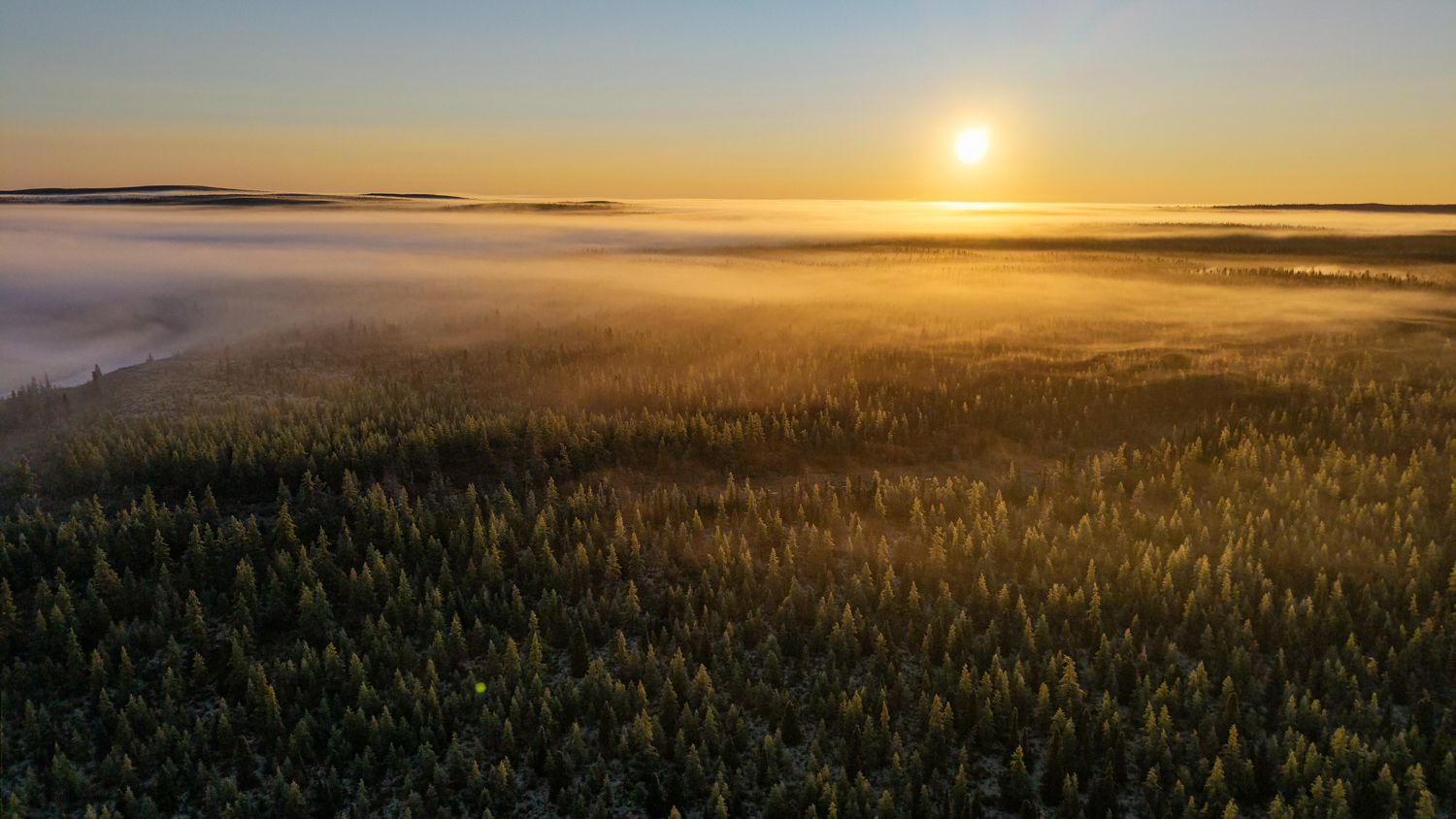
I will split my experience into sections…
Where were we
My Journey to Camp
The Camp and its future
The fishing and the fish
My reflections
This will likely be a long piece because, as always in this blog, I tell it as I have seen and experienced it.
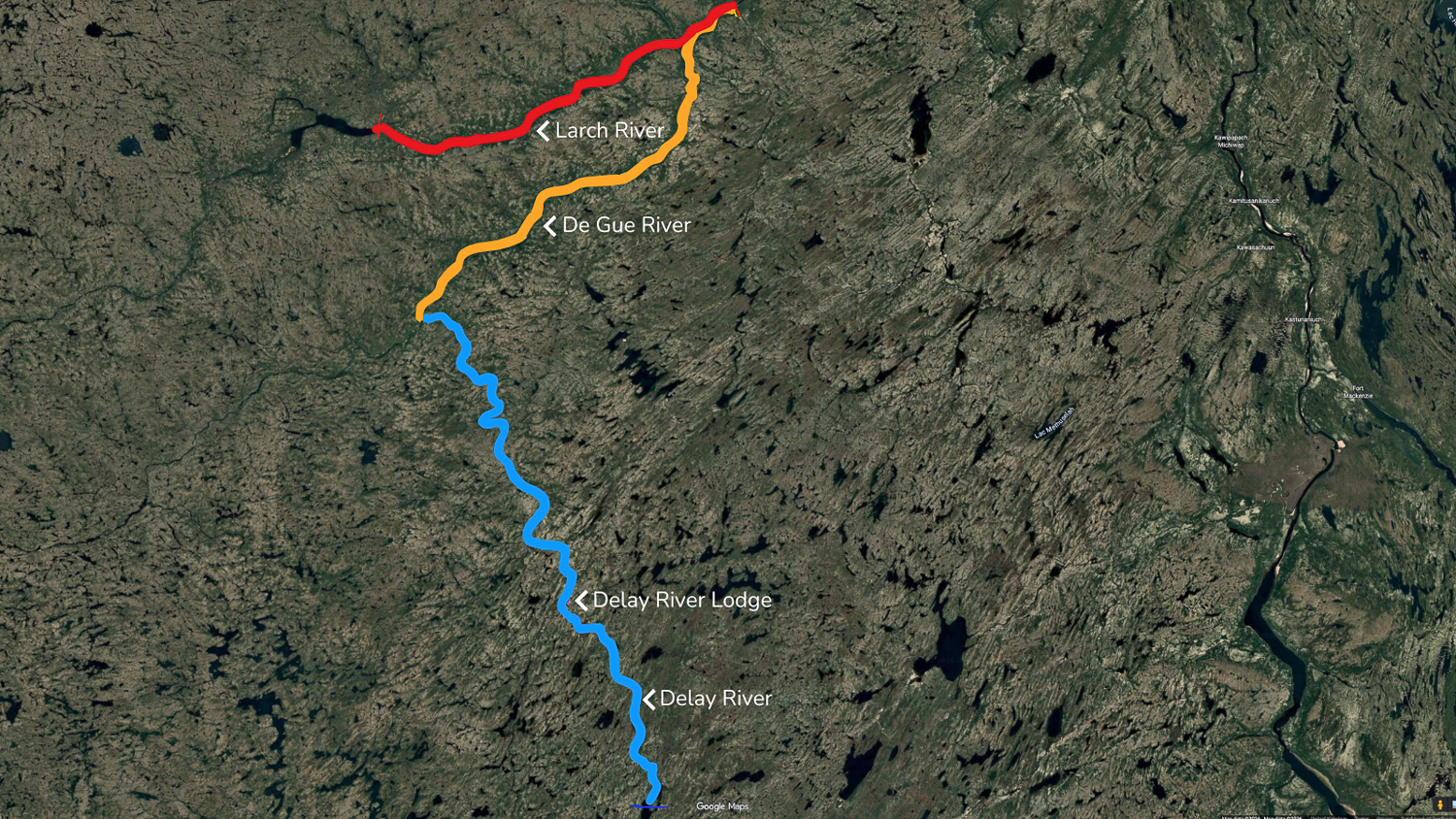
In summary, there is the following water to be fished by the current camp… travelling downstream… but the potential for overnight outpost camps, chopper fly outs etc is enormous.
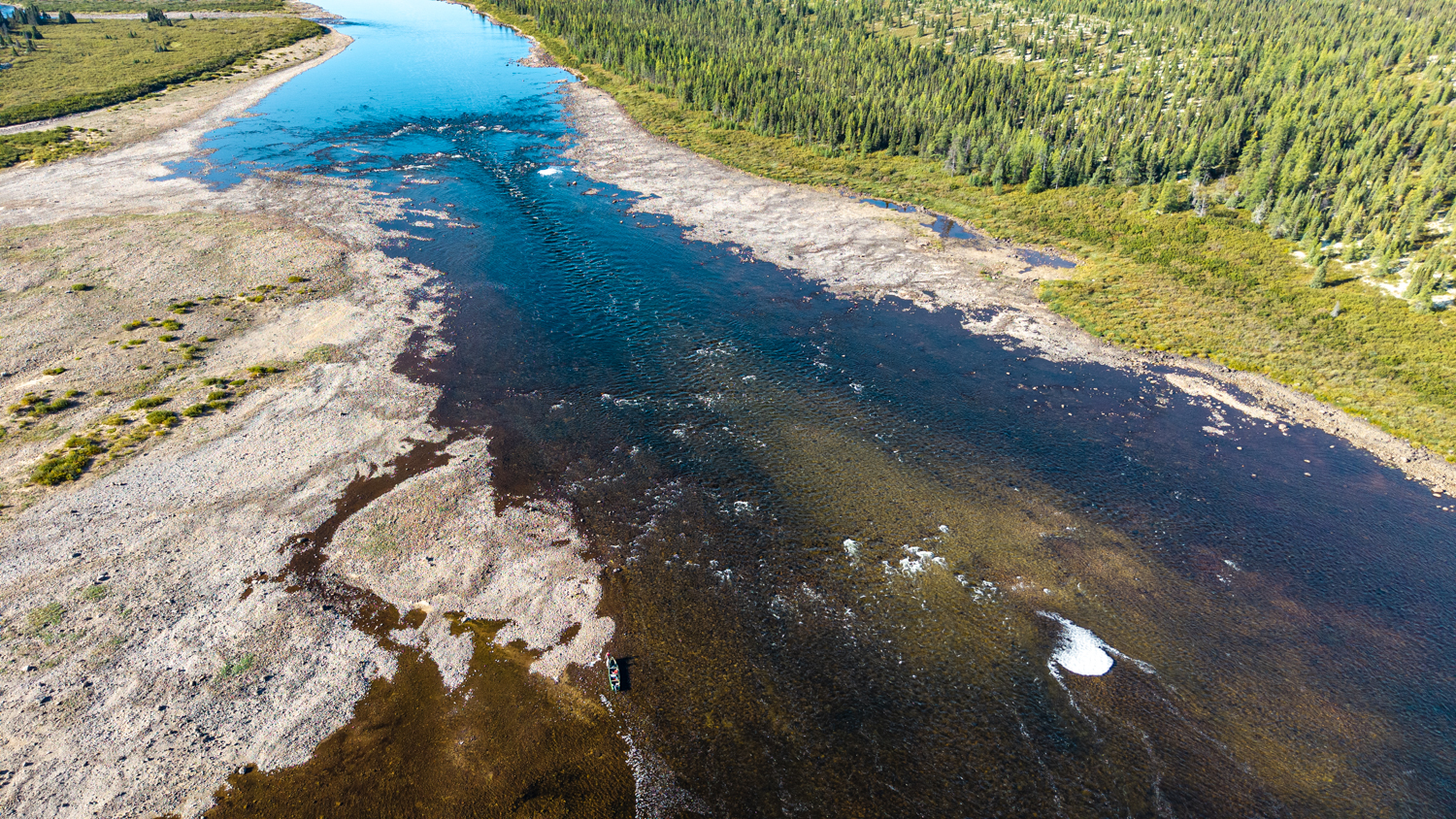
The Delay itself is 125 kms
The De Gué after the Delay has dropped into it offers 75 kms
The Larch above where the De Gue meets it – 60 kms
Data based on Outfitters Licence and measured with mapsWater.com
Where were we?
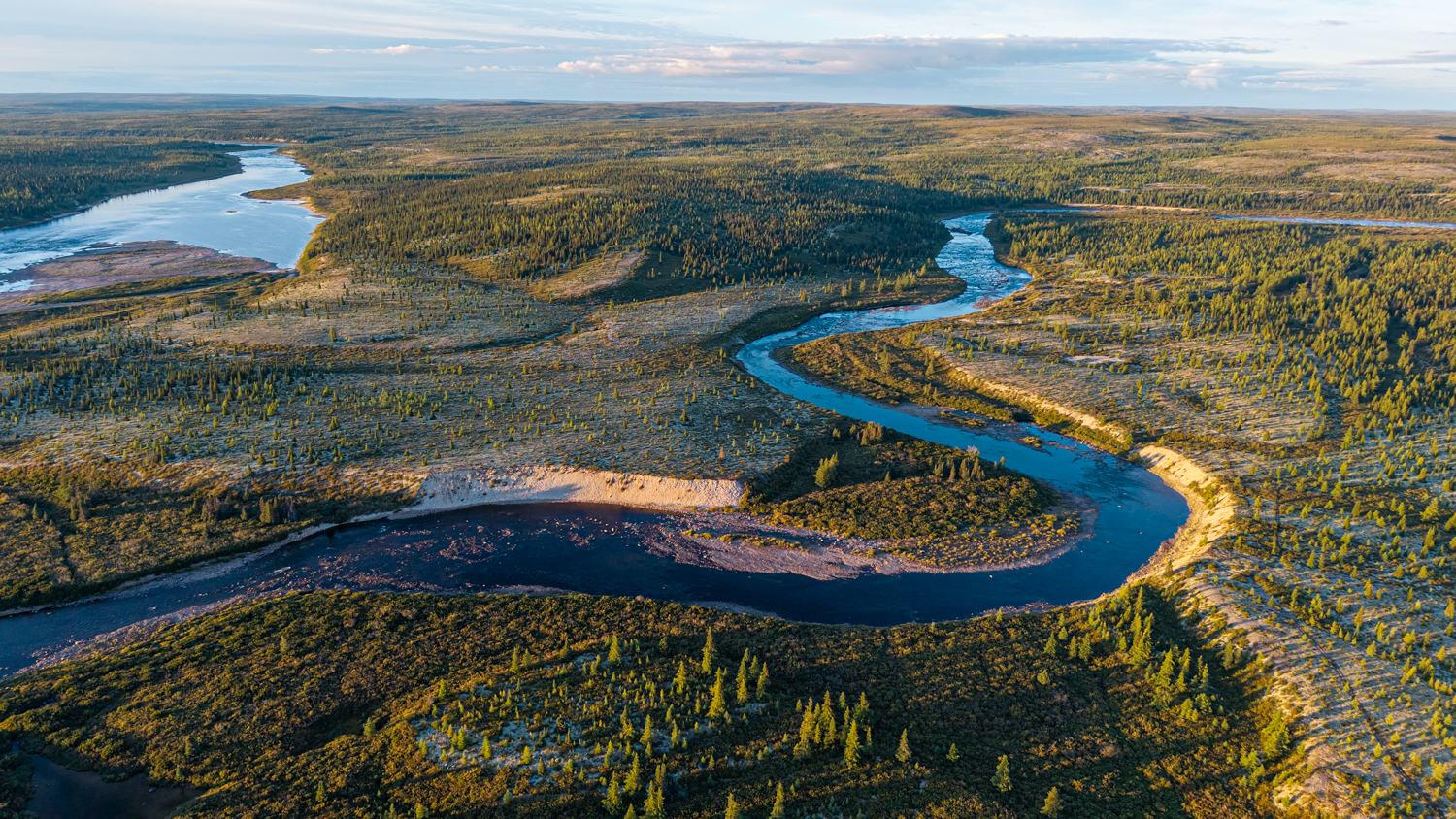
The co-ordinates of my cabin are 56.518895 by 71.074803 on the Delay river, north-east Quebec. 147.4 miles from Kuujjuaq in Ungava Bay and 772 miles almost directly north from Montreal airport to be precise. The Outfitting Permit runs from one of the lakes at the top of the Delay river to just above the junction of the Delay and Du Gué rivers plus some of the Larch into which the De Gué drops. Thereafter the river (now the Larch) is a sanctuary from the lowest point of the concession to just where the large tributary the Caniapiscau joins the Larch to form the last river named the Koksoak. Around Kuujjuaq where it reaches the estuary to the sea (Ungava Bay), the Inuit do some subsistence fishing.
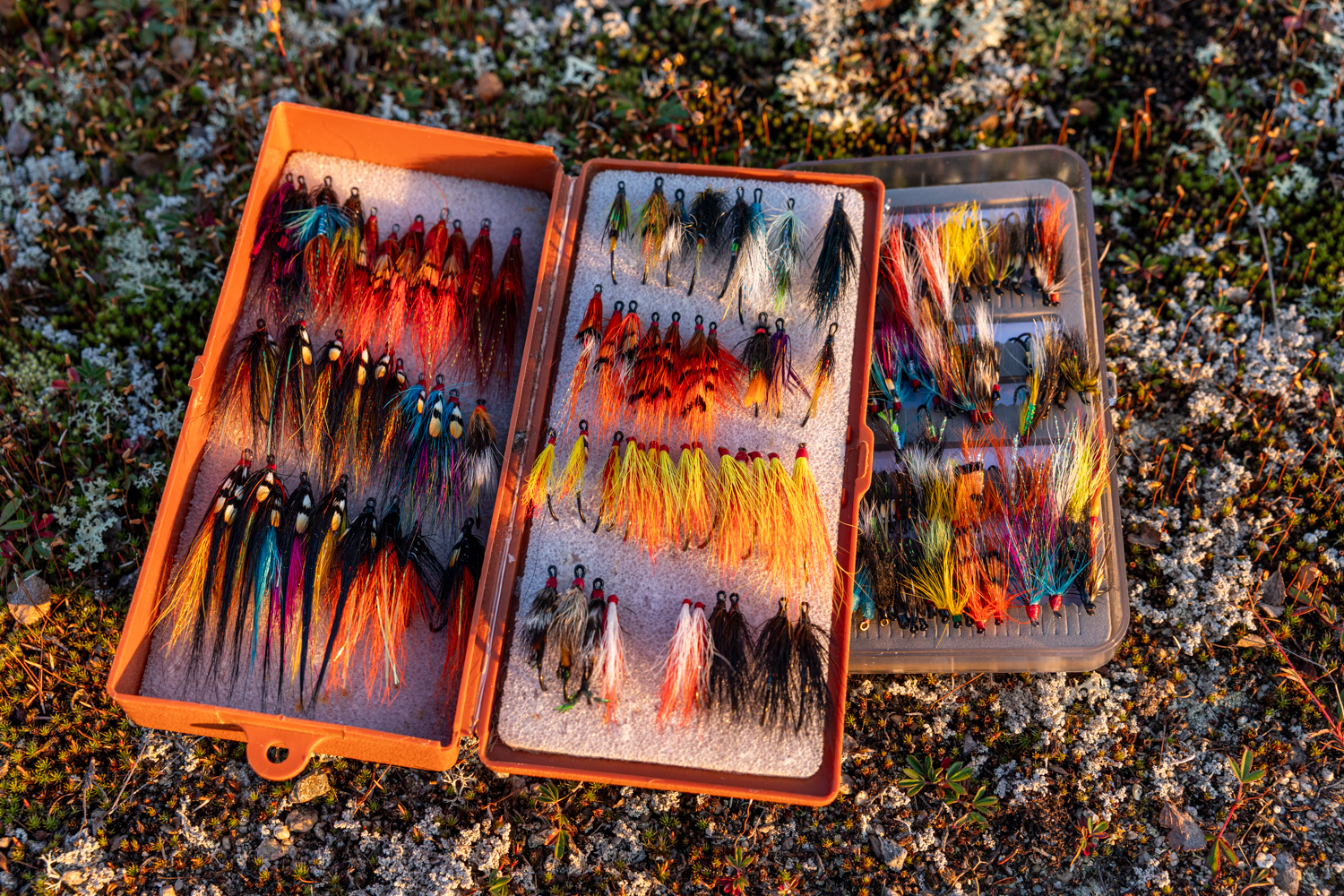
These numbers do not include several Helmsdale/Naver sized tributaries that drop in along the route which all have salmon and brook trout. The closest is the Maricourt, a 20-minute walk away that you will see in some photos.
The problem is few have been to most of the fishing… ever! To quote Paul “Last year and earlier this season we travelled upstream as far as Colin’s Camp 7.1 river kms. Next year we’ll go the Rack 11.6 river kms upstream. Downstream we went to Creek á gauche (creek on the left – very productive pool) about 15 river kms from camp and Flat rock, a place that stops salmon in low water at 19 river kms from camp. There are two more places we know of downstream, Two Creeks and Eagle’s Nest which is about 28 river kms from camp.”
It is safe to say that the nearest town with any permanent inhabitants is well over 100 miles away. To be a part of ‘discovering’ over 200 kms + of remote, rarely fished, if ever, Atlantic salmon fishing in 2026 bogles the mind but, it would seem to be the case. I caveat this by making it clear that, as with any river, not every kilometre is fishable and there are large parts of slow water and indeed rapids which would not be fishable.
My Journey to Camp
As you may or may not have seen from my Instagram, I flew from London Heathrow to Montreal. I took off at 18.05 and landed about 8pm local time. British Airways was a disgrace in every way except the seats/cabins were fine. The lack of care and unwillingness to help was beyond belief, it was a serious case of ‘the computer says no’. However, the timings were convenient if one has no interest in seeing Montreal. On arrival, which was easy, one turns right out of arrivals and walks to the end of the terminal, takes a lift up one floor to the Airport (yes, in the airport) Marriot Hotel check-in, checks in and goes straight to sleep as it will be about 2pm UK time.
In the morning, one walks about half the distance to the Air Inuit check-in for about 8am which is about 1pm UK time so you will have been up, had breakfast etc all in a very relaxed manner. International Airlines used to be like Air Inuit. Ursula was like my Mum or my granny, she spoke to me like I was her son, checked I had everything, chatted with me, came out from her desk to direct me here there and everywhere. I felt like giving her a hug goodbye. Paul, my host, loved witnessing my surprise because he commented that the way I was treated was normal for Air Inuit. Get this – they even tag your bag to make it clear you are an outfitter client, so your bag gets priority to ensure you do not miss your float plane or whatever is awaiting your arrival. It reminded me of Finnair in the old days of Russia who used to break every rule to ensure guests reached camp or their home on time.
Security was easy and soon we were off to Kuujjuaq, the main hub airport of the Nunavik area, an area larger than France. We were fed well on the plane including their signature freshly heated chocolate cookies and free wi-fi. We collected our bags and Allison is waiting for us to re-check and weigh all our bags for the charter flight into camp. Allison is like the Mum of Kuujjuaq airport with her team of check-in ladies, and everyone knows and loves her. She bellows someone’s name who was due to be with us but had to cancel last minute. She is on it!
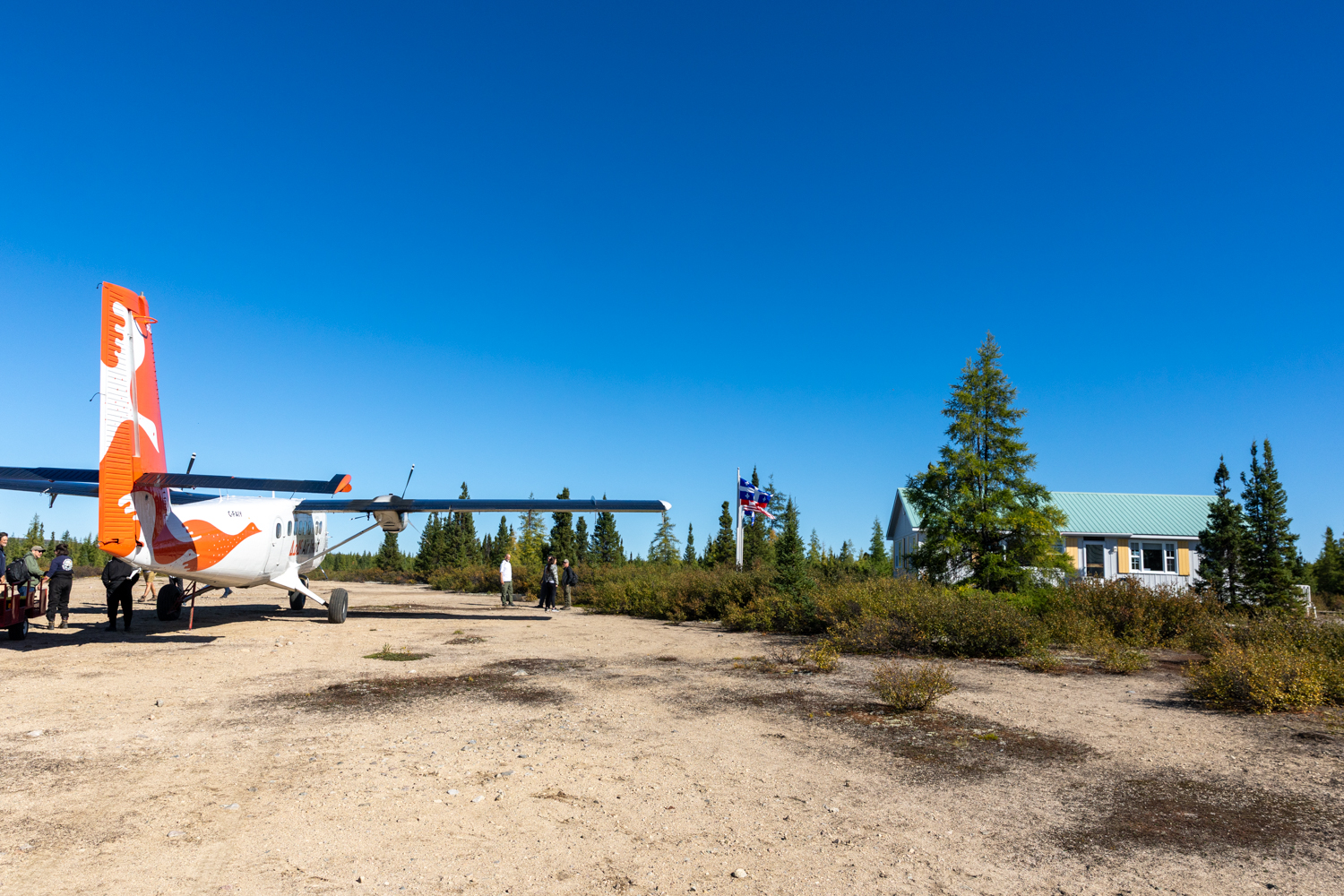
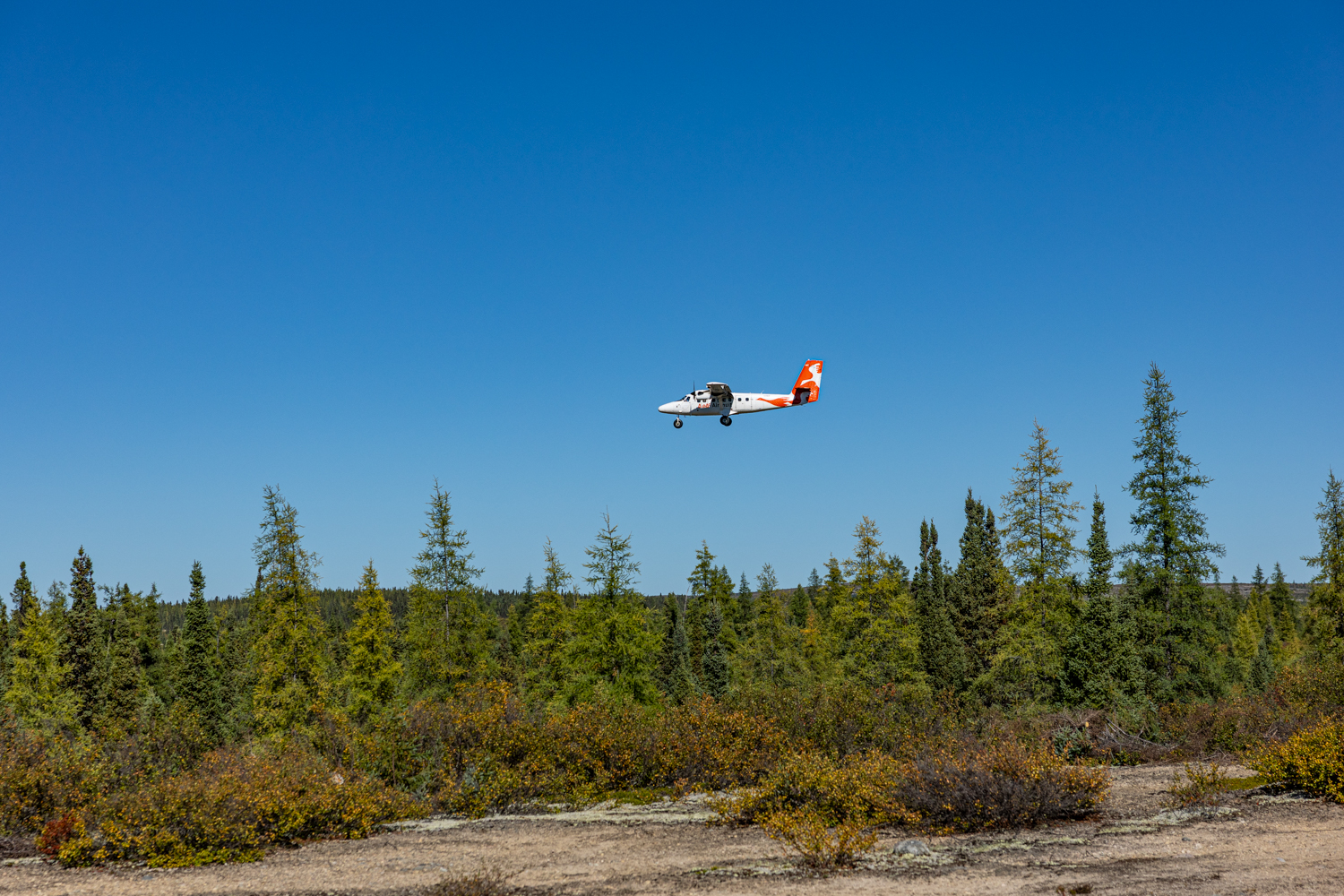
We must have been in the airport no more than an hour before we are climbing into the Twin Otter for our journey to camp. The speed with which we lifted off the US-made military grade runway was impressive but even more so was how quickly we landed at camp and pulled up literally outside our cabins. It was an hour’s journey. The twin otter has two engines (a big comfort for some, required by others) and can land and take off on a sixpence if needed but it also has instruments thus reducing the possibility of a weather delay dramatically. The concept of coming all the way from Europe to then have a two-day delay getting into camp due to rain is far more remote with a) a twin otter b) instruments.
The return was equally easy. Roxanne, the Chief Pilot, off-loaded five drums of diesel, rolling them out of the aircraft and down a ladder, and then we loaded and left. There was no smell of diesel. Back in Kuujjuaq, Allison was there hurrying us along through check-in to get the 737 launched back to Montreal. She was waxing about the Britishness of my name until she saw my Australian passport! I could have made the BA flight home with ease – we landed at 7pm and the BA flight departed at 10pm but Paul advised caution. If I had known about the twin otter, I may have been more adventurous. I over-nighted, chilled, reflected, had a massage and left the next evening.
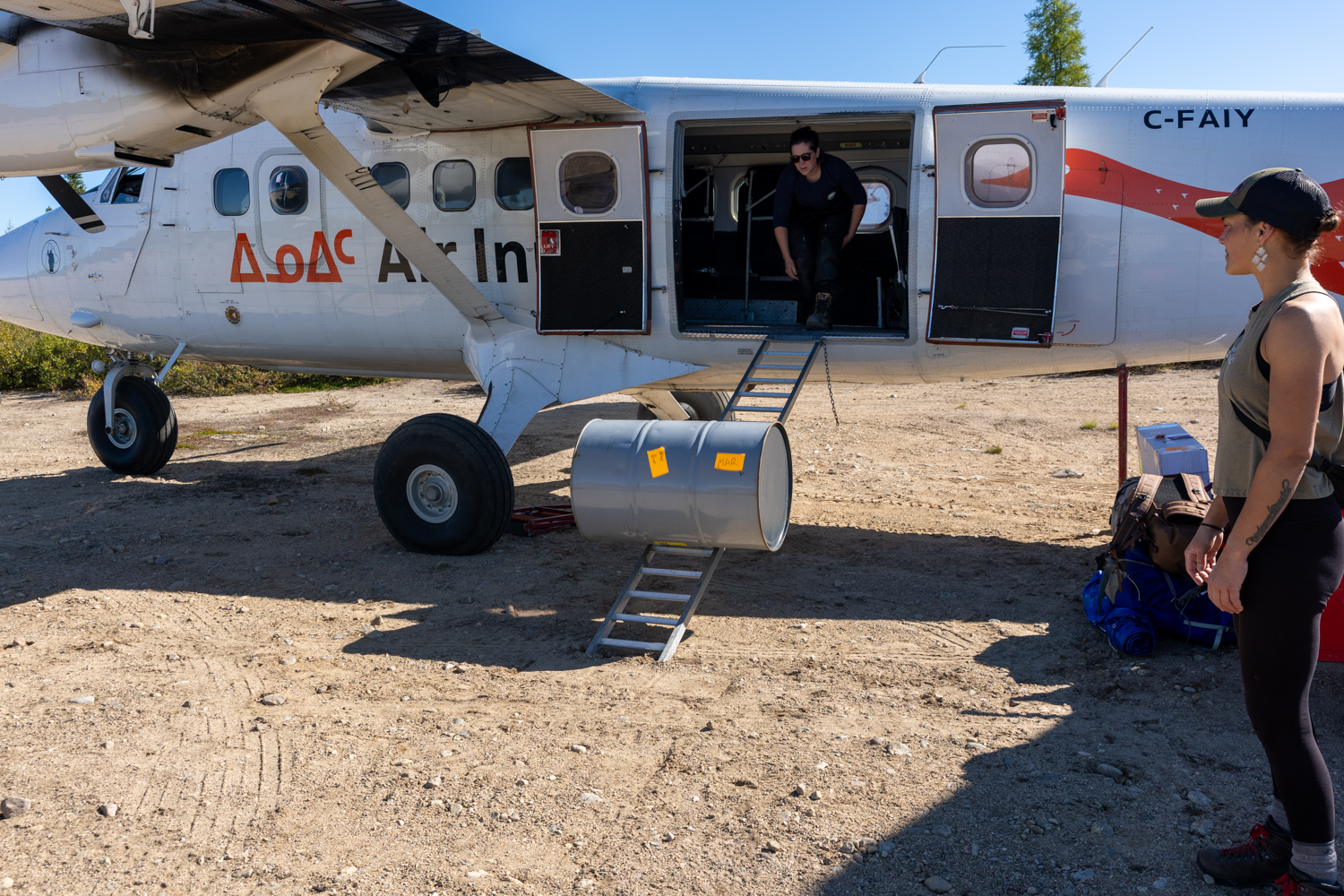
Considering where we ended up, the journey was incredibly easy, and everyone was very kind and helpful and the differences between our world or that of British Airways were stark.
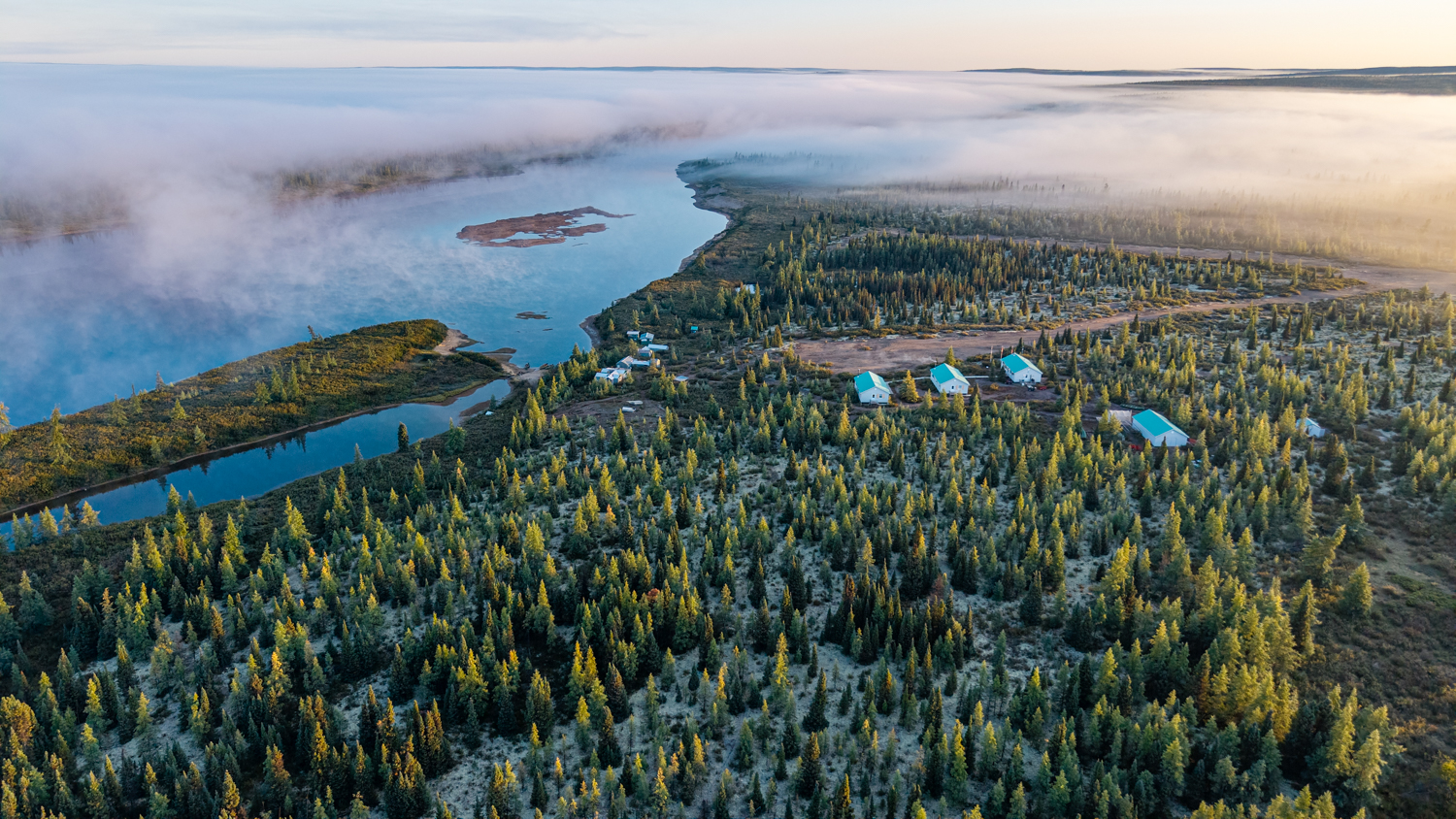
I should point out that the weight limit was 50 KG plus hand luggage – plenty for a simple camp.
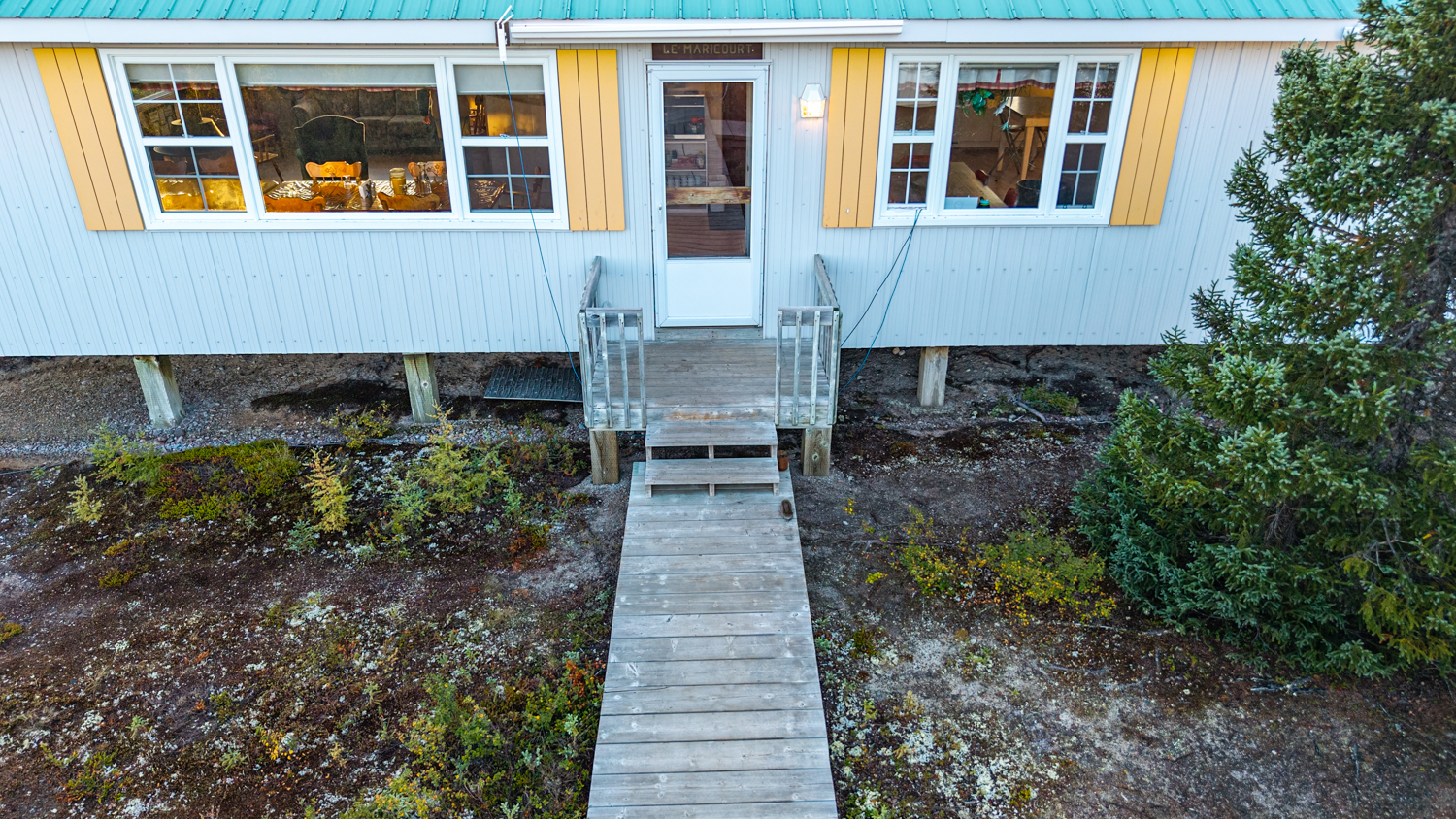
The Camp and its future
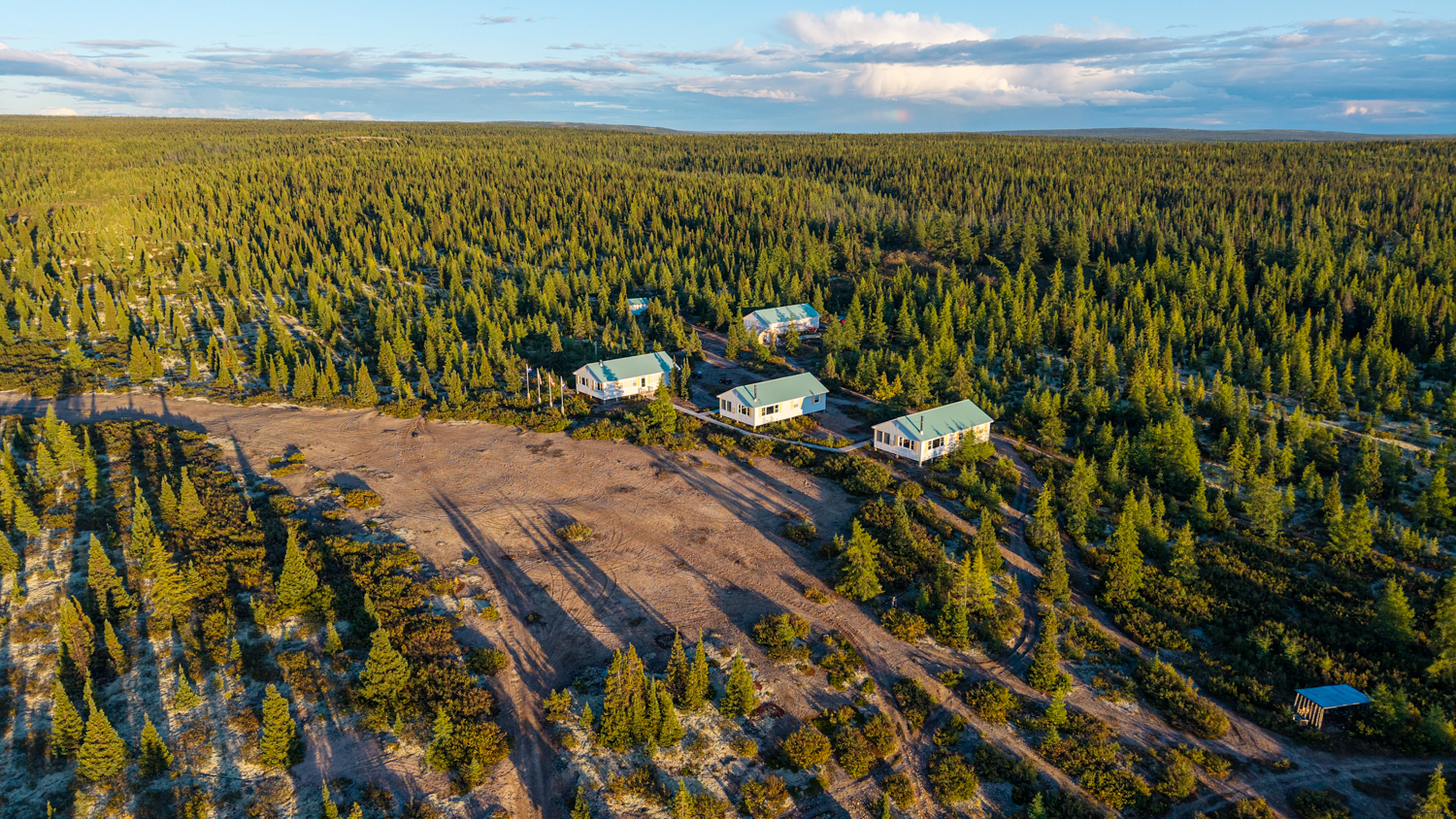
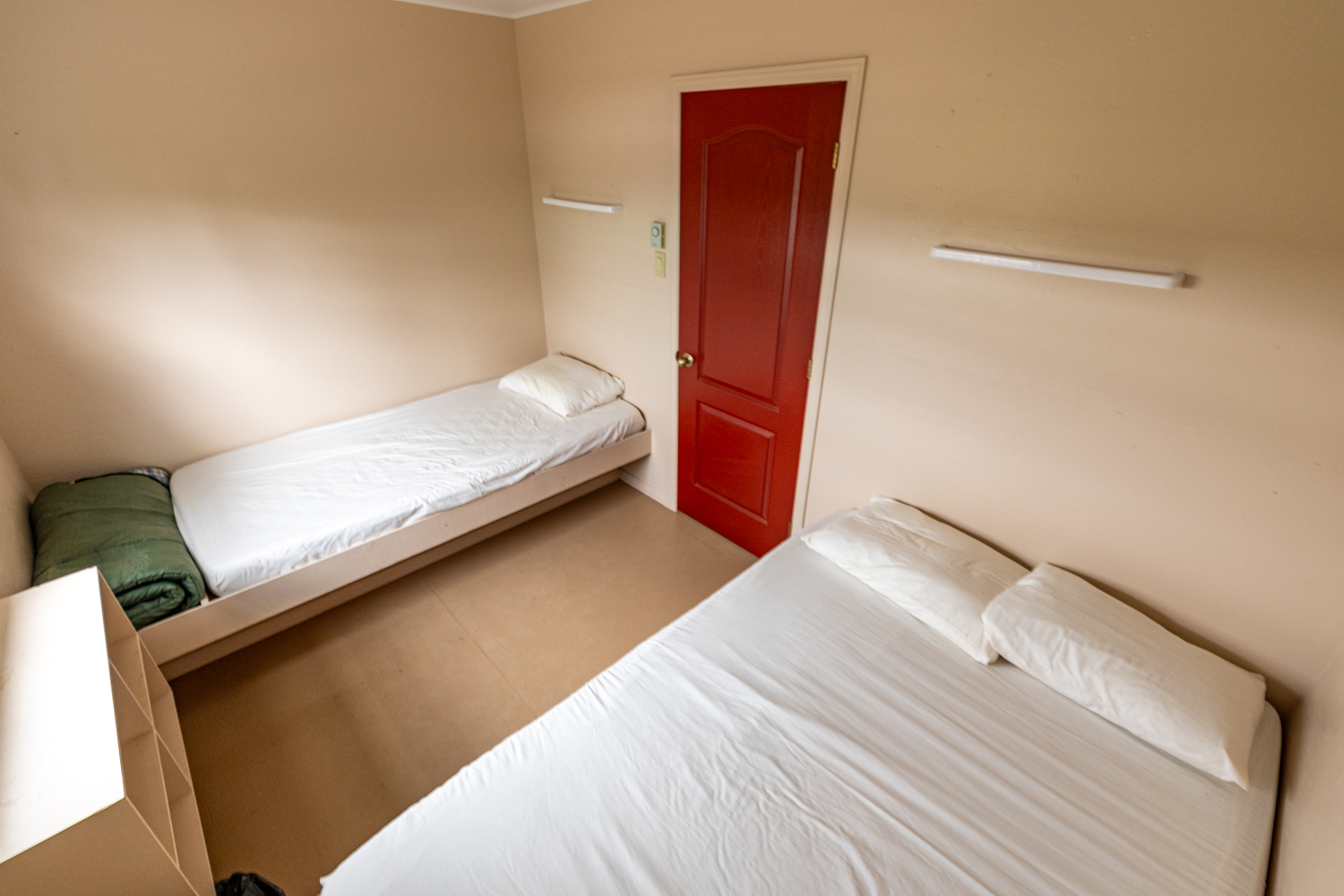
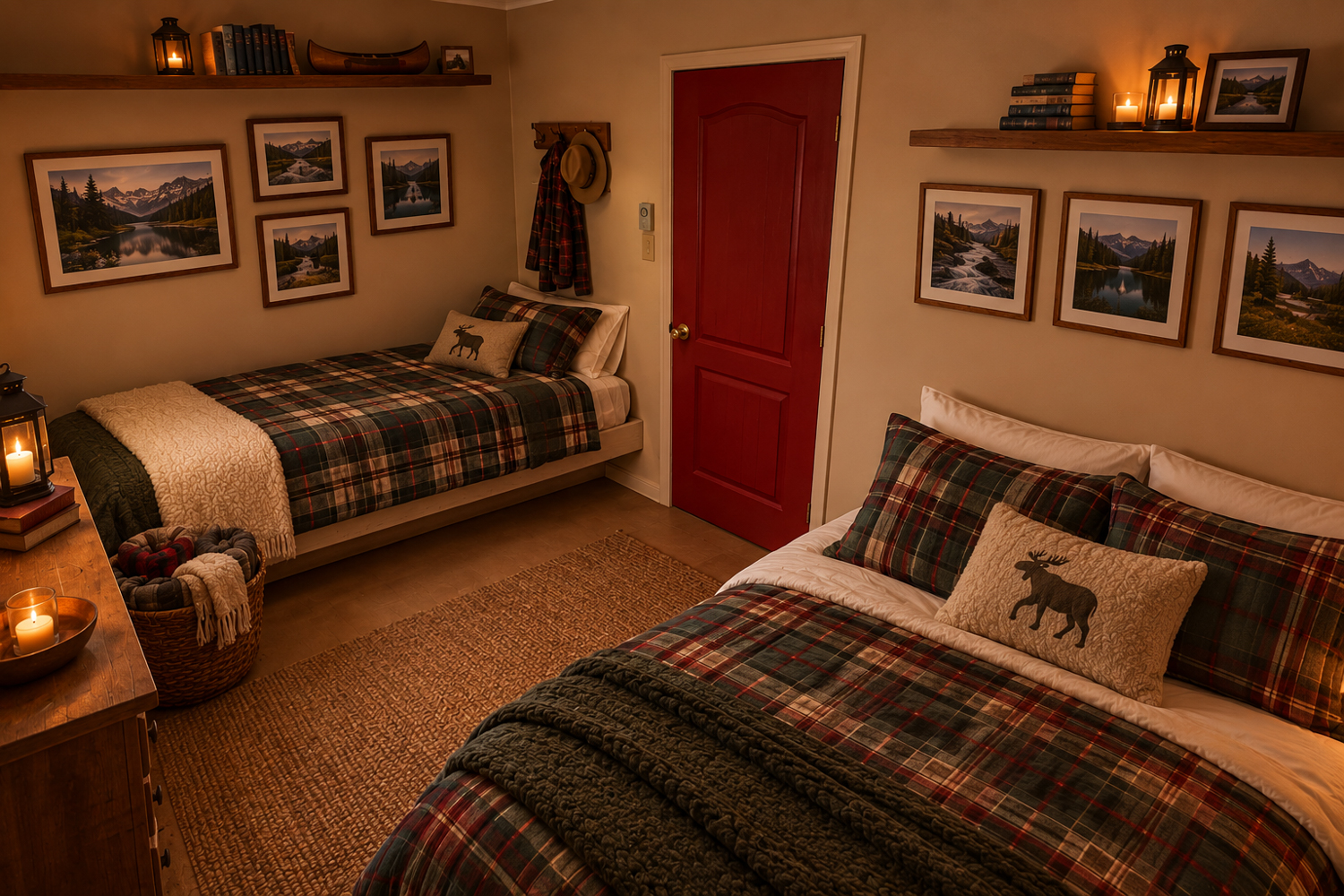
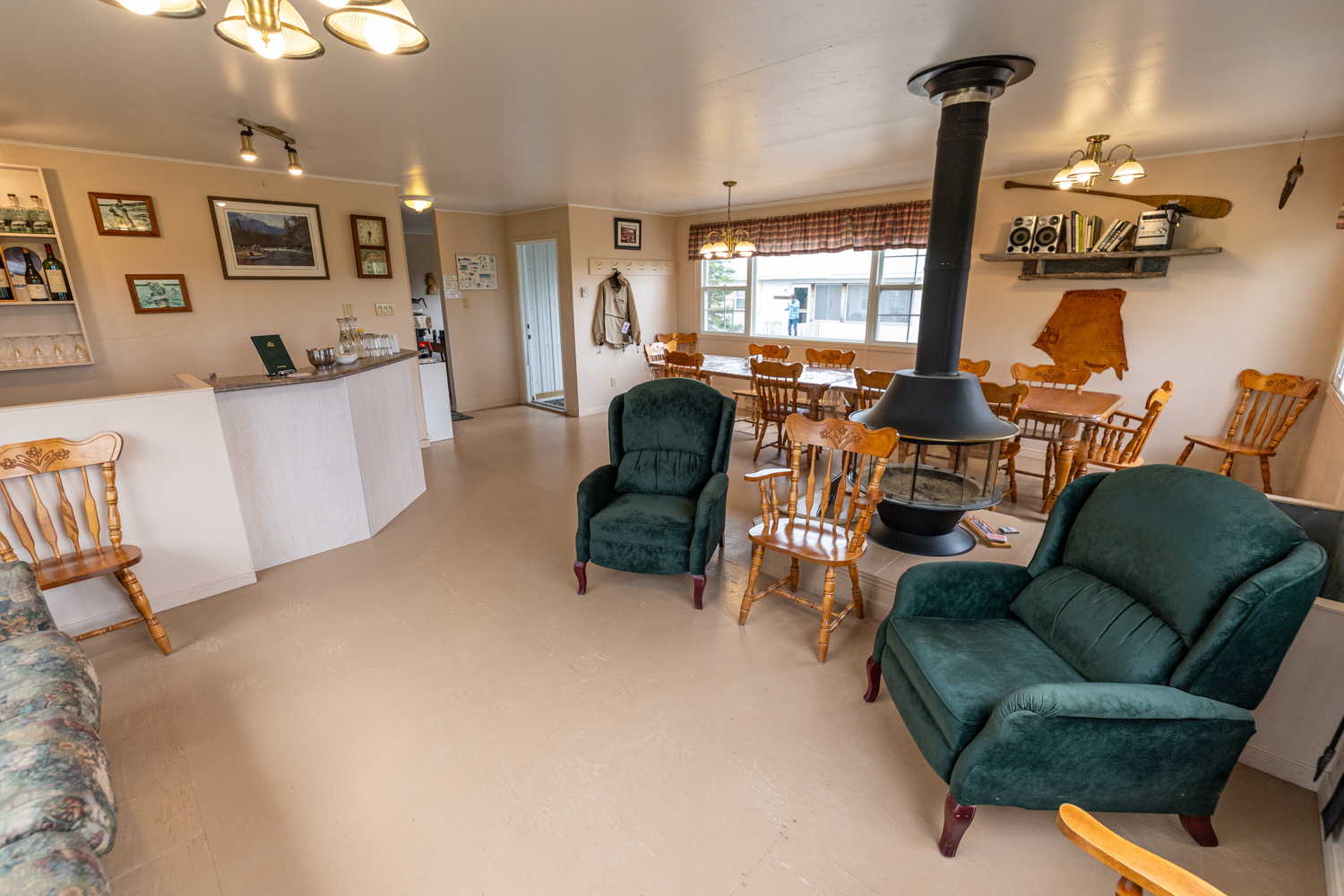
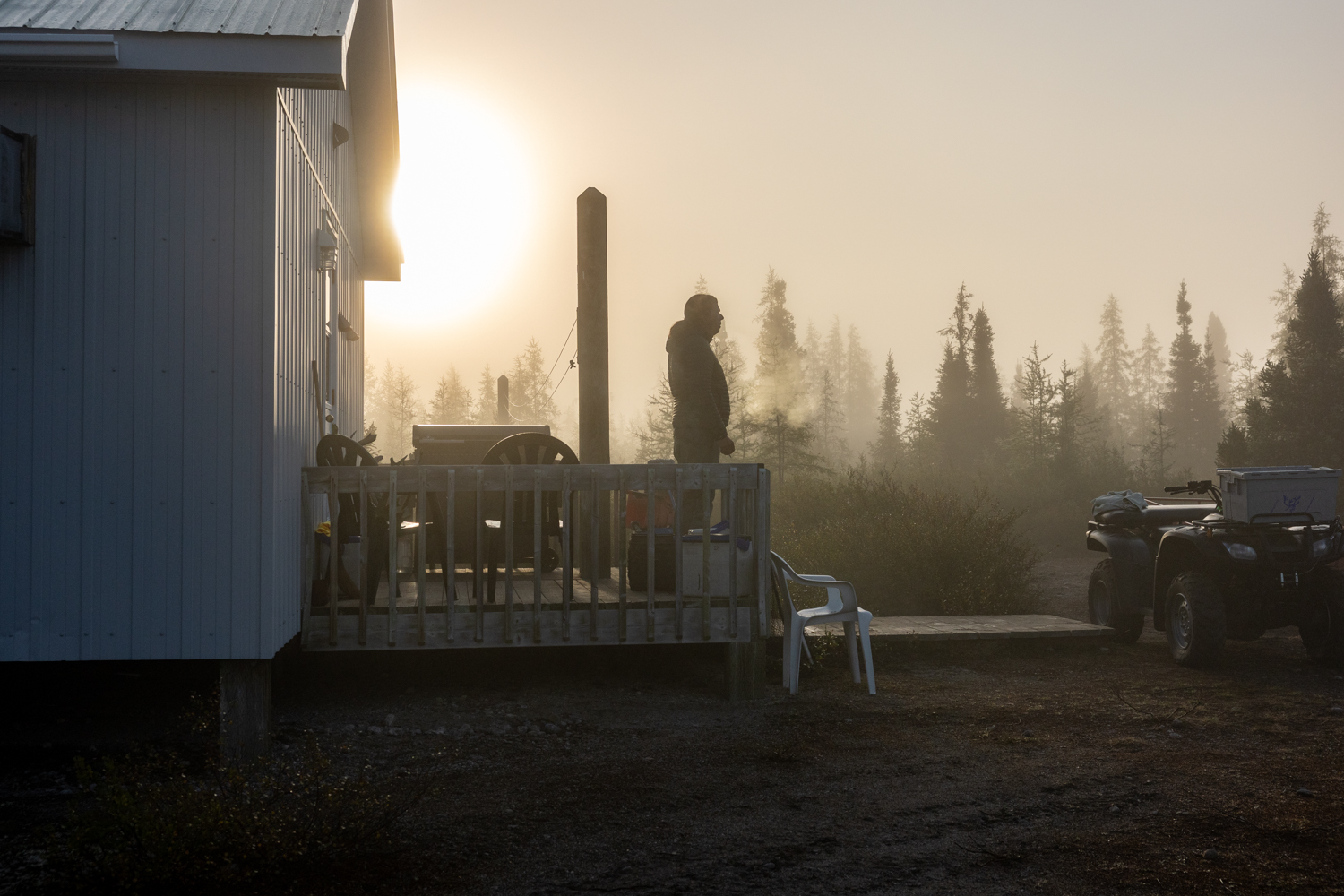
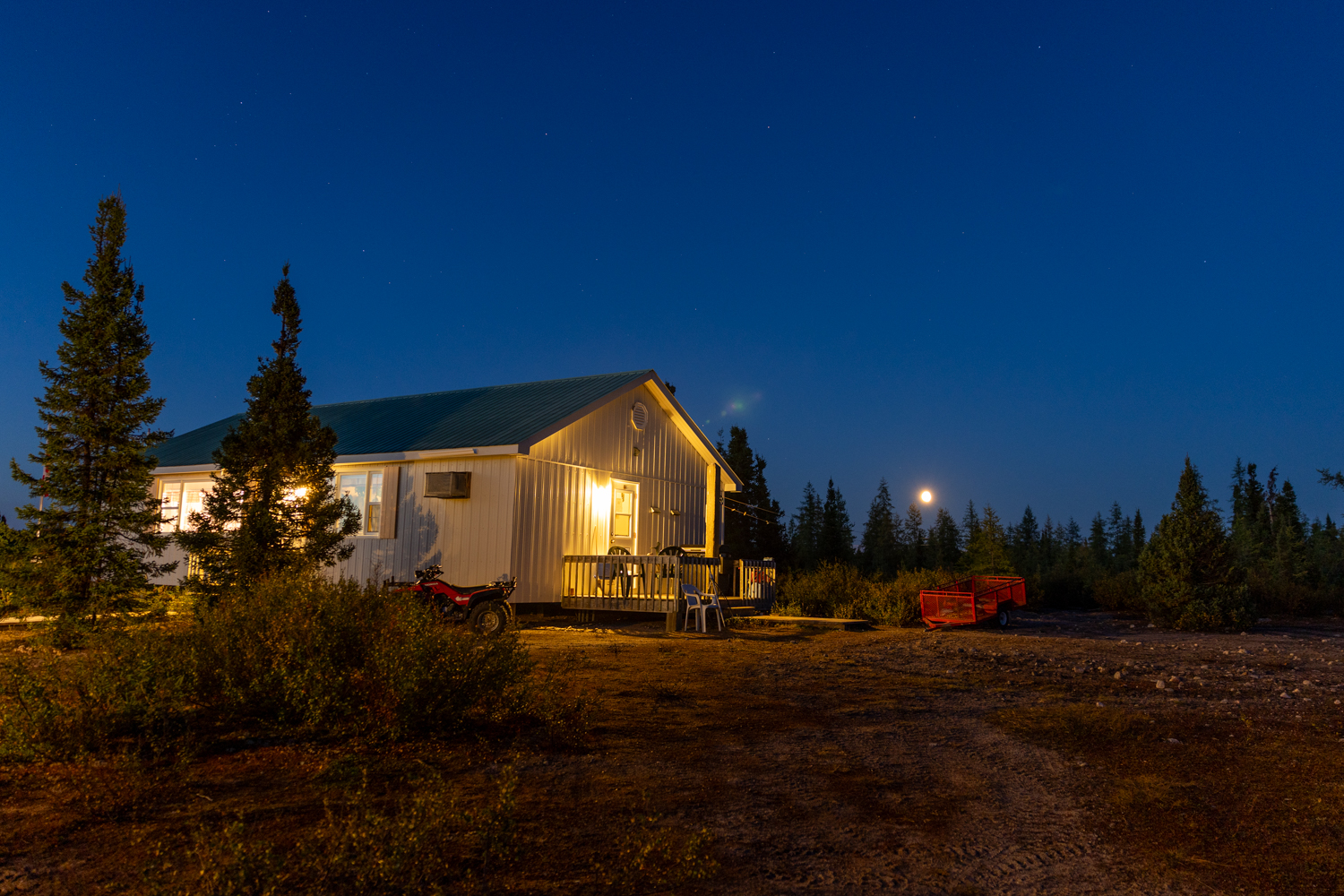
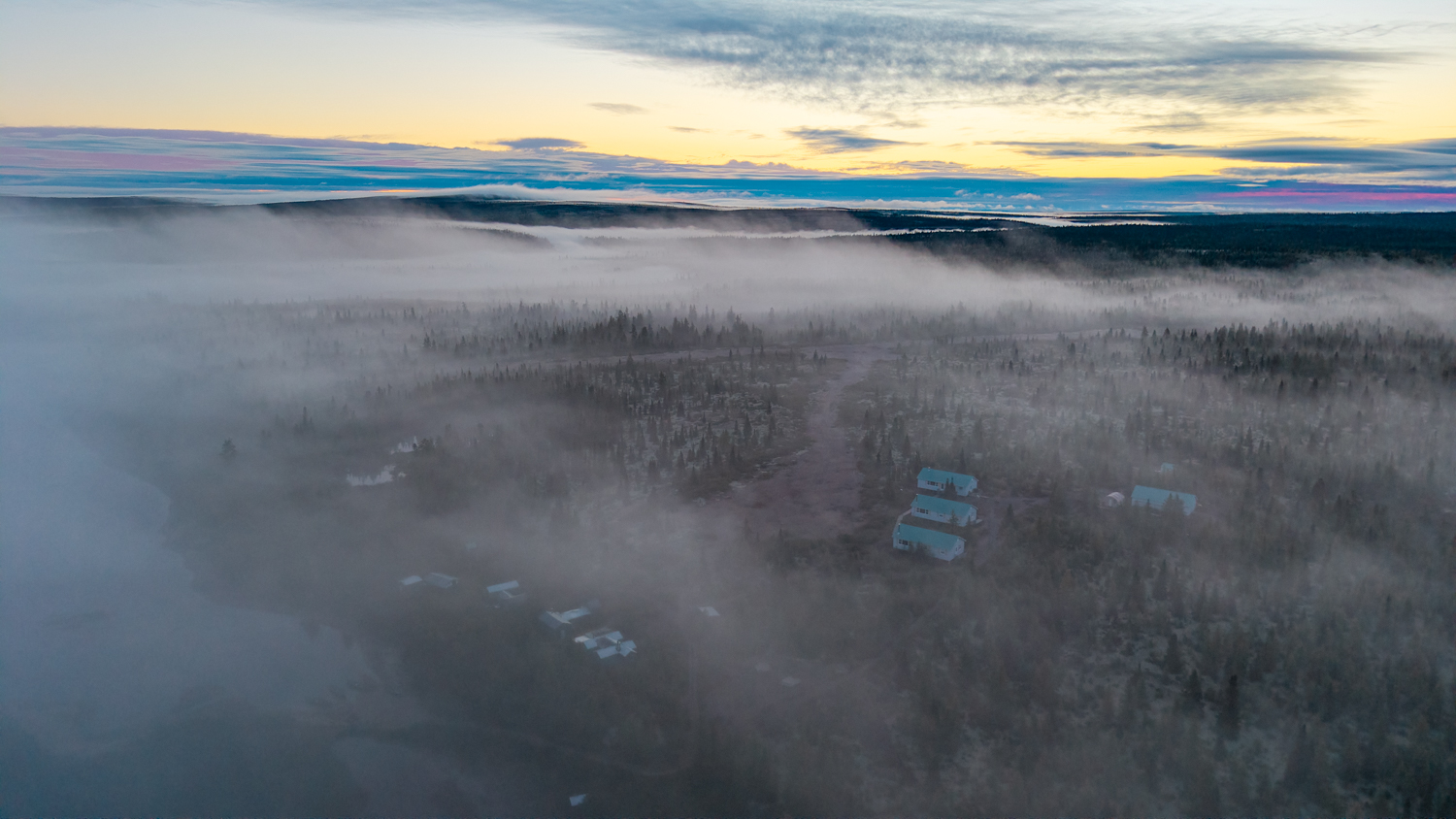
To be clear from the start, at the time of my visit, Paul did not own the camp so had not done the improvements that he and I agree are required. His primary focus is on two areas, making his staff comfortable and giving the guest cabins ‘a woman’s touch’. Below you will see pictures of the rooms, but I have equally tried to prepare (via AI) what the rooms may look like and these images are shown below. The lodge is/was owned by a wealthy Canadian family who built the lodge as a hunting camp for caribou hunting. Seven years ago, the authorities stopped caribou hunting because the numbers had reduced (a 50-year cycle based on vegetation pressure) so the camp had lost its purpose. People used to hunt and if they achieved their objective, they would do a little fishing around camp. Paul saw the potential for a fishing lodge. There are records of people fishing from this location as far back as the 1980s and there are remnants of the old camp. Lee Wulff was quoted to have said “The Delay may be the last great unspoiled salmon river of this continent and therefore of the world” and the amazing thing is that from a salmon fishing point of view time seems to have stood still and his statement remains true today.
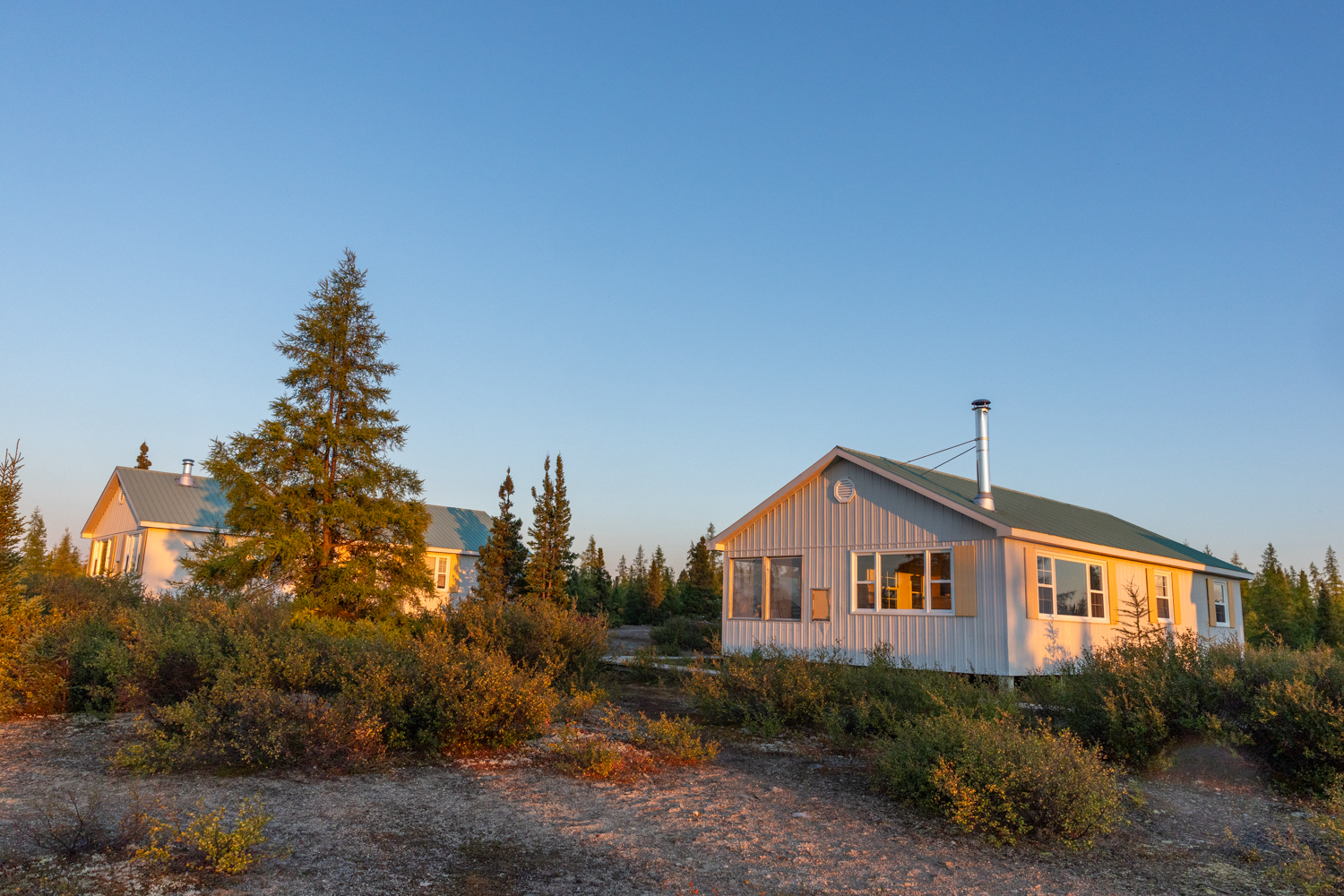
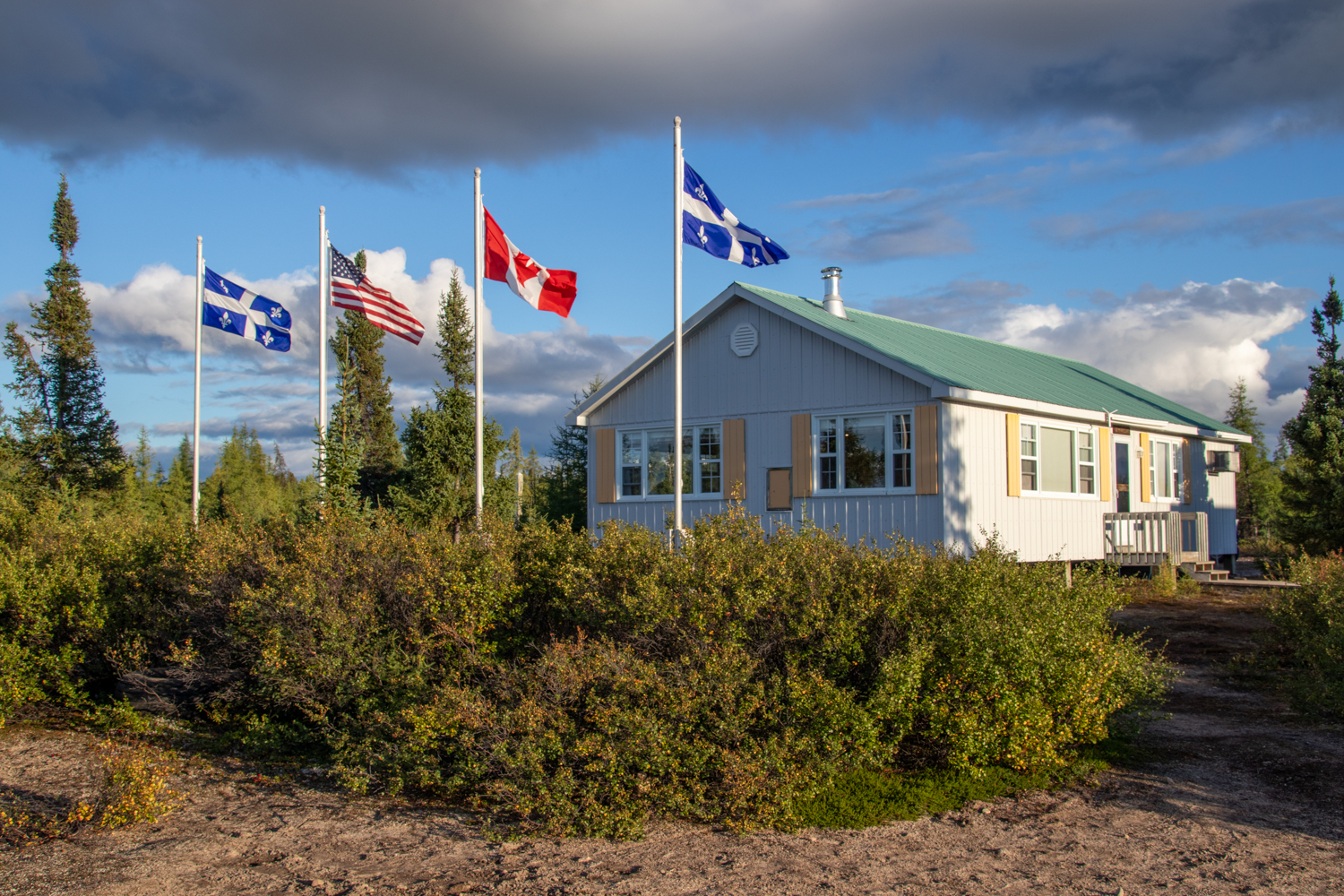
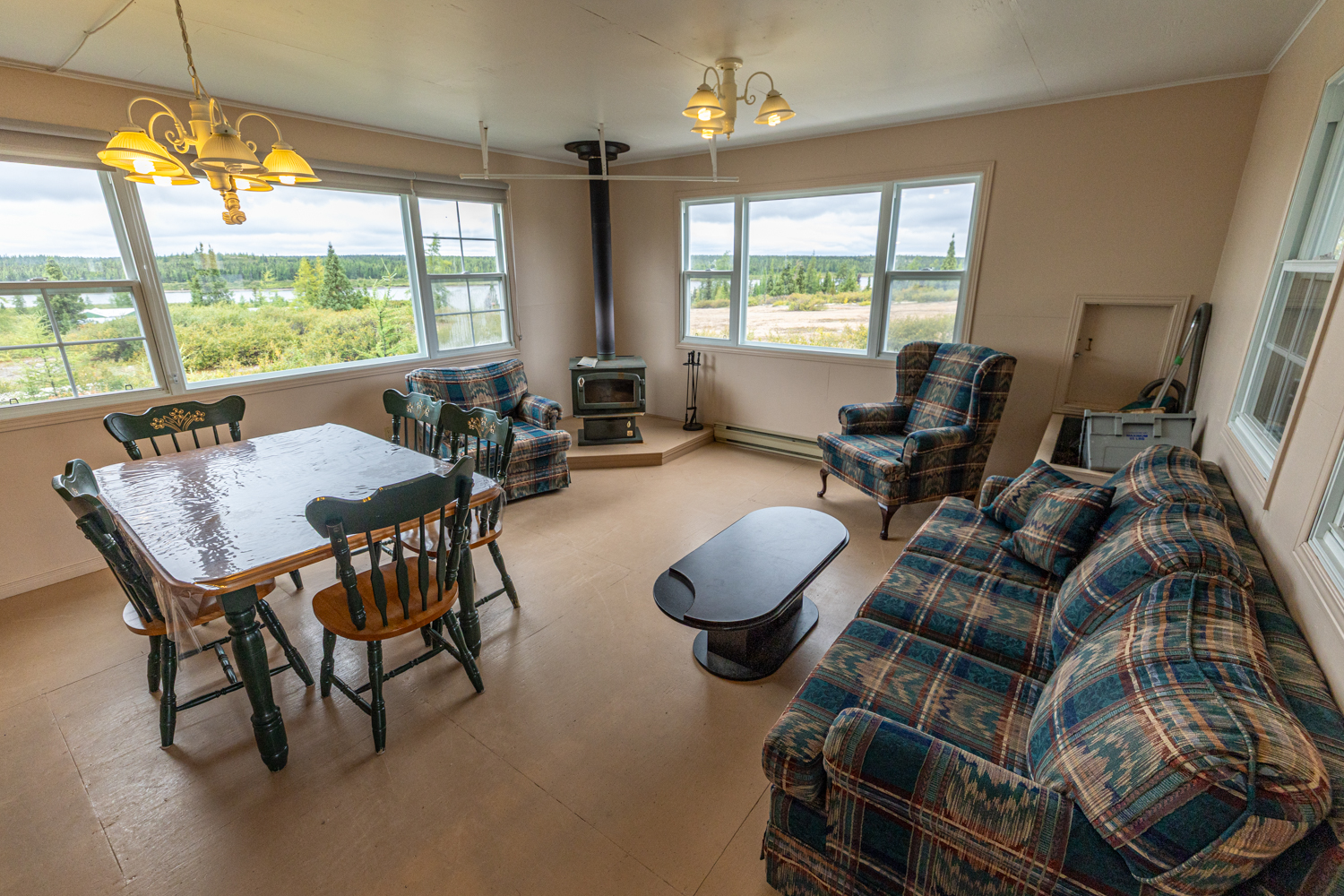
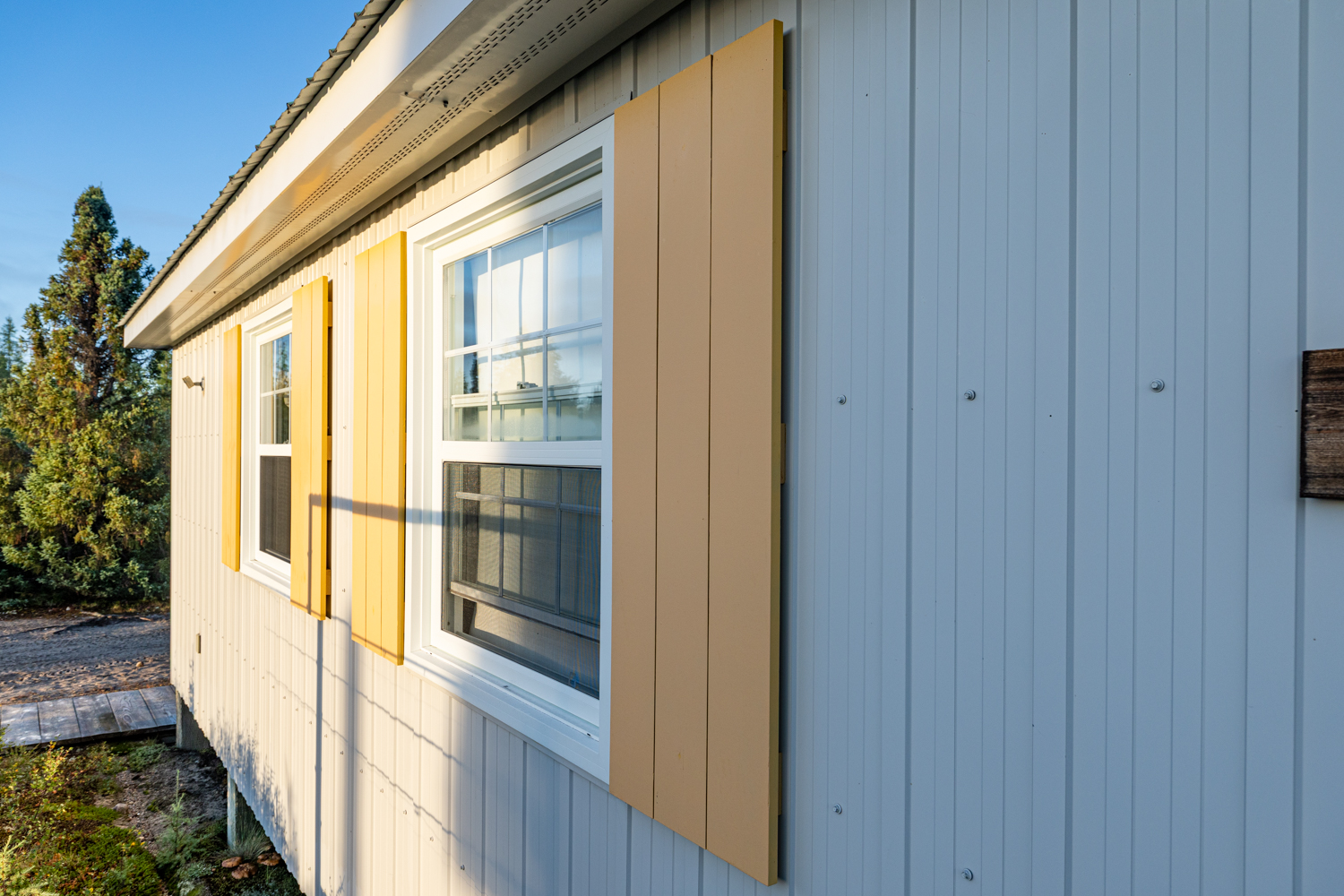
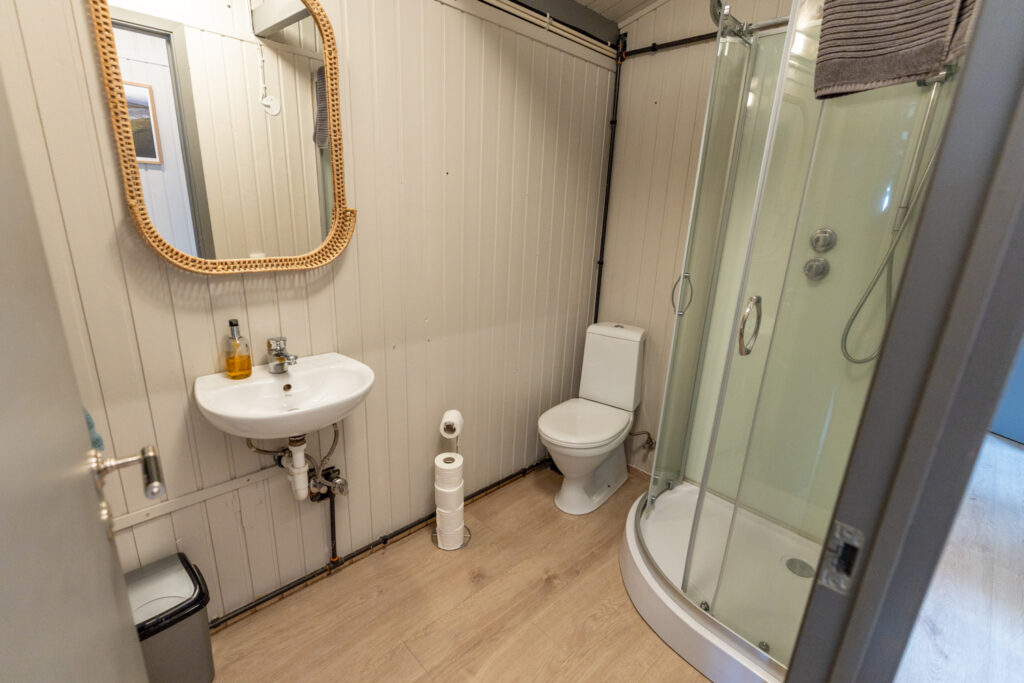
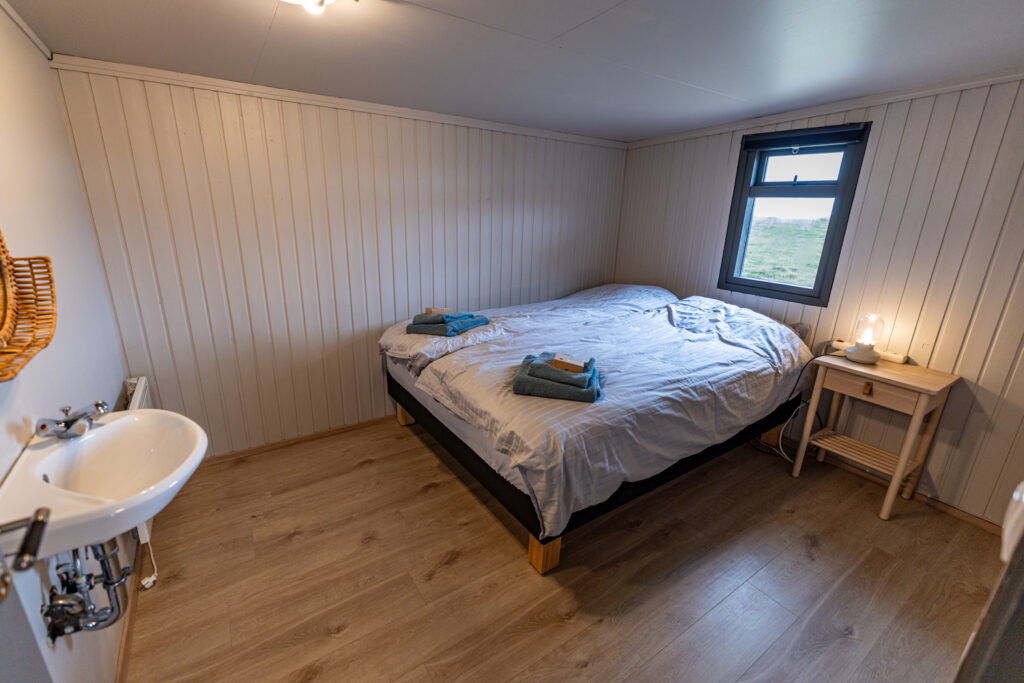
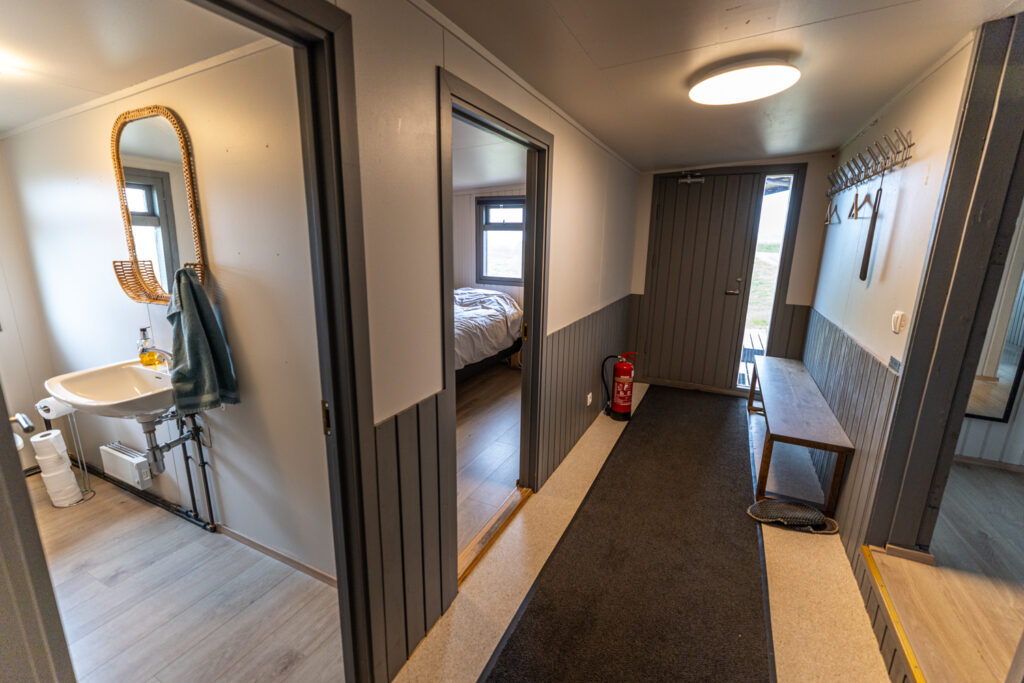
There are two guest cabins, each identical. Each has three bedrooms with a double and single bed built into the room. There is copious amounts of hanging space and some small shelves. The plan is for each guest to have their own room thus six guests and six rooms. Each cabin has two bathrooms. Paul felt that he needed to add a bathroom, but, having seen the set up, I am not sure I agree. Two bathrooms (with WC and shower in each) is not a hardship for three people. If there is a lady in camp, Paul would assign one of the bathrooms to them leaving two guys sharing one bathroom or a couple using one and the single person having the other to themselves. Between the bathrooms and bedrooms is a broad corridor with more hanging space and storage shelves. Given the simplicity of camp, there is more than enough space for clothes etc in the rooms or outside for coats and jackets. Added to this corridor, there is a large sitting area with a stove, semi-kitchen to make tea, a large fridge, sofa, armchairs etc and a large table and chairs. They have a good system for wood storage for the fire. Then outside that is a screened off porch with yet more hanging space and seating and a table. Each cabin has two exits, one through the screened area and one of the other end of the corridor. The stove has purpose built hanging space from the ceiling around it for drying. The family that built these cabins thought them through. A list of discussed improvements appears at the end of this blog.
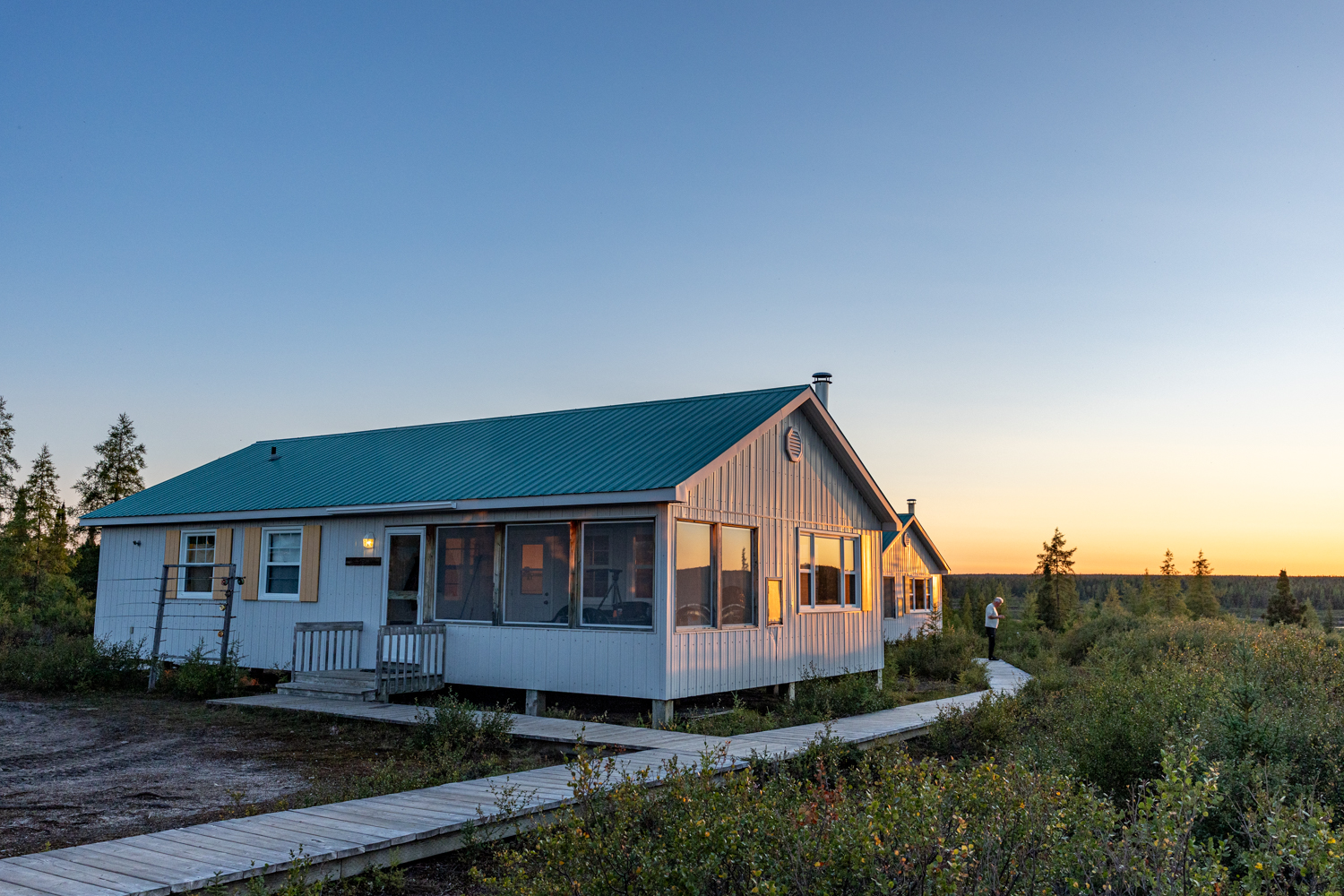
There is a third similar sized cabin which is the hub of the camp. As one enters, on the left is the sitting/dining area with a small bar, and on the right is the service area, the laundry, kitchen etc. Tempting as it is to go in and chat with the lovely crew, they ask you not to for hygiene reasons. The ‘hub’ cabin could do with some adjustment too per the list below but again cosmetics, not anything major. They have Starlink Wi-Fi in camp.
Tania and Flavie oversaw the cooking which was perfectly good home cooking for a small team of rods in a remote fishing camp. They took great care to feed us well and were very willing and flexible to adjust to personal tastes. To make things even simpler and easy for them I have suggested they simplify breakfast which was an elaborate menu each day to which they went to great effort. For lunch I also suggested some simplification. For breakfast I suggested they serve their muesli with fruit and yogurt or oatmeal/porridge (with the option for brown sugar of course!) plus fruit, eggs to order (with bacon) and toast with butter, jams and honey would satisfy most and would reduce how many would need to be in the kitchen in the morning. For lunches, a simple questionnaire on preferred sandwich ingredients before arrival so they have the correct ingredients in camp and then everyone can make their own sandwich to their own taste (with accoutrements like black pepper, mayonnaise etc) before or after breakfast and take the number of drinks, apples, oranges, KitKats, Mars bars etc they want is the way to go. That way everyone gets their perfect sandwich every day! If the kitchen could focus on baking some cool breads for each day, that would be even better. Dinners were pretty good wholesome meals ranging from steaks to beef to some really good lasagne etc and always piping hot and delicious. Vegetables are always a tough in remote lodges but they did well with fruit and veg.
All the cabins have boardwalks between them which are in great condition. They can be slippery on a frosty morning, but I think that will be addressed too. There is a short walk down to the boats in the morning, shorter than to the boats at Ponoi and there are quad bikes to carry heavy bags if need be.
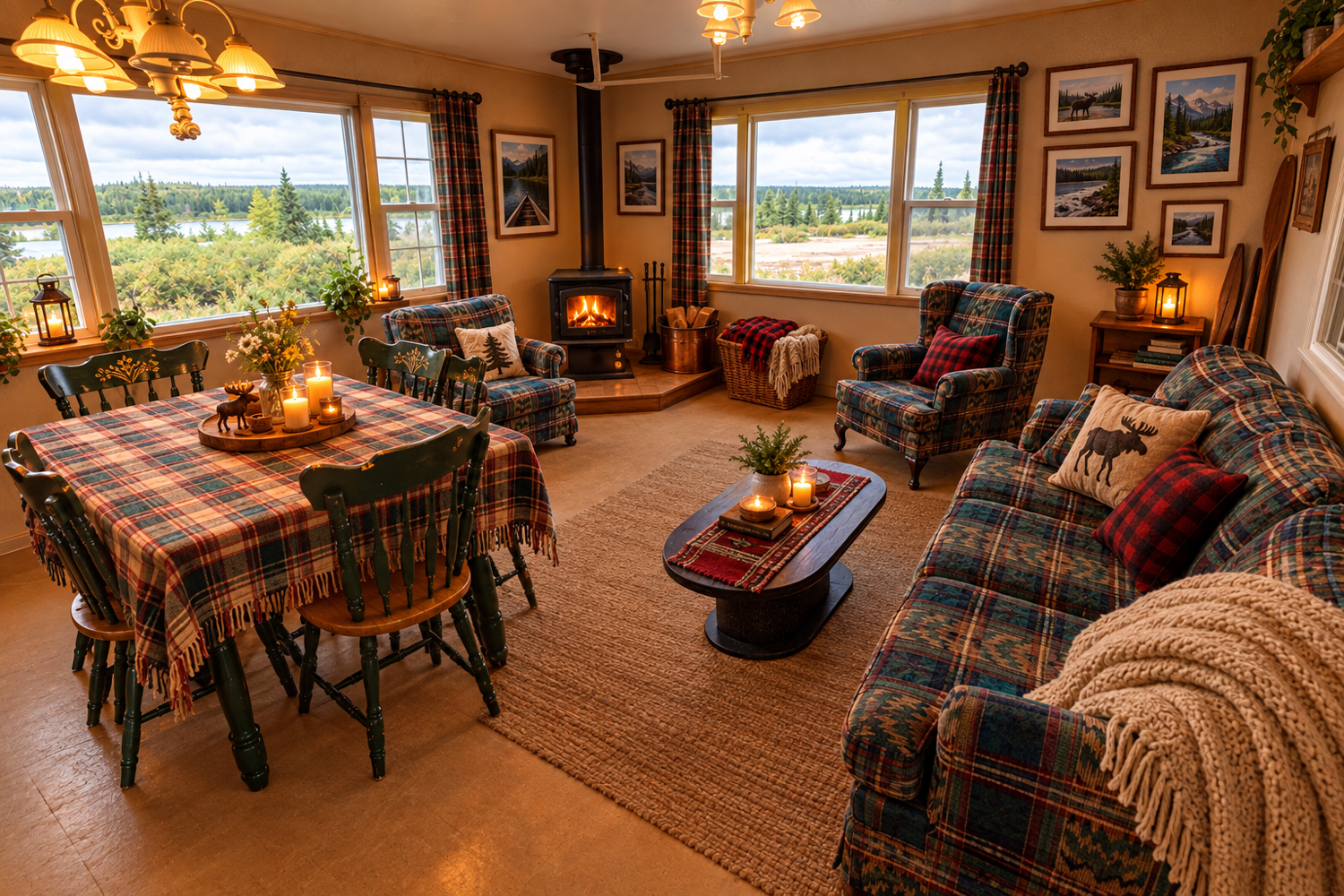
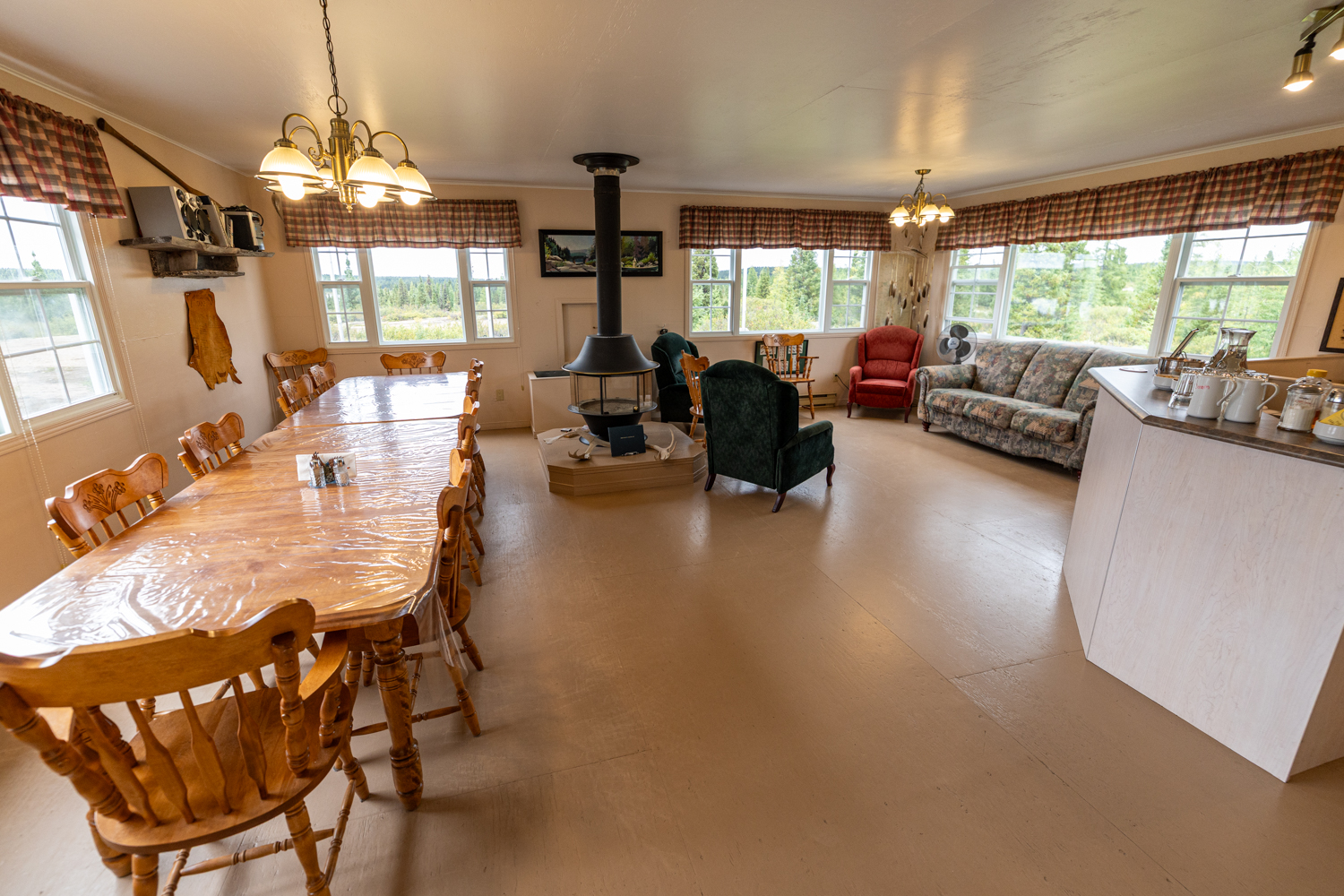
In summary, for a rehearsal season, things ran very well and the potential for a simple, relaxed but good standard of accommodation and comfort in such a remote place is excellent.
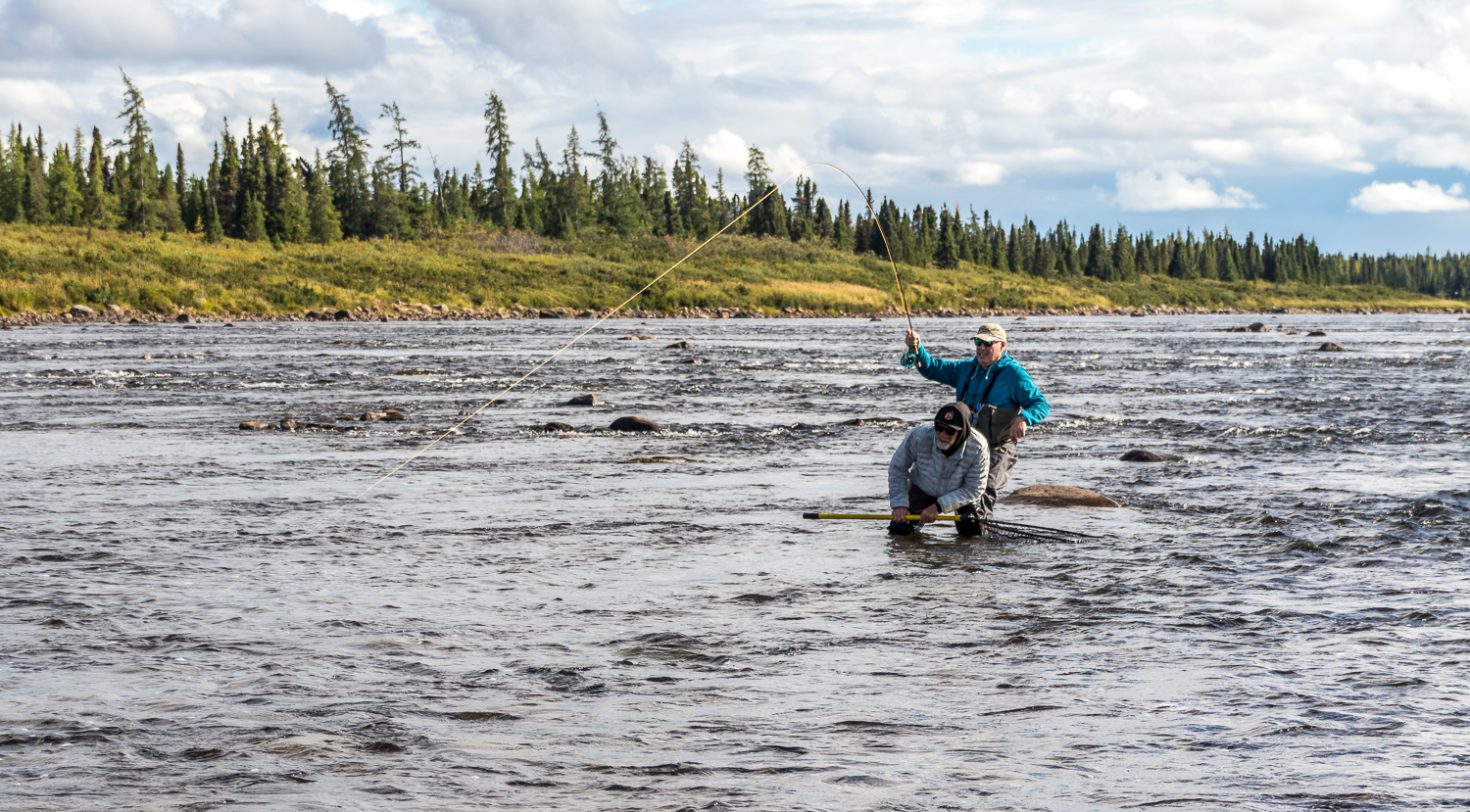
The Fishing and the Fish
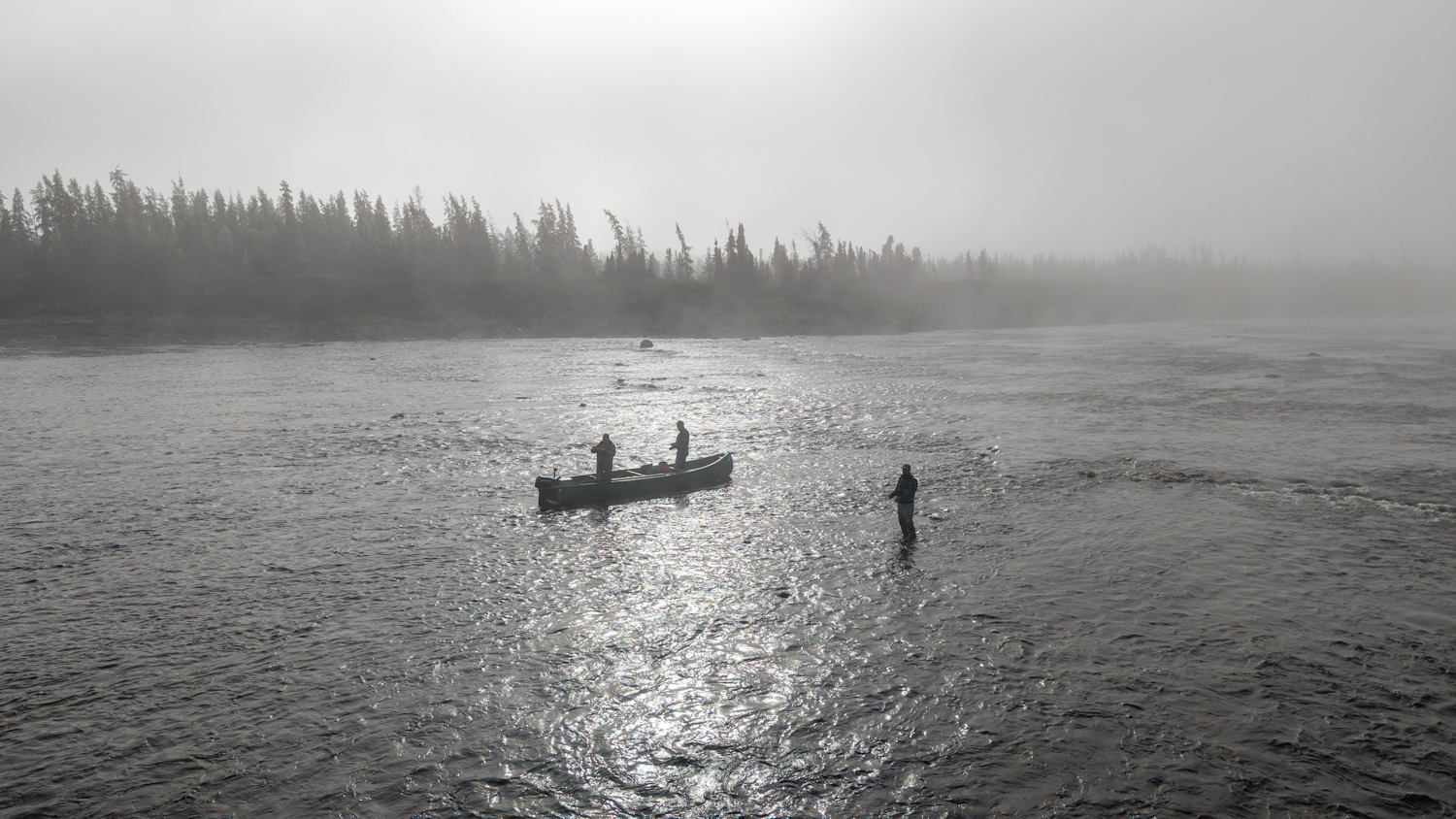
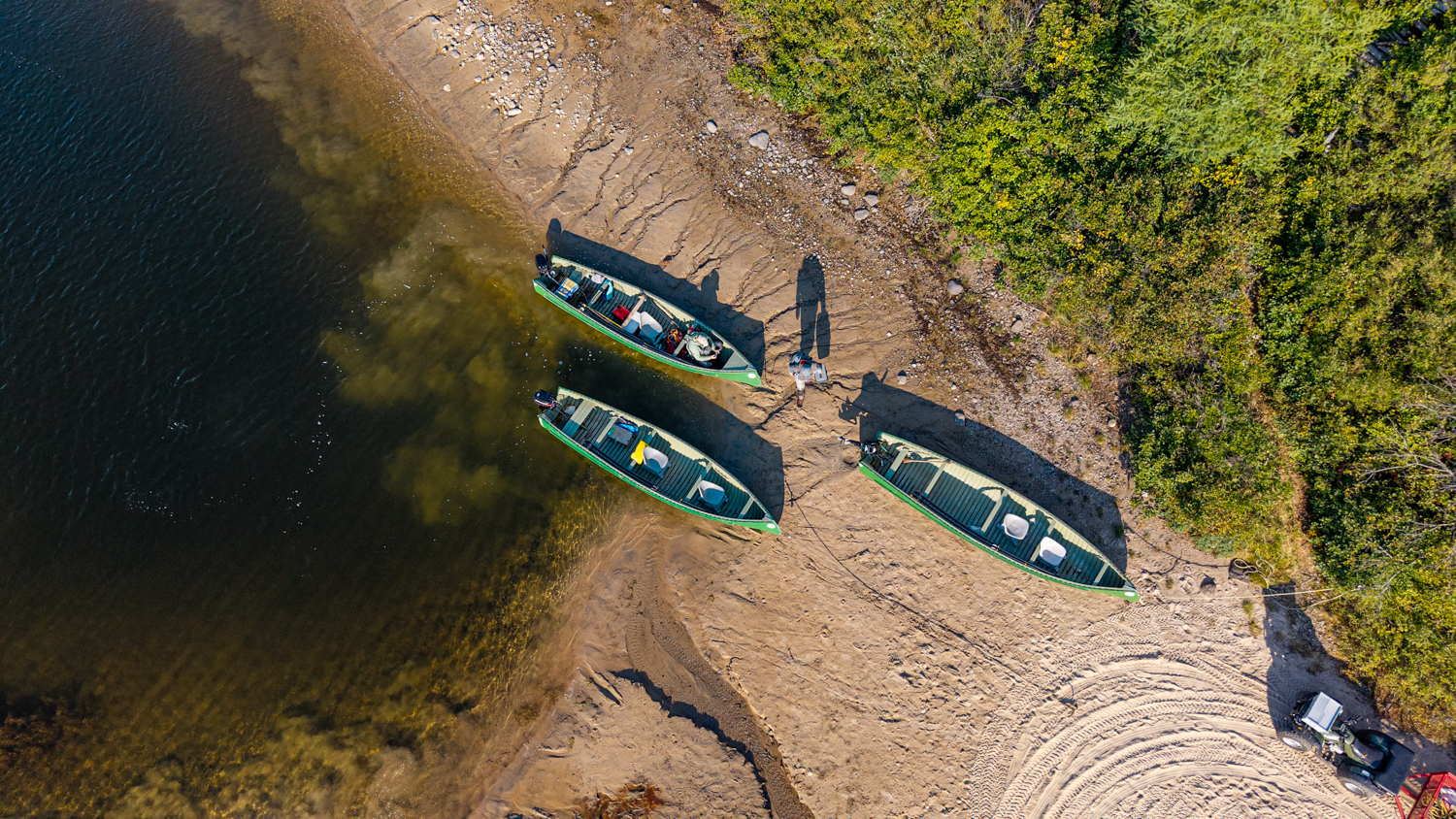
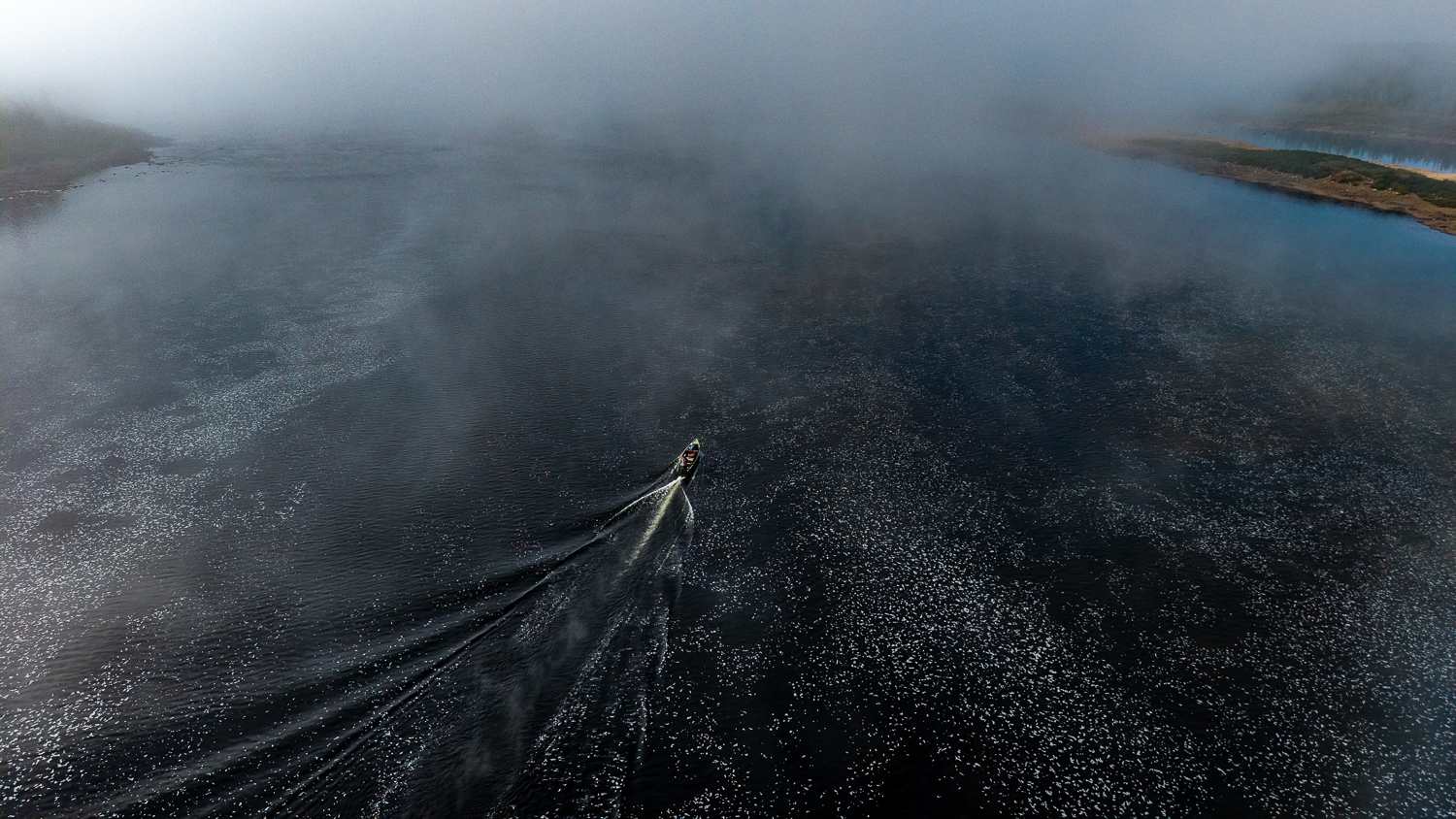
The current boats are traditional (and very expensive) canoes that are used on many east coast rivers. They have propeller engines at present though there are two brand new jet engines in camp. For covering the water that we did and a little further afield, they are perfectly adequate but for longer journeys they would be too slow and potentially not up to some of the rapids that may need to be navigated. The team are examining the idea of John boats like those used on Ponoi with jet engines. The canoes are not ideal for two people to fish out of but to be honest, two people fishing out of a boat was entirely unnecessary when I was there and given all the guides comments about the lack of need for much wading, it sounds like the need for two people to fish in a boat is rare in general. The need is more to get around and drop people off and/or to use the boat as a platform for a less strong wader to cast from. The boats need sorting in terms of equipment. This year every guide had different gear in their boat, next year everyone should have the exact same cooler/toolbox set up etc.
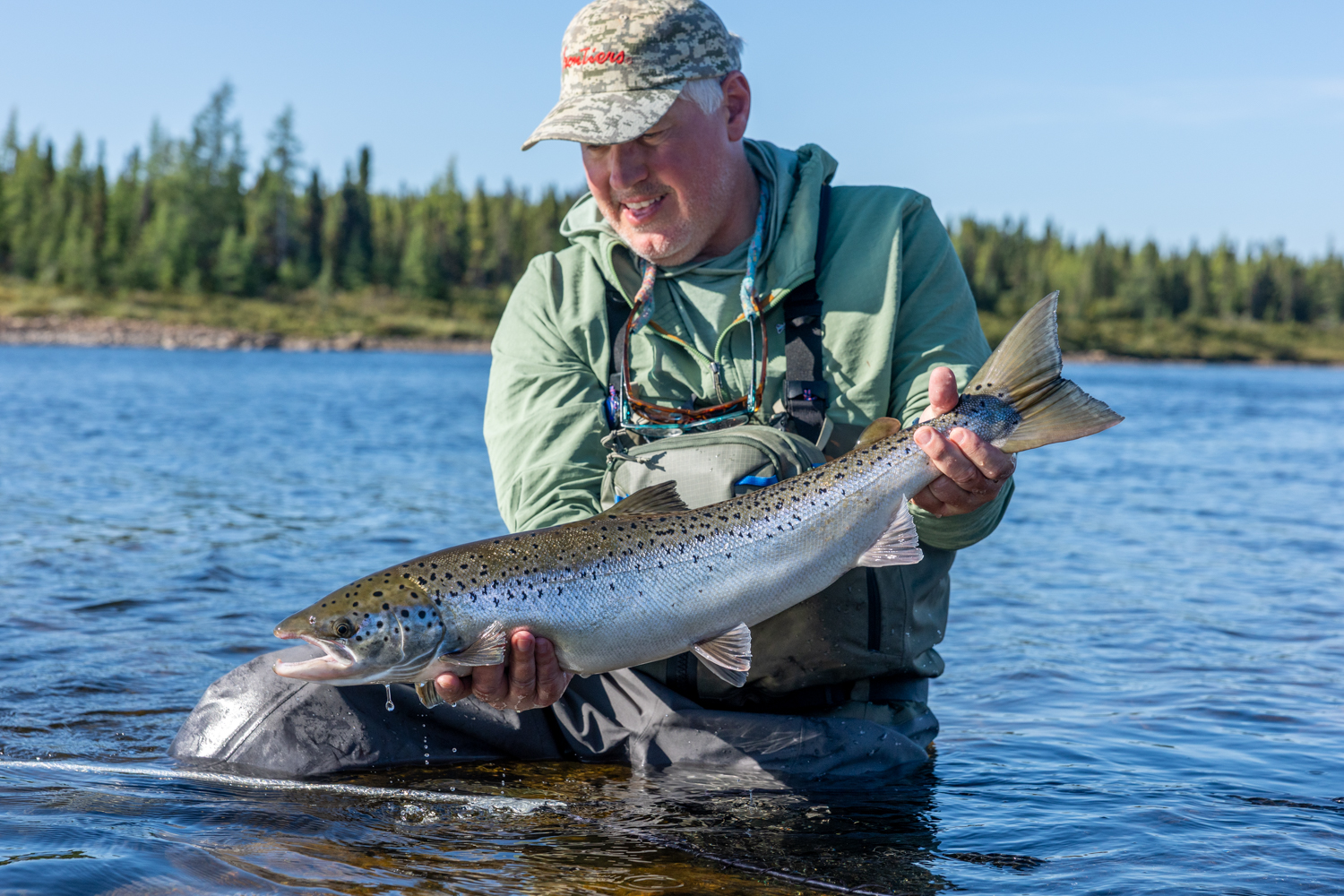
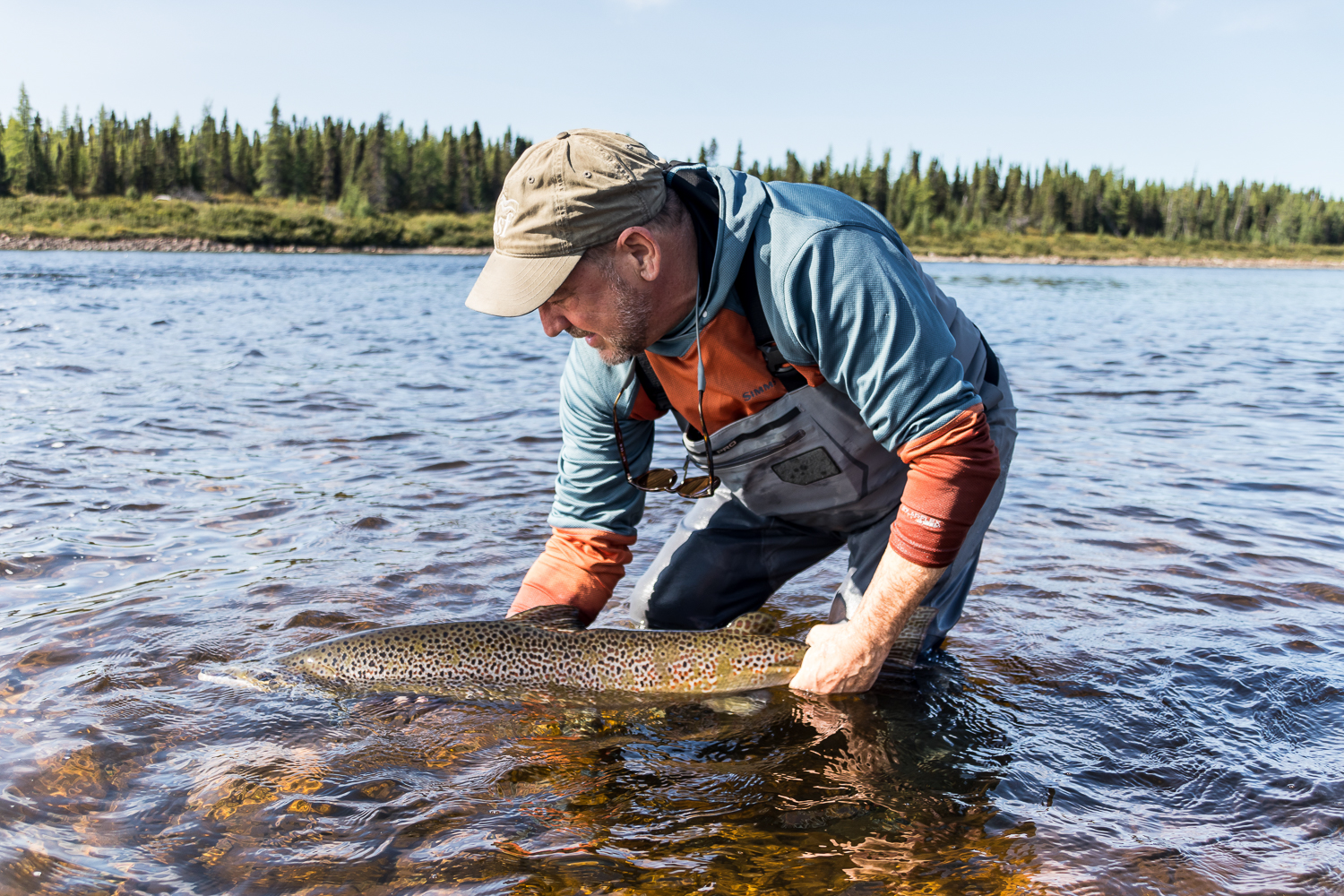
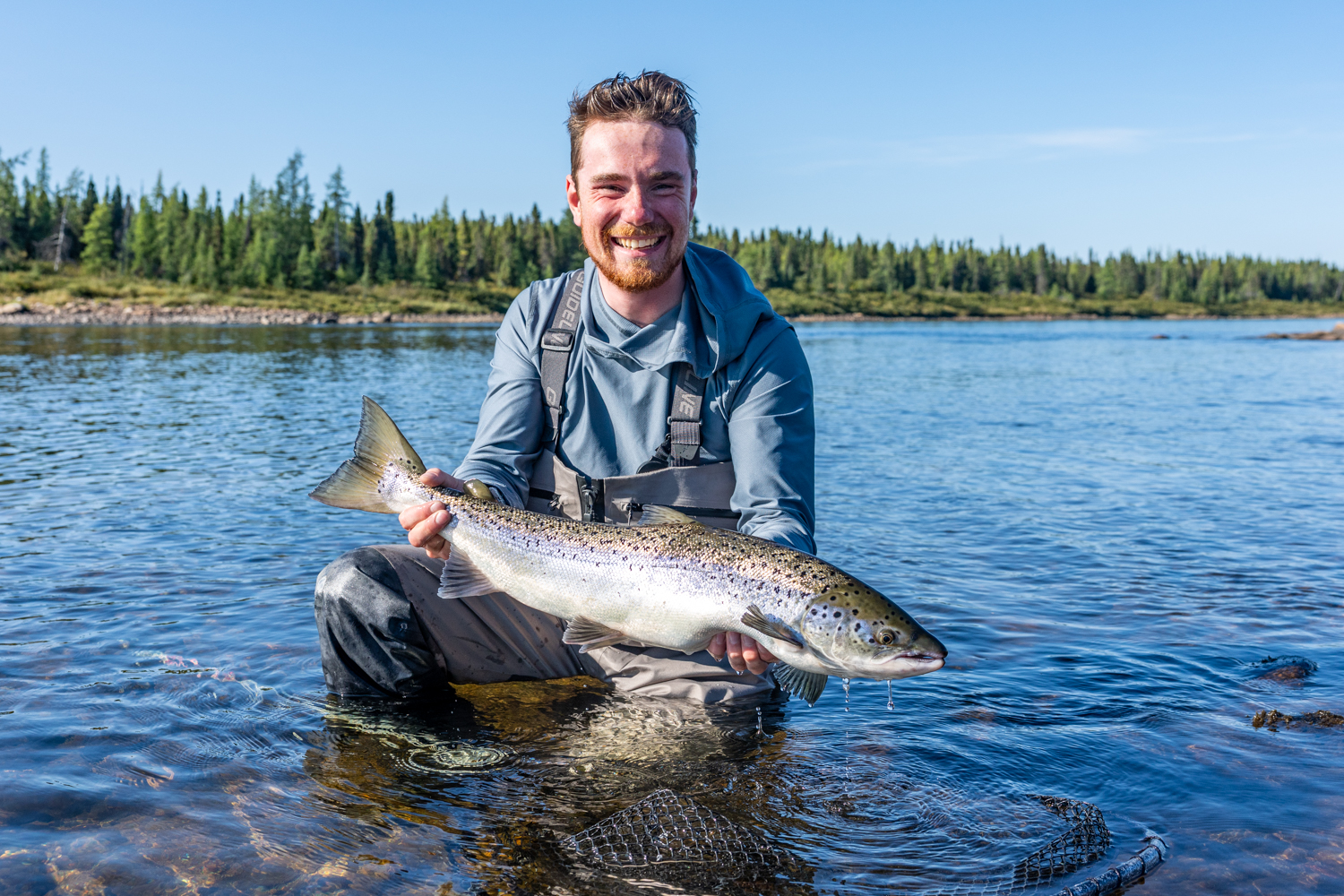
Before we get to the most interesting part of this blog… the fishing, I want to address the guides. By definition of the longevity of the camp as a fishing operation (a few weeks over two years) the guides are inexperienced in terms of knowing the water. Their knowledge has been further hampered by this year being unbelievably low water which ultimately restricted movement down to two or three places. At this stage, guests should not expect ‘on the shoulder’ guiding and the main reason for this is not laziness but it simply does not seem to be in the eastern Canada tradition. In this fast modern world of fishing, we think of a guide on our shoulder chatting away, giving instructions where required and buzzing about with high energy. If we have been in the Seychelles, we witness them diving into the lagoons to untangle GTs from coral heads etc. A fishing guide in Quebec seems to be more literal to the word ‘guide’, they will take you to suggested spots, they will give ‘guidance’ on flies and where to fish etc and then they will keep watch over their two guests in terms of safety (falling in etc) and the netting, handling and release of fish (which they get A* for). Are they going to talk you through casting angles, detailed up and downstream mending etc… unlikely at this stage and I would go even further to say that they will focus on their guests and are unlikely to come running to help another guide’s guest etc unless in emergency. We had many conversations about this in order that I write this paragraph accurately to arrive at the correct expectations. I am sure things will evolve but I feel this is a fair description to date in terms of what to expect. It is certainly not laziness; I saw them working in camp and they helped me considerably to get the video and photos I did.
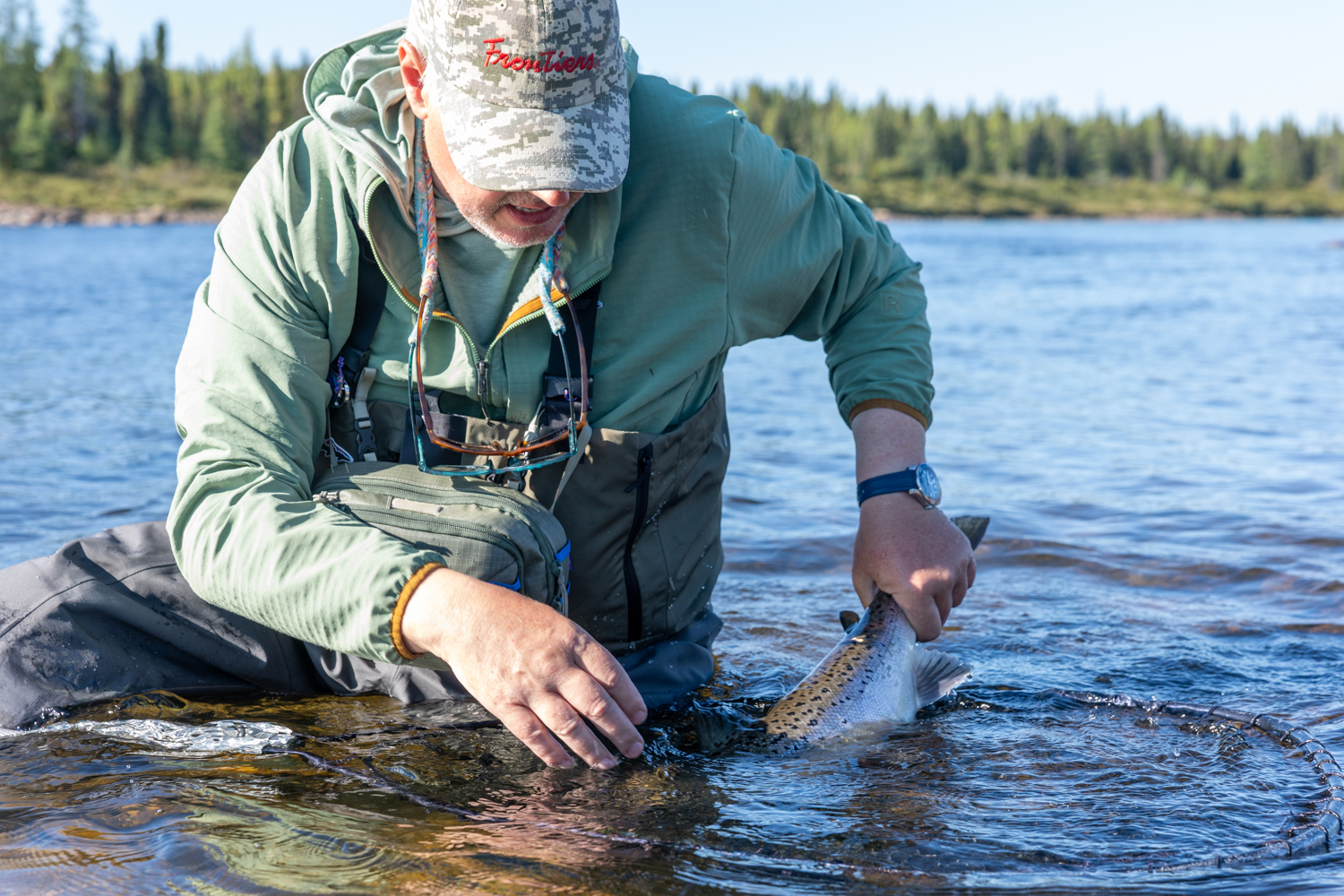
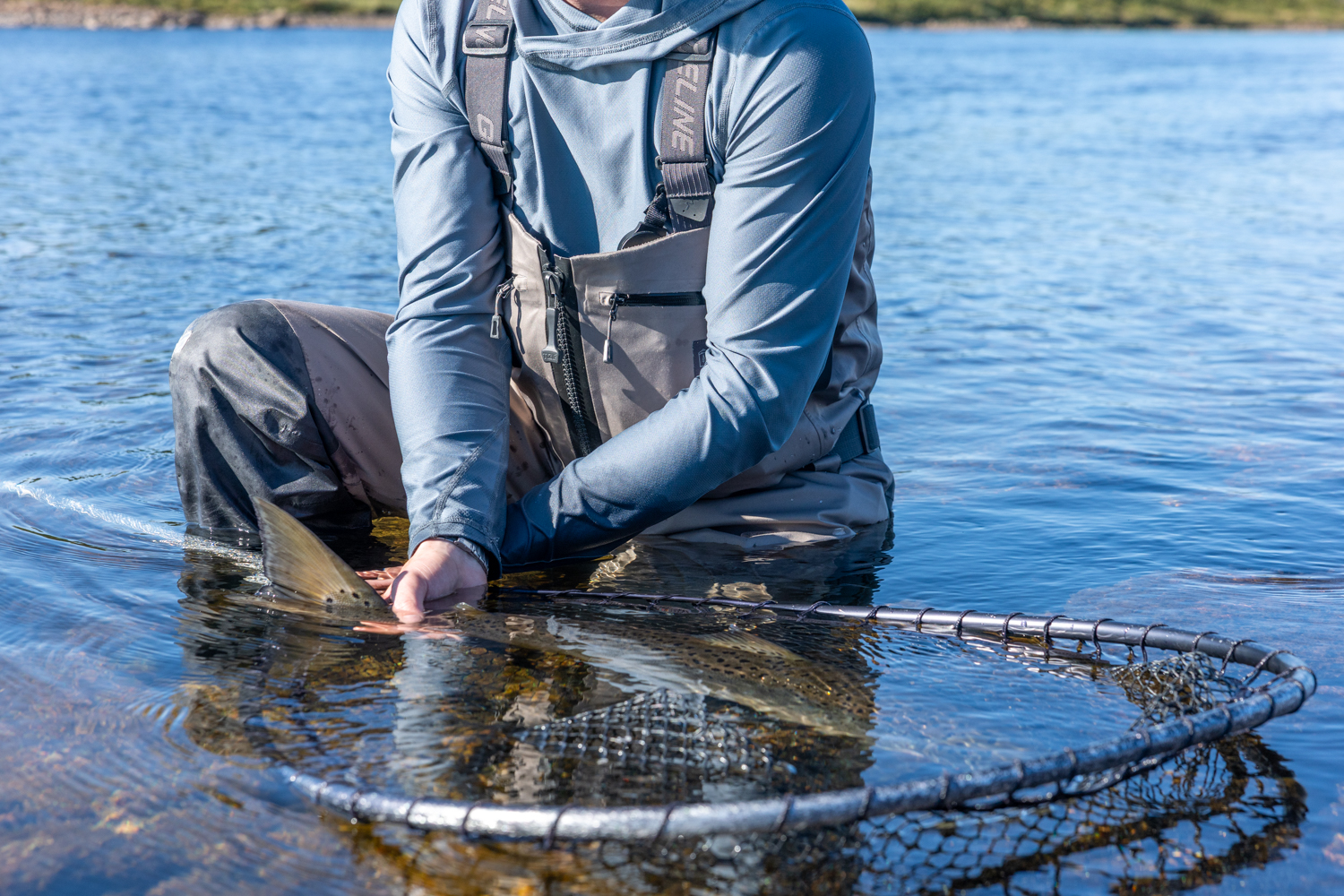
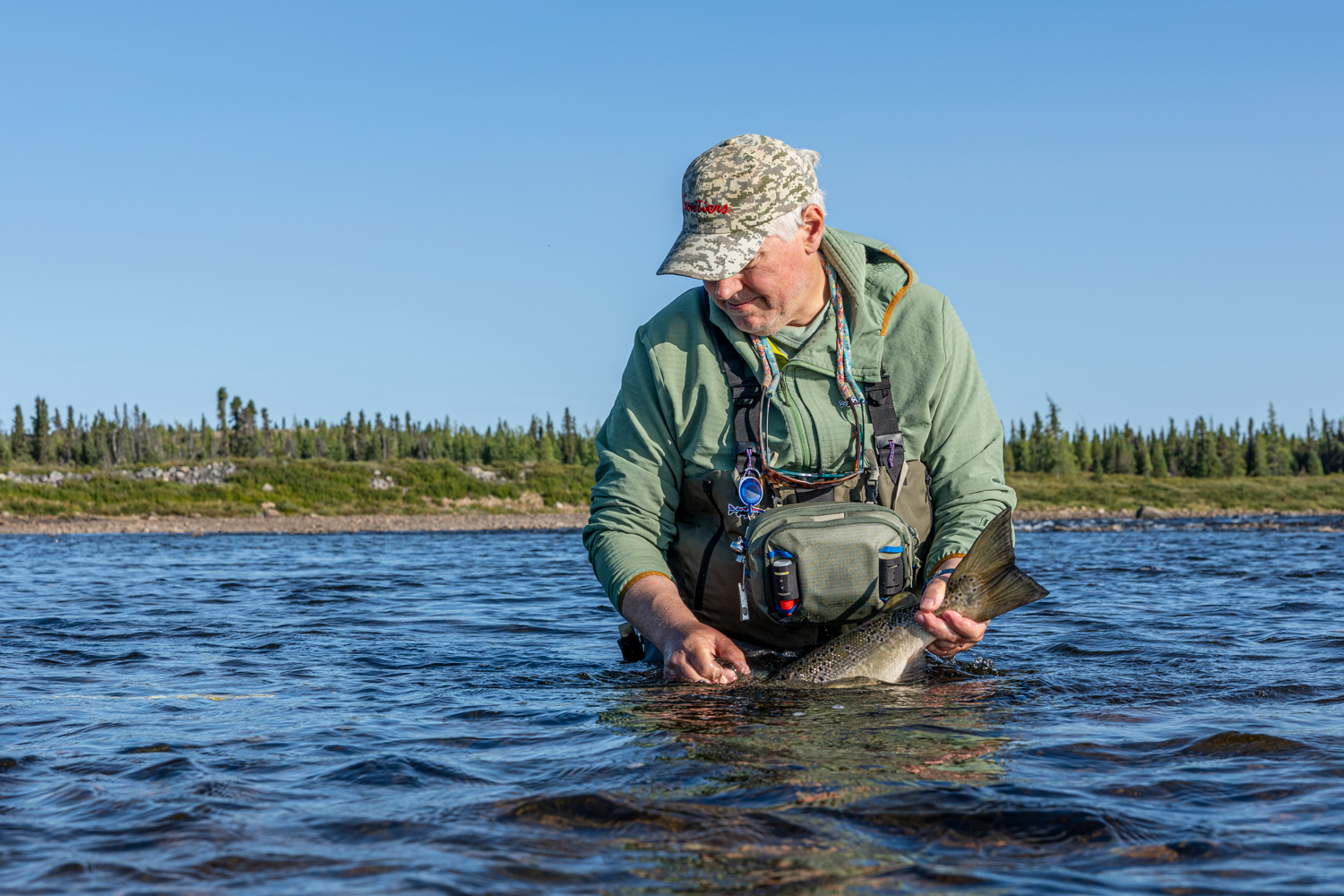
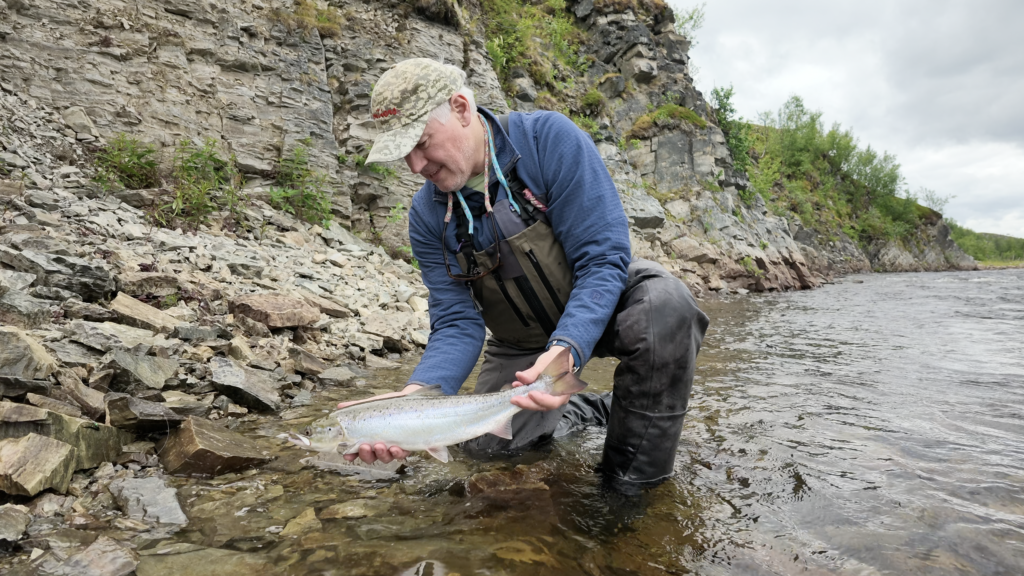
We were five fishers in camp. Myself, Paul, the owner, Rockin Ray (of radio DJ fame) and the lovely Uncle and Nephew (mature) team of Denis and Max. Paul fished about half the time because he was buzzing about camp working on stuff. Max and Dennis are experienced fishers but for Denis not for Atlantic salmon (he got a nice big one on his first day!) and Rockin Ray is a highly experienced salmon fisher but focused on his home and/or Canadian rivers. I landed 34 fish for my week.
The others caught far fewer (we maybe landed 70+ for the week) because of busyness, lack of experience and in the case of Ray, we deduced (sadly on the last day) that he was fishing a much slower fly than me and that was probably the difference. I also had the luck that Clayton, my guide on the first day, gave me fly advice and chose a small brown hopper pattern which proved lethal when fished downstream and across. I was also brave enough, at Dave the guide’s encouragement, to try a bee bomber dead drift and that proved highly effective too to Dave’s chagrin because tying a two-tone bomber is so much more time consuming! To have perspective, 4.5 rods landed 70+ fish in extreme low water. Another river close by was fished by 8 rods, they landed 5 grilse between them. To know the river still delivers in such low water is a blessing.
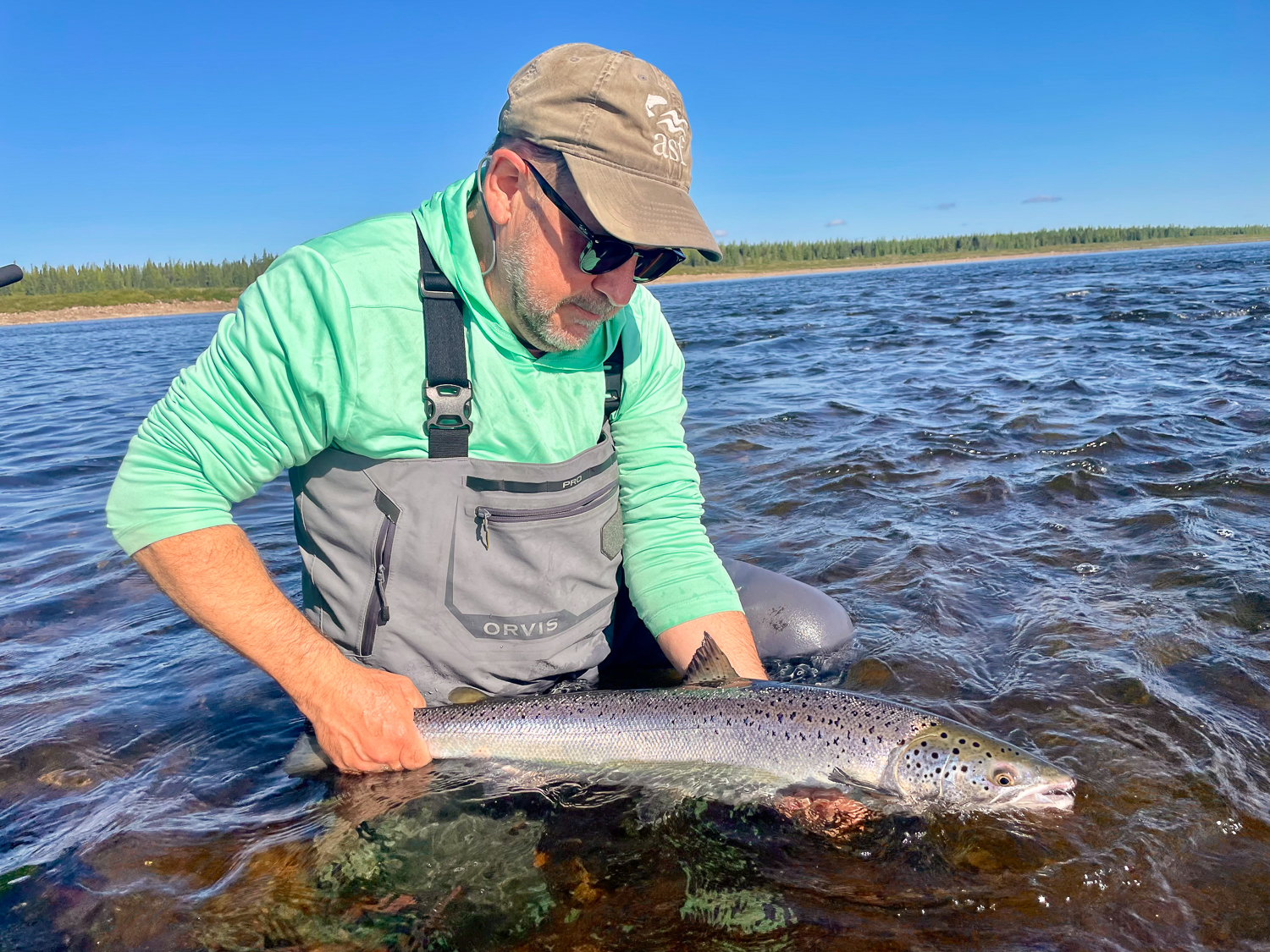
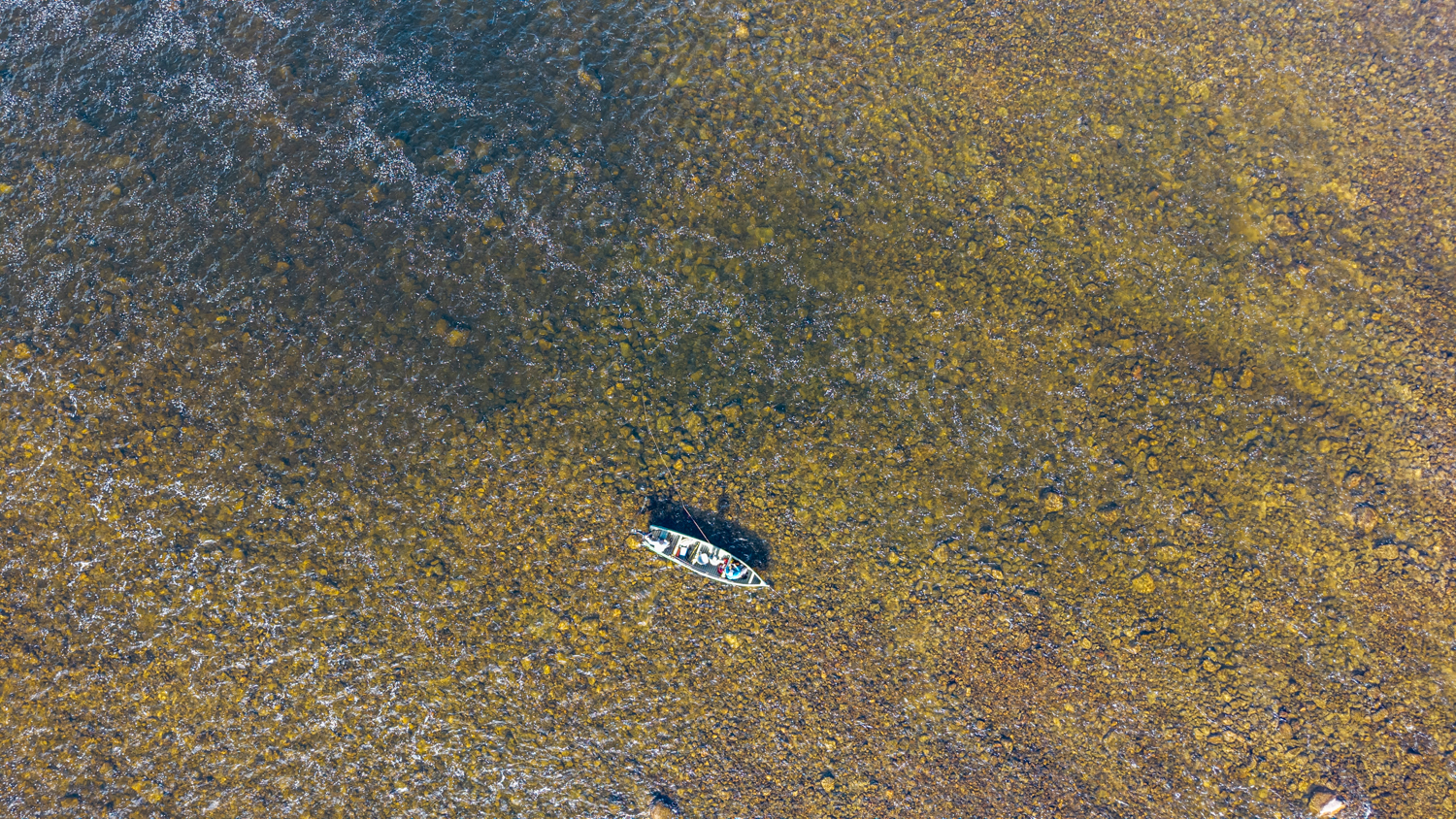
Due to the low water, we were mostly fishing to fish lying in 30 to 40 inches of water. There was a major rapid all the way across the river (which likely really is a major rapid in normal water) and we fished down to the fish from where the waves broke until we could wade no further. We would then turn around and fish our way back up the water we had fished with a dead drift bomber. I was amazed at how much activity we would get with a dead drift dry even after fishing down through with a swinging fly. There were times when we would raise a fish with the swinging fly and get it to take with a dead drift bomber. In terms of fishing the dead drift fly and how that differs to fishing the Flowers river (see blog here) on the Flowers one can see the fish and cast to them which is fun but at times one felt one was beating on them whereas here, one was always searching for fish.
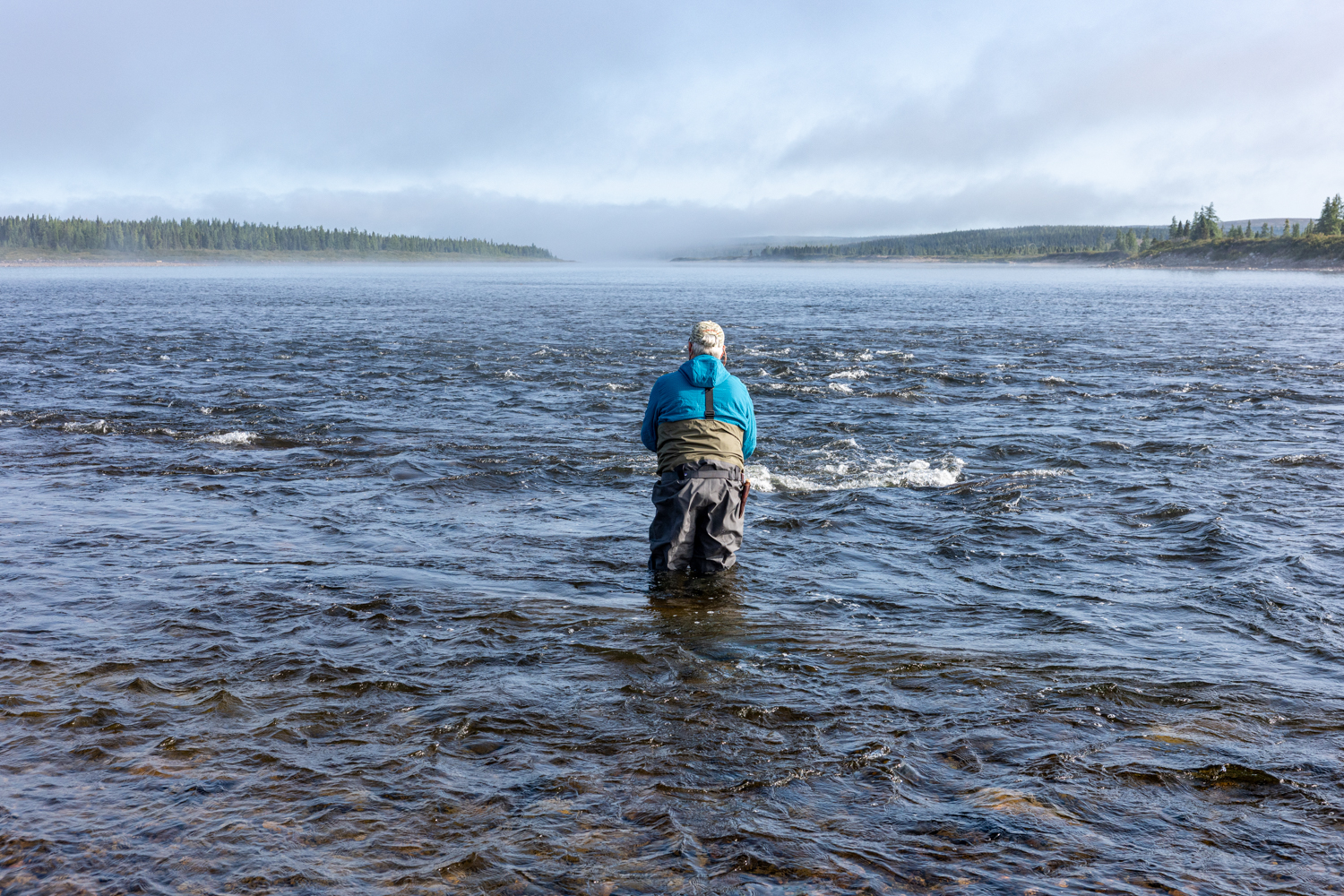
Overall, the fish would take the swung fly aggressively and it was usually clear when one had had a rise. The way they took the dry varied from coming flying out of the water as they nailed it, to the slowest of slow sups so much so I found myself almost rubbing my eyes to work out if it was a pair of jaws I saw slurp my dry fly. There was everything in between.
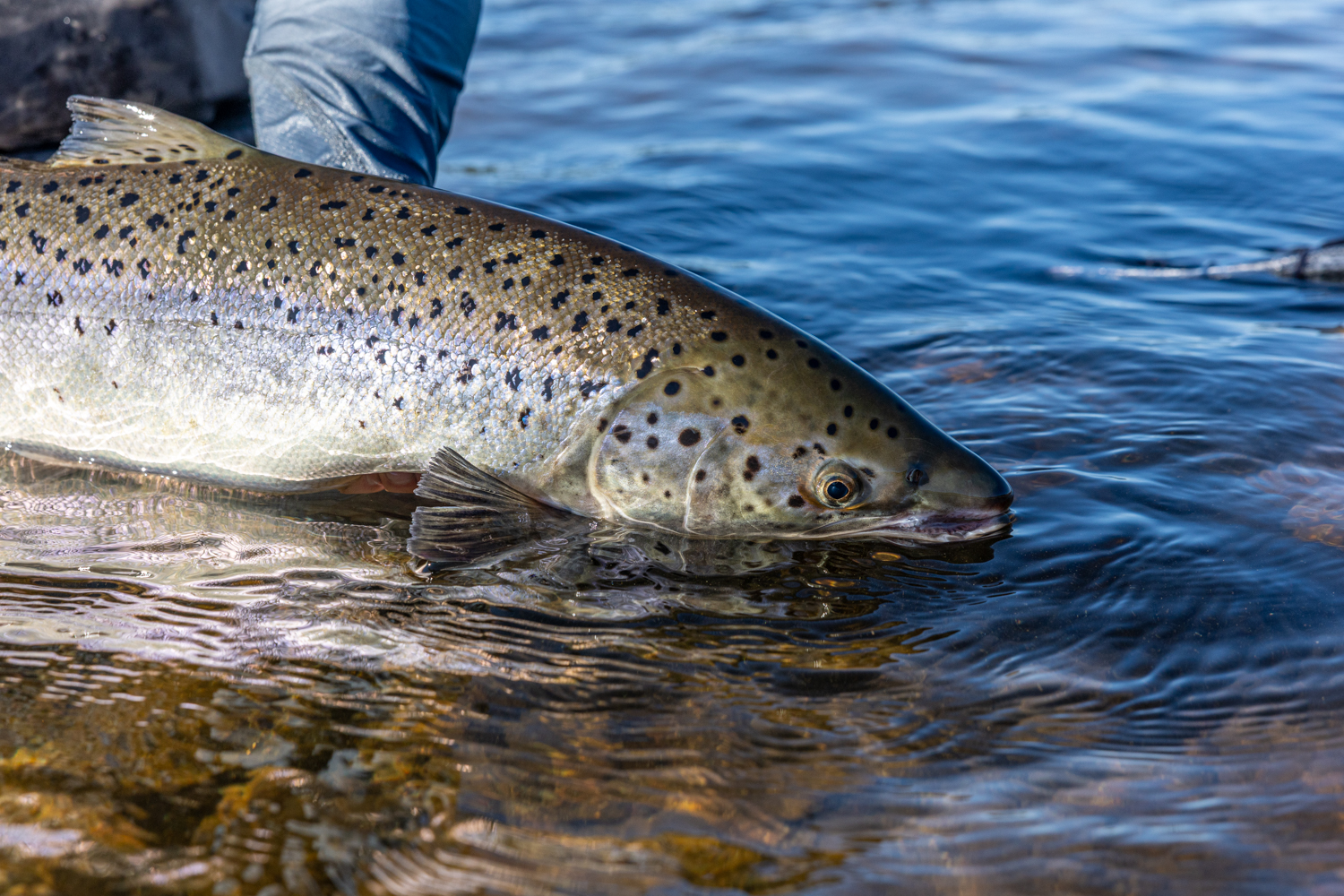
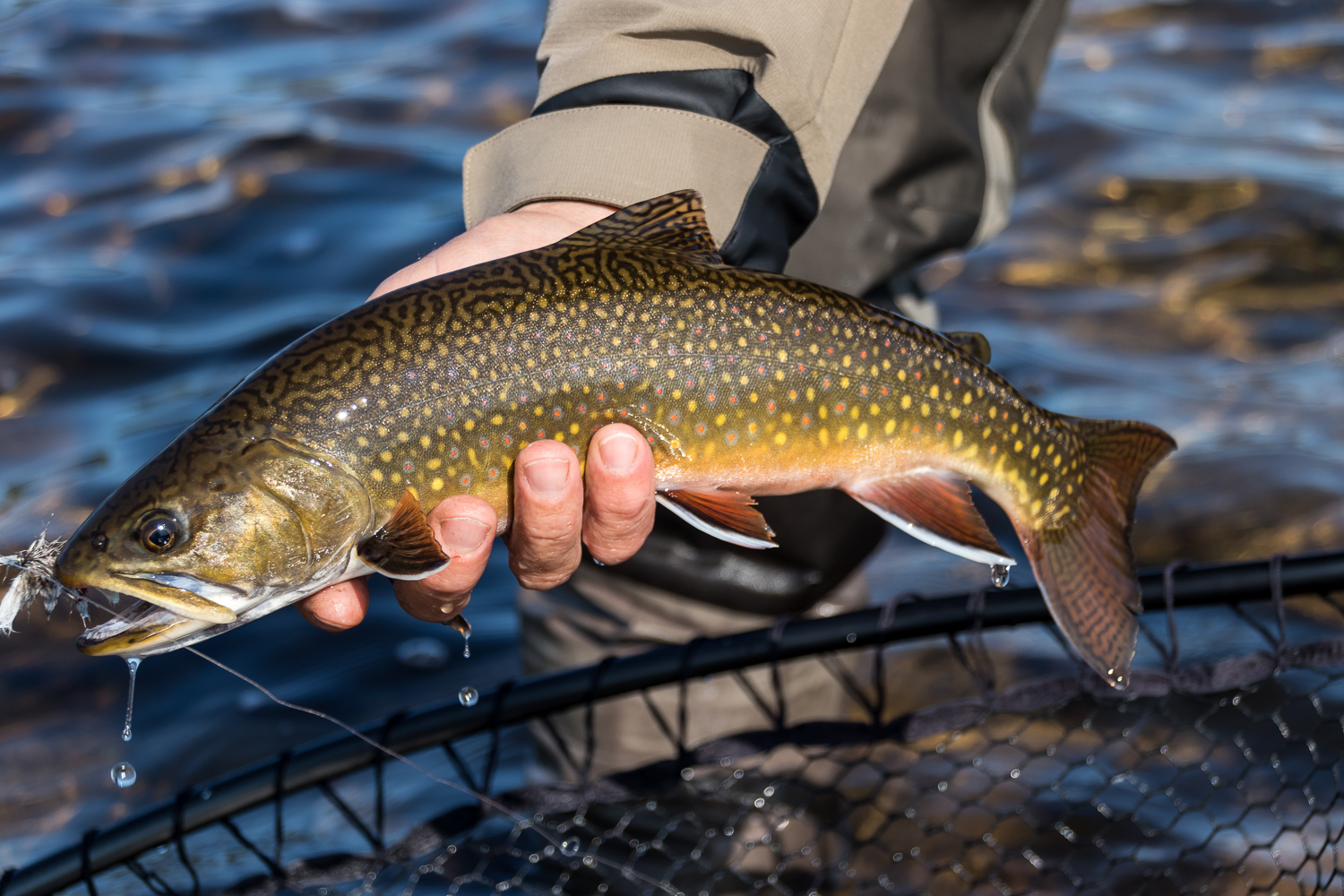
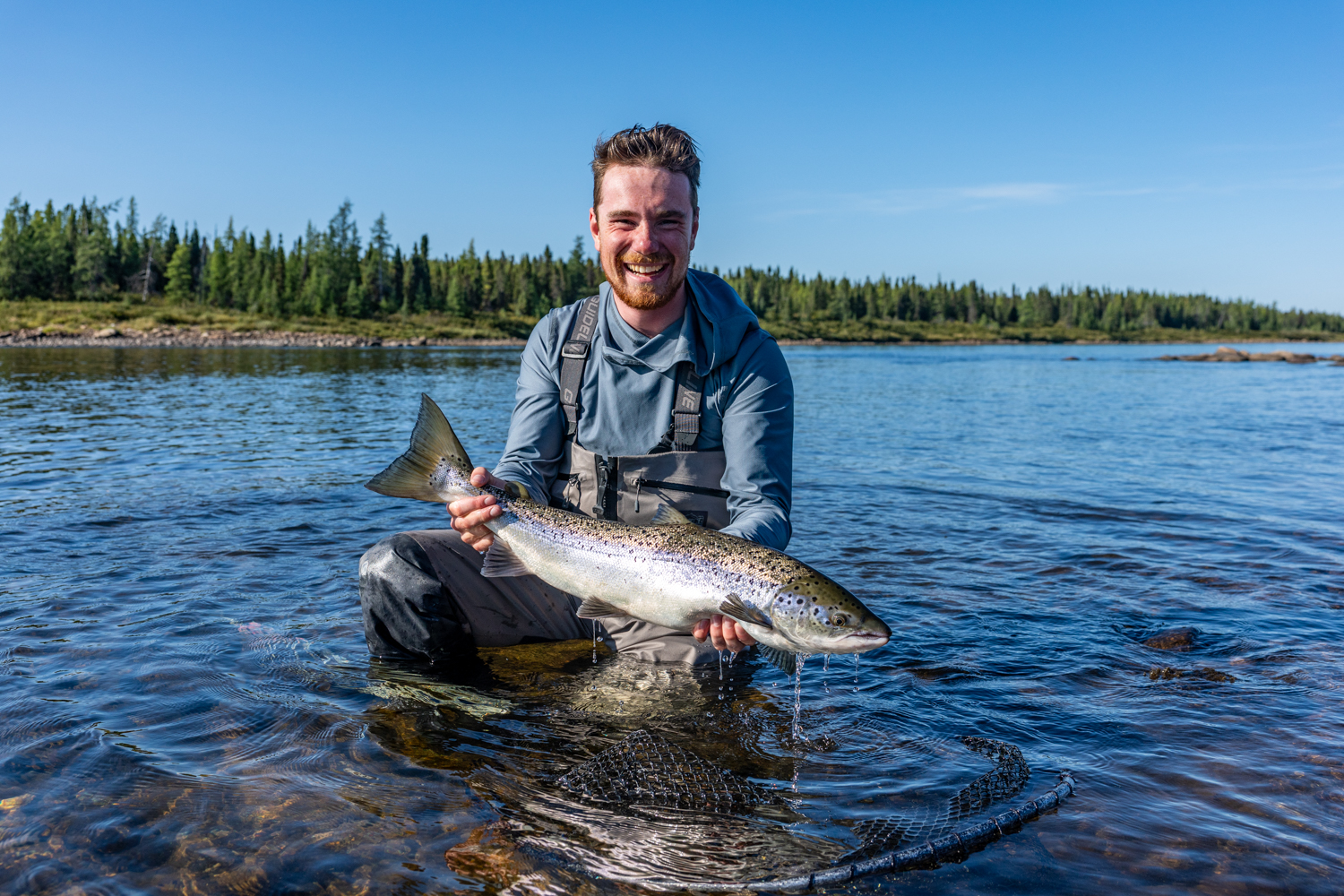
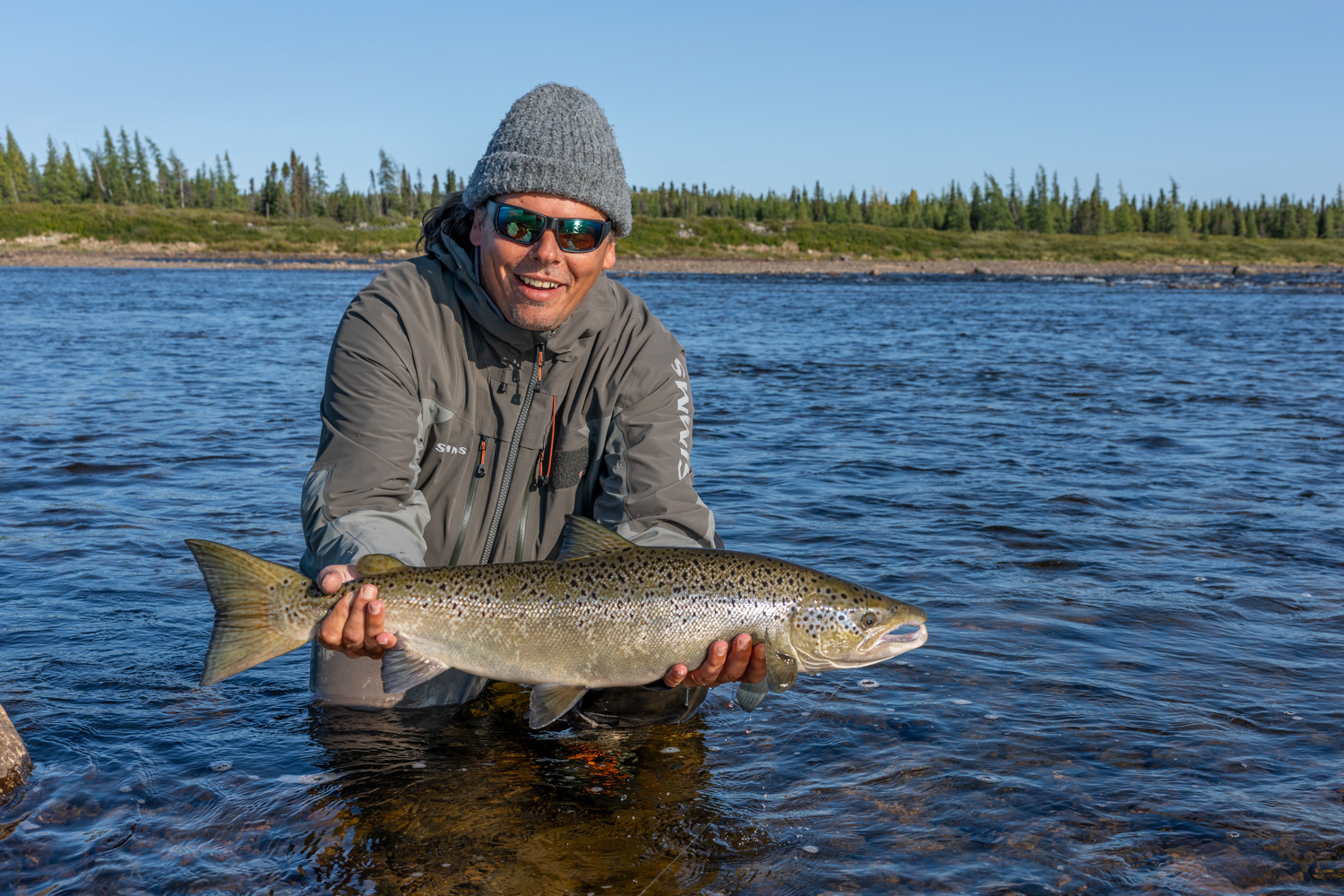
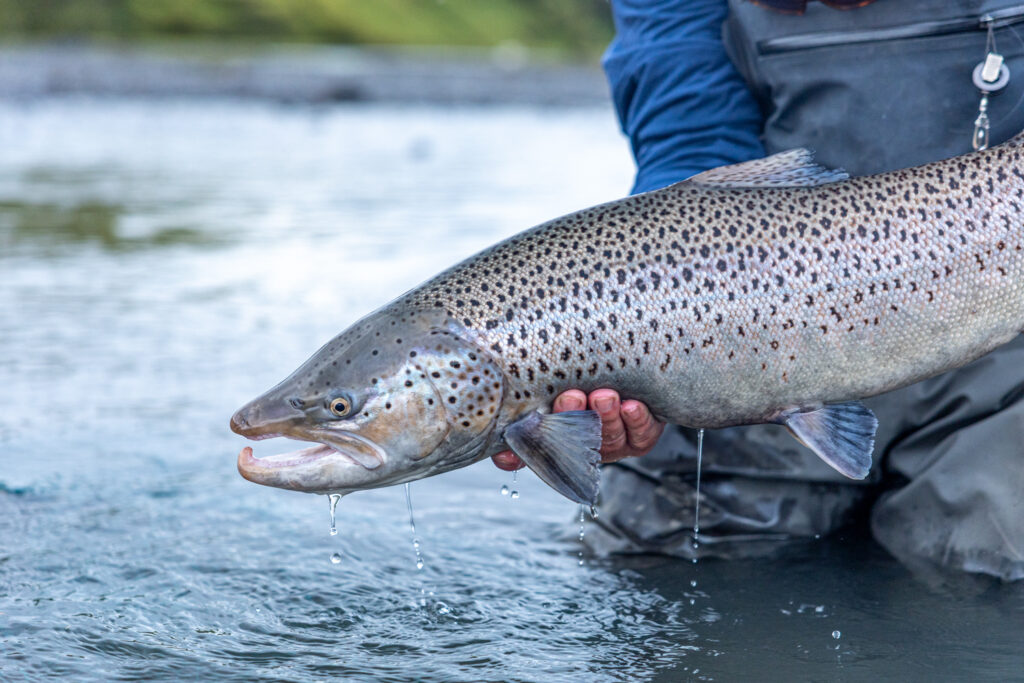
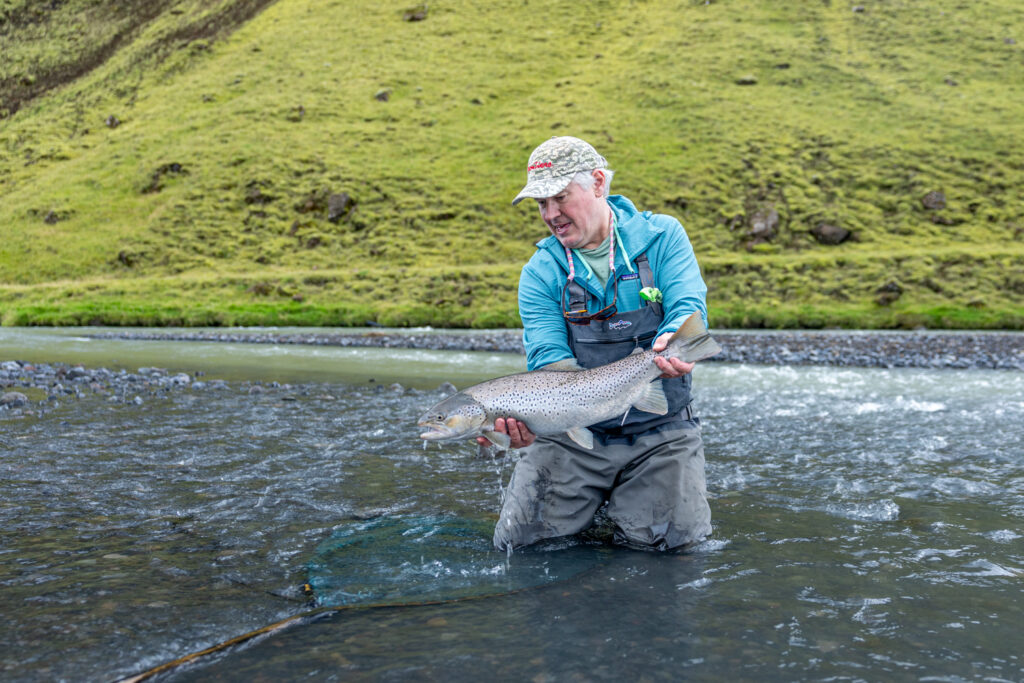
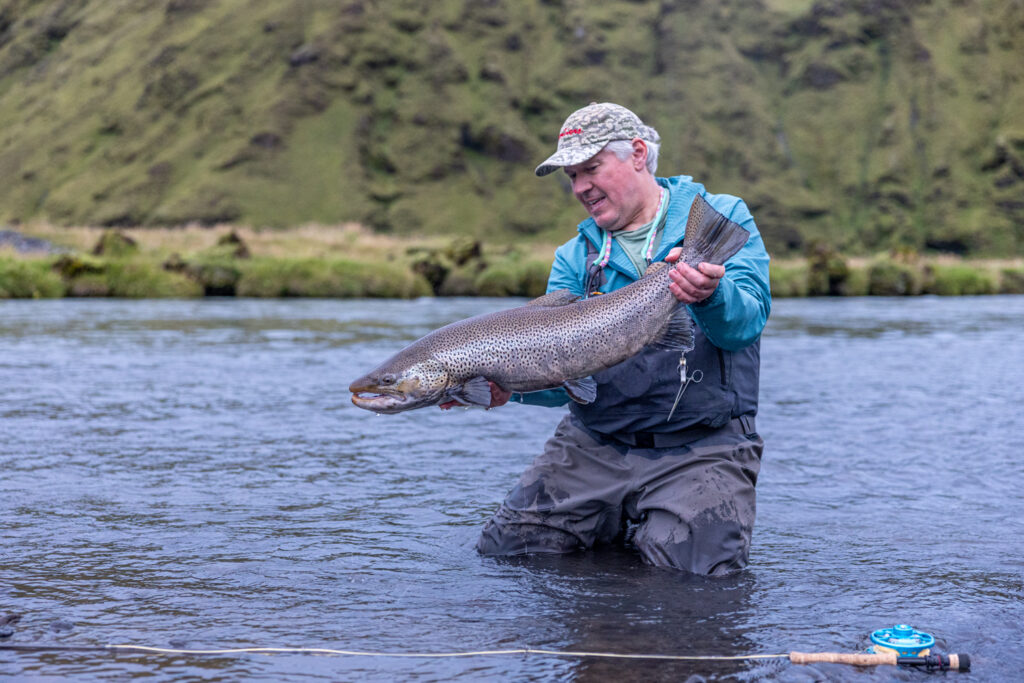
What of the fish themselves? To quote John Doelman from the 1980’s ‘They ranged in size from 5 to 20 pounds, and were taken on both wet and dry flies, it didn’t seem to make any difference. The Delay produced!’ This seemed to be the case. I probably lost a 15lbs fish, but my size range was probably from 3lbs grilse to 12lbs fish. There are 15lbs and even 20lbs fish about but no bigger. The ideal rod under normal conditions (they do not get a lot of big winds during a season it seems) in my view is a 6 or 7 weight rod combined with a Single-Handed Spey line by Rio and 10lbs leader. You will note from the photos that the fish look different. They are heavily spotted and varied from impressively fresh given how far we were from the sea to heading for coloured. We did not catch any proper dark fish but some of the hens, including fresh ones seemed laden with eggs. Some fish did not feel firm in their bodies and the photos confirm this – fish in Iceland of similar size do not hang but rest firm across two hands. There is conjecture about when these fish run and if there are multiple runs – the Inuit were catching fish of a really good size and fresh in the estuary during our week – where are they destined for? There is also conjecture that some are land-locked salmon or Ouananiche (pronounced wonanish) – genetically the same but they go to lakes to feed instead of the sea. These deliberations need to be resolved by the scientific fraternity and that is now in process, but it is a measure of how overlooked the Delay is as a salmon river that the scientists are only now really applying themselves to the river at Paul’s stimulation.
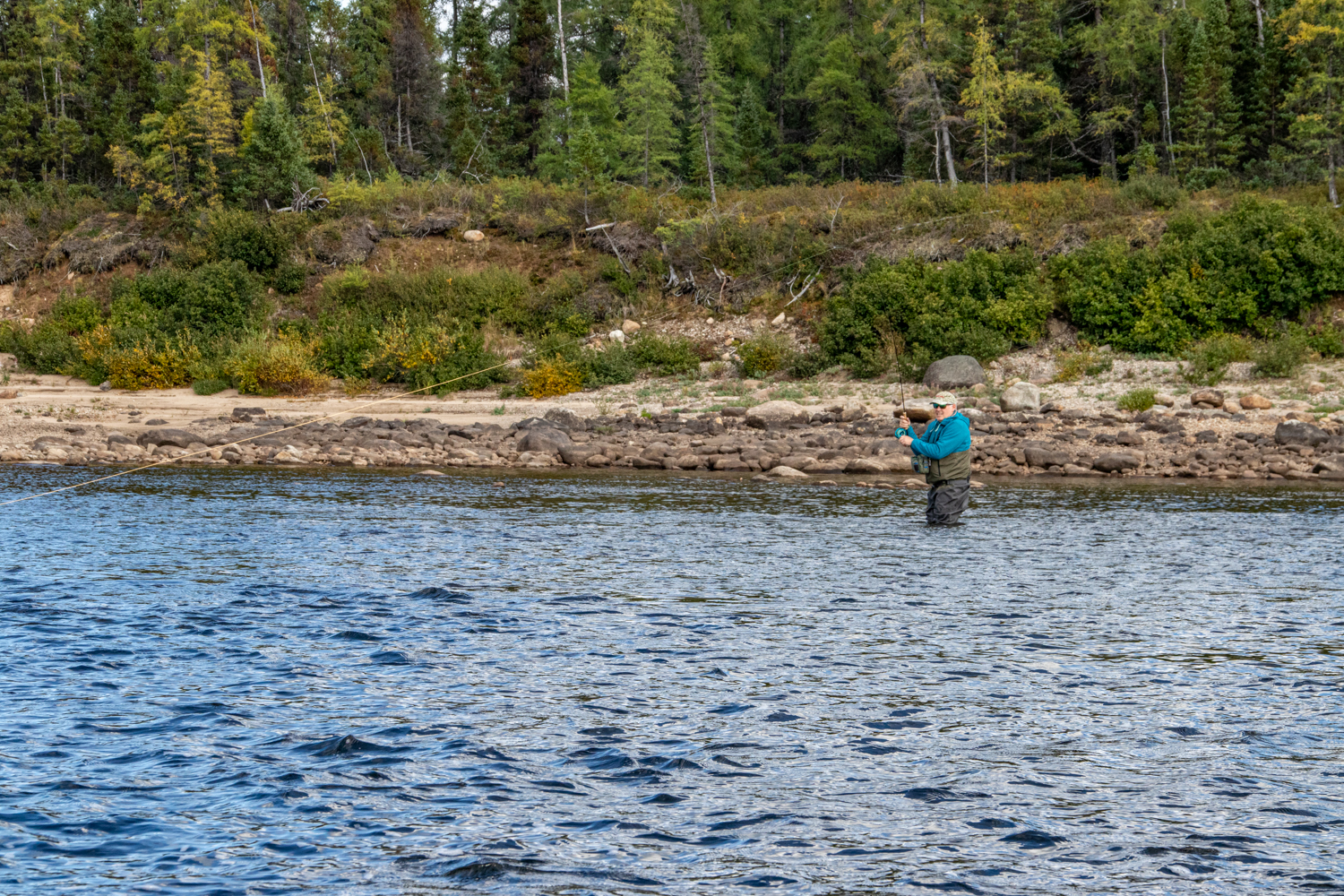
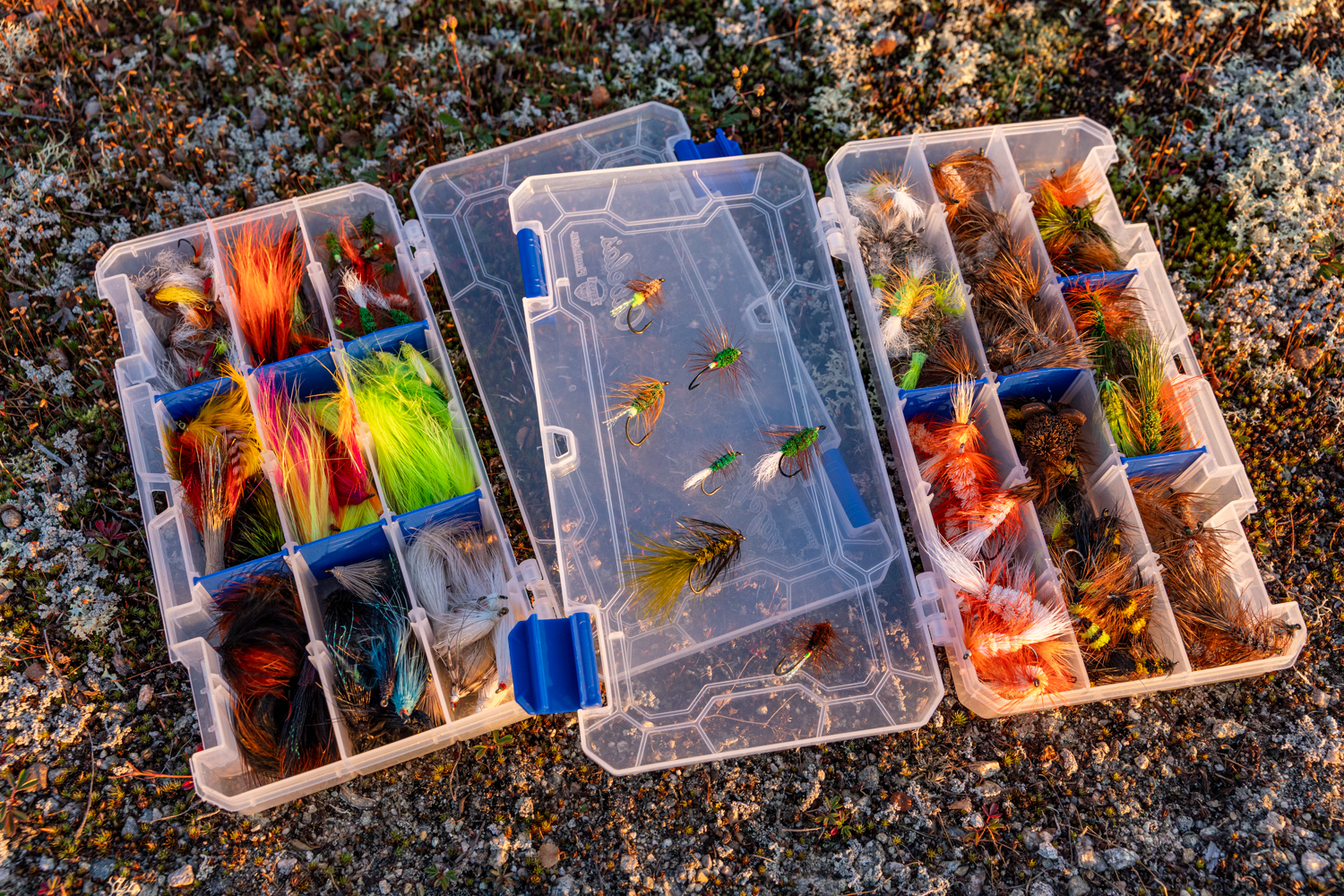
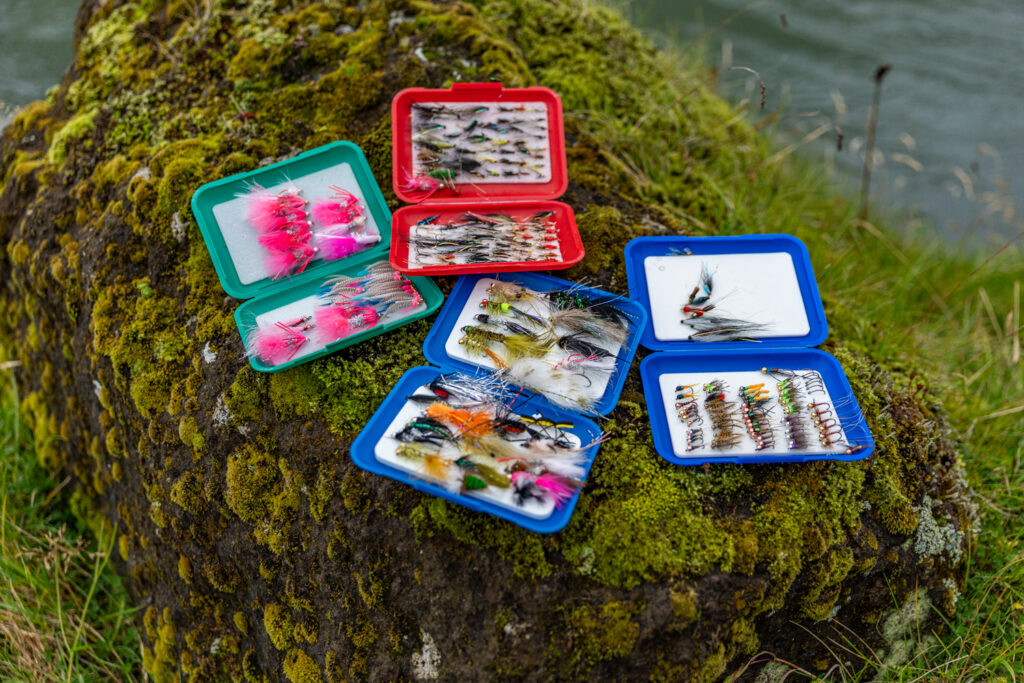
No matter what run or if these fish, or some of these fish are Ouananiche, they took well and fought hard, some with multiple long runs into the backing. They are unique looking as I have said but they all had big tails on them. Could you horse them with a 14 ft double-hander, probably, but you may bend hooks and rip lips etc and, in the conditions we were, you would spook fish landing a big heavy fly line on the water. Their fighting prowess was all them, there was no major current to help them. Wet flies were generally 12 and 14’s with some fish raised to even size 16. Bombers were best at medium sized probably size 8 but bigger and much smaller caught fish as well with perhaps the most aggressive take of all being to a very small caddis having raised the fish on a normal bomber.
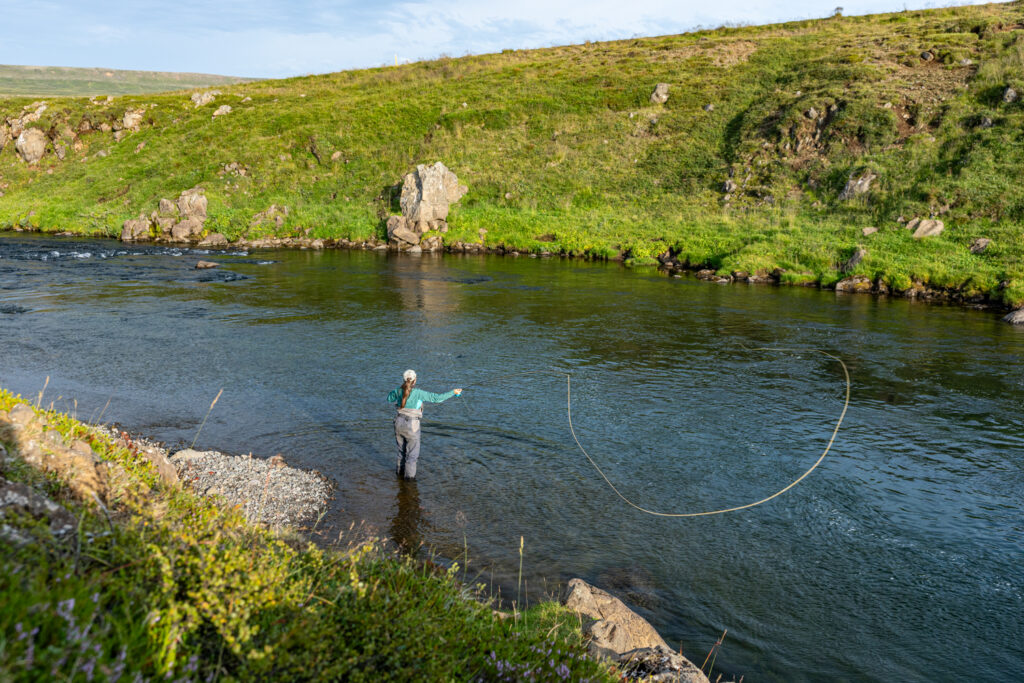
Did I enjoy the fishing? I am more a fisher to get the take than the fight and I was more than satisfied but yes, I enjoyed all aspects of the fishing, and I even used a 4-weight on the last day which was fun! Given how confined we were to a few spots, one would expect them to wither with pressure, and they did a little, but I was really impressed that the fish just kept on coming, some days the general trend was smaller fish and more grilse, other days it was all salmon. I think the withering was more caused by the ever-dropping water levels.
I should not forget to mention the stunning, wild (of course) resident brook trout up to maybe 4 or 5 lbs which frequent the main river and the tributaries depending on the time of year.
Reflections
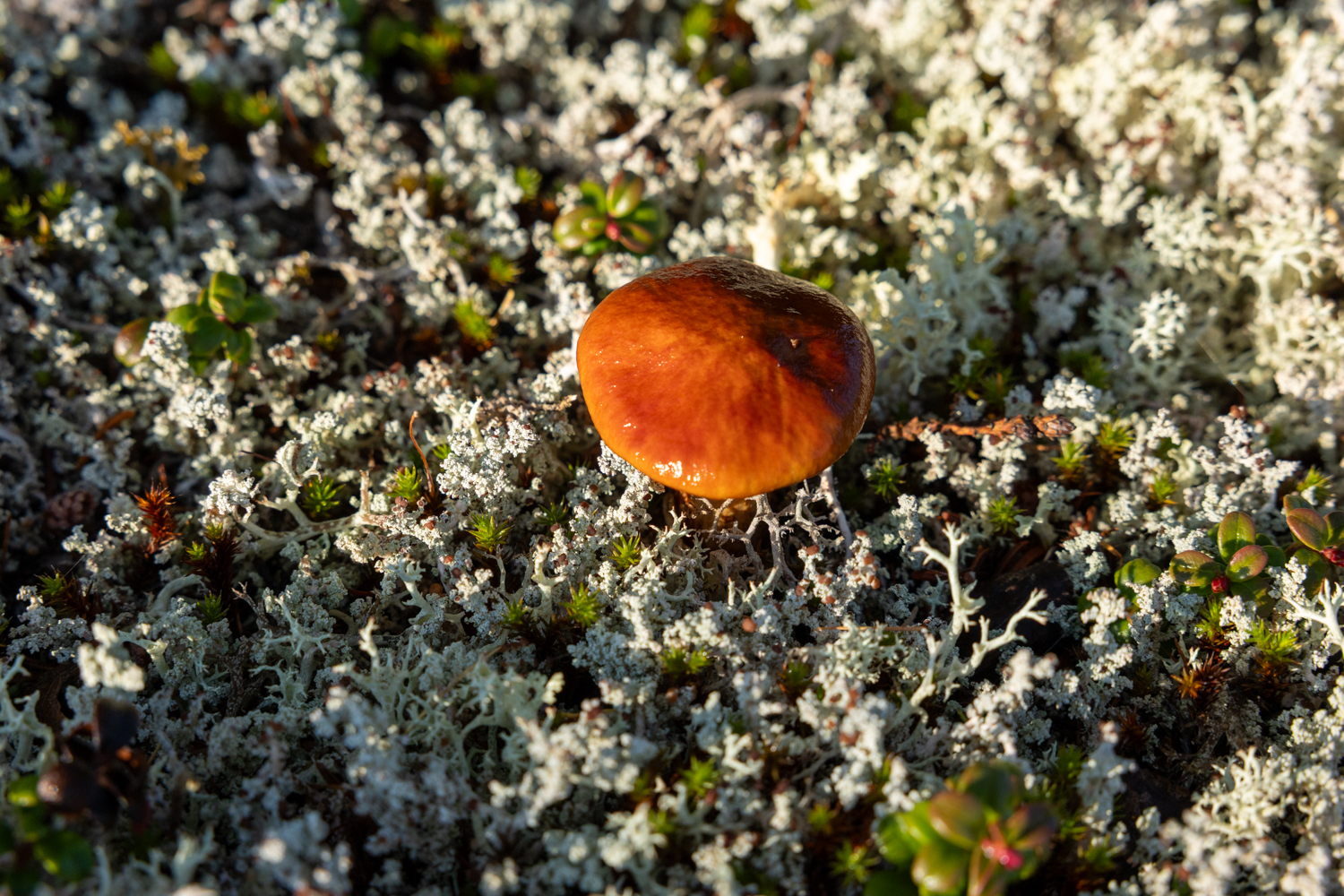
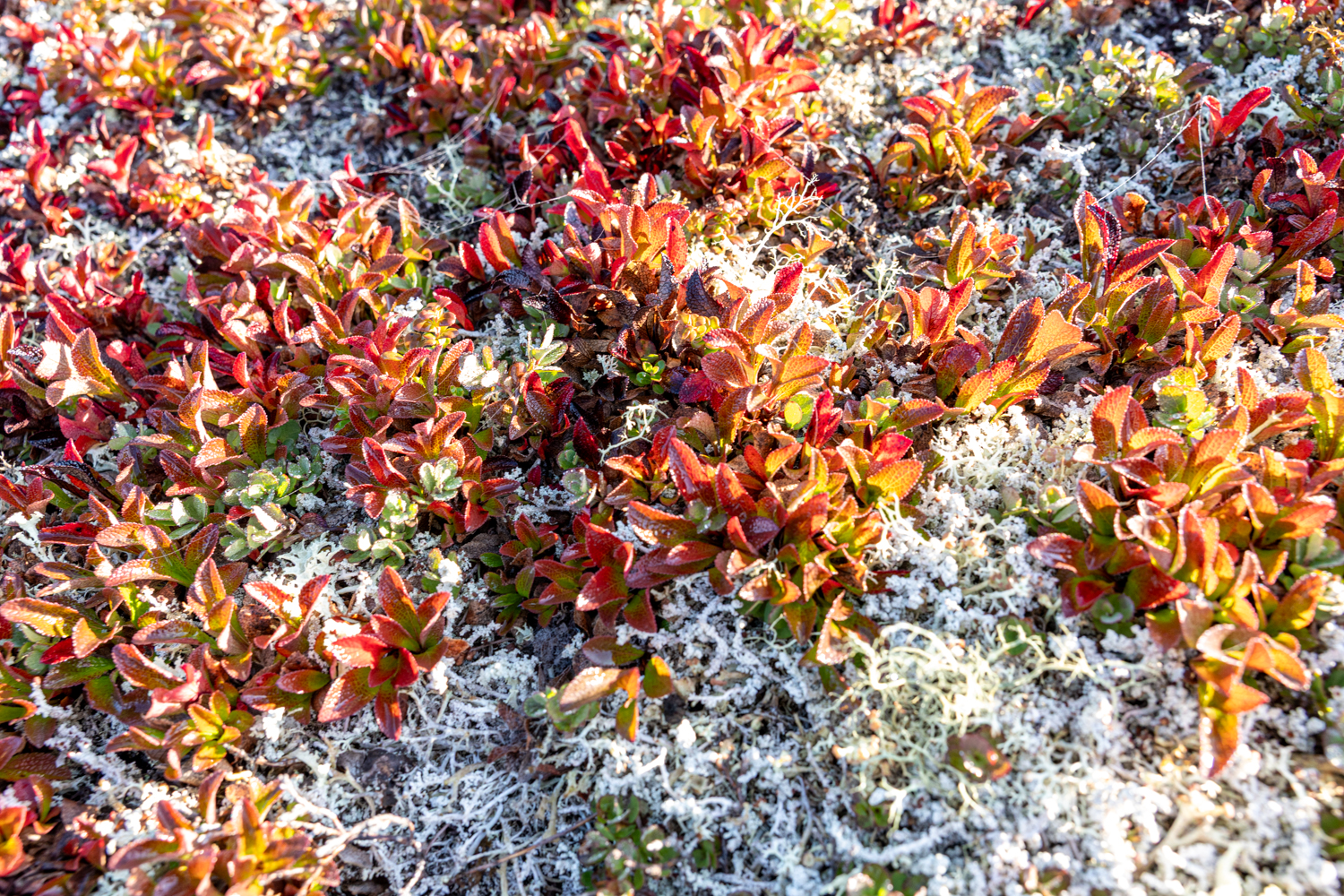
It is a relief to arrive at the best bit of this blog. I think I have got all the details down and not missed anything I think you need to know. Then again, I have not addressed the bugs. Though on my week, they virtually did not feature due to later in the season, frosts and fishing in the middle of the river, you need to know that there are black fly mainly and they bite and there are some mosquitoes. The screened areas in the cabins are highly effective so the chances of bugs in your room are minimal unless people are silly leaving doors and windows open. In the evenings around camp, they could be numerous but that is what the screened areas are for and they work well. They can/will be on the river if there is zero wind and you are fishing near trees and bushes. Make no mistake, there are bugs in varying numbers and there is no getting around it and one should be prepared. The camp has all the gear in terms of coils, screens etc but bring all your chosen protections and contraptions. We have chosen the dates we have for 2027 partly for the reduced bugs.
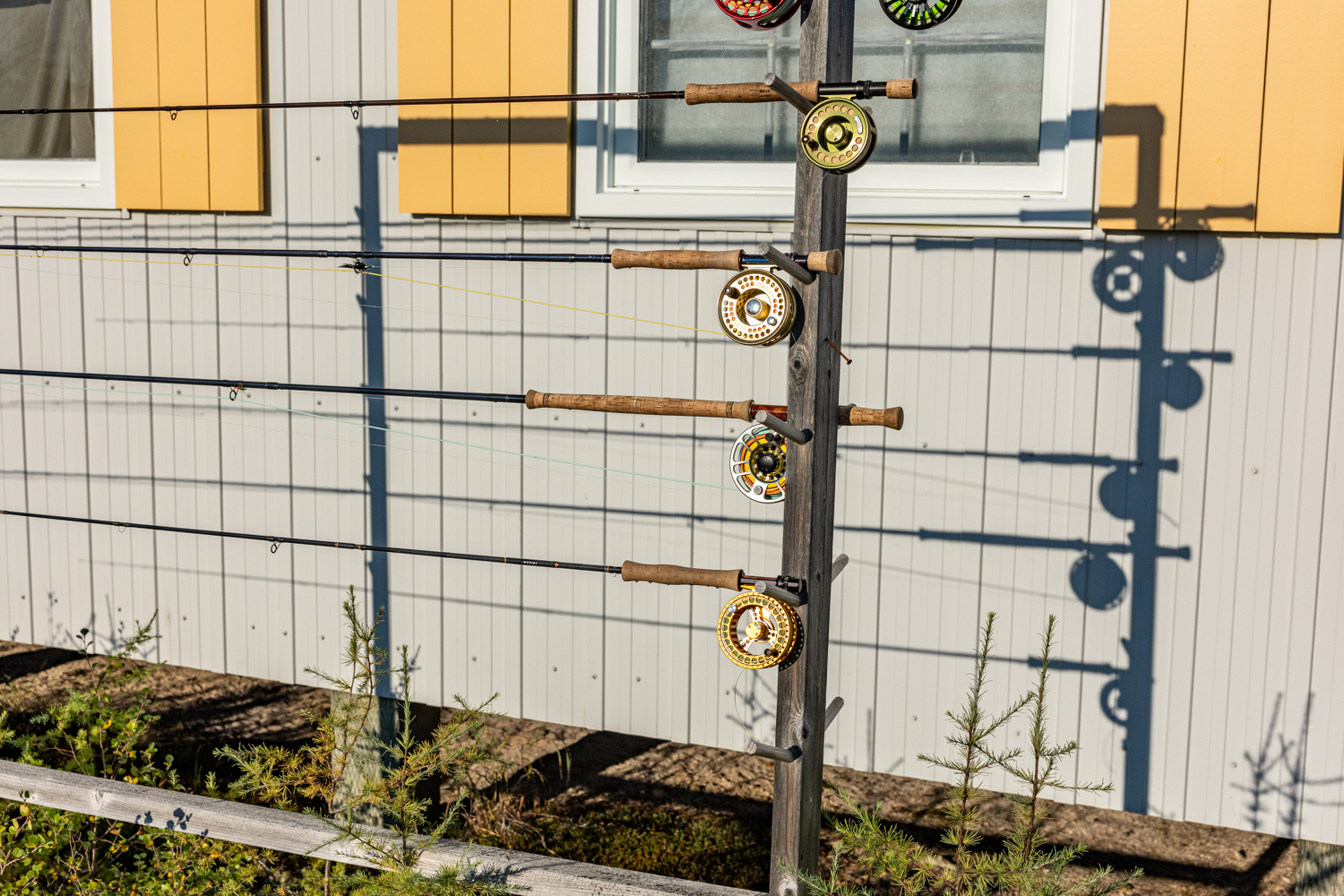
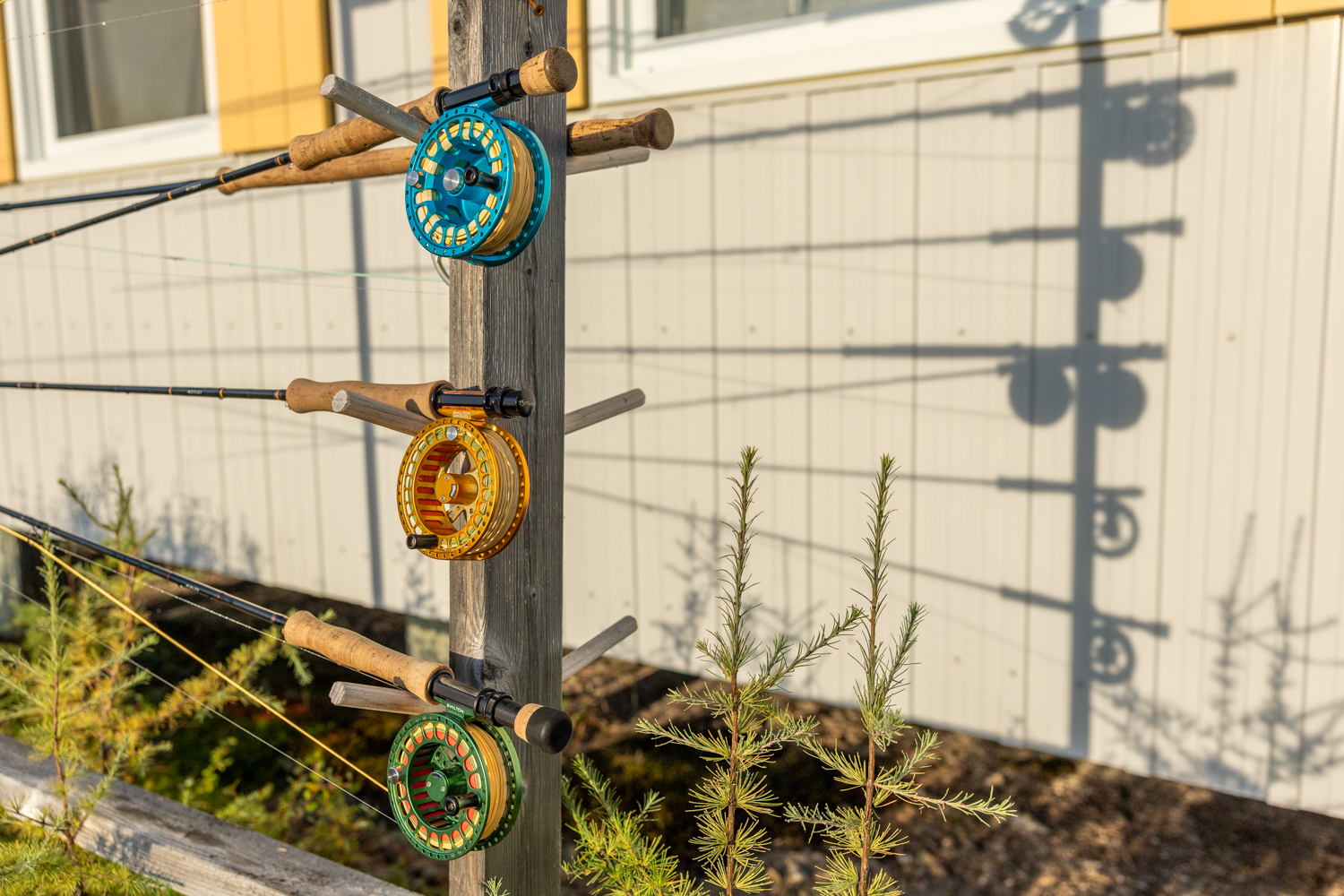
From a fishing point of view there truly were some stand out moments. Raising a fish to the swung fly, changing to a bee bomber and watching a beautifully back-lit, good fish roll on the fly in silhouette will stay with me for a long time. Similarly, having to double-take that I saw what I saw and then coming to my senses as I realised it was a salmon that had taken my fly… e v e r… sooooo… s l o w l y was pure magic. Finally, spotting two fish lying beside the boat while anchored fishing a point, seeing them lift to take the bee bomber and go back down multiple times before something spooked them and then being allowed to fish to the fish on the lip we had also seen roll very slowly was fabulous but to make the cast, drift the dry and see it nailed on the first drift will be a fish I will remember for a very long time. They said that the best souvenirs salmon fishing are the ones you lose, not this time, the magical takes on dries will long be souvenirs in my mind.
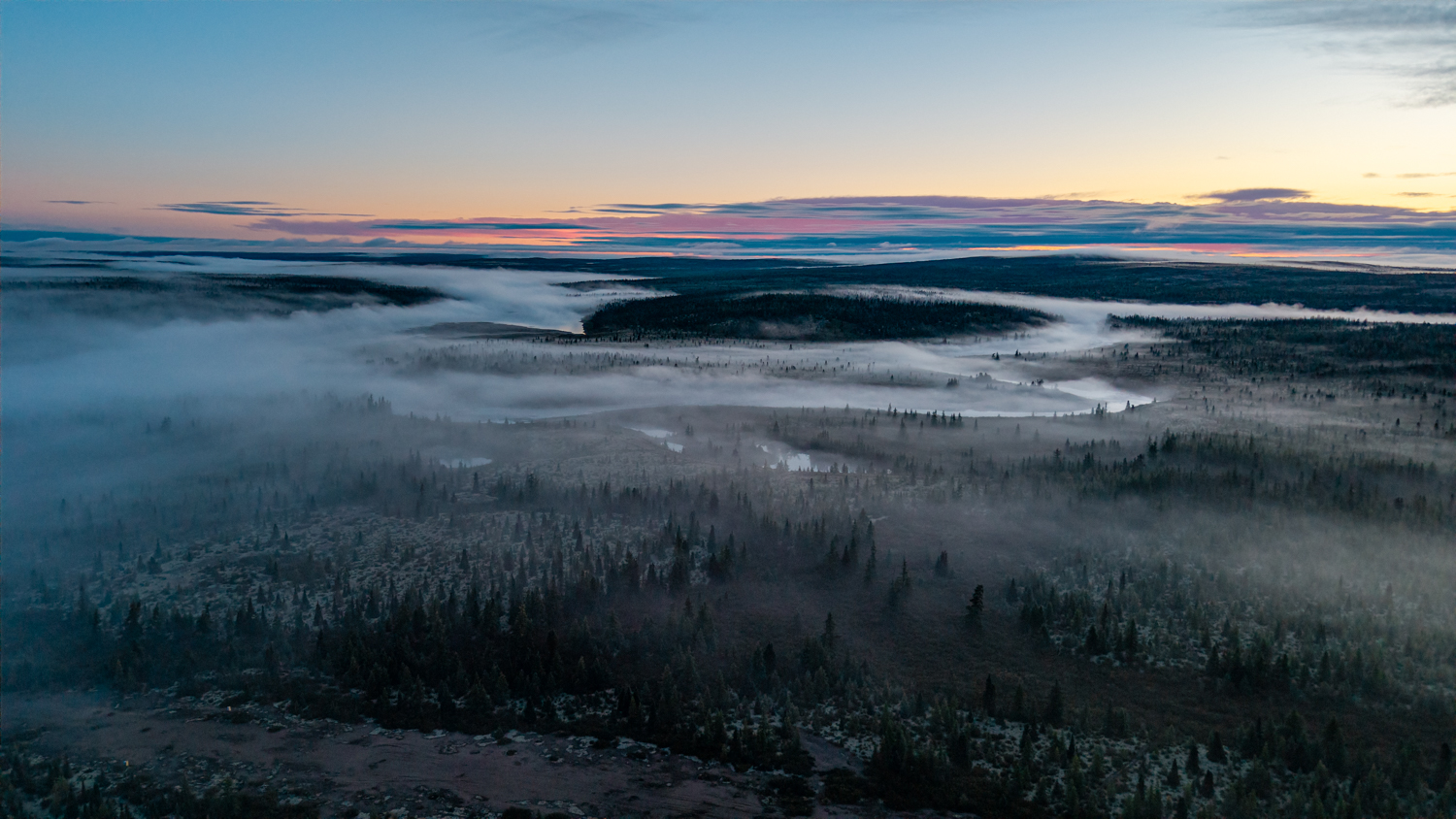
But the whole experience is the greatest souvenir of them all. I am still pinching myself at where I have been, that as a non-Canadian, what I have stumbled across. That in 2026 such a place for Atlantic salmon of all species exists. If it was peacock bass or payara or tiger fish in some far-flung jungle, I would believe it but 200 kms + of wilderness salmon fishing simply blows the mind. Today, as I write, the crew come out of camp, those fish will be left to do what they do entirely unmolested.
This is as wild a place as possible and yet it was so easy to get to and even a pleasure given how nice the people along the way were. I am still finding it hard to believe and I feel beyond privileged to have been and done what I have. A wise Icelandic guide and good friend said that our summers on the water salmon fishing give us is a whole winter of contemplation of what happened and a spring of anticipation of what might happen and there is no better example of this for me than my time of the Delay. So, my advice to all, don’t delay if considering booking the Delay!
It was not the turbulence of the human flow as I arrived at the airport that struck me… nor the gridlock … or the jerky rhythm and ambient noise… no. I was suddenly numb, cut off from my senses… in my shell, impervious to everything.
Until that moment.
That unpleasant contact under the soles of my shoes preventing me from feeling the ground; its crannies, its suppleness, its inaccuracies… Moving forward without feeling, without thinking. Placing my foot anywhere, without using my senses… Is this really what we call “connection,” “progress,” “evolution”?
Flavie Larouche, Writer and Team Member, Delay River Camp
So, what needs doing to the cabins?
Paint rooms off-white
Pictures on the wall – canvas wrapped over frames
Provide towels
Duvets rather than sleeping bags
Curtains and blinds updated
Four pillows per room – plus spares
Fleece logoed blankets in red or some bright ‘happy’ colour
Suggest guests bring a dressing gown or robe for around their cabin in pre-trip info
Supply shampoo and soap/shower gel – refillable
Spare supplies for people forgetting toothbrushes etc
Kettle in each cabin would be fabulous!
Tea bags and instant coffee in cabins
Information booklet with safety info in each cabin or on the walls
Map of Nunavik and/or the river, or both, on the walls
Anti-mosquito gear provision was good
Some bulbs need replacing
Wood supply great – kindling and cardboard?
Repair some power sockets
Mirror in each room
Hand sanitiser for when generator is off
Print and laminate toilet and safety notices
Mats/carpets for bedroom floor and corridor
Candles for the evening chats
For ladies in camp
Hairdryer
Stock of sanitary products
NB – toilet – non-clear nappy sacks for ladies for toilet paper and sanitary products so they can seal and put in main bin
Lid for toilet paper bin
Main Cabin
Pictures and maps
Maybe blankets on sofas etc
Candles for the evening
Bird and wildlife reference books
Flies and other items for sale
Caps and shirts for sale
Accessible fridge to take drinks
None of the above is going to break the bank or is hard to get done. I should explain that the camp has excellent plumbing (and indeed heating system) but to be on the safe side, used toilet paper and sanitary products are placed in a bin provided. Does not sound nice but not so bad if presented correctly.
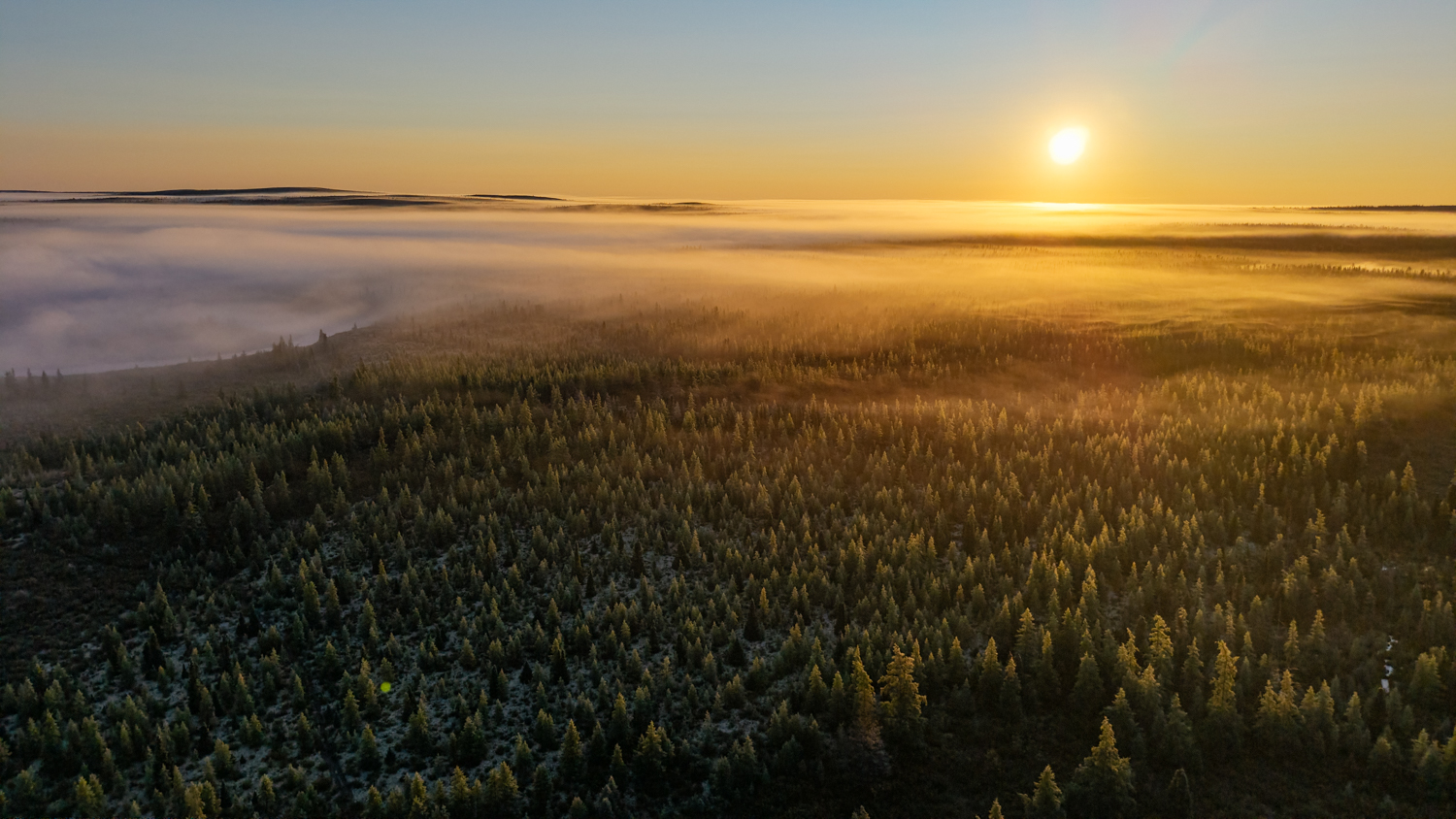
end…
]]>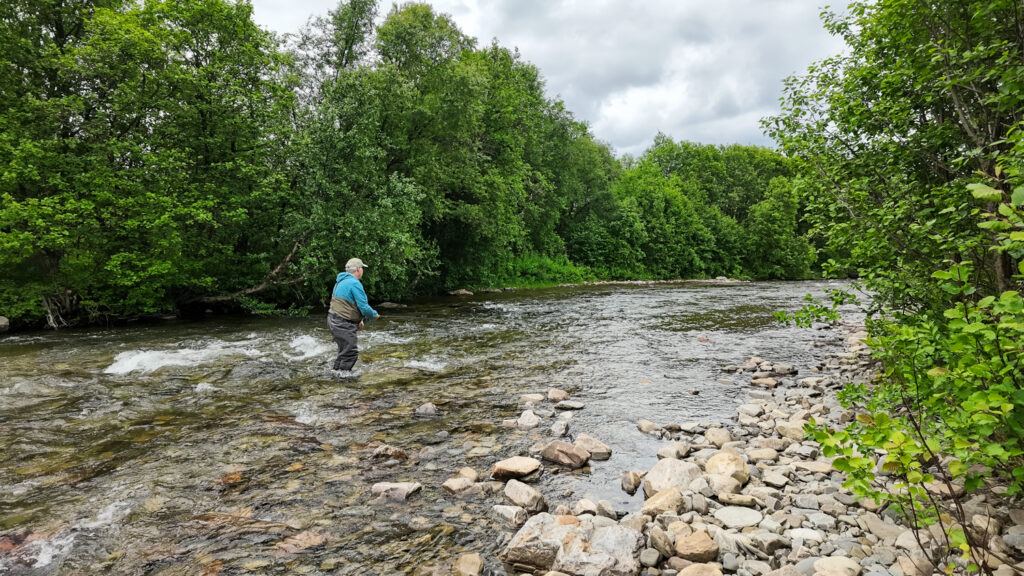
I live in a world where everything good seems to cost a fortune and I am often the deliverer of that bad news. What drives the prices in my world is simply the cost of delivering an experience in a remote part of the world and its scarcity and I understand that. Equally, there are times when I am not comfortable with the fact that, particularly salmon fishing, is getting so expensive and elite, how does anyone not blessed with wealth get involved in what is undoubtedly one of the greatest disciplines in fly fishing? But then I look at some rivers which do have cheap or even public access, and the pressure is relentless to the point of questioning if such intense pursuit of what is now an endangered species is right. Combine this with the fact that many of those coming to fish arrive in camper vans bursting with everything they need in order to avoid spending a dime in the local area. These challenges exist in the bird world too. Some people hate ownership, privacy and lack of access (all of these often the key to minimal disturbance, something birds need to breed and fledge chicks successfully) but when people do get access, they have a habit of making a hash of it.
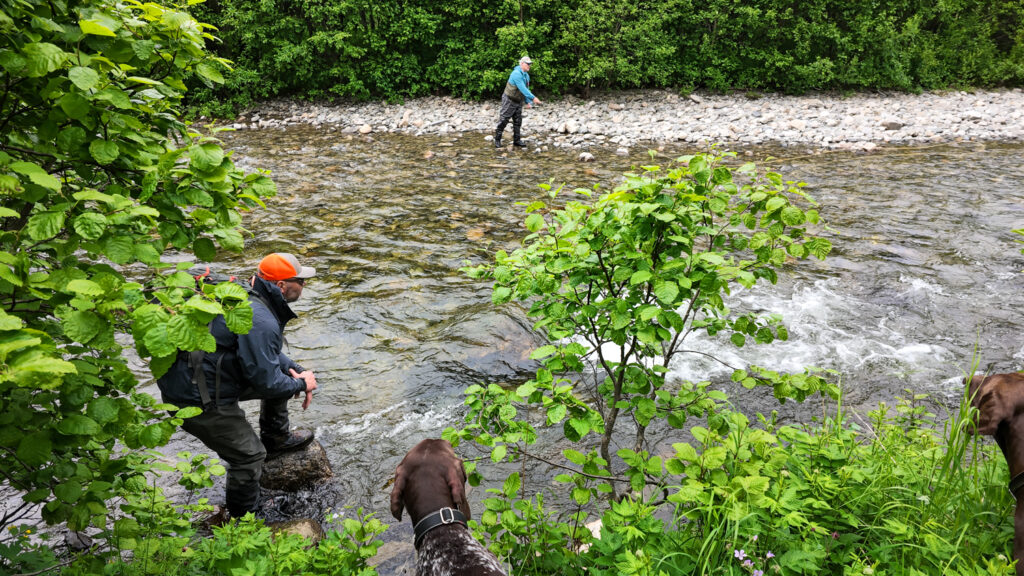
I also live in a world where screens provide the majority of outdoor/wildlife experiences for many kids. This not only shapes their opinions in a Disney-like unrealistic fashion, but it totally removes any basic, practical connection between the reality of nature and themselves and indeed what they eat. My connection is poor compared to many and certainly was not great when I was young and I lived in the outdoors but compared to kids today, one can only imagine how distant the connection must be. Attenborough famously stated that if children do not experience it and do not have an affection for it, how can they be expected to wish to protect it. Valid point but ironically, his films often provide an unrealistic view. But let’s get back to heaven.
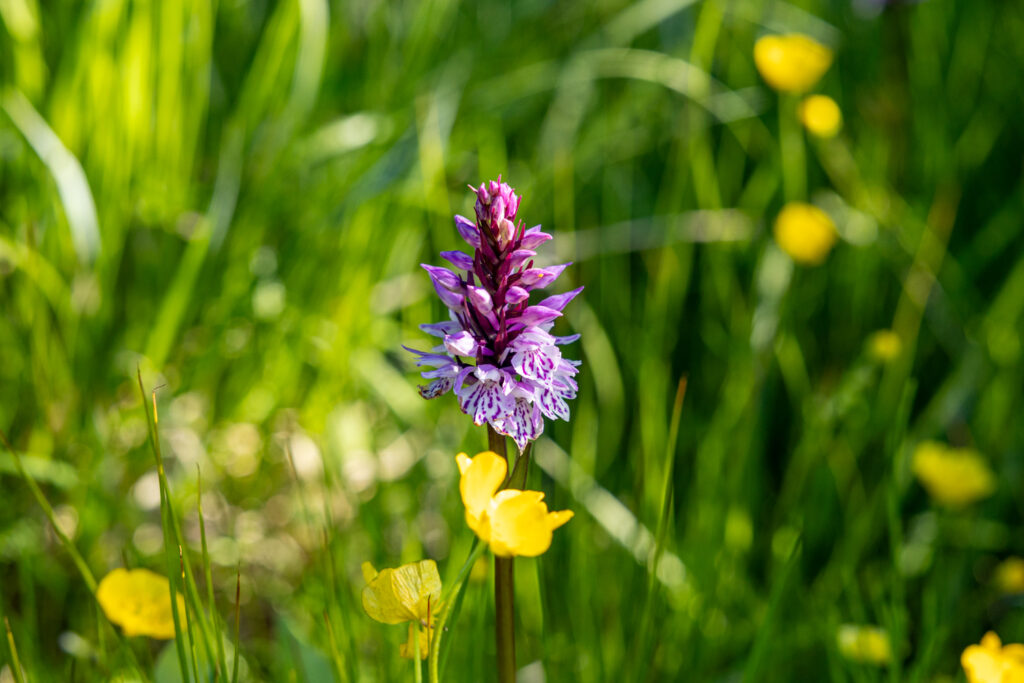
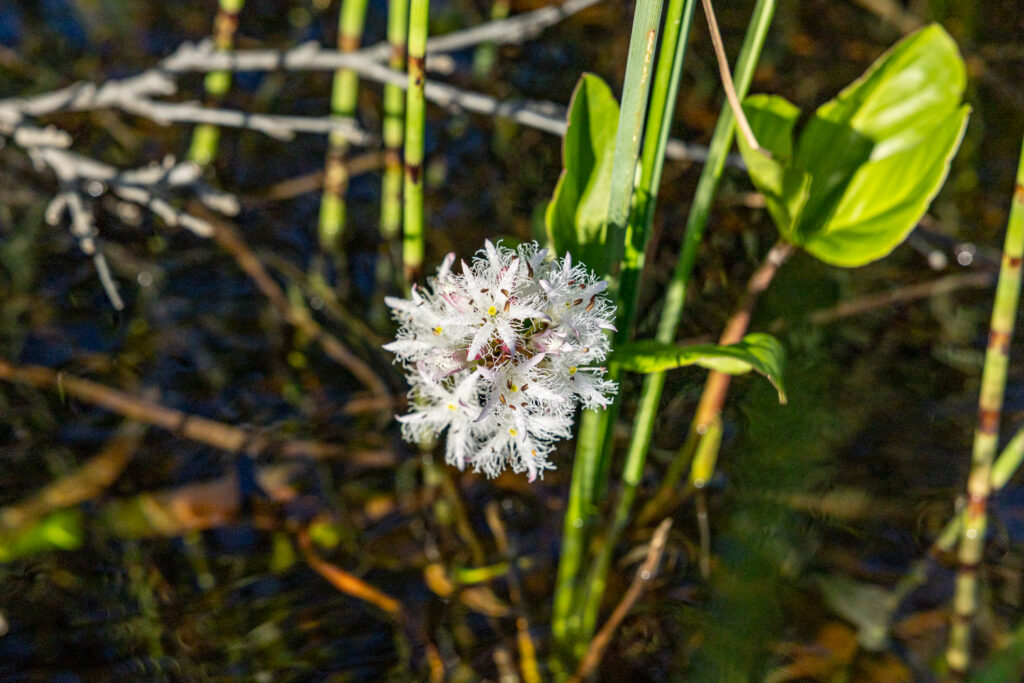
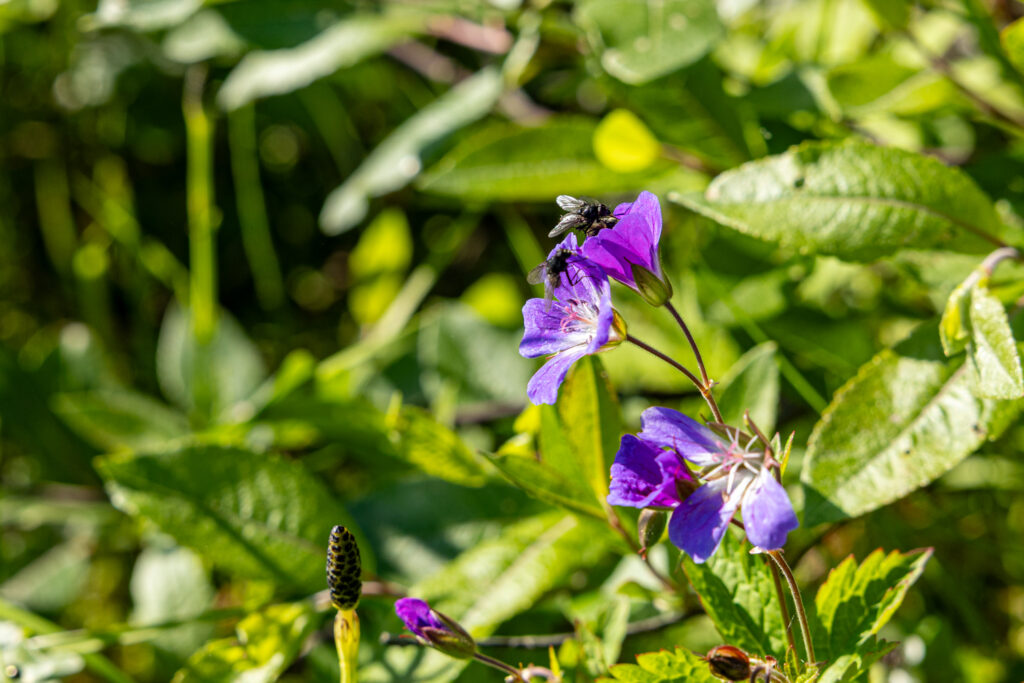
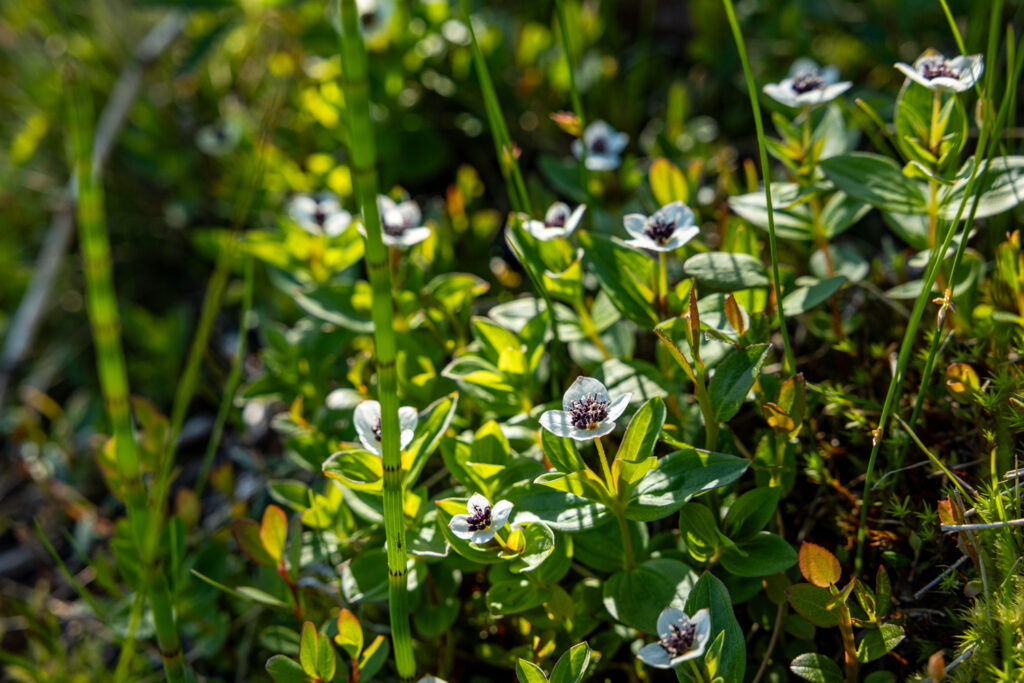
Geir wanted to take me to ‘the river of his birth’ as he called it. It was early season for this little river easily fished with a single-handed rod but what a stunning river. It has a run of about 1000 fish up to 20lbs and I can only imagine the battles one might have when hooking a fish. We did see some salmon but in the shallows running rather than holding or stopping water. There were two unexpected highlights to my day. The first was the carpet of wildflowers and herbs we walked through as we travelled up and then down the river. We were not walking well-worn paths, so it was necessary to look down to see where one was going, clamber over fallen trees etc but that was the pleasure, one got to enjoy the stunning array of wildflowers and herbs as we walked. The greatest pleasure of all was witnessing Isac, Geir’s 9-year-old son all geared up in his waders (duck-taped together to make them fit!) with his cool shades and a fine Frontiers cap on. He carried his double-handed rod with purpose the few miles we travelled up the river. It became clear that Isac was not going to be allowed a cast unless and until I had caught a fish, it was equally clear that that was going to be unlikely!
Here is the impressive (and frankly pleasurable) part. There was not even a whimper from Isac, not a long face, nothing. He enjoyed his day and when we sat down for lunch at the near top of where we were headed, I noticed the chest pocket of his waders was stuffed with something. I asked him what it was and he grinned and opened his pocket to reveal it was stuffed with herbes he had collected along the route, mostly wild chives, his favourite! Geir explained to me that when they got home everything he had collected would be processed appropriately and stored ready for use. This may all sound terribly simple but how many 9-year-olds have you seen all geared up to go fishing for the day, dragging a rod miles through the woods, only to not fish and never utter a complaint but clearly very happy and indeed focused on harvesting nature’s bounty for use later in the summer or even in the winter.
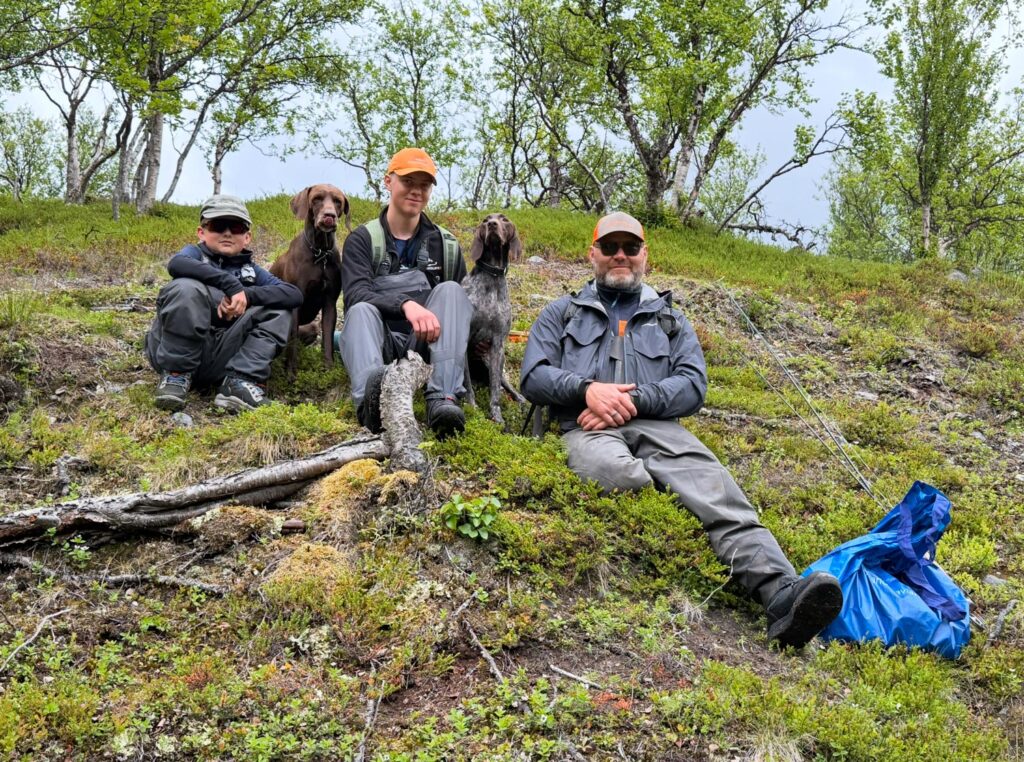
He also found and showed us frogs he picked up as we went along releasing them around us and laughing as they hopped away. Just to know what to harvest and how was impressive. He was clearly delighted with his day’s work! I could not help but reflect on this young man while in contrast, in the UK, people run business’s teaching us these things, how have we reached this place?
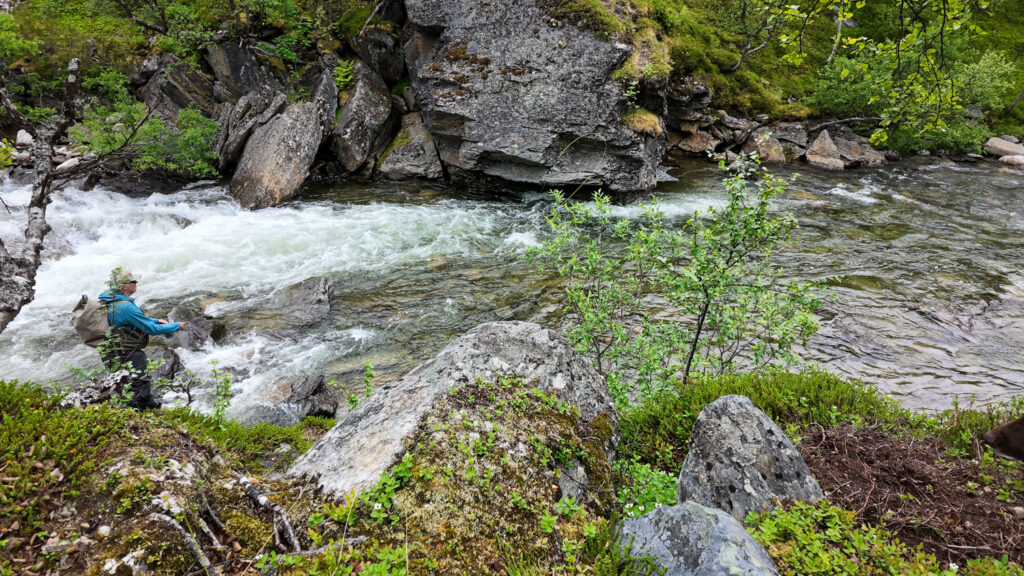
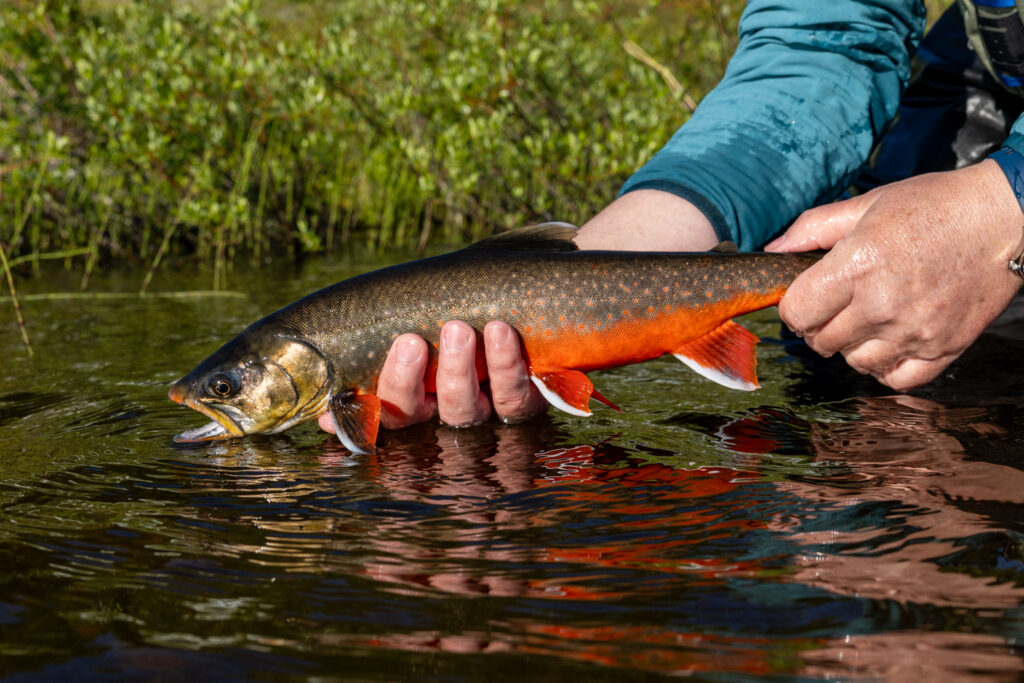
When in Norway, with the midnight sun, one cannot help but feel energised. While driving to Geir’s and indeed, driving past in other years, I had seen fish rising on a lake. It was a beautiful evening, and I decided to drive back to it. What an evening I chose. I arrived, parked up and decided to fish in the lee of the peninsula. There were reeds beginning to poke out of the water and there were plenty of large caddis hatching and climbing the reeds. It became clear that whatever was feeding on them was cruising the edges waiting for a caddis to venture out. A couple of missed strikes but soon I had hooked my fish whatever it was going to be. It turned out to be the most stunning, red-bellied arctic char. Not huge at around one pound but strong, fat and utterly beautiful especially in the mid-night sun. What an evening I had, catching wild arctic char on dry fly under the midnight sun. It felt like such a pure experience – no cost, just a licence, I often think of imitative dry fly fishing as the purest form of fly-fishing and these fish were purely wild and un-pressured. Does it get better?
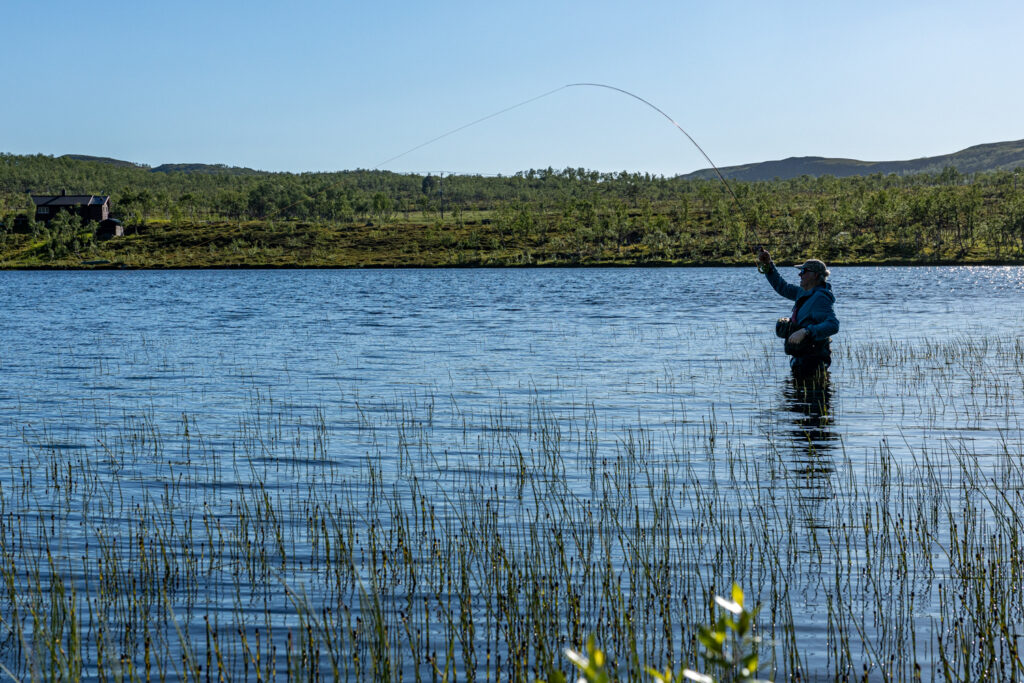
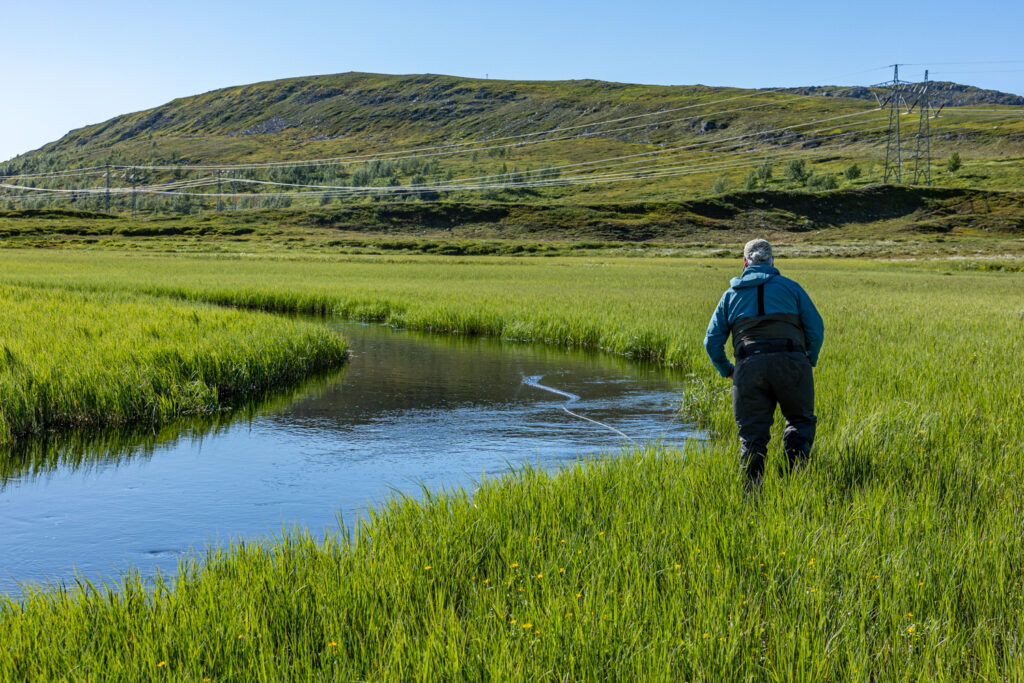
The next day, Geir had to leave me at his cabin to look after Frontiers guests, but his friend Bilal directed me to go and explore a lake and river for some trout fishing. It was just over a kilometre from the road, up and down a few modest hills. I came over the final bump, and it was as if I had entered heaven. There, in front of me was a stunning little, freestone river running between two lakes. It was 15 metres wide at its widest and could not have been clearer.
This was true wild trout fishing, there were trout rising everywhere, not huge, the biggest maybe a pound and a half but the river was alive with insects and trout feeding on them. The result of no human impact, no spraying, no pressure, just a wild river left to do its thing. Needless to say, having barely seen an artificial fly, the trout were willing takers and strong. I wished I had my 3-weight, they were taking line on 5 and 6 weights! It was Caddis to start but that soon changed to upwing duns etc. The first three pools were lovely salmon pools but with plenty of trout. The last one opened out into almost a small lake and then narrowed into a very clear river about three metres deep and wide. This narrow bit seemed to have only the larger fish in it. The banks were long, water-logged grass no doubt acting as one massive filter. It was a little hard going in places but never too arduous. I cannot tell you how beautiful this place was. Working down the river, I soon came to the delta entering the lake and the fishing here was nothing short of ridiculous. One could barely put the fly on the water without a trout taking it.
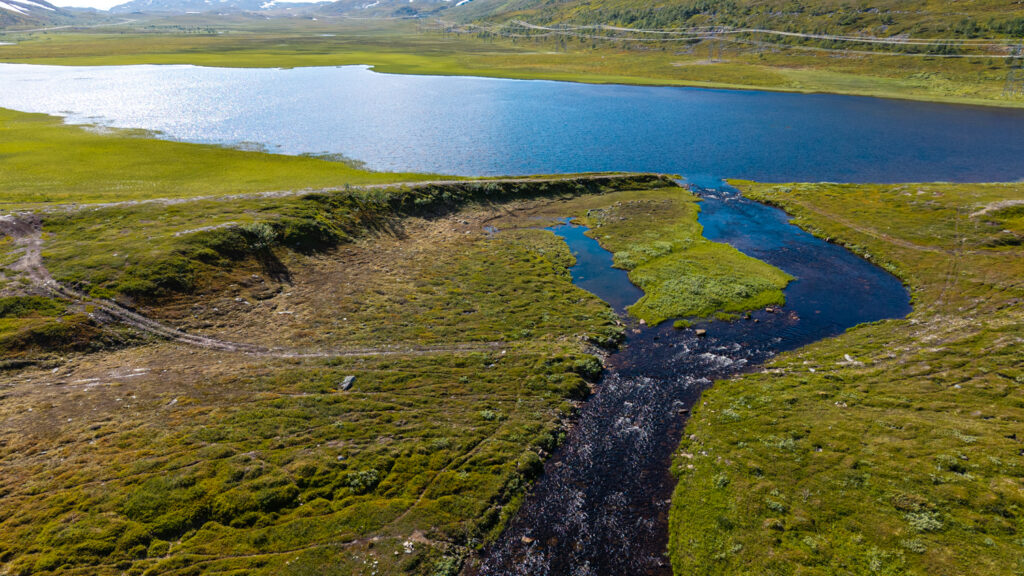
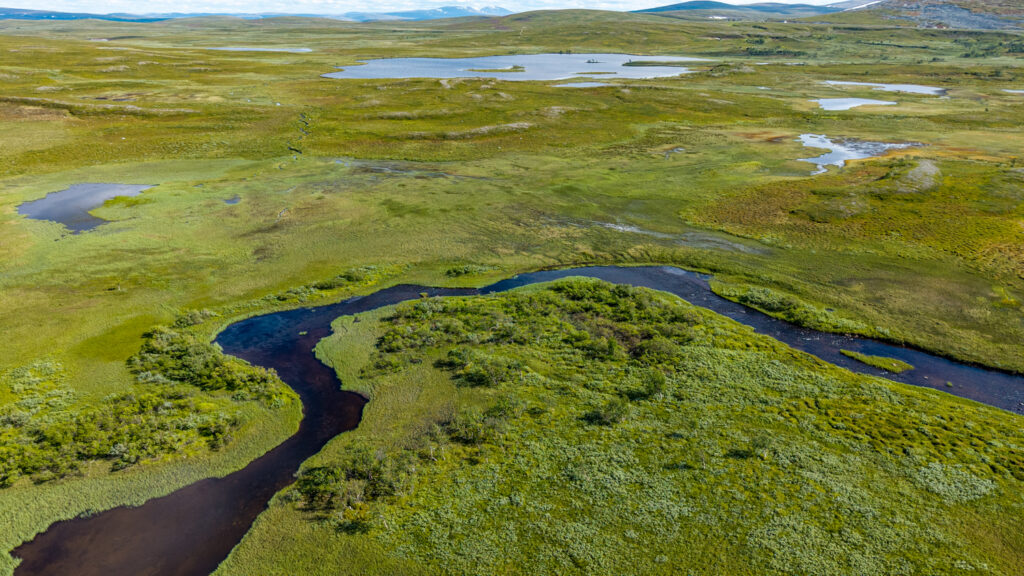
Just knowing such a place exists and there was nobody there, will help me get through winter. It was a privilege. I chatted to Geir about it and he explained the water course to me and the fact that these upper reaches were part of a major salmon river and that later in the season, those ‘salmon pools’ I described would indeed be salmon pools and the trout will be driven out and back to the lake. This emphasised to me the value of local knowledge of these wilderness places. It taught me that before I go rushing back to try and repeat my experience but at a slightly different time of year, maybe I needed to check with people who know!
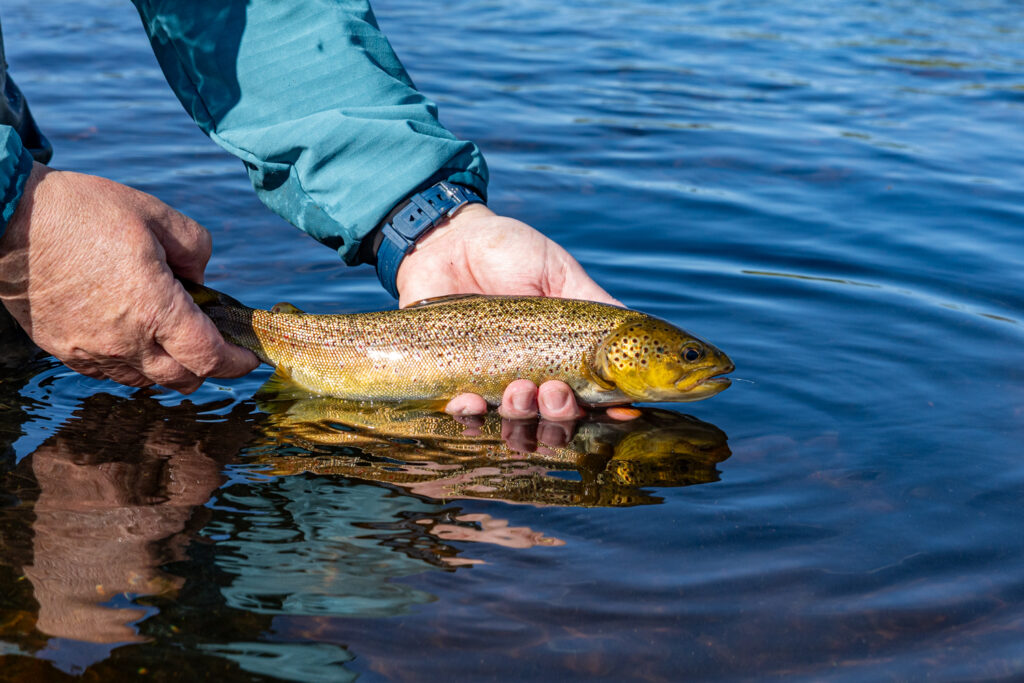
I had actually caught a salmon on the way to this paradise so the opportunity to get a grand slam of species was too tempting. I headed back to the char lake to try for a char, and it was harder this time. The wind was in a different direction, and it was earlier in the day. It required some perseverance not only to get a reaction but this time the fish were not slamming the flies but sort of nudging them and trying to drown them. I ended up having to work out the timing of the strike to actually land one but when I did, it was the best I caught! Grand slam completed! The Norwegians were not as impressed as I was because later in the year, they do this almost daily with sea trout thrown in! However, another lesson in listening to the locals was gained. They explained to me how, once the lake gets to a certain temperature, the fish disappear and drop into the stream below for colder water. Another example of the value of local knowledge.
After a day like that I was keen to know what else Geir and Bilal had up their sleeves! They sent me to two places the next day. One was a lake about 2 kilometres away. It was a beautiful lake with Gyr falcons towering overhead. When I arrived, there were fish rising but it was turning into a hot sunny day and soon the rising melted away. I will return there on a better day.
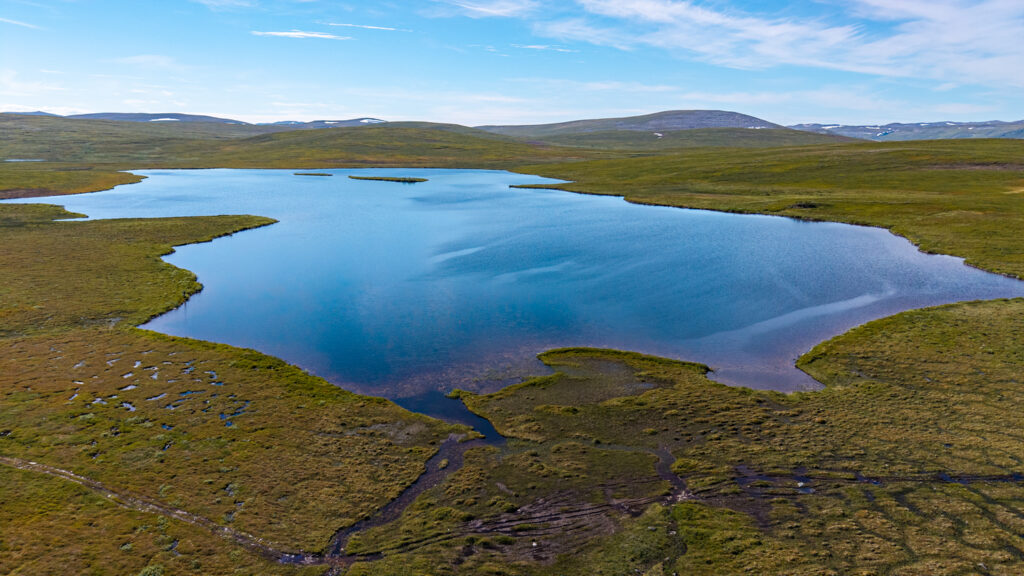
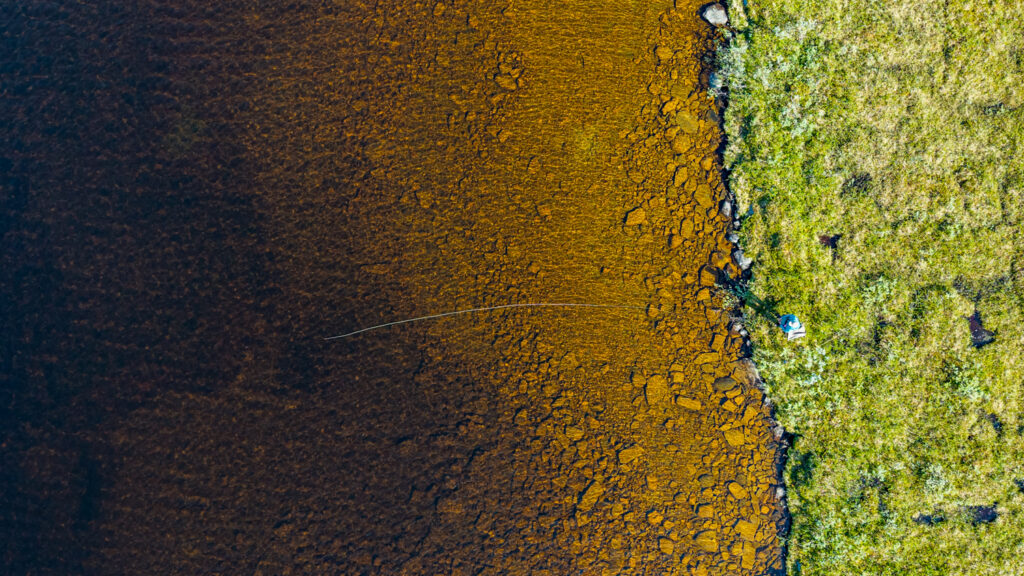
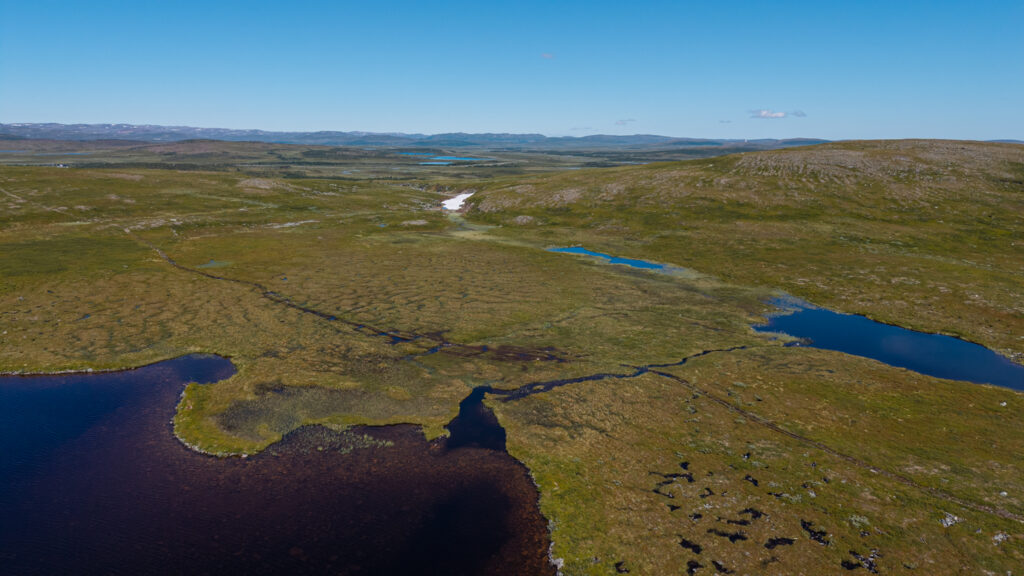
I decided to move on to the smaller lake which I sort of knew having driven past that area. It was set in a valley and was surrounded by trees so might be better. After a short drive, I walked across a river and on to the lake. There were rises everywhere but it was going to be hard to get a long line out because of the trees.
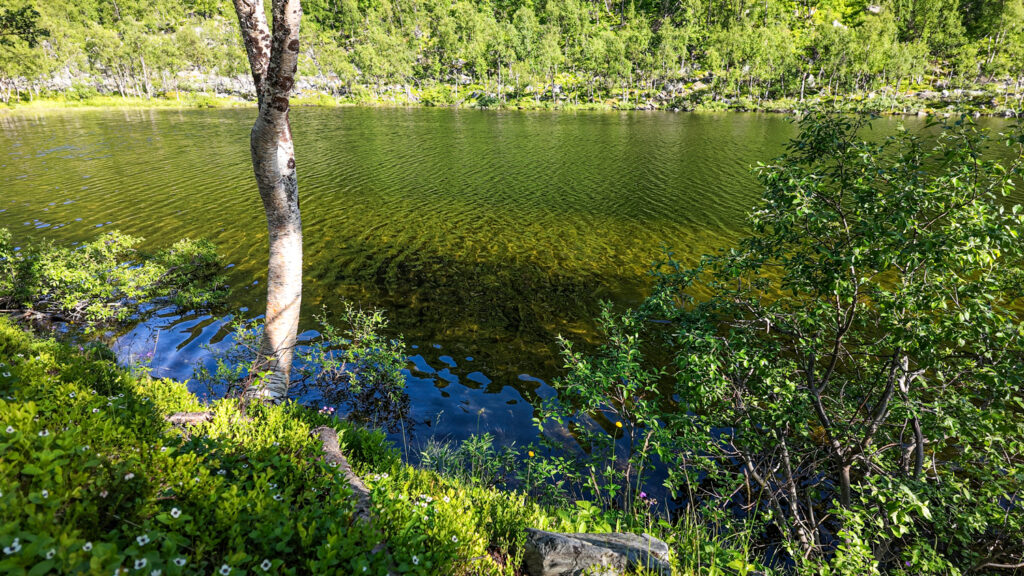
A little time and observation revealed that fish were cruising the bank and feeding under the trees and bushes and therefore the best approach was going to be to get in the lake and work along the edges. The fish were eating spent duns and midges. It was far more testing fishing than the previous day but gripping and the afternoon disappeared very quickly. I witnessed an example of the impact of a wind change. It was blowing in one direction toward one end of the lake and there were rises everywhere. About an hour before leaving the wind did a 180 and soon the rises melted away and reappeared the other end of the lake!
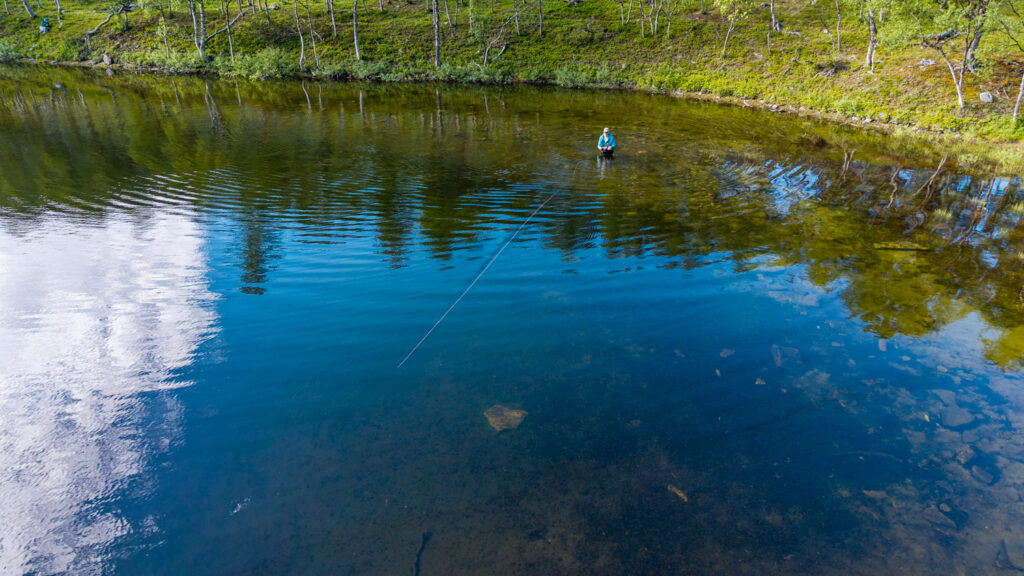
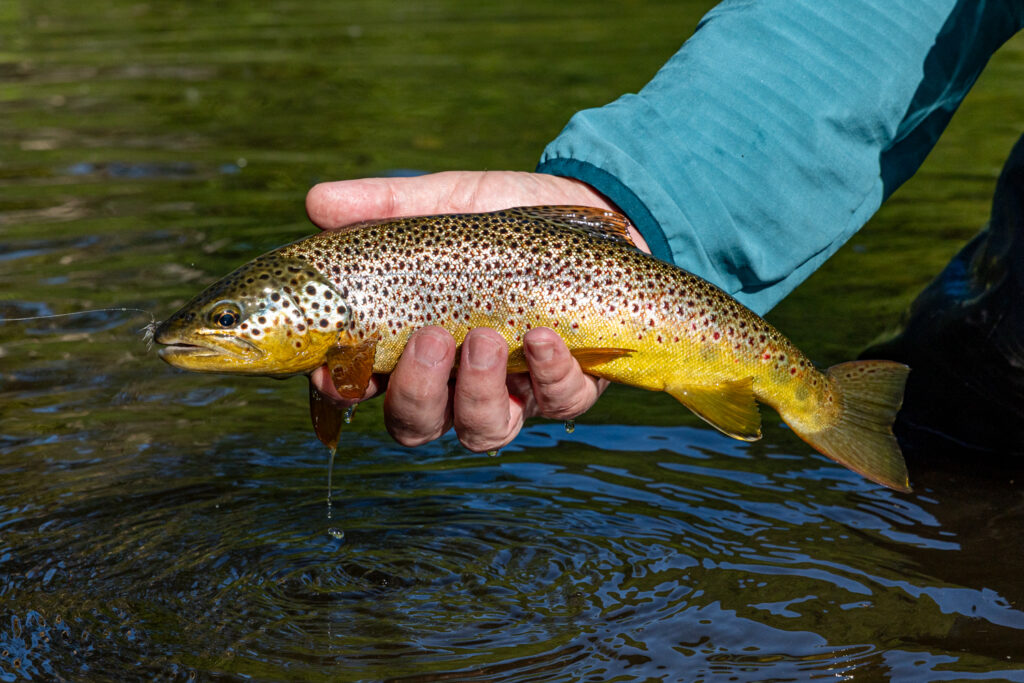
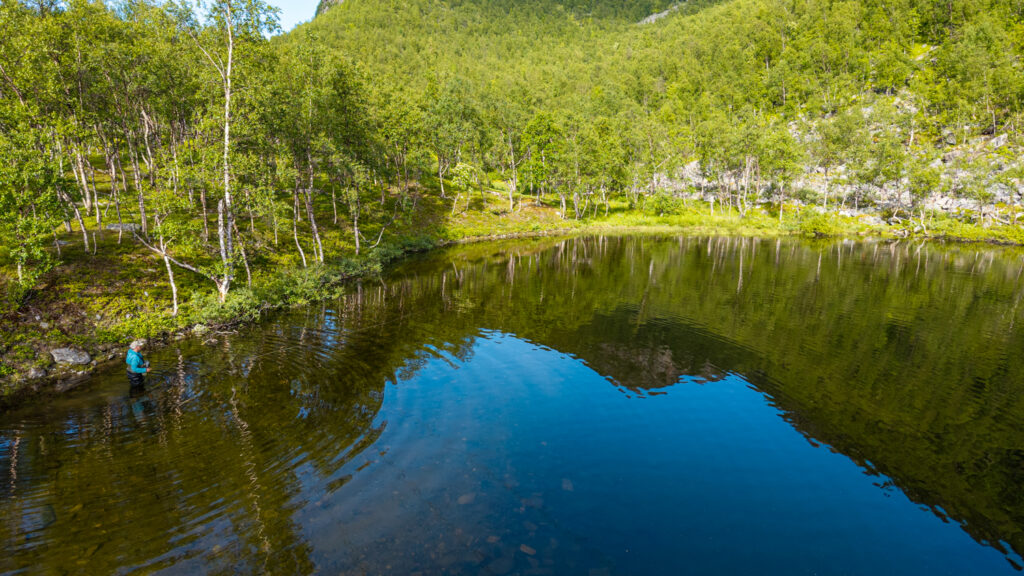
I know this is not fishing for giant salmon on Norway’s famous and mighty rivers and it might appear as simple fishing for small fish that take willingly but that is the joy. The joy is in the reminder that this is what fishing for wild, unpressured fish is like. It is the joy of no pressure. In the UK, when did most of us, walk a way to a truly wild place, find utterly beautiful wild fish and catch a few completely on one’s own with nobody asking for rent or the like. For me, just like Isac’s perfect behaviour and authentic foraging, this is true fly fishing as it was meant to be.
end…
]]>Tranquil, private accommodation; three different fly-fishing opportunities, hiking, riding (horses and overland) and well-being all in your own completely stunning, private valley.
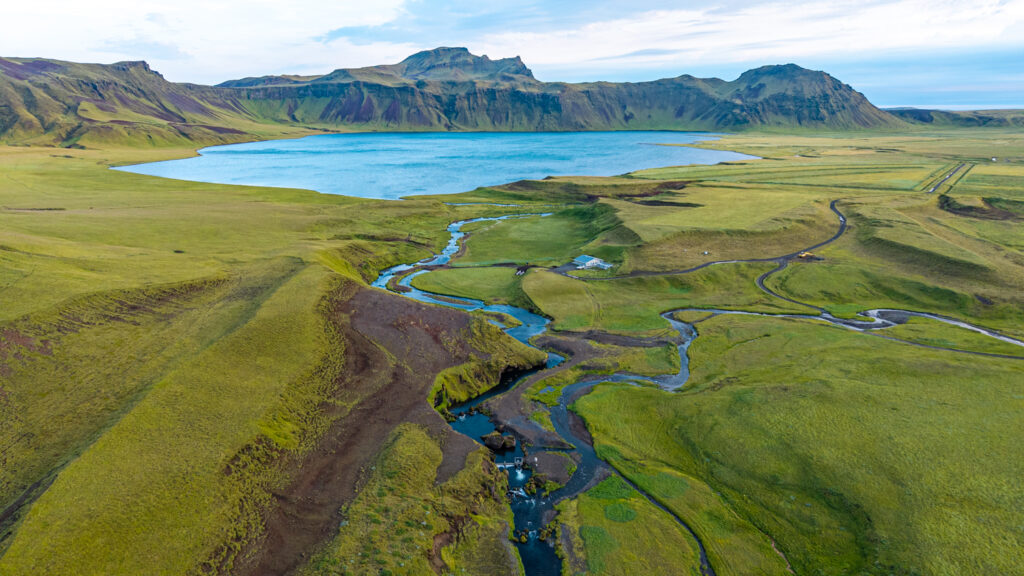
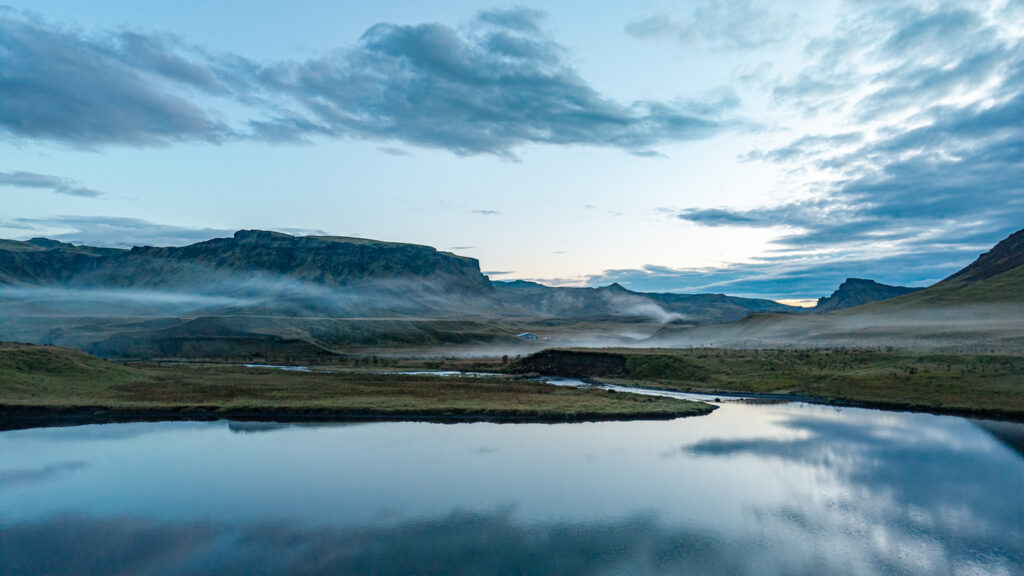
I am a morning person; it is when I do my contemplating and there is no better place than Heidarvatn. I wake up early, others remain asleep (their loss/my gain) and I make myself a cup of tea and sit in front of the window and watch the view. It is transfixing, we are, after all, in Iceland where if you do not like the weather, wait a minute. Steam lifts off the lake, long white clouds form along the tops of the mountains and then slowly melt away as the sun lights up the peaks and creeps its way downwards illuminating the magical view in front of the house. It is completely beguiling, and one is totally at peace.

Other than those you have chosen to spend some magical days with, nobody is going to break that peace. You do not share the house with anyone, there are no fishing hours, no guides waiting, nobody will come and disturb you unless you have requested they do so.

About Heidarvatn

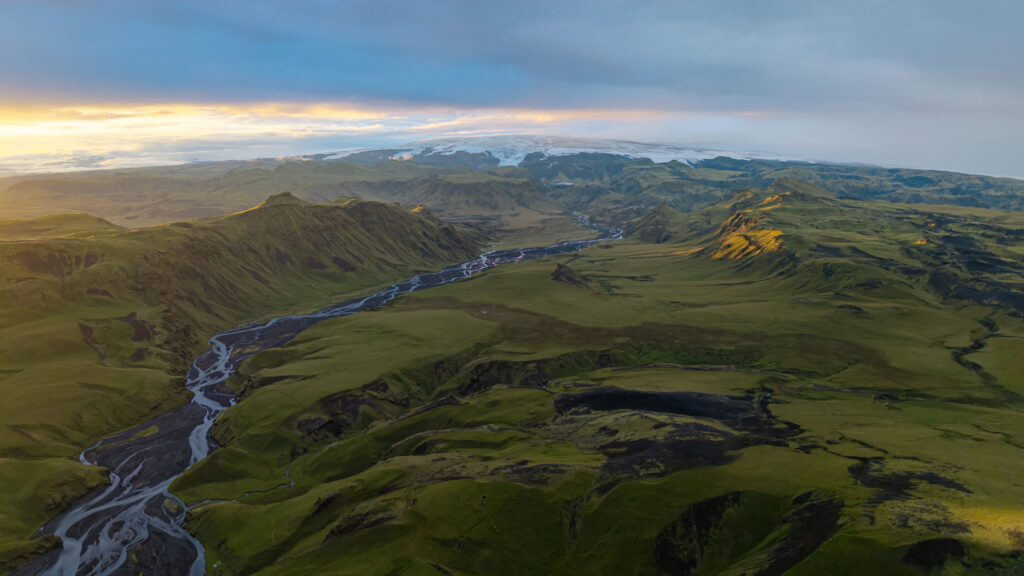
The centre of Heidarvatn is the Heidarvatn lake set in the Heidar valley behind the town of Vik about three hours along the southern coast road from Reykjavik, Iceland. The 4,500-hectare valley offers some of the most private and pristine Icelandic countryside there is. If you want privacy and solitude, you have found the right place.
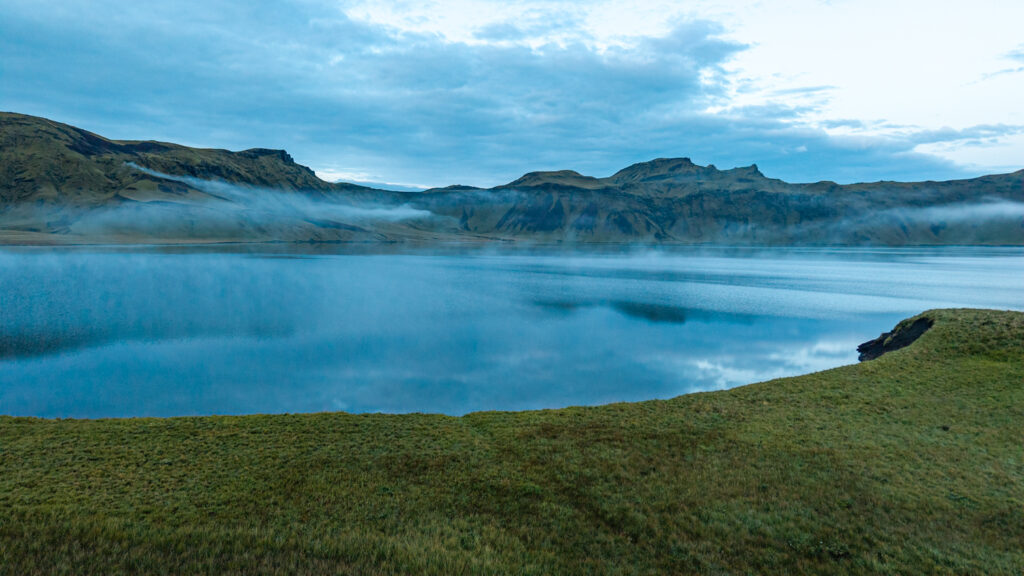

The owners are aware that owning such a place is a privilege and a responsibility. Over the past 22 years of ownership, they have embarked on a rewilding programme to restore the valley to its natural state removing all old farm buildings and infrastructure. They have also planted 300,000 native birch and willow trees which are helping to restore the landscape, reduce erosion and increase biodiversity ultimately creating increased matter to feed the water courses.

Though catering can be organised, both accommodation options are self-catering using fully equipped kitchens. Despite its remoteness, the town of Vik is just ten minutes away and there you will find a full super-market and some good restaurants for your stay.
We suggest:
SudurVik
The Black Crust Pizzeria for superb pizzas
Drangar Restaurant in the Hotel Kria
It is truly an honour to have stayed and experienced such extraordinary place.
For the non-fisher
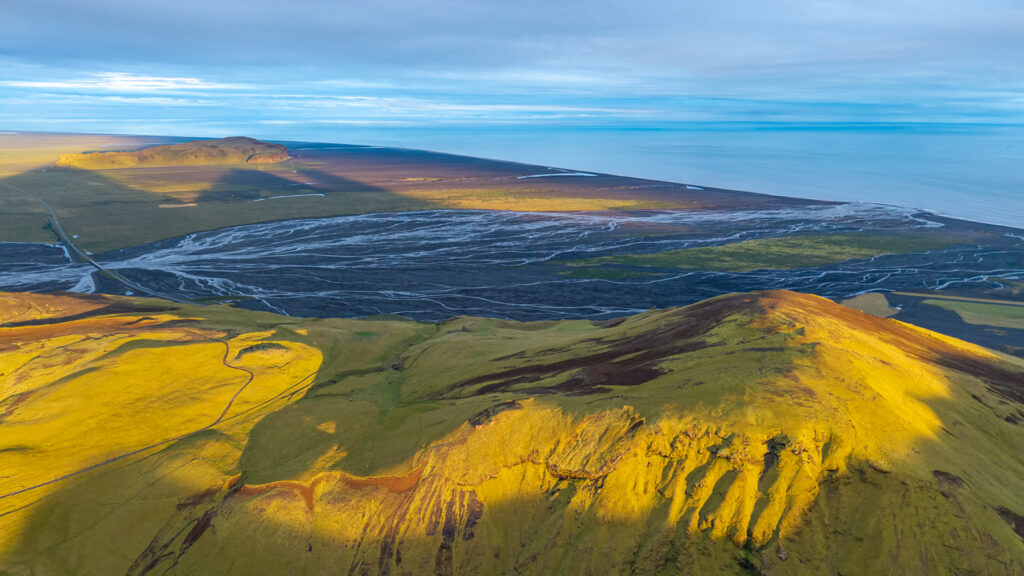
Heidarvatn’s location happens to be near some of Iceland’s most famous landmarks. The black sand beaches are just 19 minutes’ drive away, the Solheimasandur plane wreck just 22 minutes away along the black sand beaches.

The stunning Kvernufoss waterfall is just 32 minutes away. The backdrop to Heidarvatn is the stunning Myrdalsjokull glacier which feeds the glacial river Kerlingadalsá which can be fished. The famous Jökulsárlón glacier lagoon, where massive icebergs break off from the Breiðamerkurjökull glacier and drift to the Atlantic ocean is a fascinating day trip away, a 2 hrs 30 mins drive along Iceland Route 1 across volcanic plateaus and glacial rivers.
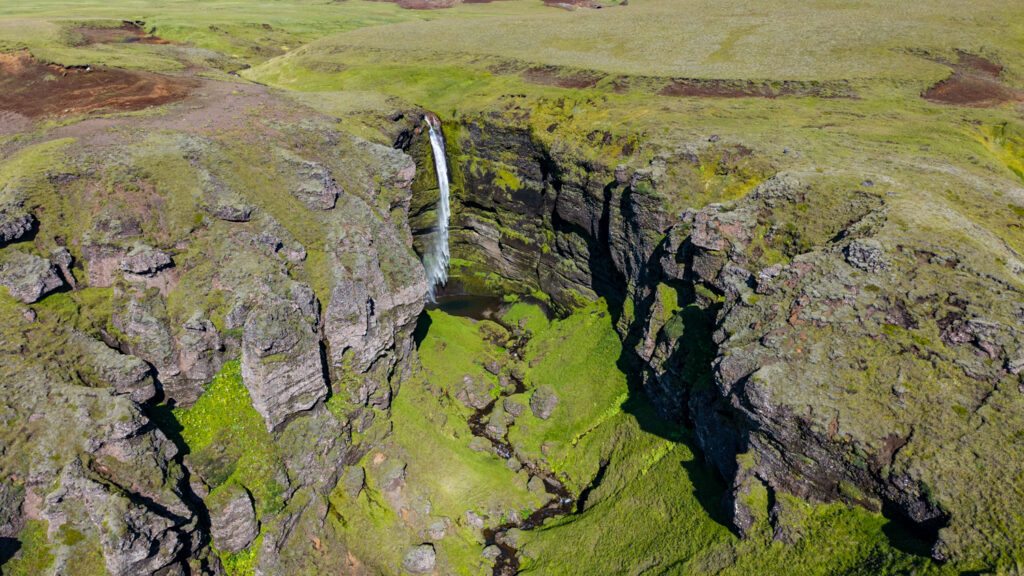
But to be honest, why go anywhere? Upon request, wildlife/naturalist guides, hiking guides, horse-riding guides (with horses) and cross-country driving guides can be arranged to be enjoyed within the Heidarvatn hideaway, there is really no need to go anywhere. After all, Heidarvatn has numerous of its own waterfalls! Furthermore, why not combine all this with a yoga and well-being right at the lodge. With planning and preparation, this is all possible and remember… you have this to yourselves!
Finally, where better to see the northern lights and experience winter in Iceland than Heidarvatn.
The Fishing
There are three options for the fishing and, if staying at the Riverside Lodge, they are all at your pleasure.
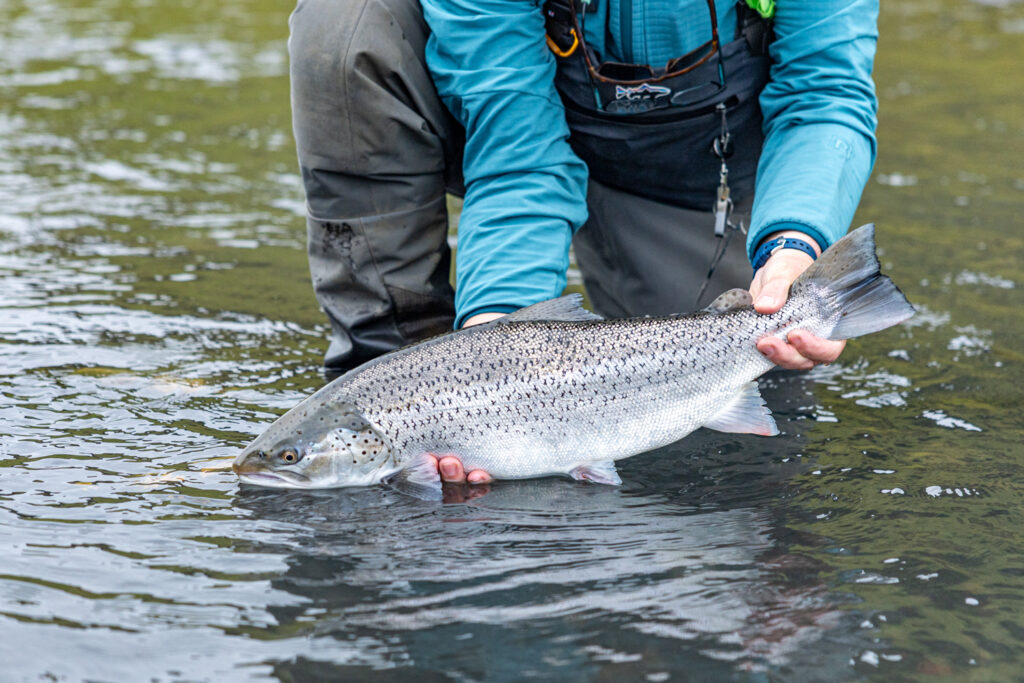
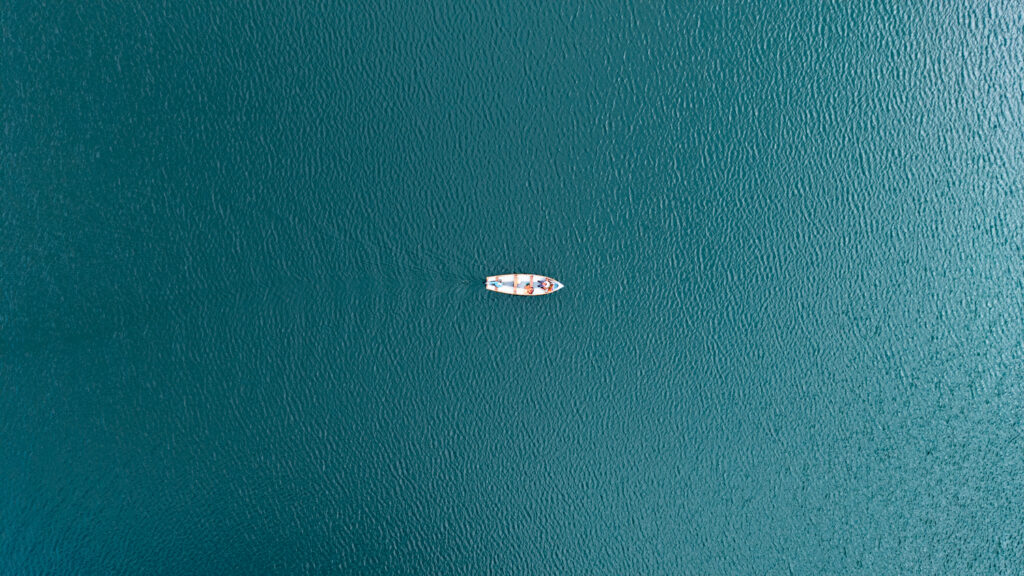
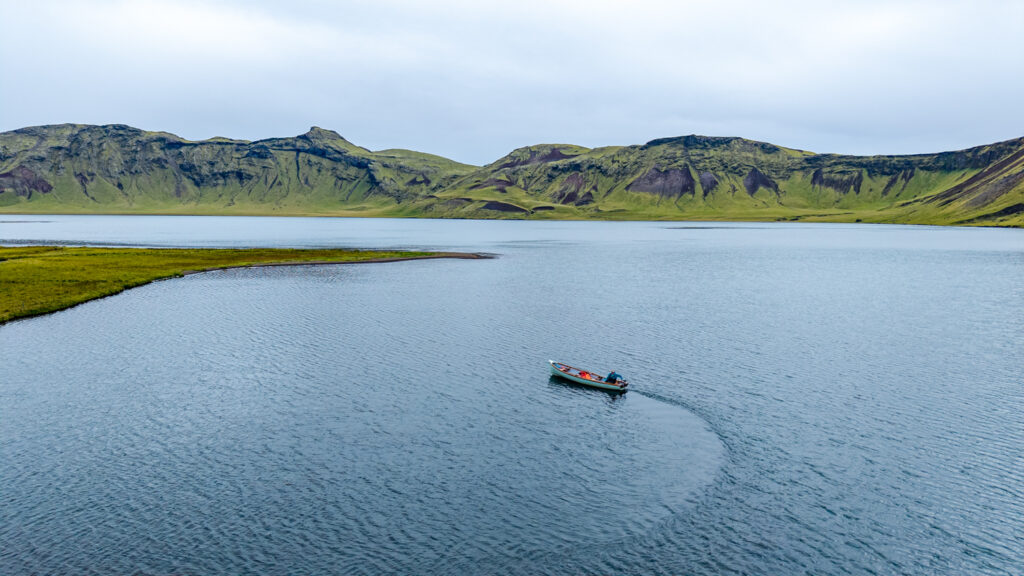
Lake Heidarvatn has resident wild brown trout, numerous wild arctic char and, at certain times of year, numerous sea trout and some salmon. I have sat in the lodge looking out over the lake and seen sea trout jumping in the distance. It can be fished from one of the two boats or from the bank, wading out close to the drop off or along shingle banks. Some of the better spots include around where the Vatsna flows out of the lake, the bay and point near which the boats are kept and around ‘Pride Rock’ a huge rock that sits half in and half out of the lake, it cannot be mistaken.
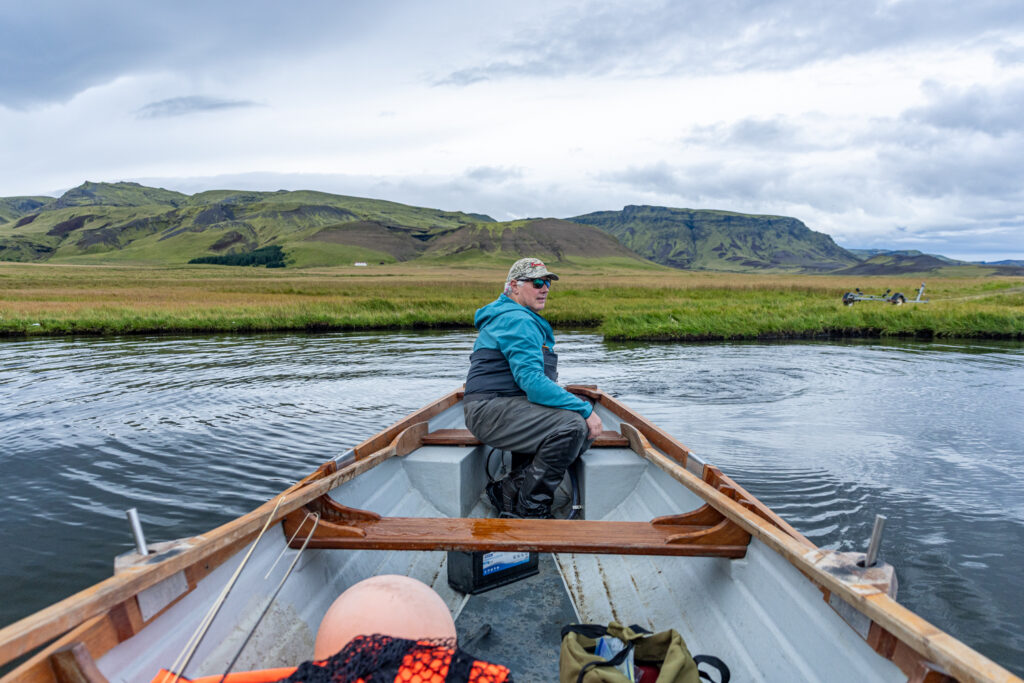
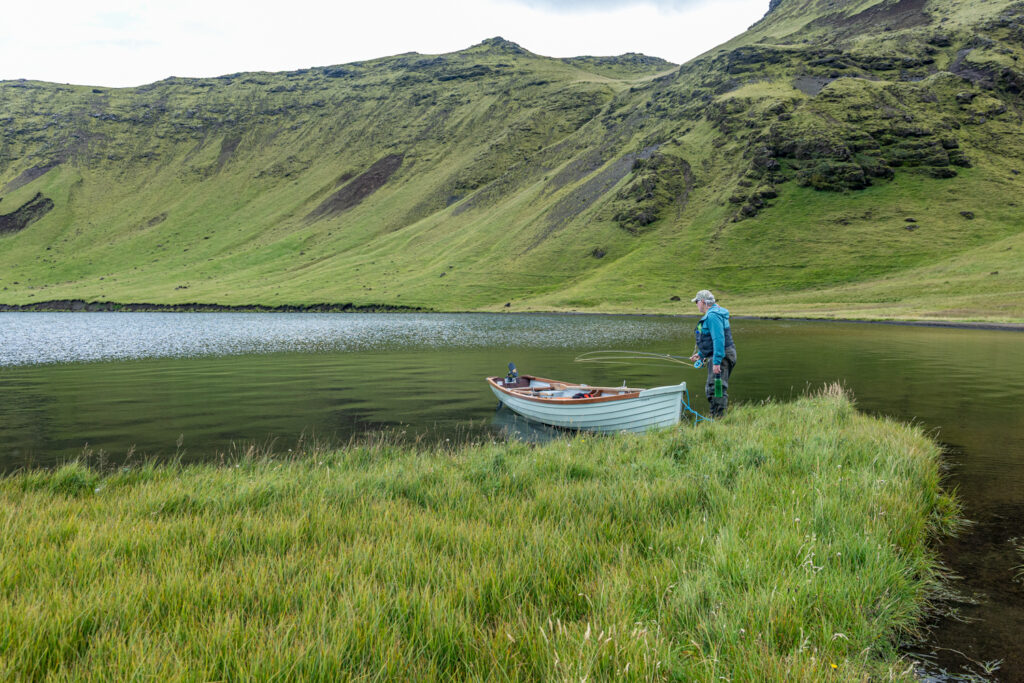
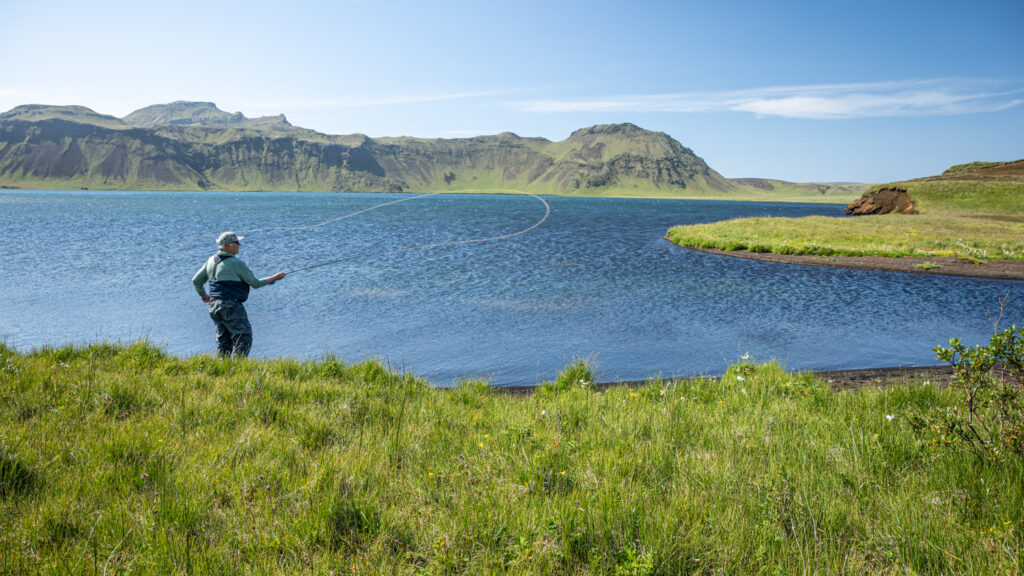
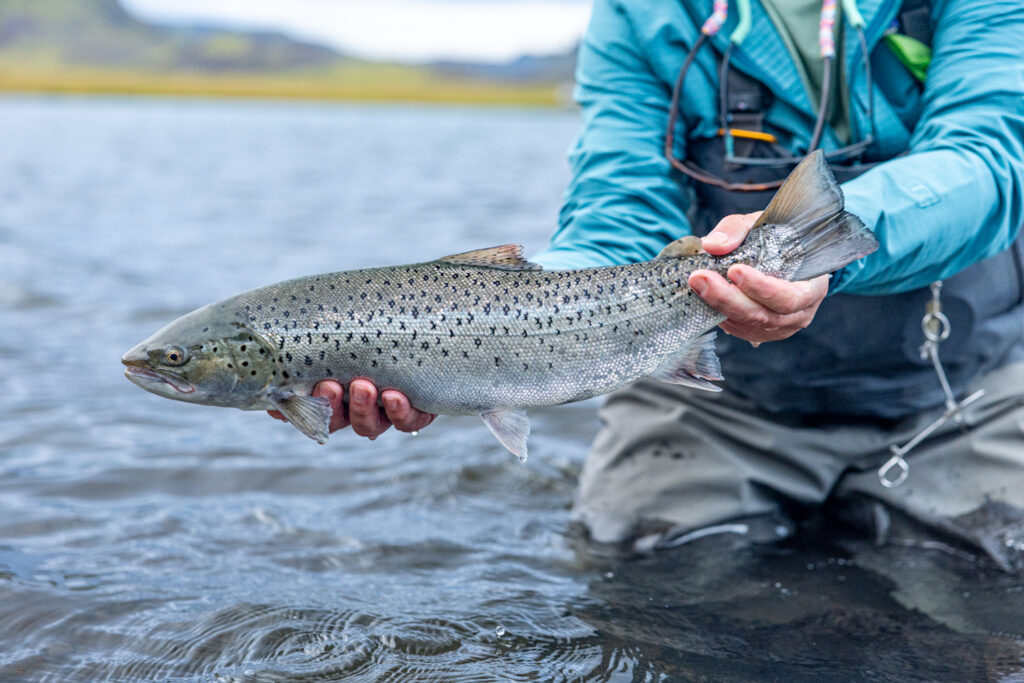
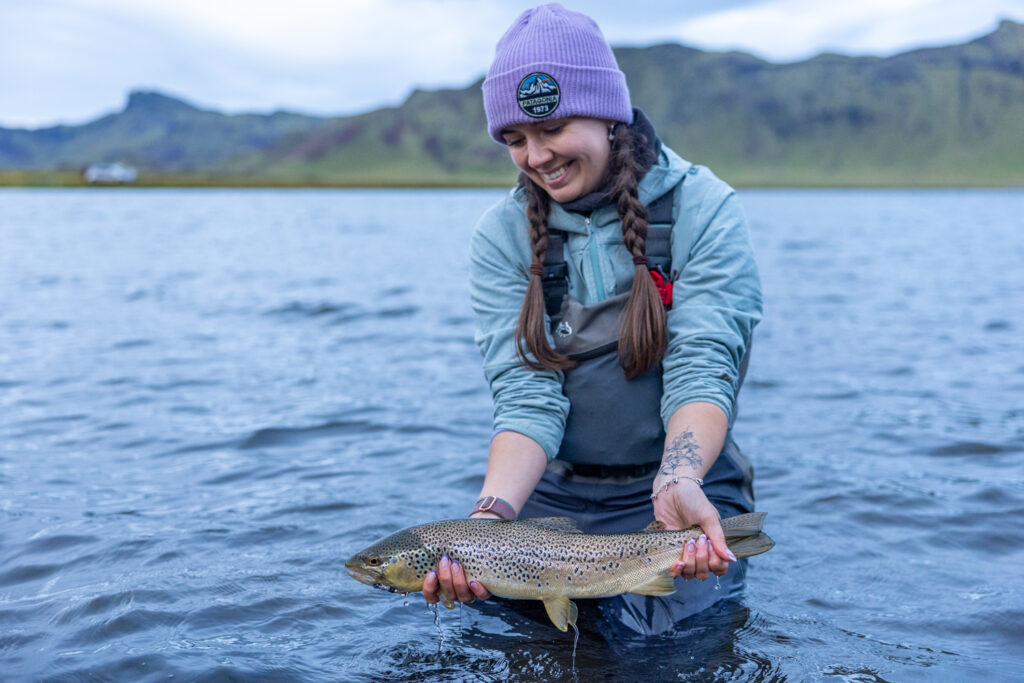
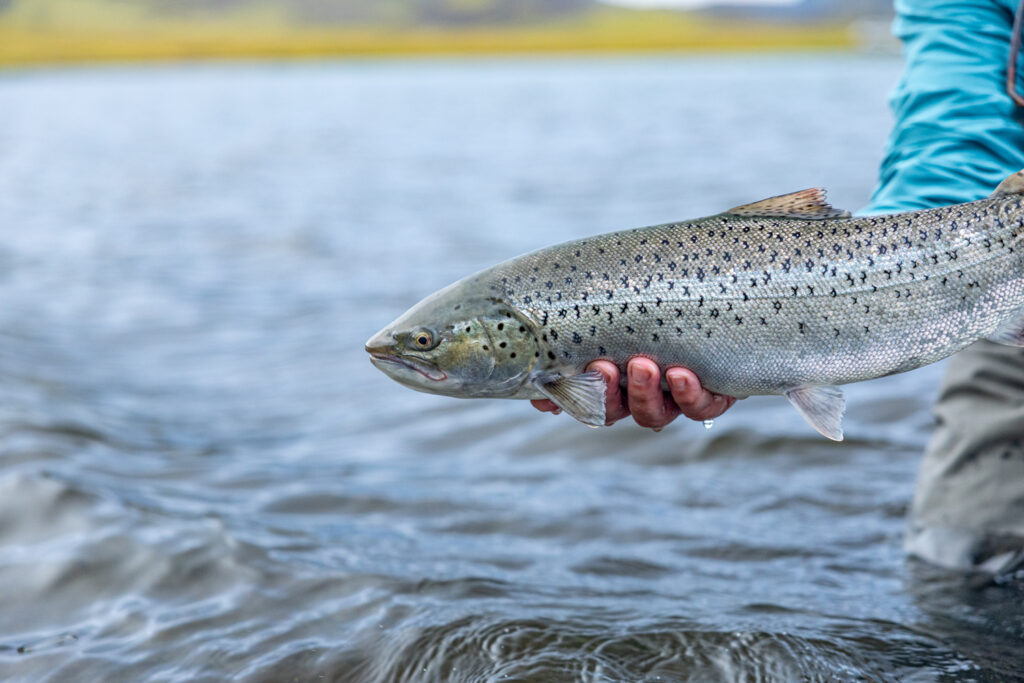
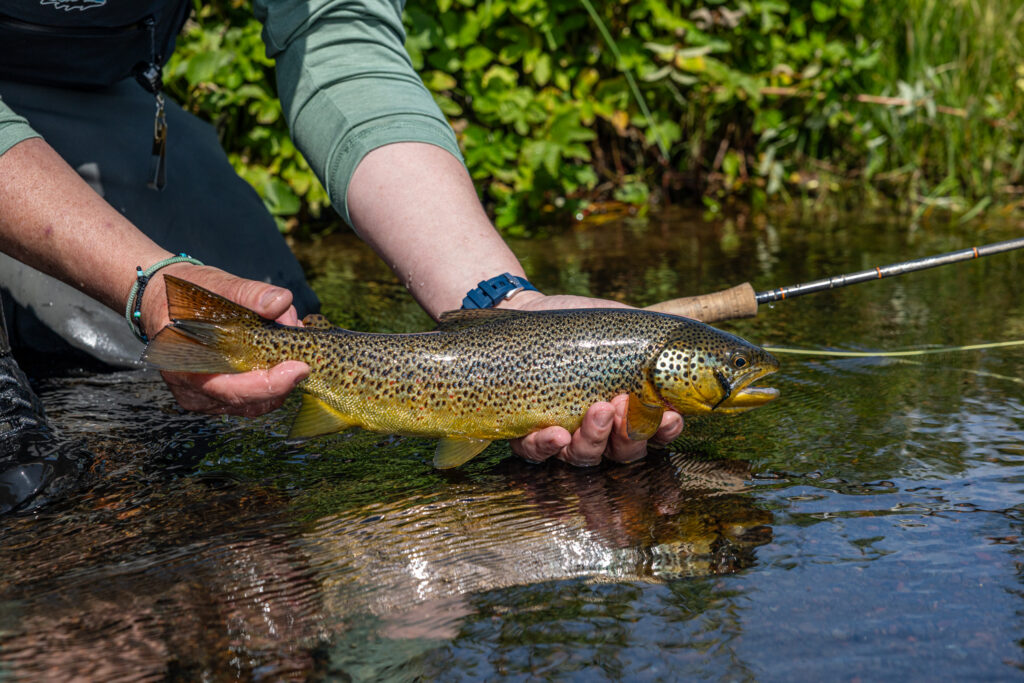
The river Vatsna, runs out of the lake, it too has brown trout and char (mostly in pools near the lake) and the sea trout and salmon that are in the lake run up this small single-handed rod river. This river is perhaps 15 metres at its maximum, two or three at its minimum. The pools can be extraordinarily deep and can hold a lot of fish, do not wade into them without care – some are two or three metres deep. Stealth is critical. Try and fish the pools from behind the fish with nymphs or dry fly or from a long way back with salmon flies or streamers, some even avoid making a cast at all and lower the fly into the taking zone hoping it will be attacked by a sea trout. Hooking fish can be chaotic as they race around the pool jumping and the best approach is to simply give them the slack to do so and stay with them if you can if/when they leave the pool. Landing fish in lower water can be hard because the rocks are exposed between the pools and offer multiple opportunities to be break the leader. Generally, for a while, pools are spooked if a good-sized fish has been caught and they should be left for 30 minutes at least.
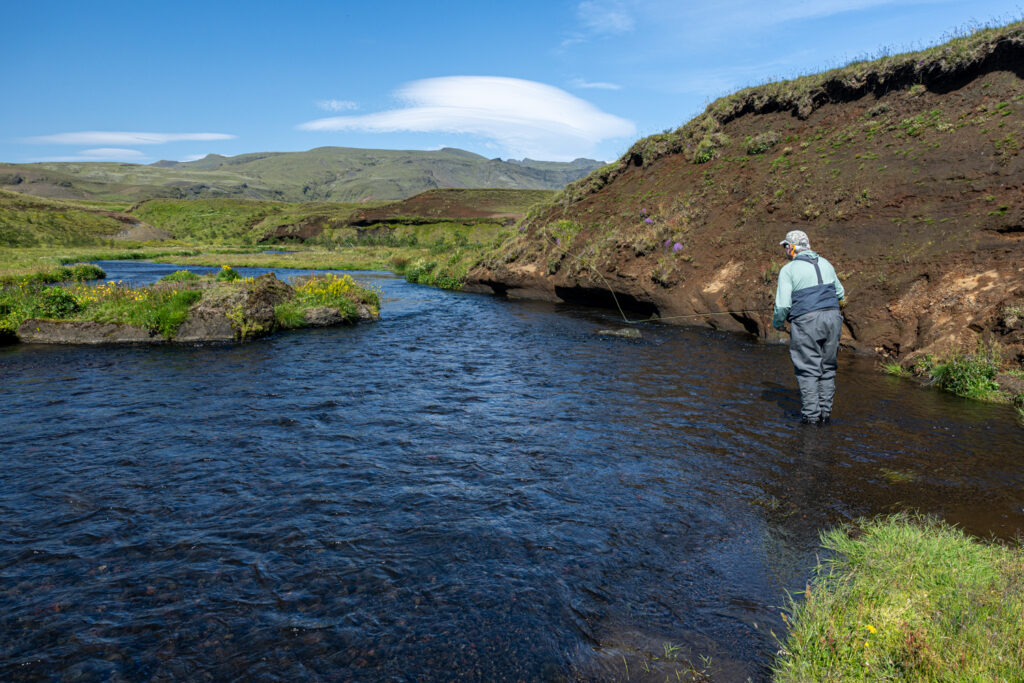
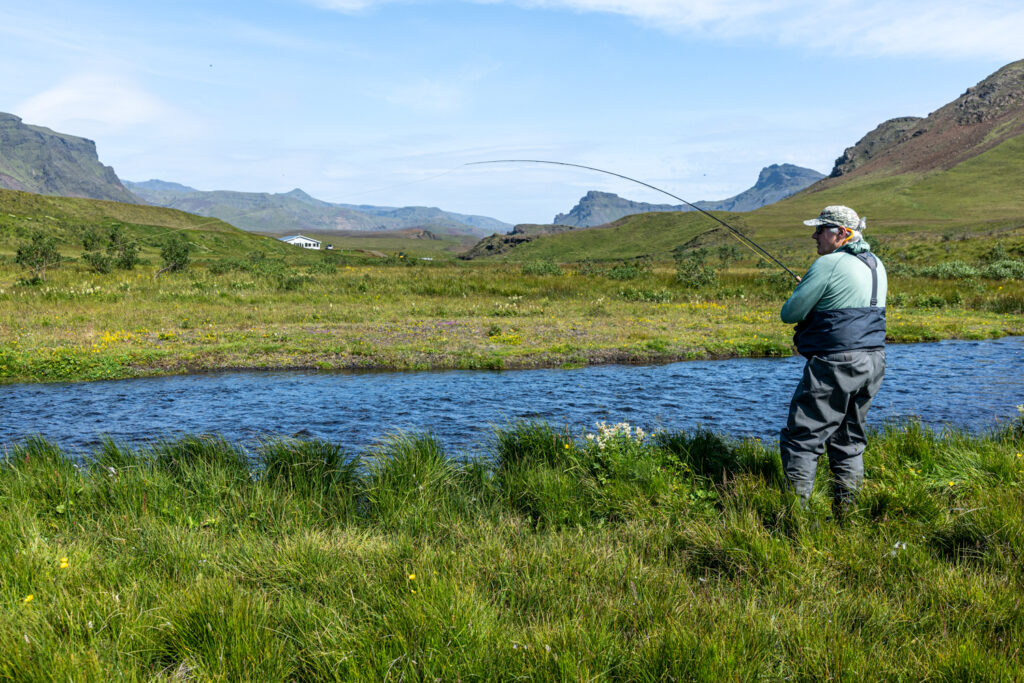

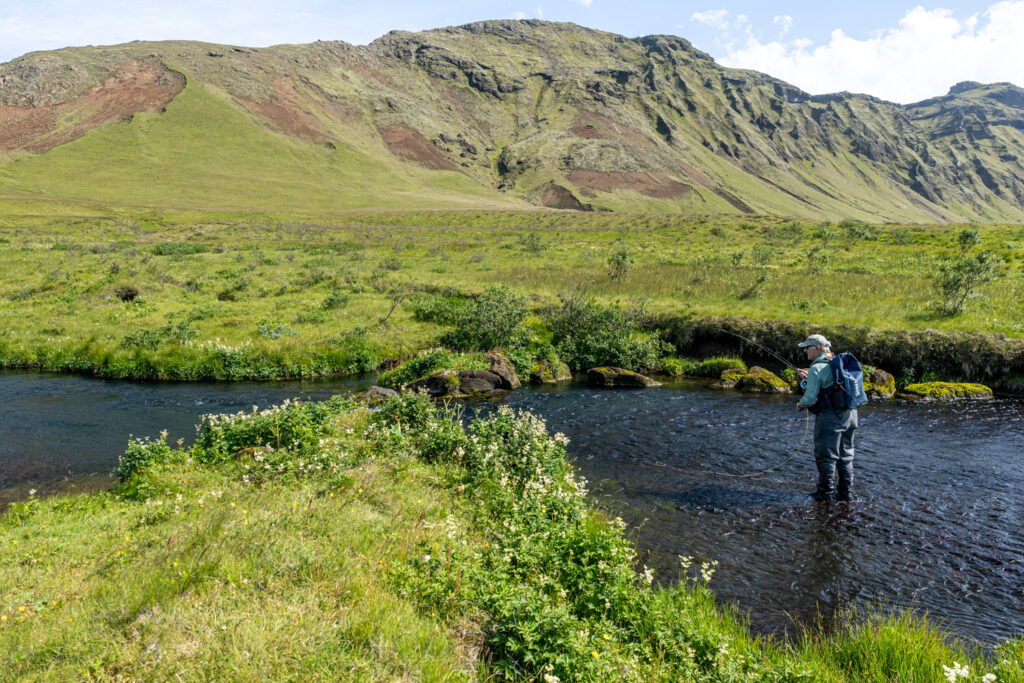
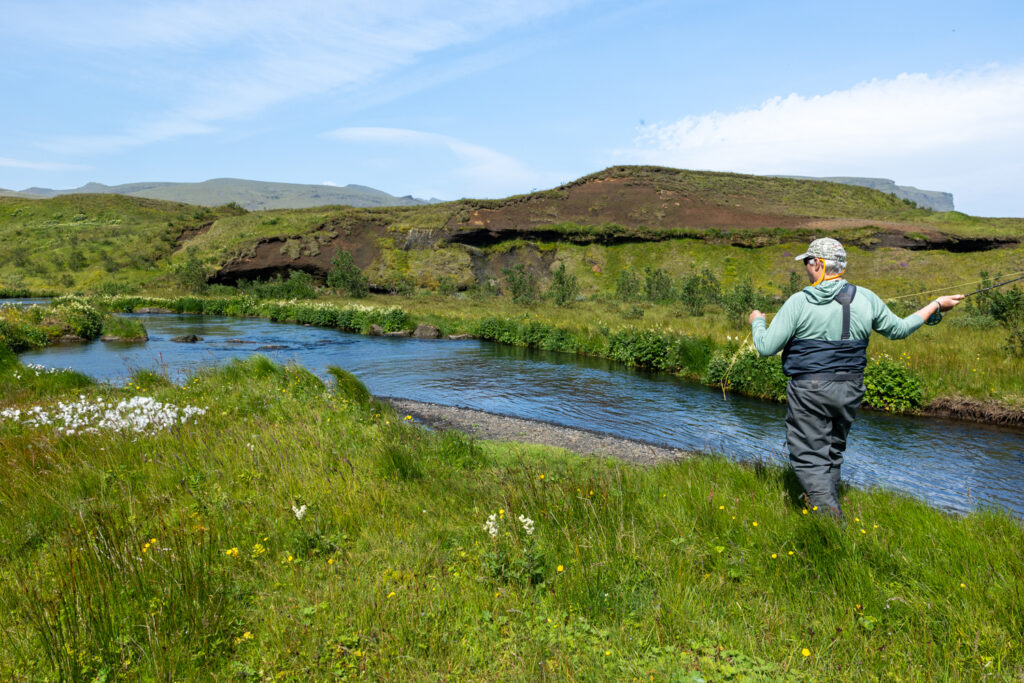
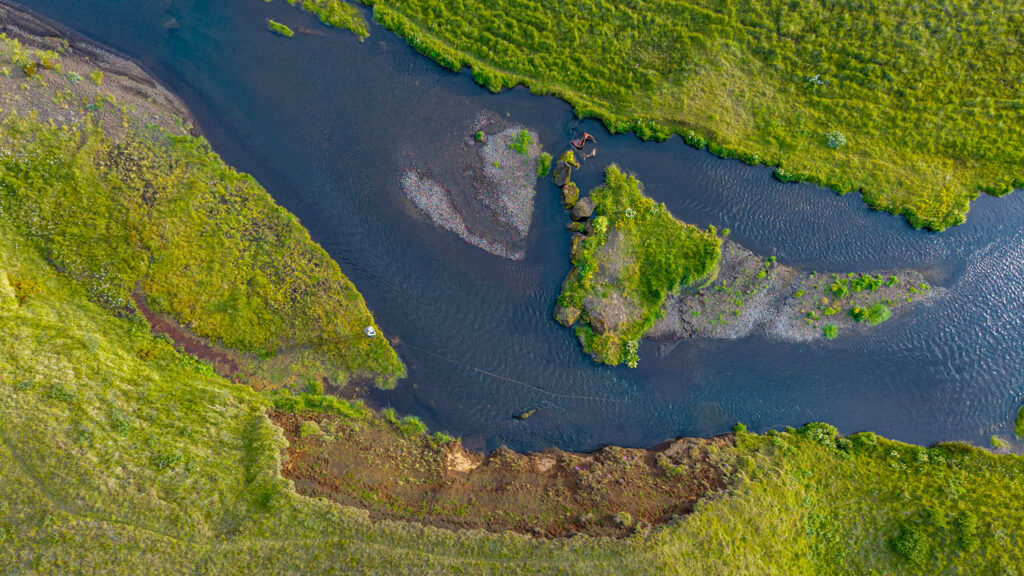

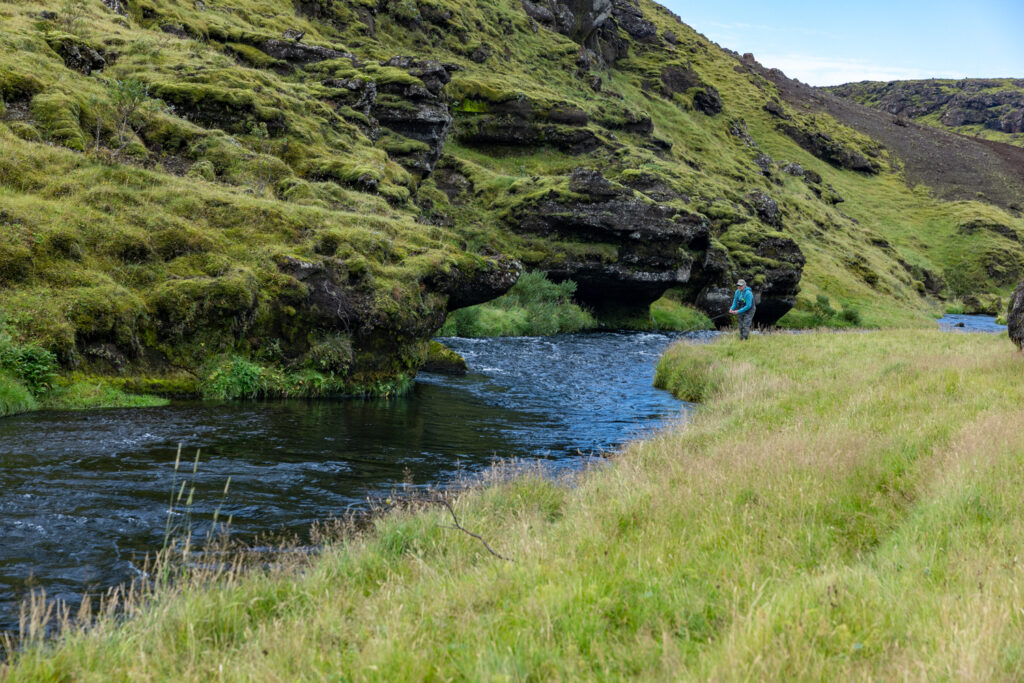
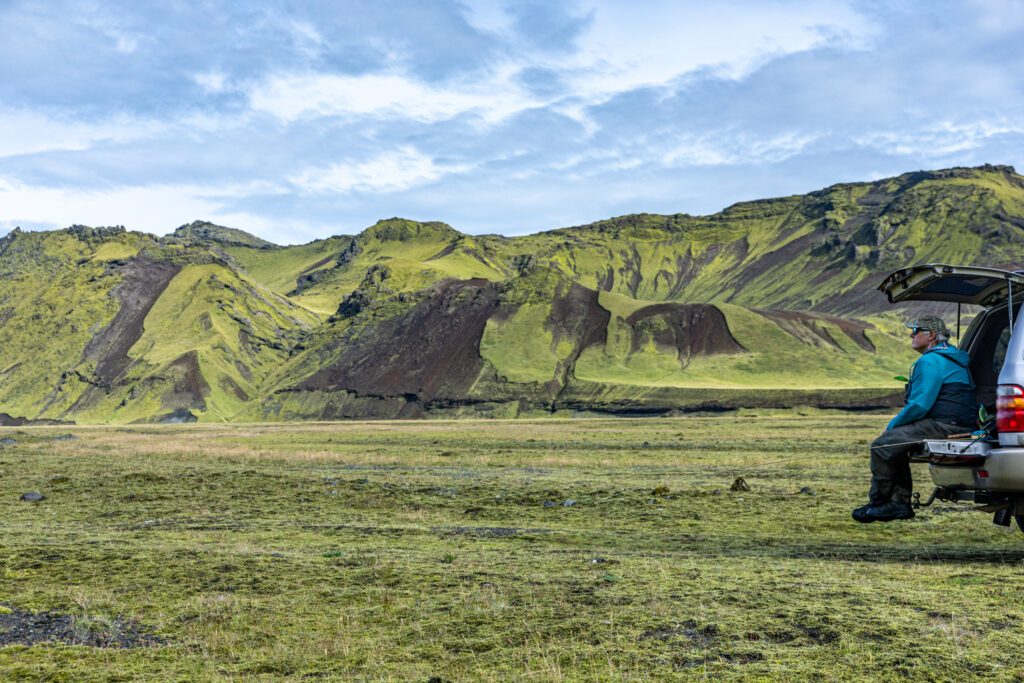
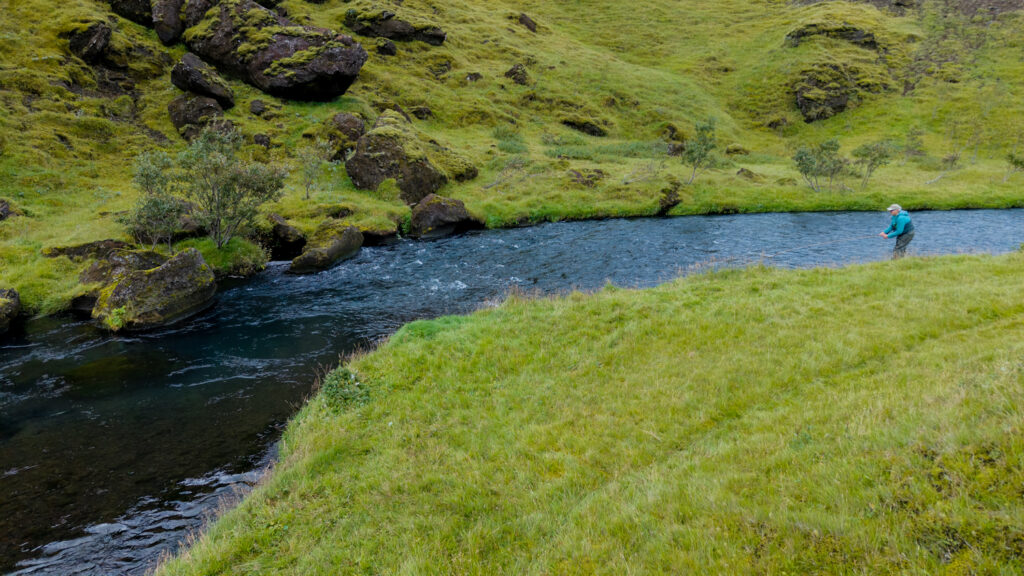
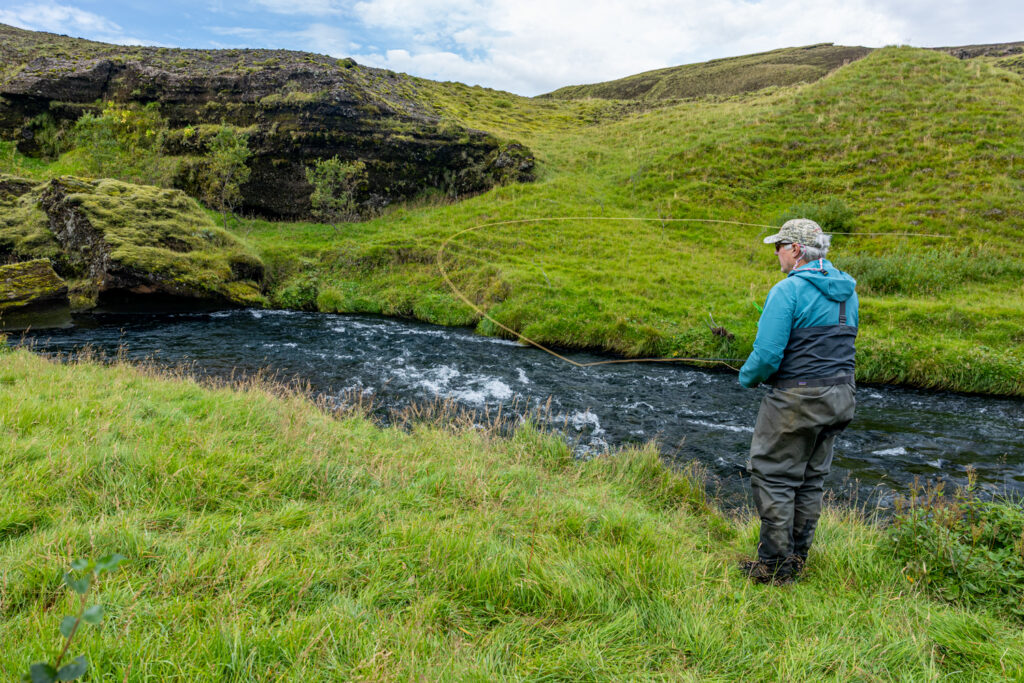
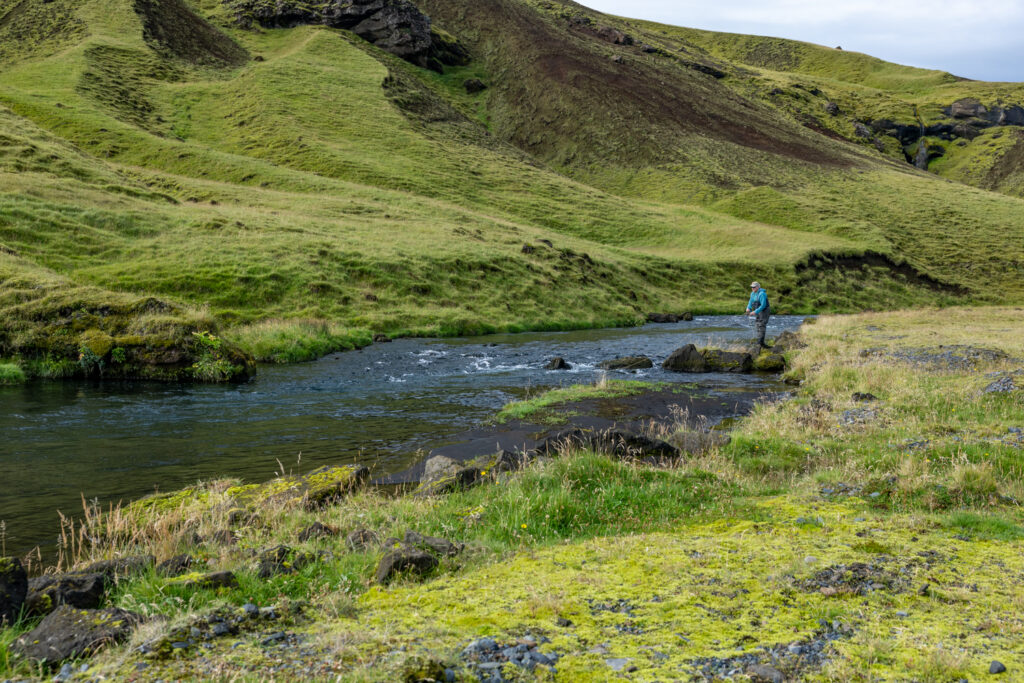
Into the Kerlingadalsá the Vatsna tumbles, clear water meeting milky, glacial water. The clear water enters the Kerlingadalsá about 8 kms (5 miles) from the sea and of course the sea trout and salmon run through the Kerlingadalsá to get to the Vatsna and the lake.
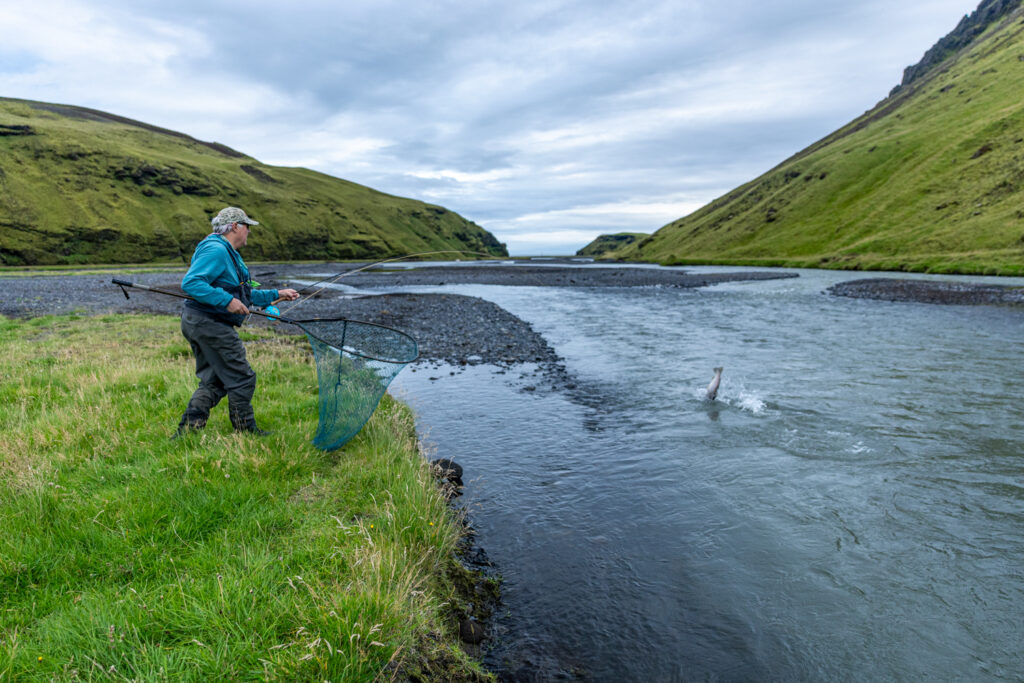
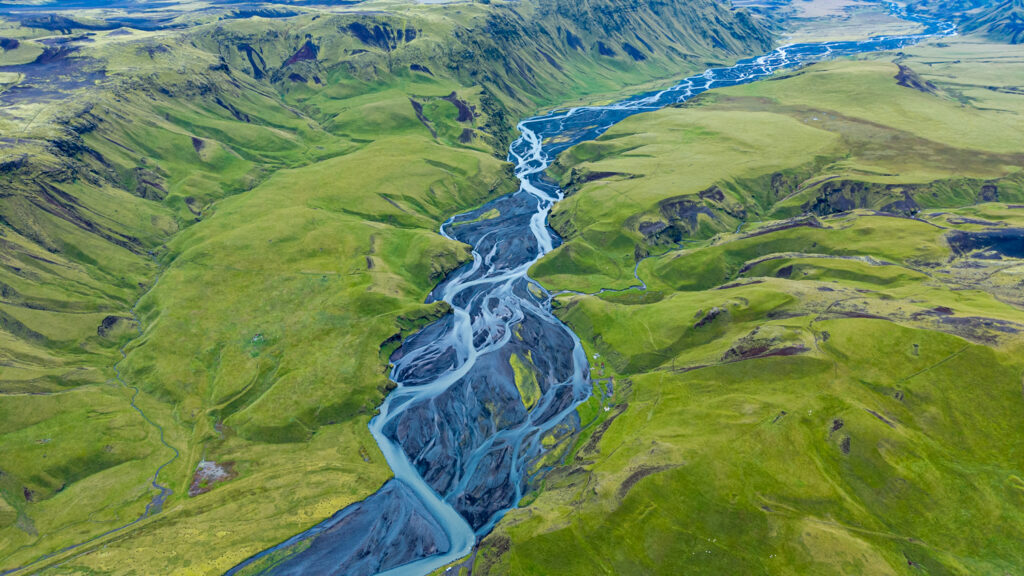
It is probably not dangerous because it is shallow but the river is fast and milky so, if you have to wade, care should be taken when wading and we recommend the use of a wading stick. Mouth-watering water is often just a short wade away if the fast water can be crossed but we urge caution and care. Look for softer, slower water. The sea trout are happy to lie in shallow water because of the colour but they like to relax and enjoy soft but oxygenated water where possible. There are usually two options – cast over the fast water and mend to hold the fly in the slow long enough for the fish to see it before the fast water whips it away and induces the take or, if on the slow water side of the pool, swing the fly right into and over the fish. A skated fly can be effective as it will hang well over the fish and come right into the shallow water where they may be sitting. One may see them in faster water, but this is usually running fish off the tide, but they will seek slower water to rest in and that is where they can be caught best. They do not go as crazy as they do in the clear water because they cannot see but they are wonderfully powerful and will tow you upriver cruising with ease only to turn and head down. They are bulldozers, broad shouldered and fat, very impressive and beautiful fish.
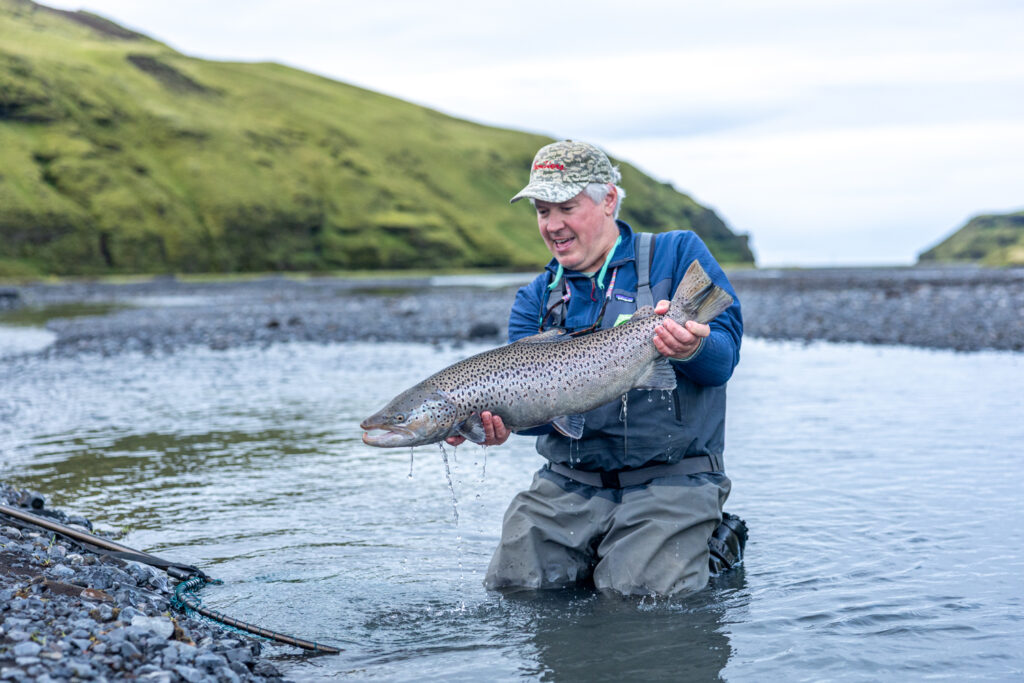
The char average 1 to 2lbs but there are larger fish.
The trout run up to about 2lbs but on occasion there are larger fish.
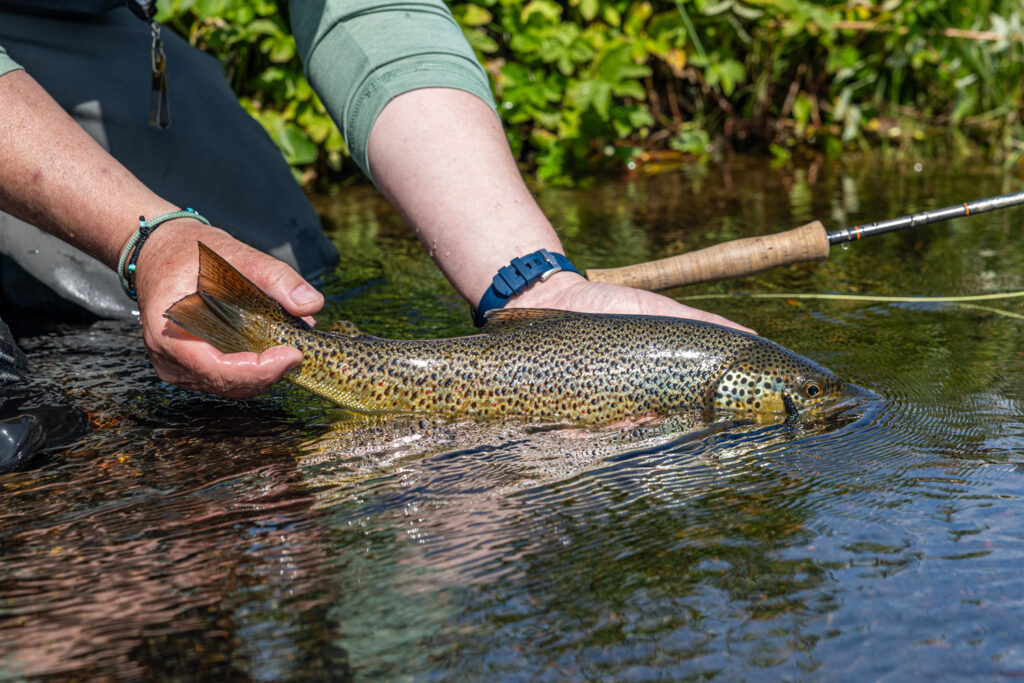
The salmon (the least numerous of the four species) will be grilse and multi-sea-winter fish but 15 lbs would be a big one.
The sea trout are numerous up to the 2lbs mark, there are plenty in the 3 to 5 lbs range and they go all the way up to and over 16lbs, the weight we have personally witnessed. The big fish in the right season are far from scarce; they are a very real possibility.
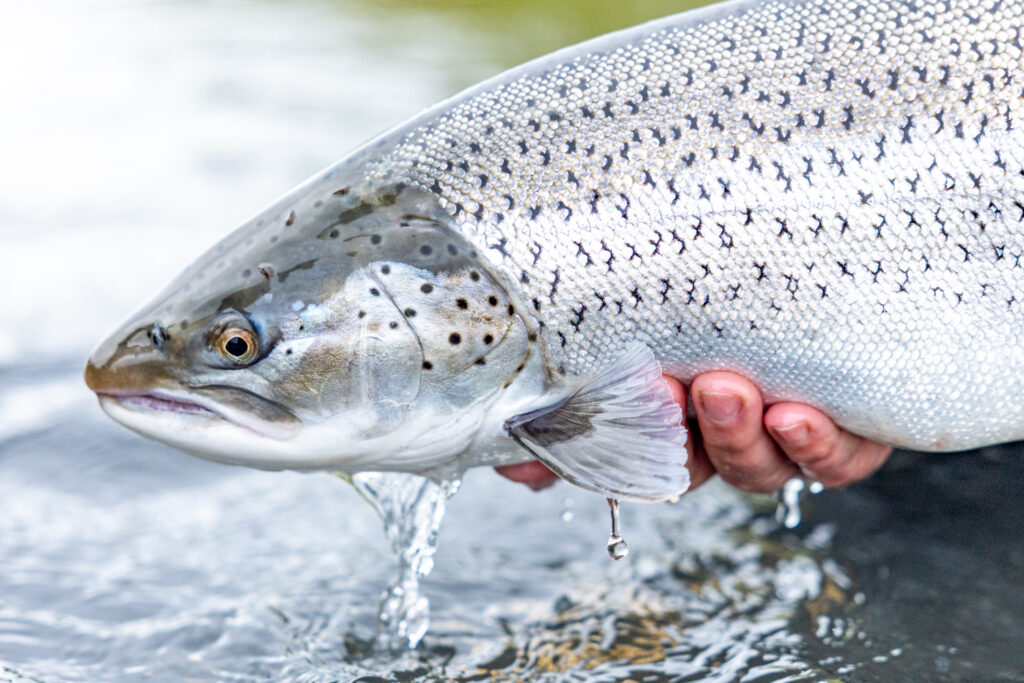
The best thing about the fishing is that one option may be out, two even, but rarely are all three options unproductive at the same time. Of course, there are seasons but the strength to the fishing in this beautiful place is the variety.
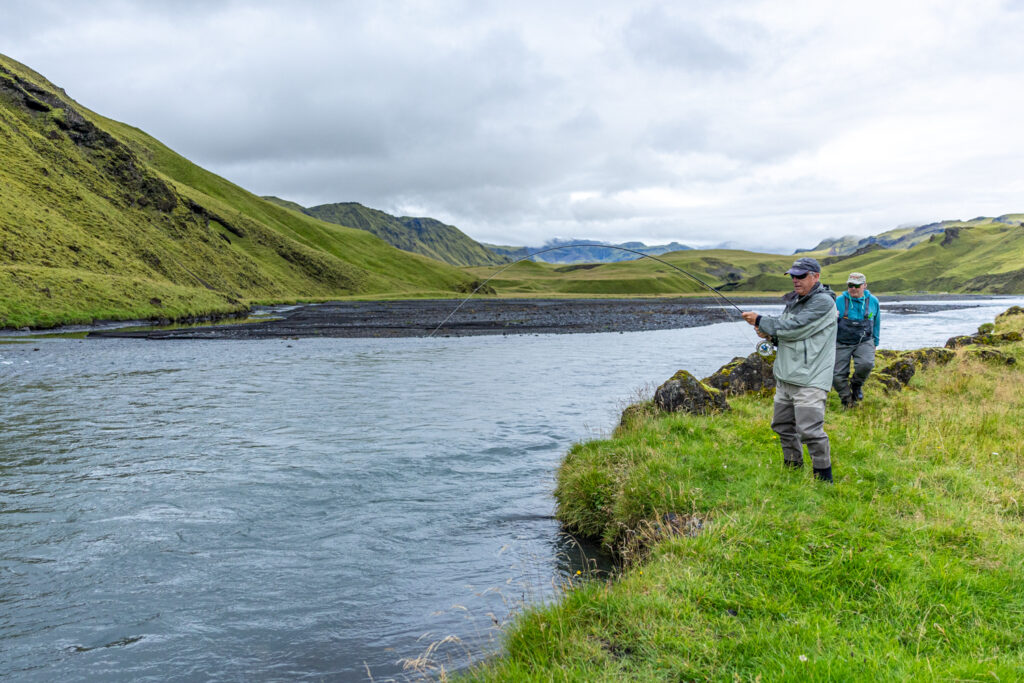
I first visited Heidarvatn in mid-July of this year. At that time of year, the char are in season and so are the brown trout and certainly the bigger sea trout and even some salmon are beginning to be on the move. Had I known what I know now, I would have gone to the Kerlingadalsá looking for both salmon and sea trout as well. The weather was well into this year’s drought, so the Vatsna was low, but I still hooked a 10lbs sea trout which admittedly broke me quickly! The brown trout were on too. I was only there for a day on the water, so it was hard to pack it all in.

I returned with friends/clients at the beginning of September. We were following a good guiding friend whom I have worked with on Ponoi and in the Seychelles. He had been there with guests the previous few days and together we shared notes and experiences which are as follows:

His first two days were low water, they caught some brown trout, a salmon and two sea trout from the Vatsna river and had a wonderful time. Then it rained and the lake and river rose. Fish began to appear, and they were able to sight-cast upstream to fresh sea trout with nymphs and downstream with small salmon flies. They landed 11 sea trout up to 7lbs from the Vatsna plus some brown trout.
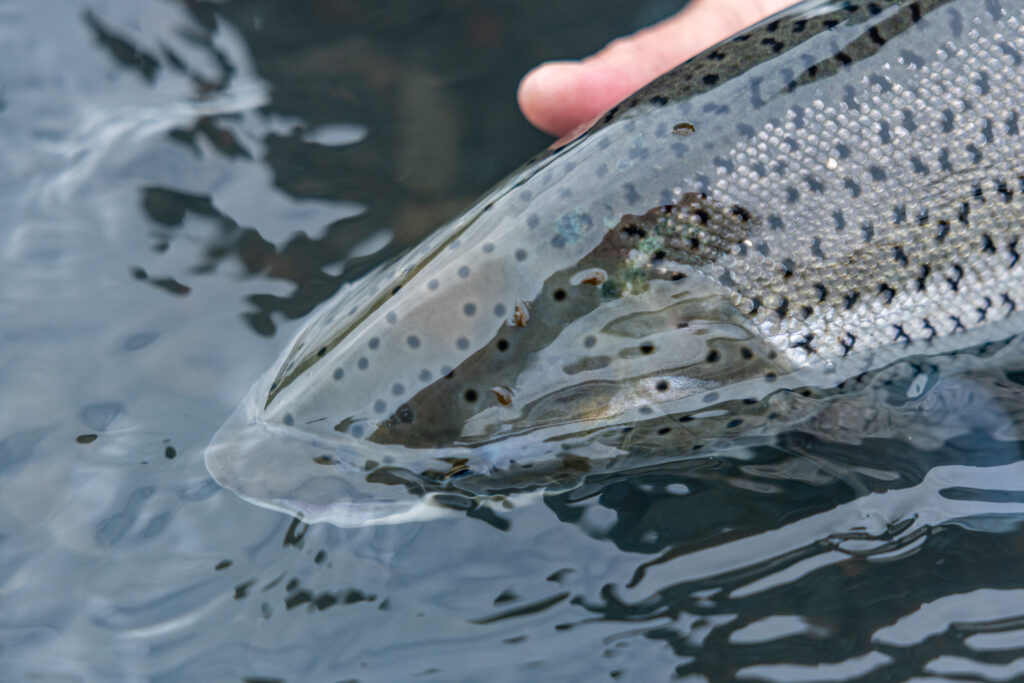
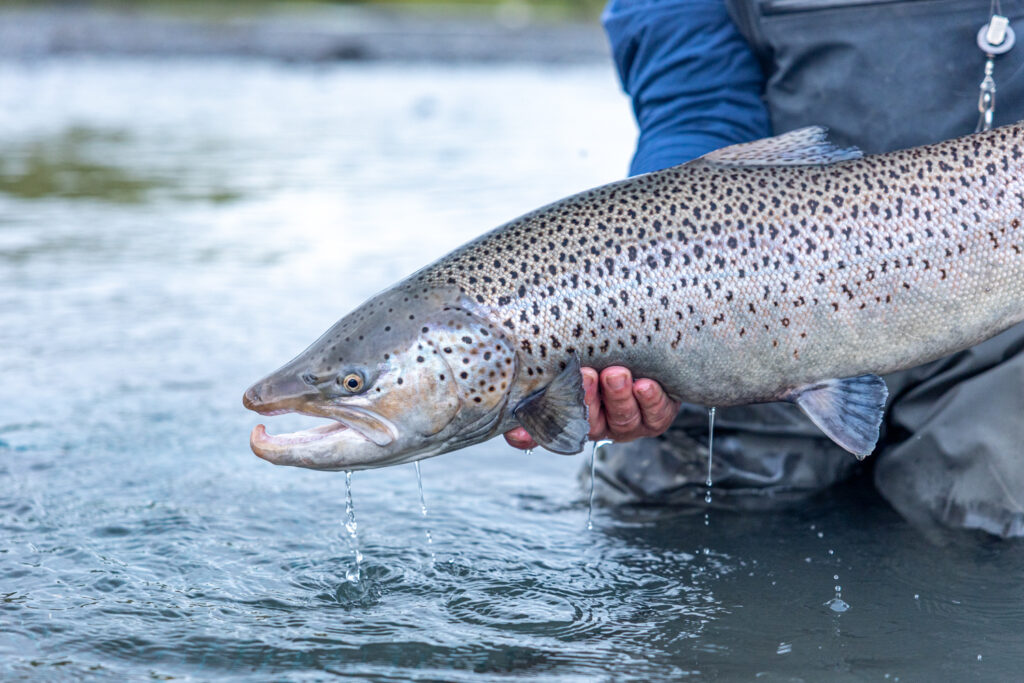
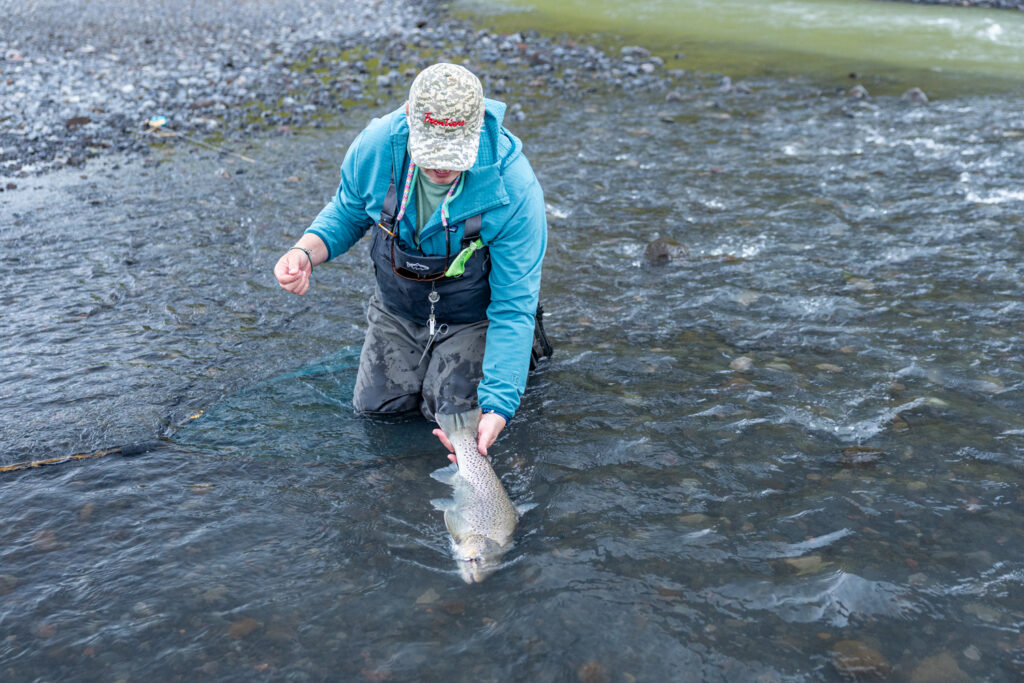
By the time we arrived, we now realise the water had dropped away again (the water table was very low after a long dry summer) and we were perplexed by our inability to sight sea trout in the pools and catch them as my friend had done. We tried upstream nymph, streamer and hitches but only caught or lost salmon and small sea trout. We caught brown trout, a sea trout and char in the lake drifting in the boat but even the lake was not on fire compared to the stories we had heard.
We decided to look harder, and our attentions turned to the glacial river, the Kerlingadalsá which we approached both from where the Vatsna enters the Kerlingadalsá as well as driving down through Vik and up the river that way. The first time we went we saw nothing. The second time, we spent more time and this time the river began to reveal its secrets. We found soft, deepish water and there we found some serious sea trout landing fish from about 9lbs to 16lbs. We had other takes that did not hook up or broke us.
Let me remind you that the Kerlingadalsá is a milky, glacial river which will carry more glacial run-off with both rain and hot weather so it’s ideal conditions for best results are what we had, cool, dry weather. We started using black conehead streamers, evolved to smaller woolly buggers in black, green and white and concluded with the best fish of our three days, the 16lbs fish on a slowly skated muddler on the last evening.
I think these descriptions demonstrate how anglers need to move with the moods and conditions of the fishery. We are starting to learn that the lake and small river perform with water while the glacial Kerlingadalsá performs without as long as it is not too hot. The sea trout in the Kerlingadalsá are caught in the Vatsna and indeed in the lake under the right conditions with nymph, streamer and even skated or dry fly. I believe we have only scratched the surface of understanding the secrets of Heidarvatn but one thing is for sure, there are some very special experiences to be had while enjoying the privacy of this magical place.
This is a not a place for someone wishing to use a double-handed rod and wants to cast their way down long pools swinging a fly. This is a single-hander’s paradise, interesting, technical, sighted (at times) fishing with the opportunity for special rewards whilst always enjoying the magic and privacy of this special place.
A word about flies – you could load every fly you own into your bag and take it with you – honestly, at times, anything could work. But if I did not have enough room I would focus on the following:
A set of small salmon flies for the river – blacks and blues with some sliver. These will catch the sea trout and the salmon.
A set of streamers based around the woolly bugger design but in various sizes and colours from pinks and whites to greens and blacks – lots of flash in them and varying weighed eyes. Sizes from small (1/2 inch/1 cm) up to a couple of inches. If they come with rubber legs too… great. Other streamers that worked well were full tinsel baitfish patterns in various sizes.
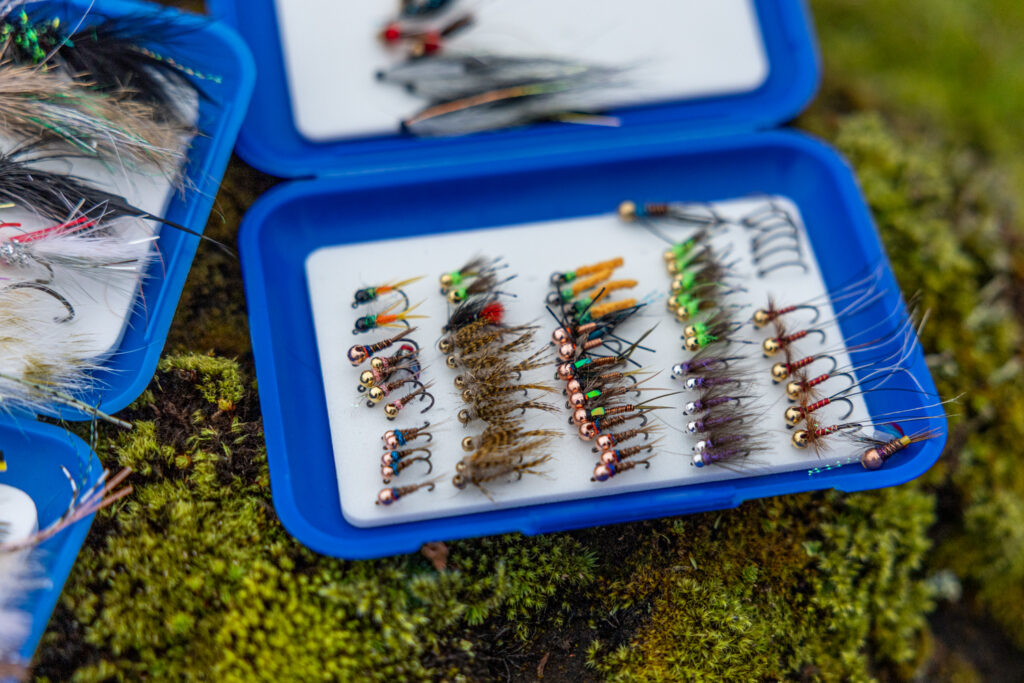
Nymph patterns of all weights and sizes but mostly small as in the photo above and mostly tungsten but a broad selection of weights and sizes. Some pink tungsten nymphs for the char. Include nymphs with rubber legs etc. Bring indicators if you prefer to use them.
Some sunrays and hitch tubes of varying sizes and some muddlers to skate, especially in black.
Lastly, I am convinced that bonefish patterns imitating shrimp, baitfish and squid but ideally tied on trout hooks for best hooking results.
The Accommodation
There are two accommodation options.

The Riverside Lodge comes with the best of the fishing. The owners suggest five rods between the two rivers and the lake, but we suggest two or maybe three. Partly because of pressure or less thereof and partly because there are currently only two good sized rooms. Two rods is a luxury like Heidarvatn itself, three would be fine, more a crowd.
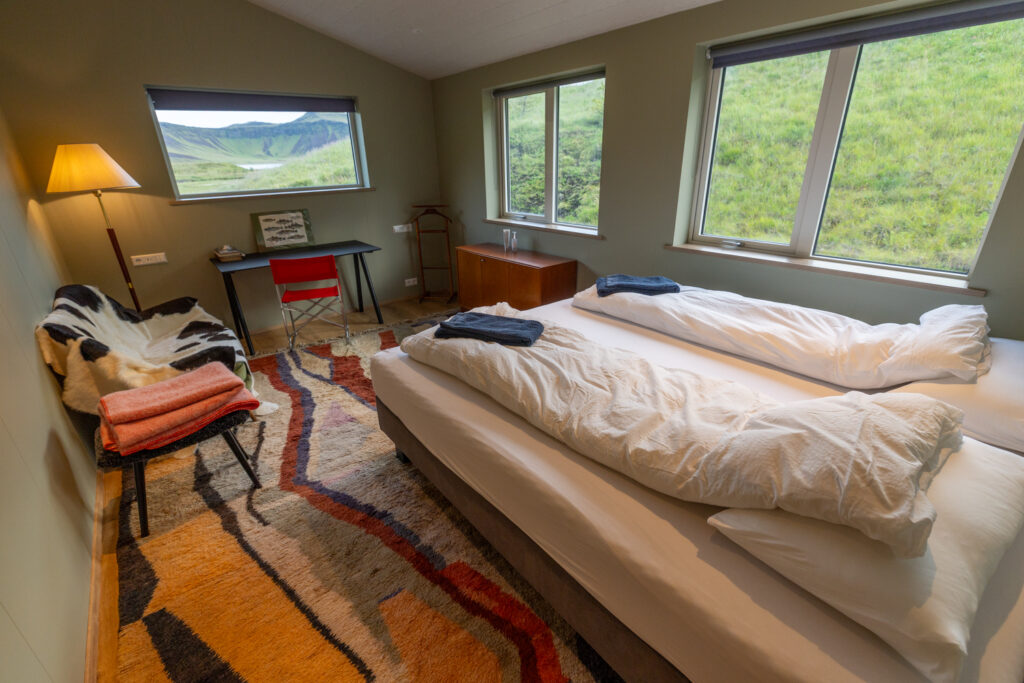
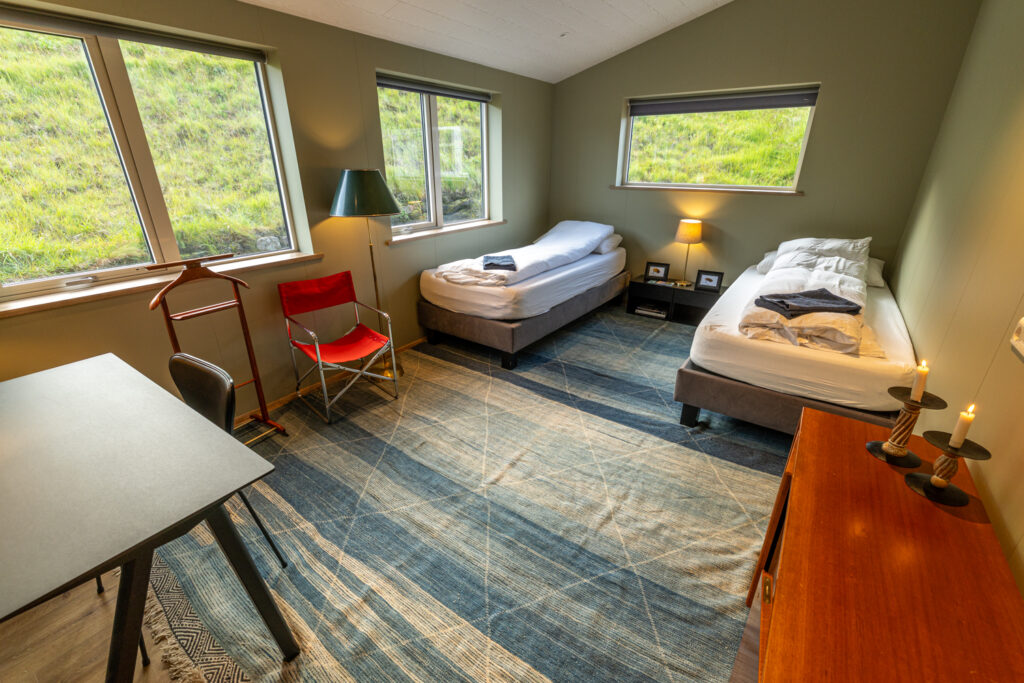
The lodge has two large ensuite rooms (both rooms have nice ensuite bathrooms) and currently three tiny bunk-bed rooms which share a nice big bathroom between them. We have suggested to the owner to knock these together to make a third large ensuite bedroom. We are hoping they agree. There is a lovely seating area, a kitchen/dining room and a wading room and spare room for perhaps a chef across the way.
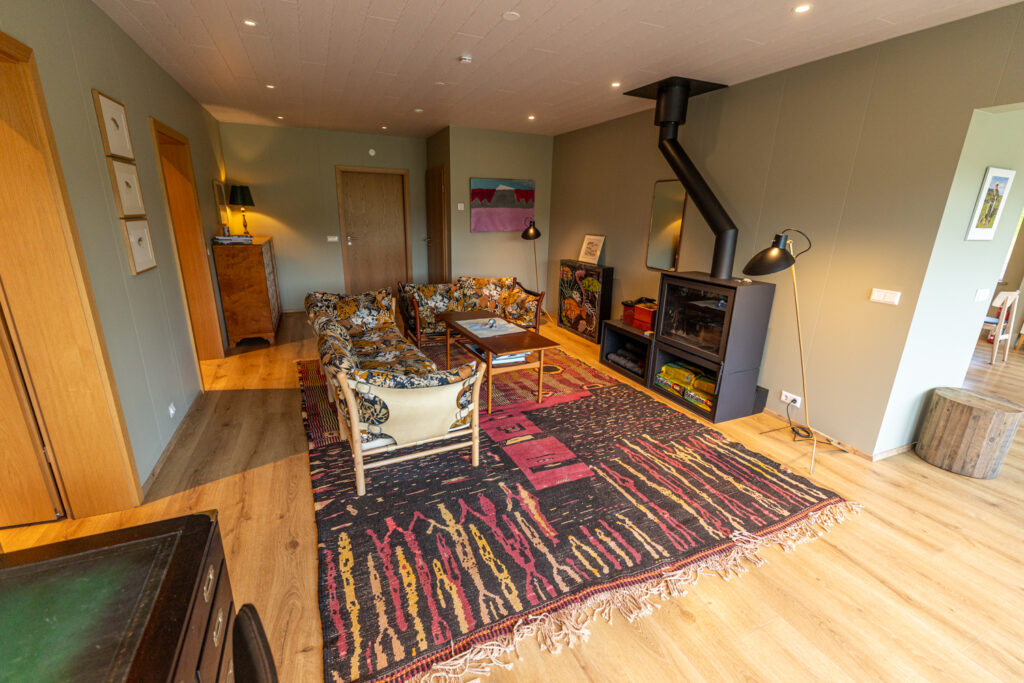

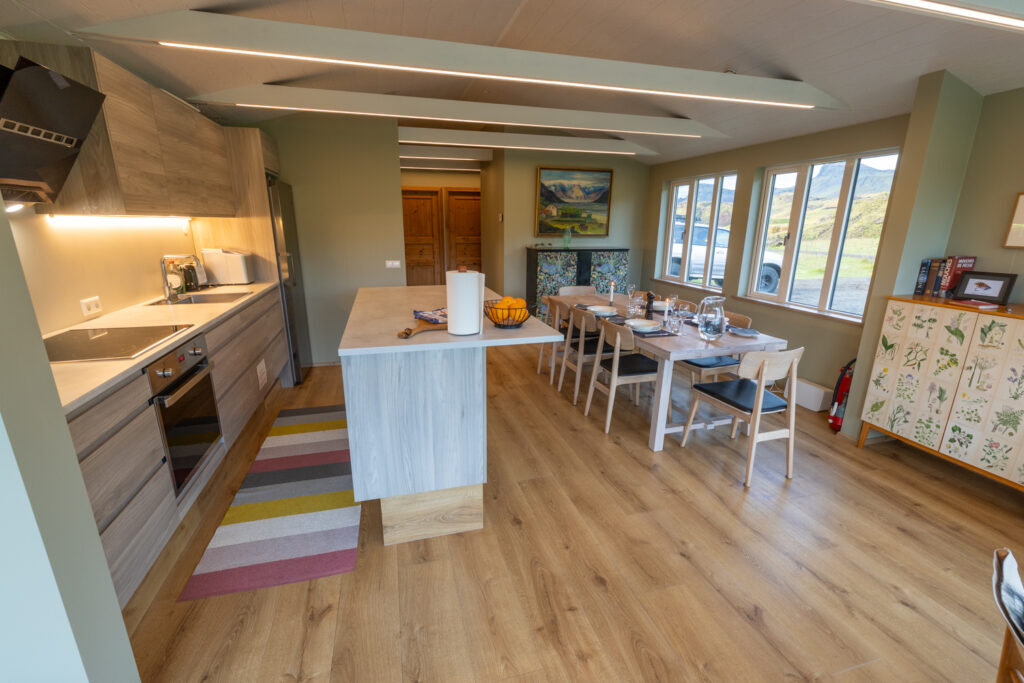

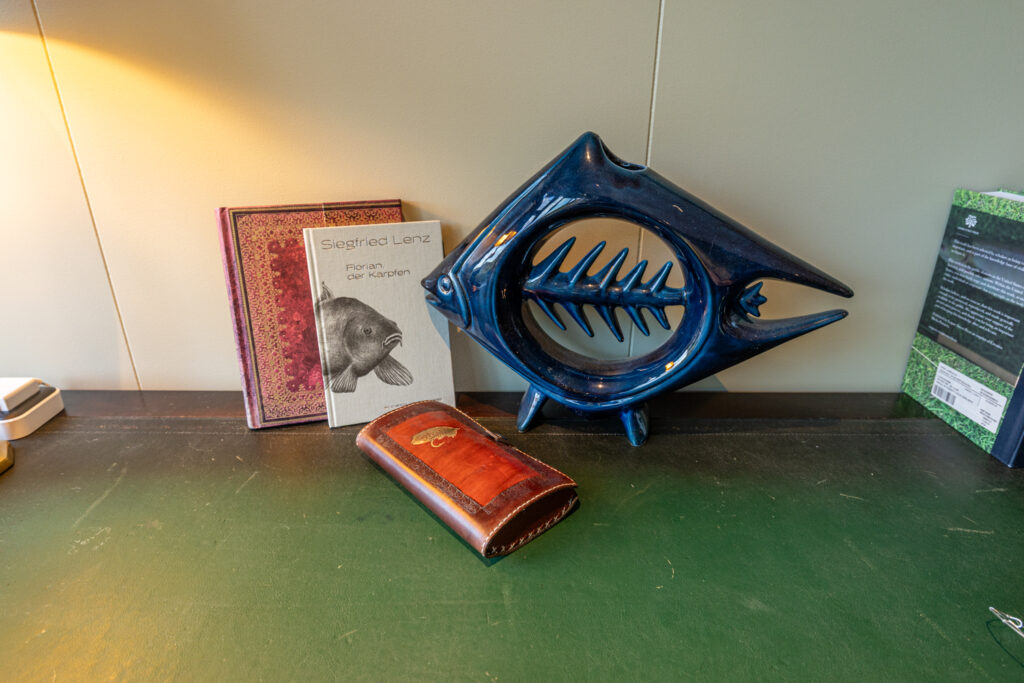
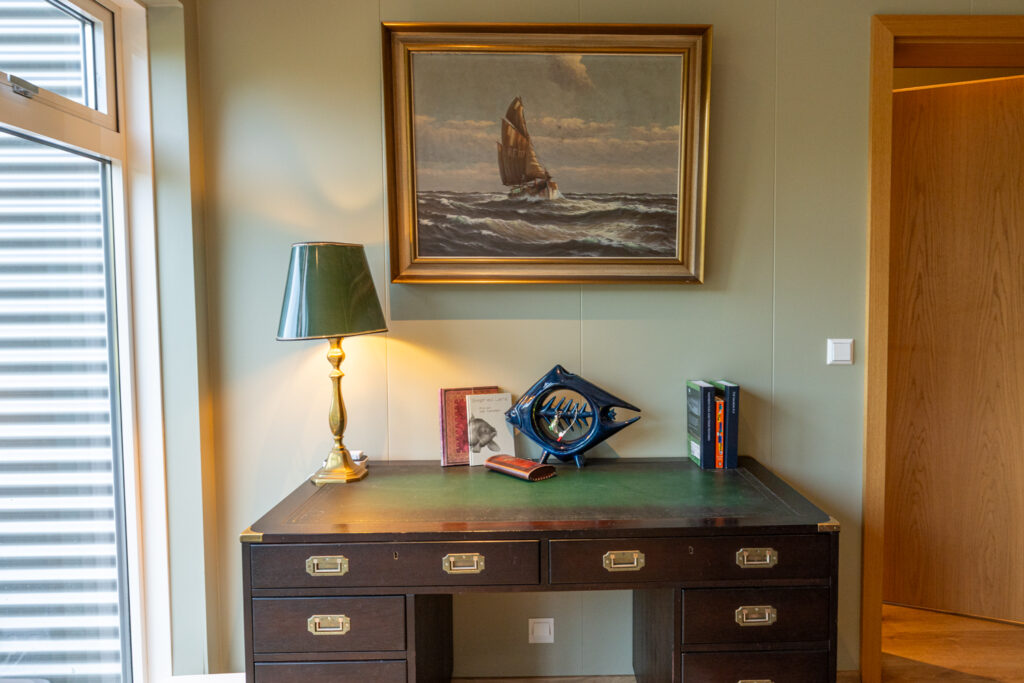
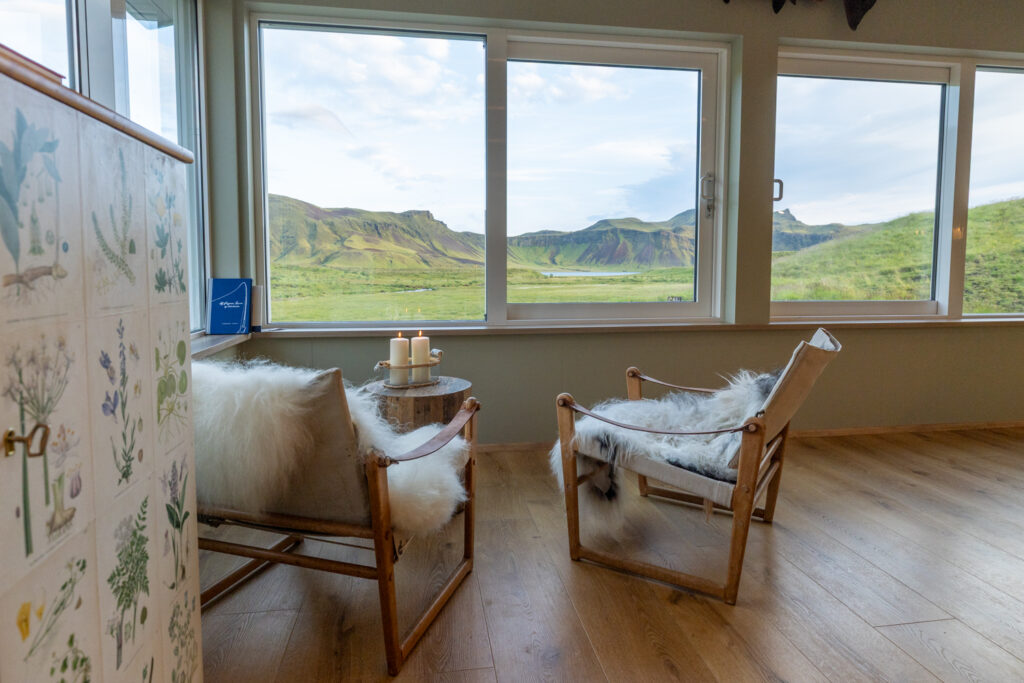
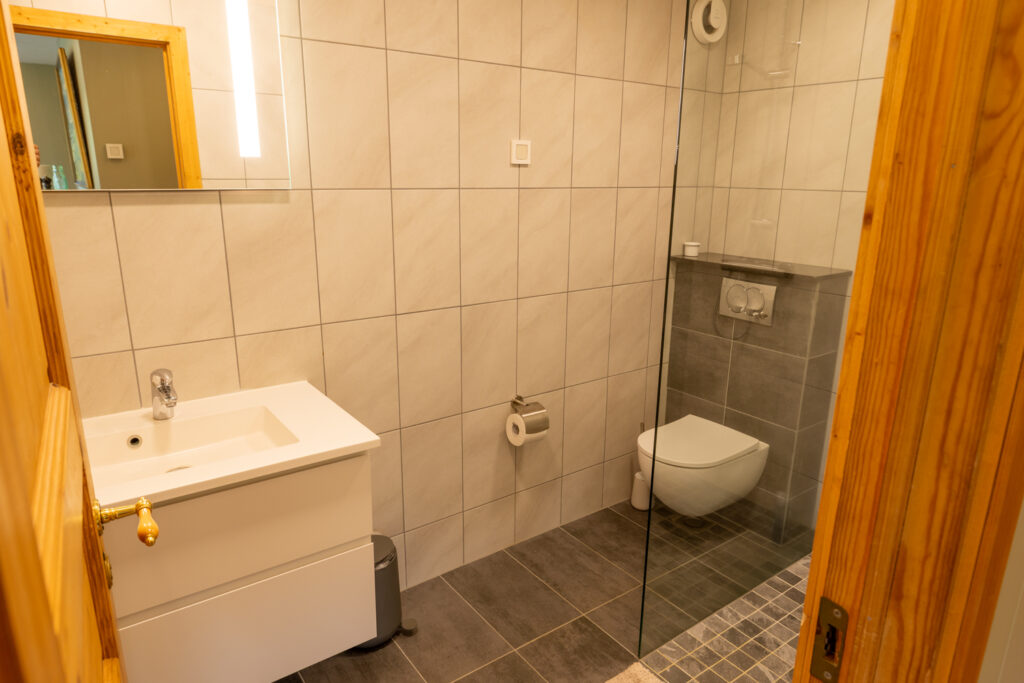
Between the sitting room and kitchen/dining room is open space with seats along it almost like a viewing gallery to allow guests to just sit there and enjoy what they are looking at. The kitchen is well equipped, and everything is in perfect working order.
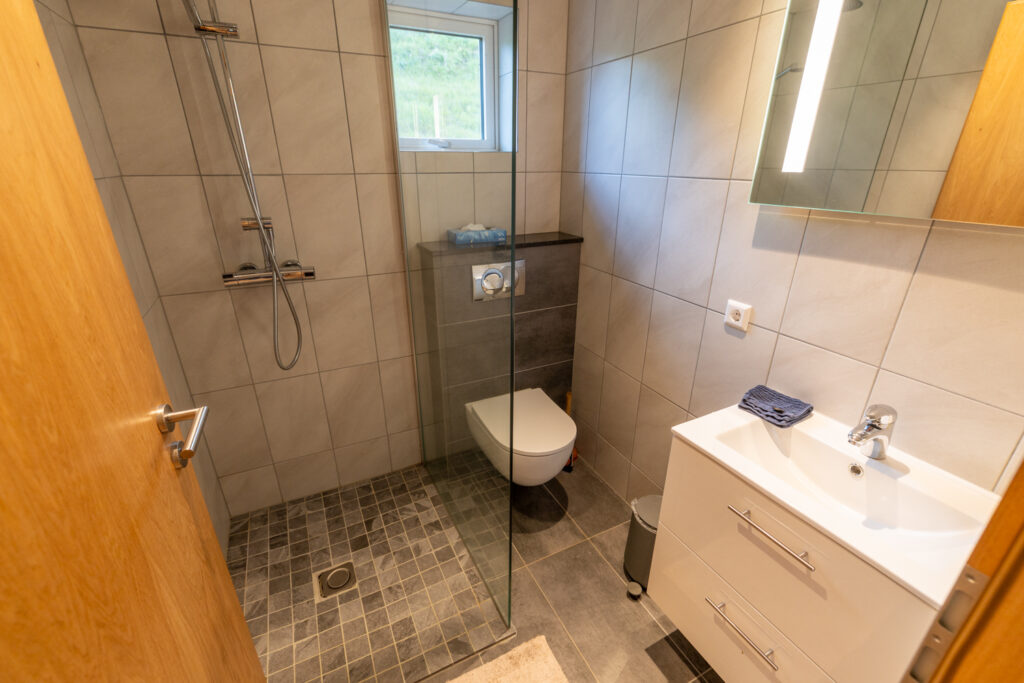

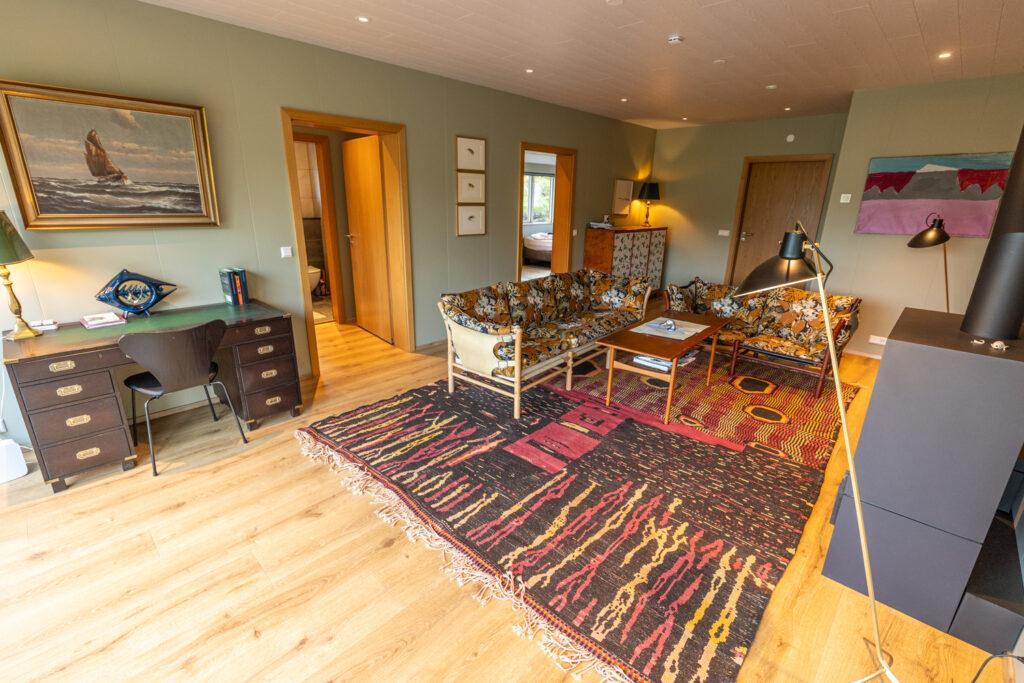
Just below and to the left of the Riverside House is the sauna with a massive window to give guests the best possible view as they enjoy their sauna. One cannot help but completely de-compress and relax here. There is nothing to disturb you except birds and their chicks.

The Lakeside Lodge is for larger parties and only comes with fishing on the lake. It has a capacity for up to 8 people across four double rooms with four bathrooms.

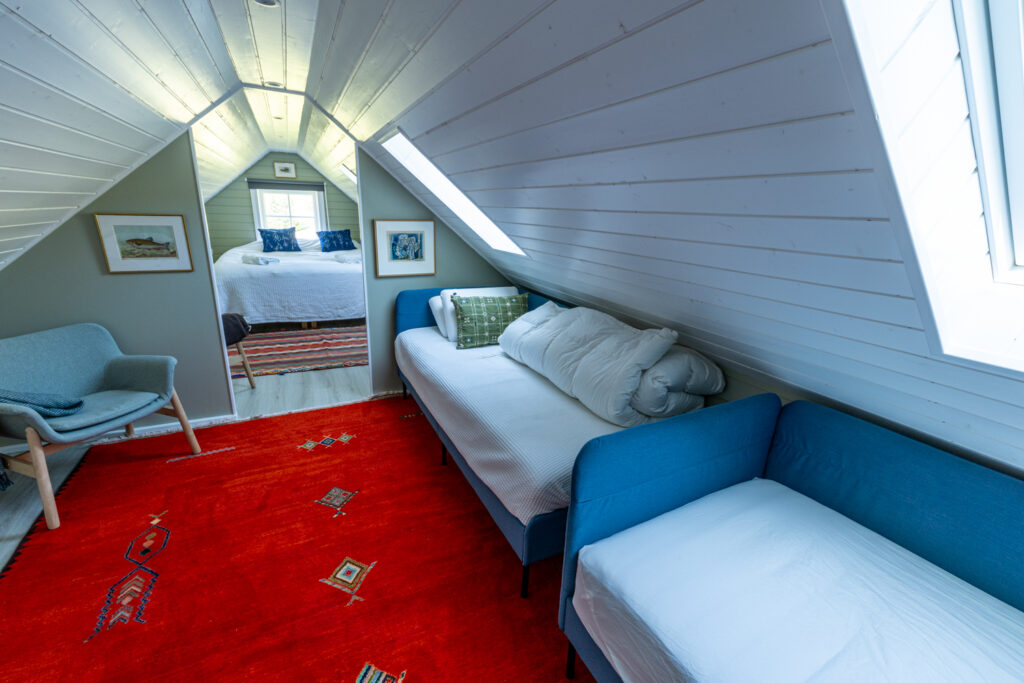
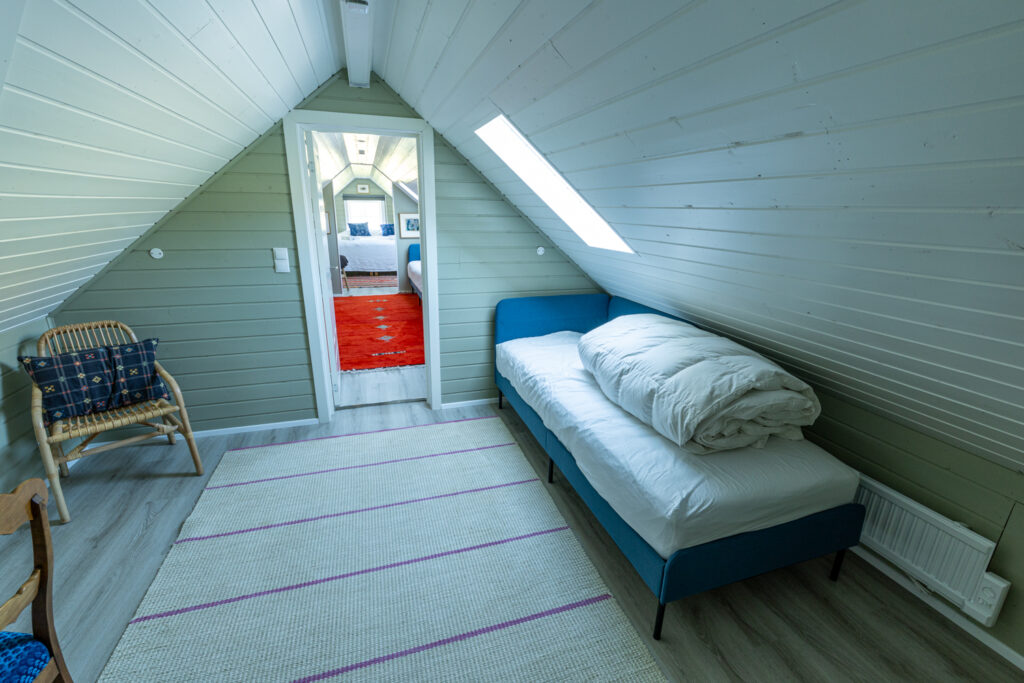
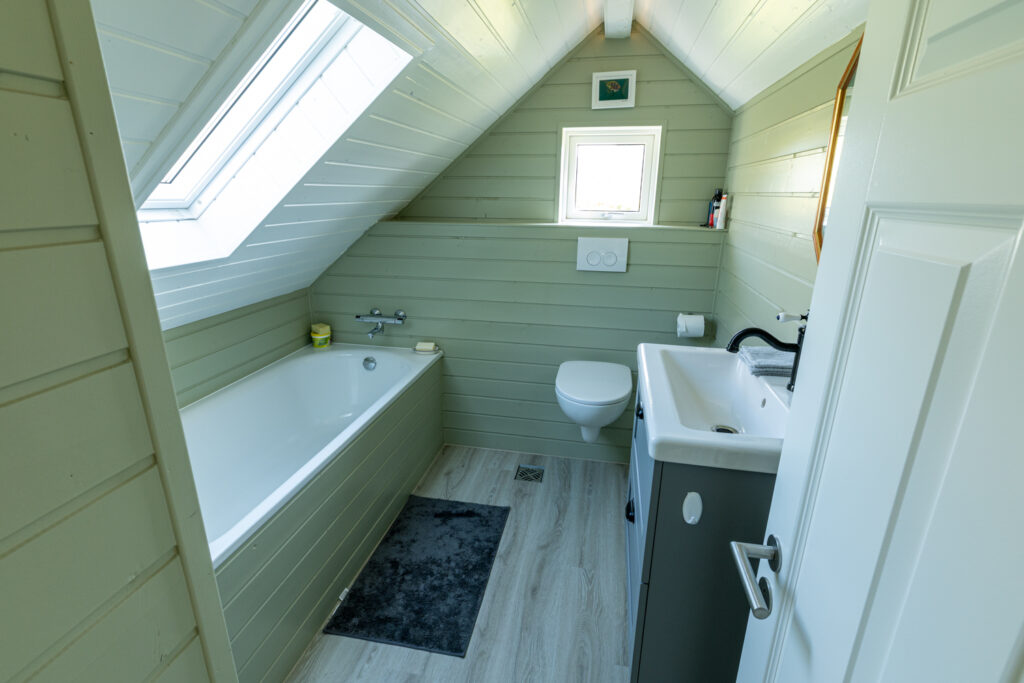
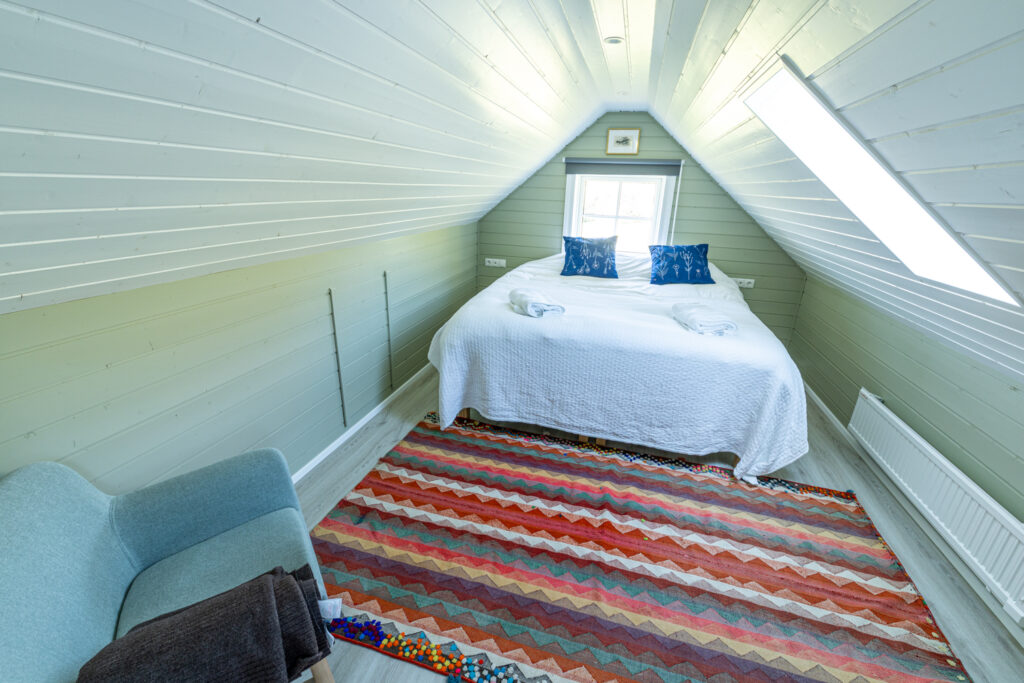

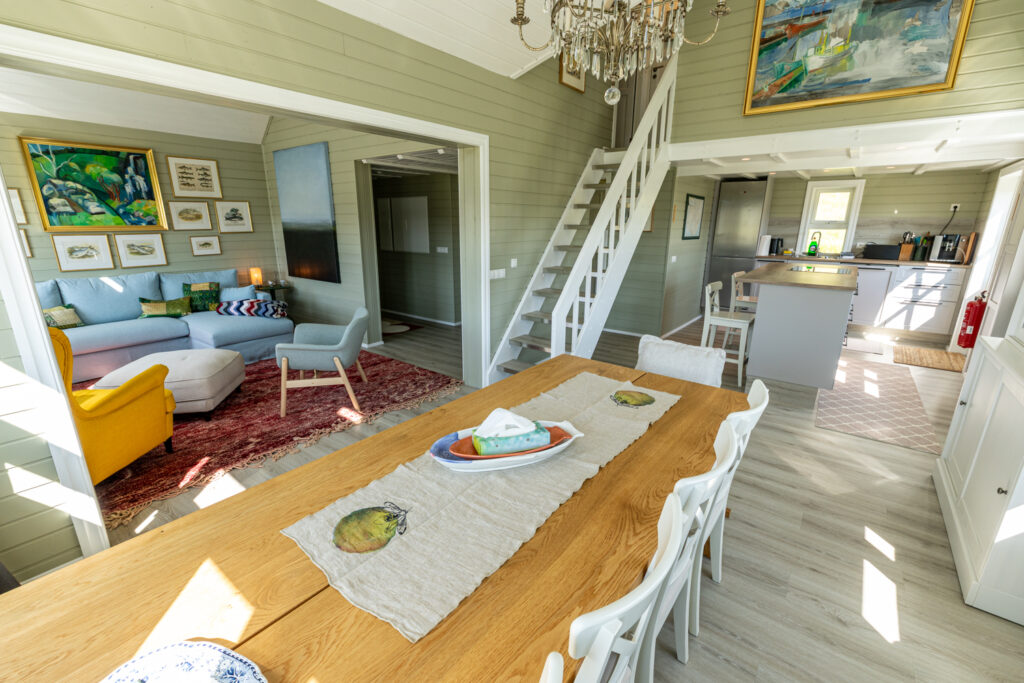
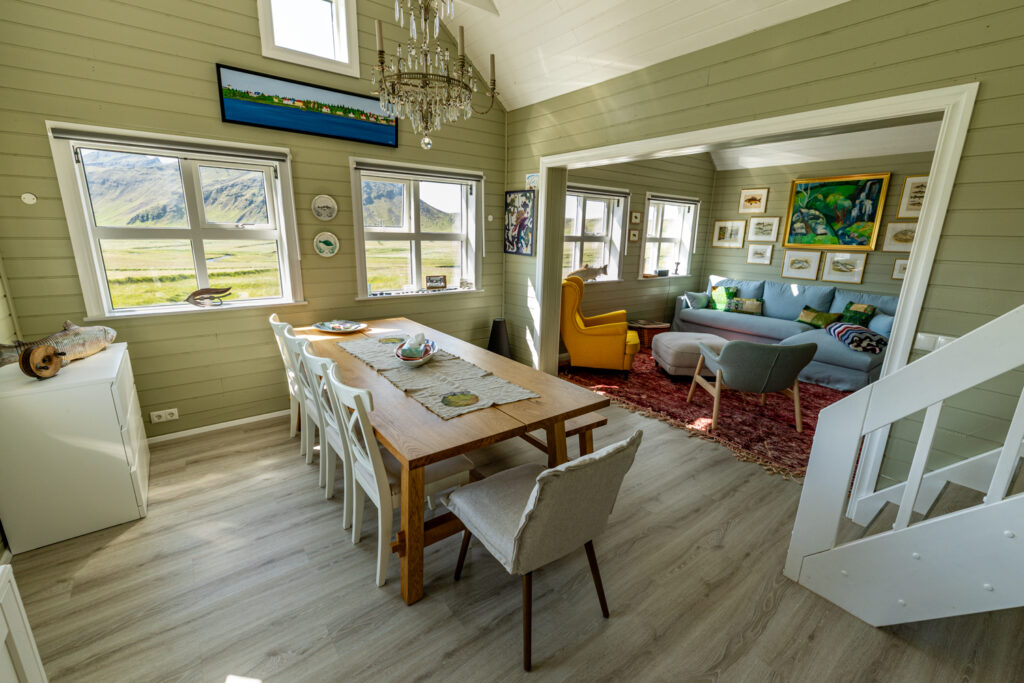
It too has a sauna positioned for best possible views out over the lake. There is a seating area which leads into the dining area which in turns goes into a fine kitchen. This is the more traditional of the two buildings in Icelandic farmhouse style. The two lodges cannot see each other though one does see this lodge as one makes the drive to the Riverside Lodge. There is a mud room in the entrance hall where coats and waders etc would be stored.

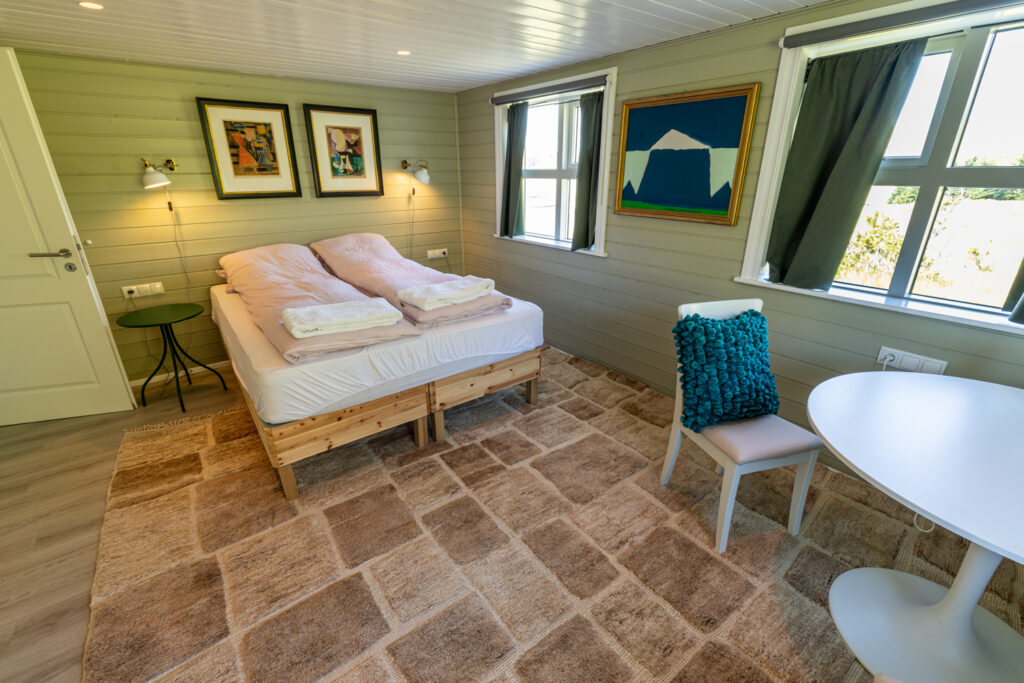
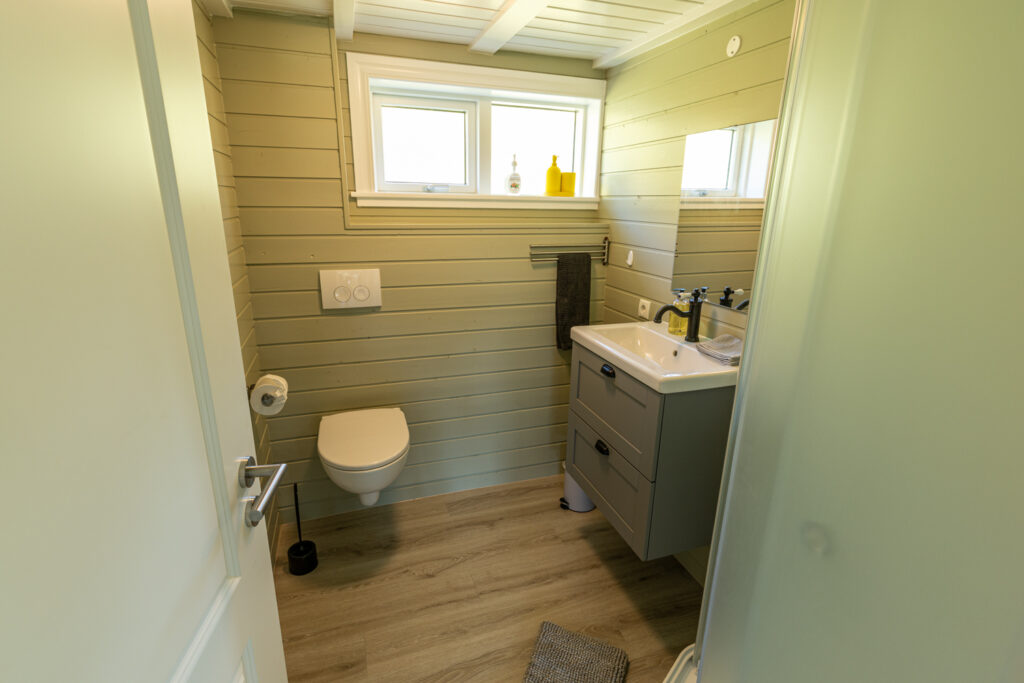
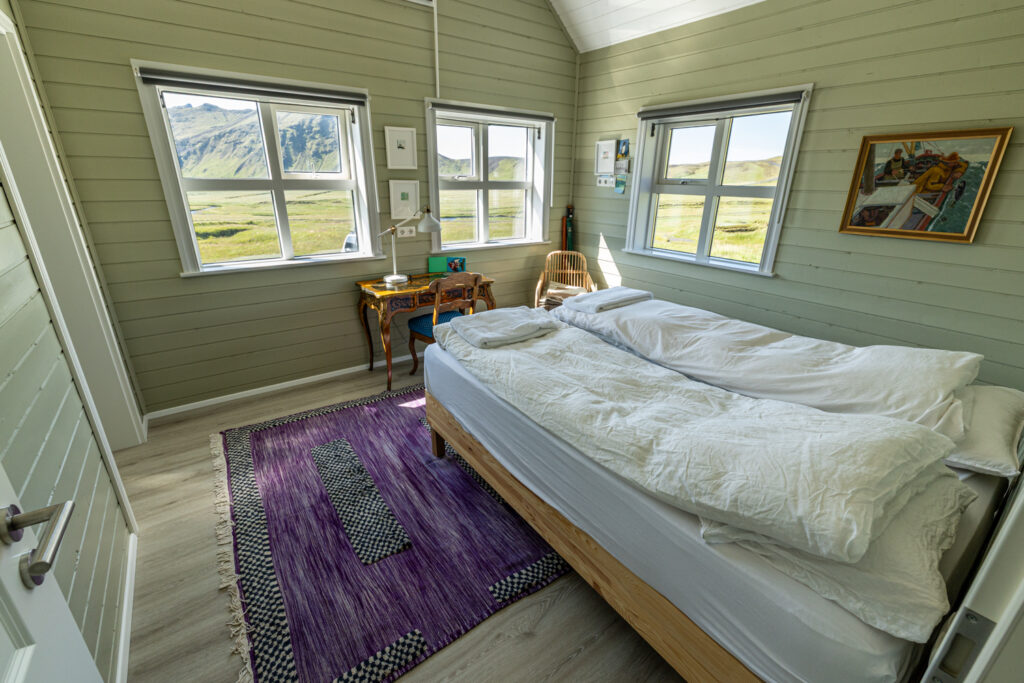
Both lodges have laundry facilities and Wi-fi.
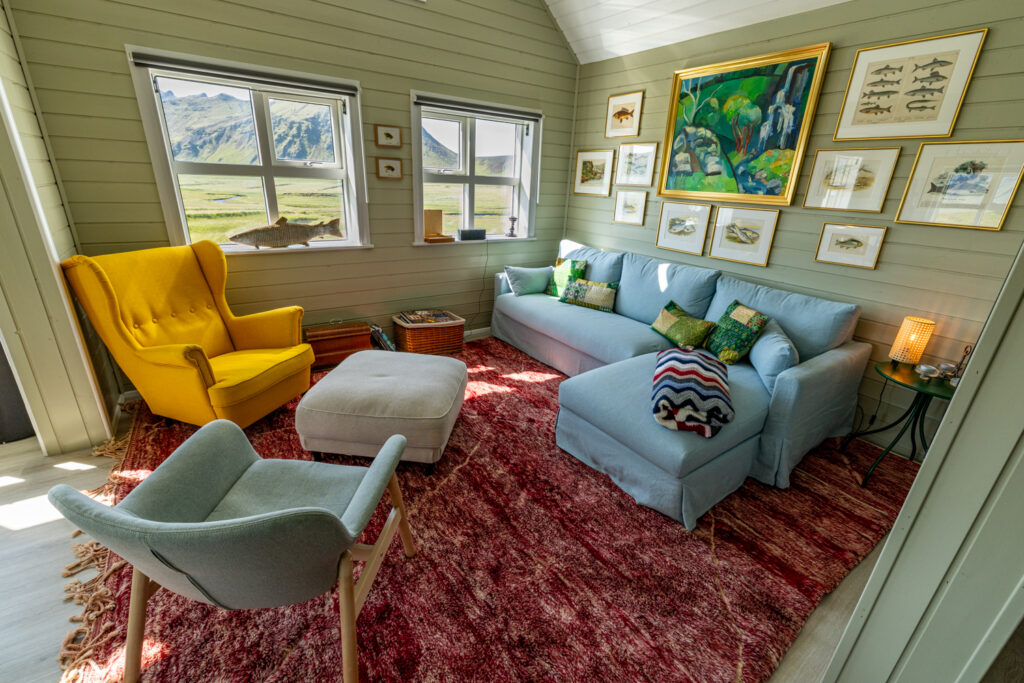
In summary
I have worked in this industry for well over 30 years and have been lucky to witness many stunning, extraordinary places. It may be that I am finally getting old and therefore have a greater appreciation for wild places, peace and solitude and, as I mentioned, sitting with an early morning cup of tea contemplating life while enjoying the stunning view, Heidarvatn is truly special in every way. I am a fisherman so I find the fishing challenging, interesting and exciting but were I a hiker, horse rider or simply someone seeking tranquillity it would still be right up there for me. I am no yogi, but I can even imagine doing yoga looking at that view!

Equally, and sadly, of all the myriad of places I have been to and have been lucky enough to fish, none have got better, most have got worse, and, in most cases, the reason is too much pressure on a wild fish resource for the sake of just a bit more money. To date, the Heidarvatn team, are doing it right, keeping fishing pressure light and to a minimum. I hope that their wisdom continues to prevail, and this extraordinary place can defy the odds.
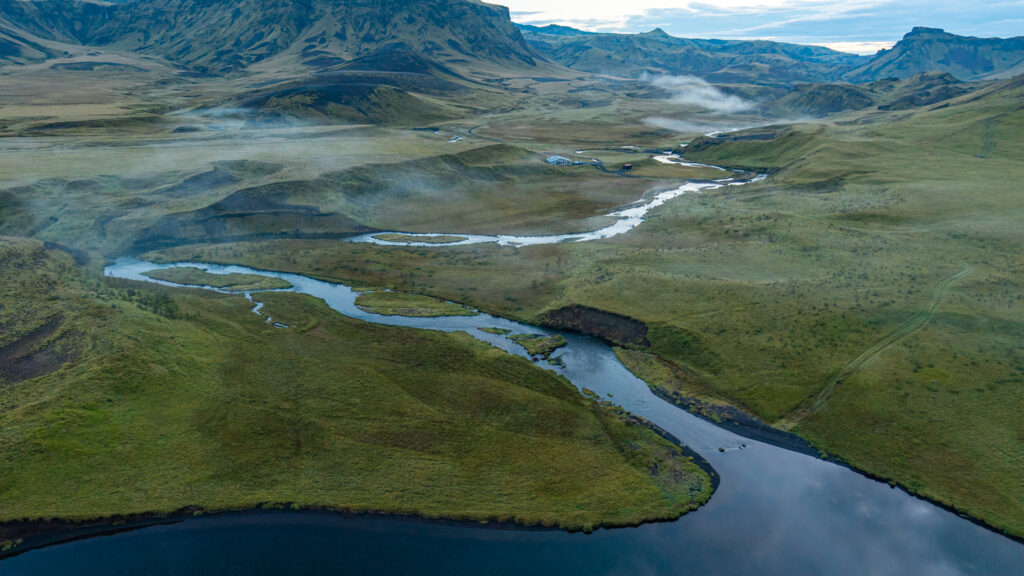
I keep wondering if I have made it clear enough how much I love this place, simply the place, with the fishing a great big fascinating and challenging bonus. Anyhow, I hope so! Heidarvatn is truly a world class hideaway.
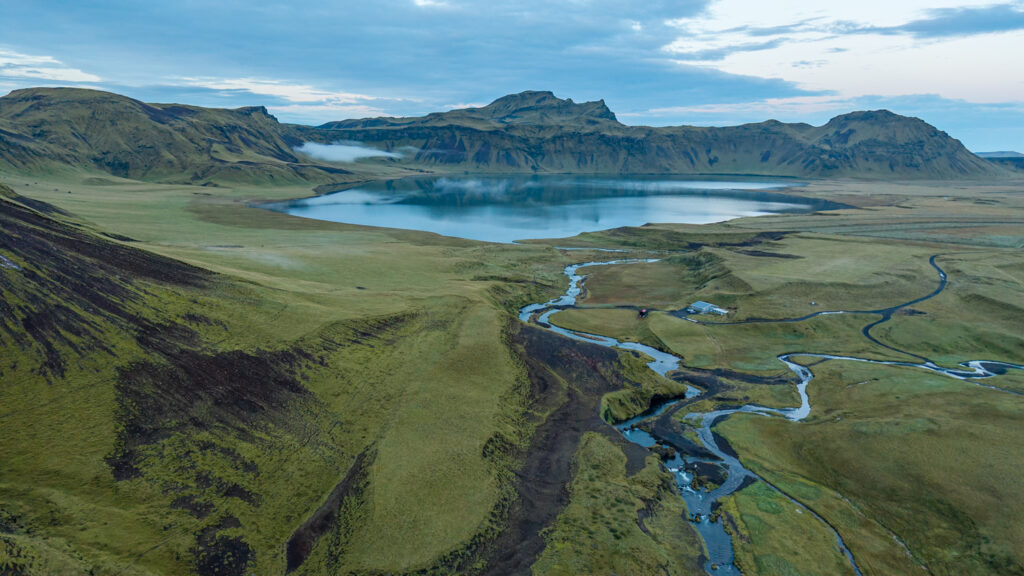
End…
]]>
Hafralonsá has always intrigued me and indeed is an intriguing river. To my mind it has always been cast (wrongly in my view) by those who have fished it in year’s gone by as ‘a man’s river’ requiring a robust approach for ‘real men fishers’ and if one did not fit into such a category, one should not bother to consider fishing it and one was clearly not a truly hard-core salmon fisher. Then came ‘the influencer’ era which had the same connotations – this river is reserved exclusively for the hard men of the salmon fishing world – big fish – lots of skill and real manliness required.

During more recent years, the river has been in the hands of various leaseholders for short periods, and one had the sense it was being fought over but equally being passed around and not finding a true home. Too often in Iceland leases are so short that the leaseholder lacks the inclination to invest and look after a river – the policy is more likely to be make money as fast as possible. In summary, even I was a little fearful of the whispered word Hafralonsá and wondered if I was going to be up to it. You can imagine my surprise (admittedly in a low water year) when I found myself happily fishing a 6 weight (and even 4 weight), single-handed rod covering the pools with ease. Though I would agree that perhaps a 7 weight, a switch and maybe a 12ft rod would be the perfect armoury for all heights of water. Let me expand.

The first signs that there was more to the Hafralonsá than machismo was when I started chatting to guides who I consider friends. They all went gooey with me when I said I was headed to the Hafralonsá. These guys are guides who might be your guides on the river and whom I truly respect as salmon fishing guides.
The gentle Stebbi, who guides the great and the good on Sela, almost had tears in his eyes as he told me about landing his first ever Atlantic salmon on the fly on Hafralonsá as a teenager. The brainiest, thinking-est salmon guide I know, Sigthor, went all weak at the knees as he told me with his characteristic gentle, soft voice, ‘you will really like it’ with a dazed, jealous tone. Land speed record holder for fastest driver on the bumpy Hafralonsá roads (when alone in the car) Angus, who has fished the Hafralonsá since he was 12, goes all stary eyed and romantic (rare for him) as he reminisces about his days on Hafralonsá. His affection for Maggie, a river-owner, farmer and cook at the lodge is also charming and a testament to his many happy days on the river.

Finally, the dashing, debonair Hugo with whom I work almost daily tells me with a sparkle in his eyes that he always takes the opening days on the river… loyalty his girlfriend must dream about! These guys are not macho, egotistical men lacking substance or skill to back up their reputations, these are some of Iceland’s best, hand-picked and lured to the north-east to create the finest guide team ever assembled in Iceland and I truly respect them. Their opinions and confidence that I would fall in love with Hafralonsá helped put my concerns about my manliness at ease.
The organisation that did the assembling of this talented guide team (and there are many others that are also part of the team) is the Six Rivers Foundation – in their own words – a not-for-profit conservation programme, which seeks to reverse the decline of Atlantic salmon. The Hafralonsá has, in my view, found its natural home where it will be properly cared for and its restoration can begin in earnest and has the time to weather the naturally induced, peaks and valleys that any salmon river endures. The first decision made for Hafralonsá was a very good one – a reduction from 6 rods to 4 – and in my view, 3 or even 2 rods would be even better but luxurious on this 28 kms river with 55 names pools plus three others 0, 00 and 000 – all of which can be great so really 58 pools! The second was to close the tributary, the Kverka, allowing those salmon complete peace.
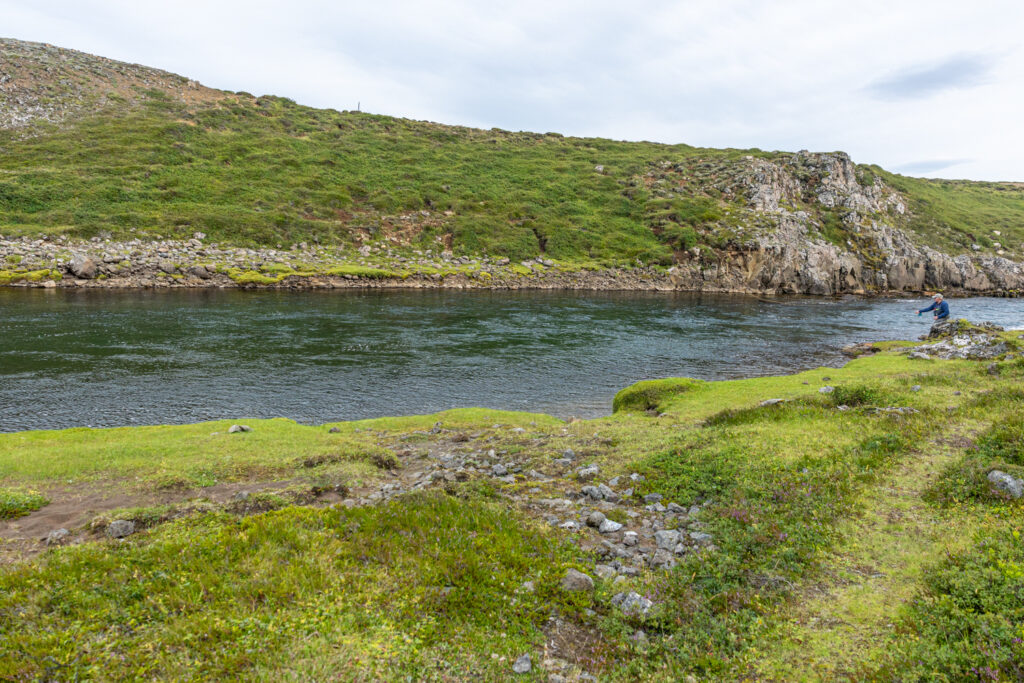
Hafralonsá is also blessed to be one of the Six Rivers (Sela, Hofsa, its tributary the Sunnudalsa, the Mio, Vesturdalsa and Hafralonsá) subject to the same rules as all the others. These are certainly the most enlightened rules within Icelandic salmon river management and probably across the whole Atlantic salmon platform. They are…
No weighted flies
No sink or sink-tip lines
No hooks bigger than size 12
Two fishing sessions per day of no longer than 4 hours per session
No more than 2 fish from any pool in one session
Not more than four fish per rod per session
Full catch and release of all species
Any dead/bleeding fish should be returned to the lodge’s kitchen
What these rules achieve is as follows:
Less fishing pressure but great fishing for everyone
Less impact on the fish
Better fishing for everyone through the season due to less pressure of weighed or bigger flies
Avoids excess when the opportunity to catch big numbers of fish arises
A more balanced season for all
No ‘damage’ to pool for the next guest who may fish it due to too many fish being caught or the way in which the fish were fished for
No incentive to kill fish in the hope of taking it home by calling it ‘a bleeder’
My only footnote to the rules is that Hafralonsá generally has colder water than the other rivers so at times, the no weight rules might be a little more of a handicap. The good news however is that the cold means a superb run of arctic char up to and over 6lbs and plenty of them catchable on dry fly as well as salmon flies etc.
These rivers also benefit from the most forward-thinking Atlantic salmon conservation effort in Iceland which includes tagging on all rivers, radio tagging and tracking on some of them, relocation of fish in the autumn to spawn in tributaries to open up the expanse of water available to the salmon, a massive tree-planting project to enhance bio-matter in the rivers to, in turn, enhance food in the river, predator control with the focus on the non-indigenous mink. As a consequence, and the affection this river garners from so many, I have high hopes for this river.
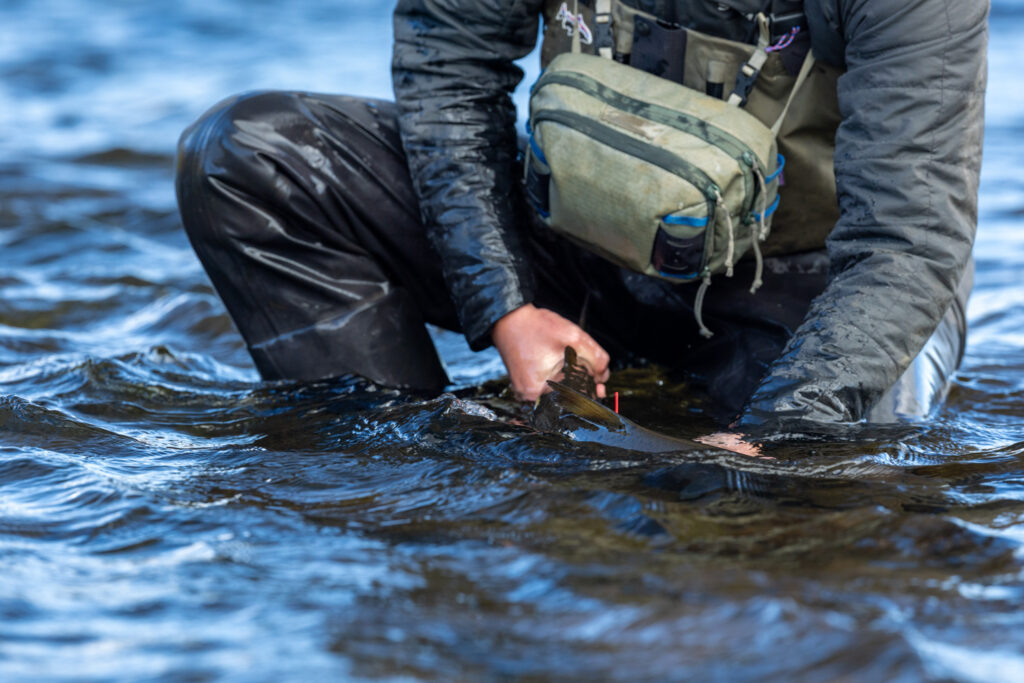
The river currently has its old lodge which Six River has made perfectly respectable. It is a little tired looking from the outside and some windows could do with some attention, but it is bright and clean inside. It has six comfortable bedrooms, including four double rooms that share two bathrooms, and two double rooms with en-suite bathrooms. There is a large open-plan kitchen/sitting area and there are three options for catering – self-catering, the wonderful Maggie that I have mentioned cooking, or the gourmet option. The lodge has stunning panoramic views of the river as it bends round the lodge.


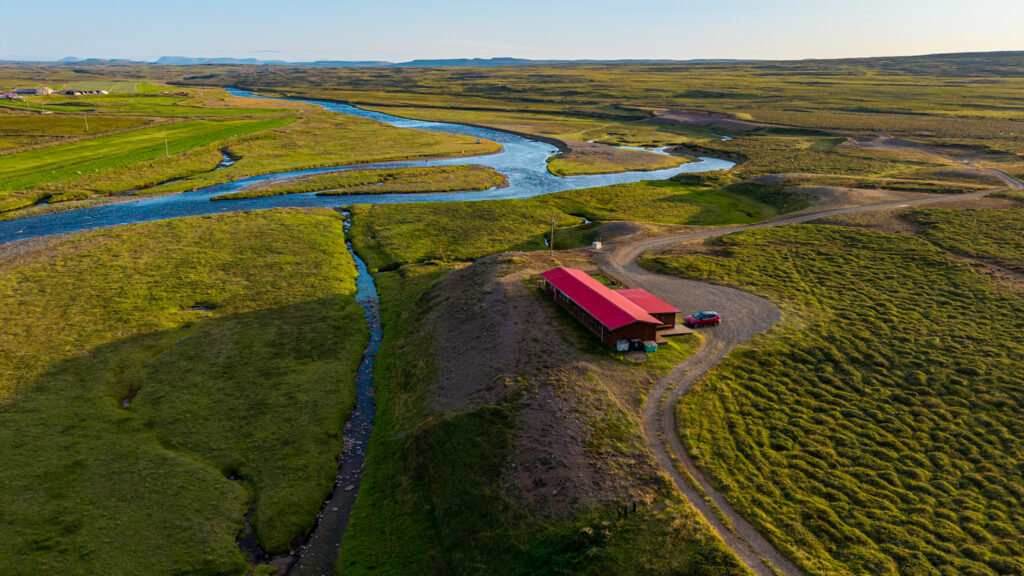
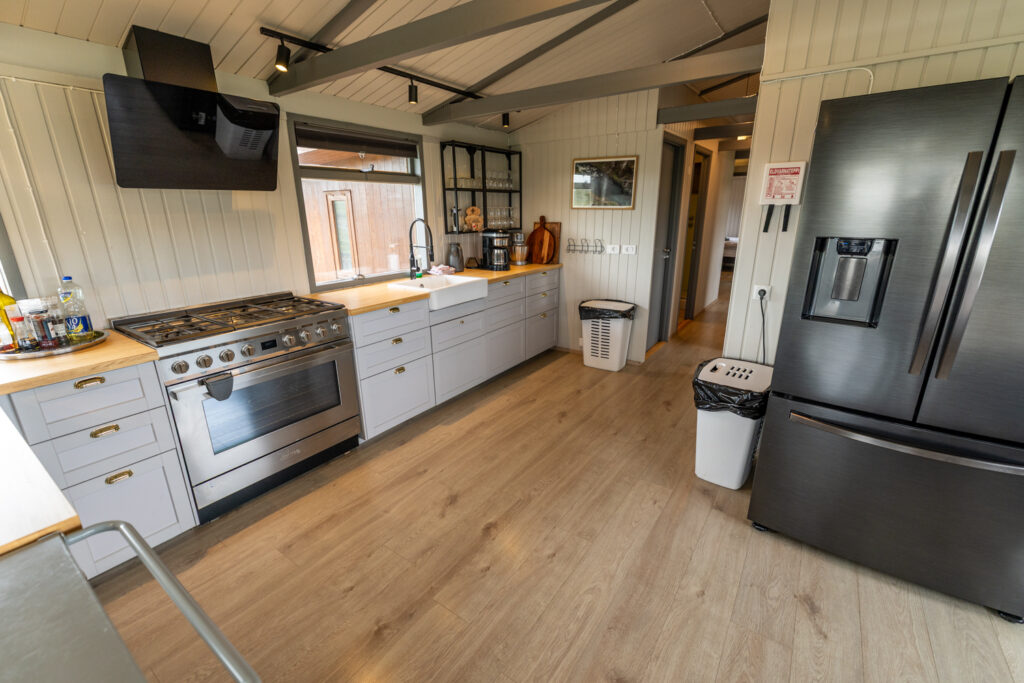

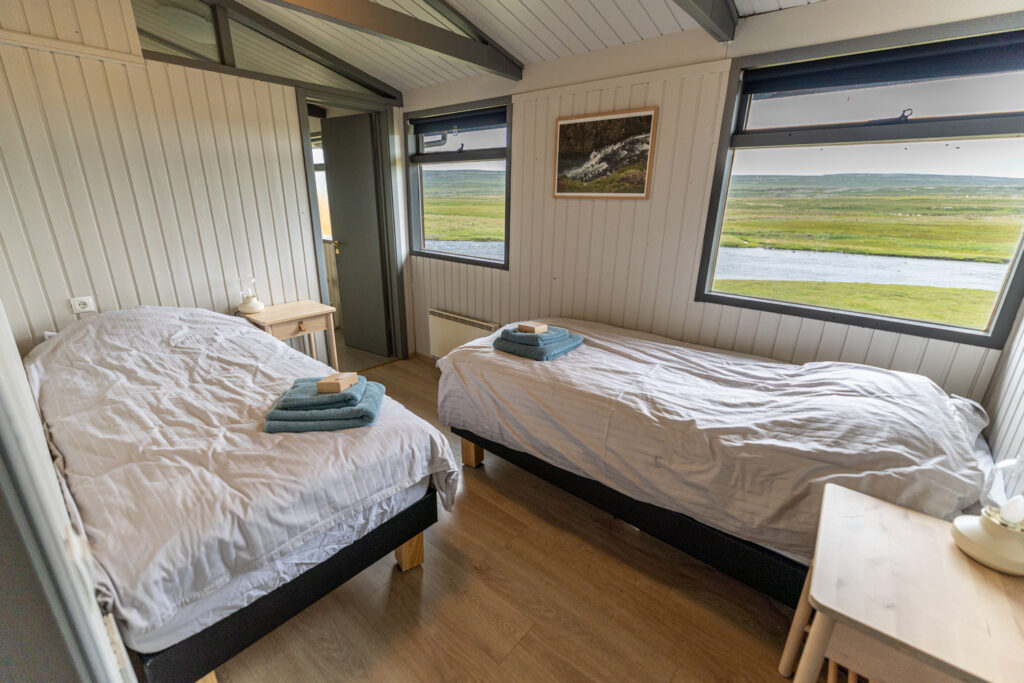
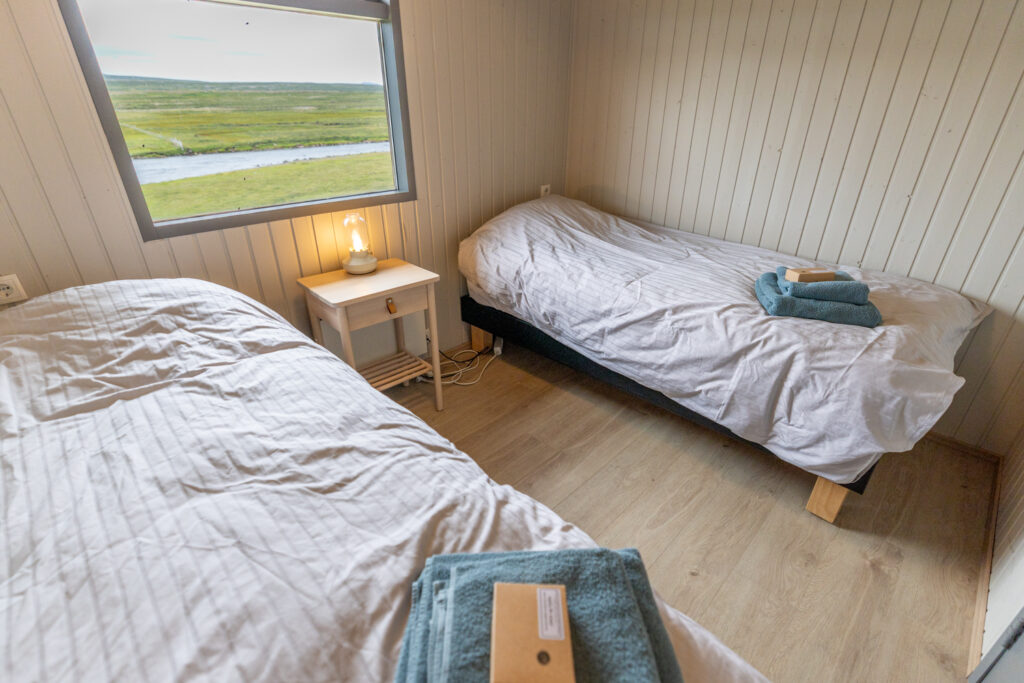


There is a real bonus with HUGE potential too which would make Hafralonsá unique – overlooking the stunning Pool 35 or Stekkjarhylur (which incidentally fishes from the other side and has a nice tail where I hooked three fish!) is a large fishing hut which I pray Six Rivers restores and makes it really comfortable. At present it can be used but the furniture is old (which admittedly is perfect for sitting on with waders) but I envisage going up to the upper part of the river for the day, fishing the morning session, then coming back to the cabin, having lunch and a nap in a comfortable (warm if need be) bed before going out again for the evening session and returning home for dinner. Based on four rods, two could do this on one of the full days of the three-day programme and two the other day. If you were two rods – just one upriver and one down. If you were three rods, one on the lower, one on the middle and one on the upper. There is plenty of water! This cabin really would/does make for a special situation. Maybe one day rods could overnight there reminiscent of the Alaskan outpost camps? In summary, for 2026 (this piece is written autumn 2025) there is a perfectly nice and comfortable accommodation option. For 2027, potentially, the new lodge will be ready – there are some artist impressions of the lodge below and I refer you to my piece on the Mio here to see the standards to which that lodge has been built.

I need to come back to the river itself, to those misty-eyed guides whose affection for the river was so palpable. I note that even the river’s own website makes comments like “Untamed, harsh, remote… Explore the wild and rugged Hafralonsá and… best suited to those who are fit and adventurous”. I am afraid I think these descriptions are a little harsh or misleading so let’s look at the facts:

Pools 000 to 16 are either ‘get out of the car and fish’ pools or a short walk into a mild canyon with a perfectly walkable return to the car of a five-minute walk with an incline of perhaps 10 to 20 metres from getting out of the river to the height at which the car is parked. Numerically it is likely half and half and some pools like 14, 15 and 16 are all fished via the same walk in and out, so you get three prime, easily fished, pools for the price of one walk.


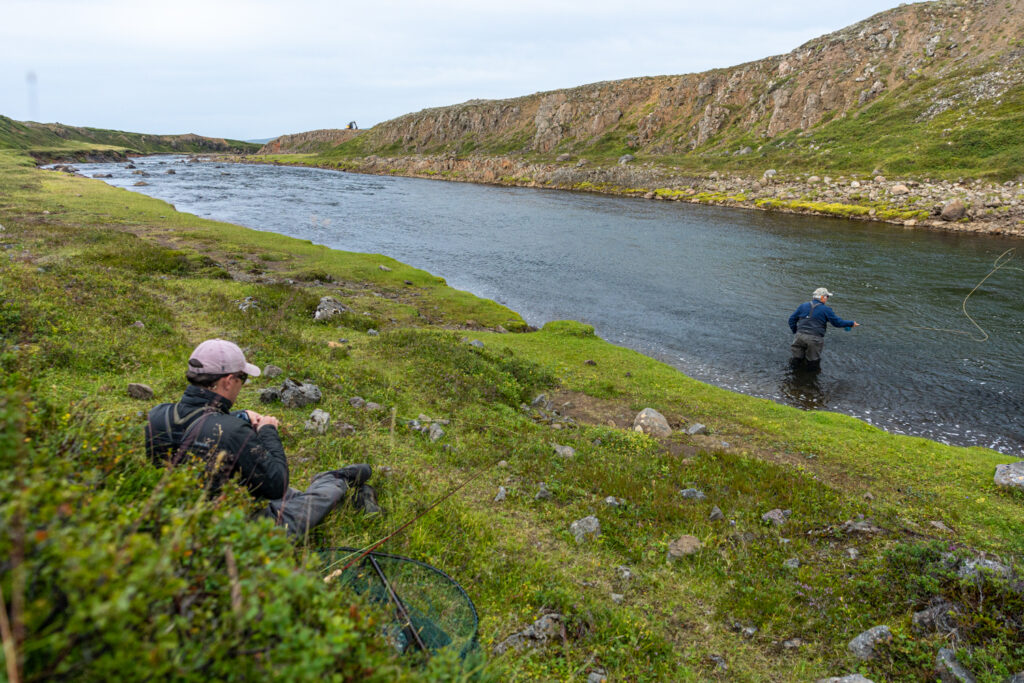
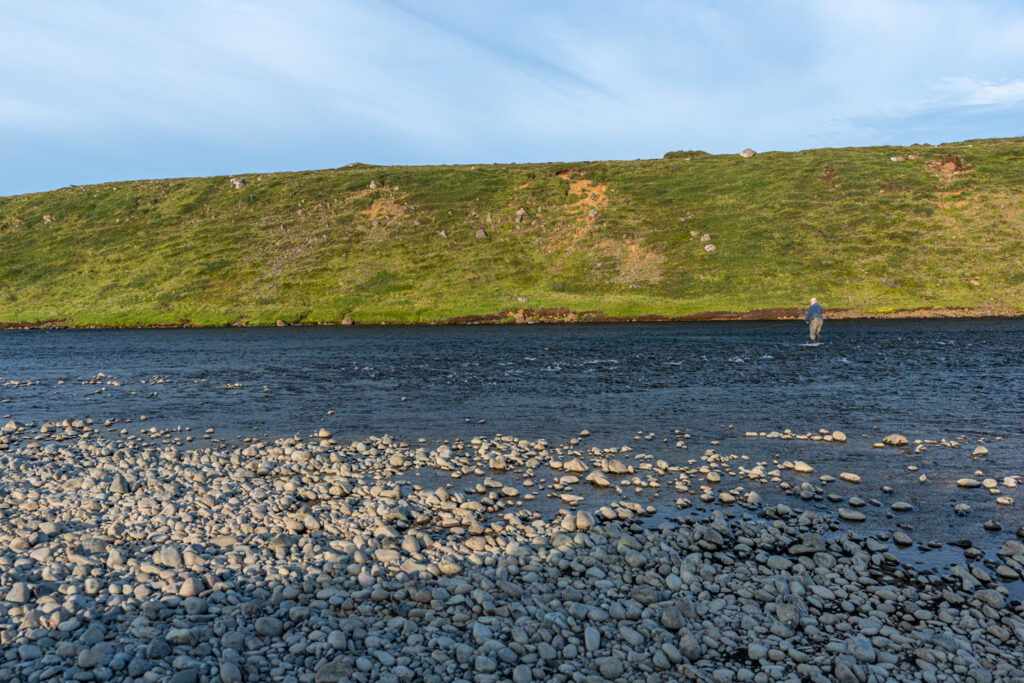

Pools 17 to 25 – 9 pools to be precise – are in the famous Hafralonsá canyon. Some are actually an easy walk down, some are a joke (two that I saw of the 9) and I would not go there and two have some metal stairs in very good repair which are a long way up and down, but the stairs make it infinitely easier. Personally, I think the photo of someone clinging to a rope is misleading, there are two pools with ropes and the one I saw was a joke and if I was guiding, I would not allow guests to try and go down unless they were serious genuine army or mountaineering types!


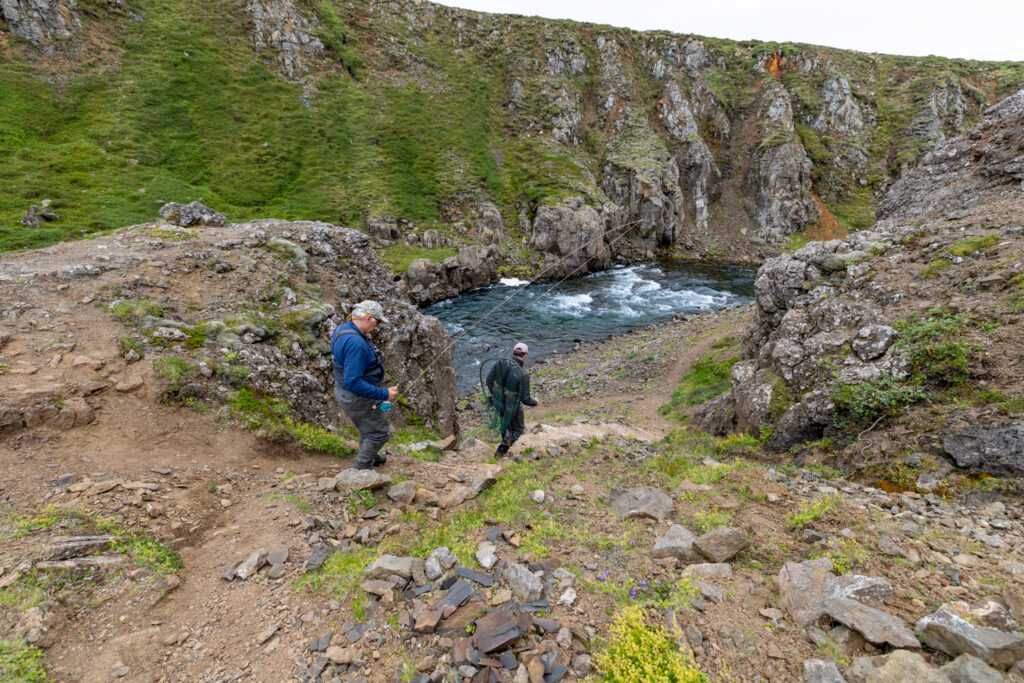


Pools 26 upwards are a mix of ‘pull up to the pool in the car’ pools to some clambering up and down but nothing like the few pools in the deep canyon. I have fished Sela for 30+ years and can honestly say that the worst of Hafralonsá is child’s play compared to some of Sela. There is a walk from pool 50 to the top pool 55 (the breath-taking Lax Foss and final barrier), the guide said it was 20 minutes, and he was likely right all the way to the top but there are some truly stunning and interesting pools in between. I feel I need to qualify my comments and reveal my age and stage – I am 60 at the time of writing – I do not believe that any of my guide friends would describe me a lythe and a fit stick insect yomping up and down the canyons in peak condition though I was a sportsman in my day – First XI Football, The Field and all that!


Back to the words “Untamed, harsh, remote, wild and rugged”…
Most rivers in Iceland are untamed and certainly pretty much all those in the north-east of Iceland are – they all disappear into the hinterland of the interior of Iceland where only pink-footed geese, arctic foxes and reindeer hang out along with ancient wild trout and freshwater arctic char. Untamed is their appeal.

By their very nature – the majority of rivers in Iceland are harsh because they are very rocky and Hafralonsá is no exception.

Happily, the Hafralonsá, and its sister rivers, are all remote, wild and rugged – it is why they are so good and why we love them. It is why so many birds thrive unmolested by man or beast and in the case of the Six Rivers Foundation, a much-reduced threat from mink. I am hesitant to repeat myself but when it comes to remote, a night in that cabin would be amazing!


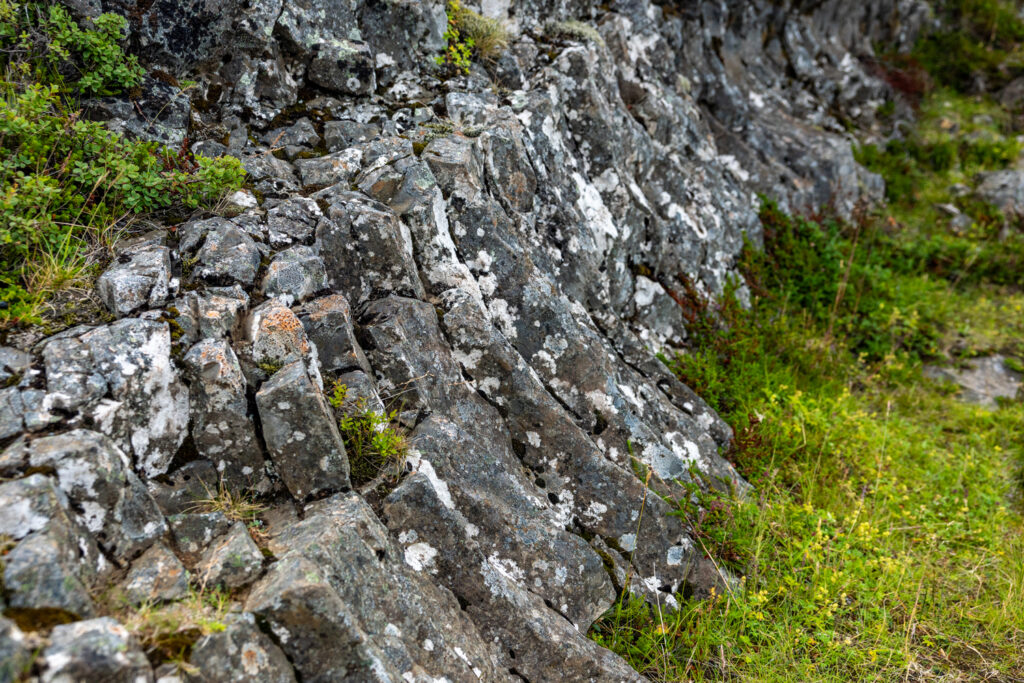


These words are all assets to the river, not something to fear or be wary of especially with the calibre of guides looking after you.
So why have I joined the ranks of my guide friends in having a soft spot for Hafralonsá? I have not mentioned the all-important calibre of the water we fish and the pools themselves. The water itself is ultra-clear so spotting the fish (which the guides do frequently) is easy, at least for the guides!


There was one pool which was awkward to fish – it is a named pool, but it is really a spot and a whacky one at that. You fish the top part having clambered down a way and the bottom part from the bottom of the pool upstream. I am not saying I did not enjoy fishing it, but it was the only one that was not mouth-watering and a delight to fish.

The best way to sum up the pools on Hafralonsá is to take a comment made by the brainy Sigthor, a man of few words but when he speaks it is sure worth listening to. We were actually on the Sela and discussing the rule of having to leave the pool after catching two fish and I commented how I was entirely content to leave the pool having caught a couple of fish. His classic Sigthor response was “that is because you are going to another equally stunning pool” and he would be right and that certainly applies to Hafralonsá every bit as much as Sela. The only difference for me is I know the Sela pools intimately. This is the reason they all so love the river, it is truly beautiful water and finally there is the fish themselves…


Hafralonsá is rightfully known for its bigger fish. I am not talking Norwegian big, but I am saying that it is perfectly reasonable to expect a high percentage of your fish to be in the teens with the possibility of 20lbs fish. You are not going to have a bonanza, but you will get seriously aggressive takes from some good-sized fish taking the small, classic Icelandic patterns (the hitch works extremely well) which will take off down the river with you in hot pursuit or, as one of my fishing partners experienced, have the fish charge up the pool and go round a big rock, then back down the length of the pool, weave you round another rock and then snap you off before you even know what is happening!

To conclude, I am as excited for the Hafralonsá and its future as I am about fishing the river. My whole experience was a pleasure from start to finish – the lodge, its views, the pools, the aggressive nature of the fish, that special day using the cabin, the wildness, remoteness – everything. At two rods, the river is going to be very special indeed, at four it is going to be great value.

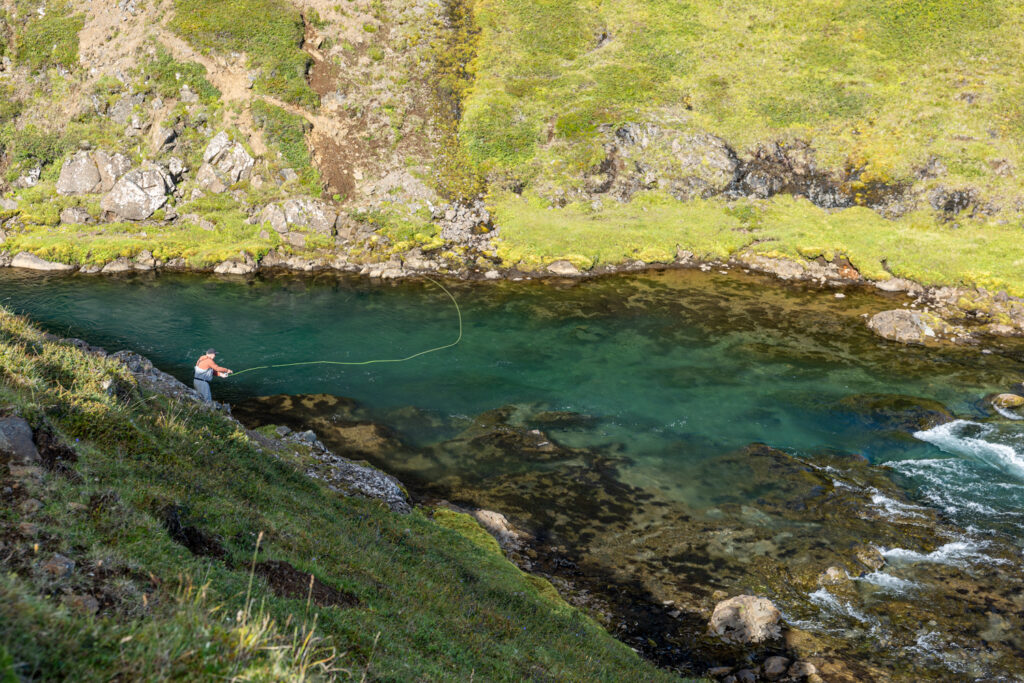
This river is in very good hands now and it should have a bright future – it is not for the old like the majority of rivers in Iceland but if you wish to embark on a romance or long-term relationship with a river with an excellent chance of a great future and have privacy, only sharing your river with friends and family, there probably is no better bet than the Hafralonsá at present.
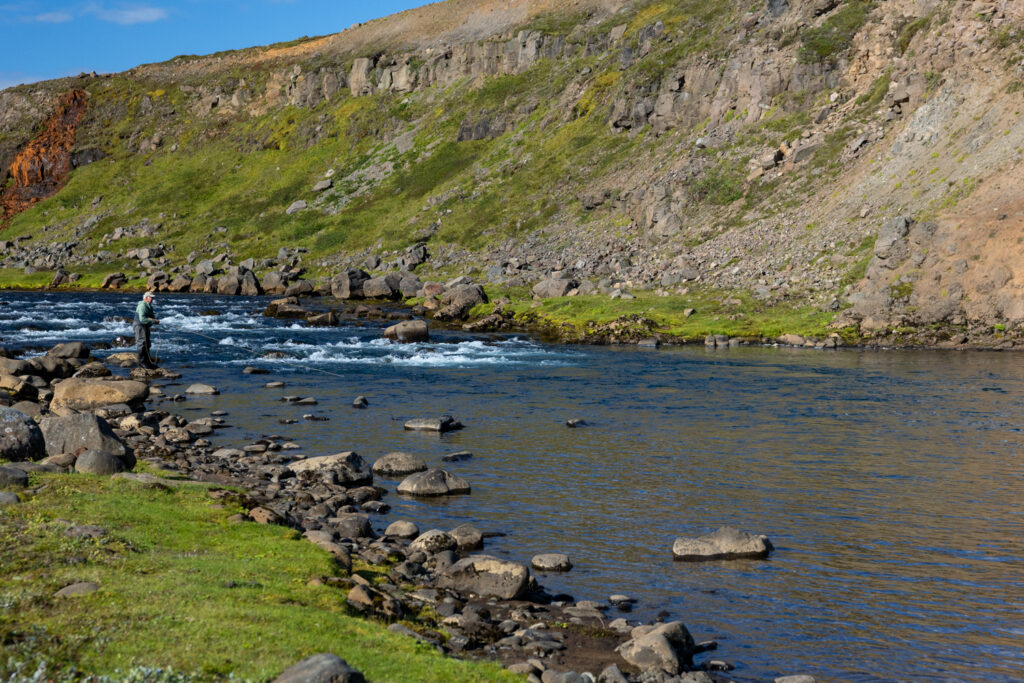
To come back to Harmony with Hafralonsá – I was truly in balance, agreement, and peaceful coexistence within myself and my surroundings.


End…
]]>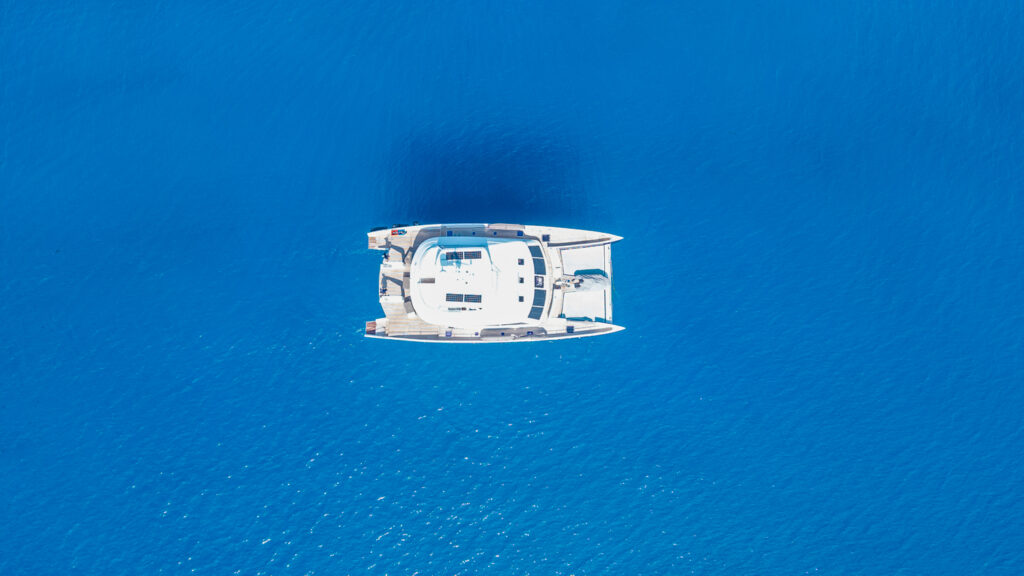
Last time, I travelled on the MV Dugong, it was an altogether different experience on a bigger boat with more guests and staff, three to a cabin, three to a boat etc and therefore cheaper but the fishing, though different, was no less.
Providence is actually part of the Farquhar group of islands, but it is NOT Farquhar. Farquhar is 56 km south of Providence and is the southernmost atoll fished regularly in the Seychelles. Providence is the biggest atoll at 345 sq kms, 55 km north to south and 14 km east to west. There are two islands, Cerf and Providence North, with a massive lagoon system between them. From Cerf Island to the tip of Madagascar is about 320 kms. From Mahe to Cerf is 700 kms southwest!
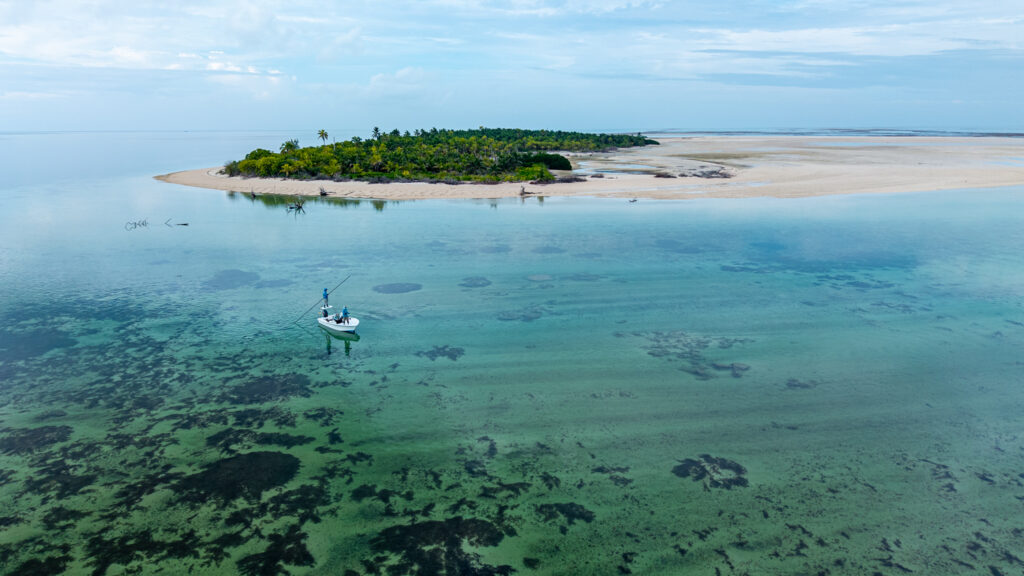
Three things of significance have happened to Providence Atoll since 2017.
The 1300 metre airstrip was completed on 20th March 2019, almost exactly a year before the Covid disaster hit us all.
Blue Safari, perhaps better known as Alphonse Island Co, began to operate its fishing operation for just six rods at Providence in rotation with the MV Dugong commencing in January 2023 using the catamaran Quo Vadis as its mothership.
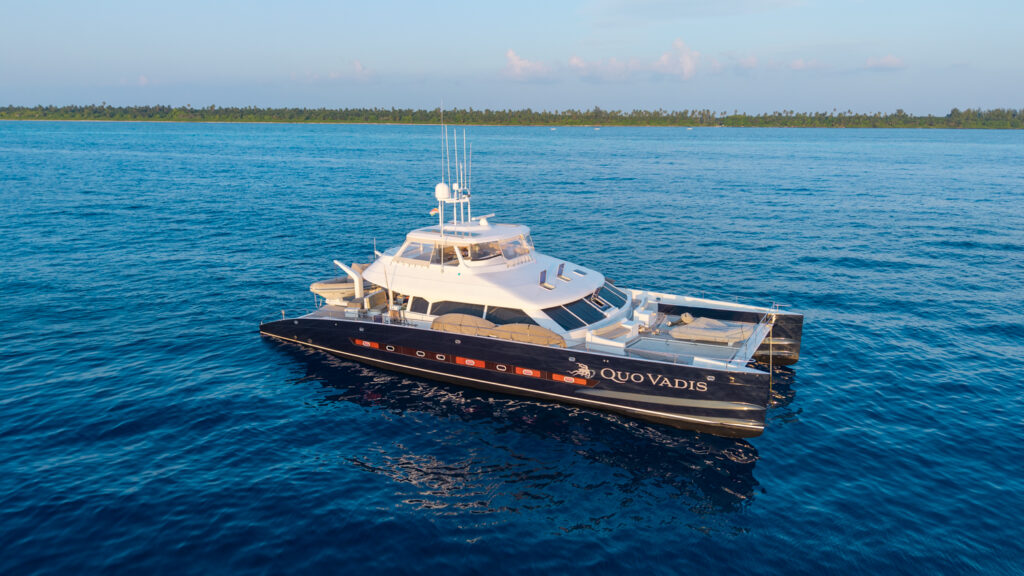
Perhaps the most significant event was in January of 2024 when the guides on Blue Safari’s Quo Vadis catamaran spotted a number of fishermen poaching in the lagoon and reported the incident to the Seychelles authorities. With the assistance of Blue Safari, the result was that 137 people were arrested, taken back to Mahe and then deported, and 8 boats was scuttled at Providence. They were unlicensed fishermen from Madagascar poaching the flats and a real example was made of them. If ever there was a demonstration of the good the presence of a fishing operation can do, this is it. Without the presence of the fishing operation, these very remote lagoons, easily accessed from Madagascar, would be entirely raped of so many species from sea cucumber to grouper, GTs etc. In the case of Quo Vadis, just three boats fishing the 345 sq miles is the difference between the destruction of a stunning, wild atoll with extraordinary numbers of marine species and desolation.
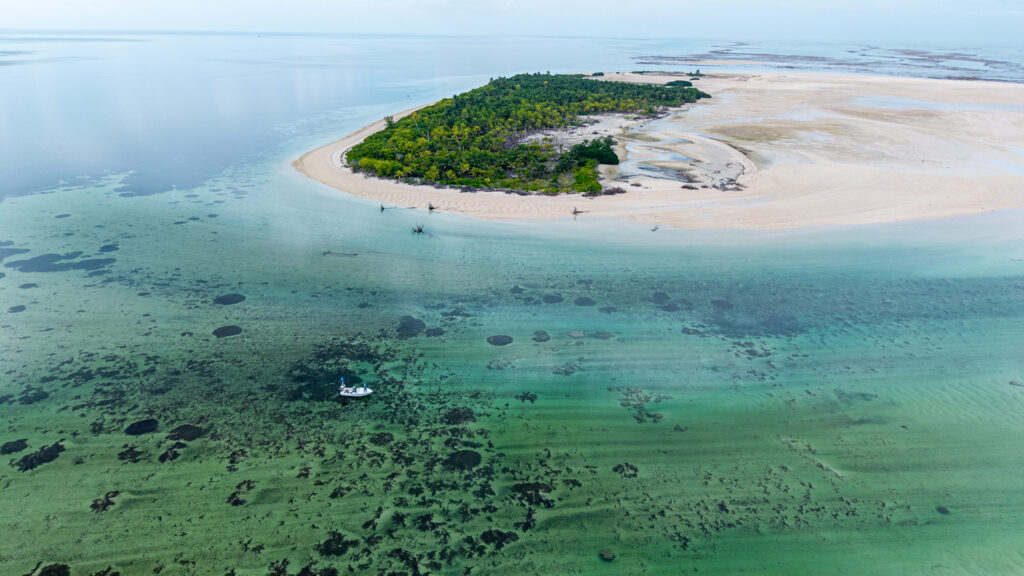
The trip was booked back in 2023 and let that be a warning to you – if you want to go to Providence on Quo Vadis you now need to plan an extraordinary amount of time ahead and even then, you are likely to go on a waiting list before you get your space. I was lucky to be the beneficiary of a very good friend of the team falling very ill at a bad time. This time I tried Qatar Airlines via Doha. I think that the calibre of the airlines (Emirates v Qatar) is different but comparable, but I actually preferred the Qatar schedule and process. On the outbound, we left at a civilised time like about 3pm. On arrival in Doha, we did not have to go through another security line before being allowed into the departure area for the next flight. That was hassle gladly avoided.
We arrived, a bit later than Emirates which meant arriving at the L’Escale Resort and Marina Hotel a little later which improves your chances of them having a room ready for you on arrival. In theory check-in is much later. That in turn means a good nap before lunch, a fine massage in the spa and then the traditional dinner at Bravo on Eden Island – it never looks like much, but the food has always been fabulous! After a good night of sleep, off to the Domestic check-in (not IDC Hanger like the old days) just a few minutes away and off we go via Alphonse Island direct to Providence. No more flying to Farquhar and boarding the boat there and then sailing the 56 km to Providence.
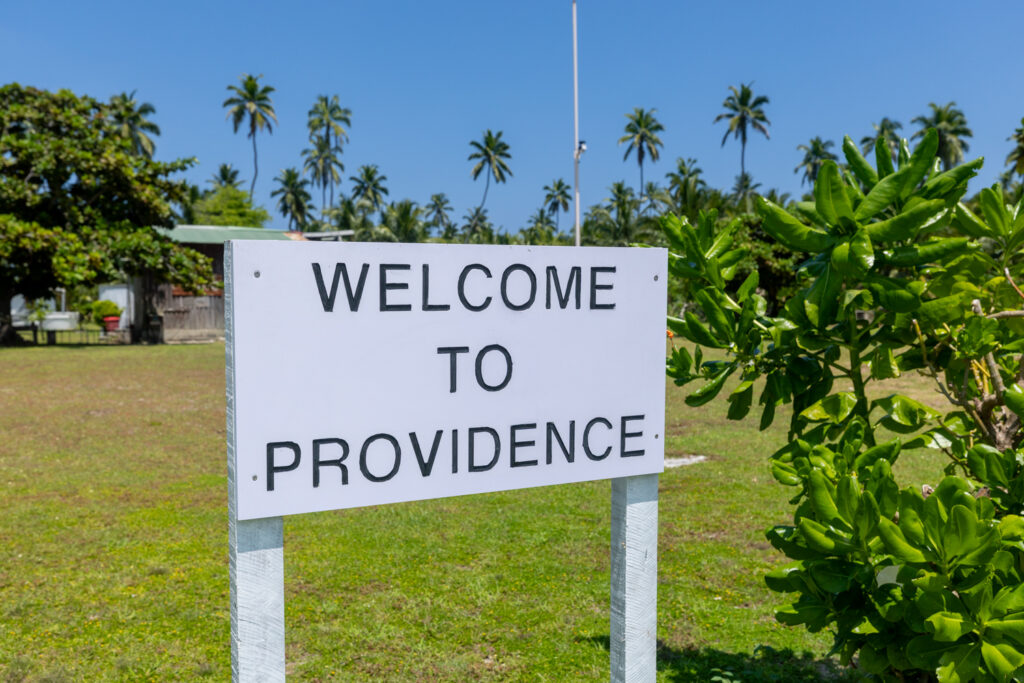
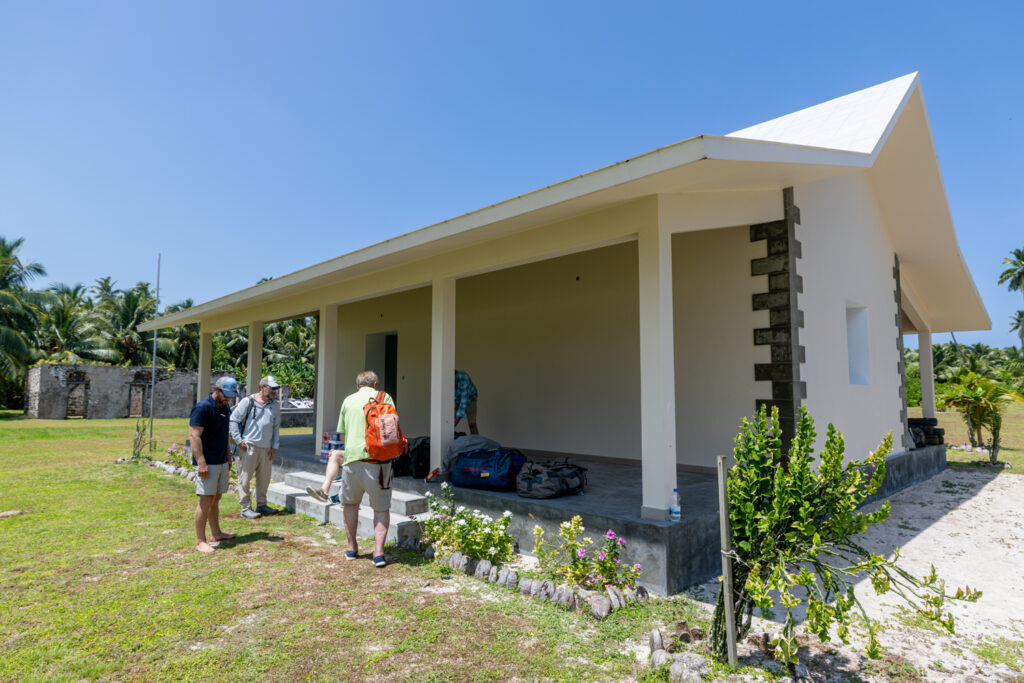
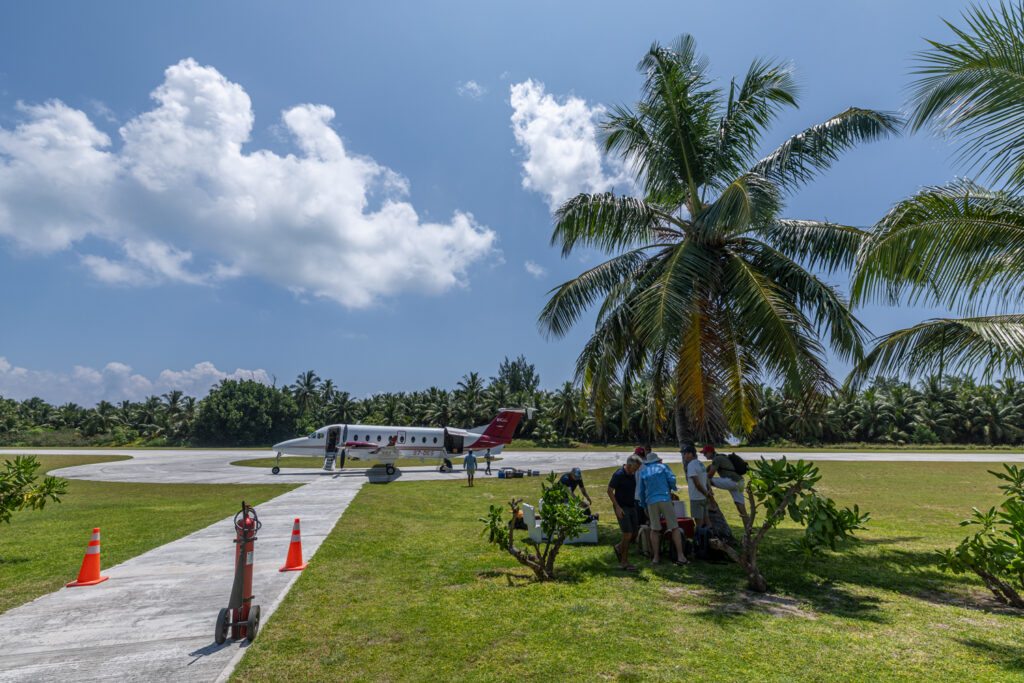
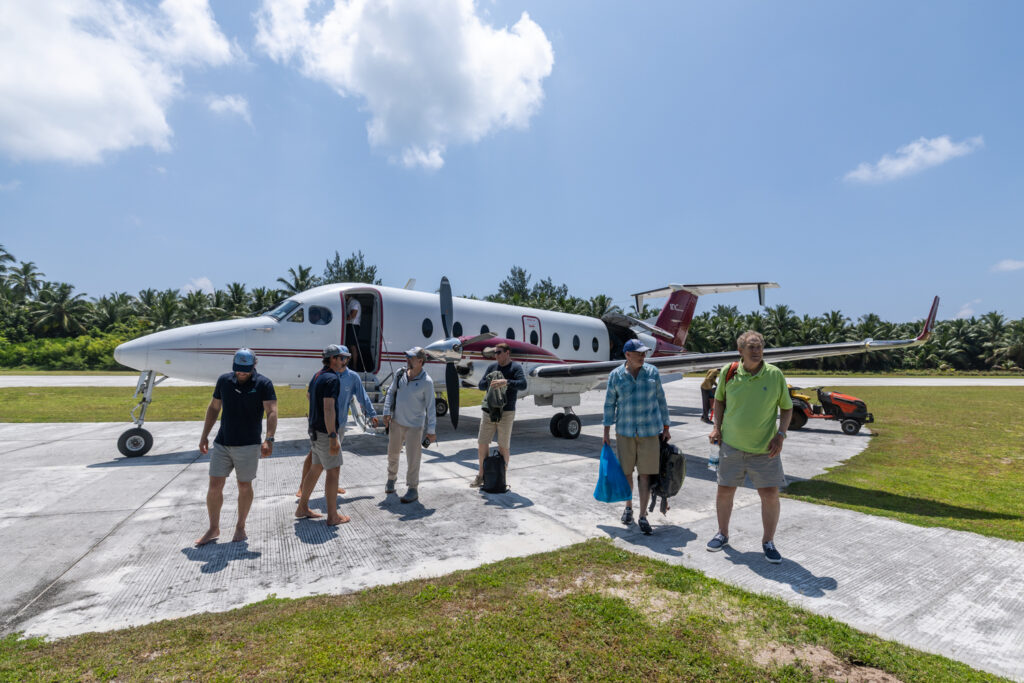
The Providence airstrip is in very fine condition, and we were soon walking to the beach followed by a short walk across a flat to the launch to go out to Quo Vadis. It is worth noting that the walks to the launch can vary from very short to a decent distance depending on the tides and consequently, it is worth having your flats boots (or crocs etc) handy for the walk out. The guides and crew will carry bags etc for you. Once at the launch, the journey to Quo Vadis was three minutes.
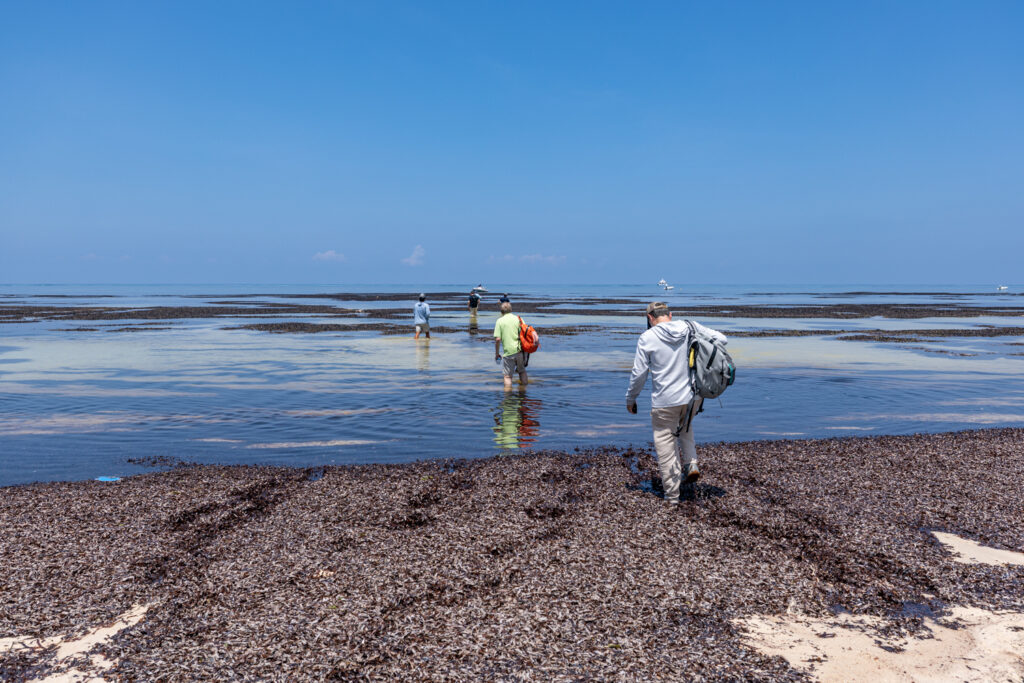
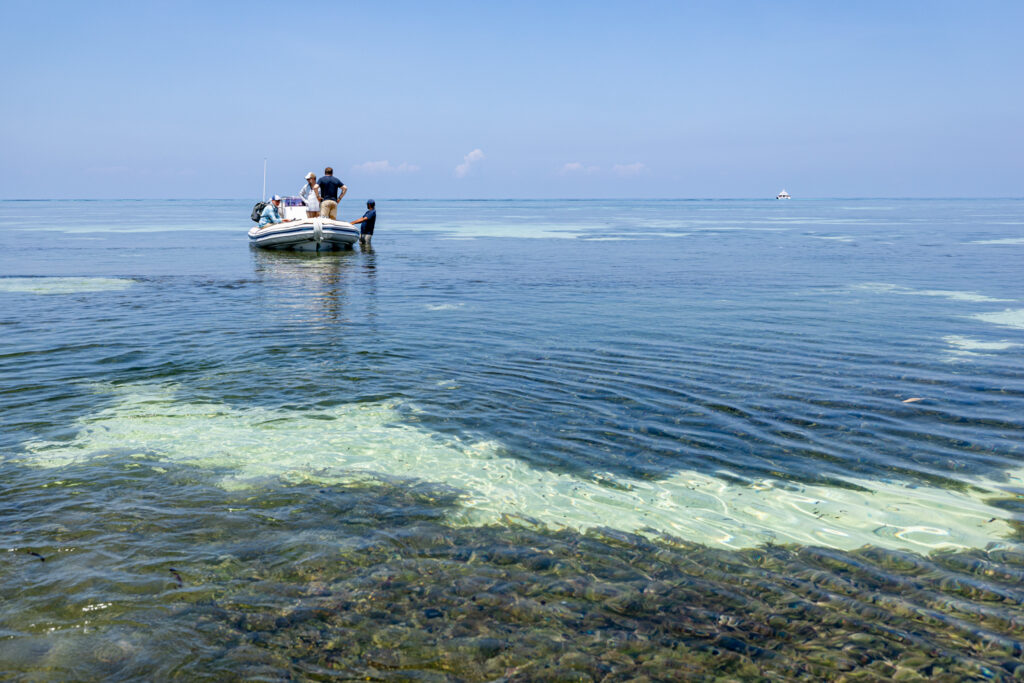
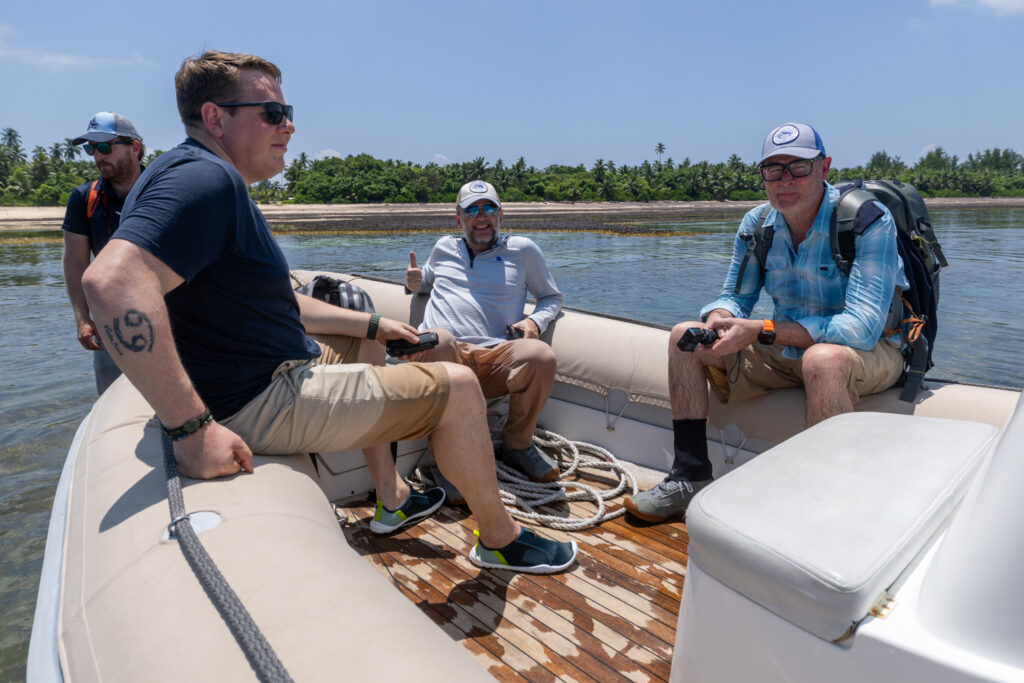
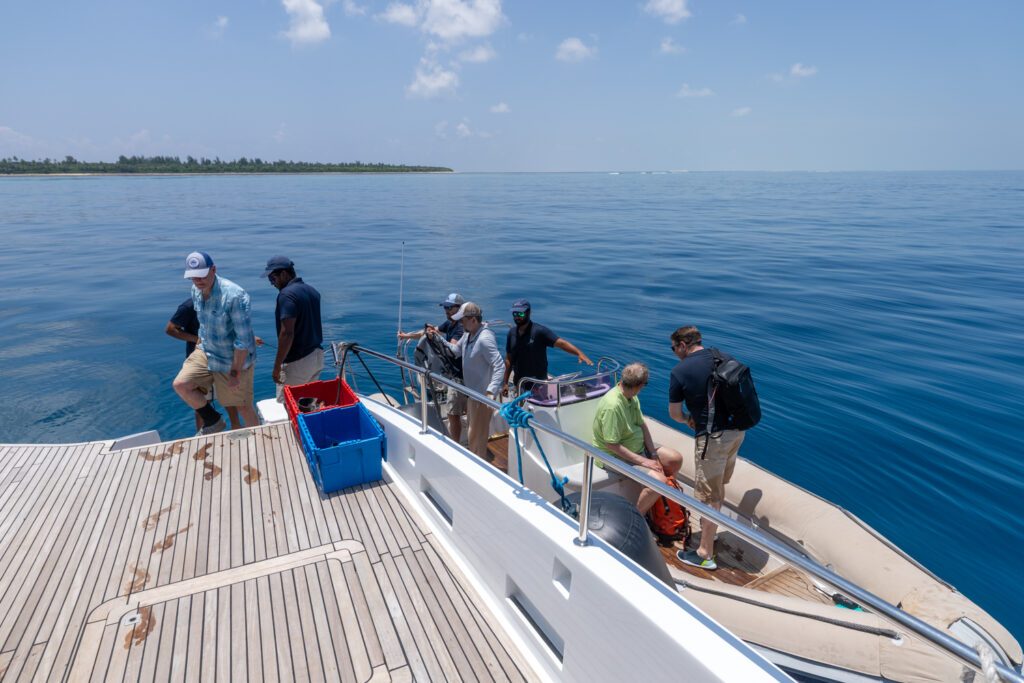
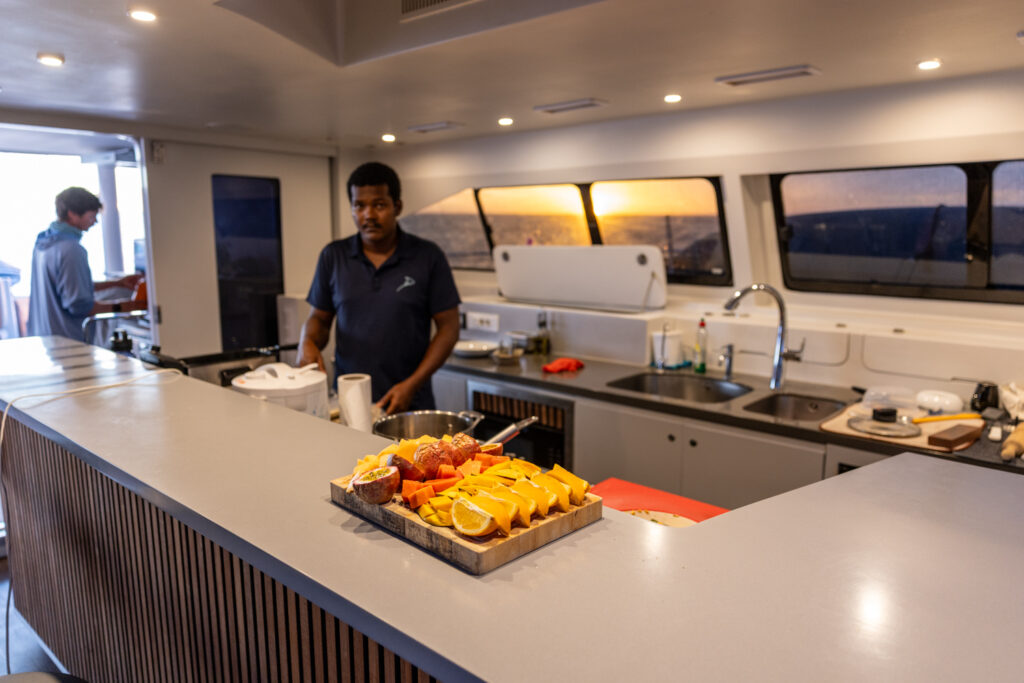
It was the arrival at Quo Vadis where the difference between the operations became apparent. Quo Vadis has a crew of four, a Captain, Chef and two crew plus our three guides. The whole crew therefore was greater than our party of six! As that party of six (we were actually just five due to another cancellation) one has the boat to yourselves and that is a real pleasure. There are three cabins so not sharing is not really an option unless you are prepared to buy two tickets and have your own room and boat/guide. The boat is very clean and spacious. The cabins were perhaps smaller than the photos suggest, and the beds are pretty close to each other, but they worked and were comfortable and cool. If you think you are going to be on the side the sun goes down, pull all your blinds down before going fishing to avoid the room heating with the evening sun.


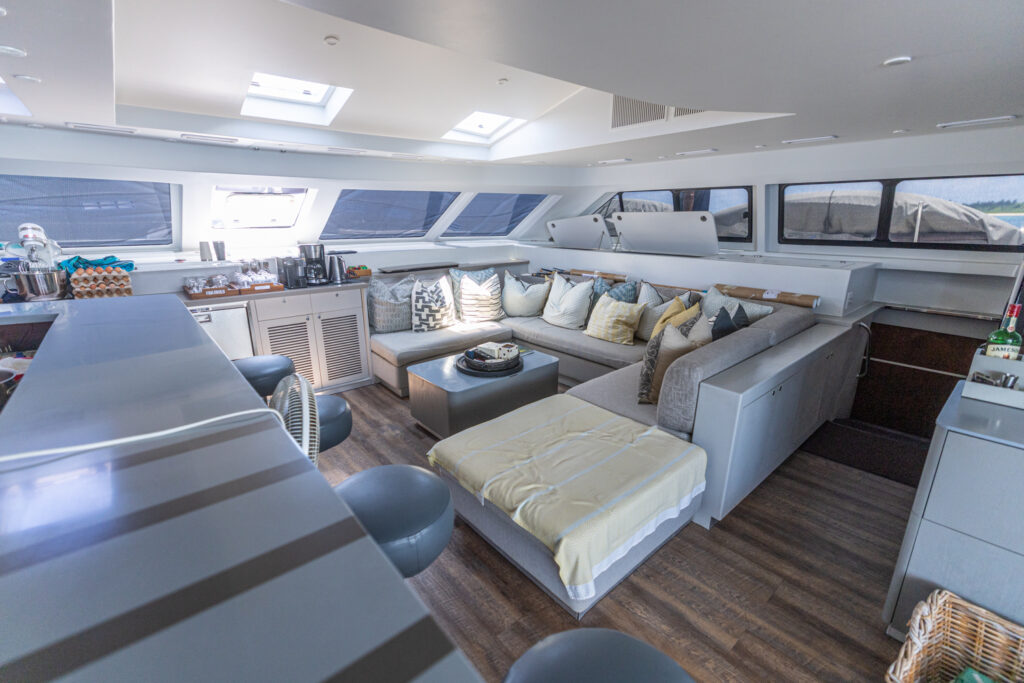
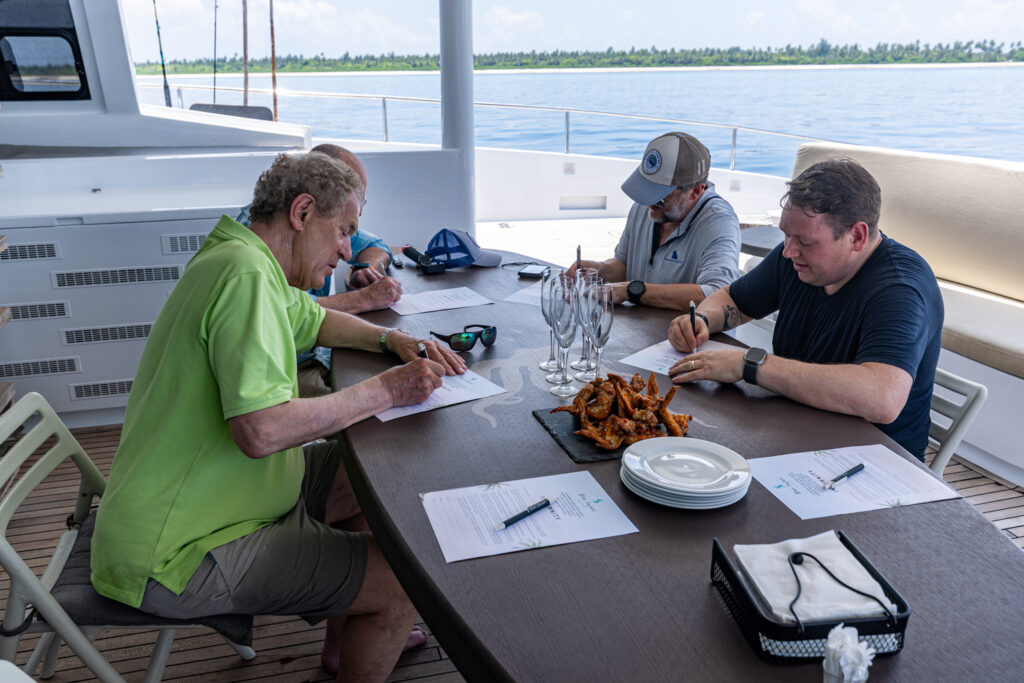
If I had a criticism of Quo Vadis, it would be to try and find a way of allowing the breeze to make it through to the back deck which is where we spent a lot of time because we were eating, socialising and occasionally fishing off the back of the boat. We did not make nearly enough use of the foredeck where all the breeze was. On arrival, we were given the usual briefing and then had lunch and set up tackle.
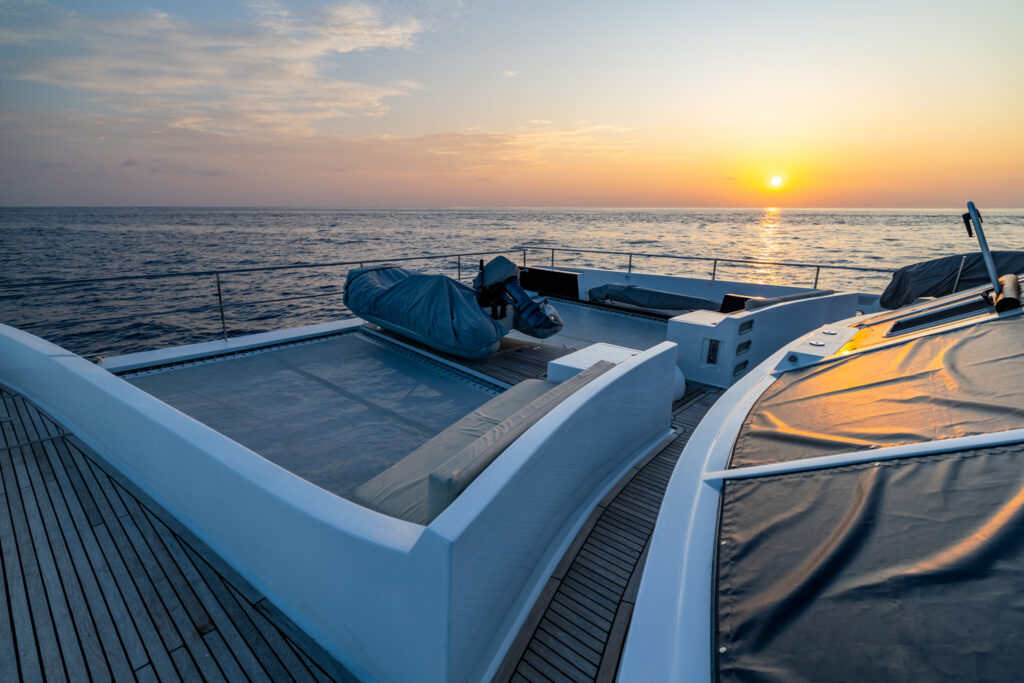
On four of the seven nights we were there, the boat was surrounded by fish including plentiful GTs, shark etc. So much so that, although we caught a few each evening it seemed silly to thrash it because there were so many. However, there were times in the evening when baitfish and/or krill would appear to the blue lights of the boat in numbers and then we had to match the hatch or catch nothing.
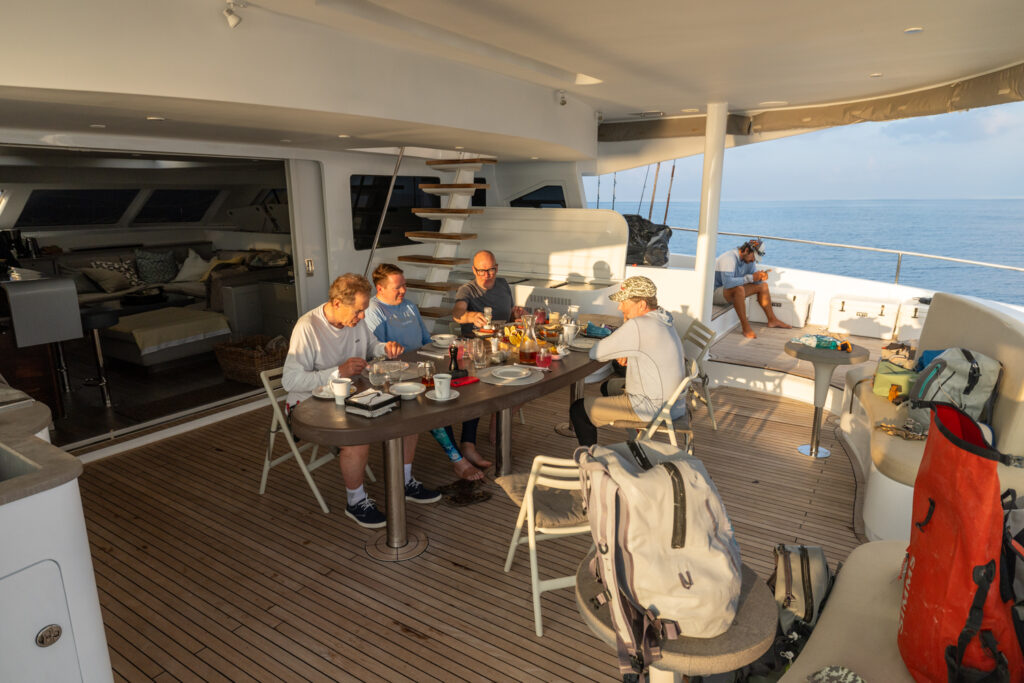
We caught GTs on small crabs, small deceivers and even smaller little baitfish imitations which I really enjoyed. I am not certain how approving the guides were of our fishing out the back, but we were measured, and they were not asked to get involved in the releases etc. All the dinners were good, we had steak, chicken, fish, pork etc and it was all excellent given where we were. Breakfasts were made to order with some very good porridge and freshly cooked bacon and eggs prepared just behind where we were sitting.
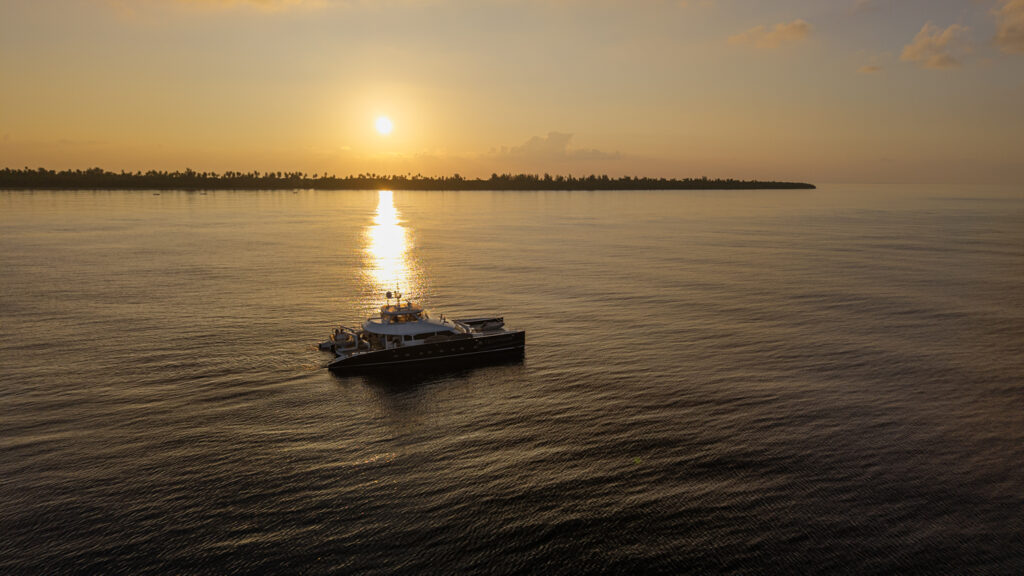
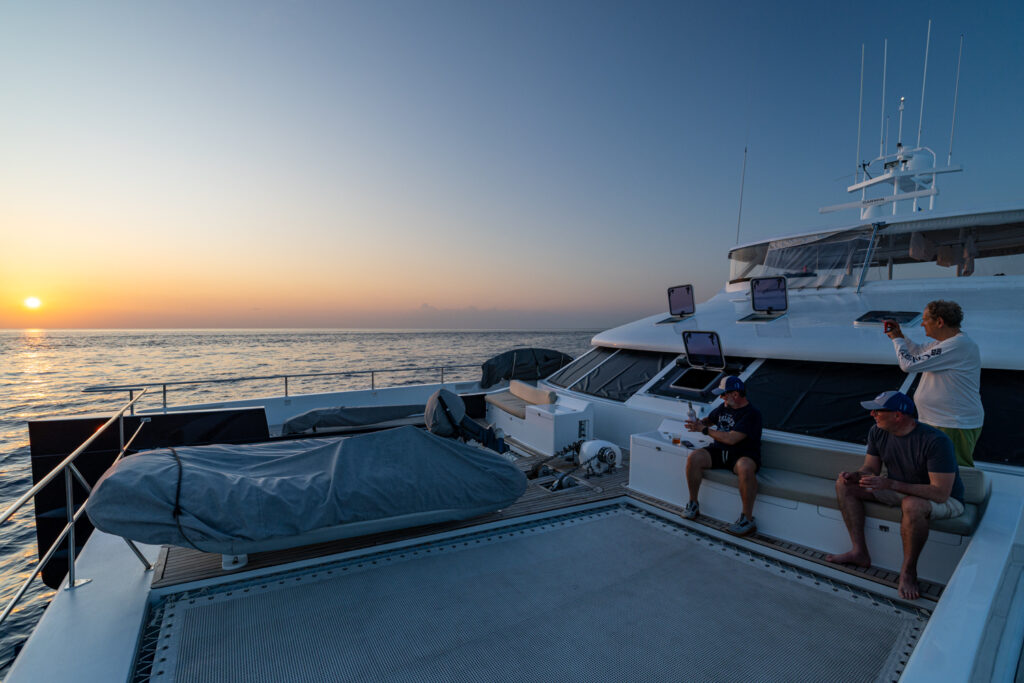
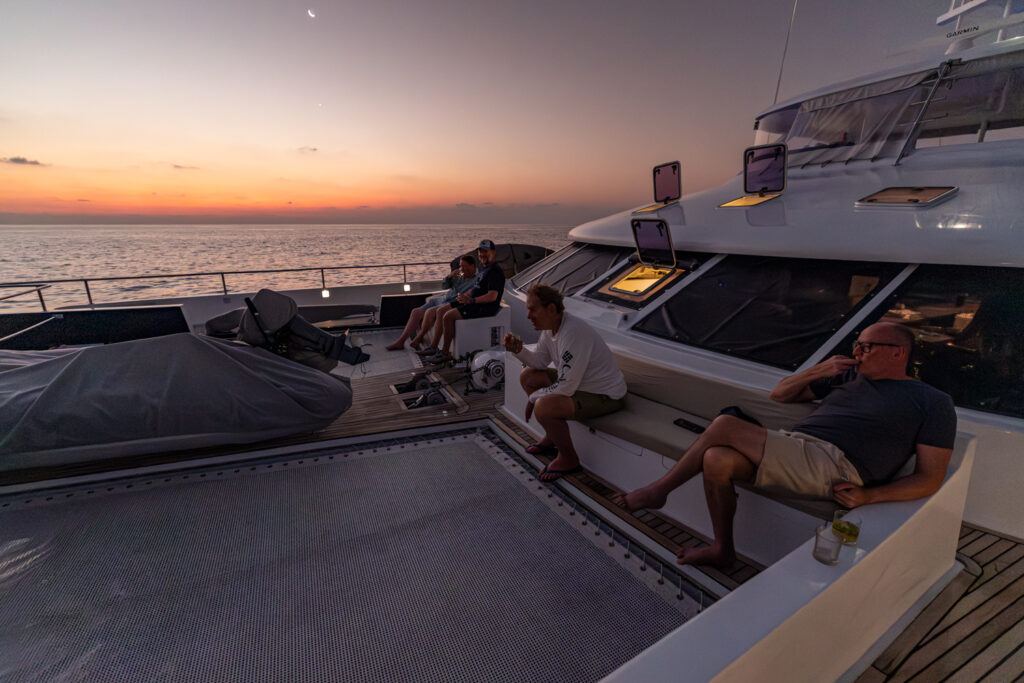
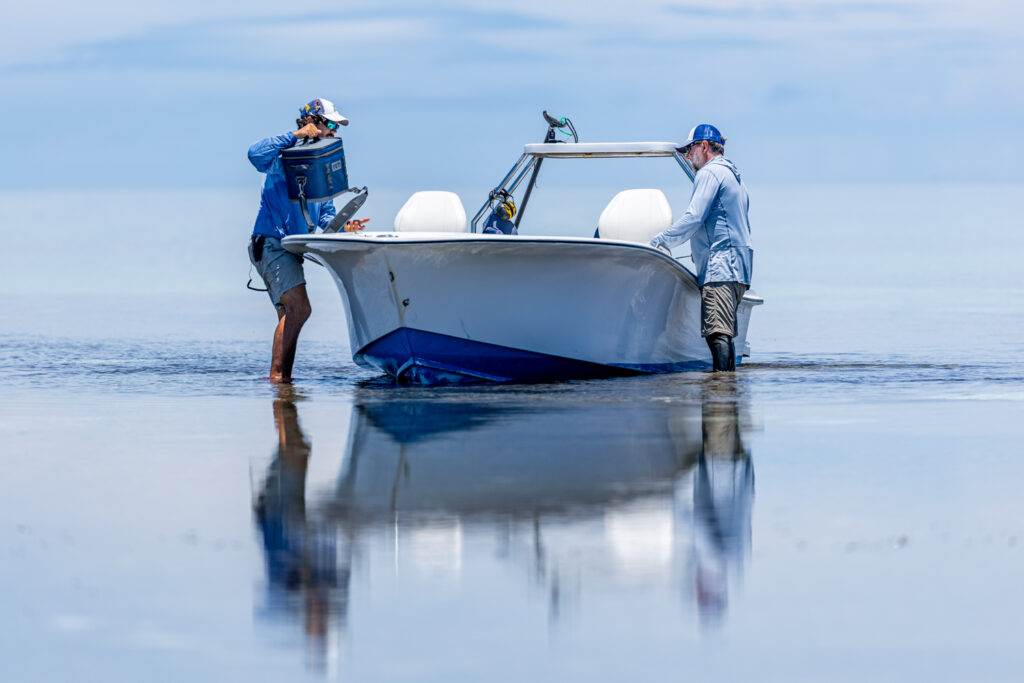
Our first morning brought the second significant difference to the MV Dugong set-up. We jumped into skiffs not pangas and there were just two of us per guide and no plans of any significance to wade unless of course we wanted to. The guides firmly believed that we would see and therefore get far more ‘shots’ at whatever species using the boat and covering more ground. In contrast, we would have been wading from the pangas or rotating between three of us fishing from them.
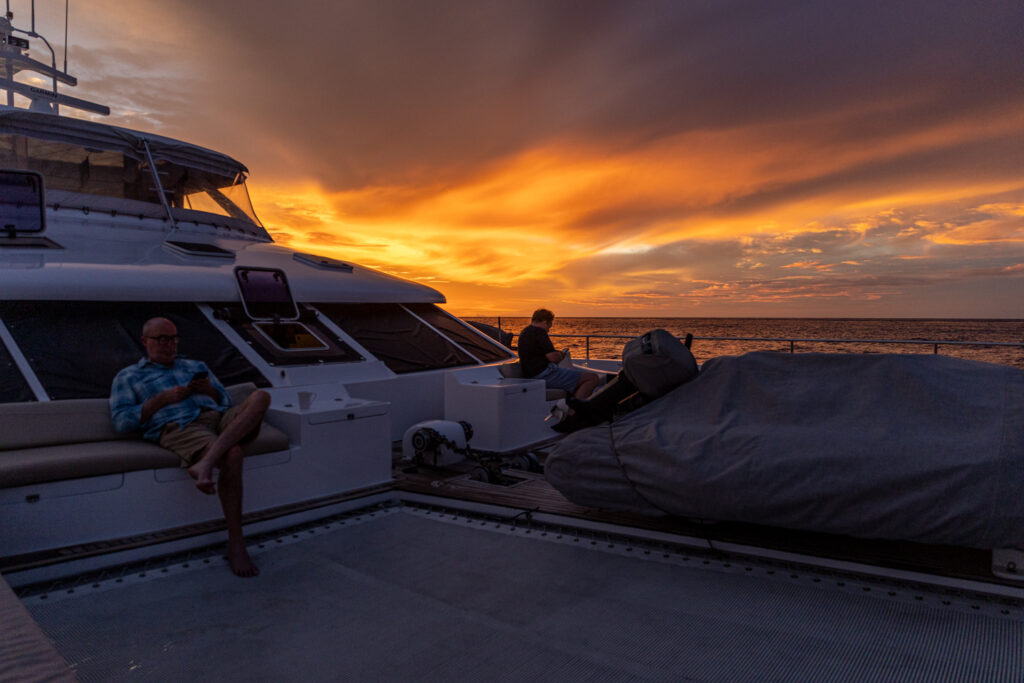

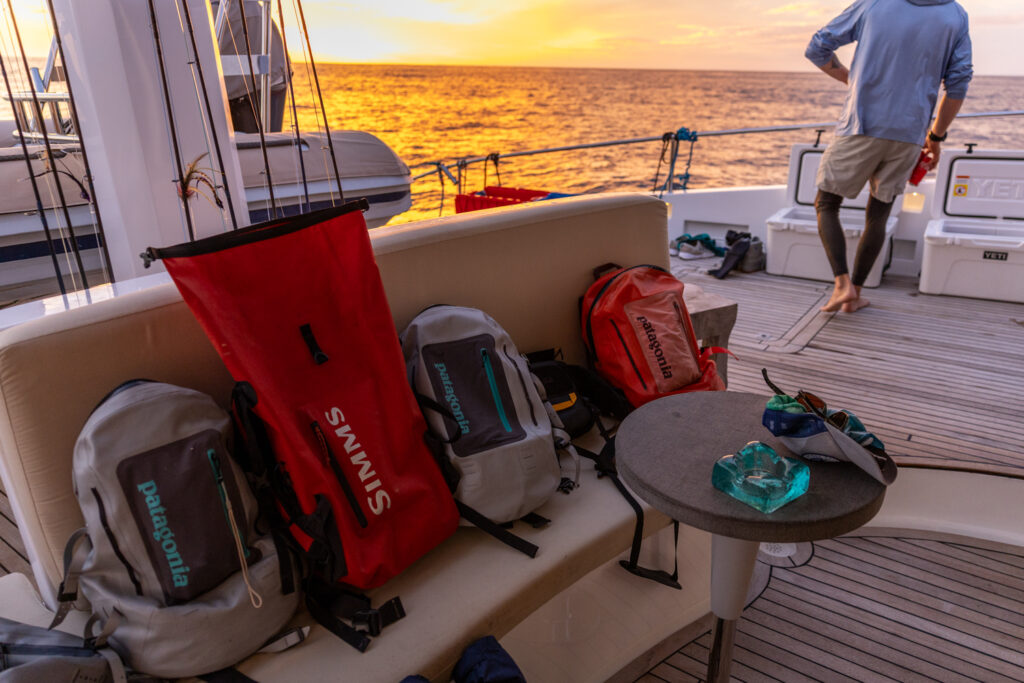
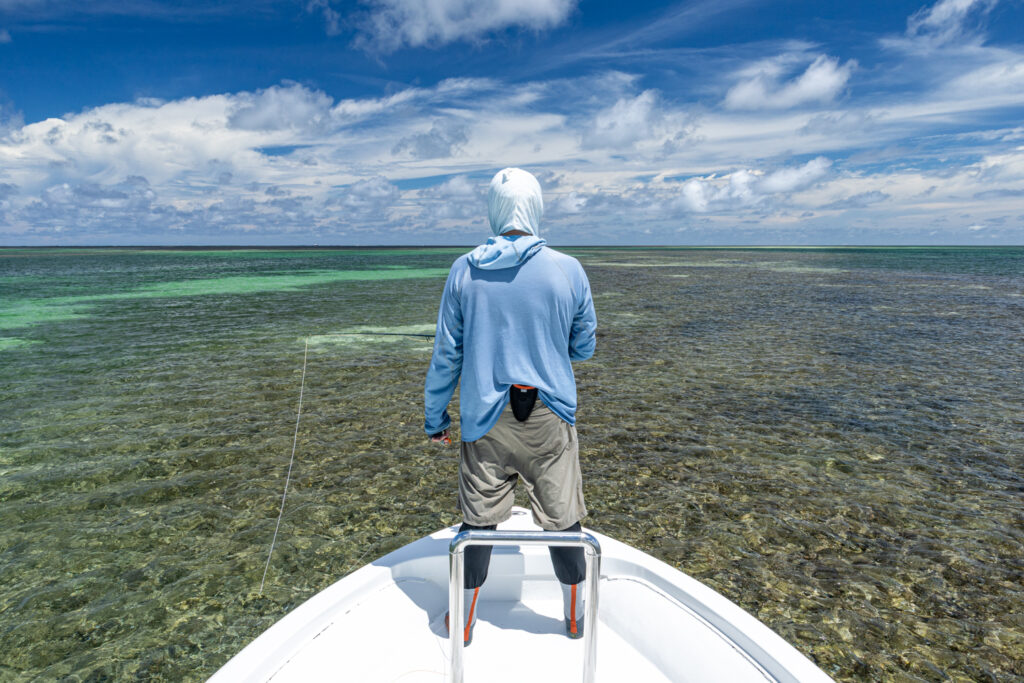
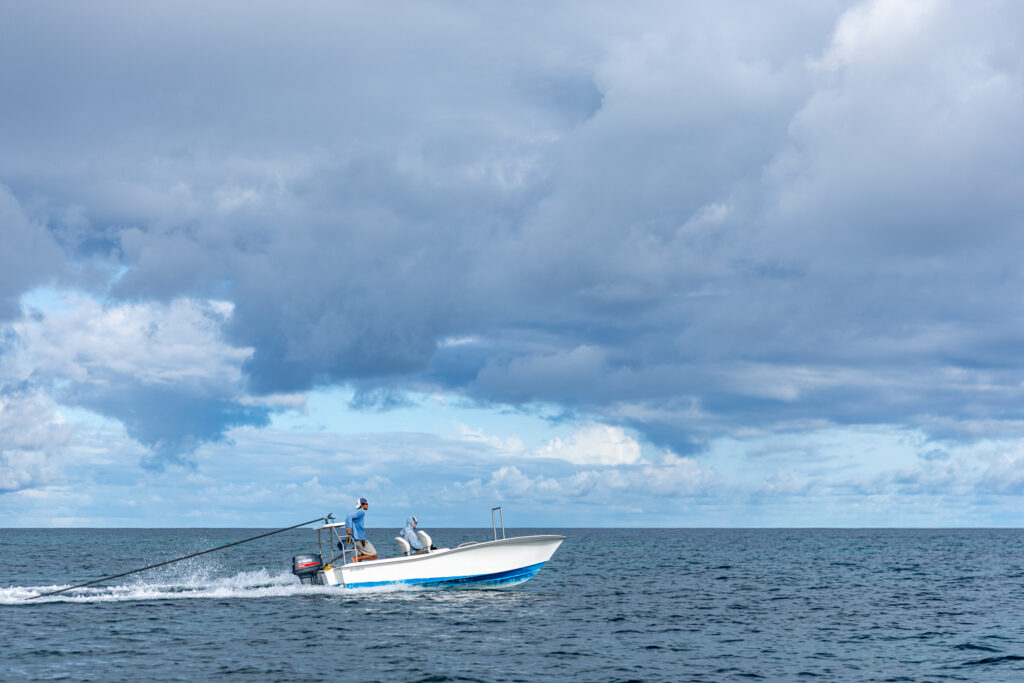
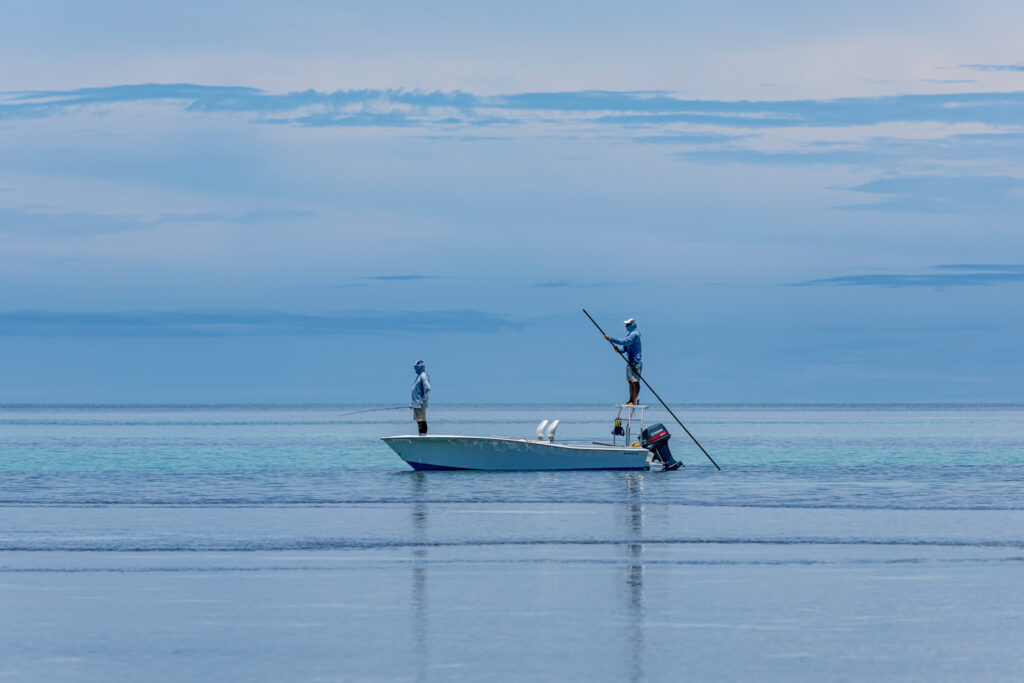
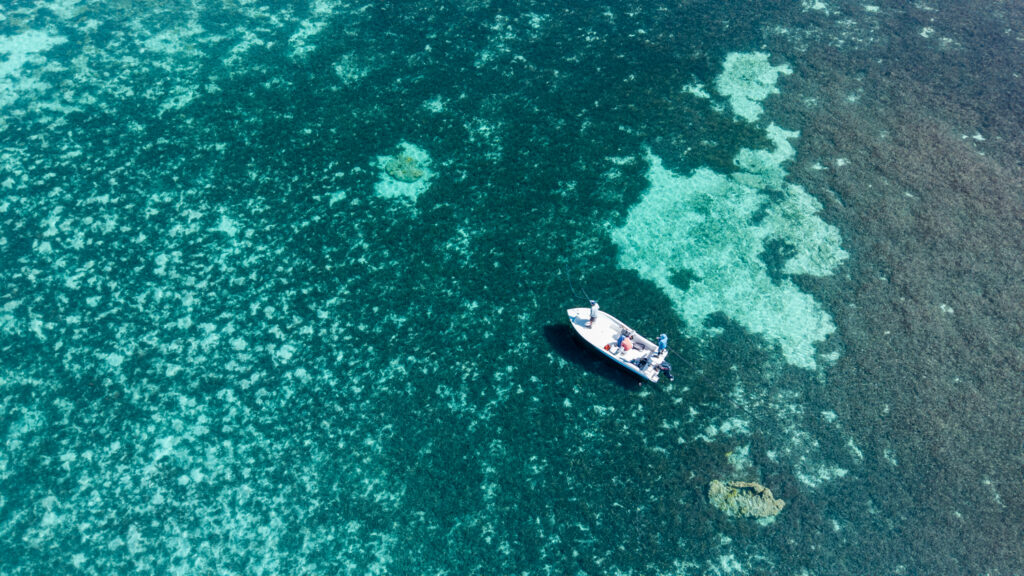


In summary therefore, how does one choose between MV Dugong and Quo Vadis? Price is probably the number one consideration which is understandable. Opportunity is also a consideration at the moment – Quo Vadis has no space for 2026, maybe, just maybe in 2027. I dare say one could get on a trip with MV Dugong in 2026. The one offers basically a more luxurious experience with better food for a private party and a better guide/angler ratio while the other offers a humbler operation, maybe sharing three to a room, definitely three to a boat unless you pay a supplement BUT also, ironically, possibly cheaper access to a single room. Either way, the fishing and the guiding will be world class.
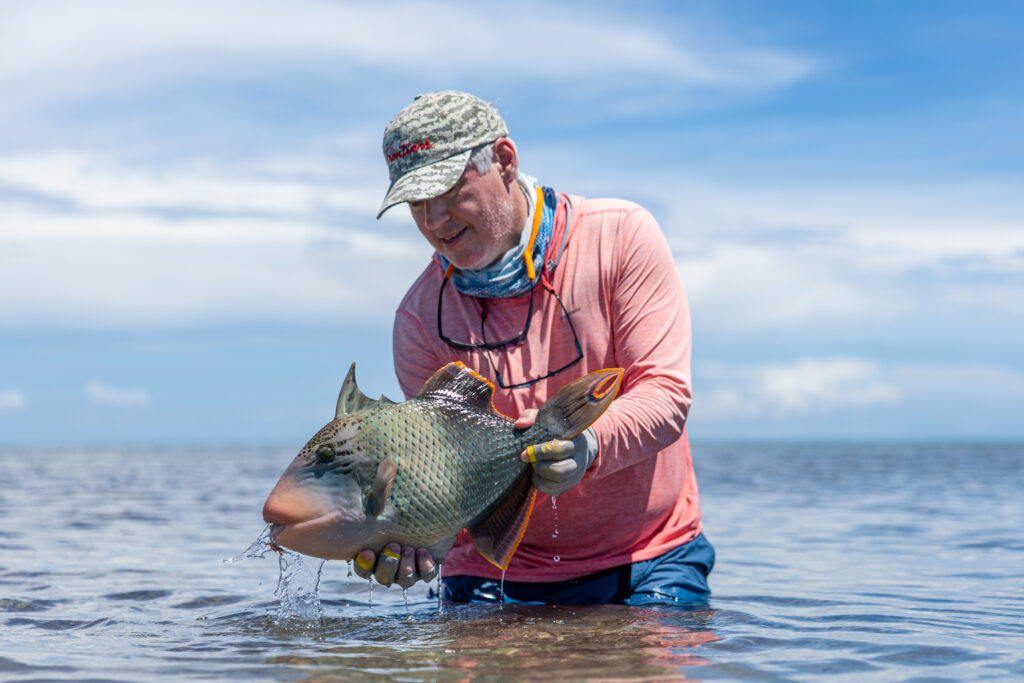
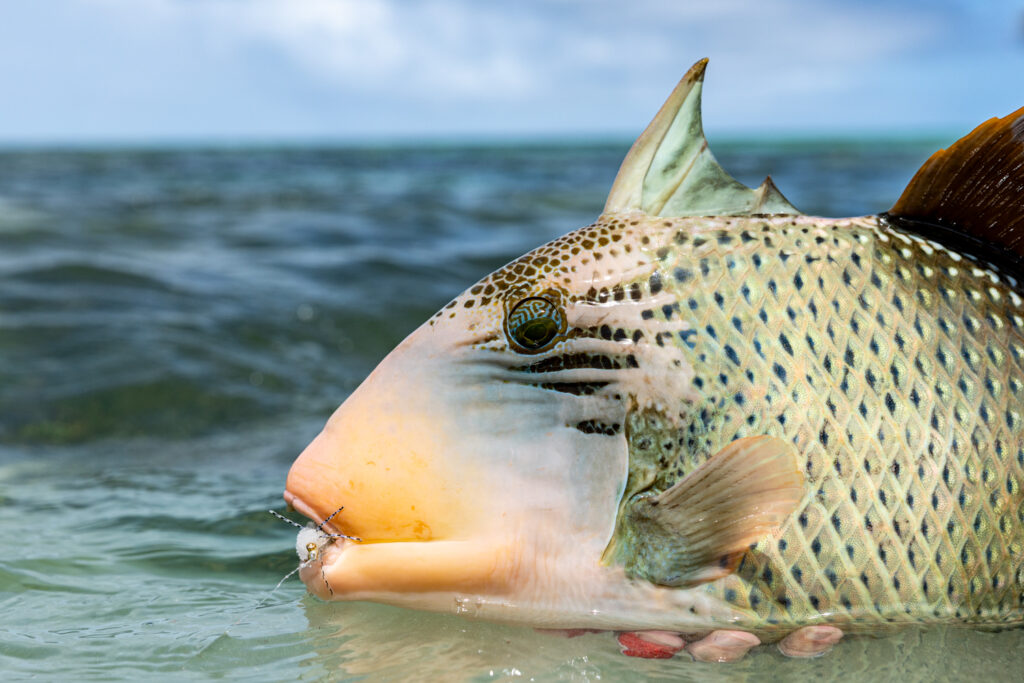
What did I learn on this trip? My main takeaways were how I handled a triggerfish when it was following. When fishing other atolls, one gets opportunities for triggers but not enough to learn from one’s mistakes. Fewer opportunities mean one is perhaps more ginger and careful about trying to not waste the opportunities. I was lucky on this trip and had so many encounters with triggers I was able to be coached and iron out my hesitance.
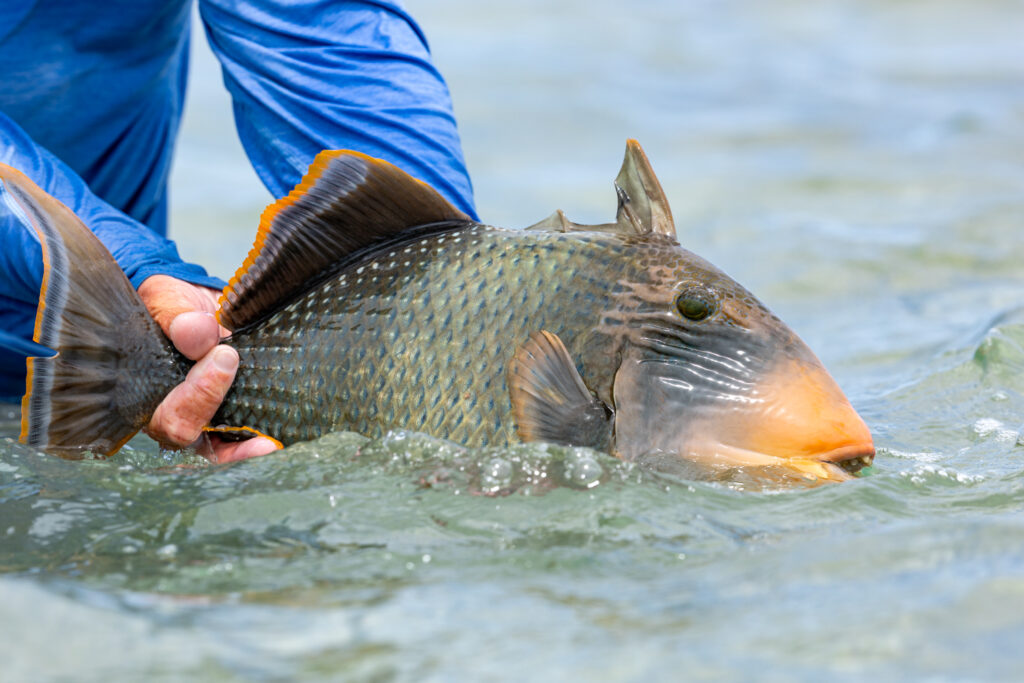
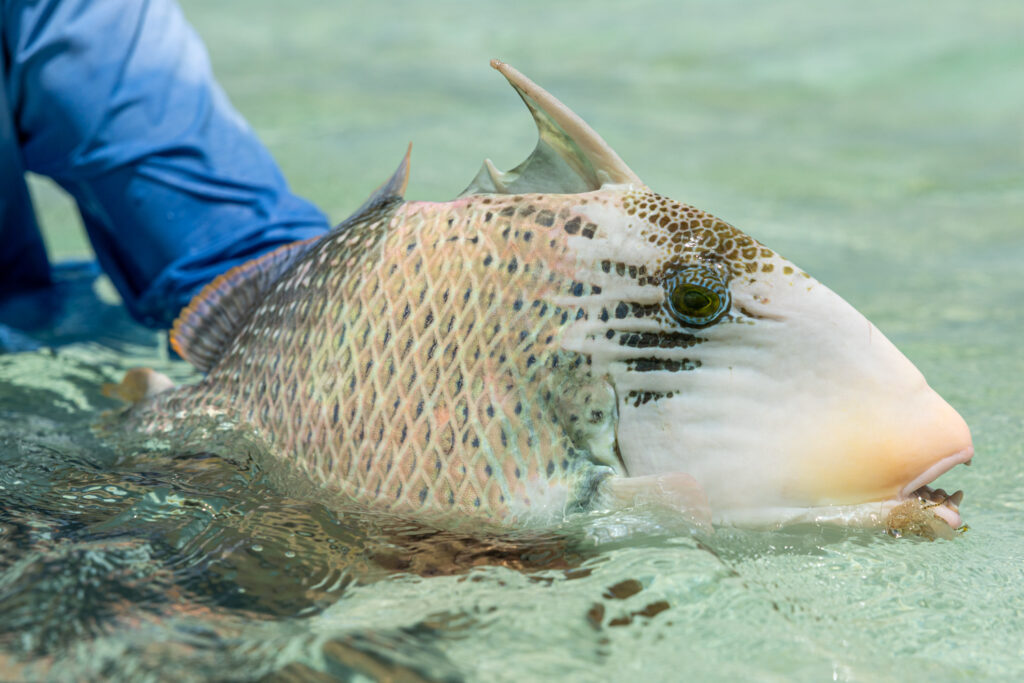

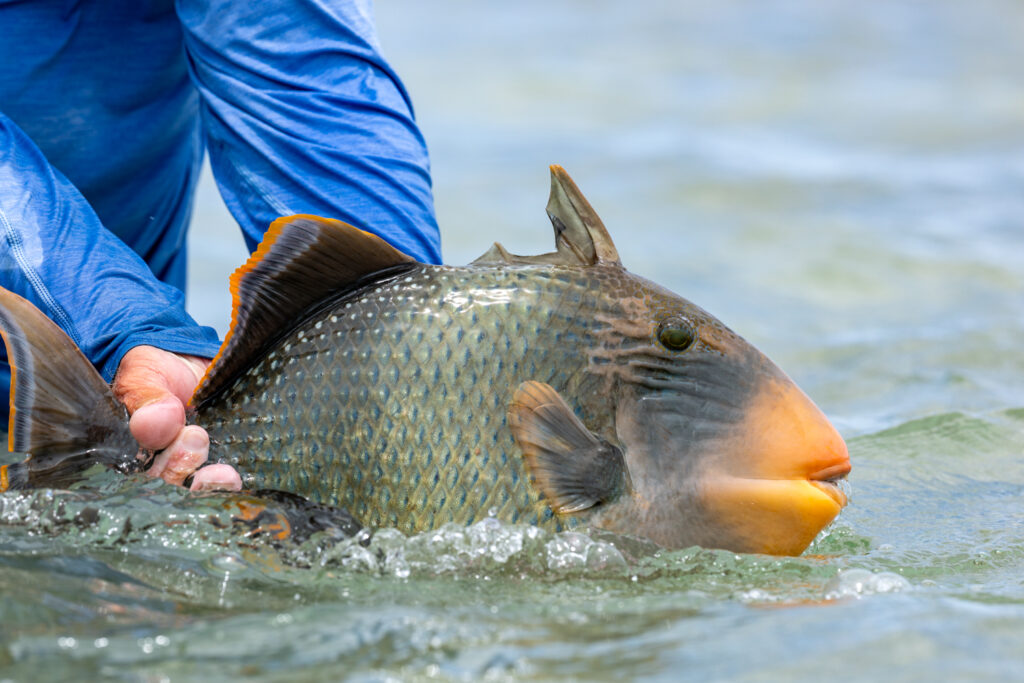
What I was doing is making decent casts, getting the triggers to follow and even allowing them to go down on the fly when I should. My failure was not stripping hard after the fish had gone down on the fly and my explanation was fear of spooking it if it did not have the fly. What I had forgotten was the armoury of teeth at the front end of a trigger which meant if the fish did not have the fly fully in its mouth, my stripping hard was only pulling against pearly white teeth, not tissue, therefore I was not pricking or spooking the fish. Once I was less cautious and gave the fly a good, long, hard strip my hooking and landing ratio went up dramatically and if I did not hook up, the fish would keep following and I would get another chance of a take.
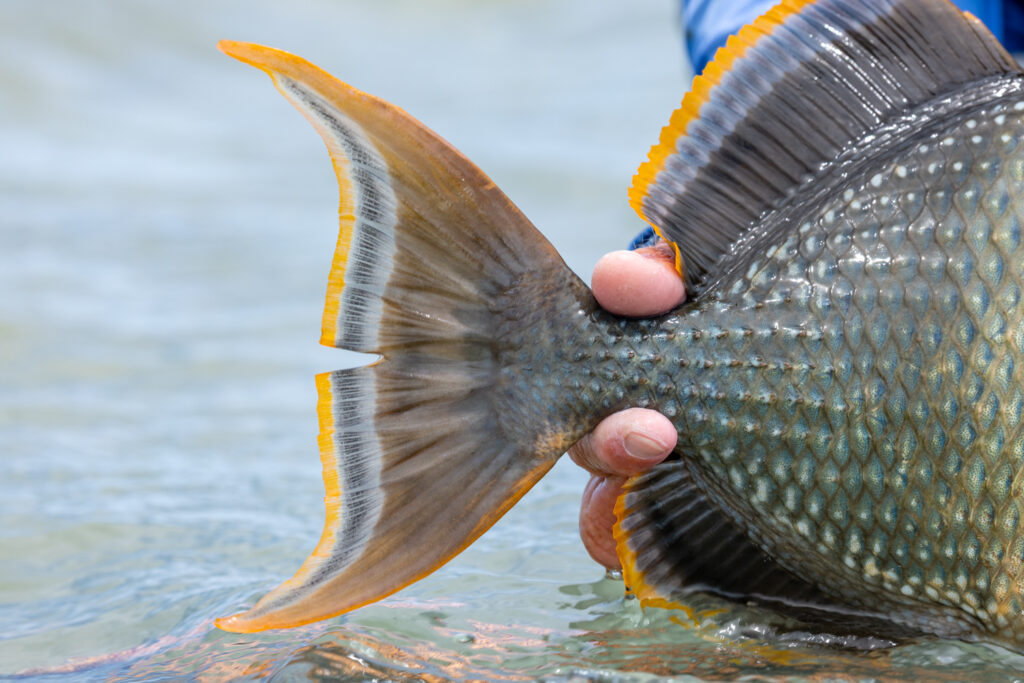
I am not going to describe a blow by blow of each day but needless to say, as has been the case whenever I have had clients fishing Providence, the fishing was spectacular and everyone caught what they hoped to catch whether it be GT’s, milkfish, triggers, bumpies or barracuda! We caught them all and more including some really nice bones.
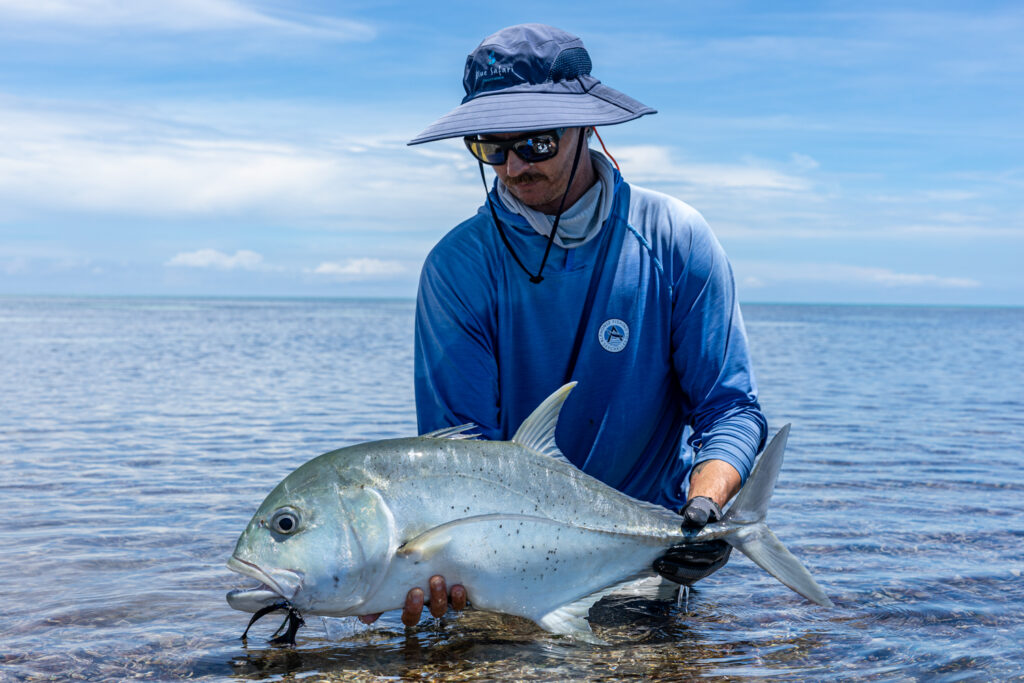
There was one special day fishing with John. We had a wonderful morning hooking two bumpies and landing one of them, a GT, and two or three triggers. After lunch things seemed to go quiet and John was quite happy to let me do the standing on the bow until things livened up! Finally, we stumbled on a GT but concentration had slipped and we did not see it early enough. Then we stumbled on a couple of triggerssame problem! I asked John if he felt things had livened up enough to bother his standing on the bow. He reluctantly gathered his 6ft 5in frame and up he got on the bow. As is so typical of John, the man who really does not care for GTs and much prefers triggers (I think he caught 7 triggers on the first day), it was only about a minute until Stu asked him to make a cast to his left… the rest is on the video below! This is a man at the peak of his fishing powers – he has done it all – he has nothing to prove – no targets – every day he is out there fishing is winning the Champions League, something he hopes his beloved Arsenal will achieve this season. It is extraordinary how successful fishermen who really dont care and dont have egos and targets are – if only we all had such a relaxed approach we would all be so much more successful!
My role was general dogsbody – keep John safe, wind the reel when he got cramp, keep an eye on the fish in terms of the coral heads, film etc but it was an absolute pleasure witnessing John landing this lifetime fish while giggling to myself that normally he has no interest in catching GTs at all!
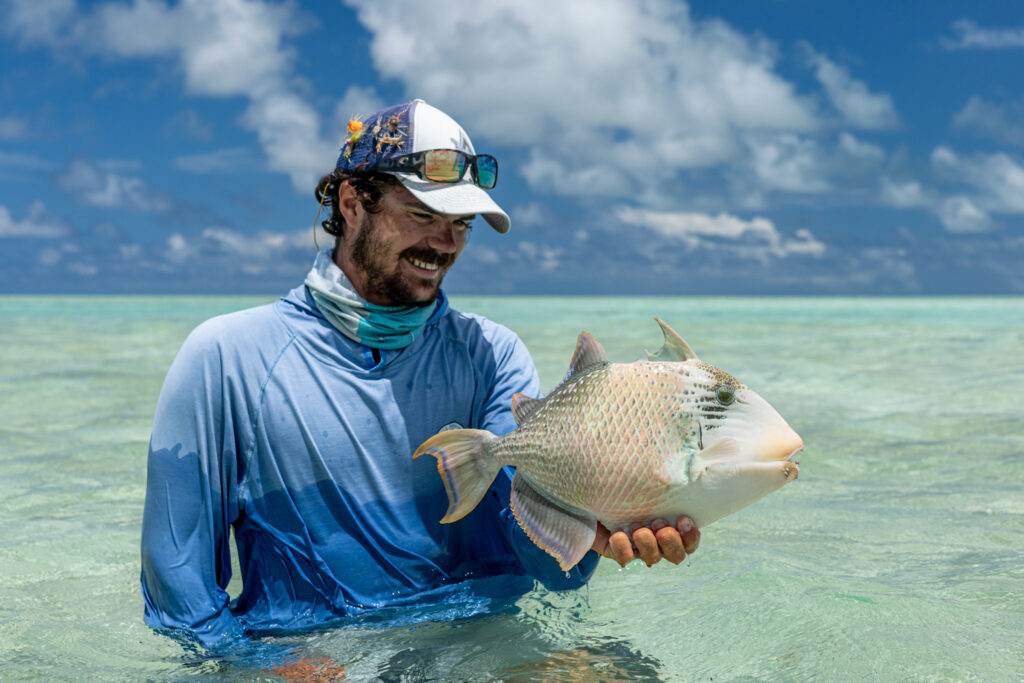
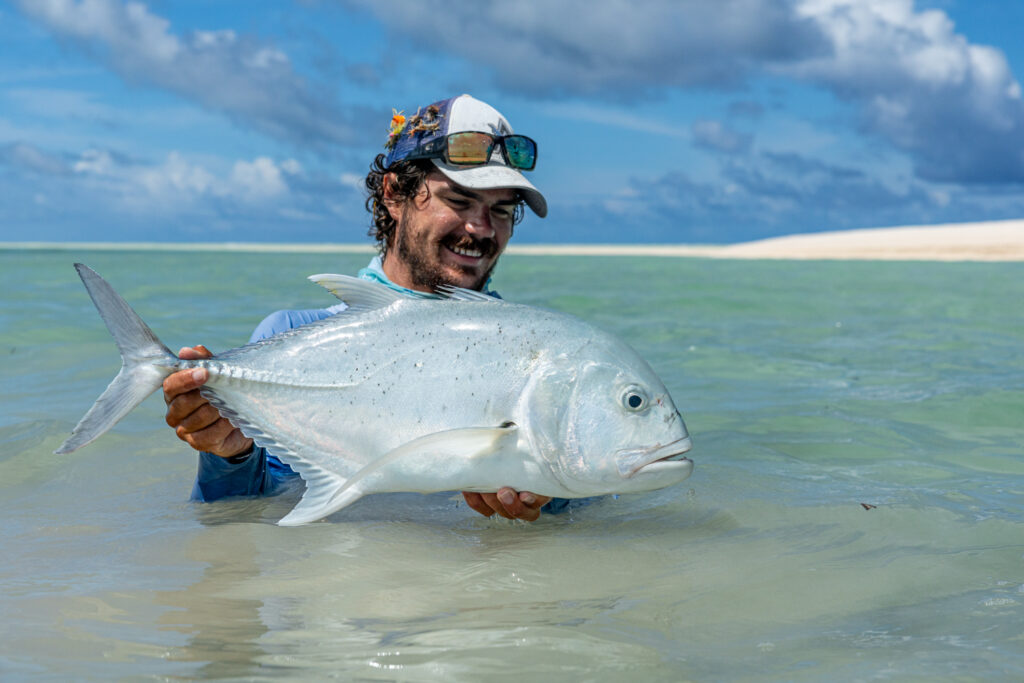

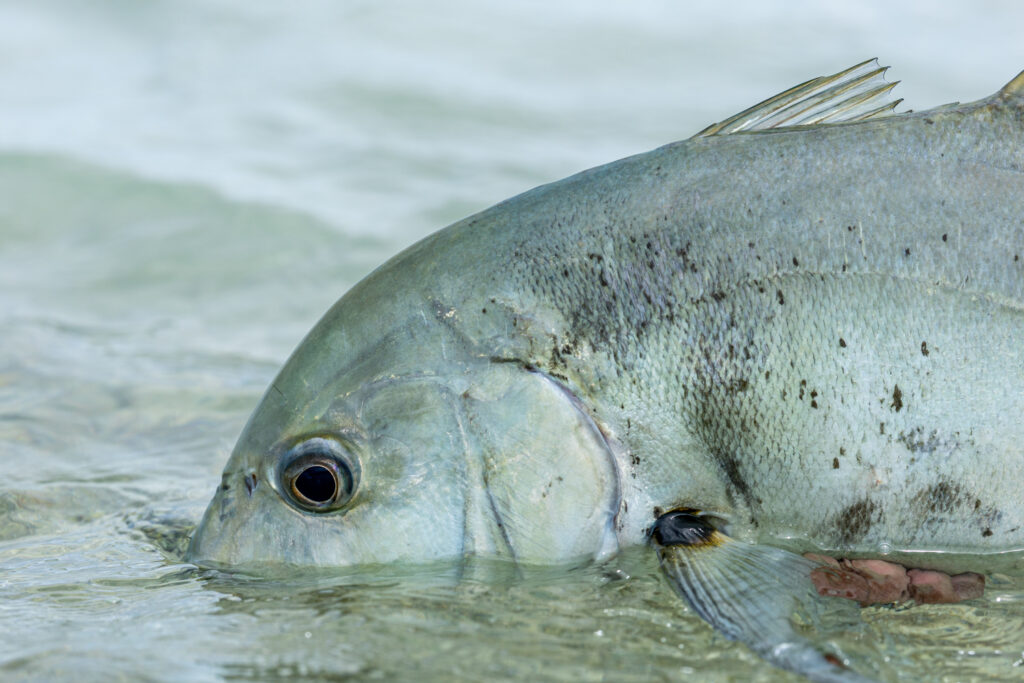

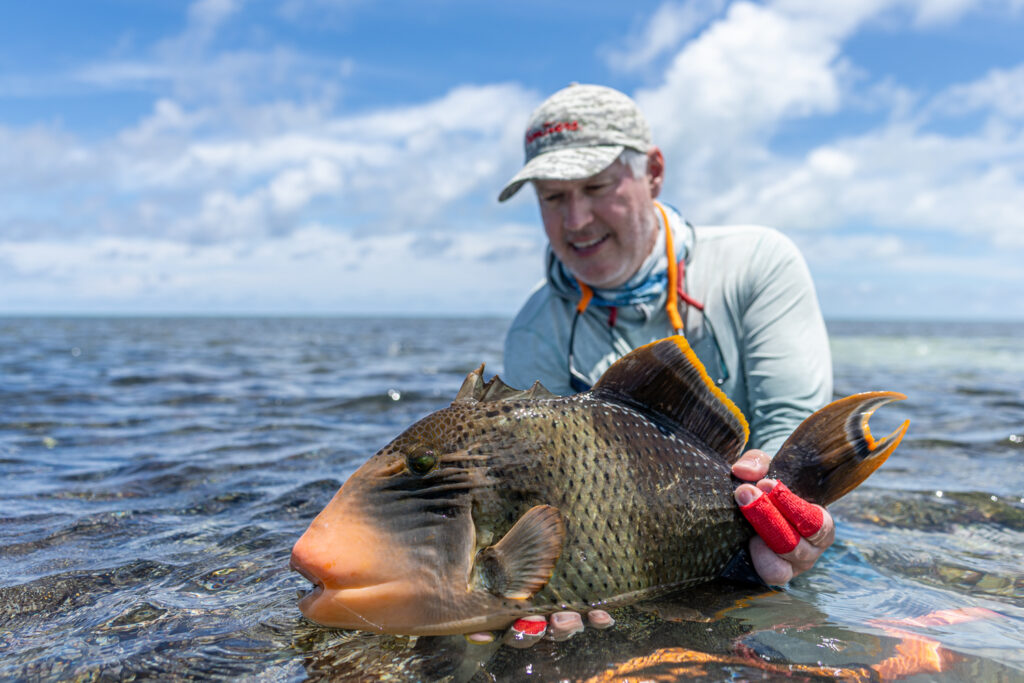
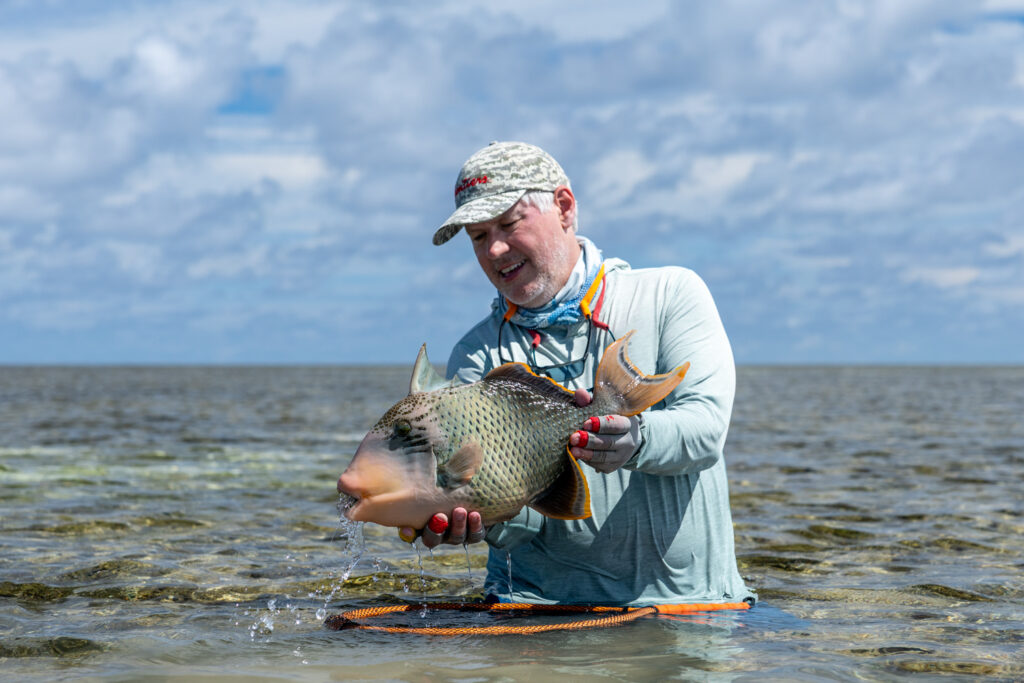
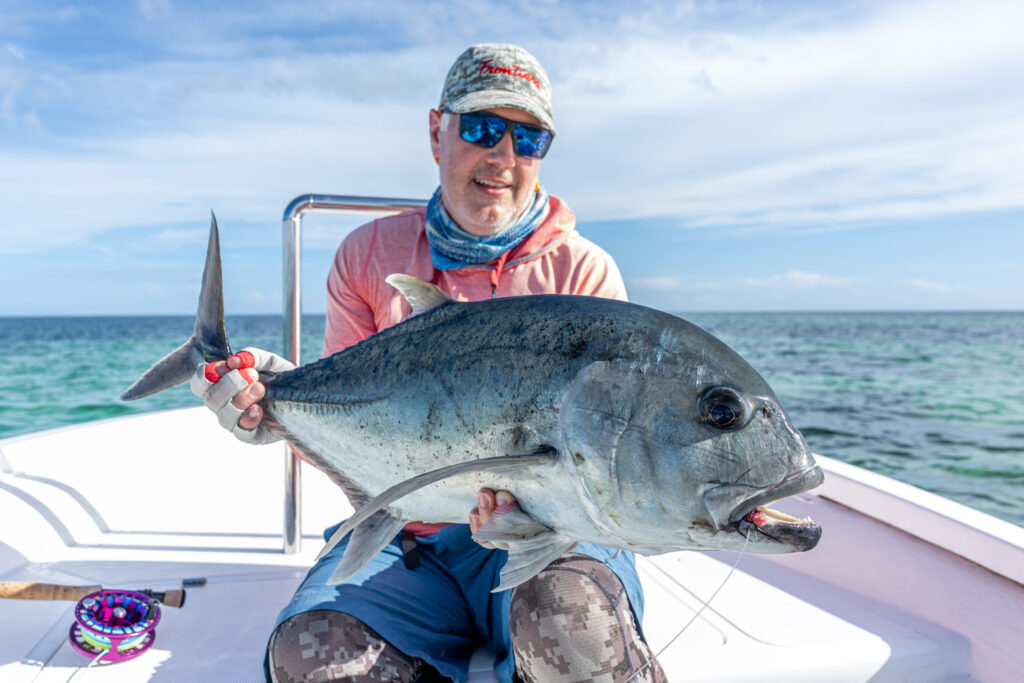
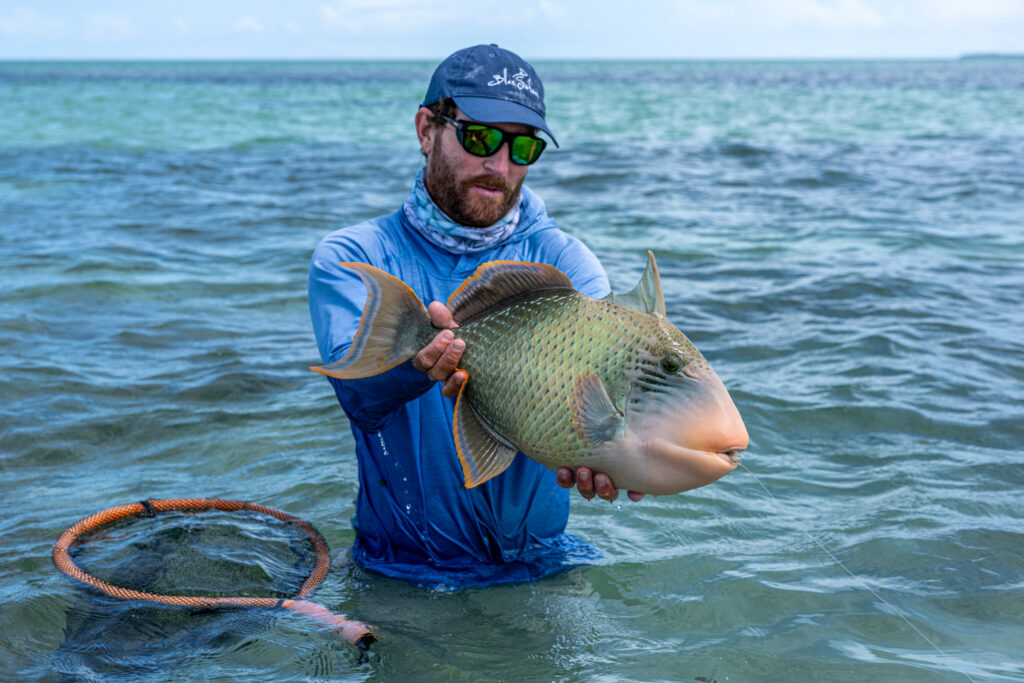
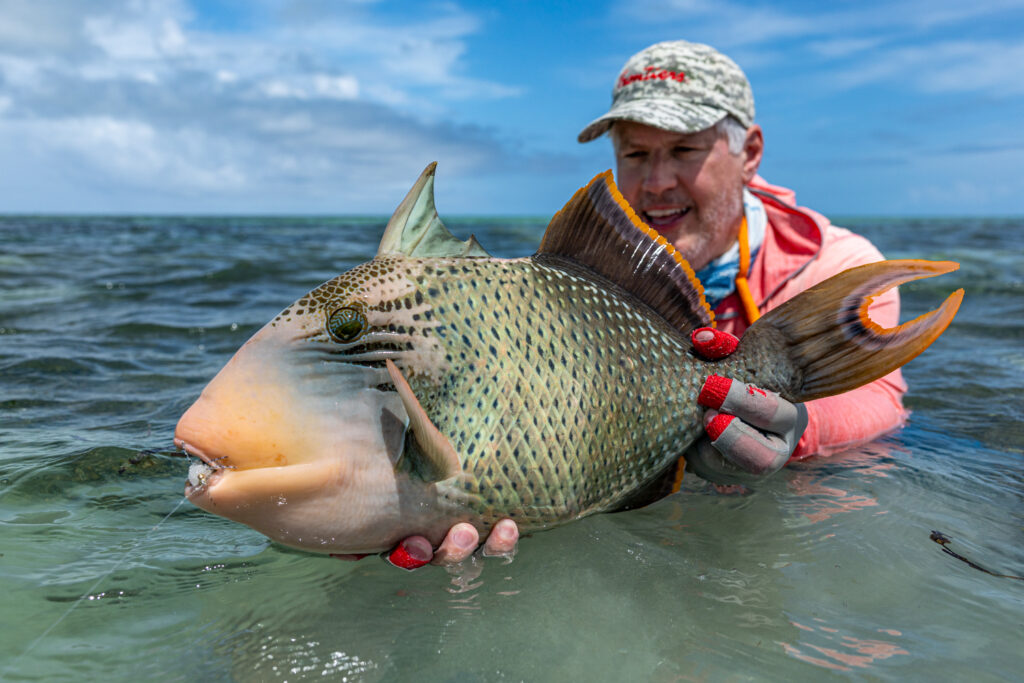
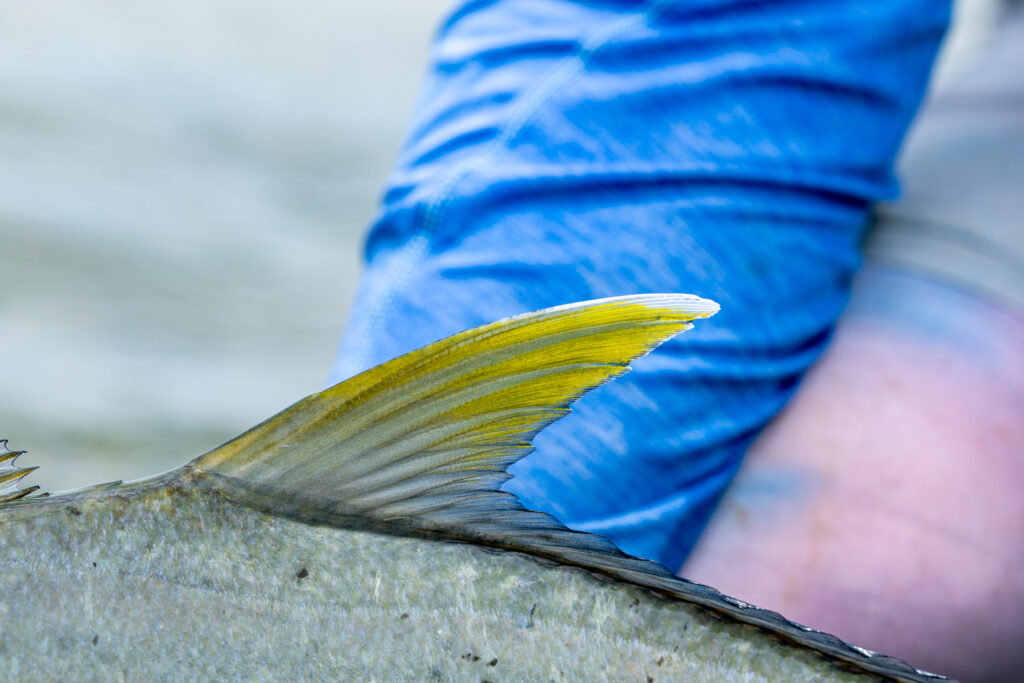
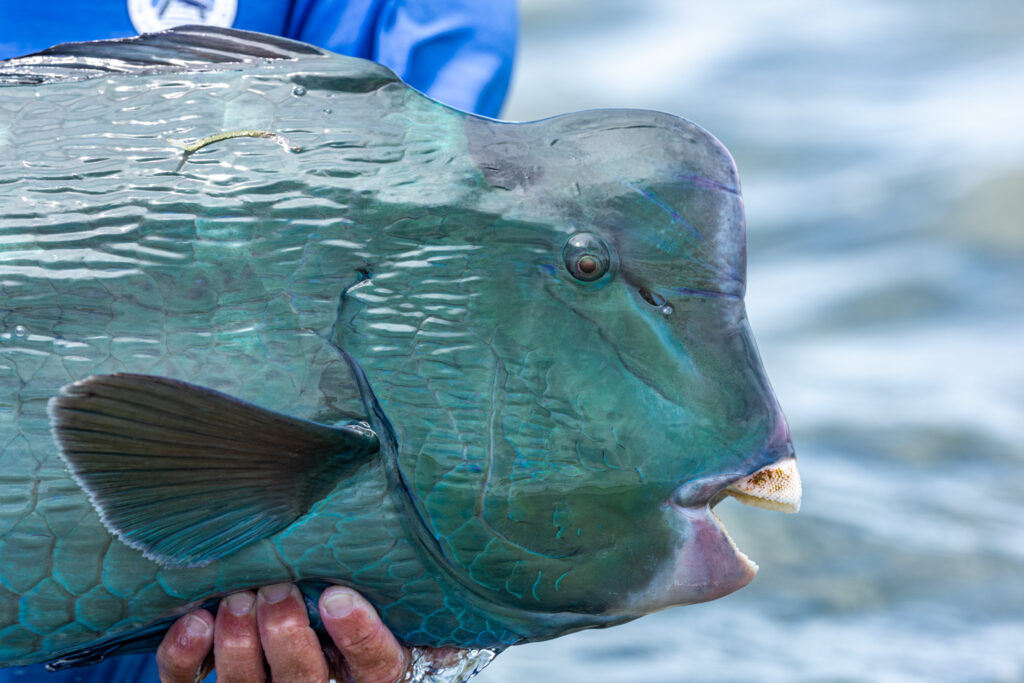
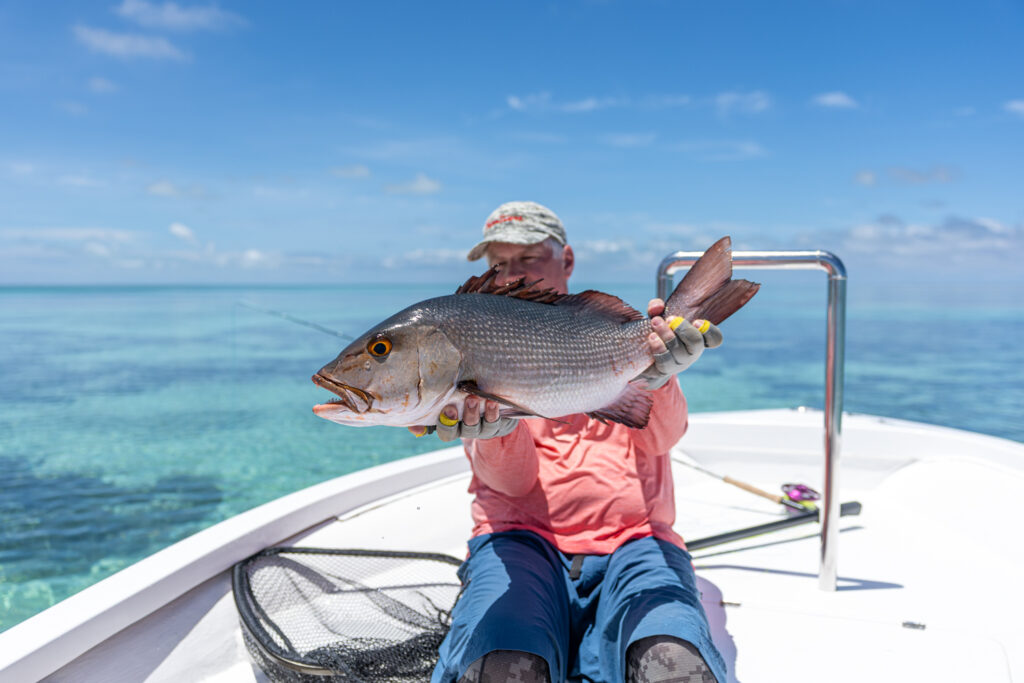
We saw permit but did not land any. I think the starkest difference between Providence and the other atolls (I have fished them all) is how willing the fish are to take. Of course, there is the odd refusal but insignificant compared to other atolls, even the likes of Cosmoledo and Farquhar. The cause of failure to catch at Providence is rarely the fish refusing but angler cock-up! The reason has to be the size of Providence in relation to the number of rods.
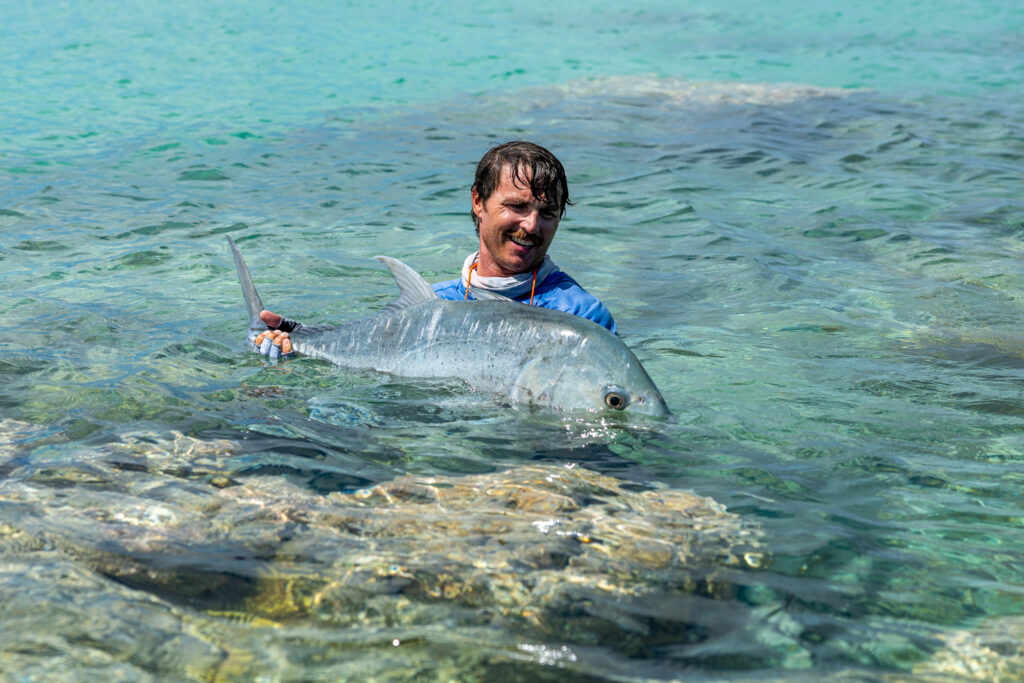
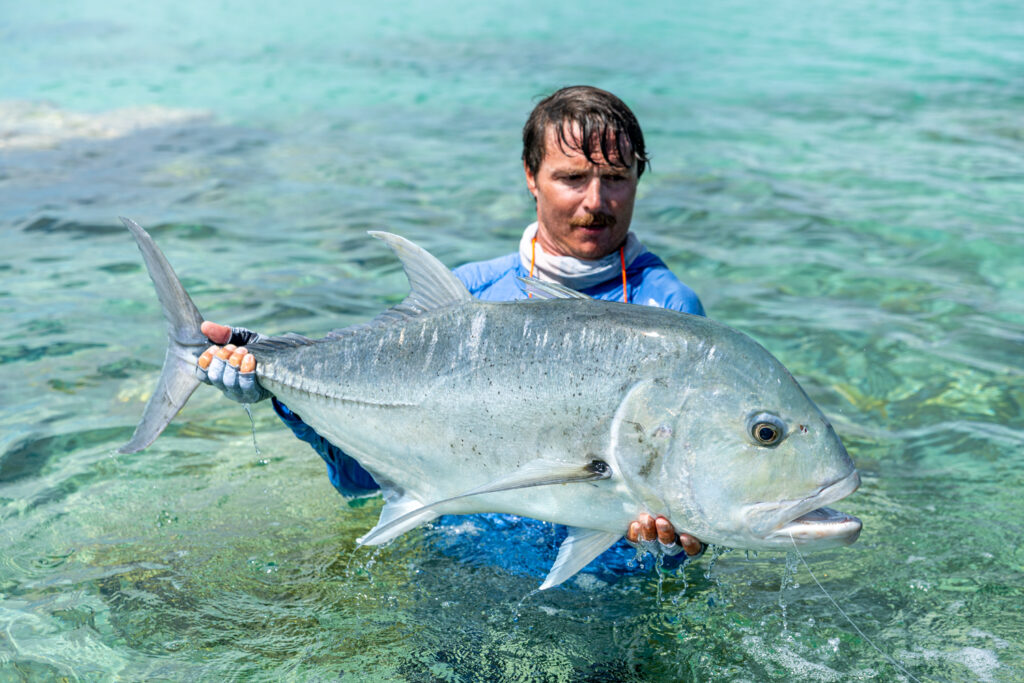
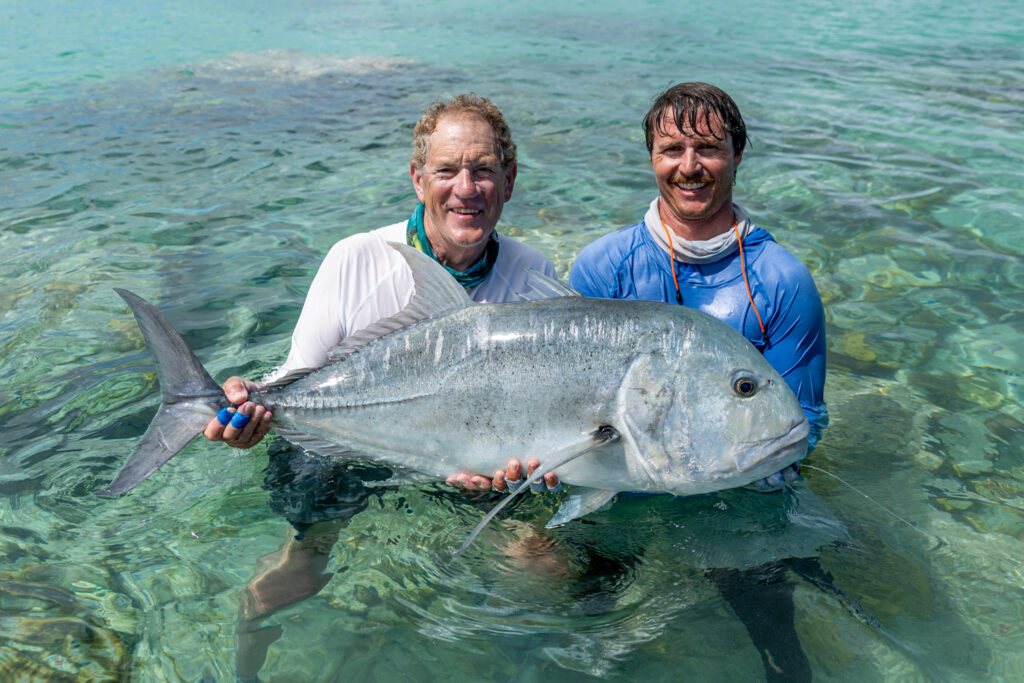
There were various stories as to why it occurred but, on our week, MV Dugong and Quo Vadis were there at the same time which is not supposed to be the case, but we did not see them and to be honest, unless arranged, we never saw our fellow rods during the day either. For me, as stated so many times by my friend who was sadly missing from the trip, Providence is THE place. With thanks to Graham, Stu, Cameron and the Quo Vadis Team.
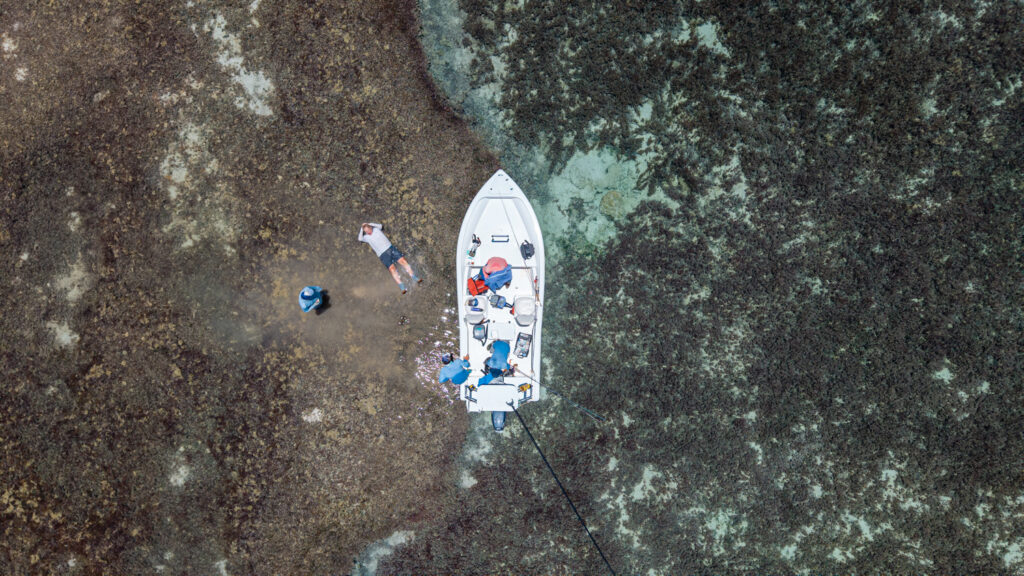
We have all become spoilt as travelling fishers over the last two or three decades. The world opened up to us and we have fished destinations that we never would have dreamt of when growing up. As someone who has worked in the fishing world since the late 1990s I have been fortunate enough to have fished in and travelled to many fascinating and remote places over the years.

However, a recent trip to Southern Africa was a reminder that there are still some fascinating places out there. Despite living in South Africa for more than a decade I had never visited Lesotho. This small country is completely surrounded by South Africa and contains the highest peak in Southern Africa. It is known as the Mountain Kingdom for a good reason, and I encountered some of the most awe-inspiring mountain passes I have ever driven. Recently Keith Clover, one of the owners and founders of African Waters, invited me to visit the remote lodge they have built on the Bokong River, near the Katse Dam, in the centre of Lesotho.

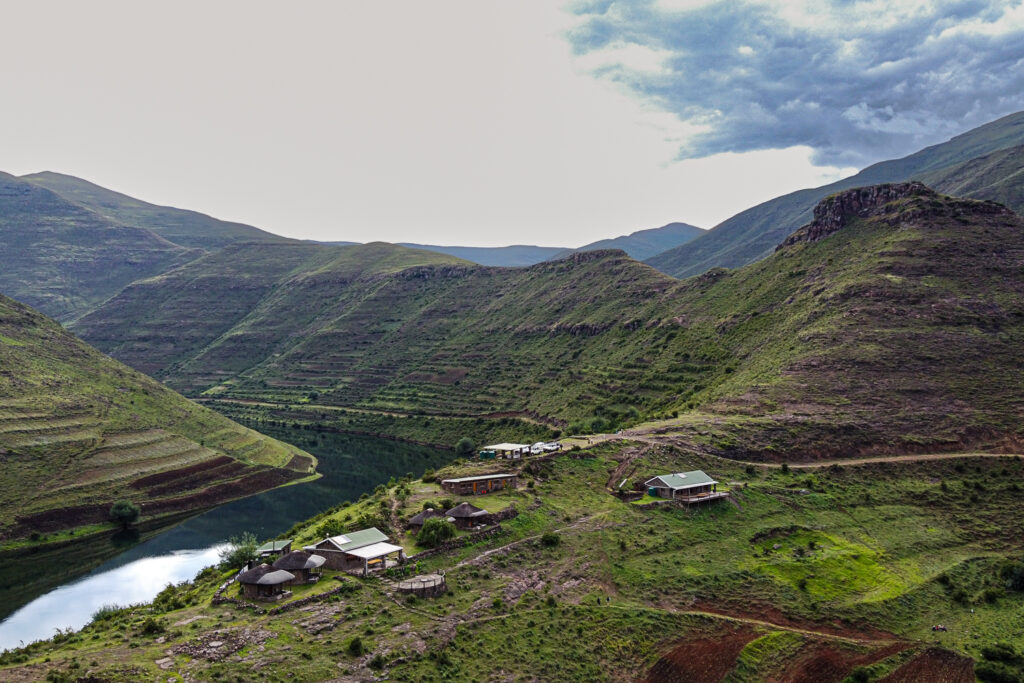
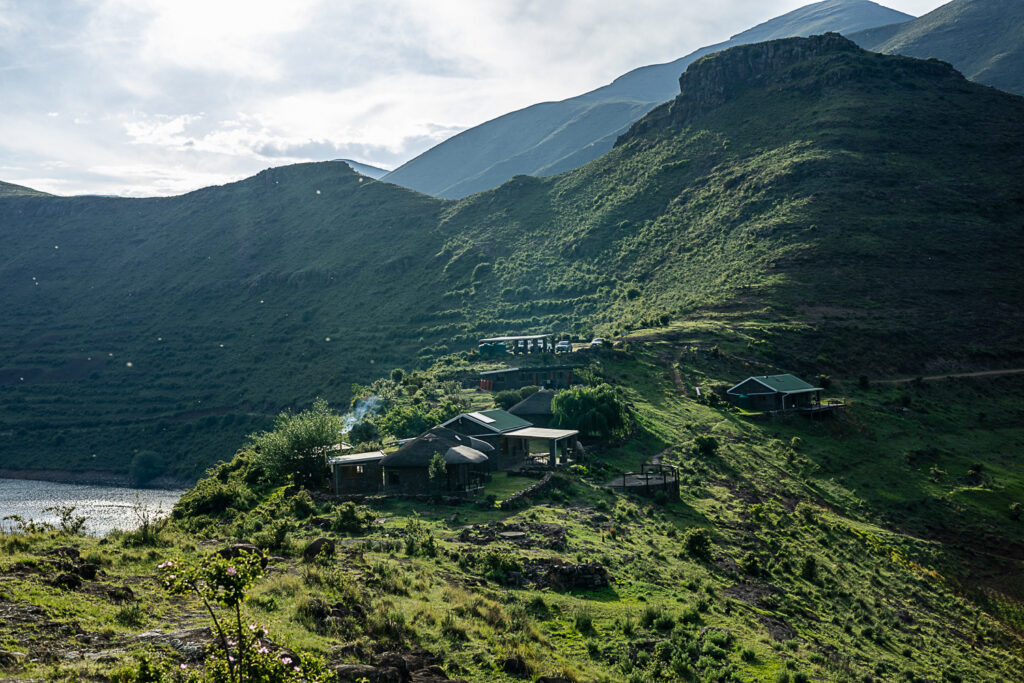

The drive from South Africa into Lesotho is easy. I spent the night in the charming small town of Clarens before heading to the border crossing the next morning. Everything is efficient and it takes a matter of minutes to exit South Africa and enter Lesotho. It is immediately apparent that you are in a different country. The landscape is beautiful and as the drive progressed and I left the built-up areas behind it became more and more spectacular. People use horses to get around and donkeys to carry loads up and down the steep terrain.

This is a country that often sees snow in the winter and the people have an iconic look with balaclavas and warm blankets to protect themselves from the harsh climate. From the border to the camp is a drive of around 4 hours. We can arrange transfers for groups which I would recommend unless you really want to do the drive yourself. The tarred roads were all excellent although vigilance is always required. You tend to miss the spectacular views if you are driving yourself and concentrating on the road. The last hour of the drive is off-road, on a gravel road that does become quite challenging, a high ground clearance vehicle is required.

Arrival at the lodge is quite spectacular. The last hundred metres or so of the drive involve quite a steep climb, then your car arrives on a flat grass area with the most amazing panoramic views over the river valley. The head guide and staff were waiting for me and quickly had taken my bags down the steep path to the lodge. The lodge is quite small and well laid out and the location is impossible to beat, with a stunning view up and down the valley from its position built into the hillside. There are four spacious twin-bedded stone cottages, two either side of the large kitchen/dining/relaxing building. There are also two full bathrooms, each with a separate bath and shower, shared between the four rooms. Considering the remote location the camp is very comfortable, and everything has been thought of. There are indoor and outdoor seating areas with a fire-pit and wood burning stove to keep you warm when the temperature drops. Wifi is only available from one spot outside the guides rooms and there is no cell phone signal, so if you do visit be aware you may be out of communication for a lot of the time.
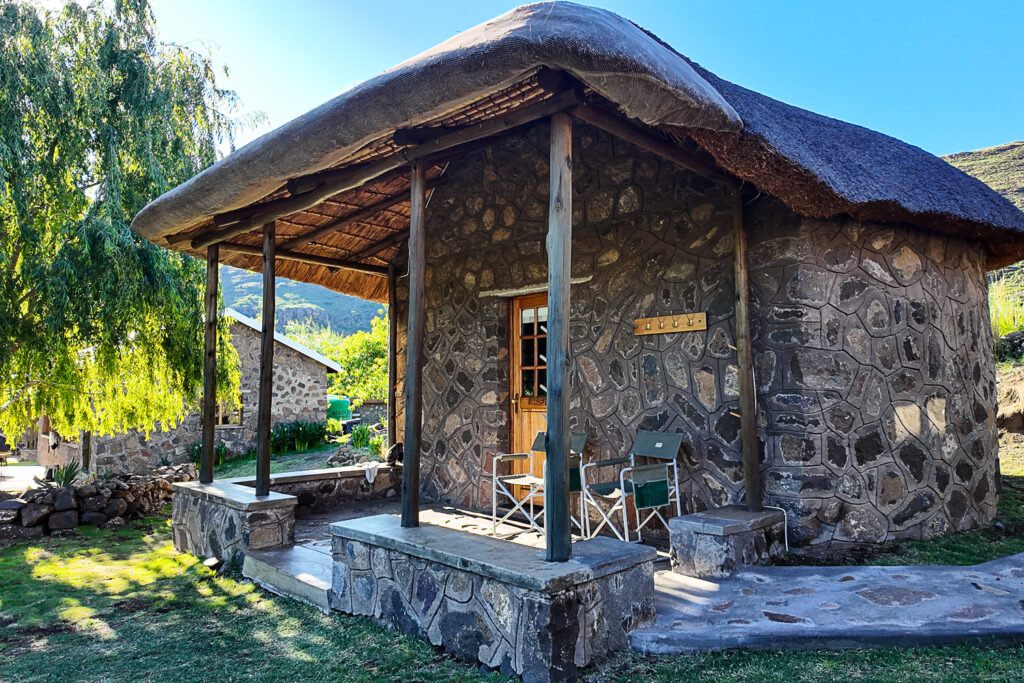


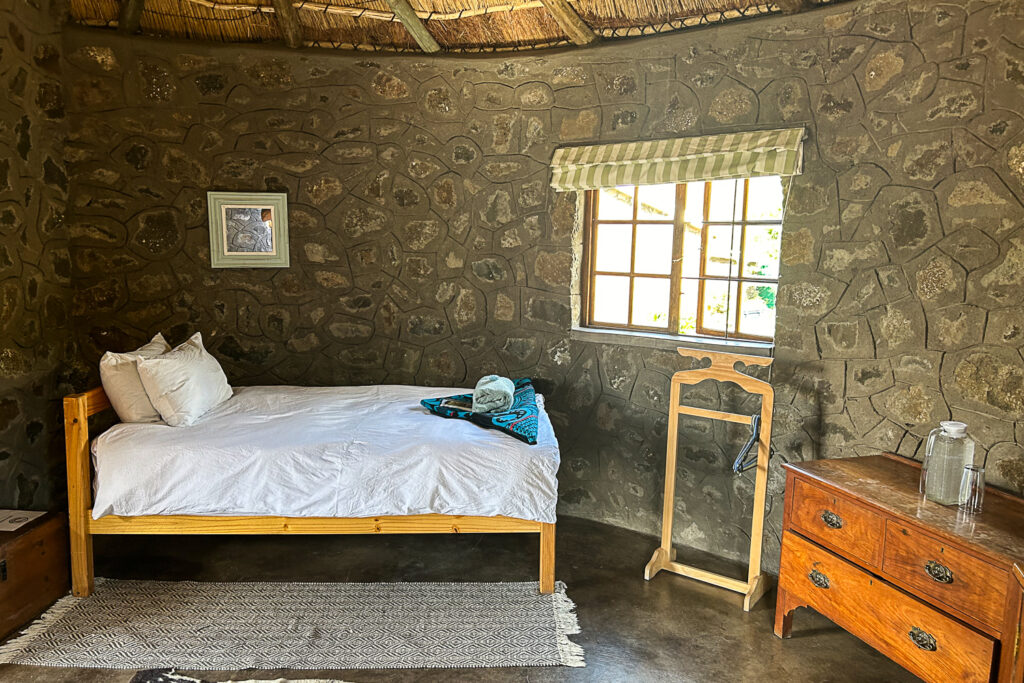
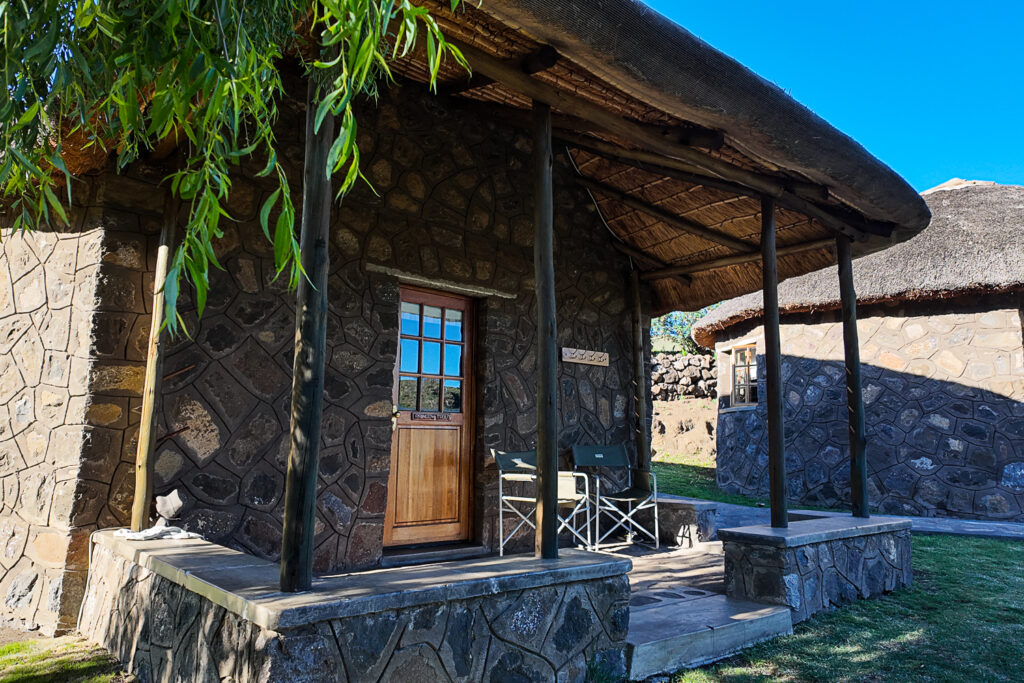
As suggested by the name, this is not just a fishing lodge run for commercial gain. The camp employs over 50 individuals from the local community on a rota with all staff training undertaken by African Waters. They also support a River Ranger programme whereby the local community provides protection to the natural resources by ensuring best practices and local legislation are adhered to. Sustainable cooking projects, water delivery programmes and logistical upgrades (footbridges and road building) are a few of the many projects the camp sponsors.

Guests are encouraged to bring contributions to the local community including stationary for the school and sanitary items and a percentage of the trip cost goes to the community. We walked through the local village several times on the way back from fishing and it is fascinating to see how people live in a way which is very little changed over the last century. Cattle pull single furrow ploughs to grow strips on maize on the hillside and the village is tidy and well kept. Transport for the locals is on foot or by horse and donkey with no cars in evidence. As a visiting fisher you do feel as if you have been dropped into a landscape that exists separately from the outside world and it is a real privilege to visit.

The fishing is of course why I visited. The lodge specialises in yellow fish and trout. At the time I fished, late November, yellow fish are the main target. They move from the enormous Katse dam into the Bokong River to spawn, much as salmon run from the sea to the river. It was extraordinary to see the large numbers of fish move through the pools. They behave in a very different way from trout or salmon, rather than holding on a lie they cruise throughout the pools and move up and down the river depending on water temperature and so on.

The fishing is very technical and challenging, and extremely exciting. Generally, you fish either dry fly or very small, weighted nymphs and you will be sight casting to fish. The yellows do spook quite easily and the water is gin clear, so stealth is very important. The fish are numerous and often a good size. I fished during a period when the fishing was difficult, but the week before the fish had been really on and everyone landed multiple fish. Yellow fish over 60cms are considered noteworthy here and I saw quite a few that size in the river. These fish fight hard, much harder than you would expect for their size, are very selective and are a worthy quarry. It is not unlike New Zealand fishing, walking quite long distances stalking fish in gin clear rivers.

The season runs from November to April, which is spring to autumn, and the trout fishing tends to be in the second half of the season. We caught some smaller trout but the larger ones are caught later in the season. Unusually, for this part of the world, you can catch both wild browns and rainbows.

The lodge normally hosts between six and eight fishers and people stay for different periods, from four days to ten days generally. The guide team are top-notch, very enthusiastic and knowledgeable and a pleasure to fish with. Although they were all quite young, they were very professional and could not be more helpful. We were also fortunate to have Hannah from the UK who was in charge of producing delicious meals (the guides also assisted with this making it a team effort). There was a great atmosphere in camp and a palpable team spirit. This was helped by the other guests, all of whom were repeat fishers, always a good sign.
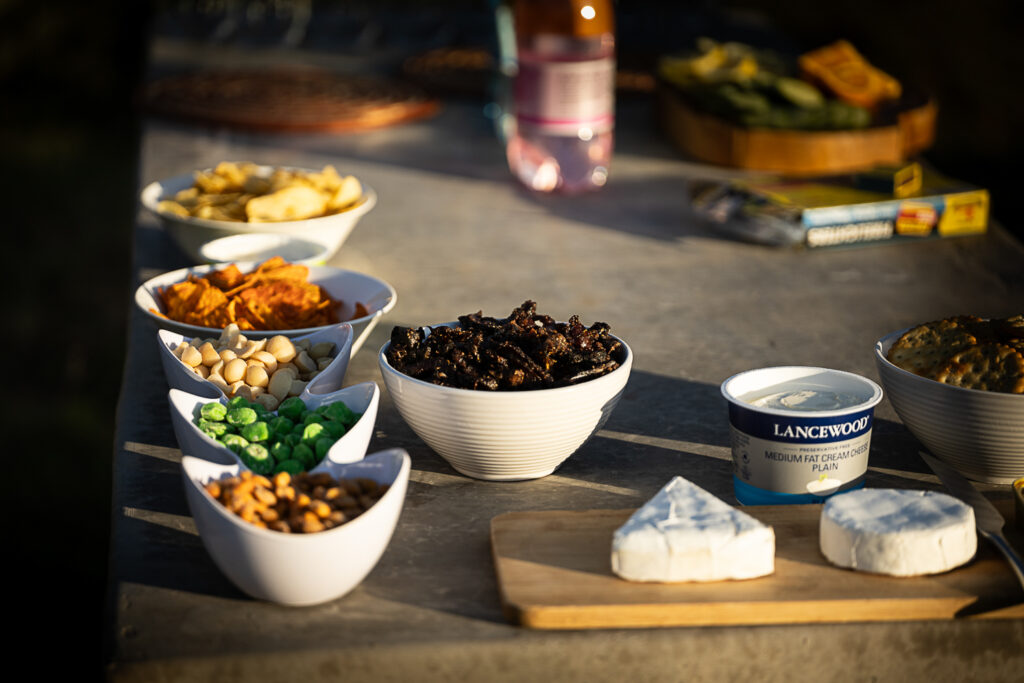


This trip is not for everyone as it is physically quite demanding, especially given that the height above sea-level leaves you gasping for breath after walking up the steep slopes sometimes! You will walk several kms a day, much of it uphill, downhill or along the rocky riverbanks. Fishing is either wet wading or fishing from the bank and is not too taxing although it is a help if you can cast from a crouching position. It is also very technical; sight fishing with 4-weight rods and dry flies or nymphs requires a lot of concentration. However, it is also very rewarding fishing and I for one learnt a lot and came away feeling that I had become a more considered fisher. As someone who has fished a lot with heavier tackle for salmon or aggressive predators it was a steep learning curve to handle the light tippets with care when striking or playing fish.

I would really recommend this trip for those looking for something different. The fishing is exciting and challenging, but this trip is about so much more. The absolutely stunning scenery, the insight into how the local people live and the whole Lesotho experience make it a unique adventure. The lodge itself was also a pleasure, with lovely touches such as large free-standing bathtubs with lots of hot water and delicious dinners eaten with everyone, staff and guests, around the large kitchen table. I would guess that many people reading this know South Africa very well but have not visited Lesotho. My advice is to have a few days at Makhangoa Community Camp on your next trip to Southern Africa and catch a few yellow fish or trout on the Bokong River.

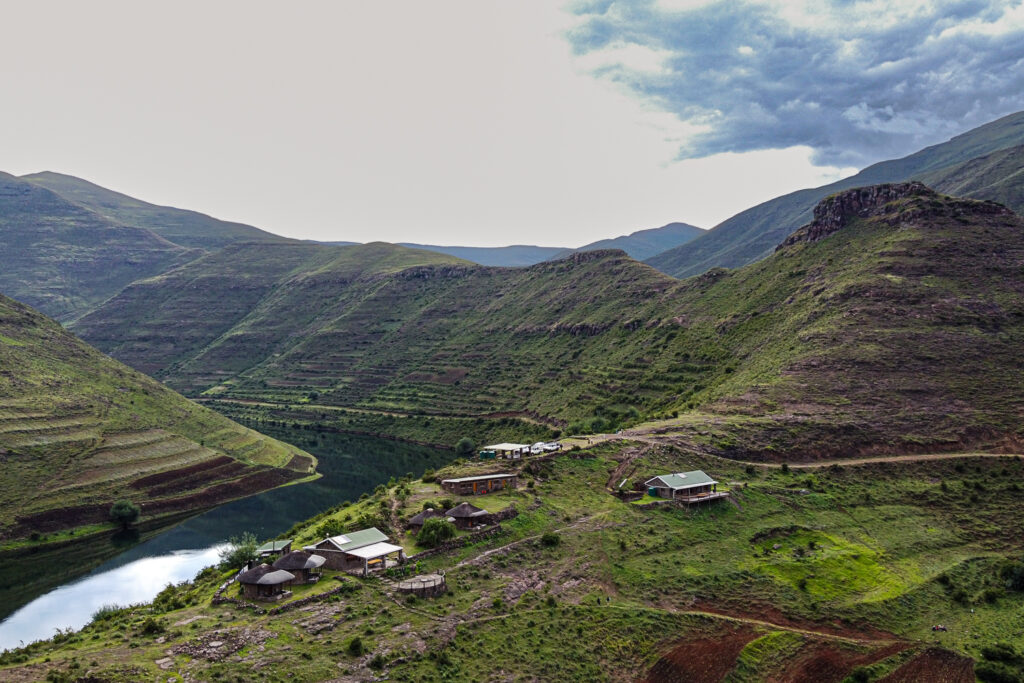


It is snowing outside, and I have only been back from 27/28 degrees and sunshine for 48 hours. My story actually begins back in August of 2023 when I went to Xingu which was a bit of a disaster – you can read the blog here. There was a shining light on that adventure, and he was called Everton Pires, and he was the Head Guide and, as it turned out, jack of all trades in looking after my party because the camp had been understaffed. He was one of those guys who works hard, cares about the clients, really tries to do a good job and yet was very torn between flying the flag for the lodge he worked for and telling the truth. During our chats, he nonchalantly mentioned that when he was not in the jungle, he ran a little tarpon operation from his home city Recife and I should pop and see him some time. It was a kind invite not a business invite. We stayed in touch.
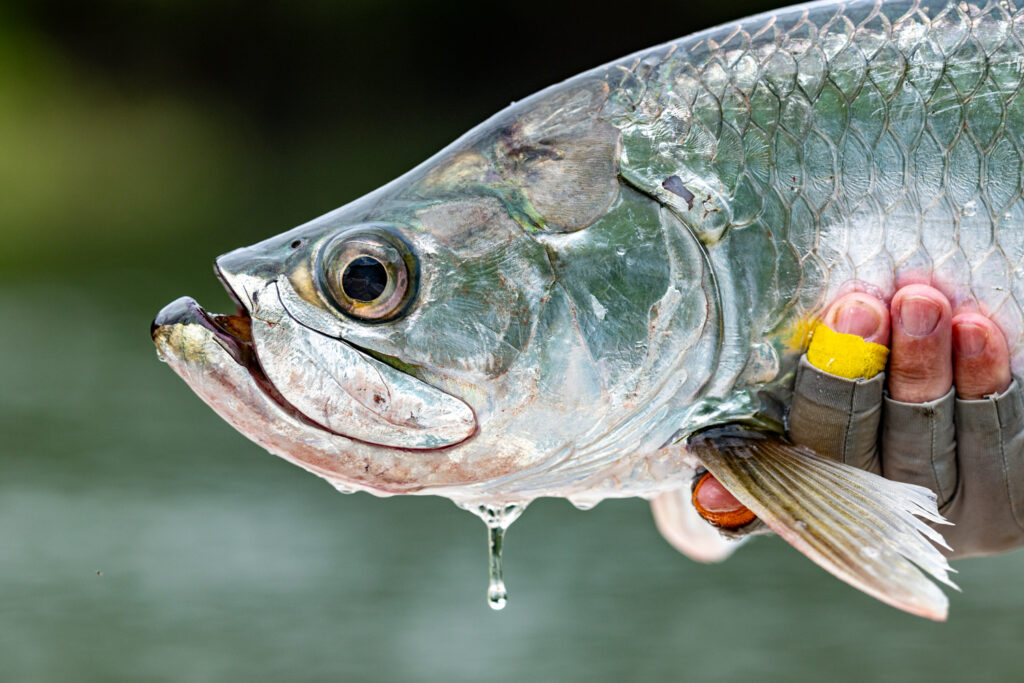
A few weeks ago, we got chatting again over WhatsApp and from his boat he asked me to speak to Guido Perillo, his partner. I did not know he had a partner, but Guido was available, and we chatted and he explained his role. Guido is no slouch either, he has guided in Xingu (as a colleague of Everton’s), Tierra del Fuego/Rio Gallegos, trout in Argentina, Bolivia for dorado, Rio Marie, Brazil for peacock bass, on the Nordura and Midfjardara in Iceland, Russia, King salmon in Chile and his hometown is right by La Zona where the biggest dorado are caught. He has just been invited to guide for Six Rivers in Iceland next summer, that is a real compliment in itself.
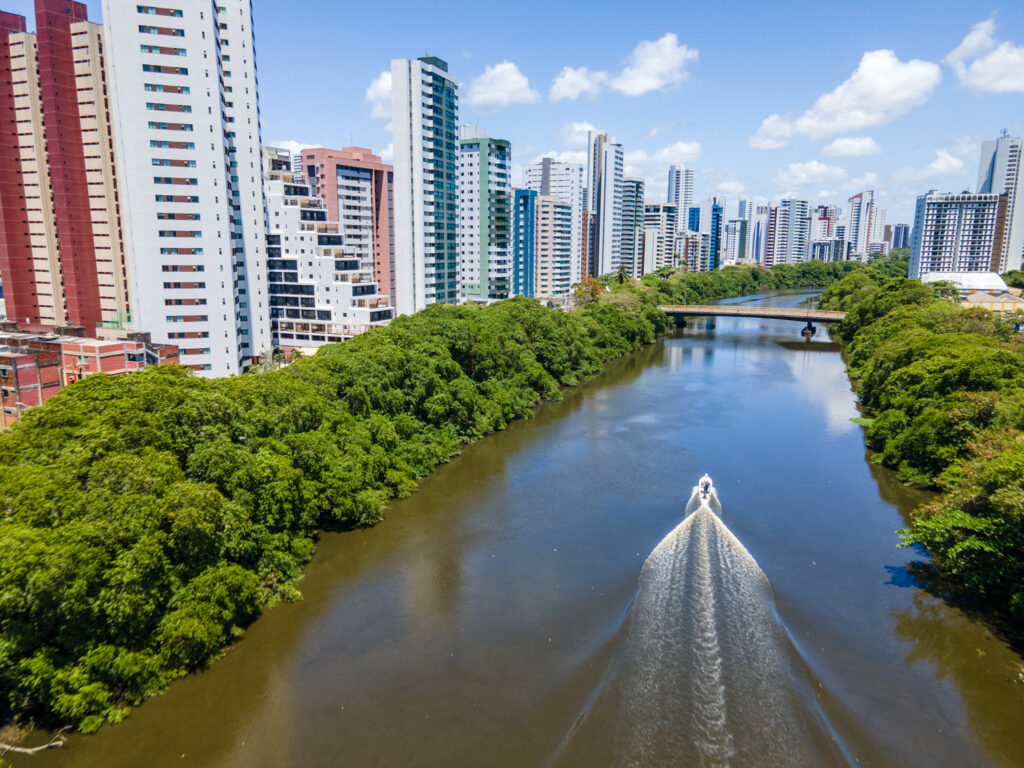
So, this is how Silver King Brazil works between them. You have chatty, energetic Argentine Guido in charge of sales and logistics, and you have the laid back but crazily hard-working Everton in charge of the fishing and guiding. They have allocated their time wisely with Guido’s international lodge experience and know-how ensuring all goes well away from the fishing (back-up guide too) and Everton in charge of the fishing which he has got to know and understand on his own using a kayak for the past eight years. Both are in their 30’s.
The fishery is unique in many ways. The season runs from mid-September to mid to late March. First, nobody else fishes for tarpon here. There are no other lodges or guides. You see the odd local with a net fishing for mullet and occasionally a guy with a spinner which does not seem very effective! If staying near Recife, they fish four different rivers (not clear water), each with their own character. The biggest and most productive (but perhaps smaller fish on average) is the Capibaribe river which is in the centre of Recife itself.
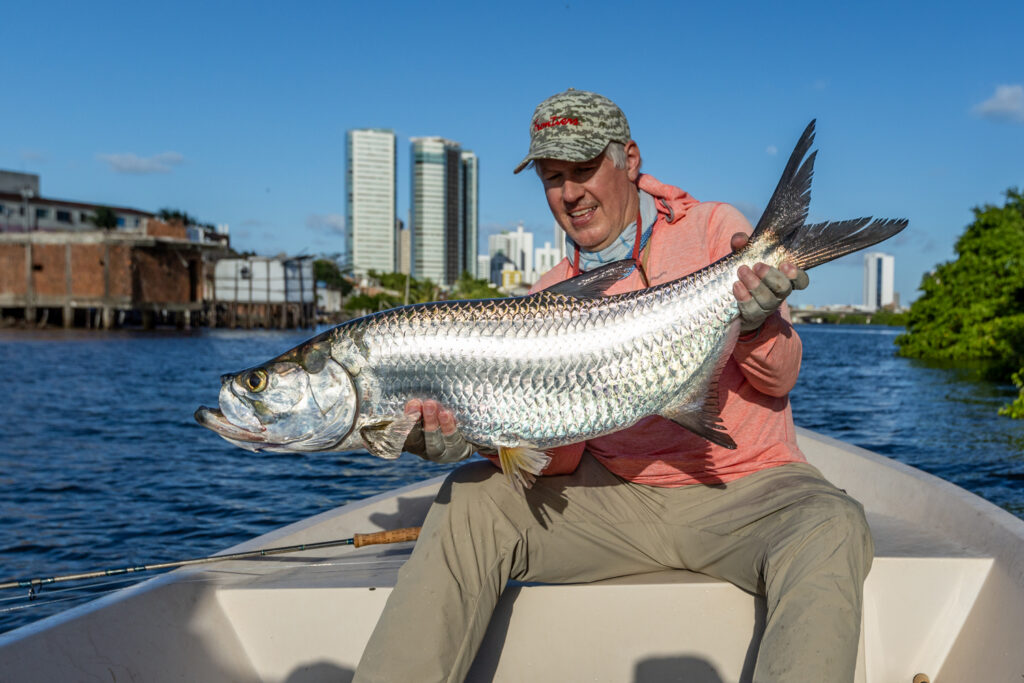
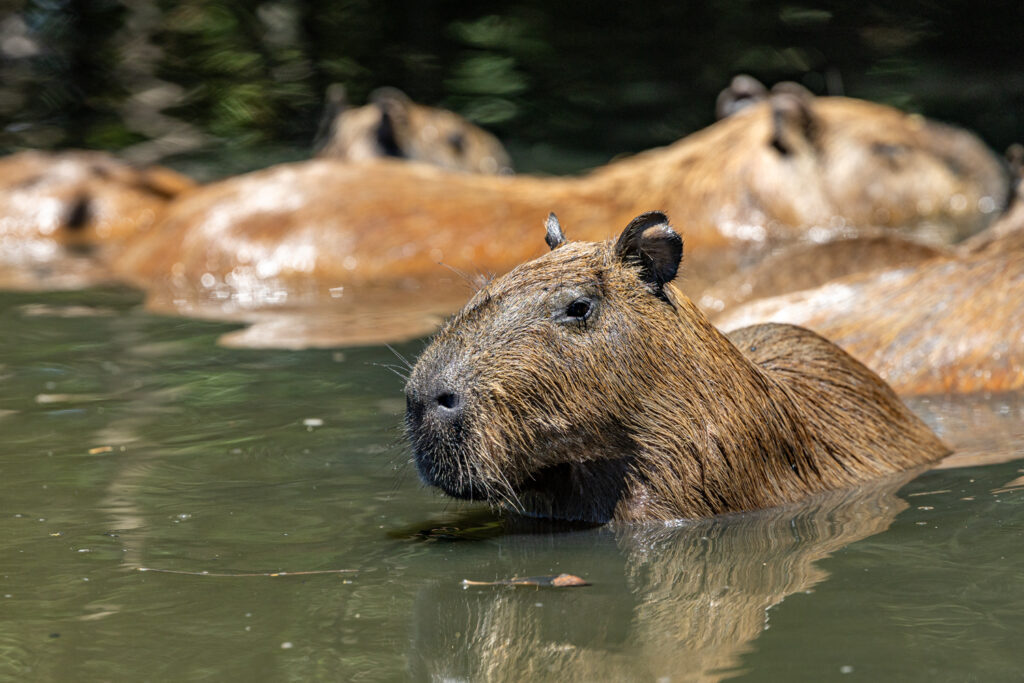
This may be appealing to some and not others, but it is an eclectic mix of towering office and residential blocks, not the cleanest water and yet thousands of ducks, families of capybara and a thriving tarpon population. From the water one can witness the beautiful old town, modern hotels and all around the culture of Recife going about its business with the ever-present mussel fishermen toing and froing from their fishing areas, boats empty and then laiden.
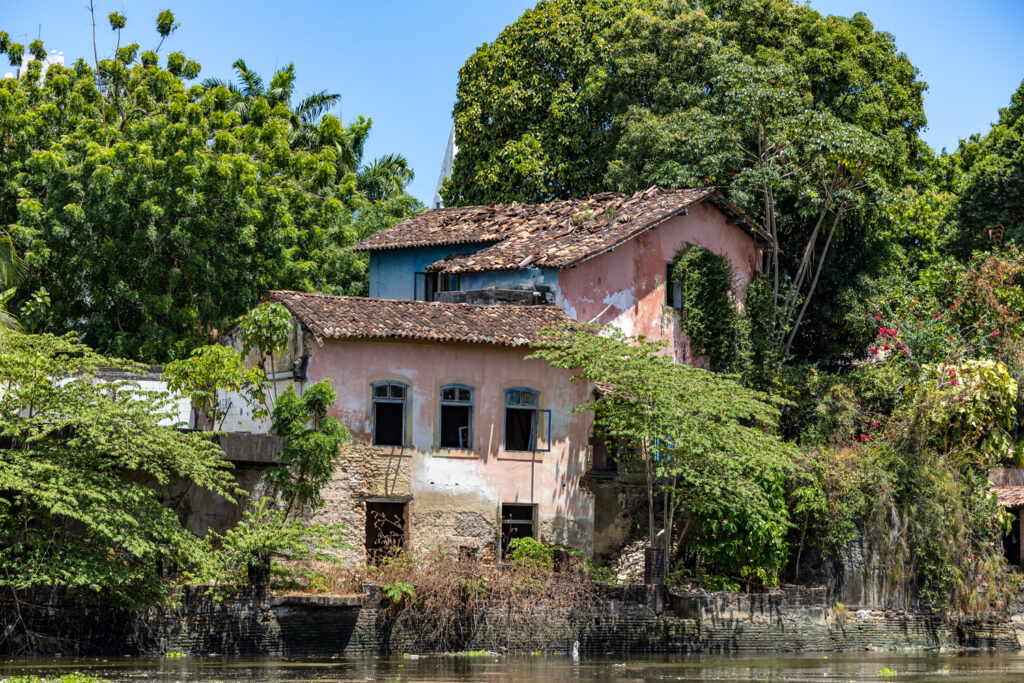
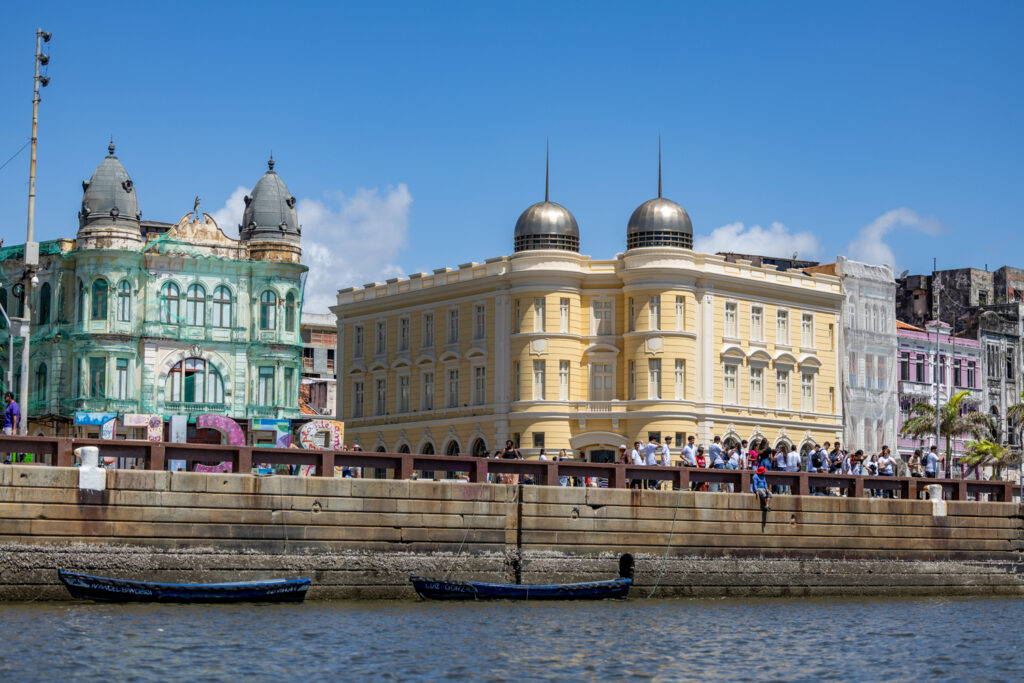
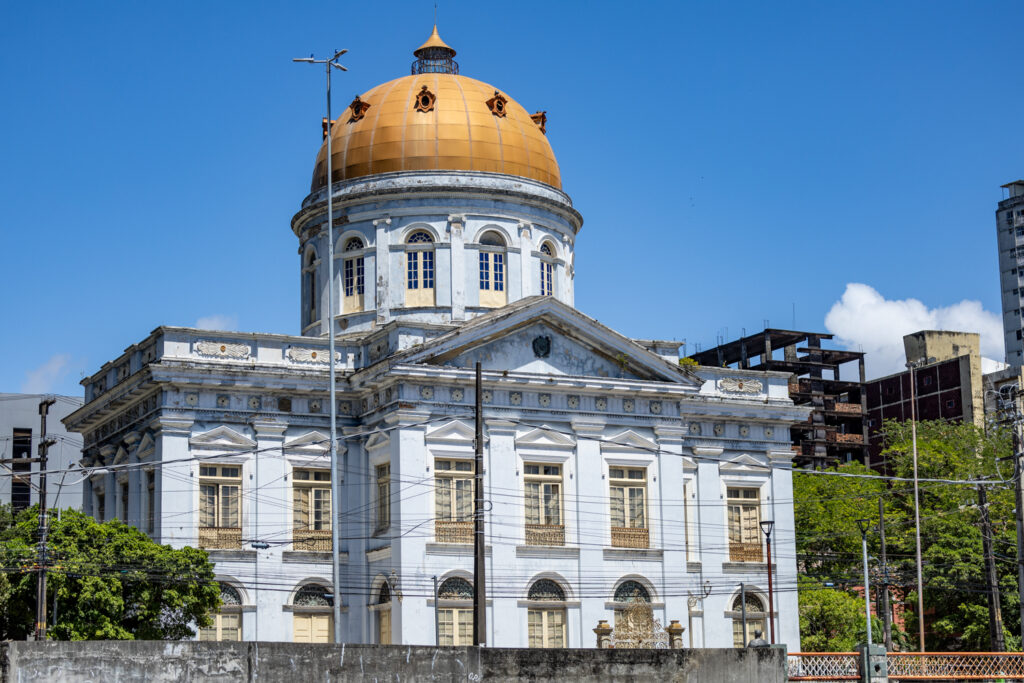
Another river is the Sirinhaém which is deep in sugarcane country as far as the eye can see but they have clearly not been allowed to clear along the rivers so when on the river, one is deep in the trees and in your own world. The last two rivers accessed from Recife are the Ipojuca and Jaboatão which are also more out in the countryside where one only sees local people living in remote tiny settlements.
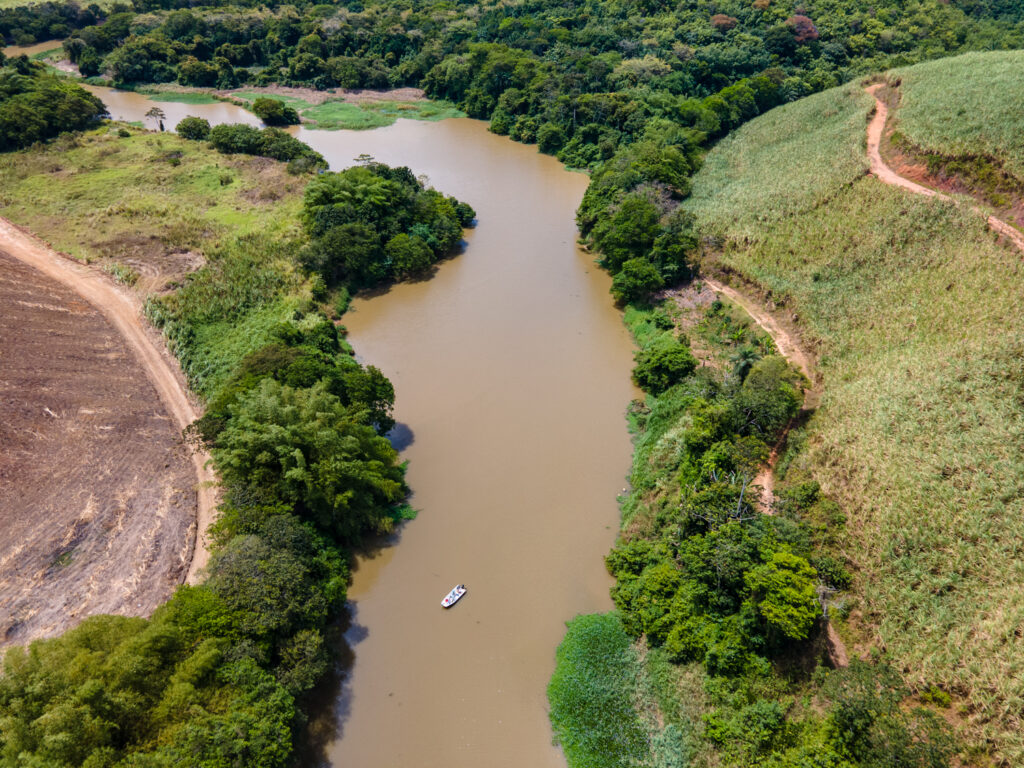
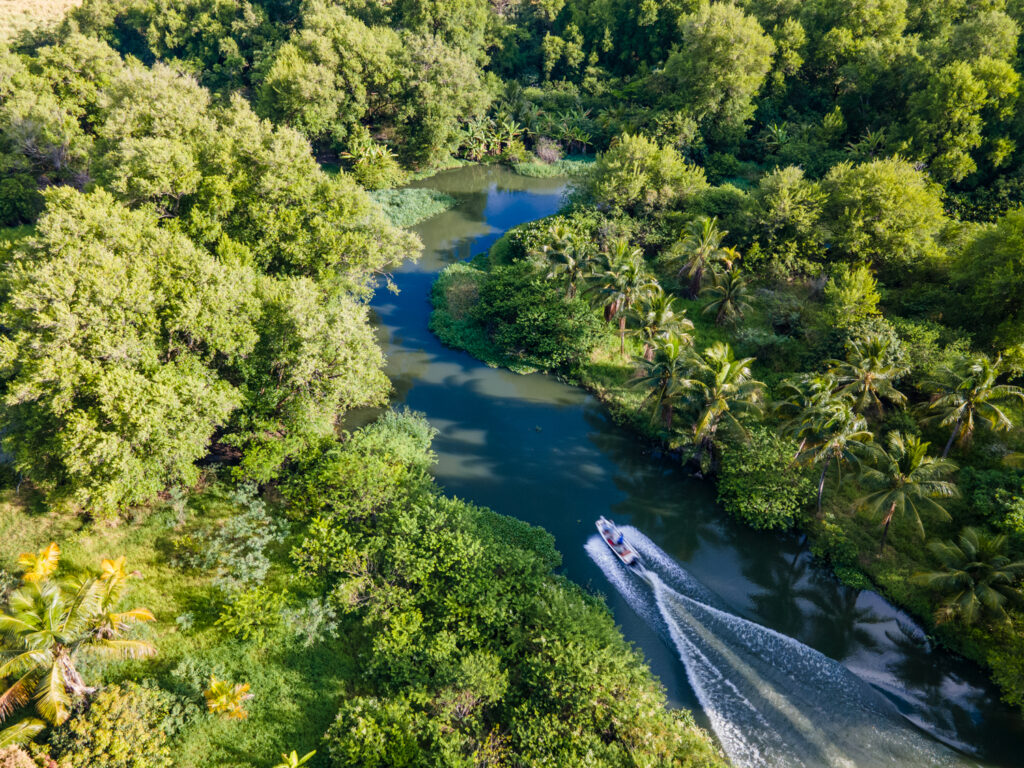
The Capibaribe river is the most productive with a smaller average size but that does not mean that fish of 30lbs or more are not possible (I had a crazy 30lbs + fish) while the other three rivers have less fish but with a bigger average size. The hook-up statistics they suggest are reasonable at 10 a day for the Capibaribe and 5 per day for the other rivers but I have to say I had more hook-ups and saw fish rolling everywhere we went and all day long. To my eye, there is absolutely no shortage of fish at all, the challenge is getting them to take and keep hold of them once they do! There is another fishing programme out of town by over 100 kms which can be a separate trip or combined with days in Recife focusing on big tarpon but success is not guaranteed.
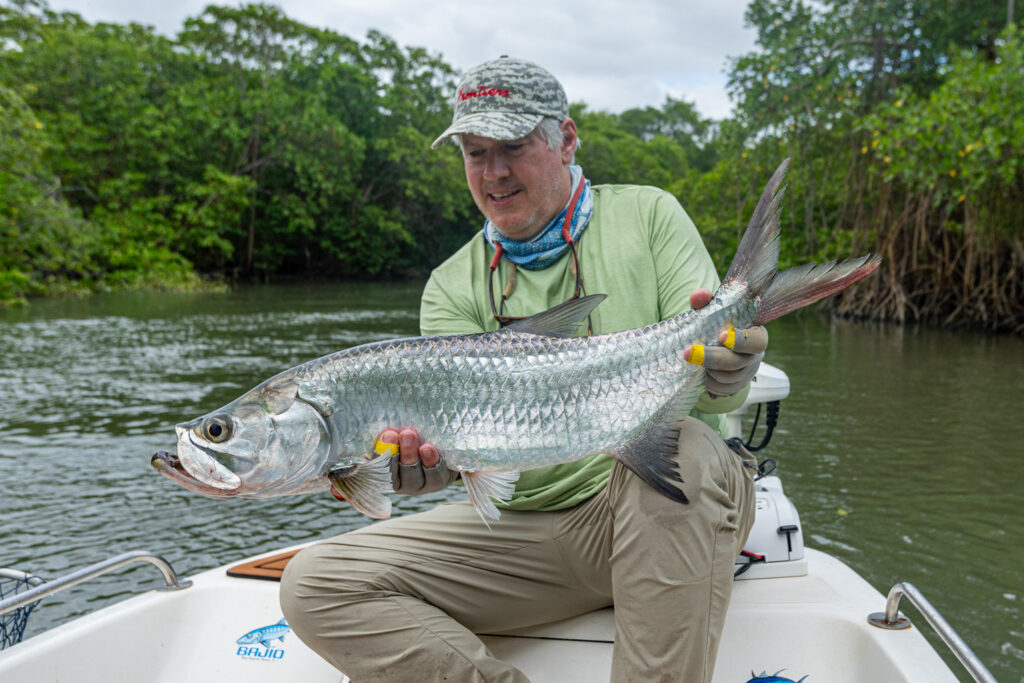
About Recife City
With a population of 1.5 million, Recife city is the capital of Pernambuco State, northeastern Brazil, and centre of an area that includes several industrial towns. It is an Atlantic seaport located at the confluence of the Capibaribe and Beberibe rivers. Recife has been called the Venice of Brazil because the city is crossed by waterways and its component parts are linked by numerous bridges.
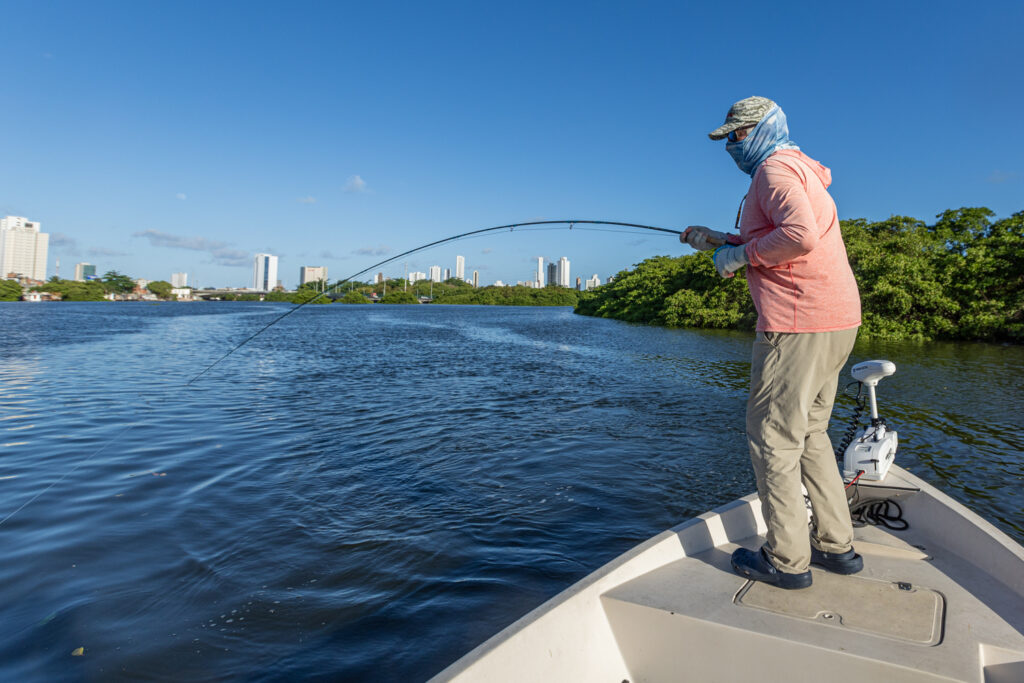
In the second quarter of the 16th century, wealthy Portuguese colonists lived in splendour at Olinda, just to the north. Recife was then merely an anchorage that handled their exports of sugar and their imports. It was raided by French pirates in 1561 and by the English in 1595. In 1630 it was captured by the Dutch who held it for 24 years. The town prospered under the governorship of Count John Maurice of Nassau. In 1710, the inhabitants revolted against the magnates of Olinda in what is now called the War of the Mascates (i.e., peddlers) because the small tradesmen of Recife tried to organise a municipality of their own. In 1827 Recife became the official capital of the province of Pernambuco. Recife has shared in the prosperity of northeastern Brazil that resulted from development promoted after 1960. Although its retail and wholesale trade have grown in response to the region’s increases in population and wealth, the market area and the walkways of the city’s bridges are crowded with vendors selling small items.
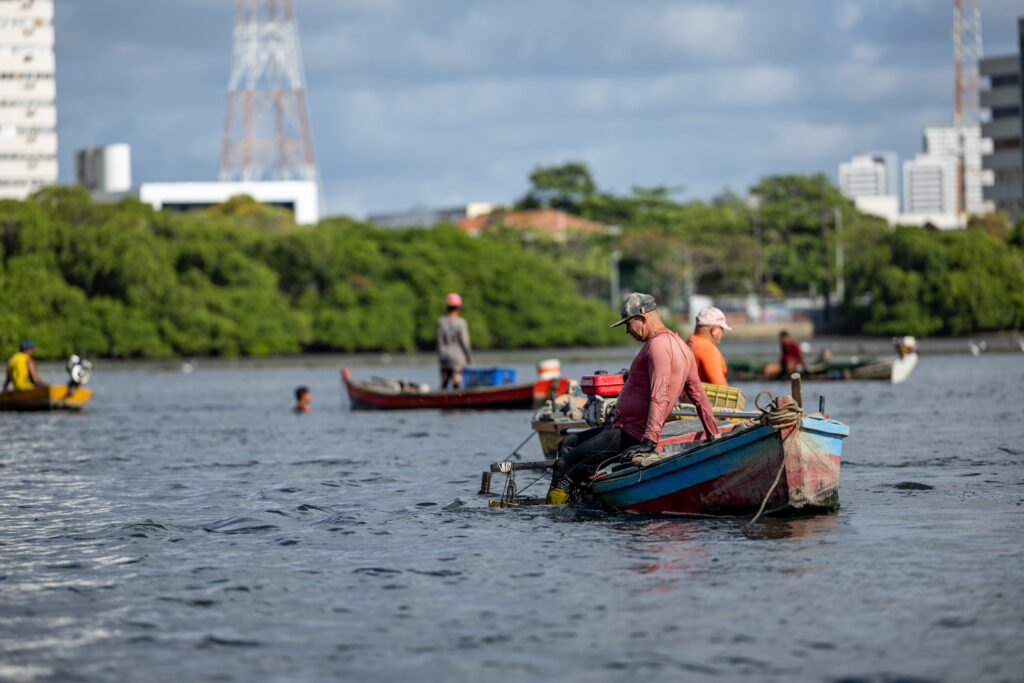
Besides the State Museum, there are museums of sugarcane and of popular art. There are many historic churches and public buildings, including the Governor’s Palace and the Santa Isabel Theatre. The beaches of Boa Viagem, on the city’s south side, attract large numbers of tourists. Recife is home to three major stadiums, reflecting its obsession football!
Recife has a symphony orchestra, a conservatory of music, and several theatrical companies, including the nationally renowned Pernambuco Amateur Theatre and the Popular Theatre of the Northeast. Reflecting the area’s distinctive cultural composition are the folklore festivals: the Xangô is typically African, while carnival time is vibrant with the compulsive music of the forró, an emotionally and physically exacting dance.
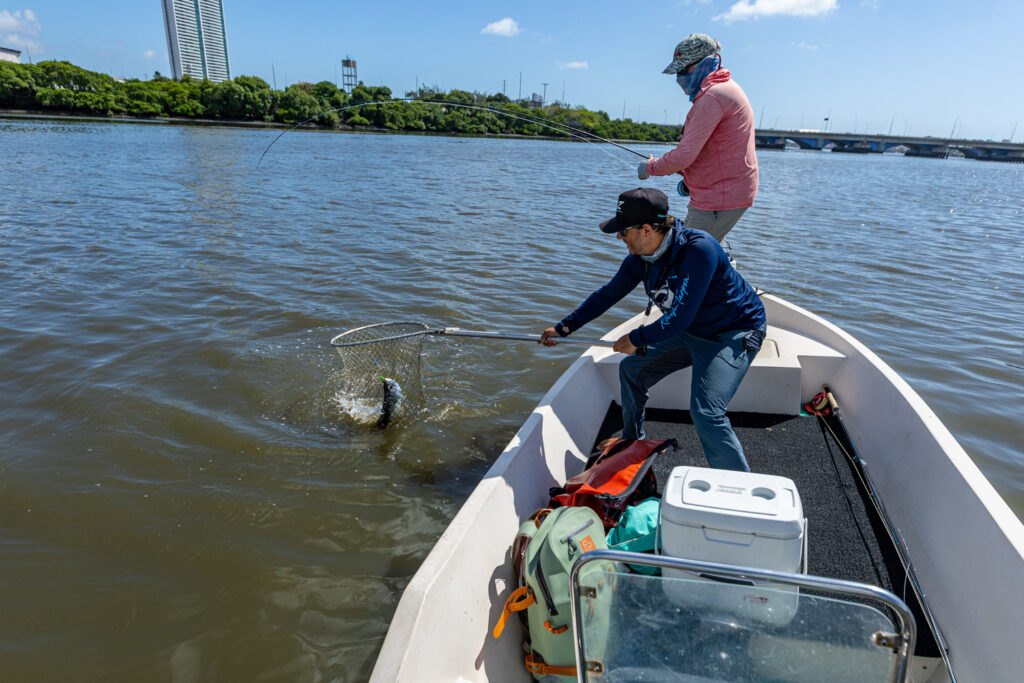
How does it all work and why is it so easy?
There is a flight with TAP Air Portugal from London to Lisbon (2 hrs 10) and then Lisbon to Recife (8 hrs) direct. It leaves the UK in the morning and gets to Recife about 2130 in the evening. Guido meets guests and drives them about 45 minutes to where they will stay. It is possible to eat at the airport before leaving it but generally, it is time for bed.
Due to the nature and location of the rivers Everton and Guido have not set up a lodge. They rent houses for the season which are comfortable and functional for guests with ensuite rooms, Wi-Fi, hot water etc. They cater to all your needs at the house including bringing in Gilvan, the chef, a lovely guy who does a great job. You really want for nothing and as a four-rod max operation (at present) it is all very relaxed. I have suggested to the guys that they consider improving things further with a list of menu options before arrival, so they know that guests are getting to eat and drink exactly what they like. We enjoyed pork, fish, steaks on the barbecue, shrimp, chicken etc with the added bonus of proper ripe fruits and avocados etc.
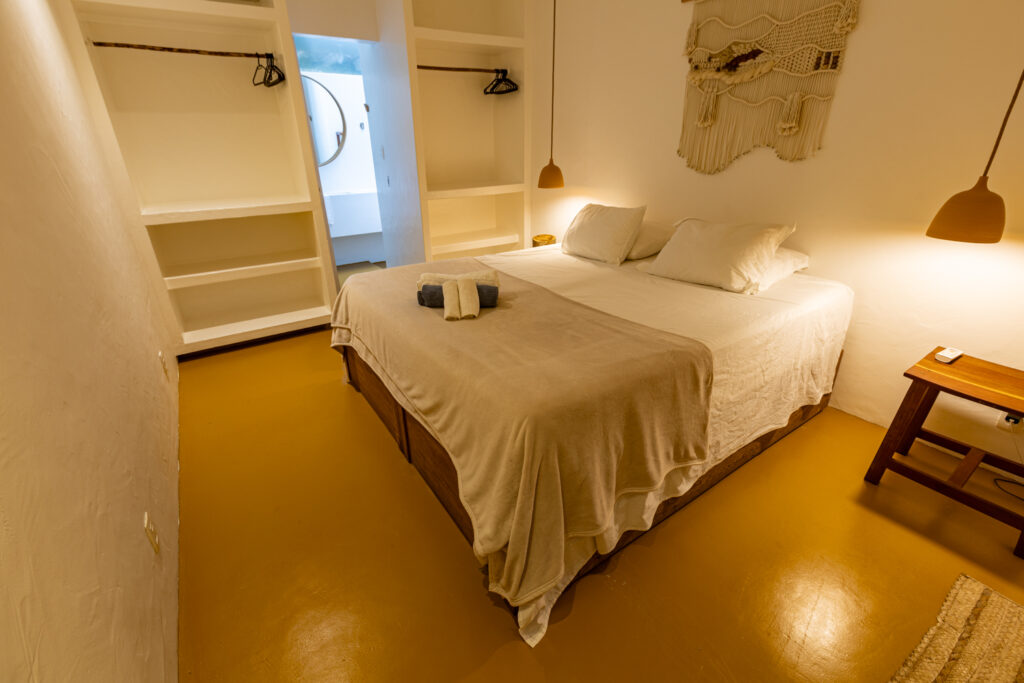
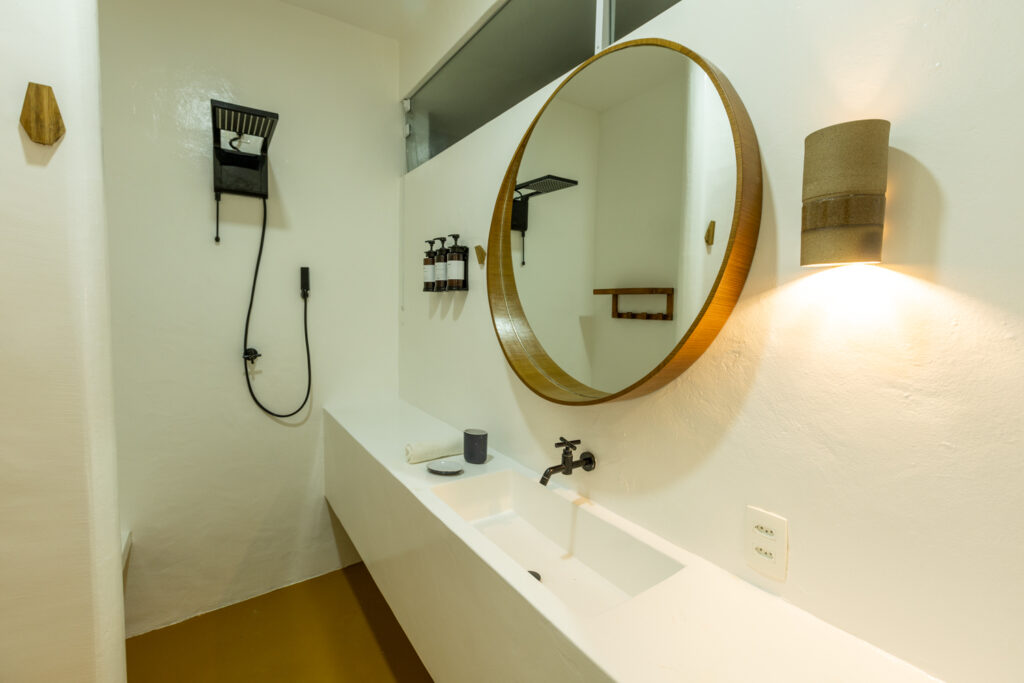
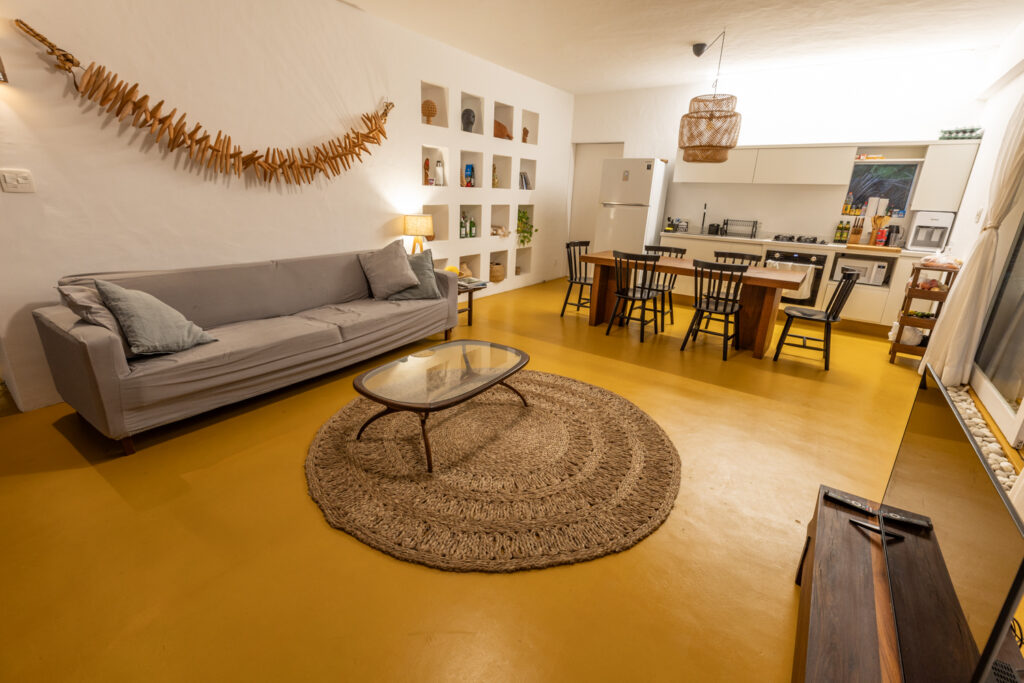
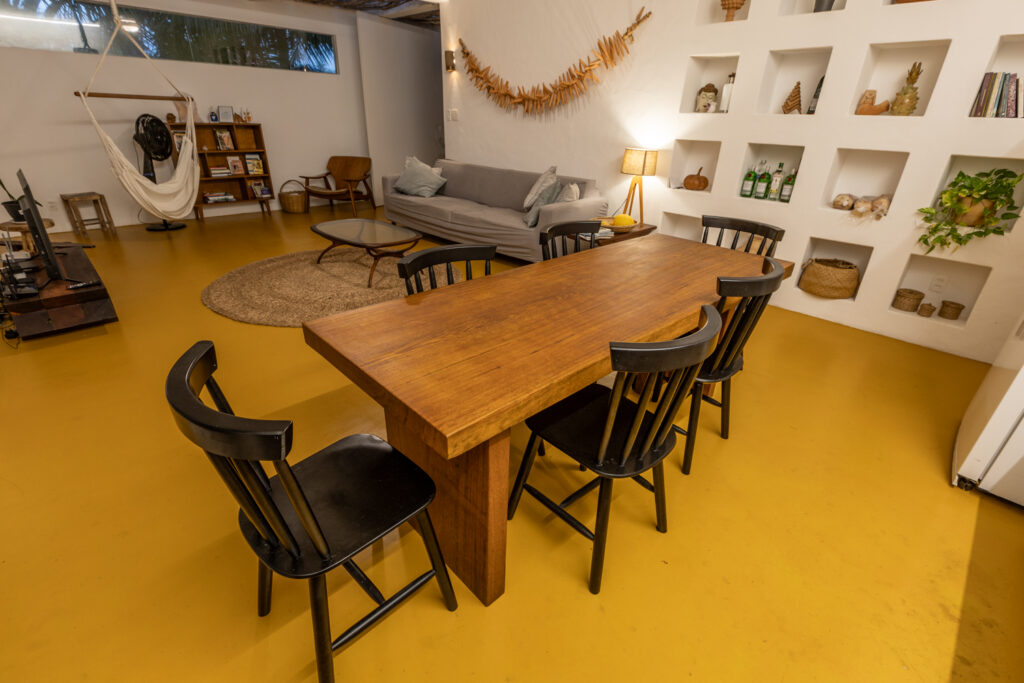
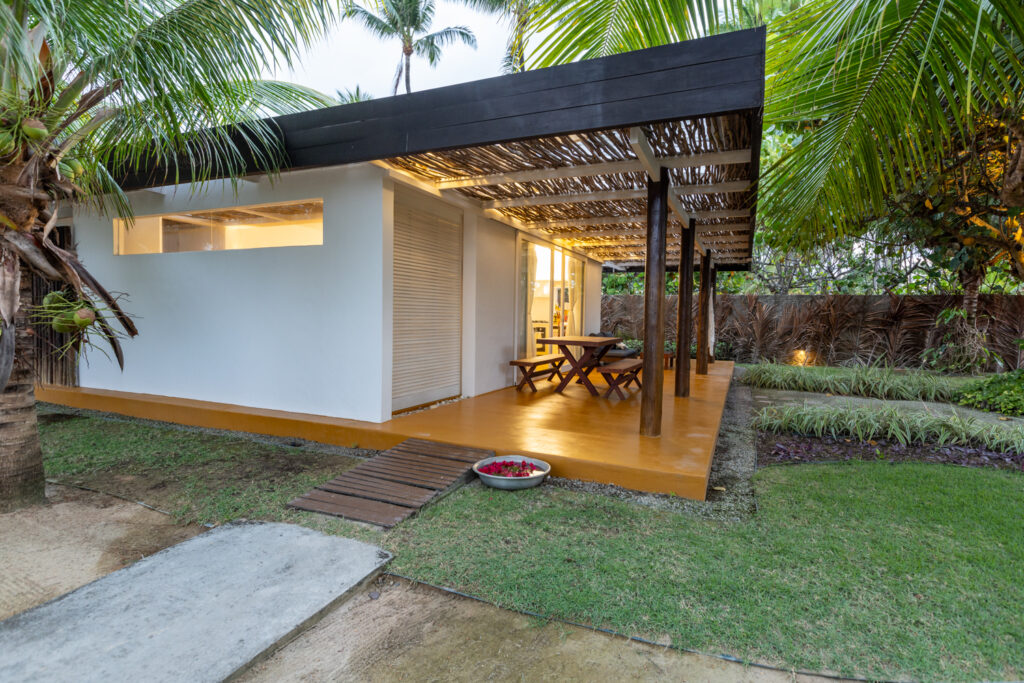
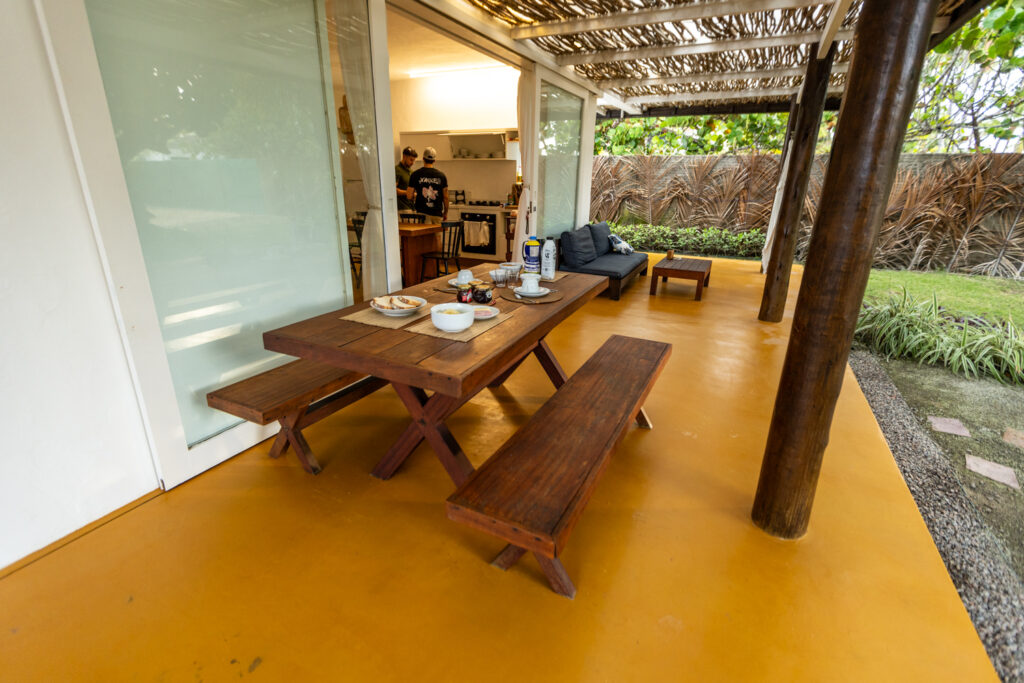
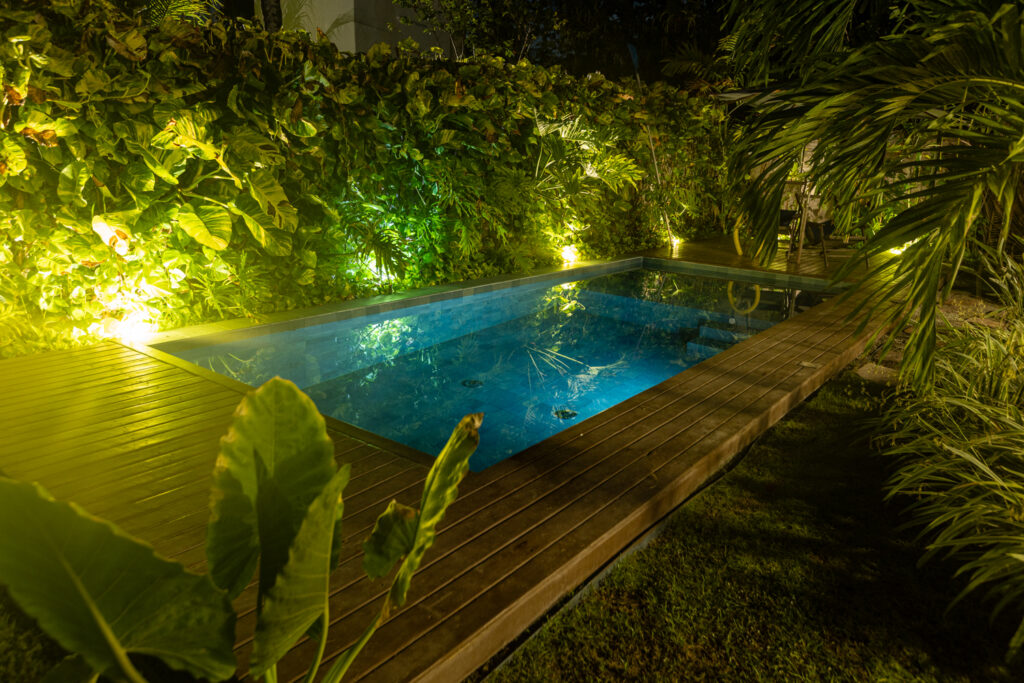
They will get you up early for two reasons, the first is fishing related to tide timings, the second is to get you to the fishing avoiding the traffic. What takes 20 minutes on empty roads in the early morning can be an hour and 20 minutes once everyone else is awake. Besides, a 4 am start is 7 am in the UK and it really is a breeze. Have a relaxed breakfast…
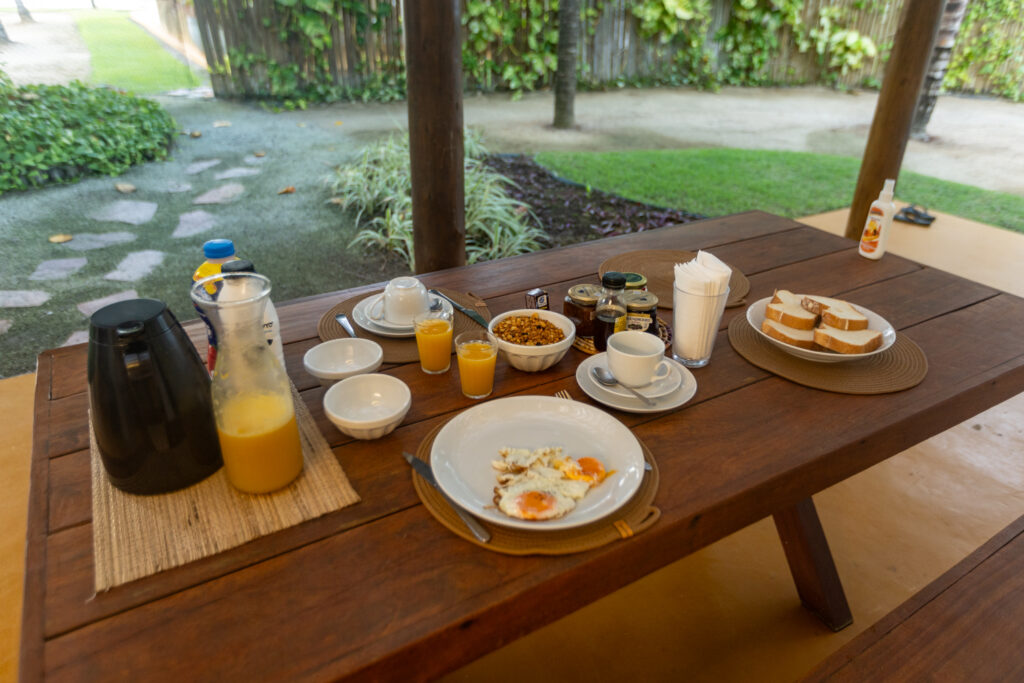
You drive to your launch site (journeys from 20 minutes to 45 minutes) and off you go fishing. If in the city, you have lunch at a restaurant, if out of town, you have sandwiches and fruit. Generally, you get back to the house at about 3pm. Relax, swim in the pool (or the sea – their houses are usually near the beach) and then enjoy a caipirinha, a cocktail made with cachaça, sugar, lime juice, and ice, before dinner at perhaps 6 and bed around 8pm which is 11pm UK time. Basically, you can stay on the UK time, and I can tell you, there is zero jetlag! On your last day, you can wake up and fish as normal, come back and have dinner as normal, and then pack and shower and get to the airport for about 8.30pm ready for your flight to Lisbon leaving at 11.10pm. You land in the UK at 5.30pm, head home and go to bed! You literally waste no time and feel perfectly fine on your return! Somehow, you have had some great fishing, some lovely relaxed down time, fun with Guido and Everton and you are not jet-lagged or exhausted at the end of it.
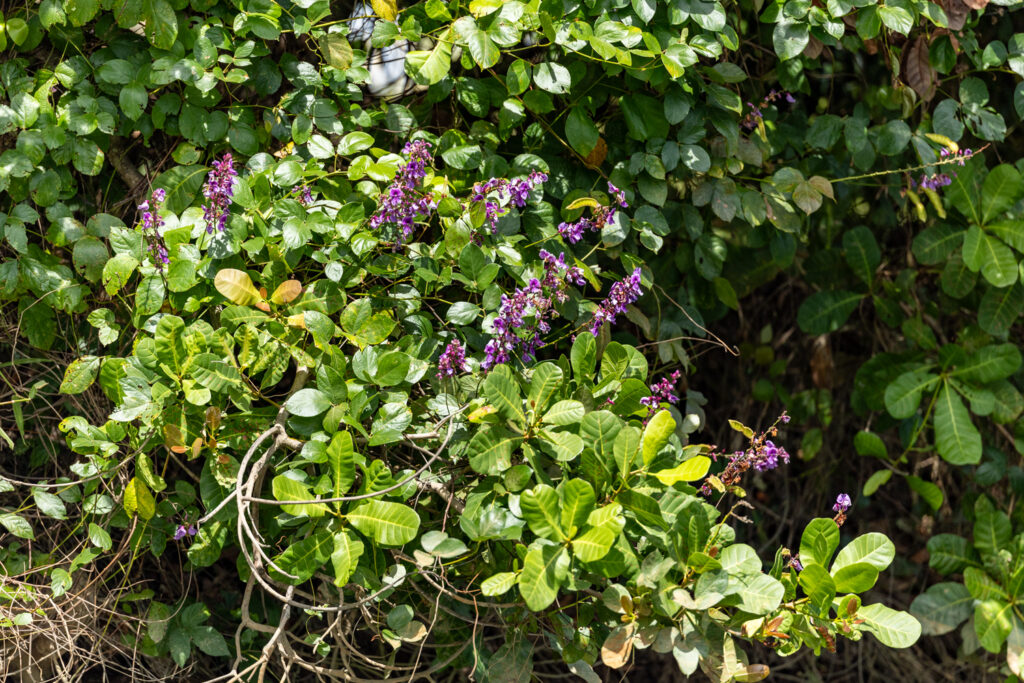
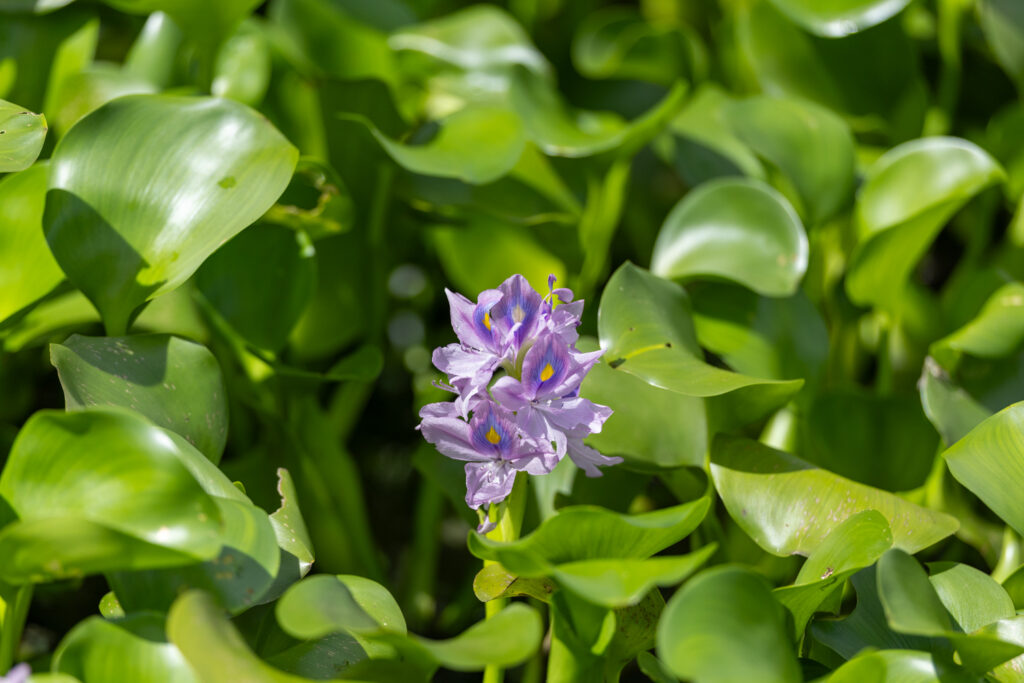
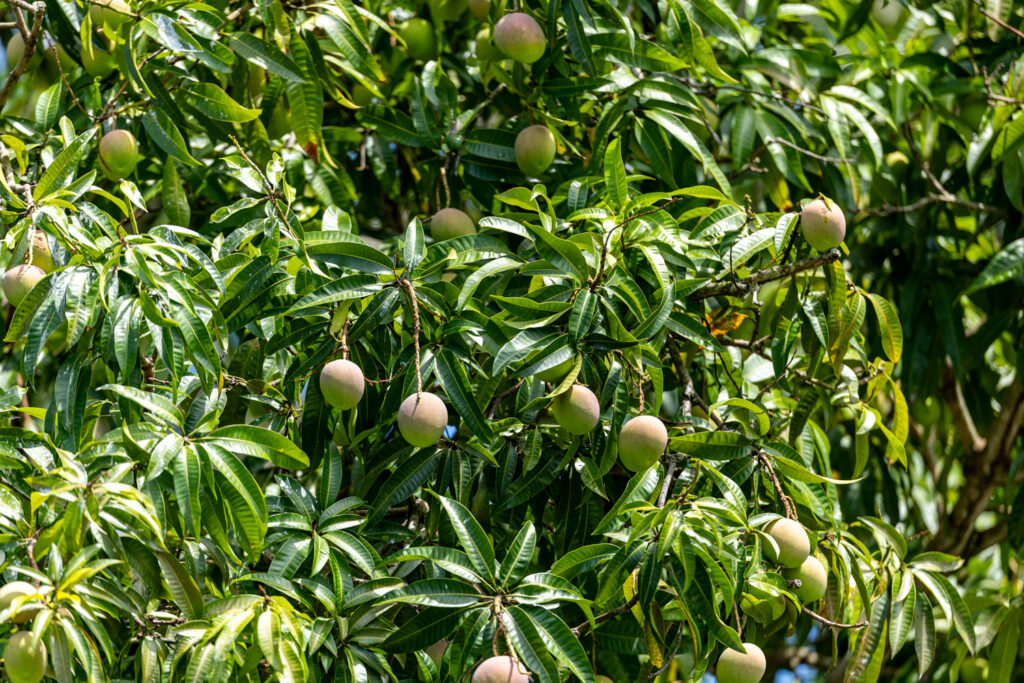

What are baby and sub-adult tarpon and why are they in the rivers?
I could write
my own version of the life cycle of a tarpon but the Bonefish
and Tarpon Trust do an
admirable job so I quote from them.
“Spawning is where it all begins. This remains the most unknown variable
of the equation, and one of the most important. We know that spawning
occurs in late spring through summer, and the limited information available
suggests that tarpon spawn over 100 miles offshore, where they presently
receive no protection. Limited data also indicates that spawning occurs in
association with the full and new moons, but we don’t think that every tarpon
spawns every month. Anecdotal evidence from anglers also supports this
theory – descriptions of schools of tarpon heading offshore prior to the full
and new moons, and back into coastal waters in the days following during
spawning season. Some of the satellite tag data show that tarpon undergo
deep dives, to 400’ depth, during the days just prior to full and new moons,
and we think this may be associated with spawning. The theory is that
pressure difference between depth and the surface aids males and females in the
release of their sperm and eggs into the open water, a spawning strategy known
as broadcast spawning. The eggs are fertilized in open water, and hatch
as small leptocephalus larvae.
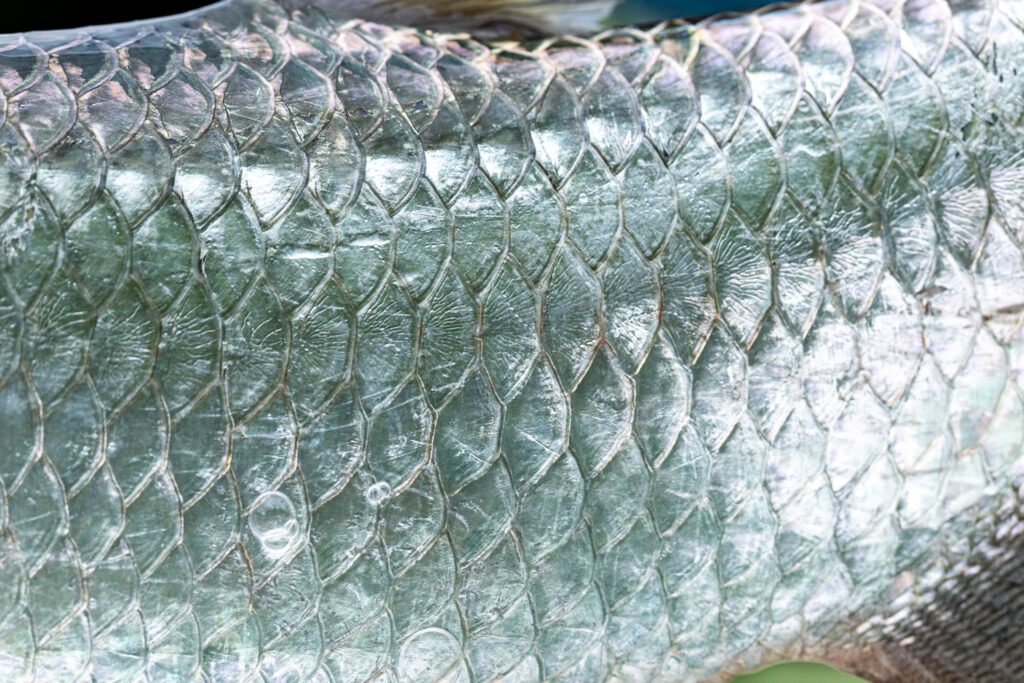
Once the eggs hatch, the month-long larval stage begins. Tarpon start out looking like a miniscule eel with the transparency of a jellyfish (called a leptocaphalus). A leptocephalus grows to approximately 3-4 inches long and has quite exceptional mobility for its size. Their capacity to use their limited swimming ability to navigate currents from over 100 miles offshore into estuarine conditions is a remarkable feat. On the east coast of Florida, near the Indian River Lagoon, larval tarpon enter the estuary at night, using the cover of darkness as protection from predators. They appear to prefer entering the estuary through the shallowest cuts possible. Once inside the estuary, the journey is far from over. The leptocephali must traverse varying habitats including seagrass beds, oyster reefs, and shoals full of predators until they reach their final destination where they can safely continue their transformation into juvenile tarpon.
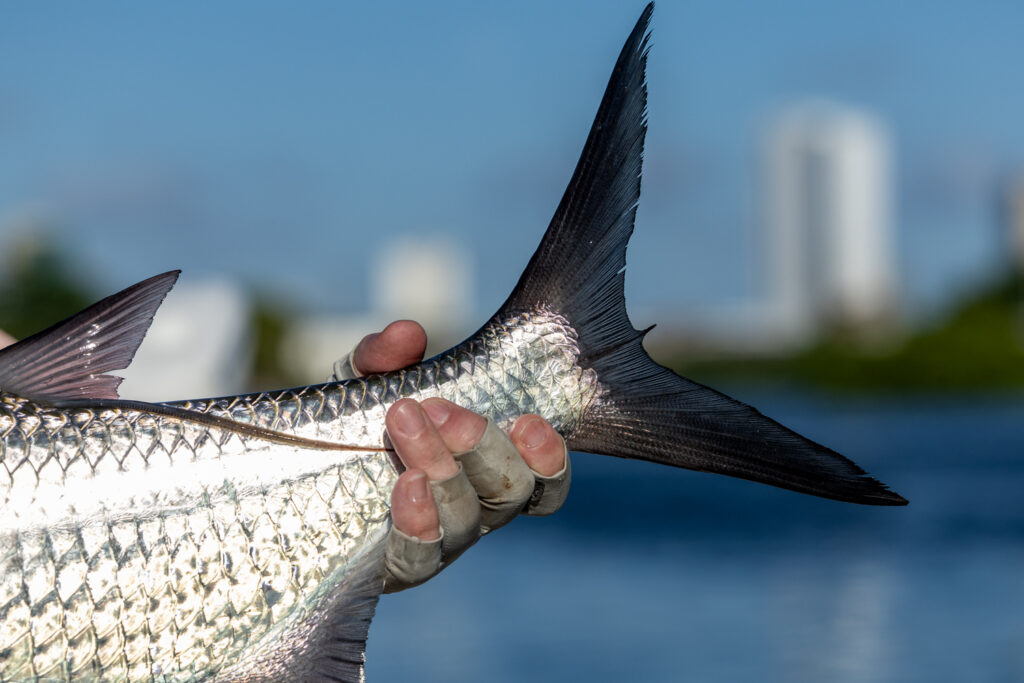
During the juvenile stage, a tarpon looks like a miniature version of its adult counterpart. Juvenile tarpon tend to thrive in back creeks and protected estuarine environments where there are very few predators. Why are there fewer predators than the open waters of the estuary? The backwater areas usually have stagnant water, which causes low dissolved oxygen conditions. Juvenile tarpon can deal with the hypoxic (low oxygen) conditions with help from their swim bladder. Although most fish possess a swim bladder that helps with buoyancy control, tarpon have the ability to control the contents of their swim bladders by obtaining and releasing the ambient air and can use that air for respiratory functions. This allows the juveniles to obtain much of their oxygen from the air rather than the water. Since most fish need oxygenated water to survive, juvenile tarpon predators are unable to access these backwater habitats.
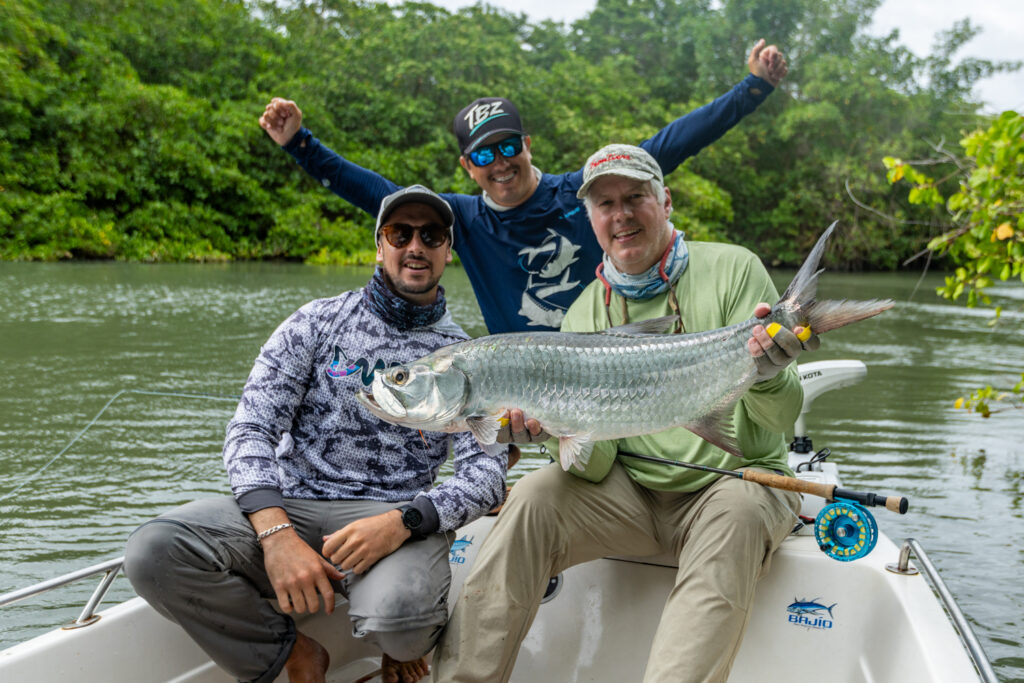
The fact that juvenile tarpon require such specific habitats, and that these mangrove and wetland habitats continue to be lost, underscore the need for protecting these important habitats. And since juvenile tarpon are not found in equal abundances in all wetlands, research is necessary to identify which locations are most important so their protection can be prioritized.
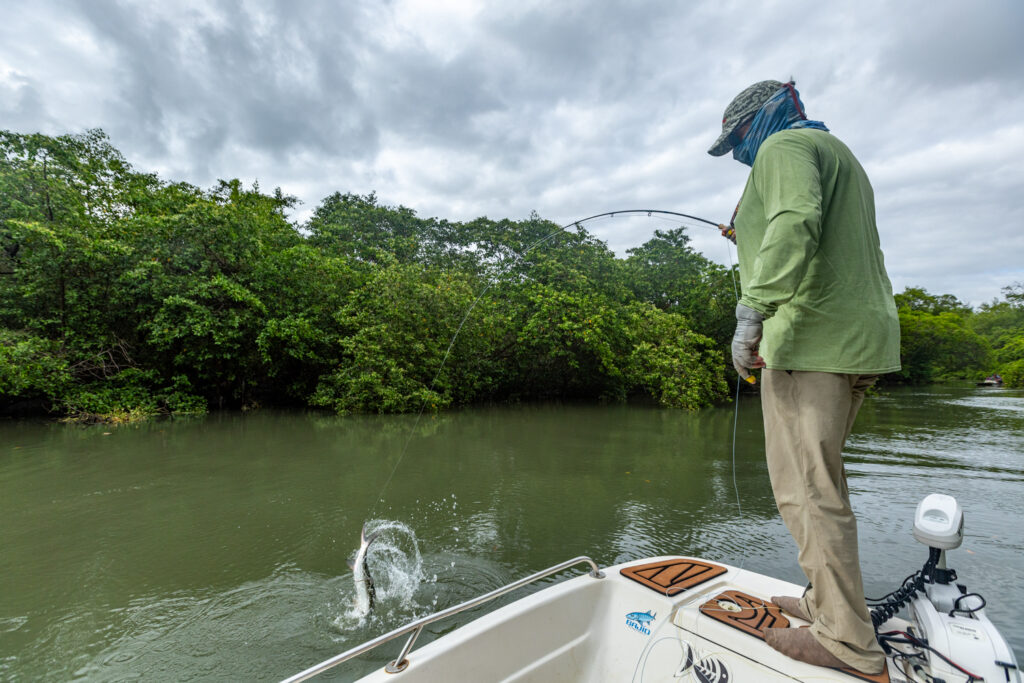
Many think that tarpon are obligated to gulp air, but research has shown this is not true. Anglers often see adult tarpon rolling in well oxygenated habitats, such as passes and in harbours. Studies link this behaviour was initially a juvenile survival necessity. Rolling for adult tarpon seems to be a preference more than a survival strategy which was confirmed by one research study. Adult tarpon were placed in an artificial habitat that was well oxygenated and their ambient air supply was cut off by placing a lid over the tank. Although the tarpon attempted to roll at the surface (a behavioural response), their respiratory functions were not hindered by the lid. As they are throughout their lives, juveniles are opportunistic feeders. They eat small crustaceans (copepods, mysid shrimp) and worms, for example, and expand their diet to include fish as they grow.
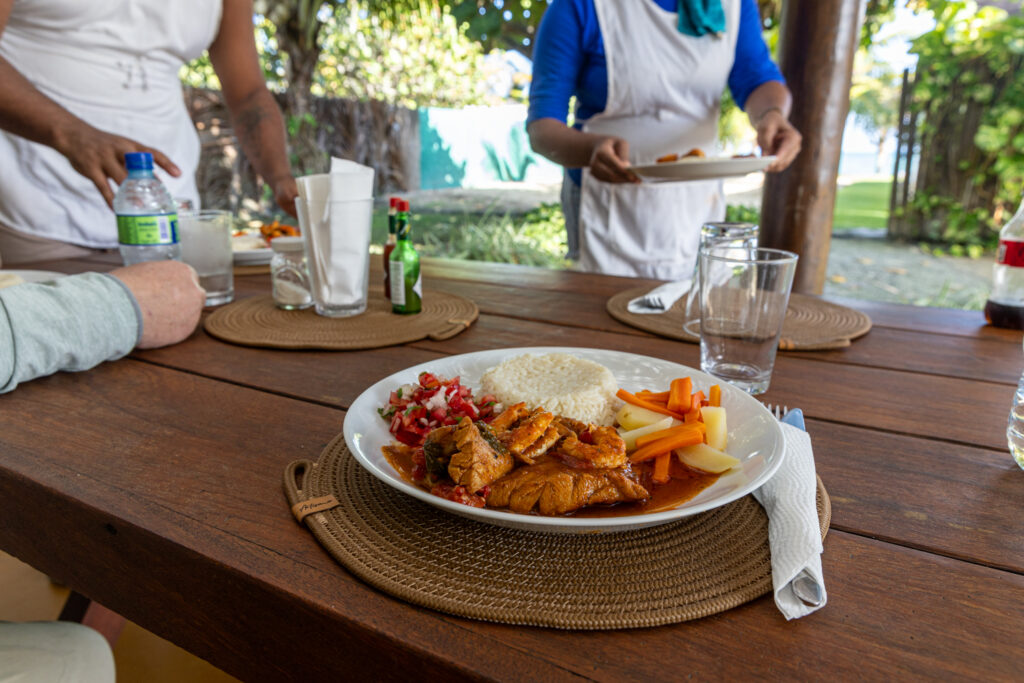
The sub-adult stage of the tarpon life cycle, from 2 years old to maturity, is similar to that of a teenager: they are still experimenting with their bodies; they look like adults but still act like children; they eat and eat but never leave home. Sub-adult tarpon expand their diet, including crabs, fish, shrimp, and worms. They also expand their use of habitats and the ranges that they travel, although it seems that the younger sub-adults do not move great distances. Tarpon take quite a while to reach maturity. Female tarpon reach reproductive maturation around age 10 to 12.”
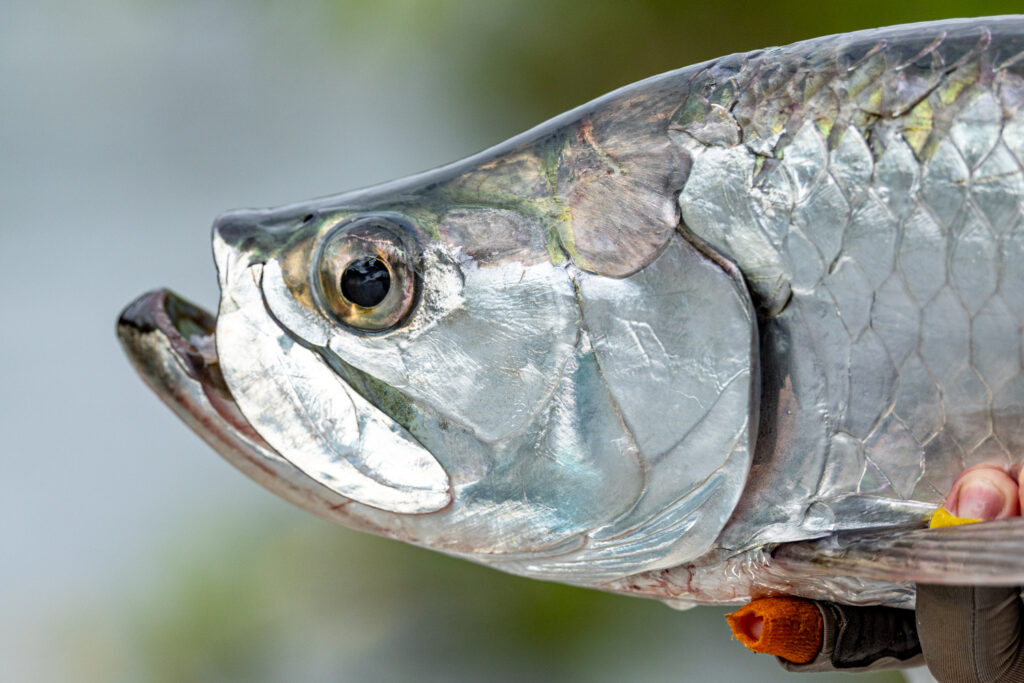
What about the fishing?
Perhaps I should have mentioned this above, but it will not be long until the guys can loan you rods and reels etc, and this leaves your packing requirements so small, I reckon it would be possible to ‘carry on’ and not have to check any luggage. You need a couple of fishing outfits and maybe a couple of changes of clothes for the evening (it is very casual) and you are sorted. On your feet you can wear whatever you like – they may get a little wet but crocs, flats boots, flip-flops or any variation will do. You do need sun gloves, gaiters for sun protection around the neck and sunscreen. Temperatures are around 27/28 C (80 – 82 F) degrees. I experienced VERY few bugs – the odd mosquito around the lodge but I did not have any need for bug spray when out fishing. I would recommend hand sanitiser particularly for the fishing days in Recife. I wore standard flats trousers, not tights and shorts à la Seychelles, there seemed no need. You do not really wade much at all other than to maybe get a little bit wet getting into the boats here and there. Long-sleeved flats shirts or T-shirts and perhaps socks for sun protection.
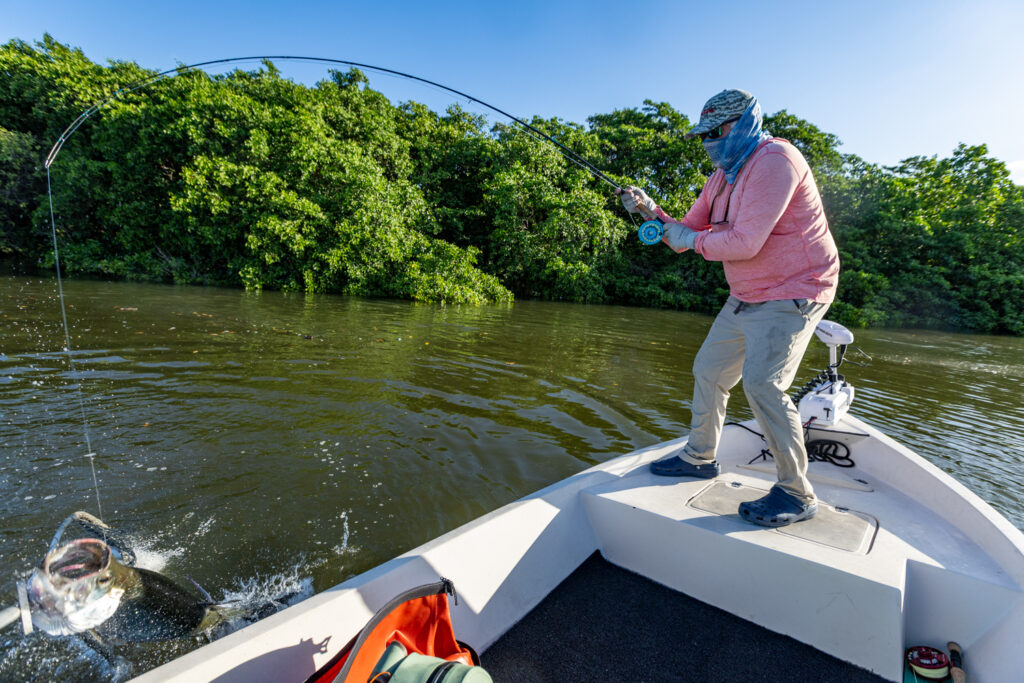
The standard rod is a 9-weight with an intermediate sink-tip and perhaps a second rod with a floating line. Lines need to be salt or warm water versions. Leaders are generally 40 to 60 lbs straight and the flies tend to be smaller baitfish or shrimp imitations. ou perhaps wait a couple of seconds to let the fly sink a bit and then medium strip but vary your strip. As is so often the case, the key is how to handle the take.
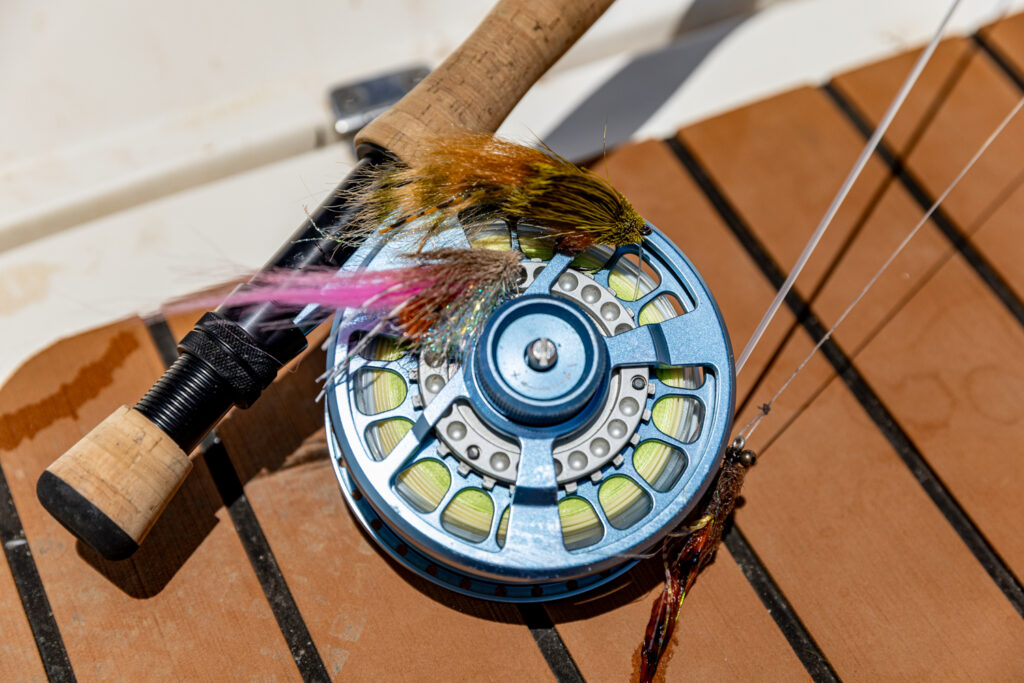
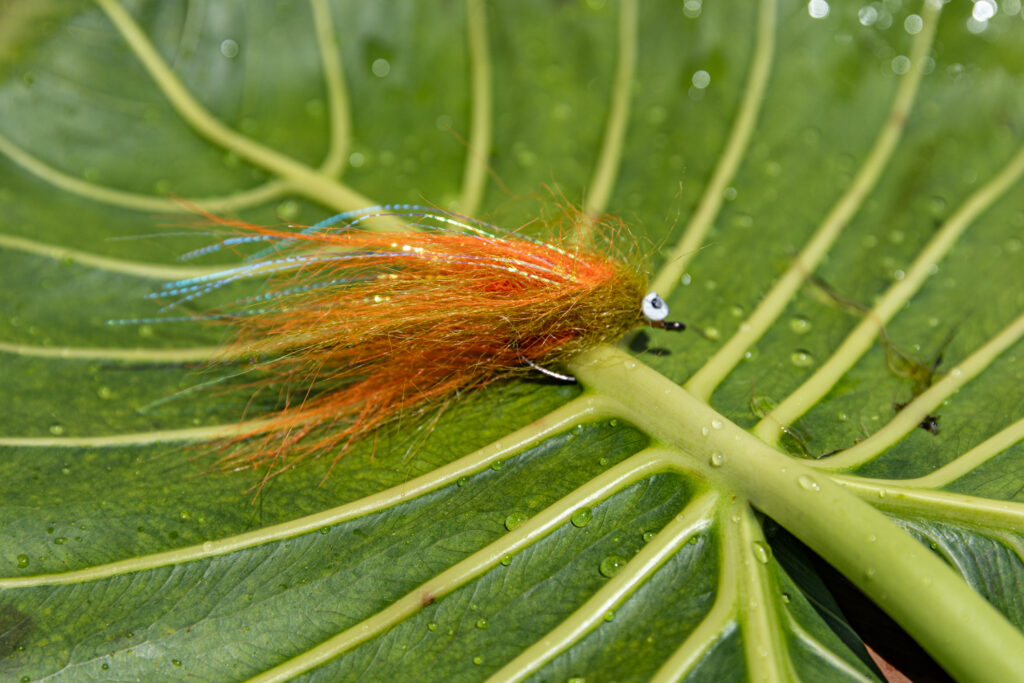
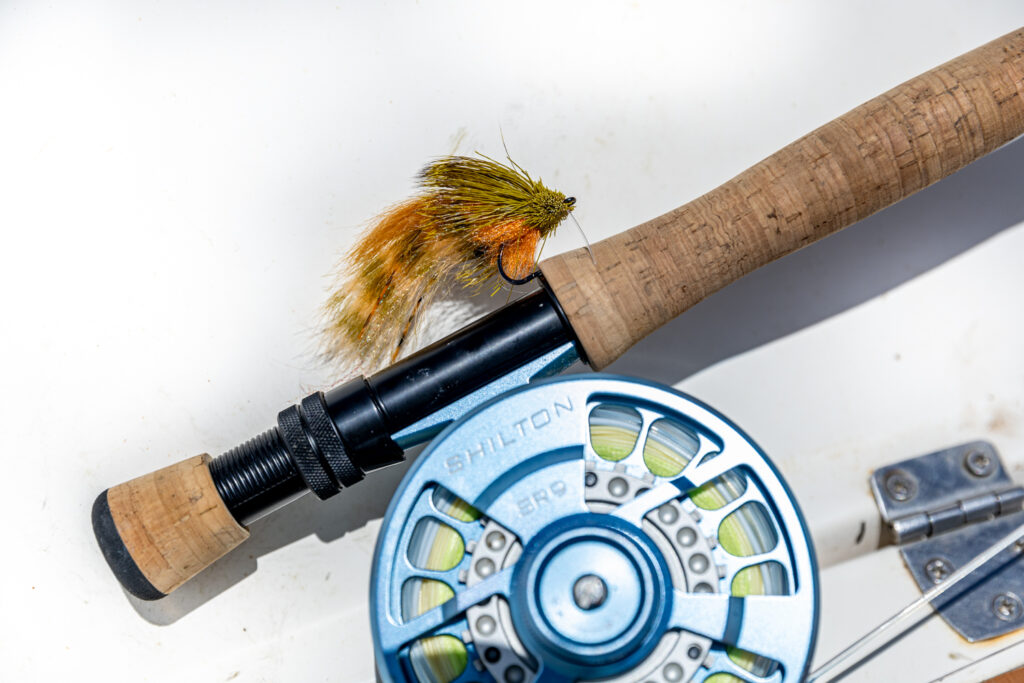
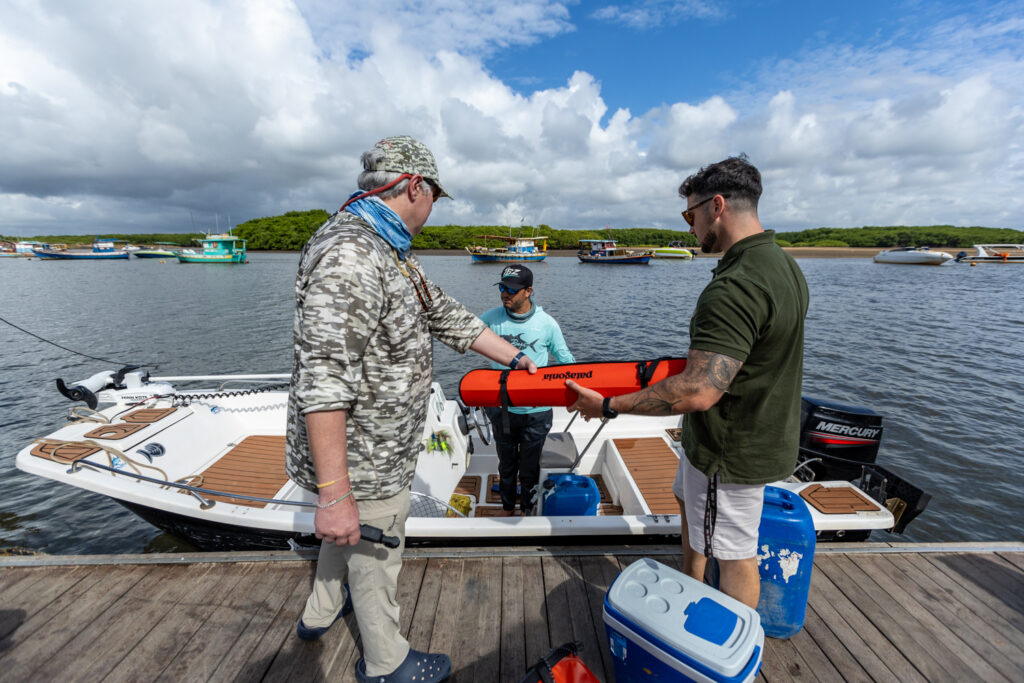
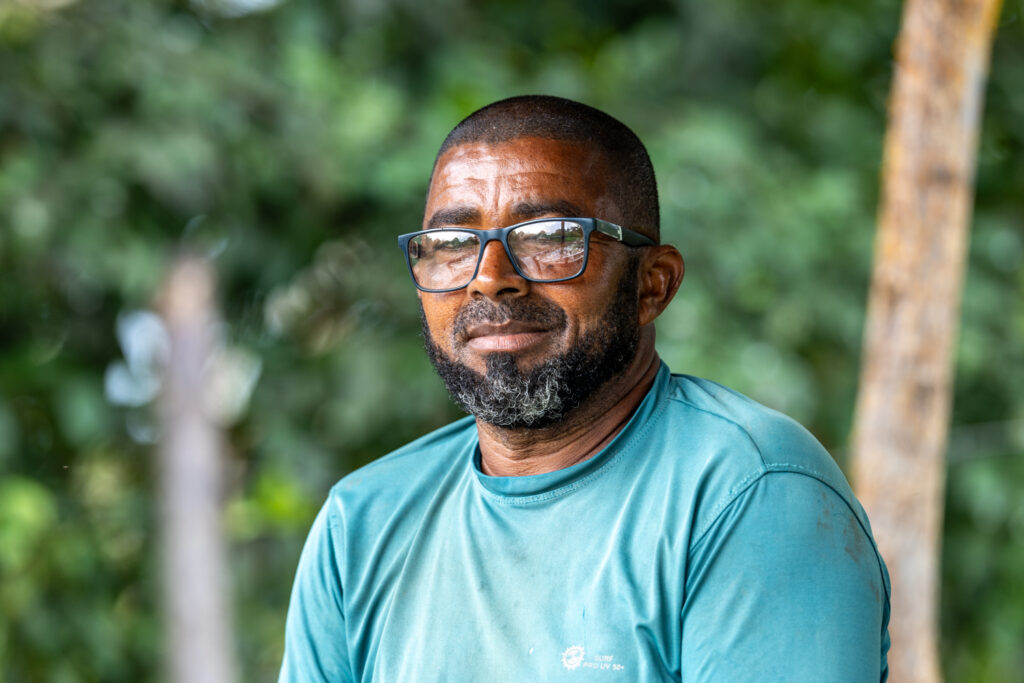
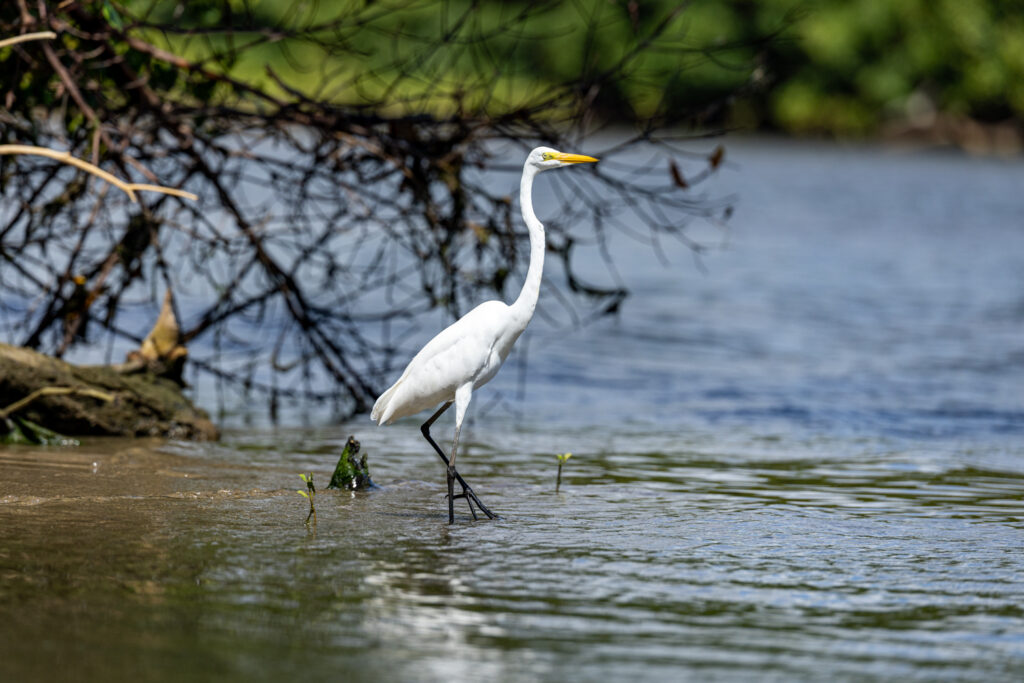
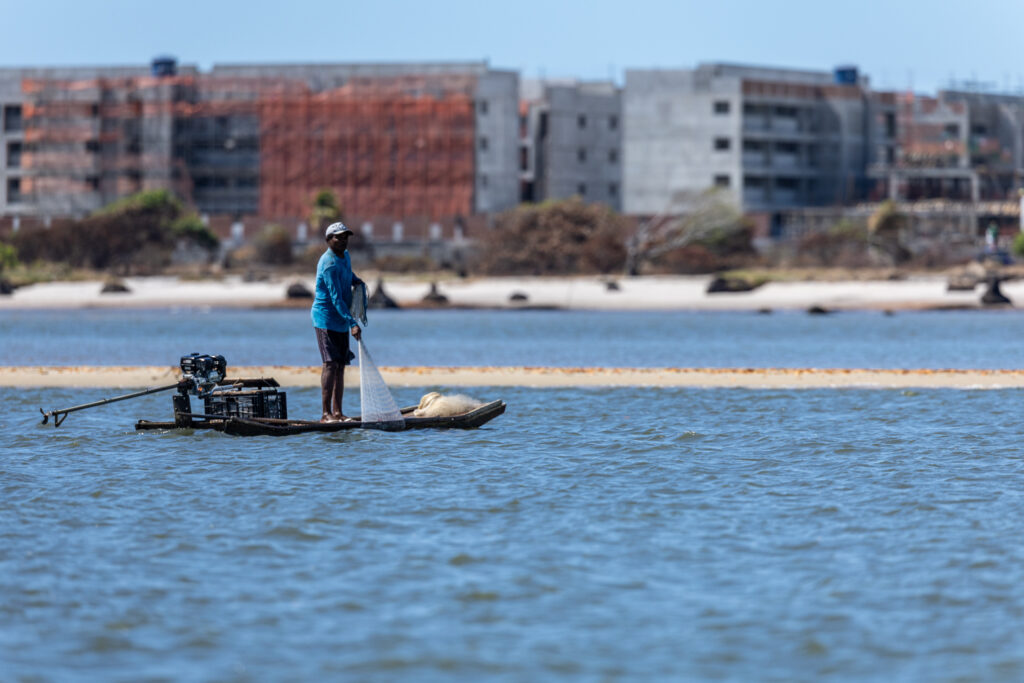
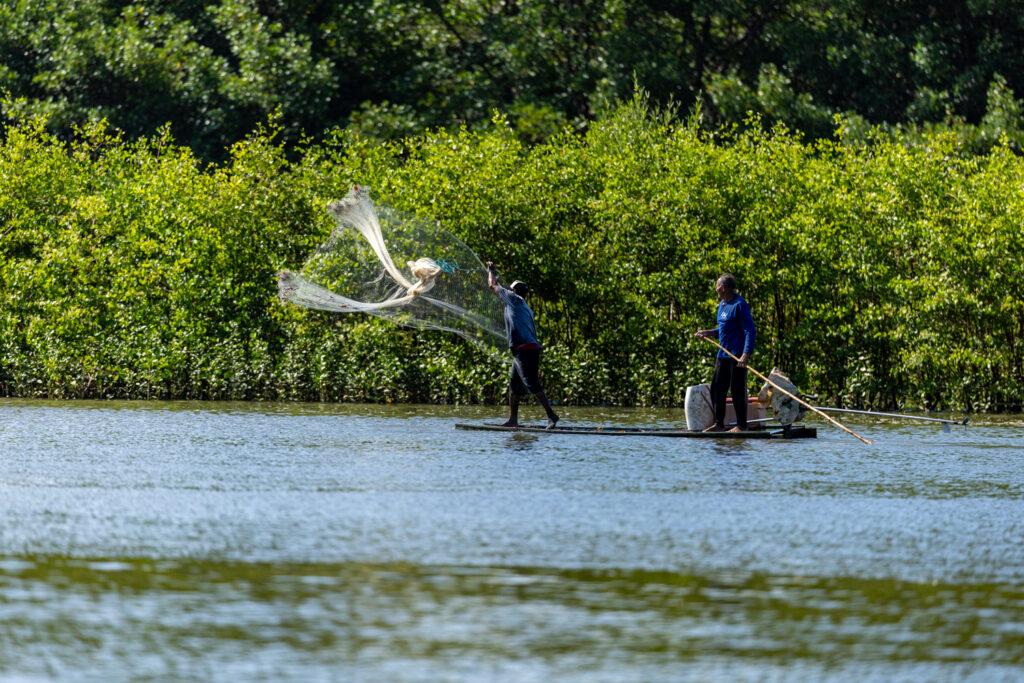
DO NOT TROUT LIFT – in fact barely lift at all – strip strike!
Step One – pinch down on the line with the hand through which you are stripping the line to stop the fish taking any line at all.
Step Two – keep stripping with the other hand to keep the fish tight at all times. Avoid yielding an inch of line until you have to.
DO NOT – be focused on getting the fish on the reel, it inevitably leads to loosening your connection to the fish or waggling your rod as you wind which increases the chance of the fish coming unstuck.
DO, look where your line around your feet is and make sure it is ready to go out should the fish run.
If my experience is anything to go by, you will see rolling tarpon from 3lbs to 40 lbs all day. The tides are key in terms of taking times, but a take is possible at any time, but the prime times are around when the tide begins to drop and to a lesser degree, come back in.
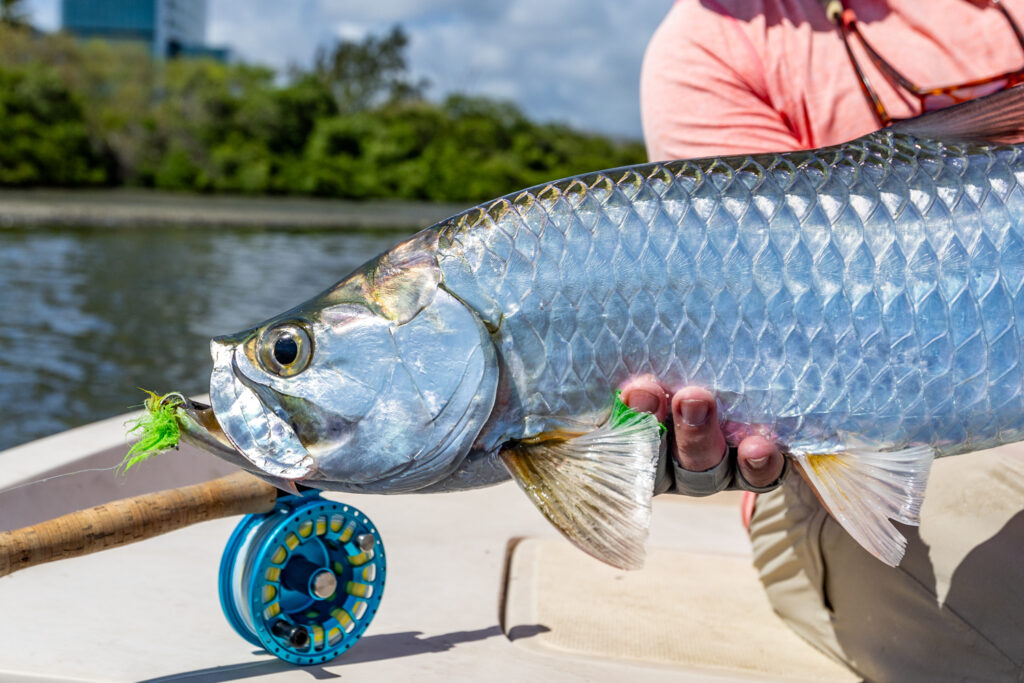
These are baby to adolescent tarpon but do not be put off by this. When a fish of anything over about 6lbs takes, chaos breaks out with the fish jumping, running etc. They will often jump into the mangroves and no matter what the size, there is not much you can do. They can fall off very easily, but they can also literally jump into trees and either get off that way or cause an almighty tangle! I think my key message is… do not be put off by the idea of a 15, 20, or 30 lbs tarpon. They are fabulous to catch and spectacular and I have renewed respect for these fish. My fish of 30lbs took off jumping and screaming across the river, I had other fish crashing through the trees, those first few seconds really are utter chaos!
In summary, this is an easy, fun, normally productive and interesting trip in perfect comfort and great convenience all at USD$4,100 based on shared room/shared guide, USD$4,600 based on single room/shared guide or USD$7,200 based on single room/single guide. What is also exciting is we will hear more from Everton and Guido, so far, they have only scratched the surface in terms of exploring the myriad of rivers up and down the coast and nobody is more qualified than them to work them out. There will be opportunities to join explanatories in the future.
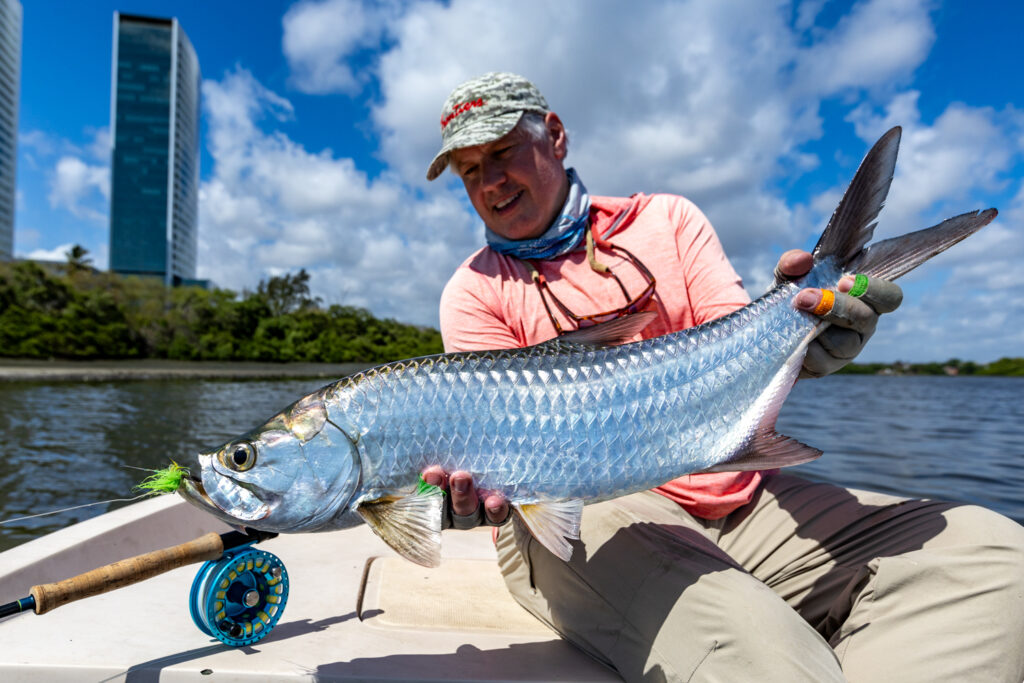
End…
]]>Under The Influencer has fished with Frontiers (67 trips) and other agencies extensively for the past 15 years including Russia, Iceland, Argentina, Puerto Rico, Brazil, Venezuela, the Seychelles (multiple atolls), Norway, Guatemala, Oman, Tanzania, Costa Rica, Canada, South Africa, Colombia, Greenland amongst others.
With this being my fourth visit in the last 20 months, I arrived in Corrientes eagerly looking forward to spending time on the Parana River again. Growing up on the banks of Severn, there was something about Parana that reminds me very much of my days fishing the tidal structures of the Severn, a huge dirty brown river, somehow still full of life.

I overnighted at the El Alondra Hotel, which was perfectly adequate. The food was good, staff friendly and accommodation comfortable. I was collected on time for my transfer to Don Joaquin. I was due to fish here in September last year, but unfortunately, due to personal reasons, I was not able to travel. The lodge were kind enough to roll my week over to another week of my choice. Due to heavy storms, the journey from Corrientes to Don Joaquin took just over 3 hours. The roads are perfectly fine, so no issues with that. I had the offer of stopping on the way to the lodge, or lunch on arrival to the lodge, I had requested lunch at the lodge, but we stopped on the way anyway. Just before the town of Esquina, we turned off the main road onto a farm trail leading up to the lodge.

We were now on the 770 hectare privately owned family estancia. 2km down the track and you are greeted by the owner and all the lodge staff who were dressed in traditional gaucho style clothing. I was immediately given a tour, and I was impressed that the lodge was only built 12 years ago. There was a sense of authenticity which I rarely see in my travels. The family have run the estancia for the last 29 years, and, as well as the fishing, they offer a full gaucho riding experience. The interior decoration was suburb, with several dining areas including a grill area where you can see your food being cooked if you wish. I was shown to my bedroom which was an utter delight, the bed was enormous, the room fully air conditioned, the bathroom luxurious and a much-needed touch of luxury. When greeted by the English-speaking owner, I was immediately made to feel at home, and we sat down for lunch together.


I spent the rest of the afternoon at leisure looking out over the river. I could see dorado chasing bait as I waited for the other anglers to return. Later on that evening the co-owner returned after a day’s guiding and we talked about the fishing at great length; we looked through my selection of flies and suggested we go for a quick cast to maybe get a dorado or a wolf fish as the sun was setting over Don Joaquin. To my astonishment, as we walked to the river, we were joined by two of the waiting staff, one to carry my rod, and one to carry my drink! I took one look at them and said, “I am a fisherman not a tourist, I will carry my rod!”. An early night was had in anticipation on what lay ahead.

There is something about dorado that really intrigues me, and I have an ongoing battle with them. I was up at 6 the following morning for breakfast for a 7am departure time. Due to low water conditions, I was unable to enter the river the normal way via the lodge’s jetty, so a 20-minute drive through the town of Esquina was necessary to get to the marina. A classical Parana River marina boat launch, where my captain and boat was waiting for me. Today I was being guided by Ramon, the owner of the lodge, and the captain, Nico, who both grew up on the river. After a quick but necessary boat orientation, we set off under blue skies, Again, due to low water, the journey to the fishing spots was extended to 40 minutes, but this wasn’t an issue as the boat journey was beautiful going through narrow marsh parts of the river system to reduce as much time as possible. The boats are fast and well equipped, but take some time to get used to, they are not your traditional skiff that many may be used too. Having fished the river on three occasions before, I knew the size of the fish in this part of the river were going to be smaller than in the areas that I had previously fished, the guides are very open about this, however there are 20lbs fish to be caught if you are lucky. This is purely down to the structure of the river.


Ramon wanted to show me some of the better places on the river, where the chances of catching bigger fish are higher so we started fishing to sunken logs. This is very much a traditional way to fish for the bigger dorado. A floating line and dorado fly with a 6ft leader and a 12-inch metal trace attached to the fly, pretty solid, regular gear. There is a definite skill in getting the correct angle to pull your fly in front of the log or structure, but if there are dorado there, a savage take is the result.

We continued this a little while in the search for the big fish. We caught a few in the 13-14lbs range and while using a 7-weight rod the fights are short but epic with the fish often jumping three or more times. The opportunities through the day continued, but then we moved on to do some flats fishing, which involved getting out of the boat and walking around the flats that had been exposed by the lower water. Fish were seen in most places and opportunities were in abundance. Before we knew it the day was gone, we had lunch, and due to the increasing heat we headed back to the lodge at 4pm. I arrived back to see my favourite Argentina meal being prepared outside my room, lamb and beef on the cross, all locally sourced meat.

On the following day I just wanted to do flats fishing, so we just drove straight to the flats in the boat. What I have learned quickly is that low water is a positive not a negative. I loved this fishing before, with the flats fishing I love it even more! To my astonishment, as we approached the first sand bar there was chaos ensuing, dorado feeding everywhere. I put my fly straight into the middle, and as soon as my line hit the water, it went tight, a 12lbs dorado, quickly released. I had another shot into the group, hooked up but it came off. We then continued to walk up the sand bar, there were multiple opportunities, but I missed them all. The fishing was on fire for about 2 hours with dorado feeding on sabalo baitfish in the shallows all over the place. It had been a long time since I had seen that number of fish in a river, anywhere in the world. This was sight fishing on a new level for me. I struggled at first to see the fish, but the guides eyes will always be better than mine and we got there in the end, covering over 10,000 steps as I later found out!

The fishing did die off as the heat increased over the day. I have fished this river enough to know that heat can be a major issue, not to say the fishing is bad, but it is not as good as it is in the morning without the heat of the day. The days can be long, in the heat, but the action of the fishing makes it worthwhile, and with the level of comfort at the lodge it is easy to recover and relax on your return. I should point out that you can come back to the lodge for lunch and a nap and skip the heat of the day or you have lunch on the river and nap in the shade. If you come back to the lodge, it likely means you cannot travel as far to fish because you are going back for lunch. On my third day we only managed to fish for a few hours, before an electrical storm with huge winds, wiped out the third day. These are rare and simply just bad luck.

The fourth day continued as previous days, I had worried that the size of the fish would not have been able to hold my attention for the full-time fishing, but it did, there’s something about these dorado that make them incredibly appealing and I put them right up there on my favourite fish to catch list. The thrill of seeing a 20lbs dorado smashing bait, in waters that are no more 18 inches deep, moving more water than a small cayman 40 meters away, and having the ability to drop your fly, no more than 6 inches away from its nose, is a challenge I have yet to complete. I had that opportunity but guess what… it didn’t work…again!
What I have learned is by simply downsizing the rod a little for slightly smaller fish, you have the same fun and it is less hard work in the hot weather. This is very similar to GT fishing in the Seychelles; however they are a very different proposition, you can tease and tempt a GT, but unless you land your fly right on top of a dorado’s nose, you are not getting a response. They are lazy but violent takers. It is almost as if there is enough bait in the river and unless its right in front of their face they will not bother, especially a single fish on the flats. However, if they are in a pack, which I have experienced on many occasions, success is almost guaranteed.

On every flat I fished, there were fish present, whether that was in a pack or singular fish. I was astonished at the quality of the fishing, my mornings were spent flats fishing until I was mentally exhausted of looking at sabalo and trying to find dorado swimming amongst them. If you find them, you were pretty much guaranteed action especially at every drop off a sand bar. After a lunch on the river, and a snooze, we would fish to logs or structure with poppers and streamers. The fly was being eaten as soon as it hit the water, but these are small fish up to 8lbs, a necessity for learning how to set a hook properly as they are a difficult fish to hook.

My evenings were spent at the lodge being hosted by an amazing team that were fast becoming friends. The whole staff team had links to the estancia, and all lived on the grounds as do their families. For me, this was the key to my enjoyment at Don Joaquin, they just seem to get it right with their level of dedication and attention to detail, they were always there on hand and despite their limited English they were hugely keen to look after you. After an exhausting days fishing on the river this is most welcome.

I was asked if I wanted to see the working estancia and had the privilege of watching the gauchos herding the cows to be dipped, this was an epic experience which I can fully recommend if you are interested in the farming life and horses and appreciate horsemanship. Some of the gauchos were also the waiting staff that helped around the lodge in the evening which added to the homely family feel of the place. Will I return? Of course. The hospitality and the fishing being the main two reasons, but thirdly the price of the fishing at Don Joaquin ($4,750 for single room/shared boat) which is more than reasonable. For the rate I paid I had a boat to myself and was looked after in the most beautiful accommodations. Flats fishing for dorado is right up there with any fishing on flats that I have done, and for me, the most challenging, for an absolute fraction for what you pay elsewhere.
]]>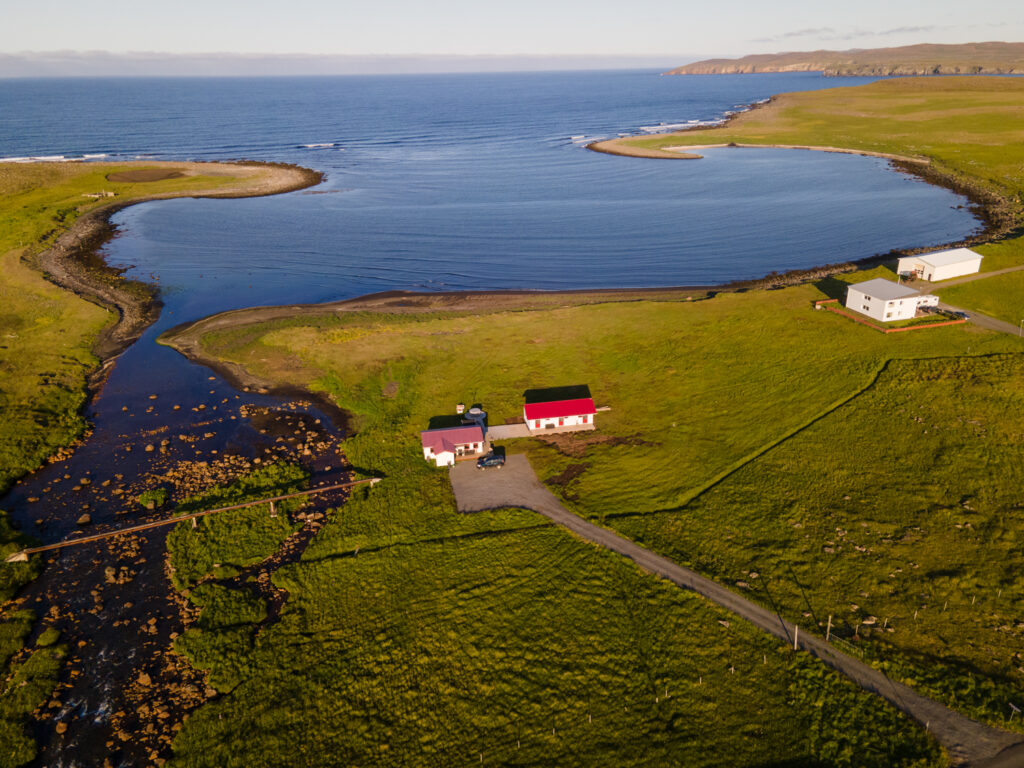
I admit, I have procrastinated about writing this piece. In truth it has been three or four years of procrastination! I am not sure of the reason, but I think it is because I am still getting to know, deciphering (!) and trying to understand Deildará and I am still not 100% sure I have achieved either! So why write now? In short because this little gem of a river deserves it.
I have now witnessed Deildará in five different moods. The total drought of 2021, the week-long horrendous storm of 2022, relative calm/normal water (which looked low to me) of 2023 and high to medium water of 2024 and more recently, headed for drought in 2025! Not only do I have my experiences to draw on but those of my clients and their experiences tell the story too.
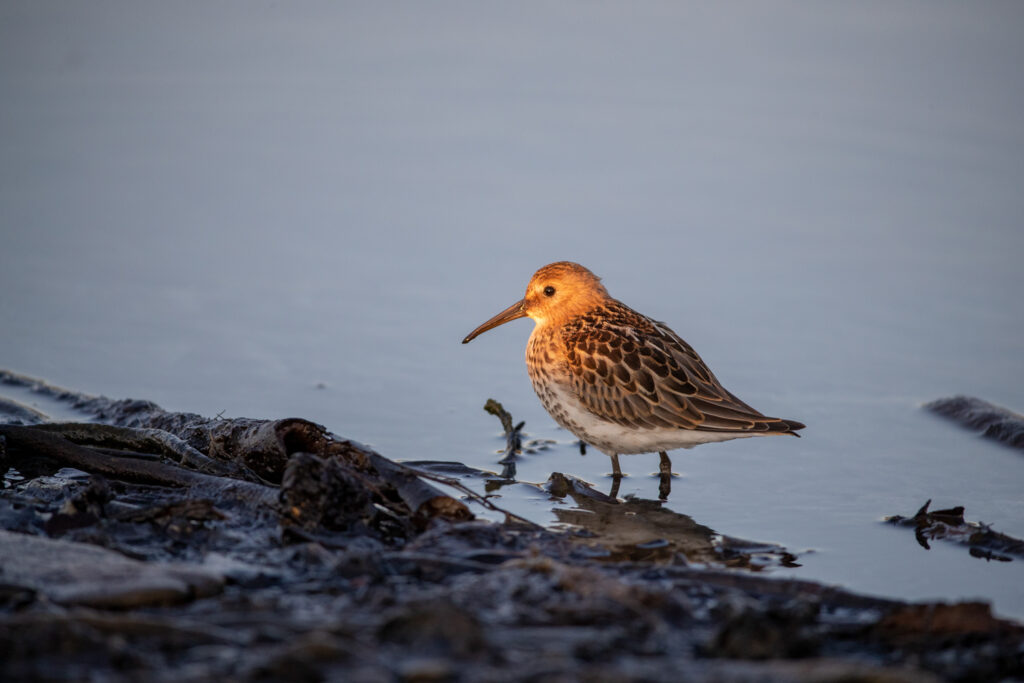
2021 was a serious drought. A ‘no rain for 16 weeks’ kind of drought. When I was on Deildará it was at about week 12 of no rain and lots of sun. It was my first time on the river but I was hopeful because a client of mine had been there a few days before and to his pleasant surprise caught fish, including fresh fish. I was fishing just the one rod of the three you can fish if you take the river. It is down time for me, so I took it easy, fished for salmon, wild brown trout, arctic char and small sea trout. Getting to know a river with no guide and almost record low water is an interesting experience but I landed 8 fish for my three days plus a whole lot of trout and char on dry fly. My clients who stayed a week after I had gone caught 19 fish (two of 19lbs!) for their week – they were now 14/15 weeks into no rain and still the river produced.
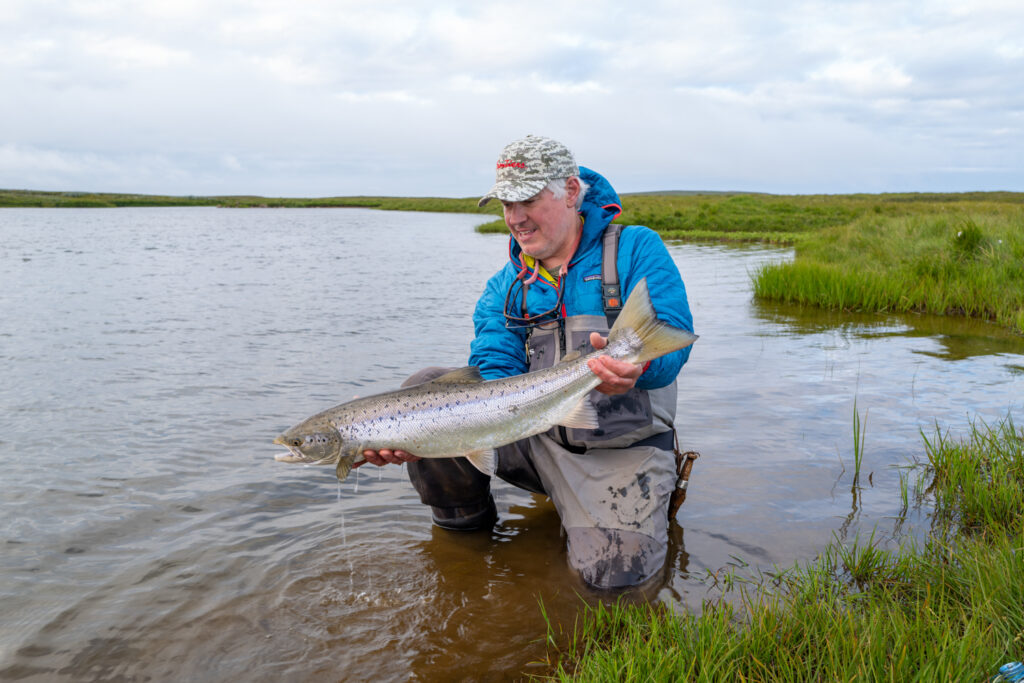
2022 was the year of the great storm – it was 50+ mph winds, horrendous rain and it never stopped for the entire three days I was there. As it happened, I had work issue after work issue so had the river been in good shape, I would have been frustrated. Of course, the river blew out, but it was nigh on impossible to cast anyhow and standing in the rain was like standing there having buckets of water thrown at you. But I did go out once and I did catch a fish so I have no doubt that had I been inclined, or work had allowed, I would have caught more. My clients who fished a few days later had a great time until storm No 2 came! One day they had 18 in a day!
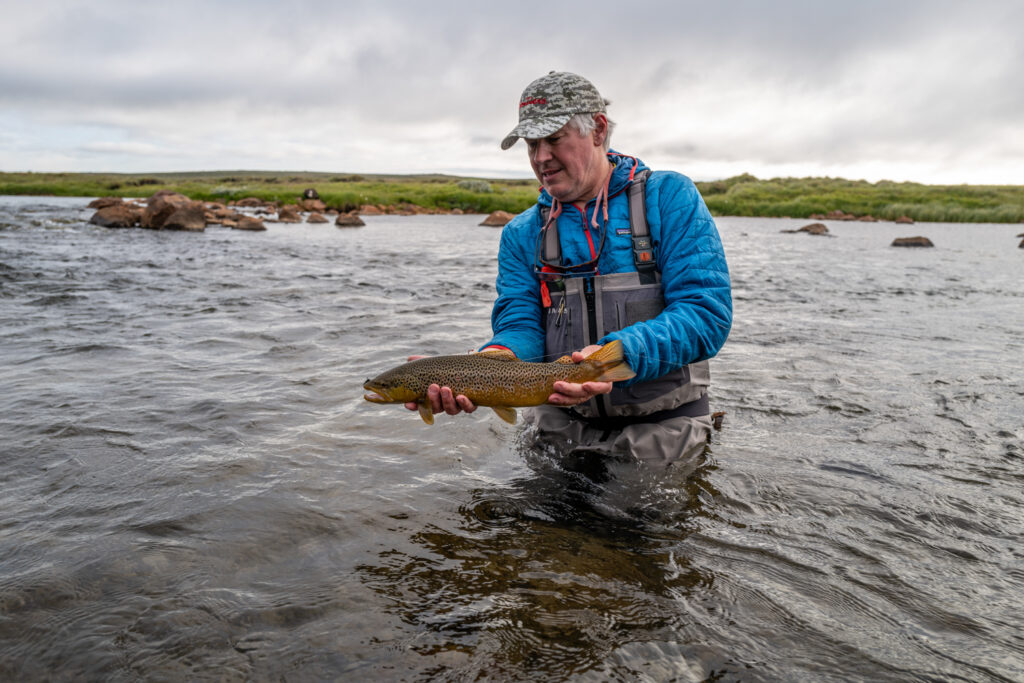
2023 was a ‘normal year’ which looked low water to me but there is no doubt the fish were more free-taking, and things began to gel somewhat in understanding the river. To some degree, I cracked the code, or at least the code of that season, I fished a small Arndilly Fancy casting upstream and caught fish after fish with wonderfully aggressive takes. I landed 15 fish to my rod for the three days. Again, my clients had an equally good time if not better and they always seem to catch bigger fish whether fresh or not.
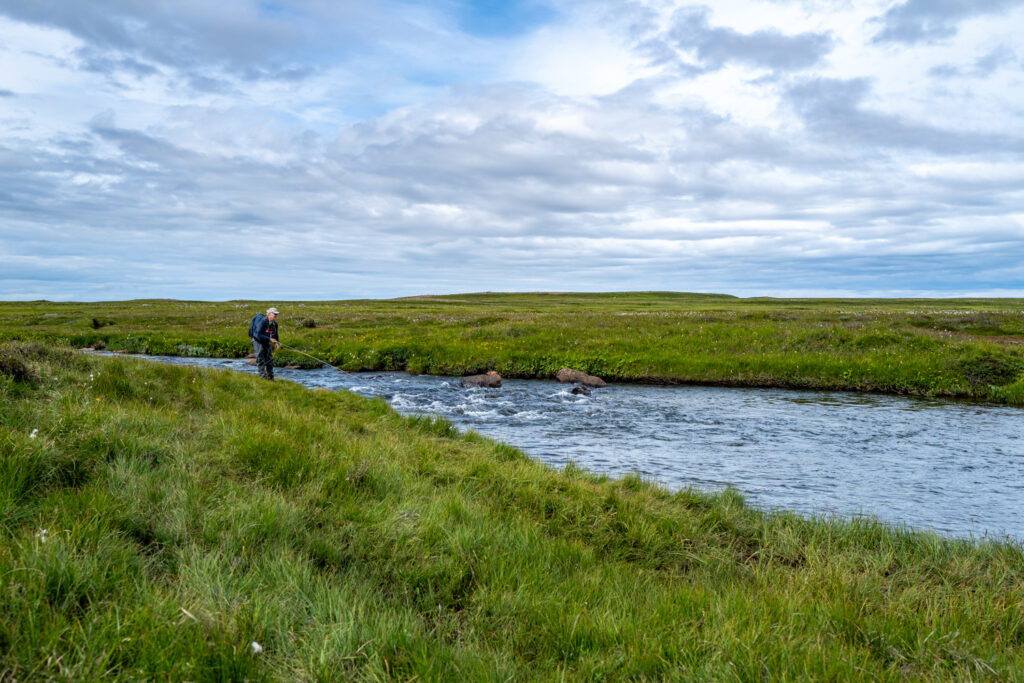
2024 was, as a guide put it, slightly high water and clearing. It was the first time that swinging a fly was a real thing and I’ll come back to that point later. Indeed, at the start of my few days, most pools could be fished swinging a fly properly and there were some wonderful takes and some great battles running down the river after these crazy fish… more on them later too. My clients arrived three days after and had fabulous fishing. They had another fresh of water but caught 70 fish over the two weeks stay with friends including trout and arctic char as well. They have had a guide from time to time over the years and they know the river way better than I, particularly the lower river.
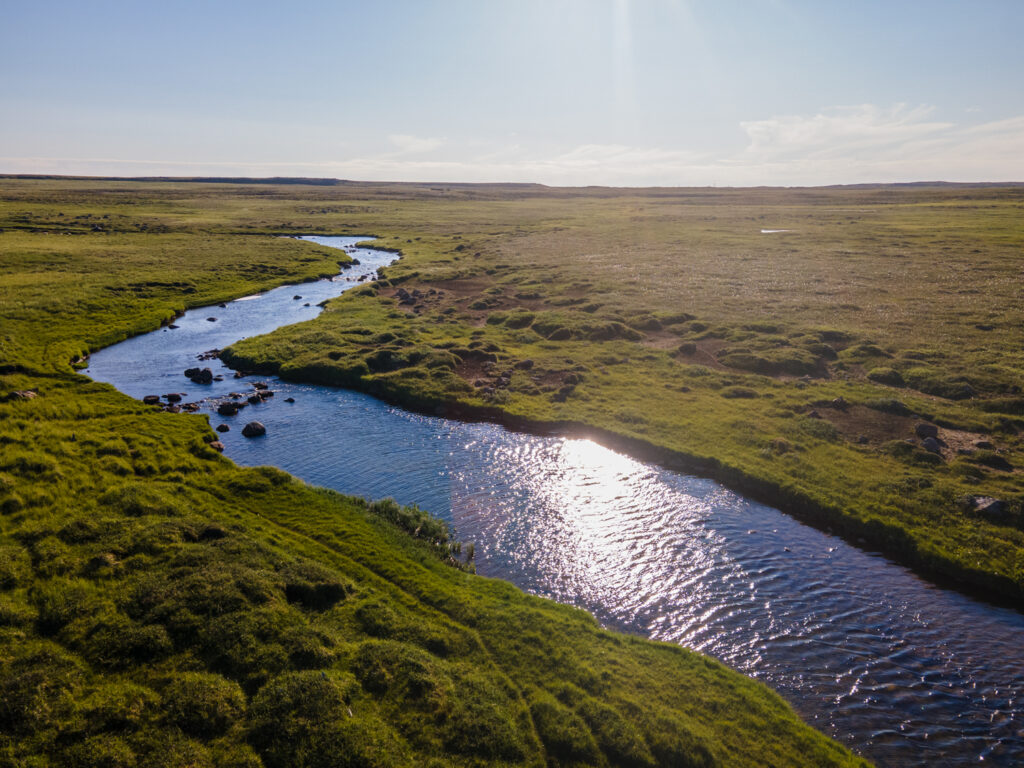
2025 was almost the same as 2021, basically a drought but I still hooked 16 fish and landed 9. I admit I had my ass kicked on numerous occasions being broken in every case. My friends also caught amazing numbers of fish given the conditions. The reason for explaining all this is to demonstrate that over the last five years my clients and I have seen the river from its most dry state to a flood and fish have been caught regardless which is remarkable hence why I feel Deildará deserves its own blog.
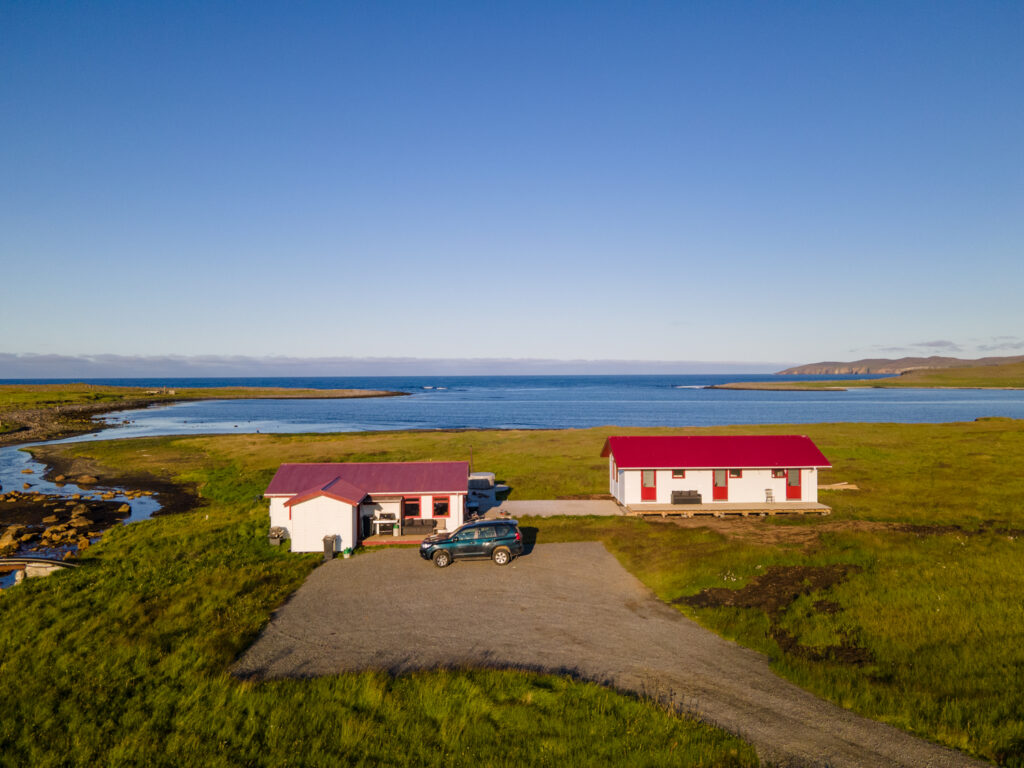
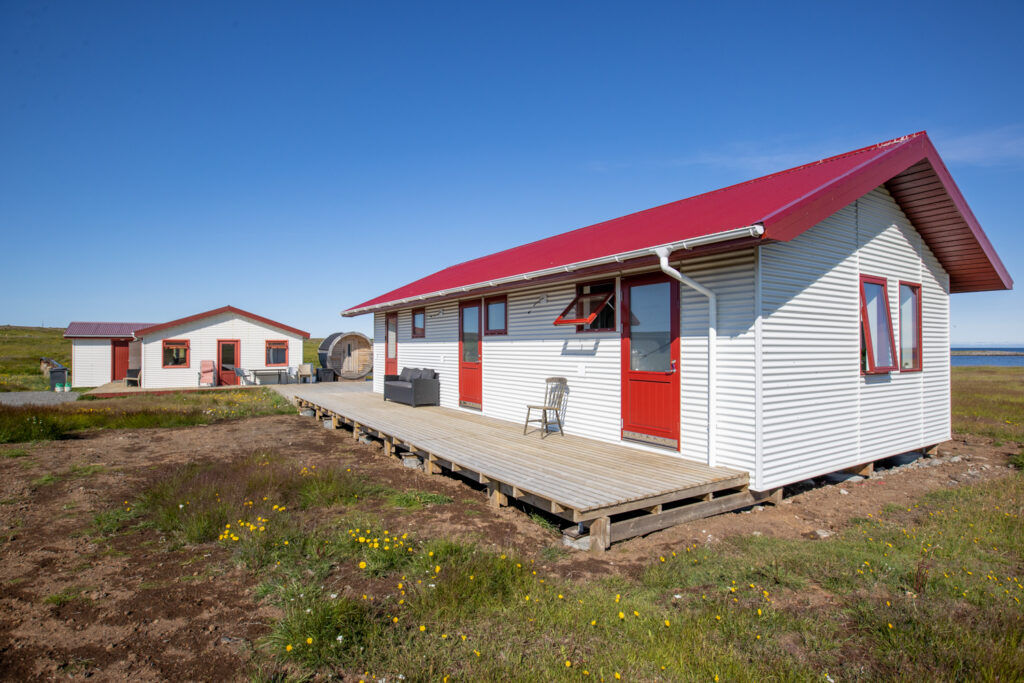
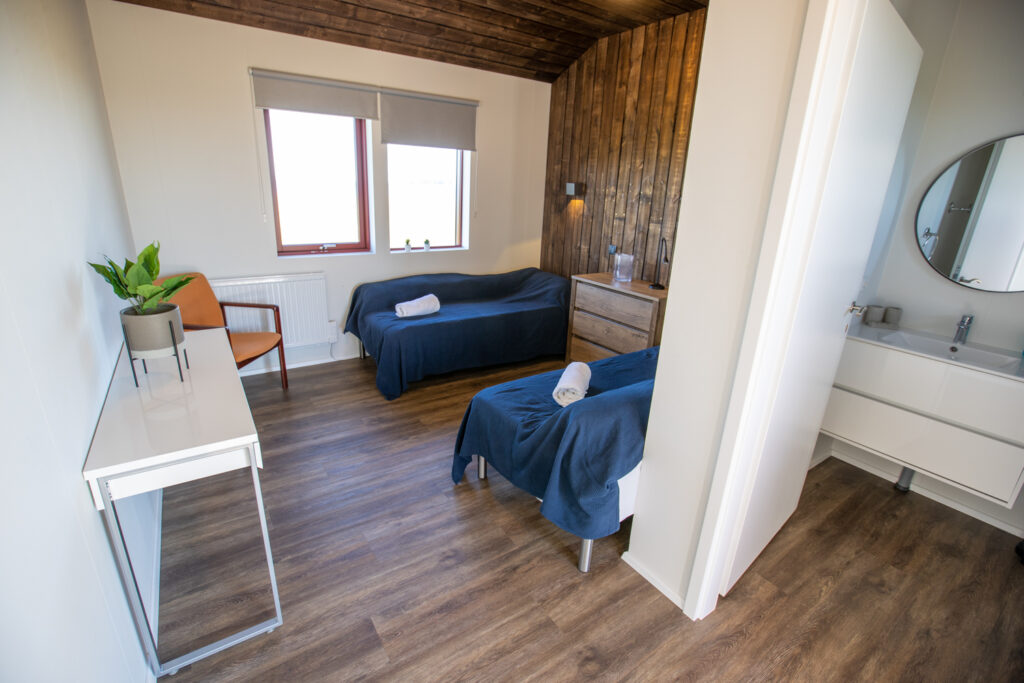
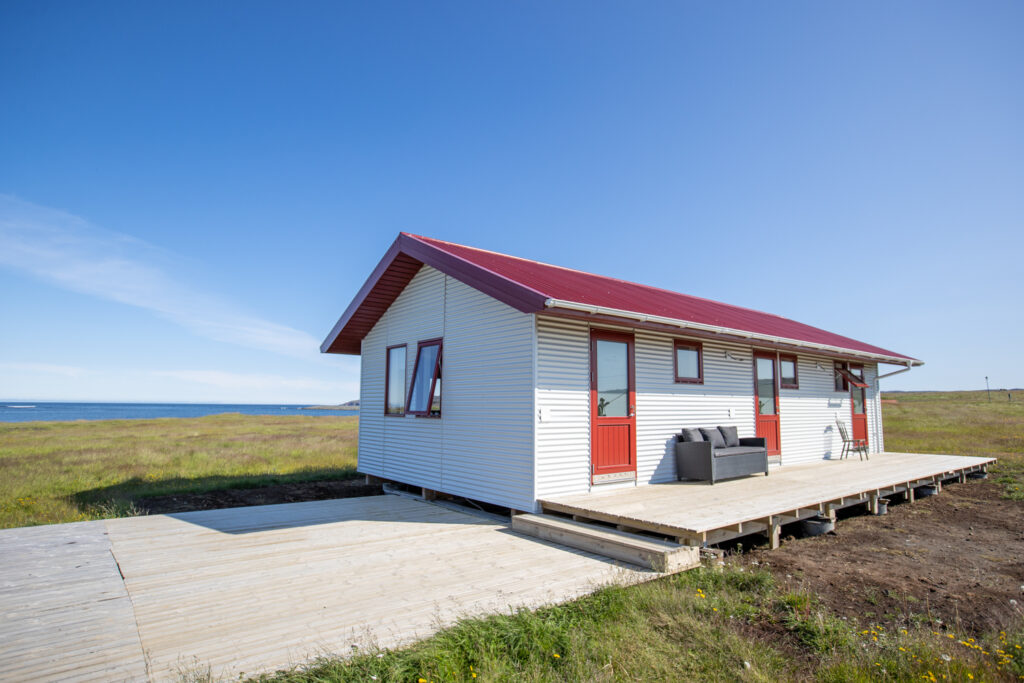
What are the downsides of this little three rod gem?
It is self-catering which, for some, is a problem. It does not have to be, a chef can be arranged, or one can bring a chef from the UK which would likely be more cost effective especially if they liked to fish and were up for a trade! Buying the supplies you need, especially if only staying for three days, is very easy. Your gateway is either Akureyri or Egilsstadir (the latter is better but has less flights), both have big supermarkets and do a big shop there before heading to the river and you are sorted. In addition, from late July you can enjoy fresh arctic char. Then there is a decent shop in town where you can top up with milk etc. There is also a hotel with a restaurant if you want a night off from cooking!
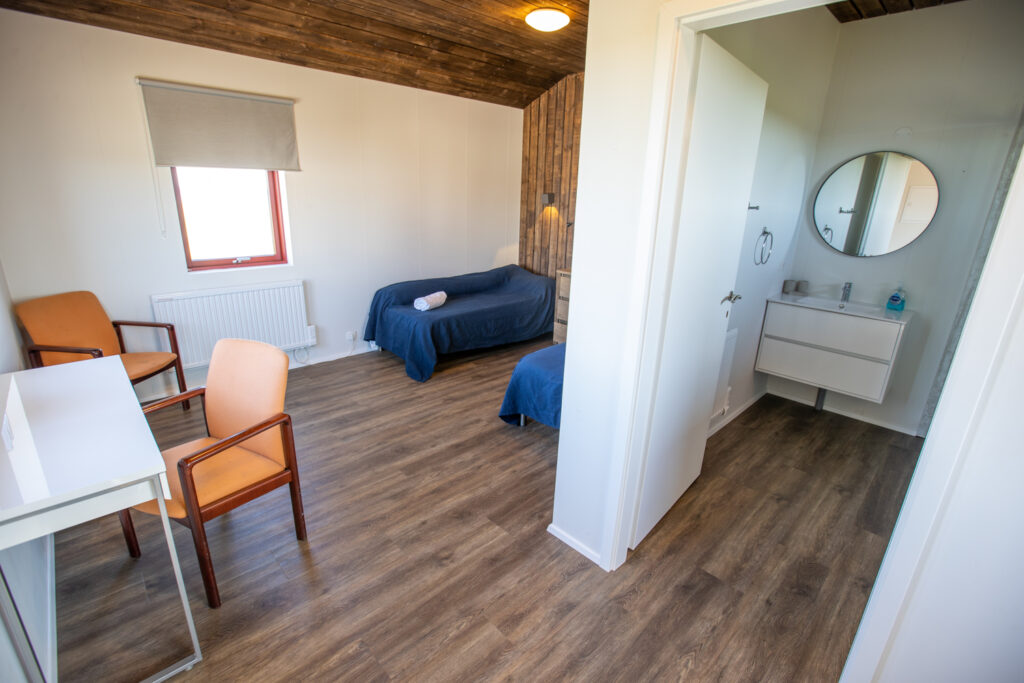
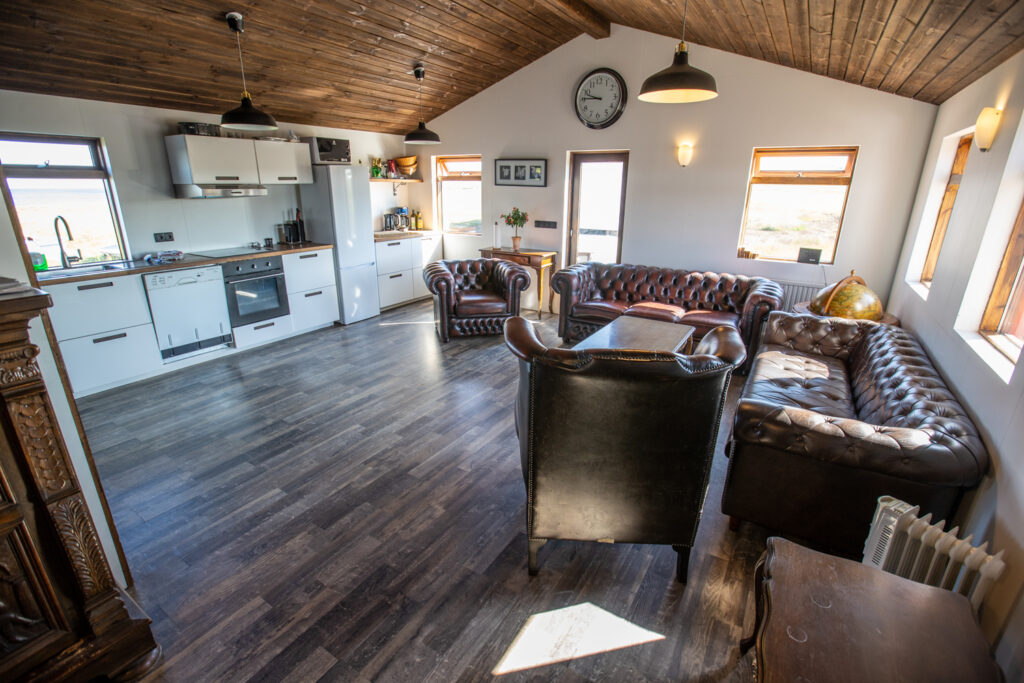
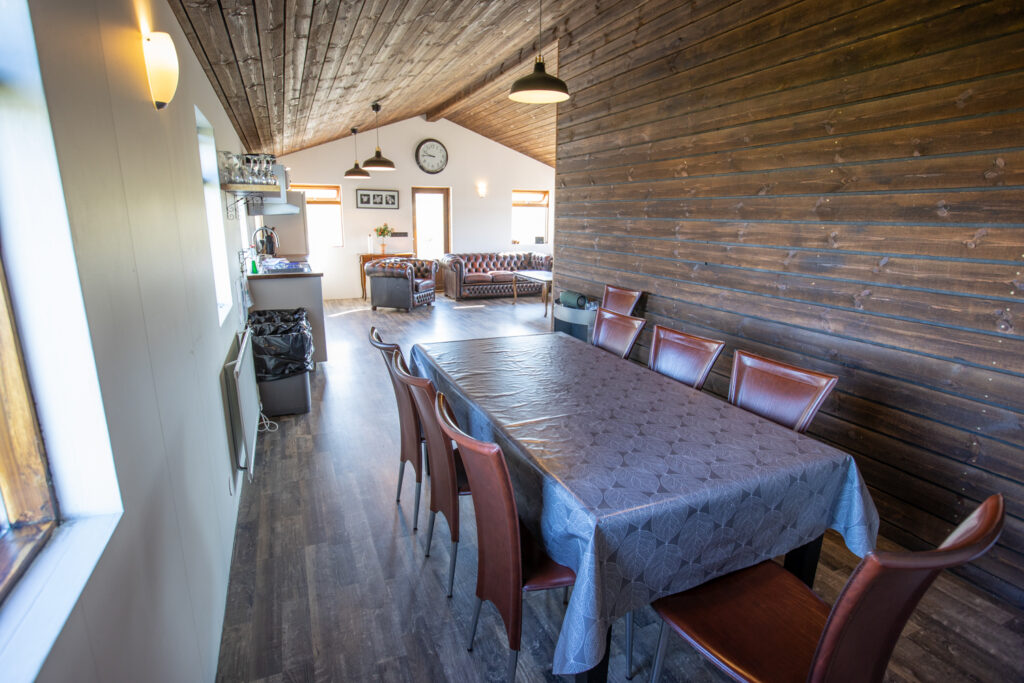
The river is not a white-water tumbling river the likes of which we all understandably prefer. I cannot make excuses for this – some years you will swing a fly properly and there is white water along the river, but the fish tend to hold in the softer pieces of water. Where there is moving water, the fish love the hitch, so it is very effective in higher water. The lack of classic ‘swing-the-fly water’ probably makes the fishing more complex and harder to get to grips with but if you apply yourself there is no doubt the rewards are there. In fact, it is pretty fun working out where these fish will lie and how to catch them and fishing upstream can be absolutely epic because of the calibre of takes but if your heart is set on swinging a fly over rushing water, and you are not open-minded beyond that no matter how many fish, how acrobatic they are or what size etc, then this is not the river for you.
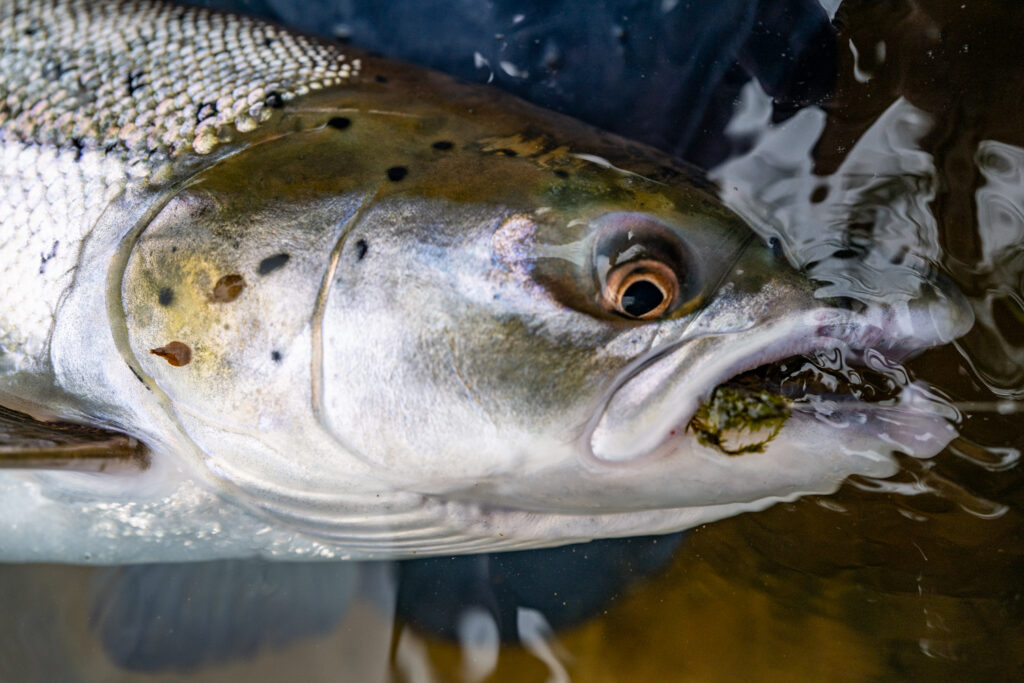
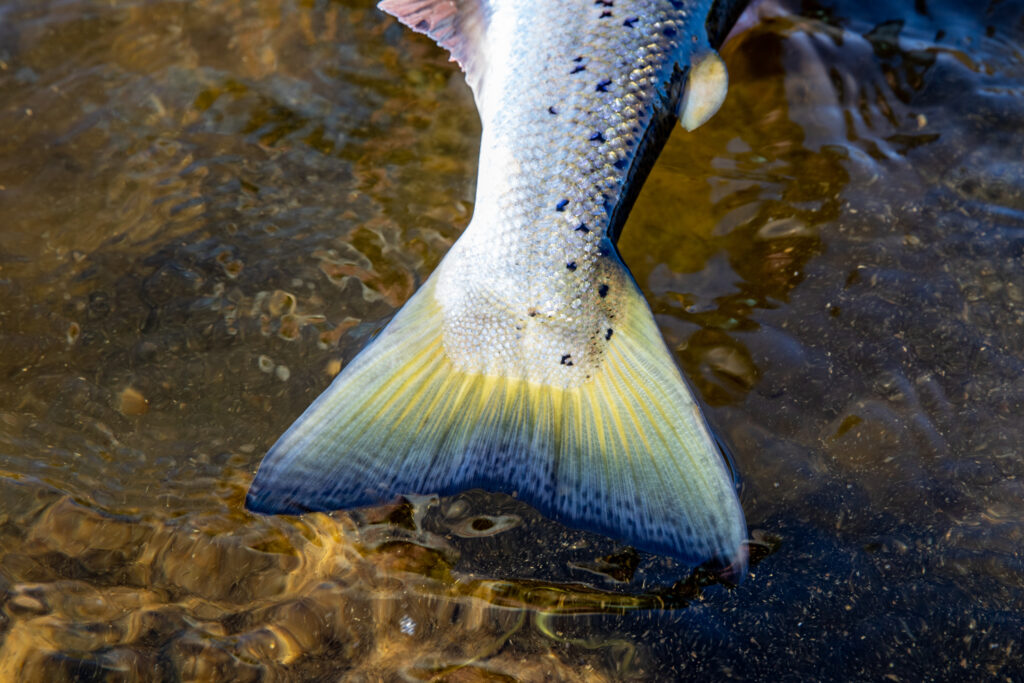
You can drive to certain points on the river but from there you must walk. The lodge comes with an old 4 x 4 banger so if you are two or three rods, you can drop one another off along the 12 kms of river (there is a lake at the top with trout and then more river if you are inclined for a long walk) and leave the car in strategic places for someone else to pick it up and then pick others up. The walking is not very hilly at all, but it is bumpy which is tiring because you always need to look where you are going. The best routes are always along the river on the flattened sheep tracks not across country. On the subject of cars, you will need to rent a car out of Akureyri or Egisstadir to get to the river which is an added cost. The river does not come with a guide included but you can take a guide for your first visit or even your first day. As you will see, this river remains very cost effective!
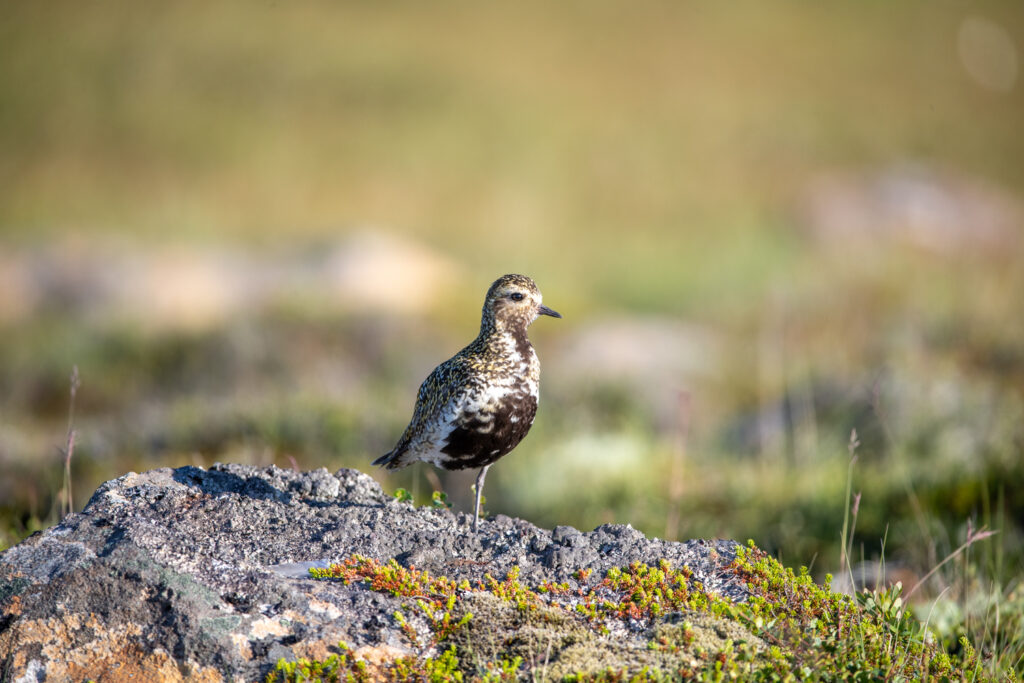
Travel is not a negative but let’s discuss it. The river is almost at the top of Iceland in the north-east tip. The best route to my mind is London – Keflavik (Reykjavik’s international airport), change airports to Reykjavik domestic in town and fly up to Egilsstadir and pick up your car and overnight somewhere like the Lake View Hotel. In the morning, do your shopping, and head north for about 3 hours to arrive about 2.30 passing lots of famous rivers on your way like Hofsa, Sela, Sanda, Holkna, Mio etc. This makes for a leisurely morning. You could even put your rods up and put them on the car, so you are fishing ready starting at Egilsstadir! I like to use a 5 or a 6 weight which works for salmon, trout and char. Floating line and an assortment of small flies. Using a bigger stronger rod does not achieve a great deal because you cannot pull any harder because of small flies and lightish leaders at about 10lbs. On the return, finish fishing and leave the lodge by about 1.30pm, head back to Egilsstadir and fly down to Reykjavik and go to an airport hotel to overnight ready for the 0740 flight to Heathrow in the morning.
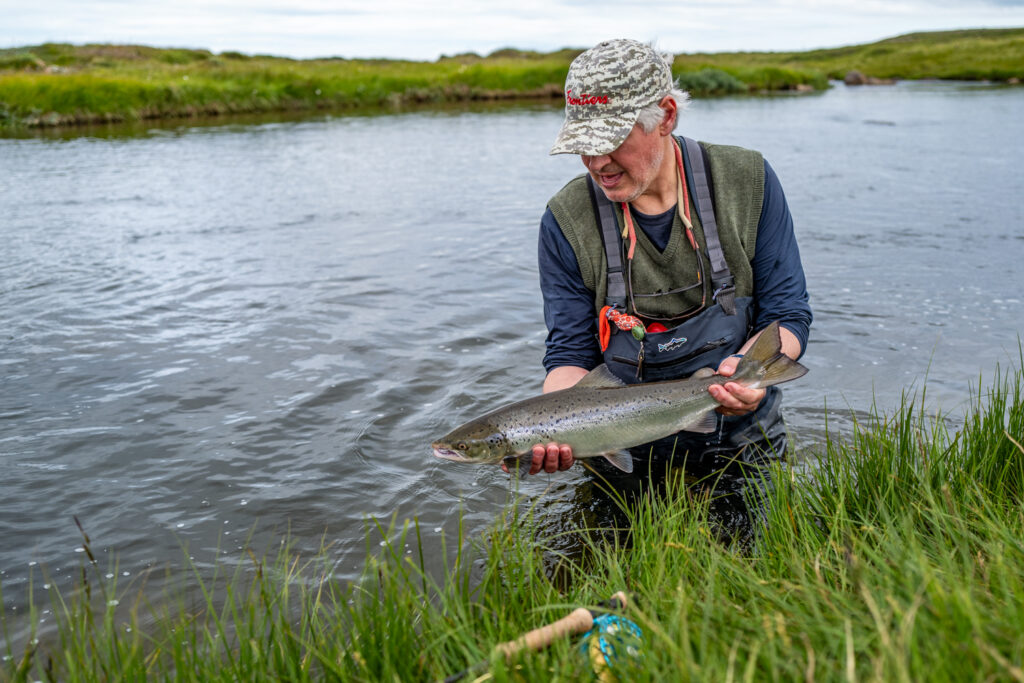
Besides its reliability in terms of catchable fish, what else does Deildará have going for it?
Its location may be a little out of the way but that is why there are plenty of fish and having a lodge looking out onto nothing but the Icelandic sea is rather beautiful and peaceful!
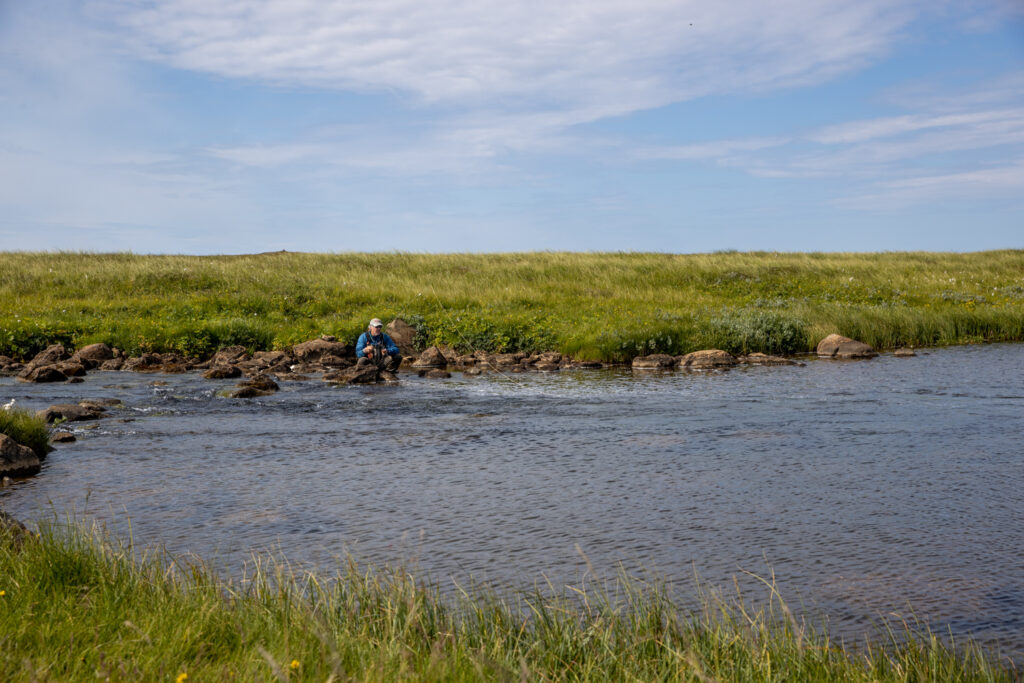
The river/lodge location is lovely, near the town of Raufahofn but overlooking its own seemingly private bay. The lodge has a large sitting room/dining room and kitchen in one building and then in the other there are three twin rooms each with ensuite shower. It is a very peaceful location set on the estuary of the river surrounded by birdlife.
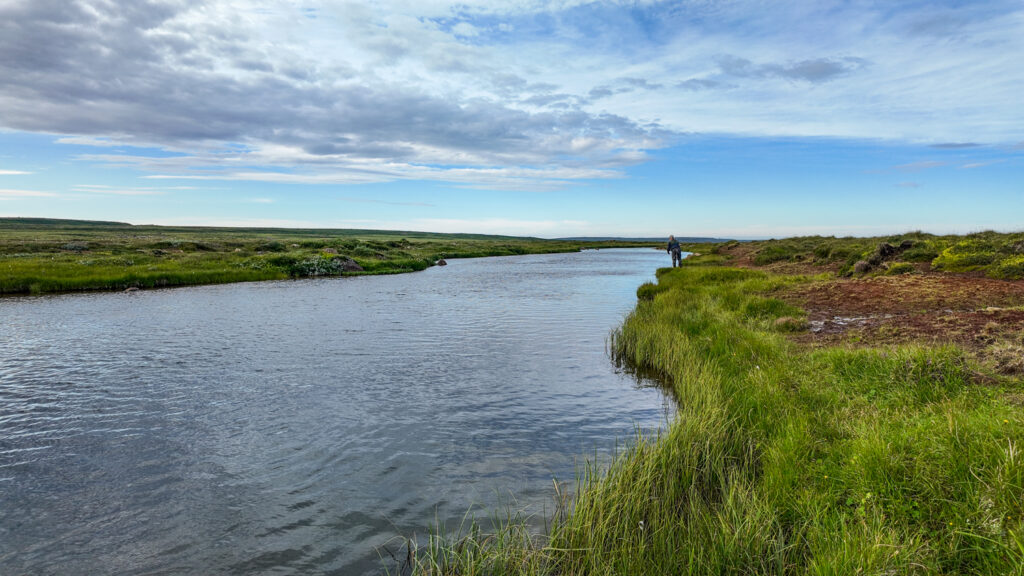
Being self-catering and therefore being on your own, being able to fish when you wish (within reason max 12 hours per day by Icelandic law), eat when you wish (and what you like) and not have to keep to anyone else’s lodge schedule can be a total and absolute pleasure. It makes such a trip properly relaxing. You can totally dance to your own tune.
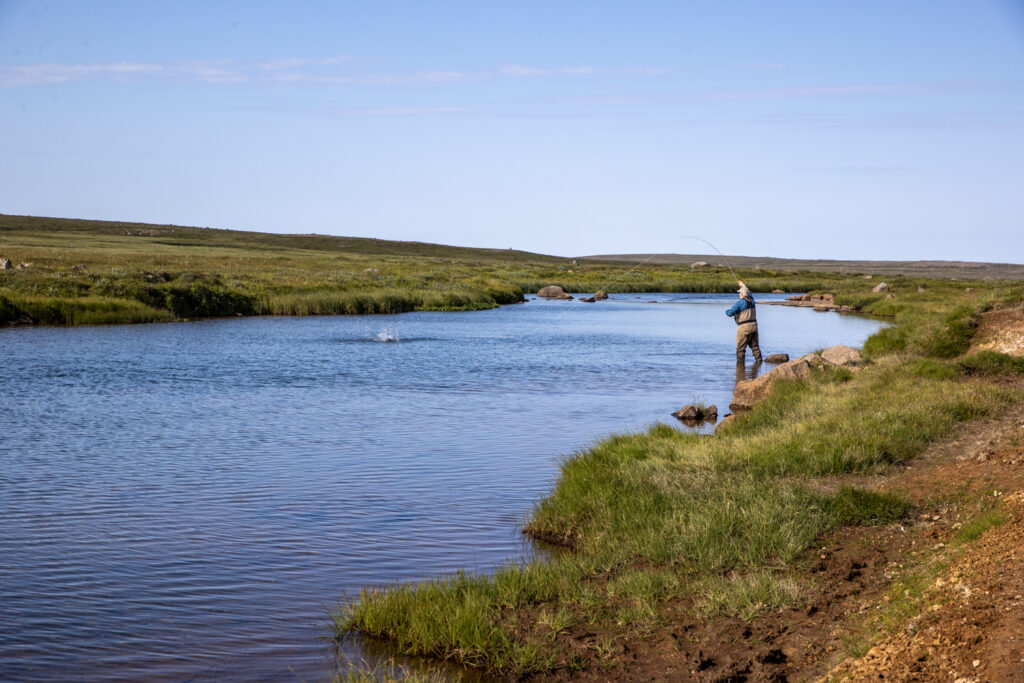
The best, best, best part about this river is the fish which are truly chaotic! They take freely and aggressively and once hooked, they go completely crazy, ripping off down the river, jumping all over the place etc. Most times one feels completely out of control for the first minute or two and all you can do is hold on and run! There are decent fish too, with 20lbs fish possible and certainly fish in their teens. I have caught a lot of fish in a lot of places and these guys rank extremely highly. I am not talking about the odd fish, this is the majority of fish in high or low water. Another bonus is if you are searching for fish in new places, you can be fairly sure that if you find them, you will get a reaction!
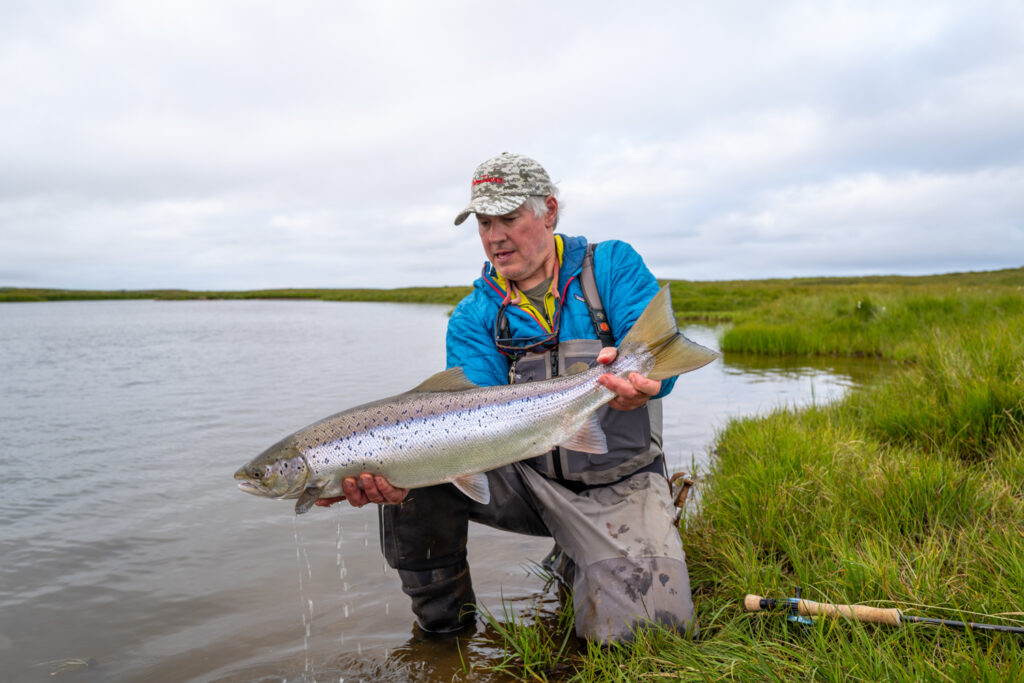
I know this river will not be for everyone but if you can get over the few negatives or you want really good value salmon fishing on a reliable river, this is truly it at present. At £8,240 (2024/5 rates)for the lodge and all three rods on the river that is very, very good value by any standards. £2,746 per rod, call it perhaps £4,200 each by the time you have bought food, rented a car, had a couple of nights in a hotel and flown from the UK. No tips of course apart from a small cleaning fee. Most Icelandic rivers start at £4,200+ for three days and then you have flights, hotels etc.
The Deildará gets a very big thumbs up from me for its solitude, its freedom and the amazing fish. Three pieces of advice:
1. When you get in the river, plan your exit because if you hook a fish, you will need to get out and run or get high up very quickly.
2. Use the sheep tracks – do not cut across country – it is bumpy and horrible walking.
3. Remember that stealth is vital – be careful approaching pools.
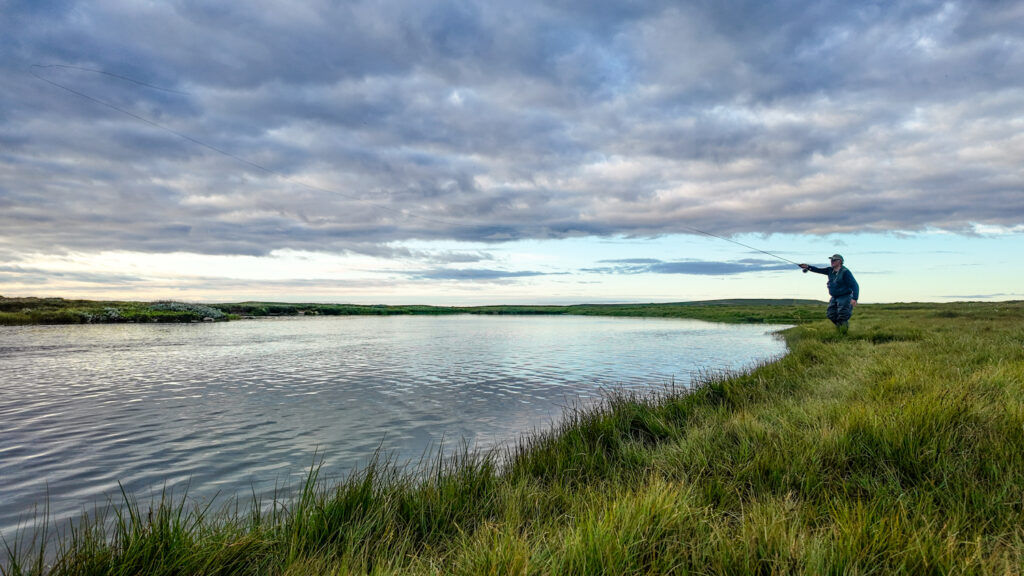
End…
]]>“Geir is a native guy, born and living in Finnmark, Norways most northerly region. A mid forties man, passionate in hunting , fishing, outdoors life. Reliable, calm, attentive, listening to his guest. After sharing his company two times I have asked him for a period of ten days without any doubts“.
Dieter Lampe Germany – 30 year client of Frontiers Ltd
I have known Geir some 15 years, and he and I have an inextricable link. We are both honorary members of the same family, the Mikklesen family of Alta boatman fame. He somehow ended up growing up with the youngest son Vegard, also one of the great Alta boatmen.
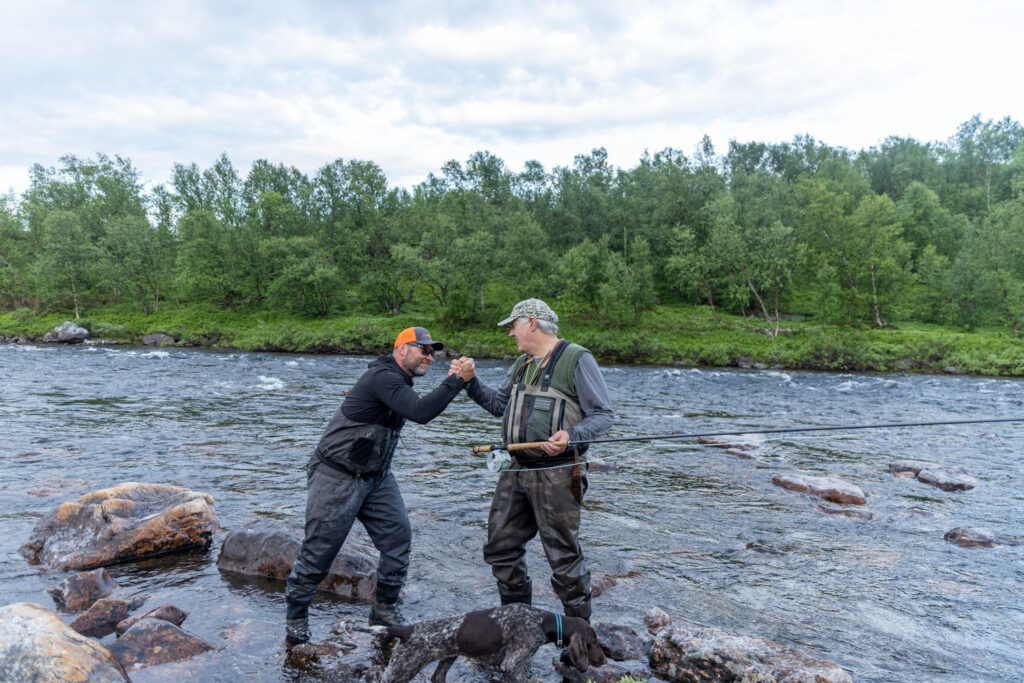
My membership follows fishing with one or other of Per and Bjorn Mikklesen since 1991. For the past 20+ years it has been both but on occasion we have had celebrity appearances from Bjørnulf, the Dad, and even more recently Lars, son of Bjorn. Down the generations we have had visits from Maya (Per’s daughter) and Jørgen (Vegard’s son) who come and wait for us to hook grilse so they can wind them in!
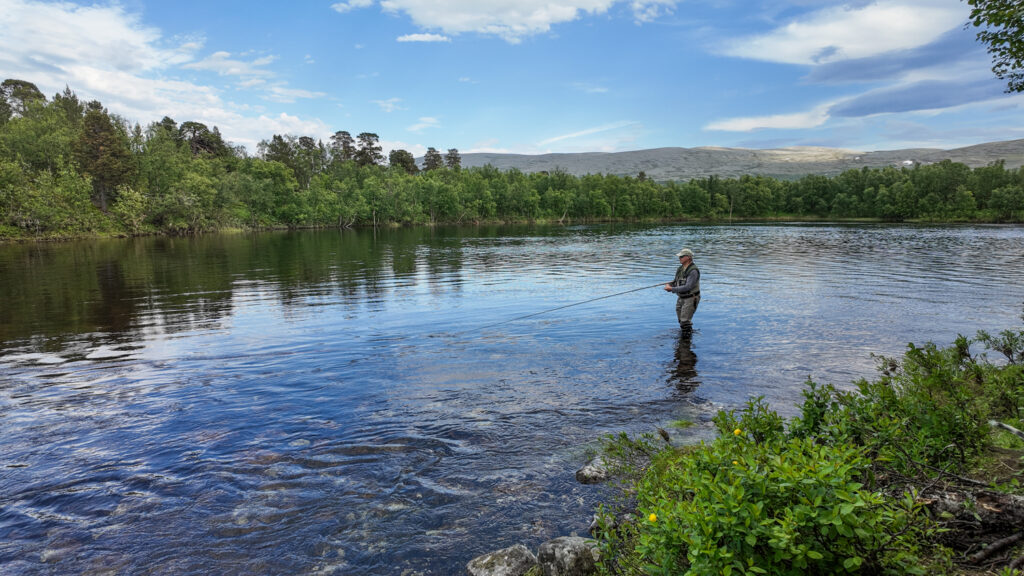
Naturally, in the summer, Geir’s son Isak now spends a lot of time with the Mikklesen clan who live on the banks of the Alta river. Randi, the boys’ mother, is ultra-keen and the real power behind the family. When we are having tea and we cannot remember which year we caught a certain fish, Randi checks her diary and always has the answers! Needless to say, I am extremely fond of the whole family, they are truly wonderful people and have been very kind to me over thirty years. Geir, the Man-Mountain is no exception!
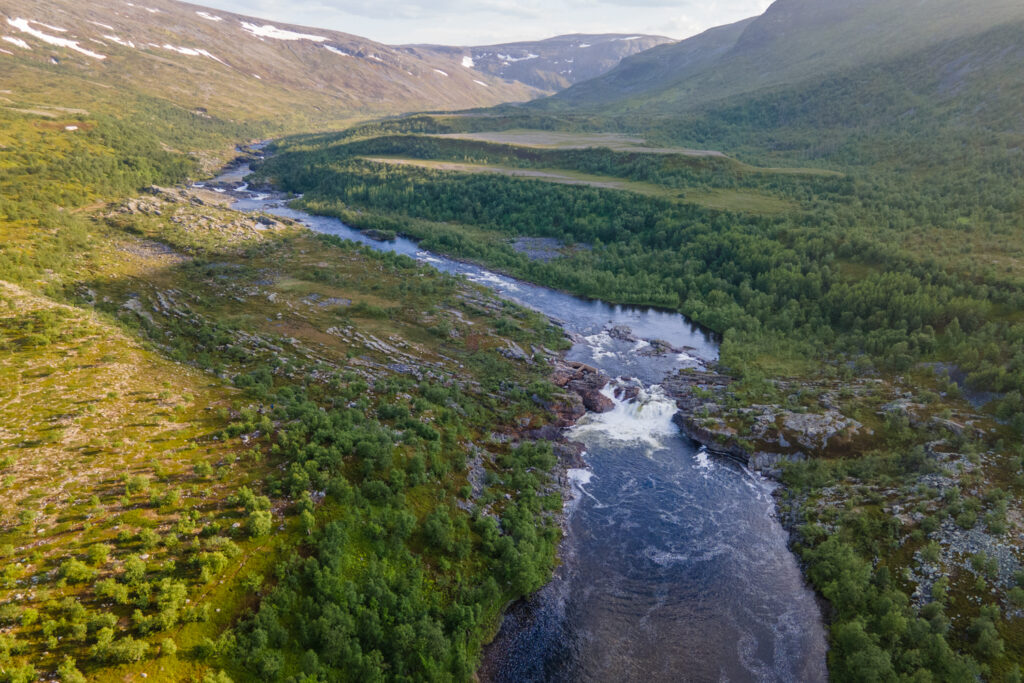
It was with great joy when I received a call from Geir to tell me that he was finally fulfilling his dream to become a guide on his home territory. He has worked in the sports/outdoor industry for his whole career, but it was always other people walking out the door to enjoy the wilderness of Finmark and not him and, over all those years, it had got to him. This year, he finally made the jump to start his own guiding business (he has a team under him) covering fishing, shooting and foraging.
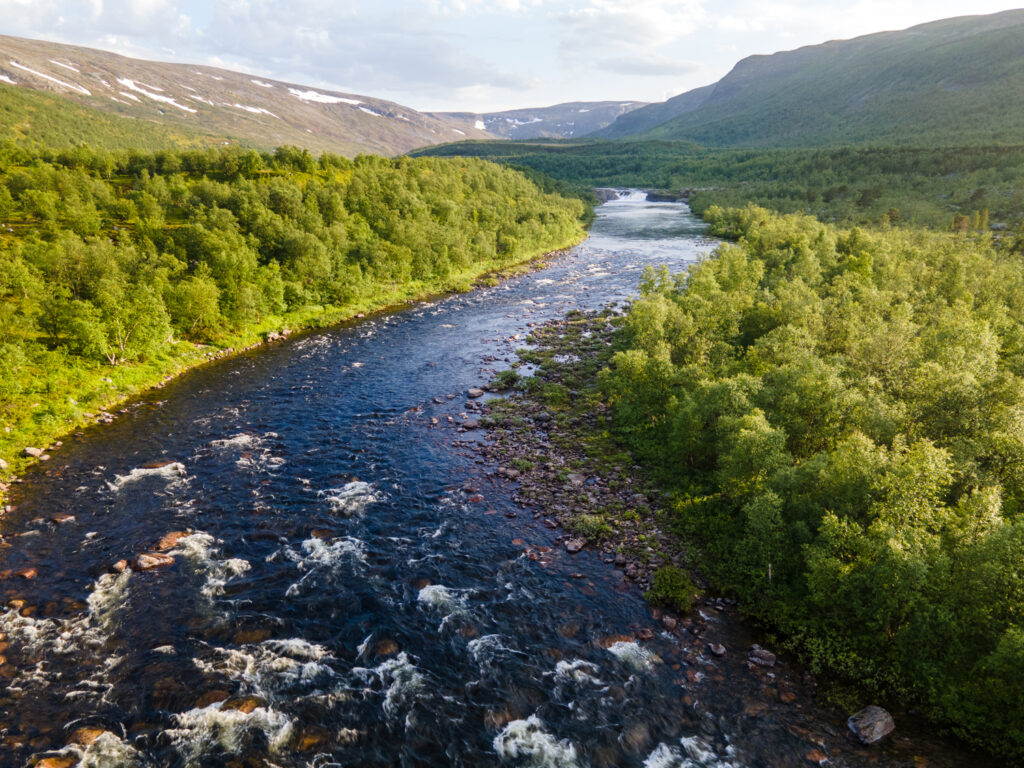
His home is Finmark, he now lives in Alta but he has also lived in Hammerfest and Lakselv where his Mum still lives, he would say that his ‘home’ rivers are Alta, Stabburselva, Lakselv and Repparfjordelva. The first three are famous for their big fish, the last one, the Repparfjordelva, is one of Norway’s most productive rivers with grilse and salmon up to about 25lbs.
It is famous for its bomber fishing. Lakselv is better known than Stabburselva but the Stabburselva is prettier, has beautiful pools and equally big fish. While I was there for a few days this spring (27th to 29th June) three fish of over 120 cms went through the counter – those are all 40lb + fish! Geir’s fishing guiding extends to a great deal more, sea trout in the fjords, brown trout and grayling on the rivers and lakes, pike, arctic char in the mountain lakes and rivers.
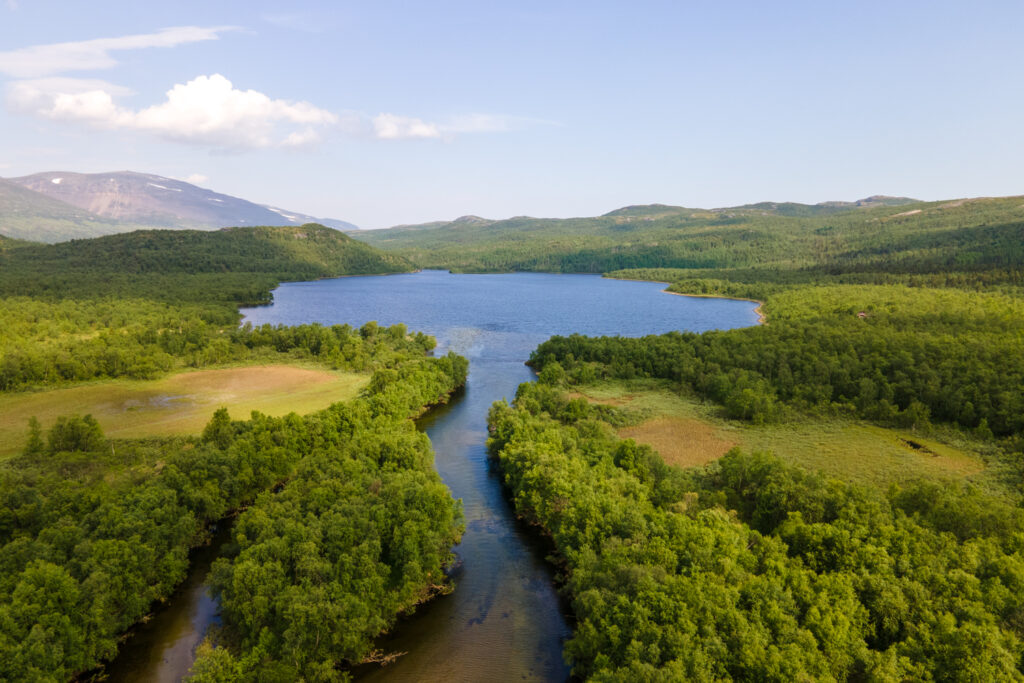
I can hear all the cries of ‘can he get us on Alta and these other rivers?’. The answer is NO… but read on…
Alta, is a closed shop between the Alta Syndicates, and the local and international lottery but he can take you sea trout fishing on Alta in the first days of September, some of Norway’s biggest sea trout, and on a tributary of Alta if conditions and time of year are right. The other rivers all have purchasable licences, and he can help access those but achieving licences is actually, not where his value lies. His value is local knowledge, knowing where to go when, how to get there and having the equipment and knowledge to get you there quicker and easier than everyone else! Let me give you a couple of examples.
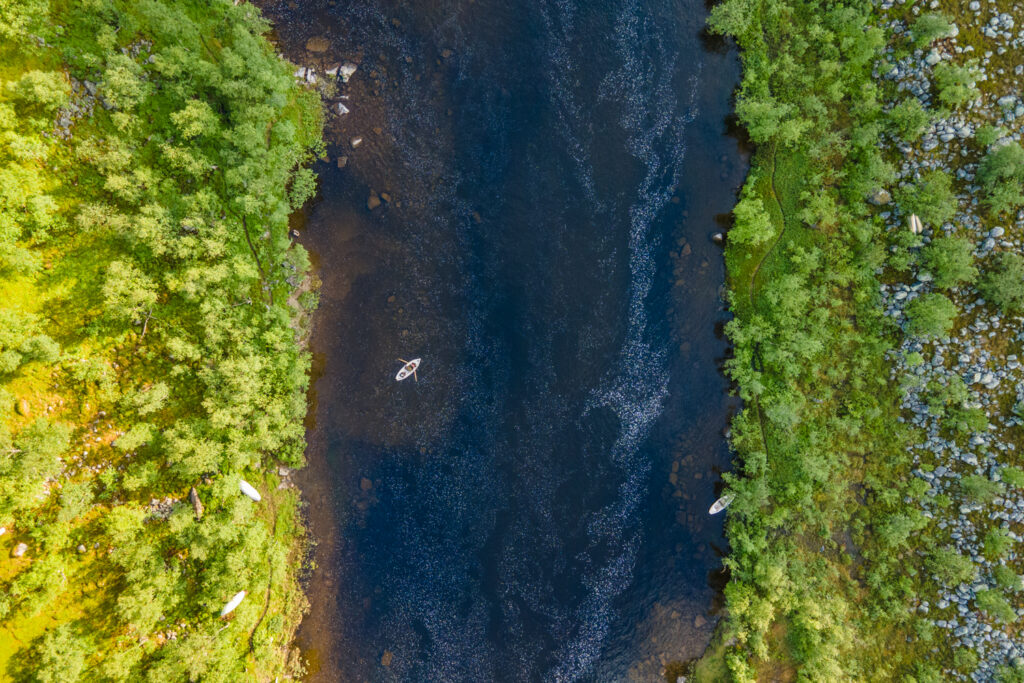
We decided to go to Beat 4 of the Stabburselva right deep in the stunning Stabbursdalen National Park. We drove to the car park, loaded gear and walked for about 15 minutes to one of Geir’s boats. There we rowed up the lake fishing for pike as we went. On arrival we fished for salmon on two Zone 3 pools (we also had a licence for Zone 3), we saw fish, but a thunderstorm was brewing, and the fish did not seem in the mood. We began the next 10-minute walk when the heaven’s opened but surprise, surprise, Geir had a tent just around the corner, so we sheltered there and
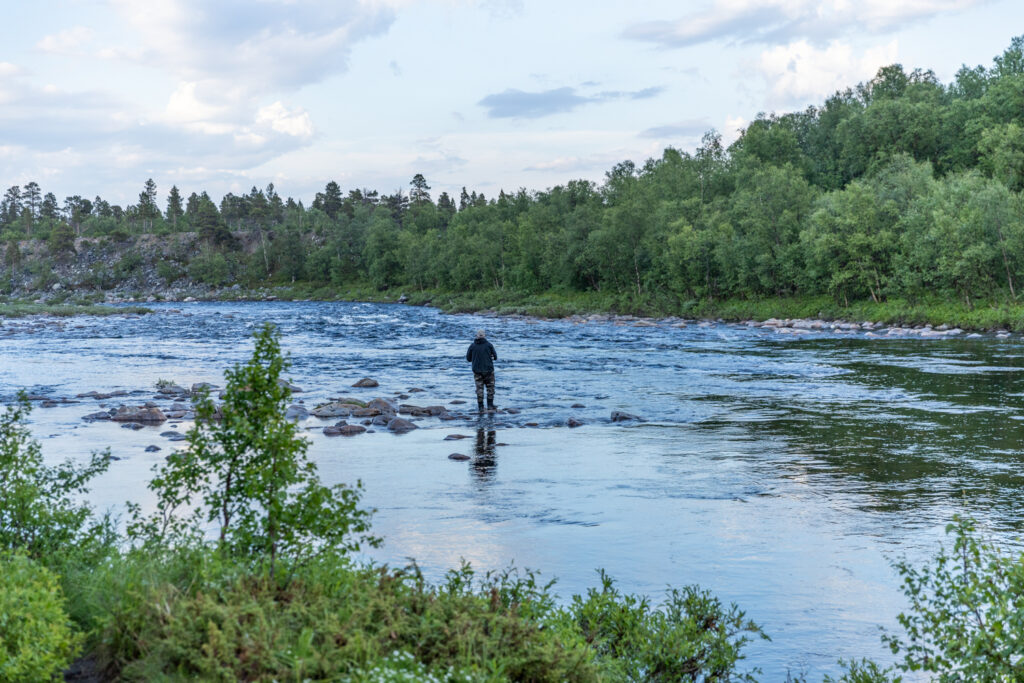
Geir set his anti-mosquito device off and soon there was not a mosquito to be seen. Then, we fished another Zone 3 pool and then got in the boat and rowed across the lake. Here we walked about 20 minutes to our destination pool. There was another fisher there but of course Geir had another boat, so we were able to fish both sides of this stunning tail. Had Geir not been the guide, this journey would have taken over four hours! Add to the fact that during this trip his ‘Man-Mountain’ act kicked in putting my backpack in his backpack to carry everything and of course when we are there, out comes a frying man, reindeer meat, cream, onions etc to make a reindeer stew onsite!
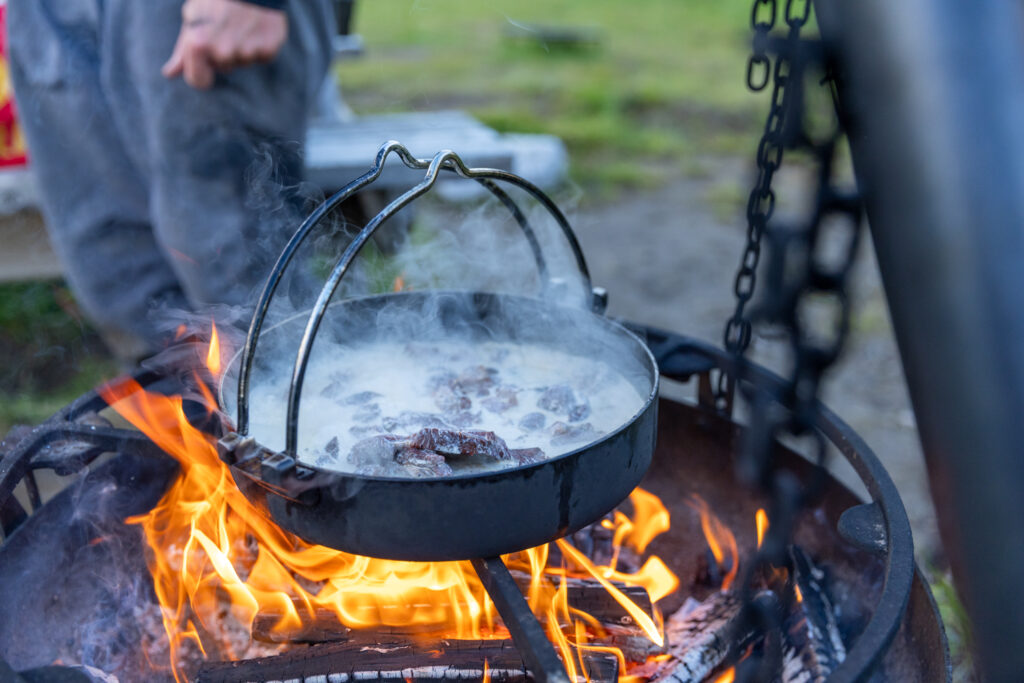
I did get a stunning 20lbs fish which took off down the rapids and had Geir not been there, I think I would have lost it. The rocks where I was wading were unbelievably slippery, but he was able to help me get away from the ‘ice-rink’ and together we chased the fish down the rapids!
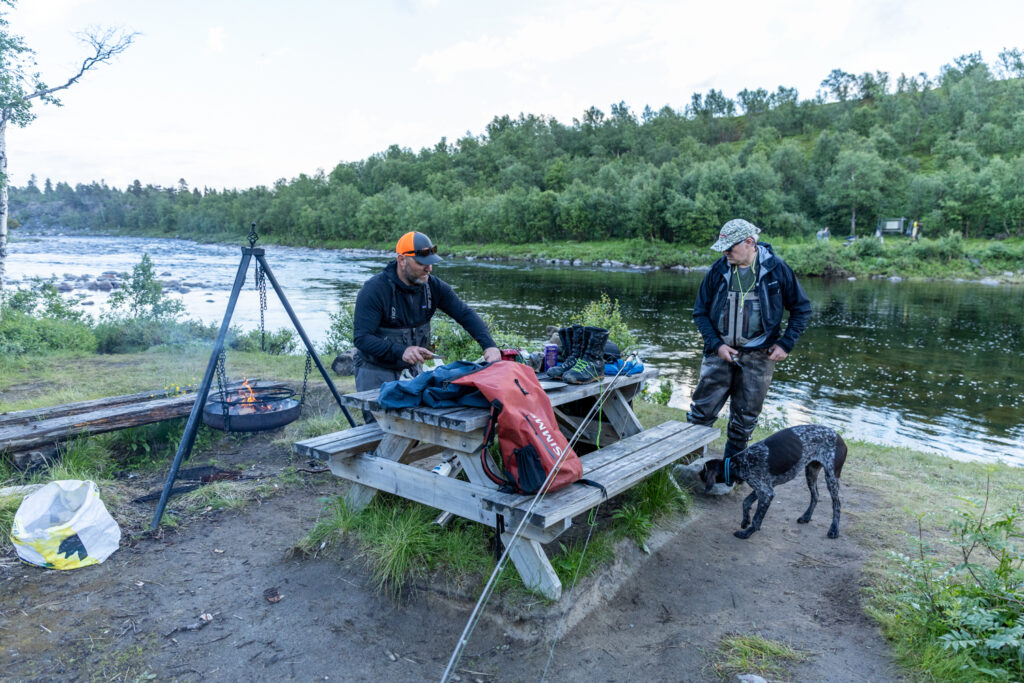
A second example was heading off to catch some trout in a little river up in the hills near the top of the Lakselv river. We loaded on to Geir’s six-wheel Polaris ATV (he is an ambassador for Polaris in Norway) and drove for an hour into the Finmark wilderness where sure enough we caught wild brownies on dry fly aplenty! A third was a further trip we made with a friend by helicopter into an area north of Alta, it was possible to stay there but we flew in for the day and caught some enormous, near record grayling on a beautiful river.
We hooked trout but failed to land them! As we flew over, Geir pointed out various trout rivers that we could access via his ATV. We basically barely scratched the surface of what one can do and enjoy with Geir and his knowledge and access. Then of course there is the sea trout in the Alta and Lakselv fjords, and in the rivers later in the year along with the ptarmigan. Geir is a very keen dog man with two beautiful pointers, Airo and Aya.
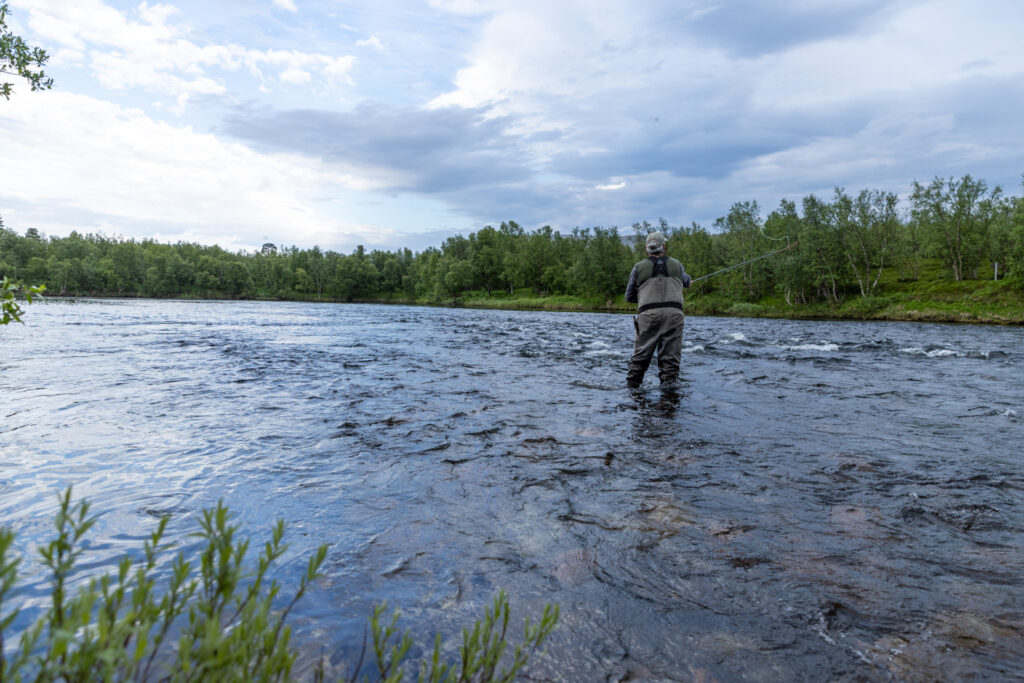
How does it all work? Nothing is off the menu so Geir can advise on what there is to do at the time of year you wish to travel. Early season I would suggest a salmon fishing combo with Stabburselva and Repparfjordelva, maybe three days on each or two days on each and two days of trout, grayling or char. Geir can advise and even then, the plan is not set in stone if the weather has made the potential plan less positive.
Geir will generally pick guests up from Alta airport (2 hours London – Oslo and 2 hours Oslo – Alta – both by jet) and his day rate includes driving you around, guiding, use of his equipment etc. For accommodation there is a very broad choice from a range of hotels to Air B&Bs to self-catering cabins.
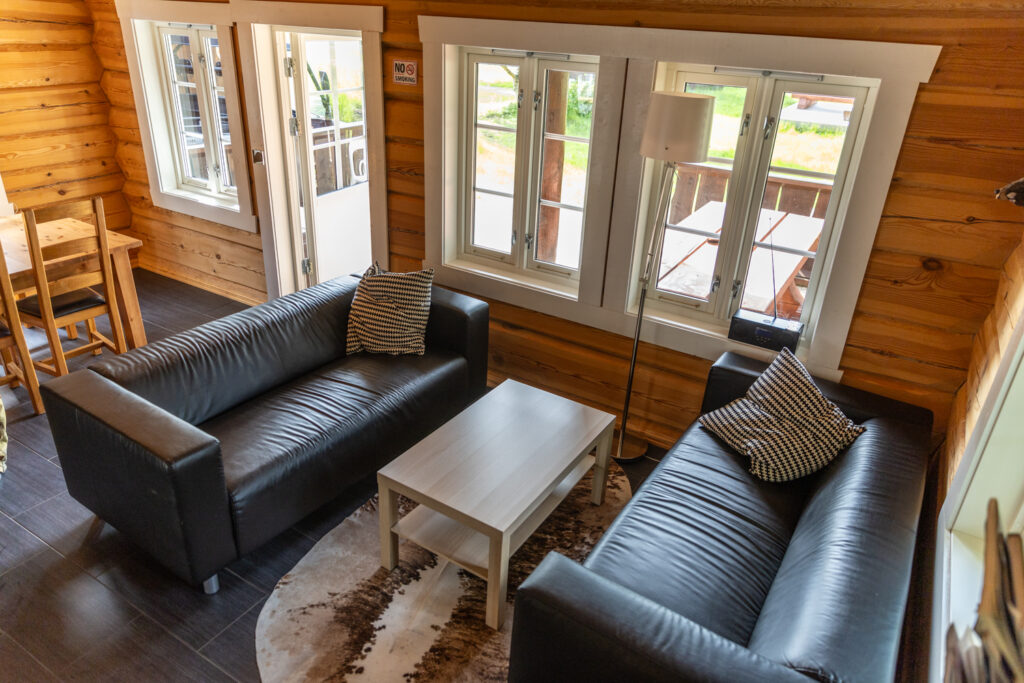
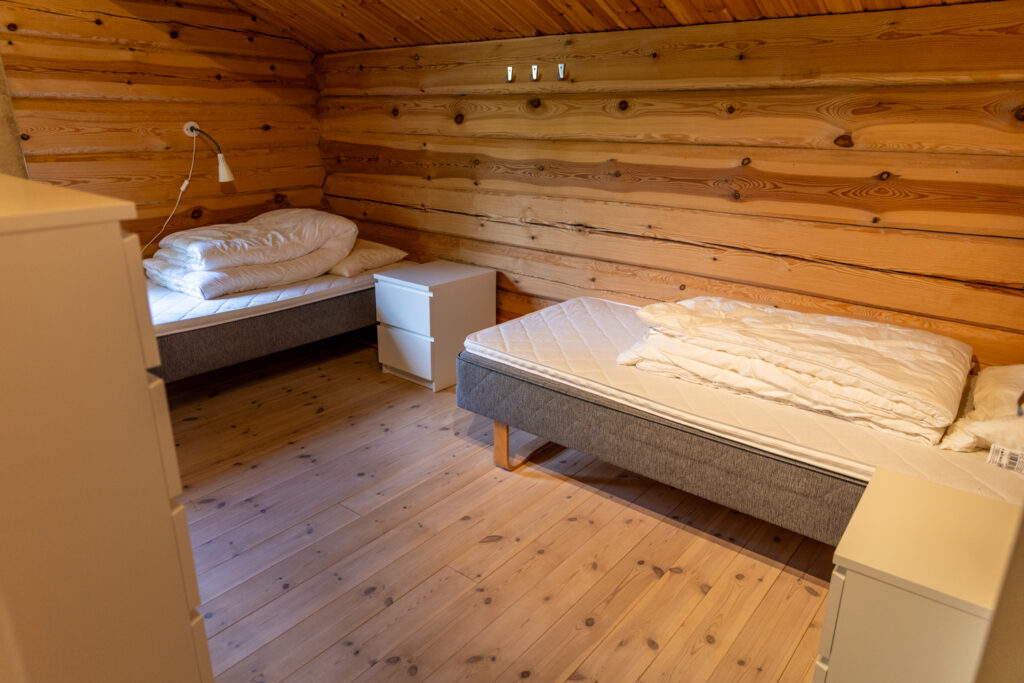
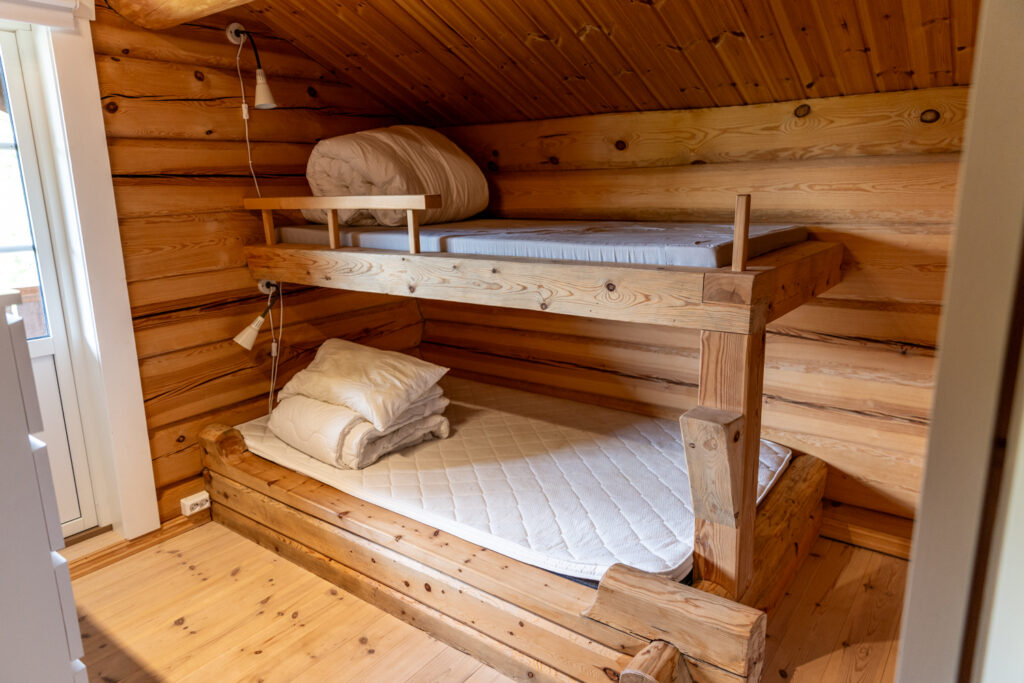
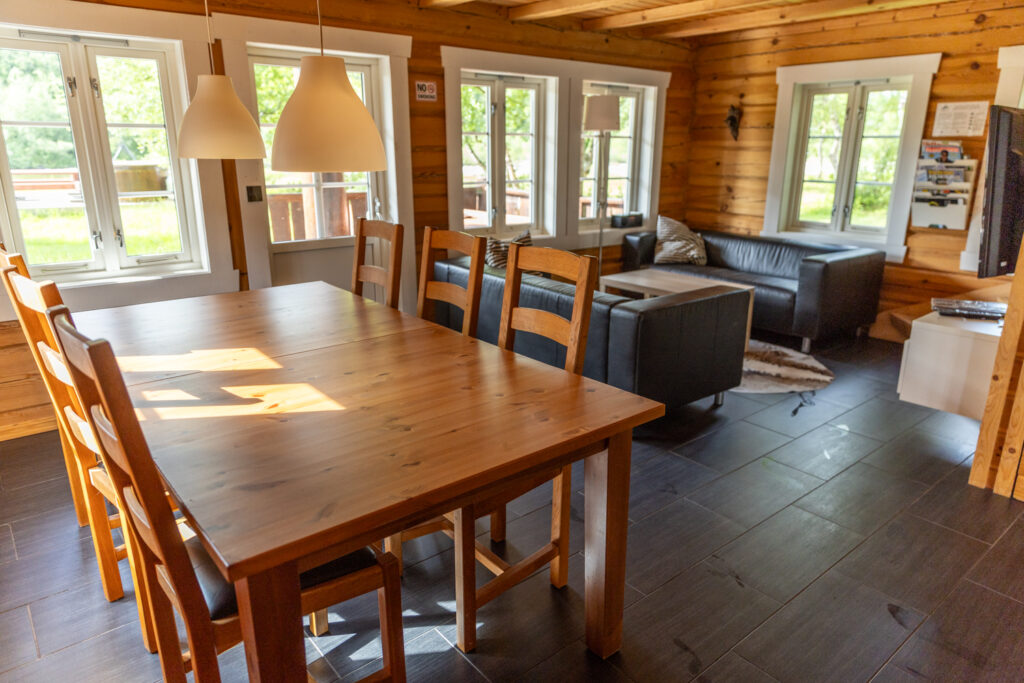
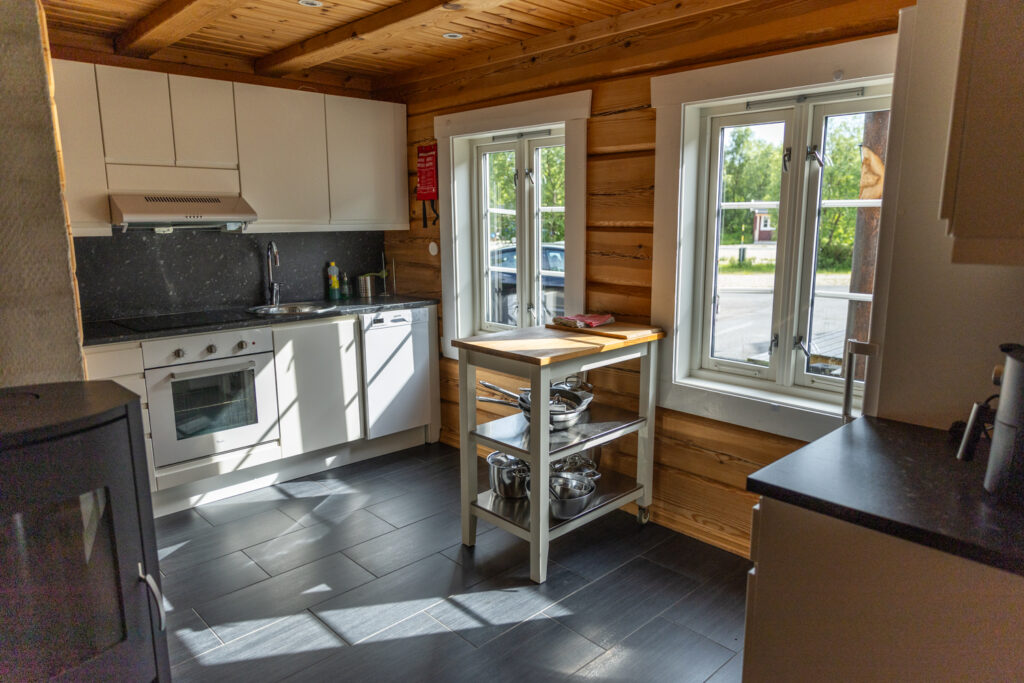
The choice is yours. Once a basic plan has been agreed Geir will quote for his time and your choice of accommodation and will estimate the likely costs of fishing licences which can only be purchased onsite. Geir speaks perfect English, and it is absolutely no problem for Frontiers to arrange for you to chat to Geir directly.
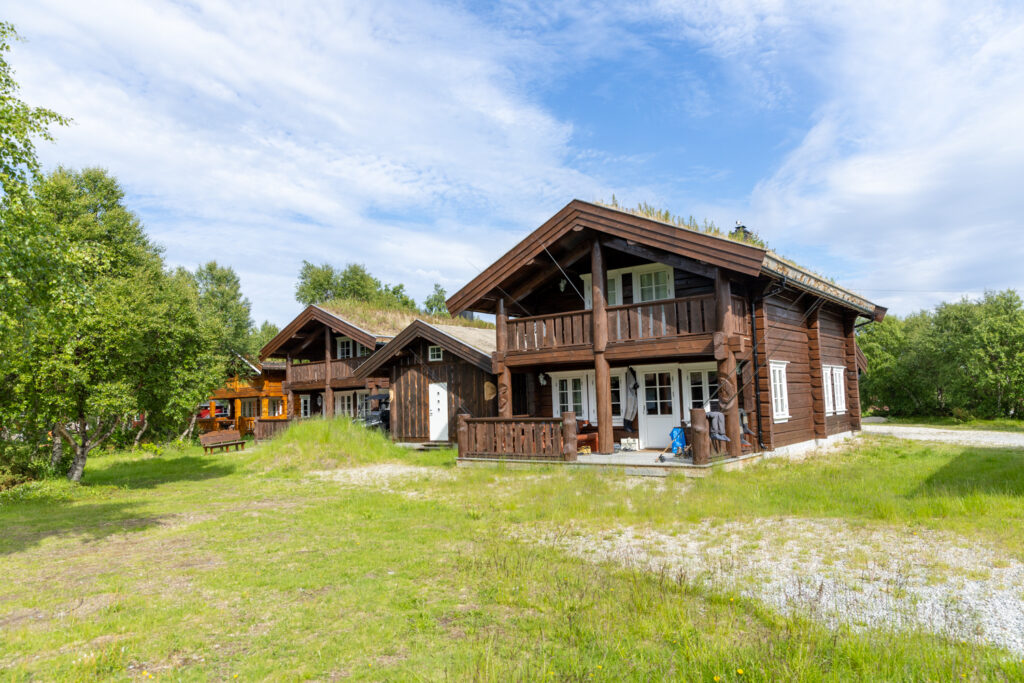
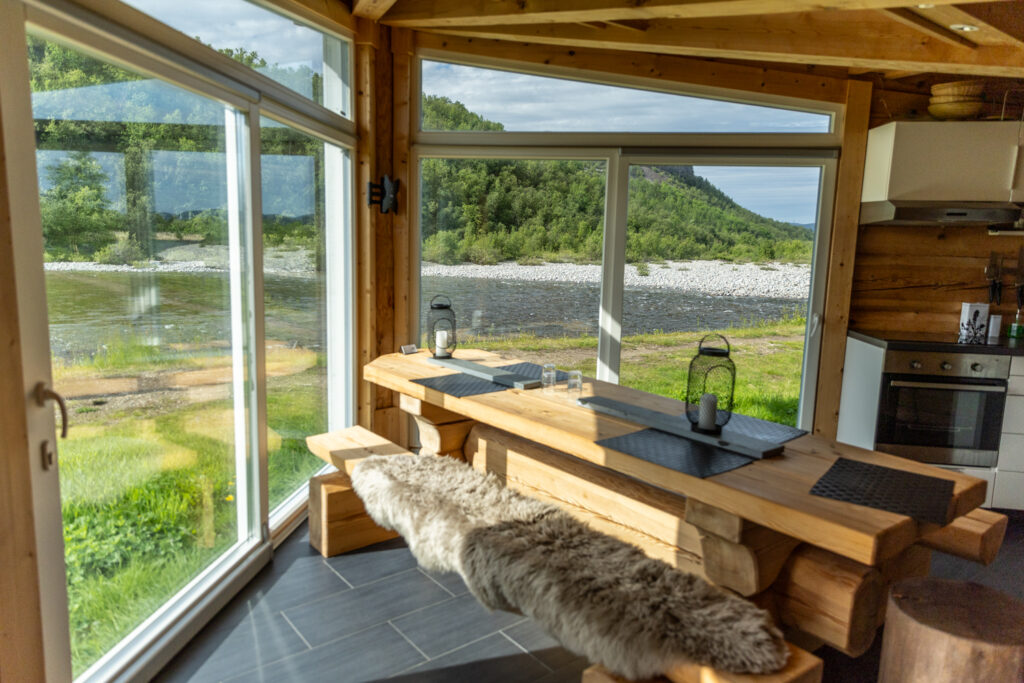
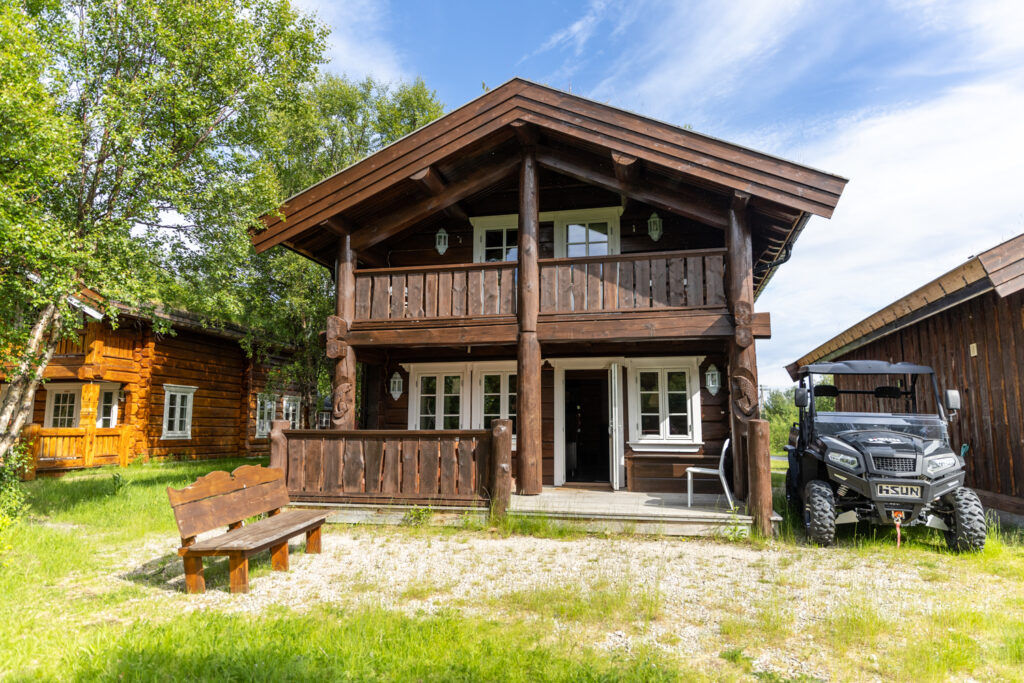
End…
]]>