The post Field Study: Evergreen Brickworks first appeared on Synapse.
]]>
Emphasizing hands-on, real-world learning experiences, (a place-based) approach to education increases academic achievement, helps students develop stronger ties to their communities, enhances students’ appreciation for the natural world, and crates a heightened commitment to serving as active, contributing citizens. – David Sobel, 2004 (Skoutajan, 2012)
I’ve grown up exploring the outdoors. Some of my most favourite school memories, in fact, did not take place in school at all, but at outdoor education centres where we participated in scavenger hunts, horseshoed, learned how to make candles, and listened to stories on bales of hay. Additionally, my most vivid learning experiences similarly took place while gazing at the night sky, or collecting bugs, skinks, snakes, and plants, or simply observing the waves.
As such, seeing my own son embark on his own educative journey, place-based education (what I otherwise often refer to as outdoor education), always seemed to me an intuitive way to enrich his understanding about the world. Now with the added gleanings through my teacher education programme at OISE, I have greater understanding why it is a critical way to connect students not only to their communities, but to nature, and the world at large.
(RE)DISCOVERING EVERGREEN BRICK WORKS
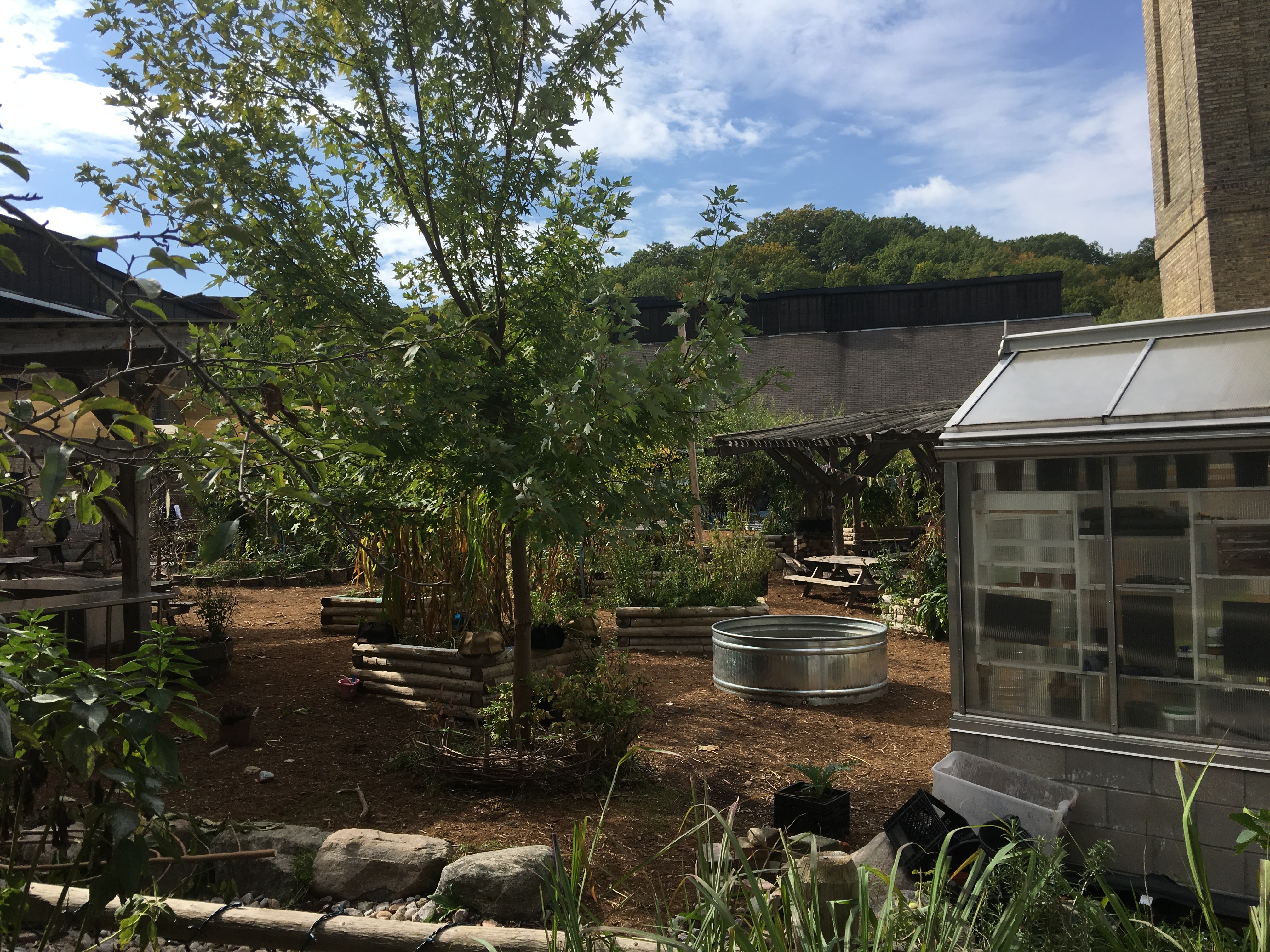
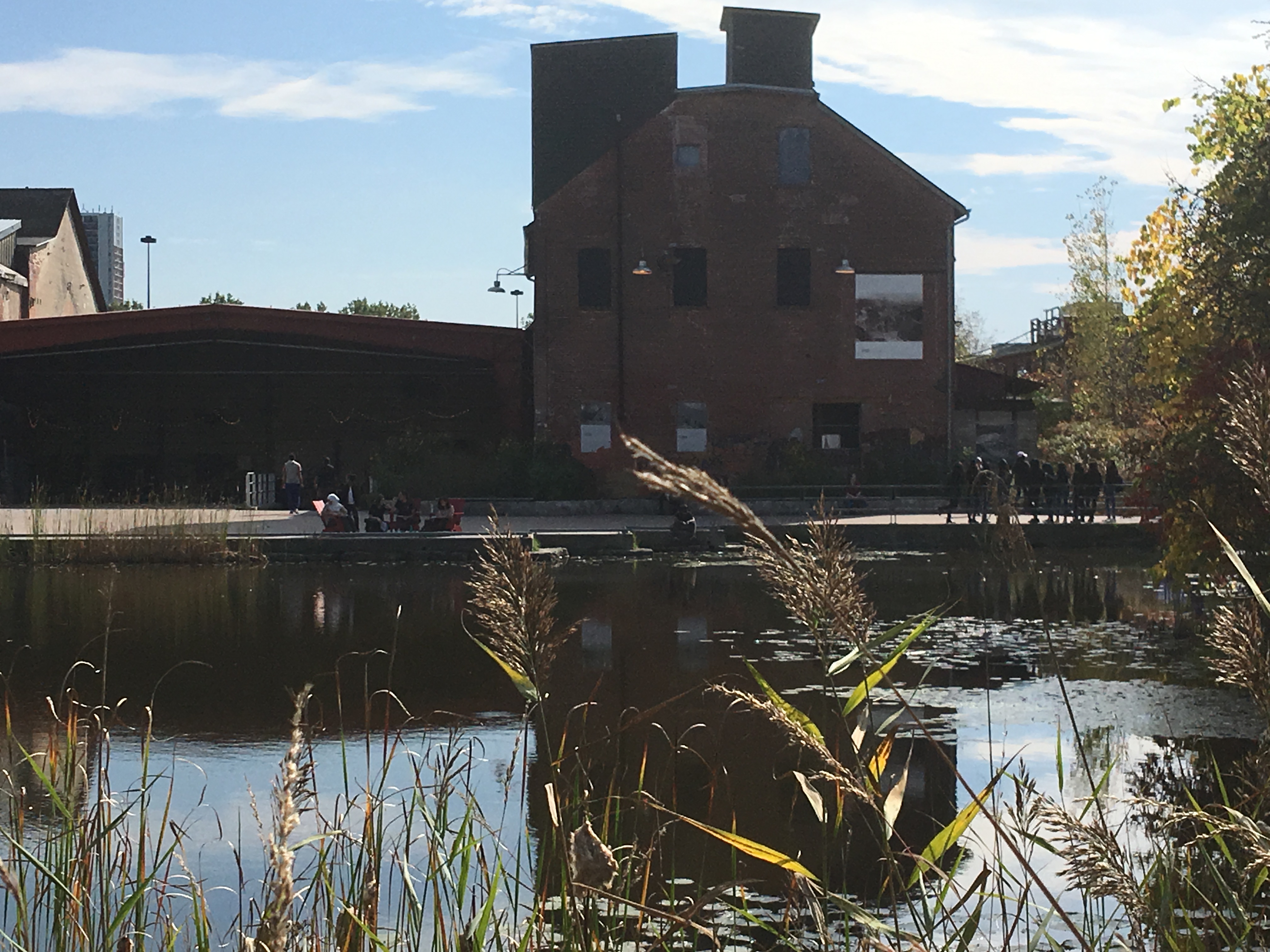
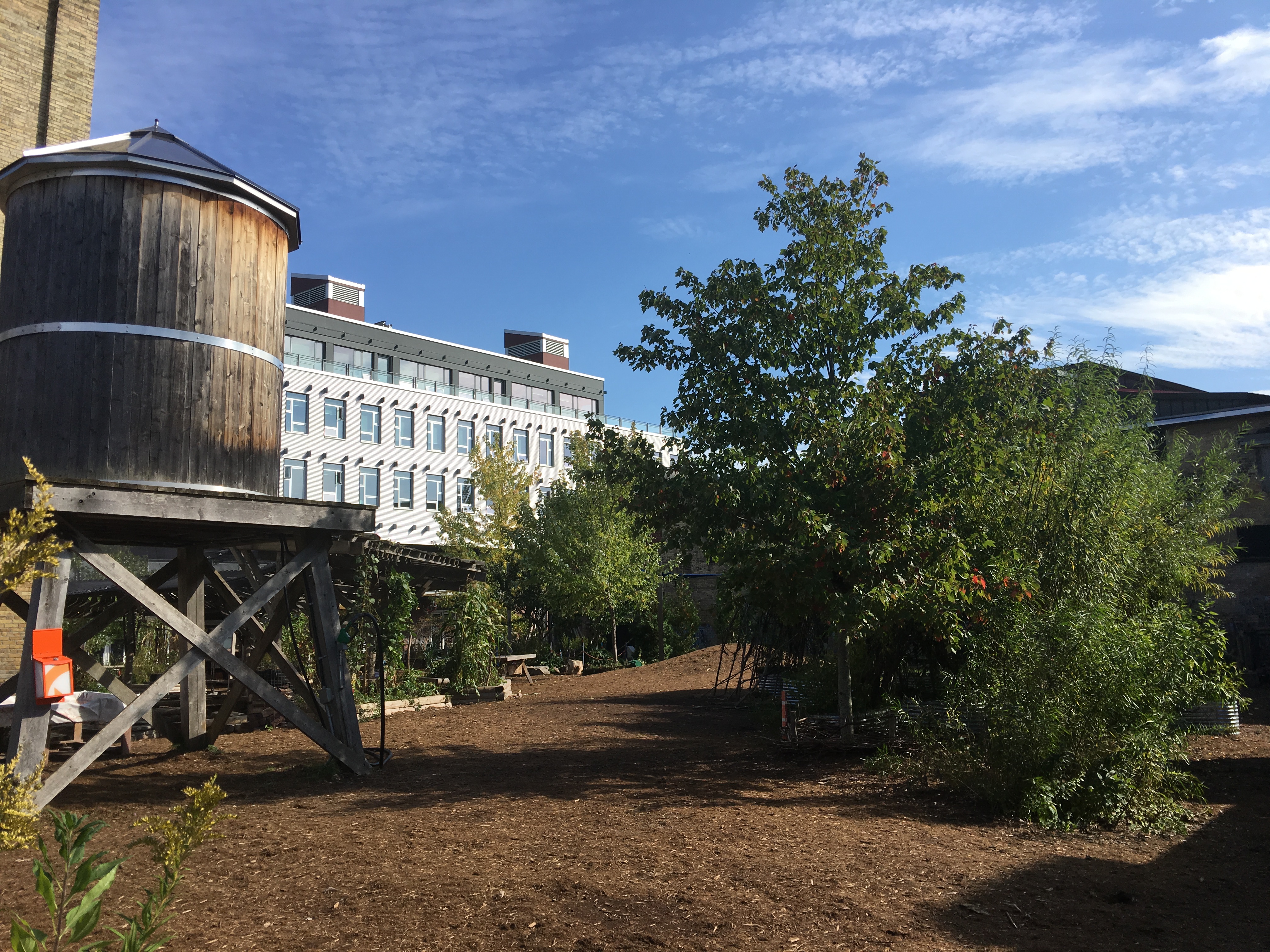
As such, I was excited to find out that we would participating in a field study at Evergreen Brickworks as part of my cohort’s Social Studies class (you can see the pictures @Ms_Ks_Korner). I had spent some of my summer biking and exploring the area and the market. I appreciated its unique design, and green spaces, but had little knowledge of its historical significance as a brick factory to my home city (Toronto). Additionally, we learned from our guide that once a quarry and brick factory was shut down, it turned into a makeshift gathering spot for underground parties (a testament evidenced by its many remaining graffiti tags). Soon after, however, community members reclaimed and fought to restore the space to its natural habitat – no easy undertaking.
Some of this insight came by way of a documentary we screened in class Brick by Brick:
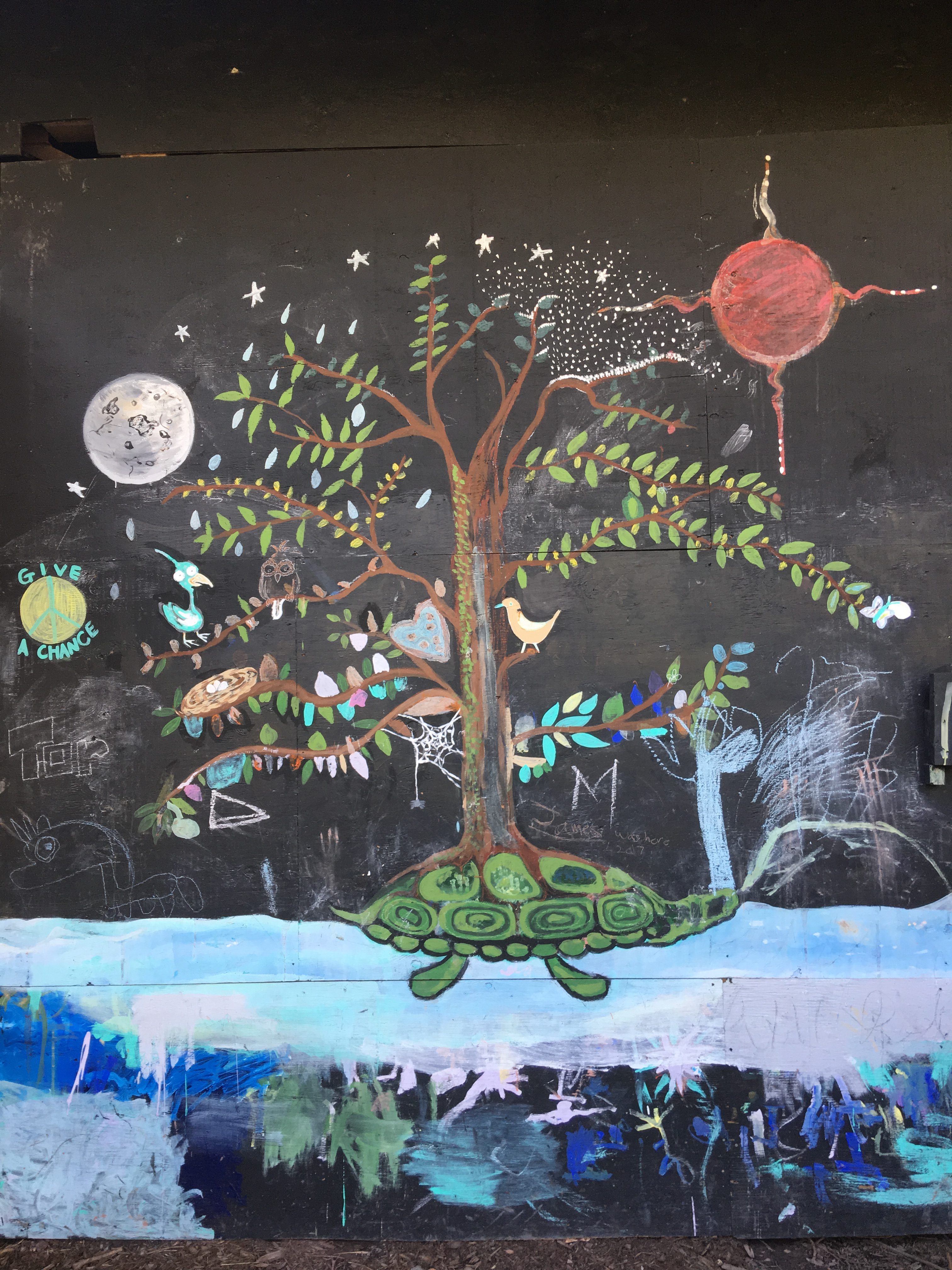
A lot of it came by way of our wonderful educational guide who walked us through the grounds explaining significant points along the way that can in and of themselves be explored in greater detail with our own classes. We learned about the four sacred Indigenous plants growing in a garden, and throughout the grounds, as well as about how simple, pointed efforts turned local pond waters from something toxic to thriving habitats.
As Evergreen’s website reminds, school visits are approached with place-based, ecology-focused, hands-on, arts-infused, mobile, and integrated approach.
The experience served as a “living document” testimony to other ways of being and knowing – beyond those imposed by an industrial vision. It is an example of how mobilized community members have the potential to transform a space where otherwise it might have been left and forgotten. This restoration in turn wonderfully connects to Indigenous understandings of plants, and working with the land – as opposed to merely on it.
SCHOLARSHIP CONNECTIONS
Place-based learning is “where the curriculum lives….it is significant gains in student achievement that proves its immeasurable impact….If we can consistently connect the concepts students learn about with relevant and meaningful issues or activities that happen in our neighbourhoods and communities, we know the connections will be lasting and meaningful” (Skoutajan, 2012, pp. 34-35). This was my own experience, as a Teacher Candidate undergoing a teacher education programme on Social Studies & Aboriginal Education, learning how to teach in an anti-oppressive, social justice-focused way. Evergreen Brick Works allowed us to experience an alternative style of classroom, that very much demonstrates the value and concepts of traditional indigenous knowledge, as well how beneficial (and engaging!) such experiences can be for students (this one included).
Because Evergreen Brick Works is part of my own community, it is also a demonstration of how students can engage in the world around them and how they may see their own neighbourhoods with new eyes. Sometimes, going outside can make all the difference, academics aside. As Skoutajan (2012) finds, such opportunities can also help students better deal with stress and resolve conflict “The research clearly indicates the almost therapeutic and medicinal value nature plays” (Skoutajan, 2012, p. 35). Furthermore, “students involved in the outdoor education program demonstrated very positive feelings about science and the natural environment but also in their English language development and personal and social skills including conflict resolution, self-esteem and cooperation” (Skoutajan, 2012, p. 36). And what teacher would not want their students honing their emotional and social intelligence? But Skoutajan raises another important point – one I’m inclined to agree with:
“If we expect our students to become free thinkers and problem solvers who can adapt to the new parameters of time, space and resources then shouldn’t we be aligning our educational system more towards immersing our students in the community where real, authentic and meaningful experiences can be had?” (Skoutajan, 2012, p. 36).
SPRINGBOARD FOR SOCIAL STUDIES CLASS CONNECTIONS
“When students learn within the confines of a classroom, they are prevented from making real life connections” (Skoutajan, 2012, p. 36).
Our trip to Evergreen gave clear examples of how I may integrate place-based learning into my own practice. One memorable takeaway is how beautifully the grounds demonstrate the success of efforts to reclaim and repurpose prior industrial damage. Other place-based learning examples may include students creating enrichment toys for parrots, warthogs, and porcupines at a local zoo (Sobel, 2004, p. 55), or considering how polluted areas in their own communities may be changed for the better, with actionable plans that make real-world impact. It is an example of how mindful efforts can transform our communities, collectively, for the better – and how multiple ways of knowing can fortify such efforts.
Field studies are ripe with opportunities to address disciplinary thinking concepts outline in the Ontario Curriculum guide (Ontario Social Studies & History Curriculum, pp. 12-13). Evergreen Brick Works specifically easily connects Social Studies with Cause and Consequence (environmental degradation and pollution, industrial development and abandonment), Continuity and Change (reclamation, ecological restoration), as well as Interrelationships and Perspectives (Indigenous knowledge of plants and ecology).
But even as Social Studies connections abound (whether they be History or Geography-based), such a trip is a reminder that environmental education provides opportunities for cross-curricular connections too. Students can use their understanding of Math and Art to research and design bird houses, and student can investigate whether using 100 per cent postconsumer waste paper in our copiers is worth the cost” (Sobel, 2004, p. 63).
Another way to make real-world community connections as inroads to place-based learning is to forge partnerships with higher education institutions, diverse community organizations and other environment learning centres, in a way that allows students to take on meaningful roles that are valuable to the community at large (such as the document restoration efforts at a heritage home mentioned in our January 16th, 2018 class by our professor Rose Fine-Meyer, or by having students rebuilding a rope course that got destroyed during a storm). But in making such connections, perhaps other even more critical connections exist: Because, ultimately, “Place-based education is about connecting people to people, as well as connecting people to nature” (Sobel, 2004, p. 63).
References:
“Brick by Brick” by Hungry Eyes Media Inc. on YouTube, 22 Mar 2011. https://www.youtube.com/watch?v=3gzgiYUzzW8
Skoutajan, S. (2012). Defending place-based education. Green Teacher, (97), 34-36. Retrieved from
http://myaccess.library.utoronto.ca/login?url=http://search.proquest.com/docview/1095774877?accountid=14771
David Sobel. (2004). Place-based Education: Connecting Classroom and Community. Nature Literacy
Series 4.
Ministry of Education (2013). Ontario Social Studies, History & Geography Curriculum. Retrieved
from: http://www.edu.gov.on.ca/eng/curriculum/elementary/sshg18curr2013.pdf
The post Field Study: Evergreen Brickworks first appeared on Synapse.
]]>The post Down the Rabbit Hole: Social Technology Tools in Educational Alternate Reality Games first appeared on Synapse.
]]>— Sara Corbett, Journalist, New York Times
As part of our Social Media in Education course for our Master of Teaching programme at the Ontario Institute of Studies in Education (University of Toronto), I investigated a critical question of my choosing. In general, I am very interested in Game Based Learning – specifically, educational Alternate Reality Games (ARGs). One reason aligns with Corbett’s quote above. I first came across this narrative form as a producer for an interactive Daily Planet segment for Discovery Channel here in Canada.
ARGs are interactive, networked narratives (dubbed storyscapes by Blumenthal, 2012). At their core, they behave like complex scavenger hunts. They rely on existing real-world environments as their game space and employ transmedia storytelling, often both online and offline, to deliver content that may be altered by students’ ideas or actions. They can be considered “games you play in order to get more out of real life, as opposed to games you play to escape it” (McGonigal, 2011, Chore Wars, para. 30). Such ARGs have the potential to provide learning environments that help foster competencies and extend education to where learners are not only consumers of knowledge, but producers of it as well. This makes ARGs ripe with potential for educational applications.
A step away from the passivity that learners may associate with the traditional classroom, the dynamic nature of Serious ARGs can motivate players by giving them a focused problem to solve. The solution process elicits knowledge and learning rewards, while goal-driven environments morph player game play into a focused, engaged learning experience (Lynch, Mallon, Connolly, 2015, p. 35).
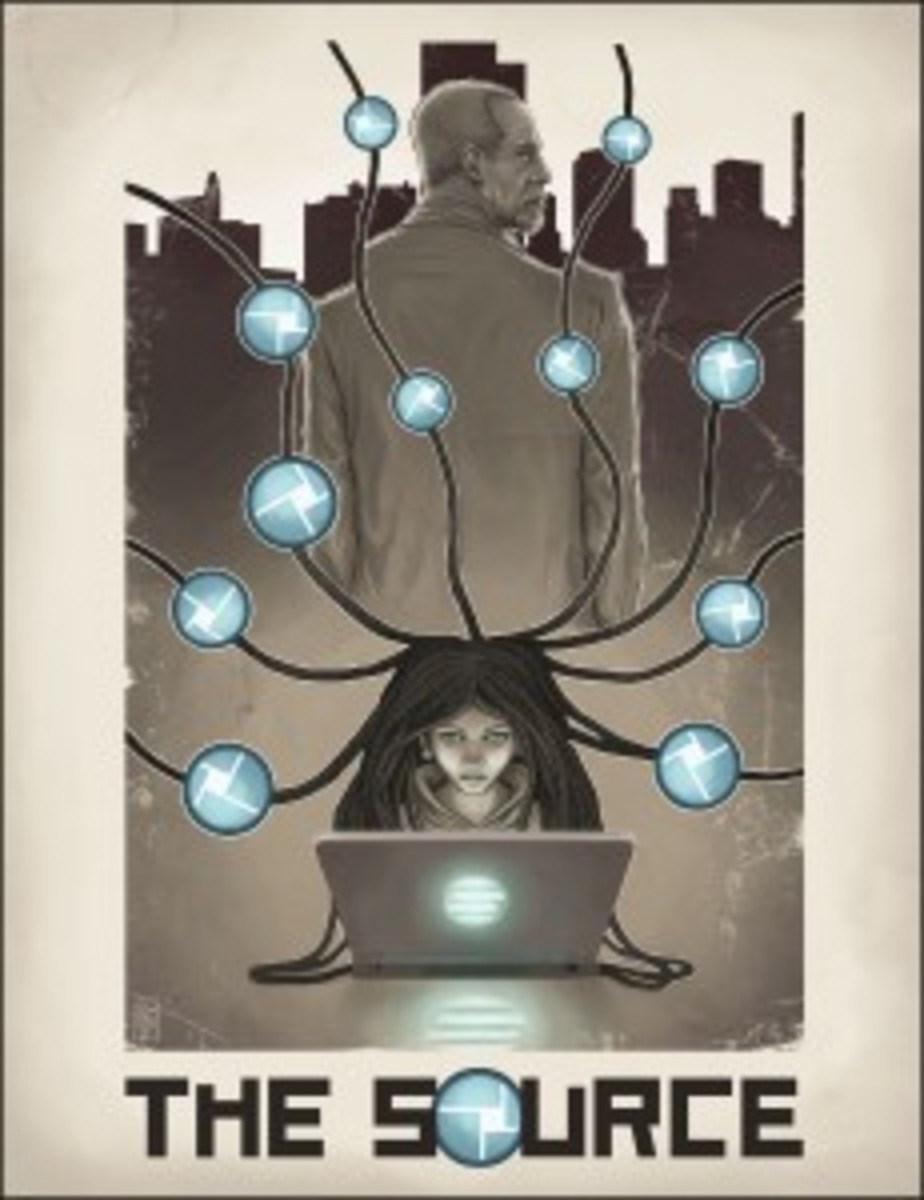
Yet, ARGs are a relatively unfamiliar concept, particularly in the realm of education. Patrick Jagoda, PhD, Associate Professor of English at the University of Chicago, and Game Designer and Project Manager Ashlyn Sparrow do a great job giving a bit more background in the video below. Jagoda is also a researcher behind one of the articles and ARGs I analyzed (The Source).
To help demonstrate what a serious ARG looks like in practice, here is a trailer for the ARG Urgent EVOKE, by game designer and author, Jane McGonigal (cited above).
ARGs can be used as instructional tools in any subject (often with a cross-curricular lean), and as part of media pedagogies; they can be used to teach History, STEM subjects, literacy and any combination beyond and therein. They often challenge students to problem-solve and to employ other 21-century competencies (such as collaboration).
As there appears to be a research gap with educational ARGs in general, and in the way social technologies are best utilized within ARGs specifically, I created an annotated bibliography that reviews articles with a more a general focus on ARGs. Within these articles, I then considered how social technologies are leveraged in each case.
This Annotated Bibliography helped inform and illuminate a response to my critical inquiry:
“How can social technologies successfully be integrated into Alternate Reality Games intended as instructional tools in the classroom?”
ARGs as Environments of Possibility
What I discovered is that ARGs are as varied as the people who design them and the circumstances that give them rise. “It is difficult to make generalizations of what an ARG is or looks like for learning….Designs could range from something very simple (e.g. a scavenger hunt) to something very complex (e.g. large scale problem-based learning experience)” (Olbrish, 2011, p 2). They serve as custom, scalable sandbox environments that can be tailored to specific groups of students and their learning objectives. By extension, social technologies (which encompass social media and other social software), are tools often leveraged by ARGs, and vary in their application case-by-case, both in extent of their integration, as well as applied function. Nevertheless, all the articles I examined used Social Technologies, at least to some extent in their ARGs. As one author found, this is because
a range of ICT and Web2.0 technologies…are freely available and therefore feasible and secure for schools to use. This is important because the overall feasibility of integrating ARG with teaching science or other disciplines rests on the ability of schools to access secure, easy-to-use technology that incurs no financial expense….one of the advantage of ARG over other forms of gaming is that it relies on the use of free or low cost software for mediating the online interactions (Bellocchi, 2012, p. 46).
Social Technologies used included wikis, blogs (edublogs, WordPress, etc.), free websites (such as wix), YouTube (using short video, vlog and webisode form), NING, Facebook, Twitter (using promotional tweets, character tweets, as well as “twitter novels”), Blackboard, online forums such as Unforum, a fake Kickstarter campaign, Google search, Google Docs, Wikipedia, QR code technology, Augmented Reality technology, email, Prezi and / or PowerPoint.
Nevertheless, as Boskic reminds, “[w]e have to avoid the lure of bleeding-edge technologies without solid pedagogy behind it” (2011, p. 680). The best examples of social technology uses in ARGs approached such integration with deliberate purpose and explicit learning objectives that included technological literacy (Jagoda, 2015, p. 93).
Social Technologies as ARG Marketing Tools vs. ARG Narrative
Some of the examples I explored leveraged social technologies such as Twitter and Facebook to raise awareness of ARGs (particularly at the University Level), while some leveraged these and platforms such as wikis, blogs and YouTube to convey the ARG’s narrative to participants (particularly at middle school or high school levels, or smaller class environments, where participation was part of class curriculum and no added awareness needed to be raised). Some also sought to do both (not always successfully, as Whitton acknowledges).
Using Social Technologies to Co-Create ARG Artefacts
By employing different media, designers created a distributed narrative that was reflexive, and changed as it responded to player contributions. Social Technologies, and specifically social media, offered ARG designers (often teachers or professors) with opportunities to engage with participants in real time and to customize the experience for some of them (Jagoda, 2015, p. 81) – perhaps another take on enabling differentiated instruction.
In such narratives, fact and fiction frequently merged, as participants added their own solutions, narratives, and understandings to fictional storyscapes. Here, participants were also co-constructors of knowledge. The process was beneficial for several reasons: “Social media effectively enabled students to become more autonomous and develop metacognition” (Greenhow & Lewin, 2016, p. 18). Additionally, social media enabled participants to harness collective intelligence via the network and to seek out relevant expertise (Greenhow & Lewin, 2016, p. 23) – a transferrable skill that may benefit students in future learning.
Social Technologies as Potential for Change
Some of the most interesting examples in social technology integration leveraged such technology for social change, employing Youth Participatory Action Research frameworks, extending social justice initiatives, and engaging in socio-scientific issues, and more. Some participants in Jagoda’s study even leveraged this literacy further to pursue civic and socio-political activities (Jagoda, 2015, p. 93) and acquired real-world credentials. They earned digital badges that showcased their newly-acquired skills.
These badges could appear on their individual profiles, which could be accessed via the games central website. Most interestingly, the game designers treated these badges not just as extrinsic motivators in game-play, but as legitimate credentials that were linked to larger citywide summer education efforts, with the intent to link participants to future real-world academic opportunities, internships, and career paths. “The Source made available badges for web designer (website creation and layout), caster (podcasting and sound design), media socialite (social media ethics), blogger (news writing and interviewing for blogs) and documenter (visual-media production)” (Jagoda, 2015, p. 87).
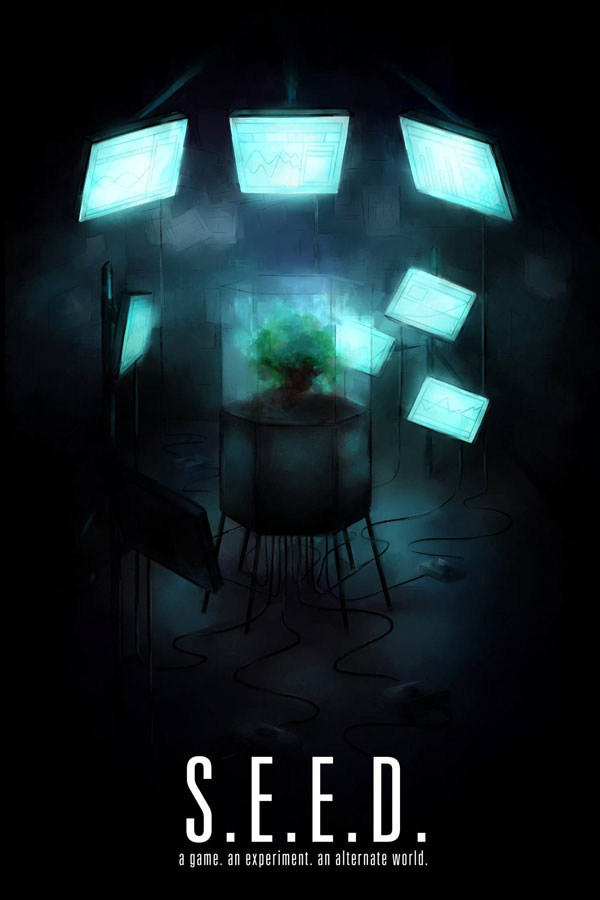
The initiative was so successful, Jagoda and colleagues continued their initiative, extending it through another ARG iteration, called S.E.E.D.
For Educators Designing ARGs:
Chess & Booth make several suggestions for educators looking to create their own educational ARGs. Among them:
Make interactive and image-based visualizations of class ARGs when introducing this narrative form to students. A simple linear outline cannot fully encompass the multiple structures and varied pathways an ARG can take. If you are going to have students rewrite your ARG or playtest their own in class, offer a fully interactive visualization of the game – either through Prezi, through a wiki, or even through a PowerPoint. This provides students with a better understanding of the forking-paths and possibilities of ARG gameplay (Chess & Booth, 2014, p. 1015).
RESOURCES:
- http://www.argology.org/args-in-education-training/
- https://www.argn.com
- http://www.unfiction.com
- https://www.reddit.com/r/ARG/new/
Trailblazing ARGs (commercial as well as serious or educational ARGs):
- The Beast (arguably the first ARG, designed in 2001)
- I. Artificial Intelligence
- Aftershock
- I Love Bees
- Conspiracy For Good
- World Without Oil
- The Source
- The Ghost Scoryscape
- Urgent Evoke
- Superstruct
- The Tower of Babel
- Traces of Hope
- Ghosts of a Chance
- Humans vs. Zombies
REFERENCES:
Bellocchi, R. (2012). Practical Considerations for Integrating Alternate Reality Gaming Into Science Education. Teaching Science, 58(4), 43-46.
Blumenthal, H., & Xu, Y. (2012). The ghost club storyscape: Designing for transmedia storytelling. IEEE Transactions on Consumer Electronics, 58(2), 190-196. doi:10.1109/TCE.2012.6227412
Blumenthal, H. (2016). Storyscape, A New Medium of Media: A Dissertation. 232-239. Retrieved from https://smartech.gatech.edu/handle/1853/54989
Boskic, Natasha. (2011). Play to become a leader and a citizen of the world: ARGs as teaching spaces for personal and social change. European Conference on Games Based Learning, 675.
Chess, S., & Booth, P. (2014). Lessons down a rabbit hole: Alternate reality gaming in the classroom. New Media & Society, 16(6), 1002-1017. doi:10.1177/1461444813497554
Garcia, A. (2012). “Inform, Perform, Transform. Participatory Culture and Learning, 41(1), 46-50.
Jagoda, P., Gilliam, M., McDonald, P., & Russell, C. (2015). Worlding through play: Alternate reality games, large-scale learning, and the source. American Journal of Play, 8, 74+. Retrieved from http://go.galegroup.com.myaccess.library.utoronto.ca/ps/i.do?p=AONE&sw=w&u=utoronto_main&v=2.1&it=r&id=GALE%7CA435191272&asid=07ecbbe9a202df9bbc096193a6d8aea8
Johnson, M., Buhler, A. G., & Hillman, C. (2010). The library is undead: Information seeking during the zombie apocalypse. Journal of Library Innovation, 1(2), 29-43. Retrieved from http://myaccess.library.utoronto.ca/login?url=http://search.proquest.com/docview/865643923?accountid=14771
Lynch, R., Mallon, B., & Connolly, C. (2015). The pedagogical application of alternate
reality games: Using game-based learning to revisit history. International Journal of Game-Based Learning, 5 Retrieved from http://go.galegroup.com.myaccess.library.utoronto.ca/ps/i.do?p=AONE&sw=w&u=utoronto_main&v=2.1&it=r&id=GALE%7CA429883269&asid=2c24aac539f5a1749762b5a080a224c9
McGonigal, J. (2011) Reality is Broken: Why Games Make Us Better and How They Can Change the World [Kindle Cloud Reader version]. Retrieved December 22, 2016 from https://www.amazon.ca
Olbrish, K. (2011). The ABC’s of ARGs: Alternate reality games for learning. Elearn, 2011(8) doi:10.1145/2016016.2019544
Whitton, N. (2011). Encouraging engagement in game-based learning. International Journal of Game-Based Learning, 1 Retrieved from http://go.galegroup.com.myaccess.library.utoronto.ca/ps/i.do?p=AONE&sw=w&u=utoronto_main&v=2.1&it=r&id=GALE%7CA429812327&asid=4d64f39029344cb0721a32b94547b555
The post Down the Rabbit Hole: Social Technology Tools in Educational Alternate Reality Games first appeared on Synapse.
]]>The post Aurasma in the Classroom: Mediated Selves // Who ARe You? first appeared on Synapse.
]]>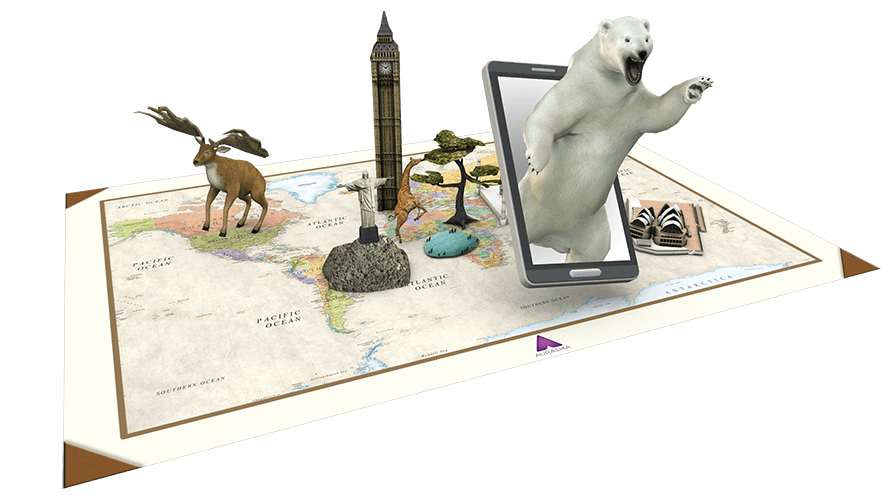
(Image Source: https://www.aurasma.com/get-started/)
Coming into the field of education by way of a digital media production background, I have a keen interest in emerging educational tech. I’m especially interested in applications that not only allow us to do the same ol’ – only better, but in tech that completely reshapes the way we think about, say, storytelling or art. As part of my Teacher Education course on Social Media in Education, I chose to look into Alternate Reality (AR) applications to education. I focus on one specific app, Aurasma and the new opportunities it creates for teachers. I truly believe AR is an integral part of the way the next generation will learn.
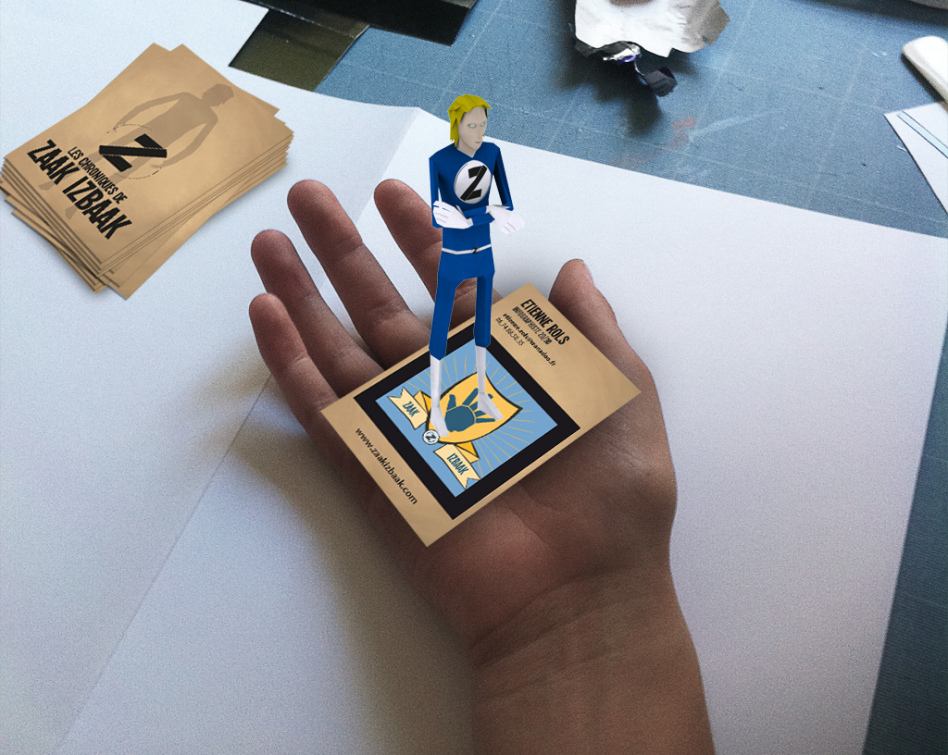
(Image Source: https://engagetheirminds.com/2012/09/06/augmented-reality-in-the-classroom/)
DESCRIPTION OF AR & AURASMA:
But first, let me just quickly debrief how AR works: The easiest way to explain it is that it blends Real Life (RL) with Virtual Reality (VR) (Ohler, 2014, p. 16). The AR world consists of triggers and overlays. Triggers are essentially elements in the real world, such as Quick Response (QR) codes or a painting on the wall (Ohler, 2016), that prompt a meta-media overlay on a user’s mobile device, such as a tablet or phone (both Snapchat and Pokeman GO use AR, for example). Fun side-note: One of the first commercial applications of AR was the yellow first down line that began appearing in televised NFL football games, sometime around 1998 (New Jersey Institute of Technology).
Aurasma is an application (available on Google Play or in the App store) that provides an easy way for teachers to set up and connect triggers with added information overlays (images, video or text). These overlays are called Auras in Aurasma-speak. Aurasma is not new, nor are its educational applications necessarily, but it is something that is still remains underutilized in the classroom, though its educational applications are vast, and its barrier-to-entry relatively low. As the app’s site says, “Aurasma makes it easy for anyone to create augmented reality experiences. Educators and students were some of our earliest adopters, and our passionate user base is creating new AR content every day.”
The app is free and set-up is simple. (Note that there is a Pro version of the account, but that this post refers to the free version):
(Source: Aurasma YouTube Channel)
- Download the Aurasma App and go on the site
- Create an Aurasma Account (it appears that you need to sign up separately for both the app and the website “Studio” version, though the accounts are linked). Note also that there is a free version as well as a Pro version.
- Share your Aura
- Follow others for ideas
- Dream trigger and Auras
- Students and parents need to do is download the Aurasma app, search for your account in the app and follow it. They will automatically be able to view your publicly shared Auras.
To give you an idea of how Aurasma works, here is one potential way to apply it in the classroom.
HOW IT CAN BENEFIT / HINDER LEARNING:
Benefits:
There are several ways Aurasma and AR in general can benefit learning. It can extend and deepen learning by providing students with an added layer of information at their finger-tips. For example, as Selena Woodword describes in her video, she can tag particularly challenging Shakespeare passages with certain symbols to add explanations, and definitions for students to reference when reading, on-demand (perhaps when they are already at home, and do not have an easy way to seek clarification from their teacher then and there).
These auras can feature a written explanation, or a video of the teacher explaining the terms or significance. Same can be done for challenging Math work; picture a student opening a math textbook or worksheet, and being able to prompt an Aura of the teacher re-explaining a difficult concept that was previously taught in class, but perhaps forgotten. Presto. The student can now re-view the teacher’s explanation at their leisure. A field trip can come to life, as shown in this example, allowing the teacher to create their own custom tour guide experience. School Resource Teams (such as Librarians) can create interactive “scavenger hunts” that familiarize students with return box, photocopier, dewey decimal system, Manga and many other topics in an engaging way. In one study, author found that students retained more information in this method than traditional induction lectures (Connoly & Hoskins, 2014).
And student can be co-creators and curators of experiences too (more on that in the in-class application, below). They can be authors of new mixed-media stories, link YouTube presentations to in-class projects, and more. For example, in music class, a trigger linked to an image of a saxophone can prompt a video of students performing a musical piece on the instrument (this may be a great way to showcase “digital portfolios” on parent-teacher night). Similarly, a Book Review can link a book cover to a student’s recorded video discussing the information, orally, providing opportunities for differentiated instruction and greater student accommodation of student learning needs. And extra-curricular too are not off-limits. Yearbooks may prompt personal video messages of graduating students. I am most excited about the potential of turning Aurasma over to the students.
“When we create a new medium, we tend to first fill it with the content of the old. That’s why some of the earliest movies were recordings of plays. Eventually, pioneers emerge who realize that the new medium offers unique opportunities for expression, and that’s when it finally comes into its own” (Ohler, 2014, p. 19).
IN-CLASS APPLICATION OF AURASMA:
ARt: Mediated Selves // Who ARe You?

(Image Source: Ohler 2014)
Here is an overview of an in-class activity, to give a sense of how the app can be used. Note that the expanded lesson (with curriculum connections can be found here).
In this activity, suggested by Ohler (2014) and slightly adapted by me, students create a whole new kind of ARt. “With the magic of augmented reality (AR), student artists can create a whole new “ARt” form by combining traditional pieces hanging on the gallery wall with digital art that lives in the cloud” (Ohler, 2014, p. 16).
Students create two separate self-portraits – one using a Real Life (RL) hard-copy image, whether a printed headshot or created in some other kind of way (this can be up to the teacher to decide, when determining scope and sequence of the project). Students then modify this image digitally, by adding various digital layers via Photoshop (or another creative suite app or software), as appropriate, in an alternate interpretation and representation of self (some guidance can include having students identify with a hobby, personality trait, etc., and considering how they can visually represent those traits).
When both RL and AR layers are complete, students combine them by making the RL portrait the trigger for the AR “Aura” digital layer. Students would also be prompted to consider the way we mediate our identities in different settings, and would be invited to critically consider their digital interpretations of self (how are our identities mediated in digital realms, what’s real, what’s not?)
Students would also provide a written reflection as a translation layer explaining their thinking and reasoning for choices. Student portraits would then be hung up on display, and students, staff and parents would use Aurasma to view the students’ work.
Safety and Other Considerations:
- Aurasma app needs to be installed on a mobile device.
- Lack of equitable access to equipment. Not all students may have a personal device, if the task requires them to use personal technology. School devices (such as iPads) may be a work-around to this, and they would need to be set-up and logged in to designated accounts.
- Access to Wifi. There are some reports that firewalls or poor wifi connections impact the functionality of the application, so doing a dry-run at the designated location ahead of the planned “campaign” is a good idea.
- Each account is set up for a single user, although a single account can be shared among multiple users with a general login.
- Privacy concerns. Certain Auras may not be intended for the wider audience (or public), in cases where students appear on a video, as one example. In this case, Private Auras can be shared via the Private Share Link.
- Auras created on the App cannot be access in the Studio (website) version. However, Auras created in the Studio will be available in the Studio.
- If students are all using the same account, it is not possible to separate their Auras.
- Intellectual Property. Note, the Terms of Service state: “Customer grants HP a non-exclusive, worldwide, royalty-free right and license to any intellectual property that is necessary for HP and its designees to perform the ordered services” (Terms of Service section, following login, at https://studio.aurasma.com/home). I interpret this to mean that you hand over all intellectual property rights to HP (creator of Aurasma) for any AR material you come up with.
- As with all public-facing Social Software, if students are tasked with creating Aurasma accounts, special care should be given to what personal information appears publicly (identifying details such as names, age, school, etc.).
- Also, in trms of AR in general, some studies suggest the following:
- Students exposed to AR technology tend to have difficulties maintaining superimposed digital content
- Additionally, such students are also prone to paying too much attention to virtual information
- Finally, some educators and students think AR is an intrusive technology (New Jersey Institute of Technology, 2017).
Additional Resources:
References:
Connolly, E., & Hoskins, J. (2014). Using iPads to teach year 7
induction with aurasma. The School
Librarian, 62(1), 6-7. Retrieved from
Ohler, J. (2014). Beyond The Gallery Wall. Learning and Leading with
Technology. Pp.16-21
Bogardus Cortez, M. (Oct 16, 2017). How Will AR Transform Education?
Retrieved (Oct. 21, 2017) from
https://edtechmagazine.com/k12/article/2017/10/how-will-ar-transform-education-infographic
New Jersey Institute of Technology. (2017). Augmented Reality in
Education. Retrieved October 21, 2017 from http://graduatedegrees.online.njit.edu/resources/mscs/mscs-infographics/augmented-reality-in-education/
Ohler, J. (2014). Beyond The Gallery Wall. Learning and Leading with
Technology. Pp.16-21
Ontario Ministry of Education. (2006). The Ontario Curriculum, grades 1-
8: Language. Retrieved from:
http://www.edu.gov.on.ca/eng/curriculum/elementary/language18currb.pdf
Ontario Ministry of Education. (2009). The Ontario Curriculum, grades 1-
8: The Arts. Retrieved from:
http://www.edu.gov.on.ca/eng/curriculum/elementary/arts18b09curr.pdf
The post Aurasma in the Classroom: Mediated Selves // Who ARe You? first appeared on Synapse.
]]>The post Want Smart Kids? It’s In the Books first appeared on Synapse.
]]>
One thing my friends can tell you is that I horde books. Entire walls are covered in them. My floors (or ceilings, depending on where you stand) dent from them. They are on shelves (that are designed to hold half as many), stacked in piles and spilling over in corners and on the floor.
I have everything from worn and likely long-outdated university texts (even my older brother’s), to Sir Seuss’ finest works, to review editions lugged home from work. I am a firm believer that the return-on-investment with books is measured in perspectives gained, not dollars paid.
But simply being surrounded by them changes the way you think about them. If they are around, you’re more likely to pick one up – simple as that.
Well, turns out that’s a good thing. Because my propensity for said book-hording will have a positive effect on my child’s education, say researchers. This too is a good thing, because there is a well-established link between the level of education obtained and the level of income a person earns…and I argue, quality of life too.
A 20-year study, lead by Mariah Evans, associate professor of sociology and resource economics at the University of Nevada, found that parents who have books in the home increase the level of education their children will attain.
For years, educators have thought that the strongest predictor of your education was your mum’s or dad’s; the more educated they were, the more educated you’re likely to be too. Well, strikingly, this massive study found that being raised in a home with a 500-book library has as great an effect on the level of education a child will attain, as your parents’ education.
Dear Child of Mine, I got you covered.
Turns out, both factors – an extensive library or having university-educated parents – can propel a child 3.2 years further in education, on average.
This trend translated abroad too (though the impact was greater in countries such as China). Also interestingly, the study found children of lesser-educated parents benefit most from having books at home.
So what does this mean? Our public libraries need to be well-stocked and accessible, with flexible hours of operation. Oh, and friendly, knowledgeable staff too.
Here are some additional points the study found:
– Even having a few books can go a long way. The more books you add, the greater the benefit.
– Having books in the home is twice as important as the father’s education level.
– Having books in the home impacted the level of education a child attained more than whether the child was reared in China or in the United States.
The post Want Smart Kids? It’s In the Books first appeared on Synapse.
]]>The post OK Go’s Rube Goldberg Contraption first appeared on Synapse.
]]>As for who’s behind the contraption, OK Go turned to LA-based Syyn Labs. With a motto like “High Voltage Debauchery” you know you can safely set your expectations high. And the team doesn’t disappoint.
Syyn Labs is a creative collective that meshes art with technology, often with amusing and enlightening results. The team shows off their engineering and creative prowess monthly at an event called Mindshare (though this itself warrants a separate entry).
The post OK Go’s Rube Goldberg Contraption first appeared on Synapse.
]]>The post Dear Canada, this Valentine’s, here’s why I love you… first appeared on Synapse.
]]>The post Dear Canada, this Valentine’s, here’s why I love you… first appeared on Synapse.
]]>The post 2009 in Review first appeared on Synapse.
]]>The post Strange swirl over sky in Norway first appeared on Synapse.
]]>The post Strange swirl over sky in Norway first appeared on Synapse.
]]>The post NFB’s WaterLife Interactive first appeared on Synapse.
]]> I am so impressed with the folk at the National Film Board (of Canada). They just keep pumping out top-notch content. First their amazing free iPhone / iPod Touch app (that allows you to screen entire films), and now WaterLife.
Their latest initiative is an interactive site centred on the idea that our Great Lakes (and waterways in general) are changing – not for the better. The idea of water as a limited resource, is of course, nothing new. Potable water all the more so. Here in Canada we don’t think about it much, because we’re under the impression there’s plenty of it. Wrong. We just happen to have more of it than most other nations, but by no means enough to be dismissive in its use. Just talk to an Aussie. They think us blazingly wasteful. A couple of years ago, I co-produced a segment for DiscoveryChannel.ca that highlighted this difference.
I spent the first decade of my life by a major river, and my summers by the sea. I’m fortunate enough to live in a place that’s surrounded not only by the Great Lakes, but numerous smaller ones. Whenever near water, I’m keenly attuned to its rhythms. It transforms me. It teems with life. In fact, there’s likely more life underwater on Earth than on land. And if you think about it, Planet Earth is kind of a misnomer. All the more reason our very existence depends on the health of our water systems. This is perhaps why I feel so passionately that amidst all the “Green” initiatives, we don’t leave out the Blue. They are one and the same.
If you’re curious to find out more, CBC’s The Current ran a great radio series last year called “Watershed”. I also recommend reading Alana Mitchell’s “Sea Sick”.
WaterLife was brought to my attention by ad girl Lava Nosenkis.
The post NFB’s WaterLife Interactive first appeared on Synapse.
]]>The post A Parisian Love Story, according to Google first appeared on Synapse.
]]>For more in this brilliant series, head here.
The post A Parisian Love Story, according to Google first appeared on Synapse.
]]>