
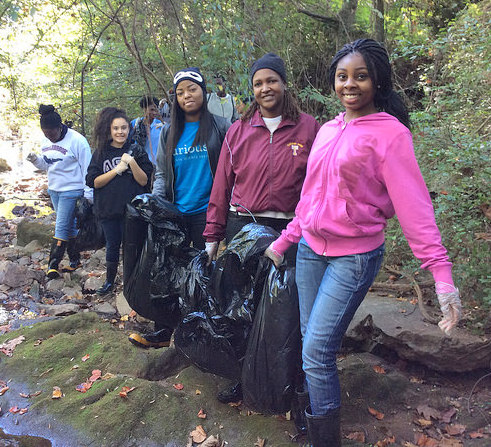
 The importance of clean-ups like this one was underscored in pre- and post-clean-up discussions with the youth leaders and other volunteers about the challenges with controlling diffuse,
nonpoint source pollution (NPS). NPS is a major problem nationwide for streams, rivers, lakes, and estuaries. In fact, it is the nation’s largest source of water quality problems. NPS occurs when rainfall, melted snow, or waters from irrigation flow over land or through the ground and carries pollutants and deposits them into surface waters or introduces them into groundwater sources. Because of NPS, water bodies across the nation are not clean enough to support designated uses such as fishing and swimming.
Rivers Alive is Georgia’s annual volunteer waterway cleanup event that targets all waterways in the State including streams, rivers, lakes, beaches, and wetlands. The mission of Rivers Alive is to create awareness of and involvement in the preservation of Georgia’s water resources. Rivers Alive is held annually each fall and is a program of the Georgia Environmental Protection Division Outreach Program. This clean-up event was coordinated in conjunction with the Georgia Department of Natural Resources and the Nu Lambda Omega Chapter of Alpha Kappa Alpha Sorority, Incorporated. All volunteers were given Rivers Alive T-shirts from the GA Department of Natural Resources as a small token of appreciation for their service.
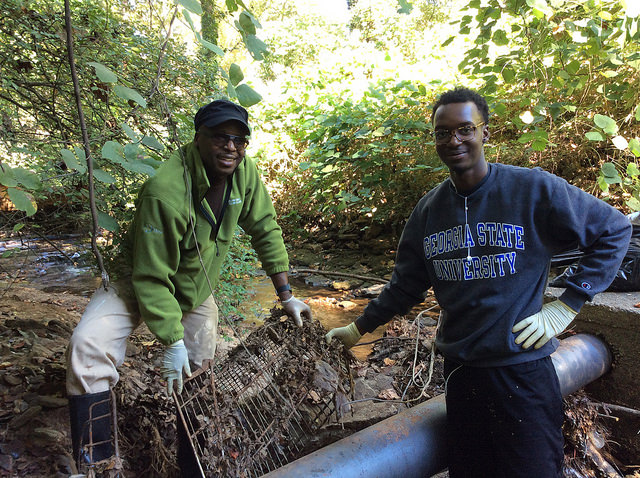 NWF’s Atlanta Earth Tomorrow® Program engages urban youth in investigating causes of environmental challenges, helps them connect to nature, fosters their leadership of youth-led community action projects, promotes civic engagement, and nurtures leadership skills for building personal environmental stewardship. Program participants attend high schools in the Atlanta Public Schools System as well as the Cobb, Clayton, DeKalb, and Fulton County School Districts.
For more information about the Earth Tomorrow® Program, please contact Na’Taki Osborne Jelks at osborne@nwf.org.

As the largest volunteer day for America’s public lands, it’s an ideal opportunity to give back. Projects range from trail maintenance to stream restoration, invasive plant removal to tree planting (and more).
We rounded up a few suggested projects where you can lend a hand, and explore the outdoors after you’re done. Browse this interactive map of volunteer events in each state and join the action!
Mt. Rainier National Park (WA)
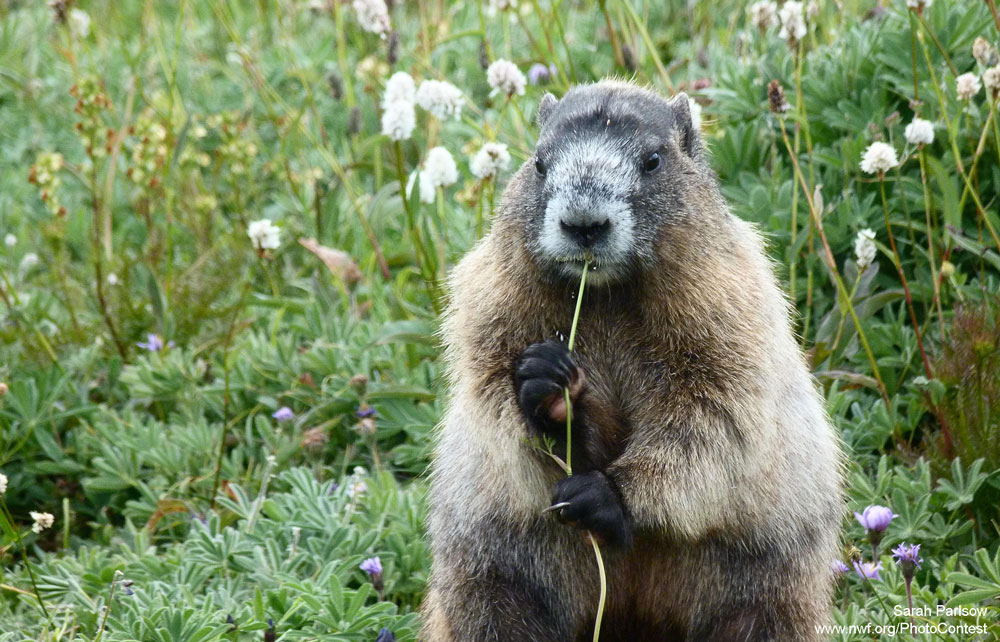
When you’re done: Go for a hike! Check out Mt. Rainier’s Pinnacle Peak Trail. This 2.5 mile, 2 hour hike gives you an amazing view of the second highest peak in the Tatoosh Range.
Vermillion Cliffs National Monument (AZ)
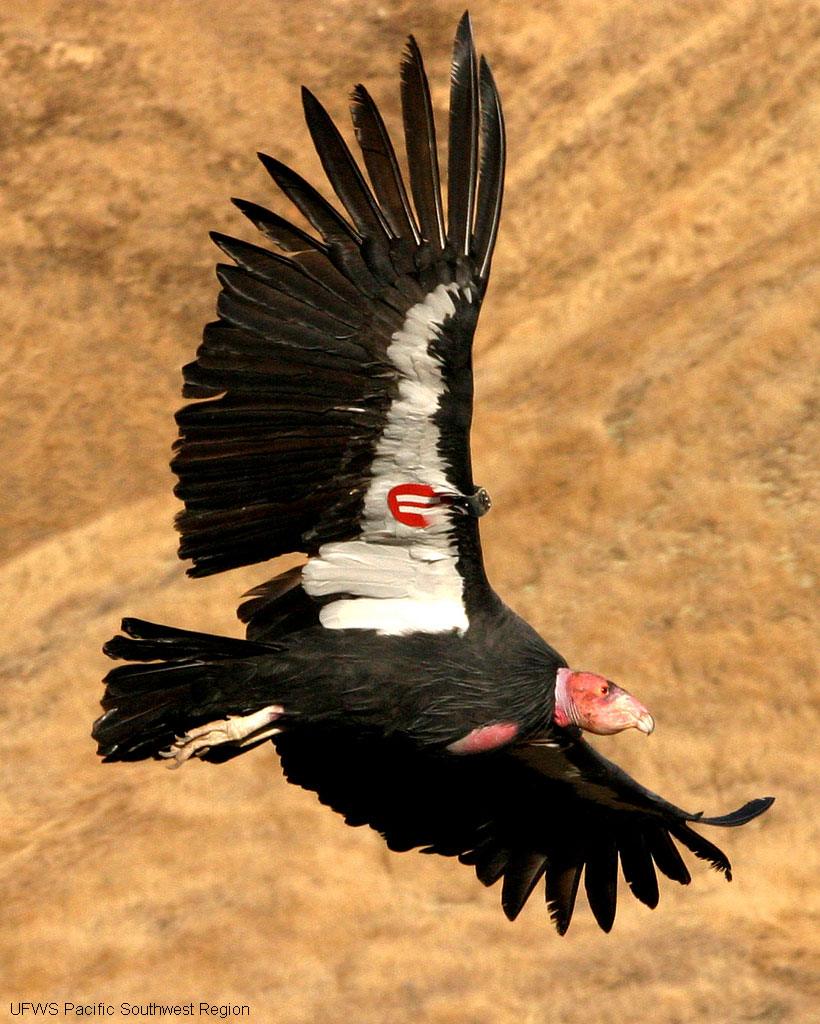
An Afternoon in the Canyons: One of my favorite hikes ever, the Buckskin Gulch trailhead in the Vermillion Cliffs National Wilderness Area leads you down into the slot canyons found along the Arizona/Utah border. The trail offers a welcome relief from the desert heat. Just don’t forget your camera!
Sleeping Bear Dunes National Lakeshore (MI)
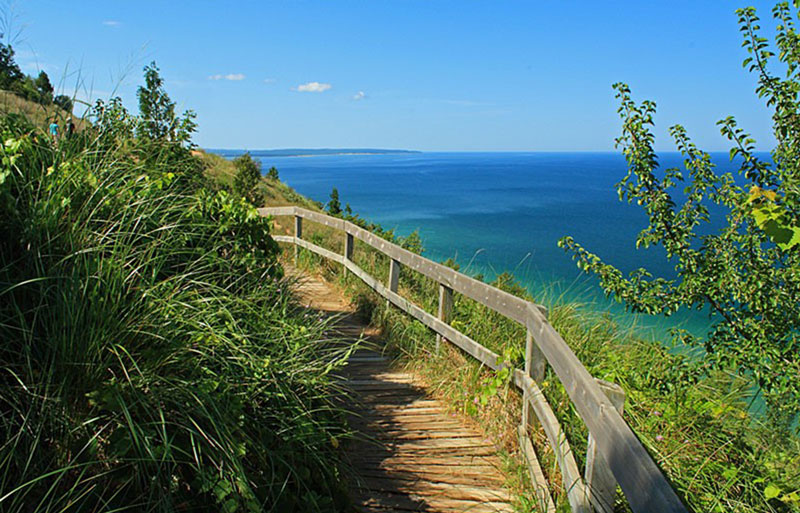
Scenic Stroll: Take the Empire Bluff Trail and enjoy the scenic view overlooking Lake Michigan. This 1.5 mile walk will take you up the bluffs and give you clear views of the beaches you helped clean as well as the crystal clear waters.
Big South Fork National River and Recreation Area (TN)
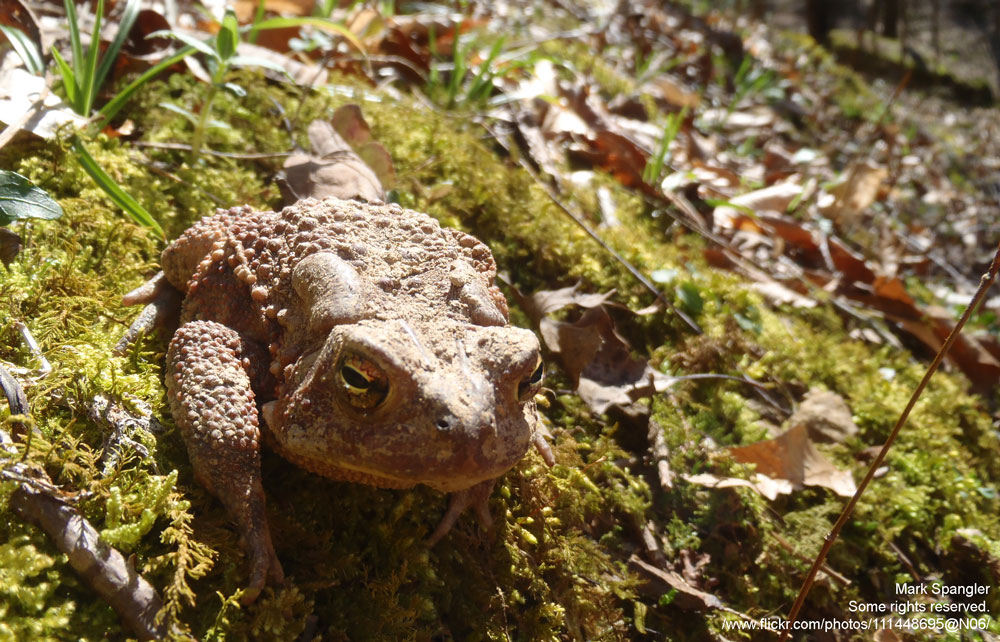
Photographed at Big South Fork National River and Recreation Area by Mark Spangler.
Check out the Falls: This Recreation Area is one of the most popular outdoor areas in TN and KY. If you want to check out a different trail than the one you’re working on, try the Angel Falls Overlook Trail. This short hike (only 2.8 miles) begins by crossing a Works Progress Administration bridge built in 1938 and then follows the John Muir trail before heading up the bluffs to give you an awesome view of the falls.
Rachel Carson National Wildlife Refuge (ME)
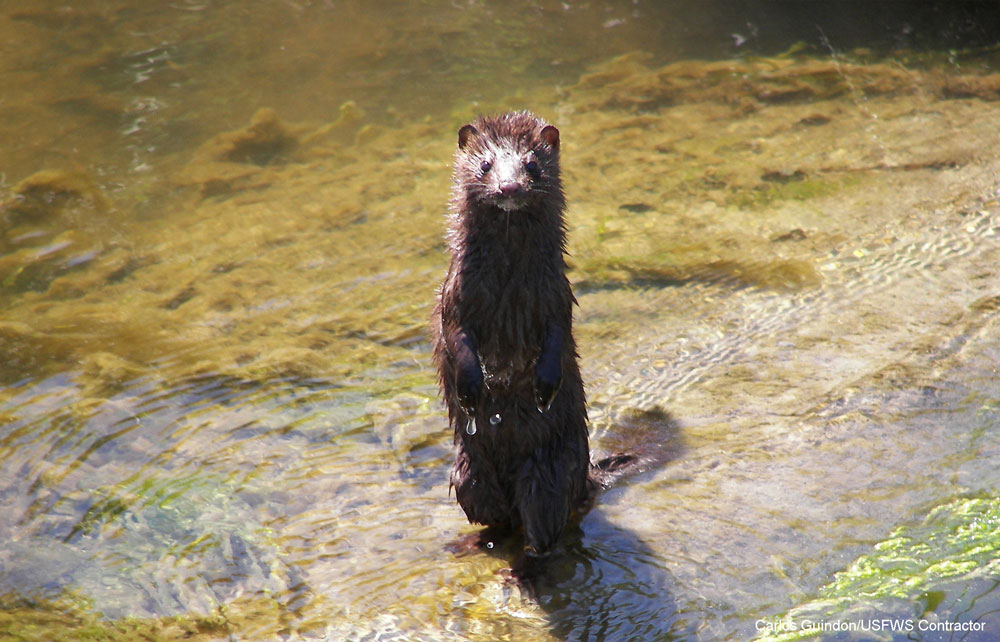
New Frontiers: When you’re done planting, check out the newly constructed Timber Point Trail. This trail winds over 97 new acres of refuge land that were acquired in 2011 as the result of a joint campaign by the Kennebunkport Conservation Trust, the Trust for Public Lands and with the help of matching funds allocated to Maine through the Land and Water Conservation Fund. The trail takes you to the eastern edge of the country, allowing you to truly escape from everyday life.
Can’t Make it Saturday? Take Action.
 If you’re looking for a way to celebrate National Public Lands Day that doesn’t involve work gloves or hiking boots, consider signing NWF’s petition asking Congress to Stop Targeting Our Public Lands. Thanks for speaking up and getting outside!
Great opportunities abound to become involved in important, local on-the-ground wildlife habitat projects. Meaningful project options in most areas are right in front of us—from stream restoration to noxious weed removal to planting shrubs that wildlife need for forage. Student groups or chapters will help participants prepare to become tomorrow’s leaders who care about our remarkable wildlife.
National Wildlife Federation (NWF) has a more than 20-year history of working with colleges and universities through its Campus Ecology program to improve their overall green educational programming and onsite sustainability. Founded in 1989, its student outreach programs, campus consulting, climate action competition, and educational events and resourcesreach about 1,000 campuses each year.
Colorado Wildlife Federation (CWF), an affiliate of NWF, is creating something new: college student chapters. CWF is encouraging college students who want to do more for wildlife habitat to join or start a new CWF student chapter. We envision that these young people will become lifelong members or supporters as they become informed and empowered to participate in the key wildlife issues that CWF tackles. In addition to meeting monthly at a convenient place, the students will participate in hands-on quarterly habitat restoration projects that CWF organizes. The student chapters will designate a member to attend CWF board and Issues Committee meetings, and to shadow a board or staff member at the Capitol during the state legislative session. These opportunities provide excellent real-world examples of how the students can put their degree to work and build their own networks.
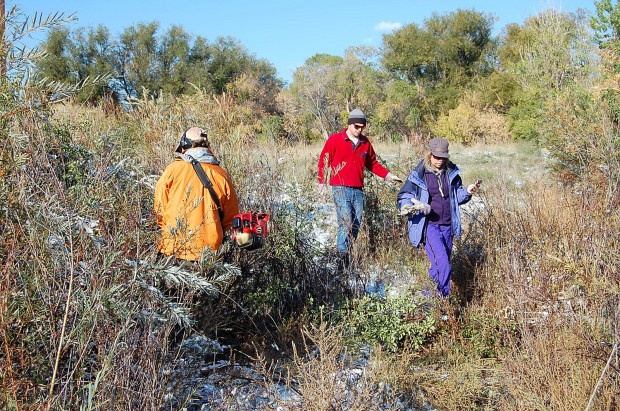
The first event for CWF’s new Metro Student CWF Chapter (Metropolitan State University of Denver) was held on October 5 at South Platte Park in Littleton, a Denver suburb where NWF holds its wonderful Hike & Seek event. Students worked with South Suburban Park staff to remove hundreds of invasive buckthorn bushes from the wetland areas in the park. Students felt energized as they helped enable native trees and bushes to thrive. In turn, this project enabled park staff to accomplish a large task they could not assume on their own. College students have a lot of energy!
How to start a student chapter or group:
- Identify a leader. Find an energetic individual at the educational institution such as a professor, teacher, a committed student, or parent who will help recruit and mentor students and facilitate meetings. If you are looking for a professor or teacher to fill this role, consider an instructor in an earth science course. The affiliate’s staff and board members serve as the catalyst by providing guidance, expertise, and a vehicle for projects that are meaningful for the students and age appropriate as they help protect and restore fish and wildlife habitat.
- Draft goals for the chapter in collaboration with the leader. Will the group focus upon on-the-ground education and habitat restoration projects? Do you want to include an advocacy education component?
- Recruit members. We suggest that you review the goals with the students who initially join the new chapter and make adjustments if needed. To work, the goals must be feasible and embraced by the student membership. It also is important to identify and schedule an initial project or event (consistent with the goals) that will energize the group. Additionally, your organization should consider offering a special student membership rate to the student chapter members.
If you are interested in forming a student chapter, CWF is pleased to offer guidance and expertise. Contact Ashley Rust at arust1@mscd.edu
For more ideas, to support our work, and to learn more about wildlife conservation initiatives in Colorado, visit Colorado Wildlife Federation and follow us on Facebook and Twitter. And to learn more about NWF’s Campus Ecology program, you can visit CampusEcology.org and follow us on Facebook and Twitter.
Ashley Rust is a Colorado Wildlife Federation Board Member & Professor at Metropolitan State University of Denver. John Gale is a Regional Representative for National Wildlife Federation.
Much has been written on how this might be accomplished. Rather than summarize the literature, I’d like to focus on an exciting development that offers great promise for movement building: the explosion of hands-on habitat restoration and wildlife gardening being carried out in urban and suburban communities around the nation.
Redefining the Conservation Base
In Fayetteville, Arkansas, for example, community volunteers and local officials have committed to provide habitat for wildlife on over 250 sites, including city parks, school yards, backyards, businesses and even wastewater treatment plants. The mayor attends the dedication of every Schoolyard Habitat® and educates school kids about the importance of conserving wildlife. As a result of these volunteer-driven efforts, the National Wildlife Federation has certified Fayetteville as a Community Wildlife Habitat.
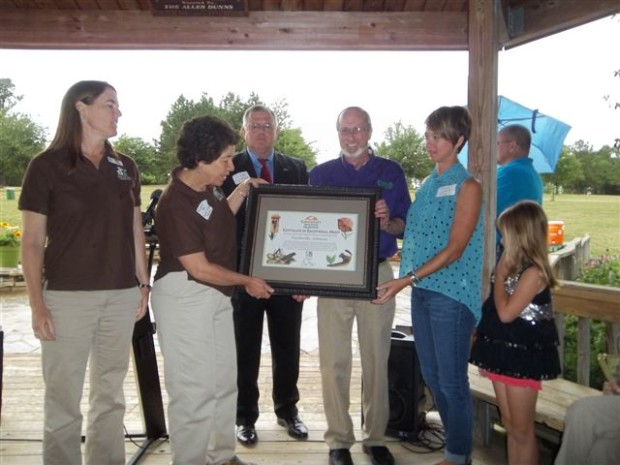
I anticipate that many readers of this blog will wonder why I would bring up hands-on neighborhood improvement efforts in a discussion of the environmental movement. After all, the term “movement” implies collective political action, doesn’t it? A search of the 150 most recent U.S. news articles using the terms “environmental movement” and “conservation movement” reveals that this indeed has been the connotation: 91 percent used the term in a political or policy context.
I wonder whether by defining itself in political and policy terms and excluding community cleanups and other hands-on volunteer work, the movement has understated its scope and influence—and perhaps even turned people away. A March 2010 Gallup poll found that the proportion of Americans who were either active in, or sympathetic to, the environmental movement had declined from 71 percent to 61 percent between 2000 and 2010. Those who were neutral toward the movement rose from 23 to 28 percent and those unsympathetic went from 5 to 10 percent. Gallup attributed these changes in part to increased political polarization.
Historian Christopher Sellers reminds us that environmental causes were “extraordinarily popular” in the 1960s and 1970s. Inspired by Rachel Carson’s landmark book Silent Spring, environmentalists rallied suburbanites around excessive pesticides and other direct threats to their personal well-being. Sellers argues that for the environmental movement to regain widespread acceptance, it must return to its suburban roots and refocus on local concerns. According to Sellers, even climate change can be placed in a local context.
Easy Steps with Concrete Outcomes Lead to Increased Engagement
I mostly agree, except I think it would be naïve to believe that many of the people who are currently uninvolved with conservation issues will immediately leap into the political fray once global issues are reframed as local ones. A key lesson from the behavioral researchis that education on the issues, by itself, rarely stimulates action. Many people fail to take action on the environment despite being both knowledgeable and concerned. Behavioral change typically comes about after an individual completes small first steps and sees positive and concrete outcomes.
This is one of the reasons why I am so excited about the volunteer habitat restoration and wildlife gardening projects that are now proliferating across the country. The actions are very manageable and they produce very tangible outcomes that benefit local quality of life.
One project that impresses me is the recent effort to restore a nature education facility in Atlanta led by the West Atlanta Watershed Alliance, with support from the National Wildlife Federation’s Earth Tomorrow program. The Outdoor Activity Center, sited in one of the largest urban forests in Atlanta, was falling into disrepair when WAWA and Earth Tomorrow volunteers stepped in to remove invasive plants, prepare wildlife gardens, install bird feeders and repair trails and foot bridges. The facility is now providing a site for science-oriented field trips for Atlanta public schools as well as serving as a nature oasis for the local community.

Positioning Ourselves for Success with Wildlife and Habitats
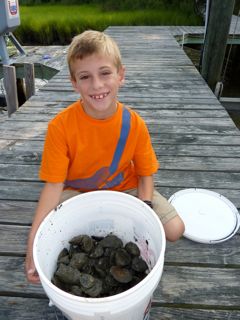
As volunteer efforts proliferate, a key challenge for local leaders and their partners in conservation organizations will be to design projects that measurably improve the condition of imperiled wildlife species and habitats. One example of how this might be accomplished comes from the Chesapeake Bay watershed, near Washington, D.C. where I live. In the Oyster Gardening Program, volunteers in Maryland and Virginia sign up with the Chesapeake Bay Foundation(CBF) to grow oysters in rivers and streams in their communities. Volunteers place seed oysters into cages and install the cages at private docks, community piers and marinas. After a year and inch or two of growth, the volunteers return the oysters to CBF, which then plants them in a sanctuary (non-harvestable) reef. As the reef grows, CBF will be able to quantify the oysters’ role in filtering the bay and restoring it to health.
A key focus for the National Wildlife Federation is finding ways to achieve similarly measurable and achievable gains for species and habitats in cities and suburbs. As is the case around the globe, metropolitan areas in the U.S. are generally located in biologically rich locations, with roughly 60 percent of the nation’s imperiled species found there. The urban and suburban residents who are willing to get their hands dirty to improve local parks, school yards and other open spaces will be key to our success in conserving imperiled wildlife.
Over time, as more citizens become engaged in stewarding their local land, water and wildlife and become better connected with conservation organizations, the clout of the environmental movement will grow. For some citizens, a degree of engagement with politics will flow from hands-on stewardship work, since politics can so easily jeopardize hard-won progress. Others may want to focus solely on achieving on-the-ground progress and will want to steer clear of politics. In fact, given the political context in which many people in the U.S. and around the globe operate, this may be the only feasible way to have an impact in the near term.
Conservation organizations should be willing to accept these volunteers and work with them on their terms. If they do, and legions of local stewards become better integrated into the broader environmental movement, the cause of conservation will greatly benefit.
Editor’s note: This essay was also published at the Nature of Cities blog.
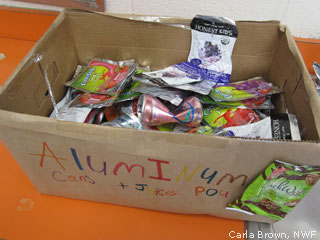 Her science teacher, Ms. Marple, said she would love our help setting up recycling centers around the school. Ms. Marple registered our school, Armstrong Elementary, as an Eco-School – a program by National Wildlife Federation to reward green schools.
The grade three classes made the recycling bins, set them up around the school, and designed promotional posters. They made announcements about recycling on the morning TV show. Each week, they gathered and weighed the recycling. Ms. Marple took cans and bottles home to her residential recycling. I took the plastic caps and juice pouches for craft projects.
For the plastic cap recycling, we were inspired by this article in Ranger Rick magazine about plastic cap Fridge Flowers by Michelle Stitzlein. She works with schools to make large plastic cap mosaic murals. If we got too many plastic caps, our back-up plan was to bring them to Aveda’s plastic cap recycling program.
For the juice pouch recycling, I have collected them for a few years now, and I sew them together to make bags. But what I really wanted to try was sewing trash clothing so we could have a trash fashion or “trashion” show. We were inspired by the Eco-School trash fashion show at United High School in Armagh, PA. If we gathered too many juice pouches, our back-up plan was to send them to Terracycle.
Check out this video about our project:
[youtube]http://youtube.com/watch?v=4ZCyZ2i_BKU[/youtube]
So this year we successfully set up the recycling centers. The grade three classes learned how to gather the recyclables as part of their weekly routine.
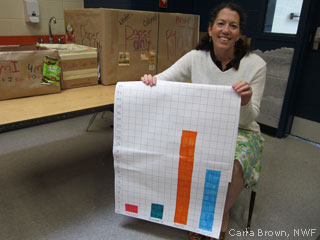 There was a natural competitive aspect, where they wanted to say that “if we gather the most recycling of all the classes, then we win!” But I cautioned them by saying that when you gather lots of recyclables, that’s not necessarily a good thing. It means you are choosing to eat things in packages rather than making food that doesn’t require packaging. Choosing options without packaging is called “pre-cycling” and it’s the best option.
This kids were very enthusiastic about the project, especially when I showed the first trash fashion items. I am also developing new trash crafts that allow the kids to design their own trash fashion. My family attended a trash fashion show that was part of Alexandria’s Earth Day celebrations for many ideas. More on that in a future blog!
Thank you to Ms. Marple and the grade three classes for taking on this recycling project. Thank you also to the administrators for allowing the project to happen, and to all the students at Armstrong school who recycled.
National Wildlife Federation’s Storytelling Video Diary Series shares the candid tales of 10 NWF staffers from around the country; armed with their cameras in California, Wisconsin, the Pacific Northwest, Northern Virginia, and Washington, DC, these nine staffers will share with you their individual trials, epiphanies and stories as they unfold in their daily adventures.

“I go to nature to be soothed and healed, and to have my senses put in order.”
~John Burroughs
I watch WAY too much CNN. And with all this talk of debt ceiling deals and credit downgrades, the constant din of “breaking news” is stressing me out.
So, I go for a hike to clear my head. As I surrender myself to the cool comfort of the forest, my senses tune in to my surroundings. My eyes soak in the various shades of green and the sun peeking through the canopy. I feel the soft ground giving ever so slightly under the soles of my boots. I hear an industrious red-bellied woodpecker in the distance. I breathe in deeply to bathe my lungs in fresh air. Ahhhhhh…
What was I worrying about again?
Oh right, the economy. Well, this little walk in the woods isn’t costing me a dime. If anything, it might be saving me on future medical expenses. There’s scientific research from a variety of disciplines that now suggests that outdoor activities may have therapeutic benefits. (To learn more, read Take Two Hikes And Call Me In The Morning.) With my stress now replaced with a satisfying fatigue, that isn’t hard to believe.
So, no offense Wolf Blitzer and Anderson Cooper. But today I’m listening to the comforting voice of Mother Nature.
Tips to experience the healing power of nature
1) Get our Free Summer Guide – Spend quality time outside with your family with these creative games, activities, and health tips.
2) Participate in Wildlife Watch – Let your senses come alive through this nationwide nature watching program.
3) Create a Garden Sanctuary – Learn how easy it is to turn your garden into a haven for neighborhood birds, butterflies and other wildlife.
4) Become a Volunteer – Enjoy the outdoors while you help it. Find opportunities to join NWF’s efforts to protect wildlife and habitat.
5) Search Nature Find – Use this handy tool to find parks, outdoor spaces and events in your area to enjoy.
And, if you’re thinking it’s too hot to go outside in your neck of the woods, here are six great ways to have fun even when the mercury’s rising.
 On Saturday, June 25th, hope itself visited Grand Isle, Louisiana in the form of a dedicated corps of volunteers.
Their job: to take on the seemingly impossible task of restoring some of the marshes and beaches that became so damaged by the BP oil disaster of 2010. Over the course of the day, a group of 50 volunteers planted 1,600 black mangroves along the marshy shoreline of Grand Isle State Park and another 500 plugs of bitter panicum, a native grass, along beach areas.
The park, edging on Barataria Bay, was one of many places considered “ground zero” when the toxic BP oil came ashore. Moreover, the community of Grand Isle had double trouble when Hurricane Katrina surged over the island smashing many or its homes, businesses and camp areas. More of Louisiana’s valuable wetlands were lost to the storm then in any other recorded time. Undaunted, the community’s leaders are moving forward and even smaller efforts such as wetland and beach restorations are making a difference.
To bring out volunteers for several such restoration efforts, the Coalition to Restore Coastal Louisiana (CRCL) and National Wildlife Federation (NWF) formed a partnership to directly engage people in improving oil-impacted mangrove habitats across areas of coastal Louisiana. The partnership’s main goal is to engage volunteers in restoring three areas that were heavily impacted by the BP Deepwater Horizon spill.
 The group gathered at the park early Saturday and, after being briefed on how to effectively plant the mangroves and panicum, they were deployed in smaller groups spread along the shoreline. The volunteers worked hard most of the day, in the June heat, laying in new vegetation along critical places that the oil had harmed. Others worked on plantings that would stabilize and rebuild marshes and beach areas suffering from erosion. It is the kind of work that is physically challenging but highly rewarding. Importantly, the volunteers formed a common sense of purpose and took great joy in seeing their progress and results.
These wonderful folks remind all of us to recognize that the Gulf oil disaster is far from over and it will take many years to repair the damage, if it ever can be repaired. But they also remind us of the deep human need to have hope for a better future for the people, wildlife and nature of Grand Isle and for all of us.
Volunteers in Action: Find out about other volunteer efforts to restore damaged wetlands on the Gulf Coast.
]]>While BBQs, beach outings, and parades were in full swing Memorial Day weekend, National Wildlife Federation’s committed network of volunteers were knee deep in muck in wetlands working hard to show their dedication to helping wildlife and protecting our public lands. Wrapping up our Spring Gulf Coast Restoration efforts to help wildlife and habitat impacted by the Gulf oil disaster, we ended on a high note, with our biggest, wettest, hottest event yet! [youtube]http://www.youtube.com/watch?v=LCUAYE6GDIE[/youtube] Allow me to take you through our Gulf Coast Restoration Tour as National Wildlife Federation, our Louisiana and Florida Wildlife Federation affiliates, hundreds of dedicated volunteers from around the country, and local Land Managers and Park Rangers diligently worked together to restore and preserve lands affected by the oil spill across the Gulf of Mexico. Here’s what our wonderful volunteers have achieved:
Built a Quarter Mile of Oyster Reef in Mobile, Alabama
 Kicking off the first event with chilly, overcast conditions on January 22nd and 23rd, over 500 volunteers from Alabama and across the country came together in Mobile bay to foster the beginnings of oyster reefs. 16,000 bags of oyster shells were carefully dispersed along the shore with the goal of building 100 new miles of oyster reefs and 1000 miles of replanted marshlands along the Gulf in Alabama to make Alabama’s coastal areas more resilient to impacts from hurricanes, oil spill accidents, and climate change. The work was the result of a collaboration of more than 20 public and private partners including National Wildlife Federation, Nature Conservancy and NOAA.
Restored Native Ground Cover at Bald Point State Park
 Next, volunteers gathered at Bald Point State Park on Florida’s Gulf Coast. Park Ranger Kevin Patton introduced us to our work site for the next two days and we successfully worked in teams and planted 5,000 wiregrass plugs and disperse a dozen bags of seed. Bald Eagles and other migrating raptors, along with monarch butterflies use this area to rest before continuing south for the winter. It is imperative to keep these lands healthy. Additionally, the Florida Wildlife Federation gathered signatures to petition for a constitutional amendment to prohibit oil and gas drilling in Florida’s near-shore waters.
Restored Dunes to Protect Nesting Wildlife at Perdido Key State Park
Next up, dune restoration in Perdido Key, Florida! Joined by over 75 volunteers including the US Navy and Air Force at Pensacola, combed the beach to protect the critical habitat of residential and migratory nesting wildlife such as turtles and birds! As the oil washed up on miles of beaches along the Gulf Coast, Perdido Key, home of the endangered Beach Mouse felt heavy impacts. Volunteers worked as temperatures reached the high 80s to rebuild and protect an important dune boundary to help native grasses and habitat for nesting shore birds, turtles, and the native beach mouse.
Conserved Acres of Beach and Recreation Trails
 On March 25th our next event was about 2 hours East of Perdido Key at Topsail Hill Preserve State Park in Santa Rosa Beach, Florida. University of California at Berkley students dedicated their spring break time away from examinations and study sessions to engage in hands on restoration work on some of the most beautiful beaches in the country. Joined by South Walton Community locals, we were able to accomplish clearing and marking 6 hiking trails, installing signs and effectively roping off over 3 miles of beach to protect the dunes and wildlife who nest there, and remove invasive exotic plant species to allow for native pitcher plant growth.
Restored the Marshes of Mississippi
Over 30 volunteers worked in Ansley Marsh which borders the Gulf and is a haven for migratory birds and many alligators. Volunteers toiled in the sun with many insect friends to remove debris from Hurricane Katrina, plant marsh grasses and work on the removal of the very invasive Chinese tallow tree (popcorn tree). The marsh is part of the gateway system protecting the open waters of the gulf from the shoreline homes of MS coastal communities.
Rebuilt Marsh in Bayou Sauvage National Wildlife Refuge
 Last stop – West to Louisiana! Tasked with planting over 20,000 grasses over two events (four days), National Wildlife Federation partnered with US Fish and Wildlife Service and the Louisiana Wildlife Federation to make this goal a reality. Just outside of New Orleans, Volunteers traveled to Bayou Sauvage National Wildlife Refuge to plant marsh grasses to restore lost habitat for waterfowl and other wildlife species. This event almost fell exactly on the one year mark of the Gulf oil disaster. Ben Weber, NWF’s Oil Spill Response Coordinator for the Western Gulf said “Heightened public awareness, volunteer enthusiasm and support from NWF members is making a big impact.” On April 15th and 16th and over Memorial Day weekend, volunteers worked in high water levels on uneven muck and mud to space plants across the water five feet apart. Mary Swantek who traveled with a group of 15 volunteers weighed in on her experience, “Working in the marsh just outside of New Orleans was a once in a life time experience.
  We not only took an air boat ride to get to the work site but were surrounded by all kinds of wildlife, it was absolutely beautiful. Crawling in 4 to 6 inches of water and planting marsh grasses was a bit intimidating at first but with adrenaline running high we were all there for one reason… to protect these lands and protect wildlife!” Margaret Mead once said: “Never doubt that a small group of thoughtful, committed citizens can change the world. Indeed it is the only thing that ever has.” Having had the opportunity to organize and travel to work hands on at several of these events, this quote takes on a new meaning for me. The level of commitment, enthusiasm, and dedication to wildlife and wild spaces from volunteers who traveled near and far to work with National Wildlife Federation is astounding. It is indisputable that our hard work from Alabama, Louisiana, Mississippi, to Florida made a difference to local habitat and wildlife.
UPDATE: On June 25, 50 volunteers planted 1,600 black mangroves in Grand Isle, LA as part of the the Gulf Coast recovery effort.