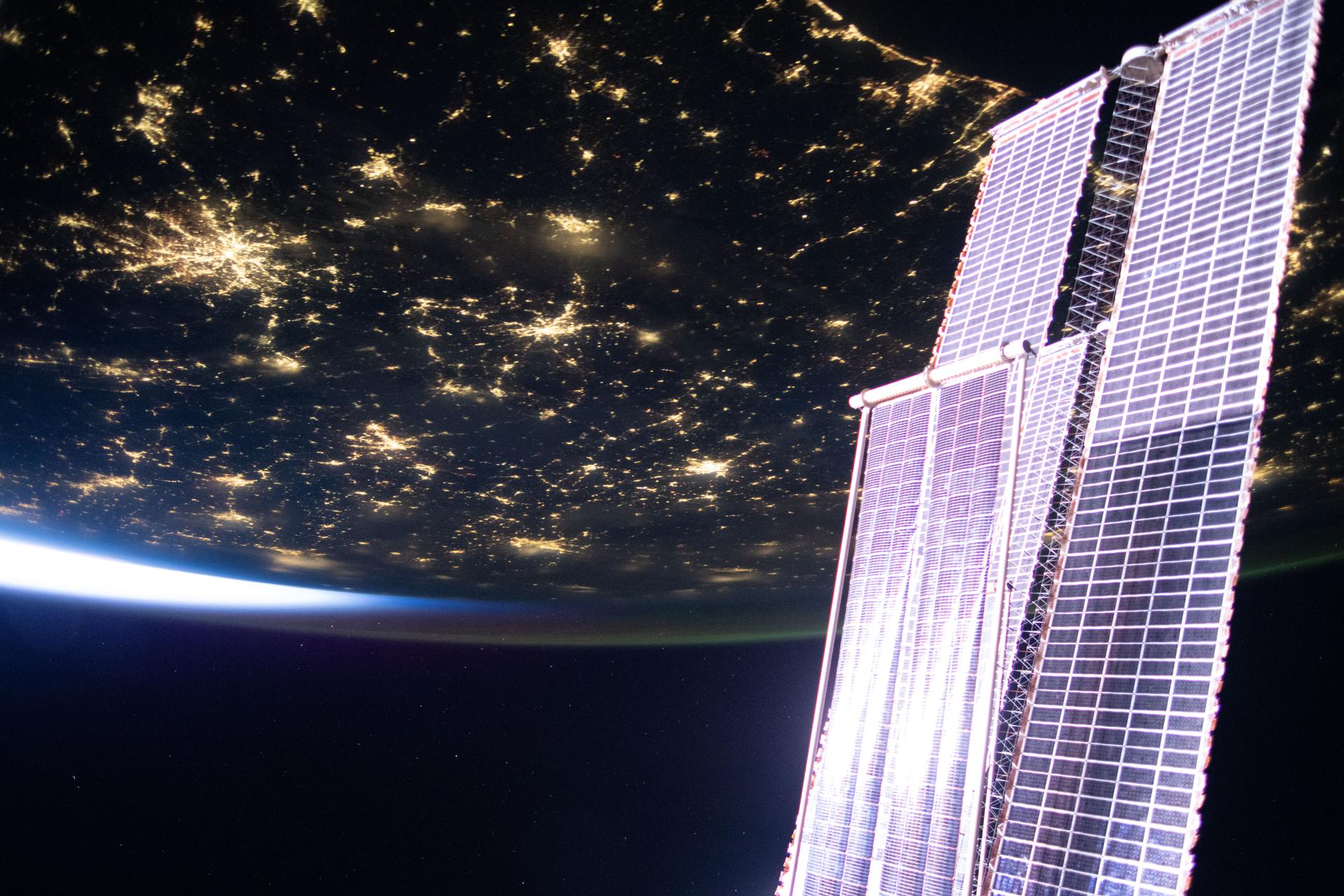
Expedition 75 began the week gearing up for a spacewalk to upgrade the International Space Station’s power generation system. Research into bioprinted blood vessels and relaxation techniques, as well cargo operations rounded out Monday’s schedule.
Flight engineers Anil Menon of NASA and Joshua Kutryk of CSA (Canadian Space Agency) will exit the Quest airlock at 8 a.m. EDT on Thursday to install one of two roll-out solar arrays on the orbital outpost’s port side truss structure. NASA flight engineers Jessica Watkins and Luke Delaney will support the spacewalkers in and out of their spacesuits and assist the duo with the Canadarm2 robotic arm during the planned six-hour and 45-minute spacewalk. Live coverage of the spacewalk will begin on NASA+ starting at 6:30 a.m.
The four astronauts joined each other on Monday and familiarized themselves with the Canadarm2 maneuvers necessary to support Thursday’s spacewalk. Menon and Kutryk will first release the roll-out solar array from an external pallet. Menon then will attach himself to the robotic arm, retrieve the roll-out solar array, then ride the Canadarm2 to the installation worksite. Kutryk will remain tethered to the truss structure, translate to the port truss worksite, and join Menon to complete the installation job. Afterward, mission controllers will activate the new roll-out solar array.
Menon and Kutryk also checked out their emergency spacesuit jetpacks for fuel quantity, battery power, and thruster functionality. Watkins then assisted Kutryk ensuring spacesuit cooling and water systems were safely configured for Thursday’s spacewalk.
Watkins and Menon also had time to work inside the SpaceX Dragon cargo spacecraft transferring supplies back and forth from the space station. Dragon docked autonomously to the Harmony module’s space-facing port on Oct. 15 and is due to return to Earth in mid-November loaded with science and hardware for analysis.
Delaney began his shift documenting his sleep patterns on a computer tablet for the RelaxPro investigation that is exploring how to improve stress reduction during a long duration spaceflight. Next, he treated and nourished bioprinted blood vessel tissues helping researchers take advantage of microgravity to create custom, individualized tissues for patients.
Station commander Pyotr Dubrov and flight engineer Anna Kikina, both from Roscosmos, partnered together wearing arm, wrist, and finger cuffs to measure the responsiveness of the circulatory system to weightlessness. Flight engineer Sergey Teteryanikov continued studying how super intelligence tools may advance crew operations and communications with mission controllers.
Learn more about station activities by following the space station blog, @space_station on X, as well as the ISS Facebook and ISS Instagram accounts.
Get the latest from NASA delivered every week. Subscribe here.
]]>
The Expedition 75 crew worked on a 3D bioprinter and a levitation furnace at the end of the week to advance health and high-temperature physics. Two astronauts are also preparing for a spacewalk at the International Space Station as NASA announces the status of upcoming Moon missions.
NASA flight engineers Luke Delaney and Anil Menon were back on bioprinting duty continuing to convert vascular cell samples into newly printed blood vessels. Delaney set up the BioFabrication Facility for printing and Menon processed the engineered human tissues for nourishing and cultivation.
Flight engineer Joshua Kutryk of CSA (Canadian Space Agency) swapped sample hardware inside a specialized research furnace that levitates samples with an electric field and heats them with lasers. NASA flight engineer Jessica Watkins tested the operations of backup water quality-testing hardware and a gas-flow controller.
All four astronauts gathered together after lunchtime for a spacewalk procedures conference with engineers on the ground. Menon and Kutryk will exit the Quest airlock on Thursday, Oct. 29, to install a roll-out solar array on the station’s truss structure. Watkins and Delaney also trained to operate the Canadarm2 robotic arm to assist the spacewalkers next week.
The cosmonaut trio from Roscosmos with Pyotr Dubrov, Anna Kikina, and Sergey Teterytatnikov, completed a plasma crystal study that explored the interaction of highly charged gases and microscopic particles. The trio also serviced radiation detection gear, explored super intelligence tools, and collected blood pressure measurements on Friday.
The orbital outpost is critical in preparing for missions to the Moon and eventually, Mars. Now the agency is accelerating its effort to return crews to the lunar surface by 2028. Tune in to NASA+ at 2 p.m. EDT today for the status of upcoming crewed Moon missions.
Learn more about station activities by following the space station blog, @space_station on X, as well as the ISS Facebook and ISS Instagram accounts.
Get the latest from NASA delivered every week. Subscribe here.
]]>
The Expedition 75 crew members had a busy day on Thursday bioprinting blood vessels and trying on a spacesuit aboard the International Space Station. The orbital residents also trained to use a pair of robotic arms and set up Earth photography sessions to round out the day in low Earth orbit.
A bioprinter, also called the BioFabrication Facility located in the Columbus laboratory module, was in operation aboard the orbital outpost printing blood vessels using vascular cells. NASA flight engineer Luke Delaney kicked off the advanced research operations removing the cells from a science freezer, thawing them, then mixing the samples with a biological printing material. Afterward, he loaded the mixture into the bioprinter and powered on the device to begin the bioprinting process. NASA flight engineer Anil Menon wrapped up the session preserving and nourishing the newly printed blood vessel tissues inside the bioprinter for cultivation.
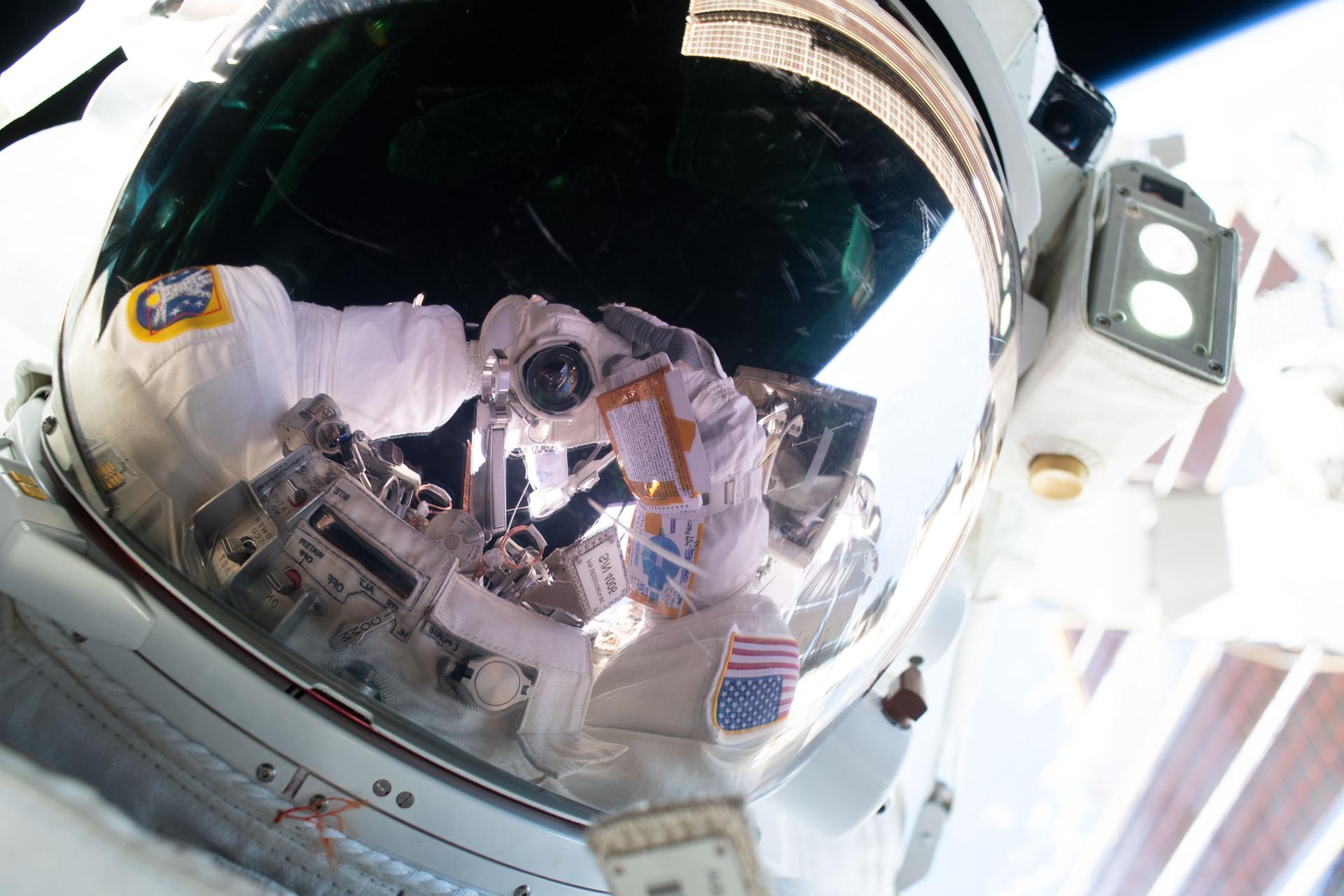
Earlier, Menon joined fellow NASA astronaut Jessica Watkins and assisted flight engineer Joshua Kutryk of CSA (Canadian Space Agency) in the Quest airlock as he tried on a spacesuit ensuring a good fit, comfort, and systems functionality. Spacesuit fit checks also account for body changes such as spinal elongation that take place in microgravity. Menon and Kutryk are scheduled to exit Quest together on Oct. 29 for a spacewalk to install a roll-out solar array on the station’s port-side truss structure.
Delaney trained on a computer to operate the Canadarm2 robotic arm that he will command to assist the spacewalkers during their roll-out solar array installation job next week. He and Watkins will also help the spacewalkers in and out of their spacesuits and guide them during their planned six-hour and 45-minute excursion.
Roscosmos flight engineer Sergey Teteryatnikov also conducted robotics training and practiced how to operate the European robotic arm attached to the Nauka science module. Afterward, Teteryatnikov installed and activated Earth observation gear to capture Asian and South American landmarks in visible and near-infrared wavelengths during the crew’s sleep shift.
Roscosmos flight engineer Anna Kikina pointed a camera out a Zvezda service module window and photographed lakes in eastern Africa. Kikina also assisted Teteryatnikov during his Earth camera configuration activities.
Station commander Pyotr Dubrov of Roscosmos began his shift on orbital plumbing duties inside the Zvezda. Dubrov completed his shift photographing his crew at work aboard the space station.
Learn more about station activities by following the space station blog, @space_station on X, as well as the ISS Facebook and ISS Instagram accounts.
Get the latest from NASA delivered every week. Subscribe here.
]]>
Spacesuit checks topped Wednesday’s task list aboard the International Space Station as two astronauts prepare for a spacewalk next week. The Expedition 75 crew members also kept up advanced microgravity research exploring space agriculture and the respiratory system midweek.
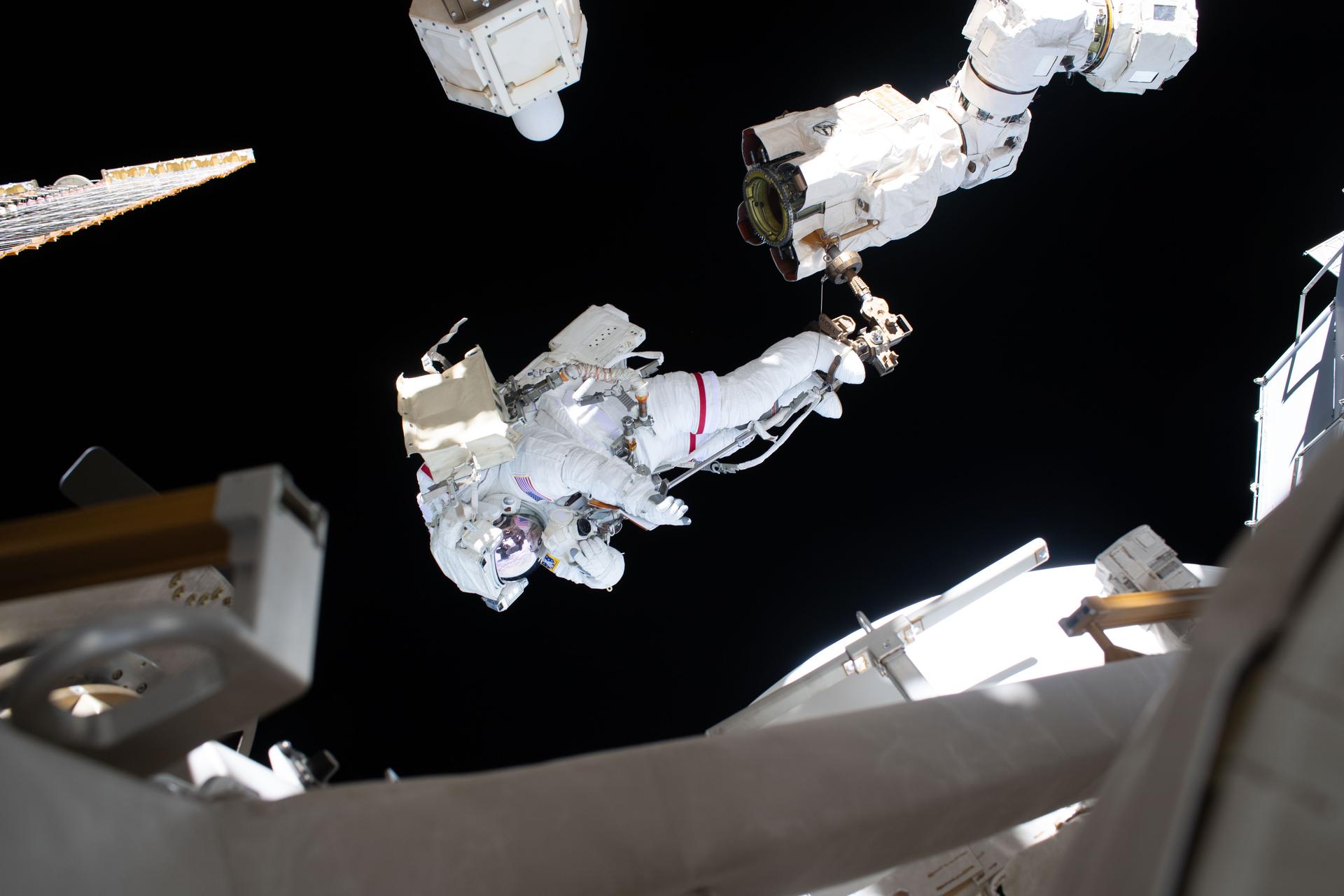
Flight engineers Anil Menon of NASA and Joshua Kutryk of CSA (Canadian Space Agency) are gearing up for the first of two spacewalks that will see the duo install a pair of roll-out solar arrays on the orbital outpost’s truss structure. The spacewalkers are scheduled to exit the Quest airlock on Oct. 29 and Nov. 5 to finalize the yearslong solar array installation work increasing the station’s power generation capability by up to 30 percent.
NASA+ coverage begins at 6:30 a.m. EDT for the Thursday, Oct. 29, spacewalk scheduled to start at 8 a.m. Then on Thursday, Nov. 5, NASA+ coverage starts at 6:45 a.m. EST with the second spacewalk beginning at 8:10 a.m.
Menon and Kutryk spent Wednesday in Quest organizing tools, inspecting tethers, and cleaning spacesuit helmets they will use during the external power upgrade job. Afterward, the duo outfitted a pair of spacesuits with communications gear, medical monitoring hardware, and other components ahead of a suit fit verification planned for Thursday. Spacesuit fit checks account for body changes that take place in microgravity, ensure astronaut comfort, and confirm systems functionality.
NASA flight engineers Jessica Watkins and Luke Delaney reviewed the procedures they will use to assist the astronauts in and out of their spacesuits during both spacewalks. The duo, along with Menon and Kutryk, also studied the spacewalking procedures necessary to maneuver outside the space station, retrieve the solar arrays, and install them.
Menon on Wednesday still had time to process green algae and cultured tobacco cell samples for the Plant Cell Division investigation. The space botany study takes place in the Kibo laboratory module and explores how to grow crops on the lunar and Martian surface to feed future crews.
Roscosmos cosmonauts Pyotr Dubrov and Anna Kikina took turns wearing an acoustic sensor around their necks that recorded their rapid exhalation rate. The high-quality airway sound recordings will be sent down to Earth for analysis to learn how living in microgravity affects a crew member’s breathing. Dubrov later swapped electronics gear on an exercise cycle while Kikina reorganized cargo and docking hardware inside the Progress 96 cargo spacecraft.
Roscosmos flight engineer Sergey Teteryatnikov spent the first half of his shift servicing life support and communications gear. After lunchtime, Teteryatnikov collected air samples to analyze the station’s breathing environment then conducted a computerized hearing test to wrap up his shift.
Learn more about station activities by following the space station blog, @space_station on X, as well as the ISS Facebook and ISS Instagram accounts.
Get the latest from NASA delivered every week. Subscribe here.
]]>
Expedition 75 spent Tuesday advancing human health on and off the Earth with 3D bioprinting, cancer research, and exercise studies. Meanwhile, spacewalk preparations continue aboard the International Space Station to augment its power generation system.
Microgravity enables researchers to observe phenomena difficult or impossible to achieve in Earth’s gravity environment. For example, vascular cells bioprinted in weightlessness are vastly superior to those manufactured on Earth and allows researchers to learn how to engineer human tissues and organs for patient treatments.
NASA flight engineers Luke Delaney and Jessica Watkins participated in a cellular printing study on Tuesday using the Columbus laboratory module’s BioFabrication Facility. Vascular cell samples were removed from an incubator, processed with bioink for printing into blood vessels, then stowed in a science freezer for preservation.
Afterward, Delaney turned his attention to a cancer study to observe how cancer cells grow and respond to treatments in weightlessness. Delaney processed tumor samples inside the Kibo laboratory module’s Life Science Glovebox then preserved the specimens for analysis back on Earth. Understanding how tumor cells behave in space may help doctors identify the cellular and genetic influences of cancer cells and possibly develop more efficient and targeted therapies.
Flight engineer Joshua Kutryk of CSA (Canadian Space Agency) explored how the body responds to exercising in the weightless environment of a spacecraft. Kutryk worked out on the Tranquility module’s advanced resistive exercise device that mimics the inertial forces generated when lifting free weights on Earth. A motion capture system recorded his movements as he exercised while wearing markers from his hips to his feet. Insights may lead to more effective space workouts and possibly advance sports technology on Earth.
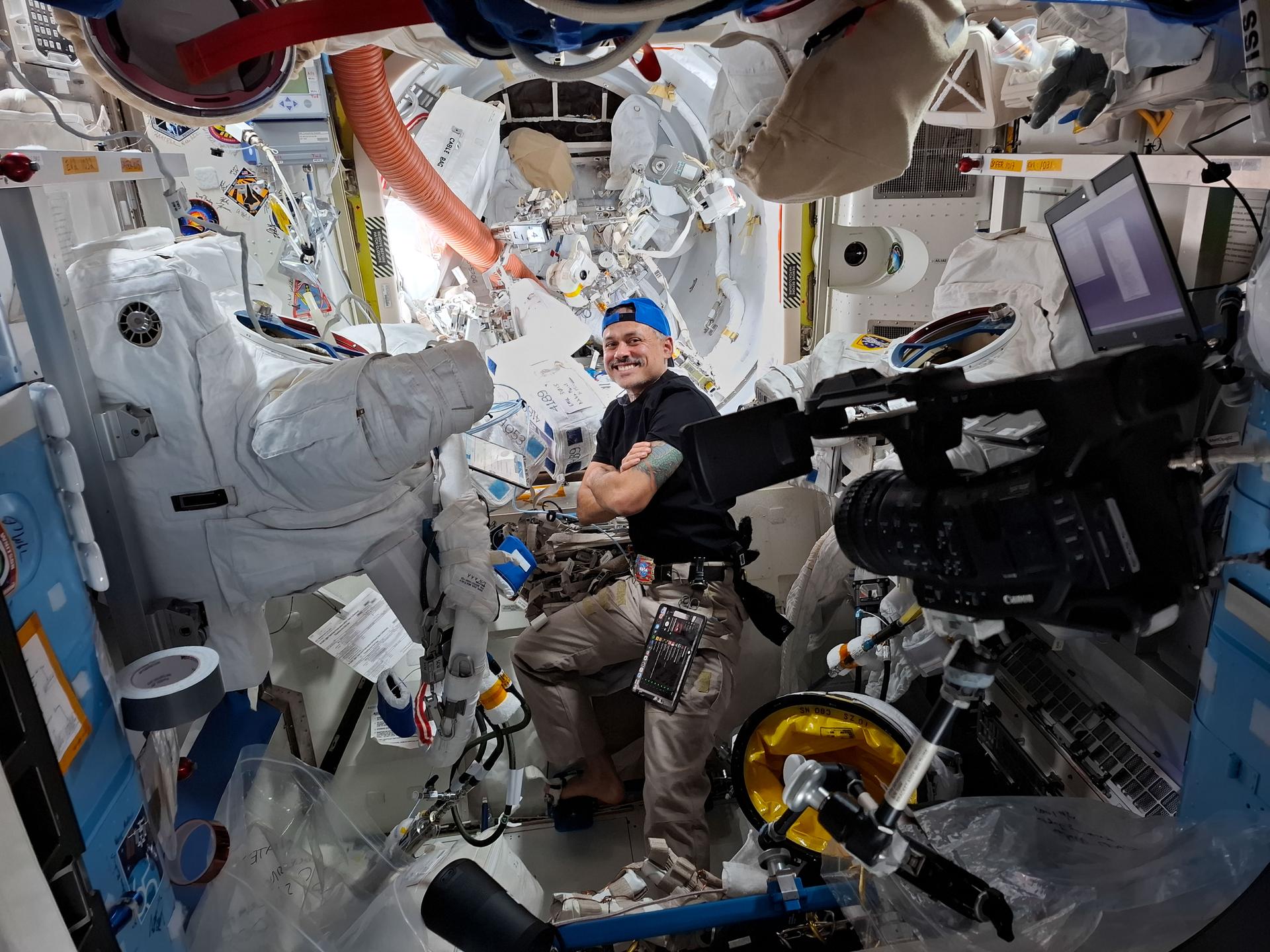
NASA flight engineer Anil Menon worked in the Quest airlock configuring tools and inspecting tethers that he and Kutryk will use during two spacewalks scheduled for Oct. 29 and Nov. 5. The duo will install roll-out solar arrays on the orbital outpost’s truss structure during both spacewalks finalizing the upgrades to the space station’s power generation system. NASA’s Low Earth Orbit Program operations integration manager Gaurang Patel said during a spacewalk preview news conference on Tuesday, the roll-out solar arrays “increase our power generation capability up to 30 percent.”
Station commander Pyotr Dubrov pointed a camera out a window on the Zvezda service module toward Earth to automatically photograph African landmarks in multiple wavelengths. Roscosmos flight engineer Sergey Teteryatnikov trained on a laptop to computer to operate the European robotic arm. Roscosmos flight engineer Anna Kikina transferred water stowed aboard a Progress 96 cargo spacecraft into station water tanks.
Learn more about station activities by following the space station blog, @space_station on X, as well as the ISS Facebook and ISS Instagram accounts.
Get the latest from NASA delivered every week. Subscribe here.
]]>
Spacewalk preparations kicked off the week aboard the International Space Station as two astronauts get ready to install a roll-out solar array at the end of October. Biomedical research, including portable biological sampling in microgravity and 3D cell printing, topped the science schedule for the Expedition 75 crew.
Flight engineers Anil Menon of NASA and Joshua Kutryk of CSA (Canadian Space Agency) are gearing up for the first of two spacewalks to install roll-out solar arrays on the space station’s truss structure. The first spacewalk is scheduled for Oct. 29 when Menon will go on his fourth excursion and Kutryk will go on his first to install a roll-out solar array on the truss structure’s port side. The second spacewalk will take place on Nov. 5 when the duo will install the station’s eighth and final roll-out solar array on the truss structure’s starboard side.
NASA managers will discuss the upcoming spacewalks during a news conference from Johnson Space Center at 2 p.m. EDT on Tuesday, Oct. 20. NASA will stream the event through a variety of platforms including YouTube.
Menon worked inside the Quest airlock on Monday and cleaned cooling loops in a pair of spacesuits that keep the suits thermally conditioned and astronauts comfortable during a spacewalk. Afterward, Kutryk filled the spacesuit tanks and liquid cooling and ventilation garments with clean water. The pair also joined NASA flight engineers Luke Delaney and Jessica Watkins and called down to mission controllers for a pre-spacewalk conference.
Delaney is working on a new experiment delivered recently aboard a SpaceX Dragon that seeks to demonstrate analyzing crew biological samples in space, rather than on Earth, for quicker health insights. Rather than depending on costly return missions and large laboratories, the study is exploring using portable, compact tools on the station to speed up medical testing possibly leading to personalized treatments in space.
Watkins began her shift in the Kibo laboratory module servicing delicate sample processing hardware and stowing its sample-containing fluid loops in a science freezer. Afterward, Watkins set up the BioFabrication Facility in the Columbus laboratory module to print blood vessels during the week made from the cells of patients with a rare genetic disorder that causes rapid aging. Observations in weightlessness may provide deeper insights into the cellular affliction possibly leading to advanced therapies for the accelerated aging disease.
The space station’s three cosmonauts from Roscosmos worked throughout Monday on physics, super intelligence, and inventory duties.
Station commander Pyotr Dubrov explored complex plasmas, or mixtures of ionized gas, neutral gas, and microscopic particles, that become highly charged, interact strongly with each other, and may create plasma crystals. Results may influence the design of future spacecraft and lead to new research methods.
Flight engineer Sergey Teteryatnikov studied using super intelligence tools that may boost crew efficiency aboard a spacecraft and transcribe crew reports for review by mission controllers on Earth. Flight engineer Anna Kikina organized food packs to ensure consumption before the expiration date then documented the location of hardware inside the Zarya module.
Learn more about station activities by following the space station blog, @space_station on X, as well as the ISS Facebook and ISS Instagram accounts.
Get the latest from NASA delivered every week. Subscribe here.
]]>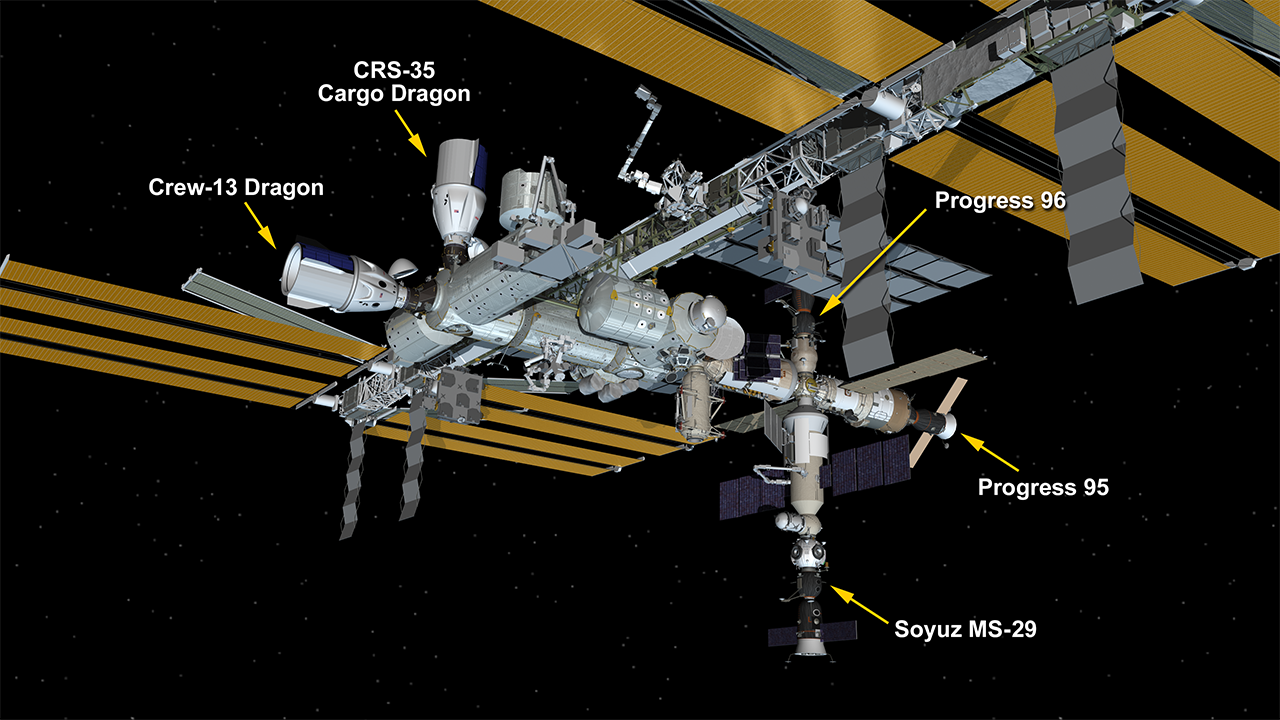
Five spacecraft are docked at the International Space Station following the arrival of a cargo-packed SpaceX Dragon on Thursday. The Expedition 75 crew members have begun unloading Dragon and are activating new science experiments to benefit life on and off the Earth.
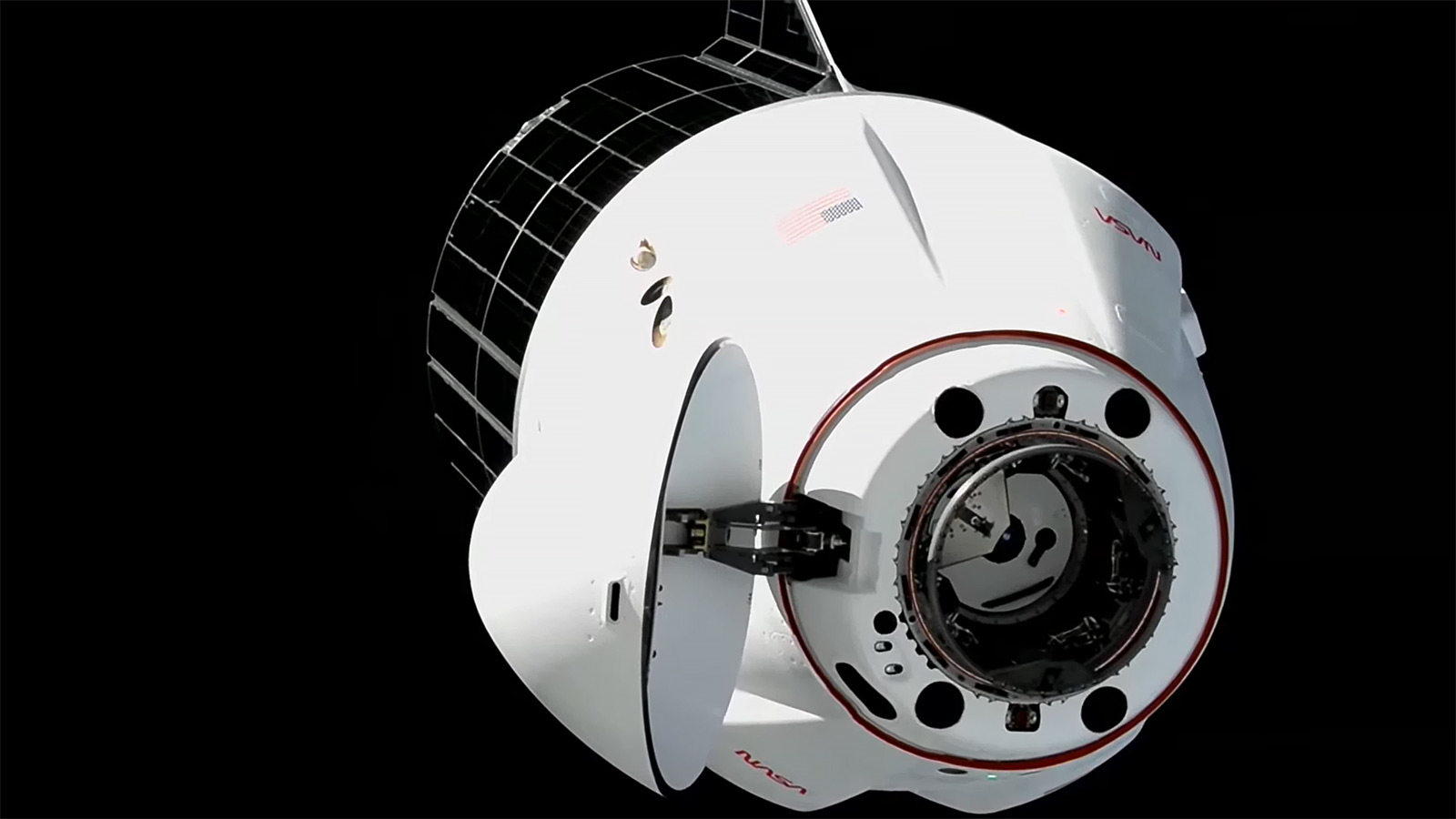
Dragon completed its automated docking to the orbital outpost’s space-facing port on the Harmony module at 10:27 a.m. EDT on Thursday. The uncrewed spacecraft began its mission with a launch atop a Falcon 9 rocket at 6:33 a.m. on Wednesday from Florida carrying over 6,300 pounds of new science, supplies, and roll-out solar arrays.
Shortly after Dragon’s arrival on Thursday, NASA flight engineer Anil Menon conducted pressure and leak checks then equalized pressure between the cargo spacecraft and the space station. Afterward, Menon opened the hatch and entered Dragon followed by flight engineers Jessica Watkins and Luke Delaney of NASA and Joshua Kutryk of CSA (Canadian Space Agency).
The quartet quickly got to work transferring a variety of critical scientific samples from portable science freezers and incubators into station science freezers and research racks for upcoming study and analysis. Some of the new experiments will soon explore creating artificial retinas and growing heart tissues in weightlessness. Other investigations being activated on Friday and over the weekend include growing protein crystals to develop more precise cancer treatments and observing the genetic response of plants growing in microgravity to advance spacecraft life support systems.
A pair of roll-out solar arrays are installed inside Dragon’s unpressurized trunk where they will soon be retrieved by the Canadarm2 robotic arm. Engineers on the ground will remotely command Canadarm2 to remove the roll-out solar arrays from Dragon and temporarily stow them on logistics platforms on the station’s truss structure. Menon and Kutryk will finalize the installation of the roll-out solar arrays during a pair of spacewalks scheduled for Oct. 29 and Nov. 5. The solar arrays will be activated on the truss structure augmenting the space station’s power generation system.
Station commander Pyotr Dubrov and flight engineer Anna Kikina of Roscosmos wrapped up a weeklong study exploring the use of an exoskeleton suit to remotely control robots. The duo investigated wearing the specialized Teledroid suit while using virtual reality goggles and operating hand controls to manipulate tools in a simulated space environment. Results may help crew members prepare for remote robotics operations on future long-term space exploration missions.
Roscosmos flight engineer Sergey Teteryatnikov participated in a different virtual reality study wearing a headset and responding to computerized stimuli testing how his sense of balance and orientation are adapting to weightlessness. Teteryatnikov wrapped up his shift at the end of the week inspecting hydraulics components and servicing the Elektron oxygen generator.
Learn more about station activities by following the space station blog, @space_station on X, as well as the ISS Facebook and ISS Instagram accounts.
Get the latest from NASA delivered every week. Subscribe here.
]]>
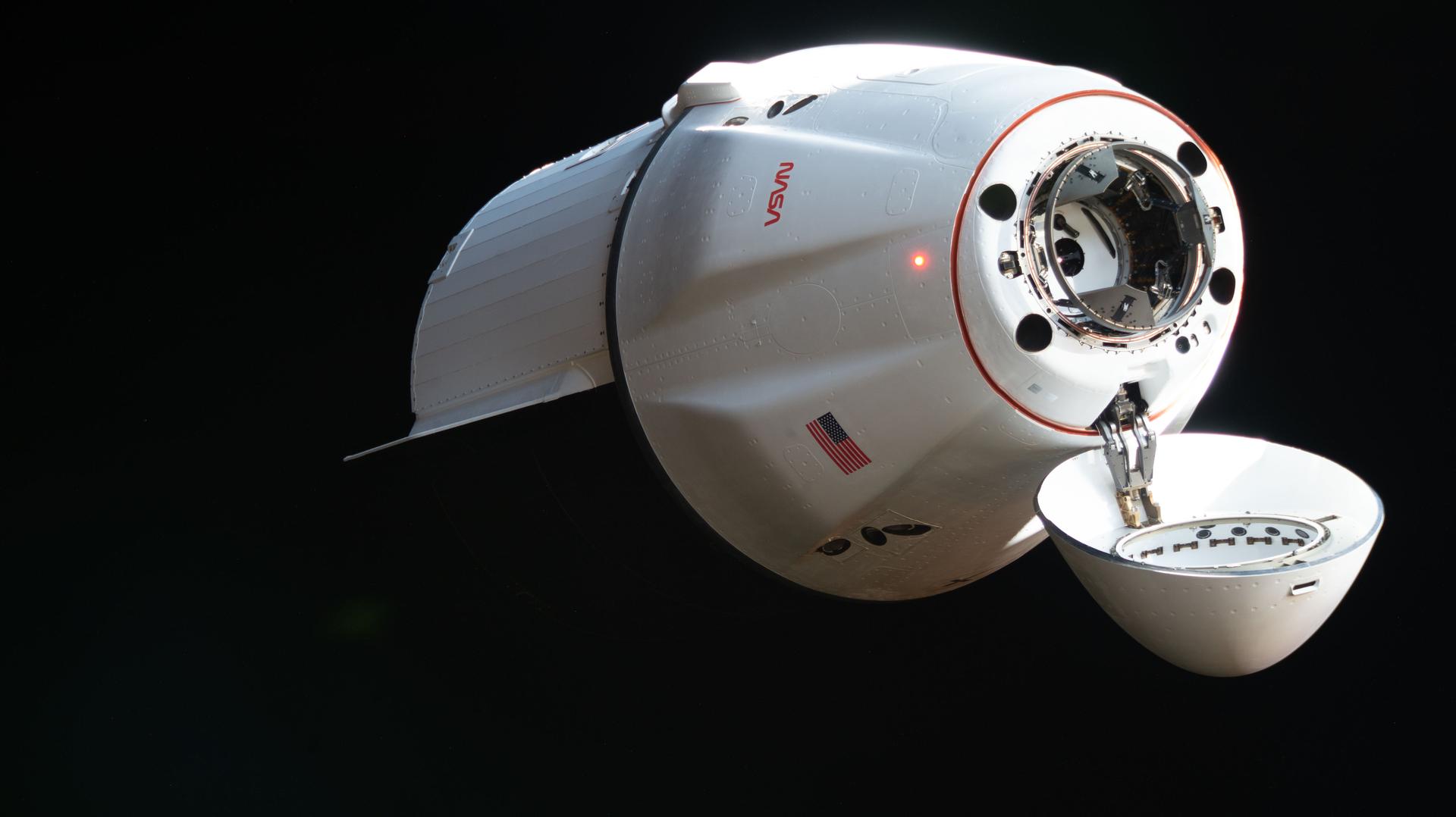
At 10:27 a.m. EDT, the SpaceX Dragon spacecraft docked to the space-facing port of the International Space Station’s Harmony module, delivering more than 6,300 pounds of food, supplies, and equipment for the Expedition 75 crew. This is SpaceX’s 35th commercial resupply services mission to the space station for NASA.
Aboard the Dragon spacecraft is the final set of International Space Station Roll-Out Solar Arrays, or IROSAs, which will be installed later this fall. The spacecraft also is delivering hardware to manufacture artificial retinas in microgravity to help restore vision on Earth and 3D heart tissue models to advance large‑scale drug testing on future missions. The spacecraft will carry materials to study how a new type of glass forms in microgravity and brain organoids that could reveal treatment targets for neurodegenerative diseases, such as Alzheimer’s, Parkinson’s, and multiple sclerosis.
The spacecraft is scheduled to remain at the space station until mid-November when it will depart and return to Earth with time-critical research and cargo, splashing down off the coast of California.
The mission launched at 6:33 a.m. EDT Oct. 13 aboard a SpaceX Falcon 9 rocket from Space Launch Complex 40 at Cape Canaveral Space Force Station in Florida.
Learn more about station activities by following the space station blog, @space_station on X, as well as the ISS Facebook and ISS Instagram accounts.
Get the latest from NASA delivered every week. Subscribe here.
]]>
NASA is streaming live coverage as it prepares for the docking of SpaceX’s 35th commercial resupply services mission to the International Space Station for the agency. Watch online at:
At approximately 10:30 a.m. EDT, the SpaceX Dragon spacecraft will dock autonomously to the space-facing port of the station’s Harmony module. The spacecraft is carrying more than 6,300 pounds of cargo, including the final pair of International Space Station Roll-Out Solar Arrays to the orbiting laboratory.
The mission launched at 6:33 a.m. Oct. 13 on a SpaceX Falcon 9 rocket from Space Launch Complex 40 at Cape Canaveral Space Force Station in Florida.
Learn more about station activities by following the space station blog, @space_station on X, as well as the ISS Facebook and ISS Instagram accounts.
Get the latest from NASA delivered every week. Subscribe here.
]]>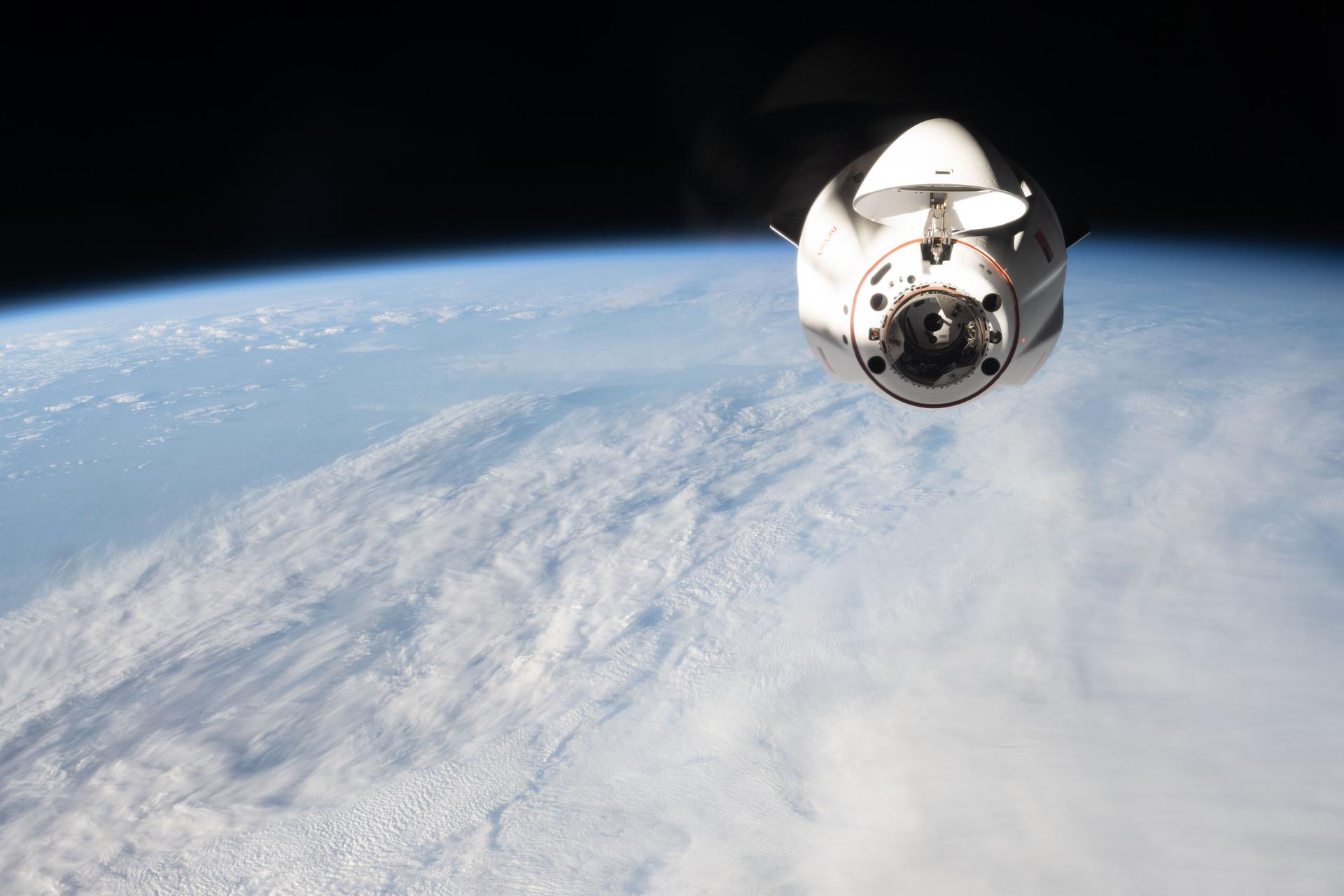
A SpaceX Dragon spacecraft is orbiting Earth on its way to the International Space Station for a docking on Thursday. The Expedition 75 crew members are preparing for Dragon’s arrival while also conducting eye checks, maintaining spacesuit gear, and practicing innovative robotics solutions aboard the orbital outpost.
Flight engineers Anil Menon of NASA and Joshua Kutryk of CSA (Canadian Space Agency) will be on duty monitoring Dragon during its automated approach and rendezvous on Thursday. The duo joined NASA flight engineers Jessica Watkins and Luke Delaney on Wednesday afternoon and called down to mission controllers to discuss cargo operations after Dragon arrives. NASA+ begins its live coverage at 9:15 a.m. EDT broadcasting Dragon’s arrival and docking to the Harmony module’s space-facing port scheduled for 11 a.m.
Dragon is carrying over 6,300 pounds of science, supplies, and roll-out solar arrays including research hardware to support creating artificial retinas and growing heart tissues in weightlessness. The roll-out solar arrays are stowed in Dragon’s unpressurized trunk and will be installed and activated on the space station’s truss structure for power generation during upcoming spacewalks.
All four astronauts also participated in eye exams inside Harmony peering into medical imaging gear while doctors on the ground observed their retina, lens, and cornea in real time. Insights may lead to a better understanding of how a long duration spaceflight affects vision and the shape of the eye to ensure mission success.
Menon earlier transferred student-controlled Earth observation hardware from the Destiny laboratory module into the Columbus laboratory module. Kutryk cleaned the inside of an EXPRESS rack installed in Columbus. Delaney and Watkins also partnered together inside the Quest airlock preparing a spacesuit and its sensitive components for return to Earth and stowing recharged lithium-ion batteries that power the spacesuits.
Roscosmos cosmonauts Pyotr Dubrov and Anna Kikina were back inside the Nauka science module testing an exoskeleton suit to remotely control robots. The Teledroid experiment investigates wearing a specialized suit, using virtual reality goggles, and operating hand controls to manipulate tools in a simulated space environment. Results may help crew members prepare for remote robotics operations on future long-term space exploration missions.
Roscosmos flight engineer Sergey Teteryatnikov worked inside the Zvezda service module updating software on a laptop computer that controls the European robotic arm (ERA). The ERA was launched to the station on July 21, 2021, and was configured for activation during a spacewalk on April 28, 2022.
Learn more about station activities by following the space station blog, @space_station on X, as well as the ISS Facebook and ISS Instagram accounts.
Get the latest from NASA delivered every week. Subscribe here.
]]>