 Le Cameroun pour sa toute première fois, est l’un des 5 pays africains admis en finale de cette compétition mondiale qui se déroule cette année uniquement de manière virtuelle pour cause de COVID-19. Les trois finalistes camerounais sont étudiants à Douala bénéficiaires des initiatives Huawei Seeds for the future et Huawei ICT Academy. Seront également en compétition finale pour le compte de l’Afrique : l’Algérie, l’Egypte, le Maroc et la Tunisie.
Activités tout-en-ligne et vulgarisation de la 5G
Huawei ICT Competition 2020 n’est pas le seul programme de Huawei qui a dû se dérouler essentiellement online cette année. Avant cette finale prévue le 30 octobre prochain, il y a eu entres autres, au mois de septembre dernier, les conférences Huawei World Better Summit NetX 2025 & X-Tech et Huawei Connect 2020. La particularité de ces récentes éditions des sommets mondiaux de Huawei dédiés à la vulgarisation de leurs dernières innovations était la présentation des fonctionnalités, opportunités et applications dérivées qu’offrent la 5G.
Les participants à ces différents évènements en ligne ont également pu en savoir plus sur la plateforme d’e-learning développée par Huawei pour la continuité de l’éducation Learn-On. Pour cause, l’entreprise chinoise s’est fixée pour objectif lors de l’édition Huawei Connect 2019 en présentiel, de former environ 500 millions de personnes dans le monde, dans le cadre du programme sur l’économie numérique dénommé Tech4ALL, dont le Cameroun est bénéficiaire. Au Cameroun, par exemple les programmes éducatifs phares du Tech4ALL sont : Huawei Seeds for the Future et Huawei ICT Academy. Leur double 5ème anniversaire a été célébré le 9 octobre dernier à Yaoundé, cérémonie au cours de laquelle la cuvée spéciale des 40 étudiants retenus et en cours de formation pour l’édition Seeds for the Future ont été mis en relation avec la presse et les institutions gouvernementales camerounaises.
5 ans de formation
 En cinq années d’implémentation des programmes d’éducation Huawei au Cameroun, plus de 1000 étudiants ont été mobilisés dans le cadre des tests de sélection à ces opportunités académiques et professionnelles, environ 120 enseignants ont été impliqués pour 80 certifications. Concrètement le Programme Huawei ICT Academy est mis en œuvre à travers 4 structures de formations de l’enseignement supérieur avec lesquelles des MOU (Memorandum of Understanding) ont été signés : SUP’PTIC (Ecole Nationale Supérieure des Postes et Télécommunications), UIC (Institut Universitaire de la Côte), ENSPY (Ecole Nationale Supérieure Polytechnique de l’Université de Yaoundé), et ENSPD (Ecole Nationale Supérieure Polytechnique de Douala, ex-Faculté de Génie Industriel de l’Université de Douala).
Ces différents programmes d’éducation mis en œuvre au Cameroun par l’entreprise chinoise sont le résultat de l’Accord de partenariat stratégique dans le domaine des technologies de l’information et de la communication, signé entre le Gouvernement camerounais et la Chine (Huawei) en marge du FOCAC 2018, le 3ème Sommet du Forum sur la Coopération sino-africaine dont la délégation était conduite par le Président de la République du Cameroun, S.E. Paul BIYA.
]]>
#SocialMediaCure: The Best Social Media Care in Cameroon
Dans le cadre de mes activités d’éducation aux médias numériques et à l’information, à travers la plateforme eSTEMate en projet depuis quelques années et concrétisée en février 2020 , je vous invite à joindre cette initiative digitale que je lance avec plusieurs partenaires nationaux et internationaux dès le 1er septembre 2020, dans le cadre du projet #CoronaVirusFacts de l’UNESCO.
Merci à tous de soutenir #SocialMediaCure qui se veut être une campagne d’éducation aux médias et à l’information dont l’objectif principal est de lutter contre la désinformation, la mésinformation et le discours de haine dans les médias sociaux au Cameroun en contexte de COVID-19. dont les principales activités sont:
- 90 jours de campagne de communication digitale avec des relais d’influence dans les médias sociaux et les médias classiques;
- Un Blog-Talk pré-évènementiel à l’occasion de la journée mondiale du blog en collaboration avec l’Association des Blogueurs du Cameroun et le projet Je suis Camerounais et je blogue, sur le thème : Le métier de blogueur au Cameroun ;
- Des ateliers régionaux de formation en présentiel (en primeur dans les zones d’éducation prioritaire du Cameroun: Adamaoua, Est, Extrême-Nord, Nord, Nord-Ouest, Sud-Ouest…);
- Des webinaires à vocation nationale en collaboration avec cmNOG;
- Un #SocialMediaCamp à l’occasion de la semaine mondiale d’éducation aux médias et à l’information en collaboration avec Barcamp Cameroon et Eduk-Media.
Hashtags : #SocialMediaCure #CoronaVirusFacts
Facebook : https://www.facebook.com/eSTEMatedu
Twitter : https://twitter.com/eSTEMatedu
Website : www.estematedu.com
Contexte
#SocialMediaCure: La meilleure thérapie Médias Sociaux au Cameroun
Depuis les premières attaques de la nébuleuse terroriste Boko Haram au Cameroun, l’on assiste à un accroissement de l’utilisation du mobile et du numérique dans la communication sur l’étendue du territoire Camerounais. Cela coïncide avec l’introduction progressive des outils internet connectés, la miniaturisation du matériel informatique et de télécommunications et les campagnes de vulgarisation et d’adoption des réseaux sociaux à travers la banalisation des supports audiovisuels et messages courts.
Cette déferlante de l’utilisation du numérique s’est accrue avec l’apparition en fin 2016 de la crise socio-politique dans les régions du Nord-Ouest et du Sud-Ouest. Depuis ce moment, les médias classiques et médias en ligne formels (site d’information et blogs) sont pratiquement supplantés par des supports plus légers, instantanés et rapides. Les discours de haine et des cas de diffamation sont de plus en plus enregistrés dans un contexte marqué par le calendrier électoral 2018-2020.
Ajouté à tout cela, l’apparition de la pandémie COVID-19 dans le monde a davantage accéléré le processus de digitalisation du monde et d’utilisation d’Internet. Les cinq règles d’hygiènes fondamentales recommandées par l’OMS pour se prémunir de l’infection au coronavirus obligent l’ensemble de la société mondiale à se réajuster. Chaque pays, bien que respectant des mesures similaires généralement acquises et adoptées, a sa particularité pour les méthodes de confinement, de prise en charge des malades, d’organisation du mode de vie, des méthodes de travail, d’enseignement, des systèmes d’approvisionnement et autres. Le Cameroun n’est pas en reste puisque depuis le 06 Mars 2020, date d’enregistrement du premier cas d’infecté au coronavirus, une bataille informationnelle s’est installée dans les médias. Un état de choses qui se vit tant dans les médias classiques que dans les médias numériques, les réseaux sociaux.
La pandémie s’est transformée en infodémie car tous souffrent du même mal : la mauvaise information, l’absence d’information et la manipulation de l’information qui résultent en Fake News (Fausses Nouvelles), Hate Speech (Discours de Haine) et Cyberbullying (Cyberharcèlement).
]]> My name is Dorothee Danedjo Fouba.
I am a Tech Community Builder, a Multimedia Journalist, Media Education’ Engineer and Blogger.
When I was 10 I wanted to be my own boss and to save life through medicine.
I start contributing to Mozilla in September 2014 when I was incubated at Mozilla Offices in Silicon Valley during the Techwomen program.
I work as a Mozilla Rep/Mentor and Campaign Manager helping organizing communities in Cameroon and Africa by teaching and doing advocacy on different initiatives and programs provided at Mozilla.
I am proud of Mozillians involved in Cameroon&Africa because of their great achievements and results. I am also proud of organizations and communities who have all contributed to my personal and professional growth. It’s a good blessing to share leadership skills, networking experiences, training tools&technics and to get back great results and big communities from People sensitized.
The biggest obstacle I have faced was bridging the gap between my literary background and appropriating STEM like coding skills and practices. Adding to that It was a big challenge to move toward french and english system. Hopefully I am from a country which use these two languages as officials, but have more than 200 local languages.
My inspiration at Mozilla has increased after meeting 4 wonderful women: Larissa Brown Shapiro, Lizz Noonan, Emma Irwin and Mitchell Baker. People I met in some Mozilla advocacy and sensitization events I organized in my country and region also inspired me. They helped me to try to be better than now and to adjust my thinking and projects.
My advice to women is seize the opportunity, take the risk! Don’t be afraid on beginning a new challenge. You need to be focused on your objectives, Try to learn by listening to others, Update your mindset every time after being in contact with inspiring and experienced people, Stay humbled and have&keep faith in God. ]]>
 Within my holidays, I spent some favorite hours for empowering and supporting girls and women in STEM fields in Cameroon. I made time within December 2015 and January 2016 for youth and women. Hopefully, I experienced lot of support from local populations, community leaders, teachers and from such inspiring people around the country. Concretely, I made:
 A Technovation huge field trip in 3 of 10 Regions of Cameroon from January 8th to January 19th: Far North, North and Adamawa. The northern Regions of Cameroon are the one which are facing realities of Boko Haram Attacks these last months and people experienced these manifestations of terrorism since 2015 there. But the interesting thing there is that in 2015 I registered with mentors and coaches from these regions 13 teams (65 girls) of the 23 counting for Cameroon Challenge there. They made amazing results there: 6 of them made it to the Technovation Regional Pitch in Cameroon, 5 in the Worlwide quater-final and 1 to the Worlwide Semi-final. Participants are all young girls from 10 to 18 years old who don’t know before the program how to code. Now they are literate in Apps coding and they are building mobile application for solving problem of their direct area of living. The field trip I made was to recognized efforts made by students, mentors and coaches in 2015 challenge, for sensitizing them and recruiting new competitors for Technovation 2016 challenge. Code Girl Movies were diffused on these occasion and skils for using Mit App Inventor and Technovation platforms also have been shared. I shared there with about 15 different secondary schools, with more than 1000 attendees in total.
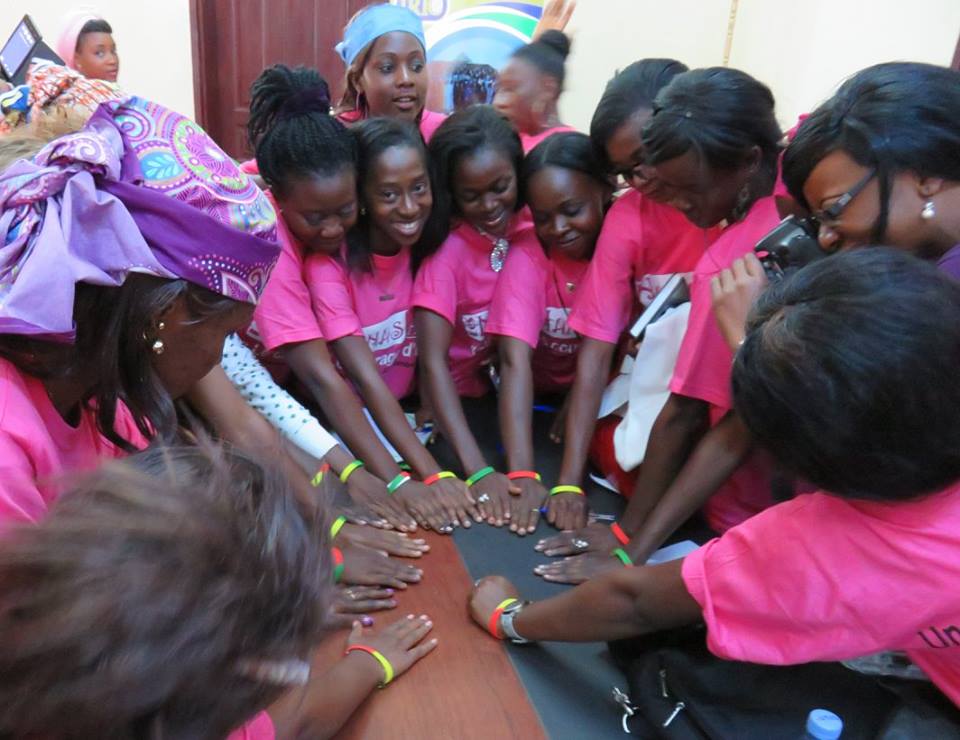
A big mentoring program for young girls in Cameroon named « Nanas Awards », an initiative of another US Exchange Alumnae from Cameroon, Fidele Djebba. Within the program of December 21st to 22nd, I had a special speaking time with 200 girls from 10 regions of Cameroon for sharing my story and experiences with them in Yaounde. The most interesting things was the sharing tips time for building a project and business plan. I faced there a big surprise there…having more than 200 people singing « Happy birthday to you » just for me and having gifts from kids. Now girls are building their project and we had know within social medias and email and interesting discussion about their special projects.
 A great Mozilla Advocacy campaign in Cameroon for kids, youth and women for Northern Regions. With support of WoMoz Members, FSA, KidZilla and Teach the Web trainers from Northern Regions, we recruited lot of people for dedicated initiatives of Mozilla. We are now building a national strategic plan with others regions of Cameroon for growing our community and help contributors to be more active in worldwide activities.
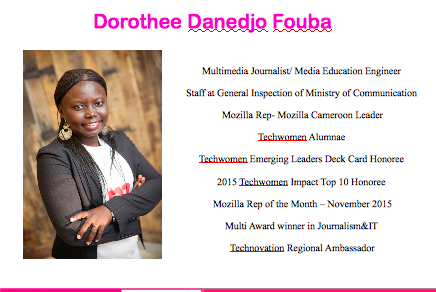 A special 2016 TechWomen Alumnae Coaching Session Call week for Women in Africa. As you know, 2016 Techwomen recruiting phase is in progress and for helping women to improve their application, I organized some One to One Video Call with 8 women in Tech, 6 from Cameroon, 1 from Middle-East countries, 1 from West-African Countries. The main objectives of that Calls was to share with them my own experience of Techwomen program, in which the program consists on, and to help them with tips to fill well their application’s form for the 2016 selection.
I am Grateful to God for this special time spent for impacting people around me. I am Thankful to wonderful Teachers & Administration staff of Secondary schools in Cameroon, Technovation Mentors and Coaches, Womoz, FSA and Mozilla Cameroon Cordinators in these differents regions, friends, family& colleagues for the unexpected and important support. A special thanks to TechWomen, Technovation Cameroon and Mozilla.
The better is still to come… Let’s “Inspire The Next Generation” .I know it and i will keep you update on everything going on around me. #TWImpact #OurTimeToLead #WeLeadOthersFollow #Technovation2016 #Techwomen16 #Mozilla #MozillaCameroon #WomenInTech #WomenInStem #237GirlsCodeApps Technovation Challenge Cameroon Technovation Cameroon Mozilla Africa TechWomen Mozillians TECHWOMEN CAMEROON
Check these links for additional Infos or Pictures.
Kaele: http://wasa.me/E5Xp
Kalfou: http://wasa.me/bb6W
Tiou: http://wasa.me/8FpX
Maroua 1: http://wasa.me/iH1E
Maroua 2: http://wasa.me/1AO2
Figuil: http://wasa.me/4XIp
Ngaoundere: http://wasa.me/y3Js
Nanas Awards: http://wasa.me/A32g
Out of 55 web and IT projects collected in Africa from August 2014 to January 2015, five Cameroonian success stories are highlighted out of six total. Olivier Madiba has managed to launch a video game firm « Kiro’o Games », producer of the first video game from Cameroon « Aurion, the legacy of Kori-Odan. » Here is a demo of this video game.
Crowdfunding is a mode of Internet financing which uses the techniques of Web 2.0 known as interactivity, online platforms, blogs, social networking and microblogging spaces.It appeals to the crowd, the greatest number of people and visitors for a project. Then there are four major categories of crowdfunding: donation crowdfunding, reward crowdfunding, credit crowdfunding and equity crowdfunding. Some details on crowdfunding are on this interactive video.
View Top 20 Countries in Africa-Crowdfunding-Web&IT in a full screen map By Dorothydaf with Batchgeo.com
Young African entrepreneurs use mostly online platforms to replace traditional financial actors such as banks and stock exchanges, because these traditional actors do not always believe on the financial success thanks to the web and ICT. Young Africans Entrepreneurs used some Crowdfunding platforms like Kickstarter, Indiegogo, KissKissBankBank, Ulule, Jumpstart and sometimes to African platforms : Thundafund, VC4Africa, FundaGeek, TechMoola, Mchanga, Zoomaal and many others. This Chart resume their preferences
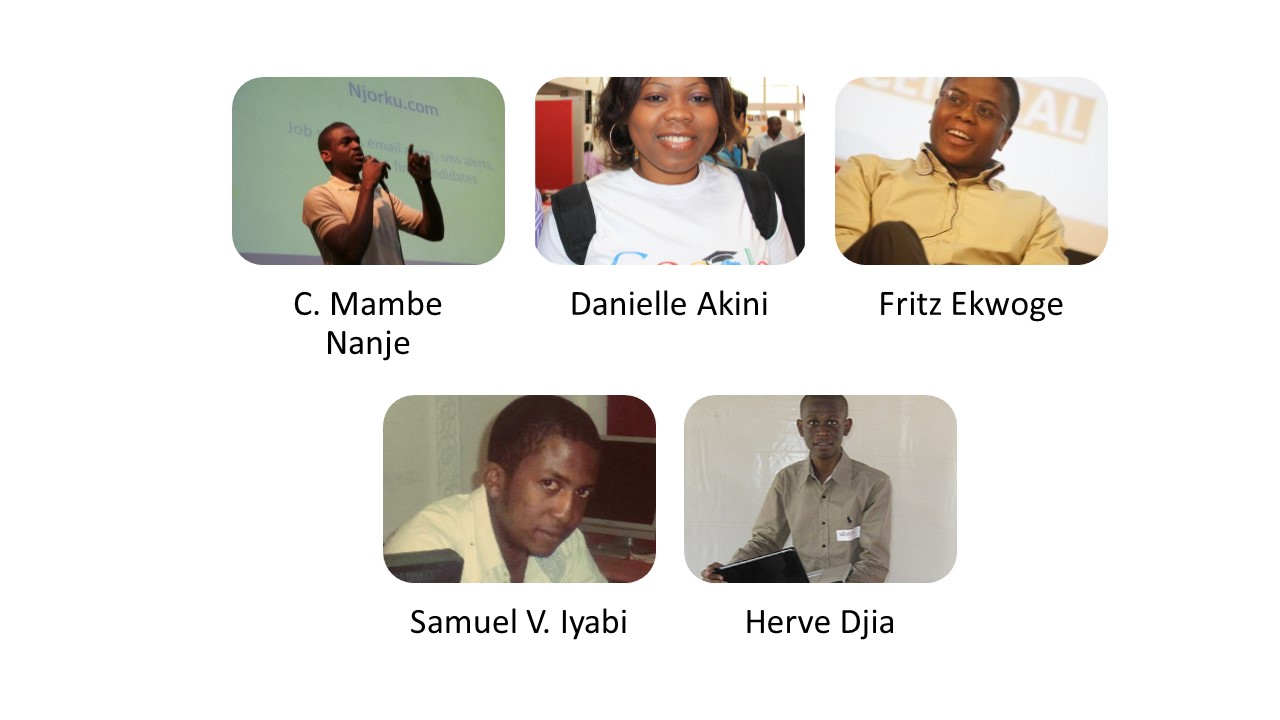
Churchill Mambe Nanje of Njorku is talking about dificulties and tips for doing a good Crowdfunding Campaign.
How does it work?
As explained in the last video, you will notice that this method of funding project has a downside if the entrepreneur has a bad reputation online. Fundraising can be unsuccessful if you do not communicate enough about social media and that it has no social media engagement strategy. Some people to remedy this situation are adding digital strategies online, few ordinary activities when you are seeking funding. To succeed in crowdfunding, just follow this graphic.
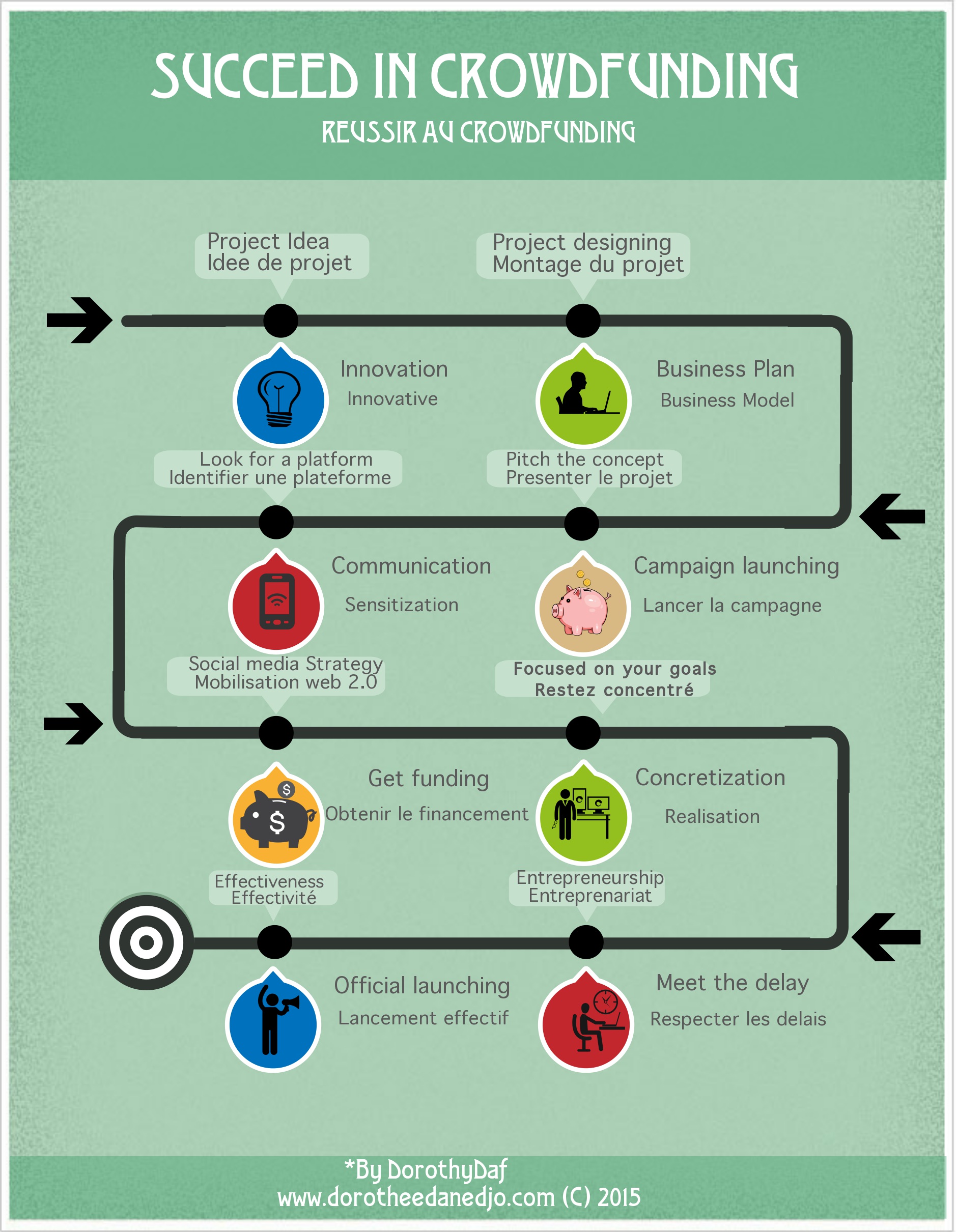
Process for success in crowdfunding
What is the value add for Africa?
According to the African Development Bank, the unemployment rate in Sub-saharan Africa is 6% then 1% higher than the world. So it is said that over 70% of Africans earn their living from precarious jobs. Only 17% of young workers in low-income countries, mostly situated in Africa, have an employment full time. Also, the World Bank is more alarming to the question: young people represent 60% of all Africans unemployed. Underemployment rate is 82% with 70% of young Africans living below the internal poverty line, less than $ 2 a day. In Cameroon, for example, official statistics show 13% unemployment and 70% underemployment rate by Strategy Paper for Growth and Employment. The informal sector is the main source of employment with 90.5% of workers.
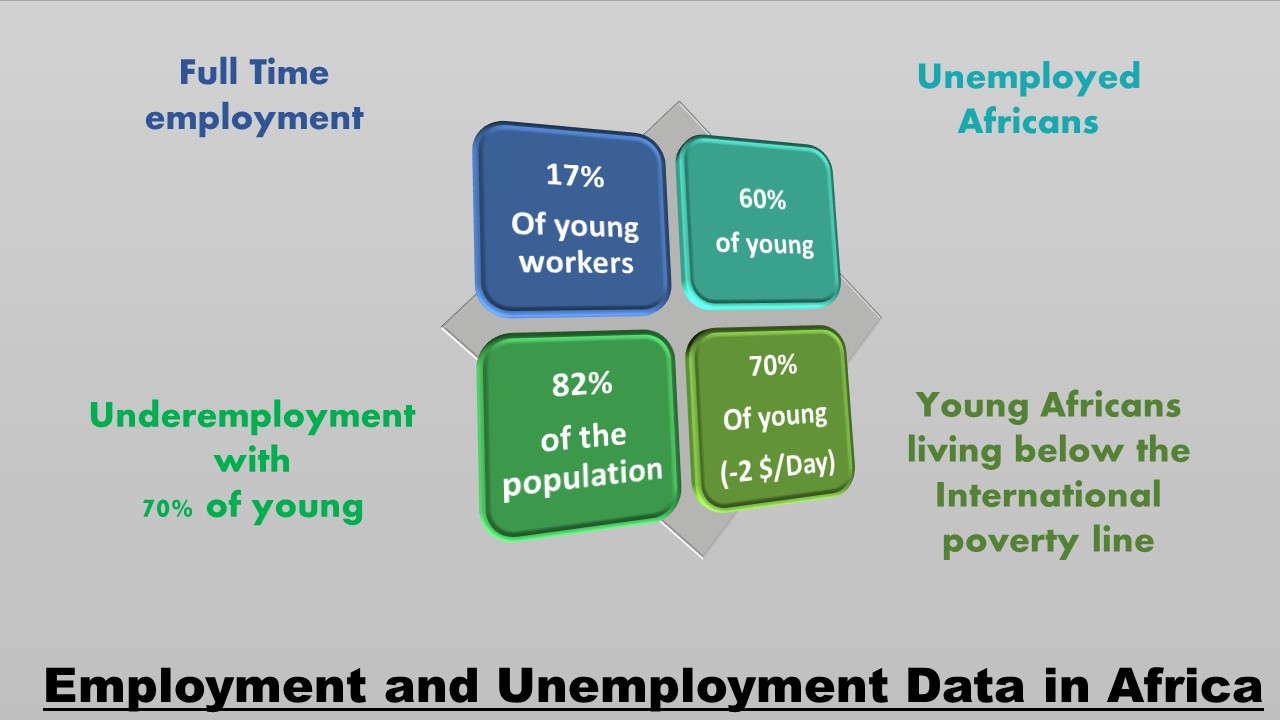
Data on employment in Africa. Data on employment in Africa. By Dorothydaf (C)2015 WB & ADB data
These data demonstrated that web and IT is like manna for Africa. Because Internet and mobile phones have increasing high penetration rates. More than 200 million Internet users, 79 million on social media or 18% of internet penetration and 67% of people who are connected on mobile phone in the continent.
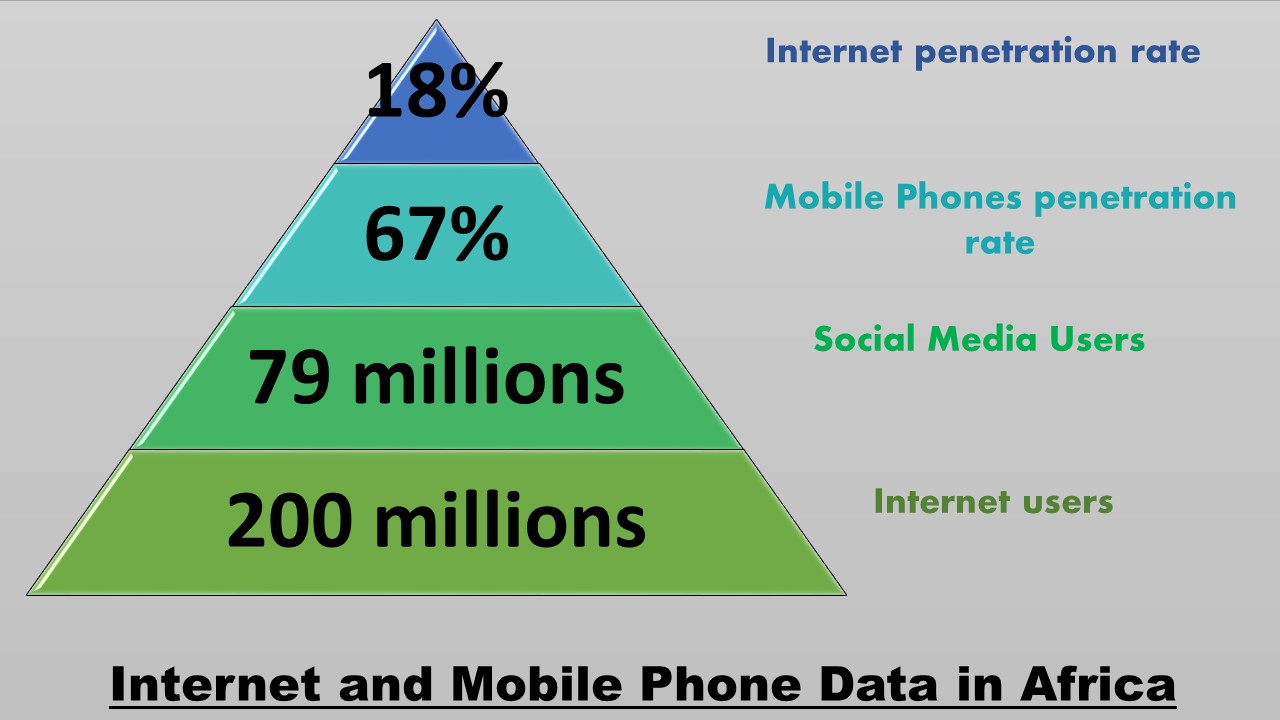
Internet and Mobile Data in Africa by Dorothydaf (C) 2015
In addition, the creation of web and IT products became an African specialty (InternetWorldStats). Young entrepreneurs have flooded the mobile market, online payments, video games, and web programming. Above all, creators are adopting in mass the methods of crowdfunding. Currently in Africa, followers of crowdfunding are in the dozens, not only in web technology sectors and the results are palpable, as projects materialize beyond childhood dreams into real technical and financial futures
Dorothée Danedjo Fouba
*Article published for African Story Challenge-Business&Technology Cycle*
]]>Sur 55 projets recensés en Afrique entre Aout 2014 et Janvier 2015, cinq success stories web et TIC de ce type sont d’actualité au Cameroun sur 6 enregistrées au total. Olivier Madiba a réussi à lancer une firme de jeux vidéo “Kiro’o Games”, la startup productrice du tout premier jeu vidéo d’origine camerounaise “Aurion l’héritage des Kori-Odan”.
Joëlle Ebongue à son tour, plus connue sous le nom d’artiste Elyons est la créatrice de “La vie d’Ebène Duta”, une bande dessinée originellement distribuée sur les web via les medias sociaux.
Tout près d’eux, Arthur Zang travaille sur la tablette tactile à usage médical cardiologique, la “CardioPad”, pendant que l’équipe d’Otto Isong développe au lieu-dit “Silicon Mountain” à Buea, le porte-monnaie numérique “Pursar”. Ces 4 projets ont tout simplement suivi le modèle de financement utilisé par le webzine Afropolitain créé par des jeunes Camerounais “FashizBlack”. Paola Audrey Ndengue, co-founder du webzine raconte:
Concrètement la clé du succès de ces initiatives web et technologies recensées entre 2009 et 2014 : c’est le Crowdfunding.
Qu’est-ce que c’est?
Encore appelé financement participatif, ce mode de financement utilise les techniques du web 2.0: l’interactivité, les plateformes en ligne, les blogs, les réseaux sociaux et les espaces de microblogging. Il fait appel, au plus grand nombre d’internautes pour financer un projet. Il existe ainsi 4 grandes catégories de financement participatif : par don, par don à contrepartie ou récompense, par prêt et par investissement en capital encore appelé l’Equity crowdfunding”.
La video ci-dessous explique clairement les contours du financement participatif:
Comment ca marche?
En Afrique, le constat est clair, les jeunes entrepreneurs africains préfèrent le l’equity crowdfunding. Pour cela, ils utilisent pour la plupart des plateformes en ligne pour remplacer les acteurs traditionnels du financement que sont les banques et les bourses. Pour cause, ces acteurs ne croient pas toujours à la réussite financière grace aux web et aux TIC. Ce que releve Hervé Djia, co-founder de la startup Djoss TV.
En bref, l’infographie suivante résume le parcours de l’entrepreneur en quête de fonds par crowdfunding:

Crowdfunding_Process_infographics with Ease.ly
Voici une cartographie interactive localisant les 20 pays Africains qui ont réussi dans le crowdfunding de quelques projets web et TIC:
View Top 20 Countries in Africa-Crowdfunding-Web&IT in a full screen map By Dorothydaf with Batchgeo.com
Sur ce Top 20, certaines données significatives peuvent être relevées:

Informations significatives sur le crowdfunding en Afrique. By Hanna Nguea Lottin (C) 2015
Quelle plus-value pour l’Afrique?
Selon la Banque Africaine de développement, le taux de chômage en Afrique subsaharienne est de 6% soit d’1% supérieur à celui du monde entier. Seuls 17% des jeunes travailleurs dans les pays à faible revenu, situes en majorité en Afrique, ont un emploi salarié à plein temps. Aussi, la Banque Mondiale se fait plus alarmante sur la question: les jeunes représentent 60% de l’ensemble des chômeurs Africains. On parle donc de sous-emploi a 82% avec 70% des jeunes Africains qui vivent en dessous du seuil de pauvreté à l’échelle internationale, soit moins de 2 dollars par jour. Au Cameroun par exemple, selon le Document de Stratégie pour la Croissance et l’Emploi. Le secteur informel représente le principal pourvoyeur d’emplois avec 90,5% de travailleurs.
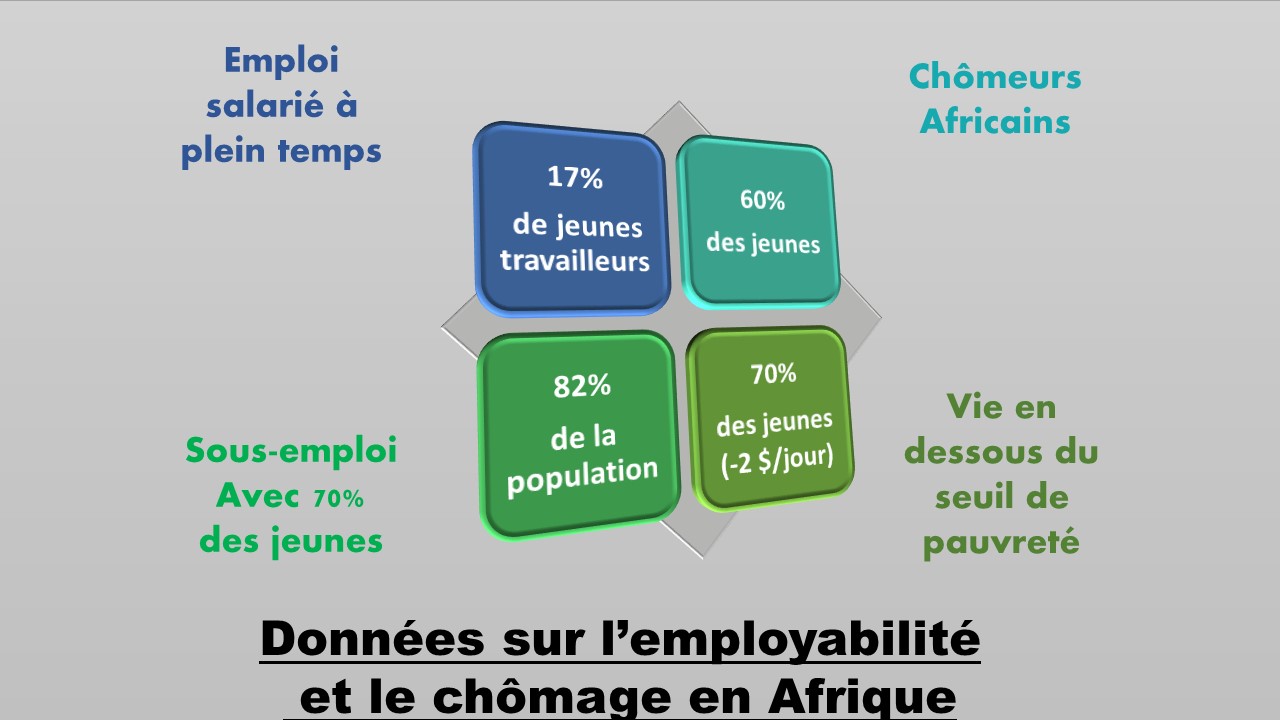
By Dorothydaf (C) 2015. Data by BAD&BM
Au vu de ces données, le crowdfunding via le web et les TIC apparait comme une manne pour l’Afrique. Pour cause, on recense désormais plus de 200 millions d’utilisateurs d’internet et 79 millions sur les médias sociaux le continent.
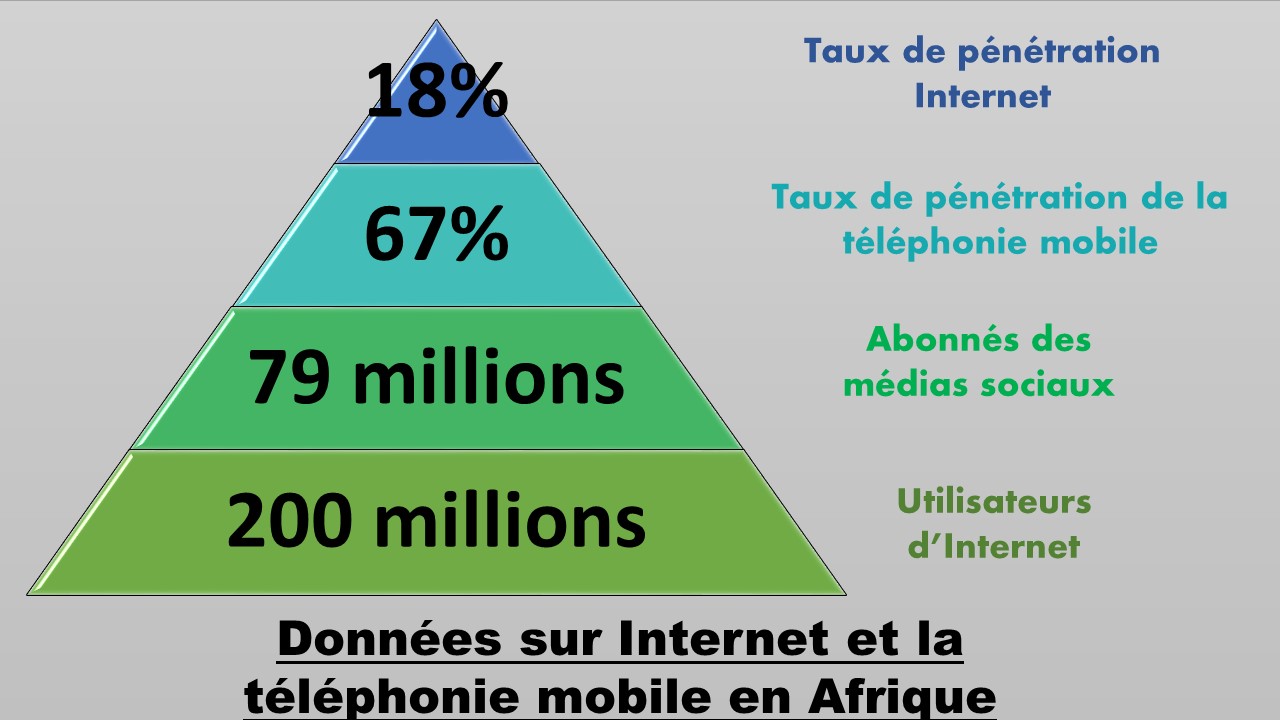
By Dorothydaf (C)2015. Data by ITU&InternetWorldStats
En plus, la création des produits web et TIC sont devenus une spécialité africaine (InternetWorldStats). Ils inondent peu à peu le marché du mobile, du paiement en ligne, des jeux vidéo, de la programmation web. Surtout, leurs créateurs adoptent en masse les méthodes du financement participatif. Actuellement en Afrique, les adeptes du crowdfunding se comptent par dizaines, et ce ne sont pas seulement dans les secteurs web et technologies que les résultats sont palpables, que les projets se concrétisent au-delà du rêve d’enfant.
Dorothée Danedjo Fouba
*Article produit et publié dans le cadre de l’African Story Challenge-Business&Technology Cycle*
]]>


These pictures were taken when we are doing data collection and report in field of action in Buea, Yaounde and Douala (Cameroon), between November and December 2014. For more details about this article on crowdfunding, a post was published in french in September 2014. In few words, an economy of this blog post:
« We are at the end of September 2014, towards the closure of data collection on crowdfunding in Africa. Precisely, data collection on projects related to web 2.0 and new technologies that have been launched through crowdfunding on the African continent. For that reason, www.dorotheedanedjo.com‘s goal is to produce a successful data investigation on this topic: a journalistic investigation based on data analysis. A new editorial journalism genre which consist in interactive and easy viewing of information to facilitate public understanding. The hardest achievement in the context of producing this article is: data.
Finding data
To achieve this, the search engines suffer most from our determination to look for data about web and IT projects in Africa which received a successful crowdfunding online. Then, after working with various mentors at the Story Camp of Marrakech, crowdfunding platforms themselves are being perused daily. Gradually, the data table is enriched while online users are at the heart of the action. A tweet, a Direct Message, tags on different platforms and phone calls from different informants are ecorded daily.
Meanwhile, the profile of interviewees is refined. In fact, the agreements with the holders of the successful projects in Cameroon are clear: « I’m available » « I could be at your disposal » … So, Ready, step … go in field of action.
Visualizing and sharing
While awaiting the starting signal for the shooting, it’s time to think of the post-production of this fieldwork. To do this, the Marrakech workshop has been a great practical contribution. The appropriation of some mapping, statistics and visualization tools have furnished this rich appointment. To perform our skills and knowledge of some tools and techniques, we will start soon another training program in the United States of America, Techwomen Emerging Leaders 2014. One of our expectations for this further period of training is clear: to acquire and test other techniques data presentation and increase our knowledge of social media management to have a better impact on the target audience.
Note that, In order to engage more African populations around this article, national and international media partnerships (print, radio-TV-web) are concluded regularly. Like the principles of crowdfunding, this article is written with a participative approach. There is a partaking point where you can contribute to the data collection, but also a point to contribute in the sharing of information, without financial remuneration certainly, but with a socio-economic consideration. That is: boost business and technology projects in Africa and contribute to the development of the continent. »
]]>
Voici la bande annonce de l’article de datajournalisme que « A multimedia Journalist’ Blog » publie dans quelques jours sur le financement participatif en Afrique dans le cadre de African Story Challenge- Business and Technology Cycle. Il sera bilingue (French&English) et interactif. Hope you will love it. Merci de votre apport inconditionnel!
Pour en savoir plus: Mon dernier Post sur la question en septembre 2014.
« Nous sommes en fin septembre 2014, en plein bouclage d’une collecte de données sur le crowdfunding en Afrique. Soyons plus précis, une collecte de données sur des projets relatifs au web 2.0 et aux nouvelles technologies qui ont été lancés grâce au Crowdfunding sur le continent africain. Pour cause, www.dorotheedanedjo.com s’est fixé pour objectif de réussir une data investigation : une enquête journalistique basée sur l’analyse des données chiffrées. Un genre rédactionnel nouveau en journalisme permettant une visualisation interactive et aisée de l’information afin de faciliter la compréhension du public. Le plus dur dans le contexte de réalisation d’un tel article : les données.
Trouver des données
Pour y arriver, ce sont les moteurs de recherche qui souffrent le plus de notre acharnement de fouineur de données sur les projets web et TIC en Afrique ayant obtenu un financement participatif à succès en ligne. Aussi après le Story Camp de Marrakech et le travail avec les différents mentors, les plateformes de crowdfunding elles- mêmes sont épluchées au jour le jour. Petit à petit, le tableau de données s’enrichit pendant que les internautes sont au cœur de l’action. Un tweet par-ci, un Direct Message par-là, des tags sur différentes plateformes et des coups de fil de différents informateurs sont enregistrés au quotidien.
Pendant ce temps, le profil des personnes à interviewer s’affine. Dans les faits, les accords de principes avec les porteurs des projets à succès au Cameroun sont clairs : « je suis disponible » « je pourrais être à ta disposition »…Alors, à vos marques…prêts pour le tournage.
Visualiser et Partager
Dans l’attente du top départ pour le tournage, il est question de penser à la post-production de ce travail de terrain. Pour ce faire, l’atelier de Marrakech aura été d’un très grand apport pratique. L’appropriation de quelques outils de cartographie, de visualisations statistiques et audiovisuelles ont meublé ce rendez-vous riche. Pour parfaire nos connaissances, nous entamons dans quelques jours un autre programme de formation aux Etats-Unis, Techwomen Emerging Leaders 2014. L’une de nos attentes principales pour cet autre période de formation est claire: acquérir et tester d’autres techniques de présentation de l’information chiffrée et accroitre nos connaissances en social media management afin d’avoir un meilleur impact sur le public cible.
Il faut noter que dans le but d’engager davantage les populations africaines autour de cet article, des partenariats nationaux et internationaux avec des médias de différents supports (presse écrite-radio-tv-web) sont conclus régulièrement. Comme dans les principes du Crowdfunding, il s’agit d’un article participatif où l’on peut contribuer à la collecte des données mais également participer au partage de l’information, sans rémunération financière certes, mais avec une contrepartie socio-économique. Cela s’appelle : impulser des projets business et technologies en Afrique et contribuer au développement du continent. »
]]>
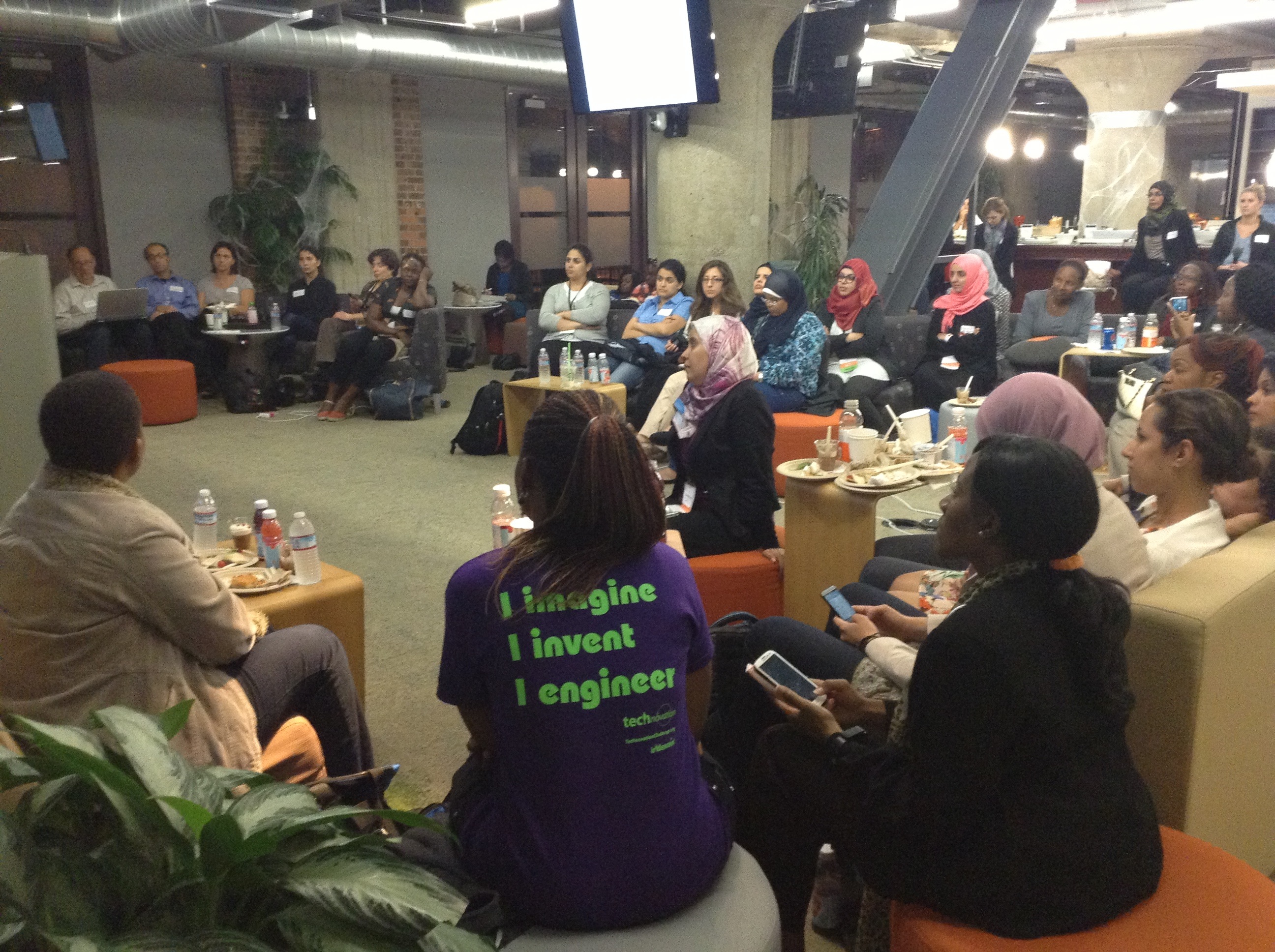 Mozilla Corporation, San Francisco office…few minutes passed 7PM. A soft voice, a female one is on the microphone. About 70 participants are there, listening to this voice, silently. It’s the voice of a wonderful woman: Haben Girma. She’s 25 years old and deafblind. Haben is doing everyday disability rigths advocacy. The Mini-biography of this woman explains that « During her time as a student, Business Insider ranked her among the 21 Most Impressive Students at Harvard Law School, and the White House recognized her as a Champion of Change. Haben currently serves as a Skadden Fellowship Attorney at Disability Rights Advocates, a non-profit law firm dedicated to protecting the rights of people with disabilities around the country. As a member of DRA’s team in Berkeley, California, Haben works to improve access to education for students with disabilities.« . At this event, she was talking about how to improve skills of people with disabilities by using digital tools and Internet. She began directly an inspiration for the Techwomen Emerging Leaders attending this meeting.
Inspirational Talks
Others Speakers were there, talking about the advocacy for an open access to Internet. Larissa Shapiro and David Steer from Mozilla Corporation (San Francisco Bay area office) demonstrated that lot of opportunities existing for women in tech ought to improve their carriers and work. For example, in Open Source field,women have the possibility to get internship when call for applications are launched, like this one for the Open Web Fellows program. In the other hand, Leah Symekher, Konstantin Kalaidtzidis and Michael Snell were talking about opportunities and activities of the Internet Society Network (ISOC) in general and the ISOC SFBay Area Chapter. Additionaly, Rachel Leventhal from the Women’s Peer to Peer Network was thinking on how to build « hackerspaces » that are safe, supportive of and inclusive for women and also how to help women with limited technical access and literacy in Africa. One of the 2014 Techwomen Emerging Leader from Cameroon has shared her own struggle to be in STEM field.
Impact on the Techwomen community
The participants feel happy and inspired to be part of this meetup. An interactive exchange with speakers took place. All the event is on this video.
 Techwomen is an Initiative of the US department of State’s Bureau of Educational and Cultural Affairs, which empowers, Connect and support Women around the world, who are leaders in STEM fields. By STEM, you should understand: Sciences, Technology, Engineering and Mathematics. As a Techwoman Emerging Leader from Cameroon, I (Dorothée Danedjo Fouba) really appreciate this opportunity in USA, with amazing and wonderful Techwomen mentors and mentees.
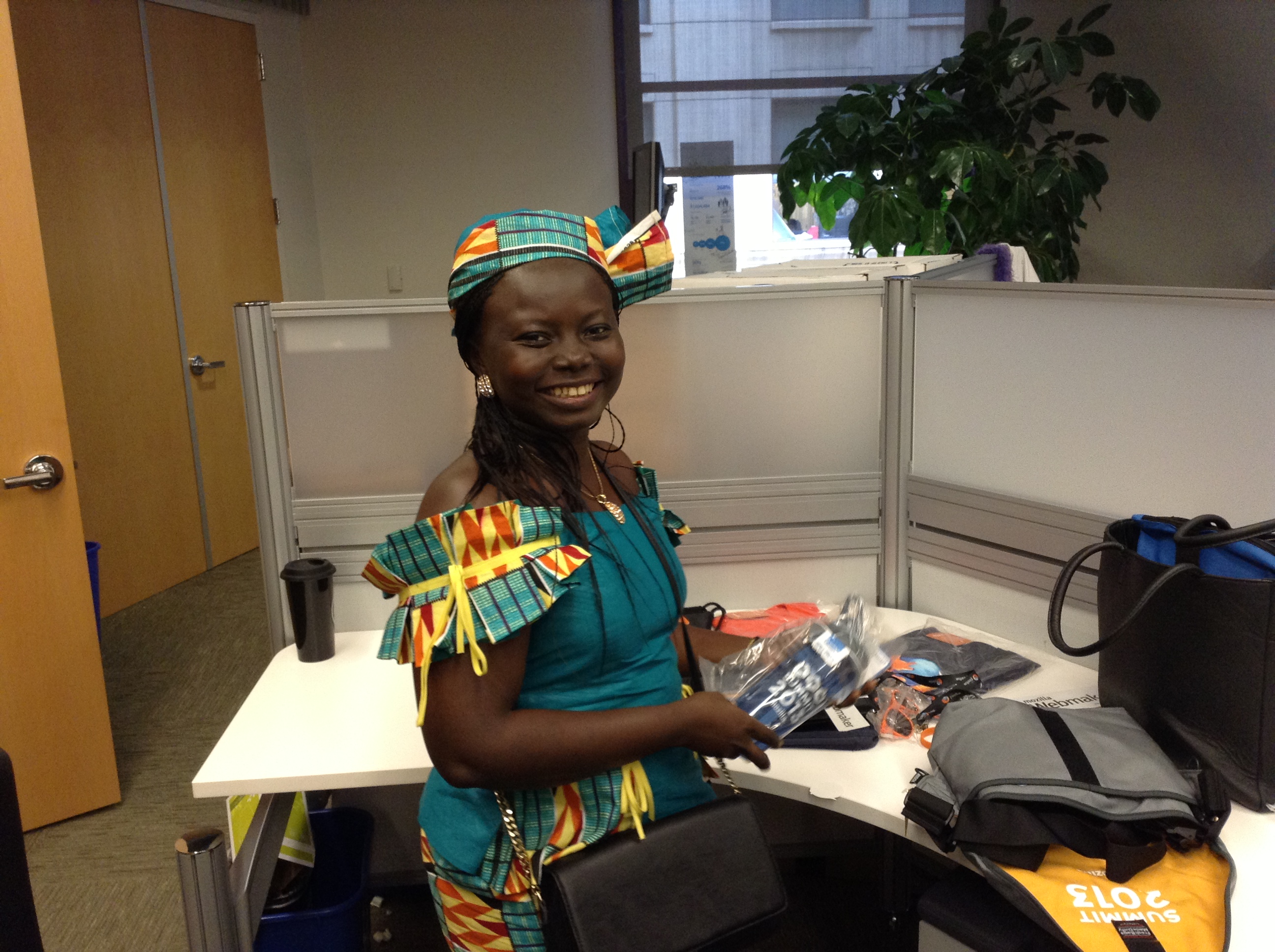 I’m hosted by a big Open Source company in the world: Mozilla Corporation. Every weeks of this month in San Francisco and Mountain View Offices, I’ll improve my skills in Open source, digital tools, webmarketing, managing a Tech community and more interesting things there. I began by learning how to blog with The Open Standard platform, one of new babies products of Mozilla for Journalists and Blogger. At the end of this program, I expect to be more professional than now in STEM fields and want to come back to my country with a prototype of a multimedia teaching platform I have in Project since 2013. A platform which can help African journalists, Communicators and Startup-ers to have some free and open source tutorials and online tools for their work.
About Dorothée Danedjo Fouba
Dorothee is a Multimedia Journalist, media educator engineer and blogger working in Online Journalism and the IT sector. As a journalist, Dorothee works with the Cameroonian Ministry of Communication (General Inspection) and is a Communication advisor and Consultant for the Center for Development of Best Practices in health in her country. She also manages since 2011 a blog www.dorotheedanedjo.