Future Research Priorities to Accelerate Alaska’s Clean Energy Workforce Development
Several areas of additional research could strengthen the foundation for future energy workforce development efforts in the state. They include:
The challenges facing Alaska’s clean energy workforce, from tricky rural recruitment and retention to instructor shortages, are formidable. Yet the information gathered for REAP’s Powering Alaska’s Future: Opportunity Analysis of Clean Energy Workforce Challenges and Potential Solutions reveals a network of individuals, organizations, and communities actively building toward solutions.
We launched this four-part series to amplify findings and takeaways from the Opportunity Analysis. Our first post examined Alaska’s clean energy workforce size, growth, and in-demand roles. Next, we dug into the five key challenges constraining local clean energy workforce recruitment, retention, and training. Then, we uplifted five promising pathways toward clean energy job growth in Alaska, with the aid of case studies that exemplify the clean energy workforce development efforts already underway in many regions of the state. For this final installment in that monthlong series, we are drawing attention to avenues for continued research that could further inform those efforts and highlighting the ways that REAP will integrate the Opportunity Analysis findings into our clean energy workforce development programming going forward.
Several areas of additional research could strengthen the foundation for future energy workforce development efforts in the state. They include:
As explained in the report’s background section (p. 8), many industries calculate their employment impacts by tabulating direct employment (roles that work with physical energy efficiency and renewable energy infrastructure) and then modeling indirect positions (administrative, regulatory, financial, and supply chain jobs behind energy projects) and induced positions (broad array of support and service jobs created by direct and indirect employee wages) for a fuller picture of the economic footprint of their industry. These analyses can range widely depending on the breadth of the induced positions included—for instance, one recent analysis, developed by the McKinley Research Group using 2022 data and commissioned by the Alaska Oil & Gas Association, states that every direct oil and gas industry employee in the state supports another 15 indirect and induced positions. Their modeling includes not only payroll, goods, and services positions, but also positions funded by oil- and gas-related government revenue.
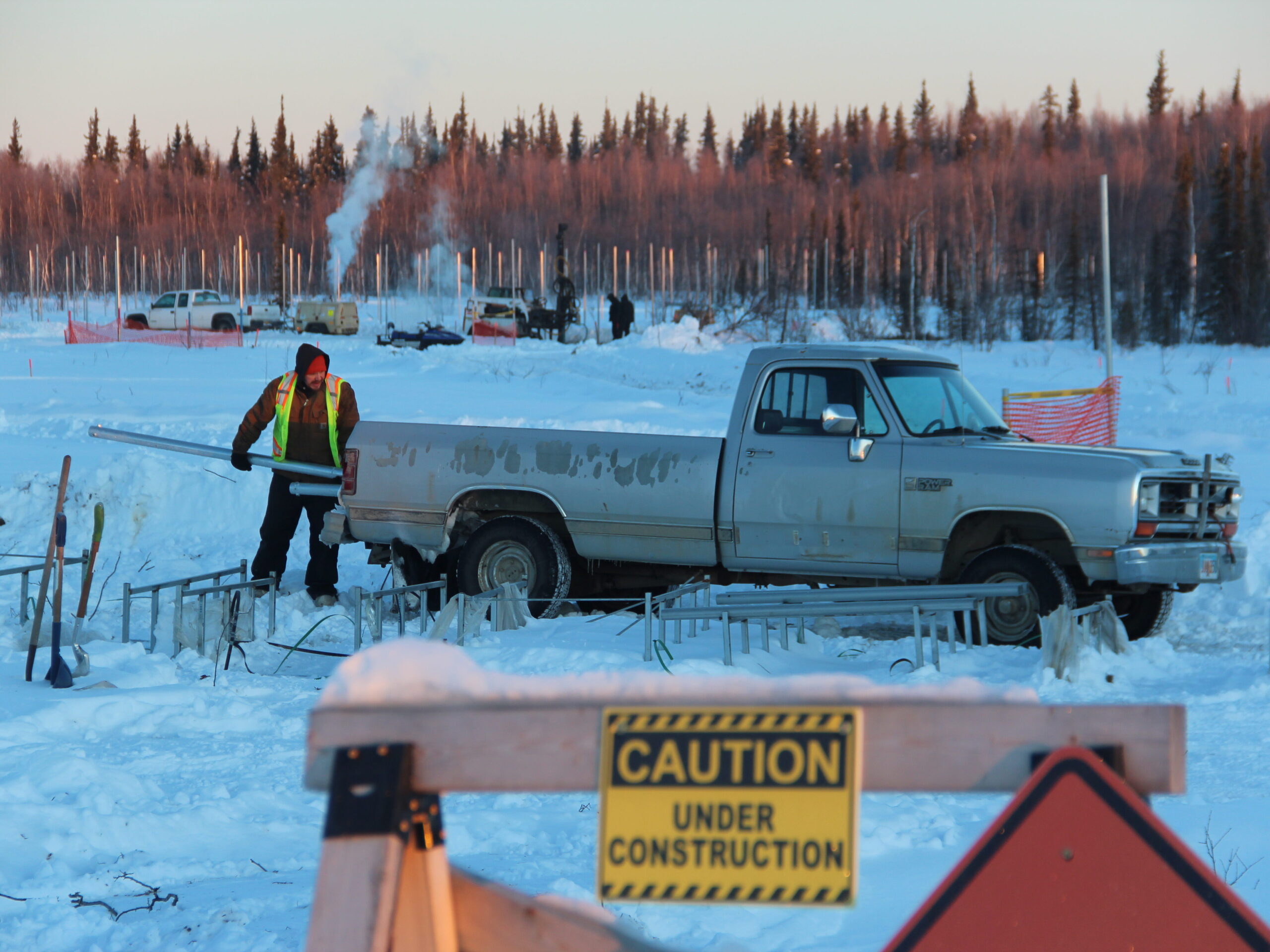
Construction underway on a solar project in Galena, Alaska. Photo: Jade Powell/REAP
The U.S. Energy and Employment Report (USEER), produced by the Department of Energy (DOE), is the main source for state and national-level energy employment data used in the Opportunity Analysis. State employment figures from the Alaska Department of Labor and Workforce Development (AKDOLWD) were also consulted. These sources provide direct employment figures, but calculating custom employment multipliers for the clean energy industry’s indirect and induced impact would better inform decisions regarding investment in energy efficiency and renewable energy projects and workers.
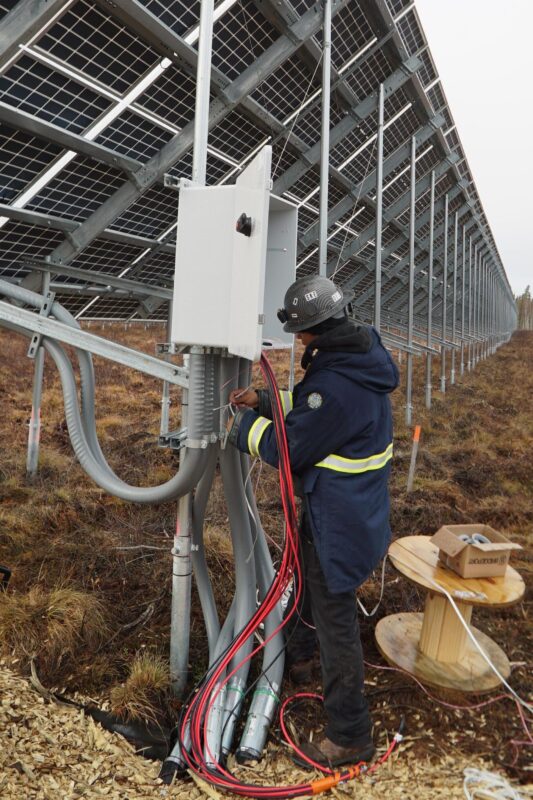
Sunstone Electric electrician Jacob Magbual works on a solar project in Galena, Alaska. Photo: Haleigh Reed/REAP
Alaska’s unique geography and climate can often make it difficult to draw parallels and inspiration from other regions and localities, but it’s still critically important to understand and apply relevant workforce development practices from Outside. The Opportunity Analysis background section compares Alaska’s recent clean energy job growth with peer states that share similarities like fossil-fuel-dependent economies, cold climates, large rural areas, and isolated grids (p. 10). This comparison validates Alaska’s strong recent growth rate, and highlights Maine as the only other state in the eight-state comparison with a higher clean energy growth rate in both 2022-2023 and 2023-2024.
Future study of clean energy workforce development strategies in Maine could pinpoint new tactics for cold climates and rural communities. Broadening the peer state analysis to include other fossil-fuel-dependent economies that are bringing significant clean energy projects online, like Texas, Oklahoma, and New Mexico, could provide added context and potentially reveal relevant workforce recruitment and reskilling strategies making headway in other oil-producing states. And conducting research to ascertain clean energy workforce growth and strategies at work in Canada’s Northern Territories could prove fruitful for identifying culturally grounded models within remote Indigenous communities.
During discussions about systemic barriers to training access and attendance, the fourth shared challenge highlighted in the Opportunity Analysis (p. 25), multiple interviewees discussed the need for further research and implementation of culturally integrated training practices and programs as a pathway toward lasting solutions. While some interviewees mentioned integrating culturally responsive elements into their positions and programs, like flexible work schedules during subsistence times, there was also recognition that more consultation and research in partnership with Alaska Native Tribes, elders, and community organizations is needed to validate other methods. Future research partnerships with local and regional Tribal organizations would be invaluable, especially to incorporate cultural differences in different regions across the state.
There are models in the K-12 space that could provide the initial foundation for developing best practices for culturally responsive postsecondary programs. Initiatives like the Pulasaraq curriculum, developed by the Lower Yukon School District and the Association of Alaska School Boards, and SeaAlaska Heritage Institute’s robust education offerings, including their Culturally Responsive Educator conference and science, technology, engineering, art and math curriculum, are two regionally specific examples. Long-term partnerships with Tribal organizations, postsecondary institutions, and energy employers would be essential to integrate culturally relevant and responsive elements into energy training opportunities across the state.
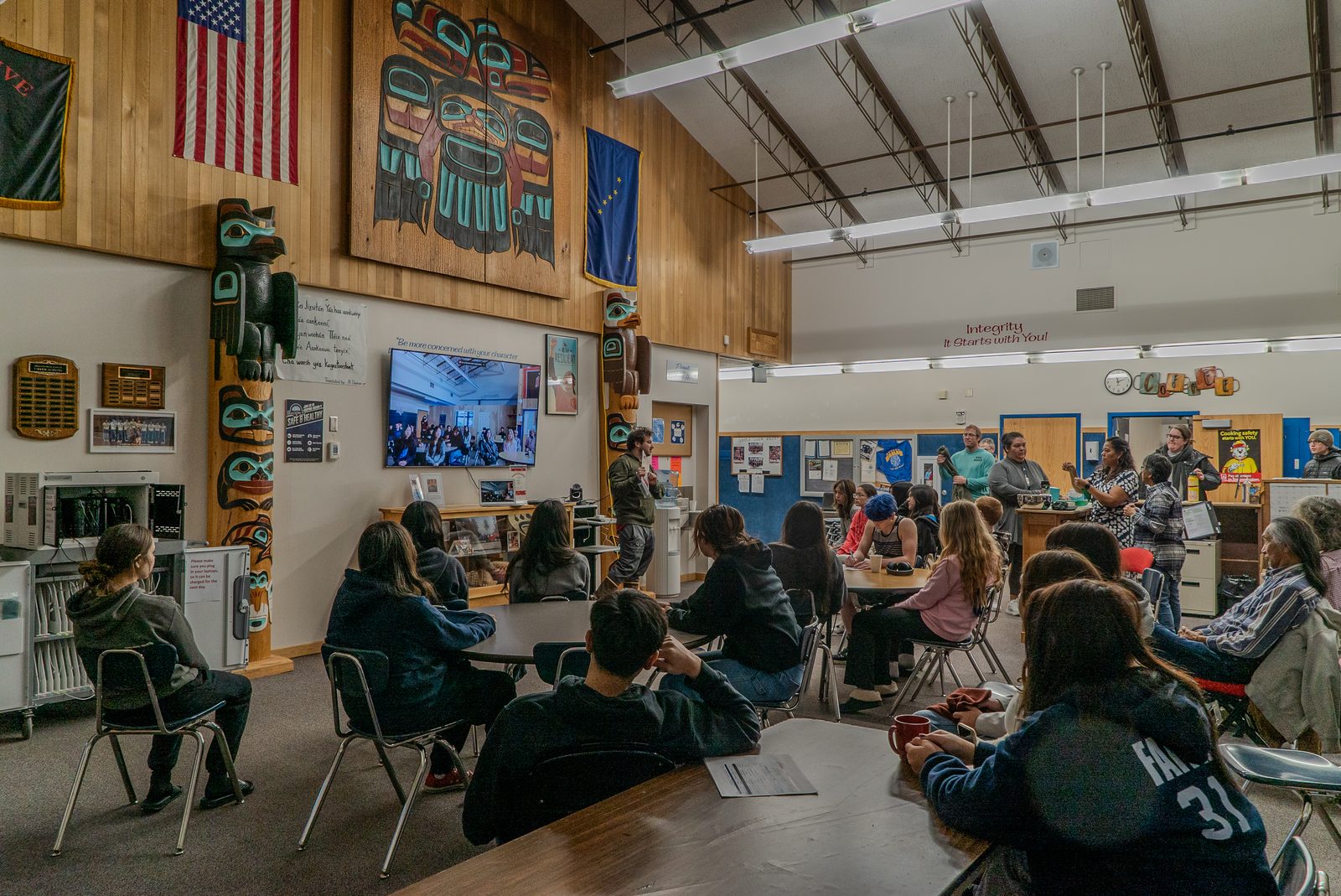
High school students listen to Angoon Alaska Youth Stewards coordinator Eric Benedict. Photo: Jenny Starrs/REAP
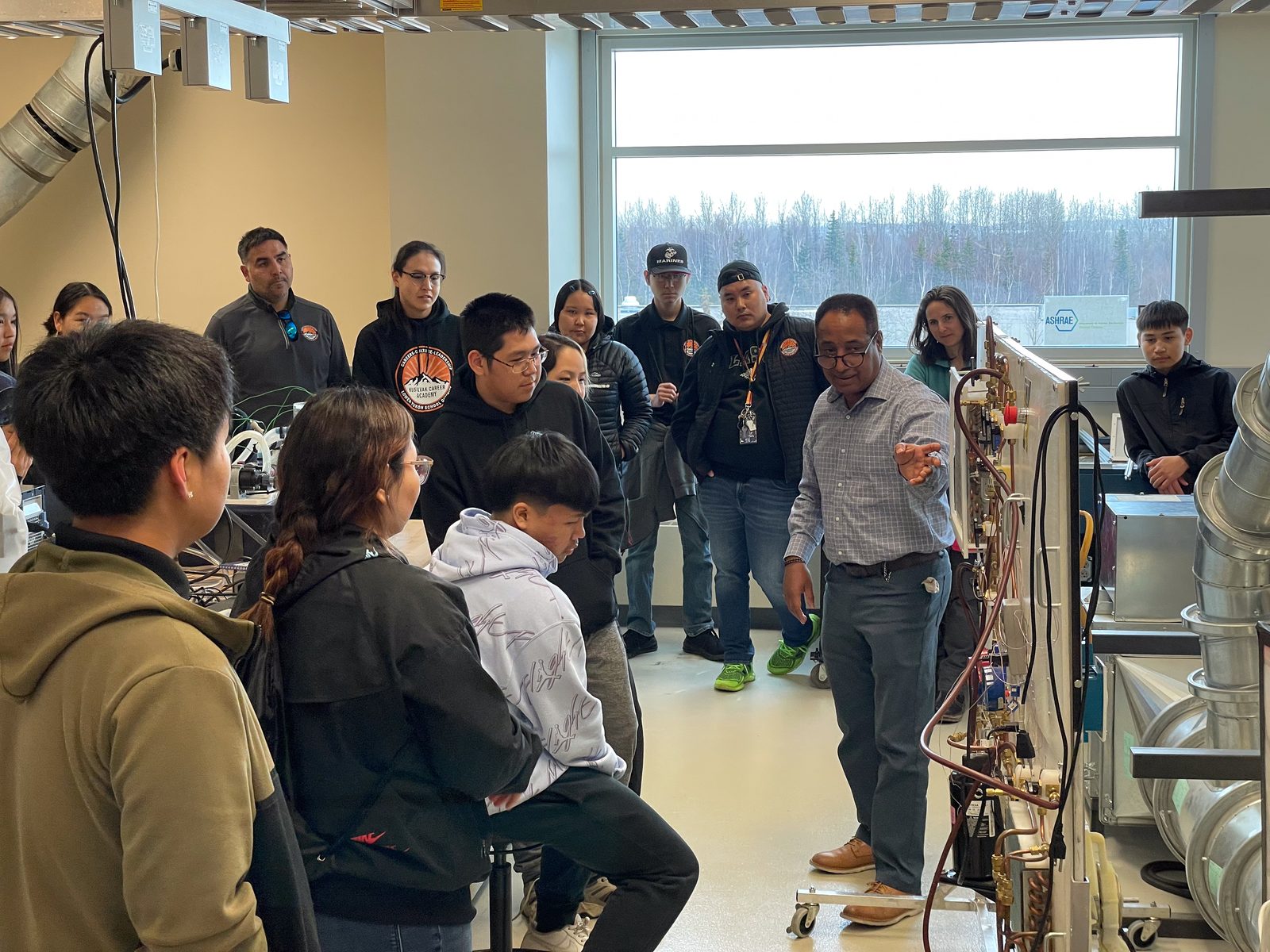
Professor Getu Hailu, from University of Alaska Anchorage’s Department of Mechanical Engineering, shows high school students different components and equipment in the UAA HVAC Lab. Photo: Chris McConnell/REAP
The Opportunity Analysis largely focuses on clean energy postsecondary career and technical education (CTE) opportunities, including incumbent worker training and professional development opportunities. Informational interviews for the report were conducted with employers, funders, workers, postsecondary training providers, and regional representatives involved in energy projects. REAP’s Gap Analysis of Alaska’s Clean Energy Education & Training Opportunities (McConnell, 2019) took a broader approach, however, and included sections on K-12, CTE, and university programs and pathways into clean energy careers. Future workforce development research efforts would benefit from further qualitative research and insight from K-12 and university teachers and administrators involved in energy education programs to give a holistic picture of challenges and opportunities within the full education system.
Staying up-to-date on Alaska’s clean energy workforce data, including overall and subcategory job changes, employer hiring experiences, and wage differentials, is invaluable. Not only can this data direct workforce development efforts and partnerships toward the highest need positions, but it also communicates the value of Alaska’s clean energy sector, employers, and workers to industry, state, and federal partners. Existing sources like DOE’s USEER and the AKDOLWD’s Nonresident Worker Report and Jobs Forecast are key sources of overarching workforce data, but are not readily informative for local clean energy workforce measurements and trends. The Opportunity Analysis appendix and attachment documents lay out the data worksheets and methodology used to define and chart clean energy workforce trends in Alaska from 2022–2024. Future research initiatives could apply this model to subsequent publications, starting with the recently released 2026 USEER, to generate a deeper understanding of Alaska’s clean energy workforce opportunities and trends over time.
From there, expanding this analysis to include Alaska-specific data from more sources, like state-level AKDOWLD research and analysis efforts, could surface additional insights to inform industry investment and augment workforce development efforts in Alaska’s clean energy space. A first step here could be working with AKDOLWD to include more clean energy jobs in state-level projections and their other research and analysis efforts so that this data is publicly available and accessible going forward.
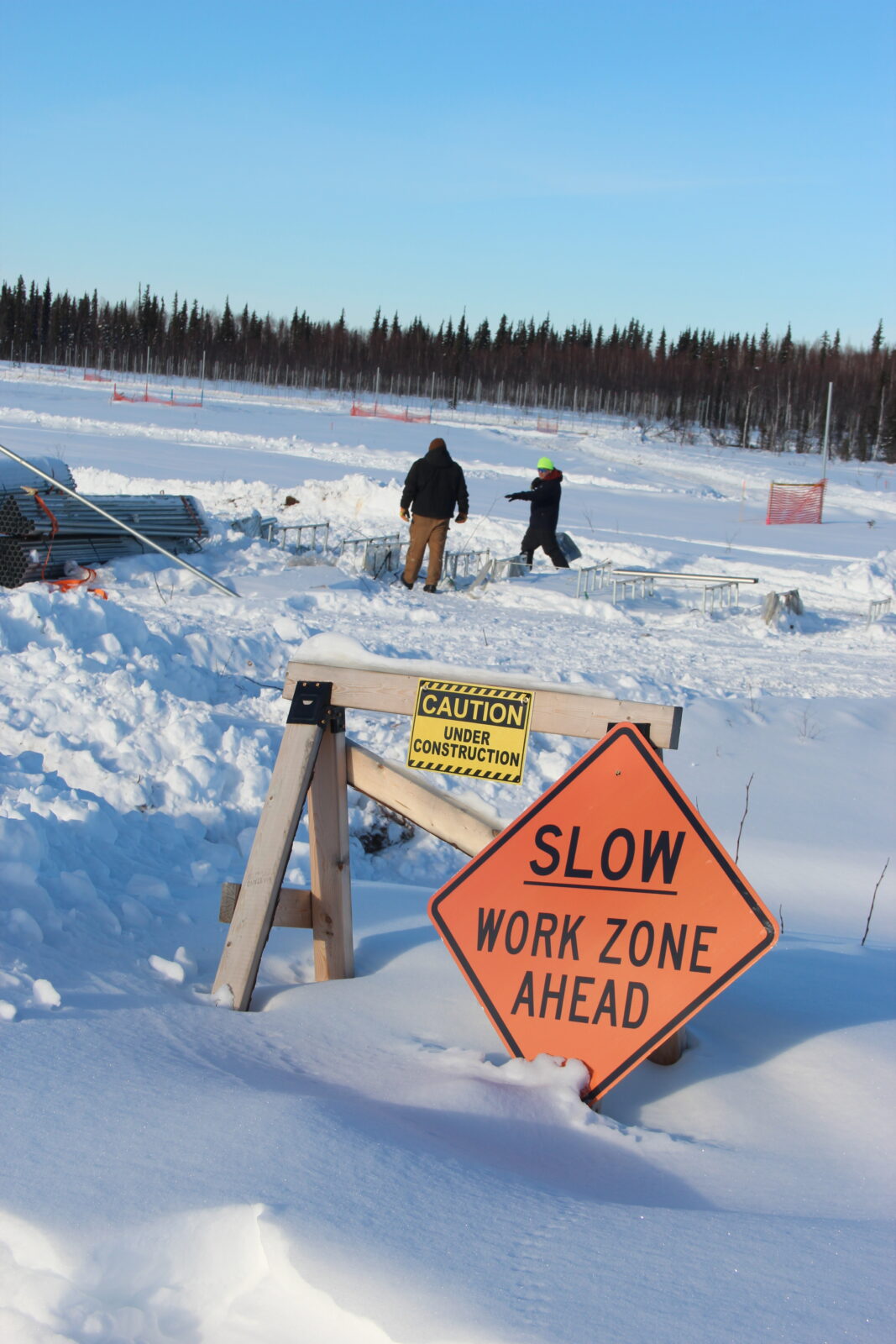
A solar farm worksite in Galena, Alaska. Photo: Jade Powell/REAP
While continuing to analyze clean energy workforce data trends and conduct new qualitative research, REAP is also doing the work of bringing many of the strategies in the Opportunity Analysis to life. Some of the most actionable, near-term priorities include connecting training providers with employers, elevating local practitioners as instructors and mentors, and increasing career awareness and exploration opportunities.
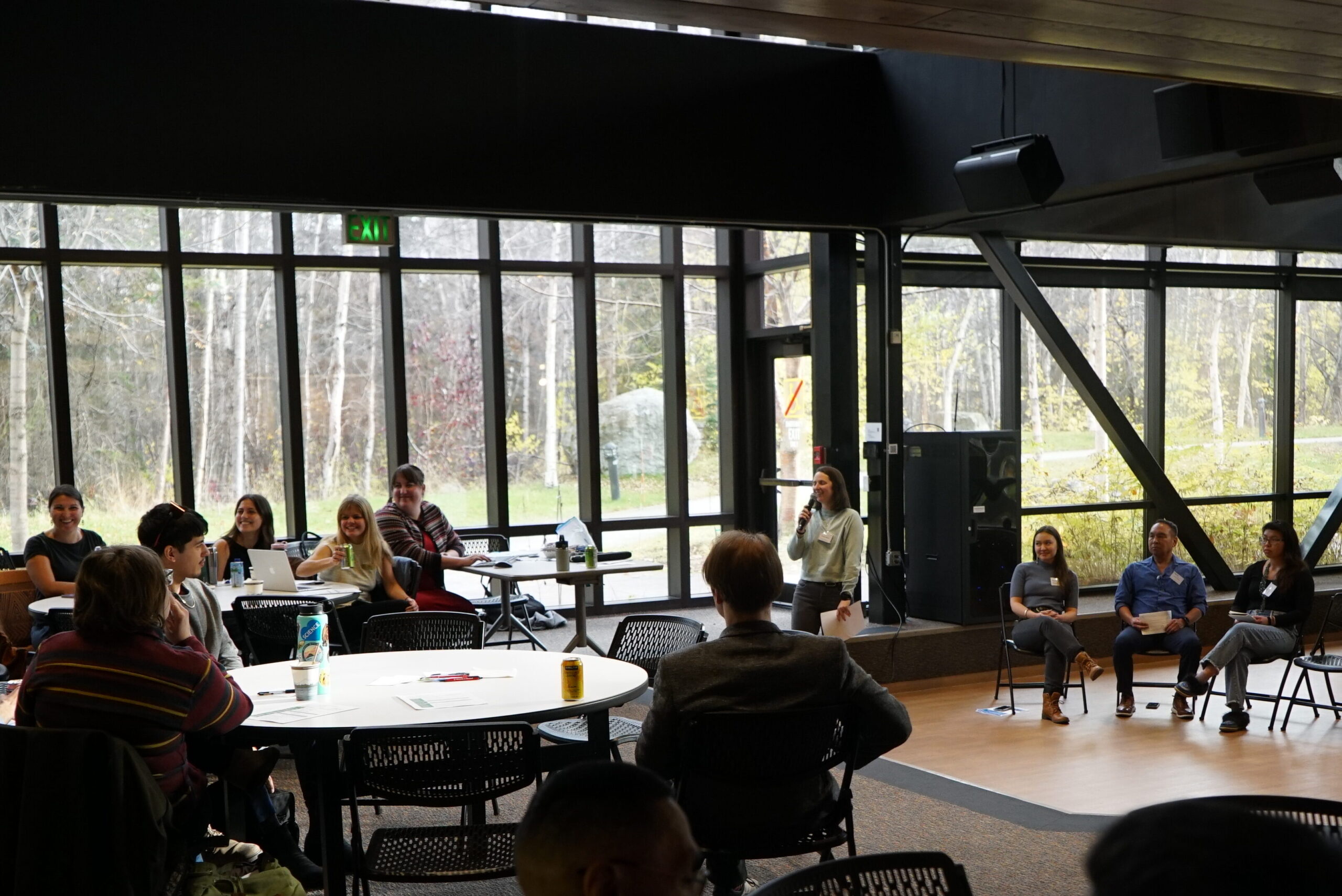
ANEEE Program Manager Jenny Starrs facilitates an energy workforce development panel. Photo: Donovan Russoniello/REAP
REAP’s Alaska Network for Energy Education and Employment (ANEEE) facilitates the Alaska Energy Training Group as a community of practice for energy trainers, employers, and other workforce development professionals to connect, brainstorm, and collaborate. Topical quarterly meetings feature presenters from across the state and time for attendees to ask questions and share updates. Meeting presentations were part of the research process for the Opportunity Analysis, and can seed inspiration and new partnerships to better support and grow the state’s clean energy workers.
REAP’s training coordination program, People in Power (PIP), works with independent electric utilities to provide training in key operations, clerical, management, and governance skills. PIP training efforts are responsive to individual utility and staff needs, and our team often partners with local, in-region practitioners to design and deliver hands-on assistance in topics like PCE reporting, Quickbooks management, preventative diesel generator maintenance, ratesetting and long-term financial planning, and partnerships with independent power producers. While usually tailored to independent utilities participating in one of the program’s cohorts, PIP is offering a free public training in utility PCE reporting and rate design after the 2026 Alaska Rural Energy Conference.
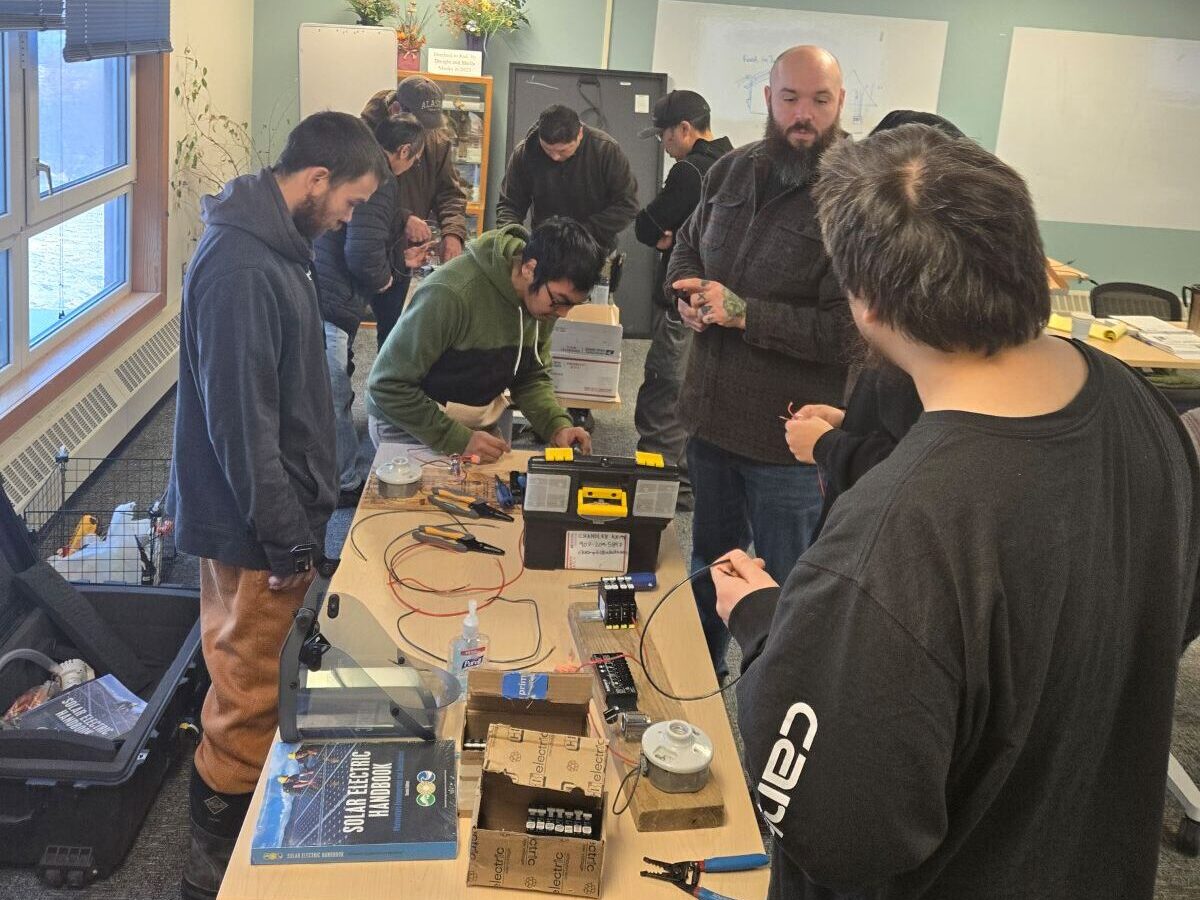
Staff from utilities participating in PIP attended a solar installation training in Bethel. Photo: Jacob Ivanoff

REAP Educator Tyler Katzmar mock-interviews a high school student from the Lower Yukon School District. Photo: Donovan Russionello/REAP
REAP also develops, teaches, and facilitates impactful K-12 energy education and career exploration opportunities. As part of our longstanding AK Energy Smart (AKES) energy efficiency partnership with Alaska Housing Finance Corporation, our team of four educators trains elementary and secondary teachers in how to deliver the AKES place-based energy literacy curriculum, plus teaches more than 5,000 students in classrooms, camps, and community settings annually. REAP also hosts two statewide energy competitions, the Power Pledge Challenge and Clean Energy Olympics. And perhaps most excitingly, we are growing dual-credit secondary education partnerships with the University of Alaska Fairbanks Bristol Bay Campus’s Sustainable Energy Occupational Endorsement program and school districts across the state to increase awareness and opportunity to pursue clean energy career pathways.
As a direct provider of energy education to thousands of students each year, a coordinator for proactive electric utility training, a regional partner for delivering energy technical assistance projects in rural and remote communities, and the convener of the Alaska Energy Training Group, REAP is positioned to translate many of the Opportunity Analysis findings into action. But we can’t do it alone. Partnerships bring these priorities and strategies to life.
Growing Alaska’s pool of qualified energy workers requires sustained, coordinated effort across training providers, employers, Tribal organizations, state agencies, and communities. Addressing the labor shortages and challenges explored in the Opportunity Analysis means investing simultaneously in entry points and advancement pathways, in rural remote communities and Railbelt cities, and in both short-term stopgaps and long-term structural change. No single partner can do this alone, and there is no silver bullet. But the collaborative strategies identified in the Opportunity Analysis can meaningfully move Alaska toward a future where more clean energy infrastructure is built and maintained, all by a skilled, homegrown workforce.
This is the end of our blog post series, but it’s only the beginning of the conversation. To stay engaged:
Alaska’s clean energy industry faces significant workforce challenges, influenced by statewide difficulties as well as industry-specific issues. And an insufficient local energy workforce severely impacts economic development across the state. High energy costs, environmental degradation, unreliable service, and long-duration power outages have cascading negative effects on vital dual-use infrastructure, community services, economic opportunities, and individual livelihoods. As interest and urgency in clean energy workforce development grows, REAP’s recent workforce analysis, Powering Alaska’s Future: Opportunity Analysis of Clean Energy Workforce Challenges and Potential Solutions, examines the most impactful and effective pathways to developing and supporting more homegrown energy workers.
For this third edition in our four-part series expanding on findings from the Opportunity Analysis, we turn to the leading strategies for accelerating clean energy workforce growth, and some of the efforts already making headway throughout the state (Chapter 3, p. 30). Our last blog post in this series discussed five overarching challenges slowing down workforce recruitment, retention, and training across the state, and our first installment shared the current state of Alaska’s clean energy workforce and the highest-need clean energy occupations. Our fourth and final blog post in this series will share future research possibilities and REAP’s workforce development priorities moving forward.
Interviewees and Alaska Energy Training Group participants described a range of strategies to overcome these challenges, with varying timelines, impacts, and partners. The following recommendations emerged as five approaches that could have the greatest impact on accelerating clean energy workforce development across the state. Many of these strategies address multiple challenges and can be used together for maximum impact.
Sources shared ideas for various regional actions to overcome high infrastructure costs, limited training access, and rural recruitment and retention difficulties (p. 30), including:
In Unalaska, electrical and telecommunications service provider OptimERA has a long-term contract with the city-run local electric utility to provide linemen. The arrangement, which grew out of the city’s persistent challenges recruiting and retaining linemen, allowed OptimERA to offer more attractive rotational schedules and to staff a growing apprenticeship program. “If you want really seasoned, educated people, you have to start somewhere,” said OptimERA Chief Operating Officer Matthew Scott.
If each community works as an island, costs pile up. If you don’t build capacity locally and you can’t take care of your own problems, you’re going to get left behind.
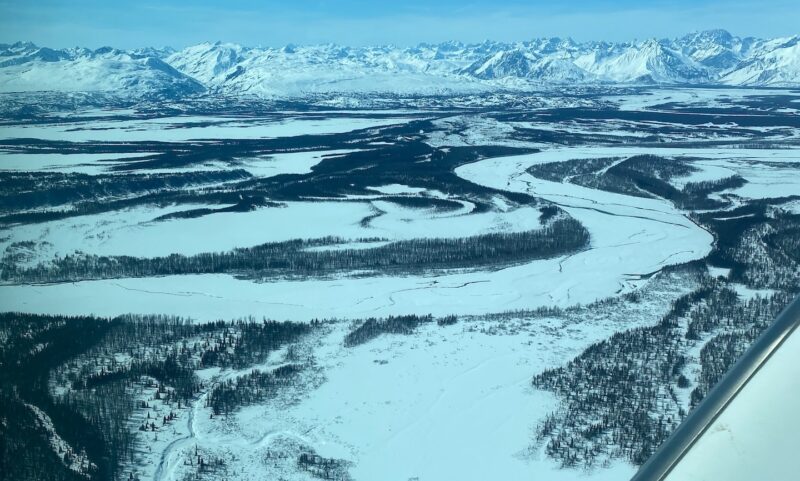
Wintertime in Southwestern Alaska’s Lake and Peninsula Borough. Photo: Jenny Starrs/REAP
Generic classes don’t always go well. The most effective thing is to sit next to a utility clerk and go through their file cabinets with them, teach them how to do annual reports, including backup, how to set customer rates based on expenses, and create a list of what and when to submit all required paperwork.
Multiple interviewees suggested that adding a range of work-based training methods could increase access to training and overcome instructor shortages and geographic limitations better than short-term group training programs and intensives (p. 32). Their ideas and initiatives included:
Remote Hands launched in the spring of 2025 to provide a platform for connecting technicians in rural areas of Alaska with contracted work opportunities. The platform marries local training opportunities and credentials with local employment opportunities that range from paperwork assistance to installing Starlink terminals. “It helps keep talent in communities and saves outside entities money,” said Gabe Low, Remote Hands Founder. There are plenty of potential challenges and pitfalls for the new endeavor, including local employee retention, work verification, and compensation structures, but the company is moving quickly to cement partnerships with big infrastructure projects and funders and recruit local talent to test out their model.
Encouraging closer communication and collaboration between regional training centers, school districts, unions, trade associations, state agencies, individual instructors, and employers was put forth as the central path to combatting instructor shortages and increasing training access around the state (p. 34). The avenues suggested for fostering these working relationships included:
The University of Alaska Fairbanks’ Bristol Bay Campus (UAF BBC) launched a “train-the-trainer” initiative to boost the number of solar installation training professionals in Alaska in the spring of 2023. By casting a wide net, covering tuition and attendance costs, and offering industry-friendly teaching schedules, the campus regularly offers a 2-credit Solar Electric Design and Installation class taught by its former trainees. “We invested a lot in getting people set up as instructors,” said Chandler Kemp, Assistant Professor of Sustainable Energy at UAF BBC and an energy efficiency consultant.
It takes a special skillset to become an educator. They have to want to give back a little bit.
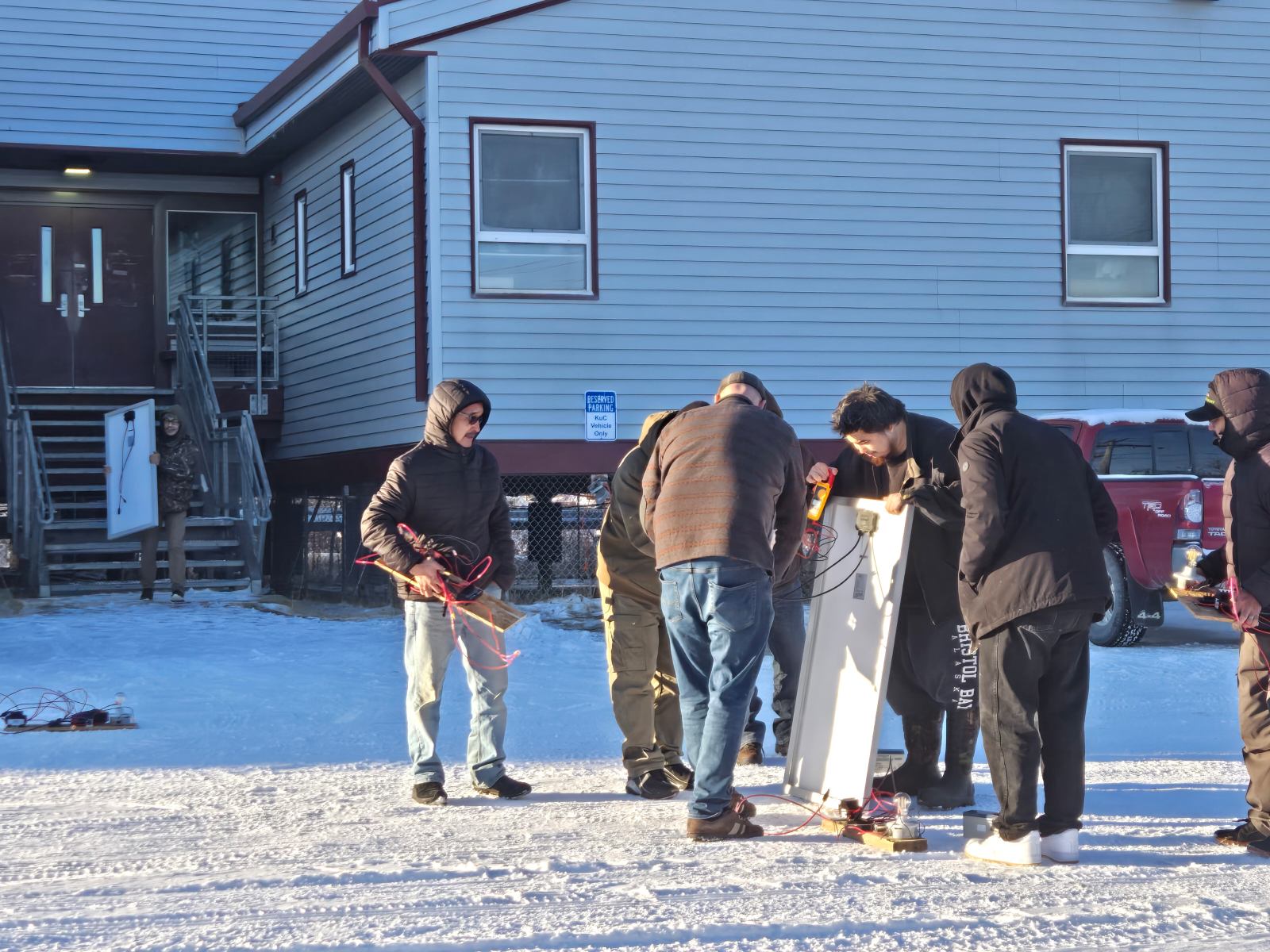
Instructors and students practice wiring a solar panel during a weeklong solar training in Bethel. Photo: Jacob Ivanoff
You have to build the understanding of what energy means for businesses and homes to build demand.
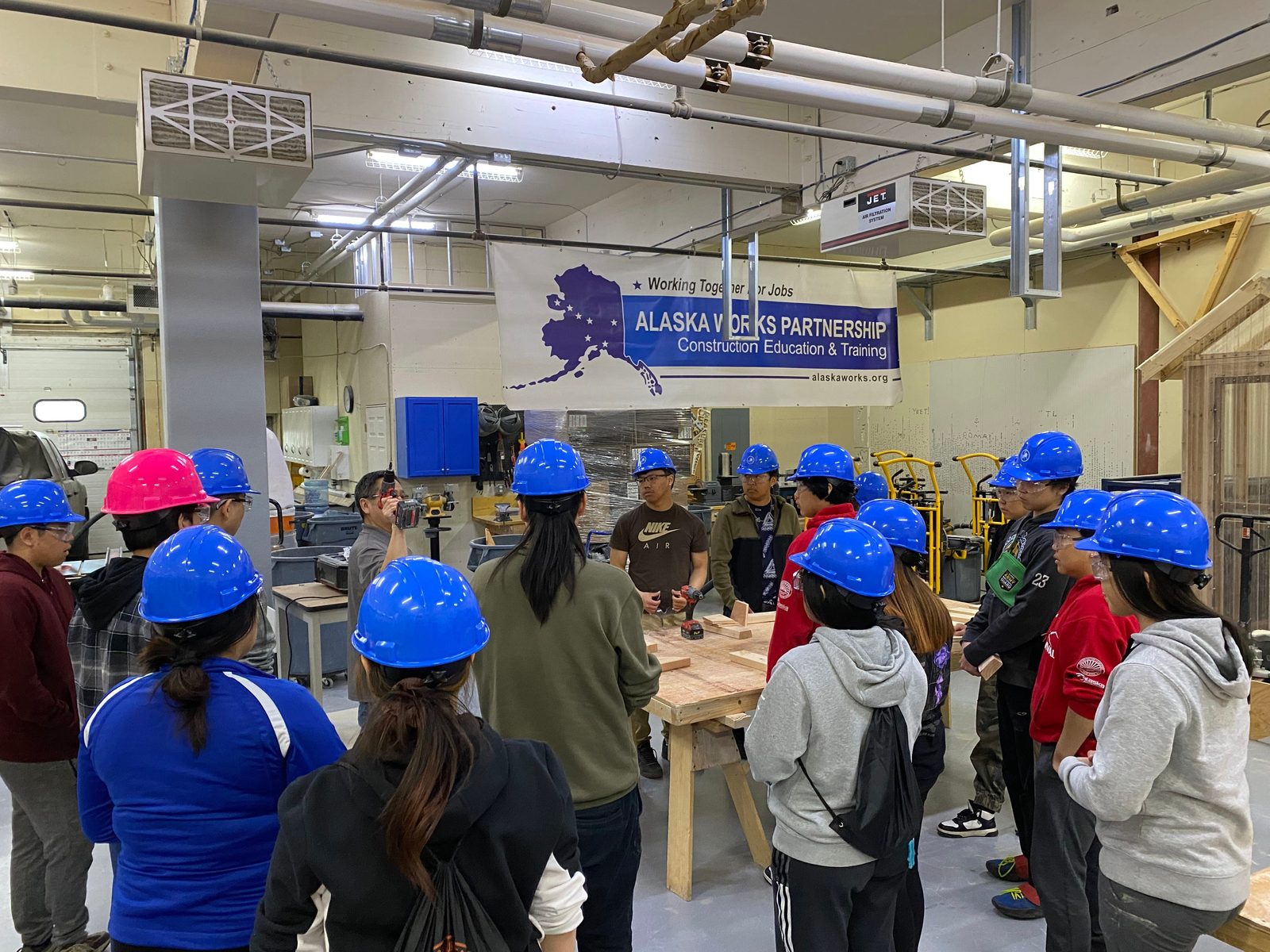
An Alaska Works Partnership carpentry instructor demonstrates how to safely use power tools to a group of high school students from the Lower Yukon School District’s Kusilvak Career Academy. Photo: Jenny Starrs/REAP
Education was mentioned as a pathway to grow the future clean energy workforce, raise awareness and respect for essential energy workers, and build demand and buy-in for clean energy infrastructure (p. 36). Twelve interviewees and multiple Alaska Energy Training Group meetings raised this strategy, with their specific ideas including:
Alaska Works Partnership (AWP) has delivered introductory training and pre-apprenticeships to Alaskans across the state for the past 30 years. Their work is critical for energy efficiency careers like weatherization, building maintenance and management, and construction. They pair foundational building trades training with individualized career counseling and application assistance. “We want to help people find the right fit,” said Tiffany Caudle, AWP’s longtime training coordinator.
Interviewees from both energy businesses and nonprofits pointed to the persistent need to develop a sustainable market for statewide clean energy projects and new ways to finance their operations and maintenance in rural areas (p. 39). Insulating projects from the boom-and-bust cycle of federally available funding and programs, as well as finding new funding for long-term operations and maintenance, were described as key to growing Alaska’s clean energy workforce and infrastructure. Fifteen interviewees discussed this topic, with many focusing on the long-term need to broaden demand and increase market adoption to sustain in-state expertise. The financing ideas mentioned were:
Alaska Heat Smart maintains a list of qualified contractors that work in coastal Southcentral and Southeast Alaska communities as part of its work on Accelerating Clean Energy Savings (ACES), a five-year heat pump rebate program that started in 2024. With applications growing, they received inquiries from HVAC companies and contractors in Anchorage, the Matanuska-Susitna Borough, and even the Pacific Northwest. As of May 2026, their contractor list included more than 30 entities.
Build the demand, and the workforce will come. We’re seeing this work with the ACES program, with at least one shop in Juneau adding staff and a new HVAC business opening its doors.
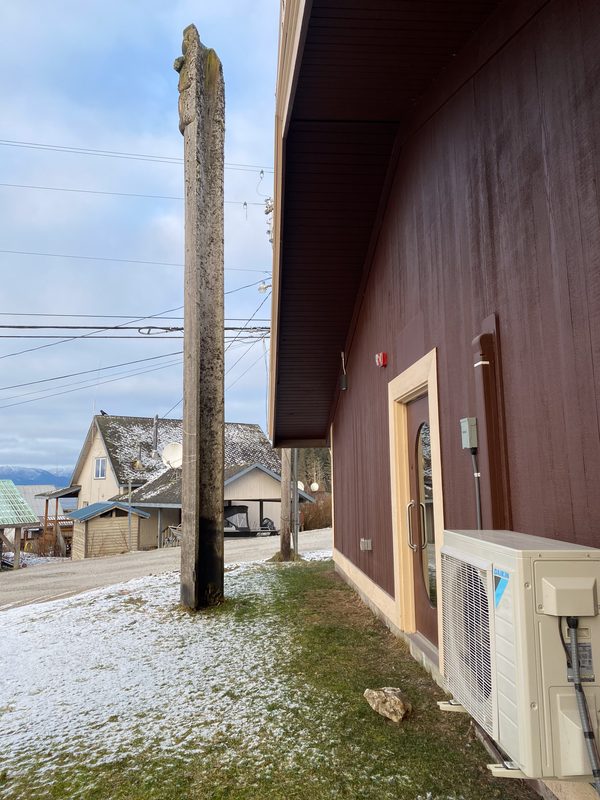
A heat pump installed in the Southeast Alaska community of Angoon. Photo: Jenny Starrs/REAP
Implementing these strategies takes creativity, collaboration, and perseverance. And while that can add complexity to getting initiatives up and running, it also makes them more resilient. Many of the efforts highlighted in this blog post and in the full Opportunity Analysis have weathered funding fluctuations and changing political winds to build lasting progress. In the final installment of this series, we will share conclusions from the year-long research process, including future research opportunities for the industry and future workforce development priorities at REAP.
As shared in the first installment of our four-part series highlighting findings from that report, Alaska experienced comparatively high clean energy job growth rates from 2022 to 2024, despite starting from a relatively low share of clean energy workers within its larger energy workforce. Within that growth, however, energy employers and partners shared persistent difficulties hiring and retaining staff, especially for the 15 in-demand positions laid out in that post.
Informed by more than 40 informational interviews, 10 Alaska Energy Training Group meetings, and a robust data and literature review, the Opportunity Analysis describes five overarching clean energy workforce challenges that are blocking progress for projects across the state (Chapter 2, p. 20).
As the second entry in our four-part series, this blog post shares top-level information about these shared roadblocks. Future editions will discuss promising strategies to combat these challenges and future research and workforce development priorities to continue pushing for clean energy workforce growth in the state.
Energy workers, employers, and trainers described many reasons for why it’s hard to recruit, retain, and train clean energy workers in Alaska. Their input highlighted five core shared issues that constrain the state’s clean energy labor market. Some of the identified obstacles are felt across sectors, with exacerbating factors or considerations specific to the clean energy workforce. And most of the challenges are closely tied together, as with many workforce and economic development issues.
Nineteen interviewees discussed this challenge (p. 20). The reasons mentioned for rural clean energy staff vacancy or turnover ranged widely, and included:
Being a power plant operator can be a thankless job.
The positions mentioned as most difficult to hire and retain in rural remote villages were bookkeeper and part-time power plant operator positions that require on-call work. In rural hub communities, the most difficult positions mentioned were any traveling technician roles, including line workers and diesel mechanics.
In 12 interviews, sources described the need for greater collaboration, funding, and personnel to plan and perform preventive maintenance, emergency repairs, and upgrades of rural energy infrastructure (p. 22).
Interviewees identified two main factors exacerbating the difficulty of maintaining and repairing rural clean energy infrastructure: the growth in long-term operation & maintenance expenses that comes with technological advancements and the difficulty rural organizations face in establishing and growing their savings with small ratepayer bases and the limitations of grant-funded infrastructure. The highest-demand positions were diesel mechanics or technicians, bookkeepers, electricians, line workers, and electrical engineers.
You’re reliant on outside vendors. That’s outside help you need to pay to make sure everything is maintained.
Fifteen interviewees discussed this workforce challenge (p. 23). They identified some cross-industry factors influencing the statewide expertise shortage, including:
They also mentioned two factors unique to the clean energy workforce: the smaller scale of clean energy projects in the state and a history of unpredictable government support. The positions highlighted were experienced project managers, engineers, line workers, analysts, management-level roles, and HVAC contractors. Energy auditors, especially traveling or regionally specific energy auditors, were mentioned as a potential future shortage.
How are we going to keep our workforce steady? Uncertainty is a bad thing at all levels … Shut [an industry] down for two years, and everybody leaves.
Having training in town on the equipment they’re using is most useful.
Twenty-one interviewees identified this as a key challenge (p. 25). Notable reasons include:
The factors emphasized as especially critical were remote training locations and a lack of wraparound or supportive services, like transportation assistance and childcare support.
Twelve interviewees described extreme difficulty finding and retaining experienced educators and instructors for energy-related career and technical education (CTE) courses and programs (p. 28). The factors most often cited as contributing to the clean energy instructor shortage were the difficulty of competing with industry opportunities and the aging educator population.
There haven’t been CTE folks developed in probably a quarter of a century. It’s hard to find the technical expertise to lead that. Folks with technical backgrounds can make a better income in industry.
These barriers are most acute and detrimental to workforce development in Alaska’s rural hub and remote areas, but sources shared stories of urban and statewide impacts as well. Workforce shortages and challenges experienced in more urban areas, like in Interior, Southcentral, and Southeast Alaska, often have direct effects on workforce availability in hub communities and remote villages. But each community and region also has its own unique workforce challenges and contributing factors, tied to its distinctive history, economy, and culture, that aren’t covered by this analysis’s statewide scope.
Identifying challenges and tracing them back to their root causes is important, but only as a step toward finding lasting solutions. Alaska’s communities are full of problem-solvers, and so alongside these gaps, interviewees also shared promising ways to creatively and collaboratively overcome these constraints to support Alaska’s clean energy workers.
Stay tuned for the third installment in this series, where we will dive into those strategies and some of the efforts already underway across the state.
Download the full report now by completing the form at the top of this post.
Headlines abound about Alaska’s dwindling workforce and migration losses. The state has faced a streak of net outmigration since 2012, with more people moving out of the state than moving in. The dip has been especially acute among working-age adults, fueling a record-high nonresident worker rate of 22.9% in 2024.
Against this challenging backdrop, REAP’s Alaska Network for Energy Education and Employment (ANEEE) spent the last year researching the clean energy-specific implications of this statewide trend. The resulting report, Powering Alaska’s Future: Opportunity Analysis of Clean Energy Workforce Challenges and Potential Solutions, draws on 43 informational interviews and 10 Alaska Energy Training Group meetings with training providers, utilities, businesses, workers, Tribal entities, state employees, local governments, nonprofits, and community groups, in addition to employment data from the U.S. Energy & Employment Report (USEER), a broad literature review, and REAP’s 2019 Gap Analysis of Alaska’s Clean Energy Education & Training Opportunities by Chris McConnell. The Opportunity Analysis was made possible with funding from the Office of Naval Research.
This blog post is the first in a four-part series highlighting key findings from the report. This installment lays the foundation by defining and putting numbers to Alaska’s clean energy workforce and in-demand careers. Subsequent posts will focus on clean energy workforce challenges, potential solutions, and future priorities, which are all laid out in more detail in the full report.
While hands-on renewable energy positions, such as wind turbine technicians and solar installers, are often the most visible clean energy jobs, clean energy careers are a larger share of the workforce than just positions in renewable generation technologies. This report defines the clean energy workforce as positions that support efforts to minimize energy waste (i.e., energy efficiency) and to generate, store, transmit, distribute, and use energy from renewable resources. Energy efficiency and renewable energy workers are employed within many different industries and sectors, including construction, manufacturing, utilities, transportation, government, and nonprofit organizations. Using a broad definition of the clean energy workforce recognizes the connections between different roles, skills, and industries, and their importance in advancing energy efficiency and renewable energy projects.
Applying this definition to 2022–2024 employment data from the 2023–2025 USEERs shows that 46.4% (12,882 jobs) of all direct energy positions in Alaska in 2024 were clean energy roles. This lags significantly behind the national percentage of clean energy jobs in the energy sector, as seen in Figure 1. Alaska’s clean energy share also trails cold-climate and remote or isolated peer states, but is comparable to other fossil-fuel-dependent states. Alaska’s 11.6% clean energy job growth over that time period, however, vastly outpaces most peer states’ clean energy job growth and national clean energy job growth. With approximately 1,330 new jobs in two years, Alaska’s clean energy workforce is growing faster than similar economies, despite starting from a lower base. Maine is the only peer state with a higher growth rate from 2022 to 2024, suggesting that further study and outreach to understand their workforce strategies could be beneficial. More information about the peer state comparison is included in the report’s Introduction (p. 10) and Appendix C (p. 53).
As seen in Figure 2, the largest and fastest-growing clean energy job category in Alaska during this time period was transmission & distribution (T&D), with broad growth in smart grid, microgrid, traditional T&D, and other grid modernization roles. All T&D subcategory jobs were considered clean in this analysis, due to grid infrastructure’s crucial role in renewable energy deployment. It is important to note, however, that T&D positions also support fossil fuel distribution. For more information about the specific job subcategories considered clean in this analysis, check out the Introduction (p. 9) and Appendix C (p. 53). The second largest clean energy job category was energy efficiency, which experienced marked growth in efficient appliance and lighting installation and traditional heating, ventilation, and cooling (HVAC) jobs. Electric power generation positions are the third largest clean energy job category, followed by motor vehicles, storage, and fuel positions, respectively.
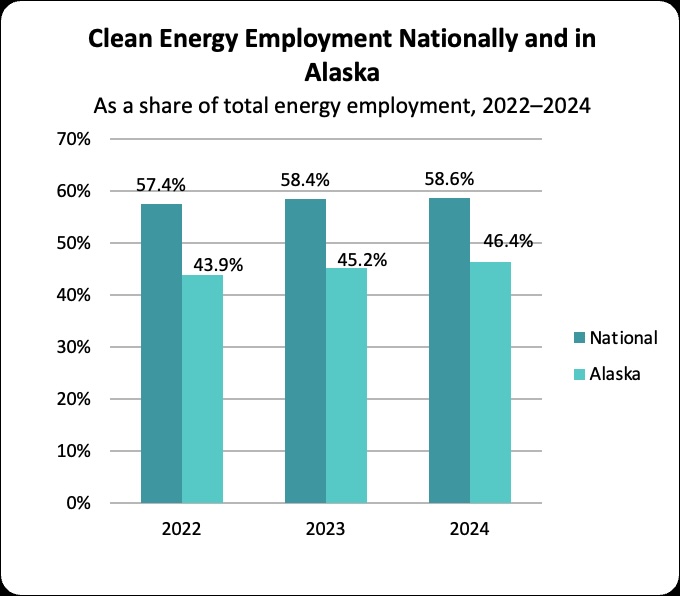
Figure 1: Clean Energy Employment Nationally and in Alaska, 2022–2024. Sources: 2023, 2024, and 2025 USEERs
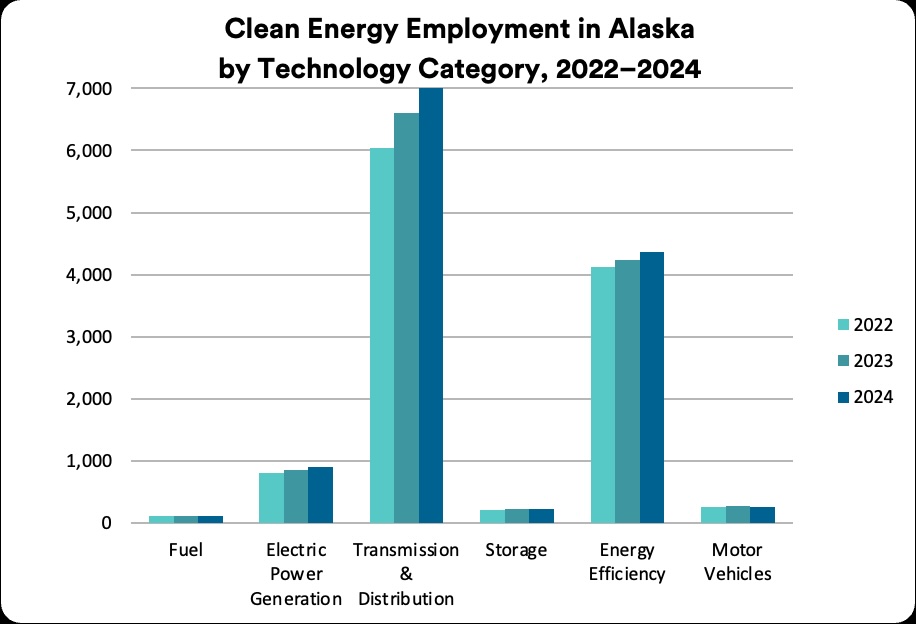
Figure 2: Clean Energy Employment in Alaska by Technology Category, 2022-2024. Sources: 2023, 2024, and 2025 USEERs.
Identifying the clean energy jobs with the highest demand and lowest supply is key to focusing efforts within Alaska’s tight labor market and is the subject of the first chapter of the Opportunity Analysis (p. 17). In informational interviews for this report, 60% of participants reported that hiring or retaining staff was difficult. Other employer surveys echo this sentiment: Nearly half (48.2%) of Alaska energy employers surveyed for the 2025 USEER survey reported hiring difficulty, while most others (47.1%) did not hire at all. Only 4.6% said hiring was “not at all difficult.”
When asked which positions were most difficult to fill and retain, interviewees identified 15 roles experiencing labor shortages, steep competition, or both. Pay, competition, and workforce size all contribute to these challenges. Table 1 shows the in-demand jobs identified in interviews, alongside wage data, employment numbers, and job growth projections from the U.S. Bureau of Labor Statistics.
Table 1: In-Demand Clean Energy Roles. Interviewees identified these occupations as either difficult to recruit for or retain. Wage, workforce size, and growth projection information is included for each in-demand role. Sources: Informational Interviews; BLS Occupational Employment and Wage Statistics, May 2024; and BLS Occupational Outlook Handbook.
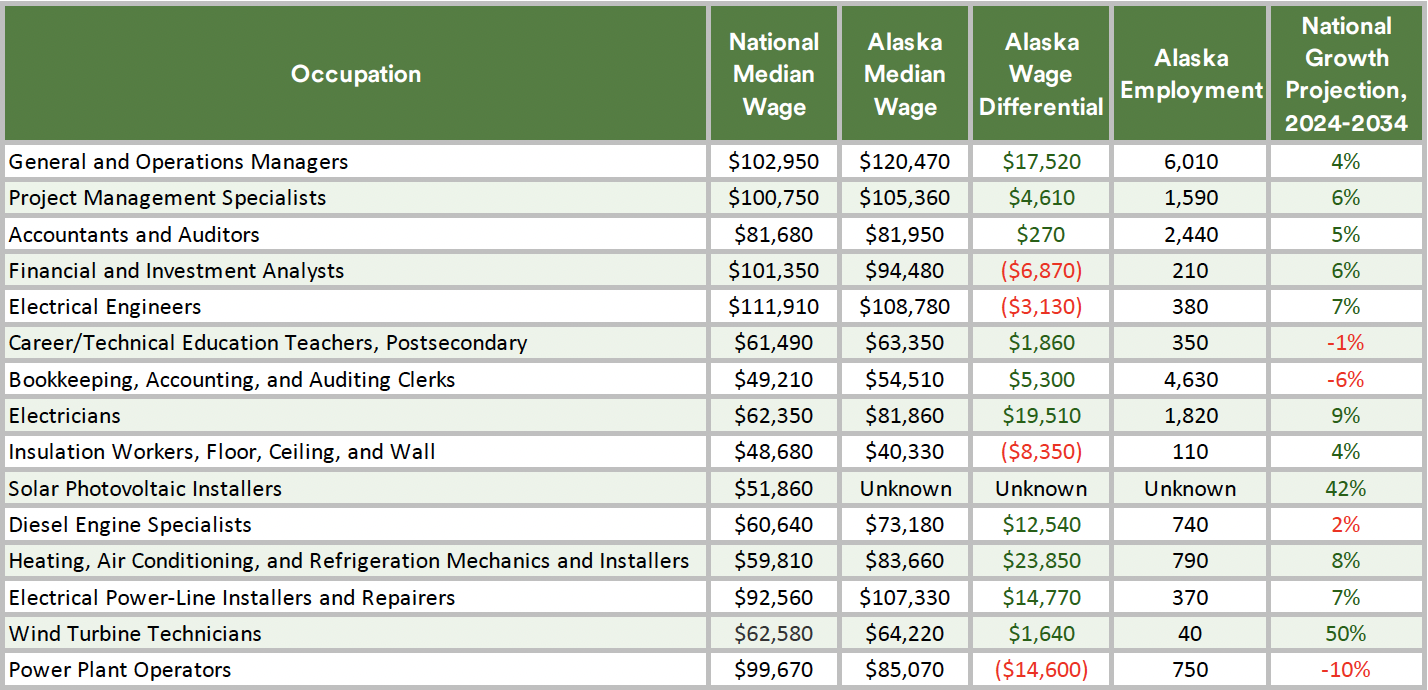
Note: The average projected growth rate across all occupations from 2024-2034 is 3%.
Interviewees identified a broad mix of construction trades and project planning and management occupations, with varying salary ranges, required work experience and education, and employment impacts. Jobs with high national growth projections, with wages near or below the national median, and that serve rural remote or hub communities are likely to be the most challenging to staff, and where the most urgent and innovative solutions are needed.
The full Opportunity Analysis is available to download for free by completing the form at the top of this post and following the resulting download link. REAP is excited to share actionable takeaways from this report and work with partners across the state to promote and adopt solutions that accelerate the development of Alaska’s clean energy workforce. With that in mind, REAP hosted a 2026 Spring Energy Speaker Series webinar that covered key findings from the Opportunity Analysis with a presentation from REAP’s ANEEE Program Manager, Jenny Starrs, as well as a panel discussion with statewide workforce development practitioners. Please feel free to watch and share the recording of that discussion with others you know who are interested in this important topic. And stay tuned for next week’s entry in this four-part series, which will focus on fleshing out five workforce challenges blocking clean energy progress across the state.

Seniors compete in Native Youth Olympics (Photo: Ana McMenamin)
Each year, S.N.A.P. Meet returns to take over the Newhalen School for a week in April, bringing together students from all over the Lake and Peninsula School District. Newhalen School Principal, Ed Lester, has been a key leader in making this event come together, with the help of other dedicated school district staff. The Newhalen School becomes abuzz with students, school staff, chaperones, and partnering organizations like REAP. Most everyone sleeps on the floor of the school, eating meals together in the gym, moving through activity sessions during the day and cheering on Native Youth Olympics (NYO) each night. 2026 marks the third year in a row that REAP has been invited to participate in the festivities. For more background on the annual gathering and REAP’s prior participation, check out Jenny Starrs’ excellent piece on her 2024 trip.
It feels really special to be a part of the atmosphere where students and adults are excited to be together to envision a thriving future for students and their communities. AlexAnna Salmon and the language warriors team from Bristol Bay Native Corporation and Bristol Bay Foundation led cultural and Dena’ina language activities with students. The connection building among students that comes from participating in those activities, NYO and mental health awareness sessions builds a positive momentum throughout the week. It’s this energy that feels almost tangible in the school, the hope that can be felt when people come together with a shared mission. The camaraderie isn’t just being built among students; the adults who coordinate to host this event share in their care for the students. REAP presented alongside many other organizations including Ilisagvik College about post-secondary and career opportunities for high schoolers. Seeing familiar faces and meeting other community centered organizations fostered gratitude for partnerships.

Students of all ages took part in the activities at the career fair including solar panel circuitry and thermal transfer testing. (Photo: Ana McMenamin)

High schoolers listening to Rob in the INNEC powerhouse. (Photo: Ana McMenamin)
In the spirit of collaboration, Natalie Kiley-Bergen from the Lake & Pen Borough joined REAP at the S.N.A.P. Meet career fair and for a tour of the Newhalen powerplant. Together we led students through hands-on activities demonstrating insulation, heat transfer and solar energy production. For younger students these short interactive lessons foster curiosity about energy sources and saving. But for older students this career fair event exposes them to real world opportunities and pathways beyond high school. “Engagement of students and early career professionals across Alaska in the various avenues that one can take in the energy section is essential to ensuring a vibrant workforce,” Natalie said after the tour. Getting a tour from Rob, the lead operator at the INNEC Powerplant in Newhalen, high school students got to hear about what experience and training it takes to have that job someday. While Newhalen is usually powered by Tazimina Falls hydroelectric project, they have a few diesel generators for back-up when needed, which also have to be serviced by Rob and his team. When asked about workforce development in the region Natalie said, “capable people who have responsibility, are asking who will replace them when they want to move on.” People like Rob want to inspire the next generation of utility employees, which starts with tours like this.
REAP teaches about energy efficiency and renewable energy careers but it is the human connection and energy of community gatherings that propels our work forward. Our efforts across the state in classrooms, career fairs, community meetings, and state legislature would be much harder and less meaningful without dedicated leaders in all of those spaces inviting us in. So much of REAP’s work is coalition building, multiplying the mind power of the collective to fuel the discussion of energy. S.N.A.P. Meet is a representation of what that sort of community building looks like for a school district. This work also wouldn’t be possible without partnerships and funding, supported by Natalie’s statement that, “REAP adds capacity to the workforce development priorities of the Lake & Pen Utility Collaborative.” REAP’s involvement with S.N.A.P. Meet was funded by Alaska Community Foundation’s Vocational Fund for Alaska’s Future building students’ career awareness, employability, and cross-sector skills for responsible natural resource development.

Students engaged at the REAP table during the S.N.A.P. meet career fair. (Photo: Natalie Kiley-Bergen)
Staff at Alaska’s rural electric utilities work hard to keep their power on and communities running through difficult conditions 365 days a year. Keeping up with preventive maintenance and reporting requirements alone is often a huge task, much less integrating new renewable energy technologies into their systems. One strategy gaining momentum across the state is for regional partners and entities to step up and provide a range of supportive services to small utilities, making their work easier, more effective, and more affordable.
The Alaska Energy Training Group kicked off its first meeting of 2026 with presentations and discussion about two regionalized energy support efforts: the Renewable Energy Performance Optimization Program (REPOP) model in the Northwest Arctic Borough and the newly established Lake and Peninsula Borough Utility Collaborative (LPBUC). Both initiatives set out with the shared recognition that planning, building, and maintaining energy projects in Alaska’s rural communities could be more effective and efficient if they banded together to achieve economies of scale and more locally relevant support. But they have taken unique paths to establish structures and staff to provide additional support to utilities in their region.
On March 3, 2026, the Alaska Energy Training Group gathered for presentations and discussions about regionalized energy support services, models, and benefits. Key advice shared included the importance of having an accessible contact to manage assistance, issues, and communication between manufacturers, agencies, and operators, and the need to build trust and buy-in among local participants for long-term sustainability.
Kate Modler, a project manager with DeerStone Consulting, began by describing REPOP. The program supports Tribes in the Northwest Arctic Borough who are setting up solar independent power producers (IPPs). REPOP helps monitor performance, assist local operators, and provide ongoing training and support.
The “REPOP web of support”—illustrated in Modler’s presentation—has the local community operator in the center. That operator is primarily supported by the Borough’s REPOP Coordinator, Shauntai Shroyer; DeerStone Consulting; the Borough’s finance team; and the Tribal administration in the second tier. That support tier is followed by technology manufacturers and contractors that provide specialized assistance in the outer ring. This web highlights the many partners and layers that rural utilities need for successful operations, and the reason why coordination and shared support services are so vital.
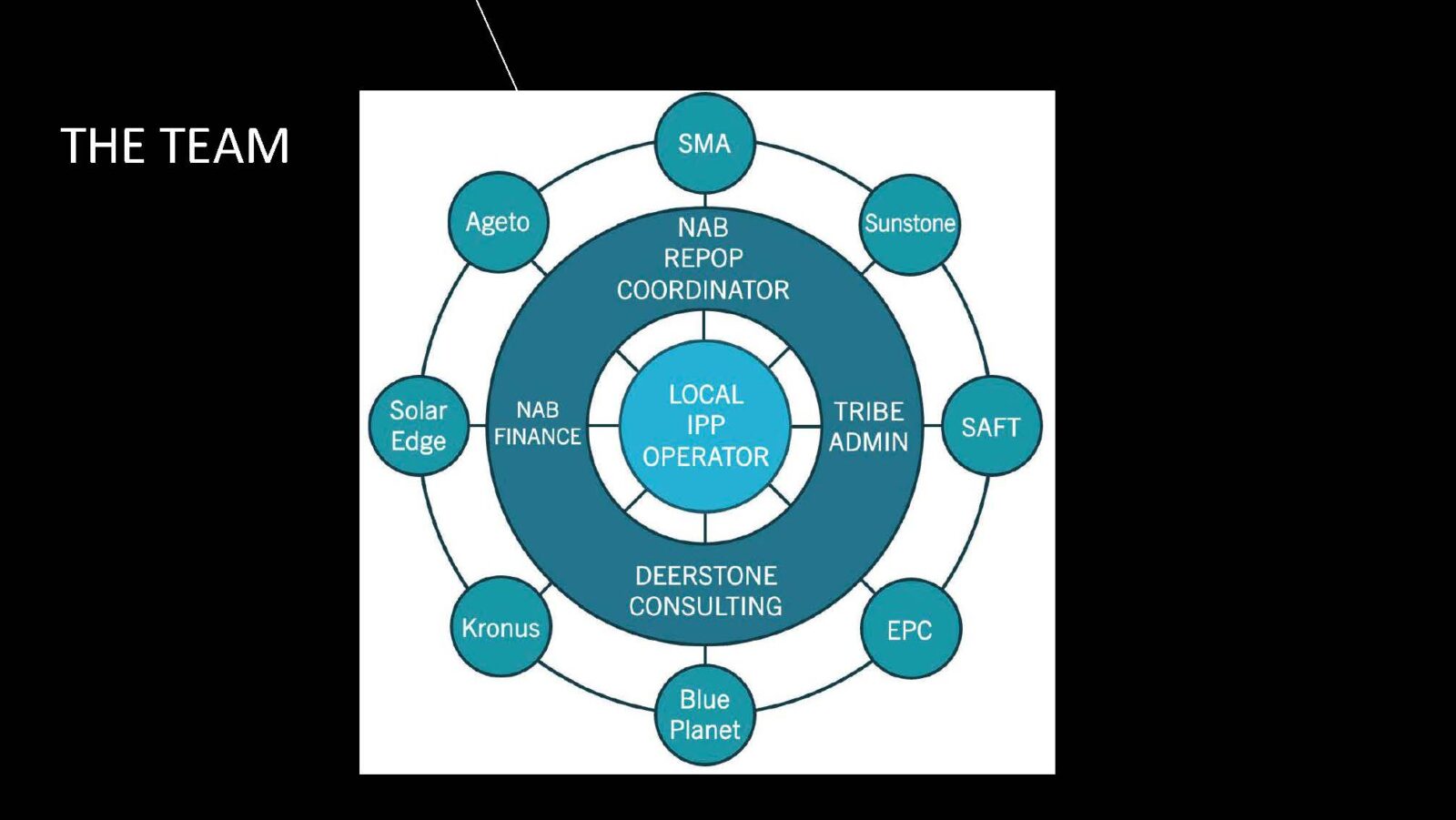
The “REPOP web” in Modler’s presentation shows the multiple tiers of support needed to maintain and optimize rural energy infrastructure.
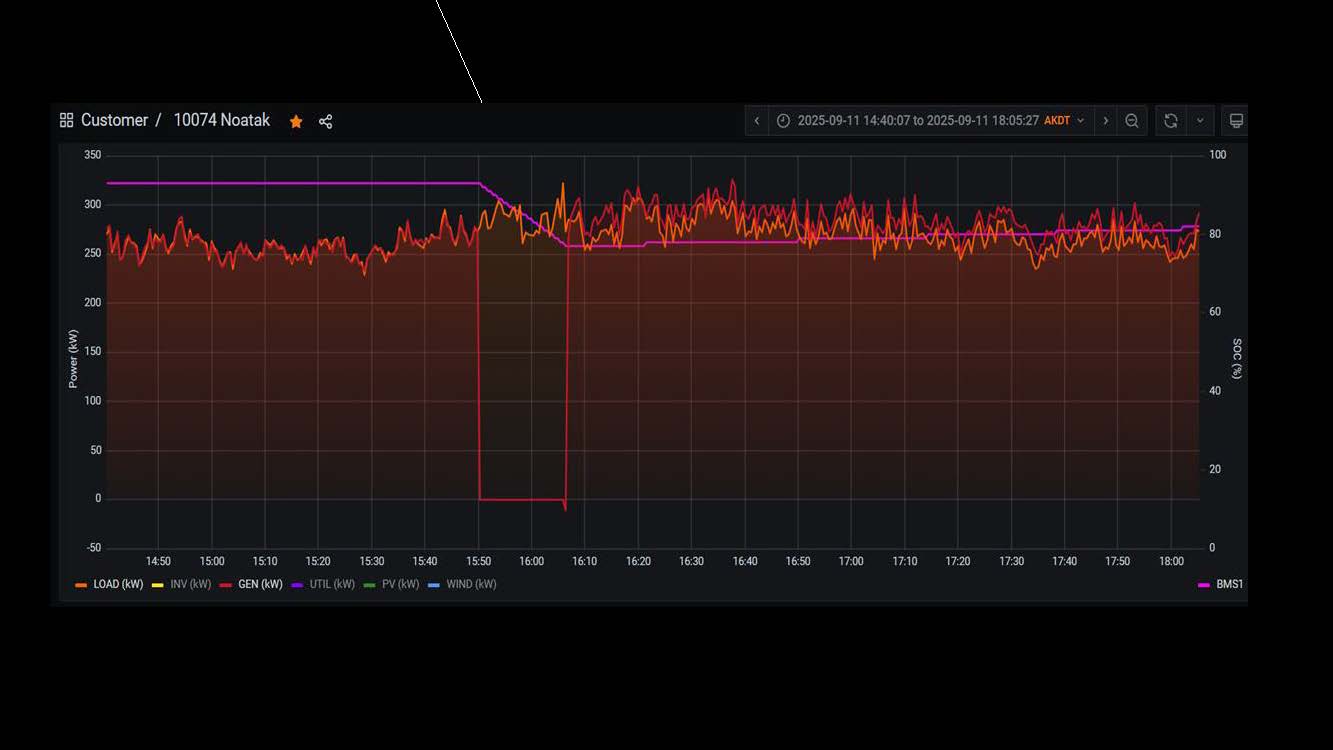
This image shows Noatak’s energy supply during the outage. The red line depicts the diesel generator’s output, while the pink shows the battery energy storage system.
Modler also discussed solar generation and operations trends from two communities, Shungnak and Noatak. She shared that Noatak’s solar site transformers are currently being used by a temporary power plant—not generating solar power, but instead serving a broader need amid erosion and climate change.
The communities supported by REPOP also have access to real-time system data to help optimize operations and document the impact of solar-battery energy storage systems on rural energy reliability and cost. For example, Modler shared data from an instance where Noatak’s diesel generator unexpectedly went offline and their battery energy storage system instantaneously kicked in to prevent an outage. That gave Modler and the local operator time to get the generator back online without the community losing power.
The Tribal IPPs in the Borough are already generating revenue, with planning underway to determine how to direct those funds in the future. When analyzing expenses across REPOP communities, nearly 50% of each system’s lifetime expenses are dedicated to maintenance costs. The remaining expenditures were split among insurance, battery-building station service, and IPP operator wages.
Natalie Kiley-Bergen, the Lake and Peninsula Borough’s Utility Collaborative Manager, and Nathan Hill, the Lake and Peninsula Borough Manager, presented next on their efforts to form a regional collaborative for the 13 electric utilities serving the Borough’s 16 communities. The effort dates back more than a decade, and is getting underway this year thanks to funding provided by the DOE Grid Resilience 40101(d) consortium; support provided by consortium partners Denali Commission, Bristol Bay Native Corporation, Alaska Venture Fund, DeerStone Consulting, and Iguigig Village Council; and a BIA Tribal Energy Development Capacity grant.
The Borough’s role is to provide administrative and project management support for the collaborative, with the goals of:
They hope to foster relationships with and between utilities, providing a reliable point of contact and a network of support.
By working together, this consortium plans to develop projects that improve community and regional resilience and achieve economies of scale. Eligible projects include microgrid integration and battery storage, generator upgrades (but not new construction), resilience projects, fuel storage upgrades, utility workforce training and maintenance contracts, and building management or SCADA enhancements. The funding extends through 2032, giving the collaborative runway to manage projects and deliver value to the Borough’s utilities. Their eventual goal is to become self-sustaining through utility participation and new funding opportunities, with high hopes for maximizing their impact with best practices and contractor recommendations from around the state.
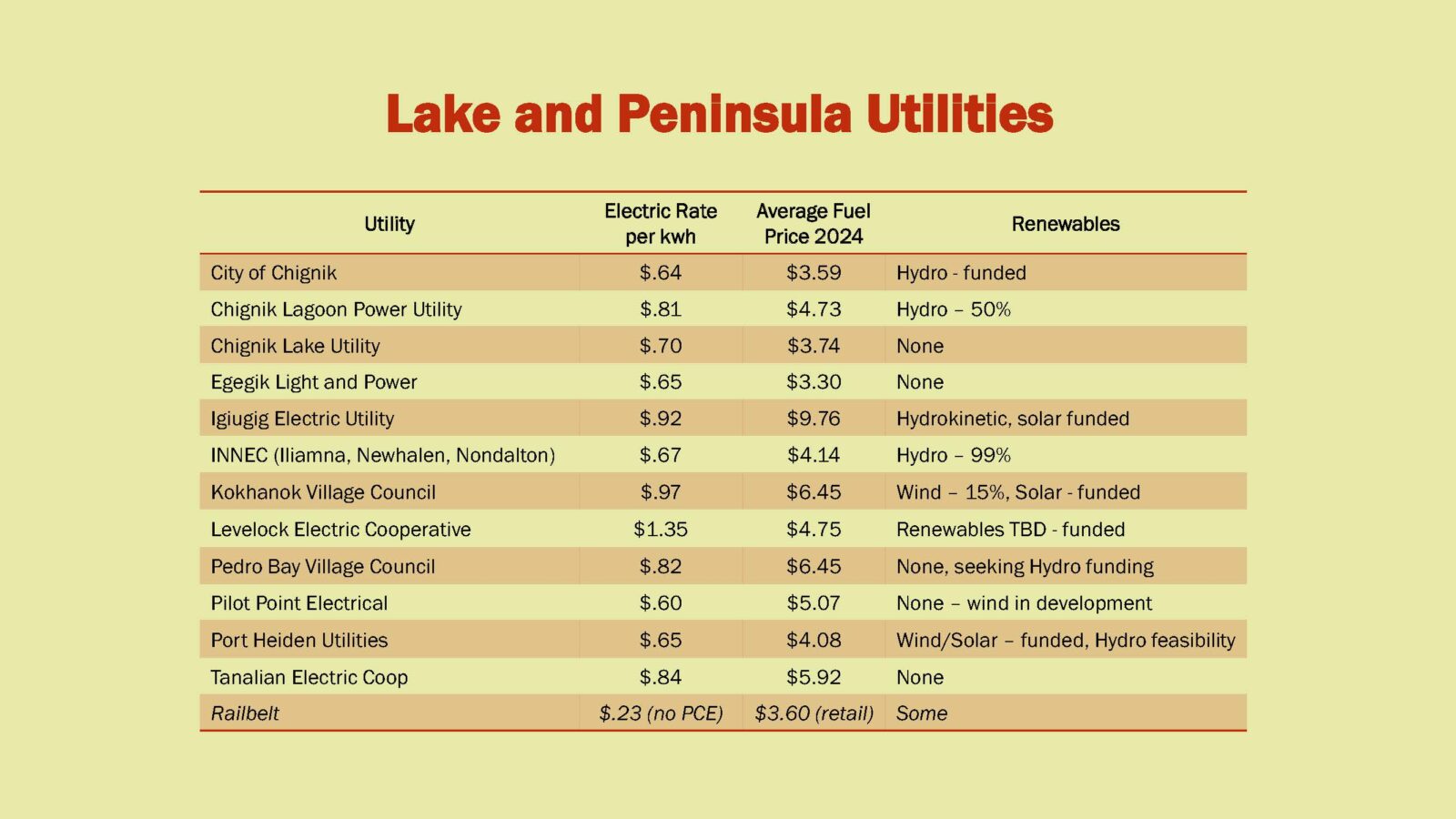
Kiley-Bergen and Hill shared information about energy prices in the Lake and Peninsula Borough during their presentation, which range from $0.60 to $1.34 per kWh and $3.30 to $9.76 per gallon.
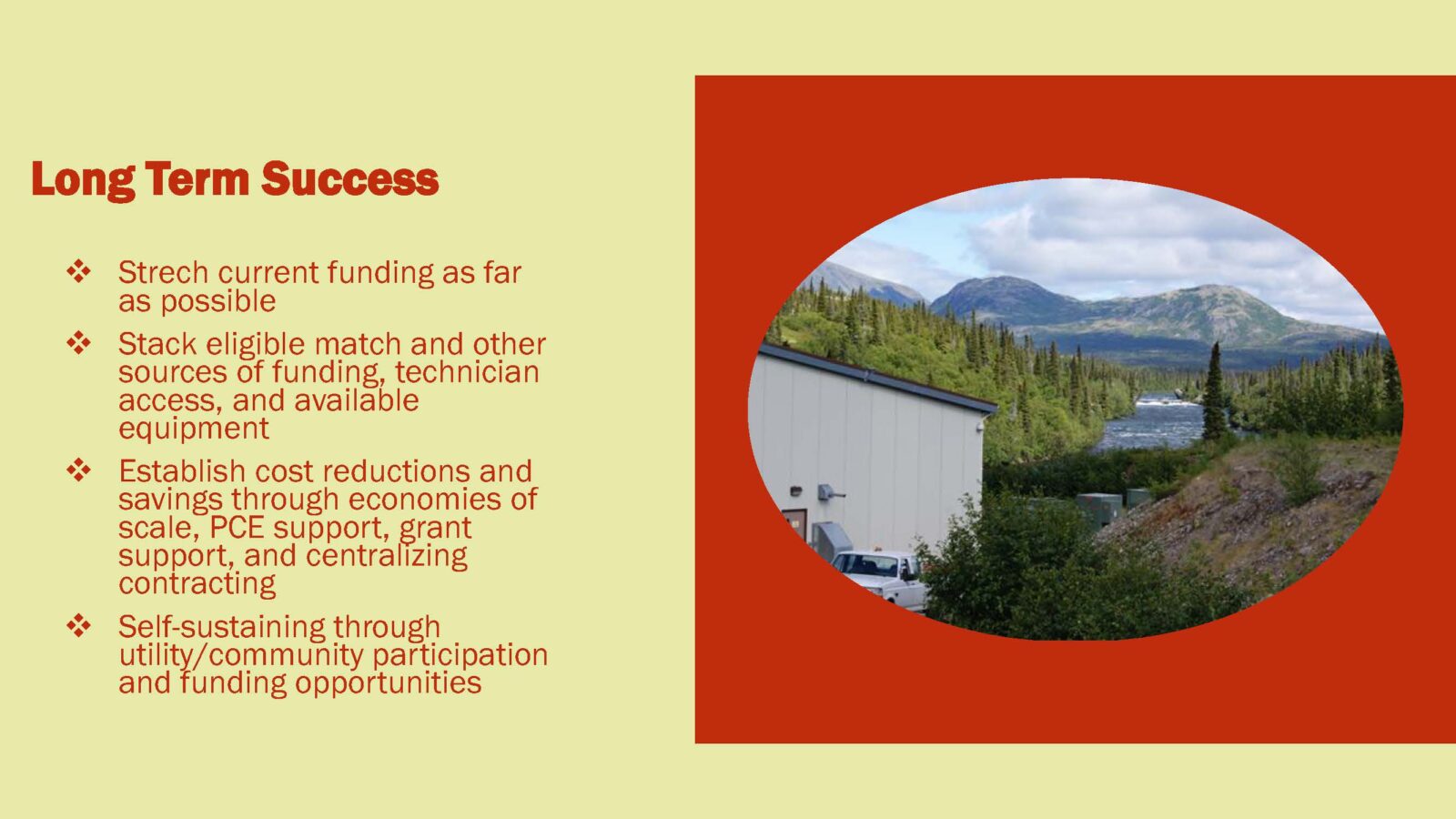
The Borough’s long-term goal is to sustain the collaborative beyond its first infusion of 40101(d) funding.
After presentations, participants chimed in with questions and observations. Responding to a question about any resources to help guide other communities in setting up a similar web of support, Modler noted that Deerstone and the Northwest Arctic Borough are collaborating to create an IPP handbook. This resource aims to balance locally or regionally specific details against broadly applicable information, with the goal of sharing it throughout the state.
Hill recommended that other regions and communities start small and take a staged approach to their own regionalized utility assistance programs. The Lake and Peninsula Borough started with a granular study of five utilities, and now is building on that and studying an additional group of five utilities, in order to identify specific needs and priorities. “If we can build a system that works for our region, then we can grow and share. It’s not proprietary, it’s something the whole state faces,” stated Hill.
The final question centered on match funding and sustainability plans for each program. Kiley-Bergen shared that their current match funding is from the Denali Commission, Bristol Bay Native Corporation, and Alaska Venture Fund, with work ongoing to identify the final contribution. Some of the match funding requirements can be fulfilled by technical assistance, so the Borough’s earlier work to identify the highest-priority needs within five communities is part of their in-kind contribution to the match. The vast majority of funding is going toward projects, so that any non-federal projects can be complemented with 40101(d) funding, essentially cutting costs in half.
Hill added that, in the first few years, participating in the collaborative will be free for the Borough’s utilities. The Borough budgeted travel into the project to build trust and relationships over the next six years, and will collect data to document savings and kWh produced to make the case for continued regional support for the endeavor.
Modler noted that REPOP has been fully grant-funded, with some match funding, up until now. They are trying to create systems that can become smoother, more effective, and self-sustaining. IPP revenue is ultimately money that communities can choose how to spend, so they are similarly trying to track the benefits of REPOP in terms of kWh generated and cost savings to provide a compelling recommendation for investing in REPOP.
Hill concluded by stating the need to understand the heavy outmigration in rural communities. Providing economies of scale can create jobs in the region, rather than always sending money to mechanics in Anchorage. “Maybe the program can be one thing out of 10 that keeps the villages we live in operating into the future,” Hill stated. “The Borough has a career and technical education initiative shared across the region, and this is an important part of developing local skills. This isn’t an option, it’s a necessity.”
The Alaska Energy Training Group is a quarterly meetup for energy professionals facilitated by REAP’s Alaska Network for Energy Education and Employment in partnership with the Denali Commission. The group’s mission is to improve coordination and collaboration in training, troubleshooting, workforce development, and technical assistance programs and investments throughout Alaska. If you want to participate in future conversations about energy training in the state, sign up for the Alaska Energy Training Group for meeting and training updates, or email jstarrs@realaska.org.

Renewable Energy Alaska Project’s Public Policy Committee has voted to endorse Dave Messier and Phil Wight in the 2026 election for the Golden Valley Electric Association Board of Directors. REAP’s decision to endorse candidates for the GVEA Board of Directors underlines the importance of cooperative utility board elections and their implications for the future of energy in Alaska.
GVEA ratepayers are already feeling the sting of rising energy costs due to dwindling supplies of Cook Inlet gas, and the Railbelt region’s electric utilities are preparing to step into the global market for natural gas to bridge the gap, just as we watch global fossil fuel prices rise and grow more volatile.
We need experienced, forward-thinking leaders on the Golden Valley Electric Association board who can provide the expertise and leadership necessary to help diversify the utility’s generation portfolio towards an increasing mix of local renewable energy resources. Moving in this direction will stabilize electricity rates and keep precious energy dollars circulating in our state’s economy.
In this critical moment for the future of energy in Alaska, REAP is proud to endorse Dave Messier and Phil Wight for the Golden Valley Electric Board of Directors. These two candidates have shown their commitment to REAP’s mission of increasing the development of renewable energy and energy efficiency in Alaska in a way that keeps energy costs low and stable and stimulates the development of new industries that provide great jobs and economic opportunities to Alaskans.

DAVE’S CANDIDATE STATEMENT
“The high cost of energy and its impact on Fairbanks businesses and families is what caused me to run for the board 9 years ago. Keeping our utility focused on lowering long term costs is still a top priority I bring to every meeting. That said, as members in a cooperative it is our collective responsibility to ensure that our electrical system is managed and maintained to keep our power reliable and the lights on. Providing reliable electricity requires investment, not just through the rates we all pay but through the willingness of board members to commit their time, energy and experience to help our co-op succeed. I’m running because I have a proven track record of that commitment and I would be honored to have your vote so that I can continue to serve and continue to keep our utility focused on reliably delivering electricity to our members.d accountable to its members.
Reducing energy costs for Alaskans is a special interest for me. Since 2009 I’ve led dozens of renewable energy and energy efficiency projects, installed community scale battery energy storage systems, co-authored federal legislation and presented to the Alaska legislature on energy challenges. As a GVEA Board member I’ve used my knowledge and experience to champion our ongoing large wind and battery energy storage projects as well as the on-bill financing program that GVEA now offers. These efforts are projected to lower our long term electric rates and help make the interior a more affordable place to live and work.”

PHIL’S CANDIDATE STATEMENT
“We are facing an energy crisis. With residential utility charges jumping 8.37%, the loss of lower-cost gas power and the threat of rolling blackouts, ‘business as usual’ is not working. Costs are rising with intensifying ice storms and forest fires.
GVEA must evolve to meet these serious challenges. Our Cooperative needs renewed Board leadership, persistent innovation, and bold action to secure our grid and save members’ money.
As Chair of GVEA’s Member Advisory Committee, I led a task force which demonstrated how GVEA can improve reliability and reduce bills by investing in member-owners’ homes. As an energy historian, I’ve written a comprehensive history of our grid, “Electrifying the Railbelt,” and testified on Alaska energy issues before the U.S. House. As a policy analyst, I authored successful bipartisan legislation (SB152) to save ratepayer’s money with Community Solar. As a father, I will ensure Fairbanks remains a land of opportunity for our children.
For the past decade, I’ve consulted on home energy projects and helped neighbors install insulation, solar panels, and batteries to lower energy costs. After driving an electric vehicle 4,300 miles to Fairbanks, I’ve helped several friends acquire home chargers and plug-in vehicles. I want my friends and neighbors to have cleaner, cheaper energy options. Beyond energy, I groom and maintain local multi-use trails. I regularly write newspaper op-eds and offer Alaska history presentations at the Tanana-Yukon Historical Society and Alaska Mining Hall of Fame. We have much to learn from our proud history of northern tenacity and bootstrap innovation.”
If you pay an electric bill to Golden Valley Electric Association, then you are a member-owner of the electric cooperative and you are eligible to vote in this election. GVEA has a step-by-step voting guide on their website here.
GVEA member-owners can also vote by mail. GVEA must received mail-in ballots by 5 p.m on June 9 in order for them to be counted in this year’s election.
Golden Valley member-owners can vote instantly using their MyGVEA account. Online voting closes on June 9, 2026, at 5:00 p.m.
To cast a vote online:
If you do not have a MyGVEA account:
Ballots were mailed to GVEA member-owners on May 13. After voting for one candidate and “yes” or “no” for each proposed bylaw amendment, place your ballot in the postage-paid envelope and mail it back to GVEA.
Need help? Contact the election helpline at 855-761-9111 or goldenvalley@alaska-cpas.com.

Renewable Energy Alaska Project’s Public Policy Committee has voted to endorse Peter Crimp and Mitchell Michaud in the 2026 election for the Homer Electric Association Board of Directors. REAP’s decision to endorse candidates for the Homer Electric Board of Directors underlines the importance of cooperative utility board elections and their implications for the future of energy in Alaska.
Cook Inlet gas is used to generate roughly 75% of Southcentral Alaska’s electricity. For years, the Alaska Department of Natural Resources has projected that supply is likely to fall short of demand as soon as 2027. Now, the region’s utilities are exploring much more expensive and volatile-priced gas import options to fill the gap.
We need experienced, forward-thinking leaders on the Homer Electric Association board who can provide the expertise and leadership necessary to help diversify the utility’s generation portfolio away from a dangerous dependence on natural gas and towards an increasing mix of renewable energy resources. Moving in this direction will stabilize electricity rates and keep precious energy dollars circulating in our state’s economy.
In this critical moment for the future of energy in Alaska, REAP is proud to endorse Peter Crimp and Mitchell Michaud for the Homer Electric Board of Directors. These two candidates have each shown their commitment to REAP’s mission of increasing the development of renewable energy and energy efficiency in Alaska in a way that keeps energy costs low and stable and stimulates the development of new industries that provide great jobs and economic opportunities to Alaskans.

BOARD EXPERIENCE
PETER’S MAIN GOALS
“HEA’s energy picture has changed over the years. Supply of Cook Inlet natural gas to our power plants, which has provided over 85% of our energy for decades, is dwindling. Now we’re making plans to import liquefied natural gas from Outside—along with volatile world markets, rising prices, and less local control.
Meanwhile, the potential for using our other local, abundant energy sources—wind, hydro, and solar—has grown as technologies have advanced and become less expensive. And development continues on other potential resources, such as tidal and geothermal. We’ve already made the wise decision to invest in a large battery system in Soldotna that could help integrate intermittent, zero-fuel-cost wind and solar into the system.
I’m a 44-year resident of Alaska and a former deputy director of Alaska Energy Authority. I’m running for the Homer Electric board because I have a long history in energy planning and project development in Alaska, and I think I can contribute to this cooperative.”
BIO
Peter Crimp is a part-time consultant in energy and natural resource development based out of Homer, Alaska. Representative projects: business plan for Pt Graham’s community biomass heating system currently under construction; forest plan for the Dillingham area Native corporation; and assessment of energy options for the Municipality of Anchorage with Deerstone Consulting. Peter retired from Alaska Energy Authority as deputy director in 2012 after 20 years, where he managed the state’s Renewable Energy Fund grant program and oversaw engineers and planners responsible for alternative energy and energy efficiency development. He began at AEA in 1993 as biomass energy (i.e. wood, fish oil, garbage) program manager. Earlier work was in Fairbanks with DNR Forestry and Dillingham with the Coastal Management program.
Currently Peter serves on the Kenai Peninsula Borough Resiliency & Security Advisory Commission. And earlier on the Kachemak Nordic Ski Club board in Homer as treasurer and/or member from 2020-25, and on the Renewable Energy Alaska Project board of directors 2014-22, including two years as chair. He holds a master’s degree in forestry from University of Washington and a bachelor’s degree at Brown. Peter and his family have run a Bristol Bay setnet and direct market operation since 1988.
WORK EXPERIENCE

BOARD EXPERIENCE
MITCH’S MAIN GOAL
“If elected to represent Homer Electric Association members, my top priority will be increasing transparency in HEA governance and providing clear, accessible information about energy supply, programs, and rates. We all pay for electricity—through HEA bills, rent, or the price of goods and services—and while our energy provider choices are limited, we have a voice through our elected board. I will be that voice.
I will push to diversify HEA’s energy portfolio by reinstating goals that encourage a broader mix of sources, increasing HEA’s ownership in generation, and expanding local renewable projects to create jobs for Alaskans.
We must also plan for the long term. Over the next 20 years, Alaska’s energy mix will change—hydropower, wind, solar, geothermal, and tidal resources are growing nationally and worldwide, lowering costs and reducing dependence on any single source. HEA must move forward with that progress.
Outdated approaches won’t solve today’s or tomorrow’s challenges. Thoughtful planning and forward-looking leadership are essential to ensure reliable, affordable power for HEA members now and in the future.”
WORK EXPERIENCE
Private Consulting Forester Dogon Enterprises
State Resource Forester (1999–2015), AK USDA NRCS (1987 – 1998), Maine USDA
If you pay an electric bill to Homer Electric Association, then you are a member-owner of the electric cooperative and you are eligible to vote in this election.
HEA member-owners can vote instantly using the utility’s online Election Portal, which closes May 6, 2026, at 5 p.m. All paper mail-in ballots must be mailed to the Election Vendor in the signed business reply envelope and received by the Election Vendor by 5 p.m. on May 6, 2026. HEA member-owners can also vote in-person at HEA’s Annual Meeting at Soldotna High School on Thursday, May 7, 2026, between 4:30 p.m. and 6:30 p.m. Please bring a valid photo ID.
Members who cast their ballot by 5 p.m. on May 6, 2026, will be entered into a drawing for a chance to win a prize!
Homer Electric members can vote electronically through HEA’s online voting portal at https://www.directvote.net/HEA.
To cast a vote online:
Please call (866)-909-3549 if you need your credentials replaced or HEA Member Services at (800) 478-8551 for any other assistance.
Members can vote in-person during the Annual Meeting at Soldotna High School on Thursday, May 7, 2026, between 4:30 p.m. and 6:30 p.m. Please bring a valid photo ID.
Alaska’s Renewable Energy Engineering Competition
The Clean Energy Olympics is Alaska’s State KidWind Challenge. Young engineers in 4th through 12th grade build model wind turbines and solar-powered homes and compete for a chance to compete in the World KidWind Challenge in Madison, Wisconsin in May. Some students have been working on their designs since fall, others only had a couple weeks in class, but they all showed up to prove their mettle.
Participating teams met with a panel of judges to present their design process and demonstrate their project’s function, tested their design’s energy output, and completed clean energy knowledge test. The Anchorage event also included an Instant Challenge where teams had to solve an engineering puzzle in limited time.
Read further to see the full results from all Clean Energy Olympics events in 2026!


Support Alaska’s World KidWind Teams!
Congratulations to Montessori Spongebob, Sparkle Wind Pigeon, Breezie Besties, and Phlying Physh for moving on to the 2026 World KidWind Competition in Madison, WI in May! These teams will be competing against over 120 teams from the US, Taiwan, Estonia, Mexico, and Thailand.
You can help support Alaska’s teams by following the clickable links above and donating to their team travel funds through the KidWind website.


Teams with a hyperlink and asterisk (*) are competing in the World KidWind Competition.
Elementary Wind Champions
Elementary Solar Champions
Anchorage Middle School Wind Champions
Juneau Middle School Wind Champions
Virtual Middle School Wind Champions
Middle School Wind Open Generator Division Champions
Middle School Solar Champions
Anchorage High School Wind Champions
Juneau High School Wind Champions
Virtual High School Wind Champions
Special Recognition Awards
Instant Challenge Champions:


Renewable Energy Alaska Project’s Public Policy Committee has voted to endorse Penny Gage and Rachel Morse in the 2026 election for the Chugach Electric Association Board of Directors. REAP’s decision to endorse candidates for the Chugach Electric Board of Directors underlines the importance of cooperative utility board elections and their implications for the future of energy in Alaska.
Cook Inlet gas is used to generate roughly 75% of Southcentral Alaska’s electricity. For years, the Alaska Department of Natural Resources has projected that supply is likely to fall short of demand as soon as 2027. Now, the region’s utilities are exploring much more expensive and volatile-priced gas import options to fill the gap.
We need experienced, forward-thinking leaders on the Chugach Electric Association board who can provide the expertise and leadership necessary to help diversify the utility’s generation portfolio away from a dangerous dependence on natural gas and towards an increasing mix of renewable energy resources. Moving in this direction will stabilize electricity rates and keep precious energy dollars circulating in our state’s economy.
In this critical moment for the future of energy in Alaska, REAP is proud to endorse Penny Gage and Rachel Morse for the Chugach Electric Board of Directors. These two candidates have shown their commitment to REAP’s mission of increasing the development of renewable energy and energy efficiency in Alaska in a way that keeps energy costs low and stable and stimulates the development of new industries that provide great jobs and economic opportunities to Alaskans.

PENNY’S CANDIDATE STATEMENT
“I am running for the Chugach Electric Association Board of Directors to ensure reliable, affordable power for our members during a pivotal time for our region. As a member-owner, I believe Chugach Electric must remain financially strong and accountable to its members.
Born and raised in Alaska and of Tlingit heritage, I have lived in Anchorage for over 11 years and am raising two young children here with my husband. My career has focused on energy policy, infrastructure investment, and economic development. I have worked in state government, private investment, and nonprofit leadership roles evaluating capital projects and long-term risk. I currently work with utilities, policymakers, and investors to support infrastructure investments and responsibly integrate emerging technologies.
Chugach faces tightening natural gas supply, significant capital investment decisions, and heavy reliance on a single fuel. These realities require disciplined oversight, strong financial stewardship, and pragmatic long-term planning.
If elected, I will focus on:
Reliable power affects every household and business. I would be honored to earn your vote.”

RACHEL’S CANDIDATE STATEMENT
“In my past two terms, I have worked hard to help position Chugach Electric to meet the challenges of gas supply, renewable integration, and responsible rates.
The environment in which Chugach Electric provides reliable, affordable, and responsibly sourced power is evolving. Soon we will be beyond our long-term local gas supply contract, leaning into a Railbelt-wide Integrated Resource Plan, and continuing to balance infrastructure needs with load growth. As a current board member, I possess a strong combination of experience, commitment, and optimism for the important road ahead.
Recent initiatives I have supported include successful management of Beluga River gas field, gas storage and gas exchange agreements, southern transmission line rebuild work, and Alaska’s first community solar project.
Thank you to our members for supporting me and through your engagement, helping me to represent your interests. I would be honored to have your vote for another term.
My priorities are:
All of that while working hard to control costs, maintain reliability, and keep the lowest rates on the Railbelt. Learn more at Facebook.com/Morse4Chugach
Thank you!”
If you pay an electric bill to Chugach Electric Association, then you are a member-owner of the electric cooperative and you are eligible to vote in this election.
Chugach member-owners can vote instantly using the utility’s online Election Portal, which closes May 29, 2026, at 1 p.m. Chugach member-owners can also vote in-person at Chugach’s Annual Membership Meeting at Changepoint Alaska (6689 Changepoint Drive in Anchorage) on Friday, May 29, 2026, between 2:30 p.m. and 4:00 p.m. Please bring a valid photo ID.
Chugach Electric member-owners can vote electronically through Chugach’s online voting portal at https://www.directvote.net/Chugach.
To cast a vote online:
Technical support is available Monday through Friday from 5:00 a.m. to 2:00 p.m. (except holidays) by calling (866) 909-3549 or emailing support@directvote.net.
Members can vote in-person during Chugach’s Annual Membership Meeting at Changepoint Alaska (6689 Changepoint Drive in Anchorage) on Friday, May 29, 2026, between 2:30 p.m. and 4:00 p.m. Please bring a valid photo ID.

On Thursday, March 26th, 2026, Renewable Energy Alaska Project’s Public Policy Committee voted to endorse Daniel Jensen and Connie Fredenberg for election to the Matanuska Electric Association Board of Directors. REAP’s decision to endorse candidates for the Matanuska Electric Board of Directors underlines the importance of cooperative utility board elections and their implications for the future of energy in Alaska.
Cook Inlet gas is used to generate roughly 75% of Southcentral Alaska’s electricity. For years, the Alaska Department of Natural Resources has projected that supply is likely to fall short of demand as soon as 2027. Now, the region’s utilities are exploring much more expensive and volatile-priced gas import options to fill the gap.
We need experienced, forward-thinking leaders on the Matanuska Electric Association board who can provide the expertise and leadership necessary to help diversify the utility’s generation portfolio away from a dangerous dependence on natural gas and towards an increasing mix of renewable energy resources. Moving in this direction will stabilize electricity rates and keep precious energy dollars circulating in our state’s economy.
In this critical moment for the future of energy in Alaska, REAP is proud to endorse Daniel Jensen and Connie Fredenberg for the Matanuska Electric Board of Directors. These two candidates have each shown their commitment to REAP’s mission of increasing the development of renewable energy and energy efficiency in Alaska in a way that keeps energy costs low and stable and stimulates the development of new industries that provide great jobs and economic opportunities to Alaskans.

CANDIDATE STATEMENT
“Our cooperative is facing rising electric costs and uncertainty about the long-term stability of our power supply. For too long, MEA and the Railbelt grid have relied heavily on a single supplier to meet generation demand, increasing risk and contributing to upward pressure on rates.
I bring a business-focused skill set to these challenges, grounded in community and Alaska outdoor values. As a Certified Public Accountant making majorinvestment decisions in the energy sector, I have experience in long-termplanning, risk management, and protecting customers from unnecessary ratevolatility and waste. Like any responsible business, MEA should avoidoverreliance on a single resource when prudent alternatives can reduce riskwithout placing undue burdens on members. Tools such as power purchaseagreements can introduce competition, provide price certainty, and deserveserious consideration alongside MEA-owned resources.
Working families are important in MEA’s mission. Rising energy costs disproportionatelyimpact low- and moderate-income families, and affordability goes alongsidereliability. My interest in serving on the MEA Board is rooted in my family andmy commitment to Alaska’s long-term prosperity. I offer a disciplined,independent perspective focused on reliability, affordability, and long-termvalue for MEA’s member-owners. Thank you for your consideration.”
BIO
Daniel Jensen is a Principal of Business Development and Asset Management at Cook Inlet Region, Inc. (CIRI), one of Alaska’s twelve Alaska Native Regional Corporations. In this role Daniel manages CIRI’s diverse portfolio of energy investments, totaling 1,020 megawatts of generation capacity, with 540 megawatts from wind and 480 megawatts from gas, located inside and outside of Alaska. In addition to generation assets, CIRI’s portfolio includes investments in support and supply chain services for energy such as gas storage for Southcentral Alaska, an international offshore wind turbine installation provider, and a publicly traded wood biomass company. Cumulatively, these provide a well-balanced experience through the energy sector, allowing Daniel to take an unbiased view of the financial and operational reality of many energy technologies.
Afterhours, Daniel is active in the community through non-profit service. He is the Treasurer at Anchorage Ski Club, who owns and operates Arctic Valley Ski Area. During his tenure as Treasurer, Daniel has overseen nearly 300% revenue growth and helped transition to a self-sustaining business model. He is also a Board member at REAP at Launch Alaska, a local accelerator program bringing energy, transportation, and industrial technologies to help build resilient, sustainable communities.
Daniel holds an undergraduate and graduate degree in business and accounting, with honors, from Montana State University. He started his professional career at KPMG, an internationally recognized accounting firm, as an auditor. In this position he was able to gain insight into a vast array of companies. After KPMG, he worked at Waste Connections, which owns and operates Alaska Waste, as a District Controller. At Waste Connections, he was able to further his knowledge of regulated utilities, as well as build his business and financial acumen. Daniel holds an active Certified Public Account license through the Alaska State Board of Public Accountancy, as well as a Financial Modeling and Valuation Analyst certificate from the Corporate Finance Institute.
Daniel lives in Eagle River with his wife, Riley, three blocks up the street from the house she was born and raised in. Together they have two young boys, who are fourth-generation Alaskans.

CANDIDATE STATEMENT
“MEA should develop alternatives to natural gas as a utility or connect with some Independent Power Producers to develop projects. Otherwise, our price for power will continue to steadily increase. Developing generation projects of all types takes time, though. In the meantime, there is a whole lot we as customers can do to conserve the remaining gas now used for heat and power and keep our own costs down.
For many years I’ve been helping both utilities and customers to keep costs down while keeping the lights on in Rural Alaska. I’d like to do the same for my own neighborhood now.”
BIO
Connie was raised in a small Ohio farm town that reminds her a lot of Palmer – except Palmer has better scenery. As a Wildlife Biology student at Ohio State University, Connie chanced upon an unbelievable opportunity to travel from Ohio to Utqiagvik in June of 1978 for a summer job as an Animal Research Intern at the Naval Arctic Research Lab. It changed her life. She went from a struggling student to straight A’s at OSU – until she dropped out and decided to stay in Alaska during her internship the next summer.
When Connie became pregnant with her first child, she and her partner moved from Utqiagvik to Pt. Hope, his family home. Connie loves the Arctic. The Inupiat elevate sharing to a science. Connie learned countless valuable lessons and skills from the people of Pt. Hope and she is honored to still call many her friends and family. Connie gave birth to three children while there and graduated from UAF in 1989 with a degree in Applied Linguistics with minors in education and biology through the old distance delivered X-CED program. She worked as a postal clerk, bilingual aide, elementary teacher, magistrate, and agent for bush airlines over the next ten years.
In 1993 Connie’s life circumstances changed. She left the Arctic and returned to her roots and took a job as Farm Manager at the Palmer Musk Ox Farm. After 3 years she built her own house on land she bought at the far end of the Farm and moved on to other work that was easier on her body. Connie’s children grew up, she gained seven grandchildren and one great grandchild, and she keeps enough animals on her own little farm to satisfy her need for caretaking. She raises chickens, pigs, and a big garden every year now. She loves making sauerkraut and jarring fish – and sharing the bounty. Connie looks forward to sewing again now that she is retired.
For over 20 years Connie worked with Rural independent community owned non-regulated electric utilities –installing pre-pay electric meters, teaching conservation strategies, providing and teaching utility management, rate setting and reporting for the Power Cost Equalization program. The cost and headache of importing fuel to remote communities is agonizing. Connie has helped several communities through the first steps of developing a local renewable energy resource, including resource and environmental assessments and successful grant applications.
If you pay an electric bill to Matanuska Electric Association, then you are a member-owner of the electric cooperative and you are eligible to vote in this election.
Voting for MEA’s open Board seats begins on Friday, April 3rd, and concludes on Tuesday, April 28th. Voting will be conducted primarily online via MEA customers’ Smart Hub accounts. MEA members can also attend and cast a ballot at the MEA Annual Meeting at 5:00pm on April 28 at the Glenn Massey Theater on the UAA/Mat-Su Campus.
Matanuska Electric members can vote electronically through Smart Hub at https://mea.smarthub.coop/ui/#/login.
To cast a vote online:
In-person voting will be available at the Matanuska Electric Annual Meeting held at the Glenn Massey theater on the UAA/Mat-Su Campus (8295 E College Dr, Palmer, AK 99645) on Tuesday, April 28 2026, at 6:00pm, with doors opening at 5:00pm. Please bring a valid photo I.D.
As a community educator for more than 15 years, I believe stewardship is more than a lesson—it is a way of being. It is a responsibility to our place, to one another, and to future generations.
That belief was shaped by mentors, like Clay Good, who saw potential in me before I saw it in myself. As my high school oceanography teacher—and later as the Regional Energy Catalyst with the Sustainable Southeast Partnership (SSP) and Renewable Energy Alaska Project (REAP)—Good modeled curiosity, integrity, and deep respect for our coastal ecosystems. When I returned to Juneau to begin my career as a Science, Technology, Engineering, and Math (STEM) educator, he stood beside me with guidance and encouragement. As I considered new professional directions, his steady mentorship gave me the confidence to step into leadership and imagine broader possibilities for community-based education.
When Mr. Good retired in 2025, I stepped up to take on those same responsibilities as the next Regional Energy Catalyst. Today, my work reflects the values he modeled: humility, reciprocity, and community-centered leadership. I strive to create for youth the same kind of spaces he created for me—where students feel seen, challenged, and empowered to pursue futures they may not yet envision for themselves or for their communities.


Through place-based energy education across Southeast Alaska, I work to help students and community members expand their understanding of energy in ways that strengthen their local communities, our region, and our state. In many ways, this work is an extension of the mentorship I received—a living legacy of stewardship passed from one generation to the next.
This year, our partners’ commitment to energy leadership for Southeast Alaska’s youth came to life through a dual enrollment course designed specifically for high school students. Dual enrollment courses are established with partnerships between high schools and colleges or universities.These programs allow students to enroll in college-level courses while still in high school, earning dual credit while building momentum toward future education and careers. In partnership with STEM teacher Kristen Wells at Juneau-Douglas High School, The Nature Conservancy, the Inside Passage Electric Cooperative, Annika Ord with the Alaska Climate Adaptation Center (Climate Adaptation SSP Catalyst), and the University of Alaska Fairbanks Bristol Bay Campus, the REAP education team created a course that bridges classroom learning with real-world energy challenges.
Students conducted an in-depth analysis of Angoon’s Watkasate’ (Thayer Creek) run-of-river hydroelectric project, which broke ground in summer 2025. They examined the potential benefits and challenges of developing hydroelectric power in a rural, micro-gridded community and utility system. This active project served as a case study and was compared to the proposed Alaska Energy Authority’s Susitna-Watana Dam, as presented to the Alaska House Energy Committee in 2023. Located in Southcentral Alaska, the Susitna-Watana proposal has been the subject of extensive environmental and economic research, providing students with substantial data to evaluate.
Through this comparison, students explored how energy policy intersects with marine and terrestrial conservation, analyzed the tradeoffs inherent in large- and small-scale energy development, and examined how community values influence decision-making. To conclude the unit, students presented policy recommendations from the perspective of specific stakeholders, supporting their positions with research, data, and evidence-based analysis.
A key component of the course was active participation. Students took part in a mock committee meeting, representing a wide range of stakeholder perspectives—from utilities and renewable energy professionals to climate adaptation specialists, conservation advocates, and community members. Through this process, they experienced firsthand how collaboration, compromise, and communication are essential to effective energy planning. The course culminated in a solutions workshop, where students proposed sustainable, community-informed energy plans.
Throughout the course, students engaged with renewable energy professionals from across Alaska –representing everything from city utilities to non-profits and universities.These conversations brought real-world context into the classroom, exposing students to both the promise and the challenges of energy development in rural and urban communities alike. By working through hands-on, critical-thinking activities and hearing directly from practitioners, students developed a deeper understanding of why inclusive stakeholder engagement is vital at both the community and state levels.

This piece was published first in the Juneau Empire as part of the Sustainable Southeast Partnership‘s monthly Woven column.