The post A step forward, but not the whole journey appeared first on Aliran.
]]>
We, the members of G25, welcome the coming into force of the Parliamentary Service Act 2025 (PSA).
This is a long-overdue reform intended to restore Parliament’s administrative autonomy and strengthen its independence as a fundamental institution of Malaysia’s constitutional democracy.
More than three decades after the repeal of the original Parliamentary Services Act in 1992, the restoration of a dedicated parliamentary service is a welcome step towards an independent parliament.
Section 2(1) of the PSA establishes that the parliamentary service is separate from the public service.
Section 4 empowers a Parliamentary Service Council to appoint members, determine their terms of appointment and oversee financial matters.
Section 3(2)(f) of the PSA also provides for representation from both government and opposition MPs.
However, despite these improvements, we remain disappointed that the calls G25 and other civil societies and experts made in 2025 seem to have fallen on deaf ears.
While the prime minister has stated that the implementation of the PSA reflects the government’s commitment to institutional reforms, we find that several provisions in the PSA remain weak, making it fall short of genuine reform and independence.
We are disappointed that section 11(1) of the PSA has not been improved despite our criticisms and still requires the chief administrator of Parliament to be appointed from among members of the general public service of the federation.
This risks perpetuating the very administrative dependence that a separate parliamentary service is intended to overcome.
Under sections 11(2) and 11(3), the chief administrator is responsible for Parliament’s overall administration and day-to-day affairs, including the financial matters of the parliamentary service, and exercises general control over its members.
To maintain neutrality, the chief administrator should be selected from within Parliament’s independent service and not the general public service. This would help ensure that the position is filled on the basis of institutional expertise rather than external political considerations.
Furthermore, appointing the chief administrator from outside the parliamentary service leaves parliamentary officers’ career pathways to the highest administrative position within their institution uncertain.
Funding provisions in the PSA also remain ambiguous. Although section 4(1)(b) empowers the Parliamentary Service Council to oversee financial matters, section 12 merely requires the government to provide sufficient annual funding for the council to perform its functions.
While this recognises the need for parliamentary funding, it does not specify how the budget is to be determined, how Parliament’s budgetary requirements are to be independently assessed, or how disputes over funding adequacy are to be resolved.
The PSA does not establish a parliamentary budget office or prescribe a clear, independent budget process.
Such safeguards are necessary to secure Parliament’s financial autonomy and reduce its dependence on the executive.
The PSA also does not adequately balance confidentiality with public accountability.
Section 14(1) PSA prohibits members of the council and parliamentary service, as well as those attending council meetings or accessing relevant information, from disclosing information obtained through their duties, subject to specified exceptions.
While legitimate confidentiality is necessary, the provision is broad and does not clearly distinguish sensitive information from routine administrative decisions, governance matters and financial information that should be open to public scrutiny.
While section 5(7) requires the council to maintain minutes of its meetings, it does not require their publication.
Sections 10 and 14 also do not establish a comprehensive public reporting mechanism, dedicated parliamentary oversight of the council’s operations, or even a requirement for an annual report.
As we have mentioned before, clear public reporting mechanisms are necessary to allow accessibility to parliamentary decisions and operations because, if Parliament is to serve as the highest institution of public representation, it must remain open and accountable to the people.
Beyond those sections, the PSA’s institutional framework is also insufficiently defined.
Section 2(2) states that the parliamentary service consists of the clerks to the Senate and the House of Representatives, together with members of the parliamentary service. But it does not clearly define the categories of officers and other staff to be covered. This leaves the scope of the service uncertain.
Although section 3 specifies the council’s membership, the inclusion of the Treasury secretary general or a representative, the public service director general or a representative, and the chief administrator as ex-officio members raises questions about the extent to which the council can operate independently of the public service and executive administration.
While section 4 sets out the council’s functions, the PSA does not establish a comprehensive framework for independent oversight of the council’s decisions and operations or for reporting its performance to Parliament and the public.
These gaps weaken the safeguards needed to ensure that the parliamentary service and the council operate independently, effectively and accountably.
We, G25, recognise the progress represented by a separate parliamentary service, the establishment of the Parliamentary Service Council, and the provision for opposition representation.
However, parliamentary independence requires more than structural changes, It demands genuine control over its administration, finances and personnel, and meaningful public accountability.
A strong Parliament is not merely a place where laws are passed. It is where the executive is held to account, public expenditure is scrutinised and the people’s voices are represented.
We therefore call on the ‘Madani’ (civil) government to demonstrate that its commitment to institutional reform extends beyond the passage of legislation.
Let this be but a stepping stone to address these shortcomings and ensure that Parliament can discharge its constitutional responsibilities with effective checks and balances on the executive, free from undue political, administrative and financial influence.
Until these safeguards are in place, parliamentary independence remains incomplete. – G25
The post A step forward, but not the whole journey appeared first on Aliran.
]]>The post Meninjau semula DEB: Jangan kita cipta semula dasar berasaskan kaum appeared first on Aliran.
]]>
“Emancipate yourselves from mental slavery;
None but ourselves can free our minds.”
– Bob Marley, Redemption Song
Syarahan Profesor Emeritus Jomo KS bertajuk ‘Meninjau Semula DEB Selepas Separuh Abad’ yang berlangsung di Petaling Jaya pada 17 Oktober lalu merupakan peluang yang amat baik untuk merenung kembali salah satu dasar awam yang paling berimpak besar di Malaysia.
Yang paling utama, syarahan ini mencabar kita untuk mempersoalkan sama ada dimensi berasaskan kaum dalam Dasar Ekonomi Baru (DEB) masih memenuhi keperluan negara, lebih 50 tahun selepas ia diperkenalkan.
Kerajaan ‘Madani’ sekarang mempromosikan usaha seperti Putera35, iaitu Pelan Transformasi Ekonomi Bumiputera 2035. Wajar untuk kita bertanya, adakah Malaysia sedang menangani ketidaksamaan yang wujud masa kini, atau sekadar mengitar semula penyelesaian lama?
DEB dalam konteks
Jomo memulakan perbincangan dengan meletakkan DEB dalam konteks sejarah yang lebih luas. Terlalu kerap, dasar ini hanya dilihat sebagai respons terhadap rusuhan 13 Mei 1969. Hakikatnya, ia muncul daripada ketidakseimbangan ekonomi selama beberapa dekad yang berakar umbi dalam penjajahan.
Satu pengaruh intelektual yang penting ialah buku perintis karya James Puthucheary pada tahun 1960 yang berjudul Ownership and Control in the Malayan Economy. Puthucheary berhujah bahawa masalah asas bukanlah kekayaan yang dimiliki oleh mana-mana kumpulan etnik tempatan, sebaliknya ia berpunca daripada penguasaan modal asing yang amat besar dalam ekonomi negara.
Jomo turut mengetengahkan sumbangan Agoes Salim. Puthucheary dan Agoes merupakan sebahagian daripada lingkaran intelektual di sekeliling Abdul Razak Hussein yang membantu membentuk DEB.
Perhatian mereka tidak pernah sekadar pengagihan semula kekayaan berasaskan etnik. Perhatian itu ialah pembangunan negara, pembasmian kemiskinan dan penyahjajahan ekonomi.
Pada dasarnya, DEB merupakan satu program tindakan afirmatif. Ia dirangka untuk menangani jurang sosioekonomi yang mendalam antara pelbagai komuniti. Matlamatnya ialah untuk mengurangkan kemiskinan, memperluas peluang bagi golongan bumiputera, serta membina perpaduan nasional.
Tindakan afirmatif bukan unik kepada Malaysia, dan ia juga bukan sesuatu yang dengan sendirinya wajar dibantah.
India telah melaksanakan langkah serupa bagi kasta yang sejak sekian lama dipinggirkan, khususnya golongan Dalit.
Di seluruh dunia, tindakan afirmatif untuk wanita diterima secara meluas kerana halangan sistemik masih mengehadkan keterwakilan mereka dalam pelbagai profesion dan institusi.
Dalam masyarakat yang ditandai ketidaksamaan sejak dahulu, intervensi yang bersasar boleh dianggap wajar.
Persoalan utamanya ialah sama ada keadaan yang mewajarkan intervensi sedemikian masih wujud dalam bentuk asalnya.
Jika DEB dinilai berdasarkan objektif pertamanya yang paling penting – iaitu membasmi kemiskinan tanpa mengira kaum – maka ia merupakan satu kejayaan yang tidak dapat dinafikan.
Malaysia telah mengalami transformasi yang luar biasa sejak tahun 1971. Menurut Jabatan Perangkaan, kadar kemiskinan mutlak telah turun kepada 5.1% pada tahun 2024, berbanding 6.2% pada tahun 2022. Kadar kemiskinan tegar kini berada pada paras hanya 0.09%.
Kemiskinan relatif masih ketara pada kadar 16.7%, namun tahap kekurangan yang ekstrem telah berkurangan secara drastik.
Taburan kemiskinan mengikut etnik juga mencerminkan kemajuan yang besar. Kadarnya ialah 6.6% dalam kalangan bumiputera, 3.1% dalam kalangan etnik India dan 1.5% dalam kalangan etnik Cina.
Angka-angka ini menunjukkan bahawa misi dasar tersebut untuk membasmi kemiskinan telah sebahagian besarnya mencapai matlamatnya.
Politik, bukan dasar
Pengurangan kemiskinan kurang mendapat perhatian pada masa kini. Namun, penggubal dasar kekal tertumpu pada teras kedua DEB: sasaran pemilikan ekuiti bumiputera sebanyak 30%.
Seperti yang dinyatakan oleh Jomo, perdebatan ini menjadi rumit disebabkan oleh kaedah pengukuran yang berbeza. Pengiraan berdasarkan nilai tara sering kali menghasilkan keputusan yang jauh berbeza berbanding pengiraan berdasarkan nilai pasaran.
Mohamed Tawfik, selaku pembahas, memberitahu hadirin bahawa bapanya, Dr Ismail Abdul Rahman, timbalan PM yang kedua, sentiasa menganggap sasaran DEB sebagai sesuatu yang bersifat sementara, ibarat handikap dalam permainan golf. Ia tidak pernah bertujuan untuk kekal selama-lamanya.
Para sarjana seperti Terence Gomez telah mengetengahkan bagaimana entiti pelaburan berkaitan kerajaan kini mendominasi pemilikan dan kawalan ekonomi, sekali gus menimbulkan persoalan tentang apa sebenarnya yang diukur oleh sasaran 30% tersebut.
Isu ini jelas jauh lebih dipertikaikan berbanding gambaran yang sering dipaparkan dalam naratif rasmi.
Rasional asal bagi meningkatkan pemilikan bumiputera juga berkait dengan usaha mengurangkan penguasaan asing dalam ekonomi. Pemilikan ekuiti oleh pihak asing dilaporkan telah menurun kepada sekitar 18% – satu penurunan yang drastik berbanding dekad terdahulu.
Jika pengurangan kemiskinan dan pengukuhan pemilikan tempatan dalam ekonomi telah mencatat kemajuan yang besar, mengapa pemilikan ekuiti masih dianggap sebagai kayu ukur utama bagi pembangunan negara?
Jawapannya lebih bersifat politik berbanding ekonomi.
Usaha Putera35 oleh kerajaan Madani menggemakan bahasa dan objektif sasaran pemilikan berasaskan etnik, ketika cabaran yang dihadapi Malaysia telah berubah dengan ketara.
Pendekatan ini kurang selari dengan komitmen Anwar Ibrahim sebelum ini untuk beralih daripada dasar ekonomi berasaskan kaum kepada pendekatan yang berpaksikan keperluan serta kekurangan sosioekonomi.
Penekanan berterusan terhadap sasaran berasaskan kaum semakin kelihatan kurang sebagai satu keperluan ekonomi dan lebih sebagai akomodasi politik kepada sentimen etnik Melayu-Bumiputera.
Ketidaksamaan dalam kumpulan etnik
Ironinya, salah satu pencapaian terbesar DEB telah mewujudkan landasan untuk perbincangan yang berbeza.
Selama lebih lima dekad, dasar tindakan afirmatif telah membantu melahirkan kelas menengah Melayu dan bumiputera yang besar. Hal ini menyumbang secara signifikan kepada mobiliti sosial, kestabilan politik dan keharmonian antara etnik. Ia mengurangkan persepsi penyisihan serta membuka akses kepada peluang yang sebelum ini di luar jangkauan ramai orang.
Namun, kejayaan turut mengubah sifat ketidaksamaan. Pada hari ini, jurang yang paling mendesak semakin banyak ditemui dalam kalangan kumpulan etnik itu sendiri, berbanding antara kumpulan etnik yang berbeza. Terdapat orang Melayu yang kaya hidup bersama-sama dengan orang Melayu yang lebih miskin. Keadaan yang sama turut berlaku dalam kalangan masyarakat Cina, India dan komuniti lain.
Jurang yang paling penting kini ialah jurang pendapatan, kekayaan dan peluang, bukannya etnik. Seperti yang dihujahkan oleh pengulas Aliran, Loh Chee Seng, ketidaksamaan dalam setiap kumpulan etnik yang semakin melebar mungkin kini menjadi cabaran yang lebih serius berbanding ketidaksamaan antara etnik.
Dasar yang dirangka untuk realiti tahun 1971 tidak mampu menangani realiti tahun 2026.
DEB wajar diiktiraf atas pencapaian bersejarahnya. Ia telah membantu mengurangkan kemiskinan, memperluas peluang pendidikan, membina kelas menengah bumiputera yang besar serta memupuk kestabilan negara pada satu tempoh kritikal dalam pembangunan Malaysia.
Namun, dasar yang berjaya tidak seharusnya menjadi dogma yang tidak boleh diubah.
Selepas lebih 50 tahun, cabaran sosial dan ekonomi Malaysia telah berubah. Dasar awam harus lebih menumpukan kepada keperluan berbanding kaum, dengan menyasarkan kemiskinan, kerentanan dan penyisihan, di mana sahaja ia berlaku.
Program untuk isi rumah 40% terendah, golongan miskin tegar dan isi rumah kurang bernasib baik yang lain menawarkan rangka kerja yang lebih relevan untuk masa depan.
Untuk memparafrasakan lirik Bob Marley, kerajaan Madani harus membebaskan diri daripada perhambaan mental kepada dasar yang telah lama melepasi tempoh kegunaan terbaiknya. Cabarannya bukanlah untuk memelihara DEB selama-lamanya. Ia ialah untuk membina berdasarkan kejayaannya sambil mengiktiraf batasannya.
Malaysia tidak memerlukan DEB yang dihidupkan semula. Ia memerlukan dasar yang mencerminkan realiti masyarakat yang matang, pelbagai dan semakin terpecah mengikut kelas.
Johan Saravanamuttu
Editor bersama, surat berita Aliran
24 Oktober 2026
Diterjemahkan oleh Zikri Rahman
The post Meninjau semula DEB: Jangan kita cipta semula dasar berasaskan kaum appeared first on Aliran.
]]>The post More than GDP: What Europe’s protesters want appeared first on Aliran.
]]>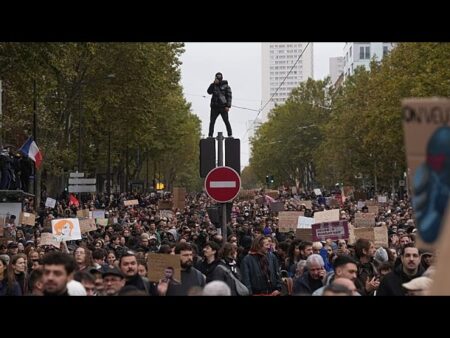
Young people have been taking to the streets across Europe, including in Spain, France and Portugal. They are protesting against the state of schools and the wider cost-of-living crisis.
The trade unions in these countries have joined the young, calling for higher wages, better pensions, stronger public services and measures to protect purchasing power in the face of inflation.
In France, secondary school pupils have clashed with police in some violent protests over long hours, missing teachers, dilapidated classrooms and an opaque university admissions system. Some pupils say they have missed months of teaching because staff absences have gone unfilled.
In Spain, activists took to the streets in September over housing prices and rents. The protests were triggered by the eviction of an 87-year-old woman from her Madrid home after an investment firm raised her rent by 230%. Maricarmen Abascal died in hospital a fortnight later.
In neighbouring Portugal, hundreds gathered in central Lisbon. Official data shows housing prices more than doubled between 2015 and 2024, rising by 124% – roughly twice as fast as the EU average.
A pattern of injustice
A closer look at the grievances of students and unions reveals an underlying reality overlooked by some European elites. Some political leaders have sought to frame the unrest as the work of far-left ideologues.
But the protesters’ documented grievances point to a structural pattern of injustice that needs to be addressed.
Structural injustice occurs when social, economic or political systems systematically harm or disadvantage specific groups of people. Everyday institutional rules can do the same, even when no single person intends to discriminate or act maliciously.
The protesters are asking their leaders for a better quality of life.
The authorities must address the systemic issues behind this structural injustice: the apparent inequality in fiscal priorities, markets, laws and cultural norms. These have affected education, healthcare and income.
The effective and efficient delivery of these services is the foundation of human development and progress.
The quality of life is not fixed by material conditions alone. It matters in the past, the present and the future.
It is about satisfaction and happiness. These, not merely growth in gross domestic product, should be the measure of progress.
For example, Nordic countries continue to lead happiness rankings. This is because of strong social support systems, high trust, generous welfare networks and healthy life expectancy, which carry a moral element of social security.
The moral dimension
The quality of life does not revolve only around material or psychological needs. It has a broader moral dimension.
Elites and demonstrators alike have to come to terms with this. People in Europe have been steeped in a relativistic, secular culture that tends to pick and choose moral values to suit the state and individuals.
To improve the quality of life, it is vital to understand the true nature of people, who have purpose and meaning in life.
Cognitive scientist Justin Barrett argues that all people are “born believers”, naturally attuned to agents, teleology (the idea that things have a purpose) and purpose.
We are not ‘blank slates’. Our minds instinctively detect agency in the world, seek patterns and purposes in nature and imagine powers beyond the visible.
This is not superstition to be overcome but a fundamental feature of human cognition – one that shapes how we encounter reality itself. In other words, people begin life not as little materialists but as seekers.
The mystery surrounding creation and life itself inspires people to seek the divine and the moral laws that humanise humankind, and to live in harmony with nature’s goods.
In this regard, people possess an inherent, unchanging dignity, an immortal soul and a shared purpose oriented towards truth, goodness and love.
This means the quality of life is not the ability to do whatever one wants. It is the capacity to choose what is truly good, noble and aligned with moral values. It does not end with material or psychological issues. We have within us a moral imperative of purpose and meaning that craves a dignified life in society.
That begins with improving the quality of essential services such as education, healthcare, housing and income. This is something that a responsible government should provide.
The moral good inspires the common good.
For peace to reign in these nations, the affected parties need to hold a dialogue. This requires a shared understanding that the quality of life cannot be resolved in an ideological cocoon or through violence. It needs a broad moral approach that addresses the complexity of structural injustice.
Hopefully, peace will prevail in these nations, with a principled moral understanding of structural injustice and solutions that improve the quality of life.
The post More than GDP: What Europe’s protesters want appeared first on Aliran.
]]>The post Don’t make families and small businesses bear the cost of haze alone appeared first on Aliran.
]]>
Engage (Rakyat in Action) and Project Stability and Accountability for Malaysia (Projek Sama) call for urgent support for families, workers and small businesses affected by haze-related school closures, in particular those in Johor, where all schools have been ordered to close since 8 October.
It is exactly in crises – including this annual haze crisis perpetuated by Asean’s failure – that we must demand evidence-based, accountable and participative policymaking, guided by scientific reasoning and checked by democratic oversight.
While top-down tough policy measures may give us the illusion that the political elites care and we are protected, the unintended outcome could be harmful.
We badly need rigorous cost-benefit analyses of different policy measures – not tough, fast and performative decisions driven by the sense of urgency in any powerful institution. As the saying goes, the road to hell is (often) paved with good intentions.
While protecting children’s health is a noble intention, school closure imposes costs on parents, employers and school-dependent businesses.
Parents may lose income, take unpaid leave or scramble for childcare.
Employers may lose staff.
And canteen operators, bus operators and food suppliers may lose business.
For households already under financial pressure, even one lost day matters.
Using publicly available data, a conservative estimate projects a cost of around RM1m in Johor for every statewide school-closure day, on disrupted parental work time alone. This excludes lost income for canteen operators and suppliers, other losses in general business disruption, learning losses and health costs for under-privileged children who suffer worse pollution at home than in schools.
Leaving aside students in secondary, private and international schools, Johor has 336,045 students in government primary schools. Assuming they come from 168,022 households with two children, and 5% of these households have a salaried parent who has to take leave to tend to their children, and these parents earn – on average – the median monthly wage of RM2,688 (RM122 per working day for 22 working days per month), the productivity loss amounts to RM 1,026,449. The actual burden is therefore likely to be substantially higher.
Since 8 October, the Johor government has ordered schools and educational institutions closed for 12 school days until 23 October, with no certainty about further disruption. Regional authorities warn that haze may persist, with an improvement expected only in late October or early November.
School closures must be guided by transparent science, not ad hoc or performative announcements. Authorities should publish Air Pollutant Index thresholds, weather forecasts and health criteria in advance, and communicate decisions by a fixed time wherever possible.
Because haze conditions can differ markedly between districts, blanket statewide closures should be reserved for genuine statewide emergencies.
Within a clear national framework, district education authorities and individual schools should decide whether to close, conduct online learning or continue safely, based on published guidelines, indoor air conditions and the needs of vulnerable students.
But science-based decisions must be matched by humane assistance, which may be conveniently overlooked or distracted by tough, fast, performative measures:
First, the government should provide free N95 masks to schools, low-income families, older people, people with heart or respiratory conditions, pregnant women and outdoor workers when unhealthy air persists.
Second, low-income households with young children, older family members or people with chronic illness should receive vouchers or subsidies for HEPA air purifiers. Community halls, libraries and other suitable public facilities should be prepared as clean air spaces during severe haze with the installation of air purifiers.
Third, daily-wage earners, self-employed workers and low-income parents who lose income while caring for children during closures should qualify for a simple, temporary haze-support payment, delivered quickly through existing welfare databases.
Fourth, small school-dependent businesses – including canteen operators, school bus operators and food suppliers – should receive limited emergency assistance when prolonged closures deprive them of ordinary income.
Finally, employers should be encouraged to provide flexible work arrangements and emergency childcare leave without penalising staff who have no alternative.
The annual haze underscores the utter failure of the political class in both Asean and Malaysia. Malaysia has no clean air law – and no scheduled plan – that allows civil action against at least Malaysian companies involved in Indonesian fires, some of which have been named by groups like Greenpeace.
And in the absence of well-thought and integrated policies to help patients, families and small businesses to cope with this largely human-made crisis, we now have a performative measure that may cause more harm than good even if it is driven by a noble intention. – Engage / Projek Sama, 19 October
The post Don’t make families and small businesses bear the cost of haze alone appeared first on Aliran.
]]>The post Can small forest patches make a difference appeared first on Aliran.
]]>
When we talk about saving forests in Malaysia, the instinct is to think big: national parks, huge reserves, major conservation bodies.
But Shariff Mohamad took a different approach, by buying three acres of land in Hulu Selangor and simply letting it grow back.
His camera traps have since recorded more than 20 mammal species on that small patch, including Malayan tapirs, leopard cats and the yellow-throated marten.
The land sits at the edge of the Selangor State Park, and its wild fig and fruit trees have turned it into a magnet for wildlife passing through.
On its own, three acres isn’t much of a habitat for large animals – Shariff is the first to say so. Yet it is already proving how much life a tiny, unmanaged patch can hold.
What made him choose conservation over development on his own land? How does he decide when to step in and when to simply leave nature alone? And what does his experiment suggest about the role ordinary landowners could play in protecting biodiversity?
BFM talks to Shariff about these and more, including how he documents his experiences through social media on Dusun Liar.
Presenter and producer: Juliet Jacobs for BFM
The post Can small forest patches make a difference appeared first on Aliran.
]]>The post The West’s export-quality democracy boomerangs appeared first on Aliran.
]]>
Kua Kia Soong
From Hong Kong to Washington and now from Tehran to Europe – the trouble with cheering for street protests is that the streets belong to everyone.
The West has long enjoyed a peculiar hobby: encouraging people in other countries to take to the streets in the name of democracy, freedom and human rights, while occasionally discovering that these principles become rather more complicated when the protesters are at home.
Call it democracy with an export licence – or, if you prefer, the international politics of karma.
For decades, Washington and its European allies have presented themselves as the world’s headteachers in democracy.
They issue report cards on other countries, lecture governments about human rights, and enthusiastically applaud popular uprisings against regimes they dislike.
The message is simple: when people rise against their government, they are freedom fighters; when people rise against ours, we may need to call in the riot police.
Unfortunately, history has a mischievous sense of humour – it occasionally returns the lesson to its authors, complete with interest.
Iran: The people’s uprising?
When protests erupted in Iran against the Islamic Republic, Western politicians and commentators were quick to express solidarity with the protesters.
Now, there are perfectly legitimate reasons to support Iranians demanding freedom, equality, political accountability and an end to repression. The Iranian people do not need permission from Washington to deserve these rights.
But there is a catch. Washington’s enthusiasm for Iranian resistance has often gone beyond sympathy for human rights. For some American politicians, the ultimate objective is not merely to defend the right of Iranians to determine their future, but to bring down a government they regard as an enemy.
During the current US-Iran conflict, for example, Senator Ted Cruz has called for US President Donald Trump to arm Iranian protesters, explicitly linking the policy to regime collapse.
That is a rather different proposition from standing in solidarity with peaceful demonstrators. One might ask: if Washington truly believes in the right of peoples to determine their own destiny, would it accept the same principle when the outcome is not to its liking?
And what happens when the consequences of its own foreign policy return to haunt its allies?
Look at Europe. The latest wave of unrest, reported in October 2026, has spread across France, Italy, Belgium, Portugal, Spain and Albania amid soaring fuel prices and the cost-of-living squeeze.
The US-Iran war has disrupted energy markets and intensified the economic pressures on European households.
The irony is difficult to miss. European leaders who once felt comfortable pronouncing judgement on political instability elsewhere are now confronting angry people demanding answers about the cost of living, economic insecurity and their governments’ priorities.
Of course, not every European protest can be attributed to Washington, and not every grievance is the product of foreign policy.
But when a war helps drive up energy costs, and those costs help drive people onto the streets, the political consequences cannot simply be wished away.
Discovering the ‘virtues’ of protest
Let us rewind to 2019, when Hong Kong was convulsed by mass demonstrations against the proposed extradition bill.
The protests attracted enormous international attention and the movement became a global symbol of resistance against Beijing’s rule.
Western politicians were quick to embrace the cause.
Ted Cruz visited Hong Kong and met pro-democracy activists, dissidents and protest leaders. He publicly expressed support for those defending Hong Kong’s autonomy, freedom of speech and human rights.
Nancy Pelosi, then Speaker of the US House of Representatives, also voiced strong support for Hong Kong’s pro-democracy movement.
Can you imagine China’s Foreign Minister Wang Yi or Premier Li Qiang doing the same in New York or Miami, egging protesters on against Trump?
But there was something revealing about the spectacle. American politicians were celebrating the courage of demonstrators confronting an authority they considered undemocratic. The streets of Hong Kong became a stage on which Washington could proclaim its commitment to popular resistance.
One wonders whether they ever considered that the same democratic principle might eventually be invoked by angry Americans against their own political establishment. After all, a protester does not cease to be a protester simply because the government being challenged happens to fly the Stars and Stripes.
Nor does every crowd that waves a national flag automatically become a defender of democracy.
When the streets came home
Then came 6 January 2021. Trump had lost the 2020 presidential election to Joe Biden, but refused to accept the result and continued promoting false claims of widespread election fraud.
On the day Congress met to certify the electoral college results, a mob of Trump supporters stormed the US Capitol, disrupting the proceedings and threatening the peaceful transfer of power.
The images were extraordinary: rioters breaking into the seat of American legislative government, lawmakers fleeing for safety, and the world’s self-proclaimed beacon of democracy reduced to a scene of political violence.
Pelosi, who had reminisced on the Hong Kong protests and violence as “a beautiful scene”, saw her office ransacked and defiled.
Suddenly, the US was no longer watching a protest against somebody else’s government. It was watching its own democratic institutions come under assault.
Here was the country that had lectured the world about respecting election results, confronted with a president who refused to accept defeat.
Here was the country that had celebrated street movements abroad, confronted with a crowd seeking to violently overturn the outcome of its own election.
And here was the Capitol – the very institution in which politicians such as Pelosi had championed Hong Kong’s democratic aspirations – under attack by an American mob.
The contrast was almost too perfect for satire. The point is more fundamental: the democratic right to protest cannot be reserved for people challenging governments that Washington dislikes. And the legitimacy of a protest cannot be determined simply by whether its political objectives suit the American establishment.
The Capitol attack exposed a deep contradiction in the American self-image. A country accustomed to seeing itself as democracy’s tutor discovered that its own democratic institutions were vulnerable to the very forces of political polarisation, demagoguery and mass mobilisation that it had so often discussed in other countries.
The West’s favourite double standard
The problem with the West is their selective principle. When protesters challenge Iran’s Islamic Republic, they may be hailed as freedom fighters. When Hong Kong demonstrators challenged Beijing, they were celebrated by American politicians as defenders of liberty.
Yet when political anger erupts in Western cities, governments are suddenly confronted with difficult questions about public order, policing, economic grievances and the limits of dissent.
There is no contradiction in condemning violence while defending peaceful protest. Every government has a duty to protect people from violence and to uphold the law.
The contradiction emerges when the same conduct is described as democratic courage abroad but dismissed as dangerous disorder at home – or when political leaders invoke the people’s will only when they expect the people to deliver the result they want.
The current unrest in Europe illustrates the danger of that double standard. People facing higher fuel bills, unaffordable necessities and economic insecurity do not become less entitled to protest because their demonstrations embarrass European leaders or expose the consequences of geopolitical decisions.
Nor should the West assume that every popular uprising will produce a government friendly to Washington. People may revolt for reasons of their own, and their political destinations may not correspond to the strategic preferences of foreign capitals.
Karma does not recognise geopolitical boundaries. Perhaps the most amusing feature of this recurring drama is the confidence with which powerful countries assume they can encourage political forces abroad without ever having to confront comparable forces at home.
The people of Iran are entitled to demand freedom. The people of Hong Kong were entitled to defend their civil liberties. Europeans are entitled to protest against economic hardship and government policies. Americans are entitled to demonstrate against their own government.
But when demonstrations turn into violence, when political leaders encourage people to reject legitimate electoral outcomes, or when mobs attempt to overturn constitutional processes, the same standards must apply. Most importantly, they do not need Western support and hypocrisy.
Dr Kua Kia Soong, a former MP, is a former director of human rights group Suaram.
The post The West’s export-quality democracy boomerangs appeared first on Aliran.
]]>The post Femicide is preventable – Suhakam appeared first on Aliran.
]]>
On 15 October, the Malaysian human rights commission, Suhakam, represented by commissioner Melissa Mohd Akhir briefed the parliamentary Select Committee on Women, Children and Community Development and government agencies on the human rights and gender equality position on femicide in meeting no 26 of 2026 of the 15th select committee, chaired by Puchong MP Yeo Bee Yin.
Following this engagement, Suhakam reiterates its grave concern over gender-based violence against women and girls, particularly its most extreme manifestation, femicide, or the gender-related killing of women and girls.
Such violence extends beyond individual acts of criminal conduct and reflects broader patterns of discrimination, gender inequality and shortcomings in preventing and addressing violence against women and girls.
Gender-based violence affects women and girls throughout their lives, from childhood to old age, and takes various forms, including physical, sexual, psychological and economic violence, as well as acts or omissions that may result in death.
Femicide may occur within intimate relationships, families or other circumstances involving gender-based hostility, coercion, control or discrimination. These killings constitute grave violations of the rights to life, dignity and equality.
Recognising their gender-related nature is essential to understanding the underlying causes, identifying risks and strengthening prevention, protection and accountability measures.
Article 8(2) of the Federal Constitution prohibits discrimination on the grounds of gender within its specified scope.
Malaysia’s obligations under the Convention on the Elimination of All Forms of Discrimination against Women (Cedaw), particularly Article 2, further require the government to pursue, by all appropriate means and without delay, a policy of eliminating discrimination against women.
As elaborated in the Cedaw committee’s general recommendation no 35, these obligations extend to addressing gender-based violence through effective legislative, institutional, preventive and protective measures.
Suhakam stresses that preventing femicide requires action before violence escalates into loss of life.
The government must strengthen mechanisms to identify early warning signs, ensure timely intervention, protect women and girls at risk, and hold perpetrators accountable.
This requires effective coordination among law enforcement agencies, the judiciary, healthcare and social welfare services, educational institutions, local authorities and civil society organisations.
In this regard, Suhakam calls on the government to undertake the following measures:
Recognise femicide within Malaysia’s legal framework: The government should review existing laws and policies to recognise femicide as a distinct form of gender-based violence, with appropriate legal provisions and accountability mechanisms.
Reforms should be guided by criminological research, behavioural science, patterns of gender-related violence, and comparative legal practices, while ensuring effective remedies and access to justice for victims’ families.
Develop safer and more inclusive cities and communities for women and girls: The government, together with state and local authorities, should strengthen women-friendly urban and rural planning through better street lighting, safer public transport, accessible reporting mechanisms and secure school environments.
Women and girls, including women’s organisations and community groups, should be meaningfully involved in identifying risks and developing appropriate solutions.
Address harmful gender stereotypes and the normalisation of violence against women: Media organisations and digital platforms should strengthen self-regulatory mechanisms to prevent discriminatory portrayals, victim-blaming and content that normalises gender-based violence.
Responsible reporting and public communication are essential to challenging harmful attitudes while respecting freedom of expression.
Establish a coordinated national mechanism to prevent and monitor gender-based violence: The government should establish or designate a national body to coordinate, monitor and evaluate measures addressing femicide and gender-based violence across federal, state and local levels.
This mechanism should strengthen disaggregated data collection, identify institutional gaps and ensure evidence-based policies aligned with international human rights standards.
Ensure adequate and sustained financial and institutional resources: In line with Malaysia’s commitments under Cedaw, the government must allocate sufficient resources to prevent gender-based violence, protect victims and survivors, ensure effective investigations and prosecutions, and provide remedies.
Funding should also support shelters, psychosocial services, legal aid and women’s organisations, particularly those serving rural and underserved communities.
Suhakam emphasises that femicide is a preventable human rights violation requiring stronger laws, early intervention, accessible protection mechanisms, and coordinated action.
Suhakam urges the government to adopt a comprehensive, evidence-based and adequately funded response that prioritises prevention, protection, justice and accountability.
As we commemorate the International Day of the Girl Child this October, Suhakam reaffirms that every woman and girl has the right to live free from violence and fear. Safeguarding this right is a shared responsibility of the government and society. – Suhakam
The post Femicide is preventable – Suhakam appeared first on Aliran.
]]>The post Malaysia’s circular economy has a vision but no mission appeared first on Aliran.
]]>
Imagine placing three different puzzle pieces on a table and declaring the puzzle complete.
That is how the government recently presented its new economic plans to the people. They are meant to support a greener, circular economy.
On 19 October the government reviewed three priority initiatives at a single National Economic Action Council meeting chaired by Prime Minister Anwar Ibrahim:
- a proposed law for data centres
- a circular economy framework
- a national economic resilience (back-up) framework
By stitching them together, the government is presenting a grand master plan for Malaysia’s future.
Looking more closely, these three pieces do not fit together.
One is a proposed law but missing key details. Another is little more than a wish list. And the third is still under review.
Here’s what is really going on.
A bill still on paper
Data centres are huge buildings that store internet information, cloud data and artificial intelligence (AI) systems. They are growing fast in Malaysia. But they are also ‘hungry’ for electricity, water and skilled people.
The government is preparing a new law to manage them.
Data centre companies will have to pay for their own electricity and the grid upgrades they need. They will not get subsidies, which seems fair to consumers like us.
So far, 27 data centre projects worth RM226bn have been approved. The government expects locals to fill 89% of the high-skilled jobs. At least 30% of project content must be sourced locally.
So where will the power come from?
Data centres use about 7% of the country’s electricity today. By 2035, they could use nearly a third of it.
The plan does not yet say how we will generate all this extra power. Will it come from imported coal, with its emissions problem? Or from pricey gas, with domestic reserves under pressure? Or from solar and wind, with their intermittency and land needs?
We don’t know. No details have been given.
A wish list and a delay
Right now, the Malaysian economy follows a ‘take-make-throw’ habit. We take raw resources, make finished products and throw them away after use.
The circular economy framework aims to change this by reusing materials and cutting waste. This would help Malaysia reach net zero carbon emissions by 2050.
To do this, products must last longer and resource depletion must slow. That means repairing, reusing, remanufacturing and recycling. Materials then keep their value, and we need fewer new resources.
Four ministries are to lead the effort: housing and local government; investment, trade and industry; science, technology and innovation; and human resources. The hope is that this will end siloed work across ministries.
While this sounds great, it is so far only a statement of good intentions. The government has not published firm rules, deadlines or penalties. Without clear targets, it is more of a ‘hope’ than a binding rule.
The national economic resilience framework was meant to shield Malaysia’s economy from global shocks, such as pandemics, wars or financial crashes.
The government reviewed this plan, saying it needs “further deliberations“.
A real back-up plan needs clear warning signs and automatic responses. The absence of an implementation package suggests the government is still weighing whether to set tough rules to protect the economy.
Power, water and land
When we look past the announcements, the physical reality of building so many massive data centres is worrying.
On electricity, globally, data centres use about 1.0-1.5% of a country’s power. Malaysia is already at about 7%, and that could reach nearly a third by 2035!
If we build new power plants just for data centres, we need a clear green energy plan too. Right now, the law is silent on this.
On water, many of these data centres are in Johor, which has already struggled with water shortages. These data centres need large volumes of water to keep their servers cool.
The government acknowledges water constraints. Yet no strict limits on data centre water use have been announced. There is no law to ban these data-centre developers from building data centres in dry regions.
On land, a bigger issue is the leasing of state land to multinational companies.
Nothing announced so far addresses the cumulative conversion of agricultural and agro-forestry land to digital infrastructure. Many conversions have taken place along the Johor corridor, which hosts the bulk of data centre sites.
Land once used for oil palm and smallholder farming is now converted for digital-infrastructure use and exploited, as part of what may be described as modern digital colonisation.
Putting these three plans together makes people believe the nation has a perfect, unified strategy. But a real strategy needs solid details.
If we keep allowing power-hungry data centres without a clear green energy plan, in water-stressed areas without strict water limits, we will face immense problems later.
The question is: once the data centre bill becomes law, can Malaysia sustain the industry’s growth without harming the environment, draining water supplies and overloading the power grid?
My first impression is that these bundled initiatives fall short of a 10-year or 20-year scenario-planning mission. Nor has a future forecast unit been formed that can assess data centre expansion alongside other resource needs.
We need a strategic foresight body with a dedicated system for scanning the horizon for emerging risks. The government would then be able to foresee risks rather than manage one crisis after another.
Other problems demand urgent attention: oil and gas adequacy, rare earth exploitation and depletion, food security and climate change calamities.
For example, the proposed circular economy framework does not say whether Malaysia will move up the rare earth value chain beyond the Lynas plant into making magnets, alloys and components. As it stands, we ship separated oxides to overseas manufacturers.
Until the government provides the missing details, we have a vision but no clear mission.
The proposed data centre bill, the circular economy framework and the delayed resilience framework are being offered together as one integrated development strategy.
Instead, the present impression is that the nation’s circular economy is a continuation of the ‘development of underdevelopment’ (growth that keeps a country dependent on others) (Arrighi, 2010; Wallerstein, 2004).
The people’s aspirations are being turned around, their ambitions tossed around.
The post Malaysia’s circular economy has a vision but no mission appeared first on Aliran.
]]>The post Why six-year-olds are refusing to share a table appeared first on Aliran.
]]>
The recent issue of children refusing to sit with classmates of a different faith is rather troubling.
Puncak Borneo MP Willie Mongin said a teacher approached him to say some primary school pupils had refused to sit with their Christian or Muslim classmates. Some even said, “I don’t want to sit with them because they eat pork” and “I don’t want to sit with them because they wear a cross”.
Public debates about race and religion may filter down to children, perhaps through social media videos or what they overhear.
In Malaysia, adults in high positions of leadership sometimes seem to make hurtful statements about other religions on public platforms.
Recently, an Umno youth division chief was charged at a magistrates’ court in Kuala Lumpur with deliberately wounding the religious feelings of a Christian. The charge centres on what critics called an off-colour joke about a priest and a nun, told at his party’s 2026 general assembly in September.
The politician pleaded not guilty. He has said he did not intend to insult any religion and offered to apologise if anyone was offended. He subsequently apologised after being charged.
Jerald Joseph, director of civil society group Pusat Komas, says we rely on reactive legal measures to penalise racial and religious provocations. He says we seem to “wait for trouble to happen and jump into action” instead of resolving root causes.
Joseph highlighted this institutional gap on Astro Awani’s Consider This, hosted by Melisa Idris. The discussion was about the government’s recent decision to scrap the National Harmony Commission plan.
The government is instead focusing instead on a “practical, responsive and cost-effective approach”: strengthen the Department of National Unity and Integration, Rukun Tetangga (neighbourhood watch) and community mediators.
The scrapped commission would, however, have prioritised prevention and reconciliation over punishment.
It would have investigated issues that affect harmony, summoned people to give statements, and recommended follow-up and preventive actions to the government and relevant agencies.
It would also have handled official mediation processes and published public reports.
The National Unity Consultative Council had drafted the bill to establish the commission in 2015, and the plan was agreed on in principle in 2019. But sadly, the commission will no longer come to fruition.
Meanwhile, the country’s fracturing along ethnic and religious lines has trickled down to primary school children refusing to share tables in school.
Unity from early years
Deputy National Unity Minister R Yunesweran said the ministry would continue to strengthen the Unity kindergartens. He wants the children who attend them to “internalise the sentiment, ‘I am a child of Malaysia’”.
R Ranjithamalar, a preschool teacher at the Sri Sungai Pelek Unity Kindergarten, explains that she uses activities such as celebrating cultural festivals, staging mini-dramas, and playing group games. All of these encourage respect, cooperation, and intercultural understanding.
Cultivating a patriotic spirit is a noble goal. Education at government-funded, rural-focused unity kindergartens – including the cost of uniforms – is free, easing the burden on low-income communities.
At the same time, we need to empower children to form and express constructive opinions, so they become active agents of social change as young adults.
Unfortunately, young people who express what they think may be frowned upon and even face online harassment and threats.
University of Malaya student Ummi Umairah Bakhit recently criticised the donation drive to help former Prime Minister Najib Razak raise RM50m so that he can move from Kajang Prison to ‘house arrest’. After videos of her remarks went viral, she says her Instagram pictures were taken without her consent, and some people threatened to have her expelled from the university.
Communications Minister Fahmi Fadzil has condemned the bullying and threats against her. He urged victims to report such threats to the police and the Malaysian Communications and Multimedia Commission. But it is not clear whether anyone has faced action. The MCMC has said it would examine what action could be taken in connection with the case.
Tackling the root causes
Perhaps we need more than modules on unity, nationhood and moral values in kindergartens, schools and universities.
Unequal wealth distribution, urban-rural divides and ethnic quotas that fail to solve economic inequality may contribute to racial friction.
Schemes privileging a particular group may have been useful at a point of time in history. Critics point out that it is mostly the well-off within that group who benefit more, excluding the poor while encouraging ethnic tension.
Redistribution based on class, along with universal social protection, fair wages and quality education, could tackle the root causes of poverty more fairly and effectively.
Also, when political rhetoric enters digital spaces, algorithms can intensify the problem. They heighten the visibility of hate speech to young audiences seeking affirmation of their beliefs.
Dr Hafidz Hakimi Haron, a senior lecturer at the School of Law, Universiti Utara Malaysia, cited Senator Dr Zulkifli Hasan in his article ‘Digital Hate, Real World Harm: Youth Radicalisation and Malaysia’s Legal Response‘.
Zulkifli, the deputy minister in the Prime Minister’s Department responsible for religious affairs, was quoted as saying: “Where there is little meaningful inter-ethnic engagement, young people become easy targets for divisive narratives.”
The article shows how groups like the Malaysian Islamic Youth Movement (Abim) have responded to online hatred. They promote digital literacy, civic education and religious literacy. This suggests that curriculum reform, empowering young people to question online content, could be the way forward.
Small steps at home
Not all of us are political leaders or kingmakers. But everyone can model healthy curiosity about difference in multireligious and multicultural Malaysia.
When my toddler and I stood outside an electronics supply store, waiting for my husband to buy an air purifier, she pointed to the Hindu temple across the street.
“I want to go. Orange temple.”
I hesitated: “Oh, but so late. Almost 8pm, close to your bedtime.”
Trying to ignore the butterflies in my stomach, I realised it was not her impending bedtime that deterred me, but my nervousness about an unfamiliar religion.
Change comes, one tiny step at a time. Let us be brave for our children.
The post Why six-year-olds are refusing to share a table appeared first on Aliran.
]]>The post Doctor’s death in Penang landslide demands answers appeared first on Aliran.
]]>
Sahabat Alam Malaysia is very shocked to learn about the death of a doctor following a landslide that happened in Paya Terubong today.
As we know, the Paya Terubong area is very prone to landslides. It is also where massive hill-cutting is happening for a road project.
Residents and NGOs have warned that major works in this environmentally sensitive area are very risky to the safety of residences nearby and the public.
We have been proven right once again, unfortunately.
The Penang state government must explain how this tragedy happened and why such a landslide was not prevented.
Photos of the area show unprotected and bare slopes.
The authorities, it seems, just never learn from previous incidents. Was there any monitoring of the slopes? Why were there insufficient mitigation measures?
The state must explain and take urgent measures against the company responsible for the works.
Immediate rehabilitation measures are needed, along with other measures to prevent further fatalities and damage from happening to residents nearby.
Take action now before more damage is done, and punish anyone found responsible for negligence. – SAM
Meena Raman is the president of Sahabat Alam Malaysia.
The post Doctor’s death in Penang landslide demands answers appeared first on Aliran.
]]>