Advertise with Googlier.com Images Musicales Stories https://blog.imagesmusicales.be 'Ceci et ça' about Illustrated Sheet Music Wed, 05 Mar 2025 09:35:01 +0000 en-GB hourly 1 https://wordpress.org/?v=5.7.21 Party of Three https://blog.imagesmusicales.be/party-of-three/ https://blog.imagesmusicales.be/party-of-three/#respond Sun, 16 Jul 2023 05:18:45 +0000 https://blog.imagesmusicales.be/?p=13010 Continue reading Party of Three →]]> One can hardly exaggerate what Jean-Luc Godard has meant for the cinema, and for the french Nouvelle Vague in particular. We won’t repeat this praise, but simply view once again the absorbing dance trio in his Bande à part 1964 film.
The dance moves are those from the Madison, a dance novelty from the late 1950s that was still popular in the Sixties. The music is from Michel Legrand, and actors are Claude Brasseur, Anna Karina and Sami Frey.

Long before the Fifties, sheet music covers already illustrated men’s romantic fascination for enigmatic, threesome amorous relations…

‘Breton, Bretonne‘ from the operette Déshabillez-vous!’. Music by René Mercier, lyrics by André Barde. Published by Salabert (Paris, 1929), illustrated by Roger De Valerio.
‘Les Emboiteurs‘ by François Perpignan and Henri Passerieu, published by Enoch & Cie (Paris, s.d.), and illustrated by Lucien Métivet.
‘‘I går så var den din i dag så ä den min‘ by Helge Lindberg and Karl-Ewert. Published by Nils-Georgs Musikförlag (Stockholm, 1929) and cover illustrated by Garmland.
‘Karmeslied‘ by Hendrik Stuurop & Jan Van Riemsdijk, published by Toneelfonds ‘Van Hulst’ (Kampen – Netherlands, s.d.). Cover illustrated by Willy Sluiter.
‘Anna, was ist denn mit Dir?‘ by Léo Fall, Rudolf Bernauer and Ernst Welisch. Published by Drei Masken Verlag (Berlin, 1912), cover illustration by Paul Telemann.
‘Das Töchterlein von Herrn Pedell‘ by Hermann Leopoldi and Erwin W. Spahn, published by Drei Masken Verlag (Berlin, 1929). Illustration: Willy Herzig.
‘Eine kleine Freundin hat doch jeder Mann‘ by Franz Lehar and Arthur Rebner, published by Drei Masken Verlag (Berlin, 1921) and illustrated by Wolfgang Ortmann.
‘Wenn die Sterne am Himmel Leuchten‘ by Emmerich Kalman and Julius Brammer, published by Drei Masken Verlag (Berlin, 1921) and illustrated by Wolfgang Ortmann.
‘Entre dos fuegos‘ by R. Alberto Lopez Buchardo and Emilio Fresedo, published by Breyer, Coleccion (s.d.), cover illustration signed ‘FOHN’.
‘Det kommer en båt blåa jackor‘ by Elis Ellis and Max Roland, published by Elkan & Schildknecht (Stockholm, 1928), illustrated by Eric Rohman.
‘Bal-Album‘, various composers. Published by A.B. Skandinaviska Musikförlaget (Stockholm, s.d.) and cover illustrated by Orla Muff.
‘Carneval Polka‘ by Procida Bucalossi. Published by Lundquists (Stockholm, 1893), unknown illustrator.
]]>
https://blog.imagesmusicales.be/party-of-three/feed/ 0
Nine Cute Drawings Saved From Oblivion: Walter Plantikow https://blog.imagesmusicales.be/nine-cute-drawings-saved-from-oblivion-walter-plantikow/ https://blog.imagesmusicales.be/nine-cute-drawings-saved-from-oblivion-walter-plantikow/#respond Sun, 04 Jun 2023 07:18:21 +0000 https://blog.imagesmusicales.be/?p=12971 Continue reading Nine Cute Drawings Saved From Oblivion: Walter Plantikow →]]>
‘Wenn der Hahn nicht krähen kann..! (Im Hühnerstall – Down on the Farm)‘ by Billy Dale, Charles Parrott, Jimmy Adams, & Harry Harrison (German lyrics by Leopold Seewaldt), published by Roehr, C. M. (Berlin, s.d.) & illustrated by Walter Plantikow.

Untill now this sheet music cover was the only item in our collection illustrated by Walter Plantikow. Little is known about this German artist. We found and translated this bit of information from Stefan Nagel’s Titelblaettr blog:

During the Weimar Republic, Walter Plantikow, who was born in 1893, worked primarily for the Berlin-based Heinrich Borngräber Verlag, which published the “men’s magazine” “Reigen” as well as erotic novels and works of world literature. In addition, Plantikow designed postcards and music titles.
In later years he illustrated, among other things, the covers of dime books, children’s and youth books, he tried to establish himself as an artist by painting oil paintings and worked as an art teacher after the war. Walter Plantikow died in 1973.

Drawing by Walter Plantikow (source: ebay.it)

Recently we purchased an album, the cover of which was rather dully illustrated by Plantikow.

‘Im Spielwarenladen‘ by Max Paul Heller (published by Richard Birnbach (Berlin, 1923), front and title page illustrated by W. Plantikow.

But to our surprise, each of the nine little piano works showed a black and white drawing by the artist. Not really masterworks, but certainly worthy to be saved from oblivion… They can also cheer up your day!

]]>
https://blog.imagesmusicales.be/nine-cute-drawings-saved-from-oblivion-walter-plantikow/feed/ 0
Forever Blowing Bubbles https://blog.imagesmusicales.be/forever-blowing-bubbles/ Sun, 30 Apr 2023 05:25:43 +0000 https://blog.imagesmusicales.be/?p=12927 Continue reading Forever Blowing Bubbles →]]>
‘Blowing bubbles‘ by Jaan Kenbrovin & John William Kellette. Published by Salabert (Paris, 1919). Cover illustrated by Roger De Valerio.

Last week our home town football club AA Gent crashed out of the quarter-finals of the UEFA Europa Conference League at the hands of West Ham United. The anthem of this London-based Premier League club is the American song Blowing Bubbles, originally written in 1918.

Sheet music cover for ''I'm Forever Blowing Bubbles' by John William Kellette & Jaan Kenbrovin
‘I’m Forever Blowing Bubbles‘ by John William Kellette & Jaan Kenbrovin. Publisher Jerome Remick (New York). Left version illustrated by Starmer (s.d.). Right version is unsigned (1929).

The music was co-authored by John Kellette and Jaan Kenbrovin, a collective pseudonym for James Kendis, James Brockman and Nat Vincent.

‘Blowing bubbles‘ by Jaan Kenbrovin & John William Kellette, published by Karl Brüll (Berlin, 1919) and illustrated by Godal.

The song became a big hit in America and in the early 1920s made its way into European music halls where it was performed by major singers and bands.

‘Såpbubblor – Blowing bubbles‘ by Jaan Kenbrovin & John William Kellette, published by Ernst Rolf (Stockholm, 1919) and illustrated by Alfred Proessdorf.

If one would argue that graphical quality —or illustrative DNA— is very different for each country (or more simply said, that each region in the world has its own more or less unique illustration style) then the various covers shown here for the same song around the same period perfectly illustrate this point.

‘I’m forever Blowing bubbles‘ by Jaan Kenbrovin & John William Kellette , published by B. Feldman & C° (London, 1919).

The official version of how West Ham fans came to adopt this song revolves around a schoolboy and a soap ad for Pears in the early 1920s. But this dubious claim cannot be proven as the first recording of West Ham fans singing Blowing Bubbles was not before 1940, when West Ham won the Football League War Cup Final.

Czech sheet music cover for 'Bubliny'
‘Bubliny‘ by Jaan Kenbrovin & John William Kellette, published by Accord, Hudebni nakladatelstvi (Praha, 1921), and illustrated by Leo Heilbrunn

In 1980 the English punk rock band Cockney Rejects reimagined the romantic Boston Waltz into a thuggish raw Oi!-version to celebrate their beloved club winning the FA Cup Final.

Their mimed performance for Top of the Pops with the lead singer clad in the West-Ham colours (claret and sky blue) ended with the teenagers running around the BBC building and causing mischief. Following this incident the BBC banned the group from performing, some calling it an unfair punishment.

The group was closely affiliated with the team’s notorious hooligan firm and they provoked violence wherever they performed. According to the Guardian a Cockney Rejects’ 1980 performance in Birmingham was “the most violent gig in British history“, which also meant the end of their career as a live band.

Anyway, I’m sure our Gent players, aka the Buffalos, were not happy to hear this song in the stadium… Oi, sorry mates!

I’m forever blowing bubbles,
Pretty bubbles in the air,
They fly so high,
They reach the sky,
And like my dreams they fade and die!

]]>
The Lady In The Moon https://blog.imagesmusicales.be/the-lady-in-the-moon/ https://blog.imagesmusicales.be/the-lady-in-the-moon/#comments Sun, 19 Mar 2023 05:21:23 +0000 https://blog.imagesmusicales.be/?p=12899 Sheet music cover of 'Luna-Foxtrot' by Sydney Ward (Siegwart Ehrlich). Published by Elkan & Schildknecht, Emil Carelius (Stockholm, 1920) and illustrated by Wolfgang Ortmann
‘Luna-Foxtrot‘ by Sydney Ward (Siegwart Ehrlich). Published by Elkan & Schildknecht, Emil Carelius (Stockholm, 1920) and illustrated by Wolfgang Ortmann.
‘Dooley-Dooley-Do‘ by Sterling Sherwin, published by Sherman, Clay & Co (San Francisco, 1929). Photomontage by unknown illustrator.
‘Prismes Lunaires‘ by Hedwige Chrétien, lyrics by L. Fortolis, published by Alphonse Leduc (Paris, 1903) & illustrated by G. Lhuer
‘Berceuse aux Etoiles‘ by J. Vercolier, Henri Darsay and Fernand Disle, published by the composer (Paris, 1909), illustrated cover signed ‘Grégoire’
‘Miss Moonbeam‘ by Torsten Paban, published by Elkan & Schildknecht, Emil Carelius (Stockholm, 1921) and illustrated by Eric Rohman
‘Tu Estrella‘ by I. A. Barsanti, published by Breyer Hermanos (Buenos Aires, s.d.). Cover signed with monogram CM
‘A Runaway Girl‘ by Warwick Williams, published by Chappell & Co Ltd (London, 1898). Cover illustration by W. George
‘Une Femme sur la Lune‘ by Willy Schmidt-Gentner and Fritz Rotter (french lyrics: André Mauprey), published by Max Eschig & Cie (Paris, 1930). Cover illustrated by Würth
‘Silver Stars‘ by Carl Bohm, published by De Luxe Music Co (New York, s.d.). Unknown illustrator
‘Frau Luna‘, potpourri by Paul Lincke. Published by Apollo Verlag Paul Lincke (Berlin, 1899). Unknown illustrator
‘Le Voyage dans la Lune‘ by Georges Méliès (1902) — Music by David Short – Billi Brass Quintet
]]>
https://blog.imagesmusicales.be/the-lady-in-the-moon/feed/ 3
The Listless Lipsi from Leipzich https://blog.imagesmusicales.be/the-listless-lipsi-from-leipzich/ https://blog.imagesmusicales.be/the-listless-lipsi-from-leipzich/#respond Sun, 22 Jan 2023 07:51:05 +0000 https://blog.imagesmusicales.be/?p=12838 Continue reading The Listless Lipsi from Leipzich →]]>
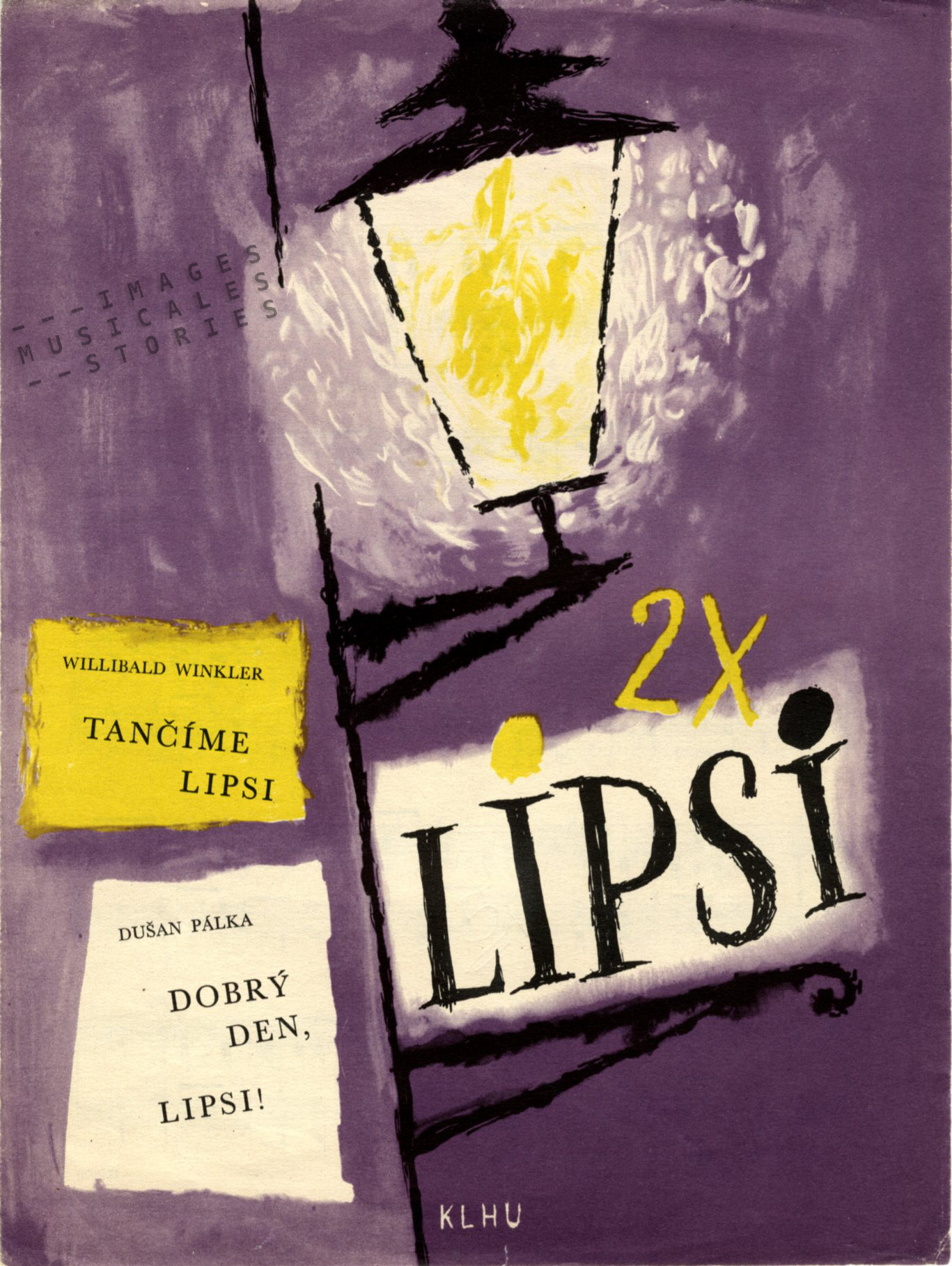
‘Tančíme lipsi — Dobrý den, lipsi!‘, two dances composed by Willibald Winkler and Dušan Pálka. Published by Státní nakladatelství krásně literatury, hudby a umění (Prague, 1959). Sheet music cover illustrated by Jaroslav Šerých.

The Lipsi wasn’t just another Fifties dance craze. It was a political statement, not by unruly teenagers but by the 66-year-old leader of post-World War II East Germany, Walter Ulbricht. The promotion of the Lipsi as a youthful dance was a cramped attempt from the communist regime to restrict the influence of Western music. Ulbricht abhorred gangs of youths who glorified rock ’n’ roll and wanted to swing wildly.

‘Lipsi Sonderheft – Alle Tanzen‘, album published by VEB Lied der Zeit (Berlin, s.d.), illustrated by Dietrich (source: albis-international)

In 1959, just two years before he would build the Berlin wall, Ulbricht declared that in order to counter Western excesses “It is not enough to condemn capitalist decadence in words, to battle against pulp literature and bourgeois habits and to criticise ‘hot music’ and the ‘ecstatic songs’ of a Presley. No, we have to offer a better alternative.”

It was orchestra leader and composer René Dubianski who came up with that politically correct alternative by merging a Latin-American cha-cha-cha with a German waltz. The dance teachers Christa and Helmut Seifert created suitable and easy steps so that everyone could follow them. They named the dance by adapting the Latin name for Leipzig: Lipsia.

Ulbricht hoped that the Lipsi would not only put an end to the supposed western decadence but also would become an international success. That’s why the regime strongly promoted the new dance and —anticipating a huge success— even patented it worldwide. Eine tolle Idee!

In an attempt to appeal to the German youngsters the DDR authorities produced an animated promotion of the Lipsi. In it the American Mister Brown, upon his return from the Leipzig Fair, enthusiastically started to teach young people in the US how to dance the Lipsi.

In reality, however the Lipsi did not catch on among the youth. Also in other Soviet-sphere countries like Estonia and Czechoslovakia it did not achieve its purpose. Possibly only the apparatchiks and the Politburo danced the Lipsi with enthusiasm.

A parallel story of an old, male world leader trying to stop the youthful urge for liberty, happened 45 years earlier, when pope Pius X failed to launch the Furlana as a safe but boring alternative to the tango.
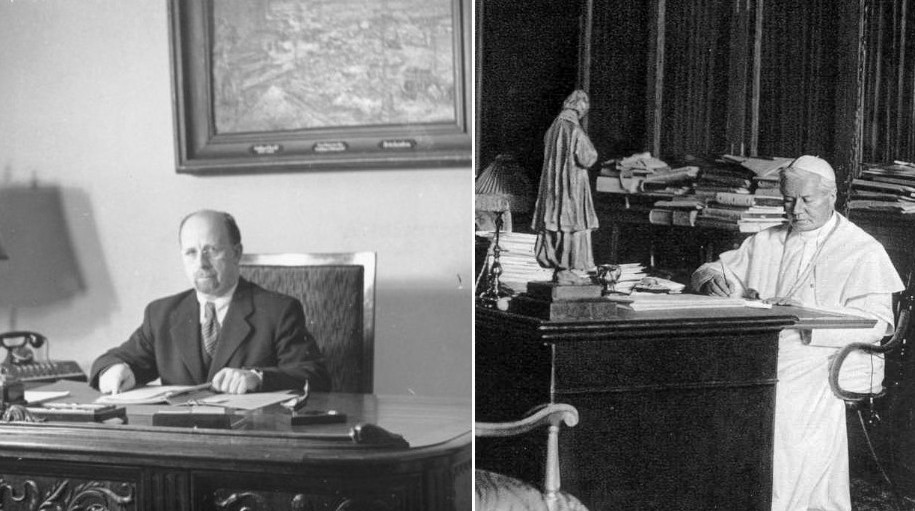
Walter Ulbricht (1893 – 1973) and pope Pius X (1835 – 1914) at their desk (source: Wikimedia Commons)

To illustrate the fierceness of the attacks against Western music in general and Elvis Presley in particular, here is a quote from Junge Welt, the official newspaper of the Central Council of the communist youth organisation: “His ‘singing’ resembled his face: stupid, dull and brutal. The boy was completely unmusical (… ) and roared like a shot deer, just not as melodiously.”

You bet…

]]>
https://blog.imagesmusicales.be/the-listless-lipsi-from-leipzich/feed/ 0
Lookalikes & Companions https://blog.imagesmusicales.be/lookalikes-companions/ https://blog.imagesmusicales.be/lookalikes-companions/#comments Sun, 18 Dec 2022 07:41:56 +0000 https://blog.imagesmusicales.be/?p=12761
Cach’ ton piano‘ by Maurice Yvain & Albert Willemetz, published by Editions L. Maillochon (Paris, 1920) and illustrated by Charles-Félix Gir. — ‘I Lift Up My Finger And Say “Tweet Tweet”‘ by Leslie Sardony, published by Publications Francis-Day (Paris, 1929), illustrated by Würth.
‘El “Kiss-Me” (Bésame)‘ by Juan Auli & M. Golobardas — ‘Bibelot‘ by A. Costa, J. Albelda & Soller. Both sheet music published by Ildefonso Alier (Madrid, s.d.) and covers signed (Pere?) POL.
‘Luna Tango‘ by Georges Hamel, published by Musiciana (Paris, s.d.) and illustration by M. Briard — ‘Minuit‘, serenade composed by H. Stile, published by Dupont, A. – Metzner (Paris, s.d.), cover illustrated by Armand Segaud.
‘When you’re tired of calling me sweetheart‘ by Earle Johnston & John Ricca, published by Sherwood Music (New York, 1924) — ‘Trying To Forget‘ by Abe Olman and Jack Yellen, published by Ager, Yellen & Bornstein Inc. (New York, 1923). Both covers illustrated by Malcolm Perret.
‘Schön ist die Jugend‘ by Max Rhode, published by Philipp Grosch (Würzburg), 1919) and illustrated by Breidenstein — ‘Memento Vivere (Mensch, Durf Te Leven )’ by Dirk Witte, published by Alsbach, G. & Co (Amsterdam, 1917), cover design by Leo Gestel.
‘Oh How I Miss You To-Night‘ by Benny Davis, Mark Fisher & Joe Burke, published by Irving Berlin, Inc. (New York, 1924). Both sheet music covers illustrated by Sydney Leff.
‘Bonsoir Madame la lune‘ by Paul Marinier and Emile Bessières, published by E. Meuriot (Paris, s.d.) and illustrated by Georges Dola — ‘E viva Carneval‘ by Menica Rondelly , published by M. Millan (Nice,  1905) and illustrated by Gaston de Montpéroux.
‘Reclame!’ by Dino Rulli and Bruno Cherubini, published by Casa Editrice Musicale (Rome, 1928), cover illustration signed ‘Monni‘ — ‘For you! Reklame operette‘ by Bruno Granichstaedten, published by Edition Bristol (Wien, 1930), unknown illustrator.
‘I Don’t Want To Get Married‘ by Myrtle Boland, James Alexander Brennan and William Jerome, published by Broadway Music Corporation (New York, 1924) — ‘Ida I Do’ by  Isham Jones and Gus Kahn, published by Irving Berlin, Inc (New York, 1925). Both covers designed by Malcolm Perret.
‘Breeze (Blow My Baby Back To Me)‘ by James F. Hanley, Ballard Macdonald & Joe Goodwin, published by Shapiro, Bernstein & Co (New York, 1919) and illustrated by Natwick — ‘If You’ll Come Back‘ by Otis Spencer and Rubey Cowan, published by Mack Stark & Rubey Cowan (New York, 1920), illustration by Albert Barbelle.
‘El Dormilón’, tango composed by Manuel Jovès, published by Editions Francis Salabert (Paris, 1926) — ‘Tango Sentimental (Ha de volver a mi)‘ by Manuel Jovès & Jose M. Marcel, published by Editions Francis Salabert (Paris, 1924). Both covers illustrated by Roger De Valerio.
]]>
https://blog.imagesmusicales.be/lookalikes-companions/feed/ 1
Sympathy For The Devil https://blog.imagesmusicales.be/sympathy-for-the-devil/ https://blog.imagesmusicales.be/sympathy-for-the-devil/#comments Sun, 06 Nov 2022 06:35:03 +0000 https://blog.imagesmusicales.be/?p=12231 Continue reading Sympathy For The Devil →]]> Sheet music cover for "Four Conceits" by Eugène Goossens
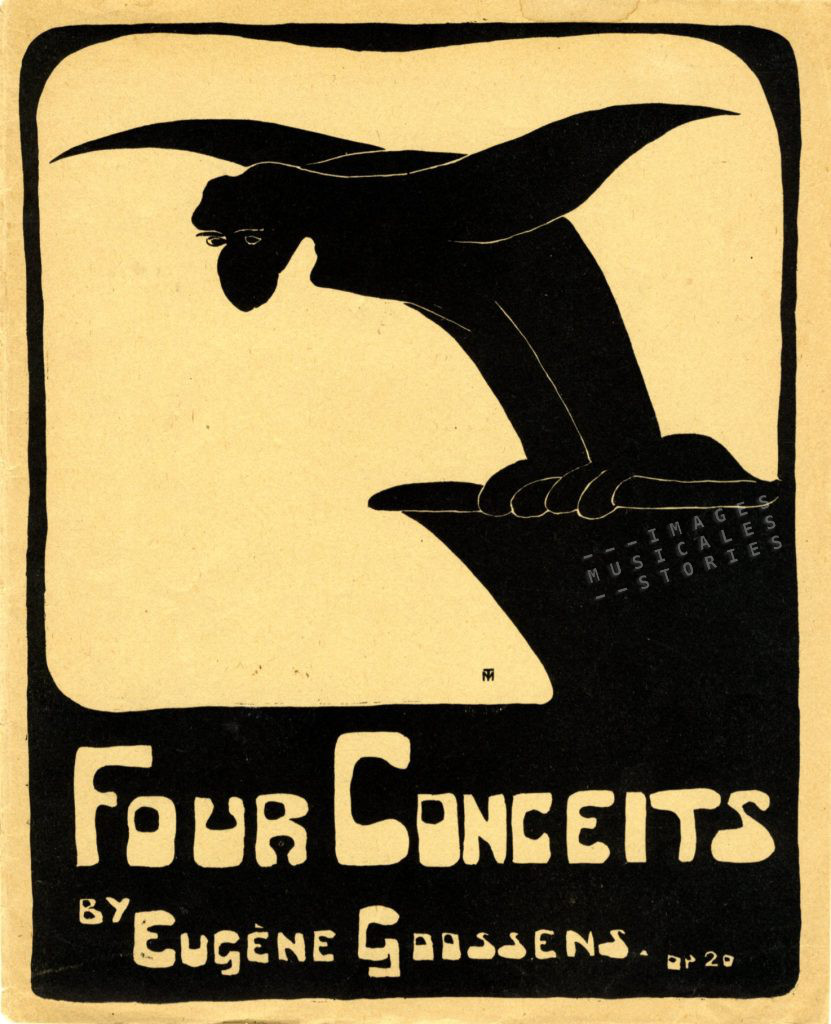
‘Four Conceits‘ by Eugène Goossens, published by J. & W. Chester (London, 1918) and illustrated by M. Tempo.

In 1893 the English composer Eugène Goossens was born into a musically gifted family. His parents and his siblings were all renown musicians. His grandfather, from Bruges in Belgium, was a famous conductor and had moved to England in 1873.

The first movement of Eugène Goossens’ Four Conceits is The Gargoyle. Eugène’s younger sister the harpist Sidonie remembers that “When he was 11 years old … he always loved to draw pictures with gargoyles. He had a sort of mania about gargoyles.” He did not draw this nice cover though, it is by M. Tempo, an illustrator we know nothing about.

His brother Leon Goossens was considered among the premier oboists in the world and although not known as a composer he wrote a march dedicated to Brussels boaters.

Sheet Music Cover for 'Marche des Canotiers' by Léon Goosens
‘Marche des Canotiers‘ by Léon Goossens. Published by Jeanne Moens (Bruxelles, s.d.), unknown illustrator.

After conducting US orchestras for nearly a quarter of a century, Eugène Goossens became the conductor of the Sydney Symphony in 1947. In Australia he established himself as a distinguished celebrity, earning even more than the prime minister. He also initiated the founding of the famous Sydney Opera House.
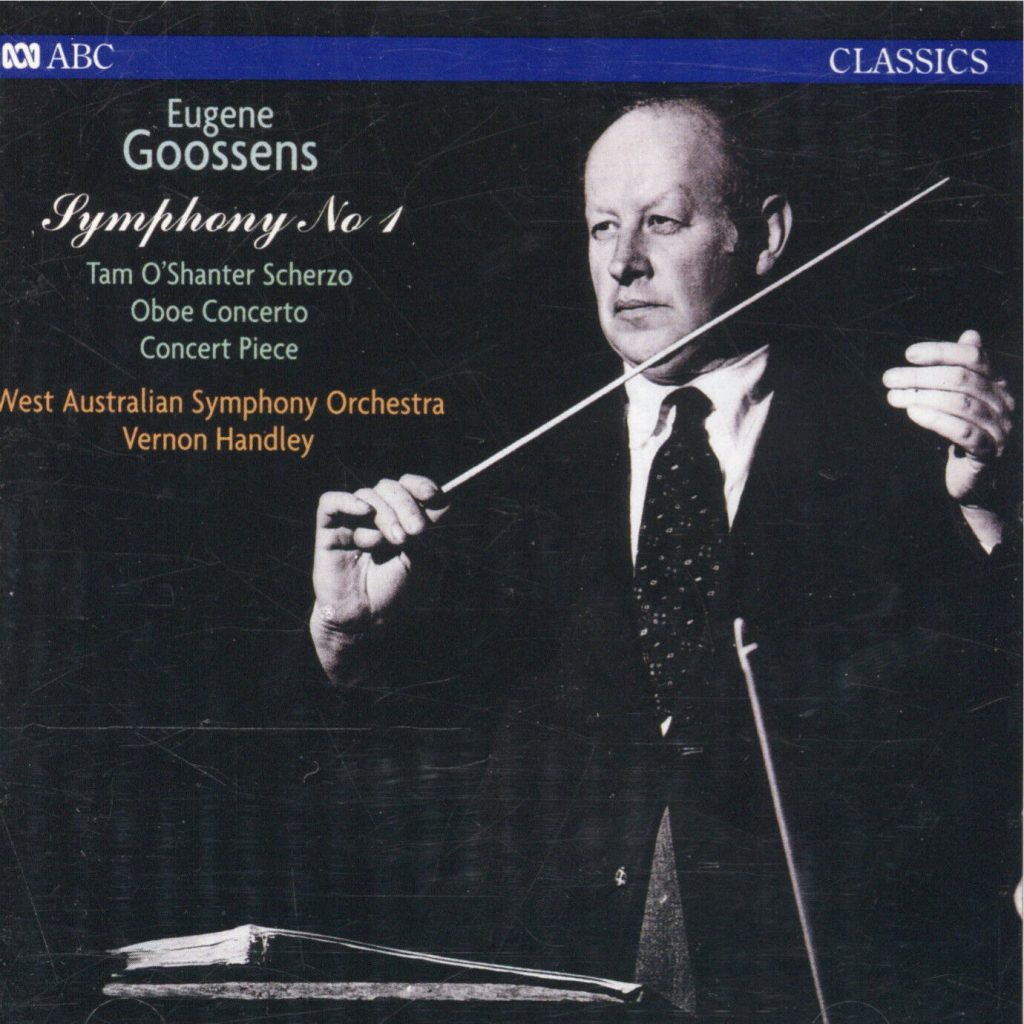
In his private live he had a lifelong interest in pantheism and the occult. Sadly this would become his downfall when in the early fifties he met the Australian artist Rosaleen Norton who had achieved scandalous notoriety as ‘the Witch of Kings Cross’. Kings Cross was Sydney’s seedy night entertainment and red-light district. There Rosaleen led a bohemian lifestyle together with her younger boyfriend, the poet Gavin Greenlees. Their small flat, in a derelict house, was decorated with occult drawings and a clumsy altar embellished with a painting of Pan and a set of stag’s antlers.
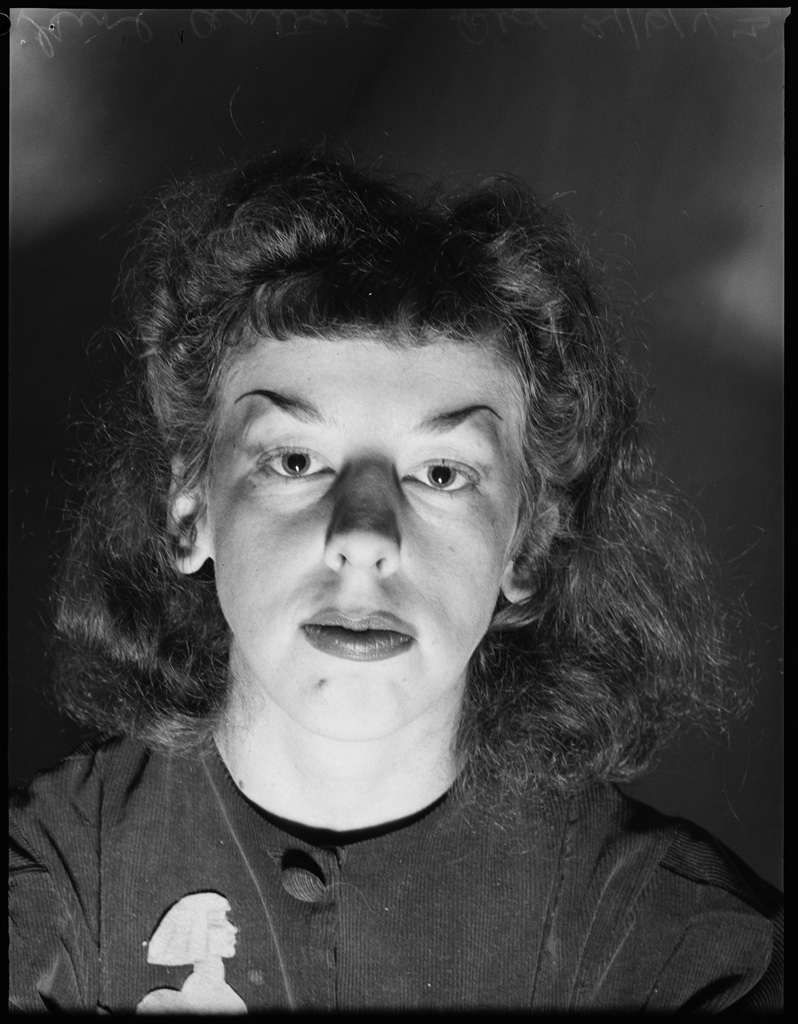
Rosaleen Norton 1943, by Ivan, for PIX Magazine, from photographic negative, State Library of New South Wales. Source: Wikipedia.

In 1952 The Art of Rosaleen Norton was published combining her (erotic) drawings of pagan gods and demons with the poetry of her lover Greenlees. The book was banned in New South Wales on the grounds of obscenity, import in the US was forbidden, and an Australian court ordered that two of the drawings had to be removed from all existing copies. This brought the book extensive media coverage. After reading it Eugène Goossens thought he had found kindred spirits and he wrote to Rosaleen. They met for tea at her sleazy flat and soon began to see each other regularly.

At that time, Eugène Goossens lived in a stylish house in Sidney with his third and much younger wife. She was a concert pianist and often away on tour, leaving Eugène —now nearing sixty— alone at home. Perhaps on the lookout for some excitement in his life, he started to take part in Rosaleen’s occult rituals. For these she was naked apart from a skimpy apron, a shawl and a mask, or she wore a robe. She and her coven members shared a ritual meal of cakes and drunk wine from a horn, which was passed round the circle.

In some private rituals Goossens, Rosaleen and Greenlees went further: they were practitioners of Aleister Crowley’s “sex magick” in the hope of reaching higher states of consciousness by performing sex rituals. Crowley —or ‘Great Beast 666‘ as he called himself— was an English occultist and ceremonial magician, and had the reputation of being the wickedest man on earth.

Sheet music 'Elle avait un p'tit cad'nas'
‘Elle avait un p’tit cad’nas‘ by Valentin Pannetier & M. Désautés. Published by V. Pannetier (Paris, s.d.), cover illustrated by Leon Pousthomis.

Eugène Goossens and the occult couple corresponded excitedly about their magical erotic experiences. The threesome was into bondage, flagellation, cunnilingus, same-gender sex and taking erotic photographs.
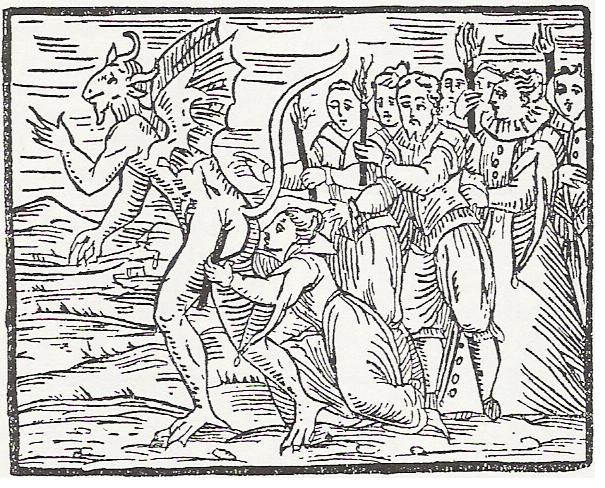
The osculum infame illustrated in Francesco Maria Guazzo’s Compendium maleficarum, 1608. Source: Wikipedia.

In one of his letters Goossens talked about the osculum infame that he administered to Asmodeus, the demon of lust. The osculum infame or the kiss of shame is a ritual kiss given by a witch to a devil’s behind.

Sheet music cover for 'Asmodeus'
‘Asmodeus‘ by Julius Einödshofer. Published by Carl Gehrmans Musikförlag (Stockholm, s.d.), unknown illustrator.

Being aware that these letters were dangerous Goossens had instructed Rosaleen to destroy them. But she didn’t and hid them under a cushion of her settee. Together with bondage photographs showing Rosaleen and her lovers, the letters were stolen by a member of her coven. He tried to sell them to the tabloids whereupon a reporter of The Sun reported the theft to the police.

The police placed the unsuspecting Goossens under surveillance, even while he was abroad in England. When Goossens returned to Australia in March 1956, he was detained at the airport. Customs officials already knew they would find a large amount of ‘pornographic’ material which included 800 erotic photographs, books and rubber masks. Humiliated and in shock, Goossens instantly and naively pleaded guilty thus jeopardising his legal defence. A major scandal broke loose in puritanical and narrow-minded Australia of the fifties. The story was fodder for the tabloids. In disgrace, Eugène Goossens returned to Britain — his international career was ruined.

Please allow me to introduce myself…

]]>
https://blog.imagesmusicales.be/sympathy-for-the-devil/feed/ 1
Nom d’une Pipe! (*) https://blog.imagesmusicales.be/nom-dune-pipe/ https://blog.imagesmusicales.be/nom-dune-pipe/#comments Thu, 29 Sep 2022 16:40:53 +0000 https://blog.imagesmusicales.be/?p=12660
Publicity cardboard for Crüwell Tabak (Bielefeld)

This image of an advertising cardboard for Crüwell pipe tobacco serves as an intro to a special selection of sheet music covers from our collection…

Sheet music cover for 'Put On Your Slippers and Fill Up Your Pipe'
‘Put On Your Slippers and Fill Up Your Pipe‘ by Albert Von Tilzer, Ed. Moran and Will A. Heelan. Published by Broadway Music Corporation (1916, New York) and illustrated by André De TaKacs.

Sheet music "I'm Still in Love With You"
‘I’m Still in Love With You‘ by Walter C. Johnson. Published by Sherwood Music Company (1923, New York). Unknown illustrator/monogram.
Sheet music 'Back from the Front' (1915)
‘Back from the Front‘, a Rag One-step composed by Armand Dumas. Published by Swan & C° (London, 1915). Illustration signed M. H.
Sheet music cover by De Valerio 'Moussa Sidi-Bé'
‘Moussa Sidi-Bé‘ by Léon Amouroux and Lucien Boyer. Published by Salabert (Paris, s.d.) and illustrated by Roger De Valerio.
‘The Kid‘ composed and published by Auguste Bosc (Paris, 1928). Cover illustration by Clérices frères.
‘La belote‘ by Maurice Yvain, Albert Willemetz and C.A. Carpentier. Published by Salabert (Paris, 1924) & illustrated by Roger De Valerio.
‘Masta‘ by Christian Hartmann and Otto Carlmar. Publisher:  P. Gedde Knap in Oslo (s.d.). Unknown illustrator.
‘Matros-Valsen‘ by Carl Lindberg. Published by  Elkan & Schildknecht / Emil Carelius (Stockholm, 1916), cover illustration by C. Jacobsen.
‘Pepper and Salt‘ by Byjacco (aka Carl Bernhard Fritz Jacoby). Published by  Ed. Bote & G. Bock (Berlin, s.d.). Cover illustration by Breidenstein.
‘När jag kommer igen’ by Ernst Rolf. Lyrics and cover illustration by Martin Nilsson. Publication: Ernst Rolfs Musikförlags (Stockholm, 1924).
‘Pipe‘ – one-step-marche by Charles d’Arbor. Published by Buffet Crampon (Paris, 1923) and illustrated by Robert Laroche.

But who will be pipe smoking champion? (Ireland 1963)

(*) Nom d’une pipe is the french expression for ‘For Goodness’ sake!’ (see also: Nom d’un chien!)

]]>
https://blog.imagesmusicales.be/nom-dune-pipe/feed/ 2
Roger De Valerio: nom d’un chien! https://blog.imagesmusicales.be/roger-de-valerio-nom-dun-chien/ https://blog.imagesmusicales.be/roger-de-valerio-nom-dun-chien/#comments Sun, 28 Aug 2022 05:06:20 +0000 https://blog.imagesmusicales.be/?p=12617
‘Jicky – Fox-Trot Shimmy‘ by Lee Rudd. Published by Editions Francis Salabert (Paris, 1921) & illustrated by Roger de Valerio.
Cover of sheet music 'Ensueno' tango by Nozuod. Published by Editions Francis Salabert (Paris, 1926) and illustrated by Roger de Valerio.
‘Ensueno‘ tango by Nozuod. Published by Editions Francis Salabert (Paris, 1926) and illustrated by Roger De Valerio.
Sheet musi cover for 'La peinadora' paso doble by Luis Barta, published by Editions Francis Salabert (Paris, 1916), illustrated by Roger de Valerio.
‘La peinadora‘ paso doble by Luis Barta, published by Editions Francis Salabert (Paris, 1916), illustrated by Roger De Valerio.
Sheet music cover of 'Attends moi sous l'horloge' by Henri Christiné, Albert Willemetz, and Jacques-Charles. Publication of Editions Francis Salabert (Paris, 1923), cover illustration by Roger de Valerio.
‘Attends-moi sous l’horloge‘ by Henri Christiné, Albert Willemetz and Jacques-Charles. Publication of Editions Francis Salabert (Paris, 1923), cover illustration by Roger De Valerio.
Partitions musicales pour 'Si j'étais petit' by André Mauprey, René Nazelles, & Louis Lemarchand. Editions Francis Salbert (Paris, 1922). Cover illustrated by Roger de Valerio.
‘Si j’étais petit‘ by André Mauprey, René Nazelles, & Louis Lemarchand. Editions Francis Salbert (Paris, 1922). Cover illustrated by Roger De Valerio.
Partition illustrée 'Patches' fox-trot by Lee S. Roberts, published by Editions Francis Salabert (Paris, 1919) and illustrated by Roger De Valerio.
‘Patches‘ fox-trot by Lee S. Roberts and Will Callahan, published by Editions Francis Salabert (Paris, 1919) and illustrated by Roger De Valerio.
Partition illustrée 'J'en ai marre!' by Maurice Yvain, Albert Willemetz, & Georges Arnould. Published by Francis Salabert (Paris, 1921) and illustrated by Roger De Valerio.
‘J’en ai marre!‘ by Maurice Yvain, Albert Willemetz & Georges Arnould. Published by Editions Francis Salabert (Paris, 1921) and illustrated by Roger De Valerio.
‘Just a memory ( Rien qu’un souvenir)‘ by Ray Henderson, B. G. De Sylva & Lew Brown. Published by Editions Francis Salabert (Paris, 1927) and illustrated by Roger De Valerio.
Sheet music cover 'Princesita' composed by José Padilla and published by Editions Francis Salbert (Paris, 1926). Cover illustration by Roger De Valerio.
‘Princesita‘ composed by José Padilla and published by Editions Francis Salbert (Paris, 1926). Cover illustration by Roger De Valerio.
Sheet music 'J'ai voulu revoir' by Jean Boyer, Louis Lemarchand, and Léo Lelièvre. Editions Francis Salbert (Paris, 1927). Cover illustration: Roger De Valerio.
‘J’ai voulu revoir‘ by Jean Boyer, Louis Lemarchand and Léo Lelièvre. Editions Francis Salabert (Paris, 1927). Cover illustration: Roger De Valerio.
Illustrated sheet music 'Swanee River Blues' by Dave Stamper. Published by Editions Francis Salabert (Paris, 1923) and illustrated by Roger De Valerio.
‘Swanee River Blues‘ by Dave Stamper. Published by Editions Francis Salabert (Paris, 1923) and illustrated by Roger De Valerio.

Eh.., yes, there is a little dog. Look carefully.

Partition musicale illustrée 'Le Fox du canard' from the operette Vivette, by Joseph Szulc and Gaston Dumestre. Published by Editions Francis Salabert (Paris, 1924) and illustrated by Roger De Valerio.
‘Le Fox du canard‘ from the operette Vivette by Joseph Szulc and Gaston Dumestre. Published by Editions Francis Salabert (Paris, 1924) and illustrated by Roger De Valerio.
]]>
https://blog.imagesmusicales.be/roger-de-valerio-nom-dun-chien/feed/ 2
The Chestnut Tree: A Very British Entertainment https://blog.imagesmusicales.be/the-chestnut-tree-a-very-british-entertainment/ https://blog.imagesmusicales.be/the-chestnut-tree-a-very-british-entertainment/#respond Sun, 31 Jul 2022 05:01:28 +0000 https://blog.imagesmusicales.be/?p=12342 Continue reading The Chestnut Tree: A Very British Entertainment →]]>
‘The Chestnut Tree’ by Jimmy Kennedy, Tommie Connor & Hamilton Kennedy, published by The Peter Maurice Music Co (London, 1938) and illustrated by G. Peres.

In these posts we already turned our attention to a few British dance crazes. Think of the springy Sir Roger de Coverly, or the Northern Soul dance style of the 70’s. Perhaps you do remember the catching, working-class Lambeth Walk. Well, here is another one of these singing dance sensations: The Chestnut Tree. Hip hip hurray!

The Chestnut Tree was the second in a series of five novelty dances, of which the Lambeth Walk was the first. The dances were launched in quick succession by the outbreak of WWII, and were produced by the Mecca Dance Halls —at the time the largest dance hall chain in England. At the head of Mecca Dance was clever Carl Heimann, advertising himself in the medallion on the cover.

‘The Chestnut Tree’ by Jimmy Kennedy, Tommie Connor & Hamilton Kennedy, published by Shapiro, Bernstein & Co (New York, 1938). source: John Hopkins, Sheridan Libraries – Lester S. Levy sheet music collection

The American version of The Chestnut Tree cover shows us that even King George VI was tapping his breast and his head while singing along. Or wasn’t he?
In a newsreel of 1936 we see King George VI, then still the Duke of York, joining in a singalong while visiting a camp for teenage boys. Together they sing Under the spreading chestnut tree, an action song of only one verse, that is repeated again and again while certain movements replace some of the words.

Under the spreading chestnut tree,
Where I held you on my knee,
Oh how happy I should be,
Under the spreading chestnut tree.

The action song was a great hit for the royals as witnessed by this other newsreel from 1939 — even the Queen and the princesses are joining in.

It was the success of these images of the King tapping his knee, breast and head, that inspired the creators at Mecca Dance to package the children action song as a new novelty dance. Indeed, hadn’t the publicity already been done by the King himself? Thus, The Chestnut Tree was born…

‘How to dance The Chestnut Tree, by Adele England’, dance instructions on the 1938 sheet music’s back cover.

Adele England was the leading teacher in the Locarno, Mecca’s flagship ballroom in Streatham, south London. She devised the dance hall routines for Heimann’s five novelty dances. For The Chestnut Tree she was not only inspired by the action song, but also inserted elements of the polka in order to appeal to the older patrons: the dancers were invited to circle the dance floor mimicking a tree, and to conclude by boisterously shouting ‘Chestnuts!’

Mecca tried to replicate its success by creating a third dance: The Park Parade about a couple taking a romantic stroll in the park on a summer’s day and by distributing free straw hats for the dance’s launch. In the newsreel below we can see and hear Miss Adele England explaining the ball room routine.

‘The Park Parade’ by Arthur Young, Anthony Page & Tommy Duggan, published by The Peter Maurice Music Co (London, 1939)

Heimann’s novelty dances all had the same mix of ingredients. They were quintessential English with English composers, producers and developed by an English dancer. They were meant to be performed by (mostly white) Britons of all ages, with or without dancing experience, rich or poor alike. The dances were a simple arrangement of steps performed in repetition while the patrons circled the dance floor in couples. All routines included shouting together and were meant to be a good laugh.

Heimann didn’t leave to chance the success of his novelty dances. Instead he devised huge promotional campaigns to launch them all over England. First the sheet music including dance instructions was sent to the press and to both the Mecca and non-Mecca dance halls, free of charge. It came with a warning that the dance was not to be performed in public before the date of the national launch.

‘The Handsome Territorial‘ by Jimmy Kennedy & Michael Carr. Published by The Peter Maurice Music Co (London, 1939). source: Sheetmusicwarehouse

The dances then all had a simultaneous debut at the Mecca dancing halls throughout the country. Professionals demonstrated the dance first and then invited patrons to join in. The words of the song were displayed on large banners along the dance halls so that everybody could sing along. And the very same day the sheet music and gramophone records would go up for sale.

The fourth (Handsome Territorial) and fifth (Knees Up, Mother Brown) novelty dances were less successful. During the war the dance business, owing to the presence of the large number of American servicemen and the jitterbug craze, would become explicitly less ‘British‘ and more Americanised.

Time to get your knees up!


Further reading: Doing The Lambeth Walk: Novelty Dances and the British Nation, by Allison Abra

]]>
https://blog.imagesmusicales.be/the-chestnut-tree-a-very-british-entertainment/feed/ 0