The post Open Education and Open Government in Chile appeared first on Creative Commons.
]]>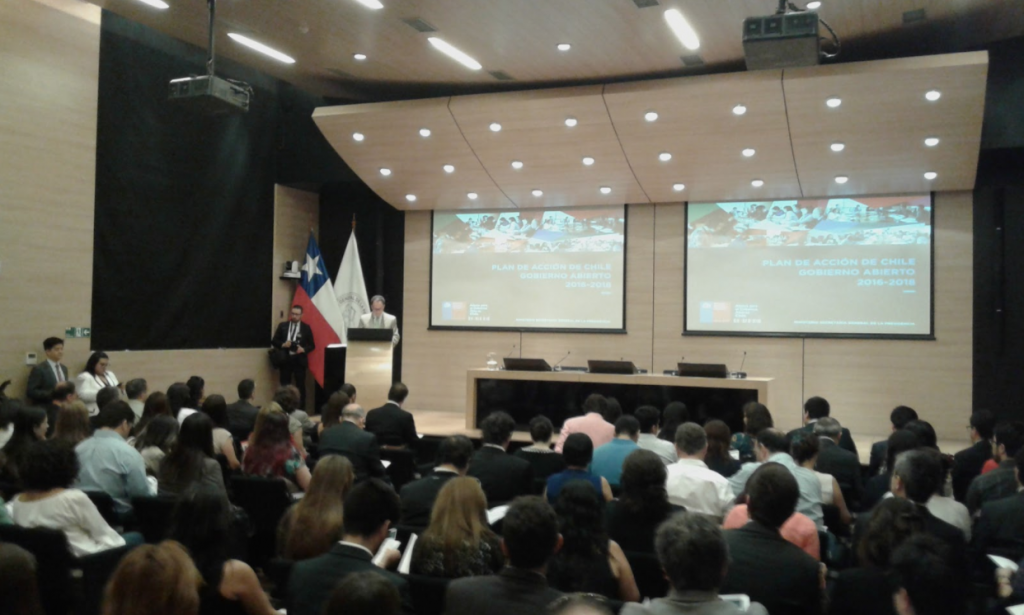 Presentation of Chile’s updated Open Government Action Plan by Werner Westermann, CC BY.
Werner Westermann is a fellow from our first Institute for Open Leadership, held in San Francisco in January 2015. He works at Library of the National Congress of Chile, and is involved in open education projects and advocacy in Chile and internationally.
The 2016 Open Education Conference (Open Ed) was an inspiring experience where I got the chance to meet individuals engaged in innovative and equitable open teaching and learning practices. I was happy to see that open pedagogy is now at the forefront of the OER movement – we see that creating and using OER is now a widely accepted way to improve educational outcomes. We also know that there’s a need to develop strong policies at all levels to promote and sustain OER efforts, especially in K-12 schools. To feed the policy rationale, more and different types of research need to be outlined, specifically those concerning efficacy and impact, which suited my contribution at Open Ed related to the ROER4D project perfectly.
Open Ed also provided the opportunity to connect with Institute for Open Leadership mentors and fellows from both cohorts. It was perfect timing to share an update on our commitments in advocating for open policy. I’ve been working with the Library of the National Congress of Chile to consider adopting an open policy.
After months of waiting, Chile released its 3rd Action Plan 2016-2018 for the Open Government Partnership (OGP). The plan outlines a commitment from the Library of National Congress of Chile entitled “Open Educational Resources for Civic Education” where the following resources will be openly licensed (CC-BY):
- Digital Citizenship Competence Framework: Conceptual definition of competencies organized in dimensions, described observable performance and level of achievement of each competency.
- Curricular and Extracurricular Digital Citizenship Plans composed of:
- Lesson plans and digital resources for the curricular subject of History, Geography and Social Sciences for the levels of 7th and 8th grade.
- Lesson plans and digital resources for an extra-curricular workshop for the development of cross-cutting fundamental objectives.
- Bank of Items for Online Evaluation System: A platform for public and permanent evaluation to measure the competences of digital citizenship.
- Teacher training module: Brief virtual training course (20 hrs.), designed for a self-instructional modality.
The inclusion of this open policy commitment in Chile’s OGP Action Plan is by far my biggest achievement so far in advocating for OER. I believe that the Institute for Open Leadership is a big reason for this success.
Thanks to my mentor Nicole Allen and her work, I recognized OGP as a relevant platform to promote open education policy. When I found out that the construction of Chile’s 3rd OGP Action Plan was going to be developed in part via a public consultation process, I made contact with the OGP officials in Chile related to the Secretary of the Presidency. Following the very clear pathway and recommendations set forth in the paper written by Nicole and Jan Gondol, I presented the benefits and potential for OER and Open Education and described how it made sense within the OGP framework. Initially, the OGP representatives were very skeptical. But I had a productive conference call with Jan from Slovakia and Jennryn Wetzler from the U.S. State Department, who shared with me their experiences incorporating OER into their national OGP Action Plans. After that call I had a solid plan for action.
I was invited to contribute to Chile’s OGP Action Plan with an institutional commitment, but I had doubts on the effectiveness of raising awareness about OER using this platform. Since Chile’s process only accepted institutional contributions, I decided to take the risk and engage my institution through a Digital Citizenship project I’m currently involved with. I was able to participate in the OGP roundtables, which were attended by ministries, governmental departments, and civil society organisations. At that time, the meetings were heavily oriented to open data issues related to environmental and energy concerns. But at the same time, there was some interest to explore the relation between education and open government, so I was happy to talk about the benefits and potential of OER within their broader open government framework.
The participants in the roundtable were receptive to the idea of incorporating open education commitments under the umbrella of our national OGP Action Plan. Later, the OGP convened the Ministry of Education in Chile, and I got the chance to meet and speak with high-level ministry officials in order to explain and advocate for the benefits of OER.
I could have never championed the inclusion of open education policies within our OGP Action Plan without the helpful support of the Institute for Open Leadership and the Open Policy Network. I strongly believe that the visibility of the resources committed in Chile is a strong start for ongoing OER support. On November 18, I will present the resources that we will be creating in a seminar hosted by the Council of Transparency, one of the governmental departments participating in the OGP roundtables.
At the institutional policy level, I would like to translate into Spanish the wonderful work done by IOL second-round fellows Amanda Coolidge and Daniel DeMarte, who this year drafted and released the OER Policy Development Tool. I could see this tool coming in handy with progress within my own institution, along with the already translated resources such as the Commonwealth of Learning’s OER Policy Template and Guidelines for Open Educational Resources in Higher Education. These resources can help to guide and support any institution to build a OER policy, and I can’t wait to deploy them.
There’s so much happening at the policy level in support of OER to improve teaching and learning. In 2017 there will be regional workshops in preparation for the OER UNESCO World Congress that will be held in September. Let’s keep up the fantastic work started by the Institute for Open Leadership. Let’s continue to help each other (and decision makers too) with information, educational resources, solid arguments, and useful research to make productive policy changes within our institutions and governments.
The post Open Education and Open Government in Chile appeared first on Creative Commons.
]]>The post Cultivating a Culture of Knowledge Sharing appeared first on Creative Commons.
]]>I was privileged to attend the second Institute for Open Leadership (IOL2), held in Cape Town, in March of this year. It was an amazing experience, during which I worked with various mentors and a small group of fellow open colleagues from around the world. One of the plusses of the Institute was hearing about the challenges that everyone faced and how they had gone about, or were going about overcoming them albeit, in some cases, with what many would consider relatively small wins. That, however, is the nature of the OER world. Lots of small wins are what ultimately lead to the big wins.
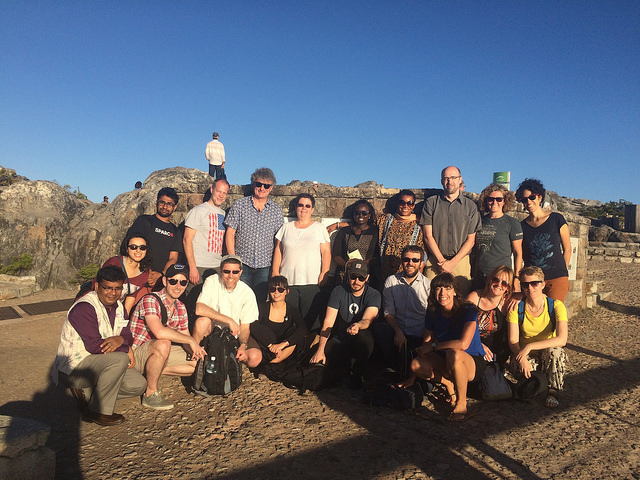
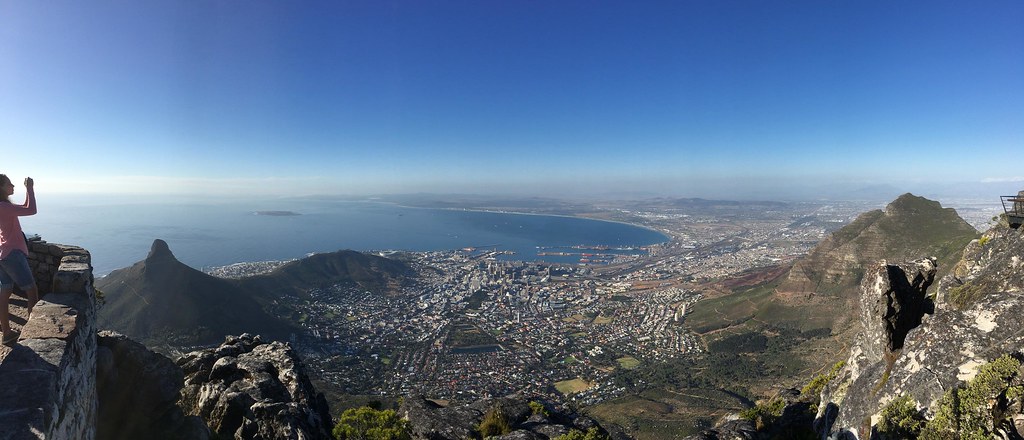
IOL Fellows atop Table Mountain, by bella_velo, CC BY 2.0
One issue that emerged is that there are no quick fixes when it comes to promoting the concept of open educational resources (OER). Tertiary institutions are a particularly difficult nut to crack, as the concept of knowledge sharing is not a popular one in what is, more often than not, an environment in which research ideas are cultivated and jealously guarded in the safe spaces of minds and offices. Not surprisingly, this does not make for fertile ground in which to plant the idea of knowledge sharing, but we persevere.
The fact that the OER movement has not quite taken off has been a cause of frustration for many of us for some time now. To those of us involved in the movement, the benefits of sharing would appear be a ‘no brainer’. However, over the course of my time as an OER Specialist at my current institution, I have had time to reflect on why the concept of OER is such a difficult one to communicate, even on a basic level.
To put things into perspective: We are on the brink of finalizing a joint Open Access/Open Educational Resources policy. We have been working on an internal online OER course and a booklet on Creative Commons licensing and OER, both of which will soon be released. We are also currently in the process of developing a range of courses together with the Office of Student Support in the Faculty of Health Sciences, which are intended to support the first year experience and will be released with an open license. I should be elated by these wins but, in my opinion, the impetus created by them will be difficult to maintain without a larger mindset change—that goes well beyond the reach of our current two-year project.
Many people become rather uncomfortable when you start to talk about openness in this somewhat esoteric vein, which is why I suspect so many OER projects are expected to produce facts, stats, quantity and research. What I think mitigates against the full success of projects which use this sort of approach, and structure, is that the concept of openness is not, at its heart, a purely quantitative or researchable one. True openness, and a willingness to share, will not flourish in an environment that is dominated, primarily, by a production line or microscopic analysis. It seems to me that we have become too cautious about addressing the real face of openness which is, in essence, an altruistic project which should ultimately benefit the world at large. In my opinion, it is the main reason why so many open initiatives disappear into the ether once the funding dries up. We have lost sight of the real spirit of the open movement because we are reluctant to admit that it doesn’t lend itself readily to the commercial, quantitative structures of our world.
We have been conditioned to believe that by being truly open to the world and people around us that we will lose something of ourselves and gain nothing in return. In some circumstances this may be true but, in reality, the world will gain something from us and something of our unique perspective on the world. All of us have knowledge to share, openly and freely, that will be of benefit to others and that can be repurposed in a way that will communicate that benefit across a range of cultures.
Openness and trust go hand-in-glove. Trust can only come from a willingness to share which, in the final analysis, stems from a concern for the common good. It really is as simple as that. That, in my opinion, is the foundation upon which the future of the open movement lies. If we don’t come from that starting point, we will remain trapped in theoretical frameworks, and the initial impetus of the movement will eventually be relegated to the world of academic research. Is that something we really want, or do we still believe that the open movement will ultimately be of benefit to the world at large?
The post Cultivating a Culture of Knowledge Sharing appeared first on Creative Commons.
]]>The post Exploring open textbooks to improve education in Uganda appeared first on Creative Commons.
]]>As a Ugandan science educator with a background in computer science, I have witnessed thousands of kids dropping out of school because their parents cannot afford buying the textbooks that schools require. This is exacerbated by the fact that teachers have limited access to affordable and up-to-date educational content. Only recently, I was appointed as a board member of a school that does not have a single textbook!
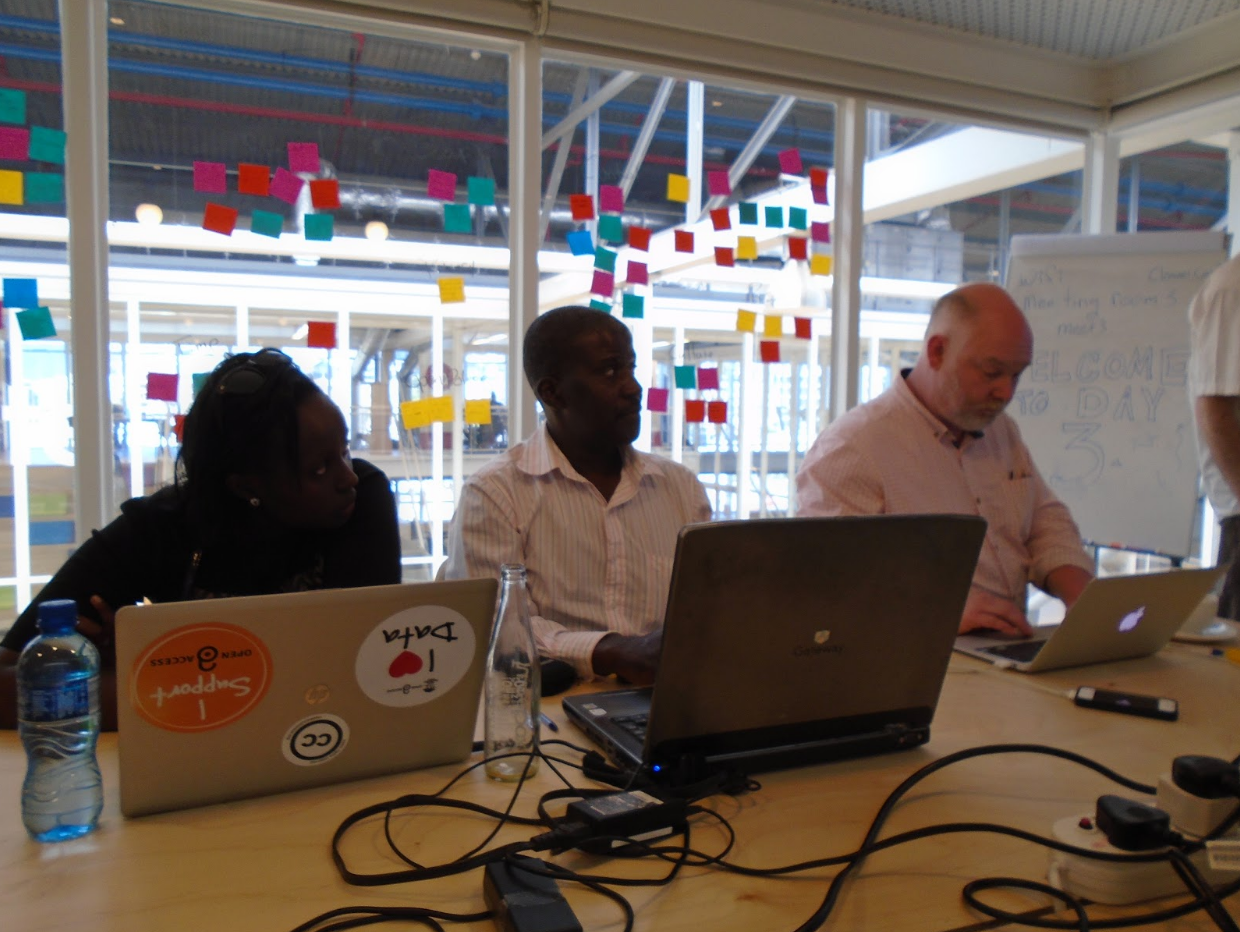 Photo by Vincent Kizza, CC BY 4.0
When I was introduced to Open Educational Resources around 2011, it appeared to me that these resources could go a long way in helping to solve our predicament in Uganda. Since then, I’ve spent time researching OER and the concept of “openness”, but I didn’t fully understand more complex issues like open licensing. For that reason, the invitation to attend the 2nd Institute for Open Leadership seemed like an incredible opportunity to learn more about open licensing, and how it could assist us in improving access to educational materials in schools.
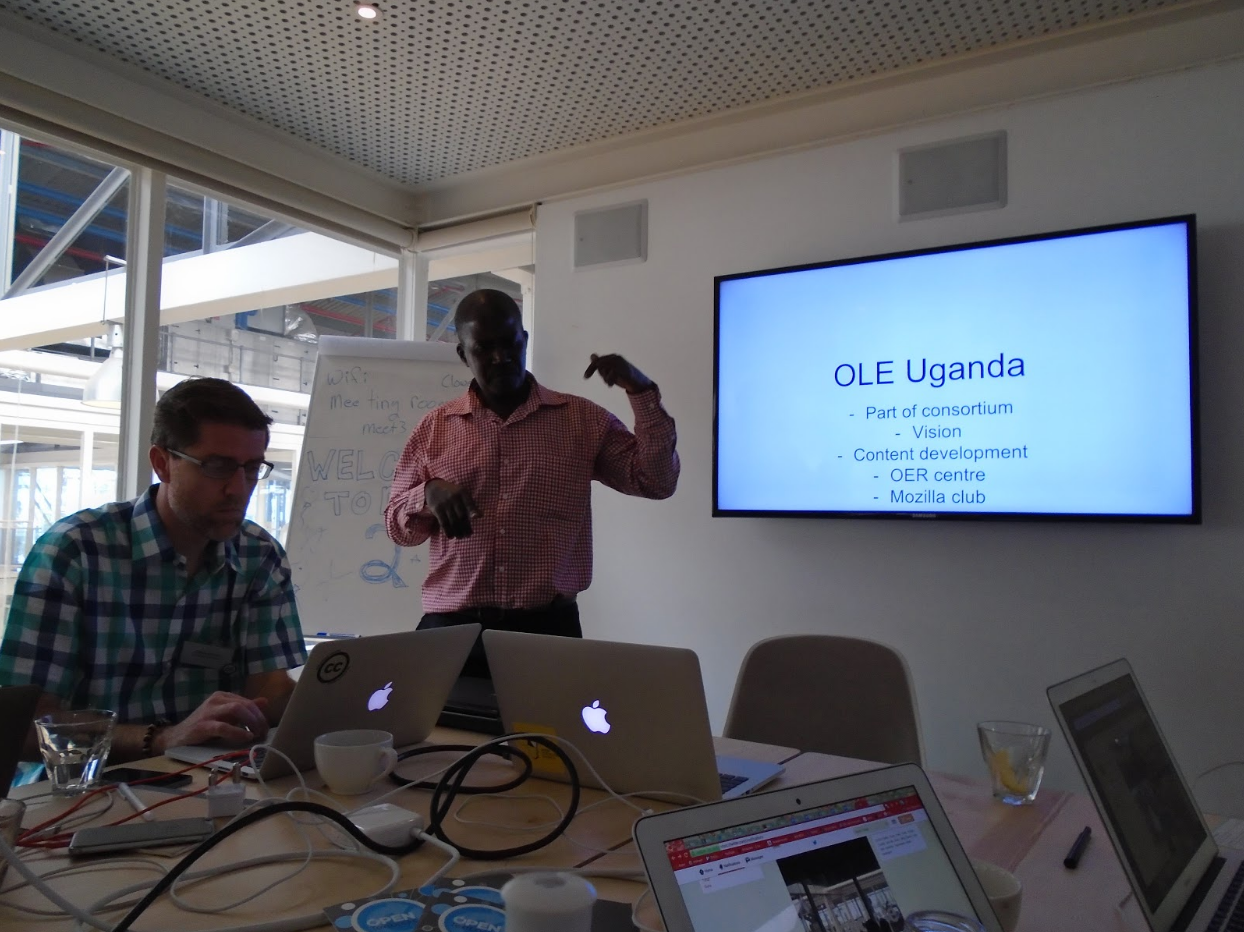 Photo by Vincent Kizza, CC BY 4.0
I’ll remember the IOL fellowship meeting in Cape Town for a very long time. For the first time in my life, I met with world-class professionals passionate about sharing their knowledge, skills, and experience. It was very refreshing to learn from people who have had experience in doing all types of “open” projects, and it seemed like every question I raised was answered from the diverse group of participants. In addition to assisting me in my work within open education, we discussed related concepts such as open data, open science research, open business models, and the application of open concepts in the museums sector. I was also able for the first time in my life to see a fully open textbook in print form (as most of the time they are offered only in digital format). This was very interesting and I’m grateful to Kelsey Wiens of CC South Africa for sharing her experiences of working on an open textbook project there. The institute meeting was relaxed and fun-filled, so this was great!
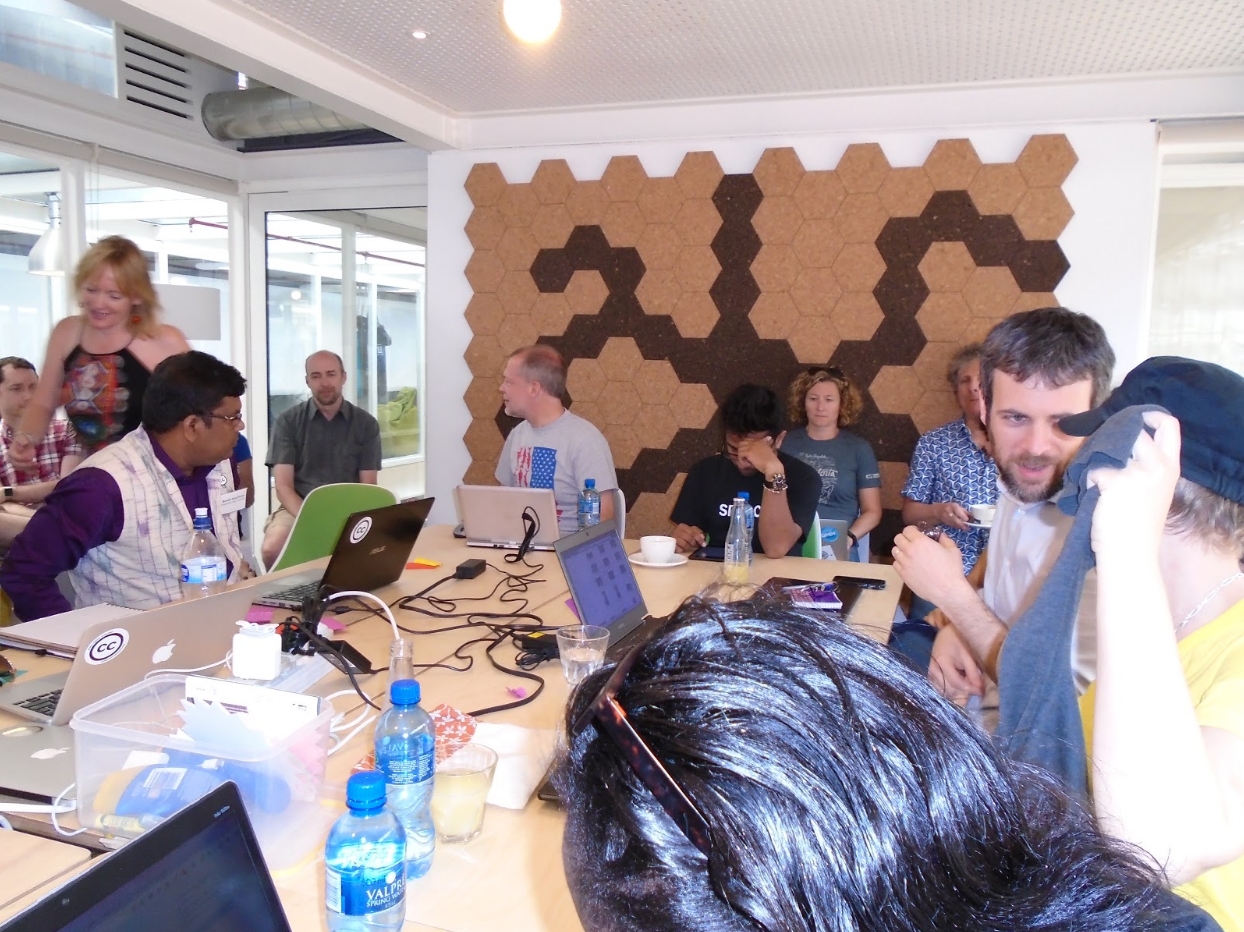 Photo by Vincent Kizza, CC BY 4.0
Initially, my open policy project was focused primarily on advocacy for open textbook policy adoption. I wanted to figure out the best way to support the new national school curriculum that will be launching in 2017. At first, the target for the policy was the Ugandan government, but during the fellowship my mentor David Ernest (who was extremely kind and helpful!) pushed me to diversify my project. My revised policy project engages individual teachers in school clusters to create OERs in support of teaching at their schools. It also aims to engage government on both the local and national levels. The open educational resources that are created by the schools will be used as the raw materials to later be aggregated into creating complete open textbooks.
My greatest achievement thus far has been at the level of the school cluster: I’ve been able to convince the National Curriculum Development Centre to re-think their contract with commercial publishers. So far, they’ve not re-signed it, which is a good signal that they are reconsidering how educational materials could be provisioned for the schools. I hope to continue working with them on advocating for openly licensed textbooks. Learn more about our work for the Ugandan schools.
The post Exploring open textbooks to improve education in Uganda appeared first on Creative Commons.
]]>The post Creative Commons and Museu da Imigração: notes on a Brazilian experience appeared first on Creative Commons.
]]>I had the privilege of participating in the second Institute for Open Leadership (IOL), held in Cape Town and hosted by Creative Commons and the Open Policy Network. The institute was attended by people from various places around the world, all with incredible projects. For the last nine years I’ve been active in the area of documentation and museum collections management. I have a Bachelor’s degree in Museology and a Master’s in Information Science. Currently I work as collection manager of Museu da Imigração de São Paulo (Immigration Museum of São Paulo). I also teach Museology at the ETEC Parque da Juventude, where I instruct classes on museums and databases.
At the Institute for Open Leadership, I came in contact with a world little known by me: the world of initiatives supporting open knowledge, open science, open education, and much more. Moreover, as a GLAM professional (“GLAM” is an acronym for “galleries, libraries, archives, and museums”), I had the opportunity to get varied feedback on my open policy proposal I had prepared for the institute. The IOL meeting was very important for me, and in a sense was a watershed moment for the project I am leading at the Immigration Museum.

Lithuanian necklace selected to be part of the exhibition, by Conrado Secassi. CC BY-SA 4.0. Source: Wikimedia Commons.
Initially, my project was focused on the following problems: what can we explore by sharing the contents of a large, rich cultural heritage collection if we do not have much information about the underlying author’s rights, rights of publicity, or personality rights? How do we begin to transform the Museu da Imigração into an institution interested in opening its collections despite these limitations?
Many professionals working in GLAM institutions constantly face problems related to intellectual property and authors’ rights in the content of their collections. We are thus led to focus on restriction rather than sharing, which deserves attention, but for which there is no simple, prompt solution. By directly addressing these questions within the scope of my project, I hoped to find advice and best practices from other related GLAM professionals. I needed to get a better answer for how to share other than “it cannot be done.”
As I met IOL participants and learned about their projects, I heard many interesting stories about how universities and other research institutions were able to establish open policies through short, medium, and long-term initiatives. I also learned that the design and implementation of successful open licensing policies will (and should) work through different stages and levels. Finally, I learned it’s crucial to start small with my project, and to work with materials that will bring benefits for the people directly involved. And this, I can now say, was the real turning point for the Museu da Imigração’s project.

Ryukyu hat selected to be part of the exhibition, by Letícia Sá. CC BY-SA 4.0. Source: Wikimedia Commons.
Instead of focusing on the thicket of IP concerns with some of the part of our collection, I revised my project to instead explore those materials that could be used and shared in a more open way. In other words, the project was redesigned to start with items from the collection which were already free from any author’s rights restrictions, and which could, for instance, be photographed by the Museu da Imigração’s current team. The museum could— as the author of photos, texts, images, and audiovisual materials about the collection—make those objects available on the web through blogs, social media, and other platforms. At the same time, the museum could establish how this content could be re-used by anybody through the adoption of Creative Commons licenses.
Upon my return to Brazil, my first major task was to educate the Museu da Imigração’s technical teams on Creative Commons, and to get buy-in with them on what should be done to adopt an open policy at our museum. My colleagues immediately agreed that we should pursue the project, and we decided that our pilot initiative would start with all of the content produced for a temporary exhibit called O Caminho das Coisas (The Way of Things).
The main reason for choosing this particular exhibition as our pilot project was the possibility of involving several professionals in the development of content and materials to be made available online under open licenses. Everybody could see—in a relatively short period of time—the impact of their work to increase the visibility of the collections and of materials produced by the teams. Another important motivation was the fact that this exhibit was the result of a joint research effort between the Museu da Imigração, migrant communities and their descendants, partner institutions, and former donors in order to obtain additional historical information about the institution’s collections.
We agreed to use Creative Commons licenses because the licenses are a clear, objective way of telling the public what can be done with the museum’s content we make available on the web. Moreover, by using Creative Commons licenses, the museum joins the great movement promoted by CC toward sharing, remix, and reuse of knowledge on a global scale.
Based on this decision, the images of objects selected for the exhibition were produced by the team, along with the exhibit’s accompanying educational materials. We also decided that the museum’s blog and its profile on Medium should be licensed under CC BY-SA 4.0 from that moment on.
The platforms used for publicizing the images were Flickr (which is heavily used in Brazil by both professional and amateur photographers and institutions), Pinterest (not very popular in Brazil, although it has faithful followers), and Wikimedia Commons. As to the latter, we were happy for the valuable assistance from Rodrigo Padula, coordinator of the Brazilian Wikipedia Group on Education and Research, who helped us in loading the images and educational materials into Wikimedia Commons.
 General overview of the exhibition, by Juliana Monteiro. CC BY-SA 4.0. Source: Wikimedia Commons.
O Caminho das Coisas opened on May 21 with a beautiful design meant to stir the public into reflecting on the historical path followed by the items through the lives of their owners until they reached the museum. In addition, QR codes were posted at various locations, inviting the public to view the images in the platforms I mentioned above. We also hoped viewers would share the images and tag the museum on social media.
Our pilot project was launched nearly two months ago, and we have already gained some interesting insights. The first is that the experience has been indeed very exciting and successful. In our team’s view, the 40+ images of key items in our collection that we posted to Flickr, Pinterest, and Wikimedia Commons have opened numerous possibilities for the material’s reuse. In addition, it represents a positive step forward in making the museum’s collections more widely available to different audiences. We are also planning new initiatives by reviewing and analyzing the data and research we’ve gleaned from this pilot.
Other aspects of the exhibition have shown our team that we still have a long, productive way ahead. We identified a major challenge for GLAM institutions in Brazil is to have the capacity and knowledge to be able to consider the “openness” of all collections as a normal, everyday activity. Right now only a few of our institutions are promoting open initiatives, and the public does not always understand what can be created with these type of materials. Also, the lack of tools to encourage people to do this may be a contributing factor to this scenario. Sure, we manage to secure likes on Facebook and shares on social media, but we still don’t know if or how the images are being reused in other contexts. Finally, there is a lack of knowledge about Creative Commons licenses—both on the part of the public and by institutions as well.
With this in mind, we know it is not enough simply to upload images onto the web – we need to tell people about them, contextualize them, and get feedback and cooperation from various audiences. Our use of social media in this experience showed us that we must adapt our way of communicating about open content in order to reach new and diverse groups of people. We have already learned, for instance, that it is not worth showing photos of details of objects on Wikimedia Commons, as these types of images are not useful for illustrating Wikipedia articles. However, they can be explored on Pinterest, where the public is more accustomed to searching for these kinds of specific detailed images.
We know that Flickr is a useful tool for photographers—even those interested in licensing photos for commercial use. At the same time, we might focus on using alternative popular platforms to talk about the project and invite the public to view, enjoy, and comment on our images. Of course, apps and sites such as Instagram and Facebook are quite popular in Brazil.
We are learning by trial and error. We want to test our ideas and see which ones will mature. My IoL grant made it possible for us to include the proposal of opening our collections as something the museum should address more systematically in our internal policies and public mission. We believe that through these steps we will be positively promoting a more open cultural heritage that is increasingly accessible to all.
The post Creative Commons and Museu da Imigração: notes on a Brazilian experience appeared first on Creative Commons.
]]>The post Creative Commons e Museu da Imigração: notas sobre uma experiência brasileira appeared first on Creative Commons.
]]>Durante o Institute for Open Leadership, pude entrar em contato com um mundo até então pouco conhecido por mim: o mundo de iniciativas pró-conhecimento aberto, ciência aberta, educação aberta e muito mais. Além disso, enquanto profissional da área GLAM (“GLAM” é um acrônimo, em inglês, para “galleries, libraries, archives, and museums”, ou “galerias, bibliotecas, arquivos e museus”) tive a chance de receber diferentes retornos a respeito da proposta que apresentei para o instituto. Posso dizer, assim, que o IOL representou um momento importante e, de certa forma, um divisor de águas para o projeto que estou liderando na instituição onde atuo.
colar Lituano selecionado para fazer parte da exposição, por, by Conrado Secassi. CC BY-SA 4.0. Fonte: Wikimedia Commons.
Inicialmente, o projeto era focado nos seguintes problemas: o que podemos explorar em uma coleção grande e rica por meio de compartilhamento de conteúdos, se nós não tivermos informações sobre os direitos de autor incidentes, bem como os direitos de reprodução ou de personalidade? Como podemos transformar o Museu da Imigração em uma instituição interessada em abrir suas coleções apesar das limitações envolvidas?
Muitos profissionais que trabalham em instituições GLAM constantemente enfrentam problemas relacionados à propriedade intelectual e direitos de autor relacionados às suas coleções. Por essa razão, é muito comum que sejamos imediatamente direcionados a focar nas restrições muito mais do que nas possibilidades de compartilhamento – que, claro, demandam atenção, mas que não possuem uma solução rápida ou imediata. Ao colocar tais questões no escopo do meu projeto, eu esperava encontrar respostas e boas práticas de outros profissionais GLAM. Eu necessitava encontrar uma resposta melhor à questão sobre como compartilhar melhor do que “isso não pode ser feito”.
Ao conhecer os outros projetos e os participantes do IOL, pude ouvir muitas histórias interessantes sobre como universidades e outras instituições de pesquisa conseguiram estabelecer políticas abertas mediante algumas ações de curto, médio e longo prazos – às vezes, algumas ações eram muito básicas, porém estrategicamente importantes. Pude aprender também que processos de criação e aplicação de políticas abertas podem (e devem) ter diferentes etapas e níveis. Finalmente, aprendi que seria crucial começar aos poucos o meu projeto e com aquilo que iria trazer benefícios diretos para as pessoas diretamente envolvidas. E aqui posso dizer que reside o principal turning point para o projeto do Museu da Imigração.
chapéu de Ryukyu selecionado para fazer parte da exposição, por Letícia Sá. CC BY-SA 4.0. Fonte: Wikimedia Commons.
Ao invés de focar nas questões de propriedade intelectual mais difíceis relacionadas à parte da nossa coleção, revisei meu projeto para que ele pudesse, ao contrário, explorar aqueles materiais que poderiam ser usados e compartilhados de uma forma mais aberta. Em outras palavras, o projeto foi redesenhado para começar com itens da coleção que eram livres de quaisquer restrições de direitos de autor, e que poderia, por exemplo, ser fotografados pela equipe atual do Museu da Imigração. Desta forma, o museu poderia – enquanto autor de fotos, textos, imagens e materiais audiovisuais sobre a coleção – tornar tais objetos disponíveis na web por meio de blogs, redes sociais e outras plataformas. Ao mesmo tempo, o museu poderia estabelecer como este conteúdo poder ser reusado por qualquer pessoa ao adotar as licenças Creative Commons.
Já de volta ao Brasil, a primeira grande tarefa realizada por mim foi conversar com as diferentes equipes técnicas do Museu da Imigração a respeito do que é o Creative Commons e convencê-las sobre o que poderia ser feito para começarmos uma política aberta em nossa instituição. Meus colegas imediatamente concordaram de que deveríamos ir adiante com o projeto, e decidimos que nossa iniciativa piloto começaria com todo o conteúdo produzido para a exposição temporária O Caminho das Coisas.
O principal motivo para escolher esta exposição particular como nosso projeto piloto foi a possibilidade de envolvimento direto de vários profissionais no desenvolvimento de conteúdos e materiais para disponibilização online com licença aberta. Assim, todos teriam a chance de ver – em um período relativamente curto de tempo – o impacto de seu trabalho contribuindo para o aumento da visibilidade do acervo e de outros materiais produzidos pelas próprias equipes. Outro motivo importante também foi que essa exposição era o resultado de um processo colaborativo de pesquisa do Museu da Imigração com comunidades de migrantes e descendentes, instituições parceiras e antigos doadores, cujo alvo é levantar mais informações sobre o acervo da instituição.
Nós concordamos em usar as licenças Creative Commons porque elas constituem um jeito claro e objetivo de comunicar ao público o que pode ser feito com o conteúdo produzido pelo museu e que disponibilizamos na web. Além disso, ao usar as licenças Creative Commons, o museu participa de um grande movimento promovido pelo CC relacionado ao compartilhamento, remix e reuso do conhecimento em uma escala global.
A partir da decisão, imagens das peças selecionadas para a exposição foram produzidas e selecionadas pela própria equipe, assim como os materiais educativos relacionados. Também decidimos que o blog do museu e o seu perfil no Medium deveriam ser usar a licença CC BY-SA 4.0 a partir daquele momento em diante.
As plataformas utilizadas para divulgar as imagens foram o Flickr (que é bastante usado no Brasil por fotógrafos profissionais ou amadores, bem como por instituições), Pinterest (não muito popular no Brasil, mas com seguidores fiéis), e Wikimedia Commons. Sobre o última, vale destacar a grande colaboração de Rodrigo Padula, coordenador do Grupo Wikimedia Brasileiro de Educação e Pesquisa, que nos ajudou no carregamento de imagens e materiais educativos no Wikimedia Commons.
visão geral da exposição, por Juliana Monteiro. CC BY-SA 4.0. Fonte: Wikimedia Commons.
O Caminho das Coisas inaugurou dia 21 de maio, com uma expografia muito bonita e feita para promover uma reflexão junto ao público sobre os caminhos que os objetos percorrem ao longo da vida de seus antigos proprietários até chegarem ao museu. Além disso, em vários pontos da exposição foram colocados QR codes convidando o público a checar as imagens existentes nas plataformas citadas anteriormente. Nós também tínhamos a expectativa que os visitantes poderiam compartilhar as imagens e taggear o museu nas redes sociais.
Nosso projeto piloto foi lançado há quase dois meses, e nós já podemos dizer que ganhamos alguns insights interessantes. O primeiro é que a experiência tem sido, sim, muito instigante e exitosa. Na perspectiva da nossa equipe, as cerca de 40+ imagens postadas no Flickr, Pinterest e Wikimedia Commons abriram inúmeras possibilidades de reuso do material. Além disso, o projeto representa um passo rumo à disponibilização cada vez maior das coleções do museu para diferentes públicos. Nós também estamos planejando novas iniciativas e analisando os dados que conseguimos adquirir a partir deste piloto.
Outros aspectos da exposição têm mostrado para nossa equipe que ainda temos um longo e produtivo caminho pela frente. Identificamos que um desafio significativo para as instituições GLAM no Brasil é a capacidade e conhecimento para considerar a “abertura” de todas as coleções como uma atividade normal, rotineira. Apenas algumas de nossas instituições promovem iniciativas abertas e o público nem sempre compreende o que pode ser criado a partir ou com os materiais. Do mesmo modo, a falta de ferramentas que encorajem as pessoas a fazer isso pode ser um fator que contribui com tal cenário. Claramente, nós queremos que as pessoas deem likes no Facebook e compartilhem os conteúdos nas redes sociais, mas ainda não sabemos se ou como as imagens estão sendo reutilizadas em outros contextos. Por último, vale dizer que ainda há uma falta de conhecimento geral a respeito das licenças Creative Commons – tanto por parte do público quanto por parte das instituições.
Com isso em mente, sabemos que não é suficiente simplesmente subir imagens na web – nós precisamos falar às pessoas sobre elas, contextualizá-las e conseguir retornos de diferentes públicos. Nosso uso das redes sociais nesta experiência nos mostrou que precisamos adaptar nossa forma de falar sobre conteúdo aberto de forma a atingir novos e diferentes grupos. Nós já aprendemos, por exemplo, que não é válido mostrar fotos de detalhes de objetos no Wikimedia Commons, já que este tipo de imagem não colaboraria na alimentação de artigos da Wikipédia. Porém, elas podem ser exploradas no Pinterest, pois o público ali está mais acostumado a pesquisar por esses tipos específicos de imagens em detalhe.
Sabemos também que o Flickr é uma ferramenta muito útil para fotógrafos – inclusive aqueles interessados em licenciar suas imagens para uso comercial. Ao mesmo tempo, podemos direcionar nosso trabalho para usar outras plataformas alternativas que falem sobre o projeto e convidem o público a visualizar, curtir e comentar nossas imagens. E do mesmo modo, aplicativos e sites como Instagram e Facebooks são muito populares no Brasil e podem ser explorados nas próximas experiências.
Estamos aprendendo por tentativa e erro. Queremos testar nossas ideias e verificar quais delas vão amadurecer. Minha bolsa para participar do IoL tornou possível para nós incluir a proposta de abrir nossas coleções como algo que o museu deveria incorporar de forma mais sistemática em nossas políticas internas e missão pública. Acreditamos que por meio destes passos nós conseguiremos promover um patrimônio cultural cada vez mais aberto e acessível para todos.
The post Creative Commons e Museu da Imigração: notas sobre uma experiência brasileira appeared first on Creative Commons.
]]>The post Developing Open Policy for Higher Education appeared first on Creative Commons.
]]>I have been in the field of open education for 10 years, starting in 2006, when I was based in Nairobi, Kenya working on the TESSA Project through the Open University UK. I joined BCcampus’s Open Education Team in 2014 and have had the opportunity to work on a variety of open education projects provincially, nationally, and internationally. BCcampus supports the work of the British Columbia (Canada) post-secondary system in the areas of teaching, learning, and educational technology. My role is to lead the Open Education team, and in particular to advocate for open education practices across the province of B.C. BCcampus’s Open Education team is best known for the work we have done on the B.C. Open Textbook Project.
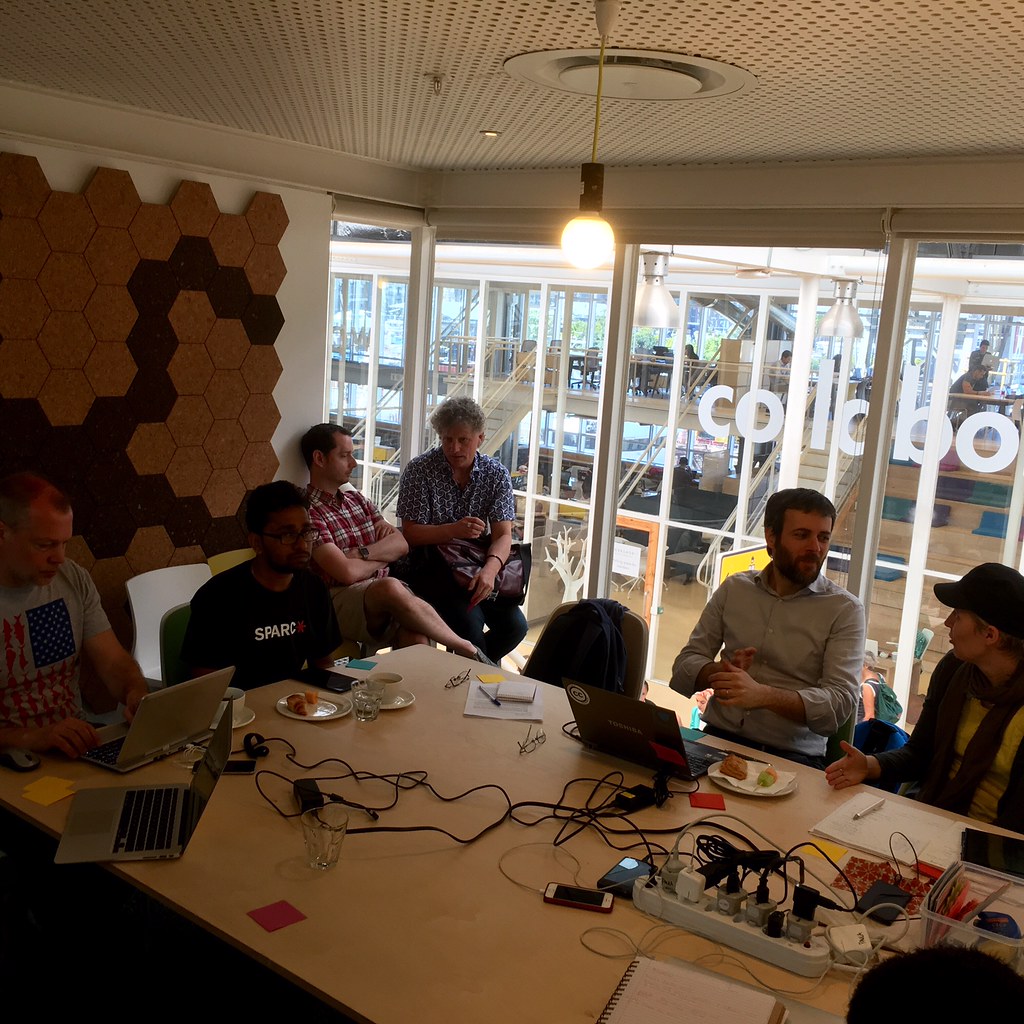
The Institute for Open Leadership was the most profound and inspirational professional development activity I have taken part in. I had the chance to meet a group of passionate open advocates from around the world who are changing open policy in museums, non-profit organizations, research, and higher education. From the week in Cape Town, I came away with two small open policy projects, and one large project.
BCcampus Open Education contracts with grantees
One of the smaller open policy projects I have taken on is to change and clarify the wording of our contracts with our B.C. grantees. When we work on projects—either creating or adapting open educational resources—each grantee must adhere to the contract that is outlined between BCcampus and the grantee. The language in these contracts needed to be stronger to ensure that openness was not an afterthought, but that it was deeply embedded into the work we were asking the grantee to accomplish. Changes to the wording of our contracts include:
- Technical formats for revision and remixing: Completed OER materials must include the original, editable files for re-distribution.
- Accessibility standards: OER in the form of multimedia, such as videos or audio, must be compliant with accessibility standards and include a transcript and preferably closed captioning.
- Clarification of the CC license requirements for newly created works and the use of existing resources in the development of materials:
- New Creation – copyright with author(s)
- The materials covered by this contract will be a newly created work, for which the copyright will be held by the author or in the case of a new book that is collaboratively produced by more than one author the copyright will be jointly owned by all contributing authors. In both cases, the resulting content will be licensed for reuse with the most current version of the Creative Commons Attribution (CC BY) license.
- Use of Existing Content
- Any existing content used in the development of the materials must have a Creative Commons License. The use of the materials must comply with the original Creative Commons License attributed to the existing content.
- New Creation – copyright with author(s)
Open policy for the Ministry of Advanced Education
The second smaller—yet potentially more impactful—policy project is developing an open policy statement for our B.C. Ministry of Advanced Education. The open policy is directed to granting funds, in that the Ministry would state that all grantees who receive public funds from the Ministry of Advanced Education must use CC licensed material in the development of their said project. While this is still in draft form and has not been formally presented to the Ministry, a part of the statement reads:
Grantees are encouraged to search existing resources and OER repositories for openly licensed learning objects and, where appropriate, reuse these learning objects instead of duplicating existing objects as components of their proposed programs. If existing OER are reused as part of the grant funded project, the grantee shall comply with the terms of the applicable open license, including proper attribution.
Open educational resources policy guide
The third, and largest, open policy project is the creation of an Open Educational Resources Policy Guide for Colleges and Universities in both the United States and Canada. I have the distinct pleasure of working on this project with another IOL Fellow, Daniel Demarte. Daniel is Vice President for Academic Affairs & Chief Academic Officer at Tidewater Community College. Daniel and I are very passionate about ensuring that the development and implementation of OER is successful in higher education. We believe that in order to mainstream OER development and adoption, an open policy should be implemented. The purpose of the guide is to promote the utilization of OER and scale efforts to full OER programs. It is written primarily for governance officials at public two-year colleges in the United States and Colleges and Universities in Canada. The contents of the policy guide are not intended to be prescriptive; contents are intended to be adapted for use according to a college’s culture. The OER policy guide is organized in three sections including:
- OER Policy Principles
- Components of an OER Policy
- OER Policy Resources
The components of OER Policy section includes the following topics that we think decision-makers should consider when developing an institutional OER Policy, or when integrating these components into an existing institutional policy:
- OER Purpose
- OER Policy Statement
- Intellectual Property and Licensing OER Content
- OER Procedures and Responsibilities
- OER Training and Professional Development
- OER Course Design
- OER Content Development
- Sharing OER Content
- OER Technical Format
- OER Sustainability (college-wide capacity, funding model, tenure)
- OER Quality Assurance
For each component, we provide an explanation of why the component is needed, sample policy statements, sample resources, and a recommended action checklist. Stay tuned for continued updates on the status of the Open Educational Resources policy guide.
I would like to give my sincere thanks to Creative Commons, mentors, fellows, and the Open Policy Network for including me in the Institute for Open Leadership.


The post Developing Open Policy for Higher Education appeared first on Creative Commons.
]]>The post Institute for Open Leadership 2: Apply now appeared first on Creative Commons.
]]>
Cape Town by Kemal Kestelli on Flickr, CC BY-ND 2.0.
Earlier this year, Creative Commons and the Open Policy Network hosted the first Institute for Open Leadership (IOL). The IOL is a training and support program to empower new leaders interested in crafting and implementing an open licensing policy within their discipline. We had a diverse cohort of 14 fellows who came together for a week in January, 2015 in San Francisco. The fellows worked with mentors and each other to hone their open policy project ideas. Since then they’ve working within their institutions and fields to implement their open policy plan.
Today we’re opening the application period for the next round of the institute. IOL 2 will take place March 14-18, 2016 in Cape Town, South Africa.
Application instructions are on the Institute for Open Leadership webpage. Applications are due October 30, 2015. We will accept 15 IOL fellows.
We encourage applications from a variety of areas, including the public sector, cultural heritage institutions, publishing, and scientific labs. We’re interested in individuals who are eager to become experts in open licensing, pursue new opportunities for open sharing of content and data, and directly influence policy decisions in their institution and field of work.
Thanks again to the William and Flora Hewlett Foundation and the Open Society Foundations for their support for the Institute for Open Leadership.
The post Institute for Open Leadership 2: Apply now appeared first on Creative Commons.
]]>The post Report back: Institute for Open Leadership meeting appeared first on Creative Commons.
]]>
IOL group shot by Cable Green under CC BY
There was significant interest in the first iteration of the IOL program: we received over 95 applications and selected 14 fellows for the first Institute. The fellows came from around the world (Bangladesh, Barbados, Chile, Colombia, Greece, Nepal, New Zealand, Poland, Portugal, Somalia, United States ), and reflect a wide range of institutions–from community colleges to government sector to public radio.
The central component of the IOL program requires fellows to develop, refine, and implement a capstone open policy project within their home institution. Creative Commons staff and other selected mentors provided guidance throughout this process.
Week’s activities
The week was deliberately structured with the fellows at the center of the conversation, with a specific focus on providing them with the information and tools to develop and successfully implement their open policy project in their institution. We constructed the week’s activities to cover a wide range of topics, including:
- Overview of Creative Commons and open licensing, as this is a key aspect to all open policies.
- Deep dive into open policy, including identifying existing real world examples, sharing lessons learned, discussing the value proposition, sharing typical opposition arguments.
- Discussion of practical development of policy roadmaps and roll-out strategies across different sectors/institutions.
- Campaign planning and advice/best practices about how to communicate with decision makers about open policy.
- Identification of resources in support of open policy development and implementation, including presentations, reports, videos, informational and promotional materials.
- Sharing of best methods for educating and informing decision makers about open policy, including workshops, courses, hackathons.
- Testing fellow’s open policy knowledge and expected challenges through an open policy “shark tank.”
- Hewlett Foundation communication team interviewed multiple IOL fellows for a Hewlett story on the power of CC licensing.
Mentors included Cable Green, Paul Stacey, Timothy Vollmer and Puneet Kishor from Creative Commons and Nicole Allen and Nick Shockey from SPARC. Each of these persons had specific subject-area expertise and acted as a “mentor” for two or more of the fellows. We grouped the fellows based on their project ideas with a mentor in the following categories: Open Educational Resources, Open Access, Open Data, Open GLAM (galleries, libraries, archives, museums), and Open Business Models. During the week, we provided time for fellows to work individually, with other fellows, and with their mentors.

IOL session by txtbks under CC BY
On the final day of the in-person Institute we asked each fellow to report back on their progress from during the week, and asked each to answer common questions, such as talking about their open policy project objectives, planned activities to meet those objectives, identification of challenges they expect to face, partners they plan on working with, and metrics for success.
In addition to the whole group discussions, mentor breakouts, and individual work, we included informational and motivational speakers to talk with the fellows over our lunch breaks. These talks were given by individuals with experience working in open policy across a variety of sectors, including Hal Plotkin (former Senior Policy Advisor within the U.S. Department of Education), Abel Caine (OER Program Specialist at UNESCO), Heather Joseph (Executive Director at SPARC), Laura Manley (Project Manager at Open Data 500) and Romain Lacombe (Plume).
Next steps
With the successful completion of the in-person portion of the IOL, the fellows have now returned to their home countries and will begin the process of implementing their open policies. The mentors are committed to continue working with their respective fellows, including providing advice and assistance. Fellows and mentors will meet to discuss progress over webinars planned for the following months. The goal is for the fellows to have implemented their open policy at the institution within a year. The fellows will be able to share more information about the implementation of their capstone policy projects in the coming months.
We’ve already solicited feedback from fellows and are currently evaluating the activities and structure of the just-completed IOL. There are already several improvements we’d like to see as we begin to develop the second round of the IOL, to be held outside of North America in January 2016. We plan to open the application process for round two in mid-2015. The demand for IOL is large and additional funding is being sought to support additional ones beyond the first two.

Yoda Fountain by Nasir Khan under CC BY-SA
Note: Lucasfilm has offices inside The Presidio, where the IOL took place. Thus, Yoda.
One of the aims of the Institute For Open Leadership is to link participants together into a global network. Participants from this inaugural Institute for Open Leadership, and all future ones, become part of a peer-to-peer network providing support for each other, asking and answering questions, and getting ongoing help with open policy development and implementation. This network helps participants overcome barriers and ensure open policy opportunities come to fruition.
The post Report back: Institute for Open Leadership meeting appeared first on Creative Commons.
]]>The post Institute for Open Leadership kicks off next week appeared first on Creative Commons.
]]>
The Presidio by Mindus under CC BY-NC-SA
It’s a new year, and Creative Commons and the Open Policy Network are excited to work with the inaugural group of fellows at the Institute for Open Leadership. The Institute for Open Leadership–or IOL–is an effort to cultivate new leaders in open education, science, public policy, and other fields on the values and implementation of openness in licensing, policies and practices. The rationale for the Institute is to educate and empower potential open advocates within existing institutional structures in order to expand and promote the values and practices of the idea that publicly funded resources should be openly licensed.
We received nearly 100 high quality applications and selected 14 fellows for the first Institute. The fellows come from around the world (12 countries), and reflect a wide range of institutions–from community colleges to government ministries to public radio.
We’re hosting the in-person portion of the Institute in California next week. It’s important that the Institute help fellows move from theory to reality: a major component of the program requires fellows to develop, refine, and implement a capstone open policy project within their home institution. Creative Commons and the open community will provide mentorship and guidance throughout this process. As the fellows build and eventually implement their policy projects, we’ll ask them to share their progress, challenges, and successes. We also plan on running a second Institute for Open Leadership outside of North America – in late 2015.
The post Institute for Open Leadership kicks off next week appeared first on Creative Commons.
]]>The post Apply now to participate in the Institute for Open Leadership appeared first on Creative Commons.
]]>
Earlier this week, we kicked off the Open Policy Network. We announced that the first project within the Network is the Institute for Open Leadership. The Institute for Open Leadership is a training program to develop new leaders in education, science, public policy, and other fields on the values and implementation of openness in licensing, policies, and practices. The Institute is looking for passionate public- and private-sector professionals interested in learning more about openness and wish to develop and implement an open policy in their field.
Interested applicants should review the application information and submit an application by June 30, 2014. We plan to invite about 15 fellows to participate in the first round of the Institute for Open Leadership. The in-person portion of the Institute will be held in the San Francisco bay area in January 2015 (TBD: either January 12-16 or January 19-23). Applications are open to individuals anywhere in the world.
A central part of the Institute will require fellows to develop and implement a capstone open policy project. The point of this project is for the fellow to transform the concepts learned at the Institute into a practical, actionable, and sustainable initiative within her/his institution. Open policy projects can take a variety of forms depending on the interests of the fellow and the field where the project will be implemented.
Questions about the Institute for Open Leadership should be directed to opn@creativecommons.org. Our thanks to the William and Flora Hewlett Foundation and the Open Society Foundations for funds to kickstart the Institute for Open Leadership.
The post Apply now to participate in the Institute for Open Leadership appeared first on Creative Commons.
]]>