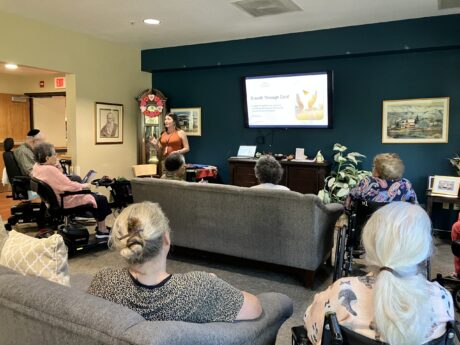
“Grief is love with nowhere to go.” These poignant words were shared by Erika Frost, grief support specialist at Thema Hospice, during the first session of a four-week class series being offered at Handmaker this month.
By the time people reach their 70s, many have experienced the loss of loved ones, including parents, siblings, friends, or partners. But grief can take many forms, especially later in life. It may also arise from the loss of independence, a transition to a new living situation, or the challenges of adapting to changes in a family member’s or partner’s health and needs.
As Erika reminded participants, “Grief is one of the most human experiences we will ever have, but many of us were not taught how to move through it.”
Recognizing the need for support during difficult times, Handmaker has partnered with Thema Hospice to offer Growth Through Grief, a four-week series designed to provide connection, understanding, and gentle tools for navigating grief and life’s many changes. The response so far has been overwhelmingly positive.
Although Handmaker staff members were also invited to participate, the first sessions have primarily drawn residents. With Erika’s gentle guidance and thoughtful prompts, some participants have shared their personal experiences, while others have chosen simply to listen. Both are welcome. At the end of the first class, several residents reported feeling a little lighter. One resident, who had been experiencing shoulder pain that she thought might be related to her grief, shared that her discomfort had decreased considerably.
Erika emphasized that grief is a deeply personal experience, quoting author and grief expert David Kessler: “Each person’s grief is as unique as their fingerprint.” She also offered practical advice for supporting someone who is grieving. Listening without judgment, rather than offering advice or trying to find a silver lining, can make a meaningful difference. Everyone deserves the space to experience grief in their own way and in their own time.
Although this is the first time in recent years Handmaker has offered this type of class series for residents, it will not be the last. Residents have expressed gratitude for the opportunity to come together in a supportive environment, and the positive response has encouraged Thema to offer another series this winter for residents, staff, and family members. The upcoming program will include a session in early December focused on coping with the “holiday blues,” which can be especially difficult for those experiencing grief.
Erika closed the first session by sharing a poem by Terry Kettering, “Elephant in the Room,” which speaks to the discomfort many people feel when acknowledging another person’s grief. Its opening lines offer a powerful reminder of why these conversations matter:
There’s an elephant in the room.
It is large and squatting, so it is hard to get around it.
Yet we squeeze by with, “How are you?” and “I’m fine,” and a thousand other forms of trivial chatter.
We talk about the weather. We talk about work. We talk about everything else, except the elephant in the room.
]]>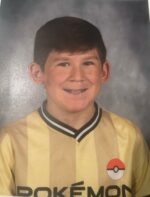 Jacob Schumer will celebrate becoming a Bar Mitzvah on Oct. 31, 2026, at Kol Ami Synagogue. He is the son of Dr. Corey Schumer and Jennifer Schumer.
Jacob attends Basis of Oro Valley. He loves creating games on Roblox and enjoys riding his bike, playing baseball, coding, and Ninja gymnastics. He also likes hanging out with his friends and playing basketball.
For his mitzvah project, he is collecting donations such as notebooks, pencils, shampoo, and soap for Youth On Their Own (YOTO), a dropout prevention program that supports the high school graduation and continued success of youth experiencing homelessness in Pima County.
]]>
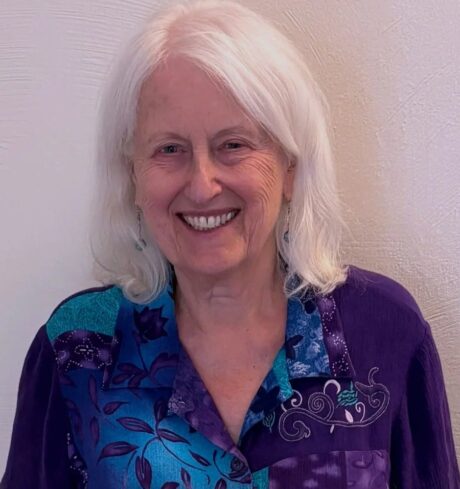 For years, Evelyn Damashek Varady meticulously researched the lives of her parents, Hela and Janek Damashek, with particular emphasis on how they survived the Holocaust. She combed documents, letters, photos, and interviews with family members to fill in the gaps left by her parents’ reticence and their early deaths: her mother’s when she was only nine years old, and her father’s when she was 22. She knew that her parents fled Krakow the day after Germany attacked Poland and survived the Holocaust in part by living under Polish Christian aliases in Warsaw.
Her father’s brother, Marek, who’d survived the war years with her parents, praised her research but thought the first draft of her manuscript lacked drama. She agreed and decided to take a more creative approach, imagining her parents’ emotions and details of the ordeals they endured.
The result is “Two Cars and a Wagon: A Family’s Holocaust Escapes and a Daughter’s Remembrance” (Wheatmark, 2026), which she will discuss on Monday, Nov. 9 at 4 p.m. at the Tucson Jewish Museum & Holocaust Center. (Note revised date.)
Although she had known the broad outlines of their stories, she had a breakthrough in 2010, when her stepmother gave her a suitcase full of her father’s papers.
She discovered that her parents’ false identity papers were dated April 1943. They’d survived three and a half years of the war without them.
Throughout the book, Varady is candid about what is invented. She begins with a chapter titled “Hela and Me: An Imagined Conversation,” seeking Hela’s permission to write as if her mother were telling her own story.
“It was extremely important to balance the so-called creative details that documented history, whenever I could, within the narrative, and be transparent about my sources,” Varady says. “In fact, some of what may have seemed creative details were actually based on other people’s memoirs,” such as a list of supplies in the German prisoner-of-war camp where her father, a doctor, treated patients after being arrested in Warsaw in October 1944.
One particularly chilling bit of research she unearthed is a Nazi questionnaire documenting all medical personnel in the occupied areas. With the help of Yad Vashem, Israel’s Holocaust museum, she found the one for Stryi, Ukraine, the town her parents had fled to. With a Jewish star next to her father’s photo, it proved that the Nazis had known her parents’ address in Stryi and that they were Jewish, “and that my grandparents were Jewish, and even the names of my great-grandparents that I never even knew until I saw this Nazi document.”
“I had no idea that they were on the radar of the Nazis for two years while they were in Stryi,” she explains.
In the first half of “Two Cars and a Wagon,” Varady reconstructs her parents’ stories with the tension and flair of historical fiction.
The second half recounts key elements of her life and research, starting with a Yom HaShoah commemoration in Tucson in 1984 in which she and her husband participated, “the beginning of a quest to gain clarity about my identity as one voice in the community of second-generation Holocaust survivors.”
Later, Varady became a docent at the Tucson Jewish Museum & Holocaust Center. At first, sharing her family’s story with visitors was difficult.
“Over time, I’ve come to realize that the darkest, most horrific chapters of history should not be hidden; they are part of our legacy as humans,” she says.
Registration is required for Varady’s Nov. 9 talk at the museum; register here.
]]>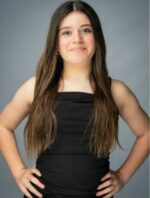 Jordyn Bailey will celebrate becoming a Bat Mitzvah on Oct. 24, 2026, at Kol Ami Synagogue. She is the daughter of Jennifer and Jason Bailey and sister to Zach Bailey.
Jordyn has been dancing since she was three years old and has been on a competitive dance team for the past five years. She also enjoys hanging out with her friends and spending time with her family and dog, Bruce. She loves Chipotle and the shows Big Brother and Dancing with the Stars.
For her mitzvah project, Jordyn volunteered at Handmaker, helping lead the Simchat Torah service and spending time with the residents. She is also contributing to the Good+Foundation started by Jessica Seinfeld, a nonprofit that works to give goods and services to under-resourced parents, caregivers, and families across the nation.
]]> On the evening of October 7, at the Tucson Jewish Community Center, I listened to the moving words of Uri Sharon at the third anniversary October 7 commemoration. Uri was in the army on October 7, 2023 and helped to drive out Hamas terrorists from Israel on that fateful day. During the fighting, one of his missions was to clear terrorists from the buildings in Kibbutz Kfar Aza. One building contained classrooms for children. When he saw the devastation in that room, he vowed to return to work with the kids who survived. Uri trained in painting and kept his promise to those children, doing art therapy with them and spending time with them on outings and field trips. Uri’s work was just one small part of the rebuilding process Israeli society has done since October 7.
In many ways, though, rebuilding is not quite the right word. I prefer recreating. On the Shabbat after Simchat Torah, when we read the very first words of the Torah, the Creation story, when the universe bursts into life, I feel we are doing some recreating in the Jewish world. There is no way to carry on as normal as Jews after October 7. This is a new version of the world that surrounds us. The old world was destroyed on that terrible day in 2023 and will never reappear. Instead, we have been forced to create a new world. This should be no surprise. After all, according to our sages, God created and destroyed many worlds, before God created this one. Why should it be different for us?
So, what are we creating in this new post-October 7 world?
First, we have to recreate our sense of safety. Israelis felt unsafe after the massacre. The core promise of Israel was that Jews would no longer have to suffer pogroms or massacres. and the state, the military, did not deliver on that promise. Outside of Israel, we have a safety challenge, not on the same scale, but related. I recently went to England and knew that, if I wore an outward Jewish symbol, I would likely get into conflict with someone on the street, who would shout ‘Free Palestine’ at me or insult Israel or Jews. The British Green Party just announced the passing of an appalling motion in their convention, likening Zionism to racism. Not only is this blatantly antisemitic, but it is based on the original idea by Stalin, who brought it into the public sphere, after which he made life untenable for Jews in the Soviet Union.
Safety is not only recreated by military means, although that is indeed one of the tools. It is also recreated by relationship building across societal boundaries. In our small corner of the cosmos, any work I do with other religious groups in Tucson increases safety, either by educating about Judaism and Zionism, or getting to know who dislikes us and why.
If recreating our safety is part of this new creation story, then recreating the Jewish People’s sense of pride for and connection to Israel is also paramount. There are many people, even in my congregation, who are ashamed of Israel because of the conduct of the war in Gaza, despite the impossible conditions set by Hamas. I believe that the shame of some congregants comes from a good place, in that they want the Jewish People to be as moral as possible and because they have been rightly educated about the idea of placing the value of life beyond all other things. The death of Palestinian men, women, and children who are non-combatant civilians is a complete tragedy. Civilian deaths in Gaza, in my opinion, while warranting mourning and ongoing examinations by the Israeli army of themselves, do not call for disconnection from Israel.
Recreating Jewish pride for and connection to Israel is eminently possible by supporting organizations and individuals who work on peacebuilding between Israelis and Palestinians and shared society projects for Israeli Arabs and Jews, such as Givat Haviva and Standing Together. It is possible by connecting to Reform congregations in Israel and the rich tapestry of groups who expand, in a genuinely inspiring and compelling way, Jewish culture, learning, and thought. Recreating Jewish pride for and connection to Israel comes from reminding ourselves what Zionism means, Jewish national self-determination, rather than what our enemies tell us Zionism means. It comes from reclaiming that word and concept.
Lastly, this creation story of a new Jewish world in the aftermath of October 7 calls for recreating our commitment to Judaism and Jewish practice. Despite what our enemies say, often from a completely uneducated vantage point regarding Judaism and Zionism, Jewish wisdom is a public good. It has real and helpful things to say about how our societies should be constructed and play out. Jewish ideas, ethics, and rituals are genuinely meaningful and enhance our lives. Jewish sacred texts are deep and rich and wise. Jewish communities are complicated, like any communities, but they are also strong and supportive and transformative.
The inspiring soldier I listened to on October 7, Uri Sharon, is doing beautiful work, using art to create the world anew for traumatized Israeli children. He, alongside peers, will rebuild and recreate with hope, vigor, and compassion. Meanwhile, over here, and in the Jewish diaspora, in the knowledge that the old world has been obliterated, how might we create our world anew? We will recreate Jewish safety, not just through might but through reaching out to others across religious and ethnic boundaries. We will recreate Jewish pride for and connection to Israel by supporting Israeli groups that share our values and reclaiming Zionism from those who hate it. We will recreate our commitment to Judaism by renewing our love for our culture, our practices, and our wisdom. In the beginning, God created the heavens and the earth. In this new beginning, we will create safety, connection, and Jewish commitment.
]]>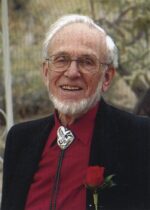 Dr. Nathaniel Bloomfield passed away peacefully on Oct. 12, 2026 at age 95. Born in Cleveland, Ohio, to Joseph and Henrietta (Namen) Bloomfield, he was predeceased by older brothers Richard and Daniel and is survived by younger brother David (Chicago).
Ned served in the U.S. Army and pursued a medical degree at Case Western Reserve. During residency at Cleveland’s Mt. Sinai Hospital, he specialized in obstetrics and gynecology, a decision that would benefit generations of women who relied on his gentle care and good counsel.
Nathaniel’s greatest achievement was meeting Suzanne (Latin) Bloomfield (deceased), to whom he was devoted for 66 years of marriage. They were blessed with three loving children, daughter Miriam, son Andrew, and daughter Rachel (deceased).
Ned contributed continuously to the community he loved. He volunteered at St. Elizabeth of Hungary Clinic, Jewish Family Services, Catholic Social Services, Davis-Monthan Clinic, and the Jewish Federation; he served on the Boards of Directors for the Pima County Medical Society, United Way, and Temple Emanu-El—including several terms as president.
He volunteered as Medical Director of Planned Parenthood for 10 years, and chaired the State Health Dept. committee that helped Pima County develop family planning funding. He also chaired St. Joseph’s Hospital OB-GYN Dept. twice, and performed the first intrauterine fetal blood transfusion in Tucson in 1965.
Ned and Sue understood that a vocation provides purpose in life, but the arts provide its beauty. Their home was filled with Suzanne’s paintings and Nathaniel’s violin melodies. He played in the Southern Arizona Symphony Orchestra and gathered musicians weekly for chamber music.
After retirement, Dr. Bloomfield worked at TUSD’s Instrument Repair Shop, making donated and broken instruments accessible to students. He and Sue regularly volunteered for Tucson’s Festival of Books.
Ned is also survived by his beloved grandchildren, Becca (Jeff) Peters and Aaron Bloomfield, and great-grandchildren Isabelle and Amelia Peters. He adored his extended family, dear friends, and congregation. The family is deeply grateful for all the compassionate caregivers who made his days comfortable.
Services will be held: 10 a.m. Monday, Oct. 19, 2026 at Evergreen Mortuary Chapel, 3015 Oracle Rd.
Donations in his memory may be made to Jewish Family & Children’s Services of Southern Arizona, or Planned Parenthood.
]]>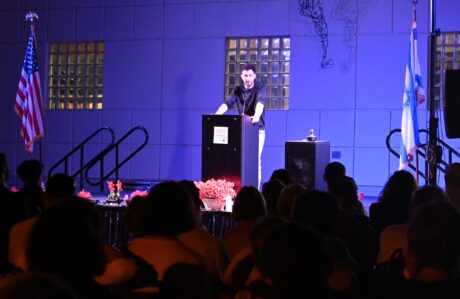
The third anniversary of the Oct. 7 Hamas attacks on Israel is a memorial for those murdered and taken hostage, but it is also much more, Hava Leipzig Holzhauer, president and CEO of Jewish Philanthropies of Southern Arizona, said at the start of “Kindling Hope,” the community’s commemorative event hosted by the Weintraub Israel Center, a program of Jewish Philanthropies of Southern Arizona and the Tucson Jewish Community Center, held Wednesday evening.
The days since Oct. 7, 2023, have also become “about a Jewish awakening, a forceful break out of our sheltered cocoons of assimilation and safety” to the knowledge that we must protect our community and push back against antisemitism in many spheres, from education and politics to healthcare and the arts, she said.
Most of all, she said, we must “teach our children, grandchildren, and ourselves about our identity and our people’s history,” resisting the pressure of “misguided thinking, of misinformation” so that we may be proud and stand strong, “exhibiting the age-old resilience now embedded within us. “
After Leipzig Holzhauer acknowledged dignitaries including government officials, law enforcement officers, and clergy in the crowd, she introduced Shay Oren, recently arrived in Tucson as the community’s new senior shaliach (Israeli emissary). Oren spoke of his 10/7 experience, the abrupt shift from honeymooning in Tuscany to joining his air force squadron near the Gaza border. He described his frantic drive south, fielding a call from a friend pinned down by terrorists and not knowing if he should detour to save him or continue his drive as he was trained to do. Ultimately, he called another friend for the rescue mission, and thankfully, both survived.
He also described visiting Kibbutz Kfar Aza and the Nova music festival site four months after the attacks and his chagrin at being unable to save more lives.
Three years can seem like it was yesterday and like it was a lifetime ago, he said, adding, “In the past three years, I’ve gathered, unfortunately, stories for a lifetime. We have to honor those heroes every day, as what they’ve done was yesterday. So we can grow together tomorrow.”
Following prayers led by Rabbis Yehuda Palgon, Samuel Cohon, Stephanie Aaron and Sara Metz, Oren and his wife, Amit, took part in a torch lighting ceremony with other community leaders, bringing the flames to the crowd of more than 325 people, who in turn lit battery-operated tapers (see video above, or click here).
The keynote speaker, Uri Sharon, grandson of the late prime minister, spoke of clearing Kibbutz Kfar Aza with his squadron and seeing children’s artwork on the walls. Sharon vowed he’d return to work with those children.
On deployment in Khan Yunis, Sharon used a pocket camera to capture small moments in the everyday lives of soldiers — a card game, a shower crafted from a kettle and a jerry can. Later, working alongside the displaced children of Kfar Aza as he’d promised, he grew to love watercolors, painting the children playing at their improvised school or on his family’s farm, where they could interact with animals.
Every six months he’d return for reserve duty, bringing his camera with him. “Bit by bit, slowly, a kind of testimony was starting to form from two completely opposite universes,” he said.
He displayed his paintings of children alongside his photos in an exhibit in Israel he called “Tom Yaldut,” which means “Innocence of Childhood” in Hebrew, but also can mean “End of Childhood.”
“Putting pictures of war and paintings of little kids, I thought it’s inappropriate,” he said. “But I realized that’s simply our reality.”
Following Sharon, JPSA’s education associate, Molly Dunn, explained her transformation from an undergraduate who vaguely supported the anti-Zionist Jewish Voice for Peace, to a proud Jewish educator and Zionist.
“I believed that when a community was vulnerable, other people had a responsibility to stand beside them. I still believe this, but I never thought that applied to the Jewish people. I thought we were fine,” Dunn said, explaining that 10 years ago she didn’t even know what Zionism meant.
Working on her doctoral dissertation about human trafficking, she said, “I started thinking about the Holocaust through the lens of a people who had been forcibly displaced, exploited for their labor, separated from their families, and murdered. And I realized I had never asked the basic question about the Jews living in Israel: How would they come to be there? Some were Holocaust survivors. Some had been expelled or displaced across the Middle East and North Africa. Others belonged to Jewish communities that had remained in the land for centuries. I had accepted a story in which Jews simply arrived in Israel as Western colonizers. Once I started asking who those Jews were and how they got there, that story stopped making sense to me. I began studying Jewish history, antisemitism, and Israel, and I started asking whether the things I had learned to believe were actually true. By the time October 7th happened, my understanding of Israel and Zionism and antisemitism, and of myself as a Jew, had already changed enormously. And then came October 8. Suddenly, what I had begun to understand about Jews as a people stopped being theoretical.”
She realized that “without Jewish community, I was living in a world where almost everyone except Jews were teaching me who the Jewish people are. Jewish scholarship and Jewish community gave me something I had been missing — a shared reference point from which I could think for myself and understand myself. Three years after October 7, I know this isn’t just about me.”
Citing her work with JPSA’s Center for Jewish Resilience and the newly relaunched Hebrew High, Dunn said that while we can’t control the conversations young Jews might encounter, “what we can do is make sure that our children enter them with confidence in who they are and knowledge of their own history.”
JPSA Board Chair Jeff Artzi ended the evening by referring to the candle lighting ceremony, a reminder that “darkness is not the end of the story. Those lights represent memory, but they also represent hope.”
Just as we have many times before, when the Jewish community faces darkness, he said, “Our response must be to come together like we did tonight.”
As the crowd slowly dispersed, local artist Julie Szerina Stein shared her thoughts on Sharon’s keynote address, calling it a tender demonstration of the power of art to help us express and somehow relieve our sadness.
“It was a very good night,” she said.
]]>
Ahead of the 2026 general election on Nov. 3, JPSA’s Center for Jewish Resilience asked every candidate for a locally elected race the same four questions about their priorities for the office they seek and how they would prevent and respond to antisemitism within the authority of that office.
The guide includes 24 races, from governor to U.S. Congress to school boards. All candidates were contacted in the same manner through their published, official campaign channels. Thirty-two of the 68 candidates in those races answered. Their answers appear in the guide as they submitted them, with light corrections to spelling and typos. Candidates who did not reply, or could not be reached, are listed in every race; the guide’s response table shows, at a glance, who chose to participate with the Jewish community through this guide.
Download the printable guide (PDF)
Eight of the 13 candidates for statewide office answered, among them the Democratic and Republican candidates for attorney general, Kris Mayes and Warren Petersen, and for secretary of state, Adrian Fontes and Alexander Kolodin. Neither Katie Hobbs, the Democratic candidate for governor, nor Andy Biggs, the Republican candidate, answered; the one candidate for governor who did is Teri Ann Hourihan of No Labels. In the guide’s inaugural and primary edition in June, no statewide candidate responded.
Down the ballot, 13 of the 28 candidates for the Legislature answered, as did 5 of the 11 running for Congress.
Like Jewish Community Relations Councils (JCRCs) and other Jewish community organizations across the country, the Center for Jewish Resilience prepared this guide as a nonpartisan voter education resource. Our goal is to provide voters with access to candidates’ perspectives on issues of direct concern to the Jewish community and the broader public.
Answers pertaining to issues that are not Jewish-specific, such as healthcare and taxes, were not vetted.
The four questions
The following is the text of the four questions candidates were invited to answer:
Question 1 · Top three priorities
What are your top three priorities for the office you are seeking, and how would those priorities affect Tucson, Pima County, or Arizona residents?
Question 2 · Antisemitic hate crimes
According to ADL’s 2024 Audit, antisemitic incidents in the U.S. reached the highest number in their recorded history. If elected, what specific steps would you take within the authority of the office you are seeking to prevent, respond to, and reduce antisemitic hate crimes, harassment, vandalism, and discrimination?
Question 3 · Security for Jewish institutions
Jewish Federations of North America has reported that Jewish communities spent $800 million nationally on security, including guards, security directors, training, and facility hardening in the past year. What role should the office you are seeking play in helping Jewish institutions, houses of worship, schools, and community centers remain safe while maintaining public access and civic trust?
Question 4 · Israel-related antisemitism
Antisemitism is an old hatred that morphs over time in how it targets Jews. Today, anti-Jewish hate can appear in rhetoric that targets Jews because of their connection to Israel, blames Jewish constituents collectively for Israel’s actions, promotes replacing Israel, or denies that Jews have a right to self-determination in their ancestral homeland. Not to be confused with disagreement with Israeli government policy, how would you address this form of contemporary anti-Jewish hate within the authority of the office you are seeking?
Early ballots go out on Wednesday, October 7.
]]>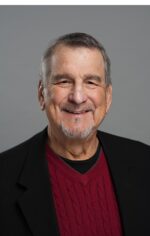 William J. Fishkind, a beloved husband, father, grandfather, physician, teacher, and friend, passed away on October 1, surrounded by the love of his family.
Bill dedicated his life to medicine and to serving others. As the founder of Northwest Eye Specialists (now Oracle Eye Physicians & Surgeons) in Tucson, he spent more than 50 years caring for patients and helping them regain not only their vision but often their independence and quality of life. To Bill, medicine was much more than a profession; it was a calling and a privilege.
A highly respected ophthalmic surgeon and educator, Bill was board-certified in both internal medicine and ophthalmology. He authored numerous publications and textbooks and taught physicians and surgeons throughout the world. He served in many professional leadership roles, including president and later president emeritus of the Outpatient Ophthalmic Surgery Society. Yet despite his many accomplishments, Bill remained humble and deeply committed to the community he served.
Bill’s commitment to service extended beyond medicine to the Jewish community that meant so much to him. A devoted member of Temple Emanu-El in Tucson, he served as president of the congregation, helping guide and strengthen the synagogue during his tenure. He found deep meaning in his faith, valued the friendships and sense of community it provided, and took great pride in supporting Jewish life in Southern Arizona. His leadership was characterized by the same thoughtfulness, integrity, and dedication that defined every aspect of his life.
While service to others shaped much of his life, Bill also embraced every opportunity to learn, explore, and experience the world around him. He had an adventurous spirit and a lifelong love of flying. He cherished the freedom of being in the air, traveling to new places, meeting new people, and experiencing the world. His curiosity, energy, and willingness to explore were defining parts of who he was.
Above all, Bill treasured his family. He is survived by his beloved wife, Wendy; his children, Jennifer and Bret; and his four grandchildren, who were his greatest sources of pride and joy. His family will remember not only the accomplished physician, but also the husband, father and grandfather who loved them deeply, shared his wisdom, encouraged their dreams, and filled their lives with stories, adventure, humor, and love.
Though he will be deeply missed, Bill’s legacy lives on through the countless patients he helped see the world more clearly, the community he served with such dedication, and the family he loved so dearly.
His service will be held on Friday, Oct. 9, 2026, at 9 a.m. at Evergreen Mortuary, 3015 North Oracle Road, Tucson, AZ 85705.
In lieu of flowers, the family asks that donations be made to causes that were especially meaningful to Bill. Contributions may be made to the Jewish Philanthropies of Southern Arizona, Hospice of the Valley, or St. Jude Children’s Research Hospital.
]]> Marsha Rosenblum (née Rothenberg), aged 83, passed away on September 8, 2026, in Tucson, Arizona. Born in Detroit, Michigan, she lived a vibrant life marked by her passion for social justice, Judaism, and her precious family. Marsha graduated from Mumford High School before attending Michigan State University and graduating from Wayne State University. She dedicated her career to helping others as a speech therapist and special education teacher, touching many lives with her compassion and expertise.
A woman of deep faith, Marsha was an active member of Congregation Anshei Israel in Tucson. Her commitment to community service was evident through her leadership roles with the Brandeis National Committee (BNC), where she served as Past President in both Southern California and Tucson, Arizona. Marsha’s effervescent personality, sense of fashion and love for storytelling made her a cherished figure in her community.
An avid sports fan, she also enjoyed traveling, having explored destinations like Europe, China, Australia, New Zealand, Israel, and the Panama Canal.
She was preceded in death by her beloved husband of nearly 52 years, Robert “Bob” Rosenblum, her sister Joan Levi, and her parents Bebe and Edward Rothenberg. She is survived by her children, David (Marla) Rosenblum of Simi Valley, CA, Lisa (Howard Fish) Zashin of Tucson, AZ, Melissa (Layne) Cogan of San Diego, CA, and Joshua (Michele) Rosenblum of Brooklyn, NY. Marsha was also a devoted grandmother to Nathan (Amanda) Rosenblum, Rachael (Garrett) Helgesson, Eli Rosenblum, Diane Zashin, Aubree Rosenblum, Jacob Cogan, Ila Rosenblum, Bethany Zashin, and Ben Rosenblum, and a great-grandmother to Luckie Rosenblum.
She is also survived by her brother Alan (Georgina) Rothenberg and sister Gay (Paul) Tanner.
Services were held at Evergreen Mortuary. Memorial contributions may be made to the Brandeis National Committee (BNC), an organization close to Marsha’s heart. Marsha’s legacy of warmth, wisdom, and wit will be fondly remembered and sorely missed by all who knew her.
]]>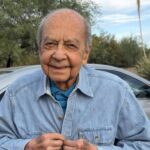 Myron Burton “Buddy” Rosenbluth passed away on July 26, 2026, at the age of 96, surrounded by the love of his family. He leaves behind a lifetime of cherished memories and a legacy defined by kindness, generosity, humor, and an unwavering devotion to those he loved.
Buddy was born on February 21, 1930, to Sadie and Harry Rosenbluth. Growing up in the Bronx, NY, he had a childhood filled with neighborhood adventures, music, theatre, and lifelong friendships. His love of singing led him to perform in a college barbershop quartet, “The Hobarteers”; in the later years, The Hobarteers would perform at the Hobart College class reunions. Buddy was also a drum major and a pretty good boxer. A man of many talents.
Buddy proudly served his country in the United States Army, spending time stationed in Germany. After returning home, he opened a children’s clothing store in Jersey City, NJ. On a trip to Tucson, his uncle Joe Rosenbluth introduced him to Joan Hirsh, who became the love of his life, with whom he built a beautiful marriage and a family that became the center of his world.
A hardworking and respected businessman, Buddy’s retail career continued at Hirsh’s Shoes. Alongside his business partner, Sid Hirsh, he helped build a successful business with 7 stores that served the Tucson community from Campbell Avenue to Park Mall. Through hard work, sound judgment, and smart investing, Buddy retired at the age of 65, and enjoyed many years traveling the world with Joan and spending time with family.
Above all else, Buddy was a devoted husband, father, and grandfather. He had an extraordinary gift for listening, offering thoughtful advice, lending a helping hand, and making everyone around him feel important. Whether sharing stories from trips to Las Vegas, enjoying a poker game, following the stock market, cheering on the Arizona Wildcats, or relaxing with a scotch and soda, Buddy embraced life with enthusiasm and gratitude. His wit, wisdom, and generous heart touched everyone fortunate enough to know him.
Buddy is survived by his beloved wife, Joan Rosenbluth; his three children, Kathy Rosenbluth and spouse Mike Segalotto, David Rosenbluth and spouse Denise, and Mike Rosenbluth and spouse Erin Duffy; along with his grandchildren Caitlyn Rosenbluth, Connor Rosenbluth, and Kayleigh Rosenbluth, extended family, and many dear friends whose lives were enriched by his kindness and love.
Buddy will be deeply missed, lovingly remembered, and forever celebrated. As those who loved him often said, “Everybody loved Buddy Ro,” and that sentiment will continue to ring true for all whose lives he touched.
]]>Fred was born on September 4, 1932, in Brooklyn, NY, to Michael and Anne Teitelbaum. He graduated from Weequahic High School in 1950 and worked as a salesman for over thirty-five years. On February 13, 1954, Fred married Dorothy Garbeil and together they raised two sons, Paul and Michael. Fred had a passion for bowling, golf, and card games. He also loved dining out, attending Broadway shows, going on cruises, and being with friends.
Fred is survived by his two sons Paul (wife Susan) and Michael (wife Barbara), seven grandchildren, and ten great-grandchildren.
A graveside service was held at Evergreen Cemetery, 3015 N Oracle Rd (520-888-7470).
]]>April 3, 1936 – August 26, 2026
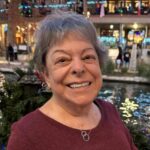 It is with deep sadness that we announce the passing of our beloved mother, grandmother, great-grandmother, and friend, Sara Handmaker Block.
Sara was the quintessential matriarch of her family, the glue that held generations together. Holidays, celebrations, and family gatherings centered around her home. She loved her family deeply, and her circle extended well beyond relatives. To Sara, friends often became family.
She was candid, funny, stubborn, strong-willed, independent, and completely unapologetic about who she was. She never minced words, and those who knew her rarely had to wonder what she was thinking because she was going to tell them. She was also extraordinarily generous, both with the people she loved and with those who simply needed her help.
Perhaps no story captures Sara quite as well as one involving Elvis Presley. When Elvis performed in Tucson, Sara managed to get a seat in the front row. As he bent down to give her one of his famous scarves, she leaned toward him and whispered, “I don’t care how fat you’re getting, there’s just more of you to love.”
That was Sara.
Sara was born in Johnstown, Pennsylvania, in the aftermath of the devastating 1936 Johnstown Flood. When she was five years old, her family moved to Tucson, the city that would remain her home for the rest of her life. She graduated from Tucson High School and attended the University of Colorado before returning home to care for her mother, who had cancer.
After returning to Tucson, Sara met her future husband, Charles Block, at a temple function. They would go on to share nearly 70 years together, with a few breaks along the way. Their marriage, family, and the generations that followed became the center of Sara’s life.
Sara was also a trailblazer professionally. She became the second woman real estate agent in Tucson and was the city’s top-producing real estate agent throughout the 1970s. Her career in real estate spanned more than 50 years, and she eventually owned her own agency with her son Michael and her dear friends Verna Van Loan and Joanne Hayden.
Of all her accomplishments, however, Sara took the greatest pride in her family. She especially cherished her eight grandchildren and eighteen great-grandchildren and took enormous pleasure in watching the family she and her husband created continue to grow.
After losing her husband last year, Sara faced the difficult task of learning to live without the man who had shared nearly seven decades of her life. Even then, she remained determined to live on her own terms and maintain her independence for as long as possible.
Sara is survived by her three children, Michael Block, Jodi Gallick, and Charles Block, Jr.; eight grandchildren; and eighteen great-grandchildren.
Her absence leaves an enormous hole in the family she spent a lifetime holding together. Holidays and celebrations will be different without her. But her humor, strength, generosity, traditions, and unmistakable personality will live on through the generations that follow her.
Sara was truly one of a kind. She could make people laugh, make them crazy, tell them exactly what she thought, and love them with everything she had.
She will be deeply missed and forever loved.
Lynne Bergman died July 20, 2026.
Lynne was born July 26, 1954, and grew up in Bayside, Queens, New York. Her childhood was a very difficult one, and it turned her into a survivor. These experiences started a lifelong passion for helping others in need.
In 1970, Lynne met Craig – most often known as “Berg” – at a dude ranch where he was working as a wrangler. It was definitely not love at first sight, but Berg did not give up. After a couple of months, they got together and were married on December 12th,1971. They were truly hoping to reach their 55th anniversary; it just wasn’t meant to be.
Lynne supported Berg throughout his 37-year career in the Air Force, through multiple wars and deployments, and raised two beautiful, accomplished children: Daniel and Rachel. Rachel met her wonderful husband, Chris, giving Lynne and Berg a second son, NEVER a son-in-law. With the addition of their two incredible grandchildren, Aubrey and Brendan, and grand-puppy, Toby, their family was complete. They considered themselves very fortunate to have almost everyone less than a mile away, with Daniel – now in Colorado – visiting often to spend precious time with his family.
Throughout her life, Lynne was dedicated to helping others, both in her local community and internationally.
While Berg was stationed in Alamogordo, New Mexico, Lynne joined and ultimately became President of the local chapter of Birthright. This organization offered pregnant women an opportunity to safely carry their babies to a healthy birth, if that was their choice.
After moving to Glendale, Arizona, she became very involved in pediatric respiratory causes, due to their son Daniel being chronically ill with asthma. She created and published Calendiary, a tool to assist parents of chronically ill children with tracking symptoms, managing the illness, and facilitating communications with their doctors.
During Berg’s multiple deployments over the years, her efforts to support the squadron’s families are now legendary.
In 1987, the Bergmans moved to Tucson where, having no medical contacts or immediate resources, Lynne formed a non-profit organization named “Patients Asthma/Allergy Support System.” This organization offered resources and referral services to patients of all ages with respiratory illnesses, facilitated through a telephone hotline and community outreach.
Being a master crochet and knitting instructor, Lynne created and ran a group called Helping Hands, bringing together 20-25 crocheters and knitters at various locations around Tucson. The majority of items made by these talented folks were donated to various charities in the community.
While Berg was on active duty, Lynne was part of a nationally coordinated group that provided handmade helmet liners, gloves, foot warmers, scarves, and watch caps to those deployed overseas, helping to keep the soldiers, sailors and airmen warm on cold nights spent away from their families.
Besides personally donating hundreds of items to local women’s shelters, Lynne also served as an administrator for the Pink Slipper Project, a national organization that enlisted volunteers to provide handmade slippers, washcloths, and more to support families in domestic abuse shelters throughout the United States. Craft supplies were also provided to the residents of these facilities. Shelters that accepted dogs also received handmade crate blankets.
Lynne also served as an administrator for an international organization supporting people with the incredibly painful and debilitating disease called Complex Regional Pain Syndrome, or CRPS. Conversations had via email, text, and phone calls were a critical part of the support being provided. This was very important to Lynne, who also suffered from this condition. Over the years, Lynne even worked with and saved the lives of five people contemplating suicide because of the excruciating pain they experienced associated with CRPS.
As important as service was to Lynne, her top priority was always family; spending time with Berg, her children, and grandchildren. Lynne was fortunate enough to be a stay-at-home mom while the kids were in school, always wanting to be there to greet them at the end of the day. She volunteered in classrooms, was at one time a lunch lady, and was always available to pick them up when they were younger. She also became a second mom to many of Rachel’s friends over the years, some of whom are here today.
One of her greatest joys in life were her grandchildren. Lynne and Berg helped take care of Aubrey and Brendan while Rachel and Chris worked; they were actually the only babysitters the kids ever had. Of course, Lynne saved all the best craft projects to share with them, as well as gardening, baking, and reading stories to each other. And she loved every minute of it! She was absolutely the best grandma there ever was.
Daniel firmly believes Lynne was one of the greatest influences in his life, helping him become who he is today. There were many nights they would be up late, arguing about one topic or another – much to Berg’s annoyance – but he will forever cherish those times together.
Lynne wore her heart on her sleeve, always seeking new ways to help those in need. She leaves a hole that can never be completely filled, with her love and caring affecting thousands of people, across the globe.
]]>
In February 1973, a Jewish Feminist Conference was held at the McAlpin Hotel in New York City with 500 women from around the country in attendance. The women represented the full spectrum of observance, including Reform, Conservative, Reconstructionist, and Orthodox Jewish women, as well as those who were unaffiliated. I was fortunate to have been one of the keynote speakers.
The conference was devoted to the place of Jewish women within Judaism and in the larger Jewish community. During those years, I was meeting regularly with other Jewish women who saw a nearly barren landscape in terms of women’s rights and leadership within our communities. The one bright event was the ordination of Sally Priesand by the Reform Movement in 1971.
At the time, I was living in Maplewood, New Jersey, with my husband and two children. We were members of Oheb Shalom, a Conservative synagogue in South Orange, New Jersey.
Although I had asked for and been given the opportunity for a Bat Mitzvah at age 13 at a Conservative synagogue in New Bedford, Massachusetts, not much had changed in the Conservative movement since then. There were no women rabbis. Women were neither counted in the minyan nor allowed to have aliyot to the Torah.
Lilith, a magazine devoted to Jewish women’s issues and advocating for expanded women’s rights in Jewish religious and communal life, would not be published until 1976. And my own article, “A Morning of Firsts,” describing my first aliyah in an “underground” Conservative synagogue, would be published in December of that same year, in Congress Monthly.
While the rabbi of our synagogue in New Jersey, Rabbi Alexander Shapiro, was personally very sympathetic to Jewish women’s aspirations for increased participation in congregational Jewish life and rituals, the synagogue had not done anything to change things.
What happened in the fall of 1974 or 5 (so long ago, I don’t remember the exact year) was unplanned. I had not thought much about what might happen in the synagogue before we set out for Simchat Torah services that morning. And I certainly didn’t know that I would create a sea change in the synagogue, one that would have a major impact on the synagogue and in my life personally.
Simchat Torah, the holiday that celebrates the completion of the yearly cycle of Torah reading and the beginning of a new cycle, has always been festive and joyous. All the Torahs are removed from the ark, and congregants circle the sanctuary carrying the synagogue’s Torahs. Or, should I say, men circled the congregation carrying Torahs. Women sat with their children and watched. During the procession, men would line up in the front of the sanctuary where the Torahs were handed off to the next group of men so everyone who wanted to carry a Torah would have the chance to do so.
When it was almost time for the procession to begin, a synagogue officer started handing out the first group of Torahs to men, my husband included. Jerry took it. Something in me shifted at that moment. And I touched him on his sleeve and said, “Let me carry it.” He gave me the Torah, and I carried it forward toward the bimah where men were lining up to start the procession. When I reached the front of the synagogue, the man who had handed the Torah to my husband turned, and when he saw me with it in my arms, he reached out to take it back. After all, I was a woman.
At that point, Rabbi Shapiro had his opportunity and said, “Let her carry it.” And that was how a new tradition was born in South Orange, New Jersey, at the historic congregation Oheb Shalom.
As I joined the procession of men walking around the synagogue, you could hear whispers, which grew louder as women and girls saw me and recognized something different was happening. First it was sounds of surprise, and then of excitement. Girls and women who had been sitting passively, were trying to take in what they were seeing … something new, something radical, something unexpected.
Suddenly, females of all ages were running toward the front of the synagogue, forming a line at the bimah where the Torahs would be handed off to the next carriers. Each was excited to wait her turn to hold the Torah and walk in the joyous procession. And thus a new custom was born. The Torah I carried became the women’s Torah and suddenly there was a new possibility for joyous expression by all the girls and women of the congregation. As “my” Torah circled the congregation, there were women and girls, old and young, waiting with excitement for their turn.
When I saw what I had started, I cried. It was like a door had opened that had been closed and locked. An opportunity for participation in Jewish religious life was born. And at that moment I felt I had marched into history, forging a new reality, at least in my local synagogue.
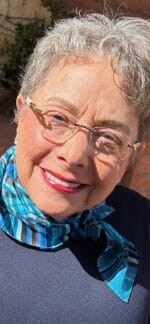
Judith Manelis is a Tucson-based writer, editor, and journalist whose work has appeared in American Jewish newspapers and magazines. Her book “This Shall Tell All Ages: Art, Music and Writings of the Holocaust” was published by United Jewish Appeal.
]]>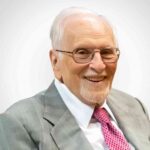 Boris Kozolchyk, an international and comparative law scholar, prolific author, and beloved pillar of his family and community, died on Thursday, September 17th. He was 91, and surrounded by loved ones until the end.
Boris was born to Abram and Chana Kozolchyk in Havana, Cuba, and grew up in the suburb of Marianao with his beloved sister, Marta, alongside many — many — cousins, aunts, uncles, and one formidable grandmother, “la Boobeh Tzipa Rochel.”
Beyond his devotion to family, Boris was a fierce and loyal friend, music lover, and high school boxer, whose nom de guerre was the Borko Kid. He was also a law school baseball teammate of a young Fidel Castro at the University of Havana.
Upon obtaining a doctorate in civil law there in 1956, then a diploma of comparative law at the Faculté International de Droit Compare in Luxembourg in 1958, Boris came to the United States to continue his legal education and career.
He got an L.L.B. at the University of Miami, then taught at Southern Methodist University before pursuing an L.L.M. and S.J.D. at the University of Michigan. From there, Boris became the RAND Corporation’s first resident consultant on law and economic development in 1967.
It was then that he began dating Billie Herman, whom he’d met at the wedding of his cousin to hers in 1955. A language barrier, the Atlantic Ocean, and Billie’s crush on Boris’s best friend were impediments to romance the first time around. But by 1967, he spoke English, lived in the U.S., and visited New York City, where she lived. He asked her out, and — despite accidentally locking himself in her building’s storage room, where she’d sent him on a mission — Boris dazzled the beautiful young social worker.
After a whirlwind romance, they married that same year and moved to San Jose, Costa Rica, where he directed a legal reform project for USAID and taught at the University of Costa Rica’s law school. A two-year honeymoon of sorts, his project resulted in an abiding love of the Central American countryside and lifelong friends. The project also resulted in legal aid clinics, court clerkships, and university curricula.
From there, Boris took a position at the University of Arizona’s law school, where he taught for nearly fifty years while he and Billie raised three deeply beloved children — Abbie, Raphael, and Shaun. The family’s home at the base of the Catalina Mountains was a constant source of beauty and solace for him, especially when he took in the desert views from his office windows.
Over the decades, he also guest lectured internationally, served as a delegate to the United Nations Commission on International Trade Law, and founded the National Law Center for Inter-American Free Trade (later renamed the Kozolchyk National Law Center in his honor) with the aim of helping developing countries through legal training and increased access to credit.
The many awards and accolades he earned along the way give his family great pride, but his greatest source of pride were his children and grandchildren.
He is survived by his wife Billie Kozolchyk; children Abbie Kozolchyk, Raphael Kozolchyk (Diana Rubin), and Shaun Kozolchyk (David Kozolchyk Plotkin); grandchildren Sigal, Liana, Alex, Ethan, Jacob, and Rebecca Kozolchyk; sister Marta Olchyk (Oscar Olchyk of blessed memory); nephew Samuel (Debbie) and niece Sonia Olchyk, and many other loved ones.
His family is inexpressibly grateful to his devoted and loving caregivers.
Services were held at Congregation Anshei Israel. Burial followed at Evergreen Mortuary and Cemetery; a recording is here: https://tinyurl.com/3kj2fy98
Memorial donations can be made to Congregation Anshei Israel, Congregation Chaverim, the Community Food Bank of Southern Arizona, or the charity of your choice.
]]>“Pink & Purpose” creates a supportive space for Jewish women to learn about breast and gynecological cancer awareness, genetic risks, early detection, and emotional well-being, whether you are supporting a loved ones who has been diagnosed or you are facing a diagnosis yourself. By combining expert medical perspectives with real-life personal stories, the evening aims to empower women with actionable knowledge while fostering deep connections.
An Inspiring and Multidisciplinary Panel
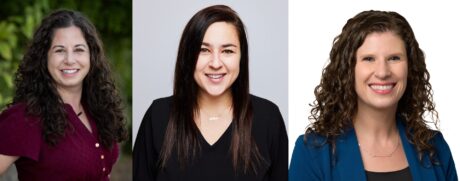
The centerpiece of the evening is a panel discussion featuring local Jewish women who bring both professional expertise and deeply personal insights to the table:
- Lindsey Baker, MBA (LR Baker Consulting) will share her unique personal experience navigating a breast cancer diagnosis and the power of community.
- Alexa Cook, MS, CGC, a Board-Certified Genetic Counselor at Banner Health, will offer expert guidance on genetic counseling, testing, and education — a topic of vital importance in the Jewish community given hereditary risk factors like BRCA mutations.
- Rina Fox, PhD, MPH, is a Clinical Psychologist, Assistant Professor of Psychology, and Researcher at the University of Arizona. Her work focuses on cancer survivorship and quality of life, with a particular interest in the psychological and emotional well-being of individuals and families navigating cancer diagnosis, treatment, and life beyond cancer.
Putting Community Into Action Through Chessed
Beyond education, “Pink & Purpose” emphasizes active loving-kindness (chessed). During the evening, participants will come together for a hands-on service project to assemble care packages for local women undergoing cancer treatment/surgery at TMC Health Cancer Center.
These care packages are generously sponsored by Yasa Leah Anderson and family in loving memory of Shoshana Leah bat Yosefa Leah (Shannon Anderson). This act of community support serves as a meaningful tribute, ensuring that women facing cancer treatment feel wrapped in love, comfort, and solidarity.
An Evening of Togetherness
To round out the evening, attendees will enjoy pink treats and refreshments, access educational resources provided by Sharsheret (the national Jewish breast and ovarian cancer organization), and connect with friends old and new. Guests are encouraged to wear a touch of pink in honor of Breast Cancer Awareness Month.
About TTC Tribe
TTC Tribe brings Jewish women together throughout the year by hosting monthly events ranging from guest speakers and creative art workshops to hands-on community service projects. To stay updated on all upcoming monthly Tribe events, visit tucsontc.org/tribeevents.
Event Details & Registration:
- Date & Time: Tuesday, October 6 at 6:00 PM
- Location: Provided upon RSVP
- RSVP & Registration: tucsontc.org/pink
For more information about this event, contact Rochie Leiter, Director of TTC Tribe, at rleiter@tucsontc.org.
]]>
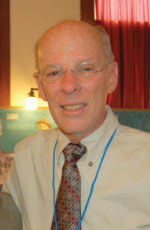
Barry A. Friedman, M.D., 82, retired infectious disease specialist and former board president of the Tucson Jewish Museum & Holocaust Center, died Sept. 25, 2026.
Dr. Friedman was born Oct. 29, 1943, to Elizabeth and Sol Friedman in Dayton, Ohio. He received his undergraduate degree from Vanderbilt University in Nashville, Tennessee, and his medical degree from The Ohio State University College of Medicine.
He established a private practice in Tucson and later worked in infection control at Tucson Medical Center. He was chair of the Board of Medical Examiners of Arizona, now the Arizona Medical Board.
As a child, Dr. Friedman’s family sent him to summer camp at Indian Acres in Fryeburg, Maine, so he would avoid catching polio. He was later a counselor and then camp doctor at Indian Acres. He and his wife, Madeline, built a cabin on the property bought from the camp in 1989, and spent many summers there.
Dr. Friedman was instrumental in the formation of Tucson’s Jewish History Museum, directing its growth from an historic restoration project to its opening in 2005. He loved serving as a docent and was board president from 2006 to 2015. He also led historic Jewish cemetery tours. When the museum campus reopened in 2016 after the expansion of the Holocaust History Center, it named the original museum the Friedman Family Jewish History Museum.
In 2012, the museum honored Dr. Friedman with its Jewish Heritage Award, recognizing his “contribution to preserving and teaching the Jewish heritage of the American Southwest.” The museum later established a Volunteer of the Year Award in his name. The Jewish Federation of Southern Arizona honored Dr. Friedman along with Ray Davies, Rabbi Thomas Louchheim, and Beth Alpert Nakhai with a Special Recognition Award in 2015 for their work with the Jewish History Museum and Holocaust education.
Dr. Friedman was a trustee of the Jewish Community Foundation of Southern Arizona from 2011-12. He and Madeline signed the Endowment Book of Life at the JCF in the late 1990s and established the Barry and Madeline Friedman Family Endowment Fund at the Foundation in 2014.
Dr. Friedman is survived by his wife of 43 years, Madeline; children, Bruce, Joel (Tanya), Gabrielle and Zev; five grandchildren, Maxine, Jackson, Oliver, Jude, and Jonathan; and sister, Joann (Jeff) Timbanard of Paradise Valley, Arizona.
Services will be held on Tuesday, Sept. 29, 10 a.m. at the Evergreen Mortuary & Cemetery chapel, with Rabbi Sara Metz and Cantorial Soloist Nicole Chorny officiating.
]]>
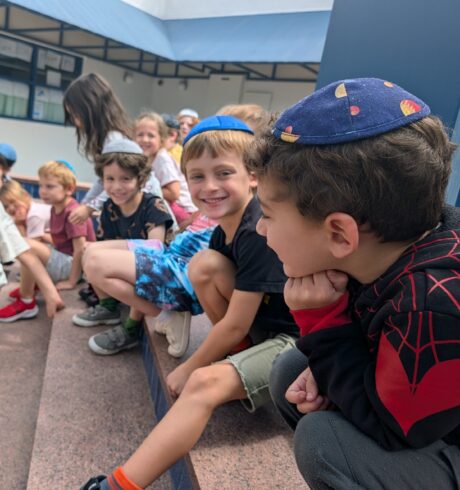
Tucson Hebrew Academy began its 53rd school year in August with another milestone already behind it: reaccreditation from Cognia, an independent organization that evaluates schools for educational quality.
The review examined several areas of school life, including student engagement, academic growth and support, leadership, staff practices, and continuous improvement.
“Our mission at Tucson Hebrew Academy is to provide our students with exemplary academics,” said Head of School Johanna Shlomovich, who is beginning her sixth year at Tucson Hebrew Academy. “By combining Cognia’s standards with our own expectations and the expertise of our teachers, we’re able to deliver on that mission year after year. The fact that we’re able to do so while grounding that education in Jewish values and a nurturing community makes it even more meaningful.”
Cognia’s continuing accreditation process operates on a six-year cycle. Schools are asked to examine their own practices, provide supporting evidence, and participate in an external review. Review teams look at student performance and school improvement efforts, observe classrooms, and speak with members of the school community.
At Tucson Hebrew Academy, planning for the review took six months and included staff preparation, the collection and analysis of documentation and data, faculty, parent and student surveys, classroom observations, interviews and meetings with the Cognia accreditation team.
Jennifer Lehrfeld, Director of General Studies, said the process involved contributions from across the school.
“This reaccreditation reflects a tremendous amount of work from our teachers, staff, leadership, and everyone who contributed throughout the process,” Lehrfeld said. “We’re incredibly grateful for the time and care they put into it, but ultimately, this work is about our students and making sure we continue providing them with the strongest educational experience possible.”
Tucson Hebrew Academy received a higher score in its most recent review than it did during its previous Cognia evaluation.
Accreditation can also be one factor for families to consider when comparing schools. Not every private school seeks outside accreditation, and parents may want to ask whether a school is accredited, which organization provides that accreditation, and what standards are included in the review.
]]>
What started out with Handmaker hosting one series of art talks in the fall of 2018 for the Tucson Chapter of the Brandeis National Committee has blossomed into a truly special partnership. Beginning this fall, Handmaker will host five different lecture series for this group, to the delight of Brandeis members and Handmaker residents. Handmaker provides the venue, and Handmaker residents are invited to attend the lectures, too.
Here are the five study groups:
Retired Professor Dr. Art Friedman will be returning this year to teach two study groups. Art has been an avid mineral collector for over 65 years and will bring in samples of his incredible collection for “Mineral Madness.” In this study group, attendees will learn how to classify and identify minerals and even take field trips to the Tucson Gem and Mineral Show and the Alfie Norville Mineral Museum. In his class on “Jewish Religious and Ritual Objects,” Art will share objects from his collection of ritual and heirloom Judaica and discuss their historical value.
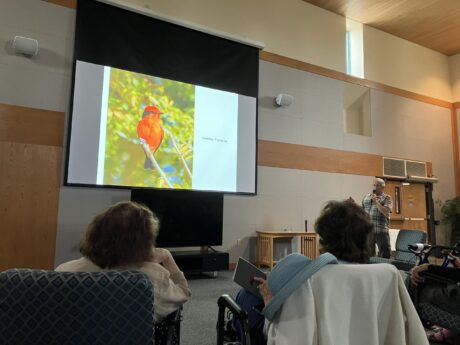
Dan Weisz has always had an interest in nature and our desert. When he retired, he took up photography and birding more regularly. His “Meet Your Winged Friends” class will offer a series of presentations on the beautiful birds that share our corner of the world. This class has been a favorite of Handmaker residents for the last few years.
Anyone interested in recent Supreme Court decisions regarding such matters as voting rights, presidential powers, electronic surveillance, and more will enjoy attending John Risberg’s study group, “Current Issues in Supreme Court Jurisprudence.”
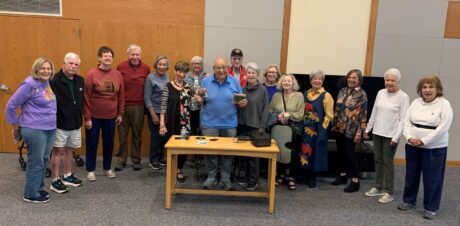
And everyone is excited to welcome back Harvey Wolfe for his class, “Classical Music with Harvey Wolfe.” Harvey is a retired cellist from the Cleveland Orchestra and has performed professionally for 60 years on five continents with most major conductors. At this year’s lecture series, Harvey will guide attendees through the music and entertain them with anecdotes about the lives of the Four B’s – Bach, Beethoven, Brahms, and a mystery fourth or more.
Handmaker is proud to host these Brandeis lectures, and residents are happy to be able to learn with and from Brandeis Committee members.
If you would like information about the Tucson Chapter of the Brandeis National Committee, including other lectures, study groups, and events, visit brandeistucson.org. If you would be interested in attending a sample lecture as a guest of Handmaker, please contact Nanci Levy at nlevy@handmaker.org.
]]>