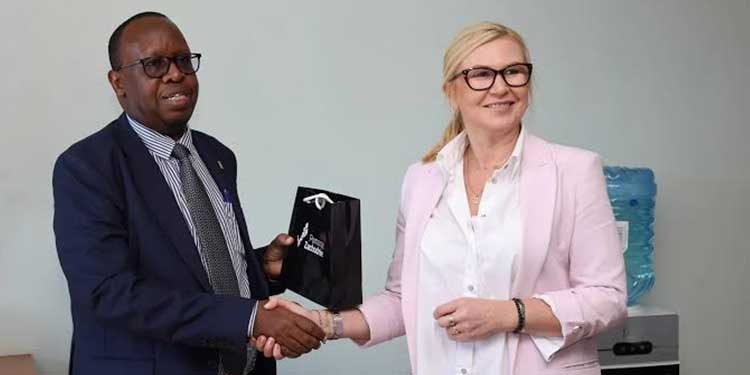
In order to improve specialized treatment, medical education, scientific research and the adoption of contemporary medical technologies, the Moi Teaching and Referral Hospital (MTRH) is investigating a strategic relationship with Polish institutions.
A high-level Polish delegation’s visit to the Eldoret hospital marked a tangible advancement in the partnership. Anna Bańkowska, Deputy Marshal of the West Pomeranian Voivodeship, was in charge of the group.
Dr. Philip Kirwa, the CEO of MTRH, welcomed the guests and emphasized the importance of these global connections.
Dr. Kirwa stated, “International partnerships are no longer optional; they are essential if we are to deliver world-class specialized care, accelerate knowledge exchange and bring cutting-edge medical technologies to our patients.”
“MTRH’s capabilities in clinical training, specialized services, and public health delivery are complemented by Poland’s long history of medical research and health technology.
“Together, we can achieve more than either of us could alone. Poland’s strong tradition in medical research and health technology complements MTRH’s own strengths in clinical training, specialized services and public-health delivery,” Kirwa said.
Using Poland’s universities, medical research facilities and healthcare technology industry alongside utilizing MTRH’s vast experience in tertiary care, clinical training and research pertinent to the African setting were the main topics of discussion.
The Polish team visited important facilities that highlight MTRH’s specialized capabilities following the official discussions.
Riley Mother and Baby Hospital, the Renal Dialysis Center, the Haemato-Oncology Directorate and the hospital’s Oxygen Generating Plant were among them.
The visitors were able to observe firsthand the scope and complexity of services already provided on the premises.
Bankowska expressed gratitude for the engagement’s transparency.
She said, “What we have seen today confirms that MTRH is a serious partner with real capacity and ambition.”
“We see prospects for cooperation in cooperative research, specialized training, and the transfer of medical innovations that can help people in our region and in Kenya. We look forward to turning today’s discussions into concrete programs. Bankowska stated.
The visit is a component of MTRH’s larger plan to establish long-term international collaborations that boost institutional capability, spur innovation and eventually improve health outcomes for Kenyans and the surrounding area.
Kenya News Agency was informed by hospital officials that further technical conversations are needed to determine priority projects and potential funding or exchange frameworks.
The post MTRH Will Strengthen Collaboration to Advance Medical Innovation and Specialized Treatment first appeared on ABDAS - Africa information and Business Directory.]]>
Kenya is discussing measures to combat the growth of drug-resistant illnesses while providing patients with additional life-saving medications with a private company.
Dr. Ouma Oluga, the principal secretary for medical services, met Dr. Angus L. C. O’Shea, the chief executive of Aranda, at his office. The two parties talked about how to reinforce controls against antimicrobial resistance, or AMR and increase access to necessary antibiotics. AMR occurs when germs become resistant to medications intended to eradicate them. It makes treating common infections more difficult and often impossible.
The two presidents are still in negotiations that started in September on the fringes of the UN General Assembly in New York. Kenya’s health system is already being examined by Aranda. The Social Health Authority, KEMSA and the county governments of Nairobi, Kiambu and Murang’a have all held discussions with the corporation.
Dr. Oluga clarified the Ministry’s stance. Improved testing, cautious prescribing and strict monitoring must go side in hand with increasing access to antibiotics. Any collaboration, he stressed, must function within the current national and local frameworks. Neither KEMSA nor the Social Health Authority should be circumvented by the creation of new parallel institutions. Additionally, he emphasized the need of long-term outcomes and good value for money in order to help Kenya’s efforts to achieve universal health care.
The issue is already familiar to many Kenyan families. A youngster may require a particular antibiotic for a chest infection, yet public facilities can lack the appropriate medication. However, several of those medications are now less effective due to past abuse of antibiotics. The true problem behind these discussions is figuring out how to provide patients with the appropriate medications without exacerbating resistance.
The talks are still in their early stages. There has been no announcement of a schedule, pricing structure or specific agreement. The Ministry has requested that Aranda submit concise, Kenya-specific proposals outlining how any collaboration would operate in reality, how it would be funded and what public health outcomes it would produce.
Aranda has to take the next step. The business has been asked to provide recommendations that are supported by evidence. According to the Ministry, any future collaboration will be evaluated based on how it affects regular patients, how much it costs, how sustainable it is and how well it integrates into Kenya’s current healthcare system. For the time the discussions indicate that the battle against resistance and the availability of antibiotics are viewed as two aspects of the same issue.
The post Kenya Aims to Improve Antibiotic Access Without Increasing Drug Resistance first appeared on ABDAS - Africa information and Business Directory.]]>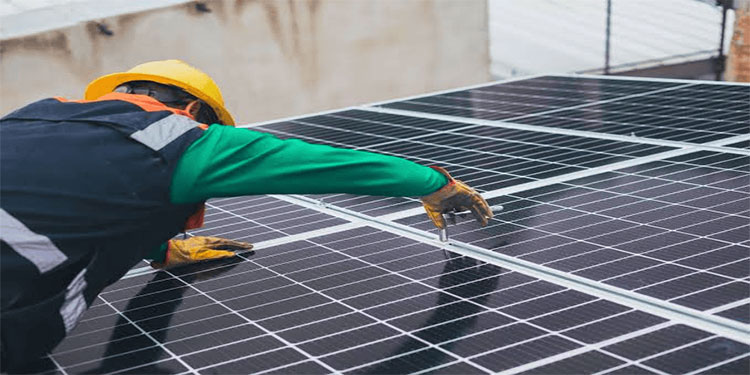 Tanzania Is Becoming a Key Player in Africa’s Expanding Solar Energy Industry, With Dispersed Solar Arrays Contributing Significantly to the Continent’s Renewable Energy Expansion of Energy. A Recent Study From the African Tech Futures Lab and Ember Emphasises the Growing Impact of Commercial Systems, Rooftop Installations, and Other Customer-Side Solar Solutions Throughout Africa. Tanzania Is One Among the Nations That Consistently Releases Monthly or Quarterly Solar Capacity Information, Including Insightful Information on How Its Solar Industry. In Addition to the National Grid Run by Tanesco, the Increasing Usage of Private Solar Systems by Homes and Businesses Is Increasing Access to Clean Electricity.
Additionally, Tanzania Is Solidifying Its Place in the African Solar Manufacturing Market. African Solar Panel Production Capacity Is Expected to Grow From About 800 Mw in 2025 to Over 3.5 Gw in 2026, According to Ember. With Tanzania and Egypt Becoming Important Providers. Tanzania Might Manufacture About 500 Mw of Solar Panels in 2026, According to the Paper, Though This Number Is Still Up for Debate as Production Data Continues to Emerge. The Country’s Expanding Position in Regional Solar Manufacturing Is Highlighted by the Solar Panel Factory at Kwala in Kibaha, Which Is Reportedly Operational and Has a First Phase Valued at About $300 Million.
Tanzania Now Has a Great Chance to Further Its Goals for Renewable Energy, Draw in Investment, Bolster Its Own Industrial Skills, and Enhance Energy Security. Tanzania Is Well-Positioned to Offer More Affordable Electricity Options, Promote Private Sector Involvement, and Bolster Long-Term Energy Planning With the Ongoing Expansion of Rooftop and Commercial Solar Installations and Local Panel Manufacture. An Key Step Toward a More Varied, Robust, and Sustainable Energy Future Is the Nation’s Growing Solar Ecosystem.
The post Tanzania Emerges as Africa’s Next Solar Powerhouse Through Rapid Market Growth and Local Manufacturing first appeared on ABDAS - Africa information and Business Directory.]]>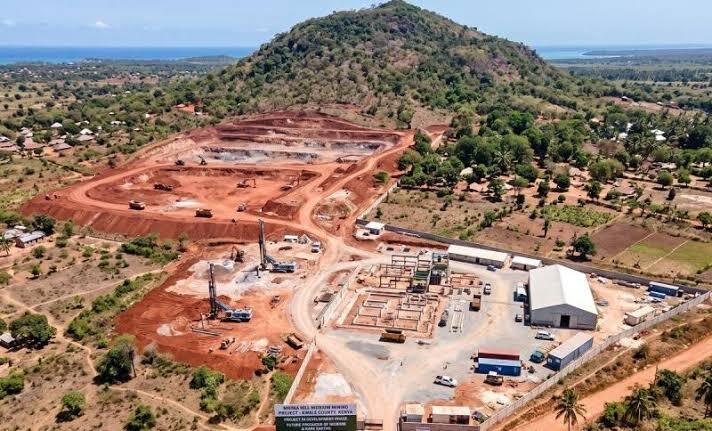 Kenya is poised to select a corporate partner within the next three weeks to lead the development of the lucrative Mrima Hill critical minerals deposit, situated roughly 65 kilometres away from the coastal port city of Mombasa. State officials note that the East African nation holds extensive underground reserves of copper, graphite, nickel, and lithium, while the targeted site specifically features high-value deposits of niobium and rare earth elements provisionally valued in the tens of billions of dollars. Mining Minister Hassan Ali Joho confirmed that five separate international consortia officially submitted their final bids on October 21. This final selection stage follows the unannounced withdrawal of two Chinese contenders—the Hunan Research Institute for Nonferrous Metals and the Jinan Yuxiao Group. Kenyan authorities have clarified that these exits occurred without external diplomatic pressure from either Beijing or Washington, keeping the tender focused entirely on competitive commercial proposals.
The remaining pool of competitors features strong Western and joint-venture representation, anchored by US engineering heavyweight Fluor Corp alongside multiple strategic partners. The active American bidders include Meridian Mineral Holdings (incorporating Fluor and Tetra Tech), Frontier Minerals (featuring ReElement Technologies), and a third group named Mrima Earth led by Critical Metals Corp. International participation is rounded out by an Australian alliance pairing RareX with Iluka Resources, alongside a bilateral Kenyan-British joint venture operating under the name Gem of Dreams. This high-stakes selection process aligns closely with broader national objectives championed by President William Ruto, who has emphasized expanding domestic mineral processing capabilities alongside ongoing negotiations for a strategic bilateral critical minerals framework with the United States.
The post Kenya Nears Decision on Mrima Hill Critical Minerals Project first appeared on ABDAS - Africa information and Business Directory.]]>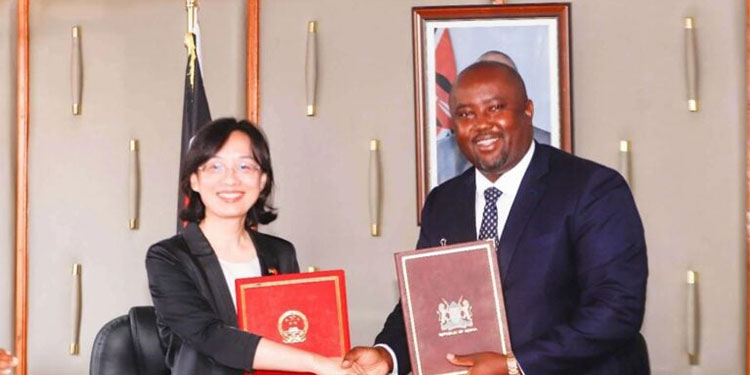 Kenya and the People’s Republic of China have entered into a Memorandum of Understanding to execute the Africa Solar Belt Project, an initiative focused on off-grid electrification that seeks to enhance access to clean energy in remote and underserved communities.
On Tuesday, an agreement was signed between Kenya’s Ministry of Energy and Petroleum and China’s Ministry of Ecology and Environment, creating a framework for the installation of 80 off-grid solar photovoltaic (PV) power systems in designated areas, as stated by the State Department for Energy.
The potential sites identified for this initiative include Kilifi County, Tana River County, and Maasai Mara University.
The solar installations are intended to provide energy for essential public infrastructure in isolated rural regions, focusing on health clinics, community water supply systems, and educational institutions.
In educational facilities, the energy supply will enhance digital learning infrastructure, improve classroom conditions, and facilitate the provision of vital educational services.
In its announcement, the State Department for Energy indicated that the initiative is backed by the United Nations Children’s Fund (UNICEF), which is offering technical expertise, resources, and matching funds to improve outcomes that focus on communities and children.
The State Department for Energy has indicated that this initiative will aid in achieving government objectives related to equitable service delivery, decentralized renewable energy generation, and enhancing climate resilience at the community level.
The Africa Solar Belt Project builds upon China’s Ten-Hundred-Thousand Initiative as well as the Belt and Road South-South Cooperation Initiative focused on Climate Change.
The post Kenya Collaborates with China on Rural Off-Grid Electrification Initiative first appeared on ABDAS - Africa information and Business Directory.]]>
Tanzania is taking a significant step forward in industrial development, with six major industrial projects entering the construction phase in Bagamoyo. Representing a combined investment of approximately TSh 4 trillion, these projects mark an important milestone in the country’s ambition to strengthen its industrial base, expand economic activity, and accelerate infrastructure development. The initiative is expected to reinforce Bagamoyo’s position as an emerging centre for industrial and commercial growth.
The projects are expected to create substantial opportunities for the building and construction sector, including civil engineering, industrial building construction, roads, utilities, logistics infrastructure, and supporting facilities. As development progresses, demand for construction materials, equipment, engineering services, project management, and specialised contractors is likely to increase, creating opportunities for businesses across the construction value chain.
Employment generation is another major highlight of the initiative, with the projects expected to create more than 15,000 jobs. The development of industrial facilities, including textile manufacturing, will contribute to the expansion of Tanzania’s productive capacity while supporting skills development and creating new opportunities for local businesses and the workforce. This growth is expected to stimulate demand for housing, commercial premises, transport facilities, and other essential infrastructure.
The broader development vision for Bagamoyo also highlights the importance of integrated infrastructure in supporting long-term industrial growth. Improved transport connectivity, logistics facilities, utilities, and related urban infrastructure can enhance the movement of goods and materials, improve supply-chain efficiency, and strengthen the region’s attractiveness for future investment. These developments present an encouraging outlook for construction companies, infrastructure developers, consultants, suppliers, and investors looking to participate in Tanzania’s expanding market.
Overall, the commencement of these six industrial projects represents a promising development for Tanzania’s construction and infrastructure landscape. With investment flowing into industrial facilities and supporting infrastructure, Bagamoyo is well positioned to emerge as a significant hub for manufacturing, trade, and economic activity. The initiative underscores the vital role of the building and construction sector in translating investment into lasting assets, employment opportunities, and sustainable economic growth.
The post Tanzania’s Bagamoyo Industrial Development Gains Momentum with Six Major Projects first appeared on ABDAS - Africa information and Business Directory.]]>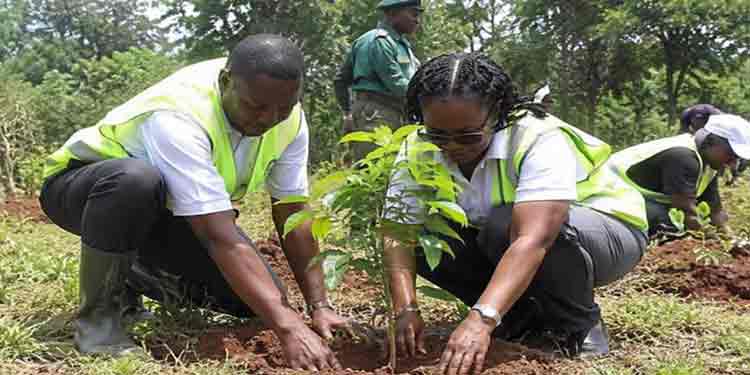
Kenya is placing greater emphasis on forest conservation, landscape restoration and sustainable forest management as part of its efforts to protect natural ecosystems and support the long-term development of the wood and timber sector. Recent global findings highlight the importance of protecting existing forests while promoting responsible timber production and restoring degraded landscapes.
According to updated analysis by the World Resources Institute (WRI), commercial logging has accounted for a declining proportion of intact forest landscape loss globally. Selective logging decreased from 25.4% during 2000–2013 to 14.2% during 2020–2025, while clear-cut logging declined from 11.6% to 6.1%. These changes highlight the growing importance of responsible forest management and sustainable practices across the timber industry.
Kenya is advancing its forest restoration agenda through initiatives such as the 15 Billion Tree Growing Programme and the National Landscape and Ecosystem Restoration Strategy. These programmes aim to improve forest cover, restore degraded landscapes and support the long-term availability of forest resources, creating opportunities for sustainable forestry and wood-based industries.
The country’s forest conservation efforts also present opportunities for the timber and wood-processing industries to adopt environmentally responsible practices, improve resource utilisation and promote value addition. Sustainable timber harvesting, efficient wood processing and responsible sourcing can contribute to the development of a more resilient wood industry while supporting forest protection.
The WRI analysis also highlights the increasing impact of wildfires, which accounted for 39.9% of intact forest landscape reduction during 2020–2025. This has increased the importance of forest management, fire prevention and ecosystem restoration in protecting valuable timber resources, biodiversity and the livelihoods of communities that depend on forests.
Through continued investment in forest restoration, sustainable land management and responsible forestry practices, Kenya has opportunities to develop its wood and timber value chains while protecting its natural resources. These efforts can support long-term industrial development, encourage sustainable wood production and contribute to a more resilient forestry sector.
The post Kenya 15 Billion Tree Programme Advances Forest Restoration and Timber Resources first appeared on ABDAS - Africa information and Business Directory.]]>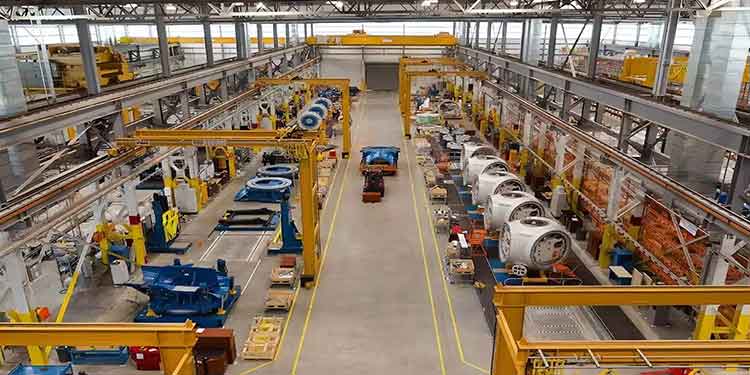
National Assembly Speaker Moses Wetang’ula has urged Kenya and China to boost economic cooperation by focusing on local manufacturing, technology transfer, and larger market access for Kenyan goods, aiming to create jobs and improve livelihoods.
At the 2026 Legislators Forum for Friendly Exchanges in China, Wetang’ula argued that Kenya should deepen its long-term partnership with China to spur industrial growth, attract investment, and generate additional economic opportunities, especially for youth.
He named major infrastructure projects, such as the Standard Gauge Railway, Nairobi Expressway, and Lamu Port, as cooperation examples between the two nations, while highlighting that the partnership should bring wider economic gains to Kenyans.
Wetang’ula advocated that Kenya should boost local industries, increase the value of agricultural outputs, and facilitate broader market access for domestically produced goods in China.
Wetang’ula stated that 144 technical and vocational education and training facilities had acquired modern equipment via Kenya-China partnership, and that 314 trainers had received training.
The Speaker urged legislators from both nations to back policies and partnerships converting bilateral ties into real economic gains, such as employment, inclusive development, and better living conditions.
This forum serves as a venue where legislators can deepen institutional ties, share insights on lawmaking and governance, and identify common ground.
Wetang’ula’s message highlights Kenya-China cooperation that moves past infrastructure to foster domestic industry growth, higher exports and lasting jobs.
The post Wetang’ula seeks to narrow Kenya-China trade gap through local manufacturing first appeared on ABDAS - Africa information and Business Directory.]]>
Kenya has signed a Memorandum of Understanding (MoU) for a proposed investment of Ksh390 billion aimed at strengthening electric vehicle manufacturing and advancing green mobility across the country.
The agreement, signed on Tuesday, October 6, 2026, outlines plans to develop electric vehicle assembly facilities, charging infrastructure, and supporting value chains. President William Ruto stated that the MoU establishes a framework for building an integrated green mobility ecosystem, describing the proposed investment as one of the largest electric mobility commitments in the region.
As part of the project, one manufacturing facility is expected to have an annual production capacity of 50,000 four-wheelers, while another plant will be capable of producing up to 100,000 two-wheelers and light mobility vehicles annually.
The proposed investment is projected to generate approximately 2,000 direct jobs and over 20,000 indirect employment opportunities across supplier networks, logistics, and service-related industries. Additionally, it could create up to 80,000 opportunities in fleet management.
President Ruto highlighted that the initiative would strengthen Kenya’s domestic automotive manufacturing capabilities, reduce dependence on imported fully assembled vehicles, and encourage greater local production and value addition. He further emphasised that local vehicle manufacturing would help retain more economic value within the country while creating business and employment opportunities for technicians, engineers, suppliers, and other industry stakeholders.
The project also proposes the establishment of 1,000 solar-powered charging hubs and a digital platform designed to manage up to 100,000 electric vehicles, supporting the development of a comprehensive green mobility network.
This investment proposal comes as Kenya continues to accelerate the growth of its electric mobility industry. In February 2026, the government launched the National Electric Mobility Policy, which aims to attract investment in EV manufacturing, vehicle assembly, and charging infrastructure.
According to the Ministry of Roads and Transport, Kenya recorded a cumulative total of 39,324 registered electric vehicles by 2025, compared with just 1,378 in 2022, highlighting the rapid expansion of the country’s EV market.
To further encourage adoption, the government has introduced tax incentives, including zero-rated VAT on electric buses, bicycles, motorcycles, and lithium-ion batteries.
Kenya is also strengthening its commitment to sustainable transportation through initiatives such as the introduction of dedicated green number plates for electric vehicles. These measures reflect the country’s ongoing efforts to promote clean mobility, encourage investment in the automotive sector, and support its broader environmental sustainability goals.
The post Kenya Signs Ksh 390B Investment Agreement for Electric Vehicle Assembly first appeared on ABDAS - Africa information and Business Directory.]]>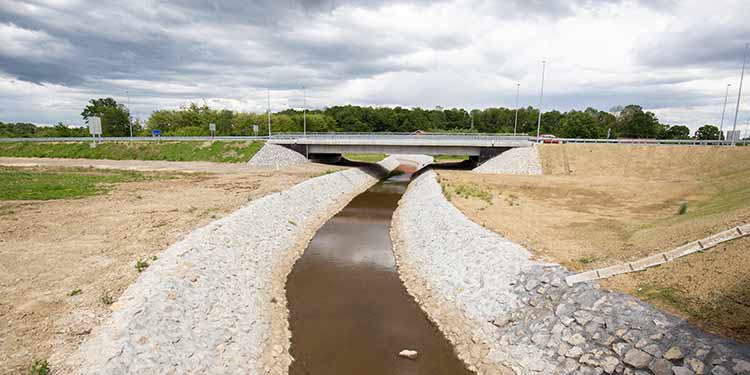
After the Mwiyumia water project’s reticulation construction is over, almost 5,000 people in Mwiyumia, Blue City, and Munanda villages in Kaimbaga Ward, Nyandarua County, would have better access to clean and safe water.
According to Nyandarua Governor Kiarie Badilisha, the project entailed drilling a 214-meter-deep borehole, installing a solar-powered pumping system that could deliver 30,000 liters of water per hour, and building an elevated steel water storage tank with a 24,000-liter capacity.
He pointed out that the borehole supports livestock production and offers a dependable supply of clean water for residential consumption, boosting household resilience and the local economy.
By increasing access to clean water, lowering the incidence of water-borne illnesses, and promoting sustainable socioeconomic development in the region, the Mwiyumia Water Project is anticipated to greatly improve the quality of life for locals.
Residents who were interviewed by KNA expressed happiness and relief, pointing out that they had to rely on a nearby dam as their primary source of water during years of water scarcity.
Now that clean water is available, livelihoods would improve, cleanliness standards would rise, and livestock keeping—which is still a major economic activity in the area—would be supported.
The post The Mwiyumia Water Project Will Serve More Than 5,000 Nyandarua Inhabitants first appeared on ABDAS - Africa information and Business Directory.]]>