Story
Set in the distant future of the year 2037, SSS2037 sees you take ownership of Rocket Post, a run-down shipping office. Your business isn’t the only shipping service in town though, and you’ll have to compete with a corporate behemoth named QuickBox. Can your budding delivery service carve out its fair market share, and perhaps even become the company that makes the first-ever space delivery? This premise forms the backbone of SSS2037’s campaign, but the narrative doesn’t end there. There are several local storylines, including interpersonal neighbourhood drama, town anniversaries, and even a secret underground bunker beneath the warehouse… that used to belong to your father. We were pleasantly surprised that there is more depth to SSS2037’s narrative than the typical invest-earn-expand cycle we’ve come to expect from sim games like this.
Graphics
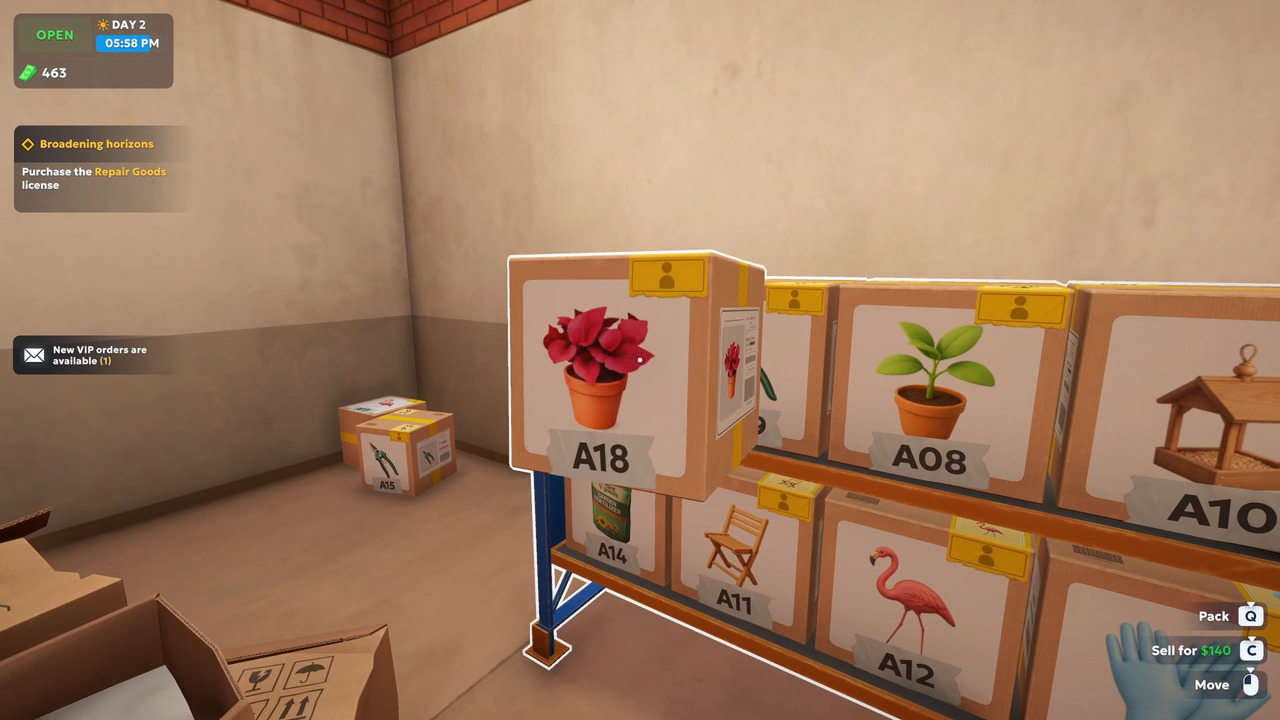
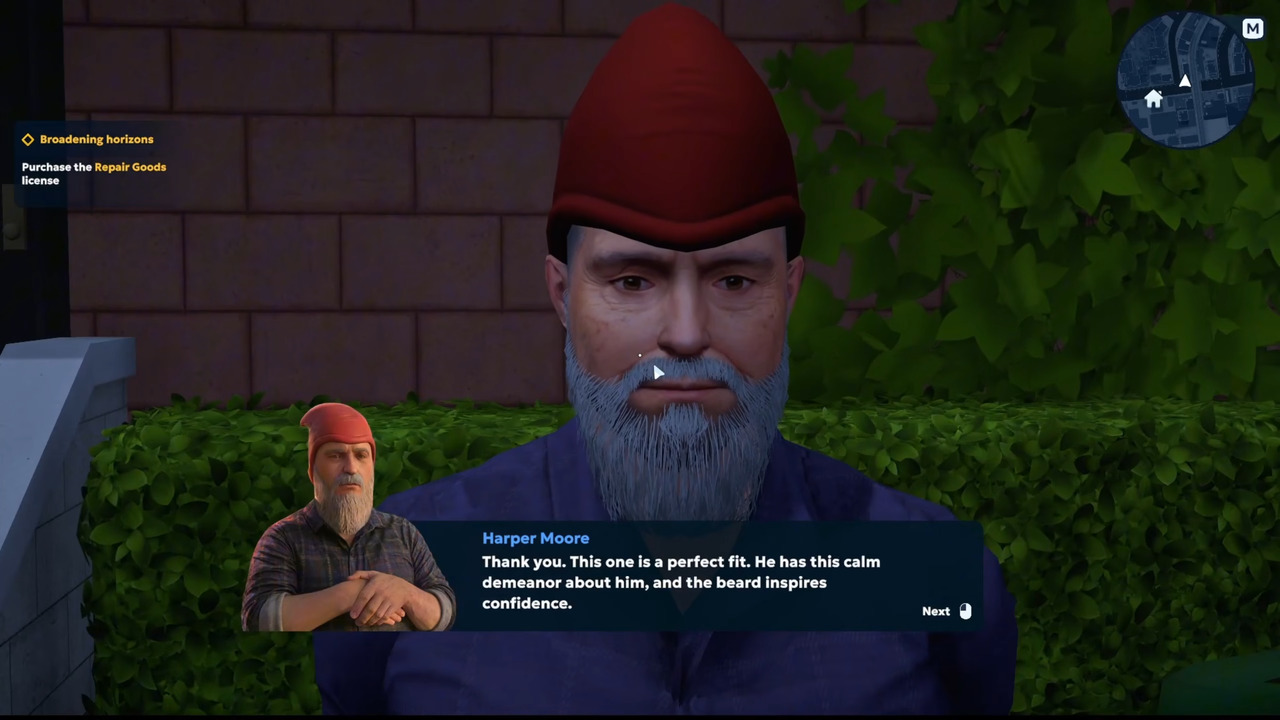
Both the Rocket Post shipping office and the surrounding town of Cranelock are brought to life with a stylized cartoon aesthetic. Developer Playstrom put a lot of emphasis on worldbuilding, with a fully realized environment that goes far beyond the inside of your store and warehouse. You can explore the city streets and even the town’s sewer system. The inhabitants of Cranelock, both humans and robots, feature distinct character designs and are convincingly animated. It’s clear that a lot of care went into making SSS2037 look good, which is why it pains us to point out that some of the game’s assets, like in-game box art and character portraits, make use of AI-generated assets. This undermined the game’s visual appeal and left a sour taste in our mouth. Visual performance also suffered from some rough edges, including an erratic frame rate and noticeable pop-in.
Sound
Environmental audio is another important factor when it comes to making Cranelock feel alive. The ambience adds to the game’s atmosphere, whether it’s a dog barking in the background or the loud humming of car engines. We’d go as far as to say that SSS2037’s ambience is the strongest element of the game’s soundscape, as voice acting is absent and the game’s music comes across as generic elevator music at best.
Gameplay
You’d be forgiven for thinking that SSS2037 is just the latest in the list of ‘generic’ shop simulators that have been popping up on Steam over the last couple of years. For the most part, the game follows the same template as Supermarket Simulator, Gacha Capsule Shop Simulator, or Exotica 2. At 9:00 a.m., you open the doors of Rocket Post. Your work day then consists of receiving and unloading inventory supplies from delivery vans, labeling packages, stocking shelves, and scanning and fulfilling customer orders. Things get more interesting at night though. Once the clock hits 9:00 p.m., you’ll not only manage store upgrades, but you’ll also engage in black market deliveries using vans, hack QuickBox’s billboards, and repair broken robots. The darn things have a tendency to break down or even catch on fire if you push them too hard, you see.
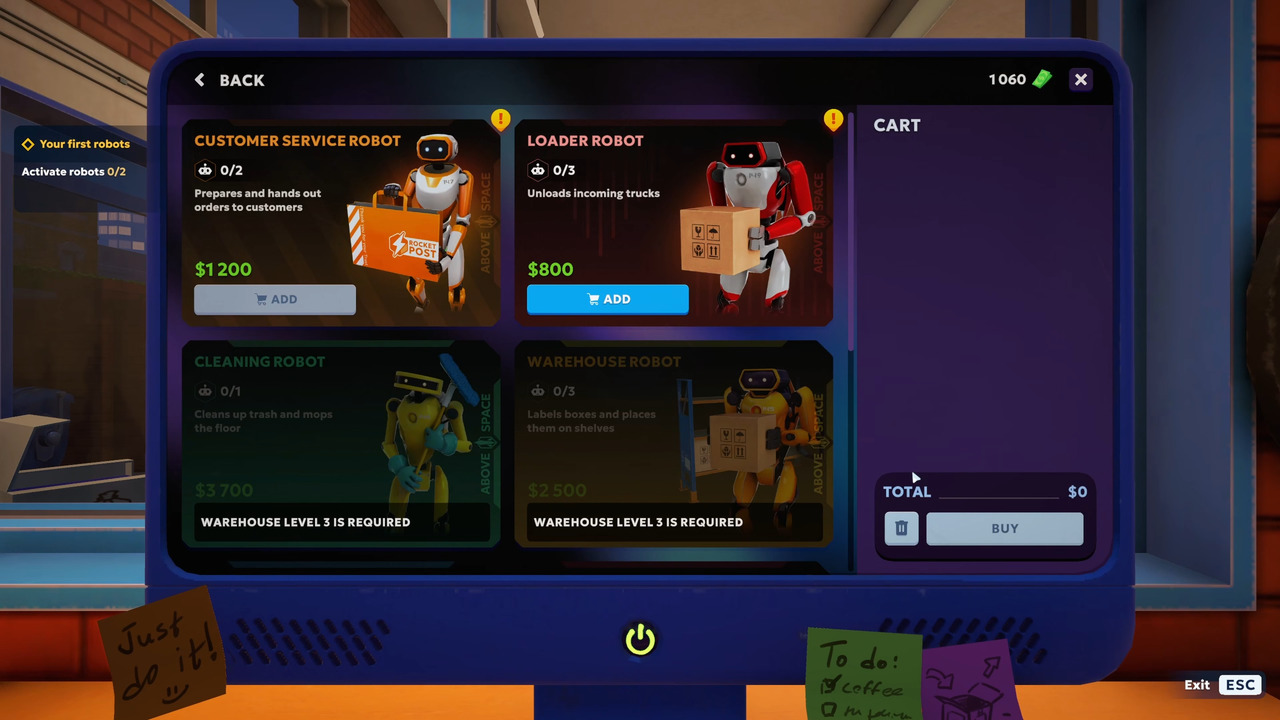
That brings us to the most prominent of SSS2037’s unique features: those same robots. You’ll eventually transition from manual labour to automation by purchasing and deploying different types of robots. Early on, SSS2037’s gameplay suffers from feeling very repetitive and tedious, but as you invest in your robotic workforce, your freedom opens up exponentially. Pretty much every task in the game can be automated, whether it’s customer service, working the register, labeling boxes, cleaning, and delivery (via drones, of course). The more you automate, the more time you can spend on your less legal activities and inch ever closer to finding out the truth behind your old man’s secret bunker. SSS2037’s hacking activities require you to bypass computer passwords and hack security systems by solving puzzles, adding another layer of depth and a fun twist to a core formula that has grown a bit stale otherwise.
Because of that narrative structure, SSS2037 is a lot shorter than other entries in the genre though. Completing the narrative campaign took us around 9 hours of playing at a leisurely pace. There is some replayability here, mind you, but unless you’re a completionist or achievement chaser, that 9-hour window is a good benchmark for what to expect. The €20.49 price tag puts SSS2037 slightly above its plethora of competitors in the shop sim genre, but both its mechanics and its narrative content are fleshed out enough to make the game stand out and warrant that price tag.
Conclusion
We initially expected Shipping Store Simulator 2037 to be just another store simulator, but the game defied our expectations. The core experience remains familiar, but the introduction of an expanded story and extensive automation mechanics elevate the overall experience. Admittedly, there are some rough edges here and there, like a tedious early game, visual hiccups, and AI-generated assets. As a whole, though, SSS2037 is well worth checking out if you enjoy the idea of shop simulators but feel like the genre has grown stale in recent months.
]]>
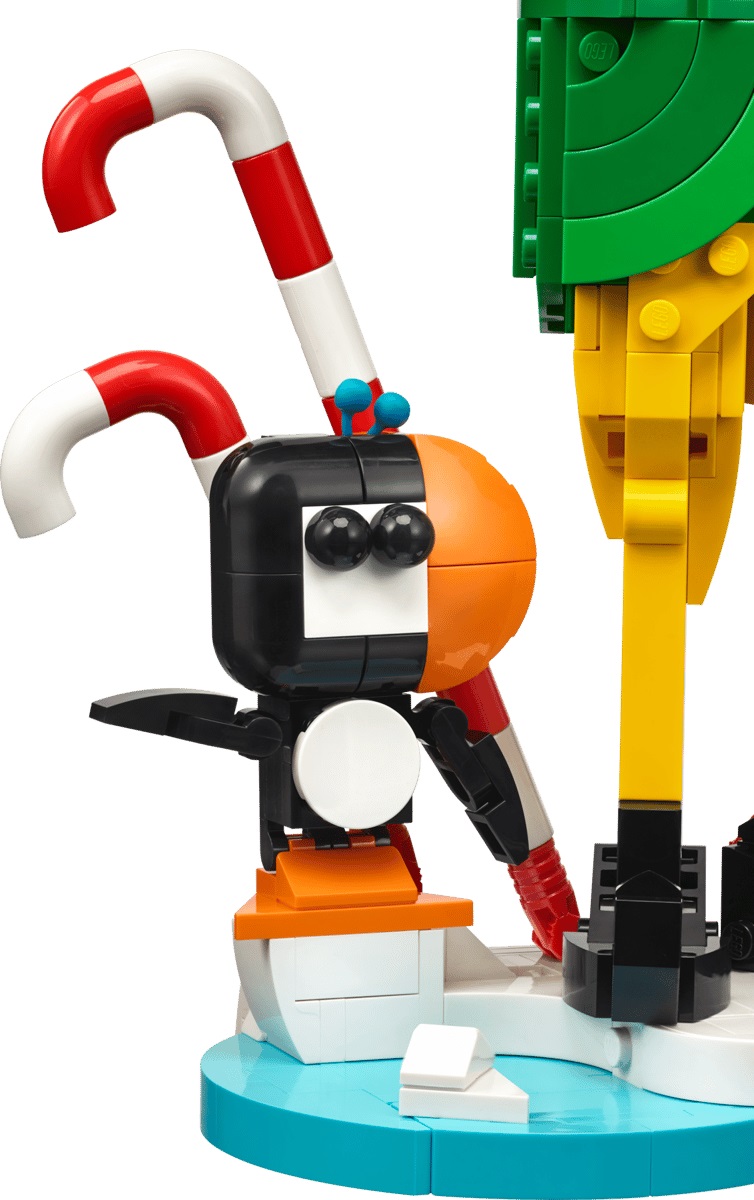
If you love celebrating Christmas and watching all the iconic movies that come with it, then you must have surely already watched 2003’s Elf starring Will Ferrell in the lead as Buddy the Elf. The movie portrays a fully grown man who was raised in Santa’s village as an elf, returning to the human world to meet his real father. We absolutely love that this movie now received its own LEGO set, as it has quite a few iconic moments and characters that would look amazing in different sets. For the time being, however, only Buddy has received his own dedicated LEGO set, and thus we’ll have to make do with that one for the time being. The set contains 713 colorful pieces.
It took us around one hour and a half to build Buddy the Elf at a fairly relaxed pace. The build never got complex, and we actually enjoyed the overall simplicity of the set. This also means there were no real hidden surprises or complicated mechanics for moving parts. We could almost call this the perfect set to build during the holidays with Elf on TV in the background. The design itself is quite nice, and the construction process is quite logically structured, with each bag handling major parts of the build (torso, legs, base, arms, head, and additional decorations). It would have been nice to have a few hidden surprises here, but it’s clearly a case of ‘what you see is what you get‘.

Honestly, for a licensed set from a movie and looking at the overall size of Buddy the Elf, we can say that the price is more than reasonable. Of course, while the build doesn’t have that much ‘meat on its bones’ and is a slim vertical build, it stands rather tall and is an eye-catcher, even if you don’t even know the movie it’s based on. All in all, you’re getting good value for your money. That being said, it’s a bit of a shame that the set didn’t come with a small Minifigure which would have served as the perfect icing on the cake.
Conclusion
As a fun, themed set for the holidays, Buddy the Elf scores major points. The overall appearance is cute; it looks great as a decoration, and even the fairly simple build had us entertained for a while. Combine all of the above with a fairly reasonable asking price, and you get a colorful set without too many bells and whistles that looks great for the holidays (and after they are over, too). We only fear that this set will be popular only with a fairly niche audience that is still enamored by the 2003 movie, and even then, some may even fail to recognize Will Ferrell’s iconic character.
Story
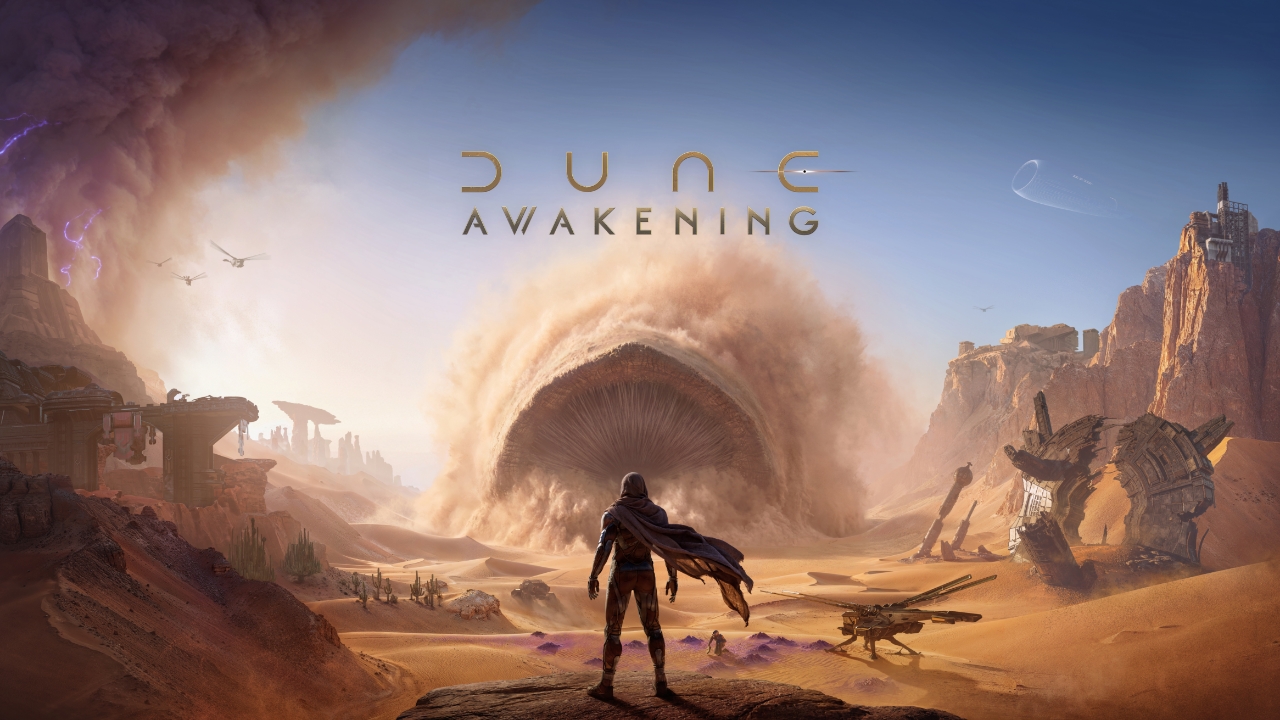
Dune: Awakening takes place in the same universe we know from the movies and books, but in an alternative timeline: Paul Atreides was never born, and his mother had a girl instead. This means House Atreides was never eradicated and is still a faction in this timeline. You start your journey as a prisoner, brought before the Bene Gesserit Reverend Mother, and undergo the Gom Jabbar test. After surviving this, you’ll be sent to Arrakis to try to find the Fremen, who seem to have disappeared. There’s also a mysterious legend mentioning ‘The Sleeper’ which you must investigate.
When the transport you’re on arrives on Arrakis, the ship is shot down and destroyed. You are saved from the wreck by someone called Zantara, who teaches you how to survive on Arrakis, guiding you through several locations. During the game, you’ll meet many characters who directly tie into the lore of Dune. For Dune fans, it’s a lot of fun to learn the stories of this timeline and the characters. It really feels like a plausible story which fits perfectly within the setting of Dune we know from the movies and the books.
Graphics
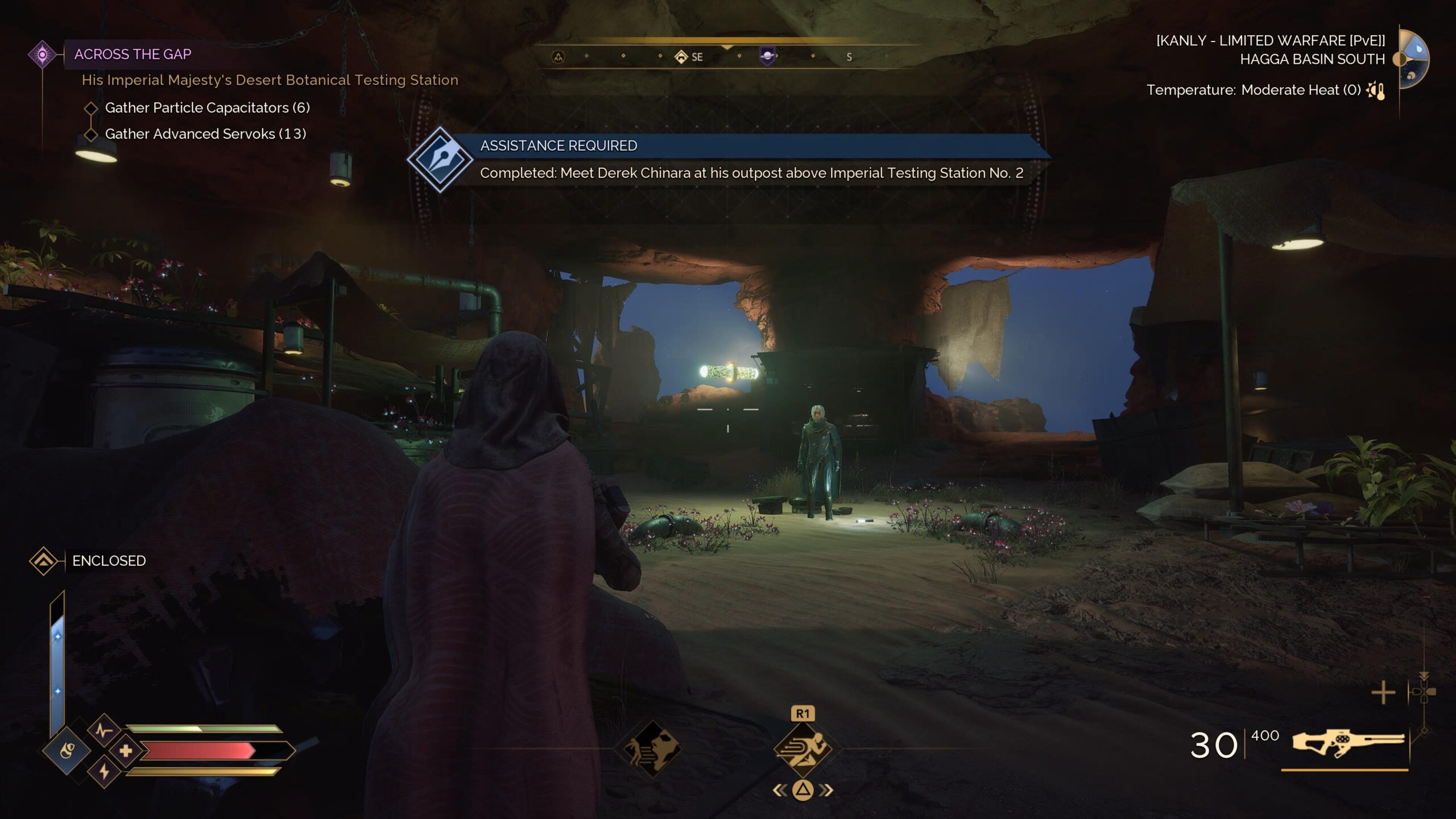
The graphics of Dune: Awakening are absolutely gorgeous and make you feel like you are actually exploring Arrakis from Denis Villeneuve’s Dune movies. The desert environment is beautifully designed, with lots of variation while feeling empty and hostile at the same time. Scavenger camps are often hidden from sight, so generally if you look around you’ll just see barren rocks and plains of sand, occasionally being disturbed by an enormous sandworm. Whenever a sandstorm is approaching, you’ll get an auditory warning, but you’ll also see the storm clearly approaching and battering the structure you’re in. The buildings look really impressive with the brutalist style architecture we know from the movies. Depending on each faction, there are some differences in style.
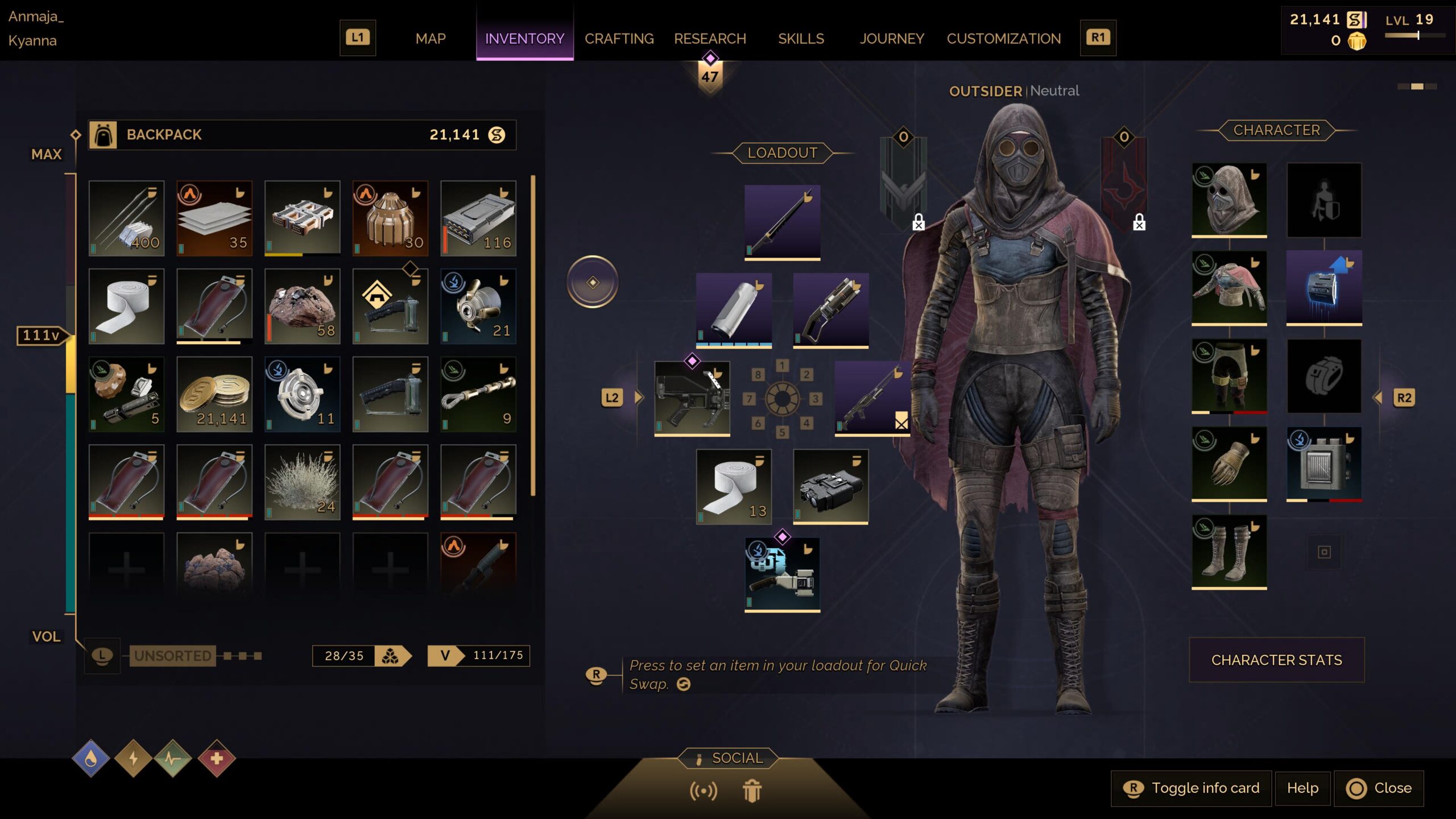
The suits and weapons you’ll wear are beautifully designed and fit within the setting. The UI is quite expansive since there’s so much to do in the game, but it’s easy to navigate once you learn where you need to look.
Sound
The music of the game is beautiful, just like in the movies. The music feels epic and cinematic, and fits the desert atmosphere. Whenever enemies are nearby, the music intensifies until all enemies are defeated. Of course, you’ll also hear enemies call out when they discover you. The game is fully narrated, and it’s done very well. Of course, you’ll talk to many NPC characters, but you’ll also often discover audio logs telling more of the background story of certain locations. The soundscape is absolutely amazing; you’ll hear the wind howling, the environment creaking, and a massive sound whenever a sandworm is approaching, which feels terrifying. The sound effects in the game feel pretty unique and fitting to the universe.
Gameplay
Dune: Awakening is at its core an MMORPG, but for this review we’ve selected single-player mode, placing us alone in the universe alongside the NPCs. The game features an epic story and relies heavily on survival mechanics to endure the harsh desert environment of Arrakis.
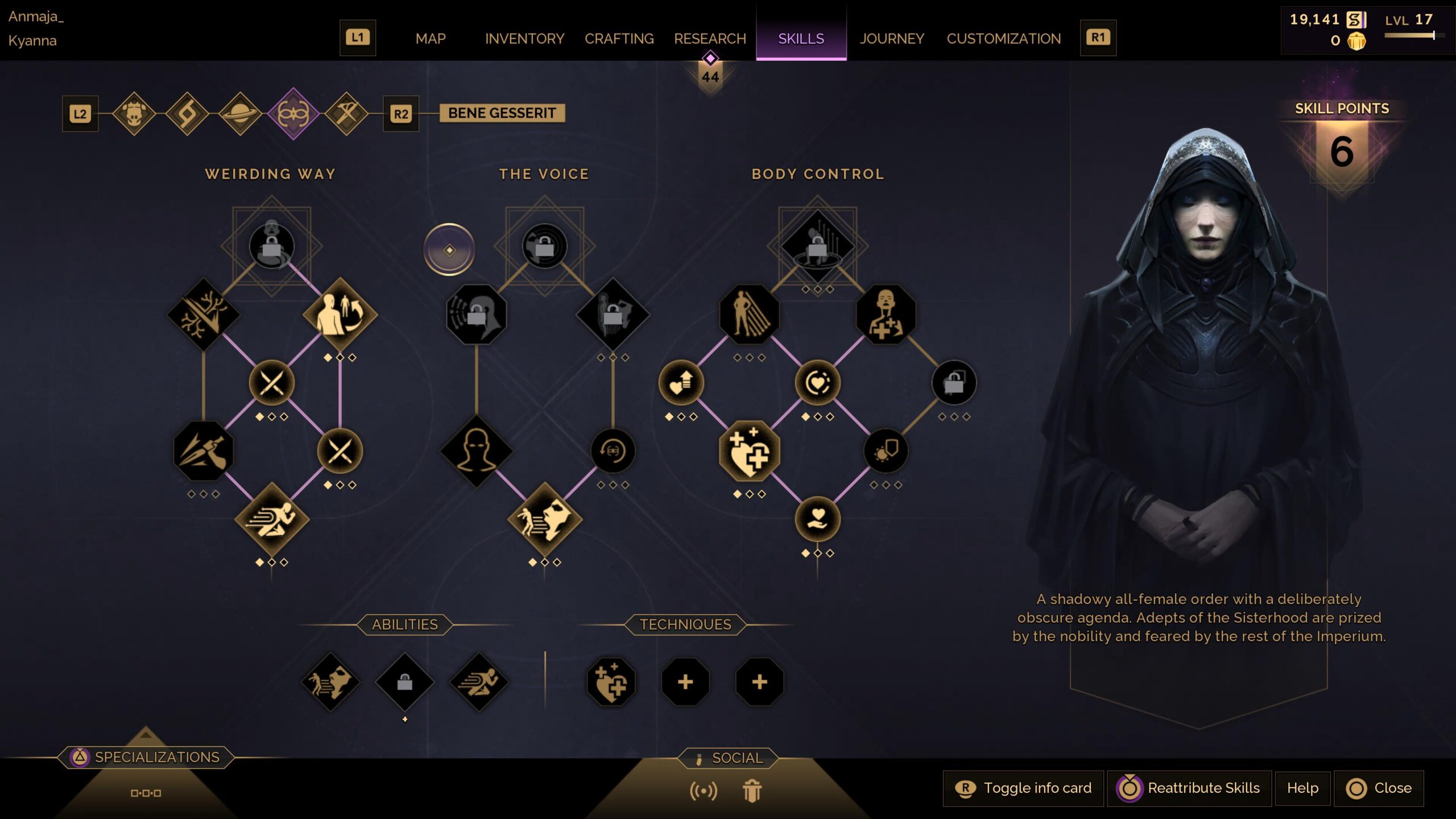
The Gom Jabbar test at the very beginning enables you to build your character. When asked questions, you can choose your backstory, faction, and the class you’d like to play. Creating your character like this feels very fitting. You’ll select a base class with its skill tree; however, you’ll gain access to other skill trees as you progress through the game. You’ll meet characters who can teach you things like sword fighting if you finish their quests, unlocking the skill tree that belongs to that skill. You’ll earn skill points when you level up, but you really have to specialize since you get many skill trees and just a few points.
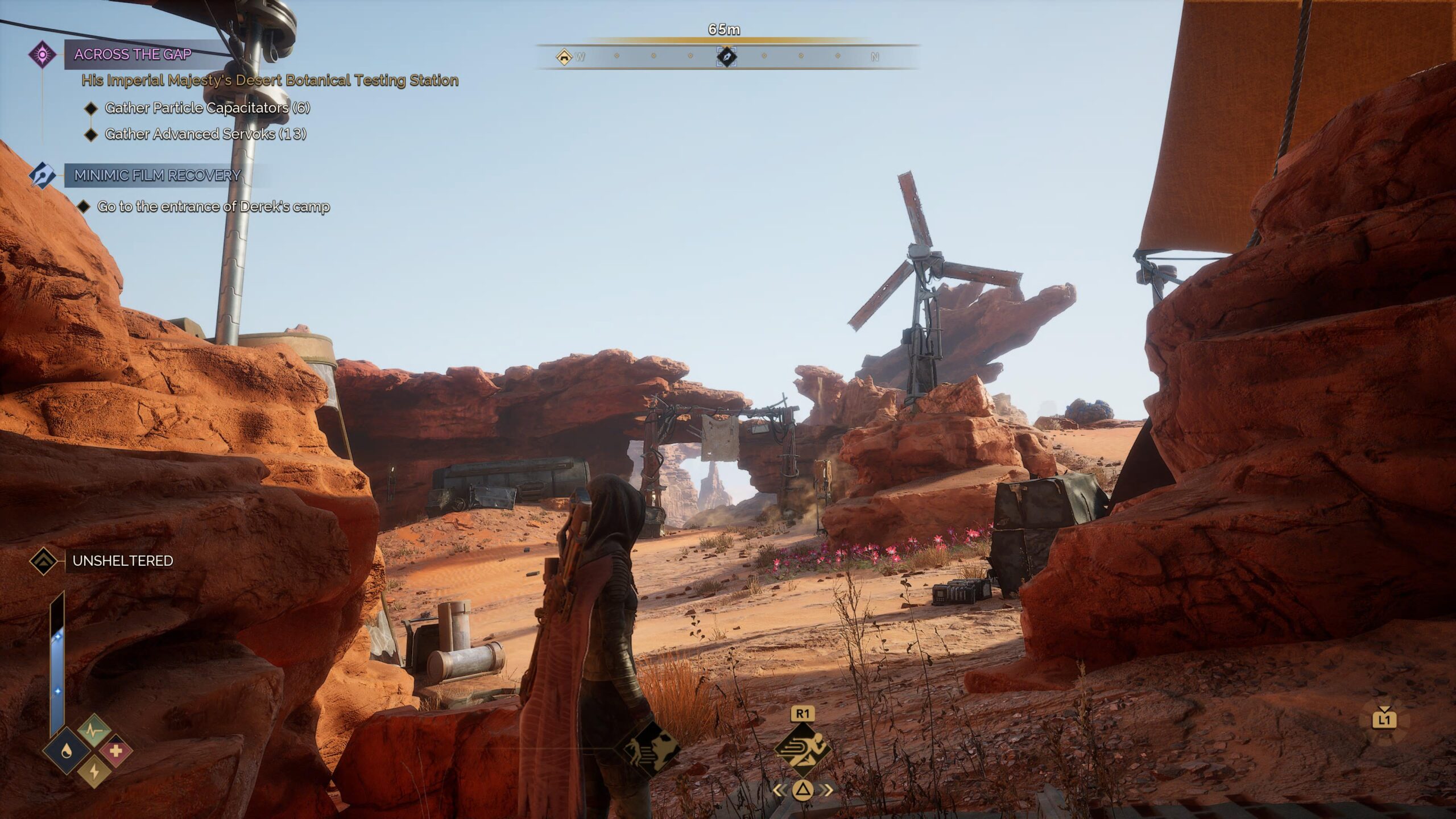
Surviving the harsh conditions of the desert on Arrakis requires you to keep an eye on many different stats. You’ll need to drink enough water and never run out, or you’ll die. Luckily, you can craft water containers, and if you’re really desperate, drink your enemies’ blood. Blood can be refined into water as well. If you stand in the full sun for too long, you’ll get overheated, so you’ll need to stick to the shadows or move around at night. Sandstorms will kill you too if you’re unsheltered, so whenever you hear a warning of an approaching storm you’ll quickly need to find a structure to hide in, which can be a building but also a cave. Moving around in the open desert will attract a sandworm to your location, which will eat you, making you lose everything you’re carrying. If you die of other causes, you’ll be able to retrieve the contents of your backpack at the location where you died. Surviving the desert is something that needs to be on your mind constantly. The desert really feels deadly, and in the beginning you’ll probably die a few times before you learn to keep an eye on all your stats.
To protect yourself and everything you own, you’ll need to build a base, which can be placed anywhere with suitable terrain. Within this base, you can place storage containers and different machines to refine ore and blood and manufacture items. To protect this base from the storms, you’ll need to have a shield active at all times, requiring power cells to power your machines and the shield.
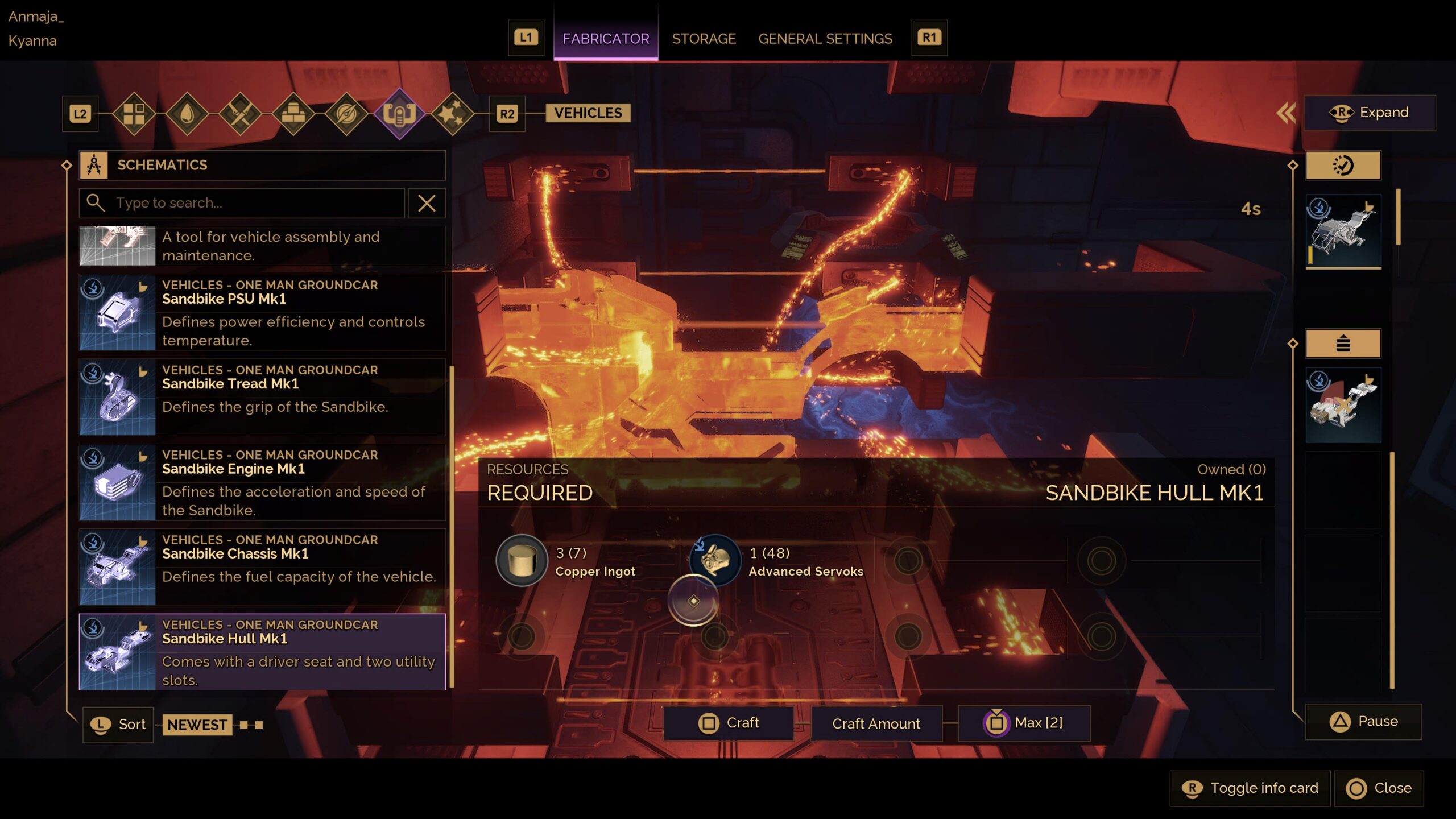
You’ll gather materials in order to craft everything, which you gather in the world, steal from scavengers, earn through quests, or gain while looting. You’ll also discover blueprints in chests you’ll discover in scavenger camps or in questing areas. Essential blueprints are also unlocked through progressing in the game. With these blueprints, you can craft weapons, mining tools for all essentials, suits, armor, machines for your base, and vehicles enabling you to move around faster. Some materials are only found in certain locations, since those are off-world materials, often needed to craft extremely useful items like vehicles.
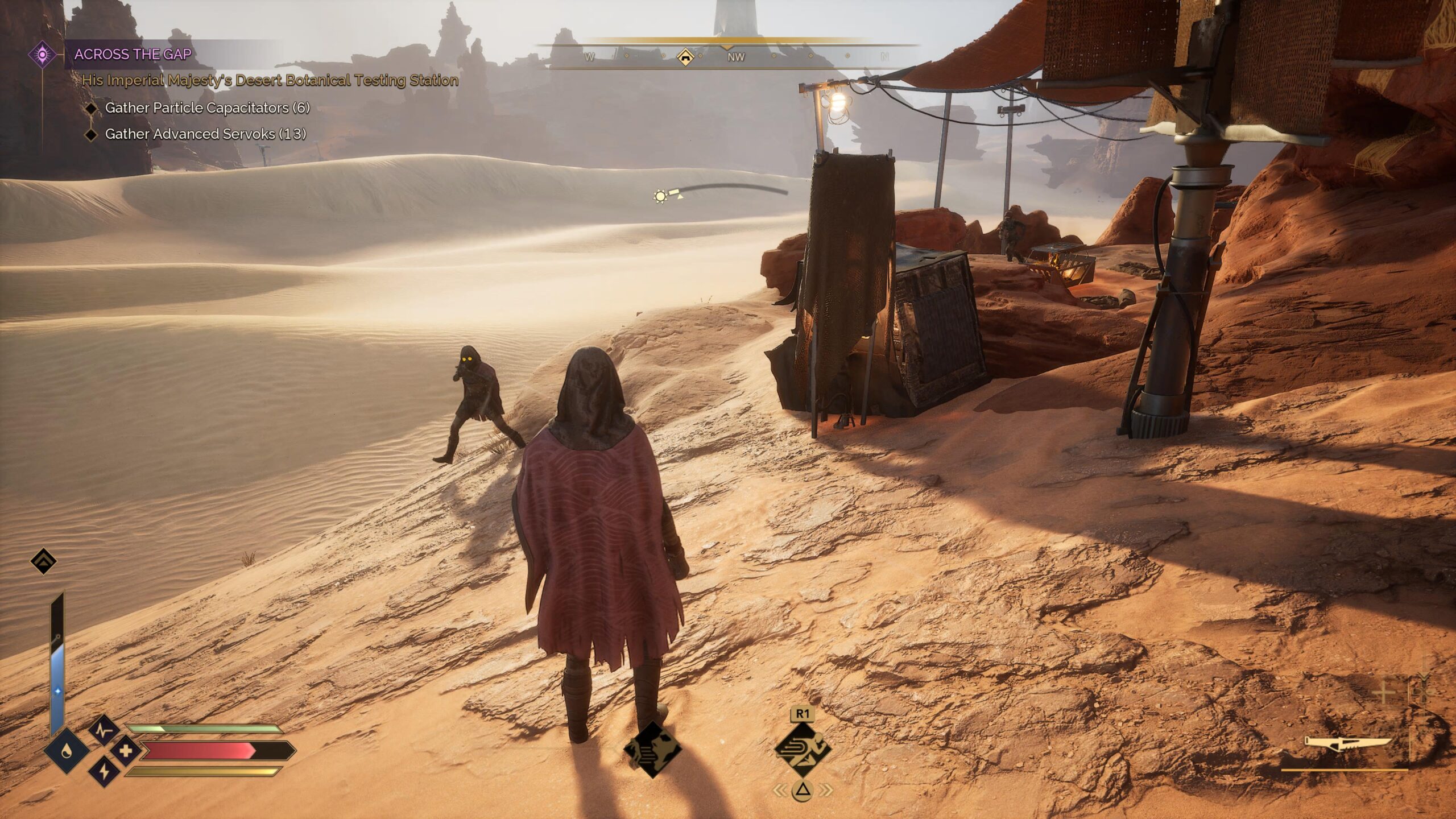
Combat feels a bit clunky at first, since you need to use a radial menu to switch weapons. However, you’ll get used to it quickly, and when combat becomes more challenging as the game progresses you’ll likely be able to switch weapons quickly. Switching weapons from long-ranged rifles to daggers is something you’ll do often when encountering enemies. Enemies can also be shielded, and in such a case, only special knife attacks will damage them, just like in the movies. If you’re approaching enemies and attack one with a knife while others shoot at you and you’re unshielded, you’ll be dead pretty quickly so it’s best to take on enemies just a few at the time. This makes combat feel fitting to the setting as well, although you’d imagine there’d be less people just walking around in a place like this. Sometimes you’ll feel a bit like a murderhobo, where you shoot first and never ask questions, just assuming anyone is your enemy (which indeed they are). You’d imagine if there were actually so many scavengers living in harsh conditions like these, they’d try to band together and pool their resources to survive more efficiently together. However, combat like this is logical in a game such as this, and the action is a welcome diversion from just gathering and surviving.
Conclusion
Dune: Awakening is a beautiful game which absolutely honors the Dune setting we know from the movies. The survival mechanics are very good and really fit the setting. The same can be said about the combat, although it feels a bit clunky at first. The graphics and sound design are absolutely magnificent and really make you feel like you’re experiencing the hardships of the universe firsthand. The story is well thought out and very believable in the setting of Dune. All in all, Dune: Awakening is a great game, especially for fans of the Dune universe.
]]>
Story
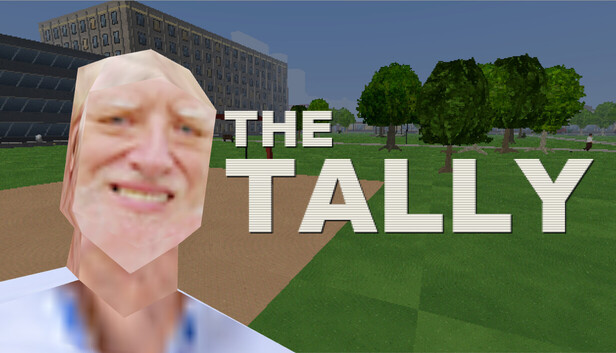
The protagonist of The Tally may resemble Harold, but it’s probably not intended to actually be the internet’s favourite octogenarian. We’ll refer to him as Harold for the purposes of our review, but he’s intended to be a stand-in for the normal everyman… with the exception that his main means of transportation is a skateboard. In The Tally, it’s up to you to ensure that Harold lives the best life possible. What that entails is entirely up to you, though at the end of your life cycle, your actions are tallied up and you’re judged on how good of a life you lived. We won’t spoil what that judgement entails, but we do recommend living a productive and generous life, rather than a self-centered and selfish one.
Graphics
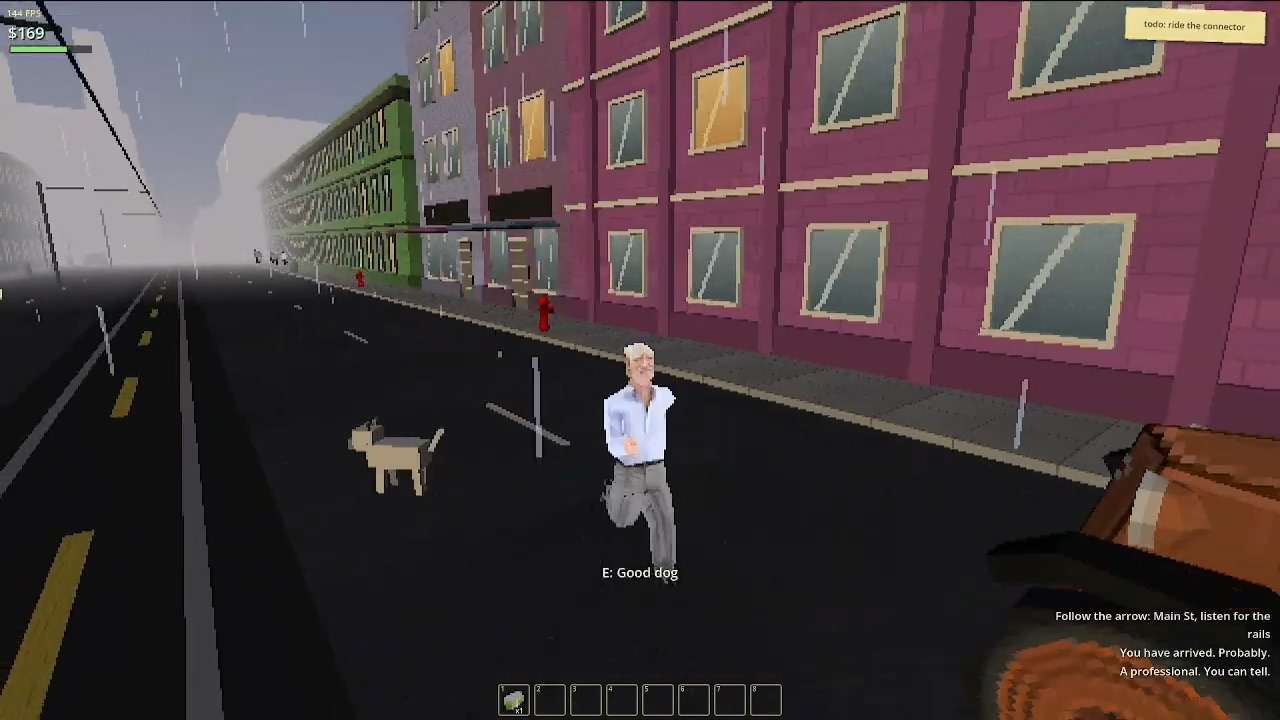
Visually, The Tally takes inspiration from the PS2 era, with blocky models and low-resolution textures. The aesthetic is probably meant to invoke nostalgia, though the art direction does feel disconnected from the message that the game is trying to get across. Still, the old-school visuals are functional. It’s clear what is supposed to be what, even if The Tally doesn’t impress with its graphics. The upside is that the game runs like a charm, with a 140+ FPS frame rate. It’s worth noting that although Olivia Gonsher used an AI assistant to help her with programming The Tally’s code, all in-game assets were hand-created by people.
Sound
The audio of The Tally also embraces the old-school PS2 mindset, with a set of tunes that feels very authentic. That doesn’t mean that the music is good, mind you. Not only is The Tally’s soundtrack almost ear-gratingly obnoxious, it’s also lacking in variety. It took less than a single run for us to mute the game’s music entirely and listen to something more pleasant. Sound effects are functional, but nothing spectacular, and voice acting is expectedly absent.
Gameplay
The concept of The Tally is as simple as it is brilliant. It’s a life sim where you get to decide what you want to focus on, with the knowledge that after ninety minutes, the Grim Reaper inevitably comes knocking at your door. You start the game with a skateboard to make your way around the city, and an old phone that provides you with a list of odd jobs that you can take on to make money. Of course, if you’d rather beat up people and steal their wallets as your means of income, that’s your prerogative. Just be aware that whatever you decide to do with the time you’re given is recorded, and when your time is up, judgment awaits. It may sound like you’re given an unprecedented amount of freedom here, and in a way, you are, but the game’s shallow design does stand in the way of the overall experience.
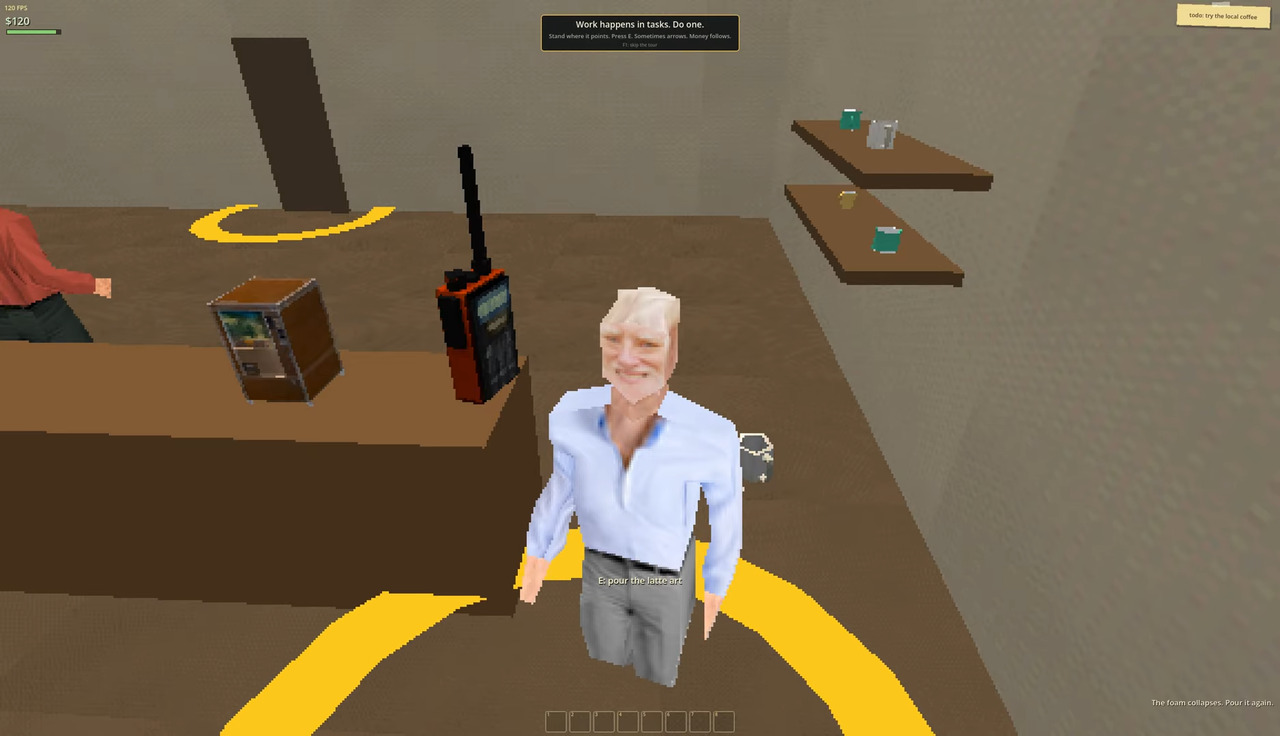
The issue is that whatever job or side quest you decide to take on almost always boils down to a simple fetch quest. Sure, you can walk a dog or help an NPC find his lost wallet, but in practice you’re simply moving from point A to point B, and ticking off boxes on a never-ending (well, ninety minutes) checklist. There are goals to work towards, like getting Harold a house, and there is a sense of progress in how you can earn pay raises by sticking to a single job and getting really good at it, but this doesn’t remove the overall feeling of repetitiveness that is present throughout the entirety of a run. The best way to describe it is that The Tally casts a wide net but does so in very shallow water. Now, we’ll admit that there is some kind of poetic beauty in playing a game about life itself where every tedious task you take on ends up feeling like it doesn’t really make a difference, but there probably is a more poignant way to get this message across.
At the time of writing, The Tally has a slated release frame of November 2026, though the game’s Steam page does not list a definitive date or definitive pricing just yet. A little birdie told us that the game will set you back $4.99 when it eventually releases, which seems fair for what is essentially a meme game. In the meantime, there is a free demo available, allowing you to find out first-hand whether or not you happen to belong to the very specific niche that will enjoy this game for longer than a single run. If you happen to be one of those people, then The Tally has as much replay value as there are ways to live a life.
Conclusion
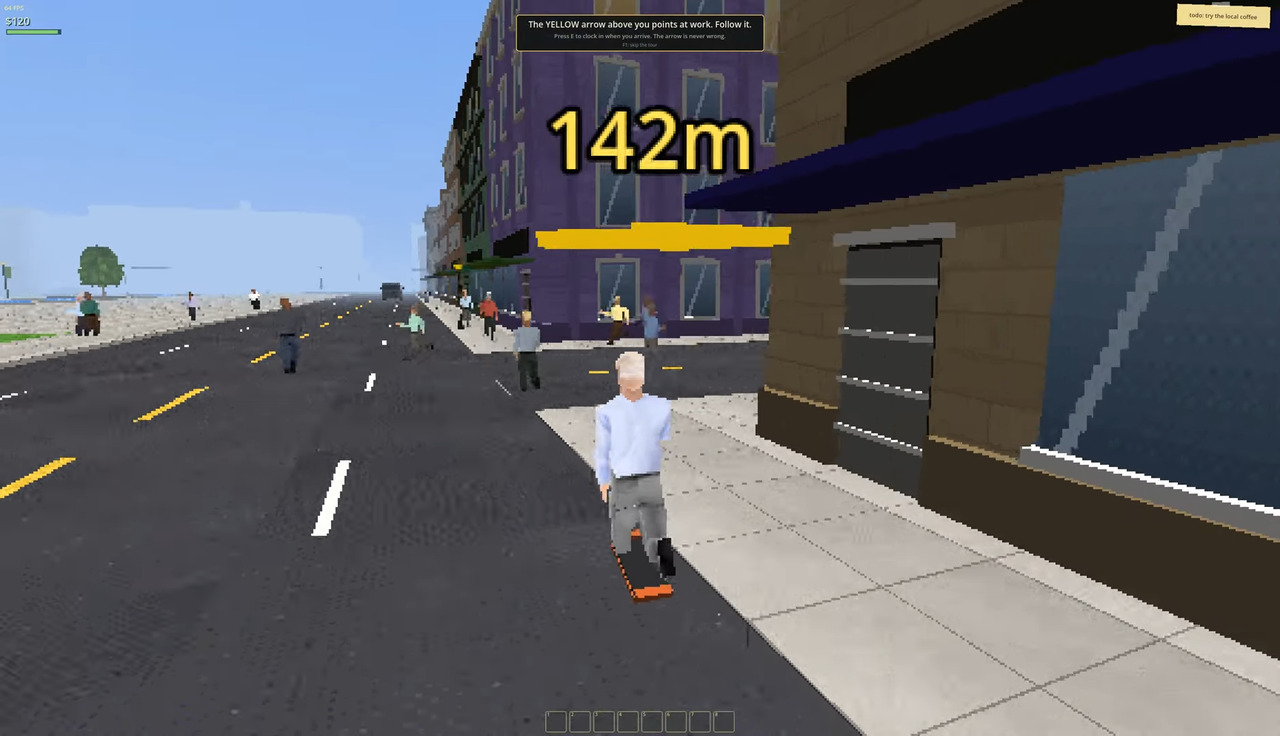
We feel like we understand what The Tally sets out to do, but we’re not entirely convinced by the game’s execution. While there is definitely some merit to the “life is ultimately pointless” message that is embedded in the game, there are other games out there that have more to say than “the funny old meme man is serving drinks”. Still, if that rumoured $4.99 price is on the dot, this one is worth checking out, if only as a ninety-minute novelty that you’ll never touch again afterwards.
]]>
Story
There is no overarching story hook or complex world-building present in Roguecraft DX. Instead, the game tries to hook you in by dynamically generating your adventure through emergent gameplay moments on each run, ranging from unexpected traps, risky potion gambles, or encounters with bizarre dungeon inhabitants. The game’s premise centers on three adventurers descending into the procedurally generated Dungeons of Mordecoom, pushing ever deeper through its floors. Although the game’s setting is its own original IP, it leans heavily into familiar fantasy tropes, and borrows ideas from both classic D&D and Lovecraft’s cosmic horror. That said, the focus is on gameplay rather than delivering a neatly rounded story.
Graphics
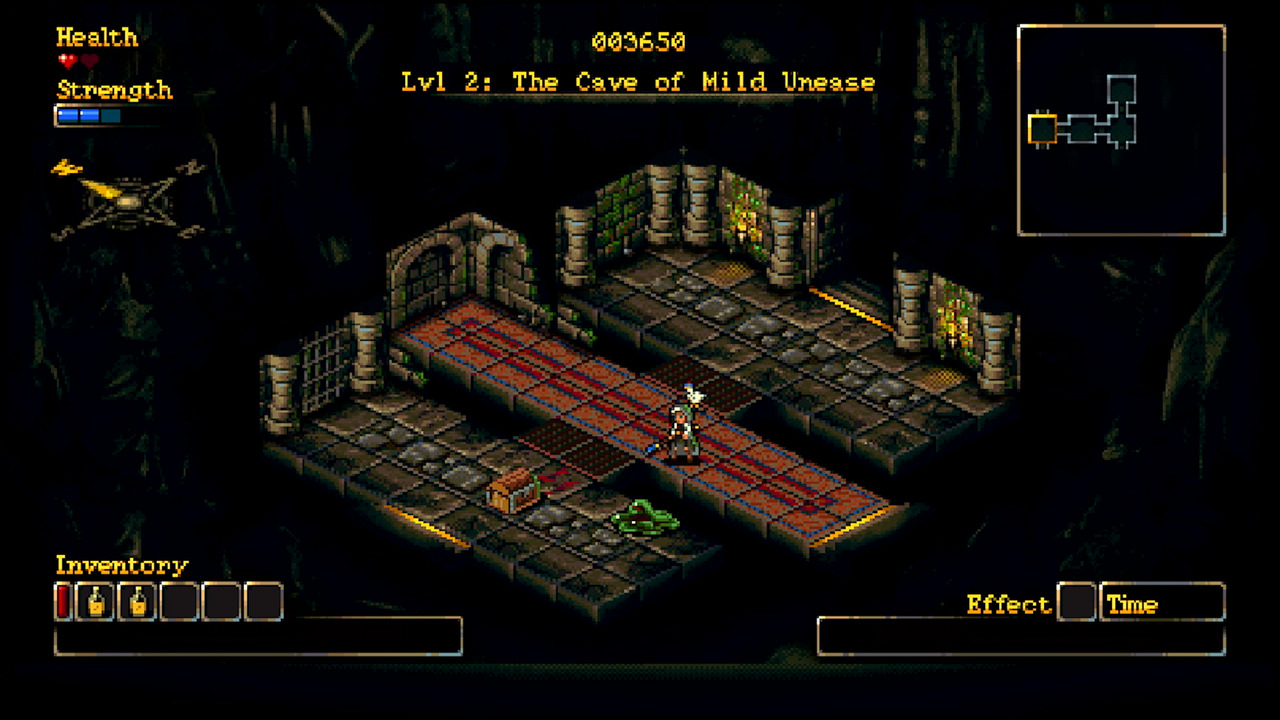
The isometric dungeon rooms of Mordecoom utilise a mature, detailed and clean pixel art style that act as a retro throwback to authentic retro 80s and 90s titles as well as the series’ Amiga heritage. The game succeeds in evoking a nostalgic feeling as a result, though we did feel like optional retro screen effects, like a CRT filter, could’ve made the game feel even truer to the era it emulates. The game’s environments consist of repetitive forests, dungeons and castles that grow increasingly eldritch and Lovecraftian as you descend. Both player characters and monsters are chunky and small, with their simple designs prioritising readability over visual splendor. An auto-map also clearly visualises floor layouts and door placements. Performance is nigh-on flawless, with zero technical hiccups and near-instantaneous loading times.
Sound
Both Roguecraft DX’s sound effects and its music are complementary to the game’s retro identity. The Amiga-style tracker soundtrack creates a strong atmospheric vibe, even if the music feels like it lacks a direct thematic connection to the game’s fantasy setting. Combat sounds are crunchy and have weight to them, adding a real sense of physicality to landing blows. Other sound effects add depth and nuance to the soundscape. The flapping sounds of bat wings differ depending on their size, for example. Unfortunately, voice acting is absent. While this isn’t a huge loss, given that Roguecraft DX doesn’t put a whole lot of emphasis on storytelling, this would’ve still added just a tad more depth to the overall experience.
Gameplay
Now we get to the point where Roguecraft DX’s origin story really becomes noticeable. The game marries old-school dungeon crawling with modern game design sensibilities, resulting in something that feels true to the late 80s and early 90s but pulls off gameplay that simply wouldn’t have been possible in that same era. The core gameplay loop sees you pick one of three characters and descend through procedurally generated dungeon floors, where you defeat monsters, locate keys and trapdoors, and try to reach the dungeon boss before dying. The game’s “standard” Classic mode consists of 15 floors, resulting in surprisingly fast-paced runs that typically take around 30 minutes to complete.
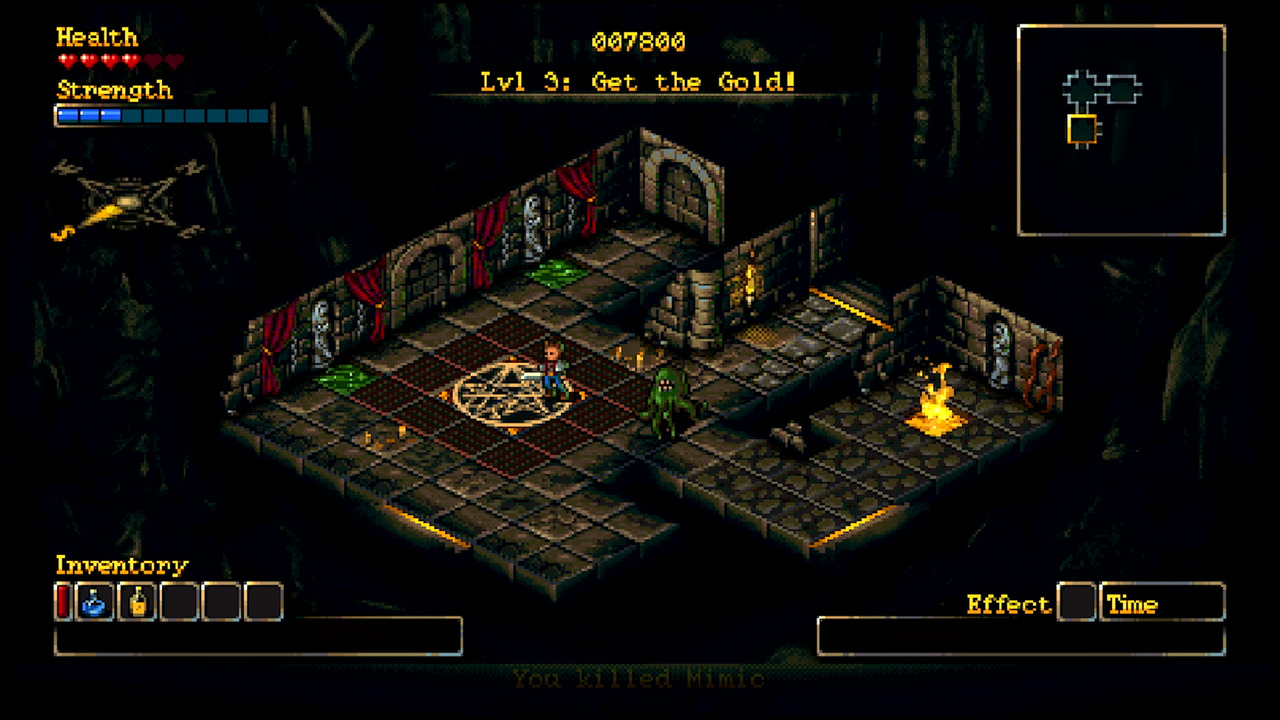
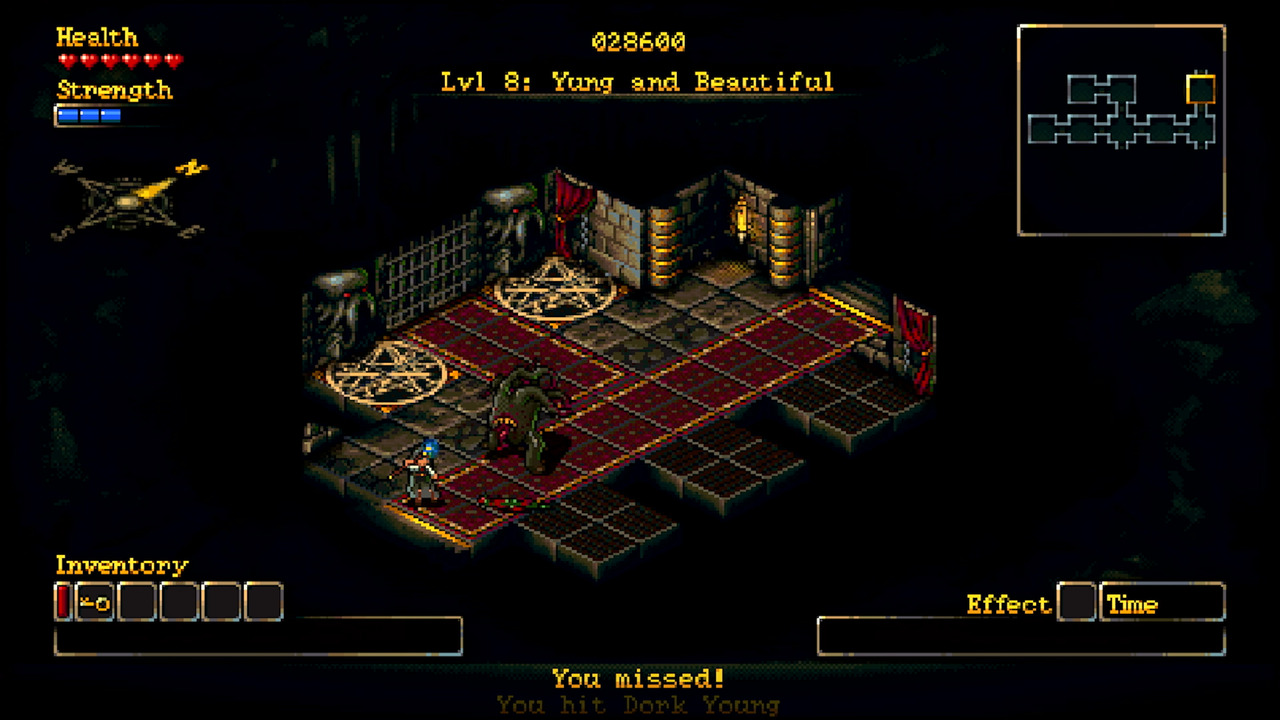
Movement is both turn-based and grid-based, with every step or action you take seeing monsters on the same floor advancing simultaneously in lockstep. There are no combat transitions, with combat occurring on the same grid. Combat is executed simply by bumping into adjacent enemies, with no active block, parry or hit-chance control. Success relies heavily on positioning, environmental hazards like fire, spikes, or poison, and RNG. The way this worked felt reminiscent of the Mystery Dungeon series. Each of the three playable classes brings their own spin to combat as well, with the Warrior being the most straightforward and forgiving character to play as, as he has high hit points compared to his compatriots. The Wizard is much more fragile but can exploit ranged attacks, whereas the Rogue is able to teleport, opening up new strategies.
Unlike in other roguelike dungeon crawlers, there is no meta-progression or permanent upgrade system in Roguecraft DX. Progression relies entirely on familiarising yourself with enemy patterns and mechanics. Even then, the effects of colour-coded potions are randomised each run, and figuring out what a potion does requires risky experimentation. This fits with the overall sense of both fun and adventure that permeates the game. This is a game where you can strike temporary alliances with animal companions to grab hard-to-reach loot and where gold serves primarily for arcade-style scoring or identifying mimics that disguise themselves as chests rather than supporting a persistent shop. Because each run offers a completely fresh start, Roguecraft DX ends up being much more challenging and punishing than other genre entries, but it’s also really, really fun and definitely achieves that “just one more run” feeling. While Roguecraft DX’s €12.25 RRP may seem steep initially compared to its depth, the game’s high replay value definitely makes up for that.
Conclusion
While Roguecraft DX is technically a modern game, it fits right in with actual retro titles, and subsequently feels right at home on the Evercade. However, the Evercade remains a niche platform, and Roguecraft DX’s arrival on PC gives an entirely new audience the opportunity to explore Mordecoom’s dungeons to their heart’s content. If you’re in the market for a “new” retro game, you shouldn’t look any further.
]]>
First things first: please go read our Pick & Place review. Ready? Good, you’ve just finished reading our review of Neatly Organized. No, really. There are no ifs and buts about it. Neatly Organized is the same game as Pick & Place, albeit with a slightly less pixelated aesthetic. The puzzles are identical and appear in the same order, and the game’s soundtrack remains unchanged. This does allow us to keep things very short here, because on its own, the game deserves the exact same score, which is what we gave it here.
The two screenshots that accompany this review aren’t both from Neatly Organized, mind you. We were struck with a sense of deja-vu as soon as we booted up Neatly Organized and heard the familiar music and were confronted with the first puzzle. At first, we couldn’t believe it, so we dug into our Virtual Game Card library to redownload Pick & Place, just so we could compare the two games. That comparison is where the second screenshot comes from.

Now, we’re not going to say that this is an outrage, because nobody is forcing you to buy both of these games. However, we are going to advocate for transparency, because we can imagine that anyone who enjoys Pick & Place is in the target audience for Neatly Organized. The eShop page doesn’t mention that the latter is the same game, and the screenshots show different stages, so it would be easy to think that this is a different game with similar gameplay. After all, puzzle games like these are a dime a dozen on the eShop, and if you’re not paying attention, you might end up getting scammed out of your hard-earned cash for a game that you already own. This is just a friendly heads-up, because RedDeer.Games “forgot” to tell their player base that they already released this game less than six months ago.
Now, if you happen to own neither game, then there probably is no harm in picking up either Pick & Play or Neatly Organized. Whichever one’s on sale is your best bet, as they are functionally identical titles. With an identical RRP of €7.99 (and a historical sale price of €2.99), the games won’t break the bank, and they do provide a fun distraction for an hour or so.

Conclusion
Our review of Neatly Organized ended up being about half the length of a normal review, and in all honesty, that is already more than this specific release of the game deserved. Again, we’re not going to say that Neatly Organized is a bad game in and by itself, but if you already own a copy of Pick & Place, then just skip this one. If not, and if either release piques your interest, go for whichever version is cheaper.
]]>
Story
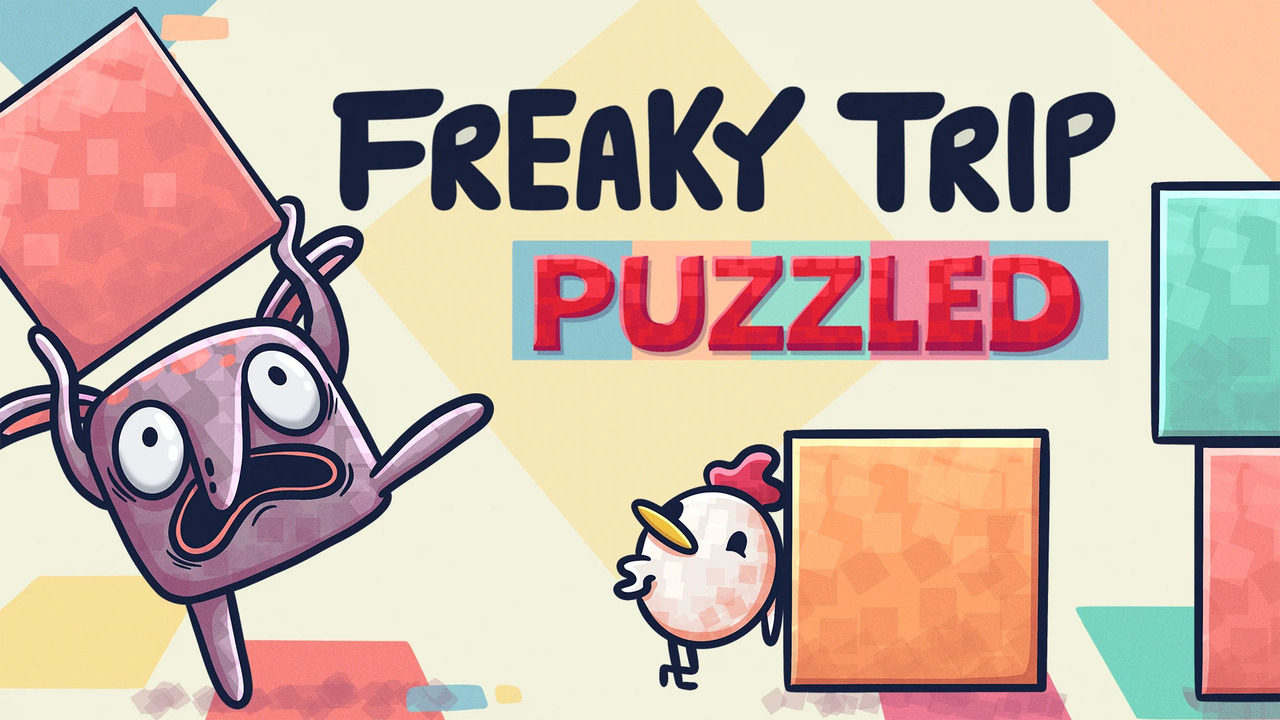
You’ll have to forgive us for not knowing who Salcy and Cockapoo are, as we haven’t played the original Freaky Trip. Not that it matters anyway, as this spinoff doesn’t feature a story whatsoever, and just shows the two series protagonists in a series of cutesy illustrated scenes. These scenes aren’t necessarily connected, but when they are, they present very simple stories, like when our heroes work together to finish a puzzle and then attempt to hang the framed version on the wall. Other moments are grouped by theme but feature no narrative elements as far as we’re aware. Your mileage may vary if you have indeed played through that previous point-and-click adventure. Perhaps the scenes you’re seeing are throwbacks to key moments from the game. Even if they are, we can’t imagine that the overall experience of playing Freaky Trip: Puzzled is much more meaningful or deeper if you’re familiar with the source material compared to us laymen.
Graphics
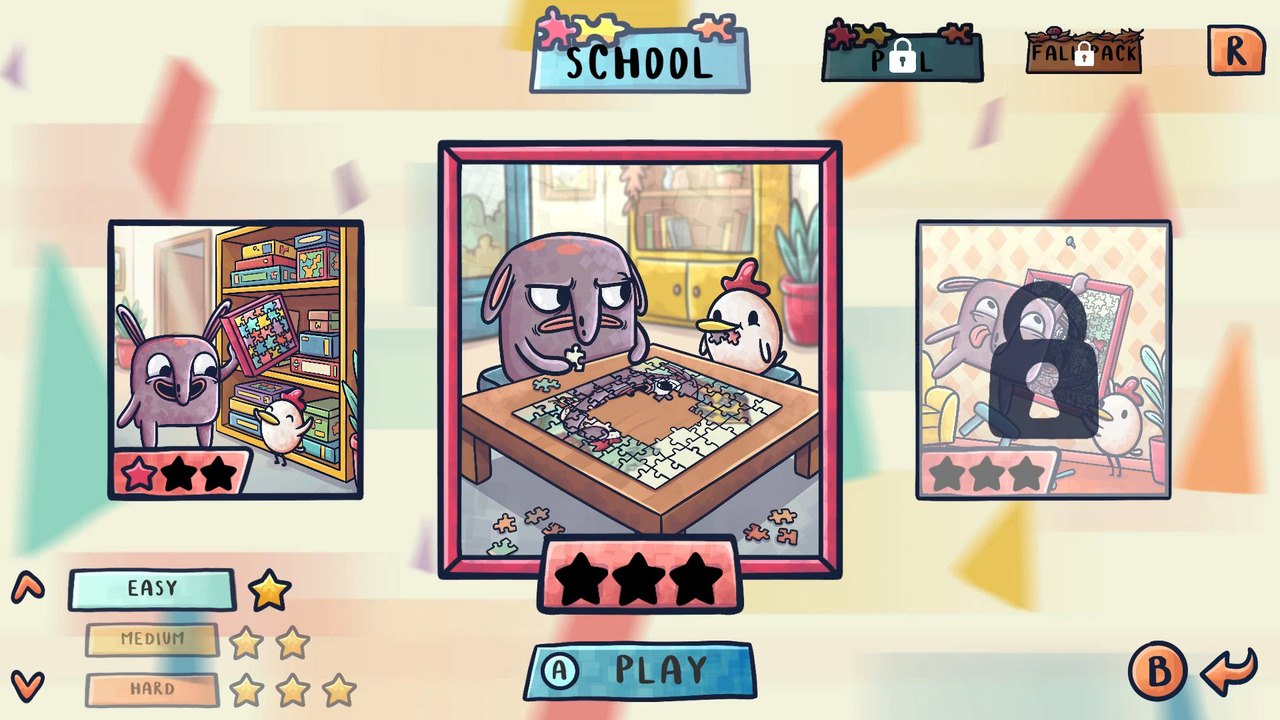
The illustrated scenes that feature our protagonists are the main draw of Freaky Trip: Puzzled. To the game’s credit, these do look great. The game’s different puzzle packs cover a wide variety of themes, ranging from different seasonal activities to our heroes having fun in the pool and even venturing out into space. Naturally, the game is very lightweight, and there were no notable visual performance issues.
Sound
We’re not sure whether or not the tunes that play in the background of Freaky Trip: Puzzled were taken from the original game, but they fit the overall relaxing pace and cosy atmosphere of the game. Because of the nature of the game, music takes up the vast majority of the soundscape, with functional sound effects like the shuffling of tiles adding tactility but nothing else.
Gameplay
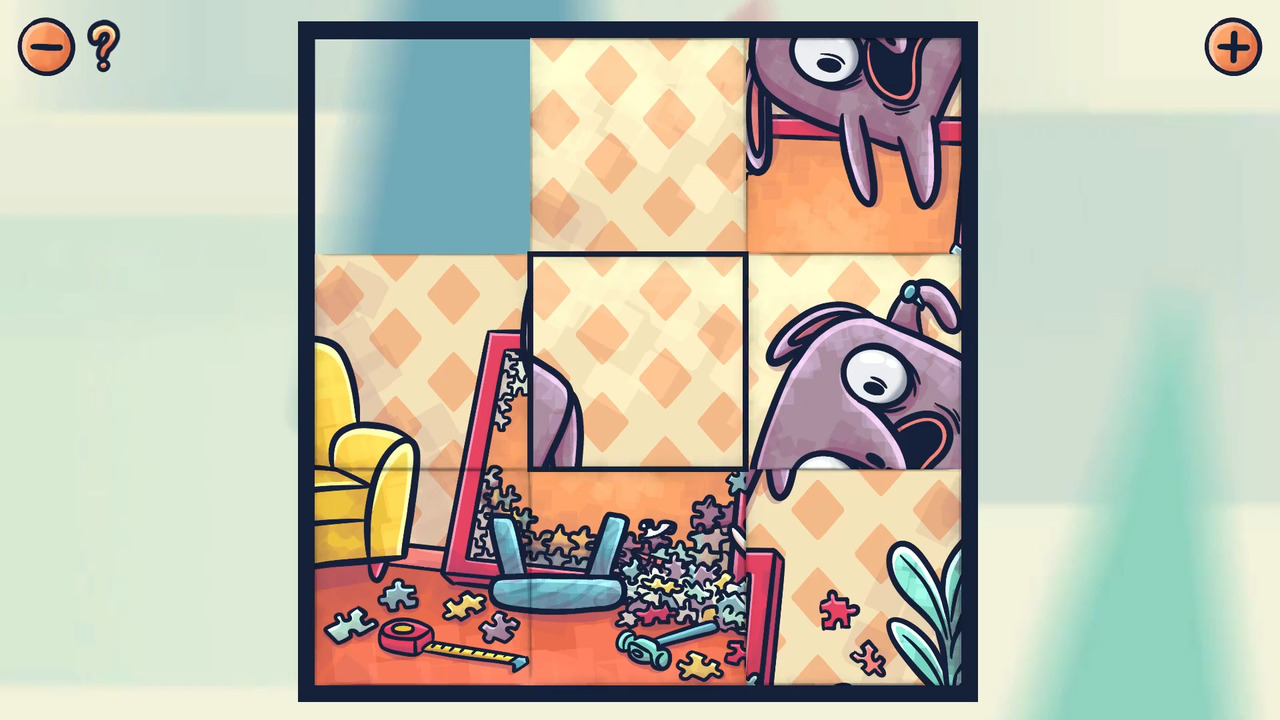
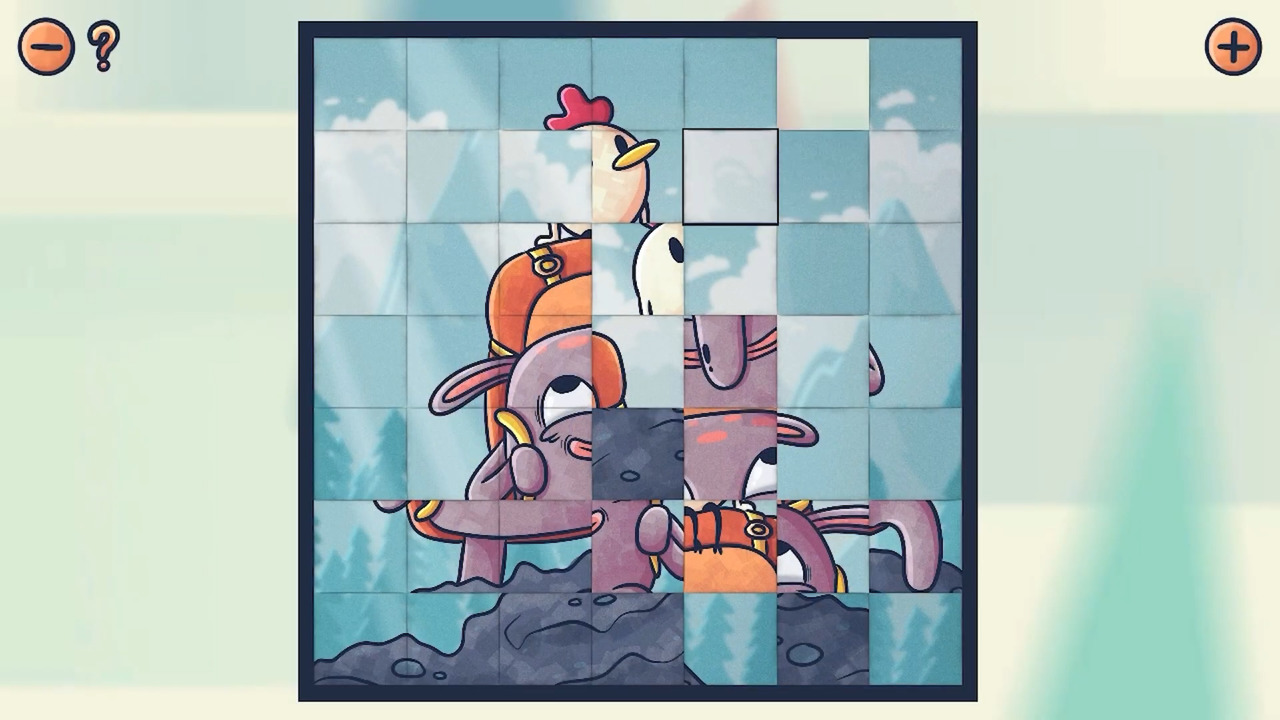
The eShop page for Freaky Trip: Puzzled states that the game features relaxing jigsaw puzzles. That’s a bit deceptive, however, because apart from a jigsaw puzzle being featured in a few of the illustrations, there are none to be found here. Instead, the game offers slide puzzles. That’s about everything that you’ll find here, though we’ll say that it’s still quite an extensive package. Not only are there multiple themed puzzle packs, but each puzzle also offers three difficulty levels. For fans of slide puzzles, that means that you’ve got your work cut out here, especially since you’ll earn a star rating depending on the amount of moves within which you solve each puzzle. There is no time limit, however, so you can take your time planning out your moves to keep that same turn limit under control.
Mind you, this isn’t the first slide puzzle game that RedDeer.Games has released on an unsuspecting public. However, the vast majority of those other titles are of the lewd variety, so a more family-friendly alternative is always welcome. We suspect that the underlying engine is the exact same in Freaky Trip: Puzzled as it is in games like Hentai Girls or Hentai Stars. Mind you, we wouldn’t be able to say this with 100% certainty, as our idea of a good puzzle game doesn’t involve AI-generated anime breasts, so we skipped those when they debuted. That said, there is some frustration when it comes to that same slide puzzle engine, despite the inherent simplicity of the mechanics. For some reason we cannot fathom, you cannot slide puzzle pieces with the D-pad and instead will have to rely on a joystick. While that may not sound like a big deal, in practice this turned out to be quite counterintuitive.
For the most part though, Freaky Trip: Puzzled delivers exactly what you’d expect. The game’s eShop page also hints at more puzzle packs coming in the future. We presume these will be paid DLC, though that probably also means that, like its predecessor, Freaky Trip: Puzzled will see a couple of different “editions” over its lifetime. That said, we don’t expect any additional puzzle packs to offer something new in terms of actual gameplay. While the base price of €6.99 feels quite steep for what’s being offered here, RedDeer.Games isn’t a stranger to deep discounts either. Until November 12th, you can pick up the game with a hefty launch discount, dropping the price down to €1.99. While the game itself is simply too by-the-numbers to outright recommend it to everyone, fans of either Freaky Trip or slide puzzles may find that discounted price to be worth it.
Conclusion
We’d say that Freaky Trip: Puzzled does what it says on the tin, if the tin hadn’t confused slide puzzles with jigsaw puzzles. There are, of course, plenty of slide puzzle games on the market, but these days, the vast majority make use of AI-generated images, often of the 18+ variety. That Freaky Trip: Puzzled sticks to hand-drawn, family-friendly art instead should be reason enough to consider picking it up.
]]>