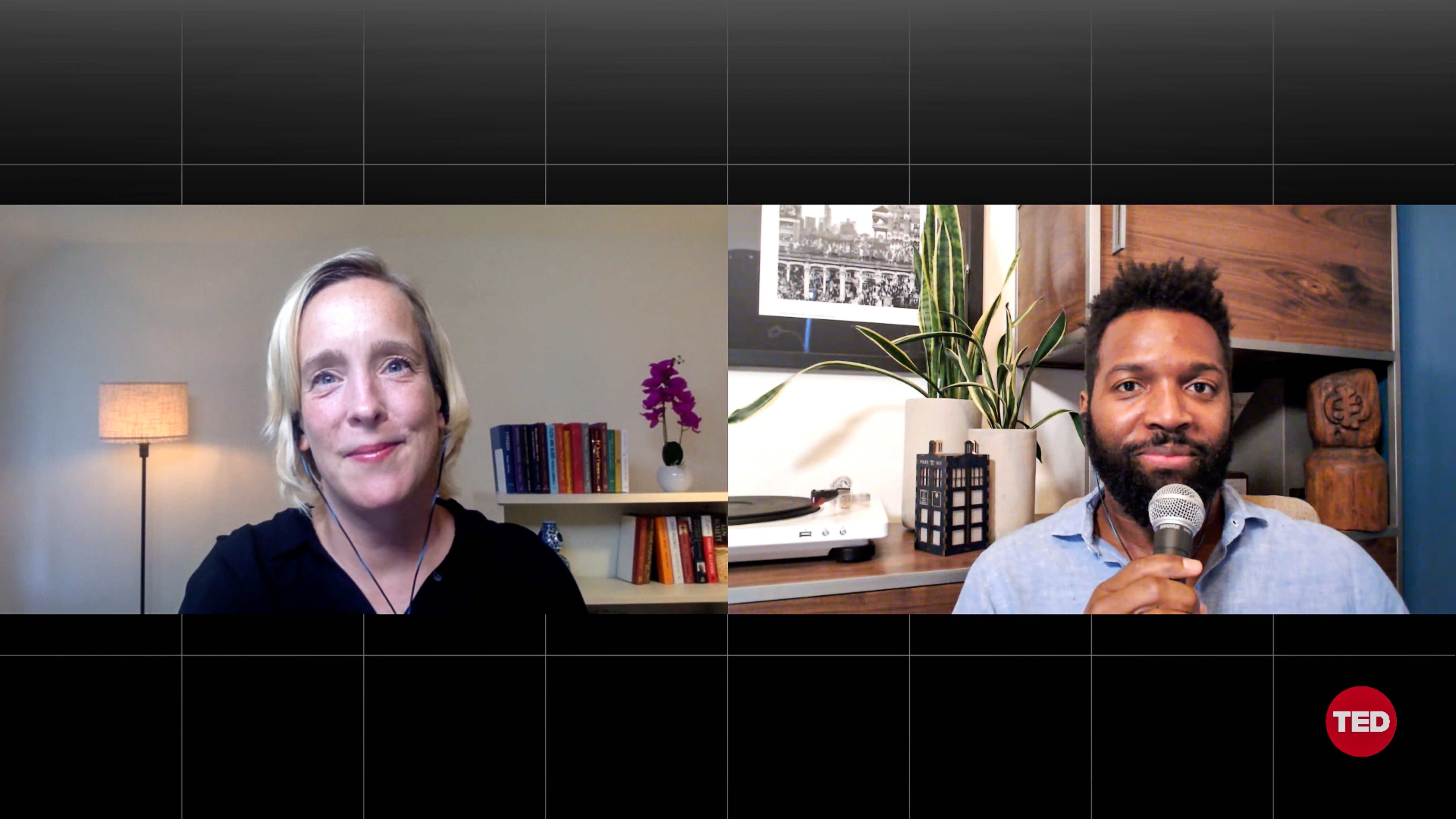
TED’s head of curation Helen Walters (left) and writer, activist and comedian Baratunde Thurston host Session 3 of TED2020: Uncharted on June 4, 2020. (Photo courtesy of TED)
Session 3 of TED2020, hosted by TED’s head of curation Helen Walters and writer, activist and comedian Baratunde Thurston, was a night of something different — a night of camaraderie, cleverness and, as Baratunde put it, “a night of just some dope content.” Below, a recap of the night’s talks and performances.
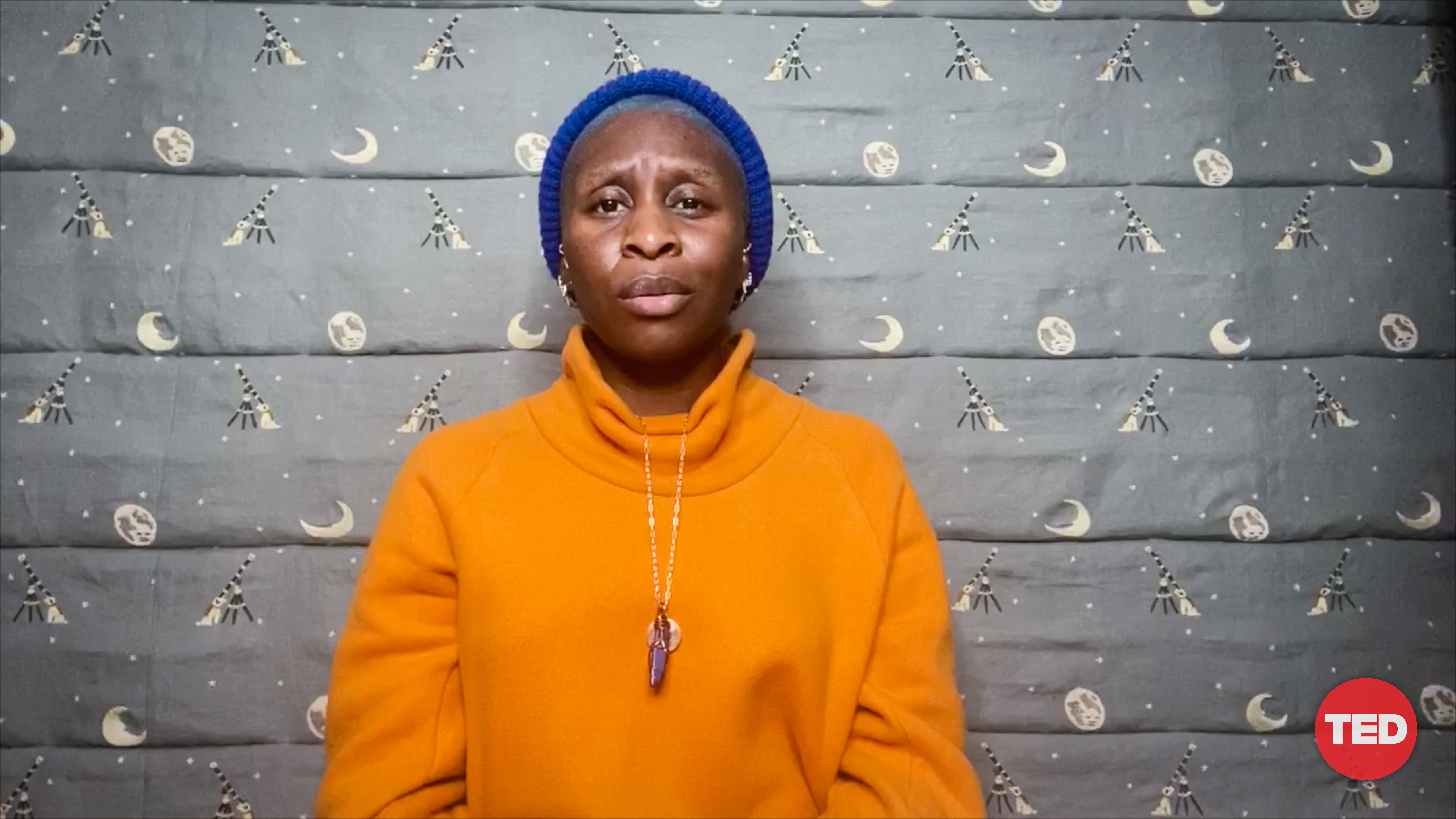
Actor and performer Cynthia Erivo recites Maya Angelou’s iconic 2006 poem, “A Pledge to Rescue Our Youth.” She speaks at TED2020: Uncharted on June 4, 2020. (Photo courtesy of TED)
In a heartfelt and candid moment to start the session, Tony- and Emmy-winner Cynthia Erivo performs “A Pledge to Rescue Our Youth,” an iconic 2006 poem by Maya Angelou. “You are the best we have. You are all we have. You are what we have become. We pledge you our whole hearts from this day forward,” Angelou writes.
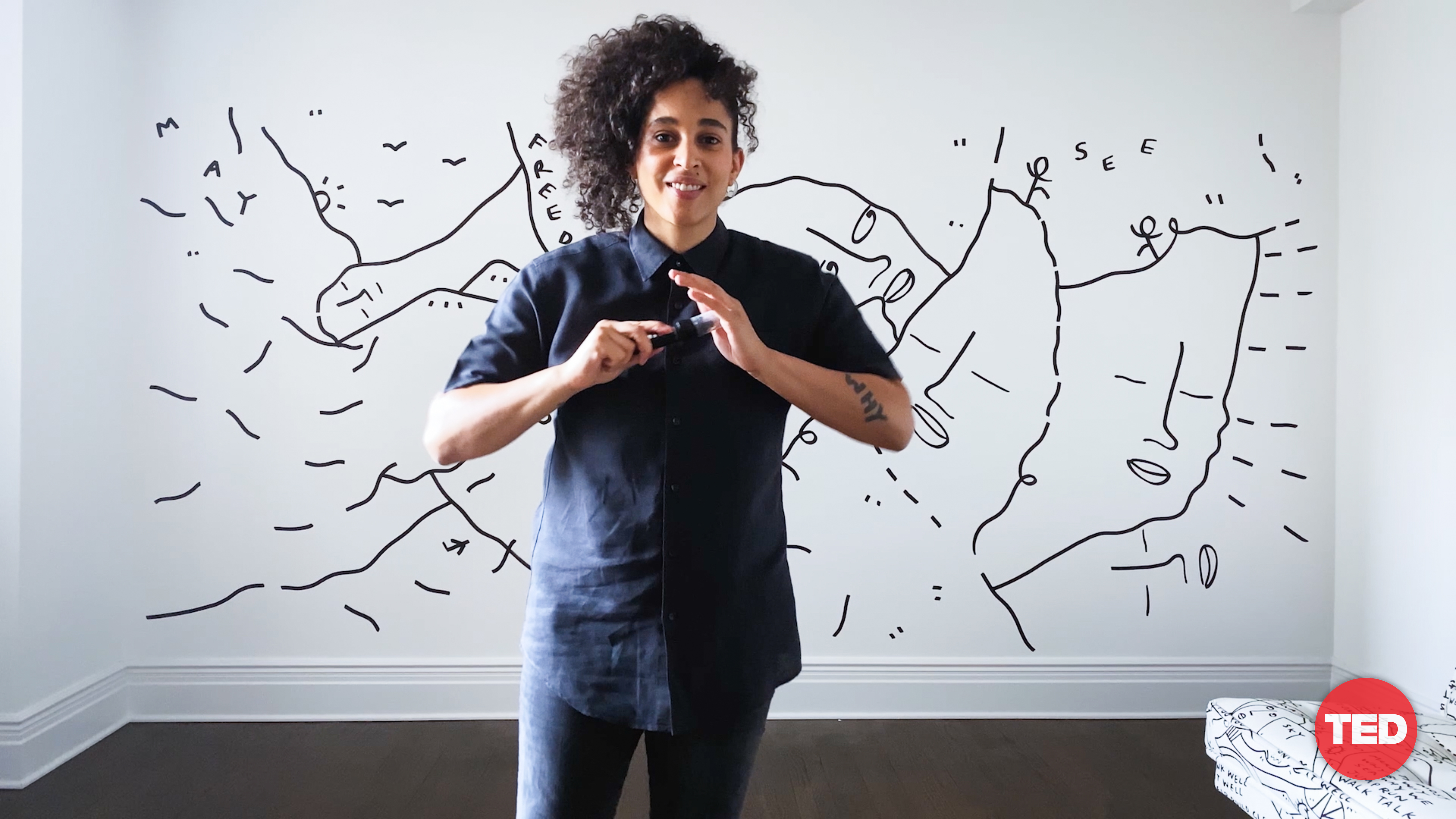
“Drawing has taught me to create my own rules. It has taught me to open my eyes and see not only what is, but what can be. Where there are broken systems … we can create new ones that actually function and benefit all, instead of just a select few,” says Shantell Martin. She speaks at TED2020: Uncharted on June 4, 2020. (Photo courtesy of TED)
Shantell Martin, Artist
Big idea: Drawing is more than just a graphic art — it’s a medium of self-discovery that enables anyone to let their hands spin out freestyle lines independent of rules and preconceptions. If we let our minds follow our hands, we can reach mental spaces where new worlds are tangible and art is the property of all – regardless of ethnicity or class.
How? A half-Nigerian, half-English artist growing up in a council estate in southeast London, Martin has firsthand knowledge of the race and class barriers within England’s institutions. Drawing afforded her a way out, taking her first to Tokyo and then to New York, where her large-scale, freestyle black and white drawings (often created live in front of an audience) taught her the power of lines to build new worlds. By using our hands to draw lines that our hearts can follow, she says, we not only find solace, but also can imagine and build worlds where every voice is valued equally. “Drawing has taught me to create my own rules,” Martin says. “It has taught me to open my eyes and see not only what is, but what can be. Where there are broken systems … we can create new ones that actually function and benefit all, instead of just a select few.”
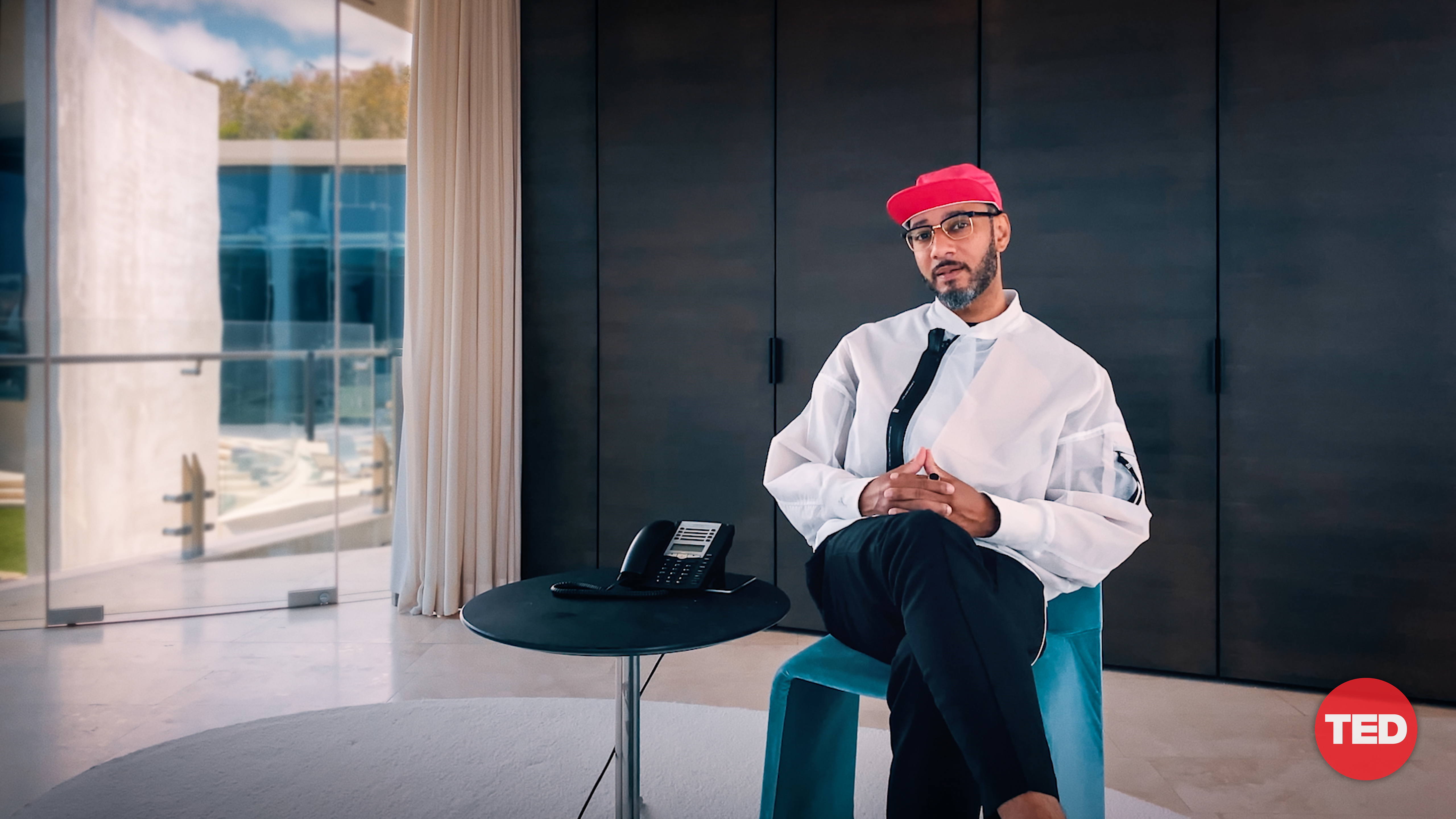
“If we’re not protecting the arts, we’re not protecting our future, we’re not protecting this world,” says Swizz Beatz. He speaks at TED2020: Uncharted on June 4, 2020. (Photo courtesy of TED)
Swizz Beatz, Music producer, entrepreneur, art enthusiast
Big idea: Art is for everyone. Let’s make it that way.
Why? Creativity heals us — and everybody who harbors love for the arts deserves access to them, says Swizz Beatz. Interweaving a history of his path as a creative in the music industry, Beatz recounts his many successful pursuits in the art of giving back. In creating these spaces at the intersection of education, celebration, inclusion and support — such as The Dean Collection, No Commissions, The Dean’s Choice and Verzuz — he plans to outsmart lopsided industries that exploit creatives and give the power of art back to the people. “If we’re not protecting the arts, we’re not protecting our future, we’re not protecting this world,” he says.
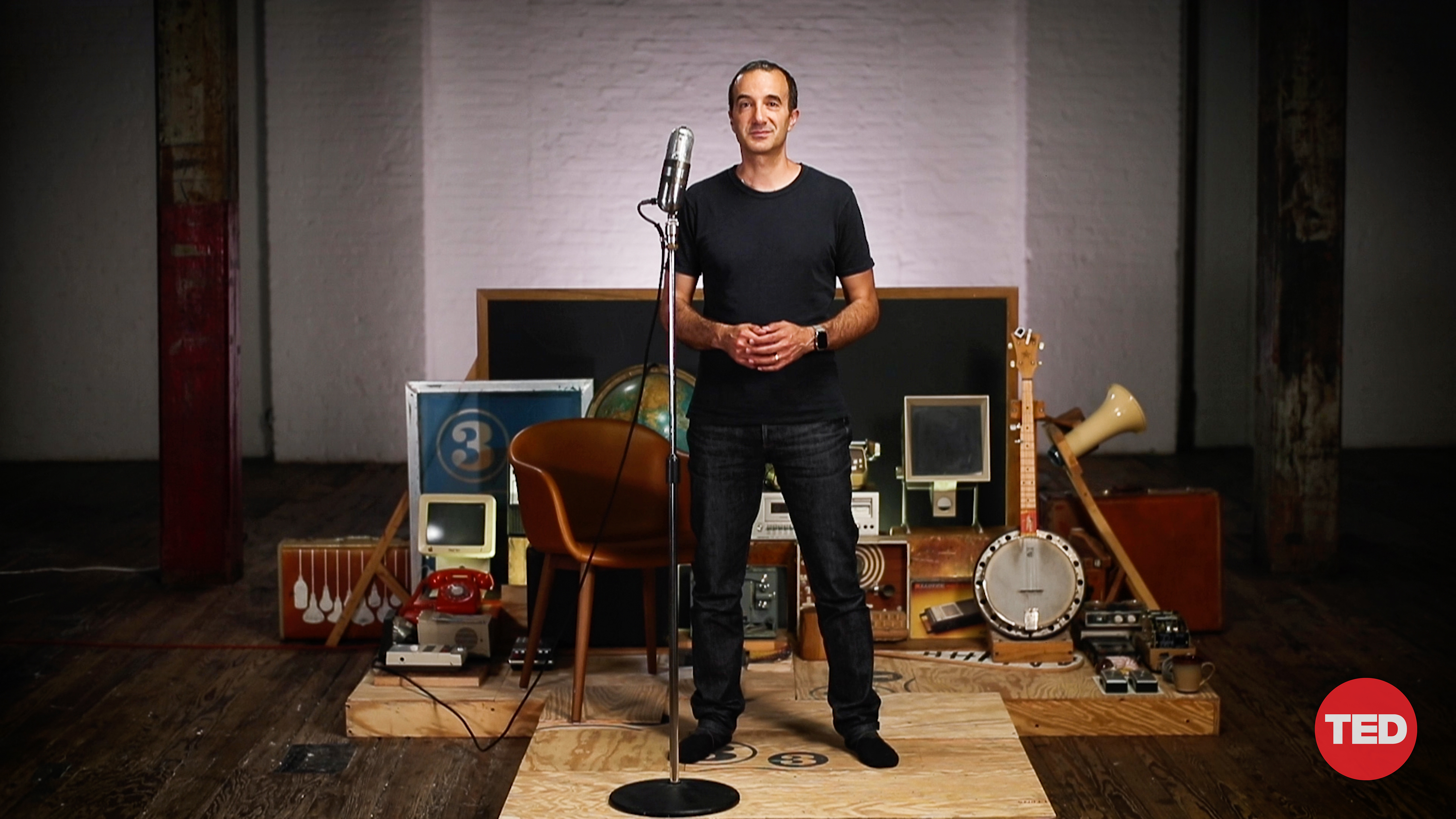
“In this confusing world, we need to be the bridge between differences. You interrogate those differences, you hold them for as long as you can until something happens, something reveals itself,” says Jad Abumrad. He speaks at TED2020: Uncharted on June 4, 2020. (Photo courtesy of TED)
Jad Abumrad, host of RadioLab and Dolly Parton’s America
Big Idea: Storytellers and journalists are the bridge that spans conflict and difference to reveal a new meaning.
How: When journalist Jad Abumrad began storytelling in 2002, he crafted each story to culminate the same way: mind-blowing science discoveries, paired with ear-tickling auditory creations, resolved into “moments of wonder.” But after 10 years, he began to wonder himself: Is this the only way to tell a story? Seeking an answer, Abumrad turned to more complex, convoluted stories and used science to sniff out the facts. But these stories often ended without an answer or resolution, instead leading listeners to “moments of struggle,” where truth collided with truth. It wasn’t until Abumrad returned to his home of Tennessee where he met an unlikely teacher in the art of storytelling: Dolly Parton. In listening to the incredible insights she had into her own life, he realized that the best stories can’t be summarized neatly and instead should find revelation — or what he calls “the third.” A term rooted in psychotherapy, the third is the new entity created when two opposing forces meet and reconcile their differences. For Abumrad, Dolly had found resolution in her life, fostered it in her fanbase and showcased it in her music — and revealed to him his new purpose in telling stories. “In this confusing world, we need to be the bridge between differences,” Abumrad says. “You interrogate those differences, you hold them for as long as you can until something happens, something reveals itself.”
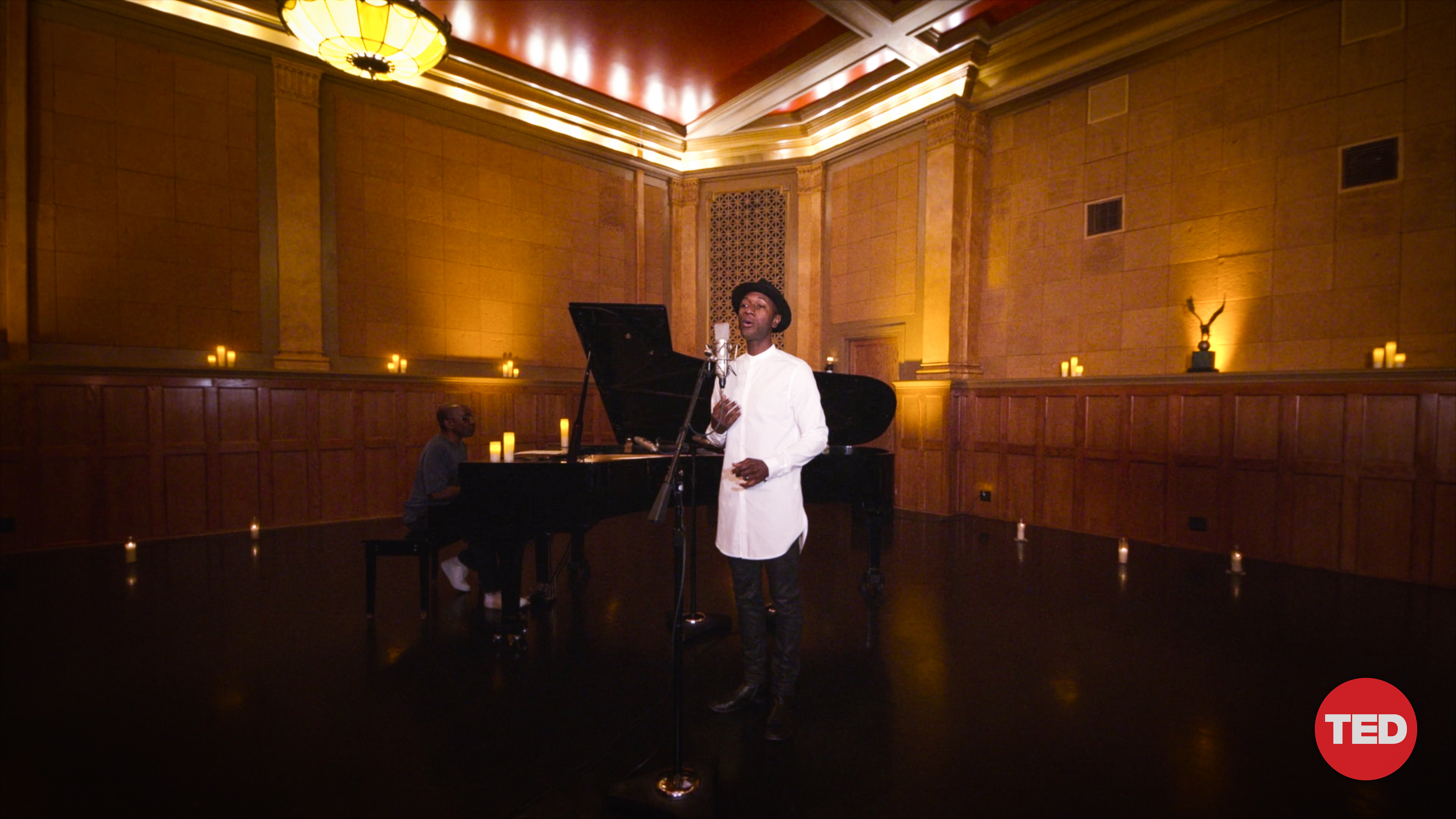
Aloe Blacc performs “Amazing Grace” at TED2020: Uncharted on June 4, 2020. (Photo courtesy of TED)
Backed by piano from Greg Phillinganes, singer, songwriter and producer Aloe Blacc provides balm for the soul with a gorgeous rendition of “Amazing Grace.”
Congressman John Lewis, politician and civil rights leader, interviewed by Bryan Stevenson, public interest lawyer and founder of the Equal Justice Initiative — an excerpt from the upcoming TED Legacy Project
Big idea: As a new generation of protesters takes to the streets to fight racial injustice, many have looked to the elders of the Civil Rights Movement — like John Lewis — to study how previous generations have struggled not just to change the world but also to maintain morale in the face of overwhelming opposition.
How? In order to truly effect change and move people into a better world, contemporary protestors must learn tactics that many have forgotten — especially nonviolent engagement and persistence. Fortunately, John Lewis sees an emerging generation of new leaders of conscience, and he urges them to have hope, to be loving and optimistic and, most of all, to keep going tirelessly even in the face of setbacks. As interviewer Bryan Stevenson puts it, “We cannot rest until justice comes.”
]]>
Please enjoy your roundup of TED-related news:
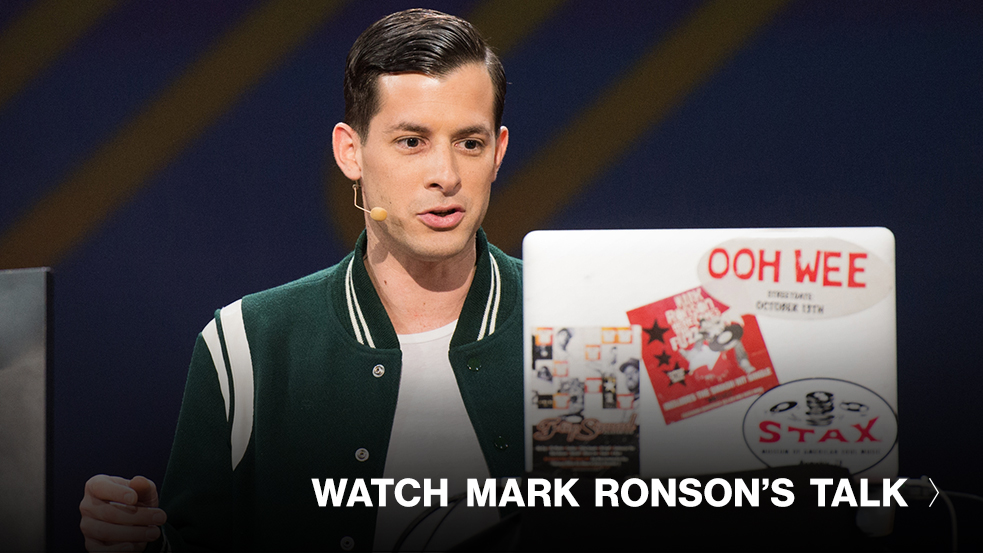
This one’s for the boys. Mark Ronson takes a break from making music to have some fun in Charli XCX’s video for “Boys.” You’ll find him (suavely) combing his hair, amid scenes of other male celebs, such as Wiz Khalifa, Riz Ahmed and Joe Jonas having a pillow fight or cuddling with puppies, in a video intended to “flip the male gaze on its head.” (Watch Ronson’s TED Talk)
To tweet, or not to tweet? Twitter and Facebook allow writers to promote their work and engage readers—but is it a force for good or for evil? In a conversation with LitHub, TED speakers Roxane Gay and Adam Grant, along with Alexander Chee and and Celeste Ng, discuss how they harness social media without letting it get the best of them. Grant was dragged into the online conversation “kicking and screaming,” but now believes that “it can be a source of energy and a real boon for your career.” Gay loves how Twitter keeps her up to date with new books; she sees more benefits than drawbacks for writers and publishers, and thinks “social media only sucks the life out of you if you allow it.” (Watch Grant’s TED Talk and Gay’s TED Talk)
The race for our attention. When our attention is currency, tech companies work hard to get us to watch that next video, keep the Snap streak going or click on that personalized ad. Tristan Harris warns that while engineers are getting better and better at this, we’re just getting more and more sucked in without even meaning to. Fortunately, Harris shares some advice on how to protect our minds as well as his vision for a more constructive tech future in a Q&A with Wired that builds on his new TED Talk. (Watch Harris’ TED Talk)
Medicine that bridges inequality. TED Prize winner Raj Panjabi discusses his plans with the New York Times to increase access to medical care for those living in rural, disconnected parts of Liberia. Motivated by the idea that “medicine could be a way to bridge inequality,” Panjabi’s nonprofit, Last Mile Health, trains locals as community health workers and provides them with medical supplies such as thermometers, smartphones and even malaria test kits. While his charity is focused on his birth country, Liberia, Panjabi believes that this approach to medical care could have a larger scope, even one that extends to rural America. “Why should anyone die from diseases that others don’t?” (Watch Panjabi’s TED Talk)
Art all around us. The subdued whirr of a computer fan, a plastic bag caught in the wind … can these things come alive as art? Shih Chieh Huang believes so, and his new exhibition at the Worcester Art Museum, “Reusable Universes,” shows his belief at work. Using fans to inflate bags with air, he creates cephalopod-looking objects—lit up and moving, suspended in midair—and controls their movements with an app designed for stage lighting. Sometimes he sees the exhibit as a bunch of everyday items. “But sometimes,” he told artnet, “I think that’s a cell, heart, a lung, a sea creature.” (Watch Huang’s TED Talk)
How can we grapple with historic injustices? Bryan Stevenson adds his voice to an anthology of eleven essays that analyze the history of racism in the criminal justice system, and its contemporary effects on the lives of African American men and boys. Each essayist touches on various stages and symptoms of the system, while making policy suggestions for the future. Stevenson’s piece takes the reader to South Africa and Germany, emphasizing the importance of recognizing and confronting historical injustices in order to move forward. Policing the Black Man: Arrest, Prosecution and Imprisonment is edited by Angela J. Davis. (Watch Stevenson’s TED Talk)
Have a news item to share? Write us at contact@ted.com and you may see it included in this biweekly round-up.
]]>
As usual, the TED community has lots of news to share this week. Below, some highlights.
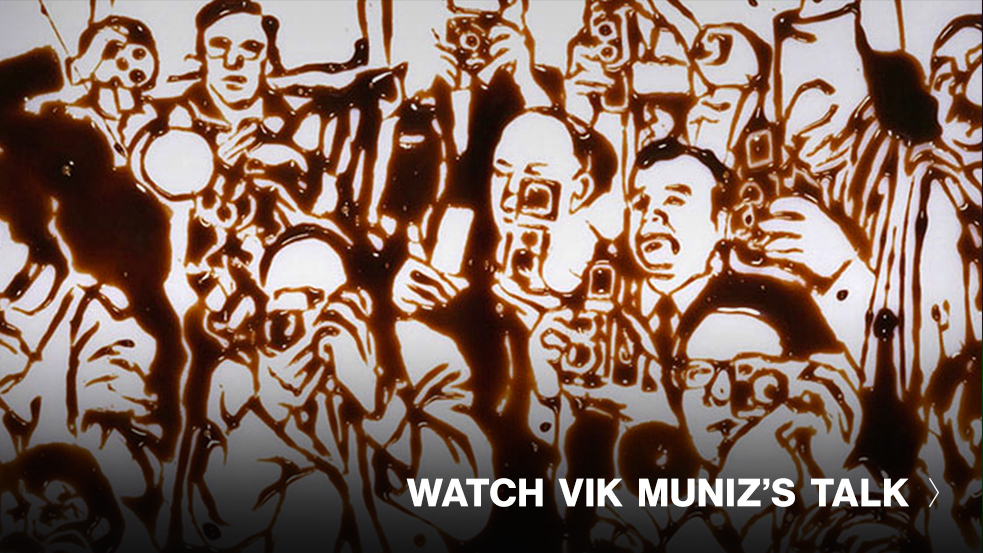
A subway line with museum-worthy art. After 45 years of construction and $4.5 billion spent, the first section of New York City’s Second Avenue subway line opened on January 1 with four stations. Maybe the best feature of the new line? The amazing artwork decorating the walls of the new stations, including Vik Muniz at the 72nd Street station. Muniz was one of four artists chosen from 300 applicants to turn a station into an art installation. (Watch Vik’s TED Talk)
A silver mural for Dubai. Artist eL Seed is wrapping up work on his first public-art project in the city that he calls home, Dubai. On the walls of the city’s Green Planet Building, the mural is done in his signature calligraphic style using iridescent silver spray paint, so that the color of the mural changes depending on the time of day and angle from which it’s viewed. The work spells out the words of the poem Positive Spirit, written by Sheikh Mohammed bin Rashid, the Vice President and Prime Minister of the United Arab Emirates and Ruler of Dubai, with a message about the importance of faith and the resolve it takes to fulfill your dreams. (Watch eL Seed’s TED Talk)
A mission to asteroids. Dedicated to unlocking mysteries of the solar system through shorter, more focused missions, NASA’s Discovery Program announced on January 4 that they were launching two new missions to asteroids in a search for clues about the early solar system. The projects, Lucy and Psyche, will respectively study the Trojan asteroids behind Jupiter and will send an orbiter to 16 Psyche (hence the name), a massive metallic object in the asteroid belt, as detailed by the Washington Post. According to NASA’s Planetary Science Director and TED speaker Jim Green, these missions will “help us understand how the sun and its family of planets formed, changed over time, and became places where life could develop and be sustained — and what the future may hold.” (Watch Jim’s TED Talk)
“I don’t think we’re free in America.” In order to confront and reclaim this country’s long history of racial violence, the Equal Justice Initiative launched a “Lynching in America” initiative–a comprehensive record of racial terror lynching–and has plans for a memorial in Alabama dedicated to victims of lynching. In an interview in The Intercept, director of the Equal Justice Initiative Bryan Stevenson discusses the urgency of facing this long history of violence in the wake of this country’s civil unrest: “I think we’re all burdened by this history of racial injustice, which has created a narrative of racial difference, which has infected us, corrupted us, and allowed us to see the world through this lens. So it becomes necessary to talk about that history if we want to get free.” (Watch Bryan’s TED Talk)
In search of the perfect surf. Surf photographer Chris Burkard’s upcoming documentary Under an Arctic Sky follows six adventurous surfers who set sail along the frozen shores of Iceland in the midst of the worst storm the country has seen in twenty-five years. The film is due for release in early 2017. (Watch Chris’ TED Talk)
Stem cell science: from bench to bedside. On the 7th and 8th of January, Susan Lim co-chaired the 2nd Nucleus Forum of the International Society for Stem Cell Research. The forum, attended by scientists and business and investor leaders in biotech and healthcare, was a discussion on ways to help bring breakthrough stem cell science from the bench to the bedside. The forum also discussed the new 21st Century Cures Act, signed into law by President Obama on December 13, and brought together the stem cell and gene editing communities, with Lim’s fellow TED speaker and CRISPR pioneer Jennifer Doudna also in attendance. (Watch Susan’s TED Talk and watch Jennifer’s TED Talk)
Empathy, not sympathy. In the aftermath of Donald Trump’s election and the success of Brexit in the United Kingdom, democracies around the world have experienced a populist backlash against politics as usual. However, it would be unfair, Michael Sandel writes in Project Syndicate, to analyze these results as nothing more than racism, xenophobia, or economic discontent. Rather, they come from grievances related to social esteem, and the failure of establishment parties to properly engage with those relevant voters. Sandel argues that, moving forward, progressive parties must “learn from the populist protest that has displaced them – not by emulating its xenophobia and strident nationalism, but by taking seriously the legitimate grievances with which these sentiments are entangled.” (Watch Michael’s TED Talk)
Have a news item to share? Write us at contact@ted.com and you may see it included in this weekly round-up.
]]>
The TED community has been very busy over the past few weeks. Below, some newsy highlights.
Crime forecasting in Rio. Before the 2016 Olympic Games, worries ran high that crime in Rio might affect the mega-event; one reported attack at the Games (which actually might not have happened) grabbed headlines around the world during the Games. But the longer-running news story is the way crime affects Rio’s locals every single day. How can residents stay safe? Together with Via Science and Mosaico Internet, Robert Muggah’s Igarapé Institute just launched CrimeRadar, a publicly available crime-prediction platform. CrimeRadar uses advanced machine learning to forecast future crime risk and track historical crime tends. The launch is focused on Rio de Janeiro, with plans to take the platform global. (Watch Robert’s TED Talk)
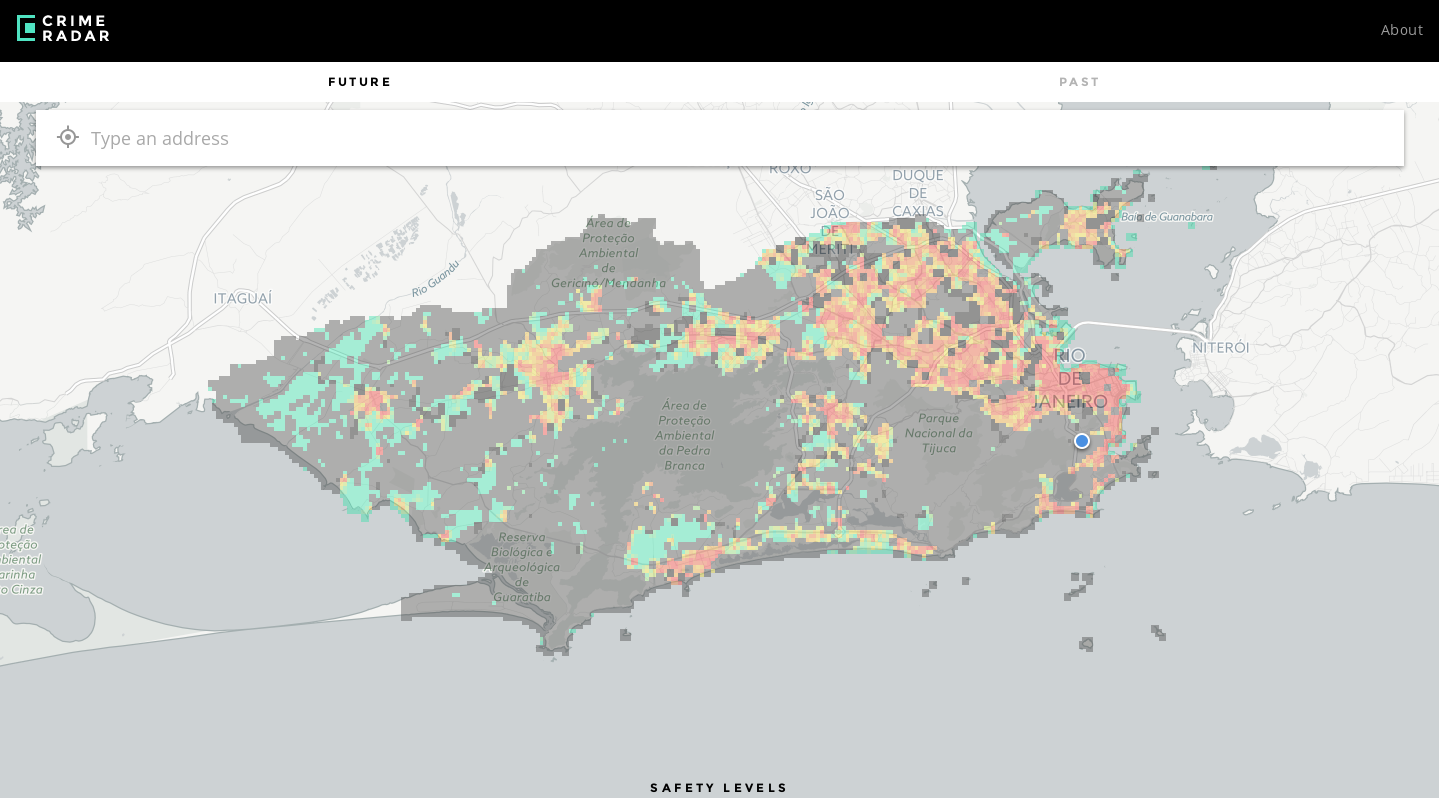
CrimeRadar, developed by Robert Muggah’s Igarapé Institute along with Via Science and Mosaico Internet, uses machine learning to forecast crime in Rio de Janeiro. The software runs on both mobile phones and desktops. Above, an example of the desktop version. Photo: courtesy of Robert Muggah
World of microbes. We’ve all heard some of the implications that microbes have for our health –from pandemic-level bad to the life-changing magic they perform in our guts– but Ed Yong is determined to show us how they influence everything in the world around us. Released August 9, his debut book I Contain Multitudes takes a “microbe’s-eye view of the world” to reveal their role in everything from deep oceans to forests, squid to worms. (Watch Ed’s TED Talk)
Breaking the silence. “We have in this country this dynamic where we really don’t like to talk about our problems. We don’t like to talk about our history. And because of that, we really haven’t understood what it’s meant to do the things we’ve done historically,” Bryan Stevenson said at TED2012. A desire to change that dynamic is behind his passionate and tireless work to create the first national memorial to victims of lynching. Designed by fellow TED speaker Michael Murphy of MASS Design Group, the memorial was officially announced on August 16. The memorial will be accompanied by a museum at Equal Justice Initiative’s headquarters in Montgomery, Alabama, and both plan to open in 2017. (Watch Bryan’s TED Talk)
A global warning. Close to 3.3 billion people tuned in to watch the Opening Ceremony of the 2016 Olympic Games, but along with the usual celebration and dazzle, viewers were warned about the dangers of climate change. Many performances in the multi-hour spectacle highlighted the crucial role forests have in absorbing greenhouse gases — along with a video describing how rising CO2 levels lead to climate change. TED speaker, forester and sustainability activist Tasso Azevedo served as a consultant during development of the film, joining the elite club of TED speakers who’ve also appeared in Olympics opening ceremonies. (Watch Tasso’s TED Talk)
VR tech for paraplegics. Miguel Nicolelis is one of twenty scientists who published a paper in Scientific Reports detailing a new brain training approach that can induce partial neurological recovery in paraplegic patients. The sample size is small, eight patients, but all of them report being able to use their legs and feel sensation after sessions using an artificial exoskeleton, VR technology, and a brain-machine interface. Originally hoping to use the technique to help the patients regain a sense of control in their lives, the researchers stumbled upon its potential as a recovery tool. (Watch Miguel’s TED Talk)
Design for shared spaces. On August 2, Joe Gebbia announced the official launch of Samara, Airbnb’s own internal design studio, but the startup’s newest branch had already been hard at work designing a prototype home for the Japanese exhibition House Vision. The result, Yoshino Cedar House, houses a community center on its ground floor and accommodations beneath a gabled roof, exploring “how architectural features can engender a deeper relationship between hosts and guests.” But the idea doesn’t end there. Once the exhibition is over, the house will be moved to the rural town of Yoshino and become a bookable Airbnb rental. It will be maintained by the Yoshino community and proceeds will be used to benefit the area, which has been struggling since younger residents moved away. If Yoshino Cedar House is successful, the model may be used to rejuvenate rural communities elsewhere. However, Samara won’t just be involved in architecture; the design studio will work on service design and software engineering projects as well. (Watch Joe Gebbia’s TED Talk)
Women in the World of Wakanda. TED speaker and writer Roxane Gay and poet Yona Harvey, both first time comic writers, will pen a spinoff of Ta-Nehisi Coates’ popular Marvel Comic series Black Panther. The comic will also be set in the fictional African country of Wakanda and will follow Ayo and Aneka, two lovers and former members of the Dora Milaje, the Black Panther’s female security force. In an industry historically dominated by white male voices and characters, “the opportunity to write black women and queer black women into the Marvel universe, there’s no saying no to that,” Gay told The New York Times. (Watch Roxane’s TED Talk)
Advance prep. Jennifer Granholm, the former two-term Governor of Michigan, has been appointed to Hillary Clinton’s White House transition team. Both candidates are allotted offices in Washington and other resources to prepare for their potential administrations. (Watch Jennifer’s TED Talk)
Have a news item to share? Write us at contact@ted.com and you may see it included in this weekly round-up.
]]>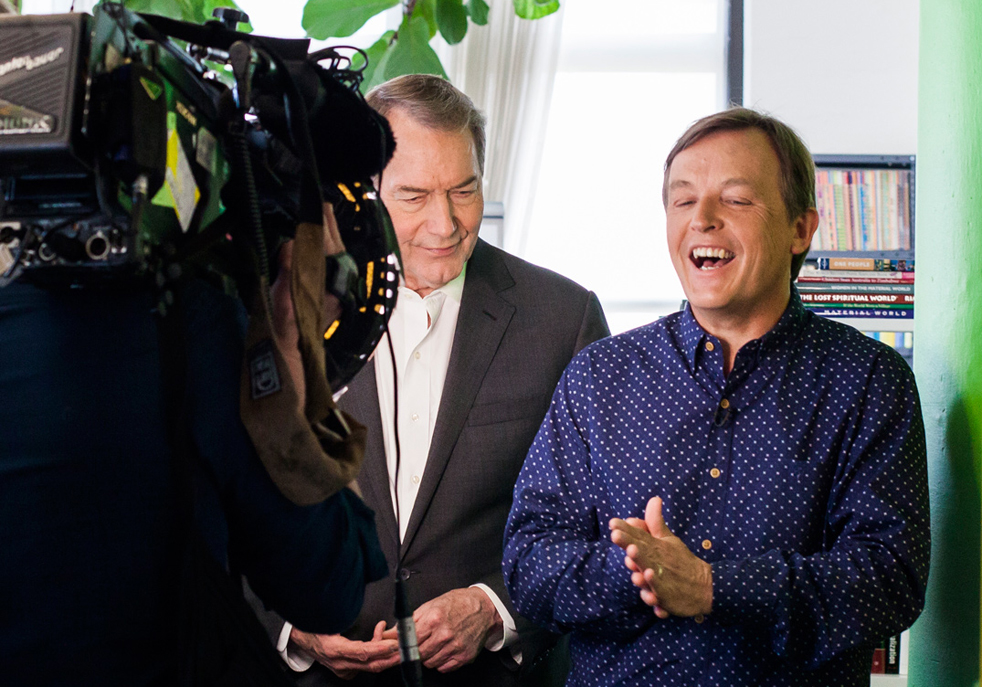
Charlie Rose of 60 Minutes interviews TED Curator Chris Anderson in TED’s New York office. Photo: Dian Lofton/TED
On tonight’s episode of 60 Minutes, a segment called “TED Talks” tells the story of three TED speakers whose talks rippled out into the world, transforming their own lives as well as the lives of many people who watched. Amy Cuddy shared a deeply personal story that sparked her research into “power posing”; Bryan Stevenson used his talk to raise awareness about legal injustice; and Maysoon Zayid hopes her talk helped give disabled people a new voice.
This 60 Minutes segment was more than a year in the making. Producer Henry Schuster tells the TED Blog that the idea for the story snuck up on him and co-producer Rachael Kun Morehouse.
“If we’re thinking about doing a story on somebody, we talk to them and we try to look at video of them to see if [they] have passion. TED Talks are a great thing to look at. … It was a tool for us,” says Schuster. “I’m not sure exactly when, but the two of us looked at each other and had that proverbial a-ha moment: ‘We should be doing a story about TED.’”
After watching a ton of talks, interviewing members of the TED staff and doing additional research, Schuster and Morehouse first thought the story would focus on the recent growth of the organization itself — on how it was expanding into education with TED-Ed, rolling out independently organized events across the world through TEDx, or bringing talks into more than 100 languages through the Open Translation Project. But the two eventually found a different focus: what happens after a talk goes viral online.
“One of the questions that we were asking way back when was, ‘Tell us about the impact of TED Talks.’ That was a hard thing for us to understand,” says Schuster. “One of the people we went to as we were struggling with this question was Mark Bezos.” Bezos, a senior vice president at the Robin Hood Foundation, gave the TED Talk, “A life lesson from a volunteer firefighter,” in 2011. “He said: Look, if you talk about the responses I got on an individual level from giving my TED Talk, you can’t necessarily say, ‘Oh look that school got built because of the talk,’” recalls Schuster. “He helped us widen our focus … It might be individuals reaching out to a person who gave a TED talk, or somebody doing something as a result of a talk. It’s not necessarily a linear path.”
.
Schuster and Morehouse — along with Charlie Rose — started thinking about the long-tail impact of talks, about how they spark viewers to action in the momnet but can also subtly reshift the way they think in ways that might not be obvious for 10, 20, 30 years.
“We ended up doing it the TED way, which is the personal stories and the big idea,” says Schuster, of landing on the approach to focus on three speakers. “The big idea out of all of this is: putting the TED Talks online. Because otherwise, TED would still be … this great, cool, quirky conference. But it’s not. It’s an internet phenomenon.”
Schuster and Morehouse say that they had to leave many of their favorite interviews and moments on the cutting room floor in creating the segment. Morehouse had adored an interview conducted with TED’s founder, Richard Saul Wurman, about the start of the organization. And Schuster loved an interview with Anwar Dafa-Alla, the organizer of TEDxKhartoum, whose event was shut down by Sudanese security in 2013. “Each of those could be a documentary in itself,” says Morehouse.
But in the end, those interviews didn’t quite serve the story.
“People think that we come into a story and have it all figured out,” says Schuster. “But this is a story that kept changing all the way through. The fun part of our job is to get to spend the time and try to understand, and then figure out the best way of telling it. … I don’t think we quite fully understood that until these last three weeks as the piece was coming together in its current form.”
Head over to 60 Minutes’ website for more clips from the show. And watch the TED Talks from Amy Cuddy, Bryan Stevenson and Maysoon Zayid in their entirety below.
[ted id=1569]
[ted id=1378]
[ted id=1898]
]]>.
On Sunday night, 60 Minutes will take a look at what they call “TED’s excellent adventure.” In a segment to air on April 19 at 7pm ET/PT, the powerhouse television newsmagazine will talk to TED speakers to find out exactly what happens when their big ideas are shared with the world for free.
 In the first preview of the segment, which aired during CBS This Morning (thumbnail left), Charlie Rose talks to Bryan Stevenson, who gave one of the most powerful TED Talks of all time. And yet, the human rights lawyer admits that he wasn’t sure what to think when he was asked to speak at the TED2012 conference. The conference was two weeks before he was to argue a case in front of the US Supreme Court, and he didn’t want to take time away from those preparations.
“I had never heard of TED and didn’t know what a TED Talk was,” Stevenson tells Rose. “I told one of my young staffers, ‘Somebody named Ted wanted me to do a TED Talk and I said no.’ And the staffer went crazy. He said, ‘What are you talking about? You have to do it … This is a big deal.’”
Watch the show on Sunday night for much more from Stevenson (who, by the way, appeared on the 2015 Time 100 list earlier this week), as well as from TED Curator Chris Anderson and many other speakers whose ideas have gotten traction through talks.
And in the meantime, enjoy Stevenson’s talk.
[ted id=1378]
]]>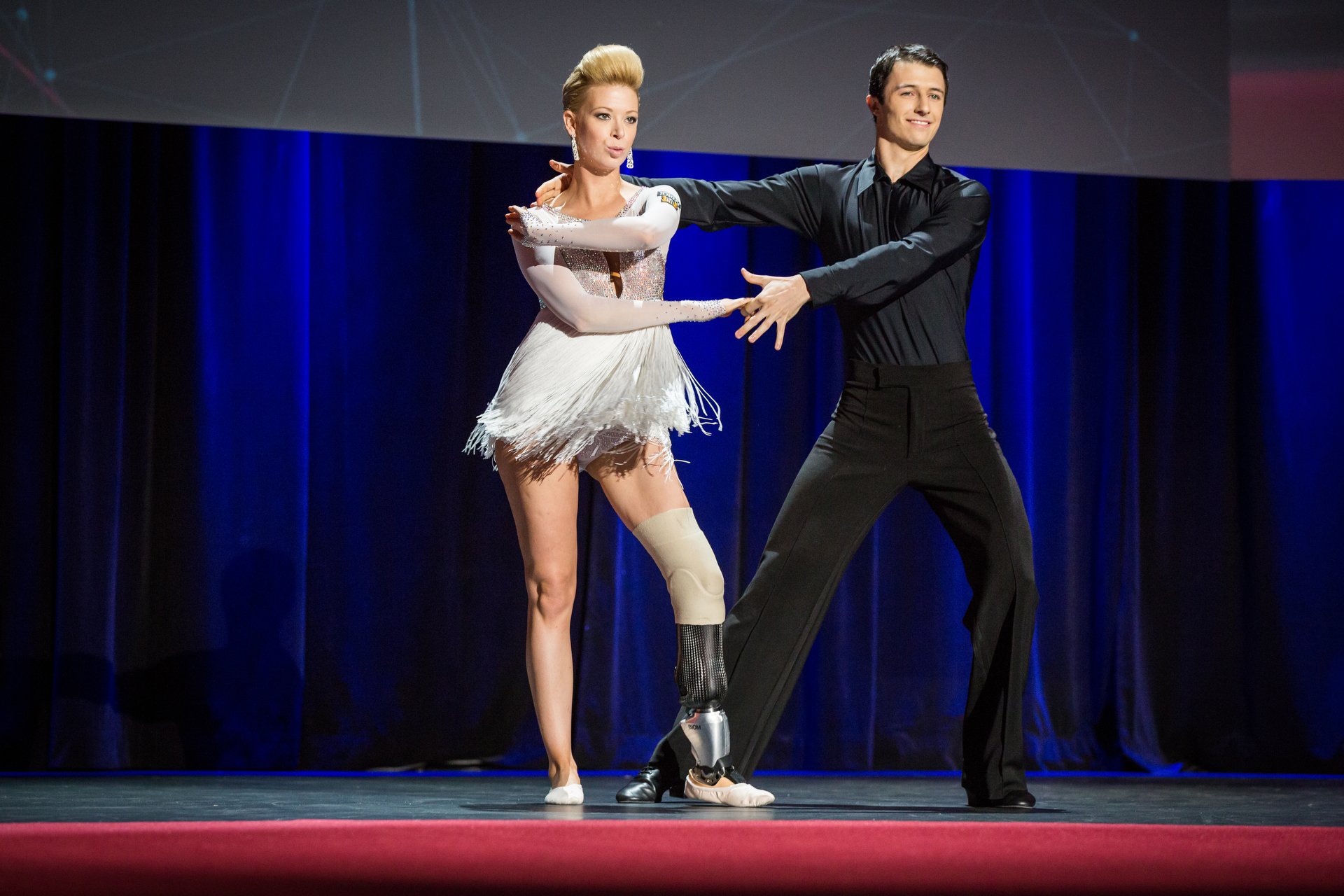
(L-R) Dancers Adrianne Haslet-Davis and Christian Lightner. Photo: Ryan Lash
Day 3 at TED2014 was dense with science, design, conversation. Here’s a quick recap of some highlights:
Hugh Herr and Adrianne Haslet-Davis’s surprise dance
Hugh Herr is a bionics designer and multiple amputee. He gave a talk that was half mind-blowing — full of extraordinary advances in prosthetics, like bionic designs that produce the same forces as a natural foot — and half stirring, as he argued that there is no such thing as a disabled person, no such thing as a broken person, just broken technology and an inadequate environment. But the most amazing part of the talk was at the end, when he invited Adrianne Haslet-Davis onto the stage. She was a dancer who lost her left leg in the Boston Marathon bombing. After 200 days of work, for the first time she danced a rumba on her new leg, to raucous applause from the crowd. See her above, with dance partner Christian Lightner.
Response from the NSA — tomorrow morning
During Edward Snowden’s talk, Chris Anderson offered the National Security Agency a chance to reply. They took him up on it. Rick Ledgett, the Deputy Director of the NSA, will give a response at TED at 8:30am Pacific tomorrow morning. Ledgett is the former leader of the NSA Media Leaks Task Force up until this January, and was responsible for overseeing the NSA’s efforts “surrounding the unauthorized disclosures of classified information by a former NSA affiliate.” Ahem.
Larry Lessig’s barnburner
It began like a fairly normal Larry Lessig talk — which is to say not at all normal, and quite fast and interesting. But the audience quickly got a sense that something else was happening as he began to talk about Aaron Swartz, who was lost a bit over a year ago. Swartz had deeply inspired Lessig to work hard to remove the corrupting influence of money in American elections. Lessig turned his pain at Swartz’s loss into an incredibly rousing and inspiring talk, encouraging all to join him in fighting that corruption.
Geena Rocero’s coming out
Geena Rocero has had a spectacular career as a supermodel. But she also had a secret, something she had never told neighbors, friends and colleagues. On stage, for the first time in public, she told the story of her transition from a kid assigned “boy” to her inner truth as a woman. It was a stunningly powerful talk, as she make clear how lucky she is compared to her peers, who face extraordinary discrimination.
Bryan Stevenson’s progress
In the third TED All-Stars session, Bryan Stevenson gave an update on the remarkable progress he’s made since his blockbuster 2012 TED Talk, on the massive injustice of mass incarceration of African American youth. A week after giving that talk, he was in front of the Supreme Court of the United States, arguing that the death penalty for minors was unconstitutional. Three months later the court granted the motion. In addition, since then, we have also seen the end of Three Strikes laws in California, and the first decrease in prison populations in many years. Stevenson expressed his profound thanks to the TED community for their help in his part of making that happen.
Sarah Kay’s lovely and inappropriate metaphor
Poet Sarah Kay has wowed the TED audience since her first performance in 2011. In this session, she talked about a problem she often has, how to reply to people asking her how to write a poem, or what the right way to write a poem is. She has started using a very particular metaphor, “Poetry is like pooping. If there’s a poem inside you, it has to come out.” She agrees it’s immature, but it’s also very useful in one of her main missions: to take poetry off a pedestal, and make it clear that it can be written by, and for, anyone.
Rob Knight’s discovery
Microbiologist Rob Knight’s talk on the bacteria in our gut hid a fairly huge finding. His lab has found that transplanting fecal microbes into people who sufferer from C-Diff can relieve them of a disease that sees them suffering from diarrhea at least 20 times a day. In tests, patients who’d suffered from C-Diff for more than 2 years were cured … often in one day. Tests continue, but this is a radical and incredible finding. Microbiome-based medicine might be as few as five years away.
Jon Mooallem’s teddy bear
The story of the origin of the teddy bear shouldn’t be that profound, but it is. In an extraordinary tour through human psychology, author Jon Mooallem showed how this story — President Roosevelt refused to shoot a bear, leading to bears switching from monster to cuddly in the public mind — is an example of how powerfully our perception of the environment can determine how we see animals, and how we approach their conservation.
Elizabeth Gilbert’s recognition
When she was approached in an airport and recognized for being “that woman who wrote that book based on that movie,” Elizabeth Gilbert knew she had a problem. The author of Eat, Pray, Love — which came before the movie — turned the experience, and others, into a remarkable insight that let her publish her next novel, which was guaranteed to disappoint, see it flop, and move on with equanimity and happiness.
]]>
Sir Tim Berners-Lee. Photo: Bret Hartman
By Liz Jacobs and Ben Lillie
Taking stock of our moment in history helps us better understand ourselves, our societies and the present moment itself — which often gets lost in the temptation to look backwards or forwards. And at TED2014: The Next Chapter we’re doing plenty of both. But we’re also designating this All-Stars session to the here and now, which happens to be pretty incredible. These are speakers who stand on the front lines of education, justice, the environment and more, sharing their portions of the work that defines our times.
Below, read a detailed recap of each talk given in this session:
The session kicks off with Salman Khan, whose Khan Academy has rocked the world since it launched in 2006 (he talked about its amazing rise at TED2011). His online learning tool — which now has has 150 million users who have completed 1,912,559,000+ math problems in 200,000 classrooms across the globe — flips the classroom to give students the resources and tools to teach themselves at their own pace. For his next trick, Khan Academy is partnering with the College Board to develop test prep for the revamped SAT that will launch in 2016. But Khan’s set his sights even higher: what if we can teach 100% of the population to understand complex concepts like genetics, computer science and robotics? Let’s turn access to this knowledge into a fundamental human right.
As the creator of the World Wide Web, Sir Tim-Berners Lee has a lot to say about the future of the Internet. He believes that many good things have happened. To start, usage of the Web has grown from 5% of the world population in 2000 to 40% today. On that Web, people can find education, commerce, government, health information, and ways to connect with those they care about. But there are other things as well, from the recent revelations of surveillance, to the eroding neutrality, to corporate centralizations, and the emergence of filter bubbles. He believes that we need to think very hard about what sort of Internet we want, and then fight to make sure we get it. He wants to use the occasion of the 25th anniversary of the web to crowd-source a Magna Carta for the web. “Do me a favor,” he said, “fight for it for me.”
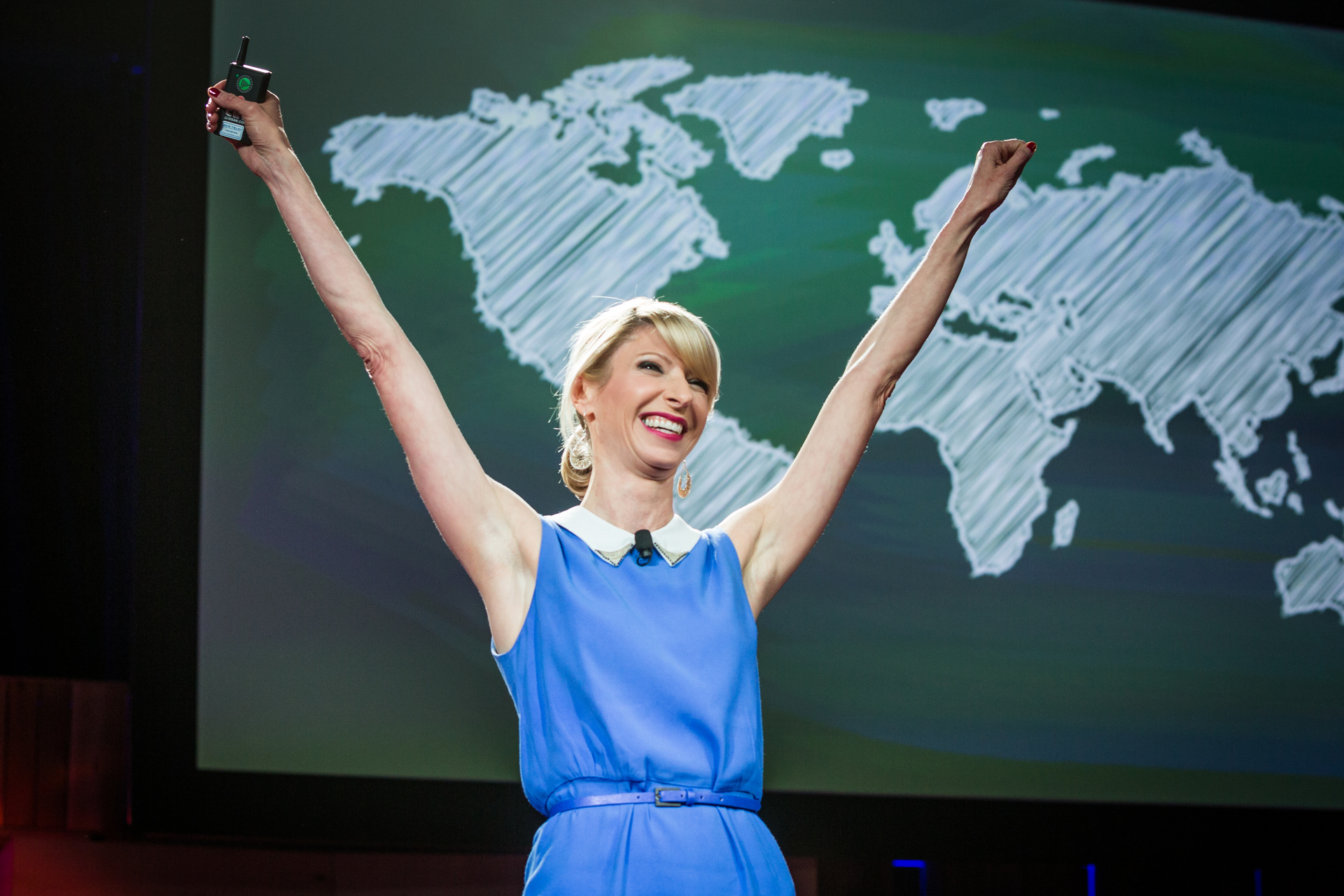
Amy Cuddy. Photo: Bret Hartman
Since giving her blockbuster talk on body language at TEDGlobal 2012, social psychologist Amy Cuddy has heard from people around the world that her talk has helped them realize their full potential. She shares the stories from across the globe — of a girl in Bangladesh who learned to overcome the cultural norms of femininity and take more space; of a clinical psychologist in Johannesburg, South Africa who uses power posing in her therapy; of high school teacher in the U.S. who coached his volleyball team to power pose to win their match; of a homeless man in California who has harnessed his self-worth through his body language. Her latest research has revealed that imagining yourself in the power pose for two minutes is as effective as actually doing it. She leaves the stage with a reminder from Maya Angelou: “Stand up straight!”
Last year at TED2013, Allan Savory gave a striking and controversial talk on his idea for holistic landscape management as a way of reversing climate change. He returned to have a short conversation with TED Curator Chris Anderson, who asked what has happened since. Savory replied that the idea is taking off, so much that they’ve lost count of the acreage managed under his system. When asked about the criticisms, Savory replied that it’s “100% based on solid science, it has been working for 50 years, and all of that is from successful people spreading the word.” He went on to say that there have been specific criticisms — about the amount of methane produced, whether the land affected can actually absorb enough carbon, and whether people actually eat that much meat — but that, “Even if you assume these issues are wrong, we still have no option, we have to address climate change, we have to address desertification, and only livestock, properly managed, can do that.”
It’s high time we find a smarter way to fix global warming, says economist Bjorn Lomborg. We need to shift our focus away from subsidies towards innovation. Let’s take the lessons we’ve learned from other industries: the whaling industry innovated by creating kerosene, not controlling the consumption of whales. The transportation industry innovated by creating cars, not subsidizing horses. When India was struck with famine, the government did not subsidize food, but rather supported the Green Revolution to support long-term food production for India’s hungry. So, Lomborg says, let’s stop with the green subsidies and instead support green innovation.
Amanda Palmer gives the audience a choice between two songs: a new one that’s depressing, or a shorter one that’s light-hearted. It’s a tie, broken by Neil Gaiman, who (a bit surprisingly) suggested the light one. Palmer introduces the song by explaining, “There was an argument on the internet about whether Lady Gaga is a real artist, and it remains relevant, especially in the face of Miley Cyrus.” Watch “Gaga, Palmer, Madonna.” After, she talked about the effect her talk has had. “I’m now known more for giving my TED Talk than for being a musician, which is kind of weird.” She is also now writing a book about the talk, so look forward to that.
Are we entering a world where it’s harder to be an autocracy, but it’s also harder to be a democracy? Social media theorist Clay Shirky looks at two recent political movements that offer both hope and worry. From the 2013 protests in Istanbul, we can see the empowerment of citizens through social media: “There is no authoritarian government in the world that regards the spread of social media as anything other than a mortal threat,” he says. But from the 2010 Red Shirt Uprising in Bangkok, we see an example of the insurgency inherent in democracy, and the dangers of symmetric anti-power. The Red Shirts successfully staged an uprising in 2010, only to face counter-protests by the Yellow Shirted opposition the following year. Democracy and social media empower citizens to push back against business as usual, but does it also present a “nightmare scenario” where two groups can bring each other to a halt, with no government in charge? I’m not sure, jokes Shirky: With a five-minute talk, you can raise questions, but you can’t provide answers.
David Brooks, pundit for the New York Times, has been thinking about the difference between résumé virtues and eulogy virtues. Which do we think are more important, and which do we spend the most time thinking about? He is reminded of a notion from Soloveitchik about two parts of our nature, Adam 1 and Adam 2. Adam 1 is the worldly, ambitious side of our nature. Adam 2 is the humble side of our nature. The two are at war with each other. Brooks says: “We live in a society that favors Adam 1, and that turns you into a shrewd animal … and you’re not earning the kind of eulogy you want.” He goes on to say that Adam 1 is built by building on your strengths, while Adam 2 is built by fighting your weaknesses. “You find a sin, you wrestle with that sin, and a depth of character is constructed,” says Brooks — a skill that isn’t taught in our society. He closes with a wonderful quote from Reinhold Neibuhr.
“Barry Schwartz’s talk really changed the way I thought about decisions and choice,” says Chris Anderson as he brings this next speaker to the stage. Schwartz lays out the concept of idea technology — ideas that fundamentally shape who we are, and the world we live in. False ideas are a dangerous thing, warns Schwartz: “false ideas about human beings will not go away if people believe they are true — people create ways of living consistent with these ideas.” For an example, Schwartz examines the current capitalistic model of work that evolved from Adam Smith’s vision of the factory system. It’s a model of work where you get nothing out of your day’s work except the pay. But this is just a false idea creating circumstance, says Schwartz, and the power to design our reality lies plainly in our hands. “What kind of human nature do you want to help design?”
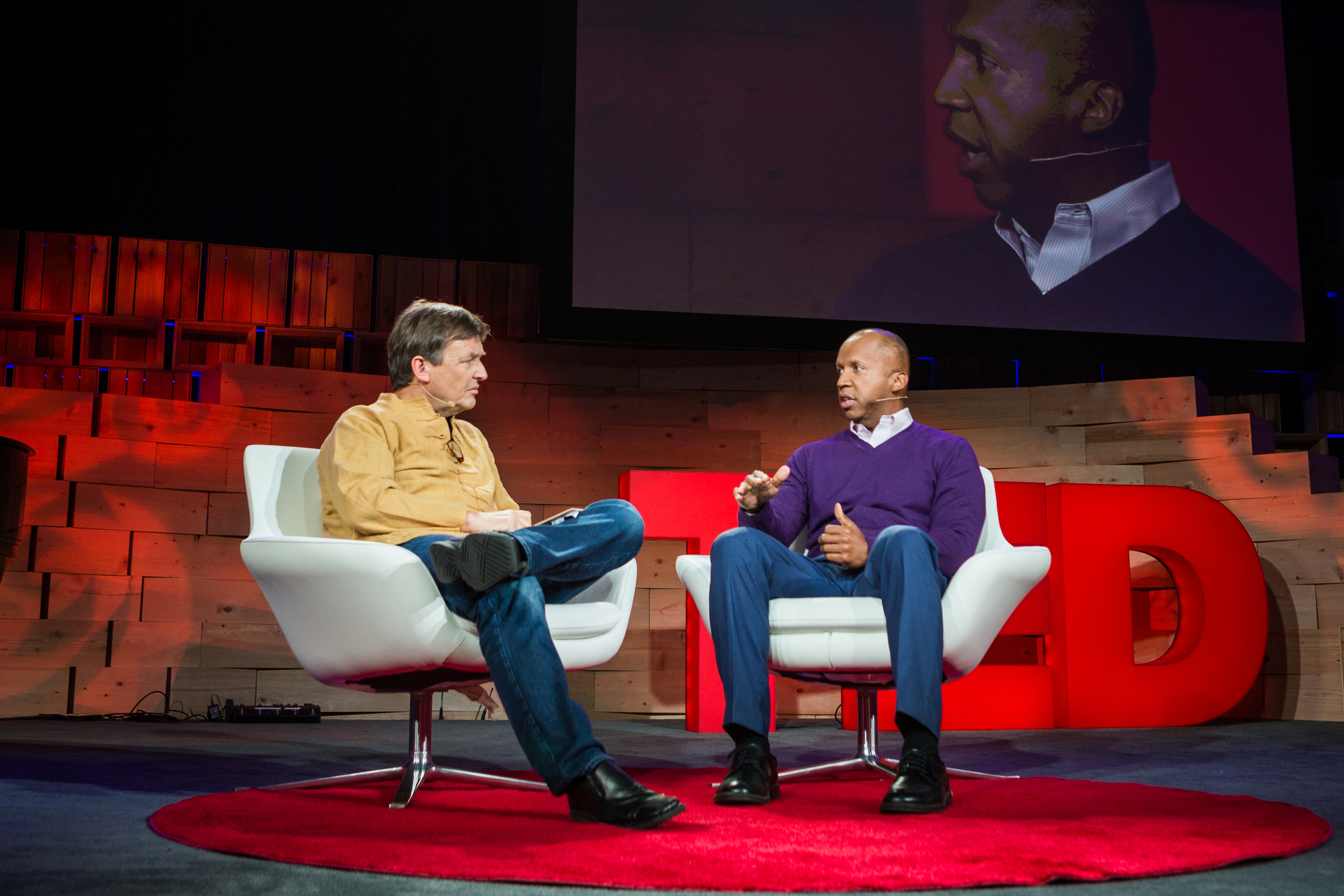
(L-R) Chris Anderson and Bryan Stevenson. Photo: Bret Hartman
Two years ago, Bryan Stevenson gave a stunning talk on one of the deepest problems in American culture — the mass incarceration of African Americans. He returns for a conversation with Chris Anderson to update the TED audience. Since then, the Supreme Court has declared that the death penalty for minors is unconstitutional. His group, EJI, has extended that work, and is now trying to end the practice of putting children into adult prisons, and having children as young as 9 or 10 or 11 tried as adults. He also says that while the fight is mostly at the state level, a conversation needs to be had at the national level. On the state level: California eliminated Three Strikes laws, the prison population saw a slight decrease for the first time in many years, and people are starting to have conversations about being smart about crime. He has also started a wider conversation about race in the United States, as a way of addressing the “legacy of racial injustice that we’ve never really dealt with, the myths that came about with slavery.”
Offering heartfelt lessons learned from a friend lost, Lawrence Lessig closes the session with his impassioned vision for a U.S. government free from the strangling tentacles of corruption. 96% of Americans believe it’s important to reduce the role of money in politics, but 91% feel that there’s nothing they can do to reform campaign finance. That’s why Lessig walked 185 miles across New Hampshire this past January — to give hope to citizens who want to see change. He was joined by 200 people, and his plan for next year is to be joined 1,000 people. In January 2016, just before the U.S. presidential primary, he envisions 10,000 people descending on Concord, New Hampshire. To equalize campaign finance, he’s launching MayOne, the SuperPAC to end all SuperPACs. He evokes the spirit of the late open-data activist Aaron Swartz. “May the ideals of one boy unite one nation behind one critical idea that we are one people, the people who were promised to be dependent upon the people alone,” says Lessig. “The people, who as Madison told us, are not the rich more than the poor … Join this movement because you are a citizen.”
]]>Over the past week, we’ve noticed a lot of fascinating TED-related news items. Here, some highlights.
Yesterday, U.S. attorney general Eric Holder announced a major relaxing of mandatory minimum sentencing for drug possession. He asked prosecutors to use their discretion when charging nonviolent, low-level offenders and opt not to list the quantities of drugs involved in their cases. Bryan Stevenson (watch his enthralling talk from TED2012) stopped by The Rachel Maddow Show to discuss what this means. “It’s a very significant change,” says Stevenson. “The problem of mass imprisonment in this country has been largely fueled by our misguided War on Drugs and the way in which it has sent hundreds of thousands of people to prison for low-level drug problems which are not a threat to public safety and cost billions of dollars. I think it’s a really enormous step forward for the government.”
When economist Emily Oster (watch her TED Talk) got pregnant, she heard a long list of do’s and (mainly) don’ts about risky foods to avoid: wine, deli meat, soft-serve ice cream. But looking into the data behind the prohibitions, she found most of the rules were based on correlation, not causation — and actually didn’t do much but cause guilt and fear in pregnant women. As she writes in The Wall Street Journal: It’s time to take back pregnancy.
In support of trade and technical education, Mike Rowe (watch his talk on lessons from dirty jobs) unleashes a soundbite for the ages on Fox News: “We are lending money we don’t have to kids who can’t pay it back to train them for jobs that no longer exist. That’s nuts.”
NPR’s Morning Edition gives a shout-out to Allan Savory’s TED Talk.
George Monbiot (read about his talk from TEDGlobal 2013) questioned de-extinction in The Guardian, saying of the idea of reviving the wooly mammoth that “at best it will produce a public cabinet of curiosities, at worst new pets for billionaires.” Read a takedown of his argument from Carl Zimmer (who spoke at TEDxDeExtinction) via National Geographic.
Rose George (watch her talk) published a new book today, called Ninety Percent of Everything. It’s a detailed look at the shipping industry, which whether you realize it or not, affects you multiple times a day.
What’s the value of newspapers? A week after Jeff Bezos (watch his talk) bought the Washington Post, Cass Sunstein argues that it’s serendipity — pushing the reader out of the filter bubble (find out more about it), and showing them stories and ideas they didn’t know they wanted. It’s an argument that resonates with us here at TED (have you tried Surprise Me?). For more on the wonder of newspapers, watch Jacek Utko’s talk.
Do scientists who advocate for science actually make the public trust them less? The science behind this baffling thesis is explored by Liz Neeley at Compass. It’s relevant to all scientists who are moved by their data to become advocates — like former NASA climate scientist James Hansen (watch his talk).
A long, intimate visit with Isabel Allende (watch her talk). She speaks to Al Jazeera about her craft, her devotion to empowering women, and politics.
Does winning a Nobel Prize early in life make you, later in life, a little … off? Brad Voytek (watch his TED-Ed lesson on zombies) is crowdsourcing research on a subcategory of the Prodigy Effect. Ping him if you have thoughts or data to share — and watch our playlist of 12 talks from Nobel Prize winners.
Daniel Kahneman (watch his talk) has been awarded the Presidential Medal of Freedom, “the nation’s highest civilian honor.” Others among this year’s 16 recipients include Oprah Winfrey, Gloria Steinem, Loretta Lynn and TED Prize winner Bill Clinton.
]]>Bryan Stevenson (watch his talk from TED2012) is asking the state of Florida to reconsider its case against 14-year-old Tremaine McMillan. On May 27, McMillan was wrestled to the ground and put in a chokehold by a Miami-Dade police officer who felt McMillan had given him a “dehumanizing stare.” The incident was caught on video by a camera phone. “We’re going to criminalize this child by assigning him the ability to be ‘dehumanizing.’ We’re going to characterize his body language as menacing,” says Stevenson in this video.
ColourYourLife.net has picked “7 TED Talks to Inspire Greatness.” At the top of the list: Dan Gilbert (watch his talk) and Rory Sutherland (watch his talk). On a similar note, Mashable has rounded up “15 TED Talks That Will Change Your Life,” which included the talk from the wonderful Rita Pierson (watch her talk).
Lesley Perkes (read about her talk from TED2013 and watch her Worldwide Talent Search audition) has written one of the most moving end-of-life stories we’ve ever read, about making the decision to put a loved one on life support without realizing that was the decision she was making. She writes of her coded discussion with the doctor, “He never says if he cannot breathe on his own, do you want us to provide a way for him to breathe or do you want to let him go?”
Transparency International has released its new Global Corruption Barometer. The largest survey ever conducted by the watchdog group, founded by Peter Eigen (watch his TED Talk), the barometer asked 114,000 people in 107 countries their opinions on which institutions are the most corrupt. The findings are fascinating. And a related talk to watch: Charmian Gooch’s “Meet global corruption’s hidden players.”
Success Magazine’s recent profile of TED quotes Chris Anderson on why he took over the organization in 2001. “I will never forget how those TED speakers showed such off-the-charts love for a particular subject,” says Anderson of his first TED in 1998. “And the audience shared the same passion. It got my heart beating faster. I just fell in love with it. I felt like I had come home.”
Meanwhile, Resource Nation has pulled together the “Top TED Talks for Entrepreneurs.” Enjoy.
]]>Bryan Stevenson, who gave the powerhouse talk “We need to talk about an injustice” at TED2012, appeared on Moyers & Company this past weekend.
 Bryan Stevenson: We need to talk about an injustice
In the episode, titled “And Justice For Some,” Moyers takes a hard look at systematic biases in the American legal system. The occasion for this episode — the 50th anniversary of the Supreme Court’s decision in the case Gideon v. Wainwright, which established the right to legal representation for defendants unable to pay for it. The decision highlighted the ideal that the judicial system should function the same regardless of the defendant’s bank account.
Bryan Stevenson: We need to talk about an injustice
In the episode, titled “And Justice For Some,” Moyers takes a hard look at systematic biases in the American legal system. The occasion for this episode — the 50th anniversary of the Supreme Court’s decision in the case Gideon v. Wainwright, which established the right to legal representation for defendants unable to pay for it. The decision highlighted the ideal that the judicial system should function the same regardless of the defendant’s bank account.
Bryan Stevenson, a public-interest lawyer who represents the young, poor and incarcerated, knows that this sadly just isn’t the case. As he says: “We still have a system that treats you better if you’re rich and guilty than if you’re poor and innocent.”
]]>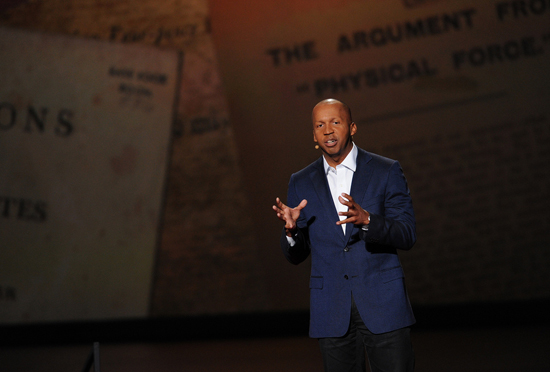
TED Talks often get 100 or more comments — usually a mixed bag of kudos, critiques and questions. Looking back on the year, we’d like to share a few comments that wowed us. These intelligent, observant contributions took the talks beyond their 18 minutes and into an ongoing conversation.
Every speaker appreciates a “Great job!” but here’s a beautifully worded example of how to go deeper. If a talk truly moved you, take some time to reflect on why. If you disagree with the critics, elaborate on why the speaker’s ideas are worth defending. With civility to spare, this comment provides a powerful counterpoint to a dissenter’s opinion.
Below, commenter Ziska Childs defends Bryan Stevenson’s “We need to talk about an injustice”:
“Yes, I was in the audience. Yes, this struck a primal chord. Yes, I do ask “Why this speech above all others?” Perhaps it is because I have seen black men and women step off the sidewalk to let me pass. Perhaps it is because I have seen old white women walk to the front of the line. Perhaps it is because I know in my heart of hearts that this is close to the core of what is a uniquely US cultural disconnect. Bryan spoke not about the privilege of wealth to a wealthy privileged audience but the privilege of Justice.
Justice. Justice is not vending machine forgiveness. Justice is not a punishment exponentially greater than the crime. Justice is not choosing to punish the criminal over healing the victim. (Ideally the punishment would heal the hurt.)
I choose to believe that someone who recognizes the systematic murder of 12 million human beings as immoral can also see the fingerweight on the scales of Justice against the African American as unconscionable.
I choose to believe that compassion is neither exclusive nor finite.
I choose to believe that learning from history is better than ignoring history.
What Mr. Stevenson asked for was ‘Justice’ with the scales set level from the start. I choose to believe that is good.”
]]>Stevenson is Executive Director of the Equal Justice Initiative, who represented two plaintiffs in a case before the United States Supreme Court. In Miller v. Alabama and Jackson v. Hobbs, two young men were sentenced to life without the possibility of parole, sentences that were mandated by law. Stevenson argued that laws mandating sentences of life without the possibility of parole for adolescents and children are unconstitutional.
Yesterday, the Court ruled those mandatory sentences unconstitutional. According to Stevenson, “This is an important win for children. The Court took a significant step forward by recognizing the fundamental unfairness of mandatory death-in-prison sentences that don’t allow sentencers to consider the unique status of children and their potential for change.”
Justice Kagan, writing for the majority, said: “Given all that we have said in Roper, Graham, and this decision about children’s diminished culpability, and heightened capacity for change, we think appropriate occasions for sentencing juveniles to this harshest possible penalty will be uncommon.”
This is not news to TEDGlobal speaker Sarah-Jayne Blakemore. A professor at University College London, she researches the adolescent brain, and has found that there are tremendous changes that take place during that stage of growth. Blakemore, who will be speaking at TEDGlobal tomorrow afternoon, was part of a group of neuroscientists who wrote to the Supreme Court two years ago to argue that recent research has shown unequivocally that the brain shows more development during adolescence than was previously assumed, and that the courts should take this development into account in trying juveniles.
According to Blakemore, these results are the result of new technologies, such as MRI, which allow us to look inside the brain. It’s not surprising that there is an instinct to treat adolescents as adults, she says: “Adolescents can look adult, but they don’t have an adult brain. There’s a paradox there, but we should allow for the development of their brain.”
She is quick to point out that current understanding doesn’t tell us when the brain becomes “adult.” In fact, “The whole concept of the brain becoming adult is kind of a red herring.” Nor do they speak to the concept of free will and culpability. But, she notes, “Given the new neuroscience data, it just doesn’t make any sense to put minors in prison for the rest of their lives, given that their brains will naturally develop.”
Stevenson warns that this is not the end, and that prejudices still remain. “In applying their discretion in juvenile life-without-parole sentences, judges need to be mindful to avoid a disproportionate impact on children of color.”
]]>Start with this talk from Richard Wilkinson, whose 2009 book The Spirit Level gathers decades of research to draw this conclusion: Societies with more income inequality suffer — in utterly predictable ways — more than societies that are more equal.
[ted id=1253]
(And read the TED Blog’s in-depth Q&A with Wilkinson, in which he talks about the moment he realized economic inequality was a measureable problem.)
Next, watch Van Jones’ powerful talk on a specific outcome of economic injustice: If you’re poor, your neighborhood gets trashed.
[ted id=1056]
For a followup, watch Majora Carter’s classic TEDTalk “Greening the Ghetto” — which shows the effects of income inequality on her home in the South Bronx, and offers triple-bottom-line solutions for raising incomes and reducing environmental damage.
[ted id=53]
And do not miss Bryan Stevenson’s TEDTalk about economic injustice and its consequences — with a bold call for everyone to look honestly at the problem: “We have a system of justice in [the US] that treats you much better if you’re rich and guilty than if you’re poor and innocent.”
[ted id=1378]
Find more talks on inequality >>
]]>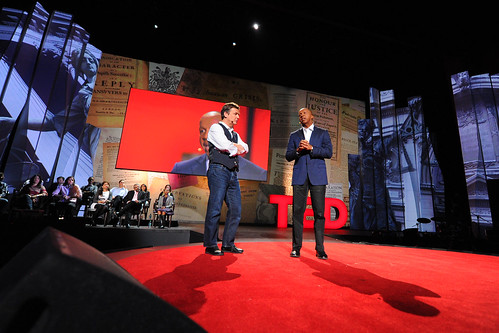
Photo: Duncan Davidson
Bryan Stevenson’s talk inspired one of the longest and loudest standing ovations in TED’s history. And it provoked a blizzard of requests from audience members that we find a way to support the work of his nonprofit organization, the Equal Justice Initiative.
When I asked Bryan about funding needs, this is what he said: “We are trying to raise $1.5 million for a campaign that ends excessive sentencing of children and stops the practice of putting kids in adult jails and prisons, where they are 10 times more likely than other incarcerated people to be the victims of sexual assault and violence. We just started this effort, and support from the TED community could be huge. I’ll be arguing a case in the U.S. Supreme Court on this issue next month.”
So the next day, I invited members of the audience to contribute. In just a few minutes 6 people pledged $100,000 each, 18 pledged $10,000 and more than 100 pledged $1,000. With subsequent pledges received by text and email, and a $100,000 contribution from TED itself, I was able to write to Bryan confirming that TED will be writing his organization a check for $1.12m.
But beyond that, it’s clear that many people who saw this talk want ongoing involvement on this issue. Bryan’s organization can be contacted directly here. And TED is committed to making this issue a core part of its TED Prize initiative on The City 2.0. The thinking here is that the future of cities and massive incarceration levels are inextricably linked. If huge numbers of families are missing their fathers, it’s hard to imagine how inner-city renewal takes place. The City 2.0 initiative is all about empowering citizens in every city to work together to shape their city’s future. So we plan to work with Bryan to build a system that will allow people to take action locally on this issue. If you have thoughts on how this could be done, or wish to offer help, please write to tedprize@ted.com.
It’s truly thrilling to see what happens when someone comes to TED and induces a whole new view of the world in our audience — and does so in such a powerful and inspiring way. I suspect the response to this talk will be equally massive online. If you haven’t yet seen it, you really must. It’s here.
— Chris Anderson
]]>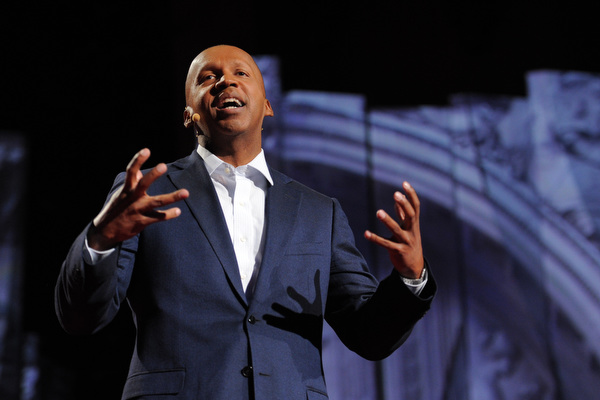
Photo: James Duncan Davidson
Bryan Stevenson spends most of his time in jails and prisons and on death row. He’s a lawyer, and the founder of the Equal Justice Initiative.
So he’s found it very energizing at TED, and wanted to start by pointing out that there is a distinct identity here. Things said here have a power that maybe they don’t elsewhere.
The point, he says, is that, “Identity is important.”
Identity in his life
He illustrates this with a story. He grew up in a matriachal house, where the undisputed matriarch was his grandmother: “She was the end of every argument in the family.” The daughter of people who were enslaved, she was tough but loving. She would often squeeze him so tight he could barely breathe.
When he was 8 or 9, he went into the living room, and his grandmother was staring at him. After 15 or 20 minutes, she took him aside and said, “We’re going to have a talk.” She said, “I want you to know I’ve been watching you. I think you’re special. I think you can do anything you want to do. Just promise me 3 things. 1) Love your mom. 2) Always do the right thing, even when it’s the hard thing. 3) Never drink alcohol.”
Later, when he was 14 or 15, his siblings offered him a beer, which made him uncomfortable, and he refused. His brother stared at him and said, “I hope you’re not still hung up on that conversation. Mama tells everyone they’re special.”
The point though, is this: He is 52, and he has never had a drop of alcohol. He says that, not because he thinks it is virtuous, but because there is an extraordinary power in identity. “We can say things to the world around us that they don’t yet believe, and get them to do things that they don’t think they can do.”
The criminal justice system
Stevenson works in the criminal justice system, and ours here in the United States is in a terrible state. In 1972, there were 300,000 people incarcerated. Today, there are 2.3 million. That’s the highest rate in the world. Mass incarceration is at an extraordinary level: 50-60% of young men of color are in jail, prison, or on parole. And that is fundamentally changing how we live.
Our justice system is distorted around race and also around poverty. It’s a system that “treats you much better if you’re rich and guilty than if you’re poor and innocent.” It feels like a problem that we should all want to solve, but the politics have made us feel that these are not our problems. We are extremely uncomfortable talking about race and poverty. For example, Alabama permanently disenfranchises convicted felons. As a result, 34% of African American men in Alabama have permanently lost the right to vote.
And yet, there is a stunning silence.
The United States is the only country that will sentence 13-year-old children to life imprisonment, to die in prison. And yet we largely don’t talk about it. The death penalty is, of course, a fantastically important issue, but the way we frame the question is important. One way of asking is, “Do people deserve to die for the crimes they’ve committed?” But another way is, “Do we deserve to kill?” For every nine people on death row executed, there is one found to be innocent and released. That is a statistic that would never be allowed in any other industry: Imagine if one out of every nine planes crashed?
We live in a country that embraced slavery, where after reconstruction and through Jim Crow a huge part of the population was subject to terrorism, to constant threats of being lynched and fire-bombed. But we don’t like to talk about it: “We don’t understand what it is to have done what we’ve done.” In South Africa, after apartheid ended, there was an extended process of truth and reconciliation, but here in America, neither at the end of slavery nor after the passage of the Civil Rights Act: nothing.
Stevenson gave a lecture in Germany and someone said to him, “We can never have the death penalty in Germany…. There is no way, with our history, we could engage in the systematic execution of human beings. It would be unconscionable.” Imagine if in Germany today there was a death row, and that Jewish people were systematically more likely to be convicted. And yet here in this country, in the states of the Old South, a defendant is 11 times more likely to get the death penalty if the victim is white, and 22 times more likely if the defendant is black.
Our future identity
Our whole identity is at risk. “If we don’t care about these things, then the positive things we believe are implicated too. Our hopeful, forward-looking realities are always shadowed by suffering, abuse, degradation, marginalization. Don’t always just be attentive to the bright and dazzling things but also to the dark and depressing things.”
We need to integrate the light and the dark. TED’s communities have to be engaged in this, he says: “There is no disconnect around technology and design that will allow us to be fully human until we also pay attention to suffering.”
This identity is a much more challenging identity.
Rosa Parks onced asked him to describe his work with the Equal Justice Initiative, which he did. She said, “Oh, that’s going to make you tired, tired, tired.” And then, “That’s why you’ve got to be brave, brave, brave.” The TED community, Stevenson exhorts, needs to be more courageous. Because who we are, and the extent to which we are human, depends on how human everyone around us is. “At the base is a basic human dignity that needs to be respected.”
Stevenson believes our country, along with others, has a fundamental problem with humanity: “In many parts of this country, the opposite of poverty is not wealth. In too many places the opposite of poverty is justice. We will ultimately not be judged by our technology and design, we will judge the character of our society by how they treat the poor. That is when we’ll understand truly profound things about who we are.”
Anger, and hope for the futre
In the middle of a case where a judge ruled that a 14-year-old was fit to stand trial as an adult, Stevenson wondered, “How can a judge turn a child into an adult? The judge must have magic powers.” So, late at night and very tired, he worked on a motion to ask that his 14-year-old poor black male client be tried as a wealthy privileged 70-year-old white male. He wrote a searing critique and went to bed. Woke up and realized: He’d hit Send.
Months later, he went to court, wondering what the judge would say. On the way there he met a janitor, who found out he was a lawyer. The janitor hugged him and said he was proud of him. Then Stevenson went into court, and the judge was furious. Inside the court, people were angry. “Angry that we were talking about race, and poverty, and inequality.”
The janitor had come in and sat behind him, and at recess a deputy demanded to know what a janitor was doing there. The janitor replied, “I came into this courtroom to tell this young man, ‘Keep your eyes on the prize, and hold on.'”
Today, Stevenson wants to tell us, “All of our survival is tied to the survival of everyone,” and we can not be fully evolved human beings until we care about justice for all and are truly willing to confront our difficult past.
But most of all, “I’ve come to tell you to keep your eyes on the prize, and hold on!”
TED is known as a place where standing ovations happen. But the response of the audience was beyond overwhelming. To a one they stood, and refused to sit down. An ovation that strong has simply never happend at TED before.
(And read what happened next.)
]]>