 There is contentious debate playing out right now across the West, about how to adapt homes and neighborhoods to this era of increasingly extreme wildfire risk. Berkeley, California has put itself at the center of this conversation with a new rule on landscaping that tightly restricts the plants you can grow around your house. These]]>
There is contentious debate playing out right now across the West, about how to adapt homes and neighborhoods to this era of increasingly extreme wildfire risk. Berkeley, California has put itself at the center of this conversation with a new rule on landscaping that tightly restricts the plants you can grow around your house. These sorts of adaptation efforts are always fraught, but it’s been a particularly emotional fight in Berkeley because of a very specific architectural history that began all the way back in the 1890s.
Check out our previous episode on defensible space: Built to Burn
]]> In 1998, the recording industry was thriving. But the company pressing more compact discs than anyone else in America wasn’t a record label…it was an internet company: America Online. The AOL Disc was a marketing coup—hugely successful. It’s not an overstatement to say that it’s the campaign that introduced America to the internet. Because of]]>
In 1998, the recording industry was thriving. But the company pressing more compact discs than anyone else in America wasn’t a record label…it was an internet company: America Online. The AOL Disc was a marketing coup—hugely successful. It’s not an overstatement to say that it’s the campaign that introduced America to the internet. Because of how well it worked, for a while the internet was AOL. And then… it felt like AOL just disappeared. So what happened? Alex Goldman (Reply All, Hyperfixed) finds out.
A History of the United States in 100 Objects is a production of 99% Invisible and BBC Studios.
]]>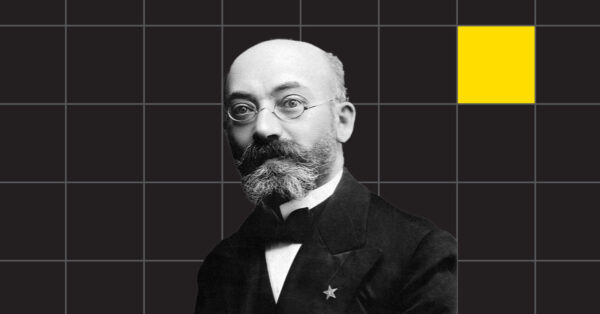 Esperanto is what linguists call a “constructed language.” It isn’t attached to a nation or a region, and it didn’t evolve from another language over time. Instead, nearly 150 years ago, someone decided to sit down and design the whole thing from scratch. That someone was L. L. Zamenhof, also known as Doktoro Esperanto. Born]]>
Esperanto is what linguists call a “constructed language.” It isn’t attached to a nation or a region, and it didn’t evolve from another language over time. Instead, nearly 150 years ago, someone decided to sit down and design the whole thing from scratch. That someone was L. L. Zamenhof, also known as Doktoro Esperanto.
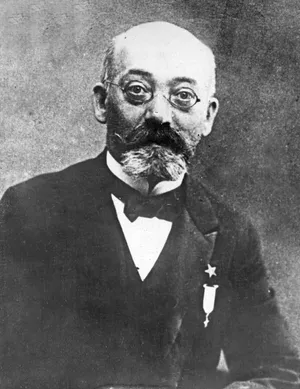 Born in 1859, Zamenhof grew up in Białystok. Today the city is located on the eastern border of Poland but at the time was part of the Russian empire. As a kid, Zamenhof learned a number of different languages but he dreamed of a way to unite the world under one shared tongue. He figured if the language was easy to learn, it could become a global second language. So before his 30th birthday, Zamenhof published the “Unua Libro” or the “the First Book.” It detailed the language’s philosophy and design which to this day is pretty straightforward and consistent.

The Esperanto movement never did achieve its ultimate goal of becoming everyone’s second language but it is regarded as the most widely spoken constructed language. In fact, every year Esperanto speakers still meet for a convention where nearly everyone in attendance speaks the language.

In this episode, Reporter Katie Thornton attends the World Esperanto Congress and tells us what we can all still learn from the people who are trying to keep this invented language alive.
For more, check out Katie’s story on Esperanto in Harper’s Magazine.
]]> In 1932, the Women’s House of Detention—New York City’s first women’s prison—opened in the heart of Greenwich Village. It was opened to make “wayward” women quiet, private, and properly feminine. And the building had one unique feature originally meant to be a sort of kindness—a special kind of window that the women inside could open.]]>
In 1932, the Women’s House of Detention—New York City’s first women’s prison—opened in the heart of Greenwich Village. It was opened to make “wayward” women quiet, private, and properly feminine. And the building had one unique feature originally meant to be a sort of kindness—a special kind of window that the women inside could open. Roman Mars and historian Hugh Ryan trace how those special windows had an impact that nobody could have predicted—helping to build a mecca of gay America and, ultimately, a movement.
A History of the United States in 100 Objects is a production of 99% Invisible and BBC Studios.
]]> This episode is sponsored by Acura. Even if you’ve never been to the Guggenheim Museum, you probably recognize it. From the outside, the building is a light gray spiral, and from the inside, the art is displayed on one long ramp that curves up towards a glass skylight in the ceiling. It’s a one-of-a-kind building]]>
This episode is sponsored by Acura.
Even if you’ve never been to the Guggenheim Museum, you probably recognize it. From the outside, the building is a light gray spiral, and from the inside, the art is displayed on one long ramp that curves up towards a glass skylight in the ceiling. It’s a one-of-a-kind building designed by architect Frank Lloyd Wright. When Hilla Rebay, co-founder and first director of the Guggenheim, commissioned this building, she said she wanted a “temple of spirit.” And Wright designed one for her.

Frank Lloyd Wright was the originator of a concept called “organic architecture,” and for Wright, the idea was that a building should be a metaphor for a living organism. In 2019, UNESCO selected eight buildings designed by Wright, including the Guggenheim, to be a World Heritage site. UNESCO sites are considered vital to the collective interests of humanity. Yellowstone is a heritage site. So is the Grand Canyon. Of the World Heritage properties in America, twelve were made by God. Eight were made by Frank Lloyd Wright.

Even though this building is composed of pure forms like circles and spirals, the top of the parapet isn’t perfectly rounded or finished with a crisp right angle. It’s bumpy and uneven. The reason why the parapet is kind of lumpy is that the paint is touched up every day when the museum is not open. It’s touched up here and there, and for that reason, everything kind of has a texture. You have an effect on this building. By being here and touching the railing, you’ve changed it. It’s changing texture is part of its evolution as an organic structure.

Constructing Frank Lloyd Wright’s vision of a spiral museum was not an easy feat to pull off. Wright oversaw the work, but a local architect named William Short was in charge of the project on the ground and George Cohen was the general contractor. In the three years it took to build the Guggenheim, they came to the realization that some of Wright’s ideas were not going to be doable.

They had to solve the problem of making a curving, spiral building no one had even imagined before, much less built, and they did it with gunite. Gunite is concrete that is shot out of a hose at high velocity. You spray it against a mold, it dries quickly and takes on the shape of the mold. It was Wright’s idea to use this pretty novel technology when the building was constructed. If you look closely, and the sun is just right, you can see an angled checkerboard pattern of lines that betray the form of the plywood molds that created the shape of the outer wall.

Originally, Frank Lloyd Wright wanted all of the Guggenheim staff to work in this building. He called this space “The Monitor.” Although nobody’s entirely sure why. The offices were kind of like railroad apartments – there was no hallway, so if you had a desk at the back window, you had to walk through everyone else’s office just to go for lunch. Today, the museum staff mostly work off-site, in a location downtown. And the Monitor has become public gallery space, and home to the Guggenheim cafe and gift shop.

The ramp floor of the Guggenheim causes an interesting problem: how do you hang a picture when the floor is slanting upward? Would you make it straight? Or would you try to hang it to match the angle of the floor? Frank Lloyd Wright designed a third option. He made bays throughout the building, which slope backward, where you can hang paintings. Wright really thought about a bay as a comprehensive display system. So the back wall is at an angle approximately one hundred and five degrees which is really similar to an easel.

Christopher George and Richard Avery are part of the team that installs new exhibitions in this building. They’ve hung full-sized cars and over-sized cat skeletons to fill the center void. In this unusual space, each exhibition is a feat of engineering that has to be planned perfectly, but there’s only so much planning that can happen.

When you reach the final revolution at the top of the spiral ramp, look down at the terrazzo floor. You’ll notice that the pattern changes. Most of the floor on the ramp has a repeating circular pattern, but at this point, the pattern turns to a square. In the early days of the Guggenheim, you could not go past this line. There’s some debate as to what Frank Lloyd Wright wanted, but, as best we can tell, this part was not supposed to be gallery space. In the early days, this space was used for storage. But here it is now, open to the public. And you have a lovely opportunity to transgress and trespass into what was once forbidden territory.
]]>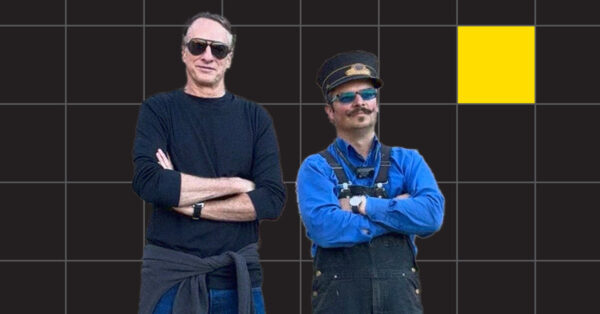 This week, we’re featuring a story from Death, Sex & Money about N.D. Austin, a man who makes a living creating experiences that are supposed to change you. His projects have included secret sewer speakeasies, coming-of-age rituals on deserted islands, funeral board games, and, for Tony Hawk, a homemade train ride through the desert designed]]>
This week, we’re featuring a story from Death, Sex & Money about N.D. Austin, a man who makes a living creating experiences that are supposed to change you. His projects have included secret sewer speakeasies, coming-of-age rituals on deserted islands, funeral board games, and, for Tony Hawk, a homemade train ride through the desert designed to mend a few frayed relationships.
Host Anna Sale talks with Tony about what it’s like to step into one of N.D.’s carefully constructed worlds, and with N.D. about how growing up in a doomsday cult in Alaska shaped the way he thinks about ritual, generosity, and the possibility of designing a little more magic into everyday life.

]]>
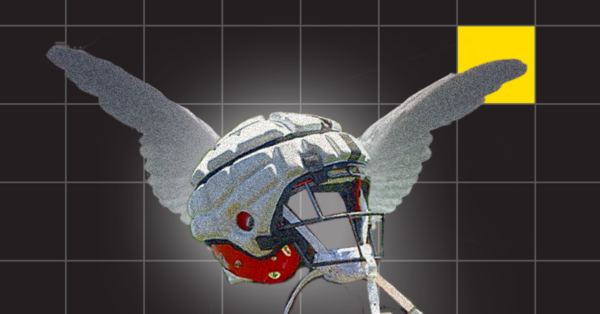 In 2024, James Daniels became likely the first NFL football player to wear a new kind of helmet during a game – an apparatus called the Guardian Cap. The new lid was a marked departure from what fans are used to. Guardian Caps offer an extra layer of padding, and make the player’s helmet more]]>
In 2024, James Daniels became likely the first NFL football player to wear a new kind of helmet during a game – an apparatus called the Guardian Cap. The new lid was a marked departure from what fans are used to. Guardian Caps offer an extra layer of padding, and make the player’s helmet more bulbous and large. “It sort of looks like if you had soundproof padding in the form of a cap and stretched that over your helmet,” says Noah Cohan, a professor of American cultural studies at Washington University in St. Louis. “It’s a series of lumps made of foam within a sort of fabric covering that is then clipped to the outside of the helmet.” The Guardian Cap is designed to protect players’ heads from injury, and has been controversial with players and fans alike.
The Cap is one of the latest developments in a nearly century-long quest to make the game of American football safer. In the early days of football, players were often bare-headed, before leather helmets became mandatory in college football in 1939. Plastic helmets became popular a few years later, thanks in part to their ability to prevent skull fractures – and their appealing design, which helped make the football helmet into a symbol for the game itself. More recent helmets have used more flexible materials and 3D printing to create equipment that manufacturers tout as more technically advanced than ever.
However, recent concern around concussions and CTE have raised the question of whether it’s technically possible to develop a helmet that can totally prevent injuries during gameplay. “I remember chatting with a doctor who said, unless you strapped the helmet to a player’s shoulders so that your head couldn’t move around on your neck, the helmet really can’t do all that much to prevent a concussion,” says Kathleen Bachynski, an associate professor of public health at Muhlenberg College. “I do think you can tweak design around the edges, but I think you’re up against the law of physics.” As debate rages around the safety of America’s most popular sport, helmets will continue to be a flashpoint.
This episode featured interviews with: Noah Cohan, whose book about the history of football helmets will be released next year; Kathleen Bachynski, the author of No Game for Boys to Play, about the history of youth football; George Visger, a retired NFL player and author of Facing Giants: My 38 Year Battle; and an excerpt from Chuck Klosterman, author of a recent book simply titled Football.
]]> Historically, Chicago common bricks were known as the ugliest bricks in the world. Made from glacial clay deposits that the city sits atop of, production of Chicago commons dramatically expanded after the Great Fire and helped the city rebuild with fire-resistant materials. Today you can spot Chicago commons all over the city but most often]]>
Historically, Chicago common bricks were known as the ugliest bricks in the world. Made from glacial clay deposits that the city sits atop of, production of Chicago commons dramatically expanded after the Great Fire and helped the city rebuild with fire-resistant materials. Today you can spot Chicago commons all over the city but most often you will see them lining the side of an old apartment building. Designers had a knack for hiding Chicago commons where they’d be harder to see and used nicer looking face bricks from Philadelphia or other cities to enhance curb appeal. Because Chicago commons have a very specific look, the contrast between the bricks on the front of a building and the bricks on the side could be quite stark.
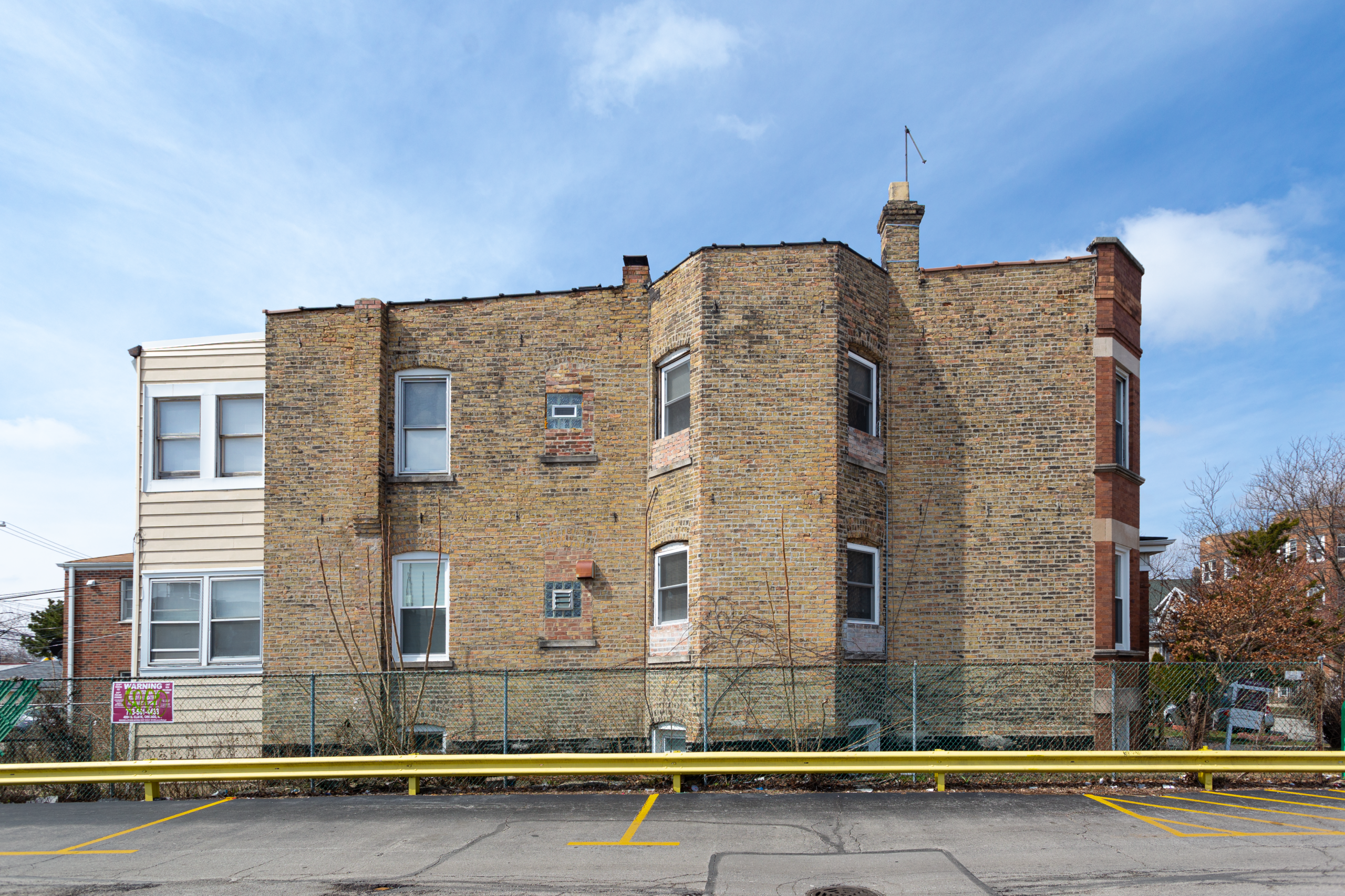
For more pictures of beautiful bricks and buildings be sure to follow Brick of Chicago on Instagram: @brickofchicago.


 Comedian, writer, and podcaster Jamie Loftus has always known about Alcoholics Anonymous. As a kid, she loved the album where her dad kept all his AA chips — that little piece of plastic that marks a day, a month, a year of sobriety. Now as an adult, Jamie wanted to understand where that little chip]]>
Comedian, writer, and podcaster Jamie Loftus has always known about Alcoholics Anonymous. As a kid, she loved the album where her dad kept all his AA chips — that little piece of plastic that marks a day, a month, a year of sobriety. Now as an adult, Jamie wanted to understand where that little chip came from. What she found is that imbued in that little chip is a hidden history — from Prohibition to women’s suffrage — of America’s relationship to gender, religion, and morality.
A History of the United States in 100 Objects is a production of 99% Invisible and BBC Studios.
]]> The sounds of yodeling have been echoing through the Alps for at least 400 years, likely more. But its origins are shrouded in mountain mist. The eerie, warbling sound might have been first used by cattle herders in the mountains, communicating across long distances; or as part of religious ceremonies; or just for fun. What we]]>
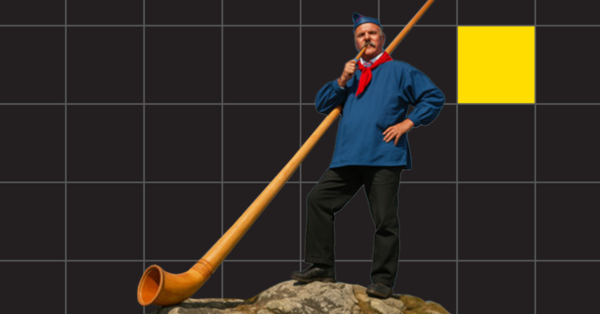
The sounds of yodeling have been echoing through the Alps for at least 400 years, likely more. But its origins are shrouded in mountain mist. The eerie, warbling sound might have been first used by cattle herders in the mountains, communicating across long distances; or as part of religious ceremonies; or just for fun. What we do know is that over the centuries, yodeling became inseparable from the Swiss national identity, both as a folk tradition and as a finely honed performance. But in the early 1800’s something happened that would help launch the yodel from a pastoral pastime into a global sensation. This very Swiss style of singing escaped the Alps, traveled across the Atlantic and helped define a quintessentially American style of music.
]]>