The post Why a DogWatch Hidden Fence Beats GPS Collars in a Small Yard appeared first on DogWatch®.
]]>GPS dog collars like Halo® and SpotOn® offer the convenience of creating virtual boundaries without buried wires. But on a small suburban lot, where every foot of usable space matters, GPS positioning accuracy and recommended boundary setbacks deserve a closer look.
On five acres, a boundary that wanders a few feet in either direction is a rounding error. On a quarter-acre lot where the usable backyard might be 40 feet deep and the far edge is a neighbor’s driveway or a street, a few feet is the difference between a dog that stays home and a dog that doesn’t.
The smaller the yard, the more accuracy matters, and that is exactly where GPS struggles and a DogWatch® Hidden Fence excels.
What GPS drift actually is
A GPS collar doesn’t know exactly where your dog is. It estimates your dog’s location by measuring signals from satellites approximately 12,000 miles overhead. Every estimate carries some degree of error, and that error isn’t constant. Signals can bounce off your house, garage, and neighboring buildings (a phenomenon called multipath), become obstructed by tree cover, and be affected by changes in satellite positioning and atmospheric conditions. The result is GPS drift: the collar’s estimated location can shift even while your dog is standing still.
Halo’s own support documentation describes its GPS tracking as “typically accurate within a few feet,” although newer models advertise improved accuracy under favorable conditions. Even so, environmental factors can still affect GPS performance. Halo acknowledges that when GPS signal strength drops to Medium, fence prevention feedback is disabled. At Low signal strength, GPS-based fence feedback remains disabled, although separately configured Bluetooth Beacon features may still function.
These limitations aren’t unique to Halo. They’re inherent challenges of satellite-based positioning, which is why GPS boundaries can be less predictable in yards surrounded by buildings, trees, and other obstructions.
Do the math on a 40-foot yard
The GPS makers know this, which is why they publish minimum yard sizes. SpotOn recommends properties of at least a third of an acre for its newest model, with at least 80 feet of usable width at the narrowest point. It also recommends keeping GPS boundaries at least 15 feet from roads and other hazards to allow for potential GPS shifts. That rules out many smaller suburban lots right away.
Halo supports smaller virtual fences, starting at 30 by 30 feet. However, Halo’s own installation guidelines recommend maintaining at least 20 feet between the virtual boundary and buildings, and maintaining at least 15 feet between the boundary and public roads.
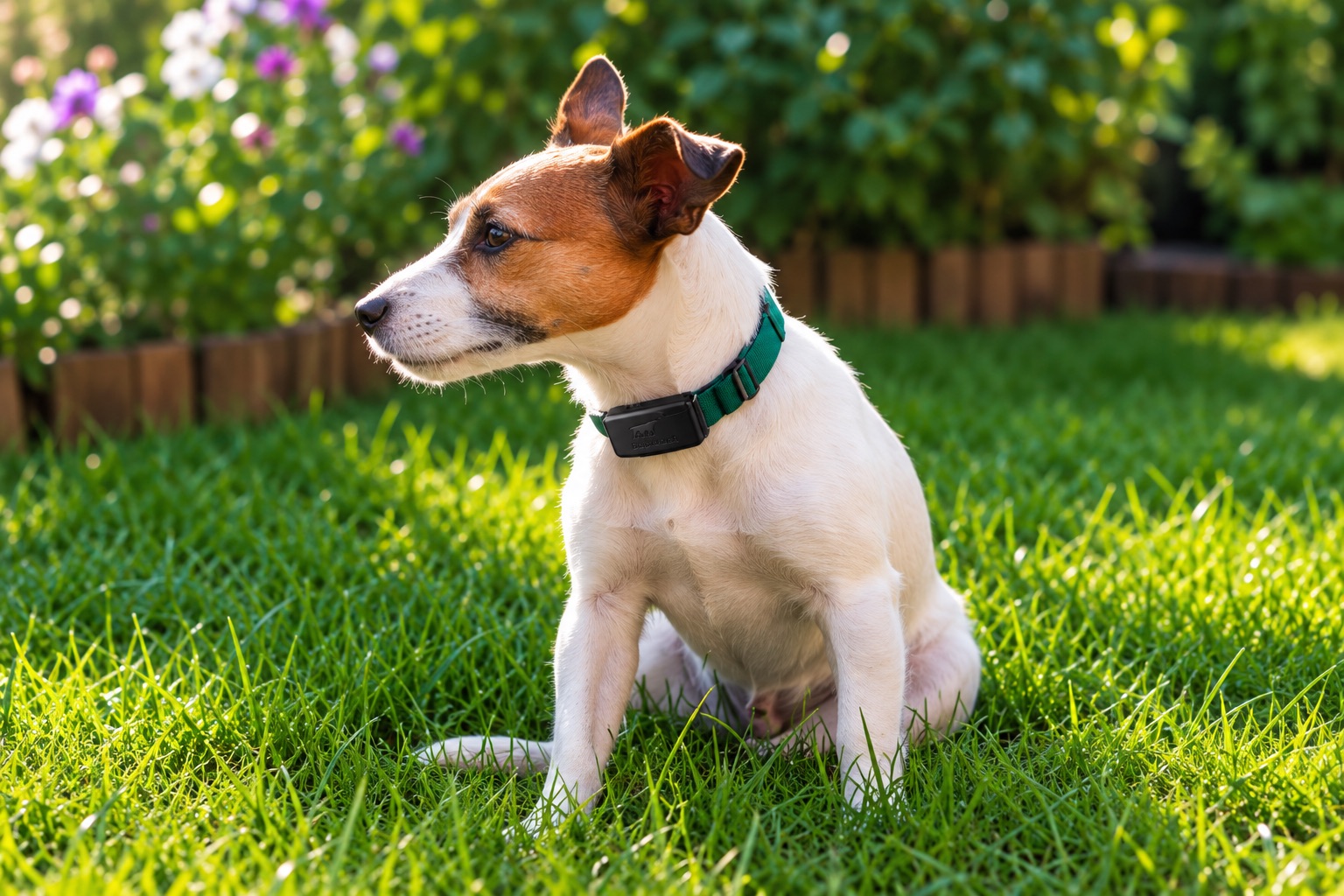
For homeowners with a backyard that’s only 40 feet deep, those distances matter. Every foot reserved for boundary setbacks or warning zones reduces the space available for a dog to run and play.
A professionally installed DogWatch Hidden Fence offers a different approach. Rather than relying on continuously calculated GPS coordinates, its boundary follows a physical wire installed around your property. Your local DogWatch Dealer can customize the layout and signal field to accommodate your yard’s dimensions, landscaping, and your dog’s individual needs.
The result is a consistent, predictable boundary designed for your property – not one that depends on satellite positioning accuracy.
A buried wire doesn’t drift
A DogWatch Hidden Fence works on a completely different principle. There is no estimate and no satellite. A wire is buried along the exact boundary your Dealer walks with you, and the collar responds to the signal radiating from that wire. The boundary follows the physical path of the buried wire, today and five years from now. Rain, snow, tree cover, a tall hedge, the aluminum siding on your garage, a cloudy sky: none of it moves the boundary, because the boundary is a physical object in the ground rather than a calculation.
The signal field is adjusted during installation to establish a consistent warning and correction zone. This means that the warning zone your dog learns in week one is the same warning zone it meets in year three.
DogWatch adds another layer of protection with its patented SafeLink® Digital FM technology, which helps protect against unintended corrections caused by stray radio signals. Precision isn’t a feature DogWatch had to engineer around a weakness. It is the nature of the system.
Why that matters for your dog
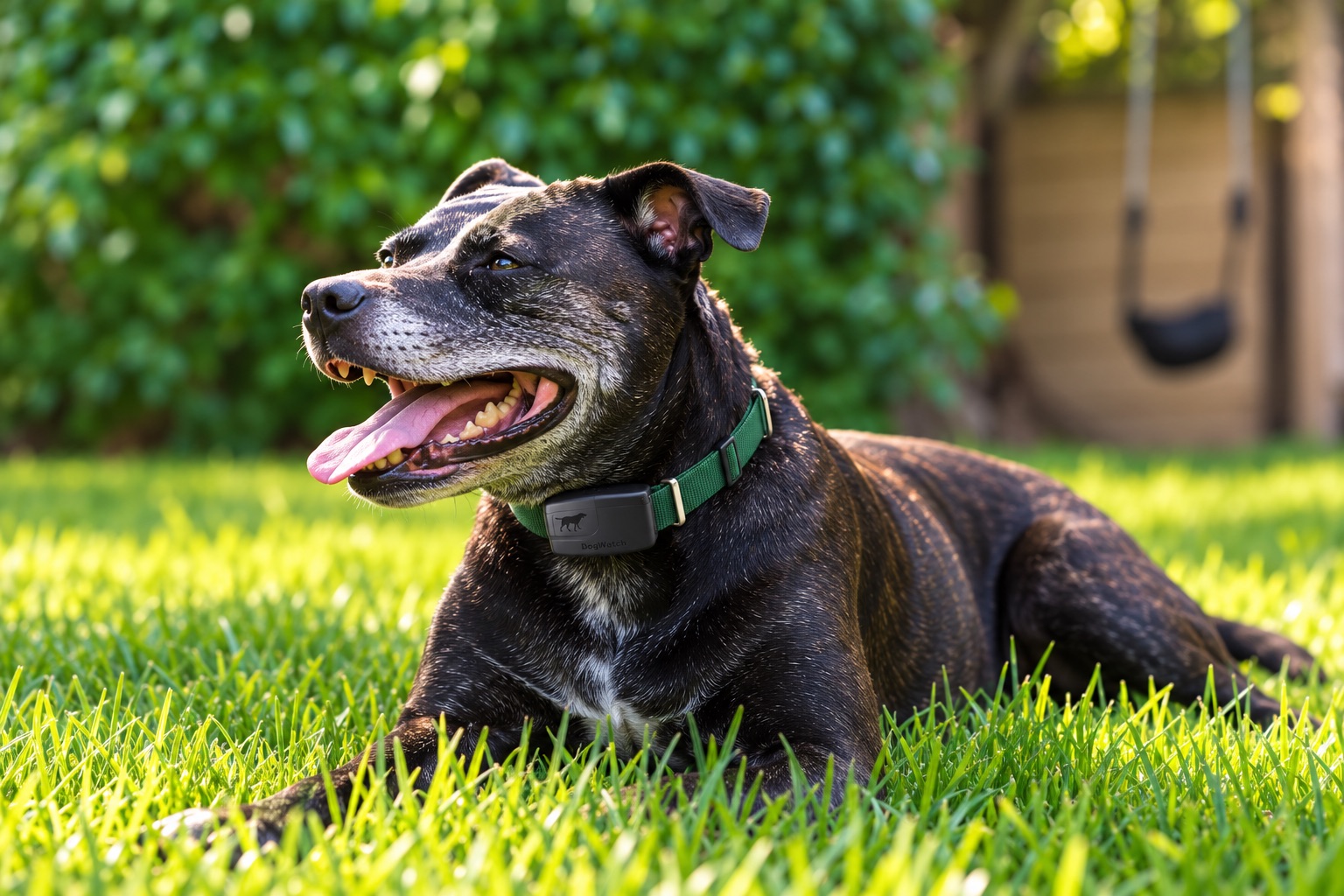
A fixed line is what makes training work. Your DogWatch Dealer walks the boundary with you and your dog, flags it, and teaches the dog where the warning tone begins and where safety is. Because the line never moves, the dog gets the same answer every single time it approaches the edge, and that repetition is how a dog goes from relying on the collar to simply knowing the yard. With consistent training and a clearly defined boundary, dogs can learn to recognize and respect their designated play area. Your local DogWatch Dealer provides personalized, hands-on guidance to help reinforce that training.
A fixed boundary also gives your Dealer the flexibility to make the most of your available yard space. The wire can be installed along property lines, around gardens, near sidewalks, or configured to create designated off-limits areas around pools and play spaces. Your Dealer adjusts the signal field to establish an appropriate containment area for your dog and your property.
That flexibility can be especially valuable for smaller pets. Halo’s system requires a dog of at least 10 pounds; a DogWatch collar can be fitted and tuned for the smallest terrier, toy breed, and even cats, too.
The right tool for the yard you actually have
GPS collars are a real innovation for the right property. If you have ten open acres, a hunting camp or a dog that travels with you, a few feet of drift is a fair trade for a fence you can carry in your pocket, and DogWatch provides the SkyShepherd GPS Dog Fence for exactly those dog owners.
But many dog owners don’t live on ten acres. They live on lots where the back fence line is close enough to hit with a tennis ball, and where “accurate to within a few feet” is simply not accurate enough. For that yard, the better answer has been in the ground for 35 years: a boundary that is exactly where you put it, every day, with no required subscription, a collar battery life of up to 2 years, and a lifetime limited equipment warranty.
If your yard is small, ask a local DogWatch Dealer to walk it with you. They’ll tell you where the wire should go, and that line will still be right there next spring, and for many years to come.
The post Why a DogWatch Hidden Fence Beats GPS Collars in a Small Yard appeared first on DogWatch®.
]]>The post One Yard, Every Dog: Why DogWatch Hidden Fences are Ideal for Multi-Dog Households appeared first on DogWatch®.
]]>
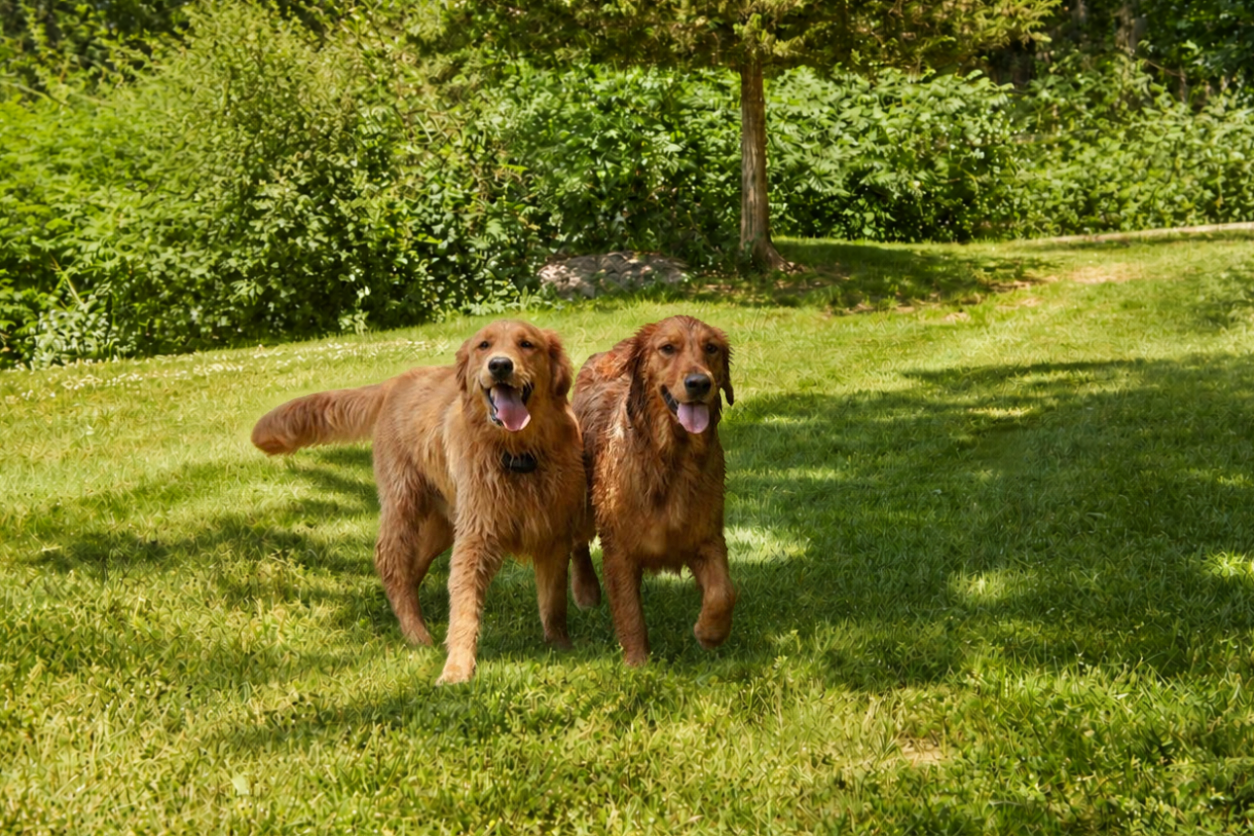
The first thing multi-dog families ask is whether a hidden fence can actually handle all of them, and the answer is a simple yes. There is no limit to the number of dogs a single DogWatch system can protect. Every dog wears its own lightweight receiver collar, and every collar responds to the same buried boundary wire.
Adding a second, third, or fourth dog doesn’t mean adding a second system; it just means adding another collar. That keeps the cost of growing your pack far lower than extending or rebuilding a physical fence.
Flexible settings make it easy
What makes the system work for households with very different dogs is that each collar is set independently. A 90-pound retriever and a 10-pound Yorkie don’t need, and shouldn’t get, the same training level. The DogWatch ProFence series offer up to twenty unique options (plus audible only), designed to ensure safe, appropriate containment for all pets. Plus, DogWatch receiver collars fit dogs of all sizes. In fact, our R7mini receiver collar weighs only 1.1 ounces – perfect for small dogs and even cats, too!
The settings are easy to understand and user-adjustable – meaning no expensive service call required. A cautious or sensitive dog can start on an audible-only warning while a more headstrong one gets a firmer reminder. The boundary stays the same for the whole pack; only the way each dog is coached to respect it changes.
Multi-dog homes also tend to have multi-dog dynamics. When one dog bolts after a squirrel, the others often follow, and a single escape can quickly become three. Because every dog on a DogWatch system learns the same boundary and wears its own collar, the “follow the leader” problem is handled at the source. The instigator gets its reminder at the line, the followers get theirs, and nobody ends up in the street because a pack mate got excited first.
Reliability matters
Reliability is key when multiple collars are in play, and this is where DogWatch’s patented SafeLink® Digital FM technology earns its keep. Most hidden fences run on AM signals, which are more susceptible to interference from neighbors’ systems, electronics, and other stray signals, and interference can cause a collar to activate when it shouldn’t. FM digital signaling is far more resistant to that kind of noise, so each of your dogs gets a clean, consistent signal at the boundary and nowhere else. When you’re trusting a system with three or four dogs at once, false activations are not a minor annoyance, and DogWatch has engineered specifically to avoid them.
A multi-dog household is also a busy household, and nobody wants to be swapping collar batteries on a rotating schedule. DogWatch’s receivers have the longest battery life in the industry, ranging from 6 months to 2 years depending on the model, so maintenance stays minimal even with several collars in service. Other brands usually need a new battery every 3-4 months. The collars are waterproof, the system includes lightning protection, and the transmitter and collars are backed by a Lifetime Limited Equipment Warranty that even covers collars the dogs chew up. With more dogs, there are simply more ways for gear to take a beating, and the warranty reflects that reality.
Expert training for different personalities
Training is the part most owners worry about, and it’s the part DogWatch has thought through most carefully. Professional installation comes with instruction from a trained Dealer and the PetFriendly training program, which uses flags, voice commands, and audible warning cues to teach each dog the boundary over roughly two weeks of short daily sessions. Because each dog learns at its own pace and on its own collar setting, you’re not forced to train your fastest learner and slowest learner in lockstep. The flags come down as each dog gets it, and before long the boundary is simply part of how the whole pack understands the yard.
For families juggling dogs of different sizes, ages, and temperaments, a DogWatch Hidden Fence replaces a pile of compromises with a single flexible solution. Everyone gets the run of the yard, everyone is kept safely away from the road, and you get one system to manage instead of a patchwork of gates, leashes, and crossed fingers. It’s the rare piece of dog gear that gets more valuable the more dogs you have.
Real Results from Real Multi-Dog Households
In a multi-dog household, each dog brings a different personality and sometimes a different idea of how far an adventure should go. Here’s how two families gave their pack room to roam while keeping their adventures in the yard.
“The miracle fence! [My DogWatch Dealer] Jamie was awesome. No mess and answered all my questions. He was able to book our installation quickly. We tried another system from a chain pet store that worked for one of our shepherds but not the second. Now both my shepherds can roam freely and I do not have to worry about any escapes. I would recommend Jaimie and the DogWatch system. We are very happy with the system and the service.”
Melody K., Ottawa, Ontario
“We have had such a wonderful experience with DogWatch, from the estimate to the installation and the dog training process. [My DogWatch trainer] Josh was so kind and patient with our two dogs who have very different temperaments. He individualized the process for our wild 2 year old dog and our sweet senior dog. He also made time to come right away when one of our dogs chewed through her collar! They truly care about our dogs and the fence has made a huge improvement in their quality of life!”
Maia M., Hartford, CT
Ready to give your whole pack more freedom? Contact your local DogWatch Dealer for a free customized quote.
The post One Yard, Every Dog: Why DogWatch Hidden Fences are Ideal for Multi-Dog Households appeared first on DogWatch®.
]]>The post How Old Should a Dog be to Start Hidden Fence Training? appeared first on DogWatch®.
]]>If you’ve just brought home a new puppy, giving them the freedom to run and play safely in your own yard is probably high on your wish list. It’s also one of the most common questions we hear from new dog owners: “How soon can we start hidden fence training?” The short answer is that most puppies are ready to begin training on an underground hidden fence at around four to six months of age — but the real answer depends less on the calendar and more on your individual dog.
Every dog matures at a different pace, even within the same breed. A confident, food-motivated five-month-old Lab may sail through boundary training, while a more timid pup of the same age might benefit from a few extra weeks of basic obedience first. That’s why DogWatch doesn’t publish a rigid minimum age. Instead, when your local DogWatch Dealer meets with you and your dog, they’ll evaluate your pup’s temperament, attention span, and maturity, and recommend the right time to begin. It’s a personalized approach, not a one-size-fits-all rule.
Ready to Learn
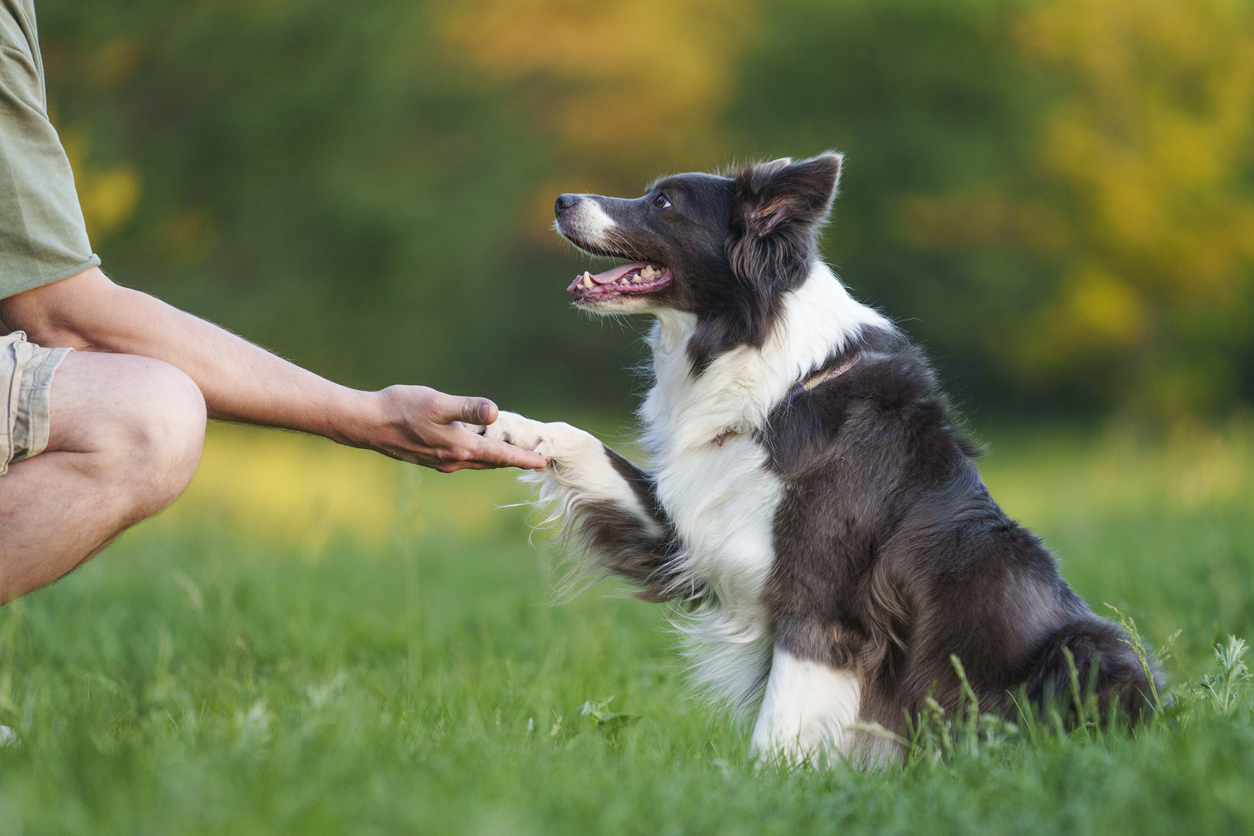
Before hidden fence training starts, your puppy should have a few basics under their belt. They should know their name and respond when called, be comfortable walking on a leash, and ideally have a handle on simple commands like “sit” and “stay.” These skills matter because hidden fence training is built on the same foundation as all good dog training: clear communication, repetition, and lots of praise. A puppy who can focus on you for a 10–15 minute training session is a puppy who’s ready to learn their boundaries.
The good news is you don’t have to wait until training day to put your fence to work. Many families have their DogWatch underground hidden fence installed while their puppy is still young, then use the weeks before formal training to let their pup get used to wearing the receiver collar and to introduce the boundary flags around the yard. Because the wire is buried, there’s no construction disrupting your lawn and nothing for a curious puppy to chew or dig — the system simply waits until your dog is ready for it.
Starting Your Training
When training does begin, it’s a gentle, gradual process. DogWatch receiver collars include an audible-only mode, which means your puppy first learns the boundary through a warning beep (or vibration), voice commands like “Watch out!”, and visual flags — no correction at all in the early stages. Over about two weeks of short, upbeat, on-leash sessions, your dog learns exactly where the boundary is and how to retreat to the safe zone, earning plenty of praise along the way. Only after your dog clearly understands the warning signal is a mild correction introduced, and most dogs respond so well to the audible alert that they rarely test the boundary again.
Worried that your pup is sensitive — or that your other dog is a headstrong adolescent? DogWatch collars offer a wide range of adjustable training levels, so whether your dog is timid or high-energy, there’s a setting that fits. Your DogWatch Dealer will select the appropriate level during training and show you how it works. The goal is never to startle or punish your dog; it’s to teach a clear, consistent boundary your dog understands and respects.
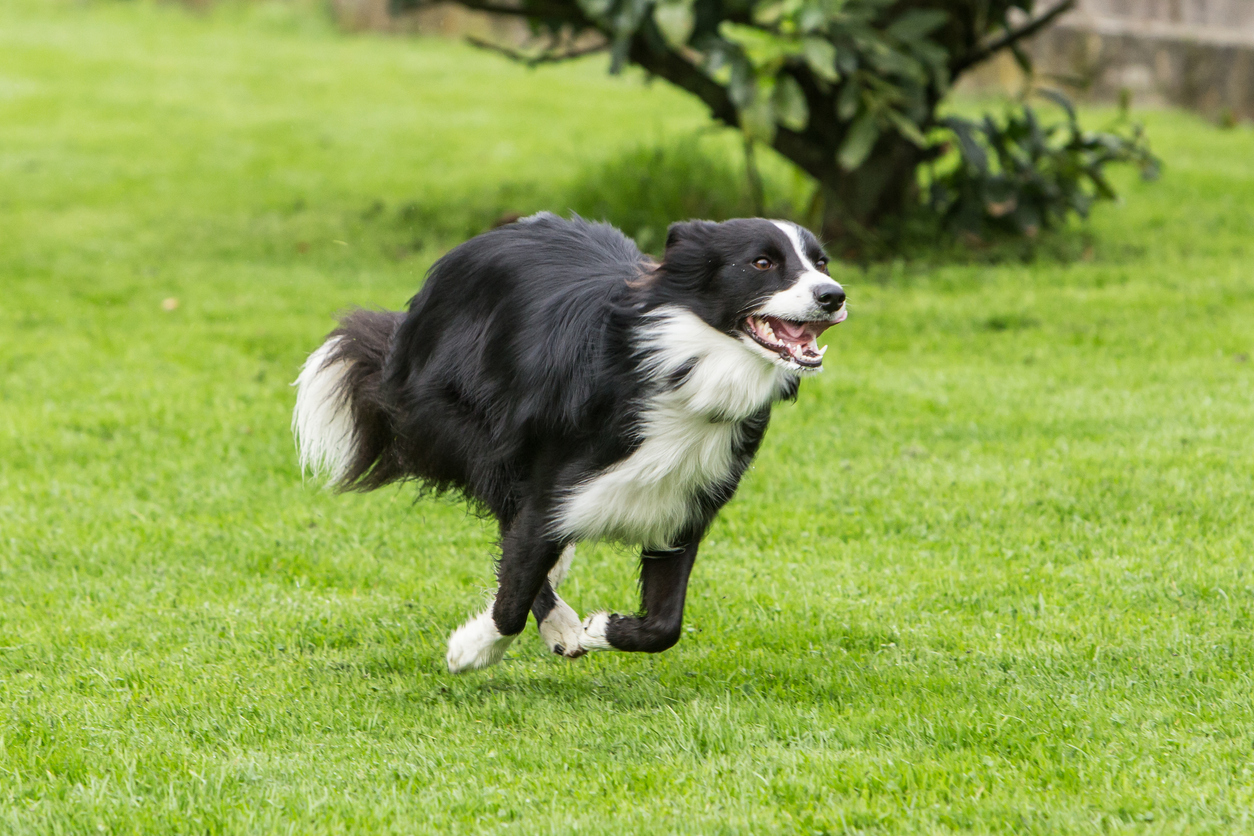
What About Older Dogs?
And if your dog is well past puppyhood, don’t worry — you haven’t missed the window. Older dogs learn hidden fence boundaries just as reliably as puppies do, and rescue dogs, adult adoptees, and even senior dogs are trained on DogWatch systems every day. Age matters far less than a patient, consistent training plan, and that’s exactly what your Dealer provides with every installation.
Conclusion
The bottom line: for most puppies, hidden fence training can begin around four to six months old, once basic obedience is in place — but the best way to know if your dog is ready is to ask. Your local DogWatch Dealer will meet your dog, walk your property, and design a custom boundary and training plan that sets your pup up for a lifetime of safe, off-leash freedom in their own yard. Find your local Dealer today to schedule a free consultation.
The post How Old Should a Dog be to Start Hidden Fence Training? appeared first on DogWatch®.
]]>The post Is Your Dog an Escape Artist? A Hidden Fence Might be the Answer. appeared first on DogWatch®.
]]>Meet the Escape Artist
Escape artists come in all breeds and sizes, but they share a common trait: determination. These are the dogs who:
- Dig under fence lines like furry excavators, often in the same spot you just filled in
- Climb or jump over fences you were sure were tall enough
- Bolt through open gates and doors the moment someone’s hands are full of groceries
- Squeeze through gaps you didn’t even know existed
Why do they do it? Usually it’s not about escaping from anything — it’s about getting to something. A squirrel across the street. An interesting scent. Another dog two yards over. Huskies, hounds, terriers, and herding breeds are especially famous for wanderlust, but any dog with enough motivation can become a Houdini.
The problem is that every successful escape is rewarding, which means the behavior gets stronger over time. And every escape carries real risks: traffic, other animals, getting lost, or ending up at the shelter.
Why Traditional Fences Often Lose the Battle
A physical fence seems like the obvious solution — until your escape artist proves otherwise. Traditional fencing has some built-in weaknesses:
- Diggers go under it. Unless you’ve buried barriers along the entire perimeter, a determined digger will find a way.
- Jumpers and climbers go over it. Some dogs can clear a four-foot fence from a standstill, and chain link is basically a ladder.
- Gates get left open. All it takes is one delivery driver or forgetful guest.
- It’s expensive and limited. Fencing large, wooded, hilly, or waterfront properties can cost a small fortune — and some neighborhoods and HOAs restrict or prohibit physical fences entirely.
- It blocks your view. You bought that yard for a reason. A six-foot privacy fence changes the whole feel of your property.
Why Most GPS Collars Fall Short
GPS-based wireless containment has gotten a lot of attention lately, but the technology has a fundamental limitation: accuracy. GPS signal naturally drifts — often by many feet — which means the “boundary” your dog experiences can shift from one hour to the next. That’s confusing for your dog and stressful for you, especially on smaller properties where a few feet of drift is the difference between the yard and the road.
GPS systems also struggle near buildings, under tree cover, and in bad weather — exactly the conditions in many backyards. And a boundary that moves is a boundary your dog can never fully learn.
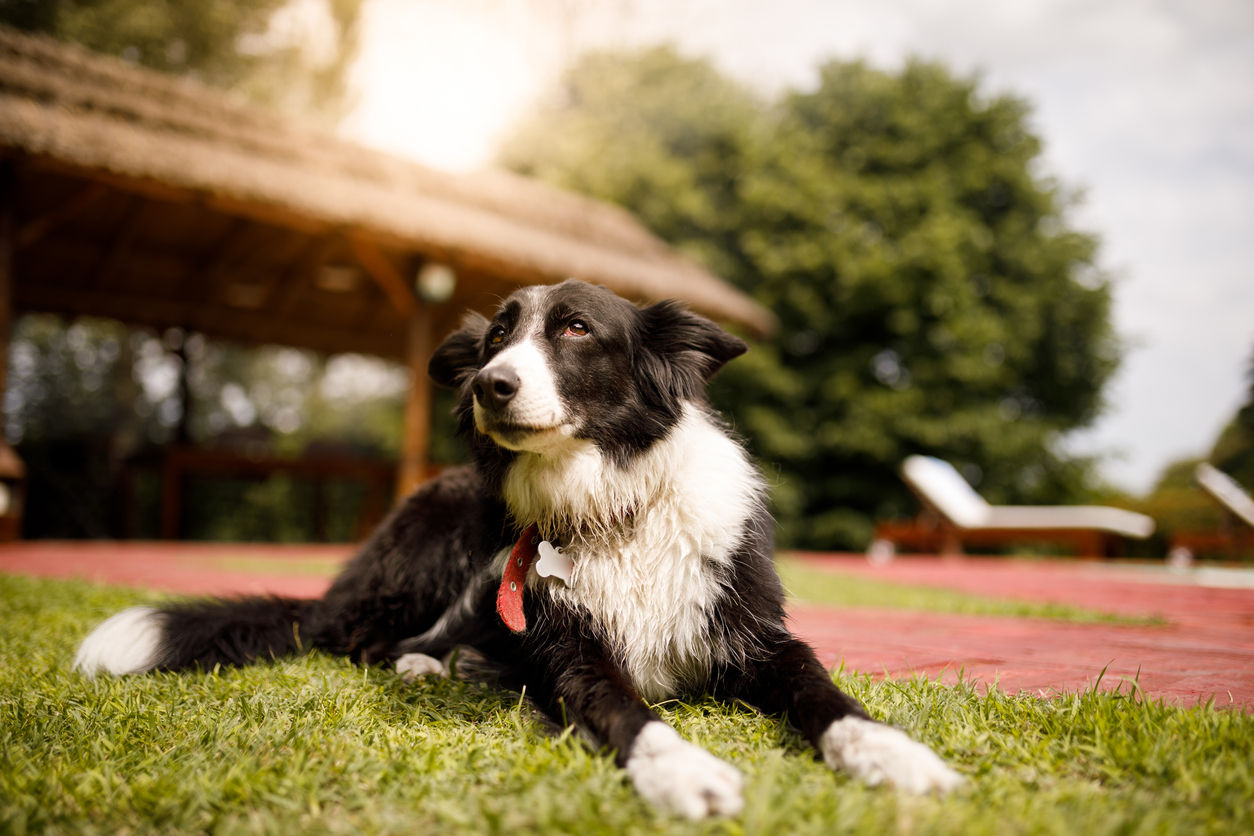
The Hidden Fence Advantage
A professionally installed hidden underground fence from DogWatch solves the problems that defeat both physical fences and GPS collars:
A boundary that never moves. The buried wire defines an exact, consistent perimeter. Your dog learns precisely where the boundary is — down to the foot — and that consistency is what makes training stick. No signal drift, no shifting lines.
No way over, under, or through. There’s nothing to dig under, jump over, or slip through. An open gate is no longer an invitation, because the boundary doesn’t depend on a gate.
Fits any property. Wooded lots, hills, streams, large acreage, odd-shaped yards — the wire goes where fences can’t. You can even protect gardens, pools, and driveways with interior boundaries, all while keeping your view completely unobstructed.
HOA-friendly and invisible. Because there’s nothing to see, there’s nothing for a homeowners association to object to.
Training makes the difference. A hidden fence isn’t just equipment — it’s a training system. With proper introduction using flags and positive reinforcement, dogs quickly learn their boundaries and gain the confidence to enjoy the whole yard off-leash. For most dogs, the collar’s warning signal alone is soon enough to remind them where the line is.
Cost-effective. Hidden fencing typically costs a fraction of physical fencing for the same area, especially on larger properties.
Real Results from Real Escape Artists
Every dog is different, but one thing DogWatch customers have in common is the peace of mind that comes from knowing their adventurous pup can enjoy the yard without disappearing down the street. Here are two stories from dog owners whose escape artists finally met a boundary they couldn’t outsmart.
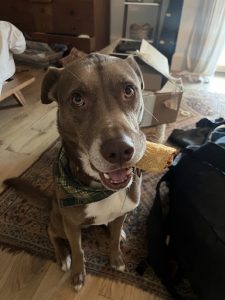
“Hershey is our 4-year-old dog, and for the first two years he never hopped our fence. But in the past two years it became completely out of control — he would leap over our 5 ft redwood storybook fence like it was nothing. As a mom of three young kids, constantly chasing him down and finding him was exhausting. We tried so many solutions — even hiring a specialized dog trainer. Other barrier solutions made our yard look like a prison yard, and other invisible fence companies couldn’t figure out the closed-loop circuit, charged twice as much (or more). A new redwood fence…quoted tens of thousands of dollars. Then Troy came.
He was on time, professional, and figured out what others said couldn’t be done. The training was thorough and I couldn’t believe how quickly we got results. Hershey, who had been anxious and obsessed with escape, suddenly became calm, relaxed, and more connected with the family. Now he happily sunbathes, runs free, and even lounges peacefully with our chickens — without that wild, frantic look in his eyes.
Troy is efficient, knowledgeable, and always available for questions. If you’re struggling with an escape artist dog, Troy is the one to call. We couldn’t be happier.”
Michelle M., Bay Area, CA
“Our escape artists include both canine and feline models. The outdoor system has absolutely saved our Gus from certain doom; we live in the country and have a physical fence, but he can climb it to chase wildlife and those ever-intrusive FedEx and UPS trucks. It only took ONE training session with the DogWatch team to stop Gus from escaping. He is very respectful of the boundary.
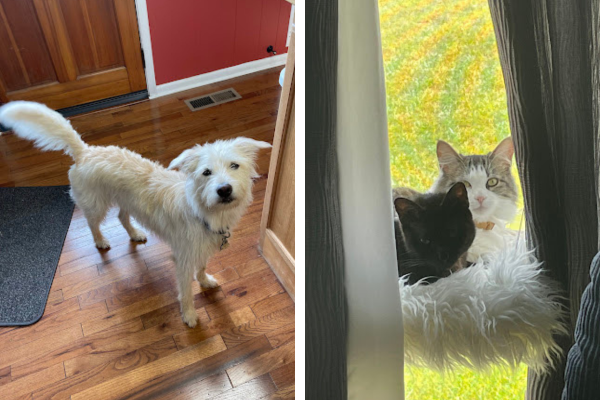
More recently, we reached out again to the friendly and professional team over concerns with our kitties. We’d been using a different boundary/collar system to discourage the cats from venturing outdoors via the dog door. Sadly, the system was inoperative more often than not; dangerous for indoor only felines. The folks at DogWatch came out to access our situation and installed a cat system (on a different frequency) to prevent the kitties from the ever present temptation of using the dog door. I can’t even articulate the peace of mind it gives us during the hours the dog door is unlocked. THANK YOU for everything you do to give us and other pet families peace of mind!”
Lauri R., Chattanooga, TN
Give Your Escape Artist Freedom — Safely
The irony of the escape artist is that what they want most is freedom, and what they need most is safety. A DogWatch Hidden Fence delivers both: room to run, sniff, and play across your entire property, with a reliable, consistent boundary keeping them home.
Your Houdini may be clever, but this is one act they can happily retire.
Ready to keep your escape artist safe at home? Contact your local DogWatch Dealer for a free consultation and customized quote.
The post Is Your Dog an Escape Artist? A Hidden Fence Might be the Answer. appeared first on DogWatch®.
]]>The post Why a DogWatch Hidden Fence Beats a Halo GPS Collar for Keeping Your Dog Safe appeared first on DogWatch®.
]]>The gap between where your dog actually is and where a system thinks your dog is can be the difference between a relaxing afternoon and a frantic search down the street. That’s the core reason a DogWatch underground hidden fence remains the more dependable choice than a GPS-based system like the Halo® Collar. One relies on a physical signal that doesn’t move; the other relies on satellites, software, and a moving estimate of your dog’s position.
A DogWatch® Hidden Fence works by carrying a low-level radio signal through a boundary wire buried a few inches underground around the exact perimeter you choose. Your dog’s collar responds to that signal at a fixed, physical line — the same line, every single day, in every kind of weather. There’s no estimating, no recalculating, and no dependence on how many satellites happen to be overhead. The boundary is where you put the wire, and it stays there. That consistency is exactly what a containment system needs to do its one critical job.
The drift you don’t want to get.
GPS fences are only as accurate as the position they can calculate at any given moment, and that’s where Halo runs into trouble. Even under an open sky, consumer GPS is typically accurate to only a few meters, and that margin gets worse near houses, trees, fences, and rooftops — the very features that surround most backyards. The practical result is drift: the invisible boundary shifts from where you originally set it, sometimes by several feet or more. A line you carefully mapped along the edge of your driveway can quietly migrate into the middle of your lawn or past the sidewalk without you knowing.

That drift and low accuracy create the single most alarming failure owners report with GPS systems: dogs getting corrected while sitting well inside the safe zone. Because the collar is acting on an imprecise estimate rather than a real line, it can trigger a warning or static correction when your dog is lying on the porch, resting in the yard, or even indoors — in some reported cases more than a hundred feet from the actual boundary. Beyond being unfair to the dog, these phantom corrections erode the animal’s trust in the system. A dog that gets “bitten” by an invisible line in a place it has always felt safe may become anxious, confused, or unwilling to use the yard at all, which undermines the entire point of training.
A fixed boundary means no surprises.
A buried wire simply doesn’t have this failure mode. The correction zone sits at a fixed distance from a physical wire, so your dog learns one clear, unchanging boundary and can relax everywhere inside it. DogWatch’s patented SafeLink® signal is also engineered to resist the interference that can plague wireless systems, and because the line never moves, the training your dog receives on day one still holds true a year later. Dogs learn boundaries through consistency and repetition, and a fence that stays put is a fence a dog can actually understand.
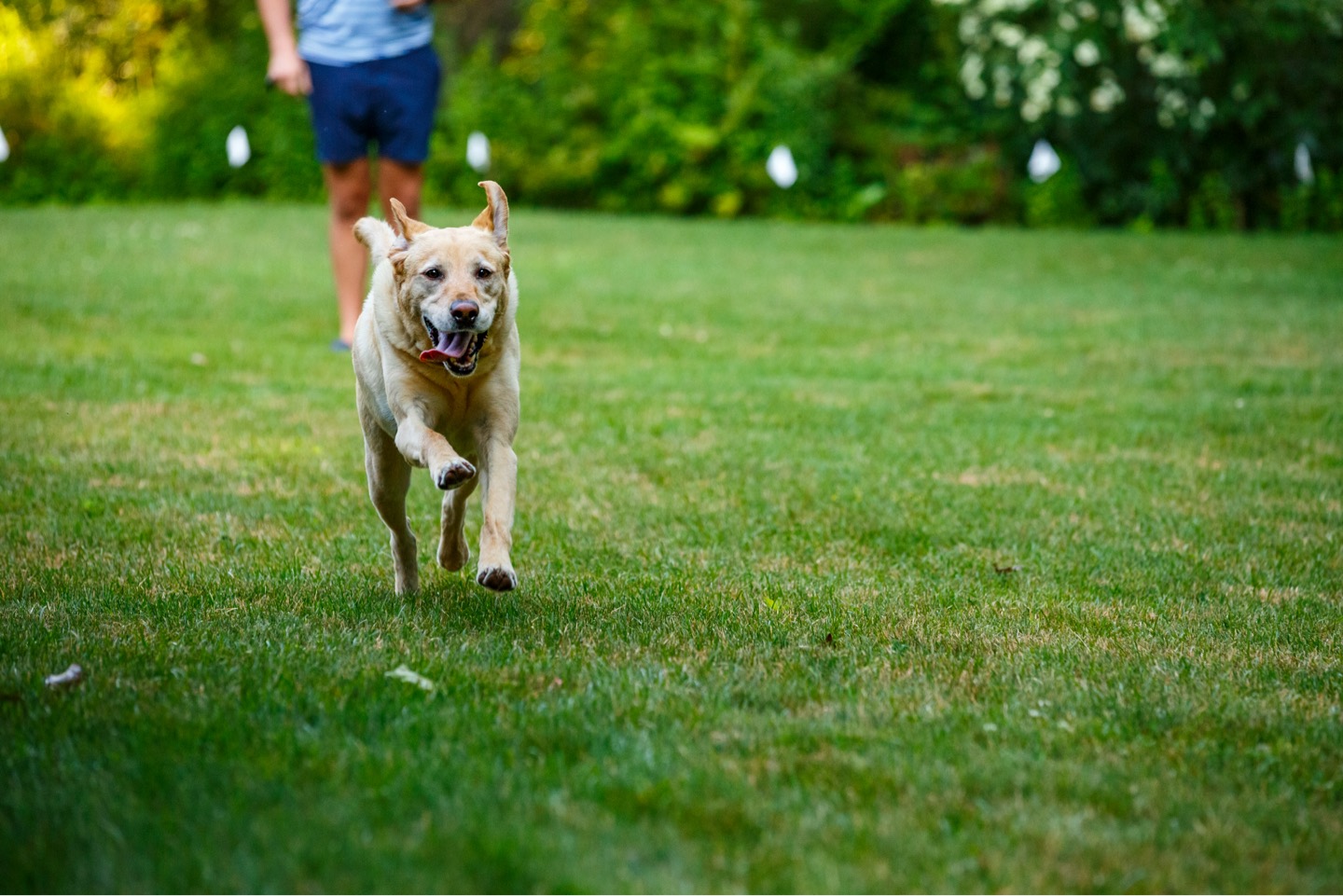
For most owners, the decision comes down to what you want your containment system to be: a precise, physical line that behaves the same way every day, or a software estimate that can wander, misfire, and confuse your dog. GPS collars are impressive gadgets with real convenience benefits, especially for travel or properties too large to wire. But when the priority is reliable, everyday safety in your own yard, the steadiness of a DogWatch underground fence is hard to beat — and your dog’s peace of mind is worth the certainty.
The post Why a DogWatch Hidden Fence Beats a Halo GPS Collar for Keeping Your Dog Safe appeared first on DogWatch®.
]]>The post Can a Hidden Fence Work for a Pit Bull? appeared first on DogWatch®.
]]>
Many first-time or even long-time pit bull owners may assume that a hidden fence can’t work for their dog, believing they’ll go right through the boundary without even a blink. However, this is not the case!
DogWatch Hidden Fences are an excellent choice for families with pit bulls and pit bull mixes. DogWatch’s patented digital FM SafeLink® technology, long battery life, PetFriendly training, and lifetime limited warranty (including dog chews!) are some of the top reasons pit bull owners choose hidden fences over other “invisible fences”* or GPS fence collars.
Here are several examples of pit bull families who trust DogWatch Hidden Fences to keep their dogs safe and happy at home.

DogWatch® Of Augusta-Aiken owner Kevin Leishman with Fatz the pit bull after a training session.
Keeping Dogs Safe From Busy Roads
Lexi, a pit bull from DogWatch of Upstate New York, lives on a stretch of highway that is particularly busy, State Highway 8. She also has a brother, Jasper the Cocker Spaniel. These two love to chase each other around in their yard, but their family was naturally concerned about them leaving the property and finding their way onto the busy highway.
They decided to go with a DogWatch Hidden Fence, and both dogs passed training with flying colors. Since May 2020, they’ve stayed safely in their yard with no issues and no re-training required.

Lexi, a pit bull, and Jasper the cocker spaniel from DogWatch® of Upstate New York.
Firehouse Pit Bull Stays Safe Thanks to DogWatch
Ash, a grey and white pit bull, is the firehouse dog of Hanahan Fire Station #1 in Hanahan, South Carolina. In May 2020, he decided to walk out an open garage door and quickly got lost outside his home. The Hanahan firefighters acted quickly, posting on social media, calling shelters, and spreading their message on a local news station.

Ash the firehouse dog from DogWatch® of Greater Charleston
DogWatch of Greater Charleston owner, Matthew Cormack, saw the story, shared Ash’s photo everywhere he could, and offered to donate a hidden fence upon Ash’s return. Ash, thankfully was returned home ten days later. Matthew installed a fence for Ash, and after just a few days of training, he was a pro.
“Ash is a smart dog,” says Matt. “He’s super friendly and quite mellow for a young dog. He fits right in at the station with the guys.” Ash has been safe and sound at Hanahan Fire Station #1 since!
High Prey Drive? No Problem!
Many pit bull owners worry about the effectiveness of an underground hidden fence due to the high drive many pit bulls have. Drive means a dog’s natural desire and or commitment to achieve something. This could be chasing a squirrel, fetching a ball, or wanting to say hi to a neighbor passing by. It could also mean just getting out excess energy by way of zoomies!

Jude the pit bull mix DogWatch® of Southeastern Ontario
Jude from DogWatch of Southeastern Ontario is an example of high drive pit bull. She’s a young pit/boxer mix and has mountains of energy to burn off. Her owners have had a DogWatch Hidden Fence for four years now, and have never had a problem. Even when she gets her crazy zoomies, she stays safe within her boundaries!
Neighborhood Peace Restored
Asher the pit bull mix, Rory the wheaten terrier, and Cruzan the bull terrier mix all live in homes that share parts of a large front yard. The three are such fantastic friends that their owners decided to get a DogWatch Hidden Fence that encloses all three yards together. This way, the pups can be let out play together any time they want. Even with all three high drive dogs getting each other excited and running as fast as they can on the property, they know to stay within their boundaries.

Asher the pit mix, Rory the wheaten terrier, and Cruzan the bull terrier mix from DogWatch® of Upstate New York
On training day with DogWatch of Upstate New York, they had an especially tough challenge to overcome. A dog walked by with its owner just minutes into their session. The three friendly dogs simply watched the pup and his owner walk by without attempting to run off their property to say hello!
Conclusion
Pit bulls are an often-misunderstood. They are gentle giants who are loving and loyal to their humans and can make great family pets. They are also intelligent, easy to train, and eager to please their people! Over the thirty six years DogWatch has been in business, our Dealers have time and time again had tremendous success training pit bulls and keeping them safe at home.
* DogWatch hidden dog fences are often mistakenly referred to generically as “invisible fences” or “invisible dog fences.” Invisible Fence® and Invisible Fencing® are Brand names, products and registered trademarks of Invisible Fence, Inc.
The post Can a Hidden Fence Work for a Pit Bull? appeared first on DogWatch®.
]]>The post DogWatch Dealer Awards 2025 appeared first on DogWatch®.
]]>We started off with Dealers celebrating anniversaries, including six Dealerships who are celebrating a remarkable 35 years in business!
5 Years of Service
- Duane Arnold, DogWatch Hidden Fence of Central Maine
- Alex Austin & Gabe Baugh, DogWatch of Southeast Missouri
- Mike Cyrek, DogWatch of Eastern MA and DogWatch of the Ocean State
- Henk de Bruin & Jan Cornelisse, Dogdomijn (Netherlands)
- Neil Flowers, DogWatch of Arkansas
- Corrie Gizicki, DogWatch of Southeastern Michigan
- Daniel Groeling, DogWatch of Arizona
- Emily & Kelly Hatcher, East Texas DogWatch
- Blake Hessel, DogWatch Hidden Fences of Portland
- Tony Hoggarth, DogWatch of Idaho
- Kevin Leishman, DogWatch of Augusta-Aiken
- Liam McGinnis, DogWatch of the Coastal Bend
- Jennifer & Daniel Ochnich, DogWatch of Southeastern PA
- Jennifer & Casey Powell, DogWatch of Central Oregon
- Anthony Sorosky, DogWatch of Santa Barbara
- Megan & Jesse Storey, DogWatch of the Western Slope
- James Taylor, DogWatch of Northwest Indiana
- Jim Whitten, DogWatch by Arkansas Pet Safety Systems
- Richard Wilson, DogWatch Downeast
10 Years of Service
- Kerry Antonsen, DogWatch by Kerry’s Landscaping
- Amberly & Ryan Betz, DogWatch of Nashville
- Paul Cobb, DogWatch of Mid-Alabama
- Lance Flowers, DogWatch of Wichita Hidden Fence
- Rod Gravel, DogWatch of Peace Country
- Aileen & Bob Howard, DogWatch of Upstate NY
- Ed Johnson, DogWatch of Montana
- Fay and John Kennish, DogWatch of Delaware, DogWatch of Eastern Shore and DogWatch of Southern New Jersey
- Jim MacInerney, DogWatch of Northeast Iowa
- Katrina Manko & Phil Cerelli, DogWatch of Delaware Valley
- Teri & Jack Osantowski, DogWatch by K9 Fencing of MI
- Bill Randall, West Dakota DogWatch
- Lisa & Joe Rangel, DogWatch by Great Lakes Pet Fencing
- Amberlyn & Ryan Schatz, DogWatch of Colorado and Northern Colorado DogWatch
- Luke Simpson, DogWatch of Greater San Antonio
- Alex Vadenoff, DogWatch of Central Maryland
15 Years of Service
- Jay Blankenship, DogWatch of Central VA
- Beth & Travis Canty, DogWatch of the Triangle
- Tim Cline, DogWatch of Winchester
- William Coden, Fido’s Fences
- Kim & Roy Dusenberry, DogWatch of Vermont
- Shannon & Mark Mathews, DogWatch of the Gulf Coast
- Julie & Wade McCormick, DogWatch Hidden Fences of Utah
- Mary Jo Mentink, DogWatch of Northern Kentucky
- Ken Schnell, DogWatch of AB
- Tommy Sjorring, DogWatch Denmark
- David Szabolcs, DogWatch of Romania
- Dustin Young, DogWatch of Central Oklahoma
20 Years of Service
- Patti & Shane Brzezinski, DogWatch of Central WI and DogWatch of the Coulee Region
- Samantha Folley & Ward Chapman, DogFence UK
- Katie & Richard Gainey, DogWatch of Northern Florida
- Otto Hudra, DogWatch of Hungary
- Dana & Ron Lambert, DogWatch of North Central WV
- Yale Lynch, DogWatch of New Mexico
- Dan McConnell, DogWatch of Central PA
- Kyle Smith & Chandler Waite, DogWatch of Dayton
25 Years of Service
- Wayde Barnes, DogWatch of Southern Kentucky
- April & Rich Caron, DogWatch of Appalachia & West Virginia
- Jeremy Craig, DogWatch of Duluth
- Liz & Jack Goetz, DogWatch of Greater Pittsburgh
- Sarah & Peter Harvey, DogWatch of SE Wisconsin
- Heidi Powell & Jack Powell, DogWatch of Greater Cincinnati
- Chad & Lance Richardson, DogWatch of Southwest VA
- Ernie Roy, DogWatch of New Hampshire
30 Years of Service
- Robert Girolami, DogWatch of the Carolina Coast
- Jan King & John Townsend, DogWatch of Chillicothe
- Martha & David Roddenberry, DogWatch of Central Georgia
- Emily & Patrick West, DogWatch of Columbus
35 Years of Service
- Dave Acree, DogWatch of Burlington County
- Teresa & Dave Billone, DogWatch by Billone Fence
- Kimberly & Patrick Flader, DogWatch by C No Pet Fence
- Sarah & Andrew Royer, DogWatch of Northeast Indiana and DogWatch of Toledo and Northwest Ohio
- Leddy Smith, DogWatch Systems and DogWatch of the Maine Lakes Region
- Guy Treanor, Afton & Jake Steigauf, DogWatch of the Twin Cities
Next, we presented awards to the following Dealers, recognizing their achievements in sales and service in 2025.
2025 DogWatch Dealer Awards
2025 Dealer of the Year Award
Tony Hoggarth, DogWatch of Idaho
Chris Julian, DogWatch of Greenville-Spartanburg

DogWatch Dealers of the Year 2025: Tony Hoggarth of DogWatch of Idaho (left) and Chris Julian of DogWatch of Greenville-Spartanburg (right)
2025 Rookie of the Year Award
Nicholas Ludlow, DogWatch of Southeastern Ontario
Tim Manthorpe, DogWatch of San Diego & Inland Empire
2025 Service Excellence Award
Troy Dykes, DogWatch of the Bay Area and Northern California
Fay and John Kennish, DogWatch of Delaware, DogWatch of Eastern Shore and DogWatch of Southern New Jersey

Service Excellence Award winners the Kennish family of DogWatch of Delaware (left) and Rookie of the Year Nicholas Ludlow of DogWatch of Southeastern Ontario
DogWatch recognizes the following Dealers as leaders in their markets:
Fiona and Vance Plummer, Canine Containment Company
Britta & Jonathan Cantrell, DogWatch of North Alabama, DogWatch of Middle Tennessee, DogWatch of Central Alabama, DogWatch of Chattanooga and DogWatch of Knoxville
William Coden, Fido’s Fences
Shannon & Brent Potvin, DogWatch of Metro Atlanta
Samantha Folley & Ward Chapman, DogFence UK
Sue Marks & Mark Bridschge, DogWatch of Central CT
Curt Little, DogWatch of Central Indiana
Justin Henry, DogWatch Hidden Fences of Cleveland
Brittany & Josh Sexton, DogWatch of Central Kentucky
Alan Grammer, MetroEast DogWatch, DogWatch of Springfield, DogWatch of Evansville and DogWatch of Greater Kansas City
Alex & Dave Spain, DogWatch Hidden Fence of the Triad
DogWatch recognizes the following Dealers for exceptional achievement in 2025:
Patti & Shane Brzezinski, DogWatch of Central WI and DogWatch of the Coulee Region
April & Rich Caron, DogWatch of Appalachia & West Virginia
Tim Cline, DogWatch of Winchester
Matt Cormack, DogWatch of Greater Charleston
Mike Cyrek, DogWatch of Eastern MA
Rick Greene, DogWatch of Greater Baltimore
Tony Hoggarth, DogWatch of Idaho
Chris Julian, DogWatch of Greenville-Spartanburg
Ron and Karen Knight, DogWatch of East Coast Florida and DogWatch of Southwest Florida
Shannon & Mark Mathews, DogWatch of the Gulf Coast
Rob Mayne, DogWatch of Litchfield & Upper Fairfield County
Lee Myers & Phil Holmes, DogWatch of Charlotte
Fiona and Vance Plummer, Canine Containment Company
Angela & PJ Powers, DogWatch of the Blue Ridge Mountains
Leddy Smith, DogWatch Systems and DogWatch of the Maine Lakes Region
Marc & Theresa Sturges, DogWatch of Cedar Rapids
Robin & Tim Tomkunas, Jax DogWatch
Guy Treanor, Afton Steigauf & Jake Steigauf, DogWatch of the Twin Cities
Please help us celebrate these Dealers—and our entire Dealer network—for their outstanding hard work and dedication throughout 2025!
The post DogWatch Dealer Awards 2025 appeared first on DogWatch®.
]]>The post Which is Better For My Dog: a Wired Underground Fence or a Wireless GPS Fence? appeared first on DogWatch®.
]]>We’ve gathered the facts below. Find out which solution is best for you and your pet, and learn how DogWatch® Hidden Fences and SkyShepherd® GPS Dog Fence stand out from the competition.
How Wired Underground Pet Fences Work
Most electronic pet fence systems (including a DogWatch® Hidden Fence, Invisible Fence® and other brands) feature a buried wire, typically two-to-six inches underground. The wire is connected to a transmitter mounted in your house or garage that sends a harmless, coded radio signal through this wire. Your pet wears a collar programmed to detect the radio signal (called a receiver collar.)

When the pet approaches the underground wire, the receiver collar emits a beep (or vibration) to warn them to retreat. If your pet ignores the warning and continues to move towards the boundary wire, the receiver collar delivers a brief static impulse (correction).
Through a simple training program using flags to mark the area where it is safe to play, your pet learns to recognize where it is safe and where the alert is triggered. Most pets quickly learn to stay within the safe area.

How Wireless GPS Pet Fences Work
Wireless GPS pet fences, by contrast, use satellites to map a specific boundary (geo-fence) for the pet instead of using a buried wire and a fixed radio signal. Mapping the fence boundary is often done by using cellular technology.
The receiver collar is connected to the GPS program that sends an alert to the receiver collar if the pet approaches the boundary and corrects the pet if it does not retreat from the boundary.

Choosing Between a Wired or Wireless Pet Fence
Wired pet fences that use a radio signal are a great fit for most if not all pet parents. They can work for yards of all sizes, and pets of all ages, breeds, and sizes (including cats)!
Wireless GPS pet fences can be a good fit for pet parents who are looking for a portable system, provided they meet the following three key requirements:
- They have a yard over one acre in size;
- They have a yard with limited tree cover; and
- Their pet is at least 20 pounds.
Need more help deciding between wired vs wireless pet fences? Check out these key advantages below.
Advantages of a Wired Underground Dog Fence
There are five main advantages that wired underground dog fences have when compared to wireless GPS fences:

- Precise Consistent Boundary
Hidden Fences with underground wires provide a consistent boundary that does not change unless the wire itself is moved. In particular, DogWatch’s patented SafeLink signal is highly resistant to interference, making it a secure and reliable choice.
GPS dog fences, however, do not provide the same consistency. GPS coordinates are more prone to shifting due to weather, trees, or nearby structures, and are not recommended for smaller yards or obstructed areas.
- Longest Battery Life Available
Battery life matters when it comes to electronic dog fences. Why? Because a dead battery means no audible alerts or corrections. As a result, the pet is much more likely to run through the boundary.
Most wired electronic pet fences use a replaceable receiver battery, with a lifecycle ranging from 3 months to two years. DogWatch Hidden Fence receiver collars have the longest battery life in the industry, which means more protection for your pet and less hassle for you.
GPS pet fences typically use a rechargeable battery to power their receiver collars. These GPS collars need to be charged daily. The more often you need to charge the battery, the higher the likelihood of winding up with a dead battery, which in turn increases the chance that your pet will leave the yard.
- Lightweight Collar
Most wired fence receiver collars are significantly smaller than the average GPS wireless dog fence collar. In fact, most GPS wireless collars are not suitable for dogs under 20 lbs.
DogWatch receiver collars fit dogs of all sizes. In fact, our R7mini receiver collar weighs only 1.1 ounces – perfect for small dogs and cats, too!
- Lifetime Warranty
Most wireless GPS fences come with only a one-year warranty. Most wired underground pet fences come with a much longer warranty, and many customers report using the same fence system for over 20 years with minimal upkeep required!
DogWatch Hidden Fences are built to last. All Dealer-installed underground DogWatch Hidden Fences come with a lifetime limited warranty that is the best in the industry.
- In-Person Training and Support from Local Dealers
Professionally installed underground wired fence systems come with personalized training from experienced pet professionals. In contract, many popular GPS pet fences come with only limited, online-only support resources.
Our DogWatch Dealerships are locally owned & operated by small business owners who live in your community. Our professionally installed hidden fences come with PetFriendly training that is customized for you and your dog. Our team will support you when you need it, even years or decades after your initial purchase. Check out our reviews for proof that our customer service is the best in the industry!
Why SkyShepherd is the Best Choice for GPS
If you meet the three requirements listed above, you may be a good candidate for a wireless pet fence system. DogWatch is proud to offer the SkyShepherd® GPS containment system along with full-service setup and personalized training from our experienced network of DogWatch Dealers.

There are six main advantages that SkyShepherd has when compared to other wireless GPS fences:
- In-Person Training and Support: SkyShepherd comes with setup help and expert dog training from your local DogWatch Dealer.
- Smallest GPS Fence Collar: SkyShepherd offers the smallest and lightest collar in its class for your dog’s comfort.
- Patented Shepherding Technology: This exclusive, patented safety feature delivers smart, real-time feedback to gently guide your dog within their safe zone.
- No Subscription Fees: Enjoy 24/7 yard monitoring, alerts, on-demand location lookup, and battery level notifications—without any subscription fees you’ll get with other GPS collars.
- Extended Warranty: Every SkyShepherd GPS system purchased from a DogWatch Dealer includes a two-year warranty—double what the other brands offer.
- Engineered in the USA: SkyShepherd is proudly designed, engineered, and assembled in the USA for top quality and durability. And it is sold and supported by local DogWatch Dealers in your community.
For more information about the latest in electronic pet fence technology, contact your local DogWatch Dealer. And if you’re ready to get started today, click here to request a free quote!
* Invisible Fence® and Invisible Fencing® are Brand names, products and registered trademarks of Radio Systems, Inc.
The post Which is Better For My Dog: a Wired Underground Fence or a Wireless GPS Fence? appeared first on DogWatch®.
]]>The post Herd That: Can a Hidden Fence Work for a Herding Dog? appeared first on DogWatch®.
]]>When herding dogs aren’t given enough to do, they become anxious, resulting in excessive barking or destructive tendencies such as chewing or digging. Due to their genetic makeup, herding dogs also possess a high prey drive and desire to chase, which can sometimes make keeping them on your property difficult.
Due to these factors, herding dog owners often assume that a hidden fence is not an option. However, a DogWatch® Hidden Fence won’t only keep your herding dog safe, the freedom to roam their yard will keep them happy. Here’s how!
Any Size Dog, Any Size Property
This Turkish Boz from DogWatch of Montana, is one of the largest herding dogs in the world! This breed can withstand extreme temperatures of any kind and excel in herding large livestock.
This pup spends her day herding horses and ten border collies on his family’s 40-acre farm. The issue with such a large property, and a dog with a high prey drive, was frequent escapes. Her parents would spend a tremendous amount of time searching the 40-acre farm for this gentle giant, and eventually, she had to spend portions of her day hanging out in the horse barn for her own protection. However, a herding dog made to stay inside for extended periods doesn’t make for a happy pup.
DogWatch of Montana was contacted for an install, and they were on it immediately, allowing this lovely lady to run free and safe on all 40 acres!

Big Dogs And Big Families
Michelle and John Stewart, and their three children, run a progressive family farm in Illinois. Their farm, which offers locally grown fruits and vegetables, locally raised meat and frequently hosts public events, is always busy. The farm is also home to Paloma, Finn, Jerry, and Jessie, all herding breeds. That’s a lot of dogs with a lot of high prey drives!

These four pups are always working, carrying out different jobs on different parts of the farm. With all these moving parts, it’s not always easy to keep an eye on them. Michelle decided that an underground hidden fence was the solution she needed, since installing a physical fence around the entirety of her farm was not an option. She first attempted a DIY solution, but found it unreliable, both in performance and customer service. She eventually contacted Stateline DogWatch Hidden Fences and had a DogWatch SmartFence® installed. Her four pups have stayed safely on the property ever since!
Busy Streets
Even herding dogs who don’t live on farms or have the daily task of keeping a flock in line will still seek an outlet for their instinct and prey drive. Magnus and Kiva from DogWatch of Mid-Canada had just that problem. Magnus, a Belgian Tervuren, and Kiva, a German Shepherd, are genetically dispositioned to chase and herd! Their parents live near a busy road and were becoming increasingly worried about their instincts getting them into trouble. After a period of chasing cars, deer, and even tracking down their neighbors to say hello, Magnus and Kiva’s parents decided to give DogWatch a call. These two beautiful pups haven’t had any unplanned off-property adventures since the install, but are still able to run freely in their yard and burn off any extra energy they might have.
Puppy Party
Working dogs and dogs in residential homes are one thing, but what about daycare dogs! Victoria from DogWatch of Upstate NY, runs a daycare and is also a breeder. She regularly has more than a dozen daycare dogs on her property. These pups range from Boston Terriers to American Bullies, and also include several herding dogs such as German Shepherds, Dutch Shepherds, Belgian Malinois, and White German Shepherd.

With all these high-energy pups in the same place at the same time, Victoria knew that security was key, especially when dealing with other people’s pups! She called DogWatch of Upstate NY for an install and now ten of her daycare dogs use the system. The dogs are able to run and play all they want and Victoria doesn’t have to worry about them journeying out into the nearby roads. She also uses her DogWatch Hidden Fence to keep the puppies she breeds safe, helping them understand boundaries from a young age!
Conclusion
DogWatch Dealers have successfully trained every type of herding dog from miniature Australian Shepherds, Corgis and Border Collies to German Shepherds and Great Pyrenees and everything in between. No matter your herding dogs size, activity level, or training level, a DogWatch Hidden Fence is the perfect way to keep them safe on any size property.
Do you have a herding dog that uses a DogWatch® Hidden Fence? Send us a message on our Facebook and Instagram with your story and a photo of your pet(s), and they could be a future DogWatch Dog of the Day on our social media channels! Or if your dog could use some boundaries, give your local DogWatch Dealer a call today!
DogWatch hidden dog fences are often mistakenly referred to generically as an “invisible fence” or “invisible dog fence.” Invisible Fence® and Invisible Fencing® are Brand names, products and registered trademarks of Radio Systems, Inc.
The post Herd That: Can a Hidden Fence Work for a Herding Dog? appeared first on DogWatch®.
]]>The post Can Hounds Be Trained to Use an Electronic Dog Fence? appeared first on DogWatch®.
]]>DogWatch® Hidden Fence Dealers are often asked: “Can an electronic dog fence REALLY work for a hound?” The answer is yes! For over 30 years, DogWatch® Dealers have been training hounds and hound mixes to stay in their yards with our hidden fences. We reached out to our Dealers and customers to learn more about the process of training hounds, their unique personalities and how adding an underground electronic fence to their property helped their pups stay safe and do what hounds love to do – sniff, run and play!
Lisa White, co-owner of DogWatch of St. Louis, has had beagles as part of her family for most of her life. She invested in a DogWatch® Hidden Fence for her family’s beagle, Bogey, back in 1995, because her family lived in an area where physical fences were not allowed. “Growing up in the same area with two beagles as a child, I knew the wandering, hunting instinct and strength of the beagle nose to follow a scent and roam – sometimes very far from home. One of my childhood beagles wandered often and was hit by a car (and fortunately survived). I worried about her, so I was pleased to learn about hidden fences.”
The previous DogWatch® Dealer in the St. Louis area trained Bogey to the DogWatch® Hidden Fence system when he was 4 months old, and Bogey picked it up right away. “He loved the freedom to explore his (relatively small) yard, roam and sniff and still run after bunnies and squirrels, but now he magically stopped at his property boundary,” says Lisa. The Whites adopted Sampras (below, with Bogey) a few years later, and he also took to the fence like a charm. Lisa trusted the DogWatch® Hidden Fence so much for the freedom and safety of her beagles that she and her family decided to become a DogWatch® Dealers themselves!

Lisa’s son Billy White, who is the head trainer at DogWatch® of St. Louis, has worked with numerous beagles, dachshunds, basset hounds, Afghan hounds, plot hounds, greyhounds and more over the years. “Scent hounds generally take to fence very well: they love the freedom of exploring their yard off leash and tend to enjoy running and sniffing outdoors. When they can do this, they tend to be calmer inside.” Billy, like all DogWatch Dealers, uses both the visual flags and the audible signal of the collar to reinforce training. “We have found that, in general, hounds pay more attention to the audible training than the visual,” he says.
Lisa currently has two Beagles, Winnie and Peppy, and a grand-dog Gus. (Breaking from tradition, Gus is a Cavalier King Charles Spaniel.) Her dogs have a pet door and a SmartFence so they have great freedom to use their beagle noses to explore and exercise and still stay in the yard. Here’s a picture of Gus and Peppy hanging out and having fun in their yard!

But what about the bigger hounds? We spoke with DogWatch of Tampa customer Richard Jackson, whose Bluetick Coonhound Maggie (below right) uses a DogWatch® Hidden Fence. “Bluetick hounds have noses stronger than most other breeds and it is exceeded only by their desire to hunt and that means roaming,” says Richard. “With her DogWatch® receiver and my hidden fence, I know she is safe to traverse my Florida farm property without fear of wandering. I know she is safe, even when I am not there. I rely on DogWatch products for all 4 of my canine herd!”
“People always tell me you can’t train hound dogs on an underground fence,” says Michael B. Shaffer, a DogWatch of Northeast Indiana customer. “I have trained four rescued hounds, and apart from an isolated incident that is very unusual, they have full access to our yard, much to the amazement of the neighborhood!” Michael, who shared the photo at the bottom left of his two rescue hounds, adds, “Thank you, DogWatch for a great product and great company.”

Do you have a hound that uses a DogWatch® Hidden Fence? Send us an email with your story and a photo of your pet(s), and they could be a future DogWatch Dog of the Day on our Facebook and Instagram! Or if your hound could use some boundaries, give your local DogWatch Dealer a call today!
DogWatch® hidden dog fences are often mistakenly referred to generically as an “invisible fence” or “invisible dog fence.” Invisible Fence® and Invisible Fencing® are Brand names, products and registered trademarks of Radio Systems, Inc.
The post Can Hounds Be Trained to Use an Electronic Dog Fence? appeared first on DogWatch®.
]]>