The post FSAs and HSAs: Your Guide to a Tax-Advantaged LASIK, EVO ICL, or Lens Replacement Journey (Updated September 2026) first appeared on nJoy Vision.
]]>Thanks to the transformative power of LASIK, EVO ICL, or Lens Replacement this dream can become a reality for millions of people with vision problems.
Surprisingly, many people don’t realize they can maximize their LASIK, EVO ICL, or Lens Replacement savings through Flexible Spending Accounts (FSAs) and Health Savings Accounts (HSAs).
If you’re ready to embark on your tax-advantaged LASIK, EVO ICL, or Lens Replacement journey, let this blog post serve as your guide to understanding the benefits, differences, eligibility requirements, and contribution limits of FSAs and HSAs and how you can harness them to help pay for LASIK, EVO ICL, or Lens Replacement and similar medical procedures.
Schedule Your Free Oklahoma City LASIK, EVO ICL or Lens Replacement Consultation
LASIK, EVO ICL, and Lens Replacement Are Qualifying Medical Expenses
The Internal Revenue Service (IRS) recognizes LASIK, and other laser eye surgeries as qualifying medical expenses that can be covered or reimbursed by both FSAs and HSAs. This is fantastic news for those with FSA or HSA funds or those who have an FSA or HSA option and are interested in LASIK, EVO ICL, or Lens Replacement.
While LASIK, EVO ICL, and Lens Replacement in Oklahoma City are qualifying expenses, keeping your receipts and records from your procedure is important if the IRS asks to prove your costs were eligible.
Understanding FSAs and HSAs

Before we jump into the world of LASIK, EVO ICL, and Lens Replacement and how FSAs and HSAs can play a crucial role in financing it, let’s first understand what these accounts are and their unique benefits.
Flexible Spending Accounts (FSAs)
An FSA is a tax-advantaged savings account that allows you to set aside pre-tax dollars from your paycheck for qualified medical expenses. FSAs are offered to employees by an employer as a part of an employer-sponsored health plan.
FSA usage depends on the employer’s policy. Some FSAs have debit cards that you can use to pay for qualifying expenses, while others may require you to pay out of pocket and then submit a claim for reimbursement.
Qualifying expenses include doctor visits, prescription medications, dental work, LASIK, EVO ICL, and Lens Replacement. The key advantage of an FSA is that it helps you reduce your taxable income, meaning you pay less in taxes.
Health Savings Accounts (HSAs)
HSAs are also tax-advantaged savings accounts designed to help you cover qualified medical expenses. Unlike FSAs, they can be employer-sponsored or opened by individuals as long as they have a high deductible health plan (HDHP) with a deductible greater than $1,750 for an individual or $3,500 for a family in 2027.
HSAs offer a triple tax advantage: contributions are tax-deductible, earnings grow tax-free, and withdrawals for qualified medical expenses are tax-free. This makes HSAs an attractive choice for those looking to save and invest now for future medical needs, including LASIK, EVO ICL, and Len Replacement.
Reducing Taxable Income and Paying for Medical Expenses Tax-Free
One of the primary benefits of using FSAs and HSAs is the tax advantage they provide. Contributing to these accounts effectively lowers your taxable income, putting more money back in your pocket.
For FSAs, the contributions you make to your FSA are exempt from federal income tax, Social Security tax, and Medicare tax. For example, if you earn $50,000 annually and contribute $2,000 to your FSA, your taxable income is reduced to $48,000.
Contributions to an HSA are tax-deductible, meaning they are excluded from your taxable income. This reduces your overall tax liability, allowing you to keep more of your hard-earned money in your pocket.
Comparing FSAs and HSAs

While FSAs and HSAs offer attractive tax benefits and can be used to pay for LASIK, they have some key differences. Let’s compare them side by side:
Paying for Qualifying Medical Expenses
- With an FSA, you generally pay for the medical cost and get reimbursed after you’ve submitted a claim to the FSA, along with a receipt or bill and a statement proving your insurance doesn’t cover the expense. Some FSAs issue a debit card that you can use to pay for medical expenses.
- An HSA operates like a savings account for medical expenses. You can access the money in your HSA and pay for medical expenses with an HSA debit card, by reimbursing yourself after paying out of pocket, or by paying providers directly from your HSA.
Eligibility Requirements
- FSAs are offered only through employers. There are typically no eligibility requirements beyond being employed and opting into the plan during the open enrollment period.
- To contribute to an HSA, you must be enrolled in a High-Deductible Health Plan (HDHP). Additionally, someone else cannot claim you as a dependent on their tax return.
Employer’s Role
- FSAs are offered to employees as part of an employer-sponsored health plan. Employers are not required to contribute to FSAs, but they can add up to $500 to an employee’s plan whether or not the employee contributes. After $500, an employer can only match employee contributions dollar-for-dollar. Unused FSA funds go back to the employer if an employee changes jobs.
- HSAs can be offered by an employer or opened by an individual regardless of employment status as long as the individual has a high deductible health plan (HDHP). Employers are not required to contribute to HSAs, although they often do. Employer contributions count toward the individual’s maximum annual contribution limit. HSAs are portable, meaning you can maintain and contribute to your account even if you switch employers.
Carryover Allowances
- In 2021, the IRS changed its strict “use it or lose it” rules for unused FSA funds at the end of the year. Employers can choose one of two options for unused funds. They can either give employees a grace period of up to 2.5 months to spend their balances or let participants roll over up to $680 of 2026 funds into the next plan year and forfeit the rest.
- HSAs do not have a “use it or lose it” provision. Your HSA funds roll over indefinitely, allowing you to accumulate savings over time for medical expenses, including LASIK, as long as you’re enrolled in an HDHP.
2026 and 2027 Contribution Limits
The rules for contributing to FSAs and HSAs can vary based on your coverage type, whether you have self-only or family coverage, and whether you’re eligible for catch-up contributions. Here are the contribution limits for FSAs and HSAs for 2026 and 2027:
Health FSA Contribution Limits
- The 2026 contribution limit is $3,400.
- The 2027 contribution limit is projected to range between $3,400 and $3,600.
HSA Contribution Limits
- The 2026 contribution limit for self-only coverage is $4,400.
- The 2026 contribution limit for family coverage is $8,750.
- The 2027 contribution limit for self-only coverage is $4,500.
- The 2027 contribution limit for family coverage is $9,000.
- For individuals aged 55 and older, an additional catch-up contribution of $1,000 is allowed.
Using Your FSA or HSA for LASIK, EVO ICL, or Lens Replacement at nJoy Vision

Depending on your account balance, your HSA or FSA funds could help cover a significant portion of the cost of your LASIK, EVO ICL, or Lens Replacement procedure. If your account funds don’t entirely cover the total cost, you may need to cover the remaining amount out of your pocket.
At nJoy Vision, we understand that budgeting for LASIK, EVO ICL, or Lens Replacement can be a concern. If your FSA or HSA funds fall short, don’t worry! We offer a convenient solution to finance the remaining balance through our trusted partner, CareCredit.
Furthermore, we have partnerships with various vision insurance providers that often extend exclusive discounts to their members for specific laser eye procedures, such as LASIK, EVO ICL, and Lens Replacement. Prior to your consultation, be sure to check with your insurance provider and let our friendly nJoy Vision patient specialists know if your plan offers partial coverage or discounts for LASIK, EVO ICL, or Lens Replacement.
We’re here to make your LASIK, EVO ICL or Lens Replacement journey as smooth, affordable, and tax-advantaged as possible!
Schedule your FREE OKC LASIK, EVO ICL or Lens Replacement consultation at nJoy Vision
Or call
The post FSAs and HSAs: Your Guide to a Tax-Advantaged LASIK, EVO ICL, or Lens Replacement Journey (Updated September 2026) first appeared on nJoy Vision.
]]>The post nJoy Vision LASIK Journey – Dr. Payton Lock first appeared on nJoy Vision.
]]>Hailing from a row crop and cattle farm in Southeast Iowa, Dr. Lock grew up active in farm life, sports, school, and community. Along the way, glasses and contacts became part of her routine. And as you can imagine, they created a huge inconvenience in her daily life.
After considering LASIK since high school, Dr. Lock decided the timing was finally right as she finished her residency in Ocular Disease with an emphasis in Ocular and Refractive Surgery at nJoy Vision and BVA Advanced Eye Care and prepared for the next chapter of her career.
In this LASIK Patient Journey, she shares what it was like to experience LASIK in OKC at nJoy Vision as both a patient and an eye care professional, and how nJoy’s commitment to patient care, comfort, and confidence exceeded her expectations.
What is your name, and when did you have LASIK?
My name is Payton Lock, and I had LASIK at nJoy Vision on February 11, 2026.
What is your profession, and what role does vision play in your job and/or day-to-day life?
I’m an optometrist, so clear vision is essential in both my professional and personal life! I rely on my vision every day to examine patients, evaluate ocular health, and perform detailed clinical testing. I also love to read, so being able to comfortably enjoy books and daily activities without relying on glasses or contacts has been incredibly meaningful to me.
How long had you been considering LASIK, and why did you decide to have it now?
I’ve been considering LASIK since I was in high school, but it was never quite the right time because of undergrad and then optometry school. Now that I’m finishing my residency and starting the next chapter of my career, it finally felt like the perfect time!
Being able to comfortably enjoy books and daily activities without relying on glasses or contacts has been incredibly meaningful to me.
Are you satisfied with the results of your LASIK procedure?
I’m so happy with my results. It has been such a great feeling to wake up and see clearly without reaching for glasses or putting in contacts. I also love being able to take a shower without taking out my contacts beforehand.
Take us through the LASIK process at nJoy Vision, including the consultation, procedure, and next-day follow-up appointment.
The entire process at nJoy Vision was incredibly smooth and reassuring from start to finish. During my consultation, Dr. Holsted and Stephanie performed a very thorough workup and evaluation. Even while observing them consult with other patients, I noticed how much time they took to answer every question and make patients feel comfortable. As an optometrist, I especially appreciated how detailed and informative the testing and explanations were, which made me feel very confident moving forward with the procedure.
On the day of the LASIK procedure, the staff made me feel comfortable and at ease throughout the entire experience. The procedure itself was very quick, and Dr. Britton talked me through each step, which helped calm any nerves. Before I knew it, it was over!
By my next-day follow-up appointment, my vision was already 20/20! It was amazing to wake up and be able to see clearly without glasses or contacts. The entire experience exceeded my expectations, and I felt very well cared for every step of the way.
Tell us about the first time you realized you had bad vision.
I honestly didn’t realize I needed glasses until my mom took me to my first eye exam when I was in 3rd or 4th grade. I remember getting my first pair of glasses, and it was incredible! I know everyone says this, but I truly had no idea you could see the veins in the leaves on trees. It’s such a simple thing, but I still remember how amazed I was by how clear everything suddenly looked.

How did your vision impact your life as a child, as a teenager, and as an adult?
As a child, I honestly didn’t realize how much my vision was affecting me until I got my first pair of glasses. Once I could finally see clearly, it completely changed how I experienced the world and school.
As a teenager, I became very dependent on contact lenses for sports, school, driving, and everyday life. I always hated not being able to see clearly first thing in the morning or constantly dealing with dry contacts during long days.
As an adult, and now as an optometrist, vision has become even more important in both my professional and personal life. I rely on my eyesight every day while examining patients, so the freedom and convenience of waking up able to see without glasses or contacts has been incredible.
What was your least favorite thing about wearing glasses and contact lenses?
My contacts made my eyes feel dry by the end of the day, and my glasses were heavy, constantly slipped down my nose, and often gave me headaches from the pressure on my face.
I also grew up on a farm and was very active in sports, so glasses were always inconvenient and difficult to keep up with during daily activities.
What are you most looking forward to doing or experiencing without glasses or contacts?
Waking up and being able to see my alarm clock, and being able to see in the shower. I’m also excited to travel without worrying about my contacts!
I grew up on a farm and was very active in sports, so glasses were always inconvenient.
What is the biggest difference in your life now compared to before you had LASIK?
The biggest difference is the convenience and freedom that comes with being able to see clearly the moment I wake up. I no longer have to think about putting in contacts, carrying around glasses, or dealing with dry eyes at the end of the day.
As an optometrist, it’s also been amazing to experience firsthand how life-changing clear vision can be for patients.
Would you recommend LASIK and other vision correction options, such as EVO ICL and Lens Replacement at nJoy Vision, to your friends and family?
Absolutely! As both a patient and an optometrist, I would confidently recommend LASIK and other vision correction options at nJoy Vision to my friends and family.
My identical twin sister and younger sister both underwent laser vision correction procedures at nJoy Vision during my residency, so I’ve been able to see firsthand the level of care and consistency the team provides. Everyone there is incredibly knowledgeable, professional, and supportive throughout the entire process, and I truly felt that patient education and comfort were prioritized every step of the way.
One thing I especially appreciated was how individualized the experience was. They take the time to determine which vision correction option is truly best for each patient, whether that is LASIK, EVO ICL, PRK, or Lens Replacement. My experience exceeded my expectations, and I would absolutely trust the team at nJoy Vision with the care of the people closest to me — and already have!
Schedule your FREE OKC LASIK consultation at nJoy Vision
Or call
The post nJoy Vision LASIK Journey – Dr. Payton Lock first appeared on nJoy Vision.
]]>The post 10 OKC Destinations to Experience During UV Safety Awareness Month and All Summer Long (Updated 2026) first appeared on nJoy Vision.
]]>UV Safety Awareness Month
While most people associate UV rays with the risks they pose to their skin, it’s crucial to recognize that prolonged exposure can also harm your eyes. UV Safety Awareness Month was established to inform people about the dangers of UV light exposure and teach them how to protect their eyes and skin from UV rays while still enjoying outdoor activities.
Summer of LASIK Savings

July also marks Summer of LASIK at nJoy Vision. If you’re sweating over poor vision this summer, we’re cranking up the savings with $600 off LASIK!
Schedule your FREE OKC LASIK consultation at nJoy Vision
Or call
(405) 842-6060
The Importance of UV Safety
The first step in living a healthy lifestyle is to spend plenty of time outside in natural sunlight. Enjoying the great outdoors offers numerous health benefits, including improved mood, increased vitamin D synthesis, heightened physical activity, and enhanced overall well-being. However, it is essential to strike a balance between fun in the sun and sun protection, as excessive exposure to UV radiation can lead to severe health problems.
Understanding UV Rays
UV radiation is a type of energy emitted by the sun that falls into three categories–UVA, UVB, and UVC.
- UVA radiation has the longest wavelength and makes up 95% of the UV rays that reach the earth’s surface. UVA rays penetrate deep into the skin’s middle layer and can pass through glass. UVA is the primary radiation used in tanning beds and damages the collagen and elastin in the skin, causing wrinkles and premature skin aging. It also generates free radicals.
- UVB rays make up only 5% of the UV radiation that reaches the earth’s surface but are very high energy. Even though UVB doesn’t penetrate the skin as deeply as UVA, it can severely damage skin cells on the top layer, causing DNA mutations that lead to melanoma and other skin cancers. UVB radiation can also cause cataracts by damaging proteins in the eye’s lens.
- UVC radiation has the shortest wavelength and the highest energy but is completely absorbed by the ozone layer before it reaches Earth. The only way to be exposed to UVC radiation is through artificial light sources like welding torches, germicidal UVC lamps, mercury UVC lights, and deep ultraviolet lasers.

Peak Times and Sources of UV Rays
UV radiation can come from multiple sources, including the sun, tanning beds, and some artificial lights. UV rays are present year-round, even on cloudy or overcast days. However, their intensity varies based on time of day, season, geographical location, altitude, and reflective surfaces. Generally, UV radiation is strongest in the summer and from 10 AM to 4 PM when the sun is at its highest point in the sky.
How UV Rays Damage Your Eyes
While people often associate UV radiation with skin damage, your eyes are equally vulnerable. The cornea, lens, and retina are particularly susceptible to UV damage. Prolonged and excessive exposure to UV rays can harm various structures of the eye and lead to several eye problems, including:
- Photokeratitis. Also known as “sunburn of the eye,” this condition occurs when the cornea is exposed to intense UVB rays, resulting in temporary discomfort, redness, and blurry vision.
- Cataracts. UV exposure over time can increase the risk of developing cataracts, a clouding of the eye’s natural lens, leading to vision impairment and potential blindness.
- Macular Degeneration. Chronic exposure to UV rays can accelerate the progression of age-related macular degeneration (AMD), a leading cause of vision loss in older adults.
- Pterygium. Prolonged UV exposure can cause the growth of non-cancerous tissue on the whites of the eyes, known as pterygium. Pterygium may cause discomfort and affect vision if it extends over the cornea.
Tips for Protecting Your Eyes and Skin

From little league baseball tournaments and pool parties to fishing trips and golf scrambles, summer is full of outdoor activities you should feel comfortable enjoying. Fortunately, there are practical steps you can take to protect your eyes and skin from harmful UV radiation.
- Wear UV-blocking sunglasses. Choose sunglasses that block 100% of UVA and UVB rays. Luckily, this level of eye protection can be found anywhere from designer brands to dollar stores. Just look for sunglasses labeled as offering UV400 or 100% UV protection.
- Use broad-spectrum sunscreen. Apply sunscreen with an SPF of 30 or higher to all exposed skin, including the face, neck, ears, and hands. No SPF blocks 100% of UV rays, so be sure to apply it generously before going out into the sun and again every two hours or after swimming or sweating.
- Wear a wide-brimmed hat. A hat with a wide brim can keep direct sunlight and harmful UV radiation off your face, neck, and even shoulders.
- Seek shade. Limit direct sun exposure during peak UV hours, especially when the sun’s rays are strongest. Shade from umbrellas, trees, canopies, or other structures can provide UV protection and help you cool off.
- Wear protective clothing. It’s not always feasible to completely cover up when you’re outdoors, but always choose UV-protective clothing when you can. Many activewear brands offer UV protection and make long-sleeve shirts and pants to be more comfortable in the heat.
- Don’t stare at reflections. Water, sand, and snow can reflect UV rays, increasing exposure. Take extra precautions in these environments by protecting your eyes and skin.
- Avoid tanning beds. Artificial tanning devices emit harmful UV radiation, increasing the risk of eye damage and skin cancer.
10 Can’t-miss Outdoor Activities You Have to Experience in OKC This Summer

When it comes to enjoying the summer in Oklahoma City, there are plenty of exciting outdoor activities to keep you entertained. Remember to stay hydrated, wear sunscreen, and dress appropriately for the weather while exploring all that OKC has to offer this summer.
- Scissortail Park
Located right in the heart of downtown Oklahoma City, Scissortail Park is a vast and expansive 70-acre green space. Scissortail Park has something for everyone with a variety of engaging experiences, including ornamental gardens and woodlands, a 3.7-acre lake, a children’s playground and nature play area, an expansive splash pad, a seasonal roller rink, dog park, sports courts, a picnic grove, restaurant, farmer’s market, and performance stage and great lawn. - Lake Hefner
Lake Hefner is one of OKC’s favorite outdoor destinations. Head to Lake Hefner for a day full of sailing, jogging, walking, biking, fishing, picnicking, golfing, and dining. In fact, there’s so much to do and see at Lake Hefner, you’ll need more than a day to experience it all. - RIVERSPORT OKC
Experience the thrill of extreme sports and exciting adventures with RIVERSPORT OKC at some of Oklahoma City’s beloved waterways. RIVERSPORT Adventure Parks can be found in the Boathouse District, at Lake Hefner, and Lake Overholser. RIVERSPORT adventures include surfing, skiing, whitewater rafting and kayaking, tubing, paddle boarding, wall climbing, ropes course, zip line, slides, bike park, and more. - Wheeler District
Take a ride on the iconic Wheeler Ferris Wheel located in the Wheeler District. From the top, you can enjoy stunning views of the Oklahoma City skyline. Visit the Wheeler District throughout the summer for unique experiences, including concerts, food trucks, pop-up vendors, a weekly farmer’s market, and a weekly cycling festival. - Martin Park Nature Center
Escape the city buzz and immerse yourself in nature at Martin Park Nature Center. With its scenic trails, woodlands, and wildlife viewing opportunities, visitors are welcome to explore Martin Park on their own or participate in one of the center’s many guided nature programs. - Bricktown Canal and Water Taxis
Discover the vibrant Bricktown district by strolling along the picturesque Bricktown Canal. Enjoy the unique architecture, bustling restaurants, and lively atmosphere. For a different perspective, hop on a Water Taxi and cruise through the canal while learning about the area’s history and landmarks. - OKC Zoo
The Oklahoma City Zoo offers a delightful blend of wildlife and natural beauty. Explore 130 acres of animal habitats and botanical gardens with more than 1,900 species from around the world. - OKC Dodgers Baseball Game
Experience the excitement of an LA Dodgers minor league baseball game by catching the OKC Dodgers at the Chickasaw Bricktown Ballpark. Cheer on the home team, indulge in ballpark snacks, and soak up the lively atmosphere. - Hurricane Harbor
Six Flags Hurricane Harbor is a 20-acre waterpark in Northwest OKC with 35 water rides. From the children’s play area to the thrilling Mega Wedgie slide, there is something for everyone in the family at Hurricane Harbor. - Frontier City
Frontier City is a western-themed amusement park in Northeast OKC that has been entertaining families since 1958. Today’s frontier city offers rides and roller coasters for all ages, Hollywood stunt gunfight shows, and a water park.
Have Fun in the Sun Safely
As you enjoy the sunny days of summer, please remember the importance of UV Safety Awareness Month and the potential harm UV rays can cause to your eyes and skin. By adopting simple yet effective protective measures, such as wearing sunglasses, applying sunscreen, and seeking shade when necessary, you can safeguard your eyes and skin, ensuring a healthier and brighter future.
Stay safe and enjoy the outdoors responsibly!
The post 10 OKC Destinations to Experience During UV Safety Awareness Month and All Summer Long (Updated 2026) first appeared on nJoy Vision.
]]>The post 10 Common Eye Problems and Treatment Options (Updated 2026) first appeared on nJoy Vision.
]]>At nJoy Vision, we take your eye health seriously, which is why this post is packed with real, helpful insights. We’re breaking down 10 of the most common eye problems in the US, and the best treatment options for each. Whether you’re reading now or saving it for later, this is one Top 10 list you’ll actually want to keep on hand!
Jump to one of the 10 common eye problems in this article:
- Refractive Errors
- Presbyopia
- Cataracts
- Keratoconus
- Age-related Macular Degeneration (AMD)
- Diabetic Retinopathy
- Retinal Detachment & Tears
- Glaucoma
- Strabismus
- Amblyopia
Refractive Errors
According to the National Institute of Eye Health, refractive errors are the most common eye problems and are correctable for 150 million Americans. These vision problems are caused by the shape of the eye not allowing light to focus on the retina properly and impact a person’s ability to see clearly up close or at a distance.
The three main types of refractive errors are:
- Myopia (nearsightedness)
- Hyperopia (farsightedness)
- Astigmatism (blurry images at multiple distances)
Symptoms of Refractive Errors
While most people with refractive errors notice some degree of difficulty seeing, some symptoms may not be detected until an eye exam. Common symptoms of refractive errors include:
- Blurry vision for distant objects (myopia)
- Blurry vision for close objects (hyperopia)
- Difficulty seeing objects at night (myopia, astigmatism)
- Distorted and blurry vision for close and distant ranges (astigmatism)
- Eyestrain
- Headaches
- Squinting
Treatments for Refractive Errors
Surgical Treatments
- LASIK – This highly effective laser eye surgery procedure uses state-of-the-art, computer-guided lasers to create a flap in the top layer of the cornea to reshape the cornea.
- PRK – Similar to LASIK, PRK is a minimally invasive method of reshaping the cornea. Unlike LASIK, the top layer of the cornea is gently removed and allowed to grow back on its own over a period of 2-4 days.
- EVO ICL – Instead of reshaping the cornea, an implantable collamer lens is placed between the iris and natural lens.
Non-surgical treatments
- Contacts
- Glasses
- Reading glasses
Call (405) 842-6060 or click to schedule a free nJoy Vision consultation to discuss the right laser vision correction option for you!
Presbyopia
Presbyopia is a refractive error often related to aging that results in the inability to focus properly on close objects. Onset of symptoms usually begins in a patient’s 40s and worsens until around age 65. Regular eye exams at nJoy Vision in OKC will catch presbyopia. However, a big indication presbyopia is present is when a person starts moving what they’re reading further away than normal.
Symptoms of Presbyopia
Symptoms progress slowly and include:
- Blurry vision when reading at normal distance
- Eyestrain (sometimes with headaches) after reading
Treatments for Presbyopia in OKC
Surgical treatments
- Lens Replacement—A custom lens replacement involves replacing the eye’s lens with an artificial intraocular lens (IOL).
- Monovision LASIK – This specialized LASIK technique corrects one eye for distance vision and the other eye for near vision.
Non-surgical treatments
- Monovision contact lenses
- Multifocal contact lenses
- Reading glasses
Call (405) 842-6060 or click to schedule a free consultation to see if you’re a candidate for lens replacement at nJoy Vision!
Cataracts
This eye disorder is the leading cause of blindness in the world. Cataracts are cloudy areas on the lens of the eye that hinder light passing to the retina. Cataracts can form at any age, but are most common in people over the age of 50.
Symptoms of Cataracts
Cataracts form slowly until they show symptoms such as:
- Blurriness, cloudiness, or dim vision
- Colors appearing faded
- Frequent changes in contact lens or eyeglass prescription
- Problem seeing at night
- Sensitivity to light and glare
- Seeing “halos” around lights
Treatments for Cataracts in OKC
- Laser cataract surgery – Laser cataract surgery uses the same computer-guided technology as LASIK to remove the clouded lens and replace it with a clear intraocular lens (IOL).
Call (405) 842-6060 to schedule a nJoy Vision cataract consultation!
Keratoconus
Keratoconus is an eye disease in which the cornea begins to thin and bulge or become cone-shaped. The irregular shape causes blurry vision and light sensitivity. Keratoconus typically develops in the late teens and gradually worsens over time. Advanced keratoconus may require cornea transplant surgery.
Symptoms of Keratoconus
Symptoms vary and change as the disease progresses, but these are the common signs of keratoconus:
- Minor blurring of vision
- Sensitivity to bright light and glare
- Increasingly blurred or distorted vision
- Streaking or flaring around light sources
- Frequent changes in eyeglass prescriptions
- Poor night vision and difficulty driving at night
- Sudden worsening or clouding of vision
- Headaches and eye pain
Treatments for Keratoconus
Surgical treatments
- Corneal Collagen Cross-Linking (CXL) – Riboflavin eye drops are combined with ultraviolet light to induce the crosslinking of corneal collagen and strengthen the cornea.
- Intacs® – This innovative alternative to corneal transplant surgery places thin inserts around the outer edge of the cornea to reshape and flatten the cornea without removing any corneal tissue.
Non-surgical treatments
- Soft contact lenses (mild to moderate keratoconus)
- Rigid gas permeable (RGP) lenses
Call (405) 842-6060 or click to schedule a free nJoy Vision consultation to determine the best keratoconus treatment for you!
Age-related Macular Degeneration (AMD)
Age-related macular degeneration is the leading cause of permanent vision loss in people over the age of 60. This condition affects the macula, the central part of the retina, causing vision loss in the center of the field of vision.
There are two main types of AMD:
- Dry AMD – This form of AMD is associated with the buildup of small yellow deposits called drusen under the macula, causing the macula to get thinner and dry out. Approximately 80-90% of AMD cases are the dry type.
- Wet AMD – This type of AMD is much more serious and causes faster vision loss. In wet AMD, abnormal blood vessels grow under the retina and sometimes leak or burst, scarring the macula.
Symptoms of Age-Related Macular Degeneration
There are no definitive symptoms during early stage AMD. Later stage symptoms include:
- Blank spots in your vision
- Colors seem faded or changed
- Difficulty seeing in dim light
- Difficulty seeing things in the center of your vision
- Straight lines appearing wavy or blurry
Treatments for Age-related Macular Degeneration
There is no cure for AMD, but we suggest safe, effective treatments to prevent or slow vision loss, including:
Surgical treatments
- Anti-VEGF injections – Anti-VEGF drugs help reduce the number of abnormal blood vessels in the retina and slow leaking vessels.
- Photodynamic Laser Therapy (PDT) – This special laser treatment helps break down abnormal blood vessels in the back of the eye.
Non-surgical treatments
- Vision aids, e.g., magnifiers and large print materials.
- Vitamins and supplements including Vitamins C and E, beta-carotene, zinc, and copper
- Anti-angiogenic drugs that help block new or leaking blood vessel development.
Diabetic Retinopathy
Diabetic retinopathy is the leading cause of blindness in adults,resulting from damage to the blood vessels in the retina (the light-sensitive layer at the back of the eye). It is particularly essential for Type 1 and 2 diabetics to be informed of the symptoms and effects of diabetic retinopathy.
There are two types or stages of diabetic retinopathy.
- Non-proliferative diabetic retinopathy (NPDR) – in this early stage when symptoms are mild or nonexistent, blood vessels in the retina become weakened and may leak fluid into the retina.
- Proliferative retinopathy (PDR) – during this advanced form of the disease, the retina is deprived of oxygen, causing new vessels to grow and leak into the vitreous, which leads to clouded vision.
Symptoms of Diabetic Retinopathy
Symptoms may not be noticeable in the early stages. However, as the disease progresses, noticeable symptoms include:
- Blurred vision
- Dark spots or strings floating through in your vision (floaters)
- Fluctuating vision
- Trouble recognizing colors
- Vision loss
Treatments for Diabetic Retinopathy
Surgical treatments
- Scatter laser surgery (photocoagulation) – This in-office procedure uses lasers to shrink the blood vessels in the eye by burning the spots where the retina has detached from the macula.
- Vitrectomy – The vitreous gel that fills the eye is removed, allowing for a number of repairs to the retina and macula.
Non-surgical treatments
- Anti-VEGF injections – Injecting anti-VEGF drugs can reduce the number of abnormal blood vessels in the retina and slow leaking vessels.
- Corticosteroids – Steroid drugs are injected into the eye to reduce and inhibit inflammation.
Glaucoma
Glaucoma is an eye disease in which increased eye pressure damages the optic nerve, leading to vision loss and blindness.
There are many types of glaucoma, but the most common type is open-angle glaucoma, affecting 9 out of 10 glaucoma sufferers. Other types of glaucoma include congenital glaucoma and angle-closure glaucoma. Angle-closure glaucoma is a medical emergency and can cause blindness quickly if not treated immediately.
Symptoms of Glaucoma
Glaucoma symptoms vary depending on type and severity, but can include:
- Patchy blind spots in central or peripheral vision (open-angle)
- Tunnel vision (open-angle)
- Severe headache (angle-closure)
- Intense eye pain (angle-closure)
- Nausea and vomiting (angle-closure)
- Blurred vision (angle-closure)
- Light halos (angle-closure)
- Red eyes (angle-closure)
- Cloudy eyes (congenital)
- Light sensitivity (congenital)
- Extra tears (congenital)
- Larger than normal eyes (congenital)
Treatments for Glaucoma
Surgical treatments
- Trabeculoplasty – This simple treatment for open-angle glaucoma aims lasers at the eye’s drainage tissue to stimulate fluid drainage.
- Trabeculectomy – In this surgical procedure for open-angle glaucoma, extra fluid is drained from the eye through a tiny opening made in the top of the eye under the eyelid.
- MIGS – Minimally invasive glaucoma surgery is a group of treatment approaches for mild glaucoma cases that use microscopic equipment and tiny incisions.
- Glaucoma Implant Surgery – This type of surgery is used to treat several types of glaucoma and involves implanting tiny tubes into the eye to drain fluid and relieve eye pressure.
Nonsurgical treatments
- Prescription eye drops – Special types of eye drops applied to the eye can help drain fluid or lessen the amount of fluid the eye produces.
Retinal Detachment & Tears
Eye injuries and aging can cause small retinal tears that may lead to retinal detachment. The longer the tear or detachment goes untreated, the greater the chance of vision loss.
The types of retinal tears and detachments are:
- Rhegmatogenous – This condition results when complications from a small tear cause the retina to separate from the cell layer nourishing it.
- Tractional – This type of detachment is caused by the contraction of retinal scar tissue.
- Exudative – Detachment due to eye injury and retinal diseases.
Symptoms of Retinal Detachment & Tears
- Blurred vision
- Seeing a curtain-like shadow through your field of vision
- Steadily receding peripheral vision
- Sudden appearance of floaters (tiny dots drifting through the field of vision)
- Sudden appearance of light flashes in one or both eyes
Treatments for Retinal Detachment & Tears
Retinal detachment is a medical emergency requiring early treatment to preserve and protect vision. Surgical treatment is almost always necessary to repair a retinal detachment or tear.
- Laser Surgery (photocoagulation) – This procedure, which uses lasers to burn around the retinal tear and “weld” it back to the underlying tissue when a tear has not progressed to a detachment.
- Freezing (cryopexy) – Another procedure for retinal tears, cryopexy uses a freezing probe applied to the outer surface of the eye to create scar tissue that secures the retina to the eye wall.
- Pneumatic retinopexy – This treatment for retinal detachments uses a gas bubble injected into the eye to push the retina into place while a laser or cryopexy seals it back.
- Scleral buckling – A scleral buckle is a tiny, flexible band placed around the white part of the eye (sclera) that pushes the sides of the eye inward to help the retina reattach.
- Vitrectomy – The vitreous gel that fills the eye is removed, allowing the doctor to repair the retina using laser treatment, cryopexy, or pneumatic retinopexy.
Strabismus (Crossed Eyes)
Strabismus is a disorder that causes you to be unable to focus your eyes on the same point simultaneously. This can occur all the time or intermittently.
The four types of strabismus are:
- Esotropia – inward turning
- Exotropia – outward turning
- Hypotropia – downward turning
- Hypertropia – upward turning
Symptoms of Strabismus
- Crossed or misaligned eyes
- Loss of depth perception
- Double vision
- Eyes not focusing on a particular point at the same time
- Uncoordinated eye movements
- Tilting the head to look at things
Treatments for Strabismus
Surgical treatments
Eye muscle surgery – Surgically changing the length or position of the muscles that control eye movement can straighten the eyes.
Non-surgical treatments
- Eye exercises – A structured program of visual activities can improve eye coordination and focusing by training the brain and eyes to work together better.
- Eyeglasses or contact lenses – Corrective lenses enable the eyes to straighten by improving visual focus and redirecting the line of vision.
- Prism lenses – These specialized lenses are thicker on one end to change the way images reach the eye.
- Eye patches – Covering the normal functioning or dominant eye can strengthen the weaker eye by forcing it to focus correctly.
- Eye drops – Medicated drops that cause blurriness in the stronger force the weaker eye to compensate and focus properly.
- Injections – Injected medication can temporarily weaken or paralyze an overactive eye muscle.
Amblyopia (Lazy Eye)
This eye problem causes poor vision in just one eye and is the result of the brain and the affected eye not working together correctly. It is the most common cause of vision impairment in children.
Symptoms of Amblyopia
Parents often don’t know a child has amblyopia until diagnosed by an eye doctor. Signs of amblyopia include:
- Squinting
- Shutting one eye
- Head tilting
Treatments for Amblyopia
- Eye drops – Medicated drops that cause blurriness in the stronger eye to force the weaker eye to compensate and focus properly.
- Eye patch – Covering the normal functioning eye to force the brain to use the weaker eye to see.
Find Your Fresh Perspective
If you’ve made it to the bottom of this article about 10 of the most common eye disorders in the United States, chances are you suffer from one of the eye problems we’ve covered. But don’t worry, you are not alone!
According to data from The Vision Council, approximately 75% of American adults use some form of vision correction. Furthermore, a recent National Health Interview Survey estimates that 49.5 million Adult Americans 18 and older reported experiencing vision loss, even when wearing glasses. And according to a 2024 American Community Survey (ACS), more than 662,000 American children under the age of 17 are blind or have serious difficulty seeing even while wearing glasses.
Supporting Your Vision Correction Needs
nJoy Vision is proudly leading the way in laser vision correction by offering our patients life-changing treatment options for refractive errors, cataracts, and keratoconus.
But even if your vision problem isn’t one we can correct with our revolutionary laser technology, we want to help you find your fresh perspective. That’s why we tirelessly advocate for comprehensive eye exams and create informative content that promotes eye health and awareness.
If you think you might be one of the millions of Americans with impaired vision, schedule a comprehensive eye exam with your eye doctor as soon as possible. And if you need help finding a reputable optometrist near you, start with our list of affiliate eye doctors.
Together with our referring physicians, eye surgeons, and clinic staff, nJoy Vision is bringing a fresh perspective to patient-focused eye care.
Contact nJoy Vision in Oklahoma City at (405) 842-6060 or request a consultation today.
This blog post was originally published in May 2021 and updated in July 2026.
The post 10 Common Eye Problems and Treatment Options (Updated 2026) first appeared on nJoy Vision.
]]>The post nJoy Vision LASIK Patient Journey – Zoey Tate first appeared on nJoy Vision.
]]>Zoey works as a technician at Shawnee Vision Source, where clear vision plays a major role in her day-to-day responsibilities. After years of considering LASIK and learning more about the procedure, she decided it was finally time to take the next step.
In this nJoy Vision LASIK patient journey, Zoey shares what it was like growing up with poor vision, the emotional impact glasses and contacts had on her confidence, and the incredible moment she achieved 20/20 vision just one day after surgery.
From seeing clearly in the shower for the first time to looking forward to summer days at the lake without contacts or glasses, Zoey’s story is a reminder of how life-changing LASIK can be when you put your trust in the experienced, caring team at nJoy Vision in Oklahoma City.
What is your name, and when did you have LASIK?
My name is Zoey Tate, and I had LASIK at nJoy Vision in Oklahoma City on May 7, 2026.
What is your profession, and what role does vision play in your job and/or day-to-day life?
I’m a technician at Shawnee Vision Source, an eye doctor’s office in Shawnee, Oklahoma. I constantly use my vision to see the computer, paperwork, and the letters on the chart when patients are reading them.
How long had you considered LASIK, and why did you decide to do it now?
I’ve wanted LASIK since I first found out about it at 15, but I was too young for it. I had seriously been thinking about having it done since I was 18! I decided to do it now after someone talked me through the whole process, and I watched a video on it.
I’ve wanted LASIK since I first found out about it at 15.
Are you satisfied with the results of your LASIK procedure?
I am very satisfied!
Take us through the LASIK process at nJoy Vision, including the consultation, procedure, and next-day follow-up appointment.
The process at nJoy was amazing. They walked me through everything they were doing and what I was to expect from the moment I walked in the door! During the consultation, they ran multiple tests to make sure I was a candidate for LASIK and answered all the questions I had!
Afterward, we discussed all of my options to pay for the procedure and got me scheduled for surgery. Two days before my surgery, I got a wet refraction at my eye doctor’s office, which is where they dilated my eyes.
When I got to nJoy the day of surgery, I filled out some paperwork before they walked me back, gave me some medication, and got me prepped. The doctor came in and talked me through everything that would be going on and explained what I would feel during the procedure – just pressure in the eyes, but no pain at all.
There was a nurse in the surgery suite the whole time telling me how much longer we had left and counting down for me! After the procedure, an nJoy Vision doctor examined my eyes and reviewed all my post-op instructions. They also gave me a packet with all that information!
The best thing you can do after the procedure is go home and take a really good nap. Instead of driving all the way back to OKC the next day, I was able to do my one-day post-op at my eye doctor’s office so they could check my vision and see how I was healing.
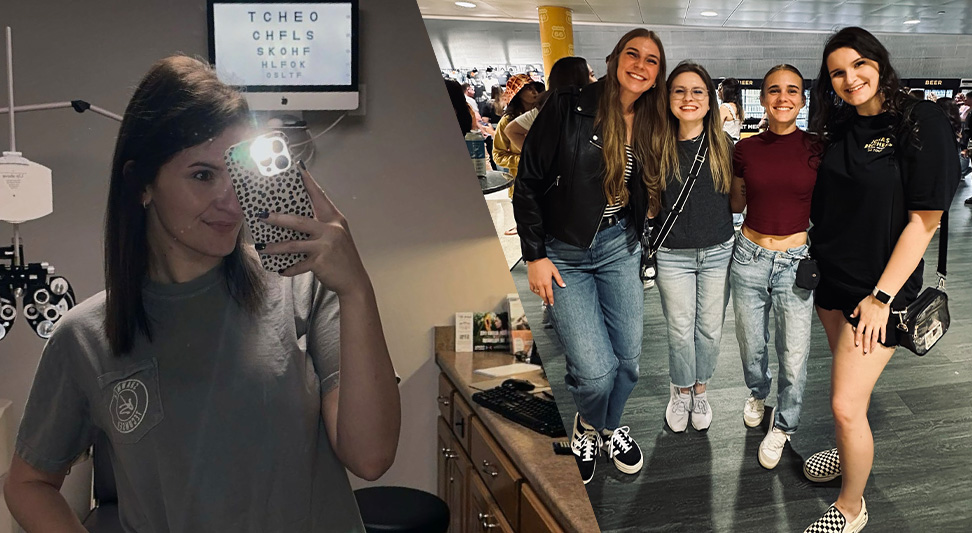
The day of my surgery, I walked in only able to see hand motions, and couldn’t even read the biggest letter on the screen or how many fingers were being held up. At my one-day post-op, I already had 20/20 vision!
Tell us about the first time you realized you had bad vision.
I was six at the time. I never knew I had bad vision because I thought everyone saw everything the same way I did. When I was in the first grade, I was having some issues in school, and they suggested I go to an eye doctor to get my vision tested.
My vision was so bad that the doctor didn’t want me leaving until I had some glasses to wear home. As we were driving home, I remembered telling my mom, “Wow, that sign says ‘STOP’!” Before that, I hadn’t been able to see any letters on it, and just thought everyone knew to stop because it was red.
How did your vision impact your life as a child, as a teenager, and as an adult?
Kids were mean. I got bullied and called four-eyes because I wore glasses, which was very hard for me because I was only six. As a teenager, I hated how I looked in glasses, so I tried contacts, which did help some. As an adult, my prescription just kept getting worse. Even when I would get my glasses thinned, they were still so thick on the sides and heavy on my face. I was just ready to get my vision fixed!
As an adult, my prescription just kept getting worse.
What was your least favorite thing about wearing glasses and contact lenses?
With glasses, the worst thing was constantly having something on my face. Also, my lenses got dirty all the time, so I was constantly cleaning them. My least favorite thing about contacts was when they’d get dry and move around. And sleeping in contacts or over-wearing them can significantly increase your risk of eye infections, which is something I caught myself doing many times, even though I knew it wasn’t good for my eyes.
What are you most looking forward to doing or experiencing without glasses or contacts?
I can’t wait until this summer, when I can go swimming, go out on the boat on the lake, and really enjoy it!
The whole team at nJoy took great care of me and walked me through everything!
What is the biggest difference in your life now compared to before you had LASIK?
I’m able to wake up and see without having to put on my glasses or put contacts in. And I can actually see when I’m taking a shower, which is something so small but makes a huge difference in my life.
Would you recommend LASIK and other vision correction options, such as EVO ILC and Lens Replacement at nJoy Vision, to your friends and family?
I would definitely recommend LASIK and nJoy Vision! I have really high anxiety, but the whole team at nJoy took great care of me and walked me through everything!
Schedule your FREE OKC LASIK consultation at nJoy Vision
Or call
The post nJoy Vision LASIK Patient Journey – Zoey Tate first appeared on nJoy Vision.
]]>The post A Family of Vision Correction Procedures for Every Generation first appeared on nJoy Vision.
]]>Our team of experienced surgeons and vision specialists is proud to care for patients across every generation using leading technology and a patient-first approach.
To bring that idea to life, let’s look at how our personalized vision correction procedures could literally meet an entire family’s vision needs.
Meet the Family
They’re all in different stages of life, but they share one thing in common: they want to see clearly without limitations.
- A 27-year-old son building his career and social life
- A 50-year-old mom balancing work, creativity, and travel
- A 52-year-old dad thinking about retirement and making time for leisure
- A 75-year-old grandmother staying active and independent
Four people. Four different vision needs. Four personalized solutions at nJoy Vision.
Son, 27: Freedom Through LASIK

Like many LASIK patients, he’s a young professional on the move. Between work travel, nights out, and staying active, glasses and contacts have become more of a hassle than a help.
What Is the Typical Age Range for LASIK?
LASIK is most commonly performed on patients in their 20s and 30s whose vision has stabilized. It’s ideal for people who want to reduce or eliminate their dependence on glasses or contacts.
How Does LASIK Work?
LASIK is a quick, precise laser procedure that reshapes the cornea to correct nearsightedness, farsightedness, and astigmatism. The procedure typically takes just minutes, and many patients notice improved vision within a day.
Why Is LASIK a Great Fit for Young Adults?
For someone constantly on the go, LASIK offers something simple but powerful: freedom with little to no downtime. No more packing extra contacts for trips. No more worrying about glasses during workouts or social events. Just clear, effortless vision that fits an active lifestyle.
Is EVO ICL an Alternative to LASIK?
Yes. EVO ICL is a great option for both younger and older patients who may not be good candidates for LASIK due to thin corneas or higher levels of nearsightedness or astigmatism.
Unlike LASIK, which permanently reshapes the cornea, EVO ICL works by placing a biocompatible collagen copolymer lens inside the eye to correct vision. One of the unique benefits of EVO ICL is its removability, offering flexibility while still delivering clear, high-quality vision.
Mom, 50: Letting Go of Readers With Lens Replacement

She’s a work-from-home creator running an online store. Until her 40s, her vision was never an issue. Then came reading glasses. At first, they were fun, even stylish. In fact, she designs and sells custom cases on her store. But now, the glasses and cases are everywhere. And who wants to waste time coordinating frames with vacation outfits, anyway?
Dad, 52: Rediscovering Clarity With Lens Replacement

At this stage in life, he’s worked hard to build his career, raised his family, and is starting to think about what’s next. Years ago, he had LASIK and loved the results. But recently, he’s found himself reaching for reading glasses more and more often.
Does LASIK Wear Off?
No. LASIK permanently corrected the vision issue he had at the time. What he’s experiencing now is presbyopia, a condition that affects everyone in their 40s and 50s as the eye’s natural lens loses flexibility with age.
What Is Lens Replacement?
Lens Replacement is a procedure in which the eye’s natural lens is replaced with a premium intraocular lens (IOL) tailored to your lifestyle and vision goals. An added benefit is that lens replacement patients won’t develop cataracts later in life.
What Is the Typical Age Range for Lens Replacement?
Lens Replacement is commonly recommended for patients in their 40s, 50s, and beyond who are experiencing presbyopia and have not developed cataracts.
Why Is Lens Replacement a Great Fit for Middle-Aged Adults?
Life doesn’t slow down in your 40s and 50s. If anything, it opens up. Lens Replacement is designed for this stage, when reading glasses start to get in the way of work, hobbies, travel, and everyday convenience. It provides a long-term solution that lets you move through your day without constantly adjusting how you see.
Grandma, 75: Staying Independent With Laser Cataract Surgery

She’s retired, but far from slowing down. Between exercise classes, lunches with friends, and bunko nights, she values her independence. Recently, though, her vision has started to get dim and cloudy, making driving and socializing difficult.
What Are Cataracts?
Cataracts occur when the natural lens of the eye becomes cloudy over time, leading to blurred vision, glare, and difficulty seeing clearly, especially at night.
What Is Laser Cataract Surgery?
Laser cataract surgery uses advanced laser technology to remove the clouded lens and replace it with a clear, artificial lens. At nJoy Vision, we use the revolutionary CATALYS® Precision Laser System to deliver the gentlest, most customized cataract procedure possible.
Why Is Laser Cataract Surgery a Great Fit for Senior Adults?
Clear vision is directly tied to independence. By addressing cataracts, older adults can continue driving, staying active, and enjoying time with friends and family without vision limitations.
One Family. Four Clear Paths.
Four different stages of life. Four completely different vision needs. And four personalized solutions, all available at one trusted vision correction center in Oklahoma City.
That’s what makes nJoy Vision different.
We’re not here to push a single procedure. We’re here to help you see your life clearly, whatever that looks like for you right now.
If you’re considering LASIK in OKC, exploring Lens Replacement, or searching for clarity on Laser Cataract Surgery, nJoy Vision delivers personalized vision correction for every generation – from X to Z.
Schedule Your FREE Vision Correction Consultation at nJoy Vision in OKC
Or call
The post A Family of Vision Correction Procedures for Every Generation first appeared on nJoy Vision.
]]>The post 5 Big Reasons to Use Your Tax Refund on LASIK, EVO ICL or Lens Replacement in OKC (Updated 2026) first appeared on nJoy Vision.
]]>If you end up getting one this year, do you plan on investing it or using it on yourself? If you’re wise, you can get something that immediately improves your quality of life, pays dividends for years to come, and possibly helps with next year’s tax returns.
We’re of course talking about LASIK, EVO ICL, and Lens Replacement at nJoy Vision in Oklahoma City. Vision correction procedures are the unicorn of tax refund uses. It immediately makes life more fun and enjoyable, and it’s an investment that provides long-term value by saving time and money in the years to come.
Schedule Your Free Oklahoma City LASIK, EVO ICL or Lens Replacement Consultation at nJoy Vision
Why Use Your Tax Refund on a Vision Correction Procedure at nJoy Vision?
Why is LASIK or another vision correction procedure a great use for this year’s reimbursement from the IRS? Here are five BIG reasons laser vision surgery is an excellent use of your well-earned refund.
1. Vision Correction Procedures will Save You Money in the Long Run

LASIK and other vision correction procedures are a one-time investment, while the contacts lenses or glasses that you now rely on are an ongoing expense. Once you’ve had refractive vision correction eye surgery, there is a great chance you will no longer need to deal with the monthly or yearly costs associated with glasses or contacts.
Imagine not having to buy new lenses or frames every year as your prescription changes. And how great would it be to not have to fork over even more money when your eyewear unexpectedly breaks or gets lost? Also, all those pricey contact lens solutions and cases will be a thing of the past.
2. You May Be Able to Write Off LASIK, EVO ICL or Lens Replacement on Next Year’s Taxes

If you itemize your deductions by filing a Schedule A with your 1040 income tax returns, you are able to include your LASIK or other vision correction procedure. The IRS states, “You can include in medical expenses the amount you pay for eye surgery to treat defective vision, such as laser eye surgery.”
There are a few asterisks to consider, however. For instance, the current tax law states that you can only deduct medical expenses that exceed 7.5% of your adjusted gross income. Also, you need to itemize your returns. If you do not, you cannot claim these medical expenses. If you do qualify for this deduction and find that itemizing will give you a bigger refund, this year’s LASIK, EVO ICL or Lens Replacement procedure may help you get a larger refund next year.
3. You Probably Won’t Have to Deal with Contacts or Glasses Anymore
Most people experience a noticeable improvement in their vision immediately following their LASIK, EVO ICL or Lens Replacement procedure. Within a day, you can expect to perform everyday tasks with better, clearer vision than ever before. And it keeps on improving over the next couple of weeks as your eyes completely heal. It’s at this point that most patients are comfortable saying bye-bye to their old glasses or contacts.
What would this mean for your quality of life? Take a second to think about it. You will not have to worry about your glasses fogging over when you come in from the cold or open up the dishwasher or oven. No more hearing that dreaded cruuunch when you finally find your misplaced glasses… under your foot. And that daily, time-consuming contact lens care routine would be a thing of the past.
In short, LASIK, EVO ICL or Lens Replacement can take all these annoyances and many more out of the picture.
4. Activities Are Easier Without Corrective Lenses

If you enjoy an active life, you know how inconvenient glasses and contacts are. Whether you’re box-jumping, jogging, or basketballing, it is guaranteed that glasses will continuously slip down your nose. Contact lenses might seem like a better option in these situations… until you get exercise-induced perspiration in your eye or lose a lens in the middle of your athletic activity.
With LASIK or another vision correction procedure, this is not an issue. You can practice jiu-jitsu, swim laps, or hike trails without worrying about losing a lens or irritating a contact.
5. LASIK, EVO ICL and Lens Replacement Bring About Positive Lifestyle Changes

In addition to the conveniences of living life without glasses and contact lenses, your vision correction procedure can increase your self-confidence.
When you’re free from glasses and contact lenses, you’ll have more control over how you look and how you present yourself to others. You’ll be able to do more things and say “yes” to more opportunities.
Better vision means a fresh perspective and, oftentimes, a better outlook on yourself and the world around you.
This Is the Year to Use Your Tax Refund on LASIK, EVO ICL or Lens Replacement
As you can see, LASIK at nJoy Vision in Oklahoma City and other vision correction procedures are a great way to use your tax refund for a number of reasons!
- No more eyewear or eye care hassles
- You’ll save money on corrective lenses, hardware, and accessories
- Your quality of life will improve, along with your self-confidence
- You can start living a more active lifestyle
- And your vision correction procedure is an eligible medical expense that can be claimed as a tax deduction when you itemize your deductions.
What more could you ask for with your tax refund?!
Schedule a Free LASIK, EVO ICL or Lens Replacement Consultation at nJoy Vision in OKC
Or call
(405) 842-6060
The post 5 Big Reasons to Use Your Tax Refund on LASIK, EVO ICL or Lens Replacement in OKC (Updated 2026) first appeared on nJoy Vision.
]]>The post nJoy Vision LASIK Journey – Allie Ditmore first appeared on nJoy Vision.
]]>For most of her life, Allie relied on thick glasses and dry contact lenses to get through the day. From struggling to see the board in school as a child to dealing with heavy frames that left her nose sore by the end of the day, vision challenges had been a constant part of her story.
After considering LASIK for several months, Allie and her husband decided it was the right time to prioritize her vision. In February 2026, she turned to nJoy Vision to help her take the next step toward life without glasses or contacts.
Thanks to nJoy’s team of eye care professionals, doctors, and surgeons, Allie’s LASIK journey was simple and straightforward. As a patient care specialist herself, Allie found this patient-first approach to laser vision correction eye-opening. With this fresh perspective, Allie can finally focus on what matters most – giving her patients clarity on all of their vision correction options.
What is your name, and when did you have LASIK?
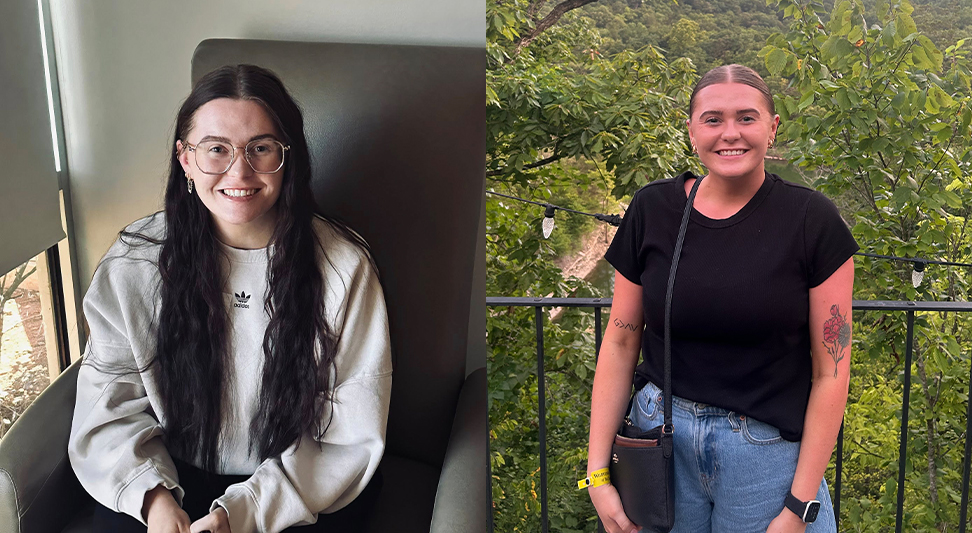
My name is Allie Ditmore, and I had LASIK at nJoy Vision in Oklahoma City on February 19, 2026.
What is your profession, and what role does vision play in your job and/or day-to-day life?
I am an optician at Geiger Eye Care in Altus, OK. I provide patients with information and help them choose the perfect glasses for their vision and lifestyle needs, so vision plays a huge role in my everyday life.
How long had you considered LASIK, and why did you decide to do it now?
I had been considering LASIK for months, and my husband and I finally decided it was the right time to invest in my long-term vision.
I had been considering LASIK for months and decided it was the right time to invest in my long-term vision.
Are you satisfied with the results of your LASIK procedure?
Yes, I am!
Take us through the LASIK process at nJoy Vision, including the consultation, procedure, and next-day follow-up appointment.
I was actually able to have the procedure the same day as my consultation! Because I work for an eye doctor, I already knew I was a candidate for LASIK and was able to prepare my eyes beforehand. On the day of my consultation and procedure, the nJoy team performed all the necessary testing and provided me with all the info I needed. I returned later that day for my procedure.
Tell us about the first time you realized you had bad vision.
I realized I had bad vision when I was little and couldn’t see at school.
How did your vision impact your life as a child, as a teenager, and as an adult?
Poor vision made me struggle in the classroom, in sports, and while driving.
What was your least favorite thing about wearing glasses and contact lenses?
My glasses were so thick and heavy that they would hurt my nose and head by the end of the day. And when I wore contacts, they would often get too dry.
What are you most looking forward to doing or experiencing without glasses or contacts?
I’m excited that I’m finally able to function as soon as I start my day, and don’t have to worry about always having glasses with me.
I’m finally able to function as soon as I start my day.
What is the biggest difference in your life now compared to before you had LASIK?
Being able to see as soon as I wake up!
Would you recommend LASIK and other vision correction options, such as EVO ICL and Lens Replacement at nJoy Vision, to your friends and family?
Yes! I want everyone I know to experience nJoy Vision just like I did.
Schedule your FREE OKC LASIK consultation at nJoy Vision
Or call
The post nJoy Vision LASIK Journey – Allie Ditmore first appeared on nJoy Vision.
]]>The post Gen See: Personalized Vision Correction for Every Generation first appeared on nJoy Vision.
]]>But here is what many people do not realize: LASIK is designed for a specific season of life.
At nJoy Vision, we understand that vision correction is not one-size-fits-all. It’s personal. It evolves with you. And at every age, there is a solution designed for the way you live, work, and see the world.
If you have been searching for LASIK in OKC and wondering whether it is right for you, the better question might be this: What stage of life are you in, and which procedure is designed for that stage?
Before we dive into each option, here is a clear breakdown of how vision correction options typically align with age.
Vision Correction Procedures by Age Range
- 20s and 30s: LASIK
- 40s and 50s: Lens Replacement
- 60s and Beyond: Laser Cataract Surgery
Now let’s unpack what that means and why it matters.
Typical LASIK Patient Age Range: 20s and 30s

For young adults with standard vision problems, LASIK remains the leading option. This is the stage of life when most people want to correct common refractive errors like nearsightedness (myopia), farsightedness (hyperopia), and astigmatism.
LASIK reshapes the cornea, the clear front surface of the eye, so that light focuses properly on the retina. When performed by experienced LASIK surgeons at a trusted laser vision correction center, it can dramatically reduce or eliminate the need for glasses and contacts.
LASIK is ideal for patients who:
- Are between the ages of 18 and 40.
- Have stable prescriptions.
- Want freedom from glasses or contact lenses.
- Do not have significant age-related lens changes.
Then, as LASIK patients enter their 40s, their vision changes again, making it difficult to focus on close objects. After years of excellent vision at all distances, they’re left wondering if their LASIK has worn off.
Does LASIK Wear Off?
No. LASIK does not wear off.
LASIK permanently reshapes the cornea, and that structural change does not reverse. Usually, sudden difficulty seeing up close is not due to the cornea but to the lens inside the eye.
Hello, 40s. Hello, Reading Glasses.
As we age, typically beginning in our 40s, everyone develops presbyopia. This condition is not a LASIK failure. It is a natural aging process.
Presbyopia happens because the natural lens behind the cornea becomes less flexible over time. That loss of flexibility makes it difficult to focus on close objects, leading to the need for reading glasses, bifocals, or progressive lenses.
Even patients who had LASIK years ago will eventually experience presbyopia. That does not mean that LASIK has worn off. It means the lens inside the eye has changed.
And that is exactly where Lens Replacement comes in.
Typical Lens Replacement Patient Age Range: 40s and 50s

If you are in your 40s or 50s and tired of reaching for readers, lens replacement may be the most powerful and long-term vision correction option available.
Lens replacement, also known as Refractive Lens Exchange, is becoming increasingly popular among adults who want to see life clearly again, both up close and at a distance.
At its core, lens replacement shares the same advanced technology used in modern laser cataract surgery. The difference is timing.
Lens Replacement may be right for patients who:
- Are in their 40s and 50s.
- Have presbyopia and rely on reading glasses.
- May also have nearsightedness, farsightedness, or astigmatism.
- Are experiencing pre-cataract lens changes.
What Is Lens Replacement?
Unlike laser cataract surgery, lens replacement does not require you to have cataracts. It is an elective procedure for people with presbyopia and other vision problems who want a proactive solution.
During lens replacement at nJoy Vision, our surgeons use advanced femtosecond laser technology and the revolutionary CATALYS® Precision Laser System to remove the natural lens and replace it with an artificial intraocular lens (IOL) that best suits your vision needs and lifestyle demands.
And here is a powerful benefit: once your natural lens is replaced, you will never develop cataracts in that eye. Cataracts form in the natural lens. When the lens is replaced, the possibility of cataracts is eliminated.
The Freedom to See Life Through a New Lens
Lens replacement is not just about reading a menu without glasses. It is about freedom.
Freedom from readers, bifocals, and progressive glasses. Freedom from constant lens swapping. Freedom from planning your day around your eyewear.
If you feel like your arms are getting shorter every year when you try to read your phone, that’s presbyopia. If you are juggling multiple pairs of glasses, there’s an IOL option for you. And if you want a permanent solution that addresses the lens inside your eye, lens replacement may be the answer.
Typical Laser Cataract Surgery Patient Age Range: 60s and Beyond

Laser cataract surgery is the most commonly performed surgery in the world. It has restored vision for millions of people and continues to evolve with modern laser precision.
Cataracts occur when the natural lens becomes cloudy, causing blurred or dim vision. Laser cataract patients are typically in their 60s or older, although cataracts can form earlier in life due to trauma, medical conditions, lifestyle factors, and genetic disorders.
Regardless of age or contributing factors, the cloudy lens is removed and replaced with a clear intraocular lens. The technology and process are very similar to those used in lens replacement. The key difference is that cataract surgery is medically necessary because the lens has already become cloudy.
At nJoy Vision, laser cataract patients benefit from the unmatched accuracy and customization of femtosecond laser technology and the industry-leading CATALYS Precision Laser System.
Laser cataract surgery and lens replacement at nJoy Vision offers:
- Advanced 3D imaging
- Greater precision
- Personalized vision correction
- Premium IOL options
Personalized Vision Correction for Every Generation

Life looks different at every age, and at nJoy Vision, we believe every generation deserves a vision correction option tailored to their vision needs and lifestyle goals.
In your 20s and 30s, LASIK can give you freedom from glasses and contacts.
In your 40s and 50s, lens replacement addresses the inevitable onset of presbyopia while eliminating the risk of cataracts later in life.
In your 60s and beyond, laser cataract surgery can restore clarity and brightness to your vision.
The common thread is personalization. The vision correction option that made sense at 25 doesn’t address new vision problems at 45. And the cataract issues you may face at 65 are entirely different than earlier refractive errors.
Whether your generation is defined by LASIK, lens replacement, or laser cataract surgery, you can be part of Gen See at nJoy Vision.
Schedule Your FREE Vision Correction Consultation at nJoy Vision in OKC
Or call
The post Gen See: Personalized Vision Correction for Every Generation first appeared on nJoy Vision.
]]>The post Lens Replacement – Seeing Life Through a New Lens first appeared on nJoy Vision.
]]>Then, almost quietly at first, vision starts to get in the way.
Menus need more light. Text messages require arm extension. Reading glasses seem to magically appear around the house. Night driving feels different.
For those who had LASIK years ago, the sudden onset of vision problems can be especially frustrating – I already fixed my vision! Why am I dealing with this again?
The answer is presbyopia, a natural change in how the eye focuses that eventually affects everyone.
But the solution doesn’t have to be a lifestyle compromise. At nJoy Vision, we don’t see lens replacement as a response to aging. Instead, we view it as a proactive, personalized plan to preserve and enhance your lifestyle so you can see clearly and fully enjoy the life you’ve built.
See the Life You’ve Built
By this stage of life, you know what matters to you.
Maybe it’s:
- Reading and working comfortably on a computer without juggling glasses
- Driving confidently at night
- Enjoying travel, concerts, or sporting events without visual distractions
- Golfing, cooking, pickle-balling, or staying active without limits
- Simply waking up and seeing clearly
Lens replacement is about aligning your vision with those priorities. It’s not about “fixing old eyes.” It’s about supporting the way you live now and the way you plan to live next.
This mindset is central to how we approach every lens replacement procedure at nJoy Vision. Every outcome begins with one simple question:
How do you want to live, and how do you want to see while doing it?
A Quick Word on Presbyopia (and Why It’s Inevitable)
Presbyopia is not a disease, and it’s not “LASIK wearing off.” Presbyopia is a natural change that happens as the eye’s internal lens loses flexibility over time, making near and intermediate tasks more difficult.
This means:
- Even if you had LASIK in your 20s or 30s, presbyopia can still occur.
- If you’ve never had LASIK, it’s not “too late” to achieve clear vision.
- Readers, progressives, and bifocals are common – but they’re not the only option.
Lens replacement addresses presbyopia at its source by replacing the eye’s natural lens with a customized intraocular lens (IOL) designed to support how you see and live.
Vision Is Personal. So Is Lens Replacement.
One of the most important things to understand about lens replacement is that it is not one-size-fits-all.
Before recommending any lens option, nJoy Vision’s experienced surgeons and eyecare professionals take time to understand both your vision goals and lifestyle demands. This is done through thoughtful conversation and detailed questionnaires, where we ask our patients things like:
- Do you want to see clearly without glasses for distance, mid-range, or near tasks?
- How important is night vision and minimizing glare or halos?
- Would you rather wear glasses occasionally for fine print, or avoid them as much as possible?
- What activities does your typical day involve (e.g., screens, driving, sports, hobbies, and hands-on work)?
- Are you more easygoing about visual imperfections, or do minor issues bother you?
These questions matter because the “best” lens is the one that fits your lifestyle, not someone else’s.
Understanding Premium IOL Options
Once your vision goals and lifestyle preferences are clearly defined, your surgeon can recommend the IOL options that align best with how you live. These are often referred to as premium IOLs, advanced lens implants, or customized IOLs.
Light Adjustable Lenses
Light adjustable lenses are designed for patients who value precision and flexibility. These revolutionary IOLs can be adjusted with ultraviolet (UV) light after the procedure.
They are often a fit for detail-oriented patients who want the most personalized result possible.
Multifocal IOLs
Engineered to provide clearer vision at multiple focusing distances – near, intermediate, and far – multifocal lenses are often chosen by active individuals who want a glasses-free lifestyle for a wide range of tasks.
Extended Depth of Focus (EDOF) IOLs
EDOF lenses provide a smooth, continuous range of vision at near, intermediate, and far distances with fewer glares and halos than many multifocal lenses.
Patients who prioritize clarity for everyday activities and night driving often choose EDOF lenses.
Accommodating IOLs
Accommodating lenses are designed to work with the eye’s natural movement to support dynamic focusing across distances.
These advanced IOLs are a good choice for patients seeking a more natural visual experience with flexibility.
Toric IOLs
Toric IOLs are designed specifically to address astigmatism, improving sharpness and clarity and making it less likely you’ll need glasses or contacts lenses for distance vision.
Monofocal IOLs
Monofocal lenses provide exceptional vision at a single distance, and are often chosen when patients are comfortable wearing glasses for other tasks.
Basic monofocal IOLS are a great option for patients who value simplicity and reliability.
Not Too Late. Not Too Early. Just Right.

A common misconception is that vision correction isn’t an option in your 40s and 50s. In reality, lens replacement is an excellent option for those who are too old for LASIK but haven’t developed cataracts. Lens Replacement is for adults who have:
- Had LASIK years ago
- Never pursued vision correction
- Recently noticed presbyopia impacting daily life
What matters most is choosing a solution that aligns with your lifestyle. For adults in their 40s and 50s, lens replacement can be a forward-looking decision that simplifies life for decades to come.
See Life Through a New Lens
At nJoy Vision, lens replacement is about more than eyesight. It’s about helping your vision keep pace with the life you’ve built so you can live with confidence, clarity, and continuity.
With personalized evaluations, a full range of advanced IOL options, and care from an experienced team of lens replacement surgeons and eyecare professionals, patients exploring lens replacement solutions can feel confident they’re choosing a trusted laser vision correction center that prioritizes lifestyle as well as outcomes.
You’ve worked hard to build a life you enjoy. Lens replacement is one way to make sure you can see it clearly, comfortably, and on your terms.
Schedule Your FREE Lens Replacement Consultation at nJoy Vision in OKC
Or call
The post Lens Replacement – Seeing Life Through a New Lens first appeared on nJoy Vision.
]]>