As a federation that includes birdwatchers and naturalists, we often come across wildlife with traits and behavior that prove the adage “truth is stranger than fiction.” From super hearing to incredible speed, some species exhibit fascinating ー and sometimes downright weird ー traits that Nintendo could use as inspiration for future Pokémon!
Super Hearing and Color Changing:
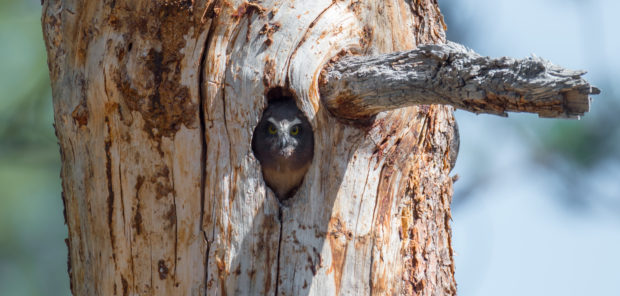
Northern Saw-Whet Owl (Aegolius acadicus)
At just 8 inches tall, the northern saw-whet owl may be one of the smallest raptors in the United States, but its hearing gives it a big advantage. With the ability to hear sounds as low as -20 decibels, this tiny predator can easily locate small rodents hidden beneath deep snow and forest debris.
Niangua Darter (Etheostoma nianguae)
This fish, which typically resides in the Midwest, will change colors during spawning. Its belly becomes orange-red, and its sides develop iridescent blue-green bars. Unfortunately, this fish is threatened by habitat destruction from dam construction.
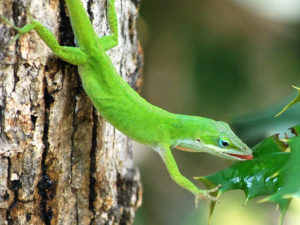
Green Anole (Anolis carolinensis)
These little lizards are native to the southeastern United States and have color-changing abilities similar to those of a chameleon. Green anole are able to change from green to brown in order to blend in with their surroundings.
Super Speed:
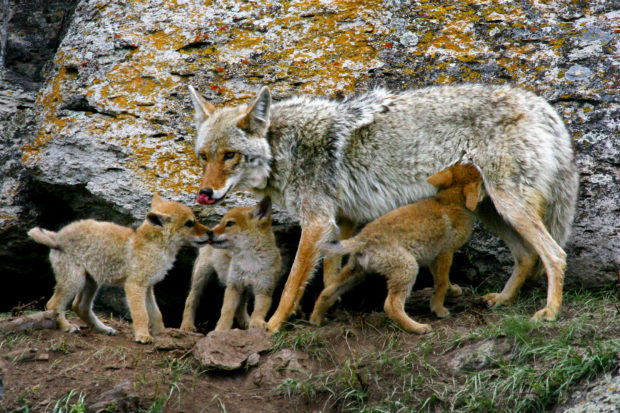
Coyote (Canis latrans)
The coyote lives across in North America, and this agile canid can reach speeds of 43 miles (70km) per hour! It can catch fleet-footed prey such as rabbits and birds, but its speed really comes into play when escaping predators. Even an injured coyote can outrun a human being ー a study of several three-legged animals showed that they can reach speeds of 25 mph (40 kph)!
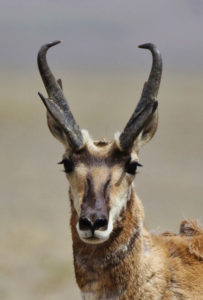
Pronghorn (Antilocapra americana)
North America’s fastest land mammal is the pronghorn ー worldwide, they’re second only to the cheetah! Not only can this speedster sprint at 55 mph (88 kph), they’re also talented long-distance runners and can travel for miles at 25 mph (40 kph).
Just Really Cool Ways of Getting Around:
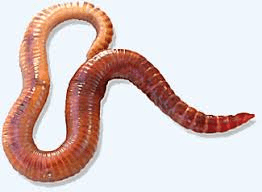
The Earthworm (Lumbricus)
While over 6,000 different species exist worldwide, one of the most recognizable worms is the good old-fashioned “nightcrawler.” It has a fascinating ability to excrete a lubricating fluid that keeps its skin moist and allows it to easily move through underground burrows. One Australian species can shoot fluid as far as 12 inches through skin pores!
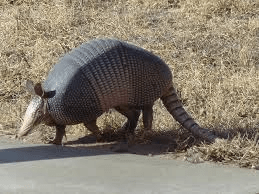
Nine-Banded Armadillo (Dasypus novemcinctus)
There are about 20 species of armadillos in total, but the only species in North America is the nine-banded armadillo. Despite being covered in armor to protect them from predators, water is no obstacle for these amazing creatures: They can hold their breath for up to six minutes and can swim or “walk” along the bottom of rivers and streams!
Lastly, but certainly not least … the rumored inspiration for Pokémon’s famous yellow mascot, Pikachu:
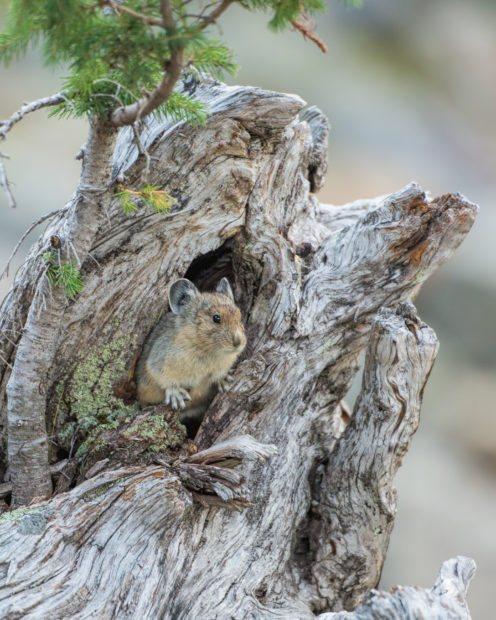
American pika (Ochotona princeps)
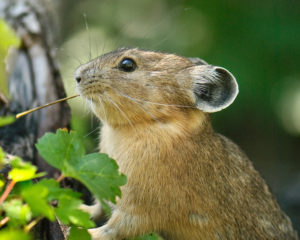
The adorable American pika is a fuzzy, potato-sized herbivore that inhabits the tops of western mountains. Frantic workers, these rodents collect large piles of wildflowers and grasses during summer ー a process called haying ー to eat during winter. But unlike their fictional counterpart, they are not yellow and cannot generate electricity.
American pikas are particularly threatened by climate change, as warming temperatures force them to migrate to higher altitudes, eventually pushing them entirely out of certain regions.
With the Pokémon franchise more popular than ever, we can’t wait to see whether any of these magnificent species inspire new digital counterparts.
Imagine how the species of our country might inspire future generations’ fictional and creative work! Donate today to protect endangered species in the U.S.
The National Climate Assessment is a collection of the most up to date climate science that can be used to inform sound policy and decision making to support wildlife conservation.
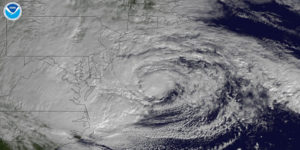
Designed to be “an authoritative assessment of the science of climate change,” the report undergoes a public comment period, a review by the National Academy of Sciences, and a final federal review. The report provides an overview of what we know about climate science, along with details on the regional impacts of climate change, and proposes mitigation techniques.
As part of the report’s release, the National Oceanic and Atmospheric Administration hosts weekly webinars by the National Climate Assessment’s contributing authors and researchers. Texas Tech University atmospheric scientist Dr. Katharine Hayhoe began the series with a discussion of recent developments in climate science and her perspective on the report’s major findings. Dr. Hayhoe has served as a lead author of the second, third, and now fourth National Climate Assessment. In addition to this work, Dr. Hayhoe shares her research on how climate change affects humans through the accessible and entertaining web series, Global Weirding.
For Dr. Hayhoe, the takeaway is simple: Climate change is not distant. In fact, “It’s real, it’s us, it’s serious; and the window of time to prevent widespread dangerous impacts is closing.”
The bedrocks of climate science are generally accepted by scientists and understood by the public. For example, climate change’s impact on the Arctic has served as our climate canary in the coal mine, and people across the globe have felt the impact of the increased frequency of extreme weather. Today, these topics are discussed with a high degree of confidence among climate scientists.
Looking forward, the only certainty is that we are in uncharted territory. As Dr. Hayhoe says, “We are conducting an unprecedented experiment with our planet.” For the first time in human civilization, we are on track to reach an atmospheric carbon dioxide level not experienced for tens of millions of years. At our current rate of emissions, we’ll fail to stay below the global temperature goal stated in the international Paris Agreement. The Paris Agreement’s long-term goal is to keep the increase in global average temperature to well below 2 °C above pre-industrial levels; and to limit the increase to 1.5 °C, since this would substantially reduce the risks and effects of climate change. These daunting facts tell us that we are on a dangerous and unpredictable path, putting ourselves at increased risk of climate impacts.
The negative effects of climate change are becoming increasingly visible. California’s recent heat wave is an example of what we can expect as global temperatures increase. With a 120° F peak during the day and nighttime temperatures as high as 82°F, California has experienced record-breaking heat this summer.
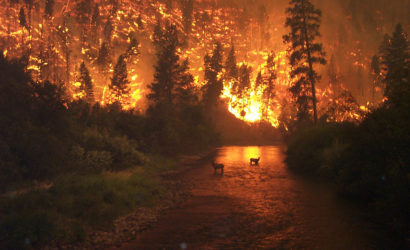
And it’s not just the overheating from high temperatures that impact people and wildlife. The heat wave caused unsafe air quality conditions for many Californians as dangerous ground level ozone increased, and set the perfect conditions for wildfires to ignite. Climate scientist and report contributor Dr. Michael Wehner’s recent study concludes that human activity increased the likelihood of the California heat wave by up to fifty percent and increased temperatures by 2-3°F.
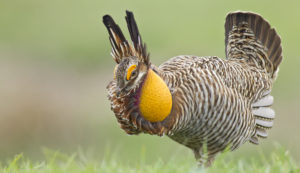
Extreme precipitation is another visible effect of climate change. Higher average temperatures mean greater evaporation, allowing storms to release more water. For example, it is estimated that human-driven climate change increased Hurricane Harvey’s rainfall by 38%. The extreme rainfall from Hurricane Harvey impacted wildlife in many ways, but one of the most devastating examples was the flooding of Attwater Prairie Chicken National Wildlife Refuge, which harmed the already endangered prairie chicken.
Further, the probability of future Harvey-like storms is predicted to increase from 1% per year to a shocking 18% chance by the end of the century. These indicators tell us we are increasing the probability of both the occurrence of major events and their ability to inflict greater damage.
Some factors of climate change are not as well understood. For example, scientists are trying to solve inaccuracies in our assessment of ice sheet stability. Recent discoveries have been used to understand and account for all of the ways ice is affected. This research led to increased projections for the upper limit of sea level rise and adjusted accepted ice melt projections.
With new data, scientists now forecast that the sea level could rise up to eight feet in high carbon scenarios. New findings like these allow us to better understand the recent decline in coastal real estate prices.
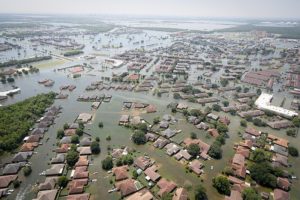
According to Dr. Hayhoe, a recent study states that coastal home prices in the United States have already dropped by 7% in anticipation of the projected rise in sea level.
It is this intersection of climate change and human activity that will be the focus of the Fourth National Climate Assessment.
Dr. Hayhoe’s discussion presented new discoveries in climate science and suggested how this new information sheds light on areas not previously considered by climate scientists. If there is one thing that science is telling us, it is that climate change is no longer an issue for the future, but something that is very much affecting our lives today.
Many mayors and governors are rightfully concerned about the implications of a warming planet for their constituents, economies, and natural resources. The U.S. Climate Alliance of states is taking steps locally to adhere to commitments the U.S. made under the Paris agreement, as well as over 400 U.S. “Climate Mayors.” As remarkable and needed as their actions are, the climate crisis cannot be averted without action by our federal government, guided by the scientific findings of the National Climate Assessment and leaders like Dr. Katharine Hayhoe.
Take Action: Tell your Senators and Representatives in Congress to act boldly on climate change, to protect vulnerable people and wildlife, like the American pika.
Thank you to Mollie Carroll, guest writer for our Climate & Energy program.
Climate change is impacting landscapes across the United States, especially public lands in the West. Wildlife found on public lands are already facing a host of threats, including invasive species, wildlife disease, and habitat loss and fragmentation. Climate change is expected to amplify these impacts and add a host of additional threats, including higher temperatures and drought. As the impacts of climate change continue to develop and spread across western public lands, the risk of significant biodiversity loss is growing, leading to a wildlife crisis.
Our new report Reversing America’s Wildlife Crisis lays out the challenges and a path for recovery.
In the United States, one-third of wildlife species are at risk due to a number of factors. Climate change is accelerating that loss. In fact, scientists conclude that food webs, species distribution, and other ecological processes are already being affected by human-caused climate change. Public lands support thousands of species and are a stronghold for many vulnerable wildlife that need large blocks of land to roam. Protecting these lands from the worsening impacts of climate change is critical.
The below examples highlight how climate change affects wildlife and public lands, and demonstrate how biodiversity loss is becoming a real problem.
Migration timing

Public lands host one of the largest land based migrations in North America—the mule deer migration in Wyoming.
Mule deer time their migration in Wyoming to follow the spring greening as they move from lower winter habitat to higher summer habitat. As seasonal change is altered by a warming climate, these deer are struggling to time their migrations to match the “green wave” of new growth.
Low snowpack
Lower snowpack (layers of high-altitude, compressed snow that melt slowly) is also a threat to wildlife and public lands. Snowmelt supplies about 60 to 80 percent of the water in major western river basins, including the Columbia, Missouri, and Colorado Rivers. This snowmelt is also the primary water supply for about 70 million people. Lower winter snowpack will lead to reduced stream flow during the summer months, which will impact temperature sensitive aquatic species like trout, and amphibians like frogs and newts. Scientists estimate that one-third of the current cold water fish habitat in the Pacific Northwest will be unsuitable by the end of the century. Fishing on public lands is a favorite American pastime, but fishing may be increasingly restricted as a result of low stream flows, hotter water, and reduced fish populations.
Megafires
The length of the fire season and the area burned by megafires—or catastrophic wildfires—have increased as a result of the warmer, drier conditions resulting from climate change. These conditions weaken trees in our national forests and parks and make them more vulnerable to unnaturally hot and severe fires. Drought weakened forests are also susceptible to pest epidemics, which further deteriorate and kill trees and can spread over a large area in increasingly warm weather, adding new fodder to wildfires. New fire regimes are also allowing the spread of invasive species like cheatgrass, which thrives in disturbed landscapes and is decimating the sagebrush habitat that sage grouse and other wildlife depend on. Megafires and the environmental impacts that result from them can lead to hunting restrictions as habitat is lost and degraded, and wildlife populations need more time to recover.
Rising temperatures
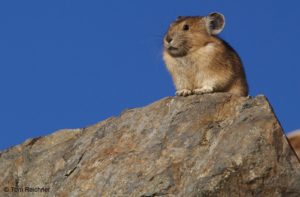
Public lands also support climate sensitive species, such as American pika. These small rabbit like creatures live on high elevation rocky slopes and are suffering from the effects of rising temperatures. While some populations of pika seem to be able to adapt to a changing climate, high elevation populations in the Sierra Nevada Mountains and the Northwestern Great Basin have not been as lucky. Some populations of pika in the Lake Tahoe area of California have been wiped out entirely, a shocking loss to wildlife lovers and one of the first recorded local extinctions of a species resulting directly from climate change. Local weather data shows a 28°F rise in average temperatures between 1910-2015 and a significant reduction in snowpack.
Drought
Wildlife on public lands are also showing signs of stress from drought. Pronghorn populations at the northern end of their range have remained stable, but the populations in the Southwest, a geographically and genetically distinct sub-species of pronghorn, have not fared as well. In the Southwest, pronghorn populations have been declining since the 1980’s, and scientists believe that drought is partly to blame. As a result of changing precipitation patterns in the Southwest, 50 percent of the pronghorn populations examined by researchers could disappear by 2090.
We need the Clean Power Plan for wildlife and public lands
As the first ever regulations on carbon emissions from the power sector, the Clean Power Plan is a critical step in the path towards a stable climate. Power sector emissions account for nearly one third of U.S. carbon emissions, and are therefore one of the leading causes of the wildlife crisis on public lands.
]]>Meet Stephanie, Paul and Jack: three people who love the wildlife in their area and are actively lobbying Congress to protect it.
Missing frogs
Stephanie Sides’ home in Encinitas, Calif. used to be a hot spot for the local bullfrogs to hang out. “I used to have an entire symphony of voices, all distinctive with different pitches. Even though I used to have to wear earplugs to get to sleep at night, I loved those frogs and their music.” She even hosted a “bullfrog party” several summers in a row.
But now, she says, “The bullfrogs have largely disappeared in the last several years, presumably due to drought.” California experienced drought conditions from 2011 until just this year, and frogs and toads need water to mate and lay their eggs. “I hear one lone frog voice this summer,” she says. The days of her bullfrog parties, of connecting with each other over the joys and intrigue of nature, are “now mostly lost and sorely missed,” she says.
Struggling trout
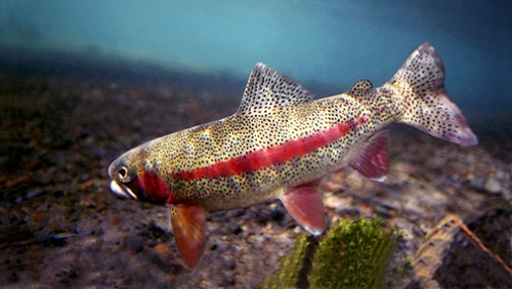
Paul Hancock has lived in—and loved—the mountain states for decades. He took up skiing in 1969 and fly fishing in 1973. As a retired resident of Pocatello, Idaho, he gets to fish or ski at least three days a week, depending on the season. “I enjoy the lack of crowds, the clean air, and the challenge of being able to navigate the outdoor world,” Paul says. “I like observing animals in their normal activities, especially the big birds when I am fishing.”
And of course, as a skier, he loves the snow. “We used to have a lot more snow at our local mountain, and our season was a month longer,” he remembers. “It is very discouraging to have moved to the area because of the cost, quality and proximity of a ski area and have it deteriorate.”
While the lack of snow is disappointing for him, it’s life-threatening to the area’s fish. “The lack of water has impacted the fishery,” Paul explains. “Trout need clean and cold water,” but the reduced snowmelt is making the trout’s habitat less and less viable. And those birds Paul enjoyed watching while he fished? He might not see them in his area for much longer. According to a report from the Audubon Society, 314 bird species will see their ranges shift and shrink over the next decades.
Disappearing pikas
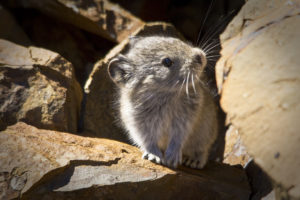
As a kid, Jack Greene used to go on nature walks and play in the woods with his mother and sister. As he got older, he started hunting and fishing with his father and uncles. “In my late 20s I was introduced to nature study and nature centers, which transformed me into a student of the marvels of nature,” Jack says.
Today, the student has become the teacher. Jack leads field trips in the Rocky Mountains and Pacific Northwest for students of all ages, and he trains environmental science teachers across the country. He also helps collect lots of “citizen science” data on the wildlife he sees.
“I am presently involved in documenting the changes in pika populations in northern Yellowstone,” Jack says, which he does through a Colorado State University Program called the Rocky Mountain Sustainability and Science Network. The pika, a tiny mammalian cousin of the rabbit, has already disappeared from over one-third of its previously known habitat. Why? They aren’t adapted to heat above 78 degrees Fahrenheit, and as global temperatures rise, their only option is to move to higher elevations. If there are no higher elevations around and temperatures are still too high, they can’t survive.
Asking Congress to Act
Stephanie, Paul and Jack all know that the biggest threat to these species is unmitigated climate change. Higher temperatures and less predictable precipitation puts stress on many different wildlife populations, so the best chance of protecting them all is to reduce our greenhouse gas emissions and stabilize our climate.
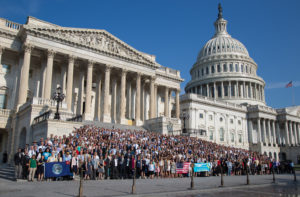
To that end, Stephanie, Paul, and Jack are all members of Citizens’ Climate Lobby (CCL). CCL is a nonprofit, nonpartisan group where thousands of volunteers lobby Congress for climate legislation. Specifically, CCL volunteers advocate for a carbon fee and dividend, which would put a price on climate-changing carbon emissions and return that revenue to American households. By making it more expensive for fossil fuel companies and others to dump greenhouse gases into the atmosphere, they—and our whole economy—will quickly shift toward cheaper low- or no-carbon energy options. That, in turn, will help stabilize our climate.
Whether they’re a Republican or a Democrat, you can almost always find common ground and mutual love of some element of the outdoors. And when your representative hears how climate change is hurting wildlife in your district, in your town, or right in your backyard, it can move them to act.
About the author
 Flannery Winchester is deputy communications director for the Citizens’ Climate Lobby (CCL) and comes from a long line of farmers and others who care for the land. CCL is a non-profit, non-partisan, grassroots advocacy organization focused on national policies to address climate change.
But together, we can change this! On April 29th, the People’s Climate March in Washington, D.C., will send an important message to our leaders in Congress and the Environmental Protection Agency: Take real action to fight pollution that changes our climate, and protect clean air, water and land. And we’re making sure, with your help, that wildlife are represented in that march.
Join the Virtual Wildlife Climate March
We’re using social media – which our leaders pay attention to – to draw attention to the plight of wildlife struggling with pollution and climate change. Just post your message on your favorite social media channels with the hashtag #WildlifeClimateMarch, and we’ll do the rest.
How to Participate
1. POST ON FACEBOOK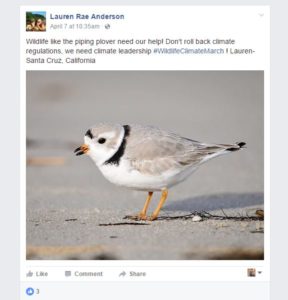
- Submit a photo to our Wildlife Climate March Facebook event page of an image of your favorite species or wild place.
- In one sentence, tell us why it’s important that our leaders stand up to address climate pollution and protect wildlife and habitat.
- Make sure to add your first name to the post as well your city and state so we know which members of Congress to send your message to!
- Also, please be sure to include the hashtag #WildlifeClimateMarch in your post!
- Here’s an example:
2. SEND A TWEET
- Write a tweet highlighting how climate is impacting wildlife you care about and upload a picture to go with it.
- Be sure to include the hashtag #WildlifeClimateMarch in your tweet so we can re-tweet all of your amazing tweets and collect them for delivery to Congress and the Environmental Protection Agency!
- Add the twitter handle for your member of Congress. Here’s a list of the Twitter handles.

3. FORWARD THIS INFORMATION TO A FRIEND!
Share this post to your own social media timeline. If you’re not on Facebook, you can email this blog post to friends who are! Help us spread the word and send Congress and the EPA hundreds of messages!
4. MARCH!
Find the closest climate march to you (or start organizing one yourself!), and get out there to lend your support for the need to confront climate change around the world.
Your messages will be delivered to members of Congress and the Environmental Protection Agency so they know you care about the impact hotter temperatures, withering drought and severe storms have on wildlife. And we’ll select some of the best messages to carry during the march.
Wildlife in Trouble Due To Climate Change
Many of you already know the stories of moose suffering from ticks due to warmer winters, polar bears unable to hunt due to a lack of sea ice in the arctic, and sea turtles losing nesting habitat on the beach from rising sea levels. Below are more examples how climate pollution hurts wildlife throughout our Nation.
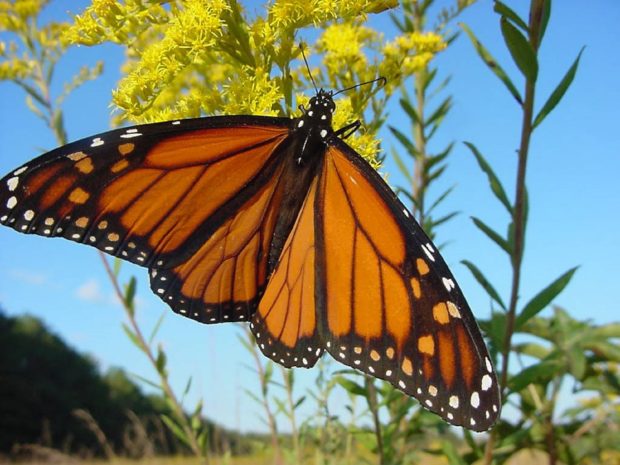
MONARCH BUTTERFLY
While our changing climate is responsible for severe weather and extreme drought, it is also responsible for the gradual change in North American landscapes — a creeping threat that puts species like the monarch butterfly at risk. Monarchs depend on temperature changes to signal when they should start their annual migration, and warmer temperatures in the North mean that the species may start its migration south up to six weeks late. This leads to butterflies freezing as they pass through the Midwest on their way south to Mexico. Researchers and scientists estimate that only a fraction of the population remains — in recent years, monarchs have decreased by 90 percent in North America since peak populations in the mid-90’s.
Suggested Tweet: Monarchs butterflies have declined 90%. @(CONGRESS MEMBER HANDLE) DYK climate changes hurts wildlife! #WildlifeClimateMarch http://bit.ly/2nT9Zba
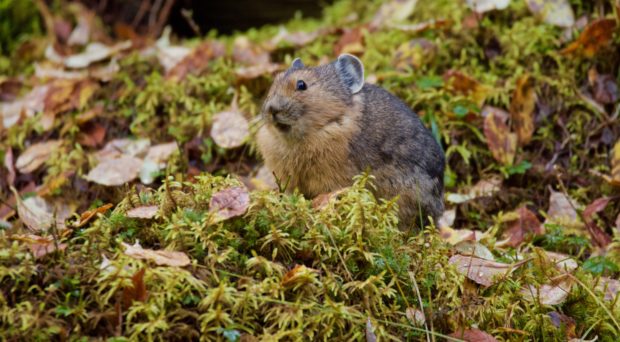
AMERICAN PIKA
The American pika, which live in the highest ranges of the Rocky Mountains, are particularly sensitive to small changes in their environments. When temperatures exceed approximately 70 degrees, American pikas can die within hours if they cannot escape the heat. Pikas were only found in 11 of 29 sites where they once lived in northeastern California and in the Great Basin, stretching from Utah’s Wasatch Mountains in the east to the Sierra Nevada and Cascade mountains in the west. The population is down about 44 percent compared to historical records.
Suggested Tweet: If we don’t get serious on climate change, @(CONGRESS MEMBER HANDLE), pikas may run out of places to go. #WildlifeClimateMarch http://bit.ly/2nT9Zba
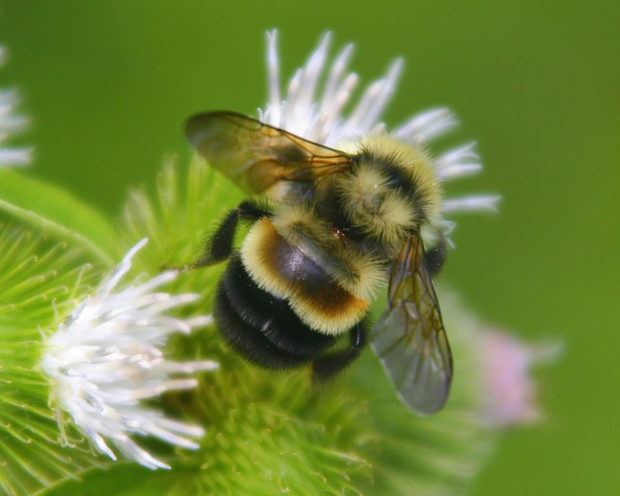
RUSTY-PATCHED BUMBLE BEE
The United States has an amazing diversity of native bees, with more than 4,000 species identified. However, native bees, and bumble bees in particular, are in decline. The rusty-patched bumble bee, one of over 47 native bumble bee species in North America, has declined dramatically and can now only be found in five of the 20 states where it once ranged. Climate change harms bumble bees through increased temperature and precipitation extremes, increased drought, early snow melt and late frost events. These impacts can cause disease and fewer flowering plants, which lead to widespread decline in bee populations.
Suggested Tweet: Native bees declined dramatically due to climate change. How will you help @(CONGRESS MEMBER HANDLE) #WildlifeClimateMarch http://bit.ly/2nT9Zba
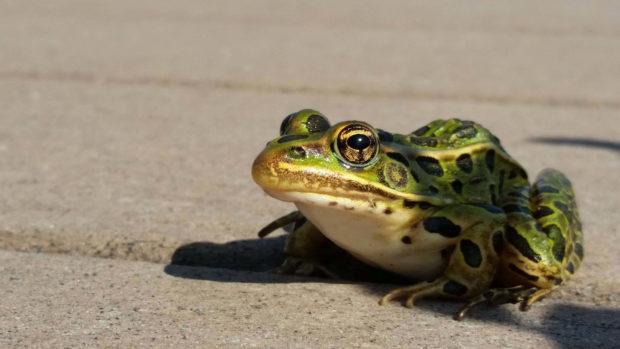
NORTHERN LEOPARD FROGS
Drought and changes in water temperature have negatively impacted the aquatic habitats of these unique frogs. Today, Northern leopard frogs have disappeared from, or become rare, across much of their western range, and have nearly disappeared from the Greater Yellowstone ecosystem. Today, approximately 42 percent of amphibian species (frogs, toads, salamanders) are threatened or declining in the US.
Suggested Tweet: DYK climate change harms aquatic habitats that amphibians rely on? @(CONGRESS MEMBER HANDLE) Join the: #WildlifeClimateMarch http://bit.ly/2nT9Zba
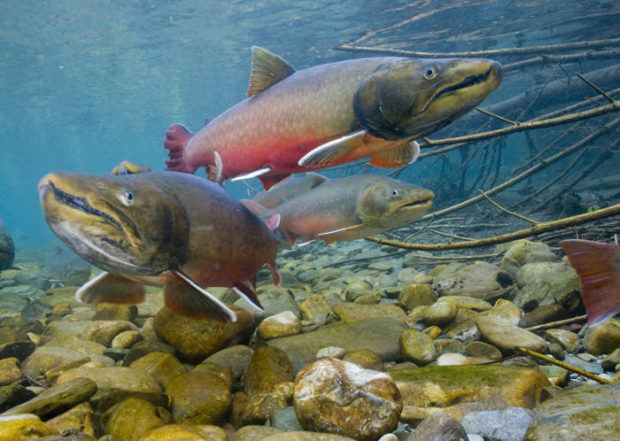
BULL TROUT
Researchers have found that in native bull trout, genetic diversity (which is critical for species to adapt to a warming world) is lowest where stream temperatures are warmest and winter flooding is highest. The bull trout has declined greatly in the contiguous 48 states, with remaining populations primarily small, fragmented and isolated. In Montana, a team of researchers is trying to save this iconic fish by moving them to cooler streams and rivers at higher elevations, but this fish is still struggling along with many other native trout species. Trout habitat is projected to decline almost 50 percent in the western United States by 2080 due to climate change impacts, and more than 40 percent of freshwater fish species are at risk in North America.
Suggested Tweet: Climate change = water too hot for bull trout & others. How will you help @(CONGRESS MEMBER HANDLE)? #WildlifeClimateMarch http://bit.ly/2nT9Zba
Join the Virtual Wildlife Climate March
JOIN THE MARCH: Tell Congress to address climate pollution and protect wildlife and habitat.
Not on Facebook or Twitter? Email your climate message and photo to alerts@nwa.org
1. The remarkable life of Yellowstone wolf 495M: A friend of mine sponsored a radio collar in my name for 495M. When I lived in Yellowstone, I followed his adventures as the alpha male of Mollie’s Pack. He died this year, but had a remarkable life and got to live and die like a true wolf. Read the full story here >>






[youtube]http://www.youtube.com/watch?v=feA2Dk4teVk[/youtube]
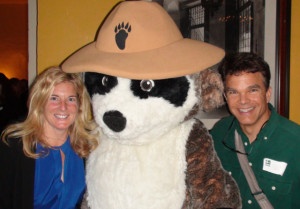
10. Ranger Rick at the Ahwahnee Hotel: During the first meeting of NWF’s California Advisory Council, we had a special visitor—Ranger Rick came to Yosemite! Also in the photo, council member Jack Laws, the talented naturalist and author of The Laws Field Guide to the Sierra Nevada.
Wednesday’s decision by California’s Supreme Court to allow the state to go ahead with a cap-and-trade program was an important step in the effort to limit and dramatically reduce the global warming pollution that threatens people and wildlife across the state.
The cap-and-trade system is a key piece of California’s groundbreaking Global Warming Solutions Act, which passed in 2006 and sets California apart as a leader in our country’s clean energy future. The law holds polluters like power plants and refineries accountable, requiring them to reduce their emissions over time–while spurring innovative green technologies and jobs.
Last year, two Texas oil companies desperately tried to roll back the Global Warming Solutions Act by pouring millions into a campaign to pass Prop 23, which would have suspended the landmark law. But a broad coalition came together to fight Big Oil in this epic battle, including the National Wildlife Federation’s (NWF) Action Fund–mobilizing more than 100,000 NWF members in the state and funding voter outreach efforts.
In the end, Prop 23 lost by 61% to 39%–a resounding defeat demonstrating that California voters see the global warming law as paving the way to a new clean energy economy.
Californians are already feeling the impacts of climate change on temperature, drought, and snowpack. Hotter, drier summers continue to fuel wildfires across the state–the number and severity of which are expected to increase if global warming is not curbed. And warmer temperatures could contribute to a 70-90 percent decline in spring snowpack in the Sierra Nevada, a natural reservoir that provides up to half the state’s water supply during spring and summer.
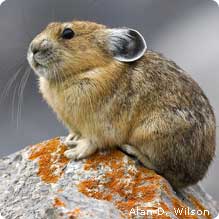
Rising temperatures are also taking a toll on wildlife in the Golden State–leading to habitat destruction and ecosystem loss, and forcing species to shift their ranges. One of the most dramatic examples may be the American pika, one of the first mammals in North America that may become extinct due to global warming. Higher temperatures have led to widespread losses of pika populations in recent decades as they are pushed farther and farther upslope, beyond the altitudes that offer the rock formations and plants they need to survive.
Climate change and the ecological responses are not a far-off notion. It is happening now. California’s Supreme Court decision strengthens the state’s leadership in a nation that is failing to find the political will to enact solutions to the growing climate crisis. I hope Washington is listening.