Read more to learn about these great students.
Elisa Burba

Hometown: Marietta, Georgia
Major/Minor: MA in Library and Information Sciences with a Certificate in Special Collections and Archives
Next steps: Pursuing an MA in interdisciplinary studies through the XE Program at NYU
One thing I learned working at the Engineering Library: I got practical application of the theoretical practices that I learned about in school.
Brylee Hoeg

Hometown: Grundy Center, Iowa
Major/Minor: History and ancient civilization major, anthropology minor, and Museum Studies Certificate
Next steps: Library and Information Studies MA program at the University of Iowa
One thing I learned working at the Engineering Library: I learned how to meet the needs of each individual person that comes through the doors of the library and how to find the best approach to figure out the answers to any questions or problems that patrons may have.
Eamonn Lally

Hometown: Chicago
Major/Minor: Civil engineering major, mathematics minor
Next steps: Hopefully to work abroad for a civil engineering company
One thing I learned working at the Engineering Library: USB-C laptop chargers are engineering students’ most prized possessions.
Wyatt Thompson

Hometown: Waukee, Iowa
Major/Minor: Exercise science major and a minor in sports and recreation management
Next steps: Graduate school for a Master of Science in athletic training
One thing I learned working at the Engineering Library: How much positive impact little things can have on someone’s day. Whether it’s a smile or the little candy machine during finals, little things go a long way.
]]>Want to see how we can help you? Stop by our reach out to us via email.

This semester, we have five graduating student employees! It has been wonderful to see these students grow during their time with us.

Adam Holmes
Hometown: Iowa City, Iowa
Degree: Bachelor of Science in mechanical engineering
Next steps: I will be working as a product development engineer at IDT in Coralville, Iowa.
What piece of advice would you give yourself in your first year of college? Don’t be afraid to ask for help!

Elisa Burba
Hometown: Marietta, Georgia
Degree: Bachelor of Arts with a double major in English and history with a minor in gender, women’s, and sexuality studies
Next steps: I will be staying in Iowa City to complete the final year of my Masters of Library and Information Science with hopes of later attending a program to earn a PhD in history.
What piece of advice would you give yourself in your first year of college? Allow your plans to change. What you came into college wanting to do with your life probably won’t be what you leave college wanting to do. Explore as many experiences as possible, and you’ll find what you’re passionate about!

Jiberle Mustefa
Hometown: Iowa City, Iowa
Degree: Bachelor of Business Administration in management with a Certificate in International Business
What piece of advice would you give yourself in your first year of college? Trust God’s plan. Life has many twists, turns, valleys, and mountains to climb and these years will teach you that in a whole new way. It’s important to remember that at the end of this journey, the view is worth it all, and all the beauty comes from the moments it took to get there!

Mercyanna Brandenburg
Hometown: Algona, Iowa
Degree: Bachelor of Science in industrial and systems engineering with a minor in business
Next steps: I am moving to Jacksonville, Florida to be a project engineer.
What piece of advice would you give yourself in your first year of college? I would tell myself to trust in God during those hard exams. And remember my identity is found in Christ, not measured by success on earth!

Hometown: Karachi, Pakistan
Degree: Master of Science in electrical and computer engineering
Next steps: I will take a manufacturing engineering role at Tesla.
What piece of advice would you give to yourself in your first year of college? Everything will fall into place—don’t stress about internships or the next job. You’re exactly where you need to be; focus on giving your all in whatever you do. Hard work won’t create instant breakthroughs, but it builds the momentum that turns effort into opportunity. Trust the journey, have fun!
]]>- A whole number with a square root that is also a whole number is called a perfect square. The days on which we celebrate Square Root Day are all examples of perfect squares, since we don’t have decimal days or months.
- Negative numbers do not have square roots, since multiplying a number by itself will always give a positive (i.e. -4 x –4 = 16). However, you can express the square root of a negative number by using imaginary numbers (4i x 4i = -16).
- We don’t know where exactly the square root symbol came from. Some theories say Arab mathematicians used the first letter in the Arabic word for root, while others believe it came from the Latin letter “r,” which is also the first letter in the Latin word for root.
- The radix we use today was created by Descartes, who combined two previously used notation symbols.
- The ancient Mesopotamians might have calculated a square root approximation by using a sequence of rectangles(1). There’s a Mesopotamian tablet from the Old Babylonian period that contains square root calculations expressed exclusively with vertical wedges representing ones and tens arranged relationally to each other.(2)
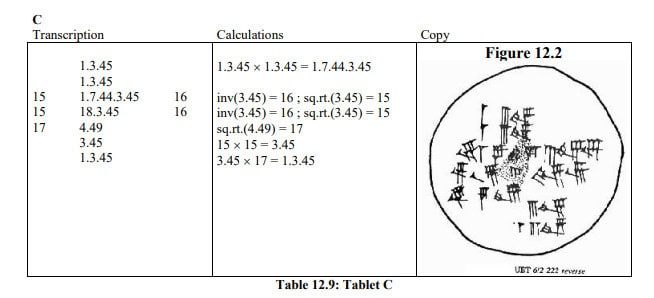
MESOPOTAMIAN TEXTS. Karine Chemla. The History of Mathematical Proof in Ancient Traditions, 2012. ffhal-01139635f
Special thanks to collaborator Carol Hollier from the Sciences Library for her contributions to this blog post.
References:
- Daniel F. Mansfield (2023) Mesopotamian square root approximation by a sequence of rectangles, British Journal for the History of Mathematics, 38:3, 175-188, DOI: 10.1080/26375451.2023.2215652
- C. Proust, Interpretation of reverse algorithms in several Mesopotamian texts, in The history of mathematical proof in ancient traditions, 384–422, translated by Micah Ross, Cambridge Univ. Press. See chart on page 21 of the preprint: https://hal.science/hal-01139635/file/12Proust-pp.pdf

2025 Winners
Grand Prize: Chemical and Biochemical Engineering Faculty/Graduate Students

2nd Place: Chemical and Biochemical Engineering Undergraduates – American Institute of Chemical Engineers (AIChE) Student Group
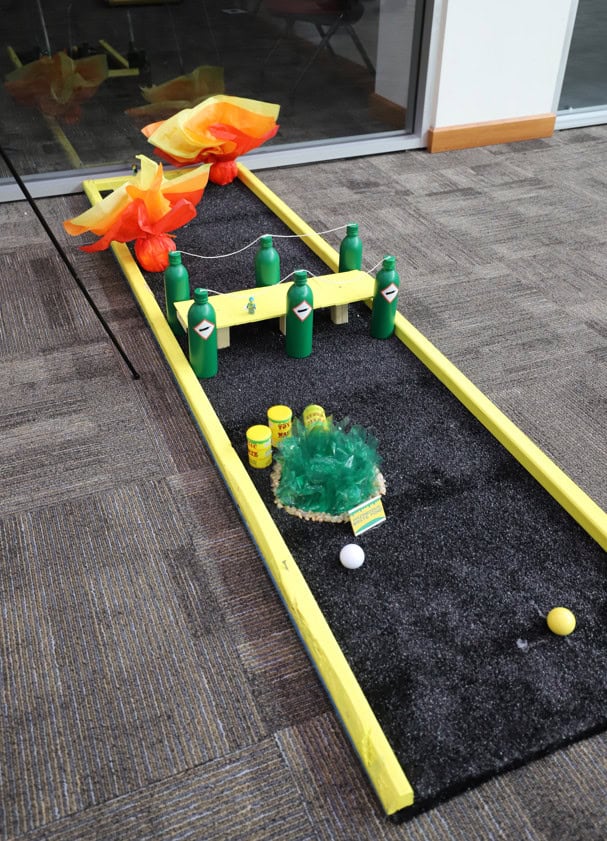
3rd Place: Industrial and Systems Engineering Undergraduates – Institute of Industrial and Systems Engineers (IISE) Student Group
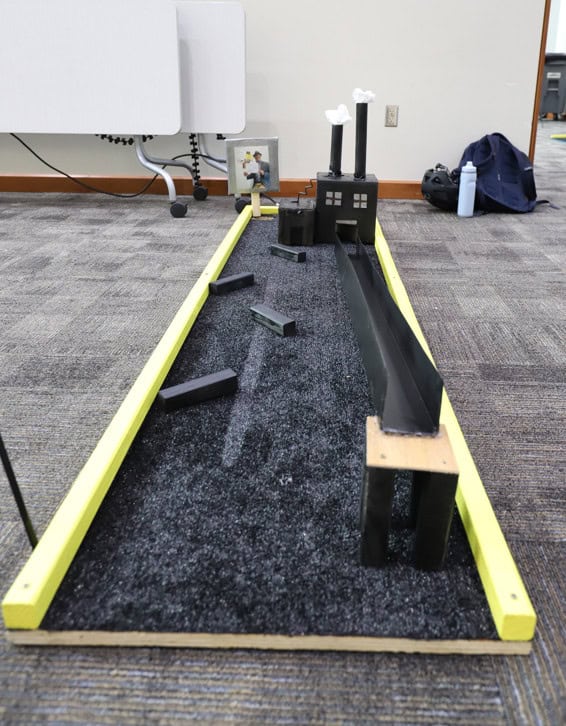
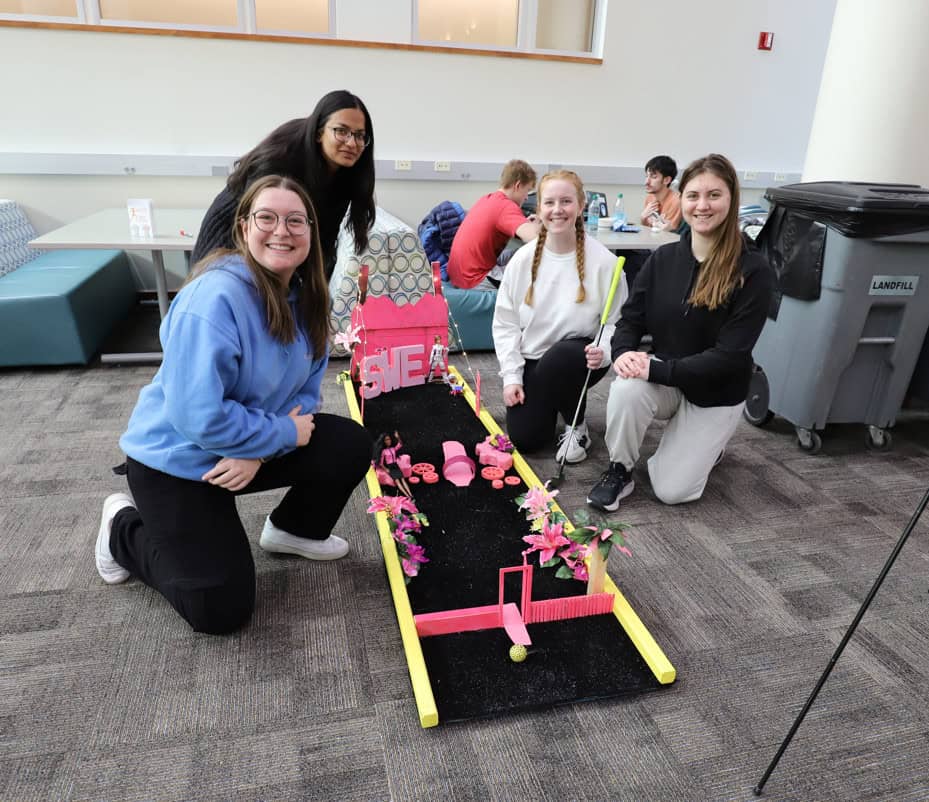
People’s Choice: Society of Women Engineers (SWE)
To celebrate the International Love Data Week (Feb.10–14, 2025), Marina Zhang, engineering and information librarian at the University of Iowa Lichtenberger Engineering Library, spoke to Andres Martinez about his experience in data sharing and reuse; what suggestions he has for those who may own, share and publish data; and what makes data sharing so important.
Martinez is an associate research engineer at IIHR–Hydroscience and Engineering and co-investigator of the National Institute of Environmental Health Sciences (NIEHS)-funded Iowa Superfund Research Program. He has extensive experience in data collection, reuse and analysis.
Like other researchers in the Iowa Superfund Research Program, Martinez is proactive about data sharing and reuse. For instance, he recently compiled and published a data collection with the Pangaea Data Repository (DOI: 10.1594/PANGAEA.9727050), used R to analyze the data (code published at DOI: 10.5281/zenodo.13887687), and published the results in ACS ES&T Water: “Spatial and Temporal Analysis, and Machine Learning-Based Prediction of PCB Water Concentrations in U.S. Natural Water Systems” (DOI: 10.1021/acsestwater.4c00542).
Q: Tell us about your research area.
A: My research focuses on investigating the behavior of persistent organic pollutants in the environment. To achieve this, I perform environmental sampling and develop new sampling methods to improve spatial and temporal resolution. Analytical methods are also a key aspect of my work. Using the data collected, I analyze the occurrence, distribution, and trends of these chemicals. Finally, I develop mathematical models to predict their behavior in various environments.
Q: It seems like the data underlying your paper is obtained from various external sources. Where did the data come from?
A: Yes, that is correct. Most of the data were obtained from U.S. Environmental Protection Agency reports, a few environmental government agency websites like State Departmental of Environmental Quality, and, to a lesser extent, from scientific papers.
Q: Have you encountered any difficulties with data acquisition? If so, what are the difficulties?
A: To obtain most of the U.S. Environmental Protection Agency reports, I had to submit Freedom of Information Act requests and wait for a while, which was time-consuming. However, I think the most challenging part was finding the government agency websites and navigating them to locate the data. That part truly took a lot of time.
Q: Have you encountered any challenges when reusing the data you obtained? If so, what are the challenges?
A: I believe there were two main challenges. First, some of the reports were old PDF files that were not OCRed, so I had to manually extract the data. Second, the tables in these reports and on the websites were not suitable for my analysis. As a result, I had to spend additional time reformatting the data.
Q: What recommendations do you have for those who may own, share, and publish data so that others can have a smooth experience in data acquisition and reuse? What specific tools or platforms that facilitate smooth data sharing and reuse do you suggest?
A: This is a great question. I think the best advice is to talk about your project with someone knowledgeable in data management before you start collecting or working with the data. It can save a lot of time in the long run. R and Phyton are great tools for wrangling data, for example, changing the format of the data.
Q: How have the Libraries assisted you with data management and sharing?
A: It was very helpful. As a member of a research center, the Iowa Superfund Research Program, we have weekly meetings where different projects and researchers present their work. In a few of those meetings, Zhang and Brian Westra from Research Data Services at the UI Libraries gave presentations about data management. From those sessions and from one-to-one conversations, I realized that doing things correctly from the beginning, even if it took more time, would ultimately pay off. For example, creating a unique name ID for each sample, which included basic information such as location and date, proved to be very useful. Further, recording the source of the data as a reference was also very helpful. This made it easy to go back and verify the data when needed. They also guided me on how and where I can share my data and scripts, ensuring the correct references are created.
Q: It seems like you already published the complied data underlying your paper through making it available in a data repository. Is it required or encouraged by the journal publisher or your funder like NIEHS? If not, what motivates you to do that? What are the benefits you perceive from sharing the data?
A: This depends on the journal, but in this case, it is encouraged by the journal since the journal’s author guidelines clearly state their Research Data Policy. NIEHS requirements also have led to significant changes in data management and sharing. I think it is important to publish data alongside the paper. It helps organize your data, and others can easily find it if they want to use it. It’s also useful for me to know where the final version of the data is located. Furthermore, you gain two references when you publish both the paper and the data, and if other researchers are only interested in the data, they can cite it separately from the paper.
Research Data Services provides support to researchers across the data lifecycle, from data management and sharing plans to managing data during research to sharing and preserving data and code. Learn how you can receive assistance on its website. 
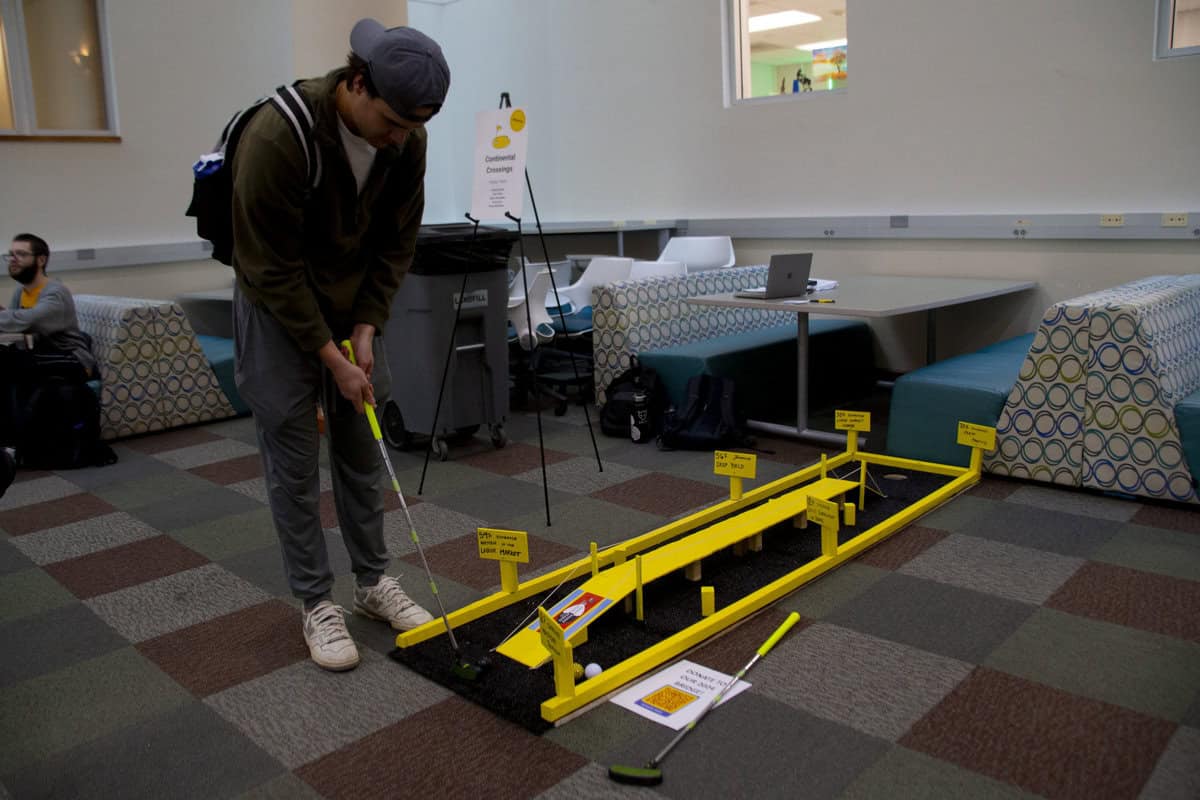
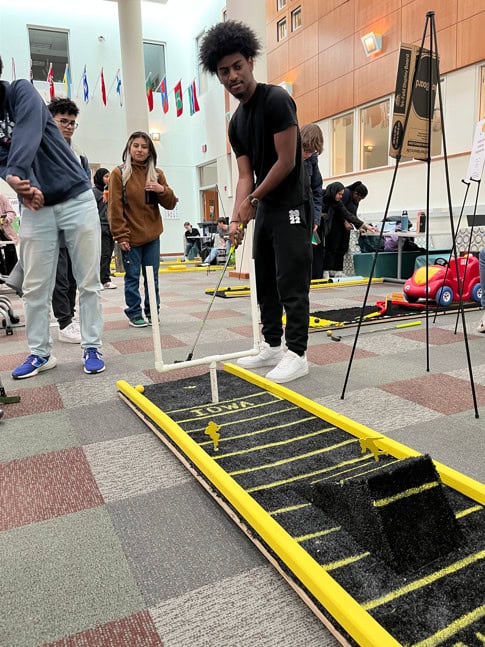
]]>Join us on Thursday, Feb. 27, 2025, 1–3 p.m., as each College of Engineering department competes to design the best fairway for a mini golf design challenge! See the final designs on Thursday afternoon in the Student Commons of the Seamans Center.
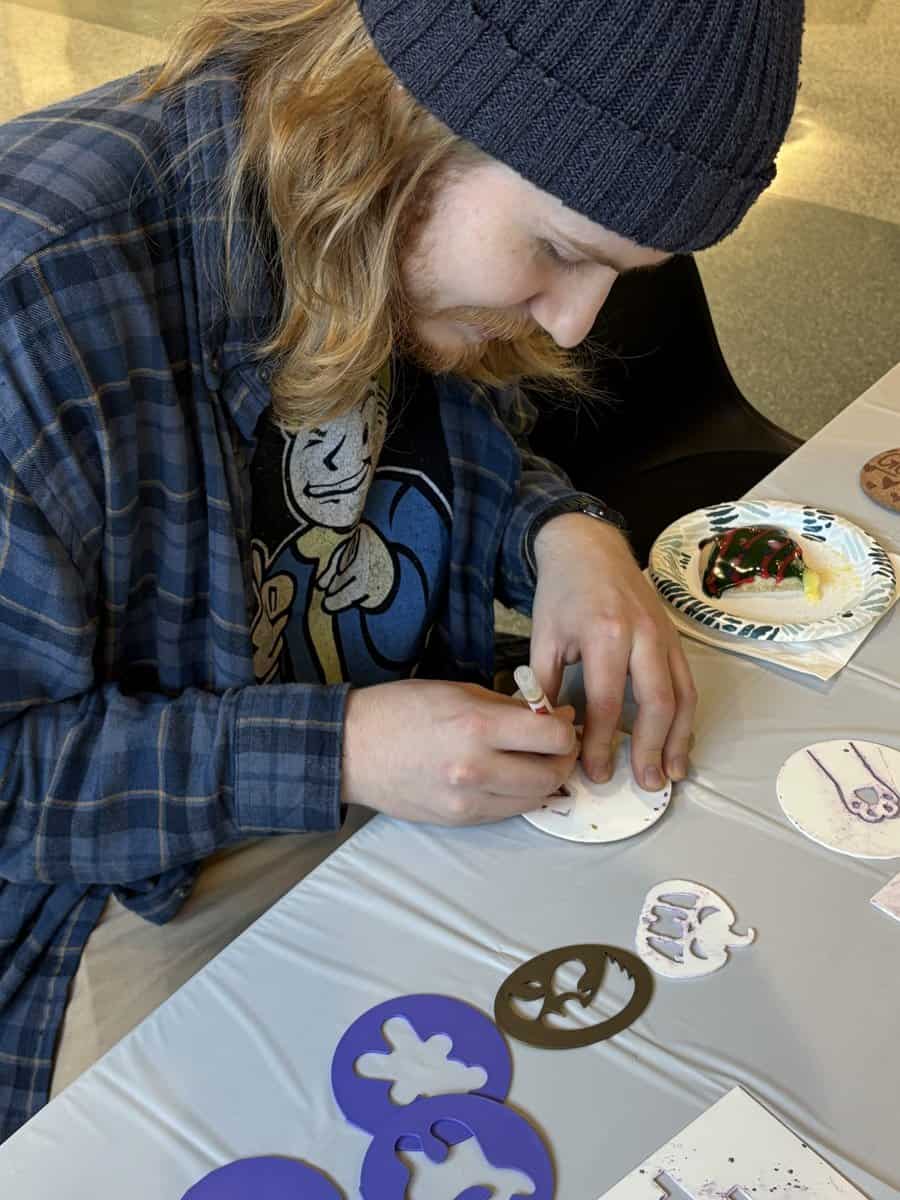
Give your brain a break and get creative for a few minutes with monthly themed crafts. No registration is required for these drop-by events. Light up the dark days with our first Maker Break, DIY light up paper lanterns on Thursday, Feb. 11, 11:30 a.m.–1:30 p.m. in the Engineering Student Commons.
Soldering is one of the most fundamental skills needed to explore the world of electronics. This workshop will help you gain a better understanding of electronics and be better equipped to create your own. This hands-on workshop is a standalone event. Taught by Kara Beauchamp, instructional lab manager. Co-sponsored by the Institute of Electronic and Electrical Engineers (IEEE) and the Lichtenberger Engineering Library. We are offering this class twice: Wednesday, March 5, 12:30–1:30 p.m. or Thursday, March 27, 3:30–4:30 p.m. Sign up today to save your spot!

Get ahead on your research skills! These workshops are designed for graduate students and faculty but also open to undergraduates. Power-up your dissertation writing with our first workshop Introduction to LaTeX/Overleaf on Thursday, Feb. 11, 3:30–4:20 p.m. in the Engineering Library Creative Space (2001C SC) and online. Sign up today to save your spot!

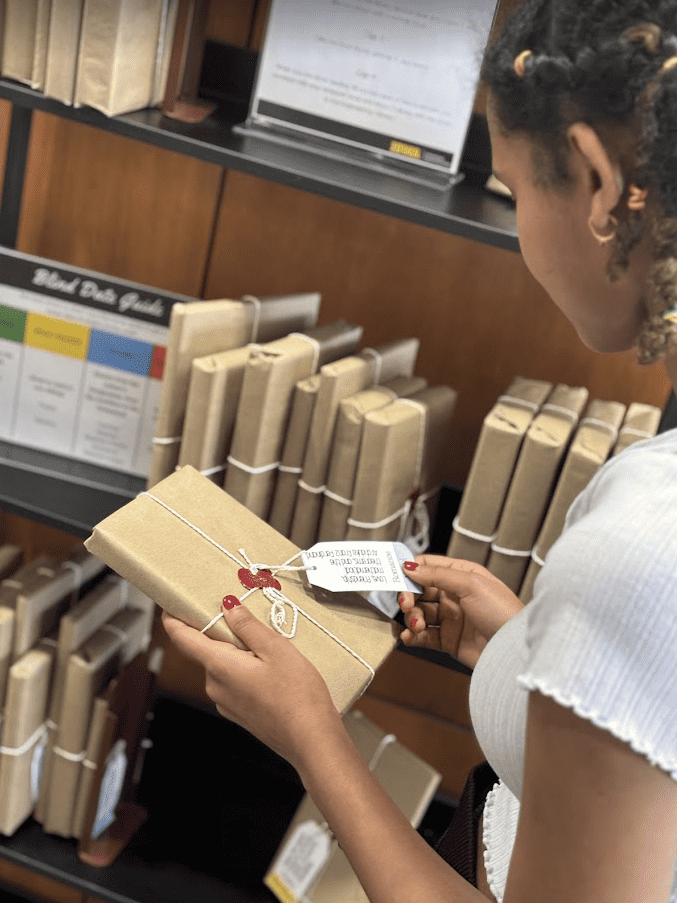
Blind Date with a Book
Will it be true love? Pick up a wrapped book from the display in the Engineering Library and check it out at the service desk. It’s a great chance to find something new to read in the new year. Available now until Feb. 28.
Individuals with disabilities are encouraged to attend all University of Iowa–sponsored events. If you are a person with a disability who requires a reasonable accommodation in order to participate in this program, please contact Kari Kozak in advance at 319-335-6047 or lib-engineering@uiowa.edu.
]]>Mon, Dec. 16–Thu, Dec. 19 | 8:30 a.m.–midnight
Fri, Dec. 20 | 8:30 a.m.–6 p.m.
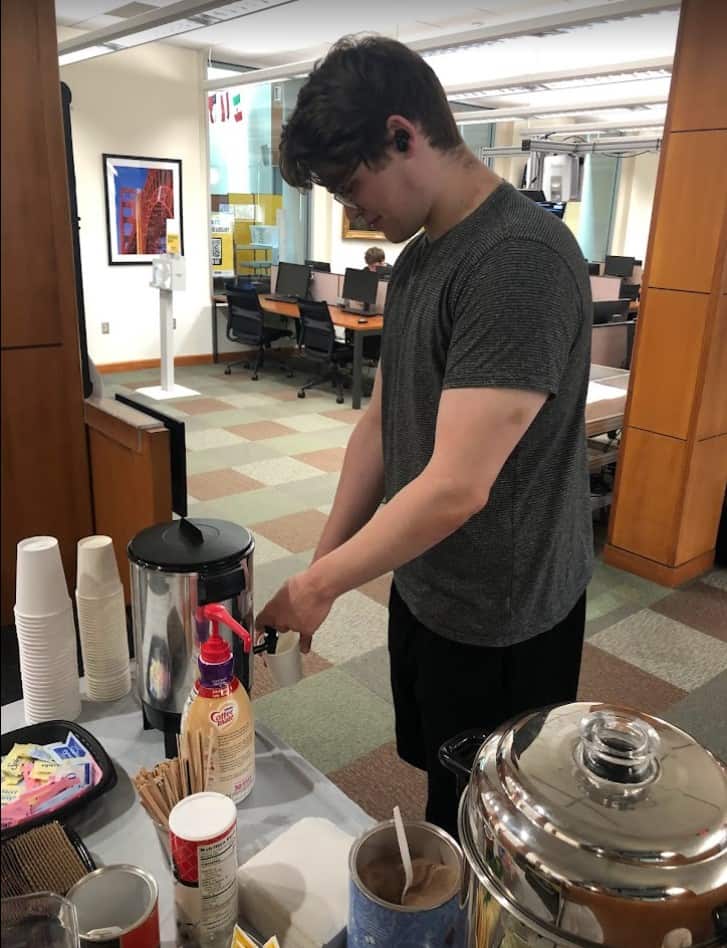
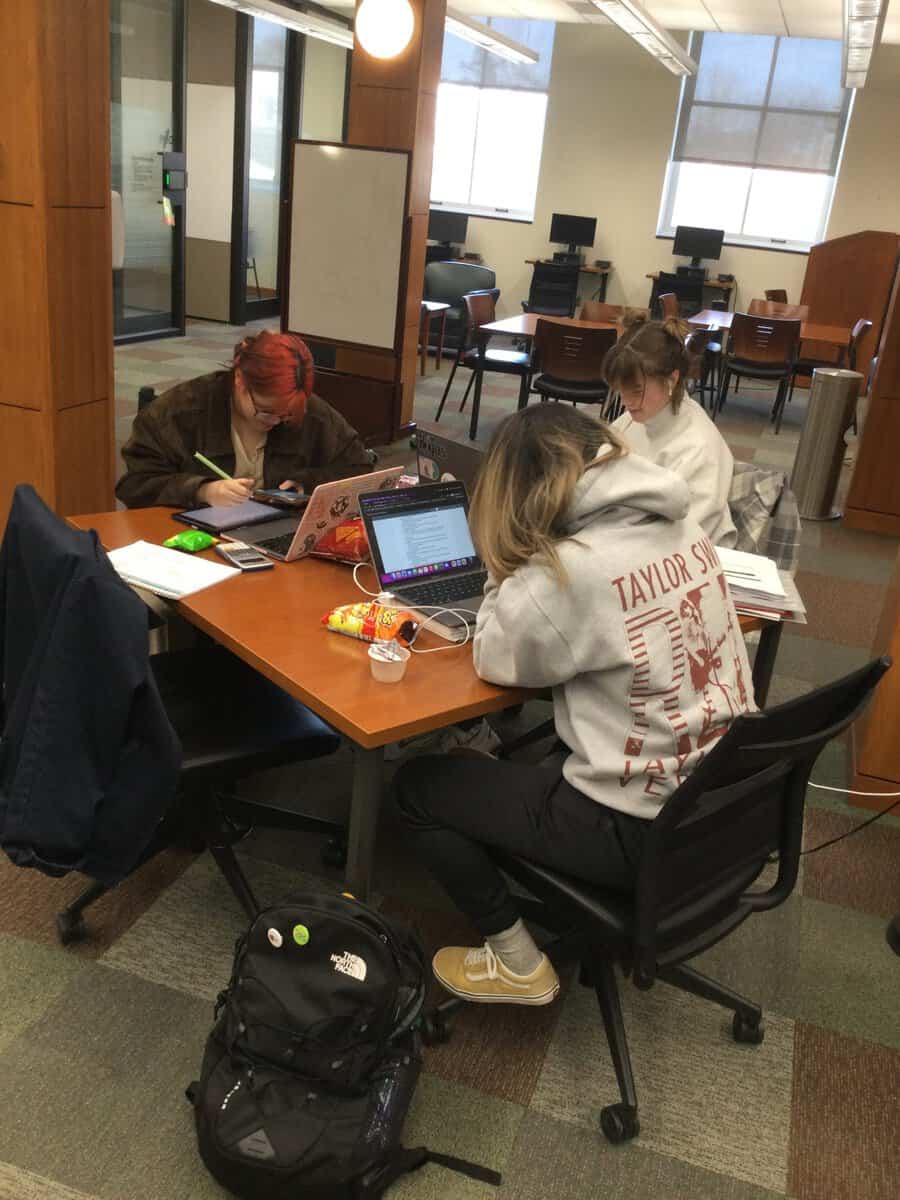
Starting Monday, we will serve FREE coffee, tea, and hot chocolate to fuel your studying.
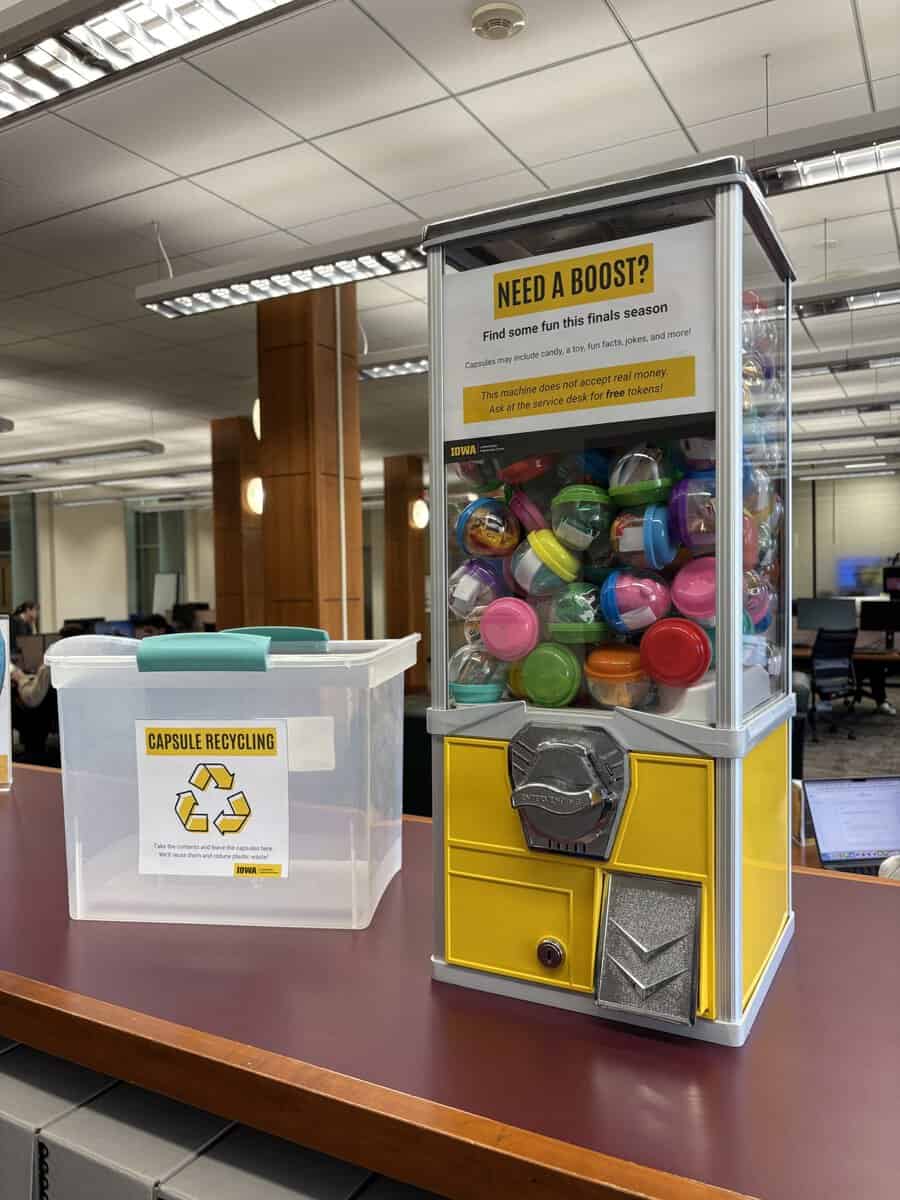
This year we have brewed up some extra fun with our Finals Fun Vending Machine! Stop by the service desk to pick up free custom tokens and give the machine a spin. Each spin gives you a capsule that contains candy or a toy, along with words of encouragement, a cheesy joke, or a fun factoid.
Six fairways are reserved for each of the six departments: Biomedical Engineering, Civil and Environmental Engineering, Chemical and Biochemical Engineering, Electrical and Computer Engineering, Industrial and Systems Engineering, and Mechanical Engineering. Sign-up to be on a team at: https://www.lib.uiowa.edu/eng/events/engineeringopen/
Six additional fairways are available for clubs and groups that are university–recognized and affiliated with the College of Engineering. If you are affiliated with a club or team and would like to build a fairway, please email lib-engineering@uiowa.edu with your club name and team members. Space for teams is limited and offered on a first come, first served basis.
Engineering Open is sponsored by KEEN, the Lichtenberger Engineering Library, College of Engineering | Engineering Technology Center, and NEXUS.
Capture Your Research is an annual image competition that celebrates research across campus at the University of Iowa. On Tuesday, Nov. 12, we held the Capture Your Research Reception and Awards Ceremony. The top 25 images were displayed and awards were presented. Check out the gallery below to view the winners of each of the four categories.
Sponsors for this event are the Lichtenberger Engineering Library, Hanson Center for Communication, Nexus | Artineers, and Office of Undergraduate Research.
]]>