The post Journagan Ranch celebrates record-breaking 35th annual sale appeared first on Agriculture Blog.
]]>The ranch hosted its Genetically Yours 35th Anniversary Sale Oct. 3 at the Darr Agricultural Center. The sale grossed $709,200, surpassing last year’s record of $650,000.
Behind the numbers were months of preparation by staff and students.
Record results
For farm operations manager Garrett Kirk, this year’s sale was a success from start to finish.
“Preparation leading up to the sale and the event itself went smoothly,” Kirk said.
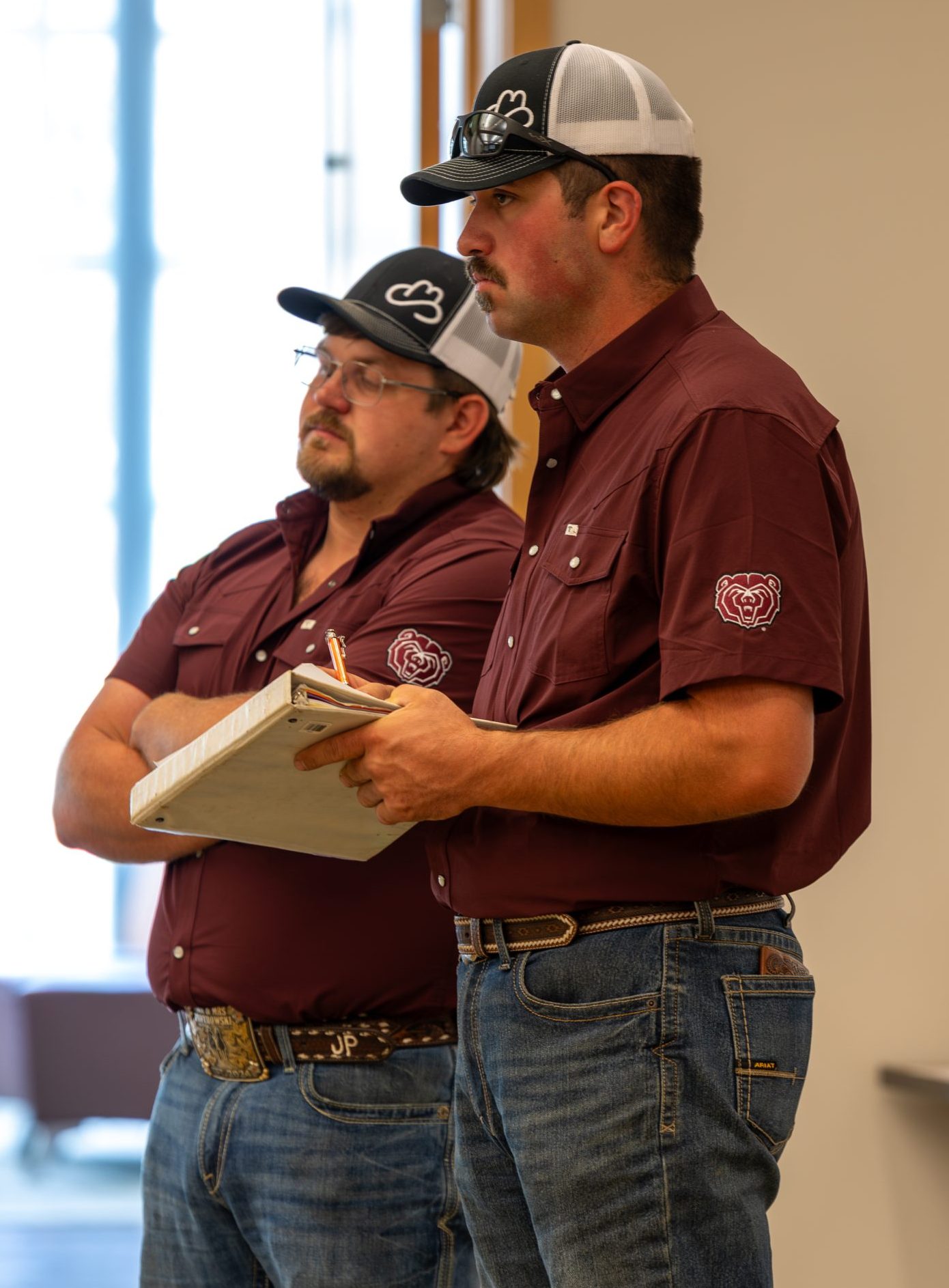
The ranch offered 103 lots and sold 102 after withdrawing one bred heifer. More than 200 people attended the event.
Kirk noticed more online and out-of-state buyers, while fewer attended in person.
He said rising diesel prices and production costs partly explained the shift.
For ranch manager Marty Lueck, the results showed the ranch’s focus on raising quality cattle continues to pay off.
“We share our genetics with the buyer,” Lueck said. “It’s an equation we’ve used for a long time, and it works.”
He credits the ranch’s success to carefully evaluating its cattle and using DNA testing to improve the herd’s genetics.
Getting their hands dirty
For students Grace Manning and Easton Cook, preparing for the sale meant gaining experience beyond the classroom.
Students fed and cared for cattle, prepared display pens and organized the auction space.
Manning, an agriculture graduate student, also trimmed the cattle’s hair to showcase their structure and muscles.
“I learned about the hands-on side of managing cattle, including how to determine how much feed they need, how to fix waterers and how to properly clip cattle,” Manning said.
For Cook, a junior agricultural education major, the experience was especially valuable. He had never worked at a cattle sale before.
He learned how to sort cattle without causing stress and watched staff provide medical care when needed.
Lueck believes hands-on experience teaches students a strong work ethic they can carry into any profession.
Hard work pays off
Kirk praised the students’ efficiency in preparing.
“It was the smoothest start to sale day since I’ve been a part of the process,” Kirk said.
For Manning, the hard work paid off when her favorite cow-calf pair sold for one of the highest prices of the day.

Cook also appreciated how Lueck recognized students’ contributions.
“My work felt worthwhile seeing how much Marty cared about our hard work and effort put into the sale,” Cook said.
According to Lueck, watching students grow into agricultural professionals is one of the most rewarding parts of his work.
Lueck began managing Journagan Ranch in 1981. He has spent 45 years helping fulfill Leo Journagan’s vision of providing students with hands-on ranch experience.
“I enjoy being able to share the ranch with the students,” he said.
Kirk himself began as a student under Lueck’s guidance and now helps teach the next generation of agriculture leaders.
Continuing a longstanding tradition
The Journagan Ranch team is already looking ahead to next year.
Kirk hopes to bring in more students and improve the process to make the event easier for everyone.
“Every sale gives us something to improve on for the next year,” he said.
Learn more about Journagan Ranch
The post Journagan Ranch celebrates record-breaking 35th annual sale appeared first on Agriculture Blog.
]]>The post Staff member earns statewide award for fostering belonging appeared first on Agriculture Blog.
]]>It’s about helping students find their path and feel a sense of belonging at Missouri State University.
That dedication earned Katy Seery, senior academic advisor in the Darr College of Agriculture, the Missouri Academic Advising Association (MACADA) Outstanding Academic Advisor – Primary Role Award.
The recognition comes as she celebrates 10 years at Missouri State.
Throughout her career, Seery has focused on building relationships with students.
“I truly want to know what’s going on in their lives, so I can help them get to where they want to be,” she said.
Finding her place in advising

Seery began advising in 2016 when she joined Missouri State’s College of Business.
That same year, she earned a bachelor’s degree in general business. In 2020, she completed a master’s degree in project management and a graduate certificate in hospitality administration.
While still taking classes and advising, Seery researched her interest and published an article titled, “Retention strategies for online students: A systematic literature review” in the Journal of Global Education and Research.
In 2023, Dr. Stephanie Hein, faculty emeritus and former director of the School of Hospitality Leadership and now Missouri state representative, invited her to join the hospitality advisement team.
Hein helped Seery develop a more personal approach to advising.
“Dr. Hein taught me how to meet students where they’re at and guide them with empathy,” she said.
Today, Seery enjoys working with agriculture students because many arrive with a passion for their field. And she helps them turn that passion into a career.
More than choosing classes
Seery wants students to know that advisors can help with more than schedules.
During their first two years, students work with Seery and Kimmy Walker, director of the college’s Student Success and Advisement Center, to prepare for college success.
They connect students with campus resources, faculty and hands-on opportunities.
“They don’t know what they don’t know,” Seery said.
Sometimes, that means introducing students to opportunities they never knew existed.
For example, she helped a student interested in planning museum events discover a museum studies minor.
Seery is currently pursuing her second master’s degree, the Master of Arts in Writing – Technical and Professional Writing.
She hopes to use her grant writing skills to find more financial support for students.
“Continuing my education is another way to help students succeed,” she said.
A well-deserved honor
Seery received the award at the 2026 MACADA Annual Conference on Sept. 18 in Moberly.
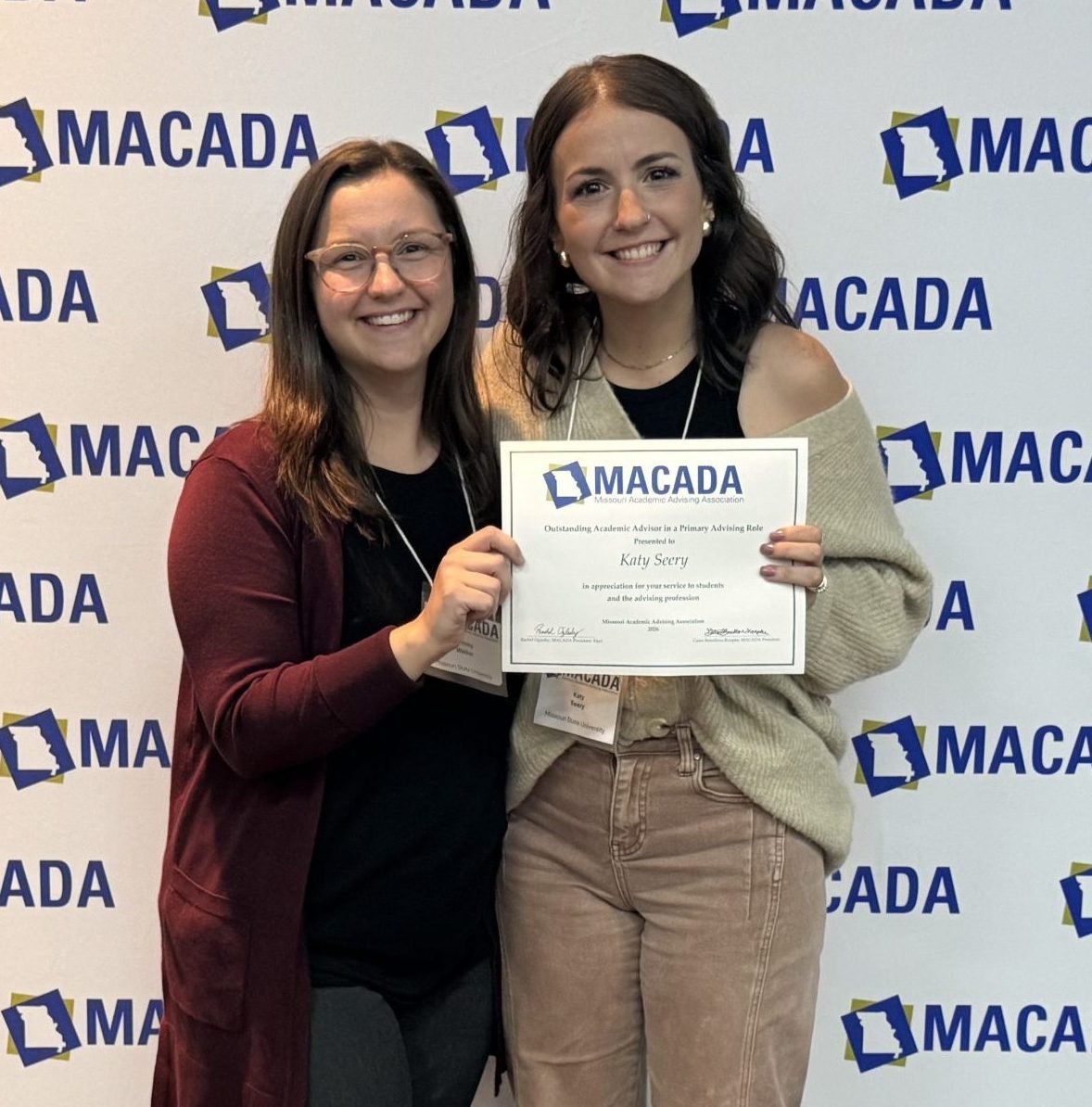
Walker nominated her with support letters from Dr. Kara Wolfe, director of the School of Hospitality and Agricultural Leadership, and several students.
One student shared how Seery helped her during student orientation. Their conversation eased the student’s nerves and made her feel like she belonged at Missouri State.
Seery wants every student to feel welcome and comfortable asking questions, no matter how small.
“If we wrap up a meeting and a student says he or she feels less stressed, I know I’m doing my job right,” she said.
A connection beyond graduation
Seery’s support for students does not end at graduation.
She enjoys watching graduates start jobs, build families and explore opportunities. She encourages them to stay in touch through LinkedIn and other social media so she can celebrate their achievements.
“I want students to know we’re vicariously living through them as they chase their dreams,” she said.
Learn more about the Student Success and Advisement Center
The post Staff member earns statewide award for fostering belonging appeared first on Agriculture Blog.
]]>The post FFA state officer invests in the next generation appeared first on Agriculture Blog.
]]>She grew up on a farm in Mount Vernon, Missouri, and would follow her grandmother around to feed chickens. Her father even rigged a car seat into his tractor when she was younger so she could ride along while he baled hay.
Her childhood on the farm sparked an interest that continues today. McDonald is now a sophomore studying agriculture education at Missouri State University. She plans to graduate in May 2029.
Finding her voice
She began raising pigs at 14 and showing them at 16. Rearing pigs has taught her life lessons like patience and responsibility.
“Being in charge of taking care of an animal’s quality of life shapes you as a person unlike anything else,” McDonald said.
Her effort and dedication have led to success in the ring. This summer, she earned reserve champion Yorkshire gilt at the Ozark Empire Fair with her pig, Georgia.

While raising livestock strengthened her work ethic, her involvement in Future Farmers of America (FFA) since 2021 helped McDonald discover her voice.
“In middle school, I was the quietest person you’d ever met,” she said. “And then FFA changed my life.”
This change led her to serve as a Missouri FFA state vice president for the 2025-26 term. She described it as the “coolest experience.”
Traveling across Missouri allowed her to meet members from different chapters and learn what amazing things they did.
“When I got tired from traveling, seeing the FFA members’ passion reignited my fire,” McDonald said.
Passing it on
McDonald’s decision to pursue agriculture education began at the Missouri FFA State Convention in 2022.
While walking with a student teacher, she stopped at Missouri State’s agriculture booth to speak with faculty. Their kindness inspired her to become a Bear and study agriculture education.
Since then, she has not considered another profession.
“It’s what I want to do as a career,” she said.
Her involvement with Agriculture Education on the Move, a program through Missouri Farmers Care, has reinforced that decision.
In high school, McDonald taught third graders about agriculture through the program. Now, during an annual training day at Missouri State, she helps high school students prepare to teach those lessons to the next generation of third graders.
The experience taught her that not every student has the same agricultural background. Terminology she considers second nature can be unfamiliar to those who have not grown up around livestock.
It is a perspective she hopes to carry into her future classroom.
Still learning and growing
For McDonald, Missouri State provides a quality education while remaining close to home.
“The people make the place,” McDonald said.
She values the relationships she is building with professors and fellow agriculture majors. She knows those connections will benefit her in her future career.
When the time comes to setting up her own classroom, she already knows the kind of educator she wants to become.
“I had the best ag teachers,” McDonald said. “They were so supportive, and they pushed me to become my best self. I want to do the same for my future students.”
Learn more about agriculture education
The post FFA state officer invests in the next generation appeared first on Agriculture Blog.
]]>The post Career fair conversations bring résumés to life appeared first on Agriculture Blog.
]]>Missouri State University students explored both possibilities on Sept. 23 at the Darr College of Agriculture Career Fair. It took place at the Darr Agricultural Center.
Twenty-two employers represented a variety of industries.
Discovering what’s out there
Senior animal science major Madison Dent attended the event hoping to find a full-time position.
She developed an interest in food inspection while working at a butcher shop in high school. She later interned with American Food Groups in Wisconsin as part of the inspection staff.
Those experiences led her to explore possible jobs with the U.S. Department of Agriculture (USDA).
“Since I already follow them on LinkedIn and know people who work there, I plan to apply for a job with them soon,” Dent said.
Turning interests into careers
Senior wildlife conservation major Fisher Stephans arrived with another career path in mind.
He hopes to work in environmental compliance and help organizations follow environmental laws and regulations.
He has already gained experience in several settings, including CoxHealth and Missouri State. He helped professors conduct bird research and set up cameras for mammal monitoring.
At the fair, Stephans spoke with representatives from George’s, Inc, MFA Incorporated and USDA. The conversations showed him that opportunities matching his interests are available.
He plans to continue one of those conversations by connecting with Jacob Hall on LinkedIn. Hall is a recruitment specialist with MFA.
“I learned so much more about the companies by talking to their representatives,” Stephans said.
Communication goes beyond the résumé
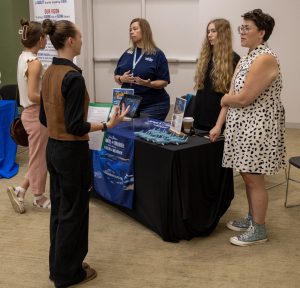
Employers were not only looking for experience; they were paying attention to how students communicated.
Hall has attended 24 career fairs while recruiting for MFA. He came to Missouri State seeking candidates for managerial roles.
“Their ability to communicate is more important than skills and experience,” he said.
According to him, Missouri State students stand out for their hands-on experience. Agriculture majors can gain experience at facilities like Journagan Ranch, Kindrick Family Farm and the Mountain Grove vineyards.
Melissa Gibson, volunteer/intern program manager at Wonders of Wildlife, noticed students’ preparation. They came ready to ask questions and had researched the organization.
“You get a better first impression of who people are when you meet face-to-face. Their personalities shine through,” she said.
Finding the right fit

Not every student walks into a career fair knowing exactly what they want to do.
Dane Zimmerman, early careers talent acquisition manager at George’s, Inc., encouraged students to explore careers through internships.
“Be open, be willing to do something you’re not sure about,” he said.
Marti Davis, recruiting and human resources specialist at S&H Farm Supply Inc., offered similar advice. She encouraged students to identify their strengths and consider what they want from a career.
For agriculture students deciding what comes next, the fair offered a place to start.
Learn more about Darr College of Agriculture
The post Career fair conversations bring résumés to life appeared first on Agriculture Blog.
]]>The post Carrie’s Café takes taste buds around the world appeared first on Agriculture Blog.
]]>Managed by eight hospitality leadership students in the School of Hospitality and Agricultural

Leadership, the restaurant will open on Oct. 1. Its first four-week menu, “European Crossroads,” will feature dishes inspired by German, Austrian and Polish cuisines.
Then, students will switch gears for “Bayou and Bamboo,” a menu combining Cajun and Asian recipes for the rest of the fall semester.
Carrie’s Café is located on the fourth floor of Pummill Hall. It opens on Tuesdays and Thursdays from 11:30 a.m.-1 p.m.
“Creating a restaurant from the ground up is a lot of hard work; it takes teamwork to ensure we’re successful,” said Wajeana Bonczyk, senior instructor of hospitality leadership.
Crossing into Europe
In October, students will serve European dishes, such as giant Bavarian pretzels with creamy beer cheese and crispy pork schnitzel, a golden-breaded pork cutlet.
Senior Curtis Boyer is most excited for the classic Reuben sandwich with corned beef and Thousand Island dressing. After graduation, he plans to become a general manager at a resort and eventually open a Culver’s restaurant after working there for a few years.
“Working at Culver’s has prepared me to work front of house at Carrie’s Café,” he said.
From the bayou to bamboo
Senior Karsyn Crowther cannot wait for the Cajun and Asian menu in November. It will feature Cajun andouille egg rolls and shrimp Alfredo ramen and sweet chili chicken croissants.
All these items have one thing in common: spice.
With a minor in accounting, her dream is to work in the field and one day open her own coffee shop.
“With what I learn at Carrie’s Café and in my classes, I’ll know how to manage a coffee shop and be my own accountant,” she said.
Learning beyond the menu
Returning for her second semester with Carrie’s Café, senior Gracie Marsh continues building the skills she hopes to use in her family’s restaurant.
When Marsh was 9, her parents opened FD’s Grillhouse (FD’s), a local upscale restaurant serving North Atlantic salmon, USDA Certified Choice steak and homemade key lime pie. She grew up in the kitchen and now helps at the restaurant between classes.
“I do a little bit of everything from serving to management. I would like to take over FD’s one day and keep it in the family,” she said.
Her mother taught her how to provide exceptional customer service, which she puts to work at Carrie’s Café.
Serving up experience
Bonczyk guides students through the process of turning their classroom knowledge into a functioning restaurant.
Students begin by taking classes she teaches, such as food safety and sanitation before progressing through food preparation, banquet operations and finally restaurant management when they manage Carrie’s Café.

For Bonczyk, Carrie’s Café is about more than teaching students how to prepare and serve food.
“I hope they learn resilience, patience, leadership, kindness and teamwork, just to name a few,” she said.
When the doors open, students must work together to keep both their guests and team happy.
“They learn to manage stress and communicate well, while their cooking skills and guest satisfaction improve through daily practice,” Bonczyk said.
Her favorite part of teaching this course is seeing students’ individual growth and advancements in culinary arts firsthand.
“To see them grow to become restaurant leaders is extraordinary,” she said.
Learn more about Carrie’s Café
The post Carrie’s Café takes taste buds around the world appeared first on Agriculture Blog.
]]>The post Student grows beyond the greenhouse appeared first on Agriculture Blog.
]]>Now a junior, she started working as a laboratory assistant for Dairy Farmers of America (DFA) in January.
From studying dairy samples at DFA to harvesting herbs for Carrie’s Cafe, Tschappler has jumped at every opportunity sent her way.
“I want to explore several agricultural industries to see where I can make an impact and help people,” she said.
Planting the seed
Tschappler grew up on a 130-acre farm in Linn, Missouri, where her family rents 40 acres to farmers to grow crops. On the remaining land, her father practices conservation by restoring their
creek and planting trees to combat soil erosion. Her family also hunts deer to help maintain the population and prevent them from eating the farmers’ crops.
In high school, she fell in love with Future Farmers of America and joined several competitive teams. While competing on the sales team during her senior year, she discovered a love for agriculture communications.
“I thrive talking to people and learning how to build a sustainable future,” Tschappler said.
Her desire to explore more about the field of study brought her to the Darr College of Agriculture, where she is pursuing a bachelor’s degree in agricultural communications and natural resources management with a minor in agronomy.
During her first semester, Tschappler began working as a greenhouse assistant, caring for plants and managing environmental conditions. She also helped set up the hydroponic systems for the Bear Pantry on campus and grew microgreens for Carrie’s Cafe.
Although her time in the greenhouse ended in May 2025, she was eager to explore agriculture even more.
Branching out
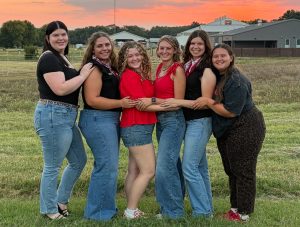
Outside of the classroom, Tschappler joined Sigma Alpha, Collegiate Farm Bureau and Agricultural Communicators of Tomorrow (ACT), taking on leadership roles in each.
In July 2025, she traveled to Norfolk, Virginia, for Sigma Alpha’s national convention, where she worked as a social media intern.
“I got to capture moments of women from different industries and colleges connecting over shared passions,” Tschappler said.
Collegiate Farm Bureau introduced her to agricultural advocacy and built her confidence. After being encouraged to participate in the Collegiate Discussion Meet, a speech-and-debate-style competition, her freshman year, she now helps younger members prepare for future competitions.
Through ACT, she has developed skills in photography, graphic design and social media.
Last year, Tschappler received the Double Down Cowan Scholarship from the Missouri Seedmen’s Association. The scholarship is awarded to outstanding agronomy students.
“It felt nice to be recognized,” she said.
Exploring new fields
Today, Tschappler continues to gain experience across agriculture.
As a social media manager for the Alumni Association and the Darr College of Agriculture, she promotes events, organizations and degree programs.
Off campus, she trades her BearWear for a lab coat at DFA. She prepares samples and manages cheese powders used in product development. Projects involve developing new flavors for retail brands. Tschappler also serves as an occasional “guinea pig taste tester,” comparing experimental flavors for food scientists.
Over the summer, she balanced 20 hours a week at DFA with another 20 at Missouri State’s Mountain Grove campus. There, she used knowledge from her plant science classes and DFA experience to harvest blackberries and strawberries and test their acidity and sugar content.
Although she enjoys her work at DFA, the Mountain Grove experience stands out.
“I get to talk with other agriculture students and contribute to conservation,” Tschappler said.
Still growing
As she prepares to graduate in December 2027, Tschappler is considering what comes next. She plans to pursue a master’s degree while continuing to explore careers in agriculture.
She encourages other students to step outside their comfort zones.
“If you have a sliver of interest, just try it out,” she said. “It’s OK to say no, but there’s a chance you might absolutely love it!
Find out more about agricultural communications
The post Student grows beyond the greenhouse appeared first on Agriculture Blog.
]]>The post New faculty member turns a love for horses into a career appeared first on Agriculture Blog.
]]>This fall, she joined the faculty of the School of Agricultural Science and Conservation within the Darr College of Agriculture as an assistant professor.
When she saw the job posting, Bailey felt the position was written for her. That feeling only grew when she toured campus and saw how much Missouri State faculty and staff care about their students.
She hopes to bring her equine research to the classroom and community. Her goal is to become involved with the local horse industry and help students apply what they learn.
That desire to teach and find answers has driven Bailey throughout her own education.
“I felt I could do more … I want to know how things work and why,” Bailey said.
Where it all began
Bailey grew up in Woodruff, South Carolina, with a love for horses. As a child, she looked forward to being old enough to ride them herself.
As she got older, that passion became part of her work. In high school, Bailey trained horses and taught riding lessons to children ages 5-17.
While attending Clemson University, she developed an interest in reproductive physiology. There, she earned a bachelor’s degree in animal science in 2017.
For one year, Bailey worked as an assistant broodmare manager in Aiken, South Carolina. She cared for foals from birth until they were 2 years old, trying to make each foal the “friendliest little thing” possible.
Her work with horses and interest in reproductive physiology led her back to school.
“I knew I wanted to work with horses while also teaching and doing research,” she said.
Developing her expertise
Bailey earned her PhD in equine reproductive physiology from Louisiana State University in 2024. Her research focused on the seasonality of reproduction in horses.
Horses reproduce less during the winter when cold temperatures and limited food can make it harder for foals to survive. Today, foals can be raised in barns, allowing breeders to extend the breeding season.
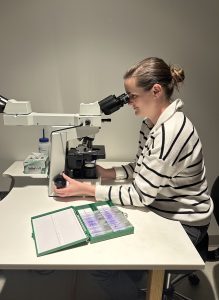
Bailey wanted to understand what happens in a horse’s brain to control those seasonal changes.
She studied the interaction between kisspeptin and prolactin in the brain. Kisspeptin plays a role in puberty and reproductive function, while prolactin controls lactation and changes seasonally in horses.
Bailey shared a fun fact about kisspeptin: Researchers discovered the hormone in Hershey, Pennsylvania, and named it after Hershey’s Kisses.
With her PhD in hand, Bailey became a postdoctoral researcher at Michigan State University from 2024-26. She studied women’s health, pregnancy and preeclampsia (a pregnancy complication) using mouse models.
At Missouri State, she hopes to continue researching equine reproduction. Her research could help breeders improve the health of horses and foals.
Bailey summed up the goal simply.
“More babies, but better babies.”
Bringing research into the classroom
She chose a career in higher education to combine her love for teaching and research.
On campus, Bailey will teach reproductive physiology, equine reproduction, animal breeding and equine evaluation. She likes to call the last one “horse judging.”
“I’m most excited to teach equine reproduction in the spring because it’s so hands-on,” she said. “Students will help with foaling, stallion collection and rebreeding mares.”
She plans to use real-life stories, pictures and videos to make lessons relatable and easy to remember. She wants students to gain a strong foundation and then apply what they learn.
She also wants students to take part in her research. In the coming years, she plans to establish a research laboratory that engages undergraduate and master’s students in hands-on research experiences. They will lead projects, collect data from horses, analyze their findings and help write manuscripts for scientific journals.
For Bailey, the opportunity brings together what she loves most.
“What’s better than talking about horses?” she said.
The post New faculty member turns a love for horses into a career appeared first on Agriculture Blog.
]]>The post Raising the steaks appeared first on Agriculture Blog.
]]>Journagan Ranch makes much of that work possible. In 2010, Leo Journagan and his family donated the 3,300-acre cattle operation to Missouri State. All show cattle are bred and raised on the ranch.
Since then, the Beef Cattle Show Team has represented the university at regional, state and national livestock shows. This summer, the show team competed at the Ozark Empire Fair and Missouri State Fair. While the cattle grow, so do the students caring for them.
For Garrett Kirk, team coach and farm operations manager, showing cattle also means representing Missouri State.
“You work for the brand and reputation. When you go in public, you’re the face of the team,” he said.
Taking care of the cattle
As of this year, Darr College of Agriculture students can apply for a show cattle internship for college credit and hands-on experience. For every credit earned, students complete 80 hours of work.
One of those students, Isabelle Miller, completed 240 hours this summer.
Miller grew up in Fairbanks, Alaska. She discovered Missouri State’s animal science program while searching for a college. Two calving seasons on a ranch in Montana sparked her love for livestock.
Now a senior, she is building on that experience.

Each morning from 6:30-8 a.m., Miller worked at the Darr Agricultural Center. She fed, rinsed, blow-dried and walked the cattle selected for the fair show season. Her favorite task was practicing showmanship.
Showmanship is how competitors lead and present cattle in the ring. Miller practiced with Nelly, the heifer she showed, and the two formed a close bond. She even spent time lying beside Nelly and taking naps.
While Miller joined the team with livestock experience, not every student does. That makes coaching essential.
Kirk helps prepare students for the show ring.
He sees the most growth in students who join with little experience. Beyond showing cattle, they develop self-discipline, time management and teamwork.
“Students also learn how to have an open mind because there are different ways to accomplish the same goal,” Kirk said.
Finding success at the fairs
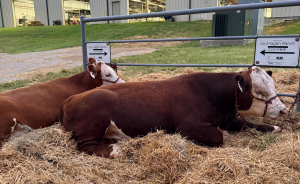
After months of preparation, show day starts before dawn. From as early as 4 a.m., students wash and dry the Herefords.
Next comes “fitting” the cattle. Students groom the animals and use products to shape and color their hair. They even style the tail hair into what Miller describes as a “mohawk.”
Kirk likes to call the process “playing cosmetology with cows.”
Once the cattle and students are ready, it’s game on.
At the Ozark Empire Fair from July 30-Aug. 8, one bull stood out. Dexter, shown by agriculture graduate student Grace Manning, earned Reserve Grand Champion. He first won his class before earning second place among all Hereford bulls. Dexter went on to earn Reserve Division Champion Hereford Bulls at the Missouri State Fair in Sedalia from Aug. 13-23.
“This achievement shows the community that Journagan Ranch and Missouri State can raise good, quality animals,” Miller said.
According to Kirk, the titles validate the team’s hard work. The recognition can also draw more people to the ranch’s annual sale from Oct. 2-3.
More than a competition
The ribbons and titles are rewarding, but the experience goes beyond the show ring. Students spend hundreds of hours learning to care for livestock, work as a team and prepare for competition.
The cattle aren’t the only ones growing — the students are, too.
Kirk is proud of the team. He believes the reputation students build at the ranch will follow them after graduation.
“You’re not going to find a set of harder working students,” he said.
For Miller, that experience has already helped shape her future. She plans to pursue opportunities as a ranch manager and show team coach after graduating in May 2027.
She encourages other students to take advantage of the opportunity.
“Be willing to put in a lot of effort, jump in where needed and get your hands dirty — metaphorically and for real,” she said.
Learn more about Competitive Teams
The post Raising the steaks appeared first on Agriculture Blog.
]]>The post Earning an international honor appeared first on Agriculture Blog.
]]>Now a senior at Missouri State University, Frye is pursuing a Bachelor of Science in Animal Science. Although she considered a career in human medicine, she ultimately chose to work with animals.
“For some in our community, animals are a major part of their livelihood,” she said.
Joining the United States Pony Clubs
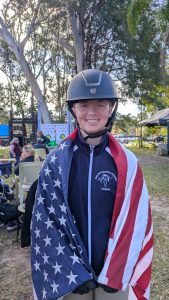
While boarding her pony, Marco, at a community barn in 2014, she met older students involved in the United States Pony Clubs (USPC). She became friends with them and joined the Mill Creek Pony Club in Kansas City in third grade.
Founded in 1954, the USPC is now the largest equine education organization in North America. With no age limit, anyone can learn to ride, care for horses and compete around the world.
What Frye enjoys most about USPC is how all members cheer on younger competitors.
“One day, they may compete internationally like us,” she said.
At her first ever competition in 2014 at Longview Horse Park, Marco bucked her off several times during the morning practice. One of the older students let Frye borrow her pony, so she could still compete. That day, Frye fell in love with both competing and the Pony Club community.
Competing in Australia
Every two years, members worldwide meet for the three-week Pony Club International Alliance Tetrathlon Exchange (PCIA). The USPC sends two teams of four riders: a girls’ team and a boys’ team. A tetrathlon tests competitors in four events:
- Running 2 kilometers.
- Swimming 200 meters.
- Shooting laser pistols at a 10-meter target.
- Horseback riding and jumping 95-centimeter obstacles.
Frye prepared for the exchange during the fall and spring semesters. Each week she ran four times, swam about five times and rode her horse, Bermuda, five times. She also practiced shooting for 15-20 minutes a day.
The demanding routine has taught her the importance of mental strength.
“It feels like I’m dying since I’m giving everything I’ve got … it takes perseverance to keep going,” she said.
The most challenging part is balancing school and practice. But all that hard work has taken Frye around the world. She competed in the PCIA Tetrathlon Exchange in Ireland and the United Kingdom in 2024 before traveling to Australia this summer.

On July 11 and 12, the Loxbuild International Tetrathlon took place in Mudgeeraba, Australia. Frye competed and earned the top title of “Overall Horsemanship for Female Riders.” Judges evaluated how competitors treated their horses and their position while riding.
“It’s humbling to know they thought I was the best rider,” she said.
Frye sees the award as recognition of the hard work she has put in over the years. Her parents were in the audience cheering her on, and her favorite quote from her mom was, “Go faster!”
While in Australia, Frye made the most of her trip by learning to surf and sandboard. She also got to pet kangaroos and, ironically, tried kangaroo sausage right after.
Time as a Bear
Back at Missouri State, Frye has stayed just as busy in and outside the classroom.
She is a member of the Honors College and Phi Kappa Phi, an honor society for the top 7.5% of juniors and the top 10% of seniors.
Her studies have also taken her beyond Missouri. In summer 2025, she studied abroad in Costa Rica with the Ecology Project International program, where she examined leatherback turtle nesting patterns and conducted research on local butterflies.
She also gained hands-on experience working with animals. As a freshman, she worked as a horse trainer. The next year, she worked as a kennel technician at Healing Paws Veterinary Clinic, where she monitored animals and assisted with medications.
Onward to vet school
Frye is ready to apply the skills she has gained from her studies, work experiences and competitions to her future career.
She believes the teamwork she learned will help her as a veterinarian.
“For tetrathlon, we compete as a team. As a veterinarian, you work as a team with technicians and clients to communicate and help each other,” she said.
After graduating next spring, Frye plans to pursue a Doctor of Veterinary Medicine. Her dream is to attend the College of Veterinary Medicine at the University of Missouri.
She also plans to continue competing with Bermuda. She hopes to participate in the next tetrathlon in the United States in 2028.
Learn more about animal science
The post Earning an international honor appeared first on Agriculture Blog.
]]>The post Dr. Lacy Sukovaty featured in Mind’s Eye appeared first on Agriculture Blog.
]]>An animal science expert, she shares insights from her research on canine parasites.
Research feature story now online
The Mind’s Eye story featuring Sukovaty’s research is now published online.
Excerpt:
If you’re a dog owner, there’s a good chance that every month, you give your four-footed friend an antiparasitic treatment. For decades, these preventative medications have protected pets from parasites.
Such treatments are pillars of responsible pet ownership, said Dr. Lacy Sukovaty, director of Missouri State University’s School of Agricultural Science and Conservation. Without these preventative medications, dogs are vulnerable to serious illness — which creates danger for humans, too.
“Hookworms and roundworms have zoonotic potential,” she said. “This means they can cause problems for people.”
And once a parasite crosses over into humans, unpredictable things happen.
The post Dr. Lacy Sukovaty featured in Mind’s Eye appeared first on Agriculture Blog.
]]>