The post Arizona census shows metropolitan stagnation, suburban growth first appeared on Arizona Capitol Times.
]]>Key Points:
-
Arizona’s largest cities show stagnant or declining population growth
-
Phoenix adds just 3,157 new residents, a 0.2% growth rate
-
Slower-growing cities may adopt “middle housing” to attract new residents
The state’s most populated cities are in no danger of losing their status — at least not immediately.
New figures from the Census Bureau show that population trends in the state’s largest cities have largely stalled or began to decline.
Last year’s census placed 1.66 million residents in Phoenix. This year, that same census added just 3,157 new residents to the city over the last 12 months, an anemic 0.2% growth.
Tucson fared even worse, with its 548,371 head count actually 2,262 less than the year before. In fact, since the decennial census in 2020, the state’s second largest city has added only 5,773 residents.
Similar patterns of slow — or negative — growth show up for Mesa, Gilbert and Chandler, the next largest cities according to the Census Bureau.
Meanwhile, the city of Surprise managed to increase its year-over-year population by more than 7,700, a 4.6% annual growth rate. And that places it just 15,000 less than Tempe with a 0.6% annual change.
And other communities on the fringes of urban areas grew even faster.
Leading the pack is Queen Creek, where 6,800 new residents boosted population by 8.2% in a single year. Goodyear grew by 6.5%, with Apache Junction up 5.8%.
There also are signs of growth farther outside the Phoenix metro area.
Some of that growth is likely attributable to people who work in and around Phoenix being willing to commute longer distances to find more affordable housing and communities to their liking.
Buckeye, toward the western edge of Maricopa County, grew by 5.5%. And the trend continues to spread deep into Pinal County, with Maricopa growing by 4.6%, followed by Coolidge at 4.2%, 3.8% in Casa Grande, 3.0% in Florence, and 2.3% in Eloy.
There also are some areas of growth in the rest of the state.
Marana posted a 5.7% growth rate by adding more than 3,500 residents in the one-year period, enough to make it the fourth fastest growing city in Arizona on a year-over-year basis. And Sahuarita, on the other edge of the Tucson area, posted a 1.3% gain.
At the other extreme, the population in the landlocked Paradise Valley dropped by 250 — a 2.0% decrease, the largest recorded on a percentage basis. Also at the top of the negative growth chart according to the Census Bureau are Patagonia, Guadalupe, Litchfield Park, Winkelman and Winslow.
The numbers are more than about bragging rights.
First, they show where people want to live, though the Census Bureau doesn’t get into the reasons, whether they be affordable housing, municipal amenities, or even climate.
But there are real fiscal implications.
Population growth means new housing. And that means sales taxes from construction activities and property taxes from homeowners.
More residents generally lead to more commercial centers and the sales and property taxes they generate.
But what’s also important is that cities also get shared revenues from the state that are largely dependent on population. And there’s a lot of money at stake.
It starts with what is known as “urban revenue sharing.”
That stems from a change in law in 1972 when voters approved a deal: cities would give up their right to levy their own income taxes in exchange for an 18% share of what the state collects. That annual figure, according to the League of Arizona Cities and Towns, now tops $1.26 billion.
What makes that important is this is a fixed pot. And cities get a share based on their population.
Put another way, rapidly growing communities will get a bigger slice of the pie — whatever the size of the pie is that year — while those who don’t grow as fast or shrink end up with less.
Another $900 million comes from the share that cities get of state sales taxes.
Cities also get some of the vehicle license tax, based on a formula that includes both population and where vehicles are registered. That is about $327 million.
And another almost $499 million is divided up from the Highway User Revenue Fund, composed largely of gasoline taxes and other fees. Here, too, population is a factor as well as the county of origin of gasoline sales.
All that leaves it to the local officials of those slower-growing communities to decide what options they have or are willing to adopt to spur new residents.
One option already available to Arizona communities is so-called “middle housing.”
That allows — and in larger cities, requires — cities to take areas, particularly near central business districts that are zoned for single-family homes, and forcibly allow duplexes, triplexes, quadplexes and townhomes. These can be less expensive and therefore more attractive to some would-be residents than locating in the far reaches of the suburbs and having to commute.
Closely related — and important for landlocked cities — is finding new ways to build residential structures. In Tempe, for example, that has taken the form of converting commercial areas into sites for mid-rise mixed-used development.
There are no Census Bureau figures for San Tan which was not officially incorporated until September 2025.
The post Arizona census shows metropolitan stagnation, suburban growth first appeared on Arizona Capitol Times.
]]>The post It’s time to rein in out-of-network billing abuse first appeared on Arizona Capitol Times.
]]>
As a physician and part-time Scottsdale resident, I’ve watched Arizona’s health care costs climb with growing alarm. When I see health insurance premiums for Arizona families jump 29% in a single year, I think about the small-business owner in Tempe weighing whether to keep offering coverage, or the startup founder in Chandler losing a recruit to a company in a lower-cost state.
That’s why I was encouraged to see Arizona legislators take a hard look at a growing problem hiding behind a well-intentioned federal law: doctors and hospitals staying out of network, on purpose, because it pays better.
In 2022, Congress passed the No Surprises Act to stop patients from getting blindsided by massive bills from out-of-network providers they never chose. The law worked on that front. But it created a backdoor problem now hitting Arizona harder than almost any other state.
When an out-of-network doctor and an insurer can’t agree on payment, the dispute goes to a federal arbitration process called Independent Dispute Resolution, or IDR. Each side submits a number, and a third-party picks one. In the first half of 2025, providers won 88% of IDR disputes nationally, with payment amounts routinely exceeding in-network rates by 400%-600%.
This isn’t a niche issue for Arizona, it’s a crisis. Providers in our state filed more than 216,000 IDR disputes in 2023 and 2024, nearly 9% of all disputes nationwide. Arizona ranks second only to Texas in volume, and providers here won nearly 80% of the time. Nationally, IDR has added an estimated $5 billion in costs to the health care system since 2022.
Arizona’s outsized share of that burden isn’t random. A single radiology company accounts for roughly 40% of all Arizona IDR disputes. These aren’t small practices fighting for fair pay. They are sophisticated operations turning arbitration into a revenue strategy.
In 2026, ACA marketplace premiums in Arizona spiked roughly 29% for silver-tier plans. An unsubsidized family of four now pays an average of $2,189 per month, more than many Arizonans pay for their mortgage. Enrollment has plummeted 17% as a result.
A recent Gallup survey found that roughly one-third of Americans have cut back on daily living expenses to afford health care, and nearly half of middle-income households have delayed major life decisions because of health care costs. These aren’t just personal hardships; they’re drags on workforce mobility and economic growth.
For Arizona’s business community, this is an existential pressure point. The state has worked hard to attract companies from higher-cost markets: semiconductor manufacturing, tech firms and financial services. When employer-sponsored family coverage nationally averages nearly $27,000 a year and is rising faster than wages, Arizona can’t afford a broken arbitration system piling additional costs onto its employers.
Arizona’s HB 2211, introduced by Rep. David Livingston, takes a straightforward approach. The bill would establish that any IDR offer exceeding 300% of Medicare rates or the qualified payment amount constitutes a “clearly excessive fee”, exposing providers to disciplinary action up to license revocation. It also holds insurers accountable, requiring them to pay arbitration awards within the 30-day federal timeline. Balanced guardrails on both sides.
Arizona isn’t alone. In Idaho, the state Senate advanced Senate Bill 1319, which would require freestanding emergency rooms to accept in-network market rates. The pattern is clear: legislators are recognizing that a subset of providers has turned a patient protection law into a profit machine.
The fix isn’t complicated. Arbitration decisions should be anchored to prevailing in-network rates. Providers who operate in a community should be expected to contract with the insurers serving that community’s patients. And states like Arizona should set guardrails that prevent a handful of bad actors from inflating costs for everyone.
Arizona’s economy is booming, but health care affordability is becoming a competitive vulnerability. I’m glad Arizona’s legislators recognized the problem. Now it’s time to finish the job, for patients, for employers, and for the long-term health of our state’s economy.
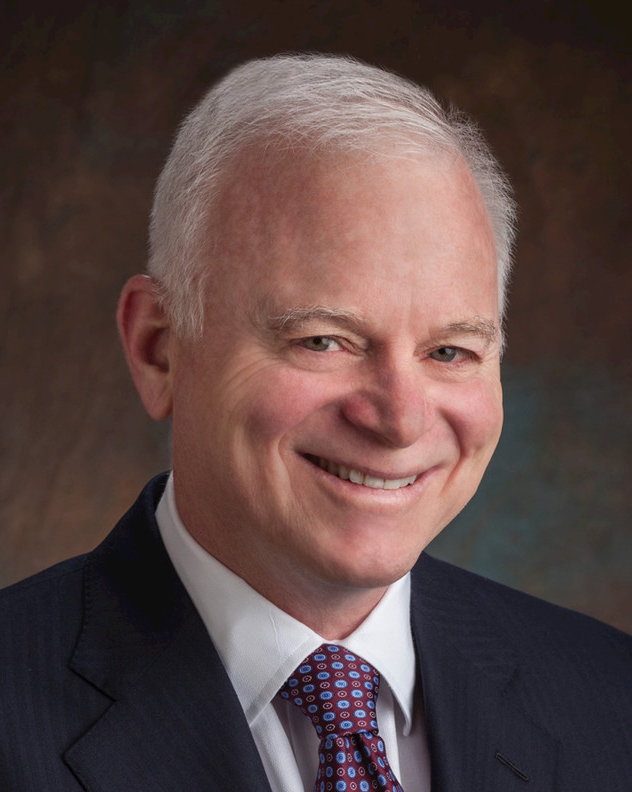
Dr. Richard Popiel is a health care delivery expert and part-time Scottsdale resident.
The post It’s time to rein in out-of-network billing abuse first appeared on Arizona Capitol Times.
]]>The post Cities can’t fix Arizona’s broken E-Bike laws alone first appeared on Arizona Capitol Times.
]]>
Electric bikes and scooters were once fringe transportation options. In Arizona’s urban cores, they are now everyday fixtures and increasingly a source of serious safety concern. Cities across Arizona are responding the only way they can, by writing their own rules. Tempe is the latest to do so. That should be the moment Arizona steps in.
The problem starts with state law.
According to Arizona Revised Statutes (A.R.S) § 28-819, electric bicycles and electric standup scooters are regulated together and treated largely like traditional bicycles. Riders need no license, registration or insurance. These devices may operate on streets and in bike lanes by default, and on bike paths unless a local authority restricts them. But the statute leaves nearly every meaningful safety decision, including age limits, helmet requirements, sidewalk rules, penalties, and enforcement, to cities. That structure may have worked when micromobility was rare. Today, it shifts responsibility to cities without giving them a common baseline, ensuring inconsistent rules, uneven enforcement and confusion for riders, parents and police.
Tempe illustrates the consequences of that gap. From 2021 through 2024, the city recorded 116 serious injury or fatal collisions involving pedestrians or bicycle units, including “micro mobility devices, according to AZFamily. In two-thirds of those cases, the rider was the primary cause of the accident. Fox 10 also reported more than 1,100 EMS responses tied to e-scooters over four years, including more than 300 injuries and numerous cases involving loss of consciousness. Faced with those numbers, and operating under a code that relies largely on general bicycle and traffic rules, Tempe has convened a City Council subcommittee to recommend age limits, speed restrictions, helmet requirements, and clearer enforcement. In effect, the city is rebuilding a safety framework that state law never required.
Tempe is not alone. Glendale recently adopted one of the state’s most comprehensive ordinances, with age thresholds by device type, helmet requirements for minors, mandatory lighting, and fines starting at $50 and escalating to $500 for repeat violations, enforced by city police. Scottsdale has banned riders under 16 from operating faster, Class 3 e-bikes on city property. Phoenix prohibits e-bike riding on sidewalks and enforces violations as civil traffic offenses.
Each city is responding rationally. The problem is that they are responding alone.
A teenager riding legally in Tempe may be cited with a violation minutes later in Scottsdale. Parents trying to set clear rules for their children and protect their family’s financial assets must currently decipher multiple municipal codes. Police officers are asked to enforce different standards depending on city boundaries. When safety rules change block by block, compliance drops, and enforcement becomes harder, not easier.
Lawmakers have acknowledged growing concern with the introduction of Senate Bill 1008 this session, which would impose speed limits on shared-use paths. But SB1008 is not a solution. It layers a narrow rule onto an outdated statute and leaves the underlying problem untouched.
SB1008 does not clarify where e-bikes and scooters should operate, who should be allowed to ride them, what safety equipment should be required, or how violations should be enforced statewide. It preserves the underlying outdated that has produced today’s regulatory patchwork.
Arizona does not need another patch. It needs to rewrite A.R.S. § 28-819. The statute should establish clear, statewide safety rules, including minimum age requirements by device class, helmet standards for minors, default rules for where e-bikes and scooters may operate, and consistent enforcement and penalties. Cities should retain the ability to go further, but public safety should not hinge on which side of a city limit someone is riding on.
Given how much these vehicles have permeated our culture and the risks they pose, Arizona should also consider requiring that Class 3 e-bikes, which can reach 28 mph, be classified as motor vehicles within A.R.S. § 28-819. If we are going to allow vehicles capable of nearly 30 mph to share lanes with cars, we must treat them with the seriousness they demand.
Reclassification would involve registration and licensing. Crucially, it would require riders to carry liability insurance, just like any other motorist on the road. When a high-speed collision happens, victims should not be left without recourse. It would ensure manufacturer compliance with federal and state safety standards.
E-bikes and scooters are here to stay. The injuries are already happening. Cities are acting because they feel they must. It’s time our state’s motor vehicle laws caught up with reality.
Marc Lamber is a Martindale-Hubbell AV Preeminent-rated trial attorney.
The post Cities can’t fix Arizona’s broken E-Bike laws alone first appeared on Arizona Capitol Times.
]]>The post Arizona Democratic campaign office damaged by gunfire first appeared on Arizona Capitol Times.
]]>Someone fired shots at a Democratic Party campaign office in a Phoenix suburb, causing damage but no injuries, authorities said.
Tempe police said the damage was discovered early Monday and the incident is being investigated as a property crime since nobody was in the office at the time the gunshots were fired.
Phoenix TV stations aired video Monday that showed two bullet holes in a door and two more in windows of the office.
“We are grateful to Tempe Police for coming quickly to the scene and are fortunate no one was present or injured,” Sean McEnerney, the Arizona Democratic Party coordinated campaign manager, said in a statement.
The post Arizona Democratic campaign office damaged by gunfire first appeared on Arizona Capitol Times.
]]>The post Former Arizona Corrections director pleads no contest in armed standoff with officers at his home first appeared on Arizona Capitol Times.
]]>Get 24/7 political news coverage and access to events honoring top political professionals
The post Former Arizona Corrections director pleads no contest in armed standoff with officers at his home first appeared on Arizona Capitol Times.
]]>The post ‘My heart was always just with the sheep.’ One Navajo’s push to keep tradition vibrant first appeared on Arizona Capitol Times.
]]>Get 24/7 political news coverage and access to events honoring top political professionals
The post ‘My heart was always just with the sheep.’ One Navajo’s push to keep tradition vibrant first appeared on Arizona Capitol Times.
]]>The post Biden honors McCain, denounces ‘MAGA extremists’ during Tempe event first appeared on Arizona Capitol Times.
]]>Get 24/7 political news coverage and access to events honoring top political professionals
The post Biden honors McCain, denounces ‘MAGA extremists’ during Tempe event first appeared on Arizona Capitol Times.
]]>The post Republican leaders file brief aimed at protecting lawmakers’ ability to clear homeless encampments first appeared on Arizona Capitol Times.
]]>Get 24/7 political news coverage and access to events honoring top political professionals
The post Republican leaders file brief aimed at protecting lawmakers’ ability to clear homeless encampments first appeared on Arizona Capitol Times.
]]>The post Backup driver in 1st death by fully autonomous car pleads guilty to endangerment first appeared on Arizona Capitol Times.
]]>Get 24/7 political news coverage and access to events honoring top political professionals
The post Backup driver in 1st death by fully autonomous car pleads guilty to endangerment first appeared on Arizona Capitol Times.
]]>The post Quarters bounce: Cities win appeals of Census’ count of group quarters first appeared on Arizona Capitol Times.
]]>Get 24/7 political news coverage and access to events honoring top political professionals
The post Quarters bounce: Cities win appeals of Census’ count of group quarters first appeared on Arizona Capitol Times.
]]>