“Subha Sat Rana.” I composed the above phrase to greet others after Durga Puja – Akaal Bodhan and posted it on my website on 17th October 2021. This tradition links the proceedings of the Ramayana, where Lord Rama performed a puja of Goddess Durga for a victory in the battle against King Ravana. Over time, commemoration of this great event has become a part of the culture in Bengal (and elsewhere), with the celebrations of Durga Puja followed by Bijoya Dashami (or Vijayadashami; Vijaya means victory, and Dashami means the tenth day of the lunar fortnight). ‘Subho Bijoya’ is the phrase to greet someone on this occasion in Bengali (after Durga Puja). I have used the exact phrase to greet others from childhood to the recent past. However, on some occasions in different places, we witness celebrations of the ‘victory’ that seem more about ego than the true spirit of the festival. These egoistic and unjustified celebrations, often driven by reductionism, sometimes burn the effigy of a so-called demon equating it with one of the wisest beings, like Ravana, ignoring his true role in the cosmic game. Such acts devalue the cultures of both the then-distant territories. Although it is unrelated to the nature of the celebration I follow, it burns me too. To me, Bijoya Dashami, at large, is a celebration that is free from ego. So, I thought of composing a greeting phrase that would keep us free from ego, shifting our focus from the victory (outcome of the battle) to the act or fact of fighting the battle. In agreement with the same, without being egoistic and not being focused on the outcome, I tried to praise the glorious (Subha) ‘duty’ (Dharma) and ‘action’ (Karma), and with these, the ‘eternal’ (Sat) ‘battle’ or ‘competition’ (Rana) between the good and evil (or contradictory forces or purposes) honouring all who fought honestly as a part of the divine play or the cosmic game.
The complete phrase was “Subha Dharma – Subha Karma – Subha Sat Rana.” I shortened it to greet someone this time by saying “Subha Sat Rana” on Bijoya Dashami. The spiritual significance of the events remains independent of my observations.
The previous post, “My greetings to all”, is available here.
]]>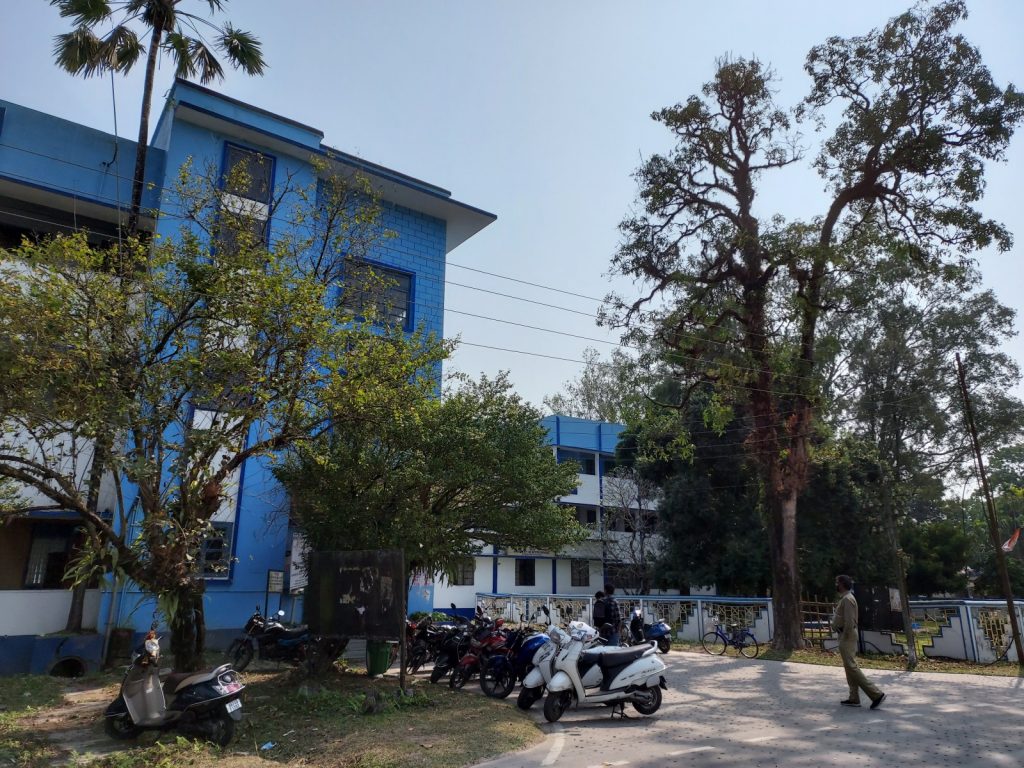
The mission of the Department of Economics at the University of North Bengal, in the decade ahead, is to provide, through teaching, research and consultancy, a better understanding of the regional, national and global economic issues towards positive changes emancipating our thoughts on nature, development and existence.
The Department’s teaching mission is to focus on theoretical and quantitative techniques and train students in the collection and analysis of the data using their acquired skills. The Postgraduate Programme in Economics offers specialised optional courses, which allow students to pursue their studies in their area of interest. The specific components of the teaching mission include the following:
- Prepare students to develop critical thinking to carry out investigation about various socio-economic issues objectively while bridging the gap between theory and practice.
- Prepare students for pursuing research or careers that provide employment through entrepreneurship and innovative methods.
- Prepare students to develop own thinking /opinion regarding current regional, national and global economic issues and policies.
- Create awareness to become a rational and an enlightened citizen so that they can take the responsibility to spread the governments’ initiatives/schemes to the rural areas for the upliftment of the poor or vulnerable section of the society for inclusive growth.
- Make students aware on global standard through lectures / special lectures /webinars by internationally renowned experts from across the globe.
The Department’s research mission is to develop a holistic platform channelising our thoughts and adopt economic tools accordingly to address issues related to nature, development and existence from regional perspective as well as from wider angle. Since the establishment of the University of North Bengal in 1962, the Department of Economics has consistently undertaken policy-oriented research on several regional development issues pertaining to the North Bengal economy. Because of relative socioeconomic and industrial backwardness in the North Bengal districts, faculty and researchers at the Department have been directly involved in articulating and researching these regional issues, thus demonstrating their sensitivity towards socioeconomic deprivation within the region. In doing so, M. Phil. and Ph.D. research at the Department has frequently focused on the underlying agrarian situation and the special problems of the tea plantation sector, health and well-being, the regional patterns of development, inequality and socioeconomic problems among the various ethnic and linguistic groups, the development of social and physical infrastructure within the region and sustainability of current natural resource use across the Eastern Himalayas etc. with the ultimate aim of drawing regional and national policy-focus to these problems. The Department also addresses the problems of the neighbouring countries like Bangladesh, Bhutan and Nepal through doctoral research by the students and teachers from these countries. The Department is also open to collaborative research with other universities in India and abroad.
The Department further proposes to initiate student-exchange, over the next ten years, with major overseas universities, thereby strengthening our students’ knowledge base and broadening their international horizons.
For more information, please visit the official website here.
Special Lecture (through online mode) on:
“CAPITALISM, ALONE: The Future of the System That Rules the World”
Speaker: Branko Milanović
March 07, 2022 at 07.30 to 08.30 pm (Indian Standard Time)
For registration please click here
You will receive a confirmation email containing information about joining the meeting (Google Meet link) / YouTube link.
Additionally, the session will go live at YouTube Channel and the link will be provided at the appropriate time.
E-Certificates (of attendance) will be provided for this event.
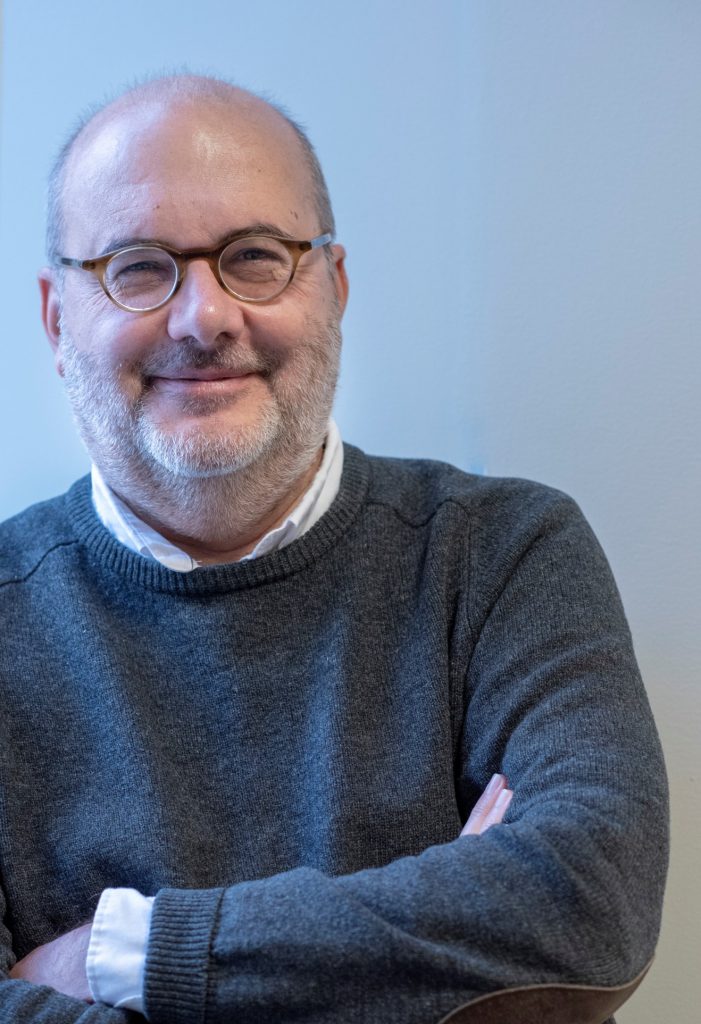
Branko Milanović is a Visiting Presidential Professor at the Graduate Centre of the City University of New York and an affiliated senior scholar at the Luxembourg Income Study (LIS). He also teaches at the London School of Economics and the Barcelona Institute for International Studies. In 2019, he has been appointed the honorary Maddison Chair at the University of Groningen. Milanović formerly was a lead economist in the World Bank’s Research Department, Visiting Professor at University of Maryland and Johns Hopkins University.
His book “Capitalism, Alone: The Future of the System that Rules the World” was published in September 2019. For more information about his works, please visit his official page here.
Chairperson
Sanchari Roy Mukherjee
Vice-Chancellor, Dakshin Dinajpur University, West Bengal & Vice-Chancellor (Additional Charge), Raiganj University, West Bengal & Professor, Department of Economics, University of North Bengal
Introducing the Speaker
Amlan Majumder
Head & Associate Professor, Department of Economics, University of North Bengal
For more information, please write to: economics@nbu.ac.in
A pdf version of the flyer (with programme details) is available here.
About the lecture
Capitalism no doubt prevailed as Western liberal meritocratic capitalism and also as authoritarian capitalism as in China and Vietnam. It delivers prosperity and meets human desires for autonomy. However, it comes with a price, forcing us to pursue material success as the ultimate goal without a guarantee of stability. The liberal capitalism suffers from inequality and skewed distribution of wealth. Concentration of economic power has also led to concentration of political power in the hands of coterie vis-à-vis a weakening democratic system. Capitalism faces no threat other than the competition it faces from other variant of its type. The authoritarian capitalism which claims to be more efficient is plagued with corruption, weak rule of law, lack of transparency and its continuity rests on its ability to address social unrest through continued economic growth and rising inequality.
The point is, can we replace capitalism to overcome the problems? If not, can it be improved? The concentration of economic and political power may not be easy to break as both feed off each other to sustain their growth. In a globalised world imposing taxes and limiting inheritance rights may not give us the desired result without significant international cooperation. It is true that capitalism is a risky system, but it is a human system. It is our choices and ability to clearly see the challenge that will determine how capitalism serves us.
[The write up (about the lecture), as above, was prepared by Dr. Govinda Choudhury, Assistant Professor, Department of Economics, University of North Bengal. Photo Source: (a) Branko Milanovic: Received by email from him only; (b) Sanchari Roy Mukherjee: Taken from the official website of DD University.]
Subha Dharma – Subha Karma – Subha Sat Rana. I have composed the above phrase recently (to greet on the occasion of Durga Puja – Akaal Bodhan). I tried to praise the glorious ‘duty’ (Dharma) and ‘action’ (Karma) and with these, the ‘eternal’ (Sat) ‘battle’ or ‘competition’ (Rana) between the good and evil or contradictory forces (or purposes) honouring all who fought honestly without being egoistic focusing the outcome – Karmanye Vadhikaraste, Ma phaleshou kada chana.
[To be edited (in need) and substantiated in due course].
]]>Please visit the page here.
]]>Meaning: I am getting prepared for the good of the Universe. … My body, mind, life force, soul – all are being prepared/aligned for the good of the Universe.
This mantra is due to Shree Shree Swami Swarupananda Paramhansa Deva. It is gender sensitive: ‘mangaloham’ for him and ‘mangalaham’ for her – please read it accordingly. While reciting / reading it, one may think that she / he is getting prepared to do something good for all the leaving and non-living beings of the Universe.
A sample audio file of the said Mantra (in original voice of Shree Shree Swami Swarupananda Paramhansa Deva, popularly known as Babamoni) is made available here:
Dr. Virginia Moore meets Swarupananda in Varanasi
Dr. Virginia Moore of Scottsville, USA wrote about her meeting with Shree Shree Swami Swarupananda Paramhansa Deva in her book: The Whole World, Stranger (New York: The Macmillan Company, 1957).
Please read her experience (under the title “DR. MOORE MEETS THE YOGI”) here.
One may also access it from the permanent link: https://scottsvillemuseum.com/portraits/homeJM01cdJM01.html.
]]>By the term “development” I tried to mean “a world without economic inequality”. However, what is the relationship between refraction of light (or sound) and economic inequality?
This new approach views the Lorenz curve or the egalitarian line as a ray of light. It fantasises that a world without economic inequality is nothing but a state or condition where light touches everyone without refraction. Literary, it considers the unit square Lorenz curve framework as the World and the egalitarian line (the diagonal line) as the passing of the ray of light without refraction. However, in reality, we live in a stratified society with varying living conditions and ray of light is perceived to refract every time it passes from one stratum into another forming the real-world Lorenz curve.
I am presenting the analogy in the following figures.


Using this analogy recently, I have presented a new measure of economic inequality (a pair of measures actually) incorporating the phenomenon of index of refraction of geometrical optics (or physical acoustics).
The works are available here.
We live in different strata of society or economy with varying living conditions. Our perception refracts too when it passes from one stratum into another. I believe that redistribution of resources favouring the worse off ones would help us to reach an ideal condition and disregard the ironies of perception!

For more information please contact me or write me to: amlan@amlan.co.in.
]]>