The post Looking Ahead at the 2027 Supreme Court Term appeared first on BJC Online.
]]>Each year, the Court receives thousands of requests, and they agree to hear about 1% of those cases. The justices are still filling the docket for this term, but they have already agreed to hear two cases involving religious freedom law and will likely take up a third. BJC is weighing in.
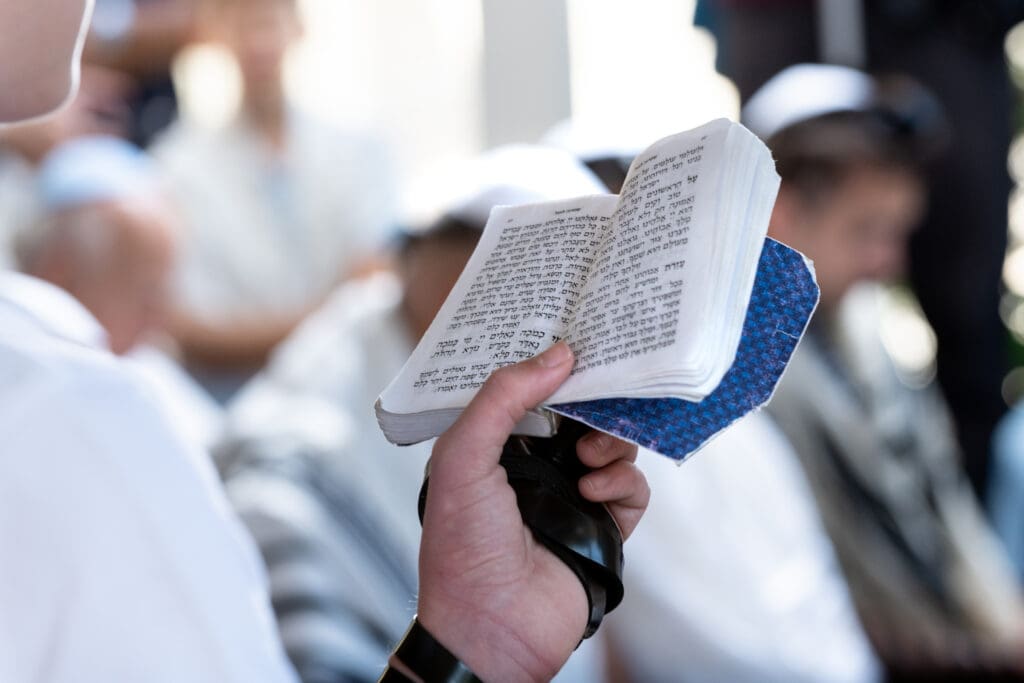
Grand v. City of University Heights
What can you do when your town effectively chills your ability to practice your religion? Apparently, not much. And the Supreme Court has a chance to change that in Daniel Grand’s case.
Mr. Grand is a practicing Orthodox Jew. He doesn’t drive on the Sabbath, and his faith requires him to pray with ten men — known as a “minyan.”
He tried to host those prayer gatherings in his home, but the city government issued a cease-and-desist order. They said Mr. Grand needed to apply for a special permit to operate as a “house of worship” under local zoning ordinances. He applied for a special-use permit, but he withdrew his application because that type of permit — intended for houses of worship — would have disqualified his home for residential use.
Now he couldn’t practice his faith in his own home. When Mr. Grand asked the courts to intervene, they dismissed his case. The ruling wasn’t concerned with his claim – instead, the court simply said he couldn’t sue because the local zoning board hadn’t made a final decision. So, they said his situation wasn’t “ripe” for a lawsuit.
In reality, though, his right to religious freedom had already been taken away. He was not allowed to host his minyan while waiting for the zoning board’s decision. Or while waiting for the court’s decision.
In an unusual move, Mr. Grand appealed his case to the Supreme Court himself – he had no legal representation. The justices found his petition so powerful, they agreed to hear it. Mr. Grand now has attorneys, and they’ll be in front of the Supreme Court on December 9.
This is one of two cases the Supreme Court will hear this term involving the Religious Land Use and Institutionalized Persons Act (RLUIPA) – the other was announced just last week, but its dates have not yet been set.
BJC joined a brief in support of Mr. Grand, defending his right to have a religious gathering in his home — and his ability to sue to protect that right.
Read more: Grand v. City of University Heights
Rabbi Nathan, et. al. v. Alamo Heights Independent School District, et. al.
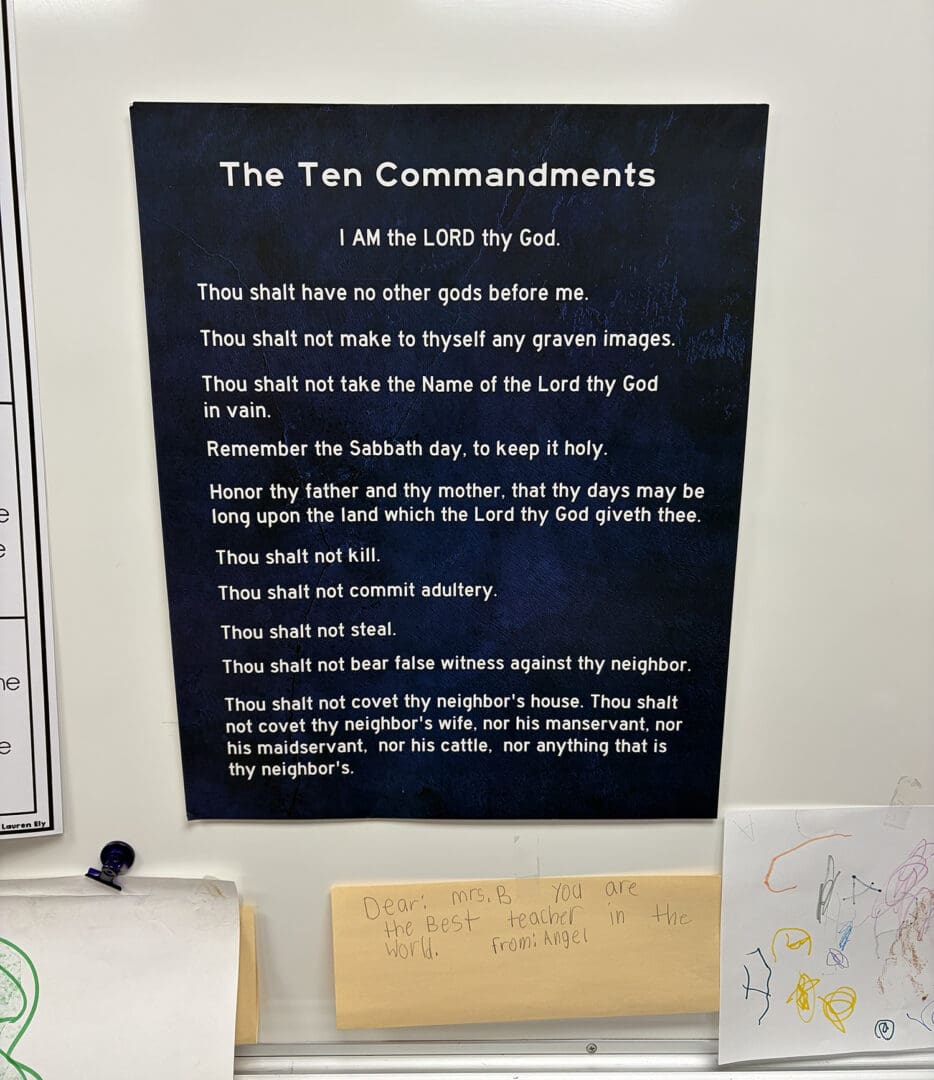
In classrooms across Texas, a 16-by-20 inch government-approved poster of the Ten Commandments watches over students. The state legislature chose the text – an edited version from the King James translation of the Bible. The law requires the poster to be in a conspicuous place, visible and readable from every seat in every classroom, from kindergarten through twelfth grade. There is no explanation, commentary, or context provided – just an austere list of commandments, hanging on the wall.
The lead plaintiff challenging this law is a rabbi.
Rabbi Mara Nathan is among the Jewish, Christian, Unitarian Universalist, Hindu, and nonreligious parents suing to stop these displays. They all agree that this law interferes with their right to teach their children about religion. These parents are not saying the Ten Commandments don’t matter. Instead, they argue that it is the job of families, not lawmakers, to decide how and whether to teach religion. And for the Christian and Jewish families in these cases, flattening holy Scripture into mere classroom decoration is its own kind of harm.
At first, judges and courts consistently sided with the families, blocking the posters in Texas and stopping a similar law in Louisiana. But, a full panel of the 5th U.S. Circuit Court of Appeals reversed its earlier decision, and the posters went up.
Now, the families are down to their last option: Asking the Supreme Court to hear their case.
The justices haven’t yet said whether they’ll take Rabbi Nathan v. Alamo Heights ISD. If they do, the argument likely will be in spring 2027. Meanwhile, children attend school each morning and take their seats in front of a set of scripture their state government selected for them.
BJC is supporting the families in friend-of-the-court briefs and will keep advocating against government-sponsored religion and for religious freedom for all students. For everyone who values freedom of conscience and soul liberty, these laws are troubling attempts to promote a religious text and force it on children.
Learn more about the various Ten Commandments cases on our website.
The Court’s new session can shape our country for years to come, and the justices have to answer some tough questions. If you can’t host prayer in your own home, what freedom do you have? If you can’t attend school without having a government-approved Scripture staring you down, what freedom of conscience do you have?
BJC will make our arguments as the justices take up these cases this term.
The post Looking Ahead at the 2027 Supreme Court Term appeared first on BJC Online.
]]>The post 25 years after 9/11: Recommitting to Religious Liberty appeared first on BJC Online.
]]>
A view of New York City on September 11, 2001, after the attacks. This unattributed photo is courtesy of the Prints and Photographs Division. Library of Congress
Anniversaries – like the dreadful day we mark today – give us a chance not just to look backward but to consider how past events shaped and continue to form our national identity, as well as how we act in response. Will we stay true to our country’s foundational values of religious liberty for all, pluralism, and dignity, or will we allow fear to take over through acts of discrimination, exclusion, and physical violence?
Our country suffered a collective trauma on 9/11, a hinge point in American history that we continue to remember as a day of tremendous loss. As a people, we did not live up to our values in the days after. We allowed our fear to overtake our commitment to belonging for all, and that continues to impact many of our fellow Americans.
Some of our leaders – including then-President George W. Bush – implored Americans to pull together in unity and not to view Muslim Americans or Islam as a threat to the United States. But, that rhetoric did not match the reality. Suspicion became an additional burden on Muslim Americans, as well as additional groups impacted by Islamophobia including Arab, Sikh, South Asian, Black, Middle Eastern, and other communities. People – then and now – equate those religious, ethnic, and racial identities with a sense of threat or danger. The U.S. government has surveilled their worship and community spaces. Their communities were targeted in hate crimes, some of them deadly. Their belonging in neighborhoods, schools, workplaces, and public spaces has become conditional on their ability to prove patriotism and humanity.
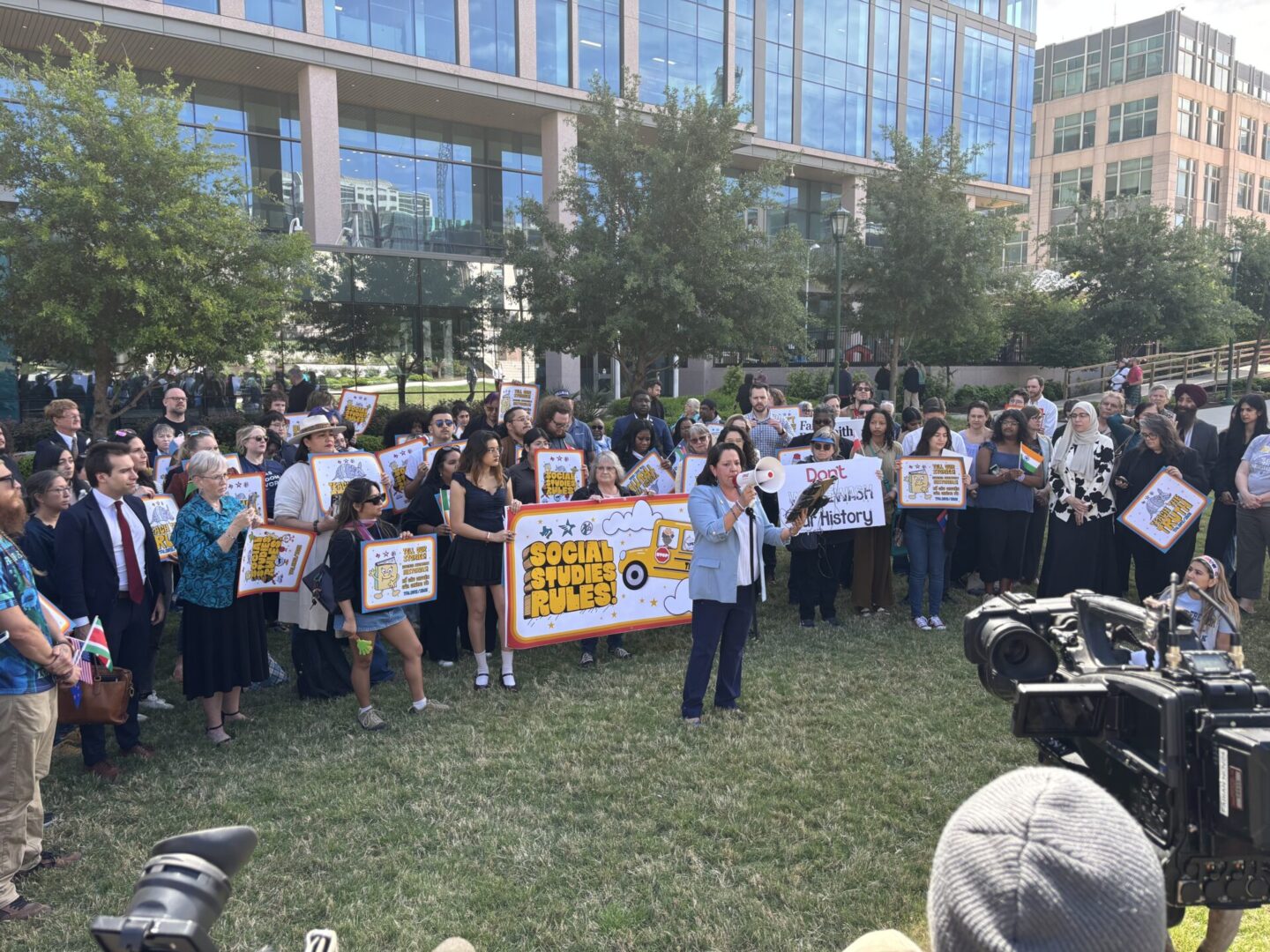
This ongoing suspicion and fear has not made our country safer or stronger. Instead, it has weakened our community ties and led to more violence, including a mass shooting at the Islamic Center of San Diego just a few months ago. Today we are experiencing rising Islamophobia in our country, with elected officials exploiting fear to score political points in this campaign year. Nearly 70 members of Congress are part of the Sharia-Free America Caucus, spreading hate and misinformation from their positions of political power. In my home state of Texas, members of the State Board of Education recently approved new social studies standards, which teach that “radical Islam” was the motivation for the 9/11 attacks and provide an anti-historical understanding of Islam’s roots as a “violent” religion.
In the face of fear, we have an opportunity to recommit to shared values of who we want to be as a people in a time of crisis – to reaffirm that religious liberty requires unconditional belonging for every person, regardless of belief or religious identity.

Then-BJC Executive Director Brent Walker joined dozens of religious leaders and community members at the Washington National Cathedral on Oct. 23, 2015, highlighting the need to protect religious liberty and model it for the world.
As Baptists, we protect religious liberty from our commitment to soul liberty, honoring the image of God in every person and protecting their freedom of conscience. Our commitments require action. We must hold political leaders accountable for their reckless and dangerous rhetoric, work to correct misinformation in conversations with friends and family members, and stand shoulder-to-shoulder with the impacted communities. We must work to make “liberty and justice for all,” not just words we say but a lived reality for every person.
Anniversaries offer a time for collective remembrance and shared commitments. I invite you to share how you remember 9/11 – where you were, how you experienced it, what you felt – and what you will commit to do to uphold our values 25 years later. With your permission, we will post your responses to inspire more in our movement to action.
The post 25 years after 9/11: Recommitting to Religious Liberty appeared first on BJC Online.
]]>The post What Else Is Going Back to School? appeared first on BJC Online.
]]>Here are some of those policies you should be aware of as the new school year kicks off.
Texas Commands the Posting of the Ten Commandments in Classrooms
One of the most problematic policies to come out in the last few years is Senate Bill 10 in Texas – which requires every public school classroom, from kindergarten through 12th grade, to permanently display a state-selected Protestant version of the Ten Commandments. The bill, which was signed into law in June 2025, means that all students in classrooms displaying the Ten Commandments will be exposed to religious indoctrination, and those from other faith traditions will be excluded by design.
In April, after the law was challenged in court, the 5th Circuit allowed the displays to go up. Now, more than two dozen Christian, Jewish, Hindu, Baha’i, Unitarian Universalist and nonreligious families across 22 school districts are asking the U.S. Supreme Court to hear their challenge to the law.
Head to BJC’s Texas Educators Resource Hub for an explanation on the mandate, fact sheets, talking points, a sample letter to parents, and a recorded webinar.
State-Organized Prayer in Texas Schools
Then there is Senate Bill 11, which required every Texas school district to vote on whether to create periods of state-organized prayer and religious study during the school day.
Parents, students, teachers, clergy and community leaders showed up and made the case against the law, and thanks to that work, nearly all of the state’s approximately 1,200 school districts rejected it. Many districts instead adopted an alternative resolution recognizing the religious freedoms students already have.
If your child is in one of the school districts who adopted the state-organized prayer law, head to the state-organized prayer resource hub for fact sheets, talking points, training, and the school board resolution used during the initial effort to defeat this law.
Texas Changes its Curriculum and Forces Students to Read the Bible
Starting in 2030, Texas kindergartners are about to learn the Bible from the state of Texas — whether they’re Christian or not and whether their parents want it or not.
This past June, the Texas State Board of Education approved a reading list that assigns biblical passages to students from kindergarten through high school. The reading list, which gives preference to one religious tradition over all others, was compiled without meaningful input from parents and educators, and instead relied on feedback from nine unelected political appointees or content advisors.
Texans didn’t stay quiet, however; they raised their concerns through public testimony, a multifaith clergy letter, and direct engagement with the State Board itself. It’ll be four years until the new reading list takes effect, so there is still time to safeguard religious freedom, including through legislative activity next spring. Visit our SBOE page to keep up to date and get involved.
Gov. Pritzker’s Big Beautiful Opportunity to Safeguard Public Education and the Separation of Church and State
Finally, in the state of Illinois, Gov. JB Pritzker has a decision that will determine whether Illinois taxpayers will fund private, religious education.
President Trump’s Big Beautiful Bill created a new federal tax-credit voucher program that subsidizes private education, including religious education, that allows states to opt in.
Clergy members have signed letters urging Gov. JB Pritzker to keep Illinois out of the program. Residents are contacting their state senators in support of SB 3966, which would prevent the state from opting in. And a growing statewide coalition is organizing around that decision.
Be sure to stay up to date and check out future opportunities for action on our website.

So as students and teachers return to school, be sure to stay in the loop on what’s being assigned, what is going up on classroom walls, how prayer is being organized, and where public education dollars are going.
Students already have the right to pray, practice their faith or follow no faith at all. The job of public schools is to protect that freedom, not make those choices for them.
The post What Else Is Going Back to School? appeared first on BJC Online.
]]>The post Government Called the Separation of Church & State a Myth. History and BJC Say Otherwise. appeared first on BJC Online.
]]>That’s essentially what happened this June, when the Trump administration’s Religious Liberty Commission released its 224-page draft report after months of airing selective grievances in hearings that, notably, only certain people were invited to attend. The report, which has all the trappings of a real diagnosis — analysis, findings, solutions, footnotes — goes on to call the separation of church and state a myth, calls for the repeal of the Johnson Amendment, and recommends more government meddling in the religious formation of school children.
In all, it reads less like a medical chart and more like a chart drawn up before the patient arrived. A misdiagnosis slapped with the government’s seal of approval.
To read BJC’s full comment, follow the link below, and find out what the Commission’s recommendations would actually cost — for pulpits, classrooms, and service members alike.
July 13, 2026
To the Religious Liberty Commission,
Thank you for the opportunity to provide comments on your June 2026 draft report. Baptist Joint Committee for Religious Liberty (BJC) is an organization that, for 90 years, has supported faith freedom for all. Rooted in a Baptist commitment to soul liberty, we work to cultivate and expand religious freedom for everyone. We believe religion must be freely exercised and that the government should refrain from promoting or denigrating religion.
With nearly a century of experience advocating for these principles, we are deeply concerned that the draft report misunderstands and misrepresents the foundation of religious freedom upon which this country was built, and it offers recommendations that would harm rather than help the cause of religious freedom. In that spirit, we offer the following comments.
The post Government Called the Separation of Church & State a Myth. History and BJC Say Otherwise. appeared first on BJC Online.
]]>The post What can we do after the Supreme Court undercuts a prisoner’s relief? appeared first on BJC Online.
]]>As someone who was incarcerated, Mr. Landor knew there were limits to what he can do, but he also knew that this country protects everyone’s religious freedom.
We have the First Amendment to the Constitution, and Congress passed the Religious Land Use and Institutionalized Persons Act (RLUIPA) 25 years ago to ensure the religious rights of people in government custody.
He knew that the law accommodated his religious practice of keeping long hair, despite the grooming policies of the state department of corrections.
Mr. Landor was prepared when he met the new prison officials, bringing a physical copy of a court decision that recognized a prisoner’s right to the same religious practice. Mr. Landor’s long hair had not been threatened in other institutions.
Yet, officers at his new facility in Louisiana shaved his head and trashed the opinion.
What remedy did he have? This wasn’t as simple as a religious text being kept from him – that’s easier to fix.
His head was bare. His long hair – part of his religious oath – was now gone. What took years to grow was destroyed in a matter of seconds.
Everyone agreed it was an egregious violation. What became a matter of a significant and highly technical legal dispute, however, is what could be done about it.
Mr. Landor sued the Louisiana Department of Corrections and the individual officers in their personal capacity, seeking money damages for his mistreatment.
The Supreme Court said – in its 6-3 decision – that those officers can’t be held liable in their personal capacity.
Sure, state and local governments accept federal money to run prisons, and that federal money is conditioned on those prisons following the law. The law requires accommodating the religious needs of people held in prison. But, because these individual officers didn’t specifically agree to being held accountable for money damages, the Court says they can’t be made to pay.
So, they’re off the hook.
We did learn during oral arguments that the warden – under whose leadership this happened – is no longer there. Maybe the Department of Corrections learned a lesson from Mr. Landor’s lawsuit. As Justice Jackson noted in her powerful dissenting opinion, the statute requires compliance, and court cases have been necessary to interpret and enforce the law. She referred to a previous Supreme Court case that protected a Muslim prisoner’s right to wear a beard and the fact that prisons aren’t accommodating religious needs voluntarily. The law requires it.
But, in Mr. Landor’s case, justice was not served.
This case is not just about the money or the amount for Mr. Landor. It’s about how we hold people accountable and deter egregious violations of religious freedom from happening again. The decision takes away what should be a common sense remedy that would deter any such action.
Religious freedom is for everyone: prisoners, pastors, politicians, and people like you and me. RLUIPA is still the law of the land, and we have to make sure officials know how they should protect religious freedom rights. Mr. Landor’s case reminds us of the work to be done so that every warden and prison official understands the significance of religious rights.
Religious freedom does not just exist on paper – it is something all of us have to make real. By following the law, by doing the right thing, and by educating others.
The post What can we do after the Supreme Court undercuts a prisoner’s relief? appeared first on BJC Online.
]]>The post Every Generation Is the Founding Generation appeared first on BJC Online.
]]>We have been taught to think of the founding as a moment – a room in Philadelphia, a document, a set of signatures, a generation that did the work so the rest of us wouldn’t have to. But a country is not a document you inherit. It is a practice you take up. The founders did not finish America. They started it, and then they handed us the pen.
Because America is not something you inherit passively. It is something you create actively.
This is the whole idea. The most famous names in our history and the most anonymous people in our communities are doing the same work: writing the country into being through what they do. George Washington was founding this country. So is the poll worker checking people in at a folding table. So is the parent at the school board meeting. So is the congregation that opens its doors to neighbors it was told to fear. The founding never ended. It just changed hands.
At BJC, we care about this for a specific reason. Religious freedom is not a promise that keeps itself. It requires a country where people can participate fully in civic life. Where they can gather, speak, vote, and stand in the public square without intimidation or state-imposed barriers. Religious freedom requires pluralism, and pluralism requires people to show up. When people withdraw from civic life, or are pushed out of it, the ground that religious freedom stands on gives way. Civic participation is not adjacent to religious freedom. It is the soil it grows in.
Which means the work of founding this country and the work of protecting religious freedom are the same work. Every person who acts, who joins, who shows up, who bears witness, is founding this country and defending the freedom that lives inside it.
So this year, as the country marks 250 years, we are not looking backward at a finished thing. We are looking around us at an unfinished one, and at the people still building it.
We want to show them to you. Over the coming months, we are building a Founders Wall – a place where we highlight the people, famous and unknown, historical and living, who are still founding this country through what they do. And we want you on it.
Tell us about a founder. It might be a name from history that shaped the freedom we live in. It might be someone in your congregation, your family, your town, doing the quiet work of holding a community together. It might be you.
Every generation is the founding generation. This one is ours.
Religious freedom can only be lived if we will it to be. So let’s found this country again and again.
The post Every Generation Is the Founding Generation appeared first on BJC Online.
]]>The post Freedom Isn’t Just On Paper: Reflections on Juneteenth appeared first on BJC Online.
]]>Where you see wrong or inequality or injustice, speak out, because this is your country. This is your democracy. Make it. Protect it. Pass it on. – Justice Thurgood Marshall
Pieces of paper guaranteeing rights might hold up in a court of law, but they do not always ensure lived experiences.
We saw it at the Supreme Court this term, as justices heard about Damon Landor’s case. His head was forcibly shaved in a Louisiana prison, despite possessing a piece of paper showing that he, as a Rastafarian, had a religious right to keep his hair long in devotion to his spiritual practice.
We see this in immigration enforcement across our country, as officers often take people of color into custody first and ask questions later. This is to say nothing to the encounters that turn fatal.
We witnessed this in the Supreme Court’s Callais v. Louisiana decision nullifying the protections guaranteed by Section 2 of the 1964 Voting Rights Act. Previously – in 1982 – Congress extended certain provisions of the Voting Rights Act and adopted an “effects test,” setting forth some clear conclusions about Section 2. As civil rights lawyer Sherrilyn Ifill explains:
…Congress made clear that electoral practices that result in the diminution or denial of Black voting power violate Section 2 of the Act, which protects against electoral practices or systems that deny Black voters an equal opportunity to elect their candidates of choice. Congress’ adoption of this “effects test” was explicitly enacted to overturn the Supreme Court’s 1980 decision in Mobile v. Bolden, in which the Court held that only practices that were intentionally discriminatory could violate the Voting Rights Act.
And, as we mark Juneteenth, we are reminded that the Emancipation Proclamation didn’t truly end slavery with the stroke of a pen in 1863. In cities and towns across the country, it just … continued. The news had to travel, and it had to be enforced.
It wasn’t until June 19, 1865, that the news about the Emancipation Proclamation made its way to the state of Texas, in an order from the Union Army. Juneteenth is a somber reminder that slavery continued for more than two years in the United States after its legal abolition.
Plus, the order did not make things easier for many of the enslaved, and state-sanctioned discrimination continued long after the first Juneteenth.
Juneteenth is not just a day of remembrance; it is a day of accountability. Its story is captured within the very flag itself. The Juneteenth flag shares the colors of the American flag. Ben Haith, the Juneteenth flag’s designer, has said this was a purposeful choice — a reminder that Black Americans descended from slaves are exactly that: American.
“For so long, our ancestors weren’t considered citizens of this country,” Haith said. “But realistically, and technically, they were citizens. They just were deprived of being recognized as citizens. So I thought it was important that the colors portray red, white, and blue, which we see in the American flag.”
That acknowledgement of the fullness of the American experience has been articulated by so many. One example is David Walker, a prominent abolitionist and writer in the early 1800s. In his piece An Appeal to the Coloured Citizens of the World, Walker advocates for the immediate end of slavery and a society that recognizes the humanity of all.
Images of a torn version of Walker’s Appeal grace the cover of the second edition of African Americans and Religious Freedom: New Perspectives for Congregations and Communities. This was an intentional choice, symbolizing the ongoing quest by African Americans to realize a truly just and equitable American democracy for all people. The tearing serves as a visual reminder of unfulfilled justice — a theme central to the book’s collection of essays. Just as Walker’s vision outlived him, this book’s second edition continues the urgent conversation on religious freedom, drawing from African American history, culture, and ideas to reimagine its meaning today.
Juneteenth is a freedom holiday. It’s also a religious freedom holiday — if you aren’t truly free, how can you be free to worship? These freedoms are cornerstones to a democratic, pluralistic society where all have dignity and the freedom to express themselves, and they are worth defending. As the Rev. Dr. Marvin McMickle has pointed out, slavery was not ended by any “moral persuasion” but instead by the army in an order on Juneteenth. “But the pain goes on, as does the struggle.”
We cannot wait for others to defend it for us – we must take up the mantle ourselves.
Dr. Sabrina E. Dent is the Director of the BJC Center for Faith, Justice and Reconciliation. Jaziah B. Masters is a recent Research Fellow for the BJC Center for Faith, Justice and Reconciliation.
The post Freedom Isn’t Just On Paper: Reflections on Juneteenth appeared first on BJC Online.
]]>The post Now Hear This: Religious Liberty at 250 appeared first on BJC Online.
]]>To make sure our Founders’ words and wishes continue to ring true, I participated in a special celebration of the first freedom of our First Amendment: The freedom of religion.
A new report released today showcases how religious liberty belongs to all people – not one single belief system or political leader. I added my voice to the report, and I’m honored to be one of many who can come together to express our solidarity across lines of religious difference.
Religious freedom is for everyone. Period.
We are not a “Christian nation” in any sort of legal sense. We are a religious freedom nation, allowing everyone to live out their beliefs – including the right not to subscribe to a religious belief – without undue government interference. Our First Amendment sets up a unique system to protect just that.
As I wrote in the report, religious differences will almost undoubtedly lead to political conflicts, but I’ve seen firsthand how our form of government allows both religion and democracy to thrive. Coalitions may come and go, but we put our country at great risk if we let Christian nationalism replace religious freedom as our touchstone.
You don’t have to be a certain religion – or any religion at all – to be part of this country.
And that right can’t just exist on paper. It has to be lived out in our everyday encounters with people who worship differently from us.
This collection of perspectives is an important step. As we see the Trump administration attempt to narrow the concept of “religious freedom” to a certain expression of Christianity – including through its “Religious Liberty Commission” – we know that’s not what our country is about.
We all have a story to share about why religious freedom matters. I hope you will read the report and reflect on your story, too.
The post Now Hear This: Religious Liberty at 250 appeared first on BJC Online.
]]>The post Why I testified at a congressional hearing on anti-Sharia laws appeared first on BJC Online.
]]>I want to tell you why I went.
The hearing was built around a premise that betrays our constitutional values — that Congress has the authority to determine which religion is compatible with American life. It does not. The moment the government begins making that determination, it has already violated the First Amendment. That is not a partisan position; it is the founding logic of religious freedom in this country.
Baptists have been making this argument for more than 400 years — and we have been making it on behalf of everyone, not just ourselves. In 1612, Thomas Helwys, one of the founders of the Baptist movement, wrote to King James I and argued that the king had no authority over the religious conscience of his subjects. He named Muslims specifically. He said that whether a person is a heretic, a Turk, a Jew, or whatsoever — it is not for earthly power to punish them. Helwys was arrested and eventually died in prison for his advocacy for religious freedom for all.
This is not a new argument for Baptists. It is our oldest one.
What is happening in Congress right now — introducing legislation that would deport people based on their religious practice, bar entry to those who observe their faith, strip citizenship without any possibility of judicial review — is precisely what our forebears gave their lives to prevent. Not just for Baptists. For everyone.
I testified because BJC was built for moments like this. I testified because religious freedom has never been something you protect only for yourself. And I testified because the Baptist tradition taught me that soul liberty is not a privilege extended to approved religions. It is the birthright of every person.
That has always been our witness. And with your support, it remains our witness today and for these challenging days ahead.
The post Why I testified at a congressional hearing on anti-Sharia laws appeared first on BJC Online.
]]>The post In brief to Supreme Court, BJC defends damages for prisoner forcibly shaved appeared first on BJC Online.
]]>A prisoner forcibly shaved in violation of his religious liberty rights is entitled to monetary damages. That is the legal conclusion of a brief filed with the U.S. Supreme Court in Landor v. Louisiana Dept. of Corrections by BJC and other advocates.
The case involves a devout Rastafarian, Damon Landor, who was held down by Louisiana prison officials while they shaved his dreadlocks. Landor had presented a copy of a court decision to prison officials that upholds the right of Rastafarian inmates to wear dreadlocks, but the officials tossed it in the trash. After his release, Landor sued prison officials under the Religious Land Use and Institutionalized Persons Act (RLUIPA). The dismissal of his case was affirmed by the 5th U.S. Circuit Court of Appeals – the court found Landor’s treatment abhorrent, but it ruled that RLUIPA does not allow claims for damages.
But, at that point, his hair was gone, and he had been released from custody. The claim for damages was his only recourse to that violation of his religious freedom.
As BJC’s brief explains, in a case like this one — in which the harm is already done — damages are the only available relief for the violation of rights he suffered. Here’s an excerpt:
For some prisoners, the burden on religion is the destruction or seizure of religious property.… Thus, damages are crucial when prison guards damage, seize, or destroy a prisoner’s religious book…And damages are the only possible remedy for the assault, battery, and forcible shaving of plaintiff’s head in this case.
RLUIPA was enacted in 2000. The federal law prevents institutions controlled by state and local governments, including prisons and jails, from restricting a person’s religious exercise unnecessarily. RLUIPA closely mirrors the Religious Freedom Restoration Act (RFRA). The brief joined by BJC notes that in a 2020 case, Tanzin v. Tanvir, the Supreme Court held that RFRA allows for damages in certain cases. Because the laws are so closely related, the brief argues, the same logic should apply to the prison protections found in RLUIPA:
Identical phrases in closely related statutes call for identical meanings. Tanzin itself relied on the existence of parallel language in RFRA and [the federal law authorizing suits against federal officials for violation of civil rights] to “confirm[ ]” that the former statute, like the latter, authorizes individual-capacity suits. The Court invoked the principle that when two statutes “use[ ] the same terminology . . . in the very same field of civil rights law, ‘it is reasonable to believe that the terminology bears a consistent meaning.’” RFRA and RLUIPA likewise should have a consistent meaning.
Other organizations joining the brief alongside BJC include groups that do not often see eye-to-eye on Supreme Court cases: the Christian Legal Society, the ACLU, the Alliance Defending Freedom, and the Ethics and Religious Liberty Commission of the Southern Baptist Convention, to name just a few.
Landor v. Louisiana Department of Corrections is set for oral argument on Monday, November 10. BJC’s Respecting Religion podcast, featuring Amanda Tyler and Holly Hollman, will preview the case in its season premiere on Thursday, October 16. You can see an extended clip of their conversation on YouTube:
The post In brief to Supreme Court, BJC defends damages for prisoner forcibly shaved appeared first on BJC Online.
]]>The post Texas Attorney General promotes the Lord’s Prayer and appeals Ten Commandments loss appeared first on BJC Online.
]]>It’s a question on my mind after many recent events targeting our long tradition of ensuring religious freedom for all in public schools – both by protecting the free exercise of the students and prohibiting government-imposed religion on all.
Speaking at a meeting of his Religious Liberty Commission on Monday, President Donald Trump announced that the “Department of Education will soon issue new guidance protecting the right to prayer in our public schools.” It is unclear what the new guidance will be — during the first Trump administration, similar rhetoric turned out to be more bark than bite.
But this new promise comes at a time when Texas and other states are passing laws and issuing guidance that flouts the clearly established federal law prohibiting the establishment of religion in a public school setting.
Texas Attorney General Ken Paxton, for example, is continuing to push and promote two new troubling laws passed in his state. A federal judge has already halted one in some school districts: a requirement that every classroom post a copy of the Ten Commandments. Paxton has appealed that decision to the entire (en banc) 5th U.S. Circuit Court of Appeals – the same circuit where a similar law in Louisiana was already struck down by an appeals panel.
Appealing to an en banc federal appeals court is generally the last step before asking the U.S. Supreme Court to intervene.
The other law in Texas, Senate Bill 11, allows school districts to set aside time every day for “prayer and reading the Bible or other religious text.” According to the law, the period of prayer can involve readings from “the Bible or other religious text,” and only students and staff with a signed consent form may participate.
While promoting this state-organized prayer in schools law last week, Paxton was even more explicit about his intentions to overturn Supreme Court precedent that protects students from government-mandated prayer and Bible reading. Paxton said this law in Texas would “begin the legal process of putting prayer back in the classroom.” Even more provocatively, Paxton encouraged school children to use their prayer time by reciting “the Lord’s Prayer, as taught by Jesus Christ.”
Under current law, students already have the full right to pray, read religious texts, and express their beliefs as long as it’s voluntary and does not disrupt instructional time.
Paxton’s use of his government position to push Christian prayers on children makes a mockery of religious liberty and offends the historic Baptist principle of soul freedom. Plus, how could anyone prevent believers from praying? As former BJC Executive Director James Dunn used to say, “As long as there are math tests, there will be prayer in schools.”
What we’re seeing here is legislative overreach. This law is asking students to sign away their rights or stay away – they’ll be excluded from their peers if they pray differently – or chose not to pray at all.
Belonging shouldn’t require a waiver. No student should have to choose between faith and acceptance. Plus, this law asks teachers to monitor who prayed, how they prayed, and whether they filed the right form – yet another thing for our teachers to do.
Students and their parents should be free to choose when, where, and how to pray – and whether to pray! Forced faith is no faith at all.
As BJC Executive Director Amanda Tyler said following the president’s speech this week:
“The First Amendment protects every person’s right to follow their faith freely, or no faith at all, without government interference. When political leaders suggest that religion is the government’s to promote, they threaten the very freedom they claim to defend. ….
Faith is strongest when it is voluntary. The Baptist tradition has long insisted that government has no business dictating religious belief or practice, whether in our churches, our schools, or our personal lives.”
The post Texas Attorney General promotes the Lord’s Prayer and appeals Ten Commandments loss appeared first on BJC Online.
]]>The post Courts wrestle with religious accommodation disputes, including suit over preferred names appeared first on BJC Online.
]]>In August, the 7th U.S. Circuit Court of Appeals resurrected a closely watched and long-running religious accommodation lawsuit called Kluge v. Brownsburg, deciding it needs more fact-finding.
The case involves a music teacher – John Kluge — who objected to the Brownsburg school district’s requirement that he refer to students using the first names in the school’s database, including of transgender students who had their names changed in the database. Initially, Kluge reached an accommodation agreement with the school that allowed him to use students’ last names, but it led to complaints that transgender students in his class felt insulted, disrespected, isolated and targeted. He was eventually dismissed.
Back in 2023, the appeals court ruled in favor of the school district, rejecting the claim that Kluge’s dismissal violated his religious liberty rights.
Now, by a 2-1 vote, the appeals court held that the lower court erred by deciding in favor of the school district – instead, this new ruling says, the lower court should have conducted a factual inquiry into whether the school district would suffer undue hardship if they provided the accommodation allowing Kluge to refer to students by their last names.
The earlier 2023 decision was prior to the U.S. Supreme Court revising the “undue hardship” standard in a 2023 ruling, Groff v. DeJoy. The appeals court now says that, under the Groff standard, the emotional harms suffered by students and the disruption to the learning environment may not be enough to invalidate the last-name-only accommodation requested by Kluge, and more fact-finding is necessary.
Here is an excerpt from the opinion:
[T]here is insufficient evidence to conclude that calling students by their last names, without more, would inflict emotional harm on a reasonable person. Thus, even assuming [the transgender students who testified] subjectively felt emotional harm from Kluge’s actions, those feelings do not rise to the level of an undue hardship on Brownsburg’s purported mission to create a safe and inclusive learning environment for students. The school also claims the last-name-only accommodation “disrupted the learning environment.” If true, we have little doubt that a significant disruption to students’ learning is an undue hardship on a school’s business. But whether that significant disruption existed is disputed.
The case now returns to the trial court to resolve factual disputes regarding the undue hardship issue, as well as the question of the sincerity of the teacher’s religious claims.
In other religious accommodation news, the 5th U.S. Circuit Court of Appeals reopened a religious discrimination suit regarding a vaccine mandate, also returning it to the trial court. Wright v. Honeywell International, Inc. was brought by a Honeywell employee who refused to comply with the company’s COVID-19 vaccine mandate. The trial court first dismissed the claims on the grounds that they were not based on sincere religious beliefs, but the appeals court disagreed. “’Bona fide religious beliefs,” the court held, “include ‘moral or ethical beliefs as to what is right and wrong which are sincerely held with the strength of traditional religious views.’”
Last, there is a case back in the courts about covering contraception in health care plans. A federal district court in Pennsylvania invalidated two rules promulgated during the first Trump administration broadening the definition of employers entitled to an accommodation that allows them to opt out of providing contraceptive coverage in health care plans if they have religious or moral objections to it. The rule was “arbitrary and capricious,” the court held, and thus failed to conform to the Administrative Procedures Act.
The defendants – which include the Little Sisters of the Poor — announced they will appeal to the 3rd U.S. Circuit Court of Appeals.
Little Sisters of the Poor will sound familiar to many readers – a religious nonprofit organization that provides health care to employees, it was one of the groups challenging the religious exemption provided to them in the Affordable Care Act’s contraceptive mandate. Their case was consolidated with others as Zubik v. Burwell and made its way to the U.S. Supreme Court.
Stay tuned.
The post Courts wrestle with religious accommodation disputes, including suit over preferred names appeared first on BJC Online.
]]>The post BJC among organizations urging President Trump to end attacks on Johnson Amendment appeared first on BJC Online.
]]>In a court filing to settle a lawsuit, the administration says that churches should be able to endorse candidates for political office from the pulpit without risking their nonprofit status. That would undermine the Johnson Amendment, the long-standing part of the tax code that keeps 501(c)(3) organizations, including houses of worship, free from partisan campaigning.
In response, more than 1,000 nonprofit organizations – including BJC and other religious organizations – signed a letter to President Donald Trump criticizing the proposal and urging the administration to “immediately end its attempt to ignore the Johnson Amendment.”
The IRS policy outlined in the court filing (which awaits court approval) would resolve a lawsuit challenging the Johnson Amendment by allowing the plaintiffs – including two churches – to endorse candidates without risking their nonprofit status when speaking to their congregations “through … customary channels of communication on matters of faith.”
Their explanation that such communication amounts merely to a “family discussion” is a “linguistic sleight of hand,” according to BJC General Counsel Holly Hollman. She wrote an op-ed for Bloomberg Law, stating:
[E]ndorsing a candidate from the pulpit isn’t an act of familial intimacy. Customary channels of communication for many churches include radio, television, and livestream broadcasts. Among the plaintiffs to the lawsuit is in fact the National Religious Broadcasters, which would like to broadcast its endorsements of candidates.
…
[I]t is a troubling development that could have serious and harmful consequences for churches and our democracy.
In addition to BJC and the Interfaith Alliance, signatories to the letter include Americans United for Separation of Church and State, National Council of Nonprofits, Independent Sector, Public Citizen, National Council of Churches, Union for Reform Judaism, and the American Humanist Association. They detail the dangers of the proposed agreement – not just for houses of worship but for all nonprofits, who face exploitation by political campaigns:
This risks opening the floodgates for any church, synagogue, mosque, temple, or other house of worship to do the same, and it could create a slippery slope to do the same for all nonprofits. If the court approves this settlement, houses of worship would be subject to intense political pressure to engage in electoral politics from down ballot races and primaries to the presidency, distracting them from their missions. It would also create a loophole for the political donors to enjoy tax deductible donations for their political campaign contributions, exploiting houses of worship for political gains.
Weakening the Johnson Amendment would jeopardize the integrity of the entire nonprofit community.
The Johnson Amendment has protected nonprofits – including houses of worship – for more than 70 years from political pressure and additional dangers that come with endorsing and opposing candidates.
And, it’s popular. Polls consistently show that the public does not want politics infiltrating their pews. Passed by Congress, the Johnson Amendment should not be undone by judicial consent decree.
For more on this issue, see BJC’s Johnson Amendment resource page, which includes a one-page guide for churches and nonprofits on how to be advocates on issues without being partisans during any election season.
The post BJC among organizations urging President Trump to end attacks on Johnson Amendment appeared first on BJC Online.
]]>The post New memo instructs federal agencies on religious accommodations allowing remote work appeared first on BJC Online.
]]>Citing the U.S. Supreme Court’s 2023 decision in Groff v. DeJoy, the memo issues guidance “applicable to all employees in the Executive Branch who have personal religious beliefs requiring accommodations… .” It says:
In accordance with applicable law and the Groff clarification of the “undue hardship” standard, agencies are encouraged to adopt the use of various types of leave and workforce flexibilities as religious accommodations… .
… [A]gencies are strongly encouraged, where feasible, to consider telework as a reasonable accommodation for religious practices, such as Sabbath or holiday observance, scheduled prayers, services, meditation, fasting, or other religious obligations. Telework can enable employees to fulfill religious duties without compromising agency missions.
The announcement comes on the heels of the administration’s admonition to all federal workers to return to in-person work unless “excused due to a disability, qualifying medical condition, or other compelling reason.” This latest guidance establishes religious accommodation as an important basis for allowing federal employees to work remotely, and it encourages agencies to “adopt a generous approach to approving religious accommodations.”
The guidance emphasizes the Supreme Court’s decision in Groff, which involved a part-time mail carrier for the U.S. Postal Service, Gerald Groff, who was denied a religious accommodation not to work on his Sabbath, which is Sunday. The Court released a unanimous decision on June 29, 2023, clarifying the standard for religious accommodation cases. The decision said, “Title VII requires an employer that denies a religious accommodation to show that the burden of granting an accommodation would result in substantial increased costs in relation to the conduct of its particular business.”
BJC, which joined a brief encouraging the Court to overturn its previous stringent standard, praised the Groff decision for adopting an interpretation more consistent with the language and intent of this civil rights protection for religion. Here’s part of the statement from BJC General Counsel Holly Hollman on the ruling:
Providing workplaces free from religious discrimination requires all businesses to consider how some religious observances conflict with general work rules and business operations. The statute requires religious accommodations that protect workers without undue harm to business. This decision clarifies that the statute means what it says.
Groff applies to the federal government too, as this latest memo makes clear. It also clarifies that a policy designed to bring federal workers back to a brick-and-mortar workplace is less important than preserving the religious freedom of all Americans guaranteed in the Constitution. When working remotely is necessary for a religious observance and can be allowed without “substantial increased costs in relation to the conduct of its particular business,” such an arrangement should be facilitated.
The post New memo instructs federal agencies on religious accommodations allowing remote work appeared first on BJC Online.
]]>The post Newly enacted national school voucher program undermines ‘public schools and religious freedom’ appeared first on BJC Online.
]]>Buried in the gargantuan “budget” bill signed into law July 4 is a new program that jeopardizes our national commitment to public education and betrays an essential part of America’s religious liberty tradition by providing federal funding for religious education.
The national school voucher program in the new law, disguised as a tax credit scheme, offers dollar-for-dollar tax credits in exchange for contributions to nonprofit entities that provide tuition scholarships to students who attend private schools, including religious schools. For the first time in our nation’s history, under this system, taxpayers will be subsidizing religious school tuition with federal tax dollars.
The Founders would not approve. Separating the functions of religion and government was a major contribution to the constitutional vision they pursued. Thomas Jefferson once wrote that “to compel a man to furnish contributions of money for the propagation of opinions which he disbelieves … is sinful and tyrannical.” James Madison’s “Memorial and Remonstrance” (1785) opposed a religious funding bill in Virginia with more than a dozen arguments explaining the dangers to religion when it’s entangled with the government.
The new program established in the budget act brushes aside those principled objections. BJC Executive Director Amanda Tyler said it well in response to the bill’s passage:
By creating a national school voucher scheme, Congress has opened the door for taxpayer dollars to fund private religious education—undermining both public schools and religious freedom.
Families and faith communities—not the federal government—should guide religious formation.
How large is the federal commitment to private school tuition? Who knows! The cost to taxpayers is uncapped, leaving the size of the program virtually unlimited. Congressional estimates place the voucher program’s cost at $4 billion, according to The New York Times, which notes that opponents of the measure warn the bill could cost as much as $50+ billion.
The program was moderated from its initial form after the Senate Parliamentarian rejected it from the version passed by the House of Representatives. But Senate Republicans added a modified version back in before the Senate passed the bill July 1.
In the version that passed, individual tax credits are limited to $1,700 per year — the previous version allowed taxpayers a credit for donations up to 10% of their area’s median income, which would have offered wealthy donors a significant tax shelter.
Still, some last-minute changes made the program even worse. A protection barring government regulation of religious schools was removed, opening the door for precisely the type of oversight of religion that James Madison warned about.
The school voucher program only will be implemented in states that opt in. Although it will cost states nothing to participate, no state will be required to opt in – a critical distinction in light of the fact that school vouchers programs are extremely unpopular across the country, in both red and blue states.
Public education and religious freedom are too important to our democracy to be so critically undermined without full public debate and understanding. This program is potentially massive. It will drain our budget and public school resources in states that opt in. It makes a mockery of our Founders’ principled opposition to forcing taxpayer support of religion. And it was passed hidden inside an 800+-page bill, changed right before passage, and rushed through debate to meet an arbitrary deadline imposed by President Donald Trump. Our public schools, our democracy, and our freedom of religion all deserve better.
For more on the trouble with school vouchers, I highly recommend the two episodes of the Respecting Religion podcast devoted to that very topic. Hear BJC’s Amanda Tyler and Holly Hollman discuss the various dangers of these programs in episode 8 and episode 9 of Season 5, released in 2023.
The post Newly enacted national school voucher program undermines ‘public schools and religious freedom’ appeared first on BJC Online.
]]>The post IRS announces new policy regarding houses of worship and endorsement of political candidates in settlement of lawsuit challenge appeared first on BJC Online.
]]>The IRS this week reversed 70+ years of policy barring political campaigns from invading our houses of worship. In a court filing designed to resolve a lawsuit challenging the agency’s prohibition on church electioneering as a condition of 501(c)(3) nonprofit status, the IRS announced that houses of worship may now endorse political candidates.
While the statutory restriction against participating in political campaigns applies to all 501(c)(3) organizations, the IRS announced a new interpretation that speech by a house of worship concerning “electoral politics” to its congregation does not amount to campaigning; it is merely internal communication.
From the filing:
When a house of worship in good faith speaks to its congregation, through its customary channels of communication on matters of faith in connection with religious services, concerning electoral politics viewed through the lens of religious faith, it neither “participate[s]” nor “intervene[s]” in a “political campaign”… Bona fide communications internal to a house of worship … do neither of those things, any more than does a family discussion concerning candidates.
BJC’s Amanda Tyler blasted the new interpretation of the rule:
“By recasting pulpit endorsements as ‘a family discussion concerning candidates,’ the IRS upends decades of established guidance and would permit churches to take sides in electoral contests while retaining their tax-exempt status. That shift threatens to turn churches into PACs [Political Action Committees] and undermine the core mission of religious communities, which will become targets for candidates from all parties.”
The IRS has refrained from enforcing the ban on church electioneering in recent years. This announcement makes it official with respect to houses of worship while keeping the so-called “Johnson Amendment,” that portion of the tax code that prohibits 501(c)(3) organizations from opposing or endorsing candidates for office, intact.
This isn’t the first time a Trump administration has taken aim at this longstanding policy. Back in 2017, after then-President Donald Trump promised to “totally destroy” the Johnson Amendment and issued an Executive Order restricting its enforcement, Congress considered repealing it during negotiations over the 2017 tax bill. BJC along with 100+ other religious groups successfully argued for its importance in protecting houses of worship, and the provision remained in place. In 2018, members of Congress opposed to the Johnson Amendment again threatened to remove it as part of the appropriations bill process, but they were unsuccessful.
Regardless of current administration policy about interpretation of the law, the prohibition on partisan activity by nonprofit organizations remains sound. For most churches and other houses of worship, avoiding partisan activity is essential for maintaining shared commitments to mission and ministries. Congregations often provide a needed respite from a polarized political culture. They should not be turned into proxies for political candidates and campaigns.
As Tyler also points out in her statement, “[p]olling consistently shows that the majority of Americans, including clergy, oppose pulpit endorsements.”
For more on this issue, see BJC’s Johnson Amendment resource page, which includes a one-page guide for churches and nonprofits on how to be advocates on issues without being partisans during any election season.
The post IRS announces new policy regarding houses of worship and endorsement of political candidates in settlement of lawsuit challenge appeared first on BJC Online.
]]>The post SCOTUS says Constitution lets parents opt out of instruction that interferes with religious upbringing appeared first on BJC Online.
]]>In its ruling in Mahmoud v. Taylor, the justices said stories for young children that celebrate same-sex marriage and affirm transgender identity are both “hostile” to parents whose religious beliefs reject those ideas and coercive to their children.
The 6-3 ruling overturns the 4th U.S. Circuit Court of Appeals, granting a preliminary injunction. That injunction now entitles parents in this particular school district to receive both notice and the ability to opt out of instruction involving “LGBTQ+-inclusive” stories.
The parents are “likely to succeed on their claim that the Board’s policies unconstitutionally burden their religious exercise,” Justice Samuel Alito wrote for the majority, because those policies interfere with the “rights of parents to direct the religious upbringing of their children.”
He explains in the decision:
A government burdens the religious exercise of parents when it requires them to submit their children to instruction that poses “a very real threat of undermining” the religious beliefs and practices that the parents wish to instill.
Like many books targeted at young children, the books [in this case] are unmistakably normative. They are clearly designed to present certain values and beliefs as things to be celebrated and certain contrary values and beliefs as things to be rejected.
…
[T]hese books impose upon children a set of values and beliefs that are “hostile” to their parents’ religious beliefs. And the books exert upon children a psychological “pressure to conform” to their specific viewpoints.
Justice Alito emphasized that the ruling does not take a stance on the educational value of the storybook program or on the Board’s stated goals of teaching children to learn to live together in a multicultural society; nor does his opinion confer on parents a general right to control curriculum according to their religious beliefs.
He clarifies:
[W]hat the parents seek here is not the right to micromanage the public school curriculum, but rather to have their children opt out of a particular educational requirement that burdens their well-established right “to direct ‘the religious upbringing’ of their children.”
In a dissenting opinion, Justice Sonia Sotomayor warned that the decision went too far and offered too few guidelines to courts and public schools going forward, and may lead to “chaos in our Nation’s schools.” She writes:
Given the great diversity of religious beliefs in this country, countless interactions that occur every day in public schools might expose children to messages that conflict with a parent’s beliefs. If [LGBTQ+-inclusive storybooks are] sufficient to trigger strict scrutiny, then little is not.
In a statement on the ruling, BJC similarly reiterated the need to make sure public schools serve all people, including LGTBQ+ people, and accommodate religious differences. BJC General Counsel Holly Hollman said:
Today’s decision recognizes the importance of religious formation in the lives of children and the heavy responsibility of public schools to serve all families. … This decision does not provide a general right to veto or reshape public school curriculum based on religious objections or to undermine the educational mission of public schools and the shared civic space they represent.
For a deeper discussion on Mahmoud v. Taylor – including concerns about how to implement a ruling – check out episode 15 of season 6 of BJC’s Respecting Religion podcast, where Hollman and BJC Executive Director Amanda Tyler discuss the difficult questions the case raises. They will also discuss the decision in the next episode.
The post SCOTUS says Constitution lets parents opt out of instruction that interferes with religious upbringing appeared first on BJC Online.
]]>The post Federal appeals court finds Louisiana’s Ten Commandments law unconstitutional as Texas enacts a similar measure appeared first on BJC Online.
]]>In Roake v. Brumley, a unanimous panel of the 5th U.S. Circuit Court of Appeals halted Louisiana’s troubling law requiring the posting. In doing so, the appeals court affirmed a district court’s preliminary injunction. Both courts agreed that the law mandating the posting – known as “HB 71” – is facially unconstitutional under U.S. Supreme Court precedent that remains directly on point.
BJC filed a brief with the appeals court emphasizing that under HB 71, students “will be confronted with the State’s religious instruction every minute of every day and cannot ‘opt out’ from this pervasive messaging.”
The appeals court opinion echoed BJC’s concern, underscoring the constitutional dangers of that constant pressure, especially for grade-school children:
[I]f H.B. 71 goes into effect, Students will be subjected to unwelcome displays of the Ten Commandments for the entirety of their public school education. There is no opt-out option. Plaintiffs … allege that Students “will be pressured to observe, meditate on, venerate, and follow this scripture and to suppress expression of their own religious beliefs and backgrounds at school.” Indeed, the Supreme Court has recognized that “there are heightened concerns with protecting freedom of conscience from subtle coercive pressure in the elementary and secondary public schools.”
Most importantly, the 5th Circuit Court explained, this matter has already been decided by the U.S. Supreme Court in a 1980 case, Stone v. Graham. There, the Supreme Court invalidated a similar law requiring Ten Commandments postings in every Kentucky classroom – finding there was no secular legislative purpose to the law under the Court’s “Lemon” test – and that the required posters were not integrated into a curriculum and thus did not serve any educational purpose. Here, Louisiana argued that because the Supreme Court has recently abrogated the Lemon test, that Stone is no longer controlling. The 5th Circuit panel rejected this argument:
Although the Supreme Court set aside the Lemon test in Kennedy, Kennedy did not overrule Stone. Kennedy does not mention Stone or purport to overrule the decisions (other than Lemon) on which Stone relies. Stone remains good law… Under Stone, H.B. 71 is plainly unconstitutional.
The 5th Circuit’s ruling here in is an important, much-needed victory for Establishment Clause principles in the public school context, where advocates of Christian nationalism have sought to introduce more and more Christian symbols and ideals through state legislation. Louisiana was the first state – but not the last – to enact a Ten Commandments mandate for every classroom, testing whether Stone v. Graham was still intact. Earlier this month, Texas followed suit after Gov. Greg Abbott signed SB10, which likewise requires the Ten Commandments to be posted in every public school classroom in his state.
Back in March, BJC mobilized faith leaders in Texas against SB10, writing a joint letter to legislators reminding them that “[t]he responsibility for religious education belongs to families, houses of worship, and other religious institutions — not the government.”
The post Federal appeals court finds Louisiana’s Ten Commandments law unconstitutional as Texas enacts a similar measure appeared first on BJC Online.
]]>The post Unanimous Supreme Court decision focuses on definition of ‘religious purposes’ in giving exemption to Catholic Charities Bureau appeared first on BJC Online.
]]>In its unanimous decision in Catholic Charities Bureau v. Wisconsin Labor & Industry Review Commission, the Supreme Court said that Wisconsin’s denial of a religious exemption under the state’s unemployment compensation laws violated the First Amendment rights of Catholic Charities Bureau.
The ruling overturns a decision by the Wisconsin Supreme Court, which found that Catholic Charities was not “operated primarily for religious purposes” – as required by statute for an exemption. The court below had looked to factors including whether the entity proselytizes or limits its services to Catholics. The Wisconsin court found that without those elements the services provided were akin to those provided by secular nonprofits and thus not eligible for the exemption from the state’s unemployment laws.
That definition of “religious purposes” as applied in this case, the U.S. Supreme Court explained, is too narrow and discriminates between different faiths and faith perspectives in violation of the First Amendment’s requirement that government maintain religious neutrality.
In the opinion of the Court, Justice Sonia Sotomayor writes:
Put simply, petitioners could qualify for the exemption while providing their current charitable services if they engaged in proselytization or limited their services to fellow Catholics. Petitioners’ Catholic faith, however, bars them from satisfying those criteria. Catholic teaching, petitioners say, forbids “‘misus[ing] works of charity for purposes of proselytism.’” It also requires provision of charitable services “without making distinctions ‘by race, sex, or religion.’”…
Wisconsin’s exemption, as interpreted by its Supreme Court, thus grants a denominational preference by explicitly differentiating between religions based on theological practices.
BJC General Counsel Holly Hollman responded to the decision:
“The Court’s ruling affirms that religious exercise includes service-based ministries, not just worship or proselytizing. That recognition strengthens legal protections for diverse forms of faith in public life — a principle BJC has long supported.
Still, accommodations must be carefully drawn. If states cannot set reasonable limits, they may respond by offering fewer exemptions. Religious liberty is best secured when accommodations are tailored, fair, and sustainable. Today’s decision should be understood in that light.”
Hollman and BJC Executive Director Amanda Tyler talked in-depth about the decision in today’s new episode of the Respecting Religion podcast, which you can listen to on your favorite podcasting platform or at this link.
You can read the entire decision on the Supreme Court’s website. It includes concurring opinions from two justices. Justice Clarence Thomas argued that Catholic Charities should not even be seen as an entity separate from the Catholic Church, and Justice Ketanji Brown Jackson contended that the “primarily for religious purposes” prong of the Federal Unemployment Tax Act refers to “what an entity does, not how or why it does it.”
The post Unanimous Supreme Court decision focuses on definition of ‘religious purposes’ in giving exemption to Catholic Charities Bureau appeared first on BJC Online.
]]>The post BJC slams new Trump travel ban as a ‘moral failure and a constitutional affront’ appeared first on BJC Online.
]]>This travel ban – which went into effect June 9 – fully restricts entry by nationals from Afghanistan, Burma, Chad, Republic of the Congo, Equatorial Guinea, Eritrea, Haiti, Iran, Libya, Somalia, Sudan, and Yemen. It partially restricts entry by those from Burundi, Cuba, Laos, Sierra Leone, Togo, Turkmenistan, and Venezuela.
Calling it a “moral failure and a constitutional affront,” BJC Executive Director Amanda Tyler responded to the ban with a determined message of resistance and a call to action:
We must not accept a government that uses religion and ethnicity as proxies for threat. Religious freedom means freedom for all — not just those favored by those in power.
BJC has fought every iteration of this ban, and we will fight this one, too. The chaos it will create — separating families, stranding visa holders, and denying refuge to the vulnerable — is a humanitarian crisis manufactured by executive overreach. Congress must act swiftly to pass the NO BAN Act and end this abuse of authority once and for all.
The full title of the NO BAN Act is “National Origin-Based Antidiscrimination for Nonimmigrants Act,” and it would prohibit discrimination based on religion in visa and immigration decisions. It also would require travel restrictions to be based on facts and narrowly tailored to serve a compelling government interest
BJC supports the NO BAN Act, and you can, too! There is a simple form you can use to ask your members of Congress to support it. Click here to contact your Representative and two Senators about this needed legislation.
The travel ban has a long history that goes back to statements candidate Trump made in 2015, and BJC was a leader in opposition to the travel ban from the beginning.
After taking office in January 2017, President Trump’s first ban blocked entrance from seven majority-Muslim countries, citing national security concerns. At the time, Tyler warned that the policy was a “back-door bar on Muslim refugees.” The administration was forced to re-issue the ban twice with new language – including to address religious discrimination claims – and the policy went to the Supreme Court with the case of Trump v. Hawaii in 2018. BJC General Counsel Holly Hollman was part of an amicus brief in that case – along with 30 other constitutional scholars — urging the Court to reject the policy under the First Amendment as hostile to Muslims. Ultimately, the Supreme Court upheld the policy as constitutional, and BJC blasted the Court’s 5-4 Trump v. Hawaii decision as a “refusal to repudiate policy rooted in animus.”
President Joe Biden repealed the travel ban on his first day in office in 2021.
This new iteration of the Trump travel ban appears to be more of the same, citing national security concerns but reeking of discrimination. Take a moment to contact your members of Congress and ask them to support the NO BAN Act.
The post BJC slams new Trump travel ban as a ‘moral failure and a constitutional affront’ appeared first on BJC Online.
]]>The post U.S. Supreme Court declines Oak Flat petition, allows for federal transfer of sacred land to mining company appeared first on BJC Online.
]]>Over an impassioned dissent from Justice Neil Gorsuch, the U.S. Supreme Court declined to take up the petition of Apache Stronghold challenging the federal government’s transfer of sacred land to a mining company. The 6-2 vote denying review (Justice Samuel Alito recused himself) leaves in place the 9th U.S. Circuit Court of Appeals’ sharply divided ruling rejecting the Apache Stronghold’s religious liberty claims under the Religious Freedom Restoration Act (RFRA).
The 9th Circuit said that although preventing access to religious exercise does generally qualify as a “substantial burden” under RFRA, that rule does not apply to actions involving a “disposition of government real property.” The government is free to use its own property as it sees fit, the court held, provided it does not discriminate among religions or coerce individuals into acting contrary to their beliefs.
As Justice Gorsuch wrote, that “poses a question of exceptional importance” and thus should be heard more fully by the Court.
Indeed, the 9th Circuit’s definition of “substantial burden” may raise more questions than it answers. For the Tribes in the Southwest who for centuries have used this land for religious ceremonies and a place to find medicinal plants, food, and water, the consequences of this transfer will be grave.
Mining the land known as Chí’chil Biłdagoteel — loosely translated in English as “Oak Flat” — will not be a delicate operation; it will devastate the property. The excavation will create a massive hole that would be larger than the National Mall in Washington, D.C., and nearly twice as deep as the height of the Washington Monument, resulting in a toxic waste dump that will poison the groundwater in the process.
That the court decided to allow this to proceed without so much as a full discussion of the legal issues is extremely disappointing for all who understand that not all sacred spaces have steeples. Justice Gorusch added:
While this Court enjoys the power to choose which cases it will hear, its decision to shuffle this case off our docket without a full airing is a grievous mistake—one with consequences that threaten to reverberate for generations. Just imagine if the government sought to demolish a historic cathedral on so questionable a chain of legal reasoning. I have no doubt that we would find that case worth our time. Faced with the government’s plan to destroy an ancient site of tribal worship, we owe the Apaches no less. They may live far from Washington, D. C., and their history and religious practices may be unfamiliar to many. But that should make no difference. “Popular religious views are easy enough to defend. It is in protecting unpopular religious beliefs that we prove this country’s commitment to . . . religious freedom.”
This is a situation closely followed by religious liberty advocates — such as BJC and the Cooperative Baptist Fellowship (CBF) — working to save Oak Flat, including through legislative and administrative actions.
On Friday, June 6, the U.S. District Court for Arizona will be hearing the latest effort of the San Carlos Apache Tribe to protect their sacred land. A hearing will take place at 10 a.m. MT in Phoenix (1 p.m. ET / Noon CT), and CBF is inviting all to join in prayer at that time.
This hearing is an important one for the Tribe. Publication of a Final Environmental Impact Statement (FEIS) is required before the part of Tonto National Forest — which includes Oak Flat — can be transferred to the mining company Resolution Copper, and the Trump administration said it intends to publish the FEIS as early as June 16. Stay tuned as this story continues to develop.
The post U.S. Supreme Court declines Oak Flat petition, allows for federal transfer of sacred land to mining company appeared first on BJC Online.
]]>The post On a 4-4 vote, SCOTUS retains ban on religious charter schools in Oklahoma appeared first on BJC Online.
]]>What was expected to be a major Supreme Court decision — which could have had dire consequences when it comes to government funding of religion — thankfully fizzled in a 1-page, unsigned opinion this week that ended a recent push for a religious charter school.
On Thursday, the U.S. Supreme Court essentially announced that it was evenly divided on the question of whether Oklahoma had to accept St. Isidore, a Catholic charter school applicant, to its charter school program. It would have been the first religious charter school in the nation, which would have been a threat to religious freedom for all.
The Oklahoma Supreme Court already decided that publicly funded religious charter schools are unconstitutional under both the Oklahoma and United States constitutions, and this case was challenging that decision. Because Justice Amy Coney Barrett recused herself from the case, there were only eight justices voting in this decision. Five votes were needed to overturn the Oklahoma Supreme Court, but just four votes meant its ruling would remain in place. So, in issuing the 4-4 deadlock, the Court affirms the Oklahoma Supreme Court ruling, and we will not have a religious charter school.
BJC General Counsel Holly Hollman welcomed the deadlock, noting the consequences for our nation’s public schools if the case had gone the other way:
The Supreme Court’s deadlock means an important principle remains intact: the government cannot operate a religious school, nor can it directly sponsor, promote, or pay for religious education. …
The Oklahoma decision rightly affirmed that charter schools are public schools. And public schools are where we’ve shown the greatest clarity about religious freedom: they don’t conduct religious exercises, compel prayer, or make students feel excluded based on their beliefs. Instead, they reflect the true promise of pluralism — where students can learn about diverse faiths and prepare to participate in a shared democracy.
This outcome helps preserve that promise. And it ensures that our public institutions remain open to all, not captured by any one religious mission.
Oral arguments in April reflected a sharp split between justices who expressed concern about the implications of allowing public charter schools to teach religion and those who insist that the exclusion of religious schools from charter school programs discriminates against religion. Much of the discussion centered on whether a charter school should be considered a public school.
In a brief filed with the Court, BJC argued that our nation’s history and tradition of protecting religious liberty for all has long required that the government refrain from engaging in or directly funding religious education. Reversing course now, BJC explained, would “forsake a foundational constitutional commitment.” The brief made it clear: “The state may not directly fund religious instruction. That line has long preserved both faith and freedom. It should be respected here.”
Many of the same questions and disagreements in this case may return to the Court in a future dispute. Advocates for public funding of religious instruction will no doubt continue their push, jeopardizing long-standing critical protections for the institutional separation of church and state in the process.
For now, though, the principled reasoning of the Oklahoma Supreme Court is the law of the land in that state. Here is a key excerpt from their decision:
Under Oklahoma law, a charter school is a public school. As such, a charter school must be nonsectarian. …This State’s establishment of a religious charter school violates Oklahoma statutes, the Oklahoma Constitution, and the Establishment Clause… . St. Isidore came into existence through its charter with the State and will function as a component of the State’s public school system. This case turns on the State’s contracted-for religious teachings and activities through a new public charter school, not the State’s exclusion of a religious entity… . The St. Isidore Contract violates state and federal law and is unconstitutional.
For more on this case, listen to a recent episode of BJC’s Respecting Religion podcast in which BJC Executive Director Amanda Tyler and General Counsel Holly Hollman discuss the case and key moments in the Court’s oral arguments.
The post On a 4-4 vote, SCOTUS retains ban on religious charter schools in Oklahoma appeared first on BJC Online.
]]>The post Call to action: Federal voucher scheme, other troubling provisions in budget bill worry faith leaders ahead of vote appeared first on BJC Online.
]]>ORIGINAL POST:
As I posted last week, a critical piece of legislation hidden within the so-called “big, beautiful bill” is a national school voucher program, a tax scheme that would allow wealthy donors a reimbursement in the form of tax credits for funding tuition scholarships to private schools, including religious schools. Essentially, taxpayers would be forced to subsidize religious education on a national scale.
The “big, beautiful bill,” which also carves away at health, nutrition, education, and clean energy to bankroll tax cuts for the affluent and to steer more money to the military, is currently being rushed to a vote by speaker Mike Johnson.
What does this mean?
That the time is NOW for members of the U.S. House of Representatives to hear from their constituents, and the time is NOW for you to act. That is the urgent message from BJC ahead of this imminent vote on the floor of the House that could have serious consequences for people who care about religious liberty and social justice.
So here’s what you can do: First, contact your lawmakers about this problematic provision using the simple form that BJC set up. There is a sample email that you can use or edit to make it your own.
Second, submit a video or audio testimonial to BJC telling us why this school voucher proposal would harm you and your community. You can submit your video or audio message through this Google form.
And finally, join BJC Executive Director Amanda Tyler will participate in a virtual town hall with national education and policy leaders on Thursday, May 22, at 10 a.m. ET to explain why this national school voucher program is bad for religious liberty and bad for American democracy and to rally voices in opposition. You can RSVP here to learn more about this national school voucher program and what you can do to stop it.
As previously mentioned, this budget package is full of provisions that are concerning for people of faith that believe in social justice. In addition to this national school voucher program, the bill would make significant cuts to programs designed to help the poorest and most vulnerable Americans – Medicaid, SNAP (Supplemental Nutrition Assistance Program) and WIC (nutrition program for women, infants and children).
As Dr. Sabrina E. Dent, director of the BJC Center for Faith, Justice and Reconciliation, said about the cuts:
It is an egregious and cowardly act for Congress to even contemplate a budget that will cut social service programs. Thus, it is our moral obligation to protect children and families along with their dignity by saying NO to these budget cuts.
The good news is that public outcry works, as seen by the removal of the so-called “nonprofit killer” provision from an earlier version of the budget bill. This provision allowed the Secretary of the Treasury to revoke the tax-exempt status of any nonprofit, including religious nonprofits, without justification, simply by deeming it a supporter of terrorism. Though it bears watching for as the final bill makes its way to the floor, the removal of the “nonprofit killer” provision shows that vocal opposition can still make a difference in Washington, D.C. And if ever there was a time for it, the time is now.
The budget is not just an abstract set of numbers and pet political projects. As Rev. William Barber often says, the federal budget is a moral document. It should reflect the values and priorities of the American people. This reconciliation bill does neither. It turns its back on those most in need; it upends traditional religious liberty guardrails that protect soul freedom; it decimates our public schools.
Let your Senators and Representative know where you stand.
The post Call to action: Federal voucher scheme, other troubling provisions in budget bill worry faith leaders ahead of vote appeared first on BJC Online.
]]>The post Apache Stronghold wins late reprieve as federal court halts transfer of sacred Oak Flat land to mining company pending Supreme Court review appeared first on BJC Online.
]]>ORIGINAL POST:
The long-running legal dispute over the land known as Chí’chil Biłdagoteel — loosely translated in English as “Oak Flat” — has taken another turn. This federal land in Arizona is sacred to many Native American populations, and it is slated for transfer to a mining company pursuant to an act of Congress. But, last week a federal court halted the move, which was scheduled to take place as soon as June 16 of this year. Judge Steven Logan explained that the U.S. Supreme Court is currently considering a petition for review of the case and issued a temporary injunction pending the U.S. Supreme Court’s decision as to whether to take up the case.
Judge Logan’s district court is the one that initially allowed the transfer to go forward, rejecting the religious liberty claims brought by Apache Stronghold under the First Amendment and the Religious Freedom Restoration Act back in 2021. Since then a 2-1 panel of the 9th U.S. Circuit Court of Appeals and then the entire (en banc) 9th Circuit last year on a 6-5 vote affirmed the district court’s ruling.
What has changed since 2021 when Judge Logan declined to issue an injunction to convince him to issue one now? He explains:
[E]nough has changed to suggest that the Supreme Court, should it grant certiorari—and there is good reason to anticipate that it will grant certiorari, given the fact that the case has been relisted thirteen times for consideration—could change the existing precedent in a way that would necessarily change the outcome of this case.
There are numerous reasons to think this. First, every stage of the Apache Stronghold proceedings has been sharply divided….
Much of this splintering can be attributed to the fact that “substantial burden” was never statutorily defined under RFRA, nor has the Supreme Court since clarified what, precisely, constitutes a “substantial burden.” … [T]he “ordinary meaning of ‘substantial burden’ suggests that in selling the land, the government is preventing the Apache’s [sic] participation by restricting their access to the land,” and “[p]reventing access to religious exercise generally constitutes a substantial burden on religion. Taken at face value, it is a logically puzzling result that under the coercion-based definition of “substantial burden” affirmed by the en banc majority, the Apaches are not “burdened” within the current meaning of the law—after all, they are not being forced to choose between their religion and a benefit conferred upon other citizens, or between their religion and civil or criminal penalties. They cannot choose to practice their religion at all once their sacred religious site is completely “obliterated.”
The court emphasized that once the transfer is complete, Oak Flat will no longer be federal land and the damage done may be irreparable, writing:
[I]f the transfer occurs, it “could result in the permanent loss of Apaches’ legal rights to access their ancestral sacred site.”… Yet in the riskiest scenario for [Resolution Copper], where the injunction is granted, the Supreme Court grants cert, and it ultimately affirms [the mining company] on the merits, the only harm will have been a delay of the land transfer for a number of months or (at most) a couple years.
BJC has been a leader in the struggle to protect Chi’chil, Biłdagoteel. As the Rev. Jennifer Hawks, former BJC Associate General Counsel, explained, “Sacred ground isn’t always marked by a steeple.”
Apache Stronghold’s petition is currently listed for the Supreme Court’s next scheduled conference on May 15, 2025. Stay tuned.
The post Apache Stronghold wins late reprieve as federal court halts transfer of sacred Oak Flat land to mining company pending Supreme Court review appeared first on BJC Online.
]]>The post BJC, other faith leaders and religious organizations tell Congress to reject a proposed school voucher tax scheme appeared first on BJC Online.
]]>Hundreds of faith leaders and dozens of faith organizations — including BJC — are raising their collective voices this week against dangerous new legislation that would create a national school voucher system. Their urgent message? Keep the Educational Choice for Children Act (ECCA) out of the budget.
“Educational choice for children” is a wholesome-sounding title, but it masks a massive tax scheme designed to enrich private schools, many of which are religious, with taxpayer funds while building a tax shelter for wealthy donors. In a letter to Congress, BJC and others explained how it works:
[ECCA] would allow individuals to receive a dollar-for-dollar tax credit in exchange for giving money to an intermediary organization, which then would funnel that money to private school tuition and homeschooling costs. Even worse, wealthy people could actually make money by offloading stocks to avoid capital gains tax while also receiving a tax credit for both the value of the stock and their realized gains. This would essentially create a direct transfer of taxpayer funds away from the public trust and into private schools.
This bill isn’t about children. It’s about power and profit. And it blurs the line further between religion and government — religious instruction is best left to our houses of worship and other faith-based institutions. That’s why BJC and others are telling Congress no. No to vouchers. No to backdoor legislative deals. No to turning a misguided education proposal into a tax shelter for the wealthy.
This is an urgent message now because of the threat that ECCA may be included in the budget reconciliation process. Instead of an open debate over the dangers of the bill, legislators have proposed hiding ECCA in the budget, where it would not get a fair hearing. When given the choice, Americans consistently reject school vouchers and support public education. They deserve to know about and be heard on any effort to create a massive federal voucher system and tax credit scheme.
Dangers to religious liberty like this one are hard to repeal once they are enacted; that’s why those who believe in religious freedom for all — and believe in public schools that serve all students without regard to religion are working hard to stop it in its tracks now. And it needs to be stopped.
Make no mistake. This bill forces the public to subsidize private faith. It asks a single mom in rural Tennessee to pay taxes that go to a religious school in another state she’ll never see. It asks a veteran in Kansas to fund theology he doesn’t share. It turns believers into beggars for federal dollars — and churches into clients of the state. That’s not freedom. That’s dependence.
And while the big donors make out like bandits, everyone else gets left behind. Our public schools — where 90 percent of American kids learn — lose funding. Our charities and houses of worship get elbowed out by tax-advantaged voucher schemes. Fewer donations go to food banks, shelters, and congregations because the tax code tells people: give to private school vouchers instead.
The post BJC, other faith leaders and religious organizations tell Congress to reject a proposed school voucher tax scheme appeared first on BJC Online.
]]>The post SCOTUS hears arguments in pivotal religious liberty case involving the unprecedented creation of religious charter schools appeared first on BJC Online.
]]>The U.S. Supreme Court heard oral arguments this week in Oklahoma Charter School Board v. Drummond, a closely watched religious liberty case that may upend decades of precedent barring direct public funding for religious education.
BJC filed a brief urging the Court to affirm the Oklahoma Supreme Court’s determination that accepting a religious charter school – which would become the nation’s first – violates both the state and federal constitutions.
Drummond is a critical case, testing whether long-held Establishment Clause principles in the public school context will endure under the current Court’s trend away from protecting the institutional separation of church and state. As BJC General Counsel and Associate Executive Director Holly Hollman said on the day of the arguments, “This case is a turning point. If the Court compels states to fund religious education through charter schools, it will entangle government with religion in ways the Constitution was designed to prevent.”
The Court’s questions often reflected a sharp split between those who expressed concern about the implications of allowing public charter schools to teach religion on the one hand, and those who believe the exclusion of religious schools from charter school programs impermissibly discriminates against religion. Much of the discussion centered on whether a charter school should be considered a public school – which would be an agent or arm of the government.
Here are a few highlights from the oral arguments.
First, there was this exchange with Justice Elena Kagan and James Campbell, who represented the Oklahoma charter school board:
JUSTICE KAGAN: [W]hen I look at Oklahoma and its charter school program … these schools look like regular public schools. They accept everybody. They’re free. They can be closed down by the state. There’s a good deal of curricular involvement by the state, approvals by the state. They have to comply with all the state’s standards. I mean, if you just go point by point…these charter schools are in every respect equivalent to regular public schools. So why shouldn’t we take the state at its word and say the charter schools are, except for some things on the margin, equivalent to regular public schools, and, as we said in Carson, a state has the right to have its public schools system be … nonreligious? …
They’re subject to the same financial audit and reporting requirements. They’re subject to the same state testing requirements. All curricular changes have to be approved. In the end, the curriculum can’t go forward except for state approval. Proficiency standards are set by the state. Student suspension requirements are set by the state. I mean … these are state-run institutions. They give the charter schools a good deal of curricular flexibility because — because that’s thought to be a good educational thing, is to have curricular options in the school system. But, with respect to a whole variety of things, the state is running these schools and insisting upon certain requirements.
MR. CAMPBELL: The state is not running these schools. These schools are run by the privately selected board of directors of each of the schools. And, if you look in particular at the Oklahoma statutes, specifically Section 3-136, subsection 7, it says that all authority is vested in those govern — in those governing boards of the schools. All that the state is doing here is exercising contractual oversight.
Justice Ketanji Brown Jackson emphasized that the proposed religious charter school in question, St. Isidore, is asking for more than equal treatment:
JUSTICE JACKSON: [Our ruling in] Carson says that a state can permissibly choose “to provide a strictly secular education in its public schools.” And so that appears to be what Oklahoma is trying to do. Now, in this case, St. Isidore doesn’t want to establish a secular school, which is what the public benefit is. Instead, they want to establish a religious school. So, as I see it, it’s not being denied a benefit that everyone else gets. It’s being denied a benefit that no one else gets, which is the ability to establish a religious public school.
Arguing for the Attorney General of Oklahoma in defense of the state’s charter school requirements, Gregory Garre explained that charter schools created and funded under federal law must also provide secular education:
GARRE: A ruling for Petitioners would not only lead to the creation of the nation’s first religious public school, it would render unconstitutional, as my friend from — the Solicitor General acknowledged, the federal charter school program and immediately the laws of 47 states across this country, and it would result in the astounding rule that states not only may but must fund and create public religious schools, an astounding reversal from this Court’s time-honored precedents.
Indeed, the implications of this case could be both unprecedented and far-reaching. As BJC said in a press release:
The consequences could ripple far beyond Oklahoma. If the state is forced to sponsor religious charter schools, public education systems across the country could become battlegrounds over which faiths are favored, forcing taxpayers of all beliefs – and of no belief – to underwrite religious teachings dictated by the government.
A decision is expected by the end of June. Notably, Justice Amy Coney Barrett recused herself from participating in this case, meaning five of the remaining eight justices would have to vote to overturn the Oklahoma Supreme Court. Stay tuned.
The post SCOTUS hears arguments in pivotal religious liberty case involving the unprecedented creation of religious charter schools appeared first on BJC Online.
]]>The post In oral argument, U.S. Supreme Court wrestles with the limits of public school parents’ opt-out rights appeared first on BJC Online.
]]>The case (see earlier post) revolves around a reading curriculum adopted by Maryland’s Montgomery County School Board that includes books featuring LGBTQ+ characters and suggestions for teachers on how to foster a community of respect and civility in addressing questions that may arise.
The school board initially provided opt outs to parents, but it contends that they proved unworkable. Plaintiff parents argue that because opt outs are provided for a range of other curricular topics — involving instruction in family life and sexuality — declining to provide opt outs for the reading curriculum amounts to religious discrimination. They emphasized that they are not seeking to have the books in question removed from the curriculum or from the library. They are asking for the right to opt out.
Like most religious liberty cases, the outcome of this dispute will turn on specific facts of the case. Still, the oral arguments presented some interesting and important general discussions about what level of conflict with religious beliefs the First Amendment requires before a parent’s rights are implicated and a public school is required to accommodate a sincere religious objection.
There were several excerpts from the transcript that caught my attention in thinking not just about the outcome of this case, but what kind of rule might the Court hand down? Questions focused on the difference between merely being exposed to an idea and that idea being normalized or affirmed or even coercive for students. Which level of conflict constitutes a burden on religious liberty? When is it just a reality of public education in a pluralistic society? How should a court tell the difference? On the administrative side, at what point are opt outs unworkable?
Justice Elena Kagan in particular tried to nail down how should a line be drawn, and she worried about the implications of a broad rule that allows parents to opt out of any conflict, first with the attorney for the plaintiffs:
JUSTICE KAGAN: Mr. Baxter … you’ve basically said: … my clients have religious principles that conflict with what is being taught. … [D]oes it matter what the subject matter is? Does it matter what the age of the child is? Does it matter what the nature of the instruction is? If so, how does it matter? Or, in the end, is what you’re saying: When a religious person confronts anything in a classroom that conflicts with her religious beliefs or her parents’ that — that the parent can then demand an opt-out?
MR. BAXTER: It’s really the latter, Your Honor. And that’s exactly what Montgomery County allowed in its own religious diversity guidelines. Anything that violated a student’s — or imposed a substantial burden, in their language, on a student’s religious or parent’s religious beliefs, they had the right to opt out. …
JUSTICE KAGAN: So this is a rule that applies as well to a 16-year-old in biology class saying, you know, I don’t — you know, the parents say: I don’t want my child to be there for the classes on evolution or on other biological matters which conflict with my religion? It would apply just as well to that?
…
MR. BAXTER: We know that those don’t happen very often…
JUSTICE KAGAN: But it would if there were?
MR. BAXTER: Certainly….
JUSTICE KAGAN: And if that’s the — if — so that’s a pretty broad rule.
She returned to the question in questioning the attorney for the School Board:
JUSTICE KAGAN: Mr. Schoenfeld …when I pushed Mr. Baxter a little bit … as to the consequences of [drawing lines], he said…we don’t see a lot of objections in high schools. We don’t see a lot of objections about evolution classes. You know, we — is that true? And should we count on it being true? And how can we tell if it’s true?
MR. SCHOENFELD: So two answers, Justice Kagan. The first is I don’t think you can count on it being true for exactly the reason Your Honor gave, which is, once this Court constitutionalizes that prerogative, you’re in a completely different world in terms of parents’ willingness or ability to invoke it. And with respect to the question of whether it is empirically true, the best data point is the last 40 years of litigation on these topics.…And the way that courts have controlled for the volume of those cases is to stop the inquiry at the burden stage and hold consistently in those cases while fully acknowledging that there may be circumstances that give rise to coercion, fully recognizing that exposure to ideas, even if they offend religious beliefs, do not qualify as a burden for free exercise purposes.
A decision in the case is expected by the end of June.
The post In oral argument, U.S. Supreme Court wrestles with the limits of public school parents’ opt-out rights appeared first on BJC Online.
]]>The post BJC urges U.S. Supreme Court to rule nation’s first publicly funded religious charter school unconstitutional appeared first on BJC Online.
]]>The Oklahoma Statewide Charter School Board made history against the legal advice of the state’s own attorney general by voting in 2023 to approve the charter school application of a religious school, St. Isidore’s. The Oklahoma Supreme Court agreed with the attorney general and ruled the establishment of publicly funded religious charter schools unconstitutional under both the Oklahoma and United States Constitutions.
Now the board has asked the U.S. Supreme Court to step in and reverse that decision, which would make St. Isidore’s the nation’s first religious charter school.
BJC’s brief emphasizes the long historical practice and understanding in the United States that, as the 1786 Virginia Statute for Establishing Religious Freedom penned by Thomas Jefferson states, “no man shall be compelled to frequent or support any religious worship, place, or ministry whatsoever.”
The brief explains why this separation is especially important in matters of religious education, which should be undertaken by parents and clergy, not the government.
As stated in the brief:
The Establishment Clause bars the fusion of state power with sectarian authority not because all religious education is coercive, but because once the state adopts it as its own, coercion too easily follows—by structure, if not by design.
BJC goes on to explain to the Court that just as important as the threat of coercion is the threat of religious discrimination, especially in a charter school application context, where the government would pick and choose which applications to accept:
The state cannot fund every religious school that seeks a charter. Every future decision— who gets funded, who gets denied—will drag government deeper into questions it is unfit to answer: What counts as doctrine? What qualifies as a church? Who speaks for a tradition? That is not neutrality. That is religious preference repackaged as educational choice.
Lastly, the brief dispenses with the argument that St. Isidore’s is a private school and thus not subject to Establishment Clause concerns. The school’s public/private status is irrelevant, BJC argues, to the central question of “whether the state may directly sponsor a religious school.” Either way, “the Establishment Clause forbids it.”
“[Charter schools] may get more operational flexibility than traditional public schools but are still accountable to the state,” writes the Rev. Jennifer Hawks of the Cooperative Baptist Fellowship, which joined BJC’s brief. “They cannot charge tuition and cannot be a religious institution. Some in Oklahoma are seeking to eliminate this constitutional parameter.”
This is an extremely important religious liberty case. If the Court holds that states can or even must accept religious schools as charter schools, it would upend decades of Establishment Clause jurisprudence. As the brief says, “The state may not directly fund religious instruction. That line has long preserved both faith and freedom. It should be respected here.”
In addition to Cooperative Baptist Fellowship (CBF), BJC’s brief was joined by the Central Conference of American Rabbis, CBF of Oklahoma, the Evangelical Lutheran Church in America, the United Church of Christ, the Interfaith Alliance, the Most Rev. Sean W. Rowe as Presiding Bishop of the Episcopal Church, the Muslim Public Affairs Council, the National Council of Jewish Women, and the Union for Reform Judaism.
The case is set for oral argument on April 30. Stay tuned.
For more, visit BJC’s page on this case.
The post BJC urges U.S. Supreme Court to rule nation’s first publicly funded religious charter school unconstitutional appeared first on BJC Online.
]]>The post Kentucky faith leaders urge Gov. Beshear to veto bill erecting Ten Commandments monument at state Capitol appeared first on BJC Online.
]]>In a letter to Kentucky Gov. Andy Beshear, dozens of faith leaders – including Christian leaders – explained why HJR 15 is a mistake and urged him to veto it.
Here is an excerpt from the letter:
The government must respect the rights of individuals and faith communities to make decisions about the sacred texts that inform our religious understandings and practices. Laws mandating the display of the Ten Commandments on government property demean that freedom.
The text of the monument at issue in HJR 15 is not universal or inclusive of all faith traditions. Indeed, the monument’s version of the Ten Commandments does not exist in any translation of the Bible, nor do the Ten Commandments as such hold religious meaning for hundreds of thousands or more of Kentuckians who are Muslim, Hindu, Buddhist, Sikh, Unitarian Universalist, or who practice other religions or no religion at all. Matters of faith should remain in the family and in faith communities, and not in the hands of government officials.
Why approve a monument that has already been found unconstitutional? Kentucky lawmakers, who approved HJR 15 by an overwhelming margin, apparently believe the monument would enjoy a different legal fate this time after Supreme Court rulings over the past 20 years have undermined protections against the establishment of religion. As the result of those decisions, whether a Ten Commandments monument on government property is allowed by the First Amendment has become a complicated legal question. What’s not complicated is that it remains a terrible idea.
Supporters of HJR 15 point to the “historical” significance of the Ten Commandments. One legislator even described them as offering a “secular code of conduct.” In fact, the Ten Commandments comprise religious text with religious significance for a great many Kentuckians. Treating that sacred text as secular or merely an article of history is an offensive misuse of Scripture.
Hosting a permanent Ten Commandments monument at the state Capitol also alienates people of all faith perspectives who don’t regard the Ten Commandments as sacred. As the letter from faith leaders says, “[T]he Capitol is the seat of our state government and should be welcoming to all Kentuckians regardless of their faith.” Government should stay out of the business of promoting and highlighting a religious monument of any kind.
The matter has gone to the governor to sign or veto. Stay tuned.
The post Kentucky faith leaders urge Gov. Beshear to veto bill erecting Ten Commandments monument at state Capitol appeared first on BJC Online.
]]>The post Flurry of state legislature activity would promote religion in public schools appeared first on BJC Online.
]]>Here’s an overview of some of the efforts I am watching:
- In Iowa, a bill is moving through the House that would authorize school districts to employ chaplains to provide student support services to public schoolchildren. House File 334 has passed out of the House Education Committee by a vote of 14-9 and now heads to the full House for debate. Similar to controversial legislation enacted in Texas last year, the measure does not clarify the qualifications for serving in public schools as a chaplain. An Iowa subcommittee advanced similar legislation last year, but it did not advance beyond that.
- Nebraska’s Education Committee is considering a similar bill and generating the same concerns over the lack of training and certification required to serve as a school chaplain. On February 24, the committee held a hearing on the bill (LB 549) but no action was taken.
- Mandating the posting of the Ten Commandments in public schools has been a popular area of legislative activity this year after Louisiana became the first state to enact such a law last year. That measure is the subject of a constitutional challenge – Roake v. Brumley – which is currently before the 5th U.S. Circuit Court of Appeals. Ten Commandments in public schools bills have been proposed in Kentucky, Nebraska, Alabama, Texas, Idaho, Missouri, Indiana, West Virginia, South Carolina, Georgia, and Oklahoma.
- There are some states who are rejecting the misguided idea of mandating the Ten Commandments in public schools. BJC sent an alert to our contacts in Montana about a bill there, and the Senate voted down the Ten Commandments in schools. Likewise, the North Dakota House defeated a Ten Commandments bill, as did the House in South Dakota. A Ten Commandments bill in Mississippi died in committee.
- Religious Freedom Restoration Act (RFRA)-related bills are also being proposed in Georgia, where a similar law was vetoed by the governor last year. In Kentucky, the Senate has passed SB 60, which is an amendment to the state’s RFRA.
- Lastly, an unexpected area of legislative activity this year concerns the creation of religious release time for public school students, allowing them to receive off-campus religious education for school credit. Measures are being debated in Alabama and Montana. A “Parents Bill of Rights” law enacted in Ohio earlier this year includes a religious release time requirement.
Public schools should be free of religious indoctrination and should make all students and parents feel welcome, regardless of their faith or choice not to follow a faith tradition. With so many bills advancing all across the country, it will take all of us working together to maintain vigilance in monitoring these bills and opposing them if necessary. Christians who believe in religious liberty for all should be wary of efforts by government officials to impose religious viewpoints on young children in our public schools.
Stay tuned.
The post Flurry of state legislature activity would promote religion in public schools appeared first on BJC Online.
]]>The post New poll: 29% of Americans espouse Christian nationalism, unchanged from 2023 appeared first on BJC Online.
]]>Of those who fall into that 29% of Americans most strongly aligned with the ideology of Christian nationalism, PRRI released some disturbing findings:
- 2/3 of that group agreed that “God ordained Donald Trump to be the winner of the 2024 election”
- More than 1/3 of that group believes that Americans “may need to resort to violence in order to save our country”
- Nearly 2/3 of that group agrees that “immigrants are invading our country and replacing our cultural and ethnic background”
PRRI questioned 22,000 Americans in all 50 states, and it measured support for Christian nationalism views by asking each participant whether and to what extent they agreed or disagreed with five core beliefs tied to Christian nationalism:
- God has called Christians to exercise dominion over all areas of American society.
- The U.S. government should declare America a Christian nation.
- Being Christian is an important part of being truly American.
- If the U.S. moves away from our Christian foundations, we will not have a country anymore.
- S. laws should be based on Christian values.
The survey generated state-level estimates of support for Christian nationalism. They write:
The states with the highest levels of support for Christian nationalism, which includes about half of their residents, are Mississippi (51%), Oklahoma (51%), Louisiana (50%), Arkansas (49%), West Virginia (48%), and North Dakota (46%). At the other end of the spectrum, there are five states in which less than two in ten residents hold Christian nationalist views: New Jersey (19%), Vermont (19%), Rhode Island (17%), Washington (16%), and Massachusetts (15%). The only state that registers a statistically significant increase in support for Christian nationalism is Maryland, from 19% in 2023 to 30% in 2024.
Debunking the beliefs of Christian nationalism remains a central challenge today for Christians who believe in religious freedom for all.
Being a Christian is not the same thing as being American. It is essential for the vitality of both that we defend that principle and push back against attempts to combine our patriotic and our religious loyalties. Both our soul freedom and our religious freedom depend on it. Want to make your voice heard? Check out BJC’s Christians Against Christian Nationalism movement, and see how you can get involved.
The post New poll: 29% of Americans espouse Christian nationalism, unchanged from 2023 appeared first on BJC Online.
]]>The post Quaker congregations file suit challenging new White House immigration policy appeared first on BJC Online.
]]>ORIGINAL POST:
One of the first actions of the new Trump administration has been the implementation of its controversial deportation program. In furtherance of that initiative, the Department of Homeland Security (DHS) announced a new policy rescinding decades of immigration enforcement guidelines that had been designed to protect, among other things, religious free exercise.
The previous policy required the Immigration and Customs Enforcement (ICE) and the Customs and Border Protection (CBP) to refrain from enforcement actions in or near “protected areas” where people receive or engage in “essential services or activities,” and where enforcement actions may have an effect on people’s willingness to be there and receive such essential services. The Biden administration policy, for example, listed medical facilities, schools, and houses of worship as examples of areas that should be protected from immigration enforcement for the well-being of the community.
By rescinding that policy, the Trump administration invited immigration officers into and around those sacred spaces. A new lawsuit filed by several Quaker congregations challenges that new policy as a violation of religious freedom protections under the federal Religious Freedom Restoration Act (RFRA), the freedom to associate under the First Amendment, and as a violation of various provisions of the Administrative Procedures Act.
Here are some key excerpts from the complaint:
Allowing armed government agents wearing ICE-emblazoned jackets to park outside a religious service and monitor who enters or to interrupt the service and drag a congregant out during the middle of worship is anathema to Quaker religious exercise. The very threat of that enforcement deters congregants from attending services, especially members of immigrant communities.
…
[W]ithin days of DHS announcing the recission of the protected-areas policy, three of the largest Catholic organizations in the United States—the U.S. Conference of Catholic Bishops, the Catholic Health Association of the United States, and Catholic Charities USA—stated publicly that, “[w]ith the mere rescission of the protected areas guidance,” they were “already witnessing reticence among immigrants to engage in daily life, including . . . attending religious services.” National Association of Evangelicals similarly addressed the new DHS policy, stating that “[e]ven the announcement of this policy has caused fear, deterring some from attending church.”
These fears are coming to fruition. On January 26, the first Sunday following implementation of the 2025 Policy, ICE agents attempted to enter Fuentede Vida Church in Tucker, Georgia, while its pastor was actively preaching to approximately 70 congregants. Fear of DHS’s new policy had led the church to lock its doors, so the agents waited outside until the congregant they sought—a father of two—exited the church.
The suit was filed in federal court in Maryland, and other groups are joining it. The Cooperative Baptist Fellowship, which is one of BJC’s supporting bodies, joined the lawsuit this week, and this story continues to develop. Baptist News Global’s Mark Wingfield has additional background on this story. Stay tuned.
For more on the intersection of religious freedom and immigration, the Columbia Law, Rights & Religion project has a page of FAQs, and the National Immigration Law Center has a factsheet about the recission of protected areas policies.
The post Quaker congregations file suit challenging new White House immigration policy appeared first on BJC Online.
]]>The post U.S. Supreme Court agrees to hear cases involving religious school funding, parent rights to opt out of grade school curriculum appeared first on BJC Online.
]]>In Oklahoma Virtual Charter School Board v. Drummond, the Court will consider whether the First Amendment’s Free Exercise clause requires Oklahoma to include privately owned religious schools in its charter school program, despite decades of Establishment Clause jurisprudence barring direct taxpayer funding of religious instruction. The fact that the U.S. Supreme Court decided to review the charter school funding case — after the Oklahoma Supreme Court ruled against it — raises concerns that a majority of Supreme Court justices are poised to further erode constitutional safeguards restricting taxpayer funding of religion.
The case arises out of a 2023 decision by the Oklahoma Charter School Board to approve a Catholic school’s application for charter school funding, making it the first religious charter school in the country. The board’s action drew immediate condemnation. BJC Executive Director Amanda Tyler warned that “funding private religious schools with public dollars violates core legal principles protecting religious freedom for all.” Even Oklahoma’s own Attorney General blasted the move as “contrary to Oklahoma law and not in the best interest of taxpayers.” The Oklahoma Supreme Court agreed, striking down the charter school approval as unconstitutional under both the Oklahoma and U.S. Constitutions.
Despite those warning signs, the Supreme Court decided to review the decision. After troubling rulings requiring state funding to include religious institutions in Trinity Lutheran (2017), Espinoza (2020), and Carson (2022), will the Court finally find a religious funding line they won’t cross?
The other case, Mahmoud v. Taylor, involves parents’ challenge to Maryland’s Montgomery County School District’s removing their ability to opt out of reading curriculum assignments that they object to on religious grounds. The Court agreed to review a recent 4th U.S. Circuit Court decision in which the appeals court declined the parents’ request for an injunction that would require the school district to reinstate the opt-out while the litigation is pending.
By a 2-1 vote, the 4th Circuit emphasized that the record of the case is “threadbare” and lacks sufficient evidence that the parents suffered a “cognizable burden” on their religious freedom. The fact that an opt-out from reading assignments is not available, the court wrote, is not in itself enough to satisfy that requirement, writing:
Supreme Court precedent requires some sort of direct or indirect pressure to abandon religious beliefs or affirmatively act contrary to those beliefs. And simply hearing about other views does not necessarily exert pressure to believe or act differently than one’s religious faith requires.
The trial court, which the appeals court upheld, put it even more directly:
“Public schools are not obliged to shield individual students from ideas which potentially are religiously offensive, particularly when the school imposes no requirement that the student” violate his or her faith during classroom instruction.
…
With or without an opt-out right, the parents remain free to pursue their sacred obligations to instruct their children in their faiths. Even if their children’s exposure to religiously offensive ideas makes the parents’ efforts less likely to succeed, that does not amount to a government-imposed burden on their religious exercise.
Both cases will be heard this term, with a decision expected by the end of June. Stay tuned.
The post U.S. Supreme Court agrees to hear cases involving religious school funding, parent rights to opt out of grade school curriculum appeared first on BJC Online.
]]>The post BJC urges federal appeals court to reject Louisiana law requiring public school classrooms to post the Ten Commandments appeared first on BJC Online.
]]>Joining BJC on the brief are The Evangelical Lutheran Church in America; the General Synod of the United Church of Christ; the Rev. Jihyun Oh as Stated Clerk of the General Assembly of the Presbyterian Church (U.S.A.); and The Most Rev. Sean W. Rowe, Presiding Bishop and Primate of The Episcopal Church.
As the brief explains, for BJC and the other Christian organizations and individuals joining in, their opposition to H.B. 71 emerges from their faith:
The Ten Commandments are particularly significant Bible verses because they list a set of rules to be followed in order to live a holy life in the eyes of God. … For Amici and other Christians, the Bible is holy and authoritative. References to its teachings provide direction for believers in daily life. Religious communities meet regularly to interpret and understand those religious teachings. It is not the province of the state to supplant that education.
The brief emphasizes that there are many versions of the Ten Commandments. H.B. 71 chooses a particular version, picking sides and improperly expressing a preference in long-standing religious debates among and between religious denominations.
BJC General Counsel Holly Hollman underscored the need for the government not to usurp the role of religious authorities in our lives. “When the government mandates the posting of a preferred version of a religious text to hang on each classroom wall, it is acting beyond its authority,” she said.
Plus, the brief makes it clear that protecting against government establishments of religion protects faith from the coercive nature of the government:
The Establishment Clause exists not only to protect nonbelievers and believers in minority faiths from proselytization by the state, but also to protect religion from being undermined by state action. … Government sponsorship of religion can undermine true faith in many ways. It can bend religion to its own political or other purposes. Further, efforts to deny that the government is doing anything that might offend or exclude adherents of other faiths can cause it to secularize religious observance or misstate religious teachings because the government does not understand them or take them seriously.
Defenders of H.B. 71, the brief points out, ignore principles that are fundamental to Supreme Court precedent protecting against religious indoctrination in public schools. Most striking is the discussion of the state’s wrong-headed argument that students can simply “ignore” the Ten Commandment posters to avoid improper religious indoctrination:
[T]he suggestion that no student will feel compelled to follow instructions posted on the walls of every classroom ignores reality.
…
Students will be confronted with the State’s religious instruction every minute of every day and cannot “opt out” from this pervasive messaging. They cannot avoid routinely seeing the Commandments, and they cannot realistically avoid routinely reading parts of the Commandments, even if they do not read all the way through. If anything, the fact that the Ten Commandment’s religious instruction remains in full view at all hours of the school day makes it more pervasive than the limited amounts of prayer found unconstitutional in Engel, Schempp, Lee, and Santa Fe, each of which was over in a few minutes or less.
The brief also notes that young children are particularly susceptible to the coercive effects of public school postings, especially when they include no context and no safeguards against indoctrination:
When religious instruction is posted in every classroom—where students go to receive educational instruction—it is not credible to suggest that [children as young as five years old] will be able to distinguish instruction from non-instruction, and obvious religious meaning from alleged but invisible secular meaning, when no effort is made to explain any of this to them.
H.B. 71 represents a dangerous step toward the entangling of our civic and religious institutions. As I posted in November, public schools have become a critical target of those in state legislatures who would promote the ideology of Christian nationalism. BJC’s brief explains well to the court the threat to religious liberty this law poses.
Here’s hoping the court takes this historic concern to heart and does the same thing the lower court did: reject H.B. 71 as unconstitutional.
The post BJC urges federal appeals court to reject Louisiana law requiring public school classrooms to post the Ten Commandments appeared first on BJC Online.
]]>The post Protecting religious liberty in 2025 requires all of us to work together appeared first on BJC Online.
]]>If the first Trump term was any indication, the next four years will require vigilance when it comes to protecting religious liberty for all. I posted earlier this year about the troubling church-state proposals found in Project 2025, the conservative blueprint for the next administration.
Among other things, Project 2025 would dissolve the Department of Education and institute universal school voucher programs, and it would remove safeguards that protect against the religious use of taxpayer funds by religious organizations receiving government grants. Here’s what I wrote back in July:
Project 2025 envisions an executive branch that recognizes no line of institutional separation between church and state, let alone a wall. At the same time, federal agencies under this plan see virtually no limit to religious exercise. Public school teachers could disregard the well-being of their students, health care workers could deny requests of their patients, adoption agencies could set aside the needs of foster children — all if those are done in the name of Free Exercise.
And that’s to say nothing of the dangers posed to religious liberty at the state level by emboldened state officials and legislatures, like we have already seen in Oklahoma, Louisiana, and Texas this year.
There are two ways to respond to what’s facing us, according to BJC Executive Director Amanda Tyler. We can embrace a defeatist attitude or, as she wrote in her recent column, there is a different path:
Another is a position of hopeful resilience, aware of what is at stake with a renewed commitment to being involved in direct democracy to help protect those in our communities who are most vulnerable to discrimination, exclusion and harm. …
The response we need in this moment of crisis for many of our neighbors and our country is a recommitment to involvement in our democracy by every person.
These proposals can be opposed — in your local community; in the courts; in legislatures, school boards, and city councils; and in Congress. It will take all of us who believe in religious liberty for all working together, sharing information, taking action, and keeping our broader communities informed. I’m proud that BJC will be a leading partner in that effort in 2025 and beyond as they continue to mobilize grassroots efforts, advocate in branches of government, and educate congregations and communities.
As 2025 approaches, get connected by following BJC on social media (on Instagram, Facebook, X, and now BlueSky), sign up for email alerts so you can be notified of things happening in your area, access the resources of BJC’s Christians Against Christian Nationalism campaign, subscribe to BJC’s Respecting Religion podcast, and, if you can, pitch in with a donation to support this critical work. (All donations to BJC are tax-deductible)
It will take all of us working together to protect religious liberty — not just for some, but for all. Wishing you a merry Christmas and a happy new year — see you in January!
The post Protecting religious liberty in 2025 requires all of us to work together appeared first on BJC Online.
]]>The post White House announces strategy, action plan to counter Islamophobia appeared first on BJC Online.
]]>As the White House rightly noted, Islamophobia is a threat that impacts the freedom of all Americans, and requires nationwide vigilance and action:
The Strategy emphasizes that a threat to one American community is a threat to all and to our democratic system. Hatred of Arabs and Muslims erodes our democracy by spreading manipulative falsehoods, encouraging people to act based on fear instead of fact, promoting prejudice and dehumanization, discouraging active citizenship, and driving people toward authoritarianism. In short, Islamophobia and hate against Arabs impact everyone. All Americans have ample reason to join the effort to counter these forms of hate and build greater unity in our country.
The White House highlighted recent incidents of horrific violence targeting Palestinian Americans, including “the heinous killing of six-year-old Wadee Alfayoumi and assault on his mother, Hanan Shahin, in Illinois; the shooting of three young men in Vermont; and the stabbing of a young man near a college campus in Texas.’”
Action items are organized into four strategic priorities:
- Increase Awareness of Hatred Against Muslims and Arabs and Broaden Recognition of These Communities’ Heritages
- Improve Safety and Security for Muslims and Arabs
- Tackle Discrimination and Bias Against Muslims and Arabs and Appropriately Accommodate Their Religious Practices; and
- Continue to Build Cross-Community Solidarity and Collective Action to Counter Hate
The strategy discusses important actions already undertaken by the Biden administration, like rescinding the Trump administration’s discriminatory travel ban, which prevented individuals from majority-Muslim countries from entering the U.S. It also encourages new steps, like asking Congress to recognize Arab American Heritage Month and to fully fund Justice Department programs targeting hate crimes.
BJC Executive Director Amanda Tyler welcomed this detailed plan, commending its goals to work across government and civil society to both build and improve relationships with Muslim and Arab communities. “This is an important report and strategic plan that calls us to action so that our country lives up to its promise of freedom and opportunity for all,” she said. “Religious freedom must be for everyone, and this initiative encourages a deeper understanding of and accommodation for religious practices.”
The White House also calls on broader society to take action, asking state and local governments to improve hate crime reporting and build relationships with Muslim and Arab communities, and asking online platforms to “ensure … community standards explicitly cover hatred targeting Muslim or Arab and other religious and ethnic communicates,” and to “permanently ban repeat offenders, both personal accounts and extremist websites.”
These recommendations recognize that tackling a challenge as deep as Islamophobia requires action at both the government and societal levels. “We all have a role to play,” the strategy concludes, “in continuing to build a more perfect union.”
The post White House announces strategy, action plan to counter Islamophobia appeared first on BJC Online.
]]>The post Injunction halts New Jersey constitutional provision barring taxpayer funding for building or repairing houses of worship appeared first on BJC Online.
]]>In a case brought by churches claiming New Jersey’s denial of their application for historic preservation funding through a state program violates their First Amendment rights under the Free Exercise Clause, Judge Padin cited the demise of that long-standing principle in explaining her decision to issue an injunction halting a state constitutional provision (“the Religious Aid Clause”) that explicitly bars such funding.
The U.S. Supreme Court cited the “play in the joints” principle in Locke v. Davey, a 2004 case, holding that the First Amendment permits Washington state to exclude devotional degrees from a taxpayer-funded scholarship program, even though the Establishment Clause doesn’t require it. “Play in the joints,” as Chief Justice William Rehnquist explained it at the time, allows states to “draw a more stringent line than that drawn in the United States constitution” when it comes to protecting against the establishment of religion.
In 2018, the New Jersey Supreme Court cited this same principle in finding that the Religious Aid Clause is not in conflict with the U.S. Constitution. The court ruled that government grants used to repair a dozen churches violated the Religious Aid Clause because they “sustain the continued use of active houses of worship” and thus “constitute an impermissible religious use of public funds.”
Six years later, Judge Padin argues that the landscape of church-state jurisprudence no longer supports such a ruling, pointing to a pair of Supreme Court decisions issued after 2018 (Espinoza and Carson) to support the conclusion that “religious use” is no longer a salient distinction. “The Supreme Court has made clear that when a state makes public benefits available, it cannot deny that benefit ‘based on a recipient’s religious exercise.’”
The court emphasized that the constitutional provision barring taxpayer funding from repairing houses of worship is too broad to withstand Free Exercise scrutiny in light of those recent Supreme Court rulings, but the court did leave room for the possibility that a more narrowly focused funding ban may be acceptable. From the decision:
The current construction of Rule 5.6.4 does not mean, however, that Locke is not still good law, nor that any restriction on taxpayer funding of religious institutions is unconstitutional. Without deciding the issue, the Court notes that a different version of Rule 5.6.4 restricting mandated taxpayer funding of purely religious iconography or purposes may still survive under Locke. However, such a hypothetical, narrower provision is not before the Court.
That narrow window is small solace for those of us who believe that religious freedom for all requires both the Free Exercise and the Establishment Clause to be robustly interpreted and enforced. Their genius is in their balance. Judge Padin’s alarming reading of recent Supreme Court cases, however, proclaims the end of that balance. “[T]he scales,” she writes, “weigh in favor of Free Exercise.”
The Attorney General of New Jersey has not yet announced whether the state will appeal the ruling.
The post Injunction halts New Jersey constitutional provision barring taxpayer funding for building or repairing houses of worship appeared first on BJC Online.
]]>The post With battles in Texas, Oklahoma and Louisiana, public school classrooms are a troubling religious liberty hotspot appeared first on BJC Online.
]]>The New York Times’ report provides examples from the proposed curriculum:
A kindergarten lesson on the Golden Rule introduces students to Jesus and his Sermon on the Mount, for example. And a fifth-grade lesson on Leonardo da Vinci’s “The Last Supper” includes an account of the final meal shared by Jesus and his 12 disciples, as well as several verses from the Gospel of Matthew.
While there are appropriate ways to incorporate the study of religious texts in public schools, these materials miss that mark. Because the proposed curriculum is neither age-appropriate nor relevant to the subject matter, it presents faith claims as fact claims and results in a devotional approach rather than objective consideration of the text. Amanda Tyler and Holly Hollman talk about the issues extensively on the final segment of episode 2 of season 6 of the Respecting Religion podcast, titled Oklahoma and Texas try to force Bible teaching in public schools.
Opposition to the curriculum comes from parents who don’t want the state engaging in religious instruction; religious literacy scholars who are concerned that the lessons are biased in favor of Christianity over other religions; and, as The New York Times reported, advocates who question the educational quality. From the article:
Amanda Tyler, the executive director of the Baptist Joint Committee for Religious Liberty, said at a news conference on Monday that the curriculum was “neither instructionally sound, nor factually accurate,” and would teach “misleading” content to children as young as 5.
Now, the cross-partisan issue shifts to the school boards across Texas, and BJC will continue working with partners and Texas across the state, as people work to tell their school board members the problems with this Bluebonnet curriculum. Stay tuned.
Meanwhile in Louisiana, a troubling law (H.B. 71) requiring all public school classrooms to prominently post the Ten Commandments will remain halted after the 5th U.S. Circuit Court of Appeals rejected the state’s request to overturn federal Judge John DeGravelle’s ruling that the law is unconstitutional. In a 177-page opinion issued earlier this month explaining his decision, Judge DeGravelle relied heavily on Stone v. Graham, a 1980 U.S. Supreme Court case striking down a Kentucky law requiring the Ten Commandments to be posted in every classroom.
Judge DeGravelle writes:
H.B. 71’s minimum requirements for posting a specific version of the Ten Commandments in every classroom, all year round, regardless of subject matter of the class or the age of the student, which will certainly be seen by impressionable youths required to attend class, runs afoul of Stone.
Lastly, in Oklahoma, School Superintendent Ryan Walters continues to issue dramatic and, according to his own state’s attorney general, legally suspect edicts in his ongoing effort to infuse public schools with religious instruction. First, he directed all of the state’s public school classrooms to come equipped with a particular type of Bible. Now, Walters has announced the creation of a new “religious liberty” office and mandated that all school children watch his video announcement of the office, which includes his prayer for President-elect Trump.
Oklahoma Attorney General Gentner Drummond responded by saying the superintendent has no authority to issue such a mandate.
A public school classroom should be a place where all students feel welcome regardless of their religious perspective. Instead, it is quickly becoming a laboratory for activists seeking to promote a Christian nationalist agenda. Schoolchildren and their parents deserve better.
The post With battles in Texas, Oklahoma and Louisiana, public school classrooms are a troubling religious liberty hotspot appeared first on BJC Online.
]]>The post Voters soundly reject school voucher initiatives in multiple states appeared first on BJC Online.
]]>In Kentucky, President-elect Trump, a supporter of school choice initiatives, won handily; however – and fortunately for fans of religious freedom for all — a proposed state constitutional amendment that would have allowed lawmakers to divert tax dollars to private schools was defeated by the same margin, 65% – 35%. The measure was an attempt to overcome a decision by the Kentucky Supreme Court, which unanimously struck down a voucher program in 2022 enacted over Kentucky Gov. Andy Beshear’s veto. The court cited the state constitution’s prohibition on funding non-public schools, leaving voucher proponents with amending the constitution as their only option. Voters in every one of the state’s 120 counties rejected the proposal.
In Nebraska, voters repealed a program that was designed to send low-income families to private schools using public funds through tax credits. The “opportunity scholarship” program was enacted in 2023, sparking a voter petition to put the program on the state-wide ballot. In the November election, 57% of Nebraskans, including a majority in almost every county, voted to repeal the program.
Lastly, in Colorado, voters defeated an effort to amend the state’s constitution by adding a “right to school choice.” Opponents rightly warned that language may have created a right to attend private school using public funds, ushering in a statewide voucher program. In the election, 48% of voters supported the amendment, but it required 55% to pass under state law.
Despite going 0 for 3 at the ballot box, vouchers and other school choice schemes continue to be promoted across the country. In Tennessee on the day after the election, Gov. Bill Lee proposed a new voucher program that would provide scholarships for students to attend private schools. They would offer 20,000 scholarships for the 2025-26 school year, a number set to increase annually. A similar measure failed to move forward in the Tennessee Legislature last year. This year’s version promises — for one year — not to lower funding for public school districts that experience a decrease in enrollment.
School vouchers and other similar funding mechanisms run counter to religious freedom for all. That is why BJC has long fought against such initiatives. Opposing public funding for private and religious schools, as voters in three states did this election, is not about limiting choice. It is about protecting taxpayers and upholding our civic commitment to public education, where all students and parents deserve to know they belong, regardless of background or circumstance, or certainly regardless of religious belief.
For more on BJC’s support of public schools and opposition to various types of school voucher schemes, check out episode 8 and episode 9 of Season 5 of BJC’s Respecting Religion podcast. In that 2-episode series, BJC Executive Director Amanda Tyler and General Counsel Holly Hollman discussed the many problems with government-funded religious education.
Our Constitution protects religious freedom for all, recognizing that we are all equal citizens without regard to religion. There are different roles for the government institutions that are supported by taxpayers and for the religious institutions voluntarily supported by religious adherents.
“We certainly affirm the right people have to send their children to private religious schools if that’s the education that they want their children to receive,” Hollman said on episode 8. “We just oppose the government having to fund private religious education.”
The post Voters soundly reject school voucher initiatives in multiple states appeared first on BJC Online.
]]>The post New book from BJC’s Amanda Tyler offers concrete solutions to generational problem of Christian nationalism appeared first on BJC Online.
]]>In the introduction, Tyler explains how a 2019 interfaith meeting convinced her that this was an essential effort that must be led by Christians. Here is an excerpt:
Some of our interfaith partners … suggested that we focus our efforts to combat Christian nationalism as Christians. Our advocacy would be more effective, they told us, if it were a project led by Christians. Christians were in the best position to distinguish Christian nationalism from Christianity and to point out all the ways it distorts the gospel of Jesus Christ beyond recognition. Plus, they told us, not unkindly, that Christian nationalism was our problem—not theirs—to fix.
The book is organized in action steps and – because it is “our problem to fix” – Tyler grounds each solution in Scripture and a Christian perspective. How to End Christian Nationalism is also unapologetically geared toward a white Christian audience, exploring “how deeply interconnected racism is with Christian nationalism.”
One step that especially spoke to me is Step Five: “Take on Christian Nationalism Close to Home.” From that section:
Our largest sphere of influence is with those we already know well and have built trust with through years of relationship and shared experience. It is often easier to think about railing against the latest example of Christian nationalism from a national leader or an ideologue than to have a candid conversation with a loved one who espouses some of the same ideas.
Conversations within our communities, our congregations and even our families can be the most difficult, but they also can be the most important and ultimately the most fruitful dialogues we can have. One helpful starting point, Tyler says, is to discuss and recognize Christian nationalism rather than calling someone a “Christian nationalist.”
“Seeing Christian nationalism as an ideology—which we can all slide toward or away from on any given day—will ultimately be more effective in countering it than seeing it as an immutable part of a person’s identity,” she writes.
“Close to home” also includes ourselves! Those of us who are Christians, Tyler urges, all have to examine our complicity in and privilege from Christian nationalism, and we have to recognize the ways we may be unwittingly promoting it, even as we seek to reject it. It is an especially challenging and powerful section of the book.
At its heart, How to End Christian Nationalism calls on Christians to acknowledge and embrace the fact that “Christianity is not what unites us as Americans.” That frame of reference is an essential guidepost to the steps Tyler lays out for dismantling Christian nationalism. To be sure, it will not be easy or quick. “We must accept,” she writes, “that a problem that has gone unaddressed for centuries will take several generations to resolve.” This book is an important and inspiring look at how all of us can take action – starting right now – toward solving it.
The book is available to order wherever you buy your books, including through local booksellers at Bookshop.org and also Amazon, Barnes & Noble, and from Broadleaf Books, the publisher. Plus, Amanda is going on tour with the book across the country, and you can see the upcoming (and previous) events at this link.
The post New book from BJC’s Amanda Tyler offers concrete solutions to generational problem of Christian nationalism appeared first on BJC Online.
]]>The post Oklahoma’s regulations leave little choice but to purchase specific Trump-endorsed Bible for public schools appeared first on BJC Online.
]]>Now, as The Oklahoman reports, the resulting request for bids to satisfy the requirement is so specific that it seems to leave only one option for which Bible the state can purchase: the controversial “God Bless the USA Bible” recently promoted by former President Donald Trump. From the article:
Bids opened Monday for a contract to supply the state Department of Education with 55,000 Bibles. According to the bid documents, vendors must meet certain specifications: Bibles must be the King James Version; must contain the Old and New Testaments; must include copies of the Pledge of Allegiance, Declaration of Independence, U.S. Constitution and the Bill of Rights; and must be bound in leather or leather-like material.
The Bibles-in-classrooms directive already raises significant church-state issues. After all, a public school classroom should be a welcoming place of belonging for all students and parents regardless of their faith, not a place that invites religious indoctrination or seems to privilege one faith community over others (or privilege the practice of faith over the choice not to practice faith). But the “God Bless the USA” Bible would be an especially insidious choice for public school classrooms. As BJC Executive Director Amanda Tyler and General Counsel Holly Hollman explained in a Respecting Religion podcast episode earlier this year, this particular Bible, blending sacred texts with political documents, promotes Christian nationalism by “merging … Christianity and American civil religion into one book and selling it as if it’s a religious book.”
As The Oklahoman reports, some Oklahoma school officials are pushing back:
“We will not be forcing our teachers to do this,” Bixby Superintendent Rob Miller said on News Nation on Aug. 12. “As a Christian myself, the idea of diminishing the word of God to a mere classroom prop is a little repulsive to me, so we will not be complying with that directive of having a physical Bible in every classroom.”
Lastly, as former Oklahoma Attorney General Drew Edmondson explained, the request for proposals might – in addition to these other problems – violate state law:
“It appears to me that this bid is anything but competitive,” Edmondson said. “It adds to the basic specification other requirements that have nothing to do with the text. The special binding and inclusion of government documents will exclude almost all bidders. If the bid specs exclude most bidders unnecessarily, I could consider that a violation.”
To make matters worse, this scheme may also enmesh the state’s taxpayers in a fundraising ploy by a presidential campaign, since former President Trump reportedly receives commission on the sale of this particular Bible, embedding a campaign finance controversy inside a religious liberty debacle and insulting students and parents of all faiths in the process.
One taxpayer has already filed suit seeking an injunction to halt the purchase of the Trump-endorsed Bibles. A legislator has asked the state’s attorney general for a legal opinion on Walters’ scheme. Other legal challenges are sure to follow. Here’s hoping common sense wins out and public school students and their parents are treated with more respect than this wrong-headed proposal.
The post Oklahoma’s regulations leave little choice but to purchase specific Trump-endorsed Bible for public schools appeared first on BJC Online.
]]>The post In new lawsuit, religious nonprofit targets Johnson Amendment in order to endorse political candidates without losing tax-exempt status appeared first on BJC Online.
]]>Back in 2017, after then-President Donald Trump promised to “totally destroy” the Johnson Amendment and issued an Executive Order restricting its enforcement, Congress considered repealing it during negotiations over the tax bill. BJC along with 100+ other religious groups successfully argued for its importance in protecting houses of worship, and the provision remained in place. In 2018, members of Congress opposed to the Johnson Amendment again threatened to remove it as part of the appropriations bill process, but they were unsuccessful after, as BJC Executive Director Amanda Tyler said, “advocates for keeping nonprofits nonpartisan spoke up and prevailed.”
Now, a group of plaintiffs, including the National Religious Broadcasters, have filed suit seeking to have the Johnson Amendment declared unconstitutional. They argue that it violates the First Amendment’s Free Speech and Free Exercise of religion provisions, as well as the Religious Freedom Restoration Act. Specifically, they challenge the legality of treating 501(c)(3) organizations differently from nonprofits that are organized under different parts of the Internal Revenue Code and are allowed to endorse and oppose candidates. The complaint also points to the many newspapers that are “organized under 501(c)(3) and yet … openly endorse political candidates.” It also argues that churches are discriminated against by being automatically placed in the 501(c)(3) category, which “thereby silences their speech, while providing no realistic alternative for operating in any other fashion.”
Churches – like any other nonprofit organizations – are of course free to endorse or oppose political candidates; they just can’t claim the special tax privileges that accompany 501(c)(3) status while doing so. There are also several other election-related activities 501(c)(3) organizations including houses of worship CAN engage in without running afoul of the Johnson Amendment: issuing nonpartisan voter guides, hosting a candidate forum, driving voters to the polls and assisting with voter registration, to name just a few.
There are good reasons to keep the Johnson Amendment in place and for churches to refrain from engaging in electoral politics from the pulpit. As BJC and others explained in a 2017 letter to Congress, “[p]ermitting electioneering in churches would give partisan groups incentive to use congregations as a conduit for political activity and expenditures. … The charitable sector, particularly houses of worship, should not become another cog in a political machine.” And they also shouldn’t risk the congregational fracture that may accompany a decision to turn the pulpit into yet another vehicle for partisan politics. Churches cannot maintain their prophetic voice speaking truth to power while also engaged in a bear hug with political candidates and political parties.
For more on this issue, see BJC’s Johnson Amendment resource page, which includes a one-page guide for churches and nonprofits on how to be advocates without being partisans during any election season.
The post In new lawsuit, religious nonprofit targets Johnson Amendment in order to endorse political candidates without losing tax-exempt status appeared first on BJC Online.
]]>The post South Carolina Supreme Court strikes down school voucher program appeared first on BJC Online.
]]>First, the court explained, the scholarship funds are paid from the state treasury into the ESTF. From there, they are directed by qualifying parents to the eligible school of their choice. Because they initiate from the state treasury, the majority held, they are “public funds,” subject to the “no direct benefit” provision. The court characterized the state’s argument otherwise as an “attempt to deploy a trust to avoid constitutional limits on the use of public funds.”
Second, the court held that a program providing funds for private and religious school tuition is providing a “direct benefit,” to those schools and thus is not a permissible use of public funds. Even though parents have a choice about where to direct the scholarship funds, the benefit is not indirect (as the state argued) but direct. Here’s an excerpt from the decision:
We liken Respondents’ choice argument to the adage that “a rising tide lifts all boats.” Like the tide, the public funds released by the Act for tuition benefit all education service providers, public and private. But just because the benefit is diffuse does not mean it is not direct; the effect of the tide is the same on all the boats.
The court concluded:
A parent who chooses to use a scholarship to pay their child’s private school tuition is undoubtedly using public funds to provide a direct benefit to the private school. … [W]e can see the Act funnels public funds to the direct benefit of private schools. This is what our constitution forbids.
The decision is a strong defense of public schools against the threat of school voucher programs that would benefit private schools, including religious schools, using taxpayer money. Where state law explicitly forbids such funding, no amount of creative accounting should cloud reality. As BJC has long advocated, school voucher schemes – whatever the guise – are a bad idea for both the church and the state. Religion and religious education should not be subsidized by taxpayers.
But I recommend reading this entire opinion for another reason. In detailing the history of the constitutional provision in question, Justice David Garrison Hill explains the significant role that racial segregation played in the long legislative story of education in South Carolina. He starts:
Over fifty years ago, the people of South Carolina reaffirmed their commitment to South Carolina’s public school system by voting to amend the South Carolina Constitution to adopt Article XI, Sections 3 and 4, mandating a system of free public schools open to all children and prohibiting public money to directly benefit private schools.
Read the whole thing.
Legal protections against the public funding of private and religious schools aren’t about limiting choice. They are about protecting the taxpayer and upholding our civic commitment to public education, where all students and parents know they belong, regardless of background or circumstance, and where many children learn for the first time to live and play and communicate with others who are different from them.
For more on BJC’s support of public schools and opposition to school vouchers, check out episode 8 and episode 9 of Season 5 of BJC’s Respecting Religion podcast. In that 2-episode series, BJC Executive Director Amanda Tyler and General Counsel Holly Hollman discussed the many problems with government-funded religious education.
The post South Carolina Supreme Court strikes down school voucher program appeared first on BJC Online.
]]>The post Judge issues injunction in case involving exclusion of Jewish students from campus facilities during protest over war in Gaza appeared first on BJC Online.
]]>The court described the shocking scene and its legal conclusions in the opening paragraph of its opinion:
In the year 2024, in the United States of America, in the State of California, in the City of Los Angeles, Jewish students were excluded from portions of the UCLA campus because they refused to denounce their faith. This fact is … unimaginable and … abhorrent to our constitutional guarantee of religious freedom … . UCLA claims that it has no responsibility to protect the religious freedom of its Jewish students because the exclusion was engineered by third-party protesters. But under constitutional principles, UCLA may not allow services to some students when UCLA knows that other students are excluded on religious grounds, regardless of who engineered the exclusion.
The court explained that the plaintiffs – Jewish students who felt they had to disavow their faith if they wanted to traverse the encampment in order to go to certain classes or to access the library at all – were harmed not just by their exclusion from areas of campus, but most importantly by the fact that the university continued to make such services available to other students who were allowed freely to enter. Such a discrepancy “raises serious questions going to the merits of their Free Exercise claim.” Citing recent U.S. Supreme Court cases (like Trinity Lutheran and Carson v. Makin) the court emphasized that “a state violates the Free Exercise Clause when it excludes religious observers from otherwise available public benefits.”
State officials argued that they should have broad discretion in enforcing safety measures, and that changes to their policies and procedures meant that the plaintiffs were not likely to suffer harm going forward. But the court reasoned that the fall semester could likely bring new protests and encampments, and the court narrowly tailored the injunction to protect school officials’ ability to maintain order, up to a point:
[T]he injunction does not mandate any specific policies and procedures UCLA must put in place, nor does it dictate any specific acts UCLA must take in response to campus protests. Rather, the injunction requires only that, if any part of UCLA’s ordinarily available programs, activities, and campus areas become unavailable to certain Jewish students, UCLA must stop providing those ordinarily available programs, activities, and campus areas to any students. How best to make any unavailable programs, activities, and campus areas available again is left to UCLA’s discretion.
You can read the opinion here. With school starting up again across the country, stay tuned.
The post Judge issues injunction in case involving exclusion of Jewish students from campus facilities during protest over war in Gaza appeared first on BJC Online.
]]>The post Oklahoma, Texas push forward with Bible curriculum requirements in public schools appeared first on BJC Online.
]]>Oklahoma’s Superintendent of schools, Ryan Walters, followed up on his troubling edict earlier this month that all public schools must include the Bible in their curriculum with detailed guidelines issued July 24 by the Oklahoma Department of Education. The guidelines mandate that every classroom must contain a “physical copy of the Bible” and the Ten Commandments as a resource, alongside the United States Constitution and Declaration of Independence. The standards issued by the Superintendent call on teachers in every grade from 5th through 12th to emphasize the historical, literary, and artistic significance of the Bible.
The guidelines state that the Bible is “not to be used for religious purposes such as preaching, proselytizing or indoctrination” and that teachers “must not promote or favor any religious beliefs.” But that may be a difficult safeguard to enforce given the specific implementation grade-level strategies the document requires. In high school, for example, students are expected to engage in “discussions on the ethical and philosophical ideas presented in the Bible and their influence on Western thought.”
Education Week’s Evie Blad reports on the opposition to Walters’ vision of such a Bible-centric curriculum:
Groups including the American Academy of Religion and the American Historical Association have both condemned Walters’ directive, saying in statements that it “shrinks rather than expands religious literacy” by presenting a narrow view of the role of Christianity in the nation’s founding. Others have criticized Walters for singling out the Bible without mentioning other religious texts and for assembling a committee to review Oklahoma’s social studies standards that includes evangelical activist David Barton, who rejects the notion that the U.S. Constitution protects religious pluralism.
In addition to the obvious substantive objections, there are also questions surrounding whether these guidelines are binding. As many have pointed out, school districts in Oklahoma have exclusive authority over their own curriculum under state law. Still, Walters states that the guidelines are mandatory and must be implemented immediately in the 2024-25 school year.
Statements made by Walters about the guidelines suggest that his focus may be as much about politics as it is about education. The Hill’s Lexi Lonas reports:
“The radical leftist mob has tried to rewrite history in Oklahoma,” Walters told The Washington Examiner, which first obtained the new guidelines. “It stops today, and Oklahoma schools will refocus our kids’ education so they know the value of the bible in its historical context. The woke radicals will not like it. They will not believe it. However, they will teach it in Oklahoma.”
Meanwhile in Texas, the state education agency (TEA) is offering school districts a financial incentive ($60/student) to incorporate its curriculum that include Bible teachings in K-5 reading and language arts classes. The Texas Tribune reports:
A first-grade lesson about the Liberty Bell would teach students a story in which “God told Moses about the laws he wanted his people to follow — laws that were designed to help ensure that the Hebrew people lived in peace in the freedom of their new land.”
There’s also a fifth-grade lesson on Leonardo da Vinci’s The Last Supper that challenges students to consider “how the disciples may have felt upon hearing Jesus telling them about his betrayal and death.”
As BJC Communications Director Guthrie Graves-Fitzsimmons warns in the Texas Tribune piece, efforts to push the Bible into the grade school curriculum are aligned with Christian nationalism-laced initiatives that equate good citizenship with Christianity.
Texans are invited to post public comments on the proposed TEA curriculum through August 16. For step-by-step instructions on how to do that, you can follow these instructions. A public hearing will be held in Austin from September 10-13. BJC and its North Texas Christians Against Christian Nationalism coalition are working with others to ensure standards promote legitimate educational purposes, not Christian nationalism.
While all eyes are understandably focused on the national election right now, these stories are good reminders that what happens in state legislatures and agencies has an enormous personal and immediate impact on religious freedom. Christians who believe in religious freedom for all should continue to speak out against Christian nationalism at every level of government.
The post Oklahoma, Texas push forward with Bible curriculum requirements in public schools appeared first on BJC Online.
]]>The post Florida district court: City-organized prayer vigil violates Establishment Clause, even without Lemon test appeared first on BJC Online.
]]>For decades, the Lemon test had guided courts in evaluating Establishment Clause cases, but the Kennedy decision abandoned it, replacing that guide with a vague “historical practices and understandings” standard. To determine if a challenged government practice violates the separation of church and state under this new test, the Court explained, “‘the line’” that courts and governments “must draw between the permissible and the impermissible” has to “‘accor[d] with history and faithfully reflec[t] the understanding of the Founding Fathers.’”
That new standard has courts scrambling to apply (and re-apply) the Establishment Clause in a variety of situations without much guidance. One such case is Rojas v. City of Ocala, a challenge to a prayer vigil organized by Ocala, Fla., city officials in 2014 in response to a violent crime spree that ravaged the city that year. A federal court initially found the event violated the Establishment Clause because of the involvement of city officials in organizing and promoting the event. The 11th U.S. Circuit Court of Appeals vacated the decision and remanded it to the trial court to reconsider in light of the Supreme Court’s ruling in Kennedy v. Bremerton.
On remand, the district court came to the same conclusion it did the first time: the prayer event violates the Constitution. Judge Timothy Corrigan explained that historical examples of government involvement with prayer, such as legislative prayer, are different from this case in important ways.
Here is an excerpt from the opinion:
Unlike legislative prayer, the Prayer Vigil was directed at the public and asked for public participation. Moreover, the Prayer Vigil was the event, and dissimilar to legislative prayers because it did not involve prayers that were tangential to or meant to solemnize other public business.
…[O]ther examples cited by the City include when a government response to a crisis has involved prayer: President Obama’s remarks at the Sandy Hook Interfaith Prayer Vigil (2012), a prayer vigil attended by congressional members on January 6, 2022 (the second anniversary of the Capitol Hill Riot), instances related to epidemics (in 1793), war (in 1813), natural disasters (in 1890), and others. While these instances show prayer and prayer vigils as part of a response to crisis, none of them provide evidence of how much the government was involved in the conception, planning, and execution of the event…
Here, the court emphasized, the city’s role in planning and promoting the event was central to the conclusion that it crossed the line into an establishment of religion. Judge Corrigan concluded:
If individuals or religious groups had organized a prayer vigil and gathered in the Downtown Square in the City of Ocala to pray for an end to violent crime (even with law enforcement attending), the First Amendment to the United States Constitution would have protected the “Free Exercise” of their religion. But because the City conceived, organized, promoted, and conducted the Prayer Vigil, it violated the Establishment Clause of the First Amendment.
Establishment Clause cases remain very fact-intensive inquiries, as this ruling demonstrates. It also shows that even after the Kennedy decision, there are constitutional limits to how government officials can engage with religious activity. How will the 11th Circuit conduct the analysis if the case goes back up to the appeals court? Stay tuned.
The post Florida district court: City-organized prayer vigil violates Establishment Clause, even without Lemon test appeared first on BJC Online.
]]>The post What does Project 2025 say about religious liberty and the separation of church and state? appeared first on BJC Online.
]]>What it envisions for religious liberty and the role of religion in governance, both explicitly and implicitly, is striking and troubling.
“What’s different about Project 2025 is the sweeping nature of its plan,” BJC Executive Director Amanda Tyler told the Guardian. “It would really rewrite the federal government and change policies in so many different areas at once in a way that would hasten our journey down that road to authoritarian theocracy.”
Below is a brief summary of some of the plans laid out in the document:
EDUCATION
Project 2025 eliminates the Department of Education, leaving most all education funding responsibility to state and local governments. Other significant education points:
- With a goal of maximum “school choice,” the plan envisions every family having government-funded “education savings accounts” to use for any school, public or private. (p. 319) It would make the D.C. school voucher program “universal.” (p. 326)
- The proposal lowers federal charter school regulations. (p. 331)
- Project 2025 prohibits accrediting bodies from requiring policies or standards that “conflict with the religious mission or religious beliefs of the institution.” (p. 352)
- For those schools that are under federal control (D.C. public schools, Department of Defense schools, Bureau of Indian Education schools), Project 2025 seeks to set a policy-making example for states and local governments by requiring public schools to allow employees and contractors to live out their faith in the classroom regardless of the impact on students and parents, including the right to “use a pronoun that does not match a person’s biological sex if contrary to the employee’s or contractor’s religious or moral convictions.” (p. 346)
FAITH-BASED FUNDING
Most of the religion references in Project 2025 concern the access of religious organizations to government funding without having government regulations attached. If enacted, these proposals would upend long-standing church-state protections that bar direct taxpayer funding of religious organizations without significant safeguards in place. Project 2025 would:
- Increase USAID partnership with faith-based organizations. “Within weeks of Inauguration Day,” the plan says, the Office of General Counsel “should issue clear guidance on the eligibility of faith-based organizations for USAID funding … [which] should build on, not compete with, private-sector initiatives launched by global churches … .” (p. 265, 272)
- Rescind regulations that make certain religious organizations ineligible for SBA loans. The plan would eliminate the religious eligibility determination process – which ensures that such loans do not run afoul of the Establishment Clause – altogether. (p. 754-55).
- Not only protect from regulation but “prioritize” faith-based programs in receiving federal grants under both the Healthy Marriage and Relationship Education (HMRE) (p. 480-81) and the Healthy Marriage and Responsible Fatherhood (HMRF) (p. 481) programs. Project 2025 says the federal government should “maintain a biblically-based … definition of marriage and family” and should allow organizations that believe that marriage exists only between a man and a woman to affirm that view in “healthy marriage” programs subsidized by taxpayer funds. (p. 481)
- Allow religious organizations to receive federal funds under Title X to provide family planning services without having to provide abortion referrals to patients who request them. (p. 491)
CONSCIENCE PROTECTIONS
Project 2025 would:
- Terminate the case-by-case evaluation of religious and faith-based organizations requesting a religious exemption to provide foster care and adoption services. Under Project 2025, all states and agencies requesting waivers from nondiscrimination requirements in placing children and selecting foster care parents must be granted. (p. 494)
- Allow health care insurers (p. 483) and health care workers (p. 491) broad exemptions from requirements to provide services to which they have religious and moral objections. Under Project 2025, all “HHS components” would be required to cooperate with investigations conducted by the Office of Civil Rights related to enforcement of conscience laws, including the Religious Freedom Restoration Act (p. 494).
- Establish via executive order “that religious employers are free to run their businesses according to their religious beliefs, general nondiscrimination laws notwithstanding, and support participation of religious employees and employers as federal contractors and in federal activities and programs.” (p. 586)
- “Encourage communal rest by amending the Fair Labor Standards Act (FLSA) to require that workers be paid time and a half for hours worked on the Sabbath.” (p. 589)
Taken as a whole, this set of policy proposals would do particular damage to religious liberty protections in place for taxpayers and for beneficiaries of government services. It would open a free flow of federal funds to grantees empowered to use those funds for religious purposes while also declining to provide important services they object to on religious and moral grounds. Project 2025 envisions an executive branch that recognizes no line of institutional separation between church and state, let alone a wall. At the same time, federal agencies under this plan see virtually no limit to religious exercise. Public school teachers could disregard the well-being of their students, health care workers could deny requests of their patients, adoption agencies could set aside the needs of foster children – all if those are done in the name of Free Exercise. A terrible outlook for religious liberty for all.
Many people have written about the dangers of Project 2025. Here are a few additional resources:
- The right’s Project 2025 wants to make faith the government’s job by Guthrie Graves-Fitzsimmons for MSNBC
- Project 2025: The Christian Nationalist plan to take over America from Americans United for Separation of Church and State
- Formation of Congressional task force to stop Project 2025, led by Rep. Jared Huffman, D-Calif.
The post What does Project 2025 say about religious liberty and the separation of church and state? appeared first on BJC Online.
]]>The post Oklahoma Supreme Court strikes down state’s religious charter school as unconstitutional appeared first on BJC Online.
]]>St. Isidore is an instrument of the Catholic church, operated by the Catholic church, and will further the evangelizing mission of the Catholic church in its educational programs. The expenditure of state funds for St. Isidore’s operations constitutes the use of state funds for the benefit and support of the Catholic church.
…
Here, there is no question that the State will provide monetary support to teach a Catholic curriculum, and students at St. Isidore will be required to participate in the religious curriculum, both of which [our Court has] disallowed.
That funding would not only violate the Oklahoma constitution’s prohibition on “using public money for the ‘use, benefit or support of a sect or system of religion,’” it would also run afoul of the Establishment Clause of the U.S. Constitution’s First Amendment.
“Like religious instruction in public schools, the public funding of religion undermines fundamental principles of religious freedom for all,” writes BJC Executive Director Amanda Tyler in a new piece for CNN.com, where she mentions this decision among other more troubling developments in Oklahoma, Texas and Louisiana. “By merging religious and political authority, taxpayer funding of religious schools threatens the rights of people of all faiths and of no faith.”
More from the opinion:
St. Isidore will fully incorporate Catholic teachings into every aspect of the school, including its curriculum and co-curricular activities. It will require students to spend time in religious instruction and activities, as well as permit state spending in direct support of the religious curriculum and activities within St. Isidore–all in violation of the Establishment Clause… [which] prohibits public schools from requiring or expecting students to participate in religious activities.
The court rejected the board’s reliance on a trio of recent U.S. Supreme Court decisions on Free Exercise (Carson, Espinoza, and Trinity Lutheran) that bar states from excluding religious institutions from funding programs on the basis of their religious character. Those cases do not apply here, the majority explained, because charter schools are public schools established by state action.
The differences between the Free Exercise Trilogy cases and this case are at the core of what this case entails–what St. Isidore requests from this Court is beyond the fair treatment of a private religious institution in receiving a generally available benefit, implicating the Free Exercise Clause. It is about the State’s creation and funding of a new religious institution violating the Establishment Clause. Even if St. Isidore could assert free exercise rights, those rights would not override the legal prohibition under the Establishment Clause.
Even the state’s attorney general, who asked the Oklahoma Supreme Court to step in, warned the Charter School Board last year that approving the application to create St. Isidore would be unlawful state-sponsored religion. The board ignored his advice, making Oklahoma the first state in the nation to establish a religious charter school.
As Tyler wrote for CNN, we can see this decision as some good news in the midst of several troubling developments in this state and others that blur the line between church and state. “As long as the rule of law is maintained, there are still federal and state constitutional guardrails in place to keep this push for theocracy from taking hold.”
Whether the decision will be appealed to the U.S. Supreme Court remains to be seen. This year’s Supreme Court, just now coming to a close, lacked a major church-state case. That may change next year, with this case being one worth watching.
The post Oklahoma Supreme Court strikes down state’s religious charter school as unconstitutional appeared first on BJC Online.
]]>The post Secret recordings reveal contrasting views of Justice Alito and Chief Justice Roberts on role of religion and morality at SCOTUS appeared first on BJC Online.
]]>The conversation with Windsor, who was posing as a conservative Christian, seems to reveal a troubling perspective from Justice Alito. ABC News reports:
In the edited recording, Windsor keeps pushing Alito, saying, “people in this country who believe in God have got to keep fighting for that, to return our country to a place of godliness.”
Alito responds, saying, “I agree with you, I agree with you.”
In contrast to Justice Alito, Chief Justice Roberts resisted Windsor’s provocations, declining to agree with her that the United States is “a Christian nation.”
“Yeah. I don’t know that we live in a Christian nation. I know a lot of Jewish and Muslim friends who would say, maybe not. And it’s not our job to do that. It’s our job to decide the cases as best we can.”
Roberts also disagreed with her that the role of the Court is to put America on a “moral path.” From The New York Times report:
“Would you want me to be in charge of putting the nation on a more moral path?” the chief justice said. “That’s for people we elect. That’s not for lawyers.”
…
When Ms. Windsor pressed him on whether he thought that there was “a role for the court” in “guiding us toward a more moral path,” the chief justice’s answer was immediate.
“No, I think the role for the court is deciding the cases,” he said.
While the recording was made in secret, Justice Alito’s views on the subject of religious liberty are not. In the summer of 2022, he made news delivering a keynote address in Rome at a Religious Liberty Summit convened by the Religious Liberty Initiative of the University of Notre Dame Law School. There, he explained his view that growing secularization in the United States and around the world poses a grave threat to religious liberty. (For more, hear BJC’s podcast episode discussing the event).
So, it’s not surprising that Justice Alito believes that “godliness” and religious liberty go hand-in-hand. The truth is that religious liberty – when robustly protected – safeguards the rights of religious and nonreligious Americans alike, Christians and – as Chief Justice Roberts correctly noted – non-Christians as well. We don’t need the Supreme Court to direct our nation toward “godliness” or a “moral path.” We need them to protect the rights of all Americans to freely exercise our faith or choose not to exercise a faith, while at the same time to be free of religious entanglements with government that can make some feel excluded and marginalized — or worse yet, coerced.
The post Secret recordings reveal contrasting views of Justice Alito and Chief Justice Roberts on role of religion and morality at SCOTUS appeared first on BJC Online.
]]>The post BJC urges Louisiana Governor to veto law requiring public schools and colleges to post Ten Commandments in every classroom appeared first on BJC Online.
]]>Last month, the Louisiana legislature passed a bill that would require the Ten Commandments to be posted in every public school classroom. The bill allows that the display may also include the Declaration of Independence and other historical documents but does not require them. In response, BJC General Counsel Holly Hollman has written a letter to Governor Jeff Landry asking him to veto the measure, which passed the state senate 30-8. Here is an excerpt from her letter:
Nobody should be told by the government how to worship, what Scripture to read, or when to pray. Government-mandated displays of the Ten Commandments disrespect religious diversity and foster conflict in our public schools. This legislation wrongly suggests that the government holds religious authority over school children.
…
By sponsoring a religious display that includes the selection of scripture, the government is intervening in religious choices that should be left to individuals and faith communities.
Louisiana pastors and church-goers are also voicing their opposition to their state’s Ten Commandments mandate. As CBFblog reports, more than 100 have signed a letter also asking Landry to reject the bill. They write:
The responsibility of religious education belongs to families, churches and other religious institutions, not the government. Our communities of faith exist to help individuals and families grapple with applying biblical truth in our modern times. We do not need or want legislators and other government officials interfering with and usurping this sacred role.
The campaign to merge religious education with public school education is an especially troubling example of Christian nationalism given the impressionable age of young school children. Adorning our public school hallways and classrooms with religious symbols and texts not only usurps the role of parents and religious leaders, it also violates the religious liberty rights of students under the First Amendment.
As Hollman points out in her letter to the Governor, the U.S. Supreme Court’s most recent decision regarding religion in public schools, Kennedy v. Bremerton School District (2022), “does not sanction such sponsorship of religion in public schools.” If enacted, Louisiana’s Ten Commandments law would invite litigation.
For more on the legal issues surrounding Ten Commandment posting, check out a recent episode of BJC’s podcast Respecting Religion in which Hollman and BJC Executive Director Amanda Tyler discuss a similar measure proposed and ultimately defeated in Texas.
The post BJC urges Louisiana Governor to veto law requiring public schools and colleges to post Ten Commandments in every classroom appeared first on BJC Online.
]]>The post Federal court grants injunction reversing university’s denial of religious exemptions from COVID vaccine mandate, spars over inquiry into employees’ sincerity appeared first on BJC Online.
]]>Most notably, the 2-1 court majority held that the university’s inquiry into the nature of each employee’s religious objection violates their First Amendment rights under the Establishment Clause. Each employee requesting a religious exemption was asked:
1) Please explain why your sincerely held religious belief, practice, or observance prevents you from getting a COVID-19 vaccination? Please include a detailed response. 2) Have you had an influenza or other vaccine in the past? How does this differ?
The university explained that such questions were designed to determine whether the beliefs at issue were in fact religious and were sincerely held. As the dissent noted, that is a “difficult and delicate task,” but “the mere assertion of generic religious objections is not sufficient to invoke First Amendment protections.”
The majority, however, found the inquiry to be too invasive. Here is an excerpt from the opinion:
The Administration’s official religious exemption form did not ask whether an applicant’s sincerely-held religious belief prevented her from receiving the COVID-19 vaccine. It instead asked “why” an applicant’s “sincerely held religious belief, practice, or observance prevents” her “from getting a COVID-19 vaccination.” The Administration also demanded that applicants explain whether they “had an influenza or other vaccine in the past,” and justify how “this differ[s].” … In response to the Administration’s demands, some applicants submitted numerous pages of explanation of their religious beliefs, including deeply personal and private details about their religious journeys.
…
[The] Administration decided that a Roman Catholic applicant’s religious objection to the COVID-19 vaccine “does not constitute a religious belief, but a personal objection,” because in the Administration’s view, it is “of a personal nature and not part of a comprehensive system of religious beliefs.” That is precisely the sort of religious entanglement the Establishment Clause proscribes.
Dissenting judge David Ebel agreed that a policy favoring one religious belief (those who object to all vaccinations) over another (those who object only to the COVID-19 vaccine) is unconstitutional, and would have granted the injunction on that basis. But he disagreed that the policy is evidence in itself of animus and hostility toward religions. Further, he would have upheld the university’s inquiry into employee beliefs as constitutional. “The University is entitled to ask an individual requesting a religious exemption to explain the belief upon which that request is based,” he argued. “How else could the University determine whether and how it could accommodate the request?” Judge Ebel would also have upheld an amended policy that removed the employee inquiry and based exemptions on the nature of the employee’s job requirements, but the majority found the amended policy to be pretextual and creating the same outcome.
The appeals court ruling orders the trial court to grant the plaintiffs’ motion for an injunction that would reverse plaintiffs’ religious exemption denials pursuant to both the original (September 1) and amended (September 24) policies, and it requires the university to revoke and re-examine all other denials of religious accommodation requests.
Importantly, the decision impacts only the vaccination mandate examined in this particular case. The court emphasized the specific details surrounding the university’s implementation of the policies in question. But it does raise important general questions about how and to what extent an employee’s religious accommodation request can be scrutinized for its sincerity.
For more on the intersection of vaccine mandates and religious liberty, check out Season 3, episode 3 of BJC’s essential podcast, Respecting Religion. BJC General Counsel Holly Hollman and Executive Director Amanda Tyler discuss the issue with clarity and detail in that episode from 2021.
The post Federal court grants injunction reversing university’s denial of religious exemptions from COVID vaccine mandate, spars over inquiry into employees’ sincerity appeared first on BJC Online.
]]>The post Florida enacts troubling law authorizing volunteer chaplain programs in public schools appeared first on BJC Online.
]]>Adding to the concern that chaplains will use the public school setting to promote their religious beliefs, many opponents noted that the law requires no specific training or credentials before working with school children as a volunteer chaplain under the program. Associated Press reports:
“When you have a military chaplain, they go through intensive training and they have to be in a position where they can provide information which is factually correct and appropriate to the situation,” said Democratic Sen. Lori Berman of Palm Beach County. Without that training, a chaplain could provide psychologically damaging counseling, Berman said. She suggested schools add more social workers, guidance counsellors or psychologists if they need them.
The outlines of a legal challenge may already be taking shape. Church-state separation advocates and noted provocateurs the Satanic Temple (which have successfully infiltrated bad ideas in Florida before) have expressed interest in sending volunteer “chaplains” to serve, an idea the governor rejects, but on what grounds? The Orlando Sentinel reports:
DeSantis contended that the organization would not be allowed to participate.
“Now, some have said that if you do a school chaplain program, that somehow you’re going to have Satanists running around in our schools,” DeSantis said. “We’re not playing those games in Florida. That is not a religion, that is not qualified to be able to participate in this. So we’re going to be using common sense when it comes to this.”
School districts that allow volunteer chaplains may have a difficult time blocking Satanic Temple volunteers from participating without appearing to run afoul of the First Amendment, which prohibits government from engaging in religious discrimination (and surely bars the governor from deciding by fiat what is or isn’t a religion).
Florida has become the second state – after Texas – to enact legislation permitting chaplains to serve in public schools. BJC has opposed this effort from the start, organizing a letter from clergy from across the state opposing the idea. As BJC Executive Director Amanda Tyler implored during debate over the Texas law, “Public schools are not the place for religious instruction — that is best left to houses of worship, religious institutions and families.”
As BJC General Counsel Holly Hollman noted in an interview with the Florida Phoenix, Florida’s leaders could look to Texas for how they handled this issue. “As a growing number of chaplains speak out, school districts will see that these proposals are not simple support for students but, in fact, are deeply problematic,” she said.
Many groups are denouncing these programs, with chaplains, faith groups and civil rights organizations all sharing why. If you are a chaplain opposed to this program spreading, you can sign this letter from chaplains across the country.
Fortunately, there is a way for school districts in both Texas and Florida to reject this misguided idea: by declining to create chaplain programs. Just because the states have authorized them doesn’t mean they are required. The largest 25 school districts in Texas all voted not to create chaplain programs.
For more on this topic and to make your voice heard, check out BJC’s resource page on public school chaplain programs.
The post Florida enacts troubling law authorizing volunteer chaplain programs in public schools appeared first on BJC Online.
]]>The post Appeals Court maintains halt on Indiana’s abortion ban against plaintiffs who claim a religious liberty right to terminate pregnancy appeared first on BJC Online.
]]>The plaintiffs include an organization called Hoosier Jews for Choice:
Its members are Jewish persons who believe that “under Jewish law and religious doctrine, life does not begin at conception, and that a fetus is considered a physical part of the woman’s body, not having a life of its own or independent rights.”
Hoosier Jews for Choice’s members, some of whom are capable of becoming pregnant, further believe that “under Jewish law an abortion is directed to occur if it is necessary to prevent physical or emotional harm to a pregnant person, even if there is not a physical health risk that is likely to cause substantial and irreversible physical impairment of a major bodily function.”
The Court rejected the state’s argument that pregnancy termination is not a religious exercise:
If a corporation can engage in a religious exercise by refusing to provide abortifacients—contraceptives that essentially abort a pregnancy after fertilization—it stands to reason that a pregnant person can engage in a religious exercise by pursuing an abortion. In both situations, the claimant is required to take or abstain from action that the claimant’s sincere religious beliefs direct. And in both situations, the claimant’s objection to the challenged law or regulation is rooted in the claimant’s sincere religious beliefs.
The Court further rejected the state’s contention that is has a compelling interest in protecting human life beginning with fertilization, noting that the provisions in state law allowing for abortion in certain circumstances undermines their position:
The State has not shown that its claimed compelling interest in protecting the potential for life is satisfied by denying Plaintiffs’ religious-based exception that prioritizes a mother’s health over potential life, given that other exceptions are allowed based on the same prioritization—that is, the exceptions applicable when the pregnancy poses a “serious health risk” or termination would “save the pregnant woman’s life.”
Finally, the Court did agree with the state that the trial court’s injunction is overly broad in that it barred officials from enforcing the Indiana abortion law against the plaintiffs, even in cases where the termination of a pregnancy was not directed by their religious beliefs. The appeals court remanded the matter of how to more narrowly fashion an injunction back to the trial court.
Indiana’s are not the only courts considering whether there is a religious freedom right to an abortion in certain circumstances, an argument brought to the forefront once the U.S. Supreme Court in Dobbs ruled that there is no federal right to an abortion.
This is one of the topics in this week’s Respecting Religion podcast, which focuses on the intersection of abortion rights and religious freedom. You can listen to it on this website page.
The post Appeals Court maintains halt on Indiana’s abortion ban against plaintiffs who claim a religious liberty right to terminate pregnancy appeared first on BJC Online.
]]>The post ‘Released time’ religious instruction programs for public school students expanding with ‘plug and play’ curricula, state legislation appeared first on BJC Online.
]]>Is it legal? LifeWise relies on a U.S. Supreme Court decision from 1952, Zorach v. Clauson, that upheld as constitutional “released time” religious instruction for public school students during the school day provided the programs are privately funded and take place off campus. The Court however noted that such a program, while constitutional, “may be unwise and improvident from an educational or a community viewpoint.” The majority also warned that “if it were established that one or more teachers were using their office to persuade or force students to take the religious instruction, a wholly different case would be presented.”
But in some school districts offering LifeWise religious instruction, the program has become so prominent that parents who do not opt in worry about the impact of their students being left behind. From NBC:
[P]arents and activists who’ve mobilized against LifeWise say that busing students to nearby churches, where they sometimes collect prizes and eat candy, has made some non-Christian children feel left out or pressured to attend.
“Whether it’s happening on campus or not, this program is bringing religion into the school,” said Demrie Alonzo, an English tutor who works at several schools with LifeWise programs in central Ohio. “It’s not fair to the kids of different religions.”
At Etna Road Elementary School in Whitehall, Ohio, for example, the report notes that “about half” of the 5th grade students, all wearing the same red t-shirts noting their participation in the off-campus evangelical program, head to LifeWise Academy while their classmates have library class.
Meanwhile, many state legislatures are advancing measures related to released religious instruction that not only permit school districts to allow such programs but require them to do so. A law recently enacted in Indiana mandates that principals work with parents and religious programs to allow up to 120 hours per week of off-campus religious instruction during the school day. Similar bills are being considered in Nebraska, Ohio and Oklahoma.
For its part, LifeWise touts the impact of Bible education on students’ mental health and academic outcomes. Far from being a community-driven initiative, however, LifeWise is a national organization that offers a “plug n play” approach that “provides all the tools to launch and maintain an effective program,” including a prescribed 5-year curriculum built on the organization’s “historic, Orthodox Christian beliefs as expressed in the Nicene Creed.”
Just because a program is allowed doesn’t make it a good idea, as the Supreme Court stated in Zorach. Widespread released time programs run the risk of alienating nonparticipating students and dividing a student population along religious lines. Instead, public schools should be a place for students of all backgrounds and religious perspectives to come together, a place where all can feel they equally belong.
The post ‘Released time’ religious instruction programs for public school students expanding with ‘plug and play’ curricula, state legislation appeared first on BJC Online.
]]>The post First Muslim appeals court nominee in doubt appeared first on BJC Online.
]]>Mangi was asked his personal views on the October 7, 2023, terrorist attacks by Hamas against Israel, his views on the Israel-Hamas war generally, and – shockingly – whether he celebrates September 11 to commemorate the 2001 terrorist attacks against the United States.
News reports suggest the Senate may not have the votes to confirm Mangi to the bench as the result of a “smear campaign” based in Islamophobia. Sen. Dick Durbin, D-Ill., earlier this month went to the Senate floor and decried the effort to block Mangi’s nomination. Here are some of his comments:
“Mr. Mangi is a highly qualified nominee with incredible credentials and more than two decades of litigation experience. … Nevertheless, he has gone through scrutiny unlike anything I have ever seen … Unfortunately, many of the questions that have been raised about Mr. Mangi and his background have created suspicions in people’s minds that his religion is the reason for the questioning. Treatment of this highly qualified nominee has sometimes reached an all-time low”
To be sure, nominees to the federal appeals court – who would enjoy a lifetime appointment to the bench – should undergo rigorous scrutiny of their records. But there is no place for subjecting a nominee to questions that demonstrate hostility to their faith, or otherwise suggesting that being Muslim is incompatible with being a federal judge.
There is no religious test for office in the United States. That’s not just me talking; it’s in the Constitution! The Senate should render a fair vote based on Mangi’s qualifications and fitness for the job.
The post First Muslim appeals court nominee in doubt appeared first on BJC Online.
]]>The post Nine federal agencies announce final rule restoring religious liberty rights discarded by Trump administration appeared first on BJC Online.
]]>BJC has long supported the bedrock principle that when federal tax dollars are used to provide services for individuals in need, both the beneficiary and the taxpayer should be assured that the services are not being administered in a way that discriminates on the basis of religion or as a means of coercing religious activity. BJC General Counsel Holly Hollman applauded the final rule for “protecting the religious liberty rights of people in need.”
Here is an excerpt from her statement:
Our country’s principle of religious freedom means that someone does not have to be a certain religion – or be any religion at all – to access the same taxpayer-funded services. We appreciate the intensive interagency work that has gone into clarifying and strengthening these protections.
Religious institutions that want to provide social services can apply for and receive federal funding that is also available to secular social service providers. Federal funds rightly come with regulations that protect taxpayers and beneficiaries alike.
Among other things, the announced final rule:
- Requires that social service providers receiving direct federal funding notify beneficiaries of their right to be free of discrimination on the basis of religion;
- Encourages the funding agency to inform beneficiaries of alternate providers if the beneficiary objects to a faith-based provider’s religious character;
- Prohibits social service providers from requiring beneficiaries to attend or participate in explicitly religious activities to receive government-funded services.
The nine agencies involved – The United States Departments of Health and Human Services, Agriculture, Education, Homeland Security, Housing and Urban Development, Justice, Labor, and Veterans Affairs and the United States Agency for International Development – initially proposed the joint rule in January 2023. This month’s announcement finalizes the rule after a lengthy public comment period, in which BJC participated by sending its own comments and joining comments from a group of religious liberty advocates known as the Coalition Against Religious Discrimination. “The Proposed Rule,” the Coalition Against Religious Discrimination wrote, “re-centers people in need, restoring their religious freedom protections and making it more likely that they can access critical services.”
For more on this important announcement, check out BJC’s Respecting Religion podcast episode discussing the rule soon after it was first proposed. A White House press release announcing the final rule is here.
The post Nine federal agencies announce final rule restoring religious liberty rights discarded by Trump administration appeared first on BJC Online.
]]>The post 9th Circuit rules the destruction of Oak Flat likely does not substantially burden religious exercise, campaign to save Oak Flat continues appeared first on BJC Online.
]]>The court denied the plaintiff’s request for a preliminary injunction that would have prevented the land transfer before a full trial on the merits is conducted.
Fortunately, the Biden administration has already halted the process of transferring the property, which was mandated by an act of Congress, after withdrawing a flawed Environmental Impact Statement (EIS) released during the final days of the Trump administration. Until and unless a new EIS is issued, Oak Flat will remain in government hands and available for religious and recreational uses. Still, the 9th Circuit’s disappointing ruling strikes a blow to the efforts of the nonprofit citizens group Apache Stronghold to stop the transfer of the property on religious liberty grounds, leaving the U.S. Supreme Court as potentially the next court to weigh in on that argument.
The slim 9th Circuit majority centered its ruling on the U.S. Supreme Court decision in Lyng v. Northwest Indian Cemetery Protective Association, a 1988 opinion rejecting Native American claims that a proposed road through a section of the Six Rivers National Forest violated their religious liberty rights under the First Amendment. Here, the 9th Circuit majority concluded that the transfer and destruction of Oak Flat similarly does not violate the religious freedom rights of Apache Stronghold under either the First Amendment or RFRA:
The project challenged here is indistinguishable from that in Lyng. Here, just as in Lyng, the Government’s actions with respect to “publicly owned land” would “interfere significantly with private persons’ ability to pursue spiritual fulfillment according to their own religious beliefs,” but it would have “no tendency to coerce” them “into acting contrary to their religious beliefs.” And just as with the land use decisions at issue in Lyng, the challenged transfer of Oak Flat for mining operations does not “discriminate” against Apache Stronghold’s members, “penalize” them, or deny them “an equal share of the rights, benefits, and privileges enjoyed by other citizens.” Under Lyng, Apache Stronghold seeks, not freedom from governmental action “prohibiting the free exercise” of religion, but rather a “religious servitude” that would uniquely confer on tribal members “de facto beneficial ownership of [a] rather spacious tract[] of public property.”
The dissent argues that the majority’s view of “substantial burden” is too limited and emphasized that the facts in Lyng – in which the construction of a road through a sacred area would cause “adverse effects on the religious experience” – are entirely different from the proposed mining of Oak Flat, which would render it unusable for religious exercise permanently:
It is undisputed and indisputable that once implemented, the Act will prevent the Western Apaches from visiting Oak Flat for eternity. The majority concedes this point, but then goes on to argue that where government action only “frustrates or inhibits” religious exercise, the government does not violate RFRA. But Apache Stronghold does not argue that the destruction of Oak Flat merely “frustrates” their ability to worship there; they argue…that worship there will be “impossible,” and their spiritual practice will be eviscerated. So, contrary to the majority, this case does not ask us to determine at what point “frustrating” religious exercise qualifies as a substantial burden; instead, we are confronted only with the utter erasure of a religious practice. In other words, the burden here is categorical…
The dissent would send the case back to the trial court to complete the RFRA analysis – namely to determine whether there is a compelling government interest in conveying the property for mining despite the substantial burden it imposes on Apache Stronghold.
The complex 241-page ruling includes six separately written opinions covering a range of legal issues related especially to the application of RFRA. Does “substantial burden” have a specific definition? If so, what is it? Is it the same as “prohibiting the free exercise of religion” under the First Amendment? What counts as “prohibiting?” These disputes may prove irresistible to the U.S. Supreme Court. If so, it could result in the most significant ruling yet by the Court on the application of RFRA, impacting not only the fate of Oak Flat but numerous religious freedom disputes.
Importantly, the campaign to save Oak Flat is ongoing regardless of the ultimate outcome of these religious freedom arguments. The Biden administration has provided no timeline for when, or if, a new environmental impact statement will be issued. Meanwhile, litigation on other grounds continues, including in two additional lawsuits brought by the San Carlos Apache Tribe and a coalition of tribal and conservation groups.
For more information on this topic, I recommend an episode of BJC’s podcast Respecting Religion dedicated to the issue, and for ways you can make your voice heard, see BJC’s Save Oak Flat resource page.
The post 9th Circuit rules the destruction of Oak Flat likely does not substantially burden religious exercise, campaign to save Oak Flat continues appeared first on BJC Online.
]]>The post Alabama Chief Justice uses theology to support controversial frozen embryo ruling appeared first on BJC Online.
]]>Largely overlooked, however, in the firestorm of reaction focused on the consequences of the Alabama court’s ruling was the troubling, religion-based rationale for the decision propounded by one key member of the majority. In a concurring opinion, Chief Justice Tom Parker fastened the court’s ruling to his view that Alabama law is centered on a theological understanding of the “sanctity of life.” From the concurrence:
[T]he theologically based view of the sanctity of life adopted by the People of Alabama encompasses the following: (1) God made every person in His image; (2) each person therefore has a value that far exceeds the ability of human beings to calculate; and (3) human life cannot be wrongfully destroyed without incurring the wrath of a holy God, who views the destruction of His image as an affront to Himself.
According to Chief Justice Parker, when a 2018 constitutional amendment was enacted declaring the “public policy of [Alabama is] to recognize and support the sanctity of unborn life,” the state adopted a religious perspective because the word “sanctity,” according to Parker, can only be properly understood in theological terms.
From that starting point, there is no stopping him from merging his legal and religious perspectives:
We believe that each human being, from the moment of conception, is made in the image of God, created by Him to reflect His likeness. It is as if the People of Alabama took what was spoken of the prophet Jeremiah and applied it to every unborn person in this state: “Before I formed you in the womb I knew you, Before you were born I sanctified you.” Jeremiah 1:5 (NKJV 1982). . . . [T]he People of this State…have required us to treat every human being in accordance with the fear of a holy God….
Chief Justice Parker’s ruling, which importantly was not the majority opinion, is nonetheless an alarming and brazen substitution of theological belief for legal reasoning. To imbue legal provisions with religious significance is surely out of step with our commitment to religious liberty for all.
“He was elected by the people of Alabama to be chief justice of the supreme court, not to be chief theologian,” said BJC Executive Director Amanda Tyler on the most recent Respecting Religion podcast. Tune in to the episode – titled “A chief justice or chief theologian for Alabama?” – to hear more from Tyler and General Counsel Holly Hollman on the troubling ruling and concurrence.
The post Alabama Chief Justice uses theology to support controversial frozen embryo ruling appeared first on BJC Online.
]]>The post Members of Congress demand explanation for Christian nationalism-embracing guest chaplain in letter endorsed by BJC appeared first on BJC Online.
]]>The letter, endorsed by several religious liberty advocates including BJC, the Interfaith Alliance, and Bend the Arc: Jewish Action, details Hibbs’ defense of the January 6 insurrection (“This is what you get when you eject God from the courts and schools”) and his violent and hate-filled rhetoric directed at Muslims and Jews. The letter also calls out his false insistence that the United States was established as a “Christian nation.”
Perhaps even more troubling is the disregard shown by the Speaker of the House and the House Chaplain for the guidelines in place at the time governing the invitation of a guest chaplain. The letter explains:
It appears that Speaker Johnson – with the tacit approval of the House Chaplain – decided to flout the Chaplaincy guidelines and use the platform of the Guest Chaplain to lend the imprimatur of Congress to an ill-qualified hate preacher who shares the Speaker’s Christian nationalist agenda and his overriding antipathy toward church-state separation.
The decision by the Speaker and House Chaplain to welcome Pastor Hibbs is especially galling in light of the Chaplaincy’s refusal to allow some signers of this letter to sponsor Guest Chaplains who meet all the stated expectations of the program. We should all be able to agree that the Guest Chaplain program should not be used as a political tool, nor should it be implemented in a way that favors one religion over others or applies inappropriate religious tests.
It’s one thing – and already unacceptable – for a person with such a troubling history of divisive, hateful, and discriminatory remarks to be allowed on the House floor as a guest chaplain for a one-minute prayer. But to suspend the rules governing the program so that he can deliver an invocation shows a disturbing institutional disregard for norms designed to protect religious liberty for all and uplift our national religious diversity.
As for the Speaker, it is not altogether surprising. Johnson embraces the misguided idea that the United States was founded on Christian principles. He rejects the separation of church and state, and has described the Declaration of Independence as a “religious statement of faith.” In sum, he is a “near-perfect example” of each element of Christian nationalism. As BJC Executive Director Amanda Tyler has said, “Johnson’s brand of Christian nationalism is bad American history and a betrayal of the historic Baptist commitment to religious freedom.”
Being the Speaker of the House calls on Johnson to enforce and implement constitutional principles of fairness and equality, and it calls on him to send messages of inclusion not only to every member of the House but to all of their constituents as well. The position does not empower him to eschew those principles and to use the floor of the House as his own pulpit. The letter requests details from the Speaker and the House Chaplain as to the vetting and approval process for Pastor Hibbs, and it requests an explanation of why guest chaplain policies were not followed in this case. Here’s hoping they get some answers.
Meanwhile, for a look at presidential leadership throughout history and how our founding documents did not set up a “Christian nation” in any sort of legal sense, check out this week’s Respecting Religion podcast.
The post Members of Congress demand explanation for Christian nationalism-embracing guest chaplain in letter endorsed by BJC appeared first on BJC Online.
]]>The post Is politics today’s biggest threat to faith? appeared first on BJC Online.
]]>[Y]oung Americans who leaned toward the Democratic party were shown examples of politicians making Christian nationalist statements or pastors endorsing conservative political candidates, those young people were more likely to disaffiliate from religion. They literally changed their religious identity to nothing.
That’s not even the most dangerous constellation between politics and faith, Perry says. While political association is turning some Americans away from religion, it’s also defining religion for many others who embrace it. He points to a 2021 Pew Research study showing that those increasingly embracing the label “evangelical“ are more and more detached from religion. More than a quarter of self-identified evangelicals claimed to never or seldom attend church. (A small but growing number of Catholics, Muslims, and Hindus also identify as “evangelicals,” despite having no connection to Protestant Christianity.)
“Being a conservative Christian,” Perry writes, “is rapidly becoming less about theological beliefs or religious practice, but rather a commitment to partisanship and political ideology.” That is a recipe for a gutted and dangerous faith built on Christian nationalism. That ideology is less in line with the American tradition of religious liberty for all, and more in line with religious trends in nondemocratic countries.
This is what we see in Putin’s Russia, for example. In recent decades, the percentage of Russians who identify with Russian Orthodoxy has grown. But closer scrutiny by Pew Research Center shows that the resurgence doesn’t reflect a rise in religious practices like church attendance and prayer, but instead it reflects nationalistic fervor, ethnocentrism, and a fondness for the old Soviet Union and Stalin.
It is more important than ever for Christians to take a stand against the rise of Christian nationalism and in defense of the true guiding principles of our faith. To add your voice to this cause, read more about Christians Against Christian Nationalism and how you can take action. And, if you’re a Christian, we encourage you to sign the statement of principles!
For more on this topic, listen to a recent episode of BJC’s Respecting Religion podcast, featuring filmmakers Rob Reiner and Dan Partland talking with BJC Executive Director Amanda Tyler what they learned making a film about the dangers of Christian nationalism.
The post Is politics today’s biggest threat to faith? appeared first on BJC Online.
]]>The post Iowa, Utah advance ‘RFRA’ bills during spring legislative sessions appeared first on BJC Online.
]]>RFRA is a federal law that provides courts with a framework for adjudicating disputes that arise when a person’s religious liberty is substantially burdened by a government action. The law requires the government to establish a compelling interest justifying the burden and to demonstrate that there is no other, less restrictive way of achieving that interest. The law has been in place and applied to the federal government for 30 years.
Following its passage, several states began enacting similar laws to apply to state and local government action, with varying degrees of fidelity to the federal RFRA model. In 2023, West Virginia became the 25th state to pass a RFRA law. There, in addition to the federal RFRA language, West Virginia’s version – in an apparent response to COVID-era disputes over church closings – also includes provisions barring the state from treating religious conduct “more restrictively than any conduct of reasonably comparable risk” or “more restrictively than comparable conduct because of alleged economic need or benefit.” Another provision unique to West Virginia’s law states that it cannot be used to defend those charged with violating state law criminalizing abortion, an apparent response to lawsuits filed under RFRA by plaintiffs who argue there is a religious freedom right to an abortion.
Which states might be next?
The Utah Senate is set to consider a state RFRA that more closely aligns with the federal version. SB 150 passed unanimously out of committee. The bill’s sponsor removed anti-abortion language similar to West Virginia’s, saying he’s “not trying to wade into the abortion issue with this.” The Utah version also lacks the comparable risk and economic need provisions that were passed in West Virginia. SB 150 is expected to pass the legislature this year despite concerns raised by opponents. From a recent report:
Speaking in opposition to the bill, Ellie Menlove, legislative and policy counsel for the American Civil Liberties Union of Utah, said even though the ACLU of Utah supports Weiler’s efforts to “protect the right of religious exercise” for Utahns, the group is concerned that it could result in “inadvertent consequences and result in discrimination.”
“In practice, the law could allow individuals to claim their religious beliefs (and) give them the right to ignore laws including nondiscrimination, child abuse and domestic violence laws,” Menlove said.
Meanwhile in Iowa, companion bills have been introduced in the House and Senate that would enact language similar to the federal RFRA. Similar efforts in the past have failed in Iowa, in part due to opposition from pro-business advocates concerned that the law would “enable discrimination.”
Stay tuned as these bills make their way through their respective legislatures. For more about the federal Religious Freedom Restoration Act, BJC’s Respecting Religion podcast discussed the law on its 30th anniversary. You can listen to that episode here.
The post Iowa, Utah advance ‘RFRA’ bills during spring legislative sessions appeared first on BJC Online.
]]>The post BJC creates ‘chaplain’ vote tracker for top 25 largest school districts in Texas as deadline approaches appeared first on BJC Online.
]]>Voting down this proposal heeds the call of chaplains all across the state who voiced their opposition to the idea. Responding to the law, more than 170 Texas chaplains signed a letter organized by BJC, Interfaith Alliance, and Texas Impact, urging school districts to vote against putting such a policy in place. “As trained chaplains,” the letter reads, “we strongly caution against the government assertion of authority for the spiritual development and formation of our public school children.”
A Houston Chronicle report quotes two of the chaplains who signed the letter because they understand well the problems that can arise from untrained clergy providing counseling to public school students:
“You can be a parent from a conservative Bible-believing house and I as chaplain can tell your child all sorts of things that you find absolutely objectionable and horrific,” [Rev. Charles Graves IV] said in jest. “For anybody, it could create huge problems. I don’t understand how the Legislature didn’t see these gigantic holes that will inevitably come up.”
…
“I get highly suspicious when there’s not a clear job description of what that person is supposed to do and what are the requirements for that person to serve in that capacity,” [Rev. Theodore Smith] said. “I get very, very concerned that they see it as a form to change and convert persons, especially young persons who are still in the stage of questioning and exploring. They’re just kids!”
With the March 1 deadline approaching, how are the votes going?
BJC has a website page dedicated to this issue, and it includes a brand-new Texas “chaplain” vote tracker on that page monitoring the 25 largest school districts in the state for how they are voting on this issue. These districts enroll more than 1.8 million school children, approximately 1/3 of all the public school children in the state.
This bill lets anyone who can pass a background check call themself a “chaplain” and have access to children in public schools. Not only are trained chaplains not necessarily qualified to do the work of public school counselors, their spiritual guidance encroaches on the rights of parents to choose the religious leaders who will instruct their children. As the chaplain letter says, “[g]overnment-sanctioned chaplains make sense in some settings, but not in our public schools. … Public schools should not interfere or alter parental decisions in the realm of religious exercise or spiritual care.”
All school districts in Texas are required to vote by March 1. Visit BJC’s page on this issue for all the details and to see how the largest districts in the state are responding.
The post BJC creates ‘chaplain’ vote tracker for top 25 largest school districts in Texas as deadline approaches appeared first on BJC Online.
]]>The post HHS announces final conscience protection rule, repealing some Trump administration provisions appeared first on BJC Online.
]]>Entitled Safeguarding the Rights of Conscience as Protected by Federal Statutes, the Biden rule seeks to balance the rights of objecting service providers with the rights of patients to access the care they need. The rule retains the structure of the 2011 conscience protections implemented by the Obama administration, which “handled conscience matters on a case-by-case basis,” while incorporating some elements of the 2019 Rules.
According to HHS’ Fact Sheet, the Final Rule:
- Clarifies that the Office for Civil Rights (OCR) is designated to handle conscience complaints
- Restores OCR’s enforcement process, including the authority to investigate complaints, enforce regulations, and make referrals to the Justice Department when appropriate
- Encourages entities to post a notice to inform providers and patients of their rights under federal conscience statutes
HHS issued a press release announcing the Final Rule:
“Protecting conscience rights and ensuring access to health care are critically important, no matter who you are, where you live, who you love, or your faith and conscience. Our office has statutory mandates to protect people across the country and takes this responsibility very seriously,” said Office for Civil Rights Director Melanie Fontes Rainer. “We are proud of today’s rule, which advances conscience protections, access to health care, and puts our health care system on notice that we will enforce the law. As a law enforcement agency, we are committed to this work.”
The ACLU praised the move, calling the Trump-era rules repealed by the Biden administration “dangerous and unnecessary.” ADF criticized the Biden rule as “misguided,” claiming that “countless medical practitioners” are forced to violate their religious beliefs under the current enforcement regime that has been in place since 2011.
In invalidating the 2019 rules, however, a federal district court in New York called the Trump administration’s claim justifying the rules that there had been a “significant increase” in conscience protection complaints “factually untrue.”
The Final Rule is set to go in effect on March 11, 2024.
The post HHS announces final conscience protection rule, repealing some Trump administration provisions appeared first on BJC Online.
]]>