The post Buried Treasure, #2: The Broken Kingdom appeared first on Angus Donald Books.
]]>
The Broken Kingdom was my second attempt at fantasy (the first being Gates of Stone, which might have been called Sink Like a Stone). TBK is a homage to Bernard Cornwell’s peerless Warlord Chronicles, an Arthurian trilogy that I don’t think has ever been or will ever be surpassed. The main difference between BC’s beloved Arthurian stories and mine – apart from the sales – is that The Broken Kingdom has actual dragons, which takes it out of the realm of historical fiction, my usual stomping ground, and firmly into high fantasy. But there are many similarities. My Arthur is also living in post-Roman Britain is trying to reunite a fractured, war-torn land that is assailed by an invasion of brutal foreigners from Northern Europe.
However, my Arthur is also the rightful King of Britain by birth and conquest and, as well as fighting an influx of Saxons, he also will have to contend with the Wormkind (a race of terrifying monsters who are the the spawn of the ravenous man-munching dragon Cythraul), which is why this series is called the Wormkind Chronicles. I have only written one full volume of the series so far, and as I mentioned before the sales were disappointing, so I am not sure if/when I am going to do any more. Tell me in the comments if you would like to see more of them; you can genuinely affect what I decide write next.
One of the reasons I think it didn’t do well is because I produced it piecemeal. Over the course of a year and a half, I put out five small novellas, one every few months, each about five chapters in length, say 20,000 words. I self-published them as I produced them, which seemed like a great idea at the time: they were only available in eBook and just 99p each and I hoped people would read them, enjoy them and then buy the next episode a few weeks/months later. And a few people did exactly that. But a lot more bought one or two episodes enjoyed them and then forgot about the story or got tired of waiting for the next one. The first one of these novellas is called Arthur’s Bane (below) and if you want to take a look at it you can get it here for just 99p. I still think is pretty good, actually. The other four episodes can easily be found on Amazon under my name.

There are five of these short episodes in total, which I pulled together into one full-length novel The Broken Kingdom in July 2024. This is the blurb from the back of the full-length novel:
The Broken Kingdom is a gripping, action-driven Arthurian historical fantasy set in a post-Roman Britain riven with strife and warfare. The petty kingdoms battle constantly with each other for supremacy and only one man, a young Dumnonian warrior, the son of Uthur the Pendragon, can hope to unite them. His name is Arthur. As well as endless warfare, the Island of Britain is suffering an influx of thousands of desperate Saxon refugees, fleeing their homelands as the world warms and the waters rise. And worst of all, an evil sorceress has awoken a great and terrible dragon from the once-frozen North, a creature known as Cythraul, whose lust for human flesh is insatiable.
So this is one of my Buried Treasures and, even if it didn’t sell in huge quantities, I still think it is a pretty good fantasy adventure yarn. Maybe you would like to check it out, and tell me what you think.
The Broken Kingdom is available as an eBook, paperback and audio book from Amazon. And be sure to let me know if you want me to write any more of them
The post Buried Treasure, #2: The Broken Kingdom appeared first on Angus Donald Books.
]]>The post Buried Treasure, #1: Robin Hood and the Castle of Bones appeared first on Angus Donald Books.
]]>
The Castle of Bones was my attempt to write a fairy story within the historical constraints of the Outlaw Chronicles, and as a result it is the most whimsical of my Robin Hood stories. It takes place mostly in the eerie medieval woodland, the setting for many of the fairytales I enjoyed in my childhood, and it deals with the sort of monsters and supernatural beings that the medieval mind believed to exist. There are the Grey Riders, who might or might not be elves, there are strange noises in the shadows of the forest, savage beasts and even more savage men. And callow 17-year old Alan Dale falls in love and makes a bit of a fool of himself.
I’m very fond of the storyline of Robin Hood and the Castle of Bones and, even though it is the least historical of the Outlaw Chronicles, it is based in the real history of the two Burgundies which were rival fiefs on either side of the River Saone, in what is now central France. I’m hoping people will give it another chance. It’s a rather sweet story, I think, but I did very little marketing when it came out in December 2020 and the sales were correspondingly lacklustre. Here is the blurb from the back of the book:
Spring, 1192 – Robin Hood and his band of men, travelling home from the Third Crusade, find themselves in the lush, wine-rich Duchy of Burgundy. When they are captured by a renegade knight, and taken across the River Saone to the rival County of Burgundy, they are plunged into a nightmarish world of treachery, deceit and cold-blooded murder. While the cunning Earl of Locksley plots and schemes to advance King Richard’s cause in the two Burgundies, Alan Dale, his loyal lieutenant and personal trouvère, embarks on a private quest to rescue a damsel in distress and falls foul of the monstrous guardian of the Castle of Bones.
The books is one of four novels (below) that I self-published between 2020 and 2026 after rashly killing off both my heroes Robin and Alan in The Death of Robin Hood (Little, Brown, 2016).
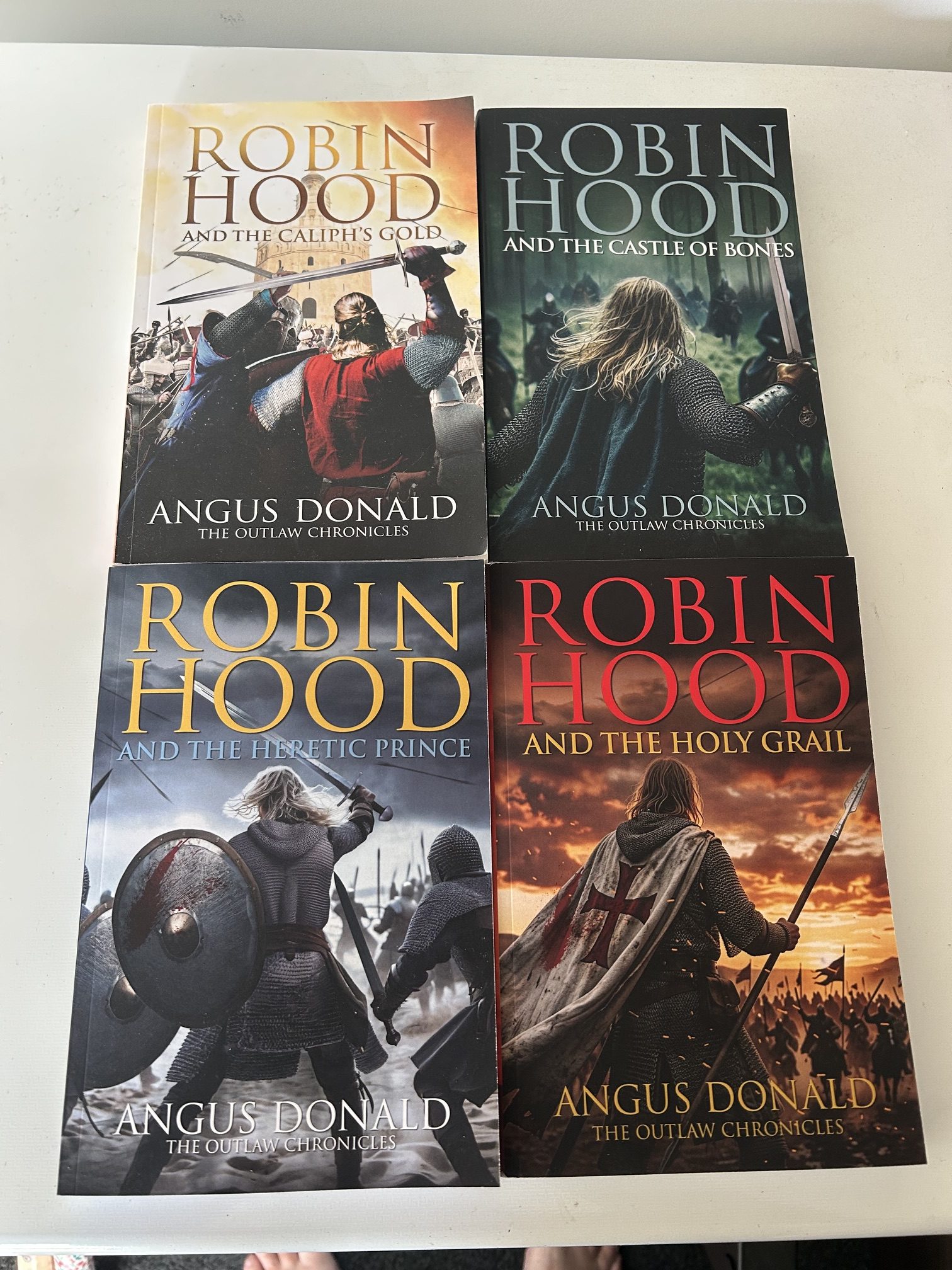
Robin Hood and the Castle of Bones is available now from Amazon in eBook, paperback and audio versions. I hope you enjoy it and, if you do, please leave a short review on Amazon or Goodreads, or somewhere else, to help spread the word. Thanks!
The post Buried Treasure, #1: Robin Hood and the Castle of Bones appeared first on Angus Donald Books.
]]>The post Bargain alert: my Mongol Knight novels are now £1.99 appeared first on Angus Donald Books.
]]>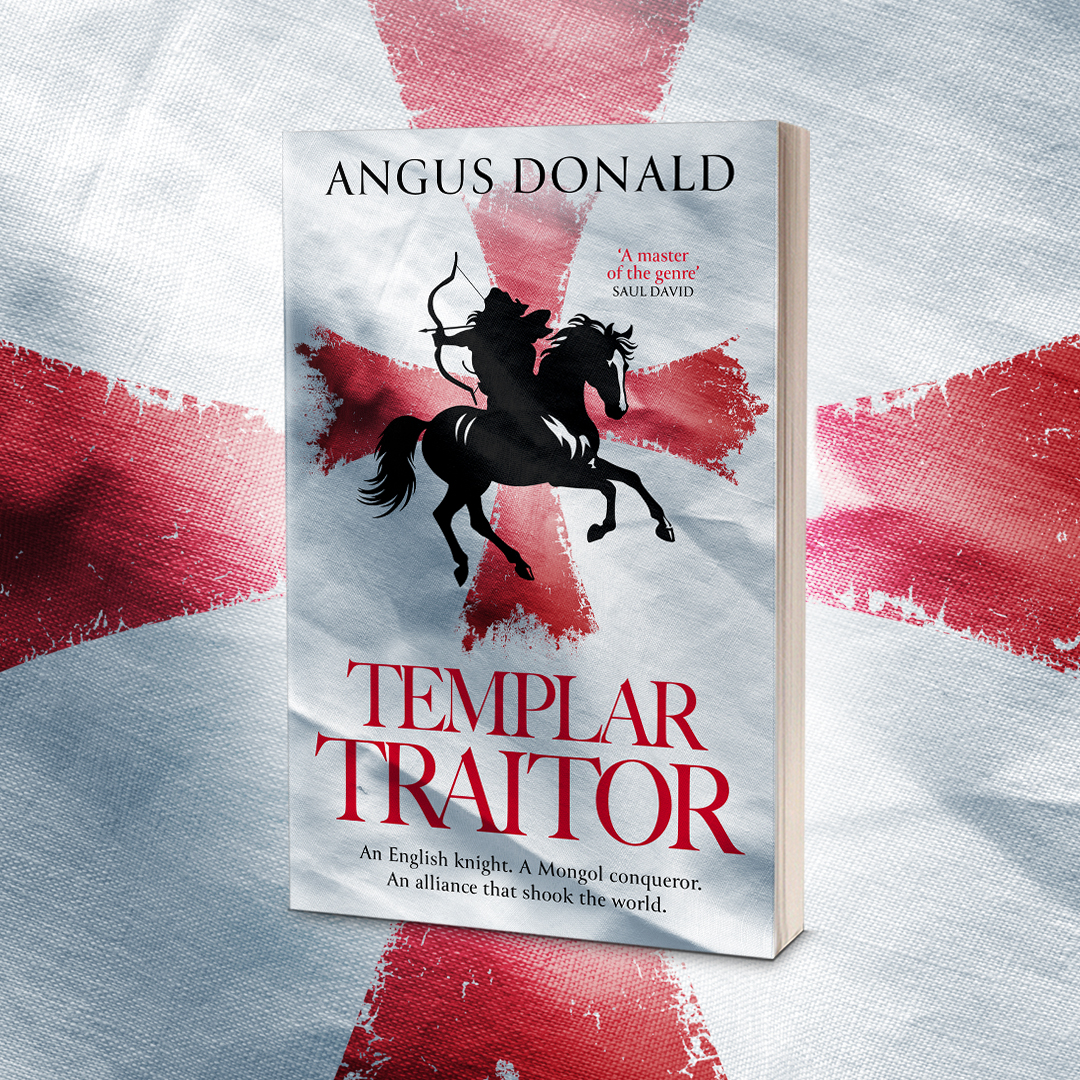
If you don’t know the story, this is the blurb from the back of Templar Traitor:
‘Templar Traitor is Donald at the height of his powers. Richly atmospheric, filled with sweeping vistas, blood-pumping action and romance. I couldn’t put it down. The highest praise I can give is this: I wish I’d written it myself!’ Matthew Harffy, author of the Bernicia Chronicles
“Do not lie to me, Templar, or it will be the last thing you do.”
July 1241. Western Europe cowers in terror before the threat of a Mongol invasion. The swift cavalry columns of Genghis Khan have smashed the steel-clad warriors of Russia, Poland and Hungary and now Austria lies directly in their path.
At a skirmish outside the walls of Vienna, German knights capture a squad of Mongol scouts and are astonished to discover one of their number is an Englishman a former Templar who has been riding with these Devil’s horsemen for more than twenty years.
Interrogator Father Ivo of Narbonne is summoned to draw the truth from the prisoner before his impending trial, to find out why he abandoned his faith, his Brethren and his homeland to become a traitor to Christendom.
Based on a true story, this is the first novel in a new blockbuster trilogy from ‘master of the genre’ Angus Donald.
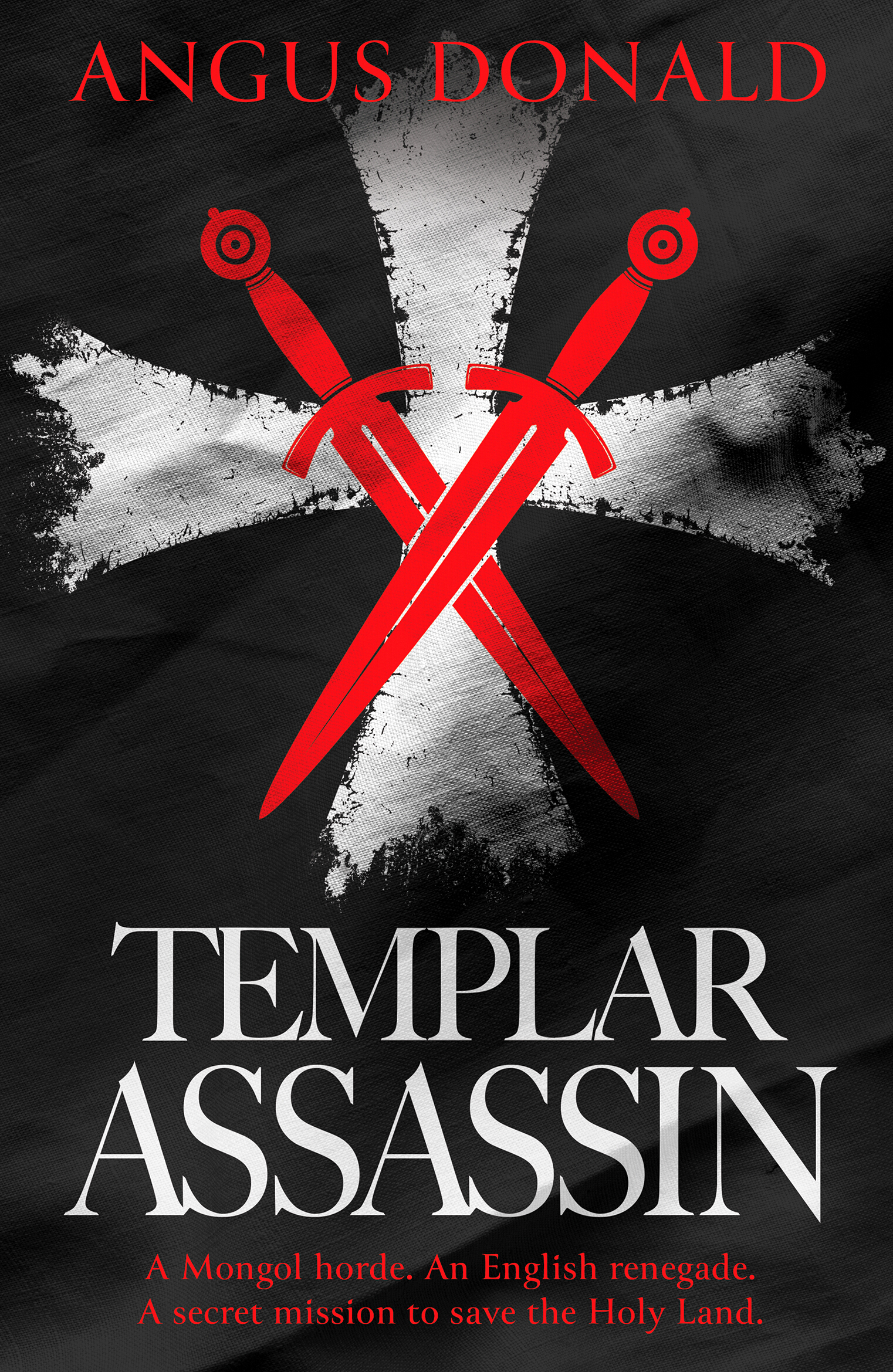
Both Templar Traitor and Templar Assassin are available from Amazon and all good book sellers in paperback, eBook and audio versions. I’m writing Templar Sacrifice (book 3) right now, and it will be out next summer (August 2027).
The post Bargain alert: my Mongol Knight novels are now £1.99 appeared first on Angus Donald Books.
]]>The post Out now! Stamford Bridge 1066 – A Viking Anthology appeared first on Angus Donald Books.
]]>
On 25 September 1066, a Norwegian army lay resting on both banks of the Derwent, seven miles from York. They had beaten one English army five days earlier and taken the city’s surrender, and the fighting was done. Most had left their mail at the ships.
They were not expecting Harold Godwinson.
The battle that followed ended the Viking age in England. Three weeks later it helped decide a second one, on a hill near Hastings, that everyone remembers instead.
A king who has spent his life outrunning the end of an age. A skald asked to praise a man he no longer believes in. A priest tends the wounded on the eve of a battle nobody knows is coming. A lone axeman on the bridge, and the Englishman in the water beneath him. Afterwards, a farmer walks the field looking for his son, and twenty years later an old earl sits in a Norman prison, still deciding what to tell his gaoler.
The man who holds the bridge in one story is watched from the water in another. Thirteen stories, one day.
Over 100,000 words of Viking historical fiction, published on the 960th anniversary of the battle.
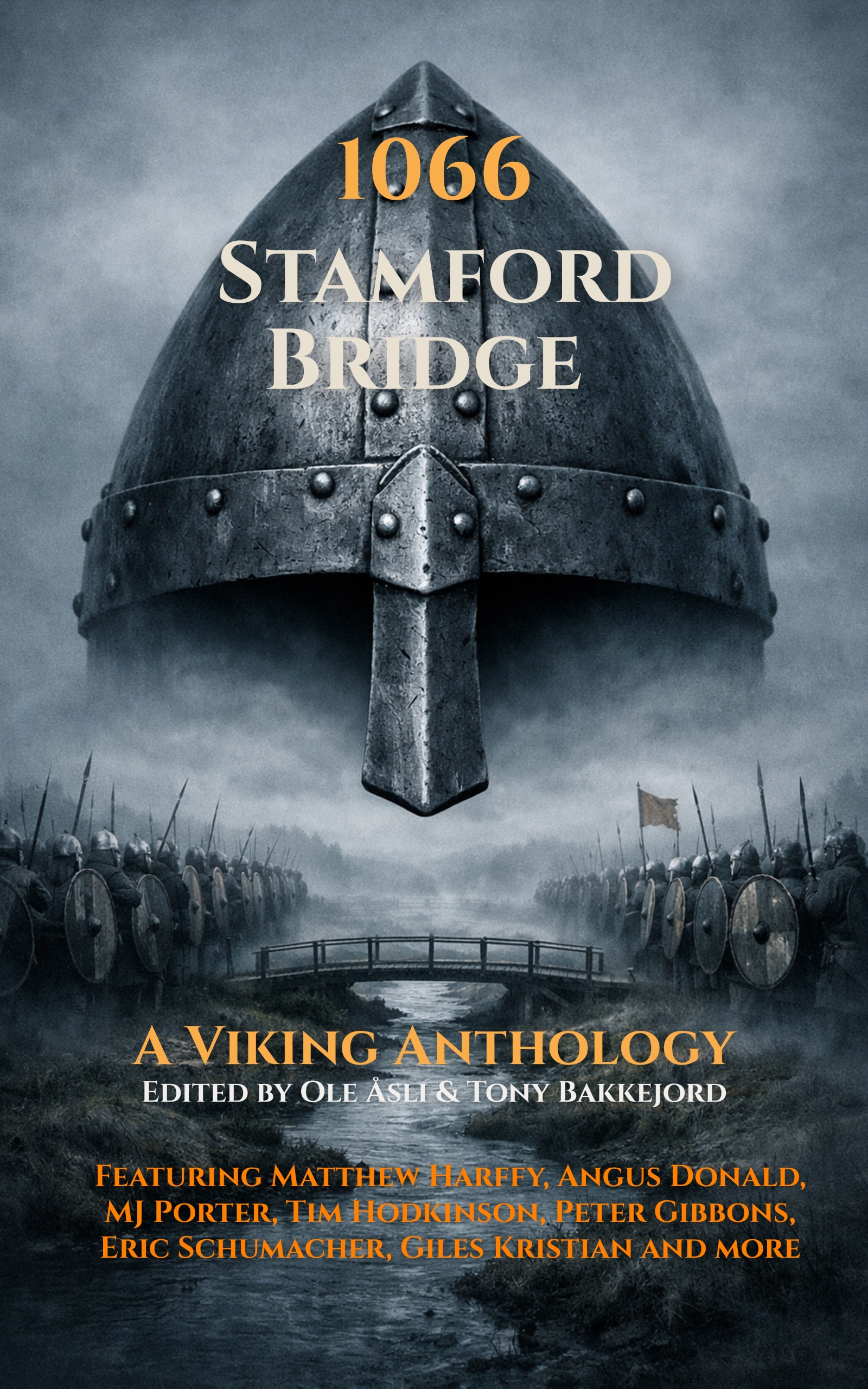
You now can buy Stamford Bridge 1066 – A Viking Anthology from Amazon in paperback and eBook formats.
The post Out now! Stamford Bridge 1066 – A Viking Anthology appeared first on Angus Donald Books.
]]>The post Read a free extract from Templar Assassin appeared first on Angus Donald Books.
]]>This extract is from the middle of the book and is about the battle of the River Kalka (1223), which took place in what is now Ukraine (Donetsk Oblast). The Mongol army under their greatest general Subutai took on the combined might of the Rus’ princes of the region and their steppe-dwelling Cuman allies. There are some Mongolian words that you should be aware of to fully understand this extract. A mingghan is a military unit of 1,000 men commanded by an officer called a noyan – the plural is mingghat; a jagghun (pl. jagghat) is a company of about one hundred; a deel is a thick, woollen wrap-around robe worn by most Mongols. A baghatur is a hero, a high honour conferred upon a very few successful warriors.
Extract begins
Robert sat on the back of Bayard, his Arab-Persian destrier, and looked out at the dusty plain ahead of him. He was very tired, in bone and blood, worn down by months of hard riding back and forth on the rolling steppe north of the Sea of Azov, yet somehow his mind was sparkling bright, aglow with a keen, almost feverish excitement.
For it was the day of battle.
On his left sat Taghachat, the lieutenant of his jagghun; on his right sat Idar, his fearsome Circassian bodyguard. Behind him was the No.4 jagghun itself: ninety-three battle-hardened dauntless Mongols sitting on their ugly little steppe ponies; near a hundred iron-hard men who called him akhmad, or captain, and some who even called him friend.
On either side of Bayard’s flanks, stretching for half a mile each way, was Subutai’s entire Mongol army of eighteen thousand horse-warriors, grouped into five blocks of mounted men, both light and heavy cavalry, with their backs towards the fast-foaming Kalka river, and their faces east towards the enemy. There was nowhere to run to. They must confront the enemy here.
And the enemy was surely coming. The heavily armoured knights of Prince Mstislav the Bold were a low smudge of brown in the distance but fast approaching. After an exhausting nine-day chase, the combined enemy force of Rus’ and Cuman cavalry had finally caught up with the Mongols on the long western bank of the Kalka.
Robert had done as he was ordered and taken the Black Falcon mingghan west along the coast of the Sea of Azov. The Black Falcons had been the tip of the Mongol spear. Behind them came Subutai’s force, nearly twenty thousand Mongol horse-warriors with wives, children, herds of sheep and goats, and thousands of spare ponies – the herd animals far outnumbering the fighting men – the baggage wagons, tents and everything else. It was the equivalent of a town on the move across the grassy, herd-feeding steppe, and moving surprisingly swiftly.
They had reconnoitred beyond the Dnieper river, even as far as the distant Dniester, and plundered scores of drab Rus’ peasant villages, living off the steppe and their captured booty, and gaining more intelligence with every mile they rode and every Rus’ steading they burned.
However, the intelligence they gathered was daunting: Grand Prince Mstislav of Kiev and Prince Mstislav the Bold, along with their ally Mstislav of Chernigov, and several other Rus’ noblemen – Robert thought of them all as being called Mstislav, although he knew that some of them must have had other names – had raised a vast army between them, some eighty thousand men, outnumbering the Mongol force by more than four to one.
True, much of the Rus’ army was composed of peasant levies, thousands of poorly equipped men on foot, armed with only spears, knives or crude farm implements; and the various Rus’ contingents were all commanded by their own independent Mstislavs – there being, as far as Subutai and his scouts could divine, no overall Rus’ commander – but it was a formidable force to reckon with, nonetheless.
Robert wondered if Subutai understood what he had provoked, when he ordered his Mongols, burning and pillaging, to venture so deeply into the rich Rus’ farmlands.
To Subutai’s credit, when the Mongol general finally comprehended the true size of the enormous enemy force pitted against him, he did immediately begin to retreat.
He left a single rearguard mingghan of heavy cavalry under a dashing young noyan called Hamabek on the east bank of the Dnieper and fled back towards Tana. Hamabek’s mingghan savaged the Rus’ army’s flanks as they tried to cross the river, his horse-archers cutting down Rus’ cavalry in their hundreds. But they were only a thousand men, and were soon trapped and slaughtered, swamped by overwhelming numbers of their enemies and completely wiped out.
Hamabek did, however, buy Subutai just enough time to evade disaster.
The Mongol army fled before the victorious Rus’ and their gleeful Cuman allies – Khan Köten and his Cuman riders up in the vanguard with Prince Mstislav the Bold. And this lord of the Rus’ lived up to his fearless name, galloping boldly ahead of the main army with his ten thousand horsemen, while the rest of the Rus’ army was left to straggle over a fifty-mile stretch of steppe between the Dnieper and the Kalka. Which was exactly what Subutai had hoped for.
The Mongol general halted his army on the western bank of the Kalka river, and turned it around to face the foe. Subutai, accompanied by Chormaqan and a dozen senior staff, now rode along the lines of his tired Mongol troopers, calling out encouragement to favoured individuals and repeating his orders for the day in his brass-lunged battle-voice.
The massed Mongol horsemen sat there, stock still, their flat, weather-battered faces, pale, dust-grimed and impassive under their steel helmets or fur-lined felt hats, not a man among them displaying his fear. They trusted Subutai. They trusted, too, in their own prowess. It was time to show the enemy they were Mongols, not fleeing vagabonds. Above their heads the spirit-banners, the sulde – tall spears that had a crossbar adorned with horse-tails – fluttered in the breeze, one for each noyan. They were the soul of the noyan, the rallying point and sacred symbol of a mingghan.
Subutai spotted Robert sitting on Bayard with his jagghun, and raised his riding whip in salute to the Englishman. Robert thought he might stop and address him personally – instead General Subutai, in his carrying battle-voice, called simply out, ‘Remember, my brothers: the yellow flag is for you light cavalry, the red flag is for the heavies. Make all your mothers proud this day. Make me proud, too, my boys!’
The Black Falcons were light cavalry scouts and Robert, a trained Christian knight, used to fighting in full mail and great helm, with lance and shield, felt ill-protected that morning, dressed in his woollen deel and fur-lined hat. He was no bowman but he had six throwing javelins in a bucket-holster at Bayard’s withers, a flanged mace tucked in his belt, and his Mongol sword at his left side.
He had donned his mail hauberk beneath his deel and under his fur hat was a basic steel cap with a nasal guard. Yet he still felt horribly vulnerable to the Rus’ heavy knights.
Today, he told himself, he would fight as light cavalry. His task was to wield the No.4 jagghun as a weapon; and make sure they followed all Noyan Shulet’s orders to the letter.
Robert had no particular desire to impress his noyan. He was a red-faced, rather stupid man, much given to shouting at subordinates. Shulet treated Robert with a wary civility, since he knew Robert was a baghatur and confidant of Subutai. But Robert suspected that Shulet resented the fact that he had taken the Black Falcon mingghan off to plunder the wealth of Soldaya, when the noyan himself had been left behind recuperating from his wound.
As Subutai spurred away along the battle line, loudly repeating his orders, Robert realised it was not true. He was no longer a confidant of Subutai. In previous engagements, he had ridden beside the general as his aide or lieutenant, now he was reduced to a captain of a jagghun, part of another man’s mingghan.
He wondered, not for the first time, why Subutai was acting so coldly towards him.
The smudge of brown had come closer, and resolved into a mass of cavalry. Two distinct formations, as far as Robert, squinting hard, could make out. On the right, from his perspective, were the Rus’ – Western-style knights and mounted men-at-arms, glinting in polished mail with long lances upright, perhaps ten thousand of them. He saw high helms and painted shields – Mstislav the Bold’s heavy cavalry.
Over on the left, was a looser formation of shaggy men on little steppe ponies, some mail visible, but a raggedy, fur-clad mass of irregular troopers – Khan Köten’s Cumans, he had no doubt, and massed in similar numbers to the Rus’ knightly vanguard over on the right.
Both formations were coming up swiftly on the Mongol line, not seeming to slacken their pace in the slightest. Robert expected them all to rein in soon, order their ranks, take a pause for breath, before attacking in the usual, well-measured manner.
But on they came, at the trot. Relentless. He could now make out individual riders in the first rank of Mstislav’s force. Five hundred paces away. It was puzzling. They made no pause to reset themselves. It seemed they meant to charge the Mongols without delay.
Noyan Shulet rode out in front of the battle line. He turned his pony briskly to face his mingghan and bellowed, ‘Black Falcons – it is time to do your duty! Follow me!’
All the way up and down the Mongol lines, Robert could see big yellow flags being waved by the designated signallers. And the first of the whistling arrows, shafts with small tubes attached to create an eerie fluting sound, was soaring up across the face of the army, to reinforce the Mongol general’s flag message.
It was time to face the enemy. Time to fight. Time to deploy the fire-pots.
His mingghan began to move forward at a walk. All along the Mongol line the light mingghat – eight thousand riders – were doing the same. Heading towards the oncoming Rus’ cavalry.
Robert turned in the saddle to look at his designated fire-pot men, a picked group of a dozen riders commanded by Arslan, many of them from his arban, who were bunched together behind him. Robert nodded at the trooper, and Arslan gave him a curt nod in response. Then the Mongol let out a whoop, and he and his comrades, galloped forward and hurled themselves at Mstislav the Bold’s advancing cavalry.
The fire-pot men seemed to cover the ground between the two forces in a matter of moments. Each man in Arslan’s command carried a small clay pot in a basket of rope, the pot containing live coals, tar-soaked straw and wet leaves or grass. As they rode at the enemy, they whirled the fire-pots around in a wide circle on the right side of the horse, and the clay pots burst into flame, emitting a thick black smoke.
When they came within fifty paces of the enemy, the fire-pot men hurled their clay missiles in the manner of slingshots towards the enemy horse, and they landed, spilling showers of red sparks, in front of their pounding hooves. All along the front, small groups of Mongols from each of the eight light mingghat were doing the exact same thing, and in no time at all, a thick wall of smoke was rising through the air, obscuring the sight of the Rus’ attackers and terrifying their charging horses.
And into this dense barrier of smoke, hurtled eight thousand Mongol light horsemen.
Yet the galloping Mongols did not confront the enemy head on, they did not smash directly into their ranks, instead they came galloping in, screaming like fiends, at an oblique angle to the oncoming Rus’. The Mongol riders emerged suddenly out of the wall of smoke and skated across the face of their regiments, loosing arrows from their bows at close range, before turning and galloping away.
Robert, with his howling jagghun around him, spurred Bayard along the front line of a smoke-wreathed Rus’ cavalry regiment. He grabbed a javelin from the bucket-holster, hefted it and hurled the light spear to his left into the body of an astonished Rus’ knight, perhaps even a Mstislav, given his elaborate silver helm. The javelin sank a good foot into the man’s chest, and the man let out a horrible bubbling cry and slumped back in his saddle.
Robert heard an arrow hiss past his ear and reached for another javelin.
Behind him Taghachat was shooting his short, horn-and-sinew bow like the master horse-archer he was. The Mongol warrior plucked a shaft from his quiver, nocked and loosed it into the mass of enemy horse; then, almost faster than thought, he plucked another, nocked and loosed again. Arslan was now at Robert’s other side, shooting his own short bow like a centaur. The Englishman pulled back his right arm and hurled his second missile deep into the enemy ranks, and found himself at the far end of the Rus’ regiment, with Idar now at his side.
The Circassian was also shooting a bow but at a slightly slower pace than the Mongol troopers, taking time to aim his shots. Then they both turned their horses at the same time and galloped away, the angry taunts of the Rus’ echoing in their ears.
The wall of smoke and the close-range arrow storm slowed, then halted the Rus’ advance. There was now confusion in their ranks. There were horses screaming on the ground, riddled with arrows, and dead and wounded trampled underfoot. Some Rus’ horses refused to go through the smoke, which drifted in thick, stinking skeins across the field.
But not all.
Formed bodies of Rus’ horsemen appeared like armies of wraiths out of the dense clouds. Robert turned Bayard around, calling his jagghun to him and, after a moment in which they reformed the ranks, they charged again at a Rus’ squadron, a mass of a hundred horsemen, their faces covered to the eyes in mail aventails under plumed helmets; frightened men who seemed to have lost all direction in the chaos.
Their leaders were shouting in their alien tongue, and pointing in three different directions, as Robert’s jagghun swept out of the smoke and across their front once more. The Englishman and his men showed the Rus’ no mercy. They rode in fast and lacerated their ranks with a blizzard of lethal shafts, loosed at a range of no more than twenty paces. Three, four, five times, the steel-tipped Mongol arrows, propelled by their powerful bows, slashed deep into the roiling enemy ranks, the shafts easily penetrating the Rus’ iron-link mail at that catastrophically close range.
Robert hurled two of his javelins in quick succession, knocking one mail-masked knight clean out of the saddle with the first; the second disappearing into the tight-packed, shifting mass of Rus’. The enemy howled in rage and spurred after them, but Robert’s nimble men whipped their ponies round and cantered away.
Robert led his jagghun back out of the smoke, to a clearer patch of the field. A whistling arrow tootled over his head – continue the attack – he knew that signal meant. He could see two other jagghut of Black Falcons regrouping to his right, and there was Noyan Shulet, under the Spirit Banner, pointing his sword at the mass of enemy. Ordering another assault on the disordered ranks of Mstislav the Bold’s men.
Robert turned to Taghachat. ‘We’re going again. Jagghun, all of you, on me!’
As they galloped again towards the nearest Rus’ formation, with Noyan Shulet and two other jagghut riding immediately on their right, Robert had just enough time before they hit the enemy to glance left, then behind him, at the rest of the field.
The army of Khan Köten had been pushed further to the south, beset on all sides by buzzing swarms of Mongol light horse. There was a widening gap of several hundred yards between the beleaguered Cumans and Mstislav the Bold’s chaotic regiments. Behind him he could see the heavy cavalry mingghat ordering their ranks.
He looked ahead, beyond the mass of Mstislav’s troops, which seemed to be hemmed all around now by Mongol light cavalry. And what he saw chilled his soul.
There were two more huge blocks of Rus’ heavy cavalry – tens of thousands of horsemen in total – coming forward. They were still half a mile’s distant, but they were hastening towards the fight, and beyond them, three or four miles away, were yet more enemy regiments – infantry formations this time, he thought – thousands of peasants tramping stolidly towards the whirling dust and smoke-obscured battle.
Robert had no time for fear. He was galloping with a score of Black Falcons at the shaky lines of enemy cavalry. Once more they rode in obliquely, Robert hurled his second-to-last javelin, missed the man he was aiming for and saw his spear sink into the haunch of a dun mare. The horse went wild, kicking and bucking off his rider.
The Rus’ formations were coming apart now, the enemy riders surging forward in ones and twos out of their ranks, shouting out their hatred for the gadfly Mongols, and Robert found himself ducking under the strike of a long lance, which passed over his right shoulder. Bayard snapped his great yellow teeth at the oncoming horse’s neck and caused the animal to rear up in panic, nearly throwing its rider. Which gave Robert time to draw his blade and hack at the Rus’ rider’s right arm as he passed.
He felt the contact of the blow, the crunch of steel against mail and bone. There were horses and enemy knights all round him. His opponent had disappeared in the swirling melee. He exchanged ringing sword cuts with a giant, red-bearded man, then sliced his blade across the fellow’s big shouting face, opening his nose with a spray of hot blood, before spurring Bayard quickly out of the crush and into a patch of space.
The din was appalling. His view of the field came and went in wind-shifted patches of smoke. Yet, over the screams of the wounded and the war cries of Rus’, the clash of steel, the crack of wood and bone, the neighing of frightened horses, the Englishman could hear the drumming of thousands of iron hooves on the dry earth.
He turned his head eastwards and saw that Subutai had chosen that exact moment to launch his superb heavy cavalry into the fray.
Ten mingghat – ten thousand Mongol warriors clad in iron mail and steel plate, on massively strong armoured horses – threw themselves into the fight.
Ten thousand steppe-hardened riders wielding long lances, swords and maces, surged forward from the Mongol battle lines. They smashed straight into the mass of frightened, milling, arrow-thinned cavalry of Khan Köten.
They plunged deep into the Cuman ranks like a sharp knife sinking into a block of wet curd. As the sulde poles danced above the heaving, dust-cloaked, deafening scrum, the horse-tails whipping in the steppe wind, the Mongol cavalry crushed the Cumans; they cut them down in bloody sheaves, culling them like pigs in a slaughterhouse.
Their long Mongol spears, driven by the full weight of mailed rider and charging horse, tore into the lightly covered bodies of Khan Köten’s men, sinking into their flesh up to the hook behind the blade. When the lances were embedded in bodies, snapped or discarded, the Mongols drew swords and began to hack and slash the foe into bloody ruin.
Extract ends
Templar Assassin is available as a paperback, eBook or audio file from Amazon. Templar Traitor, the first book in the Mongol Knight trilogy, is also available in the same formats.
The post Read a free extract from Templar Assassin appeared first on Angus Donald Books.
]]>The post News update: two anthologies and a free book talk and signing event appeared first on Angus Donald Books.
]]>As most of you will know, I published two books in August: the final volume of my long-running Outlaw Chronicles series – Robin Hood and the Holy Grail – and the second book in the Mongol Knight trilogy, Templar Assassin. Follow the links to find out about those if you were unaware. This post isn’t really about them. But after a busy summer, I thought I would get back to writing Mongol Knight 3, but I find that I have three important things on my desk that I need to share with you.
First up is a book talk in Sittingbourne, up in north Kent. I’ll be talking about the Englishman who fought for Genghis Khan – a real-life historical character, as incredible as it might seem, who is the hero of my Mongol Knight series. The talk is free but you need to book in advance with Sittingbourne Library. I’ll be signing copies of Templar Traitor and Templar Assassin after the talk. Do come along, if you are in the vicinity, and say hello.

The second thing is an anthology of short stories around the battle of Stamford Bridge in 1066, which will go on sale on September 25th. I’ve contributed a short story, the last tale in the book about the aftermath of the battle, which took place a few weeks before the much more famous Battle of Hastings. It also has superb contributions from a galaxy of stars in the Viking genre including Matthew Harffy, Justin Hill, Theodore Brun, Tim Hodkinson, Peter Gibbons, Giles Kristian, and many more. I think it is going to be great. I’ve had some terrific praise for my short story – one reader just said “Wow!” which I’m taking as a compliment. I’ll be posting about this more nearer September 25th. But keep an eye out for that if you like battle-centred historical fiction.

The third thing is another anthology with more than 30 authors contributing. This is a Kickstarter project beginning on September 15 about the wars of the 14th century, called A Century of Swords, with the number of people involved increasing depending on whether we raise enough money. I’m fairly low in the pecking order but, if the Kickstarter thing works, and we raise enough, I will be contributing a short story about Bannockburn. This is the link for more info: https://www.centuryofswords.net

That’s all for now, I hope you will engage with some of these future projects. And don’t hesitate to grab a copy of either Robin Hood and the Holy Grail or Templar Assassin if you are just looking for an exciting historical read right now.
The post News update: two anthologies and a free book talk and signing event appeared first on Angus Donald Books.
]]>The post Free talk at Sittingbourne Library – The Englishman who fought for Genghis Khan appeared first on Angus Donald Books.
]]>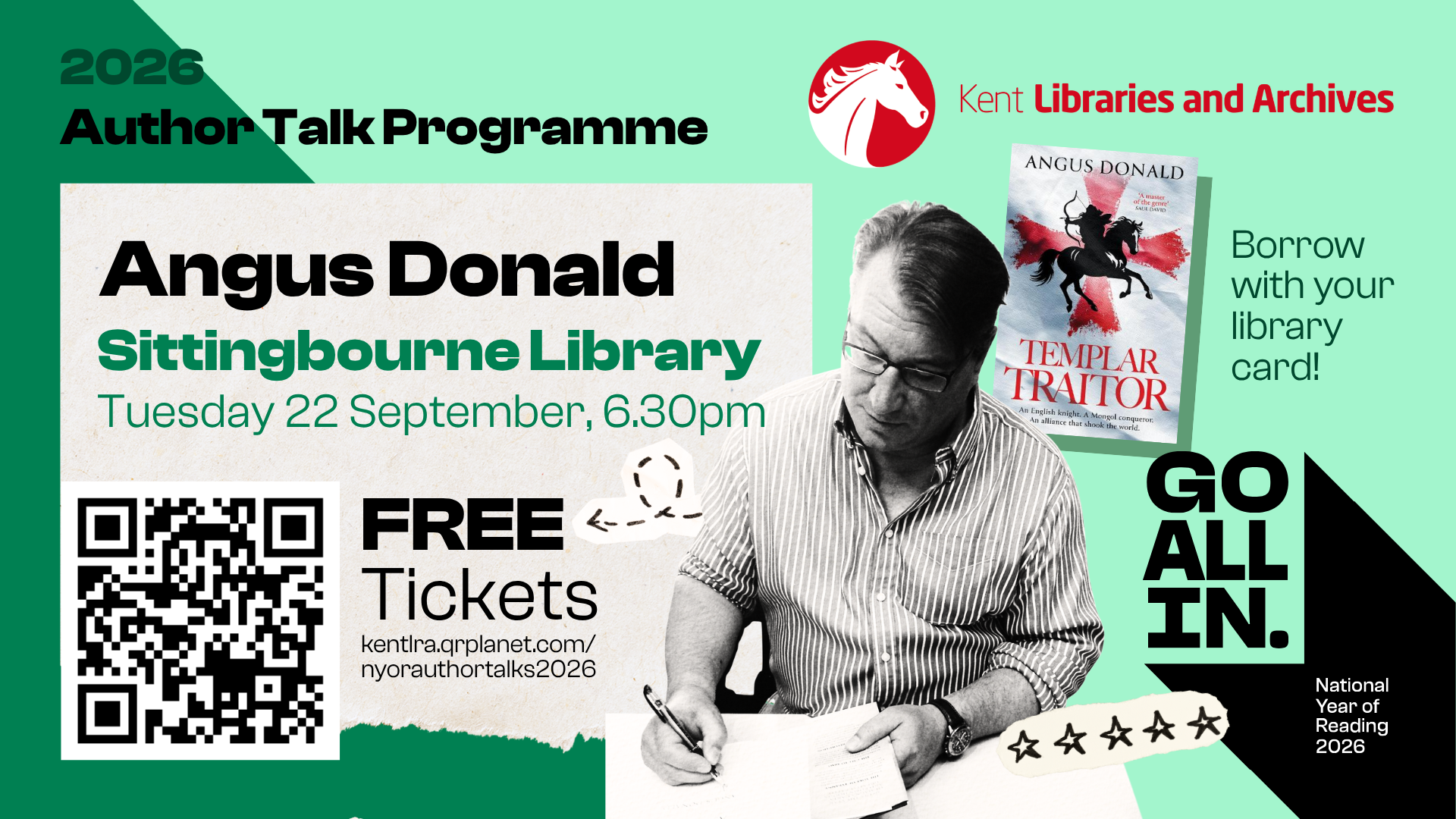
That talk, which begins at 6.30pm, will last for about an hour and then I will be selling signed copies of the first two book in the Mongol Knight series, Templar Traitor, and Templar Assassin. This is the blurb from the back of the first novel:
‘Do not lie to me, Templar, or it will be the last thing you do’
July 1241. Western Europe cowers in terror before the threat of a Mongol invasion. The swift cavalry columns of Genghis Khan have smashed the steel-clad warriors of Russia, Poland and Hungary and now Austria lies directly in their path.
At a skirmish outside the walls of Vienna, German knights capture a squad of Mongol scouts and are astonished to discover one of their number is an Englishman, a former Templar, who has been riding with these Devil’s horsemen for more than twenty years.
Interrogator Father Ivo of Narbonne is summoned to draw the truth from the prisoner before his impending trial, to find out why he abandoned his faith, his Brethren and his homeland to become a traitor to Christendom.
Based on a true story, this is the first novel in a new blockbuster trilogy from ‘master of the genre’ Angus Donald.
The tickets are free but you need to book your seat in advance as places are limited. I really hope to see you there. And if you bring along any copies of my other books – the Robin Hood novels, for example – I will be happy to sign them too.
If you can’t make the talk, you can buy copies of Templar Traitor and Templar Assassin from Amazon in paperback and eBook versions. They are also available as audio books
The post Free talk at Sittingbourne Library – The Englishman who fought for Genghis Khan appeared first on Angus Donald Books.
]]>The post Stamford Bridge 1066 – A Viking anthology appeared first on Angus Donald Books.
]]>
You may have become a little tired of me banging on about the two books I’ve published recently – Robin Hood and the Holy Grail, the final Outlaw Chronicles novel, and Templar Assassin, the second book in my Mongol Knight trilogy. But that is the strange thing about books: none appear for ages, and then three come along all at the same time. Wait! Do I mean books?
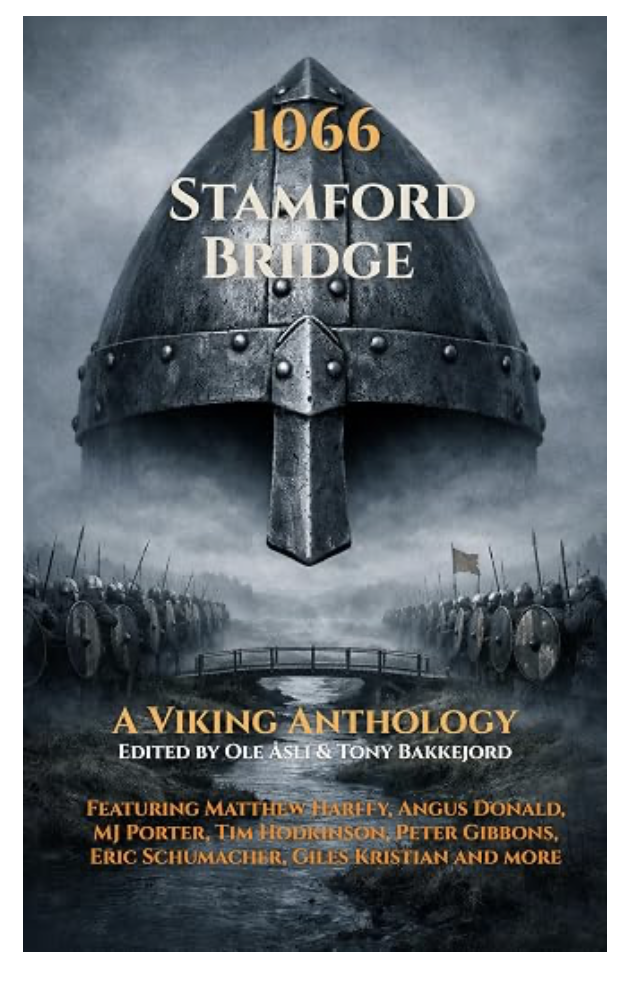
Anyway, Stamford Bridge 1066, will be out later this month, and you can purchase a copy in a couple of weeks. Alternatively, if you simply cannot wait to get stuck into all that gory short-story goodness, you could get yourself an ARC – advanced reader copy – on the condition that you provide a review. If you want that ARC, follow this link to StoryOrigin.
This is what the Stamford Bridge 1066 blurb says:
Thirteen writers. One battle. The same afternoon, told from both sides of the bridge.
Giles Kristian · Matthew Harffy · Angus Donald · Tim Hodkinson · Peter Gibbons · MJ Porter · Justin Hill · Theodore Brun · Eric Schumacher · Will Dowling · M. Thomas Kingsley · Mark Oxbrow · Åsli & Bakkejord
On 25 September 1066, a Norwegian army lay resting on both banks of the Derwent, seven miles from York. They had beaten one English army five days earlier and taken the city’s surrender, and the fighting was done. Most of them had left their mail at the ships.
They were not expecting Harold Godwinson.
The battle that followed ended the Viking age in England. Three weeks later it helped decide a second one, on a hill near Hastings, that everyone remembers instead.
A king who has spent his life outrunning the end of an age. A skald asked to praise a man he no longer believes in. A priest tends the wounded on the eve of a battle nobody knows is coming. A lone axeman on the bridge, and the Englishman in the water beneath him. Afterwards, a farmer walks the field looking for his son, and twenty years later an old earl sits in a Norman prison, still deciding what to tell his gaoler.
The man who holds the bridge in one story is watched from the water in another. Thirteen stories, one day.
Over 100,000 words of Viking historical fiction, published on the 960th anniversary of the battle.
I hope you will enjoy this collection of stories, in due course, and will tell all your friends about it. And if you want that StoryOrigin ARC, click on this link and follow the instructions.
The post Stamford Bridge 1066 – A Viking anthology appeared first on Angus Donald Books.
]]>The post Templar Assassin is out now in paperback, eBook and audio versions appeared first on Angus Donald Books.
]]>
The series is based on an extraordinary true story about an Englishman who fought for Genghis Khan. He was captured outside Vienna, by the Duke of Austria, riding with a party of Mongol scouts, and this is recorded in the 13th-chronicles of Mathew Paris, a monk of St Albans. I had to invent much of the story, following the historical accounts of the Mongol campaigns, because what we actually know of Robert, the renegade Englishman, is pretty scant. But this unusual Englishman actually existed and it seems that he travelled across much of the medieval world in the ranks of the unstoppable Mongol army.
This is the blurb from the back of Templar Assassin:
Live by the sword, die by the dagger.
September 1241. Robert of Hadlow, Templar knight, is on trial for his life.
Twenty years ago, his accusers say, he turned his back on his Brethren to join the army of the most bloodthirsty warlord the world has ever known – Genghis Khan.
Robert claims he was on a secret mission to bring the Mongol hordes to the defence of the Holy Land to aid its beleaguered Christian knights. But will he be believed? Or will Robert be condemned to a traitor’s death – and bring the entire Templar Order to ruin?
From the endless grasslands of the Eurasian steppe to the burning sands of the Gobi and beyond, Robert recounts his extraordinary adventures with the Mongol army.
A tale of love and loss, tragedy and high adventure, of silent killing and the slaughter of thousands. And what a man will do to survive, serve his cause and save his family.
The compelling second novel in Angus Donald’s blockbuster new series, inspired by a true story.
Templar Assassin is available now from Amazon, Waterstones and all good booksellers. The first book in the trilogy, Templar Traitor, is also available now in paperback, eBook and audio versions.
The post Templar Assassin is out now in paperback, eBook and audio versions appeared first on Angus Donald Books.
]]>The post Templar Robert of Hadlow rides again appeared first on Angus Donald Books.
]]>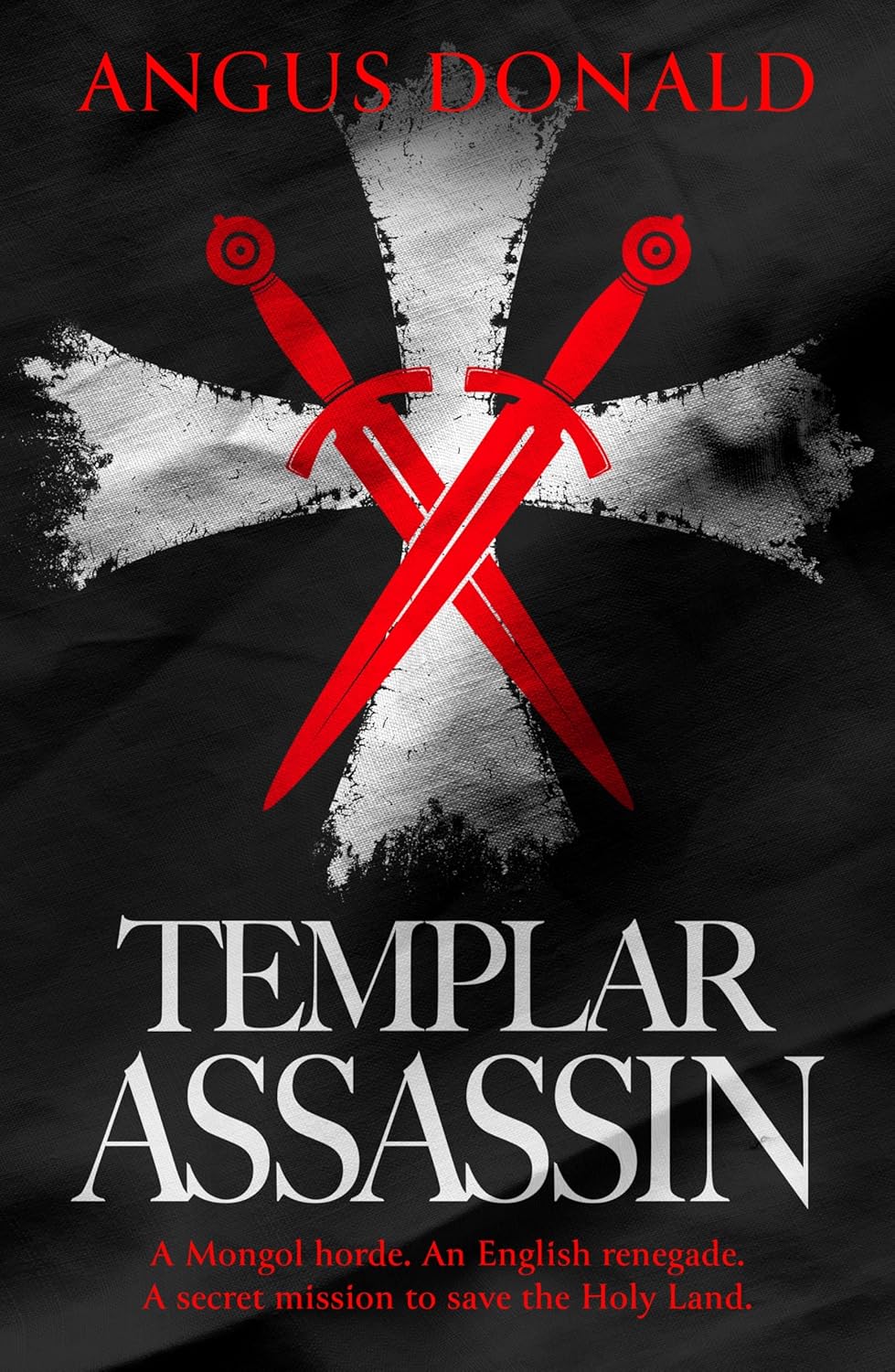
It is late summer of 1241 and Robert of Hadlow, an English Templar knight, is on trial for his life in Vienna Castle. He is accused of being a traitor to Christendom because he chose to side with the enemy of all God-fearing folk, the fiendish Tartars, as Europeans call the Mongol nation.
These swift-riding horsemen erupted out of Asia a few years before and, in a series of whirlwind victories, defeated all their opponents in eastern Europe – the Russian dukedoms, the King of Hungary and the massed Polish knights – in battle after battle. Now this terrifying horde of seemingly inhuman, unstoppable, horse-warriors threatens all the kingdoms of Western Europe.
Christendom is, quite frankly, quaking in its boots.
Robert was captured riding with a company of Mongol scouts on the banks of the Danube and imprisoned by the Duke of Austria (see Templar Traitor) in his deepest dungeon. He is asked to give an account of his actions over the past twenty years to the ducal court, and this is how his story unfolds, as a series of flashbacks related by Robert in the dock. If the Englishman is found guilty, he will be summarily executed, and his guilt looks certain to the worthies of the Vienna court who stand in judgment over him.
Robert claims he was sent on a secret mission by his Templar masters twenty years ago to bring the Mongols west to join in the Fifth Crusade, which is was then raging in Egypt and the Holy Land. His goal was to recapture Jerusalem for Christ, with the help of a powerful Mongol army. But his story seems wildly implausible to the perplexed European lords trying him.
If his mission was to bring the Mongols into the war against the Ayyubid sultanate in the Holy Land, the hated Saracen enemy of all good Christians, why has he not done so? Why did he spend so long making a lucrative trade treaty on behalf of a Venetian merchant? Why did he ignore his Templar vows of chastity and father a child with a Mongol beauty? Things look very black for Robert, and his situation is made worse by the presence of an enemy close at hand, who pretends to be his good friend and advisor.
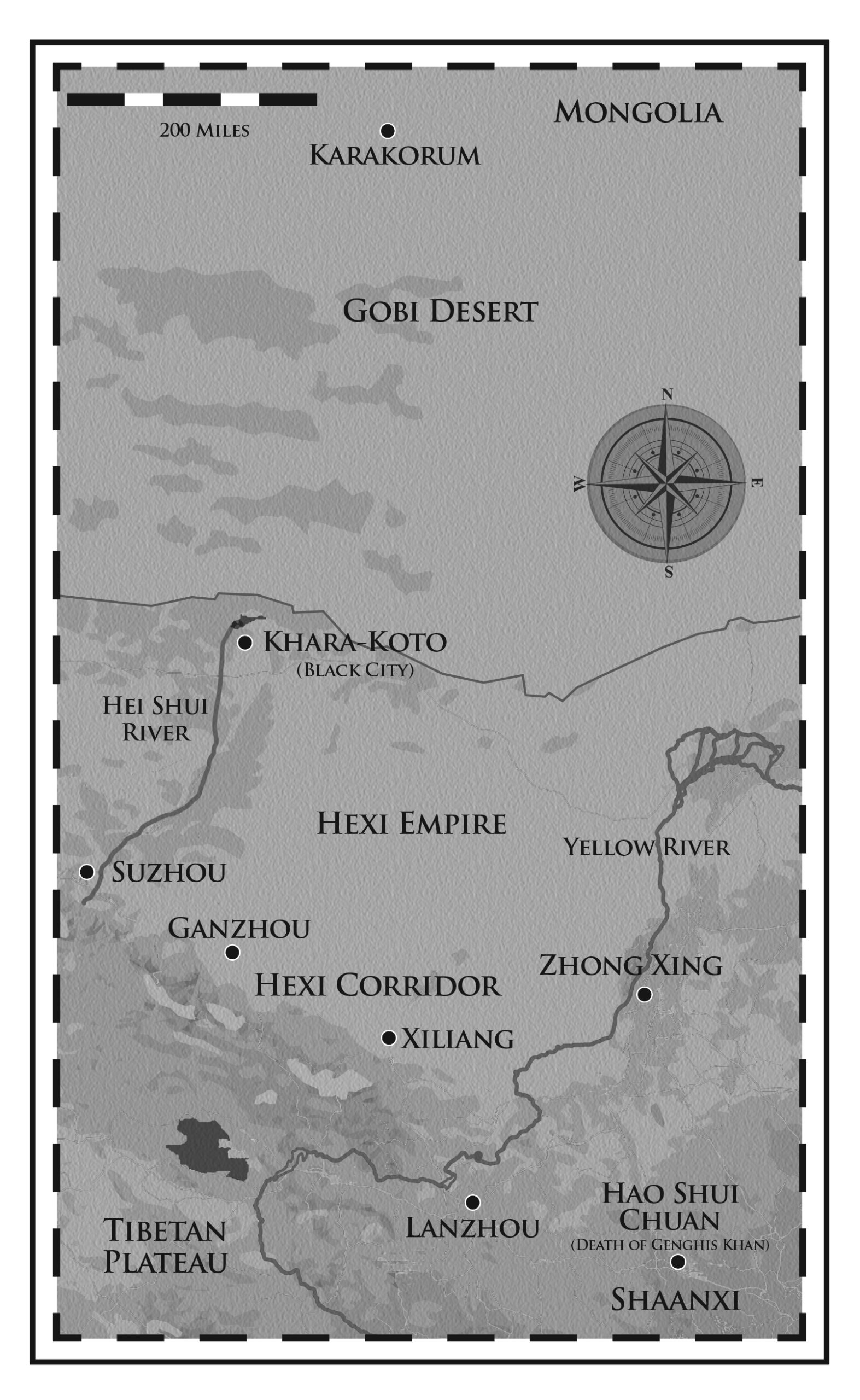
Robert tells the court how he sacked and burned the Genoese trading city of Soldaya in the Crimean peninsula with a Mongol force, destroyed the Russian princes on the Ukrainian steppe at the Kalka River, then rode thousands of miles east to take part in Genghis Khan’s brutal campaign against the Hexi Empire in China (map below). As Robert recounts his bloody adventures in the Mongol army, and his rise through their ranks, he reveals why he had to turn assassin to survive, serve his cause and save his family.
I don’t want to give too much away here but I can promise you that Templar Assassin is a rip-roaring, full-blooded story of love and war, friendship and betrayal, politics and passion, which spans the globe from the endless grasslands of the Eurasian steppe to the burning sands of the Gobi desert and beyond.
And while you can certainly read Templar Assassin as a standalone novel, it is probably a good idea first to read Templar Traitor (Book 1), which happens to be on sale just now as an eBook for only 99p. I hope you enjoy them both!
In other news . . .
I have just published my 12th and final Outlaw Chronicles novel. Robin Hood and the Holy Grail is now available from Amazon as an eBook and paperback. The audio book will hopefully be out soon.
The post Templar Robert of Hadlow rides again appeared first on Angus Donald Books.
]]>