Advertise with Googlier.com TALD – 1World1Family.me http://1world1family.me Tue, 17 Apr 2018 18:53:49 +0000 en-US hourly 1 https://wordpress.org/?v=7.1.3 DDFR Roadshow Visits Northeastern University! http://1world1family.me/ddfr-roadshow-visits-northeastern-university/?utm_source=rss&utm_medium=rss&utm_campaign=ddfr-roadshow-visits-northeastern-university http://1world1family.me/ddfr-roadshow-visits-northeastern-university/#respond Wed, 30 Nov 2016 22:04:53 +0000 http://1world1family.me/?p=12387 Filmmaker Thomas Allen Harris visited Northeastern University in Boston, MA as a guest speaker on October 11th. His presentation was hosted by professor William Lancaster from the communication studies department […]

The post DDFR Roadshow Visits Northeastern University! appeared first on 1World1Family.me.

]]>
dsc_0105

Filmmaker Thomas Allen Harris visited Northeastern University in Boston, MA as a guest speaker on October 11th. His presentation was hosted by professor William Lancaster from the communication studies department and showcased Harris’ Emmy nominated film Through A Lens Darkly and a mini-DDFR multimedia demonstration for students and faculty of Northeastern University.

img_8462r

After his presentation, the students from different cultures and backgrounds including Asia, the Caribbean and Europe shared their own family photographs and amazing stories spanning over 150 years and it was full of tears and laughter.

northeastern_block

img_8426r

img_8310r“Thomas Allen Harris brings a fascinating perspective to the field of communication studies. In our era of contrived and distorted images, it is so refreshing to tap into family photographs as an authentic trove of our humanity.”

– Prof. William Lancaster
DDFR
DDFR
DDFR
DDFR
DDFR

“With Harris’ talk and discussion, I was able to reflect more on the process of archiving photos. I’m definitely concerned about the longevity of our digital footprints, so I’m hoping to take  some time to make physical copies of my photos. It was also interesting to hear the stories of the students and faculty members at Northeastern. I’ve been around Northeastern for a while (as a grad student, employee, etc.) and I’m always meeting people with different cultures and backgrounds who are brought together by the common bond of Northeastern. This was another great opportunity to expand my world view and learn more about the individual pieces which make up our Northeastern community.”
– Kira Novak img_8579

Also, Antonia, Communication Studies major and aspiring writer at Northeastern University shared her great-great grandfather’s yearbook with the Digital Diaspora Family Reunionteam, telling us her family stories.

antonia2

Antonia : “Since I was old enough to totter into a Kindergarten classroom, my mother has instilled in me the importance of education. This is, in part, because she’s a teacher, but also because she comes from a long line of African American men and women who prided themselves on obtaining an education, even when it was hard for them to do so”
DDFR
“As a reminder of these values, my great uncle on my mother’s side gifted me with a copy of my great great grandfather, Charles Turner’s, yearbook from pharmacology school. Charles graduated in the class of 1918, and his yearbook tells a story of that time.”

DDFR
antonia1“This is Charles’s picture and biography written by the yearbook staff who were, of course, white. Although his bio does mention the fact that he contributed to the yearbook by doing most of the art work, it’s hard to think that the statement he is “not brilliant”  (written by the staff) had nothing to do with the racial outlooks of the early 20th century.”
DDFR

“The biographies of some of the other, very few, minority students in the yearbook reflected similar biases. For example, Charles’s Chinese classmate is described as “an elegant representative” from “far off China,” clearly playing into the mystic stereotypes of the far East.”

DDFR

antonia3

“These images and descriptions reflect a more negative narrative in the yearbook. However, the image of the sorority, Delta Omega Phi, I find to be incredibly uplifting. I love this photo because it features a group of women who were all striving for an education in the medical field at a time when they couldn’t even vote, and the look on every face is of such defiance and determination that it fills me with a resolve of my own to carry on a legacy of education these ladies paved the way for.”

To see more photos from the roadshow, click here.


The post DDFR Roadshow Visits Northeastern University! appeared first on 1World1Family.me.

]]>
http://1world1family.me/ddfr-roadshow-visits-northeastern-university/feed/ 0
Hugh Bell Photo Galleries Now Available to View on GME Website http://1world1family.me/hugh-bell-photo-galleries-now-available-view-gme-website/?utm_source=rss&utm_medium=rss&utm_campaign=hugh-bell-photo-galleries-now-available-view-gme-website http://1world1family.me/hugh-bell-photo-galleries-now-available-view-gme-website/#respond Wed, 19 Oct 2016 21:49:06 +0000 http://1world1family.me/?p=12367 Thomas Allen Harris interviewed the photographer, Hugh Bell back in 2005 and Bell would become a part of our Emmy nominated documentary on the history of Black photographers, Through A Lens Darkly. We are excited […]

The post Hugh Bell Photo Galleries Now Available to View on GME Website appeared first on 1World1Family.me.

]]>
hugh_bell_self

Self by Hugh Bell

Thomas Allen Harris interviewed the photographer, Hugh Bell back in 2005 and Bell would become a part of our Emmy nominated documentary on the history of Black photographers, Through A Lens Darkly. We are excited that under the Gartenberg Media Enterprises‘ (GME) there is a commitment to resurrecting Bell’s career and legacy.

hugh_bell_1

Mambo at the Paladium by Hugh Bell

“Hugh Bell was a renowned art and commercial photographer, who worked in New York City over the course of his entire professional career. Upon his death in 2012, his son-in-law, Richard Martha, was named Executor of the Estate of Hugh Bell. In 2014, GME was engaged on an exclusive basis by the Bell Estate to manage the collection of Hugh Bell’s photographs and to further the artist’s legacy.”

“GME is committed to resurrecting the career of this overlooked photographer, through licensing of his photographs, republishing his out-of-print books, mounting curated exhibitions, and in identifying a long-term repository for this significant collection of photographic works.”

“Bell’s lifelong passion for taking jazz photographs, often referred to as his “Jazz Giants” series, has been published in books and magazines. His jazz photographs have also graced the covers of innumerable vinyl jazz records.”

hugh_bell_billie

Billie Holiday by Hugh Bell

“He is most known for his images of the female figure. In 1970, a series of these portraits were published in Avant-garde magazine in a feature entitled, “Bell’s Belles”. Throughout this period, he also traveled to the West Indies, focusing on the region of his geographical heritage. He photographed carnivals in Trinidad and Haiti, and daily life in Antigua. He traveled as well to Brazil, where he took photographs of the local citizenry.”

Hugh Bell passed away on October 31, 2012. He left behind an extensive and wide-ranging photographic legacy that is now ready for rediscovery.

Click here to check out more stories about him, his galleries including Jazz/Spain/Afro-Caribbean and information for licensing.


The post Hugh Bell Photo Galleries Now Available to View on GME Website appeared first on 1World1Family.me.

]]>
http://1world1family.me/hugh-bell-photo-galleries-now-available-view-gme-website/feed/ 0
Black Photographers Still Matter http://1world1family.me/black-photographers-still-matter/?utm_source=rss&utm_medium=rss&utm_campaign=black-photographers-still-matter http://1world1family.me/black-photographers-still-matter/#comments Tue, 11 Oct 2016 22:53:30 +0000 http://1world1family.me/?p=12333 In a new interview featured in Ebony Magazine,  Filmmaker Thomas Allen Harris talks about the importance of family photographs especially in African-American history, mentioning his Emmy nominated film Through a […]

The post Black Photographers Still Matter appeared first on 1World1Family.me.

]]>
black photographers 7

In a new interview featured in Ebony Magazine,  Filmmaker Thomas Allen Harris talks about the importance of family photographs especially in African-American history, mentioning his Emmy nominated film Through a Lens Darkly and transmedia Digital Diaspora Family Reunion. And just as important, the article pays homage to the importance of Black Photographers in preserving that unique history. Here is an excerpt from the Ebony interview conducted by William Bryant Rozier:

black photographers 2“As the status of the professional photographer has taken a hit, so has the value of the professional photograph, whether it’s taken by a working photographer or by a photo enthusiast.

Award-winning filmmaker and photographer Thomas Allen Harris knew the latter. “Growing up, my grandfather (Albert Sidney Johnson Jr.) was an amateur photographer. Anytime he had all of his grandkids together for Easter or any event, he would take an hour to pose us. That was a ritual that I grew up with,” said the filmmaker.

“Harris’ most notable, most Netflix-able work is the award-winning (recently Emmy-nominated) documentary Through A Lens Darkly: Black Photographers and the Emergence of a People (2014), telling the root-to-the-fruit quest for social change set by history’s black photographers. Family photography (and family pictures taken by Albert Johnson) leads the way.”

“Harris’ longtime project has taken on the cause of re-energizing the family photograph, making it an all-inclusive, hunt-gather-show-and-tell. Since 2009, Digital Diaspora Family Reunion (DDFR) has been touring the country (and overseas) with its multimedia community engagement event, the DDFR Roadshow. DDFR bridges inter-generational and cross-cultural differences, deeply affecting participants in intimate and surprising ways.”

black photographers 4

“We educate people about the importance of “puration” in terms of out of all the images they take, which ones they print out and why.”

black photographers 3Family pictures, said Harris, “are just as important now, probably even more so than they were back in the day. Most people are taking digital images using their cell phones, but they’re also not taking their images out, they are losing the images in [all of] those of images we click off everywhere.”

For the full article: http://bit.ly/2dGntU8


The post Black Photographers Still Matter appeared first on 1World1Family.me.

]]>
http://1world1family.me/black-photographers-still-matter/feed/ 1
Thomas Allen Harris Awarded Montgomery Fellowship at Dartmouth College! http://1world1family.me/montgomery-fellowship-at-dartmouth-college/?utm_source=rss&utm_medium=rss&utm_campaign=montgomery-fellowship-at-dartmouth-college http://1world1family.me/montgomery-fellowship-at-dartmouth-college/#respond Tue, 03 May 2016 20:46:31 +0000 http://1world1family.me/?p=11991 Our very own Thomas Allen Harris has embarked on an exciting opportunity: he is currently serving as a Montgomery Fellow at Dartmouth College! The prestigious Montgomery Fellowship Program, established in […]

The post Thomas Allen Harris Awarded Montgomery Fellowship at Dartmouth College! appeared first on 1World1Family.me.

]]>

IMG_0351_blog

Our very own Thomas Allen Harris has embarked on an exciting opportunity: he is currently serving as a Montgomery Fellow at Dartmouth College!

The prestigious Montgomery Fellowship Program, established in 1977 through gifts from Dartmouth graduates Kenneth Montgomery ’25 and his wife Harle Montgomery, seeks to enrich the experience of Dartmouth students in the classroom primarily by bringing IMG_0709_blogdistinguished individuals to the College to live at Montgomery House varying from a few weeks to a full year. 

In addition to introducing the Digital Diaspora Family Reunion Roadshow to Dartmouth College May 9, there will also be a screening of  “Through a Lens Darkly” at the Loew Auditorium on May 5, followed by a panel discussion.

IMG_0413_blog

IMG_0692_blog

IMG_0694_blog
IMG_0705_blog

Harris notes that “interacting with students and faculty this term is exciting, especially because there is so much curricular focus on #BlackLivesMatter  movement which was evolving as a movement as we were editing Through  A Lens Darkly as well as in production on Digital Diaspora Family Reunion.

IMG_0675_blogIn a way, our film and transmedia project’s focus on the use of  representation in the battle for civil rights, helps to contextualize #BlackLivesMatter and its use of digital media in combating police violence.
When Harris is not speaking and presenting, he spends his time writing and developing new projects in the offices of the Montgomery House, which Harris describes as “a magical oasis which affords a beautiful setting to be still, think and write in between cooking and walks around the lake. It’s a  good place to call home for a while after two years on the road.”
IMG_0378_blog

Harris is the 238th Montgomery Fellow. Past Montgomery Fellows include: Anna Deavere Smith, Chinua Achebe, Toni Morrison, Christo, Gerald R. Ford, Larry Kramer, Frank Stella, Lucille Clifton and Bill T. Jones. Dartmouth Faculty and staff nominate prominent individuals to become Montgomery Fellows and then the Montgomery Endowment Steering Committee meets to review these nominations and narrow down the candidate pool. Harris was nominated by Mark J. Williams, Associate Professor, Department of Film and Media Studies who stated: “We’re so happy to have such a gifted and talented filmmaker and artist come to  Dartmouth. Harris is a true visionary and has already impacted the campus.”

Eflyer_blog

The post Thomas Allen Harris Awarded Montgomery Fellowship at Dartmouth College! appeared first on 1World1Family.me.

]]>
http://1world1family.me/montgomery-fellowship-at-dartmouth-college/feed/ 0
A Puerto Rican Story as Seen Through The Family Photo Album & Archive http://1world1family.me/a-puerto-rican-story-as-seen-through-the-family-photo-album-archive/?utm_source=rss&utm_medium=rss&utm_campaign=a-puerto-rican-story-as-seen-through-the-family-photo-album-archive http://1world1family.me/a-puerto-rican-story-as-seen-through-the-family-photo-album-archive/#respond Wed, 13 Apr 2016 20:13:19 +0000 http://1world1family.me/?p=11955 Thomas Allen Harris‘s mentee, Cecilia Aldarondo made a film, Memories of a Penitent Heart about her uncle Miguel. Her film will be screened at the Tribeca Film Festival. “I would […]

The post A Puerto Rican Story as Seen Through The Family Photo Album & Archive appeared first on 1World1Family.me.

]]>
Thomas Allen Harris‘s mentee, Cecilia Aldarondo made a film, Memories of a Penitent Heart about her uncle Miguel. Her film will be screened at the Tribeca Film Festival.

“I would like to congratulation my mentee Cecilia Aldarondo on her upcoming world premiere of her film, Memories of a Penitent Heart at the Tribeca Film Festival. I had the privilege of working with Cecilia on this wonderful personal documentary through the Fire Light Documentary lab last year and am delighted to see it come into the world! Please try to check it out during its run at Tribeca” – Thomas Allen Harris

Screen shot 2016-04-13 at 2.00.00 PM

Miguel and his family

“Twenty five years after Miguel died from AIDS, his niece, filmmaker Cecilia Aldarondo, embarks on an excavation into a quagmire of unresolved family drama. Like many gay men in the 1980s, Miguel moved from Puerto Rico to New York City; he found a career in theater and a rewarding relationship. Yet, on his deathbed he grappled to reconcile his homosexuality with his Catholic upbringing. Now, decades after his death, Cecilia locates Miguel’s lover Robert, who has been shunned and demonized by the family, in order to understand the whole story. Braiding recently discovered home movies, interviews, and contemporary vérité footage, Memories of a Penitent Heart dissects a family secret while exploring the AIDS crisis and the rarely heard story of Latino artists who died in the early days of the epidemic. This is a moving story about mistakes of the past and second chances that also questions how faith is used in times of crisis.” – Dan Hunt, one of the member of programming team at the Tribeca Film Festival

Cecilia Aldarondo

Cecilia Aldarondo

Cecilia Aldarondo is one of FILMMAKER Magazine‘s ‘25 New Faces of Independent Film’ of 2015. Her directorial debut Memories of a Penitent Heart received support from the MacDowell Colony, Sundance Institute, IFP, Jerome Foundation, Firelight Media and NYSCA among others. She is Assistant Professor of Film at Skidmore College.

Get the ticket and Visit HERE to see more info!

The post A Puerto Rican Story as Seen Through The Family Photo Album & Archive appeared first on 1World1Family.me.

]]>
http://1world1family.me/a-puerto-rican-story-as-seen-through-the-family-photo-album-archive/feed/ 0
Through A Lens Darkly Interviewee Carrie Mae Weems Talks Life & Kitchen Tables http://1world1family.me/carrie-weems/?utm_source=rss&utm_medium=rss&utm_campaign=carrie-weems http://1world1family.me/carrie-weems/#respond Wed, 13 Apr 2016 19:36:48 +0000 http://1world1family.me/?p=11948 One of our very own Through A Lens Darkly photographers, Carrie Mae Weems recently had an interview with W magazine. Below is the whole interview! Carrie Mae Weems Reflects on […]

The post Through A Lens Darkly Interviewee Carrie Mae Weems Talks Life & Kitchen Tables appeared first on 1World1Family.me.

]]>
One of our very own Through A Lens Darkly photographers, Carrie Mae Weems recently had an interview with W magazine. Below is the whole interview!

Carrie Mae Weems Reflects on Her Seminal, Enduring Kitchen Table Series

Carrie1

Decades ago in Northampton, Massachusetts, Carrie Mae Weems began devoting a part of every single day to photographing herself at her kitchen table. Obsessive in telling the story of the woman she was playing—whom we follow through the course of relationships with her lover, her friends, and her daughter—Weems knew the series would be important to her. She didn’t realize, though, that it would take on historical significance, too, paving the way for a generation of women artists concerned with their own representation, as well as in conversations of race and relationships to boot. Since then, Weems has landed a MacArthur “genius grant” and around 50 solo shows, including the Guggenheim’s first retrospective of an African-American woman. And her Kitchen Table Series has been equally enduring, making its way into plenty of books and museums over the years. It’s now finally getting a stand-alone copy, out at the end of April from Damiani. Here, Weems reflects on why it’s as relevant as ever.

How do you feel about this series now, over 30 years on?
It’s interesting. I started working on it in like 1989 and I finished it in 1990, so it’s been around for a long time. I really do think of it as a seminal body of work—it was the coming together of many, many, many sorts of stops and starts and trials and errors, just that sort of struggle of a young artist to discover the nuance of my own voice, my own photographic style, my own vocal utterance. All those things came together in this piece. I still find it remarkable, and I’m still completely surprised by it, and how it’s still so completely contemporary. It’s very difficult to discern when the work was made; it could have been made 30 years ago, or it could have been made 30 days ago. The sense of time is really displaced within the work. At least I think that that’s true.

Did you have a sense that it was going to be such a seminal work at the time?
No, but I knew that it was important for me. I worked on it constantly, every single day for months and months and months. I knew that I was making images unlike anything I had seen before, but I didn’t know what that would mean. I knew what it meant for me, but I didn’t know what it would mean historically, within the terms of a graphic history.

It started with you trying to create images you thought didn’t exist at that point—ones that properly represented women, and black women in particular. Would you say that those images now exist today?
Oh yes, I think there are certainly more women known to us who are making important and seminal work focused on the dynamic and complex lives of women. People like Mickalene Thomas, Cindy Sherman, and Lorna Simpson have come along, and all of us sort of stand in a line, marking a trajectory that’s deeply concerned with the constructed image and representation of the female subject. Yet I think the [Kitchen Table] images are more current now than ever before, and I’m still very much aware of the ways in which women are discounted: They’re undervalued within the world generally, and within the art world in particular. And of course that was something that came up with the Academy Awards this year, right? There’s still sort of a dearth, a lack of representational images of women. And not, you know, like strong, powerful, and capable, that kind of bullshit, but rather just images of black women in the world, in the domain of popular culture. I think it’s one of the reasons that Kitchen Table still proves to be so valuable, or invaluable, to so many women, and not just black women, but white women and Asian women; and not just women, but men as well, have really come to me about the importance of this work in their lives. I find it remarkable.

Untitled-Man Reading Newspaper photo by Carrie Mae Weems

Man Reading Newspaper photo by Carrie Mae Weems

Why did you originally decide to put yourself in the photos, since the series wasn’t specifically about you?
Because I was the only person around. It really is true. I work often and a lot, and in this case, sometimes I would work at six in the morning or three in the afternoon. I was just simply available. I began to understand, too, that I’m very interested in the performative, and that’s one of the things that the work has actually taught me. I use my body as a landscape to explore the complex realities of the lives of women.

Do you still keep in touch with the others in the photos?
No, not really. It was so many years ago. They were my neighbors, people that I found on the street. The little girl that’s on the cover—I don’t remember her name anymore, though it’s probably in my files—I saw her one day chasing a boy on a bicycle, I think. I thought, ‘There’s my girl, there she is.’ And she looks like me, she looks like she could be my daughter. Some of them are friends and some of them are colleagues, all living in Northampton, Massachusetts, which is where the work was made. I go back, maybe once a year or something like that. The apartment isn’t there anymore, but I do have friends in the area.

The series is most known for its black-and-white photos, but there’s a large text component, too. How do you see the relationship between the two?
I added the text just as I was wrapping up, and it was wonderful. A man had come to visit me, and we had this wonderful talk about men and women, about our relationships, and he left and then I took a long drive. I always drive with my tape recorder, and I started reciting this text. By the time I got home, it was done, and I went upstairs to my computer and transcribed it. But you know, I’ve always thought that both the photographs and text operate quite independently, and together they form yet a third thing, something that is dynamic and complex and allows you to read something else about the photographs. I don’t think of them as being necessarily dependent on one another. Rather, they exist side by side, in tandem.

Would you say that the series is as much about black representation as it is about women?
I think it’s important in relationship to black experience, but it’s not about race. It’s not the thing that’s foremost important about the work at all. But I think it can be used in that way, for sure.

Untitled-Homework photo by Carrie Mae

Homework photo by Carrie Mae Weems

Do you think it’s been interpreted as the main point of the work?
Well yes, because I think that most work that’s made by black artists is considered to be about blackness. [Laughs.] Unlike work that’s made by white artists, which is assumed to be universal at its core. I really sort of claimed the same space, and I think the work in many ways is universal at its core, but we can certainly also use it to talk about the position of black representation. That was not the intent of making the work, but it can function in that way, and to talk about how photographs are constructed, since it uses the tropes of documentary but in highly constructed, staged images. We can use it to talk about the relationships between men and women, women and children, women and women, and to have large discussions about the issue of the representations of blacks and their relationships. Maybe that’s one of the reasons why the work has sort of stood the test of time and entered the culture in this unique way: You can use it to have many, many kinds of discussions about things that are going on in the world today. You know, we know that for the most part the work that’s made by women is simply not valued in the same way as work that’s made by men. It just isn’t, and it’s something that we have to struggle against consistently, persistently, if we want to see change in that area. I’m looking forward to a leveling of the playing field.

Have you found your treatment as an artist has gotten better? You’ve definitely found some mainstream success along the way.
No. I mean of course, you know, I’m acknowledged, I’m offered awards, and those kinds of things, they’re really wonderful. But I’m aware of what it means not to have the work valued seriously, so that you’re always struggling for a fair price for the work, that you have to fight for that.

So you’re saying that you still feel like you have to struggle?
Absolutely, I do. And that I’m aware that I have to. And you know, from my perspective, I do this not simply for me, but I do it for the larger cause of equality, that I’m interested in all aspects of equality, and when I feel as though women through my own experience are not being taken as seriously as others, then I think it’s necessary to speak up. I’m not always the most popular girl in the room [laughs], but I think that it’s important.

The post Through A Lens Darkly Interviewee Carrie Mae Weems Talks Life & Kitchen Tables appeared first on 1World1Family.me.

]]>
http://1world1family.me/carrie-weems/feed/ 0
Changing the Narrative on Race in America Through Advertising http://1world1family.me/changing-the-narrative-on-race-in-america-through-advertising/?utm_source=rss&utm_medium=rss&utm_campaign=changing-the-narrative-on-race-in-america-through-advertising http://1world1family.me/changing-the-narrative-on-race-in-america-through-advertising/#respond Thu, 17 Mar 2016 17:24:45 +0000 http://1world1family.me/?p=11808 – Don Perry, CEO, Digital Diaspora Family Reunion One day after President Obama gave the keynote address at SXSW Interactive, a brave team at Mullen Lowe US, led by Erin […]

The post Changing the Narrative on Race in America Through Advertising appeared first on 1World1Family.me.

]]>
– Don Perry, CEO, Digital Diaspora Family Reunion

One day after President Obama gave the keynote address at SXSW Interactive, a brave team at Mullen Lowe US, led by Erin Swenson Gorrall (@ErinSSSS), VP – Group Strategy Director in the firm’s Boston office, convened a panel to discuss one of the most pressing issues of our time (again!) entitled “If You Are In Advertising, You May Be A Racist.”  She was joined by Louie Moses (@Moses_HQ), President and Creative Director of independent agency Moses, Inc.; Arwa Mahdawi (@ArwaM), President of the wickedly satirical website Rent-a-Minority; Thomas Allen Harris (@ObaOxum), President, and Don Perry ( @DDFRtv), CEO, of Digital Diaspora Family Reunion, an innovative transmedia community engagement platform.

panels

Erin started the conversation with the observation that human beings share 99.9% the same DNA, meaning that the idea of “race” as it has traditionally been used is patently wrong. So, if we are basically all the same… Is what we are doing separating us from each other – under the name of business, creativity, insight, and targeting? And more importantly we ask ourselves – what could we do better, what could we change?

No panel could possibly solve the issue of advertising’s complicity in the creation of the racial divide, especially given only a single hour, but the panelists did offer refreshing ways to begin the serious dialogue that is needed in each agency, within the culture itself and, especially, with our selves. If we can see ourselves in “The Other,” see that they are just like us on so many levels, respect their humanity and our own, then we can begin to find pathways for reconciliation that offer us all a better present and future. Louie Moses commented that behavioral science has proven beyond any doubt that human beings all share equally the same basic emotions. “If we can use emotional responses to build better messaging, sell more stuff, make the clients more money, without resorting to the simplicity of race, why should it continue to matter?”

IMG_0232rforblog

IMG_0218rforblog

Thomas Allen Harris said that we need to transform our frustrations into creativity, since our role as creative agents is to find innovative solutions to problems.

Don Perry remarked that DDFR was created to make a safe space within the public sphere to foster a deeper level of connection between people that would illuminate our shared values and experiences and make for a more empathetic and inclusive culture.

Arwa Mahdawi emphasized that diverse hiring was critical, since diverse agencies make for more diverse ideas and that made for better client service.

The panel received great coverage! Kristina Monllos (@kristinamonllos) staff writer for industry mainstay Adweek, noted: The panelists agreed that—without creating a culture where employees within agencies feel comfortable addressing issues around race and racism—those agencies will continue to have diversity issues and create work that is steeped in and furthers stereotypes.

Meanwhile, at Campaign, a digital mag aimed at advertising creatives, writer I-Hsien Sherwood (@ihsiensherwood)  began his coverage by stating: “…The intimate group didn’t shy away from tackling tough topics, perhaps best exemplified by the panel’s provocative title, “If You Are in Advertising, You May Be a Racist.”

In wrapping up, all the panelists agreed that this was only one step, but an important one, in the conversation that needs to be had across the advertising industry and the culture at large. Most importantly, being respectful of each other and avoiding unnecessary antagonism are key must haves for a fruitful and honest dialogue.

IMG_0196rforblog

Thomas Allen Harris, Don Perry (seated), Louis Moses, Erin Swenson Gorrall, Arwa Mahdawi (seated)

The post Changing the Narrative on Race in America Through Advertising appeared first on 1World1Family.me.

]]>
http://1world1family.me/changing-the-narrative-on-race-in-america-through-advertising/feed/ 0
Call to Action! Make Your Voices Heard at SXSW Panel on Racism in Advertising! http://1world1family.me/call-to-action-make-your-voices-heard-at-sxsw-panel-on-racism-in-advertising/?utm_source=rss&utm_medium=rss&utm_campaign=call-to-action-make-your-voices-heard-at-sxsw-panel-on-racism-in-advertising http://1world1family.me/call-to-action-make-your-voices-heard-at-sxsw-panel-on-racism-in-advertising/#comments Mon, 07 Mar 2016 21:06:50 +0000 http://1world1family.me/?p=11741 We are looking forward to the “If You Are in Advertising, You May Be a Racist“ panel on race and representation in advertising at the upcoming SXSW Music Film Interactive […]

The post Call to Action! Make Your Voices Heard at SXSW Panel on Racism in Advertising! appeared first on 1World1Family.me.

]]>
13065_OBARRon Brown

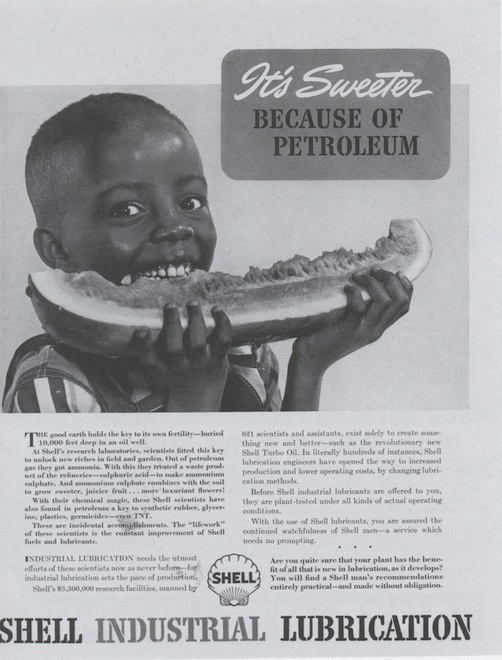
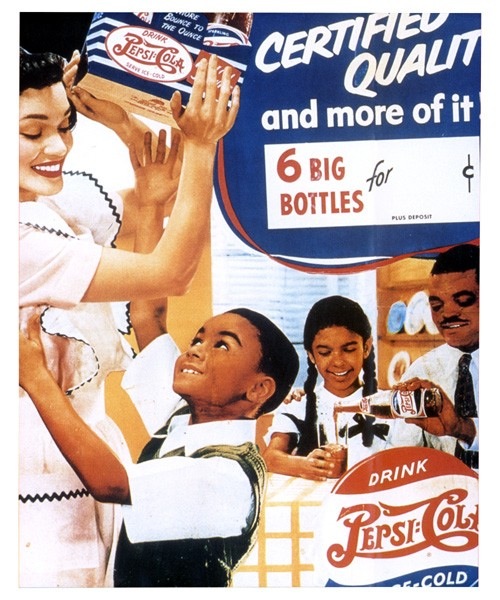
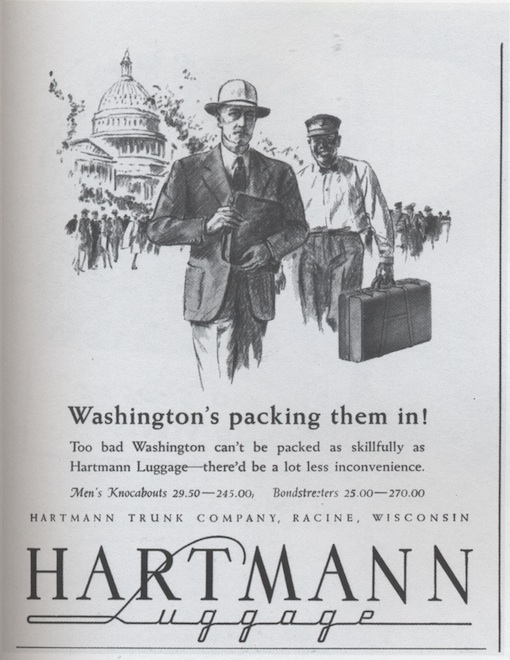
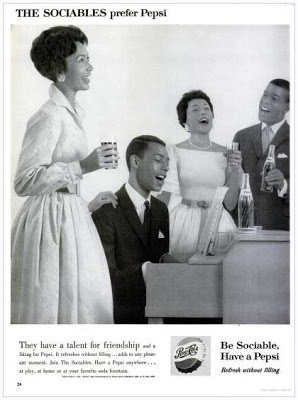
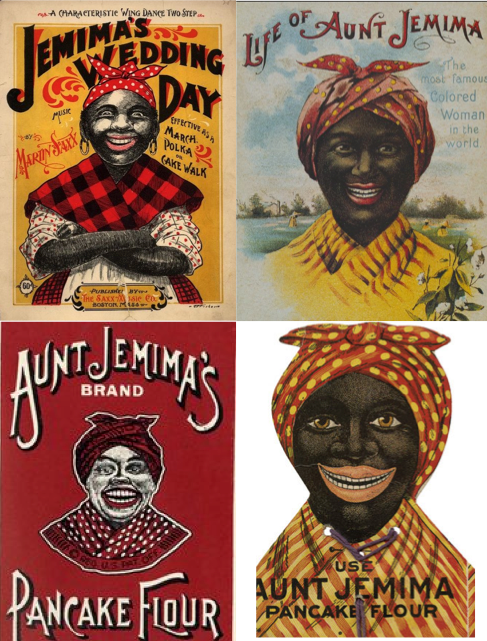
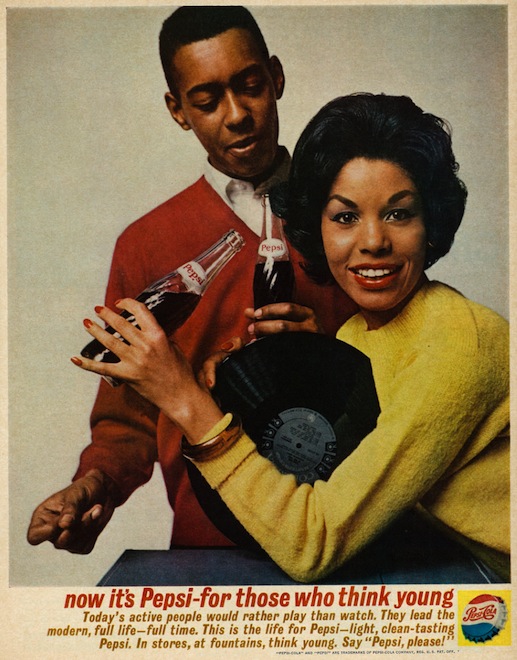
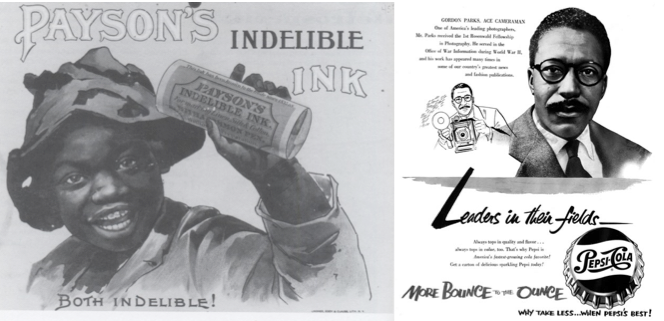
We are looking forward to the “If You Are in Advertising, You May Be a Racist“ panel on race and representation in advertising at the upcoming SXSW Music Film Interactive Festival. This panel was inspired by our film Through A Lens Darkly and the Digital Diaspora Family Reunion Roadshow.  In fact, many of the most egregious stereotypical images that surfaced during our research for the film came from ads that we found many of which are still in circulation on the internet. As Jason Chambers, in his book Madison Avenue and the Color Line: African Americans in the Advertising Industry, writes on the impact advertising had on shaping our ideas around race, family, respectability and humanity:

“Blacks in 20th century advertising were subservient objects that served the cornucopia of products hawked in advertisements, but rarely subjects who used them. The explicit message that ads delivered with crystal clarity was that consumers were white. In picturing blacks in servant roles and whites in command, advertising images visibly upheld the assumed social organization of everyday society.”

13083_OBARad16

Beyond their role as servants, advertisements in the late 19th and early 20th century commonly represented blacks as lazy, ignorant, violent, or as little more than comic relief. Negative images of blacks also frequently circulated in the broader culture on trading cards, dolls, children’s books, cooking utensils and other products. Caricatures of African Americans advertised Nigger Head Tobacco, and coal black children, the Gold Dust Twins, were symbols of a popular soap powder. Already the proliferation of degrading images of blacks in commercial and leisure items helped transmit ideas of black inferiority even as real blacks tried to claim the full privileges of citizenship in the early 20th century. “The child growing up in the home of an average northern family may not have been taught to hate the black race, but more than likely the child caught the basic principal of prejudice from day to day living” noted one scholar. It wasn’t until the 1940’s when Pepsi Co was the first company to start an ad campaign geared specifically to black families, although the campaigns were limited to Black publications, leaving white audiences totally unaware of Black people as sharing in American consumer tastes.

Screen shot 2016-03-07 at 5.17.39 PM1962-apr-ebony-ad-pepsi-cola-vinyl-record

Screen shot 2016-03-07 at 5.32.48 PM

At the SXSW panel,  we will be presenting Digital Diaspora Family Reunion and its 1World1Family album campaign as an antidote to this legacy of misrepresentation so embedded in the history and culture of advertising.

As part of our crowd sourcing, we welcome comments, questions, concerns and images that you would like to see discussed during the panel. Please feel free to include these in the comments section of this blog and we will do our best to make sure your voices are heard.

Below are my fellow panels and their bios. I will be the only artist/filmmaker on the panel.

Thank you for your support!!!

– Thomas Allen Harris

Presenters:

arwaArwa Mahdawi, Chief Strategy & Innovation Officer at Cummins&Partners
Arwa Mahdawi is a partner at cummins&partners, an advertising agency in New York. She is a regular commentator on the tech and advertising industry and has appeared on the Australian TV show The Gruen Transfer.


ErinErin Swenson Gorrall, Group Planning Director at MullenLowe U.S
As a Group Strategy Director at MullenLowe, Erin leverages primary research to truly understand what motivates the consumer. With a background in comms planning, she is always keeping the consumer’s relationship with media in mind. Erin believes that great media plans start with an unexpected insight that will change the trajectory of the campaign and give our clients an unfair advantage. She has over 10 years in the industry working on a variety of brands, including MINI Cooper, Burger King and Anheuser-Busch. Before coming to Boston, Erin was a planning director at Ogilvy & Mather Chicago, leading the SC Johnson home care business. She started her career in media at Crispin Porter + Bogusky.

mosesLouie Moses, Pres/Creative Director at Moses Inc
Louie Moses is the Creative Director and President of Moses Inc. in Phoenix AZ. Fast Company magazine called Louie, “The poster child for creativity…” and Communication Arts called the agency, “The most creatively awarded agency in Arizona.” Louie has won every major creative award including 7 Clios and 3 Emmy Awards. Louie has worked on such brands as Joe Boxer, Ben & Jerry’s, US Airways, The GRAMMY Museum, Shutters Hotel on the Beach, Nintendo, Ubisoft and the Wii. Louie’s garage band, Random Karma, has opened for many headliners playing in Phoenix like the Flaming Lips, Cracker, Roger Clyne and the Peacemakers, Robin Trower, Brett Micheal and Alice Cooper. Louie was selected as Ad Person of the Year and Tourism Person of the Year. He is a 15 year member of the Art Director’s Club of New York.

ThomasThomas Allen Harris, Filmmaker/Co-Founder at Chimpanzee Productions
Thomas Allen Harris is the founder and President of Chimpanzee Productions, a company dedicated to producing unique audio-visual experiences that illuminate the Human Condition and the search for identity, family, and spirituality. Chimpanzee’s innovative and award-winning documentary films and transmedia projects have received critical acclaim at International film festivals such as Sundance, Berlin, Toronto, FESPACO, Outfest, Flaherty and Cape Town and have been broadcast on PBS, the Sundance Channel, ARTE, as well as CBC, Swedish Broadcasting Network and New Zealand Television. Mr. Harris’ latest film, Through A Lens Darkly: Black Photographers and the Emergence of a People, was awarded the 2015 NAACP Image Award for Outstanding Documentary Film, an Africa Movie Academy Award for Best Diasporic Documentary, and Fund for Santa Barbara Social Justice Award.

If You Are in Advertising, You May Be a Racist

Saturday, March 12, 2016

5:00pm-6:00pm

Hilton Austin Downtown, Salon K, 500 E 4th St


“The target audience is a 35–45 year-old white male” or “the target is a 28-year-old Hispanic woman.” You know this brief, or something like it. You know how to use creative to speak to that exact person, and media tools to pinpoint that person’s every move. What you don’t know is that you may be contributing to the racial divide in America. From Ferguson to Baltimore to Charleston, the list goes on and on this year of instances when race has caused us to break down as a society. And while advertising cannot heal all, we pose the question: Can advertising start a conversation, and then start a movement that breaks down the race barriers instead of propagating them through hypertargeting?

The post Call to Action! Make Your Voices Heard at SXSW Panel on Racism in Advertising! appeared first on 1World1Family.me.

]]>
http://1world1family.me/call-to-action-make-your-voices-heard-at-sxsw-panel-on-racism-in-advertising/feed/ 9
Manhattan Borough President Hosts Black History Month Reception with Through A Lens Darkly! http://1world1family.me/through-a-lens-darkly-was-screened-at-mist-harlem-after-black-history-month-reception/?utm_source=rss&utm_medium=rss&utm_campaign=through-a-lens-darkly-was-screened-at-mist-harlem-after-black-history-month-reception http://1world1family.me/through-a-lens-darkly-was-screened-at-mist-harlem-after-black-history-month-reception/#respond Tue, 01 Mar 2016 23:01:25 +0000 http://1world1family.me/?p=11719 It is gratifying to see our film Through A Lens Darkly continuing the work of Deborah Willis and Reflections in Black – inspiring the appreciation of African-American photographers in our […]

The post Manhattan Borough President Hosts Black History Month Reception with Through A Lens Darkly! appeared first on 1World1Family.me.

]]>
Through a Lens Darkly_3905rforblog

(l. to r.) Through A Lens Darkly Producer/Writer Don Perry, Artist Shawn Walker, Manhattan Borough President Gale A. Brewer, Photographer Ming Smith, Photographer Kwame Brathwaite, and Filmmaker Thomas Allen Harris

It is gratifying to see our film Through A Lens Darkly continuing the work of Deborah Willis and Reflections in Black – inspiring the appreciation of African-American photographers in our communities across the nation and the globe!

Manhattan Borough President Gale A. Brewer hosted a Black History Month reception with Through A Lens Darkly at NYC’s MIST Harlem on Monday February 29 and presented awards to three Harlem photographers: Shawn Walker, Ming Smith, and Kwame Braithwaite. For one of these legendary photographers, this was their very first award! Following the reception, a film screening with more than 300 people was held of  Thomas Allen Harris‘ NAACP award winning documentary Through A Lens Darkly: Black Photographers and the Emergence of a People, exploring the role of photography in shaping the identity, aspirations, and social emergence of African Americans to celebrate Black History Month.

IMG_1039rforblog

“Manhattan is a global center of the arts, and Harlem is a vital part of why that’s true. This Black History Month, it’s my privilege to recognize some of Harlem’s amazing photographers, who are chronicling the world around them.”- Manhattan Borough President Gale A. Brewer

Honorees:
Shawn Walker
 continues to shoot and exhibit around the globe more than fifty years after he joined with other photographers to establish the Kamoinge Workshop. He has exhibited in museums and cultural institutions throughout the world, including the Smithsonian, the Schomburg Center, the Brooklyn Museum, the Whitney Museum, the International Center of Photography, the Museum of Modern Art, the San Francisco Museum of Art, the Studio Museum in Harlem, and the Harvard University School of Art and Design.

shawn

“Windows at 57th Street, NY.” Oct. 30, 2011. Photo by Shawn Walker

Ming Smith is known for her informal, in-action portraits of black cultural figures, from Alvin Ailey to Nina Simone and a wide range of jazz musicians. She was an early member of the Kamoinge Workshop, an association of several generations of black photographers. Ming has traveled extensively, showing her viewers a cosmopolitan world filled with famous landmarks and extraordinary landscapes. People continue to be her most treasured subjects. This is most apparent in her series depicting African American life.

5676_MING_Yr

America seen through Stars and Stripes, New York City, 1976. Photo by Ming Smith

Kwame Brathwaite has been considered the ever-present “photo-documentarian” of the Black Arts & Culture movement, the “keeper of the images.” He started as a jazz photographer after helping to form the African Jazz-Art Society and Studios (AJASS) along with his brother, the late activist Elombe Brath, and other young like-minded artists in 1956. AJASS combined art, music, fashion, poetry, theatre and political activism into what became the beginning of the Black Arts Movement of the 60s.

Kwame

James Brown. Photo by Kwame Brathwaite

Thank you to Russell Frederick and Penelope Cox for their work on helping to select the awardees!

Check out press coverage by The Amsterdam News!

Screen shot 2016-03-03 at 1.47.17 PM

1056edited

Full house screening of Through A Lens Darkly after the ceremony at Mist theater

The post Manhattan Borough President Hosts Black History Month Reception with Through A Lens Darkly! appeared first on 1World1Family.me.

]]>
http://1world1family.me/through-a-lens-darkly-was-screened-at-mist-harlem-after-black-history-month-reception/feed/ 0
Carl Van Vechten’s Harlem Renaissance Portraits on Display http://1world1family.me/carl-van-vechtens-harlem-renaissance-portraits-on-display/?utm_source=rss&utm_medium=rss&utm_campaign=carl-van-vechtens-harlem-renaissance-portraits-on-display http://1world1family.me/carl-van-vechtens-harlem-renaissance-portraits-on-display/#respond Wed, 24 Feb 2016 21:38:23 +0000 http://1world1family.me/?p=11654 “In 1983 the Eakins Press Foundation published only 100 copies of “O Write my Name”: American Portraits, Harlem Heroes by Carl Van Vechten, consisting of a portfolio of 50 photogravures […]

The post Carl Van Vechten’s Harlem Renaissance Portraits on Display appeared first on 1World1Family.me.

]]>

Alain Locke (1941) Photo by Carl Van Vechten. From “O, Write My Name’: American Portraits, Harlem Heroes.

Bessie Smith (1936) Photo by Carl Van Vechten, From “O, Write My Name’: American Portraits, Harlem Heroes.

“In 1983 the Eakins Press Foundation published only 100 copies of “O Write my Name”: American Portraits, Harlem Heroes by Carl Van Vechten, consisting of a portfolio of 50 photogravures by the titular photographer, critic, and Gertrude Stein literary executor. At the time, it was available only to public archives. One such archive is the Haverford College Fine Arts Photography Collection, housed in Magill Library, and now, for the first time ever, the College is exhibiting the portfolio in its entirety.

“This new exhibit, Carl Van Vechten: O Write my Name—Portraits of the Harlem Renaissance and Beyond includes the gravure prints as well as a rich trove of books, letters, manuscripts, and related artwork by the artists and writers whom Van Vechten photographed.

“Van Vechten was a proponent of the avant-garde and saw African American cultural expression as an influential component of it. Beginning in 1932, he used his Leica camera to document diverse Western cultural figures from Gertrude Stein to Alfred Stieglitz. (Eduard Steichen and Stieglitz were, in fact, two of the influences cited by Van Vechten.) During his lifetime, Van Vechten made over 15,000 photographs, the majority of which are portraits that he made in his home studio. He sought to photograph every important cultural and artistic figure from the Harlem Renaissance and beyond.

“His African Americans portraits constitute a small but significant part of his larger body of work. These pictures are some of his most personal and memorable images. It is hard to find better portraits of Bessie Smith, James Weldon Johnson, Horace Pippin, Zora Neale Hurston and Alain Locke than those made by Van Vechten. All of these images will be on display.

Zora Neale Hurston (1935) Photo by Carl Van Vechten, From “O, Write My Name’: American Portraits, Harlem Heroes.

Langston Hughes (1939) Photo by Carl Van Vechten, From “O, Write My Name’: American Portraits, Harlem Heroes.

“Van Vechten was not working as a commercial photographer, but as an inspired amateur. His subjects were friends or acquaintances who understood that they were collaborating in creating a historical record whose significance would be understood by later generations. This collective portrait of Black Americans in the early half of the 20th century is a positive visual statement of that achievement.”

Dizzy Gillespie (1955) Photo by Carl Van Vechten, From "O, Write My Name': American Portraits, Harlem Heroes.

Dizzy Gillespie (1955) Photo by Carl Van Vechten, From “O, Write My Name’: American Portraits, Harlem Heroes.

James Baldwin (1955) Photo by Carl Van Vechten, From "O, Write My Name': American Portraits, Harlem Heroes.

James Baldwin (1955) Photo by Carl Van Vechten, From “O, Write My Name’: American Portraits, Harlem Heroes.

Leontyne Price (1955) Photo by Carl Van Vechten, From "O, Write My Name': American Portraits, Harlem Heroes.

Leontyne Price (1955) Photo by Carl Van Vechten, From “O, Write My Name’: American Portraits, Harlem Heroes.

Exhibit Curated by William Earle Williams, Audrey A. and John L. Dusseau Professor in the Humanities and Curator of Photography at Haverford College

To read more, visit the Haverford Fine Arts Exhibits page here.

Carl Van Vechten: O Write my Name—Portraits of the Harlem Renaissance and Beyond

Sharpless Gallery of Haverford College’s Magill Library

773 Walton Lane Haverford, PA 19041

January 29 – August 19 2016

The post Carl Van Vechten’s Harlem Renaissance Portraits on Display appeared first on 1World1Family.me.

]]>
http://1world1family.me/carl-van-vechtens-harlem-renaissance-portraits-on-display/feed/ 0