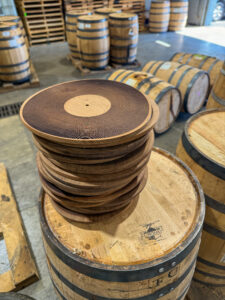
Bad Chattanoogan is believed to be the world’s first Tennessee Whiskey (or any whiskey for that matter) finished with toasted maple wood records. The records were engraved with two original tribute songs about Chattanooga, written in-house by Chattanooga Whiskey Creative Director, Rich Abercrombie, and his band Dollars Family. Unlike most music-themed whiskeys, the music didn’t just inspire this release, it literally flavored it.
The Idea
Bad Chattanoogan started with a simple idea: bring music and whiskey together in a truly unique way.
Easier said than done.
There have been a lot of music + whiskey related projects over the years, and we weren’t interested in repeating anything that someone else had already done.
At the same time that we were thinking about how to combine music and whiskey, we were developing a Tennessee Whiskey. And it started to feel like those two ideas should somehow become one…
The “aha!” moment came when we saw Independent Stave Company’s Spiral Cut barrel.
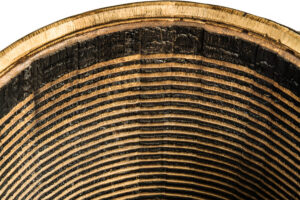
Making the Records
A record works on a simple, almost primitive principle: sound is a wave, and the groove on a record is that wave traced into a surface. When a needle rides the groove, the wiggles shake it, and the shaking becomes sound again.
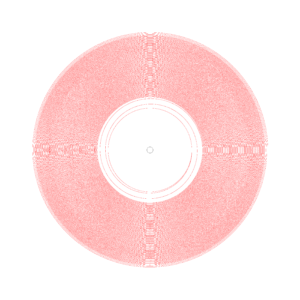
To make our wooden version, we leaned on a technique developed by engineer Amanda Ghassaei, who had laser-cut playable records into plywood, acrylic, and even paper… but never solid wood. Her method converts a song’s digital file into a wave, simplifies it into a single continuous line, wraps that line into a spiral at 45 rpm, and sends it to a laser engraver that burns the groove into the surface.
So, that’s what we did.
Because a laser can only carve one line, we had to mix each song down to mono, exactly how the earliest records worked. It’s definitely more Thomas Edison than Dolby Atmos.
Check out the file we created: SideA_Bad_Chattanoogan_VinylEQ (1)
(Definitely zoom in to get the full impact of the waves.)
Before any engraving could happen though, the discs — cut from solid sugar maple — went to Independent Stave Company, where they were toasted on low heat for over 24-hours. This transformed the sugars deep within the structure of the maple wood into a range of toasted flavor compounds, and also prepared their surface for laser engraving.
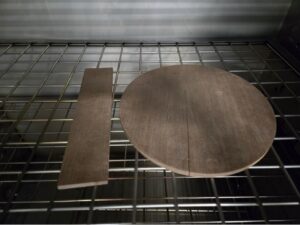
Check out a video of the laser engraving process here.
Do the records really play? Check it out for yourself.
-
Side A – “Bad Chattanoogan”
-
Side B – “City I Love”
After engraving, every record was played once on a turntable in ceremonial fashion, start to finish, before it joined the whiskey inside the barrel.
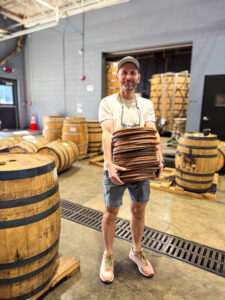
Making the Whiskey
Before any of it went near a record, Bad Chattanoogan was designed as a Tennessee Whiskey to the core – or more accurately, Tennessee Whiskeys – plural.
The concept began with 3 high malt Tennessee Whiskey mash bills, all built from primarily Tennessee-grown corn, wheat malt, and barley malt. To give our distillers a broad palette for blending, the 3 recipes varied in both grain and distillation method: 2 were pot distilled, 1 was column distilled, 2 were wheated, and 1 even included 15% Tennessee-grown maple-wood-smoked wheat malt — bringing maple into the whiskey before it was ever distilled.
After each recipe was distilled, every drop was mellowed through sugar maple charcoal for more than 24 hours – known as the Lincoln County Process. From there the whiskey aged more than 4 years in a combination of charred & toasted and charred oak barrels – much of it Tennessee-grown oak.
Mash Bill #1: Pot Distilled
68% TN Yellow Corn
15% TN Pilsner Malt
13% Munich Rye Malt
4% Honey Malt
Mash Bill #2: Pot Distilled
65% TN Yellow Corn
20% TN Pilsner Malt
15% TN Maple Wood Smoked Wheat Malt
Mash Bill #3: Column Distilled
64% TN Yellow Corn
21% TN Wheat Malt
15% TN Pilsner Malt
The Music

But Rich’s part-time gig is… gigs.
A longtime fixture in Chattanooga’s music scene, Rich has worn just about every hat imaginable: music blogger, show promoter, songwriter, and frontman of bands including Eight Knives, General Dollars, and now Dollars Family.
Rounding out the trio are Jennifer Brumlow and Callie Harmon, formerly of Rye Baby, a Chattanooga duo known for their rowdy mix of garage rock, surf, rockabilly, and good old-fashioned twang.
Together, the three make up Dollars Family — the Chattanooga band whose music is engraved onto the wooden records that finished Bad Chattanoogan.
On Side A, there’s “Bad Chattanoogan,” written specifically for this project as a tribute to the characters, creators, and independent spirits who make Chattanooga anything but ordinary. From hometown icons like artist Wayne White, actor Samuel L. Jackson, and blues legend Bessie Smith to the makers, shakers, and go-getters keeping this city interesting today, it’s a celebration of the people who give Chattanooga its personality.
On Side B, there’s “City I Love,” a song already part of Dollars Family’s catalog and an ode to the place they call home.
Two different songs, one shared inspiration: Chattanooga and the people who make it what it is.
Together, they became the two sides of our first Tennessee Whiskey — each blend finished on playable wooden records engraved with its corresponding song.
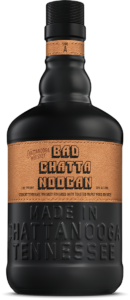
Side A Blend – “Bad Chattanoogan”
Blend: Mash Bill #1: 50%, Mash Bill #2: 6%, Mash Bill #3: 44%
Age: Greater than 4 Years
Proof: 100 (50% Alc/Vol)
Cooperage: Toasted & Charred Oak Barrels, 44% TN Oak
Batch Size: 9 Barrels
Finishing: 1 month with 15 maple wood records engraved with the song “Bad Chattanoogan”
Tasting Notes: Sweet tea, banana bread, chocolate covered dried cherry, and toasted maple granola
Side B Blend – “City I Love”
Blend: Mash Bill #1: 0%, Mash Bill #2: 56%, Mash Bill #3: 44%
Age: Greater than 4 Years
Proof: 100 (50% Alc/Vol)
Cooperage: Toasted & Charred Oak Barrels, 89% TN Oak
Batch Size: 9 Barrels
Finishing: 1 month with 15 maple wood records engraved with the song “City I Love”
Tasting Notes: Smoked apple crisp, crème brûlée, dark brown sugar, toasted walnut, and mulling spices
The Bottles
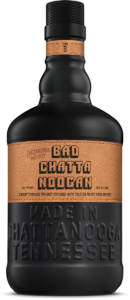
And for those searching for Easter eggs, the bottle itself rewards an even closer look. Hidden in the details are various nods to Chattanooga including: a notorious wallet carried by Chattanooga-native Samuel L. Jackson, an inaugural ticket to the old Chattanooga Lookouts baseball stadium, a $3 note from the Bank of Chattanooga, and the first lottery ticket ever sold in Tennessee, bought at Steve Ray’s Midnite Oil in Ooltewah, TN.
Finally — to literally top it off — each bottle is closed with a vinyl-inspired wood topper, engraved with the iconic 45 rpm adapter symbol (the speed at which the wooden records spin) and a magnified section of the actual engraved grooves from “City I Love.” ]]>
As Chattanooga Whiskey’s first official employee and long-time Creative Director, Rich has helped shape the visual identity of Chattanooga Whiskey since 2012, bringing the brand to life on bottles, shelves, and beyond.
But when he’s not designing whiskey labels, he’s making music.
A longtime fixture in Chattanooga’s music scene, Rich has worn just about every hat imaginable: music blogger, show promoter, songwriter, and frontman of bands including Eight Knives, General Dollars, and now Dollars Family.
Rounding out the trio are Jennifer Brumlow and Callie Harmon, formerly of Rye Baby, a Chattanooga duo known for their rowdy mix of garage rock, surf, rockabilly, and good old-fashioned twang.
Together, the three make up Dollars Family — the Chattanooga band whose music is engraved onto the wooden records that finished Bad Chattanoogan.
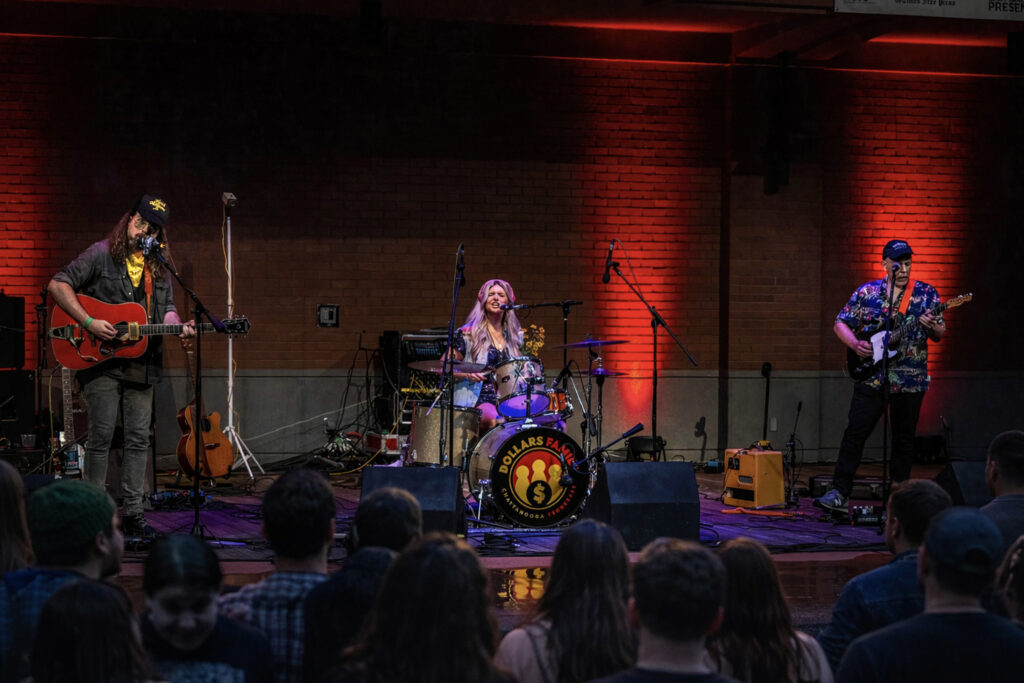
TWO SONGS. TWO SIDES. ONE CITY.
“These two songs are love letters to Chattanooga, and are all about what makes a city — the people!” — Rich Abercrombie
On Side A, there’s “Bad Chattanoogan,” written specifically for this project as a tribute to the characters, creators, and independent spirits who make Chattanooga anything but ordinary. From hometown icons like artist Wayne White, actor Samuel L. Jackson, and blues legend Bessie Smith to the makers, shakers, and go-getters keeping this city interesting today, it’s a celebration of the people who give Chattanooga its personality.
On Side B, there’s “City I Love,” a song already part of Dollars Family’s catalog and an ode to the place they call home.
Two different songs, one shared inspiration: Chattanooga and the people who make it what it is.
Together, they became the two sides of our first Tennessee Whiskey — each blend finished on playable wooden records engraved with its corresponding song.
But we didn’t stop with the records inside the barrels.
A RECORD WITH EVERY BOTTLE
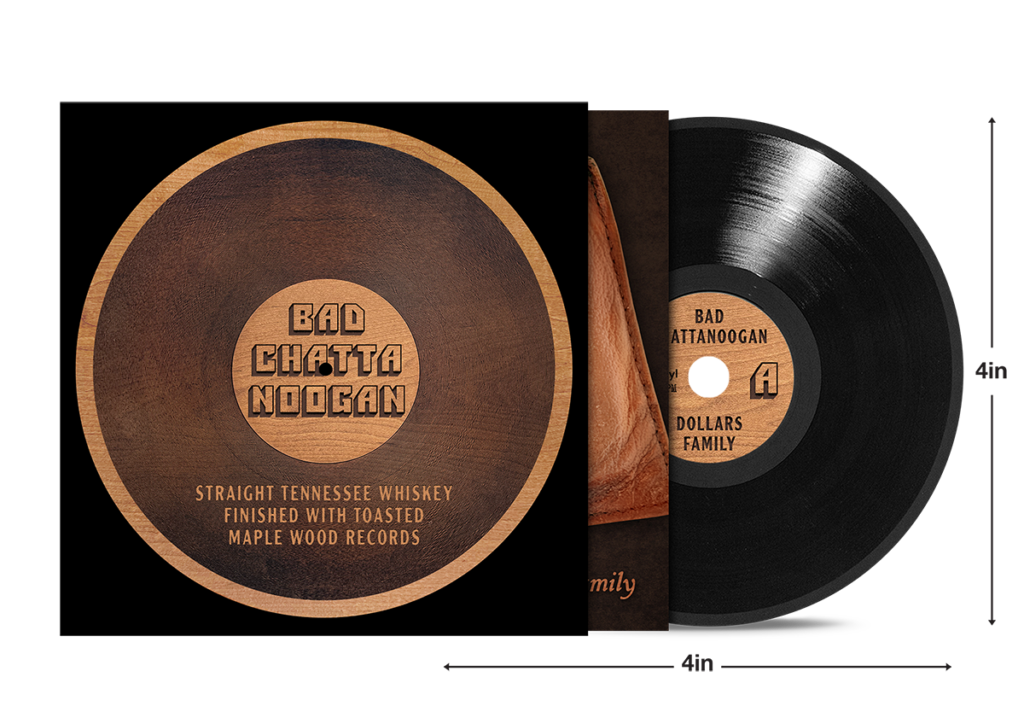
(Yes, that little record really plays.)
Every bottle of Bad Chattanoogan comes with a 4-inch TinyVinyl record featuring both Dollars Family songs.
Put it on most manual turntables, set the speed to 33 RPM, and drop the needle. You’ll hear “Bad Chattanoogan” and “City I Love” — the same music that helped finish the whiskey inside your bottle.
So you’ll be able to pour yourself a glass, drop the needle, and hear Chattanooga for yourself.]]>
 Complimentary Side A + Side B tastings
 Wooden record + TinyVinyl displays
Bad Chattanoogan cocktails
Dollars Family record store pop-up
Happy Hour with Rich, Grant + Tim: 11 AM–1 PM + 4–6 PM
 Release-day raffles
Come grab a bottle. Taste both sides. Hear the music. See the records. Be a Bad Chattanoogan. ]]>
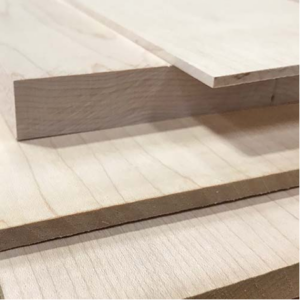
02 — MAKE IT INTO A 12-INCH DISC Each piece of maple is CNC-machined into a precise 12-inch disc. At this point, it looks like a record, but it doesn’t sound like one… yet. ↓
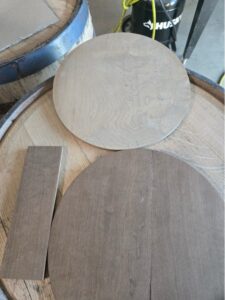
03 — TOAST IT. The maple discs receive a custom 24-hour toast, developing the flavors the whiskey will eventually pull from the wood. ↓
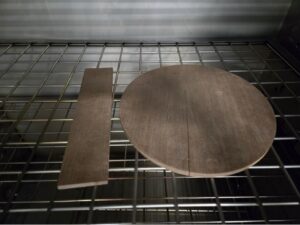
04 — TURN SOUND INTO GROOVES. Here’s where it gets wild. The song’s digital audio is converted into one continuous line, then wrapped around itself into a record-shaped spiral. That spiral becomes the digital engraving file. ↓
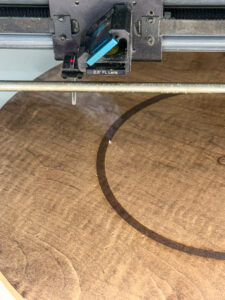
05 — LASER-ENGRAVE THE MUSIC. Enter Ben Rosenstein of Mountain View Engraving — the 81-year-old local was the only one willing (and persistent enough) to help us figure out how to actually make this thing work. Ben loaded the files into his laser engraver and spent roughly two hours per disc cutting each song into a single piece of toasted maple. Fifteen records for “Bad Chattanoogan.” Fifteen for “City I Love.” Thirty playable wooden records in all. ↓
06 — DROP THE RECORD INTO THE BARREL. After engraving, the records went directly into the whiskey barrels, where they spent 30 days finishing Bad Chattanoogan. The song didn’t just inspire the whiskey, it became part of it.
DID IT WORK THE FIRST TIME?
Absolutely not.
Our first few prototypes sounded awful. The problem wasn’t the wood, or the laser, or even the turntable….
We had mapped the audio onto the spiral in the wrong direction. So when we dropped the needle, the song played… backwards.
For a minute, we couldn’t figure out what we were hearing. Then it started sounding suspiciously like one of those old Beatles records everyone used to play backwards looking for hidden messages.
We reversed the programming, tried again, and there it was. Music coming out of maple.
30 WOODEN RECORDS.
2 HOURS OF ENGRAVING EACH.
24 HOURS OF TOAST.
30 DAYS IN THE BARREL.
One very Chattanooga way to finish a whiskey.
BAD CHATTANOOGAN
OCTOBER 23]]>
So why is ice wine so rare? Mostly because of the process used to make it:
How Ice Wine is Made
The ice wine we used for Moldovan Ice Wine Cask Finished was made traditionally: the grapes were left hanging outside on the vine into the dead of winter and allowed to freeze naturally. They were then handpicked and pressed, all while still frozen. This method is weather-dependent, risky, and low-yielding: sometimes only 10% yields – the equivalent of us getting only 20 bottles from a barrel!
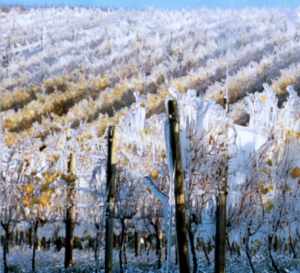
The freezing process of ice wine isn’t just for show, it’s a concentration process that creates bold, sweet flavors. A grape is mostly water with sugar, acid, and aroma compounds dissolved in it. When the berry freezes solid, the water turns to ice… but the sugar, acid, and flavor compounds have a much lower freezing point, so they stay liquid, creating a tiny pocket of syrup trapped inside a ball of ice!
When the frozen grapes hit the press, the ice crystals stay locked in the pulp and only the concentrated syrup runs out. If they were to let the grapes thaw first, they would lose the whole effect and have just made ordinary wine.
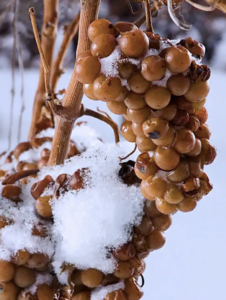
The key to ice wine’s bright, sweet flavor is that this freezing process concentrates the grape’s natural acidity right alongside the sugar. As a result, ice wine is intensely sweet, but also sharp and lifted. For us, that means these ice wine casks bring layered notes of dried apricot, honey, and soft oak to the whiskey.
To carry the character of these finishing barrels, our distillers assembled a complex blend of six mash bills – five malt whiskeys and one bourbon. We used mostly malt whiskey because ice wine is bright, high-acid, and aromatic – a heavy bourbon would have flattened it and made it seem thin. The malt lets the wine’s fruit shine through, with just enough bourbon structure to hold it up.
Find Moldovan Ice Wine Cask Finished now at our Experimental Distillery and in stores across D.C., FL, GA, IL, MD, MN, MO, NJ, NY, TN, TX, and WI.]]>
Let’s start at the beginning – The Bottled in Bond Act of 1897. Considered the first consumer protection act in the United States of America, the Bottled in Bond Act of 1897 was created to regulate the whiskey and barrel-aged spirits market. Before the Bottled in Bond Act, there were no quality regulations for barrel-aged spirits.
That meant if you bought a bottle of whiskey, you had to trust that what was in the bottle was actually whiskey. And sometimes it was… but sometimes it definitely wasn’t. Counterfeiting was rampant, as dishonest producers added coloring, flavoring, and – in the worst case – poisonous materials to their product in order to give it the appearance of aged whiskey.
Outside of the counterfeiting operations, there were distillers operating and producing legitimate whiskey. The Bottled in Bond Act protected these distillers as well as the consumers, rewarding them with the government’s seal of approval – literally, it was originally a green stamp on the bottle – certifying that they had followed the requirements to be labeled as Bottled in Bond.
The Requirements of Bottled in Bond
To remember the requirements for Bottled in Bond whiskey, you just need to remember your ABC’s:
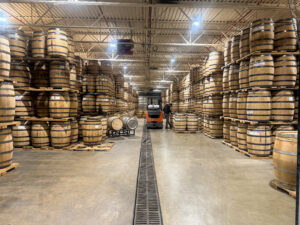
Aged for at least 4 years
Bottled at 100 proof
Class/Type of spirit is same
Distilled by one distiller
Every 6-month “season” (defined as Jan-Jun OR Jul-Dec)
To dive a little deeper…
Aged for at least 4 years
Bottled at 100 proof
Again, pretty straightforward. The whiskey must be bottled at 100 proof or 50% Alc/Vol.
Class/Type of spirit is same
For class, that’s broad, regulated spirit categories such as vodka, gin, whiskey, rum, etc. You couldn’t put rum and whiskey together and call it Bottled in Bond, even if you followed all the other requirements. We’re honestly not sure what you would call that (whum?), but it’s definitely not Bottled in Bond.
For type, that’s specific, defined types within a class of spirit. For example, whiskey types are bourbon, rye, wheat, malt, etc. To bring this all together, Bottled in Bond bourbon whiskey must be made entirely of bourbon whiskey – so the distiller would need to follow all of the requirements of bourbon and all of the requirements of Bottled in Bond. Same for Bottled in Bond rye whiskeys, Bottled in Bond wheat whiskeys, Bottled in Bond malt whiskeys… you get the picture.
Distilled by one distiller
Bottled in Bond whiskey must be distilled by a single distiller, at a single distillery. While this reads like one person physically has to do the distillation work, it’s actually referring to one Distilled Spirits Plant (DSP). Each licensed producer in the United States has a unique DSP number and Bottled in Bond production can only take place under a single DSP.
We’re actually a great example of how this works: our Experimental Distillery and our Riverfront Distillery both have unique DSP numbers – despite both being owned and operated by us and being located less than a mile from each other. Our Bottled in Bond Vintage releases are distilled entirely at our Riverfront Distillery – we can’t include any whiskey distilled at our Experimental Distillery, even if it meets all of the other requirements.

Every 6 month “season” (defined as Jan-Jun OR Jul-Dec)
The whiskey must be distilled in the same distilling season, defined as Spring (Jan – Jun) or Fall (Jul – Dec). For Bottled in Bond whiskey, you can’t mix whiskey distilled in May with whiskey distilled in November. While this requires stringent record keeping for all distillers, we have to take it a step further, as we have a Bottled in Bond Vintage series – our Bottled in Bond expressions are explicitly vintage dated for the season and year of distillation, and they’re blended to represent that season. So apply that to the requirement above this one, and we have to decide if a new recipe is more appropriate for the spring or the fall 4 whole years before we’ll potentially even use it!
Why Bottled in Bond Now?
129 years after the Bottled in Bond Act of 1897, you may be asking yourself why some distillers still bother following the Bottled in Bond requirements. After all, spirits are now highly regulated – you won’t be picking up a bottle of questionable contents labeled as whiskey in the United States these days. Yet, you still see distilleries all over the country producing Bottled in Bond spirits. Including us! We can’t speak for everyone, but we appreciate the history of Bottled in Bond, as well as the very specific requirements. Because while the requirements are strict, there’s still plenty of room for creativity…
Bottled in Bond – The Chattanooga Whiskey Way
Each spring and fall, we release our seasonal Bottled in Bond Vintage expressions. Cult favorites among our fans, our Bottled in Bond Vintage releases are crafted to showcase the complexity and range of our Tennessee High Malt style – utilizing a wide variety of mash bills from each period to create expressions not possible from a single recipe. No two vintages are ever the same and each is reflective of the season it’s released: spring vintages are meant to taste more like spring, fall vintages taste more like fall, and every single vintage blend is made to say something new!
Find Bottled in Bond: Fall 2022 Vintage currently on shelves in retail stores and at our Experimental Distillery!]]>
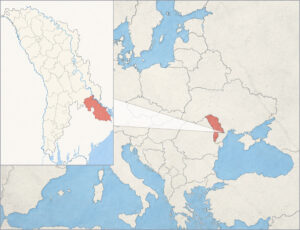
Ice wine is one of the rarest sweet wines in the world, and the ice wine casks were some of the most intensely flavored finishing barrels we’ve ever worked with. The wine is sweet, it’s aromatic, and it doesn’t leave much room for other flavors to come through. Most of our finishes take two or three mash bills to get where we want, but this one took six.
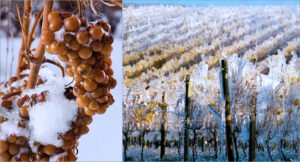
Aged for over 4 years, including more than a year in the finishing casks, the whiskey was bottled at 95 proof – offering notes of French toast, wildflower honey, toasted oak, cream soda, and candied ginger. Find Ice Wine Cask Finished at the Chattanooga Whiskey Experimental Distillery starting on Thursday, August 13th, and on shelves in select states (D.C., FL, GA, IL, MD, MN, MO, NJ, NY, TN, TX, WI).]]>
About Catesa Farms and George McDonald

Started by his great-grandfather in 1927, the McDonald family legacy of caring for the land, the community, and the environment has grown with the operation, which now spans five Tennessee counties.
“My farm is a family operation,” says George, who farms alongside his daughter Sarah, mother Linda, and wife Susan. The farm also enlists an extended family of nine full-time team members and around 25 seasonal workers collaborating to grow corn, soybeans, wheat, strawberries, and watermelons.
Environmental Impact
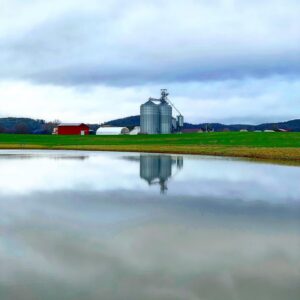
George makes it clear where he stands in a world increasingly focused on sustainability.
In his view, sustainability isn’t just about trends or buzzwords – it’s about tangible actions. By utilizing GPS technology paired with soil sampling, Catesa Farms manages nutrients in the soil and fertilizer use on the farm to maximize the productivity of their land and ensure they are accountable for their impact on the environment.
Catesa Farms also practices no-till farming to leave the soil undisturbed, protecting their land from erosion.
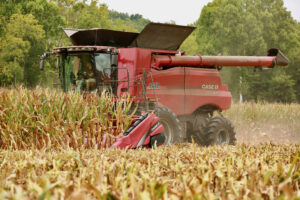
Throughout the farm, the McDonald family has also created pollinator habits to add value to the environment and ecosystem.
While these conservation practices demonstrate the McDonald family’s commitment to sustainability, perhaps it’s their main crop, corn, delivering the greatest benefit.
The variety they grow – dent corn – is not the sweet variant you’ll find in your grocer’s case or a roadside farm stand. Dent corn is a high-starch corn used predominantly as livestock feed and for distillation purposes, including making ethanol or whiskey.
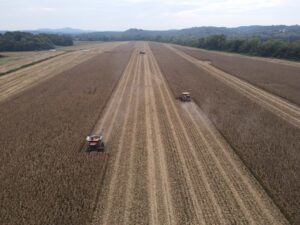
Much of the corn grown on Catesa Farms is used to create ethanol, one of our nation’s best renewable energy resources. This eco-friendly fuel is safe for most gasoline-powered vehicles built after 2000. Up to 10% ethanol is already included in most gasoline you buy at the pump today. Other blends with additional ethanol are available at a reduced cost compared to standard gasoline.
Not only is corn ethanol reducing our reliance on non-renewable fuels, but it’s also grown and processed locally, supporting the economy of Tennessee.
Source: (Fueled by Corn: Meet a Corn Farmer: George McDonald)]]>
FILE LC00 – ABOUT THE AUTHOR: S&S – [06/24/2026 – RELEASE 01]
FILE LCGT – GLOSSARY OF TERMS – [06/24/2026 – RELEASE 01]
FILE LC01 – PROLOGUE: EARTH’S ALPHA PROBLEM – [06/24/2026 – RELEASE 01]
FILE LCPR – PEER REVIEW: HARD PROBLEM SOLUTION – [06/24/2026 – RELEASE 01]
FILE LCA – ALPHA DERIVATION – [10/16/2026 – RELEASE 02]
FILE LCSLF-1 – THE DOODLE THAT EXPLAINS EVERYTHING – [10/16/2026 – RELEASE 02]
MORE SECRETS – COMING SOON!
]]>Inspired by the effervescent “whiskey highball” style, Ginger Infused is a carbonated, whiskey-based seltzer, crafted with five all-natural ingredients: lemon peel, orange peel, dried ginger, lemongrass, and gentian.
This vibrant blend of botanicals is infused into our signature Chattanooga Whiskey 91, which allows the aged whiskey to extract the full range of bright and refreshing flavors from the whole ingredients.
After more than a week of infusion time, the whiskey is then blended with a hint of sugar, carbonated water, and finally canned at a flavorful yet approachable 8% ABV.
The end result: A next-level, hand-crafted canned whiskey seltzer, made to be enjoyed at any moment.
Need some inspiration?
It’s infused for…
- Days on the river
- Watching baseball
- Golf
- Live music
- Picnics
- Fireworks shows
- Beach vacations
- Afternoons at the creek
- Tailgates
- Evenings around the campfire
- Cookouts
- Relaxing by the pool
- Relaxing in the pool
- Catching up with old friends
- Getting familiar with new friends
- Campouts
- Backyard movie nights
- Watching the World Cup
- At home happy hours