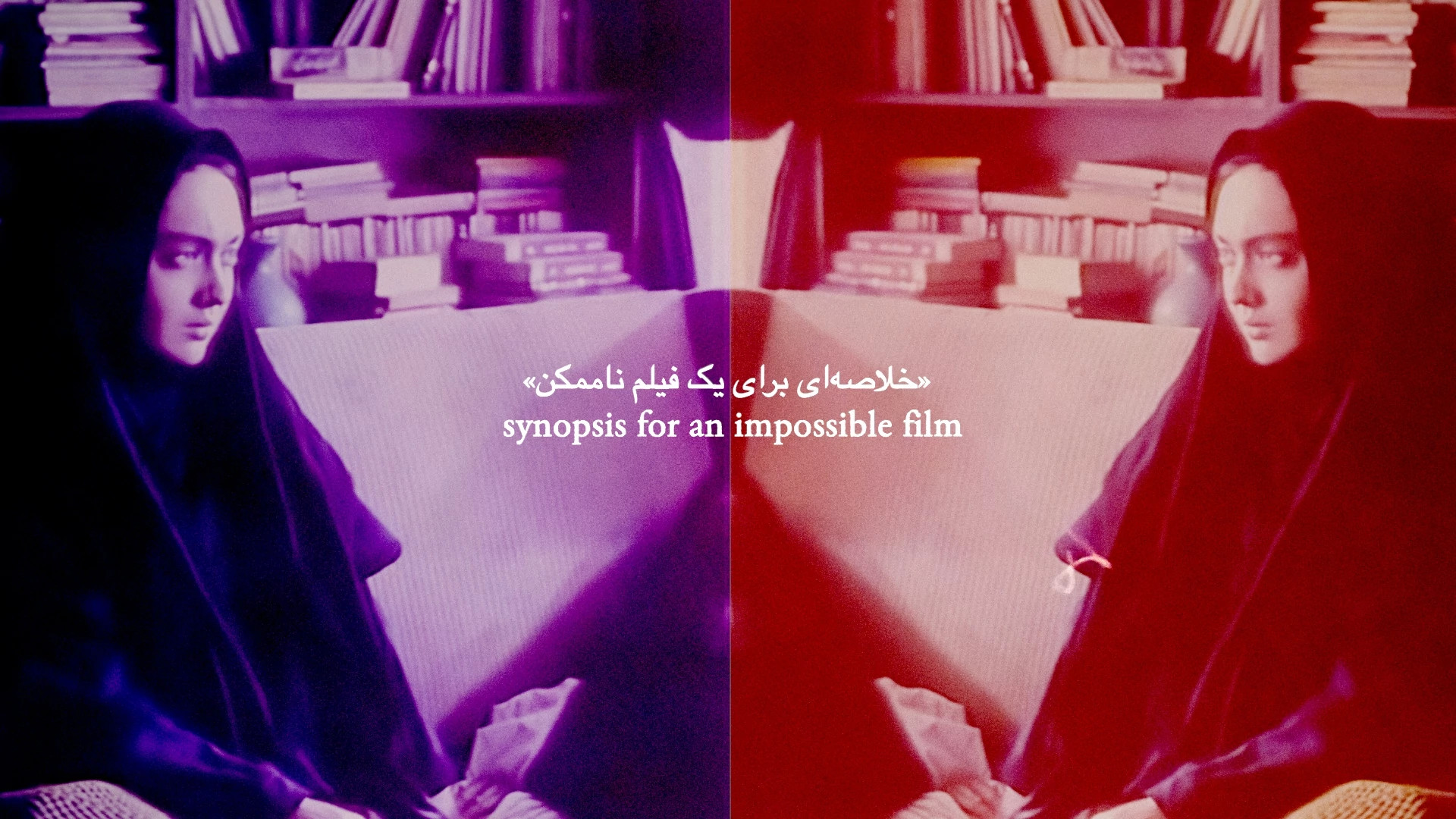
The works of Jarman Award–winning artist Maryam Tafakory are gripping meditations on resistance, erasure, and desire. Layering imagery from post-revolutionary Iranian cinema, archival documents, autobiographical fragments, and found sound, Tafakory excavates speculative histories of female intimacy and activism censored from official records. Her tactile assemblages—swaths of saturated color, half-hidden figures, and text—reflect on the limits of representation while unsettling the West’s reductive understandings of Iranian life and history. She presents a live film performance of a new work, Gol[e] Sorkh (2026), which explores the roles women played in leftist movements in the years leading up to the 1979 Revolution. The program also includes two recent films—Daria’s Night Flowers (2025) and Razeh-del (2024)—charged portraits of pleasure and defiance in the face of coercion and oppression.
Followed by a conversation with Maryam Tafakory and audience Q&A. Presented with support from the Walker Art Center.
2023–2026, Iran/United Kingdom/France/Italy
In Farsi with English subtitles.
Format: DCP and live performance
ca 75 mins
ABOUT THE ARTIST
Maryam Tafakory (born and raised in Iran) works with film and performance, bringing together poetry, speculative nonfiction, and archival material to examine veiled acts of erasure—of bodies, intimacies, and histories. She is the 2024 recipient of the Film London Jarman Award. Her work has been presented in solo screenings and exhibitions at the Museum of Modern Art (New York), the Barbican Centre (London), BOZAR (Brussels), the National Gallery of Art (Washington, D.C.), and the Academy Museum of Motion Pictures (Los Angeles) and has screened at major international festivals including the New York Film Festival, Toronto International Film Festival, BFI London Film Festival, and Cannes Directors’ Fortnight. Tafakory’s films have received numerous awards (several Oscar-qualifying) including the Gold Hugo at the 58th Chicago International Film Festival, Best Documentary Short at the 72nd Melbourne International Film Festival, the Tiger Short Award at the 51st International Film Festival Rotterdam, and the Cinema & Gioventù Award at the 77th Locarno Film Festival. She was the 2019 Flaherty/Colgate Distinguished Global Filmmaker in Residence, a MacDowell Fellow in 2023, and an Institute for Ideas and Imagination Fellow in 2025. She teaches in the Master of Fine Art program at the Ruskin School of Art, University of Oxford, and holds a PhD from Kingston University, London. She is currently developing her debut feature film, Hospital of Irremediable Desires, drawing on ongoing research into illicit desires, queer disappearances, and women’s involvement in Iran’s clandestine revolutionary movements of the 1970s.
PROGRAM
Razeh-del
2024, 28 mins
The dense layerings of inky newsprint and appropriated footage in Maryam Tafakory’s Razeh-del tell the history of Zan, Iran’s first women’s newspaper, whose brief run in the late 1990s inspires two schoolgirls. Amid intensely saturated fields of amethyst, crimson, and amber, images of women emerge and dissolve, smothered in inscriptions quoting angry responses from male readers and words of support from women who dream of an impossible cinema.
Daria’s Night Flowers
2025, 16 mins
Daria has written her first manuscript about falling in love with a mysterious girl called ‘abi’ [blue]. The night flowers in her garden hide the secrets of a country that has turned love stories into routine crime scenes.
Gol[e] Sorkh
2026, ca 30 mins
Gol[e] Sorkh traces the censorship of the word gol, or “flower,” in the final tumultuous years of imperial Iran, just before the 1979 Revolution. Tafakory draws on this history of censorship to examine the role of women in the era’s leftist movements and their ultimate suppression by Iran’s pre- and post-revolutionary governments, as well as the CIA and MI6.
ACCESSIBILITY
Conversations at the Edge events have live captions (CART). The Gene Siskel Film Center is fully ADA accessible and its theaters are equipped with hearing loops. For other accessibility requests, please visit saic.edu/access or write cate@saic.edu.
]]>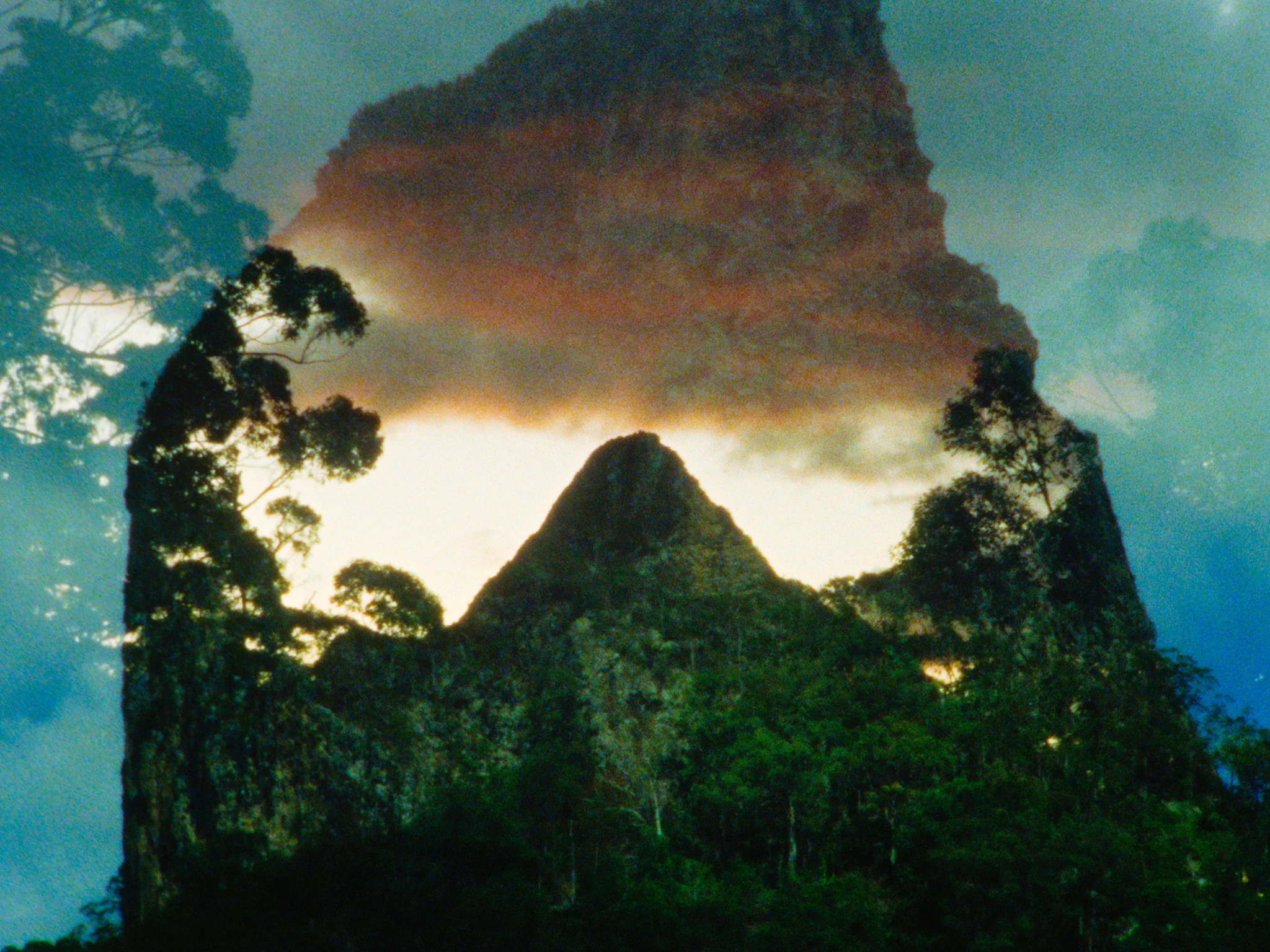
Artist Malena Szlam and filmmaker Jiayi Chen present a special evening of films and performances that use analog technologies to create intensely sensorial experiences—reorienting how we perceive landscape and time. Born in Santiago, Chile, and now based in Montreal, Szlam crafts striking visions of volcanic terrains—from the active peaks and high deserts of the Andes to Australia’s ancient formations—where striated superimpositions, saturated fields of color, and propulsive soundscapes render the earth as a living, dynamic entity of overlapping temporalities. Originally from Chongqing in southwest China, and now living between Chicago and Houston, Chen composes luminous films and multi-projector performances that attune viewers to forest ecologies, seasonal cycles, and reciprocal relationships among flora, fauna, and land. For both Szlam and Chen, analog film mirrors the elemental materiality of their subjects, while in-camera editing enables a practice of direct and responsive encounter. Together, their works accumulate like geological strata, layering spaces and timescales while reinvigorating sensory ways of understanding the natural world.
Followed by a conversation with Malena Szlam and Jiayi Chen. Presented with support from Chicago Film Society and University of Chicago’s Film Studies Center.
2018–2026, Argentina, Chile, Australia, Indonesia, Canada, USA
In Mandarin, English, and Tlingit with English subtitles
Format: 16mm, 35mm, and performance
ca 87 mins
ABOUT THE ARTISTS
Malena Szlam is a Chilean artist and filmmaker based in Tiohtià:ke/Mooniyang/Montreal. Her films, installations, and photographs explore embodied perception and the material and affective dimensions of analog film processes. Attentive to the geopolitics of natural phenomena, her recent projects engage geology, earth science, and volcanology. Her work has been exhibited internationally at festivals and institutions including the Toronto International Film Festival; New Directors/New Films, New York; Valdivia International Film Festival; Jeonju International Film Festival; Cinéma du Réel, Paris; Open City Documentary Festival, London; and the International Film Festival Rotterdam. Recent group exhibitions include Energy Fields: Vibrations of the Pacific, Fulcrum Arts, Los Angeles and femmes volcans forêts torrents, Musée d’art contemporain de Montréal. Solo exhibitions include Infra—, SBC Gallery of Contemporary Art, Montreal. Her award-winning film ALTIPLANO received the Best Experimental Short Film prize at the Melbourne International Film Festival and has been called one of the most significant landscape films of the 2010s. Her films are held in the permanent collection of the Museum of Modern Art.
Jiayi Chen is an artist, filmmaker, and projectionist from Chongqing, China, currently based between Chicago and Houston. Working at the intersection of analog film, performance, and installation, her practice explores perception, translation, and environmental attunement. Through expanded-cinema and analog film processes, Chen approaches filmmaking as a durational and relational act. Her work has been exhibited and screened internationally at festivals and venues including the including the International Film Festival Rotterdam; New York Film Festival; Cineteca Madrid; Fracto Experimental Film Encounter, Berlin; MONO NO AWARE, New York; Chicago Cultural Center; Harkat Studios, Mumbai, India; Museum of Contemporary Art Chicago; and Anthology Film Archives, New York.
PROGRAM
ALTIPLANO
Malena Szlam, 2018, 16mm to 35mm, 15:30 mins
Filmed in the Andean Mountains on the traditional lands of the Atacameño, Aymara, and Calchaquí-Diaguita peoples in northern Chile and northwest Argentina, ALTIPLANO unfolds within a geological universe of ancestral salt flats, volcanic deserts, and colored lakes. Fusing earth with sky, day with night, heartbeat with mountain, and mineral with iridescent cloud, the film reveals a vibrating landscape in which a bright blue sun threatens to eclipse a blood-red moon. Coupled with a natural soundscape generated from infrasound recordings of volcanoes, geysers, and Chilean blue whales, ALTIPLANO employs in-camera editing to produce ecstatic visual rhythms. Landscapes pulse and stutter, transformed through superimposition and 16mm pixelation into spaces that exist across multiple times simultaneously.
“ALTIPLANO ranks among the most striking landscape films of recent years and, indeed, calls for a revision of how we talk about landscape in cinema.”—Dan Sullivan, Film Comment
MERAPI
Malena Szlam, 2021, 16mm to 35mm, silent, 8 mins
A circumlocutory study of Mount Merapi in Indonesia, MERAPI is structured around the volcano’s rippling effects on its surroundings: smoke drifting through trees, rain breaking against its slopes, and the fertility of its soils. Equally attentive to the play of light through swirls of 16mm grain and atmosphere, MERAPI reflects on what it means to live within the volcano’s horizon near the densely populated city of Yogyakarta.
Archipelago of Earthen Bones — To Bunya
Malena Szlam, 2024, 16mm to digital, 20 mins
Archipelago of Earthen Bones — To Bunya forms part of a broader film constellation stretching across the Pacific, from Chile to Australia. Malena Szlam trains her camera on far-flung volcanic landscapes, by turns barren and verdant. Her dazzling in-camera multiple exposures evoke layered histories, from Mount Beerwah to the titular Bunya Mountains, tracing a path through the Gondwana Rainforests of Australia’s central eastern ranges which were illuminated by the afterglow of the Hunga Tonga–Hunga Ha?apai eruption. The film’s environmental evocations are further deepened by field recordings and sonified atmospheres from artist Lawrence English.
Mounds Above the Earth
Jiayi Chen, 2025, 16mm and 35mm double projection, 7 mins
Mounds Above the Earth contemplates ecological cycles, perception, and environmental transformation, anchored in the rare simultaneous emergence of two periodical cicada broods for the first time in more than two centuries. The film follows the flicker of red—through the cicadas’ developing eyes, a blood moon, and an ancient fable.
See Through the Hollowed Blue Hellebore
Jiayi Chen, 2026, digital, 18 mins
Summer light scatters endlessly across river rocks, moss, and lichen, flickering over land breathing under its own memory. Shot in the remote wilderness of Lingít Aaní/southeastern Alaska, See Through the Hollowed Blue Hellebore draws from local oral narratives tied to glaciers and land, weaving echoes of Tlingit language into a reimagined sensory journey. Beneath each surface: a glacier receding, a body remembering.
As a Tree Walks to Its Forest
Jiayi Chen, 2025, Double-8mm and 16mm looping triple projection, 18 mins
Inspired by Nan Shepherd’s The Living Mountain, Chen’s As a Tree Walks to Its Forest immerses viewers in the topography of a wooded landscape. A mosaic of superimposed fragments, the work evokes physical textures—the roughness of bark, the tingling of dry grass, the teasing of gossamer, the blunt force of tumbling water, the flow of wind—and reconfigures perception of forest ecology.
ACCESSIBILITY
Conversations at the Edge events have live captions (CART). The Gene Siskel Film Center is fully ADA accessible and its theaters are equipped with hearing loops. For other accessibility requests, please visit saic.edu/access or write cate@saic.edu
]]>
“A fever dream stitched together from hyperpop absurdism, DIY grit, and existential dread.”—Sam Gurry, LA Film Forum
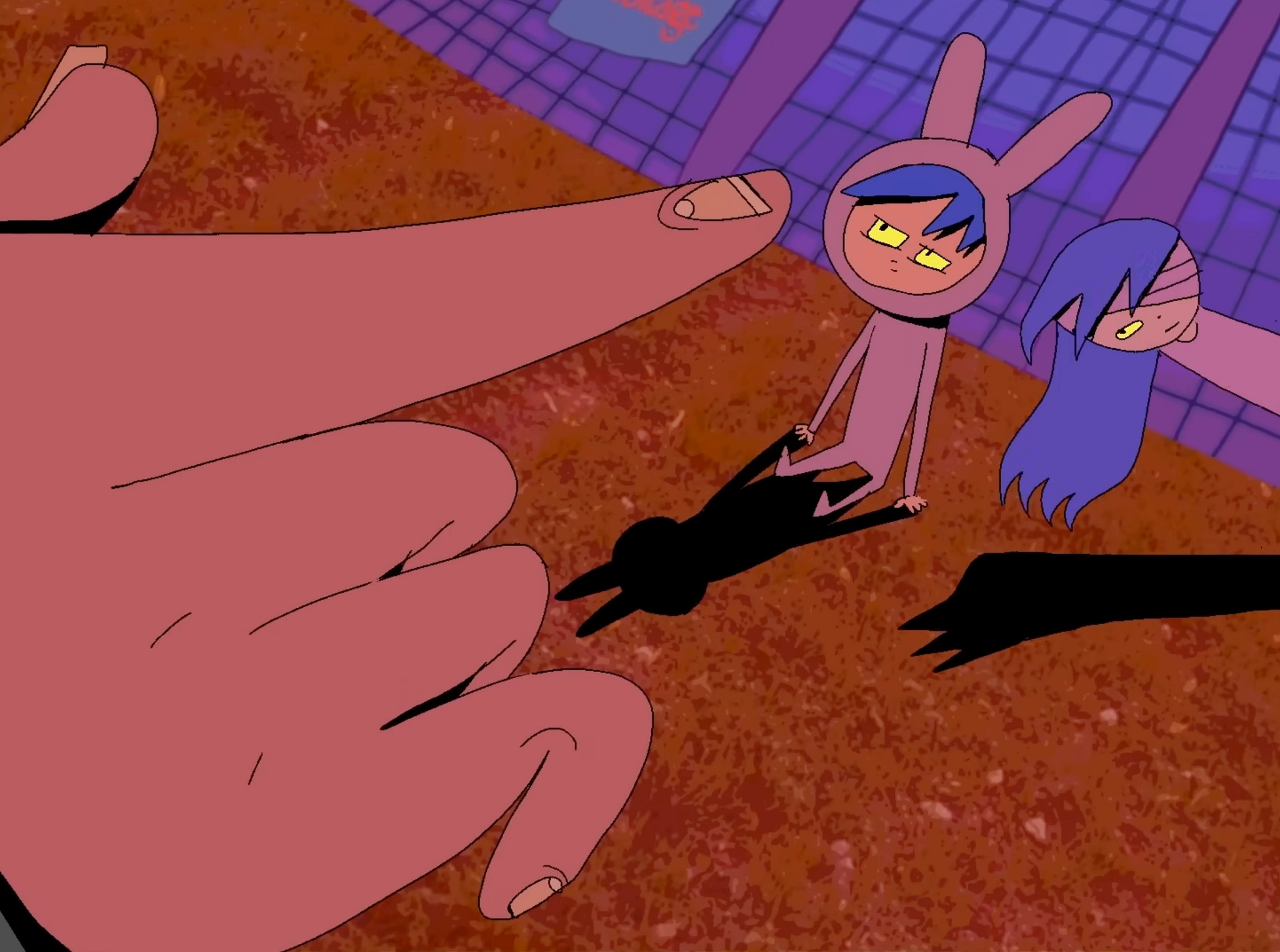
Feral youth, alienated animals, and masked authorities populate the jittery, acid-colored animations of Victoria Vincent, which map the psychic fallout of life shaped by platforms, protocols, and perpetual crisis. Known online as “vewn,” Vincent has released dozens of short films over more than a decade, honing a singular visual style that is simultaneously handmade and hypermediated. Her characters—doubled, distorted, and often wounded—move through worlds of ambient violence and bureaucratic absurdity, their anxieties amplified by Vincent’s boiling linework and teeming backgrounds. The humor is dark, yet it gives way to fleeting moments of tenderness, solidarity, and connection. For this special evening, Vincent presents a selection of films spanning her body of work, from early internet releases to recent projects like Dirt Girls (2021) and Snooze Quest (2025) and shares insights into her process.
Followed by a conversation with Victoria Vincent and audience Q&A. Presented in partnership with DePaul University’s School of Cinematic Arts.
2015–2025, USA
Format: Digital
In English
ca 60 mins
ABOUT THE ARTIST
Victoria Vincent, known online as “vewn,” is a Los Angeles–based animator and filmmaker. Since 2015, she has released dozens of short independent films online, drawing a global audience to her darkly comic, emotionally charged explorations of anxiety, social isolation, online identity, and existential unease. Alongside her independent practice, Vincent has developed projects for Adult Swim, FOX, and Netflix’s We the People, among others.
PROGRAM
Notes adapted from Sam Gurry
Fluffy’s Third Eye
2016, 1:30 mins
In contrast to Vincent’s typical colorful palette, this piece is more monochromatic, making Fluffy’s Third Eye even more distinctive. Not all doors can be closed.
Agoraphobia
2017, 2:10 mins
The soft curves of the freeway close in like a vice. The whole city hums, scoring this brief odyssey to the dog park.
Cat City
2017, 3:00 mins
A recurring theme in Vincent’s work is the idea of change and stasis. Characters are resistant to change, resolute, or in avid pursuit. No matter the choices made, the result seems to be the same—back where you started, but sometimes happier.
Kittykat96
2017, 2:00 mins
Amongst the more hopeful pieces in Vincent’s oeuvre, Kittykat96 is an exploration of the existential duality between our online and offline selves.
Dead End
2019, 3:30 mins
It’s the lost leading the lost through the entropy of the working world. A guidance counselor stares past his student, projecting his own inertia. “Better luck next time,” coos the Slot-O-Rama siren, a lullaby for the stalled out and the stuck in.
Catscape
2019, 2:30 mins
Two internet friends meet IRL for the first time—right after visiting church and summoning the devil. With masks off and vulnerability exposed, they fall asleep under the soft sonic glow of The Golden Girls, bleeding in from the house next door.
Twins in Paradise
2020, 9:30 mins
Twin tennis prodigies Marcy and Darcy teeter on the edge of fame, self-destruction, and the ever-present call of the void. Their synchronized swings mask a growing dissonance—between expectation and identity, brilliance and burnout. The narrative crackles like static, a charged silence before the inevitable collapse, one match away from an inferno. As the court lights dim and the world around them blurs into nothing, what remains for the sisters beyond the game, beyond the applause—beyond each other?
Dirt Girls
2021, 5:30 mins
Featuring a star-studded voice cast, Dirt Girls is about two sisters on the verge of adolescence and absolution.
Catopolis
2022, 13:30 mins
Penny’s job, where KPI meets TKO, brings her a mix of physical pain and emotional shame. Her desensitization to violence comes full circle when she resigns.
Birthday (Bad Kids Stuff)
2023, 5:30 mins
We built this world and, now, we must have our birthday in it. Sex, drugs, mass violence, aaaand maaaany moooore. One of several Bad Kids Stuff shorts starring Roxy and Jazz, moving through a world of sardonic resignation and hyper-pop absurdism.
Nothing to Hide (Bad Kids Stuff)
2023, 5:30 mins
The second installment of the Bad Kids Stuff series finds our heroes swapping both identities and incarcerated statuses. Before delivering a death sentence, the judge declares, “You could never kill us in a way that matters.” Drawn from a meme that began as a Tumblr shitpost about anthropomorphized mushrooms, the line now underscores the futility of resisting bureaucratic systems like an eldritch judiciary with limitless resources. Administrative alienation—compounded by doomscroll-induced detachment from the self—has rendered us all NPCs. If death doesn’t free us from paperwork, does it even matter?
Stupid Dinner
2024, 2:30 mins
“Should I eat dinner or should I kill myself.” For an interloper, the seemingly simple task of salting food becomes something that requires refuge and reflection. In dimly lit rooms where the walls creep inward, questions of family, friendship, and identity drift like dust in the air—unanswered, unavoidable.
How to Make an Animated Video (Tutorial)
2024, 5:30 mins
Veils lifted! Secrets spilled! Truths unlocked!
Snooze Quest
2025, 9:30 mins
PJ, our bunny-suited protagonist, searches for meaning and medical care amidst a sniper prowling through her neighborhood. The bleed of perceived truth starts as a trickle and ends in a hemorrhage with BJ imploring her double, “No time for philosophy. We have to go back to the real world.”
Lifewasters
2025, 12:00 mins
Vincent returns to live action in this dark, chaotic treatise on parasociality and the toxic currents of internet culture.
ACCESSIBILITY
Conversations at the Edge events have live captions (CART). The Gene Siskel Film Center is fully ADA accessible and its theaters are equipped with hearing loops. For other accessibility requests, please visit saic.edu/access or write cate@saic.edu
]]>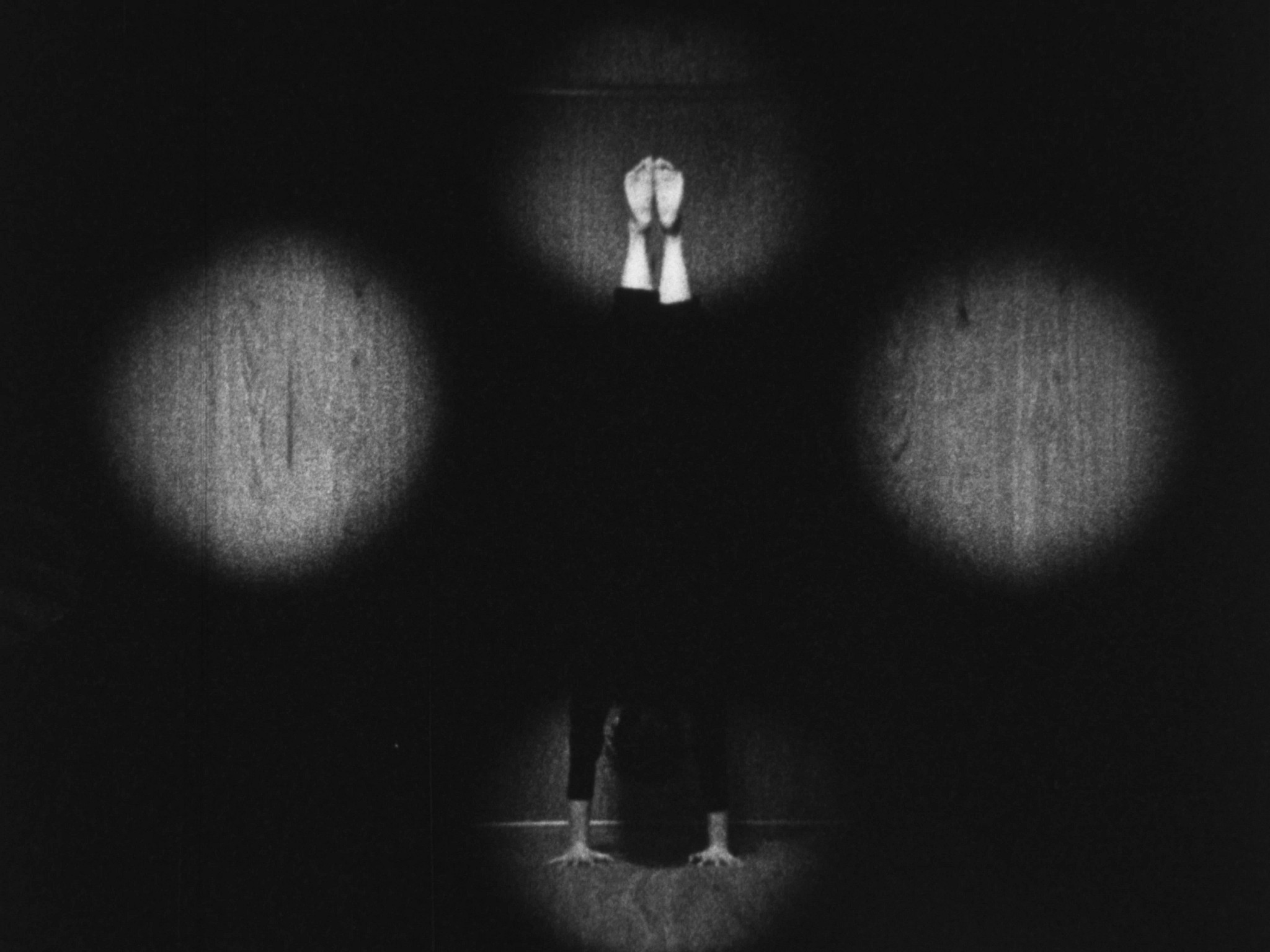
In the finely attuned 16mm films of Chicago-based filmmaker, photographer, and musician Kioto Aoki, everyday phenomena—sunlight pooling on a wooden floor, blades of grass shifting in a lawn—become the material for exquisite compositions of sensorial and perceptual play. Grounded in an improvisatory sensibility and the embodied physicality of analog filmmaking, Aoki often edits her works in-camera and hand-processes them in her own basement studio. For this special evening, she presents a selection of 16mm films and debuts a new 35mm slide work. Musicians Robbie Lynn Hunsinger and Jamie Kempkers accompany the program with a live score, extending Aoki’s improvisatory approach to the event itself—one that opens onto larger questions about how we come to see and understand ourselves in the world around us.
Followed by a conversation with Kioto Aoki and audience Q&A.
2013–2026, USA
Format: 16mm, 35mm slides, and live musical score
In English
ca 60 mins
ABOUT THE ARTIST
Kioto Aoki is a Chicago-based artist, filmmaker, photographer, musician, and educator. Her work has been presented at institutions including the Barbican Centre, London; the Museum of Contemporary Art Chicago; the Asian Art Museum, San Francisco; the Heritage Museum of Asian Art, Chicago; Kobo Chika, Tokyo; and The Lab, San Francisco; among others and is held in the Joan Flasch Artists’ Book Collection at the School of the Art Institute of Chicago and the Museum of Contemporary Art Library and Archives. A fifth-generation member of the Toyoakimoto house, an okiya (geisha house) performing-arts family in Tokyo with roots in the Edo period, Aoki is a specialist in taiko, tsuzumi, and shamisen. She studied under her father, Tatsu Aoki (Toyoaki Sanjuro), and has performed professionally since childhood. She leads Tsukasa Taiko through Asian Improv aRts Midwest and maintains an active international performance and recording practice across traditional and experimental music.
PROGRAM
On the Grand Scale of Things
2014, 6 min
A playful look at the relation between words, implied actions, and potential consequences through light, hands, and shadow.
Mornings in Orange
2017, 3 min
An early morning fishing excursion.
Findings
2017, 3 min
An environmental exploration of space through bodies of light, with nods to Uta Barth, John Smith, and Maya Deren.
For Mt. Shamao
2018, 3 min
A film adaptation of Milad Mozari and Mitsu Salmon’s site-responsive performance Mt. Shamao, commissioned for Experimental Sound Studio’s Florasonic series at the Lincoln Park Conservatory.
????
2024, 3 min
Details on the ground and in the sky.
For Bucky Fuller
With Maggie Wong, 2019, 3 min
An homage to Buckminster Fuller, drawing on his belief that the Earth’s rotation could be felt by a body aligned with the North Star.
Aperture
2013, 9 min
A quiet investigation of the camera’s aperture that draws attention to how we see.
Untitled 35mm Slide Performance
2026, 10 min
??????: If Pinholes Were Right Side Up, I Would Be Doing Handstands
2024, 3 min
A play between the filmmaker and a matte box, drawing a parallel between handstands (??? / sakadachi) and the camera obscura, where inversion becomes an essential orientation.
Tamago Stories One
2026, 3 min
The first in a series about mechanisms, economies, and ecologies of production through the confluence of eggs, photography, and the sun.
Double Run Eight
2022, 2 min
Sidewalks, trees, and sky run forward and backward across four frames of unslit double 8mm, reflecting embodied perception through the film’s very structure. Shot on a Bell & Howell Filmo Double Run Eight camera from the Rod Slemmons Camera Archive.
Lightly Heeled
2024, 3 min
The artist’s feet frame quivering flames in this hand-processed play of light.
Of What I Can See
2014, 3 min
A self-portrait through the artist’s eyes and her cinematic instrument.
ACCESSIBILITY
Conversations at the Edge events have live captions (CART). The Gene Siskel Film Center is fully ADA accessible and its theaters are equipped with hearing loops. For other accessibility requests, please visit saic.edu/access or write cate@saic.edu.

Few figures have shaped the landscape of contemporary animation as profoundly as Estonian artist Priit Pärn. Since the late 1960s, his surreal narratives and expressive graphic style have influenced animators worldwide—from independent auteurs to Hollywood creatives. For the last 20 years, he has worked closely with Belarusian-born animator Olga Pärn, developing a collaborative practice that breaks new aesthetic ground while dissecting the psychological, political, and technological forces of contemporary life. This evening, the two join virtually from Tallinn to present their new film Luna Rossa (2024)—a darkly humorous thriller of shifting identities, coded encounters, and the surveilling gaze of a mysterious authority—alongside two of Priit’s defining works from the 1980s—The Triangle (1982) and Breakfast on the Grass (1987), widely hailed as one of the best animated films of all time.
Followed by a virtual conversation and audience Q&A with Priit Pärn and Olga Pärn. 35mm prints courtesy of the National Archive of Estonia.
1982–2024, Estonia/France
Format: 35mm and DCP
In English
ca 74 mins
ABOUT THE ARTISTS
Priit Pärn is regarded as one of animation’s most original and influential voices. He initially trained as a biologist before entering the animation world through Tallinnfilm’s Joonisfilm studio in the 1970s. His films—The Triangle (1982), Breakfast on the Grass (1987), Hotel E (1992), Night of the Carrots (1998), among others—are considered defining works of the late and post-Soviet eras, earning top prizes at major festivals including Zagreb, Krakow, Valencia, and Annecy. Beyond his films, Pärn has shaped the field as an educator, serving as artistic director of the animation program at Turku School of Art and Media (1994–2007) and later leading the animation department at the Estonian Academy of Arts (2006–2019). He has been the subject of more than 40 solo exhibitions in Europe and Canada and has received 13 international lifetime achievement awards from organizations and festivals around the world.
Olga Pärn is an award-winning animator, director, and illustrator whose work spans animation, drawing, and mixed-media techniques. Trained in graphic arts at the Belarusian State Academy of Arts and in directing at La Poudrière in France, she worked at Belarusfilm throughout the 1990s before relocating to Estonia in 2006. Since then, she has collaborated closely with Priit Pärn on a series of acclaimed films—including Life without Gabriella Ferri (2008), Divers in the Rain (2010), and Pilots on the Way Home (2014)—earning major accolades at international festivals. Her work is known for its expressive textures, psychological acuity, and darkly humorous edge. In addition to her directing practice, she has taught animation, illustration, and storyboard development in workshops and academic programs across Europe.
PROGRAM
The Triangle
Priit Pärn, 1982, 35mm, 15 mins
Julia cooks, Victor reads his newspaper, and a peculiar little man emerges from under the stove to interrupt their domestic order.
Breakfast on the Grass
Priit Pärn, 1987, 35mm, 25 mins
Breakfast on the Grass sketches four bleakly comic portraits of the absurdities, humiliations, and quiet fantasies of late Soviet life. Beneath its surreal metamorphoses and sharp visual gags lies a devastating study of systems of oppression and alienation everywhere.
Luna Rossa
Priit Pärn and Olga Pärn, 2024, DCP, 32 mins
Luna Rossa follows the intertwined paths of four mysterious figures whose shifting identities, coded encounters, and secret desires unfold under the watchful gaze of a bureaucratic overseer. Developed over nearly four years with actors from Tallinn’s historic VAT Theatre, the film fuses motion capture, 3D puppetry, and hand-drawn animation into a striking hybrid form.
ACCESSIBILITY
Conversations at the Edge events have live captions (CART). The Gene Siskel Film Center is fully ADA accessible and its theaters are equipped with hearing loops. For other accessibility requests, please visit saic.edu/access or write cate@saic.edu
]]>
Colombian French artist and filmmaker Laura Huertas Millán has earned international acclaim for films as visually rich as they are thought-provoking, weaving together documentary, ethnography, and speculative fiction. Over the past decade, she has focused her practice on the coca plant, using it as a lens to reframe colonial legacies, Indigenous knowledge systems, and the entwined histories of land, labor, and resistance. Drawing on the concept of the pharmakon—a substance that can both poison and cure—her work reflects on the coca leaf’s place in Andean ecologies and spiritual life, its criminalization under European colonization, and the ecological violence of the drug trade and state-sponsored eradication campaigns. This evening, she returns to CATE to present a selection of films and discuss her larger project, including her long collaboration with Cristóbal Gómez Abel—an elder of the Muina Murui communities and former cocaine worker—with whom she is developing a feature-length film on the coca plant, a collaboration that has redefined her approach to film production.
Followed by a conversation between Laura Huertas Millán and the artist and writer Claire Pentecost, co-founder of the experimental cultural space Watershed Art & Ecology. Presented in partnership with Video Data Bank.
2018–2024, Colombia, France, Belgium
Format: 16 mm and digital
In Spanish and French, with English, French, and Arabic subtitles
60 minutes followed by discussion
PROGRAM
The Labyrinth
2018, Colombia, France, 21 minutes
In Spanish with English and French subtitles
Winner, Pardo di Domani Best Direction Prize, 2018 Locarno Film Festival
A voyage into the labyrinthine memories of Cristóbal Gómez Abel, who worked for drug lords in the Colombian Amazon during the 1980s. The film traces his journey through the forest and the ruins of a narco’s mansion—modeled after the Carrington estate from the soap opera Dynasty—as it unravels the hallucinatory narrative of a near-death experience.
Para la Coca
With Cristóbal Gómez Abel, 2023, Colombia, France, 14 minutes
In Spanish with English, French, and Arab subtitles
Para la Coca revisits a myth of origin and ancestral law in which the coca plant appears as a deity embodied in the form of a girl who teaches her father and community the “right use” of the plant. Created in collaboration with Cristóbal Gómez Abel (Bora/Muina Murui), the film connects this myth to the contemporary ritual use of coca within Colombia’s native peoples, beyond colonial prohibition and criminalization. The makers acknowledge that the ancestral myth of origin of the coca plant belongs to the Muina Murui and thank them for allowing this interpretation, undertaken with the aim of de-stigmatizing the coca plant and psychotropics, while honoring and amplifying ancestral Indigenous political, cultural, and spiritual resistance in Colombia.
Curanderxs, select clips and documentation
2024, France, Germany, 21 minutes
No dialogue
In this multi-channel installation, Laura Huertas Millán develops a speculative narrative inspired by 17th-century Inquisition archives from Peru and Colombia. These documents mention women condemned for distributing coca leaves after the plant was prohibited under Spanish colonial rule. Blurring history and fiction, the work imagines a collective of femmes who move through subterranean landscapes, offering coca to enslaved Indigenous mine workers for survival. In doing so, Huertas Millán highlights the coca plant’s role in both colonial exploitation and resistance, while drawing a material connection between silver mines—and the silver content of analog film itself.
ABOUT THE ARTIST
Laura Huertas Millán is a Colombian French artist and award-winning filmmaker whose multifaceted practice bridges visual art, cinema, and decolonial research. Drawing from ethnography, ecology, literature, and fiction, her films challenge oppressive narratives through experimental forms. She has been the subject of more than twenty solo film retrospectives internationally, and her films have screened at major festivals including the Berlin International Film Festival, Locarno Film Festival, International Film Festival Rotterdam, Toronto International Film Festival, FIDMarseille – International Documentary Film Festival, and Doclisboa International Film Festival (Lisbon), where they have received numerous awards. Her work has also been exhibited at institutions such as The Museum of Modern Art (New York), Los Angeles County Museum of Art, Museu de Arte de São Paulo, Centre Pompidou (Paris), Jeu de Paume (Paris), and Times Art Center Berlin. She has participated in international biennials and triennials including Liverpool Biennial, FRONT International: Cleveland Triennial for Contemporary Art, Biennial SESC_Videobrasil (São Paulo), Videonale (Bonn), and Sharjah Biennial. In 2024, she was awarded both the AWARE Prize for mid-career artists and the Ulrike Crespo After Nature Award. She is currently developing a feature-length film on the history of the coca plant, extending over a decade of research between the Colombian Amazon, the United States, and Europe.
ACCESSIBILITY
Conversations at the Edge events have live captions (CART). The Gene Siskel Film Center is fully ADA accessible and its theaters are equipped with hearing loops.
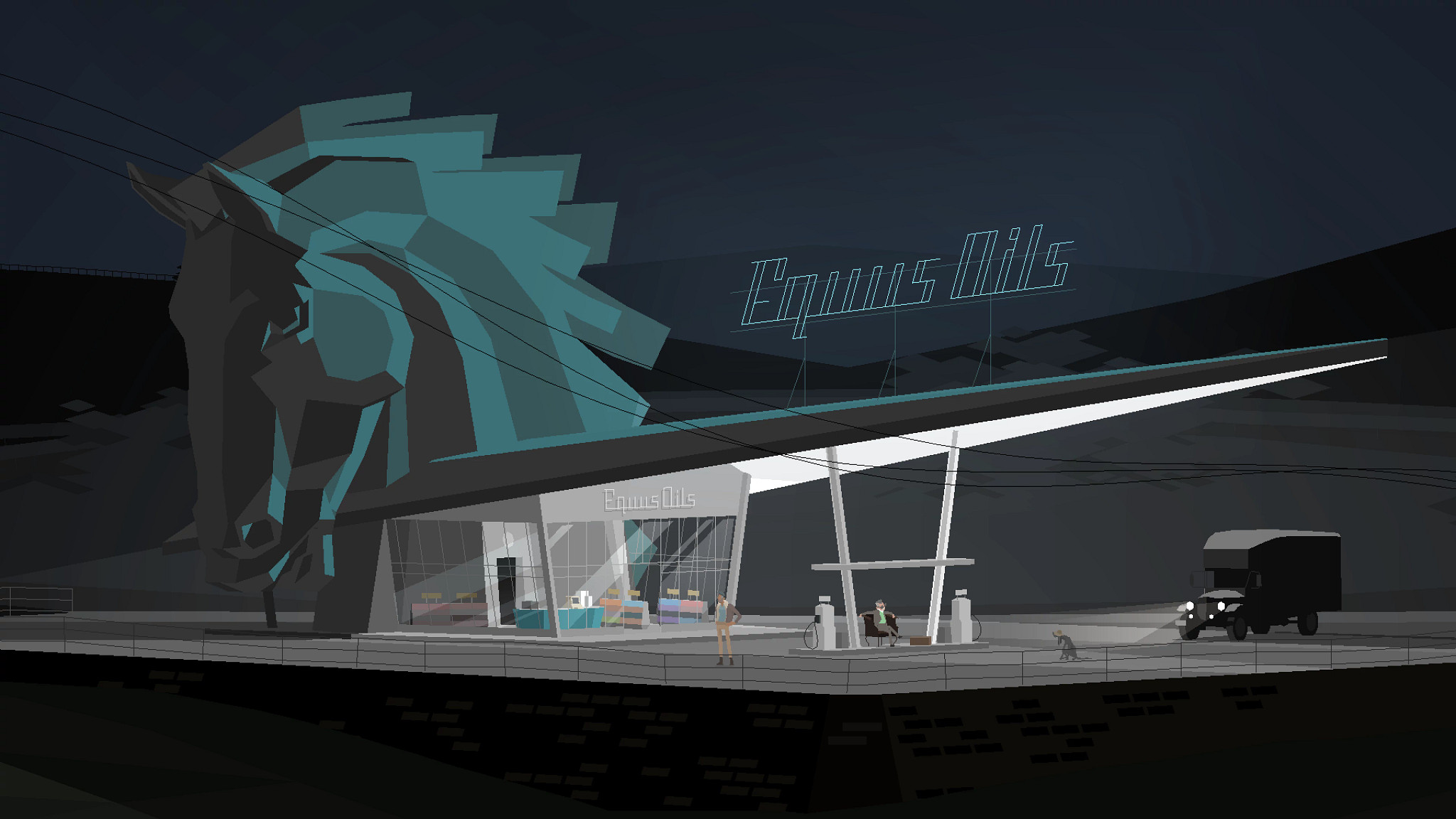
Join artists and game developers Jake Elliott, Tamas Kemenczy, and Ben Babbitt for an evening of live performance, unique playthroughs, and rare materials from Kentucky Route Zero.
Widely regarded as one of the most important video games of the last decade, Jake Elliott, Tamas Kemenczy, and Ben Babbitt’s Kentucky Route Zero is a haunting odyssey of debt and loss that unfolds along a secret highway beneath Kentucky. By turns surreal, tragic, and darkly funny, the game follows Conway, an antique delivery man on his final job, and the marginalized seekers he meets along the way. Developed over more than a decade, the project draws on a wide range of influences—from the cinematic atmospheres of David Lynch and the proletarian poetry of John Steinbeck to the radical visions of grassroots and experimental media artists of the 1960s and ’70s. Kentucky Route Zero was released episodically as five acts and four playable interludes, accompanied by a constellation of related works: a soundtrack, a play, a series of videos, and a mysterious telephone line that connects directly to the game’s world. For this special evening, Elliott, Kemenczy, and Babbitt present a program of live performance, unique playthroughs, and rarely seen materials from the game’s extended universe—offering new insights into its narrative spaces, audiovisual design, and Chicago roots while bridging the screen and real life.
Followed by a conversation with the artists and an audience Q&A. Presented in partnership with the University of Chicago’s Year of Games.
2013–25, USA
Format: Digital and live performance
In English
90 minutes
ABOUT THE ARTISTS
Jake Elliott (BFA 2011) is a game designer and writer. He is co-founder of the Chicago-based studio Cardboard Computer and co-developer of the game Kentucky Route Zero. Before his work with Cardboard Computer, he collaborated on music and experimental software projects in Chicago, including the internet radio station NUMBERS.FM and the software/video art history project Critical Artware. He has taught courses in game design at DePaul University, Northwestern University, the School of the Art Institute of Chicago, and IULM University in Milan, Italy. He lives in Elizabethtown, Kentucky.
Tamas Kemenczy (BFA 2007) is a game designer and visual artist based in Chicago. He is one-third of the studio Cardboard Computer, known for the game Kentucky Route Zero. The game’s distinctive visual style has received awards from the Independent Games Festival and IndieCade and was featured in the exhibition Videogames: Design/Play/Disrupt at the Victoria and Albert Museum in London. Prior to his work with Cardboard Computer, he contributed to Critical Artware, a collaborative project on the history of early software and video art. He is currently working on Cardboard Computer’s next game and designing catio-balconies for his feline roommates.
Ben Babbitt (BFA 2013) is a composer and producer based in Los Angeles whose work spans live performance, studio albums, DJ mixes, film and video game scores, and collaborations with artists including Eartheater, Angel Olsen, Colin Self, film directors Martine Syms and Zia Anger, and the new music ensemble Wild Up. He is also one-third of the studio Cardboard Computer, where he composed the original score and sound design for the British Academy of Film and Television Arts–-winning game Kentucky Route Zero. His work has been presented at institutions and festivals including the Victoria and Albert Museum (London), the Art Institute of Chicago, the Museum of Contemporary Art (Los Angeles), the Perth Institute of Contemporary Arts, the Museum of Modern Art (New York), 3hd Festival (Berlin), and the Getty Museum (Los Angeles).
ACCESSIBILITY
Conversations at the Edge events have live captions (CART). The Gene Siskel Film Center is fully ADA accessible and its theaters are equipped with hearing loops.
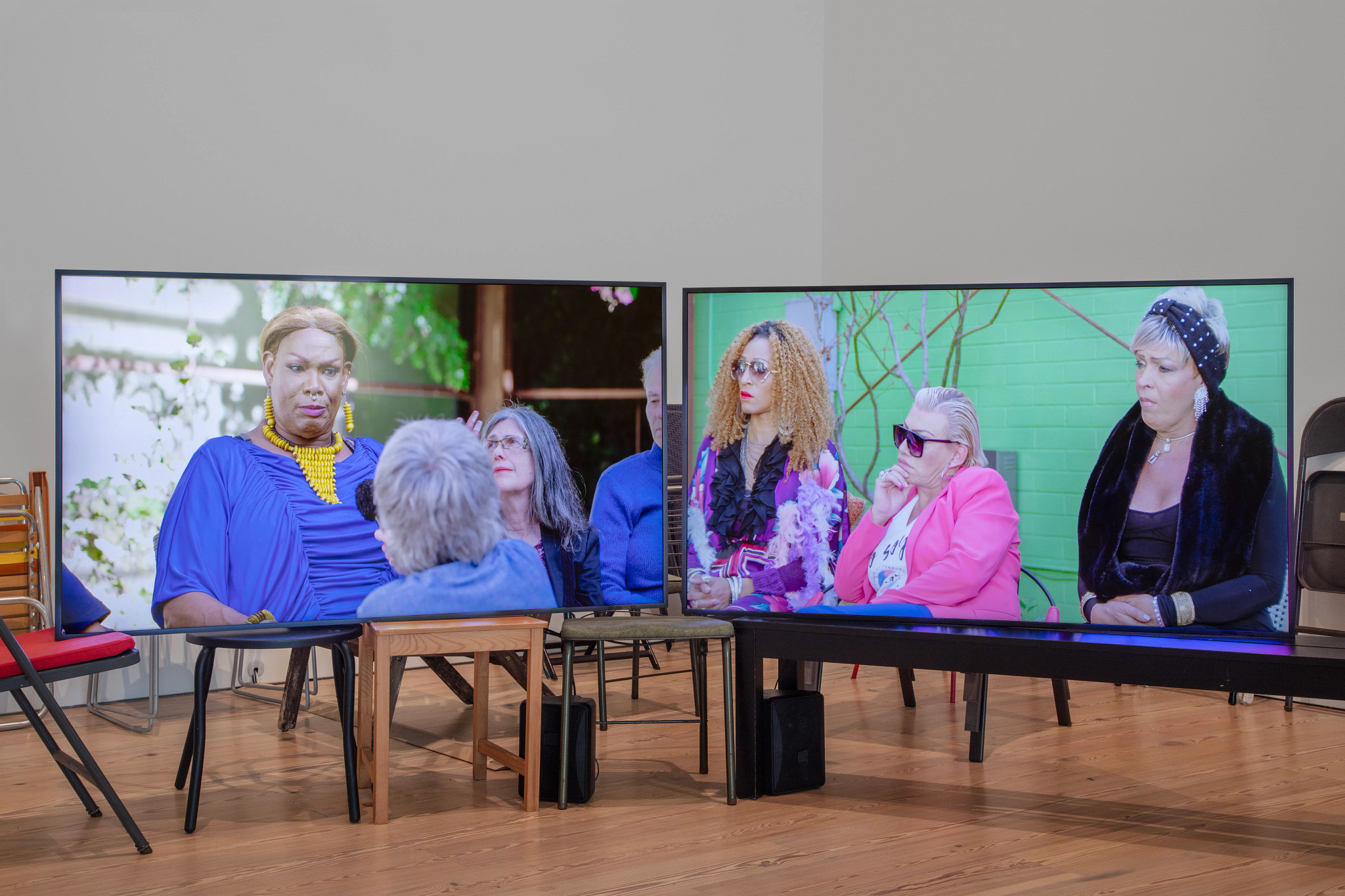
Artist Sharon Hayes presents Ricerche: four, an expansive and deeply moving two-channel video composed from interviews with LGBTQ+ elders across the United States. The final installment in her decade-long series exploring sexuality and gender in the US, the work draws inspiration from Pier Paolo Pasolini’s 1963 film Comizi d’Amore (Love Meetings), in which the filmmaker interviewed Italians about their shifting views on sex and sexuality. Adopting a similar structure, Hayes invites participants to reflect on their experiences of desire, identity, community, activism, and survival—modeling listening and dialogue as radical tools for intergenerational connection and collective understanding. As LGBTQ+ lives come under increasing political fire, Ricerche: four is an insistent reminder of the galvanizing force of shared testimony and the mobilizing potential of community.
Followed by a conversation with Sharon Hayes and an audience Q&A.
2024, USA
Format: Digital
In English
80 minutes followed by discussion
ABOUT THE ARTIST
Sharon Hayes uses video, performance, sound, and public sculpture to examine the intersections of history, politics, and speech. Her work seeks to unravel reductive historical narratives and reactivate dormant pathways for imagining political resistance. She lingers in the grammars—linguistic, affective, and sonic—through which resistance takes form, aligning her practice with a heterogeneous field of voices and actions that challenge normative behaviors, unjust social contracts, and prescriptive notions of time. Hayes’s work is rooted in collaboration and sustained by a vital commitment to performance and the radical potential of non-normative public space. She sees public space as a site for unregulated, unpredictable encounters and collective possibility. Hayes has been the subject of numerous solo exhibitions, including at Neue Berliner Kunstverein (Berlin), Moderna Museet (Stockholm), Andrea Rosen Gallery (New York), Tanya Leighton Gallery (Berlin), Whitney Museum of American Art (New York), and Museo Nacional Centro de Arte Reina Sofía (Madrid). Her work has also been exhibited at the Whitney Biennial, the Venice Biennale, the Museum of Modern Art (New York), and the Solomon R. Guggenheim Museum (New York). She is the recipient of numerous awards and grants, including a Gwendolyn Knight Lawrence Award from the American Academy of Arts and Letters (2024); a Grants to Artists Award from the Foundation for Contemporary Arts (2024); a United States Artists Fellowship (2021); a Pew Fellowship (2016); a Guggenheim Fellowship (2014); the Herb Alpert Award in the Arts (2013); an Anonymous Was a Woman Award (2013); and the Louis Comfort Tiffany Foundation Fellowship (2007). She is professor and chair of Fine Arts at the Stuart Weitzman School of Design, University of Pennsylvania.
ACCESSIBILITY
Conversations at the Edge events have live captions (CART). The Gene Siskel Film Center is fully ADA accessible and its theaters are equipped with hearing loops.
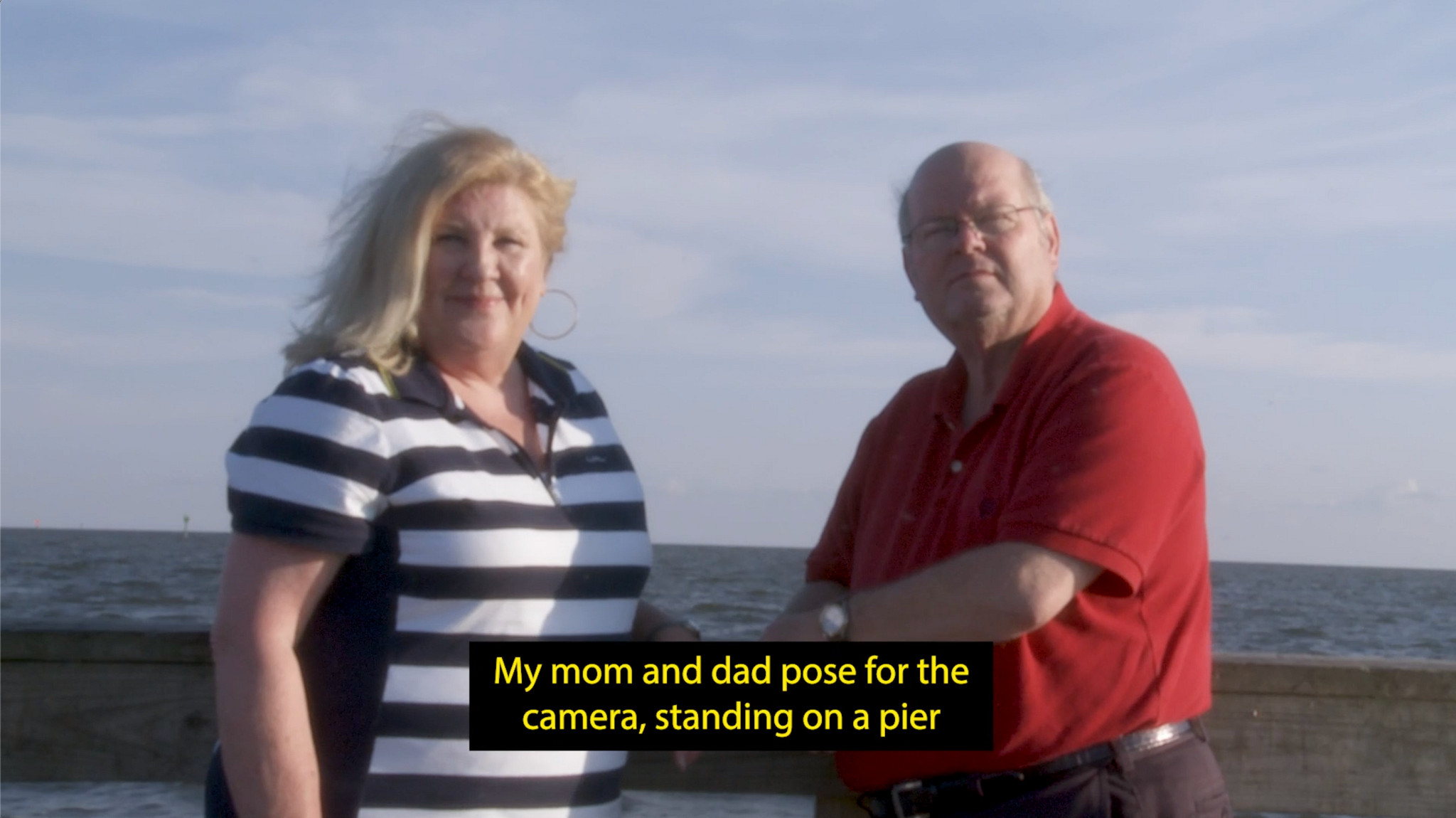
In Shared Resources, artist Jordan Lord offers a radical rethinking of documentary, debt, and the ties that bind. Shot over five years, the film follows Lord’s family through bankruptcy after their father Albert loses his job as a debt collector, the accumulation of loans to fund Jordan’s education, and Albert’s increasing disability from chemical exposure during his military service. But the film is not simply a record of hardship. Lord frames these experiences within a broader meditation on indebtedness and interdependence—social, familial, and artistic. Throughout, Lord and their parents negotiate how the family is represented, underscoring the film’s creation as a web of debts made to and with one another. Open captions and audio description—created and voiced by the family—extend this ethic of mutual support, offering access not just as accommodation, but as a way of sharing experience. Candid, complex, and formally inventive, Shared Resources asks what it means to owe each other everything.
Followed by a conversation with Jordan Lord and the scholar and curator Risa Puleo. Presented in partnership with Video Data Bank.
2021, USA
Format: Digital
In English with open captions and audio description
98 minutes followed by discussion
ABOUT THE ARTIST
Jordan Lord is a filmmaker, writer, and artist working across video, text, and performance. Their work addresses the relationships between historical and emotional debts, support, access, disability, and documentary. Solo exhibitions include Prophetic Memory at Artists Space (New York), The Voice of Democracy at Squeaky Wheel Film & Media Art Center (Buffalo), and exhibitions at Piper Keys (London). Lord’s films have screened internationally at major festivals and arts venues, including The Museum of Modern Art (New York), Walker Art Center (Minneapolis), UnionDocs Center for Documentary Art (Brooklyn), Camden Art Centre (London), ARGOS Centre for Audiovisual Arts (Brussels), Artists Space (New York), DOC NYC (New York), DokuFest International Documentary and Short Film Festival (Prizren, Kosovo), Berwick Film & Media Arts Festival (UK), Hot Springs Documentary Film Festival (Arkansas), New Orleans Film Festival, and San Francisco Documentary Film Festival, among others. Their debut feature, Shared Resources (2021), won the John Marshall Award for Contemporary Ethnographic Media at the Camden International Film Festival, the Critics Jury Prize at the Hot Springs Documentary Film Festival, the New Cinema Award at the Berwick Film & Media Arts Festival, and a Special Jury Mention at the New Orleans Film Festival. Lord was named one of Filmmaker Magazine’s “25 New Faces of Independent Film” in 2021, and their work has been featured in publications including Screen Slate, Filmmaker Magazine, Millennium Film Journal, Film Quarterly, and Hyperallergic.
ACCESSIBILITY
Conversations at the Edge events have live captions (CART). This film has open captions and audio description. The Gene Siskel Film Center is fully ADA accessible and its theaters are equipped with hearing loops.
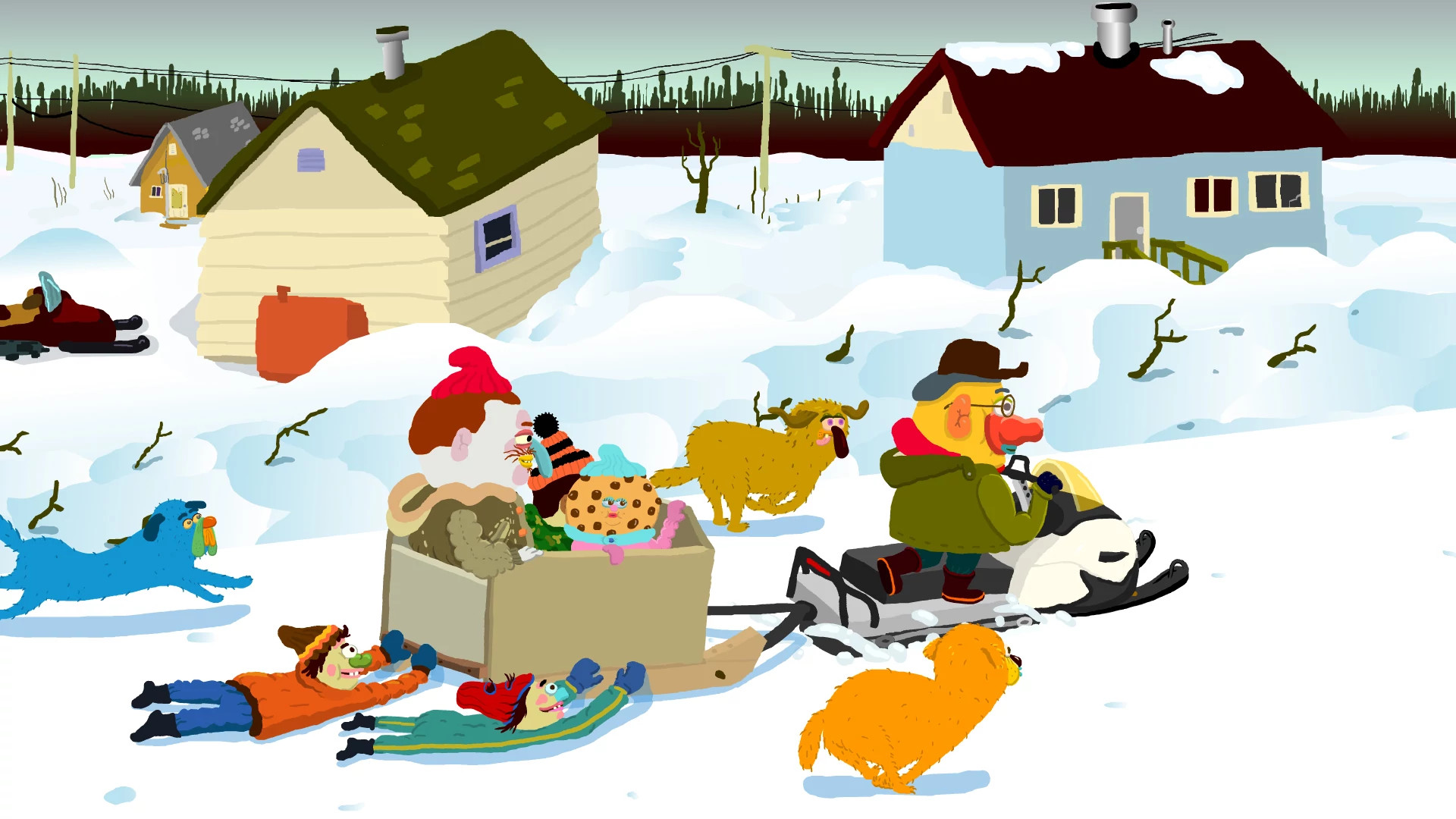
Winner of the Contrechamp Grand Prix at the Annecy International Animation Film Festival, Seth and Peter Scriver’s freewheeling animated documentary follows Peter—an artist and storyteller from the Shamattawa First Nation—through a series of shaggy dog tales about growing up with his white half-brother Seth in 1980s Toronto, and later raising his own children in the remote north. There are chicken heists, Sasquatch sightings, trapping mishaps, and children’s chaotic adventures—woven together with accounts of police profiling, land grabs, and the haunting legacy of residential schools. Peter’s storytelling is mirrored in the film’s loose, surreal cartooning, where wry humor sharpens into satire to evoke the long shadow of life under Canada’s First Nations policies. At once personal and political, comedic and fraught, the film offers a disarmingly profound portrait of race, identity, and the complex bonds of family.
Followed by a conversation with Seth Scriver and Peter Scriver and an audience Q&A.
2025, Canada
Format: Digital
In English and Cree
97 minutes followed by discussion
ABOUT THE ARTISTS
Seth Scriver is a Toronto-based multidisciplinary artist whose work—across animation, comics, sculpture, and drawing—examines the absurd, the everyday, and the marginal. His award-winning films have screened at major festivals and institutions around the world, including the Toronto International Film Festival, Sundance Film Festival (Park City), Annecy International Animation Film Festival, Doc Fortnight at the Museum of Modern Art (New York), Hot Docs Canadian International Documentary Festival (Toronto), and imagineNATIVE Film + Media Arts Festival (Toronto), among many others. His debut feature, Asphalt Watches (2013), co-directed with Shayne Ehman, won Best Canadian First Feature Film at the 2013 Toronto International Film Festival. His second feature, Endless Cookie (2025), co-directed with Peter Scriver, won the Contrechamp Jury Award at the Annecy International Animation Film Festival. Scriver’s work has also been exhibited at YYZ Artists’ Outlet in Toronto and ADA Gallery in Richmond, and he has twice been nominated for the Doug Wright Awards for Canadian Cartooning for his comics Stooge Pile and Flexible Tube with Stink Lines.
Peter (Pete) Scriver is a storyteller, carver, and writer based in the Shamattawa First Nation, Manitoba. His film Endless Cookie (2025), co-directed with Peter Scriver, won the Contrechamp Jury Award at the Annecy International Animation Film Festival. Born in Shamattawa in 1961, Peter moved to downtown Toronto at the age of 12. After several years of school and work in the city, he returned north to his home community, where he started a family and became known as a skilled hunter and trapper. He was elected chief of Shamattawa First Nation shortly after the birth of his third child. On the day of his election, he fell through the ice while riding his skidoo. Once election officials pulled him out, they informed him that he had won and needed to be sworn in immediately. He ended up doing the entire ceremony frozen shut in his snowsuit. A few years later, Pete became the Magistrate of Shamattawa First Nation. After eight years in the position, the demands of raising his children and his exhaustion with the racism of the Royal Canadian Mounted Police led him to resign. He is currently a Canadian Ranger and maintenance worker at the nursing station in Shamattawa and the father of nine brilliant but rambunctious kids.
ACCESSIBILITY
Conversations at the Edge events have live captions (CART). The Gene Siskel Film Center is fully ADA accessible and its theaters are equipped with hearing loops.