Our family has had a wonderful fall so far — lots of sunshine and warm weather, meaning lots of time spent outside.
Football and Cross Country seasons ended, and Basketball starts this week for the boys. Clara will also do a little basketball league at school.
We had a fun couple of weeks preparing for our Toy Story-themed trunk, and all 4 kids trick-or-treating with friends who apparently live in very generous neighborhoods (I think they came home with more than 30 pounds of candy between the 4 of them)!

I haven’t started thinking about Thanksgiving or Christmas yet… but I do have a few tips and resources for those of you who are planning ahead (just keep reading).
Fall is my favorite, and I’m soaking in every minute of it — raking leaves while listening to Christmas music!
I’m sharing more favorites today!
Favorite Moment = Ordinary Days
Clara took this picture of me working in the kitchen last week. She and James have enjoyed using the “cartoon” mode to take pictures of things around our house… and I thought this picture accurately depicted my favorite ordinary days at home.
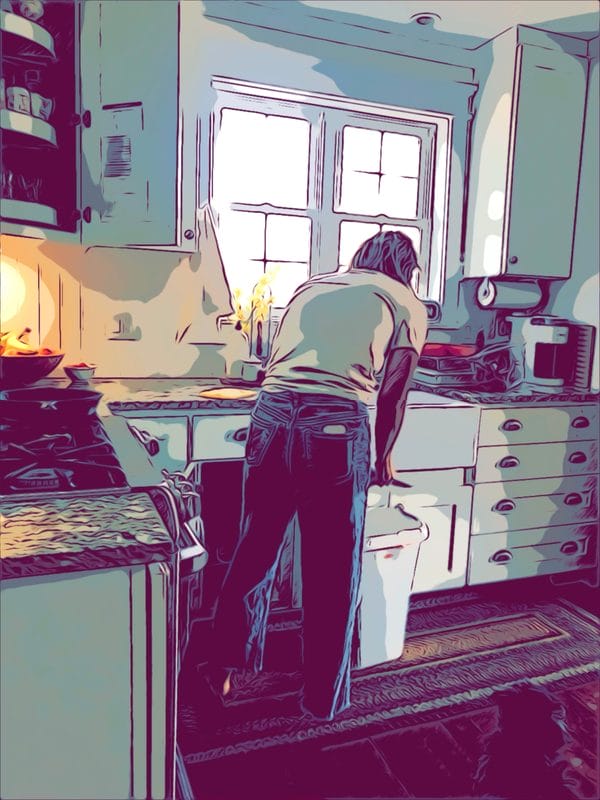
Dirty dishes waiting to be washed, something cooking on the stove, more food being chopped (so much chopping going on in our kitchen), and Buster waiting for anything that might drop to the floor.
It often feels like the majority of my waking hours are spent in the kitchen… which I mostly like. It’s a cozy room with lots of windows overlooking the front yard, with views of most of the main floor, and within earshot of the upstairs and basement.
When the kids are home, someone is always in the kitchen with me — which I also mostly like. 
We’ve got around 10 years left with at least one child at home, and while I know every new season has its pros and cons, I do think the “ordinary days at home”, in my kitchen, making so stinkin’ much food for people will eventually be what I miss most when the kids and their friends aren’t around every day.
Favorite Routine = Earlier Evenings
I LOOOOOOOVE the end of Daylight Saving Time — which, if you don’t observe it, just happened this past Sunday morning.
It’s so nice to have an “extra” hour of sleep, and I personally prefer when it gets darker earlier in the evenings.
We eat dinner super early most nights (sometimes right when the kids get home from school and before evening activities), so more darkness in the evenings just makes it easier to get to bed earlier. I feel like it works with my natural circadian rhythm much better.
I love what I call “hushing the house” every evening after dinner — turning all the tiny lights on, lighting a candle (just broke out my holiday candle for the year) and enjoying how cozy everything feels.
RELATED READING: Hushing The House

Past Favorite = Big Griddle
Because our family enjoys pancakes, French toast, and other hot breakfasts nearly every morning, I use my griddle A LOT!
I went through a few griddles earlier in our marriage… until I found the Presto Big Griddle, and I’ve never looked back. I plan to buy a second Presto Griddle for our outbuilding kitchen (I’m hoping for a Black Friday sale).
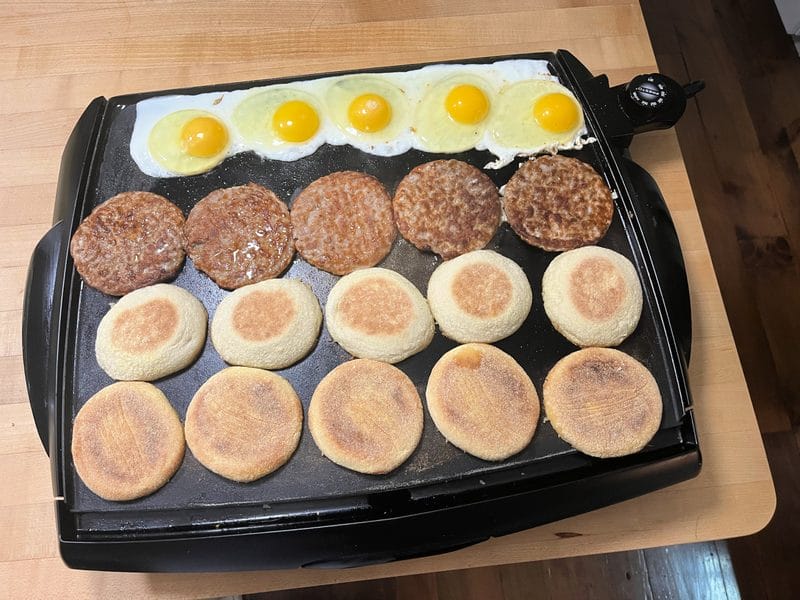
This griddle fits perfectly in the cabinet above our refrigerator and is the largest cooking surface we have (other than our Blackstone).
It’s such a time-saver on busy school mornings because I can cook so much at one time. And I often leave it on “warm” so people can grab and go as they are ready to eat.
RELATED READING: English Muffin Egg Sandwiches (pictured above)

Favorite Hair Removal = Waxing
For the first 40 years of my life, I was too chicken to try waxing… until my cousin encouraged me roughly 8 months ago.
I was complaining about shaving (specifically the underarm area) and the fact that my body hair is apparently “too blond” for laser hair removal.
She said I should try waxing, but I wasn’t sure.
Now 8 months later, I can confidently say I wish I had tried waxing 25+ years ago.
It hurt like crazy the first time, but ever since, it has not been nearly as painful.
I only need to do it about once per month, I don’t have any irritation or ingrown hairs, and the hair that has grown back is almost invisible and super soft.
This is the kit I purchased (I still have plenty left 8 months later).
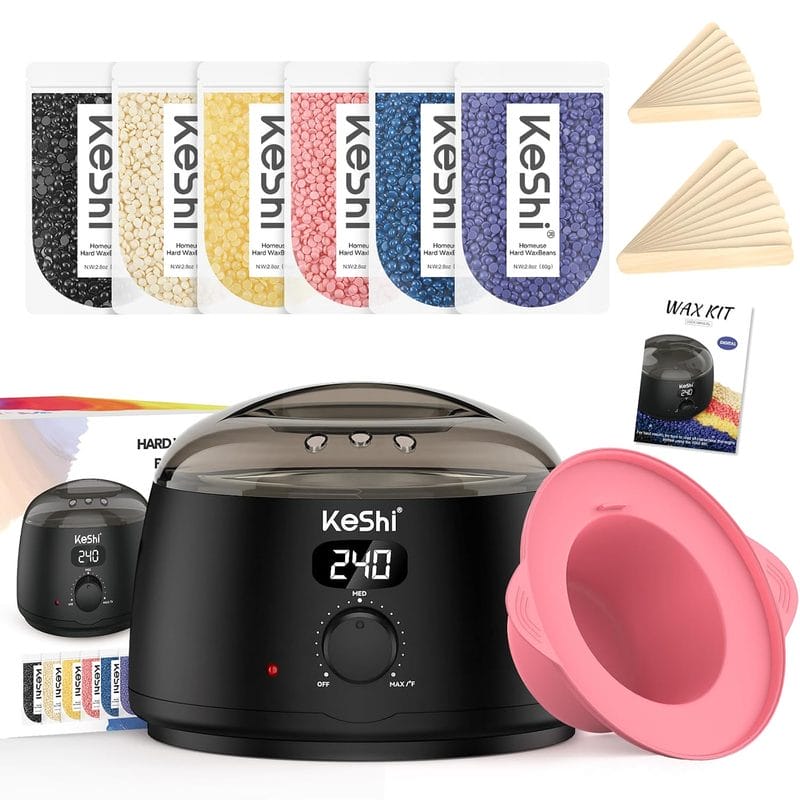
If you hate shaving, if you get lots of irritation (even when using “sensitive razors”), and if you don’t want to pay for laser hair removal, you might consider waxing.
I’ve been pleasantly surprised with the fantastic results!
Favorite Book = Mad Mabel
My friend recommended Mad Mabel to me a few weeks ago, and I could hardly “put it down”.
The storyline pulled me right in, and the narration was fantastic. There are a couple of major “twists” at the end — which shocked me so much that after finishing the book, I went right back to the beginning and listened to the entire book a second time, with this new information in mind.
READ (or listen to) THE BOOK: Mad Mabel

Favorite Media = Common Sense Media
I’m regularly asked if we keep a list of all the movies we’ve watched for movie night… and unfortunately, I never did.
It’s been close to 10 years of weekly movie nights for our family, so that means we’ve watched roughly 500-ish movies, documentaries, and TV shows (and enjoyed who knows how many snacks and treats!)
I’m sorry I don’t have a great list for you all, but I do have a good resource that might help you “vet” your media choices — Common Sense Media.
From what I can tell, it’s completely free (I’ve never paid anything), and it has really helpful tips to help parents (and teachers) choose age-appropriate media and guide our children in healthier ways to use media.
I get their emails with movie suggestions and helpful tips, but you could also just visit occasionally if you want to look up a specific movie, book, or video game.
RELATED READING: More Blog Posts on Technology
Favorite Holiday Tip = Curb Consumerism
It’s officially November, and based on how quickly this year is flying by, Christmas will basically be here in 2 weeks!
Some of you have likely started your holiday shopping already; many of you (like me) really haven’t given it a thought yet.
Wherever you are on the holiday shopping spectrum, it might be helpful to consider some simple tips to curb consumerism before you get too far into the holidays!

Some of my favorite tips are to:
- Limit your shopping (obvious, and surprisingly effective!)
- Change your language related to holiday shopping
- Revamp gift-giving traditions
It’s not necessarily “easy” to change your holiday traditions, but if you’ve felt convicted that your holidays are becoming too consumerist, or if you’d like some advice to help lower your gift budget this year, my tips are very simple and doable (I promise!)
READ ALL MY TIPS HERE: Tips to Curb Consumerism
Favorite Recipe = Meatloaf
Despite warmer-than-normal fall temperatures here in West Michigan, I’ve added in several “cozier” recipes — like Chicken Pot Pie, Beef Stew, and my Easy Meatloaf.
This past week, I used my new-to-me USA Pan Meatloaf Pan for the first time (I’ve always just used a bread loaf pan). It was so nice to quickly drain off the grease and continue cooking the meat.
The meal was a hit, and I enjoyed leftovers the next day for lunch!
If you’re looking for a cozy fall recipe, try my easy meatloaf!
TRY THE RECIPE: Meatloaf

Favorite Archived Post
Many of you likely have several people in your life who are very difficult to buy for.
Instead of buying them another item that will eventually turn into clutter, try one of these ideas — easy, clutter-free, and perfect for the person who already has everything! 
Read the full post here: Gift Ideas for The Person Who Has Everything.

That’s all for this month. 
If you’re interested, you may scroll through all my Favorite Things posts HERE!
When chaos and disorder threaten to derail your days, take a deep breath and implement a few of these strategies instead. Then enjoy simpler days amid our fast-paced hustle culture.

Simple living is a constant balancing act of shoulds and coulds, have-tos and want-tos, yeses and nos, and making the best choices for you and your family in your current season of life.
There’s no quick fix or magic formula to create a simple life once and for all. It’s one of those things that just requires continual time, effort, and intentionality until you find what works best for YOU.
That said, when I look back on my journey towards a simpler home and life, a handful of strategies have made a big difference for me, my family, and my home.
If you’re tired of feeling tired and ready for less chaos and more calm, keep reading for 7 strategies to simplify your days!

1. Avoid Overstimulating Situations
Are you easily overstimulated by loud, messy, chaotic, and cluttered spaces and people?
Yup, me too!
As a result, I’m more conscious of my surroundings and avoid overstimulating environments. This is one reason I love the early morning hours of peace and quiet.
This is also why Dave and I don’t do much traveling and why we’d rather have people at our house than go somewhere else.
If you can relate, you’d likely benefit from waking up earlier to start the day quietly, taking a 15-minute walk by yourself mid-day, and avoiding overstimulating people and places (like Costco on a Saturday morning!)
Related Reading: Practical reasons to know and understand your personality type.

2. Declutter Your Environment:
I’m not a minimalist… but I feel calmer when my surrounding spaces are visibly free from most clutter. And since my surrounding spaces are usually my home, I make an effort to keep my home neat, organized, and clutter-free (most of the time).
Where do you spend the most time? Your kitchen, bedroom, bathroom, office, car? Be intentional about decluttering those spaces and enjoy feeling more relaxed AND productive!
Related Reading: 3 Daily routines to keep your home clutter-free

3. Get More Sleep (or even rest)
I’ve always tried to prioritize sleep — even as a teen and college student. And yes, as a mother of 4, now in my 40s, I’ve had my share of sleepless nights due to babies who never slept… and “aging”!
I rarely get 8 solid hours of sleep, but I do prioritize sleep by getting to bed on time, waking up at roughly the same time each morning, limiting screens, and “resting my eyes” (as my grandma says) for 10-15 minutes before the kids get off the bus in the afternoon.
If you’re regularly tired, lethargic, or even downright exhausted, consider ways you could get more sleep (or even more rest). And talk to your doctor if sleep issues persist. Being well rested makes a huge difference in your daily life.
Related Reading: The Effects of Sleep on Everything.

4. Eat Simple Foods At Home
By eating at home, you’ll save time, money, and calories. You’ll also eliminate the overstimulating environment of noisy, smelly restaurants (see #1 above).
Even if your schedule is quite full or you don’t enjoy cooking, you can still enjoy eating simple foods at home by purchasing frozen or pre-packaged foods, ordering take-out, or subscribing to a meal delivery service.
Related Reading: How I Meal Plan

5. Say “No” Regularly
For the record, Dave and I are extremely involved in our schools, church, and community. That said, I still consider saying “no” to be a vitally important skill that can simplify your life.
Saying no is more than turning down volunteer requests or shrugging off responsibilities. It’s a way to show respect (for yourself and others), a way to exercise self-control, and a way to live more intentionally.
The fact is, we are always saying no to something… don’t let it be your sanity.
Related Reading: 99 Effective ways to say “no”.

6. Monitor Your Media
It’s been more than 6 years since I stepped away from social media (both personally and for my business), and I haven’t regretted it once.
We don’t have cable, I don’t subscribe to any magazines, and I don’t have any “NEWS” or “Info” apps on my phone.
I have one Christian news source that keeps me in the loop on the basics, but other than that, I focus my mental energy on my home, our church, our schools, and our local community.
This is likely not the right approach for everyone, but if you feel overwhelmed or anxious about all the “problems” in our world, it might be time to distance yourself and start monitoring your media.
I have all cell phone notifications turned off (except actual phone calls and text messages), we keep all technology out of our bedrooms, and we even rearranged our home a few years ago to make our TV less visible.
It has made a huge difference for me and our kids!
Related Reading: 5 tips to touch your smartphone less

7. Plan Ahead
You knew “planning” would make the list eventually! In fact, in many ways, the concept of planning infiltrates every one of the strategies above.
Without planning, I wouldn’t have the time or energy to keep my home neat and orderly, get to bed at a reasonable hour, make food at home, etc.
If your life feels like it’s unraveling faster and faster, and you don’t know how to stop it, you must start planning.
Take 30 minutes before bed tonight to plan what you will eat for breakfast and dinner, refill water bottles, pack lunches, set your coffee maker, and make your to-do list.
Then set your alarm at least 15 minutes earlier and enjoy a slower start to your day (seriously, these small changes could transform your morning).
Continually look for things you can proactively do now, instead of reacting to later, and… when you “mess up” or things don’t go as planned, try to learn from the situation and keep pressing forward.
Related Reading: Prevent Burnout by Focusing on Planning and Progress

Simple living is work… but it’s worth it.
If you desire to simplify your life, there’s no better time to start than right now!
It doesn’t have to be complicated or time-consuming. These strategies are a great starting point… pick one and give it a try today!
You won’t regret it.

Meal planning is just another tool that can simplify your life or leave you with unnecessary stress and guilt. Keep reading for a more realistic meal planning approach — one that can actually work for you in your current season of life!

Meal planning is often pitched as the ultimate solution to busy weeknights, food waste, and decision fatigue — and in many ways, it can be.
But somewhere along the way, what was meant to simplify our lives can start to feel like just another task on an already overloaded to-do list.
If you’ve ever felt guilty for abandoning a carefully crafted meal plan or stressed when things didn’t go “perfectly,” you’re not alone. The truth is, meal planning should be a flexible, supportive tool that works for you — not a rigid system that adds pressure or guilt.
After nearly 20 years of low-key (but very successful) meal planning, I can promise you it’s not about perfection. You don’t need special containers, labels, spreadsheets, or any other fancy tool or program. You don’t need extra freezers stocked with ingredients (although a little extra freezer space is always nice). And you don’t even need to love cooking for meal planning to be worthwhile.
To me, meal planning is all about freedom.
It frees up brain space for other, more important matters.
It frees up time because I’m not running to the store 5 times a week for things I forgot.
It frees up energy and alleviates stress because I have the food ready when it works for my family instead of frantically rushing every night.
If you’d like to enjoy the freedom that comes when meal planning actually works for you, these tips should help!
1. Decide how many meals you will plan.
Will you plan all 3 meals per day? Just dinner? Dinner and Breakfast?
Also, do you anticipate eating at home 7 days a week, or do you have a regular “date night” or pizza night that you won’t need to plan for?
I plan all our breakfasts and dinners each week, and we generally have sandwiches or leftovers for lunch.
NOTE: if you’d like to get my meal plans delivered to your inbox every week, simply sign up for my e-newsletter — it’s free!
There is no right or wrong answer here… but it helps to be honest with yourself. If you know you tend to eat out many nights per week, then acknowledge that. Otherwise, you’ll end up planning too many meals and buying needless groceries that will eventually go to waste.
2. Make a list of meals your family likes.
Grab a pen and paper or open the Notes App on your phone and start listing all the meals your family likes to eat. Don’t worry about organizing them into categories — just get them out of your head and into a list.
Shoot for 25 ideas to start. It’s fine if your list contains simple foods like pasta, mac and cheese, grilled cheese, tomato soup, sandwiches, salad, etc. You aren’t looking to impress anyone. You just need to feed your family food they will eat!
If you’d like to plan more than just your dinners, make separate lists for Breakfast, Lunch, and Dinner (or whatever meals you will create a plan for).
If you need help, here’s a bunch of 30-minute meals our family loves… and here are 75+ family-friendly meals on a budget.
You’ll want to keep this list handy for the rest of the steps.

3. Plan meals based on your weekly schedule.
This is the most important piece of the meal-planning puzzle… because if you don’t plan meals that work with your weekly schedule, you won’t have time to make and/or eat the meals, and your food and time will be wasted.
For example, if you know you need to be somewhere by 6:00 on Tuesday, you can plan an early dinner at 4:45 or 5:00 so you’re finished on time.
Or if you will be gone until 5:30 one day, plan a soup or slow cooker meal so the food is ready when you get home.
If you have a wide open night, that might be a great time to try a new recipe or one that needs to bake/cook for longer. On the other hand, if family members are coming and going all afternoon and evening, it might be best to prepare a variety of wraps or salads that people can just grab as they’re rolling through.
Again, there’s not a “right” or “wrong” way to do this… it just depends on your schedule (which will likely change from week to week).
Use the list of meals you created above to plan meals based on your weekly schedule. I promise, meal planning will feel like a more valuable resource once you start planning your meals based on your weekly schedule.
4. Write your plan down.
Please don’t rely on your memory… write it down.
Whether you’re planning 21 meals for the week, or just 5, you will have a much higher success rate if you write it down.
I write one week’s worth of breakfast and dinner meal plans on our wet-erase calendar every week. This way, I can always check what’s coming up on my menu plan. You could also put it in a Google Calendar, a Notes App, or a sticky note on the fridge.
And, most importantly, my kids always know the plan, so they don’t need to ask me 83 times per day!
BONUS TIP: If you prefer to cook from a recipe, it might be helpful to gather all your recipe cards for the week and put them with your meal plan.

5. Shop and stock your kitchen.
Once you’ve come up with your meal plan AND written it down in a central location, you’ll want to make sure you have the ingredients you need to actually make the meals you’ve planned.
This does not need to be a complicated process with detailed Excel spreadsheets on every ounce of every ingredient you do or do not have in your home.
Instead, do a quick search through your fridge, freezer, and pantry to see what you already have on hand, and then make a list of items you’ll need from the grocery store.
Purchase the items you need (along with any other groceries you want for the week) and enjoy not needing to rush to the store at 5:00 for those last-minute ingredients you just realized you don’t have in the house!
6. Review your plan each day.
One of the quickest ways to blow a meal plan is by not thinking ahead.
I suggest looking ahead 12-24 hours. For example, when I’m cleaning up dinner, I prep our breakfast and look ahead to the next night’s dinner to see if anything needs to be defrosted, prepped ahead, or marinated.
I might pull something out of the freezer, chop or mix something that I can make ahead, whip up a batch of sourdough pancake batter (one less thing to do in the morning), or just remind myself what I’m making for dinner the following day.
This single step has saved me so much stress over the years!
7. Be flexible.
Life happens, and even the most organized meal plan might go out the window on a busy day.
Someone gets sick, you get held up at work, a doctor appointment runs late, you forget an important ingredient at the store, etc.
In these situations, my back-up plan is usually pasta, pancakes & eggs, or grilled cheese.
However, there are other times when plans change a day or two in advance, so I might swap a couple of recipes around mid-week.
This is allowed!
REMEMBER: Your meal plan should be a tool that serves you. It should make your life easier. Don’t let yourself get more stressed trying to stick with the plan you made on Saturday, even if your week changed on Wednesday.
More Meal Planning Resources
Want more meal planning ideas, inspiration, and motivation?
Check out 15 years of meal planning posts here!
Do you have any helpful meal planning advice?

When you look around your home, at all the different rooms, spaces, closets, furniture pieces, nooks, and crannies, do you feel like your spaces serve you and your family at this stage of life? If not, let me help you create spaces that serve you well!

When you look around your home, at all the different rooms, spaces, closets, furniture pieces, nooks, and crannies, do you feel like your spaces serve you and your family well at this stage of life?
Or do the spaces make it more difficult for you to enjoy your home and live the way you want to live within your home?
I suppose it might be a little of both — depending on the day!
Obviously, few of us have unlimited resources (money or time) to create an absolutely ideal space for our family… but it’s often more “fun” to use a little creativity and rework your spaces so they serve you and your family well (like moving a giant dining room table in the middle of your former living room so your kids have more space to do crafts, playdough, and LEGOs!)

Over the last 15 years, we’ve gone from a childless couple to parents of 4 children (and Buster)… so it shouldn’t be a surprise that we use the spaces in our home very differently now than we did when we first purchased the home.
The house still looks the same on the outside, but the different ways we’ve arranged and rearranged the inside are almost too numerous to count!

As our family grows, as our children get older and more independent, as their needs and interests change, it’s only natural that we continue to tweak, change, and completely overhaul many of our rooms, closets, and organizational systems to better serve our needs.
I share a few examples of how we’ve done this in our home below — as well as some tips to help you tweak (or overhaul) various spaces in your home to better serve you and your family in your current stage of life!
The Closet Under Our Stairs:
The closet under our stairs went from office storage to a fun play area, to a little school area, to a cozy reading nook, to storage for our puzzles and games, to storage for all our musical instruments, piano books, and other musical supplies (stands, folders, etc.)
We spent little to no money on these renovations, just swapped out some shelves, furniture, and wall decor.


Musical Bedrooms:
We have a joke around our house that instead of playing Musical Chairs, we play “Musical Bedrooms” because we swap bedrooms so often.
We reconfigure furniture, rearrange closets, and swap kids in and out of various rooms at least once a year based on who needs to wake up earlier, who likes to stay up late to read, who needs more closet storage, etc. (the kids love it and so do I!)
At one point, we had 3 kids in one room and used the other bedroom as a playroom. Then Nora slept in the landing area for over a year. Now they are back to sharing boys in one room and girls in the other.


And… believe it or not, Dave and I have slept in every bedroom in our house at one point or another (even the landing area for a few months while we renovated our bedroom)!

Living Spaces:
When the kids were little, we spent the most time in our one carpeted room (the large living room on the main floor).
But as they got older (and stopped spilling as much), we realized we’d rather have a large dining room with 2 smaller living spaces… so instead of a costly addition or renovation, we simply swapped our furniture around.
Our living room became our dining room, and our dining room became a small living space off the kitchen. (Read/watch the full transformation here.)


Smaller Spaces
You don’t need to rearrange full rooms or large areas of your home for more functionality…
The arrangement of our kitchen cabinets has changed quite a bit over the years — making space for bottles and other baby gear, then swapping the baby gear for lunch packing supplies.
And as my cooking style and diet have evolved over the years, the types of food I buy are very different than 10-15 years ago, so my food storage needs have changed as well.
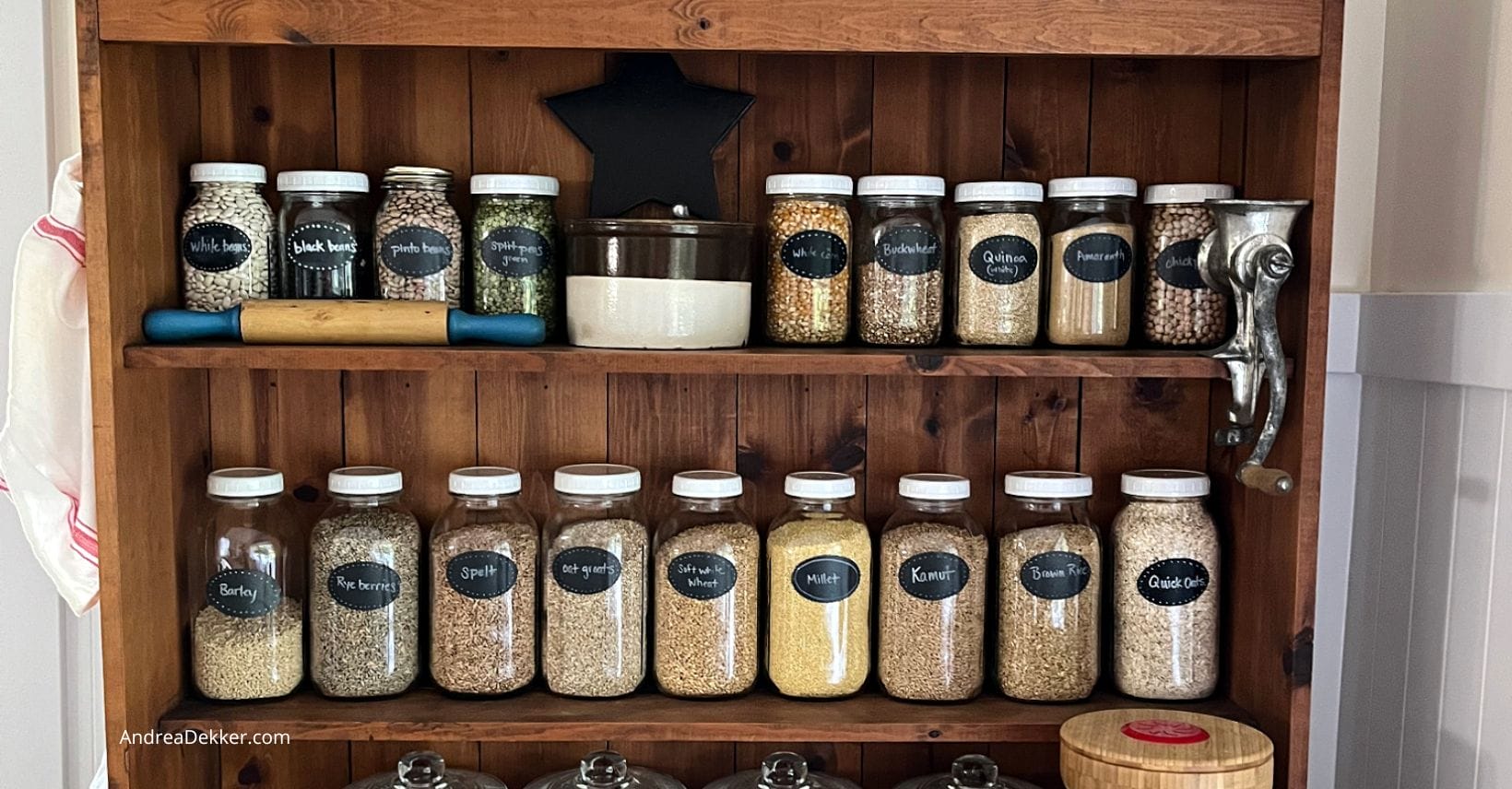
For example, we now have a lot of bulk grain storage.
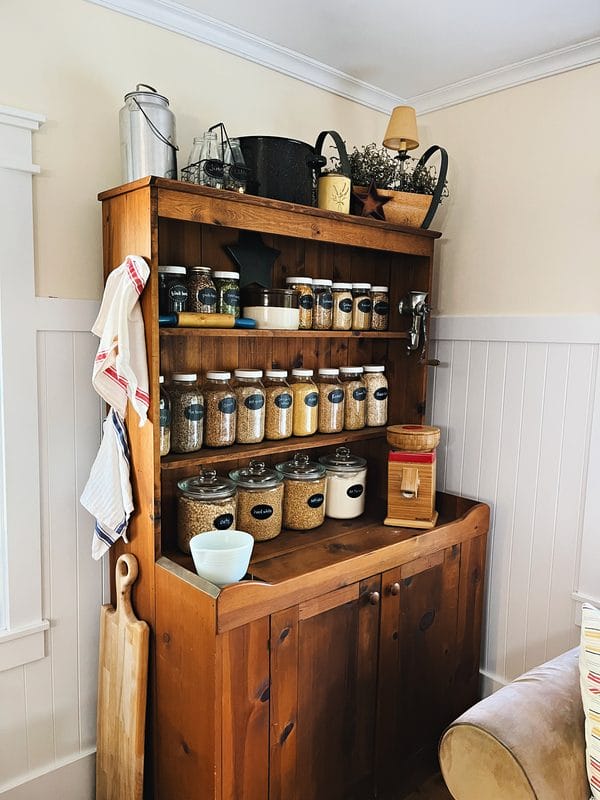
We’ve also switched up many of our closet arrangements to better fit our changing needs.
Our master bedroom closet used to be filled with our clothing — but now that we switched bedrooms and turned our old bedroom into a den, it’s filled with extra bedding, craft supplies, games, and our TV.


We even noticed a positive difference in how our home functioned simply by moving our Christmas tree to a new spot a few years ago. Yup, it’s in the kitchen! This simple swap opened up the office area and felt much more festive because we saw the tree whenever we walked down the stairs or in from the mudroom.

We enjoyed a huge improvement in our morning routine by keeping toothbrushes for the kids in every bathroom so they’re not waiting in line.

Do your spaces serve you and your season?
If you’ve never thought about this before, here are a few questions to consider:
- Do you have different storage needs during different seasons of the year?
- Have you recently become empty-nesters or added new children to your family and now need to utilize your spaces differently?
- Do your spaces allow you to spend time on hobbies and other activities you enjoy?
- Is something too high or too low to be as practical or as functional as you’d like?
- Have your medical needs changed how you can use your space and what items you should store in various places around your home?
As life changes, as your family grows (or shrinks), as your interests and hobbies change, as you age, as your needs shift, there are countless opportunities to tweak (or totally overhaul) different areas of your home so your spaces serve you better.
To some, this might seem like extra busy work… after all, who has time to move bedrooms and closets and kitchen cabinets around?
However, after years of thinking in terms of our spaces serving our family’s needs, I can easily see the positive impact it has on the overall function of our home and life.
Not only is our home more enjoyable to spend time in, but it’s also easier to keep things neat and organized when it functions well for our needs.
How to create spaces that serve you better.
There’s no perfect answer for this… but here’s where I’d start if I were you.
1. Walk through your home with a pad of paper and pen and jot down what you like and dislike about every space in your home. Take pictures if you’re visual.
2. Sit and dream. How would you like to utilize different areas of your home? Do you think there’s anything you could realistically do (big or small) to get you closer to that “ideal” space?
3. Test and try. Move furniture around, swap closets, or rearrange your drawers — take pictures before so you can move everything back if you hate it!
4. Live with the space for at least 48 hours before you decide if the change is positive or negative.
5. Tweak and/or try again. You likely won’t get it perfect the first time, so don’t be discouraged if you need to try several furniture or closet arrangements before you find one that feels like it “works best”.
As you go through this process, pay attention to those nagging feelings of “this isn’t working well” or “I wish I had more space for”. Stop and consider why that space isn’t working and what you could change to make it serve you better.
You might be amazed at how different your spaces feel when they work for you!

When we think about organizing our homes and simplifying our routines, we often hear the same advice:
- declutter
- get rid of excess
- stop buying things you don’t need
And while I agree with that advice most of the time, I think there are other times when having more than one of the same item can actually make your home and life run more smoothly.
One of those times is busy mornings when everyone needs to get in and out of the bathroom multiple times to get ready, do their hair, brush their teeth, go to the bathroom, etc.
The bathrooms quickly become a bottleneck with people waiting outside, pounding on the doors, rushing those inside, and getting frustrated while waiting.
But what if everyone didn’t need to use the bathroom to get ready?
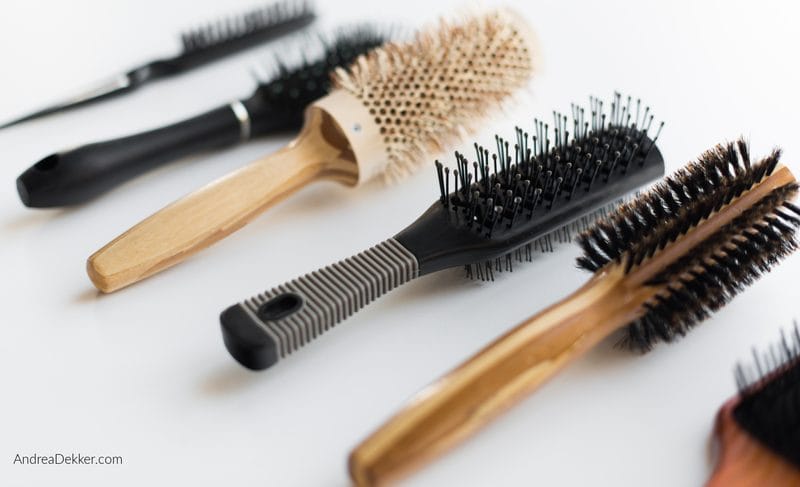
One simple solution is to keep duplicates of your everyday morning essentials in several locations throughout your home. It might seem a little anti-minimalist, but it can make a surprisingly big difference in how smoothly your mornings go.
You Don’t Need to Minimize Everything
I’m all for getting rid of unnecessary clutter and keeping only what we use and need. However, I don’t think owning just one of everything is always the most practical approach for a busy family.
Sometimes, having a second (or even third) version of something saves time, reduces frustration, and makes everyday routines easier.
Think about the items you use almost every morning: hairbrushes, toothbrushes, toothpaste, hairspray, deodorant, combs, hair ties, and other personal care products.
Most of us keep these things in the bathroom, which makes sense. But if someone else is using the bathroom, does that mean everyone else has to wait?
Not necessarily!
Instead, consider keeping a few duplicates in other convenient locations around your house. That way, family members can get ready in different areas without having to wait for the bathroom to become available.
Our kids have toothbrushes in multiple bathrooms, and we keep hairbrushes, sprays, and supplies in all 3 bathrooms, the laundry room, and even a hallway closet so people always have access to the items they need, even if the bathrooms are full.

What Items Could You Keep in Multiple Locations?
You don’t need to duplicate everything in your home. Start with the small, inexpensive items you use frequently and that are easy to store.
Here are a few ideas:
Toothbrushes and toothpaste: If your family has a bathroom shortage in the mornings, consider setting up multiple toothbrushing spot anywhere you have an extra sink and a little (hygienic) storage space. We keep toothbrushes, toothpaste, and floss in all 3 bathrooms and above the laundry room sink.
Hairbrushes and combs: Keep one in each bathroom, in bedrooms, in the laundry room, or even one in a hall closet (along with a mirror). If someone is using the bathroom, you can brush your hair somewhere else.
Hair spray and styling products: Keep a second can of hair spray, mousse, or other frequently used products in a bedroom or another spot where you typically get ready. You won’t need to wait for the bathroom just to finish styling your hair.
Hair ties, clips, and bobby pins: These are inexpensive, easy to lose, and useful in multiple places. Keep a small container in the bathroom, another in a bedroom, and perhaps a few in a mudroom drawer. We have designated places for hair accessories all throughout our home — this started when I did the kids hair while they were eating breakfast, and it’s sort of stuck ever since!
Deodorant, lotion, and other daily essentials: If you regularly get dressed in your bedroom, it might make sense to keep a spare deodorant and bottle of lotion in there instead of having to return to the bathroom for every last step.
Diapers, wipes, and other baby essentials: We always kept a stash of diaper changing supplies in a cute basket on every level in our home. This saved us lots of stairs when we had multiple kids in diapers at the same time!
The goal isn’t to fill every room with duplicates. It’s to identify the items that frequently cause a backup in the bathrooms and make them available somewhere else.

Find Convenient Places to Keep Your Extras
You don’t necessarily need a dedicated vanity or a large amount of extra storage space… but you do need a designated space; otherwise, the items will sit out and look like clutter.
Here are a few ideas to consider:
- Dresser Drawer: Keep a hairbrush, hair ties, deodorant, and other items you use while getting dressed in a small drawer of your dresser.
- Hall Closet: Use a small basket, shoebox, or container for extra hairbrushes, combs, and basic grooming supplies.
- Linen closet: Store a few extra personal care items in an organized bin.
- Kitchen pantry: If you have a designated shelf or drawer away from food, you could keep a small basket of non-food household essentials here, too.
- Another bathroom: If your home has more than one bathroom, stock both with the basics your family needs.
- Mudroom Shelf: This is usually the last place you are in your home… which means it’s the last place you might remember something you forgot to do (like brush your hair or use the lint roller). Keep a few essentials on a mudroom shelf or in an over-the-door shoe organizer (like we do) for last-minute emergencies.
Choose locations that make sense for your family’s routines, because the best organizing system is the one that works with the way you actually live.

Make It Easy to Get Ready at the Same Time
One of the biggest benefits of keeping duplicate supplies is that it allows multiple people to get ready simultaneously.
Of course, this will save time, but it will also reduce the number of times you have to tell someone to hurry up, remind a child to move faster, or scramble because you can’t get into the bathroom when you need it.
When everyone has access to the things they need, there’s less waiting and less frustration.
Some things still need to happen in the bathroom. But if you can move even a few steps of your morning routine elsewhere, you may find that your whole household flows more smoothly.
Don’t Let Minimalism Become Inconvenient
I appreciate the idea of owning fewer things. Less clutter means less to clean, organize, and manage. But I don’t think the goal should be to own as little as possible at the expense of convenience.
If buying a second (or third) hairbrush means your children aren’t arguing over the bathroom, or keeping extra hairspray in your bedroom saves you from rushing back and forth every morning, that extra item may be worth having.
Sometimes, the simplest solution isn’t to find a better way to share one item. Sometimes, it’s just to go out and buy another one.

This works in other areas of your home too!
You might keep scissors in the kitchen, bathroom, and office.
You might store various cleaning supplies on different floors, or basic household tools in more than one convenient location.
Having what you need nearby can save time and make everyday tasks easier.
The key is to be intentional. Duplicate the things that genuinely improve your routines, rather than buying extras simply because you can.

A Simple Morning Organization Project
If your mornings tend to feel rushed, take 10 minutes to think about the items your family uses most often.
Ask yourself:
- Which items do we frequently have to wait for?
- What do we always seem to be searching for?
- Which parts of our morning routine could happen outside the bathroom?
- Would keeping a duplicate of a few everyday items make our mornings easier?
Choose two or three items to start with, and find convenient places to keep them. You might be surprised by how much difference such a small change can make.
You don’t need a complete bathroom renovation, a complicated morning routine, or a perfectly organized home. Sometimes, all you need is another toothbrush in the right place! 
Remember, the goal of organizing isn’t simply to own less. It’s to make your home work better for you and your family.
And if stocking up on a few extra bathroom essentials helps everyone start the day with a little less rushing, I think that’s a perfectly reasonable trade-off.
I’d love to know if you follow this anti-minimalist advice!
If your mornings continually feel rushed, frazzled, and chaotic, these 7 simple, doable tips will help you calm the chaos and get out the door on time without yelling and nagging all morning long.

Mornings have the potential to set the tone for the entire day… and if you have a family to get out the door, you know how quickly a peaceful morning can turn into a flurry of missing shoes, forgotten lunches, last-minute homework, and shouting “hurry up” for the 10th time outside the bathroom door.
Yes, I’ve been there too. It’s not the norm, but it happens!
While we can’t always control how our mornings unfold, we can do a few specific things to help them feel less rushed and chaotic, allowing us to send our families off and start our own days on a more positive note.
But you’ve got to start the night before!
One of the best ways to simplify your mornings is to stop trying to do everything in the morning. A little preparation the night before can make a big difference in how smoothly the next day begins.
Here are seven simple, specific things you can do tonight to help tomorrow morning run more smoothly. Our family has utilized these tips for a decade now — so I can attest that they work well for toddlers, teenagers, teachers, and more!
1. Pick Out Clothes the Night Before
This might seem like a small thing, but deciding what everyone will wear before bedtime can eliminate quite a bit of morning stress.
Instead of scrambling to find clean pants, searching for a missing sock, or discovering that the shirt someone wants to wear is still in the laundry, take a few minutes to get clothing ready the night before.
Depending on the ages of your children, this might mean laying out their clothes, reminding them to choose their own outfits, or fully dressing them in their clothes before they go to bed (it sounds crazy, but my younger 3 sleep in their clothes every night and it saves so much time).
Don’t forget to check the weather to make sure everyone has what they need for the day, whether that’s a sweatshirt, snow boots, gym clothes, or a coat for the bus stop.
The goal is simply to eliminate one more decision from your morning.
2. Pack Lunches & Waters Ahead
Packing snacks and lunches is a huge money-saver, but it also takes time, energy, and forethought (it’s one of my least favorite things to do).
I usually pack lunches for the younger kids, but older kids can definitely pack their own lunches.
We have a designated kitchen counter for the lunch bags and water bottles. The kids lay out their lunch bags, pick out snacks, and fill their water bottles at night (mostly with ice so they stay cold all day). Their actual food has a designated shelf in our fridge, so all they have to do in the morning is grab their food container from the fridge, grab their ice pack from the freezer, and put everything into their backpacks.
We have a friend who keeps a mini-fridge in her mudroom for school lunches, snacks, and waters. If you had room for this, it would be a cool idea.

RELATED READING:
- Simplify School Lunches
- Simplify School Snacks (this worked well with my little kiddos)
3. Clean Out + Restock Bags Every Day
The first thing our kids do when they walk in the door after school is clean out their backpacks.
- Backpacks go on their hooks.
- Outdoor gear is put away in the mudroom.
- Dirty items go immediately into the laundry room.
- Ice packs go back in the freezer.
- Food containers are put in the fridge or dishwasher.
- Water bottles go in the designated basket on our counter.
- Lunch bags go in the pantry.
- Library books go on our designated shelf.
- Homework is done on the kitchen table.
- Any parent forms or information go on my desk.
All of this takes less than 5 minutes, and they usually do it without prompting, while they are telling me about their day and I’m getting a snack out for them.
Dave and I do the same thing whenever we get home — we take anything that doesn’t belong in our vehicles and put it away, along with anything in our bags that we won’t need again tomorrow.
This habit allows us to start each day with clean bags, reduces lost or misplaced items, keeps our vehicles very clean, and makes it easier to re-pack our bags later that night because we know where to find everything.
Later in the evening, after lunches are packed, we pack up anything we’ll need for the following day — library books, homework, sports gear, musical instruments, cold-weather gear, umbrellas, etc. and have it ready to go in the mudroom (or even in the van, if that makes sense).
RELATED READING:
4. Plan Ahead for Easy Breakfasts
Breakfast doesn’t need to be complicated to be nourishing or enjoyable. In fact, simplifying breakfast can be one of the most helpful ways to make mornings feel less hectic.
Think about what your family enjoys eating and find a few simple options you can rotate throughout the week.
You might prepare overnight oats, bake muffins ahead of time, keep hard-boiled eggs in the fridge, or portion out yogurt and fruit.
If you prefer a hot breakfast (like our family), consider which parts you can prepare in advance. Mix pancake batter the night before, prepare overnight French toast ahead of time, keep breakfast burritos in the freezer, or make a breakfast casserole when you’re preparing dinner the night before and simply reheat it the next morning.
You don’t need an elaborate breakfast menu or a different recipe every morning. If you get my weekly newsletter (which includes my meal plan), you’ll see that we usually rotate through the same 5 breakfast items (pancakes, waffles, muffins, French toast, and quiche), so I can attest to the fact that a few reliable options are more than enough.
Also, it sounds like a small thing, but even setting the table the night before can save a few minutes the next morning.
Find a breakfast routine that works for your family, and don’t feel pressured to make it more complicated than necessary.

RELATED READING:
5. Check the Calendar and Make Your To-Do List
One thing that can make mornings feel overwhelming is not knowing where to start when you wake up (so you just sit and drink coffee while scrolling your phone).
If you take a few minutes the evening before to look over the calendar and make a to-do list, you’ll feel more prepared from the moment you wake up.
Make note of any appointments, early meetings, school events, sports practices, special clothing requirements, or anything else that might affect your morning. If someone needs to leave earlier than usual, you’ll know ahead of time instead of discovering it while you’re trying to get everyone out the door.
Then, make a short to-do list for yourself.
This doesn’t need to be a detailed schedule or an elaborate productivity system. Just jot down the things you need to remember or accomplish the next day — I call this my “Top 5 List,” and I’ve been making one every evening for nearly 2 decades!
I find that getting these things out of my head and onto paper (or into your phone) makes it easier to relax in the evening. Instead of mentally running through tomorrow’s responsibilities while I’m trying to fall asleep, I have a plan I can refer to in the morning.
And remember, your to-do list doesn’t need to include everything you could do. Focus on what actually needs to happen.

6. Give Yourself 10 Extra Minutes
I know this sounds obvious, but one of the simplest ways to make mornings less stressful is to build in a little breathing room.
If everyone needs to be in the car at 7:30, don’t plan for the entire family to finish getting dressed, eating breakfast, brushing teeth, and gathering belongings at exactly 7:27.
Real life happens. Someone can’t find a shoe. A child spills milk. You remember something that needs to go into a backpack. These things aren’t necessarily emergencies, but they can feel like emergencies when you’re already running late.
Try working backward from the time you need to leave.
Based on that time, decide when everyone needs to be dressed, when breakfast should be finished, and eventually when everyone will need to wake up.
Then bump that time up 10 minutes earlier.
I’d personally rather give my kids 10 extra minutes to finish breakfast or get ready so they don’t feel frazzled and rushed. I figure they won’t get much out of 10 minutes of sleep, and it could make all the difference in helping us make the bus on time!
Also, I always wake up at least 15 minutes before the kids so I can quickly make my bed, get dressed, use the bathroom, and turn on a few lights.
Technology Note: I didn’t mention this when I originally wrote this post 8 years ago, but we don’t let our kids use any technology before school because it distracts them and wastes time. They simply wake up, get ready, eat breakfast, and head out the door.
7. Go to Bed on Time
Of all the ways to improve your mornings, this might be the most important one (and the most often-overlooked)!
It’s tempting to stay up late finishing chores, scrolling on your phone, watching one more show, or trying to squeeze a few more things into the day. And sometimes, staying up a little later is worth it.
But if you’re consistently tired when your alarm goes off, even the best morning routine can feel difficult.
Getting enough sleep makes it easier to wake up, think clearly, be patient with your family, and handle the little inconveniences that inevitably come along.
Establish a reasonable bedtime for yourself (and your kids), and do what you can to stick with it. If you have a few tasks to finish in the evening, try setting a time when you’ll stop working and begin winding down.
A rested mom is better equipped to handle a busy household than an exhausted mom who has checked every item off her list!
A Calmer Morning Starts the Night Before
You don’t need a complicated morning routine, a perfectly organized home, or children who never lose their shoes to have a better start to the day.
Often, it’s the little things, done consistently each day, that make the biggest difference: choosing clothes ahead of time, packing lunches, checking the calendar, and getting to bed at a reasonable hour.
You might not need to implement all 7 of these ideas, either.
Start with one or two that would make the biggest difference for your family and see how they work. Small changes are much easier to maintain than trying to overhaul your entire routine overnight.
And as you work toward calmer mornings, remember that the goal isn’t simply to get everyone out the door on time. It’s also to create a better atmosphere in your home.
Our mornings are often the last few minutes we have with our families before everyone heads off in different directions. Rather than spending that time barking orders, searching for missing belongings, and rushing everyone along, we can make a little room for conversation, encouragement, and a kind goodbye.
We can’t guarantee that every morning will be peaceful. But with a little preparation and a few simple habits, we can make it easier to send our families into their days feeling loved, supported, and ready for whatever comes next.
What are your best tips to simplify busy mornings?
]]>Looking for easy ways to serve your family a warm breakfast without adding more stress to your morning? These simple breakfast ideas will help you get everyone fed and out the door without spending hours in the kitchen!

There’s something comforting about starting the day with a warm breakfast. Whether it’s a stack of pancakes, a bowl of hot cereal, or a freshly baked muffin, a hot breakfast can be a simple way to fill up your family and send everyone off feeling well-fed and ready to face the day ahead.
But making a hot breakfast doesn’t have to mean getting up extra early or spending a lot of time in the kitchen. There are plenty of easy options that come together quickly, use simple ingredients you probably already have on hand, and can even be prepped the night before to make busy mornings a little easier.
If you’re looking for some simple ways to change up your morning routine, here are five easy hot breakfast ideas your whole family will enjoy!
Pancakes:
Pancakes are quick, easy, and usually don’t get many complaints from kids!
It only takes a few minutes to mix up a batch of pancake batter, but you can mix it up the night before if you’re short on time. Simply fire up the griddle when you wake up, and hot pancakes are only minutes away!
Note: This is the XL griddle we’ve used and loved for years.
Pancake Recipe Ideas:
- Light and Fluffy Pancakes (a classic recipe)
- Whole Grain Oat Pancakes
- Sourdough Starter Pancakes
- Puff Pancakes (these are in the oven)
- Banana Chocolate Chip Pancakes (grain-free)

Waffles:
Belgian waffles are a close second for favorite hot breakfast foods in our house. I often use the same batter for either pancakes or waffles — sometimes letting the kids choose which one they want.
It’s very easy to mix up the batter the night before, and any leftover batter keeps well in the fridge for a couple of days too.
The biggest downfall of homemade Belgian waffles is that we could only make one at a time — until I found this “double decker” Belgian waffle maker!
Waffle Recipe Ideas:

French Toast:
The third most popular breakfast food in our home is French Toast — and this one really is super simple (my kids make it for themselves all the time).
We love using sourdough or cinnamon bread for French toast as it’s very sturdy and holds up well to being dipped in eggs. However, almost any bread will work. Baked French toast is also a great way to use up slightly stale or freezer-burned bread, rolls, buns, etc.
I keep a large zip-top bag of bread crusts and leftover bread chunks in our freezer at all times. I use this bread whenever I make baked French toast, croutons, or sausage stuffing. It’s an easy way to reduce wasted bread.
French Toast Recipe Ideas:

Eggs:
At this point in our lives, we go through roughly one dozen eggs every day (often more). However, they are relatively frugal and fairly nutritious, so I’m OK with that.
Plus, there are so many ways to enjoy eggs for breakfast (and throughout the day).
Egg Recipe Ideas:
- Easy Cottage Cheese Scrambled Eggs (these are the best!)
- Hard-Boiled Eggs
- Fried Eggs
- Omlettes
- Hearty Egg Casserole
- Egg Sandwiches (like an Egg McMuffin, only better)
- Breakfast Burritos with Egg and Sausage

Hot Cereal:
My kids will occasionally have a bowl of cold cereal as a snack, but in general, we are not a cold cereal family (I never liked it as a kid either).
For the record: Dave loves Cheerios
Hot cereal, however, is a different story. It’s so hearty and filling, and I love serving it with a “buffet” of toppings so people can pick and choose what flavors they like best.
Hot Cereal Recipe Ideas:
- Traditional Oatmeal
- Baked Oatmeal
- Slow Cooker Cinnamon Roll Oatmeal
- Homemade Instant Oatmeal Packets
- Homemade Cream of Wheat (I make it with freshly milled wheat)

Meat:
One of my favorite quick and easy hot breakfast foods that I make nearly every morning is the pre-cooked sausages from the freezer section at Costco.
They only take a few minutes to cook in my cast iron skillet and the kids love them. They are also really easy to keep on hand in the freezer.
When I have a bit more time, I’ll fry up a couple of pounds of bacon and keep it in the fridge. I also have a couple of recipes (see below) for fun ways to serve breakfast meats
Meat Recipe Ideas:
- Bacon
- Sausage (patties or links)
- Omelettes (we love putting cooked meat in our omelettes)
- Cheesy Sausage Quinoa Bites
- Bacon-Wrapped Sausage Bites

Muffins:
Muffins are one of my personal favorite hot breakfasts because I make the batter the night before, bake them in the morning, and I can do other things while they bake (instead of flipping pancakes or stirring eggs).
I make 2 dozen at a time, and the kids usually take any leftovers as school snacks.
These are my favorite muffin tins — nothing sticks. However, I do love using these cute muffin liners when I give muffins as a gift or bring them to an event.
Muffin Recipe Ideas:

Sample Weekly Breakfast Menu
The thing about hot breakfast is you usually need to plan ahead. Along with planning my dinners every week, I also plan our breakfast menu (and put it on our calendar so the kids know what to expect).
Here’s what a sample breakfast might look like for u:
- MONDAY = pancakes, fried eggs, sausage, fruit
- TUESDAY = waffles, bacon, fruit
- WEDNESDAY = breakfast burritos, fruit
- THURSDAY = French toast, scrambled eggs, fruit
- FRIDAY = muffins, ham and cheese omelets, fruit
- SATURDAY = oatmeal, smoothies
- SUNDAY = waffles, fried eggs, sausage, fruit
We literally just repeat some version of these 6 basic hot breakfast foods day after day, week after week.
Sometimes I throw canned pumpkin puree or smashed bananas into the pancake or waffle mix. Sometimes I add blueberries or chocolate chips. It’s the same recipe, just with a few tweaks to make it feel new.
Same thing with muffins, omelets, and breakfast burritos. I just use a basic recipe and mix in whatever we have in the house so we aren’t eating exactly the same thing every morning.
Once you get the hang of it, you’ll likely find that many of the recipes linked above can be ready to go in 15 minutes — or made the night before!
I love sitting around the table every morning and enjoying breakfast together before we all go our separate ways… and a nice hot breakfast makes this much more likely to happen!
Do you have a favorite hot breakfast?
Leave it in the comments — bonus points if you have a link to a recipe!

What is intentional living? And what are the benefits? One of my favorite benefits of living a simpler, slower, more intentional lifestyle is also an unexpected benefit — like a little cherry on top of an ice cream sundae… and yes, you can experience this benefit in your life too!

I talk a lot about “Intentional living” here on the blog and in my email newsletters… but what exactly does it mean to “live intentionally”?
If I had to sum it up in one sentence, this is what I’d say:
Intentional living is a lifestyle of making deliberate choices that align your daily actions, habits, and resources with your core values and beliefs rather than reacting to external pressures (a.k.a. what everyone else is doing).
It’s not easy (especially if you’re a “yes person” or a “people pleaser”) and it won’t happen overnight. However, after years of pursuing intentional living, I can confidently say that the benefits significantly outweigh any extra effort or discomfort.
A Few Benefits of Living Intentionally:
- Less stress
- Better health (likely due to less stress)
- Better resource management (time, money, health), which reduces stress
- More confidence in making decisions and setting boundaries
- Better relationships (due to better boundaries)
- More alignment with your core values and beliefs
One unexpected benefit I’ve enjoyed, after years of living intentionally, is how quickly I can pivot and make changes when an area of our home, family, or life isn’t functioning as well as it could be.
When a space in our home feels too crowded or simply isn’t serving our family well in our current season of life, we declutter, reorganize, or swap rooms to make it work better (you know we love a good room swap!)
When our schedule feels chaotic and a bit too full, we reevaluate our priorities and make changes accordingly, even if it means saying “no” to something good.
Instead of simply dealing with the discomfort, suffering through the stress and strain of overcommitment, or complaining about how disorganized/busy/frazzled I feel, I have the time, energy, and confidence to take action and make the necessary changes immediately.
Whether it’s rearranging the kitchen pantry so the kids can reach their own school snacks, adding new email subfolders to clean out my inbox, changing up our laundry routine, saying no to opportunities that don’t align with our current values, implementing a new morning routine as the kids get older, or moving furniture around so our spaces function better for our family’s current needs…
I love being intentional about the way I run our home, family, and lives in the midst of so many ever-changing dynamics.

Before we had children, I received many comments like:
- “Just wait until you have kids, you won’t be able to keep your house clean.”
- “Once you have kids, you’ll look back and wish you would have changed your priorities.”
- “You’ll never be able to do ___________________ after the kids start coming.”
After having kids, I got comments like:
- “That will never work once your kids get older. “
- “It will be harder to stick with your digital photo books as you add more children.”
- “Just wait until you have teens in the house… you’ll never be able to get to bed early.”
- “You’ll need to do laundry every day if your kids start playing sports”
- “Why would you renovate your home that way… you’ll just have to change it when the kids are older?”
- “Your kids are missing out on experiences because you don’t travel with them.”
- “You’ll regret having a pool when your kids move out.”
Spoiler Alert: there is a lot of truth to these statements.
Our home is messier now than before having children — but I’ve also implemented various systems that make it easier for the kids to keep things relatively neat and organized most of the time.
There are things we no longer do now that we have 4 older kids — but we do other things instead.
I do have more laundry now, but I added a second laundry area so I still only do laundry 2 days per week, and the kids all help.
We have changed our sleeping routines and the layout of our home as our children have grown older — but I’d say these changes have always felt fun and exciting for me, especially swapping bedrooms! Also, for the record (because so many of you ask me about this), Dave and I are almost always in bed by 9:30 on weeknights — and yes, that means our teen and tween children go to bed before this.
It is more difficult to keep up with my digital photo albums now that I make 5 books each year, but I make the time because the kids love them and I enjoy the process.
We might travel more in the future… or we might not. In the meantime, we all love being home, and the kids know we’re (almost) always willing to have friends and neighbors over here.
And about the pool (seriously, you don’t know how often I get these types of comments)… we plan to enjoy the pool while our kids are still home. We’ll worry about what to do with the pool when the kids actually move out (we’ve got at least a decade to figure that out!)

This is Real Life!
Living intentionally helps me to more quickly notice when there’s a “pain point” in our home or life, and feel more confident in my abilities to solve the pain point with a little tweak or a major overhaul.
And no, changing, tweaking, and reevaluating does not mean we did something wrong or messed up the first time around… it simply means we are sensitive to our CURRENT needs and willing to adapt to the inevitable changes that happen over the course of time.
Yes, it takes a bit of extra effort to swap bedrooms, rearrange the pantry, adjust to a new morning routine, find the best work/life balance for my current season, or train the kids to do the laundry… but I can literally feel the tension, stress, and angst melt away as I tweak and change and alter various parts of our home, schedule, and life in an effort to simplify and prioritize what we want to prioritize for now (not forever).

I wish there were a 5-step process to enjoy a slower, more intentional lifestyle, but unfortunately, I haven’t found one yet.
It just takes time, practice, and consistent effort.
Boring, I know…
But it’s worth it.
There’s no need to fix something that isn’t broken… but when you feel the angst and tension rising in your home, your schedule, and your life, I encourage you to take a step back and consider a change you could make to alleviate some of the pressure.
It might be a small change like bumping bedtime up 30 minutes so your mornings aren’t so rushed. Or it might require a bigger life change like moving, quitting your job, or switching to a different school.
Whether you’re single, married with 5 kids, or a newly retired empty-nester, there are countless benefits to intentionally stewarding your time, energy, and space — a simpler, slower life being one of my favorites!

This dessert is one of our family’s favorite fall treats, and we think you’ll love it too. It’s packed with apple-y goodness and a great way to use up all your leftover Halloween candy!

Looking for a dessert that’s both scrumptious and simple?
Try this easy Candy Apple Dessert (it’s also frequently referred to as Snickers Apple Salad, or Caramel Apple Salad, but we all know it’s not a “salad”!)
This creamy, crunchy treat combines tart apples, sweet candy, fluffy pudding, and homemade whipped cream to create a dessert that’s perfect for any gathering. Whether you’re serving it at a picnic, potluck, or just as a fun family dessert, this recipe is sure to be a crowd-pleaser.
The best part about this dessert is how flexible the ingredients are. Feel free to tweak and adapt it based on what you have in the house, what’s on sale at the store, or whatever chocolatey candy your kids bring home after trick-or-treating!

NOTE: A Candy Countdown Chain is another great use for extra holiday candy!

Ingredients for Candy Apple Dessert:
- 2 cups heavy whipping cream (or 32 oz. Cool Whip)
- 1/8 tsp. cream of tartar (if making your own whipped cream)
- one 3.4 oz. box Instant Pudding mix (I use vanilla)
- 2 cups cold milk
- 3 medium Granny Smith apples, chopped (no need to peel them)
- 1 c. mini marshmallows
- 1/2 c. salted peanuts (optional)
- 1/2 c. mini chocolate chips (optional)
- 4-5 full-size candy bars, chopped (or 12-15 fun-size candy bars)
- any other candy or mix-ins you want to add

Ingredient Variations
There are so many ways you can tweak this recipe… here are just a few ideas:
- use butterscotch pudding for a more “caramel” taste
- use white chocolate pudding mix for a richer taste
- use almond or oat milk if you can’t do dairy
- use Cool Whip if you don’t want to mess with making your own whipped cream
- use more Cool Whip to make it extra creamy
- use chocolate chips instead of candy bars if you’re in a pinch
- omit the peanuts if you have an allergy
- try peanut M&M’s for the chocolate and peanut crunch
- add crushed pretzels for a nice salty crunch
- use crushed Oreos (or any crushed cookie or brownie) in place of the candy bars
- use a combination of candy bars (Snickers, Twix, Reese’s, Rolos, Milky Way, 3 Musketeers, etc.
- drizzle 1/4 cup of caramel topping over the dessert for a nice presentation
It’s hard to mess this one up… and it’s really fun for kids to help!

The Best Apples for Candy Apple Dessert
The most important thing (in my apple-loving opinion) is to use very tart, crisp Granny Smith apples.
You can make this recipe with any apple variety, but I’ve tried several different apples over the years, and nothing tastes nearly as delicious as Granny Smith apples.
This recipe just needs that tartness to balance out ALL the sugary sweetness!

How to Make Candy Apple Dessert
1. In a large bowl, whip heavy cream until soft peaks form.
2. Add in cream of tartar and whip for 30 seconds (this stabilizes the whipped cream so it doesn’t “deflate”).
NOTE: I do not add any sugar to my whipped cream because the pudding and candy are sweet enough. However, feel free to add 1-2 Tablespoons of powdered sugar when whipping, if desired.
3. In a smaller bowl, whisk pudding mix and milk until the pudding thickens.
4. Fold pudding mixture into whipped cream just until combined.
5. Stir in apples, marshmallows, and nuts.


6. Add chopped candy.

7. (optional) Drizzle with caramel sauce and top with extra chopped candy.
8. Eat immediately or cover and refrigerate for later.
One “word of warning”: if you bring this dessert to a potluck, you probably won’t come home with leftovers — so save a bit at home to enjoy later! 
Can You Make this Dessert Ahead?
Yes! If you’re short on time, this dessert will easily keep in the fridge for 24-36 hours.
However, if you use homemade whipped cream, just make sure you use the Cream of Tartar so it doesn’t turn soupy in the fridge.
Also, you might want to wait to add any crunchy items (like nuts and pretzels) until closer to serving time, just so they don’t get soggy.
Easy Candy Apple Dessert

This dessert is one of our family’s favorite fall treats and we think you’ll love it too. It’s packed with apple-y goodness and it's a great way to use up all your leftover Halloween candy!
Ingredients
- 2 cups heavy whipping cream (or 32 oz. Cool Whip)
- 1/8 tsp. cream of tartar (if making your own whipped cream)
- one 3.4 oz. box Instant Pudding mix (I use vanilla)
- 2 cups milk
- 3 medium Granny Smith apples; chopped (you don’t need to peel them)
- 1 c. mini marshmallows
- 1/2 c. salted peanuts (optional)
- 1/2 c. mini chocolate chips (optional)
- 4-5 full-size candy bars, chopped (or 12-15 fun-size candy bars)
- any other candy, nuts, or mix-ins you want to add
- caramel to drizzle on top (optional)
Instructions
- In a large bowl, whip heavy cream until soft peaks form.
- Add in Cream of Tartar and whip for 30 seconds (this stabilizes the whipped cream so it doesn’t “deflate”).
- In a smaller bowl, whisk pudding mix and milk until the pudding thickens.
- Fold pudding mixture into whipped cream just until combined.
- Stir in apples, marshmallows, and nuts.
- Add chopped candy.
- (Optional) drizzle with caramel sauce and top with extra chopped candy.
- Eat immediately or cover and refrigerate for later.
Notes
There are so many ways you can tweak this recipe… here are just a few ideas:
- use butterscotch pudding for a more “caramel” taste
- use white chocolate pudding mix for a richer taste
- use almond or oat milk if you can’t do dairy
- make your own whipped cream if you don’t have Cool Whip in the house
- use more Cool Whip to make it extra creamy (I usually use 16 ounces)
- use chocolate chips instead of candy bars if you’re in a pinch
- omit the peanuts if you have an allergy
- try peanut M&M’s for the chocolate and peanut crunch
- add crushed pretzels for a nice salty crunch
- use crushed Oreos (or any crushed cookie or brownie) in place of the candy bars
- use a combination of candy bars (Snickers, Twix, Reeses, Rolos, Milkyway, 3 Musketeers, etc.
- drizzle 1/4 cup of caramel topping over the dessert for a nice presentation
Nutrition Information
Yield
15Serving Size
1Amount Per Serving Calories 174Total Fat 14gSaturated Fat 9gUnsaturated Fat 5gCholesterol 41mgSodium 28mgCarbohydrates 10gFiber 1gSugar 6gProtein 2g
Nutritional information is approximate and does not account for additional ingredients or added toppings.
What are your favorite easy desserts?
Visit my virtual recipe box for more simple, delicious, family-friendly recipes!

Before you toss that empty glass jar, think about all the ways you might reuse it! From gifting fresh flowers and soup to storing bulk pantry staples and sharing sourdough starter, glass jars are so useful. It’s a simple, frugal way to repurpose what you already have in the house!
As someone who doesn’t usually promote “hanging onto extras just in case”, I have to admit that one thing I usually save is glass jars, because I know I can always reuse them for something.
Of course, I love a good Mason jar and always stock up when I find them at thrift stores, but I also save glass jars from the following grocery store items:
- Pasta sauce and tomatoes
- Salsa
- Pickles or other pickled veggies
- I don’t buy jam, but the Bonne Maman jam jars are great to save too
These jars are easy to clean with wider “mouths”, and a great size to reuse for bulk food storage, freezing broth or liquid items, gifting smaller portions of homemade soup, or making pretty flower bouquets.
I have a special shelf in my laundry room devoted to extra glass jars. When the shelf is full, I stop saving, but since I’m always using and giving the glass jars, I rarely ever fill the shelf.
Here are some of the ways I reuse glass jars…
Flower Bouquets
This is how it all started many years ago. I wanted to gift some of our flowers to neighbors, the kids’ teachers, friends from church, etc., but I didn’t have enough vases in the house. I started buying them up at thrift stores, but realized that could get pricey over time too (plus, I didn’t want to burden anyone with another vase they didn’t need).
I eventually realized that pasta sauce jars are an ideal size for garden flowers, and the recipient can simply trash or recycle the vase when they toss the flowers.


Storing Bulk Foods
Thanks to the fact that I grew up canning with my mom and grandma, I have a massive collection of Mason jars (most of which are likely considered “vintage” at this point!)
However, I like to save these jars for canning or storing pretty things (like my grains).
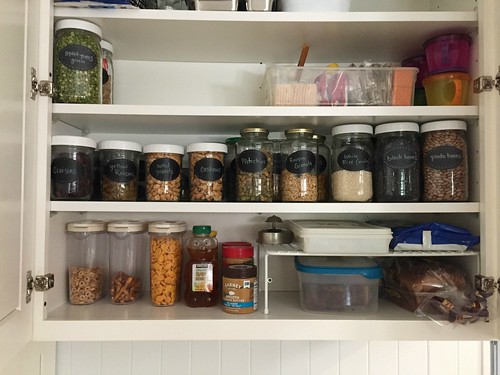
For all the items I keep behind closed doors in my pantry (granola, nuts, trail mix, croutons, etc.), I repurpose glass salsa, sauce, and pickle jars.
They don’t match or look as pretty as my Mason jars, but they fit perfectly on my narrow pantry cabinets and make it easy to quickly see what’s inside.
NOTE: Here’s a link to the chalkboard labels I use. And these are the awesome plastic Mason jar lids I love.

Freezing Broth
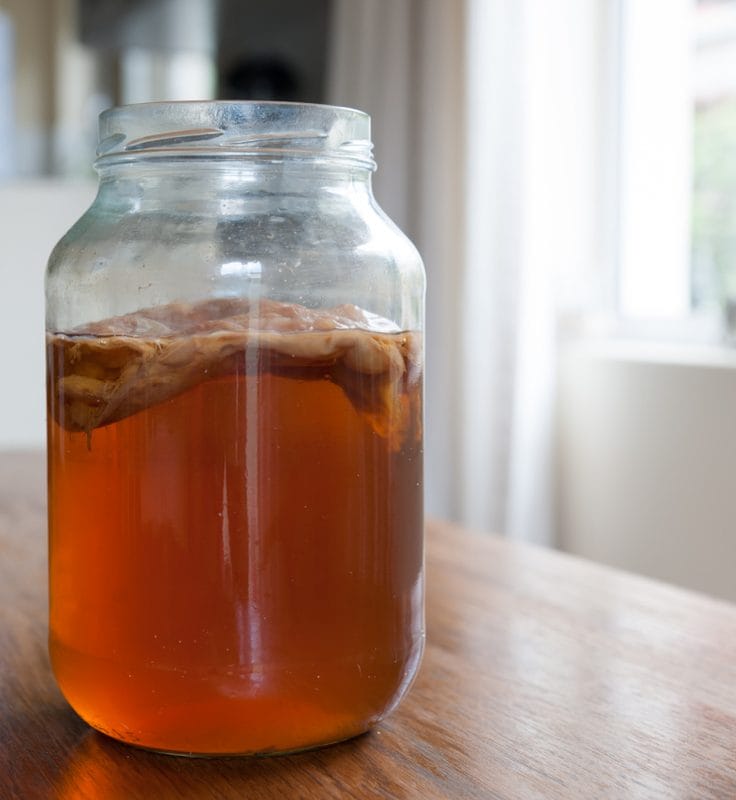
You need to be careful with this, as you don’t want the jar to crack in the freezer, but as long as you leave about an inch or two of headspace when filling the jar, you should be fine.
Jars are a great way to freeze broth without worrying about it leaking during the defrosting process (like it often does when frozen in zip-top bags).
Smoothies
I don’t personally do this, but we have friends who reuse glass jars for smoothies. They drink them with a straw, so it doesn’t matter if the lip is funny or not. They can secure the lid for easy transport and recycle or trash it when they are finished.
Here’s one of my favorite smoothie recipes.
Sourdough Starter
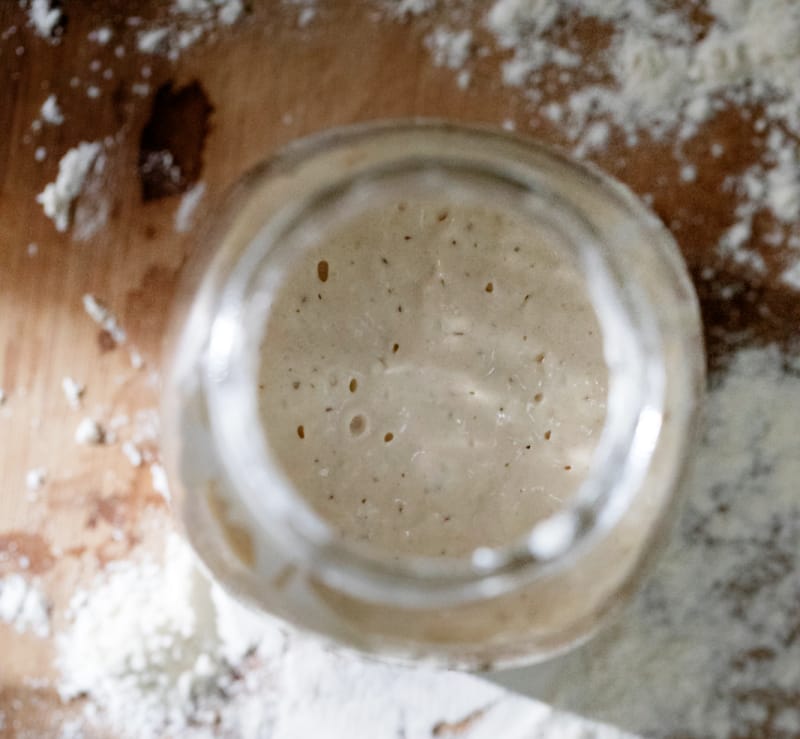
When I first started making sourdough, many years ago, I used an old glass jar for my starter.
I eventually “graduated” to an actual sourdough crock (which is much easier to stir), but if you’re looking to get into the sourdough world for cheap, these glass jars will work!
Glass jars are also a great way to gift some starter to a friend or new sourdough baker.
Look for one with a wide mouth — that will make your life easier.
Single Serving Soups
We give lots of food gifts to older single folks from church — and they don’t need a lot of food.
I’ll often use a smaller jar to give them one serving of homemade soup, along with a homemade roll and a homemade cookie.
It’s easy enough to set aside when I’m making a full meal for our family, and I don’t need to worry about getting any dishes returned to me.

Here’s an older video showing how I reuse glass jars!
If you enjoy gifting food or flowers, or if you’re just looking for a few extra storage containers for your own pantry, start saving your glass jars and put them to use in and around your home.
Yup, I believe I just encouraged you to SAVE something! 
Do you have any other uses for store-bought glass jars?