 Boos and heckles greeted Prime Minister Mahinda Rajapaksa on Sunday (8) on his first public outing since nationwide protests erupted demanding his ruling family resign over the worsening economic crisis]]>
By Amal Jayasinghe
COLOMBO – Boos and heckles greeted Prime Minister Mahinda Rajapaksa on Sunday (8) on his first public outing since nationwide protests erupted demanding his ruling family resign over the worsening economic crisis.
Months of blackouts and acute shortages of food, fuel and medicines have caused widespread suffering across the South Asian island in its worst economic downturn since independence in 1948.
On Sunday, the premier visited one of the holiest Buddhist temples – housing a reputedly 2,300-year-old tree -in Anuradhapura.
But dozens of people carried hand-written placards and chanted slogans demanding that “thieves” be banned from the sacred city, 200 kilometres (125 miles) north of Colombo.
“We will worship you if you stand down (as Prime Minister) and leave,” one man shouted.
Heavily armed Special Task Force (STF) commandos were deployed while police moved to clear the road for Rajapaksa’s convoy of six vehicles.
Officials said the premier would return to the capital by helicopter.
Several major roads in the country are blocked by people protesting the lack of cooking gas, petrol and diesel.
In the capital, a truck transporting cooking gas was looted Sunday by crowds who had been waiting in line overnight for supplies.
Outnumbered police watched helplessly as men climbed onto the truck and got away with 84 cylinders of gas, officials said.
The government imposed a state of emergency granting the military sweeping powers to arrest and detain people on Friday (6), after trade unions brought the country to a virtual standstill in a bid to pressure President Gotabaya Rajapaksa to step down.
The defence ministry said in a statement Sunday that anti-government demonstrators were behaving in a “provocative and threatening manner” and disrupting essential services.
Unions said they would stage daily protests from Monday (9) to pressure the government to revoke the emergency.
President Rajapaksa, who is the brother of the Prime Minister Mahinda, has not been seen in public since tens of thousands attempted to storm his private residence in Colombo on March 31.
Since April 9, thousands have been camping in front of his office in Colombo.
Mahinda Rajapaksa’s visit to Anuradhapura is part of a flurry of religious activity by the ruling family as it clings to power in the Buddhist-majority nation.
Local media reported that the president’s personal shaman, Gnana Akka, had charmed bottled water and delivered it to the protest site in the hope the movement would fizzle out.
Another report said the premier’s wife Shiranthi, a Catholic, had visited a Hindu temple seeking divine help for her family’s bid to remain in power.
Official sources say the president may ask his brother Mahinda to stand down in an effort to clear the way for a unity government to navigate Sri Lanka through the crisis.
But the country’s largest opposition party has already said it will not join any government helmed by a member of the Rajapaksa clan.
Sri Lanka was hit by an economic crisis after the coronavirus pandemic hammered income from tourism and remittances.
In April, the country announced it was defaulting on its $51 billion foreign debt.
Finance Minister Ali Sabry warned last week that the country will have to endure unprecedented economic hardship for at least two more years.
– Agence France-Presse
]]>
 COLOMBO - Sri Lanka's fractious opposition showed rare unity Sunday (May 1), joining together to demand embattled President Gotabaya Rajapaksa resign over the country's worst-ever economic crisis]]>
COLOMBO – Sri Lanka’s fractious opposition showed rare unity Sunday (May 1), joining together to demand embattled President Gotabaya Rajapaksa resign over the country’s worst-ever economic crisis.
Main opposition party the Samagi Jana Balawegaya (SJB) staged a mass rally at Independence Square in the capital Colombo, where speaker after speaker called for the ouster of Rajapaksa and his powerful ruling family.
“For over a month, the president has been barricaded in his official residence,” former legislator Hirunika Premachandra said. “It is time for us to pull him by his ear and kick him out.”
Months of lengthy blackouts, skyrocketing inflation and acute shortages of food, fuel and pharmaceuticals have sparked numerous anti-Rajapaksa protests across the country.
Premachandra, who kicked off the wave of demonstrations by staging a sit-in outside the president’s private home in mid-March, urged all parties to unite and topple the government.
The Janatha Vimukthi Peramuna (JVP), the country’s main leftist party, held its own rally outside a Colombo railway station, insisting the government should step down and allow an early election.
“Gota go home, go home Gota,” chanted tens of thousands of JVP activists waving red flags.
Several minor opposition parties also demonstrated in Colombo and provincial capitals.
But while Gota’s ruling Sri Lanka Podujana Peramuna (SLPP) coalition skipped its customary May Day rally, the president issued a statement asking all political parties to “overcome the challenges we face”.
“Instead of following up on who is responsible for the current problematic situation, what we need to do now is to focus on what action can be taken to provide immediate relief,” Rajapaksa said.
Elsewhere in the capital, thousands of activists laid siege to Rajapaksa’s sea-front office for the 23rd straight day, calling for his resignation.
The president reportedly told dissidents within his coalition government on Friday (April 29) he was willing to consider forming a unity government, but that neither he nor his brother Mahinda, the country’s prime minister, would step down.
– Agence France-Presse
]]>
 By Ben Hubbard and Hwaida Saad BEIRUT — Tony Nohra, a shopkeeper in a Christian neighbourhood of Beirut, was receiving a shipment of yogurt Friday (15), the day after sectarian clashes killed seven people in the city, and talking about how many Shiite Muslim friends he had. But when asked how the violence had begun, […]]]>
By Ben Hubbard and Hwaida Saad
BEIRUT — Tony Nohra, a shopkeeper in a Christian neighbourhood of Beirut, was receiving a shipment of yogurt Friday (15), the day after sectarian clashes killed seven people in the city, and talking about how many Shiite Muslim friends he had.
But when asked how the violence had begun, he snapped. “You have to ask the guys there,” he said, angrily pointing toward the Shiite neighbourhood nearby.
Overhearing the comment, the Shiite man delivering the yogurt cut in.
“No, no,” he insisted. “It started from here.”
Most of the time, residents of Beirut, a scrappy Mediterranean city whose roughly 2.5 million inhabitants represent tremendous ethnic and religious diversity, get by and get along. They do business, socialize and even marry outside of their religious groups.
Various denominations of Christians, Sunni and Shiite Muslims, Druze, Armenians, Syrian and Palestinian refugees, and other groups crowd together, often sharing employers, neighbourhoods and apartment buildings.
But the clashes Thursday (14), the worst sectarian violence in Lebanon’s capital in years, revealed tensions lurking just beneath the surface in a city haunted by 15 years of civil war.
Apartment buildings still bear scars from gunfights during the civil war, during which sectarian militias of Muslims, Christians and others battled off and on until 1990. And although it has long been erased, nearly everyone knows the path of the “green line” that divided the city between the Christian East and Muslim West during the hostilities.
It was near that invisible border that fighting erupted Thursday when snipers in tall buildings fired on Shiites passing by the neighbourhood on their way to a protest. By Saturday, authorities had arrested 19 people for involvement in the clashes, the state-run National News Agency reported, without providing further details on the suspects.
The violence played out against the backdrop of devastating political and economic crises that have left many residents feeling there is not much of a state left to protect them, a situation that has only increased feelings of loyalty to and dependence on their sects.
Since autumn 2019, the currency has collapsed, siphoning value from people’s salaries and savings and causing prices to skyrocket. Amid perpetual bickering, the political elite has failed to slow the descent.
And a huge explosion in the port of Beirut last year killed more than 215 people, damaged large swaths of the city and left many Beirutis feeling that their government’s history of poor management and corruption was endangering their lives.
It was the repercussions from the explosion — namely, efforts by politicians and other officials to exempt themselves from responsibility for it — that led to the events Thursday.
Two Shiite political parties — Hezbollah, a militant group that the United States considers a terrorist organization, and the Amal Movement — led a protest calling for the removal of the judge leading the investigation into the explosion.
On their way to the protest, many participants walked down a commercial boulevard that separates two very different neighbourhoods.
On one side is Nohra’s predominantly Christian neighbourhood, Ein al-Remaneh, where many residents wear crosses, pepper their Arabic with French and name their children after Catholic saints.
On the other is the mostly Shiite Muslim Chiyah, where flags bearing the names of Shiite Muslim martyrs hang from lampposts, women wear headscarves, and residents see Iran as more likely to help Lebanon solve its many problems than the United States.
In Ein al-Remaneh, Christians accused the protesters of entering their neighbourhood with arms, a provocation.
“Who comes to a peaceful protest with weapons?” asked Fadi Qarout, 57, a Christian merchant who has lived in the area since before the civil war.
He acknowledged that snipers from a Christian militia could have deployed before the protest but accused the Shiites of showing force in a community that was not theirs.
“They entered the area to cause problems here,” he said.
Nohra agreed.
“Who got hurt more?” he said, mentioning the nearby chandelier shop and car dealership that had been damaged in the gunfight.
When reminded that all seven people who had been killed were Shiites, including a woman who had been tending to laundry on her balcony, he resorted to an all-too-common Lebanese explanation for facts that do not mesh with the preferred narrative: the conspiracy theory.
The Shiites, he said, shot at themselves “to inflame the situation.”
Hezbollah and its allies accused snipers from the Lebanese Forces, a Christian political party that is supported by Saudi Arabia, of firing at their members, forcing them to respond. The Lebanese Forces denied involvement in the attack, and their leader, Samir Geagea, blamed Hezbollah.
A short distance from Nohra’s shop, across the boulevard in Chiyah, a group of Shiite men, dressed in black to mourn those killed, spun conspiracy theories of their own, saying the snipers were part of a plot involving the United States and its allies to weaken Hezbollah and its allies.
None of the men agreed to give their names.
“Yes, there was an ambush, and the embassies and intelligence agencies planned it,” said a man known as Abu Ali, whom residents described as being in charge of the area and who declined to give his real name.
He wore a military-style shirt, sported a pistol on his belt and ran a coffee shop called Al Sultan that was covered with pictures of Marlon Brando in “The Godfather.”
The snipers, he was sure, had been trained by the United States, he said.
Near the cemetery, thousands of members and supporters of Hezbollah filled the streets, blasting their Kalashnikovs into the sky, covering the asphalt with bullet casings and filling the air with smoke.
It was an armed gathering larger than any other group in Lebanon can summon, reflecting the strength that exempts Hezbollah from any control by the Lebanese state.
“The Shiites in Lebanon are weak without Hezbollah, but Hezbollah has no choice but to be strong since they are surrounded by enemies,” said Abbas al-Moualem, a nurse who attended the funerals.
-New York Times
]]>
 International Women’s Day, also known as IWD for short, grew out of the labour movement to become a recognized annual event by the United Nations (UN). The seeds of it were planted in 1908, when 15,000 women marched through New York City demanding shorter working hours, better pay and the right to vote. It was […]]]>
International Women’s Day, also known as IWD for short, grew out of the labour movement to become a recognized annual event by the United Nations (UN).
The seeds of it were planted in 1908, when 15,000 women marched through New York City demanding shorter working hours, better pay and the right to vote. It was the Socialist Party of America who declared the first National Woman’s Day, a year later.
The idea to make the day international came from a woman called Clara Zetkin. She suggested the idea in 1910 at an International Conference of Working Women in Copenhagen. There were 100 women there, from 17 countries, and they agreed on her suggestion unanimously.
It was first celebrated in 1911, in Austria, Denmark, Germany and Switzerland. The centenary was celebrated in 2011, so this year we’re technically celebrating the 110th International Women’s Day.
Things were made official in 1975 when the United Nations started celebrating the day. The first theme adopted by the UN (in 1996) was “Celebrating the past, Planning for the Future”.
Clara’s idea for an International Women’s Day had no fixed date and International Women’s Day wasn’t formalized until a war-time strike in 1917 when Russian women demanded “bread and peace” – and four days into the women’s strike the Tsar was forced to abdicate and the provisional government granted women the right to vote.
The date when the women’s strike commenced on the Julian calendar, which was then in use in Russia, was Sunday 23 February. This day in the Gregorian calendar was 8 March – and that’s when it’s celebrated today.
International Women’s Day has become a date to celebrate how far women have come in society, in politics and in economics, while the political roots of the day mean strikes and protests are organized to raise awareness of continued inequality.
-BBC
Photo Caption – Women’s demonstration for bread and peace – March 8, 1917, Petrograd, Russia – Wikipedia
]]> MOSOCOW – Prof. M.D. Lamawansa, Ambassador of Sri Lanka to the Russian Federation, presented his letters of credence to President Vladimir Putin on November 24. Keeping with traditions, the ceremony took place in the Alexander Hall of the Grand Kremlin Palace and brought together 20 newly appointed ambassadors from several countries. This year, in […]]]>
MOSOCOW – Prof. M.D. Lamawansa, Ambassador of Sri Lanka to the Russian Federation, presented his letters of credence to President Vladimir Putin on November 24. Keeping with traditions, the ceremony took place in the Alexander Hall of the Grand Kremlin Palace and brought together 20 newly appointed ambassadors from several countries.

This year, in light of the coronavirus pandemic, the protocol ceremony was slightly changed. The ambassadors were not facilitated to personally hand over their credentials to ensure health safety of all the participants.
Addressing the new ambassadors, President Putin outlined Russia’s position with regard to key foreign policy developments, assessed the main trends in the international arena and emphasized that the pandemic has aggravated problems in the global economy, trade, the social sphere and environmental protection in addition to the previous challenges and threats like international terrorism, drug trafficking and organized crime.

Putin also gave an overview of the status of Russia’s bilateral relations with the countries represented by the new ambassadors. He said Russia has good relations with Sri Lanka and is determined to further expand mutually beneficial cooperation in trade, economic, cultural and humanitarian fields. “Our countries interact constructively in the international arena, in particular, as part of the Shanghai Cooperation Organization, where Sri Lanka has the status of a dialogue partner,” he added.
Russian Foreign Minister Sergey Lavrov and Foreign Policy Advisor to the Russian President Yury Ushakov were also present at the ceremony.
Following the official ceremony at Kremlin, Ambassador Prof. M.D. Lamawansa and Madame Thamaramala Kannangara accepted the congratulations from the embassy staff who were welcomed at his Residence with Sri Lankan cuisine.

-Embassy of Sri Lanka, Moscow
]]>
 By Jeanna Smialek STOCKHOLM– Two American economists, Paul R. Milgrom and Robert B. Wilson, were awarded the Nobel Memorial Prize in Economic Sciences on Monday (12) for improvements to auction theory and inventions of new auction formats — innovations that have had huge practical applications when it comes to allocating scarce resources. The pair, close […]]]>
By Jeanna Smialek
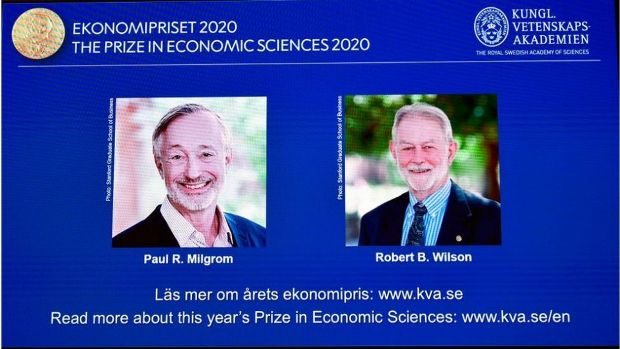
STOCKHOLM– Two American economists, Paul R. Milgrom and Robert B. Wilson, were awarded the Nobel Memorial Prize in Economic Sciences on Monday (12) for improvements to auction theory and inventions of new auction formats — innovations that have had huge practical applications when it comes to allocating scarce resources.
The pair, close collaborators who are both affiliated with Stanford University, have pioneered new auction formats that governments have since used to auction off radio frequency.
“They haven’t just profoundly changed the way we understand auctions — they have changed how things are auctioned,” said Alvin E. Roth, a Nobel laureate himself who was one of Wilson’s doctoral students. “The two of them are some of the greatest theorists living in economics today.”
Auctions help to sell a variety of products, including art, minerals and online advertising. They can also take on various characteristics: Objects can have a shared, common value for all bidders (such as commodities like oil) or private values that vary across bidders (like art). Bidders may know exactly what the object’s value is, or they may have imperfect information. Bids can be open, meaning everyone can see them, or closed.
Wilson “was the first to create a framework” for auctions of items with a common value, according to the prize committee. In his work, he explained that bidders will offer less than they think the object or service is worth because they are afraid of overpaying — the winner’s curse — even more acutely when they are at an information disadvantage.
But in most auctions, bidders have both common and private values — when buying a house, for instance, shoppers think about both what they personally like about the amenities and what the market value of the home might be.
Milgrom came up with a theory to deal with that mix of common and private value, and he examined how the “winner’s curse” plays out in such instances. He found that people underbid by less in so-called English auctions, in which prices start low and are raised, than in Dutch auctions, where they start high and are reduced.
Yet the pair’s “best-known contribution,” according to the committee, is their work in designing new auction formats for complex situations, including the format that governments now use to allocate radio frequencies to telecom operators.
Radio bandwidth was once allocated by “beauty contests” in which operators made a case for why they should get it — leading to intense lobbying. In the 1990s, the Federal Communications Commission pushed, and Congress permitted, a switch to lottery-based allocation of bandwidth. Initially, though, the new approach also worked poorly: The lotteries were held locally, leading to fractured networks for national operators, among other problems.
Milgrom and Wilson came up with a new format that allowed the simultaneous auctioning of the many geographic areas of the radio spectrum across various bidders, starting with low prices and allowing repeated bids. The FCC adopted the approach in 1994, and found that it allowed them to dole out the radio space while also raising far more money.
The Milgrom and Wilson approach met with such success that many other countries, including Britain, Canada, and Spain, went on to adopt it.
The economists “started out with fundamental theory and later used their results in practical applications, which have spread globally,” Peter Fredriksson, chairman of the prize committee, said in a release accompanying the announcement. “Their discoveries are of great benefit to society.”
Who are the winners?
Wilson was born in 1937 in Geneva, Nebraska, earned both his bachelor’s and graduate degrees from Harvard University, and he is now a professor emeritus at Stanford University.
Milgrom was born in 1948 in Detroit. He completed his graduate education at Stanford, where he received a doctorate in 1979 and where he is now a professor. He, like Roth, was a doctoral student of Wilson’s.
“Bob is a patriarch of a Nobel dynasty,” Roth joked, noting that Wilson also advised the laureate Bengt R. Holmstrom.
Milgrom and Wilson live on the same street in California, a prize committee member, Tommy Andersson, said during a streamed interview following the announcement in Stockholm. He said that neither of them answered their phones at first when they were called about the prize, because it was in the middle of the night on the West Coast. Milgrom was told just minutes before the public announcement.
A groggy-sounding Wilson called into the prize committee’s news conference. Asked if he himself had ever bought something at auction, he at first thought he had not.
“My wife points out to me — we bought ski boots on eBay,” he eventually concluded. “I guess that was an auction.”
-New York Times
]]>
 By Motoko Rich and Makiko Inoue TOKYO — There are few true surprises in Japanese politics, but the rise of Yoshihide Suga to become the next prime minister was not exactly preordained. The son of a strawberry farmer and a schoolteacher from rural northern Japan, Suga is one of the few leading Japanese lawmakers not […]]]>
By Motoko Rich and Makiko Inoue
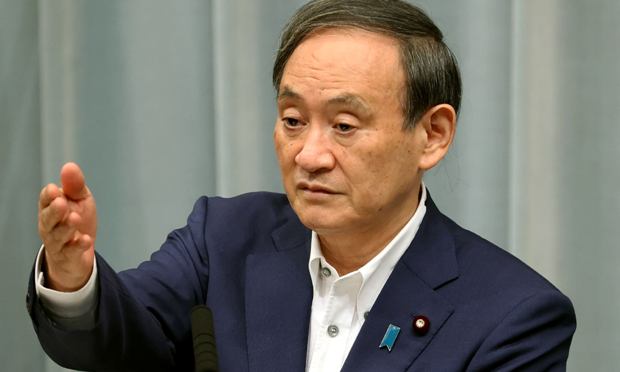
TOKYO — There are few true surprises in Japanese politics, but the rise of Yoshihide Suga to become the next prime minister was not exactly preordained.
The son of a strawberry farmer and a schoolteacher from rural northern Japan, Suga is one of the few leading Japanese lawmakers not from an elite political family. Charisma is not the first — or even the second or third — word evoked by his public persona. At 71, he’s even older than Shinzo Abe, who suddenly announced in late August that he was resigning as prime minister because of ill health.
What Suga, the long-time chief Cabinet secretary to Abe, does offer is continuity. He vowed to pick up from where Abe left off, a gesture that reassured the nation after a string of revolving-door prime ministers. And in Japan, where stability often outweighs ideology, Suga appealed to a tradition-bound political establishment that resists change.
On Monday (14), Suga swept an election for the leadership of the conservative Liberal Democratic Party — which has governed Japan for all but four years since World War II — assuring him the prime ministership.
With his decisive victory in a party contest that initially seemed wide open, Suga demonstrated deft political skills honed as a behind-the-scenes operator, serving essentially as Abe’s chief of staff and main government spokesman for nearly eight years.
“How quickly the talk coalesced toward Suga,” said Mireya Solis, director of the Centre for East Asia Policy Studies at the Brookings Institution in Washington, “shows his political acumen.”
But his role as a shadow power in Japanese politics has rendered him a bit of a cipher.
In many ways, he seems like yet another in a long line of dour Japanese politicians. The most exciting nugget to emerge in recent news reports is the revelation that Suga, a teetotaller with a sweet tooth, starts and ends each day with 100 situps. On his website he says he likes river fishing and karate.
More substantively, it has been difficult to discern Suga’s vision for Japan or whether he could muster fresh solutions for the country’s deep challenges.
“Generally, politicians have at least a facade of expressing ideals,” said Megumi Naoi, an associate professor of political science at the University of California, San Diego, who said she would usually expect “policy statements about the ‘type of world that I want to see.’”
Despite nearly a quarter century in national politics, Suga “hasn’t really come out with very strong policies,” Naoi said.
Reflecting his years as Abe’s loyal adviser, Suga, who declined a request for an interview, has promised to pursue some of the departing prime minister’s most cherished goals. He is expected to continue to push for a revision of Japan’s pacifist constitution and the return of Japanese citizens kidnapped by North Korea.
He has also said he would roughly stick to Abe’s signature economic formula, known as Abenomics, combining easy monetary policy, government spending and structural reform of industries such as agriculture.
When Suga showed a tiny sign of staking out a new policy last week — a potential increase in a tax that has hampered consumer spending — he quickly backtracked.
With global turbulence from the coronavirus pandemic and rising geopolitical threats in Asia, a successor who stays the course may be just what Japan needs.
“Japan is not a country with revolutionary reform taking place very often,” said Christina Davis, director of the Program on US-Japan Relations at Harvard. “Especially in times of crisis and uncertainty, being seen as a stable crisis manager could be an asset.”
Even as he epitomizes the status quo, Suga has also been a catalyst for significant change. He is credited with helping Abe push through contentious security laws that allow Japan’s military to join overseas combat missions alongside allies. Suga was also considered a strong proponent of a bill, passed two years ago, authorizing a sharp increase in the number of foreign workers permitted in Japan.
Other glimpses of his political hand have yielded concerns. Some critics say Suga was the architect behind some of Abe’s more authoritarian impulses, including his consolidation of power over Japan’s sprawling bureaucracy and the use of tactics to silence criticism in the news media.
“I think Suga is more dangerous than Abe,” Kihei Maekawa, a former vice education minister, told The Sunday Mainichi, a weekly magazine.
With Suga as prime minister, Maekawa predicted, “bureaucrats will be servants or act as a private military” under the prime minister’s office, “worse than in the Abe era.”
One major question is just how long Suga will last. Whether he ends up a caretaker leader or stays after a general election is likely to depend on his response to immediate challenges like the pandemic, the postponed Tokyo Olympics and increasing tensions with China.
There are rumours that Suga could call a snap election soon after he takes over the prime ministership. If successful, he could consolidate his popularity. If not, “maybe this is just an interim leader,” said Ken Hijino, a professor of law at Kyoto University, “and they will come up with some surprise younger, more attractive face to go into the general election.”
For now, the public supports Suga, with more than 50% of those surveyed in a national poll last week backing him to be prime minister.
While Japanese voters see Suga and Abe as something of a pair, their family backgrounds could hardly be more different. Abe is a third-generation politician and the grandson of a prime minister; Suga had an unremarkable upbringing in rural Akita Prefecture, along with two older sisters and a younger brother.
According to a biography by Isao Mori, Suga’s father suggested he work on the family farm, but Suga decided to move to Tokyo. He took odd jobs, first with a cardboard company and then driving turret trucks at the old Tsukiji fish market, before enrolling at Hosei University.
When he decided to pursue politics, absent family connections, he asked the career services center for an introduction to a member of Parliament.
In 1975, Suga took a job as secretary to Hikosaburo Okonogi, a member of the House of Representatives from Yokohama, Japan’s second-largest city. Suga’s duties included buying cigarettes and parking cars.
He also quickly learned how to cater to a constituency. At Suga’s wedding to his wife, Mariko, in 1980, according to Mori’s biography, a supporter of Okonogi said he had bought shoes for Suga because he “quickly wore them down” going door to door to visit voters in the district.
The Sugas had three sons, but in a debate last week, Suga admitted that he was rarely home as they were growing up.
In 1987, he ran for a seat on the City Council in Yokohama, where he became known as a “shadow” Yokohama mayor. He helped develop transportation links to the port and pushed to lower waiting lists at city day care centres.
“He has four eyes and four ears,” Koichi Fujishiro, a former chairman of the Yokohama City Council, said in a telephone interview. “He worked from morning to late at night.”
In 1996, Suga made the leap to national politics, winning a seat in the lower house of Parliament. During Abe’s first, fumbling stint as prime minister, from 2006 to 2007, Suga served as minister of internal affairs and telecommunications. Even after Abe left office following a series of scandals, Suga remained loyal.
Abe rewarded that loyalty when he came back as prime minister in 2012 and chose Suga as his chief Cabinet secretary. According to Kenya Matsuda, author of “Shadow Power: Chief Cabinet Secretary Yoshihide Suga,” Suga urged Abe to focus on the economy rather than the nationalist agenda that had consumed his first term.
On foreign policy, Suga has worked to fill holes in his portfolio. He visited Washington last year, the first chief Cabinet secretary to make such a trip in three decades.
For Abe, personal diplomacy with President Donald Trump has been crucial. If Trump wins reelection, the question, said Solis, of the Brookings Institution, “is whether Suga can work the magic or whether that was a bromance between Trump and Abe not to be repeated again.”
-New York Times
]]>