Türkoğlu began her speech by commemorating former Women's Council member Nesrin Aslan with respect and longing. She said that the women's conference would produce a powerful document for the success of the process. She stated: "Every gathering, action and event organized by women around the demand for a dignified peace as part of the Peace and Democratic Society Process has strengthened this spirit. Women have demonstrated with strong determination that they are present in resistance, in struggle and at the negotiating table, and that no process can be shaped without women."
Türkoğlu once again welcomed the "Women Stand Together, Discussing the Future" conference, held in Ankara on 31 October and 1 November, saying that it had been organized "in this spirit." She added: "We wholeheartedly believe that the outcomes of this conference will constitute a powerful document for the success of the Peace and Democratic Society Process. Women already have their roadmap for peace and are ready to build their present and future."
Support for the Peace Mothers' demands
Türkoğlu also expressed support for the demands of the Peace Mothers, saying: "If peace requires courage, it is the Peace Mothers who have demonstrated this courage most clearly for years. Despite harsh winter conditions and all kinds of health problems, they raised their demands from the vigil they held in tents in the heart of Ankara, calling for the success of the Peace and Democratic Society Process, for other mothers to be spared the same suffering and for genuine peace."
'The way must be opened for Mr. Öcalan'
Türkoğlu continued: "They once again raised their voices in the strongest possible terms, demanding that Mr. Öcalan be allowed to continue his work under free and equal conditions and that political prisoners be released. On behalf of our DEM Party Women's Council, I once again salute the determination demonstrated by the Peace Mothers. Their demands are our demands."
Concrete steps must be taken
Halide Türkoğlu called for an end to further delays in establishing the conditions necessary for meetings with Abdullah Öcalan. She said: "The conditions of Mr. Öcalan, the chief negotiator of the process, must not be addressed solely in terms of relocation. The establishment of conditions that would allow journalists, academics, human rights organizations, women and all sections of society to meet with Mr. Öcalan must not be delayed any longer. Regulations must be introduced to complement the legislation referred to as the Framework Law. The Peace and Political Participation Council and all other councils must begin their work. The proposals for democratization contained in parliament's joint report must be enacted into law. These concrete steps are essential for the process to succeed. One of the most important areas requiring concrete action is the prisons. Enemy law must not be applied in prisons while peace is being discussed outside. Political prisoners and ill prisoners must be released."
Impunity is killing women
Türkoğlu also drew attention to violence against women, stating that at least 20 women had been killed in October alone. Türkoğlu said, "Policies of impunity protect men by covering up crimes committed against children. We will continue to pursue accountability for these crimes of sexual abuse against children." She added: "It is not only men who kill women. It is the policies of impunity that embolden these men. It is the protective measures that remain on paper, the restraining orders that are violated and the protection orders that are never implemented."
Türkoğlu then addressed the inheritance controversy surrounding Jülide Kural, saying that it could not be separated from patriarchal thinking. She said: "On behalf of our Women's Council, I express my solidarity with her and declare that Jülide Kural is not alone."
Everyone who enabled and financed the fund must face trial
Türkoğlu demanded that everyone who financed and facilitated the fund be brought to justice. She said: "The fact that such large-scale fraud can be carried out so easily demonstrates how this country is governed through criminal networks. Everyone who has supported and enabled this fund-related criminal network must face trial. We will not give up our struggle until those who have stolen the rights and labor of the people, women and the poor are held accountable."
Türkoğlu also criticized the budget, describing it as "a concrete manifestation of a mentality that seeks to shape women's existence and will through family policies." She continued: "Those who make decisions on behalf of women have once again excluded women from decision-making processes. Of course, these are not policies we are unfamiliar with or encountering for the first time. The mentality behind this budget also knows us women very well. It knows why women will object to this budget, what demands they will raise and what inequalities they will expose. This is because women have been struggling for years against the invisibility of their labor, poverty, violence, inequality and the restriction of their living spaces."
The budget must fund women's liberation, not weapons
Türkoğlu stressed that they would mount the strongest possible opposition to the budget, from the parliamentary committee stage through to the General Assembly debates. She said: "We will not merely reject this budget. We will also demonstrate what kind of budget the Peace and Democratic Society Process requires. Because a budget for peace must allocate resources to life rather than weapons, to justice rather than inequality, and to women's liberation rather than policies that confine women to their homes."
Türkoğlu said that women demanded adequate resources to combat violence and outlined their demands: "Women want measures to combat women's poverty, secure employment and conditions that enable them to achieve economic independence. They want sufficient resources allocated to combating violence against women and the expansion of shelters and support mechanisms. Unless these demands are met, women will never give their approval to this budget."
Türkoğlu also condemned attacks on the co-chair system. Türkoğlu said: "You cannot criminalize this achievement, which we have secured through immense effort and sacrifice, with your patriarchal mentality. It is true that our co-chair system disrupts your hierarchical structure and your entire way of thinking. It challenges your patriarchal order. Have no doubt that it will continue to do so. Co-chairship is our purple line."
Call for solidarity on 8 November
Türkoğlu recalled that the trial concerning the Dilovası workers' massacre had recently been held. She said: "On Sunday, 8 November, the anniversary of the Dilovası massacre, we will gather in the women's contingent in front of the Dilovası Central Mosque at 2:30 pm for a commemoration and march."
Türkoğlu also called on all women to unite around the struggle for justice in support of the DEM Party Women's Council's demand that 8 November be declared the International Day of Struggle Against the Killing of Women Workers.
]]>Ten years have passed since the emergency decrees were issued. Many of those dismissed were imprisoned, some were forced into exile, while others remained unemployed for long periods. Some were forced to work in construction to make a living, and some lost their lives in workplace accidents.
Engin Cengiz, who now works as a music teacher at the Mesopotamia Cultural Center (MKM), was among those affected during this period, when 125,678 public employees were dismissed according to official figures.
Cengiz was dismissed from his position as a music teacher by an emergency decree in 2016 and was subsequently imprisoned for a period. He spoke to ANF about his experiences during the emergency decree period, the difficulties he faced after his dismissal and how he became involved with the Mesopotamia Cultural Center.
‘The turning point came after a two-day strike during the Kobane protests’
Cengiz described the circumstances surrounding his dismissal under an emergency decree, explaining that he had been a music teacher for 15 years.
Cengiz said: “By that time, I had approximately 15 years of teaching experience. I was a music teacher and had worked in Malatya for a long time. Before that, I was active in trade union organizing and the labor movement. Although the labor movement has a class dimension, we also took a stand on social issues in Turkey, the Middle East and around the world, on the problems faced by oppressed people and on our own existence as a community.
There was a civil war and a massive offensive in Rojava, Syria.
That was actually where the rupture occurred. There was a two-day strike in December over the events in Kobanê. Because we participated, many of us became direct targets. From the state's perspective, however, I was already a prominent figure in the area where I worked because of my activities. Subsequently, after the attempted coup, I was dismissed from my position through an emergency decree.”
Dismissed on the anniversary of the founding of the republic
Cengiz said that he was dismissed on the anniversary of the founding of the republic, stressing that losing his job on 29 October, at a time when they were demanding a democratic republic, held particular significance for him.
Cengiz said: “The day I was dismissed was perhaps the day when all the coincidences and disasters I could experience in a lifetime came together. The fact that it was 29 October was significant in itself. Because experiencing something like this on the anniversary of the proclamation of the republic, while demanding a democratic republic, gave the whole situation an entirely different meaning.
My brother had been living in exile in Southern Kurdistan for nearly 10 years because of his sentence. He had met someone there, and they were planning to get married. The other family was from Hakkari (Colemêrg), and they came to visit us. We are originally from Oltu in Erzurum. The wedding took place, but neither the bride nor the groom was there. We finished the wedding ceremony with a sense of sadness, and just as everyone was about to return home, a message arrived informing me that I had been dismissed. It was actually something I had expected.
Interestingly, one of my former students from middle school was also at the wedding that day, and we were both dismissed on the same day. We experienced the tragicomic side of the process. I had prepared myself in my own way. Given everything that was happening in Turkey and the Middle East, it would not have been very ethical to question what had happened to me. I did not feel any particular sadness. I simply thought that we were experiencing another repetition of something terrible and that we would have to rebuild our lives from that point onward.”
Detained in Malatya and imprisoned for 10 months
Cengiz, who was arrested shortly after his dismissal under an emergency decree, said, “After I was dismissed on 29 October, I spent a few months exploring different possibilities. I even came to Istanbul for a few weeks. I wanted to travel a little, shake off the mindset of being a civil servant and discuss with musician friends what we could do. Then I returned to Malatya, where my home was. About four or five months later, on 17 January, I was detained in Malatya, and a period of imprisonment lasting 10 months began.”
Cengiz said that the reason for his imprisonment was his reconnection with his Kurdish identity. He also said: “There were the apparent reasons and the reasons they fabricated. The real reason was standing by my people and my community and taking part in political activities. The most significant factor was defending my Kurdish identity and standing behind the struggle. The traditional structure of the state has a habit of criminalizing Kurdish identity and associating it with terrorism. The main aim was to subject me to this process because I was an assimilated person who had reconnected with his Kurdish identity.”
Worked in a laundry and a hotel
Cengiz said that he could no longer remain in Malatya after his release from prison and moved to Istanbul. He described his experiences during that period: “After I was released from prison, there were hardly any conditions that would allow me to stay in Malatya. It was a small, close-knit social environment, and things had reached a point where people could barely even greet us. We had years of experience there and valuable friends who stood by us. However, some sections of society had become frightened because of the accusations against us.
I came to Istanbul towards the end of 2017. Friends from my high school years helped me. I worked in a laundry for a while. During that time, I felt as though I were among the characters described in old Russian novels, people at the very bottom of society working in precarious jobs. This was a reality of life, but an unjust one. I also worked in a hotel for a period. Then, gradually, as I became involved with the Mesopotamia Cultural Center, music began to play a more active role in my life again.”
‘Even if I face starvation, I will never accept this approach’
Cengiz said that he became involved with the Mesopotamia Cultural Center after working in other jobs and resumed his musical activities there. He described how he came to join the Mesopotamia Cultural Center : “Unfortunately, I received no support in that regard. Istanbul's art scene has its own particular way of operating. For example, after I was released from prison, a well-known artist asked for permission to perform one of my compositions. Even though I told him that I had just been released from prison and was in a difficult situation, he said to me, ‘Someone like me is performing a composition by someone like you. I'll make you famous. What more could you want?’
Saying something like that to someone who had suffered so much was a reflection of the degeneration that had taken place. I refused to give him my composition, telling him that even if I faced starvation, I would never accept such an approach. As a result, it did not bring me any significant financial benefit.
During the time I worked in Istanbul, I felt like a screw fitted into one of the gears of capitalism, and the feeling of becoming a refugee weighed heavily on my spirit. Having come to this city against my wishes, I found myself almost inevitably coming together with refugees. As a musician and someone who was part of the community, I turned to MKM, which I already knew. After working at the hotel, I realized that this way of life was not for me and that I needed to continue my life as a musician, so I joined MKM.”
‘At MKM, I saw that the sacrifices made had created a sense of belonging and meaning’
Cengiz stressed that the first thing he noticed at MKM was how the sacrifices made had acquired meaning. He said: “I was welcomed with great solidarity at MKM. I clearly saw that the sacrifices made had created a sense of community, emotion and meaning. My friends and the institution provided tremendous support in helping me overcome my shortcomings and find meaning in life again. In this brutal age of capitalism, this relationship of comradeship was extremely valuable.
MKM was an institution dedicated to Kurdish music and political music. I am here because I chose a life without great material expectations, one in which I would not have to depend on anyone. This was the most appropriate place to serve our culture and community and share my knowledge and experience with young people.”
‘The ongoing process shows that what was done back then was unjust’
Engin Cengiz also addressed the Peace and Democratic Society Process, saying that it demonstrated the injustice he had experienced in the past. Cengiz said: “Victimizing people for exercising their legitimate civil and social rights on the anniversary of the proclamation of the republic reflects a failure to find a solution. The fact that the Peace and Democratic Society Process initiated by Mr. Öcalan is now continuing through talks also shows that what was done back then was unjust. The Kurdish question and discriminatory policies cannot be resolved without dialogue and negotiations. Established assumptions must be challenged.
Both the Kurdish people and the other peoples of Turkey must embrace this process. Peace is essential for societies exhausted by war. I have experienced serious hardships over the past 10 years, but if peace is achieved, I am willing to forgive what I have endured on that condition alone.
Turkey and the Middle East need peace, and Mr. Öcalan is the key interlocutor for achieving it. If this process moves forward without arrogance, a more democratic life can be built.”
]]>In June, the municipality imposed an administrative fine of 1,170,743.24 lira on the foundation of the historic Syriac Orthodox Church of the Virgin Mary and sealed the guesthouse in October. The foundation subsequently challenged the measure in court.
In its ruling, the Administrative Court found that the municipality had failed to adequately investigate who had actually constructed the building in question. According to the court, the mere fact that the building lacked a construction permit was not sufficient to hold the church foundation responsible.
The court criticized the incomplete examination of the facts and ordered the suspension of the fine without requiring a security deposit. As a result, it concluded, the penalty cannot be enforced until further notice. A final decision on its legality has yet to be made.
]]>The report on the human rights situation in prisons across the Marmara region was presented at a press conference held at the IHD branch office in Istanbul’s Beyoğlu district. Gülseren Yoleri, a member of the IHD Central Executive Board, Meral Nergis Şahin, co-spokesperson for the Prison Commission, and commission member Sevilay Yılmaz Birgin took part in the presentation.
The investigation was based on complaints and submissions from prisoners and their relatives, as well as publicly available information. The report noted that prisons were operating beyond their designated capacities.
Ill-treatment and inadequate living conditions
Most of the documented rights violations concerned prisoners’ basic living conditions. In 293 cases, the IHD recorded inadequate access to food and clean drinking water, as well as deficiencies in hygiene and personal care. Another 258 violations involved physical assaults, ill-treatment, degrading treatment, and torture.
Restrictions on fundamental rights also accounted for a significant proportion of the violations. The organization documented 136 violations of the right to communication, including cases of isolation. In 117 cases, the right to healthcare was violated. These were accompanied by 39 violations involving unlawful detention and unequal treatment in the enforcement of sentences, as well as 28 cases in which prisoners’ access to justice was obstructed or denied.
In addition, the IHD recorded six violations related to hunger strikes and three violations of the right to life. Another 15 rights violations were identified through an analysis of publicly available online sources. The individually listed categories add up to 895 cases. However, the IHD reported a total of 899 rights violations. The discrepancy of four cases is not explained in the available summary.
Political causes of prison abuses
In its assessment, the Human Rights Association linked increasing prison overcrowding to the deterioration of detention conditions. According to the organization, both the prison population and the number of documented rights violations are rising. The IHD particularly criticized the fact that even problems that could be resolved through relatively simple measures remained unaddressed.
“This demonstrates that the underlying cause lies in the persistent continuation of government policies that give rise to human rights violations in general and violations of prisoners’ rights in particular,” the report stated.
The IHD therefore considers strengthening social mobilization and human rights advocacy against these violations a key prerequisite for bringing about change.
‘We want to give prisoners a voice’
The Prison Commission emphasized that its reports were not intended merely to compile statistics.
“We prepare these reports not simply to provide information. Our primary goal is to give those behind prison walls a voice, at least to some extent, to make their pressing problems visible, raise awareness, and help prevent rights violations.”
At the same time, the IHD acknowledged the limited scope of its investigation. It said the documented cases were based on a relatively small number of complaints and submissions from the prisons examined. The actual number of rights violations could therefore be significantly higher.
According to the organization, the investigation covered 16 prisons. These included the Marmara/Silivri, Bakırköy, Kandıra, Edirne, Tekirdağ, Ümraniye, Metris, and Maltepe prison complexes. The published list also included facilities outside the Marmara region, including those in Izmir and Bolu.
In conclusion, the Prison Commission stressed that the struggle to secure humane prison conditions must not be left to prisoners alone: “Human rights violations in prisons cannot be prevented solely through the struggle of prisoners themselves. This also requires support through struggles outside prison walls. This report is also our call for solidarity with prisoners and their families in the face of problems that have now reached an enormous scale.”
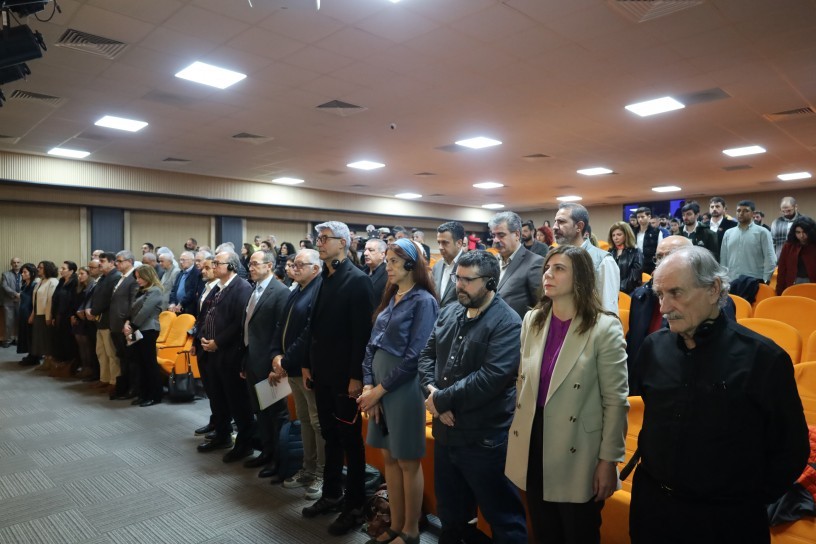
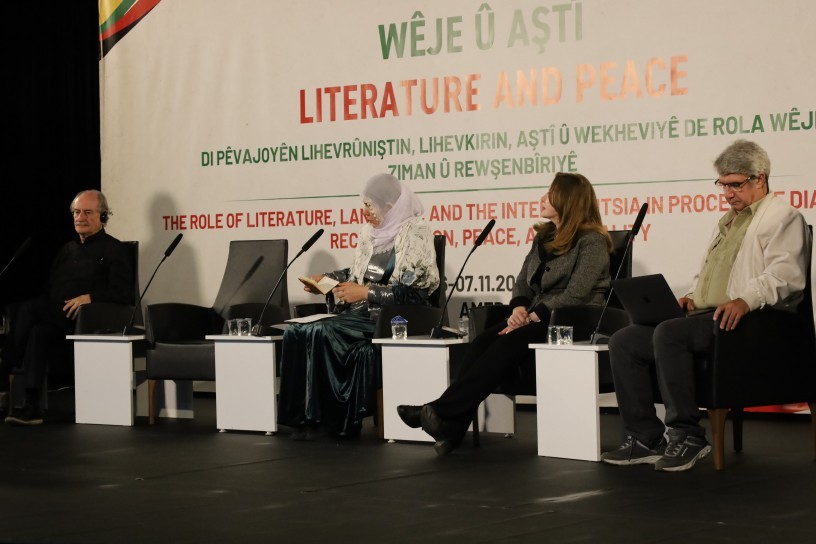
]]>The event, held at the Ali Emiri Conference Hall, is organized by the international writers’ association PEN, the Kurdish PEN Center (PENa Kurd), Amed Metropolitan Municipality, and the district municipalities of Sur, Yenişehir, Bağlar, and Kayapınar. It began with a moment of silence.
Peace requires linguistic and cultural freedom
At the opening, Ömer Fidan, a writer and chair of PENa Kurd, stated that literary figures must take responsibility for building a dignified peace. He said the conference aimed to strengthen the social and cultural dimensions of the peace process.
Mürüvet Demir of the Peace Mothers’ Council recalled the decades-long suppression of the Kurdish language and said: “People were subjected to repression and violence simply for speaking Kurdish. The opportunities available today to use and develop the language publicly are the result of a long struggle by society.”
Writer Mizgin Ronak drew attention to the situation of imprisoned literary figures. She said numerous writers remained in Turkish prisons and that their works must be made accessible to the public. She emphasized that Kurdish literature has a rich historical and cultural heritage whose development must continue even under repressive conditions.
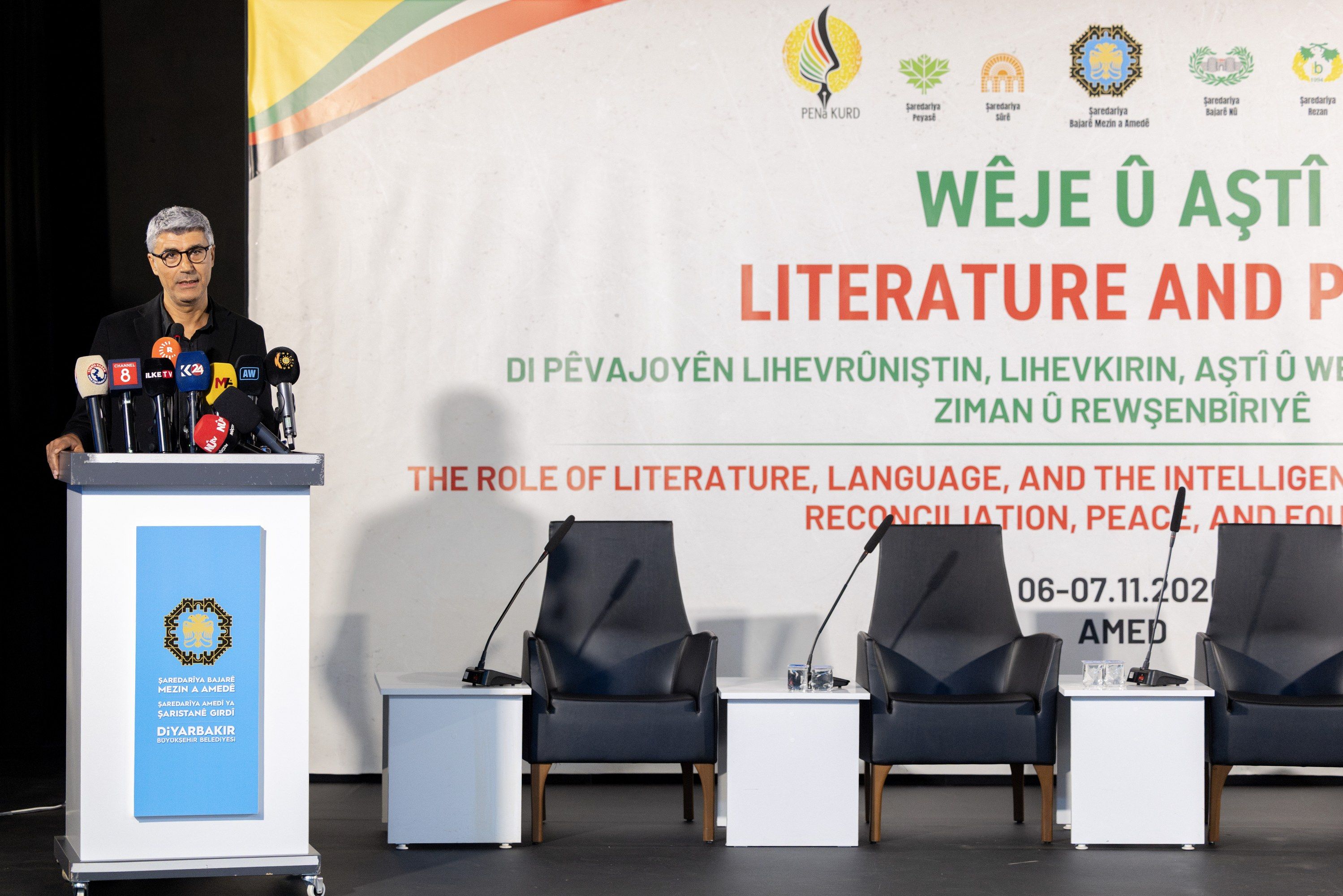
Writer Ilhan Sami Çomak, who himself spent many years in prison, described freedom to use one’s mother tongue and the release of political prisoners as essential prerequisites for a successful peace process. He particularly highlighted the situation of people who have been imprisoned for decades, as well as seriously ill prisoners.
Serra Bucak, co-mayor of Amed Metropolitan Municipality, also stressed that peace would not be possible without linguistic equality. She said everyone must have the freedom to speak, sing, and create literature in their mother tongue.
Literature as a means of fostering social understanding
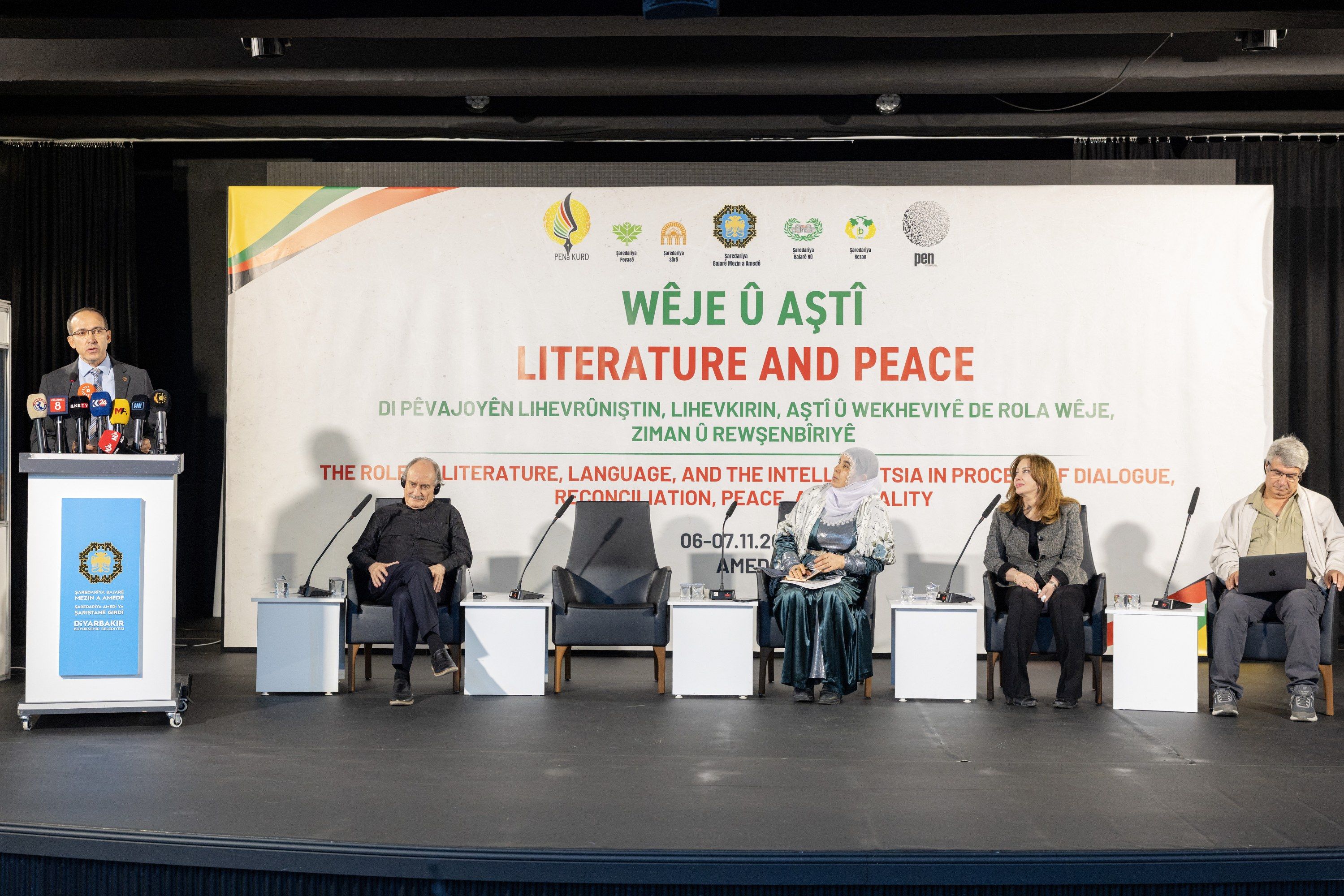
The panel titled “Literature, Language and Universal Rights in Peace Processes,” moderated by Diba Keskin, then began. Burhan Sönmez, president of PEN International, spoke about the responsibility of writers in overcoming social conflicts. “Writers from different countries can help develop a common language of peace and support processes of mutual understanding across national and cultural boundaries,” he emphasized.
Author Bêrîvan Doskî highlighted the importance of the mother tongue for identity, culture, and the future of society. She said that despite decades of attacks, the Kurdish language had continued to develop. To strengthen this development, she called for joint cultural and arts festivals, greater literary engagement with social struggles, and exchanges with writers from other communities.
Aktaş: Intellectuals must not distance themselves from society
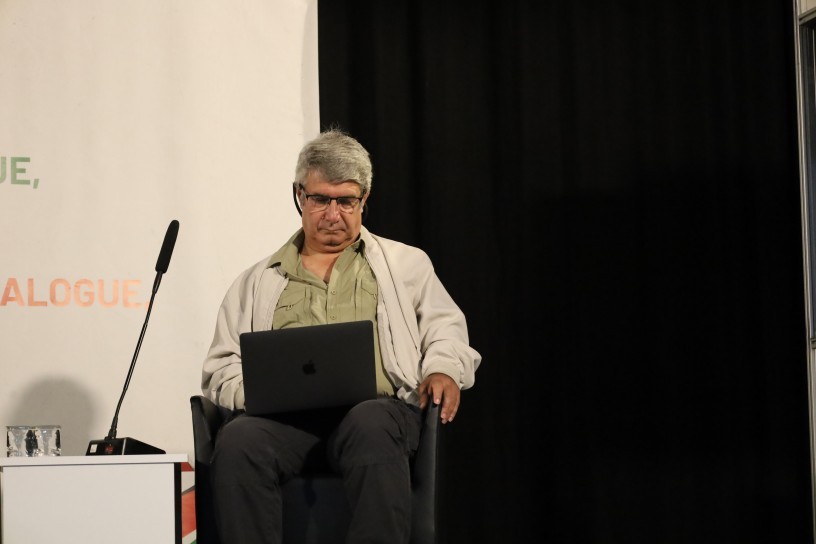
In his speech, Kurdish politician Veysi Aktaş critically examined the role of intellectuals in the current peace process. He warned against separating cultural and academic work from social struggles.
“The peace process is of great importance to all peoples. Intellectuals have an important role to play in its success. Their responsibility is to open up new paths for society and provide guidance. However, if they lose touch with social realities, they develop an elitist attitude that distances them from the people.”
Aktaş, who was imprisoned for several years alongside Kurdish leader Abdullah Öcalan on the Turkish prison island of Imrali, called for a more comprehensive examination of the social conditions necessary for peace, freedom, and coexistence based on equality.
In his assessment, the contributions made by intellectuals so far have been insufficient. Although efforts are underway, he said, they needed to be deepened and more closely linked to grassroots organizing.
“Intellectuals have not yet reached a level at which they can fully fulfill their responsibilities. Politics is not merely about struggling against those in power. It also encompasses struggles in the fields of culture, art, and language. When intellectuals distance themselves from politics, they become detached from reality and retreat into a purely intellectual understanding of themselves.”
‘There is a deadlock in the transition to the second phase’
Referring to the Peace and Democratic Society Process, Aktaş described the current period as a critical transitional stage. He said the process consisted of three phases and was currently moving toward the second, but obstacles had emerged.
“Our struggle to ensure that the necessary legal steps are taken is of great importance. This process consists of three phases. We are in the transition to the second phase, but there is a deadlock at this point.”
Aktaş pointed out that grassroots organizing is particularly important under these circumstances. He warned against viewing the peace process solely as a matter of political negotiations.
“The process has reached a stage where those who are best organized will succeed. Therefore, we must strengthen our organizing efforts together with the people. A struggle disconnected from society can never succeed.”
He stressed that this applied not only to political issues but also to women’s liberation, ecology, and cultural rights. Intellectuals, in particular, need to take responsibility in these areas and expand their cooperation with social movements, he added.
“For peace to succeed, intellectuals must become aware of their role and responsibilities and actively engage in the process. We need intellectuals who appeal to the conscience of society and act using the right methods.”
In his contribution, writer German Rojas addressed the connection between literature, culture, and social life. He emphasized that intellectuals needed to strengthen their ability to persuade and their collective organizational structures in order to effectively contribute to social change.
Ciwan İbrahim’s 18-year journey, stretching from Serêkaniyê to Lebanon, from Garê to the resistance tunnels of Zap and the Rojava Revolution, was marked by this determination. Throughout this journey, he distinguished himself at different times as an accomplished journalist, a commander, and one of the leading figures among the people.
Some of us came to know him when he announced the establishment of the People’s Defense Units (YPG), others as a commander of the Asayish (Internal Security Forces), and still others as he rode his motorcycle through the streets of Qamişlo.
Today, Rojava mourns the loss of this legendary commander.
From Lebanon to the mountains of Kurdistan
Ciwan İbrahim (Nosican İbrahim) was born on October 3, 1983, in Serêkaniyê. He had two sisters, Lorîn and Şirîncan, and a brother named Dilciwan. As the eldest child, he was the apple of his family’s eye. Both his mother and father were teachers, and he received his primary and secondary education from them.
From an early age, he became familiar with the Ba’ath regime’s policies that denied the existence of the Kurdish people. Through the activities carried out by Kurdish leader Abdullah Öcalan in Rojava and his efforts to raise political awareness among the population, Ciwan became acquainted with the Kurdish Freedom Movement. In 2001, two years after the international conspiracy against Öcalan, he returned to Kurdistan from Lebanon.
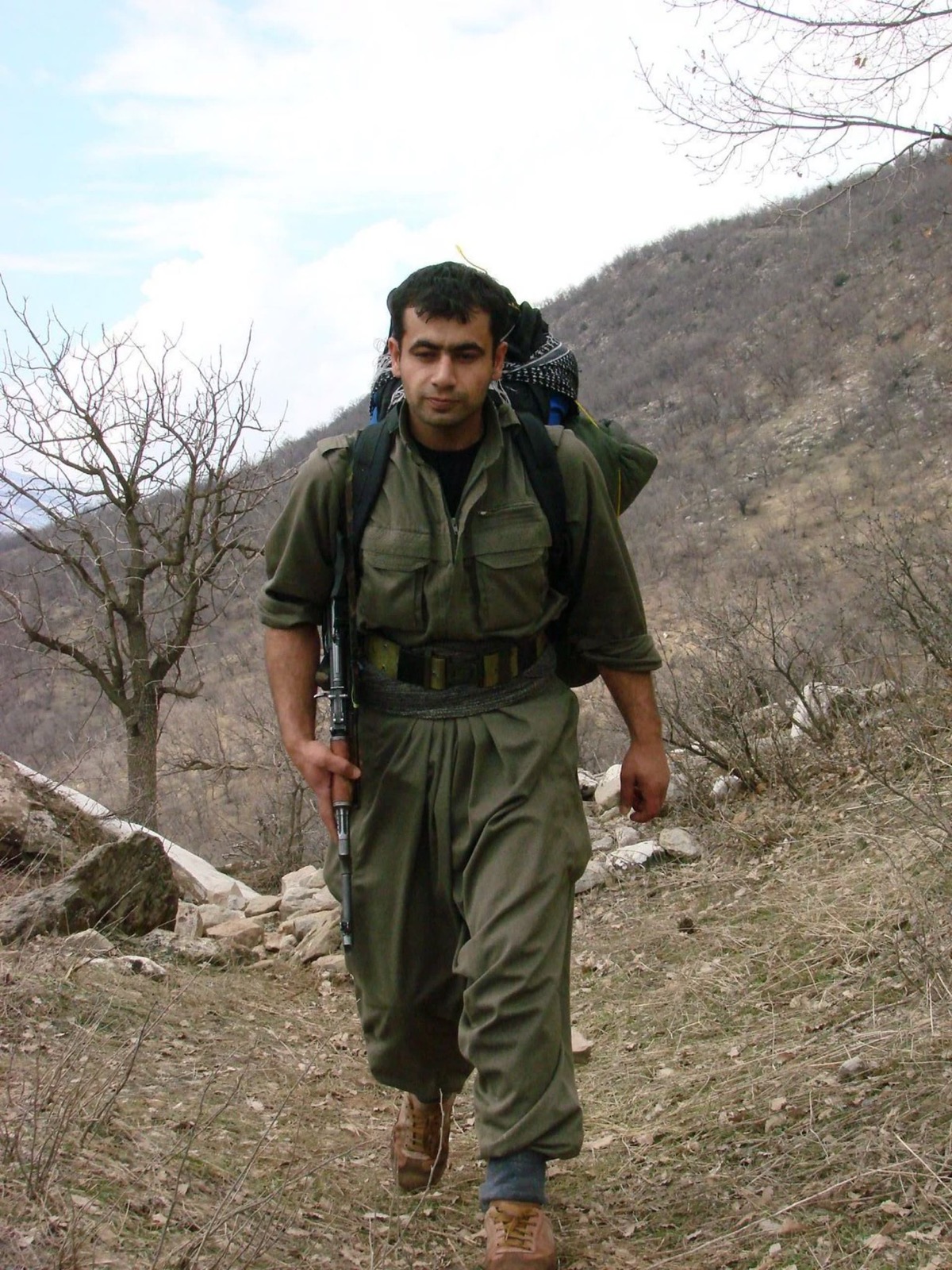
After spending a considerable period in the Garê region, he moved to Zap. In 2010, he joined the Special Forces (Hêzên Taybet), where he underwent profound ideological and military development in accordance with the principles of self-sacrificing militancy.
In 2011, as the Rojava Revolution began to take shape, he once again turned toward his homeland, Rojava, to take a leading role in revolutionary activities. This return marked the beginning of a new chapter in his life.
The early days of preparations for the revolution
That year, meetings were being held across Rojava, young people were brought together, and efforts were underway to organize the population. The institutions of the revolution had not yet been established. Much of the work was carried out through clandestine meetings and training sessions. The home of Ciwan’s father, Abdurrahim İbrahim, was among the places where these meetings took place.
Ferhad Şamî, former press spokesperson for the Syrian Democratic Forces (SDF), first met Ciwan during this period. Recalling those days in an interview with ANF, Şamî said, “I met him during the first meetings in 2011. We were attending training sessions with Mazloum Abdi, Martyr Hisen Çavuş, and Henife Hisen. At the time, the Ba’ath regime wanted to launch attacks, but we were taking precautions.”
He contributed to every field
Ciwan’s activities during those years extended across the fields of media, youth organizing, and self-defense. Programs were developed to provide young people with media training, and training sessions were organized in various cities across Rojava.
Şamî also joined these efforts at Ciwan’s request. He continued:
“We prepared a program and began the training sessions. We provided media training to young people in Serêkaniyê, Dirbesiyê, and Til Temir. We then traveled to Hesekê and Qamişlo, eventually reaching Dêrik.”
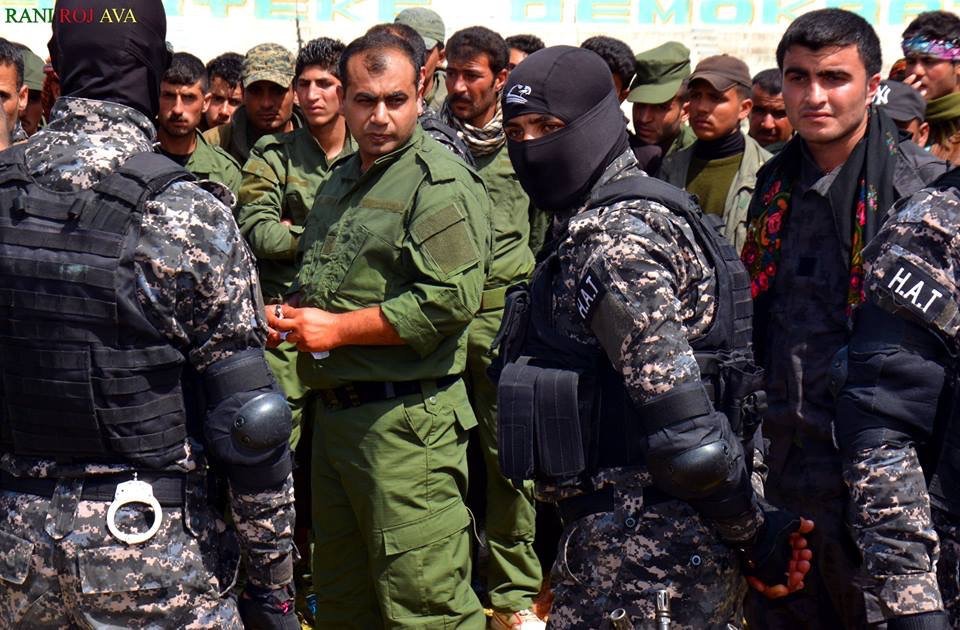
While media training continued, organizing communities in the cities and developing self-defense initiatives were also of great importance. As part of these efforts, youth groups were formed during the process of removing regime soldiers from the cities. Ciwan, Martyr Hemze Tolhildan, Martyr Serhed, Martyr Seydo, Martyr Goran, and Martyr Lewend took on this responsibility.
For all of Kurdistan
Journalist Dîlan Osman also recalls that they were still young at the time and eager to take part in preparations for the revolution. She describes the arrival of Ciwan and his comrades in Rojava as part of a broader vision of struggle encompassing all of Kurdistan:
“Heval (Comrade) Ciwan was one of the figures who played a major role in the Rojava Revolution. He was among those who returned to their homeland to prepare for the revolution. At the time, we were young and enthusiastic, and we had aspirations. We wanted to stand alongside them and take on responsibilities. Heval Ciwan and his comrades were thinking not only of Rojava, the smallest part of Kurdistan, but of all parts of Kurdistan.”
Ciwan went from house to house to prepare the population for the revolution, explaining the developments ahead and discussing with people what kind of life they could build.
As the crisis in Syria deepened, it was essential for the population to be prepared and for the social foundations of the revolution to be established. For this reason, organizing efforts extended into every aspect of life.
Dîlan Osman recalls these efforts as follows:
“Today, everyone knows him as a commander of the Asayish, but he had already made significant contributions long before that. You know what is called the ‘Revolutionary People’s War’? Heval Ciwan was one of its pioneers. He was among those who answered the questions of why a revolution was necessary and how it could be carried out through their actions.
They went from house to house, explaining these ideas to everyone, from children to the elderly. The establishment of people’s councils was also an important stage in this organizing process. Heval Ciwan worked to establish councils so that people could govern their own lives. This was followed by the beginning of the transition to the Autonomous Administration system.”
He did not surrender Serêkaniyê to the armed groups
Today, whenever we ask people about Ciwan İbrahim, the battle for Serêkaniyê is the first event they recall. The battle, which took place in November 2012, holds an important place both in his life and in the course of the struggle in Rojava.
Ferhad Şamî, who witnessed the fighting at the time, recounts what happened:
“Jabhat al-Nusra launched an attack with 73 battalions and more than 10,000 militants, using heavy weapons. Alongside Heval Ciwan, Martyr Jiyan Tolhildan, Martyr Dozdar Hemo, Martyr Seydo Rojhilat, Martyr Serhed, Martyr Lewend, Martyr Goran, and Cemşid also took part in defending the city. Serêkaniyê was his hometown, and it was saved thanks to these comrades.”
One of the incidents that remains particularly vivid in Şamî’s memory is the encirclement of the area where Martyr Goran was positioned.
“More than a hundred militants surrounded the area where Martyr Goran was located. There was a vocational school opposite the encircled position. Our comrades had only hand grenades. Heval Ciwan went in with hand grenades and rescued his comrade. That was how courageous he was,” Şamî recalls.
The resistance gave the YPG its identity
The struggle in Serêkaniyê also contributed to the development of the YPG’s military identity. At a time when armed groups were advancing in many areas, the resistance they encountered in Serêkaniyê provided an important experience in terms of the YPG’s positioning and its relationship with the population.
Şamî emphasizes the significance of those days:
“The armed groups were gaining ground everywhere, but they suffered a setback in Serêkaniyê. After Sheikh Maqsoud, the people rallied around the YPG thanks to these comrades.”
He protected Christians and Arabs
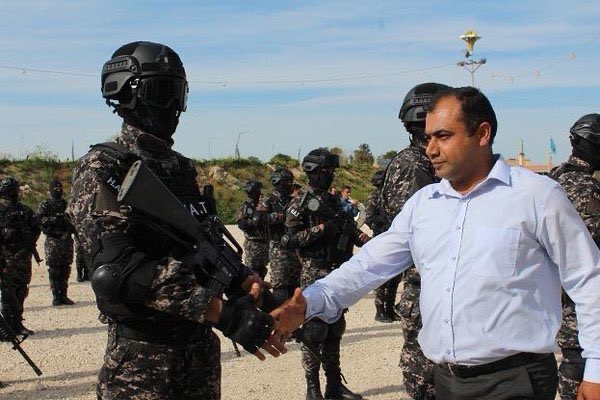
Following the defense of Serêkaniyê, developing security mechanisms and protecting cities became major responsibilities in Rojava. Ciwan brought his military experience into the field of security. With the establishment of the Asayish in 2013, he worked to develop security systems in the cities.
Ciwan’s approach to security also encompassed the protection of cities where different communities lived together. He attached great importance to enabling Arab, Syriac, Armenian, and Circassian communities to establish their own security mechanisms.
This approach also changed Dîlan’s perspective:
“He placed great importance on cities inhabited by multiple communities. We used to say, ‘We are patriots, the Kurds always come first, and we have a cause.’ But Heval Ciwan did not see it that way. He would say, ‘If you want to protect and defend yourselves, you must also organize the other communities.’ This brought about a change in our thinking.”
During the years when ISIS attacks intensified, this approach found practical expression in the work of the Asayish. Protecting neighborhoods inhabited by Christians and Arabs was among Ciwan’s priorities.
Ferhad Şamî emphasizes the relationship Ciwan established with the Christian community in Qamişlo:
“Christians and Arabs loved him very much, too. He was the one who did the most to protect Christians from ISIS. In 2014, 2015, and 2016, the Asayish protected their neighborhoods. He would say, ‘We must protect Christians and Arabs,’ and he established a battalion for Christians in Qamişlo.”
Şamî says he last saw Ciwan in Hol in 2016. He recalls that Ciwan continued his work even when armed groups were searching for him.
He became a star in Garê
Following his duties in Rojava, Ciwan İbrahim once again turned toward the mountains of freedom. In 2019, while carrying out his revolutionary duties in the Garê region, he lost his life in an attack by the Turkish state.
After the deaths of Ciwan and 28 guerrillas were announced on November 2, condolence gatherings were held across Rojava. Hundreds of people from Zirgan, Til Temir, Qamişlo, Amûdê, Tirbespiyê, Çilaxa, Rimêlan, Girkê Legê, and Dêrik attended the commemoration held in Hesekê.
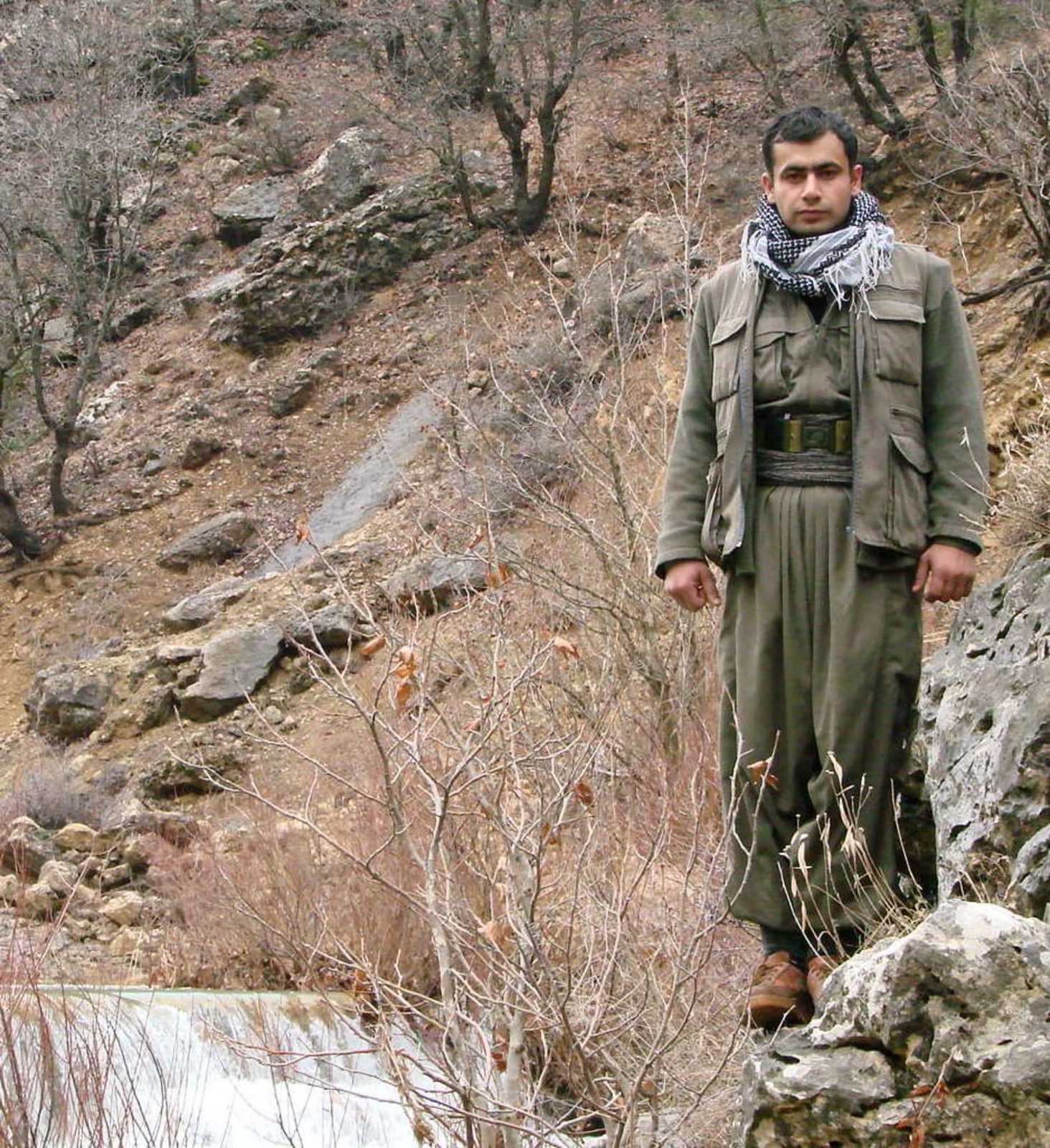
‘I am proud of Ciwan’
Following the condolence gathering, we also spoke with his mother, Enîse Topal Hemo, to tell the story of Ciwan’s life.
Originally from Afrin, Enîse Topal Hemo belongs to the Şikakî tribe. After hearing from the comrades who had worked alongside Ciwan, we listened as his mother shared her memories of her son’s life and character.
As she begins to speak about her fallen son, she says, “Ez qurbana xorta bim” (“I would sacrifice myself for my son”).
“Ciwan left an ache in my heart, but he also placed a golden crown upon my head. I am proud to be his mother. I hold my head high because of my son. Ciwan İbrahim is Simko Şikakî.”
As Mother Enîse speaks about what her son did for his people, she also recalls what he was like at home:
“He did the most wonderful things for his people. He was very intelligent, and he never once gave me any trouble. He had a pure heart and was a good person. He helped me with the housework. He loved me, his neighbors, and his friends very much. I never saw any shortcomings in him.”
She expresses her longing for her son through the bond he established with his people:
“Ciwan İbrahim is the patience of Rojava. Rojava is Ciwan İbrahim. I will rename Serêkaniyê after Ciwan İbrahim.”
He was the father of the poor
Ciwan İbrahim’s connection with the people was not limited to his revolutionary activities and responsibilities in the field of security. Those who knew him also emphasize his concern for people in need and his close involvement in the problems faced by the community.
Dîlan Osman describes how people remembered Ciwan during condolence visits:
“Everyone who visits the family says, ‘Heval Ciwan was the father of the poor.’ He looked after everyone and was truly a man of the revolution. For example, whenever he saw someone living in poverty, he would find a way to help them. Before we knew it, we would hear that he had somehow managed to help them. Even when people fell ill, they would ask, ‘Where is Heval Ciwan?’ He was present in every city across Rojava, particularly in the Cizîr region. He was the people’s first general.”
A memory left behind by a camera
Ciwan İbrahim was also a media worker who provided Dîlan Osman with journalism training in 2013. One of Dîlan’s most cherished memories of him involves his camera. One day, Ciwan gave Dîlan the camera he had received as a gift and always carried with him.
Dîlan recalls that moment:
“Before leaving Rojava, he gave me his camera as a gift. He said, ‘It’s yours now, but always take pictures of people smiling.’ I told him, ‘You should keep it. You loved this camera so much, and you took the most beautiful photographs with it.’ But he said, ‘No, I want you to have it now.’ Perhaps you don’t realize it at the time, but that was the last gift he ever gave me. I still have that camera.”
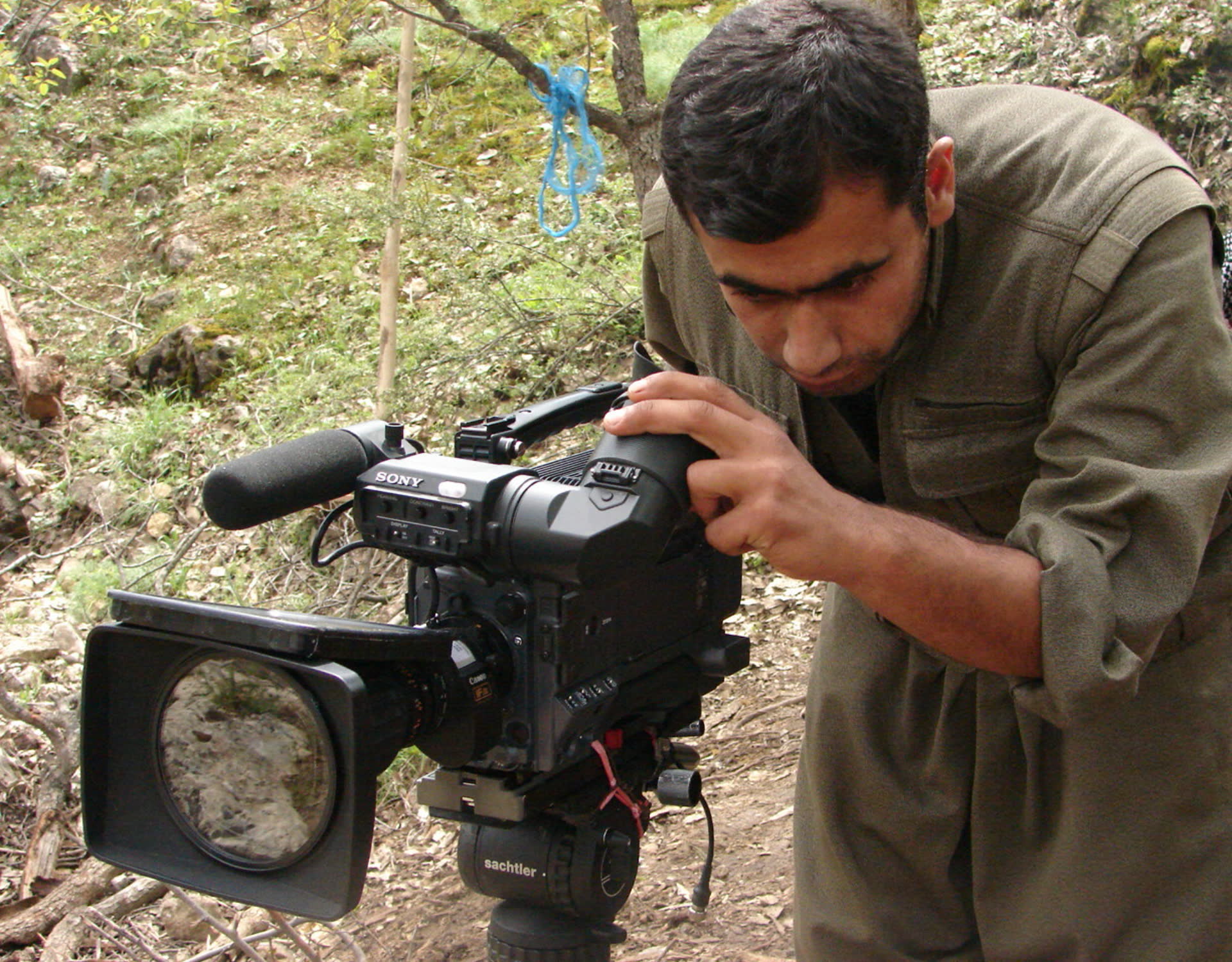
]]>
Karayılan also addressed the current political situation in East Kurdistan and Iran. In light of regional developments, he called on the people to place their trust in their own collective strength, build structures of solidarity, and organize independently of external powers. He also described the Peace and Democratic Society Process initiated by Abdullah Öcalan as a development whose significance extended far beyond North Kurdistan.
Murat Karayılan’s statement reads as follows:
“First of all, I would like to extend my greetings and respect to our people in Rojhilat in particular. Among those who have fallen in recent times, some of whose names have already been announced while others have not yet been made public, are several of our comrades from Rojhilat. On behalf of the leadership of our movement and our central headquarters, we extend our condolences to the families of the martyrs whose names we are now announcing. Our sympathies also go out to the entire population of Rojhilat.
On behalf of all our fallen comrades, we remember Heval (Comrade) Artêş (Muhammed Fevzi) and Heval Sila (Zehra Ismaili) with respect, admiration, and gratitude. We bow before their memory and renew our promise to them, the promise we made together as comrades. We will remain faithful to that promise. We will fight to the end to realize their hopes and dreams and bring their cause to success. We will carry their struggle to victory and, in doing so, immortalize their memory.
They gave their lives for their homeland
Dear comrades, esteemed families,
All those whose names we are announcing at this time resisted under extraordinary circumstances and fell in that struggle. As we have already emphasized, this holds particular significance. I would like to express my appreciation to all the families who raised such courageous individuals. We extend our greetings and respect to the mothers and fathers of the martyrs.
The fact that young people from Rojhilat joined the struggle throughout Kurdistan, particularly in Bakur (North Kurdistan), and demonstrated such great willingness to make sacrifices reflects an honorable stance. They did not act out of personal interest. They gave their lives for their homeland. That is why these comrades are especially precious to us, and we bow before their memory. Through their deaths, they have also left us a message that we must put into practice.
As I have explained before, people from Rojhilat began joining our movement in 1989. However, a decisive development took place during the international conspiracy against Rêber Apo [Leader Abdullah Öcalan]. Although our movement had not yet established its own organizational structures in Rojhilat at the time, the people rose up. Protests and uprisings broke out across East Kurdistan, marked by great determination and willingness to make sacrifices.
This stance deserves the highest recognition. At that time, our comrades and our entire people felt that we had support and that Rojhilat stood by our side. The people of Rojhilat understand the significance of political leaders and their historical responsibilities. They had already gained this experience during the time of Qazî Mihemed and Abdurrahman Qasimlo. That is why they also understood the capture of Rêber Apo as a historic turning point and rose up against it.
Rojhilat’s contribution to the collective liberation struggle
Following this period, the participation of young people from Rojhilat in the guerrilla movement continued to increase. We must not forget comrades such as Doctor Afat and Dilxwaz, who fought and fell in East Kurdistan. We also remember Heval Şivan Gever and his many years of work in the region.
Young people from Rojhilat quickly found their place within the guerrilla movement and continued to develop their capabilities. Many assumed important duties and responsibilities within a short period, even under extremely difficult conditions.
Our people know, for example, Heval Simko, who went as far as the Black Sea region and assumed leadership responsibilities there. His determination and courage made this possible.
Another example is Heval Rêzan Cawîd, who joined in 2003. He was an educated, knowledgeable, exceptionally dedicated, and courageous individual. Thanks to his abilities, he soon took on greater responsibilities and became co-chair of KODAR-PJAK.
When young people from Rojhilat become familiar with Rêber Apo’s thoughts and ideas and engage with them, they often develop a strong connection to these principles within a short period. On this basis, they are able to rapidly develop their abilities and political work.
Heval Hîwa Sine fought in Botan and Erzurum, where he assumed command responsibilities, and later participated in the resistance in Kobanê. He served as a regional commander and fell there. He made significant contributions over many years.
Heval Rênas Seqiz was also active in the Erzurum region for a long time. He subsequently returned to Rojhilat and continued his work there before moving to Rojava. Through his dedication, he also assumed responsibility as a regional commander there and became a target of the enemy.
We have known numerous comrades from Rojhilat who took on responsibilities in this way. Heval Mizgîn Ronahî was a member of the special forces and served as a commander in Zap. She fell after putting up determined resistance.
Heval Egîd Rojhilat came from Îlam and was also a member of the special forces. He carried out numerous important duties within our movement. In South Kurdistan, particularly in Kirkuk, he played a significant role in the fight against ISIS. He later assumed regional command responsibilities in Metîna, where he fell.
Once again, I would also like to remember Ronahî, Şîrîn Elemhulî, Ferzad, Ferhat, and Soran. Even in the face of execution, they refused to bow down and continued to resist.
The people from Rojhilat who joined our movement earned their place through their dedication, courage, willingness to make sacrifices, and resistance. They assumed significant responsibilities in our struggle. A land and a people capable of producing such individuals also possess the strength to achieve their freedom.
I have mentioned only a few names here. It would be impossible to list them all. Many other comrades from Rojhilat, as committed followers of Rêber Apo’s ideas, have taken on important responsibilities. We remember them all with respect, admiration, and gratitude.
Families can be proud of their children
Those whose identities we are now announcing also belong to this tradition. The vast majority of them fell within the past ten years. As we have already explained, the war during this period differed fundamentally from its earlier phases. Perhaps there had never before been a war of such intensity.
Under these extraordinarily difficult conditions, our comrades put up historic resistance. Every mother and father who raised such individuals can be proud of them. Their families raised them and instilled values in them. Later, fully aware of their responsibilities, they freely chose their own path.
They fought in Bakur, Bashur, and Rojava, where they lost their lives. Their life journeys demonstrate the determination and courage they possessed. Their families can look back on them with pride.
Dear comrades, esteemed families, dear people,
Our entire region is currently engulfed in war. Iran and Rojhilat, in particular, are going through an extremely sensitive and significant period. We are aware of the needs and demands in Rojhilat. At the same time, we know that a society capable of producing such individuals and leaders also possesses the strength to overcome great difficulties.
What matters is not becoming dependent on other powers, but taking Rêber Apo’s Third Way as a foundation and relying on your own strength. This applies to all parts of Kurdistan, but particularly to Rojhilat.
You have your own experiences. The uprising under the slogan “Jin, Jiyan, Azadî” [Woman, Life, Freedom] was neither an ordinary nor an insignificant experience. The stance demonstrated at that time was also extraordinary. We are convinced that, on this basis, you can achieve a great deal if you take action and organize yourselves.
An organized society is everything
One thing must never be forgotten: An organized society is everything; an unorganized society is nothing. That is why you must organize within your communities and strengthen your unity. Every village, every neighborhood, and every region must act in solidarity, cooperate, and support one another.
At present, economic difficulties and financial hardships are severe. Those who have the means must support those in need. You must stand by one another, demonstrate solidarity, help each other, and, above all, organize yourselves.
Through organization, people develop a will of their own. An organized society can become an extraordinarily powerful force.
That is why, particularly at this crucial stage, our people must take responsibility for themselves and develop their own collective strength. As we have already said, this is possible only through organization.
Social unity as the foundation of political agency
No one can deter a society in which tens of thousands of people are organized from pursuing its goals. That is why we must follow the path of our martyrs everywhere, develop comprehensive social organization, and continue the struggle. We believe in a promising future for the people of Rojhilat. Our people have begun taking their affairs into their own hands and are increasingly aware of where and how they need to act.
There are also revolutionary institutions. If these institutions fulfill their duties in a timely manner and live up to their responsibilities, many problems can be resolved and new developments made possible. However, what remains decisive is that the people themselves take action, organize, and develop an unwavering collective will. This is possible and by no means beyond reach.
Who is truly powerless? Those who are fragmented, lack organization, and have no social alliances. A society that develops its own alliances and relationships of solidarity, on the other hand, can find solutions even under the most difficult circumstances. This is precisely what is expected of our Kurdish people today.
The democratic resolution process concerns all of Kurdistan
As you know, the democratic resolution process is currently on the agenda in Bakur. Rêber Apo developed and initiated this process to bring our struggle to success and achieve our goals. Although there are currently difficulties in its implementation, we are convinced that this new strategy will pave the way for significant developments. This issue does not concern the north alone. It is of great importance to all Kurds and to Kurdistan as a whole.
Rêber Apo says: “I want to create a space where Kurds can live.”
Today, we Kurds need a space in the Middle East where we can live freely. We need the opportunity to lead free lives on our own land, on the basis of equality with neighboring peoples. Such a space is essential. All efforts are directed toward achieving this.
That is why the work Rêber Apo is currently undertaking is, by its very nature, of national significance. We are convinced that all our people are following these developments closely.
Our martyrs are our greatest values
In this context, we must protect and preserve our values even more strongly. Our greatest values are our martyrs. They embody our present, our future, and the source of our strength. We must unite around their memory and strengthen our unity on the basis of their political legacy. In this way, we will immortalize their memory. To honor them, we must continue their struggle.
To our esteemed families, I would like to say: The families of our martyrs are also our families. They must recognize the value that their loved ones represent. At the same time, it is important to continue the path taken by the martyrs through their own work and commitment and to assume responsibility within society. With this hope and this goal, I once again extend my condolences to all the families of our martyrs and wish them strength and success.
We will follow the path of our martyrs and achieve our goal. Let no one doubt that. The struggle of these individuals shows us the way. It will lead us to success and victory.
In this spirit, we say once again: Şehîd Namirin! Şehîd Namirin! Şehîd Namirin!”
Identities of nine fallen guerrilla fighters from Rojhilat
The Press Center of the People’s Defense Forces (HPG) on Thursday announced the identities of nine guerrilla fighters from Rojhilat who lost their lives between 2006 and 2022 in various regions of Kurdistan.
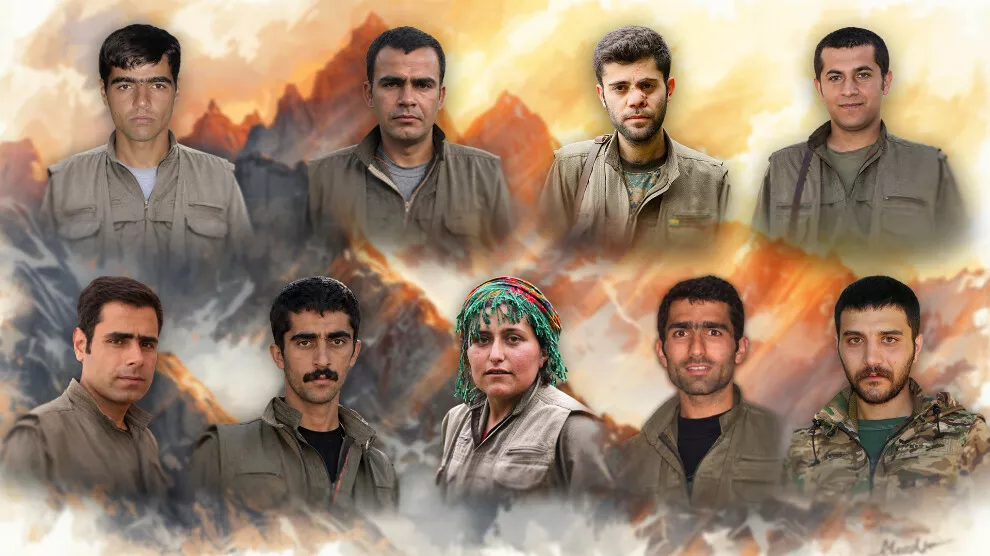
The HPG obituary said:
“Our comrades Artêş, Sıla, Zana, Welat, Fedakar, Rêbûwar, Bêkes, Bahoz, and Nebes, the courageous sons and daughters of East Kurdistan, waged a tireless and continuous struggle and fully fulfilled their revolutionary duties. Through their determined participation, their unwavering commitment to the political line of our leader Abdullah Öcalan, and their selfless fighting spirit, they have joined the ranks of the immortals.
Our comrades, who fought to realize Abdullah Öcalan’s philosophy and felt a profound sense of responsibility in the face of our leader’s imprisonment, undertook historic duties under the most difficult conditions. Through their deaths, they became tangible examples for those of us continuing their struggle of the qualities that a militant committed to our leader’s political line must embody.
We declare that we will carry the banner of resistance passed down to us by our fallen comrades until victory. In this spirit, we extend our condolences to our patriotic people in East Kurdistan and to the families of our fallen comrades.”
The identity information of the nine guerrillas from Rojhilat is as follows:
|
|
Nom de Guerre: Artêş Çîçek |
|
|
Nom de Guerre: Sıla Destan |
|
|
Nom de Guerre: Zana Adar |
|
|
Nom de Guerre: Welat Bêrîtan |
|
|
Nom de Guerre: Fedakar Ronahi |
|
|
Nom de Guerre: Rêbûwar Amed |
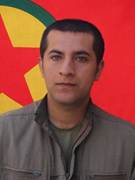
|
|
Nom de Guerre: Bêkes Bêrîvan |
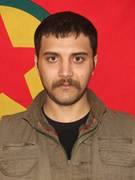
|
|
Nom de Guerre: Bahoz Nîştîman |
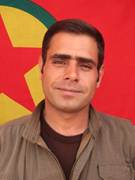
|
|
Nom de Guerre: Nebes Evîndar |
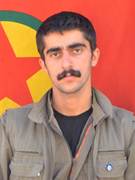
[album=22846]
The report stated that an investigation was launched against one woman journalist, another was sentenced to 18 months in prison, and nine women journalists continued to face trial in nine separate cases. It emphasized that prosecuting journalists for reporting on violence and rights violations against women constituted an infringement of the public’s right to information.
Digital censorship and dismissals
Highlighting the continued digital censorship targeting the free press, the report documented the blocking of two websites and restrictions on access to 20 news articles. It stated that these measures made it more difficult for information about rights violations against women to reach the public.
The report noted that 162 journalists lost their jobs. However, it was not possible to determine how many of them were women. MKG drew attention to the precarious working conditions and discrimination faced by women journalists.
Eight women journalists behind bars
In its report, MKG stated that eight women journalists were currently imprisoned and called for their release, effective investigations into sexist attacks, and an end to policies of impunity.
The association emphasized that it would continue to fight against the criminalization of journalistic activities and strengthen its efforts to defend press freedom.
]]>The report states that courts in Tehran and Mashhad have sentenced five protesters, Alireza Rezai, Vahid Kehermani, Mehdi Jalali, Metin Şebani and Emir Dilşad, to death. All five were arrested during the January 2026 protests.
According to the report, all five were convicted of “collaborating with enemy states”. Two female prisoners tried in the same case, whose identities have yet to be established, were each sentenced to 30 years in prison.
Mehdi Jalali, who previously served as an imam, was reportedly sentenced to death by the Special Court for Clerics on charges of apostasy.
Meanwhile, 19 religious scholars held in Urmia Central Prison (Yakup Muradi, Ibrahim Jiyani, Areş Agahi, Esed Muhammediyan, Awine Kaytarani, Çiya Nasrullahi, Resul Yusuf, Siyamend Alipur, Hemin Ahmedi, Emin Dilnişin, Şehriyar Hızır, Cafer, Vezir Zersaw, Rahim Asare, Afşin, Areş Kulizade, Mihran Nirumendi, Kamyar Şeyhi and Mevlud Ateşbar, as well as Saadet Taşke) have reportedly been sentenced to prison terms ranging from six to ten months.
The report also states that the prisoners have been denied leave, limited freedoms and the right to receive medical treatment outside the prison.
The report further states that two athlete brothers, Emirali and Emad Zakeriferd, who were arrested during the January protests, were transferred to Ilam Central Prison after being subjected to severe physical and psychological torture by Iran’s Islamic Revolutionary Guard Corps (IRGC). A court reportedly sentenced the brothers to 33 and 35 years in prison, as well as flogging.
]]>ANF spoke to Nilüfer Koç, Co-Spokesperson for Foreign Relations of the Kurdistan National Congress (KNK), about the results of the international campaign, diplomatic initiatives to be pursued at the Council of Europe, steps toward implementing the right to hope, and upcoming efforts aimed at securing Abdullah Öcalan's physical freedom.
Nilüfer Koç commented on reports that Abdullah Öcalan had been moved to a new building on Imrali Island, stating that his transfer to a larger space did not constitute a fundamental change in his conditions. She emphasized that the arrangement amounted only to an expansion of his physical surroundings and that access to Imrali Island and visits remained under state control.
Koç pointed out that the island was surrounded by the sea and that the state decided who could travel to and from it. She said, "The state will take you there whenever it wants and will either allow or deny permission to those wishing to visit. This is a situation entirely under state control. That alone is a problem. Changing the size of a cell on the island is not a particularly decisive factor either. In my view, this amounts to little more than a delaying tactic."
Koç emphasized the importance of Abdullah Öcalan's political struggle reaching society and the political sphere, stating that the existing conditions prevented this from happening. She noted that Abdullah Öcalan had taken considerable risks to build democracy and peace in Turkey and had been engaged in political struggle for many years. She stressed that changing his physical surroundings would not be sufficient to enable this struggle to reach society.
Koç also stated that the isolation conditions on Imrali prevented the idea of peace from taking root in society and becoming an effective part of the political agenda. She emphasized that meaningful change would only be possible if Abdullah Öcalan were allowed to establish contact with the outside world.
Koç said, "His relocation is also a cosmetic measure in this respect. It does not change the course of the process. Establishing connections with the outside world, as Abdullah Öcalan himself has requested, would genuinely contribute to the process. Such a development could further strengthen the Kurdish people's confidence in the process."
Koç reiterated that the changes to Abdullah Öcalan's physical conditions had not altered his imprisonment or isolation. She said, "Abdullah Öcalan remains a prisoner on Imrali Island. The conditions of his captivity have not changed. He has simply been transferred from one cell to another. We should not be misled by this."
'Abdullah Öcalan's status must be clarified for the process to advance'
Nilüfer Koç pointed out that the steps taken by the Kurdish side in the Peace and Democratic Society Process were clear, while the state had maintained a slow and uncertain approach to taking concrete measures. She emphasized that Abdullah Öcalan's status needed to be clarified for the process to move forward, recalling that numerous proposals had been presented since 27 February to advance the process.
Koç stated that Abdullah Öcalan had put forward calls and proposals on major issues, including the establishment of commissions, legislative arrangements, the burning of weapons and the dissolution of the Kurdistan Workers' Party (PKK). She said that he had addressed the entire political spectrum in Turkey in his efforts toward peace. Koç emphasized that clarifying his status was essential for these efforts to continue and for him to maintain the role he had undertaken in the process.
Koç said that the state had not yet made a definitive political decision on resolving the Kurdish question and that the prevailing uncertainty and repeated delays stemmed from this indecision. She pointed to growing contradictions within the state, referring to debates surrounding corruption allegations and the fund crisis, and argued that the state under the Justice and Development Party (AKP) government was experiencing serious internal decay.
Koç described Abdullah Öcalan's proposals as an approach that extended beyond the Kurdish question and also sought to democratize the state structure in Turkey. She said, "Abdullah Öcalan's proposals constitute a project to cleanse state institutions tainted by corruption through democracy. The overwhelming majority of society would benefit from this solution."
'Relying on external power balances is a short-term policy'
Nilüfer Koç said that rather than resolving the Kurdish question, the state was relying on shifting power balances and regional agreements in the Middle East. She argued that Turkey was attempting to buy time through developments in foreign policy. Koç stated that the state was calculating that it could maintain the existing situation through external alliances without resolving the Kurdish question but emphasized that this approach would not provide a lasting solution.
Koç said: "The resolution of the Kurdish question is also a very important factor in external power balances. We need to look at Iran, Iraq and Syria, Turkey's neighbors. Eastern Kurdistan (Rojhilat), Southern Kurdistan (Başur) and Rojava Kurdistan are also asserting the Kurdish people's right to self-determination through struggle. The Kurdish question is therefore not merely an issue of Turkey's domestic politics, but also of its foreign policy. Wherever the Turkish state turns, it will encounter the Kurdish question. Everyone in the region is currently seeking power balances in which they can invest. The strength of the Kurds is also a force capable of significantly changing these balances."
Koç pointed out that a new regional order was taking shape in the Middle East and that strategic changes were underway. She said that the alliances and political balances established today could change tomorrow. Koç argued that Turkey was acting according to day-to-day developments rather than developing a long-term policy.
Koç continued: "Power balances change, new actors emerge, and alliances between actors shift. I believe Turkey has been driven into an impasse in this respect. Turkey is trying to prolong its position through diplomacy by taking advantage of certain openings created by the chaos in the region. The presence of multiple centers of power and the multipolar nature of regional politics mean that political developments take the form of conflict and compromise. As a result, conflict and compromise frequently alternate. Even the United States, which claims hegemony, is struggling to manage this political situation. How, then, can a state like Turkey, which is experiencing serious internal decay, manage it? Domestically, the Kurdish freedom struggle, particularly Abdullah Öcalan's Peace and Democratic Society strategy, has brought Turkey to a point where it must decide its future. The choice is between democracy and deepening decay. The Kurds are a highly dynamic people who are aware of their own strength."
Koç stated that Turkey's domestic problems were also making this policy unsustainable. She said that, alongside debates over corruption, practices aimed at silencing the opposition and the arrest of journalists were continuing to intensify. Koç emphasized that the state could not move forward by relying on foreign policy developments without resolving its internal problems, arguing that the way forward lay in implementing the Peace and Democratic Society Project.
Koç said: "The region is undergoing restructuring based on new agreements rather than old ones. The Turkish state cannot save itself from these global pressures through day-to-day diplomacy and political maneuvers. The Turkish state is experiencing a crisis as a result of the changes being imposed around it. It is becoming clear that the state faces a structural problem. The Republic established in 1923 has now become outdated. Unless Turkey undertakes democratic restructuring as proposed by Abdullah Öcalan, it will become increasingly dependent on external powers."
Koç said that global and regional powers acted according to their own interests and that their calculations might not always align with Turkey's expectations. She emphasized that foreign policy agreements and compromises would not eliminate the Kurdish question. Koç stated that Turkey would sooner or later have to confront its domestic problems, the need to resolve the Kurdish question and the necessity of democratization. She also said, "Turkey needs democracy."
'Abdullah Öcalan's freedom is not solely a matter of the process'
Nilüfer Koç emphasized that the question of Abdullah Öcalan's freedom should not be considered solely in relation to the Peace and Democratic Society Process. She said that the process had created a new political opportunity and argument in this regard, but that the issue had much broader legal and political dimensions.
Koç said: "If there were no process, should Abdullah Öcalan not be free? In my view, there is an issue here that goes beyond the process itself. His abduction and the fact that he has been held unjustly on Imrali for 27 years are problems in themselves. Holding the leader of people, a person who seeks nothing other than democracy and freedom, under such conditions is an injustice in itself."
Koç drew attention to the legal dimension of this injustice, recalling the 2014 judgment of the European Court of Human Rights (ECtHR). She stated that the Court had ruled that aggravated life imprisonment was incompatible with Article 3 of the European Convention on Human Rights in relation to the right to hope and said that Turkey needed to bring its legislation into line with the Convention.
Koç noted that the judgment had still not been implemented despite the years that had passed, describing this as a political stance. She pointed to the responsibility of the Council of Europe's Committee of Ministers, which oversees the execution of judgments, and emphasized that the Council of Europe must enforce its own legal framework and ensure that Turkey fulfills the requirements of the judgment.
'The Council of Europe's position is being tested by the peace process'
Nilüfer Koç stated that the Council of Europe's position on Abdullah Öcalan reflected a continuation of its longstanding political approach to the Kurdish question. She said that the Peace and Democratic Society Process had made the contradictions in this approach more visible.
Koç argued that the Committee of Ministers, the Council of Europe's political and executive body, was still operating on the assumption that the period of conflict between Turkey and the Kurds was continuing. She emphasized that the institution's perception of Turkey as an ally or partner also contributed to its reluctance to fulfill its legal responsibilities.
Koç recalled that a new peace process was underway and that Abdullah Öcalan had issued calls for peace and a democratic society. She said that the Council of Europe needed to take these new circumstances into account and reconsider its position.
Koç said, "The Council of Europe, as far as we can see, continues to insist on its old policy toward the Kurds." She criticized the Committee of Ministers for continuing to act like a third party benefiting from the conflict at a time when Kurds and Turks were no longer engaged in war. She asked, "There was a century-old equation surrounding the Kurdish question: When two sides fight, a third party benefits. The Council of Europe seems to be continuing to play the role of that third party. Yet in Turkey, Kurds and Turks are no longer engaged in an actual military conflict. Why does the third party still adopt a position as though the two sides were at war?"
Koç emphasized that the Council of Europe's relationship with Turkey as a member state, ally and partner should not take precedence over its human rights obligations. She stated that the Peace and Democratic Society Process required the institution to reassess its approach. Koç also pointed out that support for the international signature campaign was not limited to those who shared Abdullah Öcalan's ideas. She noted that the signatories included both people who ideologically supported his views and those who opposed what they regarded as a legal and political injustice. She emphasized that the failure to implement a judgment issued by the ECtHR had prompted objections from different sections of society.
Koç recalled that the Council of Europe and the ECtHR had dealt with numerous cases involving human rights violations in Turkey over the past 40 years. She noted that these mechanisms had been used not only by Kurds but also by opposition groups in Turkey. Koç said that the current opportunity for peace also placed responsibilities on the Council of Europe. She emphasized that the Committee of Ministers should adopt a position supportive of peace and ensure the implementation of the ECtHR judgment concerning Abdullah Öcalan.
'Pressure must increase ahead of the 1–3 December meeting'
Koç stated that the international signature campaign needed to enter a new phase. She drew attention to the meeting of the Council of Europe's Committee of Ministers scheduled for 1–3 December, saying that Abdullah Öcalan's situation and the case concerning implementation of the ECtHR judgment would be on the agenda.
Koç emphasized that the case before the Committee of Ministers was important for ensuring that Turkey introduced the necessary legislative amendments in accordance with ECtHR judgments. She stressed that international campaigns needed to continue. However, Koç also pointed out that international signatures and campaigns alone were insufficient, emphasizing the importance of different sections of society across all parts of Kurdistan taking ownership of the process.
Koç warned that developments in Northern Kurdistan and Rojava in particular posed serious regional dangers. She said that developing a common position among people in different parts of Kurdistan would be important both for Abdullah Öcalan's freedom and for the Peace and Democratic Society Process.
Koç stated that the Peoples' Equality and Democracy Party (DEM Party), which has representation at the Council of Europe, needed to assume a more active role in turning the international campaign into diplomatic and political results. She recalled that the DEM Party was directly involved in the negotiation process through its Imrali delegation, emphasizing that the party's activities in Strasbourg would strengthen rather than weaken the negotiations.
'The DEM Party must take a more proactive approach in Strasbourg'
Nilüfer Koç pointed out that the DEM Party could assume a more effective diplomatic role at the Council of Europe. She emphasized that the party needed to move beyond a passive approach to diplomacy and pursue more proactive initiatives.
Koç recalled that the DEM Party was demanding the democratization of Turkey's laws as part of the negotiation process. She said that initiatives undertaken in Strasbourg, at the Council of Europe, were also part of this struggle. Koç emphasized that these efforts would strengthen the negotiation process in favor of democracy rather than undermine it. She said, "The DEM Party is effectively acting as a mediator. It has an Imrali delegation and is directly involved in this negotiation process. Therefore, one dimension of the struggle to facilitate negotiations and advance democracy consists of activities carried out in Strasbourg, at the Council of Europe."
Koç stated that the DEM Party and other opposition parties had opportunities to contribute to increasing political and diplomatic pressure on the Council of Europe's Committee of Ministers. She emphasized the importance of making more effective use of these opportunities.
Call to all sections of society, from the Kurdish Women's Movement to students
Nilüfer Koç said that not only political parties but all sections of society needed to take action ahead of the December meeting of the Council of Europe's Committee of Ministers. She called on the Kurdish Women's Movement, the Kurdish Students' Union and various social organizations to become involved. Koç emphasized the need to send letters and emails to the Committee of Ministers and continue digital media campaigns. She stressed that these initiatives went beyond continuing the signature campaign and represented society's collective support for Abdullah Öcalan's determination and struggle for peace.
Koç said, "I believe these efforts will be important in demonstrating our commitment to the path toward peace outlined by Abdullah Öcalan."
Koç stated that the Council of Europe's credibility would be seriously questioned if the Committee of Ministers failed to adopt a concrete decision at its December meeting. She described the meeting as a turning point for the institution. Koç recalled that the Council of Europe's fundamental responsibility was to ensure that member states complied with the European Convention on Human Rights and to take the necessary measures to secure their compliance. She criticized the lack of a consistent and comprehensive approach to democratization throughout Turkey's membership of the Council of Europe, arguing that political, economic and military interests had influenced the institution's position.
Koç said that Abdullah Öcalan was currently assuming the role that the Council of Europe's Committee of Ministers should be fulfilling, taking considerable risks to ensure the success of the Peace and Democratic Society Process. She emphasized that the Council of Europe needed to respond to these efforts and assume responsibility for improving Abdullah Öcalan's conditions.
'Non-Kurdish groups are also speaking out against this injustice'
Nilüfer Koç stated that numerous non-Kurdish groups had also supported the international signature campaign, emphasizing that its demands should not be regarded as a concern exclusively for Kurds. She said that appeals and signatures from civil society organizations demonstrated that legal and political objections concerning Abdullah Öcalan's situation had gained international support.
Koç noted that although the signature campaign had concluded, its demands remained on the agenda. She emphasized the importance of continued appeals to the Council of Europe's Committee of Ministers by the international community and civil society.
Koç stressed that Kurds needed to raise their voices more strongly and called on all sections of society in Turkey, Rojava, Eastern Kurdistan and Southern Kurdistan to participate in these efforts.
Koç pointed out that demands to improve Abdullah Öcalan's conditions, implement the right to hope and secure his freedom were not merely matters concerning conditions on Imrali Island, but could also have significant consequences for the future of the region. She said, "Because the only democratic project currently being proposed in the region is the one presented by Abdullah Öcalan. While all regional and global powers are attempting to resolve problems through violence, the Kurdish side is presenting peace as an alternative. This is a truly historic development."
'Abdullah Öcalan's freedom will create new hope in the region'
Nilüfer Koç stated that enabling Abdullah Öcalan to communicate directly and freely with the outside world, implementing the right to hope and securing his freedom would create new hope across the region. She said that such developments would also have an impact on different countries in the Middle East.
Koç emphasized that this would affect Eastern Kurdistan and Iran, Southern Kurdistan and Iraq, as well as Rojava and Syria. She said that Abdullah Öcalan's freedom would create new political opportunities at the regional level and that the Council of Europe could play an important role in this process.
Koç stated that the Council of Europe's Committee of Ministers possessed mechanisms it could use to encourage Turkey to move toward peace. She emphasized that the institution could employ not only diplomatic means but also its economic and political instruments.
]]>The statement said: “Established on 6 November 1981, in the aftermath of the 12 September military coup, the Council of Higher Education (YÖK) has continued for 45 years to be one of the principal institutions through which a centralised and tutelary system of governance is imposed on universities.”
The statement noted that, particularly under AKP rule, this structure had become one of the instruments through which the political authorities intervened in university affairs, and added: “It is unacceptable that young people are pushed out of politics, that their freedoms of association and expression are restricted, and that universities are transformed into institutions that produce obedient individuals. Young people are not merely the social and political actors of the future; they are actors in society and politics today.”
The DEM Commission outlined the kind of university it envisions as follows:
"A university in which YÖK is abolished, and centralised tutelage comes to an end; in which rectors are elected through the democratic will of the university community; in which academic and scientific freedom is guaranteed; in which students, academics and university workers have a voice and a role in decision-making. A university founded on education in one's mother tongue, pluralism, equality and a libertarian understanding of secularism and in which education is organised around the public interest rather than market demands."
The statement concluded: “On the anniversary of YÖK's establishment, we reiterate once again: universities are not ideological instruments of those in power, nor are they institutions to be shaped according to the needs of capital. Academic freedom is one of the fundamental conditions for the democratisation of society. End the trustee-appointed administration model, political tutelage and academic repression! Abolish YÖK! Establish autonomous, democratic, free and public universities! Let young people have a say! Let universities be free!”
]]>Nurcan Değirmenci said that she began her artistic career at the Mesopotamia Cultural Center in 1995 and had struggled shoulder to shoulder with women for many years, both as a musician and as a Kurdish woman. She recalled that they established the Art for Peace Initiative (BIS) in 2009, bringing artistic production together with the struggle for peace.
Değirmenci said, "Art is an indispensable element in the existence of culture," and emphasizing that the search and struggle for identity also involved artistic resistance.
'Women will shape the language of peace'
Nurcan Değirmenci said that the central message of the conference, for her, was the importance of women standing together without denying their own stories. She expressed her belief that women would build the language of peace in this period. Değirmenci said that women had borne the greatest suffering experienced in the country, adding: "We can remain silent together, but we can also speak and struggle together. Therefore, the fact that women can stand side by side here today is an important step toward peace."
A common struggle against all forms of violence
Nurcan Değirmenci called for a collective struggle against the growing violence in society, saying: "We have recently seen an escalation of violence against women, children, animals and nature. The solution to this violence, which extends from social media to politics, is to build a common struggle."
Değirmenci said that the violence women faced at home, in the streets, in workplaces, academia and politics had the same underlying roots. She said, "As women, we must come together against the violence we face. There is no other way."
'Our priority is to develop gender consciousness'
Nurcan Değirmenci recalled that Kurdish women had waged a determined struggle for many years for Abdullah Öcalan's physical freedom. She emphasized that women were at the center of this struggle. Değirmenci said, "Nothing and no one can be free unless women are free. What matters is women's strength, and our priority is to develop gender consciousness."
Değirmenci also issued a call ahead of 25 November, the International Day for the Elimination of Violence against Women. She said, "Women from all sections of society must take to the streets in an organized manner. The language of peace can only be built through this solidarity."
]]>Gülten Kaya, with whom we discussed the transformation of the music world, said that digital platforms also generated ethical and moral problems of their own. She identified creating works in one's mother tongue as one of the most important pillars of collective memory.
Gülten Kaya said of Ahmet Kaya's music: "It is socially conscious, it bears witness, it is authentic, literary, recent history, poetry, emotion and sacrifice. His music reflects both recent history and all the suffering experienced by society." She also criticized the reduction of art to an apolitical industry: "All creative fields, from painting to literature, cinema to music, require the courage to engage with life. Art is one of the fields in which the greatest courage is needed to bear witness to life, particularly in countries like ours."
ANF spoke to lyricist and music producer Gülten Kaya about the transformation of the music world and the impact of digitalization on music production and consumption habits.
The music industry has evolved toward a digitalized, algorithm-driven market model in recent years. How is this transforming music's role in creating collective memory and fostering social empathy?
Digital environments and platforms also generate ethical and moral problems of their own. We can consider these problems from both human-centered and system-centered perspectives, and the two are not independent of each other. Technology undoubtedly has a significant impact on how people perceive the world and is increasingly determining that perception. Although we cannot yet speak of a fully developed music industry in Turkey, looking at the global music industry, we can say that its participation in this new process, which could be described as a digital revolution, has begun, albeit belatedly. The music industry is an important stakeholder in cultural heritage. Competition and the necessity of participating in this transformation seem to be unfolding simultaneously.
For me, one of the most important pillars of collective memory is creating works in one's own mother tongue. As for fostering empathy, that is achieved through good, high-quality creative work rather than through the digital process itself.
Does the culture of singles that are rapidly consumed and forgotten negatively affect the soul of music?
I do not think such a generalization would be particularly sound, because this format alone is not what affects the soul of music. Focusing on anything that is quickly consumed and forgotten, including singles, diverts our attention from the multilayered nature of the problem. The fundamental issue here is the quality of creative work. An artist may produce hundreds of works or just one. Therefore, the lasting value of a work cannot be explained by its format.
The disposable culture introduced into our lives by popular culture, the trap of speed in our era, the emphasis on quantity rather than quality in production, the failure to establish an emotional connection with listeners, simplistic and unliterary lyrics written over nearly identical musical arrangements, and the way such works circulate despite cultural and musical ignorance, only to disappear just as quickly... There are dozens of factors we could mention.
As in every field, concepts such as "good" and "right" are, of course, relative in art. But anything that connects with and touches your inherited cultural identity deserves a unique place in your personal repertoire of experiences.
Does the use of artificial intelligence to generate voices and music concern you? What consequences could it have?
Frankly, it worries me considerably. Replicas of art, design and all creative fields have already been circulating for quite some time, in a way that has almost begun to gain legitimacy. Life seems to be moving toward a time when even human beings may be cloned. This process, which is advancing while creating its own market and economy, is beginning to take the place of authenticity in every field. Once again, what we most need to hold on to is ethics and conscience. We need the intellectual capacity, education and cultural knowledge to recognize the difference in value between what is genuine and what is artificial, and to appreciate that difference.
Of course, alongside the measures and legal regulations that every country must introduce in response to this new artificial age, respect for art and labor, and recognition of their value, must also become part of the education system.
Artificial intelligence carries extraordinary risks within itself. From art to politics, it could eventually become impossible to control, and that is undoubtedly frightening.
Ahmet Kaya's music has become part of the collective memory of suffering and resistance in this region. What does the continued appreciation of his music mean, despite all the changes in the music world?
Ahmet Kaya's music is not the kind of "disposable music" we discussed earlier. It is socially conscious, it bears witness, it is authentic, literary, recent history, poetry, emotion and sacrifice. His music reflects both recent history and all the suffering experienced by society. When you weave your own historical experiences, your observations of the streets where you live and the realities of everyday life into the fundamental themes of art, your work does not become outdated.
What exactly are artists being tested by at a time when music is being reduced to an apolitical entertainment industry?
Life does not seem to forgive apolitical attitudes in music, just as it does not in any other field of art. I am genuinely surprised by the astonishment of those who adopt such positions. I think these individuals are being tested by their own blindness and ignorance. We live in a region where contradictions stand before us like mountains. If these contradictions do not lead to development, art and creative production, then there is both artistic and social blindness, although we must not overlook the climate of seemingly endless fear.
All creative fields, from painting to literature, cinema to music, require the courage to engage with life. Art is one of the fields in which the greatest courage is needed to bear witness to life, particularly in countries like ours.
Concert bans, which still continue, and the era of confiscating cassette tapes have increasingly given way to new forms of censorship. Are algorithms establishing a new system of "acceptable art," and how can this new form of control be challenged?
Concerts belong to the streets; they are encounters with the people. No matter how much systems seek to impose their own version of "acceptable art," good art finds its way to the hearts it seeks to reach in today's digital and globalized world, regardless of the algorithms involved. Since the 1980s, despite the censorship laws we have struggled against, every creative work that authorities tried to lock away in drawers eventually reached its audience. This is a fact. Even when concert permits are denied, artists are prosecuted for their work, or obstacles are placed before them in every possible way, good art finds its own path. I believe this.
What do you see as the greatest opportunities and dangers that the relationship between music and artificial intelligence will present for musicians in the coming years?
Although artificial intelligence may offer creative artists some limited technical conveniences, I believe the dangers it poses will be far greater. The possibility that all those artificial, synthetic voices could replace real ones is truly frightening. This represents a major risk that could lead to exploitation, affecting politicians and ordinary people alike.
Furthermore, it is undeniable that the shortcuts and overwhelming volume of artificial content generated by AI will create barriers for new voices, emerging talents and undiscovered musicians. Digital technologies are producing music at unprecedented speed and scale, while genuine and artificial emotions are constantly being substituted for one another.
Artificial intelligence models are trained by processing the works of numerous artists. How should the reduction of creative labor and lived experience to datasets be addressed in terms of copyright and justice?
The global music industry is still at the beginning of this revolutionary period. Present and future music technologies will develop entirely new tools and capabilities that we cannot yet imagine, and competition will evolve into a completely new economic system. Of course, artists must be protected by the copyright frameworks of international digital platforms. However, achieving justice within these systems seems unlikely in an environment of fierce competition. As always and everywhere, musicians need to be organized, at least through professional associations, to ensure a fair distribution of revenues within the profit-driven strategies of the giant companies that provide this infrastructure and bring their music to audiences around the world.
What responsibilities do musicians and listeners have in this transformation?
I would place the responsibility not on listeners but on musicians. They must avoid taking shortcuts, stay as far away from the artificial world as possible and never abandon high-quality creative production. The digital world no longer involves the distribution costs that existed in the past. Musicians can also keep production costs as low as possible by working in acoustic formats and secure intellectual property rights in the global market.
I have tried to provide brief answers to questions concerning a complex, multilayered field and its problems. But I would like to conclude with this: Art has a much longer life than an artist.
]]>Speaking about the impact of war on children, Osman shared new data. He said that more than 238 children have been killed or injured in military attacks by the Turkish and Iranian armies in the Kurdistan Region over the past 30 years. He emphasised that the effects of war on children are not limited to physical casualties.
He noted that children displaced by war often lose or see their ties weakened with the countries, communities and lands where they live. Osman also highlighted how war deeply affects children's mental health, identity, education, language and dignity.
People in border villages still wake up to the sound of bombs
Osman recalled that schools and educational institutions in villages have also been targeted in military attacks by the Turkish army and Iran's Islamic Revolutionary Guard Corps (IRGC), stating that children's safety has been disregarded.
He pointed out that international and regional organisations working with children tend to focus on urban centres, while children living in border villages are excluded from these initiatives and left without their basic needs being met. He added: “Children's safety has been neglected. Most international and regional organisations focus primarily on children in towns, districts and cities. As a result, they cannot reach children in border villages or meet their needs.”
Osman said that the perception that there is no active war in Kurdistan does not reflect reality, explaining that war continues to be part of everyday life in border regions. He added: “There is a perception that there is currently no active war in Kurdistan. However, this perception is completely wrong. War remains part of the daily lives of people and children in Kurdistan's border villages. We don't have to look very far: early this morning, people and children in villages around Xelifan woke up to the sound of two drone attacks on their area.”
]]>The statement said: "The blatant attack on student protesters demonstrating for their right to education in their mother tongue in Hesekê, and the actions of terrorist gangs and sectarian incitement, a dangerous conflict that threatens the social peace and stability of the region.
Recently, the city of Hesekê has been facing a dangerous security and social crisis, due to systematic attacks carried out by destructive, terrorist and chauvinist groups against the Kurdish component. This tension was manifested today in a blatant attack on a peaceful sit-in by school students in front of the Directorate of Education and the Governorate, as they were exercising their legitimate and legal right to education in their mother tongue, resulting in a number of students being injured.
The use by these rogue groups of extremist slogans and terrorist threats inspired by the ‘ISIS’ ideology, including the threat of beheading and sectarian incitement, It shows an explicit call to spread chaos and strike at communal coexistence and social peace. These violations do not just target students; they are a dangerous continuation of the fascist ideology of ISIS. And a clear violation of all international principles and agreements that guarantee the right to education and peaceful expression."
Kongr Star declared its official position and stressed the following demands and principles:
"We call upon all our free mothers, our heroic people, civil society forces and all democratic sectors to rally around the courageous students. The right to education in the mother tongue is a red line that must not be crossed, and protecting our children and students from ideological and physical terrorism is a social, moral, and historical responsibility.
-We hold the Transitional Government and the authorities fully legally and morally responsible for the situation that has arisen in Hesekê, especially after the recent integration and establishment operations; as these destructive groups continue to carry out daily provocations, incitement to sectarianism and disruption of social peace, in full view of and with the knowledge of official institutions, without any hindrance or genuine accountability. Silence in the face of these acts is an explicit complicity in the crime.
-We make an urgent and explicit call on the United Nations Children’s Fund (UNICEF), and all relevant international organisations for human rights and child protection, to intervene swiftly and protect students and children in Rojava from terror. We also call for the establishment of international monitoring and investigation committees to document the systematic violations and crimes targeting predominantly Kurdish areas. – There is a risk of repeat of scenarios of systematic “purges” and incitement – as previously occurred in Girê Spî and Serê Kaniyê, and are now being attempt once again in Hesekê.
-With conclusive evidence, our people’s children have tracked the suspicious movements of elements affiliated with the terrorist organisation ISIS, who roam the city of Hesekê with complete freedom, particularly with the simultaneous acts of sabotage and attacks on peaceful demonstrations. Therefore, we strongly and urgently call upon the Internal Security Forces to intensify security campaigns, arrest these terrorists, and to uproot sleeper cells that threaten the security and safety of society."
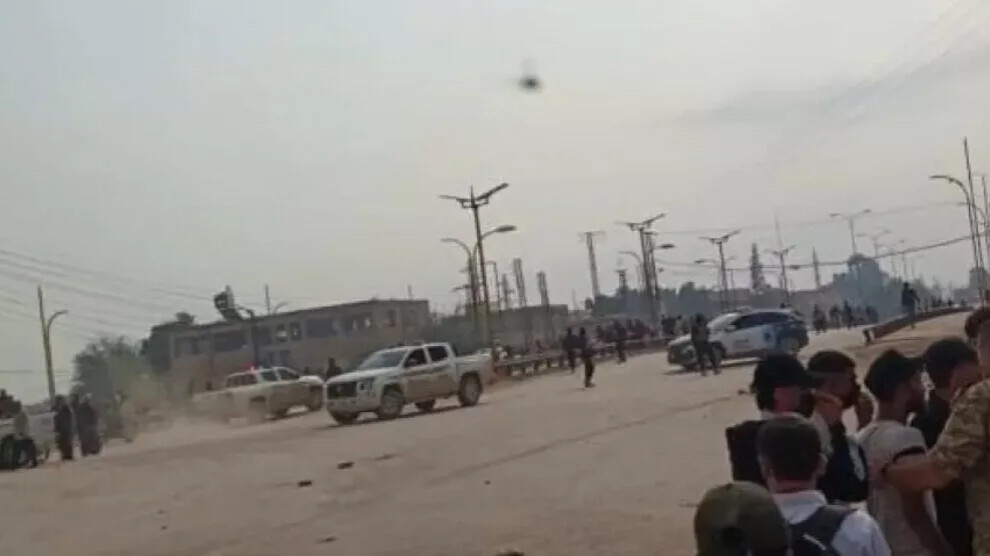
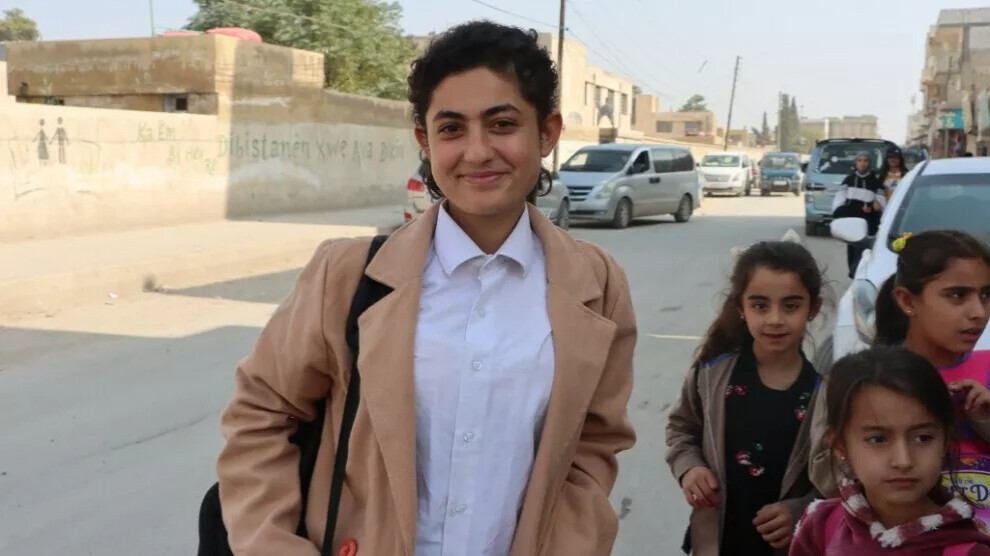
]]>
What new methods has your party developed, or does it plan to develop, for engaging with people locally and organizing at the grassroots level during this period of efforts to strengthen democratic politics?
Since the process began moving forward on 1 October, our most important priority has been to explain it both to our own support base and to everyone in our wider circles, whether close to us or not. Continuously renewing our existing organizational structures and adapting them to current developments has always been one of our most important responsibilities. Traditional models of organization can no longer meet the needs of contemporary politics.
The process may bring many developments, both positive and negative. Taking both possibilities into account, we plan to develop a political cadre and an approach capable of responding to the new period, while advancing the process through collective discussion and participation with our entire support base. At the same time, we aim to prepare for the coming period by engaging in discussions with all leftist and socialist organizations, labor and democracy forces, and all those with whom we conduct a common struggle. We seek to strengthen local organization, develop horizontal organizational models and use all our past experiences to restructure our organization for the future.
You continue to meet with people through the Budget Campaign for Bread, Peace and Justice. As politicians, what do you learn from the people during these meetings?
As politicians who work among the people and alongside them, we are using this campaign to reveal what the real issues are. Our aim is to ensure that Parliament recognizes the people's actual concerns. Look at the budget prepared by a government that has closed its eyes and ears to the country's problems and seeks to strengthen the oppressors rather than the oppressed. We are trying to shape the 2027 budget in favor of the people by saying, "This is what the people's budget should look like. These are the issues, these are the problems, this is the poverty people face, and these are their expectations."
We explain to people that a decent standard of living is possible through a fair distribution of the budget, while also listening directly to the problems they experience. We listen not only to individual problems but also to the concerns of every section of society and their proposals for solutions.
The struggle to earn a living and the struggle for peace are not two separate issues. We explain how the enormous resources allocated to the defense industry over the years because of the unresolved Kurdish question have contributed to the deepening of poverty. We know that democratization becomes more possible in a peaceful environment and that all institutions can become fairer through democracy. Our experiences show us how necessary it is to discuss this reality together with the people.
For this reason, the importance of peace becomes even more apparent throughout the campaign. We try to explain that people's poverty is not simply the result of failing to find jobs that provide sufficient income, but rather a problem rooted in the system as a whole.
We explain to workers that there is no longer any justification for allocating budget resources to weapons and war, and that these resources should instead be redirected to the public budget. This would make it possible to provide wages and pensions that ensure decent living conditions, from the minimum wage to retirement benefits.
Is the concept of "communal organization" sufficiently understood, or will it become clearer through struggle and practical experience?
The concept of the commune is not entirely new to us, but because it has not been widely used as a practical tool, there is still a great need to explain it. Practical experiences are essential for it to take root in society. To explain what establishing a commune in a particular area can change in our lives and what purpose it serves, it must be experienced in practice. Only then can people fully understand what a commune is and begin to adopt it as a form of organization. There are currently extensive discussions, ideas for communes are being developed, and efforts are underway to create practical examples. Progress can be made gradually in this way.
You place the women's liberation paradigm and youth organization at the center of your politics. Are your current practices in these areas sufficient?
As the DEM Party, our greatest distinction is that we conduct politics along a women's liberation-oriented line. Of course, we cannot claim that we have overcome every shortcoming within our autonomous women's organization. We are struggling for both democratization and women's freedom in a world where patriarchal structures are deeply entrenched. This alone makes our work difficult. The responsibilities imposed on women by traditional gender roles make it harder for them to participate actively in politics. Working in both autonomous women's politics and mixed political structures, while also carrying responsibility for care work, means effectively working three times as much. Naturally, this creates an enormous workload.
No transformation can be truly egalitarian unless women are an effective force within it. For this reason, we are working to expand our organization and strengthen the collective women's struggle so that women become more empowered in every sphere.
Our youth organization has always been among the structures most heavily subjected to state repression. This makes organizing even more difficult. Constant pressure, detentions, arrests and attempts to obstruct young people's political participation create serious difficulties, but new ways are always found. The Youth Assembly is currently carrying out important organizational work once again. It is seeking to expand its structures, engage with young people from different backgrounds and place greater emphasis on organizing university students.
If the party cannot renew itself through younger generations, its entire structure will inevitably fall behind. If you fail to keep pace with the demands of the times, you lose your future. We are also working to create more opportunities for women and young people in politics and expand their influence.
How has the Peace and Democratic Society Process been received during public meetings?
There was curiosity and excitement when the process first began. Some people were waiting with enthusiasm, while others were deeply concerned and distrustful. As the process has dragged on, excitement has gradually given way to anxiety. One of the people's foremost demands is the release of prisoners. So many people are being held in prison unjustly and unlawfully that almost everyone's life has been affected. Beyond those in prison, there are just as many people facing criminal proceedings. The Court of Cassation is full of cases in which convictions could be upheld at any moment.
The Kurdistan Workers' Party (PKK) has dissolved itself, but the situation of the guerrillas, particularly Abdullah Öcalan, remains uncertain. Freedom and the possibility of return are awaited. People want to see concrete steps on issues ranging from those living in exile abroad to the government-appointed trustees. The Framework Law was passed before Parliament adjourned, but its requirements have still not been implemented. Everyone is waiting to see when the law will be put into practice.
Most questions and concerns revolve around whether the Justice and Development Party (AKP) will derail the process. There is a previous experience, and the events that followed the 2013–2015 process remain painfully fresh in people's memories. Since the current process began, manipulative statements from some circles, such as "The AKP cannot be trusted; they will deceive you," have inevitably begun to influence people.
Nevertheless, people have not lost hope in the process, and there is tremendous trust in Mr. Öcalan, its principal actor. Although progress appears slow, there is also a growing understanding that, despite all the concerns, there can be no turning back.
There have been claims that the process has slowed down. Do you expect it to accelerate following the Kurdish People's Leader's relocation to a new facility?
Mr. Öcalan's relocation was a development that had been awaited for a long time. Mr. Öcalan had made it very clear that this move would not take place without clarification of his status. Although the relocation is a positive development, it has come very late and remains insufficient.
Initially, we expected a development that would clarify his status and pave the way for the relevant commission to begin its work. However, the relocation took place before this happened. A leader conducting such an important process must be provided with conditions that allow him to work freely. This is also what the Kurdish people expect.
What are the most critical priorities for ensuring that the process takes root in society?
The DEM Party has never been a party that defends the rights of only one section of society. We conduct our political struggle with the understanding that everyone's liberation is interconnected. Peace and democratization can take root in society by building alliances with the broadest possible sections of society and strengthening the common struggle.
Guided by this understanding, our party prioritizes reaching out to every section of society repeatedly, explaining our position, listening to people and providing a common ground for struggle for all peoples and marginalized groups. We act in this direction in all our activities, seeking to expand our reach, strengthen our organization, address our shortcomings and prepare for the politics of the new period.
]]>Talabani stated that they had held several meetings with officials in Erbil (Hewlêr), but despite progress in the discussions, no agreement had been reached and parliament had been unable to convene. “On every occasion, progress was made in the discussions, but no results were achieved, and parliament could not convene. It has been demonstrated that the KDP does not know how to govern. We had previously warned that such a situation would arise. We do not recognise this session,” Talabani said.
‘We are withdrawing from this government’
Stating that the PUK Executive Council had authorised him to make the decision, Talabani announced the party's withdrawal from the government in the following terms: “Today, the PUK Executive Council authorised me, and we declare that we do not recognise this session. This government has failed. Therefore, our decision is to withdraw from this government. We are prepared to make any sacrifice. We are concerned with resolving the Rojava issue, the peace process, and our brothers and sisters in Rojhilat.”
‘Do not intimidate the people’
Addressing the KDP, Talabani called on the party to abandon any attempts to use force, saying: “I have a message for you: you have made an unjust decision. I am telling you, do not intimidate the people. Abandon your attempts to use force. We do not recognise this session or the government that will be formed as a result of it. I ask that you do not force us to take action in response. Whatever position you appoint in Erbil, we will appoint an equivalent position in Sulaymaniyah.”
]]>
Alireza Rezaei, Vahid Ghahremani and Mehdi Jalali were sentenced on charges of “intelligence activities, espionage or operational action on behalf of Israel and the United States.”
A former fellow prisoner told the Kurdistan Human Rights Network (KHRN) that security forces arrested the three men alongside two women, whose identities remain unknown, during the protests.
Following their indictment, all five stood trial at Branch 23 of the Islamic Revolutionary Court in Tehran in recent months.
The source said the three men were notified of their death sentences in Greater Tehran Central Penitentiary on 26 October.
The two women in the same case were reportedly sentenced to “death with a reduction of one degree,” meaning 30 years’ imprisonment.
On 28 October, the three political prisoners were summoned to the prison’s guard office on the pretext of being transferred to Ghezel Hesar Prison, before being taken out of the prison. They were reportedly transferred there and intend to appeal against their sentences.
The source added that Jalali, a former cleric, also faces a separate case at Tehran’s Special Clerical Court on a charge of “apostasy”, opened after his arrest.
]]>The Kurdistan Human Rights Network (KHRN) has learned through interviews with several informed sources that the prisoners are held in different wards, with prison sentences ranging from six months to 10 years and one day.
Ministry of Intelligence forces arrested them in various cities across West Azerbaijan Province over the past few years.
The Islamic Revolutionary courts subsequently sentenced them to prison following unfair trials on charges including “membership of opposition groups”, referring to Sunni Islamic groups, and “propaganda against the state.”
KHRN has obtained the following names and sentencing details:
1- Yaghoub Moradi: Sentenced to three years in prison.
2- Ebrahim Zhiani: From Takab, West Azerbaijan Province, sentenced to five years in prison.
3- Arash Aghaei: From Takab, sentenced to three years in prison.
4- Asaad Mohammadian: From Takab, sentenced to two years and one day in prison.
5- Avareh Gheytarani: From Mahabad, West Azerbaijan Province, sentenced to nine years in prison.
6- Mohammad Nasrollahi, also known as Chiya: Sentenced to six years in prison.
7- Rasoul Yousefi: From Rabat, Sardasht County, West Azerbaijan Province, sentenced to 10 years and one day in prison.
8- Siamand Alipour: From Sardasht, sentenced to nine months in prison.
9- Hemen Ahmadi: From Mahabad, sentenced to seven years in prison.
10- Amin Delneshin: Sentenced to 10 years in prison.
11- Shahriyar Khezri: From Oshnavieh, West Azerbaijan Province, sentenced to 10 years and one day in prison.
12- Jafar: From Piranshahr, West Azerbaijan Province, sentenced to six months in prison.
13- Vazir Zarsav: A retired teacher from Paveh, Kermanshah Province, living in Orumiyeh, sentenced to five years in prison.
14- Rahim Asareh, also known as Shamal: From Mahabad, sentenced to three years in prison.
15- Afshin: From Orumiyeh, sentenced to 10 years and one day in prison.
16- Arash Gholizadeh: From Orumiyeh, sentenced to 10 years in prison.
17- Mehran Niroumandi: From Orumiyeh, sentenced to 10 years in prison.
18- Kamyar Shayekhi: Sentenced to 10 years and one day in prison.
19- Mowloud Atashbar: From Mahabad, sentenced to eight years in prison.
20- Saadat Tashkeh: From Mahabad, sentenced to eight years in prison.
Vazir Zarsav is held in Talash Ward, while Saadat Tashkeh is in the women’s ward. The other 18 prisoners are held in Ershad Ward, which houses political prisoners and prisoners of conscience.
]]>Doğan said Öcalan still did not even have a regular schedule of face-to-face meetings although he plays a central role in efforts to achieve a political solution to the Kurdish question. “For him to effectively lead this process and actively participate in the work, his working conditions and opportunities for visits and communication must be guaranteed,” Doğan stated.
According to Doğan, insufficient progress had been made on this issue so far. The DEM Party spokesperson described the current phase as decisive. Following the adoption of the framework law, she said, the mechanisms envisaged under it must now become fully operational.
Doğan emphasized that political developments should not be limited to the steps already taken toward ending the armed conflict. The crucial question, she argued, was whether these developments would lead to democratic restructuring and create opportunities for equal political participation.
“A belated and limited step”
Doğan addressed in detail the recent changes to Öcalan’s detention conditions on the prison island of Imrali. She said her party generally welcomed the provision of a new workspace for him within the prison. However, she described it as merely a belated and limited step.
The real challenge, she underlined, was to enable Öcalan to participate continuously in political discussions. These include the conditions for the transition from disarmament to democratic politics, legal reforms, and potential risks to the future of the process.
“Imagine trying to resolve an issue of such importance while being one of the key parties involved in the discussions. Yet you are held in an island prison and do not even have a regular schedule of visits. How is that supposed to work?” Doğan asked.
She called for access to Imrali to be granted to journalists, human rights organizations, and other social groups wishing to participate in the peace process. Doğan stressed that discussing Öcalan’s physical working conditions alone was insufficient as direct communication and regular face-to-face meetings were essential.
Political bodies must begin their work
Another major focus of the press conference was the implementation of the framework law. Despite its shortcomings, Doğan described it as an important first step that must be followed by additional legislative measures. In particular, she said, conditions must be established to enable people to return from abroad and participate in democratic and political life.
Doğan also called for the Council for Peace and Political Participation and the other bodies envisaged under the process to finally become operational. The final preparations for the council’s work must be completed, she stressed.
Doğan pointed out that the parliamentary monitoring commission must also be established. According to the DEM Party’s proposals, it should have the broadest possible representation and be vested with genuine decision-making powers.
Doğan expressed hope that Parliament Speaker Numan Kurtulmuş would conclude the necessary consultations with political parties next week and subsequently accelerate the commission’s establishment.
She further emphasized that the democratization proposals contained in the parliamentary commission’s joint report must be translated into concrete draft legislation. This, she said, would require an agreement between the government and the opposition.
“Time is of crucial importance in peace processes”
Doğan warned that delays and continued uncertainty could jeopardize political progress. She said the experiences of previous attempts to resolve the conflict had demonstrated the potential consequences of failure.
“Time is of crucial importance in peace processes. As a country, we have learned this in a very painful way through our experiences with previous resolution processes,” she said.
Doğan warned that society could not afford to act too late once again. She also called for a responsible approach to the experiences of decades of war, stressing that the suffering of different communities must not be weighed against one another.
“We must not pit anyone’s suffering against that of others, whether Kurdish or Turkish.”
To strengthen public trust, Doğan called for a clear political plan and greater transparency. She argued that insufficient information about the progress of the process continued to fuel speculation about stagnation, crises, or new steps in negotiations. A concrete roadmap, she added, could help overcome such uncertainty.
At the same time, women, young people, media professionals, academics, NGOs, and other social groups must be given opportunities to participate actively in the discussions, she emphasized.
Call for an end to government-appointed trustees and release of political prisoners
The DEM Party also considers ending the appointment of state trustees to municipalities among the democratic reforms that must be implemented without delay. Doğan called for the terms of appointed trustees not to be extended again and for municipal offices to be returned to democratically elected representatives.
“The rightful holders of the offices occupied by government-appointed trustees must be allowed to resume their positions,” she stated. “Respect for the will of voters must not be made conditional on political agreements,” she added.
Doğan also demanded the implementation of rulings by the European Court of Human Rights (ECtHR) and Turkey’s Constitutional Court. She called for seriously ill prisoners to be released immediately.
She further called for an end to the practice of prison administrations and their administrative and observation boards exerting pressure through decisions concerning detention conditions and prisoners’ release.
The DEM Party spokesperson linked these demands to the protection of freedom of expression and freedom of the press. She stressed that people must be able to express their opinions, voice criticism, write, and exercise their democratic rights without fear of prosecution or bans.
According to Doğan, public confidence in the peace process can grow only if such changes become tangible in everyday life.
Ten years since the HDP arrests
Another major focus of Doğan’s speech was the tenth anniversary of the wave of arrests targeting the Peoples’ Democratic Party (HDP) on November 4, 2016. She described the arrests at the time as a political coup against democratic politics and the will of voters.
“November 4 was a historic turning point when democratic politics and the will of the people in Turkey came under attack,” she stated.
Doğan particularly highlighted the continued imprisonment of former HDP co-chairs Selahattin Demirtaş and Figen Yüksekdağ, along with other politicians detained in connection with the Kobanê trial.
The DEM Party considers the proceedings to be politically motivated. Doğan called for the implementation of the relevant rulings of the European Court of Human Rights in the case and the release of all defendants.
She stressed that the continued imprisonment of former HDP officials contradicted the stated aim of ushering in a new era of democratic politics.
Peace Mothers call for a parliamentary resolution
Doğan devoted particular attention to the recent protest by Kurdish women in Ankara. Twenty-seven activists from the Peace Mothers Council had traveled from various cities and held a vigil in Kurtuluş Park despite the cold and rain. They called on parliament to take responsibility for finding a political solution to the conflict.
Accompanied by DEM Party representatives, the mothers held talks with several parliamentary groups. They also met with the justice minister and Parliament Speaker Numan Kurtulmuş and addressed the public during a DEM Party parliamentary group meeting.
Doğan reiterated their central demand: “Neither Kurdish nor Turkish mothers should have to shed any more tears. Parliament must pass peace legislation and adopt a resolution for peace. Decisions about war are made in parliaments. Decisions about peace can be made there as well.”
The Peace Mothers also explicitly reached out to the families of police officers and soldiers, calling for a joint commitment to peace.
According to Doğan, the mothers hoped that their vigil would be their last. Rather than having to continue demonstrating for peace, they wanted to see its tangible effects, she added.
“We must hear this voice and listen to what they have to say,” Doğan emphasized.
Municipal alliances are not a matter of negotiation
Finally, the DEM Party spokesperson addressed discussions surrounding the strategy known as the Urban Consensus. The debate followed decisions by municipal council members in Istanbul and Mersin who had been elected through this alliance strategy and have now joined the DEM Party.
Doğan rejected claims that the Urban Consensus was the result of political deals or a matter of negotiation between political parties. Instead, she described it as a strategy aimed at respecting the will of voters, strengthening local democracy, and promoting equal coexistence among different social groups.
She said the council members concerned had expressed their desire to engage in political activities within the DEM Party for some time. Their decision, she added, represented neither a departure from the Urban Consensus nor a change in its fundamental principles.
“The Urban Consensus is precisely about enabling different people, who are not alike, to live together,” Doğan explained.
]]>