Through an initiative led by UFV’s Office of Sustainability, abandoned bicycles from student housing were tuned up and offered free of charge to students facing barriers to bike ownership.
The program grew out of conversations about what to do with bicycles left unclaimed by former tenants. An earlier attempt to incorporate them into a bike-share program had limited uptake, leaving an opportunity to put the bikes to better use.
With funding from the GoByBike BC Society and the Province of BC, UFV’s Office of Sustainability arranged for the bicycles to be repaired and prepared for new owners. Community member Robert Paddon, who is involved with the local chapter of HUB Cycling (a B.C. organization whose mission is to encourage cycling), helped tune up the bikes. He also shared his enthusiasm for cycling by connecting UFV with cycling resources, exploring opportunities to source more bicycles, and leading cyclists on UFV’s Bike to Banter event.

Alicia Nightingale, energy and climate coordinator with UFV’s Office of Sustainability, saw an opportunity to connect students with affordable transportation while giving abandoned bikes a new purpose. The first round attracted 36 student applications, with 12 bikes ready to distribute.
For students, the opportunity means more than a free bicycle. Applicants described moving to Canada without their bikes, outgrowing childhood bicycles, having bikes stolen or broken, and struggling to afford replacements while paying for university.
“I used to bike before when I was in my home country. Coming here already came with a lot of expenses, and I could not buy one here,” one student wrote in their application.
Another student described cycling as a way to take a break from the pressures of school.
“I love biking. Whenever I needed a breath of fresh air, I would turn to my bike to get things off my chest,” the student wrote. “But my bike unfortunately broke down a couple of years ago and as a university student, my primary focus is saving for my tuition and school fees, making a quality replacement difficult. Since I live close to campus, this new bike will offer me an excellent transportation option to get to classes and decompress!”
At the bike distribution day on October 22nd, students lined up early, carefully chose their bicycles and made use of complimentary bike fitting and locks. There was a buzz of excitement as students prepared to put their new rides to use. Their excitement reflected what the program could offer: greater independence, another way to get to class, and an opportunity to explore their communities.
UFV’s Office of Sustainability is looking into additional sources, including discussions with the Abbotsford Police Department and external cycling organizations about recovered bicycles that remain unclaimed. With more students interested than bikes currently available, additional donations could help expand the program.
By giving abandoned bicycles a second life, the initiative supports both waste reduction and active transportation. It also highlights an opportunity to make cycling more accessible at UFV and encourage a stronger campus biking community.
If you are interested in donating a bike to a student in need, please contact Alicia Nightingale, energy and climate coordinator with UFV’s Office of Sustainability at alicia.nightingale@ufv.ca.
]]>He combines the two by following the UFV Cascades athletic teams, and by supporting them financially through small, consistent payroll contributions.
Each payday, Bryan makes five donations through payroll deductions: four athletics-related (one for each of the men’s and women’s basketball and volleyball teams) and one to support students in general through the Student Emergency Fund.
Bryan, who has been a member of the UFV IT Services department since 1996, has been supporting the Cascades athletic teams since 2007. Over the years, those small regular donations have added up. Bryan has now given $4,400 to funds that support students at UFV.
He was surprised to hear that the amount was that high.
“It’s an easy way to do something that helps our student–athletes, and in the case of my donation to the Student Emergency Fund, other students as well,” Bryan notes. “I don’t even think about it. It just comes off my paycheque.”
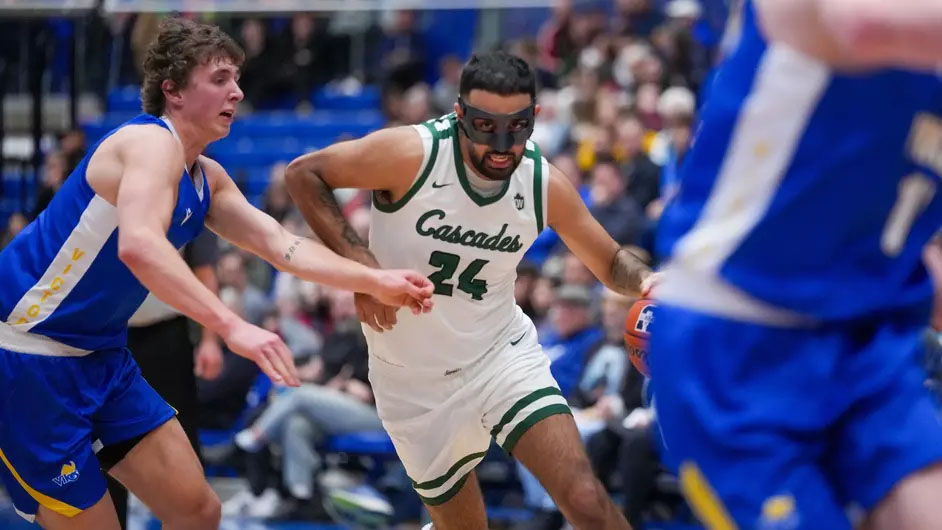
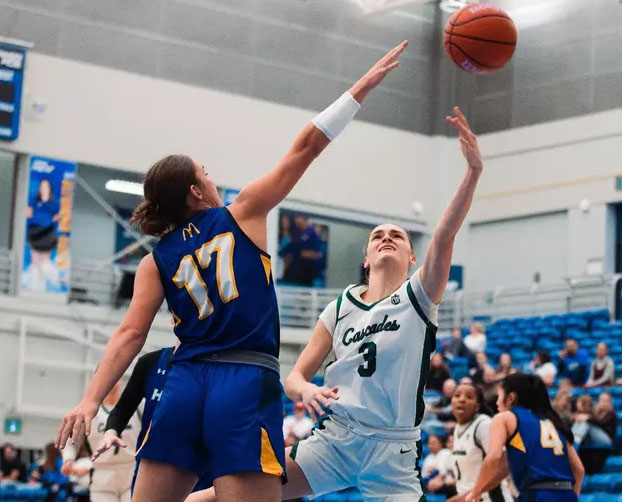 In addition to supporting UFV’s basketball and volleyball teams, Bryan is also a hockey fan. He has friends from his childhood and teens in Whitewood and Melville Saskatchewan who went on to scouting and coaching positions in the NHL and Canada’s U SPORTS organization.
“Through watching my friends move from being players to taking on leadership roles at a high level, and from watching student-athletes at UFV, I’ve witnessed how taking part in athletics helps people develop leadership and teamwork skills. They usually leave as better people than when they enter the program. It’s a real challenge to balance athletics and schoolwork, so I like to do what I can to support them.”
Bryan used to attend most of the men’s and women’s basketball games until his own return to studies meant that he had to focus on his courses in the evenings and weekends. He still tunes in to watch online on occasion and makes a game in person when he can. And he’s kept up his slow and steady support for the teams.
He remembers watching athletes such as Sam Freeman and the Wierks sisters, Nicole and Sarah, tear up the floorboards during their time on the Cascades basketball teams in the 2010s. He often sat with UFV President Skip Bassford and later Mark Evered.

And he’s impressed to hear that both Wierks sisters now have the title “doctor” in front of their names and have returned to serve their hometown of Chilliwack, Nicole as a surgeon and Sarah as a chiropractor.
He also likes how student-athletes act as ambassadors for the university.
“I’ve always felt proud of our athletes. They can be great representatives of the university, both in our community and across the nation. We are a relatively small university, and our teams have often over-achieved, doing well against much bigger schools.”
A few years ago, during the pandemic, Bryan decided to add to his donation to support the Student Emergency Fund.
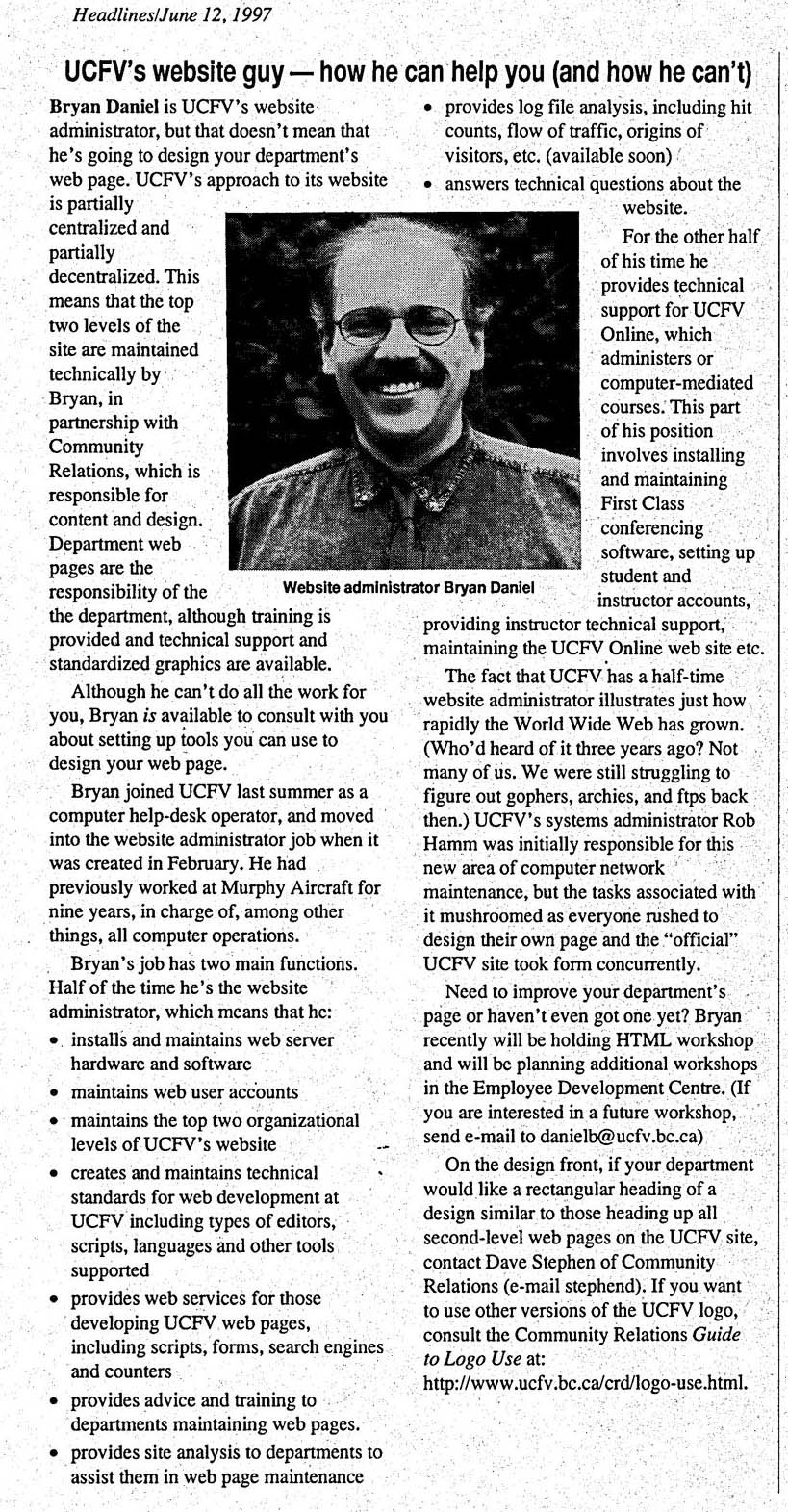
“I wanted to increase my donation amount, and I remember being a student low on money. An emergency fund can be a critical source of help during tough times for a student.”
Bryan came to UFV as a help desk technician in 1996 and within six months was the website administrator, or webmaster as it was called in those days. He is now manager of IT infrastructure delivery, and his three decades at UFV will be celebrated at the long-service reception on Nov. 17.
After earning diplomas in CAD and electrical engineering in Saskatchewan, he worked for a local company in Chilliwack but decided to join UFV so that he could further develop his IT career. He returned to school while working, earning a Bachelor of Technology from BCIT. He’s grateful to have had a fulfilling career at UFV, and that makes him happy to give back.
“Supporting students through payroll donations is an easy way to give back to a place that gives us a good working environment with a good sense of community,” he says. “Students are our lifeblood. They’re why we’re here, working to support them. Giving even a nominal amount back really adds up as a good way to do that.”
In recognition of his support of the Cascades athletes and the Student Emergency Fund, Bryan will be receiving a loyalty paddle from UFV’s Relationship and Fund Development team.
Cascades Giving Day is Tues, October 27

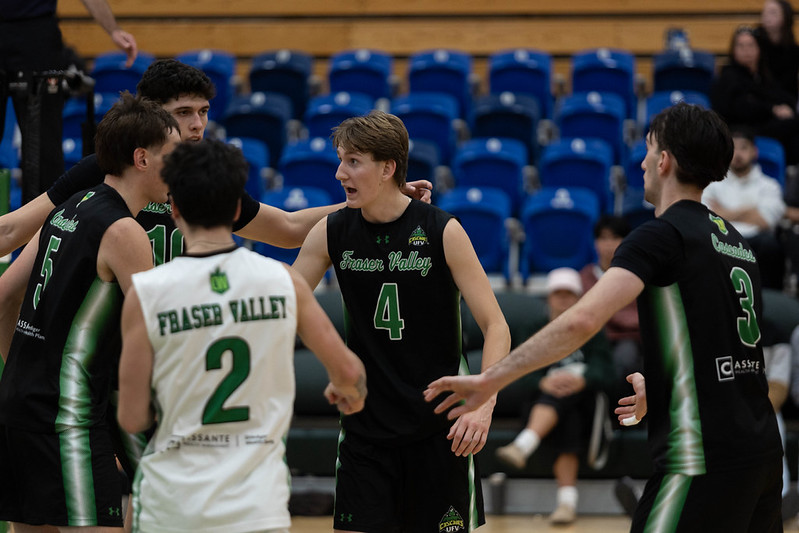
For 24 hours, the UFV community will come together with one goal: raise $100,000 for UFV student-athletes and Campus Recreation. Every gift helps fuel the experiences that shape Cascades on and off the field, from scholarships and travel to equipment, athletic therapy, strength and conditioning.
UFV faculty and staff are part of the team. On Cascades Giving Day, show your spirit by wearing UFV gear, sharing Give Cascades with your networks, and cheering on the students and programs that matter to you. When you make a gift of $25 or more, the UFV Employee Match adds another $25, for up to 40 matched gifts.
Follow @goUFV on Tuesday, October 27 and help build the momentum. We are all Cascades.
]]>Her research and leadership have now been recognized with a Governor General’s Award in Commemoration of the Persons Case, a national honour celebrating individuals who have made outstanding contributions to advancing equality for women and girls in Canada.
The awards commemorate the landmark Persons Case decision of Oct. 18, 1929, when Canada’s highest court of appeal ruled that women were eligible for appointment to the Senate, opening new doors for women’s participation in public life.
Amanda was one of six 2026 recipients honoured at a ceremony at Rideau Hall in Ottawa on Oct. 19. Rechie Valdez, Canada’s minister of women and gender equality, delivered remarks recognizing their contributions.
“The Persons Case expanded what was possible for women in Canada and opened doors for generations to come,” Valdez said. “Today, we celebrate remarkable Canadians who are continuing that work and making a real difference in the lives of women and girls. Each of them shows what is possible when people use their voices, experience and leadership to shape a more equal future.”
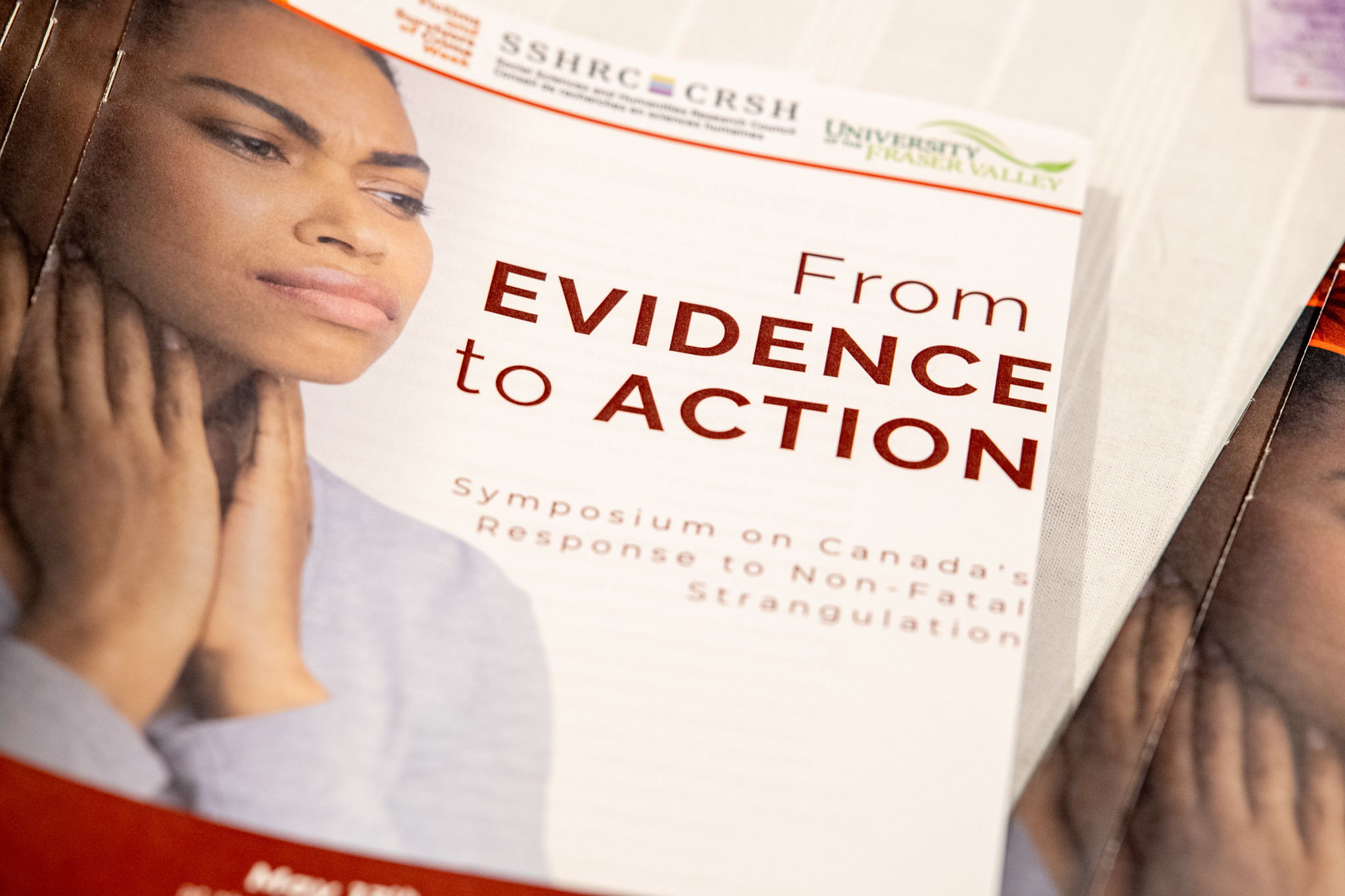
Amanda is an associate professor in UFV’s School of Criminology and Criminal Justice and a research associate in UFV’s Centre for Public Safety and Criminal Justice Research.
Since 2019, she has partnered with the RCMP to research police responses to non-fatal strangulation, identifying gaps in investigative practices and opportunities to improve the justice system’s response to intimate partner violence.
She also helped revise the British Columbia Summary of Intimate Partner Violence Risk Factors, a resource that helps frontline workers, police and health-care professionals assess the risk of serious harm or homicide in intimate partner violence cases.
Amanda’s commitment to preventing violence against women extends beyond her research.
She is a longstanding member of the Abbotsford/Mission Violence Against Women in Relationships Committee and the Purple Lights Nights committee, which works to raise awareness of intimate partner violence and prevent future incidents.
“The prevalence of intimate partner violence in Canadian society is quite shocking,” Amanda says. “Nearly half of all women and girls in Canada, and over a third of men and boys, have experienced some form of intimate partner violence in their lifetime. As a society, we need to come together to raise awareness and engage in prevention efforts to reduce these trends. Throughout October, our Purple Lights Nights committee strives to shine a light on the issue of intimate partner violence and spread awareness about the resources and services available to support those experiencing violence.”
Amanda also leads the Community of Practice on Domestic Violence Reduction through UFV’s Peace and Reconciliation Centre, bringing professionals together to share knowledge, strengthen collaboration, and improve responses to and prevention of domestic violence.
She established the National Strangulation Community of Practice and organized its inaugural symposium at UFV in 2026, bringing together experts to advance knowledge, training, and policies related to preventing and responding to strangulation.
Throughout her career, Amanda has been a lead or co-investigator on more than 30 research projects. She has authored or co-authored more than 10 peer-reviewed publications and 50 research reports, and presented her work at academic conferences, symposiums and United Nations meetings.
For Amanda, the Governor General’s award is meaningful recognition of the difference her work is making.
“A prior instance of non-fatal strangulation is one of the strongest predictors that a woman will be killed by her abusive male partner, but unfortunately, strangulation often goes undetected as about half of all survivors have no obvious visible injuries, and training for first responders to recognize and respond to these cases has historically been quite limited,” Amanda says. “The work that I’ve been conducting with police, including the E Division RCMP, Abbotsford Police Department, and Saanich Police Department, aims to improve police officer knowledge about and skills in identifying and investigating strangulation cases, contributing to improved safety for survivors of intimate partner violence.
“I’m grateful for the recognition of this work and the impact it’s having on public safety.”
Since the awards were established in 1979, more than 250 Canadians have received a Governor General’s Award in Commemoration of the Persons Case.
Learn more about the 2026 award recipients.
]]>Omer Waqar, an assistant professor in the University of the Fraser Valley’s School of Computing, is working to make wireless networks faster, more sustainable, and more efficient.
Every wireless network has a limited amount of capacity to share among its users. Omer and his research team develop advanced mathematical algorithms that help networks make fast, effective decisions about how best to allocate resources and improve performance. More recently, he’s begun exploring how artificial intelligence can help.
“When you think about Google Maps, that service is optimizing a driving route based on traffic and the driver’s objective, which may be to get to a destination as fast as possible, or may be to get there using as little fuel as possible,” Omer explains. “This is just one example, and as networks like this grow in complexity, there can be millions of parameters that need to be optimized within microseconds.
“It’s vital that we keep adapting and upgrading, because our old algorithms eventually can’t keep up with modern networks. If they take two or three minutes to make decisions, everything has already changed.”
It’s this pursuit of faster, more efficient wireless networks that recently took Omer to the University of West London (UWL), where he presented his team’s work to the Industrial Internet of Things Research Group.
Led by professor Nagham Saeed, the group focuses on intelligent systems, automation, and smart infrastructure, making it a natural audience for Omer’s research.
“I started by explaining where I come from, the Fraser Valley, the university, and how it’s been growing as a research institution over the last few years,” he says. “And then, I talked about my work, and I got very positive feedback. In fact, after the seminar ended, I had discussions that continued for another two hours. They were quite excited.”
Omer believes those discussions could lead to future collaboration. UWL’s research intersects naturally with his own, and agriculture offers one example of what that collaboration could look like.
With climate change putting increasing pressure on global food security, agriculture offers enormous potential for smarter wireless technology. Omer envisions farms equipped with thousands, perhaps even millions, of wireless sensors beneath the soil, collecting information about crop health to help farmers improve yields.
Managing the enormous volume of information generated by those sensors would require fast, reliable, and efficient wireless networks capable of making decisions in real time.
An increasingly connected future will also include technologies such as self-driving cars and autonomous robots, which depend on fast, reliable wireless communication. Omer and his London connections are now exploring funding opportunities that could support collaborative research with the potential for global impact.
“Research is teamwork, and it’s always beneficial to have as much collaboration as possible. That’s why I always try to build strong connections,” Omer says. “I see London as a technological hub, with a lot of talented people. In computer science, people can work together from anywhere in the world, and I see a great opportunity to work together on research that is mutually beneficial.”
For now, Omer’s algorithms are being tested through computer simulations. He hopes to eventually partner with industry to develop the technology further and explore opportunities for commercialization.
The possibilities are exciting, but it’s the challenge of solving complex problems that keeps Omer motivated.
“When I try to solve some problem, it creates curiosity in me, just like watching a movie or watching a series, and wanting to see what happens in the next episode,” he says. “They start watching and they keep watching, watching, watching. The same thing happens to me when I start thinking about a problem.
“I just want to keep going until it’s solved.”
Story by Eric Welsh — eric.welsh@ufv.ca
]]>The Adaptive Cycling Project provides free access to specialized bikes, removing a significant barrier that has prevented some people from experiencing the Vedder Rotary Trail, a picturesque path running along the Vedder River behind the campus.
“Chilliwack is incredibly fortunate to have access to places in Stó:lō Téméxw, such as the Vedder River and the beautiful trail network that surrounds it,” says Lara Duke, UFV’s dean of Health Sciences. “But a shared community is only truly shared when everyone can experience it. That’s what makes this project so meaningful.”
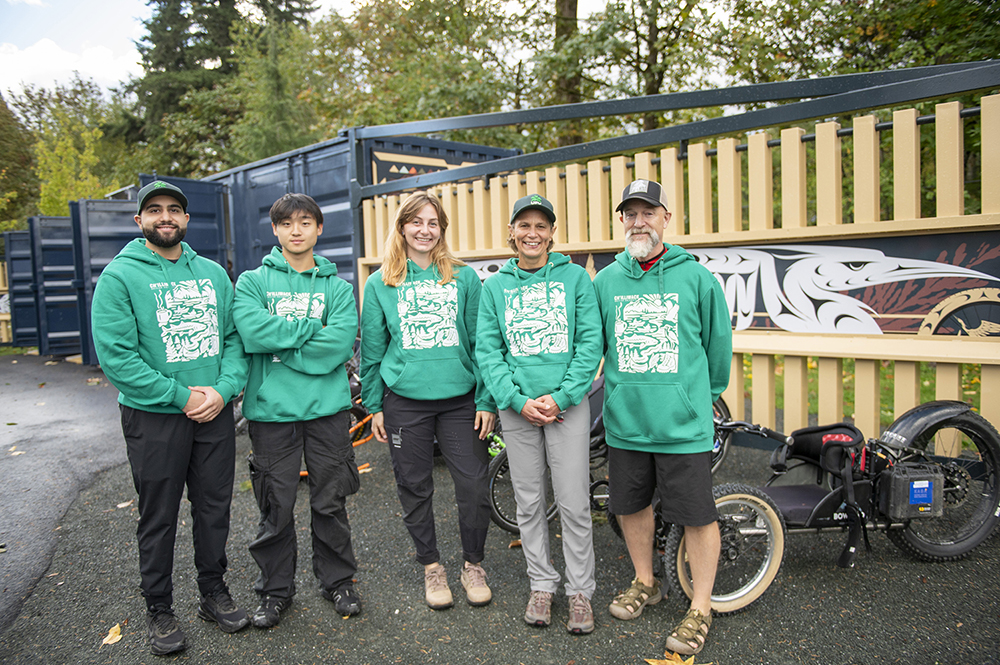
Three UFV kinesiology students and alumni — Harman Boparai, Amanda Lukiv and Henry Fu — along with faculty members, Michael Gaetz, director and professor of kinesiology, and Karen Natho, kinesiology instructor, have completed training to support people participating in adaptive cycling.
Amanda, a third-year student who enjoys mountain biking and spending time outdoors, jumped at the opportunity to get involved.
“I love coaching and teaching, and if I can make an activity more accessible to the community by volunteering my time, that’s something I’ll jump on,” she says. “I’ve had lots of good coaches and teachers in my life, and I know what a difference it makes when you’re taught by someone who loves what they do, and knows how to explain things and be patient, and that’s what I hope I bring to this.
“It’s an excellent opportunity to do something different, and I strongly believe the more experiences I can have in life, the better.”
The program has five bikes available, representing three different models. Four are hand-powered, with electric assist, to make pedalling easier for people with injuries that affect the functioning of the lower limbs who have sufficient upper-body strength. The fifth is a foot-powered recumbent bike.
“It’s been awesome learning to use these bikes,” Henry says. “I’ve been on two wheels my entire life, and when you get on one of these, it feels the same, but more comfortable. And it’s been really cool listening to our instructor, Ethan Kruegar, tell us stories about people who’ve been on bikes like these.”
Ethan was paralyzed from the stomach down in 2010 and has spent the past 16 years promoting adaptive cycling. He says the biggest barrier is often the cost of specialized equipment, making free access to the bikes a tremendous opportunity.
“To be able to go out with family and friends and play on a bike at no cost, that’s something that’s insanely awesome,” he says. “It’s not that long ago that a program like this was a pipe dream, a huge wish-list item for a lot of people. But what I’ve seen many times is that when people are out of their mobility device and back in nature, after about 20 minutes of riding they say they’ve completely forgotten they had a disability to begin with.
“Nature is healing.”
For Lara, Ethan’s experiences reinforce the value of the project. She says UFV students have already benefited tremendously from spending time with him, with even more to gain through the experiential learning opportunity.
“They’re taking what they’ve learned in the classroom and putting it into practice in a way that has a direct and meaningful impact in our community,” Lara says. “This is exactly the kind of changemaking we want to see at UFV: students, faculty, and community partners working together to identify a need, create an opportunity, and make a real difference in people’s lives.”
In addition to providing students and faculty to support the program, UFV has made land available for storing the bikes.
The Adaptive Cycling Project is part of the larger Good Neighbours Lhewámel Project, an initiative creating meaningful, culturally rooted public spaces that foster reconciliation, connection and community across Chilliwack.
Rooted in the Sí:yá:ya Yóyes (Friends Working Together) Plan, the initiative strengthens relationships between Indigenous and non-Indigenous communities through thoughtfully designed gathering spaces, storytelling elements and immersive experiences.
Among the community leaders taking an adaptive bike for a spin at a recent try-it-out event was UFV honorary degree recipient and Squiala Chief and CEO David Jimmie.
“Good Neighbours Lhewámel Project is about understanding that this is our shared home, and that everyone should have the opportunity to experience and build a relationship with the land,” he says. “Adaptive cycling opens that experience to more people and creates another way for us to come together, learn from one another and care for S’ólh Téméxw.”
Brian Minter, chair of Tourism Chilliwack and a former UFV chancellor, says the project is a wonderful example of what can happen when community partners come together with a shared vision.
“What makes this initiative so special is that it goes far beyond the bikes — it brings together accessibility, Indigenous storytelling, education, recreation and stewardship,” he says. “Most importantly, it gives more people the opportunity to experience this extraordinary landscape and feel that they belong here.”
Story by Eric Welsh — eric.welsh@ufv.ca
]]>But what if housing was a fundamental human right rather than a financial investment?
Leilani Farha, an internationally recognized housing advocate and 2026 CBC Massey Lecturer, will explore that question during a panel discussion at the University of the Fraser Valley’s Abbotsford campus on Wednesday, Oct. 21.
The conversation takes place from noon to 2 pm in Room B101 (lecture theatre).
 Farha is a Canadian human rights lawyer and former United Nations special rapporteur on the right to adequate housing, appointed to investigate housing-related human rights issues around the world.
She is also the global director of The Shift, an international organization that explores housing, finance, and climate through a human rights lens. Her work examines how investment practices, government policies, and economic inequality affect access to safe, secure, and affordable housing.
In Housing Inc., the book accompanying her 2026 CBC Massey Lectures, Farha introduces readers to people experiencing housing insecurity around the world. She meets someone living in a four-door sedan in San Diego, visits a makeshift shelter beside railway tracks in Lagos, a windowless motel room in Paris, and a tent on a Toronto beach. Despite their different circumstances, they share a common desire to be treated with dignity.
Her book is available for purchase at the UFV Bookstore and will be available at the event for $20.
Farha will be joined by three UFV alumni whose professional experience and research offer thought-provoking perspectives on what housing looks like here in the Fraser Valley, and how it may look in the future.
Jesse Wegenast (BA ’12) is executive director of Sparrow Community Care Society in Abbotsford. Jesse, who received UFV’s Young Distinguished Alumni award in 2019, leads shelter programs and community initiatives supporting people experiencing homelessness, particularly older adults. He offers a frontline perspective on housing insecurity and the challenges facing vulnerable community members.
Lesandra Simpson (BSW ’23) is a registered social worker with Fraser Health whose work connects health and housing. She brings both professional expertise and lived experience to the discussion, offering insight into the relationship between stable housing and well-being.
Mayu Ochi (BA ’25) graduated with distinction in economics and has delved into the factors contributing to Japan’s growing number of vacant homes. Her study, which earned her a UFV Undergraduate Research Award, explored how demographic, economic, and regional differences influence housing vacancies, offering an international perspective on the complexities of housing supply.
The discussion will be moderated by Dr. Mark Kersten, an assistant professor in UFV’s School of Criminology and Criminal Justice.
The event is free and open to the UFV community, but seating is limited. Register online.
]]>The event takes place from 6-8 pm on the Abbotsford campus, in the Building J Community Hall.
Rick is an award-winning senior correspondent for TSN, best known for shining a light into the shadows of Canadian hockey culture. His 2025 bestseller, We Breed Lions: Confronting Canada’s Troubled Hockey Culture, takes a deeper look at the state of hockey in Canada, exploring the culture that surrounds the sport and the need for meaningful change.
Through years of reporting, he has examined questions of safety, accountability, leadership, and culture in sport, bringing greater public attention to stories that might otherwise remain in the shadows.
“Rick’s work demonstrates the power of storytelling to challenge institutions and make a meaningful difference,” says UFV President James Mandigo. “By asking difficult questions and amplifying voices that might otherwise go unheard, he shows us the impact one person can have — and why those conversations matter.”
Rick’s first book, Finding Murph, looked at the path that took Joe Murphy from National Hockey League star to homeless, addressing concussions and brain trauma, mental health and the responsibility professional leagues have toward former athletes.
Rick was recognized by the Canadian Journalists for Freedom of Expression in 2023, receiving the Arnold Amber Award for Investigative Journalism. He’s a two-time winner of Canadian Sportswriter of the Year.
Prior to joining TSN, Rick served as a foreign correspondent for the Toronto Star, where he reported on the ground in countries including Afghanistan, China, and Saudi Arabia.
Tickets are $30 general admission, and $10 for UFV students. The event includes a reception, and ticket holders can take in the UFV Cascades women’s and men’s volleyball home opener games on Friday, October 23, featuring Purple Lights Nights activities in support of the campaign. For tickets or more information, visit showpass.com/ufv-rick-westhead.
The public is also invited to meet Rick Westhead at a book signing at The Book Man bookstore in Chilliwack at noon on October 22. For questions about the event or the book signing, please contact Christina.Forcier@ufv.ca.
]]>The restructured program offers Foundations and Expanded Learnings streams, with individual modules and workshops available throughout the year.
Registration for Fall 2026 Foundations offerings are open now on the PARC website.
https://www.ufv.ca/peace-and-reconciliation/work/allyship/
For more information, contact Leanne Jarrett at leanne.jarrett@ufv.ca
]]>This marks the festival’s 19th year of bringing authors and book lovers together for an array of free events.

On Friday, November 6, the festival will welcome two acclaimed keynote speakers. The Honourable Jody Wilson-Raybould, former Minister of Justice and Attorney General, and the author of The Inbetween Leader: Cultivating Courage and Unity in a Complex World (Greystone Books) will be joined by Justin McElroy, award-winning journalist, CBC municipal affairs reporter, and author of Searching for the Best Place on Earth: 52 Countries in 52 Weeks (Harbour Publishing).
On Saturday, November 7, attendees will enjoy panels, workshops, and live podcast recordings from a lineup of accomplished authors including Governor General’s Award nominee Elizabeth Bachinsky, author of Real Grownup (Nightwood Editions), and Dr. Keiko Honda, recipient of the City of Vancouver’s 2014 Remarkable Women award and author of Words That Last (Caitlin Press). Joining them will be New Westminster author Jónína Kirton and Vancouver authors Dina Del Bucchia, Daniel Zomparelli, Kevin Spenst, Renée Sarojini Saklikar, and Adrick Brock. In addition to these events, all are invited to a community open mic reading on the afternoon of Thursday, November 5.

The festival is free of charge, however due to limited availability, attendees are asked to register for event activities via Eventbrite. Keynotes and panels will take place in Building B, Room 101 of UFV’s Abbotsford campus. For tickets or more information, please visit https://www.fvwritersfestival.com.
The Fraser Valley Writers Festival (FVWF): Founded in 2007 as the Mission Writers & Readers Festival, the FVWF has been run by the University of the Fraser Valley, out of its Abbotsford campus, since 2017.
https://www.fvwritersfestival.com/
]]>
 During the ShakeOut drill participants should:
- Drop to the ground.
- Cover under a table or desk.
- Hold on for 60 seconds.
If you have difficulty getting onto the ground, or cannot get back up again without help, consider following the recommendations listed here.
The public address system on the Chilliwack campus will also be tested. If you are on campus, no evacuation will take place.
Participation is voluntary. For more information on how to participate in ShakeOut, please visit The Great British Columbia ShakeOut where you will find resources including video tutorials on reacting to an earthquake in different scenarios.
If you have questions about the ShakeOut drill and UFV’s participation, please check here: https://www.ufv.ca/safety-and-security/emergency-management/
]]>“I look at it every day to remind myself of my purpose,” Chief Duthie says. “It reminds me how many people really depend on me bringing my best every single day.”
It’s a simple ritual, but one that reminds him why he chose a career in policing more than 30 years ago — not because of rank or recognition, but because of a commitment to serve his community.
That sense of purpose has guided him throughout his career and is one of the reasons the University of the Fraser Valley Alumni Association has selected Dean to be its 2026 Distinguished Alumni Award recipient.
Dean was part of the second graduating class of the Criminal Justice degree program at what was then the University College of the Fraser Valley in 1995. It was an innovative program that allowed students who had earlier earned a diploma to ladder into degree studies. He says his time at UFV gave him the confidence to pursue a career built on service, relationships, and lifelong learning.
Watch Deans story here:
“The entire environment made everything click for me,” he says. “The smaller classes, the relationships with classmates, and the support from instructors gave me the confidence to pursue my goal of becoming a police officer.”
Growing up in the Fraser Valley immersed in sport culture, Dean knew by the age of 16 that policing was the path he wanted to follow. Drawn to the similarities to team sports in terms of teamwork, structure, and opportunity to make a difference, he entered the profession with a single goal — to serve those around him.
“I never joined policing to chase promotions,” he says. “I joined because I loved putting on the uniform and serving the public each day. The opportunities and advancements came because I stayed connected to that purpose.”
More than 30 years later, that purpose remains unchanged.
Throughout his career, Dean has served in frontline patrol, major crime investigations, recruiting and training, professional standards, and executive leadership. Along the way, he continued investing in his own growth as a lifelong learner, earning a Master of Education, completing an Executive Masters of International Police Leadership, and now pursuing a diploma in Global Leadership through the United Nations’ University for Peace.
“As soon as you stop learning, you plateau,” he says. “Growth happens when you’re willing to be uncomfortable.”
His leadership philosophy was tested just five months after becoming Chief Constable when a shooting incident in the aftermath of a robbery at the local Bank of Montreal became one of the most devastating events in the department’s history. The tragedy deeply affected officers, civilian staff, families, and the wider community.
“We were fortunate to have his steady and thoughtful leadership through one of the toughest times in the history of the department and the community,” says Saanich Mayor Dean Murdock. “His strong focus on employee wellness has become a vital part of the Department’s culture, and his care and compassion for people continue to have a lasting impact – not only on those who work alongside him, but on the people of Saanich.”
Rather than trying to have all the answers, Dean focused on what he believed mattered most: being present.
“Being authentic, being vulnerable, and being available for people became more important than ever,” he says. “You can’t be everything to everybody, but you can make sure people know you care.”
That experience reinforced a leadership philosophy centred on trust, relationships, and supporting others through difficult moments.
Under Dean’s leadership, the Saanich Police Department has expanded employee wellness initiatives, strengthened equity, diversity and inclusion efforts, modernized recruitment, and continued building stronger relationships with the community it serves. This is likely due in part, to his commitment to meet one-on-one with each officer and employee in the organization on a regular basis.
His leadership has earned national recognition, including appointment as a Member of the Order of Merit of the Police Forces by the Governor General of Canada in 2024. Despite those accomplishments, Dean still points back to his years at UFV as one of the defining chapters of his journey.
“I really credit UFV for instilling that confidence and sense of security while still pushing me to grow outside my comfort zone,” he says. “I don’t know how things would have turned out otherwise.”
More than three decades after graduating, many of the friendships he built at UCFV remain. One of his classmates Steve Eassie recently retired as a Staff Sergeant after spending the majority of his policing career alongside Dean at the Saanich Police department — a reminder that some of the most meaningful connections made extend far beyond the classroom.
For Dean, receiving UFV’s Distinguished Alumni Award is both an honour and a chance to reflect on where that journey started.
His badge may symbolize the responsibility of leading a police department, but the values behind it — service, humility, and a commitment to others — were shaped long before he became Chief Constable. They continue to guide his leadership today and serve as an aspirational example for the next generation of UFV graduates.
]]>UFV President James Mandigo greeted visitors in the reception hall in Lá:léms Ye EverGreen, the new student housing building, and noted how the stories shared in the community report illustrate how connected the university is to its communities.
“One of the things I have appreciated most since becoming president is seeing firsthand just how deeply UFV is woven into the fabric of the Fraser Valley,” Mandigo noted. “Our students are connected to the communities around them. Our research is connected to real challenges. Our learning extends beyond our classrooms and laboratories. This report gives us an opportunity to pause and look at what we have accomplished together over the past year. More importantly, it gives us an opportunity to recognize the people whose ideas, care and commitment make that work possible.”
He also noted that UFV’s decision to embrace changemaking as an institutional identity is infused in many of the successes celebrated at the event.
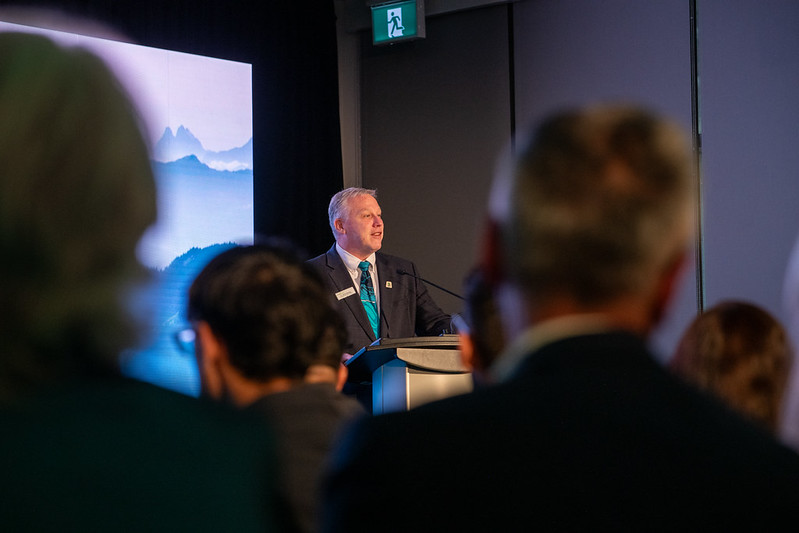
“Changemaking happens when a faculty member creates a learning experience that changes how a student sees their future. It happens when a staff member notices that a student needs help and takes the time to make a connection. It happens when a researcher sits down with a community organization and asks, ‘What can we work on together?’ And it happens when we rethink something we’ve always done because we know there is a better way.”
Susan Mide Kiss, Vice President of Community Engagement at UFV, guided the evening’s presentations, with help from student Arthur K. Atlas, who served as emcee.
Susan emphasized UFV’s commitment to learning, accountability, and building respectful relationships grounded in care. She noted that St’elt’elawtexw, the name for UFV’s community report and its celebration evening, means community in Halq’eméylem, the language of the Stó:lō people.
“At UFV, community takes many forms. It’s shared values, a sense of belonging, and a vision for a better tomorrow. It is the understanding that we are stronger together — and that the heart of every community is its people.”
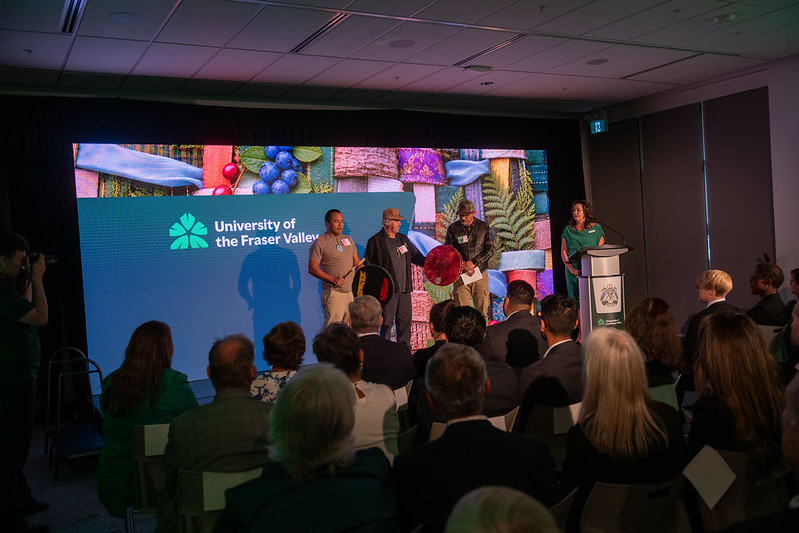
Susan also updated guests on the development of a Community Engagement Framework at UFV.
“Community engagement has always been part of UFV. It is embedded in our history and in our mission to engage learners, transform lives, and build community,” she noted.
“But meaningful engagement is more than being present in community. It means listening. It means building relationships over time. It means reciprocity — recognizing that knowledge, expertise, and learning move in both directions. Our Community Engagement Framework gives us a shared way to think about that work. At its heart is the idea of community weaving: strengthening the connections between people, organizations, ideas, and opportunities, and recognizing that strong relationships are built through trust, consistency, shared agency, and a willingness for UFV itself to listen, learn, and change.”
In addition to highlighting the numerous successes included in the community report, the evening provided an opportunity to honour the recipients of several awards that exemplify community connection at UFV.
Dean Duthie, Chief Constable of the Saanich Police Department, received UFV’s 2026 Distinguished Alumni Award, in recognition of his decades of leadership and community service in policing. He earned his Bachelor of Arts in Criminal Justice from UFV in 1995, part of the second graduating class for that program.
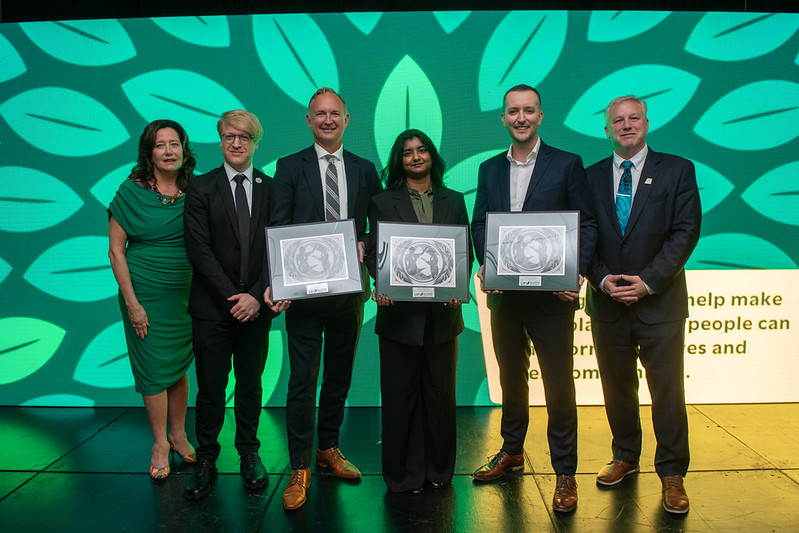
Dr. Ethan Wiens, a dentist based in Mission, B.C., was recognized as the 2026 Young Distinguished Alumni Award winner. Beyond his dental practice, he volunteers extensively in the community, and supports scholarships for future dental professionals. He earned his Bachelor of Arts degree at UFV in 2016.
Angelina Joseph received the Outstanding Student Leader Award. After arriving at UFV as an international student, she became a leader across campus, serving students through mentorship, student government, club leadership, and representation on the UFV Board of Governors and Senate. Angelina graduated with a Bachelor of Arts in Criminal Justice in 2026.
One of UFV’s most long-standing awards is the Betty Urquhart Community Service Award, named for one of UFV’s founding employees.
Pavi Toor, founder of the Young Guns Weightlifting Club in Mission, is the 2026 recipient of the Betty Urquhart Award. His group provides mentorship to young people in the areas of fitness training, sports, and financial literacy.
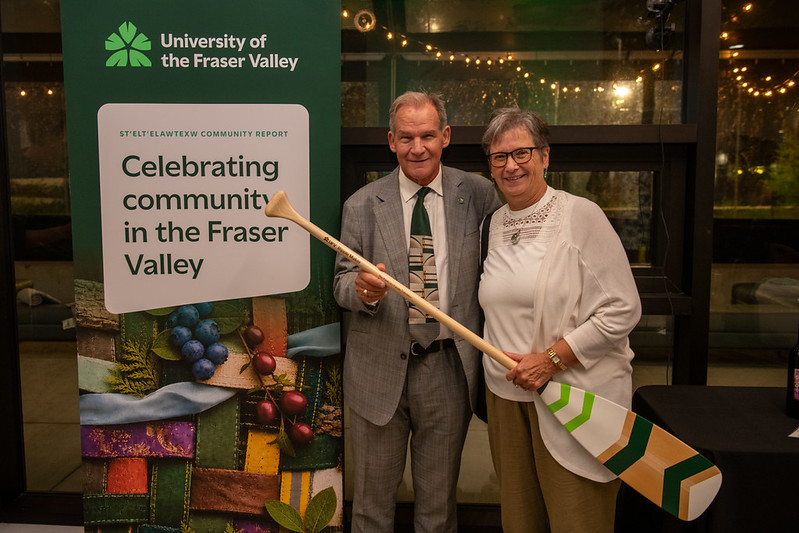
UFV also recognized individuals and organizations who have supported the university over the years through the presentation of Ripple Maker paddles. Former UFV board chair John Pankratz and his wife Crystal received a loyalty paddle, in honour of more than 15 years of giving to UFV. Abbotsford’s Aird and Sheila Flavelle, who have supported UFV in many ways over the years, received a legacy paddle for including UFV in their estate plans. Envision Financial received a lifetime paddle, presented to donors whose cumulative giving to UFV has reached more than $100,000.
New gifts to UFV were also announced at the celebration.
>>> See photos from St’elt’elawtexw: a Celebration of Community <<<
The RBC Foundation, a long-time supporter of UFV, is providing a $250,000 contribution to UFV’s Food and Agriculture Institute. The gift will support an Agricultural Technology Foundry, connecting students and faculty with industry and community partners, giving students hands-on opportunities to address real-world food and agriculture challenges.
Jason Warmerdam, a UFV alumnus who recently took on the role of Vice President, Agriculture and Agribusiness at RBC, announced the gift.
Coast Capital, a three-decade partner of UFV, has recently expanded opportunities for students in the Faculty of Applied and Technical Studies, supporting student leadership, reducing financial barriers, and helping more people discover the possibilities of careers in the skilled trades and technologies. Coast Capital’s renewed investment of $75,000 will help expand access to education, advancing equitable employment outcomes for underrepresented students.
This brings Coast Capital’s cumulative support of UFV to over $1 million, marking a significant milestone in a partnership rooted in shared impact and long-term commitment to student success.
Tara Walter, Manager of Social Purpose Ecosystem at Coast Capital, was on hand to celebrate the million-dollar milestone.
At the end of the evening, Susan thanked guests for their ongoing support of UFV.
“Tonight, you have heard just a few examples of what becomes possible when students, faculty, staff, and community come together—to learn, discover, innovate, and build a better future. I am deeply grateful to our community partners, supporters, sponsors, and the entire UFV community. Your care, generosity, and belief in this university make this work possible.
“We are grateful to the organizations whose partnership, creativity, and support helped us create an evening that reflects the relationships at the heart of UFV — Abbotsford Chamber of Commerce, Community Futures North Fraser, South Fraser and Sto:lo — who co-sponsored the networking reception, as well as other valued partners, including the UFV Alumni Association, Globe Printers and Wild Coast Productions.
“UFV is a gathering place for learners, leaders, and seekers. Together, we will continue weaving the vibrant tapestry of this community — and I am excited to see where that shared work takes us next.”
By Anne Russell — anne.russell@ufv.ca
]]>UFV welcomes learners from all walks of life and at every stage of their journey, with many finding their path through the School of Continuing Education (CE).
With a focus on people who may be switching careers, learning new skills in pursuit of a promotion, or re-entering the workforce, CE offers short-term programs and micro-courses for adult learners looking to complete their education quickly.
UFV highlighted the role of Continuing Education in connecting learners and communities on Sept. 22, when it launched its 2026 Community Report at the Clearbrook Centre in Abbotsford. The location was fitting: Clearbrook is CE’s main hub and a place where UFV’s commitment to accessible, community-responsive education is put into practice every day.
“We may have an 18-year-old who’s just finished high school and is starting their post-secondary journey, trying to discover their passion and lay the foundation for a future career,” says CE director Carolyn MacLaren. “But we may also have a 44-year-old engineer who’s relocated from Serbia and is returning to the classroom after many years away. We may have a newly single parent seeking financial stability, or someone who’s been downsized and suddenly needs to upgrade their skills.
“Whatever brings them here, they all have one thing in common: a desire to keep learning.”
The Clearbrook Centre in Abbotsford is the main hub for CE, which offers a wide range of courses. CE also works with community partners to develop customized curriculum, recently working with Métis Nation British Columbia (MNBC) to build a management skills program for its next generation of leaders.
“We also work closely with Archway Community Services,” Carolyn says. “For the past three years, we’ve provided a tailored English language training program for students recruited by Archway. These students earn university credits that are admissible to many post-secondary programs.
“We’ve also developed a Red Cross first-aid course specifically for the immigrant community, revising materials to make sure they’re culturally sensitive and accessible to students who come to us with diverse cultural and linguistic backgrounds.”
In 2022, CE was recognized by the Association of British Columbia Teachers of English as an Additional Language for developing this program.
CE works alongside employers, industry and community organizations to ensure programs reflect evolving workforce demands and prepare graduates with relevant, job-ready skills. Last June, CE celebrated the graduation of 378 students.
“I feel enormous pride in that because I know what it took for many of them to get there — the challenges and barriers they had to overcome to walk across that stage,” Carolyn says. “We love being part of their success, and we are proud of what so many of our graduates accomplish through hard work, with the support of our amazing team.
“Their success reflects UFV’s commitment to being a student-ready university — one that meets learners where they are and helps them take the next step.”
Important CE work is also happening at the Hope Centre, a modern, accessible facility serving the needs of a traditionally under-served community.
Guided by a comprehensive Community Needs Assessment produced in 2024, CE has worked to better understand the community, identify gaps in educational opportunities and determine how those gaps can be addressed.
In September 2025, CE launched the first in-person bookkeeping course at the Hope Centre. The Preparation for English for Academic Purposes program was also introduced to help English language learners prepare for university.
“We’ve also focused on recruiting instructors who are based in Hope, helping ensure the programs we offer are sustainable over the long term,” Carolyn says.
The Hope Centre has also become a gathering place for community organizations. Cedar Strong, a community service organization supporting people who are struggling or in transition, uses the building for meetings. The centre has hosted job recruitment fairs and created opportunities for people to connect with services and supports.
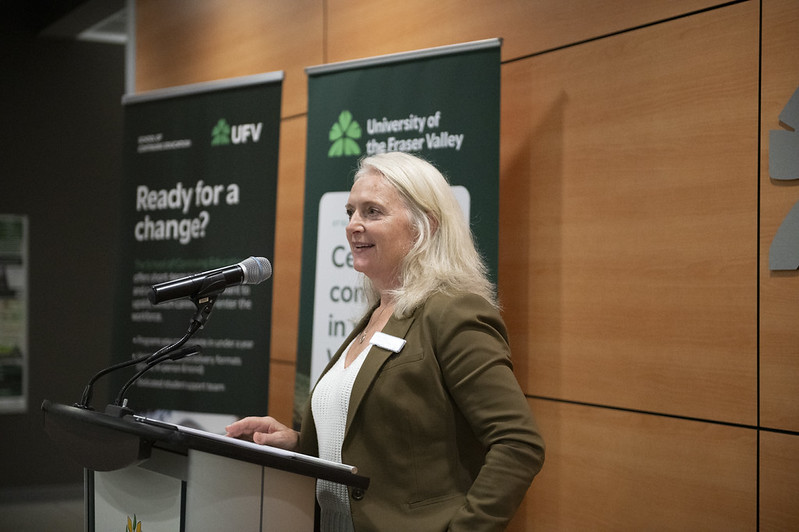
“It is not sufficient for us to simply identify needs. Action is required,” Carolyn says. “We are taking action, building a Hope Centre that serves and supports as many members of the community as possible.”
The effort has not gone unnoticed by Hope Mayor Victor Smith, who sees educational opportunities as an important part of the community’s future.
“As community leaders, there is a responsibility to remain committed to supporting individuals in achieving their educational goals,” Victor says. “This work should not be viewed solely through the lens of institutional survival, but rather through the lens of long-term community success. The benefits of that commitment will be realized in the future through the investments made today.”
Carolyn says CE will continue to listen to the communities it serves, work alongside valued partners and make education accessible to people wherever they are in their lives.
“There are countless different reasons someone might come through our doors,” she says. “Our job is to make sure that when they do, there is a pathway waiting for them.”
]]>National Day for Truth and Reconciliation takes place each year on September 30. There are several opportunities to mark the day at UFV and the Fraser Valley region. Some events are held on September 30, and others will be on days leading up to the statutory holiday.
UFV and community events
UFV Teaching and Learning and Xwexwílmexwawt, Stó:lō totí:lt
Tues, Sept 29
Noon-2 pm, with a Reconciliation Lunch event after from 12-1:30pm potluck lunch provided by non-Indigenous allies)
Evered Hall
Register here: https://forms.cloud.microsoft/Pages/ResponsePage.aspx?id=HQvRoybC-Uim25dt-RgYfio1ALd821dHv_cmoU5vB15UQVNPQzhBM0M5SVpLWkc0OFJGRzdUMFgyVS4u
Sept 29 | Reconcili-Action Lunch and Sharing
12–1:30 pm | UFV Abbotsford campus
Visit the event webpage for more information.
Sept 30 | Truth and Reconciliation Gathering
9 am–4 pm | South Bonson Community Centre, Banquet Hall, Pitt Meadows
Please contact Tery Kozma-Gahwiler, Xwexwílmexwawt/Indigenous Student Centre at Tery.Kozma@ufv.ca.
Sept 30 | Bridging Hearts Event At Coqualeetza Grounds
10 am-2 pm
Coqualeetza Grounds, Chilliwackbb
https://www.stolonation.bc.ca/resource/bridging-hearts
Wed, Sept 30 | Truth and Reconciliation Event: a special cultural sharing with the Pil’alt Canoe Family
2-3 pm
Greenacre Farms
https://www.greendaleacres.ca
Wed, Sept 30 | Walking the Path of Truth and Reconciation — Stetís ímexstowx
Wed, Sept 30
10 am-3:30 pm
Abbotsford Civic Plaza 32388 Veterans Way
https://stetisimexstowx.ca/our-time-together/
Wed, Sept 30 | Walk for Truth & Reconciliation hosted by Semiahmoo First Nation
Wed, Sept 30
11 am-2 pm
Semiahmoo Park (15782 Marine Drive, White Rock)
https://www.facebook.com/groups/1034054184233356/posts/1868497710788995/
Wed, Sept 30 | Screening of Common Territory
12 –1:30 pm | High Street Cineplex Theatre, Abbotsford
Wed, Sept 30 | Truth and Reconciliation Gathering
4 pm | 43101 Leq’a:mel Way, Deroche
- Please contact Tery Kozma-Gahwiler, Xwexwílmexwawt/Indigenous Student Centre at Tery.Kozma@ufv.ca.
Overcoming those barriers has led her to the thrills of playing a lead role on stage, rolling down rapids thousands of times on more than 50 rivers as a rafting guide, and choosing to forge a unique path with her anthropology doctorate rather than pursue a conventional academic career.
“Choosing to sit in discomfort and go for it anyway has taken me to many places,” she says.
Kristine’s experiences as a University of the Fraser Valley student were life-changing for her in two ways.
Her passion for theatre, sparked during high school, thrived during her two years in the UFV Theatre program, from which she earned a diploma in 2005.
“I was the shyest young person,” she recalls. “Theatre changed my life! It taught me how to not be afraid of the world, and to engage with other people. I have many fond memories of my time in theatre courses, working backstage, and getting to know the other students and the faculty and staff who guided me, including Bruce Kirkley, Ian Fenwick, Astrid Beugeling, Heather Robertson, and Christopher Wright.”
After several behind-the-scenes roles where she learned the nuts and bolts of production, and acting roles in UFV Director’s Festival plays, she took on the lead role on the main stage in The Secret Garden in spring of 2005.
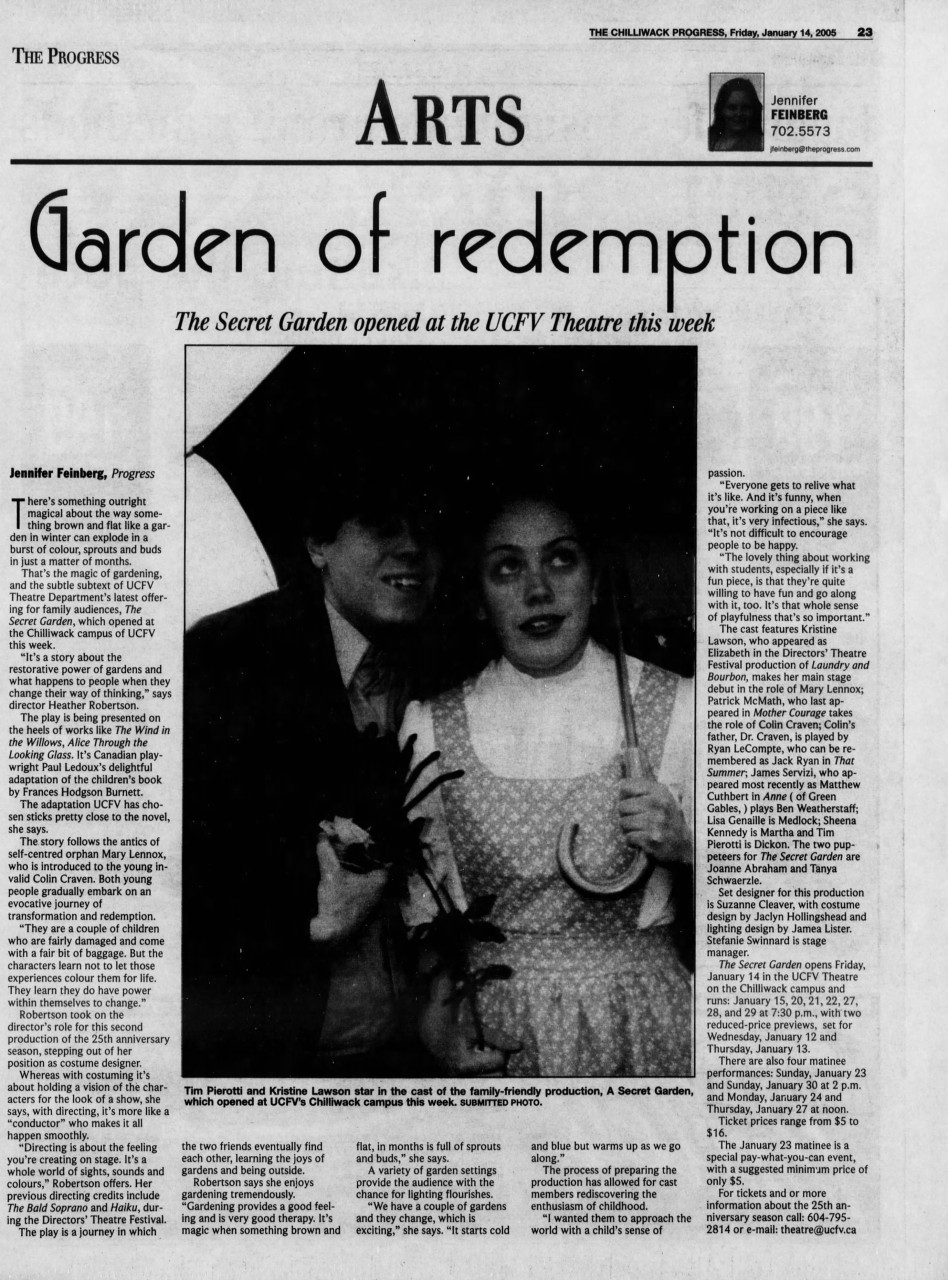
Kristine travelled throughout Australia for more than a year after graduation, and came back with an accent so thick that her agent told her she was not castable until she shook it. She took that as a sign to ditch her professional acting aspirations and she spent the next few years pursuing her other passion as a river rafting guide.
“I loved the water and being immersed in nature and meeting people from around the world in a wilderness setting,” she recalls. “When people would ask me what I wanted to do when I ‘grew up’ I’d say I want to get paid to hang out and talk to people and hear their stories.”
More than 20 years later, she’s doing just that on a more formal level as a project director and senior researcher with Narratives Inc., a Winnipeg-based environmental planning firm that prioritizes community-led, relational approaches to technical work in planning, assessments, research, design, and capacity building.
Along the way, she got intrigued by cultural anthropology through a World Religions course taught by the late David Wyatt. A friend told her that anthropology sounded like a perfect match for her curious personality, and she returned to UFV twice over five years to take more courses. An instructor told her that if she really wanted to pursue anthropology as an academic discipline, she should read widely in the field, discover scholars that really resonated with her, and go study with them.
She took that advice and went to California with the hopes of learning from renowned anthropologist Dr. Laura Nader at the University of California Berkeley, where she completed her Bachelor of Arts in anthropology.
She was interested in the concept of “coercive harmony” developed by Nader — how a system in which there is individual freedom but only to a certain point, where people can be ostracized if they push the boundaries, can be used as a tool of social control.
“As a lifelong oddball, I was fascinated by this,” she recalls.
After her BA, she decided to pursue an MA and PhD at University of California Santa Cruz, although along the way she decided that she didn’t want to be a professor.
“Traditional academia was not for me in the long term, so I had to ask myself why I was intent on finishing my PhD. I decided that I wanted to use my doctorate as a community asset to be of service in delivering projects that realized already-existing community visions, to put my knowledge to use. I wanted to bring my heart-centred principles to professional practice in a heart-centred way.”
She returned to Vancouver at the tail end of her doctoral research and studied the Tsleil-Waututh-led actions in Vancouver against the Trans Mountain pipeline.
“I spent a lot of time listening to Elders and Knowledge Carriers and being open to their expertise. The teachers I sat with had spiritual connections to the land that they shared with me and that I was asked to carry,”
Kristine notes. “Sharing the teachings of the plants with me were political expressions and radical acts of care for the earth. They invited me to consider how we could apply those plant teachings to ourselves, individually, collectively, physically, and spiritually. These teachings changed my life.”
She also learned about patience and the importance of deep listening while working with Indigenous Elders as part of her research.
“I’d try to ask questions about political issues, and they would talk about the earth. This was their way of talking about politics,” she says. “The lessons I learned were not linear. In conversation with my teachers — those who sat in the watch tower and were willing to share their knowledge with me — the conversation might meander for years before I got the answer to my question. It is always a learning journey.”
Her doctoral research reinforced her determination to work with clients whose values she shared.
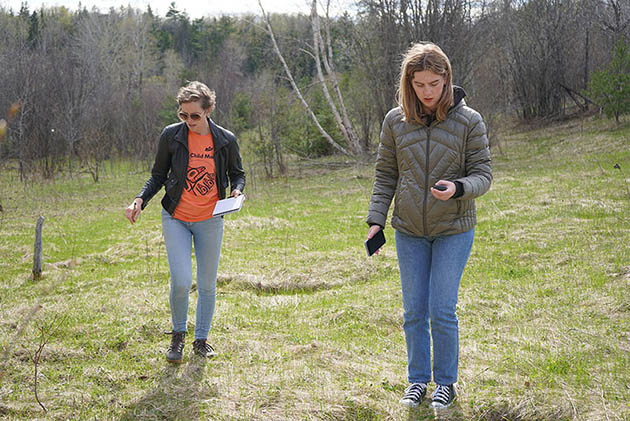
This led to her current role at Narratives Inc., where her projects have included working with Anishinabe of Waushushk Onigum survivors of the former St. Mary’s (Kenora) Indian Residential School in Ontario. The survivor-led work included biweekly gatherings to sit with and listen to the survivors, collecting records and recording hundreds of hours of testimony, coordinating land searches, and developing years of reports and presentations to help compile the Kaatagoging book project, a set of four books by residential school survivors.
“Often the voices that matter the most get pushed to the side, so we work with clients to understand and amplify their vitally important stories that they need to tell to help plan for the next generations,” Kristine says. “We support the communities we work for to share their stories and their healing visions for the future in the ways that are most impactful for them.”
After working in Manitoba for a few years, Kristine’s heart called her home to the West Coast. Now based in Vancouver, she is tasked with exploring new partnerships for Narratives Inc. while continuing to work with existing client partners. Not bad for a first-generation university student who started out with stage fright, learned to conquer her fears, and learned from many mentors along the way.
Story by Anne Russell — anne.russell@ufv.ca

“Internationalization is my passion,” says Daryl Smith, director of UFV International. “We’re incorporating this intercultural, global, international perspective into everything we do at the institution. Connecting with other institutions to facilitate that process of internationalization for our students is the best part.”
While Daryl was visiting Türkiye last October, a Canadian trade commissioner connected him with Yeditepe University. Excited by their shared interest in Collaborative Online Intercultural Learning (COIL) and the potential for student and faculty exchange, Daryl began forging a partnership — one that’s brought Dr. Victoria Surtees and Dr. Anna Griffith 9,612 kilometres across the world to collaborate and share ideas.
COIL connects classrooms across the globe through shared experiential and applied learning, making international learning more financially accessible to those who are unable to study abroad. The visit itself was made possible by funding from Erasmus+, which extends international education and mobility funding beyond Europe. Thanks to this exciting new partnership, UFV students will have the opportunity to gain intercultural skills and connect with peers and faculty members across countries, while faculty will benefit from collaborative teaching and research.
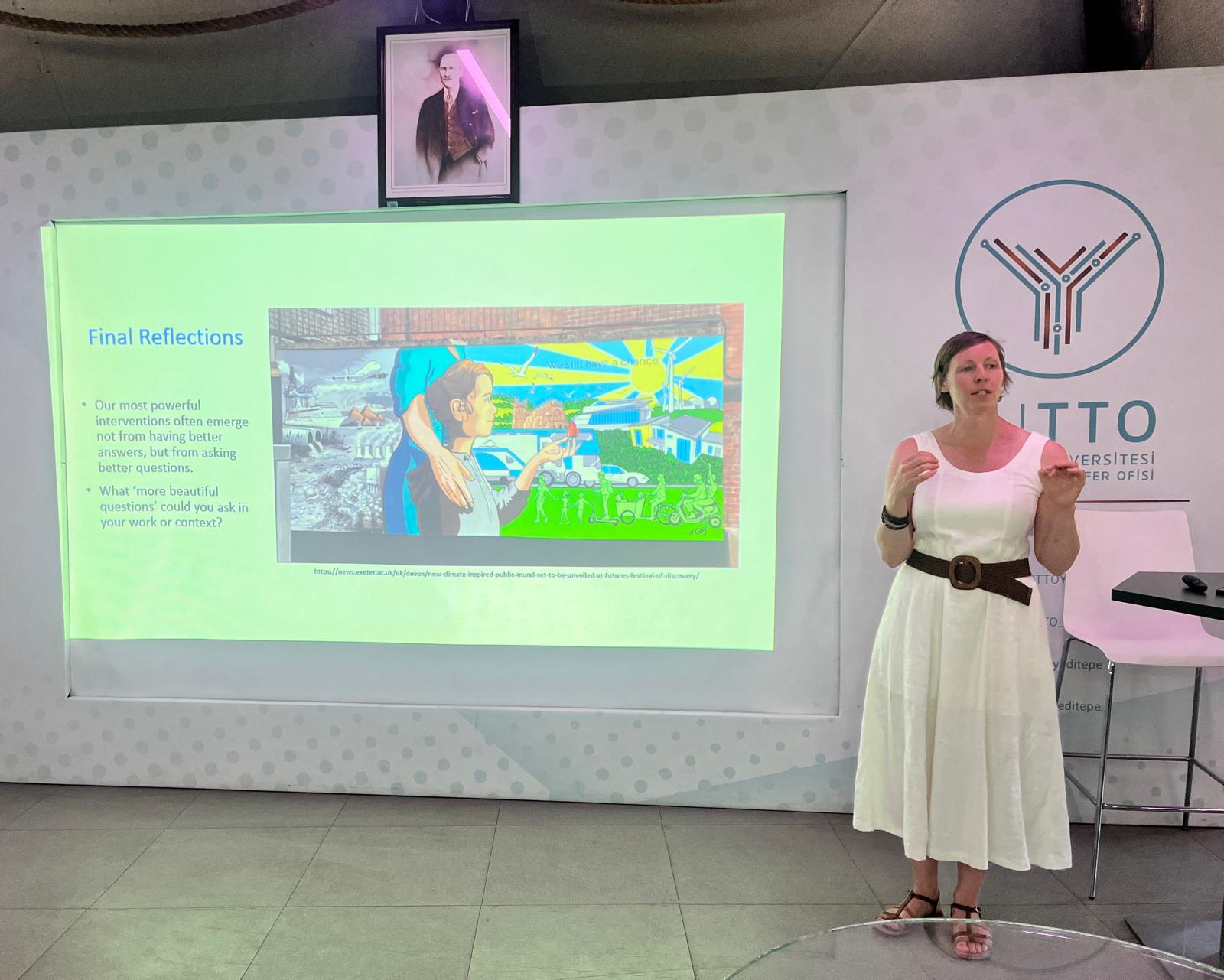
Anna, an associate professor and changemaker curriculum developer, was hosted by the multidisciplinary Design and Innovation for Sustainable Food Systems Master’s program. She brought a 3-workshop series to share with her contemporaries in Istanbul. Workshops included “Futures Literacy and Strategic Foresight,” “Interdisciplinary Social Innovation Design Lab,” and “One Health and Regenerative Design Frameworks.” These hands-on workshops were attended by Yeditepe University faculty and students as well as external guests and community partners.
Victoria, a UFV COIL facilitator and teaching and learning specialist in intercultural education, saw this trip as a valuable opportunity to experience firsthand what post-secondary education looks like in another country.
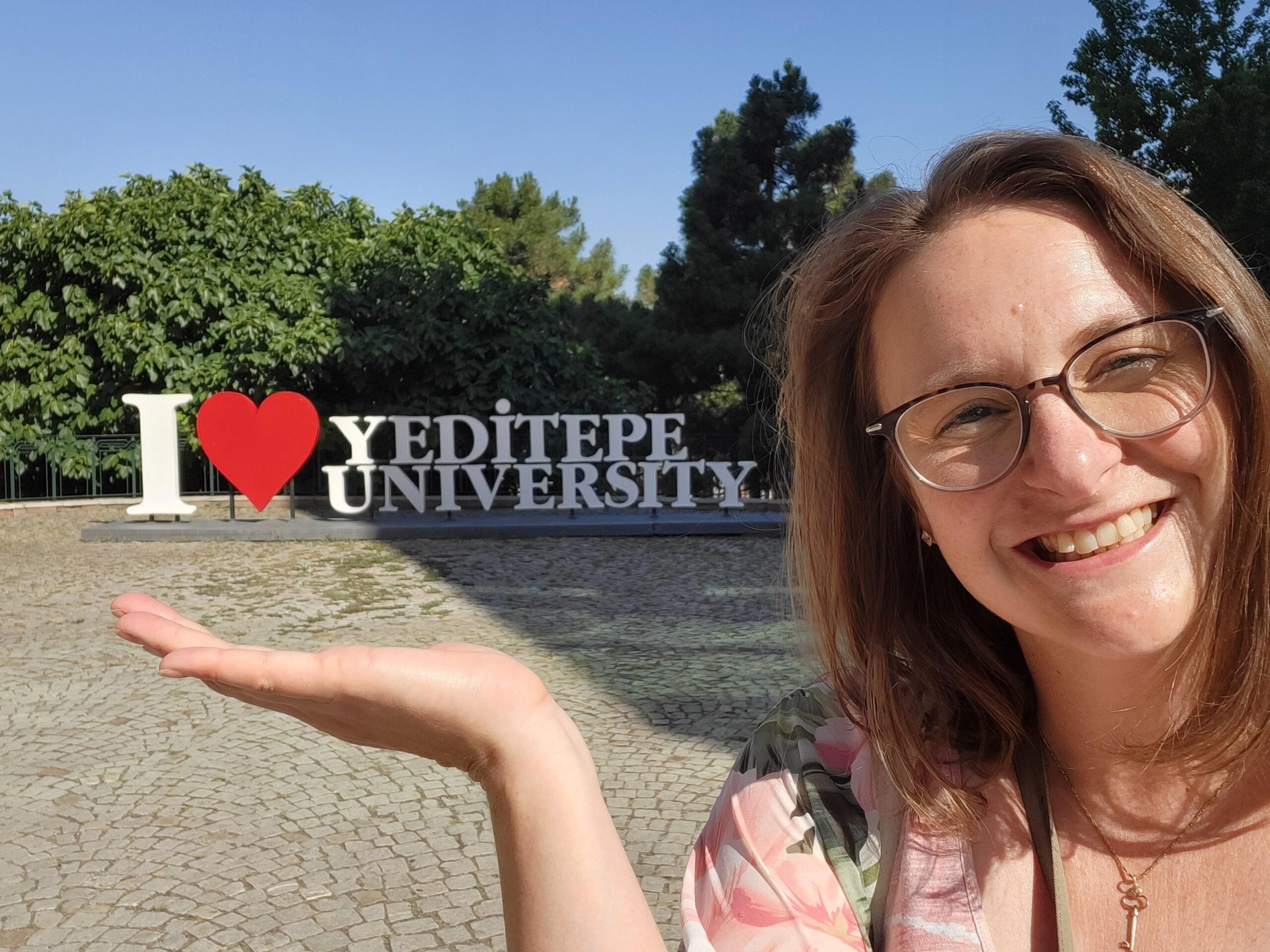
“It helps me support faculty in understanding how to work with students who come from different systems that have different priorities,” she says. “It also allows me to take inspiration from those systems and programs. For me, that was really important.”
She shared two workshops with faculty at Yeditepe University, one on COIL and one on culturally responsive teaching. COIL connects classrooms across the globe through shared experiential and applied learning, making international learning more financially accessible to those who are unable to study abroad.
“They really had a different understanding of what collaborative online intercultural learning would look like. In their minds, it was this sort of exchange of lectures — they would come and lecture in our classrooms and we would go and lecture in theirs. When I shared with them what it looked like to build a collaborative project, using examples of how it looks for students to actually collaborate and build something together for a client or a community stakeholder, they were really surprised and excited.”
Looking back on her travels, Victoria is struck by the cross-cultural similarities she discovered. “We shared so many of the same teaching and learning priorities, so many of the same interests. The conversations were so rich and it was easy to find points of synergy where we could move forward with our relationships.”
On the horizon, there are more opportunities for travel, international education, and collaborative research. Victoria urges UFV students and faculty to lean into the unexpected and go on an adventure.
“You can learn so much just by trying something new. And COIL is a great way to do that. So, connect with another faculty member and try something new and different, move out of your comfort zone a little bit. I’m already seeing COIL collaborations leading to research projects, field-study programs, and all sorts of other kinds of relationships that are really meaningful and impactful. So take the first step. It’s challenging and fun.”
To learn more about what COIL can do for you, be sure to join the COIL info session on Monday, October 5 from 12-1 pm.
]]>Chris has spent the past 18 months working with the BC Agriculture Council (BCAC) to develop this trust, which would acquire farmland, through either donation or strategic purchase, hold land in perpetuity, and lease it to farmers at an affordable rate. His in-depth research is helping to inform BCAC’s decision making.
“Right now, unless someone is taking over a family business, nobody can get into farming without an investor behind them, or some other source of independent wealth,” Chris says. “That makes growth in the sector really challenging.”
Across the province, Chris counts approximately 620 farms operating at a larger scale, generating $2 million or more in annual revenue, and another 1,100 generating between $500,000 and $2 million. It is this second group he calls “the missing middle,” and it is being slowly eroded by the prohibitive price of land.
He laid out the case in a new report titled Farming at the Edge.
“In the rest of the country, we see about 30 per cent growth in the number of operators at the mid-scale, but it’s been stagnant in B.C. for around 20 years,” he explains. “We see people trying to get into farming and make it work, but they end up leaving. And if people can’t enter the sector and make a go of it, then that’s a red flag for the future of agriculture in B.C.”
The math is unforgiving for anyone starting out, and the question that drives his work is straight-forward: how can we make affordable land available to a new generation of farmers?
Chris has studied land-trust models that already work elsewhere. Ontario, for instance, has run a farmland trust for 20 years, using a legal tool called an easement, or a right that ensures land stays in its intended use no matter who owns it.
The response, he says, has already outrun expectations. Donating land is a big ask, yet farmers are already telling the group they will be ready for the moment the trust is established. Reaching charitable status will take about two years, at which point donors can receive tax receipts that can help in estate-planning decisions.
“We were blown away by the response,” Chris says. “You need buy-in from the sector, and this initiative is coming from the sector. The BCAC’s board is made up of people in the agriculture industry, and the BCAC represents around 98 per cent of farm receipts in the province.”
The pressure to find solutions is immediate.
Over the past 20 years, Chris notes, Canada has lost farmland equivalent to the entire size of Nova Scotia. In the Fraser Valley, the pressure is acute as cities like Chilliwack and Abbotsford face growth pressures on a limited land base.
“When we lose farmland, we can’t create more. When we make the choice to not use it for farming, it’s not recoverable.”
He points to B.C.’s Agricultural Land Reserve (ALR), established in 1973 to protect about 4.6 million hectares through zoning, policy, and regulation, which is often mistaken for a land trust.
“A lot of people assume the ALR is a land trust, but the one piece that was never carried out when the ALR was established was developing a land bank,” he explains. Land was purchased for that purpose in the 1970s, then sold off when a new government took power. So this initiative is about the agriculture sector looking at what it can do to support land access in the long term.”
Opportunity for B.C.’s agriculture sector, Chris suggests, rests on the missing middle. The largest commercial operations have the scale to absorb cost shocks; the mid-sized ones do not. But given the right conditions, they are also the operations best poised for growth and innovation.
Their success or failure will define the next decade of BC food production.
“I got into this because I want to see a pathway for people who want to farm,” he says. “If we get this right, that door can stay open.”
Story by Eric Welsh — eric.welsh@ufv.ca
]]>Since becoming Chancellor in 2024, Dr. Archibald has brought her wisdom, warmth, and deep connection to UFV to the role. From welcoming graduates at Convocation to representing UFV throughout the Fraser Valley and beyond, she has been a wonderful ambassador for our university and a strong champion for our students, our communities, and our commitment to reconciliation.
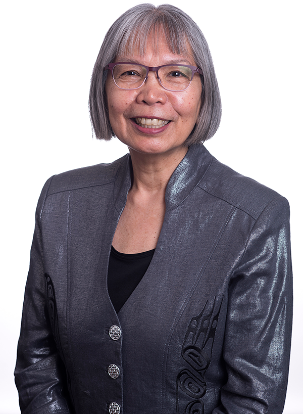 Dr. Archibald’s connection to UFV stretches back to UFV’s beginnings as Fraser Valley College, and her lifelong commitment to Indigenous education and community continues to enrich the institution.
“We are honoured that Dr. Archibald will continue to serve as UFV’s Chancellor and look forward to all that we will continue to accomplish together,” said Dr. James Mandigo, UFV President and Vice Chancellor. “Her work reflects so much of what we mean when we talk about changemaking at UFV — using knowledge, relationships, and education to create meaningful and lasting change in our communities. We are especially grateful for the care she brings to every interaction and for the many ways she helps us understand and celebrate who we are as a university.
“We would also like to extend our sincere thanks to the UFV Alumni Association for its recommendation of Dr. Archibald for a second term. The Chancellor is appointed by the Board of Governors upon the recommendation of the Alumni Association, following consultation with Senate, and we are grateful for the thoughtful work that went into this process.”
]]>