
While some students spend their summer vacations at the beach, budding geophysicists Sam Jensen and Miah Mol opted for something a little more down to earth—literally.
Jensen, a second-year master’s student in geophysics, and Mol, a junior double-majoring in geology and applied geophysics, spent six weeks this summer in Iceland as part of a National Science Foundation-funded paleomagnetic research project, studying prehistoric magnetic fields found in the geological landscape of northwestern Iceland.
The research team was led by Leonid Surovitskii and Elisa Piispa, who both earned their PhDs from Tech’s Department of Geological and Mining Engineering and Sciences (GMES) and went on to become leaders in the field of paleomagnetism. The team also included their collaborator Zoé Lacaze from the University of Strasbourg.
Today, Piispa is a research scholar at the University of Iceland and head of the paleomagnetism laboratory at the university’s Institute of Earth Sciences. Surovitskii is the current director of the Paleomagnetic Laboratory at the Research Center of St. Petersburg State University and remains a frequent collaborator with the GMES department, where he serves as adjunct assistant professor.
Research field days were spent hiking to lava flow outcrops, drilling core samples, and cataloging samples for analysis. In their free time, Jensen and Mol were able to explore Iceland’s landscapes, visit historical sites, and immerse themselves in the local culture.
For the full story, read the GMES department blog, where Jensen and Mol share their experiences as researchers and travelers, and offer advice to future students.
About the College of Engineering
Michigan Tech’s College of Engineering offers more than 15 bachelor of science degrees in biomedical engineering, chemical engineering, civil, environmental and geospatial engineering, electrical and computer engineering, engineering fundamentals, geological and mining engineering and sciences, manufacturing and mechanical engineering and technology, materials science and engineering, and mechanical and aerospace engineering.
Our engineering graduate degree options include master’s and PhD programs, along with robust online certificate programs for busy professionals. Follow Michigan Tech Engineering on Facebook, Instagram, LinkedIn, and Twitter for the latest happenings.
]]>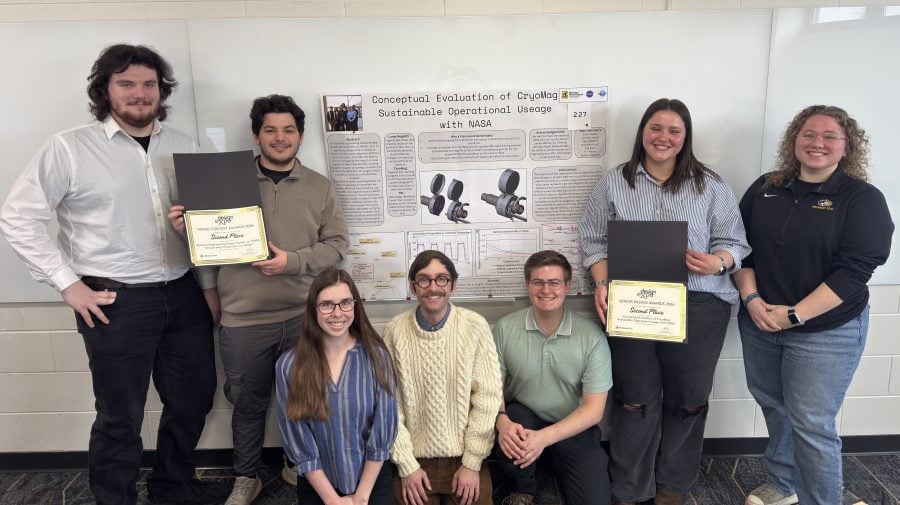
Michigan Tech students are earning NASA awards for work designed to make future Artemis missions more reliable!
This summer, the Bachelor of Science in Engineering (BSE) capstone team received an “Awesome Performance in EXploration DIvision” 2026 APEX Award from NASA’s Johnson Space Center for their Senior Design project titled “Conceptual Evaluation of CryoMag Sustainable Operational Usage with NASA.” The team seeks to develop a framework to mitigate the impact of lunar regolith on CryoMag connectors to increase the reliability of cryogenic fluid transfer on lunar missions.
This year’s award-winning team was led by Katie Walters and includes Brian Marku, Connor Jones, Nicholas Wyatt, Ella Santi, Tim Peters, and Kathryn Bugbee.
The awards are presented by NASA’s EX Project Management and Systems Engineering Division in recognition of outstanding work in support of the division. NASA representatives noted the students’ strong performance throughout the spring 2026 semester and the positive response to their final project presentation.
“This recognition is a tremendous achievement for our students with a focus in systems engineering,” said James Bittner, assistant teaching professor in the Department of Engineering Fundamentals (EF) and the team’s faculty advisor. “Throughout the project, the team demonstrated exceptional accountability, resilience, and creativity while working through the complexity and uncertainty of a real NASA systems engineering challenge. The APEX Award from Johnson Space Center is a meaningful recognition of the quality of their work, their professionalism, and the true value of their strong teamwork.”
Open-ended projects like this one require student teams to identify a complex problem, propose a direction to NASA, and execute a solution in just 14 weeks. Their efforts culminate in a comprehensive final report and presentations to NASA and the Michigan Chapter of the International Council on Systems Engineering (INCOSE).
The senior capstone focused on systems engineering was begun by Robin Mikola ’04 in 2020, shortly after founding Michigan Tech’s Systems Engineering Association, an INCOSE student division. The request came from the students themselves, who were looking to put their systems engineering education into real-world practice.
“I developed and pitched this open-ended challenge to NASA that united students from across disciplines to tackle real problems supporting the future of space exploration,” said Mikola, an electrical engineering alumna. “NASA loved this idea and immediately volunteered their time weekly and provided access to experts across the organization to support answering any questions the students had.”
Mikola led the first year of the program as then-president and academic advisor of the INCOSE Michigan Chapter alongside Associate Professor Jon Sticklen. Mikola remains the academic advisor for INCOSE Michigan, supporting teams at Michigan Tech and the University of Michigan.
“Today, the program continues to provide students with a unique opportunity to apply systems engineering in a real-world, multidisciplinary environment with support from James Bittner,” said Mikola. “By addressing authentic challenges connected to NASA’s Artemis missions and future exploration efforts, students gain professional-level experience while making meaningful contributions to humanity’s return to the Moon, journey to Mars, and beyond.”
Sticklen, who previously served as the EF department chair, was faculty lead for the first three years of the collaboration with NASA and continues to work closely with the capstone students.
“I am incredibly proud of all our capstone teams and overjoyed to see their dedication recognized with this NASA APEX Award,” said Sticklen. “Through weekly collaborations with NASA experts and alongside the steadfast external mentorship of Robin Mikola and the invaluable, direct support from James Bittner, our students worked relentlessly. These students are a truly special group, and I firmly believe we will hear great things about them throughout their careers.”
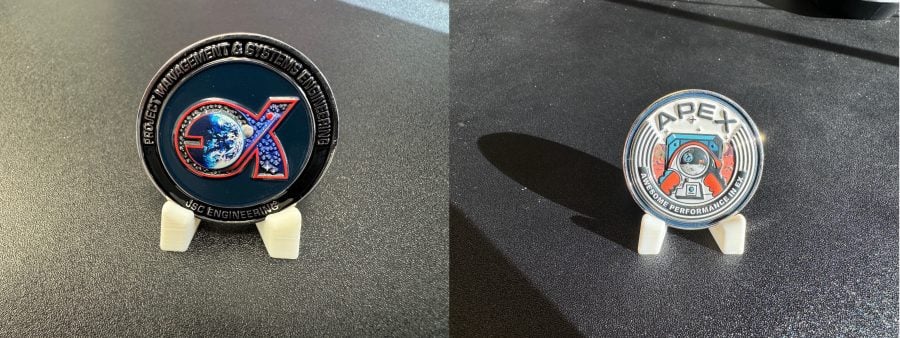
In addition to a certificate and commemorative coin from NASA, the team earned a second-place Senior Design Award and placed second in the Image Contest Award at Michigan Tech’s 2026 Design Expo.
“It has been an honor and privilege to support and mentor these exceptional future engineers over the years,” said Mikola. “I hope that we can continue to provide this excellent experience to future MTU students for many years to come.”
About the College of Engineering
Michigan Tech’s College of Engineering offers more than 15 bachelor of science degrees in biomedical engineering, chemical engineering, civil, environmental and geospatial engineering, electrical and computer engineering, engineering fundamentals, geological and mining engineering and sciences, manufacturing and mechanical engineering and technology, materials science and engineering, and mechanical and aerospace engineering.
Our engineering graduate degree options include master’s and PhD programs, along with robust online certificate programs for busy professionals. Follow Michigan Tech Engineering on Facebook, Instagram, LinkedIn, and Twitter for the latest happenings.
]]>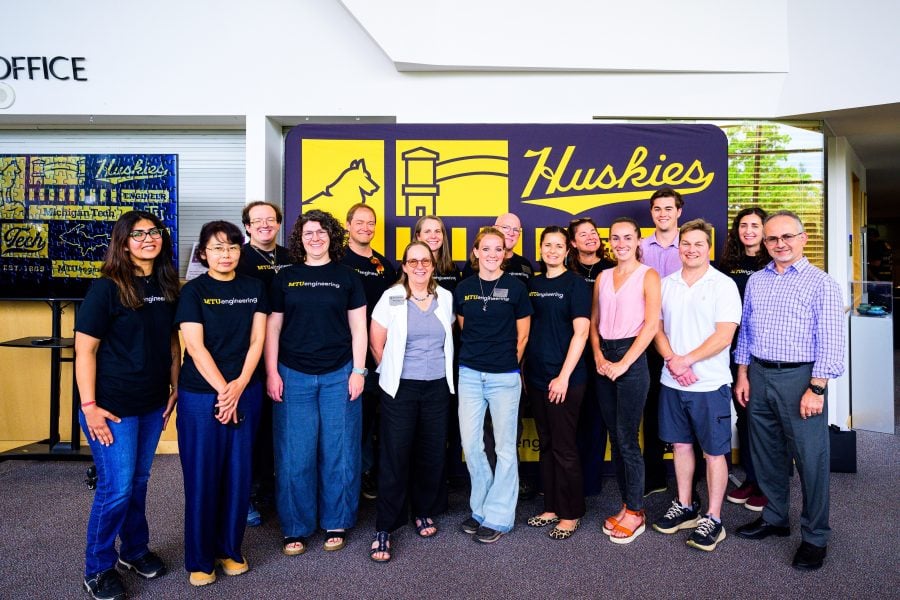
The College of Engineering kicked off the 2026-2027 academic year by welcoming seven new faculty members this August. The new faculty members bring a wealth of academic and industry experience to support new and expanding programs in aerospace engineering, ecological engineering, and more.
Dean Michelle Scherer also recognized the promotions of nine faculty members, highlighting their continued excellence in research, education, and mentorship.
“These faculty members are moving and shaking in their fields and are engineering new and innovative approaches to help make people’s lives better and educate the next generation of engineers,” said Scherer. “I could not be more delighted to see all of them recognized with well-earned promotions. Keep your eyes on this group!”
Meet our new faculty members:
Department of Electrical and Computer Engineering

Taerin Chung, Assistant Professor
Taerin Chung is an assistant teaching professor in the Department of Electrical and Computer Engineering specializing in nanophotonics, plasmonics, biophotonics, and light-based sensing and imaging. She has worked extensively in both the United States and South Korea, where she earned her PhD in electrical and computer engineering from Seoul National University. She has authored and co-authored more than 40 scientific contributions in peer-reviewed journals, conference proceedings, and book chapters.
Department of Civil, Environmental, and Geospatial Engineering

Jessica Kozarek, Assistant Professor
Jess Kozarek started as an assistant professor in the Department of Civil, Environmental, and Geospatial Engineering (CEGE) in spring 2026. Her research interests link physical, chemical, and biological processes in freshwater streams, rivers, and lakes. Prior to joining Michigan Tech, Kozarek was a research associate at the St. Anthony Falls Laboratory at the University of Minnesota. She earned her PhD in biological systems engineering, specializing in ecological engineering, from Virginia Tech.
Department of Engineering Fundamentals

Duncan Mullins, Assistant Teaching Professor
Duncan Mullins is an assistant teaching professor in the Department of Engineering Fundamentals (EF). He holds a PhD in engineering education from the University of Buffalo with a background in chemical engineering from Oklahoma State University. His research interests focus on faculty education and preparedness and leveraging qualitative research methods to build better teaching programs for graduate students. His teaching philosophy focuses on active, engaged, and interactive learning environments and student-centered learning.

Linda S. Wanless, Professor of Practice
Linda Wanless is an EF Professor of Practice who enjoys researching adult learning and active learning environments. In her role as a Faculty Fellow for Michigan Tech’s Center for Faculty Excellence she supports faculty in best pedagogical practices.
Department of Mechanical and Aerospace Engineering

Tracie Conn, Assistant Teaching Professor
Tracie Conn is an assistant teaching professor in the Department of Mechanical and Aerospace Engineering (MAE), where she specializes in artificial intelligence (AI) applications for spacecraft trajectory design and driving automation. She earned her PhD in aerospace engineering from the University of Texas at Arlington. Previously, Conn has held technical positions at the NASA Ames Research Center, Johnson Space Center, and Ford Motor Company.

Connor MacRobbie, Adjunct Assistant Teaching Professor
Connor MacRobbie is a MAE adjunct assistant teaching professor. He earned his PhD in mechanical and mechatronics engineering from the University of Waterloo. His research is focused on lunar technology development, lunar regolith processing, and energy generation and construction on the lunar surface.

Madelyn MacRobbie, Assistant Professor
Madelyn MacRobbie joined Michigan Tech as a MAE assistant professor in spring 2026. Her research focuses on bioastronautics, aerospace physiology, and space mission architecture. She holds a joint PhD in medical engineering and medical physics from the Massachusetts Institute of Technology and Harvard Medical School.
Promoted Faculty
Going into the fall 2026 semester, seven faculty members were promoted to associate professor with tenure, honoring their commitment to instructional and research excellence across the College. These faculty members lead laboratories and research groups focused on health, robotics, alternative energy, manufacturing and more.
This year’s promoted faculty members include:
- Hoda Hatoum (Biomedical Engineering)
- Yixin Liu (Chemical Engineering)
- David Labyak (Manufacturing and Mechanical Engineering Technology)
- Jung Yun Bae (MAE)
- Ana Dyreson (MAE)
- Susanta Ghosh (MAE)
- Vijaya V. N. Sriram Malladi (MAE)
In addition to the newly tenured faculty, Kyle Griffin was promoted to associate teaching professor and Jeana Collins was promoted to teaching professor, both in the Department of Chemical Engineering.
About the College of Engineering
Michigan Tech’s College of Engineering offers more than 15 bachelor of science degrees in biomedical engineering, chemical engineering, civil, environmental and geospatial engineering, electrical and computer engineering, engineering fundamentals, geological and mining engineering and sciences, manufacturing and mechanical engineering and technology, materials science and engineering, and mechanical and aerospace engineering.
Our engineering graduate degree options include master’s and PhD programs, along with robust online certificate programs for busy professionals. Follow Michigan Tech Engineering on Facebook, Instagram, LinkedIn, and Twitter for the latest happenings.
]]>
Michigan Tech researchers continue to keep their eyes on the stars. Faculty and student researchers in the College are testing new applications for lunar roads, rovers, and robots, but as NASA’s Artemis Program continues towards its goal of a sustained human presence on the Moon, a new, necessary field is emerging: astronaut wellness and well-being in space environments.
Madelyn MacRobbie, assistant professor in the Department of Mechanical and Aerospace Engineering (MAE), is ready to get to work. Having completed a joint PhD in medical engineering and medical physics from the Massachusetts Institute of Technology and Harvard Medical School, MacRobbie joined Michigan Tech specifically for its rising aerospace engineering program. Now, she’ll be leading a team of students conducting research in bioastronautics.

MacRobbie’s research proposal was selected by NASA’s Moon to Mars eXploration Systems and Habitation (M2M X-Hab) 2027 Academic Innovation Challenge as one of nine university teams supporting space habitats and deep space exploration missions. The M2M X-Hab Academic Innovation Challenge, also funded by the National Space Grant Foundation, is designed to be linked to senior- and graduate-level design curricula that emphasizes hands-on design, research, and development of system prototypes that could be applied to NASA’s space exploration.
The Michigan Tech team will focus on the psychological health and well-being of astronautic crews during long-duration missions. Integrated into Tech’s system engineering principles, MAE’s mechanical engineering practice courses, and Senior Design Capstone projects, the student team led by MacRobbie will deliver a prototype chocolate production system that will supplement food systems and allow for baking as a hobby in space that considers the requirements of low mass, microgravity operations, and crew satisfaction.
“As astronauts spend increasingly long durations of time in space, small comforts like chocolate could have a big impact on the psychological well-being of the crew while also supplementing the food supply that will be grown in space and brought from Earth,” said MacRobbie. “MAE students can contribute directly to the growing need for viable food systems that move beyond a survival focus and instead design for the ability to thrive in space.”
The M2M X-Hab Academic Innovation Challenge provides funding and support from NASA’s Mars Campaign Office. All university teams are required to complete their prototypes by May 2027, at which point the successful prototypes may be integrated into existing NASA-led operations.
About the College of Engineering
Michigan Tech’s College of Engineering offers more than 15 bachelor of science degrees in biomedical engineering, chemical engineering, civil, environmental and geospatial engineering, electrical and computer engineering, engineering fundamentals, geological and mining engineering and sciences, manufacturing and mechanical engineering and technology, materials science and engineering, and mechanical and aerospace engineering.
Our engineering graduate degree options include master’s and PhD programs, along with robust online certificate programs for busy professionals. Follow Michigan Tech Engineering on Facebook, Instagram, LinkedIn, and Twitter for the latest happenings.
]]>
M. Emin Kutay has been named chair of Michigan Tech’s Department of Civil, Environmental, and Geospatial Engineering (CEGE), effective July 20.
Kutay comes to the College of Engineering from Michigan State University, where he was a professor of civil and environmental engineering for 18 years. There, he built an internationally recognized program in pavement engineering, infrastructure materials, and computational modelling.

He earned his undergraduate degree in civil engineering from Middle East Technical University in Ankara, Turkey, before earning his M.S. and Ph.D. in civil engineering from the University of Maryland, College Park. Prior to joining Michigan State, Kutay worked for the Federal Highway Administration’s Turner-Fairbank Highway Research Center, where he served in several roles as part of the Pavement Design and Performance Modeling Team.
An award-winning researcher in transportation infrastructure analysis and management, Kutay’s interests include asphalt mixture characterization (both experimental and modeling), mechanistic-empirical pavement analysis and design, pavement preservation, and geotechnical engineering. More recently, his research has extended to modeling the effects of flooding on pavement performance and to large-scale highway systems analysis.
He has received the American Society of Civil Engineering’s (ASCE) Collingwood Prize, the ASCE Arthur M. Wellington Prize, and the Association of Asphalt Paving Technologists’ Walter J. Emmons Award for best paper. As a graduate researcher, he held the U.S. Department of Transportation’s Dwight David Eisenhower Graduate Research Fellowship from 2003 to 2005 and earned the American Association of State Highway Transportation Officials’ National Competition Award for transportation professionalism.
“Professor Kutay steps into this vital leadership role backed by an impressive research portfolio, federal and academic leadership experience, and a deep commitment to engineering education and our community’s growth,” said Michelle Scherer, dean of the College of Engineering. “He has a deep understanding of how top-tier R1 research universities operate, paired with direct experience navigating the unique funding, research, and industry landscape of the State of Michigan.”
Kutay teaches courses in numerical methods, soil mechanics, and pavement engineering, and has developed hands-on, computation-based instructional materials that connect classroom fundamentals to real engineering practice. As CEGE department chair, Kutay will further the department’s mission to provide an educational, professional, and intellectual experience to improve societal well-being for its more than 500 undergraduate students and 100 graduate students, as well the department’s alumni, faculty, and staff.
About the College of Engineering
Michigan Tech’s College of Engineering offers more than 15 bachelor of science degrees in biomedical engineering, chemical engineering, civil, environmental and geospatial engineering, electrical and computer engineering, engineering fundamentals, geological and mining engineering and sciences, manufacturing and mechanical engineering and technology, materials science and engineering, and mechanical and aerospace engineering.
Our engineering graduate degree options include master’s and PhD programs, along with robust online certificate programs for busy professionals. Follow Michigan Tech Engineering on Facebook, Instagram, LinkedIn, and Twitter for the latest happenings.
]]>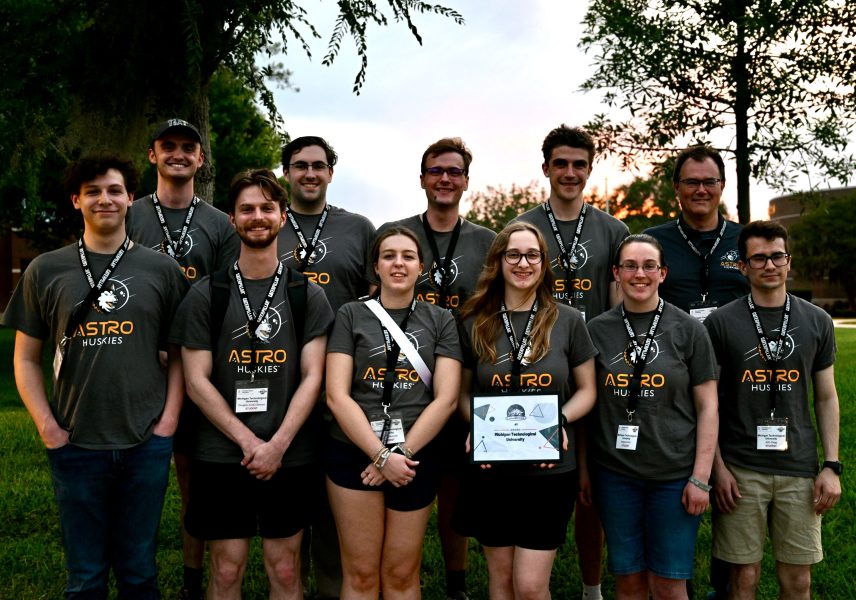
Michigan Tech students never shy away from a good challenge, and the Astro-Huskies of Tech’s Multiplanetary INnovation Enterprise (MINE) are no different. The Astro-Huskies team placed third in the 2026 NASA Lunabotics Challenge.
The annual year-long competition puts collegiate teams to the test, designing, building, and testing prototype lunar construction robots. This year, 47 teams were selected to compete in the qualifying round at the University of Central Florida before the top 10 teams moved on to the three-day final at the NASA Kennedy Space Center on May 19-21.
During the competition, the student teams and their robotic prototypes excavated and collected simulated regolith, sometimes referred to as lunar “soil,” transported it across challenging terrain, and constructed a protective berm, or raised mound from the material. Judges assessed berm size, robot weight, communications, energy use, and automation to determine overall scores.
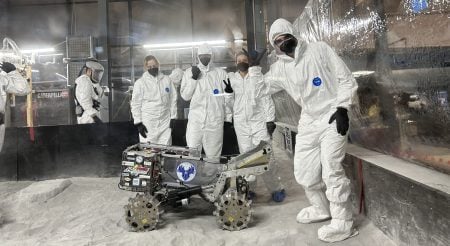
After two semesters of utilizing NASA’s system engineering principles and submitting several milestone reports along with building and testing their prototype, the Astro-Huskies and their robotic entry, MOOSE (Mobile Operations for Off-world Surface Excavation), received third place in construction, shared sixth place in autonomy, fourth place in communication and power, fifth place in systems engineering paper, and an honorable mention in presentation and demonstration, culminating in their third place overall finish in the competition.
The Astro-Huskies are no strangers to success at the NASA Lunabotics Challenge; the team has been competing in the challenge since 2022 and placed fourth in last year’s competition. This year, 53 students worked on the Astro-Huskies team. A dozen members were able to travel with MOOSE to Florida for the qualifying and final rounds. Katherine Rauscher, mechanical engineering senior and MINE’s Lunabotics project manager, was part of the travel team in both 2025 and 2026.
“I’m so incredibly proud of what the team achieved this year,” said Rauscher. “Making such large improvements to both our deliverables and our actual rover design was a lot of work, and we all had some pretty long weeks and late nights to make it happen. It was absolutely worth it to see everything pay off with our record-breaking performance at competition.”
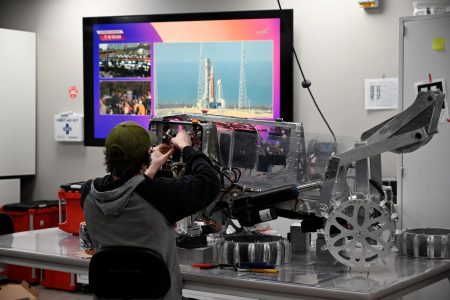
Associate Professor Paul van Susante, the Lou and Herbert Wacker Professor of Mechanical Engineering, is the MINE faculty advisor. The former NASA faculty fellow was involved in the NASA Lunabotics Challenge long before he came to Michigan Tech in 2012. While van Susante serves as a valuable resource for the team, he’s also proud to affirm that the Astro-Huskies are entirely student-run.
“I am extremely proud of the team for their excellent performance and the best finish at the NASA Lunabotics Challenge to date,” said van Susante. “It was a pleasure to work with and see the students grow during their time in MINE and during the process, take on ever more complex challenges and lead the team to success.”
The team’s success illustrates the benefits of Michigan Tech’s unique Enterprise Program which for more than 25 years has made it possible for students to work on multidisciplinary teams over multiple years on ambitious client-based projects that require time and progressive expertise to develop. The MINE Enterprise, which includes other projects applicable to planetary exploration, has been growing in size and experience since its founding in Spring 2016.
Rauscher graduated from Michigan Tech this May, but thanks to the design of the Enterprise Program, her Lunabotics expertise doesn’t leave with her. She’s looking forward to the Astro-Huskies team’s continued success in the future.
“I’m excited to pass the torch off to next year’s team since I have no doubt that they will be able to use what we learned this year to find even more success in the future,” she said.
About the College of Engineering
Michigan Tech’s College of Engineering offers more than 15 bachelor of science degrees in biomedical engineering, chemical engineering, civil, environmental and geospatial engineering, electrical and computer engineering, engineering fundamentals, geological and mining engineering and sciences, manufacturing and mechanical engineering and technology, materials science and engineering, and mechanical and aerospace engineering.
Our engineering graduate degree options include master’s and PhD programs, along with robust online certificate programs for busy professionals. Follow Michigan Tech Engineering on Facebook, Instagram, LinkedIn, and Twitter for the latest happenings.
]]>
Although Michigan Tech is thousands of miles from his upbringing in South Lebanon, Houssein Yassin ’23 began thinking of the University as home long before he ever set foot on campus. Now a PhD student in mechanical engineering-engineering mechanics, Yassin will take the podium as the 2026 Spring Commencement graduate student speaker on April 24.
“I used to watch YouTube lectures from Professor Gordon Parker, and with every lecture, Michigan Tech felt less like a university far away and more like a place where I belonged,” said Yassin. “There was a warmth in the way he taught that made me feel this was the kind of place where I could grow, be challenged, and truly shine.”

Parker, the John and Cathi Drake Chair in Mechanical Engineering, would have a major impact on Yassin’s education and career. In 2021, Yassin was named a Fulbright Scholar and arrived at Michigan Tech to embark on a master’s degree in mechanical engineering, working directly with Parker.
“Choosing mechanical and aerospace engineering was very intentional,” said Yassin. “I was drawn to the department because of its academic strength, but also because it was home to the kind of teaching and research that first inspired me.”
During his master’s program, Yassin worked with MTU Wave, a collaborative wave tank lab led by Parker dedicated to advancing research and development in the field of floating offshore devices. After completing his master’s degree at Michigan Tech, along with two graduate certificates in dynamic and control systems, Yassin worked one year as a research and development engineer in the Department of Mechanical and Aerospace Engineering (MAE). He then went on to pursue his second master’s degree in aerospace engineering from the University of Michigan.
After his hiatus from Michigan Tech, it was Parker who brought Yassin back.
“During that time away, I went through a very difficult period personally, and I reached back out to Professor Parker with one question, whether I still had a place at Michigan Tech,” said Yassin. “His response was simple; ‘You always have a place here. Come back home.’ ”
With Parker as his advisor, Yassin returned to Tech as PhD student in 2025 working again with MTU Wave on developing data-driven models for nonlinear wave energy converters. He is set to defend his dissertation this summer.
“Professor Parker telling me to come back home was not just about returning to campus—it was reassurance that I had a home among people who saw value in me and reminded me of who I could still become. It meant that no matter how hard life became, I still had a place where I belonged, a place where I could still grow, still contribute, still be impactful, and still be surrounded by people who believed in me. That is something I will carry with me forever.”
— Houssein Yassin ’23, graduate student speaker, 2026 Spring Commencement
When Yassin first arrived at Tech, he was the only incoming Lebanese student on campus. While unexpected, Yassin says he never felt alone.
“One thing that surprised me about my time at Michigan Tech was how quickly a place so far from everything familiar became a place where I truly belonged,” he said. “Michigan Tech kept surprising me, not only through its academic and professional opportunities, but also through the sense of family, fun, and community that made this place feel like home.”
During his time at Tech, Yassin became increasingly integrated into the Husky community. In addition to his studies and his research, he worked as a LEAP Leader, helping first-year engineering students acclimate to their coursework, and taught as a MAE graduate teaching assistant, where he further developed his skills in communication, leadership, and mentorship.
“One of the experiences that meant the most to me was being trusted by my advisor and MAE to contribute to the development of the new aerospace curriculum at Tech,” he said. “As a graduate student, being given that kind of responsibility made me incredibly proud, and it showed me how much this university values its students and their voices.”
It’s difficult for Yassin to pick a favorite moment during his time at Tech, not because there were not many, but because, to him, the entire experience was memorable.
“When I received the Fulbright and realized I would be coming to my first-choice university, it felt surreal. Then, once I arrived, that feeling kept returning in different ways—walking onto campus for the first time, seeing the beauty of this place, and realizing that the professor whose lectures I once watched online had now become my advisor. My favorite moment at Michigan Tech was simply being at Michigan Tech and realizing that I truly belonged here.”
— Houssein Yassin ’23, graduate student speaker, 2026 Spring Commencement
In his free time, Yassin writes poetry, plays soccer, and enjoys spending time with his friends. “Those moments of connection, laughter, and simply being with people mean a lot to me,” he said.
Yassin hopes to become a researcher, mentor, and professor, inspired by the people who influenced his time at Michigan Tech.
“I want to build a career where I can contribute meaningful research, teach with purpose, and help shape the next generation of students the way my advisor and mentors shaped me,” he said. “More than anything, I want to carry forward the kind of guidance, belief, and support that was given to me.”
As he prepares to defend his dissertation this summer, Yassin isn’t feeling as much pressure as one might expect.
“Although dissertation defenses are often seen as stressful milestones, I feel a mix of confidence, gratitude, and emotion as I approach mine,” said Yassin. “I know it will represent the culmination of years of hard work, late nights, and personal growth, but it also feels deeply bittersweet.”
Parker, Yassin’s faculty advisor, is set to retire this summer after 30 years at Michigan Tech.
“This moment feels like more than just the end of a degree—it feels like the closing of a very meaningful five-year journey with a mentor who has had a profound impact on my life,” said Yassin.
“In many ways, the most challenging part of the dissertation has not only been the technical and research demands, but also realizing that this final milestone comes with having to say goodbye to an advisor, mentor, and lifelong friend.”
In addition to his advisor, Yassin is grateful to Cindy Wadaga, MAE graduate programs coordinator for her assistance and care over the years, and Amber Kempainen, teaching professor in Engineering Fundamentals, for her support during his time as a LEAP leader.
Yassin encourages current and future Michigan Tech graduate students to keep going, ask for help, and to not isolate themselves from people who care.
“There will be hard days, seasons of doubt, and moments when progress feels painfully slow, but that is part of the journey,” he said. “Let yourself grow not only as a researcher or student, but also as a person. And when you have to choose, choose the path where you can be useful, not just impressive.”
His best piece of advice are the very words that brought him back to Michigan Tech, to his PhD program, and to Tech’s 2026 Commencement as its graduate student speaker.
“Remember that you always have a place here,” said Yassin. “Come back home.”
About the College of Engineering
Michigan Tech’s College of Engineering offers more than 15 bachelor of science degrees in biomedical engineering, chemical engineering, civil, environmental and geospatial engineering, electrical and computer engineering, engineering fundamentals, geological and mining engineering and sciences, manufacturing and mechanical engineering and technology, materials science and engineering, and mechanical and aerospace engineering.
Our engineering graduate degree options include master’s and PhD programs, along with robust online certificate programs for busy professionals. Follow Michigan Tech Engineering on Facebook, Instagram, LinkedIn, and Twitter for the latest happenings.
]]>
Caelan Mead-O’Brien, the undergraduate student speaker for the 2026 spring commencement, was enabled to come into his own personally, professionally, and academically during his time at Michigan Tech. As he prepares to graduate with a degree in environmental engineering, Mead-O’Brien recalls his first impressions of Michigan Tech, and the way his time in Houghton has helped him to learn, grow, and lead.
Though he was originally hesitant to move so far from his hometown of Okemos, Michigan, Mead-O’Brien quickly found his place in the Keweenaw.
“I really struggled to make a college decision because I wasn’t sure what I wanted out of the experience, or even what I wanted to study,” he said. “I toured Michigan Tech my senior year of high school and liked the school, although I wasn’t entirely comfortable with moving eight hours away from home. That changed pretty quickly once I got here.”
“I love the balance of a school that’s large enough to offer world-class academic programs, but small enough that you can see familiar faces on your way to class.”
— Caelan Mead-O’Brien ‘26, Michigan Tech
Mead-O’Brien said the wonder of his surroundings has been a major influence during his time at Tech.
“Many of my favorite memories are tied to the natural beauty of the Keweenaw—exploring ice formations in Copper Harbor on a minus 20-degree snow day, watching the northern lights at Breaker’s Beach with friends, or visiting Covered Drive and Brockway Mountain during peak fall colors,” he said.
“There’s so much natural beauty here, and it’s a unique place to live that most people never get to experience. I chose environmental engineering because it felt like the best way of addressing human needs while also taking care of the natural environment.”

Mead-O’Brien’s environmental interests led him to an internship with the Michigan Department of Environment, Great Lakes, and Energy (EGLE), where he interned as a student assistant engineer.
“I have had the opportunity to gain meaningful, hands-on experience in the field,” he said of his time with EGLE. “My work has included permitting water mains for distribution systems and participating in inspections of water towers, treatment plants, pump houses, and wells alongside EGLE’s district engineers. This experience has really complemented my academic work well, as concepts from the classroom directly inform my understanding of the real systems I see at work, and vice versa.”
During his work with EGLE, Mead-O’Brien developed an interest in drinking water systems, their impacts on human health, and the long-term sustainability of water supplies. This led to his decision to return to Michigan Tech to pursue a master’s degree in civil engineering, with a focus on water resources.
“I hope to continue working to ensure Michiganders have access to clean, reliable drinking water, in whatever role I end up in,” he added.
Outside of the classroom, Mead-O’Brien dedicated his time to serving the Husky community. After spending three years as a resident assistant, he plans to return for a fourth year as he completes his master’s degree.
“The experience has taught me a lot about the importance of having a supportive community. Moving away from home, taking challenging classes, and finding where you belong are some of the hardest parts of college, and resident assistants get to play a role in helping students navigate that adjustment.” said Mead-O’Brien.
For him, the most rewarding part of the position has been seeing his residents grow over time.
“Watching students develop confidence, build relationships, and become more engaged in their environment has been especially meaningful. I’m also grateful for the Michigan Tech Residential Living staff community, which has been an important source of growth in my life, as well as many great friends,” he said.
He has also taken on several roles within Keweenaw Youth for Climate Action (KYCA), a student activism group that encourages private organizations and the public to take action to address climate change. Mead-O’Brien served as the group’s secretary before taking on the role of vice president in his third year. He has also been heavily involved in KYCA’s fossil fuel divestment campaign.
“I was motivated by the importance of addressing climate change and my desire to contribute in a meaningful way,” he said.
Mead-O’Brien is also an avid runner who transitioned from competing in high school track and cross country events to completing several half and full marathons. He says training for the endurance events taught him about discipline and trusting in the process to achieve a goal.

“Preparing for a marathon means putting in consistent, demanding work over several months, often in less than ideal conditions,” he said. “What stands out most is that you put in all that effort without knowing exactly what the outcome will be on race day. It’s a lesson in delayed gratification and in trusting that consistent hard work will pay off over time, even when you can’t always see the progress happening.”
As he reflected on both his personal and professional success at Michigan Tech, Mead-O’Brien made sure to mention he didn’t do it alone.
“Tech is challenging, yet supportive, and absolutely worth the effort. And of course, enjoy your time here. It really does fly by.”
— Caelan Mead-O’Brien ‘26, undergraduate student speaker, 2026 Spring Commencement
I’m a strong believer that no one finds success on their own, and that achievement at Michigan Tech, and in life, is made possible by the support of an entire community,” Mead-O’Brien said. “I’m very grateful for the many individuals who have contributed to my success at Michigan Tech, particularly within the Department of Civil, Environmental, and Geospatial Engineering (CEGE).
He added that he was especially thankful for the support from his academic advisor, Julie Ross. Mead-O’Brien said Ross’ extensive knowledge of the CEGE program and thoughtful guidance enabled him to make the most of his time at Tech.
“She’s been really instrumental to my experience,” he said. “Many of the moments that stand out most are centered around the people here.”
As he prepares for commencement, Mead-O’Brien’s goal as the undergraduate student speaker is simple: share both what he’s learned and deliver a message that others will find meaningful.
About the College of Engineering
Michigan Tech’s College of Engineering offers more than 15 bachelor of science degrees in biomedical engineering, chemical engineering, civil, environmental and geospatial engineering, electrical and computer engineering, engineering fundamentals, geological and mining engineering and sciences, manufacturing and mechanical engineering and technology, materials science and engineering, and mechanical and aerospace engineering.
Our engineering graduate degree options include master’s and PhD programs, along with robust online certificate programs for busy professionals. Follow Michigan Tech Engineering on Facebook, Instagram, LinkedIn, and Twitter for the latest happenings.
]]>
Adrienne R. Minerick ’98, distinguished professor in the Department of Chemical Engineering, has been inducted into the American Institute for Medical and Biological Engineering (AIMBE) College of Fellows, one of the highest professional distinctions accorded to medical and biological engineers. The AIMBE College of Fellows represents the top two percent of engineers in these fields and honors those who have made outstanding contributions to engineering and medicine research, practice, or education.
Minerick was elected by peers and members of the College of Fellows for pioneering dielectrophoretic detection of molecular expression of cells and for international leadership in engineering education focused on engagement and inclusion. She was inducted along with 175 colleagues into the College of Fellows Class of 2026 on April 13, 2026, at the AIMBE Annual Event in Arlington, Virginia.
“Coming from a small, niche research area, it is such an honor to be recognized within this college of great minds,” said Minerick.
Joining Michigan Tech as an associate professor in 2009 and promoted to professor in 2015, Minerick was named a distinguished professor in 2024. She also serves as an affiliated professor in the Department of Biomedical Engineering. Her primary research focuses on electrokinetics in medical microdevices, blood cell dynamics, and point-of-care diagnostics.
She leads Tech’s Medical Micro-Device Engineering Research Lab, which focuses on the development of portable point-of-care medical diagnostic tools. She and her lab team have published more than 115 peer-reviewed manuscripts, received $15.3 million in research funding, and mentored more than 100 research graduates.
Her previous awards and honors include a National Science of Foundation CAREER Award, an American Electrophoresis Society Lifetime Achievement Award, fellow designations with both The American Association for the Advancement of Science (AAAS) and American Institute of Chemical Engineers (AIChE), and many more.
A dedicated and influential educator, Minerick served as president of the American Society for Engineering Education (ASEE) from 2021-2022 and was elected to the ASEE Hall of Fame in 2023. She also received the 2025 Michigan Tech Faculty Distinguished Service Award for her efforts in developing and expanding faculty professional development and mentoring programs.
About the College of Engineering
Michigan Tech’s College of Engineering offers more than 15 bachelor of science degrees in biomedical engineering, chemical engineering, civil, environmental and geospatial engineering, electrical and computer engineering, engineering fundamentals, geological and mining engineering and sciences, manufacturing and mechanical engineering and technology, materials science and engineering, and mechanical and aerospace engineering.
Our engineering graduate degree options include master’s and PhD programs, along with robust online certificate programs for busy professionals. Follow Michigan Tech Engineering on Facebook, Instagram, LinkedIn, and Twitter for the latest happenings.
]]>
Yun Hang Hu, University Professor and the Charles and Carroll McArthur Professor of Materials Science and Engineering, received the prestigious Morris Cohen Award for outstanding contributions to the science and/or technology of materials properties. Awarded by The Minerals, Metals & Materials Society (TMS), the Morris Cohen Award honors one individual worldwide each year and is widely regarded as one of the most distinguished honors in the field.
“The previous recipients of the Morris Cohen Award are distinguished pioneers whose groundbreaking contributions have profoundly shaped the field,” said Hu. “I am deeply honored to join their ranks in receiving this prestigious award.”

In Michigan Tech’s Department of Materials Science and Engineering, Hu teaches courses in thermodynamics and conducts extensive research on a wide range of topics, including superstructure materials, nanomaterials, electrocatalysis, biodegradable plastics, advanced energy devices, and more. Hu is also an affiliated professor in the Department of Chemical Engineering.
Hu’s previous awards and honors include more than 20 national and international accolades. In 2017, Hu was the first MTU faculty member to receive both the Michigan Tech Research Award and the Bhakta Rath Research Award in the same year.
He has been elected to the Canadian Academy of Engineering and is a fellow of six major professional societies:
- American Association for the Advancement of Science (AAAS)
- American Chemical Society (ACS)
- American Physical Society (APS)
- American Institute of Chemical Engineers (AIChE)
- ASM International
- Royal Society of Chemistry (RSC).
Hu, who is also a past recipient of the Rudolf A. Erren Award from the International Association for Hydrogen Energy, expressed his gratitude to those who have contributed to his latest career achievement.
“This recognition would not have been possible without the dedication of my graduate students and postdoctoral researchers, and the unwavering support of my wife and children.”
About the College of Engineering
Michigan Tech’s College of Engineering offers more than 15 bachelor of science degrees in biomedical engineering, chemical engineering, civil, environmental and geospatial engineering, electrical and computer engineering, engineering fundamentals, geological and mining engineering and sciences, manufacturing and mechanical engineering and technology, materials science and engineering, and mechanical and aerospace engineering.
Our engineering graduate degree options include master’s and PhD programs, along with robust online certificate programs for busy professionals. Follow Michigan Tech Engineering on Facebook, Instagram, LinkedIn, and Twitter for the latest happenings.
]]>