The fifth year of Skift Research’s annual State of Travel report reveals that 71% of respondents say culinary activities are most likely to be included in their budgets. Thus, food and gastronomic experiences rank as the top spending priority for modern travelers. According to the research, food and gastronomy rank first at 71%, followed by […]
The post Food and Gastronomic Experiences Rank as the Number One Spending Priority for Modern Travelers appeared first on Daily Scandinavian.
]]>The fifth year of Skift Research’s annual State of Travel report
reveals that 71% of respondents say culinary activities are most likely to be included in their budgets. Thus, food and gastronomic experiences rank as the top spending priority for modern travelers.
According to the research, food and gastronomy rank first at 71%, followed by adventure and nature at 48%, arts, culture, and history at 42%, and live events, entertainment, health, and wellness at 36% each. Sports represent 24%. You noted that this totals more than 100% because many travelers have overlapping interests.
Key Culinary Drivers
Roughly 64% of travelers prefer unique local eats and casual spots to expensive fine dining or Michelin-starred restaurants. Over 65% of people say they are most excited to try local street food while away, and more than 80% of tourists agree that exploring regional cuisine is the best way to understand a destination’s local culture.
************************************************
Related: Food as a Cultural Positioning in Denmark
************************************************
Market Valuation and Projections
The current value of the global culinary tourism market (2025-2026) is estimated at $16.1 billion, while other narrowly defined experiential sector reports place it at $61.9 billion, with broader travel-expenditure models estimating values of more than $1 trillion when total traveler dining spend is included.
By the mid-2030s, the value is expected to range from $76.4 billion to over $4 trillion, driven by a compound annual growth rate (CAGR) of roughly 14% to 22%. Europe commands the largest regional market share, at roughly 32% to 34%, supported by deep culinary traditions and infrastructure, with the Asia-Pacific region a close second.
**************************************
Related: Michelin Stars Shine on Bergen
**************************************
Social media reshapes travel discovery
Around 63% of travelers told Skift they now use social media for travel inspiration. Over half (56%) get ideas for activities, experiences, and places to eat from social media, while 45% use it to compare accommodation providers.
However, this can create a vicious cycle, a race to find the latest hidden gem before it becomes saturated with visitors. Skift notes that any perception that a destination is suffering from overtourism can be off-putting. “Social media has destabilized the discovery cycle,” the report says. “The same platforms that make an unknown destination famous in weeks also make it feel overexposed within months.”
Food and Gastronomic Experiences Rank as the Number One Spending Priority for Modern Travelers, written by Tor Kjolberg.
The post Food and Gastronomic Experiences Rank as the Number One Spending Priority for Modern Travelers appeared first on Daily Scandinavian.
]]>After 13 years as one of Stockholm’s top restaurants, Adam/Albin shut its doors in late 2025. But the closure wasn’t the end for the duo. In mid-April this year, they re-emerged with the opening of a new restaurant in Stockholm that can tickle your taste buds. Adam Albin re-emerged at Rådmannsgatan 16 in Norrmalm, the […]
The post Tickle Your Taste Buds in Stockholm appeared first on Daily Scandinavian.
]]>After 13 years as one of Stockholm’s top restaurants, Adam/Albin shut its doors in late 2025. But the closure wasn’t the end for the duo. In mid-April this year, they re-emerged with the opening of a new restaurant in Stockholm that can tickle your taste buds.
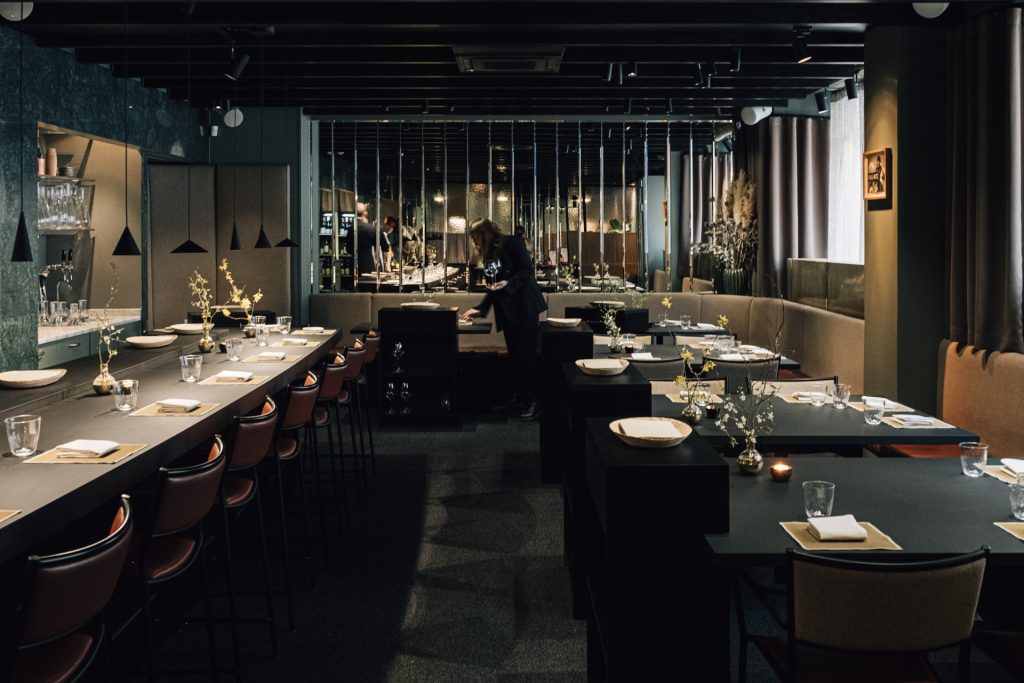
Adam Albin re-emerged at Rådmannsgatan 16 in Norrmalm, the historic heart of Stockholm, overlooking the Royal Palace, the Royal Swedish Opera, and the Swedish Parliament.

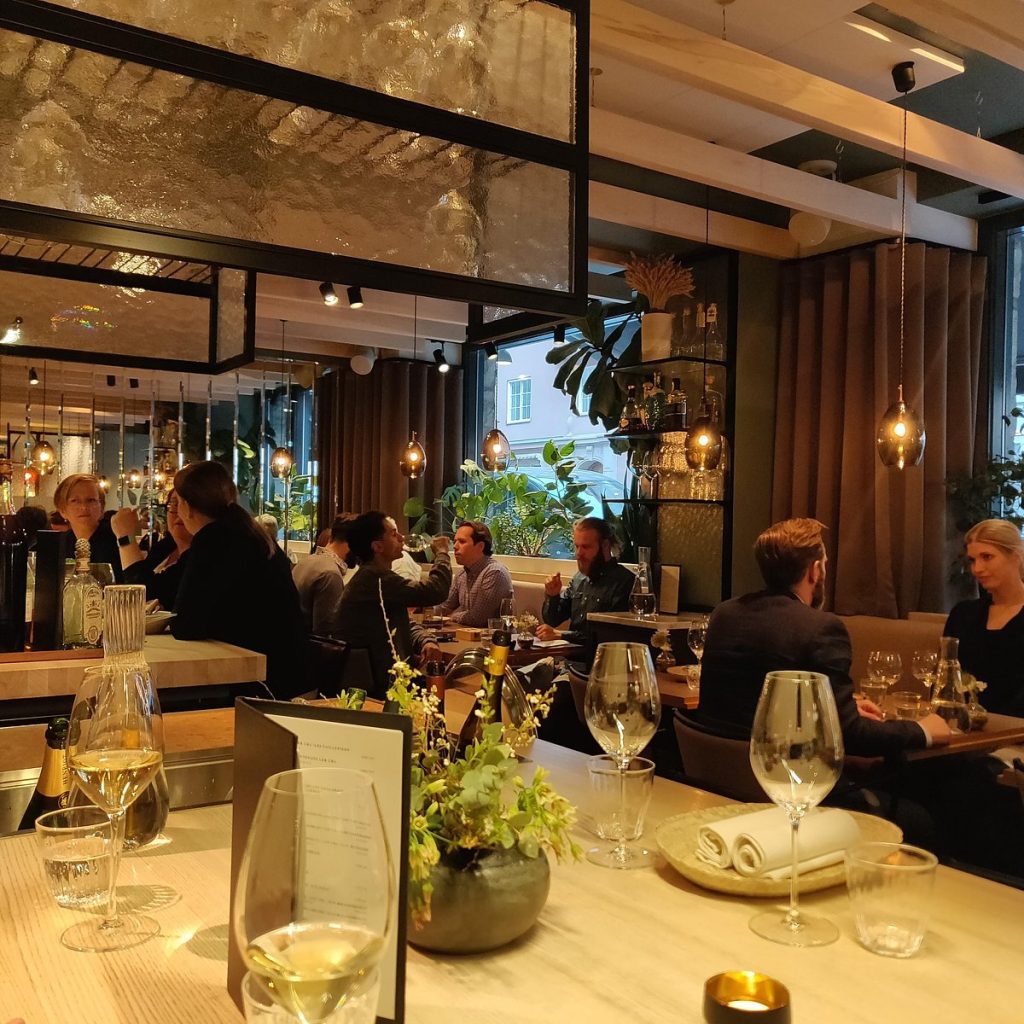
Adam Albin offers a tasteful interior with brass details, marble, and mint green accents, and is a busy, bustling venue with an open kitchen, counter seats, and a large community table in the middle of the room where you can sit side by side with total strangers.
Other places to eat in Stockholm.
The three-level space, designed by the Swedish studio Halleröd, exudes warmth in the lounge through dark walnut paneling and black-and-cream checkered trim. There, a vinyl player and a drinks trolley strike a smart note, complemented by softly arched windows, white tablecloths, and a built-in wine display. Contemporary Swedish art, selected by gallerist Magnus Karlsson, hangs throughout.
Although similar in name, the new iteration marks a step up. Their first project earned its first Michelin star after nine years. This time, the team seems to be aiming for accolades much sooner.
*************************************
Related: Coffee Lovers, Look to Sweden
*************************************
The menu at Adam/Albin costs SEK 895 and consists of five courses. The first course is a selection of snacks the kitchen decides on each night. For the last four courses, you can choose between two or three options in each course. That creates an interesting mix of a set menu and à la carte.
Among the kitchen’s creations are bread-crusted langoustine with parsley butter and artichoke, mussel rice with grilled pikeperch and whey sauce, and squid and morel stuffed with ramsons.
Tickle Your Taste Buds in Stockholm, Tor Kjolberg reporting.
Feature image (top) © White Guide.
The post Tickle Your Taste Buds in Stockholm appeared first on Daily Scandinavian.
]]>An American software engineer who relocated to Copenhagen once said she knew she’d changed the day a coworker scheduled a call during the office coffee break. It genuinely annoyed her. The Scandinavian habits Americans notice only after they relocate rarely show up in the first week, when everything still looks like a postcard. These habits […]
The post The Scandinavian Habits Americans Notice Only After They Relocate appeared first on Daily Scandinavian.
]]>An American software engineer who relocated to Copenhagen once said she knew she’d changed the day a coworker scheduled a call during the office coffee break. It genuinely annoyed her. The Scandinavian habits Americans notice only after they relocate rarely show up in the first week, when everything still looks like a postcard.
These habits surface later, in small frictions and unexpected comforts. A neighbor never says hello. A coffee break takes precedence over a client call. An apartment holds less but still feels bigger. What follows covers the adjustments that catch newcomers off guard and the ones that stick.
What Are the Scandinavian Habits Americans Notice Only After They Relocate?
Most new arrivals notice bike lanes, high taxes, and long summer daylight first. The habits that reshape daily life take longer to register. Silence, patience, and personal space show up as small, repeated moments rather than a single dramatic culture-shock event. Expats often joke that they’ve adjusted once a shared elevator ride no longer feels like an obligation to make small talk. That shift tends to arrive around months three or four, as the practical work of the move winds down.
How Does Scandinavian Minimalism Reshape Home Life?
It looks noticeably less cluttered. Scandinavian homes favor function over volume, and Americans moving into a Nordic apartment often notice the square footage before understanding why. Scandinavian interior design trends reveal a pattern: neutral palettes, multi-purpose furniture, and a refusal to fill every wall. New arrivals typically pare down the same categories:
- Duplicate kitchenware that never made it past the packing tape
- Furniture sized for American rooms rather than Nordic ones
- Wardrobes built for a milder climate
- Décor that competes with natural light instead of working with it
The adjustment isn’t really about giving things up. It’s about learning what earns a place within a smaller footprint.
What Should You Expect When Downsizing for a Nordic-Sized Home?
Expect to ship less than you think. Nordic apartments are smaller than the American average. Newcomers often learn this the hard way, standing in a doorway with a couch that won’t fit. Movers who handle international relocations, including Columbine Moving and Storage, note that clients headed for compact European apartments almost always end up shipping less than planned after measuring belongings against the available space. Editing down before the truck arrives, not after, saves money and avoids an awkward resale process.

Why Is Fika Treated Like a Daily Ritual, Not a Break?
Skipping it reads as antisocial, not efficient. It’s one of the habits Americans notice first. Fika, the Swedish word for a scheduled coffee break, is a fixed part of the workday, not something squeezed in around meetings. Americans used to eating lunch at their desks tend to resist it at first. Most come around once they notice how much gets decided over coffee that never makes it to the official meeting. The habit isn’t really about the coffee. It’s protected time with colleagues, and it tends to outlast the novelty.
Why Do Neighbors Value Quiet and Personal Space?
Because privacy, not friendliness, is the default social contract. A Dane or a Norwegian passing a neighbor in a stairwell without a greeting isn’t being rude. They’re honoring a boundary that Americans usually have to learn not to take personally. The same pattern holds in checkout lines and elevators, where starting a conversation with a stranger can feel intrusive rather than warm. Long-term expats often describe a few months of adjustment before the silence stops feeling cold and starts feeling like room to breathe. Many later say the friendliness expected back home feels exhausting on return visits.
Why Do Local Festivals Feel Different From Back Home?
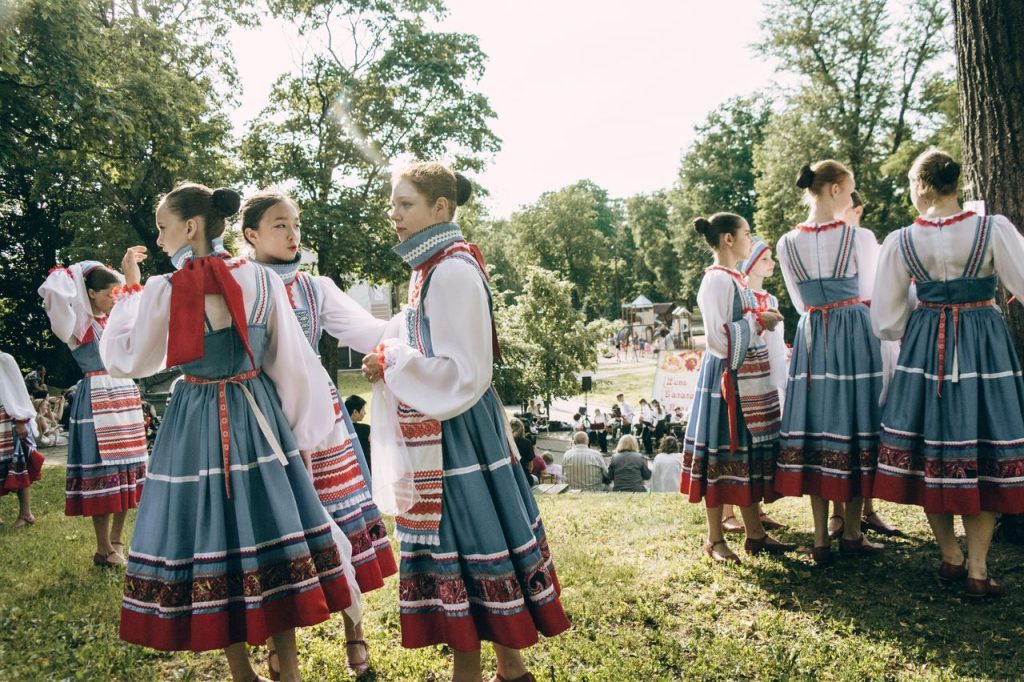
Because they run on daylight and the seasons, not a retail calendar. Scandinavian festival culture centers on the solstice, harvest, and the return of light after a long winter. Midsummer alone empties entire cities, as people head to the countryside for bonfires and maypole dances that outdraw most national holidays. A rundown of unique Scandinavian festivals and what they mean today traces many of these traditions to centuries past. Offices close. Trains fill up. For anyone used to holidays that mostly mean a mattress sale, that level of collective participation takes some getting used to.
Which Scandinavian Cities Keep Topping Global Livability Rankings?
Consistently, often ahead of much larger capitals. Stockholm, Oslo, and Helsinki top livability indexes most years, largely due to public transit, healthcare access, and green space per resident. A closer look at Stockholm’s standing as the world’s 11th most livable city highlights the specifics Americans notice quickly: shorter commutes, cleaner air, walkable parks. None of this means the cost of living is low — it rarely is — which partly explains why two-year contracts stretch to a decade.
How Long Does It Actually Take to Feel Local?
Most people report one to three years, depending on the language and how isolated the first year feels. A predictable dip tends to hit a few months in, once the friction of banking, healthcare registration, and language classes sets in. The OECD Better Life Index tracks the same civic measures that tend to close that gap over time. Nordic countries score high on both community trust and safety. By the second winter, most relocated Americans stop counting the differences and start defending them.
Settling Into a Slower, More Deliberate Rhythm
The Scandinavian habits Americans notice only after they relocate rarely announce themselves on arrival. They accumulate quietly until the old way of doing things starts to feel strange. Quiet stairwells stop feeling cold. Coffee breaks start to feel essential rather than indulgent. A smaller apartment starts to feel like enough. None of it happens overnight, and none of it requires giving up curiosity about home. For anyone standing at the start of that process, with boxes still taped shut and a shipping date circled on the calendar, the best preparation is patience. The habits tend to make sense right around the time the last box gets unpacked.
The Scandinavian Habits Americans Notice Only After They Relocate, written exclusively for Daily Scandinavian by Elena Fossheim. Elena is a Nordic-based relocation and travel writer who has covered expat life in Denmark, Norway, and Sweden for the past eight years, focusing on the everyday adjustments that guidebooks often overlook.
Feature image (top) © Milan Stefanovic / Pexels.
The post The Scandinavian Habits Americans Notice Only After They Relocate appeared first on Daily Scandinavian.
]]>Destination marketing usually treats emotion and risk separately, even though they are closely connected. A destination becomes interesting when it stops trying to look perfect and starts showing something human. Showing something human requires courage. That’s why I encourage destinations to stop selling the idea of perfect destinations. What do we want people to feel […]
The post Stop Selling Perfect Destinations appeared first on Daily Scandinavian.
]]>Destination marketing usually treats emotion and risk separately, even though they are closely connected. A destination becomes interesting when it stops trying to look perfect and starts showing something human. Showing something human requires courage. That’s why I encourage destinations to stop selling the idea of perfect destinations.
What do we want people to feel about our destination?
A destination can tell me it has spectacular scenery, excellent hotels, exciting activities, and friendly people. But none of those statements necessarily gives me a reason to care.
Compare, for instance, “Come to Norway and experience our magnificent fjords” with “Stand at the edge of the fjord and suddenly realize that the world is much bigger—and much quieter—than you remembered.”
The second one isn’t really selling a fjord. It is selling a feeling.
Destination marketing has conflated information with experience. The traveler doesn’t merely want information about the destination. She wants to imagine herself in the story.
 Emotion is not decoration. It is the mechanism.
“Being true to yourself means showing and sharing emotion. The spirit that motivates most great storytellers is ‘I want you to feel what I feel,’ and an effective narrative is designed to make that happen. That’s how information becomes bound to the experience and unforgettable,” said Peter Gruber.
Great destination stories don’t simply say: “Look at this.” They say: “This is what it feels like.” And that requires human beings. Like the fisherman who has gone out every morning for 40 years, the hotel owner who inherited the little hotel from her parents, or the chef who refuses to change a recipe because it belonged to his grandmother.
Suddenly, the destination has a pulse. Telling the story of the guide who knows exactly where the first light hits the mountain, or the couple who moved to a remote village because they fell in love with the place, are two other great examples.
People don’t fall in love with destinations. They fall in love with how destinations make them feel.
You can read more about Brand Narratives in an article published by Grant Thornton.
 Being human is risky
Corporations and destinations tend to protect themselves. They want approved language, approved photographs, approved messages, approved adjectives, blah, blah, blah. Destination marketing often suffers from institutional cowardice.
Everyone wants to be beautiful, authentic, sustainable, welcoming, unique, spectacular, and unforgettable.
But when everybody uses the same vocabulary, nobody is memorable.
Creativity begins where safety ends
A destination willing to take a creative risk might say: “Yes, it rains here,” “You may get lost,” or “This isn’t the most beautiful village in Norway, but something happened here that changed Norwegian history.”
Now we have personality. The destination has stopped acting like an advertising brochure and started acting like a human being. That’s enormously important for storytelling.
The paradox is that the more a destination tries to eliminate risk from its communication, the less human—and less interesting—it becomes.
“Don’t come here for the nightlife. Come here if you want to hear yourself think.”
 Talk about vulnerability
We often think brands need to appear strong. But humans connect with vulnerability. A destination might reveal a difficult chapter in its history, an unpopular local figure, or a failed project. That doesn’t necessarily weaken the brand. It can make the brand more credible. There is a fascinating distinction between “We have nothing to hide” and “We have nothing imperfect to show.” The first communicates confidence. The second communicates fear.
What about the abandoned building, the environmental dilemma, the disappearing tradition, the community struggling with overtourism, or the local who doesn’t agree with the official destination narrative?
The traveler should become part of the story
A destination should not always be the hero. The traveler should be the hero. The destination is where something happens to the traveler. Instead of: “Our region offers 365 days of outdoor adventure,” try: “You arrive exhausted. Three hours later, you’re sitting beside a fire with a stranger who tells you where to find the northern lights.”
The first is destination marketing. The second is a possible memory. And travelers buy memories.
Take risks with the stories you choose—not just the language
Creative risk isn’t necessarily about writing provocative headlines. It can mean looking where nobody else is looking. Instead of telling the obvious story about a magnificent cathedral, find out why the architect put the door right there. Instead of the historic hotel, find out why the owner refused to modernize room 17.
The safest story is usually the one everybody already knows. The risky story is the one nobody has thought worth telling. And that is often where the gold is.
 The “Human Story Test”
The following eight questions are ones that destination marketers should ask themselves if they dare to make their narratives human.
1. Is there a person in the story?
If not, can there be?
- Is there emotion?
What does somebody feel? - Is there conflict?
What problem, dilemma, or tension exists? - Is there something unexpected?
What would make the reader stop? - Is there vulnerability?
Are we showing something real rather than merely something attractive? - Is there a risk?
What are we saying that a conventional destination marketer might be afraid to say? - Is the traveler in the story?
Can they imagine themselves experiencing it? - Will they remember the story—or merely the information?
 The future of travel storytelling
The future of travel storytelling may not belong to the destinations with the most spectacular scenery. It may belong to the destinations with the courage to tell the most compelling stories.
Emotion makes a story human. Risk makes it memorable. And courage makes it different. Perhaps the greatest question in travel storytelling isn’t “What can we show the world?” but “Are we brave enough to tell it?”
Finding a story isn’t enough. A destination must also have the courage to tell it.
Stop Selling Perfect Destinations, written by Tor Kjolberg.
Feature image (top) © Noldus
 Take-away
If you learned something from this article, I believe you’ll also enjoy my recent book, “How I’ve Survived as a Storyteller for Over 50 Years: 12 Survival Techniques.” Get your FREE e-book copy by sending me your name and e-mail address, and including “Storytelling” in the subject line. Thank you for reading!
More articles on Storytelling by Tor Kjolberg you may like:
Travel Stories Designed for the Adult Part of Our Population
Seven Strategies for Increasing Customer Participation in Brand Stories
Stop Selling Postcards
The DMC 7 Steps Untold Story Finder
Brand Storytelling for Nonbelievers
The post Stop Selling Perfect Destinations appeared first on Daily Scandinavian.
]]>In China, ‘travel record literature’ became popular during the Song dynasty (960–1279). Chinese travel literature from this period took many forms, including narratives, prose, essays, and diaries. Zhou Daguan’s account of Cambodian customs in the thirteenth century is a major source for Angkor at its peak. Daguan’s travels are the only surviving written record of […]
The post Historic Travel Stories: The Customs of Cambodia appeared first on Daily Scandinavian.
]]>In China, ‘travel record literature’ became popular during the Song dynasty (960–1279). Chinese travel literature from this period took many forms, including narratives, prose, essays, and diaries. Zhou Daguan’s account of Cambodian customs in the thirteenth century is a major source for Angkor at its peak. Daguan’s travels are the only surviving written record of Cambodian customs.
In AD 1296, Zhou Daguan, a member of a Chinese diplomatic mission from the Mongolian emperor Timur Khan to Cambodia, spent nearly a year in the capital, now known as Angkor. He recorded in detail the country’s landscape, flora, fauna, and the social life of its people. This is the only surviving written record that offers us a glimpse into life in Cambodia at the end of the 13th century.
What was life like for ordinary people in the Khmer Empire? Despite its monumental temples and grand cities, much of everyday life remains a mystery. We rely on carvings and foreign accounts — especially those of Chinese diplomat Zhou Daguan — to piece together what life may have been like.

Daguan arrived at Angkor in August 1296. His account is today one of the most important sources for understanding of historical Angkor and the Khmer Empire. Alongside descriptions of several great Buddhist temples, such as the Bayon, the Baphuon, Angkor Wat, and others, the text also offers valuable information on the everyday life and habits of Angkor’s inhabitants.
The English publication is a direct translation of one of the original ancient Chinese editions of Zhou’s record, done by a Cambodian and a Chinese scholar with deep knowledge of the culture and geography of both Cambodia and China. The book helps clarify many previously unidentified places, dignitary titles, plant and animal names, and related terms that have remained unresolved for so long.
During the Khmer Empire, records were kept on paper made from leaf fibers, rice paper, or vellum. Cambodia’s climate is tropical, with hot, humid summers and winters that are only slightly less humid.

Without proper preservation and storage, fibrous materials such as wood, leaves, and paper are susceptible to decay in these conditions. As a result, the Angkor Empire’s paper-based administrative records no longer exist. This leaves large gaps in our knowledge of daily life in the empire.
Zhou was a native of Yongjia, a name often used in his time for modern Wenzhou, Zhejiang. Other historical records also refer to him as Zhou Jianguan and Zhou Dake. In his later life, he used the assumed name Thatched Courtyard Recluse (Cao ting yimin).

Reading this book is like traveling through time from Wenzhou (China) across the South China Sea, up the Mekong River into Cambodia, through the Tonle Sap River and Tonle Sap Lake into the great walled city of Angkor Thom, where life in the ancient city comes alive in vivid detail. With this book, visitors interested in Angkor can identify different ancient structures related to the various aspects of social life Zhou describes, as well as the many bas-relief carvings on monuments still visible today.
Historic Travel Stories: The Customs of Cambodia, compiled by Tor Kjolberg.
Previous articles in our series of historic travel stories:
The World of the Odyssey: A Palimpsest of the Hellenic Art of Living Well
Sinbad the Sailor
Description of Greece
Safarnama – the Book of Travels
Journey Through Wales
The post Historic Travel Stories: The Customs of Cambodia appeared first on Daily Scandinavian.
]]>Circle the world by private jet on a once-in-a-lifetime journey, touching all seven continents, with each destination seamlessly connected. That’s what Abercrombie & Kent promises: lie-flat seats, luxury hotels, and exclusive experiences at destinations around the world. Are you tempted to travel around the world in 28 days by private jet? Let me start with […]
The post Around the World in 28 Days by Private Jet appeared first on Daily Scandinavian.
]]>Circle the world by private jet on a once-in-a-lifetime journey, touching all seven continents, with each destination seamlessly connected. That’s what Abercrombie & Kent promises: lie-flat seats, luxury hotels, and exclusive experiences at destinations around the world. Are you tempted to travel around the world in 28 days by private jet?
Let me start with the price: $225,000, based on double occupancy. The journey is limited to 50 travelers and weaves together the planet’s most astonishing natural environments with cities and regions steeped in enduring traditions and alive with vibrant art, culture, and food. Witness mountainous icebergs and their mirror images at mystical Uluru; gaze into the eyes of Easter Island’s moai and the faces that cover the walls of Seti’s tomb; and experience the best of every continent through expertly curated experiences, exclusive access, and VIP hospitality.
If you think the price is steep, you can take a private helicopter in the Nordic region or stay in a jumbo jet-turned hostel in Stockholm.

The Extraordinary World Travel is scheduled to depart from Miami on January 3, 2028, and conclude in Madrid on January 30. The journey is the first in Abercrombie & Kent’s Private Jet program to take travelers to every continent.
“Guests on our Private Jet program are not buying a flight. They are buying a year’s worth of access in 28 days,” Rami Girgis, the vice president of private jet at A&K, said in a statement shared with a group of travel reporters. “Most of the guests booked on a Private Jet journey have traveled with A&K before, very often on a small-group or Tailormade journey. They arrive already fluent in the way we travel, and what they tell us they want next is more ambition, more places that are difficult to combine, and like-minded travelers. This journey is built for them.”

The package includes accommodations, most meals and beverages, gratuities, laundry, baggage handling, activities, and private-access experiences. An A&K tour director, tour managers, local guides, a physician, a luggage manager, and a photographer will accompany the group throughout the journey.
Around the World in 28 Days by Private Jet, written by Tor Kjolberg.
All images © AK
The post Around the World in 28 Days by Private Jet appeared first on Daily Scandinavian.
]]>Beets hardly need an introduction. Whether pickled, roasted, boiled, grated into salads, or served alongside familiar dishes, this colorful root vegetable has long held a place in Nordic kitchens. Not just for taste. Eat for Nitric Oxide: The Powerful Health Benefits of Beets. Read on to find out more… There may be more reason to […]
The post Eat for Nitric Oxide: The Powerful Health Benefits of Beets appeared first on Daily Scandinavian.
]]>Beets hardly need an introduction. Whether pickled, roasted, boiled, grated into salads, or served alongside familiar dishes, this colorful root vegetable has long held a place in Nordic kitchens. Not just for taste. Eat for Nitric Oxide: The Powerful Health Benefits of Beets. Read on to find out more…
There may be more reason to appreciate the humble beet than tradition and taste alone. Behind its deep red color and earthy flavor lies some interesting human physiology. Beets are naturally rich in dietary nitrate, which the body can convert into nitric oxide, an important molecule involved in blood flow, blood vessel function, and cardiovascular health. Nitric oxide also plays roles in muscle function and physical performance. When Hippocrates said, “Let Food be Thy Medicine, and Medicine be Thy Food,” beets may have been one of the best examples.
 What exactly happens when we eat beets, and why does nitric oxide matter so much to our health?
Nitric oxide, often abbreviated as NO, is produced naturally by the body and performs a number of important biological functions. One of its best-known roles is helping regulate blood vessel function. The inner lining of our blood vessels, called the endothelium, helps control whether vessels constrict or relax. Nitric oxide acts as a signaling molecule, telling the smooth muscle surrounding blood vessels to relax and widen (a process known as vasodilation).
When blood vessels relax, blood flows more easily, helping deliver oxygen and nutrients throughout the body. Nitric oxide also helps regulate blood pressure, supports circulation, and supports muscle function. When we eat nitrate-rich foods such as beets, the body can convert dietary nitrate into nitrite and eventually into nitric oxide.
*Naturally occurring dietary nitrates in beets and other vegetables and fruits should not be confused with additives such as sodium nitrate, found in many fast foods, deli meats, and junk foods, which should be limited or avoided.

Beets to Support Blood Pressure and Physical Performance
Because nitric oxide promotes vasodilation, researchers have investigated whether increasing dietary nitrate intake through beetroot and beetroot juice may affect blood pressure and vascular health. The findings are promising, though they should not be overstated. Research reviews have reported reductions in blood pressure after nitrate-rich beetroot juice supplementation in some populations, including people with hypertension. Results are inconsistent across blood-pressure measures and populations, and research continues.
Beets should not be considered a treatment for hypertension, yet beets and other nitrate-rich vegetables can certainly be part of an overall dietary pattern that supports cardiovascular health. Nitric oxide has also attracted attention in the exercise world for its role in blood flow, oxygen delivery, and skeletal muscle function.
Studies of beetroot juice and dietary nitrate have examined potential improvements in exercise efficiency, endurance, and tolerance, with results varying by activity, nitrate dose, training status, and individual. For most of us, this doesn’t need to be about improving a race time. Supporting healthy circulation and muscle function matters whether we are cycling, hiking, walking, gardening, or simply trying to remain active throughout life.
Nitrate may be the star of the conversation, yet it is not the only reason to put beets on the menu.
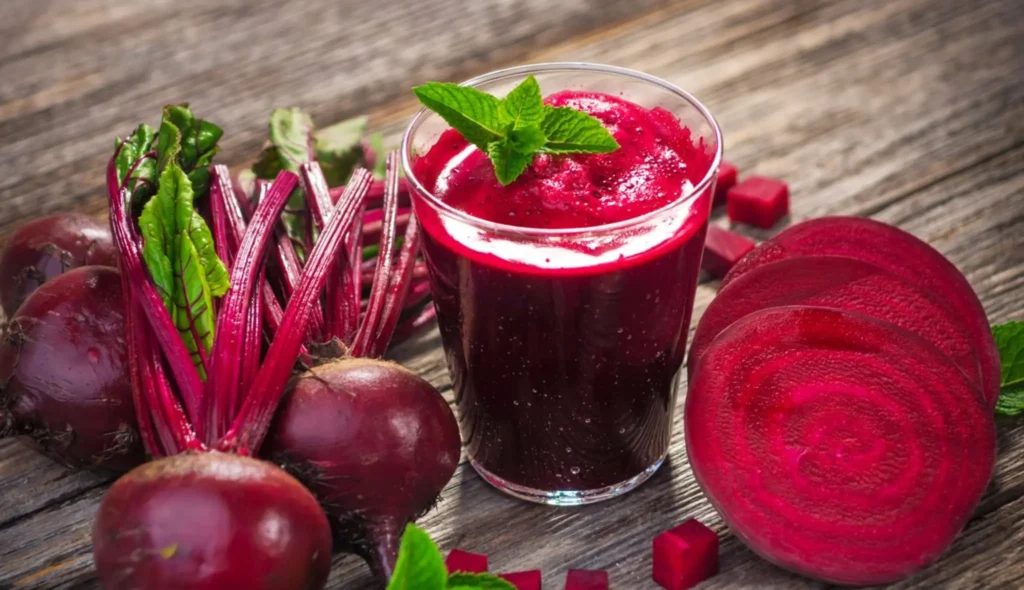
Beets provide folate, potassium, fiber, and numerous plant compounds. Their distinctive red-purple color comes from pigments called betalains, including betanin. These compounds show antioxidant activity and are another area of research into beetroot’s potential health benefits.
Beets also help lower homocysteine levels, supporting brain health and reducing inflammation. A scientific review published in Food Science & Nutrition examined beetroot’s nitrates, betalains and other bioactive compounds and described its potential as a functional food, while also emphasizing that not every proposed health benefit has been confirmed in clinical trials. That’s an important distinction. There is rarely one vegetable, nutrient, or supplement that transforms health on its own. What matters more is how foods such as beets contribute to an overall dietary pattern rich in vegetables and other whole foods.
As stated in the opening paragraph, you can roast, boil, pickle, or grate beets raw into salads, and they pair well with potatoes, apples, cabbage, dill, and other familiar Nordic ingredients. Even the leafy tops are edible and can be prepared like spinach or Swiss chard instead of being discarded. Other foods may also support nitric oxide through different mechanisms. Leafy vegetables such as arugula, spinach, lettuce, and Swiss chard can also be rich sources, as can watermelon, which contains an amino acid that helps support nitric oxide production.
Bringing It Back to the Plate
Perhaps the most interesting thing about beets isn’t any single vitamin, antioxidant, or potential cardiovascular benefit. It is the remarkable chain of events that can begin with an ordinary yet extraordinary vegetable. Good nutrition doesn’t necessarily require searching for the latest supplement or exotic superfood. Sometimes it means returning to foods that have been on our tables for generations and understanding a little more about why they deserve to stay there. With beets, there are plenty of delicious ways to explore.
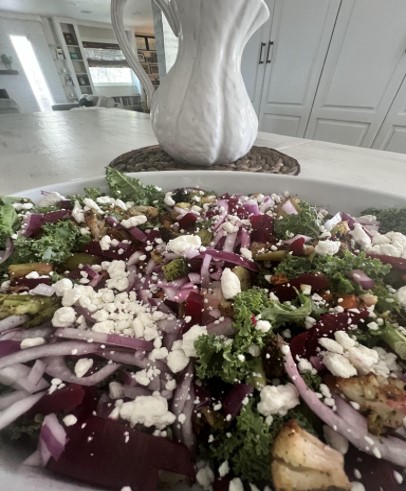
Hammond Beet Salad (serves 4-6)
2 beets, peeled and boiled, then sliced
6 cups kale and mixed greens
4 ounces goat cheese
1 red onion, sliced
½ cup mix of dried edamame and pumpkin seeds
Top with 4 grilled chicken breasts
Dressing: ½ cup olive oil, half cup lemon juice, 2 tbs honey, 2 tbs mustard, sea salt, pepper, any herbs (seasonal or dried)

Eat for Nitric Oxide: The Powerful Health Benefits of Beets, written explicitly for Daily Scandinavian by Nicole Hammond. Nicole is a health educator, coach, and wellness writer with a Master of Science in Health and Human Performance and a Bachelor of Science in Health Science. She also holds certifications in stress management, coaching, and feng shui design. She enjoys writing, researching, creating, and facilitating in health and balance for mind, body, and home. In her spare time, Nicole enjoys reading, cooking, traveling, exercising, and spending time with her family, including her two golden retrievers and cocker spaniel.
Feature image (top): © Nicole Hammond.
More articles by Nicole Hammond:
A Look Into Crushing Fear, Stress, and Anxiety
Spring Blossoms and Well-Being: Enjoying the Renewal in Nature, Light, and Simplicity
The Art of Being Human: How Creativity Supports Well-Being Throughout Life
Ancient Wisdom, Modern Wellness
New School Year Wellness Routine Ideas For 2026
The post Eat for Nitric Oxide: The Powerful Health Benefits of Beets appeared first on Daily Scandinavian.
]]>The OECD PISA rank history illustrates a clear story of Nordic education over the last quarter-century: Finland’s historic rise and steady defense of its lead, Sweden’s volatile free-market experiment, drop-and-recovery, and Norway’s ongoing battle to break out of average global tiers. Why is the Finnish School System Best in the Nordics? The newly released PISA […]
The post Why is the Finnish School System Best in the Nordics? appeared first on Daily Scandinavian.
]]>The OECD PISA rank history illustrates a clear story of Nordic education over the last quarter-century: Finland’s historic rise and steady defense of its lead, Sweden’s volatile free-market experiment, drop-and-recovery, and Norway’s ongoing battle to break out of average global tiers. Why is the Finnish School System Best in the Nordics?
The newly released PISA 2025 results highlight that while learning outcomes have dropped globally, Finland continues to lead the Nordic pack. Finland’s school system likely succeeds because it prioritizes equity, student well-being, and teacher autonomy over competition and high-stakes testing.
The core factors that make it a global model—and stand out in the Nordic region—include:
Strict Equity and Free Access
Education is a universal human right. Every child receives free schooling, free hot lunches, free transport, and necessary health or learning support, regardless of background or local municipal wealth. Private elite schools and tuition fees are virtually non-existent.
********************************************
Related: Benefits and Drawbacks of Scandinavian Educational Program
********************************************

Highly Trained, Respected Teachers
Teaching is one of Finland’s most selective and respected professions. All teachers must earn a research-based master’s degree, and they are granted broad autonomy to design their own lesson plans and shape the curriculum.
No Standardized Testing Culture
Finland has no mandatory national standardized testing during basic comprehensive school. Instead of teaching to a test, educators focus on deep conceptual understanding, practical problem-solving, and critical thinking.
Late Start and Play-Based Early Years
Formal schooling does not begin until children turn seven. Before that, early childhood education focuses heavily on play, social-emotional development, and outdoor exploration.

Low Stress and Short School Days
Finnish students enjoy shorter school days, frequent and long outdoor breaks, very little homework, and minimal outside tutoring compared to students in most other countries.
Cooperation Over Competition
Classrooms emphasize teamwork, peer support, and collective growth rather than grading curves or competitive rankings.
*********************************************
Related: The Top 3 Secrets to Scandinavian Innovation In Education
**********************************************

Why is the Finnish School System Best in the Nordics?
Compared with its neighbors, Finland shares the core Nordic educational ideology of promoting equity, inclusion, and universal free access. However, significant policy choices made in the late 20th century caused Finland, Sweden, and Norway to diverge structurally and culturally.
The core differences lie in how each country handles market competition, teacher status, and structural support:
| Feature | Finland | Sweden | Norway |
| Marketization & Private Sector | Virtually no private schools. Strict rules prevent tuition fees or corporate-run education. | High school choice. Features a large independent, voucher-funded school sector (friskolor) run by for-profit corporations. | Publicly dominated. Very strict regulation of private schools; tuition fees or profit-making are generally illegal. |
| Teacher Prestige & Status | Very high. Universally respected profession on par with law or medicine. Stricter entry bars. | Moderate to Low. Historically declined due to marketization, leading to ongoing recruitment challenges. | Moderate. Stable status, but faces common Western recruitment hurdles and bureaucratic pressures. |
| Minimum Teacher Qualifications | A master’s degree is required for all classroom and subject teachers. | Stricter licensing rules implemented recently, but many non-certified substitutes are used. | A master’s degree has been mandatory since 2017 for primary and lower secondary school teachers. |
| Special Education Approach | Proactive & Early. Up to 31% of basic education students receive early, preventative learning support. | Reactive. Support is often delayed until a student falls severely behind due to tracking. | Reactive. Only about 8% of students receive specialized support, usually much later in school. |
| School Lunches | Fully free and universal hot meals since 1948. | Fully free and universal hot meals. | Students usually bring a packed cold lunch (matpakke). |

Why Finland Outpaces Sweden
The divergence between Finland and Sweden stems from a philosophical split in the 1990s. While Finland doubled down on teacher autonomy and egalitarianism, Sweden bet heavily on free-market competition.
Sweden introduced a voucher system allowing corporate-run free schools to compete for students. Critics and researchers point out that this market model increased socioeconomic segregation and inequality across Swedish cities, driving down overall OECD PISA scores from their 20th-century peaks.
Why Finland Outpaces Norway
Norway and Finland look very similar on paper—both favor a stress-free environment, lack a competitive grading culture, and emphasize outdoor play. However, educational researchers pinpoint early intervention as the main reason Finland scores higher on international benchmarks
Finland employs a robust network of special education teachers who identify learning challenges as soon as they appear. If a Finnish child struggles slightly with reading at age seven, they immediately receive tailored, low-stigma coaching. In Norway, specialized assistance historically requires a formal pedagogical assessment, so children often wait years for support, dragging down overall national competencies.

The Core Metric: Science Performance (PISA 2025)
Because science was the major domain of the latest PISA cycle, it acts as the primary benchmark for the 2025 report. Finland continues to lead its neighbors, while Sweden has suffered severe drops in reading and math. Finland: 504 points (well above the OECD average of 482). Sweden: 485 points (Right at the OECD average; hits historical 25-year lows in reading/math). Norway: 470 points (Significantly below the OECD average)
The Historical Narrative (2000–2025)
Finland: The “PISA Shock” Hero in Decline
2000–2006 (The Peak): Finland stunned the world by ranking #1 globally in reading, science, and math. This era cemented the mythos of Finnish education.
2009–2022 (The Slow Drift): Finland’s scores began a long-term, gradual downturn. Experts attribute this to rising screen time, shifting demographics, and minor school funding cuts, though it still consistently stayed ahead of the rest of Europe.
2025 (The Current Status): Despite experiencing a noticeable performance gap widening between top and low-achieving students inside individual schools, Finland remains an elite Western performer, easily outpacing Norway and Sweden.
Sweden: The V-Shaped Rollercoaster
2000–2012 (The Free Fall): Sweden began the millennium with strong scores, but plummeted rapidly following its aggressive 1990s marketization reforms. By 2012, Sweden experienced the worst drop in PISA history, falling well below the OECD average.
2015–2018 (The Recovery): Sweden introduced stricter teacher licensing laws and heavy state interventions, triggering a brief bounce back to average levels.
2025 (The Worst-Ever Deficit): The latest data represents a “cold shower” for Sweden. Swedish 15-year-olds posted their lowest scores in a quarter-century for math and reading comprehension, wiping out previous recoveries.
Norway: The Consistent Average
2000–2015 (The Flat Line): Norway has never experienced the stratospheric highs of Finland or the devastating valleys of Sweden. It has historically hovered around, or slightly below, the OECD average.
2018–2025 (The Current Struggle): Norway’s scores dropped alongside global trends after the pandemic. In the latest 2025 rankings, Norway sits deep in the lower tiers of the Nordic countries, requiring a substantial boost in foundational skills to catch up to Finland’s benchmark.
Why is the Finnish School System the Best in the Nordics? -Conclusion
Finnish students get everything they need to do well in school without the added pressure of excelling in a subject. Without having to worry about grades and busywork, they are able to focus on the true task at hand – learning and growing as a human being.
Finnish architects may also shape the school system. Recently built schools reject open-plan learning environments in favor of a calmer, more focused atmosphere. Open atriums and inner courtyards bring light into the school, boosting alertness and helping sustain students’ concentration. Schools serve as both educational spaces and centers of community and civic life.
Editor’s note: I have excluded Denmark in this article for editorial reasons only. However, Denmark’s education system shares many of the core strengths found across the Nordic region.
Why is the Finnish School System Best in the Nordics? Compiled by Tor Kjolberg.
Feature image (top) © Her Finland.
The post Why is the Finnish School System Best in the Nordics? appeared first on Daily Scandinavian.
]]>Travelers are not necessarily nonbelievers, but they are skeptical of marketing. A traveler doesn’t care about you, your products, or your services. They care about themselves, their wants, and their needs. Brand storytelling is about creating compelling content your customers are passionate about, so they pay attention to you. Travelers don’t buy destinations. They buy […]
The post Brand Storytelling for Nonbelievers appeared first on Daily Scandinavian.
]]>Travelers are not necessarily nonbelievers, but they are skeptical of marketing. A traveler doesn’t care about you, your products, or your services. They care about themselves, their wants, and their needs. Brand storytelling is about creating compelling content your customers are passionate about, so they pay attention to you.
Travelers don’t buy destinations. They buy the possibility of becoming someone, experiencing something, and coming home with a story.
Despite this, most destinations boast spectacular scenery, wonderful hotels, authentic experiences, friendly people, amazing food, and something for everyone.
And the traveler thinks, “So does everybody else.”
The problem isn’t that destination marketing is untrue. The problem is that it is often interchangeable.
A photograph of a beautiful beach proves that a beautiful beach exists. It doesn’t prove that I will have an unforgettable experience there.
Sell the meaning, not the place
A traveler rarely says: “I want to go to Destination X because Destination X exists.” They might say: “I want to disappear somewhere for a week.” Or “I want to do something my children will remember.”
Some travelers want to feel young again, while others want to discover somewhere before anyone else does. A guy might want to impress his partner, while a group of women wants to come home with something interesting to tell.
The destination is the stage. The traveler is the protagonist. The experience is the plot. And the story they tell upon returning is the reward.
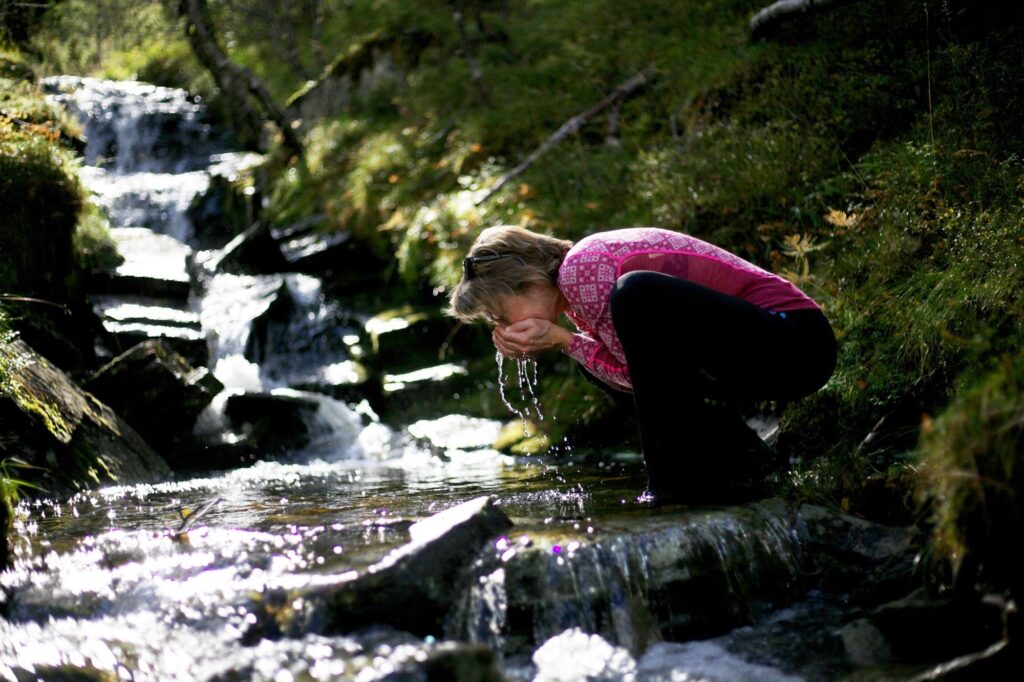
The destination should make a promise it can prove
What can a destination do to convince a traveler that their expectations can be met? Don’t simply claim the experience. Demonstrate it.
When I work for destinations, I’m always searching for the “untold stories,” such as the fisherman who has been going out before dawn for 47 years. It is much more captivating than “Discover our wonderful local cuisine” or “Why a grandmother at the village restaurant still prepares the dish her mother taught her to make.”
 The best destination stories contain a little mystery
A destination doesn’t necessarily need more content. It needs better questions.
“Why is that building shaped that way?” or “Why does everyone in this village gather at that particular place on Sunday?”
During one of my travels, I wondered why the hotel served breakfast starting at 7:15 rather than 7:00. That prompted me to add, “Why did an artist, writer, explorer, fisherman, or entrepreneur come here?”
Many destinations have stories that almost nobody knows. What strange tradition survives? What does the local guide know that Google doesn’t?
Those are stories with discovery built in. Discovery is one of travel’s great pleasures.

What should destinations STOP doing?
Stop saying: “World-class” unless you can prove it. Stop saying: “Hidden gem.” If you’ve advertised it to five million people, it isn’t hidden.
Stop showing only perfection.
A destination without rain, wrinkles, mistakes, characters, or surprises looks like an advertisement. Travelers increasingly know what advertisements look like.
Stop putting the destination at the center of every story.
The traveler should be there. “Look at us” is destination advertising, while “Imagine yourself here” is destination storytelling.
 Dare to be somewhat different
I never forget a hotel stay in England, where the owner gave me a small gift at checkout and said, “Welcome back.” It felt very personal, and I’ve told this story to many of my friends. Imagine a destination doing something like that. Is it possible?
Suppose a couple visits a destination for their anniversary. The destination knows that.
A year later, they receive:
“One year ago today, you watched the sunset from our old lighthouse. We hope you’re still talking about it.”
That’s not advertising. That’s a relationship.
Or imagine a family visiting a destination with two children. When they leave, the children receive a little card: “Dear Emma and Lucas, we hope you haven’t forgotten the fox you saw near the forest…”
Suddenly, the destination becomes a character in the family’s memory.

The next visit shouldn’t begin when the traveler books
This might be a more radical idea: The next journey begins when the previous one ends. Destinations traditionally spend enormous amounts of money to attract the next visitor. What if they invested a little more effort in turning the previous visitor into a storyteller?
After departure, they could receive a photograph they didn’t know existed or be reminded of something they had experienced.
It’s not so expensive to send visitors a small local object related to their trip and invite them to share their favorite story. Give them a reason to share a memory rather than an advertisement. Surprise them months later with something connected to their visit.
The objective isn’t merely repeat visitations. It is memory creation. And memory creates advocacy.

Give travelers something to tell
This could be the central challenge you pose to destination marketers: “What will your visitor tell a friend six months after returning home?”
Not: “Was the hotel good?” Not: “Was the weather nice?” But: “What happened?”
That question changes everything. Great travel stories usually have four ingredients: a person, a place, something unexpected, and a moment worth remembering.
 Give the traveler a “story souvenir”
Tourists traditionally take home: magnets, postcards, photographs, souvenirs, bottles of wine, and handicrafts. Why not offer them something else?
A story.
Upon departure, the destination could present the traveler with a beautifully designed “Your Story from X” card that reads, “You arrived as a visitor. You leave with a story.” Include real facts. Now the destination has helped the visitor remember the experience and share it with someone else. That’s brand storytelling made into a physical experience.
 The future of destination marketing
The future of destination marketing may belong to the destinations that stop trying so hard to convince us they are wonderful. Instead, it may belong to those who help us discover why being there could matter to us.
Take-away
If you learned something from this article, I believe you’ll also enjoy my recent book, “How I’ve Survived as a Storyteller for Over 50 Years: 12 Survival Techniques.” Get your FREE e-book copy by sending me your name and e-mail address, and including “Storytelling” in the subject line. Thank you for reading!
More articles on Storytelling by Tor Kjolberg you may like:
Brand Stories Are Boring
Travel Stories Designed for the Adult Part of Our Population
Seven Strategies for Increasing Customer Participation in Brand Stories
Stop Selling Postcards
The DMC 7 Steps Untold Story Finder
The post Brand Storytelling for Nonbelievers appeared first on Daily Scandinavian.
]]>The Journey Through Wales is a 12th-century historical account written in Latin by the medieval scholar and churchman Gerald of Wales. This is the sixth article in our series Historical Travel Stories. Gerald was selected to accompany the Archbishop of Canterbury, Baldwin of Forde, on a tour of Wales in 1188, the object being a recruitment campaign […]
The post Historical Travel Stories: Journey Through Wales appeared first on Daily Scandinavian.
]]>The Journey Through Wales is a 12th-century historical account written in Latin by the medieval scholar and churchman Gerald of Wales. This is the sixth article in our series Historical Travel Stories.
Gerald was selected to accompany the Archbishop of Canterbury, Baldwin of Forde, on a tour of Wales in 1188, the object being a recruitment campaign for the Third Crusade. His account of that journey, the Itinerarium Cambriae (1191) (later followed by the Descriptio Cambriae in 1194), remains a very valuable historical document, significant for its descriptions.
The book provides readers with a fascinating glimpse into the country’s history, culture, and landscapes. It is divided into two parts. The first part is a description of Wales, its geography, natural resources, and people, while the second part of the book is an itinerary of Giraldus’s travels through Wales.

The main goal of the journey, however, was to recruit soldiers for the Third Crusade, and therefore the book is somewhat untrustworthy and inflected by ideology, whimsy, and his unique style – of Welsh and Norman culture.

Nevertheless, the author provides detailed information about the various regions of Wales, including their topography, climate, flora, and fauna. He also describes the customs, traditions, and beliefs of the Welsh people, including their language, religion, and social structure.
Modern historians use the work as a primary source for understanding medieval Welsh and Norman cultures. The work plays a role in the plot of Thomas Love Peacock’s 1831 novel Crotchet Castle, where the medieval enthusiast Mr. Chainmail proposes to retrace the steps of “Giraldus de Barri”.

Gerald of Wales (c. 1146 – c. 1223) was a Cambro-Norman priest and historian. As a royal clerk to the king and two archbishops, he traveled widely and wrote extensively. He studied and taught in France and visited Rome several times, meeting the Pope. He was nominated for several bishoprics but turned them down in the hope of becoming Bishop of St Davids, but was unsuccessful despite considerable support. His final post was as Archdeacon of Brecon, from which he retired to academic study for the remainder of his life.
Historical Travel Stories: Journey Through Wales, compiled by Tor Kjolberg.
Previous articles in our series of historic travel stories:
The World’s Oldest Surviving Travel Story
The World of the Odyssey: A Palimpsest of the Hellenic Art of Living Well
Sinbad the Sailor
Description of Greece
Safarnama – the Book of Travels
The post Historical Travel Stories: Journey Through Wales appeared first on Daily Scandinavian.
]]>