The post Local water issue deserves attention first appeared on Arizona Capitol Times.
]]>
There has been a significant amount of media attention regarding the challenges facing the Colorado River. Rightfully so, given the importance of this water supply to Arizona’s cities and Tribal Nations.
But while the state’s water leaders have tried earnestly to reach an agreement with the Upper Basin states on allocating the limited supply, solutions remain elusive. Hydrology is challenging, and so it appears we are headed to litigation. That is unfortunate, because through litigation there are typically just winners and losers. I know too well from my 35-plus years of working to resolve water conflicts for the Salt River Project that when it comes to allocating water, winners and losers is not the pathway to follow. Resolving such conflicts through agreement provides a win-win opportunity and creates the pathway for long-term investment and growth of the economy in the region.
While the Colorado River issues are playing out, there is another similar water issue surfacing in the Phoenix area. This one involves the Buckeye Water Conservation and Drainage District (BWCDD) that I consult with as well as many of the Phoenix area cities and the federal government. This conflict revolves around plans to expand the storage of water on the Verde River and plans by Phoenix to treat the wastewater produced at the 91st Avenue treatment plant as a drinking water supply.
Unfortunately, both projects, if completed, would take away the water supply currently used by BWCDD customers. Those customers are mostly farmers today, but in the future will be homeowners and residents of the city of Buckeye. For the past several years, BWCDD has reached out to the Phoenix area cities and offered solutions on how these supplies could be allocated between BWCDD and the Phoenix area cities. But, just like Arizona and the Lower Basin States have found with the Upper Basin states on the Colorado River, BWCDD has found reaching an agreement with the Phoenix area cities difficult. Not so much because of what BWCDD is asking for in an agreement — far less than what their landowners’ decreed rights allow — but because the Phoenix area cities, except the city of Phoenix, don’t aren’t interested in coming to the table. Like with the Colorado River, that is unfortunate because the pathway we are headed for is litigation. And, as I stated before, the outcome of litigation is a win-lose situation. BWCDD’s water rights are far senior to the supplies contemplated in these projects.
This issue deserves the attention from the Phoenix area cities to reach a fair agreement, just as these same cities want from the upper Colorado River Basin states.
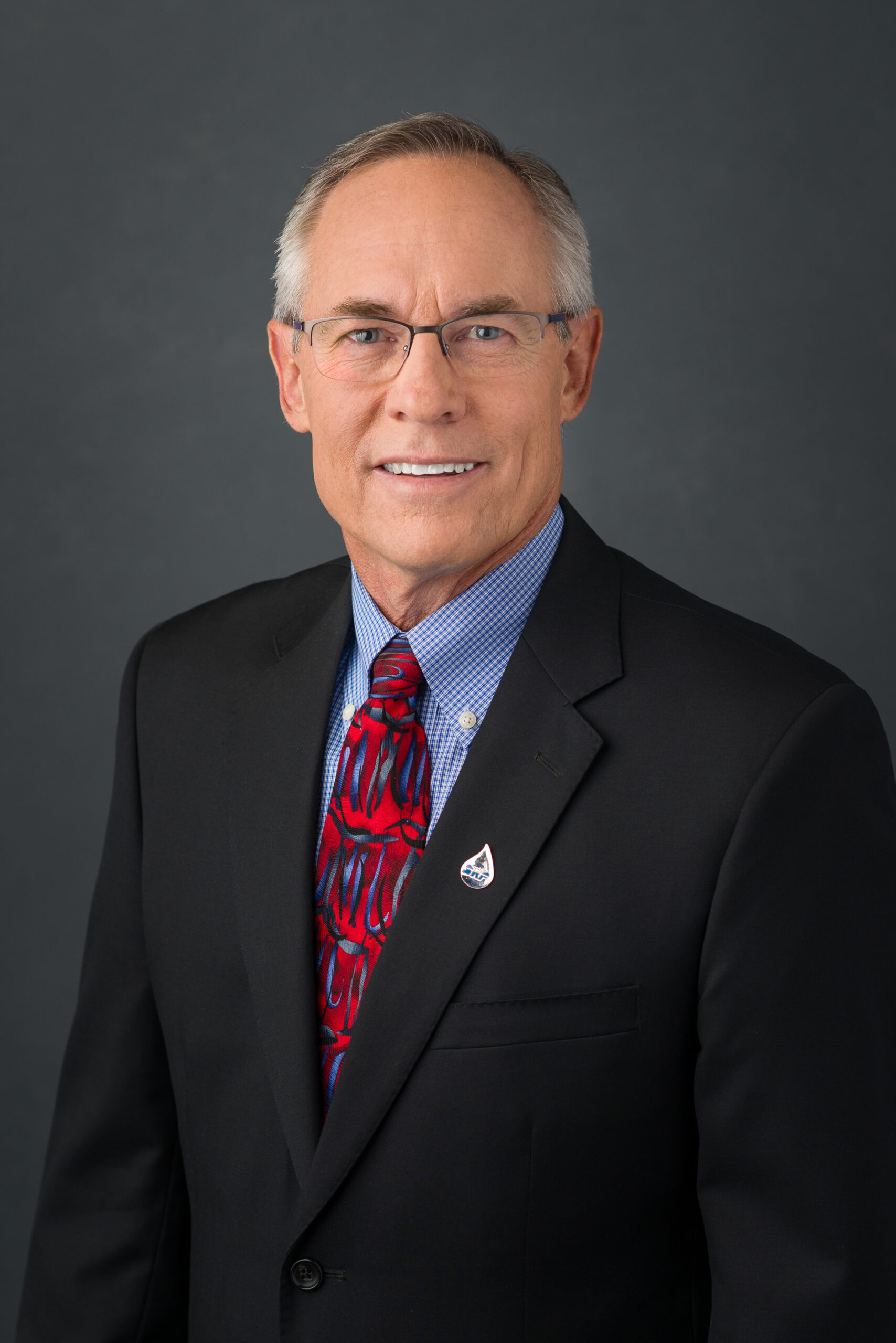
Dave Roberts is a former water resource executive for the Salt River Project, and now a water strategy consultant.
The post Local water issue deserves attention first appeared on Arizona Capitol Times.
]]>The post Morning Scoop: A Coalition for Protecting Arizona’s Lifeline first appeared on Arizona Capitol Times.
]]>Arizona’s Colorado River water supply is at risk, with current proposals potentially impacting the state more than any other. Despite using less water today than in the 1950s, ongoing drought and increasing demand continue to strain the system.
Millions of Arizonans rely on this vital resource, and leaders across the state are focused on strengthening long-term water security and economic resilience.
Join Steve Goldstein for a discussion on the challenges facing the Colorado River — and what it will take to protect Arizona’s future.
The post Morning Scoop: A Coalition for Protecting Arizona’s Lifeline first appeared on Arizona Capitol Times.
]]>The post When oversight becomes a campaign strategy in Arizona utility regulation first appeared on Arizona Capitol Times.
]]>
Arizona’s Constitution is clear. The Arizona Corporation Commission was designed to operate as an independent, elected body with exclusive authority over utility ratemaking. That independence exists to ensure decisions affecting millions of ratepayers are made through evidence, due process, and transparency, rather than political pressure.
That balance is increasingly being tested.
Over the past year, Attorney General Kris Mayes has repeatedly used her office to challenge actions of the commission in a pattern that raises serious concerns about the use of legal authority as a political tool for lawfare rather than a measured exercise of oversight.
Consider the breadth of recent actions.
The attorney general challenged the commission’s approval of an Annual Rate Adjustment Mechanism for UNS Gas, targeting a ratemaking tool that falls squarely within the commission’s constitutional authority under Article 15 of the Arizona Constitution.
Disagreements over rate design are not unusual but elevating them into legal challenges aimed at overturning commission authority is something different entirely.
The same pattern appears in the challenge to Tucson Electric Power’s energy service agreement tied to a major data center project. That agreement was structured specifically to ensure that the data center pays its own costs rather than shifting burdens to existing customers. Yet the attorney general sought to invalidate the decision, despite the consumer protections embedded within it.
At the same time, the attorney general has taken aggressive positions in Arizona Public Service and Tucson Electric Power matters more broadly, intervening in ways that go beyond traditional legal participation and into sustained public opposition to commission proceedings.
From litigation over the repeal of the Renewable Energy Standard and Tariff rules to repeated challenges across multiple utility proceedings, the attorney general has demonstrated a willingness to escalate nearly every major commission decision into a legal or public dispute.
That is where her actions become more concerning.
Arizona law is explicit that public resources and authority may not be used for campaign purposes. Under A.R.S. § 41-752, public resources cannot be used to influence the outcomes of elections, and A.R.S. § 41-193(A)(2) defines the attorney general’s role as providing legal services to the state, not advancing political objectives. Additionally, Arizona’s conflict of interest and public office statutes reinforce that public power must be exercised for public purposes, not personal or political gain.
No one is suggesting that the attorney general should remain silent. Legal challenges, when grounded in clear violations of law, are appropriate.
But a pattern of selective, high-profile litigation combined with public messaging that mirrors campaign rhetoric raises legitimate questions about whether that line is being crossed. There is little doubt the lawsuits amount to lawfare, not advocacy for consumers or utilities.
This concern is heightened by the fact that the attorney general previously served as a member of the Arizona Corporation Commission and understands firsthand the constitutional boundaries of ratemaking authority. That experience makes the repeated challenges to that authority all the more difficult to reconcile.
The consequences are real.
When nearly every major decision is met with legal challenge, regulatory certainty erodes. Investment decisions become more difficult. Infrastructure projects face delays. Arizona’s reputation for stability is weakened. Ultimately, those impacts are borne by ratepayers.
Equally concerning is how these actions are communicated.
Complex regulatory decisions are reduced to simplified, often alarmist claims. Nuanced policy debates are reframed as clear-cut wrongdoing. That approach may generate headlines, but it does not improve outcomes for Arizona families or businesses.
Arizona’s system was designed to balance independence with accountability. That balance depends on each constitutional office respecting its role.
If the line between lawful oversight and political use of office is being blurred, that is not a question that should be left to speculation. It is appropriate for the relevant ethics authorities or oversight bodies to review whether the powers of the office are being exercised consistently with Arizona law and longstanding principles of good governance.
The Corporation Commission must continue to make decisions based on the record and the law. The attorney general must ensure those decisions comply with the law, not relitigate policy disagreements through repeated public challenges.
Oversight is essential. But when it becomes constant, highly public, and indistinguishable from political positioning, it erodes public trust. It ceases to be oversight.
It becomes overreach.
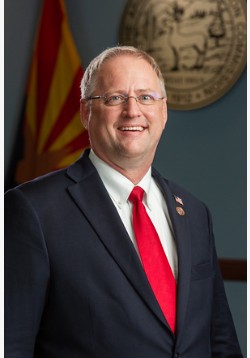
Nick Myers is chairman of the Arizona Corporation Commission.
The post When oversight becomes a campaign strategy in Arizona utility regulation first appeared on Arizona Capitol Times.
]]>The post A crack in Arizona’s Colorado River front first appeared on Arizona Capitol Times.
]]>Key Points:
-
Arizona leaders are anxious amid stalled Colorado River negotiations
-
Some Republicans are splitting hairs with Gov. Katie Hobbs over what to do next
-
One lawmaker is accusing his rural colleagues of organizing to sell out cities
Arizona leaders are getting antsy as the state’s water future hangs in limbo without a negotiated deal on Colorado River sharing guidelines and without federal intervention.
A federally imposed deadline for an agreement on splitting the river’s water between the seven basin states came and went in February with no movement. And despite leaders from the Department of Interior pledging to step in and broker a deal, no progress has been made so far this year.
Arizona leaders at every level and from every party are opposed to the Interior Department’s draft environmental impact statement on post-2026 Colorado River operations, which they say fails to consider the meaningful cuts the state has already made to its water usage. The public comment period on the draft environmental impact statement ended on March 2 and the Department of Interior and Bureau of Reclamation have yet to communicate a path forward.
In the meantime, with competitive elections hanging over the heads of nearly all the state’s elected officials, cracks are beginning to form in Arizona’s united front as leaders contemplate how best to make a case to the federal government.
“People are pretty united about the state’s position, and I think it’s because the state’s position is we’re not going to take a deal that leaves us worse off than no deal,” said Sarah Porter, director for Arizona State University’s Kyl Center for Water Policy. “… I don’t expect to have perfect unanimity in terms of ‘what do we do next.’”
Arizona’s position
In January, the Bureau of Reclamation published a draft environmental impact statement, offering five alternatives to the current operating guidelines. All of those alternatives suffer from “serious legal and analytical defects,” according to Arizona’s chief water negotiator and director of the Department of Water Resources, Tom Buschatzke.
In a letter, Buschatzke notes that the alternatives do not adhere to the 1922 Colorado River Compact, which requires the Upper Basin states of Colorado, Utah, Wyoming and New Mexico to deliver certain quantities of water to the Lower Basin states of Arizona, California and Nevada.
Gov. Katie Hobbs has said Arizona is not willing to cut more than the around 5 million acre feet in water usage it has already conserved unless the Upper Basin states also agree to meaningful reductions in their own usage.
At a U.S. Chamber of Commerce summit in Washington, D.C. on March 17, Hobbs said the environmental impact statement signals that the federal government plans on balancing the Colorado River water shortage “completely on Arizona’s back.”
“Since the 1950s, we’ve added over 6 million people to our state and have an economy roughly 100 times bigger, yet we’re still using roughly the same amount of water,” Hobbs said. “And we’re willing to do more, but recent plans from the Department of Interior are putting our water supply in jeopardy.”
Making the case
Hobbs went on offense over the fall of 2025 to promote the state’s position, blasting the Upper Basin states for their “extreme negotiating position” and urging the Department of Interior to intervene ahead of a Nov. 11 deadline to reach a deal.
During the annual Colorado River Water Users Association in December, some states’ water stakeholders complained to Arizona’s representatives that Hobbs was “getting so engaged” in an area where governors typically rely on their state’s Colorado River negotiators to communicate their position.
Hobbs “called for and secured the unprecedented meeting” between the Colorado River governors and Interior Secretary Doug Burgum in February, according to her office. The governor told reporters the meeting left her feeling “cautiously optimistic” about a negotiated deal, though nothing further emerged from it.
All of that isn’t stopping Arizona Republicans in the Legislature and in Congress from accusing Hobbs of not doing enough to sway the conversation in the state’s favor or to court the approval of President Donald Trump’s administration. U.S. Rep. Andy Biggs, R-Ariz., told reporters on March 13 that he met with House and Senate Republicans at the state Capitol to strategize on the Colorado River.
“We’re working with the Bureau of Reclamation and trying to make our case and we really haven’t seen much help from the Governor’s Office,” he said.
Biggs, who is seeking the Republican nomination to run against Hobbs in November, said the governor hasn’t collaborated enough with Arizona’s congressional delegation on the Colorado River.
“She should have been working with us for the last couple of years to work with this administration,” Biggs said. “Whether we like it or not, Washington, D.C. deals in politics and parties, and that’s why I’m glad Senator (Mark) Kelly is working on this and pushing from his side, and we’re pushing from our side, and I think that that’s where she should have been all along.”
Biggs and Kelly sent a letter calling on the Bureau of Reclamation to rescind the draft environmental impact statement, given that none of its outlined options are favorable to Arizona. Some Republicans in the Legislature, like Rep. Alex Kolodin of Scottsdale, are echoing Biggs’ concerns at the state level.
“I am concerned that the Hobbs administration is simply not qualified or capable of negotiating a resolution that is going to be anything but devastating to the people of Arizona,” Kolodin said. “They have been way too hesitant to seriously prepare for litigation and I believe this weakness is being sensed by all participants.”
Hobbs and Republican lawmakers earmarked $3 million for potential Colorado River litigation in the state’s budget last year, but Rep. Gail Griffin, R-Hereford, said in an early February press release that Arizona is late to the party.
“Arizona does not get to wish its way out of a water fight,” Griffin said in a statement. “Other states have been positioning themselves for court long before this fund was created.”
While a court battle is still largely viewed as a last resort by Arizona leaders, lawmakers in the House unanimously approved a funding measure in February to add another $1 million to the state’s litigation fund, signalling bipartisan appetite for a lawsuit.
In a statement, Hobbs’ communications director Christian Slater slammed Republican lawmakers for staying silent on Colorado River issues for the last three years.
“Their failure to stand up and fight for Arizona’s fair share of Colorado River water is a stunning failure of leadership from politicians more interested in launching partisan attacks than getting the job done,” Slater said. “Their criticisms are nothing more than a desperate, election-year stunt to attack Governor Hobbs and cover for their complete and utter lack of engagement on the issue.”
Water is for fighting
Rifts are also starting to form within the Legislature’s Republican caucus over the river. Kolodin told a meeting of the Legislative District 3 Republicans on March 9 that he believes rural lawmakers are forming a negotiating party to advocate for their districts in the event of drastic cuts imposed by the federal government.
“If we’re in a situation where Arizona’s Colorado River allotment gets cut back severely, every lawmaker is going to be trying to protect their districts, that’s their job,” Kolodin told the Arizona Capitol Times. “Because water is a zero sum game, everybody’s going to be trying to get the best deal for their districts at the expense of others.”
Hobbs’ office says Arizona has been a leader on water conservation over the past few decades, but only because leaders have been able to set their differences aside.
“That success has been made possible by bipartisan leaders who know water isn’t a Democratic or a Republican issue, it’s an Arizona issue,” Slater said in a statement.
Porter, of the ASU Kyl Center for Water Policy, also cautioned against discord among state officials, saying a lack of unity from local leaders at all levels could spell trouble.
“There are different politics, and if we get to a very deep shortage, what will be daylighted is the dysfunctionality more than anything else,” Porter said.
The post A crack in Arizona’s Colorado River front first appeared on Arizona Capitol Times.
]]>The post Tom Buschatzke: Keeping Arizona’s faucets functioning first appeared on Arizona Capitol Times.
]]>Editor’s Note: This Q&A originally published in the Nov. 22, 2024, print edition of the Arizona Capitol Times. It is republished here in light of Tom Buschatzke’s role in the ongoing Colorado River negotiations.
Tom Buschatzke is Arizona’s chief negotiator for the Colorado River negotiations and has been the arbiter of the state’s water supply for over 10 years as director of the Arizona Department of Water Resources. In a career spanning decades and beginning with an internship at the very department he now leads, Buschatzke said there’s never been a dull day.
The questions and answers have been edited lightly for style and clarity.
What initially got you interested in water and water policy?
When I was an undergraduate student, I decided to become a geology major because I liked the opportunity to potentially work outdoors, especially when you’re younger in that field. I went to undergraduate school in upstate New York, where there were lots of rivers, streams, etc. So the three pathways with that degree were probably mining, oil or water. And I just got more interested in water, but more from a technical standpoint. I had aspired to work for the United States Geological Survey, and actually had a job offer from them, a job that would have started on October 1, the first day of the federal fiscal year. Shortly before that job started, their funding got cut. My job was no longer there, so I didn’t pursue that pathway … Then I decided to come here to go to graduate school. And in school, I saw … an internship advertisement on a billboard at ASU and said, “I kind of need some money, so I’ll go take this internship.” And once I got here, I started thinking, “Well, this is kind of interesting.”
What is it like to be the director of a department you were once an intern at?
If in 1982 someone said, “Tom, someday you’re going to be the head of this department,” I’d have told them they were out of their minds. There are a lot of really positive benefits that flow from it. First, having kind of worked my way up the chain, I recognize what it’s like to be at that level, at the intern level first, and then at the entry level and understand the challenges. I understand, because I’ve done it. But I also understand, having been an intern and worked my way up, how we viewed leadership at the time and how we would have loved to have had more of an opportunity to get input into leadership in a meaningful way. When I’m in the room with my staff, if they don’t tell me, I call on them and say, “What do you think?” They don’t get away with just sitting there because I value what they have to say. I know when I was younger, I had stuff to say probably that could have been valuable that I had a lot less opportunity to say. In that regard, the work world has changed. There is more value assigned to less-experienced employees in general in the work world than there was back when I was younger. I think that’s a very positive step forward.
What has kept you involved in water policy for the past few decades?
I think there’s several factors there. One, the policy side is really very interesting. It is hugely challenging, but it has so many different pieces that most days, I come into my job — and it’s been this way for a long time — I learn something new. After 42 years plus, you wouldn’t think that would be the case, but it definitely is. And I just think that for the future of Arizona, what I do is really important, and probably that drives me as much as anything, and has always driven me. When I was in Phoenix, it was for the future of Phoenix, but also in the context of the state and the region. Now, it’s the state and the region as well. So, I actually, crazily maybe, enjoy the interaction at the federal government level with the Department of Interior, other agencies that I’ve interacted with over the years, U.S. Fish and Wildlife Service, EPA, etc. I think those are also really interesting connections to doing water policy, just the breadth of it is sometimes daunting, but also what keeps you motivated, because there’s rarely a dull day. I always say part of what’s motivating me now is my two grandchildren who live here and who probably will live here for a very long time, if not their entire lives … I’m doing this for the future, the future good for the state.
What do you wish people knew more about when it comes to water in Arizona?
So, I think maybe the single biggest issue is people don’t understand that the community they live in matters in terms of the reliability of their water supply. There are communities that are very reliable, and there are communities that are less so, and when the Rio Verde Foothills thing blew up, I doubt those people knew the risk that they were under before it blew up. I have a younger daughter who was a club soccer player. [The parents] would say, “What do you do, Tom?” and I tell them, and they’re like, “Well, how’s my water situation?” And I’d say, “Where do you live?” And they’d be like, “Well, why does that matter?” I’m like, it does because [of] the way water rights and supplies have developed over the years, this whole first come, first serve, prior appropriation and other things. I would really be a lot happier if people were more aware. I don’t want this to sound negative, because I think this is a two-sided coin. What I have helped do, what I’ve helped create, is a level of reliability for people that perhaps is taken for granted. There is no one who goes like this with their faucet and nothing comes out, right? That’s because of stuff that I and many, many, many people have done over many decades. And I think that is somewhat of a unique situation in the world. The number of people, or the number of areas, that have refined water, 24/7, that’s clean and healthy is a very small percentage of the population of the world. I think it would be good if people recognize how good they have it. The last thing, and this gets into really difficult issues, people want their services to be as low cost as possible, yet to address what we’ve already created and to address what we need to do in the future is going to take more money. When Flint, Michigan, had their issue with their water quality, it was about a couple of million dollars they didn’t want to spend because their constituents were saying, “We don’t want to have to pay those rates.” I think that’s something that people have to start thinking about. If they want to continue that reliability, the cost is going to go up, probably higher than the cost of inflation.
What do you recommend for people who want to learn more about their water?
We live in an information overload world, but through your individual water provider, whether that’s a city or a water company, the universities, this department, there is so much information that’s at your fingertips on the internet. It just takes a lot of time to slog through it, and it’s very down in the weeds, if you really want to understand it. One of the most difficult things for me, certainly, is when I get interviewed on television, and they want to be able to tell the story in 20 seconds. You can’t tell the complete story in 20 seconds. You can’t tell enough of the story on X. We live in a sound bite world, and these issues are pretty hard to describe in a sound bite world. So that’s a challenge for us, and it’s a challenge for people who are trying to get information, to make the commitment to really get down into the weeds so they can really understand the benefits and the risks that are facing them and us.
You’ve been at ADWR for nearly 10 years, do you plan on sticking around?
I have no plans to leave anytime soon. I do think when I leave, when I finally decide to retire – which I’m way past eligible – I think it’s going to be retirement. Lots of people do consulting or try to keep their hand in it. One of the things my water policy adviser mentor always told me is, “Tom, when you do the water policy, if you’re not down in the weeds and at every level, all day, every day, it’s not something you do part time.” Because you lose the connections, and you lose your ability to be effective. When he retired, he was like,, “Tom, I’m going to disappear.” And since he retired 22 years ago, I think I’ve seen him four or five times. He doesn’t follow the water stuff anymore. The couple times I’ve seen him, [one] was when I accepted being the director, and he called me like, “Let’s go to lunch, explain to me why you did this.” So I think I’m gonna probably go down that same path.
What legacy do you hope to leave on ADWR and the state of Arizona?
That I left the state in a place where there’s a road map to addressing the water challenges that are facing us. I don’t expect to solve them all, but I want to make sure that there’s a pathway to doing it so that the next whomevers, director, staff, etc, have a solid foothold on solving those issues. Also, I am a huge proponent, as you can imagine, of this department hiring interns. When I was an intern here, there were about a dozen or so interns, most of them went on to really impactful things in the world of water. One went to the EPA. One went to the New York State EPA equivalent. Two of them, one was as the head water person for SRP for years. The other was the second or third in command at SRP on the water side for many years. So I fully embrace and recognize the value of internships in terms of launching people’s careers, and the value that not only it gives to the state, but the value that it gives to the water community.
Is there anything else you think people should know?
I would just hope people understand that this department makes decisions in view of what’s good for the entire state of Arizona. That’s our charge. So, sometimes when you do that, individual groups are aggrieved. But I hope people understand that that’s what we have to do. The other thing I want them to understand, in relation to the Colorado River, is that this state was the first to really embrace meaningful roles for tribes. Now, there are other processes in other states, but we were really the ones who started bringing them into the fold, probably around 2016 or 2017. It goes to what I say publicly all the time, we need everyone to participate if we’re going to address the challenges of that river. One of the other big things we hear is like, “We want to be in the room.” Well, it’s hard to negotiate something with 100 people in a room. We’ve tried to create layers of participation, but that frustrates a lot of people [who say], “I have a stake, I should be in the room.” I think we have, relatively successfully, figured out a way, through having different layers, almost like an inverted pyramid, to get people to have the opportunity to really weigh in with us. Also, this department was devastated by the Great Recession. It went from 240 or 245 people to 90. When I became the director in 2015, we were probably about 122. We’re twice that now, and that occurred with the support of the stakeholders in this state. They wanted this department to grow back again, because even though they are aggrieved sometimes by some of the decisions, they understand. I think that is part and parcel of demonstrating they recognize the larger benefit that this department creates. I’m very thankful that we have that support.
The post Tom Buschatzke: Keeping Arizona’s faucets functioning first appeared on Arizona Capitol Times.
]]>The post The odds are sinking for groundwater legislation first appeared on Arizona Capitol Times.
]]>Key Points:
-
Groundwater issues focus on rural needs
-
Rep. Gail Griffin is considered key opponent of reform
-
Attempting a ballot measure is believed to be too expensive
As crossover week at the Arizona Legislature concludes, it appears lawmakers will go yet another year without passing significant groundwater reform.
Gov. Katie Hobbs and rural stakeholders have been seeking reform for years, and one Democrat who has been involved in recent negotiations said he believes a deal could soon be struck at the Legislature — depending on which way the Governor’s Office swings after the 2026 general election in November.
“There is a deal there to be had,” said Rep. Chris Mathis, D-Tucson. “I think there’s a compromise there. There’s no question in my mind about that.”
If a Republican is elected to the Ninth Floor, it would be much more difficult for legislative Democrats to get a deal done if they remain the minority party.
Democrats did get close in 2024. A groundwater bill failed late in that session, but Mathis said lawmakers continued to negotiate over the summer before the 2024 election. At the time, there were some predictions that one of the legislative chambers could flip to Democrats, but when Republicans instead expanded their majorities, negotiations stalled.
“The impetus, for at least some on the Republican side, to come up with a workable deal just lessened,” Mathis said. “After that happened last year, we tried to go back to the negotiating table and just basically didn’t get anywhere.”
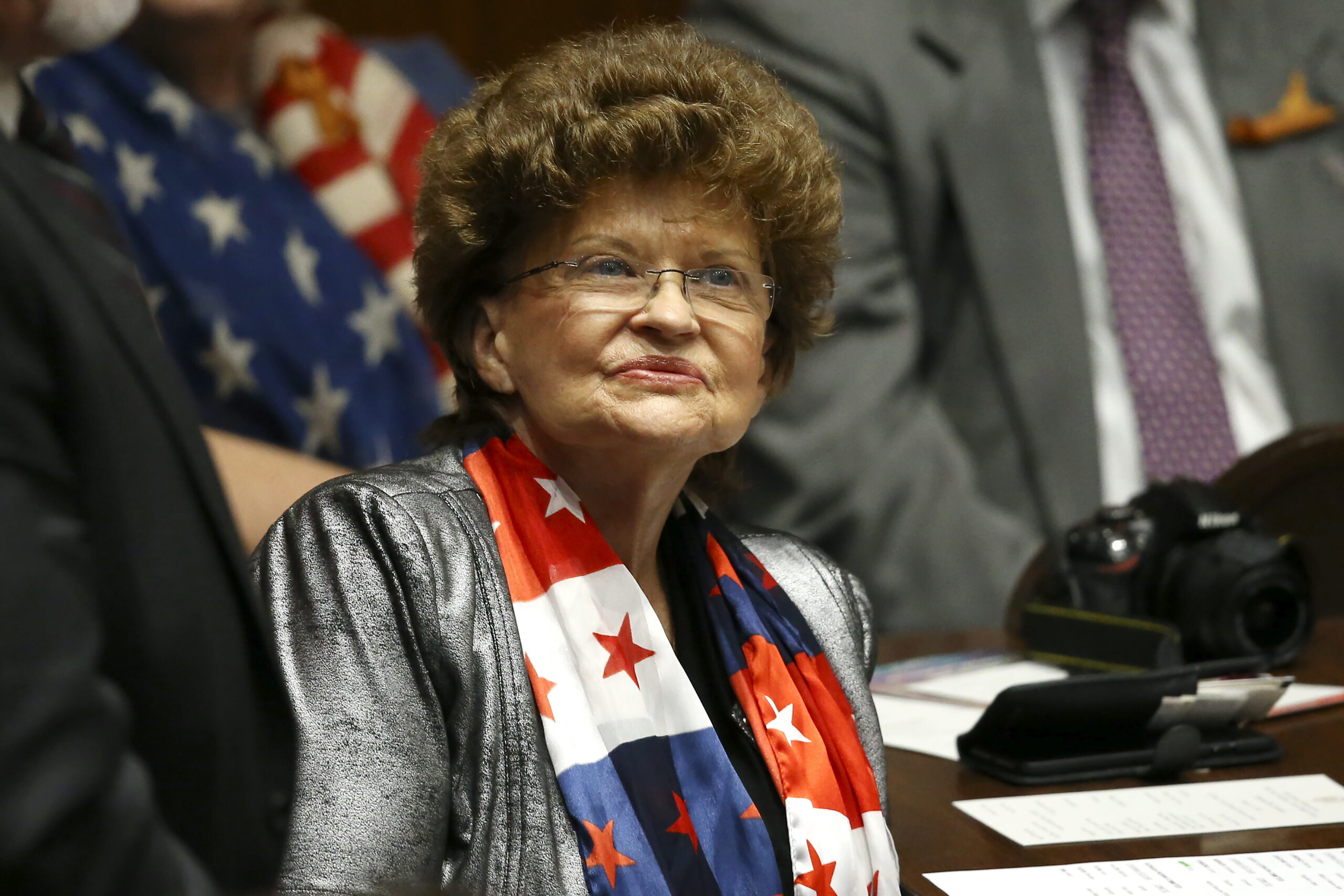
One of the main players in any water policy at the Legislature is Rep. Gail Griffin, R-Hereford. Griffin did not respond to an interview request, but lobbyists and rural stakeholders have blamed her for years for blocking any rural groundwater policy from advancing in the Legislature.
“As long as she is chairing the committee through which any of these bills would have to go through, I don’t think it’s possible,” said Sandy Bahr, director of the Sierra Club’s Arizona chapter.
Griffin, the chairwoman of the House Natural Resources, Energy and Water Committee, will be termed out of the House in 2026, but she is running for the state Senate in the conservative-leaning Legislative District 19.
“She’s a loyal vote to the speaker or the president if she happens to be in the Senate,” said HighGround Consulting CEO Chuck Coughlin. “I just don’t think it’s possible. You can’t get around her.”
Republicans in rural areas have also grown frustrated with Griffin. Mohave County Supervisor Travis Lingenfelter has been one of Griffin’s most outspoken critics. Last week, he and other Republican supervisors Holly Irwin, Patrice Hortsman and Nikki Check from La Paz, Coconino and Yavapai counties wrote an opinion article published by The Arizona Republic accusing Griffin of leaving rural Arizona “out to dry” with House Bill 2758. That measure would allow “eligible entities” to withdraw groundwater from the McMullen Valley Active Management Area that’s mostly located in La Paz County.
Active management areas are a tool that has predominantly been used by the Hobbs administration to impose restrictions on water pumping to aggressively manage the state’s groundwater resources. There are currently eight AMAs in the state, with the most recent one being deployed in January for the Ranegras Plain Groundwater Basin in La Paz and Yuma counties to slow annual withdrawal levels that are outpacing natural recharge by nearly 900%, according to the Department of Water Resources.
“They need to be called out on their assertions that they’re looking out for rural Arizona because they are doing anything but,” Bahr said of bills like HB2758.
Griffin has previously said the Groundwater Management Act of 1980 and its companion laws are sufficient in giving Arizona the tools it needs to manage groundwater. She’s called on residents to petition the water department to form active management areas or petition their county supervisors for local management options.
In a 2025 opinion column submitted to the Arizona Capitol Times, Griffin said the Legislature’s focus should be to improve existing groundwater management tools.
If a groundwater deal is not reached at the Legislature, Coughlin said another path that voters could take would be to get a measure on the ballot in the form of a citizen’s initiative.
But a citizen’s initiative is expensive, and Coughlin said he’s not sure who would be willing to fund a signature gathering campaign that could exceed $5 million and the subsequent campaign for the election.
“Voter initiatives take a long time and a lot of money and they tend to fail,” Mathis said. “That would be fine by me. I’m sort of all of the above on this stuff whether it’s pursuing the governor’s authority under the groundwater management act, whether it’s a negotiated deal, whether it’s a voter initiative. It’s really just about producing an outcome where we’re able to protect these basins that are at risk.”
The post The odds are sinking for groundwater legislation first appeared on Arizona Capitol Times.
]]>The post State leaders issue bipartisan call to action on Colorado River negotiations first appeared on Arizona Capitol Times.
]]>Key Points:
-
The seven Colorado River states did not reach a deal before a federally-imposed Nov. 11 deadline
-
The U.S. Department of the Interior has pledged to intervene
-
Gov. Katie Hobbs joined Republican legislative leaders in a letter calling on Interior Secretary Doug Burgum to end the stalemate
A federally-imposed deadline for reaching an agreement on Colorado River allocations has come and gone with no solution, spurring a bipartisan call to action from Arizona leaders to the U.S. Department of the Interior.
The Interior Department gave the seven Colorado River states until Nov. 11 to reach a deal on how to share the river’s water between the four Upper Basin states and the three Lower Basin states. However, a deal was nowhere in sight in the weeks and days leading up to the deadline and was not reached by the end of the day, according to a joint statement from the seven states, the Department of Interior and the Bureau of Reclamation.
“While more work needs to be done, collective progress has been made that warrants continued efforts to define and approve details for a finalized agreement,” the statement said. “Through continued cooperation and coordinated action, there is a shared commitment to ensuring the long-term sustainability and resilience of the Colorado River system.”
Despite assembling for an eleventh-hour meeting in Arizona on the day of the deadline, negotiators were unable to reach a compromise that could ensure each of the seven states receives its fair share of water amid declining river levels. What happens next is still up in the air, but Secretary of the Interior Doug Burgum indicated that federal intervention would occur if the states could not come to their own agreement.
Arizona is a Lower Basin state, alongside California and Nevada, and its water negotiators have long maintained that the state has already made and agreed to additional water usage cuts. The Lower Basin negotiators have argued that the Upper Basin states — Colorado, Wyoming, Utah and New Mexico — are unwilling to make any meaningful cuts to their water usage and instead expect the drier Lower Basin states to bear the brunt of the river’s declining flows.
“The Lower Basin states have come to the table with offer after offer, with real sacrifices in our water — Arizona taking the brunt of that sacrifice — and the Upper Basin, being led by Colorado, really has refused to budge at all and has refused to take any cuts,” Gov. Katie Hobbs told reporters on Nov. 11.
Hobbs, joined by Senate President Warren Petersen, House Speaker Steve Montenegro, Senate Minority Leader Priya Sundareshan and House Minority Leader Oscar De Los Santos, urged Burgum in a letter to end the negotiating stalemate and honor the framework of the original Colorado River compact, which will expire at the end of 2026.
“We write to stress to you that Arizona’s Colorado River allocation is important to not only Arizona and its citizens, but also to the nation’s economic growth and independence,” state leaders wrote. “Colorado River reliability in Arizona is a matter of national security. However, based on the trajectory of Post-2026 negotiations over the last two years, it seems that these foundations of growth are at risk due to the refusal of the Upper Basin States to offer meaningful, verifiable conservation commitments.”
Hobbs told reporters on the day of the federally imposed deadline that she was still unsure about what federal intervention would look like, though she said she imagines it will involve more negotiating. In a press release, Hobbs’ office said the governor is expected to meet with Burgum next week.
The state is also prepared to go to court to protect its share of Colorado River water after Hobbs and lawmakers earlier this year doled out $1.5 million to the Arizona Department of Water Resources for potential litigation arising from a deal imposed by the federal government.
The U.S. Department of the Interior has set an Oct. 1, 2026, deadline for new Colorado River guidelines to take effect, and several other administrative hurdles must be cleared in order to meet that deadline.
The post State leaders issue bipartisan call to action on Colorado River negotiations first appeared on Arizona Capitol Times.
]]>The post Legal battle continues over Saudi groundwater pumping in Arizona first appeared on Arizona Capitol Times.
]]>Key Points:
-
Agricultural company claims attorney general lacks authority to sue
-
Filings claim authority lies solely with Arizona Department of Water Resources
-
Ongoing litigation puts spotlight on gaps in groundwater regulation, policy
A legal fight over whether groundwater pumping by Fondomonte Arizona, a Saudi-backed agriculture company, constitutes a public nuisance now centers around whether the Arizona attorney general has the right to sue in the first place.
The question has yet to be answered by a Superior Court judge, but Fondomonte’s claim that Attorney General Kris Mayes has overstepped her authority and encroached on the responsibilities designated to the Arizona Department of Water Resources under state law raises a point of reflection on the routes for policy changes and the place for litigation.
“Lawsuits are cumbersome, and they don’t necessarily achieve the kind of sophisticated results that people would like,” Kathleen Ferris, former ADWR director and senior research fellow at the Kyl Center for Water Policy said. “But again, if you can’t get anything done any other way, then people are tempted to go to court.”
Since 2014, Fondomonte Arizona, a subsidiary of the Saudi Arabian dairy company Almarai, has been pumping groundwater in La Paz County to sustain an alfalfa agriculture operation that supplies feed for cattle abroad.
The state Land Department has moved to terminate four of Fondomonte’s leases in Butler Valley, but the company continues to operate in the Ranegras Plain Basin.
In December 2024, after continually calling attention to Fondomonte’s operations across the state, Mayes filed a lawsuit against Fondomonte using public nuisance law.
State law defines a public nuisance as anything “injurious to health, indecent, offensive to the senses or an obstruction to the free use of property that interferes with the comfortable enjoyment of life or property by an entire community or neighborhood or by a considerable number of persons.”
Mayes claims that “excessive” groundwater pumping by the company has resulted in declining water levels and water quality, dry wells, sinking land, and permanently depleted aquifers, threatening to completely deplete the water supply in the Ranegras Plain Basin if left unaddressed.
She cites the company’s groundwater use in 2023 as a show of excess, noting Fondomonte had used 31,196 acre-feet of groundwater, or 81% of all groundwater extracted from the basin that year.
The lawsuit seeks a declaration that Fondomonte’s conduct constitutes a public nuisance, an injunction to cease “excessively pumping groundwater” and the creation of an abatement fund.
Fondomonte wants the lawsuit dismissed. In a new filing, the company claims that Mayes lacks the authority to sustain legal action against it, arguing instead that groundwater regulatory authority falls exclusively to the Arizona Department of Water Resources.
In a motion for judgment on the pleadings, attorney Pagie Kemper argues Mayes is using the public nuisance statute as “a backdoor to regulatory powers she does not possess” and points to the fact that the Groundwater Management Act “expressively and exclusively delegated these critical matters” to ADWR and its director.
Kemper then draws a parallel between the allegations and the requested relief, aligning it with the criteria of an Active Management Area, which is initiated by the public and ultimately managed by ADWR.
She notes, too, that the ADWR is empowered to seek an injunction to impose any restriction or penalty deemed “reasonable and appropriate” for ceasing or limiting groundwater pumping.
Kemper claimed the attorney general cannot use public nuisance as a cover, calling it, “nothing more than a pretext intended to create authority to sue where none exists.”
Fondomonte asks that the case either be dismissed in its entirety or be delegated to ADWR.
“Stripped of the public nuisance label, the allegations of and relief requested in the Complaint make plain that this is a regulatory action the Attorney General lacks the power to pursue,” Kemper wrote.
Ferris, executive director of the Arizona Groundwater Management Study Commission, the group behind the 1980 Arizona Groundwater Management Act, noted that the ADWR has maintained responsibility over water supplies in the state, although with the caveat that real regulation cannot occur without an irrigation non-expansion area or an active management area.
ADWR is testing the waters in an active management area of the Ranegras Plain, with an informal public meeting scheduled for Oct. 15 to present information and accept questions and comments.
But, even with an active management area, Ferris noted that Fondomonte could be grandfathered in under state law.
“The real issue is that in the area where Fondomonte is, there is no regulatory structure,” Ferris said. “Whoever has the deepest well and the biggest pump basically wins and can dry up the wells of other people.”
Ferris added the aim of the lawsuit may go well beyond Fondomonte.
“Mayes is attempting to approach this from a focus that is outside of the Groundwater Management Act. It’s nuisance law,” Ferris said. “I think she’s trying to find a way to stop the expansion of industrial (agriculture), because, let’s face it, that’s what a lot of this is. It’s industrial scale agriculture. It’s not just Fondomonte.”
Efforts to regulate groundwater in unregulated areas have continued to hit a wall in the Legislature. Ferris declined to comment on the merit of Mayes’ approach, but said the courts have historically caused some complications and delay in ironing out groundwater policy.
“We need to take this issue out of the courts and deal with it holistically, looking prospectively, instead of fighting it all out,” Ferris said. “What happens, though, is if things bog down, and if folks don’t feel like they can get relief, then that’s when people go to court.”
Doug MacEachern, communications administrator for the ADWR, declined to comment on the ongoing litigation but stated that the department had no plans to intervene at this time.
Richie Taylor, a spokesperson for the Attorney General’s Office, said in a statement, “The attorney general is bringing her case under public nuisance law, which she has the authority to do.”
The post Legal battle continues over Saudi groundwater pumping in Arizona first appeared on Arizona Capitol Times.
]]>The post Arizona’s water authority considers 6 proposals for long-term solutions first appeared on Arizona Capitol Times.
]]>Key Points:
-
The Water Infrastructure Finance Authority of Arizona is evaluating six water importation proposals
-
Proposals aim to bring in hundreds of billions of gallons of water annually
-
WIFA requests renewal of $25 million in annual grants to maintain progress
A state agency dedicated to finding long-term water solutions in Arizona is nearing a decision on six water importation proposals that could bring hundreds of billions of gallons of water annually to the state.
The Water Infrastructure Finance Authority of Arizona is currently soliciting six long-term water proposals from three water partners. The projects include developing new and renewable water supplies in the state from wastewater reclamation, surface water, ocean water and other water sources, according to WIFA.
Ben Alteneder, the agency’s assistant director of external affairs, said WIFA will decide by the end of the year whether any of these six projects should move forward into a “due diligence” phase. He said that under this phase, those projects would be open to public inspection and initiate a robust stakeholder process, allowing the agency to evaluate the feasibility of each proposal.
Alteneder said making the proposals public is crucial heading into the 2026 legislative session after the agency has seen more than 60% of its funding for long-term water augmentation cut in the past three years.
In 2022, WIFA’s long-term water augmentation fund was allocated $1 billion; however, budget constraints in recent legislative sessions have forced lawmakers to sweep funds from the agency, and the fund now stands at $376 million.
Lawmakers swept another $84 million from the long-term water augmentation fund in the 2025 budget, marking the third consecutive year that WIFA funds were swept to fill budget gaps.
“It really is going to be important for the Legislature to signal to the public and to potential projects that we’re serious,” Alteneder said. “I think a lot of (lawmakers) understand the implications, but frankly, if you don’t have a tangible project in front of you, a lot of times it’s just too far out into the future for folks to be serious about.”
These proposals would still be years away if they move forward with WIFA, but it would allow state leaders to see how much funding from outside sources may be necessary to eventually complete the project and finally give lawmakers a more tangible goal to move toward.
“The receipt of these offers proves that there is capacity and capability to develop new, renewable water supplies for Arizona and that WIFA’s process for ensuring that we approach any investment in generational water infrastructure with a sound, methodical approach is working,” WIFA’s long-term water augmentation fund Committee Chairman Ted Cooke said in an Aug. 20 news release about the water importation projects.
For the state’s upcoming budget, leaders at WIFA have asked lawmakers to leave the long-term water augmentation fund alone. The agency’s budget request, submitted in September, notes that it is not asking for additional dollars in the fund, but for certainty that no further budget cuts will be made.
“Unfortunately, WIFA’s serious approach to executing its water augmentation mission is not matched by serious commitments from appropriators,” WIFA’s budget request states. “WIFA is not requesting the repatriation of these funds at this time, but we cannot state strongly enough how imperative it is that no further cuts be made.”
During the 2025 legislative session, lawmakers passed a resolution calling for the full reinstatement of WIFA’s long-term water augmentation dollars; however, this reinstatement was not included in the budget passed months later.
“In 2022, the Water Infrastructure Finance Authority was expanded with a $1 billion commitment to secure and invest in new long-term water supplies for Arizona,” Rep. Gail Griffin, R-Hereford, said in a January news release of the resolution, House Concurrent Resolution 2016. “While recent budget shortfalls have impacted the program’s funding, this resolution underscores the Legislature’s commitment to fully reinstate WIFA funds when budget conditions improve, sending a clear message that water security is a top legislative priority.”
HCR2016 passed in a bipartisan vote in both chambers, but some Republicans and Democrats would not commit to restoring the agency’s funds.
Rep. Alexander Kolodin, R-Scottsdale, called the agency’s long-term water augmentation fund a “slush fund” during the House’s February vote on the resolution. He also said the fund hasn’t yet funded any projects and questioned why the state is sitting on hundreds of millions of dollars.
“Why fund it if we can’t use it for the advertised purpose? Why keep $400 million just lying around for no reason?” Kolodin said on the House floor.
By December, Alteneder said he hopes lawmakers will see the reason as the project details for each proposal become public.
WIFA is also requesting $25 million in annual funding for water conservation grants to be renewed, which have funded more than 200 projects across Arizona so far and are expected to save the state 6.5 million acre feet of water.
The post Arizona’s water authority considers 6 proposals for long-term solutions first appeared on Arizona Capitol Times.
]]>The post Ag-to-Urban will reshape Arizona’s agriculture industry, but farmers question if it’s worth it first appeared on Arizona Capitol Times.
]]>Key Points:
-
Ag-to-Urban went into effect on Sept. 26 after passing this year
-
Program is expected to save about 7.1 million acre-feet of water over the next 100 years in Phoenix
-
Some farmers are concerned about how Ag-to-Urban will affect the farming community
A new law aiming to save water through the sale of Arizona’s farmlands to housing developers has marked a new era of urbanization across Arizona — and farmers are beginning to worry.
Having gone into effect on Sept. 26, Ag-to-Urban introduced a new program allowing farmers with “Irrigation grandfathered rights” to trade in their water rights for Groundwater Savings Credits. Those credits can then be traded in for compensation when the land is sold, offering farmers a new path to retirement, and developers a new source of previously unavailable development land.
“When you kind of have faith that this is going to be a good thing, but you don’t know all of the steps involved, it gives a little bit of unease,” said Jadee Rohner, executive director of the Arizona Cotton Growers Association.
Rohner said that while some farmers may not approve of Arizona’s transition out of agriculture, Ag-to-Urban allows them to profit from the inevitable change, giving control over the situation.
“We do not want to see agriculture go away, but … if it’s going away, we need to make sure that producers are taken care of,” Rohner said.
As of 2024, roughly 34% of Arizona’s total acreage was farmland.
According to a 2022 census of agriculture report, there were over 1.9 million farms in the U.S. and 16,710 farms in Arizona —a number that decreased by over 12% between 2017 and 2022. Arizona accounted for just 0.8% of the U.S.’s farms in 2022.
Rohher said that among the agricultural community, Ag-to-Urban has become a divisive concept, as some farmers are relieved to earn money from unwanted land, whereas others are concerned about what the law means for the future of farming.
“Especially within those rural communities that have that deep appreciation for agriculture, they don’t necessarily want to see urbanization and development coming into some of their smaller communities, they’re pretty satisfied with the status quo,” Rohner said. “This bill can be viewed negatively in that sentiment, because they don’t want to see agriculture go away.”
A report from the American Farmland Trust, titled “Farms Under Threat,” predicts that based on recent trends, Arizona will “pave over, fragment, or compromise 444,500 acres of farmland” between 2016 and 2040. This is the equivalent of 1,100 farms and 1,700 jobs, according to the report.
Rohner said urbanization may affect Arizona’s rural towns, which profit the most from agriculture and have farming integrated into their culture.
“A lot of those smaller communities that are agricultural based have a deep appreciation for agriculture where their food comes from, the fiber that they utilize in their clothing and the food on their table,” Rohner said. “As we see, some of those economic drivers in those communities change, we see an influx of individuals that may not have that same affiliation and or appreciation, and that, in itself, is hard.”
Despite concerns about the future of rural farming communities, Rohner said she still supports Ag-to-Urban due to the amount of water it is expected to save and its initiative to provide producers with money for land conversion.
According to an estimated water savings report from the Arizona Department of Water Resources, it is expected that Ag-to-Urban will save about 7.1 million acre-feet of water over the next 100 years in Phoenix. The same report estimates that Pinal County will save 2.5 million acre-feet of water over the next 100 years with the program.
Another report from the USDA’s 2022 Census of Agriculture stated that in 2023, Arizona used 3.9 million acre-feet of water, equivalent to approximately 4.3 acre-feet of water per acre. According to the report, Arizona applied the most water per acre.
As a longtime farmer in Goodyear, Arizona, Ron Rayner said losing farmland to real estate and developments is not foreign to him or his community.
Rayner said if offered, he would be willing to participate in the Ag-to-Urban program.
Over the past year, Rayner said he has been working on a vertical farming project as a way to coexist with developments coming through his area.
“We’ve expended quite a bit of money, and we’re really still investigating. We believe that it can work,” Rayner said. “There’s no real roadmap to follow. There’s just a lot of people that got broke trying to do it.”
While the program is expected to expedite urbanization in farming communities, both producers and water experts have emphasized that they have faith in the program’s ability to save water and compensate farmers.
Patrick Bray, the executive vice president of Arizona Farm and Ranch Group, has been in the agriculture business for the majority of his life. He said that while he may grieve the loss of farmland, he appreciates the benefits that Ag-to-Urban can provide for members in his community who need the money for retirement.
“Our family farm is down to a few hundred acres. And so you know why the change is hard to see, especially when you’ve been out there on that land for decades, it pulls out the heartstrings,” Bray said. “But at the end of the day, it’s important that those people who don’t want to farm anymore … that, that option stays viable for them”
Bray said that he does not expect Ag-to-Urban to hinder or harm the farming community, but rather to improve the current agricultural industry for the betterment of both parties.
“The agriculture industry itself is very much thriving. It’s changing, but it’s thriving,” Bray said. “So while people may not see the fields like they used to, they still exist, it’s just in different places. And I will tell you, I believe that the ag industry is thriving, but it is going to be a generational change.”
The post Ag-to-Urban will reshape Arizona’s agriculture industry, but farmers question if it’s worth it first appeared on Arizona Capitol Times.
]]>