The post Move over PNB-A Romanian Nutcracker-is in Town appeared first on Drama In The Hood.
]]>There are not enough superlatives in English, nor perhaps in any language to describe the enchantingly entertaining A Romanian Nutcracker, A Night of Awakened Tradition, produced by the Romanian dance group Datina on Saturday, December 20th at the Redmond Performing Arts Center to a sold-out audience.

As someone who has seen the traditional Nutcracker too many times, I was impressed by the creativity, innovation and unbounded joy projected from the stage to the audience.
The Nutcracker originally a ballet by Pyotr Ilyich Tchaikovsky in 1892, adapted from a short story by ETA Hoffman, written in 1816, has become a staple of ballet companies for its Christmas shows. (also because the children in the ballet school can perform in it) However, it has become “museumified” and is always performed as a classic museum piece with no changes in set design, costuming or choreography .
Under the direction of Andreea Isac, Datina’s artistic director and lead choreographer, the production transformed the Nutcracker into something creatively vibrant using Romanian costuming, music, folk-dancing, singing and set design while following the basic story line of the Nutcracker.
Although I was warned beforehand that none of the dancers or singers were “professionals,” I question that, as the singers, dancers and the choreography, were expert! In keeping with Nutcracker traditions, children had various dance numbers in adorable costumes, interspersed between the fast-paced, geometrically precise choreography of the dancers. Frankly the choreography, drawing on traditional choreography by Anamaria Dulama, was as professional as anything I have ever seen.
Although some of the costumes were brought directly from Romania, a team of costumers, created slightly different styles of traditional costumes for each dance number; the different styles represented the traditional ethnic dress from each province of Romania (which is, geographically, one of the largest countries of Central Europe)
Particularly awe-inspiring was the intricate choreography of Dance Suite from Sibiu, utilizing black and white costumes to enhance the outstanding visual impact of the dancing.
While playing the guitar and singing, Sofia-Cristina Visan led children and snowflakes in two brilliant musical numbers, against stunning sets, one depicting an idyllic winter scene, the other a traditional Romanian house from the two centuries ago.
Datina is the Romanian word for traditions passed down through time. From now on, Romanian Nutcracker will be a Christmas tradition for me and my family.
It is advisable to put your name on the mailing list for next year as the show sold-out very quickly.
www.facebook.com/datinaseattle

The post Move over PNB-A Romanian Nutcracker-is in Town appeared first on Drama In The Hood.
]]>After 14 years and 1,200 DITH review (with 658 written by me), I have decided to retire, to tend my garden, take up knitting and other age appropriate activities. It has been both an honor and a pleasure to review and promote so many small emerging companies. When Scott Taylor and I started in 2010, our mission was to review the shows "in our 'hood,'" that is to say, the small, fringe companies in Capitol Hill, which were not being reviewed. Originally, DITH was an online feature attached to the Capitol Hill Times, but when it was sold, we went independent. Now there are other website reviewers, so I trust the community will be well served. The other websites are NW Review, Show's I've Seen, Broadway World and Sound on Stage
I especially want to thank my trusted assistants, Alan Sydney and Mark Douglass along with all the interns and other writers over the years, who have made DITH such a success and especially Vera Chan-Pool, former Editor of the Capitol Hill Times, who agreed to our original proposal, as well as the Pacific Publishing Company, the owners of Capitol Hill Times and so many other neighborhood newspapers.
The DITH site will be closed down, but all the articles will be archived, so anyone can access them.
Thanks again for this great opportunity and good luck!
Marie Bonfils
The post Drama in the Hood closing Down appeared first on Drama In The Hood.
]]>After 14 years and 1,200 DITH review (with 658 written by me), I have decided to retire, to tend my garden, take up knitting and other age appropriate activities. It has been both an honor and a pleasure to review and promote so many small emerging companies.
When Scott Taylor and I started in 2010, our mission was to review the shows “in our ‘hood,'” that is to say, the small, fringe companies in Capitol Hill, which were not being reviewed.
Our original mission changed when the Opera, the Ballet and other professional theatres solicited our reviews, much to our surprise, but our commitment to small theatre companies always remained.
Originally, DITH was an online feature attached to the Capitol Hill Times, but when it was sold, we went independent. Now there are other website reviewers, so I trust the community will be well served. The other websites are NW Review, Show’s I’ve Seen, Broadway World and Sound on Stage
I especially want to thank my trusted assistants, Alan Sydney and Mark Douglass along with all the interns and other writers over the years, who have made DITH such a success.
Also thanks to Vera Chan-Pool, former Editor of the Capitol Hill Times, who agreed to our original proposal, as well as the Pacific Publishing Company, the owners of Capitol Hill Times and so many other neighborhood newspapers.
The DITH site will be closed down, but all the articles will be archived, so anyone can access them.
Thanks again for this great opportunity and good luck!
Marie Bonfils
The post Drama in the Hood closing Down appeared first on Drama In The Hood.
]]>As we close up shop, DITH reminds theater companies, and their audiences, that honest critics and reviewers are vital to live theater. When a company offered, and DITH accepted, so-called complimentary seats to a show, what was expected from the review?
The post The Role of the Theatre Critic appeared first on Drama In The Hood.
]]>As we close up shop, DITH reminds theater companies, and their audiences, that honest critics and reviewers are vital to live theater. When a company offered, and DITH accepted, so-called complimentary seats to a show, what was expected from the review?
The public expects that the review be an reflection of what the reviewer experienced. This styles the reviewer as a type of journalist. Local reviewer Gemma Wilson expressed it well in her “But Did You Like It” column in City Arts:
“Thoughtful, honest criticism can spread the word of the great work being made here to theatre-makers and consumers beyond our city limits. Inadequate criticism—whether it champions boring work, coddles subpar work or is just poorly written—hinders Seattle from becoming a top-tier theatre city.”
There are many performers, directors, and companies who welcomed our reviewers honest notes on their work. To the many companies, who always offered tickets and welcomed our reviewers—thank you for “grokking” the purpose and mission of DITH. And to our many readers, both in this trade and ticket-buyers, we hope our reviews shed light on the gems that twinkled and sparkled in theaters in a “hood” near you.
Mark Douglass, former reviewer, assistant Editor and Consiglieri
The post The Role of the Theatre Critic appeared first on Drama In The Hood.
]]>The post Seattle Opera’s 60th Anniversary Concert: A Celebration appeared first on Drama In The Hood.
]]>The celebratory concert was a non-stop showcase of the best of the company: artists: soloists, chorus, orchestra, and backstage crews. The program displayed the gamut of opera genres from farce to fulfilled romance to seduction to grief and tragedy.
This event was staged on the set of the currently running Barber of Seville, with risers and chairs added for the Seattle Opera Chorus. This ensemble includes top-notch local singers/actors who portray crowds, armies, servants, party guests, and so on. The chorus is a team of vocal athletes; their voices must not only blend, but must be heard above an orchestra full of brass instruments. In the currently running Barber, they are also required to dance. Michaella Calzaretta has served as chorusmaster and coach since 2022.
The chorus welcomed the audience with “Entry of the Guests” (“With joy we greet the noble hall”) from Richard Wagner’s Tannhäuser. The noble McCaw Hall responded enthusiastically.
The first half of the concert ran the gamut from comedy to fulfilled romance to communal joy to tragedy, and included solos and duets by luminaries including John Moore, Adam Lau, Ginger Costa-Jackson, Sarah Coburn, Duke Kim (currently starring as Almaviva in Barber), Mary Elizabeth Williams, and Greer Grimsley. “Bravos” filled the house after each aria. Particularly riveting was Mary Elizabeth Williams’s “My Man’s Gone Now” from Gershwin’s Porgy and Bess. In voice and body, Williams conveyed the gut wrenching pain of her grief over a murdered husband. Another emotional moment was Greer Grimsley’s “Wotan’s Farewell,” from Wagner’s Die Walküre—in which the god must turn his favorite child into a mortal and put her to sleep. Alone in his spotlight, Grimsley mimed reaching for a last embrace, kissing his daughter goodbye, and laying her to rest—while his powerful bass voice transformed his very human sorrow into godlike proportions
The Seattle Symphony Orchestra, led by Kazem Abdullah (who recently conducted X: The Life and Times of Malcolm X here) took its star turn with the “Polonaise” from Tchaikovsky’s Eugene Onegin. A series of arias, duets, and choruses then expressed doubt, betrayal, unfounded suspicions, love versus friendship, yearning for a homeland, and outright madness. High points included Amitai Pati’s sweet high tenor in “Una furtiva lagrima” from Donizetti’s The Elixir of Love. Sarah Coburn’s “Ardon gl’incensi” from Lucia Di Lammermoor (also by Donizetti) was a show-stopper. Coburn navigated an astonishing cascade of ornaments and scales as she portrayed a woman gone mad from abuse and deception. Kudos also to Demarre McGill, whose solo flute followed the labyrinthine line of the aria.
Near the end of the concert, Debra Horne (KIRO 7 news reporter and member of the Seattle Opera Board) announced that Seattle City Council had designated May as Seattle Opera Month, and the King County Council had declared May 11 as Seattle Opera Day. Horne then introduced a special guest: US Representative Pramila Jayapal, who read out a proclamation she had entered into the Congressional Record on the floor of the US House of Representatives the previous week. This was a tribute to retiring General Director Christina Scheppelmann and a recitation of her many accomplishments and innovations at Seattle Opera, including creating online performances and an outdoor production of Die Walküre during the COVID pandemic.
Greer Grimsley completed the tribute with Rogers and Hammerstein’s “Some Enchanted Evening” from South Pacific (with the line “Once you have found her, never let her go”), and the chorus closed the concert with Wagner’s glorious hymn to redemption and salvation, the “Pilgrim’s Chorus” from Tannhäuser.
Throughout the evening, Lighting Designer Matthew Marshall employed the existing templates for Barber of Seville to set the mood and scene for each aria. The stage was flooded in scarlet for Carmen, drenched in aquas and teals for The Pearl Fishers, and shadowed in deep violet for Wotan.
Selections for this concert were mostly old favorites, with a few less-familiar choices. Most were pre-20th century, and none was more recent than the 1950s. The evening took us back to the operas that would have been presented in Seattle Opera’s first years (and are still presented). This company continues to innovate, however. As well as offering beloved and familiar works, it is dedicated to championing new work, reaching new audiences, introducing new concepts and musical ideas, and welcoming new audiences and performers.
Seattle Opera 60th Anniversary Concert and Gala. One performance only, May 11, 2024 at McCaw Hall.
The post Seattle Opera’s 60th Anniversary Concert: A Celebration appeared first on Drama In The Hood.
]]>
The post The Barber of Seville: Candy for Your Eyes and Ears appeared first on Drama In The Hood.
]]>Seattle Opera’s production, now playing at McCaw Hall, capitalizes on the pure silliness of the opera’s plot. From Count Almaviva’s dawn serenade to Rosina to the wedding celebration in the evening, the one-day progress of True Love is beset by Rosina’s guardian’s clumsy attempts to keep her all to himself, “by force or by love.”
Director Lindy Hume matches rapid-fire action, sets and choreography to the sparkle of Rossini’s music and the twists of the plot. Vivid sets and costumes, slapstick, disguises, fake identities, sight gags so fast you will miss them if you blink, and kaleidoscopic crowd scenes mirror the music. Stripes, checkerboard patterns, polka dots, and floral prints cover every surface from Rosina’s blouse to the lid of the harpsichord. The lighting expresses emotions or external conditions: a sour greenish yellow for rage or jealousy, a dynamic black and white pattern of rainy windows for a storm. Even the change from an exterior to an interior scene is choreographed and funny.
Rossini’s music is famous for its vocal fireworks, and the cast negotiates the dazzling scales and ornamentation seemingly effortlessly and with delight. Two different casts, assembled from across the US and the world, perform on alternating dates; this review addresses the artists on stage on May 5, 12, 15, and 18.
César Cortés sings poignantly as Almaviva, a man looking to be loved for himself rather than for his money. He also enacts three fake identities—a drunk soldier, a humble student, and a pious music teacher who accompanies himself on “air harpsichord”—creating distinct physical and vocal qualities for each persona.
At the center of the plot stands Figaro, an ex-servant who now enjoys the profits of his own genius. He’s happy to help the gentry with their projects, but he knows his own worth and demands it, and lets you know it from his first moment on stage, in his showy self-promotion. Luke Sutliff nails its tongue-twisting brilliance, and his body language conveys Figaro’s absolute self confidence in every scene he is in.
Rosina, although a prisoner in her guardian’s house, has a mind of her own. Mezzo-soprano Taylor Raven says Rosina “creates choice where there is none… She refuses to be forced into a life she doesn’t want.” The role takes Raven from dazzling super-high notes to the deepest parts of her powerful, beautiful voice.
Rosina’s guardian, Dr. Bartolo, would like to win his ward’s love, but is willing to have her by any means. He fancies himself as dashing, if mature, and hides his balding, graying hair under a wig that was apparently stolen from Elvis’s Las Vegas dressing room. Ashraf Sewailam conveys his smug self-entitlement, his clumsy attempts to look seductive, and his barely suppressed assumption of whiney power.
Basilio, the real music teacher (William Guanbo Su) is appropriately smarmy and supercilious as he helps Bartolo smear Almaviva. Deanne Meek nails the role of the housekeeper, Berta, with a vacuum in one hand and a cigarette in the other, mostly eavesdropping silently until her own gorgeous lament in Act 2 about dying as an “old maid,” and the self-transformation that follows.
The non-speaking servant, Ambrogio—vaguely reminiscent of Rocky Horror’s Riffraff—is played by Seattle’s own burlesque superstar, Waxie Moon (a.k.a. Marc Kenison). Moon is almost too good; it’s sometimes hard to pay attention to the main action as Moon toddles and putters in the background, and there is a hilarious moment in Act 2 when it’s impossible to look away—even as the plot is moving forward elsewhere on the stage.
Conductor Valentini Peleggi (making her Seattle Opera debut) keeps the tempo at a brisk clip that shows off the virtuosity of both singers and instrumentalists.
If you’re looking for an afternoon or evening of effervescent delight for your ears and eyes, this is the show for you. Glorious music, likeable characters (even the villains), and eye-candy sets, costumes, staging, and choreography await you. Go treat yourself.
The Barber of Seville, music by Gioachino Rossini, libretto by Cesare Sterbini. Mc Caw Hall, Seattle Center. Performances May4, 5, 10, 12, 17, 17, 18, and 19. Evening performances at 7:30PM, matinees at 2PM. Info: www: seattleopera.org
Tickets: https://www.seattleopera.org/tickets/tickets-and-packages/
Info: www: seattleopera.org
The post The Barber of Seville: Candy for Your Eyes and Ears appeared first on Drama In The Hood.
]]>This past Saturday, Wa Na Wari with musicians Karim Koumbassa, held a free reception to open the new art exhibits in the Central district, featuring Gherdai Hassell, Nandi Jordan, and Kino Galbraith & Kelsey Van Ert. Unfortunately, the ceramics from Nathalie Djakou Kassi, were held up in customs. Nevertheless, the evening was full of neighborhood friendliness, some dancing, excellent nibbly bits and visually scrumptious art.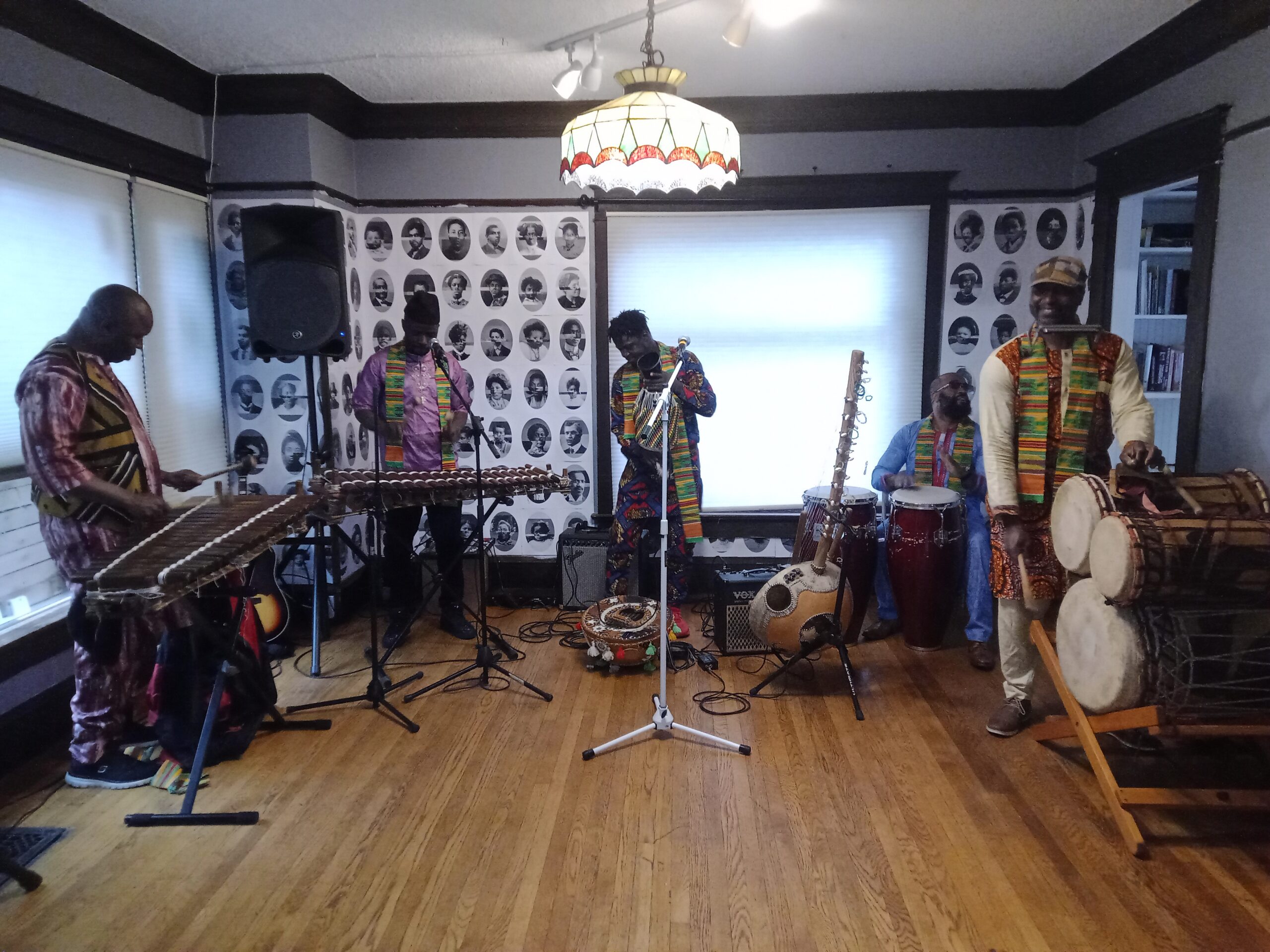
The post WA NA Wari-Art Combatting Gentrification appeared first on Drama In The Hood.
]]>This past Saturday, Wa Na Wari with musicians Karim Koumbassa, held a free reception to open the new art exhibits in the Central district, featuring Gherdai Hassell, Nandi Jordan, and Kino Galbraith & Kelsey Van Ert. Unfortunately, the ceramics from Nathalie Djakou Kassi, were held up in customs. Nevertheless, the evening was full of neighborhood friendliness, some dancing, excellent nibbly bits and visually scrumptious art.
As one walked into the room, one immediately saw black and white portrait photos lining the walls of the house-a fifth generation Black-family owned house, not a leggo-land town house, as well as some beautiful textile artworkby Gherdai Hassel, hanging from the ceiling, while hearing beautiful drums, keyboard and stringed instruments coming from the other room. 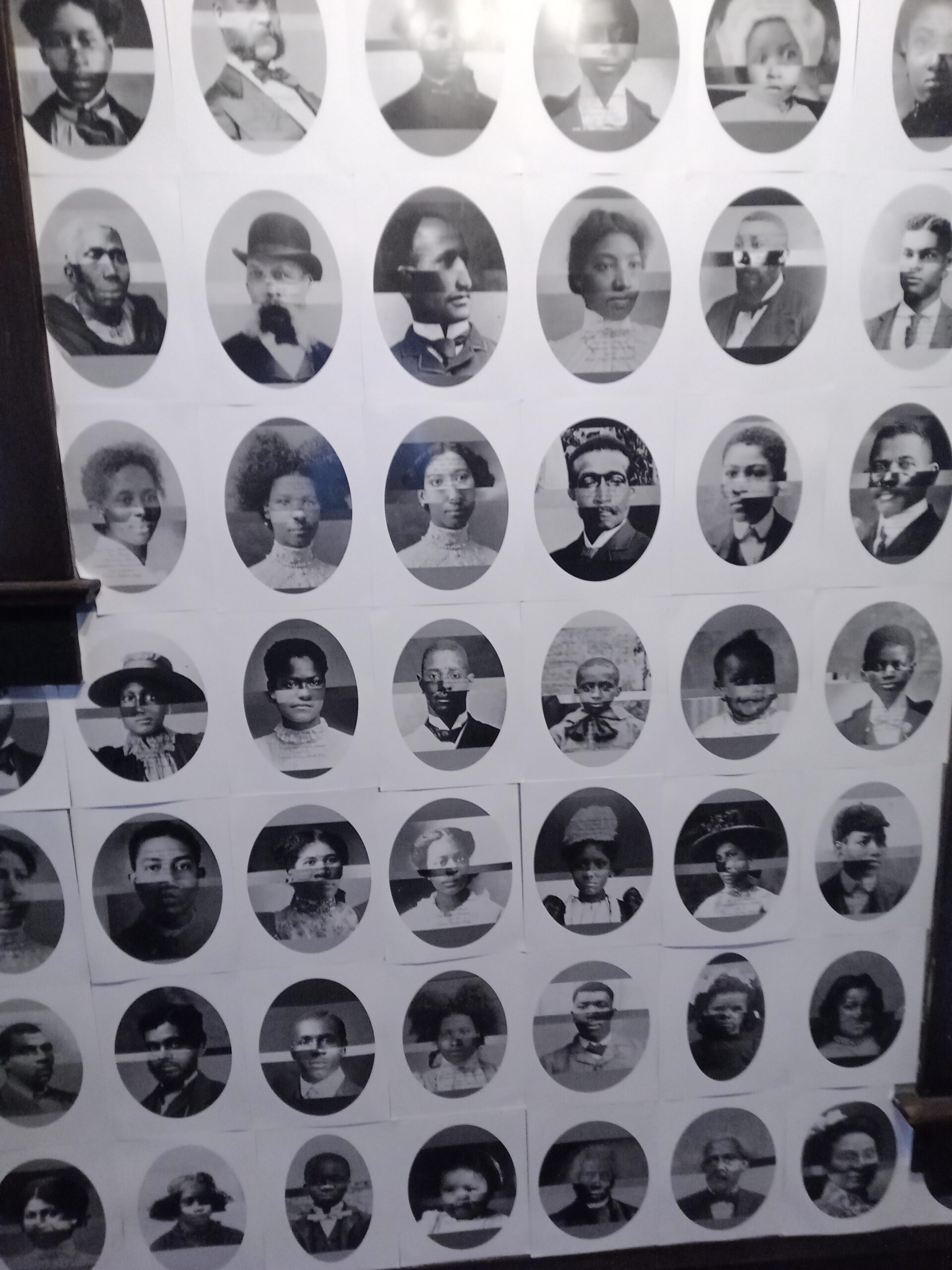
The photos on the walls looked very nice but in fact were actually portraits from the Slave register of Bermuda presented by Hassel. The artist’s words softened the impact of hearing something so gruesome. In her own words:
“My work investigates memory and nostalgia to create unexpected narratives surrounding identity. In 2019, I uncovered a family tree which traced my lineage back eight generations from Bermuda via St Kitts to Nigeria, Africa”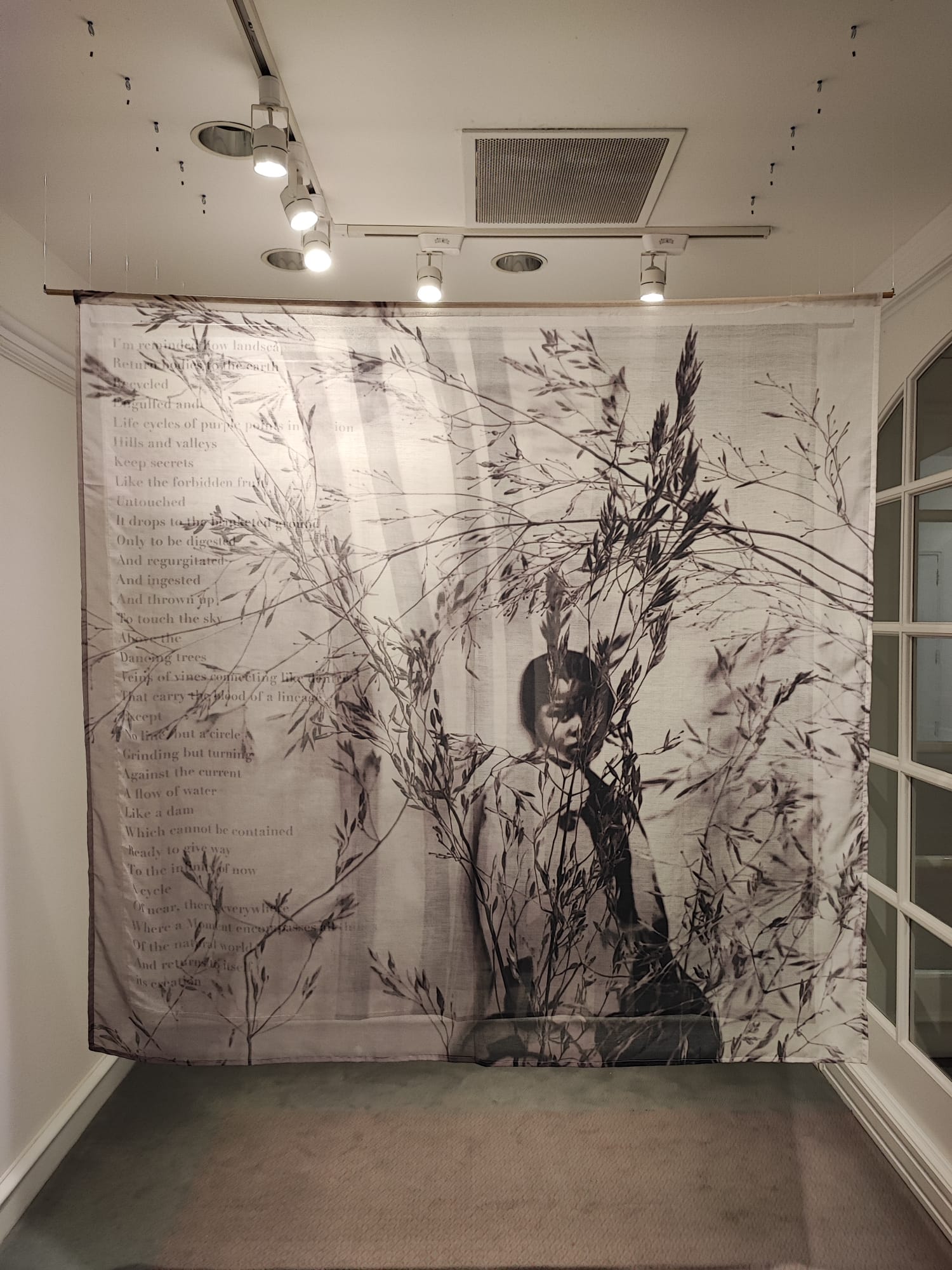
“Driven by an exploration of my own heritage, in this exhibition, I examine the lasting impacts of slavery: re-imagining the identities of enslaved Bermudians in a series of striking portraits, texts, and installation inspired by the Bermuda Slave Registers and historic photographs in the Bermuda Archives. Bermuda is the Bahamas, it is Barbados, it is Jamaica, it is the U.S. South. It is our diasporic story of triumph.”
Gheradi Hassel, the artist, was born in Bermuda, trained in China and is based in Manchester U.K.. She uses collage to thread and weave histories. Her work has been presented in solo and group exhibitions and biennials in Bermuda, USA, UK, Nigeria, Mali, South Africa and China.
Let me be Magic
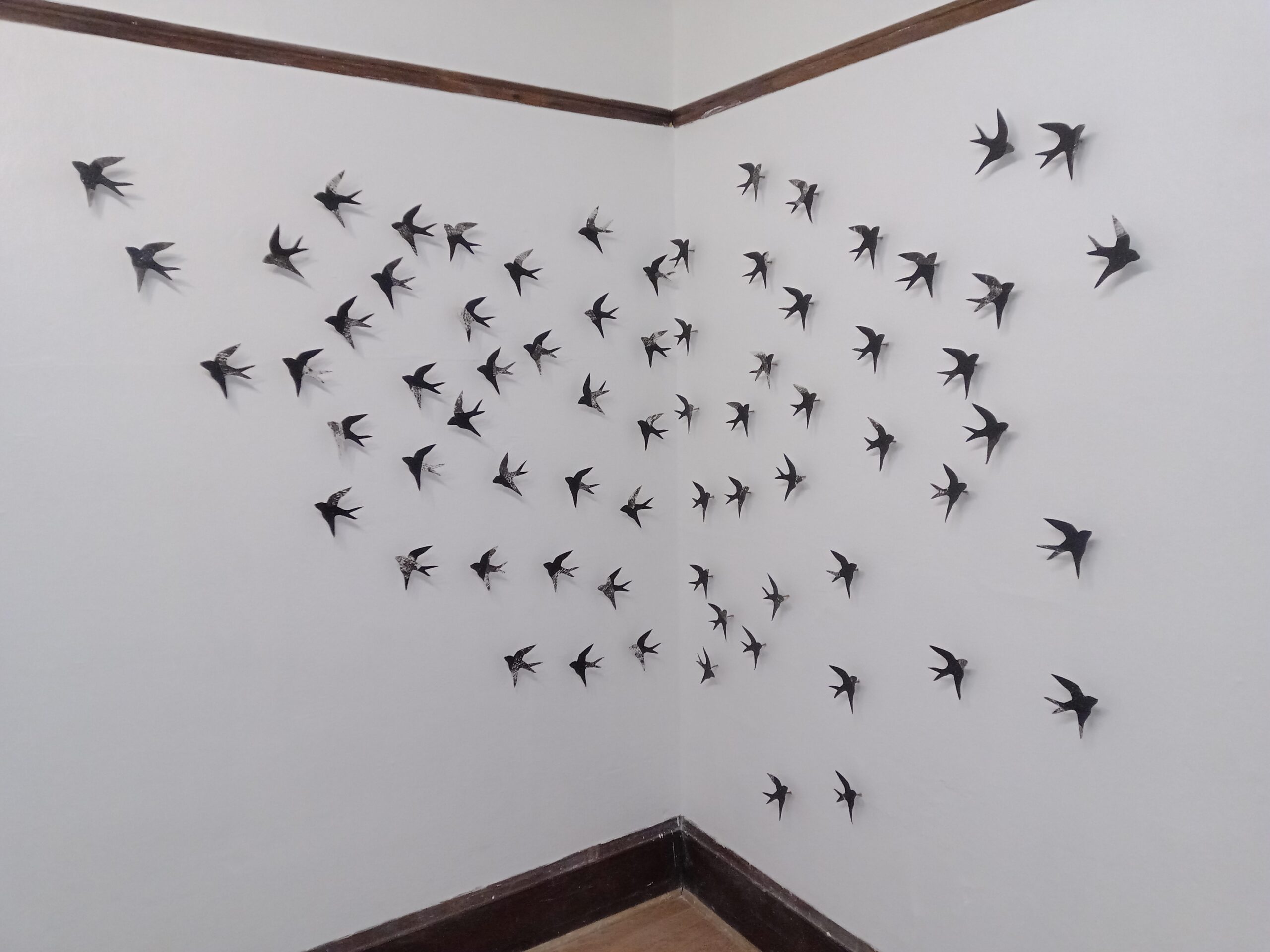
A self-taught artist and a sociologist by training, Mandi Jordan, incorporates pages from an instructional book on bird watching as both a symbol for unrestrained leisure and a reminder of guided structure. Let Me Be Magic was inspired by my own experience of bird watching as well as the racial profiling of a birdwatcher in New York City in May 2020.
Wa Na Wari,911-24th Ave, Seattle-98122, Central District. April 27-July 20, 2024.
Gallery Hours.
Tuesday-Thursday: 2pm-6pm
Friday: 5pm-8pm
Saturday and Sunday- 11am-5pm
The post WA NA Wari-Art Combatting Gentrification appeared first on Drama In The Hood.
]]>Cabaret, opened this weekend, produced by Bainbridge Performing Arts, in the new Buxton Center on Bainbridge Island. The opening night audience, some in cabaret inspired clothing, was buzzing. Before the show started the BPS's Executive Director Elizabeth Allum, came on stage to welcome us and say a few words. She ended by confiding to us that each actor was a Storm, and together, a Tornado. It proved an apt summation!

The post Cabaret-A Tornado of Talent at BPA appeared first on Drama In The Hood.
]]>Cabaret, opened this weekend, produced by Bainbridge Performing Arts, in the new Buxton Center on Bainbridge Island. The opening night audience, some in cabaret inspired clothing, was buzzing. Before the show started the BPS’s Executive Director Elizabeth Allum, came on stage to welcome us and say a few words. She ended by confiding to us that each actor was a Storm, and together, a Tornado. It proved an apt summation!
Cabaret takes place in the late Weimar Period in Berlin, Germany. It is set in 1929/1930 at the end of the Jazz age, as the Nazi’s are gaining power. The hedonistic life of the Cabaret is still going strong but outside, the economic depression, high unemployment and rising social and political unrest lead eventually to a collapse in Chancellor Hermann Muller’s grand coalition. Germany politically is on the edge and by 1933 Adolf Hitler had been appointed Chancellor. 
When the play takes play, Germany had has its ups and downs but was prospering until the Wall Street crash of 1929. For the previous 20 years the Weimar constitution, with its attention to human rights, had made Berlin a major avant garde cultural center; bursting with writers, artists and scientists. Josephine Baker had just performed the wildly popular Charleston only three years earlier, and Cabaret night life was big! 
In Berlin, during the Weimar period and before, homosexuality was very tolerated: Jung Wandervogel, (a branch of a young men’s hiking group ) was known for homosexuality in its ranks, and homosexuality was celebrated in Der Eigen magazine. Germany’s anti-gay law since 1871, Paragraph 175, was on the verge of being repealed. There were battles in the halls of government and in the streets, the worst fight yet, BlutMai, Bloody May, between the SA (Nazi Sturmabteilung) and the Communist Roter Frontkampferbund. Thirty people died, 200 are injured and 1200 are arrested.
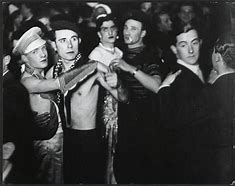
Christopher Isherwood, an English writer, visited the Weimar republic, and Berlin in particular, in 1929 and wrote stories about his adventures there. The origins of Cabaret lie here. He socialized with such writers as W. H Auden and Stephen Spender and enjoyed Jazz in the Cabarets. He apparently was not overly concerned with the rise of Fascism in Germany, and stayed on to write his first novel.
Ishwood met and befriended a British flapper named Jean Ross, an aspiring film actress who sang in Cabarets for her living. Meanwhile poverty, unemployment, political demonstrations and street fighting between Nazis and Communists escalated. Isherwood and his fellow writers began to feel the situation in the country was too explosive and within a month of Hitler becoming Chancellor, Isherwood left the country. Hitler’s government soon closed the cabarets.
Cabaret, loosely based on both “I am a Camera,” John Van Druten’s play based on Isherwood’s stories, opened on Broadway in the fall of 1966 at the Broadhurst Theatre, directed by Harold Prince, who had acquired the rights to it. It ran for 1,166 performances, won many Tony awards, went on to be produced again and again, and taken on the road, and eventually inspired the 1972 film of the same name starring Liza Minnelli, directed by Bob Fosse, screenplay by Jay Allen.
In Bainbridge’s current production, the scenic design, by Erik Furuheim, evoked a run-down Cabaret in 1929 Berlin, the Kit Kat Klub stage is front and center with the band behind, matching multi-use balconies that doubled as outdoor areas, and stairways flanking that created spaces for observation by actors not in a scene, and for scenes set elsewhere. Scene changes were quickly expedited. 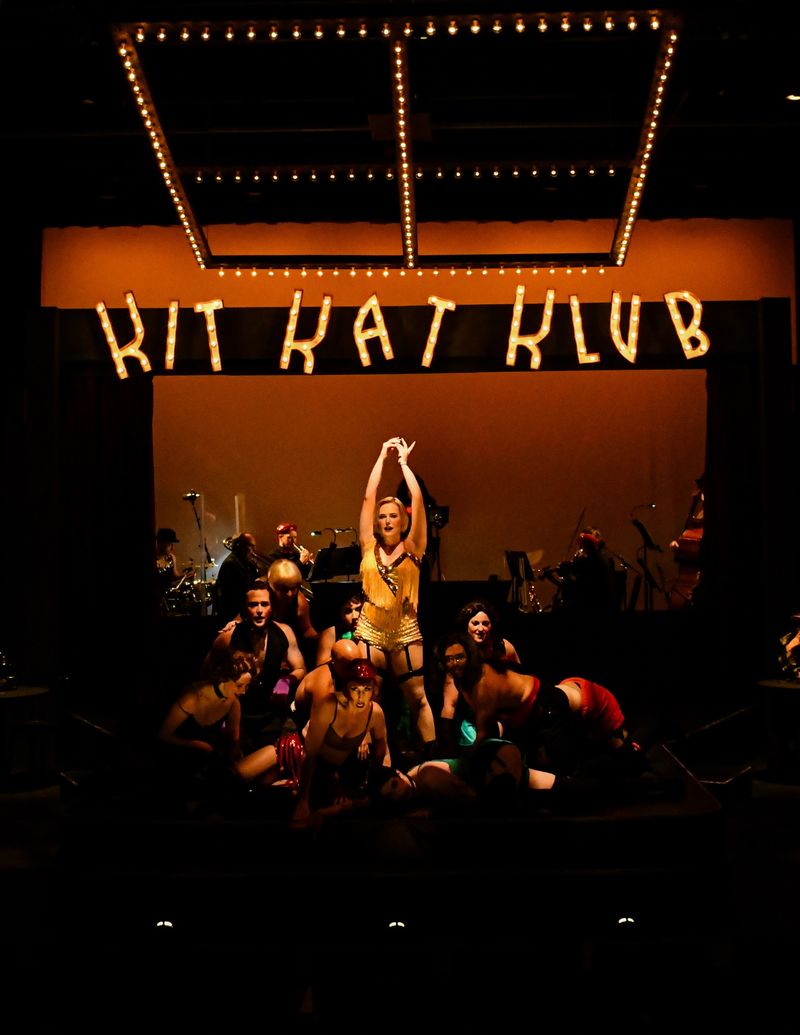
The direction, by Jessica Low, was clear and effective, pacing was great, blocking made sense, sightlines were only problematic once or twice. Her passion for this piece, and for the lives of these characters was evident. “As we watch the characters navigate their lives in this horrifying time period, Cabaret serves as a stark reminder of the dangers of complacency and indifference,” she said.

The musical direction of Shawna Avinger was excellent, as was the Cabaret Band. Every once in a while, the music and voices fought for attention, but mostly the balance was great. All the German accents were generally good, though sometimes dropped momentarily. Choreography by Annalisa Brinchmann was a pleasure as the 10-member dance troupe rose to the challenge of each number, coming out into the aisles at times! The talented group consists of Meagan Kirby, Colleen Gillon, Elizabeth Dangelo, Laura McFarlane, Jo Johnson, Phillippa Myler, Reed Viydo, Sriram Kanduri, Joey Chapman and Shane Petrus.
The costume designer Justine Pogue, and her team created/obtained costumes appropriate of the time, some wonderfully risqué creations, and occasionally stunning ones, like the white dress worn by Frau Schneider, and the fur coat and red dress donned by Sally. Lighting was moody, stark and effective, and the Sound, fiercely sudden, as when a thrown brick broke a window. Kudos to Rob Falk and Matt Hadlock. The new theatre, with its lighting and sound systems is, I suspect, a joy.
The Emcee was played by Bo Mellinger, who first appeared to the audience via stockinged leg and high heeled red shoe, through parted curtains, as the drummer hit a classic rim shot!His blue eye shadow makeup created a wonderful mask, almost clown-like, adding to his natural expressiveness. He played the role with vivacity, vulnerability and conviction. He is a narrator, shill, comedian, burlesque dancer, and later, a ticket taker on the train. Either script driven or directorial, I don’t know which, his final scene, and the culmination of the play, took my breath away, representing well what can come from the choices we make. The lighting here was particularly effective too!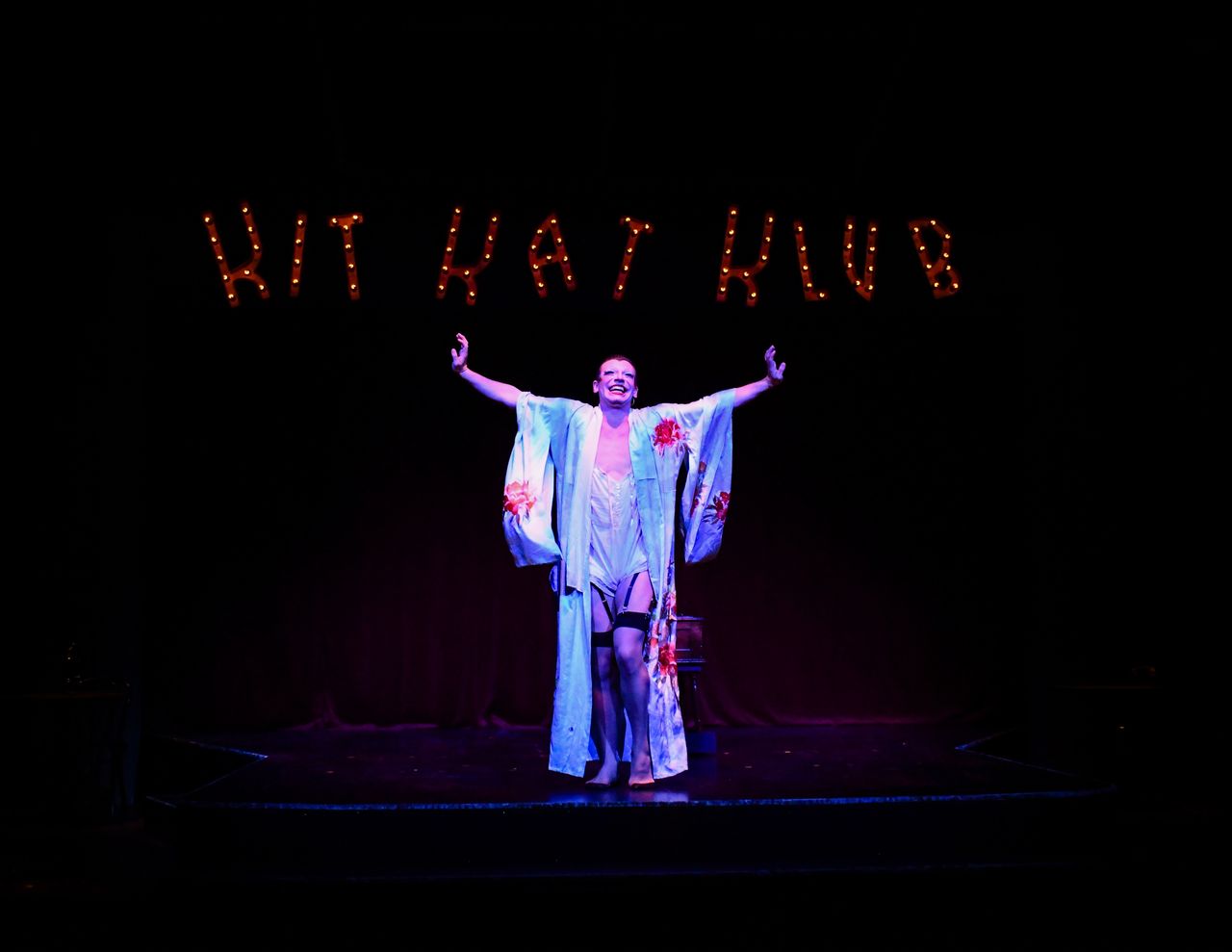
Talena Laine played Sally Bowles with an explosive mix of naivete, devil-may-care attitude and a dash of hysteria. Her singing voice is strong and so suited to the role. I did note that from time to time she rushed her lines when emotionality was high, and we lost them. Cliff Bradshaw(Chris Clark), the would-be writer from America, seeking new experiences, sometimes awkward, naïve in his own way, but once awakened, was willing to fight and speak up. Personally, I wish I could have seen a deeper drive in him.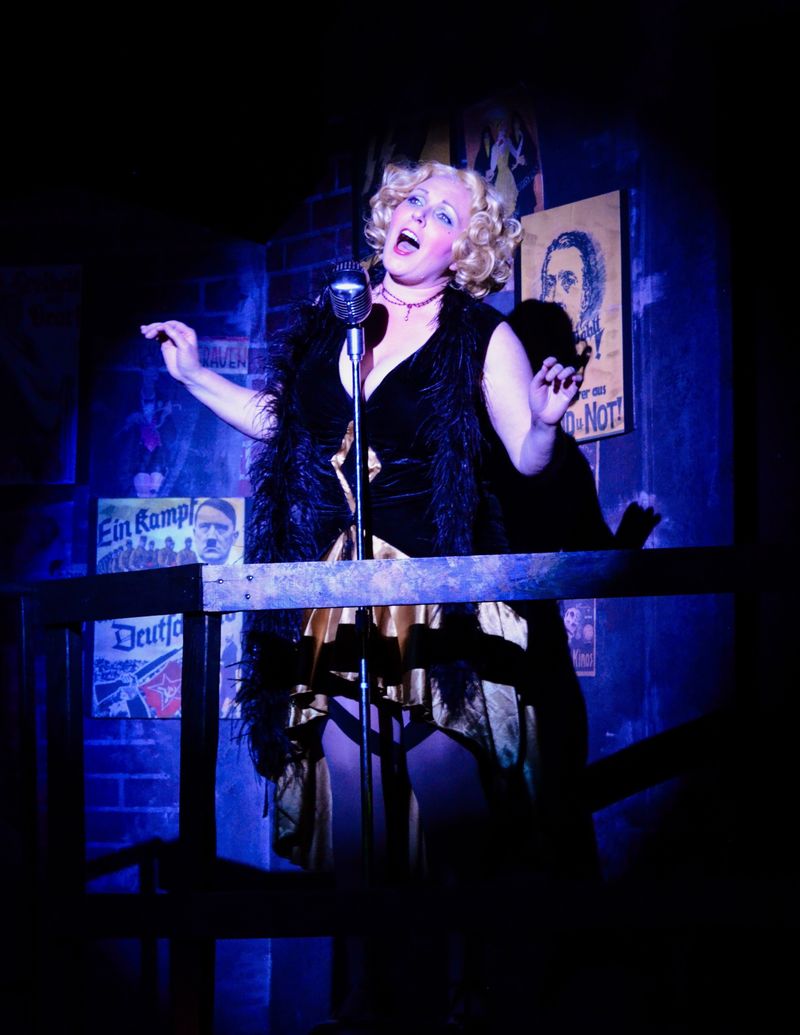
Together Cliff and Sally had some great timing, both comic and dramatic. Ultimately, they drive each other toward choices that tear them apart. Everyone has to make a choice. Their choosing is in some ways a proxy for ours. One of the most memorable moments in the show is Sally’s agonized, twitchy rendition of Cabaret in Act 2, expressing the barely concealed pain she felt in the choice to turn away. 
The characters of Fraulein Schneider and Herr Schultz were played by Michelle Lorenz Odell and Adam Othman. Herr Schultz, kind, and generous in trusting his neighbor and countrymen, while Fraulein Schneider was practical and irritated, and a survivor. Michelle has a particularly powerful singing voice well suited to this character. 
Max was played by Ed Courtway, a mostly silent, lurking figure of power, owner of the Cabaret. Kendra Truett plays the tough, weary Fraulein Kost, and Max Lopuszynski the energetic cheery, practical, helpful Ernst Ludwig. Both characters embrace the Nazi cause. It happens subtly with her, we see it when start as she sings a song in German. Ernst is already involved when he befriends Cliff on the train and offers to help him financially. Their choices make sense to them, and I believed that.
They have a lovely moment together when Fraulein Kost wants Ernst to stay at the engagement party for Frau Schneider and Herr Schultz, and she starts to sing him a Nazi anthem, Tomorrow Belongs To Me. They are soon singing it together and the Cabaret cast of dancers/singers falls in with them, turning into a grim reminder of what is to come. 
Get your tickets soon, this show closes May 12th and is already going fast!
Cabaret, Bainbridge Performing Arts (BPA), Buxton Center, 200 Madison Avenue N, Winslow,
Thurs, Fri, Sat evenings. 7:30, Sun matinée 3 pm. til May 12th Bainbridge Island, WA. 98110
Box Office (206) 842-8569 www.bainbridgeperformingarts.org
Tickets: https://bainbridgeperformingarts.thundertix.com/events/208293
Parking in theatre lot, then street parking for overflow
Content Advisory
This production contains the following:
Adult Themes: The show contains mature themes including sexual content and references.
Strong Language: There is the use of strong language and slurs that some may find offensive.
Nudity: This production does include some nudity.
Alcohol and Drug Use: Depictions of alcoholism and drug abuse are present in the storyline.
Violence and Abuse: The show includes scenes of violence, abuse, and domestic violence.
Sexual Content: Sexual references and suggestive scenes and choreography are part of the narrative.
Anti-Semitism and Racism: As the plot involves the rise of the Nazi party, there are themes of anti-Semitism, racism, and Nazi symbolism.
Sensitive Topics: The show contains sensitive topics, such as abortion.
Political Extremism: Depictions of political extremism and the rise of the Nazi party.
Flashing Lights and Loud Noises: The production includes flashing lights and loud noises that could be disturbing or may trigger seizures for people with
photosensitive epilepsy.
The post Cabaret-A Tornado of Talent at BPA appeared first on Drama In The Hood.
]]>Under the direction of the Artistic Director Hjalmer Anderson, Heart Repertory Theatre just opened the Broadway hit, Agnes of God by John Pielmeir at the Sammamish Valley Grange.
This thought-provoking, suspenseful production proves to be as big a hit in Woodinville as it was on Broadway. It questions legal, psychiatric, religious and existential certainties, exposing moral ambiguities using an extremely zippy, dramatic dialogue, which was full of humor and wit.

The post Agnes of God-A Hit at Heart Repertory Theatre appeared first on Drama In The Hood.
]]>Under the direction of the Artistic Director Hjalmer Anderson, Heart Repertory Theatre just opened the Broadway hit, Agnes of God by John Pielmeir at the Sammamish Valley Grange.
This thought-provoking, suspenseful production proves to be as big a hit in Woodinville as it was on Broadway. It questions legal, psychiatric, religious and existential certainties, exposing moral ambiguities using an extremely zippy, dramatic dialogue, which was full of humor and wit.
The morally ambiguous conflicts are personified by two strong-willed women. A court appointed female psychiatrist, Dr. Martha Livingstone visits a Catholic convent (of a contemplative order) to make a psychiatric assessment of Agnes a young novice (an apprentice nun who has not taken her final vows) who has been accused of murdering her new born baby. Her name is significant as Agnes of Rome is the patron Saint of Chastity and Virginity, who is usually depicted with a lamb, so Agnes of God, is much like the sacrificial Agnus Dei, or Lamb of God.
Dr. Livingstone, a woman with justifiable resentment towards the Catholic church, jousts with the Mother Superior of the convent Mother Miriam Ruth, an older no-nonsense, equally strong-willed woman. In an era before anti-depressants, before psycho-analysis and Freud were discredited and significantly before Oprah, Dr. Livingstone wants to delve into the psyche of Agnes; Mother Miriam wants to leave well-enough alone. The two verbally duke it out.
Agnes is a pretty young novice with a beautiful voice, who appeared to be on the autism spectrum or suffering from severe PTSD or schizophrenia or all of the above. The Mother Superior is hiding a lot, Dr. Livingstone suspects the worst. In short there is a huge amount of mystery and suspense without being a classic whodunit.
It is significant that the Convent where Agnes of God takes place is an old-style contemplative order of nuns, as opposed to the traditional teaching and nursing orders, or the modern orders, who are social workers or social justice activists working in prisons. The Contemplative orders, which still exist, are completely “cloistered” that is to say, they spend their whole lives physically inside the convent, never going out into the world. Their lives are restricted to either doing chores or in prayer and contemplating God. Unlike modern nuns, who wear jeans, they still wear pre-Vatican II black habits with veils.
In some ways, the setting for exposing the moral ambiguities, is dated, as it was written in 1978, since it takes place in a Catholic convent before the big sexual abuse scandals of the 2000’s. Also the author, John Pielmeier, born in 1949, a Catholic, experienced old-style Catholicism in his formative years in the 1950’s before Vatican II. Those who were raised Catholic after the liberalizing Vatican II experienced something different. But surprisingly this play is just as relevant today as it was in 1979.
Although the audience has a lot of sympathy for Dr. Livingstone’s methods at first, there is a twist in the end, and along the way, a lot of Agnes’s childhood history was revealed, which would have been shocking in 1979 and in the early 1980’s, but which we now see on day-time talk shows and in the newspapers all the time.
Everything about this production was spot on. As the audience was waiting for the show to start, there was eerie vespers music and we feasted on some replicas of religiously-themed stained glass windows by Molly West the Set Designer. The set representing the convent office of the Mother Superior, was “Convent Authentic” complete with a roll-top desk and fancy porcelain tea-cups for entertaining guests.
The actors were more than up to the task to bring this challenging script to life. Jeanine Early as Mother Miriam Ruth, had excellent comic and dramatic timing and portrayed someone who was both hard-boiled and incredibly compassionate.
BriAnne Green as Dr. Martha Livingstone, portrayed the strong willed believer in psychiatry, who is assured that she is doing the right thing, only to discover that knowing what is the right thing is, is not as easy as she thought.
As Agnes, Alyssa Gaudinier expressed a full range of powerful emotions to the audience, vulnerability, other-worldiness as well as paranoia but was in fact extremely endearing.
A script like this, which is so very dialogue-driven demanded a very delicate touch, and director Hjalmer Anderson had just the right touch. The audience was engaged the whole time, it was suspenseful, stimulating and full of compassion. Also, he used the space well, the scene changes were swift, since he just laid out each different room, where the play takes place, in a long rectangle at the Sammamish Valley Grange.
I recommend this play to everyone, it isn’t often such a superb script comes to the Seattle area and is so well done.
I would only say that Woodinville is no longer the sleepy town I first encountered 35 years ago, when I first moved to this area, when Microsoft was three buildings in the middle of a forest. It is time for the city to build a performing arts space for Heart Repertory and Woodinville Rep. Good acting and good directing will always shine in any space, but with so many fine restaurants and wine tasting establishments in Woodinville, perhaps an upgrade in the theatre space is overdue.
Agnes of God. Heart Repertory Theatre, Sammamish Valley Grange. 14654-148th Ave NE, Woodinville, WA 98072. Fri, Sat. eve 7:30 pm. Sun matinée 2 pm. Til May 5.
Info: https://www.heartrep.org/
Tickets: https://www.tickettailor.com/events/heartrep
Parking: There is a parking lot.
Also lots of restaurants and Wine-tasting places nearby.
The post Agnes of God-A Hit at Heart Repertory Theatre appeared first on Drama In The Hood.
]]>
The post A Triple-Sweetness at Pacific Northwest Ballet: Sweet Fields, The Calling, and The Season’s Canon appeared first on Drama In The Hood.
]]>
But long before Pite makes tectonic plates of dancers, Twyla Tharp’s rarely seen Sweet Fields opens the show, uniquely set to 18th and 19th century American Shaker a capella choral hymns. The dancers are adorned in whimsical, flowing garments by Norma Kamala, and the all-white fabric shimmers in and out to a gorgeous dappled lighting by Jennifer Tipton. The effect is kaleidoscopic, but not at all dizzying. With the choral performers’ voice boxes as the piece’s only instruments, Sweet Fields is about keeping the body close and letting go the rest go.
Twyla Tharp’s vocabulary of movement revels in its simple and novel brilliance. Heavily influenced by ballet, Tharp twists classical technique motifs into a mix of whimsy, mime, and shaking hips. At one point, the dancers begin massaging each other’s backs before spinning back into a whirlwind of step-patterning with flexed and pointed feet.
When the church bells ring, the dance is dropped, and the congregants walk towards its sound. But they never leave the stage before soaking in a joy worked into the body with such strength, groundedness, and kindness that it hardly needs to be expressed, only lived.
Jessica Lang created The Calling after receiving a posthumous letter from a mentor. On opening night, Principal Dancer Dylan Wald is cast as only half himself, with everything beneath his torso swathed in an enormous skirt. I was entranced by the minimalism of Lang’s choreography and the details of the set and costume, which come forward in sharply contrasted light, the creases of his shoulder muscles mirroring the creases of the skirt.

Wald moves the fabric only once throughout the piece, taking a few steps, raising a leg for barely a breath— and the rest is only port de bras. The huge, heavy skirt’s limitations on his movement makes it feel less like a costume than the curtains of the theater itself, with the stage of the body inside half obscured. Wald moves with a strength and grace that despite itself still can’t lift something almost like grief, not for long, moving only above it like a moon rising over the ocean.
In a tonal shift from the first two works, The Season’s Canon is set to a rearrangement of Vivaldi’s The Four Seasons and is characteristic of the contemporary and neo-classical choreographer Crystal Pite’s outstanding reputation, where she is often known for weaving every dancer in the company into huge ensembles and patterning synchronicity into sweeping landscapes of rolling and stuttering movement. It’s visually stunning in the same way the beach is stunning, or a city from a plane window, a swarm of locusts, a murmuration of starlings, layered strata of rock: the swarm and colony, in any form, can enchant us with its existence alone. Meanwhile, the continuously shifting mass configurations glimmer in the space between the inorganic and organic.

And despite how distracting I found the digital background — its animations kept catching my eye and taking my attention off the dancers — its red-orange renderings of abstract networks and filaments do help The Season’s Canon position itself as an ode to all the life sciences, from the molecular to the ecological. As both a scientist and a dancer, I was in awe as I watched the dancers clinging to each other like enzymes. For a moment, they were nothing but proteins, in the next breath, I saw one woman picked up like a child–her body wrapped around the soloist who carried her, resting her head on her shoulder–and the softness in her face was so human, so completely distant from atoms and their bonds that it broke me open in understanding. The Season’s Canon asks you to remain in awe at the insect larvae swimming every season to the river’s surface and taking flight, and all the while it hopes you are the lone figure that might be leaning over the water, marveling.
 `
PNB is presenting Sweet Fields, The Calling, and The Season’s Canon on a triple-bill at Seattle Center’s McCaw Hall April 12 – 21, 2024 (and streaming April 25 – 29.) This triple-bill is not one to miss.
Tickets: https://www.pnb.org/season/the-seasons-canon/
The post A Triple-Sweetness at Pacific Northwest Ballet: Sweet Fields, The Calling, and The Season’s Canon appeared first on Drama In The Hood.
]]>A Child’s Dream, a concert by the Chamber Group of the Kyiv Classic Orchestra to benefit the thousands of of children wounded in the war, and specifically Ukraine’s largest Children’s Hospital, Ohmatdit, on Saturday May 25th at Benroya Hall in downtown Seattle.
A Child’s Dream was made famous by its courgeous and defiant concert in Kyiv’s Central Square in the first days of Russia’s Invasion of Ukraine.
The post A Child’s Dream-An Evening with the Chamber Group of the Kyiv classic Orchestra appeared first on Drama In The Hood.
]]>A Child’s Dream, a concert by the Chamber Group of the Kyiv Classic Orchestra to benefit the thousands of of children wounded in the war, and specifically Ukraine’s largest Children’s Hospital, Ohmatdit, on Saturday May 25th at Benroya Hall in downtown Seattle.
A Child’s Dream was made famous by its courgeous and defiant concert in Kyiv’s Central Square in the first days of Russia’s Invasion of Ukraine.
A child’s dream is peace. The Chamber Group of the Kyiv Classic Orchestra will take the audience through the richness and versatility of Ukrainian musical culture. Their music will fight the violent sounds of war with the whole kaleidoscope of Ukrainian musical traditions and diversity, reflecting the bright and colorful aspects of Ukrainian lives, identity, and culture. The music will include folklore melodies, internationally recognized Ukrainian classical pieces as well as recent modern and original compositions by young Ukrainian composers.
Meeka Quan DiLorenzo’s performance of a world-famous Bach composition will exemplify the solidarity of the American people with Ukrainians’ fight for freedom, democracy, and peace.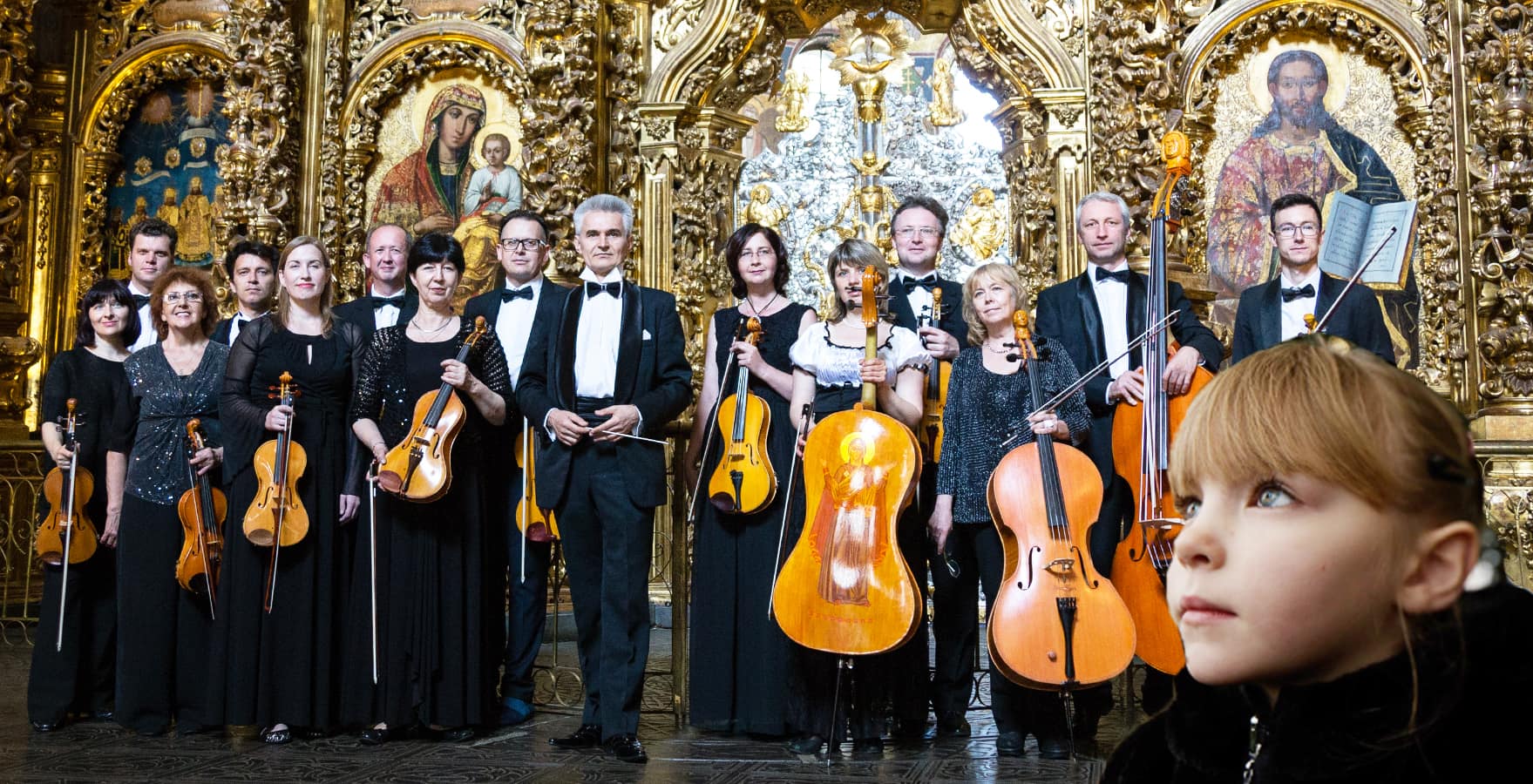
This unique concert is hosted by The Humanity Funds and The Seattle Series under the Patronage of the US and Ukrainian Commissions for UNESCO. It is sponsored by Benaroya Hall. All proceeds and support will benefit Ukraine’s largest Children Hospital, Ohmatdit.
“These are critical times for Ukraine in their fight for freedom, democracy and peace. We are proud to partner with our broader community here in Seattle and beyond and excited to share Ukraine’s musical heritage with our audience.”
-Krishna Thiagarajan, president and CEO of the Seattle Symphony and Benaroya Hall
A Child’s Dream. Illsley Ball Nordstrom Recital Hall, Benaroya Hall, 200 University St. Seattle ( Downtown) 98101. Sat. 8 pm. One night only.
Tickets: https://www.seattlesymphony.org/en/benaroyahall/bh-calendar/2023-2024/23childsdream
The post A Child’s Dream-An Evening with the Chamber Group of the Kyiv classic Orchestra appeared first on Drama In The Hood.
]]>