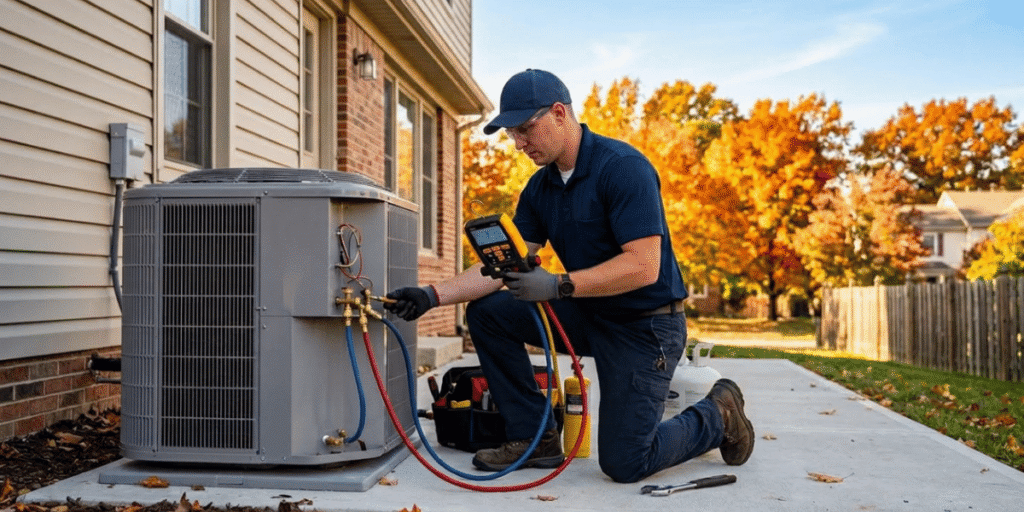
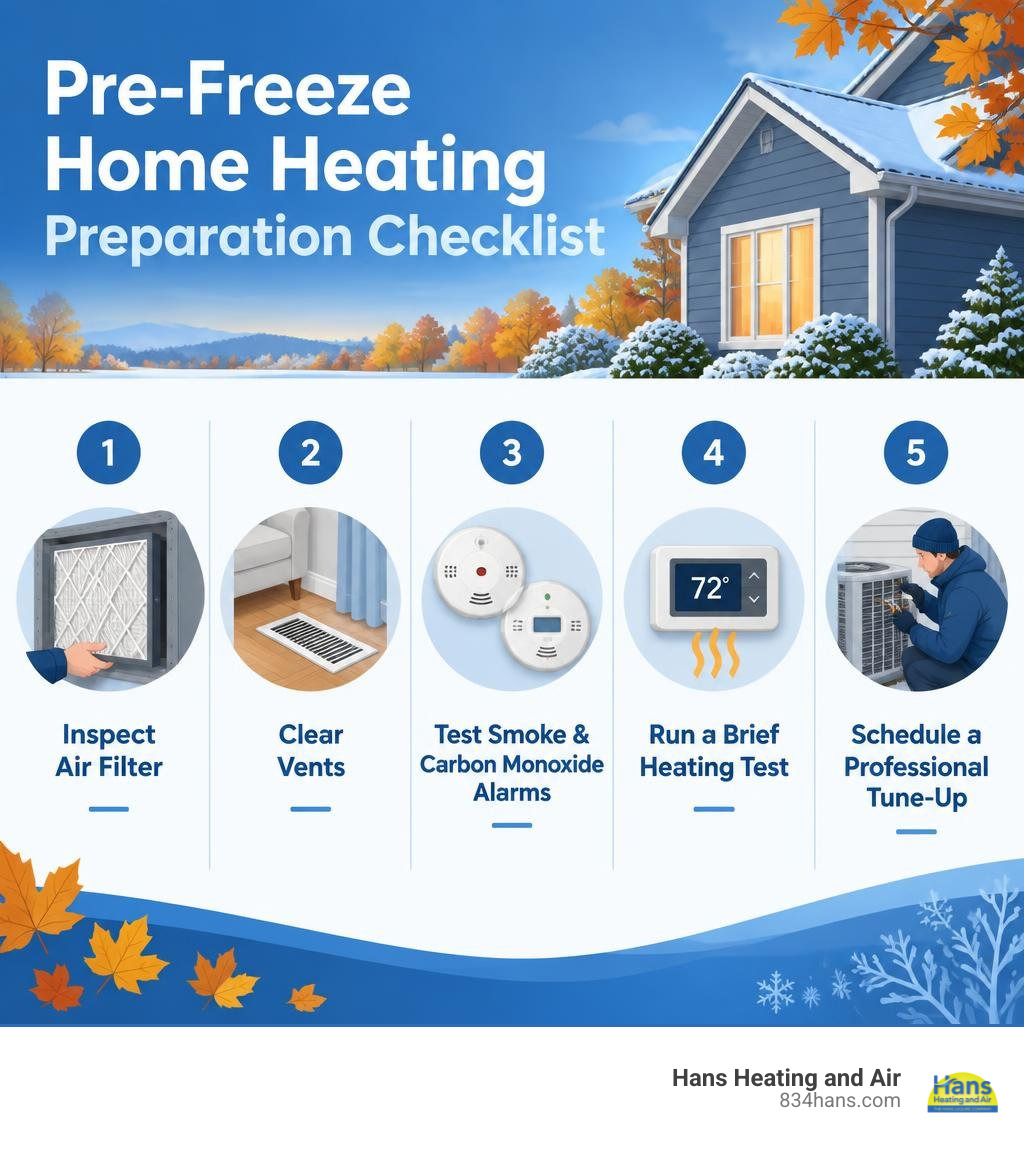
If your heat hasn’t run in months, a little preparation now can help you spot minor issues before the first cold night arrives in Central Alabama. Starting your seasonal home heating maintenance early gives you peace of mind that your system will start up smoothly when freezing temperatures drop into our area. Begin by inspecting your air filter, clearing any furniture or drapes away from supply vents, and running a brief test cycle to confirm that warm air circulates evenly across every room. It is also the perfect time to test your smoke and carbon monoxide alarms.
I’m James Holland, founder of Hans Heating and Air. I started out as a field service technician and have spent more than twenty years working on residential heating and cooling equipment throughout our local communities. In this guide, I’ll explain which home heating maintenance steps you can handle safely on your own and when scheduling a professional tune-up is your best move.
Essential Home Heating Maintenance: Professional Pre-Season Checklist
A comprehensive professional heating check-up goes far beyond a quick visual glance at your indoor and outdoor equipment. When our technicians evaluate your furnace or heat pump, we use structured maintenance guidance such as the ENERGY STAR Maintenance Checklist to thoroughly review mechanical and electrical components. Even with colder weather approaching or already arriving, a professional tune-up can help identify concerns before your system has to work through a sustained cold spell.
Critical Mechanical and Electrical Safety Inspections
Our multi-point inspection begins with a careful review of electrical connections, safety switches, and internal controls. We tighten loose wiring terminals, measure motor operating voltage, and check amperage draws to help prevent sudden electrical component failures during freezing cold snaps. Lubricating moving components reduces friction and minimizes blower motor strain, while flushing condensate drains prevents damaging moisture backups and microbial growth. Homeowners enrolled in our HVAC Maintenance Plan Montgomery AL receive these detailed safety controls and starting cycle verifications regularly to keep their heating equipment running reliably all winter long.
Burner Combustion, Heat Exchangers, and Venting Integrity
For gas and oil heating systems, fuel line safety and burner operation require precise, specialized testing. We verify manifold gas pressure, inspect pilot ignition assemblies, clean away surface corrosion, and examine burner flames for proper combustion characteristics. Our technicians also perform thorough inspections of the heat exchanger and exhaust flue to catch microscopic cracks before dangerous gases escape into living areas, following established Home Heating Safety Tips to keep your household protected. These proactive evaluations keep heating systems operating cleanly, safely, and efficiently throughout the coldest months.
Home Heating Maintenance Tasks for Homeowners and Professionals
Some heating maintenance is simple enough to handle between service visits, while other work is best left to a trained technician. Homeowners can stay on top of filters, clear vents, working alarms, and a quick heating test. Electrical checks, combustion testing, and heat-exchanger diagnostics need professional tools and training.
| Maintenance Task | Responsible Party | Recommended Frequency | Primary Benefit |
|---|---|---|---|
| Air Filter Inspection & Swap | Homeowner | Monthly inspection (replace every 30–90 days) | Restores proper airflow and protects blower motor |
| Supply & Return Vent Clearing | Homeowner | Monthly | Eliminates hot and cold spots across living areas |
| Smoke & Carbon Monoxide Testing | Homeowner | Monthly test (batteries 1–2 times per year) | Protects family from silent combustion hazards |
| Multi-Point Electrical & Safety Tune-Up | Professional HVAC Tech | Annually (every Fall) | Prevents unexpected mid-winter system shutdowns |
| Heat Exchanger & Burner Diagnostics | Professional HVAC Tech | Annually (every Fall) | Ensures safe fuel combustion and exhaust venting |
Restricted airflow can lower overall system efficiency by up to 15 percent, forcing your blower motor to work harder than necessary and causing uneven heating throughout your home. A clogged filter or blocked return grille restricts air volume, which can cause heat exchangers to overheat or heat pumps to struggle. Combining simple homeowner tasks from a seasonal Fall HVAC Maintenance Checklist with professional care keeps equipment operating at peak performance all season long.
Routine Air Filter and Airflow Care in Home Heating Maintenance
Checking your air filter monthly is one of the most effective DIY habits you can build to support your heating system. While standard manufacturer guidelines suggest replacement every one to three months, homes with shedding pets, active children, or higher dust levels often require more frequent changes. According to the Home Maintenance Schedule published by CMHC, maintaining clean filters preserves balanced airflow through return grilles and significantly reduces indoor allergens. When you replace your filter regularly, you protect sensitive internal components from dust buildup.
Maintaining Forced-Air Heating Systems
Forced-air heating systems rely on unobstructed circulation throughout your entire home to maintain balanced indoor temperatures. Make sure to keep rugs, draperies, and large furniture at least one foot away from all supply registers and return grilles in every room. Closing off vents in unused rooms can increase duct pressure and cause air leaks rather than saving energy. Understanding the operational differences between a Heat Pump vs Furnace helps you better manage airflow settings and heating cycles throughout varying Central Alabama winter conditions.
Maximizing Efficiency and Recognizing Signs of Heating Failure
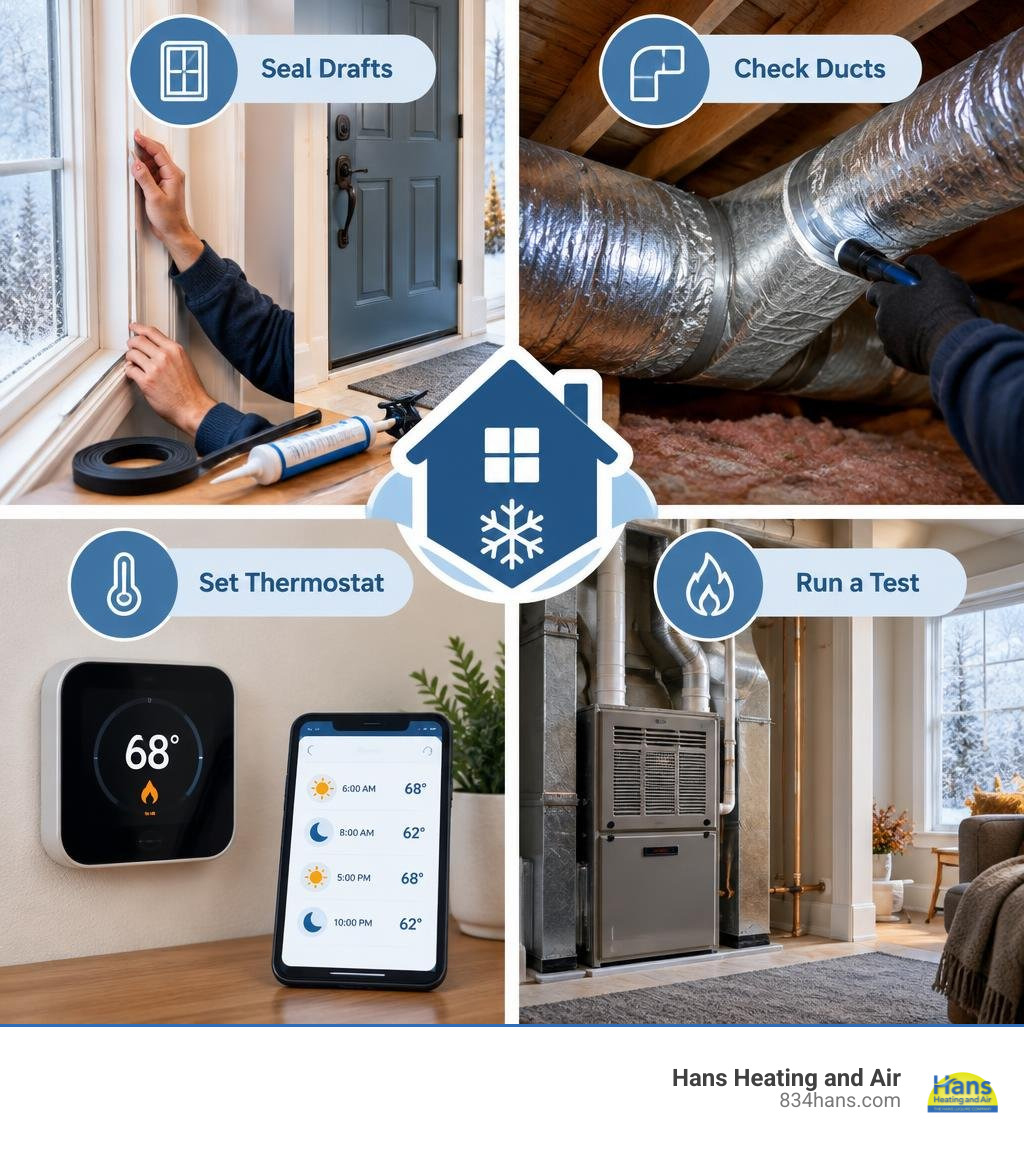
Leaky, unsealed ductwork can waste up to 30 percent of heated air before it ever reaches your living spaces. When conditioned air escapes into unconditioned attics or crawlspaces, your heating equipment must run longer cycles to satisfy the indoor thermostat. Applying weatherstripping around exterior doors, adding silicone caulk along drafty window frames, and scheduling a brief 15-minute test run before freezing weather arrives helps you discover practical ways to keep your home warm and manage Central Alabama energy bills.
Thermostat Optimization and Draft Reduction Strategies
Lowering your thermostat by 7 to 10 degrees for eight hours a day can reduce annual heating costs by up to 10 percent. Programmable and smart thermostats make these setbacks automatic while you are asleep or away at work, restoring your preferred temperature right before you wake up or return home. During sunny winter afternoons across Central Alabama, opening south-facing window curtains lets natural solar warmth into your living spaces to give your heating system a helpful break and lower daytime energy demand.
Signs You Need Professional Repairs or System Replacement
Pay close attention to subtle changes in how your heating system sounds and performs throughout the winter months. Unfamiliar rattling noises, persistent short cycling, weak airflow at supply vents, or a yellow burner flame indicate that mechanical components need professional attention. When repairs become frequent or expensive on older units, reviewing our guide on heating system repair vs replacement can clarify whether a targeted repair or a modern, high-efficiency system replacement makes the best financial sense.
Winter Heating Safety, Backdrafting Prevention, and Emergency Preparedness
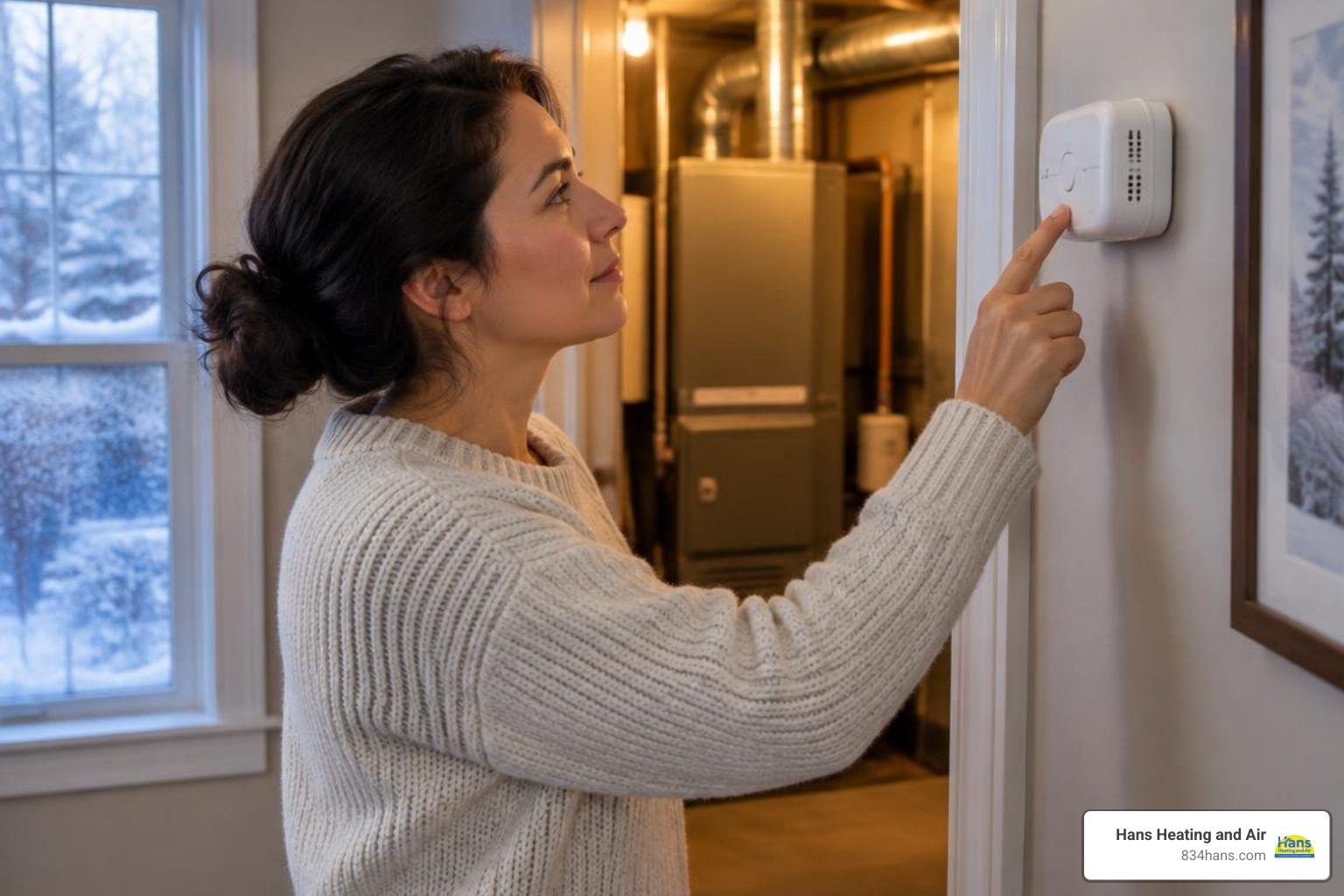
Heating equipment requires sensible safety practices to protect your household from preventable fire and carbon monoxide risks when temperatures drop. The U.S. Fire Administration estimates that residential heating fires caused 27,200 fires nationwide in 2024, a useful reminder to keep the area around heating equipment clear and have venting and combustion systems checked by a qualified professional. Taking a few minutes to review winter safety basics can help keep your home warm and your family safer through the season.
Preventing Backdrafting and Carbon Monoxide Risks with Home Heating Maintenance
Backdrafting occurs when powerful exhaust fans, clothes dryers, or tightly sealed building envelopes create negative indoor air pressure inside a residence. This negative pressure can draw toxic combustion gases and carbon monoxide backward into your living areas instead of venting them safely outdoors through the exhaust flue. Watch for telltale warning signs like soot around the furnace draft hood, persistent condensation on vent pipes, or yellow burner flames, and ensure certified carbon monoxide alarms are installed on every floor and outside all sleeping areas.
Supplemental Heater Safety and Winter Emergency Readiness
If you use portable space heaters for supplemental warmth, maintain a strict three-foot perimeter clear of blankets, curtains, clothing, and upholstered furniture. Always plug portable electric heaters directly into dedicated wall outlets rather than light-duty extension cords or power strips, and choose modern models equipped with automatic tip-over shutoff switches. For severe winter weather preparations and sudden power disruptions, our Alabama Winter HVAC Emergencies Guide outlines what emergency supplies, extra blankets, pipe insulation, and backup heating plans you should have ready to keep your home safe and resilient during major winter storms.
Frequently Asked Questions About Heating Tune-Ups
How often should furnace and heat pump air filters be inspected?
We recommend inspecting your air filter every 30 days during peak heating months across Central Alabama. Depending on your filter thickness, household pet density, indoor dust levels, and whether anyone in your home suffers from seasonal allergies, filter replacements usually happen every 1 to 3 months to maintain proper airflow and protect your system’s blower motor from unnecessary mechanical strain.
What thermostat temperature balance provides maximum energy savings?
Setting your thermostat to 68°F while you are awake and active offers a dependable balance of comfort and energy efficiency. Lowering the temperature setting by 7 to 10 degrees overnight or while away from home helps reduce total energy consumption without sacrificing indoor comfort, and a smart thermostat makes these daily setbacks completely seamless and automatic for our local homeowners.
Why is carbon monoxide detection critical during the heating season?
Carbon monoxide is a colorless, odorless gas produced by incomplete fuel combustion in gas furnaces, boilers, and fireplaces. Because you cannot detect it by scent or sight, testing working alarms on every level of your home ensures your family is alerted immediately to potential venting hazards or cracked heat exchangers before dangerous indoor gas concentrations can occur.
Conclusion
Proactive seasonal maintenance keeps your heating system reliable, energy-efficient, and safe through cold weather snaps across Montgomery and Central Alabama. Completing basic DIY tasks like monthly filter checks and scheduling a professional pre-season inspection helps prevent unexpected breakdowns and costly emergency repairs when winter temperatures drop.
When you are ready to prepare your heating equipment for the upcoming winter, reach out to our team to schedule our comprehensive residential heating services or learn more about our Priority Services Membership. We are always here to keep your home warm, comfortable, and safe all season long.
]]>Heat Pump Fan Repair: What to Do First
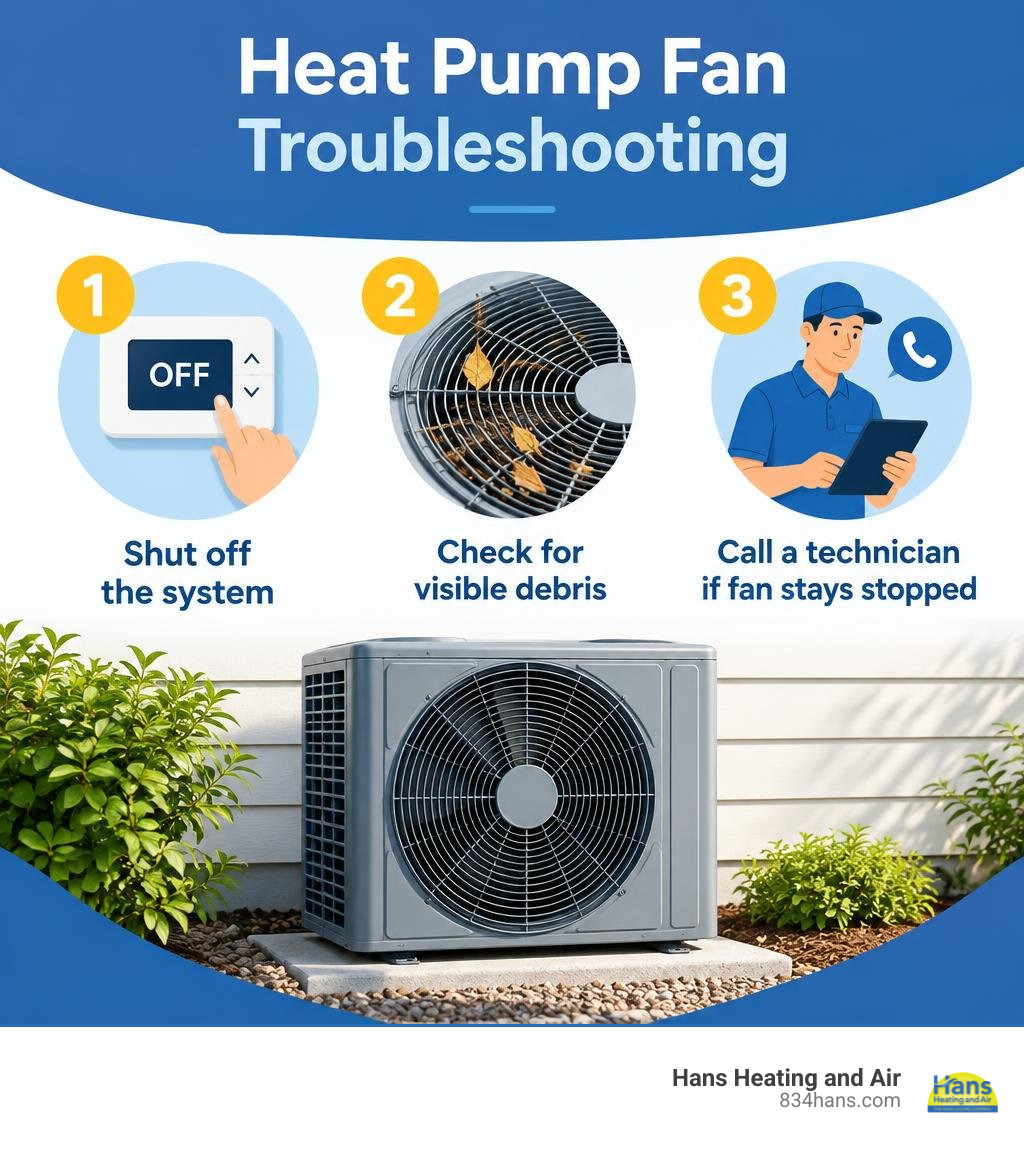
A heat pump that starts while its outdoor fan remains still can be unsettling, especially when you are not sure whether it is safe to let the system keep running. The safest first step before calling for heat pump fan repair is to switch the thermostat off and stay clear of the outdoor unit. A branch or other visible debris may be holding the fan in place, but the same warning signs can also point to a capacitor problem or a worn fan motor.
A stopped fan may need nothing more than an obvious external obstruction cleared. It can also signal a failed capacitor or motor that needs professional testing. A technician can identify which repair makes sense before recommending replacement.
I’m James Holland, and after more than two decades serving Central Alabama homeowners, I know how unsettling it is when a heating or cooling system suddenly behaves differently. At Hans Heating & Air, we help homeowners make safe observations first and understand when it is time to call for service. The goal is to give you practical next steps without asking you to take risks around electrical equipment.
Why Is Your Outdoor Fan Not Spinning? Common Culprits
Your outdoor fan motor helps keep your home comfortable across Central Alabama. In cooling mode, it moves outdoor air across the coil so the system can release heat collected indoors. In heating mode, it helps the unit gather heat from outdoor air to warm your living spaces.
When the fan stops spinning, that airflow stops too. The system can struggle to transfer heat and may overheat, particularly during humid summer afternoons in Wetumpka, Prattville, and Pike Road. Some problems are simple external obstructions, while others are electrical faults that call for professional condenser fan electrical diagnostics.
Debris and Physical Obstructions
Fallen pine needles, sweetgum balls, twigs, and overgrown shrubs can collect around an outdoor unit. A stick can slip through the top grille and wedge against the fan blades, preventing the motor from turning. If the power stays on while the blades are stuck, the motor may continue trying to run and can overheat.
Failed Capacitors and Electrical Snags
Electrical components are another common cause of outdoor fan trouble in our climate. Storms, power surges, and prolonged high temperatures can put extra strain on these components. Because electrical testing involves high voltage, it is best left to a qualified technician.
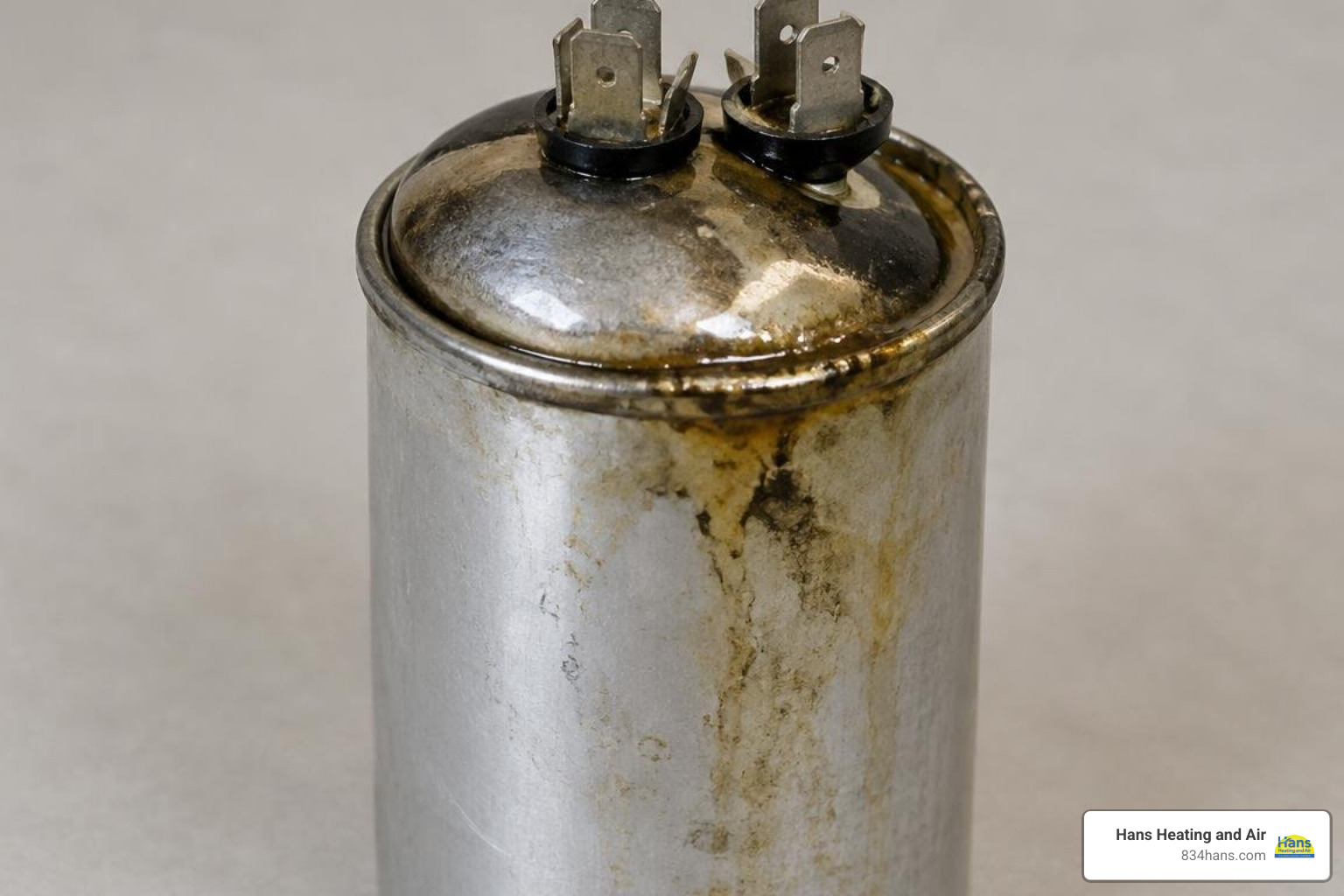
A dual-run capacitor gives the fan and compressor an initial electrical boost to start. It also provides the steady charge that helps them keep running smoothly. Capacitors often last for years, but heat and electrical surges can shorten their lifespan.
When a capacitor weakens or fails, the motor may not have enough power to start. You may hear a low buzzing or humming sound as the motor tries to run. A visibly damaged capacitor may have a swollen top or oily residue along its side.
Motor Burnout, Bearings, and Wiring
Fan motors can wear down after years of regular use. Bearings inside the motor housing may gradually lose lubrication, creating friction. A squealing or grinding noise can develop before the motor shaft eventually seizes.
Other electrical issues can also keep an outdoor fan from running. A technician may need variable-speed motor diagnostics to test failed control boards or modules properly. The checklist below covers other common electrical problems.
- Pitted or worn contactor points that prevent 240-volt power from reaching the motor.
- Loose or corroded wiring connections.
- Failed electronic control boards or modules that require variable-speed motor diagnostics to test properly.
Step-by-Step Troubleshooting and Diagnostic Checks
If your outdoor fan is not running, a few safe, systematic checks can help you understand what is happening. These observations can also help you decide whether the unit should stay off until a technician arrives. Do not open electrical covers or reach into the cabinet while checking the system.
Signs You Should Turn Off the Unit Immediately
Certain symptoms mean the system should be turned off at the thermostat. Leaving it running can put additional stress on the motor or compressor. Schedule comprehensive heat pump repair if you notice any of the following:
- Loud screeching, grinding, or metal-on-metal noises from the top of the unit.
- A strong burning electrical or plastic odor near the outdoor cabinet.
- A fan that wobbles visibly, turns very slowly, or starts and stops erratically.
- A breaker that trips as soon as cooling or heating turns on.
How to Safely Check the Unit
You can make a few basic checks without opening electrical covers or reaching into the cabinet. Focus on thermostat settings, power, and anything visible from outside the unit. Stop if you notice a burning smell, loud mechanical noise, or any damaged wiring.

- Verify Thermostat Settings and Power: Confirm that the thermostat is set to cool or heat and to a temperature that calls for the system to run. Check the electrical panel to make sure the outdoor breaker has not tripped.
- Look for Surface Debris: Turn off the system at the thermostat and the outdoor disconnect box. Look through the top grille for loose leaves or branches resting on the guard, but never reach through the grille or use tools to test the blades.
- Listen for Motor Humming: If the cabinet hums steadily while the fan remains still, turn the system off immediately. This can mean the motor is receiving power but cannot start because of a weak capacitor or seized bearings.
Normal Winter Defrost Cycle vs. True Fan Failure
During cold winter mornings in Millbrook or Lake Martin, a stopped outdoor fan is not always a failure. Frost can build up on the outdoor coil, prompting the system to run an automatic defrost cycle. During that cycle, the fan may pause while the system clears the ice.
Common signs of a standard defrost cycle include:
- The outdoor fan shuts off temporarily for about 5 to 15 minutes.
- The compressor continues to run with a noticeable hum.
- Steam rises from the top of the cabinet.
- The indoor unit uses supplemental electric heat to maintain comfort.
- For more on a normal defrost cycle, read how heat pumps operate in Alabama winters.
Once the frost clears, the fan should begin spinning normally again. If it does not restart, or if the same symptoms occur in mild weather, schedule service rather than restarting the system repeatedly. You can also read more about how heat pumps operate in Alabama winters to help separate a normal defrost cycle from a mechanical fault.
Safe Homeowner Steps and When to Call for Service
After making basic observations, you can take a few simple actions around the outdoor unit. These steps are limited to what can be done safely from outside the cabinet. If the cause is not obvious, leave the system off and arrange for professional service.
Clearing the Area Around the Outdoor Cabinet
Keeping the area around the unit clear supports airflow and can reduce future blockages. Start only after switching the thermostat and outdoor disconnect box off. Do not remove guards or reach inside the cabinet.
- Turn the thermostat to OFF and switch off the outdoor disconnect box.
- Gently remove loose leaves, pine straw, or twigs resting on the exterior surface of the top grille. Do not reach into the cabinet or disassemble the guard.
- Trim back bushes, weeds, and tall grass to maintain at least 24 inches of clear space around the outdoor cabinet.
- Only if you removed an obvious external obstruction and the blades can turn freely, restore power at the disconnect and thermostat to test the unit. Allow up to five minutes for standard time-delay controls to cycle back on, then leave the system off if the fan still does not spin.

Why Prompt Attention Protects the Compressor
Keeping the system shut down when the fan does not run helps protect other major components. Without the outdoor fan, the heat pump cannot transfer heat properly. Internal pressure and operating temperatures can rise quickly as a result.
Over time, that extra stress can lead to premature wear or compressor failure. Replacing a fan motor or capacitor is often a manageable repair, while compressor replacement is more involved and may cost between $1,200 and $2,500, depending on the unit size and warranty coverage. Turning the system off promptly can keep a smaller fan problem from becoming a larger repair.
Professional vs. DIY Heat Pump Fan Repair: Costs and Decisions
Clearing loose debris from the outer grille may be a safe DIY task when the system is powered off. Diagnosing or repairing electrical components is different because the equipment uses high voltage and requires specialized meters. When the cause is not clearly visible, professional testing is the safer choice.
A replacement capacitor may cost roughly $15 to $45 for the part alone, but DIY replacement carries shock hazards because capacitors can retain an electrical charge even after the breaker is off. Professional fan motor replacement generally ranges from $350 to $750, including parts and labor. A qualified technician can also confirm that the replacement matches the manufacturer’s required horsepower, rotation direction, and electrical rating.
| Repair or Replacement Option | Typical Cost Range (Parts & Labor) | Estimated Lifespan Considerations | Best Course of Action |
|---|---|---|---|
| Capacitor Replacement | $15 – $45 (DIY Part) / $120 – $250 (Pro) | Often lasts 5 to 10 years, depending on heat exposure and power quality | Replace promptly when weak, leaking, or swollen. |
| Outdoor Fan Motor Replacement | $350 – $750 | Typically lasts 10 to 15 years under normal operating conditions | Recommended for systems in good overall mechanical health. |
| Compressor Replacement | $1,200 – $2,500 | Variable; depends on unit age and maintenance history | Weigh system age and general reliability before investing. |
| Complete Heat Pump System Replacement | $5,500 – $11,000+ | Modern systems often provide 15 to 20 years of service with care | Practical option for aging, inefficient, or frequently failing units. |
Repairing the Fan Motor vs. Full System Replacement
If your heat pump is under 10 years old and otherwise in good condition, replacing a failed fan motor or run capacitor is often the most cost-effective path. The right decision still depends on the system’s repair history and the condition of other major components. A technician can explain the likely repair and replacement options for your specific unit.
If your system is 12 to 15 years old, uses phased-out R-410A refrigerant, or has needed several major repairs recently, continued investment may not make long-term financial sense. Modern heat pumps often have higher SEER2 efficiency ratings, which may reduce utility use depending on your home and habits. If replacement is the better route, we can help you review a new heat pump installation and flexible HVAC financing options without adding unnecessary pressure.
Routine Maintenance to Support Fan Reliability
Regular seasonal maintenance can identify minor component wear before it becomes an unexpected mid-season breakdown. During a tune-up, a technician can clean the condensing coils, inspect accessible motor bearings, and check electrical contactors. They can also test capacitor microfarad ratings to confirm the system is operating within manufacturer tolerances.
Our preventative HVAC maintenance plan in Montgomery includes bi-annual checkups and priority scheduling. Regular visits can help your heating and cooling equipment perform more dependably throughout the year. They also give you a chance to address small concerns before comfort is affected.
Frequently Asked Questions About Heat Pump Fans
Can running a heat pump without the fan cause compressor damage?
Yes. Without the outdoor fan moving air across the coils, the system cannot transfer heat properly, so pressure and operating temperatures can rise. If the fan stops spinning, switch the thermostat to “Emergency Heat” when available or turn the system off until our technicians can inspect it.
Why is the outdoor fan humming but not spinning?
A humming unit often means power is reaching the equipment, but the fan motor cannot start. Common causes include a failed start or run capacitor, a physical obstruction, or seized motor bearings. Because diagnosing the cause can require electrical testing, leave the system off and schedule service.
How do I know if my fan stopped because of a winter defrost cycle?
In cold weather, the outdoor fan may pause for 5 to 15 minutes while the compressor continues humming. You may also see light steam as frost melts from the outdoor coil. Once the defrost cycle finishes, the fan should resume normal operation on its own.
Conclusion
A malfunctioning outdoor fan does not have to disrupt your household comfort for long. Basic visual checks and clearing loose yard debris can help you identify when it is safe to wait and when the system should stay off. Understanding the difference between an electrical failure and a routine winter defrost cycle can also help protect the compressor from unnecessary strain.
When your unit needs motor testing, electrical component replacement, or a seasonal tune-up, our experienced team is here to help. Contact Hans Heating & Air to schedule service or explore our dependable residential heat pump services across the greater Montgomery area. We will help you understand the next practical step for your system.
]]>Especially when the one you’ve got still works. Well, most of the time.
But after a few repairs and another unexpected bill, you start wondering whether keeping the old heater running is actually saving you money anymore.
The good news is that an older heater doesn’t automatically need replacing. Sometimes a simple repair is all it takes. Other times, putting more money into it might not be your smartest move.
At Hans Heating & Air, we help homeowners around Montgomery and Central Alabama figure out which option makes the most sense for their home and budget.
So, before you spend another dollar on your heater, let’s talk about what you should consider.
Quick Answer: Should I Repair or Replace My Heating System?
You should repair your heating system if it’s relatively new, the problem is minor, and the repair is affordable. Consider replacing it if it’s nearing the end of its lifespan, frequently breaks down, or needs a costly repair. The best choice depends on your system’s age, condition, and repair costs.
The tricky part is figuring out which situation you’re dealing with, and that’s where a few details about your current system can tell us a lot.
1. How Old Is Your Heating System?
Let’s start with the obvious question: How long has this thing been keeping your house warm?
Age matters, but it shouldn’t make the decision for you.
As a general planning guideline, many furnaces last around 15–20 years, while heat pumps often have shorter expected service lives, commonly around 10–15 years. Actual lifespan depends on the equipment, installation, maintenance, and how hard the system works.
Here’s how we’d look at it:
- Under 10 years old: We’d generally lean toward investigating a repair first, unless there’s major damage or an unusually expensive problem.
- Around 10–15 years old: This is where we’d start looking more closely at repair costs, especially for a heat pump.
- 15 years or older: Replacement deserves a serious conversation, particularly if the system is already giving you trouble.
None of that means your heater automatically expires on its 15th birthday.
We’ve seen older equipment that’s still doing its job, and newer systems that have developed problems.
The important question is whether your particular system still has enough reliable life left to justify what you’re about to spend on it.
2. How Much Is the Repair Going to Cost?
A $200 repair and a $2,000 repair are two very different conversations.
If your heater needs a relatively inexpensive fix and everything else is in good shape, repairing it probably makes sense. But when the repair bill starts getting close to the cost of a new system, it’s worth comparing your options.
You may have heard of the 50% rule. It’s a general guideline that suggests considering replacement when a repair costs half as much as a new system.
But we wouldn’t follow that rule blindly. Here’s why:
- An $800 repair on an otherwise reliable heater? That could buy you several more good years.
- An $800 repair on a heater that’s broken down three times this year? You might be better off putting that money toward a replacement.
Our advice? Get both a repair estimate and a replacement estimate before making a big decision. That way, you know exactly what you’re comparing instead of guessing.
3. Is This the First Repair or the Latest in a Long Line?
Every heating system needs attention eventually. A worn component doesn’t automatically mean the entire system is falling apart.
But when repairs start becoming a regular thing, that’s a different conversation.
Think about it: You had something fixed last winter, another part replaced a few months later, and now the heat is acting up again. At this point, you’re practically on a first-name basis with your HVAC technician.
That’s when we’d start asking a few questions:
- Are the repairs becoming more frequent? One breakdown is normal. Repeated problems could point to a system that’s wearing out.
- Are the repair bills getting bigger? Several expensive repairs can quickly add up to money you could’ve put toward a replacement.
- Can you still count on your heat? If you’re constantly wondering whether it’ll make it through the next cold snap, reliability is becoming an issue.
If you’ve needed several heating repairs recently, ask your technician whether they’re isolated problems or signs of broader wear.
The number of repairs matters, but what those repairs tell us about your system matters even more.
4. Is Your Heater Still Keeping You Comfortable?
A heater can technically work without working particularly well.
It might still turn on and blow warm air, but that doesn’t necessarily mean it’s doing a good job keeping your house comfortable.
Pay attention if you’re noticing:
- Rooms that never seem warm enough. The living room feels fine, but the bedroom stays chilly no matter what you set the thermostat to.
- Longer heating cycles. Your heater seems to run forever just to reach the temperature you want.
- New or louder noises. The system has started rattling, buzzing, or making sounds you don’t remember hearing before.
- Higher energy bills. You’re paying more for heating even though your household habits haven’t changed much.
Now, don’t assume these signs mean you need a new system.
A dirty filter, thermostat issue, or problem with your ductwork could be contributing to the trouble.
That’s why we’d rather figure out what’s actually going on before recommending anything expensive.
If the problem can be fixed reasonably, great. But if your system is getting older and struggling to keep your home comfortable, a new heating installation may be worth considering.
5. Are You Spending More to Keep an Old System Running?
Nobody wants to buy a new heating system just to save a little on their monthly energy bill.
And we’re certainly not going to promise that a replacement will magically pay for itself in a couple of winters.
But if you’re already dealing with an aging heater, it’s worth looking at what it’s costing you to keep it running.
Consider a few things:
- Your monthly energy bills. Have heating costs been climbing even though you’re using the system about the same amount?
- Your repair expenses. Are you spending more each year just to keep the equipment working?
- Your system’s efficiency. Could newer, properly sized equipment provide the same comfort while using less energy?
Of course, higher bills alone don’t mean your heater needs replacing. Poor maintenance, leaky ducts, and thermostat issues can also waste energy.
Our advice is to find out why your system is costing more before assuming a new one is the answer.
So, When Does Repairing Make More Sense?
Let’s make this a little easier.
| Repair may make more sense when… | Replacement may make more sense when… |
| Your system is relatively young | Your system is near or beyond its expected lifespan |
| The problem is isolated and affordable to fix | The repair is expensive compared with replacement |
| It has been reliable until now | Breakdowns are becoming frequent |
| Your home is heating comfortably | The system consistently struggles to keep up |
| The equipment is otherwise in good condition | Major components are deteriorating or safety concerns cannot be resolved economically |
This isn’t a scorecard where one checkmark automatically decides everything.
If your 12-year-old heat pump needs a minor repair, we wouldn’t tell you to replace it just because it’s 12 years old.
On the other hand, if your 18-year-old furnace needs a major repair and has been struggling for the past two winters, we’d want you to understand what a replacement could offer before spending more money on it.
The right decision comes down to the condition of your system, the cost of fixing it, and how much confidence you can reasonably have in it afterward.
Before You Agree to a New Heating System, Ask These Questions
If someone recommends replacing your heater, it’s perfectly reasonable to ask why.
In fact, we encourage it.
Here are four questions we’d want answered before making that investment:
- What’s actually wrong with my current system? You deserve an explanation you can understand without needing an HVAC dictionary.
- Can it be repaired safely, and what would that cost? Ask what the repair would accomplish and whether other major issues are likely.
- What would replacing it cost? Compare the full installed price, warranty coverage, and available financing options.
- Is the replacement properly sized for my home? Bigger isn’t automatically better. Your new equipment should be selected for your home’s actual heating needs.
One more thing: If a technician identifies a serious safety issue, such as a dangerous combustion problem, don’t keep operating the system while you’re deciding what to do.
A trustworthy recommendation should explain the problem, the available options, and the reasoning behind them.
You shouldn’t have to make a major purchase based on pressure or guesswork.
Frequently Asked Questions
How much does it cost to replace a heating system?
Heating system replacement costs vary depending on the equipment type, system size, efficiency, and installation requirements. A furnace replacement can cost several thousand dollars, while replacing an entire heating and cooling system typically costs more. The best way to know what you’ll spend is to get an estimate based on your home.
Should I replace my furnace and air conditioner at the same time?
You don’t always need to replace your furnace and AC together. If one system is relatively new and compatible with the replacement equipment, keeping it may save money. However, replacing both can make sense when they’re similarly aged, nearing the end of their lifespans, or need to be matched for proper operation.
How long does it take to replace a heating system?
A straightforward furnace or heating system replacement can often be completed in one day. More complicated installations may take longer, especially if electrical connections, ductwork, venting, or other components need modifications. Your HVAC technician should explain the expected timeline before installation begins.
Does homeowners insurance cover heating system replacement?
Homeowners insurance generally doesn’t cover heating system replacement caused by normal aging, wear and tear, or mechanical breakdowns. However, damage from a covered event, such as a fire or certain storms, may qualify. Check your policy and deductible before assuming the replacement will be covered.
Can I replace my furnace with a heat pump?
Yes, many homeowners can replace a traditional furnace with a heat pump, depending on their home’s heating needs and existing equipment. Heat pumps provide both heating and cooling, making them worth considering in Central Alabama’s relatively mild winters. A professional can determine whether your home needs additional electrical, ductwork, or equipment changes.
Repair or Replace? Let’s Make Sure You Make the Right Call
At the end of the day, it comes down to what’s best for your home and your wallet. Sometimes a simple repair is all your heater needs. Other times, replacing an aging system can save you from another round of expensive repairs.
You shouldn’t have to guess which option makes more sense.
At Hans Heating & Air, we help homeowners throughout Montgomery and Central Alabama understand their options without the pressure. We’ll take a look at your system, explain what we find, and help you decide whether it’s worth fixing or time for something new.
Contact Hans Heating & Air to schedule a heating system evaluation and make your next move with confidence.
]]>