The post Mbarara Barracks Outreach appeared first on Action for Reproductive Health.
]]>A REPORT ON
A FIELD ACTIVITY AT MBARARA ARMY BARRACKS PRIMARY SCHOOL MBARARA DISTRICT
FEBRUARY, 2025
INTRODUCTION
Menstrual Hygiene Management (MHM) is an essential aspect of women’s health and overall well-being, yet it remains a sensitive and often overlooked subject in many communities. MHM refers to the practices, resources, and knowledge that women and girls need to manage their menstruation safely, hygienically, and with dignity. It includes access to menstrual hygiene products, clean and private sanitation facilities, and proper education about menstrual health and hygiene.
Despite the importance of MHM, many girls in Uganda, including those in Mbarara District, continue to face significant challenges such as a lack of access to sanitary products, inadequate sanitation facilities, and misinformation surrounding menstruation. These barriers often lead to school absenteeism, low self-esteem, and reduced academic performance among girls. Addressing these challenges is key to promoting gender equality and ensuring that every girl has the opportunity to attend school without fear, stigma, or discomfort related to menstruation.
The Menstrual Hygiene Management (MHM) Awareness and Education Program at Mbarara Army Barracks Primary School in Mbarara District was introduced to tackle these issues by providing young girls with the necessary knowledge and resources to manage their menstruation with confidence. The program aimed to equip girls with proper menstrual hygiene education, increase awareness among the school community, and ensure access to necessary sanitary products and facilities.
Brief Overview of the MHM Awareness and Education Program
The MHM Awareness and Education Program at Mbarara Army Barracks Primary School was a well-structured initiative designed to address menstrual health challenges faced by young girls. It involved a series of activities, including interactive workshops, distribution of menstrual hygiene products, and open discussions about menstruation. The program provided girls with accurate information about menstrual health and hygiene, debunked myths and misconceptions, and encouraged an open dialogue about menstruation within the school community.
Additionally, the program included training sessions for teachers and boys to create a supportive environment, where menstruation is not seen as a taboo subject but as a normal and natural process. Through the program, girls were empowered with knowledge and skills to manage their menstrual health effectively, reducing the number of school days missed due to menstrual-related challenges. Girls were also taught how to make reusable sanitary products using available materials, and they were provided with some materials to help them create and use these products sustainably.
Supporting Background for MHM
Menstruation is still widely considered a taboo subject in many communities, leading to misinformation, stigma, and inadequate support for girls and women. This lack of education and awareness can result in serious challenges, including an increased risk of infections, missed school days, and limited opportunities for social and economic participation. Many girls in Mbarara District struggle with accessing proper menstrual hygiene materials and facilities, further worsening their ability to manage their periods with dignity.
The MHM Awareness and Education Program at Mbarara Army Barracks Primary School sought to break these barriers by providing accurate information and practical support. By creating a school environment where menstruation is openly discussed and managed effectively, the program helped reduce stigma, improve girls’ confidence, and ensure that menstruation does not hinder their education. Addressing MHM is crucial for achieving broader gender equality, improving health outcomes, and ensuring that every girl can participate fully in her education and community without fear or embarrassment.
Objectives of the Program
- To raise awareness about menstrual hygiene and debunk myths and misconceptions surrounding menstruation.
- To provide girls with accurate information about menstrual health and hygiene practices.
- To distribute menstrual hygiene products and demonstrate their proper use.
- To foster an environment of openness and support for girls to discuss menstrual health-related issues.
- To promote the importance of menstrual hygiene management in overall health and well-being.
- To teach girls how to make their own reusable sanitary pads using locally available materials and provide them with the necessary resources.
- To empower girls with sustainable menstrual hygiene solutions, reducing dependency on commercial sanitary products and ensuring continued access to safe and hygienic options.
Field Activity Overview
The program was a comprehensive initiative designed to equip young girls and boys with the knowledge and resources necessary to understand and support menstrual health. The program aimed to break the stigma surrounding menstruation and ensure that both girls and boys were well informed about menstrual hygiene management.
Unlike other programs that focus solely on girls, this initiative also included boys to create a more supportive and understanding school environment. The program targeted pupils in Primary Six (P.6) and Primary Seven (P.7) to ensure that girls received early education on menstrual health before reaching puberty and that boys developed awareness and empathy toward their female peers. Due to the importance of menstrual hygiene in promoting school attendance and overall well-being, the program emphasized practical lessons, including proper hygiene practices, the safe use of menstrual products, and making of reusable sanitary pads using locally available materials.
Activities Conducted
Purchase of MHM Materials
Before conducting the program, essential menstrual hygiene management (MHM) materials were purchased. These included sanitary pads, reusable pad-making materials, cotton cloth, needles, and other supplies necessary for the training sessions. The materials were carefully selected to ensure quality and durability, allowing the girls to learn and practice effectively.
Cutting and Preparation of Materials
After purchasing the required materials, a session was dedicated to cutting and preparing them for use. This step ensured that all items were well arranged before the practical sessions. The materials were sorted and pre-cut to make the process of making reusable pads easier for the girls during their training.
Assembling with Pupils for Interactive Learning
A general assembly was conducted, bringing together both boys and girls from Primary Six (P.6) and Primary Seven (P.7). The session was interactive, with pupils encouraged to ask questions and participate in discussions on important topics related to reproductive health and menstrual hygiene.
- Teaching Reproduction: Pupils were introduced to basic knowledge about human reproduction to help them understand natural body changes, including menstruation in girls. This session aimed to eliminate myths and misconceptions while providing scientific and factual information.
- Teaching Body (Reproductive) Hygiene: Emphasis was placed on maintaining cleanliness and proper hygiene, especially during menstruation. Pupils were educated on the importance of using clean sanitary materials, washing hands regularly, and practicing personal hygiene to prevent infections.
- Abstinence Education: Pupils were taught the importance of abstinence, with a special focus on two key messages:
- Say No to Early Marriages – Pupils were encouraged to prioritize their education and avoid child marriages, which negatively affect their future opportunities.
- Say No to Sex before Marriage – The importance of delaying sexual activity was emphasized to help pupils make informed and responsible life choices.
Photo Session
After the assembly and discussion, a photo session was conducted. The purpose of this session was to document the event and capture moments with both boys and girls who participated in the program.
- Photos with Girls: Pictures were taken with female pupils to celebrate their participation in the program and highlight their engagement in menstrual hygiene education.
- Photos with Boys: Boys were also included in the photo session to acknowledge their role in supporting menstrual hygiene awareness and breaking the stigma surrounding menstruation.
Teaching Girls How to Make Reusable Pads
A special hands-on session was held exclusively for girls to teach them how to make reusable sanitary pads. This training was intended to provide them with a sustainable alternative to commercial sanitary products, ensuring continuous access to menstrual hygiene solutions.
- Cutting the Materials: The girls were guided through the process of cutting the fabric into appropriate sizes and shapes for reusable pads.
- Sewing the Pads: Using needles and thread, the girls were taught how to sew the different parts of the pad together. This step required patience and careful stitching to create durable reusable pads.
- Fixing the Cotton Cloth: After sewing the main parts, the girls learned how to attach the soft cotton cloth to the pads to enhance comfort and absorption. This final step ensured the pads were fully functional and ready for use.
Challenges Faced and Solutions
Language Barrier: Some facilitator faced challenges in communicating with the pupils due to language differences. To address this, some facilitators who were familiar with the local language helped clarify concepts, and teachers assisted in translation and explanation during sessions to ensure every child understood the lessons.
Limited Resources: The program could not cover the entire school due to limited resources. As a solution, it was suggested that the activity be repeated in the future to reach more pupils, ensuring that all students benefit from menstrual hygiene education.
Stigma and Cultural Beliefs: Menstruation is still considered a sensitive topic, making it difficult for some students, especially girls, to participate freely in discussions. To address this, facilitators created a friendly environment where both boys and girls could openly discuss menstrual health, helping to break the stigma surrounding the subject.
Impact and Outcomes
Number of Participants Reached: The program reached over 100 participants, including both girls and boys, male and female teachers were present who participated in the sessions.
Feedback Received from Participants:
Pupils: Many pupils expressed their appreciation for the program, stating that they gained valuable knowledge about reproductive health, menstrual hygiene, and body hygiene. Girls reported feeling more confident managing their menstrual hygiene, while boys showed an increased understanding and willingness to support their female peers.
Teachers: Teachers observed a positive impact on the students; nothing increased participation and improved confidence among girls. They also recognized the importance of including boys in menstrual health education, as it helped foster understanding and support within the school environment.
Changes in Knowledge, Attitudes, and Behaviors Observed:
Knowledge: Pupils demonstrated improved understanding of menstruation, hygiene practices, and reproductive health, with pre- and post-training assessments showing a notable increase in knowledge levels.
Attitudes: Attitudes towards menstruation improved significantly, with girls feeling more empowered and boys displaying greater empathy and understanding towards their female classmates.
Behaviors: Many girls reported practicing better hygiene management, including the proper use of sanitary products. Additionally, there was an increased willingness among boys to discuss and support menstrual health issues openly.
Lessons Learned
Need for Continuous Support: A single session is not enough to address all menstrual hygiene management concerns. Regular follow-up activities and continuous education on the subject are essential for long-term impact.
Importance of Including Boys: The involvement of boys in menstrual health education plays a critical role in breaking taboos and fostering a more inclusive school environment. Boys who participated in the program showed increased respect and understanding toward menstrual health topics.
Empowerment through Practical Learning: Teaching girls how to make reusable pads was an effective way to provide sustainable solutions. The hands-on session not only equipped them with an essential skill but also ensured access to menstrual hygiene products even in resource-limited settings.
Recommendations for Future MHM Programs
Integration into School Curriculum: Menstrual hygiene management should be integrated into the school syllabus to ensure that all students receive continuous and structured education on the topic.
Providing Sustainable Solutions: Future programs should emphasize the importance of reusable sanitary products, ensuring that all girls can access affordable and sustainable menstrual hygiene products.
Community Engagement: Parents, guardians, and community leaders should be involved in menstrual health education to reinforce support systems for girls both at home and in school.
Conclusion
The Menstrual Hygiene Management (MHM) Awareness and Education Program at Mbarara Army Barracks Primary School was a success, achieving its objectives and positively impacting both boys and girls.
Summary of Achievements:
- The program reached over 100 participants, including girls, boys, and several teachers.
- Pupils were educated on reproductive health, menstrual hygiene, and body hygiene.
- Girls were taught how to make reusable pads using locally available materials.
- Boys actively participated in discussions, contributing to breaking the stigma around menstruation.
- Menstrual hygiene products were distributed to girls in need.
Overall Impact on the Target Audience:
- Increased knowledge, positive attitude changes, and improved behaviors related to menstrual hygiene management were observed.
- Girls reported feeling more confident in managing their menstrual hygiene.
- Teachers noted improvements in girls’ participation and school attendance.
- The program successfully contributed to creating a more open and supportive school environment for menstrual health discussions.
The post Mbarara Barracks Outreach appeared first on Action for Reproductive Health.
]]>The post Health,Partnership and Challenges appeared first on Action for Reproductive Health.
]]>Down the now well renovated road to Ntungamo district, thanks to the government we arrived at the district headquarters of Ntungamo, so welcoming, we got updated on Nyabusenyi health center that we have been working with in the past 6 years in partnership with the district. And we are happy to hear it is being considered to be promoted to a grade 3 health center from grade 2.
Wondering what are the requirements of a health center 3, am told we get a doctor at the clinic and we have in patients, so we are able to have more other medical professionals at the center, more medical equipment and infrastructure. Wow to that because that will be an achievement, for nyabusenyi health center 2.
Nyabusenyi health center 2 is in Ntugamo district located at Nyabihoko sub county, Nyabushenyi village at the top of the hill. This health center provides maternal health services to an estimate of 60 mothers every month. It has one midwife, who has really done a very remarkable job since 2013 and the counselor that many mothers in this region depend on to bring forth new life in the world. We are proud of them.
Up the bumpy rugged. road with so many stones we were able to get to the top of the hill; where many mothers have given birth and we were surprised by the good turn up of mothers for antennal care every Wednesday. Many of them young and first-time mothers, you could see the anxiety on their faces. Nevertheless, they exhibited trust in achieving the best services from the health center they only have.
We had an opportunity to empower them with nutrition facts especially for expectant mothers and children, we were also able to provide all the mothers in attendance with seeds of vegetables that is beetroot, Sakuma wiki and tomatoes to plant near their homes for nutrition purposes. This was also an economic empowerment strategy for these mothers, after attaining the nutrition value from those vegetables it can also be used as an income generating project.
Having been assured at the District that Nyabushenyi health center is on the verge of an upgrade this was really a step forward to their dream as well as ARH dream for this health center to one day become a fully developed health center that will not only look at maternal and child health but also other major health issues in the community. We are thankful to the community in Nyabushenyi for fighting for their health needs and ARH will walk this journey together with them towards improving health services at this center.
The post Health,Partnership and Challenges appeared first on Action for Reproductive Health.
]]>The post ARH WORK TO IMPROVE MATERNAL AND CHILD HEALTH appeared first on Action for Reproductive Health.
]]>During our interventions, the observation is tha it hard to address just a single issue alone; and hope to make a difference. In responding to these issues therefore, different programs tailored to specific problems are put in place. And partnering with other organization with different specialties to make bigger impact; has been an asset
.
Globally maternal health remains a challenge. According to WHO every day, approximately 830 women die from preventable causes related to pregnancy and childbirth. 99% of all maternal deaths occur in developing countries. And Uganda contributes to 2% of maternal death. As it turns out, young adolescents face a higher risk of complications and death as a result of pregnancy than other women. http://www.who.int/mediacentre.
Uganda Demographic and Health Survey -UDHS 2016 reports a ratio of 438 maternal death per 100,000 live birth. Another survey indicates 368 maternal death per 100,000 live birth. This low ratio could be because some of the death which occur at home or in some private practice facilities are not reported and therefore not registered. The UDHS report also indicates that for every mother that dies, 6 mothers go with disabilities related to childbirth. In another report by Uganda Bureau of Statistics, 492 mothers die per month- that is equivalent to 16 maternal deaths per day”. This is absurd given the country’s effort to curb maternal death.
There are different issues leading to maternal mortality and morbidity; and for each cause, there are different root causes. Addressing these issues therefore require tackling each using different programs and interventions that are tailored to specific problems.
Below is a list showing causes of maternal, most of which can be preventable
1. Pre- existing condition 28%
2. Bleeding 27%
3. Eclampsia 14%
4. Sepsis 11%
5. Obstructed labour 9%
6. Blood clot 3%
pre-existing medical conditions constitutes of:1. diabetes, 2. malaria, 3.HIV/AIDS, 4. Obesity/ malnutrition
If maternal and child must improve then, 3 things have to be in place:
(1) the community needs have the knowledge about issues surround maternal health and how they can help. Everyone in the home must get involved in the wellbeing of the mother, other than making it her issue alone
(2) There should be facilities, including referral centers with adequate equipment and medications needed in handling maternal and child health matters.
(3) The facility should have manpower with adequate knowledge and willingness to handle deliveries.
Given that these three are not all always available in the rural settings, CBOs and other Civil Societies, work with the government to bridge the gap. It is very important therefore to commit to their work, and to continue to advocate for better maternal health conditions in rural settings.
In an effort to bridge the gap, ARH has been involved in Capacity Development and Community Empowerment for Reproductive Health. and has involved men as change agents for maternal health.
Some Our programs include
1.community health education
(a)empowering communities and families to understand and be able to handle issues that affect maternal and child health in the community
(b)Empowering the women in taking charge of their lives. That include family planning, nutrition security (providing seedling and teaching how to plant nutritious foods around their houses), educating how to prevent malaria and diarrhea among others.
(c) Empowerment for midwives in ethics, integrity, and professionalism and provide them with tips on how to go for farther studies.
2. UMOJA NI USHINDI male involvement
(a) empowering men in reproductive health and maternal health issues; Teaching them ways in which they can help their pregnant wives and prevention and seek for HIV treatment.
( b) empowerment in communication skills and how to deal with their reproductive health.
( c) Connect men with health centers for medical examination
3 Domestic violence Awareness and Prevention
( a ) Train trainers to tailor information on domestic violence awareness and prevention
( b) Advocate for the end of domestic violence
4 Project “Keep Girls in School”
To reduce teen pregnancy, by keeping girls from dropping out of school
( a ) Provide single solar to help less fortunate girls read in the night
( b ) Provide re-usable pads to girls in school
( c) educate girls in Sexual and reproductive Health
5 Restock health Centers
Provide delivery sets, BP machines, fetal scopes, laboratory equipment, bed, and mattresses for mothers and babied. Among others.
We are thankful to the Rotary Club of Woodbridge and Perth Amboy in New Jersey for their continued support to ARH. We are also thankful to the volunteers and community of Nyabushenyi for working with the organization.
We want to invite well-wishers to partner with us in changing lives.
Click on our donate button to support us.
The post ARH WORK TO IMPROVE MATERNAL AND CHILD HEALTH appeared first on Action for Reproductive Health.
]]>The post Assessment of Community Health Needs Report Published appeared first on Action for Reproductive Health.
]]>Previous Assessment Reports + Actions
In 2014, ARH undertook an assessment which indicated a need for electricity and a counselor to better improve maternal services in the community. The leadership of ARH ran a successful fundraising campaign, and as a result, was able to hire a health counselor in 2015. ARH also purchased a solar panel and lighting to bring light to the remote medical health clinic.
Findings in 2016
In the third quarter of last year (2016,) ARH and its partners determined a critical need for a transporting sick and pregnant women from the remote corners of the community to the local health clinic. Together with ARH, those partners agreed to address the need for a laboratory and a motorcycle ambulance.
Following the study, ARH dedicated the remainder of 2016 to finding partners, fund-raising for the laboratory, and searching for a laboratory technician.
Work in 2016
As can often be the case, ultimately ARH’s focus and resources were required in other areas of support and development. Over the course of last year, ARH undertook the following work:
- Evaluation of the ongoing work
- Meetings with prospective partners
- Working with Ministry of Health to organize a national fistula conference
- Donation of single solar lights for primary seven girls
- Fund-raising walk for a laboratory in Nyabushenyi
- Maternal health cluster meetings at MOH
- Educational activities including talks, discussions, and a play on male involvement performed by
- ARH artists and community members
- Radio talk show on the role of a husband/ partner, District health office, ARH and community in improving maternal and child health
Access ARH’s 2016 Report
Download ARH’s 2016 Assessment of Community Needs (PDF)
The post Assessment of Community Health Needs Report Published appeared first on Action for Reproductive Health.
]]>The post ARH Summer Internship 2017 appeared first on Action for Reproductive Health.
]]>Direct Experience in Rural Uganda
The ARH Internship Programme offers a small group of outstanding students the opportunity to acquire direct exposure to community-based promotion of maternal and child health. It is designed to complement public health and IT-oriented studies with practical experience in various aspects of multilateral technical cooperation. The programme accepts students currently enrolled in a master’s programme, or in the final year of a bachelor’s program as well as recent graduates.
Internship assignments may be one or two months depending on the student’s preference.
Action for Reproductive Health (ARH) does not pay for internships. The costs associated with internships will be met by the nominating institution, related institution or government, which may provide the required financial assistance to its students; or by individual students; who will make their own arrangements for travel, and feeding. The internship provided is full time.
Summer Internship 2017 Application
To access, complete and return a signed copy of the ARH Summer Internship Programme application, please use the link below.
Download ARH Summer Internship 2017 application (DOCX: 34KB)
The post ARH Summer Internship 2017 appeared first on Action for Reproductive Health.
]]>The post Nyabushenyi Health Center: Improving Maternal Health appeared first on Action for Reproductive Health.
]]>Since 2010, Action for Reproductive Health (ARH) has been working with the communities in the Ntungamo District of rural Uganda, focused on improving maternal health. Our most notable success is the Nyabushenyi Health Center. Through active support and leadership, ARH has transformed the Nyabushenyi Health Center into a suitable maternal and child health service center. One of the 33 health centers in the district, the center serves three surrounding parishes. Situated on a remote hilltop, the Nyabushenyi Health Center II can be difficult to reach given the poor state of the access road.
Inadequate Maternal Health Care
At the time of ARH’s initial involvement in 2010, the center could hardly handle a normal delivery. Essential requirement such as placenta pit, delivery instruments, post delivery medication to stop bleeding, resuscitation equipment for the baby and lighting were lacking. Moreover fresh, clean water is not easily accessible.
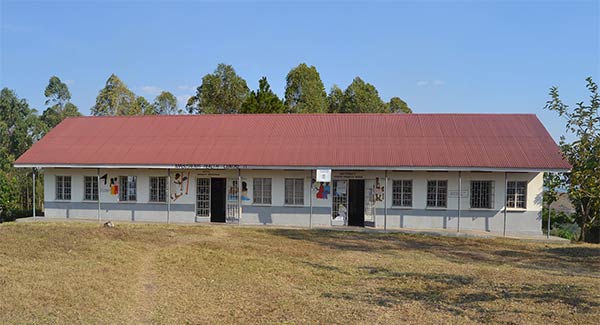
There were significant issues with the health providers as well. The nurse in charge of the center was always absent, medical supplies sold to private clinics, and the community members themselves did not find it convenient to seek services there. Moreover, the community had never reported the anomalies, for a number of reasons. The District Health authority did not closely monitor the center because of limited funds, the poor state of the local road, and the lack of activity at the center.
With ARH’s extensive intervention, the center is now better stocked. Although still classified as a Health Center II, the Nyabushenyi Health Center provides better services than many area Health Center IIIs which are designed to handle maternal health issues.
A Comprehensive Change to Maternal Health Provision
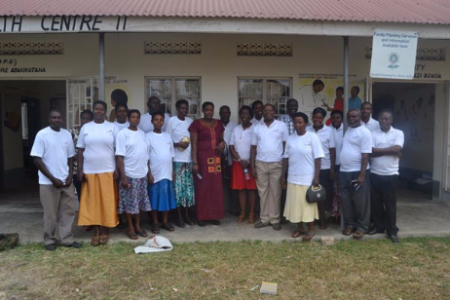
The initial intervention that ARH undertook included the construction of a placenta pit and the donation of delivery sets, blood pressure machines, fetal scopes, and adult and pediatric beds and mattresses. In addition, ARH conducted a series of workshops to empower the midwives and Village Health Team members on up-to-date maternal health practices. ARH furthermore educated the District Authorities and the local community about the organization’s intended mission. ARH worked to actively involve men in these conversations and has met with them in bars and restaurants, talking with them about the need for men to be involved in the health of family members.
Appreciative that updating the facility and its immediate staff was not enough, ARH then advocated for a Midwife, consulting with the District Authority, which in turn provided the center one. As a result, every week more than 25 mothers receive antenatal services at the center. In the first four months after the Midwife began working at Nyabushenyi Health Center, she conducted 31 deliveries (a number would be higher if there had been power in the center).
With the Midwife at the center, it now provides post natal services, family-planning, immunization, HIV testing, and outpatient services for treating diseases and ailments such as malaria, cough and diarrhea. Currently, ARH is advocating for a second midwife to increase services and to ease the workload on the existing Midwife.
In July and August of 2015, ARH worked to bring lighting to the center (a solar lighting panel system was donated to aid visibility at night and sterilization of instruments ), more instruments were provided (to improve efficiency) and medication to prevent postpartum bleeding. The ARH leadership also networked extensively at local, national and international levels, raising awareness about maternal health needs in rural Uganda – while highlighting the success achieved at the Nyabushenyi Health Center.
Much More to Be Done
Although the center’s performance is good so far, a lot more needs to be done to make services adequate enough to meet maternal and child health needs. Early detection of conditions that affect pregnancy labor, puerperium and the baby are still not available on site. Services such as ultra sound scan, laboratory diagnosis and mammogram examination are still not available.
The Nyabushenyi Health Center, which is a little more than 116 km away from where a government facility that could offer some of these services, serves three parishes. Sadly, all the mothers, nurses and midwives that ARH interviewed at the 33 centers in the Ntungamo District reported that they had never had an ultra sound scan, a mammogram exam or a pap smear. That means cervical cancer and breast cancer will only be detected in late stages. It also means that conditions that could be detected on ultra sound scan, go unseen and pose danger to the mother and baby.
ARH has urged the government to improve accessibility to the center both by means of improving the road and providing an ambulance. In the meantime, ARH has arranged for a motorcycle ambulance, until a real ambulance can be secured.
Seeking Partners to Provide Solutions
ARH is seeking support from kind people and suitable organizations to continue efforts to improve the capacity of the Nyabushenyi Health Center. If you are interested in improving maternal health in rural Uganda, please contact Françoise R. Kauzya on +001 732 423 2370 or f.kauzya@arhtogether.org to discuss opportunities.
The post Nyabushenyi Health Center: Improving Maternal Health appeared first on Action for Reproductive Health.
]]>The post PHE Behaviors in the Communities Surrounding Saandani National Park, Tanzania appeared first on Action for Reproductive Health.
]]>In sharing the report with ARH (and others), Janet Edmond of Conservation International explained the following:
The Building Actors and Leaders for Advancing Community Excellence in Development (BALANCED) Project is pleased to announce the publication of a report on the results of a Behavior Monitoring Survey conducted in 2012 in the communities around Saadani National Park (SANAPA) in Tanzania and a comparison with the results with those of a similar survey done three years earlier. SANAPA is the only terrestrial park in Tanzania with a contiguous marine area. It is a nesting ground for several endangered species of marine turtles.
In 2009, the BALANCED Project started working in the SANAPA area through an ongoing integrated coastal management initiative to develop and deliver integrated PHE messages through peer educators and community-based distributers of family planning commodities. In 2012, the BALANCED team conducted a follow-up survey to assess the changes in behaviors and attitudes resulting from the four years of BALANCED Project interventions. As with the 2009 baseline survey, the end-line survey assessed the status of population, socio-economic, health, and environmental conditions in six project villages versus two control villages. The 2012 effort also included additional analyses to examine whether there were significant differences in behavior changes between project participants and non-project participants.
A comparison of results from the 2009 and 2012 surveys shows that the population, socio-economic, health, and environmental conditions of those living around SANAPA have remained relatively stable between 2009 and 2012. It points as well to increased awareness of family planning and reproductive health (FP/RH) in the target areas, increased support amongst men for FP/RH, and increased support (by both males and females) for conservation activities.
Please find the report at
http://www.k4health.org/toolkits/phe/analyzing-changes-population-health-and-environment-perceptions-and-behaviors-saandani
The post PHE Behaviors in the Communities Surrounding Saandani National Park, Tanzania appeared first on Action for Reproductive Health.
]]>The post BALANCED – Philippines Project Report Demonstrates Positive Impact After 18 Months appeared first on Action for Reproductive Health.
]]>In sharing the report with ARH (and others), Janet Edmond of Conservation explained the following:
This report compares the findings of surveys conducted in 2011 and 2013 to assess the results and impacts of the BALANCED-Philippines Project. Throughout the project, BALANCED-Philippines has delivered community-based family planning (FP) to municipalities in the DB and VIP with ongoing coastal/fisheries management activities in existing or maintenance sites and new sites. BALANCED-Philippines provided the full packet of FP/Reproductive Health (RH) services including PHE advocacy; community-based distribution of FP products; peer education, behavior change communication that with integrated FP and environmental messages; and monitoring and supervision. This approach replicated the public-private PHE model that was developed and refined under a previous PHE project implemented by BALANCED Project partner Path Foundation Philippines, Inc. (PFPI).
According to the report, it is clear that that there have been positive changes in knowledge and behaviors over the approximately 18 months from the beginning of the project until the final survey was conducted. There have been increases in all the indicators that measured the impacts of increasing access to and awareness and support for FP/RH services and in all contextual indicators, except for condition of the resources. Since the positive changes in perceptions and knowledge were greater for the new sites than the maintenance sites, the greatest changes may occur in the beginning of an initiative. This indicates that it is worthwhile to expand the PHE approach to work in new sites.
The report is available for download as PDF on the Conservation International website:
Download the BALANCED report (PDF)
The post BALANCED – Philippines Project Report Demonstrates Positive Impact After 18 Months appeared first on Action for Reproductive Health.
]]>The post Denied Ambulance Ride Highlights Issues in Maternal Health in Uganda appeared first on Action for Reproductive Health.
]]>According to the Daily Monitor, Florence Candiru had been admitted to Olujobo Health Centre III, but was then referred to the Arua Regional Referral Hospital by health workers at the facility. However, Candiru was told that the ambulance would be transporting health workers for training – rather than taking her to the referral hospital.
Refused medical transport, Candiru’s family had to flag down a passing lorry carrying goats, charcoal, firewood and sacks of cassava to secure the pregnant mother a ride to the Arua Regional Referral Hospital. Moreover, Candiru had to pay the equivalent of $50.00 for the ride in the back of the truck.
Maternal Health Issues Caused by a Lack of Transport
The immediate issue of a lack of suitable transportation options is a difficult one for Uganda. Outside of the capital city Kampala, Uganda is a very rural country with few paved roads and many hills. The problem prevents many women and pregnant mothers from accessing medical treatment. As is evidenced in Candiru’s story, women are often forced to rely on unconventional and unsafe means to transport themselves to hospitals and clinics.
Lack of Training for Medical Staff in Uganda
In considering this tragic story, the Executive Director of ARH, Francoise R. Kauzya, offered her insight:
“That the medical staff saw getting a ride to the training as more important than the health and well being of a woman pregnant with child is a major issue. At ARH, we are working to provide training to the health workers in the Ntungamo District so that they will have a solid understanding of their professional duties and responsibilities.”
Dedicated to Improving Maternal Health in Uganda
Action for Reproductive Health (ARH) is a Uganda-based non-profit organisation dedicated to the improvement of reproductive and maternal health in rural Uganda. ARH seeks to actively involve men in addressing these key issues.
As a matter of practice, ARH works to strengthen and sustain the ability of Uganda’s public and private health providers and health workers to meet the reproductive, maternal and child health needs of the country.
For more information about Action for Reproductive Health, please contact Francoise R. Kauzya on +001 732 423 2370 or via email at usa@arhtogether.org.
The post Denied Ambulance Ride Highlights Issues in Maternal Health in Uganda appeared first on Action for Reproductive Health.
]]>The post Reporting Maternal Health in Rural Uganda appeared first on Action for Reproductive Health.
]]>Heading into the Rural Communities
Committed to documenting the status of pregnant woman first hand, Mrs. Kauzya crisscrossed the Ntungamo District in southwest Uganda. Driving the rural, bumpy, dusty roads of Ntungamo in a small jeep, Mrs. Kauzya suffered the same problem that many women in rural Uganda face when trying to access quality medical care – insufficient infrastructure. The condition of roads in rural Uganda make it very hard to get to and from health clinics in a cost-effective and timely manner.

ARH’s in-country team, Tushabe Gregory, Birungi Jane and Nuwagaba Tumusiime, joined Mrs. Kauzya as the team met with potential partners, engaging in community outreach and empowering the local Village Health Teams. These Village Health Teams play an integral role in the overall health of the rural community. ARH conducted interviews to establish their immediate needs (such a lack of boots, raincoats, umbrellas and more) and took steps to address some of those needs through the donation of supplies. We also spent time educating the Village Health Teams on matters of maternal and reproductive health.

During the course of our conversation with the Village Health Team, we received feedback about the gaps in the delivery of quality health care to the rural communities. More concerning, we heard concerns that some clinics and hospitals are not accurately reporting deaths and treatment numbers in reproductive and maternal health cases.
Raising Awareness on the Radio
We are delighted to report that ARH took our message to the airwaves, talking reproductive and maternal health, and answering questions on this important topic, on a radio talk show on Radio Ankole (99.3FM). Radio Ankole broadcasts over the Ntungamo District.
ARH’s Interns
During the course of the in-country study, Mrs. Kauzya was joined by two ARH interns. Aliane Rutaganira, from the University of Reims Champagne-Ardenne, and Olivia Orta, from Hunter College School of Public Health traveled to Uganda to help ARH coordinate its study. At ARH, we are grateful to both Aliane and Olivia for their generous and insightful contributions to our efforts.
Reporting to the Ugandan Government

Following the collection of research information, Mrs. Kauzya has produced a brief report about the status of maternal and reproductive health in rural Uganda. She has previously shared various findings of this report with the Minister of Health in Uganda, along with ARH’s partners.
ARH’s Country Director, Dr. Denis Kinene, presented ARH’s community findings to the Ugandan Parliament’s Social Service Committee. Dr. Kinene highlighted the concerns raised in ARH’s report and detailed its next steps as an organization.
ARH: Assessing Maternal Health in Ntungamo (August 2012) (PDF: 66KB)
The post Reporting Maternal Health in Rural Uganda appeared first on Action for Reproductive Health.
]]>